Historic Jamestown Visitor Center Museum, Jamestown, Virginia, USA
This museum serves as an orientation center to help visitors understand Jamestown’s history before they explore the actual site. 1112
Historic Jamestowne Visitor Center Museum: 1368 Colonial Nat'l Historical Pkwy, Jamestown, VA 23081
Date Picture Taken: July 2025
It is part of the Colonial National Historical Park and jointly administered by the National Park Service (NPS) and Preservation Virginia. This site represents the birthplace of English America and a cornerstone of U.S. colonial history.
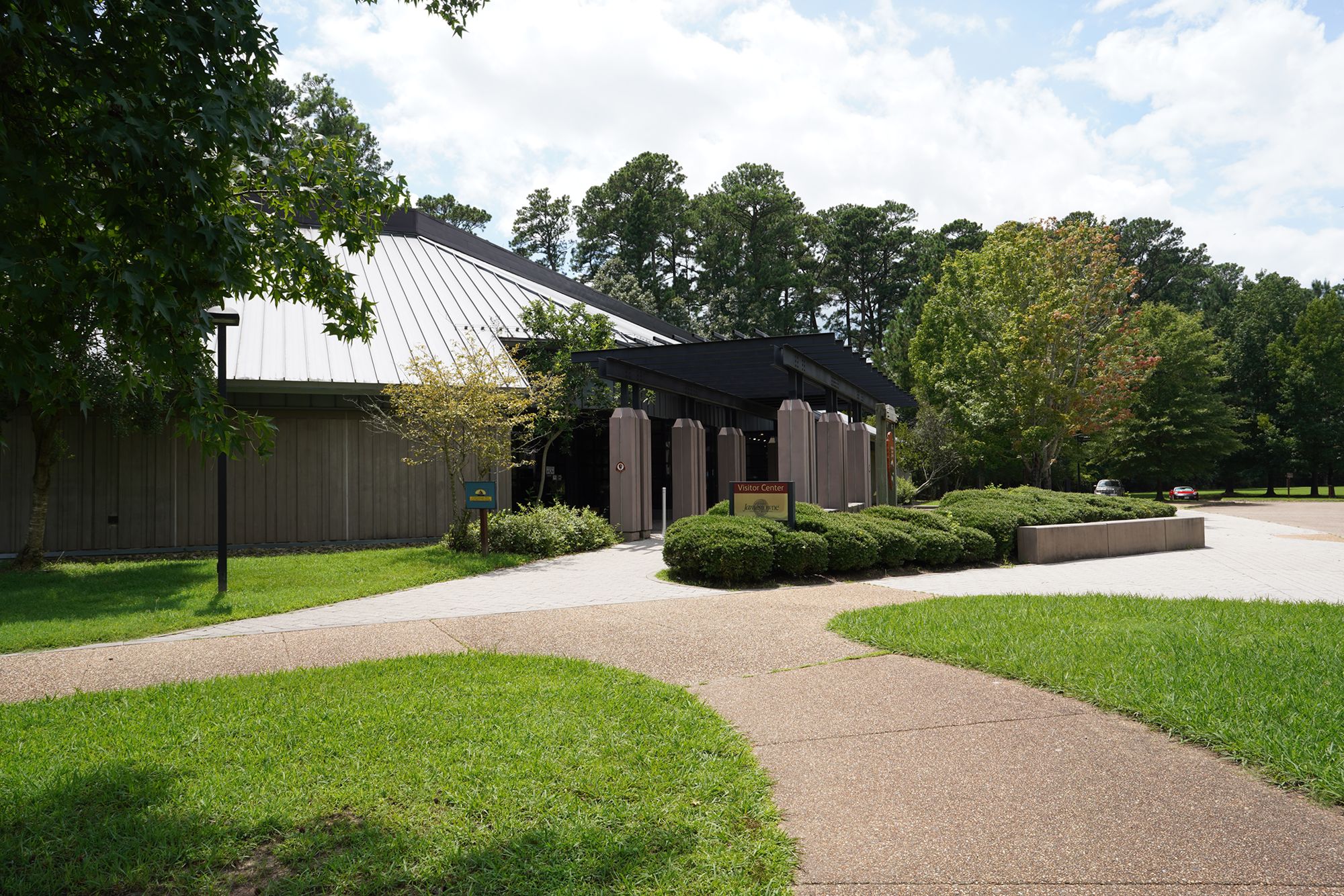
Historic Jamestowne Visitor Center and Museum. It stands near the entrance to the Historic Jamestowne island site, before visitors reach the archaeological area of the 1607 fort.
The purpose of the Historic Jamestowne museum is to introduce visitors to the story of England’s first permanent colony, explaining why the settlers came, how they lived, and how their encounter with the Powhatans and Africans shaped early America before visitors explore the actual archaeological site.
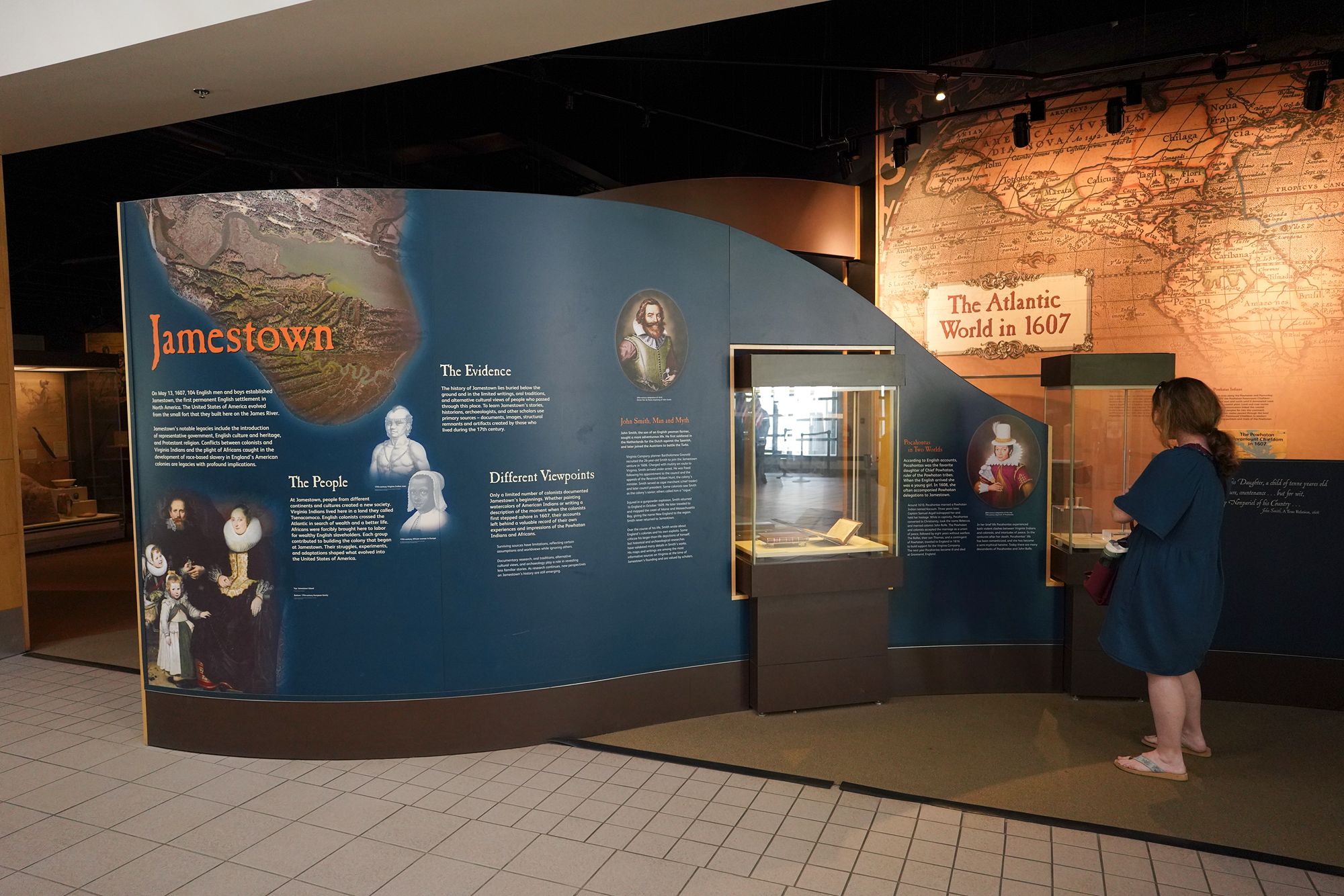
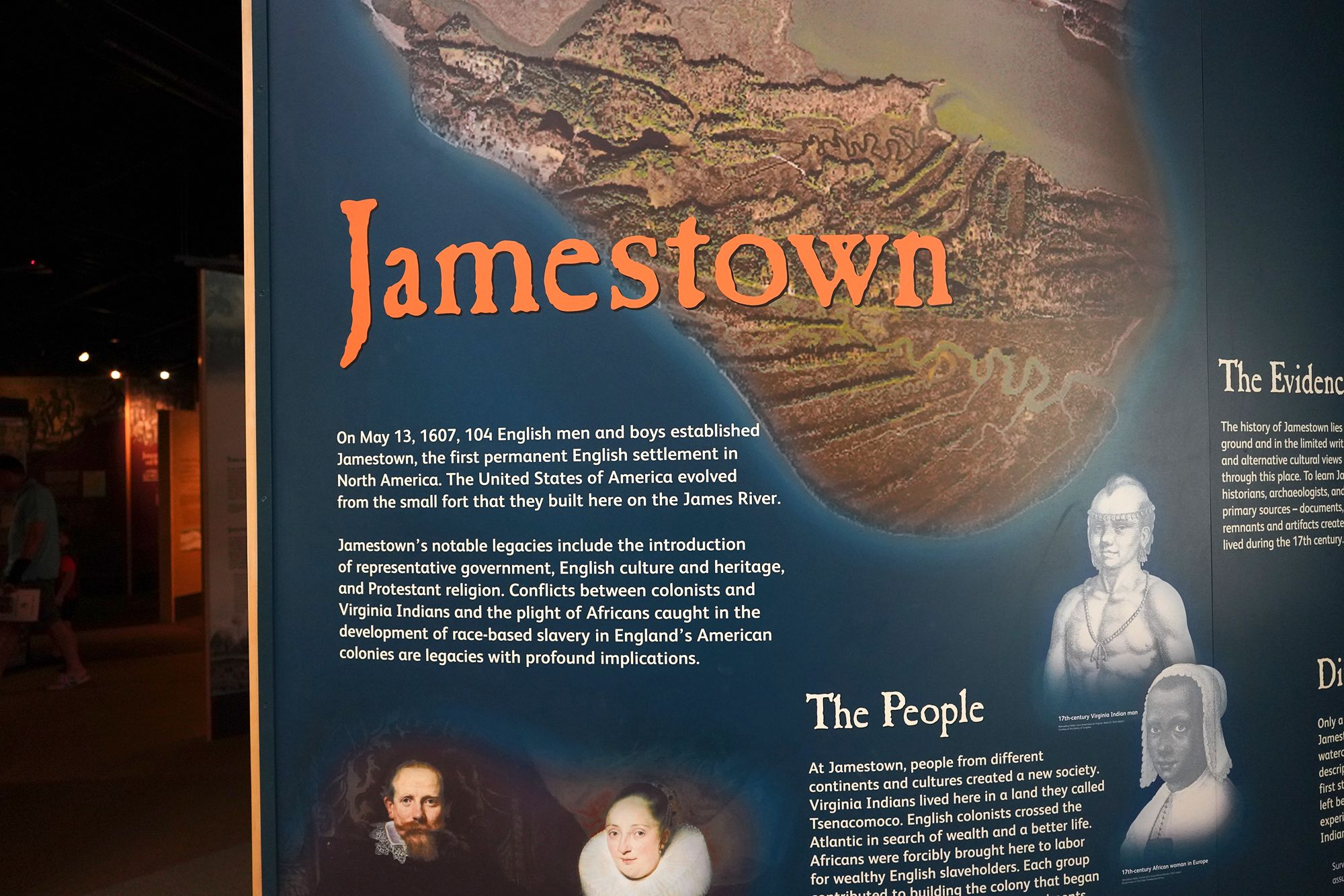
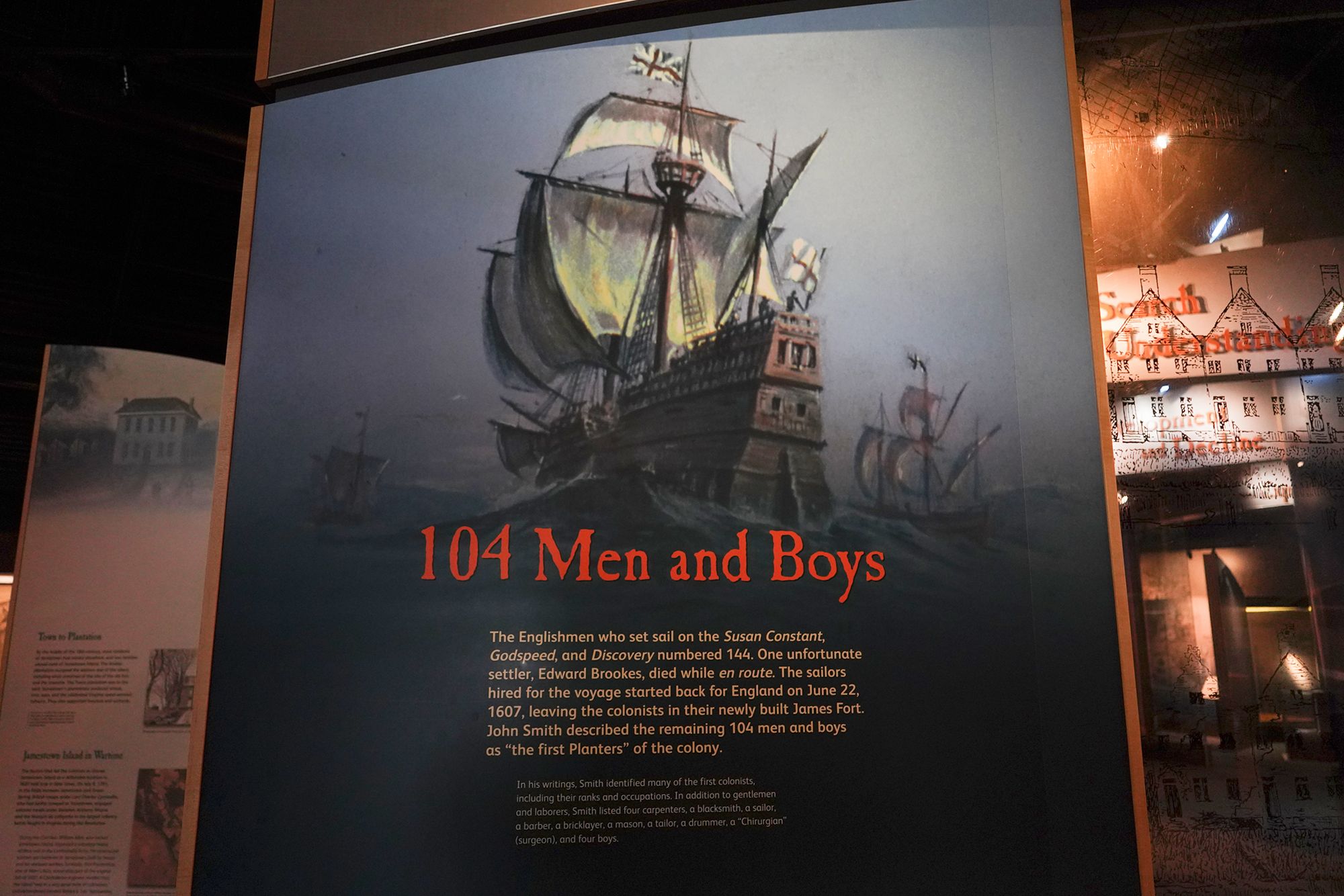
In May 1607, about 104 English settlers arrived under the Virginia Company of London. They chose Jamestown Island for its defensible position along the James River, but the swampy environment, brackish water, and lack of food led to high mortality.
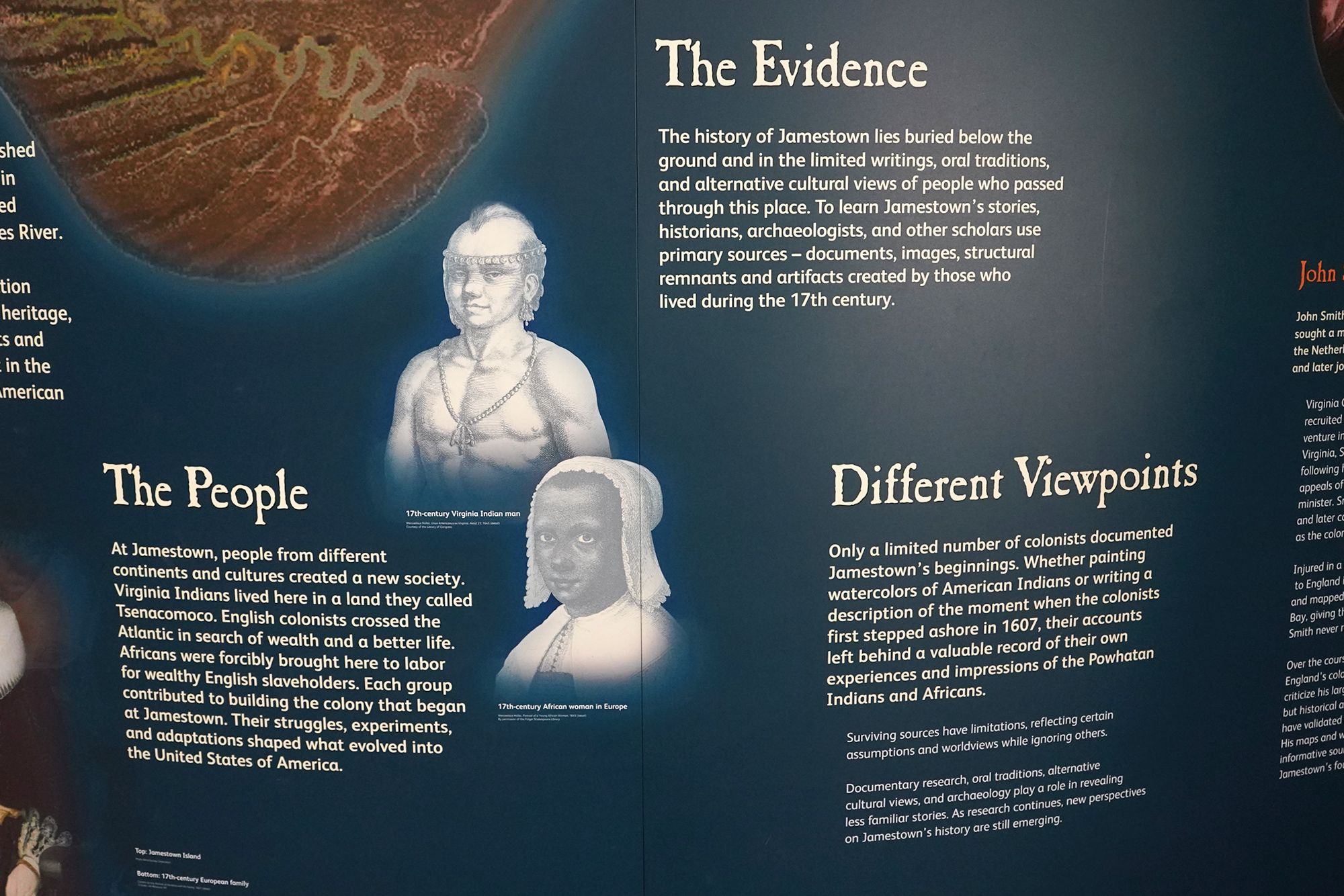
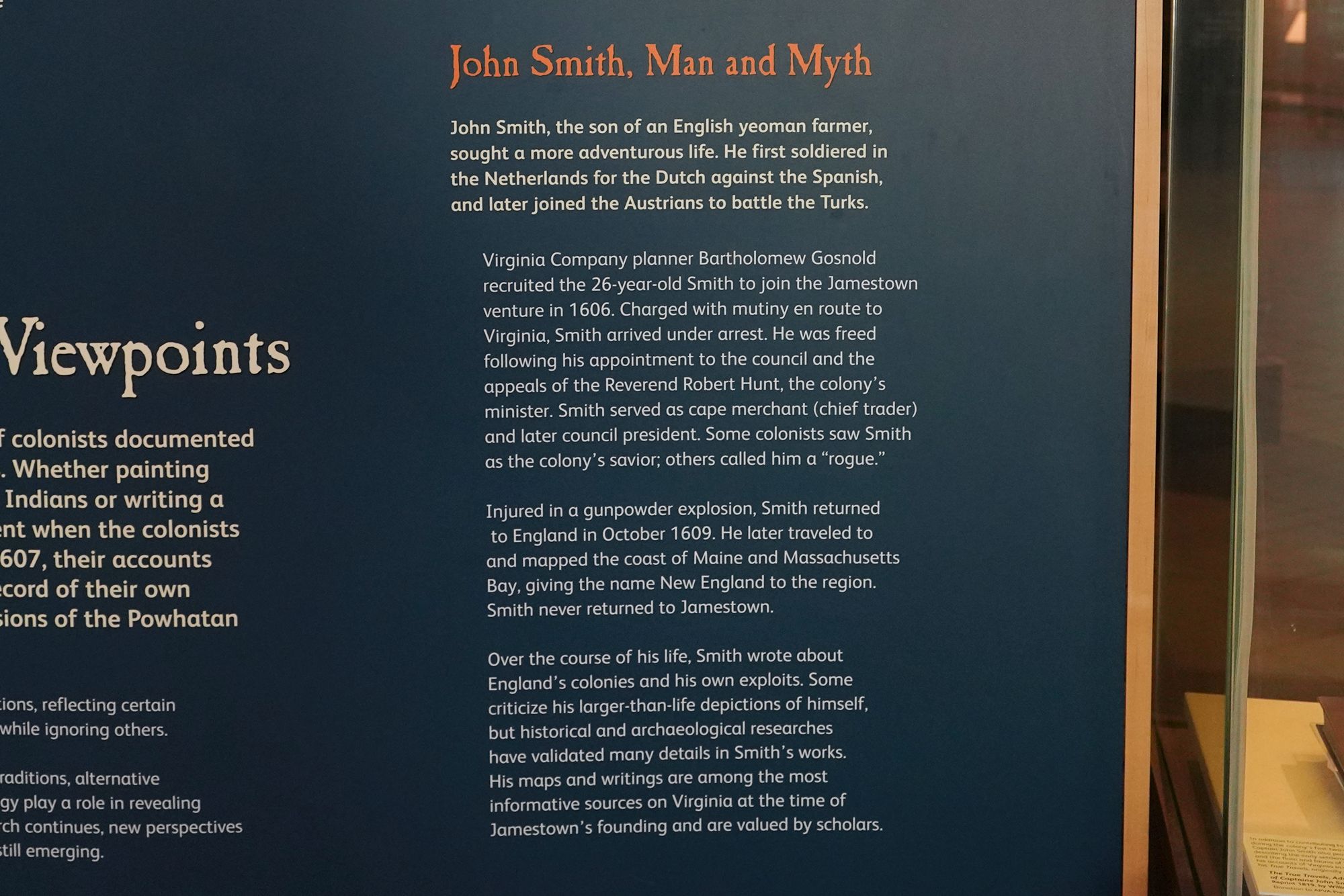
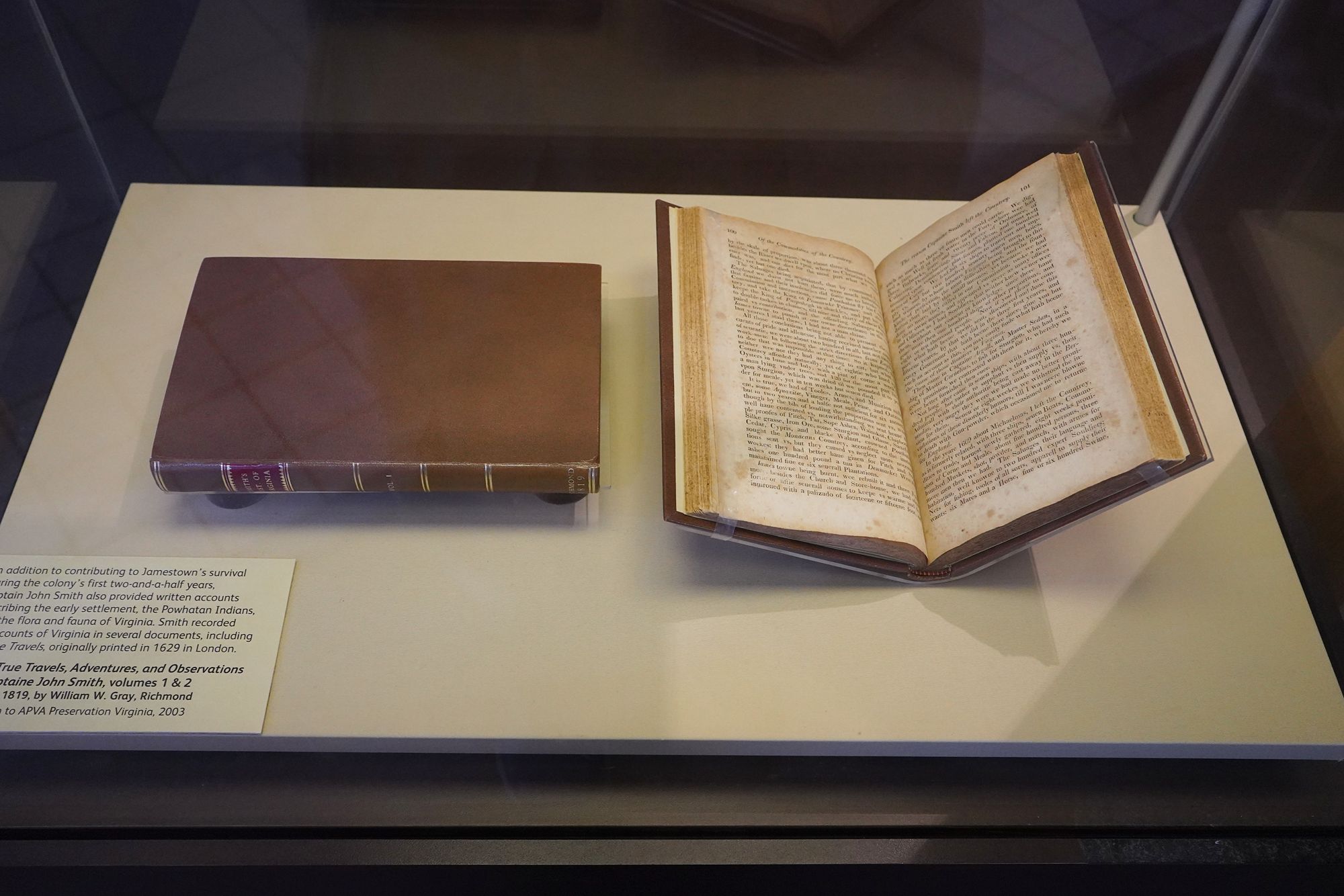
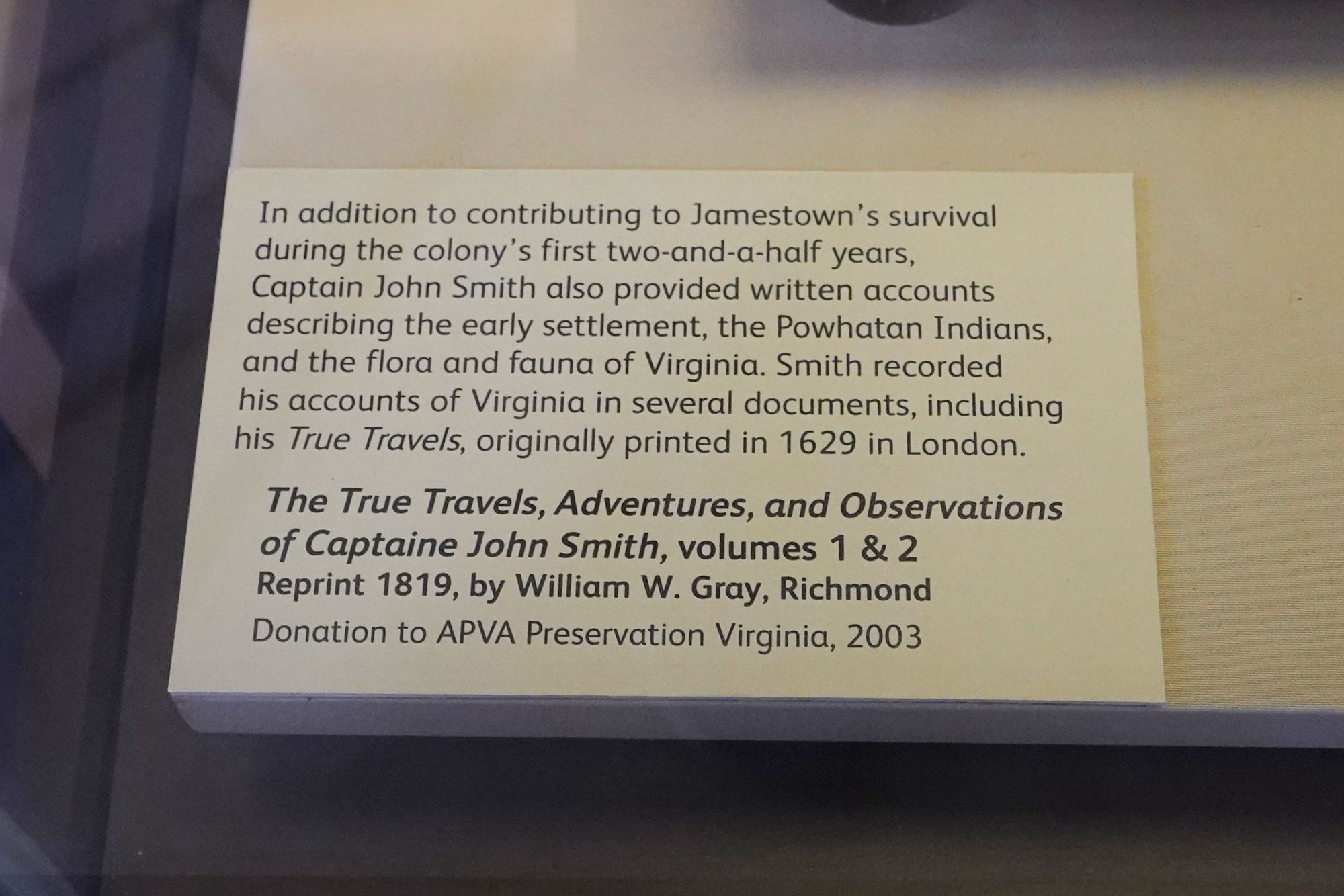
Captain John Smith was a soldier, explorer, and leader who played a crucial role in the founding and survival of Jamestown, the first permanent English settlement in North America. His strong leadership, discipline, and exploration skills helped the fragile colony endure its most difficult early years.
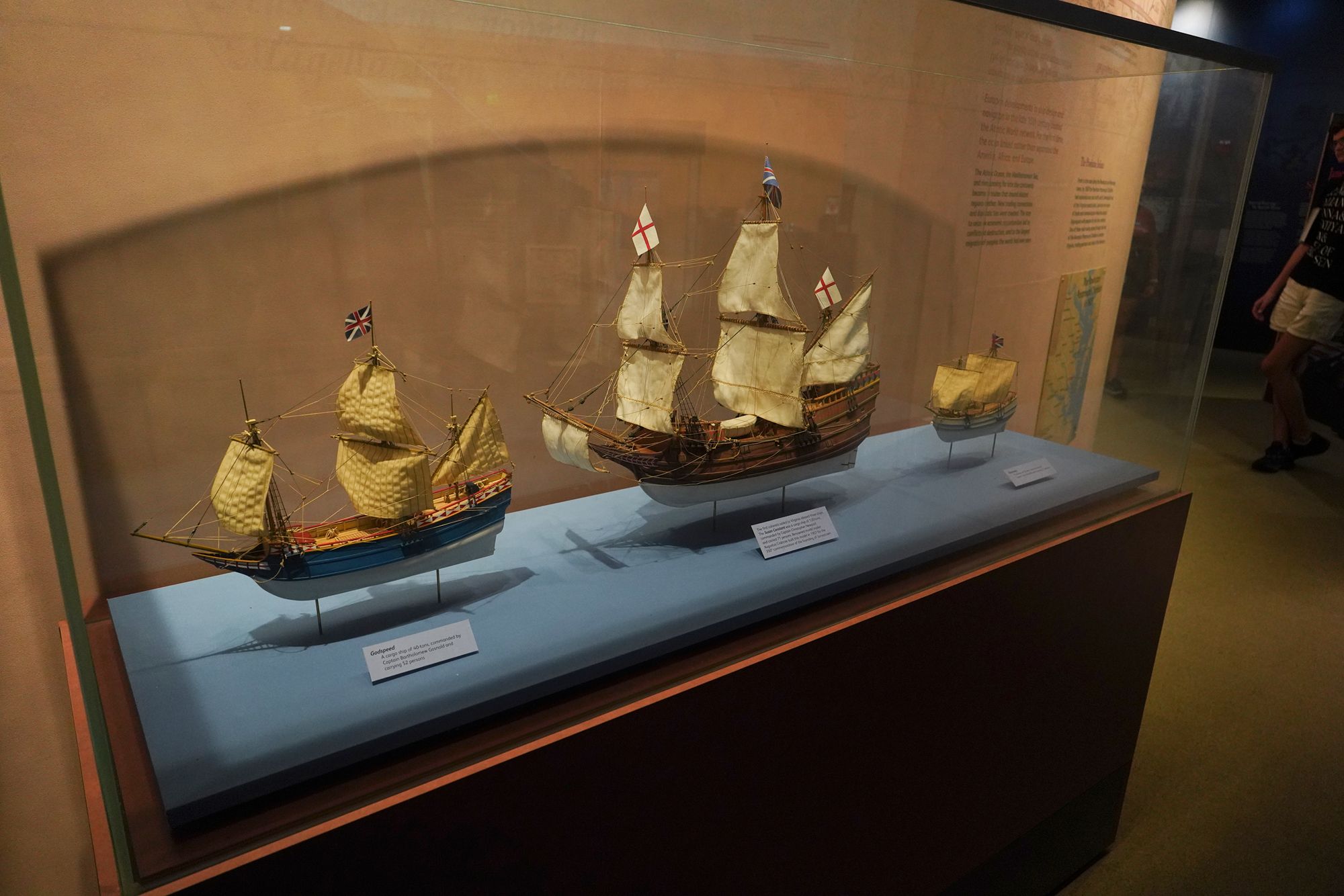
The Three Ships: Susan Constant, Godspeed, and Discovery
When the English settlers journeyed to North America in 1606–1607, they traveled aboard three ships sent by the Virginia Company of London. These vessels—Susan Constant, Godspeed, and Discovery—carried the first 104 settlers who founded Jamestown, the first permanent English colony in America.
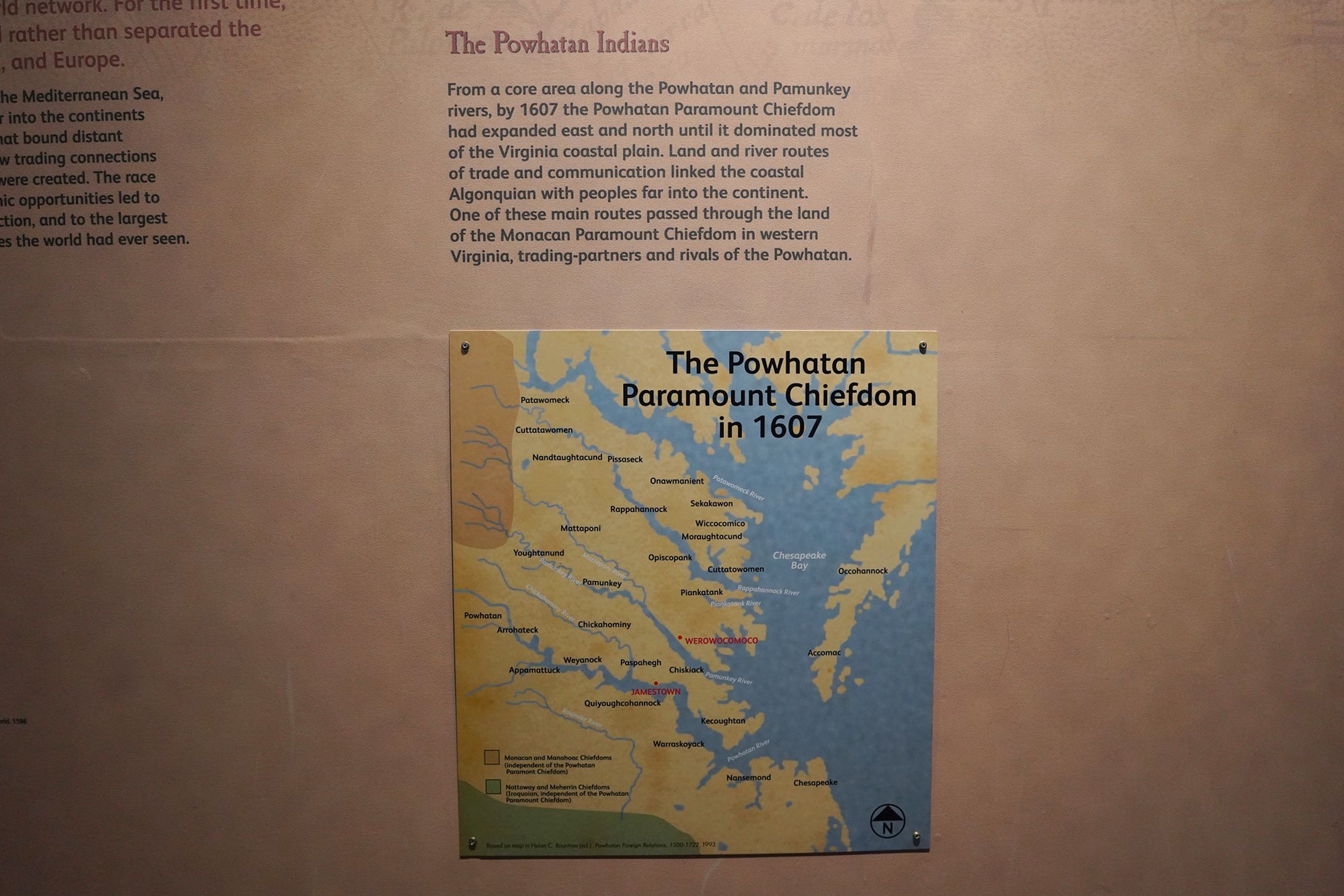
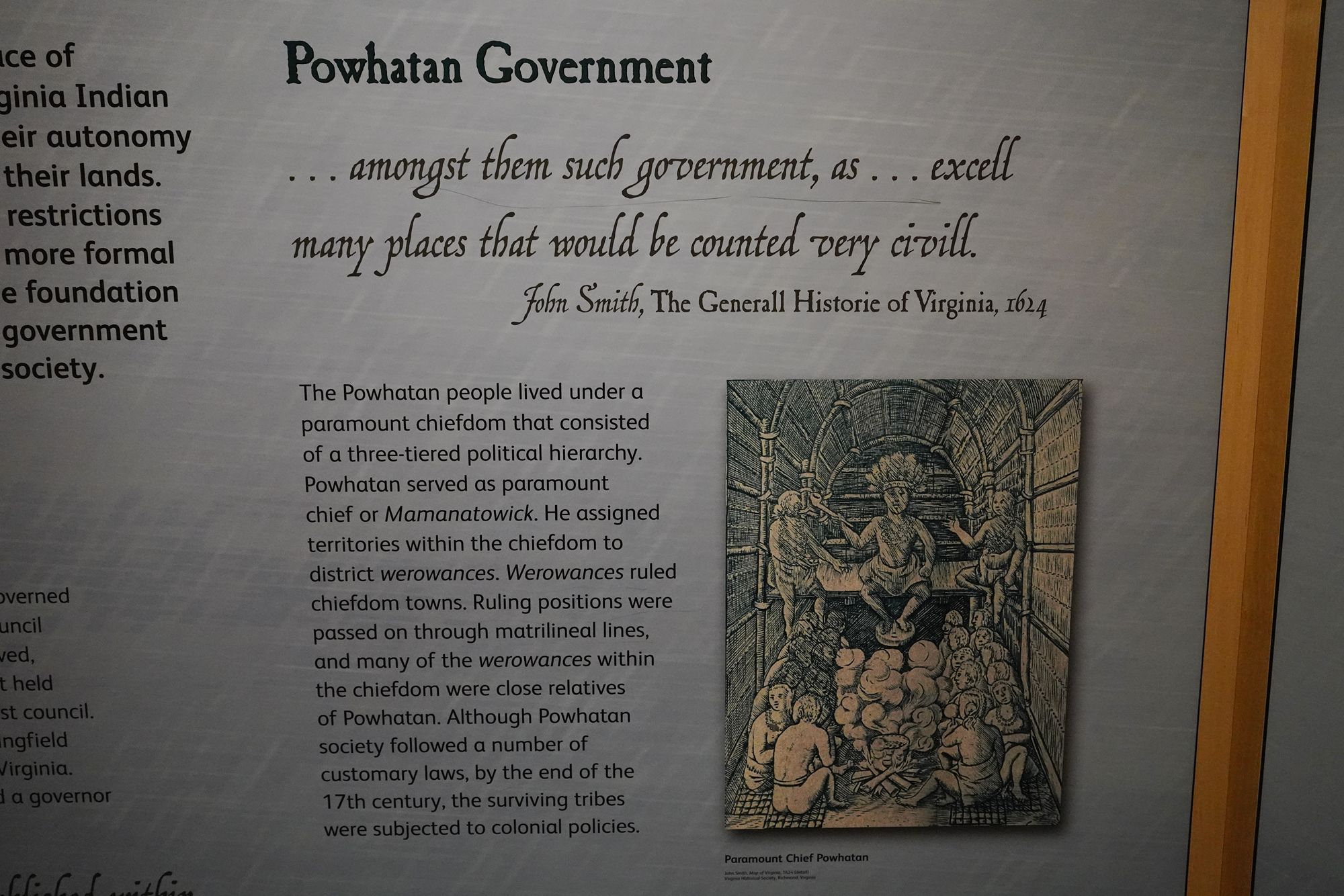
The Powhatan Indians were a powerful group of Algonquian-speaking tribes who lived in the Tidewater region of Virginia when the English settlers arrived in 1607. At that time, they were united under the leadership of Chief Powhatan (real name: Wahunsonacock), forming what was known as the Powhatan Confederacy—one of the most complex Indigenous political systems in early North America.
When the English expedition reached Virginia in May 1607, there were about 104 settlers aboard the three ships — the Susan Constant, Godspeed, and Discovery. All were men and boys; no women came on this first voyage.
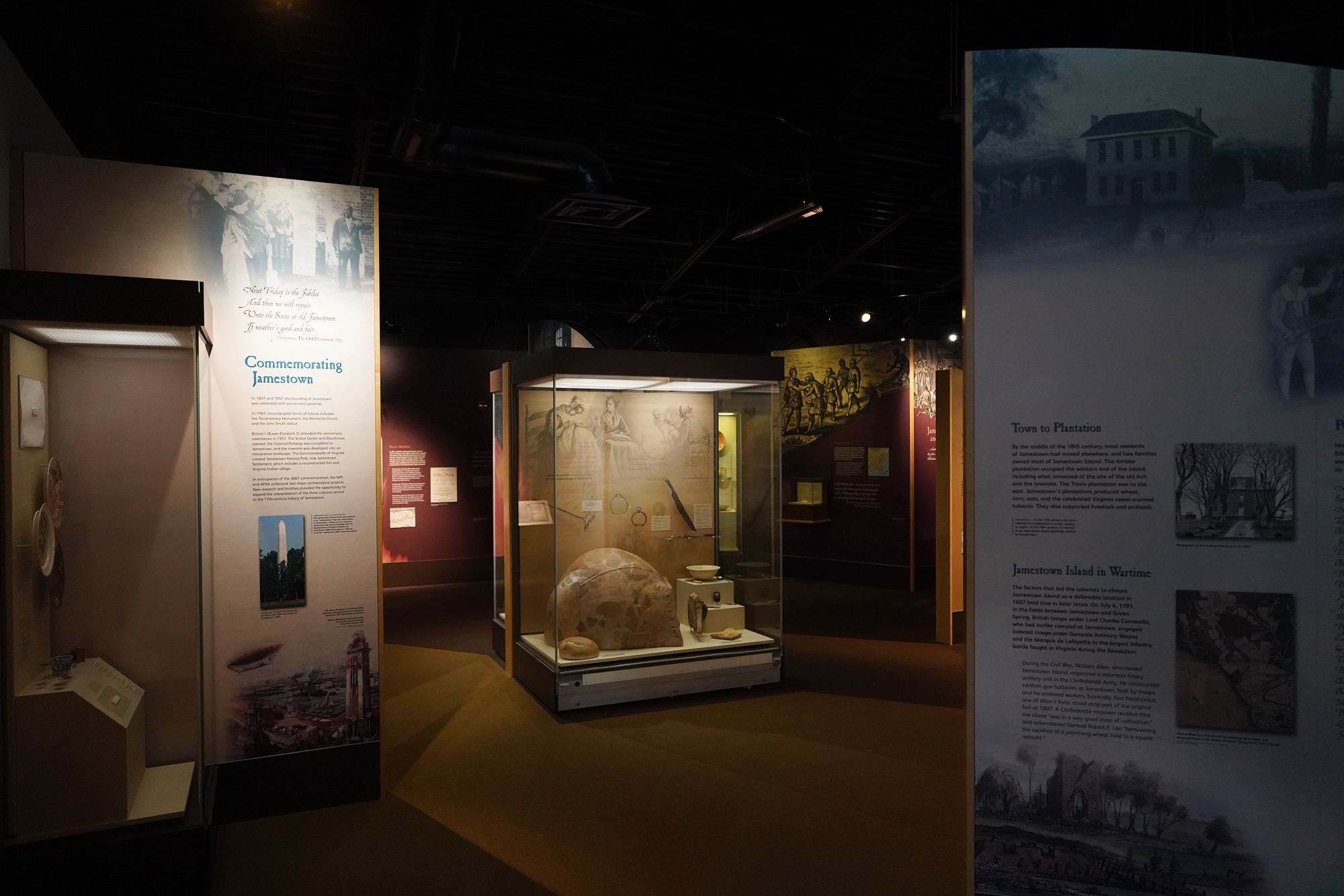
The English colony at Jamestown began in 1607 as a small fortified town, but within a few decades it evolved into a society dominated by plantations. This change—from a compact settlement focused on survival to a dispersed agricultural economy—shaped the social, economic, and political character of colonial Virginia.
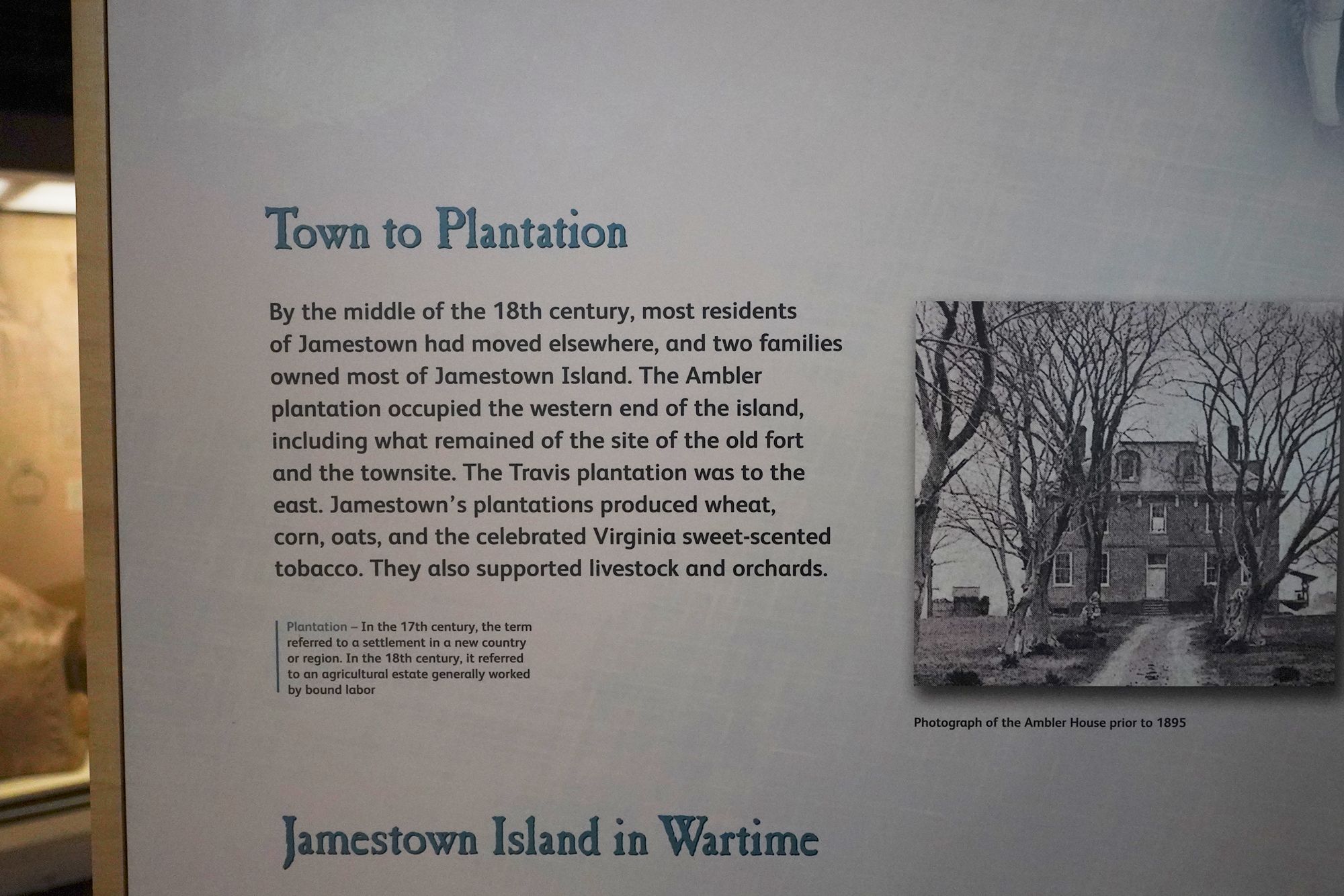
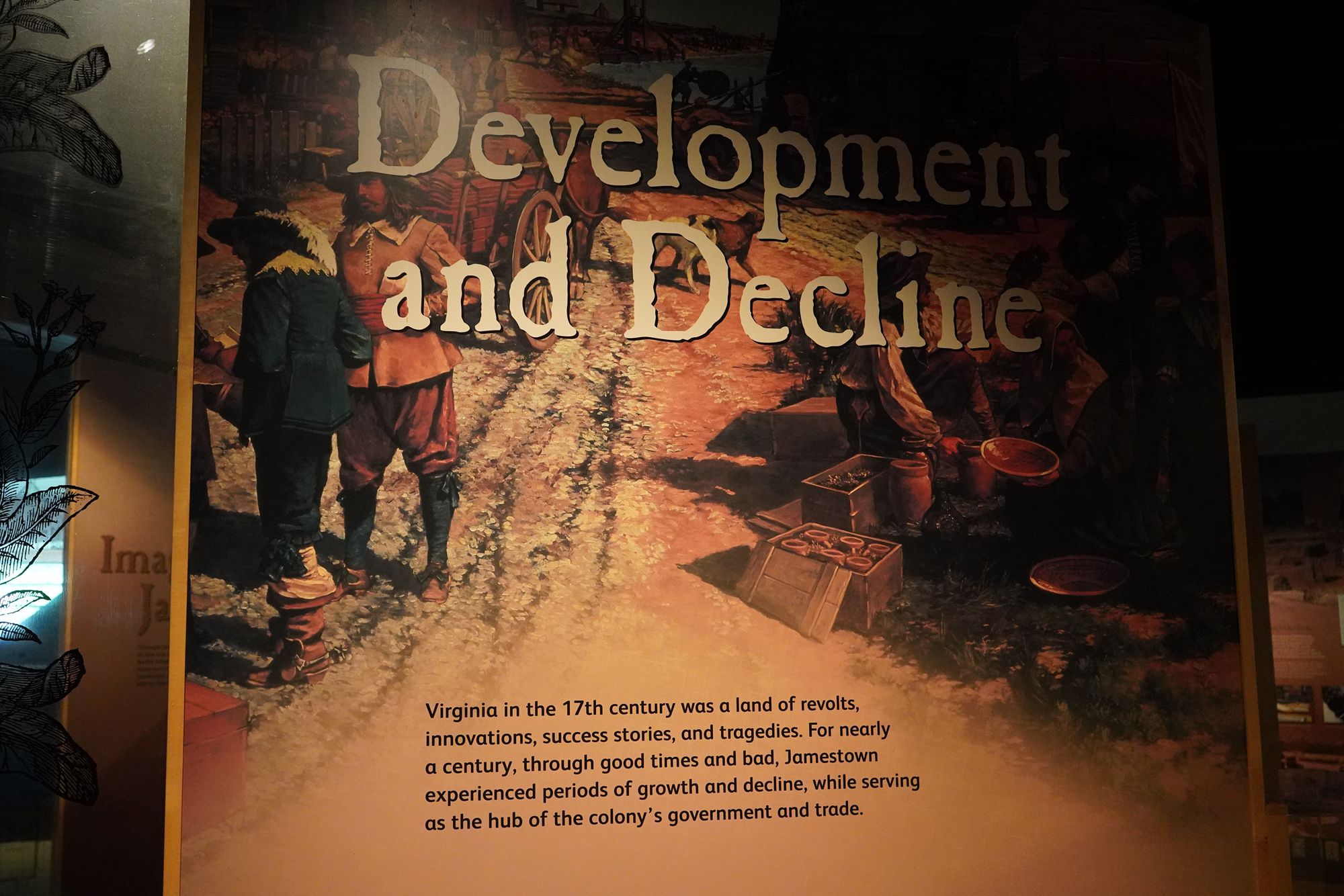
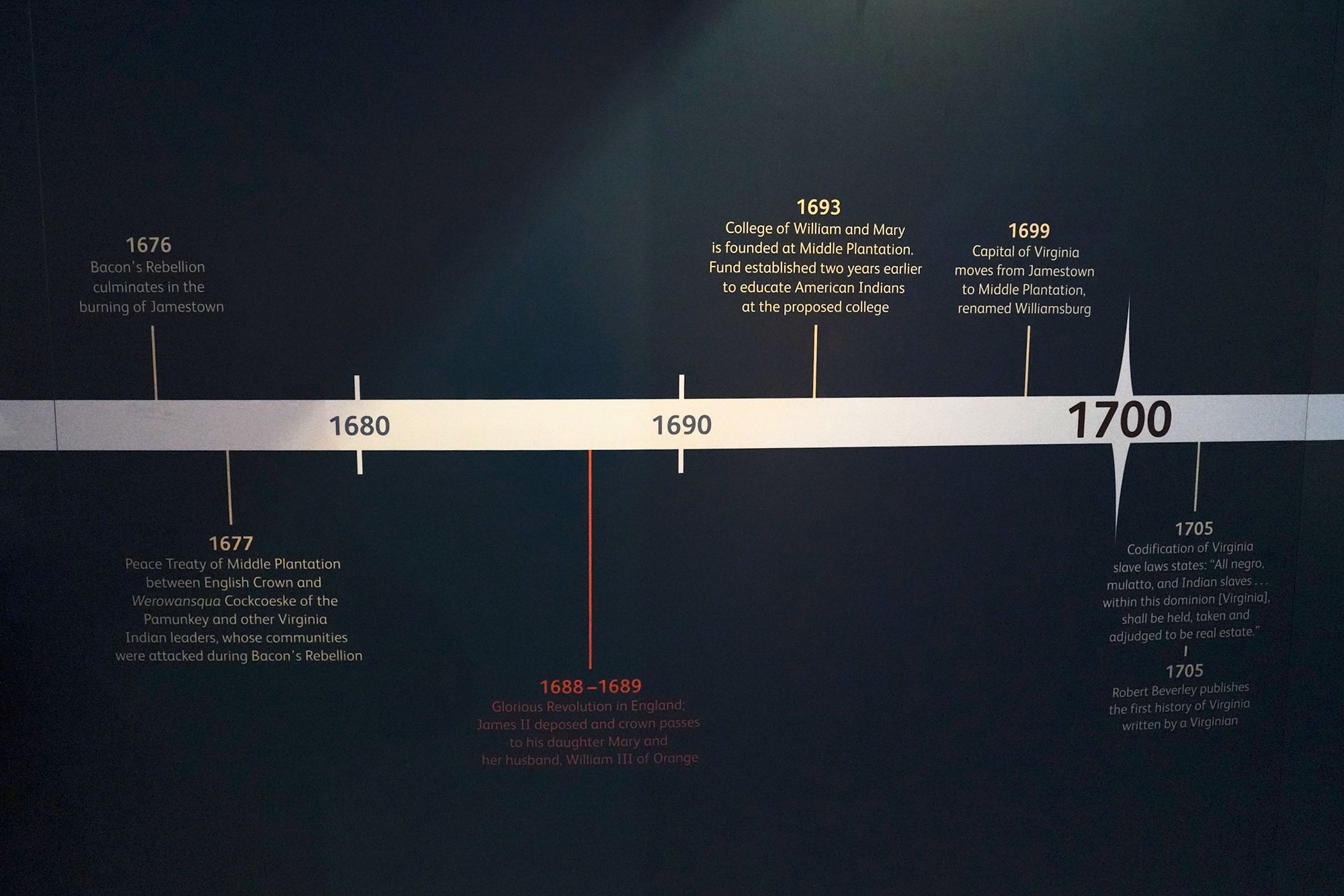
By the late 1600s, Jamestown—once the first permanent English settlement in North America—had become unhealthy, inconvenient, and partly in ruins. In 1699, Virginia’s colonial capital officially moved to Williamsburg, marking the end of Jamestown’s central role and the beginning of a new chapter in colonial history.
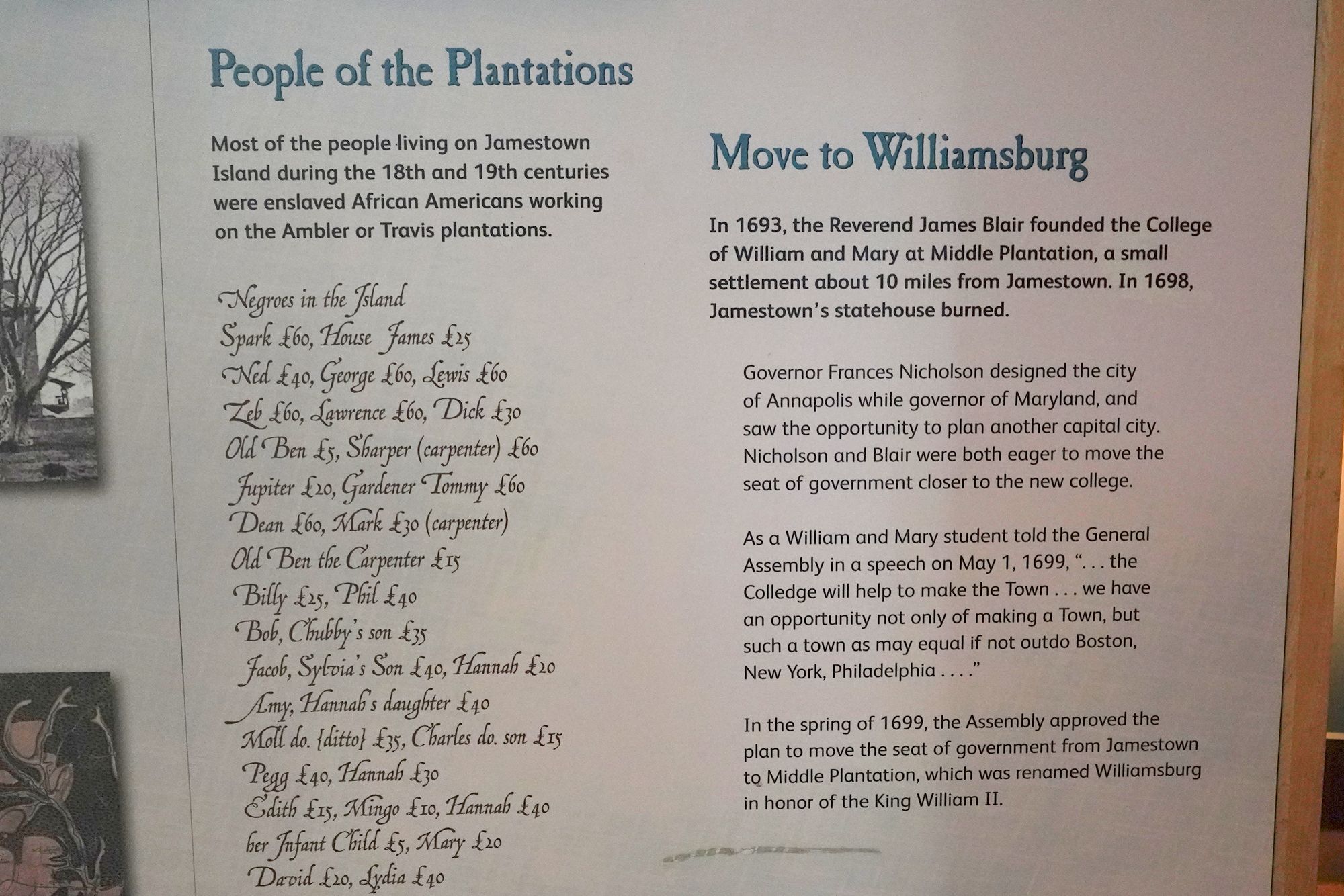
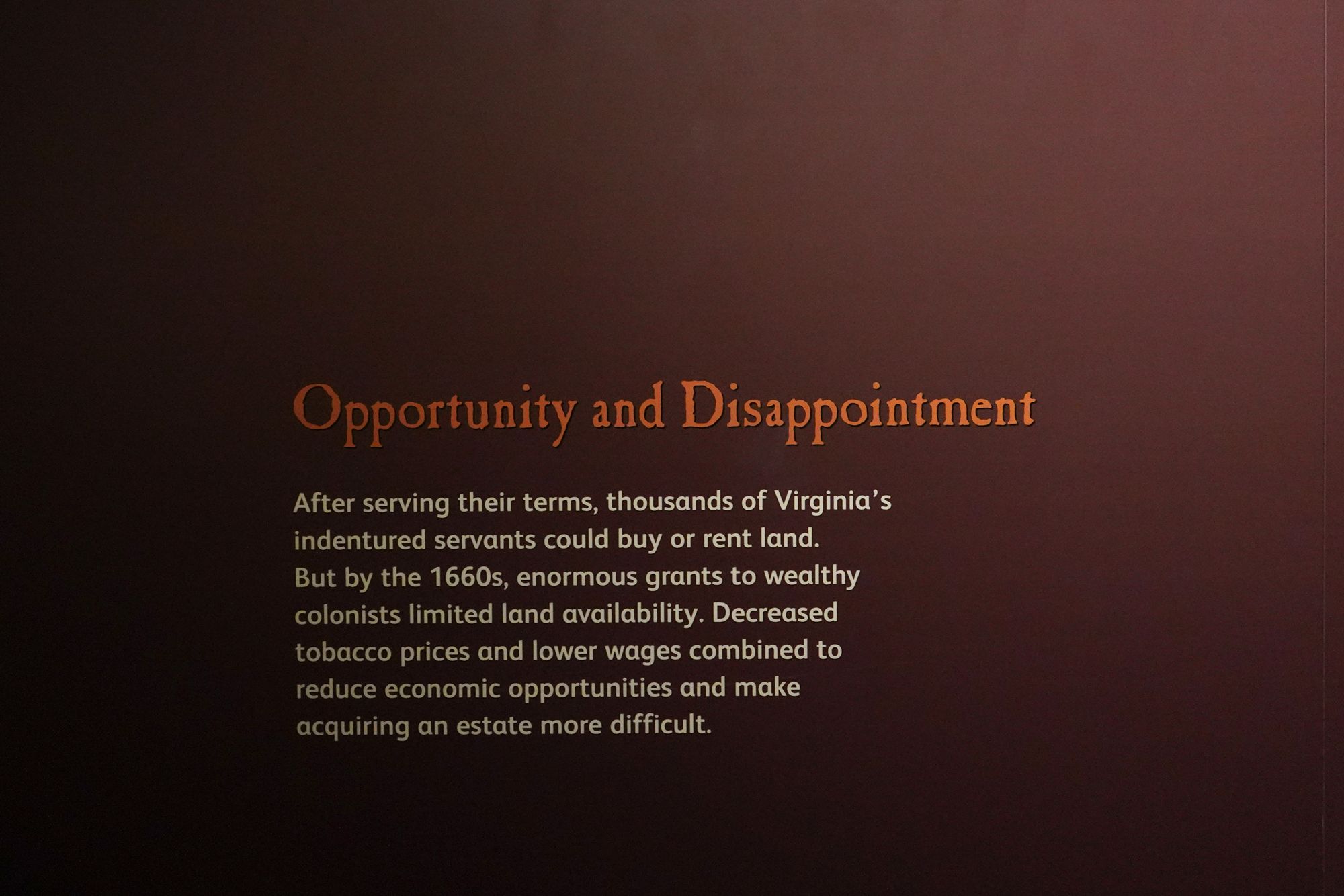
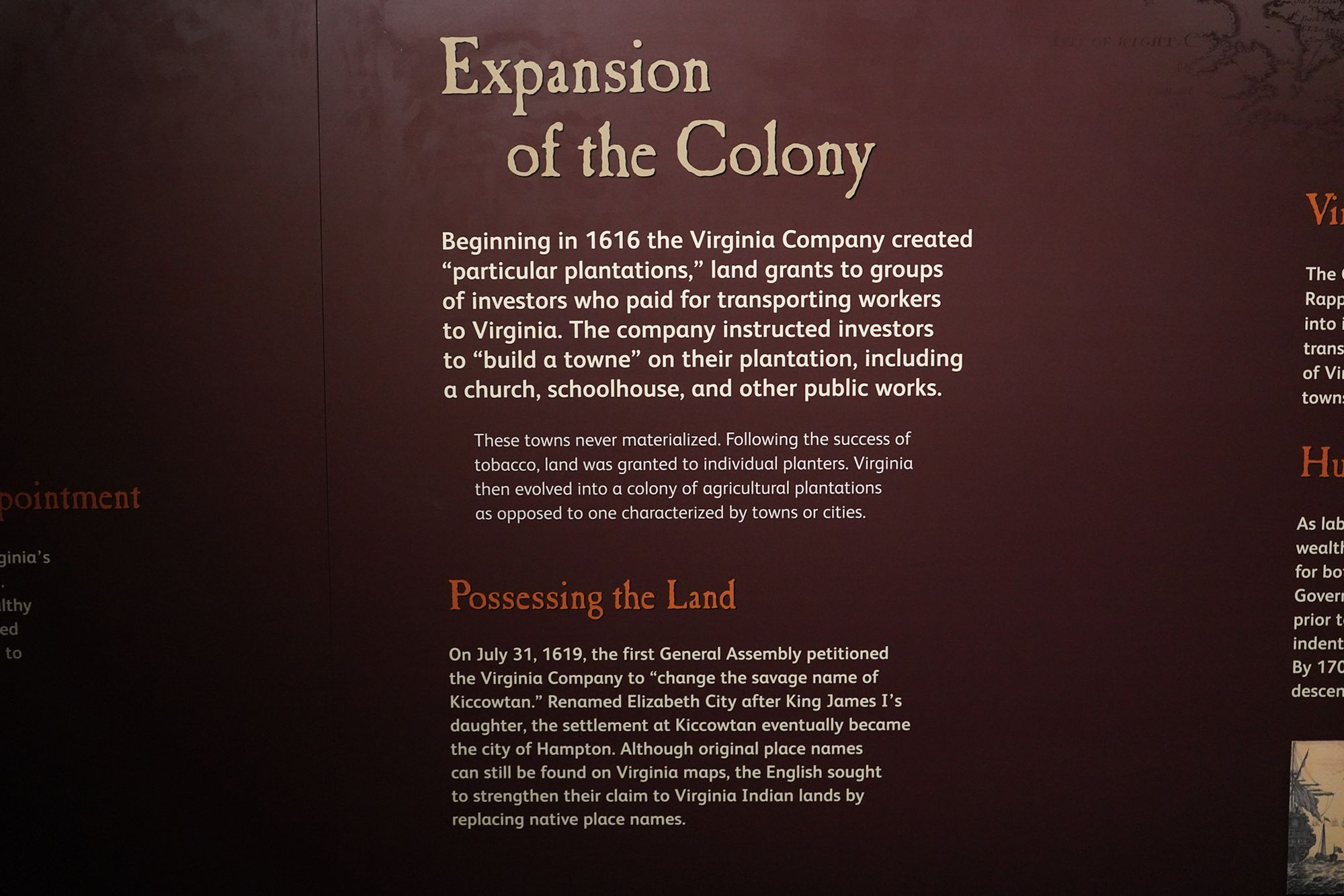
The term “Particular Plantation” refers to the early private land grants that marked a turning point in the development of the Virginia Colony. Introduced around 1618 by the Virginia Company of London, this system allowed investors and wealthy individuals to establish their own private estates, separate from the communal Jamestown settlement. It laid the foundation for Virginia’s plantation system and the colony’s expansion beyond the original fort.
Virginia Travel and Trade; Human Commodities
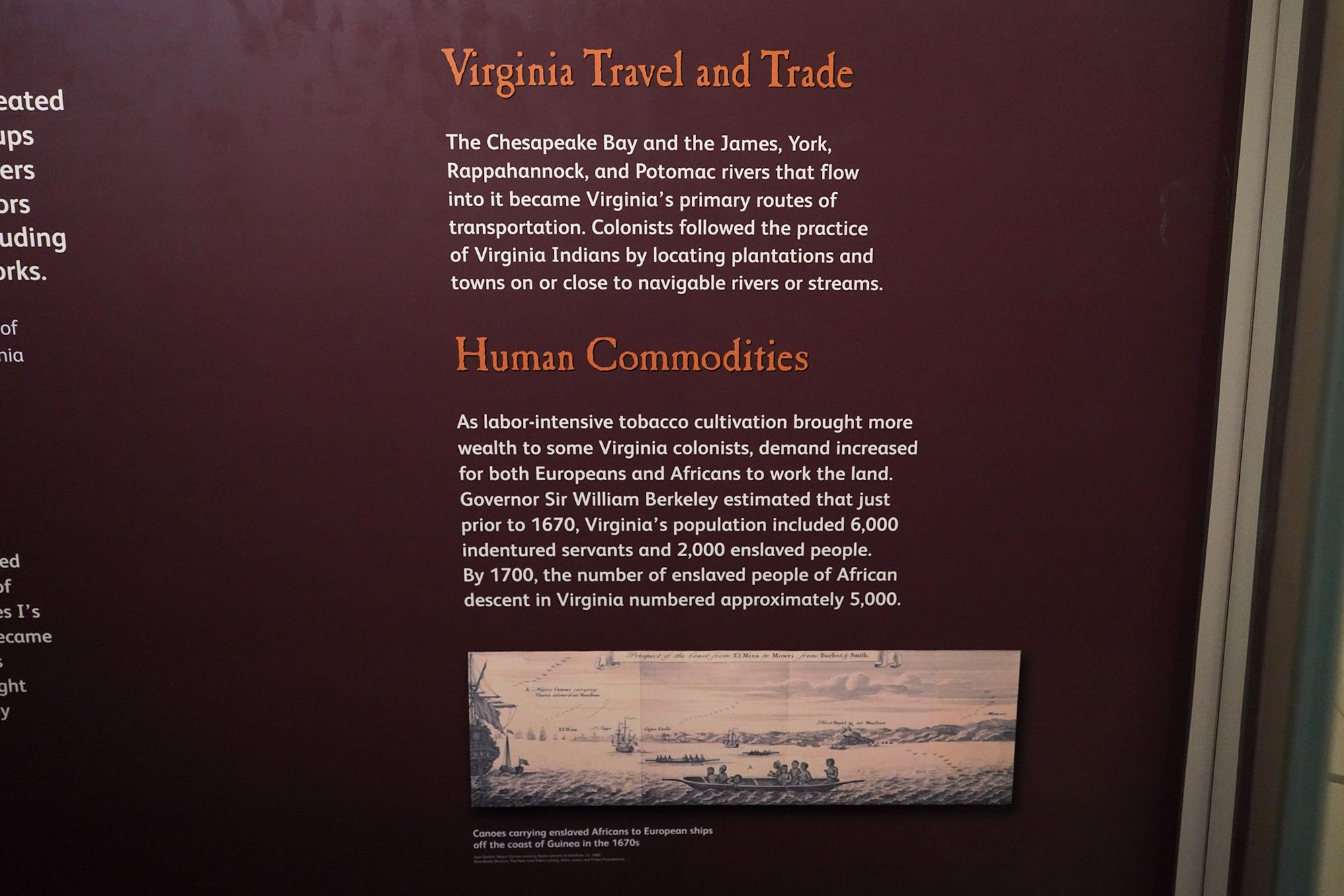
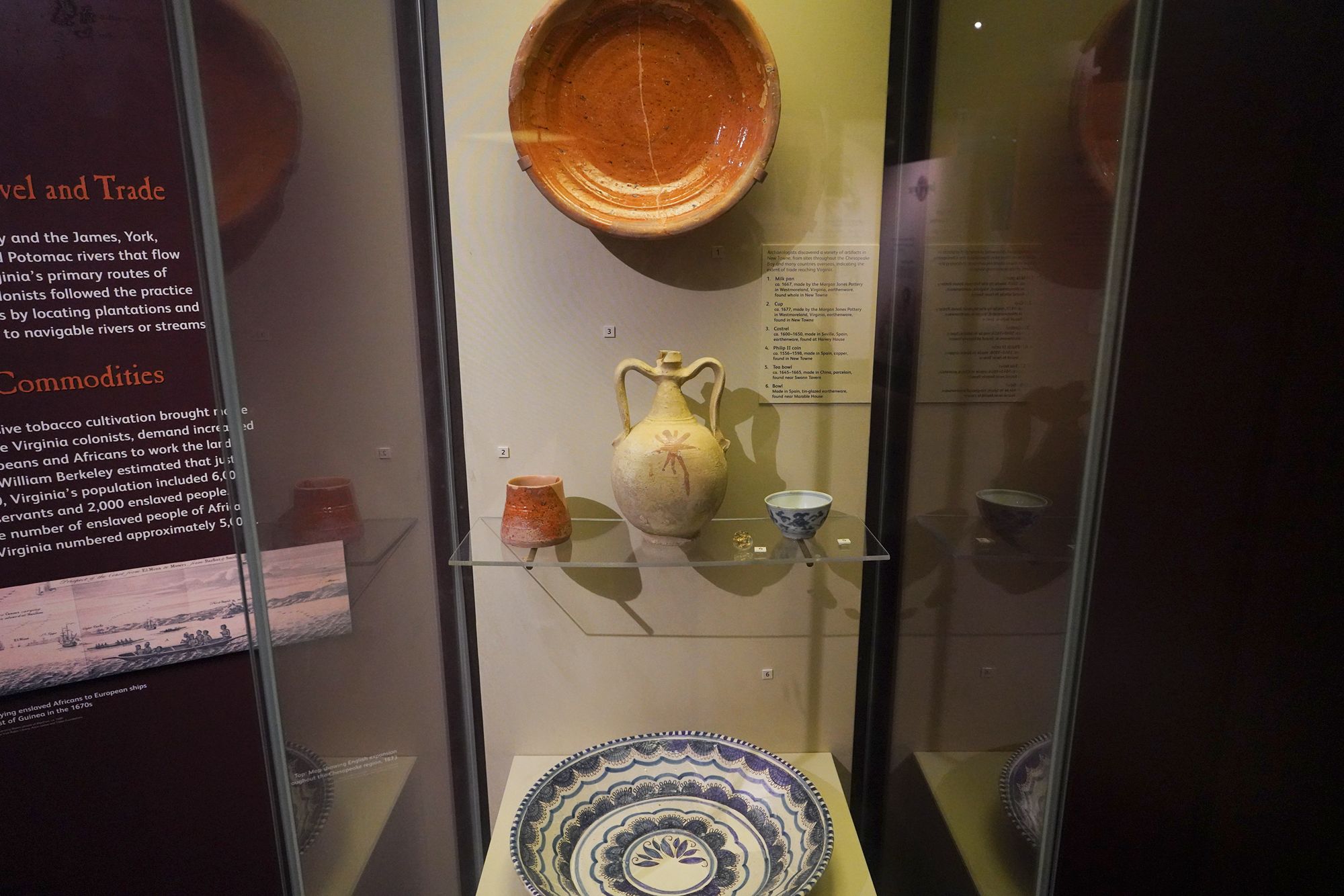
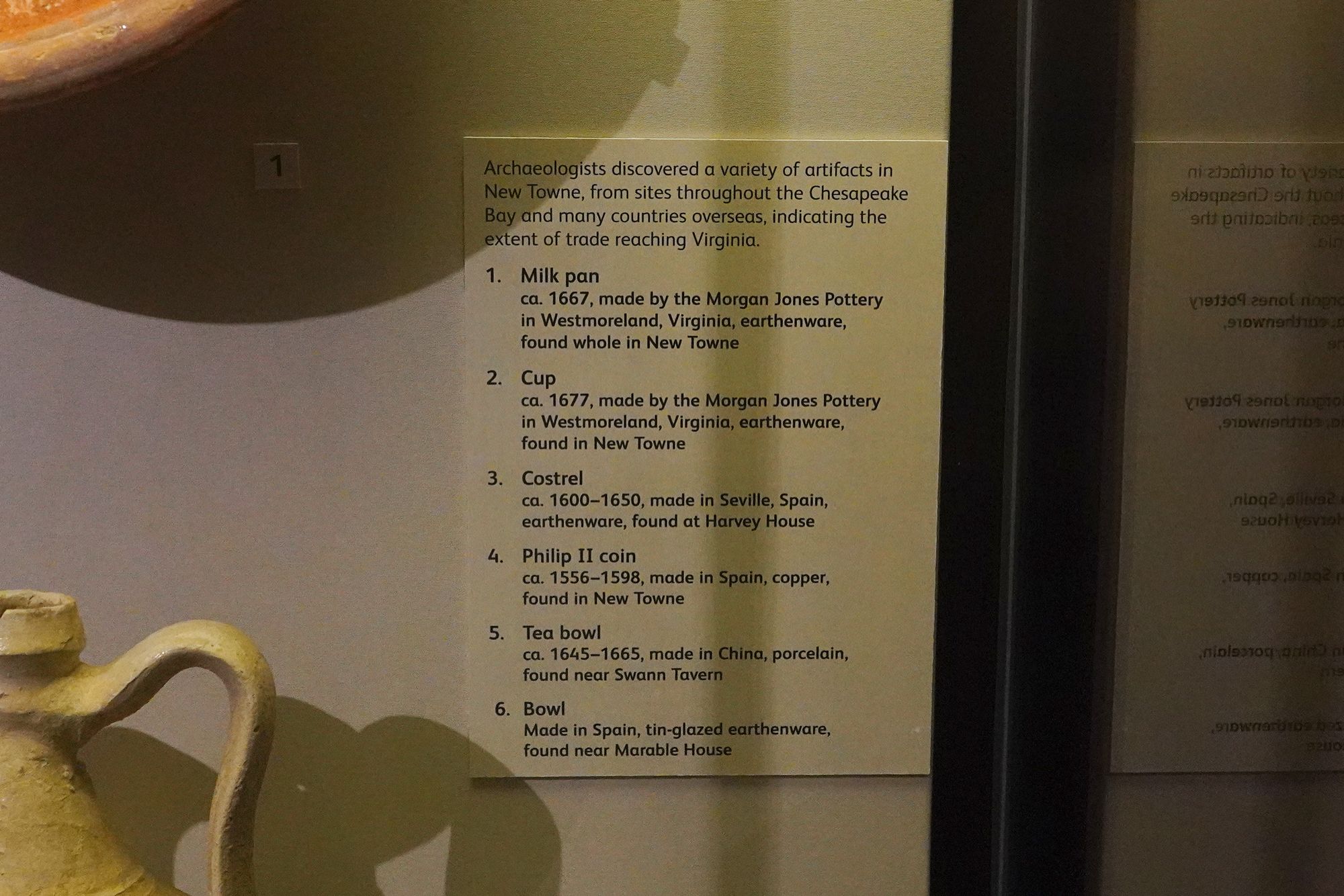
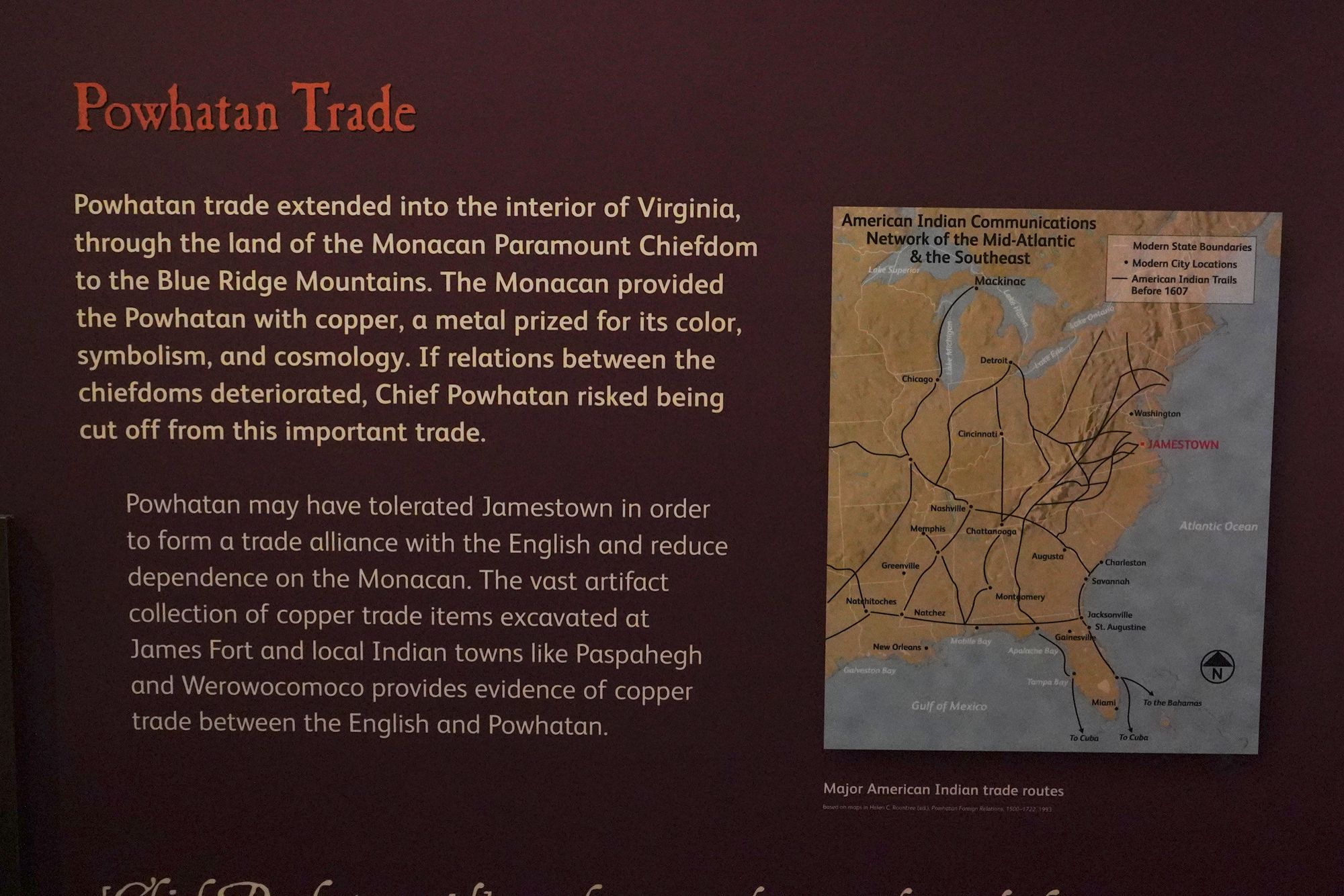
Trade between Powhatan and the settlers extended into the interior of Virginia.
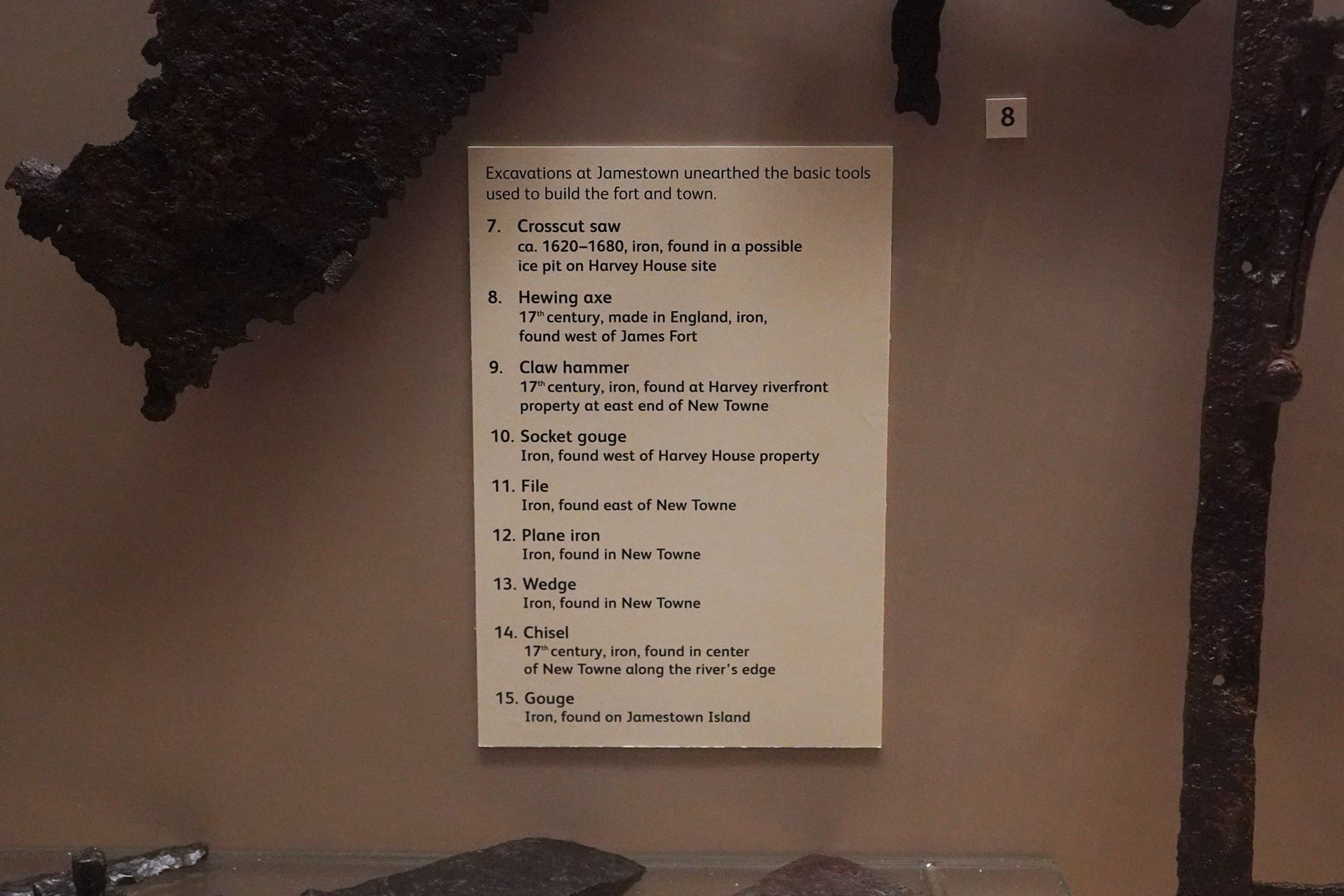
Building Jamestown
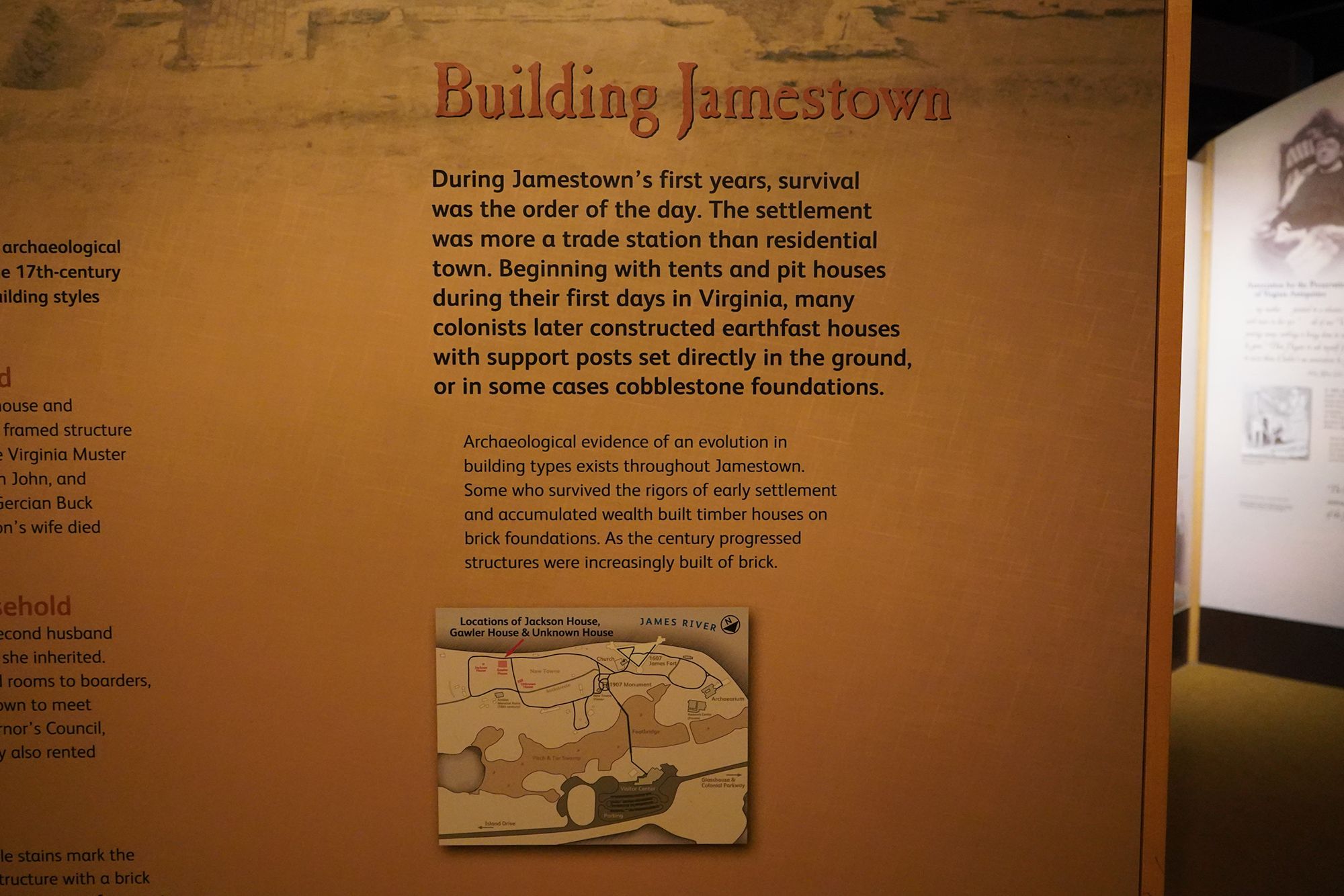
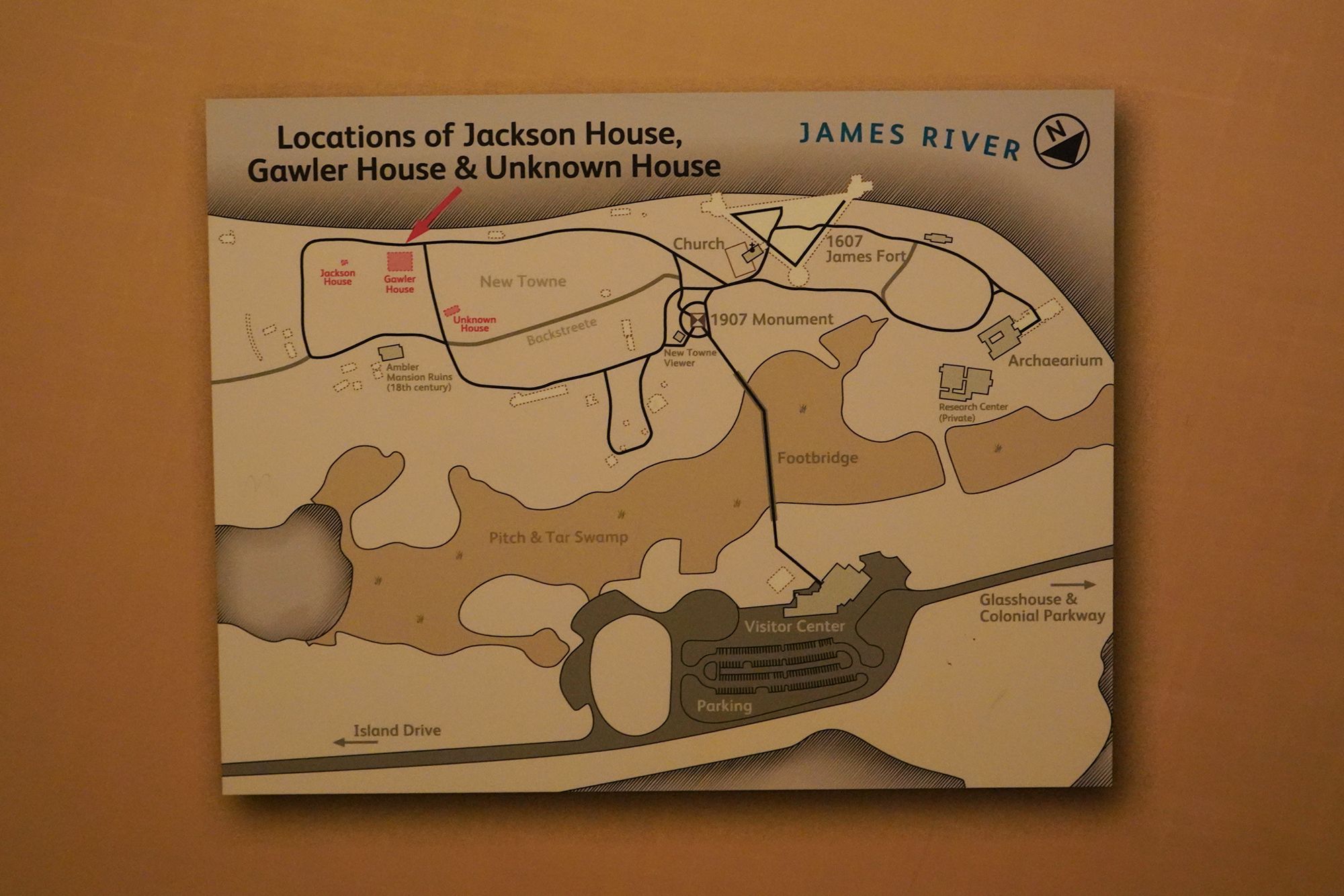
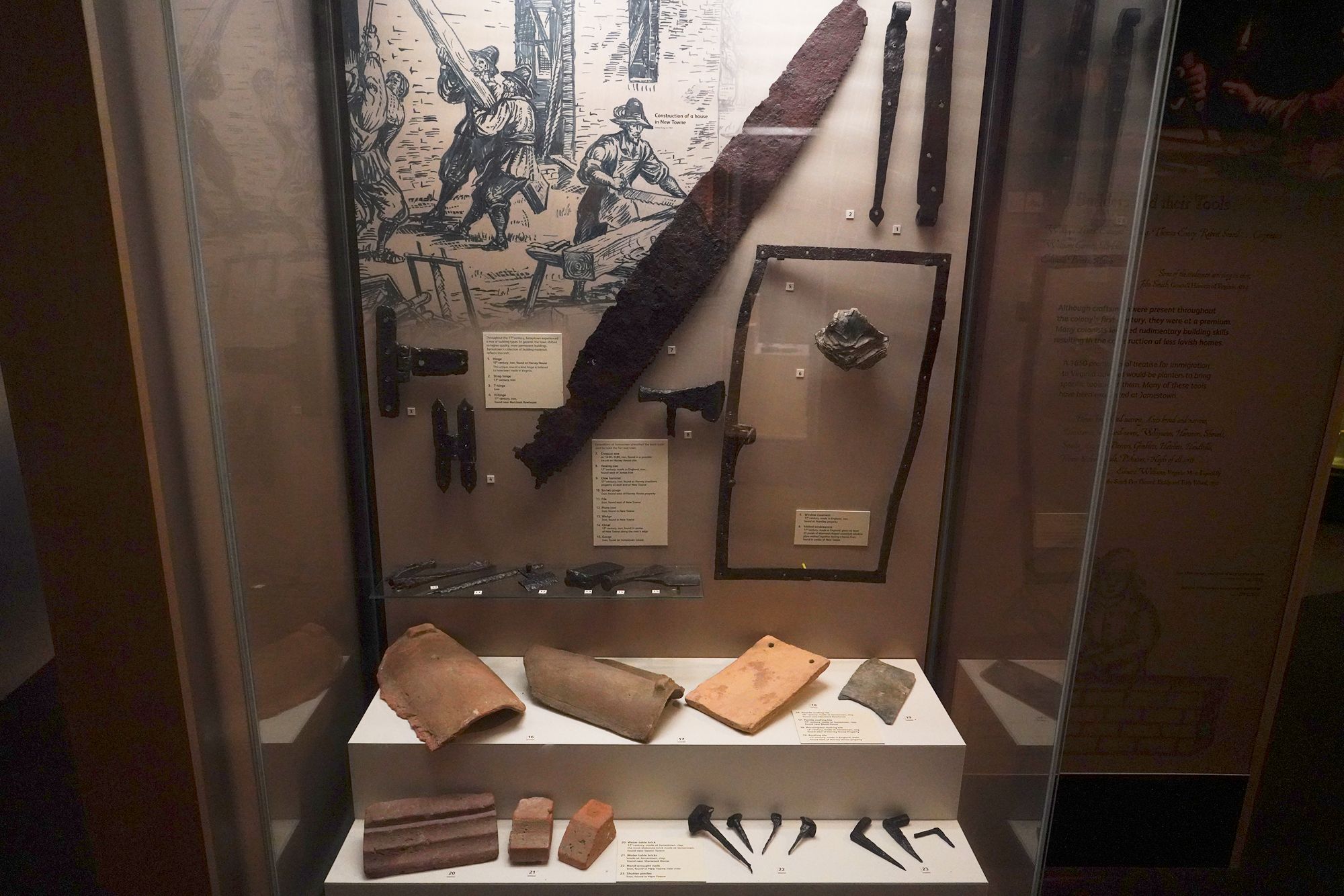
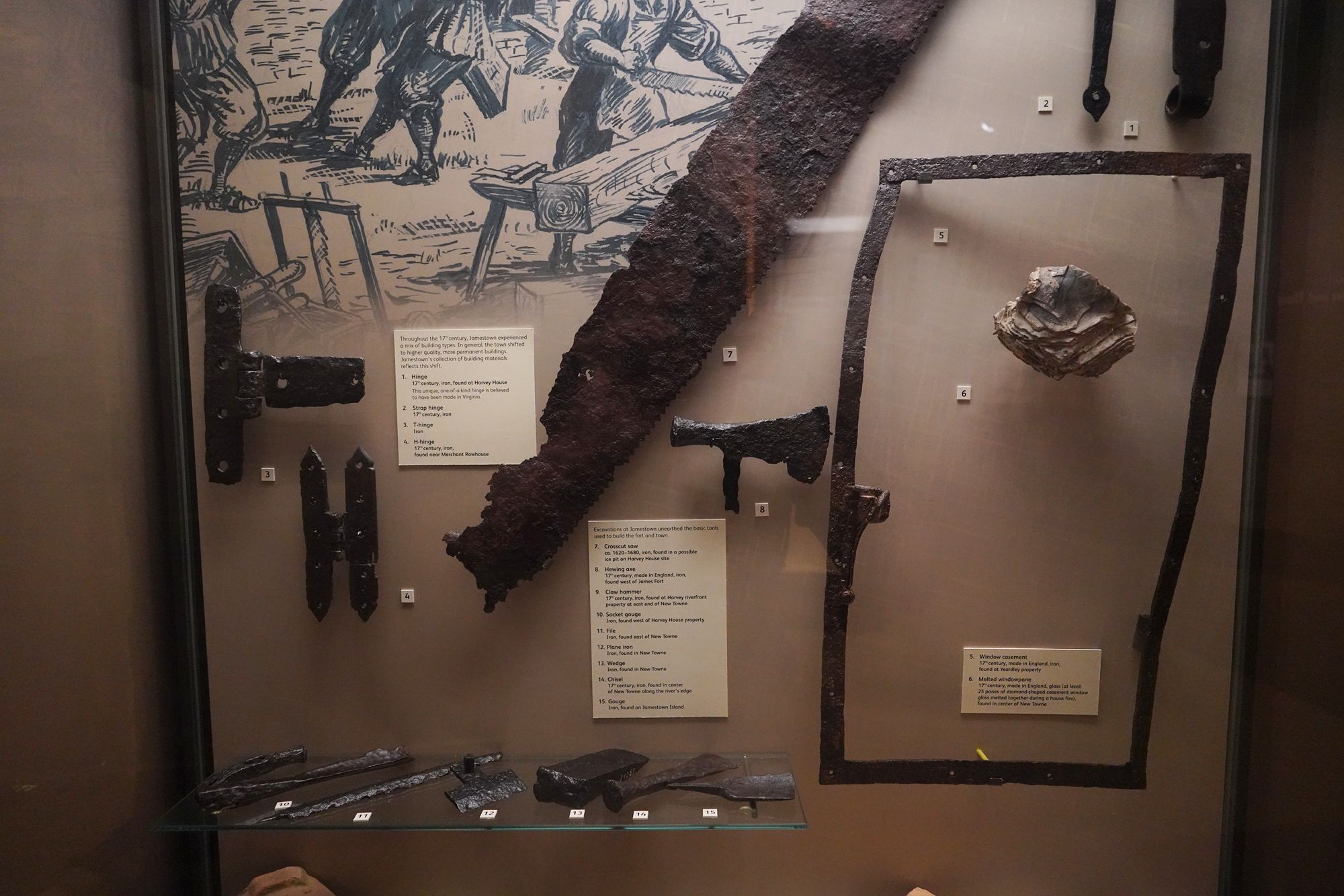
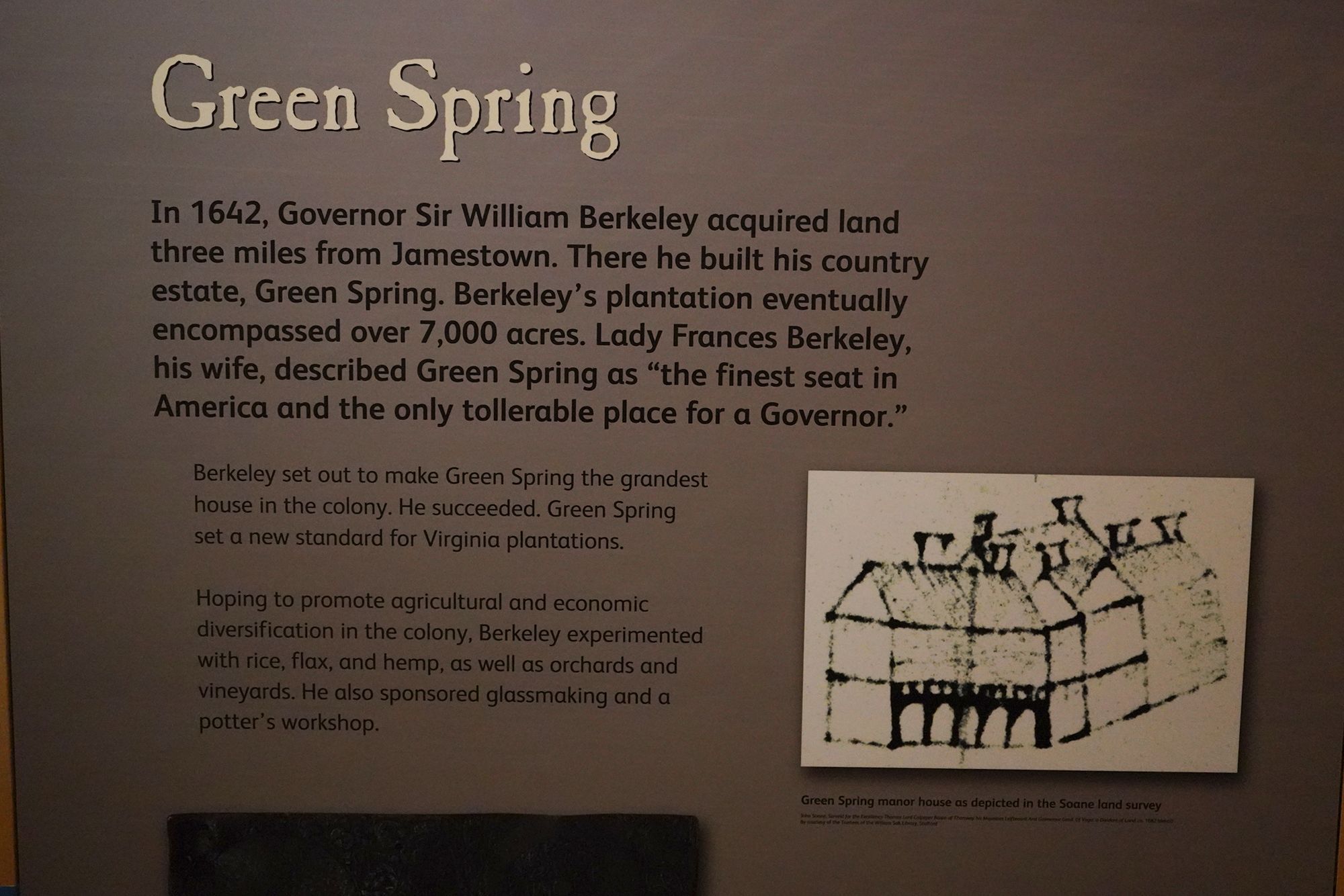
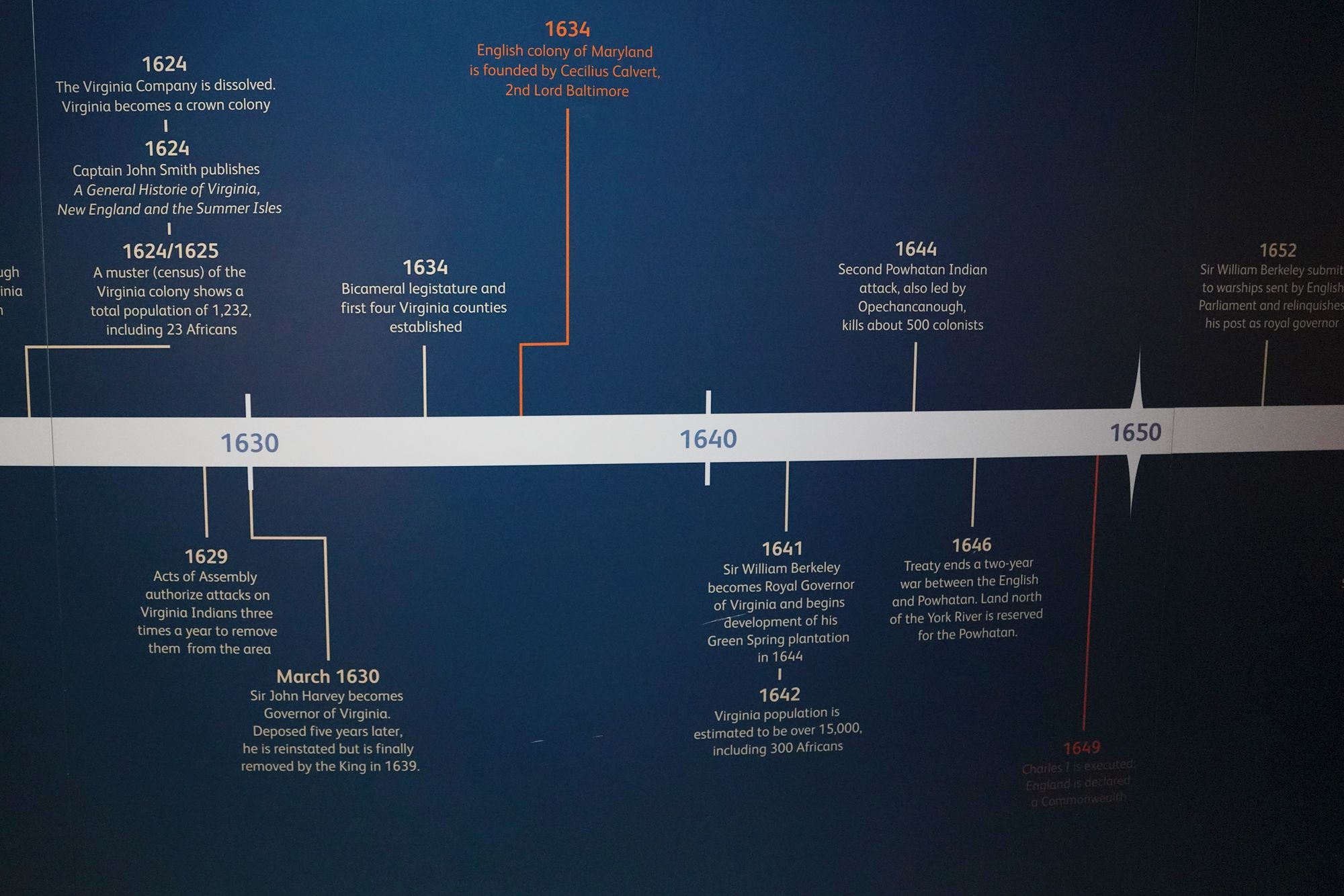
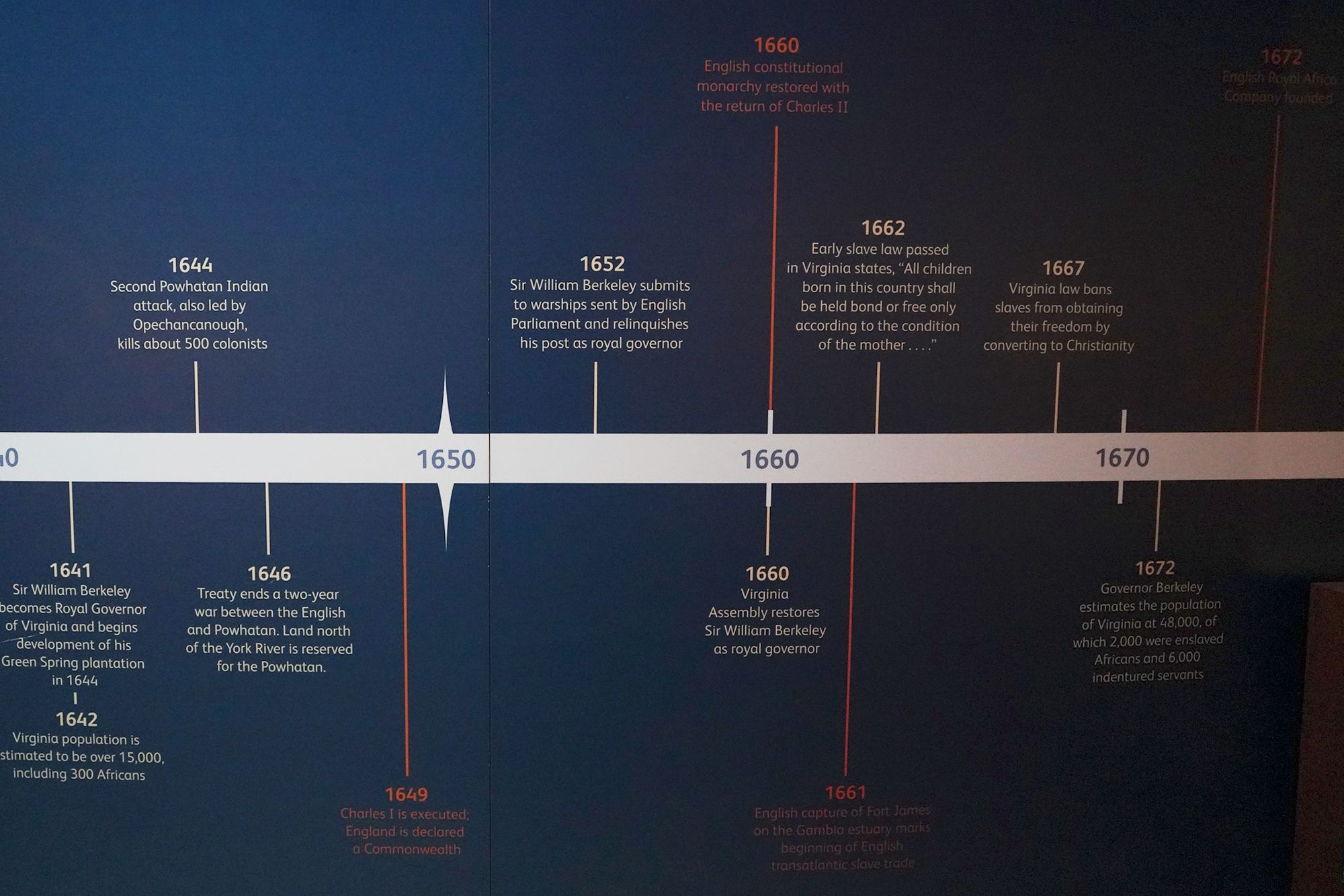
Green Spring was the Virginia plantation and home of Sir William Berkeley, the longest-serving governor of colonial Virginia. Located a few miles northwest of Jamestown, near present-day Williamsburg, Green Spring became one of the most influential estates in 17th-century Virginia. It symbolized the colony’s shift from a struggling frontier outpost to a prosperous, plantation-based society.
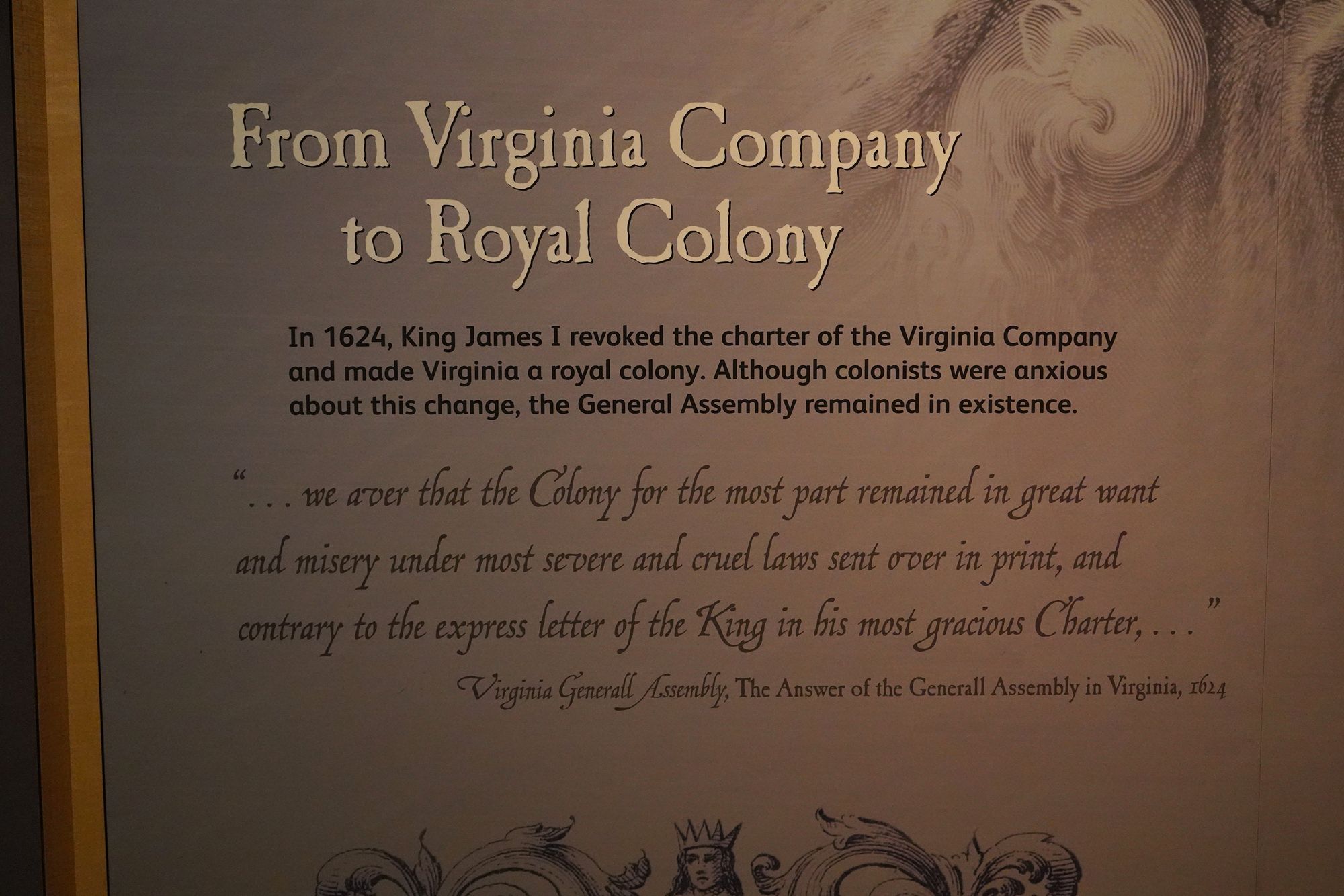
Jamestown becomes a Royal Colony
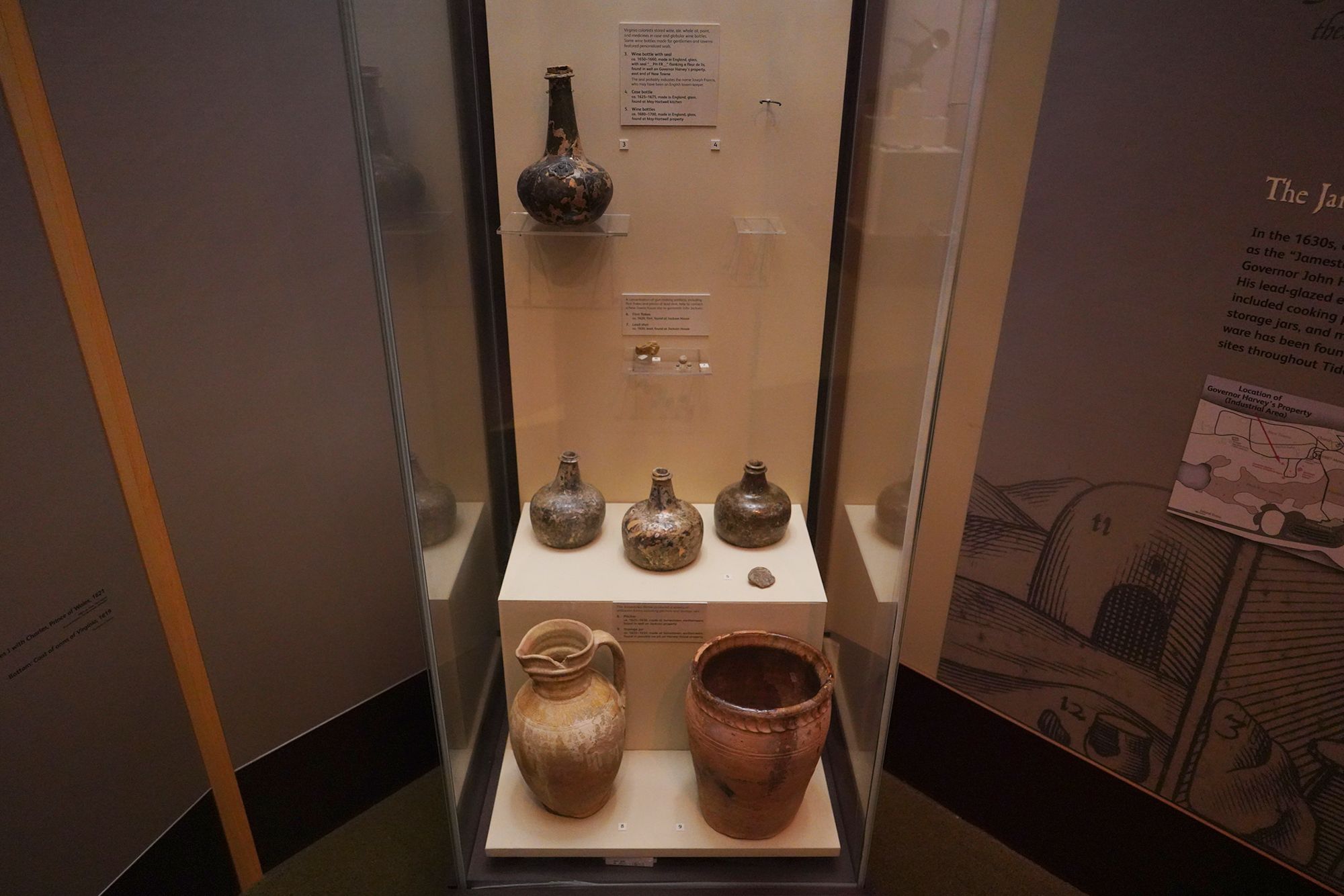
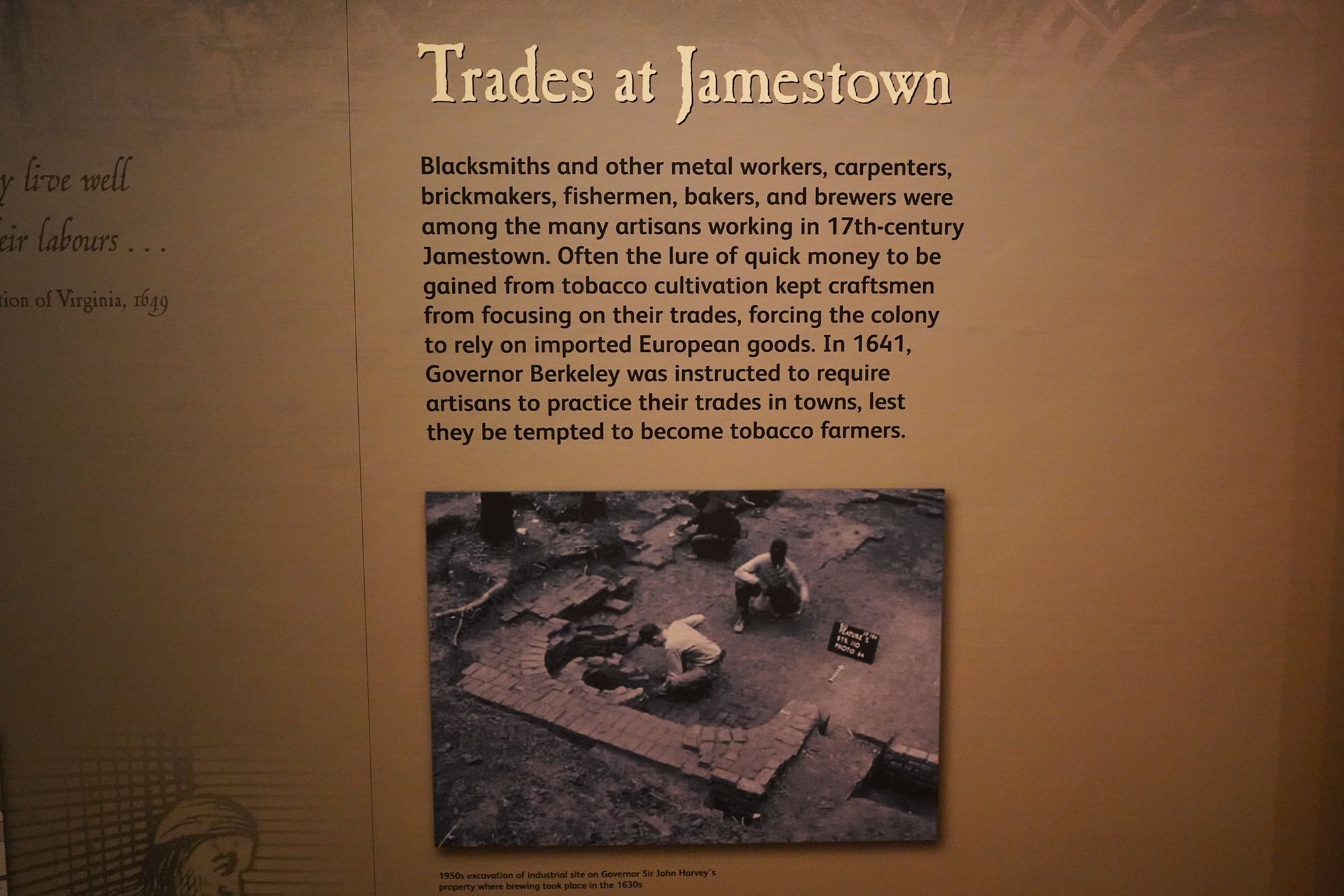
Trade at Jamestown
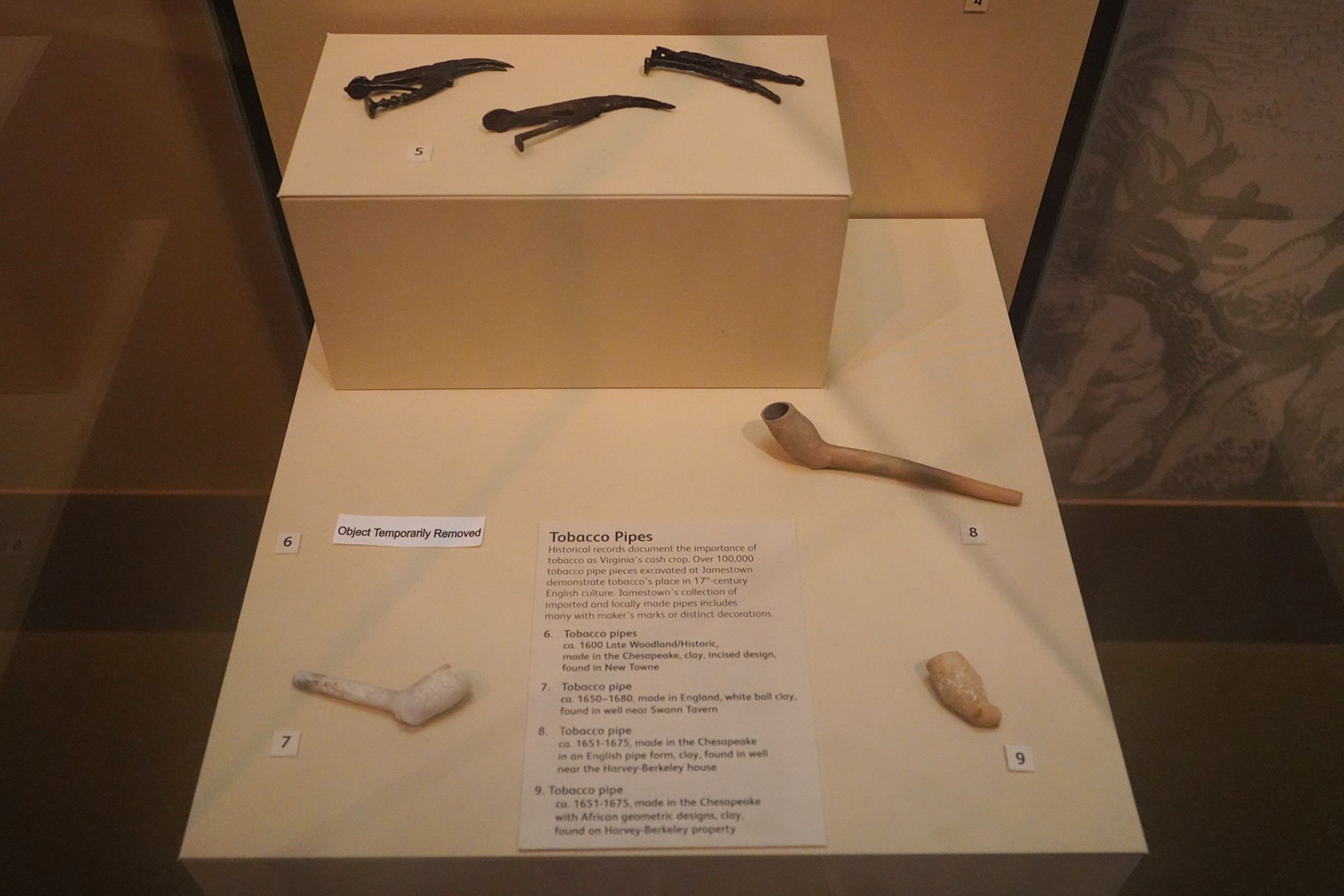
Tobacco became the economic foundation of the Virginia Colony and the key to Jamestown’s survival. What began as a struggling settlement turned into a thriving colony largely because of tobacco cultivation, which transformed land use, labor systems, and trade throughout the English colonies.
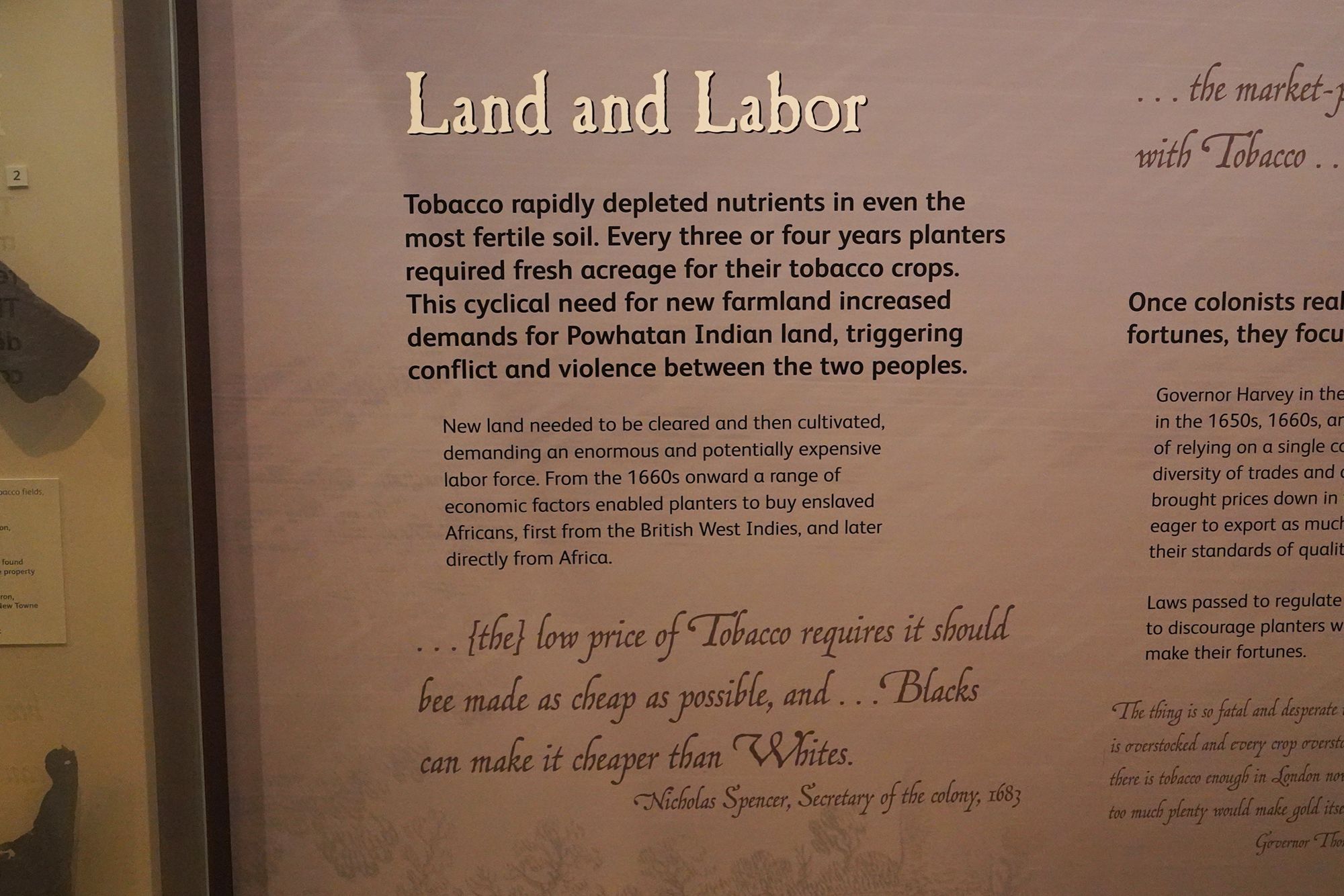
Tobacco cultivation increased conflict with native Indians
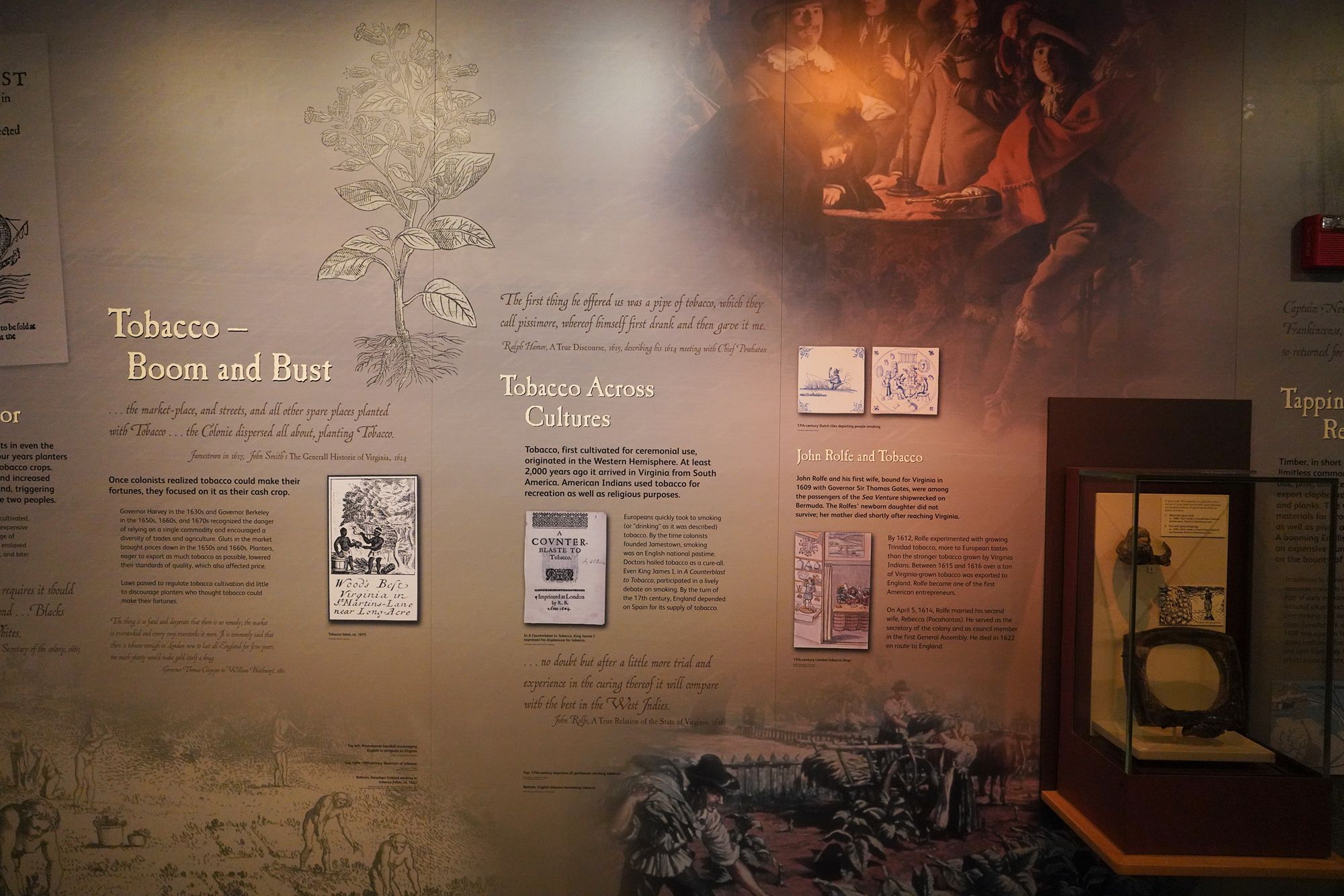
Tobacco as a cash crop
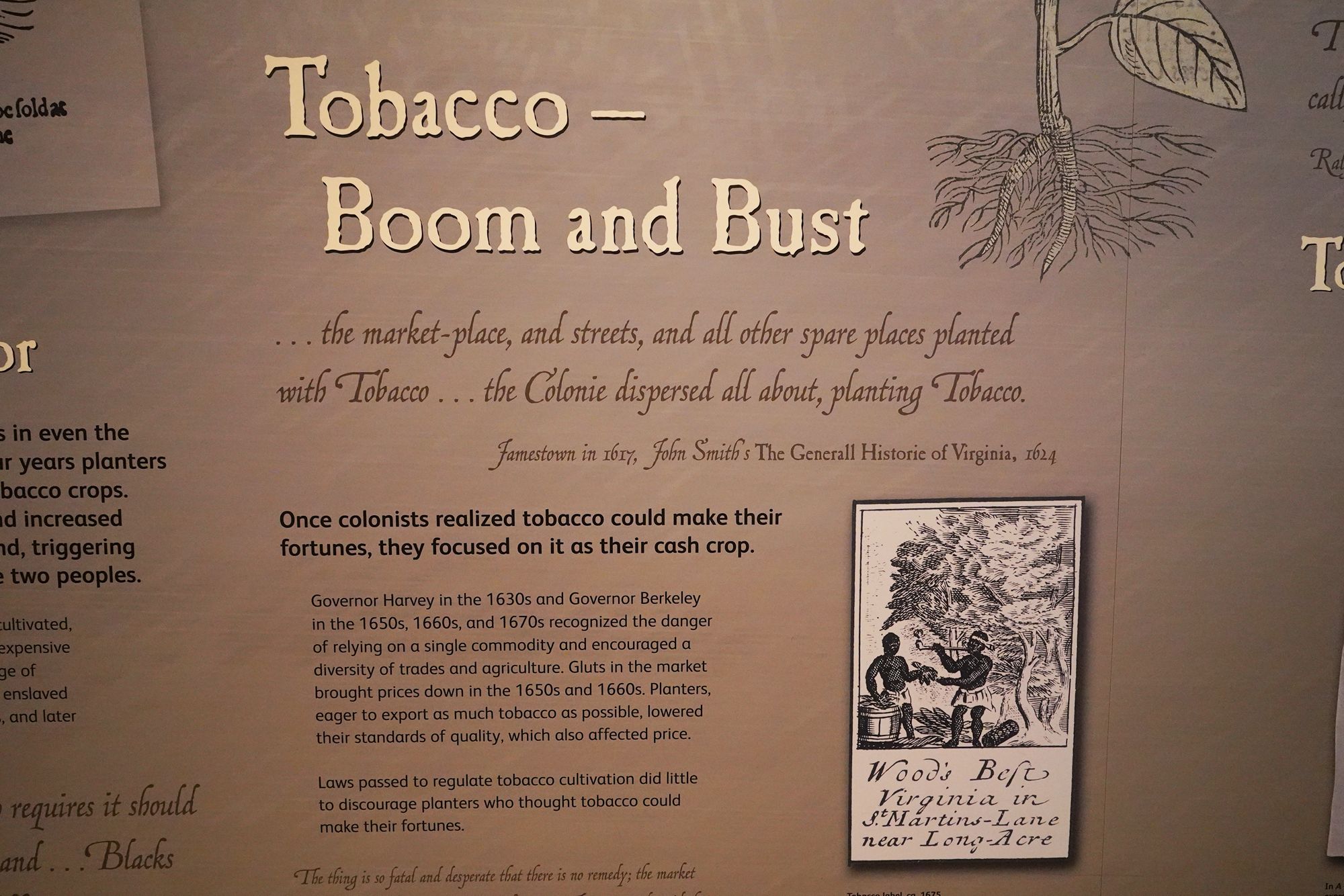
Tobacco originated in the Americas, where Indigenous peoples cultivated and used it long before Europeans arrived. To Native Americans, tobacco was a sacred plant, used for spiritual rituals, healing, and diplomacy. After European contact, it spread across the world, becoming both a social habit and economic powerhouse that reshaped cultures on every continent.
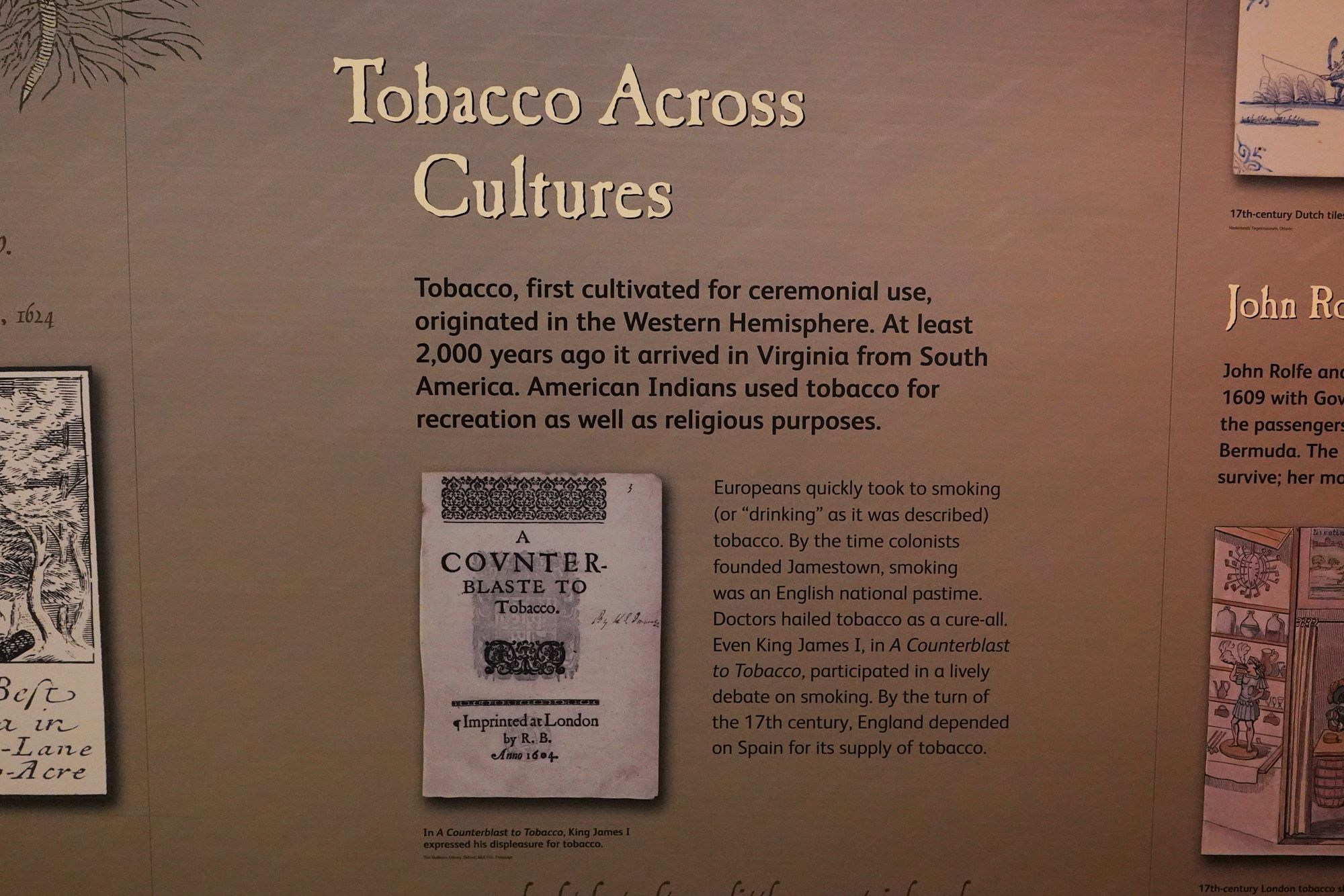
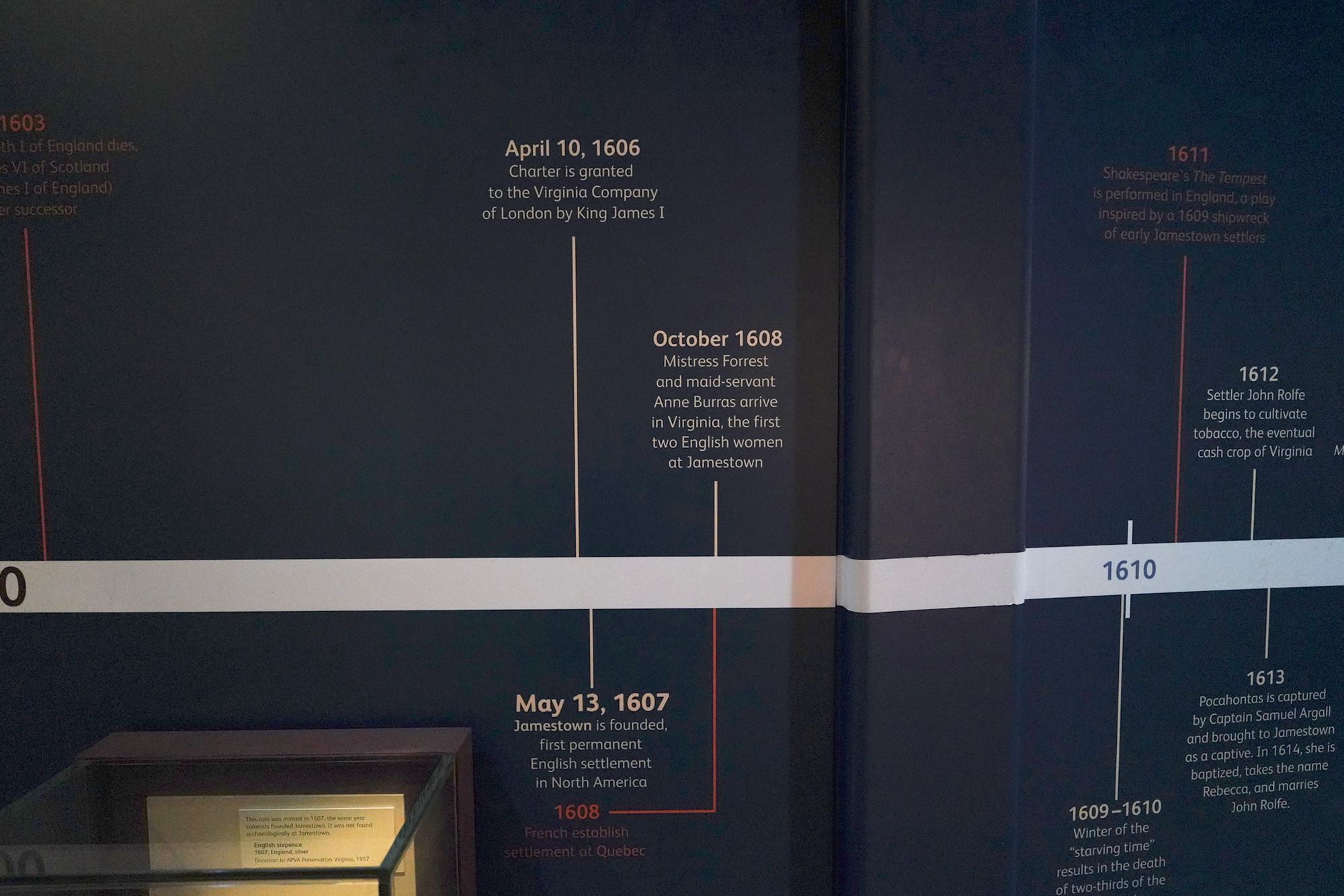
John Rolfe arrived at Jamestown in 1610, after surviving a shipwreck in Bermuda, joining a struggling colony still recovering from the devastating “Starving Time.”
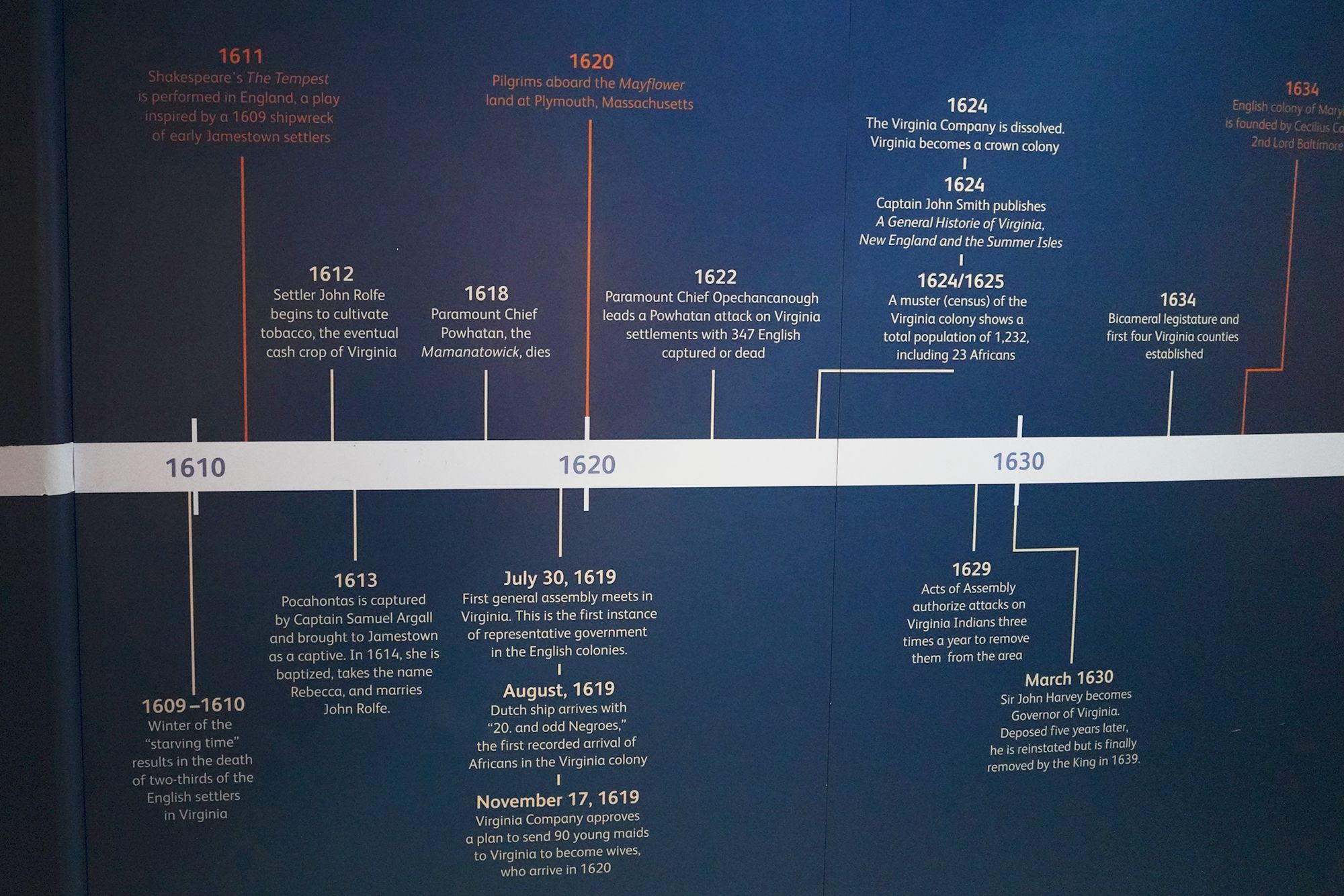
In 1612, John Rolfe began experimenting with Caribbean tobacco seeds, successfully producing a smoother variety that became highly valued in England and transformed Virginia’s economy.
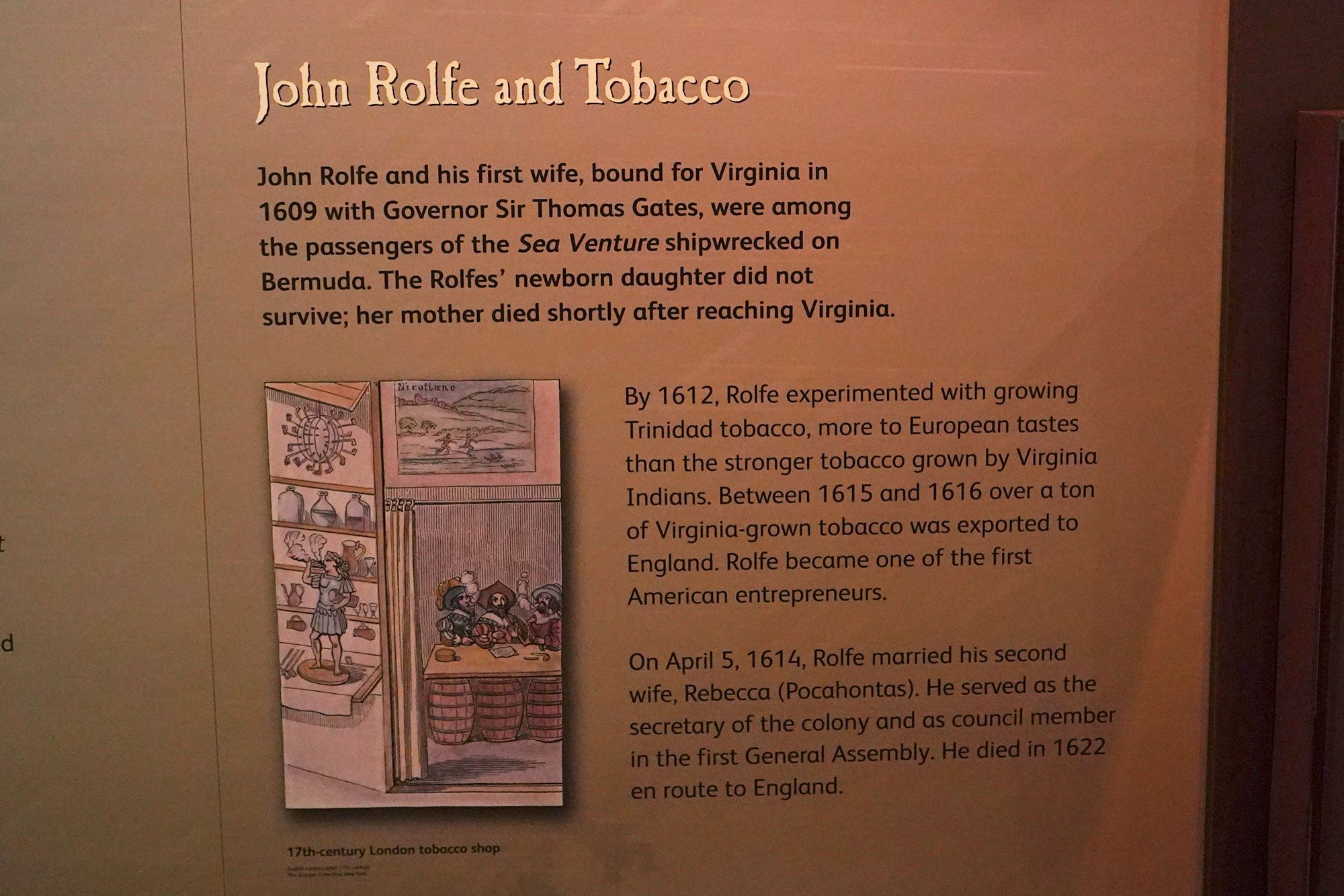
Timber was one of Jamestown’s most vital natural resources, providing the material for building, fuel, tools, and trade that kept the early colony alive.
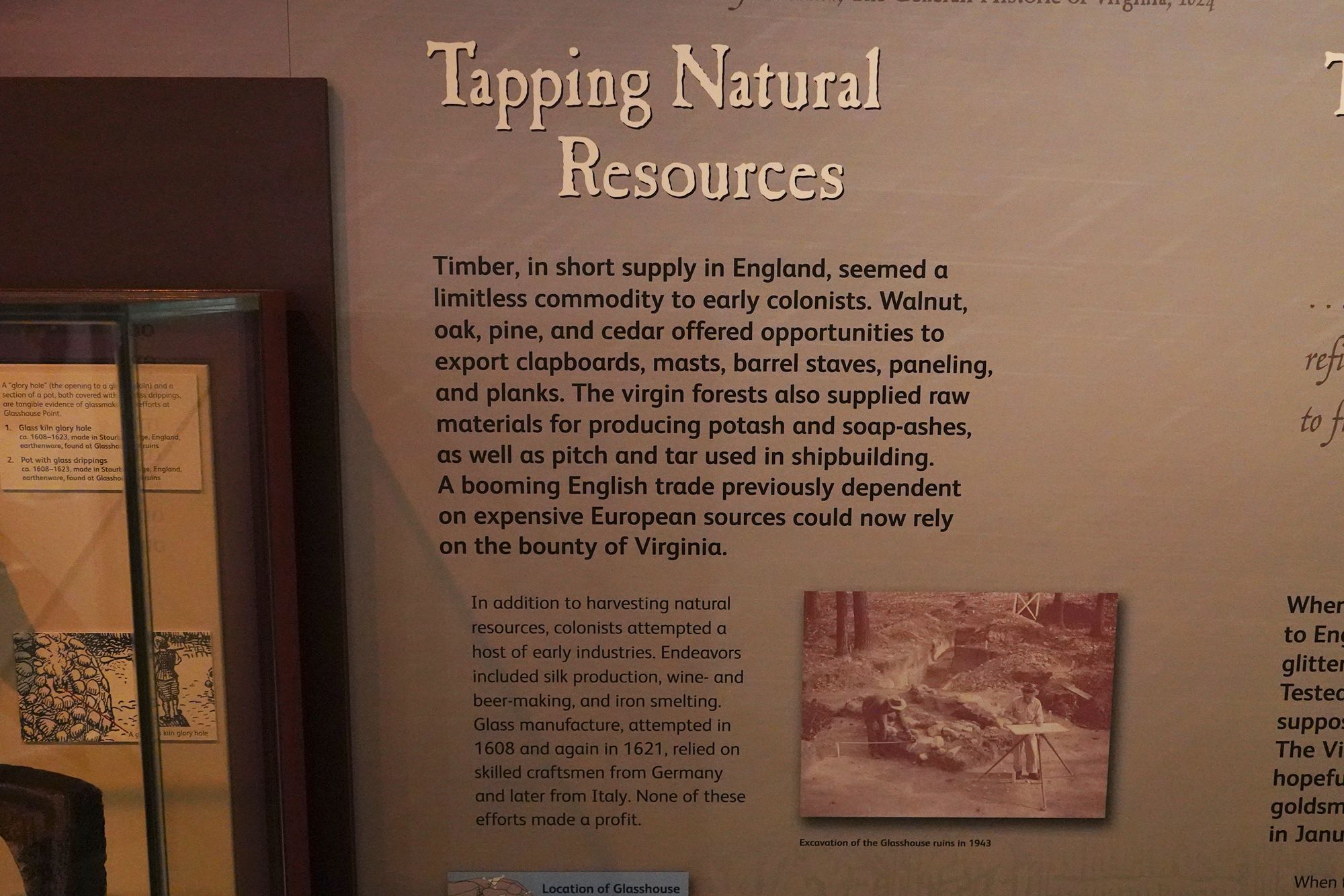
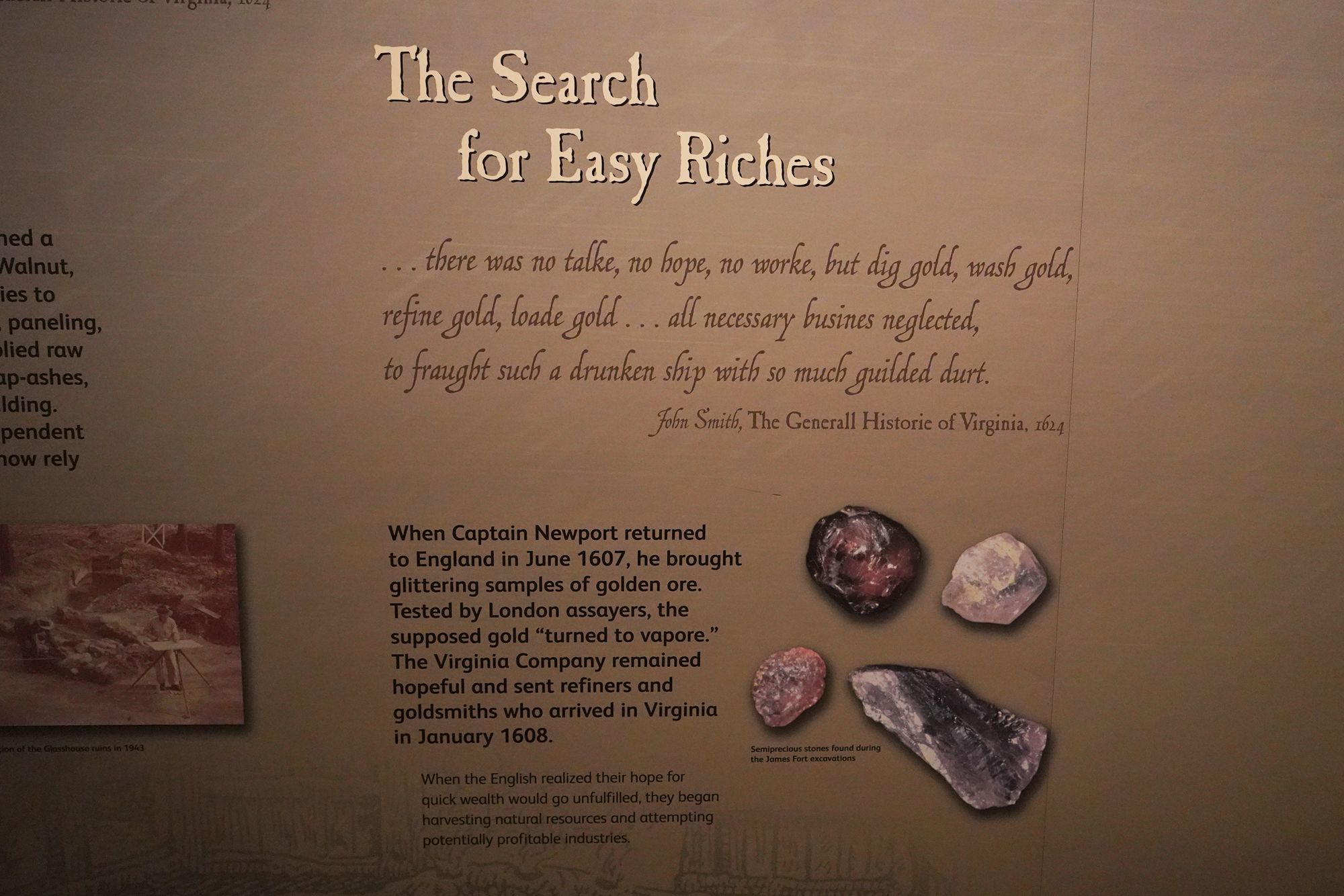
even though no gold was found, the promise of gold and riches kept the Virginia Company’s investors interested, as they hoped the colony would eventually yield valuable resources or trade profits. This continuing investment financed ships, supplies, and new settlers, allowing Jamestown to survive long enough to discover its true wealth later through tobacco cultivation.
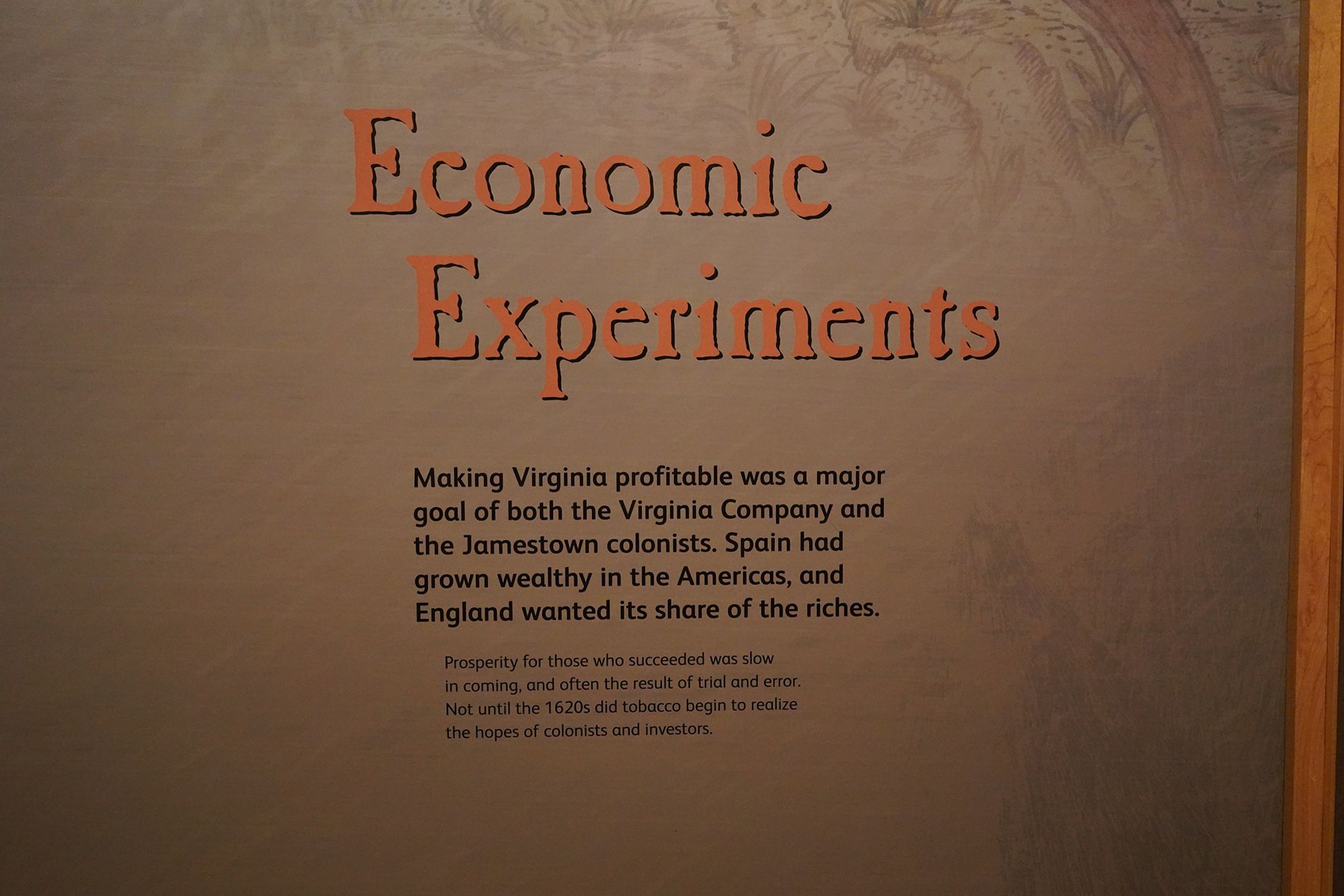
Making Virginia profitable was a major goal
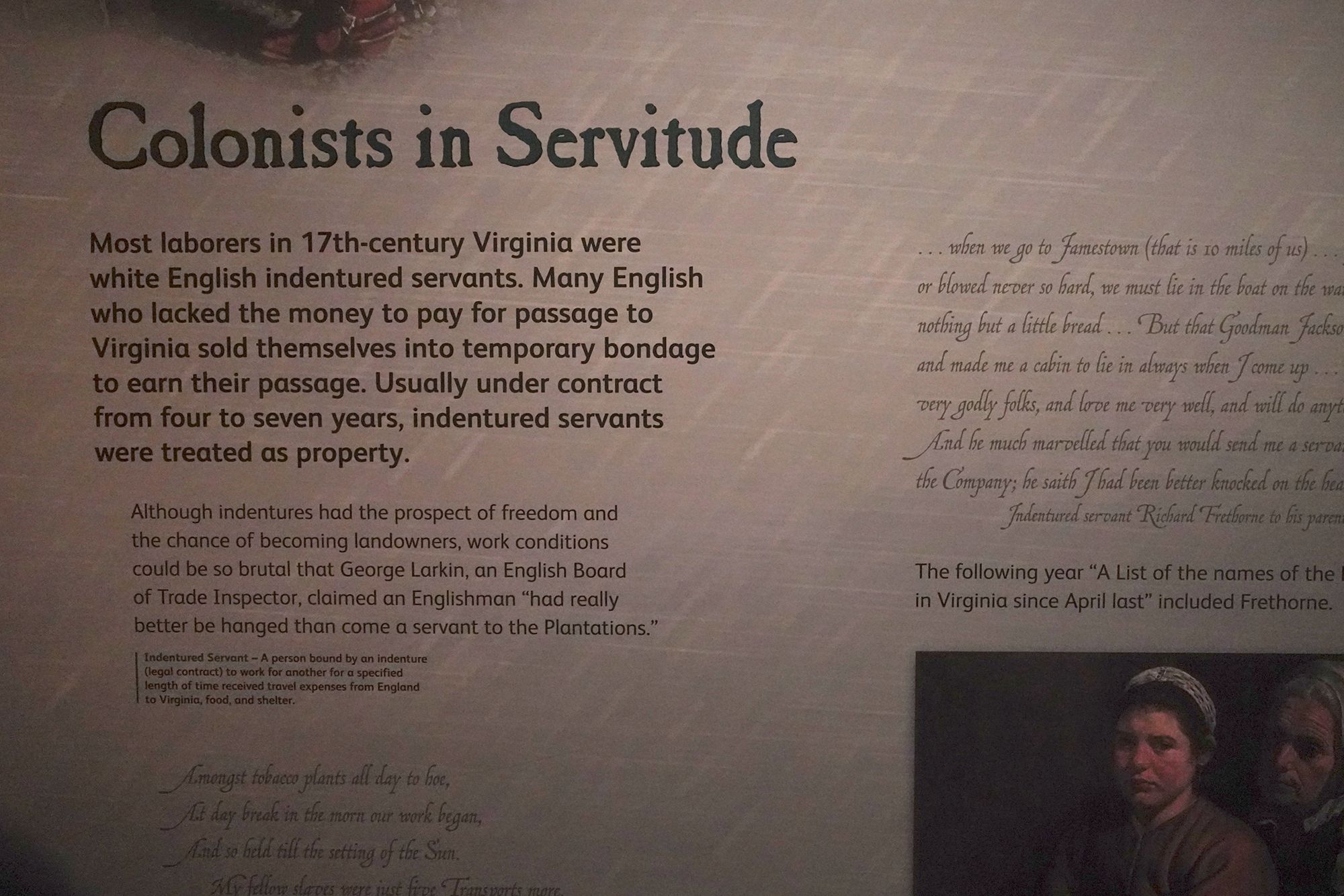
In the early years of Jamestown, most laborers were indentured servants—poor English men and women who worked for several years in exchange for passage to America.
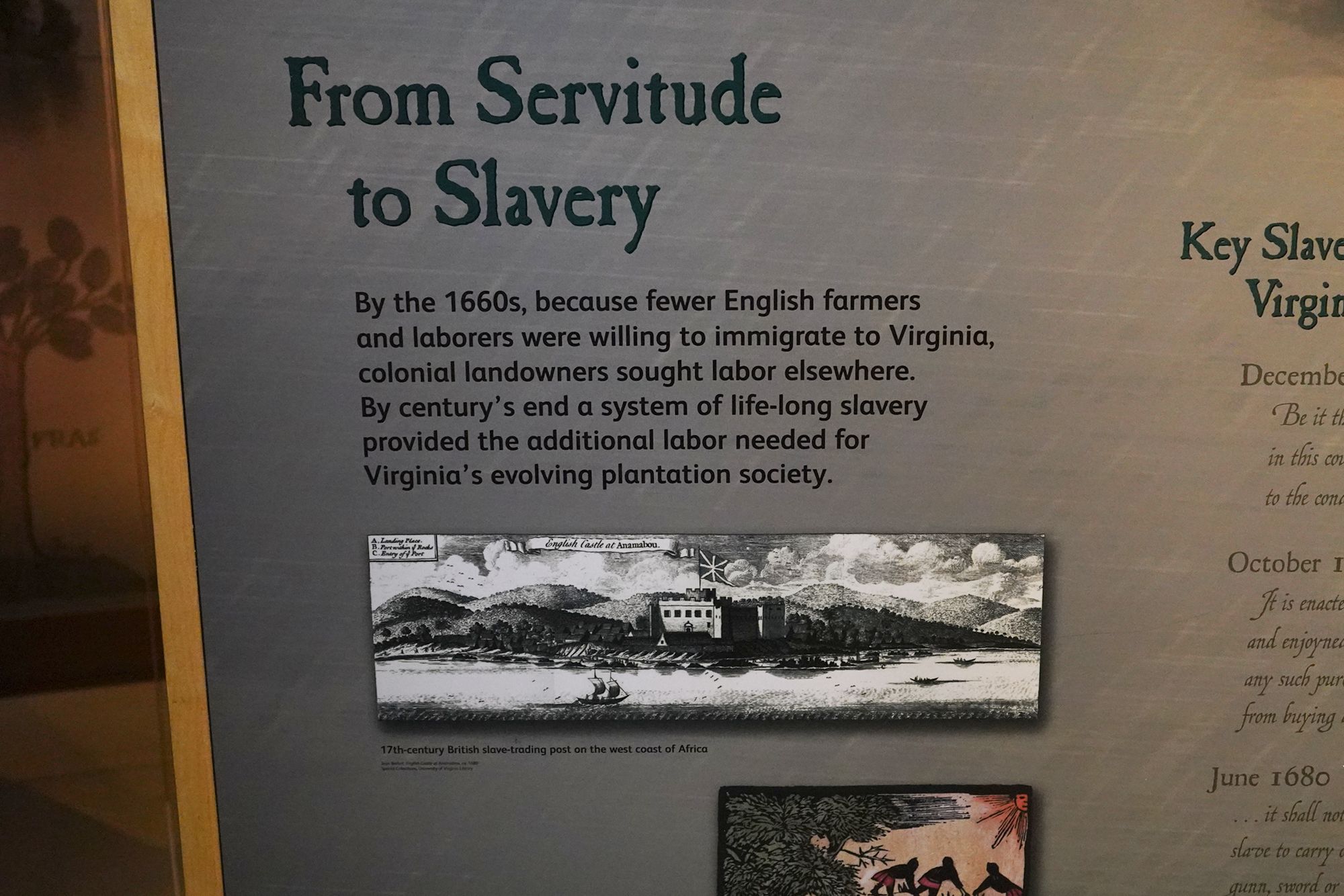
By the late 1600s, Virginia had shifted from a society based on temporary servitude to one built on racial slavery, a system that would define Southern life for the next two centuries.
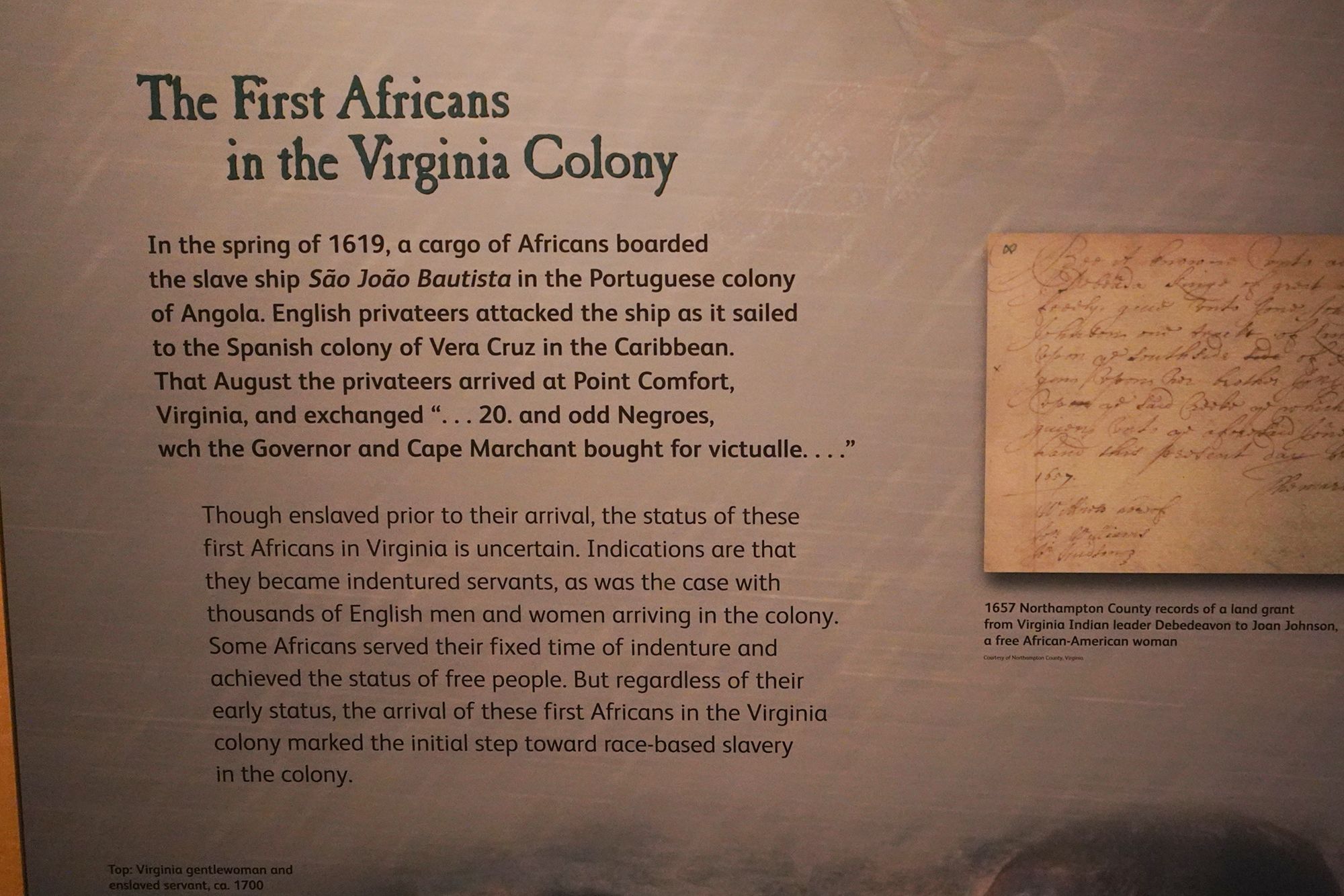
The First Africans in the Virginia Colony
At first, the site for Jamestown seemed ideal to the settlers because it was surrounded by water for defense and hidden from Spanish ships.
The English settlers at Jamestown believed it was their duty to preach Christianity to the Indians, hoping to convert them to the Church of England as part of their mission to spread both religion and English civilization in the New World.
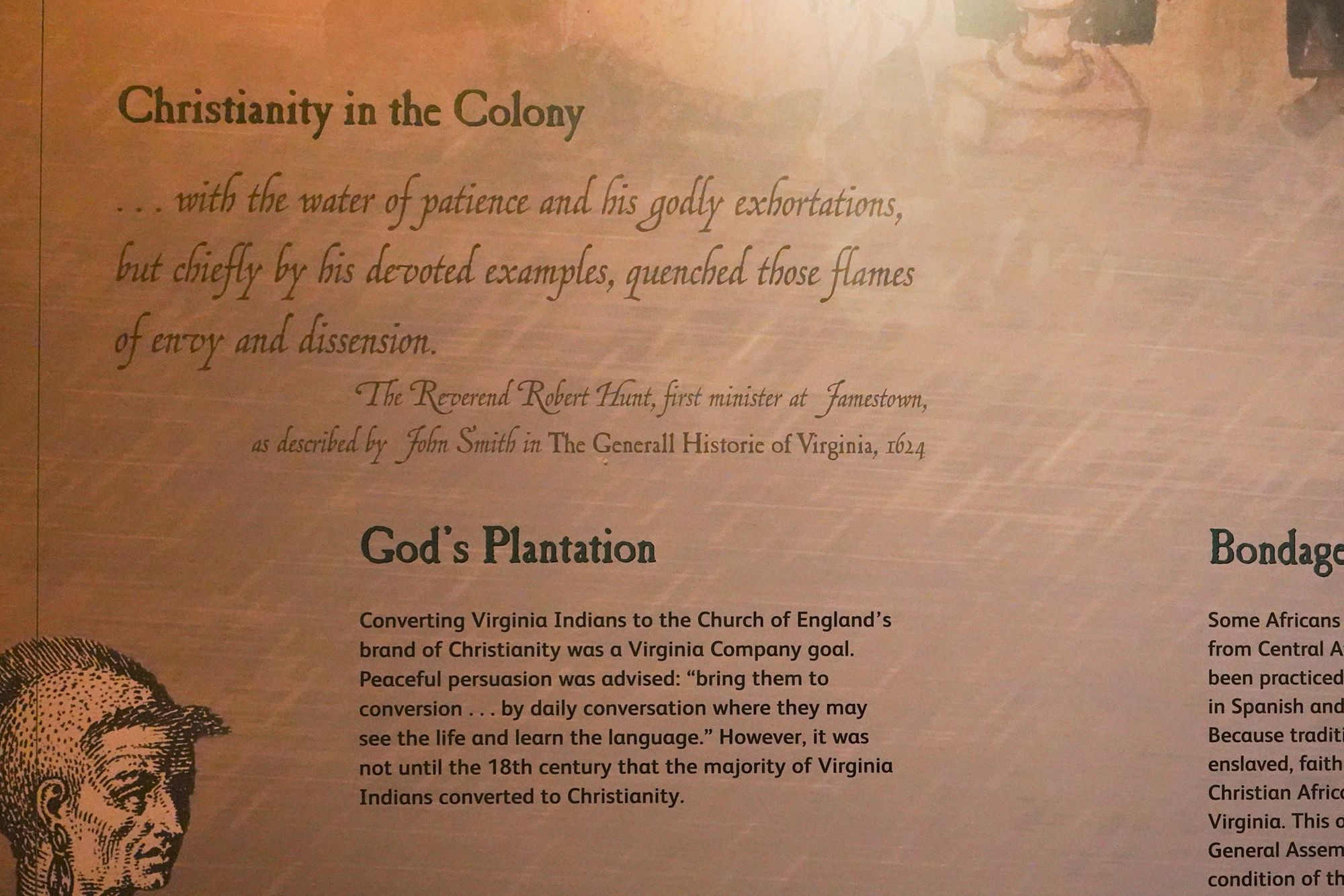
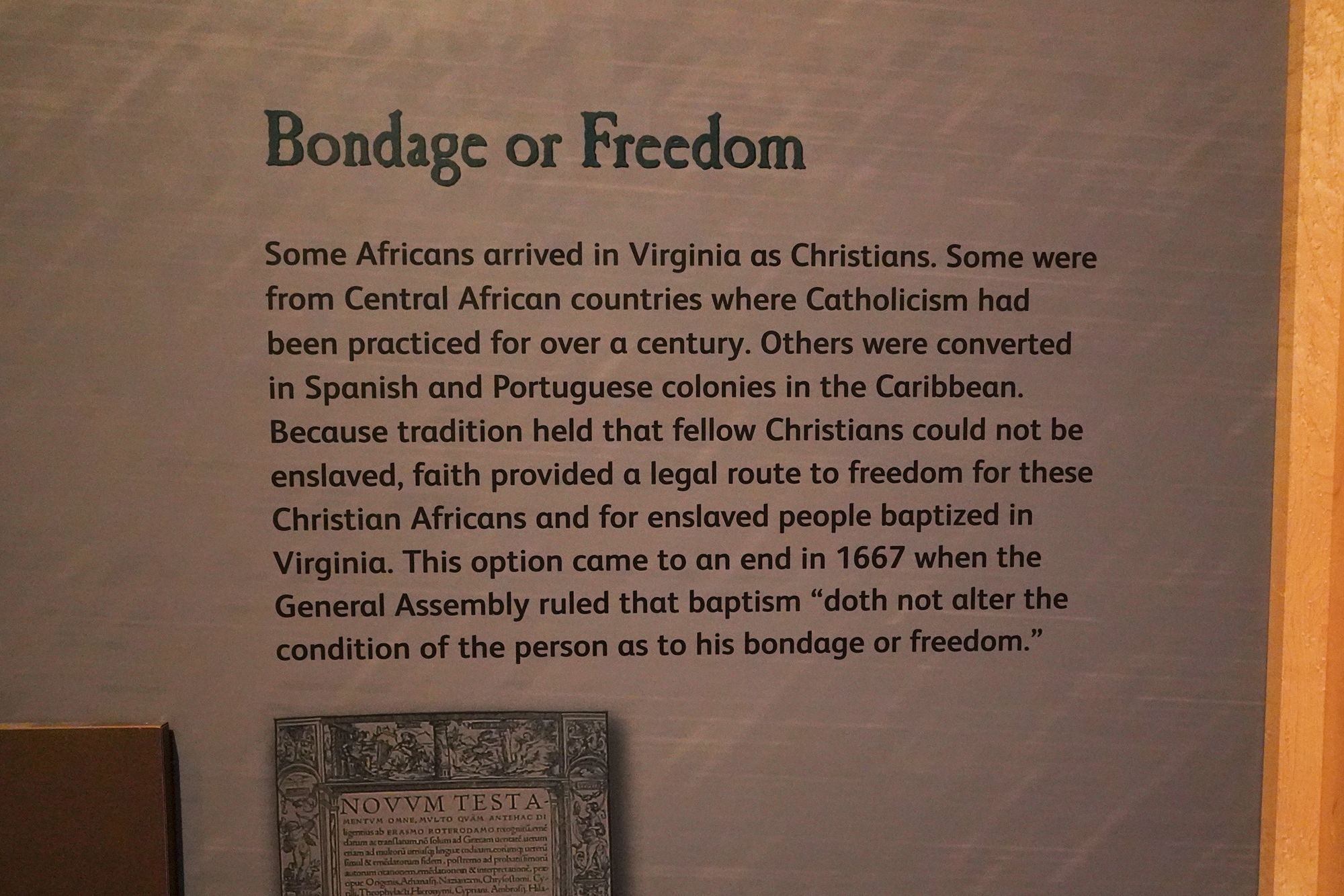
In colonial Virginia, baptism did not bring freedom. Even after some Africans were baptized as Christians, colonial laws declared that conversion did not change a person’s enslaved status, making slavery a permanent and hereditary condition based on race rather than religion.
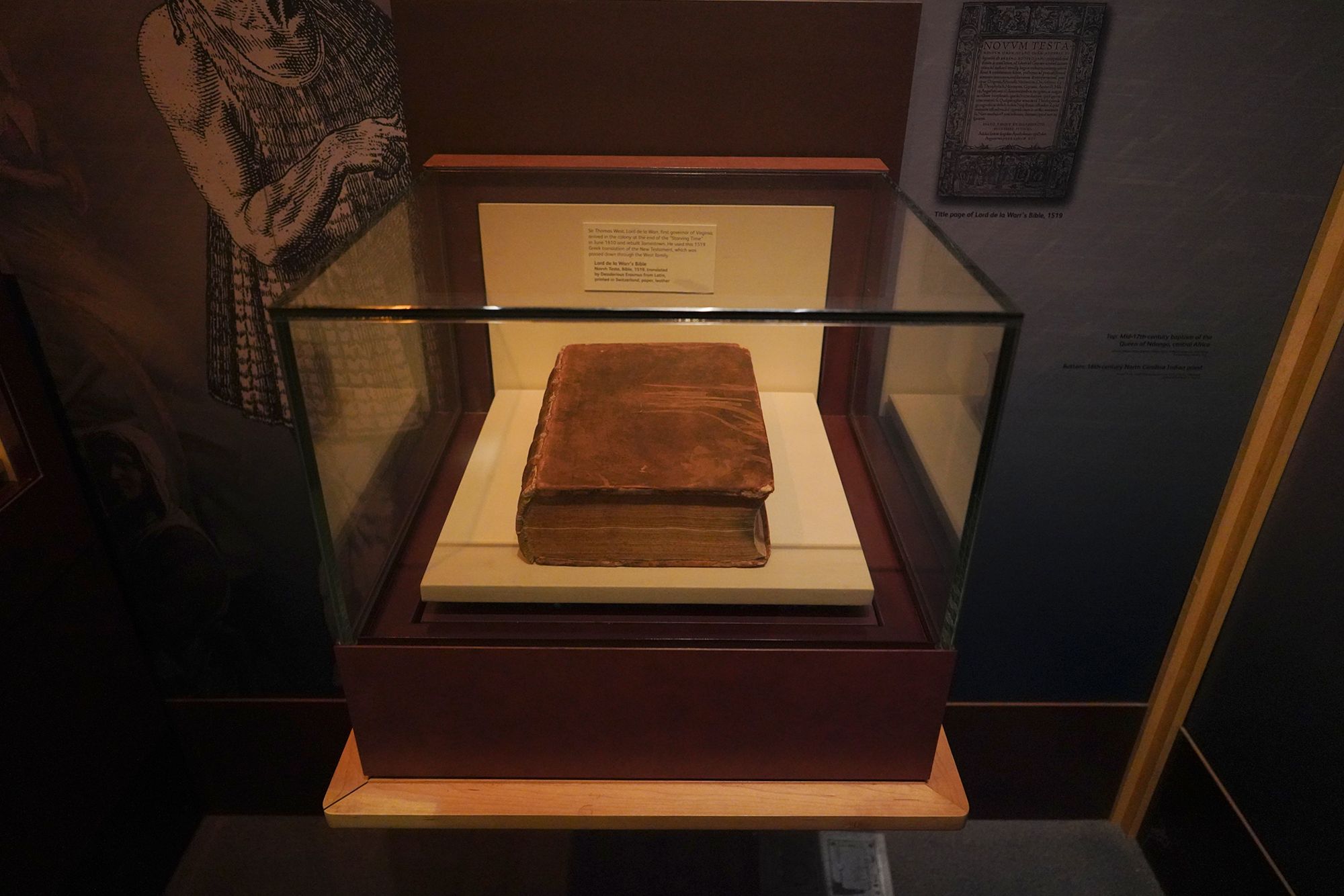
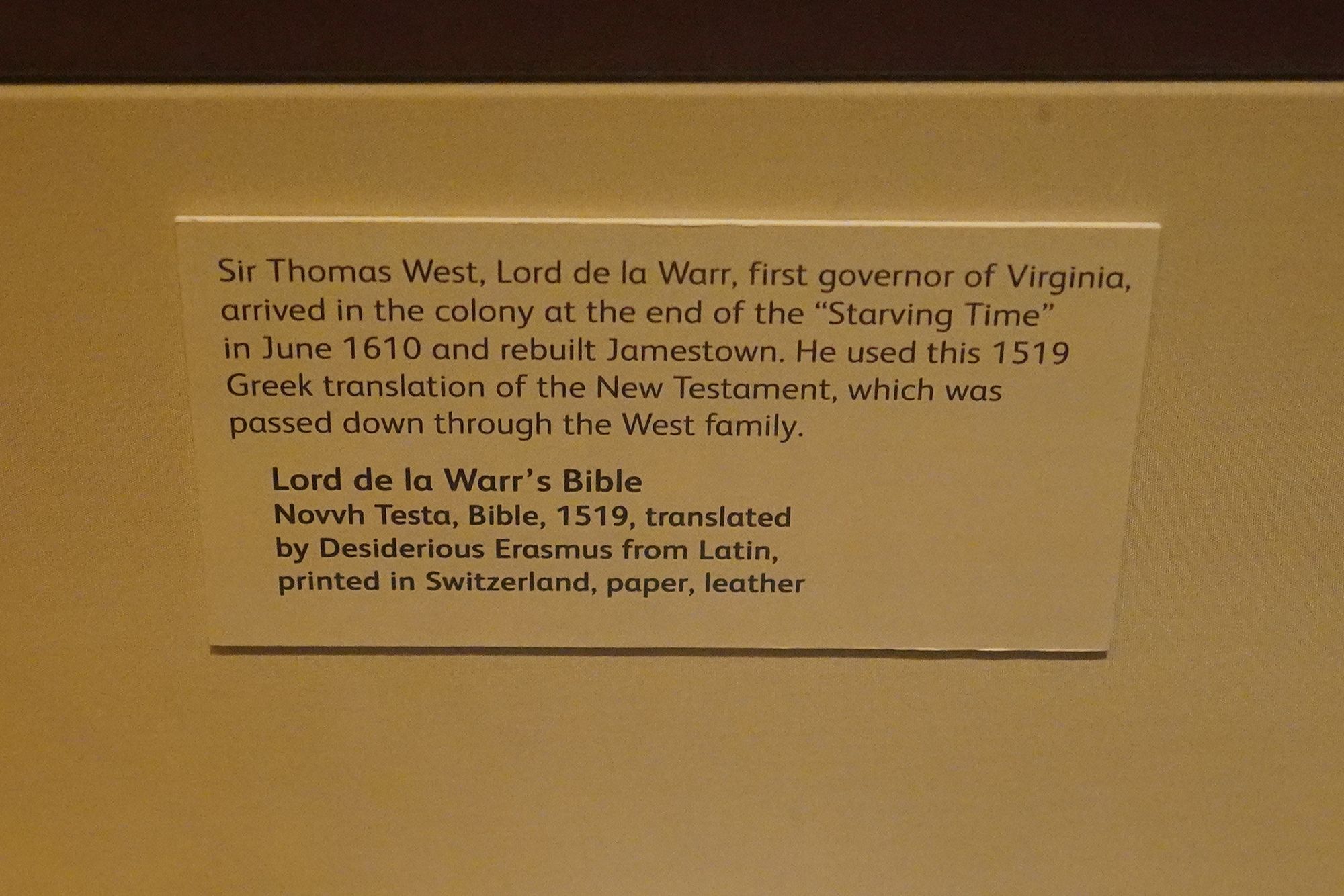
Sir Thomas West, better known by his title Lord De La Warr, was an English nobleman and the first appointed governor of the Virginia Colony. He played a crucial role in saving Jamestown from collapse after the “Starving Time” and restoring order and discipline among the settlers.
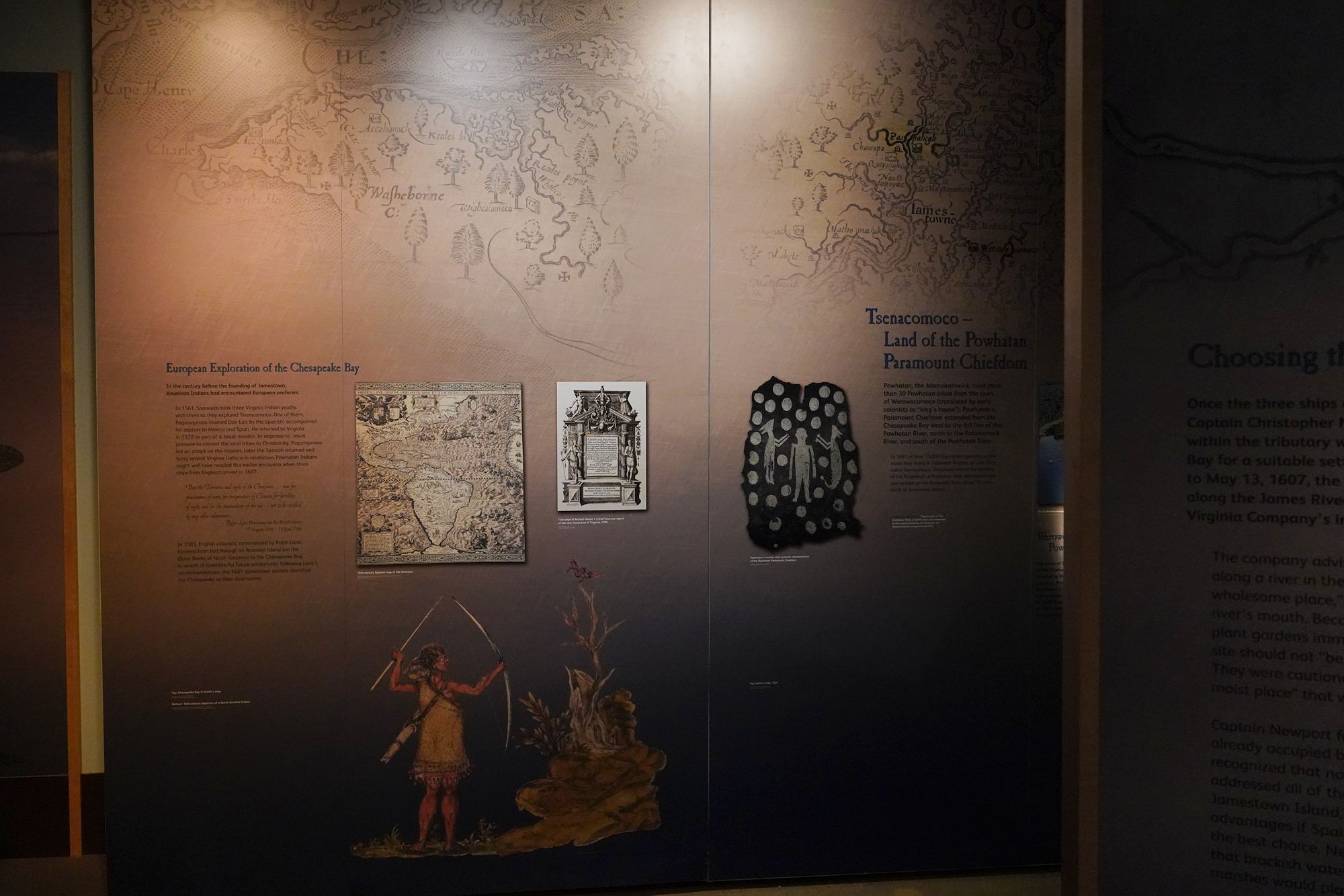
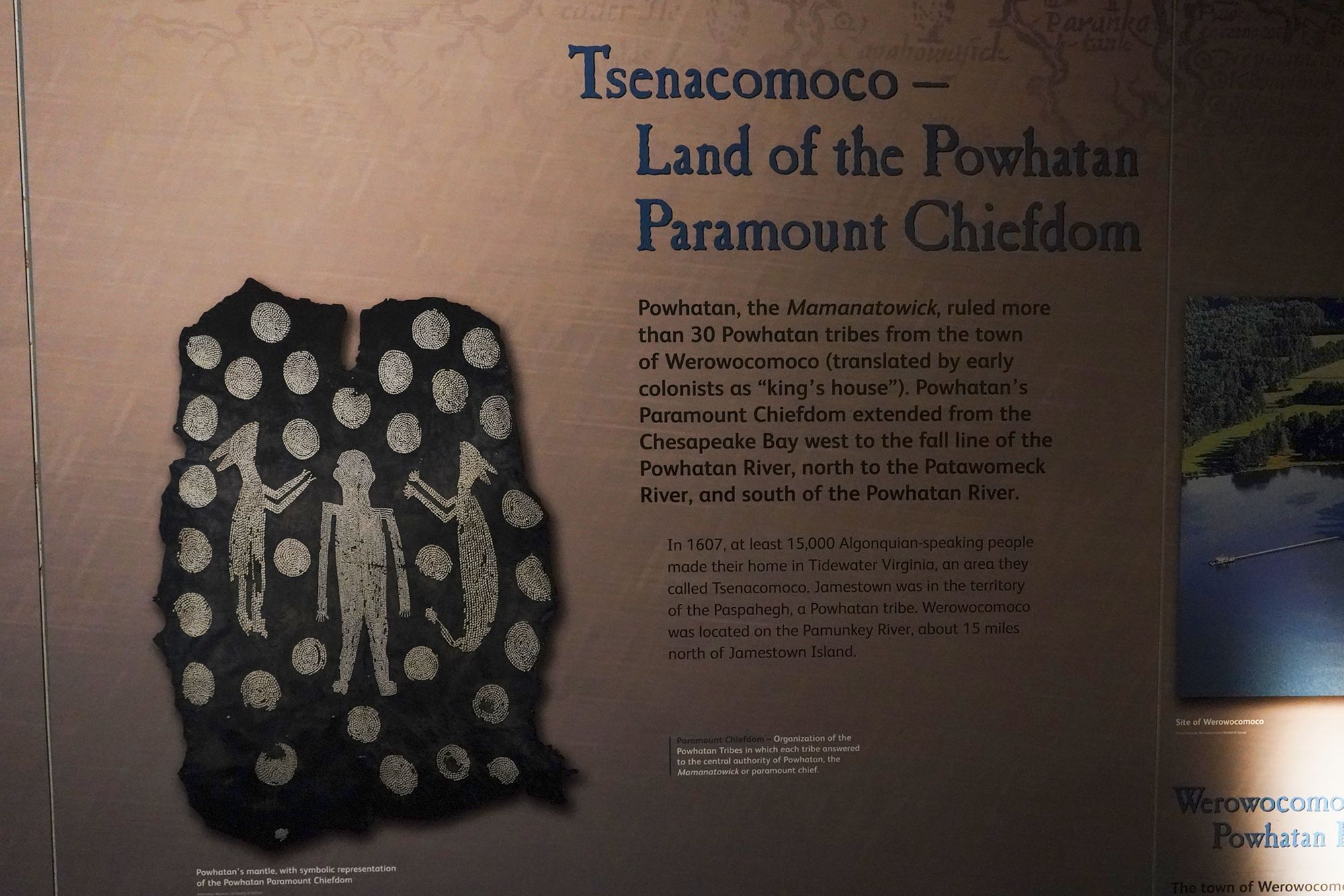
Tsenacomoco (pronounced cha-na-kom-a-co) was the name the Powhatan Indians gave to their homeland in eastern Virginia during the early 1600s. The word means “densely inhabited land,” and it described the vast territory ruled by Chief Powhatan (Wahunsonacock) when the English arrived at Jamestown in 1607.
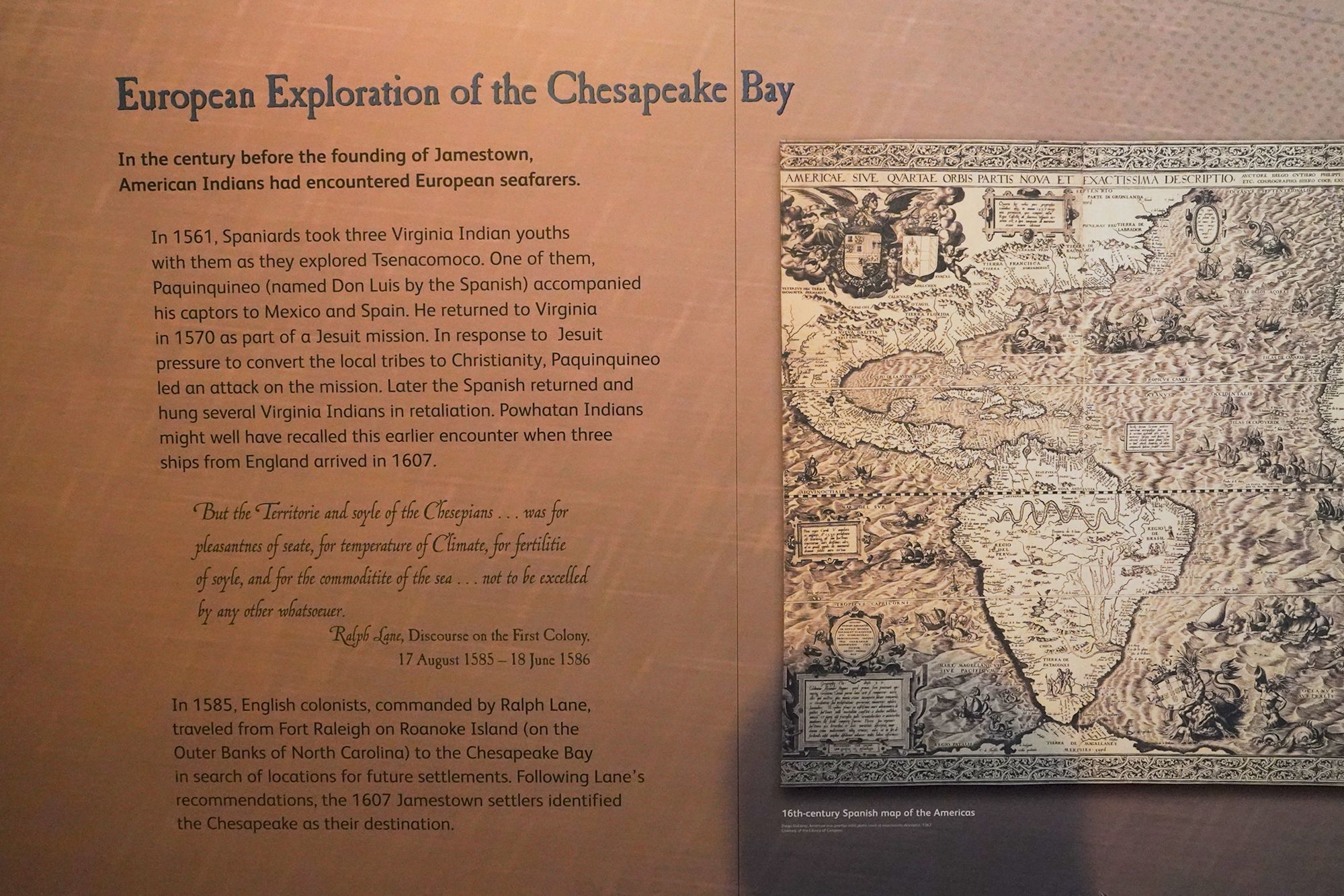
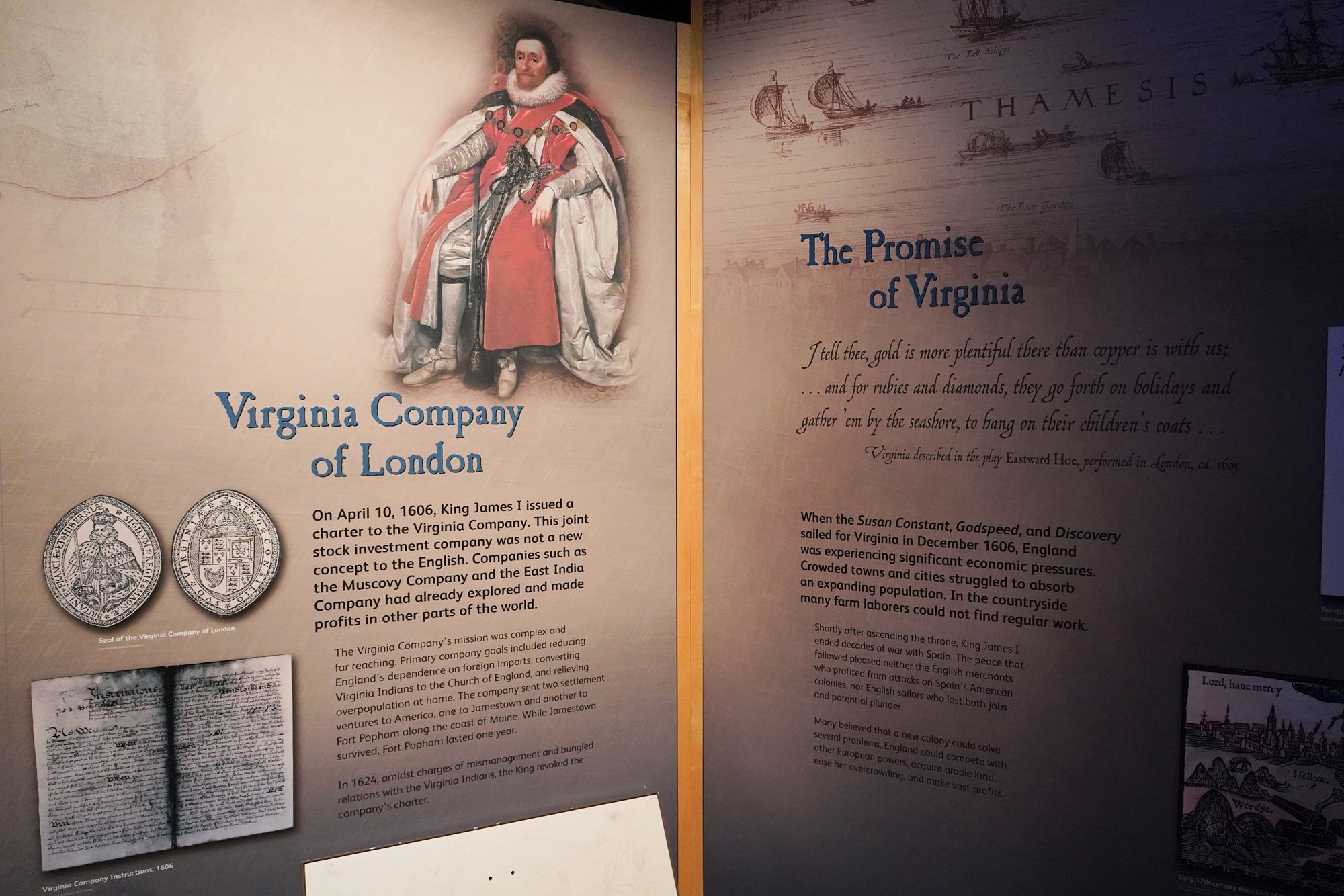
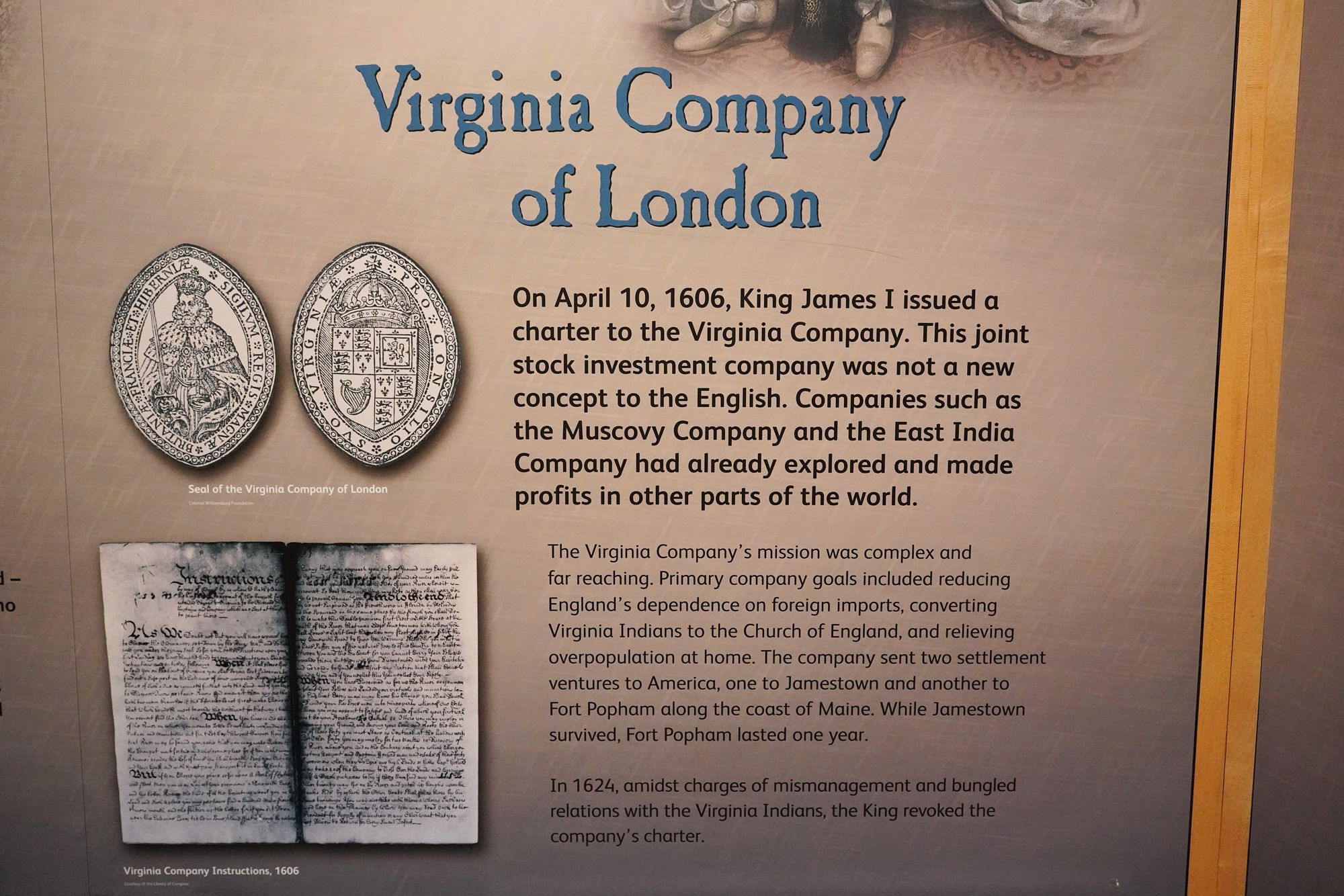
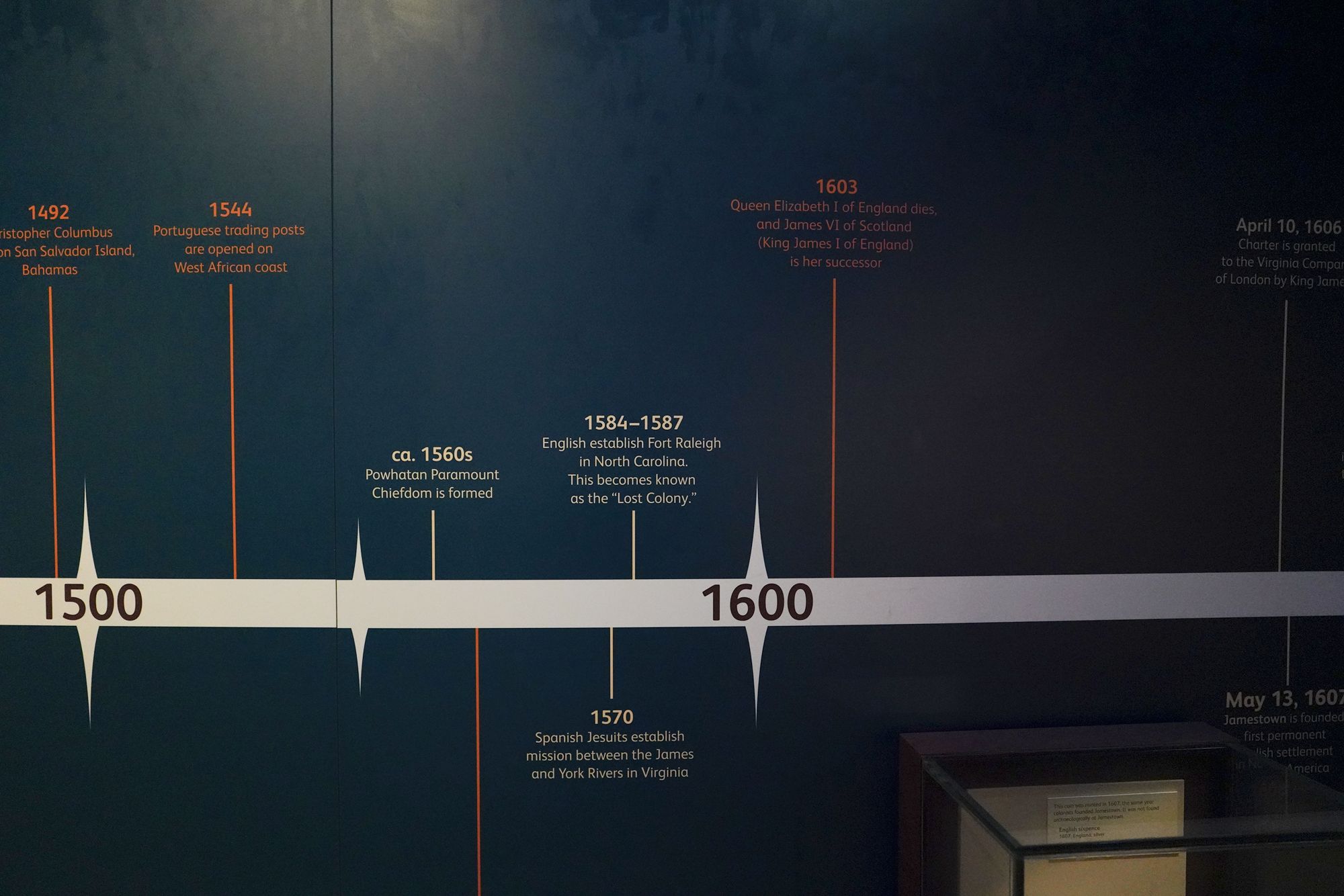
The Virginia Company of London was an English joint-stock company founded in 1606 by royal charter from King James I. Its purpose was to establish colonies in North America for profit and national prestige, and it was the organization that founded Jamestown in 1607, the first permanent English settlement in the New World.
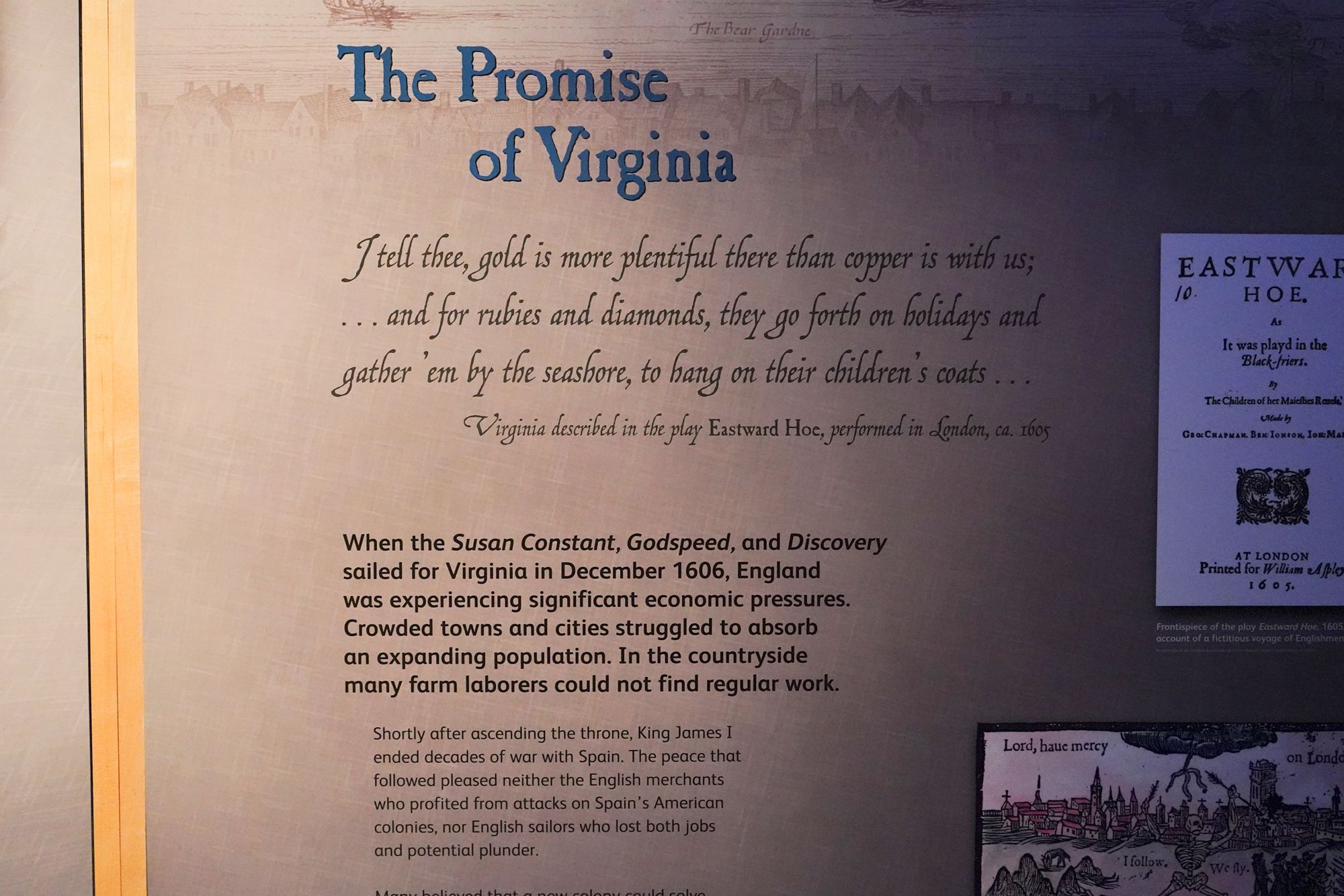
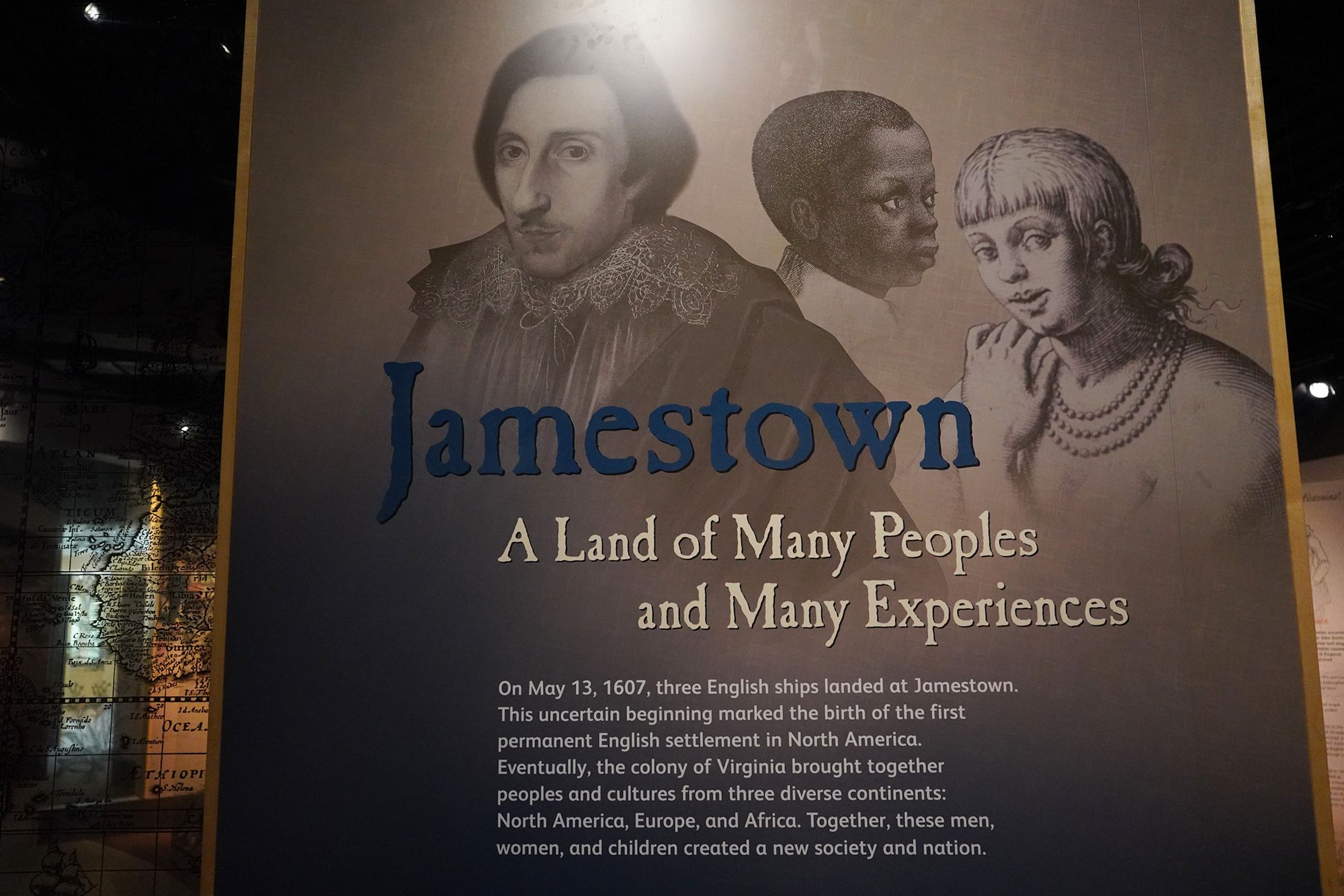
On May 13, 1607, three English ships landed at Jamestown.
A New Society
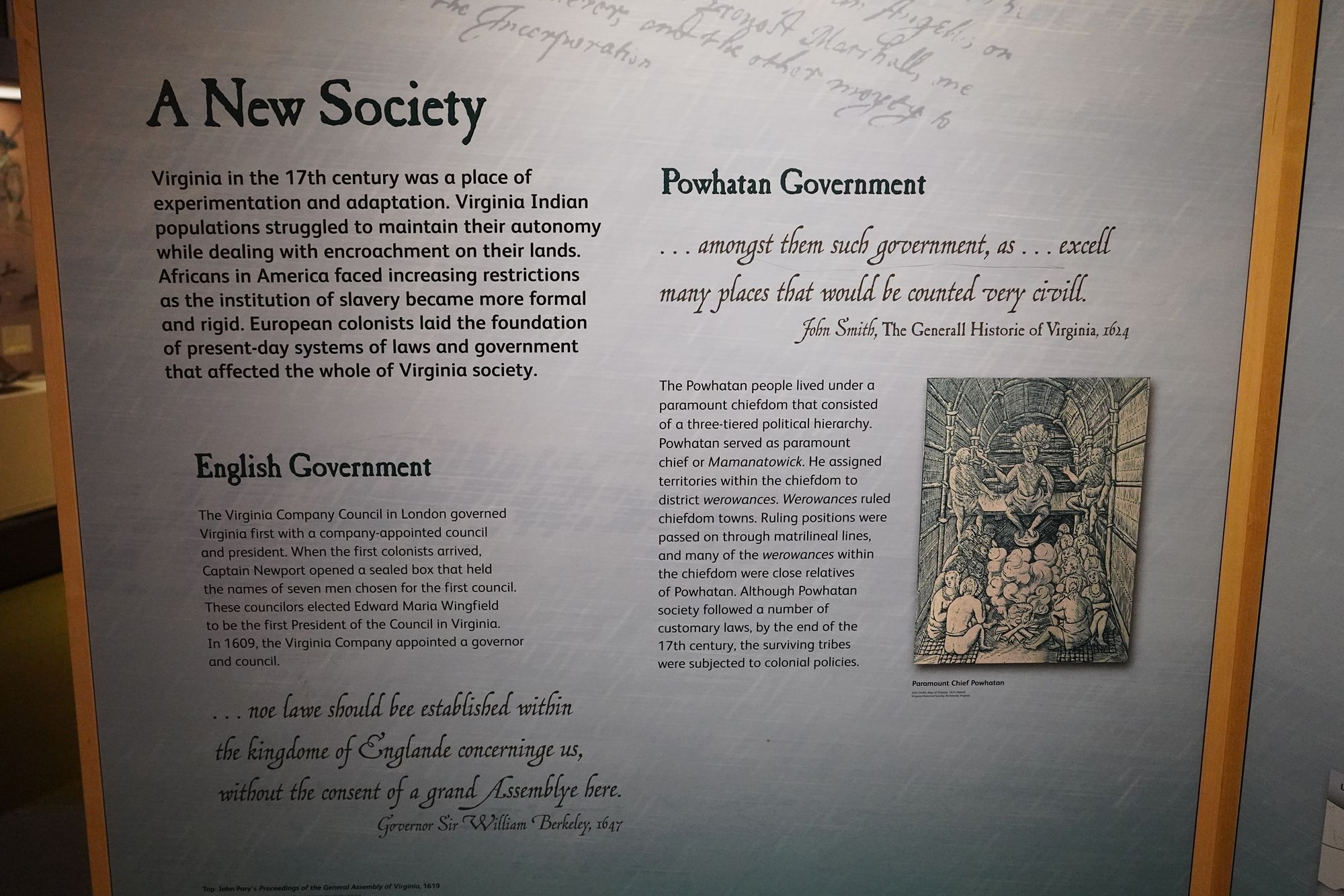
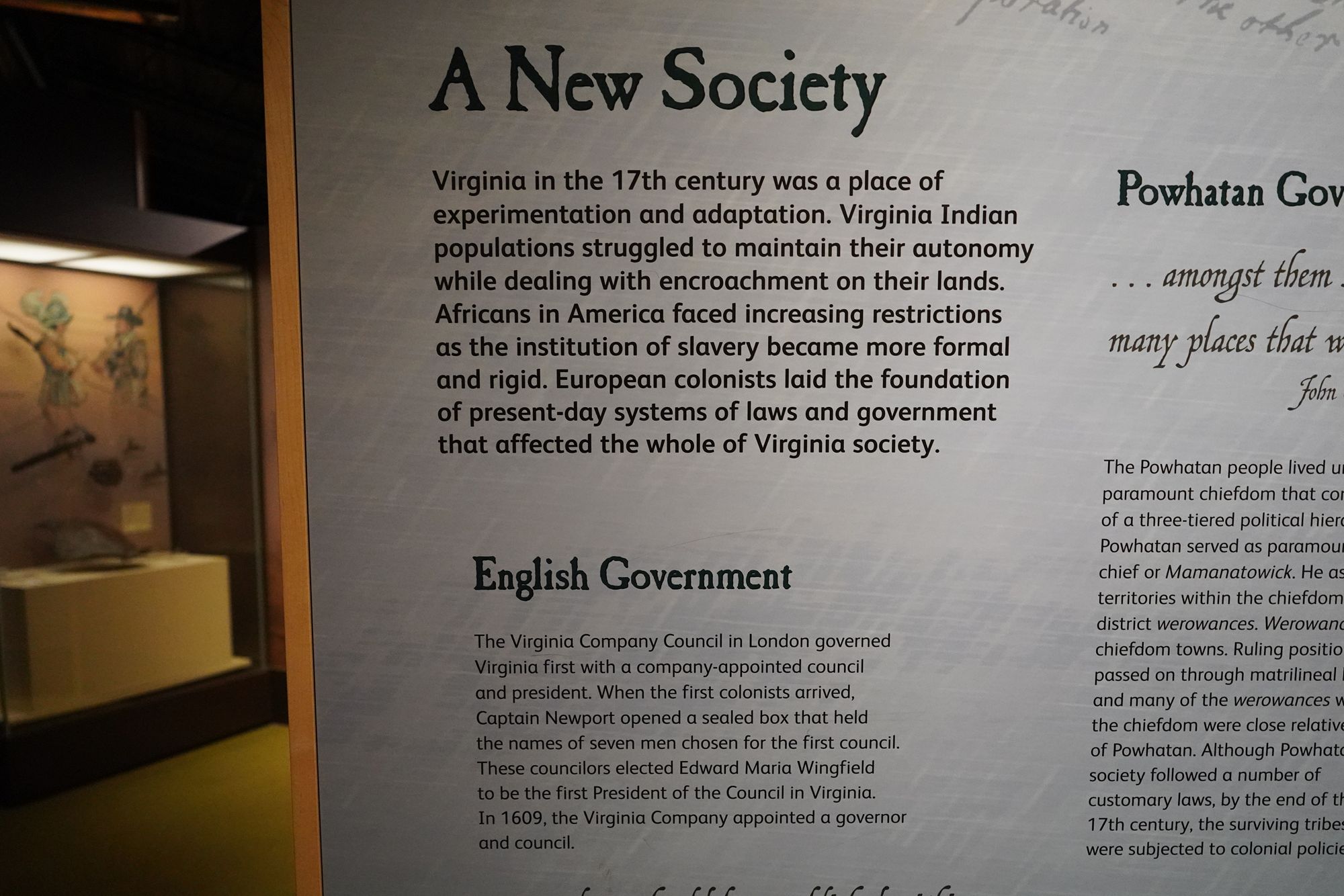
In 1619, the Virginia Company of London established the first representative assembly in English America, known as the House of Burgesses, which met in the church at Jamestown so that settlers could make their own laws and advise the governor—marking the beginning of self-government in the New World.
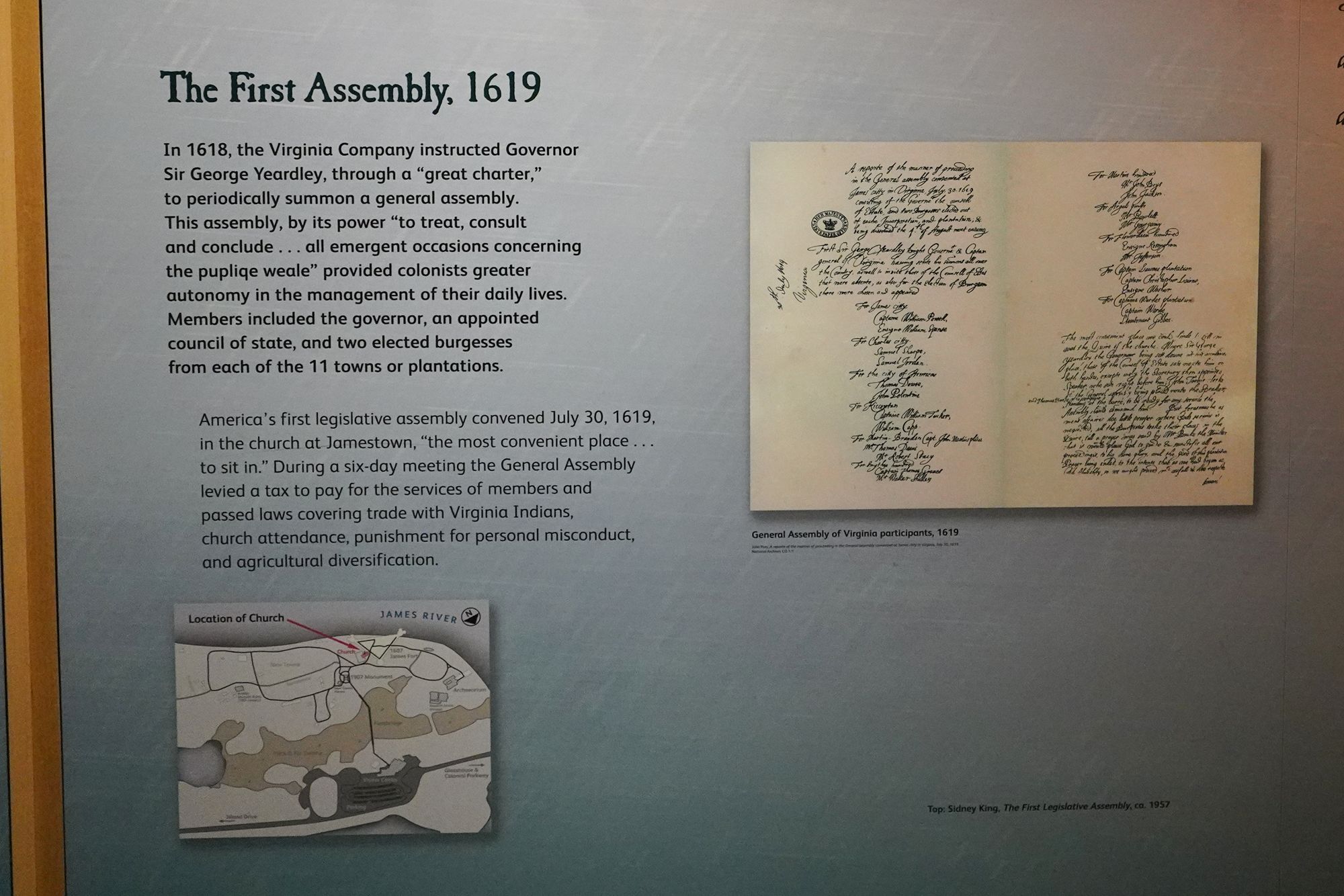
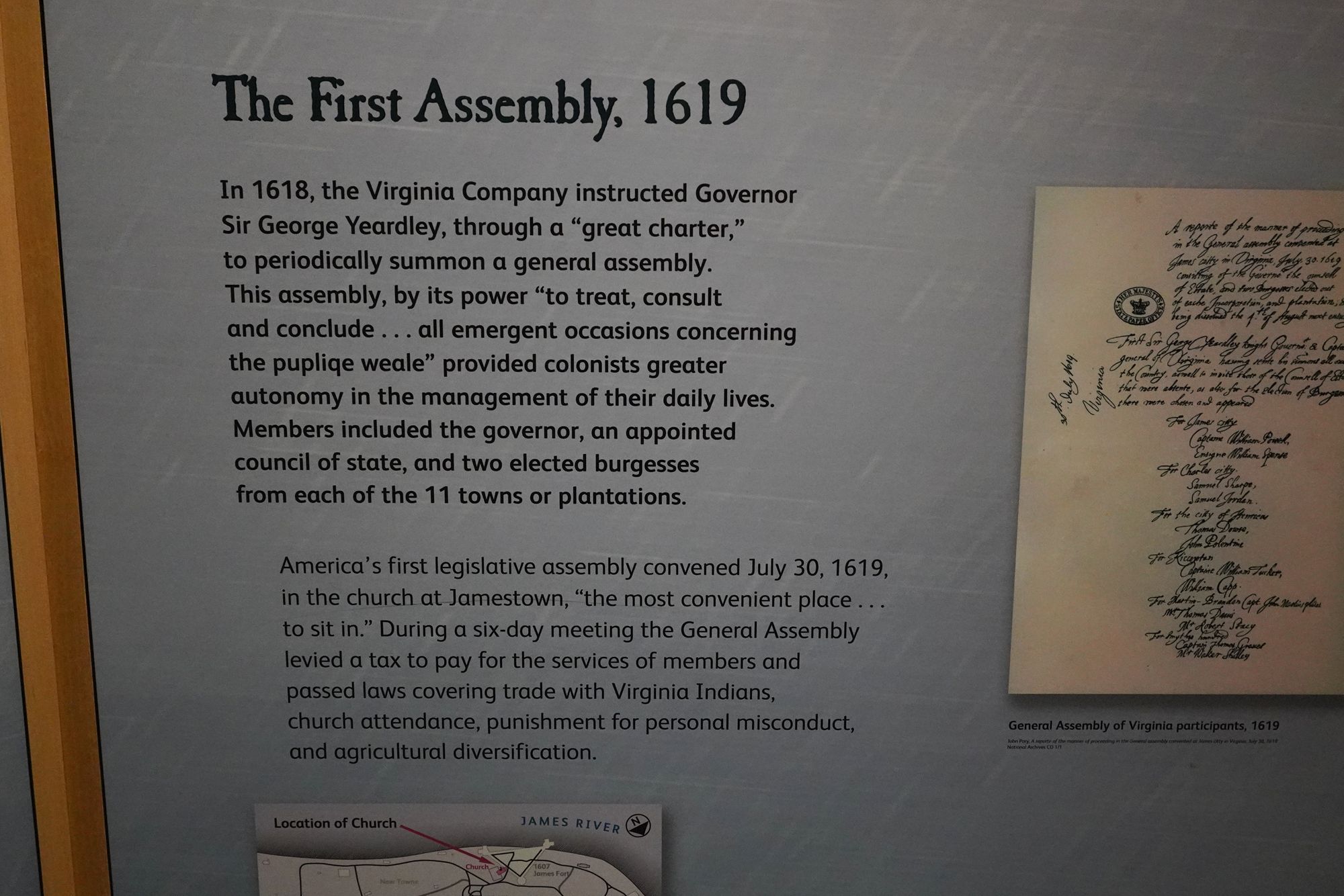
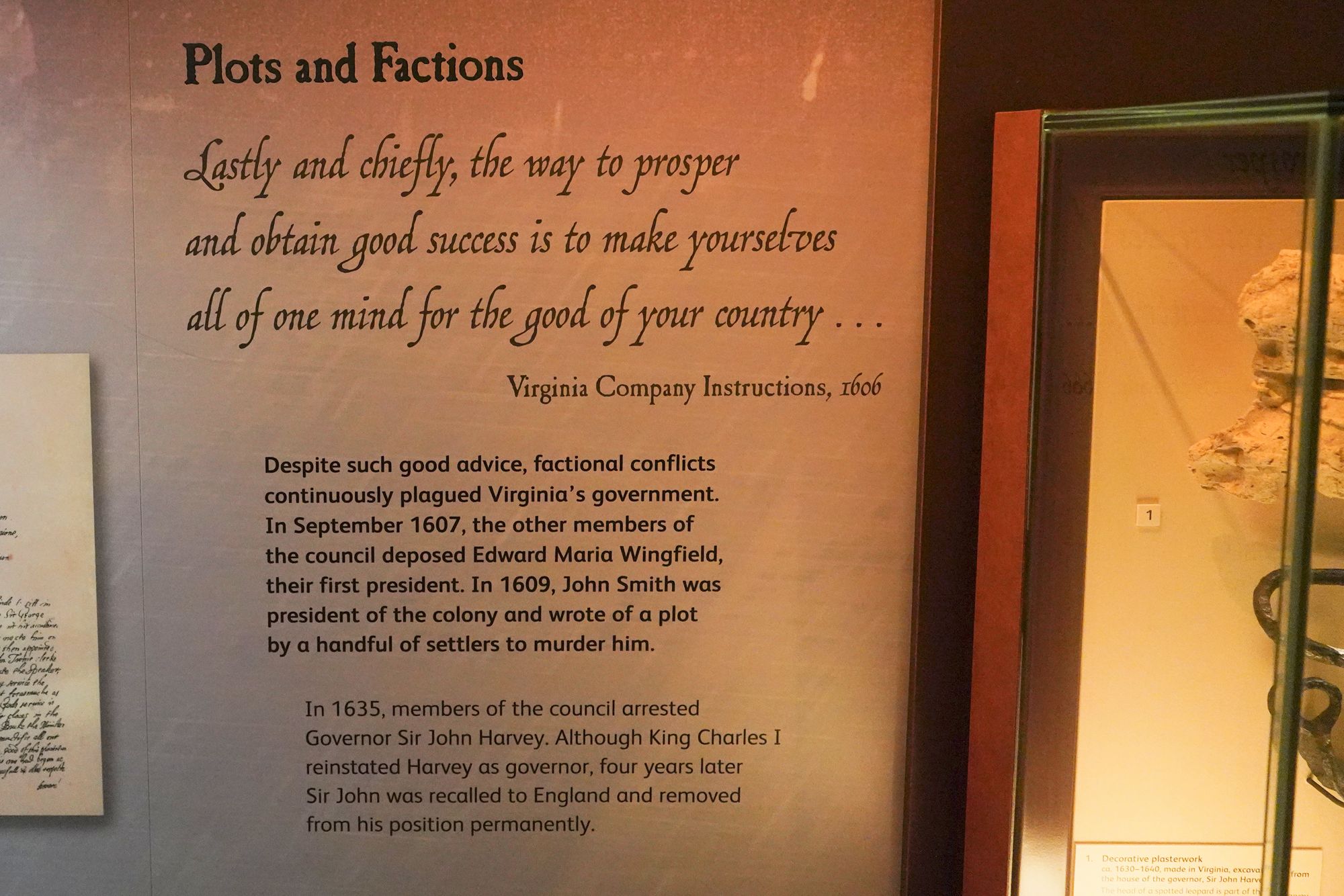
In the early years of Jamestown, the small English colony was often divided by plots, rivalries, and political factions among its leaders. These internal conflicts—alongside disease, hunger, and tension with Native peoples—nearly destroyed the settlement more than once.
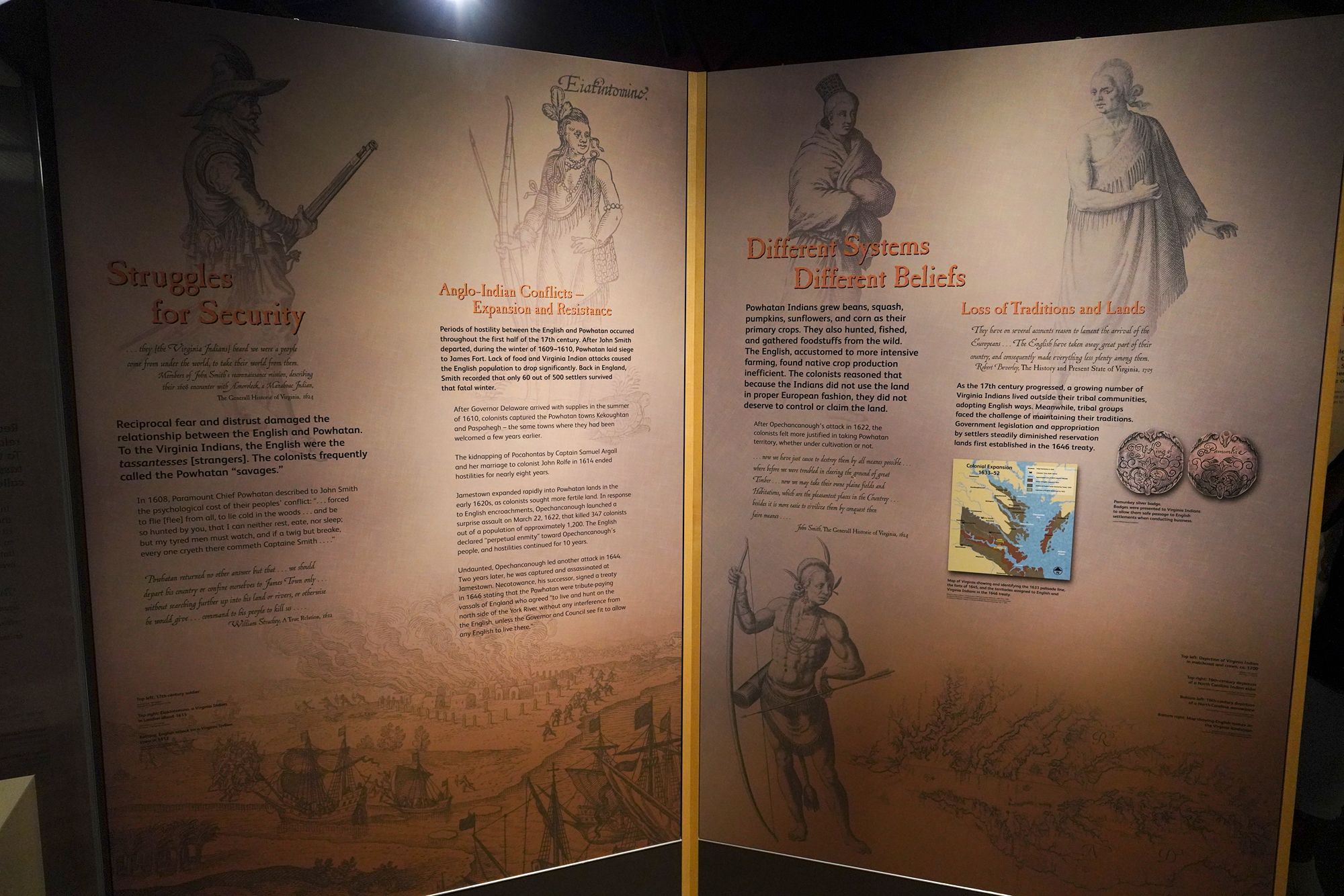
From the moment the settlers landed in 1607, Jamestown’s survival depended on a constant struggle for security—against starvation, disease, Native attacks, and internal disorder. The colonists lived in a fragile world where safety had to be built day by day.
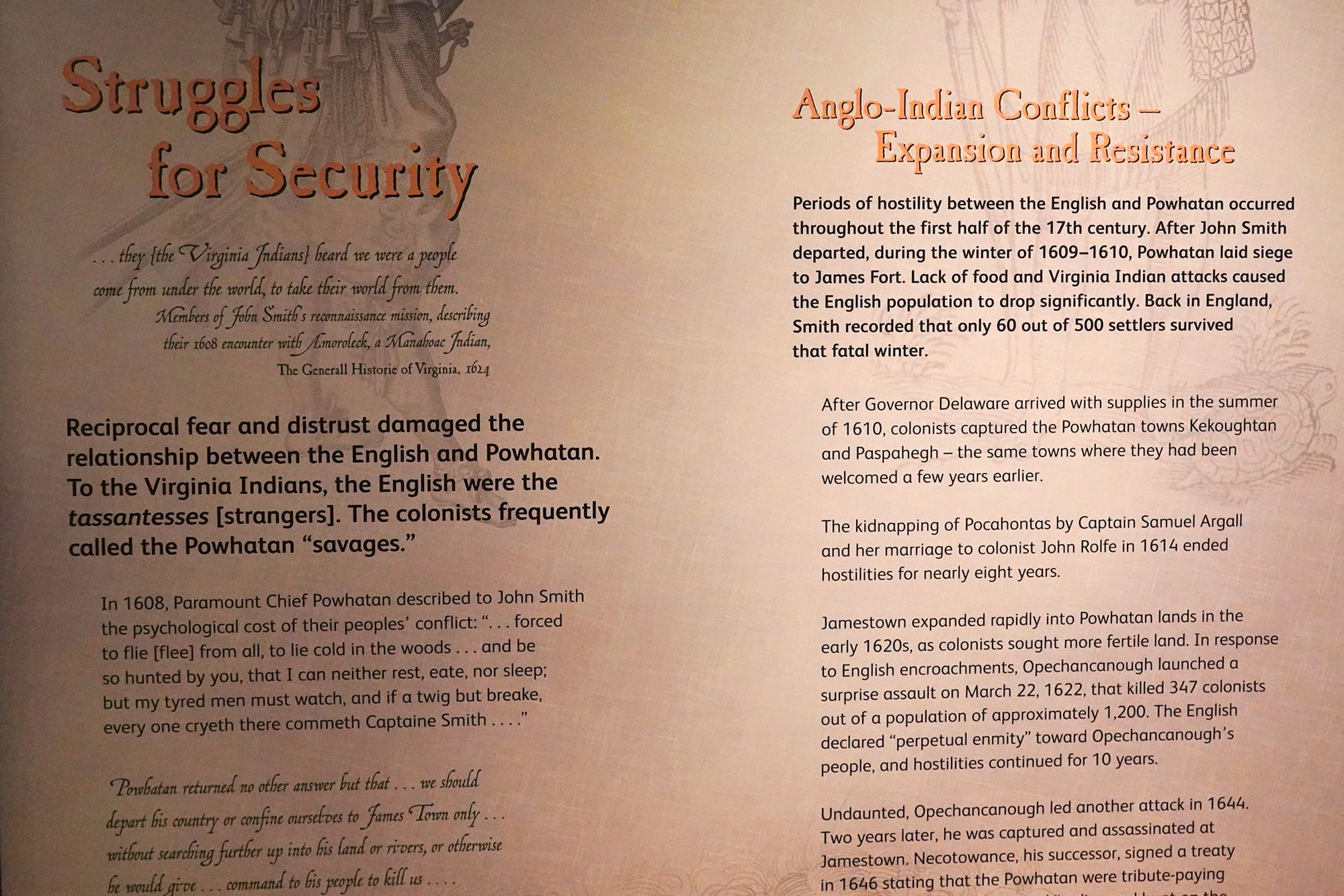
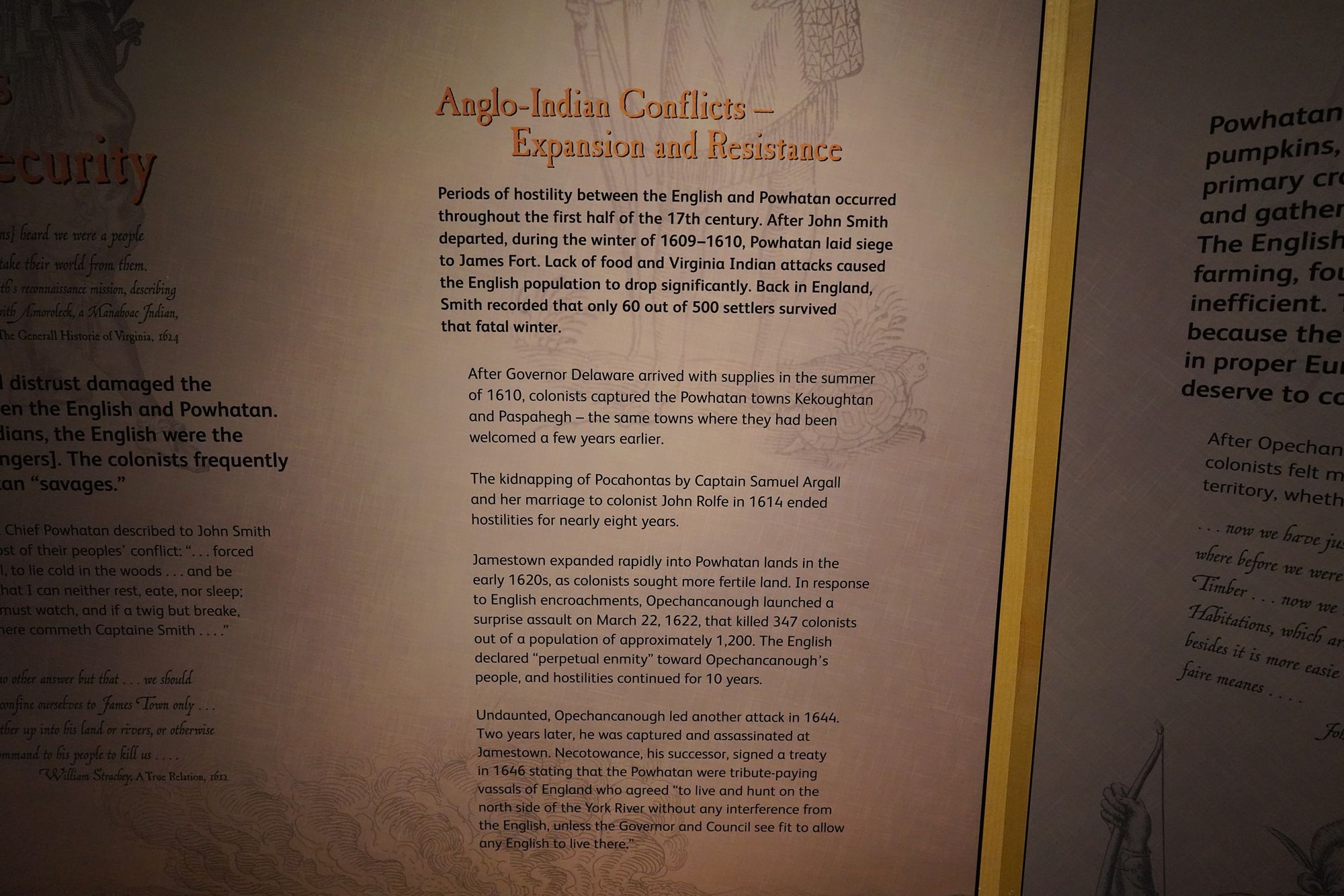
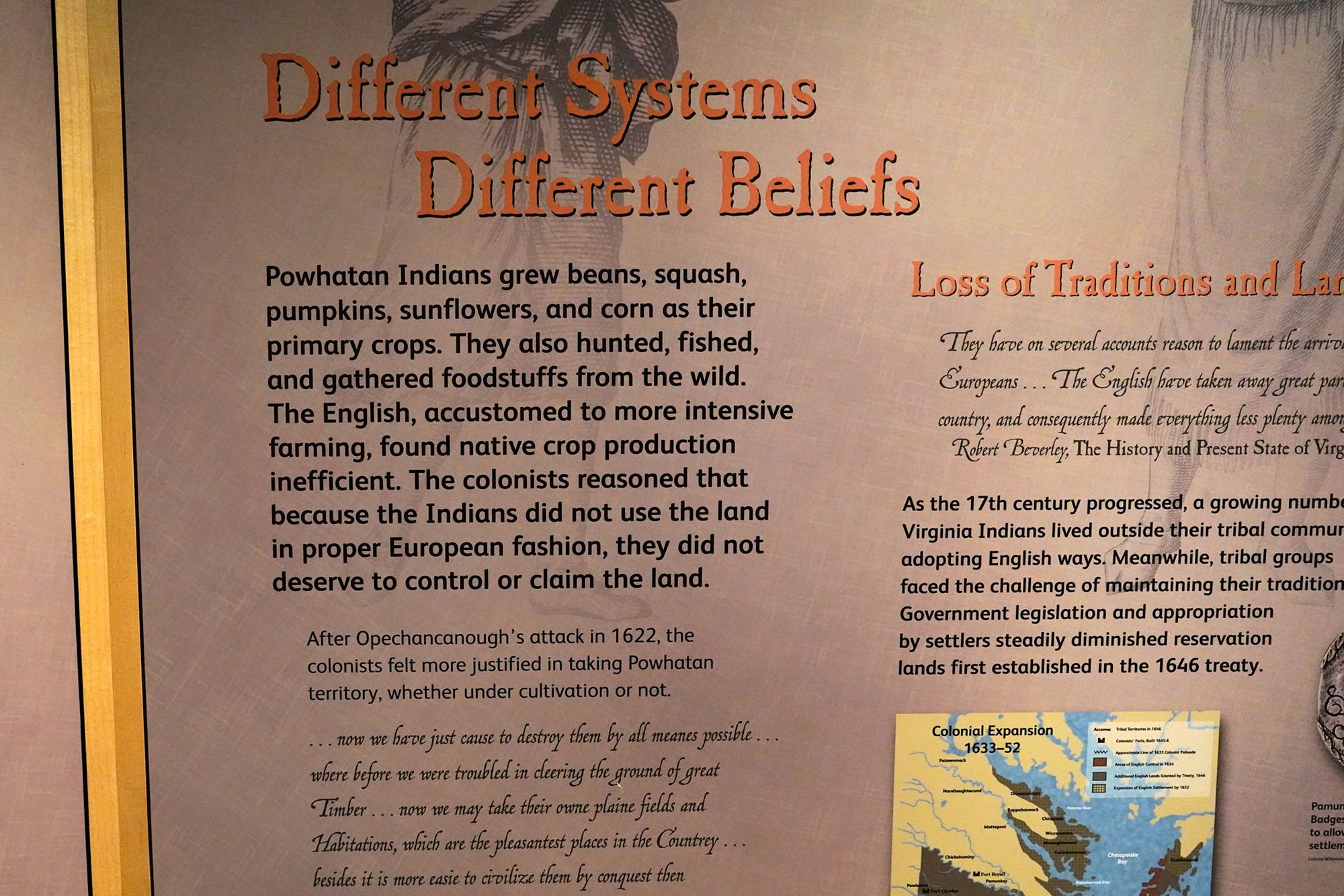
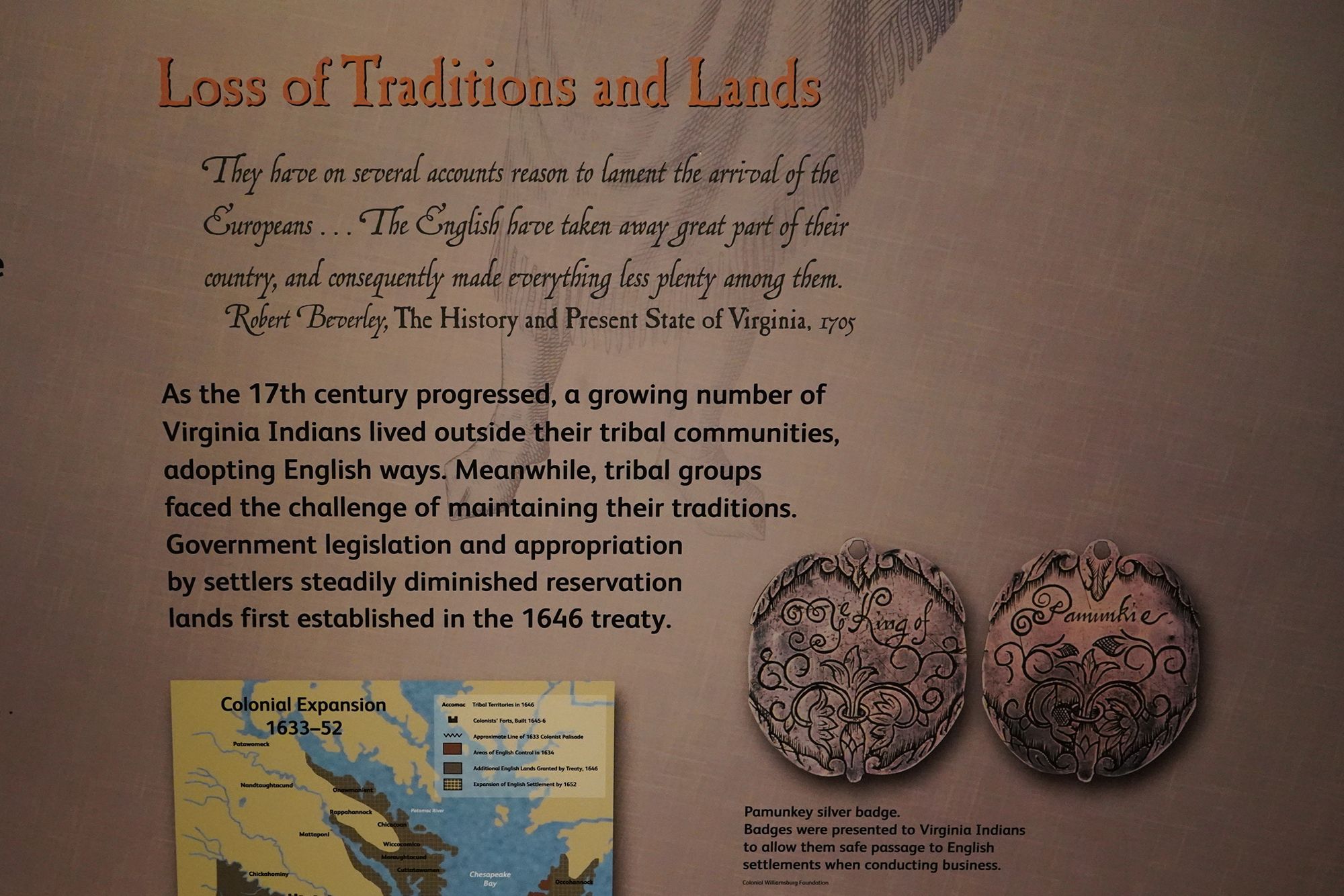
When the English settlers arrived at Jamestown in 1607, they entered a world already organized under a powerful Native government — the Powhatan Confederacy. The two groups had entirely different systems of life, government, economy, and belief, and these differences shaped every encounter between them.
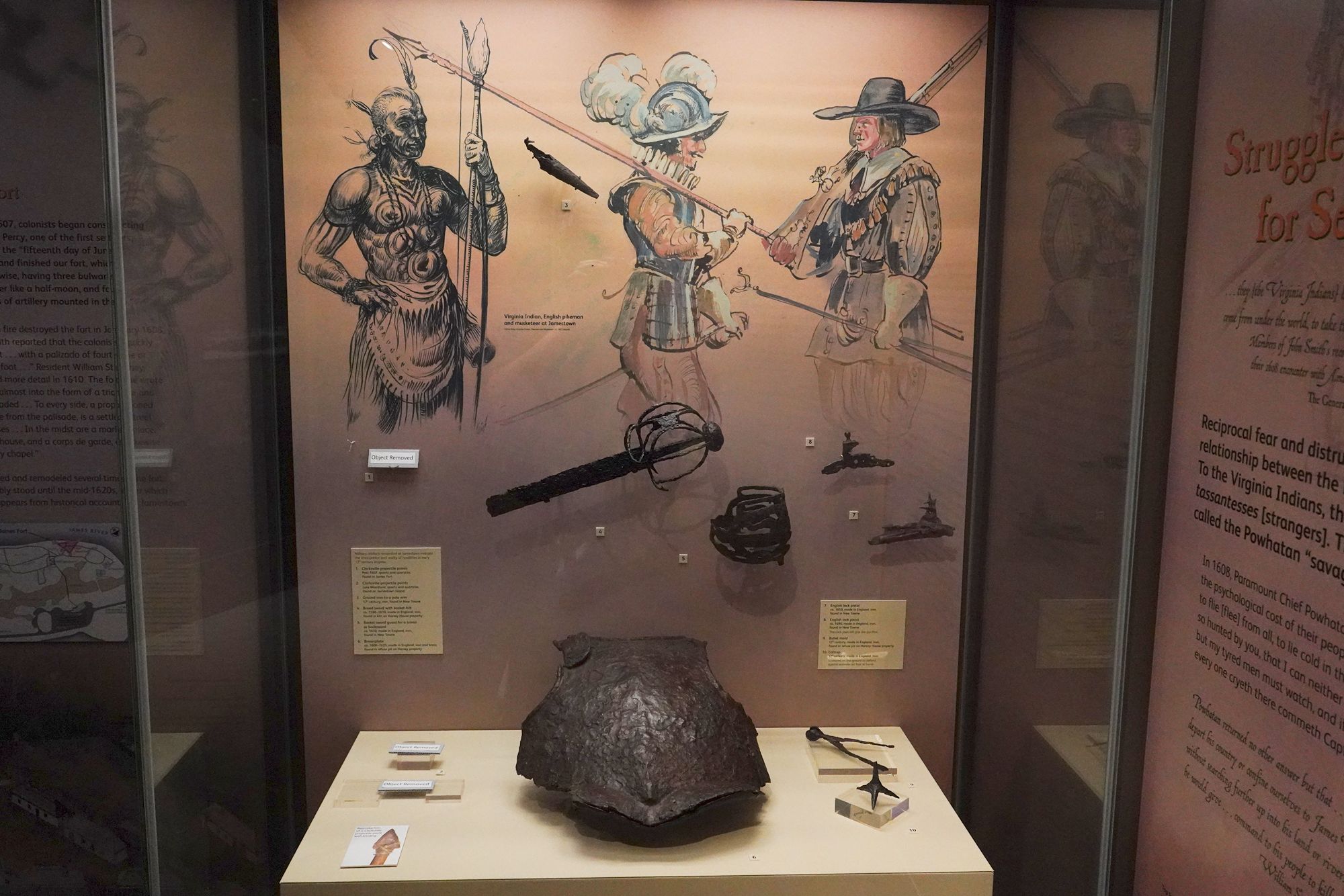
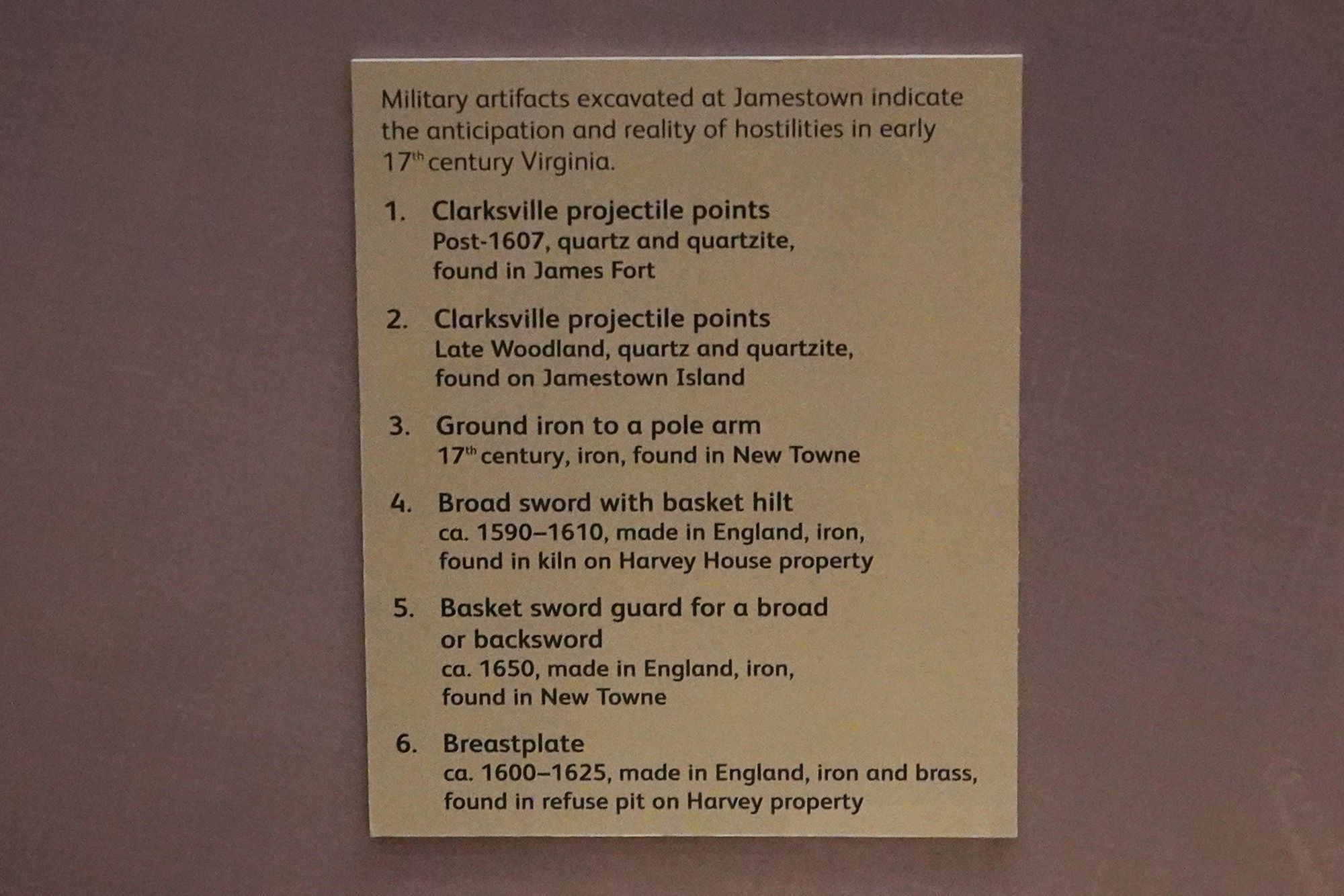
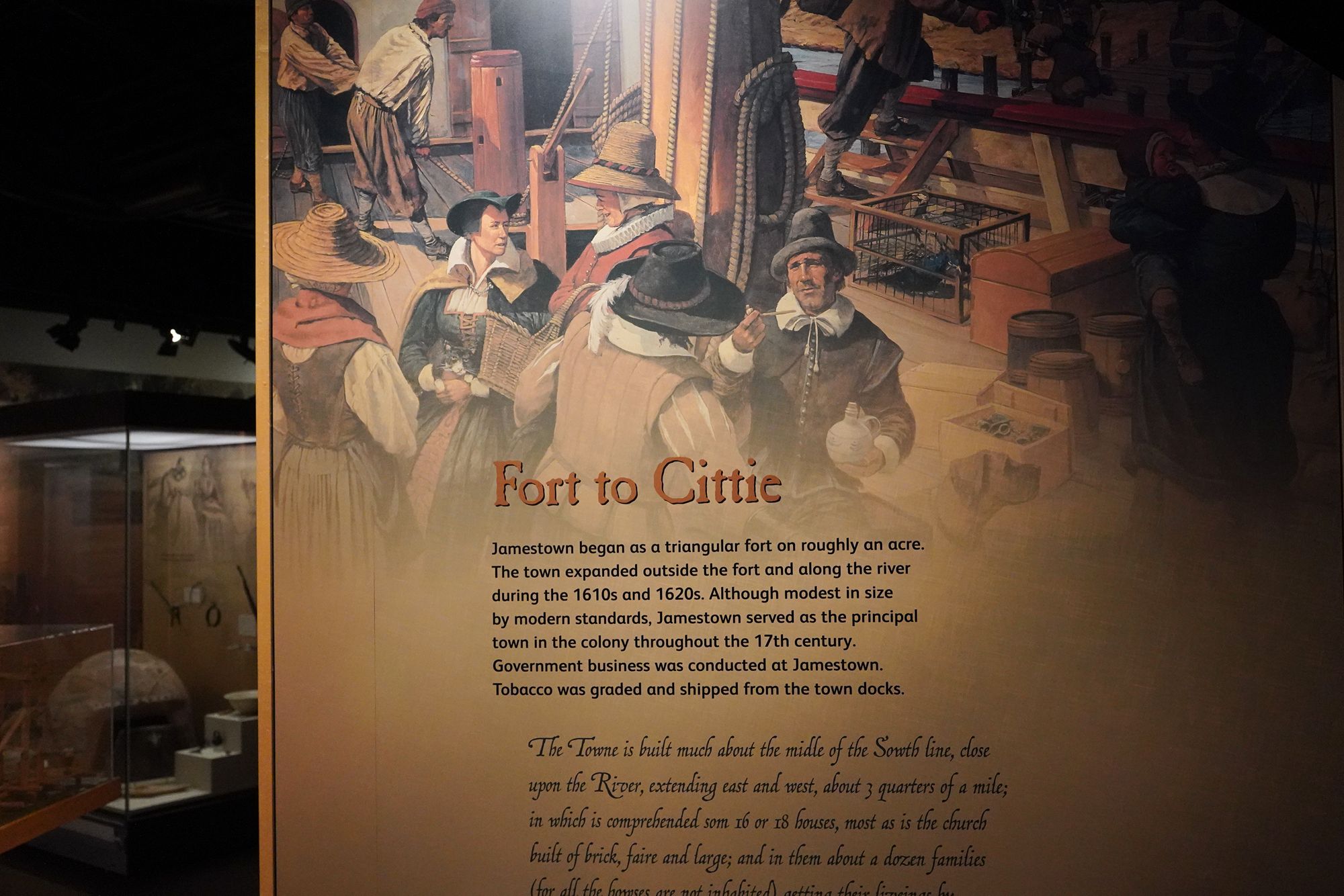
When Jamestown began in 1607, it was little more than a fortified outpost, built for defense and survival. Over time, it evolved from a small wooden fort into a functioning English “cittie” (city) — the first permanent English town in North America.
Development and Decline
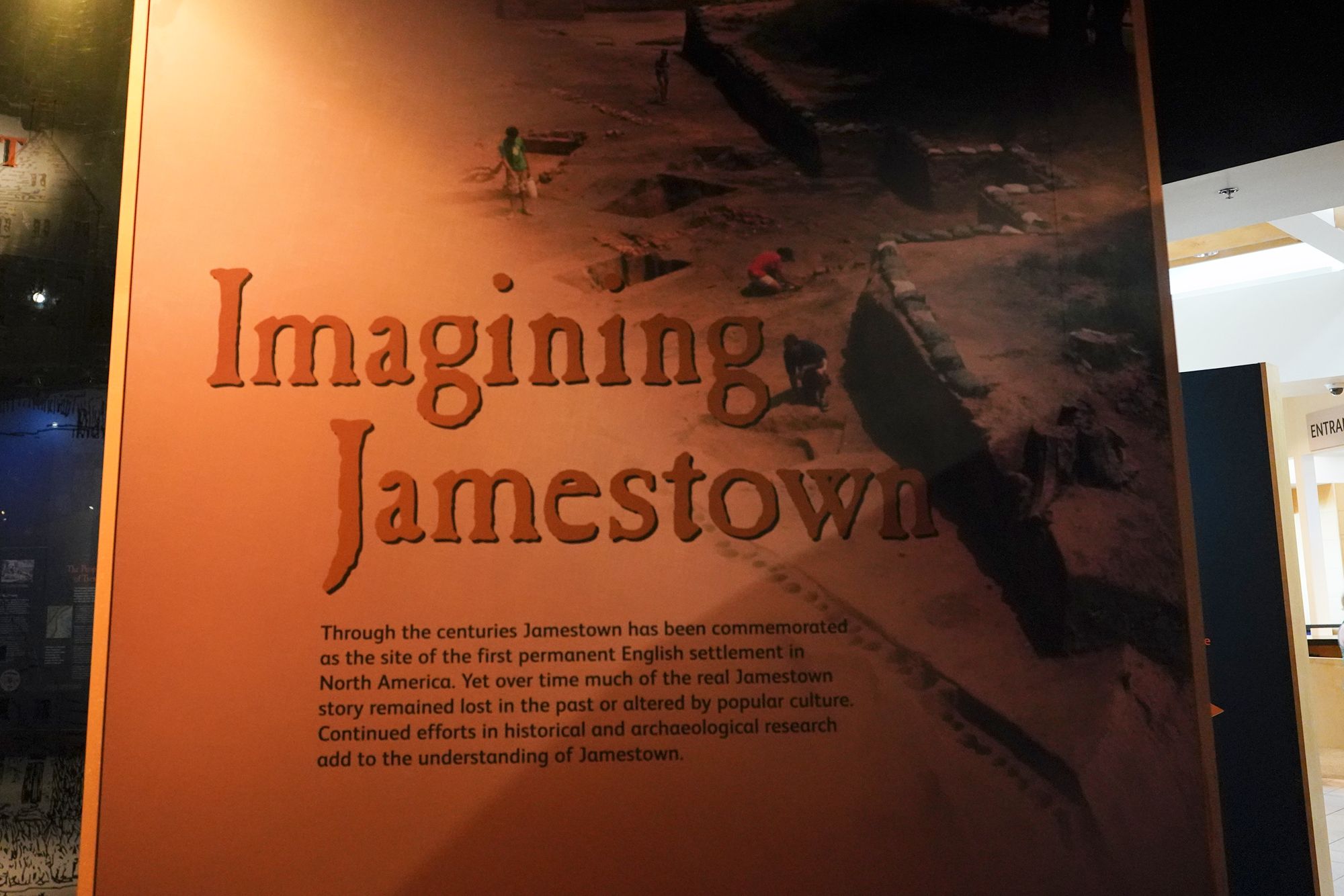
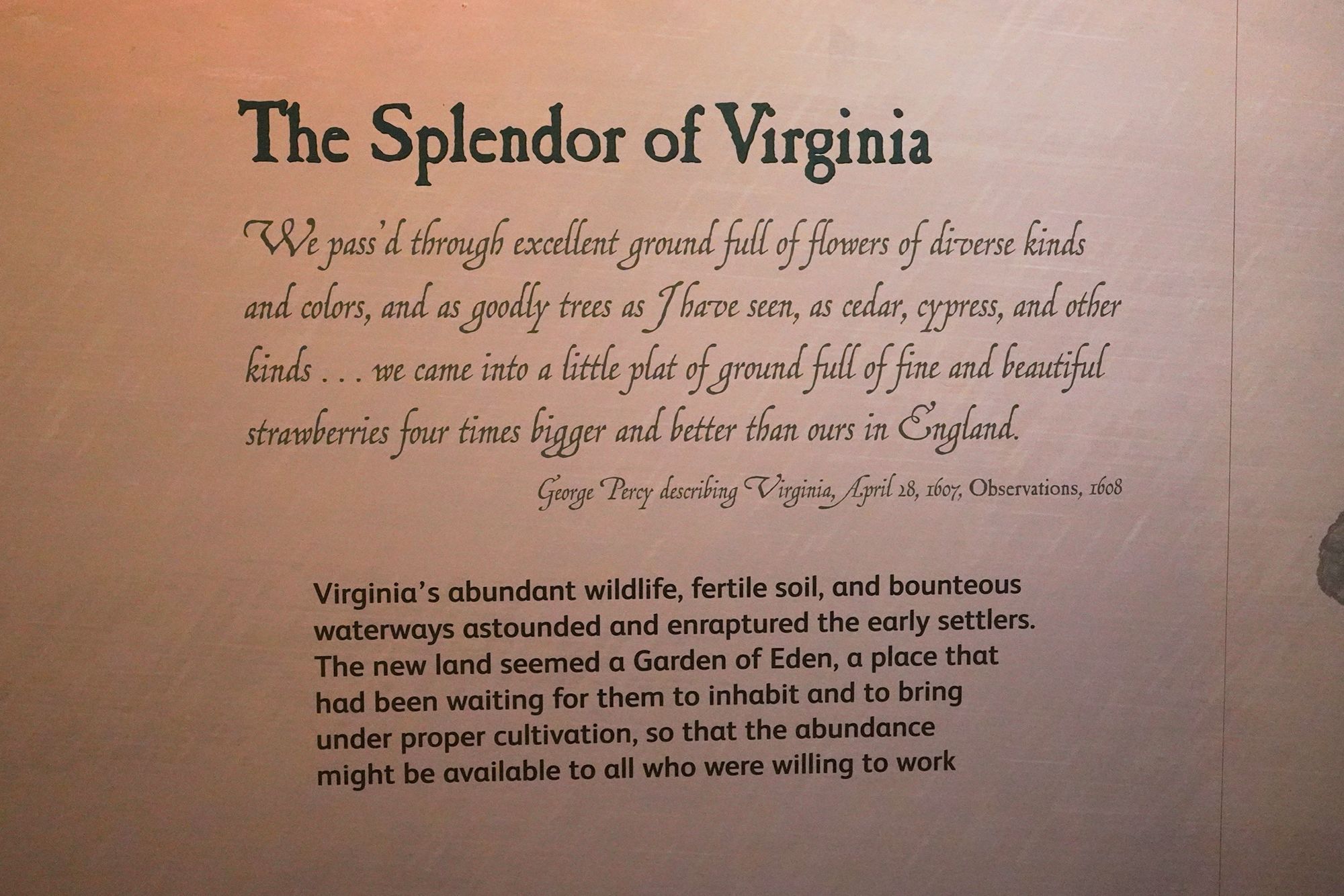
To imagine Jamestown is to picture a small, fragile English settlement clinging to survival in the wilderness of early 1600s Virginia — the first foothold of England in the New World.