Wright Brothers National Memorial, North Carolina, USA
The Wright Brothers National Memorial, located in Kill Devil Hills, North Carolina, commemorates the first successful powered flights made by Orville and Wilbur Wright on December 17, 1903. 1120
Wright Brothers National Memorial: 1000 N Croatan Hwy, Kill Devil Hills, NC 27948
Date Picture Taken: July 2025
The memorial marks the site where the brothers achieved humanity’s first controlled, sustained flight of a powered, heavier-than-air aircraft. It stands near Kitty Hawk, where they conducted many glider experiments before perfecting their Flyer.
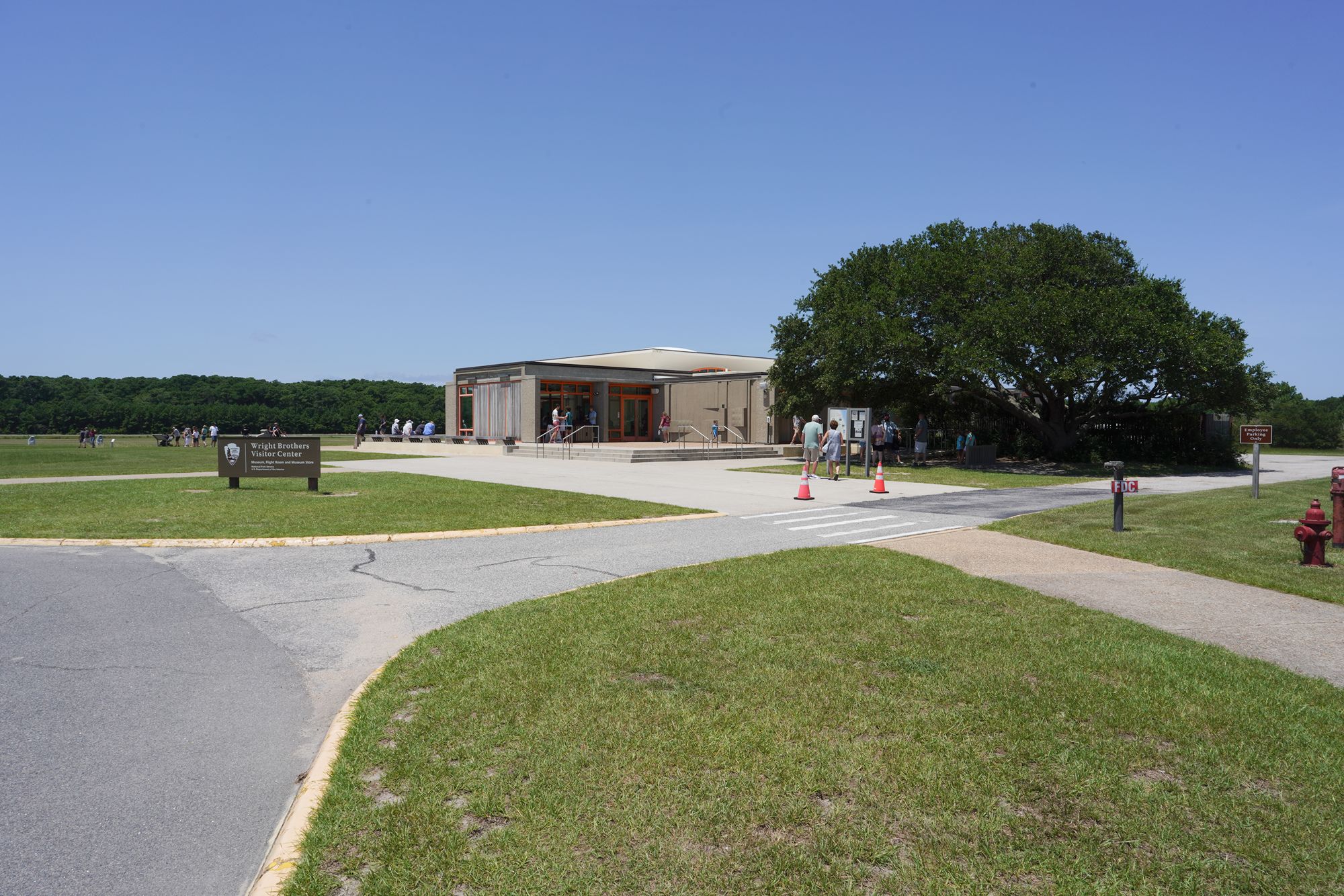
I was in Williamsburg, Virginia, and my next destination was Fredericksburg, Virginia. I wasn’t sure about visiting the Wright Brothers National Memorial because it was quite far, but since it’s such a famous site, I decided to make a day trip—and I’m glad I did.
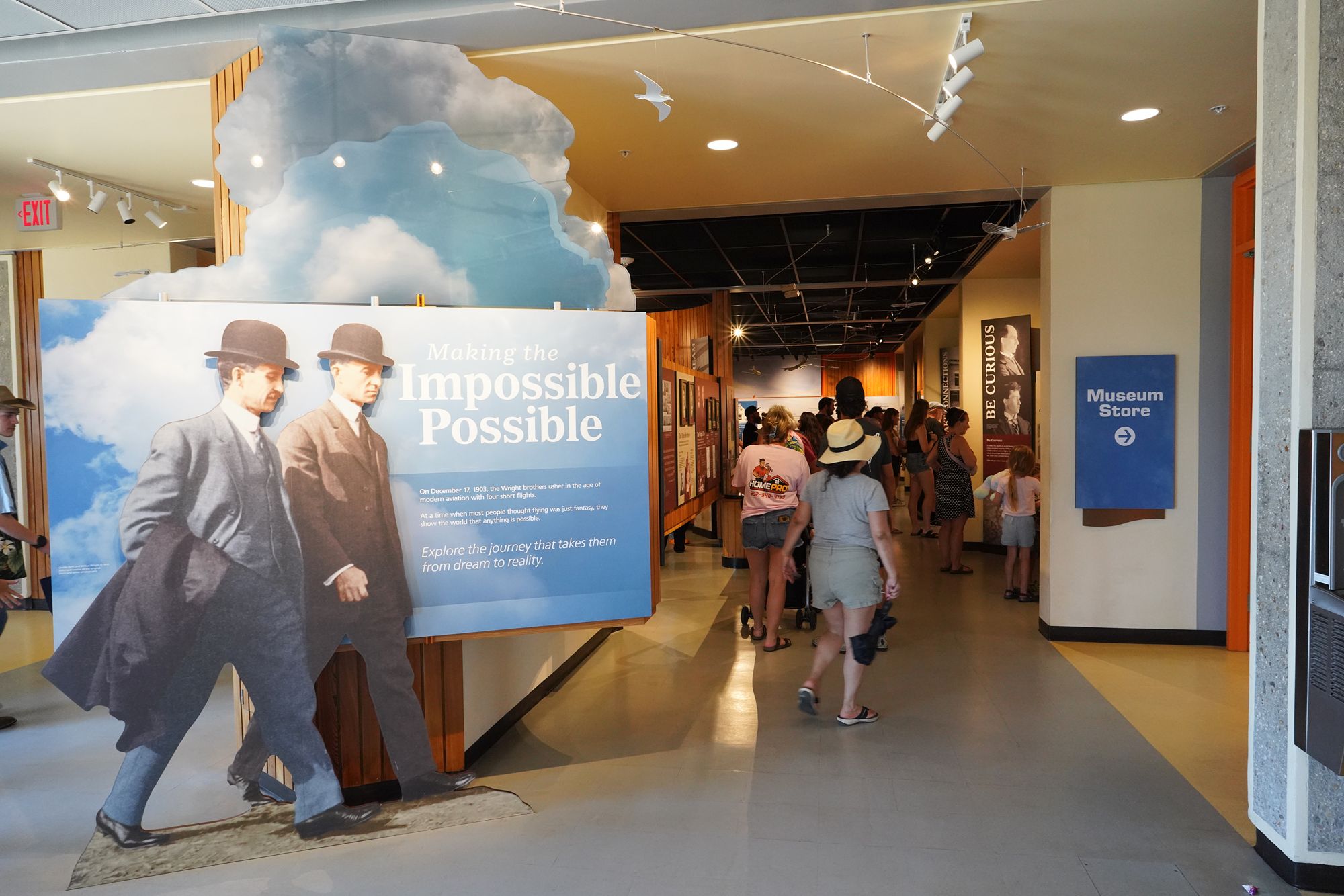
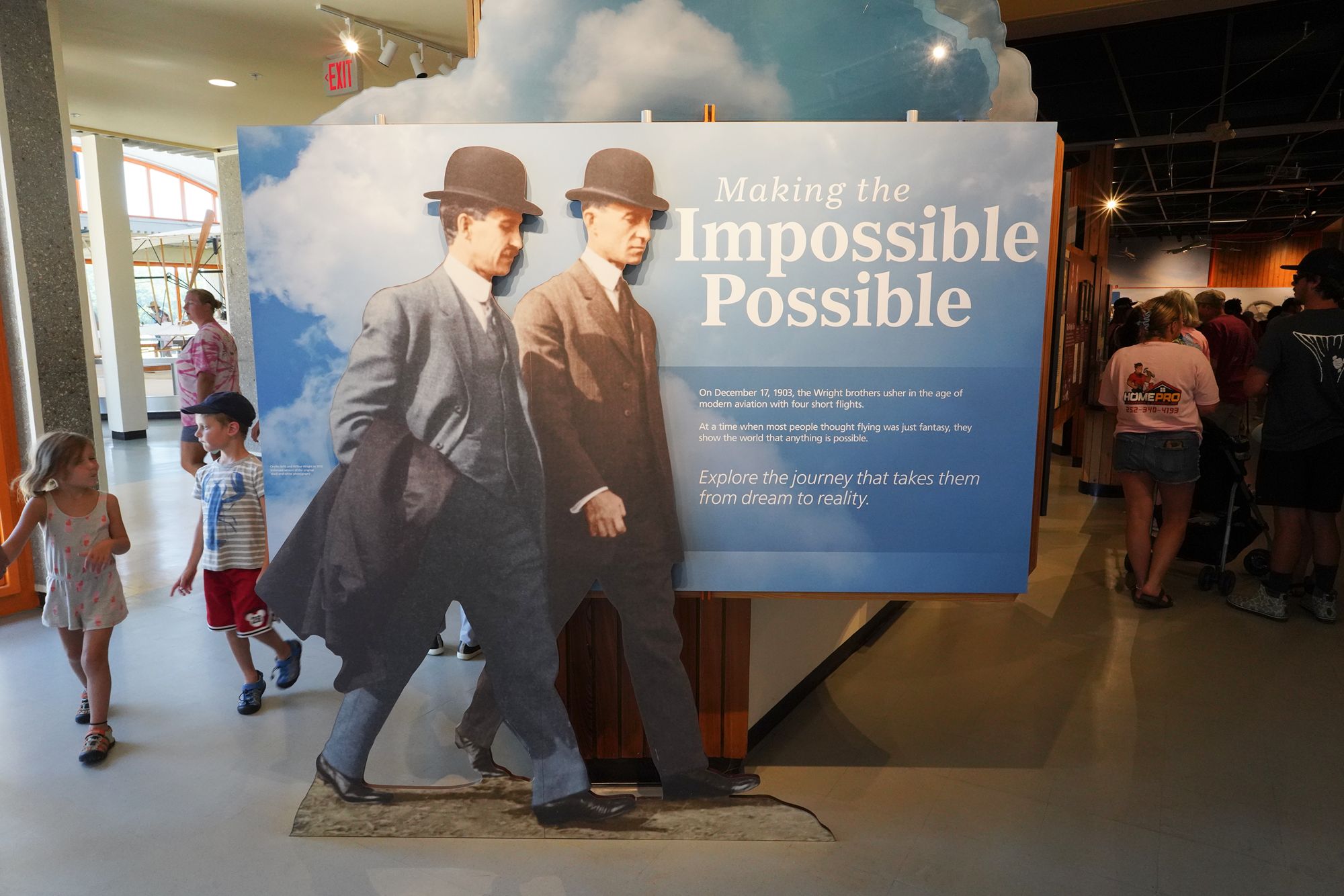
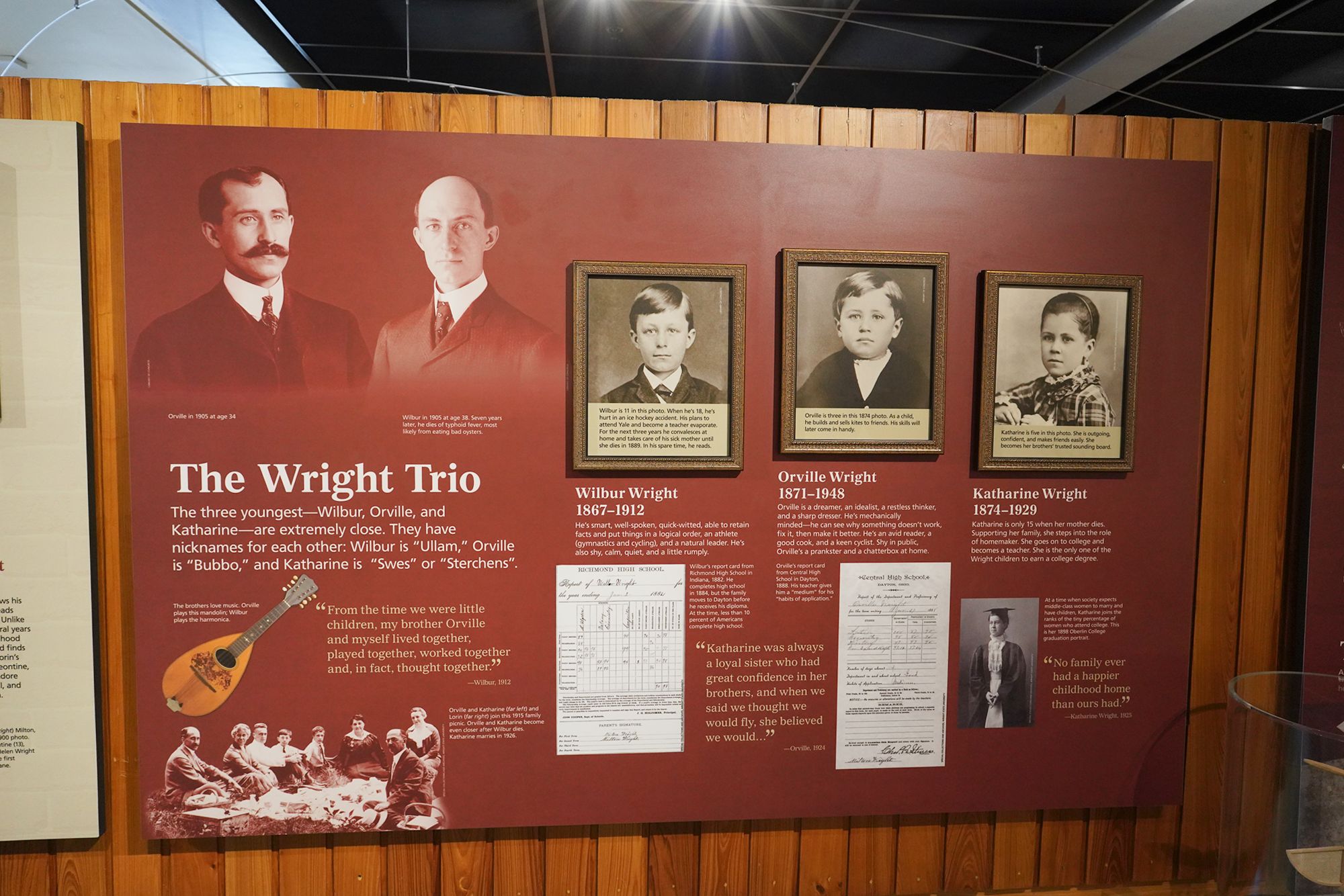
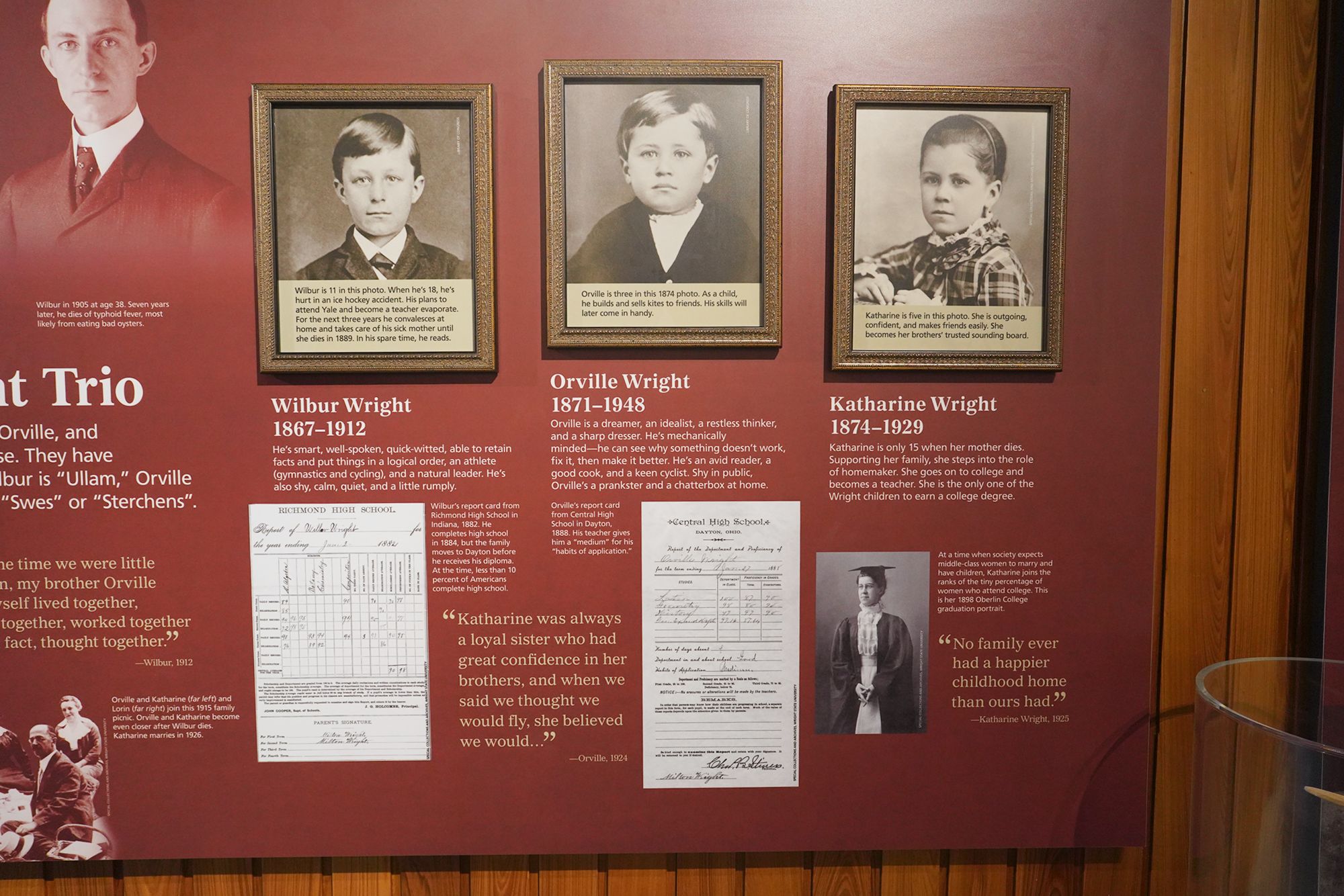
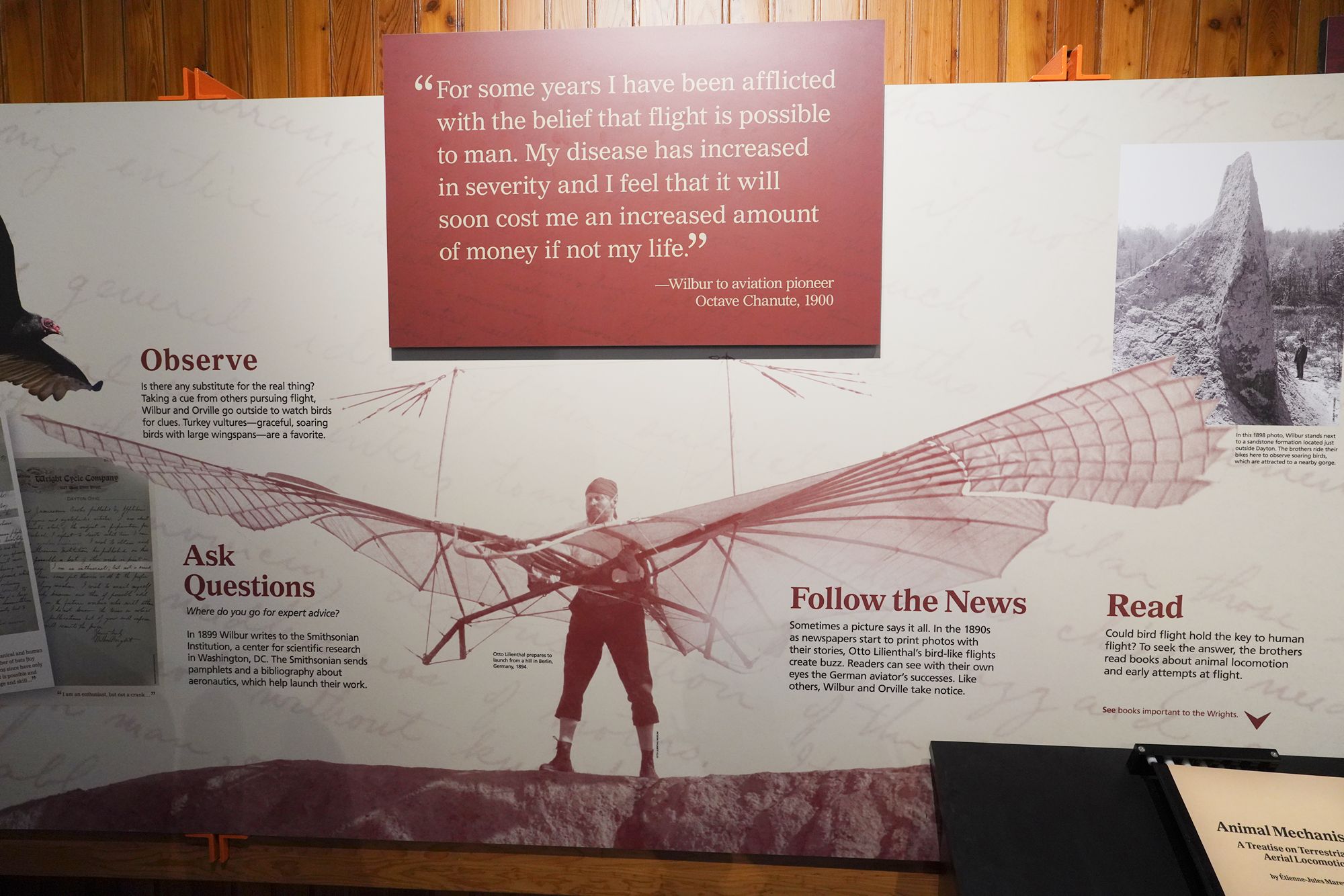
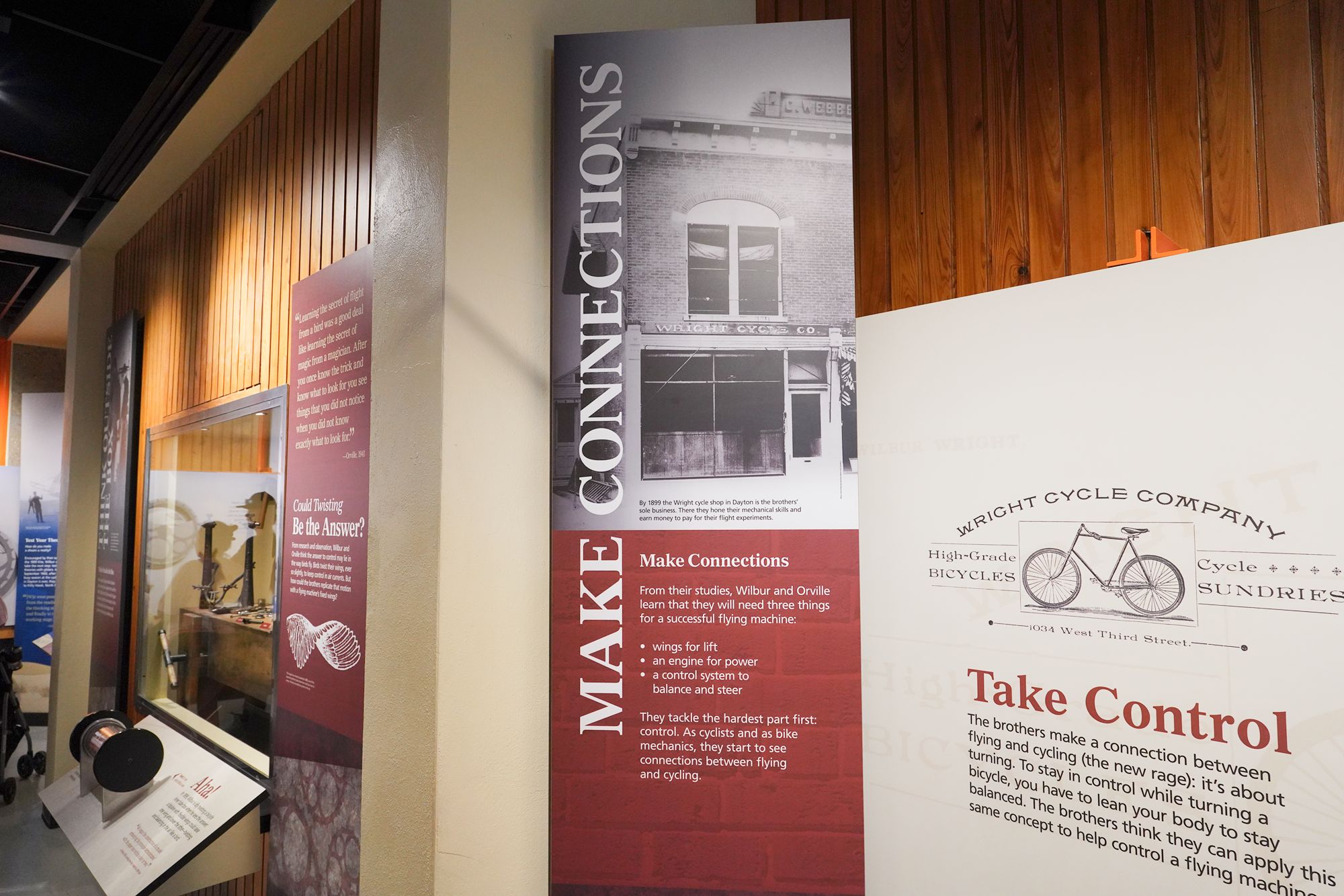
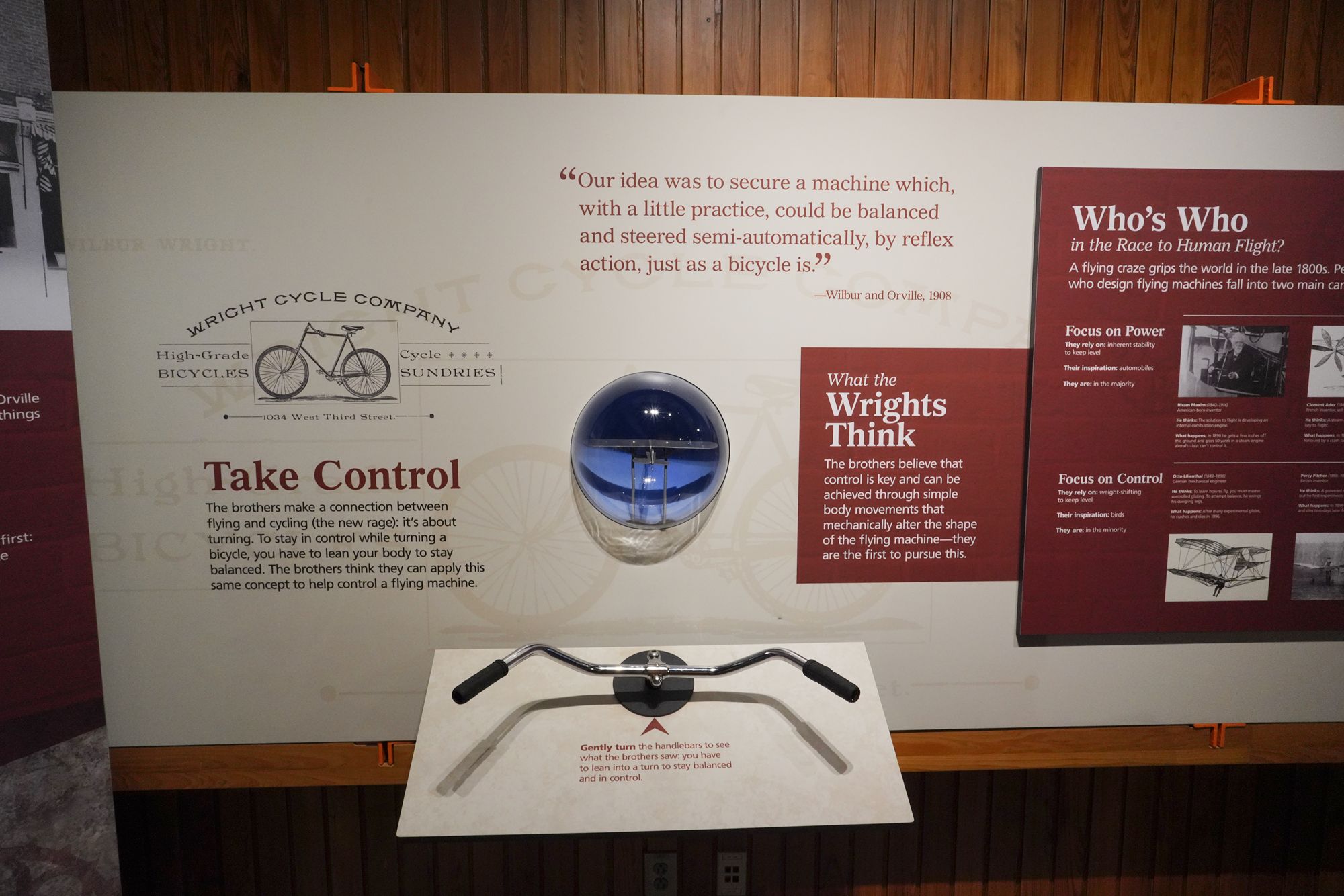
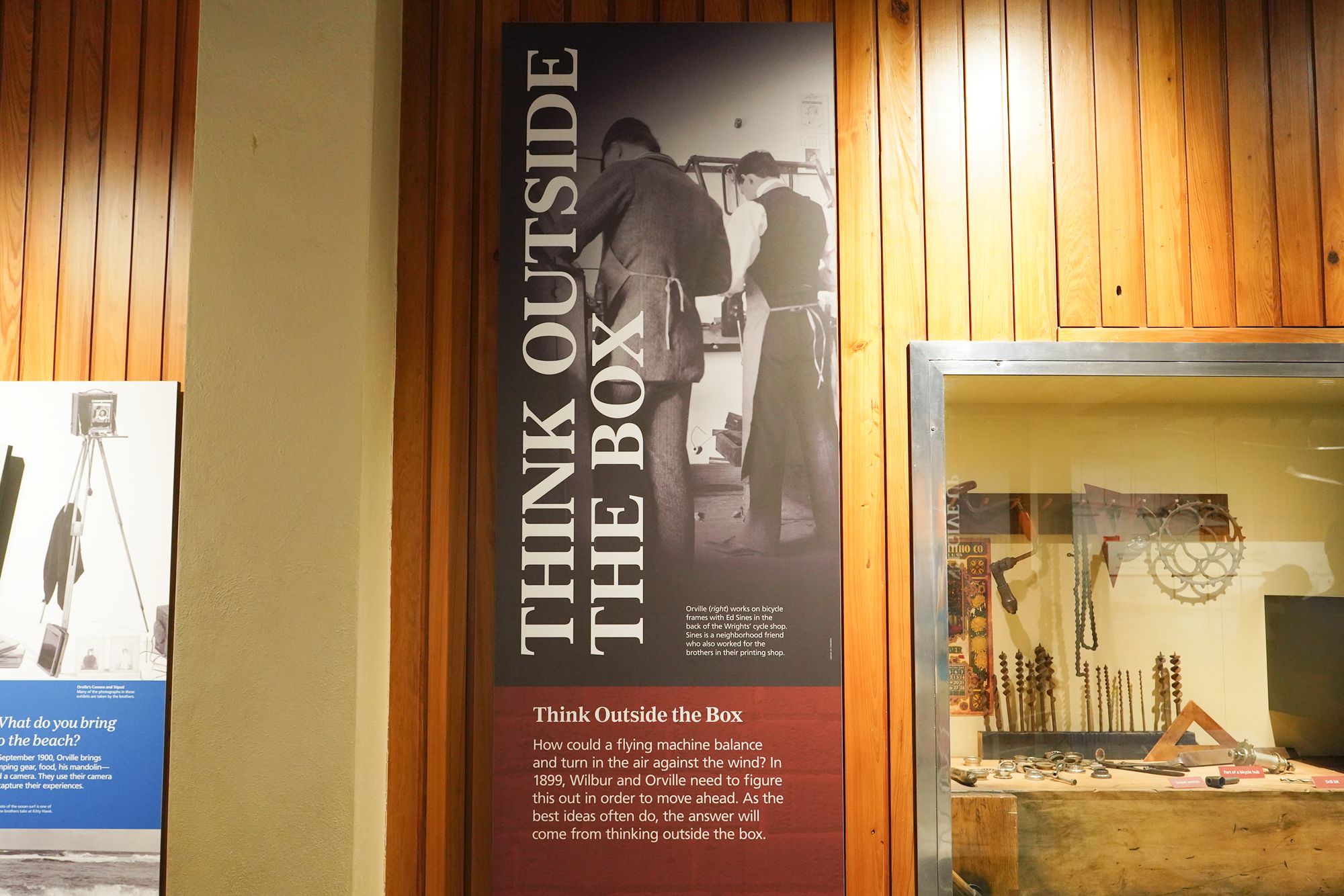
The Wright brothers, Orville and Wilbur Wright, were American inventors who built and flew the first successful airplane. They grew up in Dayton, Ohio, and developed an early fascination with flight after playing with a small toy helicopter. They later ran a bicycle repair shop, where they gained mechanical skills and funded their flying experiments.
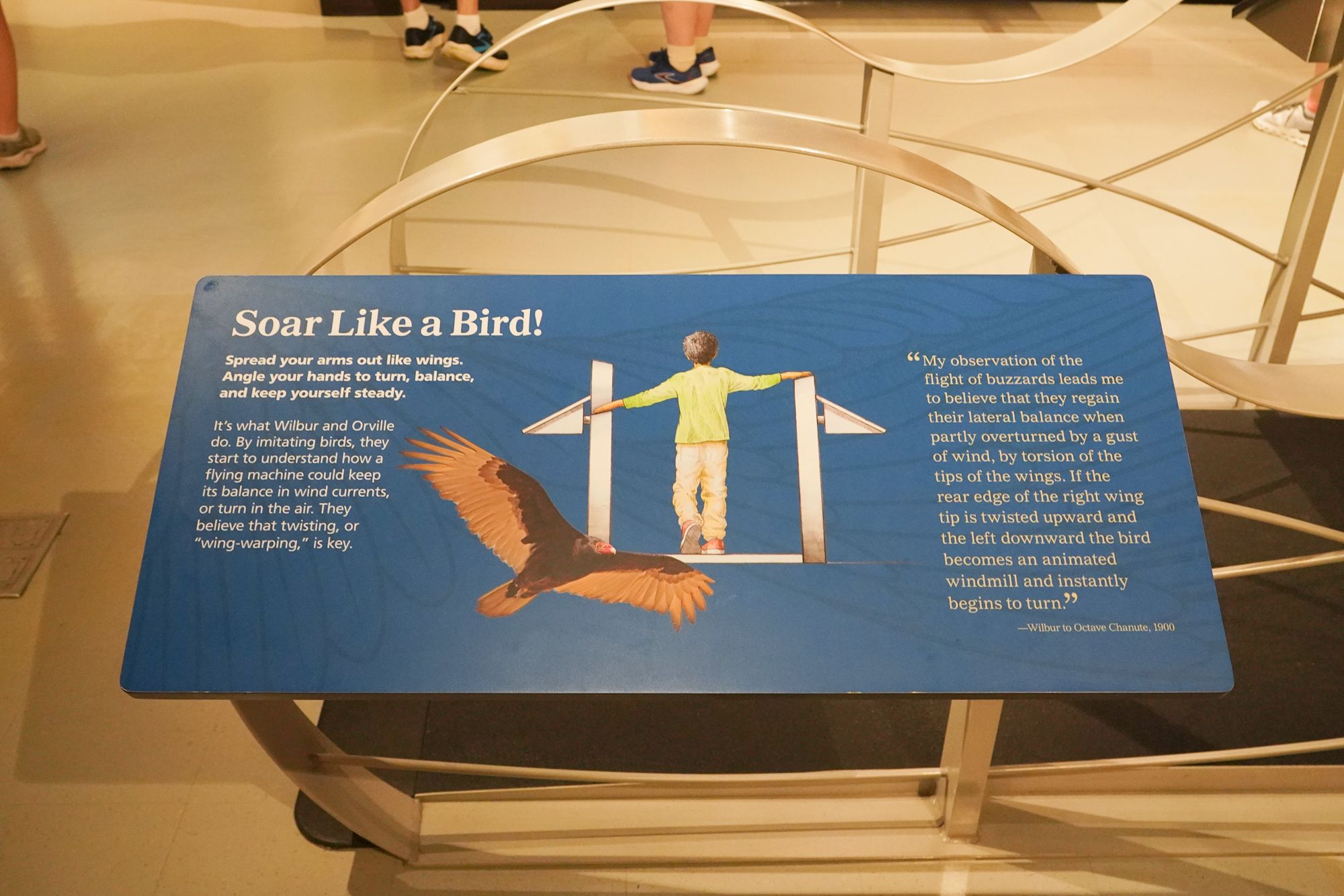
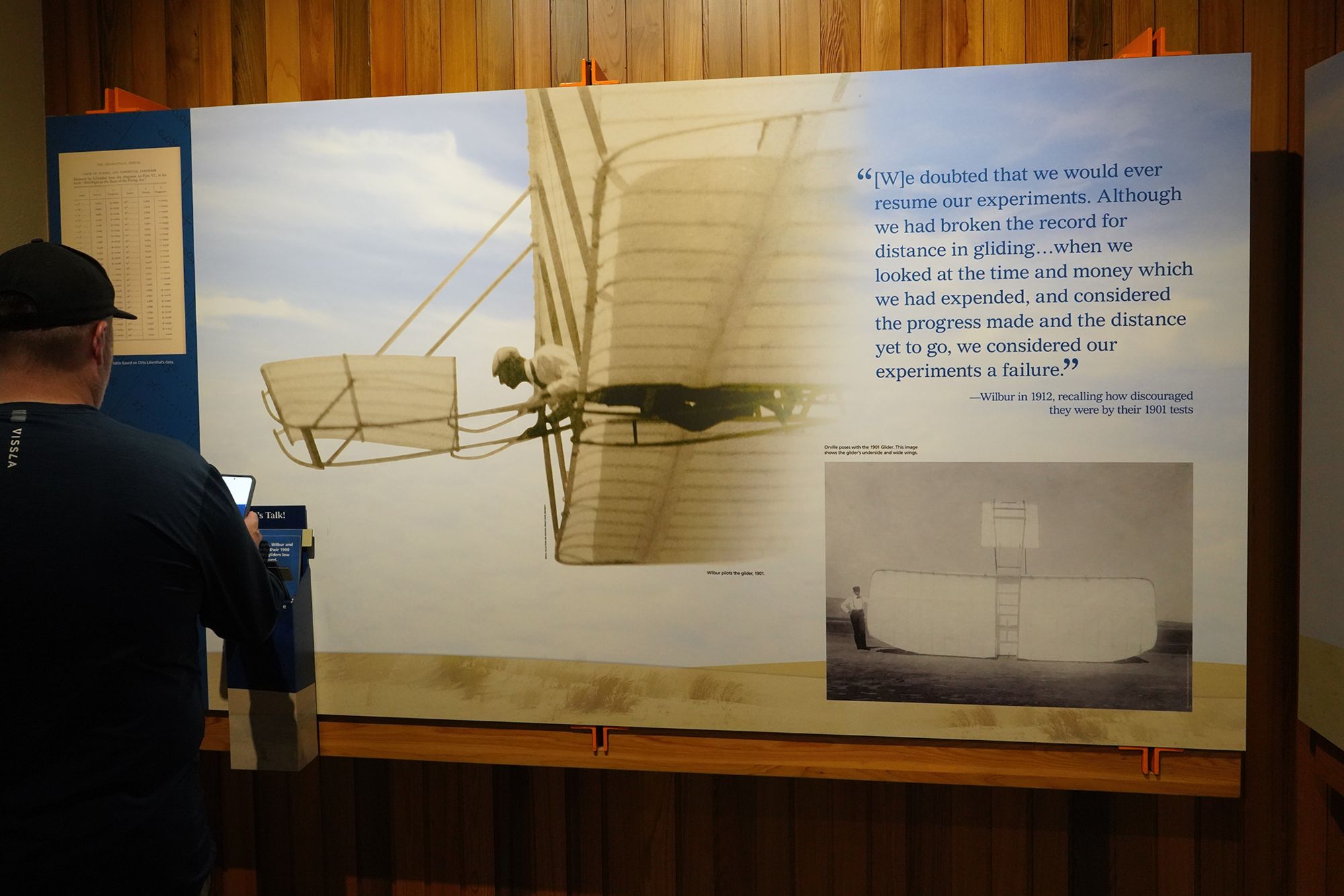
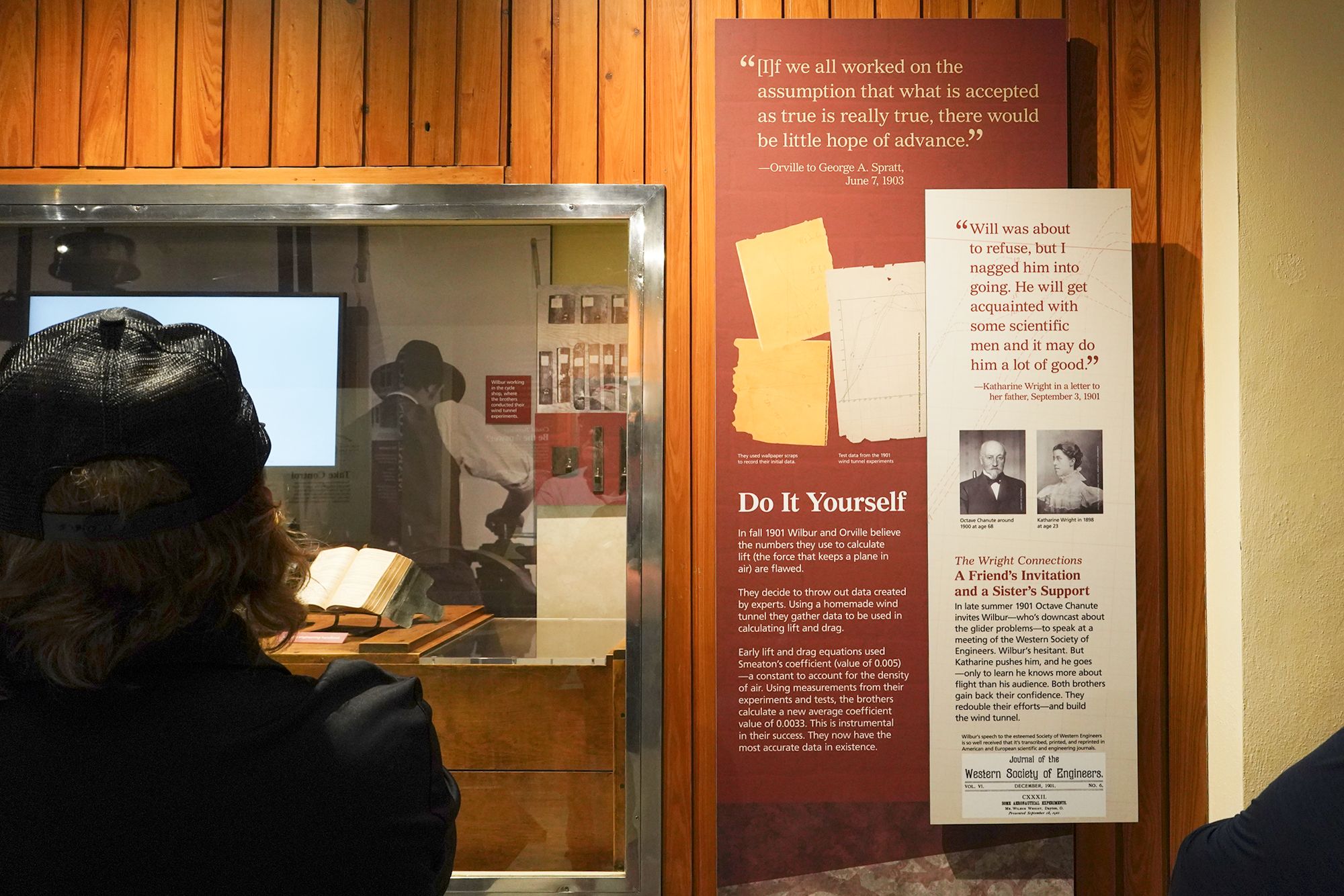
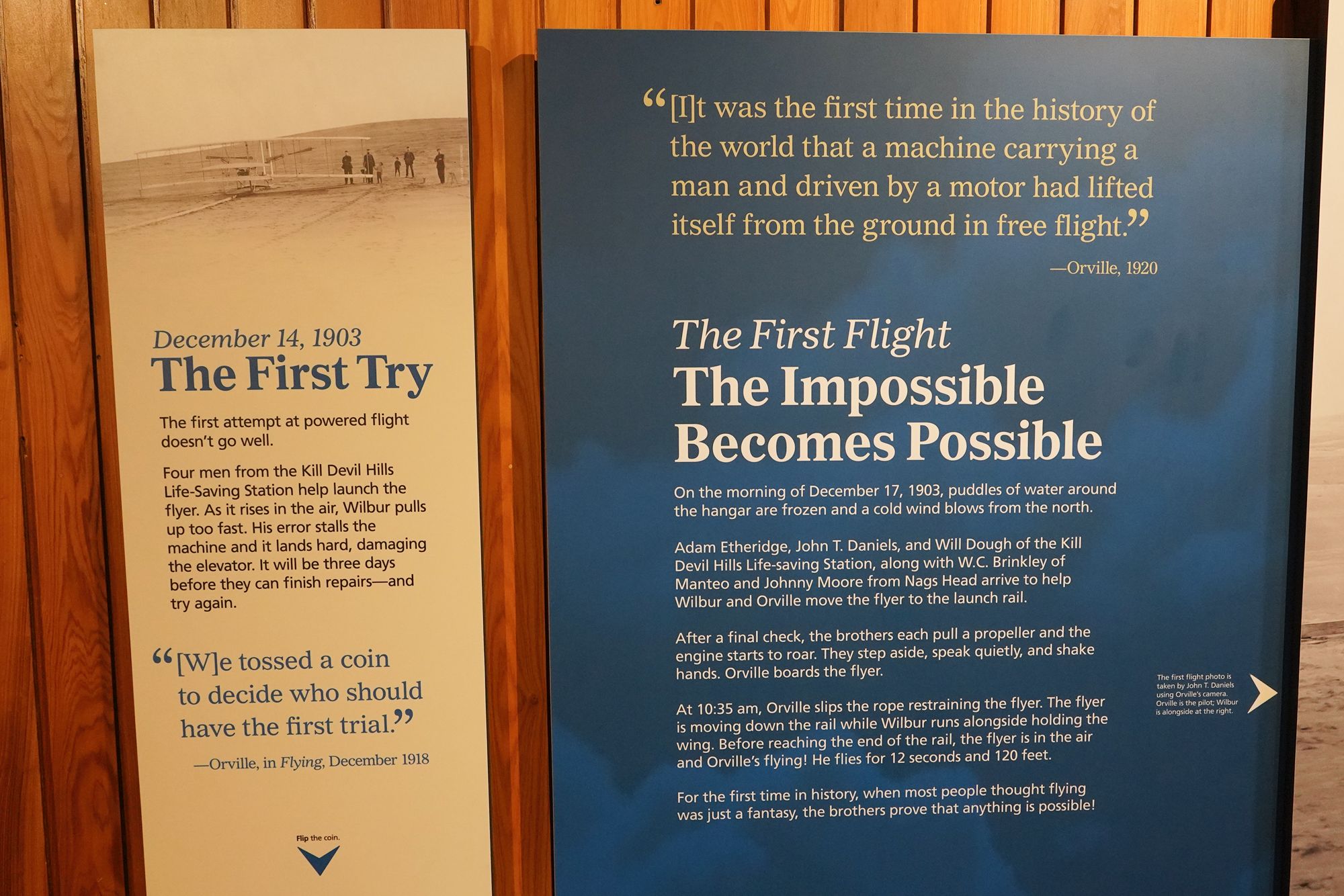
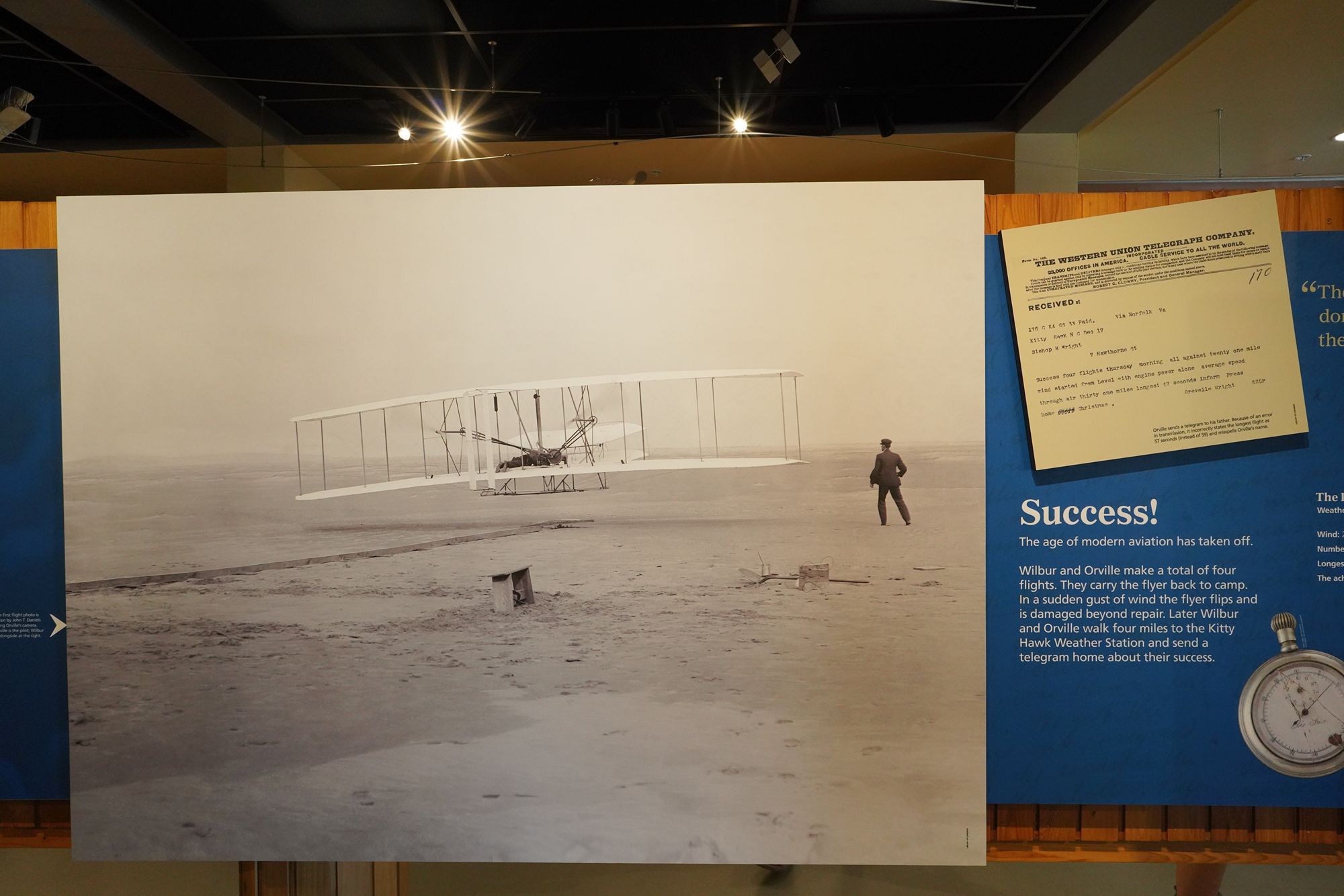
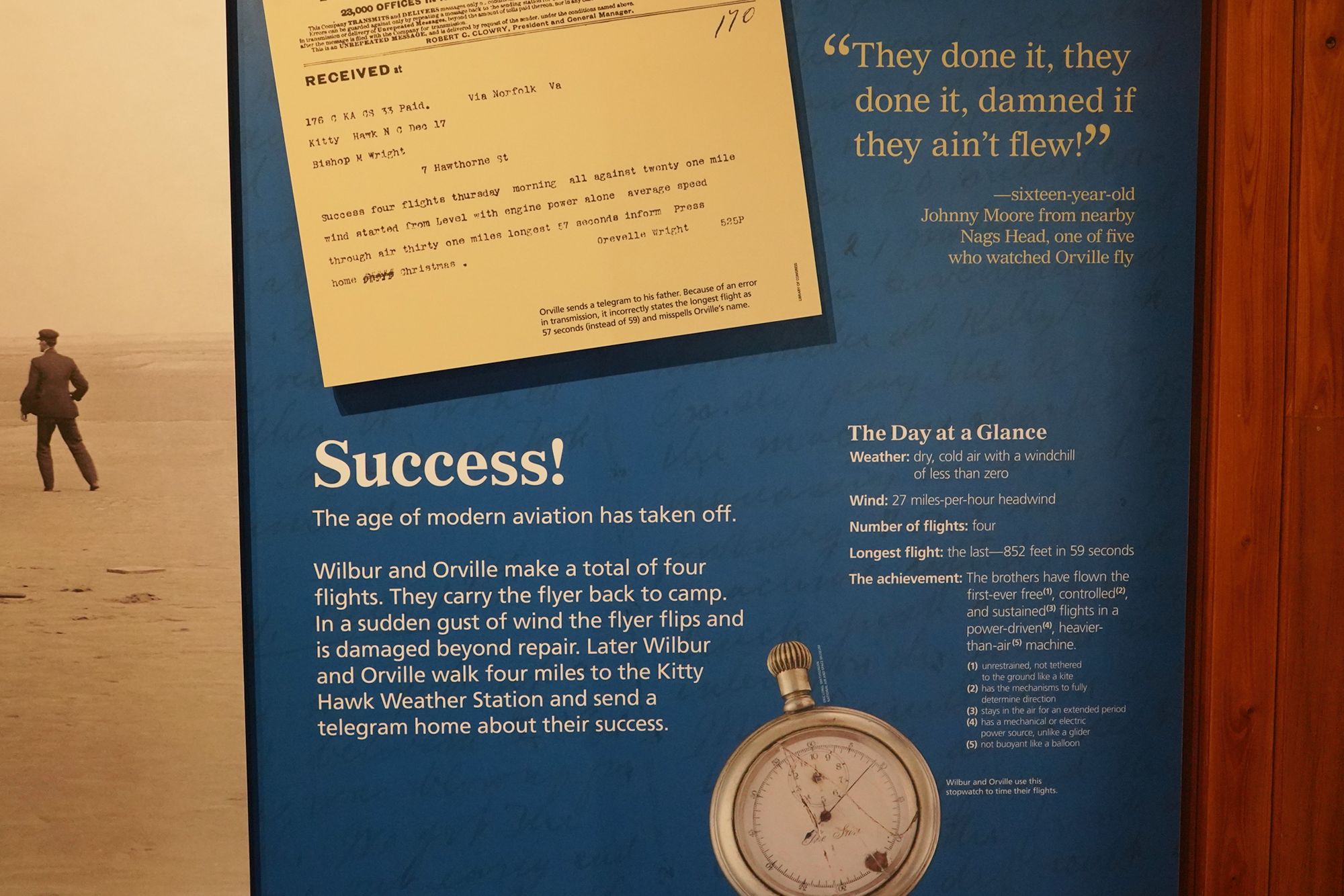
From 1900 to 1903, they tested gliders at Kitty Hawk, North Carolina, learning how to control flight using a system called wing-warping. On December 17, 1903, at Kill Devil Hills, they made the world’s first powered, controlled, and sustained flight. Orville piloted the first flight, lasting 12 seconds, and Wilbur flew the longest, covering 852 feet in 59 seconds.
They continued improving their designs, and by 1905, their Flyer III could fly circles and stay aloft for long periods. Their success launched the age of aviation and changed human transportation forever. Wilbur died in 1912, while Orville lived until 1948, witnessing airplanes become an essential part of modern life.
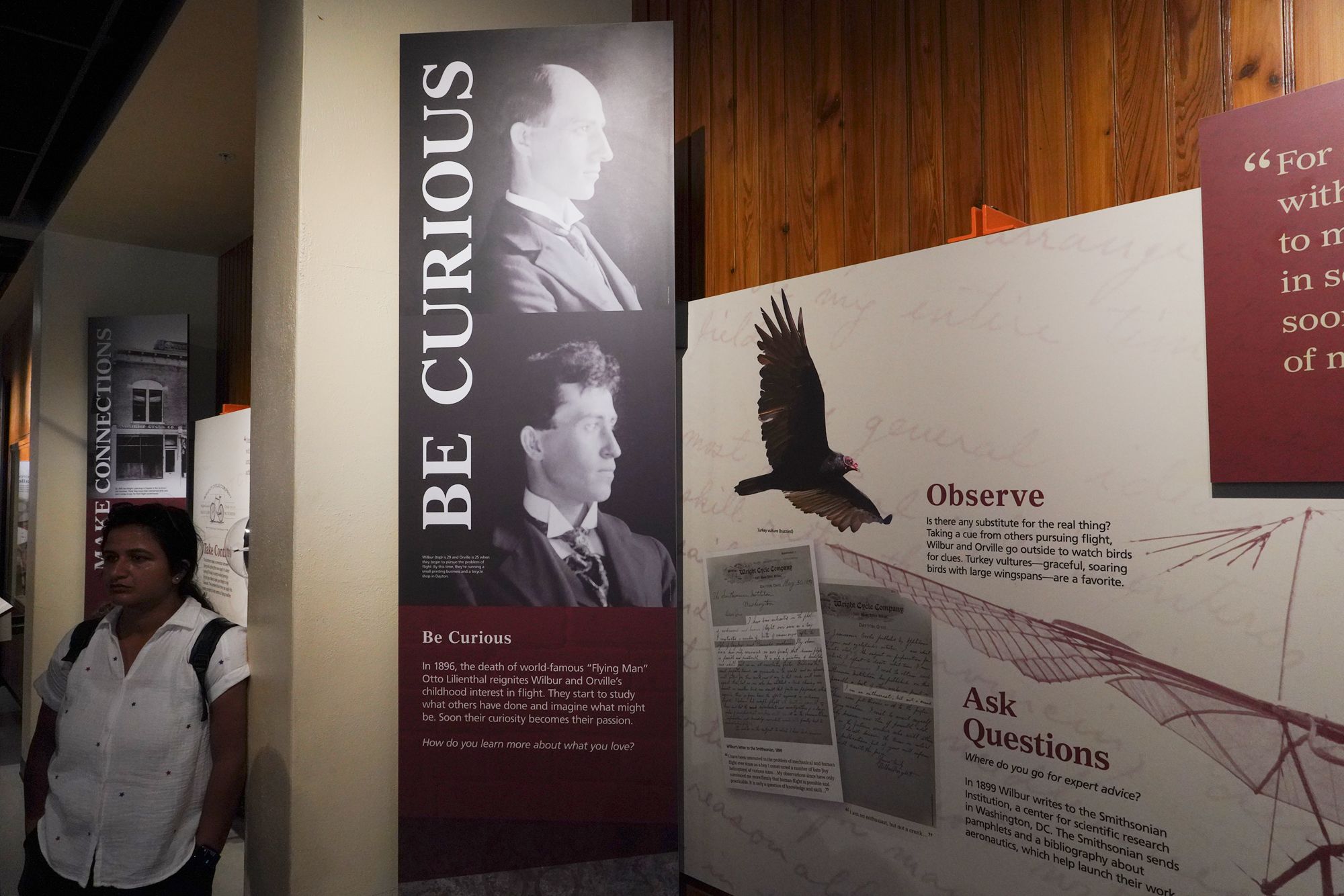
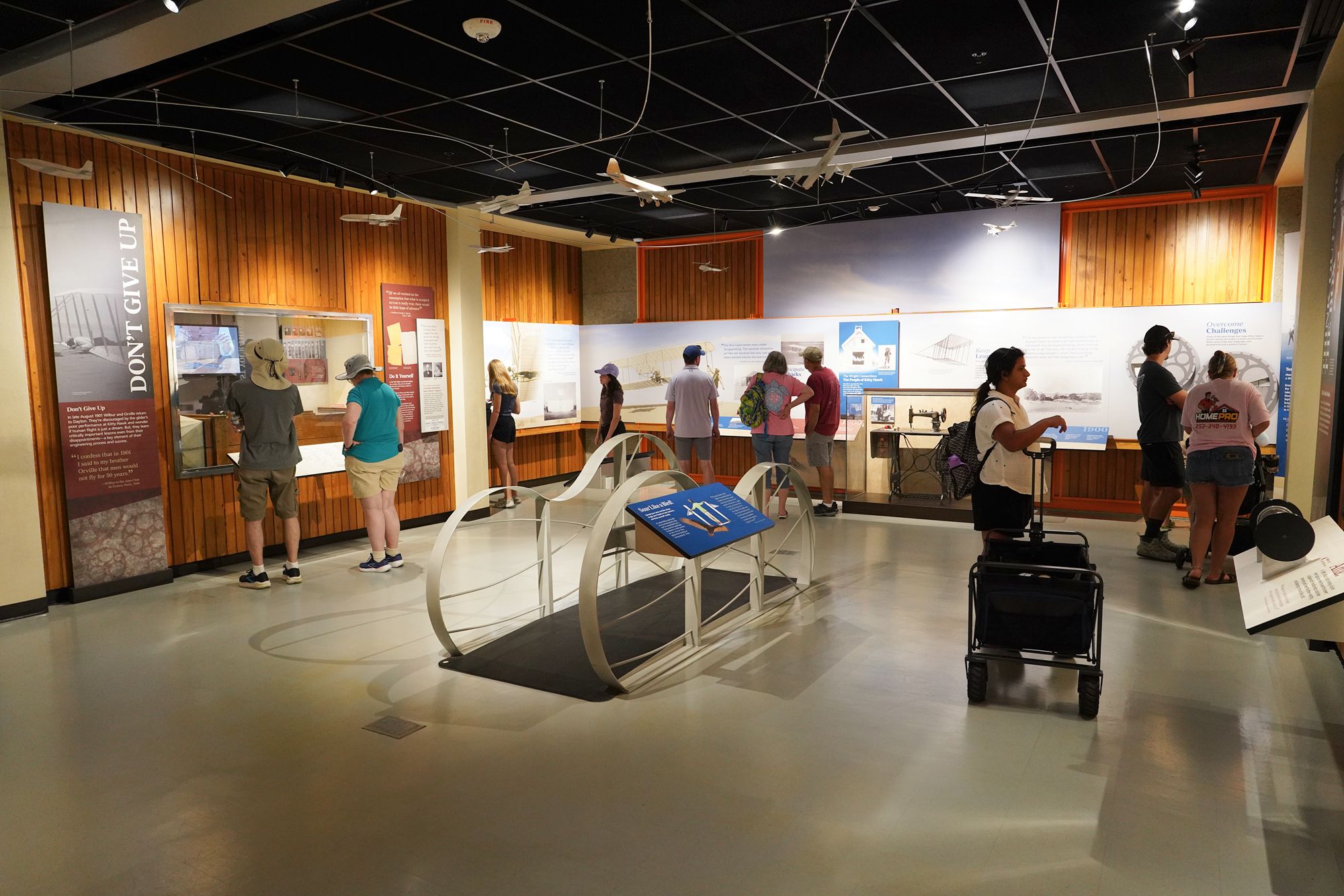
Make Connections
Think Outside the Box
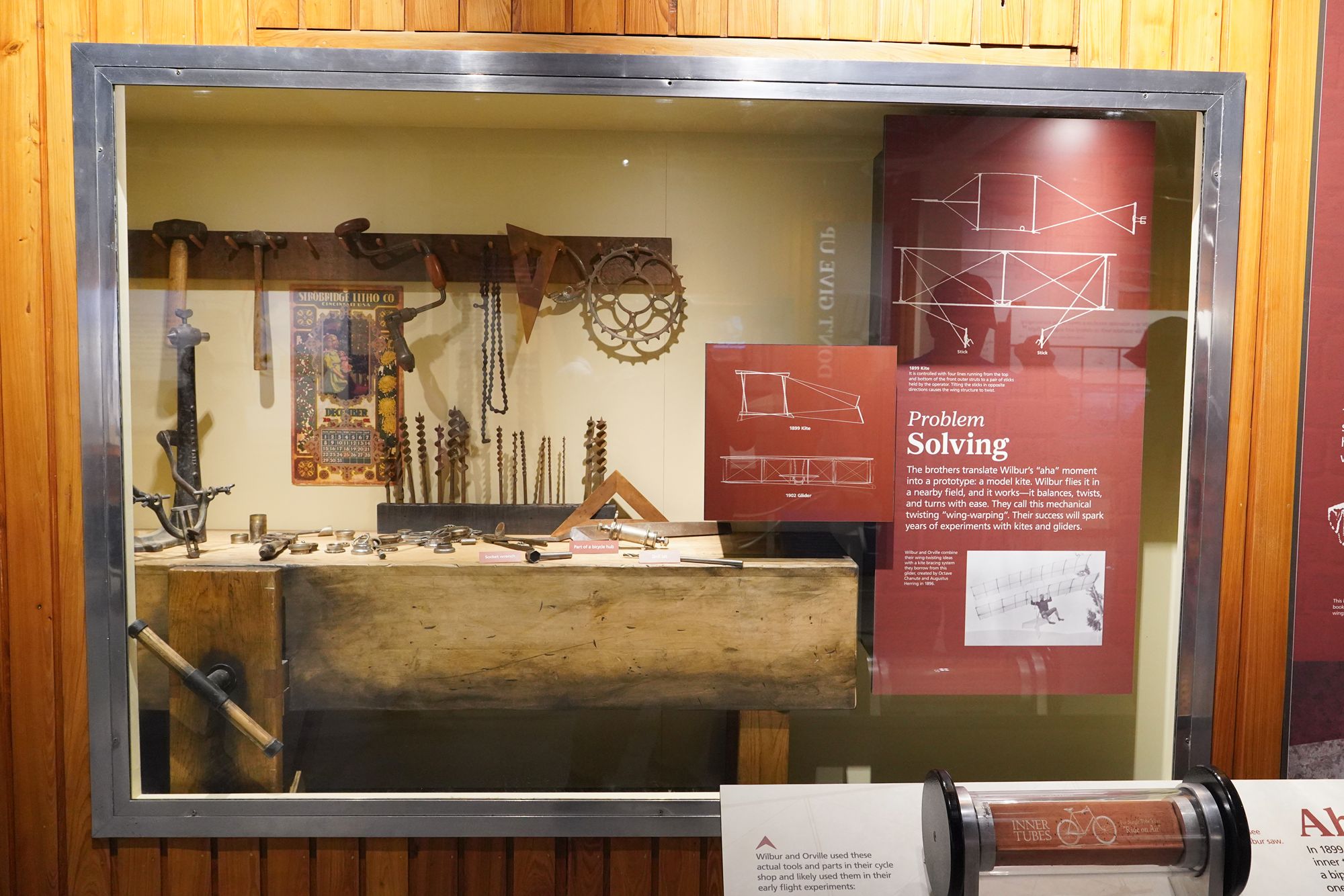
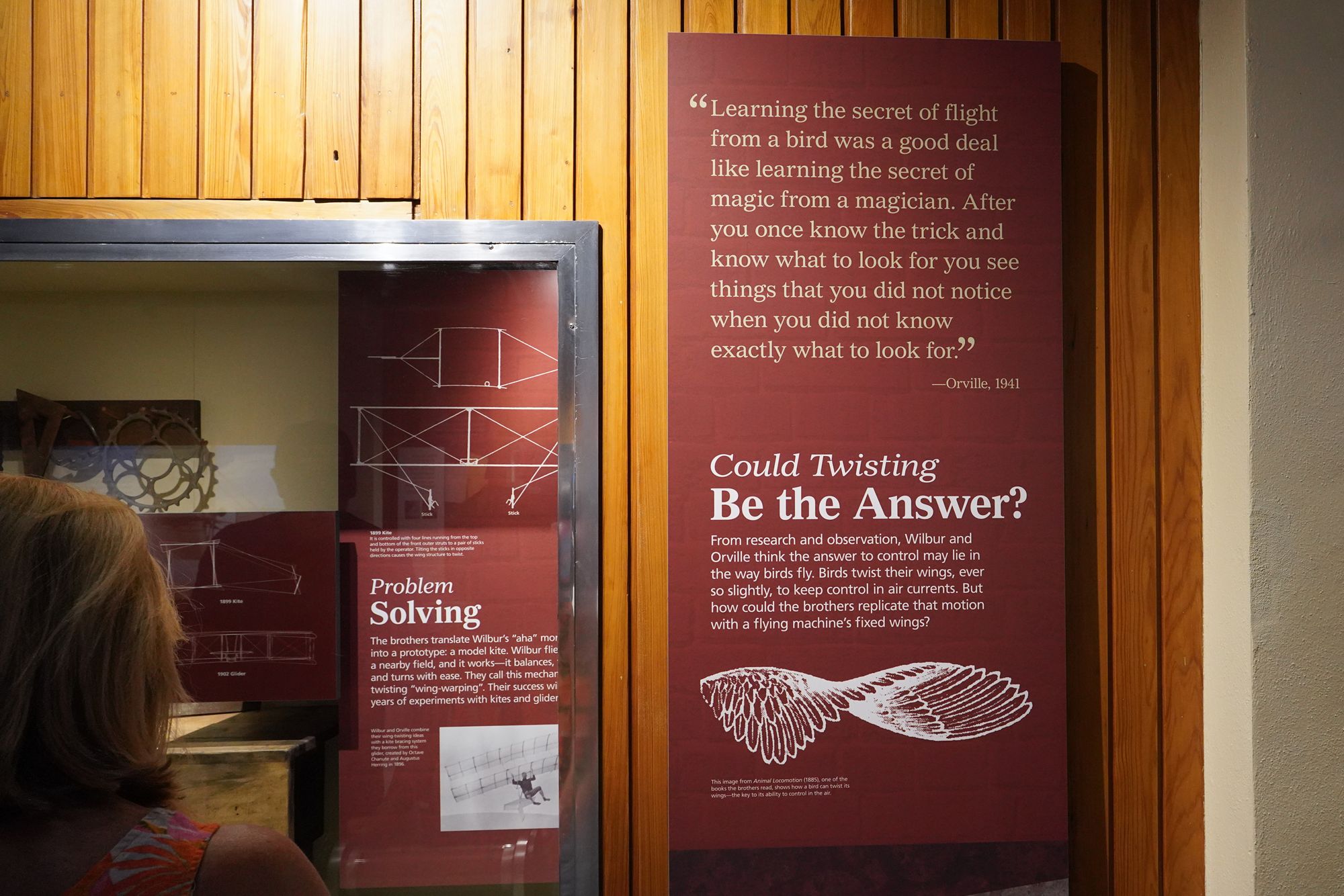
Test Your Theories
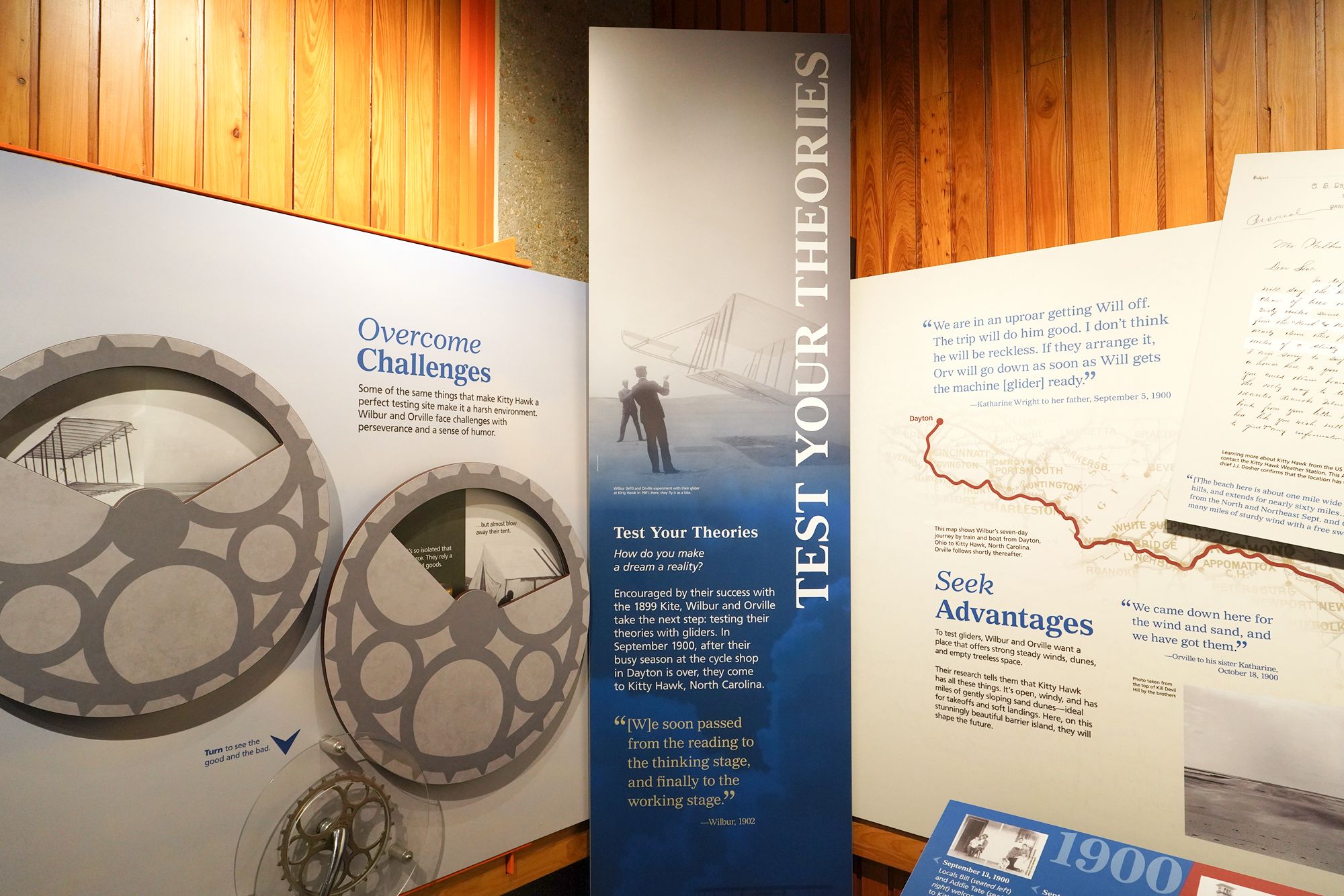
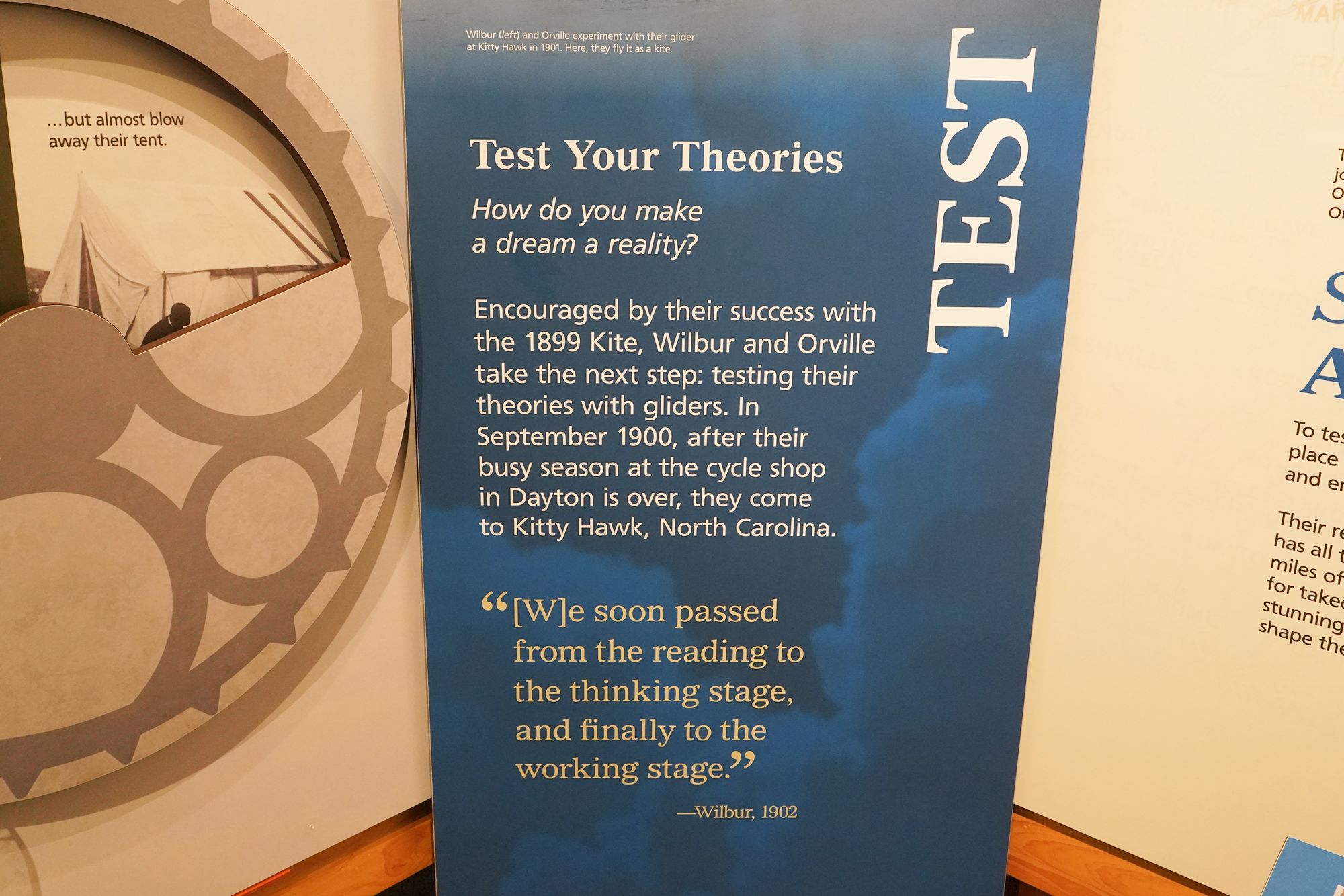
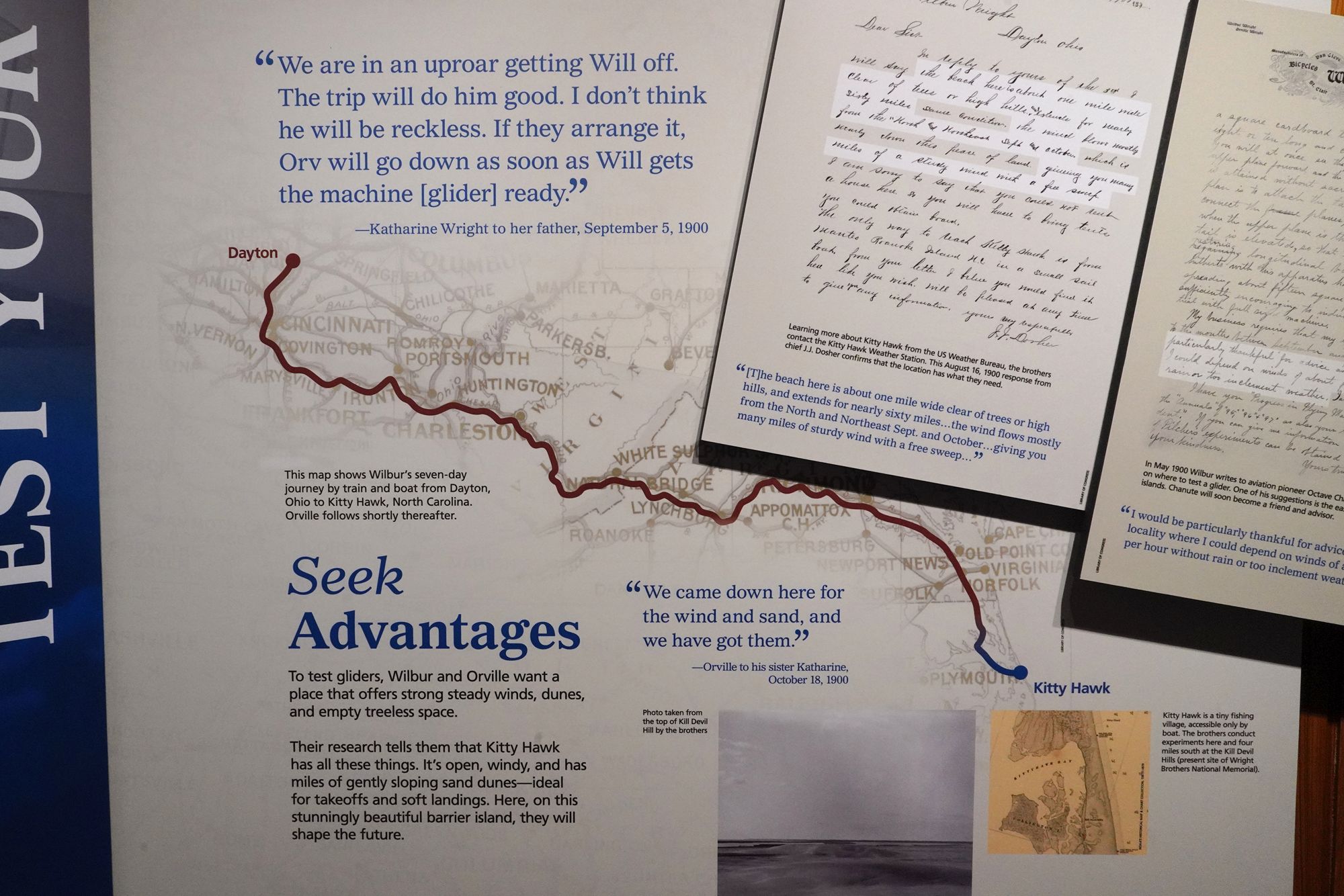
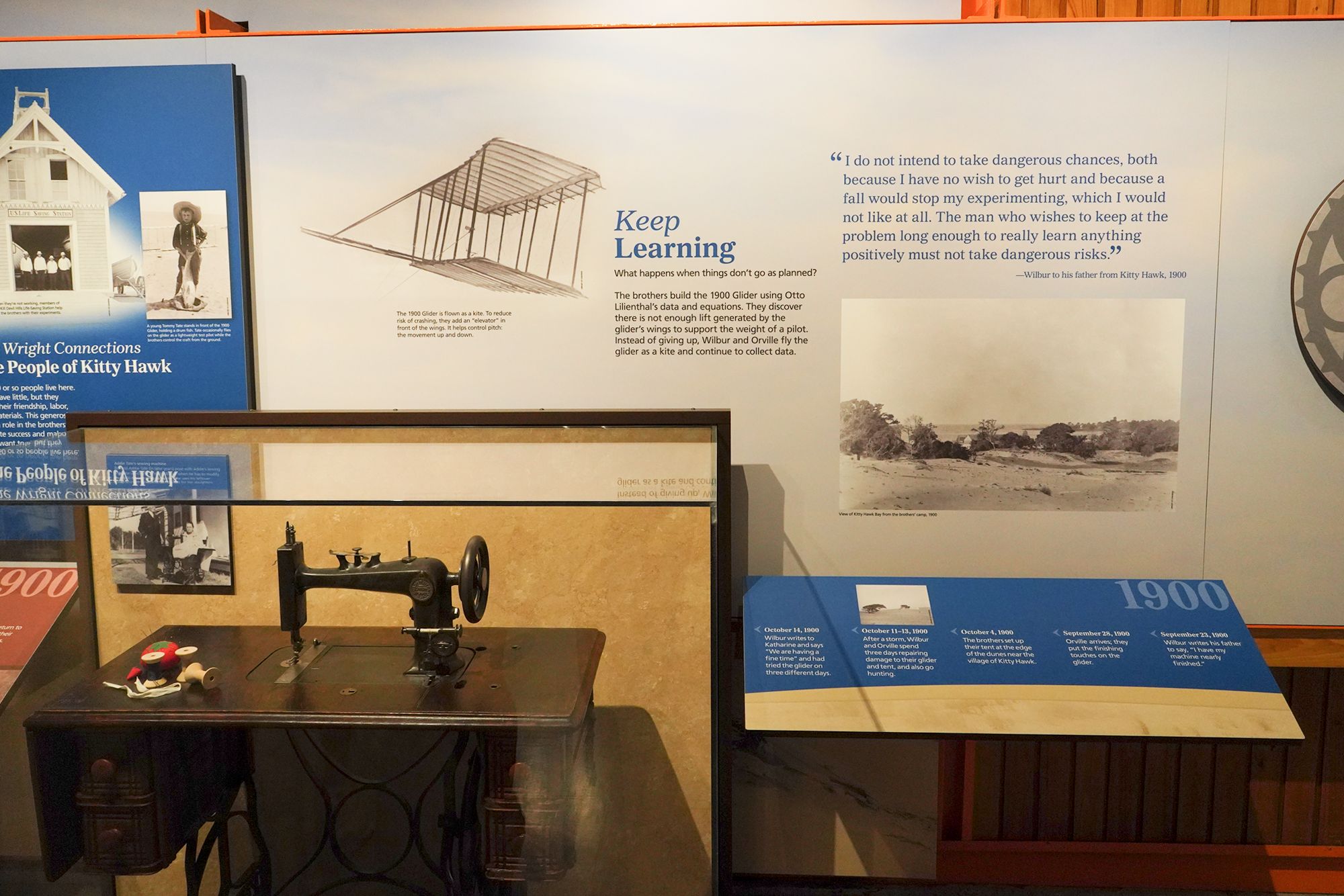
Keep Learning
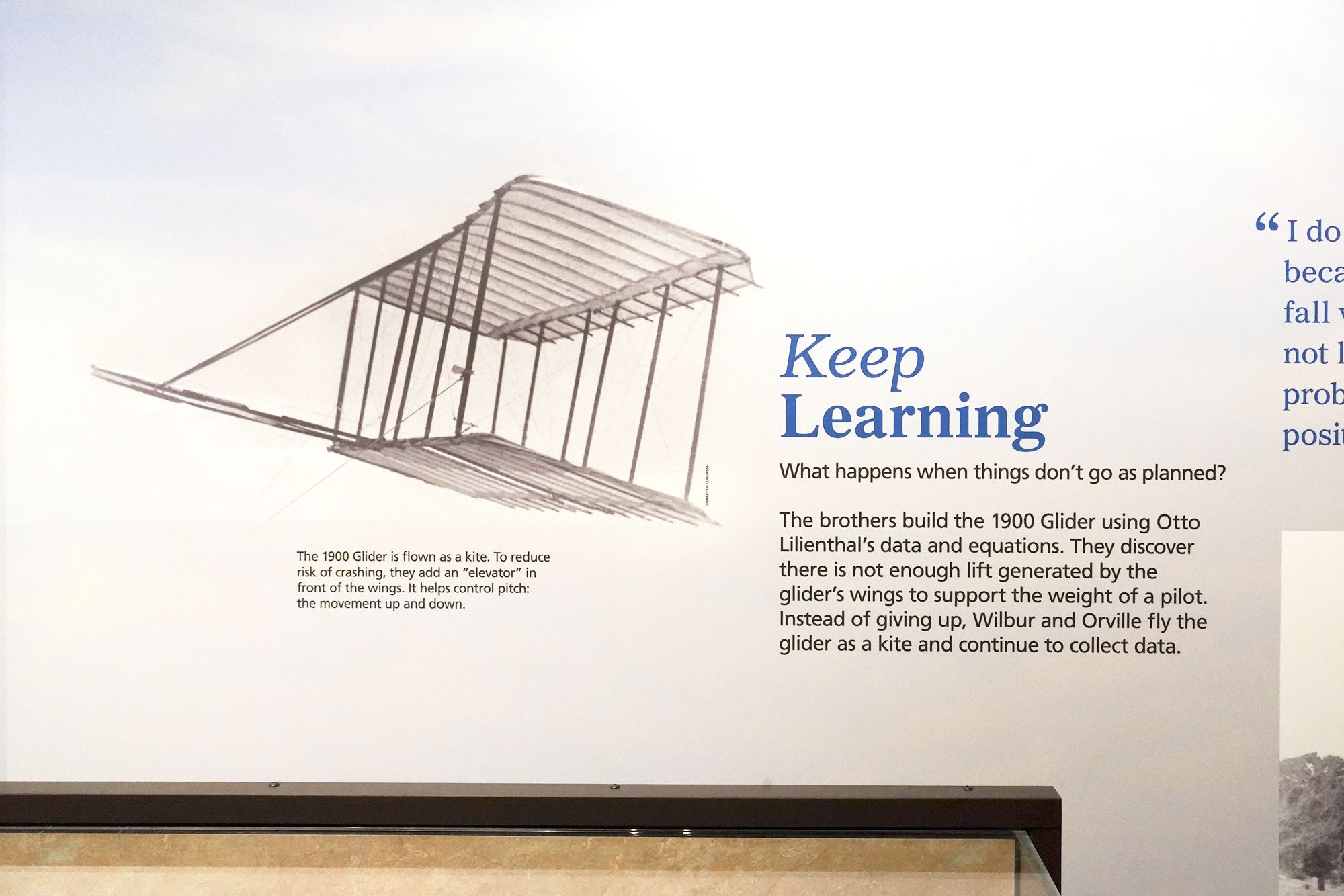
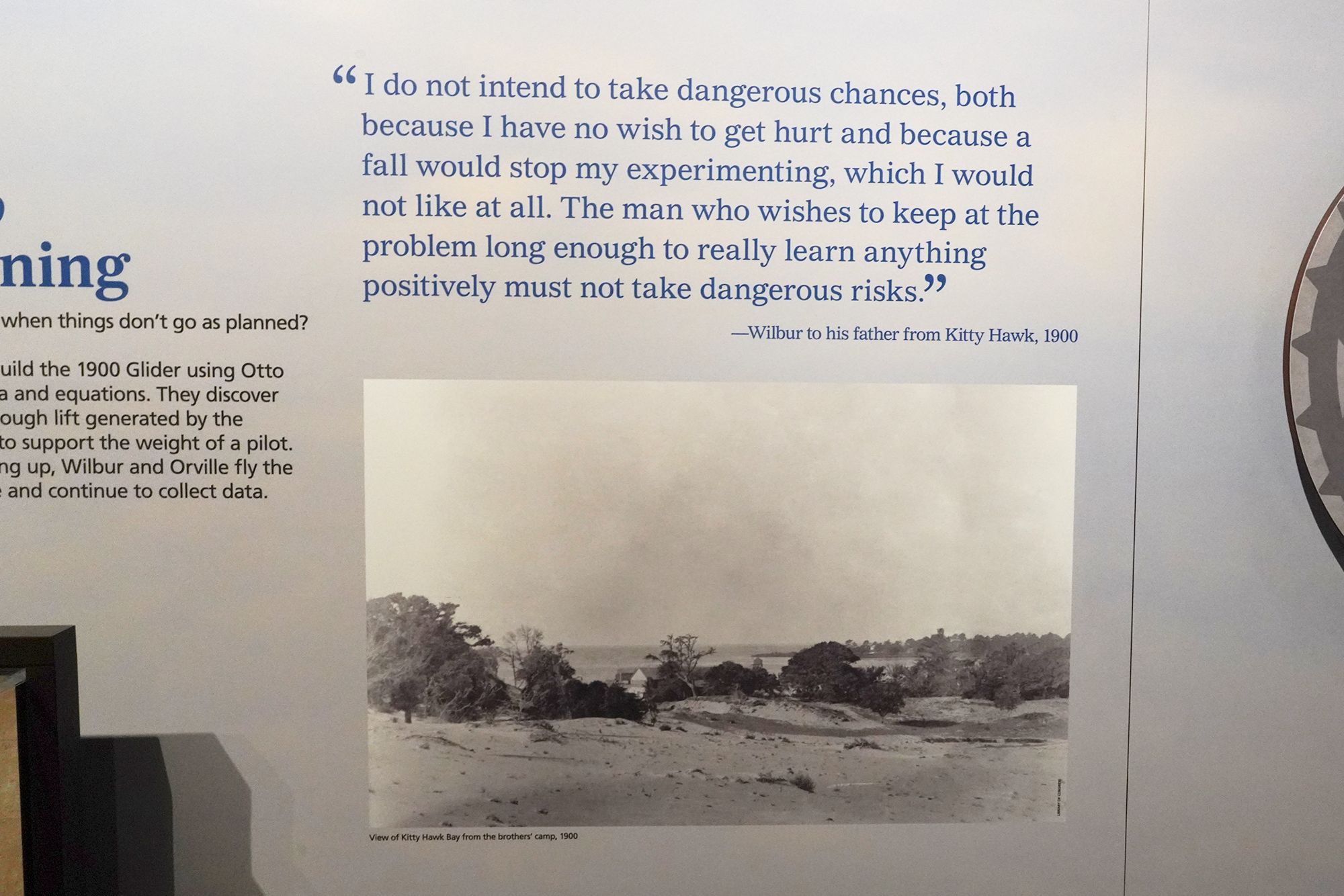
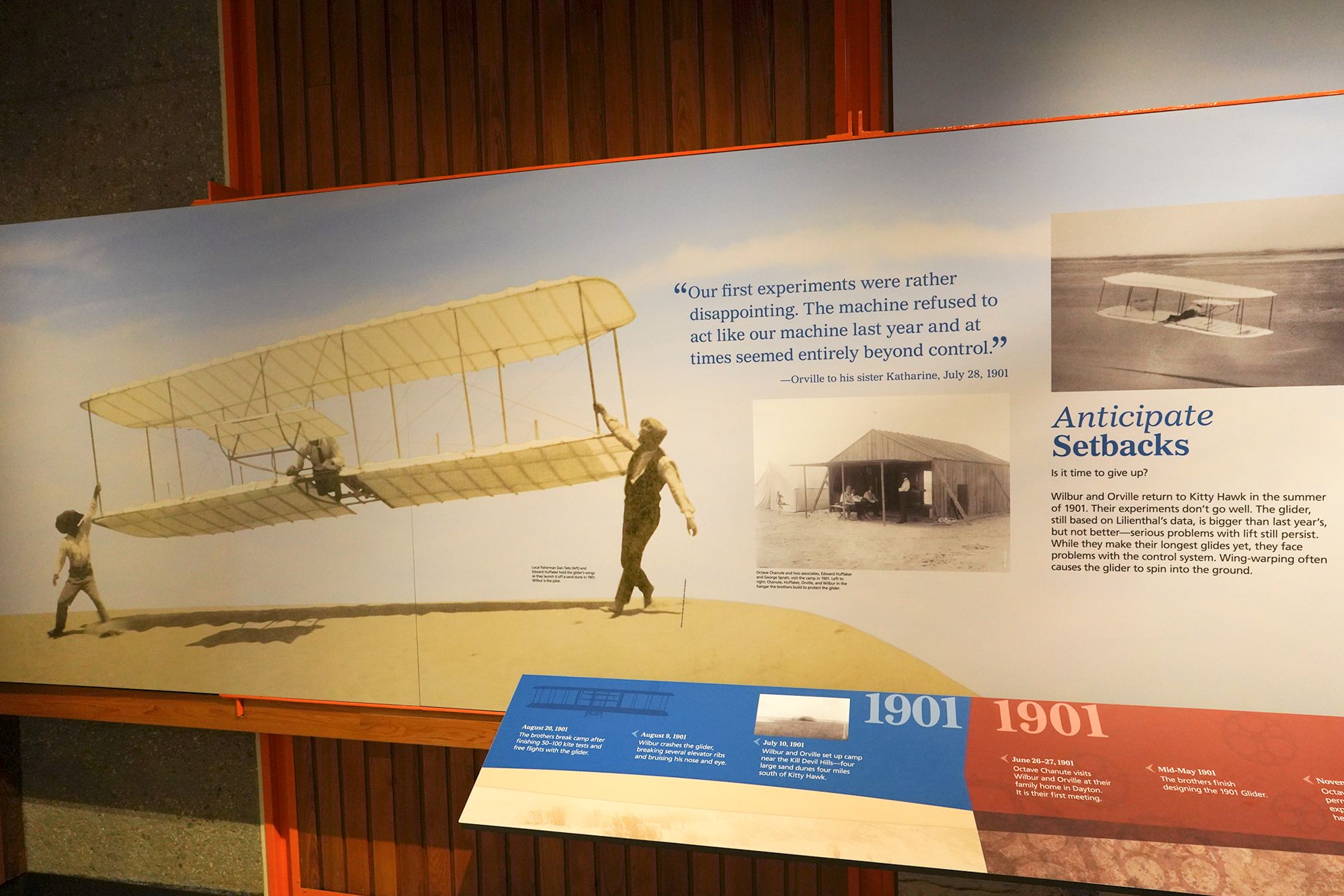
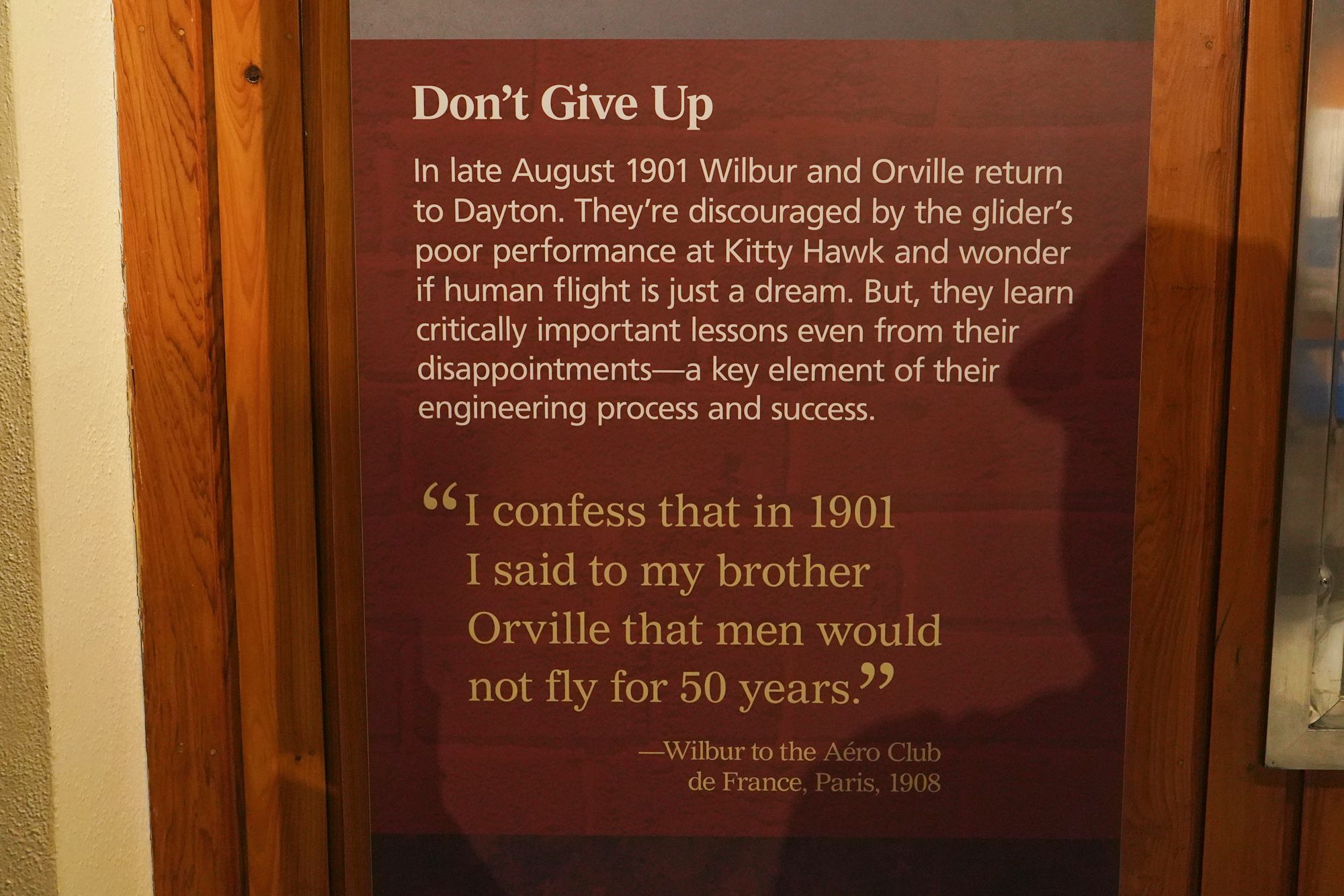
Don't Give Up
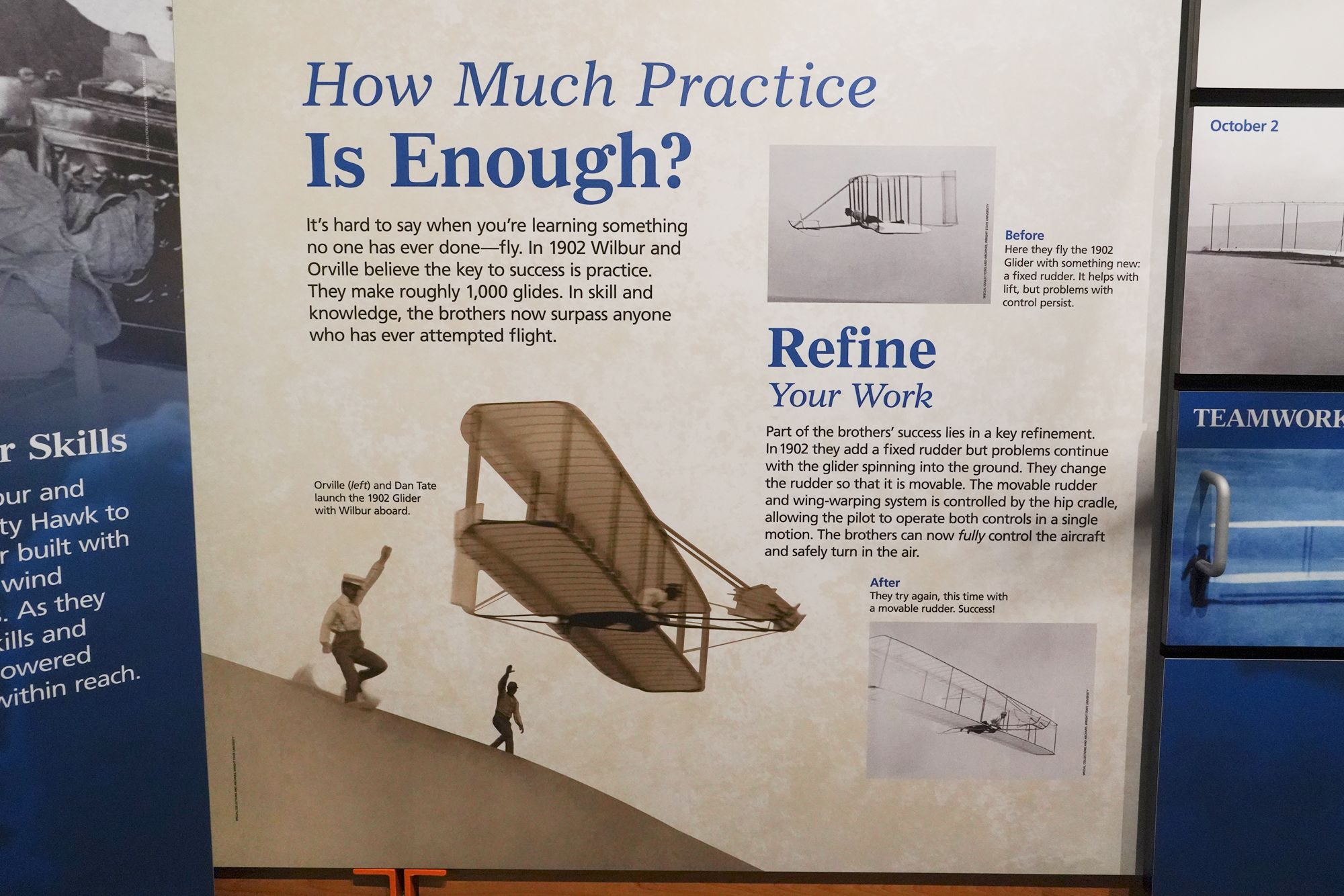
How Much Practice is Enough?
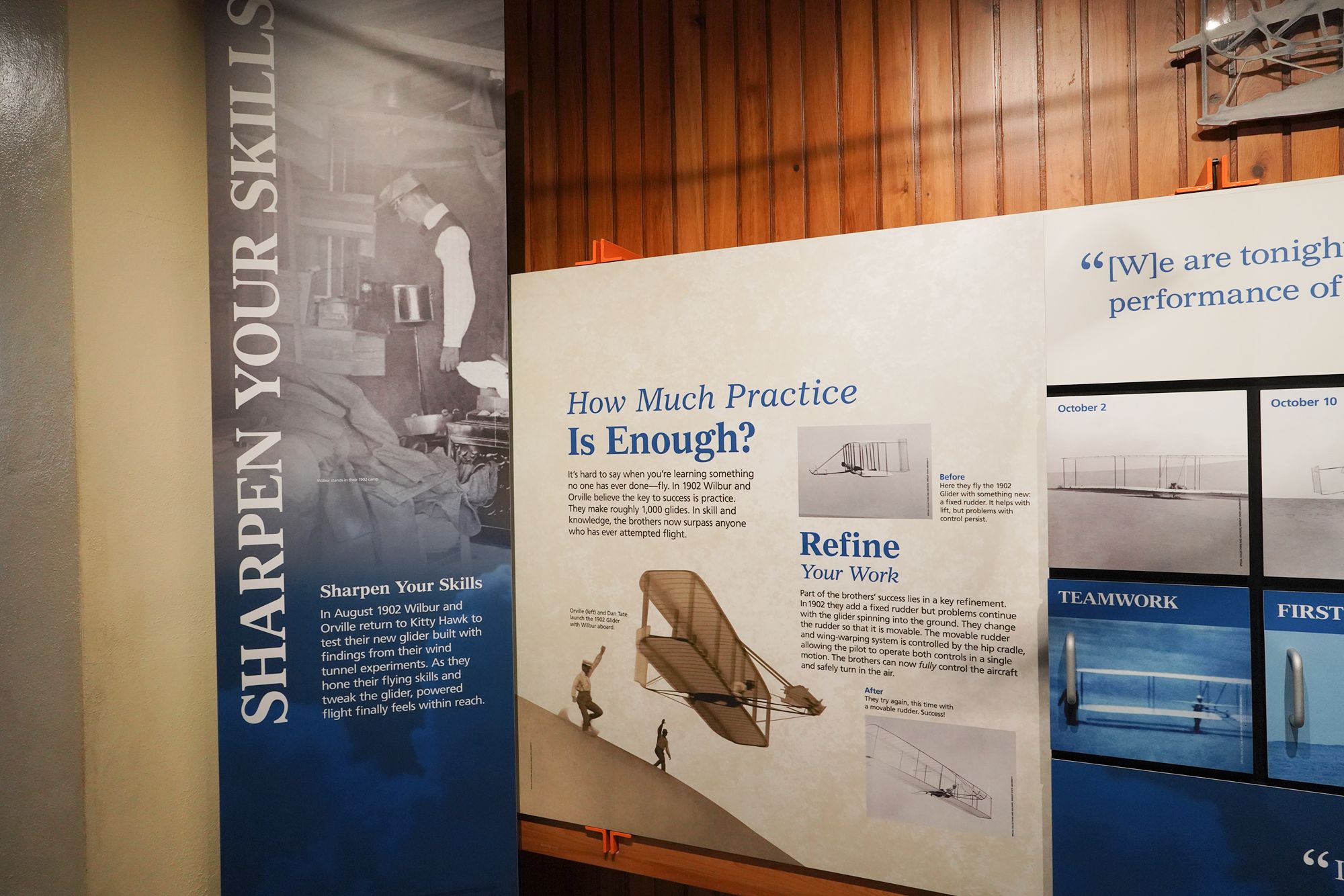
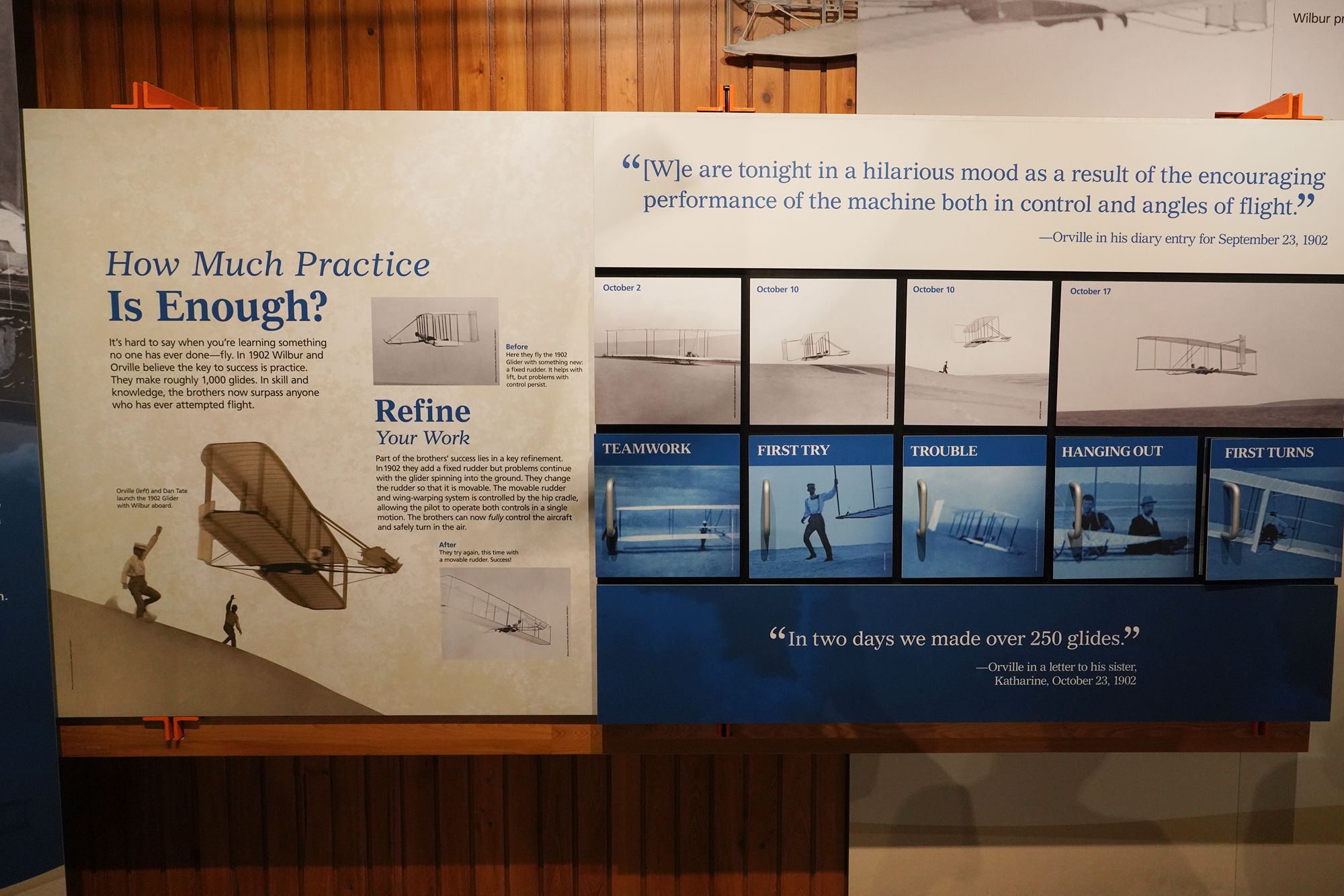
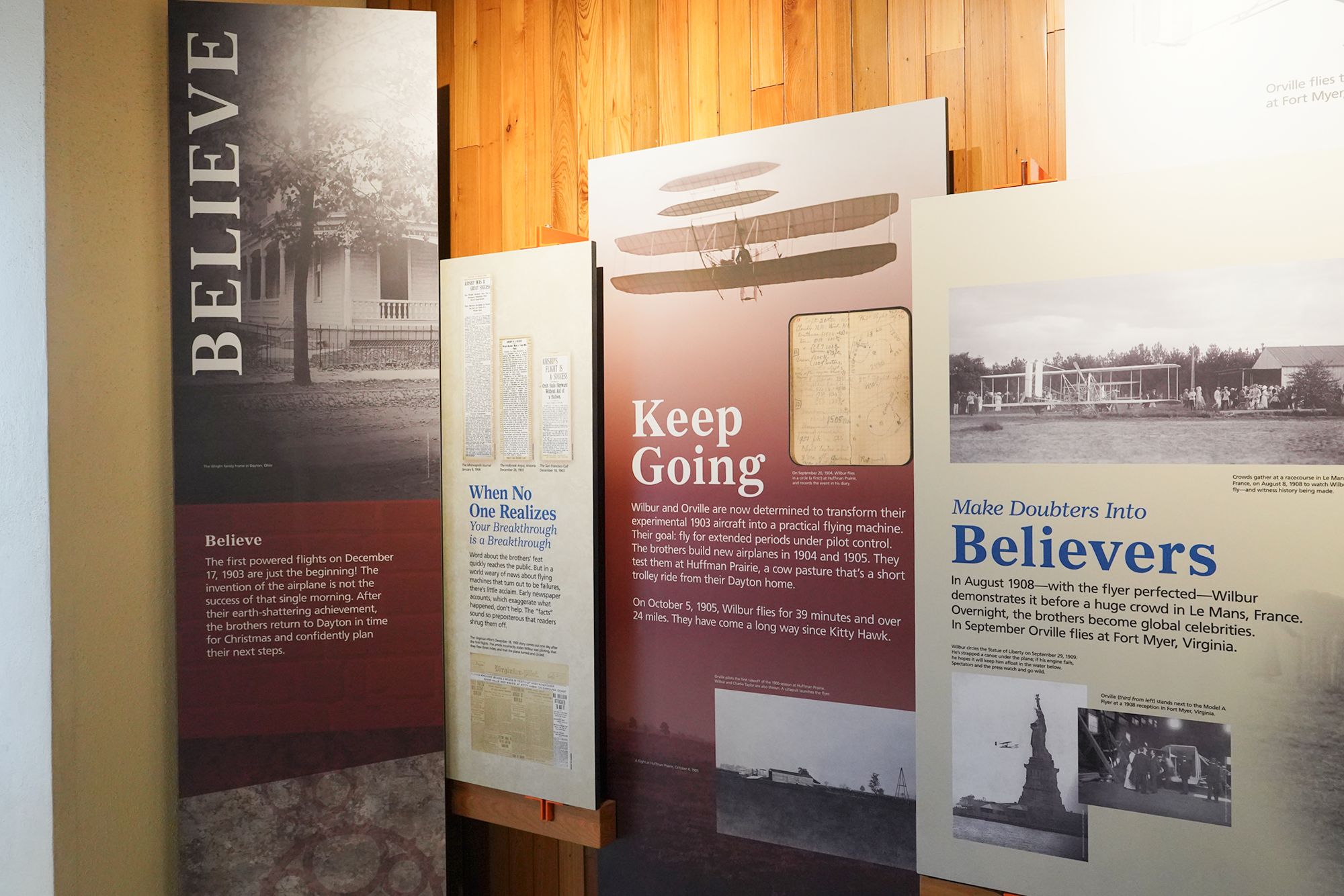
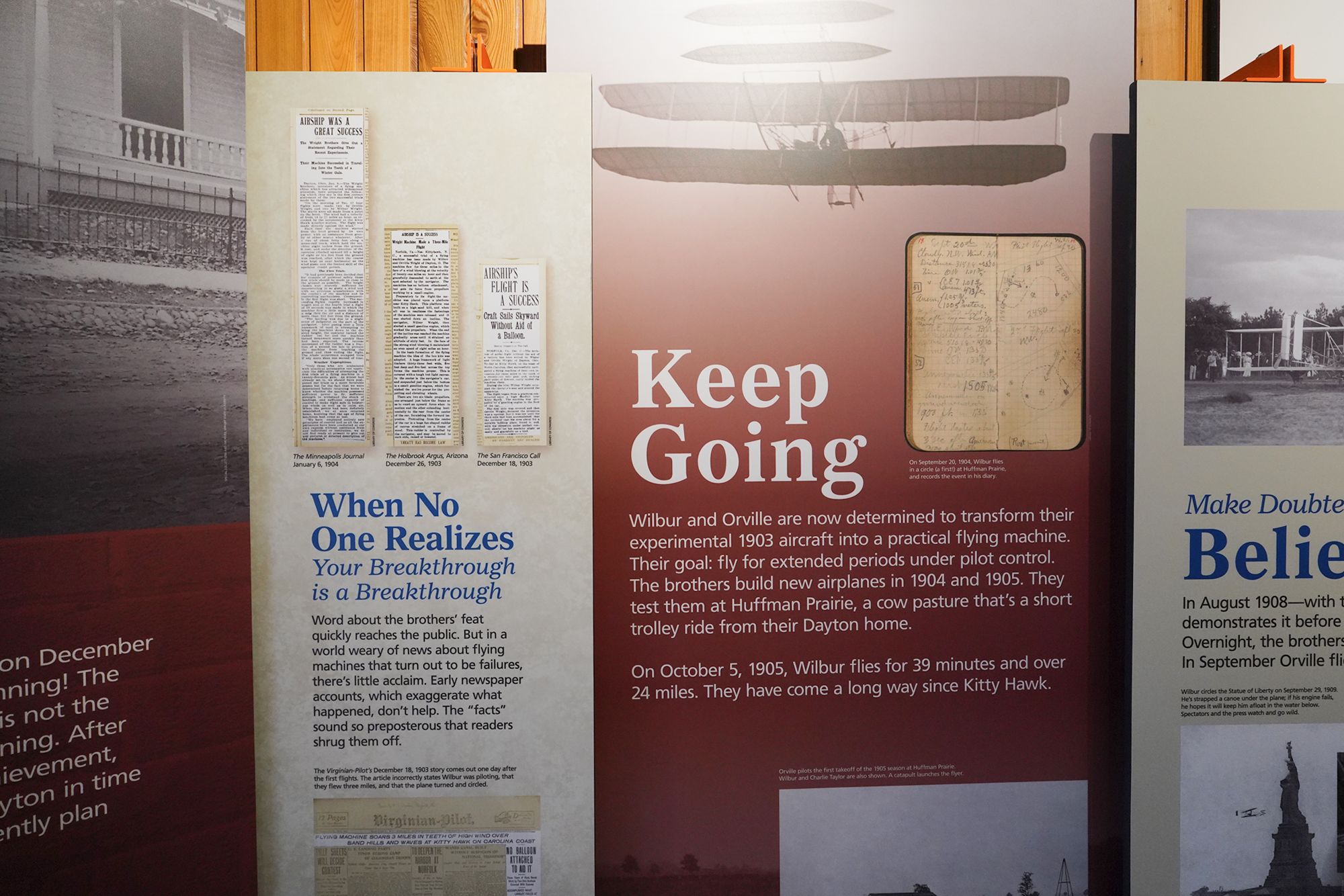
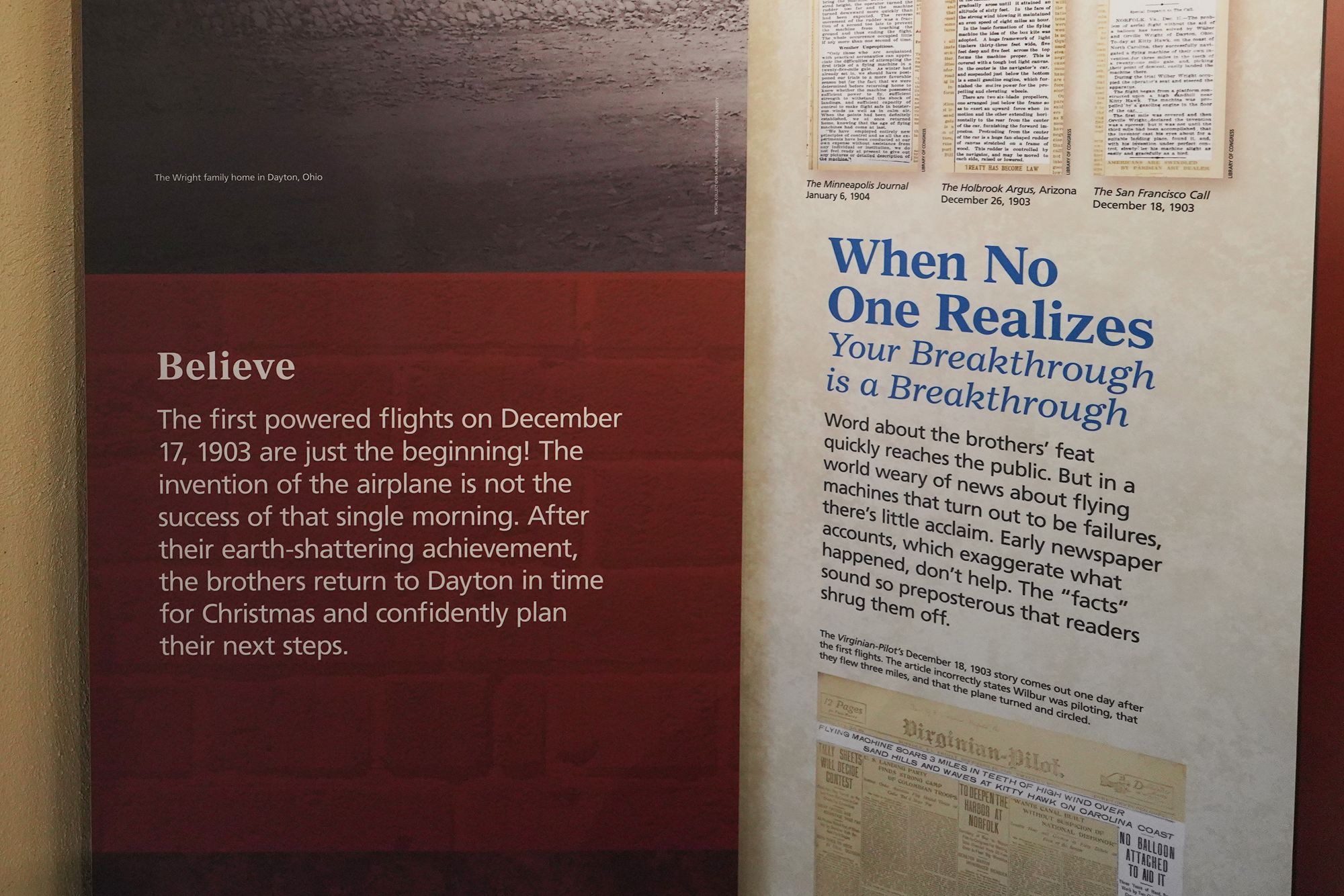
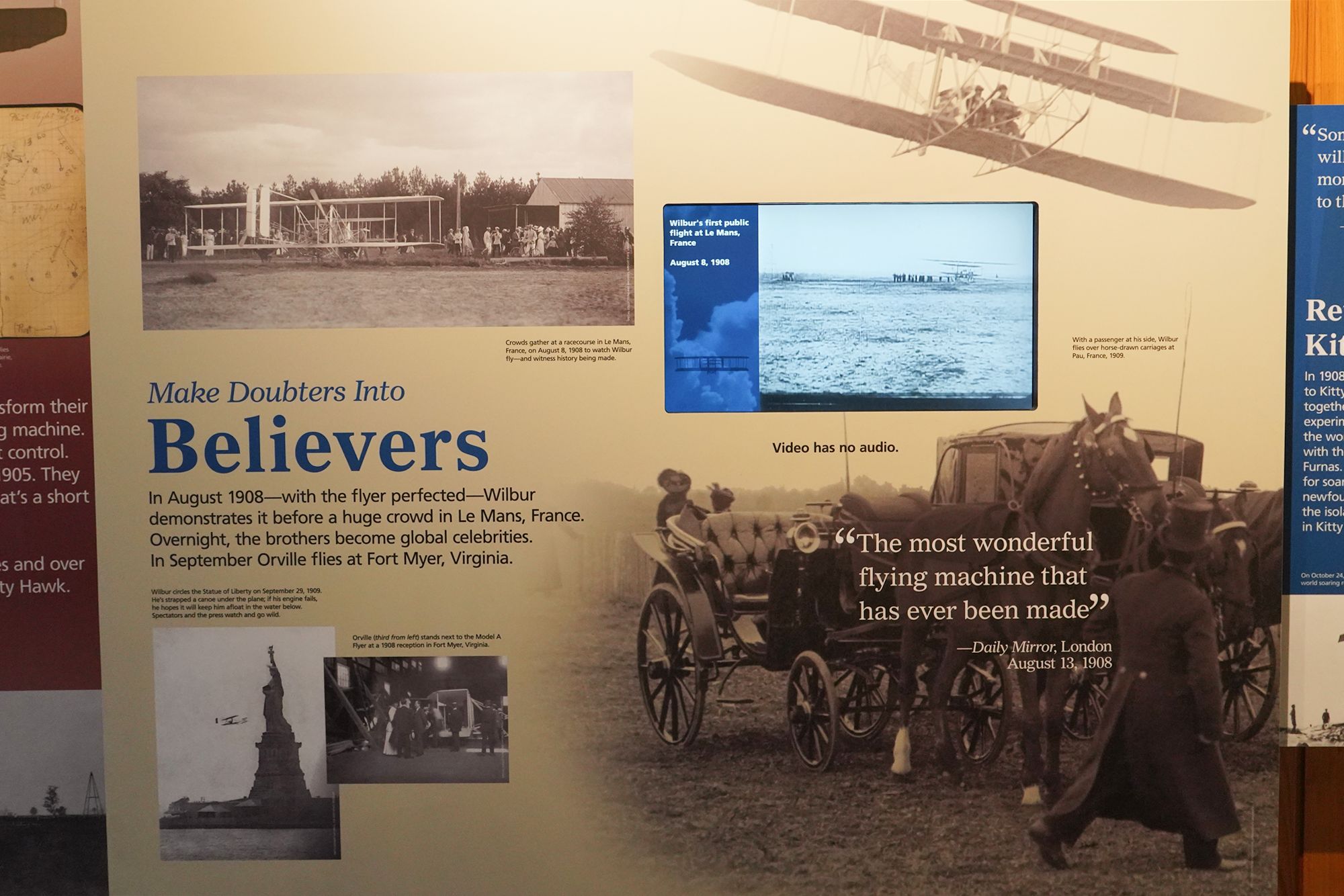
Believe
Achieve Your Dream
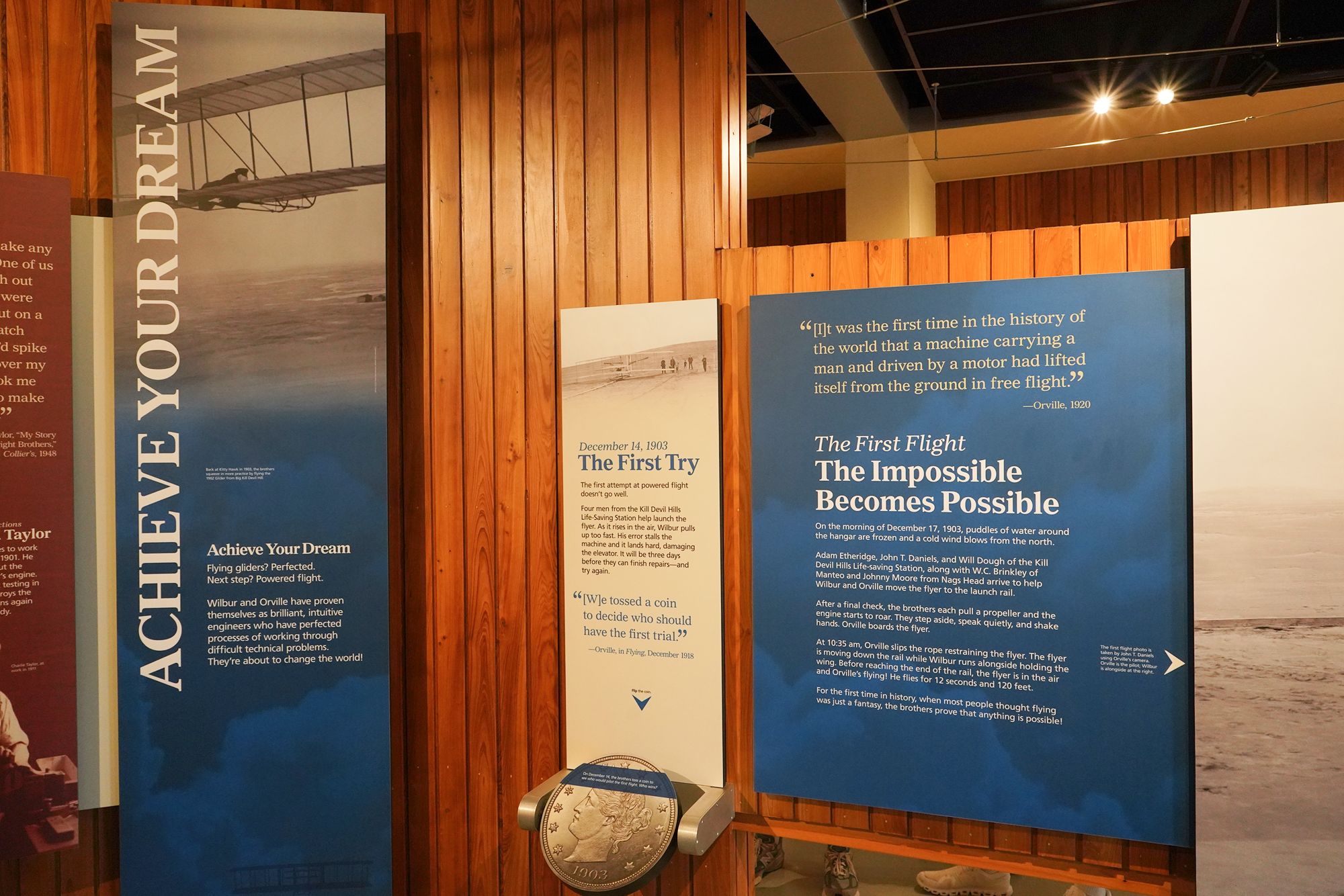
The First Flight
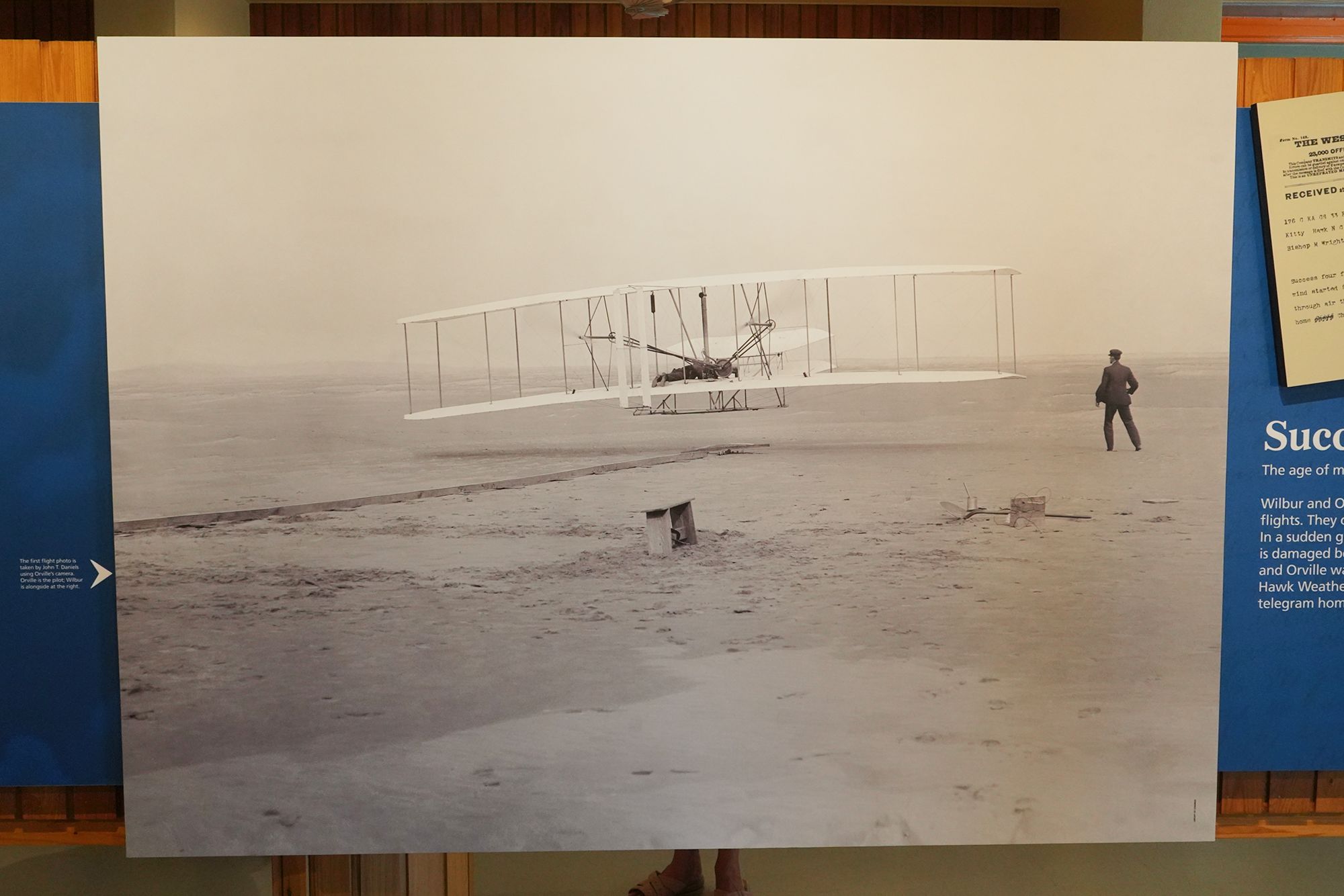
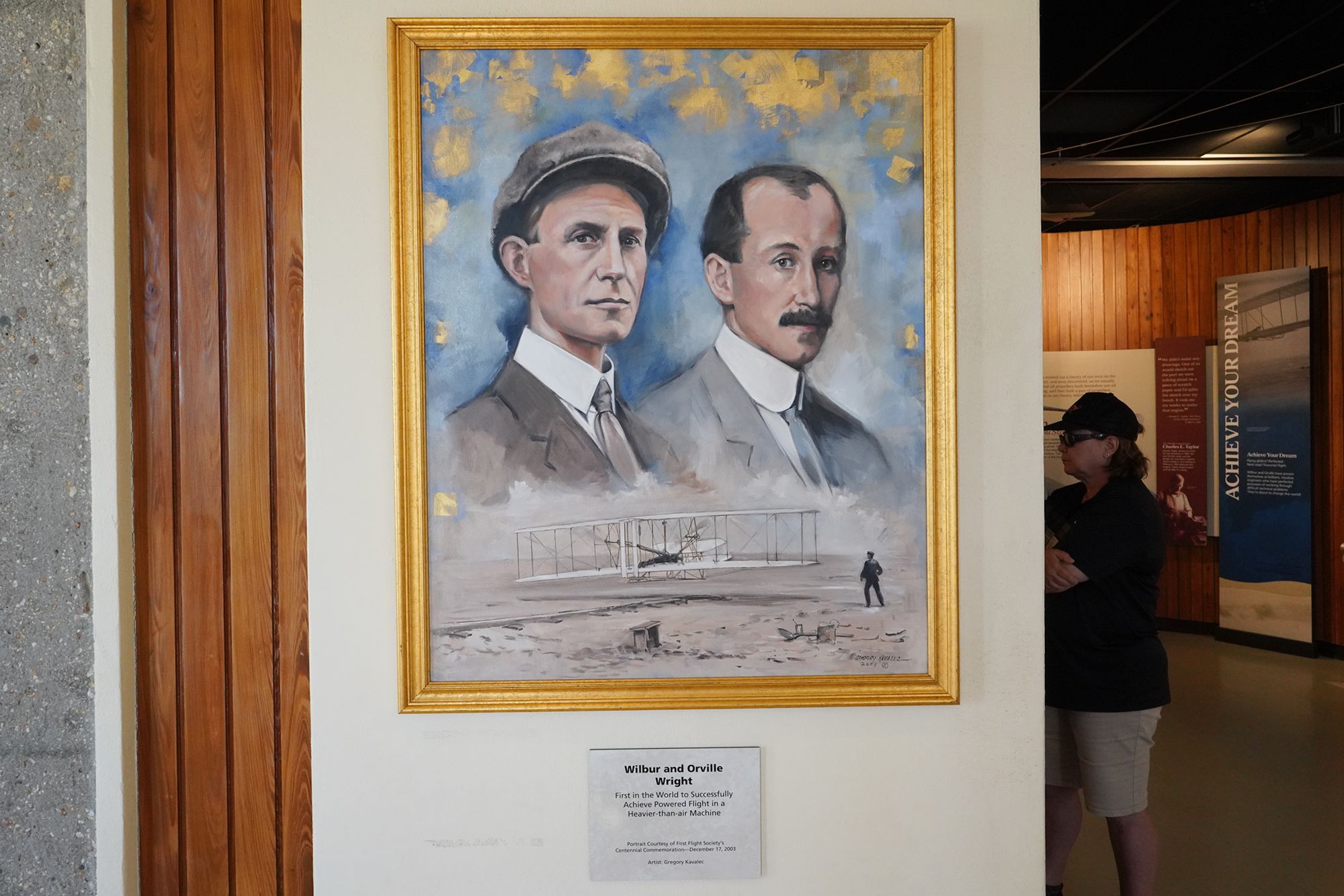
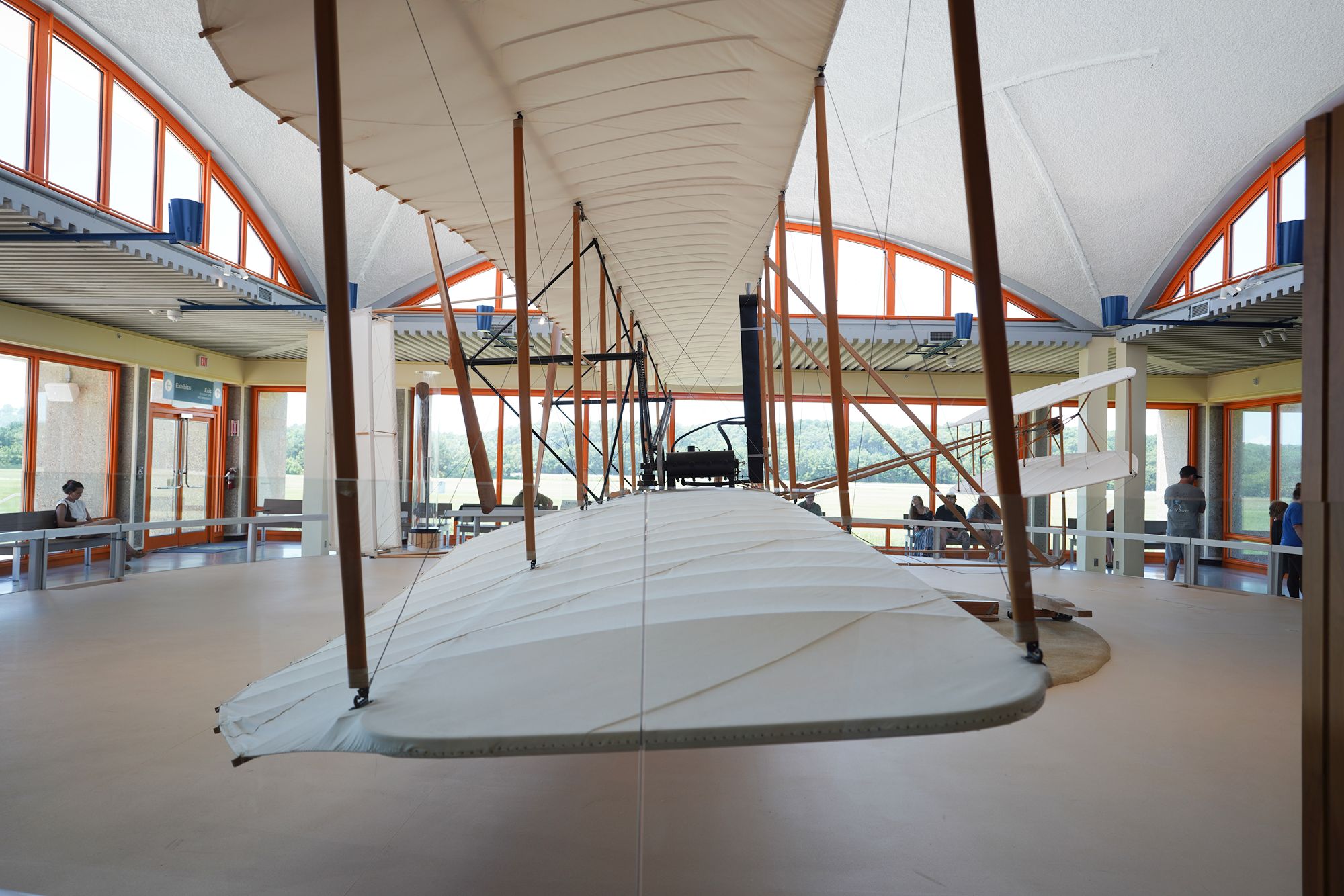
A life-size replica of the airplane
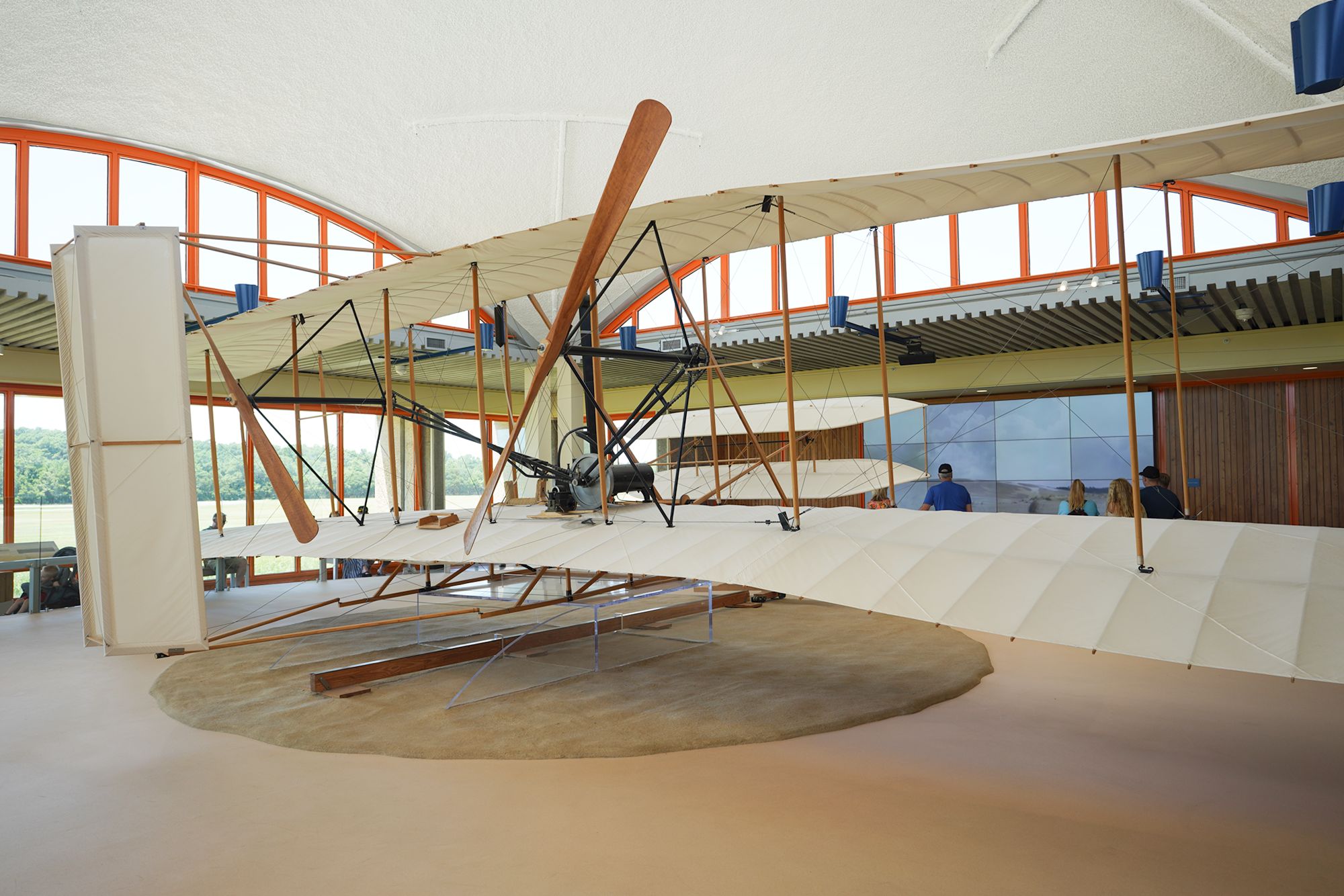
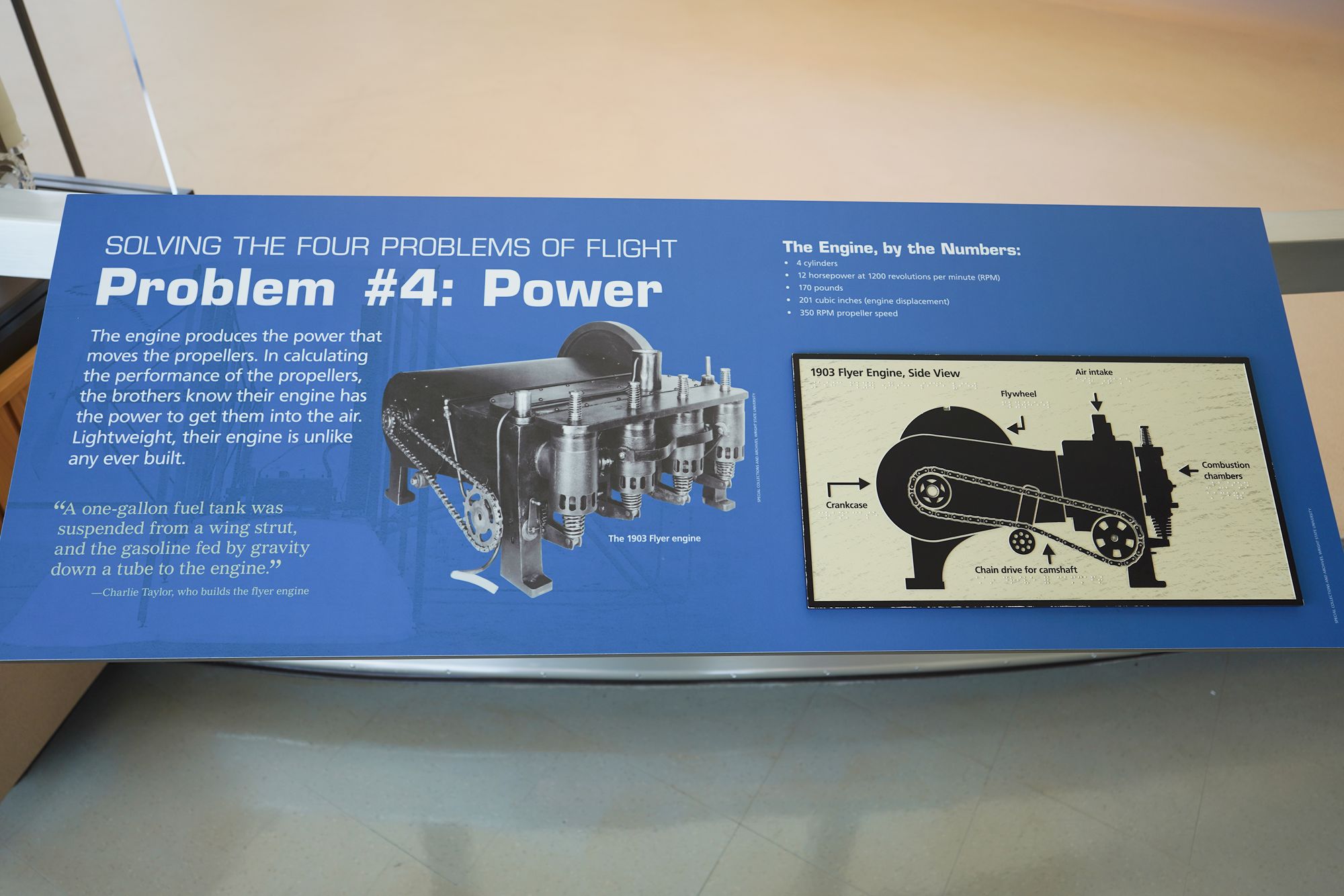
Solving the Four Problems of Flight: Power
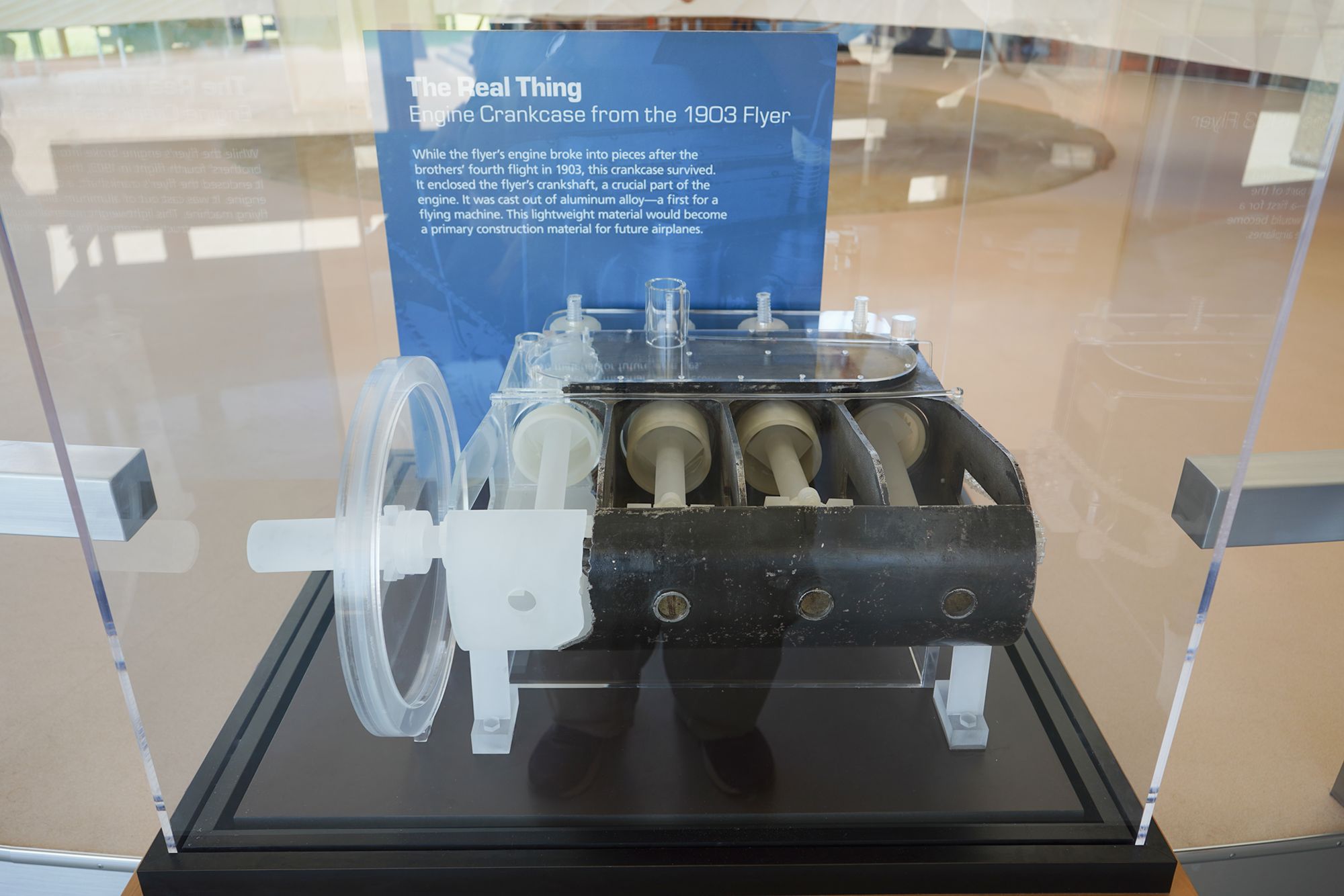
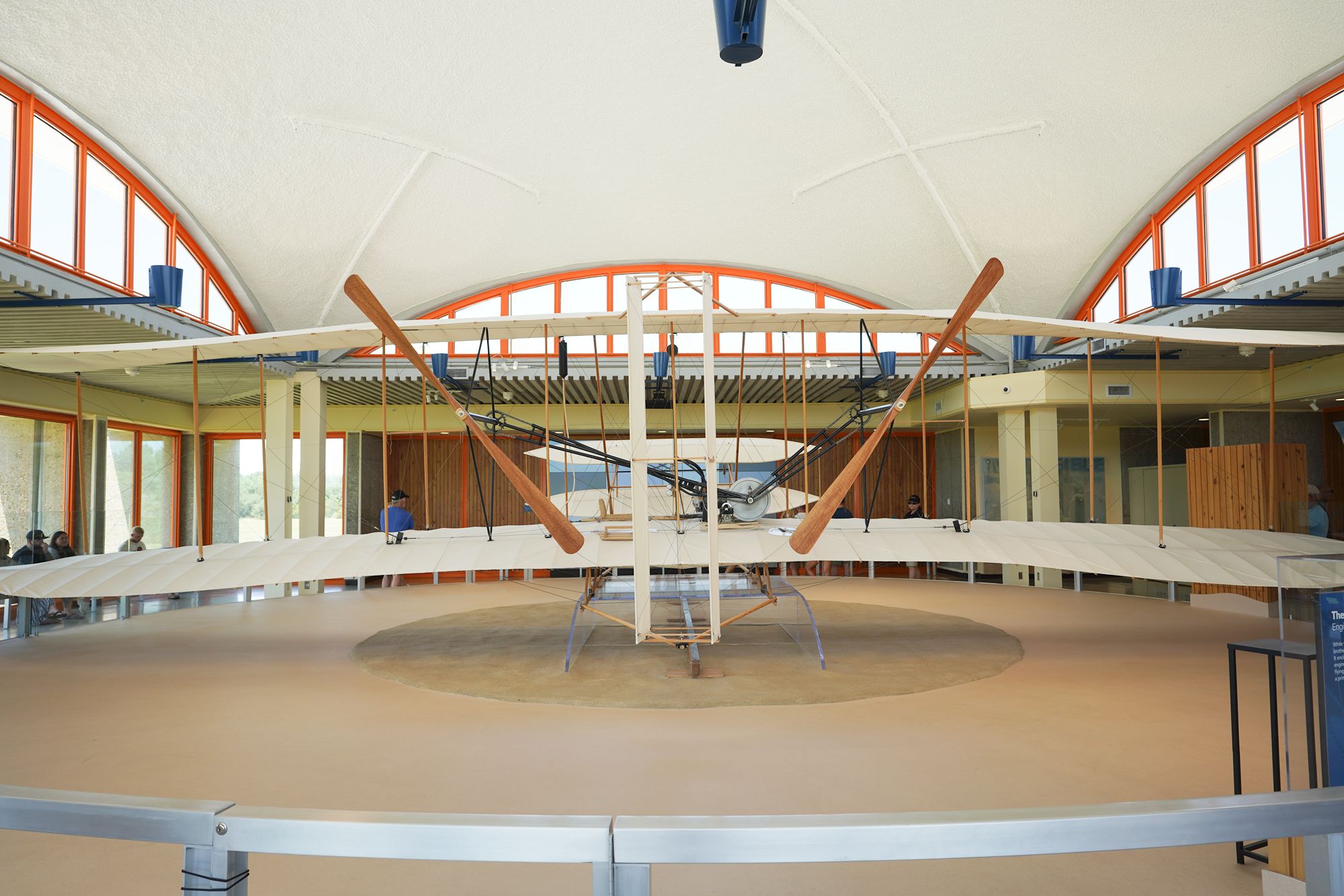
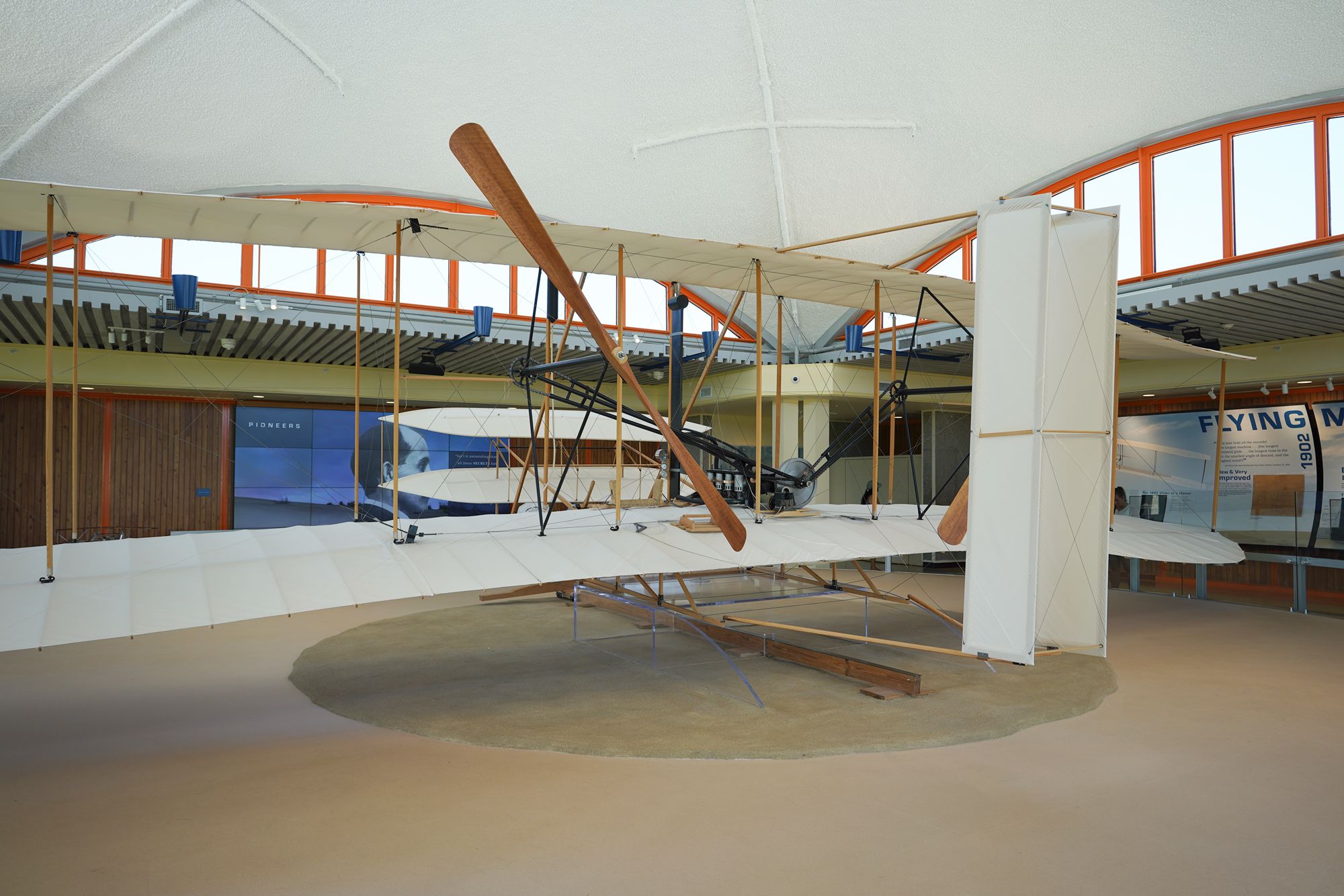
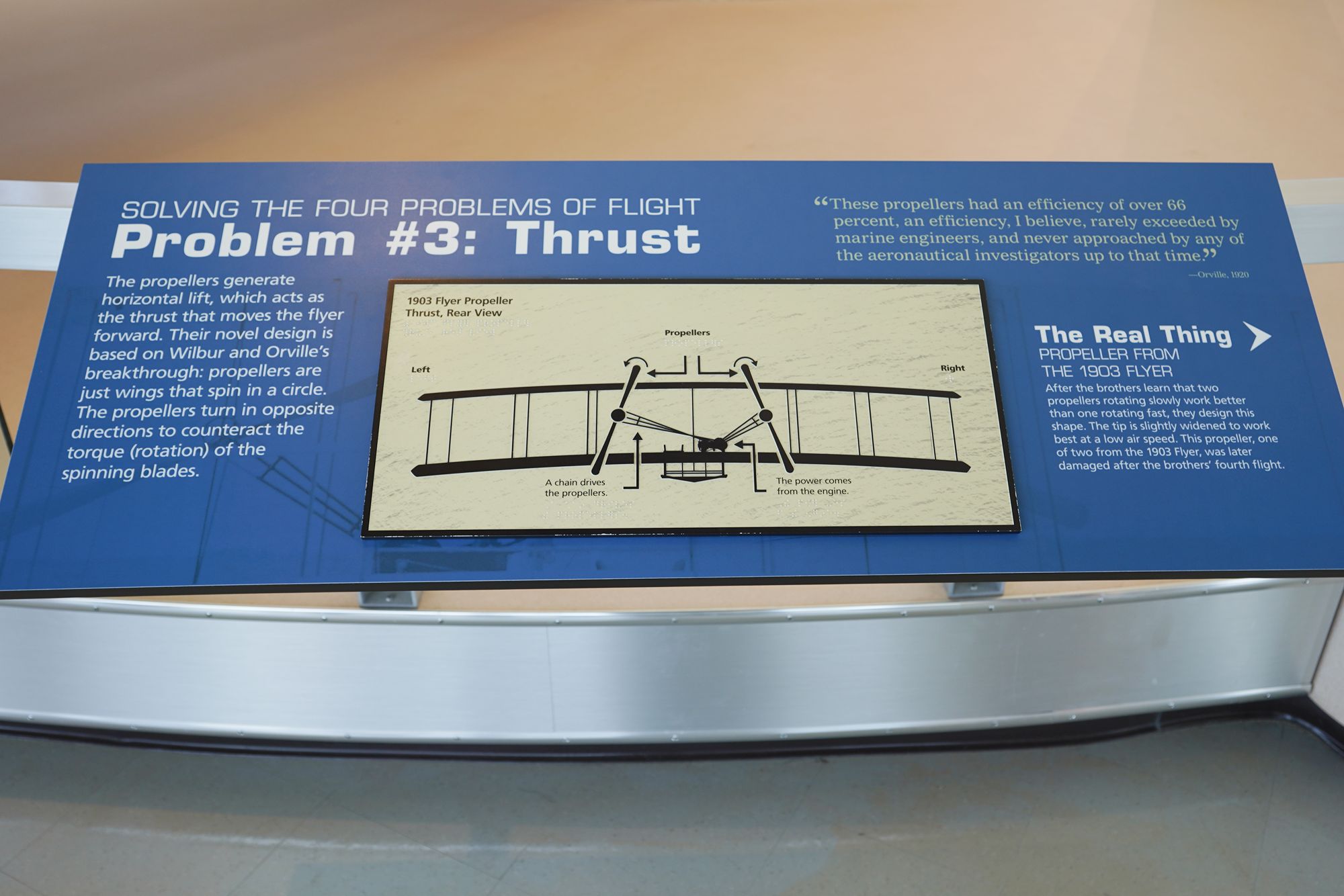
Solving the Four Problems of Flight: Thrust
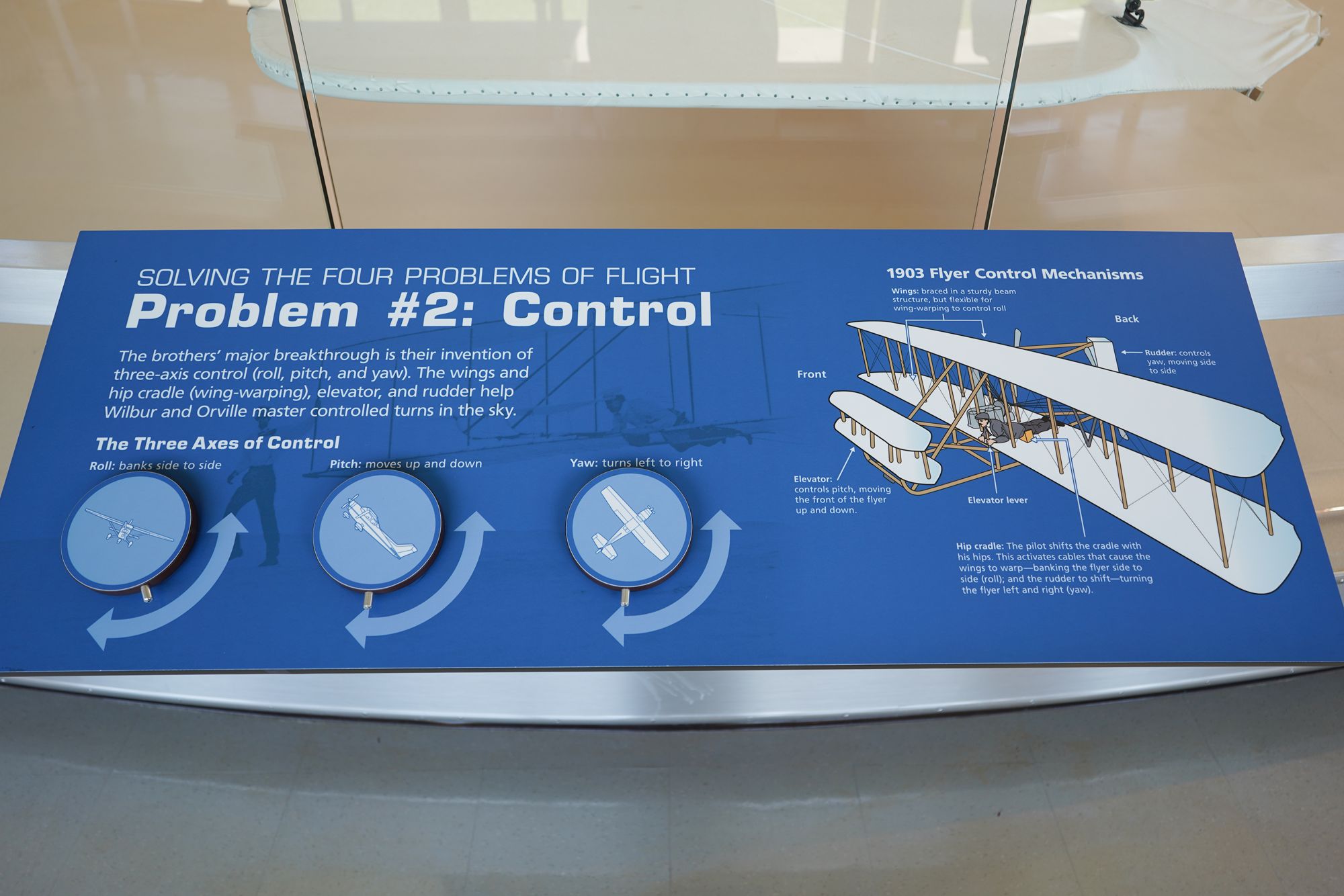
Solving the Four Problems of Flight: Control
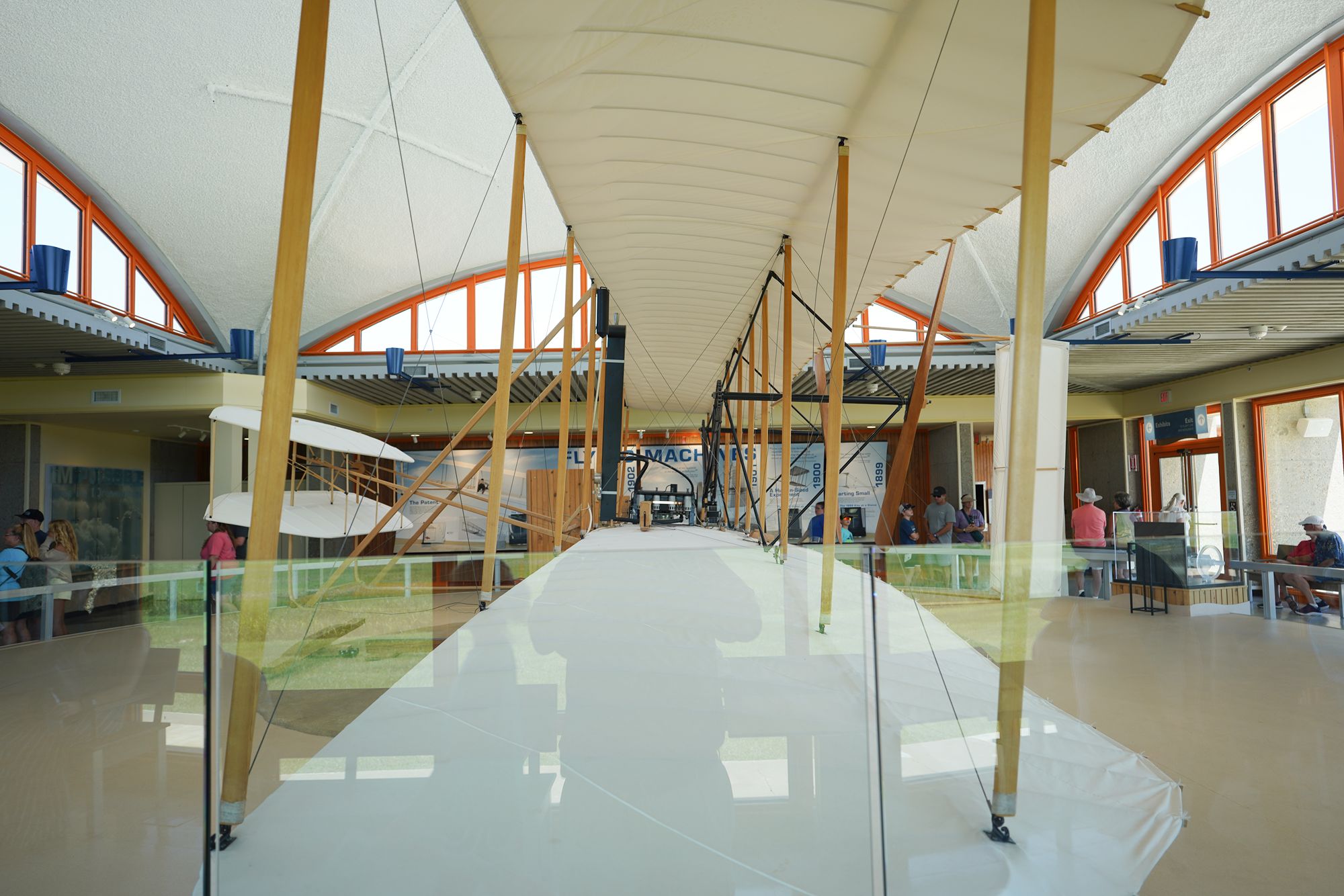
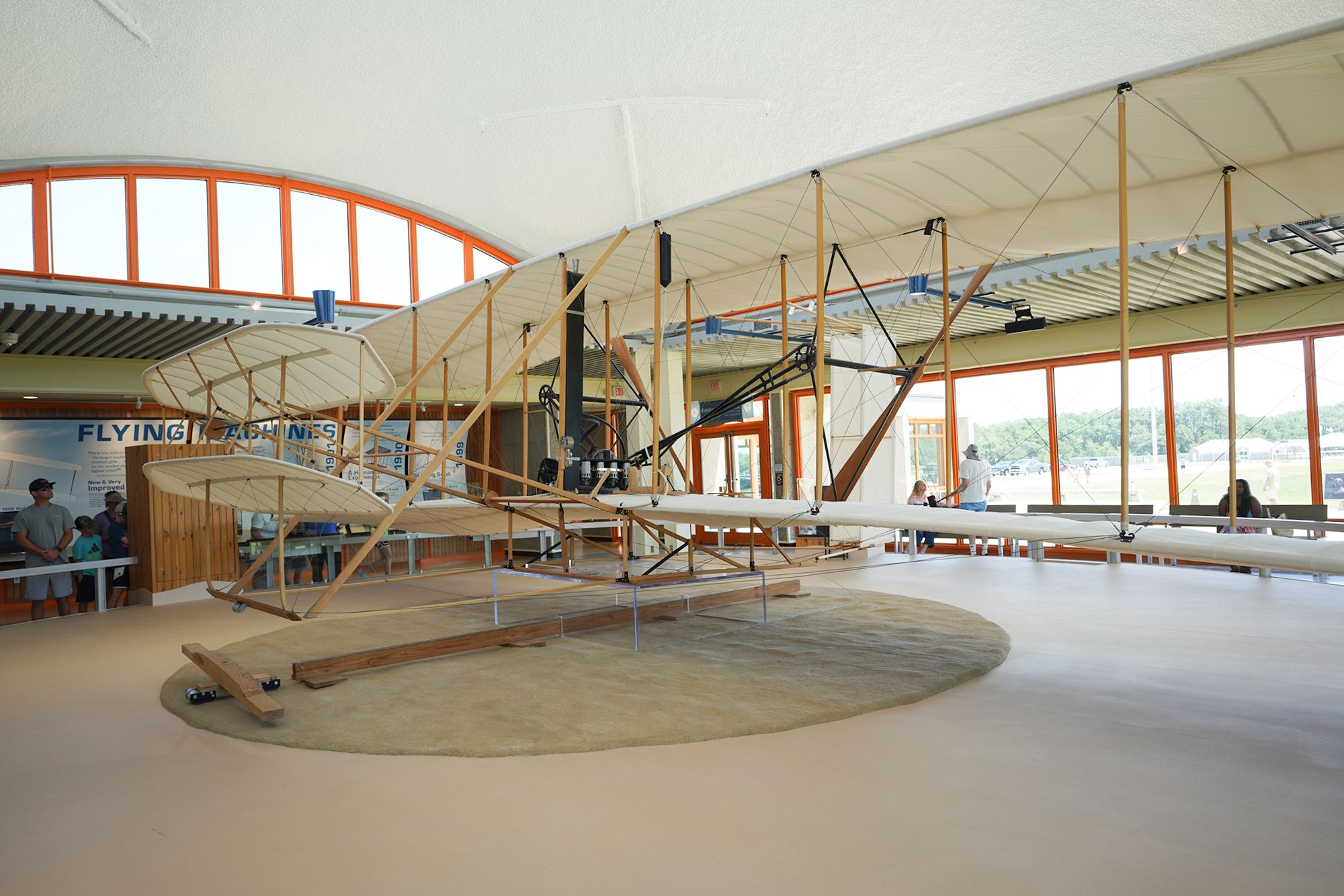
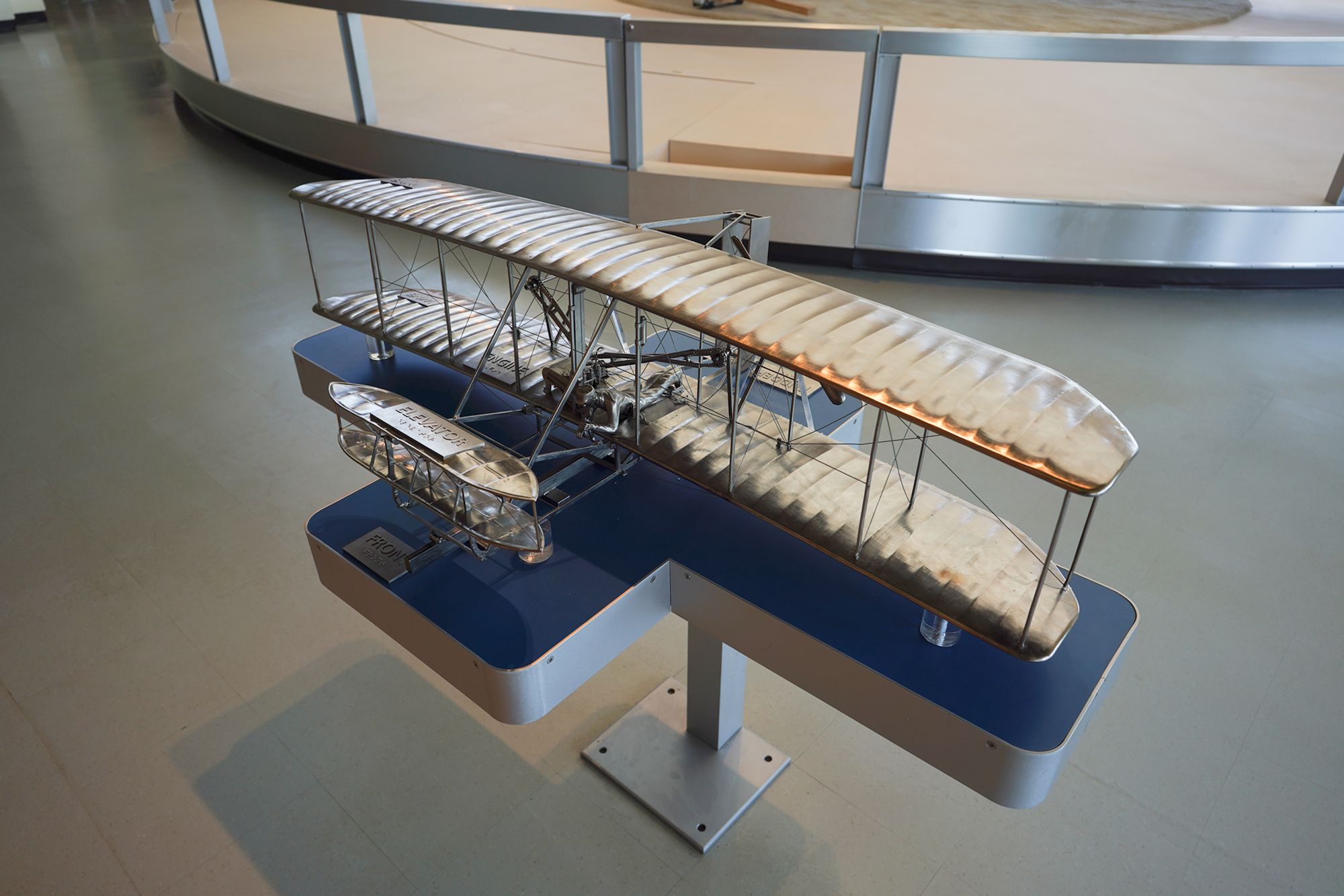
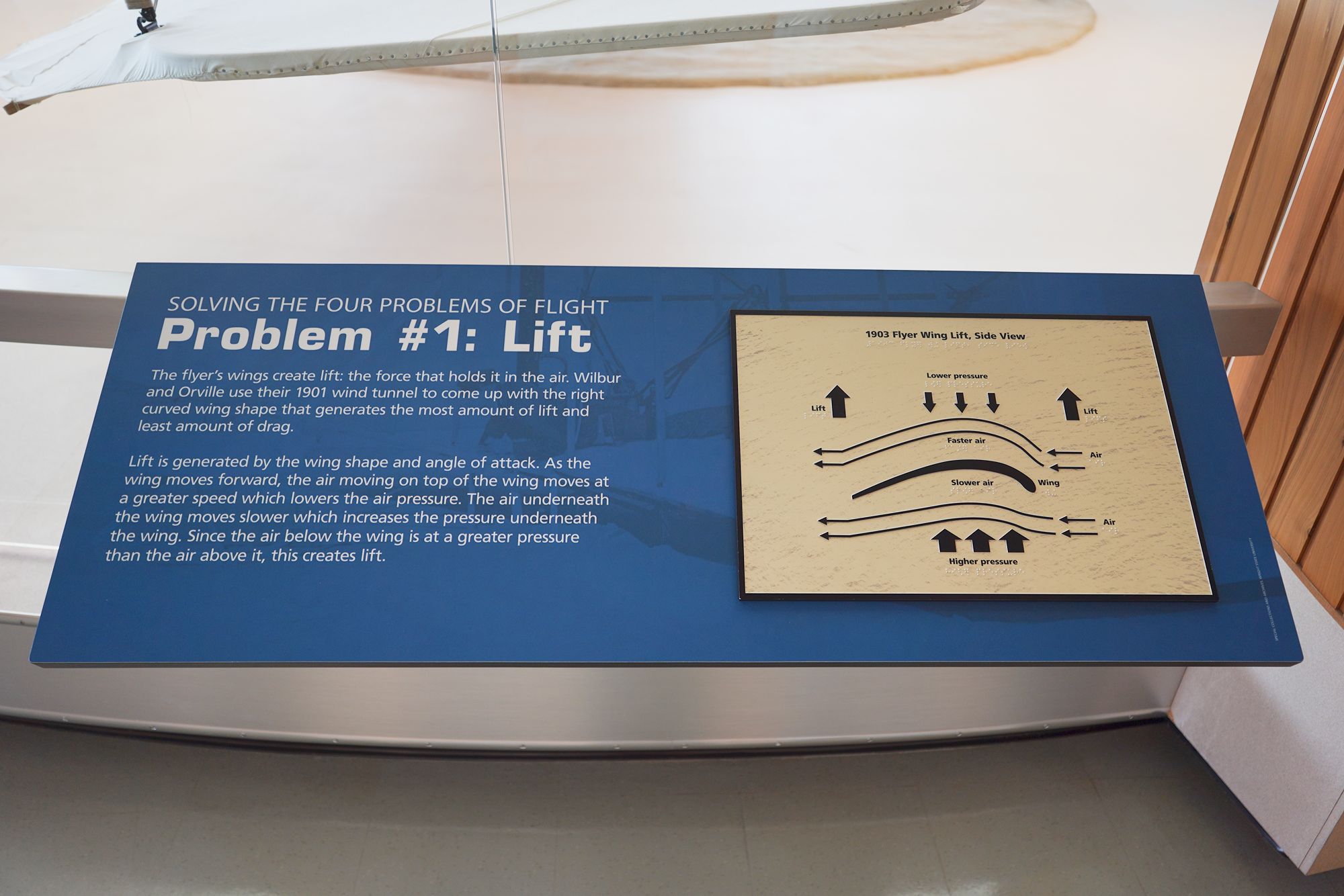
Solving the Four Problems of Flight: Lift
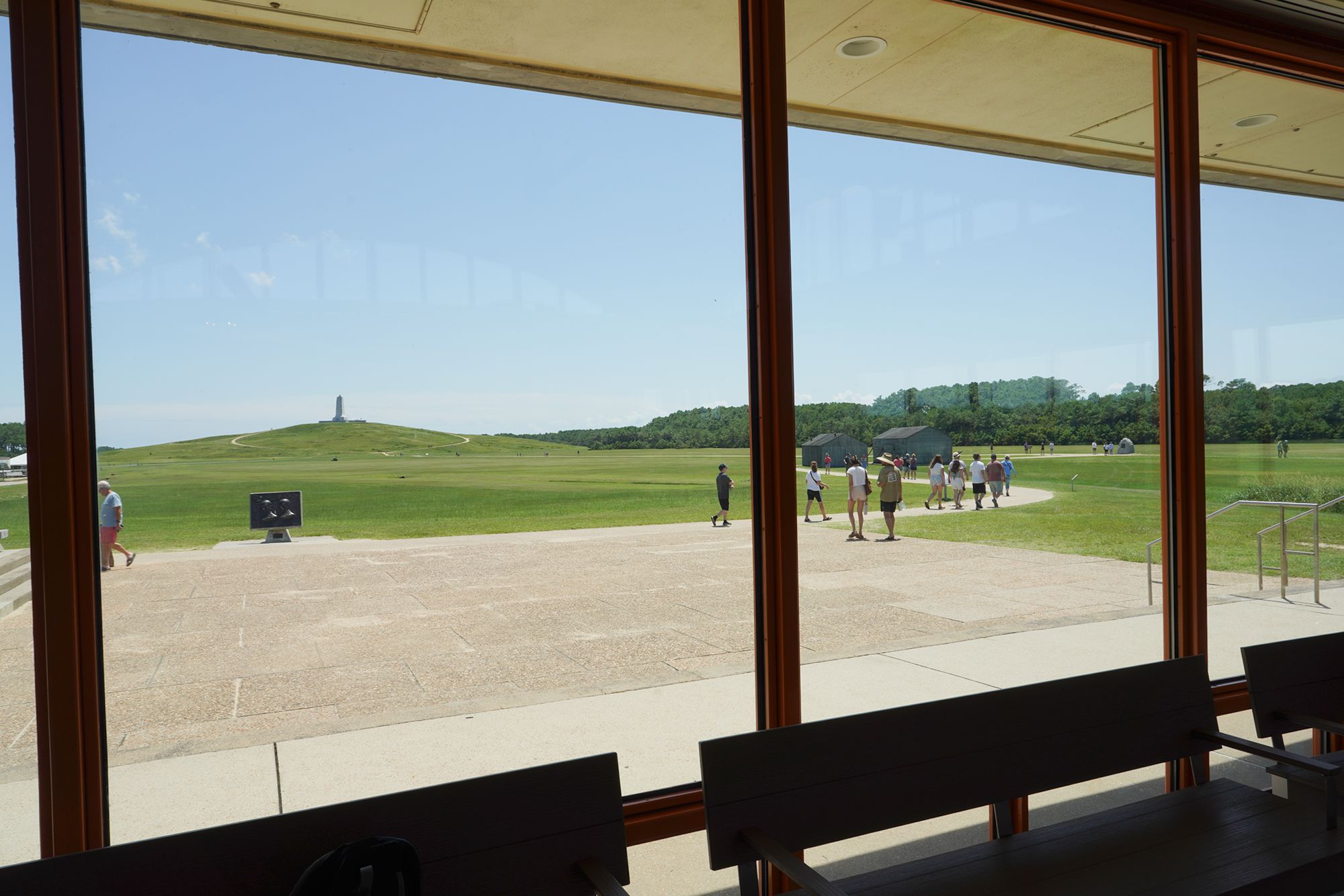
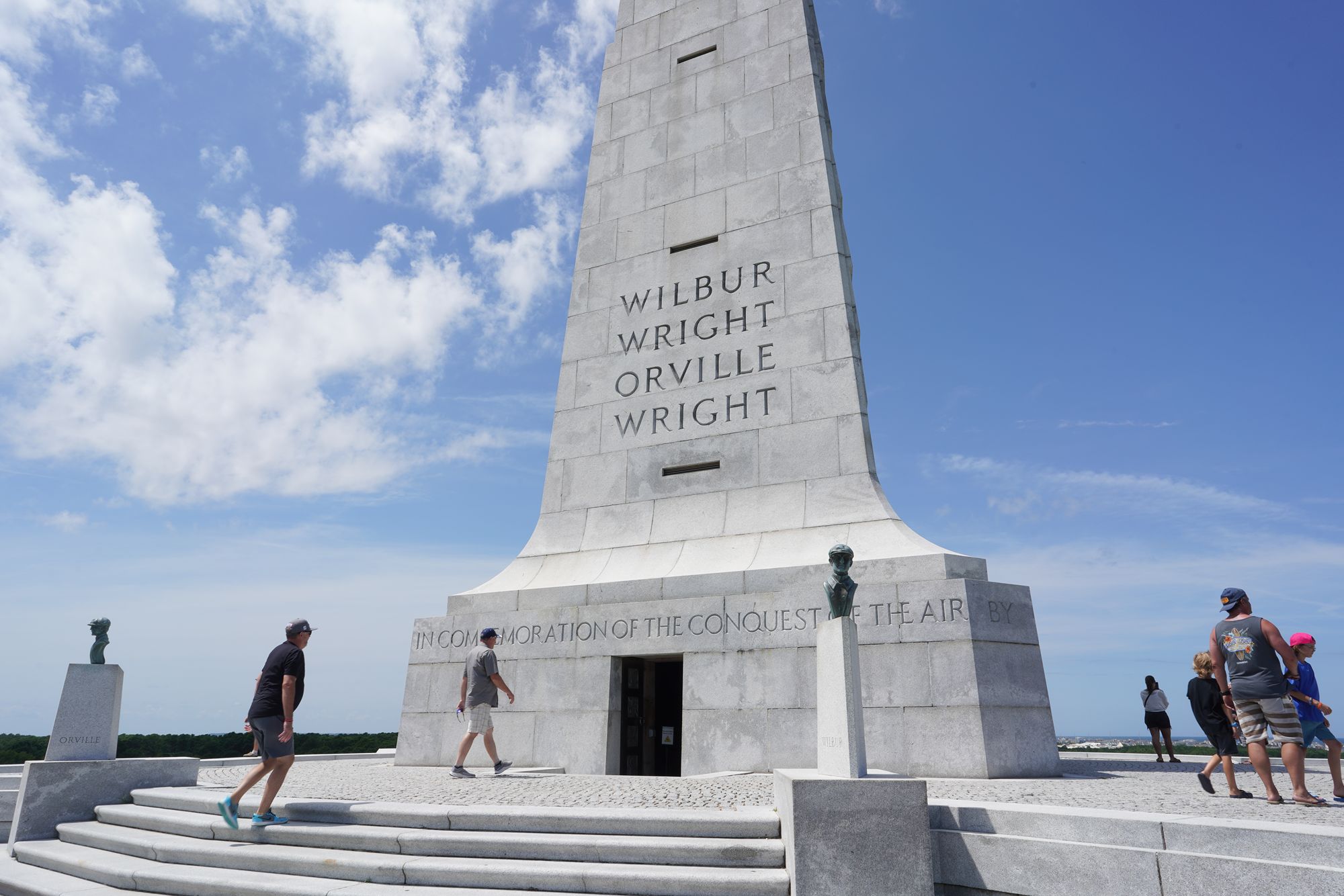
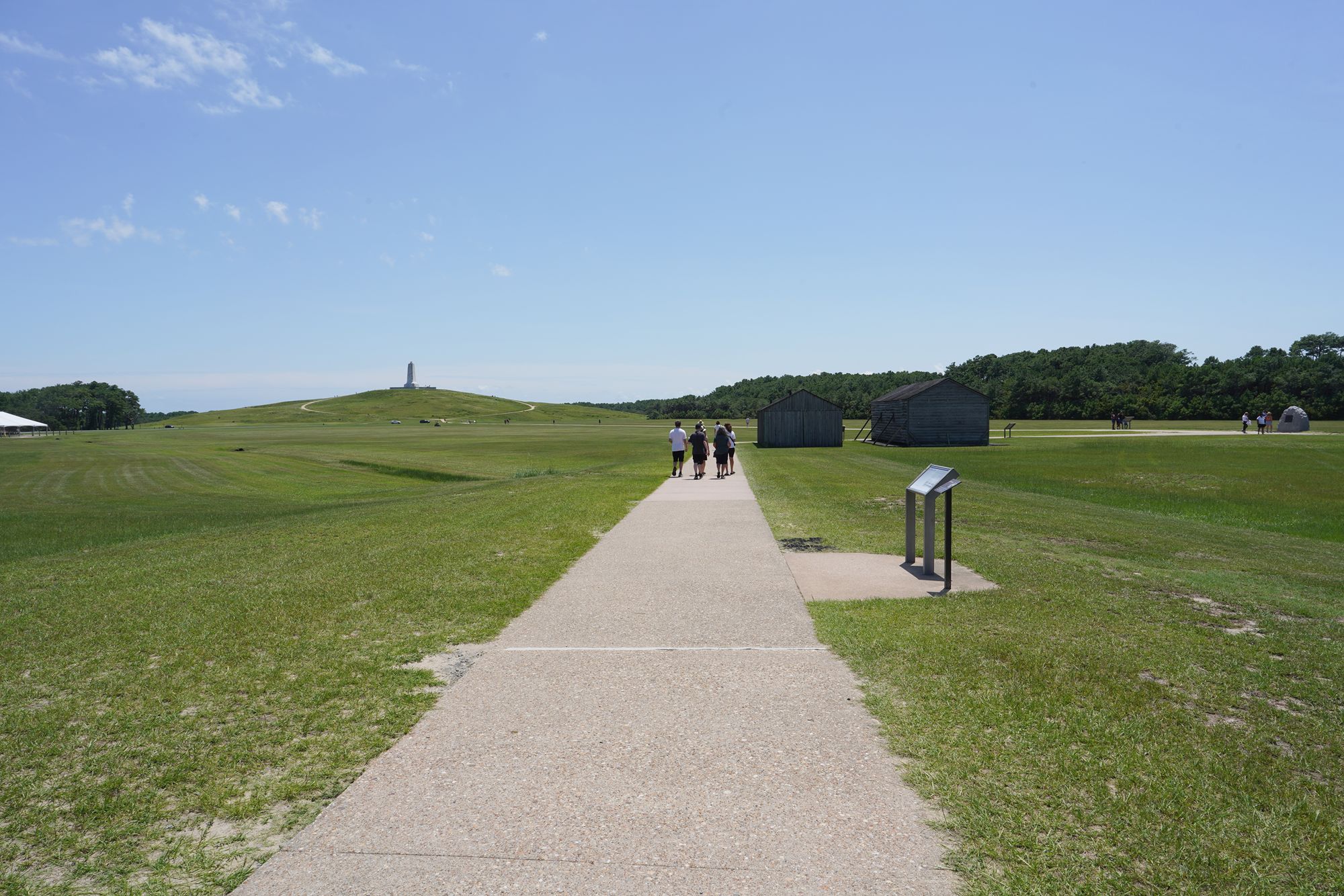
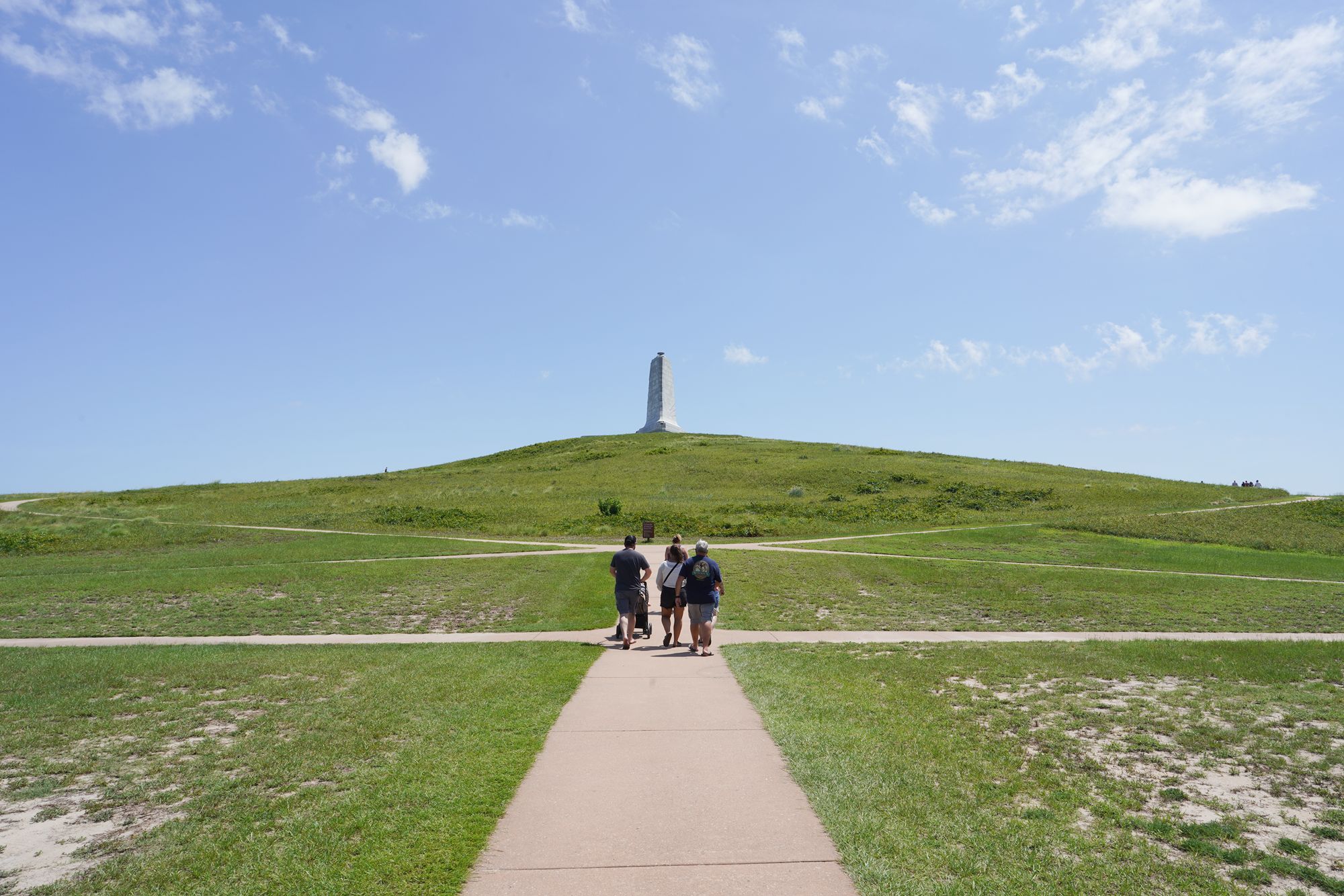
Far away is the Wright Brothers Monument – A 60-foot granite pylon atop Kill Devil Hill, completed in 1932, that honors their achievement and overlooks the area where the flights took place.
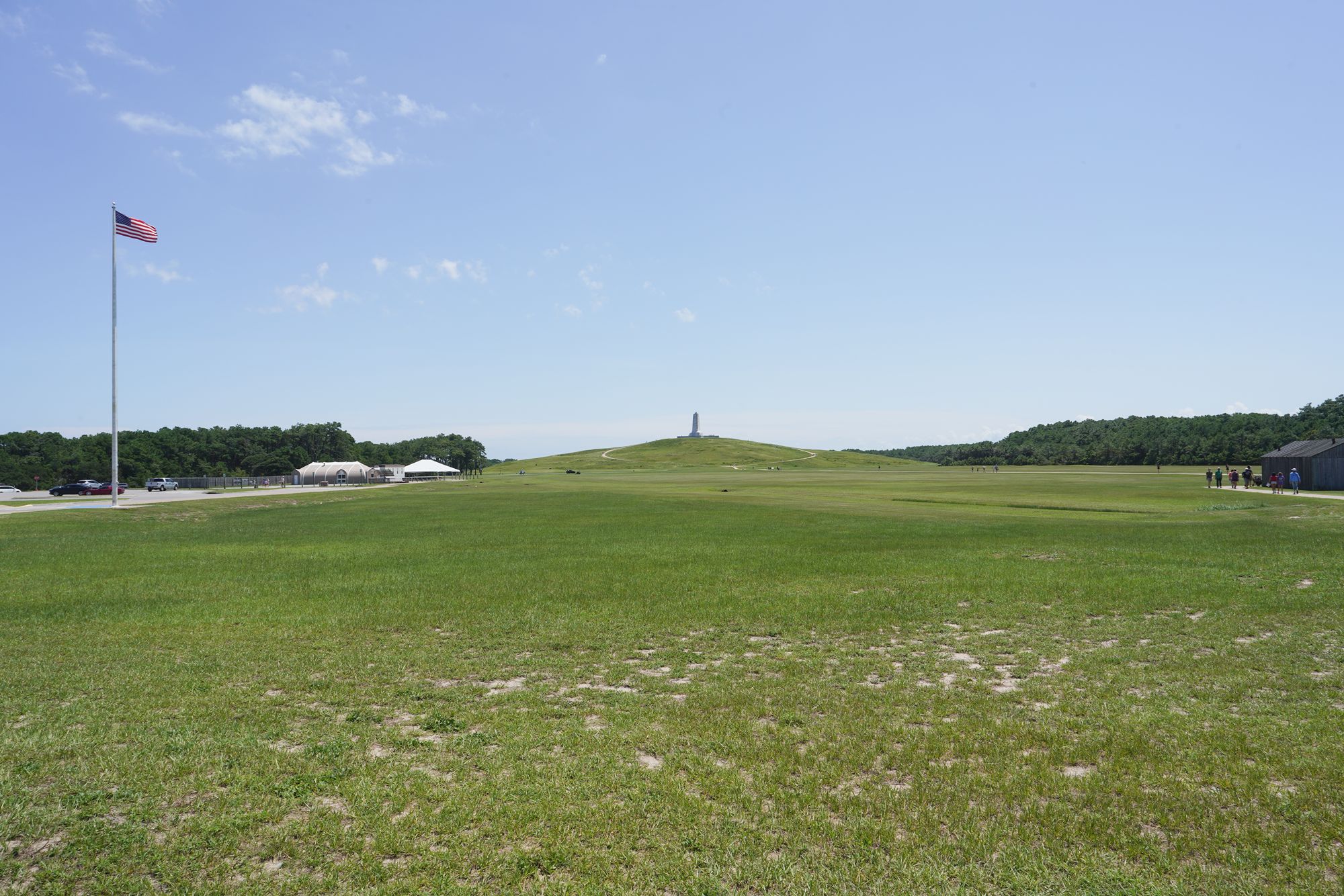
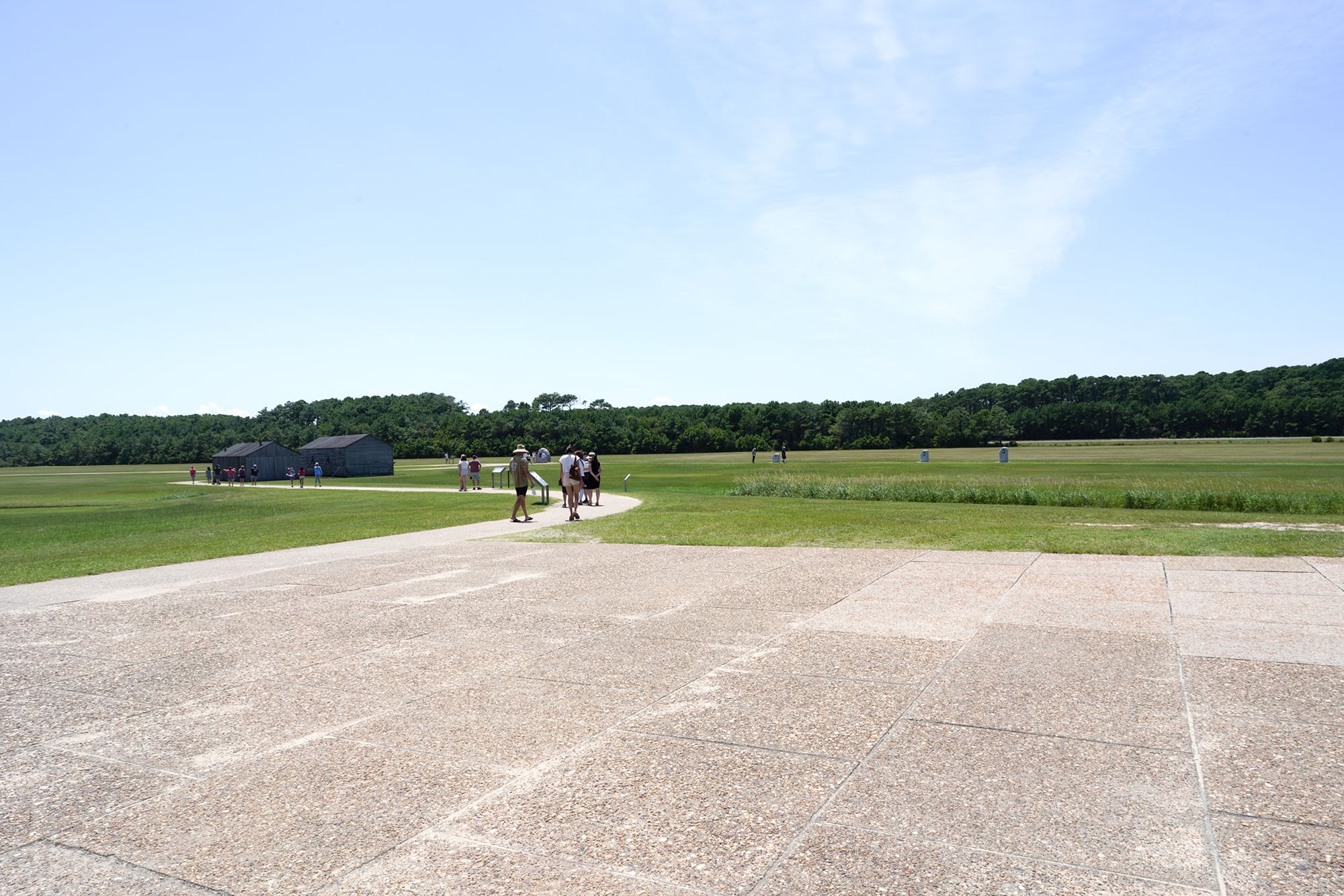
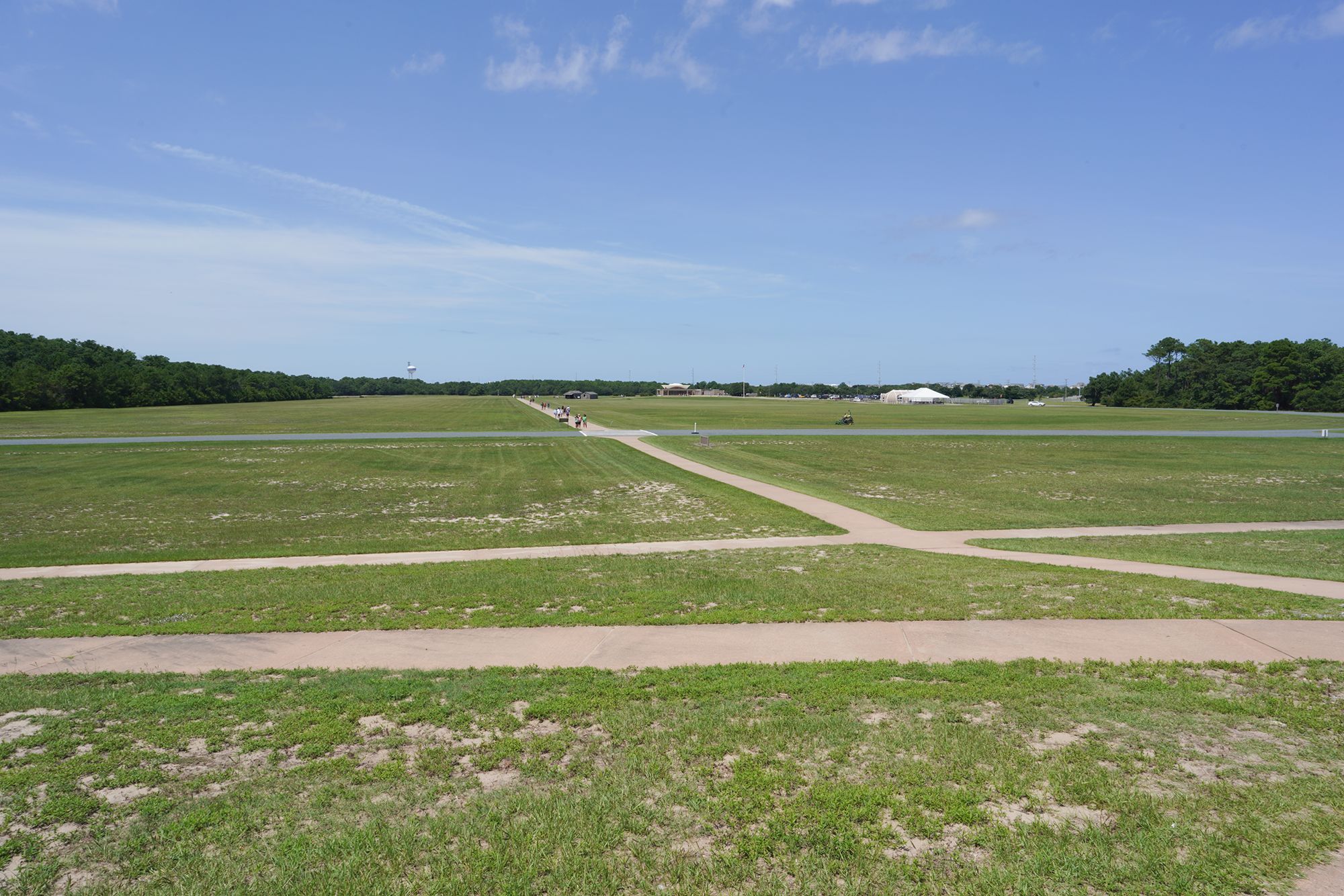
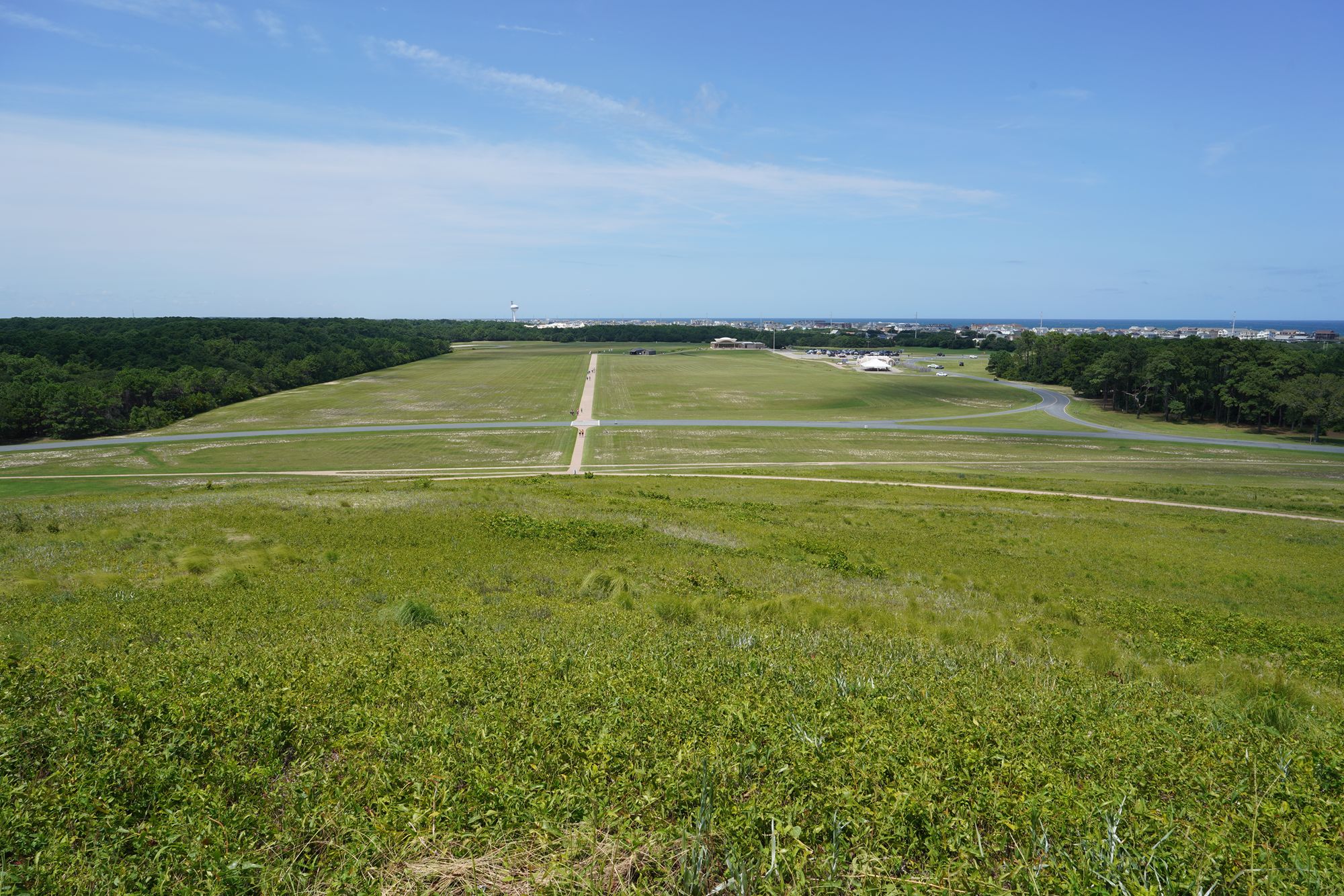
This is the field where the first successful powered flight took place.
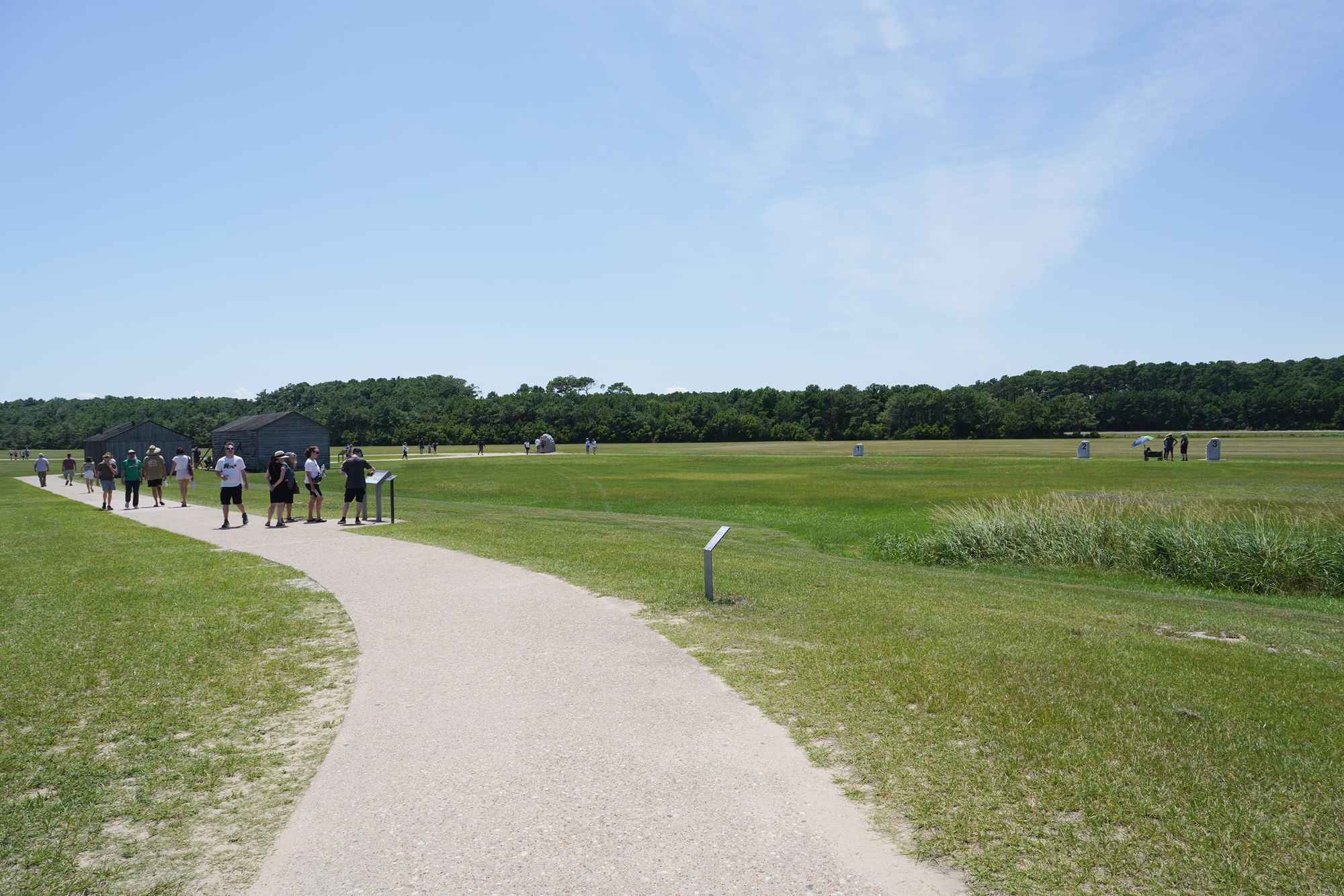
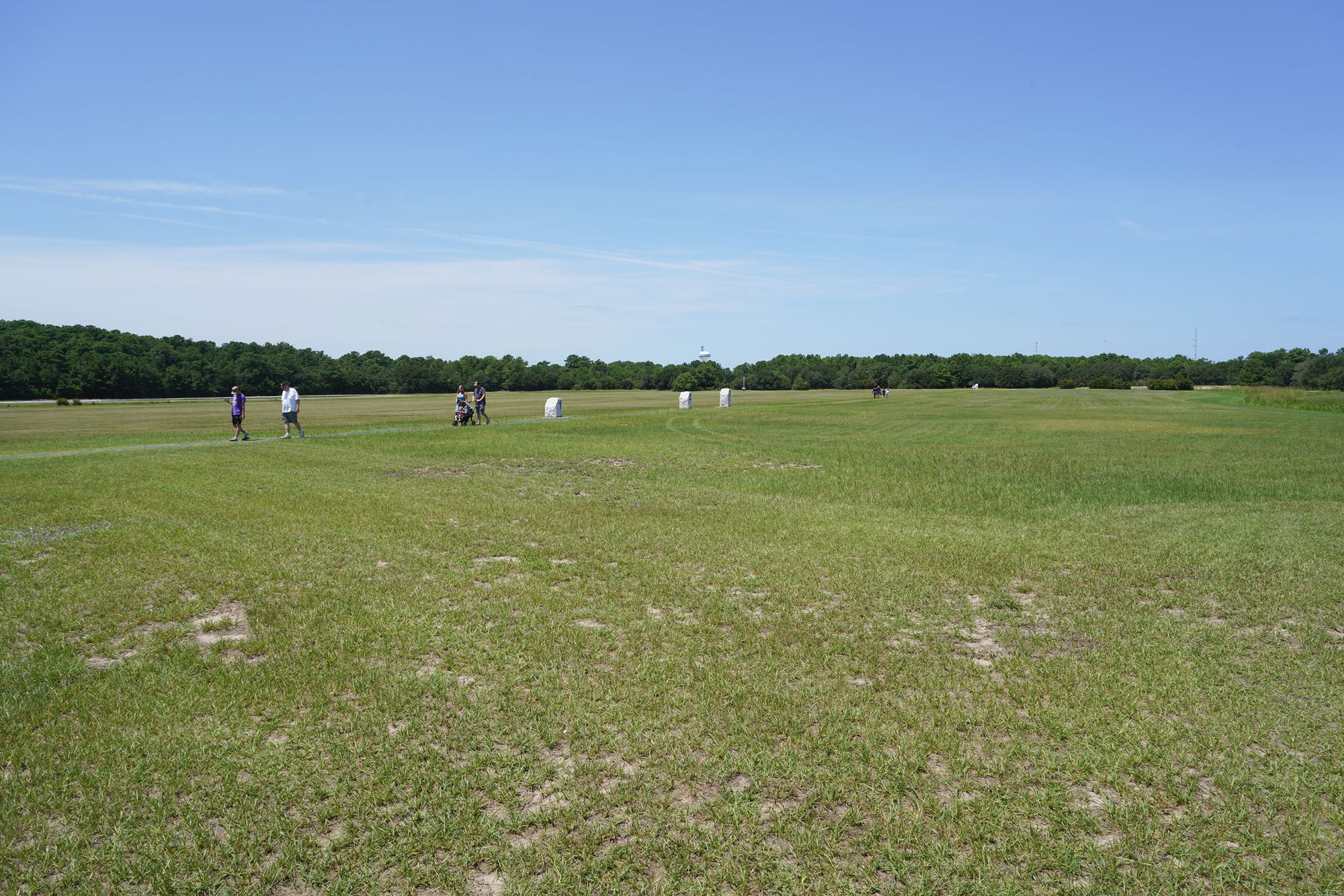
They made four flights here on the first day, and stone markers indicate the landing point of each flight.
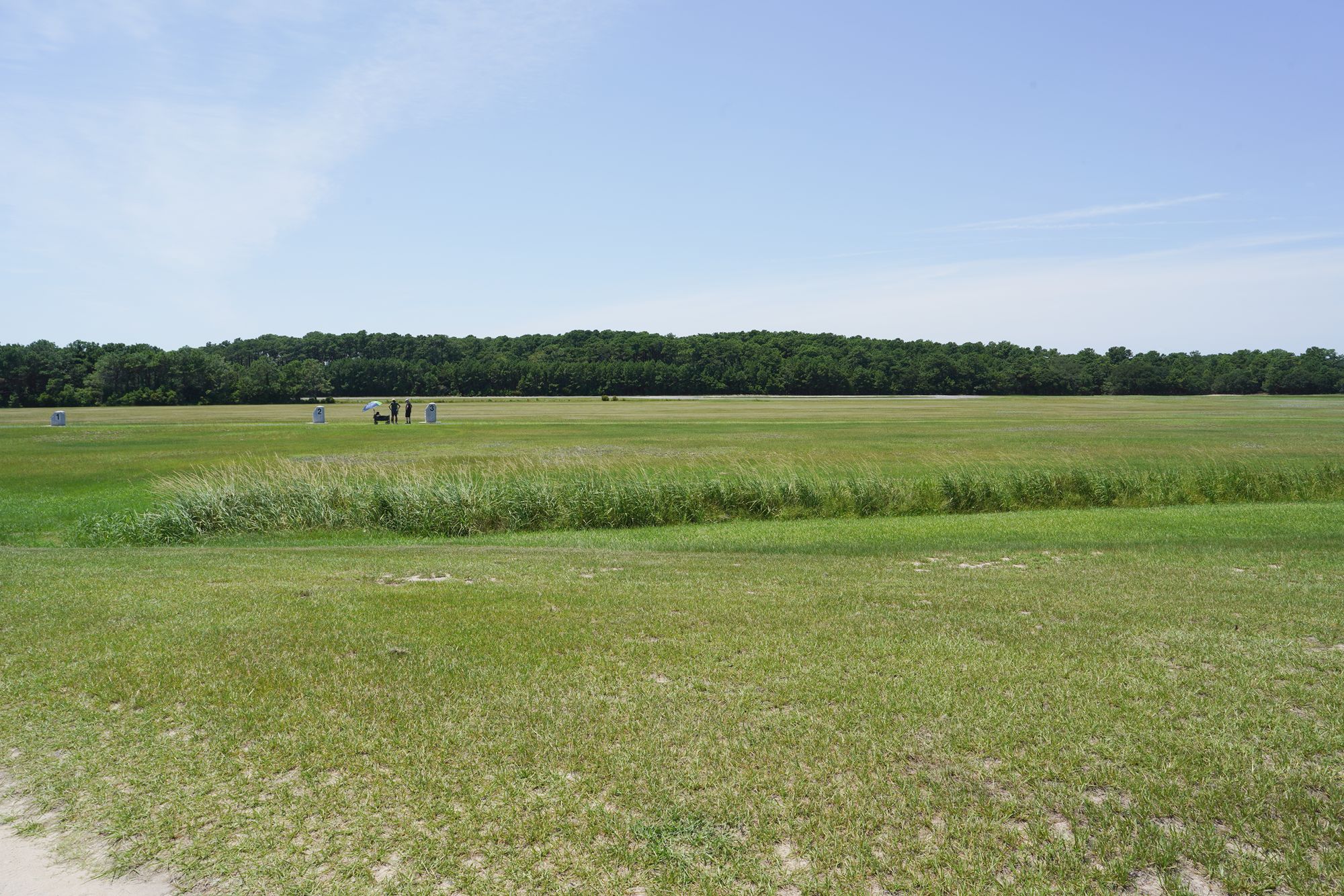
The stone marker farther out in the field marks where the plane landed after the fourth flight.
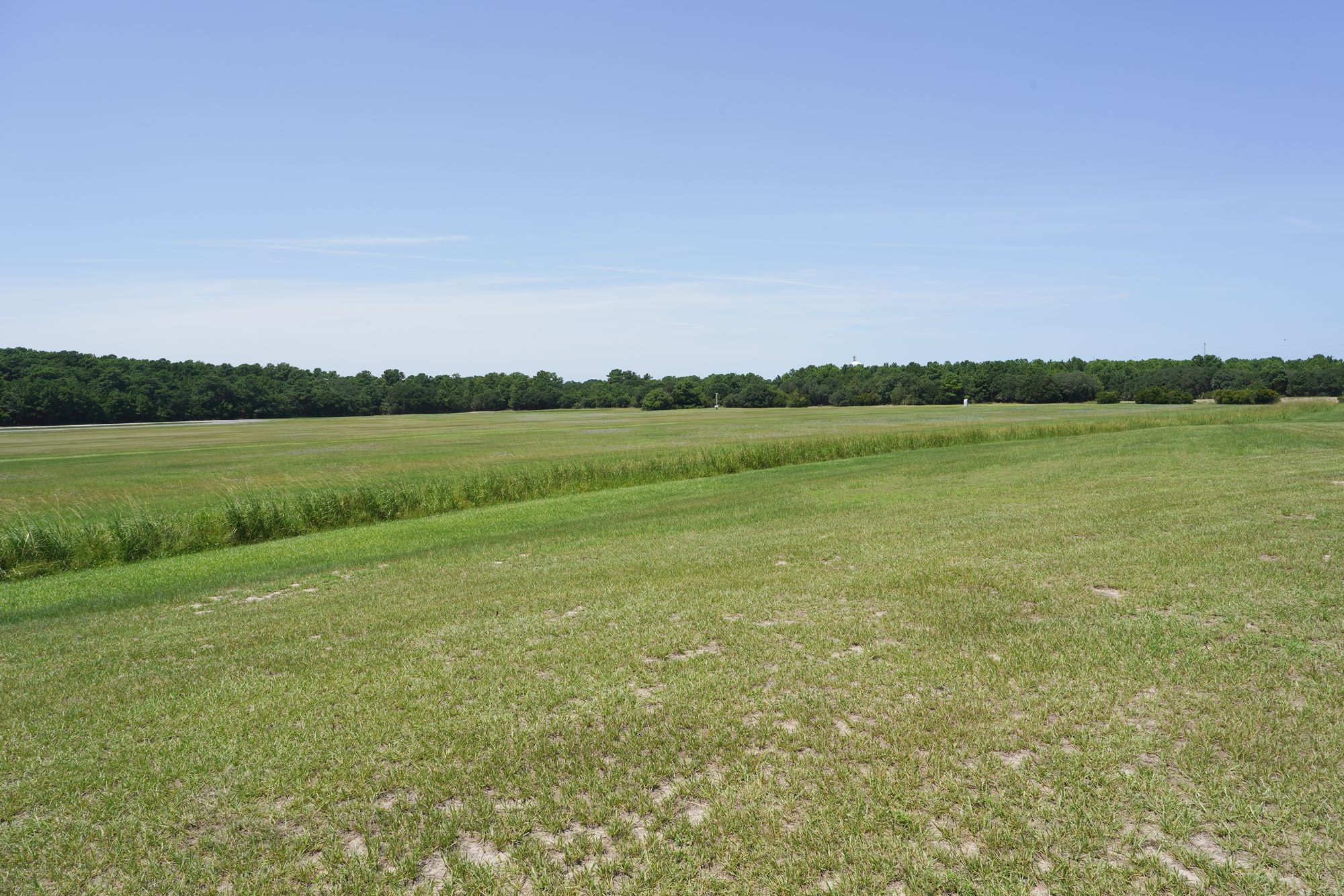
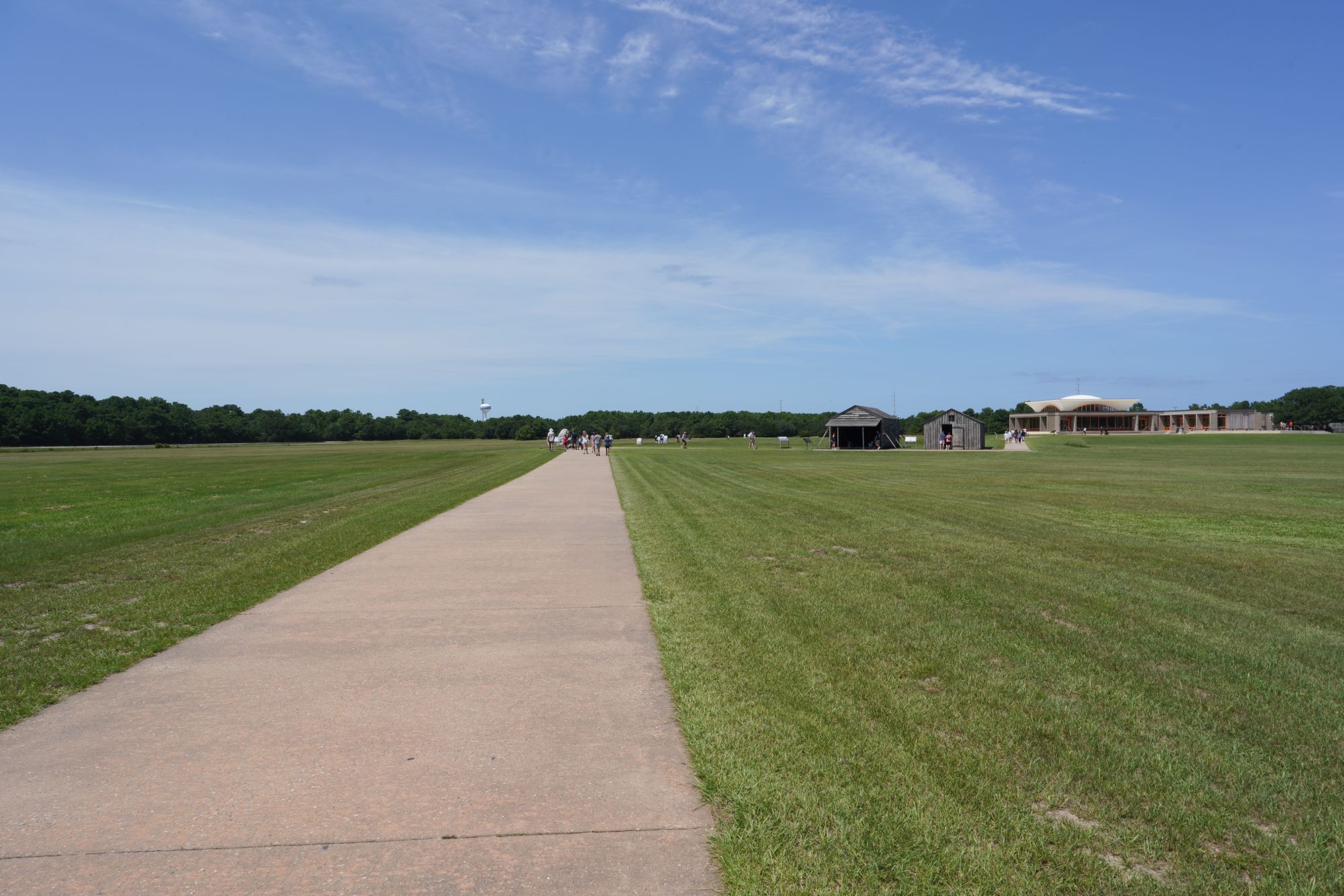
Walking toward the flight area
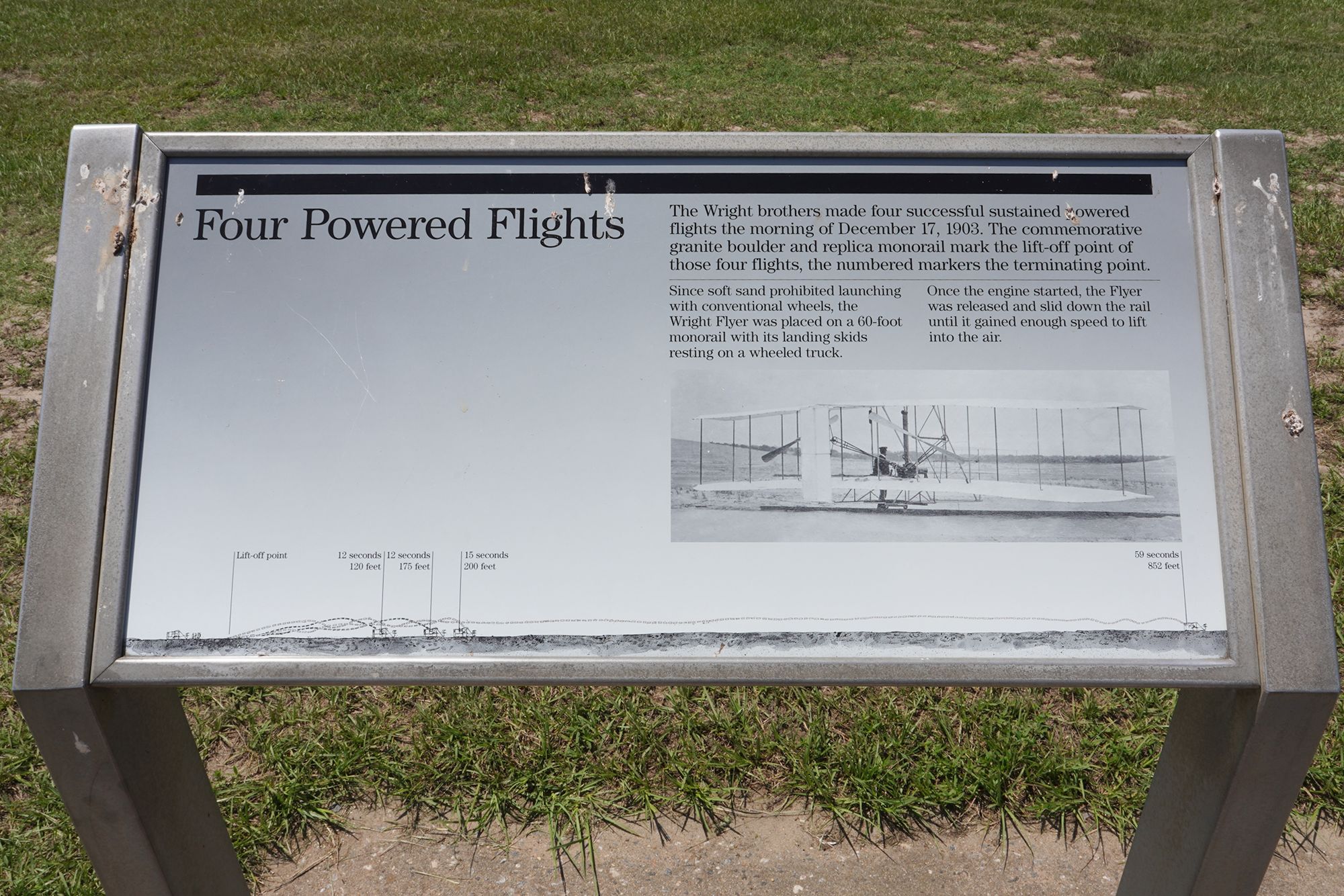
The Wright brothers made four successful, sustained powered flights on the morning of December 17, 1903.
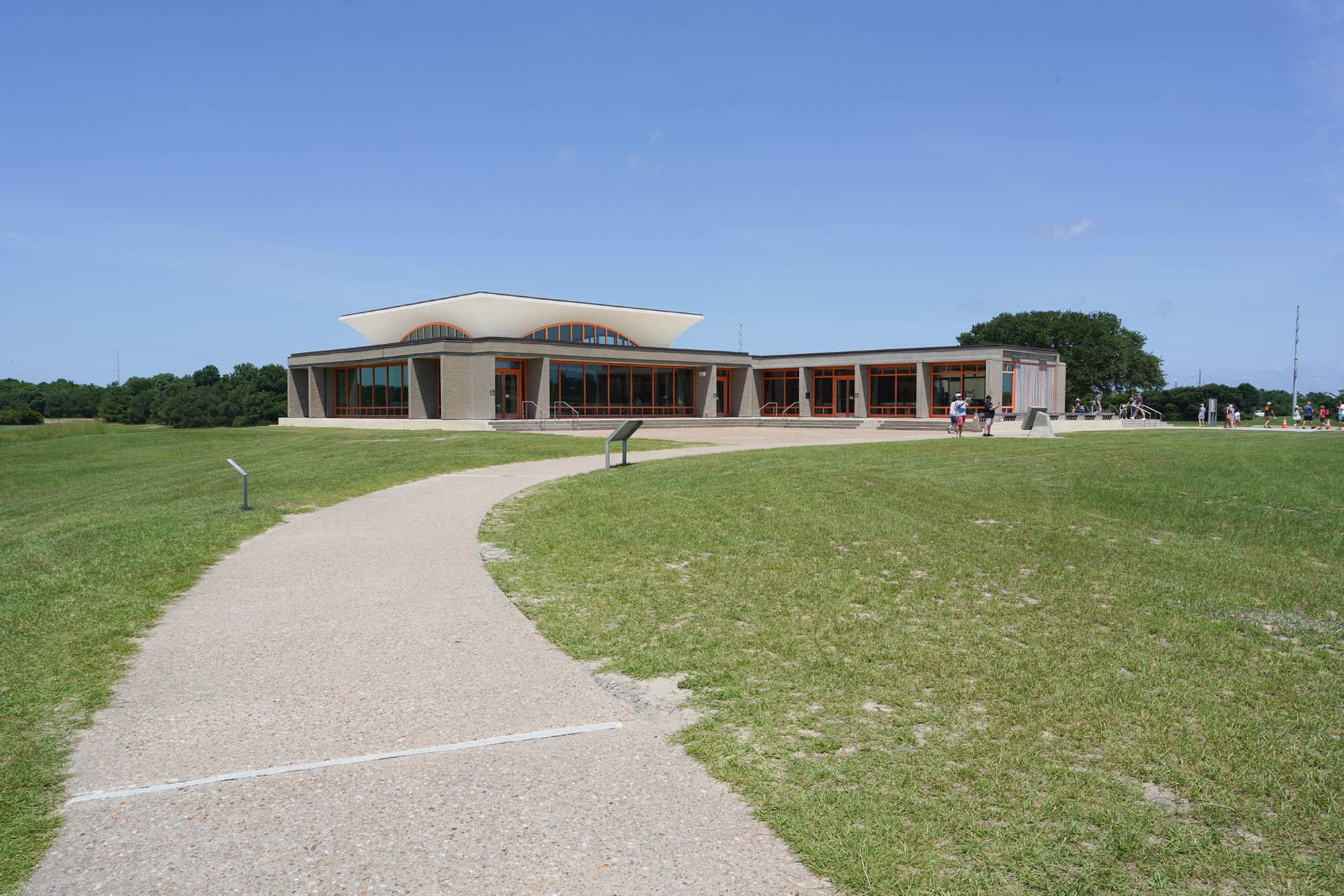
Looking back at the visitor center and the museum
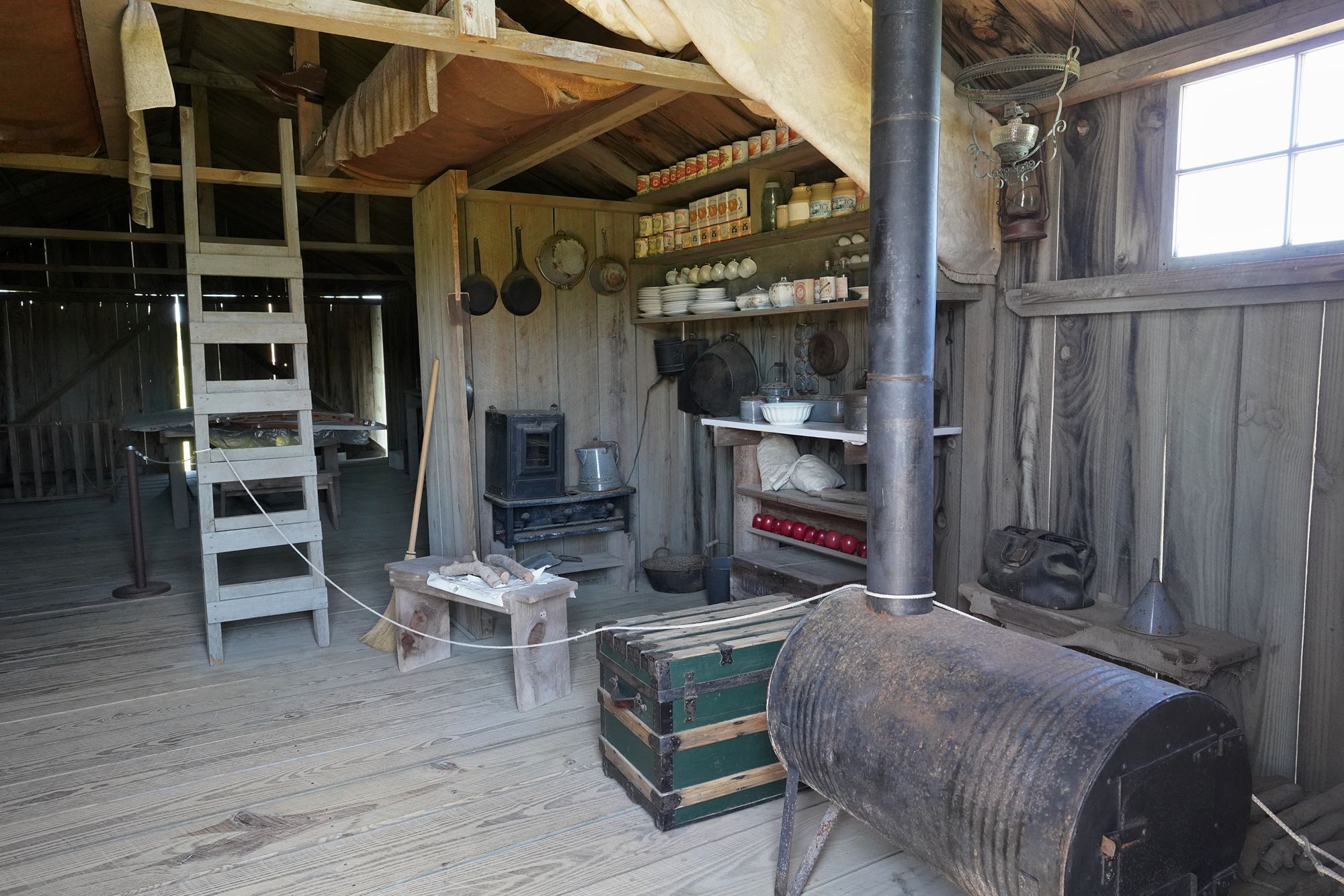
Reconstructed Camp Buildings – Replicas of the Wrights’ 1903 hangar and living quarters give a sense of their working environment.
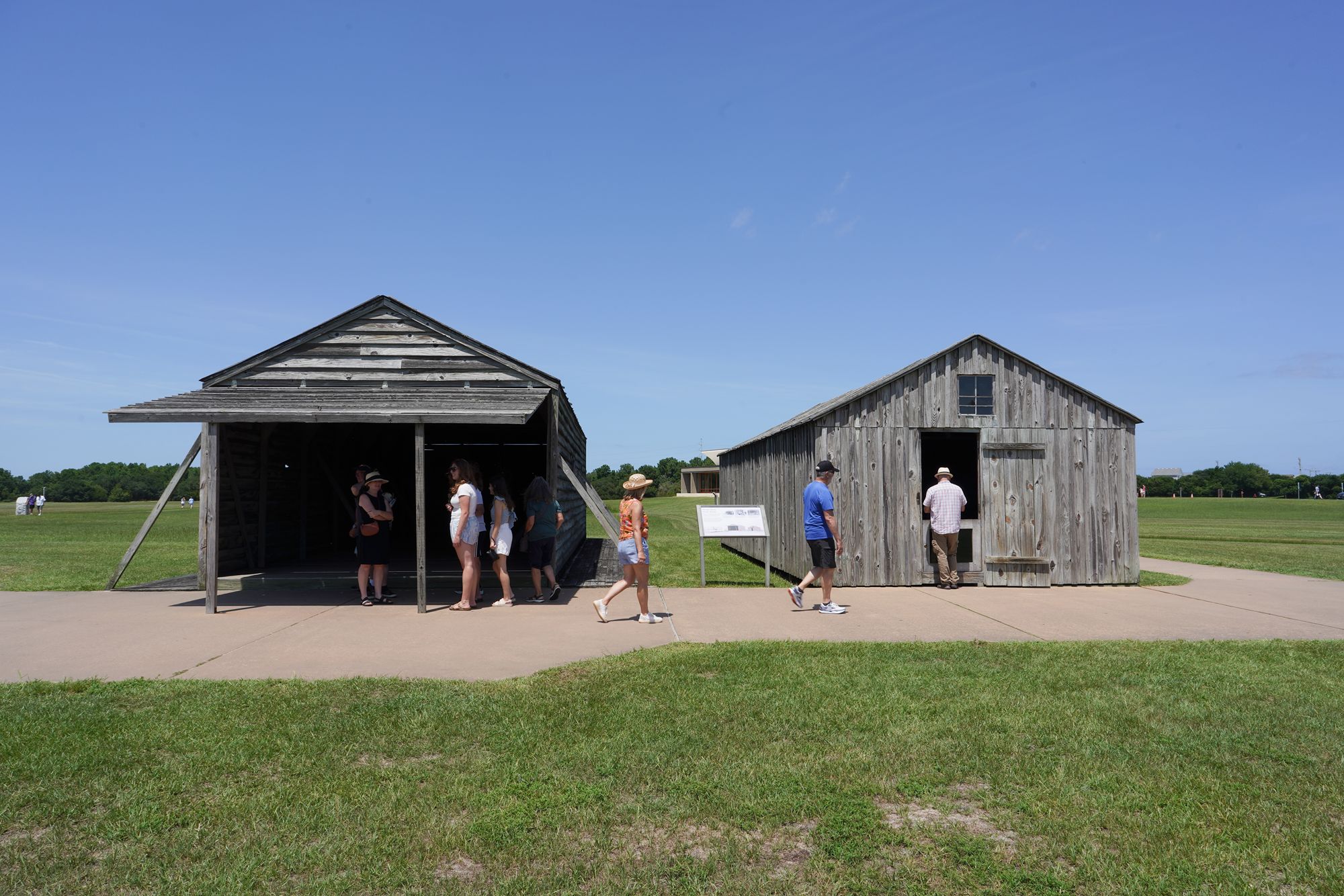
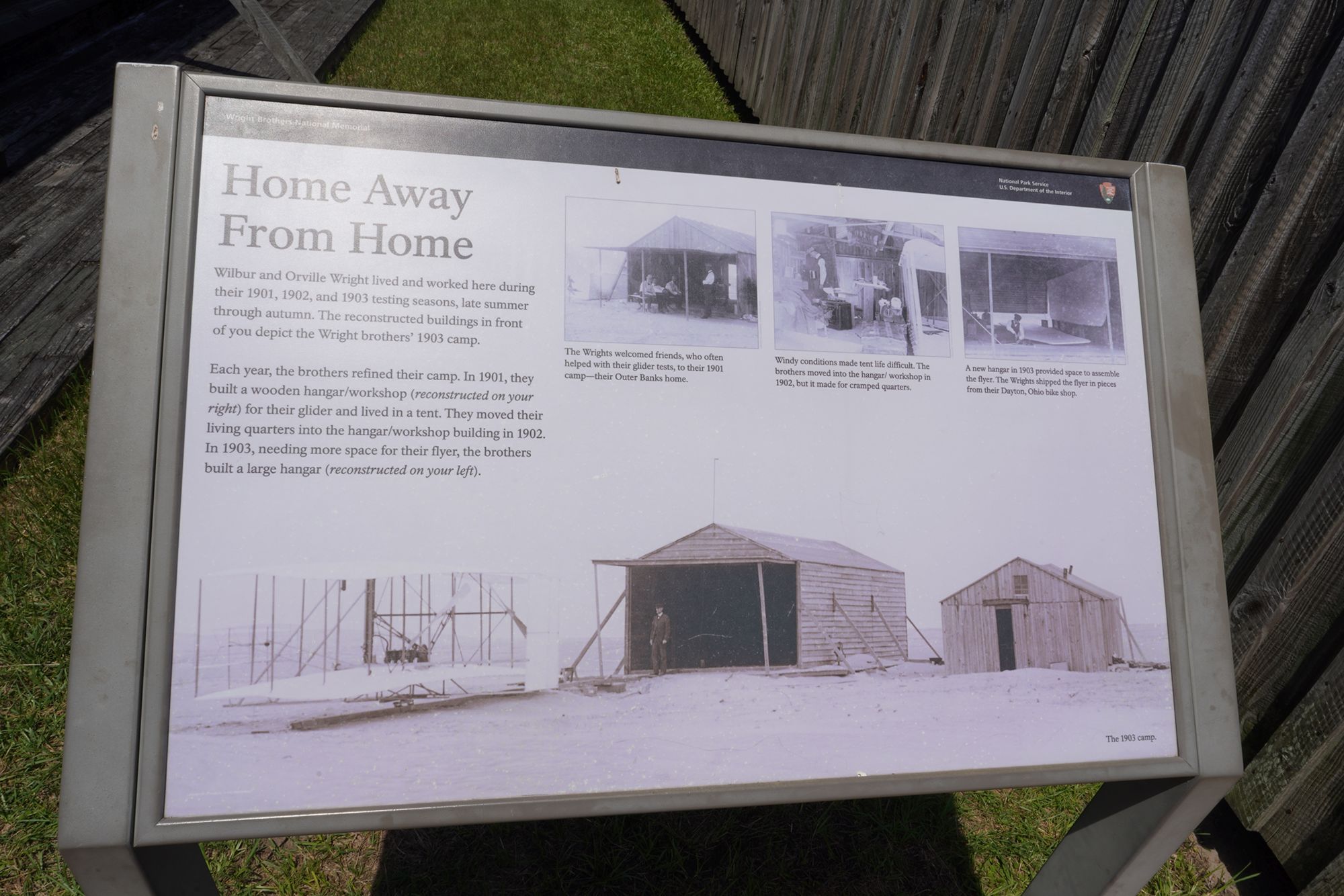
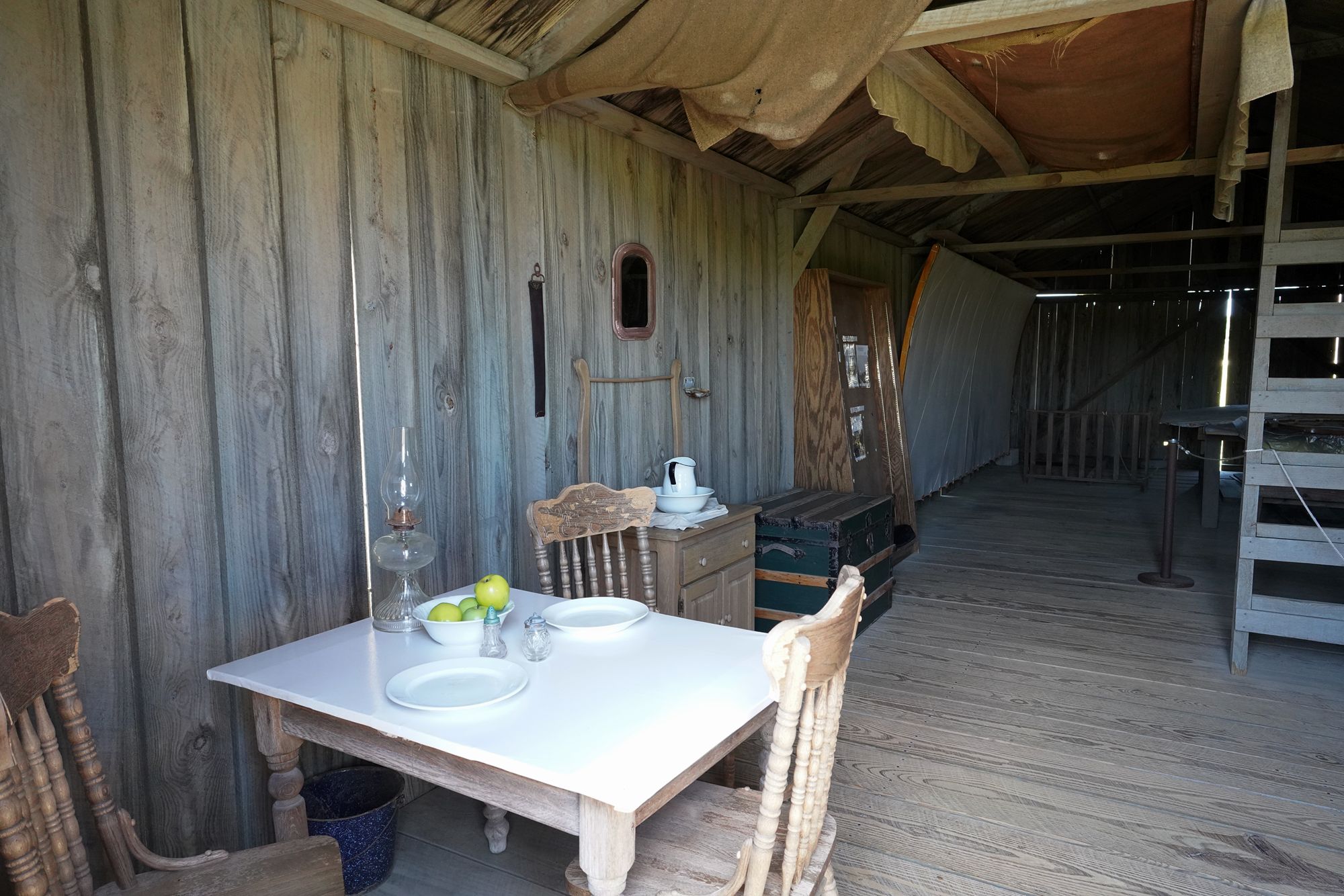
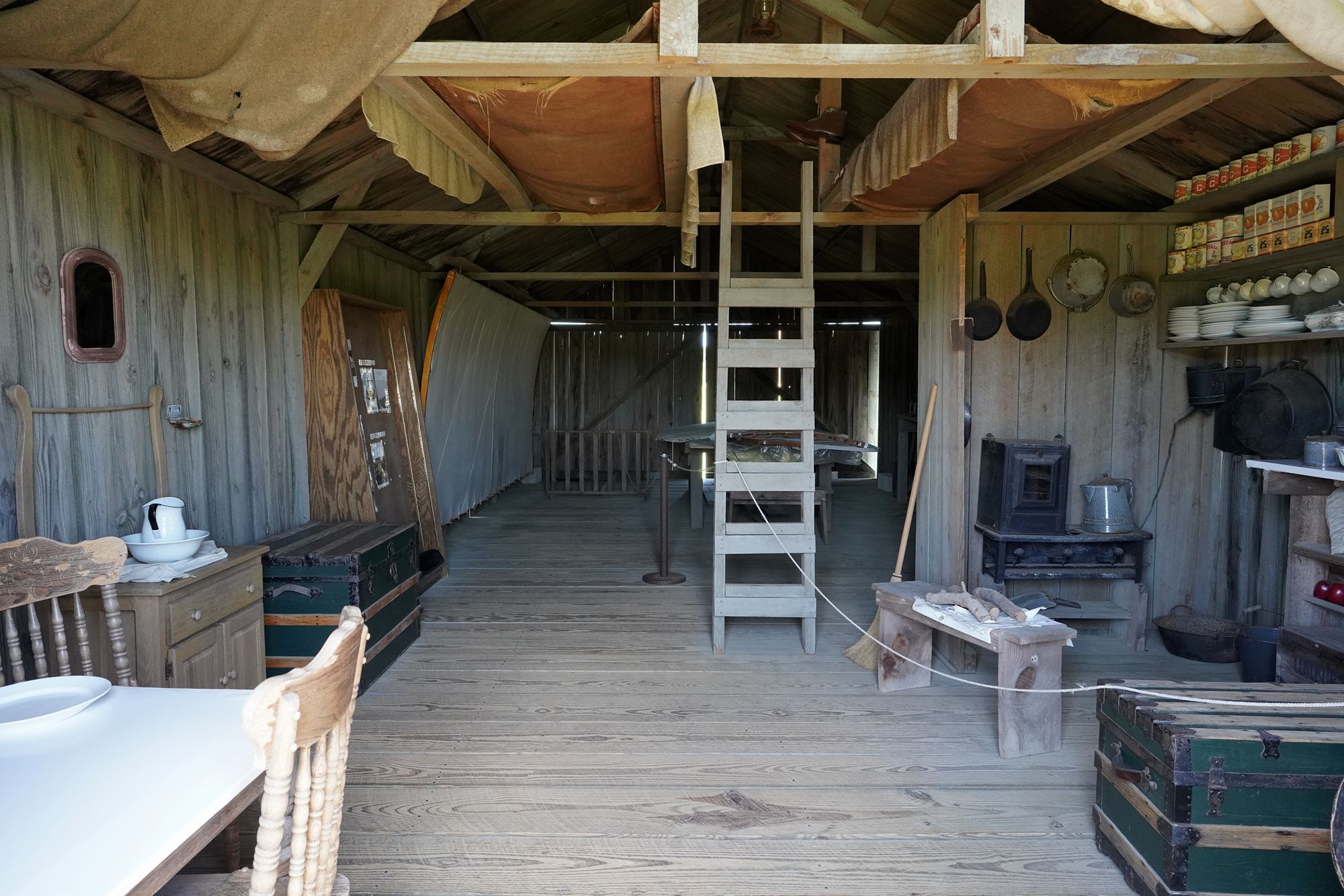
The flight field displays stone markers showing the first three landing points, while the fourth marker is too far away to see clearly.
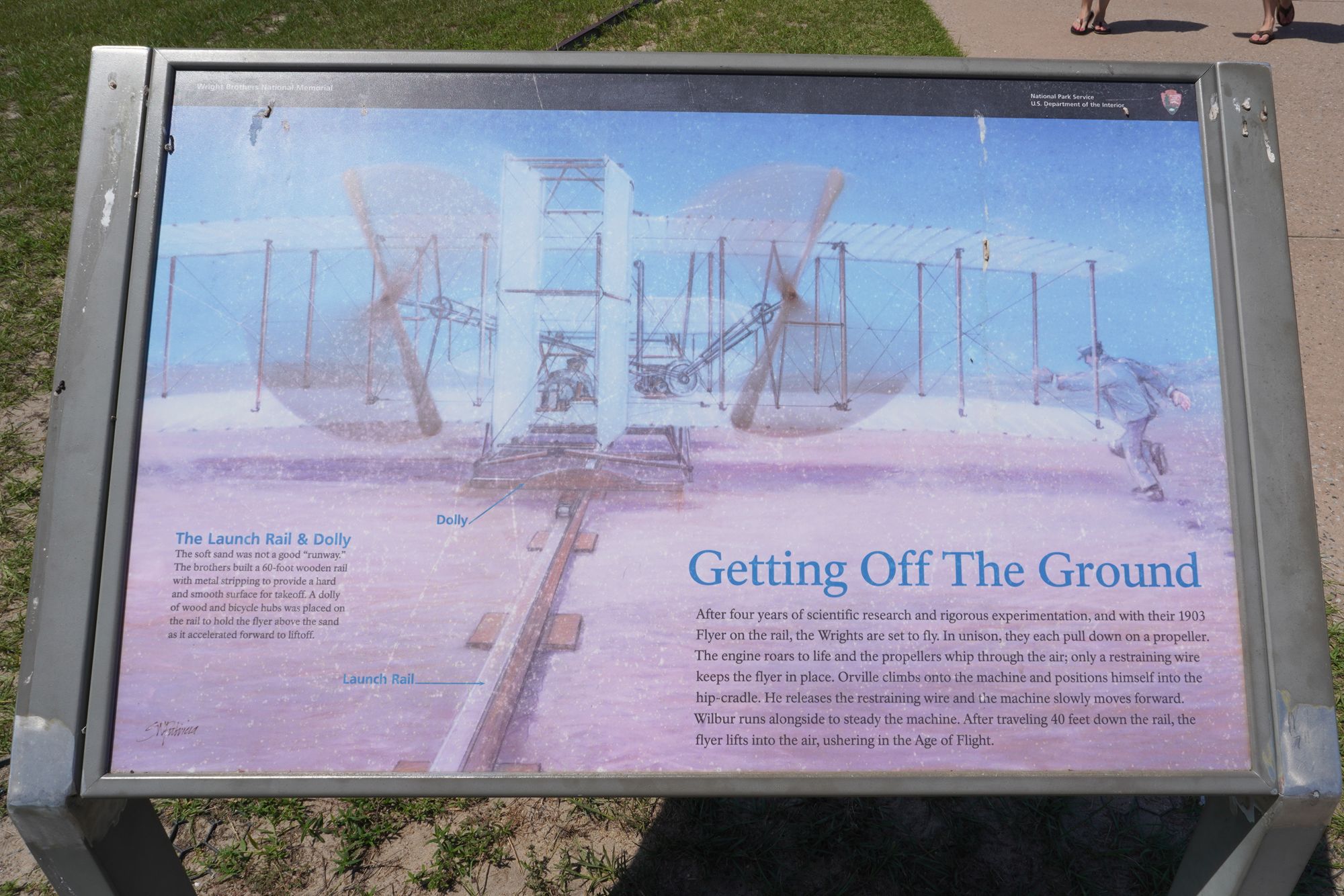
This panel displays the duration of each flight.
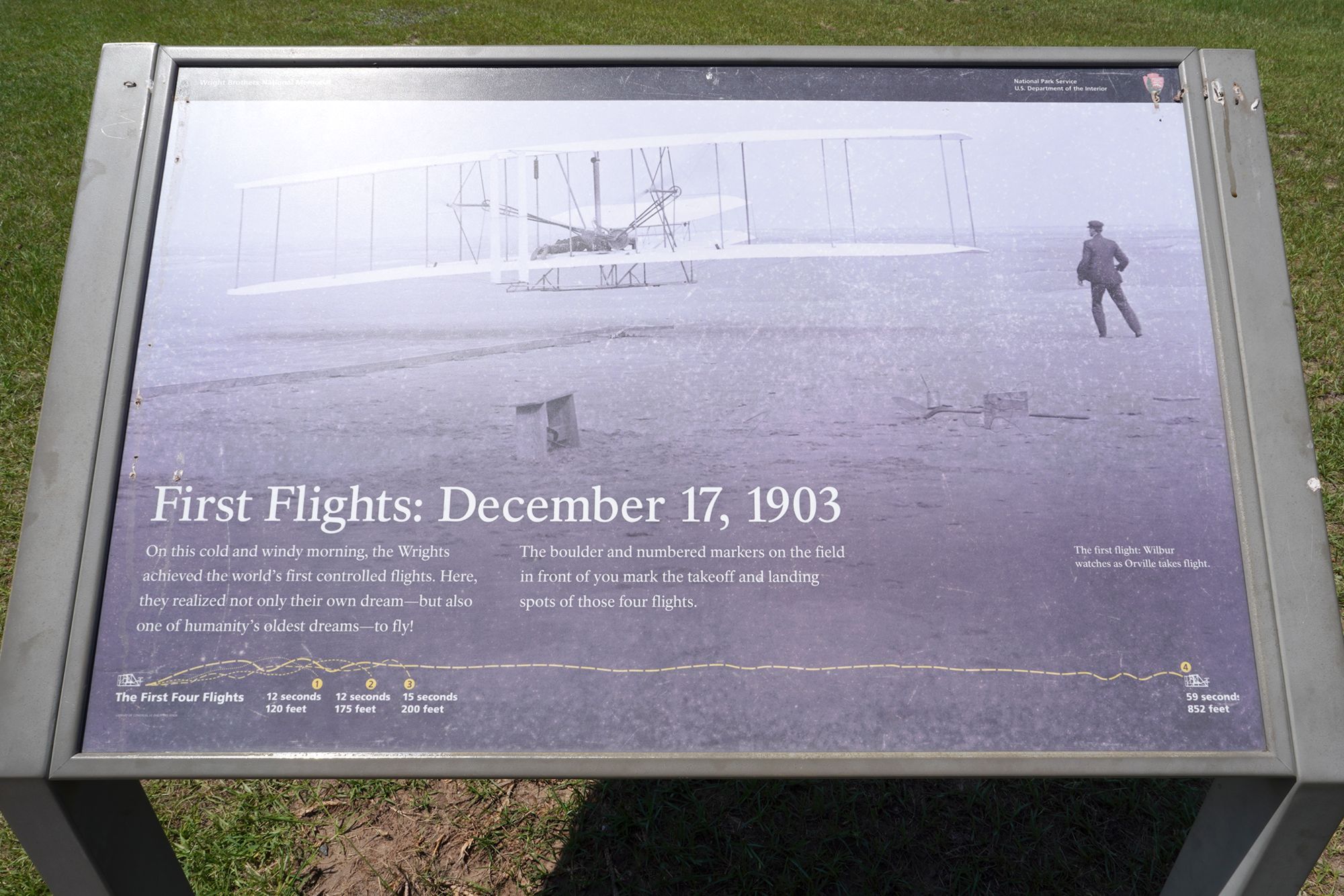
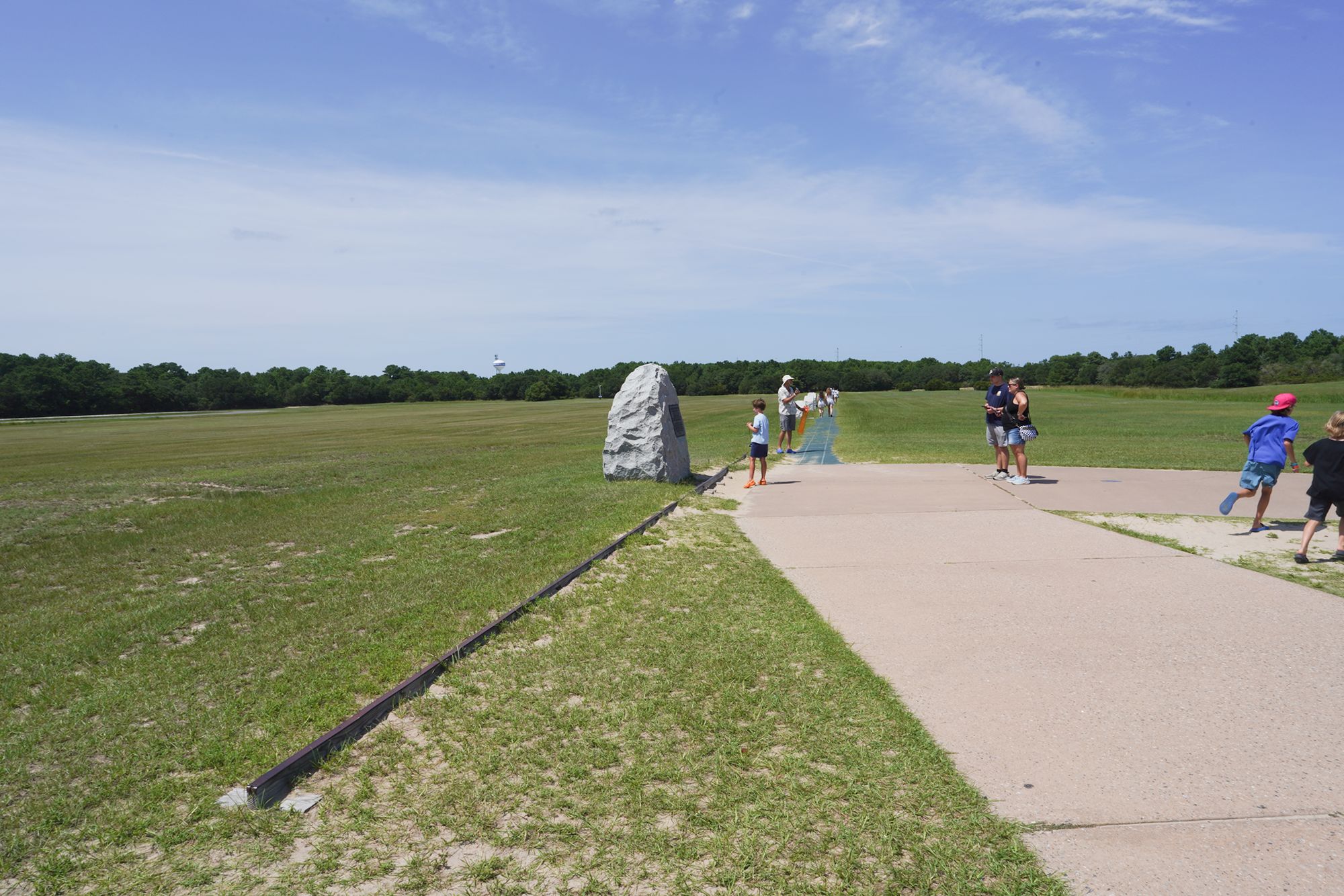
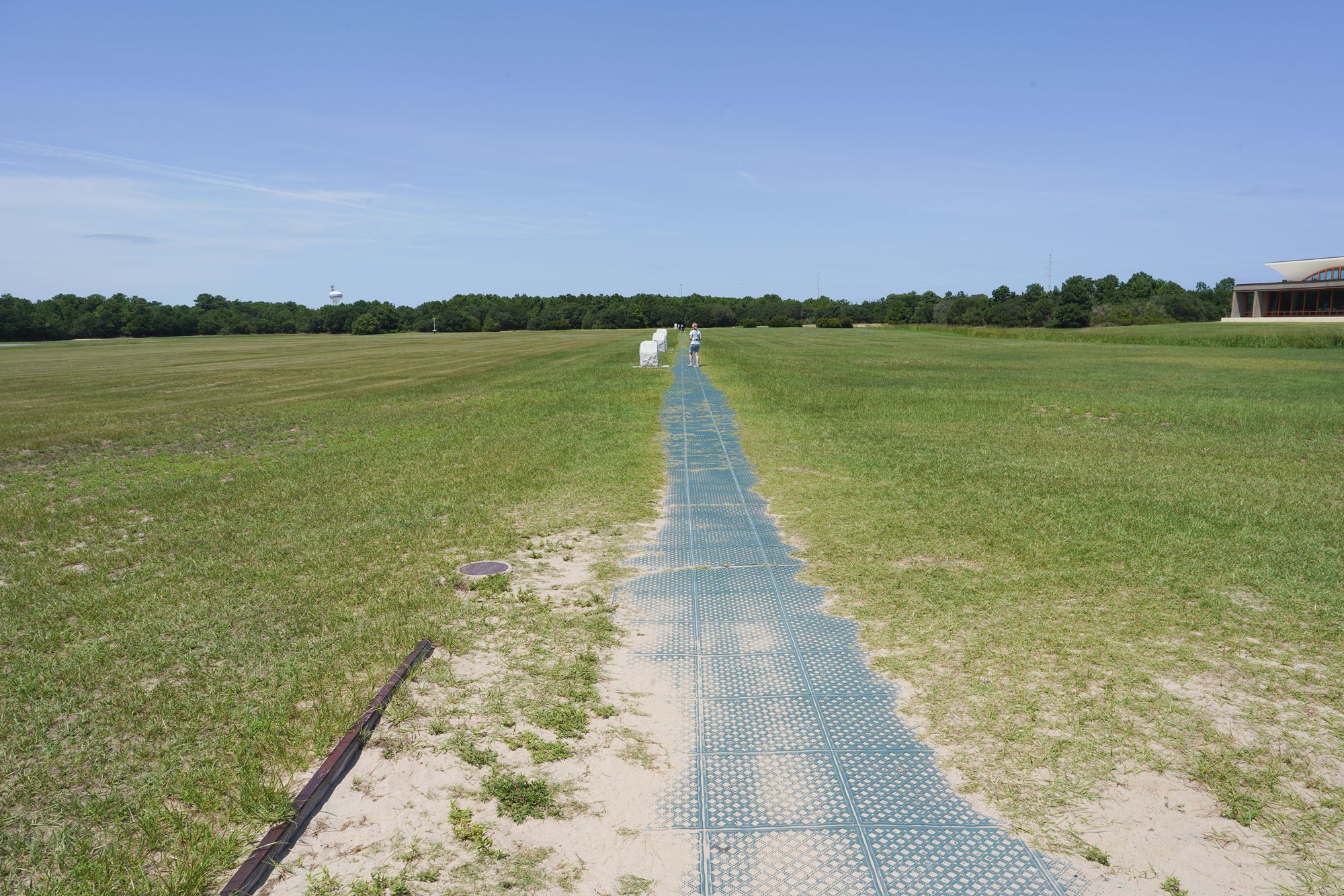
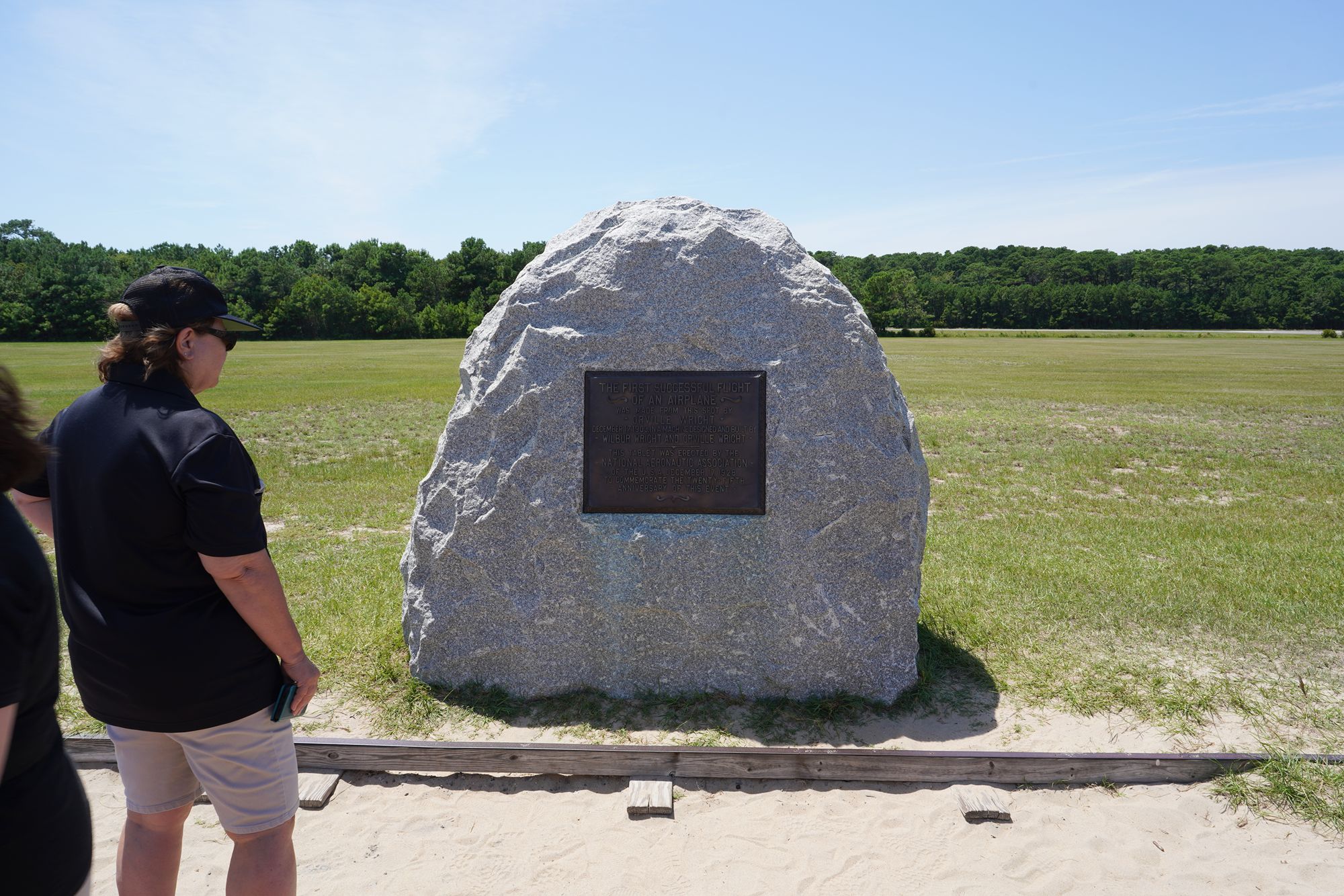
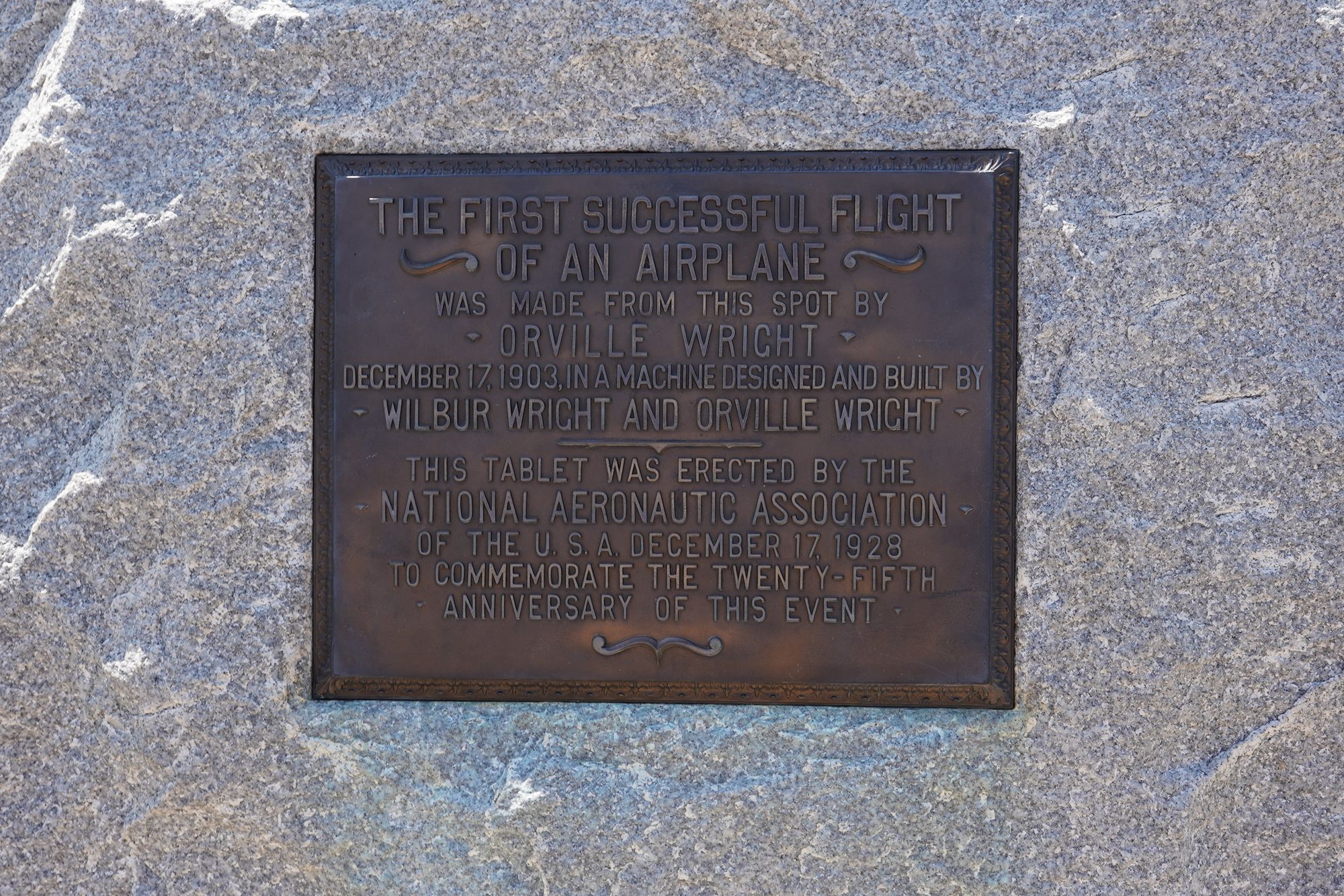
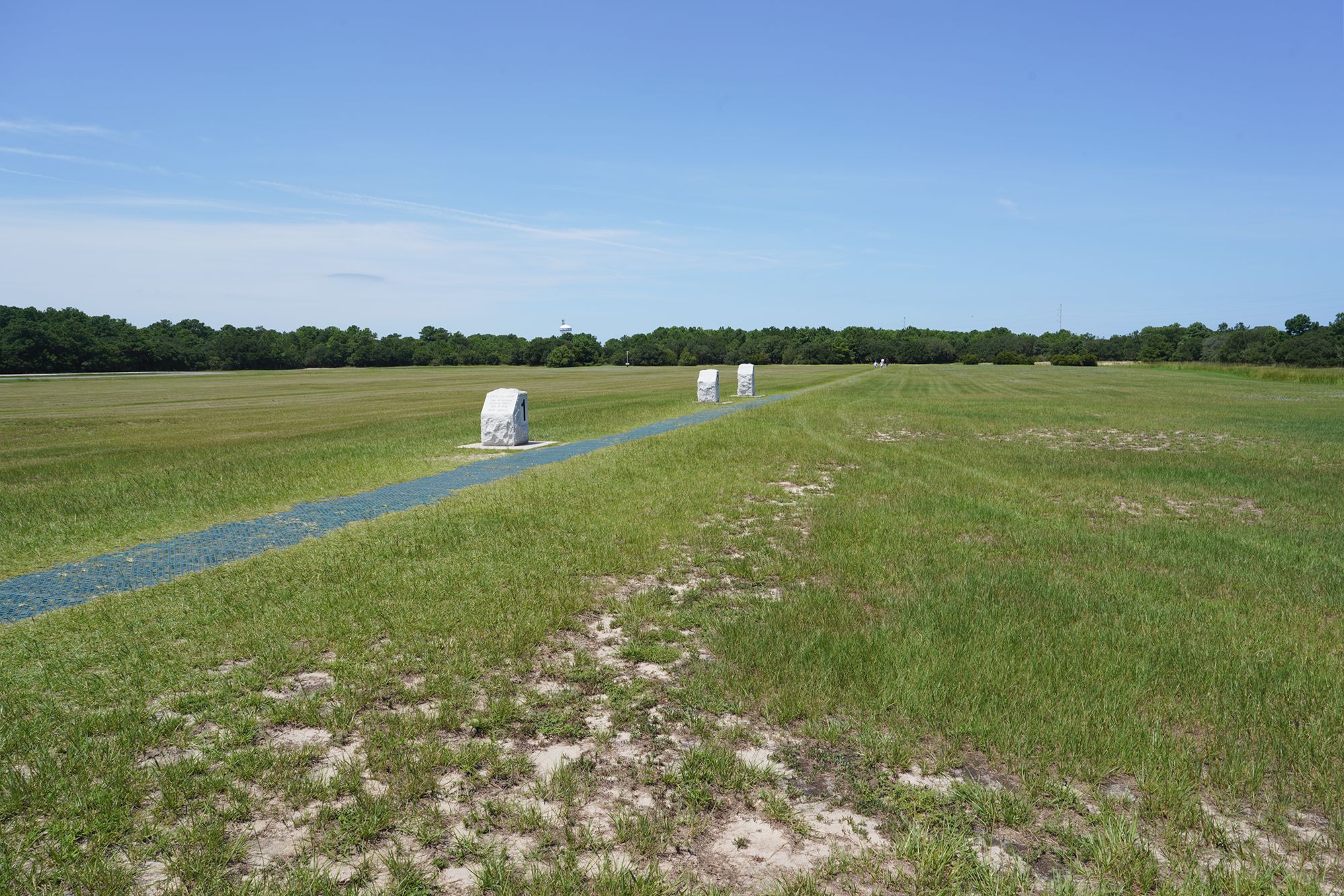
Flight Line Markers – Stone markers show the take-off point and the landing spots of their four flights, the longest lasting 59 seconds and covering 852 feet.
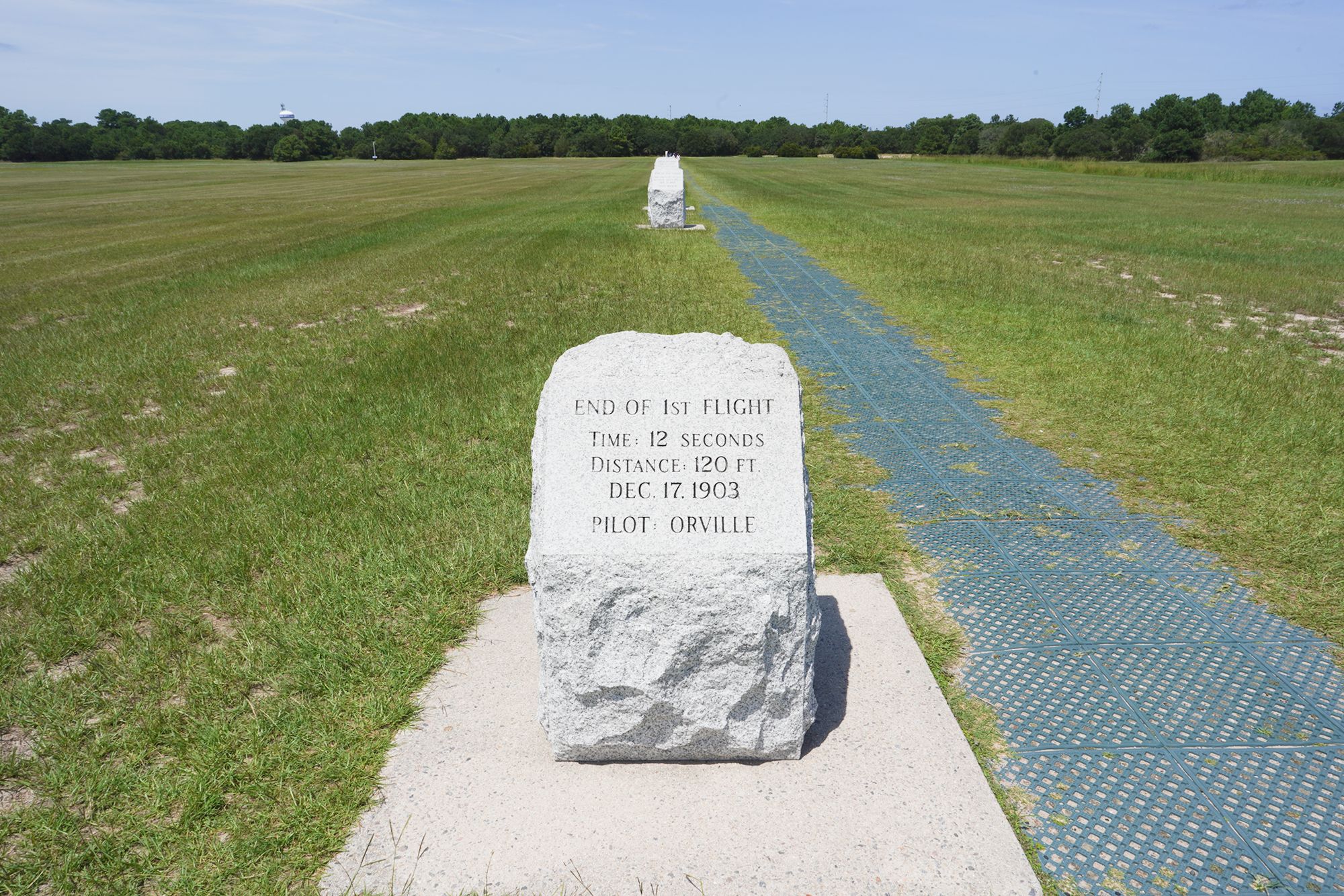
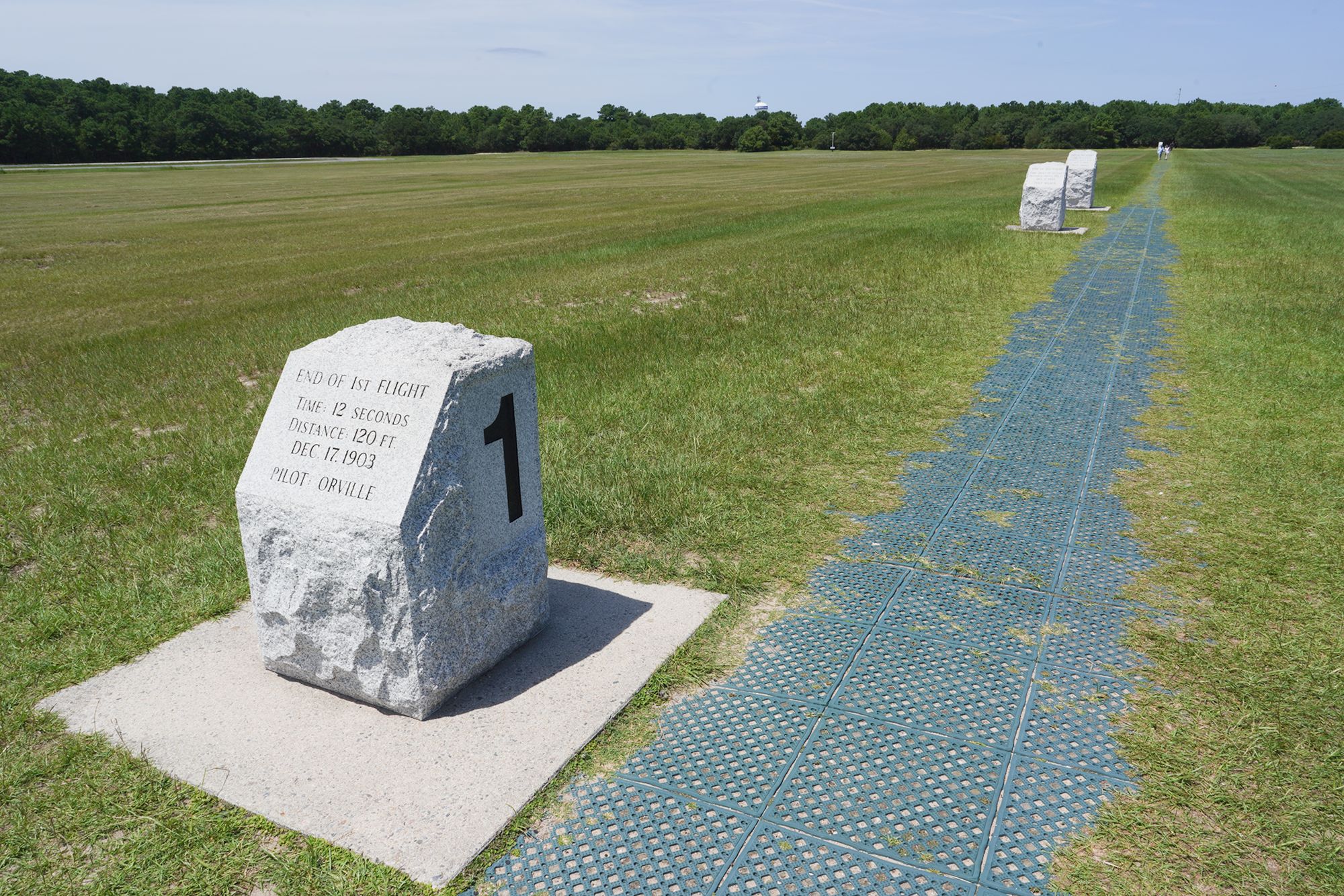
I turned around and looked at the other side
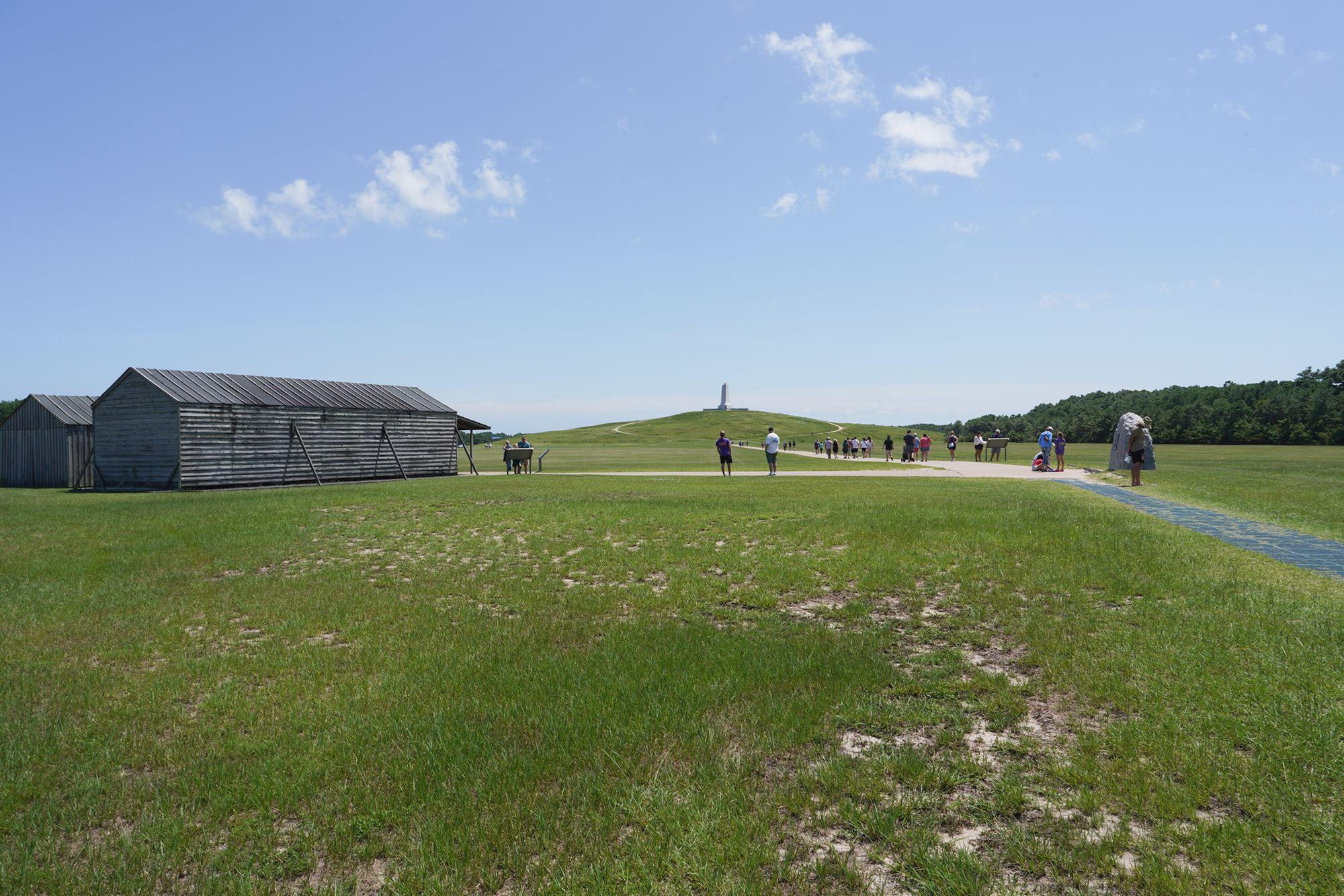
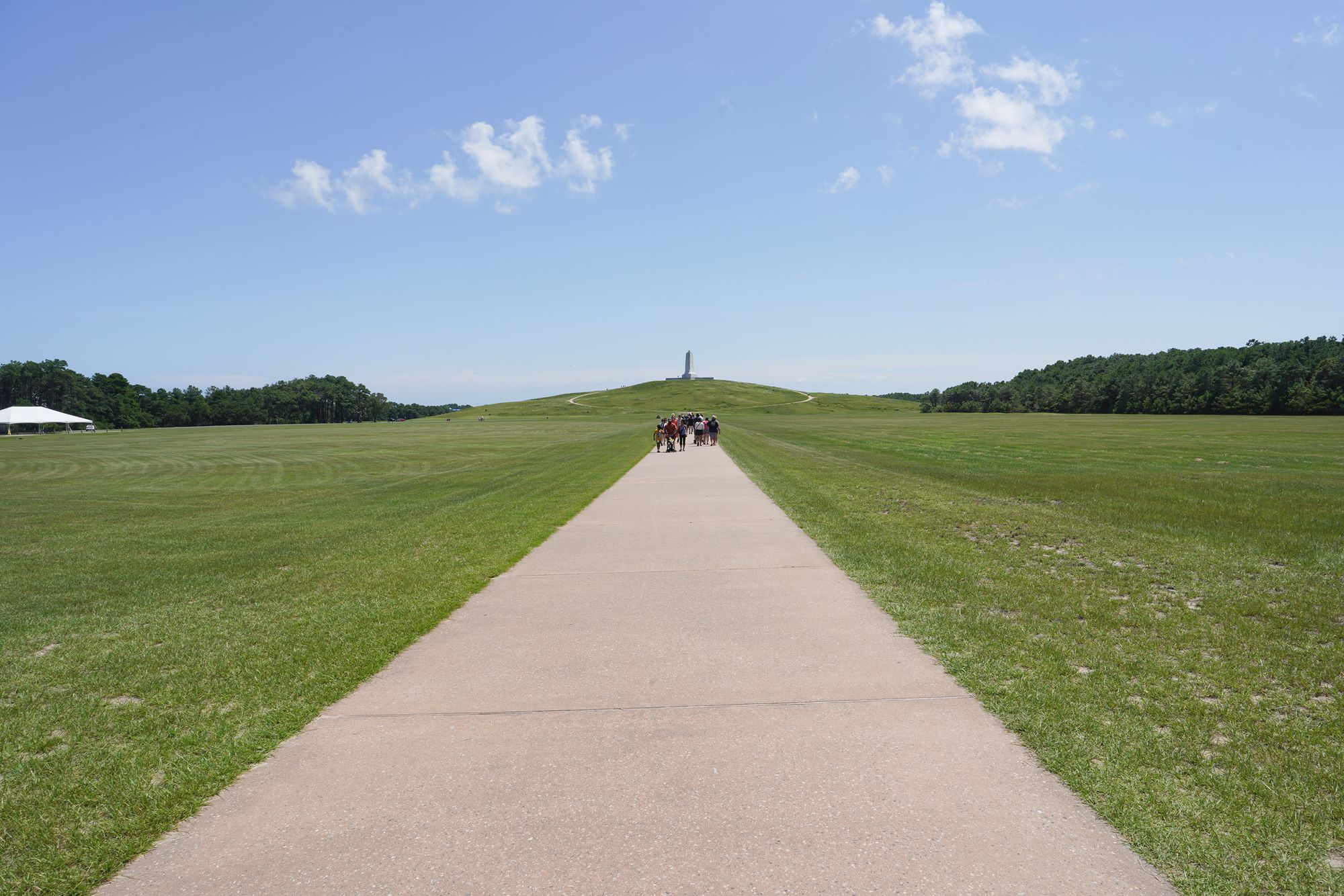
Walking toward the Wright Brothers Monument
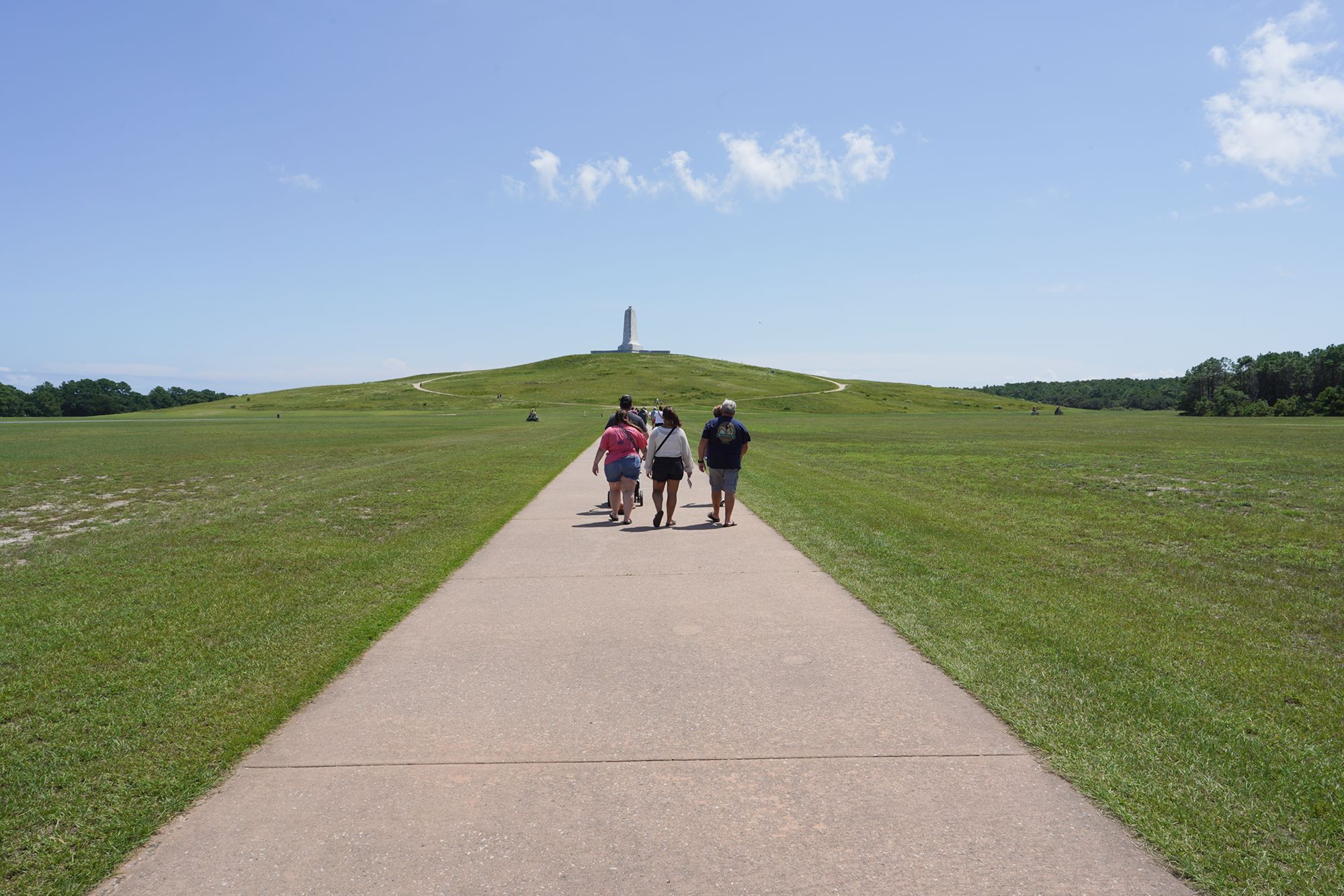
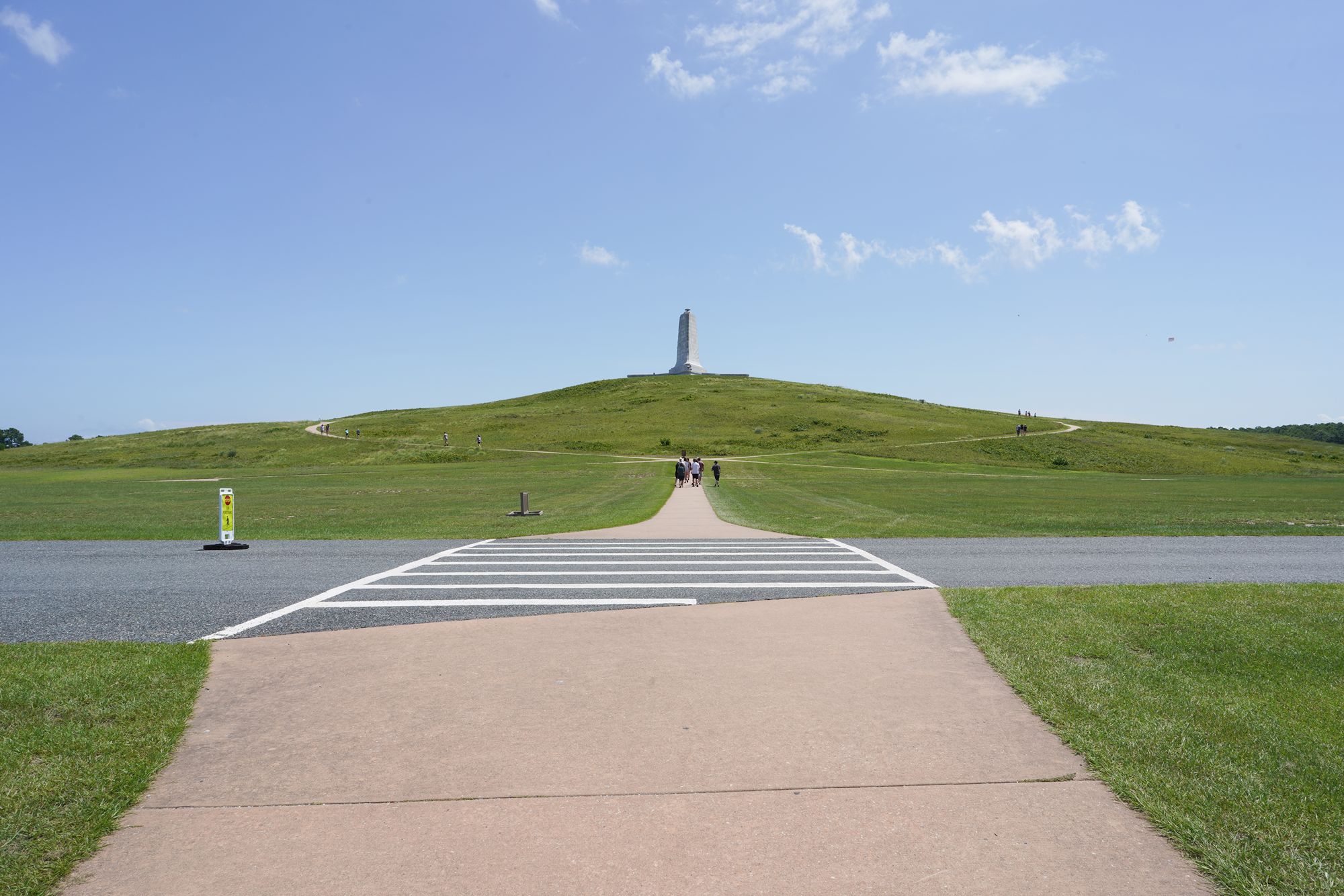
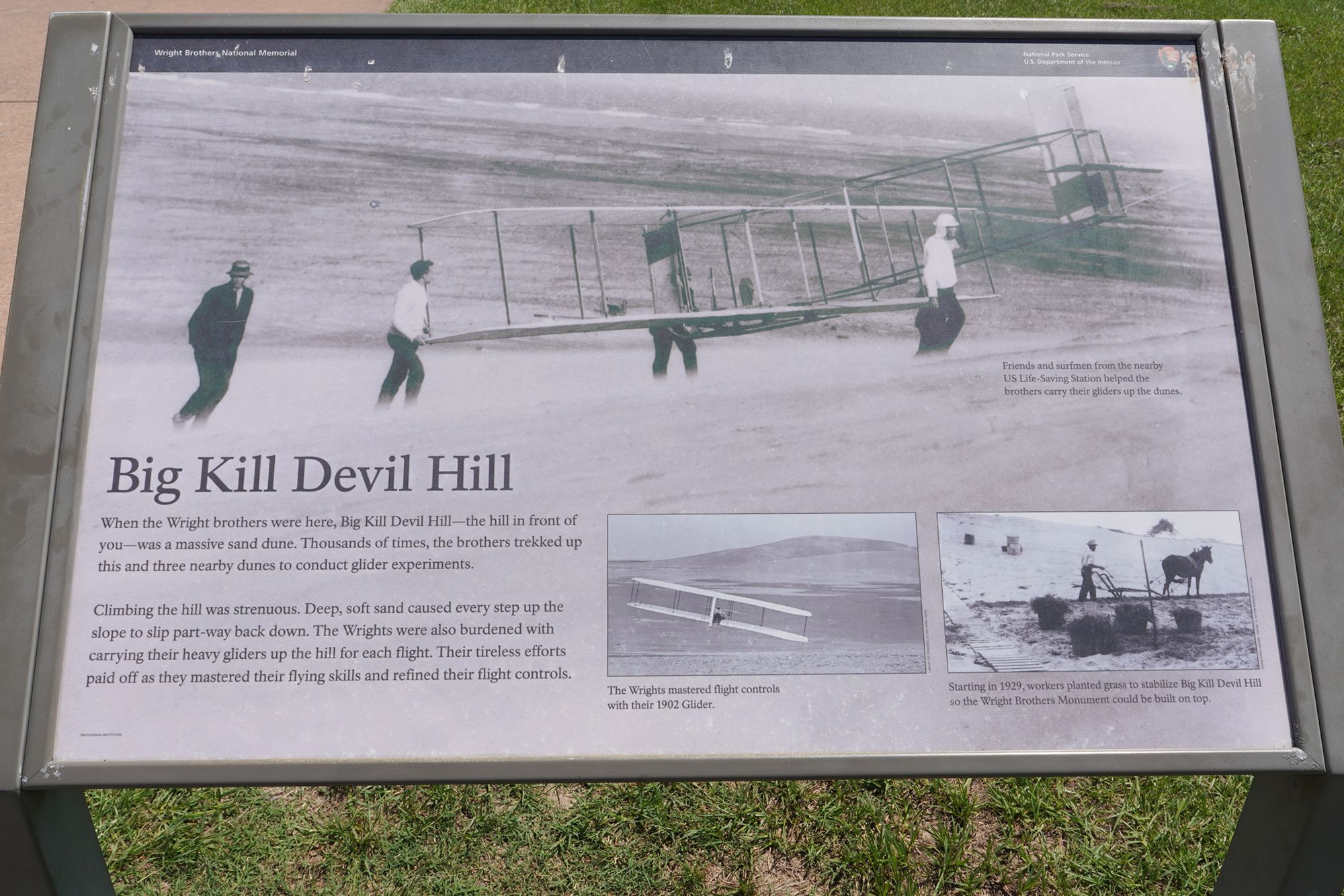
The big Kill Devil Hill rises beside the flight field. It was once a shifting sand dune where the Wright brothers tested their gliders before achieving powered flight.
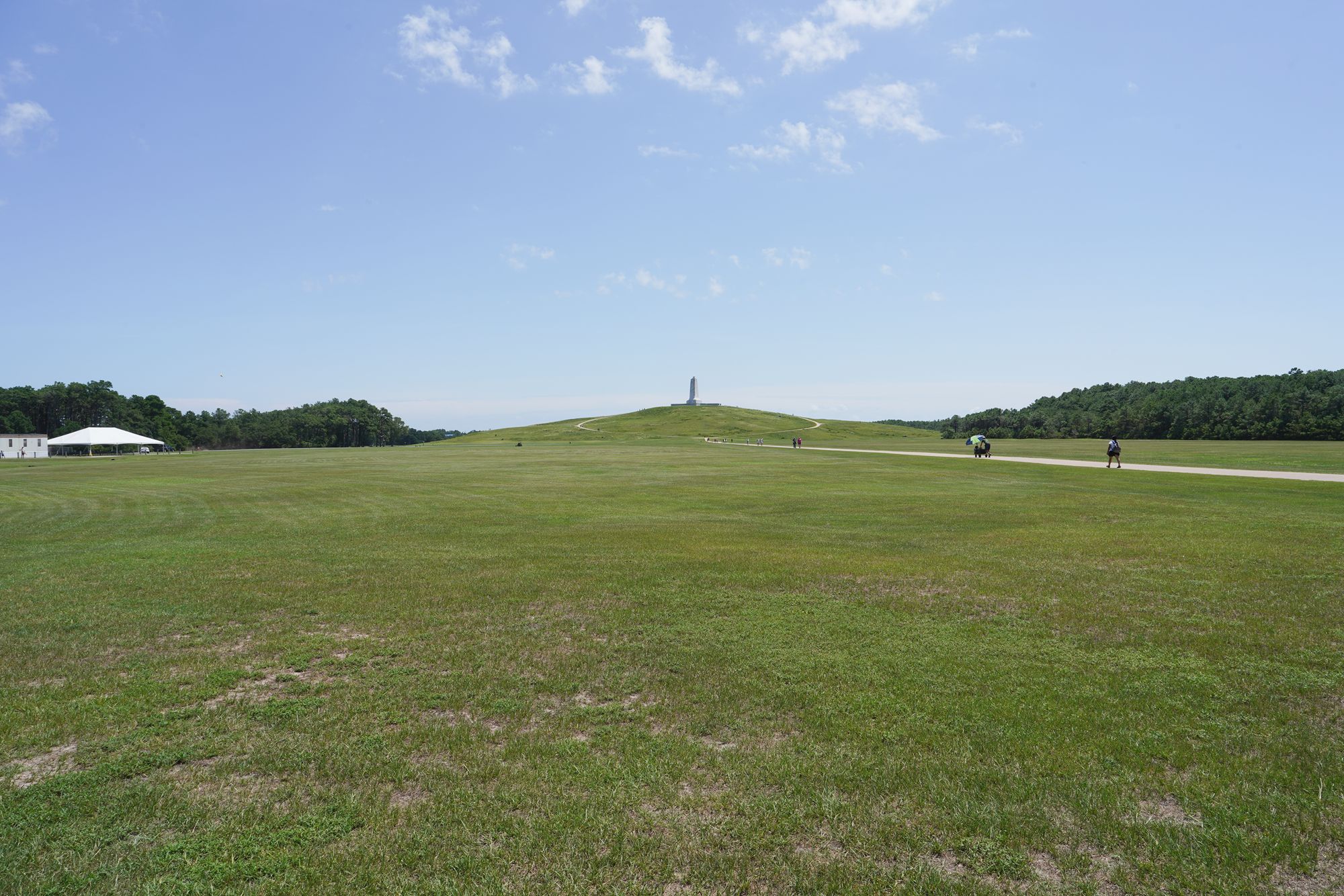
Looking back at the field
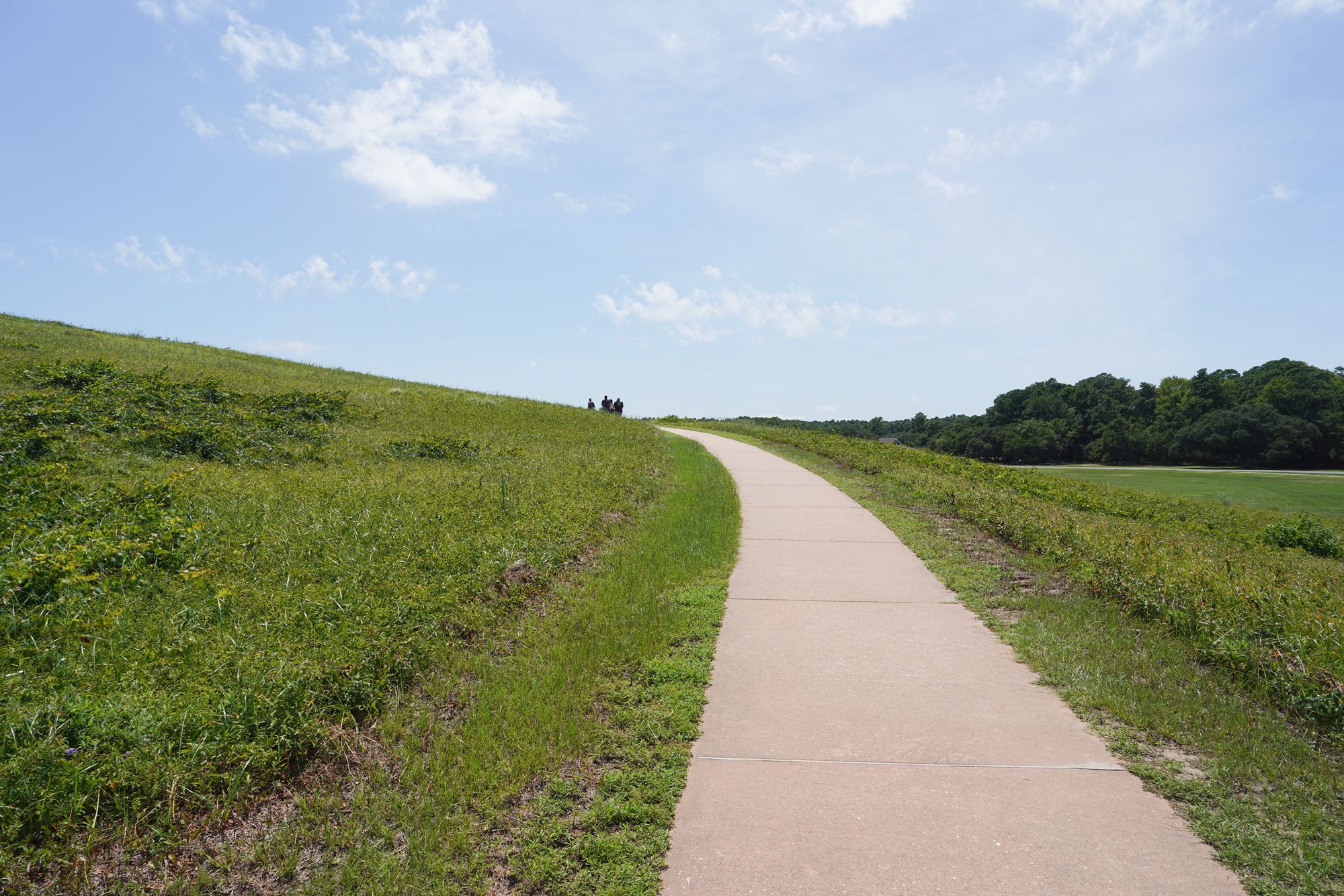
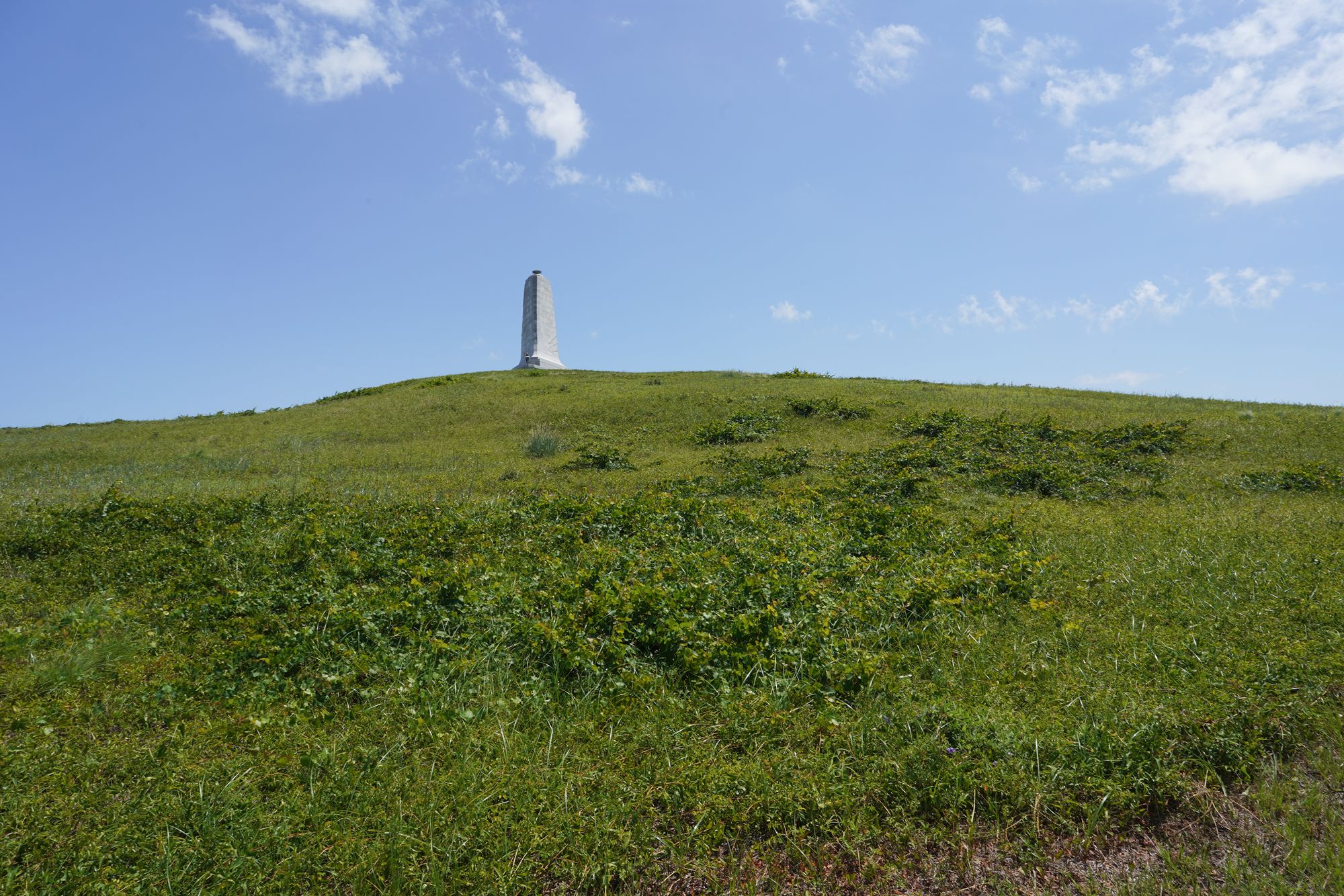
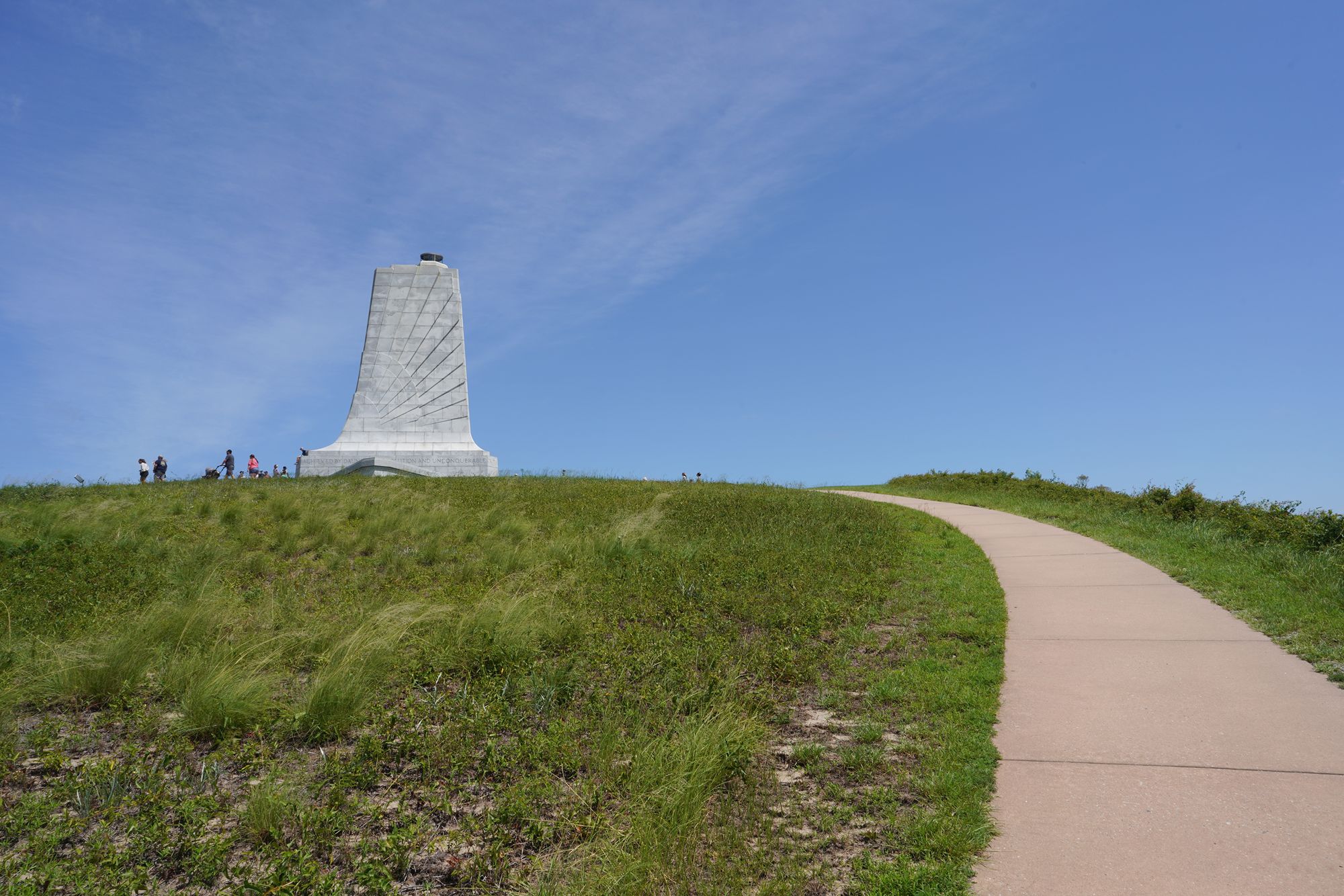
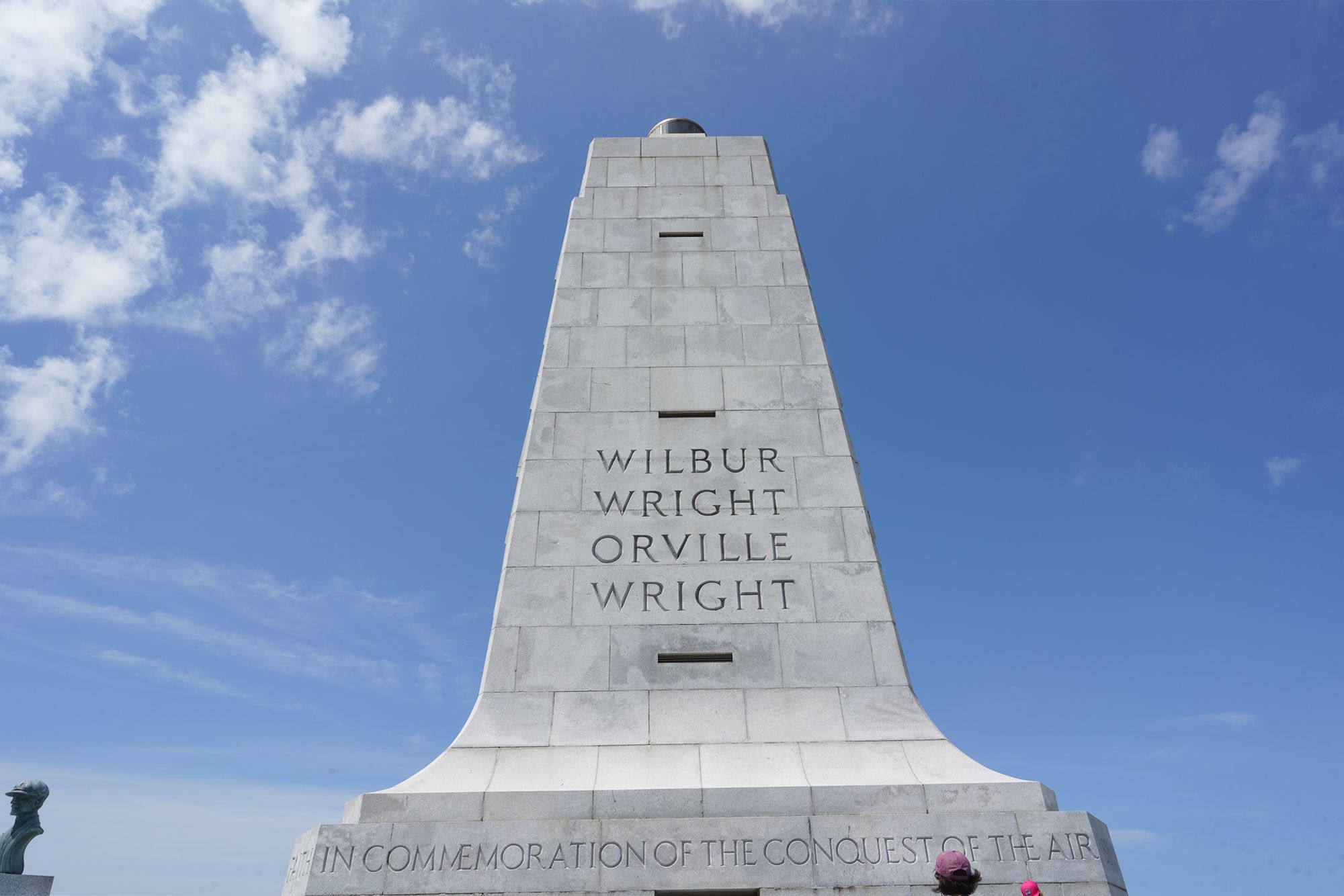
The Wright Brothers Monument stands atop Big Kill Devil Hill, overlooking the site of the first powered flights. Completed in 1932, the monument honors Orville and Wilbur Wright and their pioneering achievement in aviation.
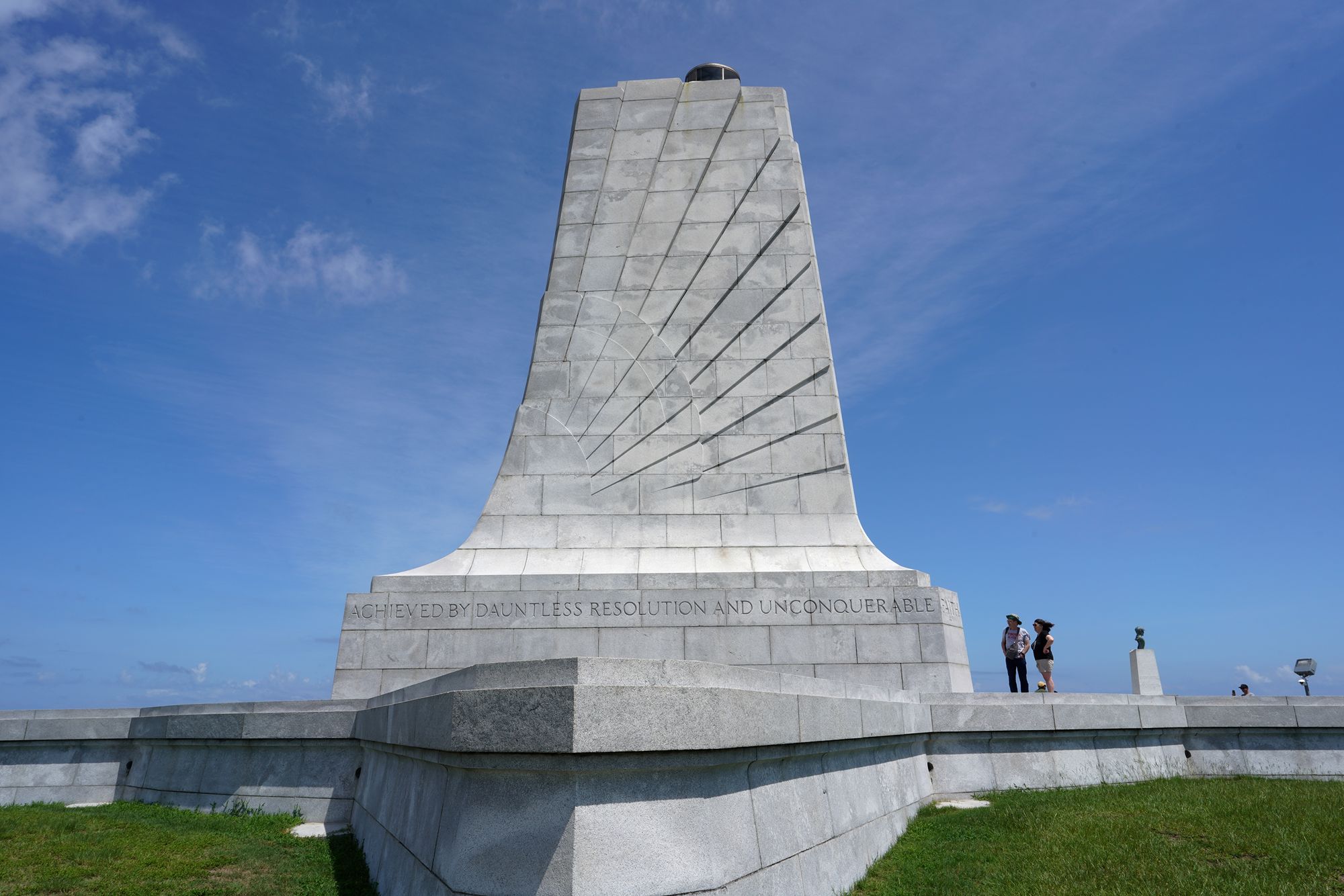
The structure is a 60-foot granite pylon built in Art Deco style, with sculpted eagles’ wings at its crown symbolizing flight. The front of the monument bears the inscription:
“In commemoration of the conquest of the air by the brothers Wilbur and Orville Wright. Conceived by genius. Achieved by dauntless resolution and unconquerable faith.”