Seoul National University and Gangnam Area, Seoul, South Korea
Seoul National University is one of South Korea’s most prestigious universities, known for its academic excellence and its large main campus in Gwanak, southern Seoul. 1285
Seoul National University: 1 Gwanak-ro, Gwanak-gu, Seoul, South Korea
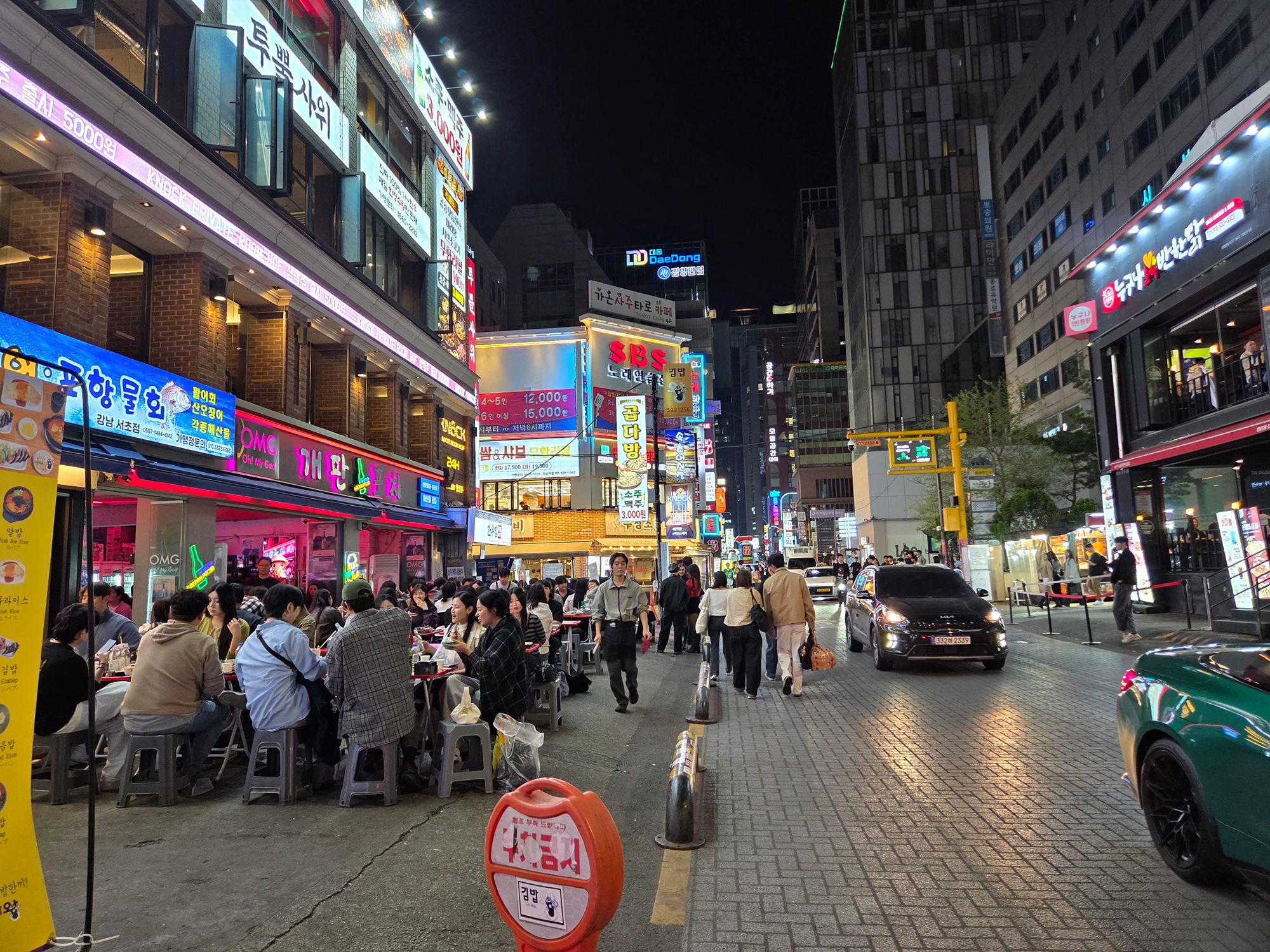
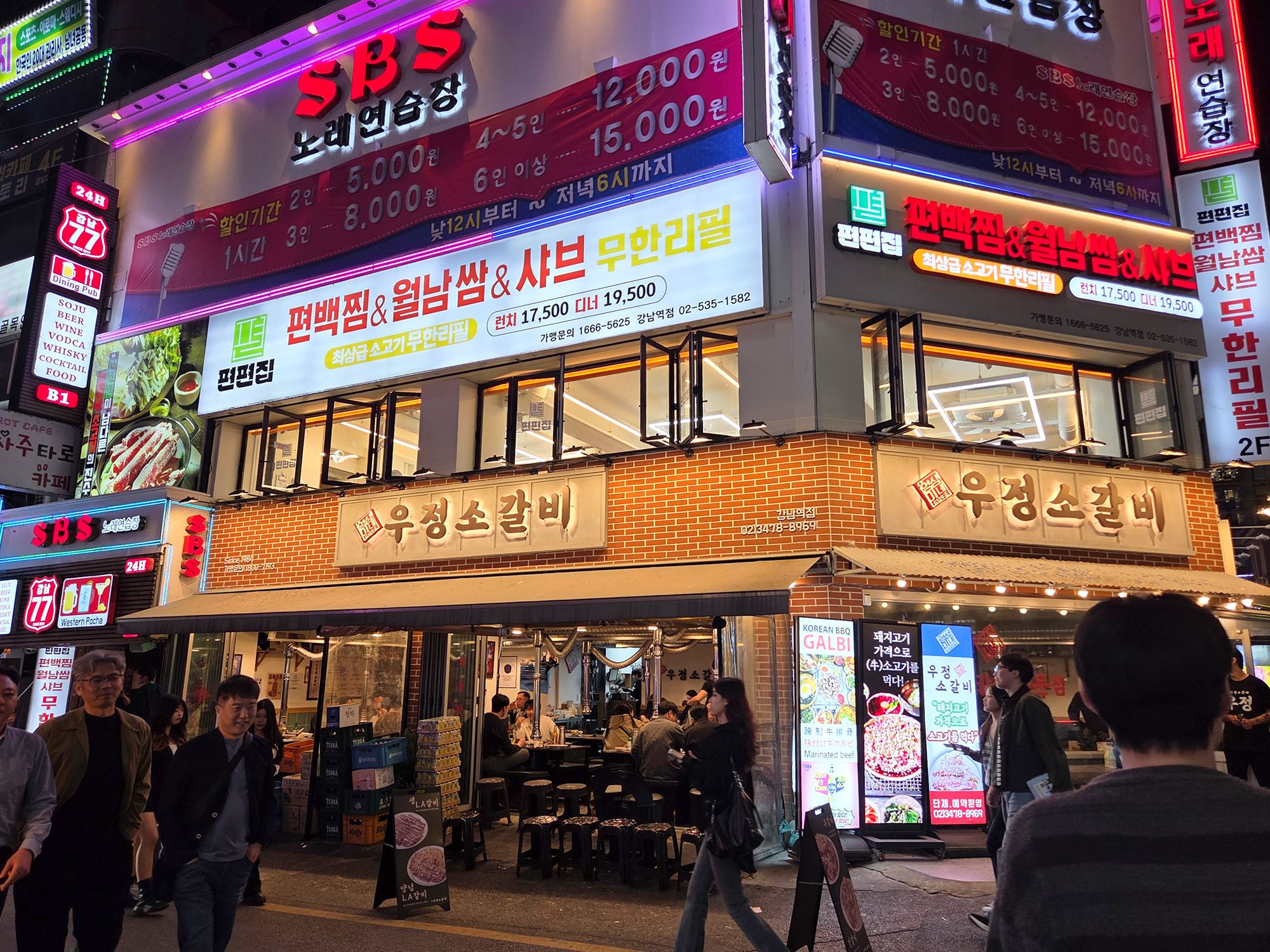
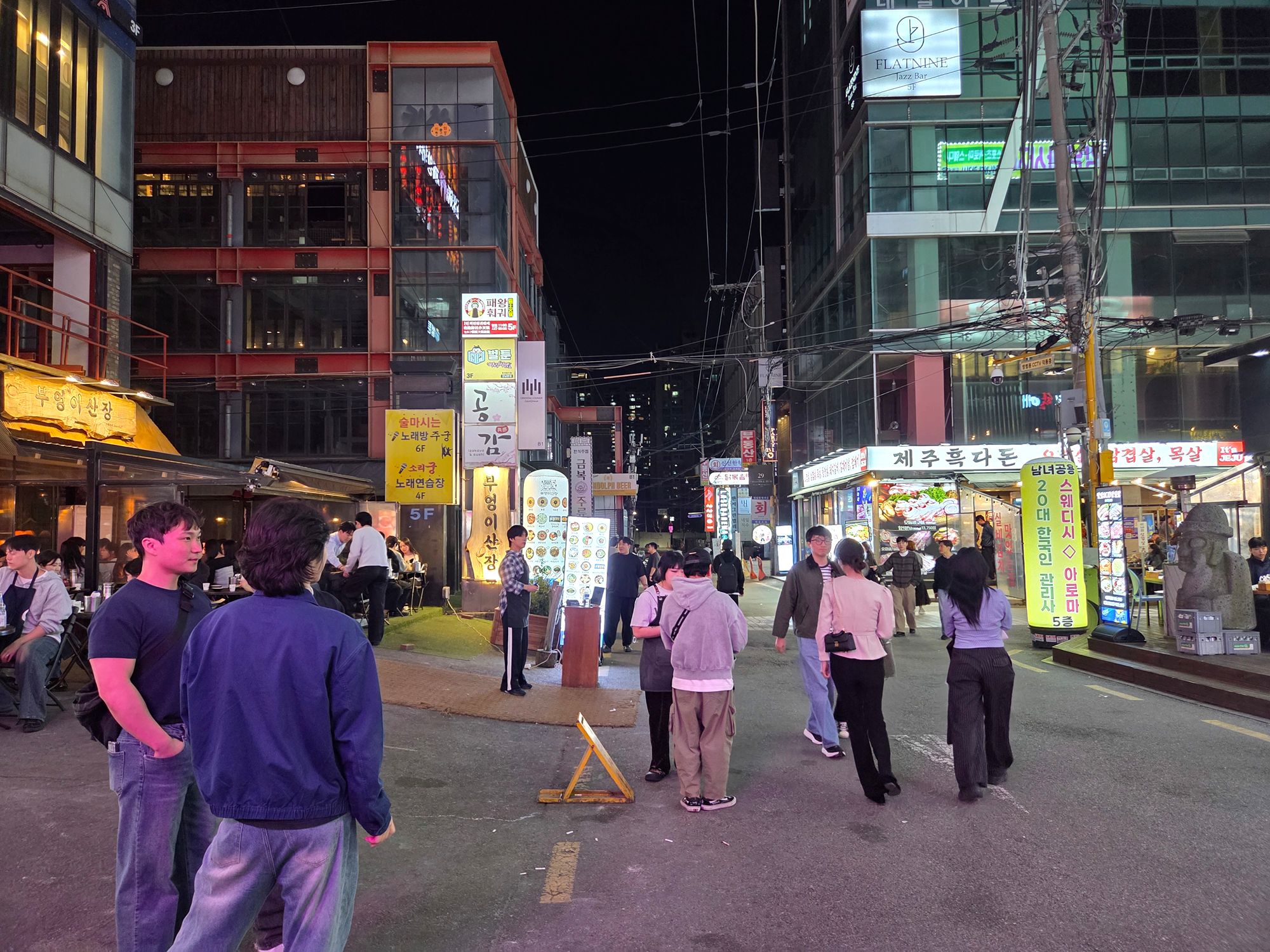
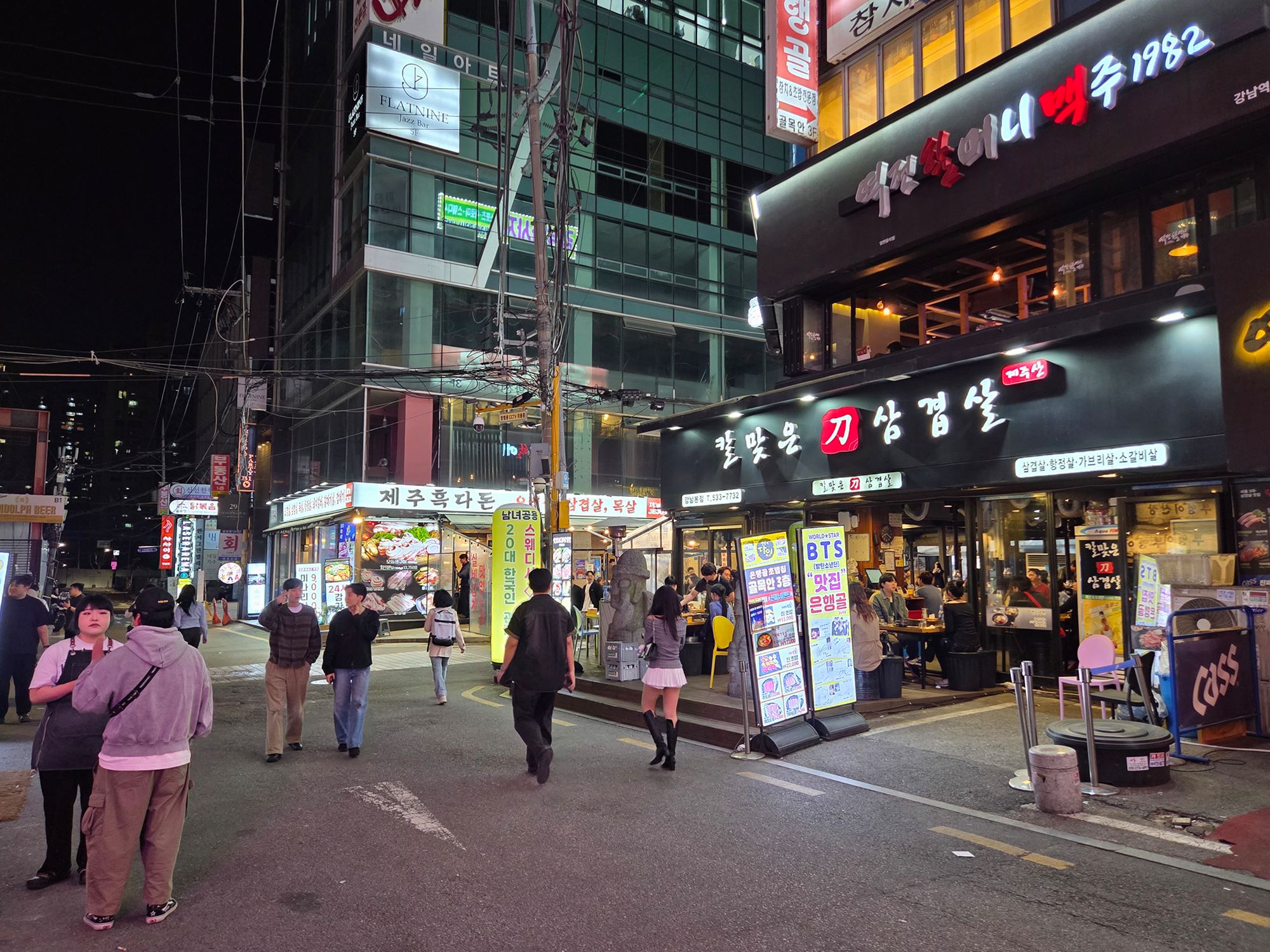
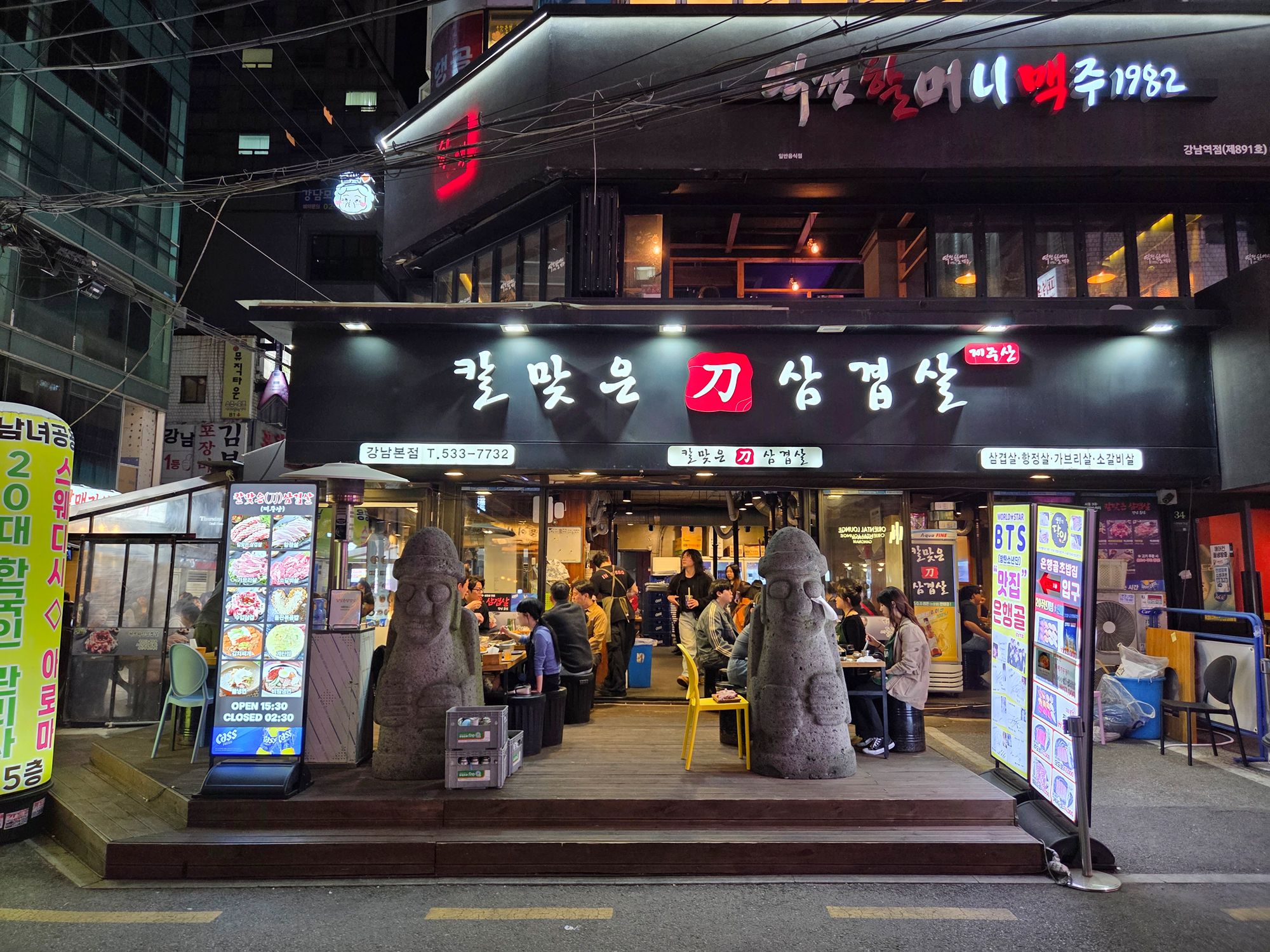
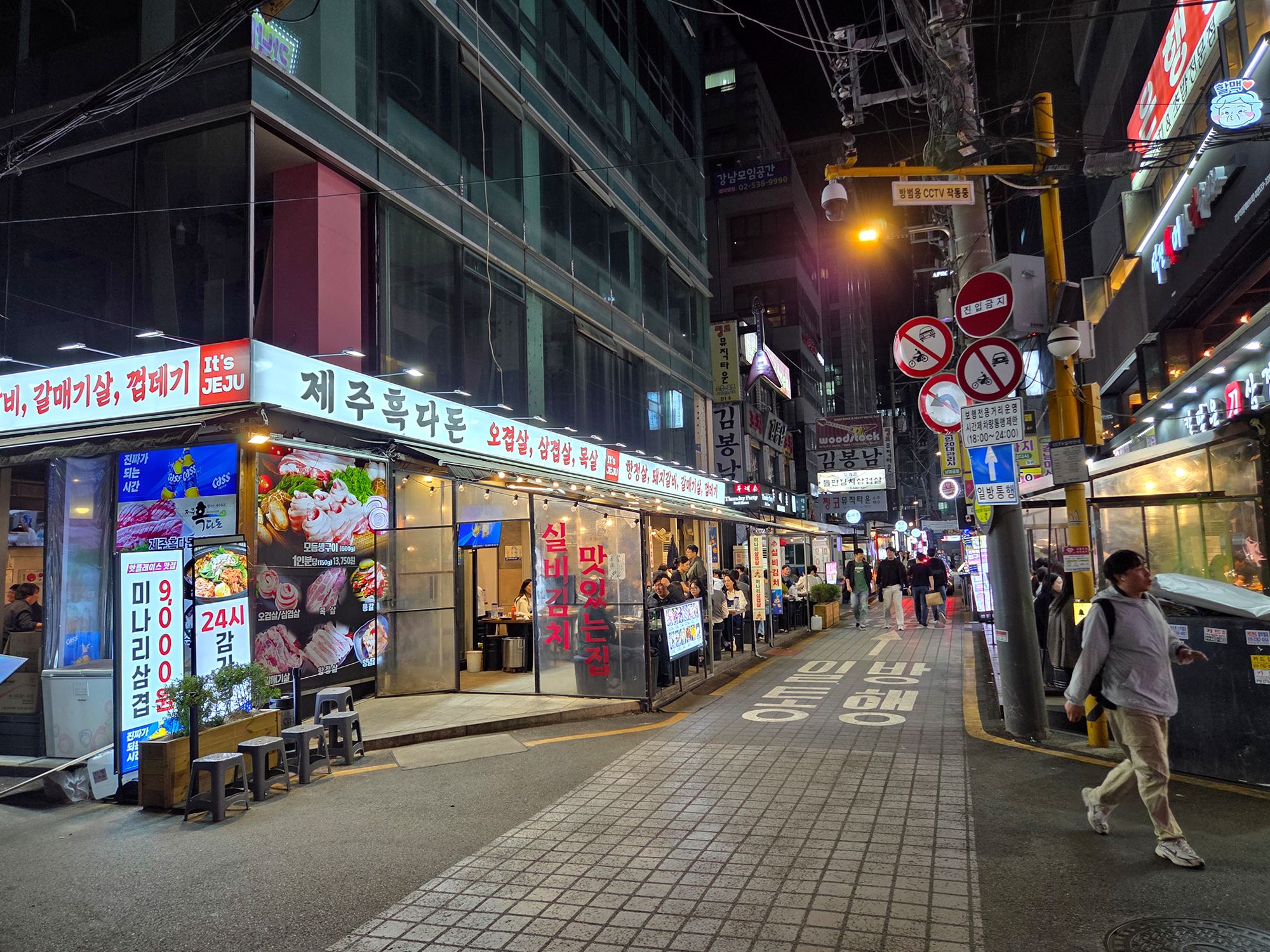
Gangnam side street with many restaurants: 34 Seocho-daero 75-gil, Seocho District, Seoul, South Korea
Date Picture Taken: Apr, 2026
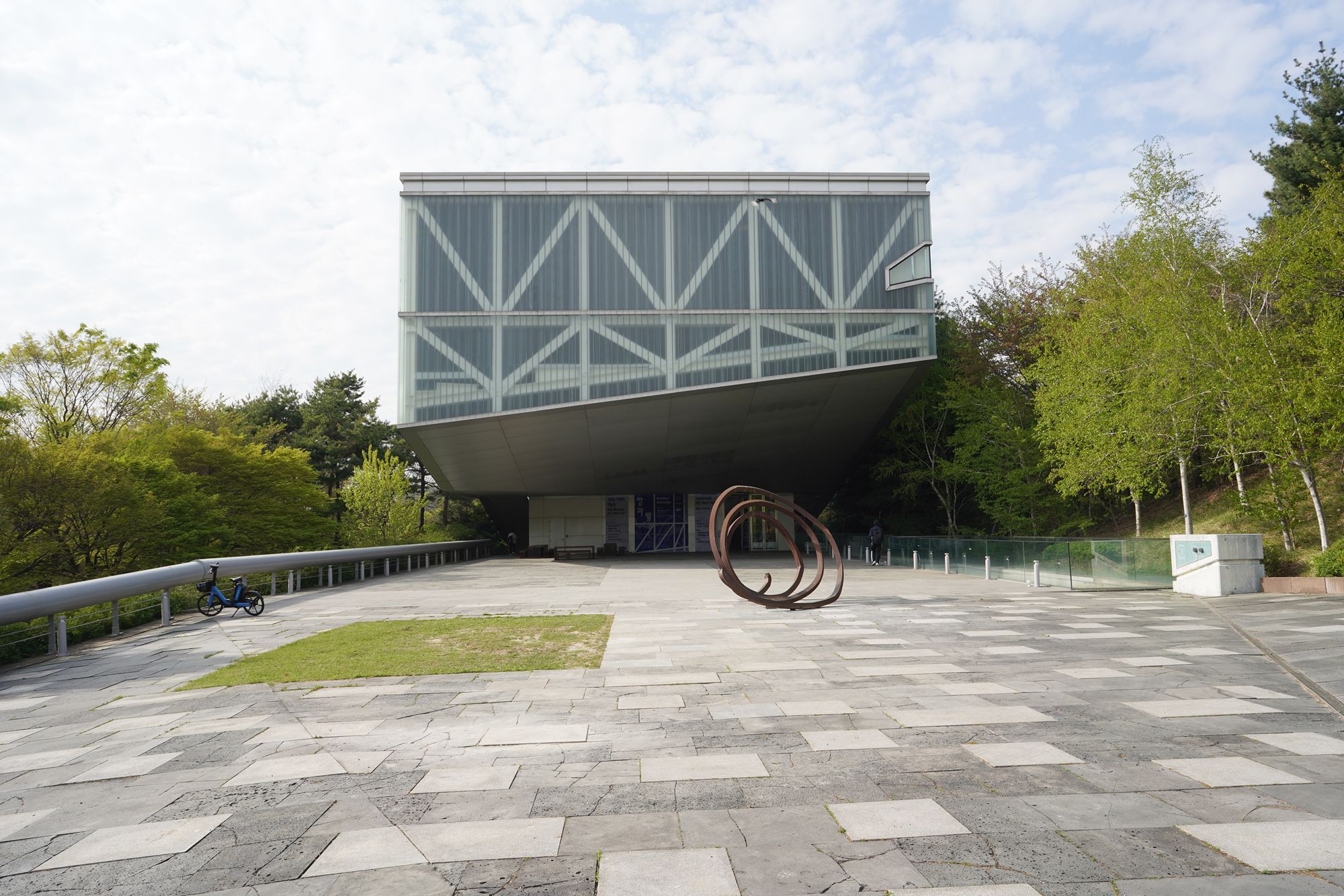
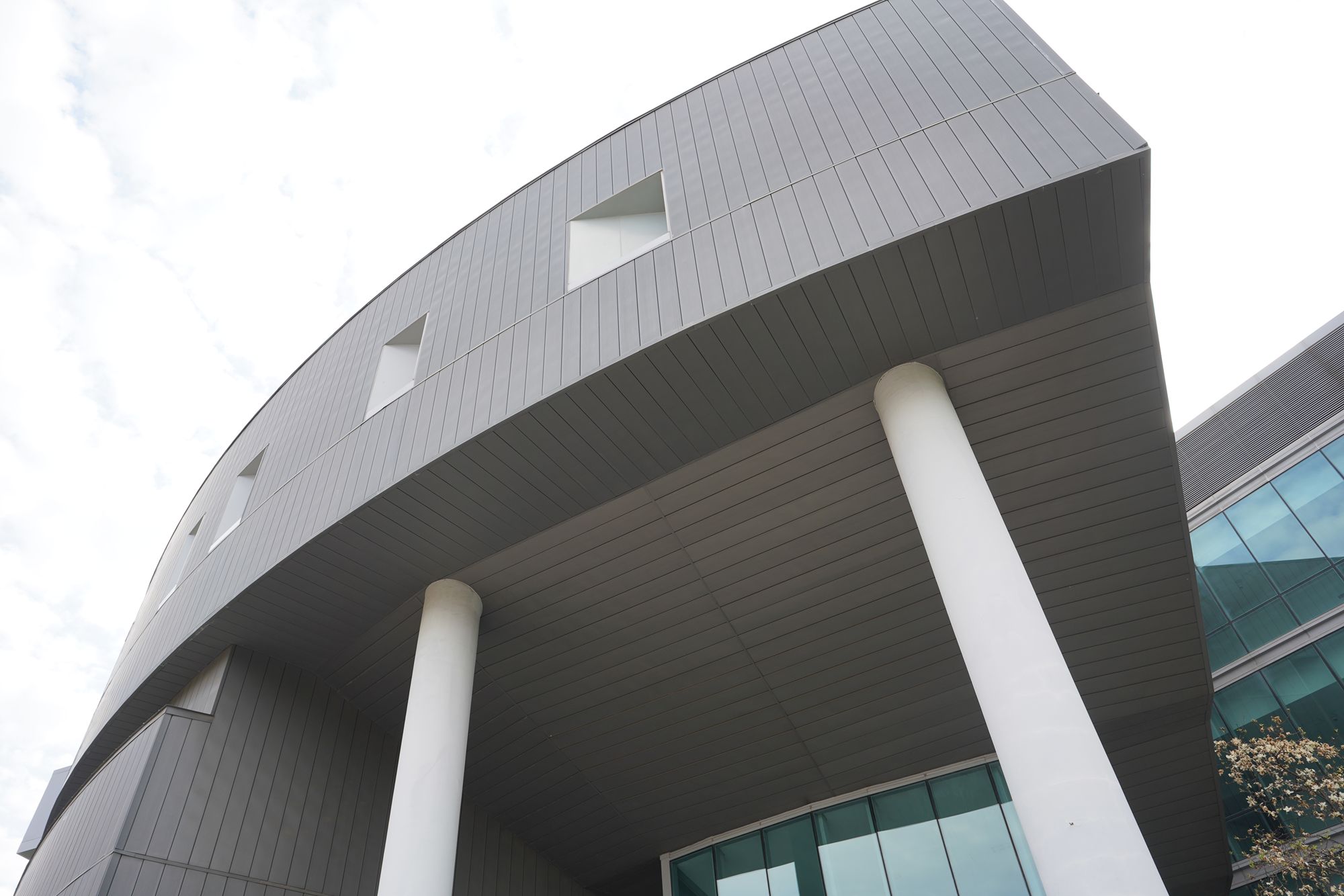
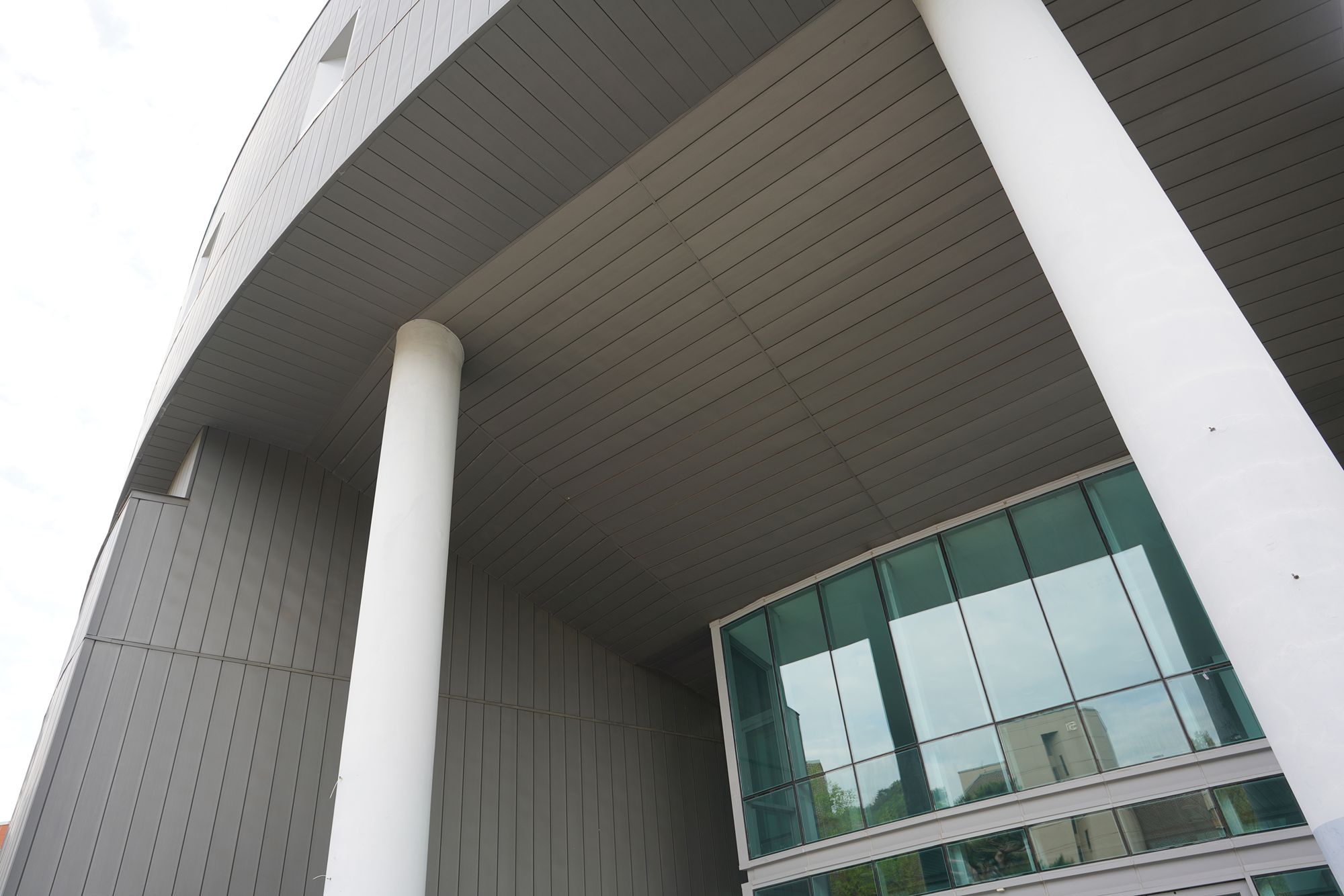
To continue my quest to see the last of the three distinctive modern buildings in Seoul, I came to Seoul National University to visit the Seoul National University Museum of Art (SNUMoA). Designed by renowned Dutch architect Rem Koolhaas and OMA, the museum is especially known for its dramatic cantilevered structure, which seems to hover above the sloping hillside.
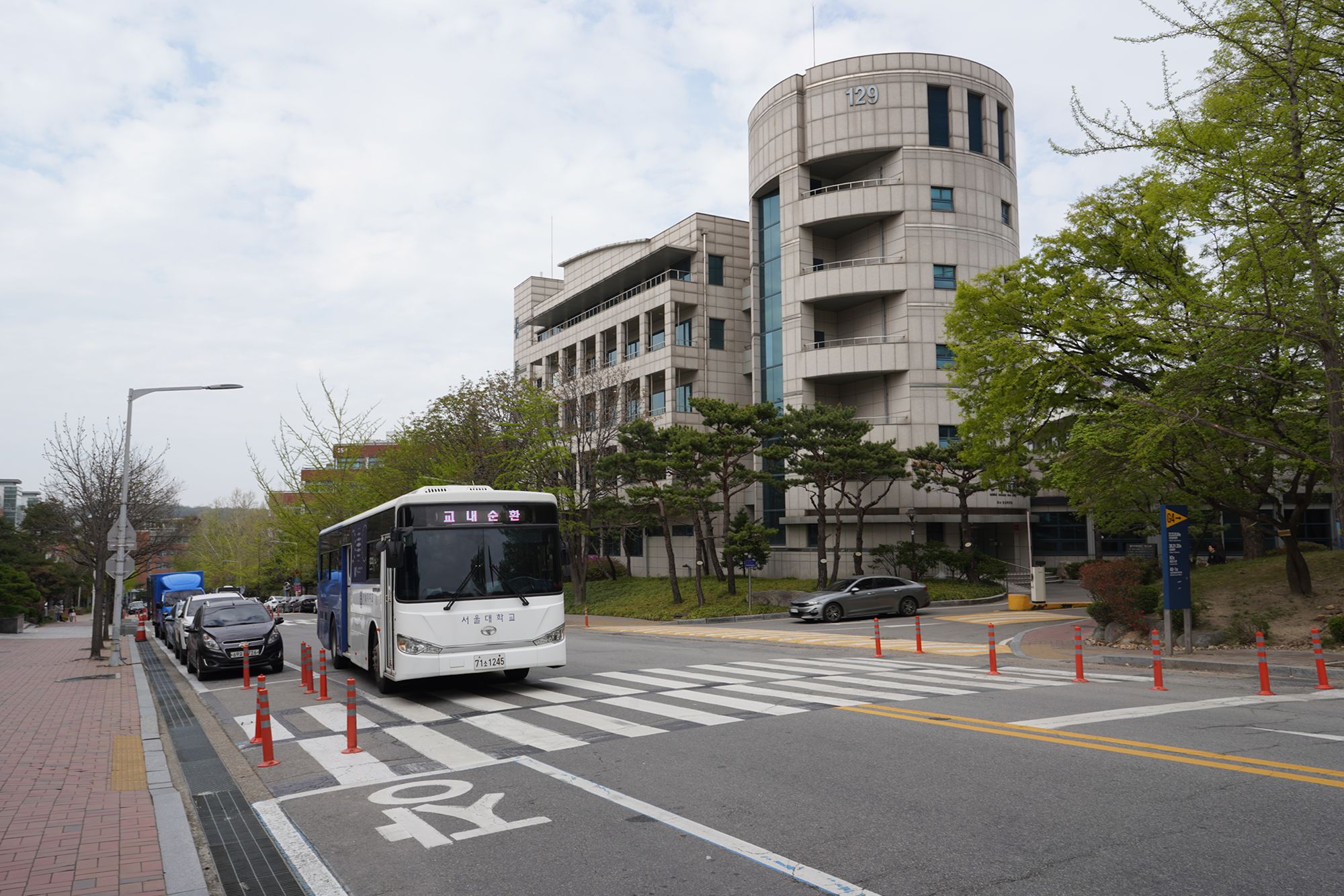
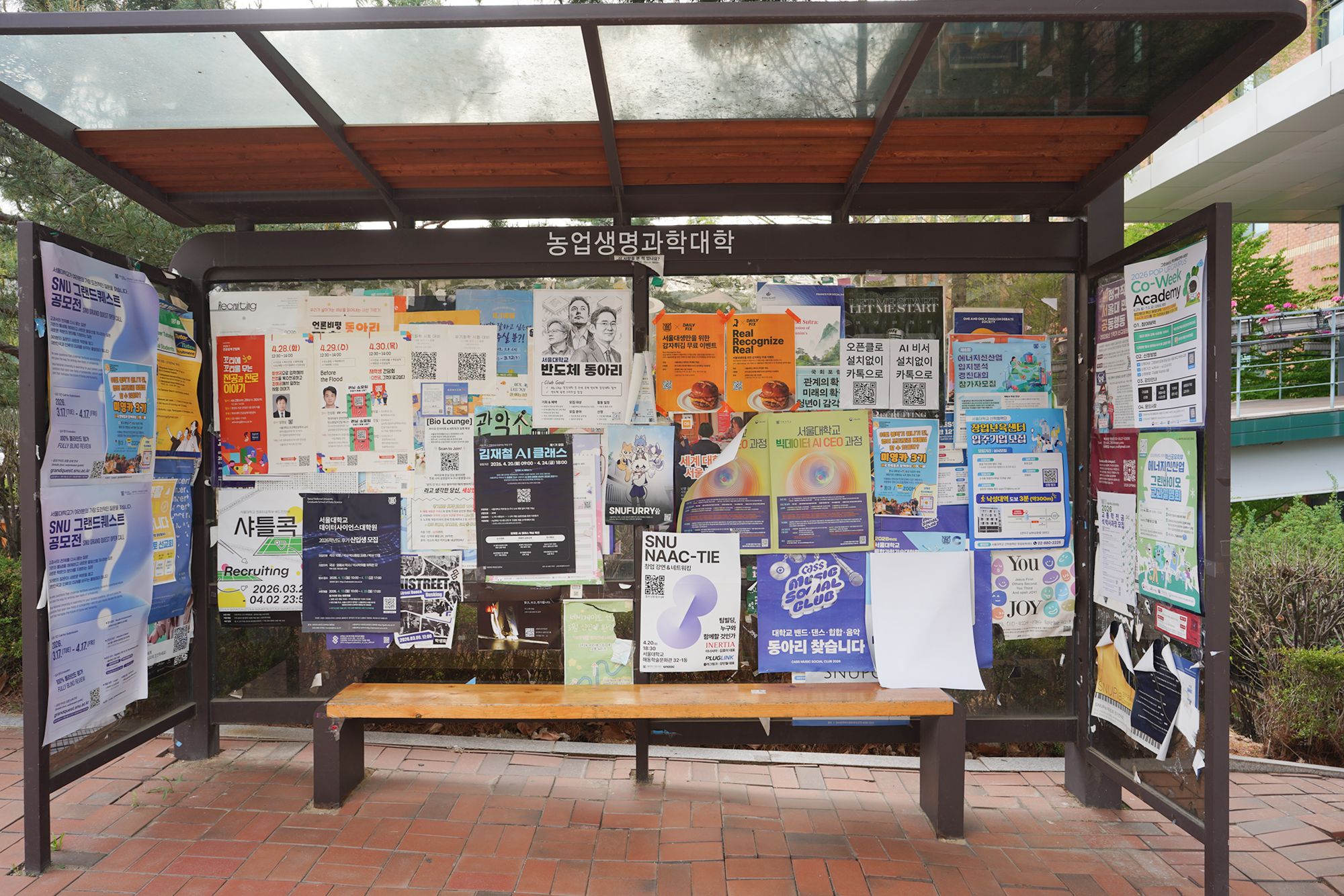
Since I was already at Seoul National University, I decided to explore the campus first before visiting the museum building.
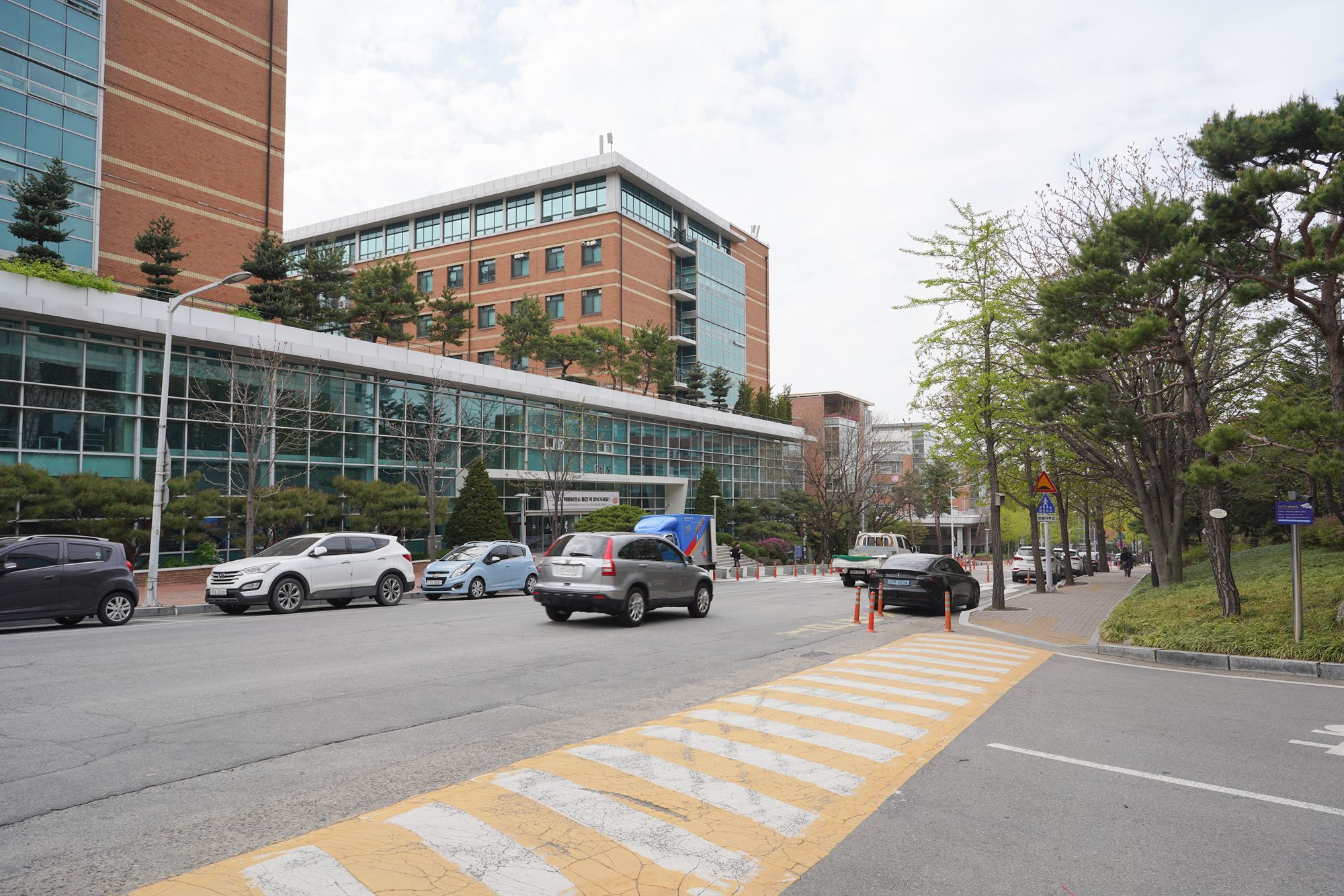
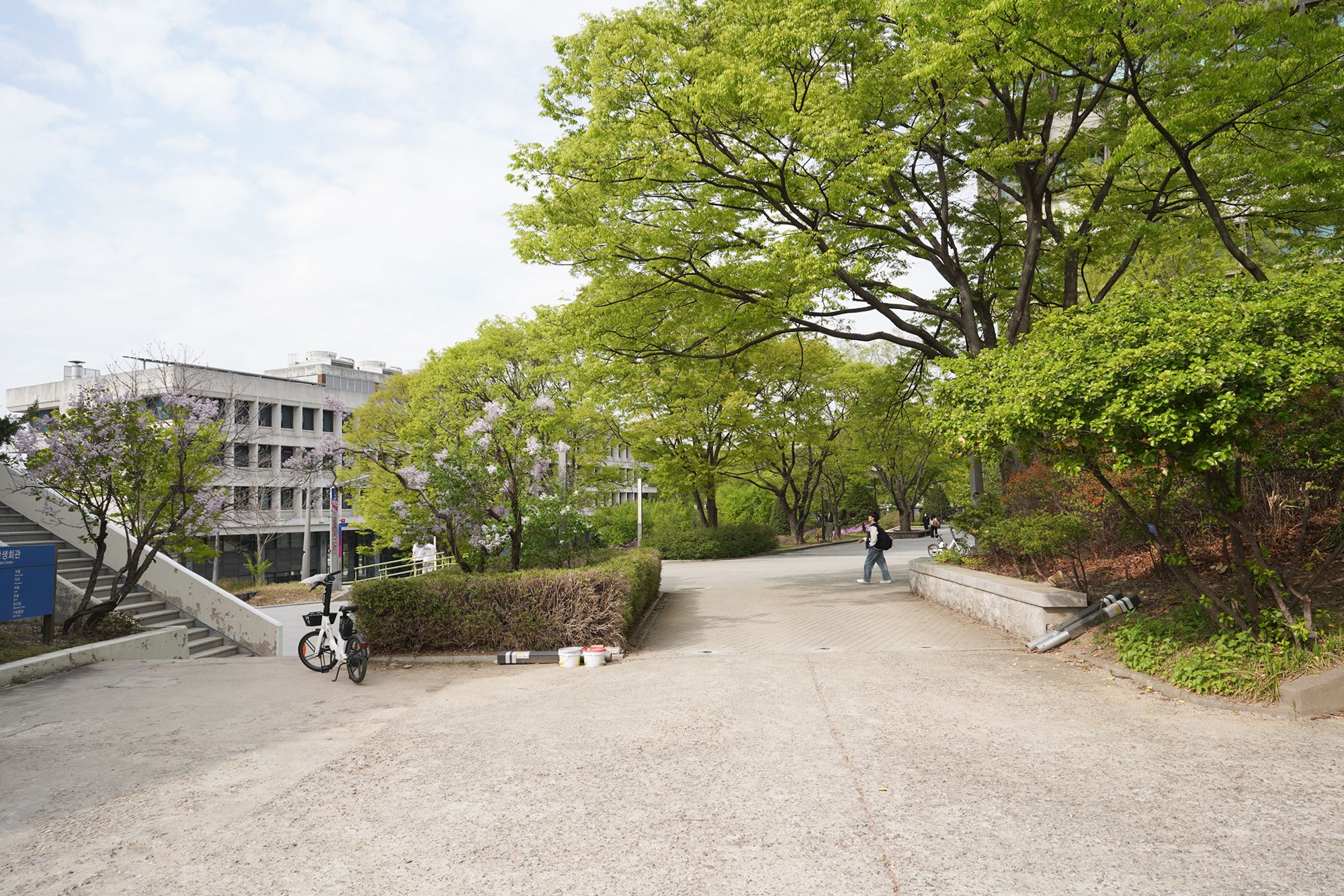
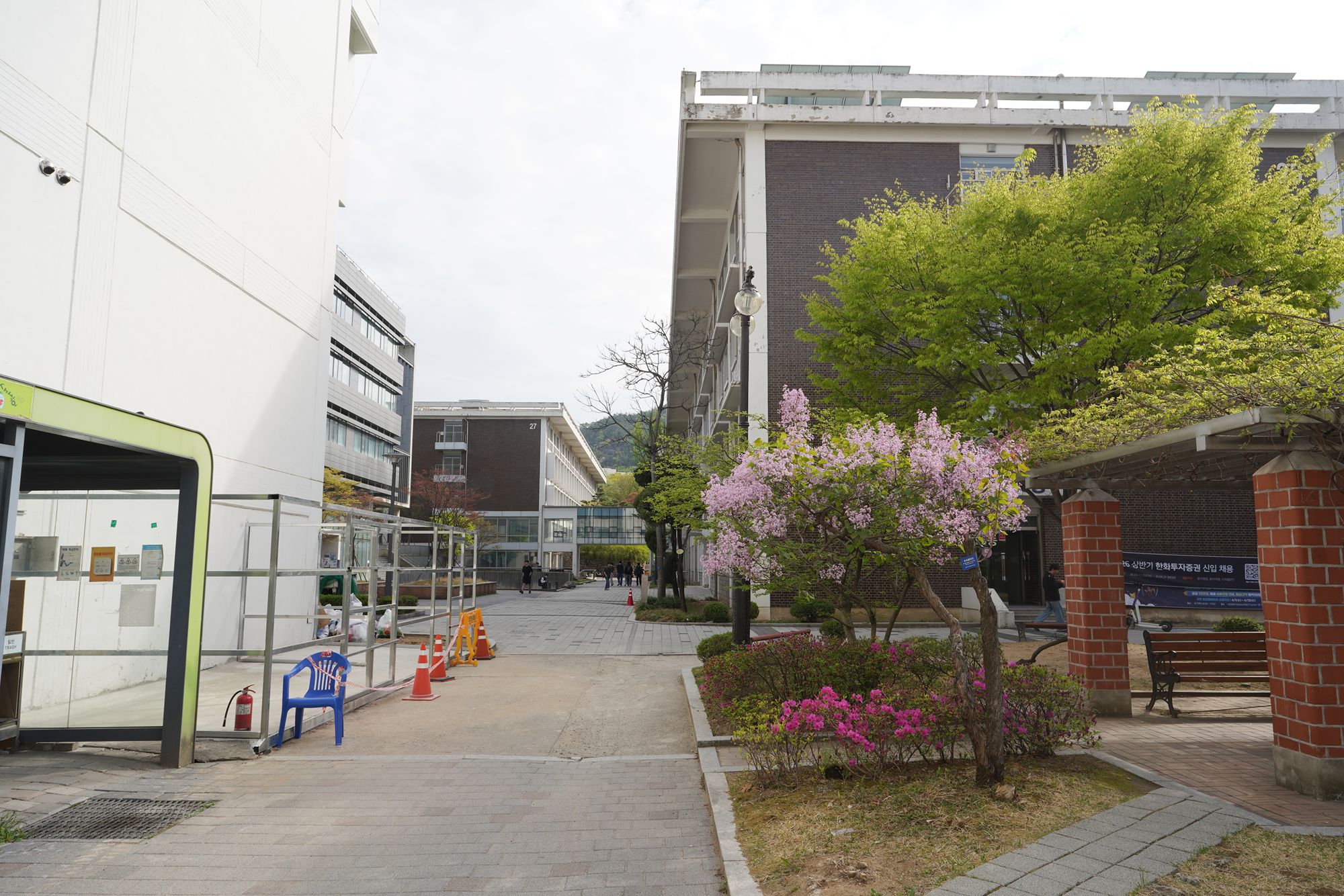
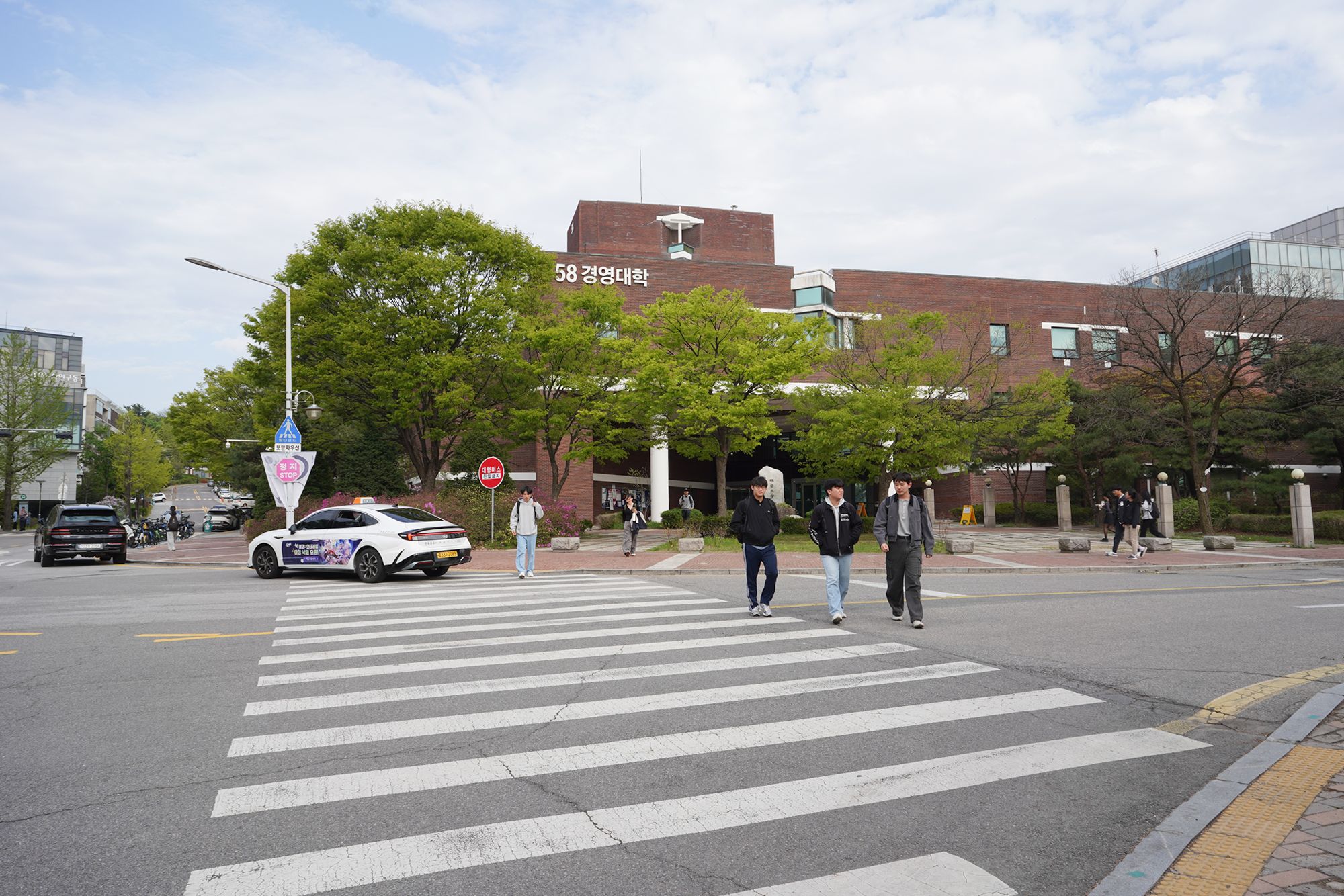
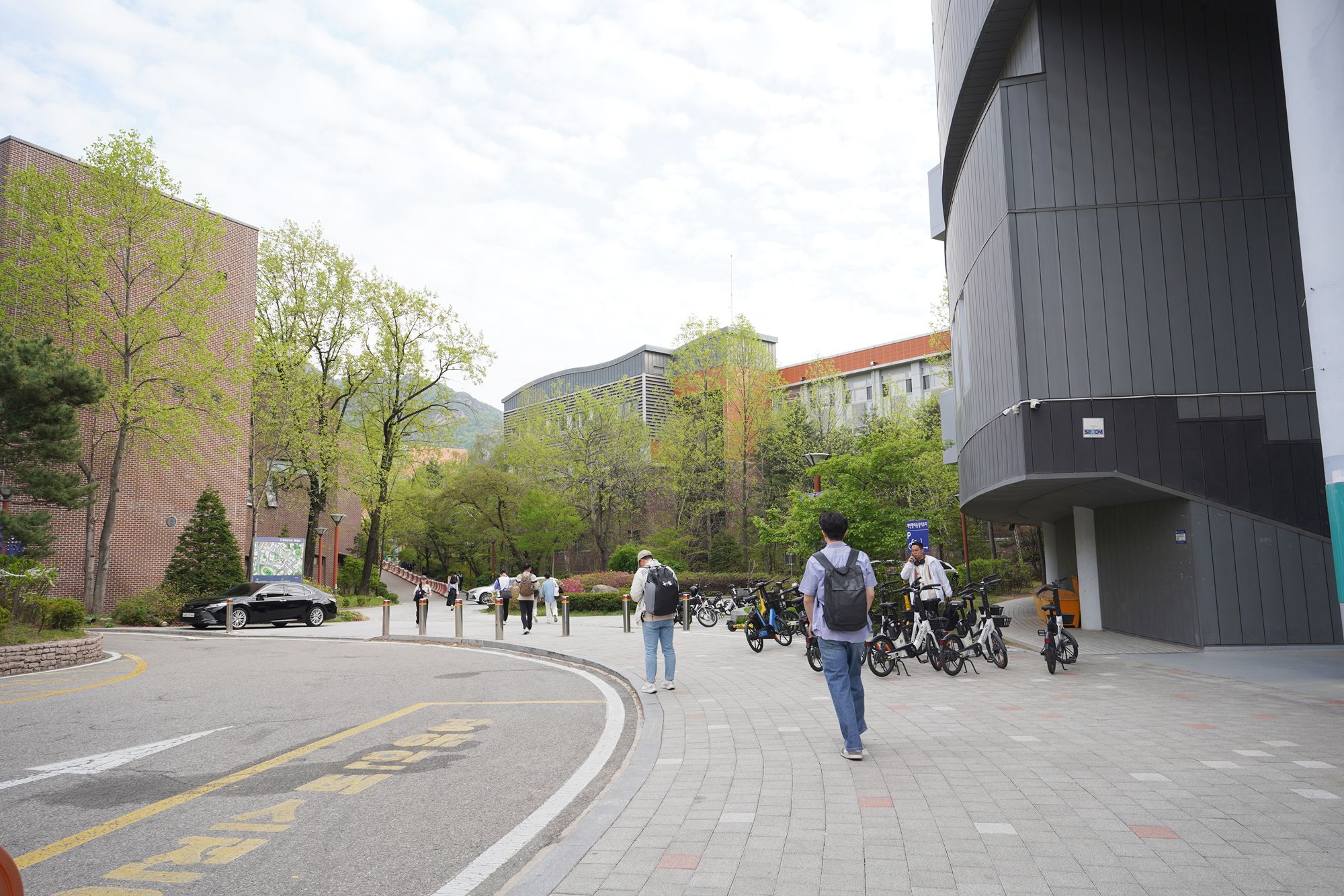
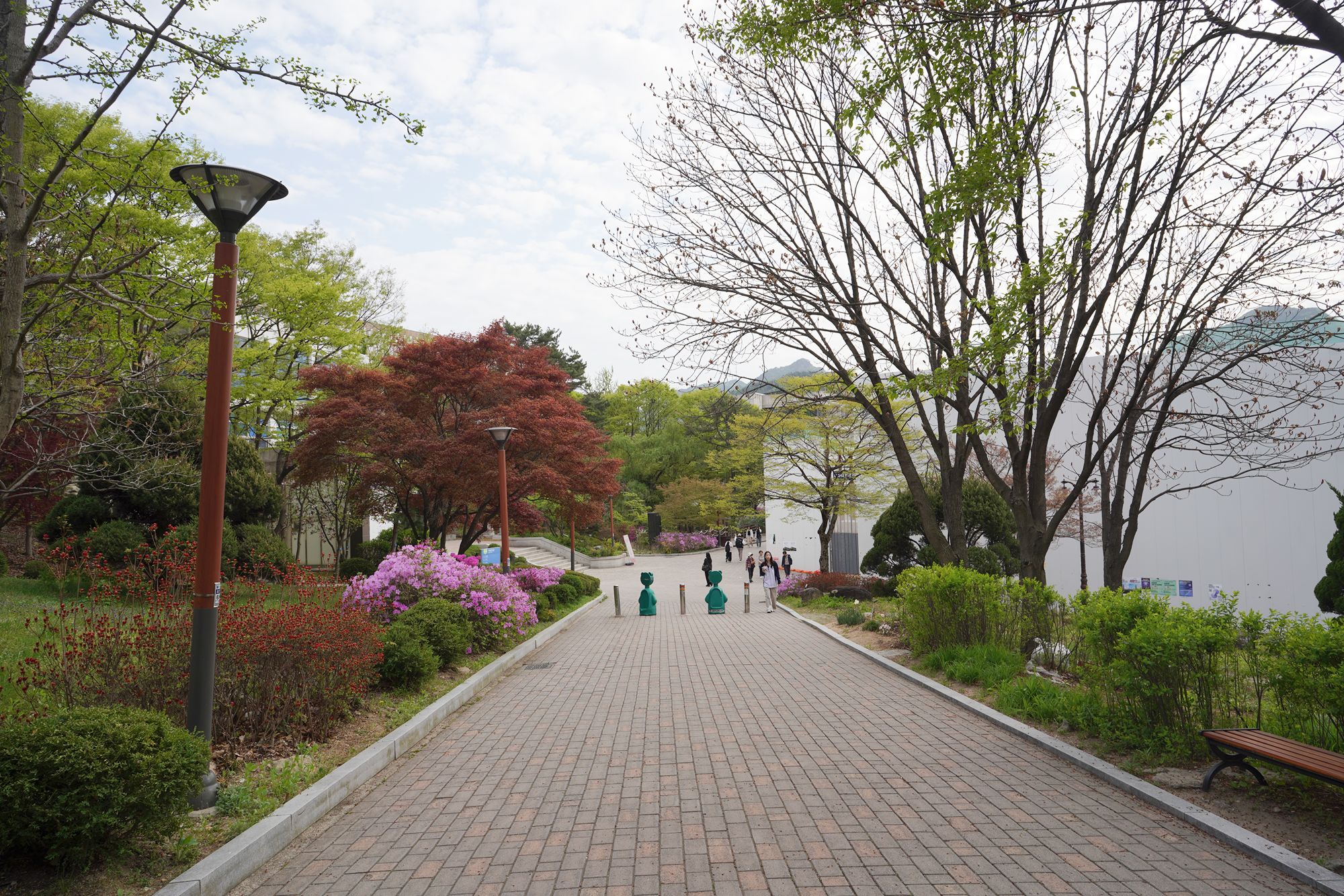
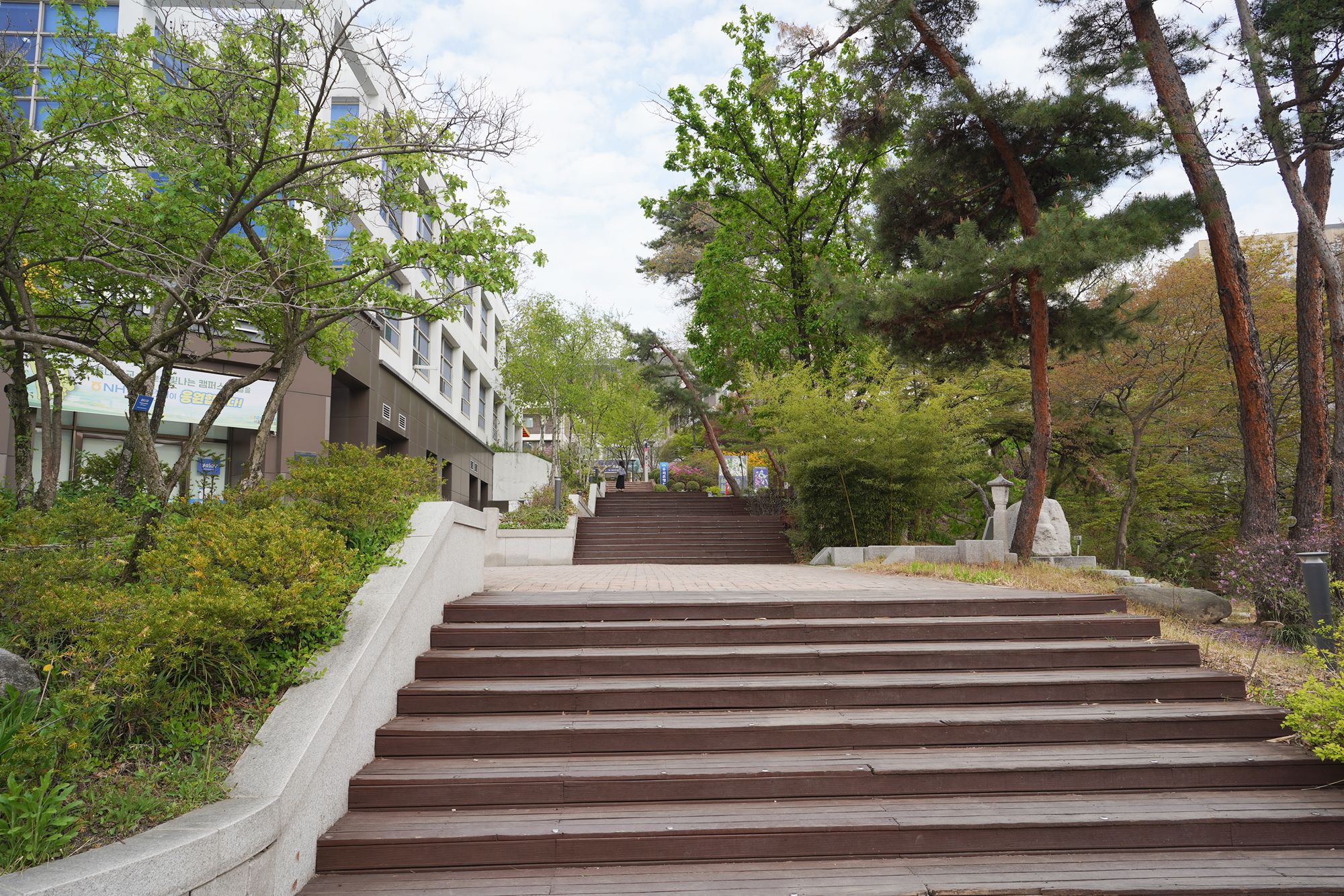
Since I didn’t really know where to go once I entered the campus, I decided to simply wander around and explore for a while before making my way to the museum.
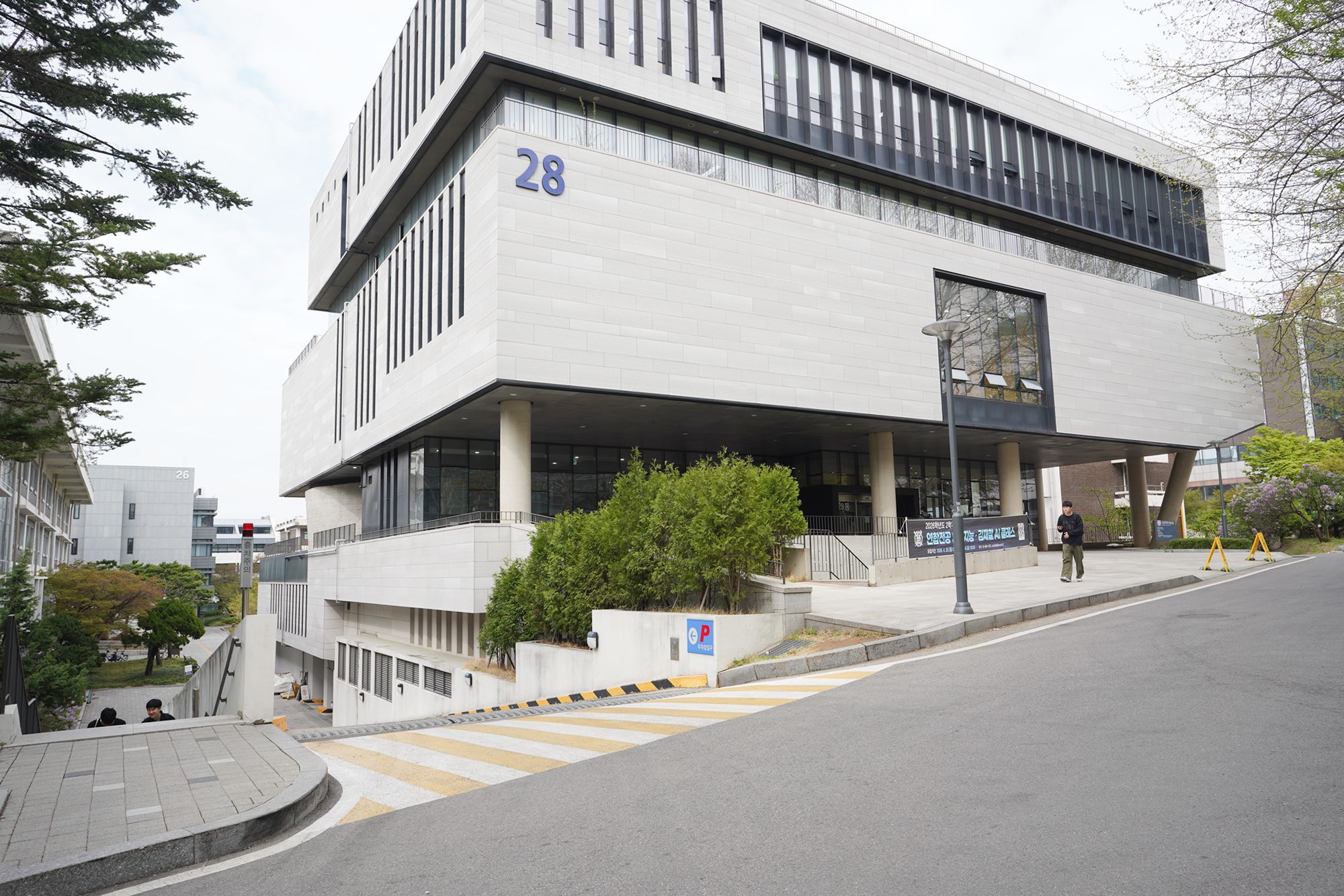
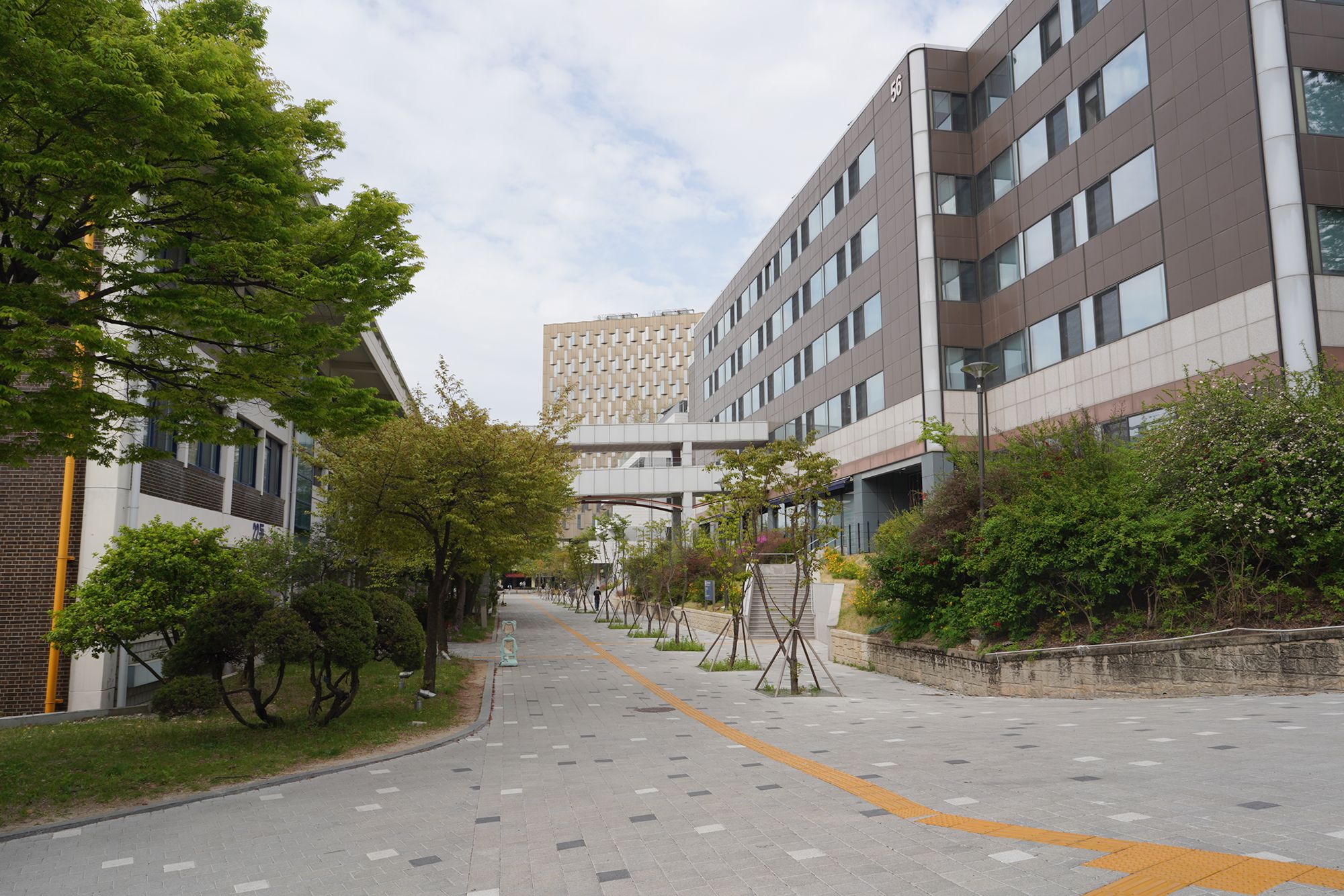
Seoul National University, SNU, was founded in 1946, shortly after Korea's liberation from Japanese rule, as the country's first comprehensive national university. It began with nine colleges and one graduate school and developed into South Korea's flagship university, playing an important role in educating many of the country's academic, political, business, and cultural leaders.
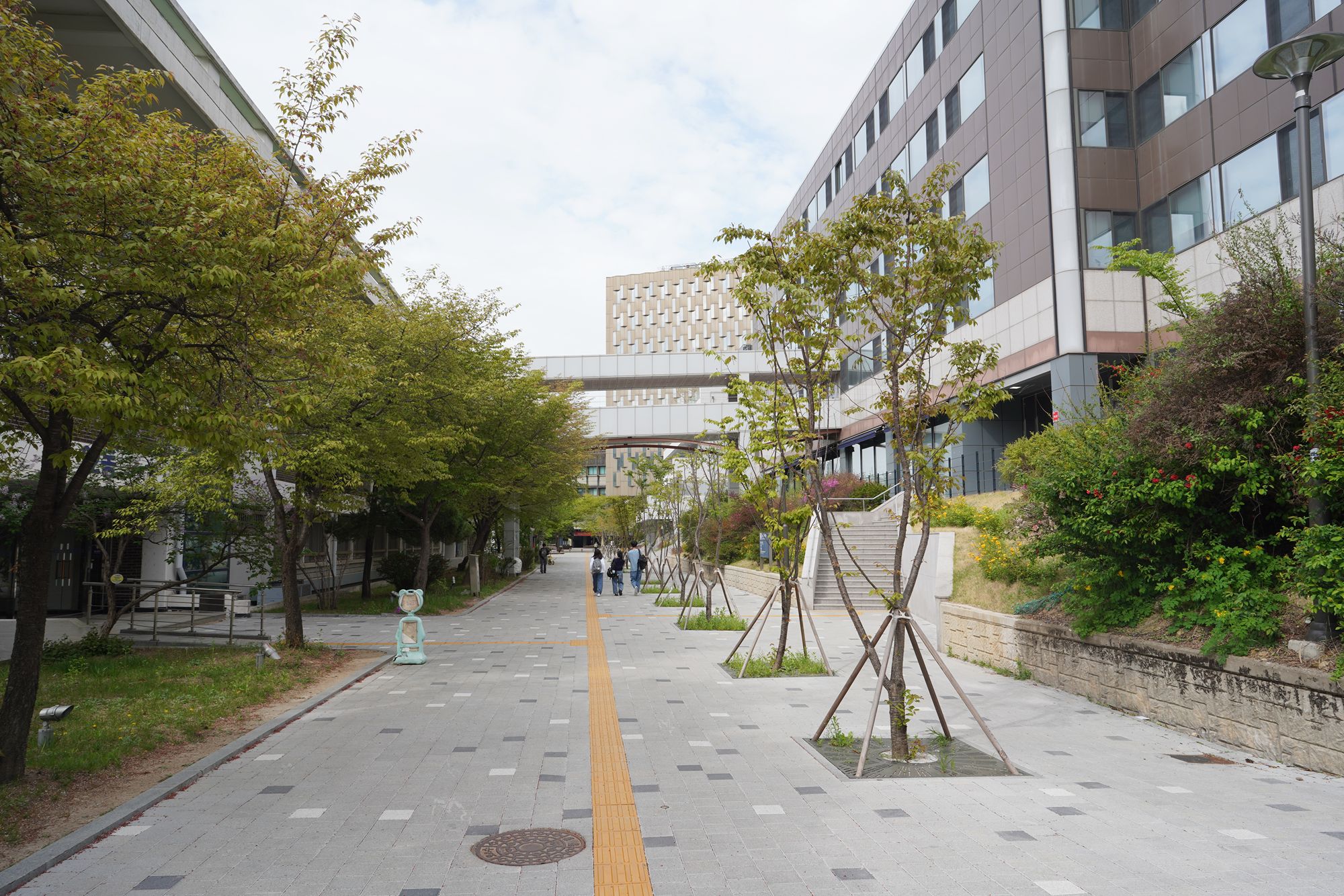
SNU was once spread across several locations around Seoul, but in the 1970s, most of the university was consolidated here at the foot of Gwanaksan Mountain in southern Seoul. The Gwanak Campus officially opened in 1975 and has since grown into a vast university complex that feels almost like a small city of its own.
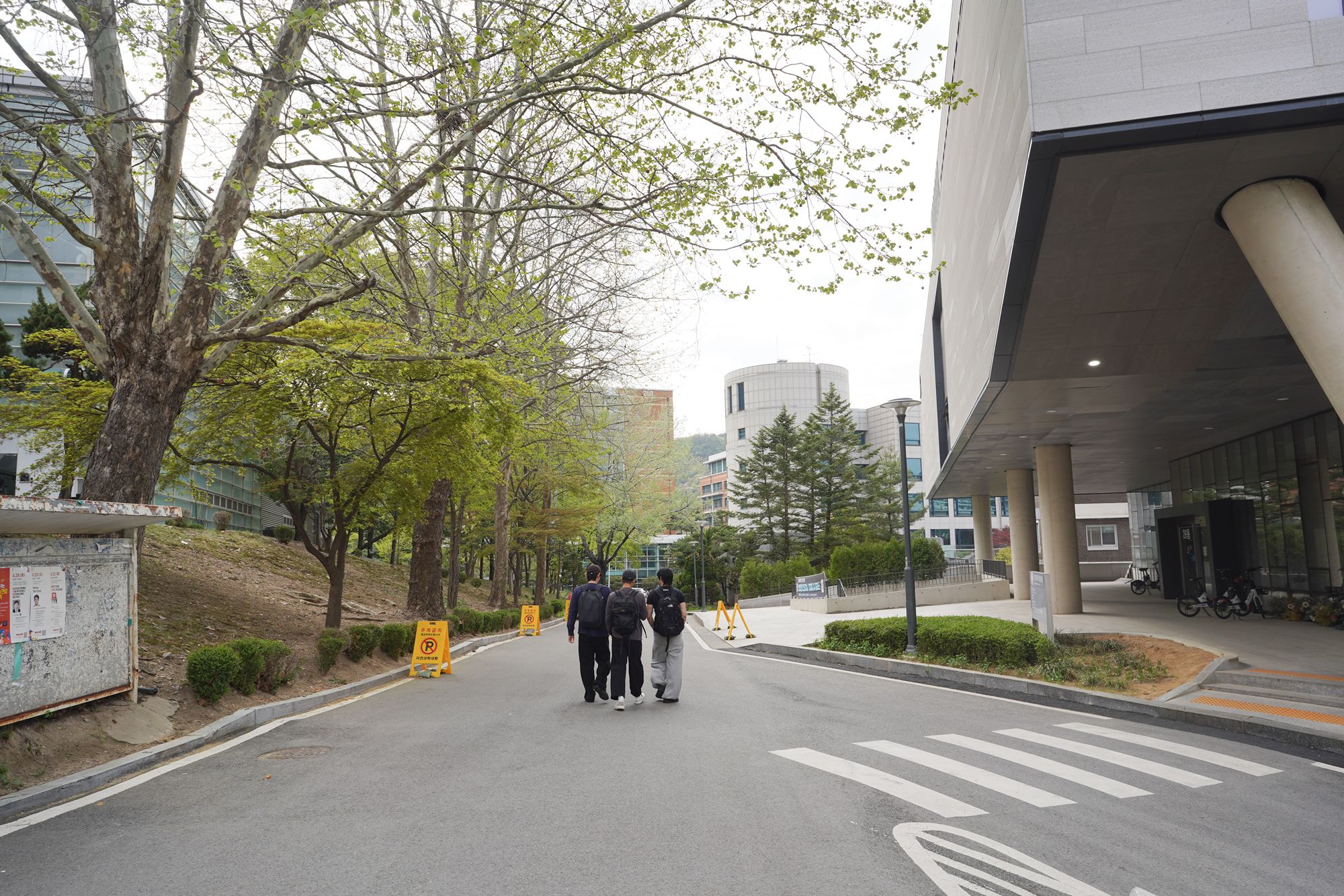
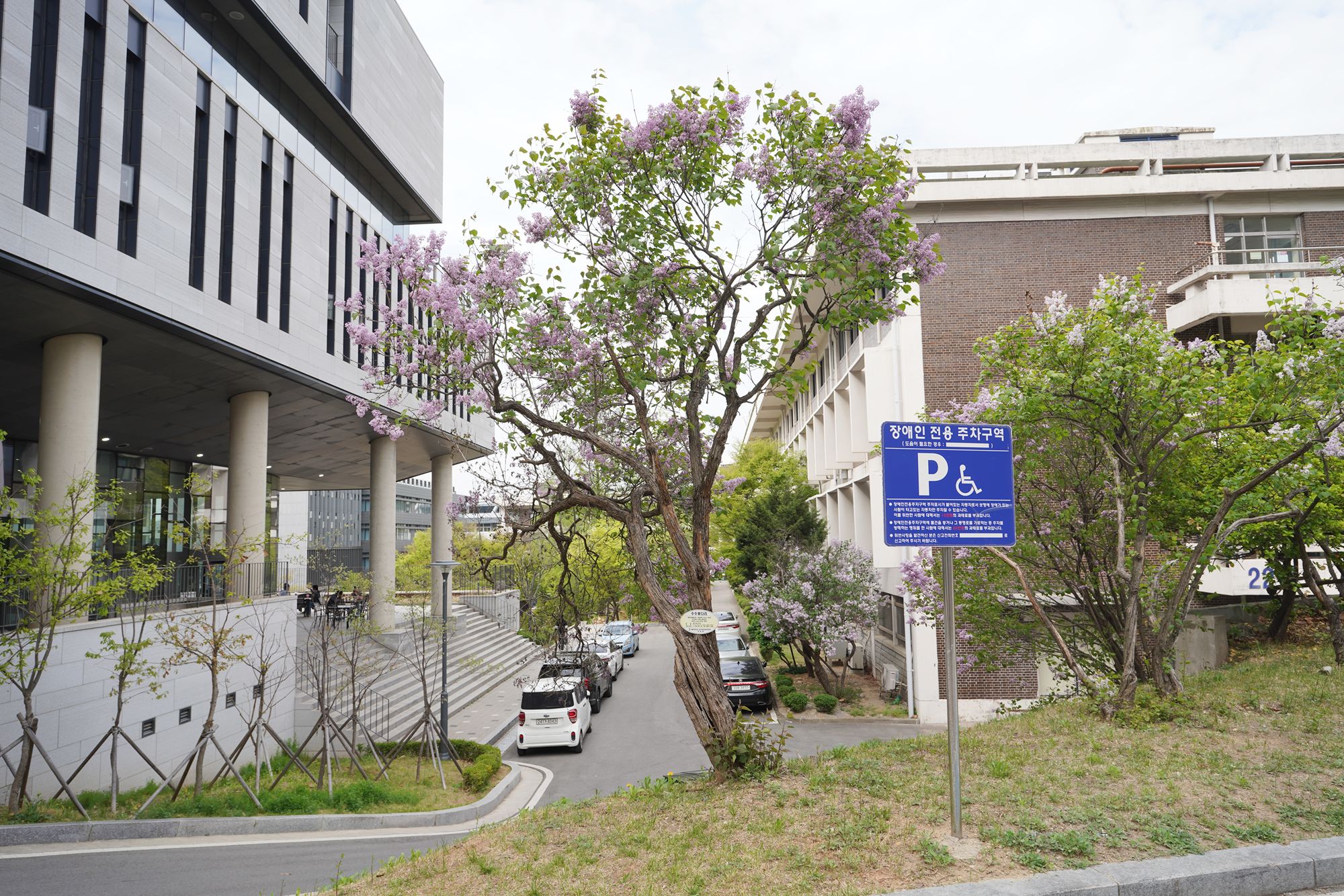
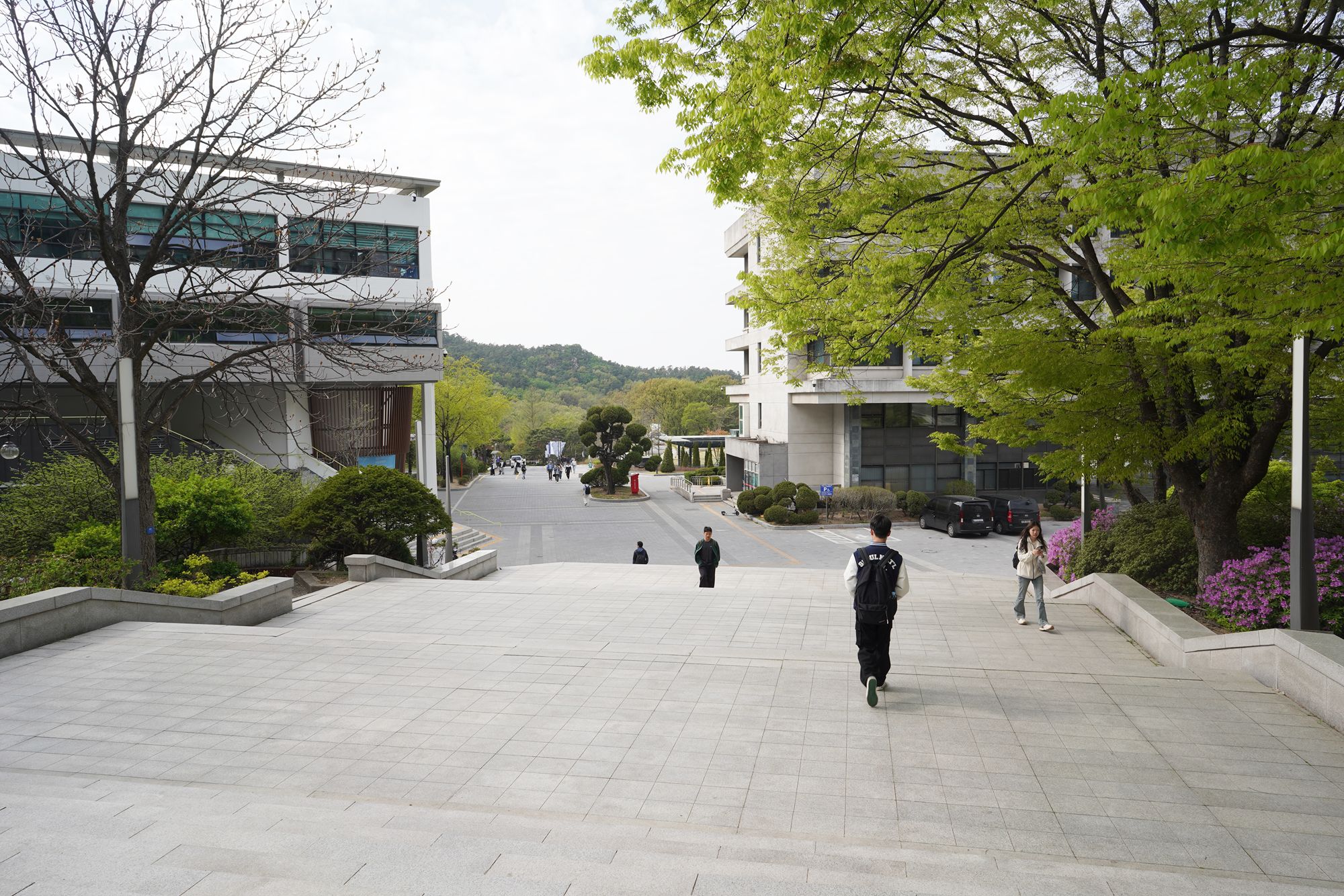
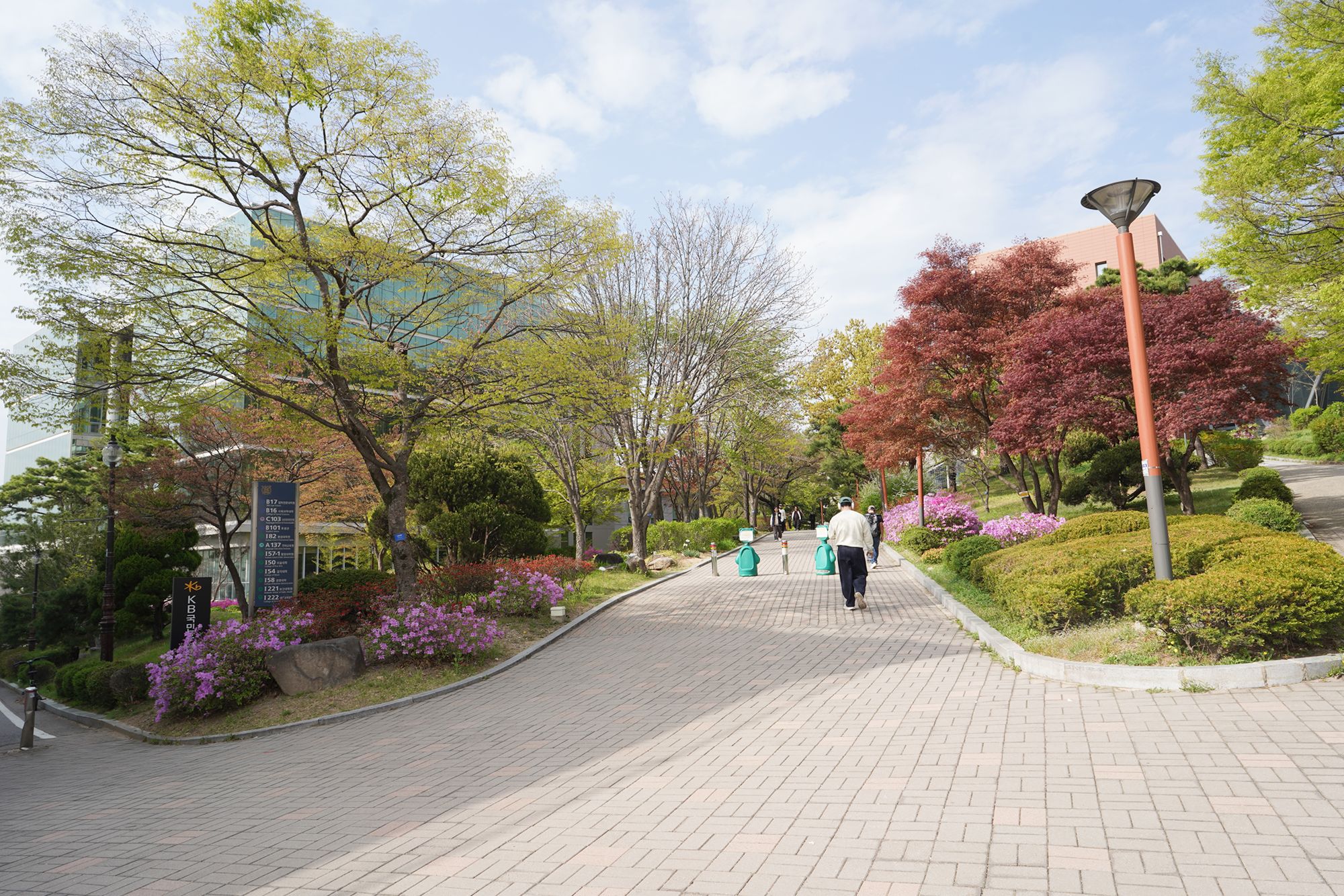
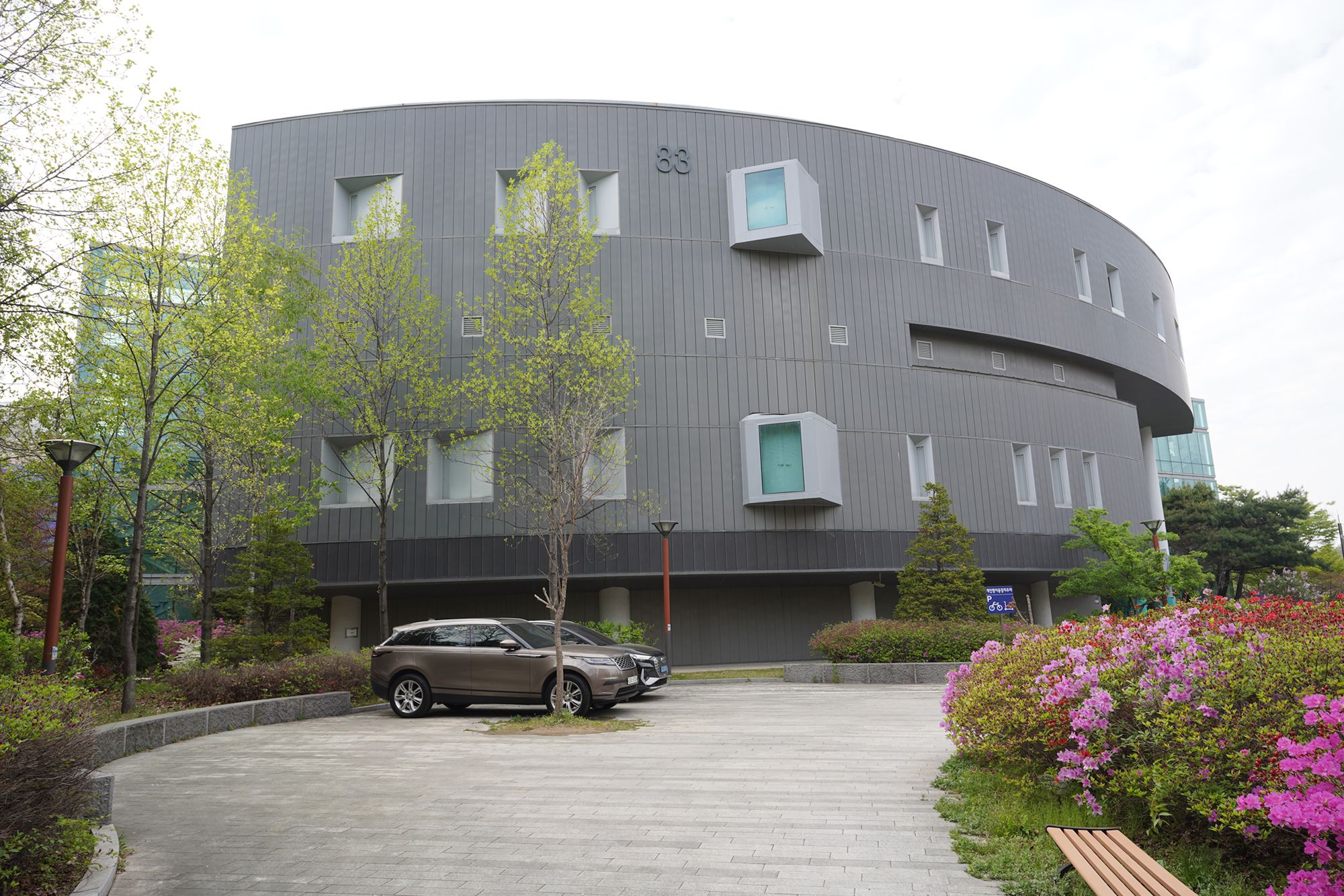
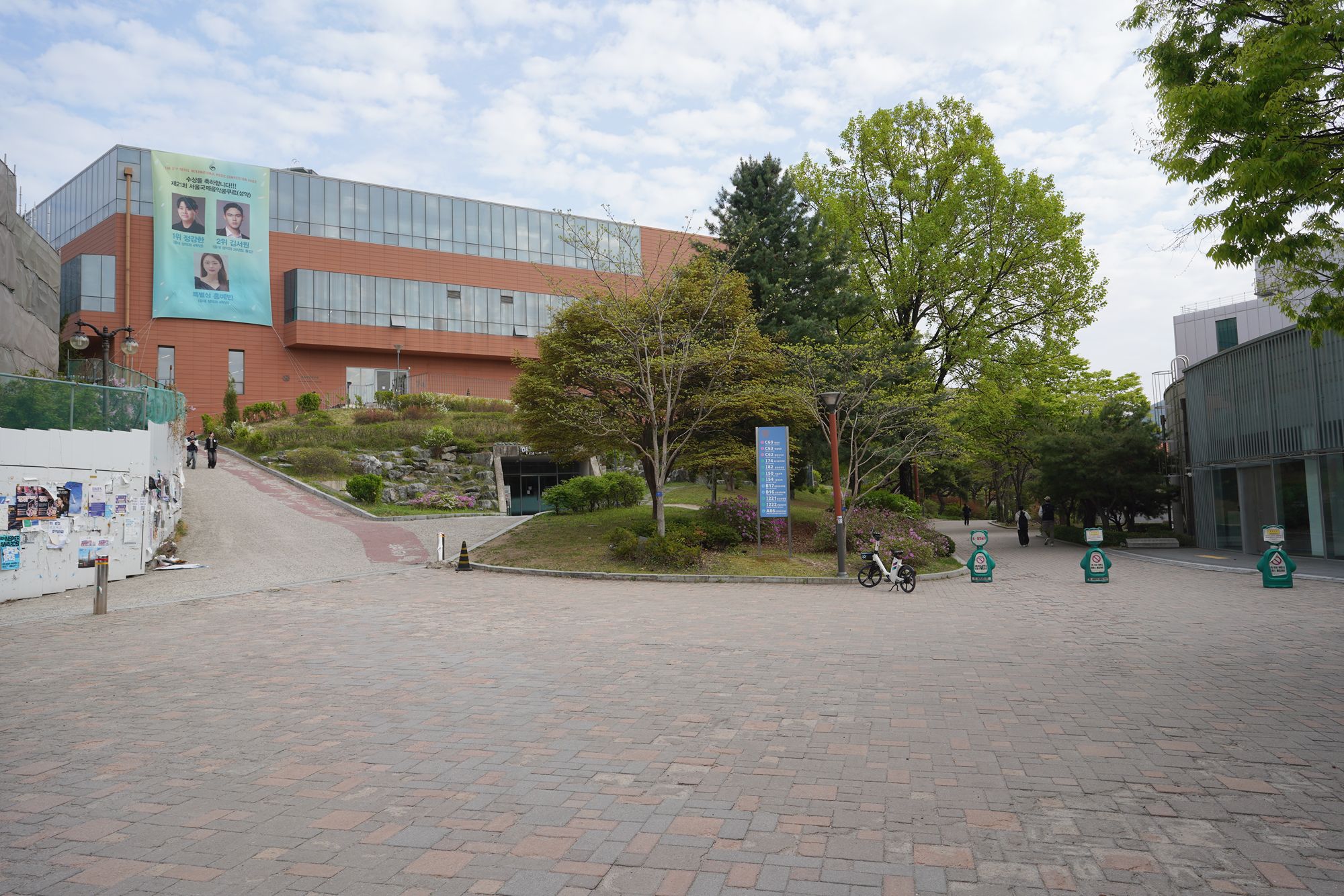
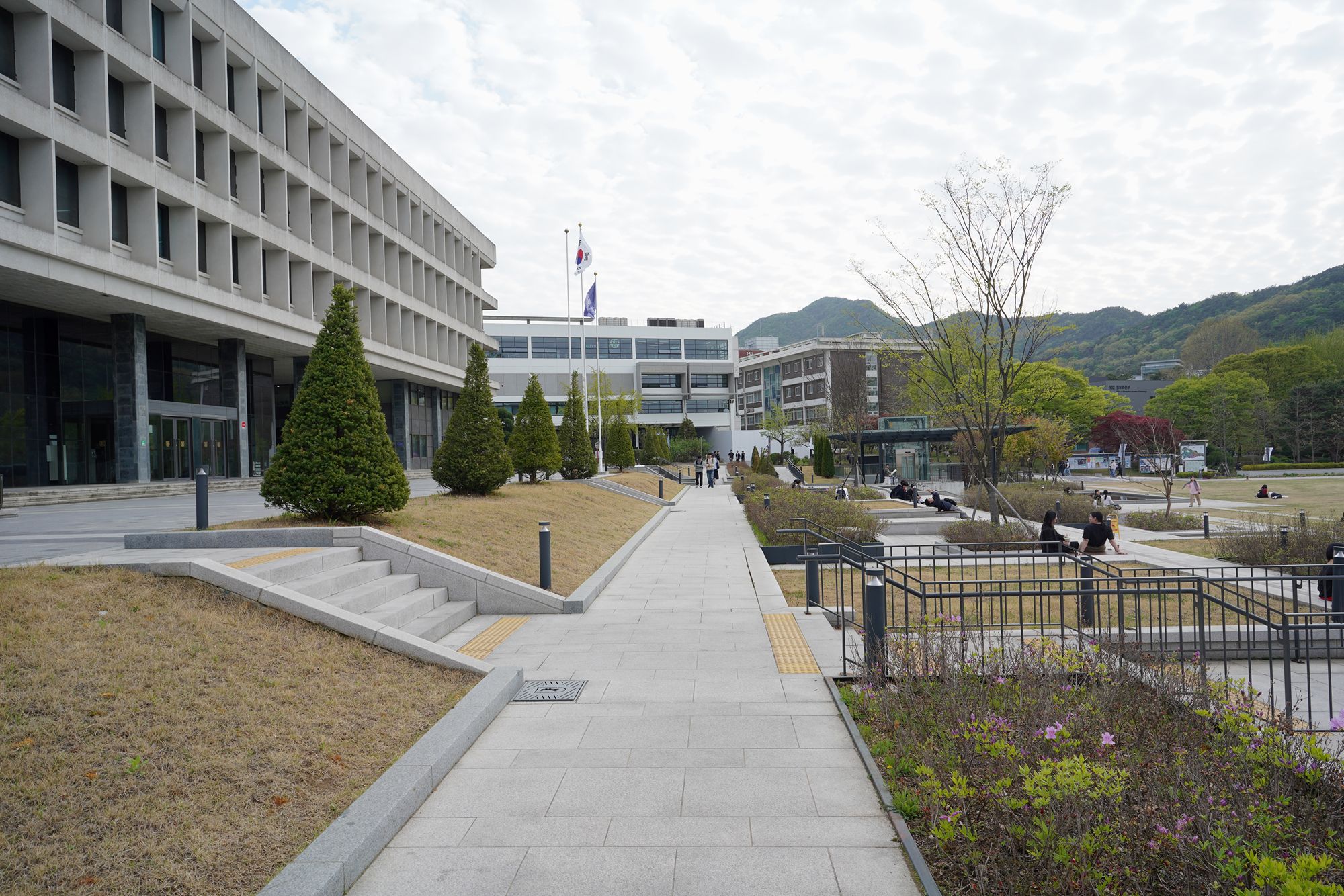
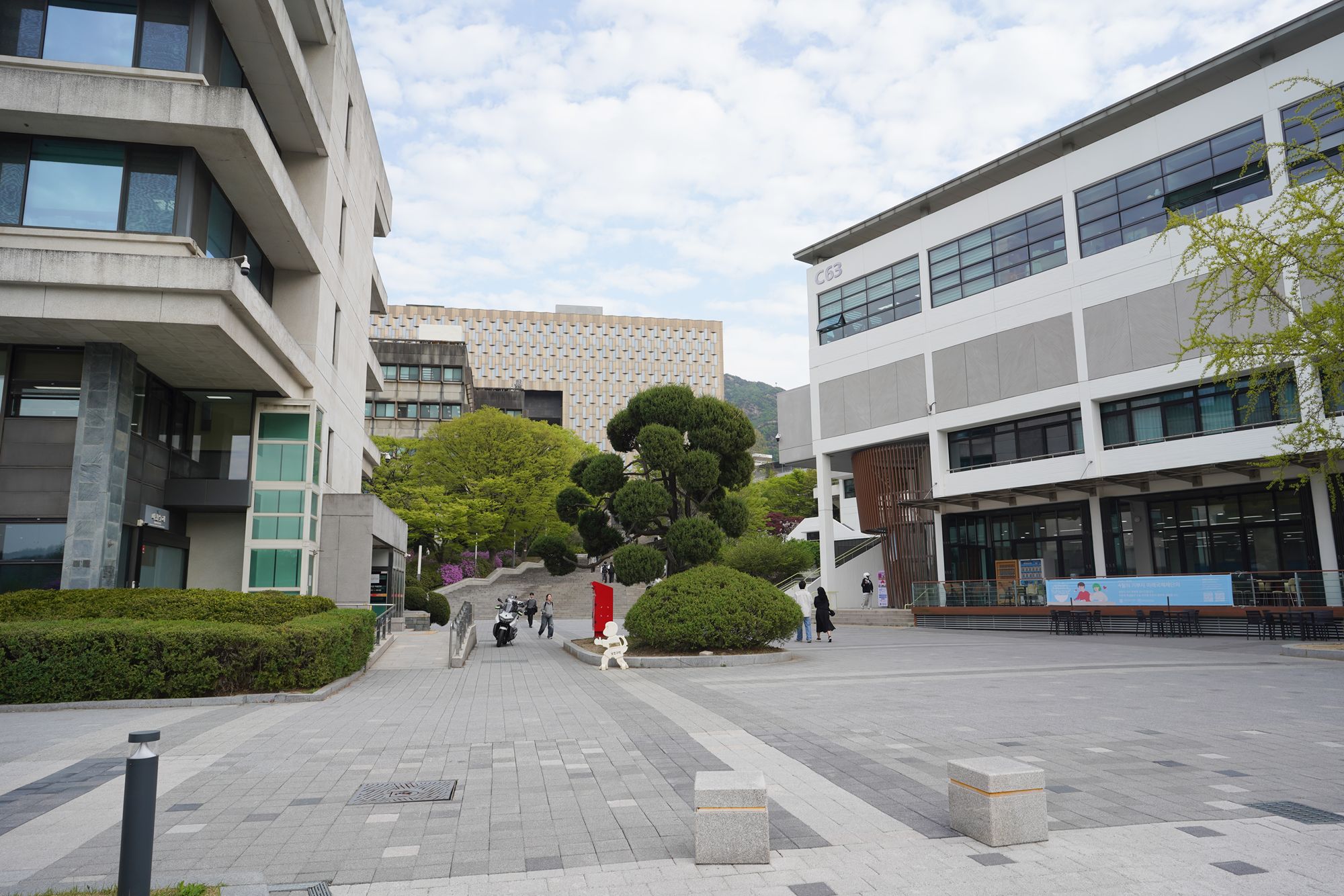
And it really is enormous. The Gwanak Campus covers about 4.1 million square meters and contains more than 200 buildings. So your not knowing exactly where to go and simply wandering around actually makes perfect sense—the campus is more like a small district than a compact university campus.
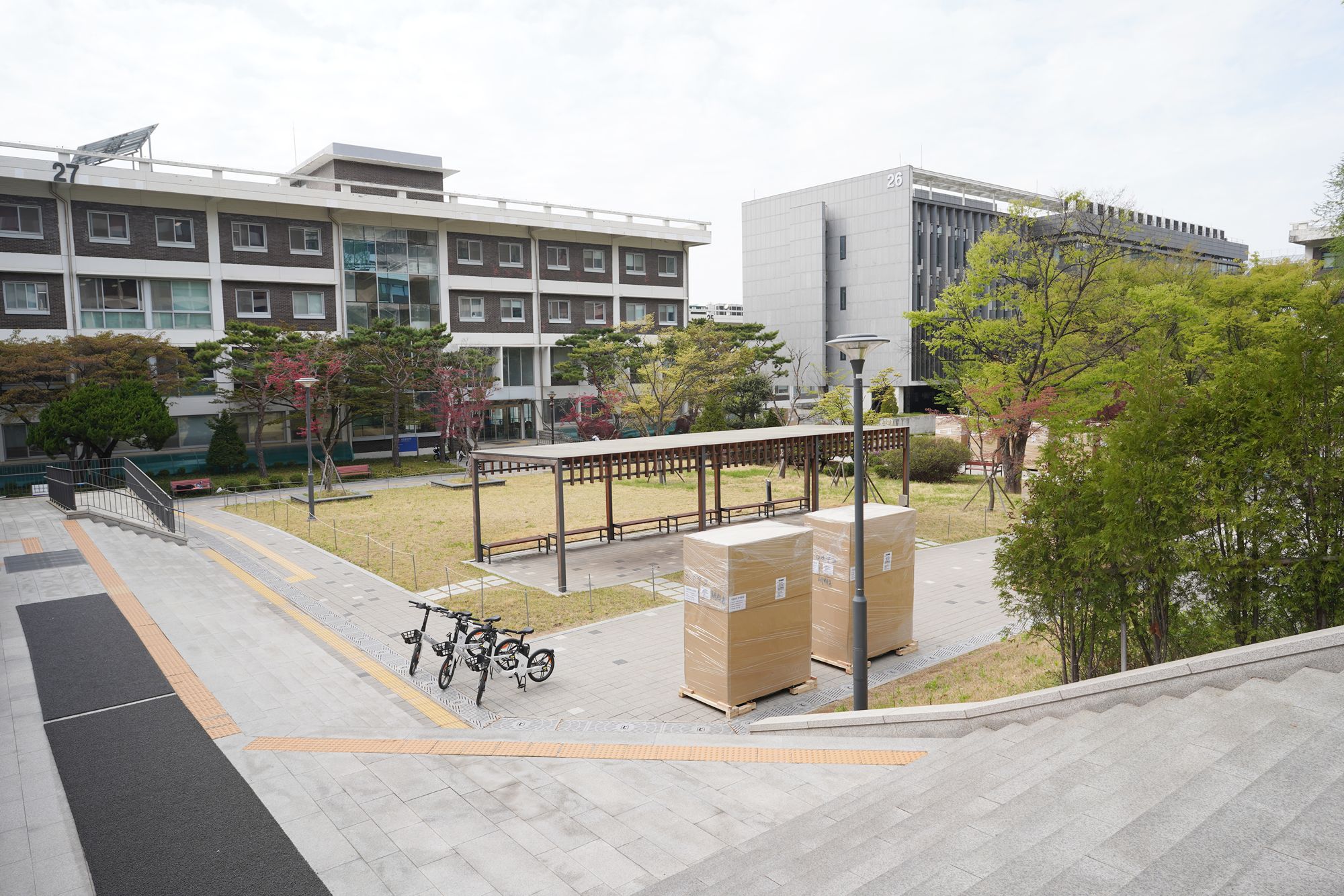
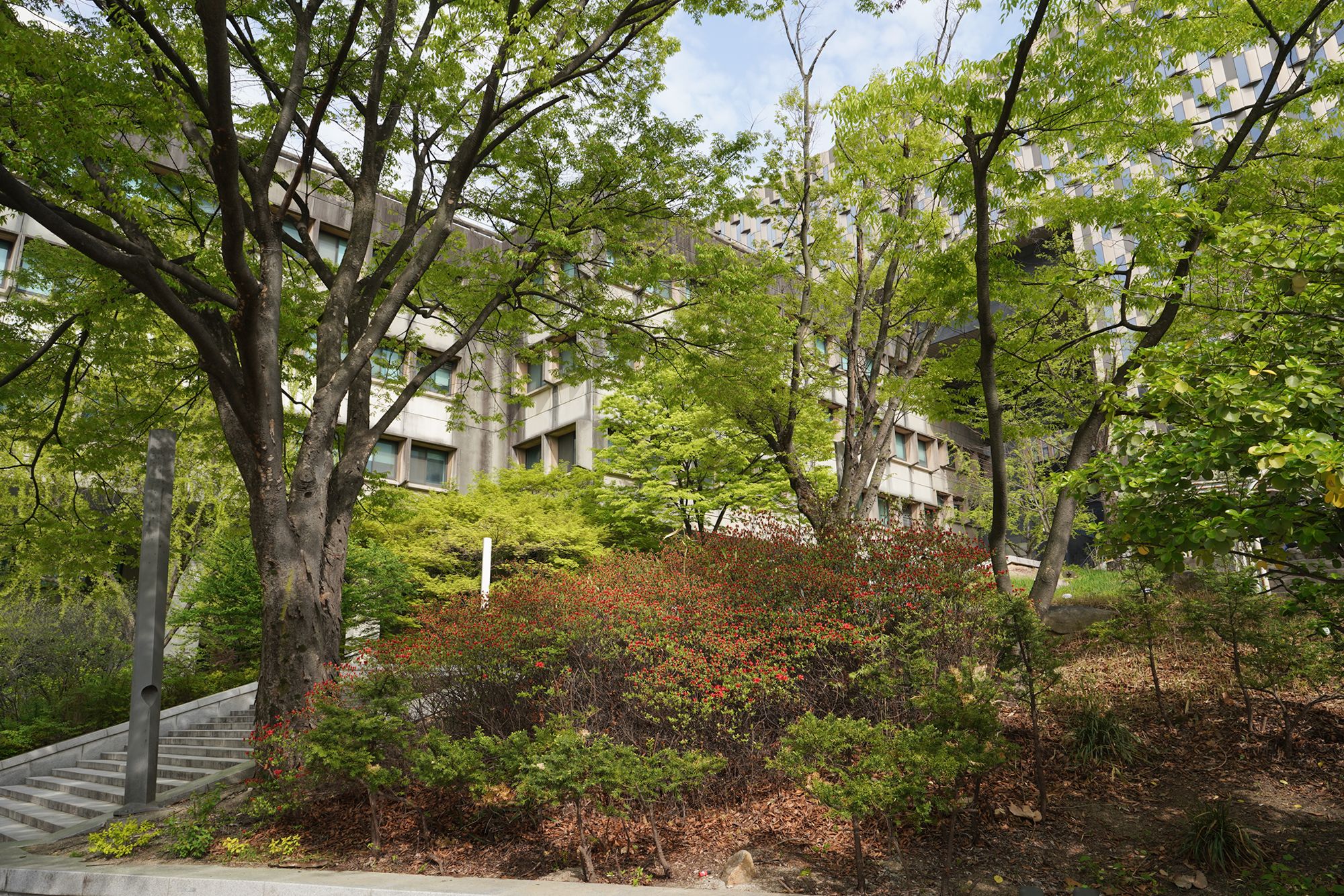
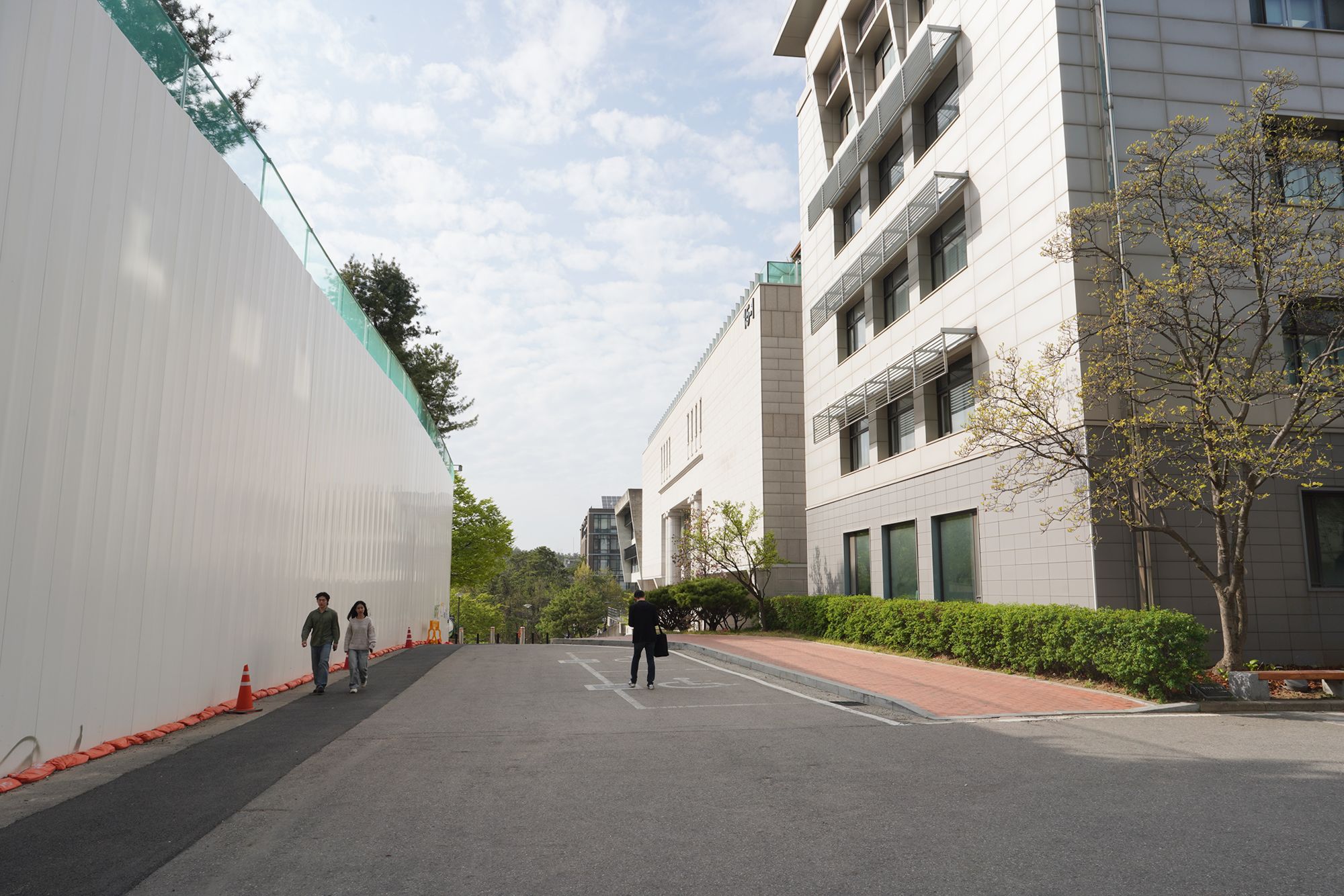
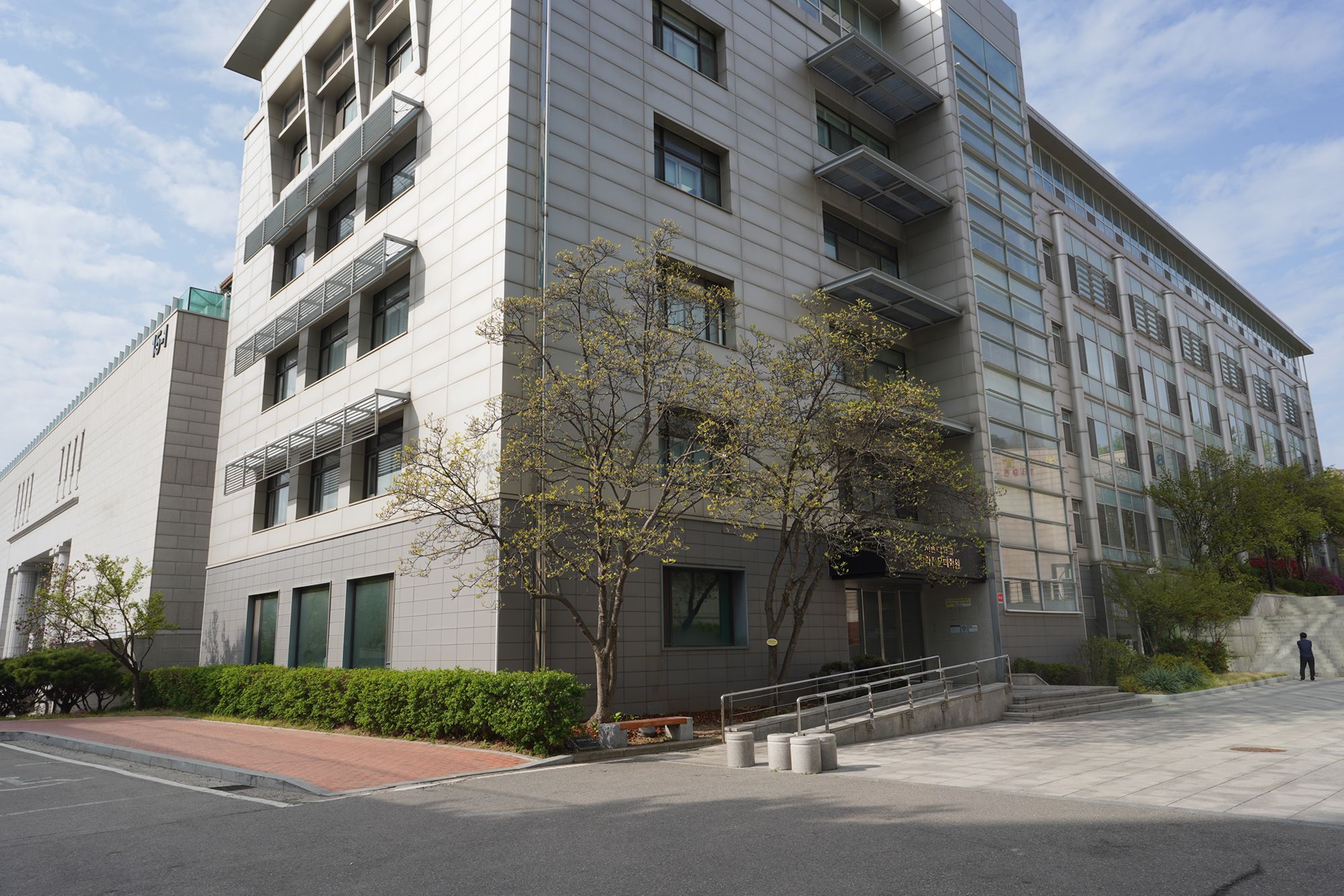
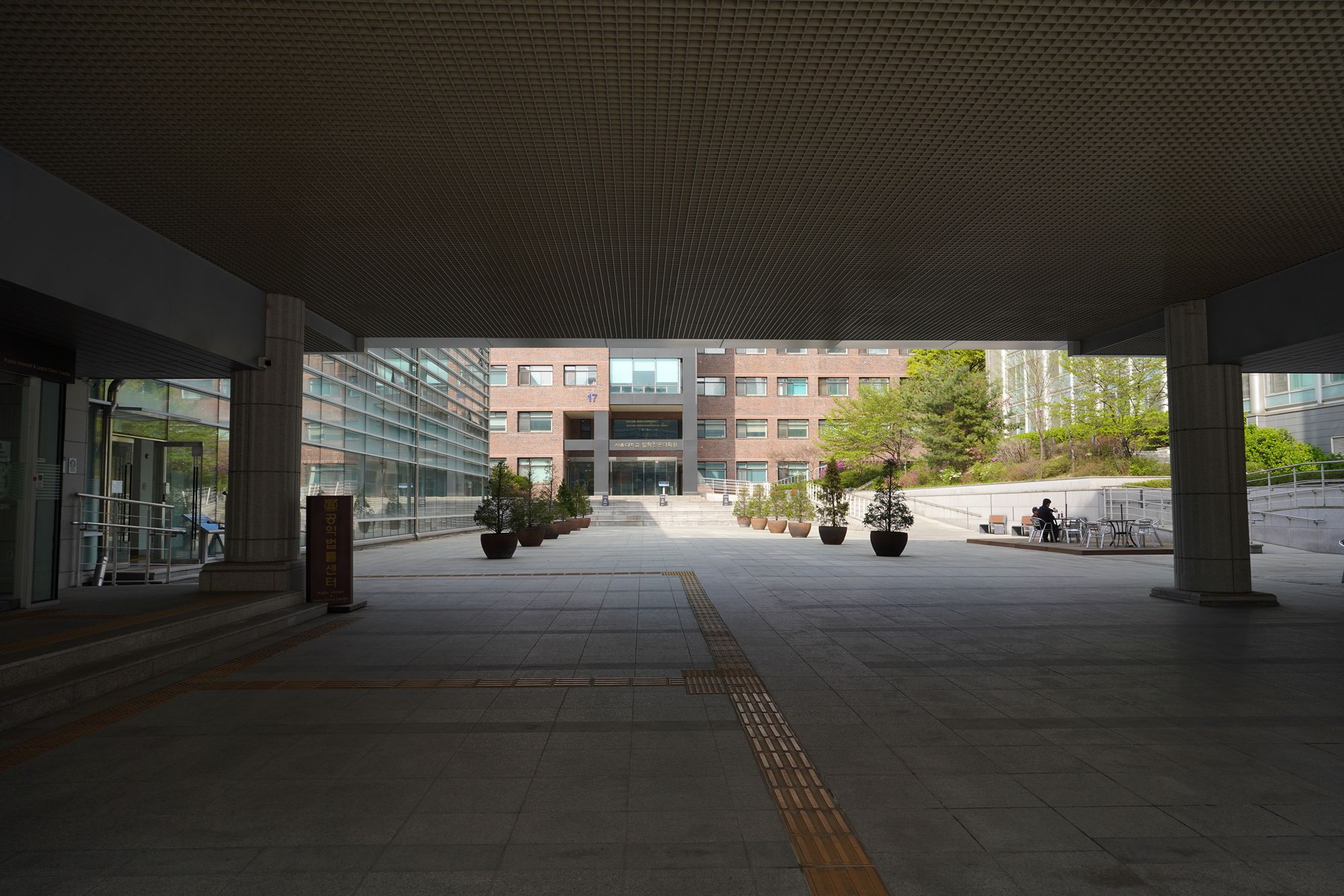
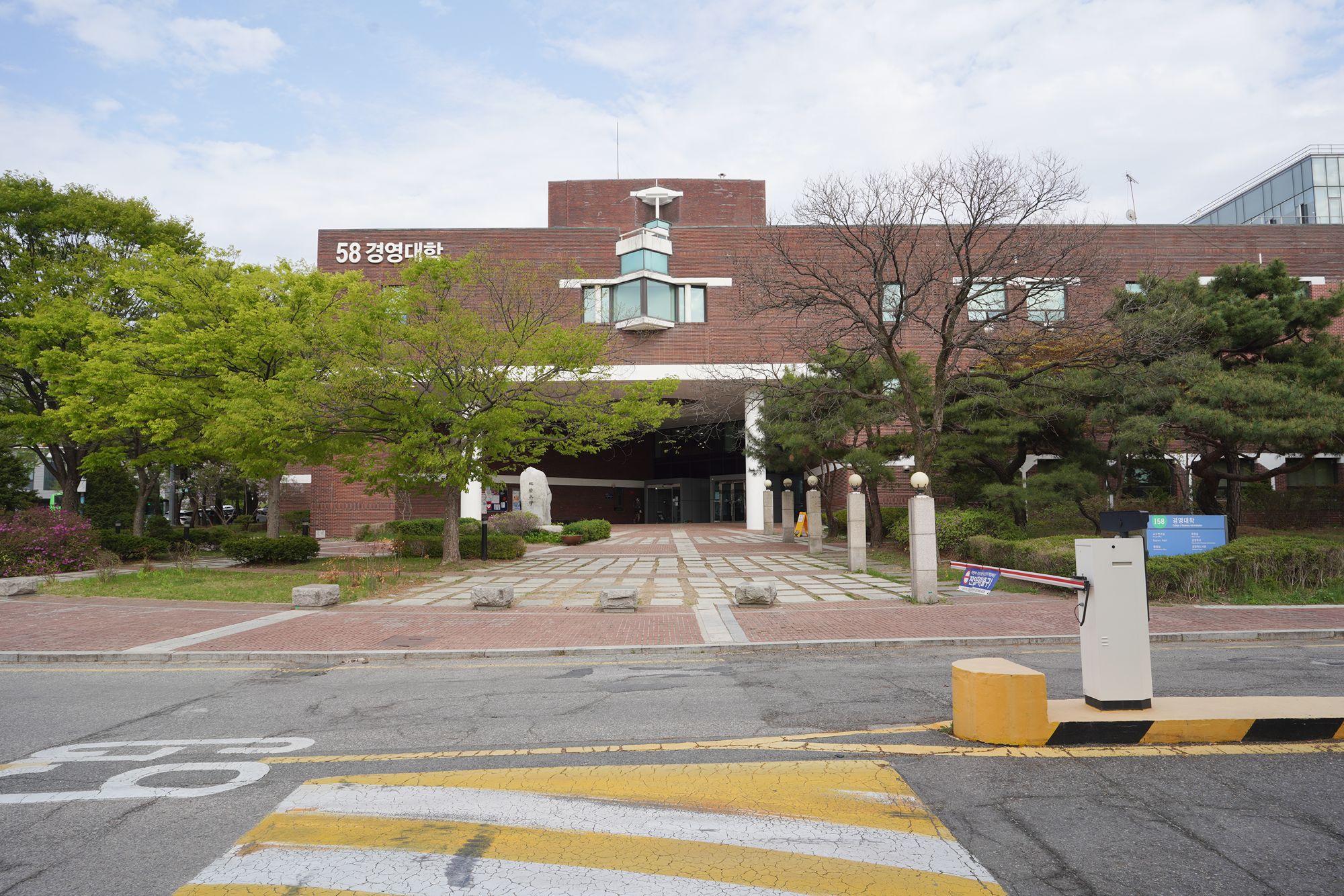
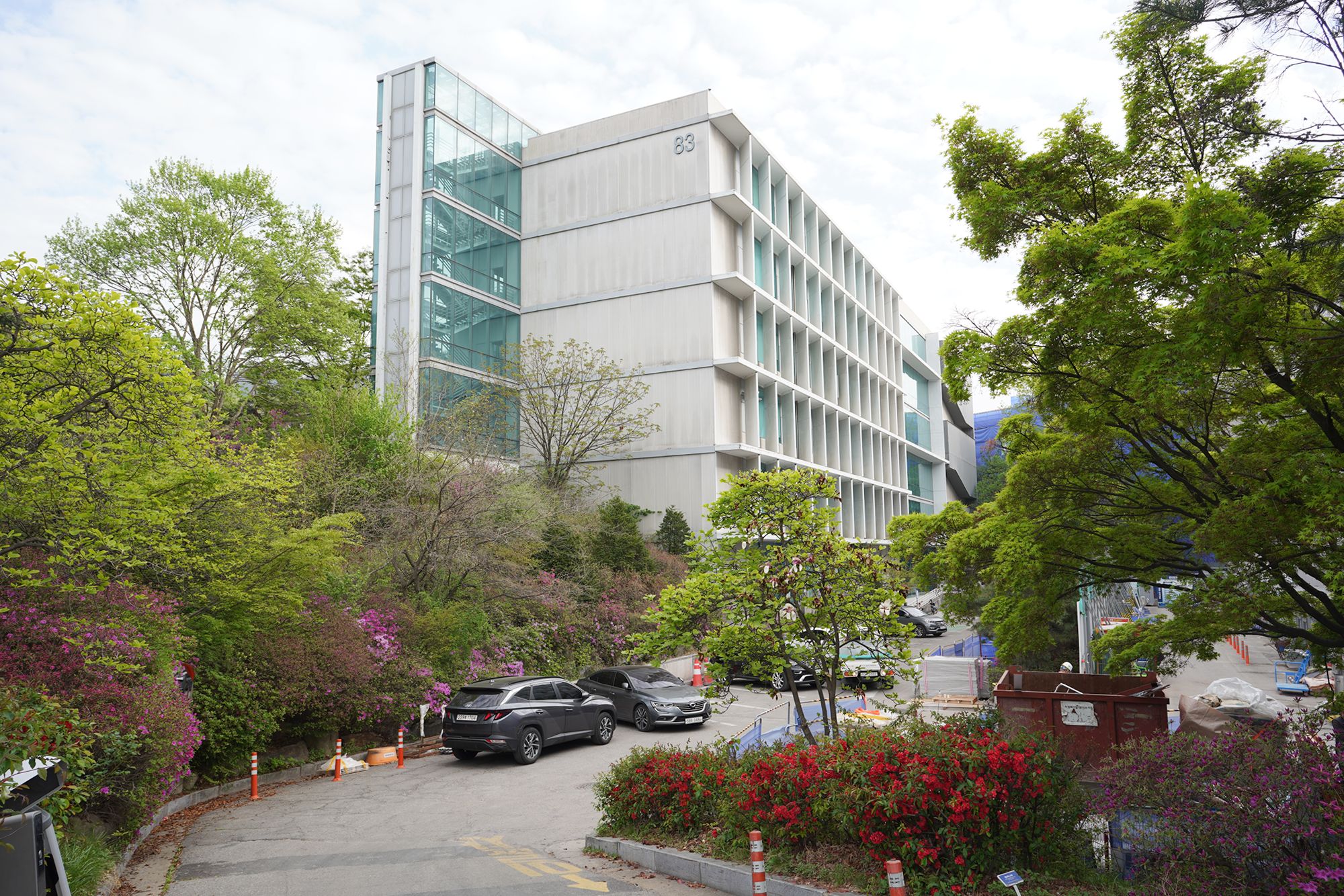
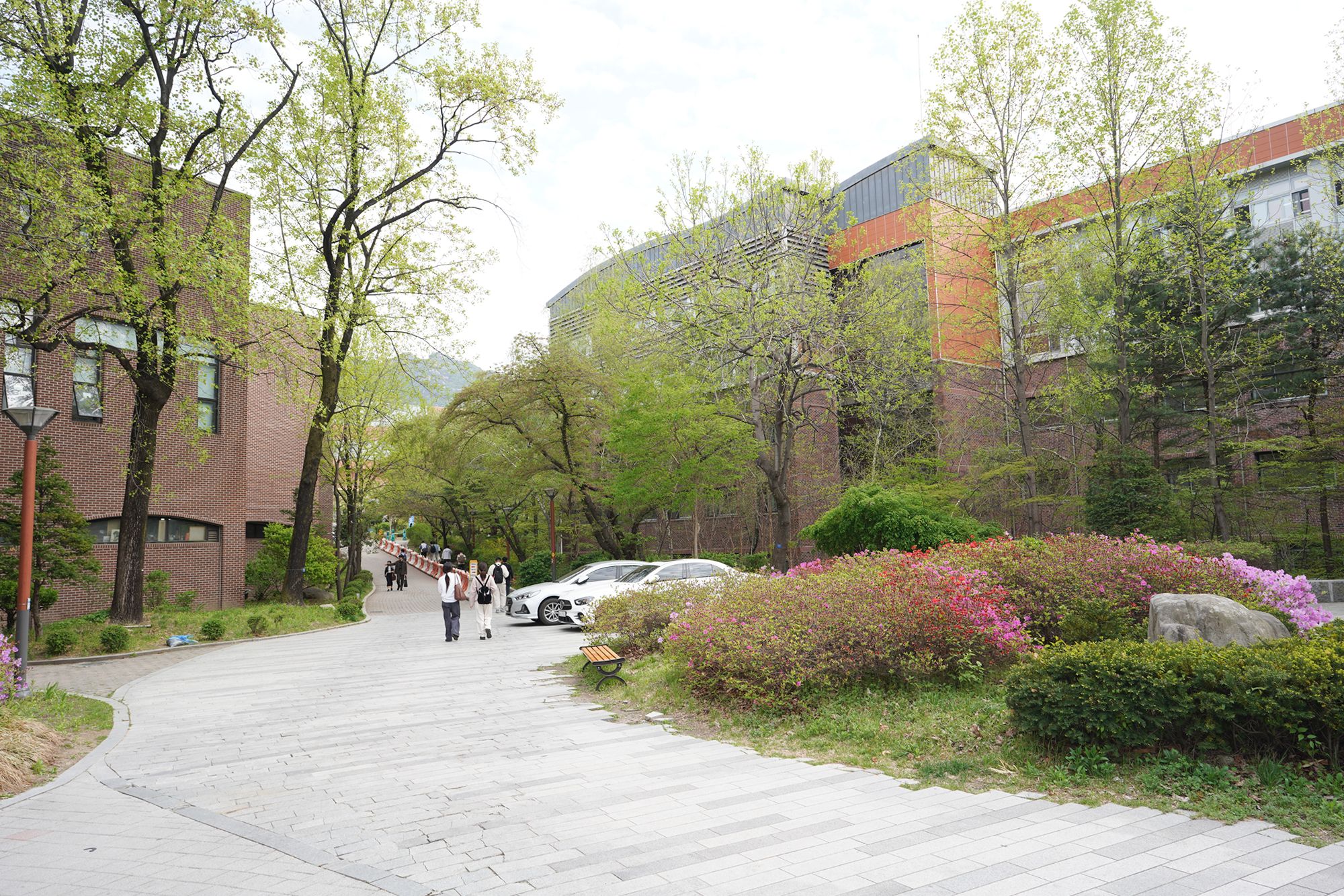
Unlike some of Seoul’s other well-known universities, such as Yonsei University and Ewha Womans University, I didn’t find many traditional or historic-looking buildings on the Gwanak Campus. At the same time, most of the buildings didn’t look particularly modern either.
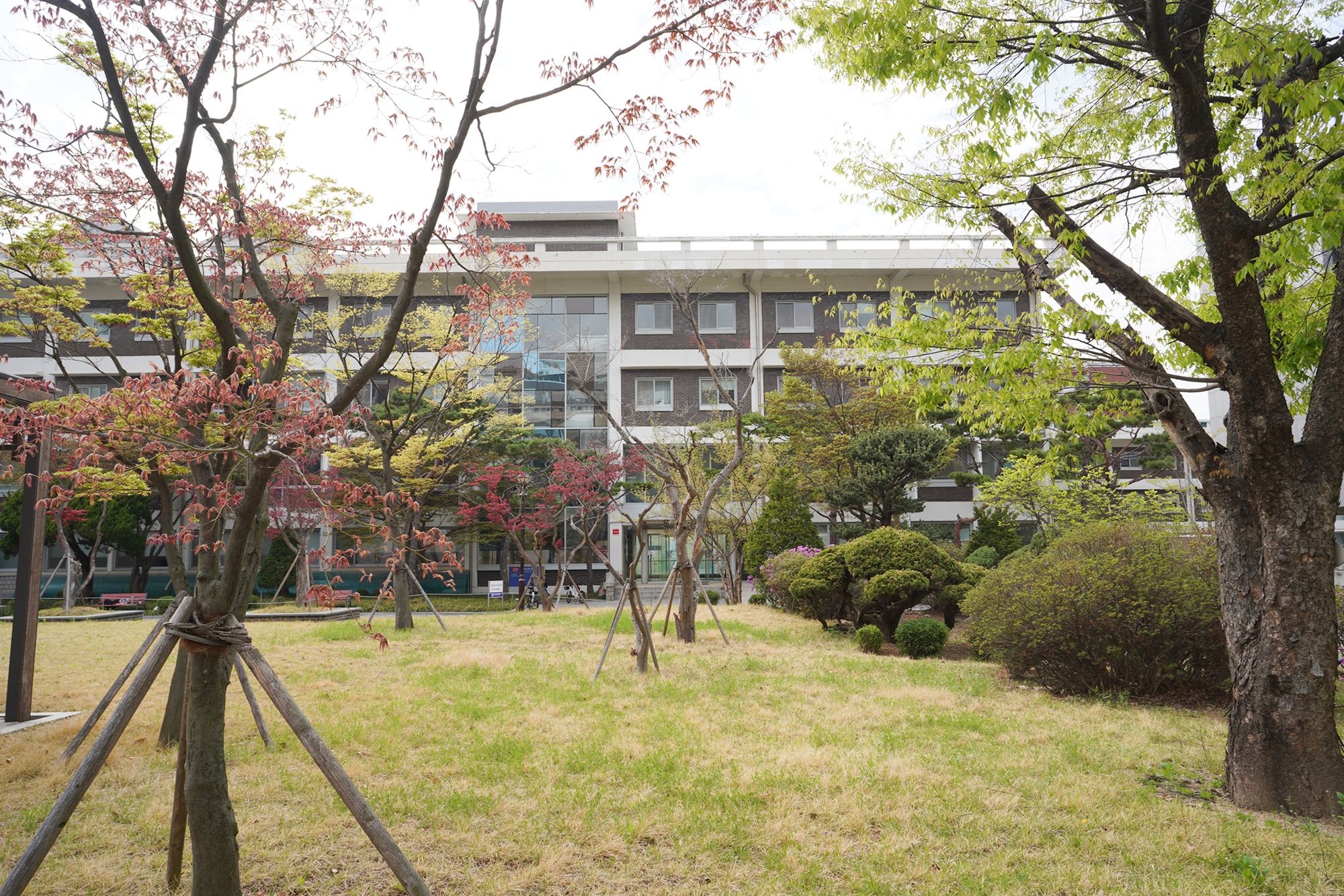
As I wandered around, many of them seemed to reflect the practical architectural style of the 1970s, when the university first moved to this campus. The rather plain concrete buildings gave the campus a very different atmosphere from the older, more picturesque university campuses I had visited elsewhere in Seoul.
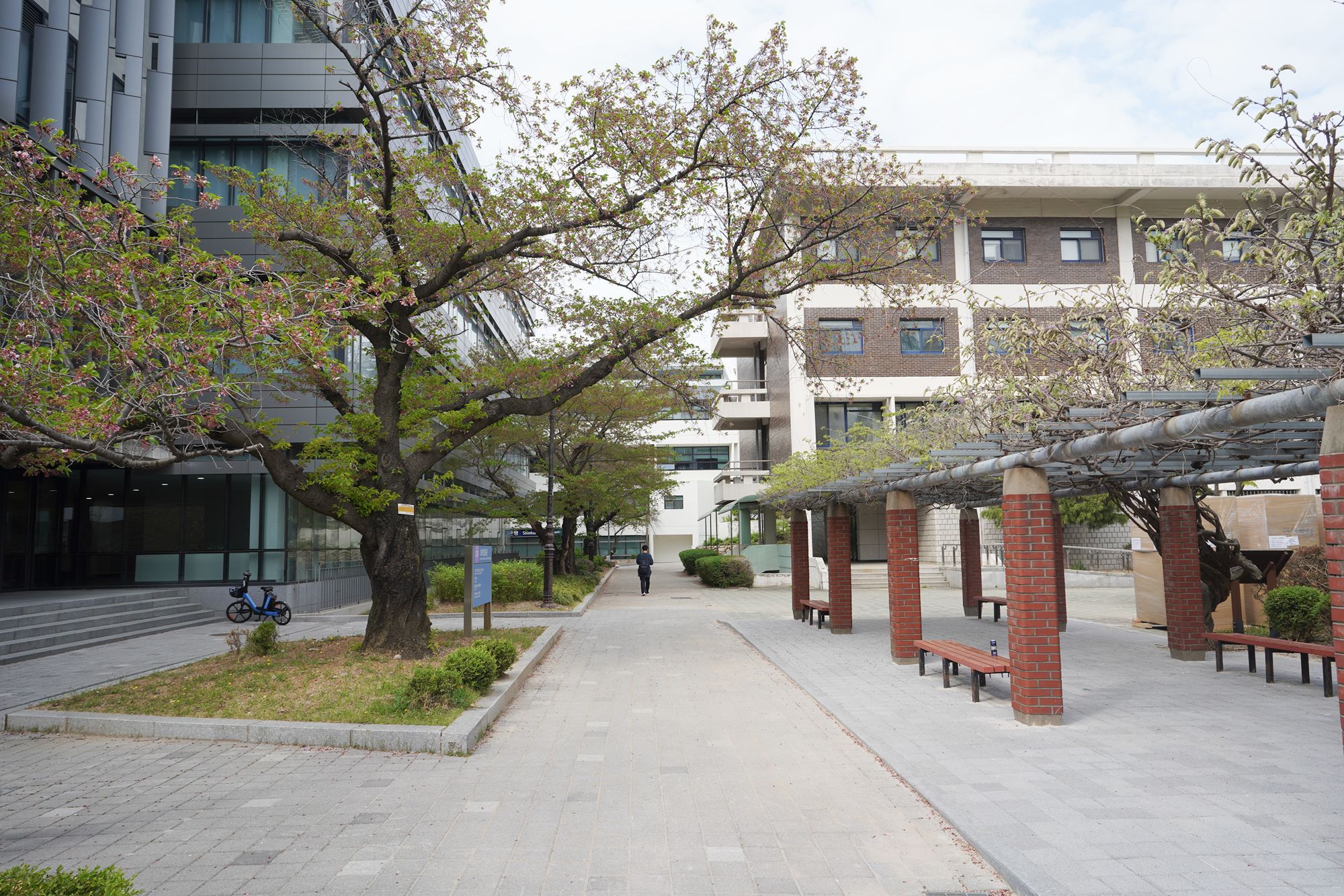
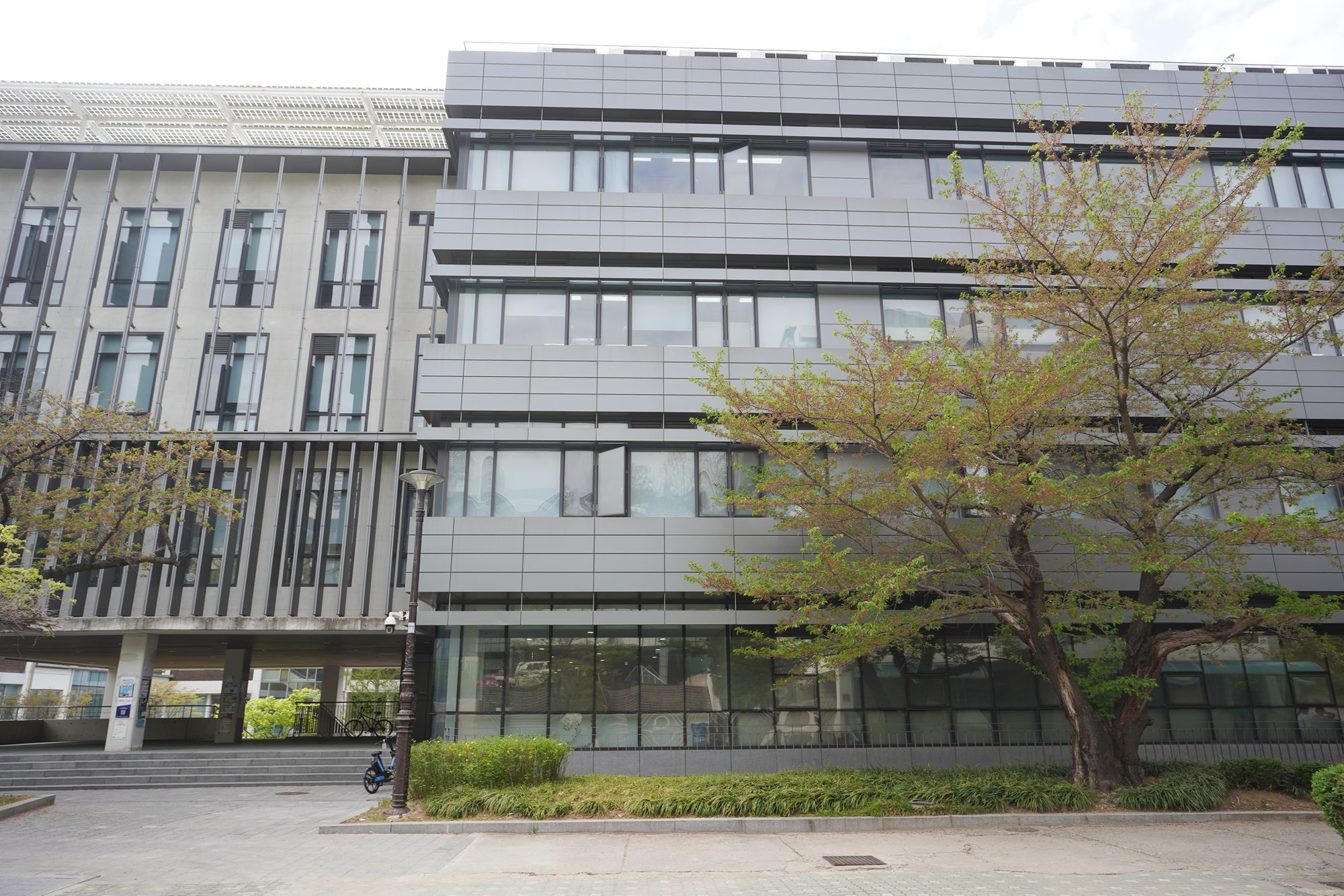
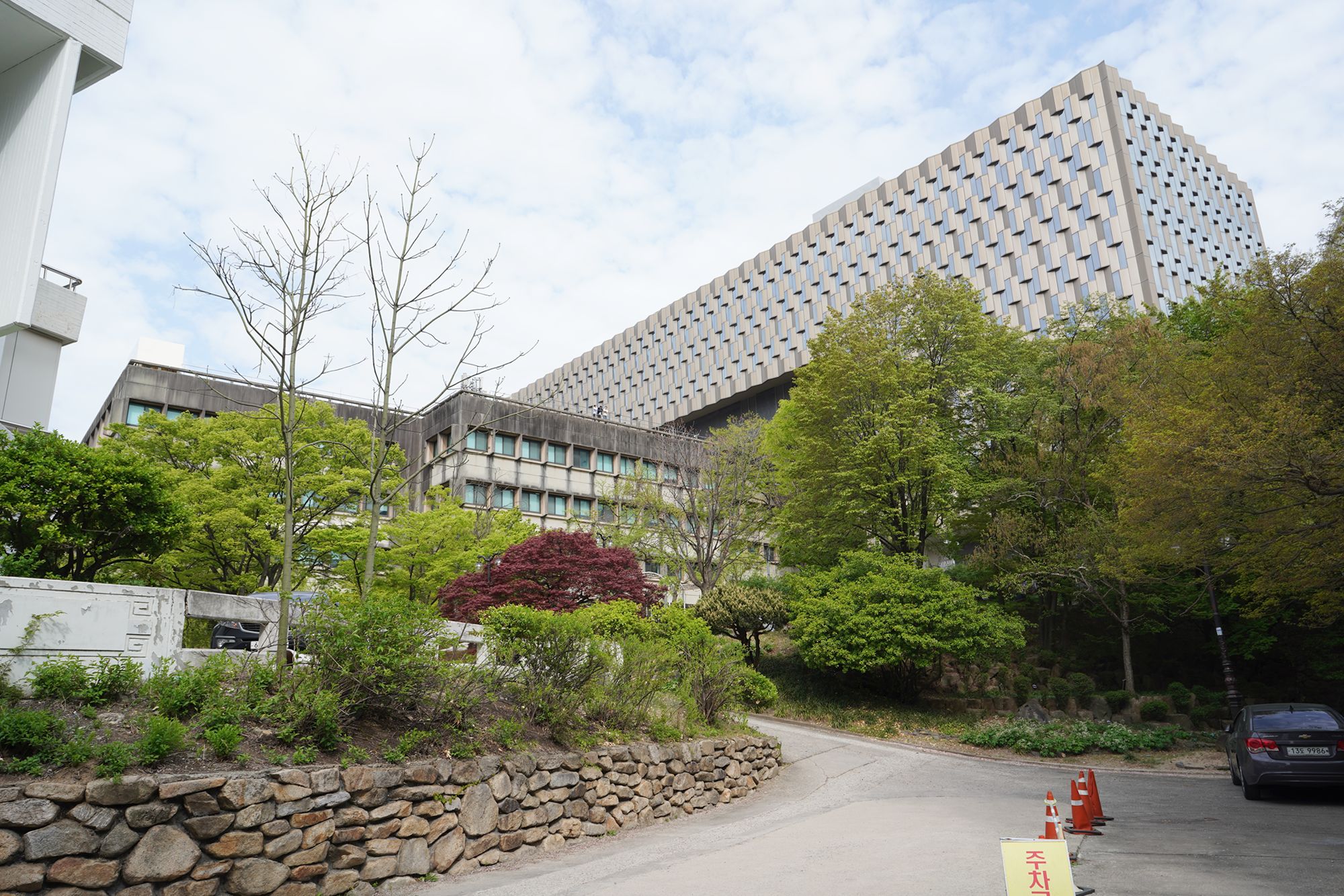
A view behind me
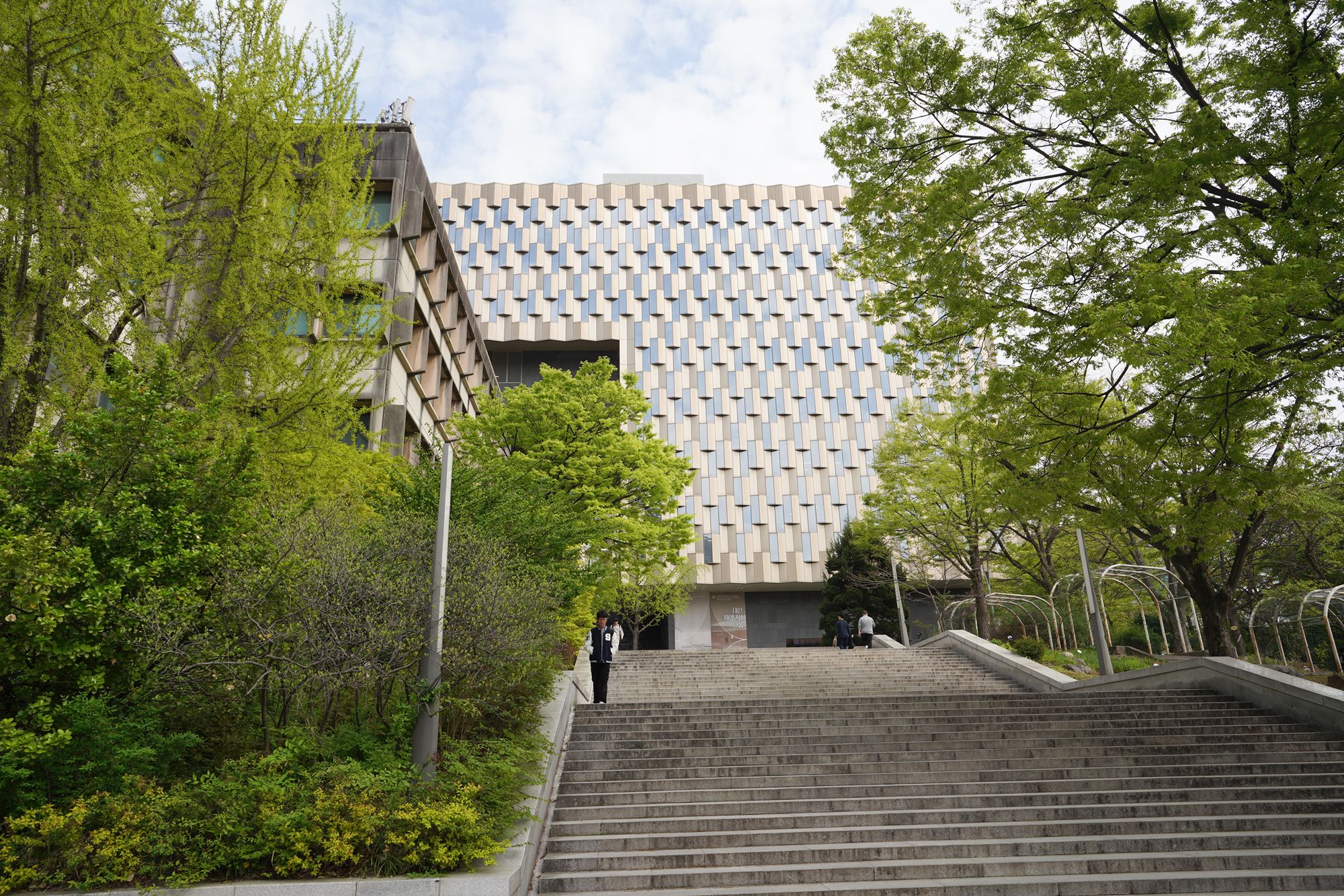
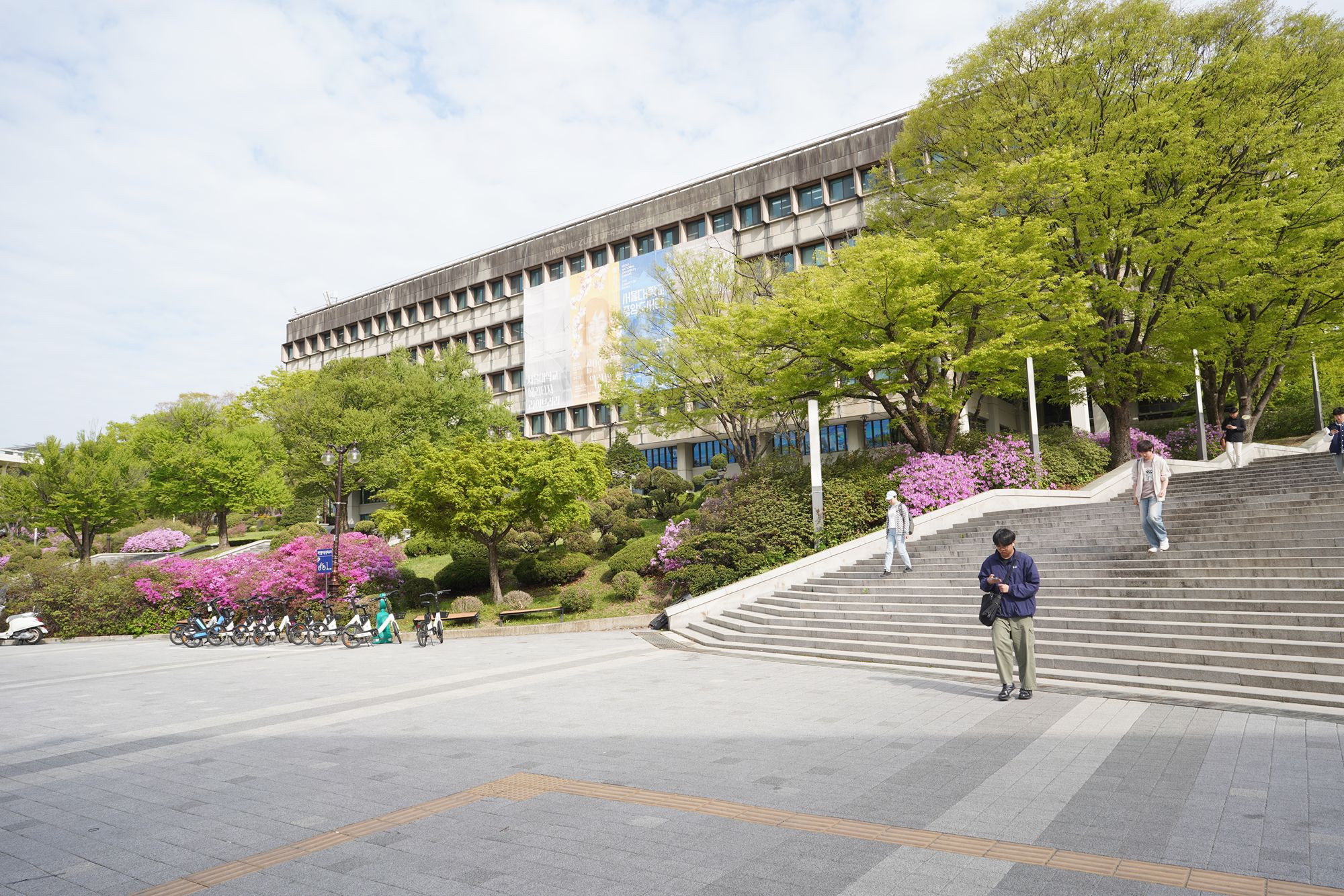
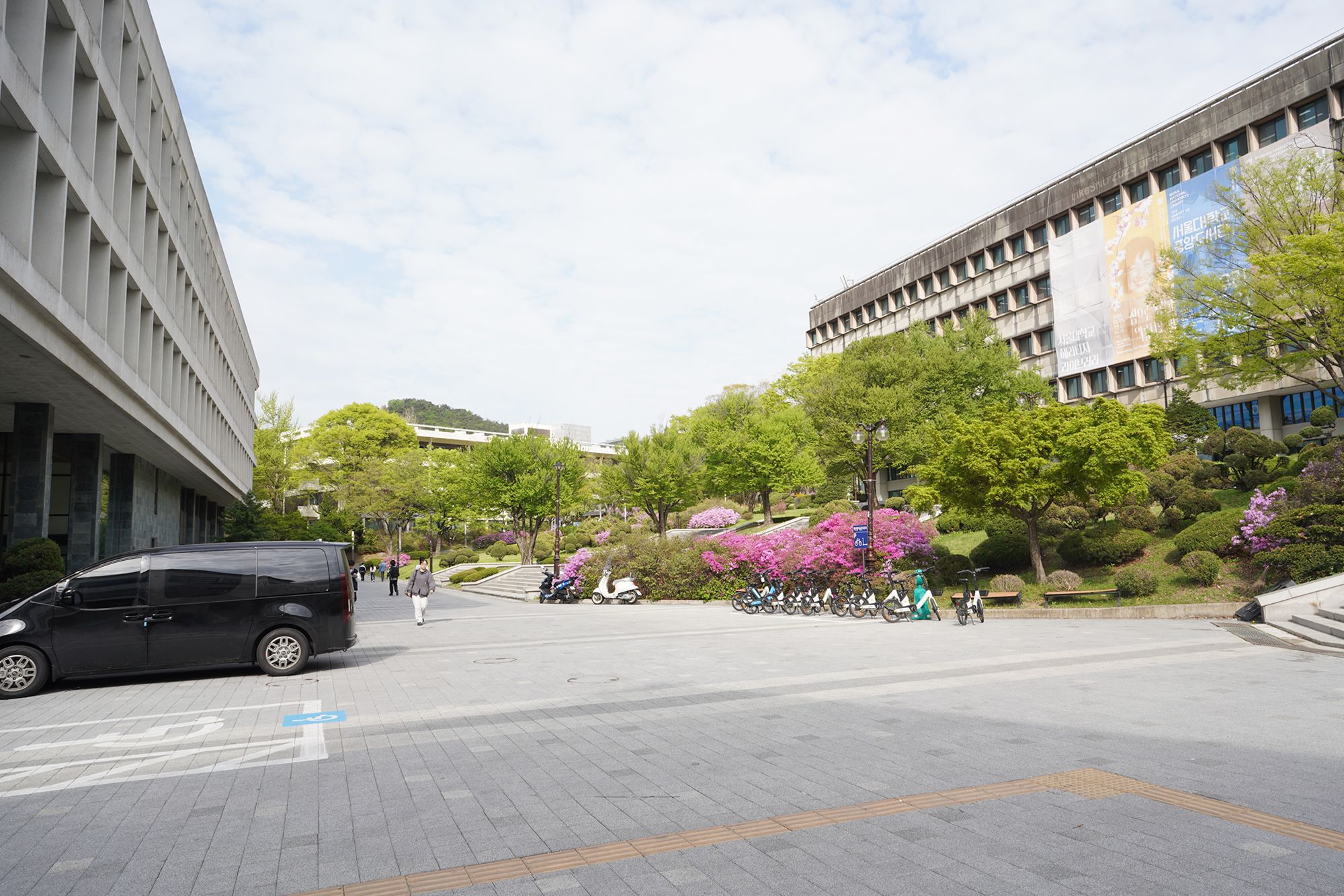
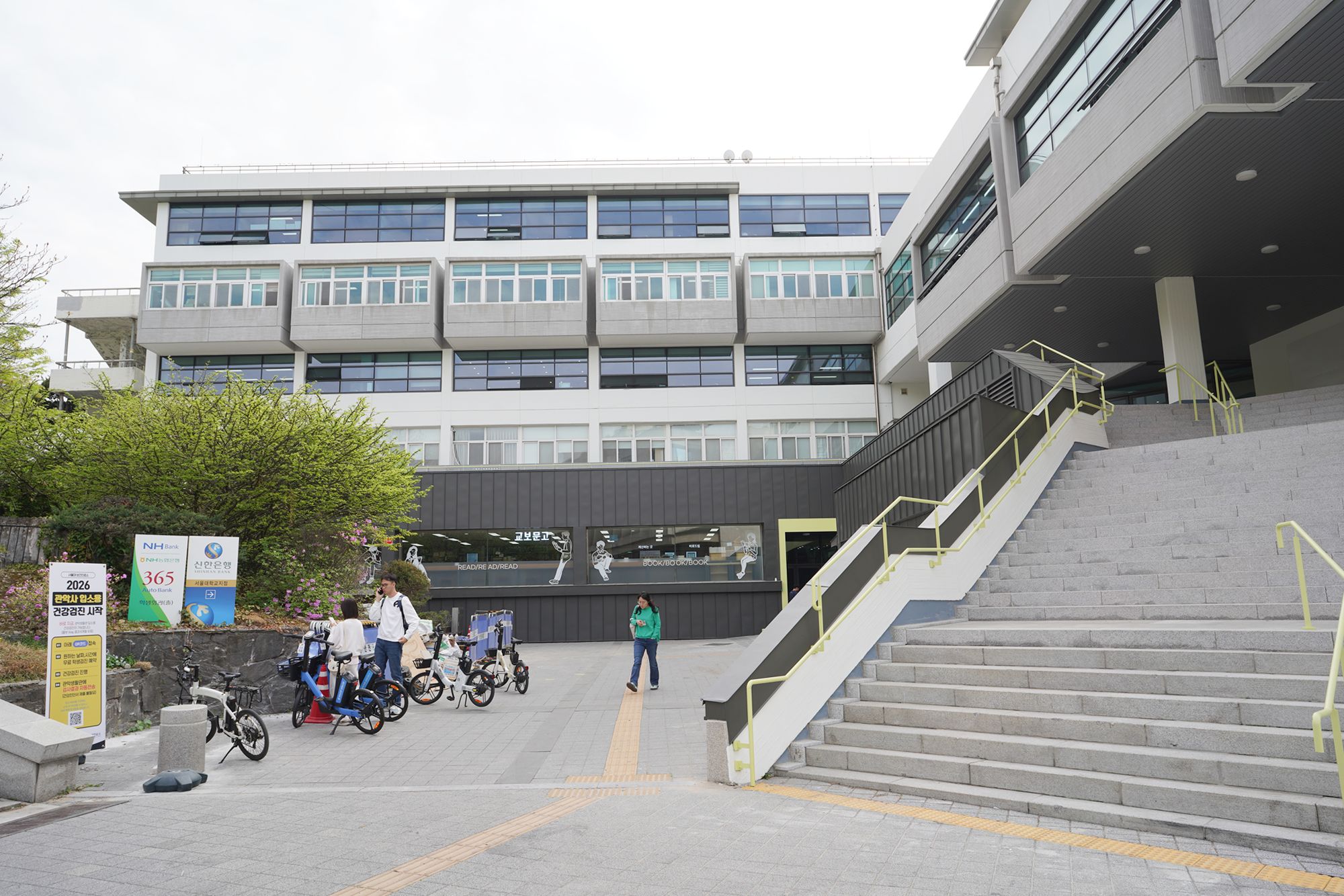
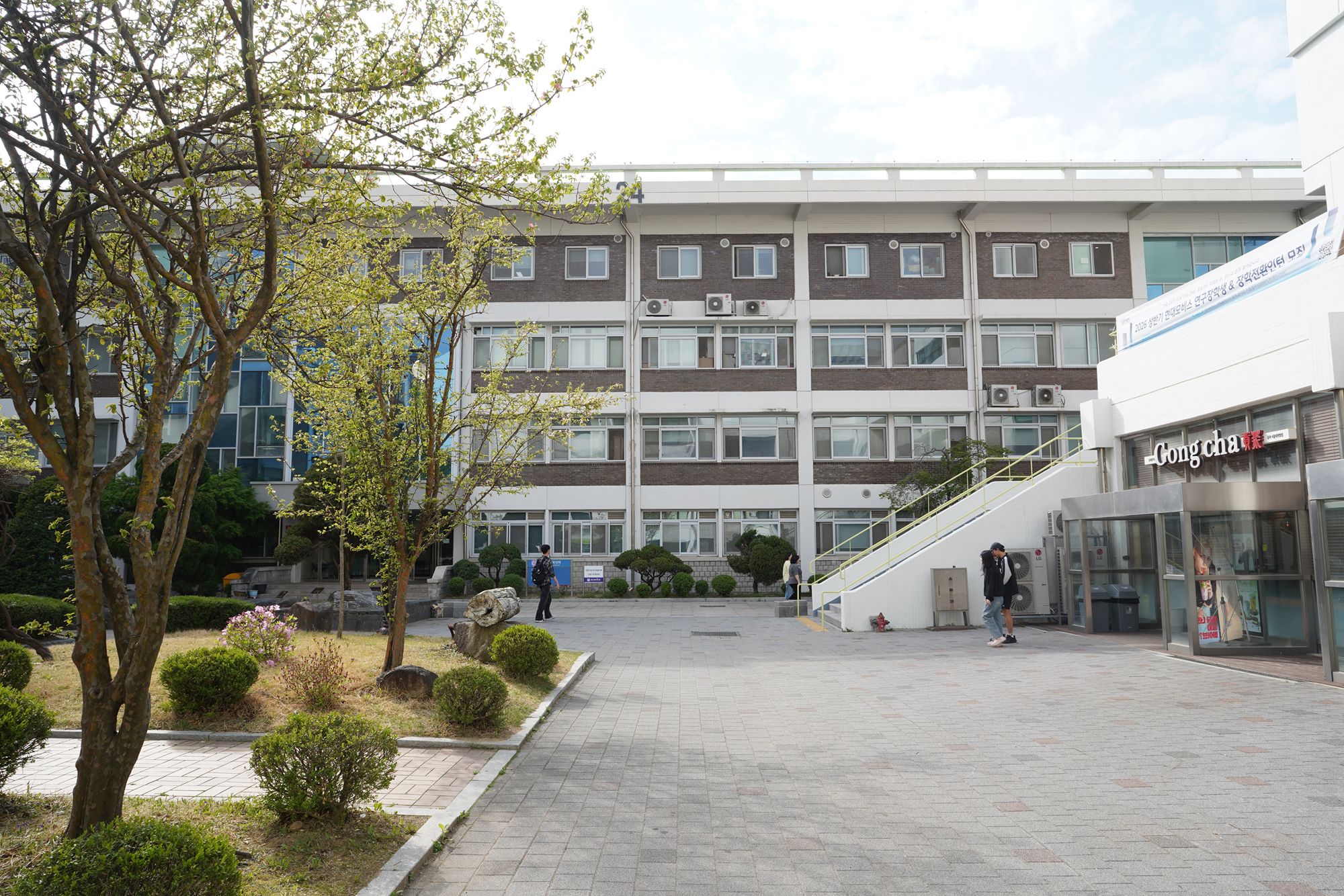
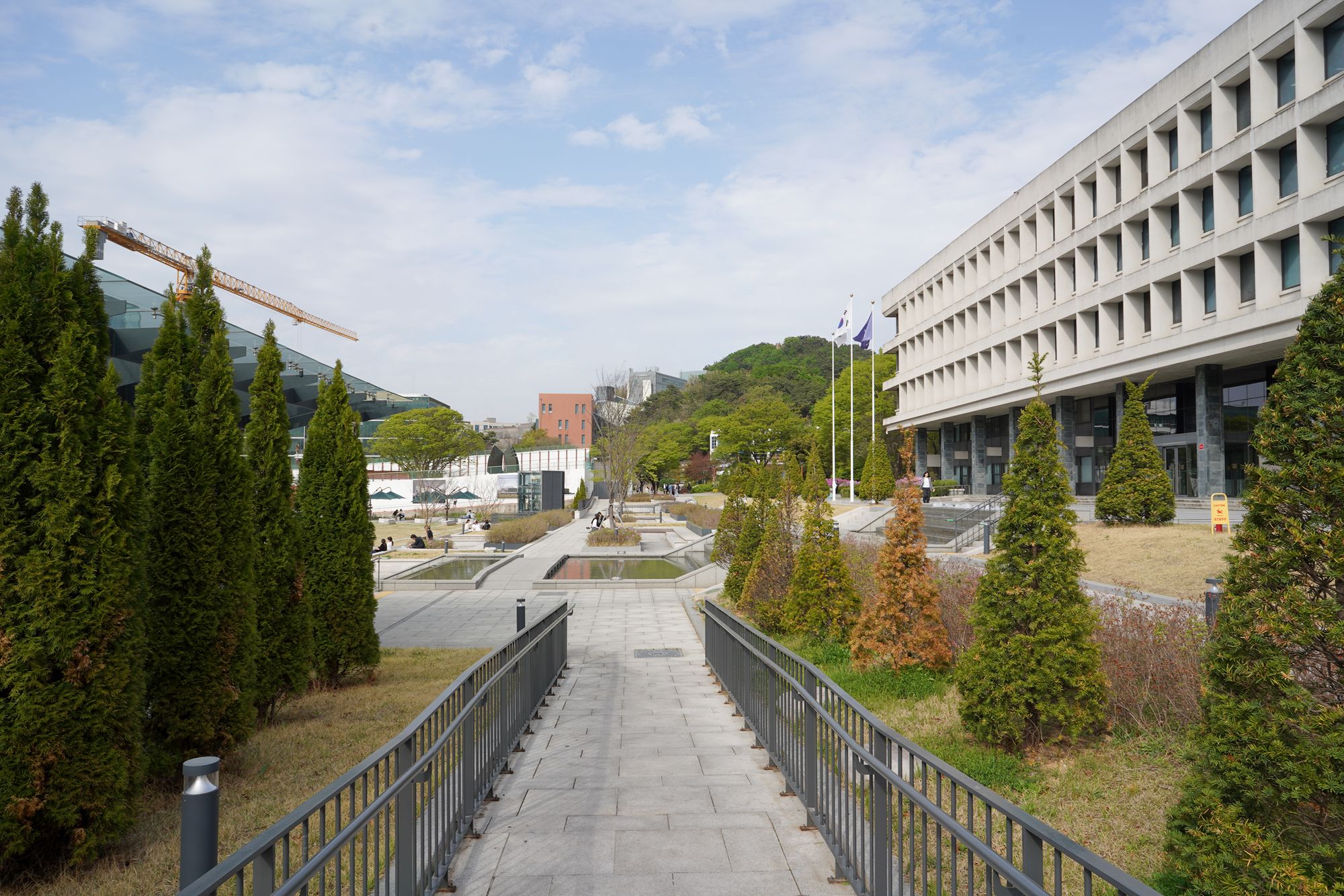
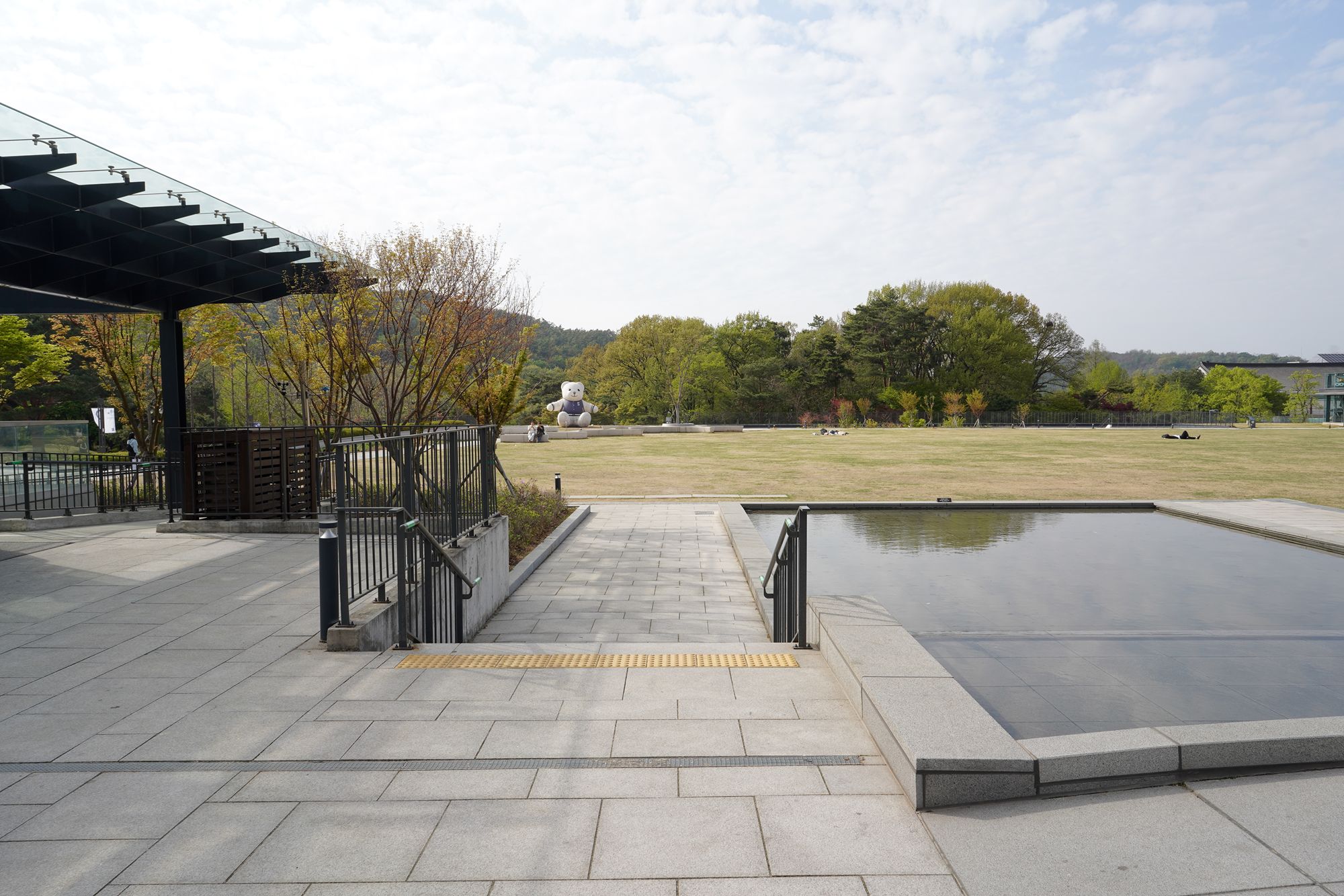
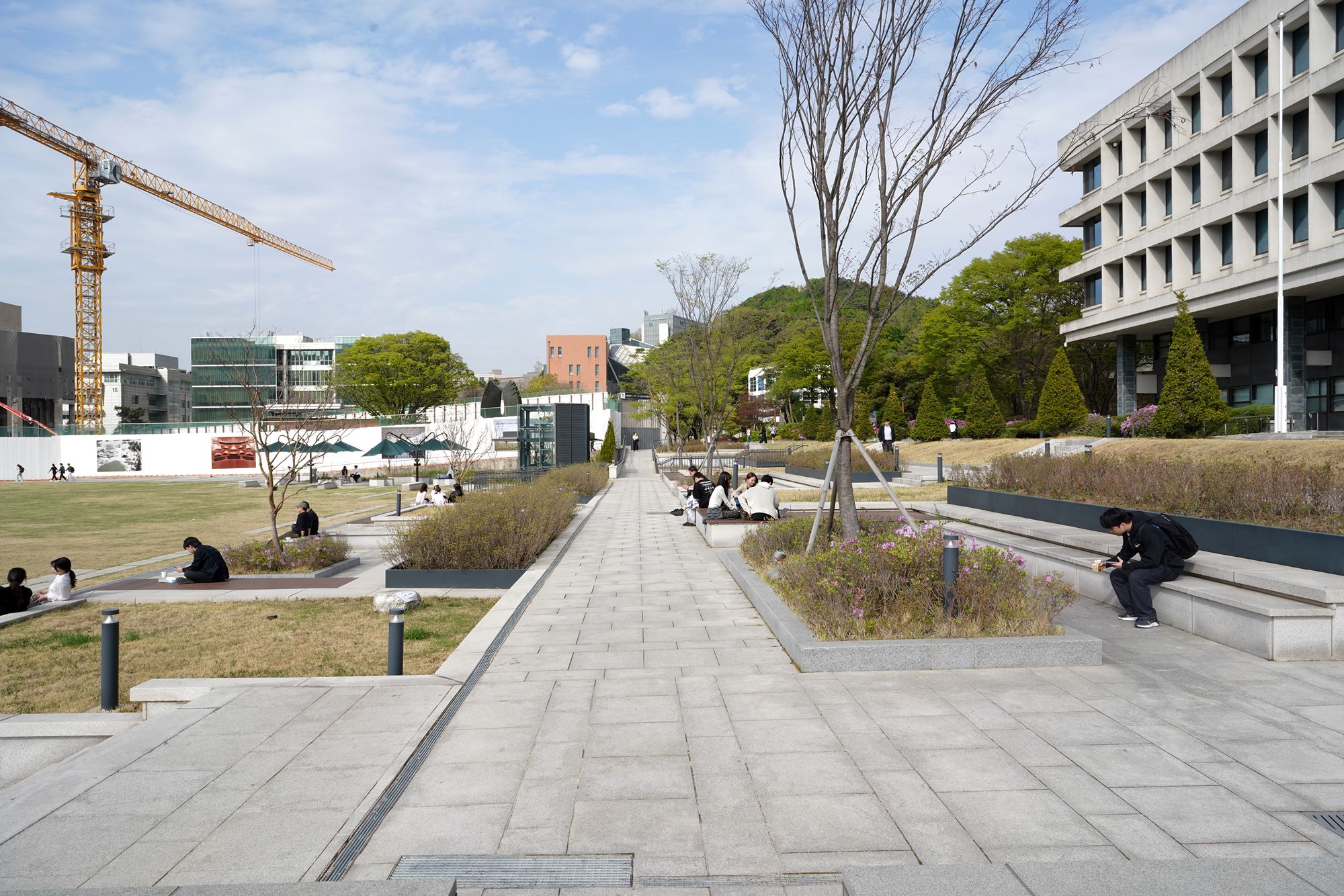
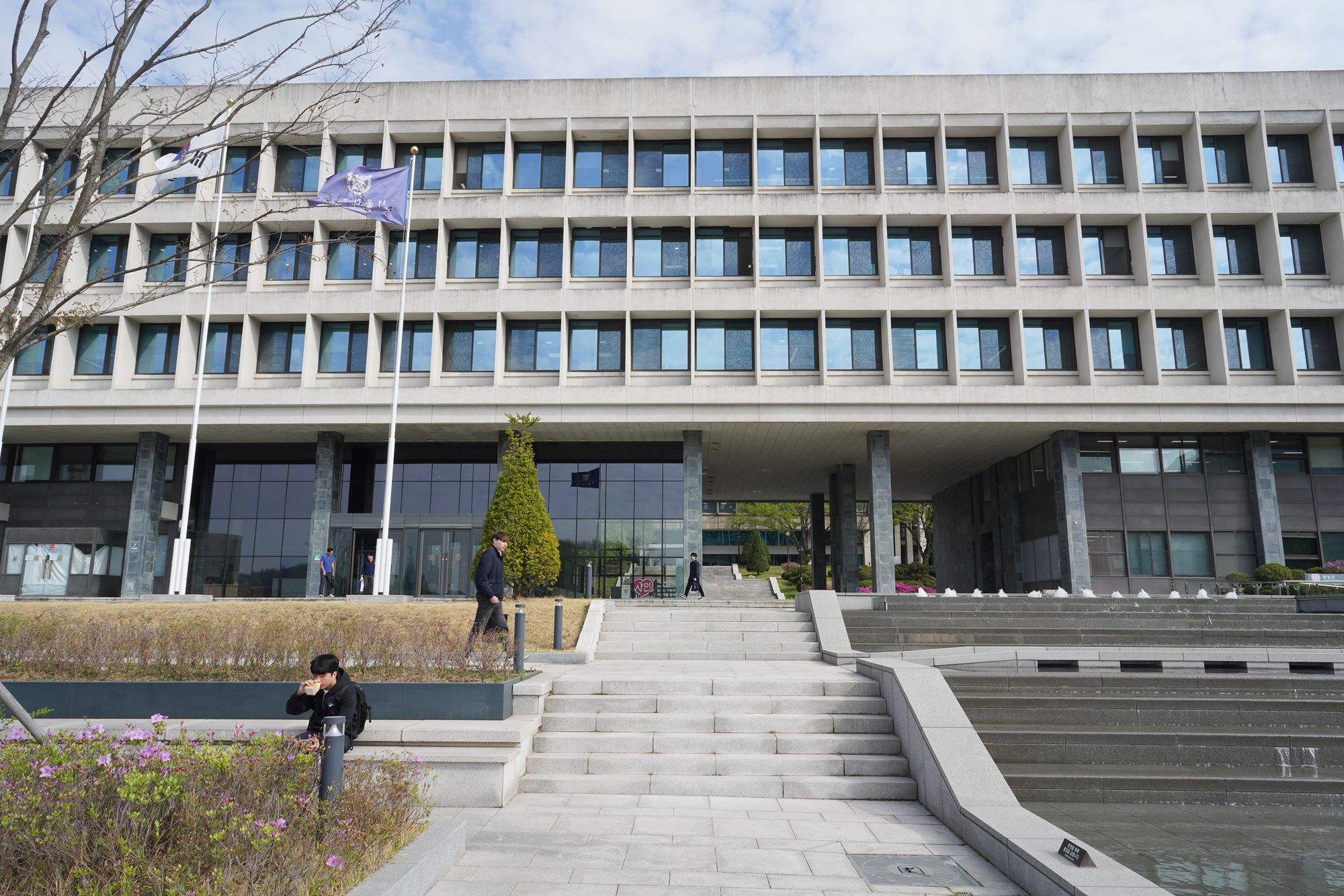
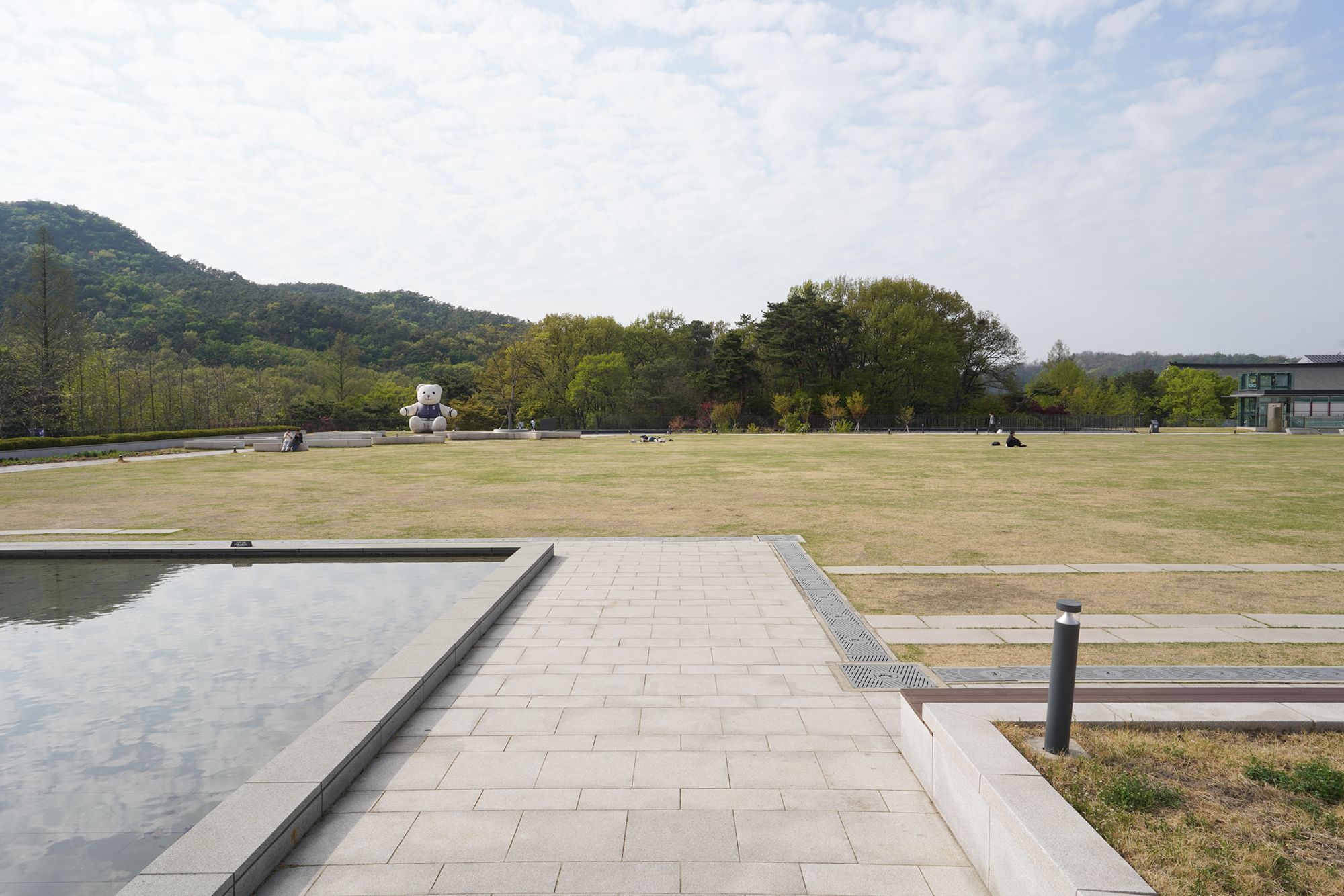
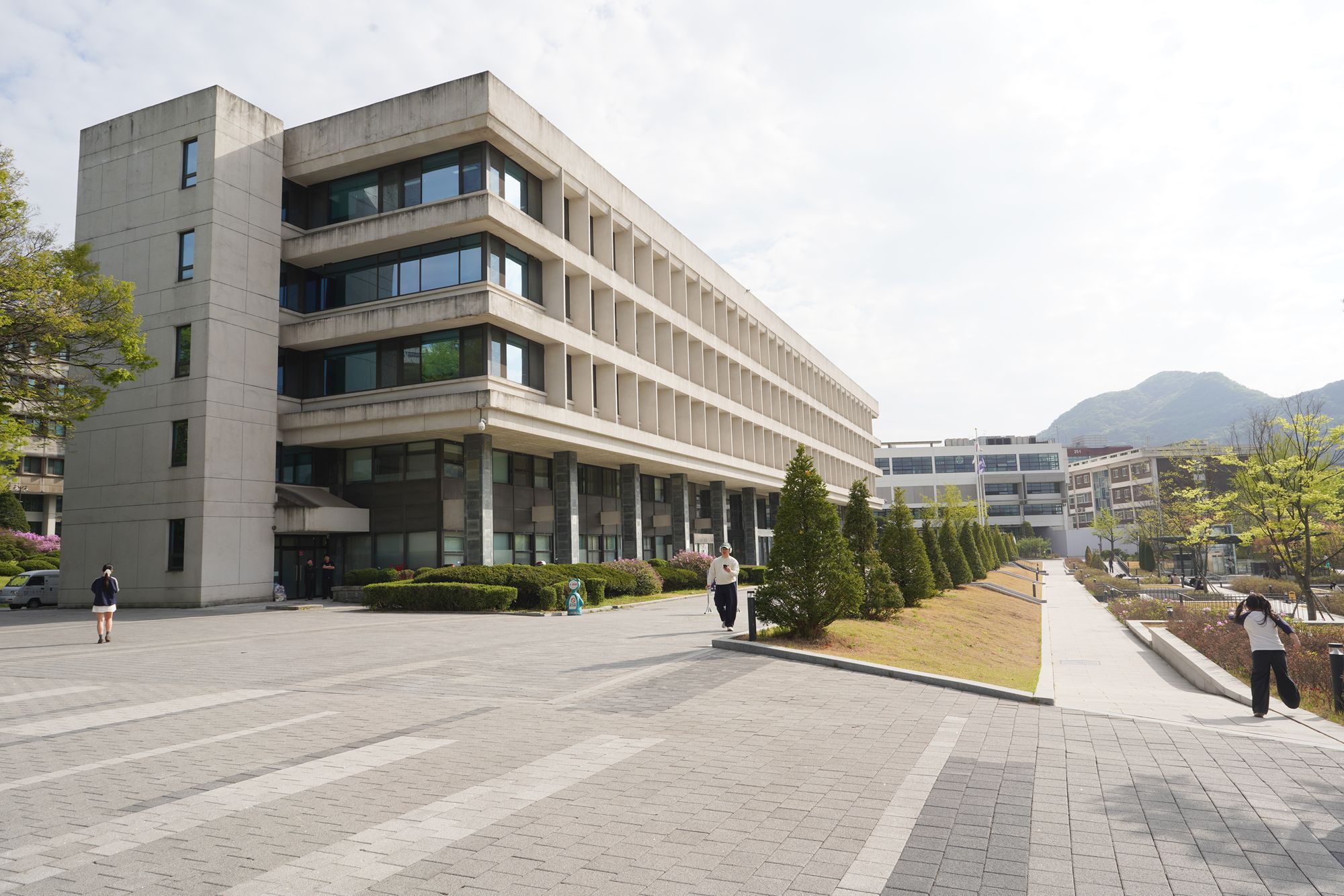
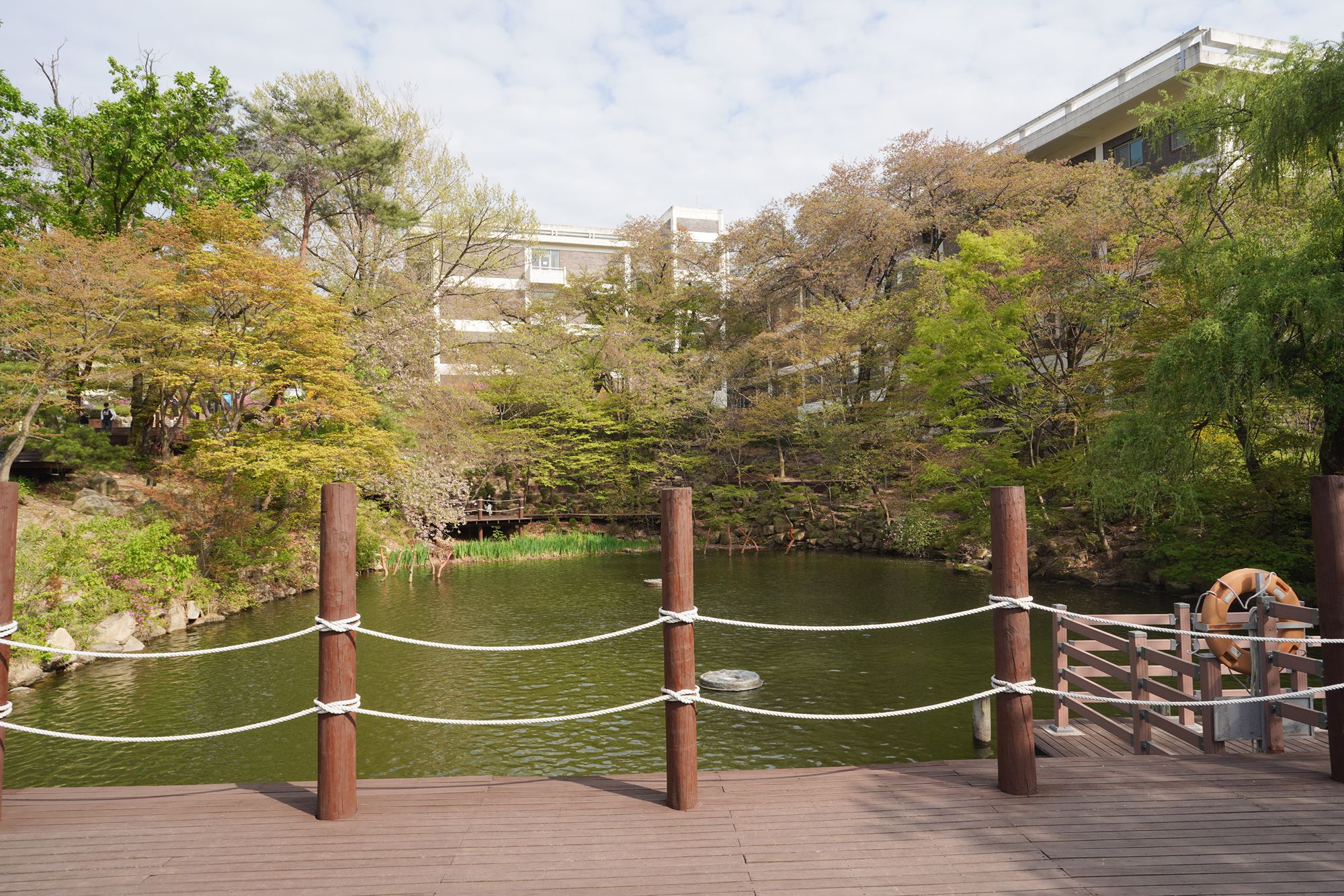
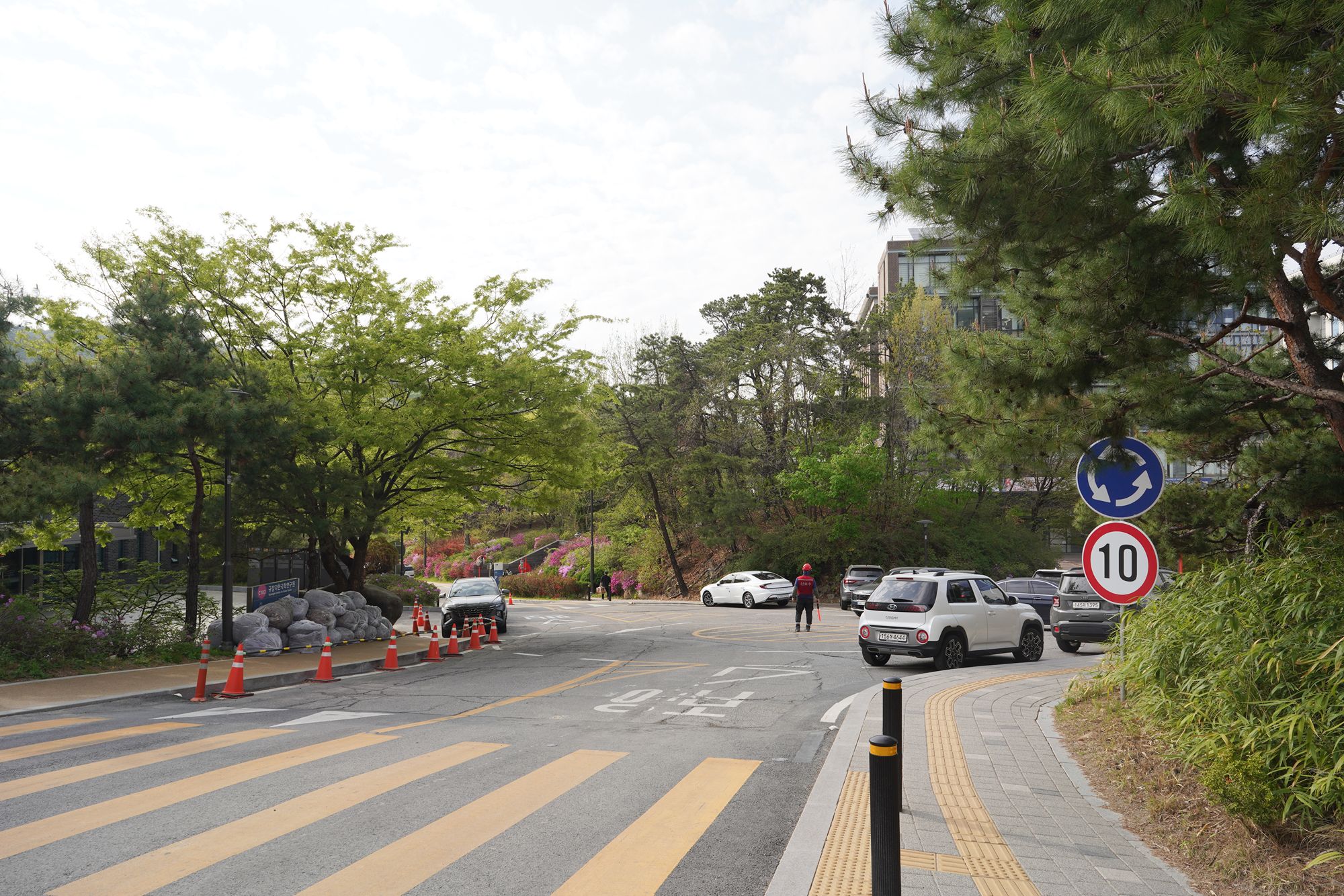
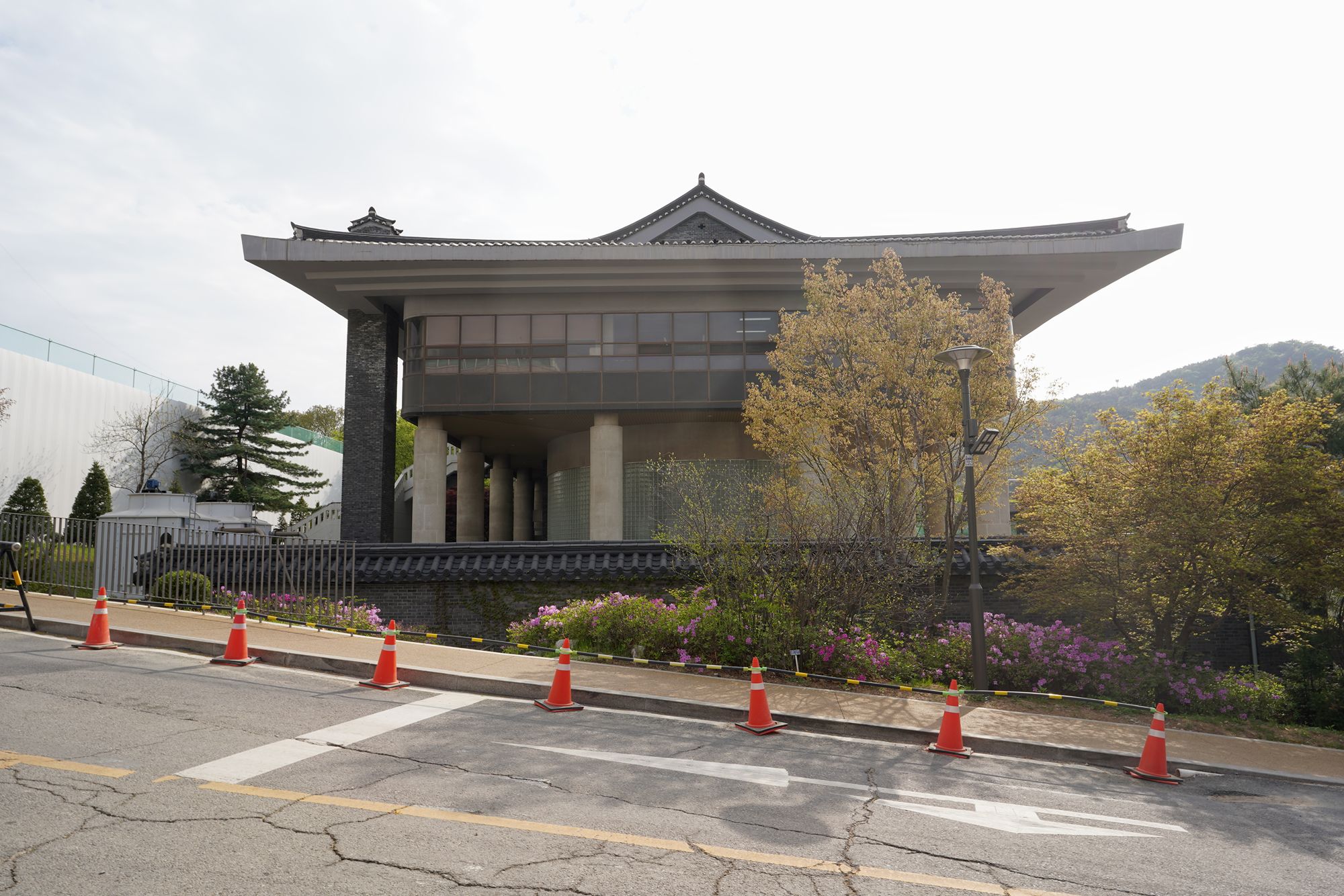
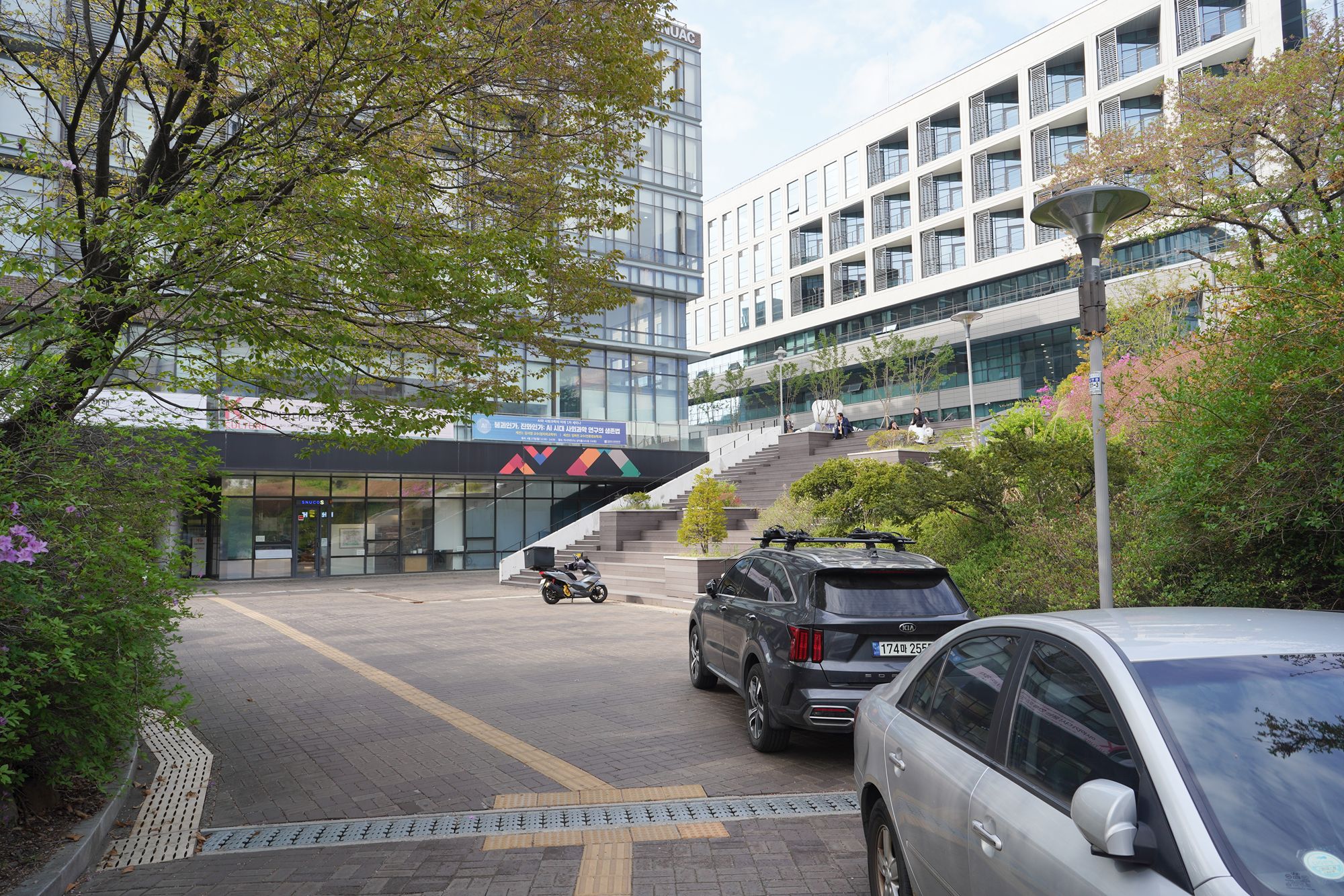
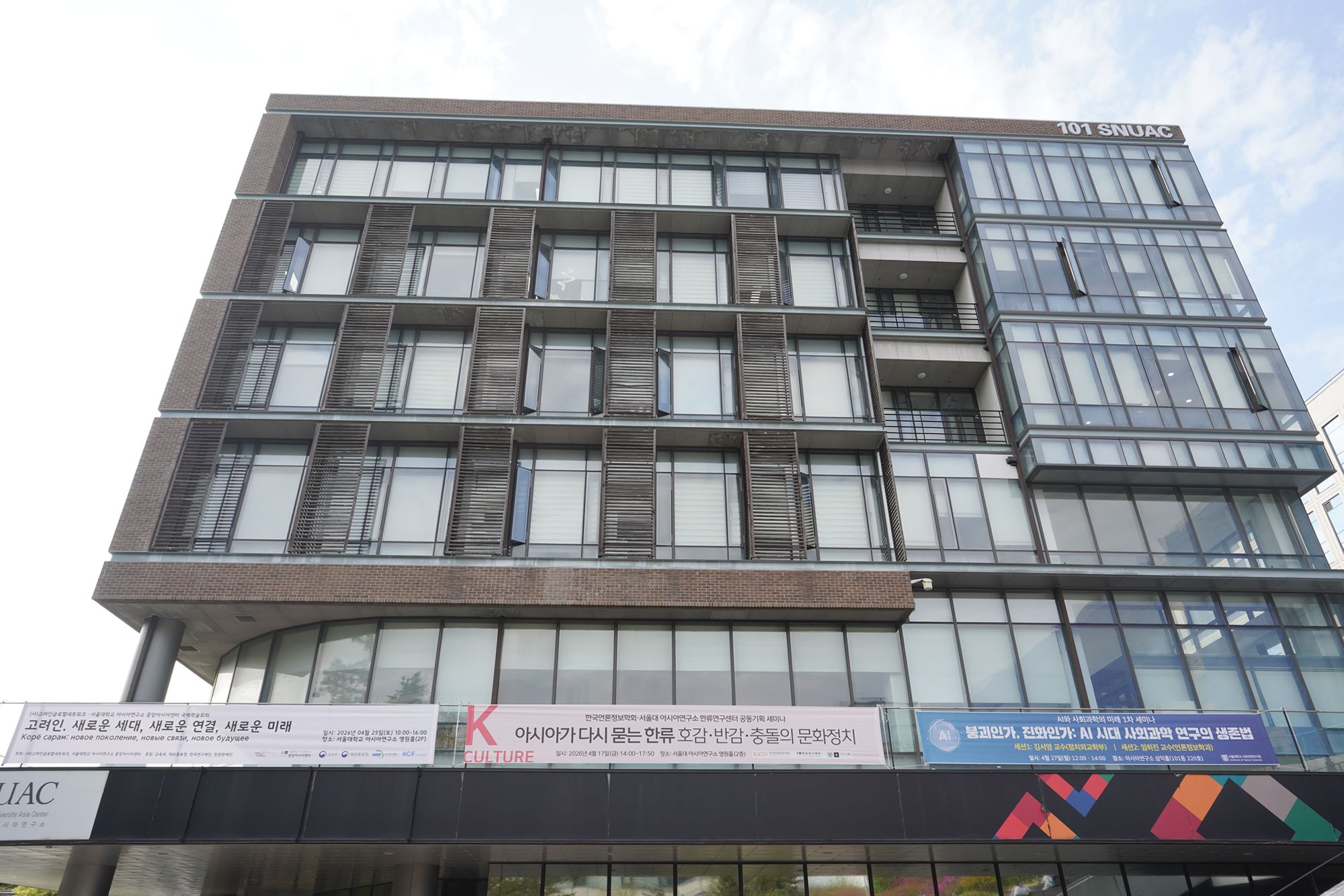
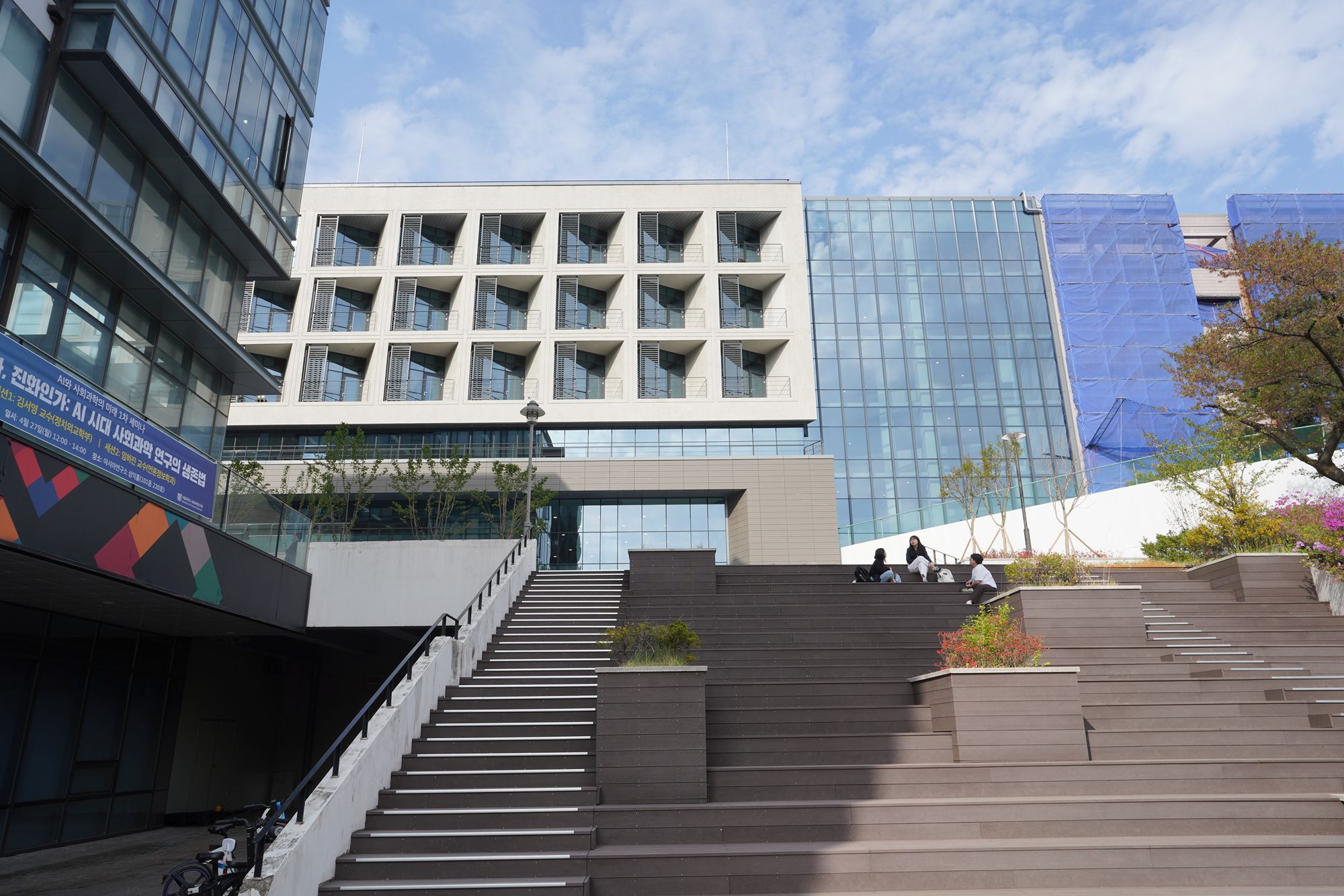
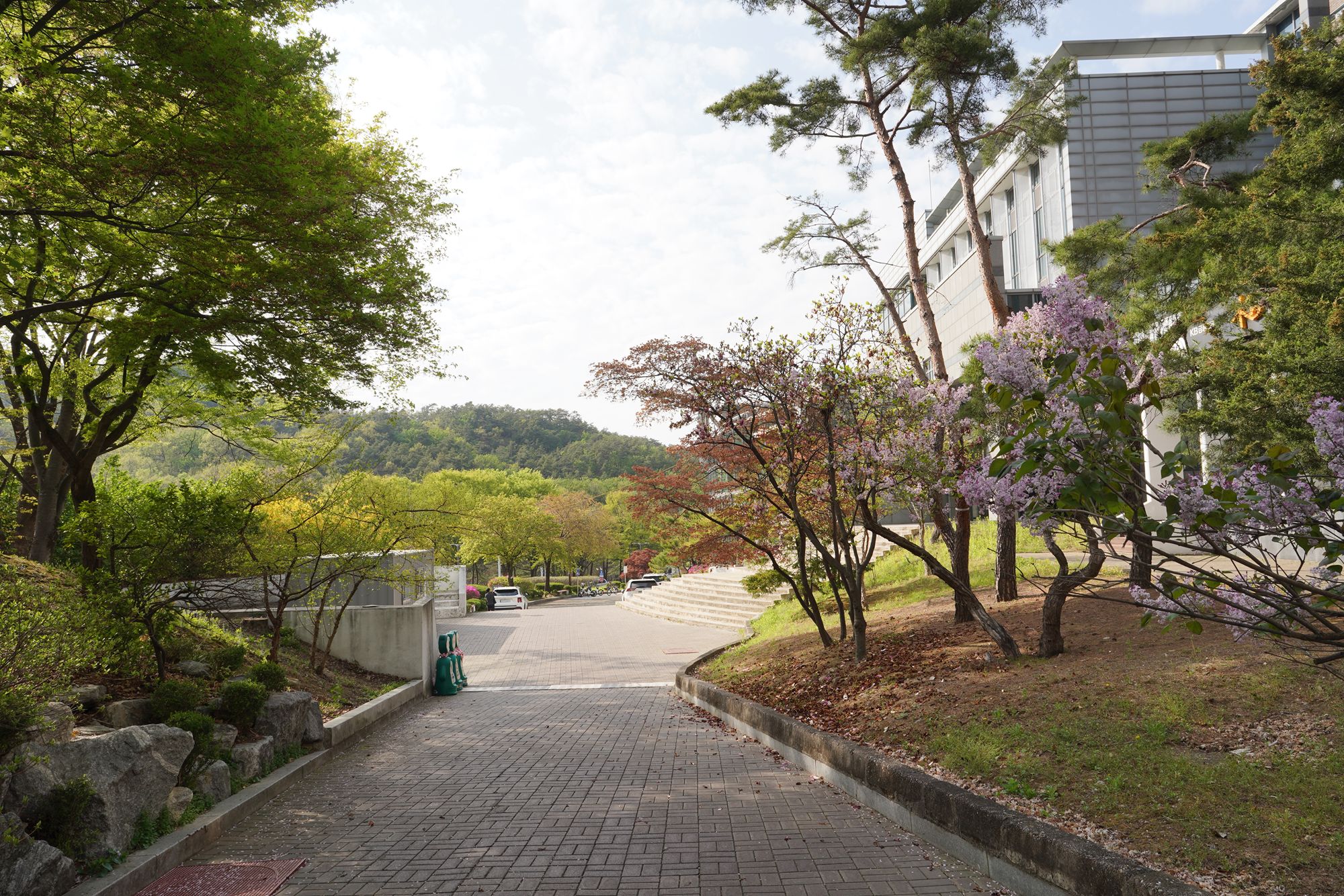
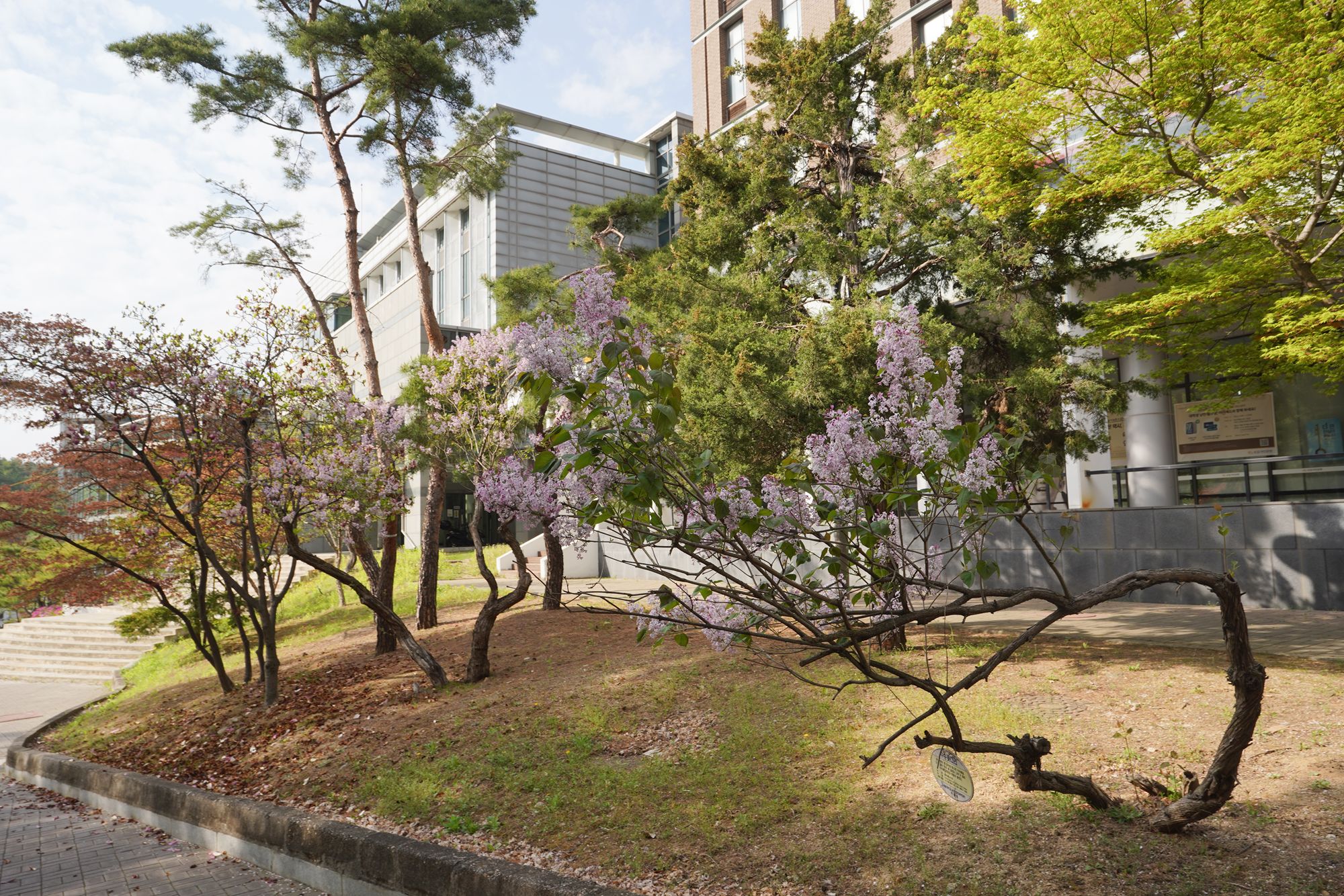
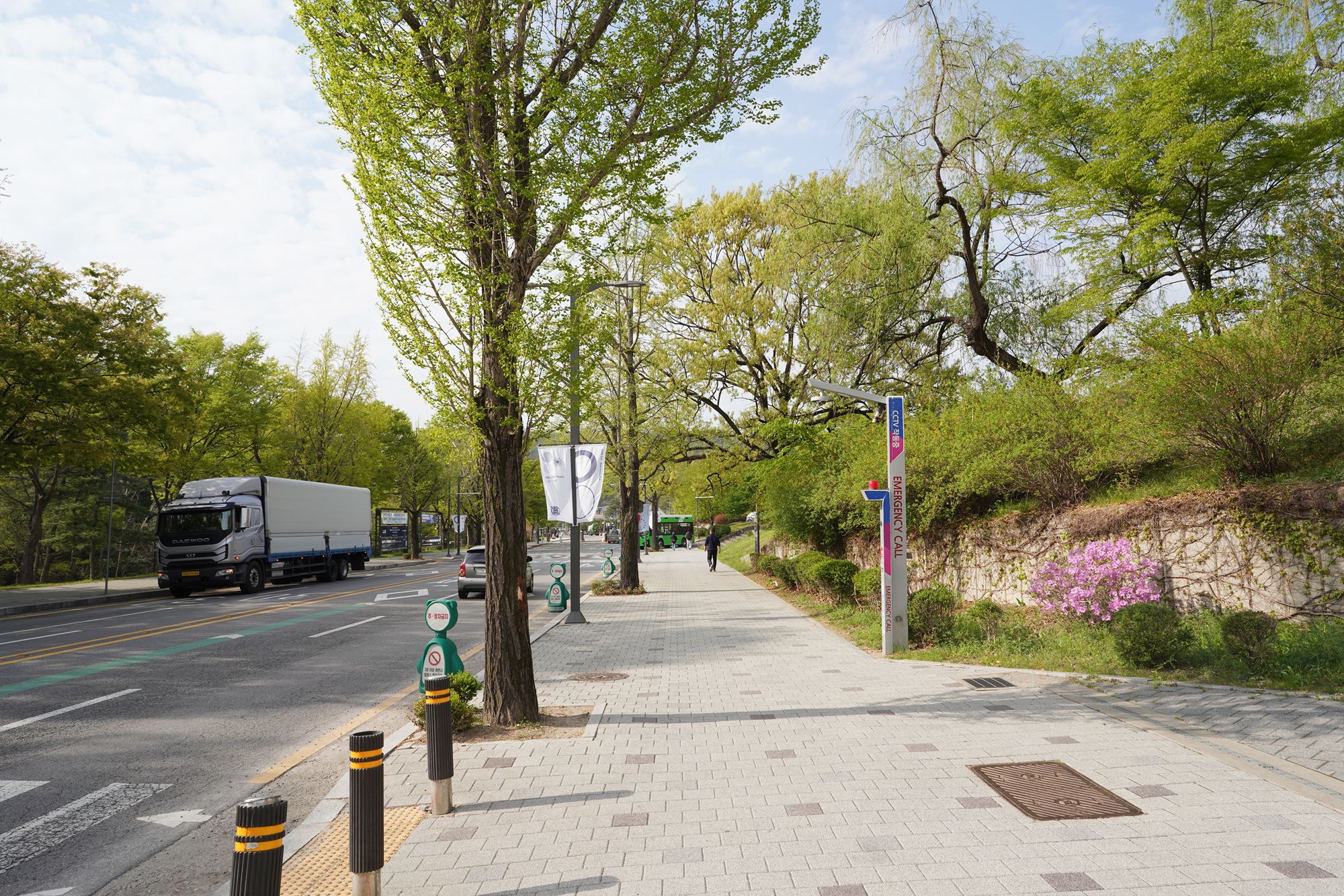
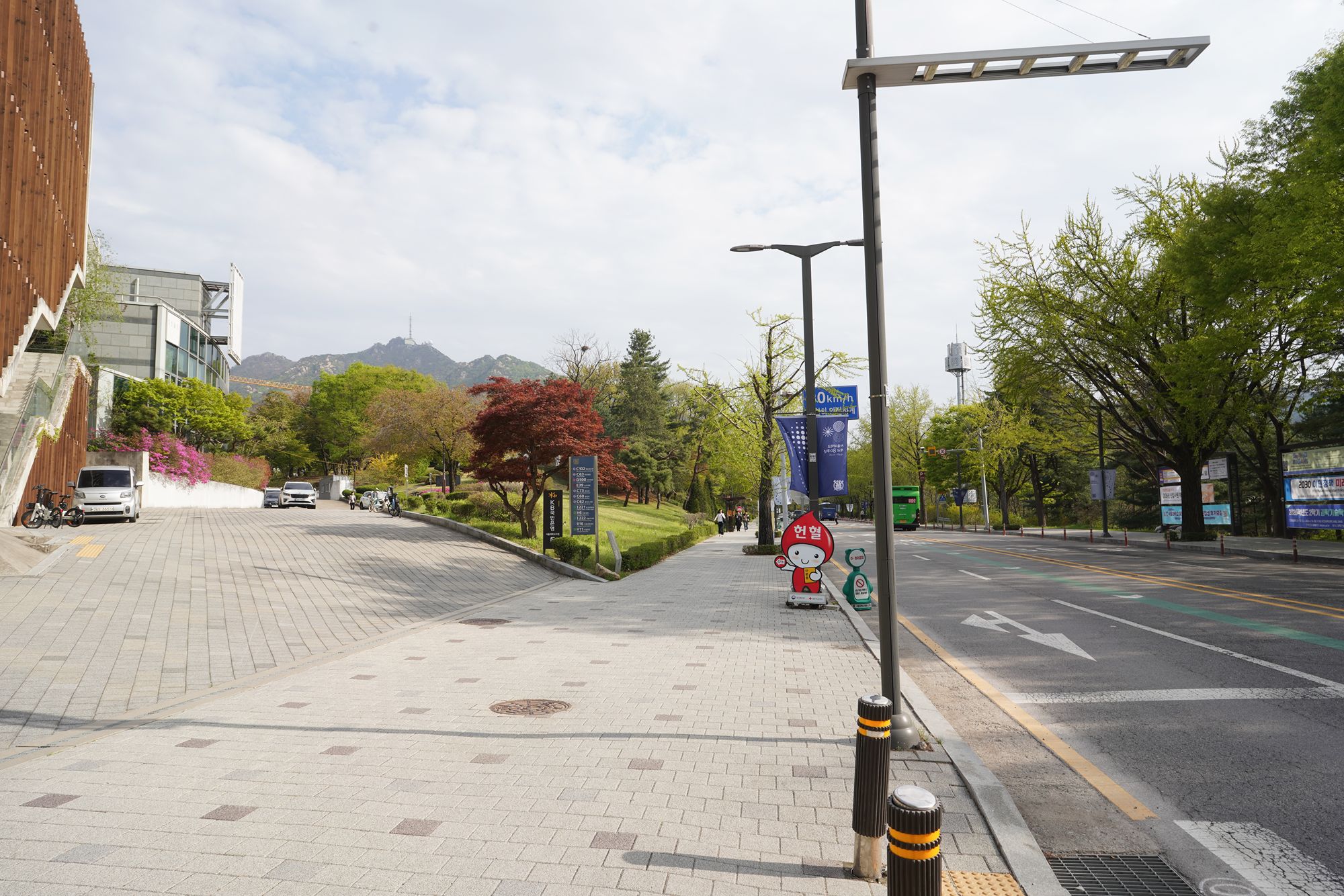
Finally, after wandering around the campus for a while, I began approaching the building I had really come here to see—the Seoul National University Museum of Art. Even from a distance, its unusual modern design stood out dramatically from the more conventional university buildings surrounding it.
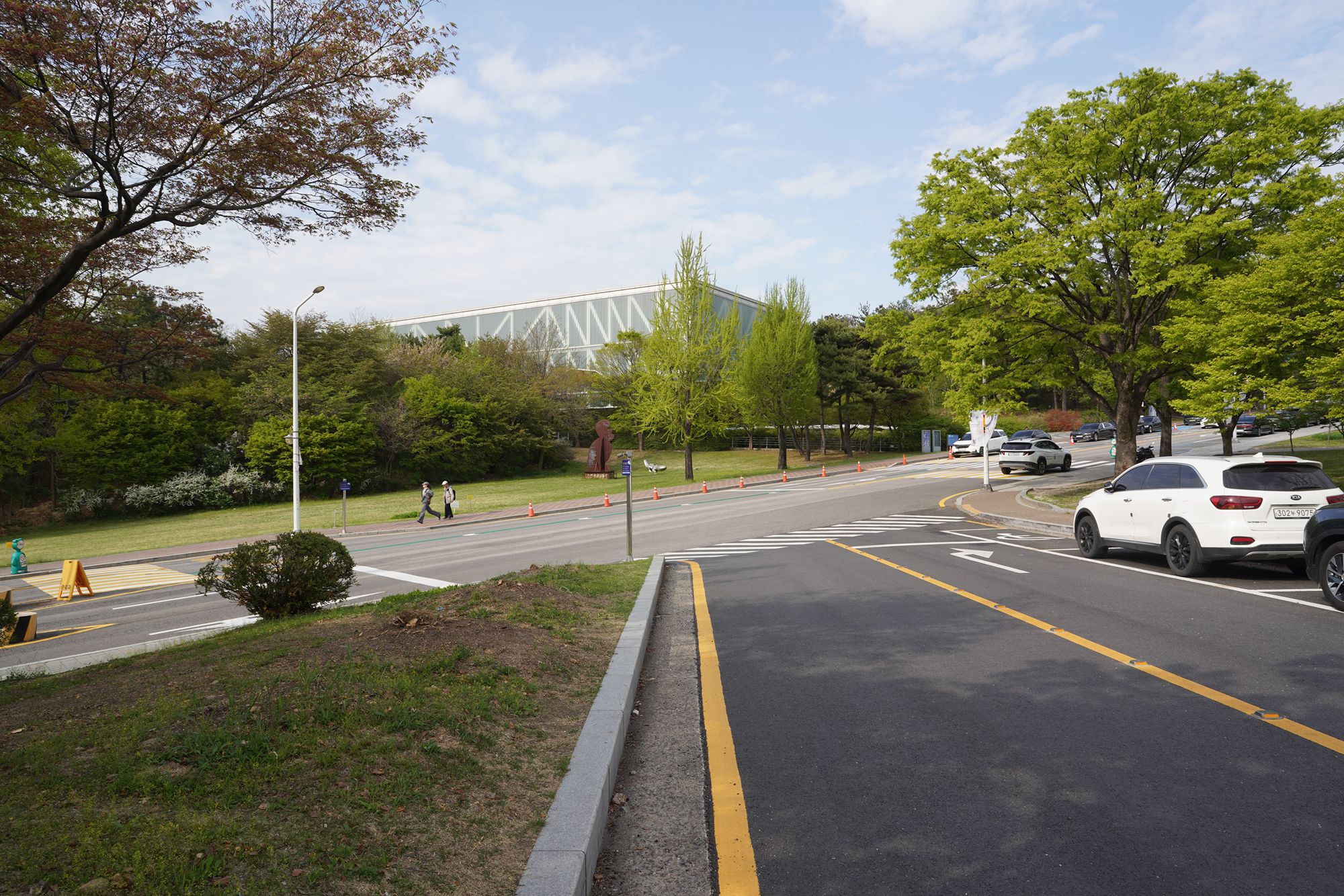
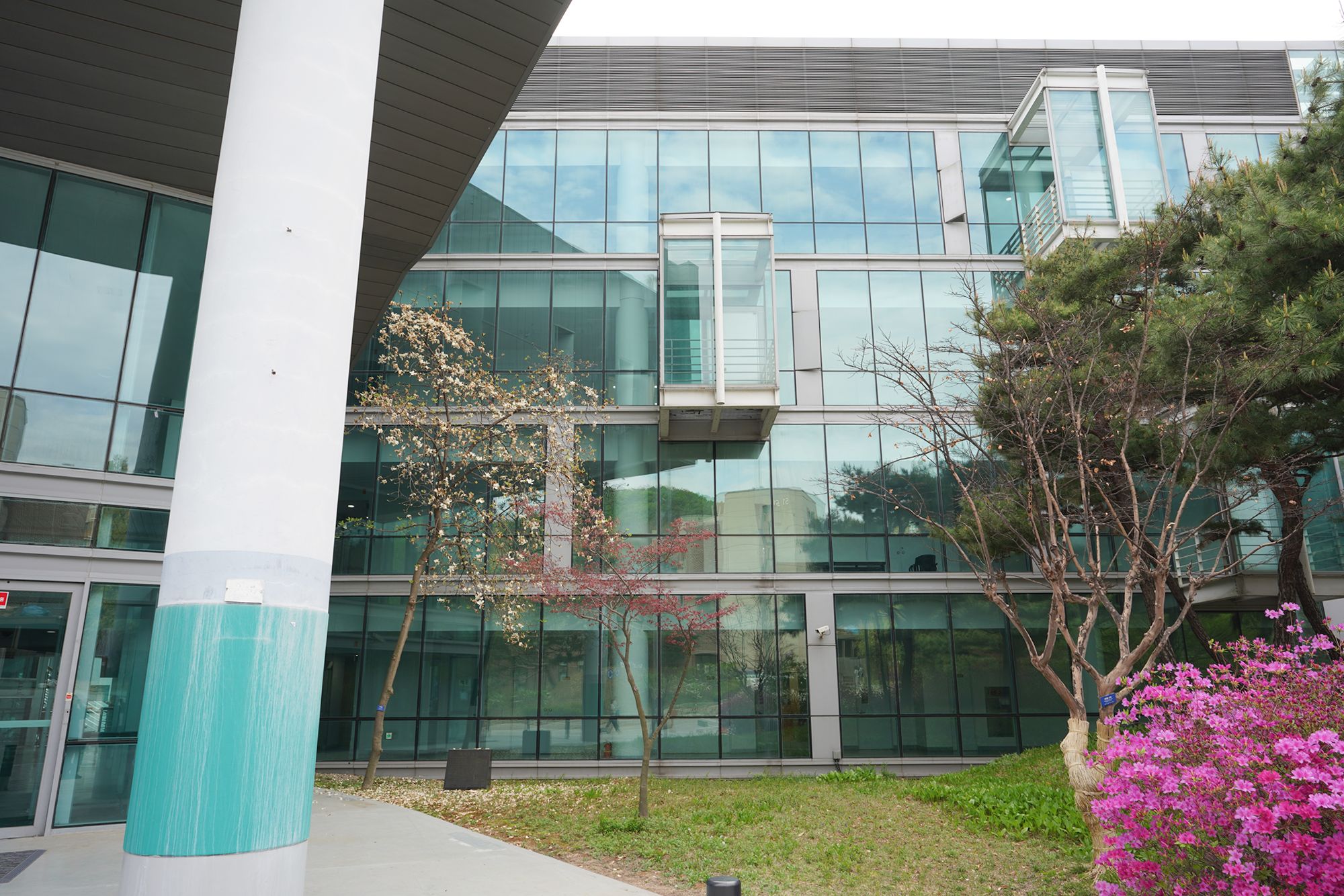
Finally, I arrived at the modern-looking museum building that I had come all the way to Seoul National University to see. Unfortunately, I was disappointed to discover that I couldn’t go inside. A private exhibition was being held that day, and the museum was closed to the general public. So, although I wasn’t able to explore the interior, I could at least walk around and take a closer look at the distinctive architecture from the outside.
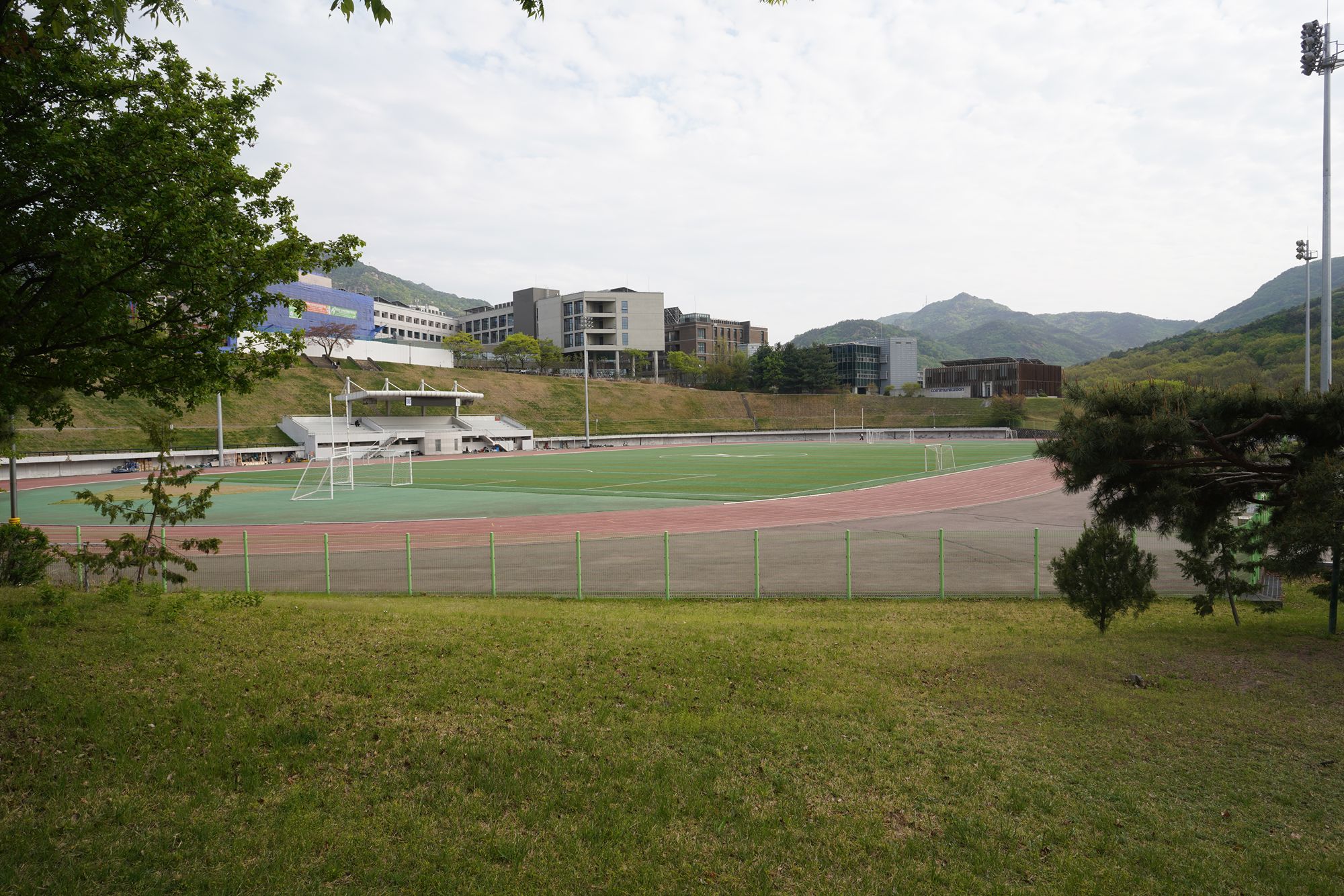
Since I now had more time than expected because I wasn’t able to see the inside of the museum, I decided to take another walk around the university campus and explore a little more before leaving.
A view behind me
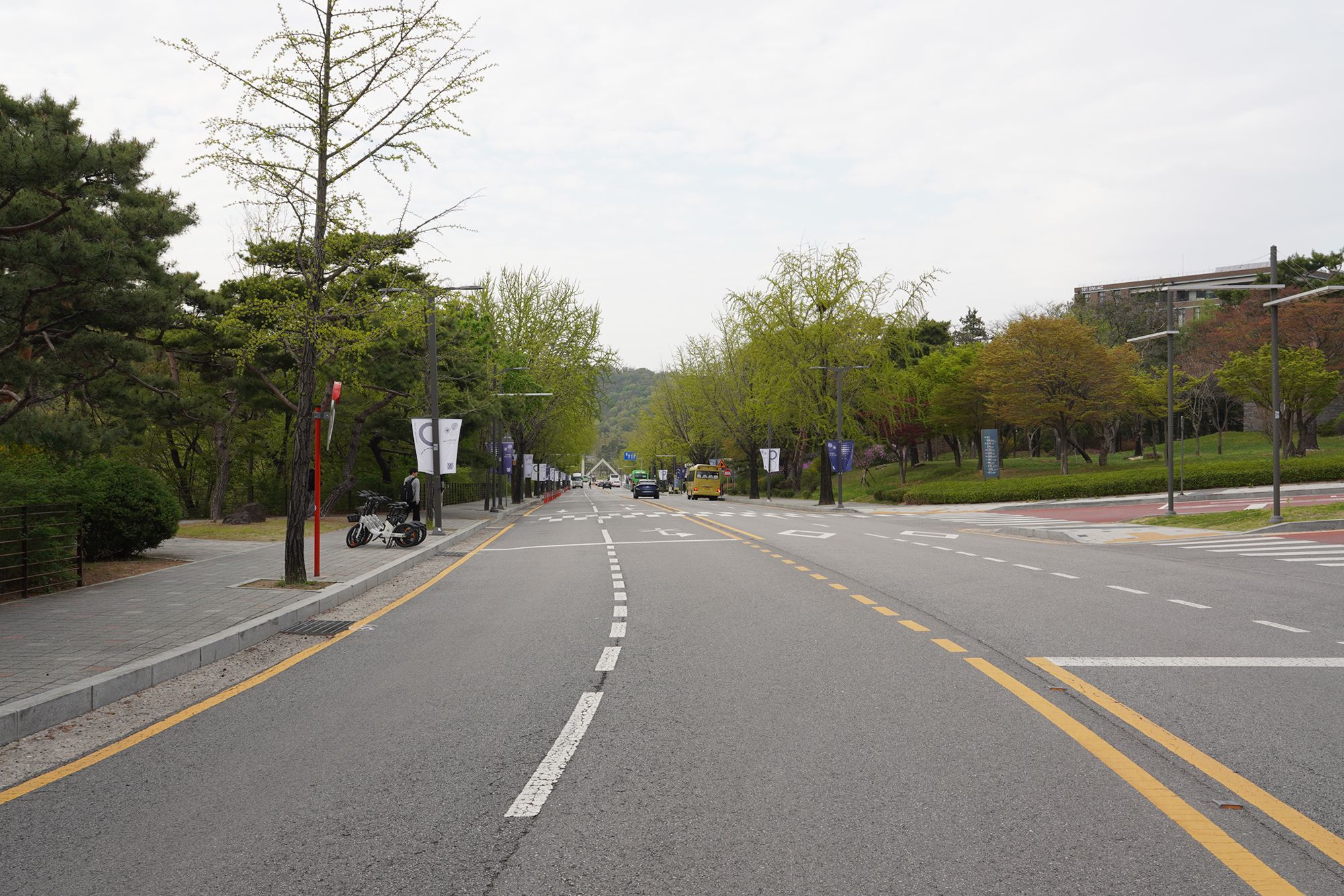
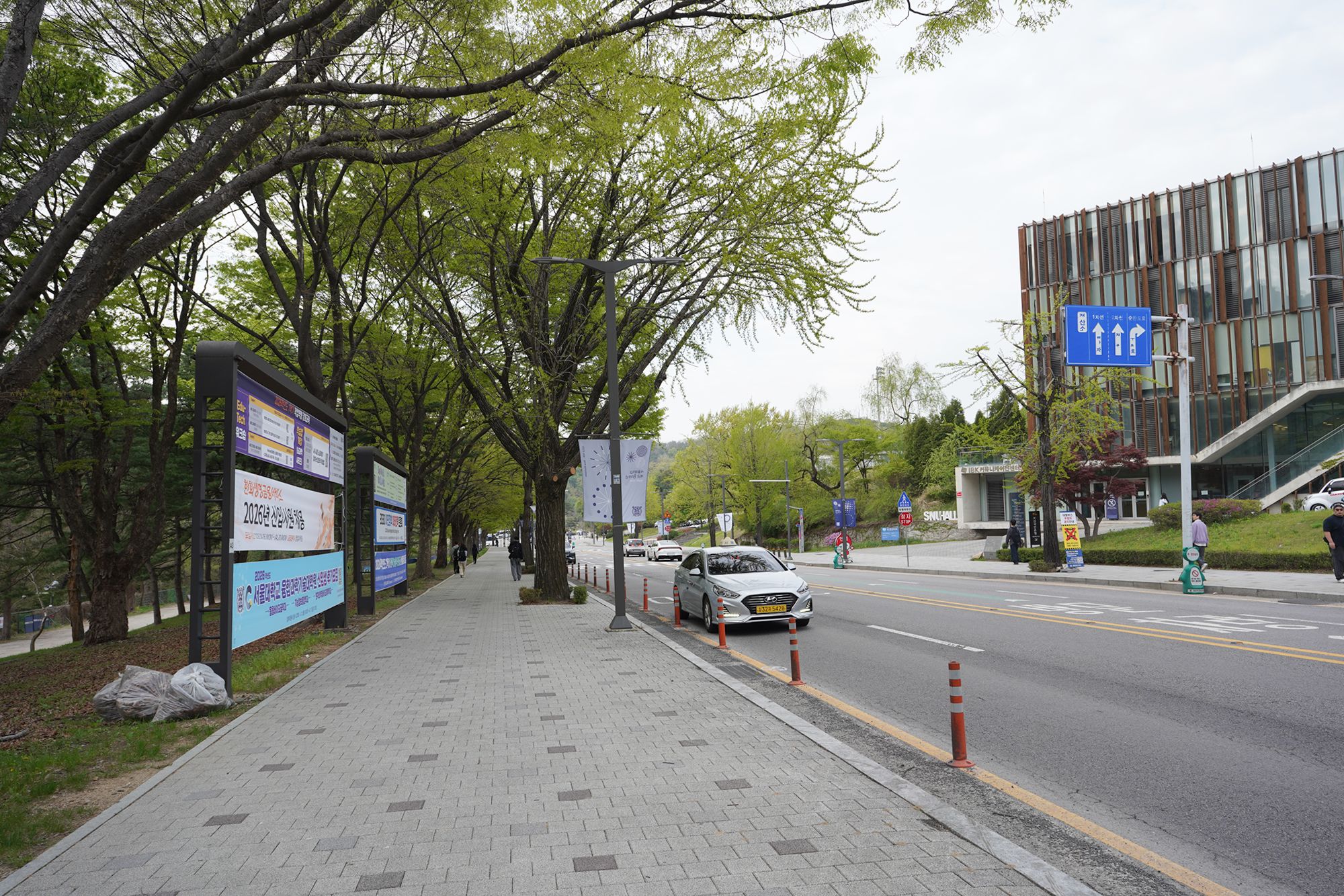
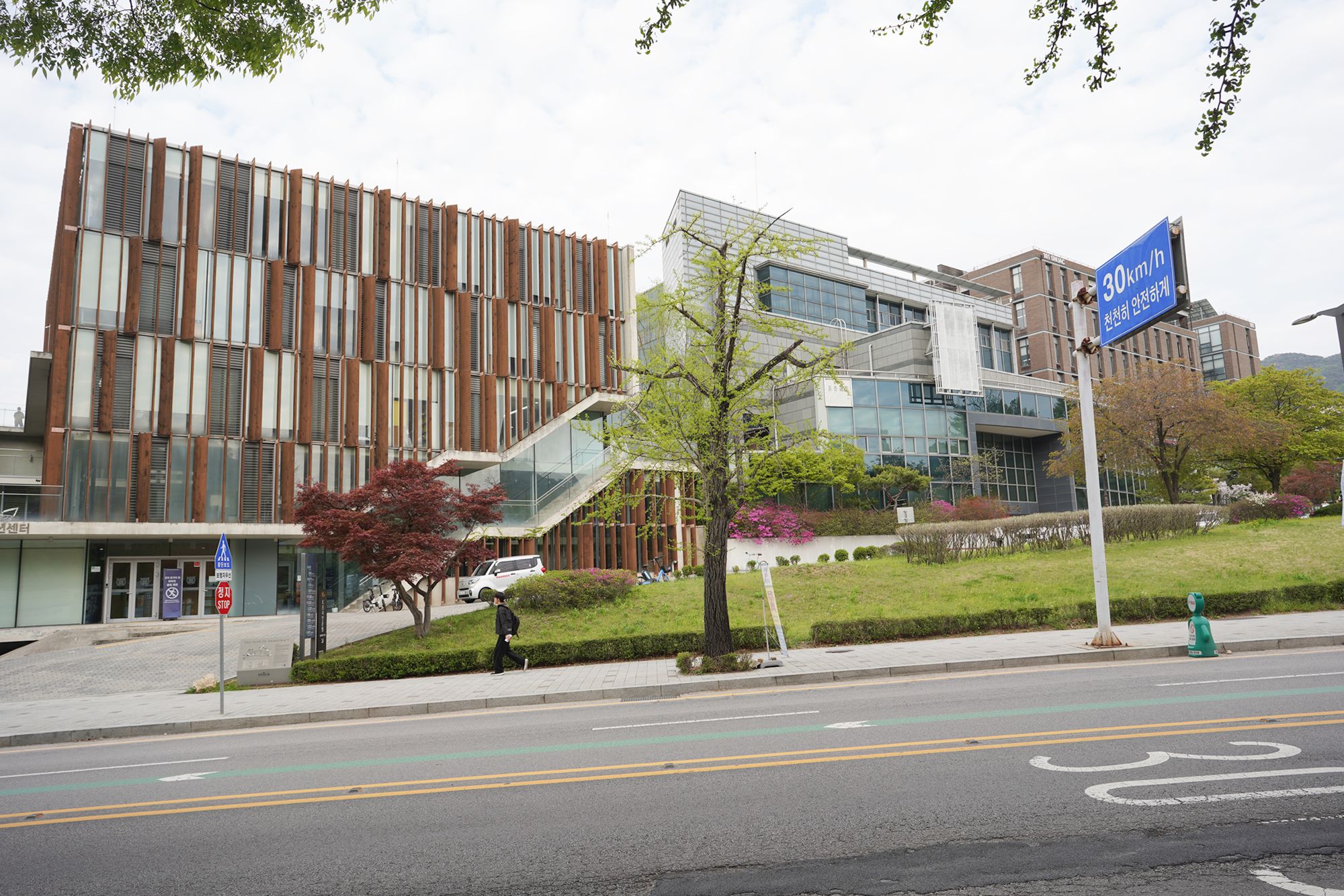
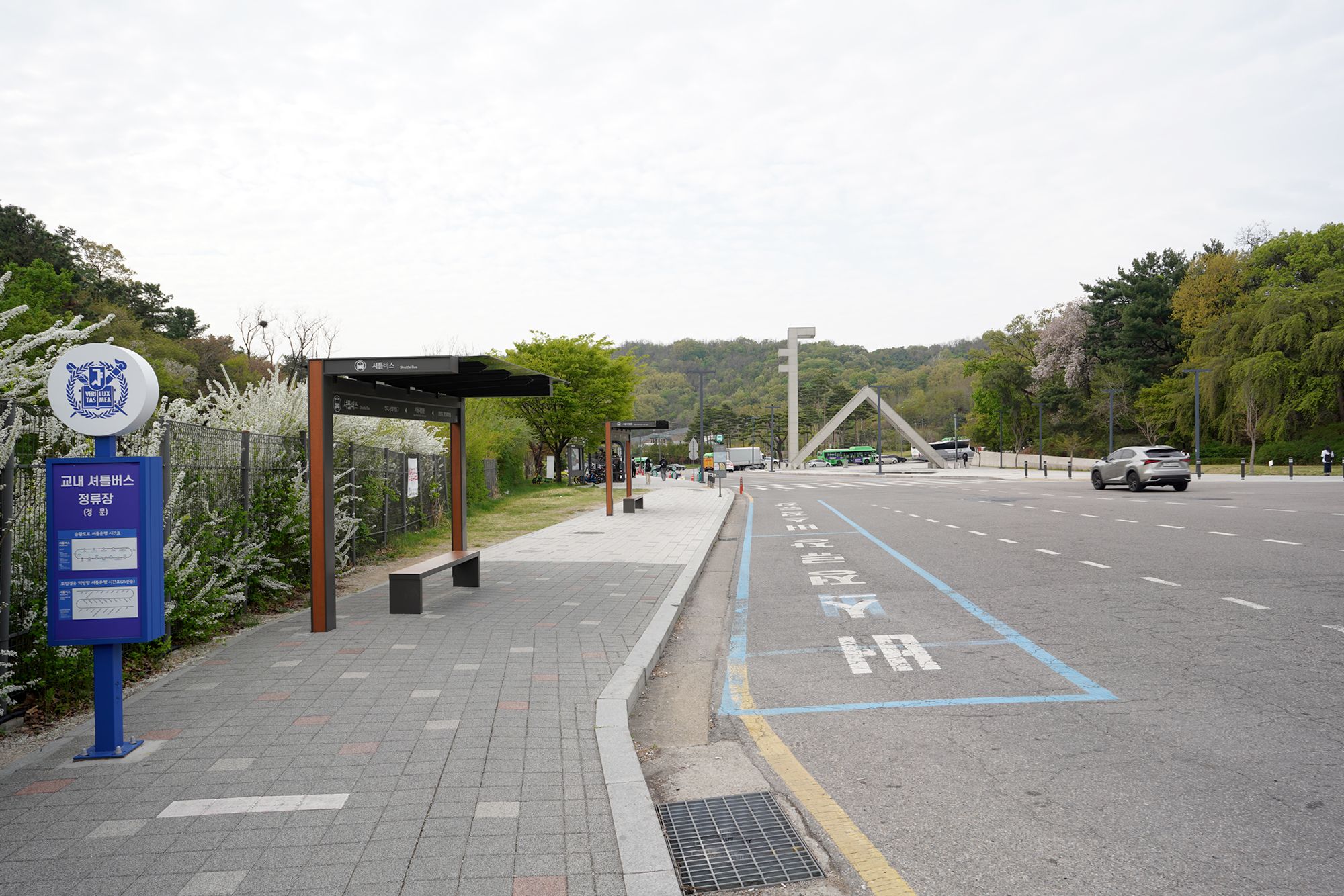
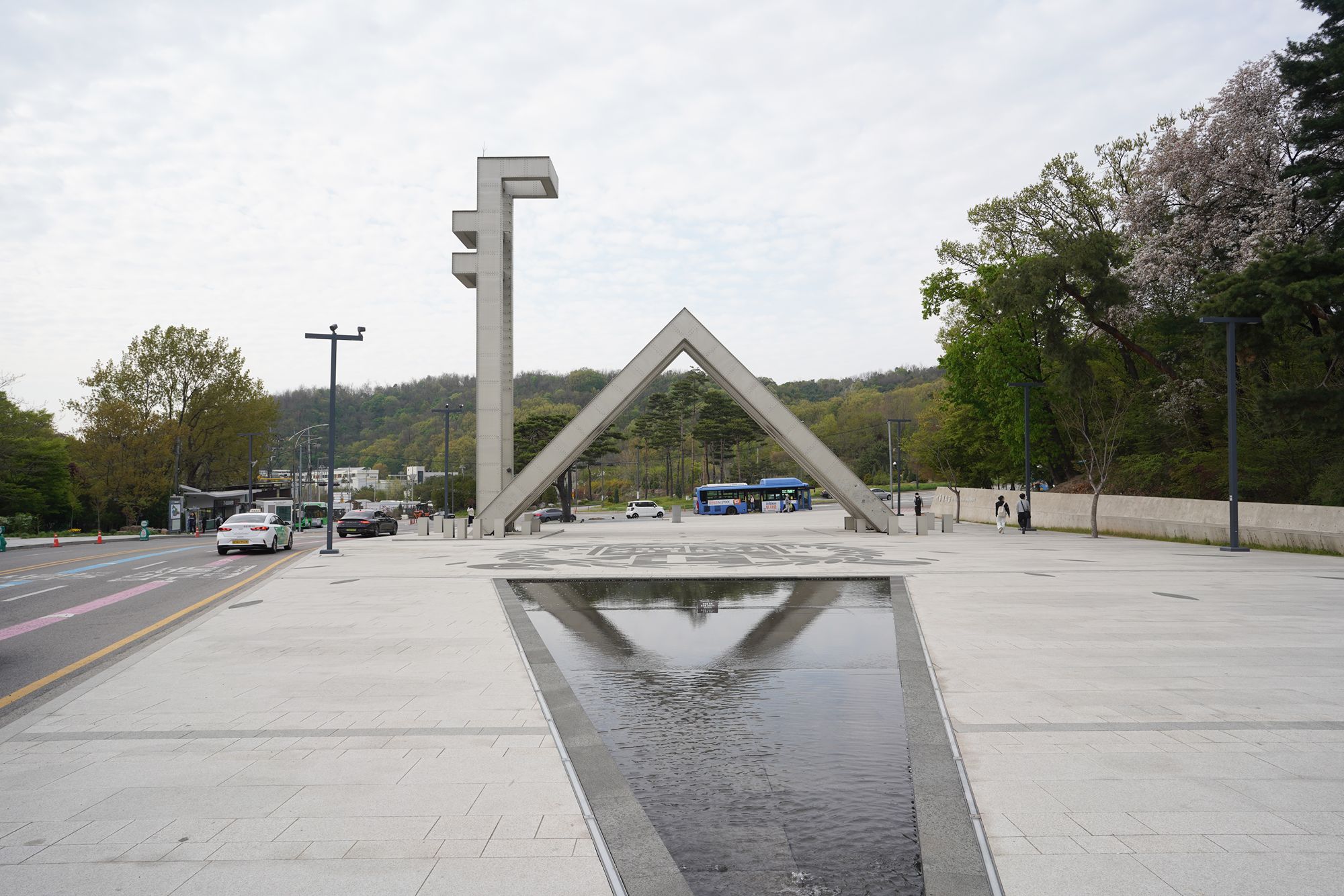
This is the famous main entrance gate of Seoul National University, one of the most recognizable symbols of the university. Its distinctive shape incorporates the Korean letters ㄱ, ㅅ, and ㄷ, representing the initials of “Gukrip Seoul Daehakgyo” (National Seoul University).
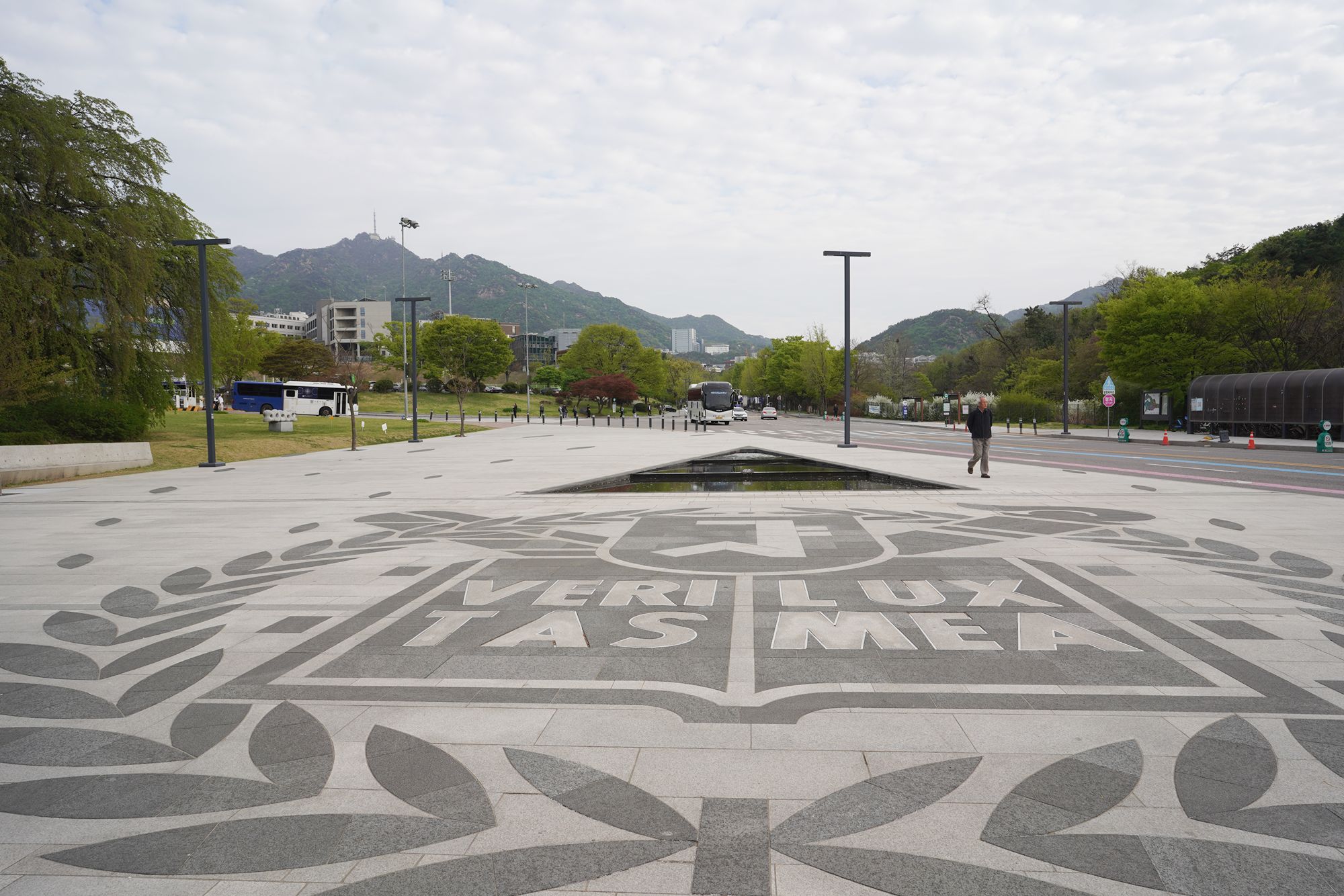
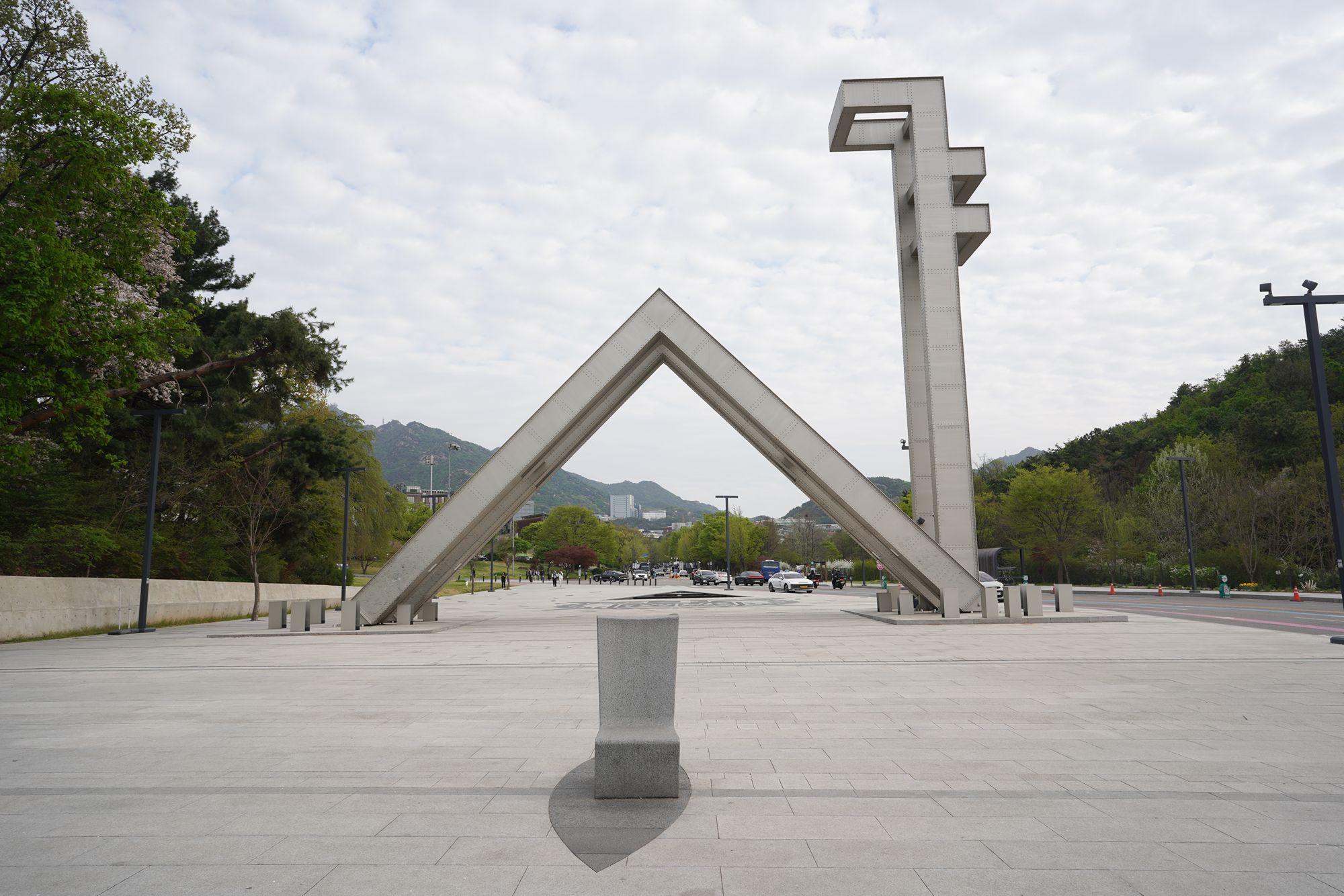
Seoul National University’s Gwanak Campus is somewhat removed from the busier parts of Seoul, and there is no subway station directly on the campus. After finishing my visit, I took a bus toward Seoul National University Station.
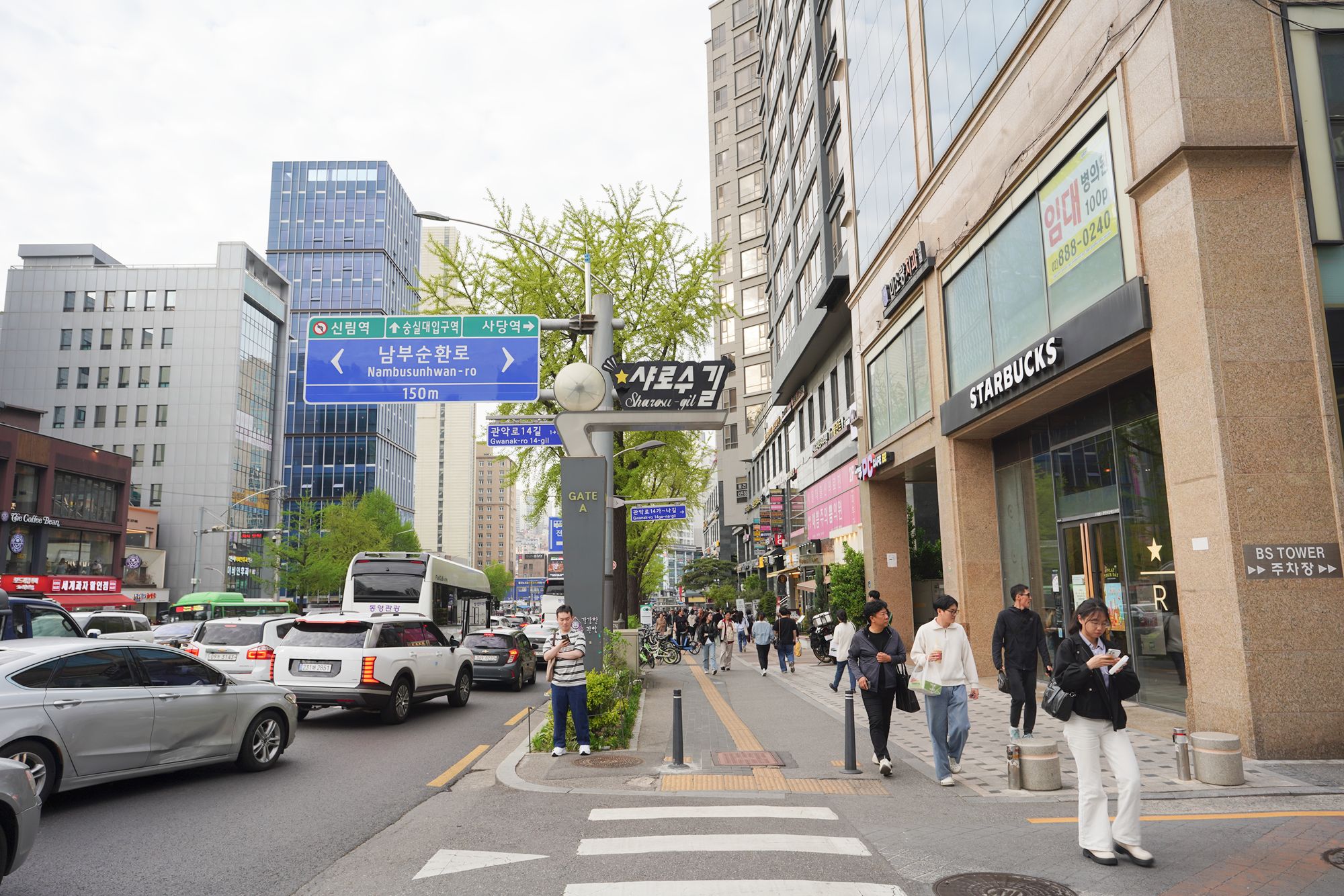
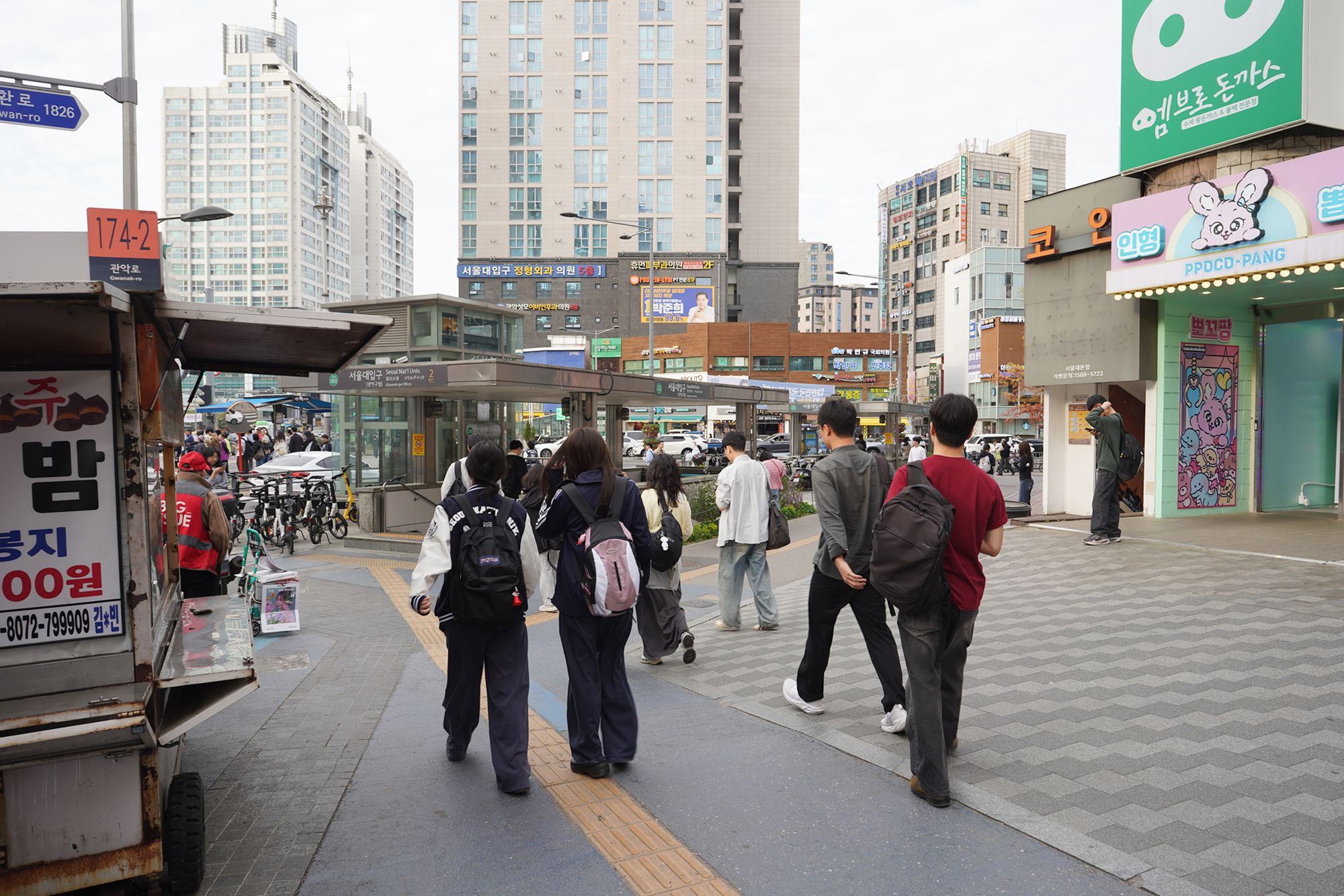
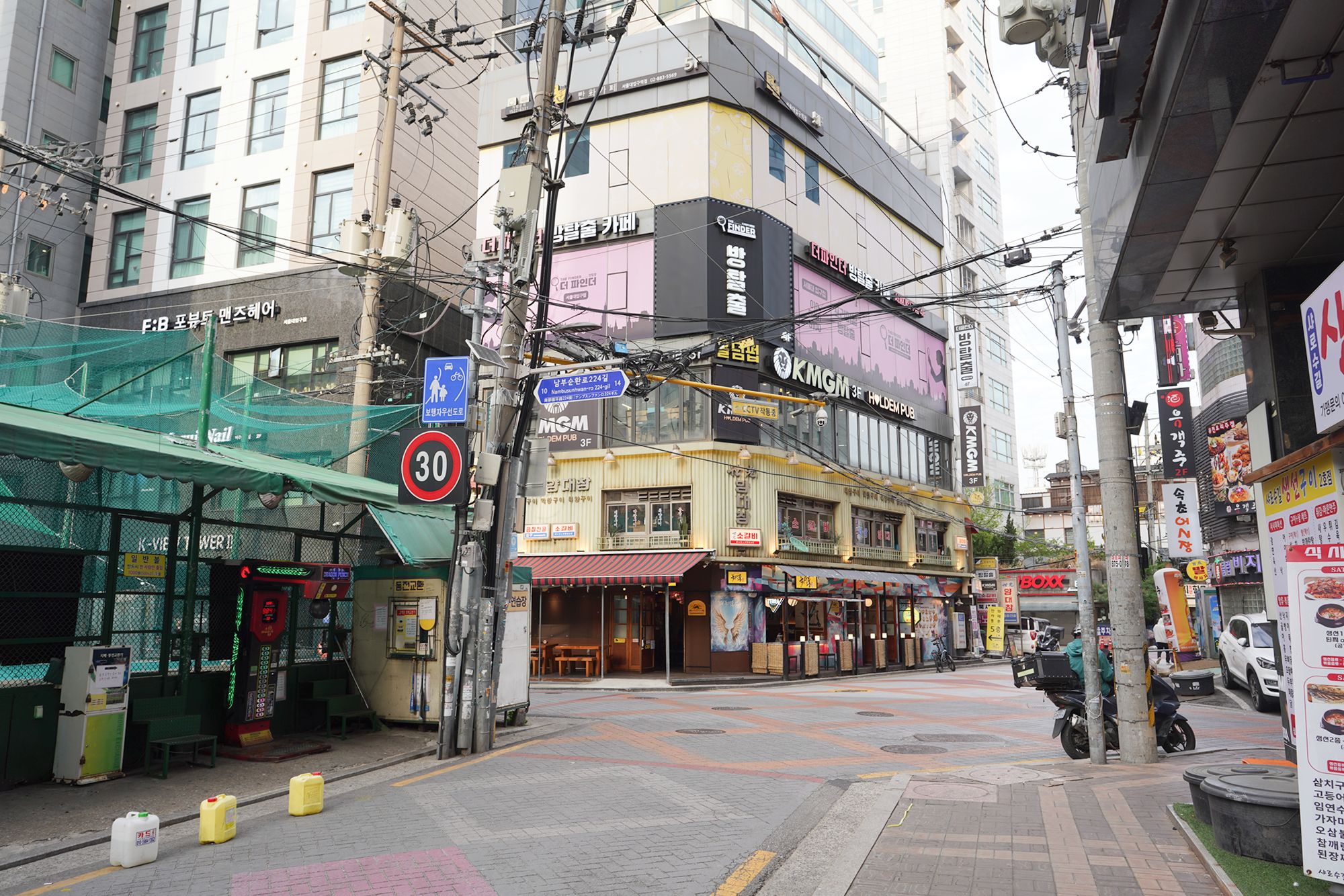
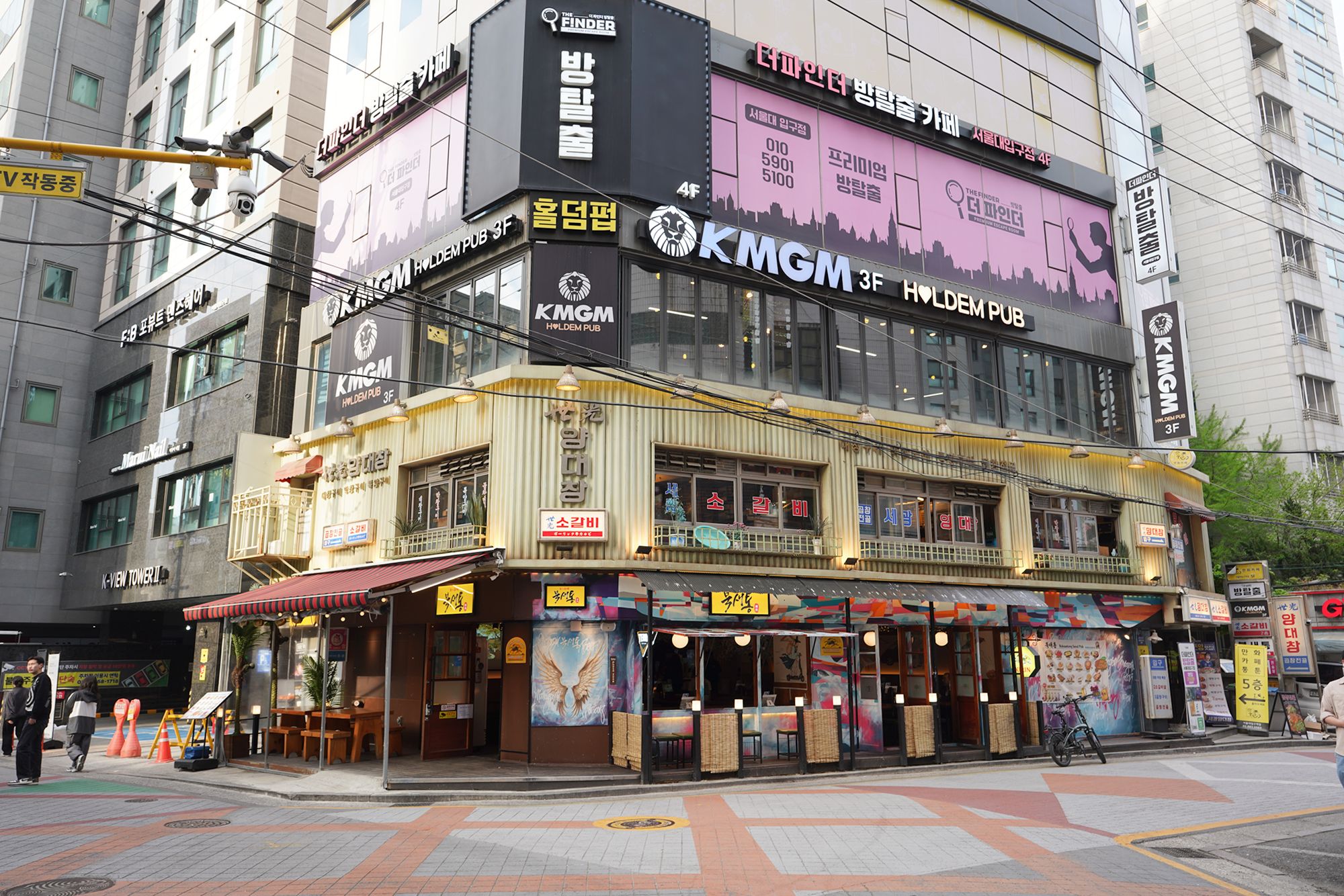
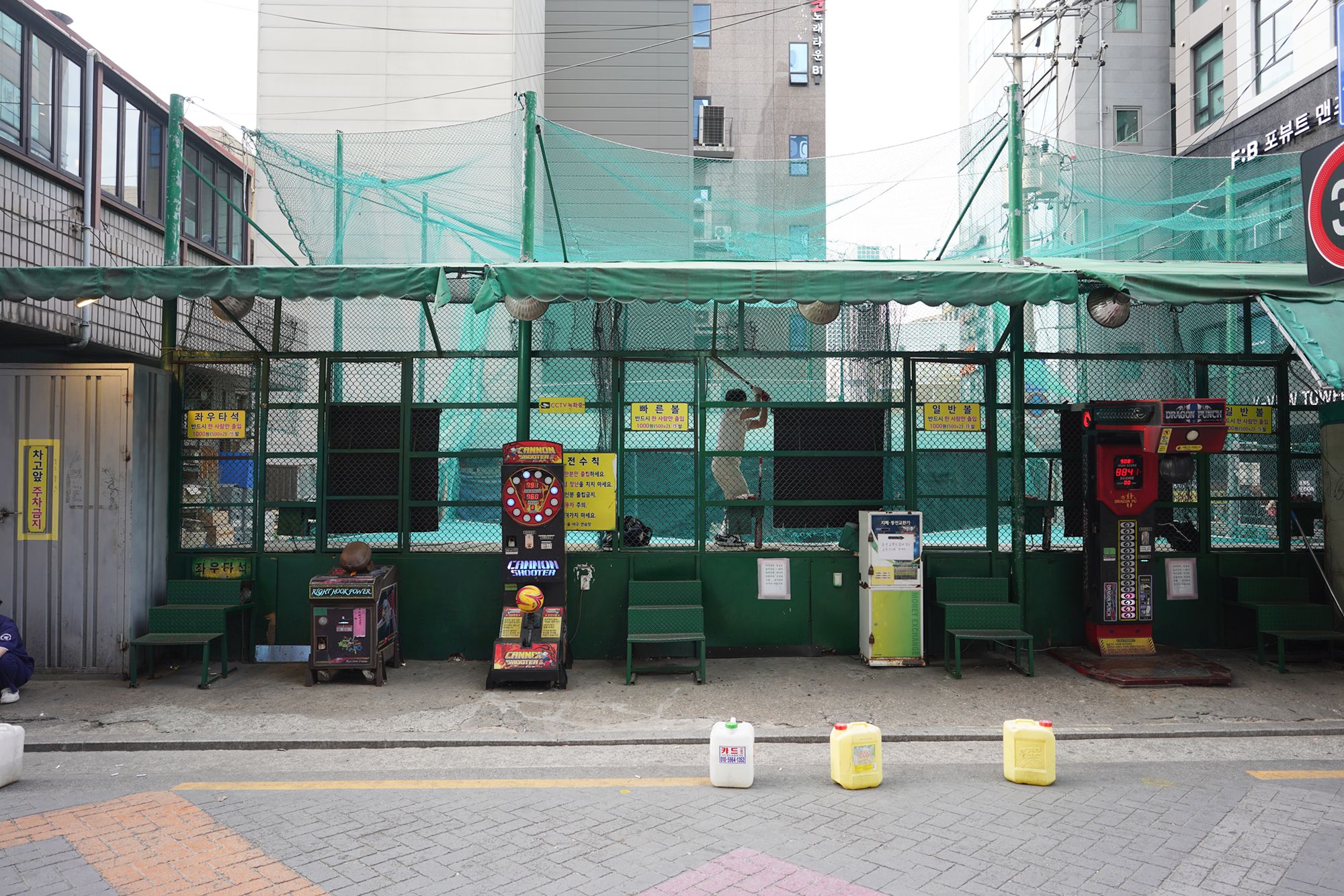
Near the station is a popular neighborhood known as Sharosu-gil (샤로수길), a lively street filled with restaurants, cafés, and small shops. I decided to walk around the area before continuing on my way.
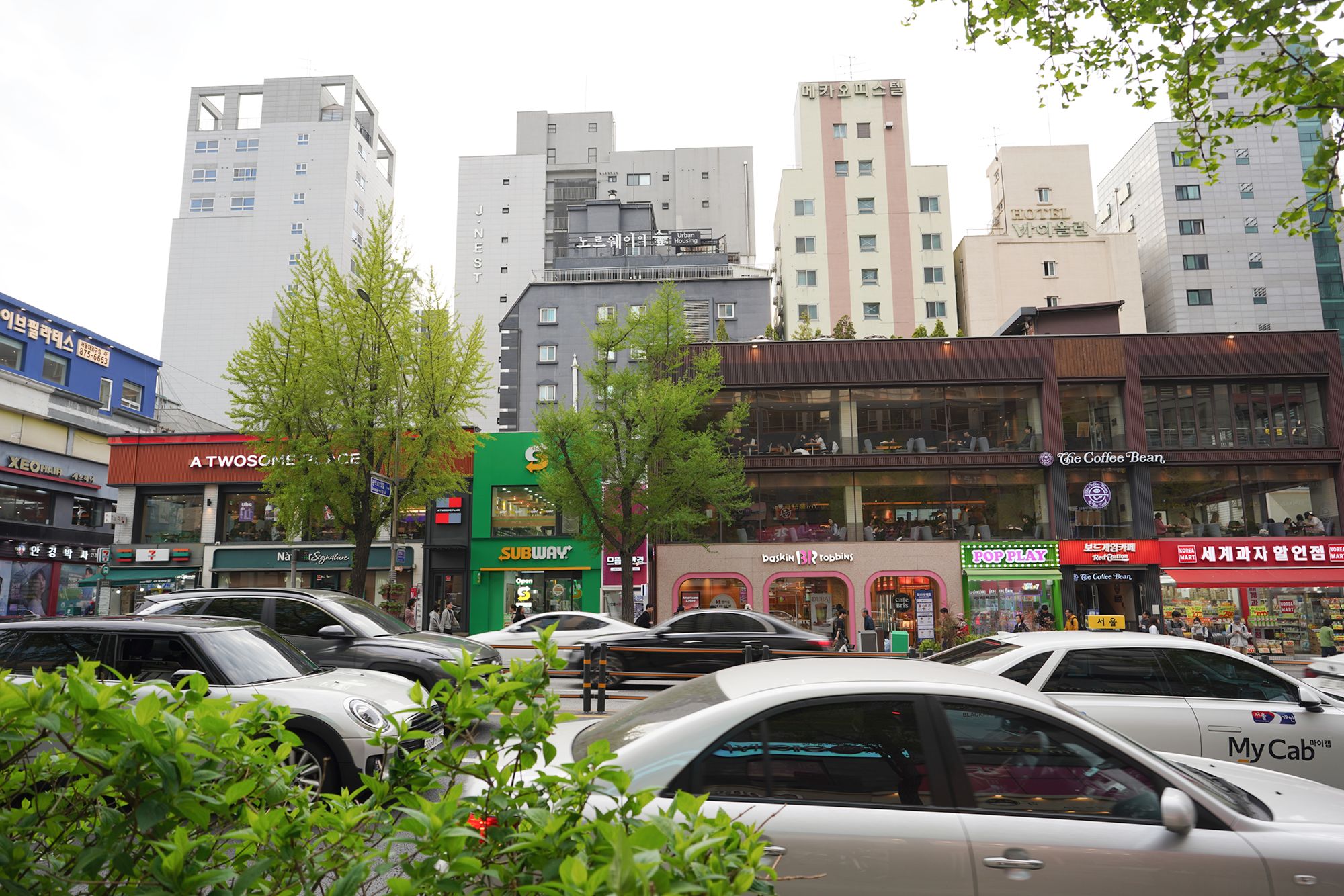
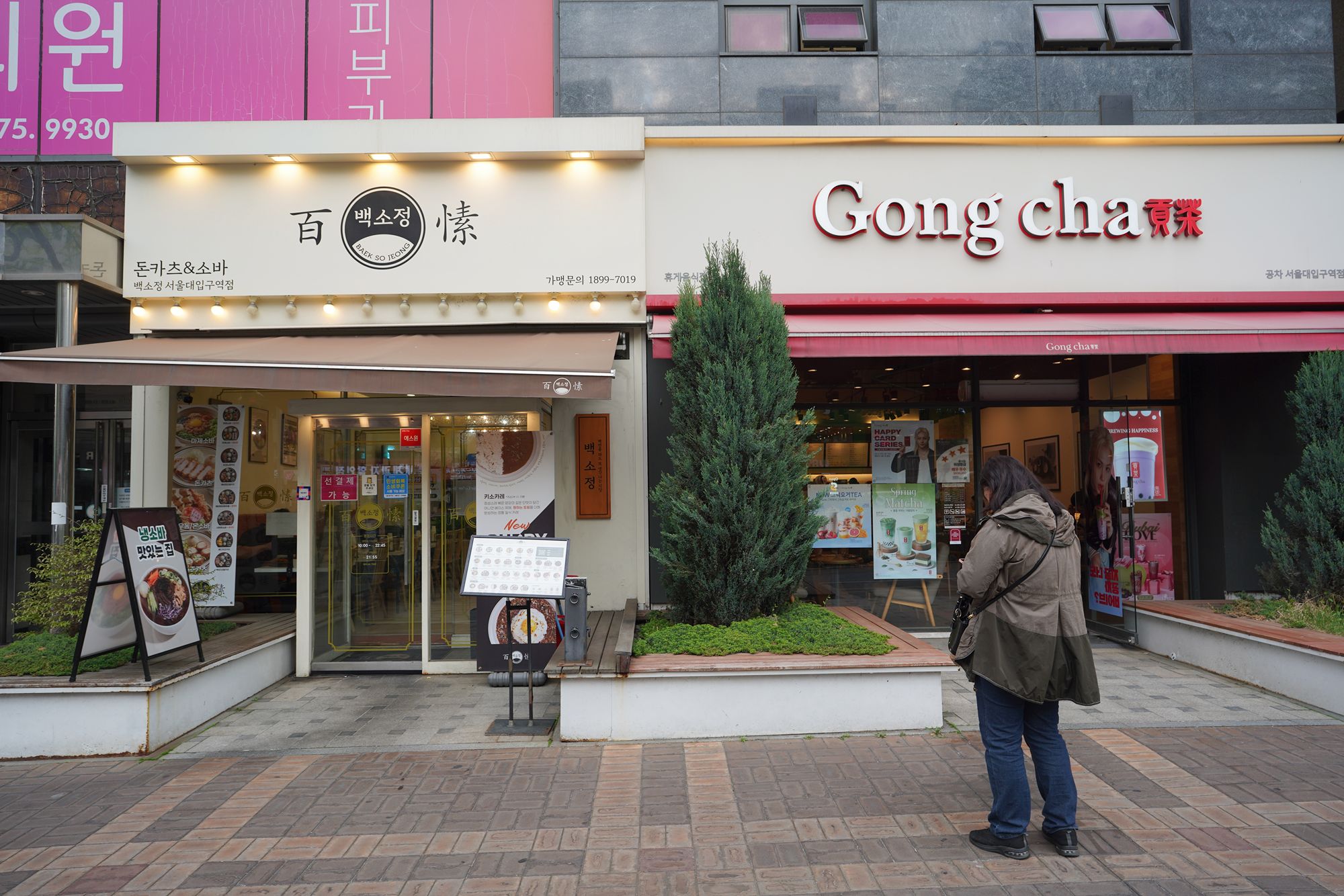
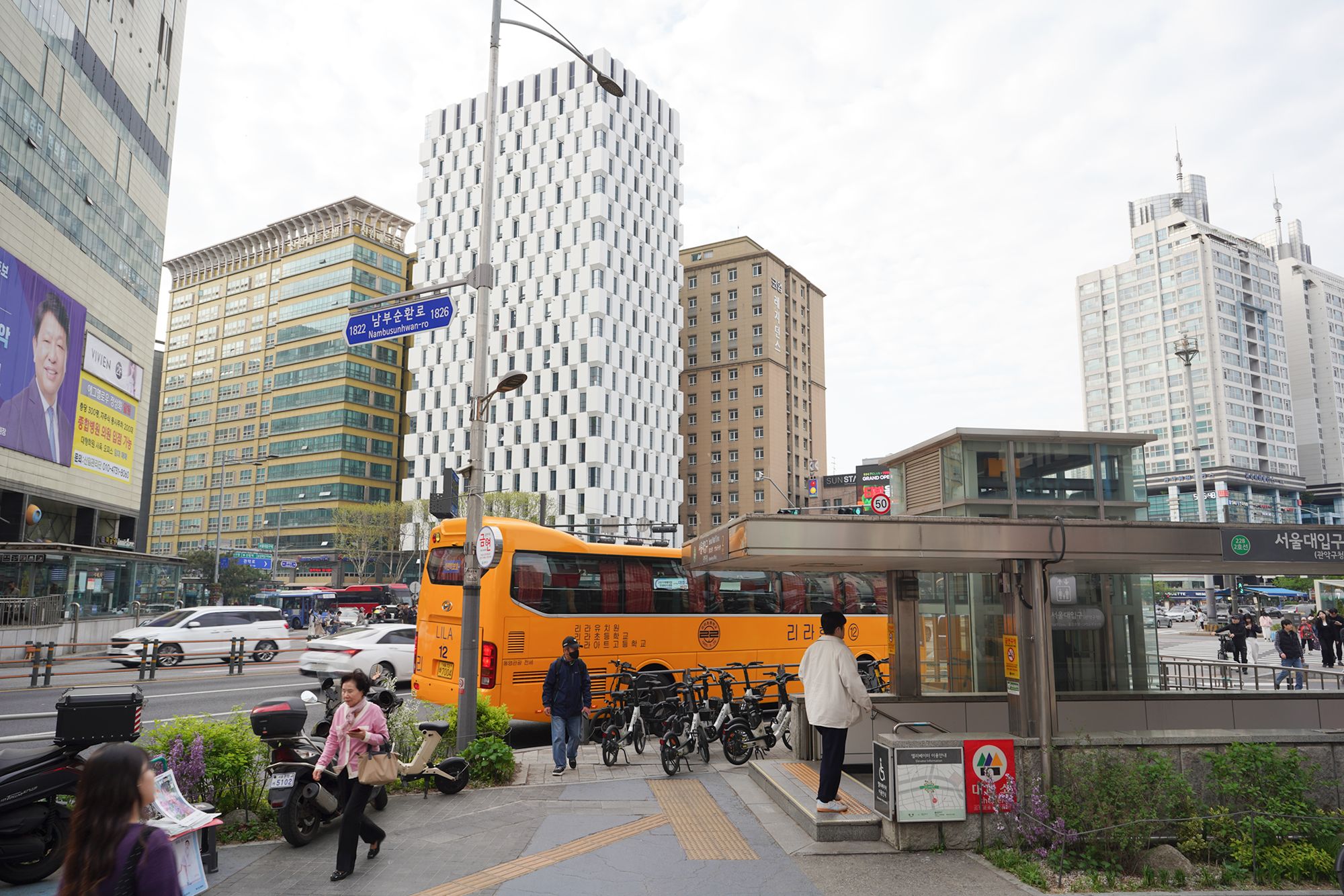
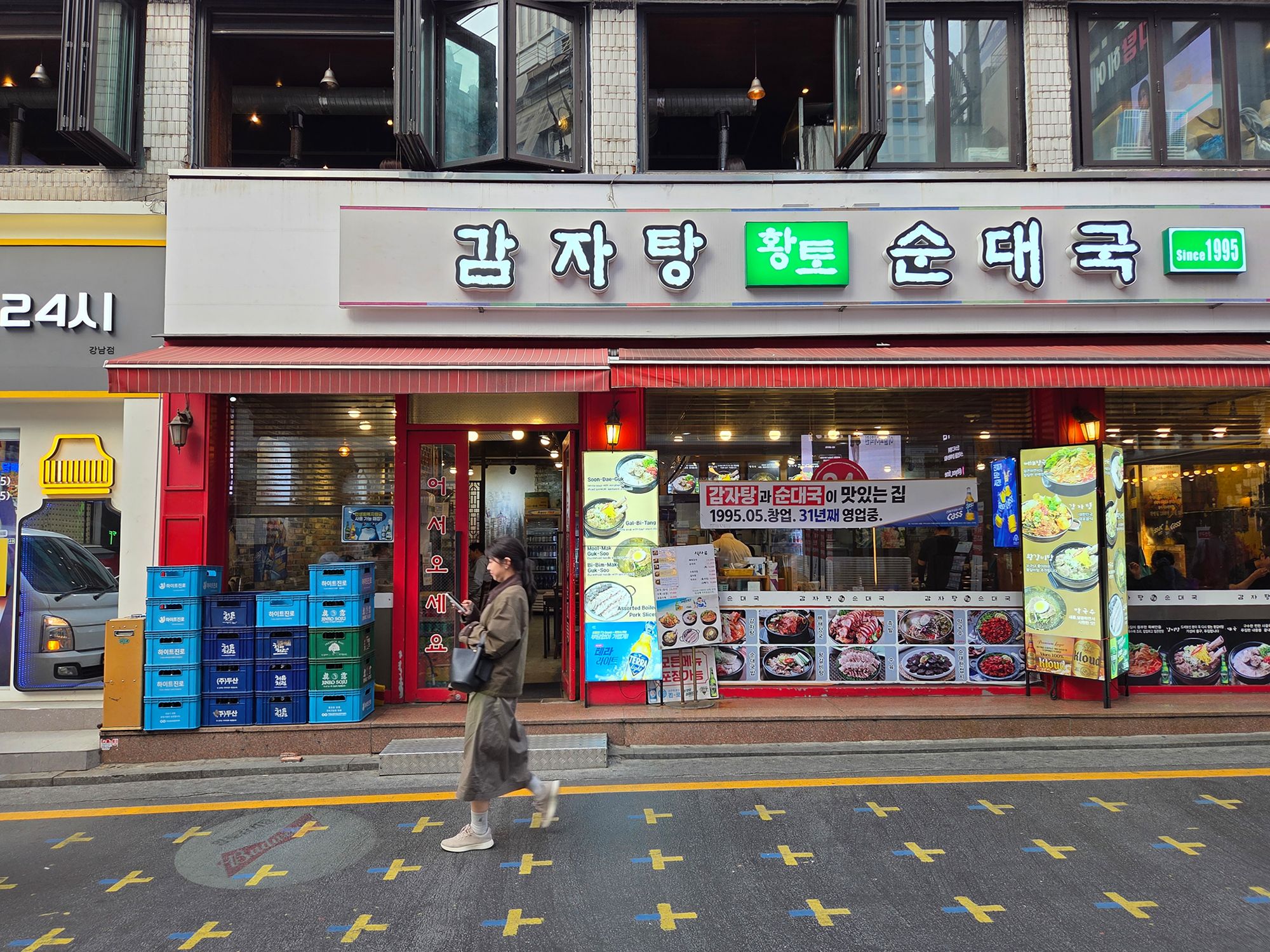
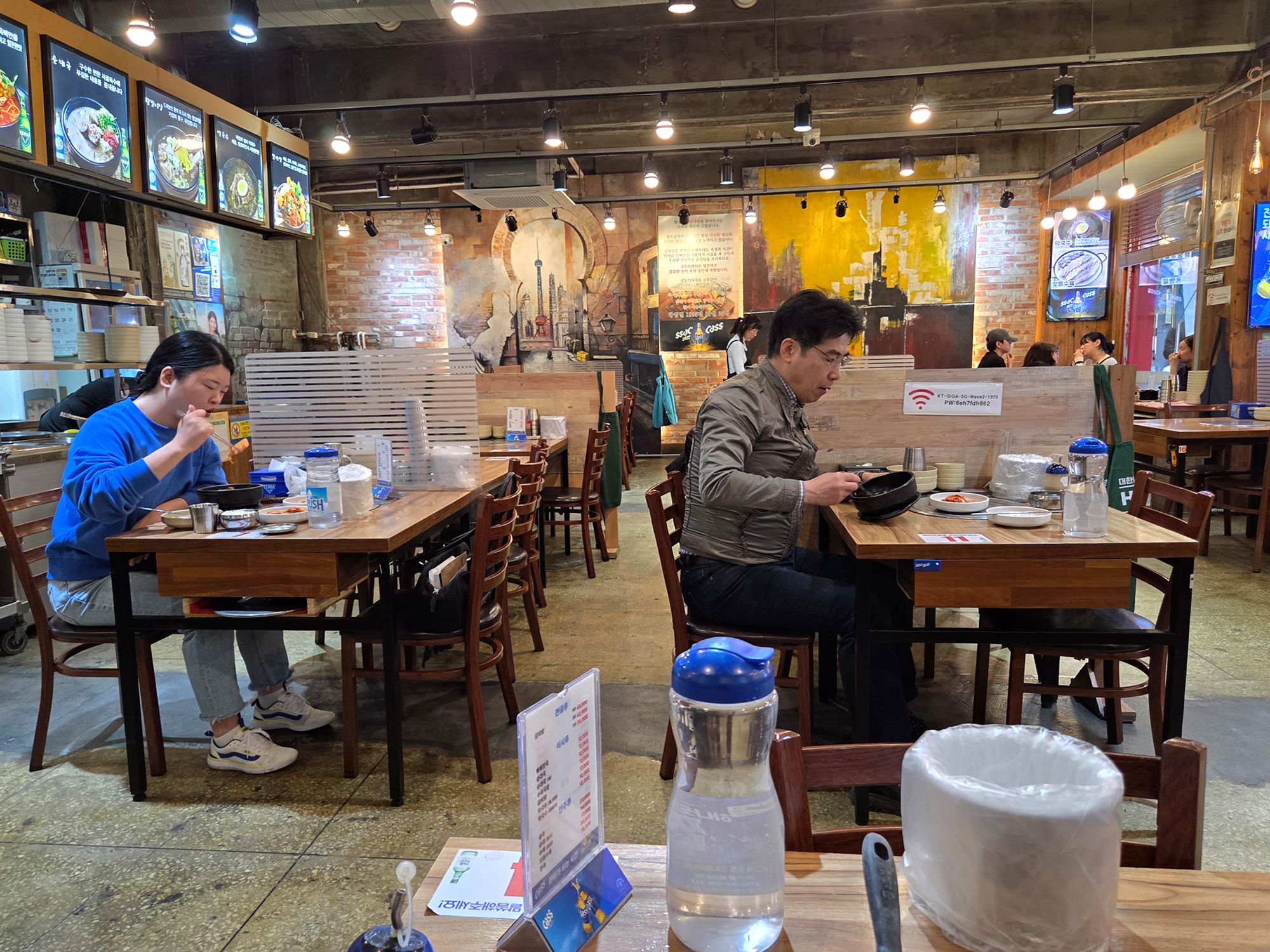
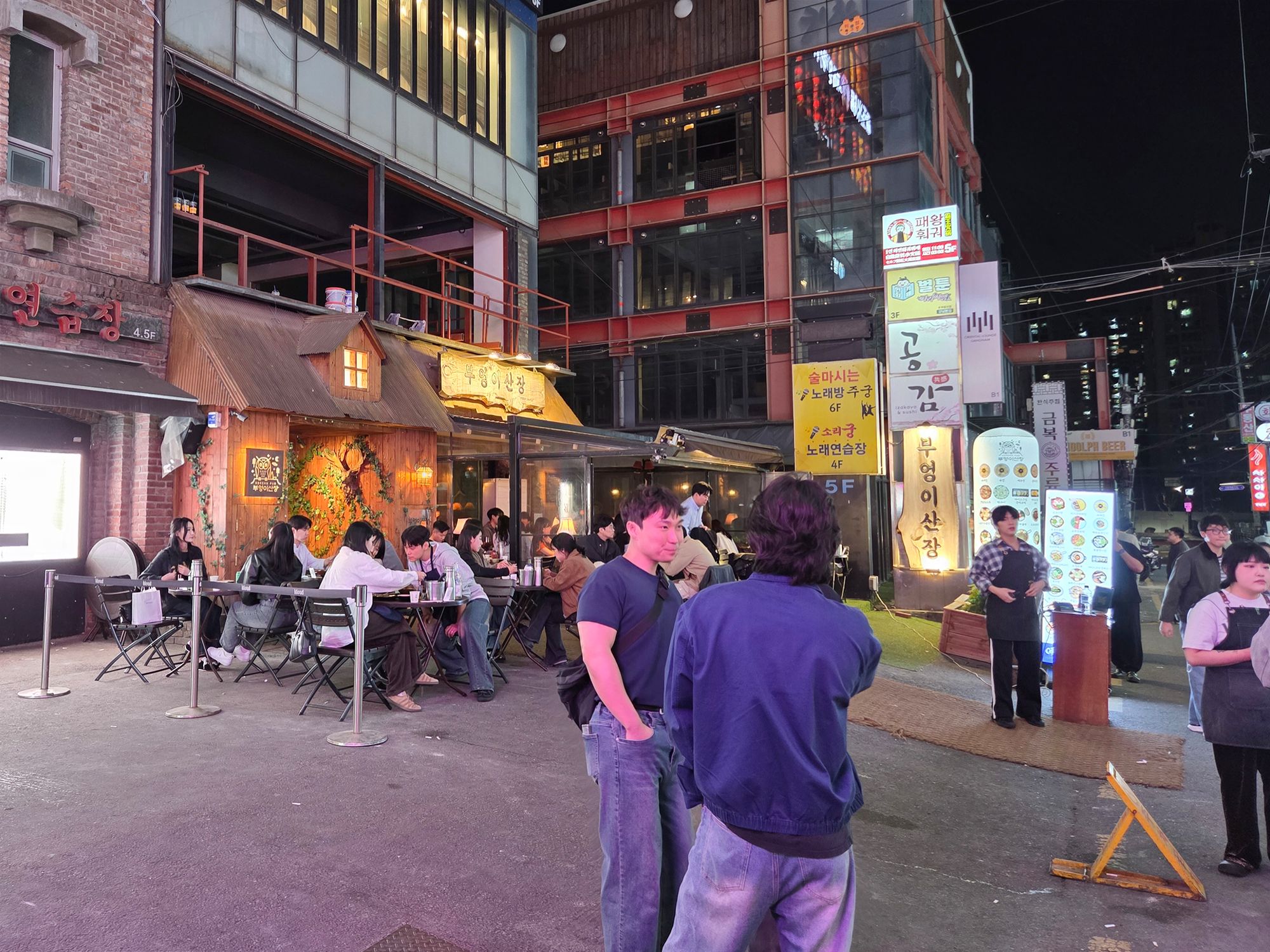
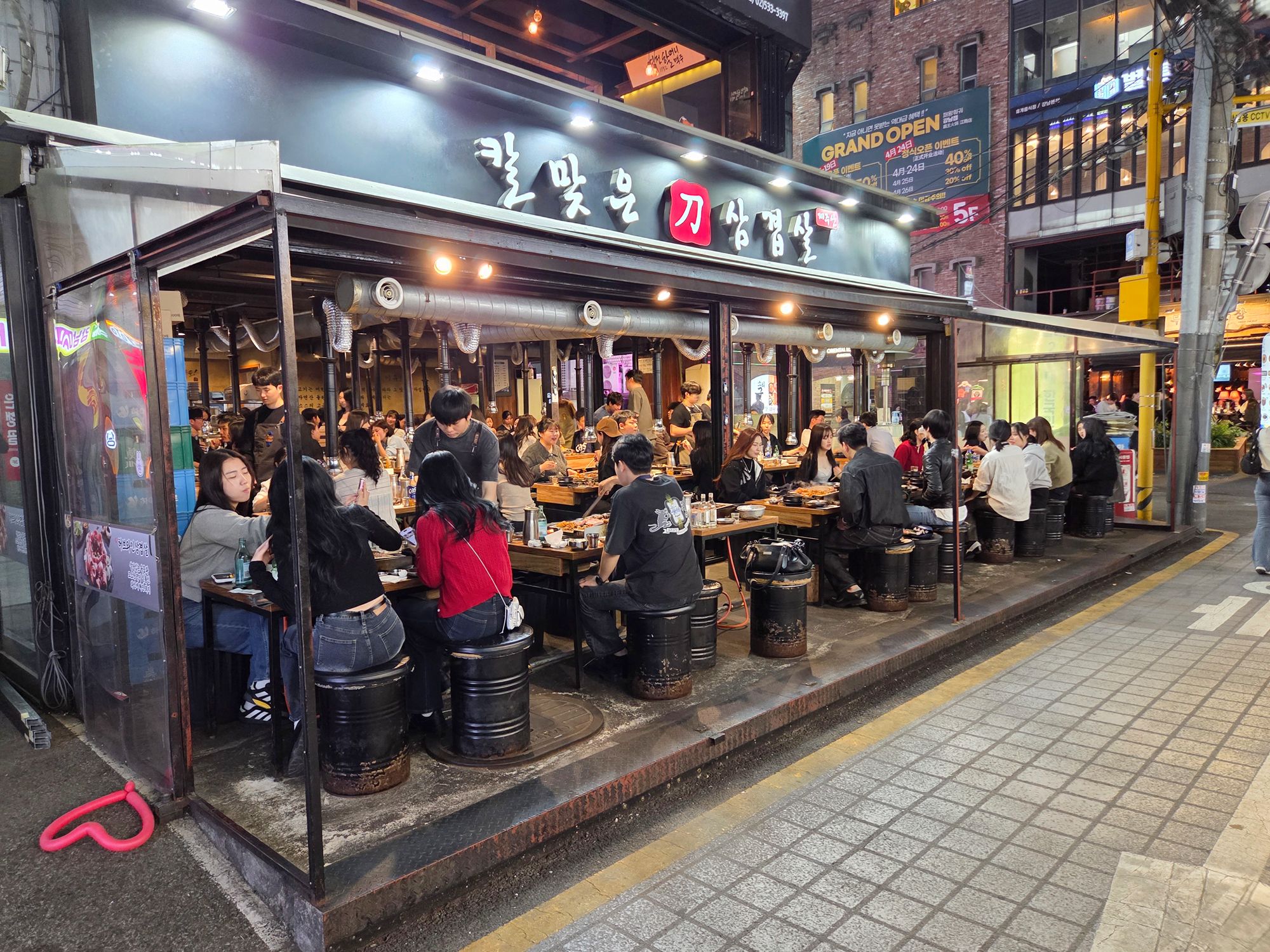
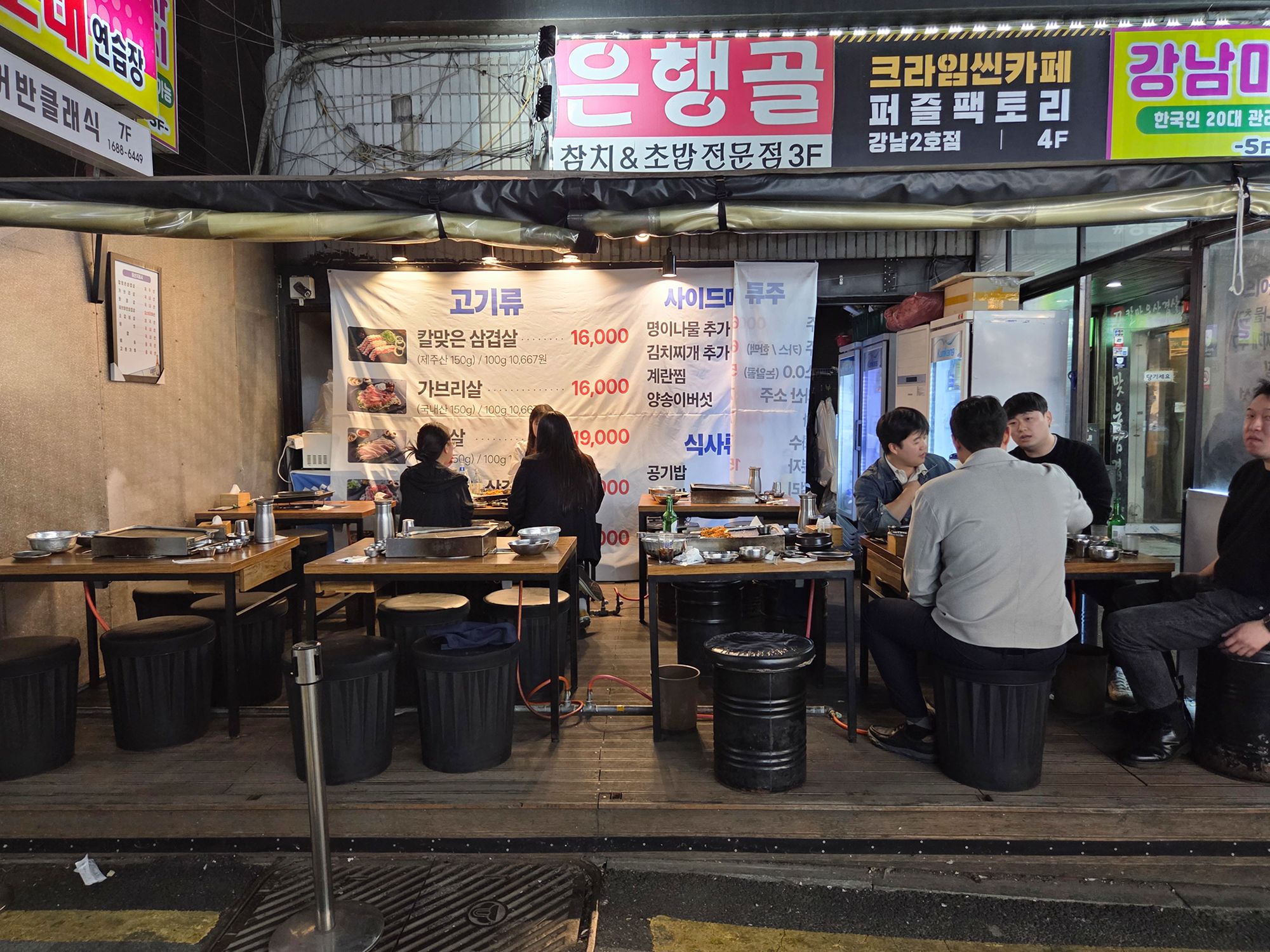
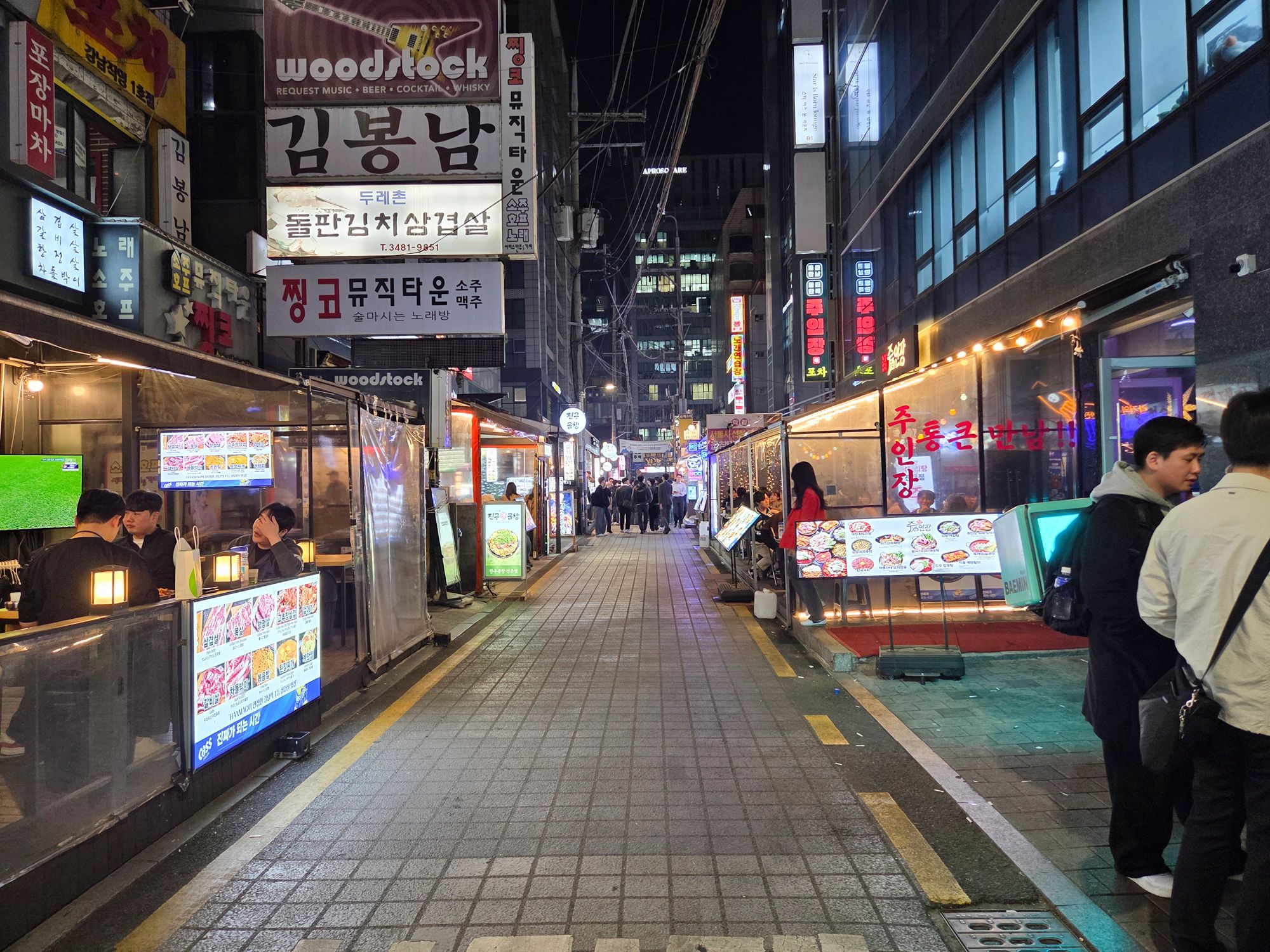
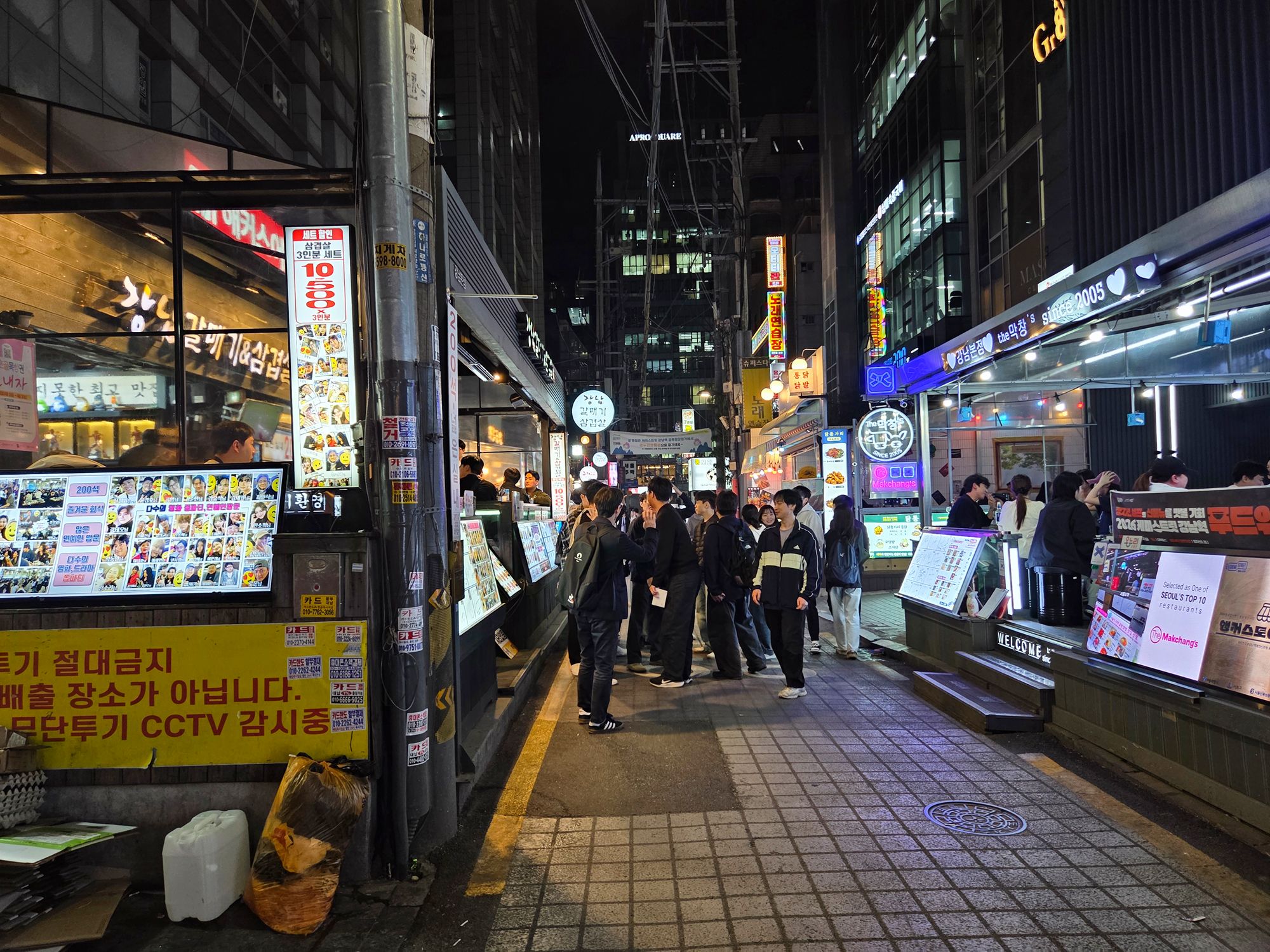
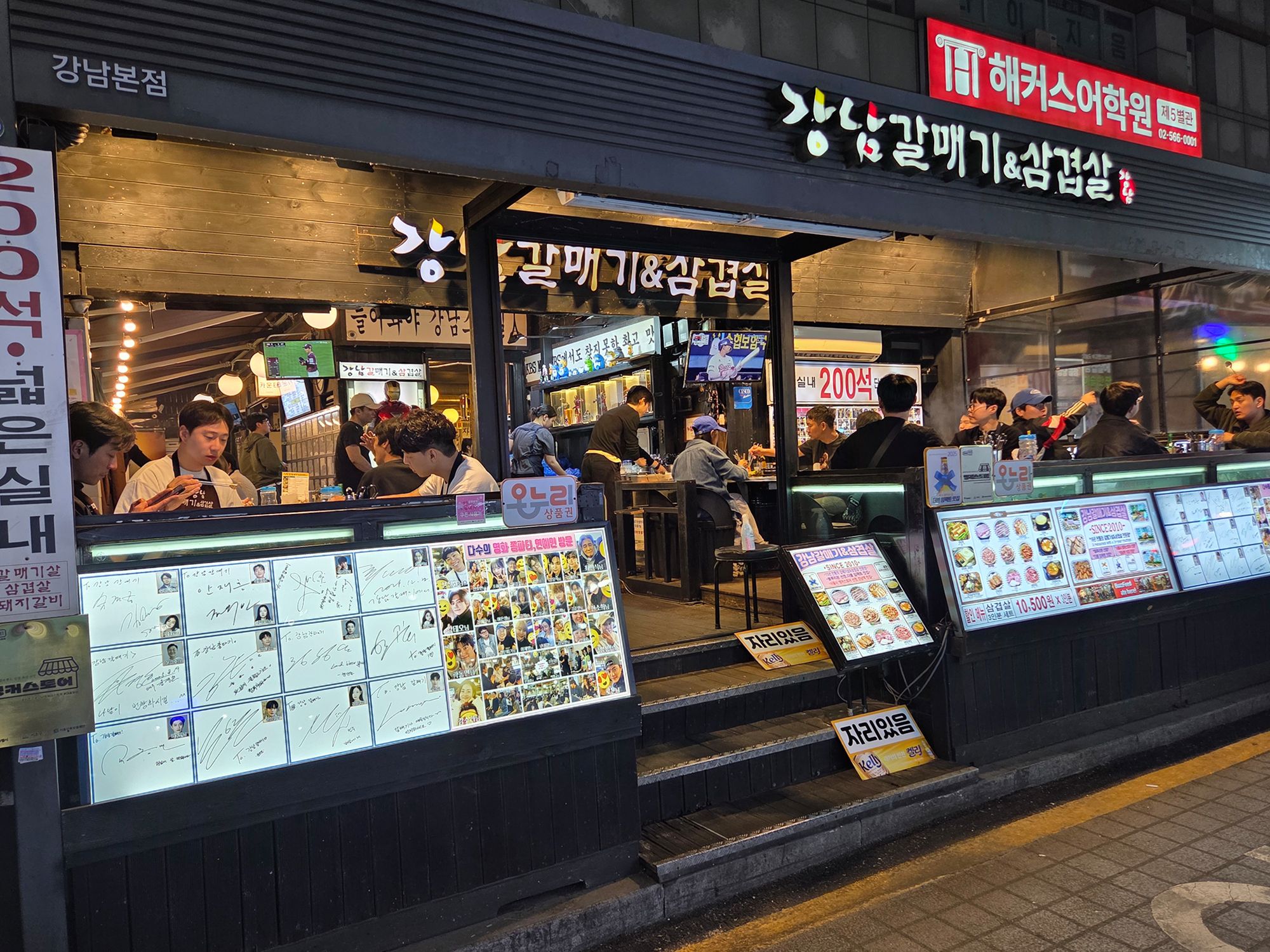
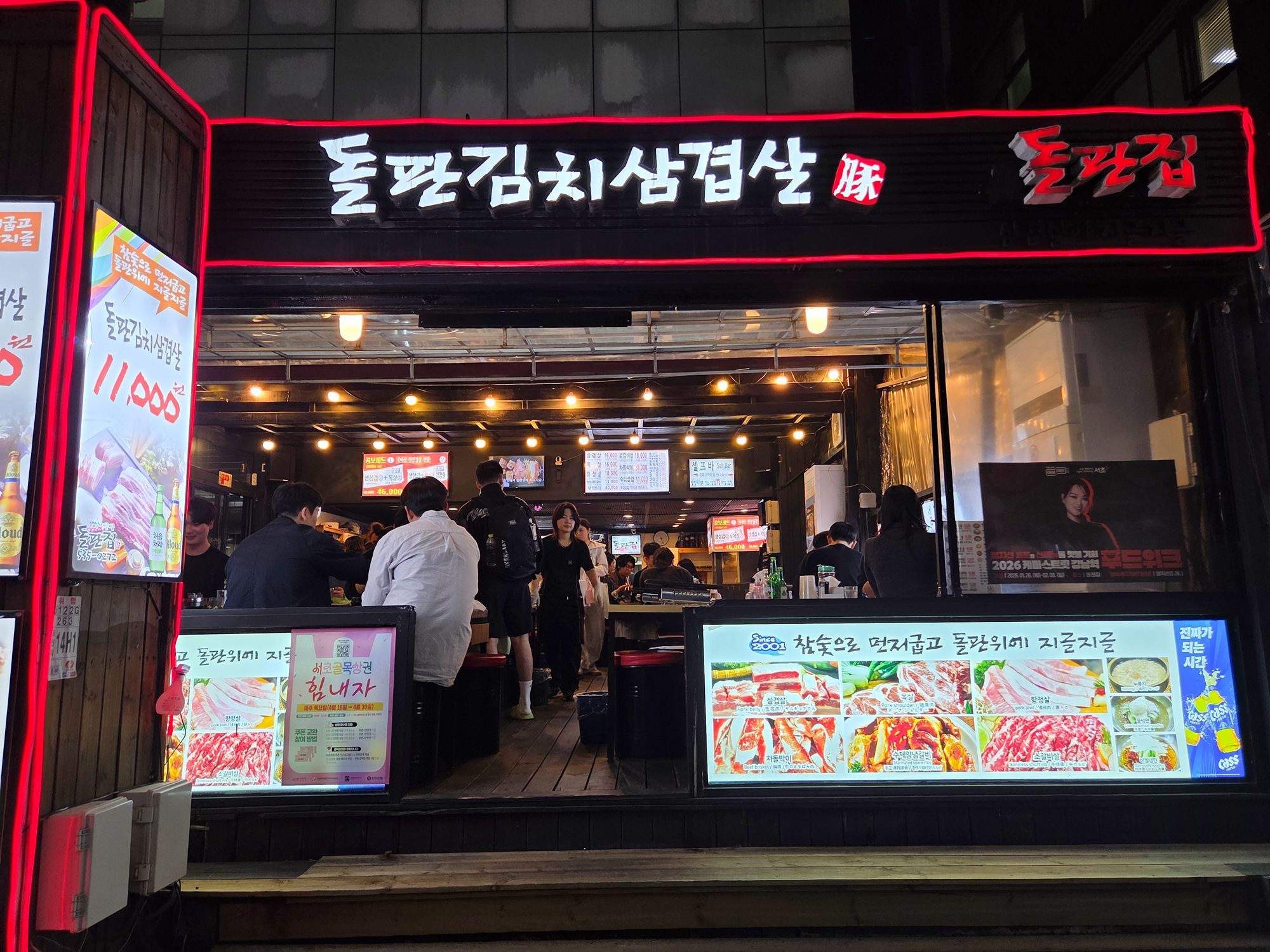
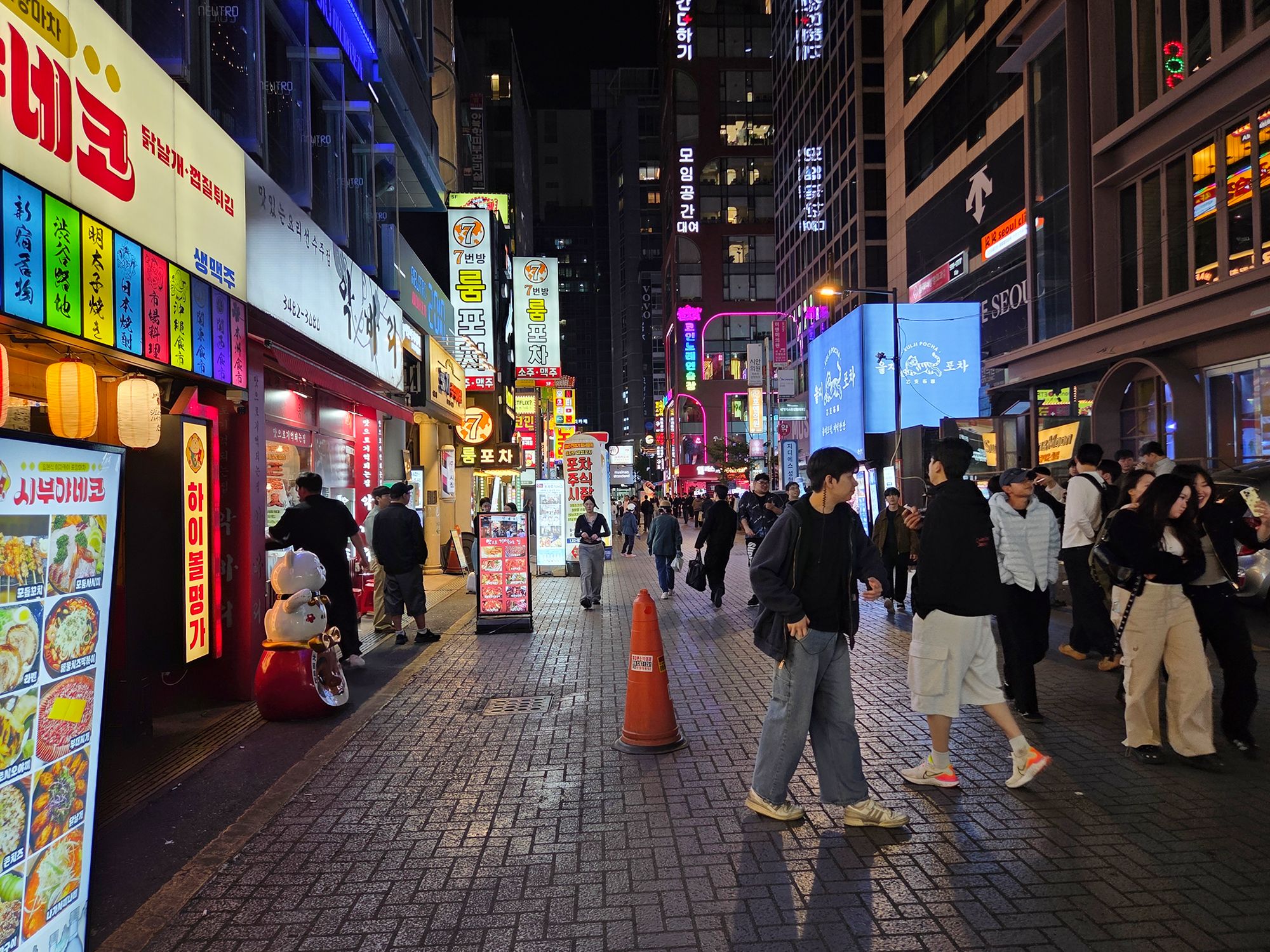
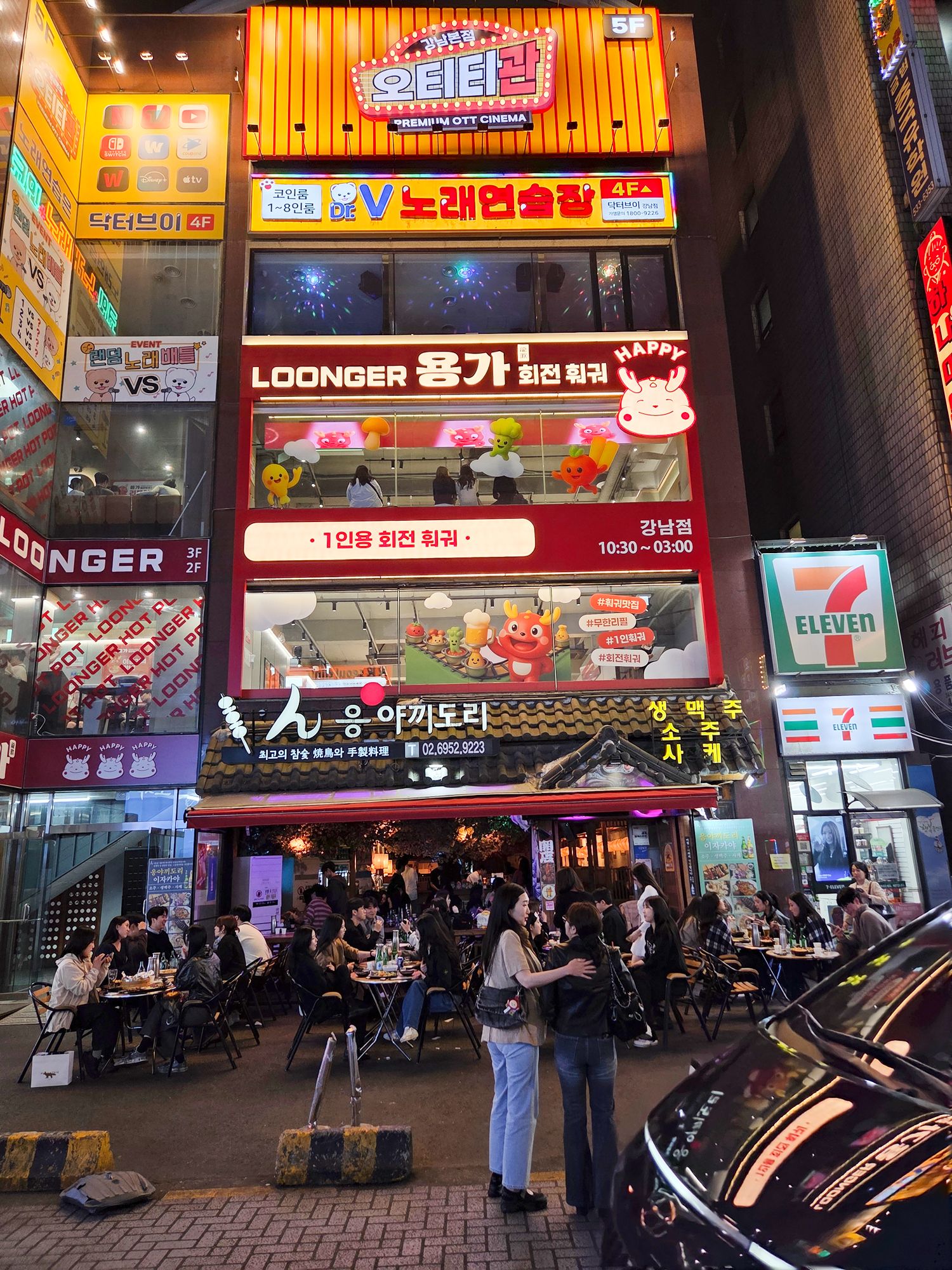
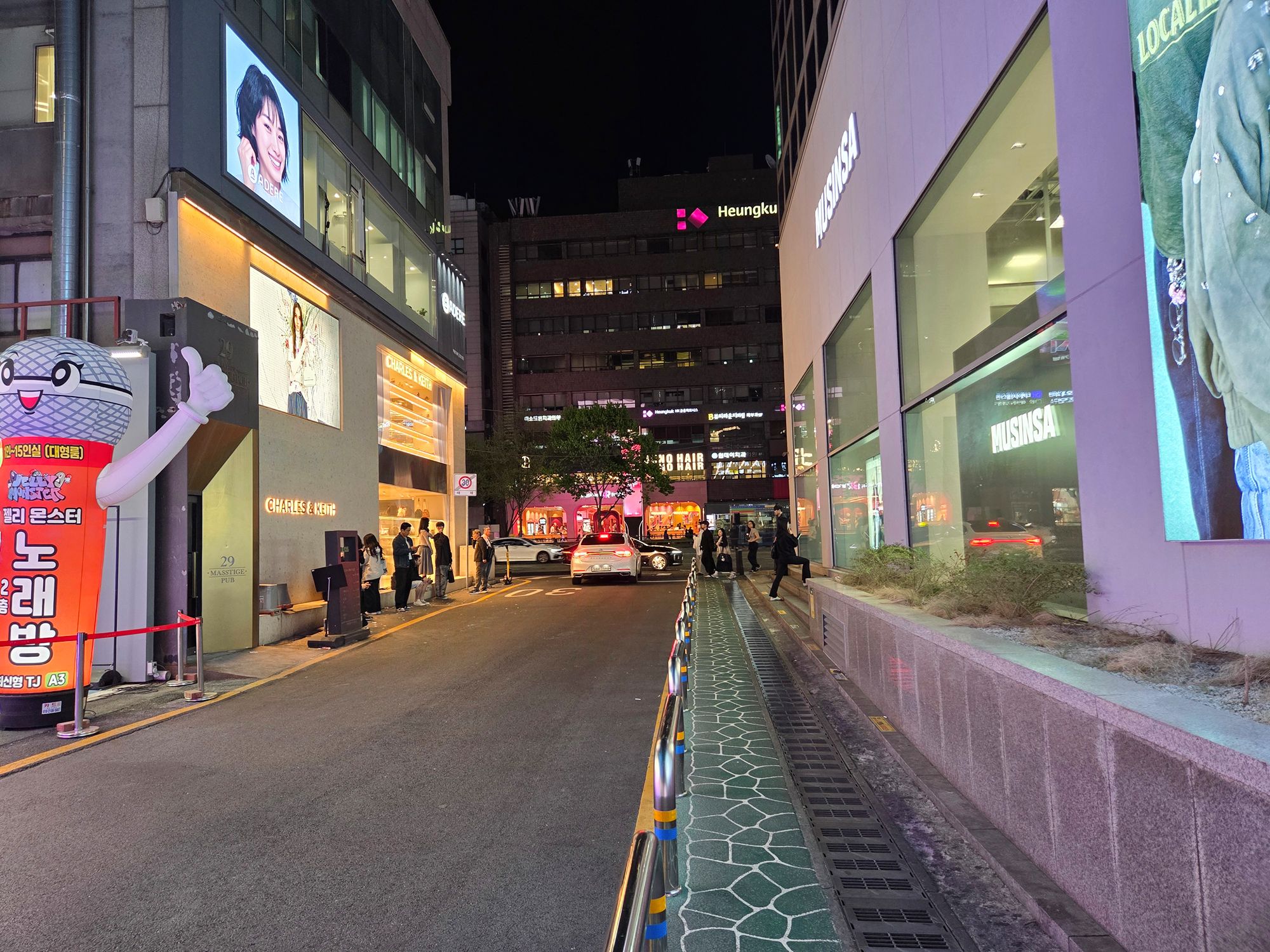
On another day, I came to the Gangnam area at night to explore a different side of Seoul after dark. I wandered into one of the narrower streets just off the main thoroughfare, where there were many restaurants packed closely together. At night, the area was especially lively, with bright signs, restaurants, and people filling the streets.
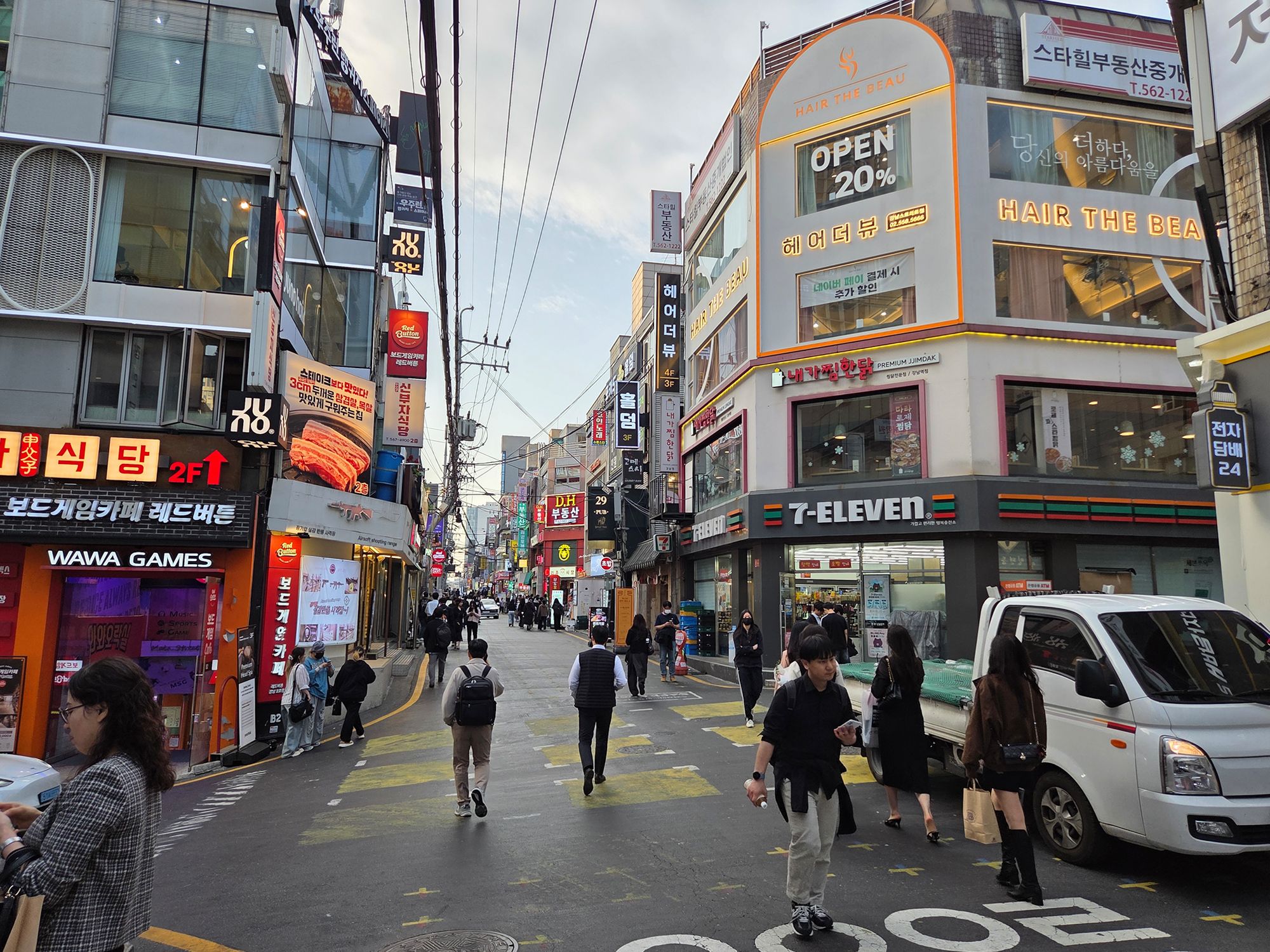
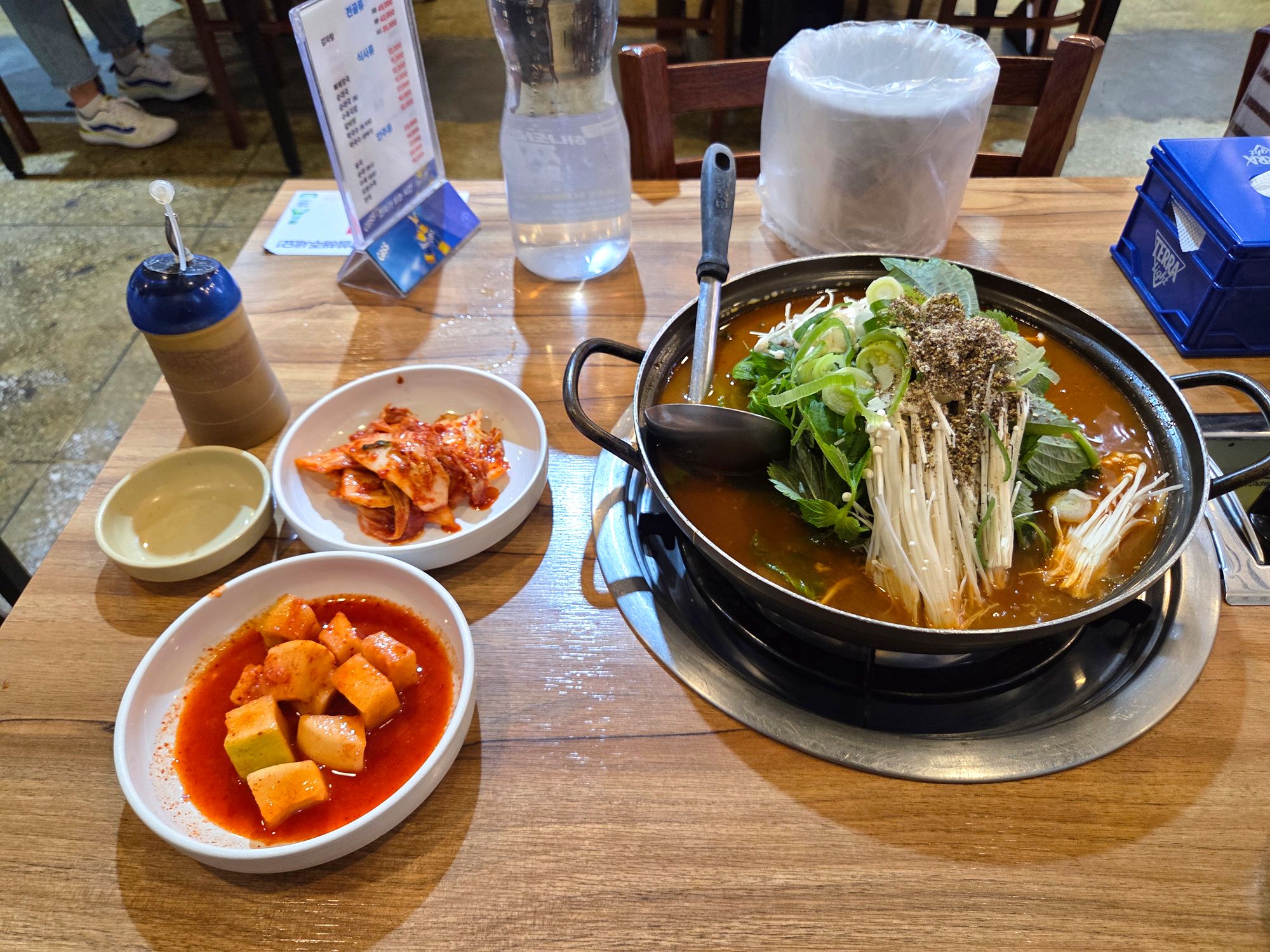
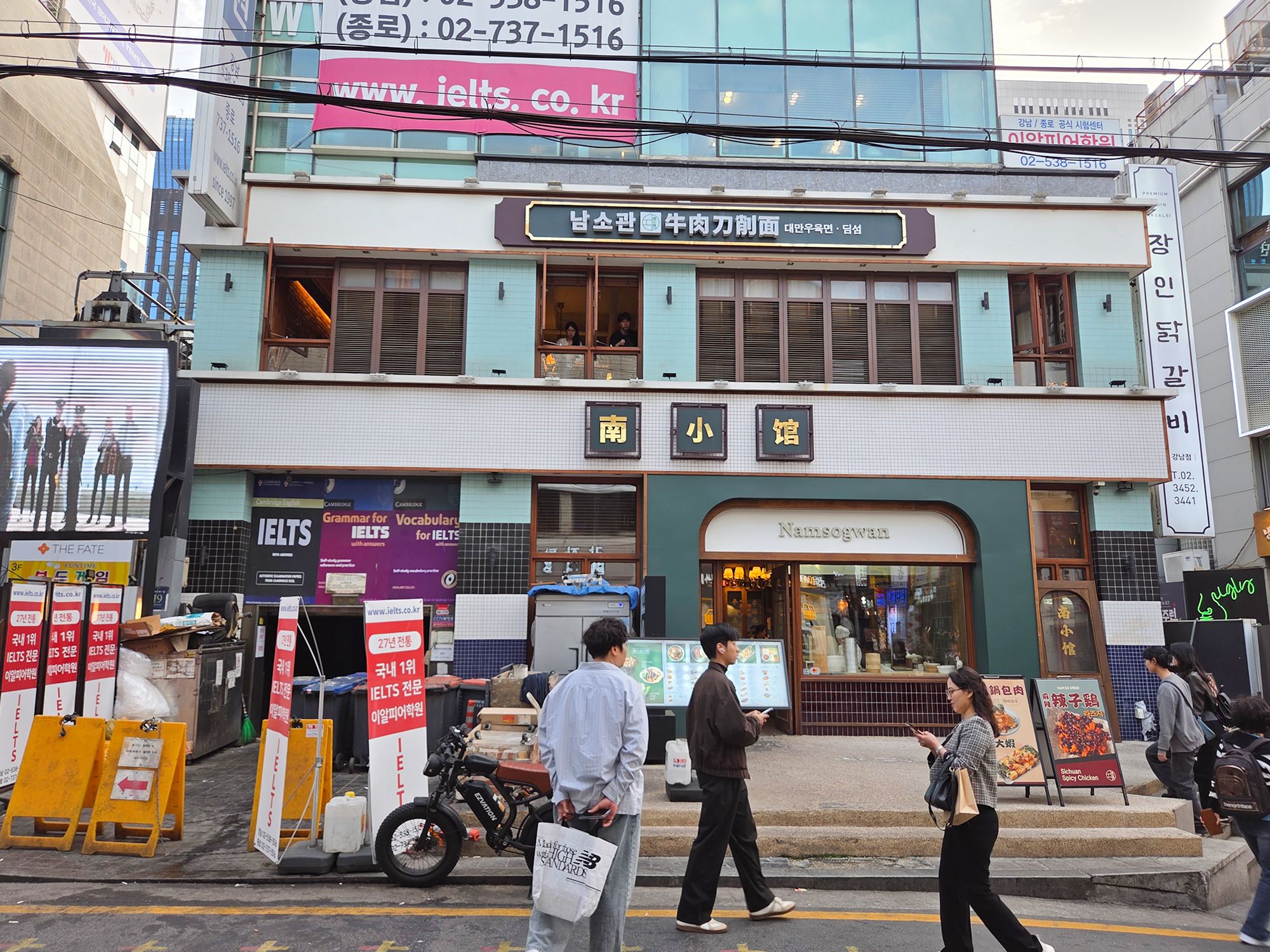
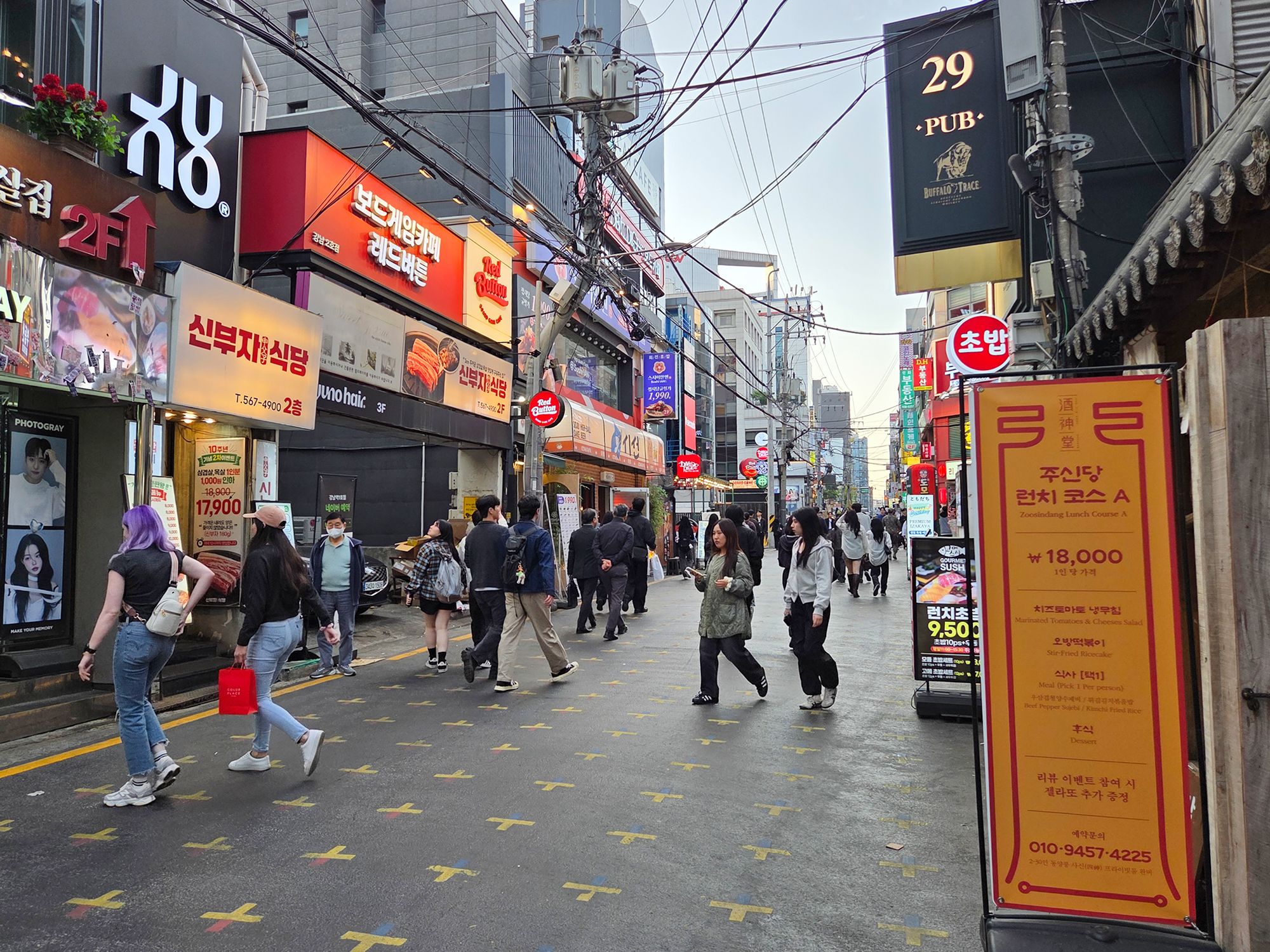
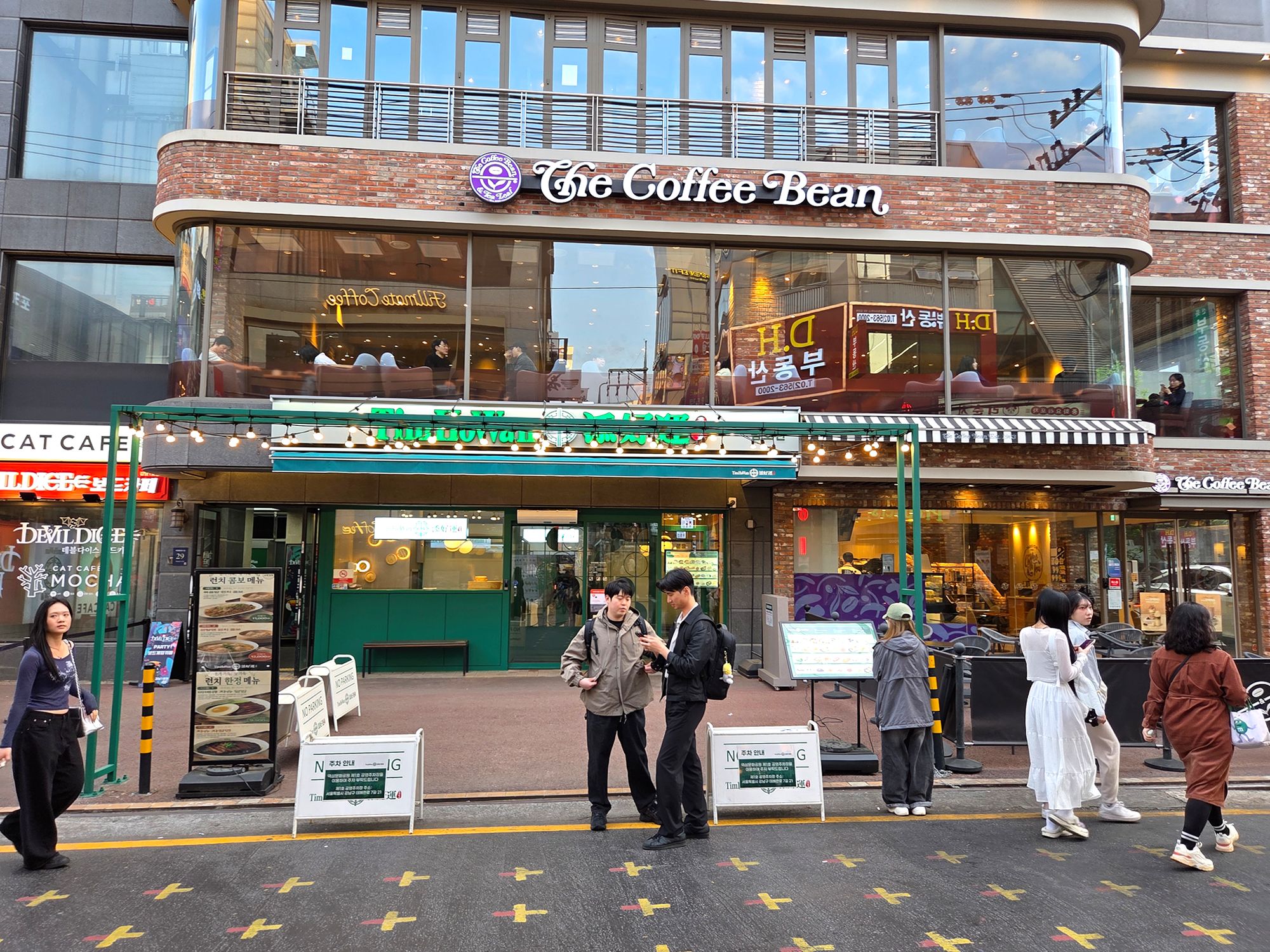
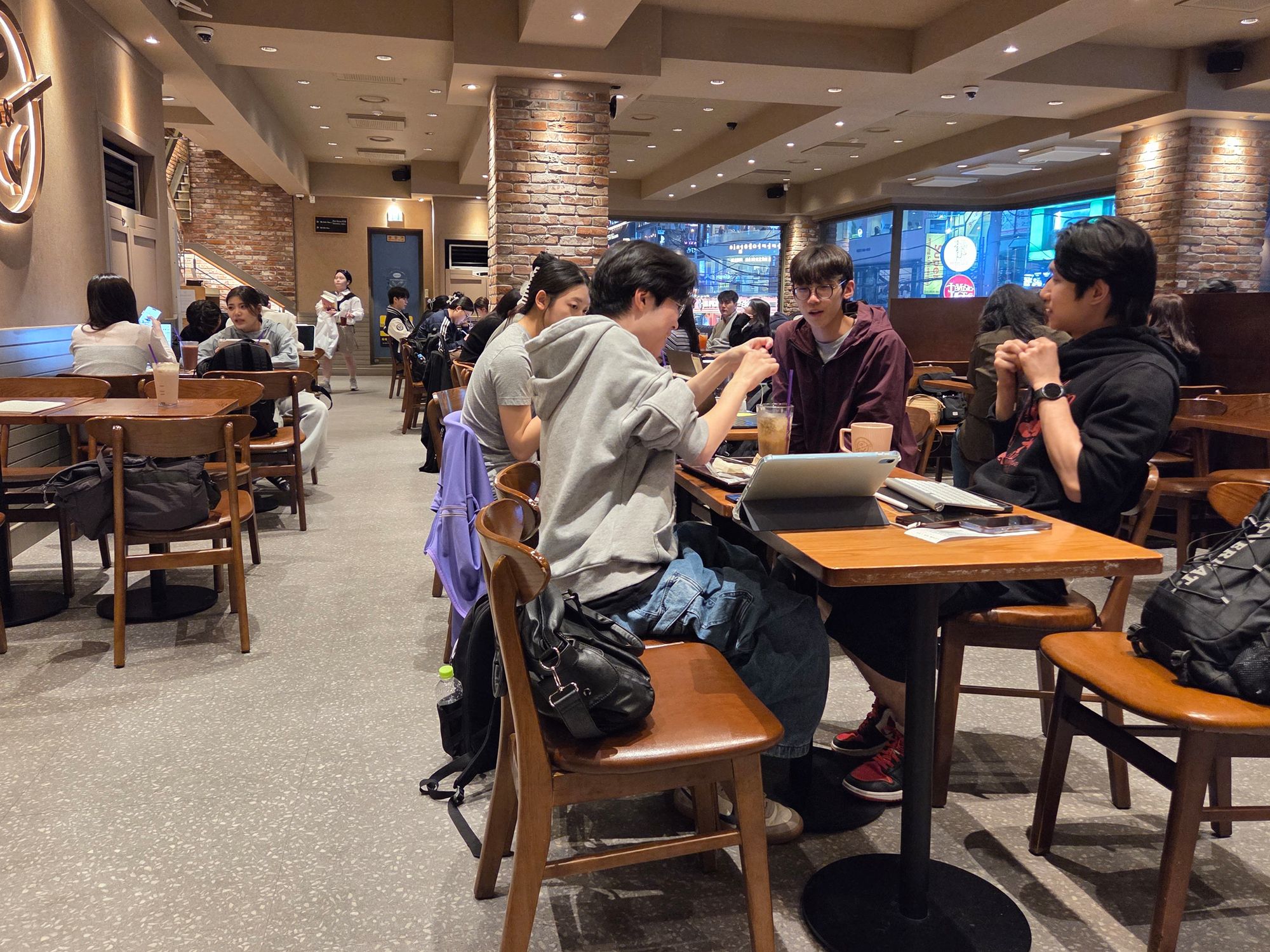
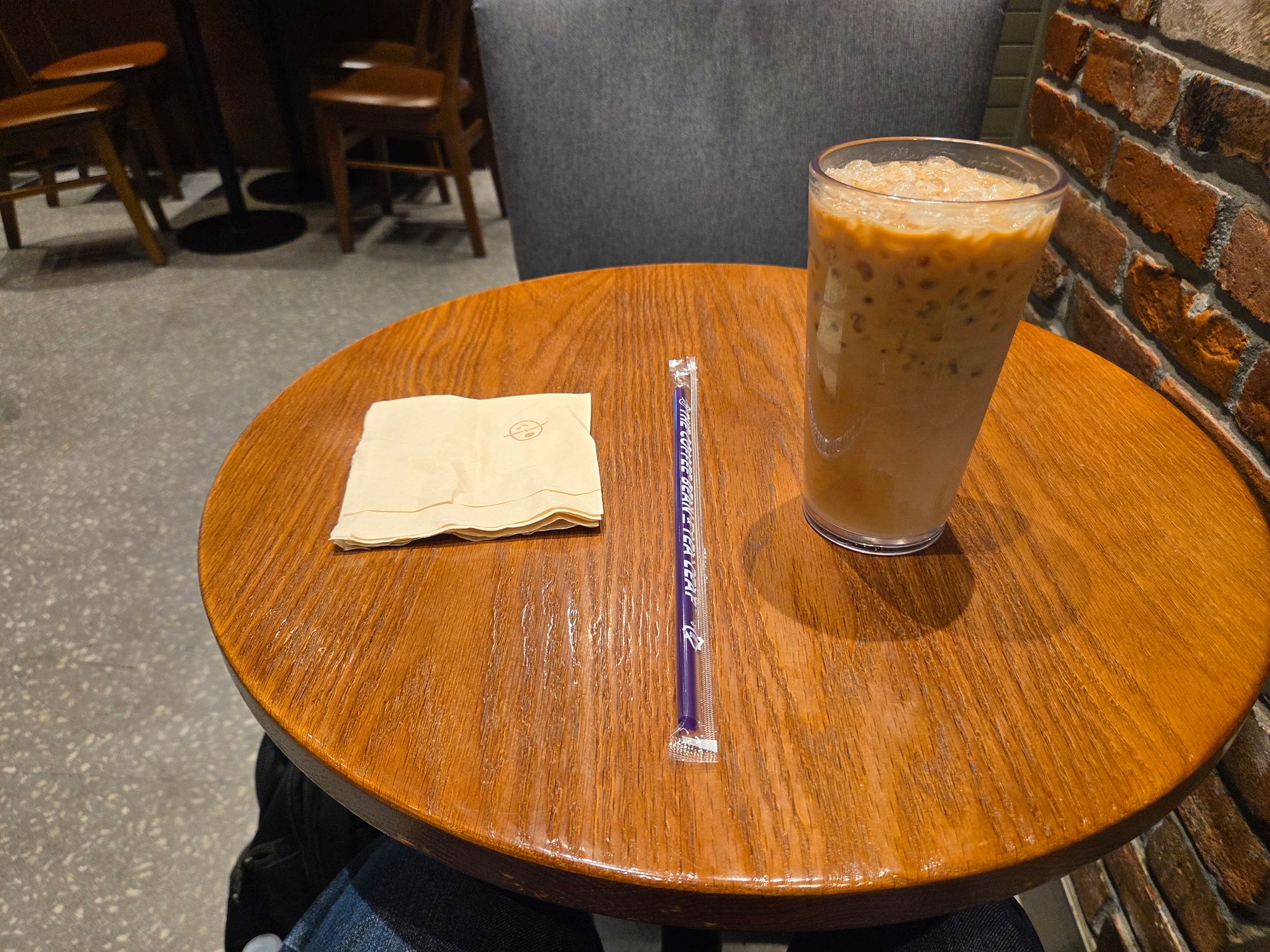
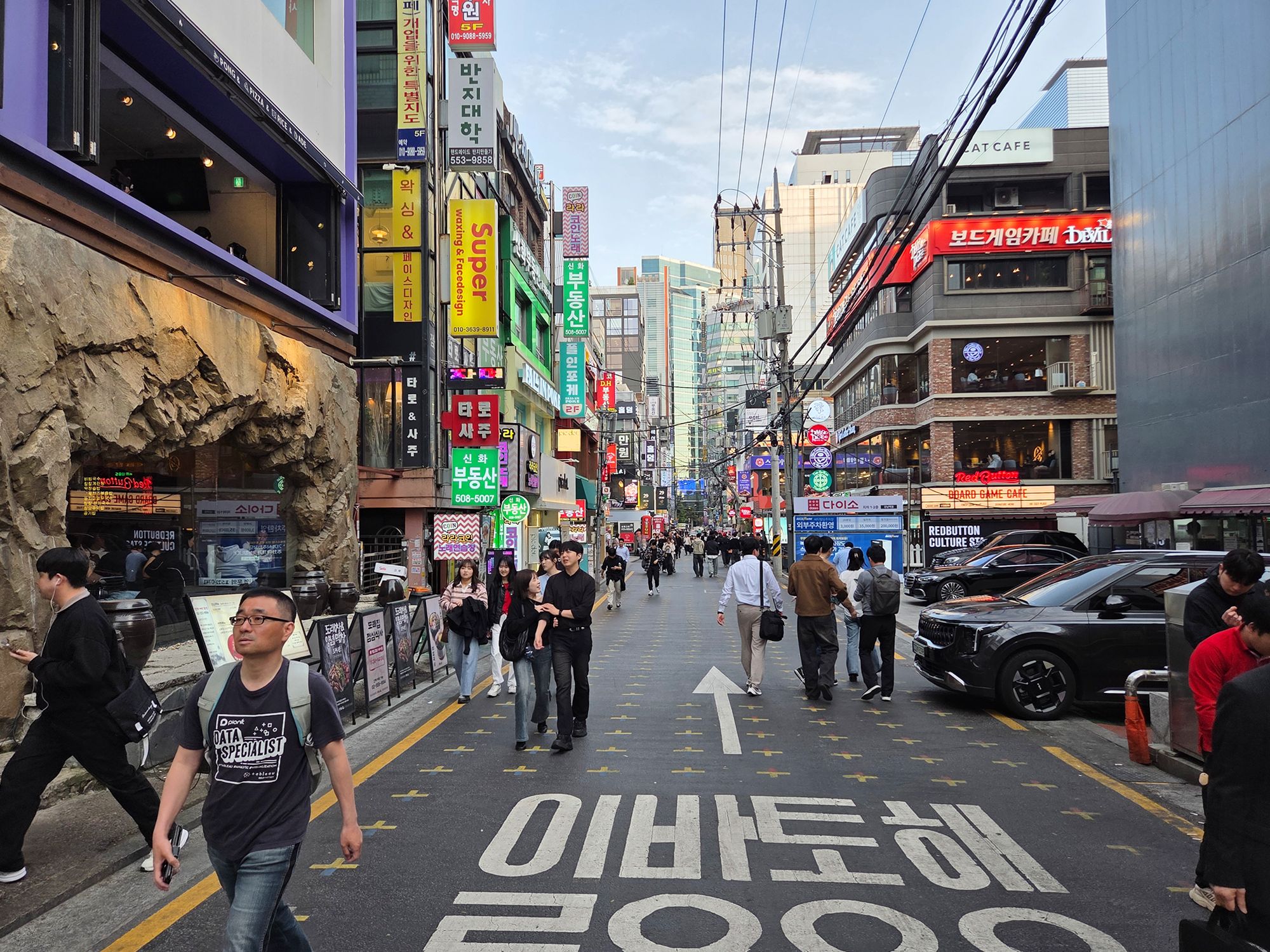
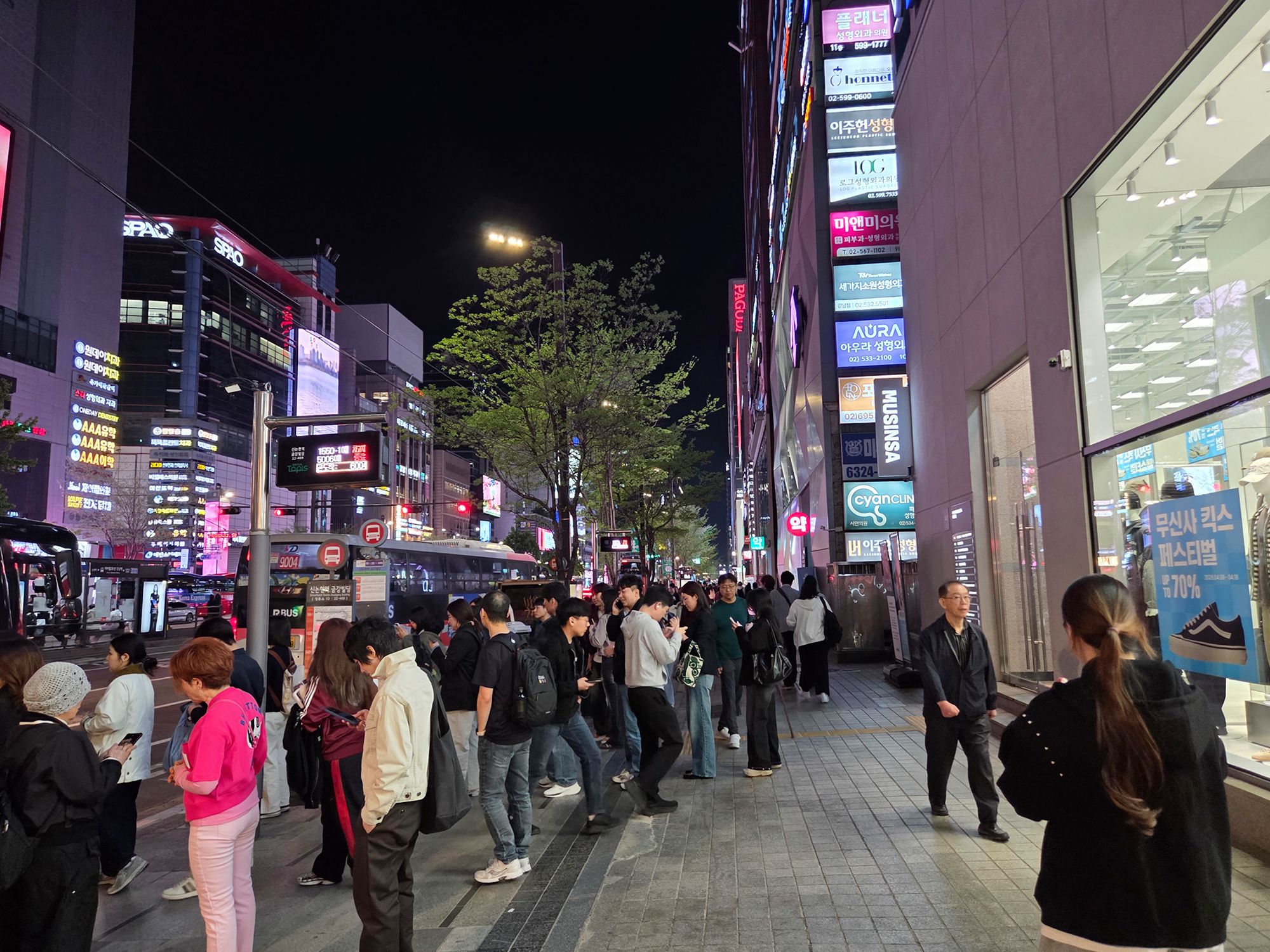
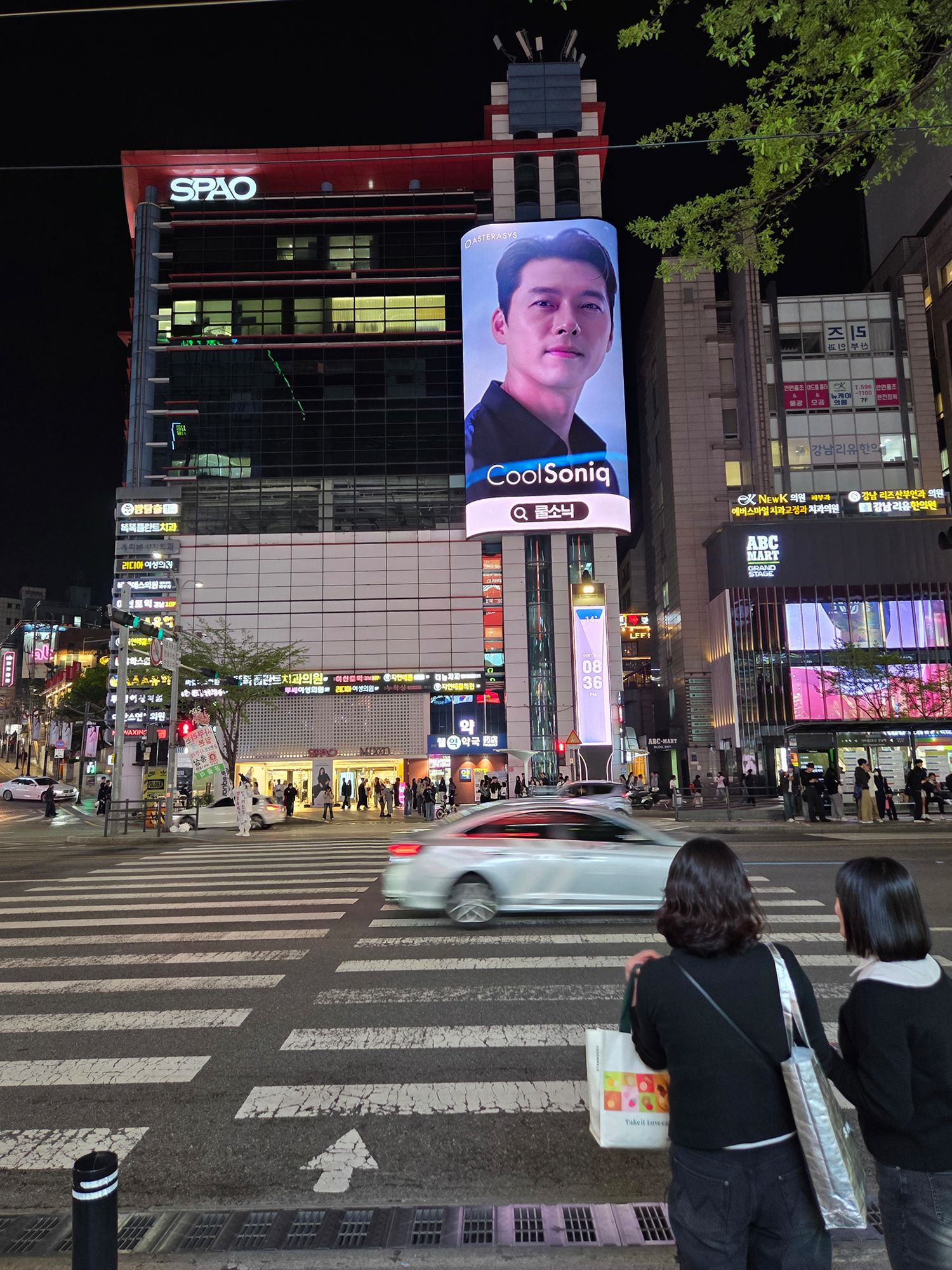
This is the main thoroughfare in Gangnam near Exit 10 of Gangnam Station.
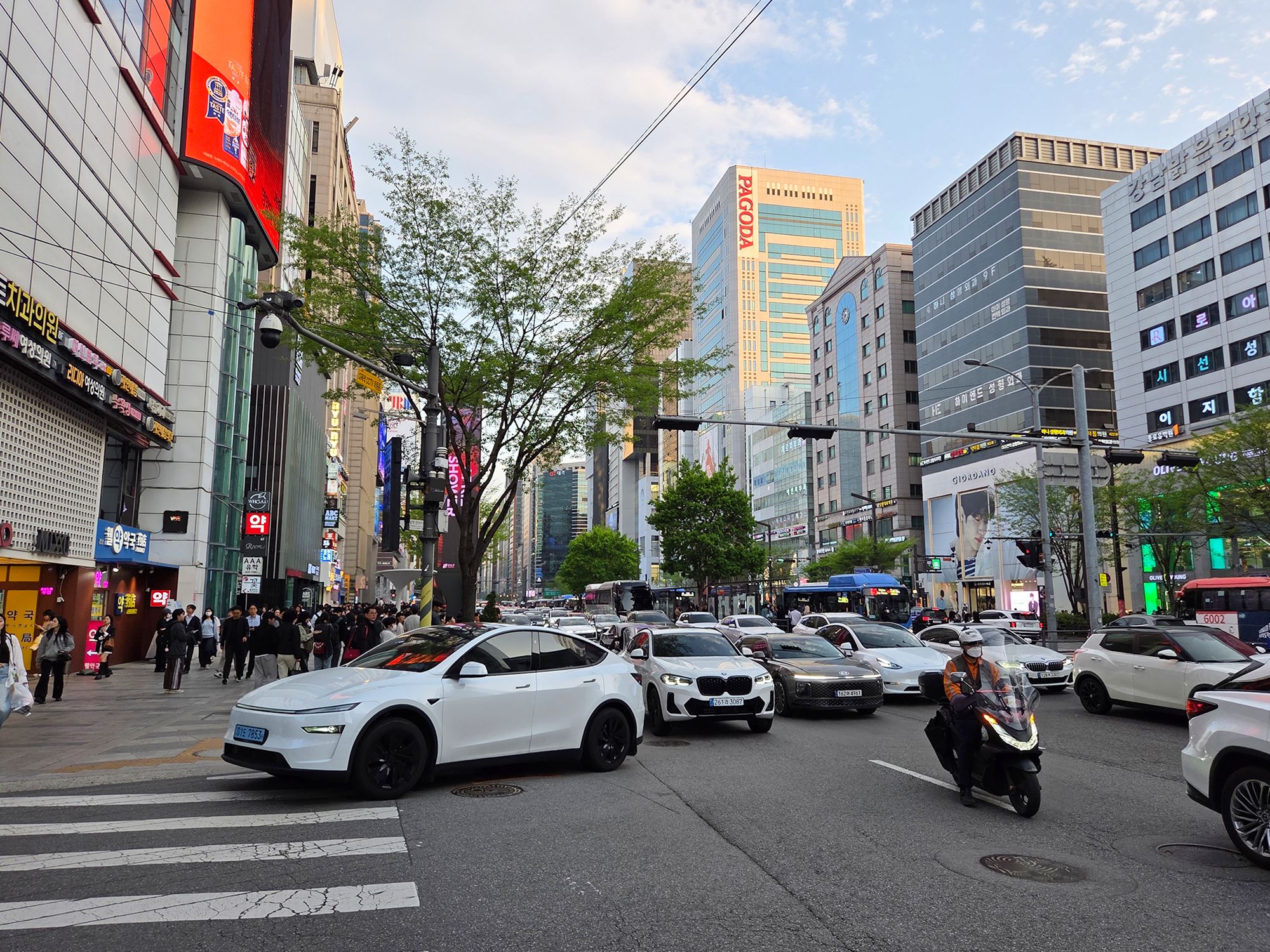
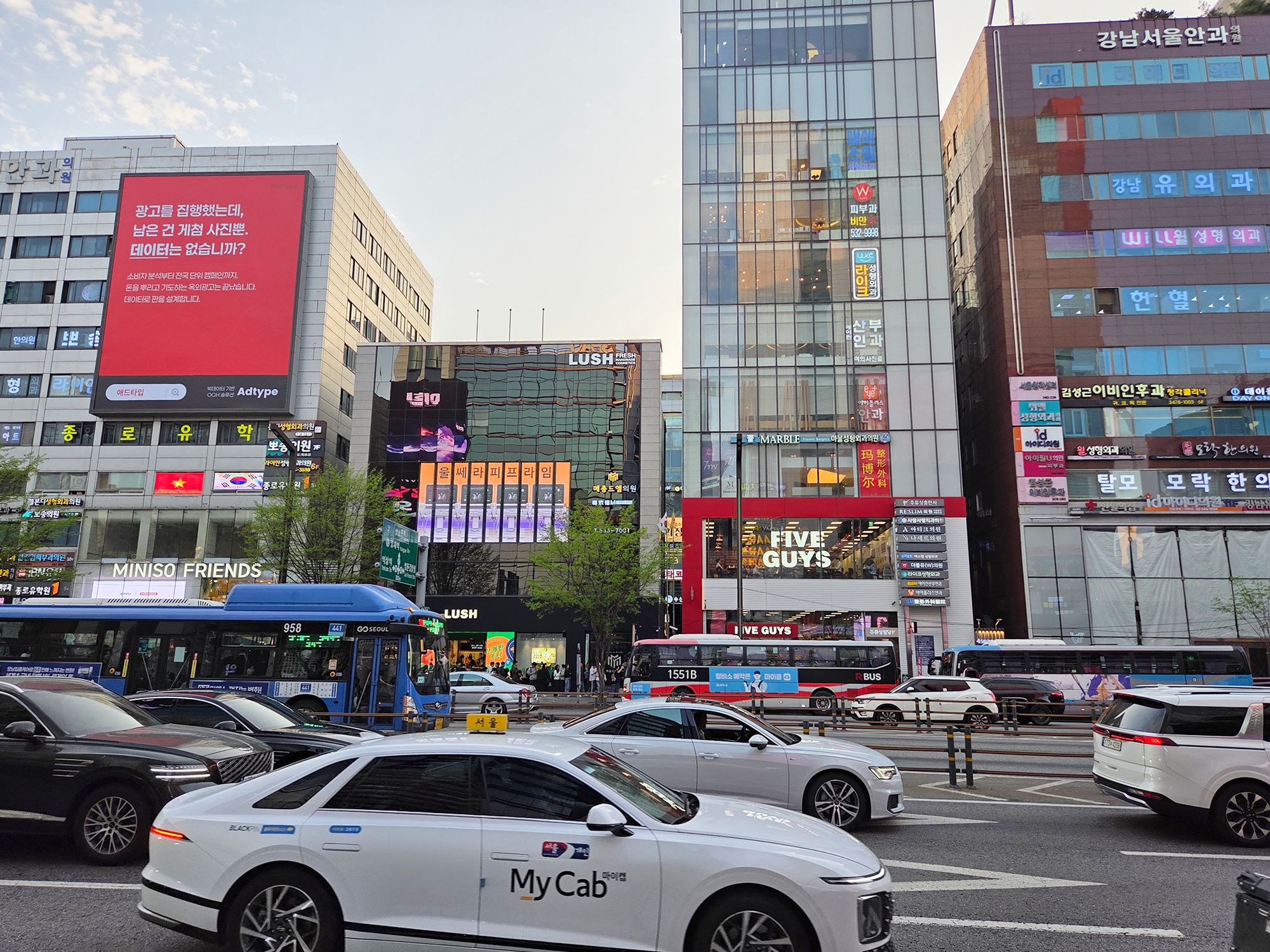
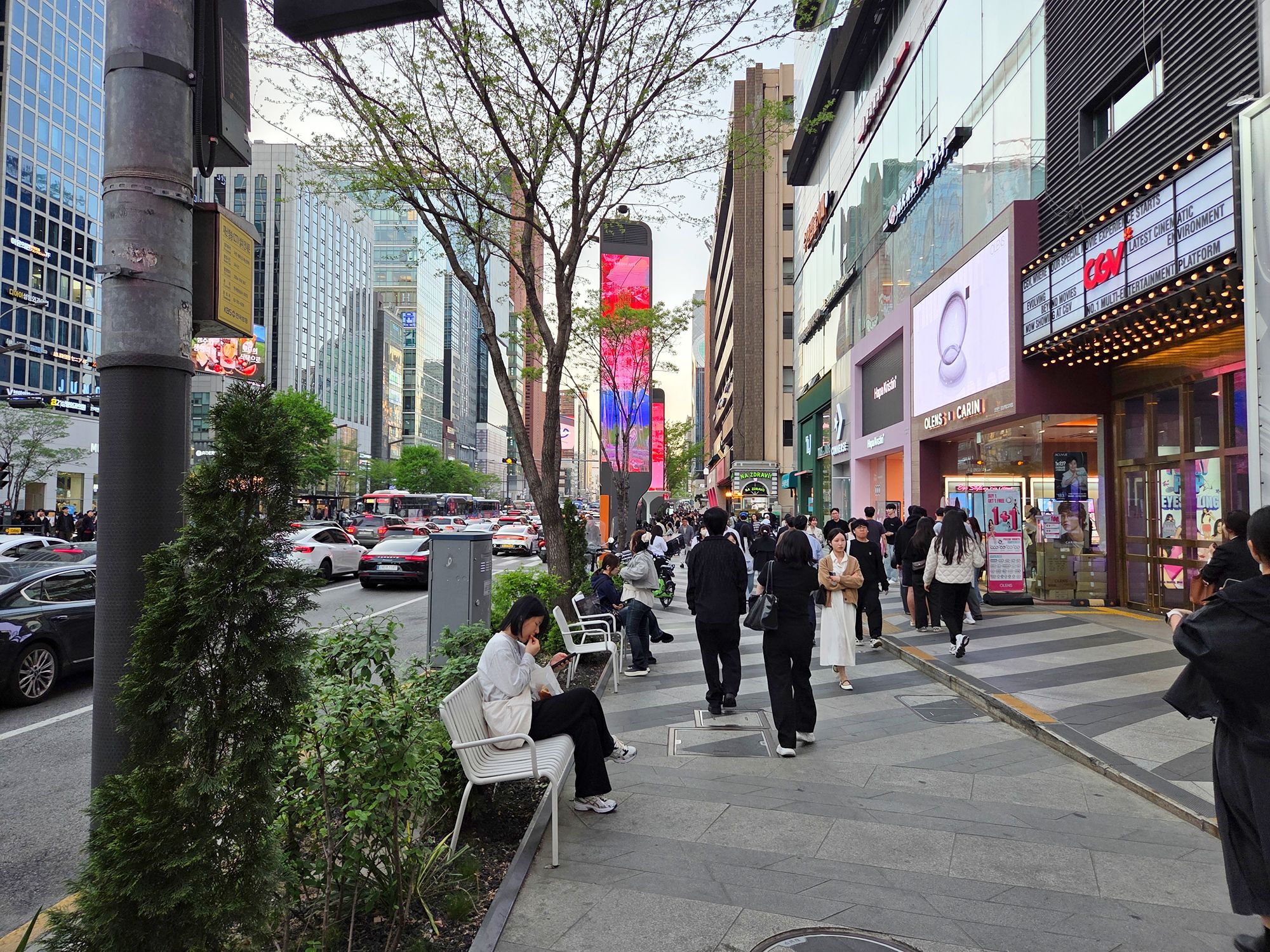
There were many people on the street because it was around the time when office workers were finishing work and heading home.
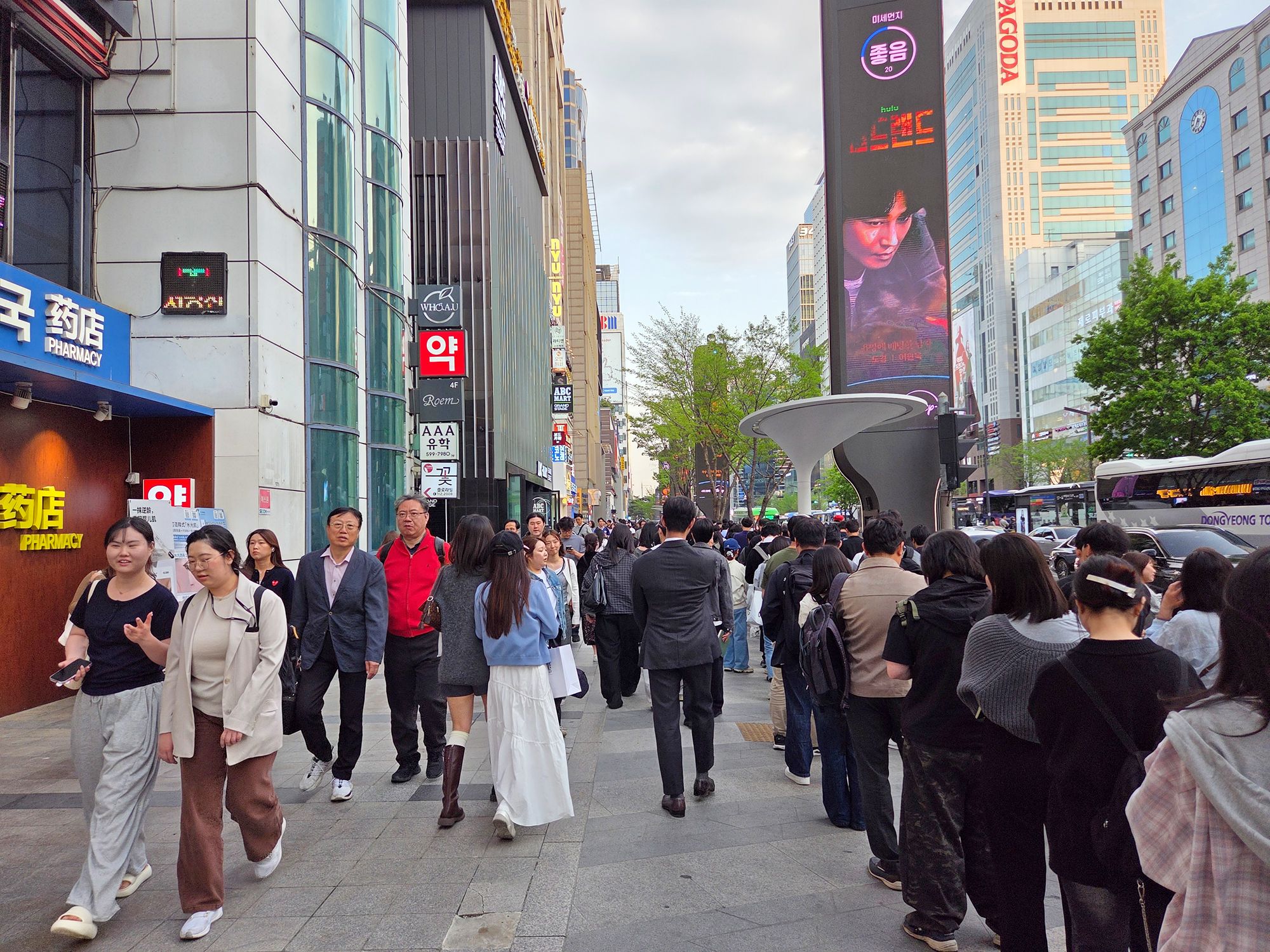
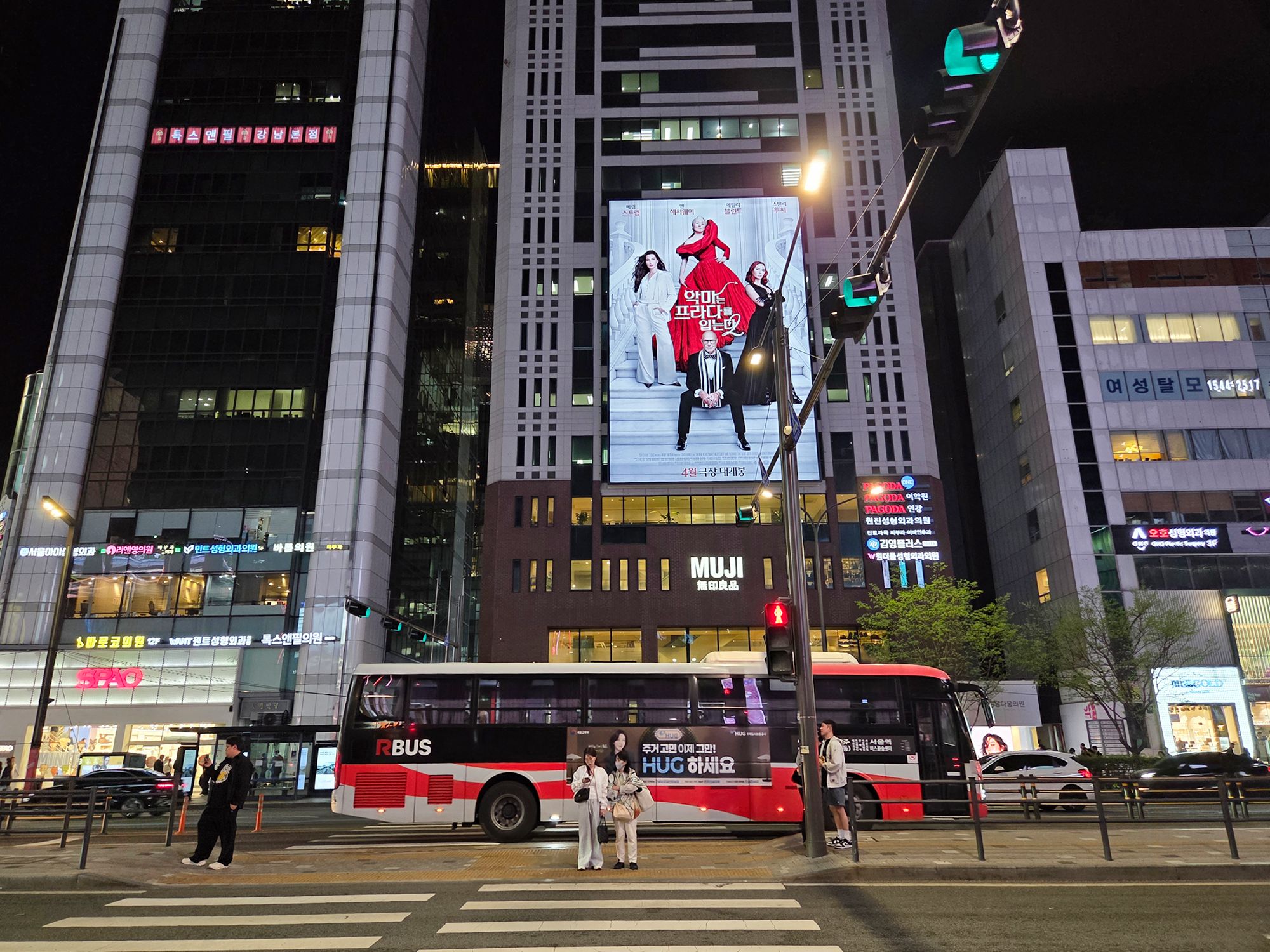
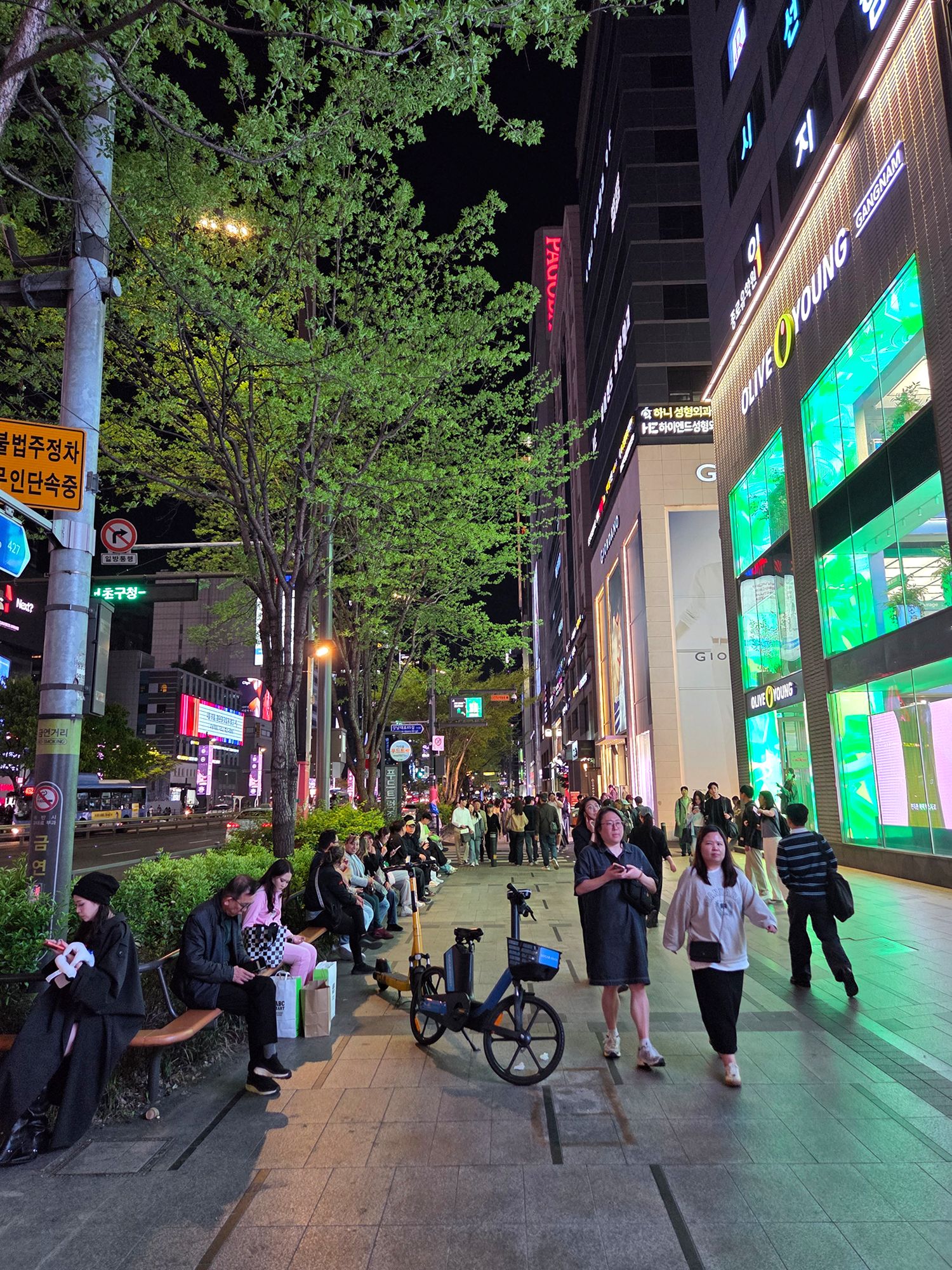
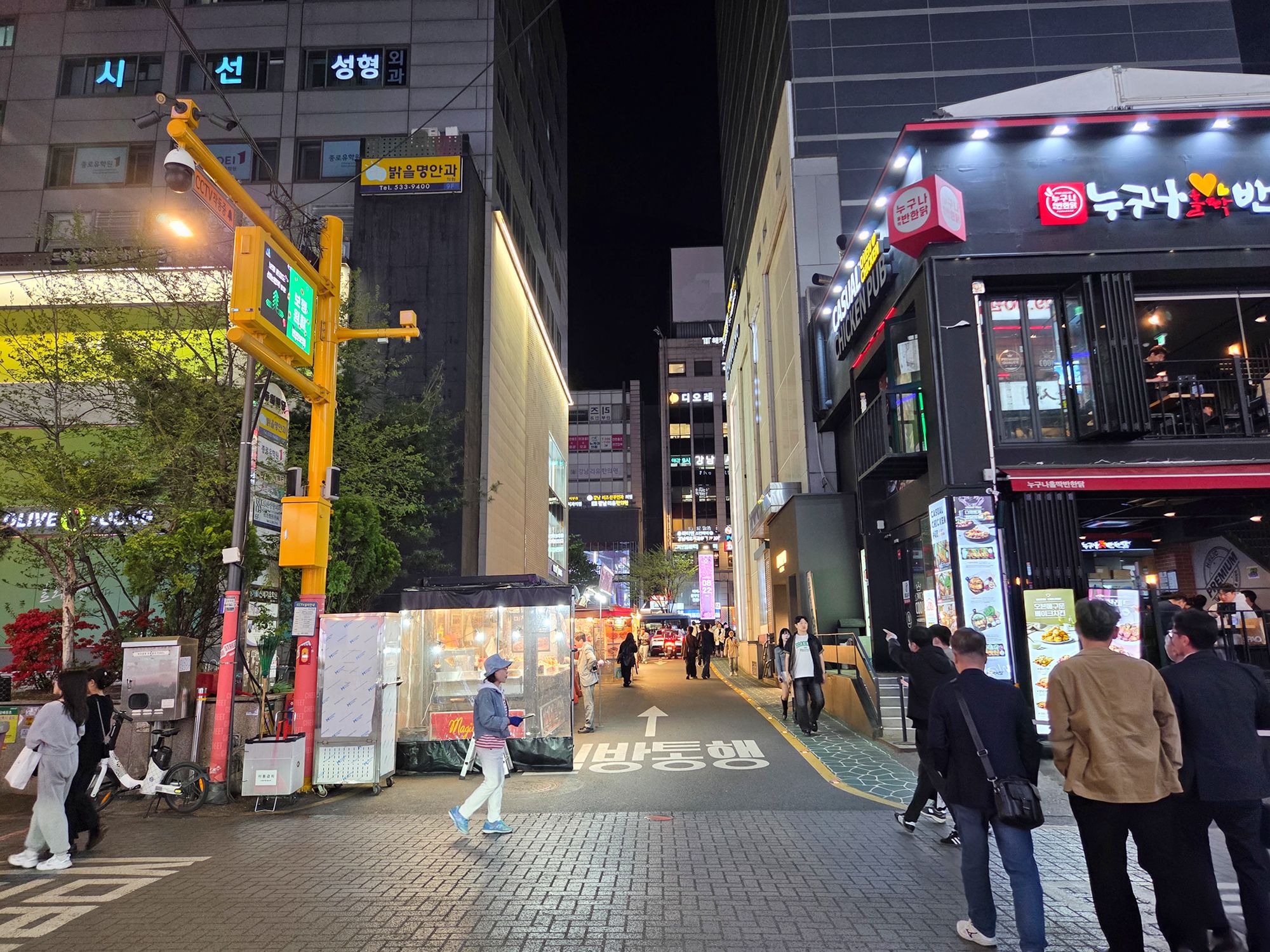
This is another side street just off the main thoroughfare in Gangnam. Like the other side streets in the area, it was lined with restaurants and filled with people enjoying dinner and drinks after work.
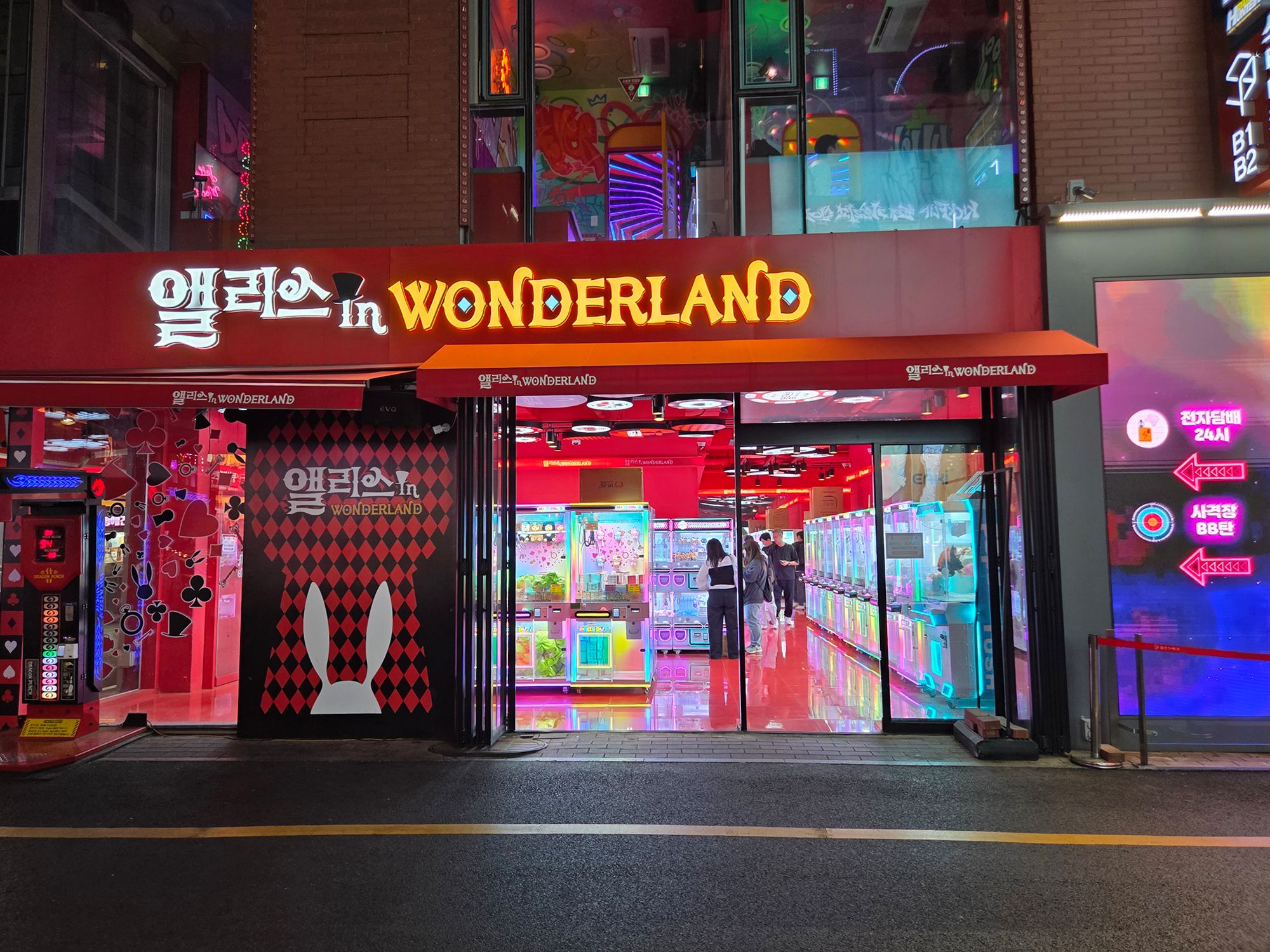
After exploring the side streets, I came back to the main thoroughfare and continued walking along Gangnam-daero.