Swiss National Museum – History, Zürich, Switzerland
At the Swiss National Museum in Zürich, I followed Switzerland’s history through exhibits on its origins, political changes, and society. 1346
Swiss National Museum: Museumstrasse 2, 8001 Zürich, Switzerland
Date Picture Taken: Jun, 2026
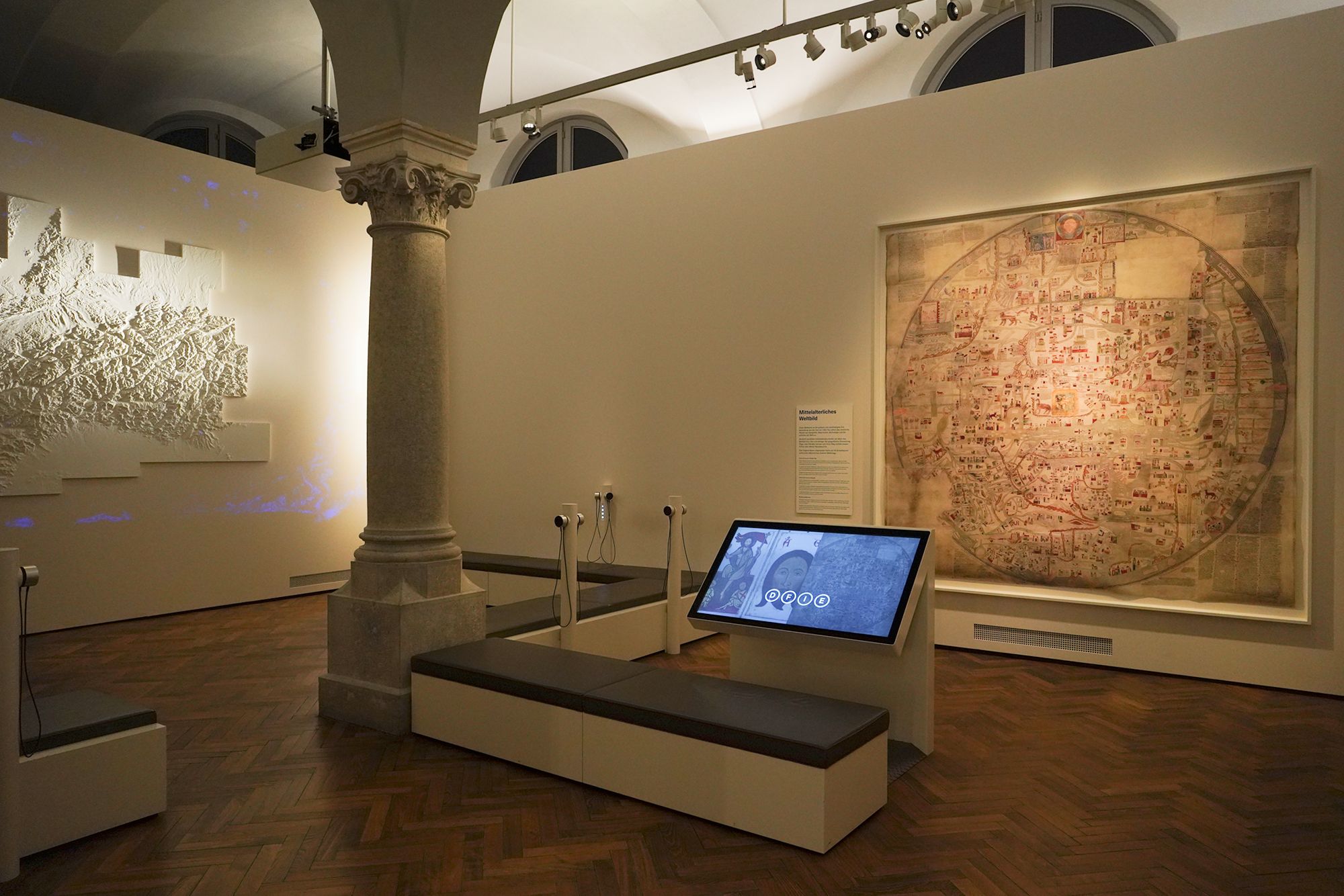
The Swiss National Museum’s history galleries trace how Switzerland developed over the centuries. I followed exhibits on the early Confederation, the formation of the modern federal state, and changes in Swiss society. Maps, objects, and historical displays helped me understand how regions became part of the country I was visiting.
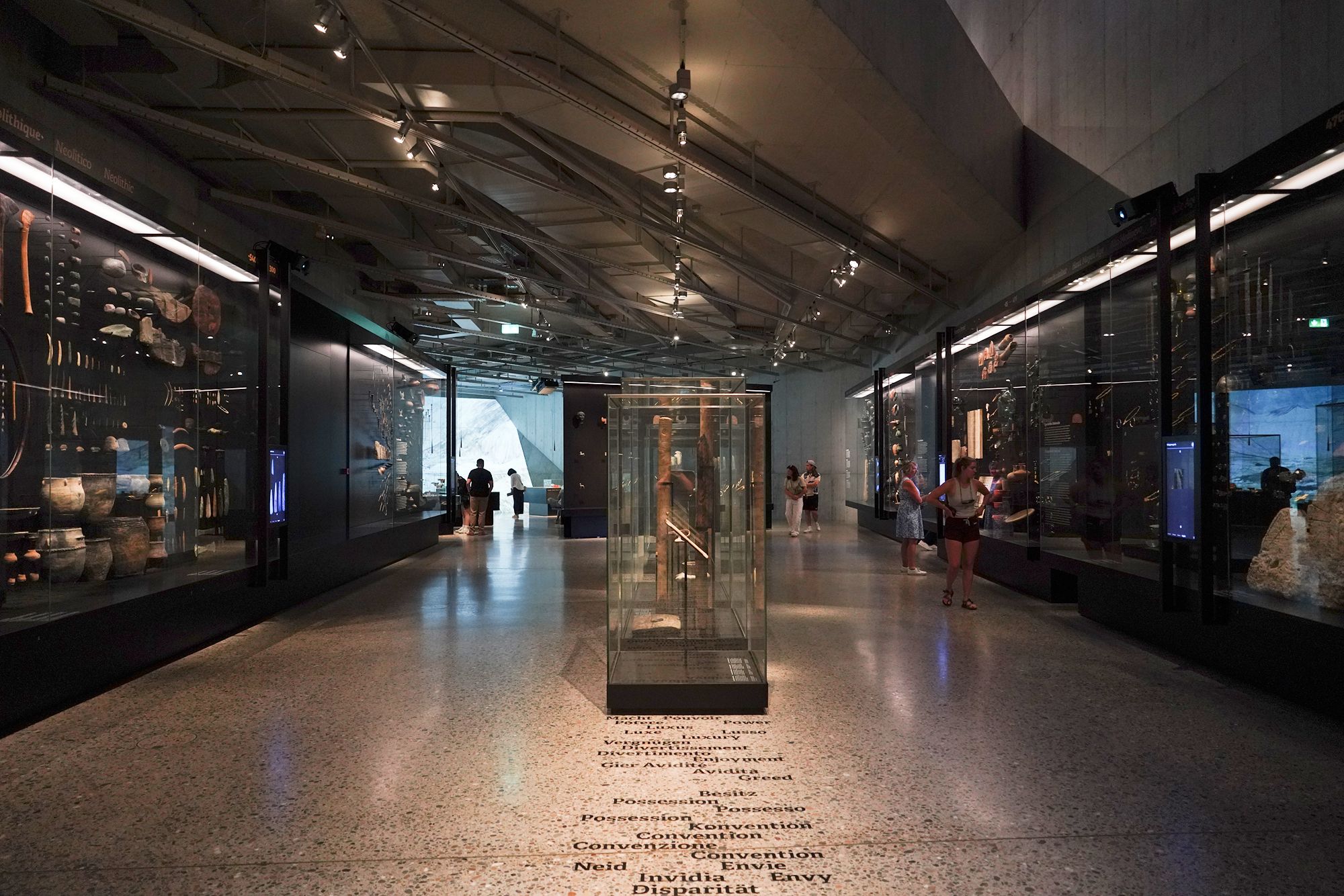
I had spent much of the day at another museum, so I had only a few hours at the Swiss National Museum. I went through its history exhibits rather quickly and did not see as much as I would have liked.
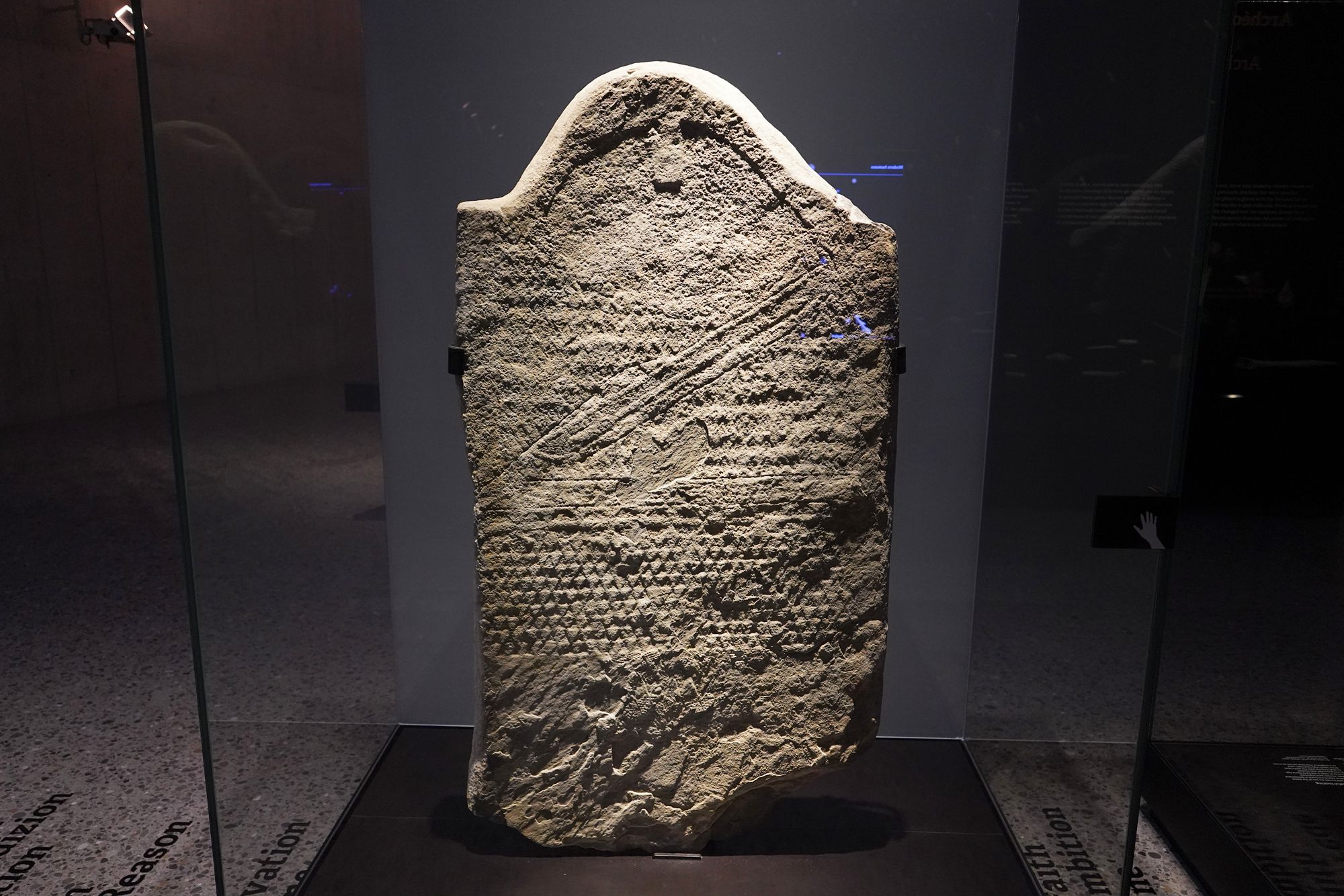
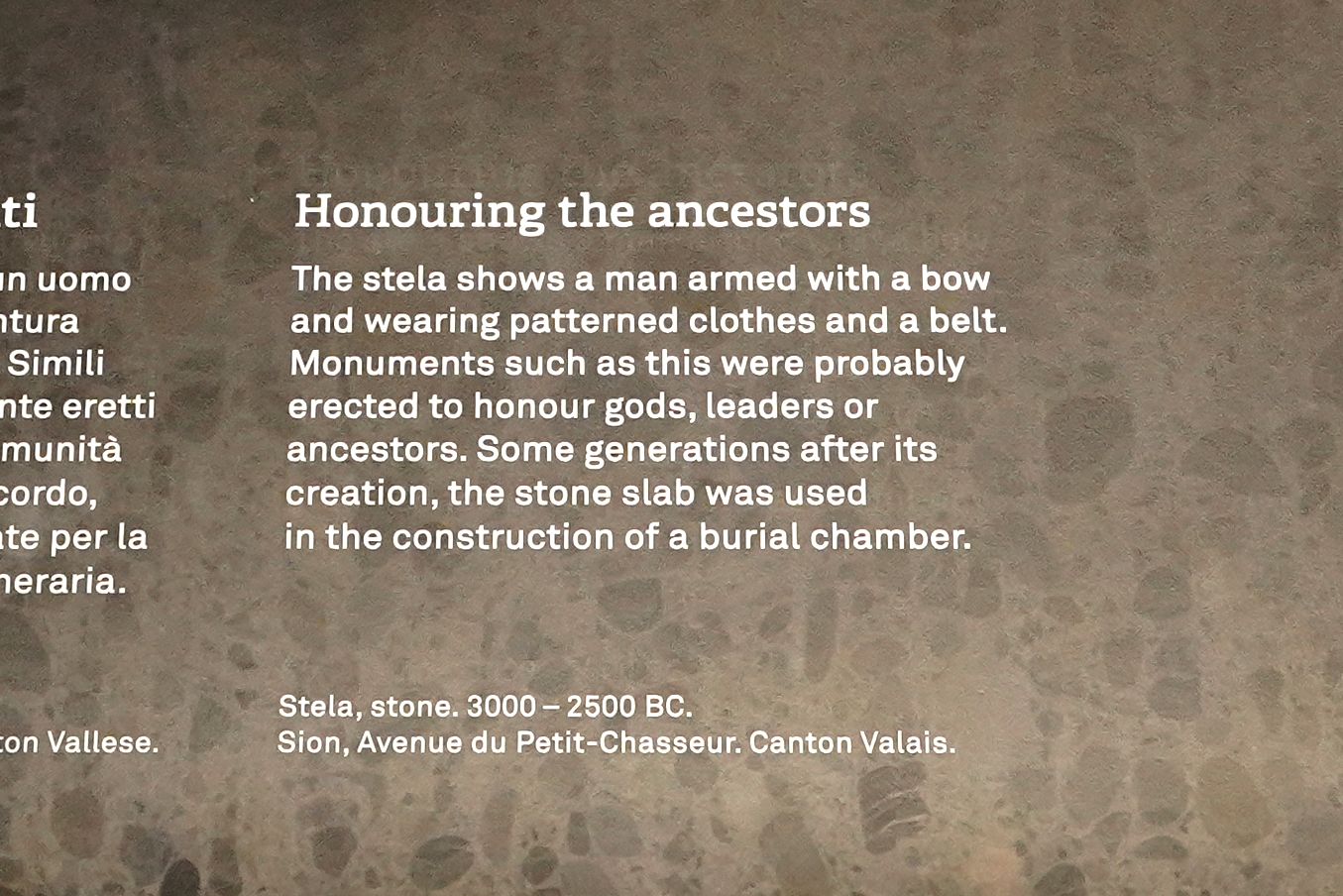
This stone stela from Sion in the Valais region dates to around 3000–2500 BC. It depicts a man with a bow and may have been made to honor an ancestor, leader, or god. Generations later, the stone was reused in a burial chamber.
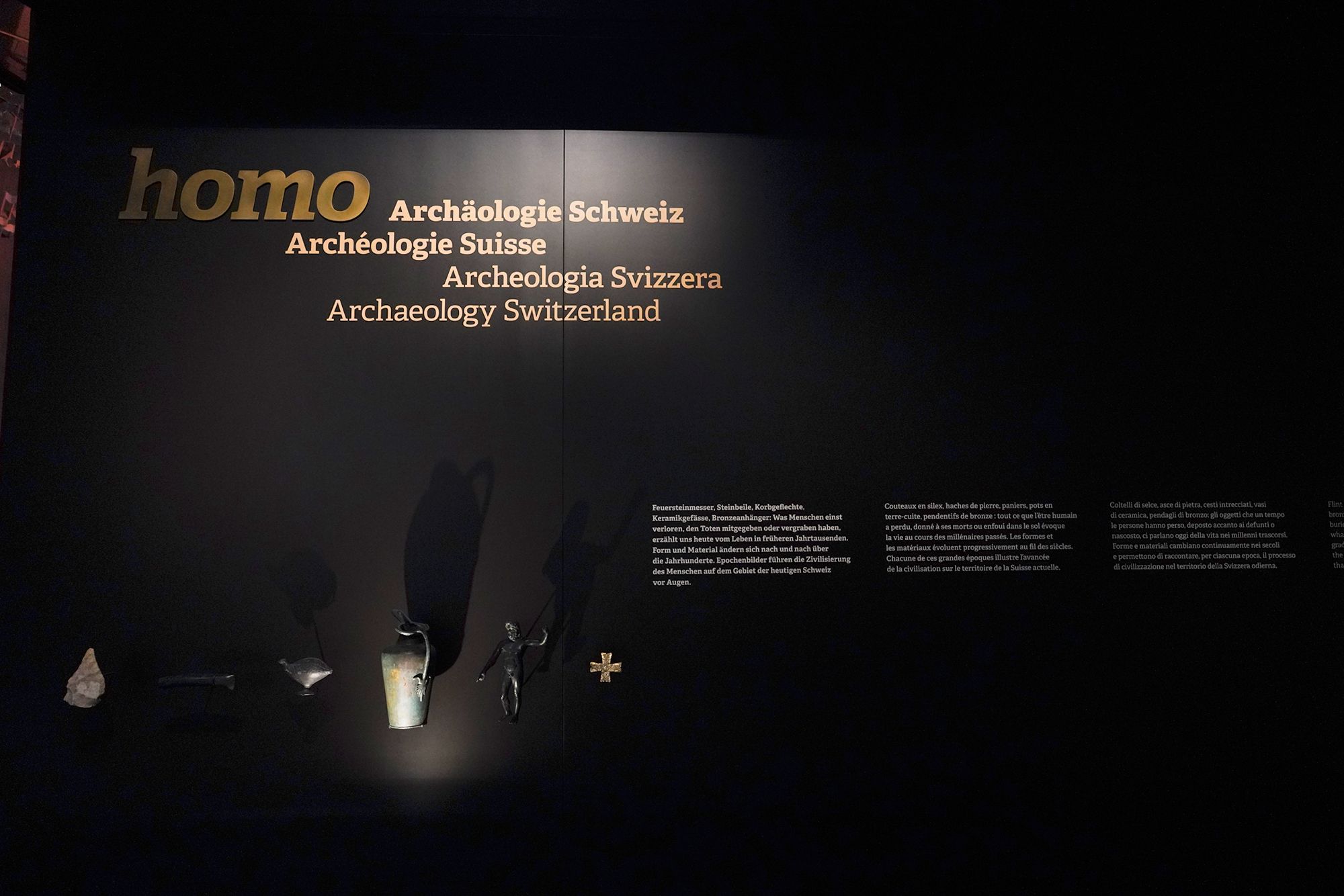
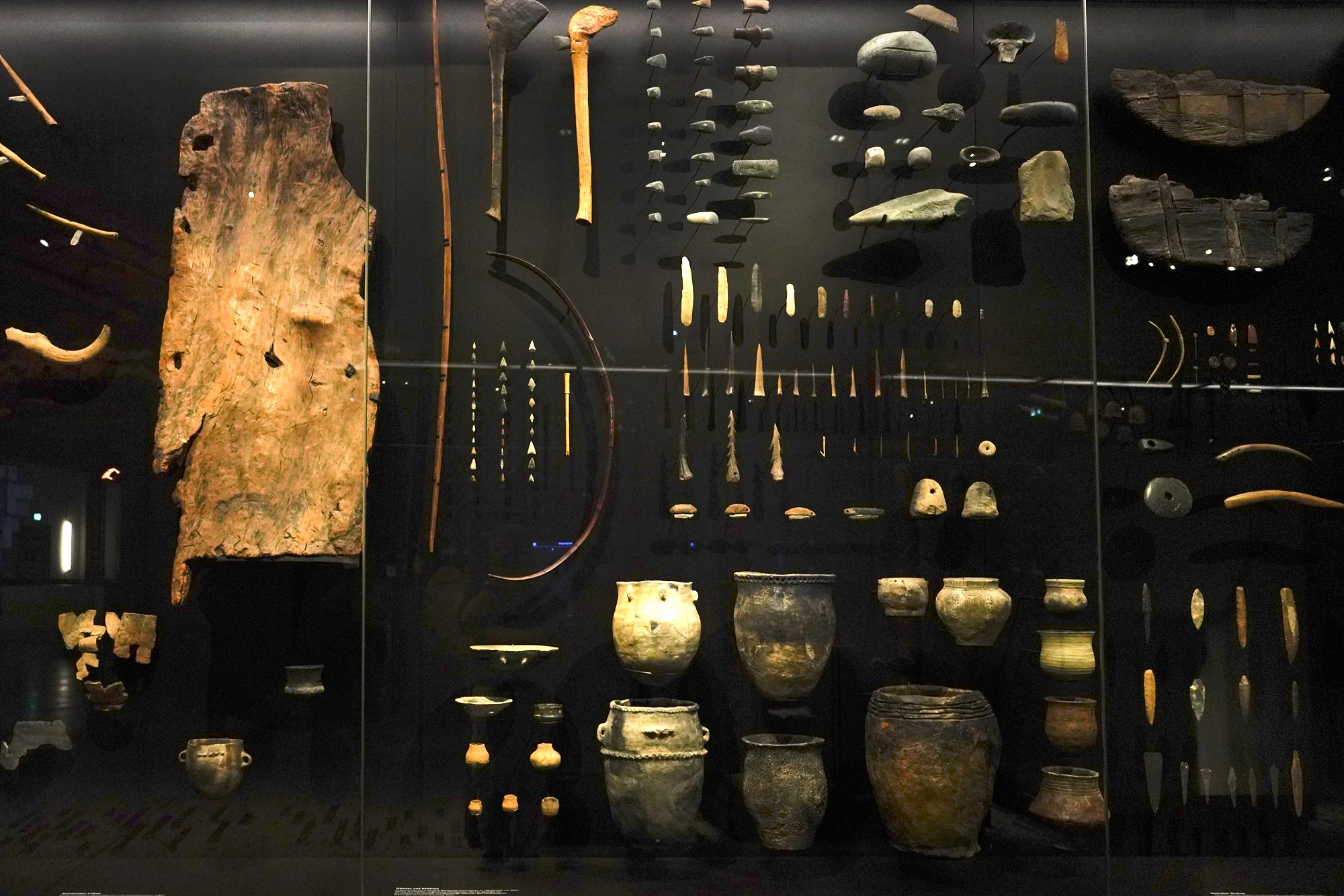
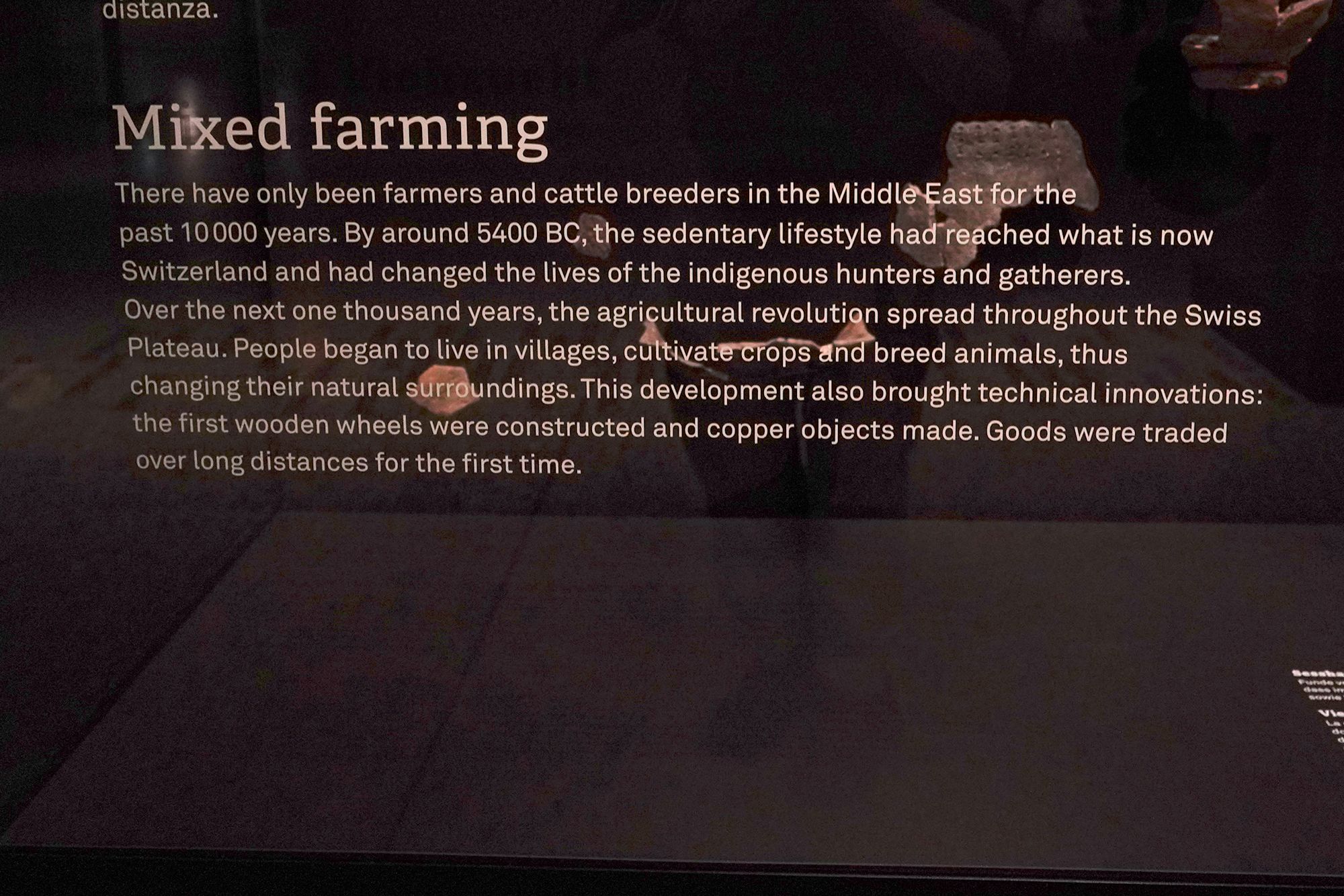
By around 5400 BC, farming had reached the area that is now Switzerland. Over the following centuries, people began settling in villages, growing crops, and raising animals. The exhibit also describes early wooden wheels, copper objects, and trade over long distances.
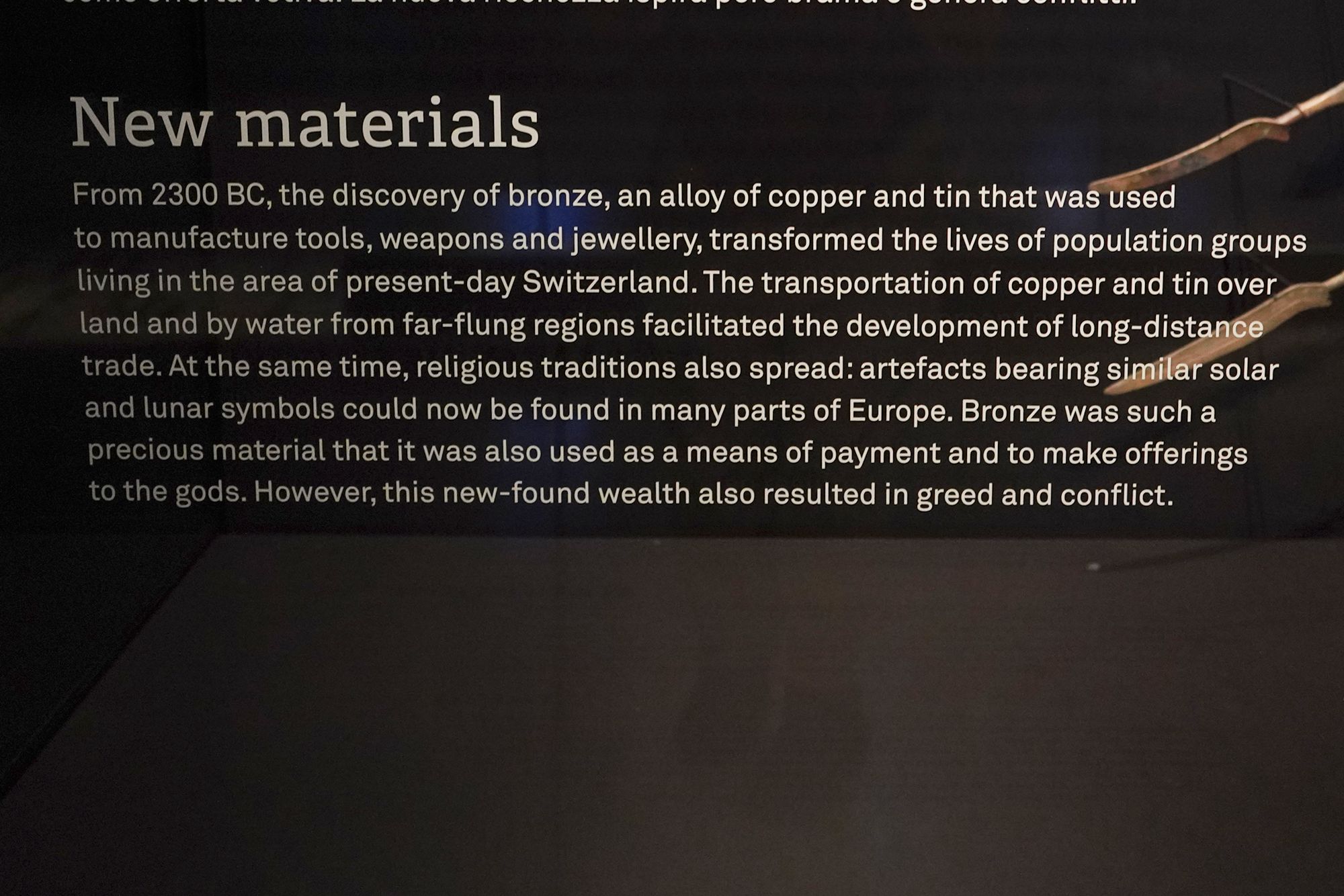
From around 2300 BC, people in the area of present-day Switzerland began using bronze to make tools, weapons, and jewelry. Copper and tin came from distant regions, expanding trade. Bronze was valuable enough to be used for payment and religious offerings.

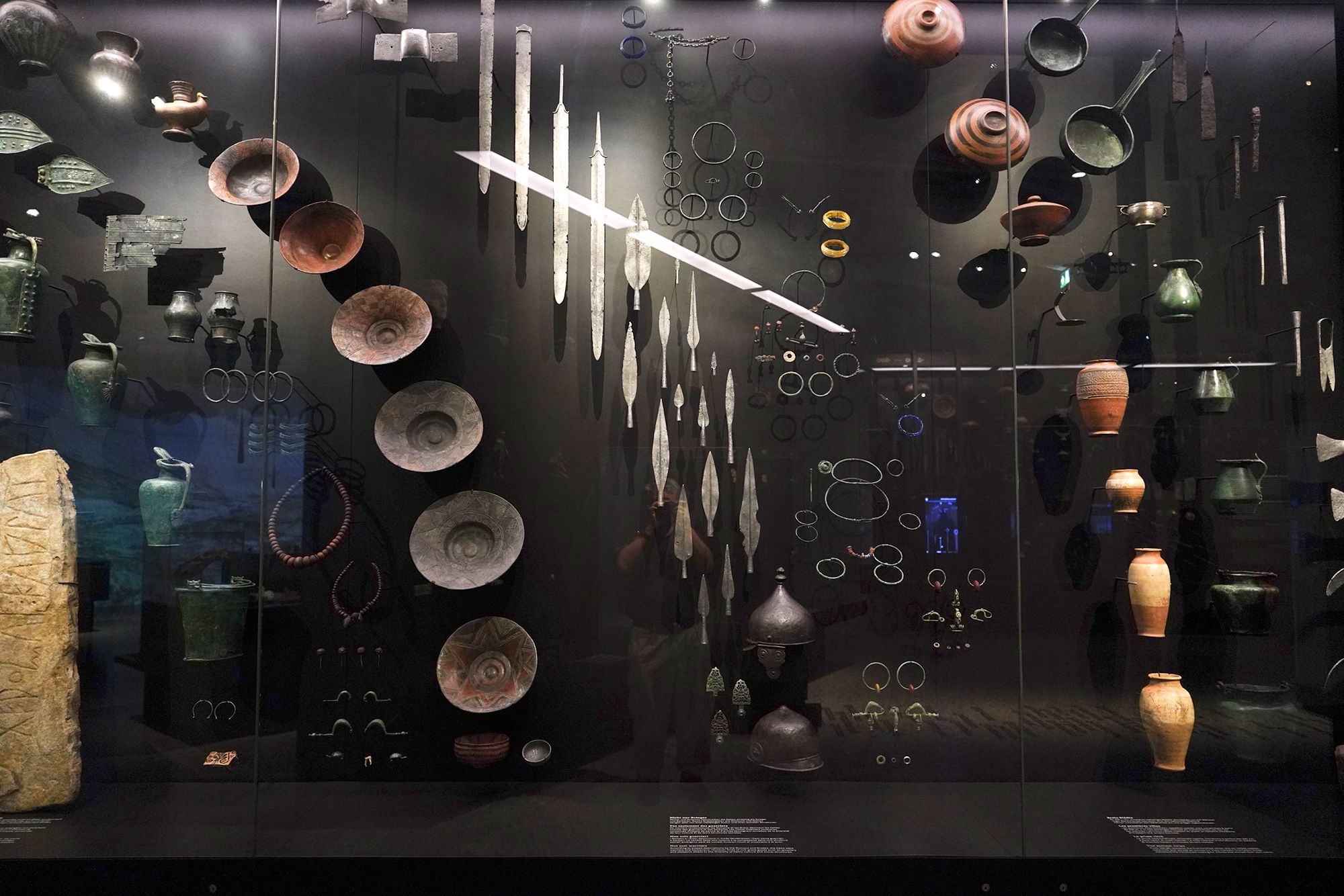
Between 800 and 500 BC, contact grew between the Mediterranean world and the region north of the Alps. Celtic tribes, including the Helvetii, lived in the area. Later, Roman expansion brought Mediterranean customs, and the region around Geneva became Romanized by about 120 BC.
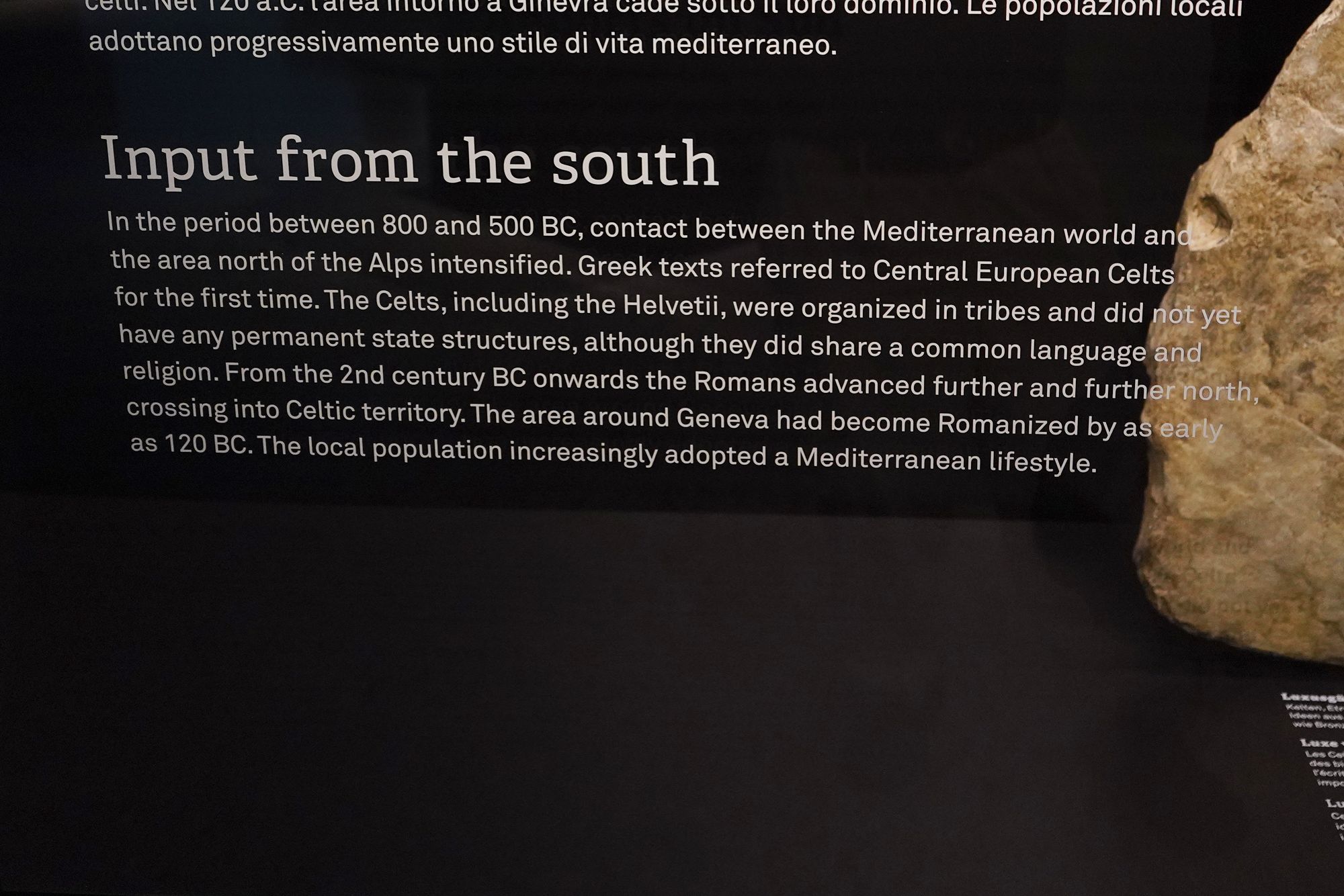
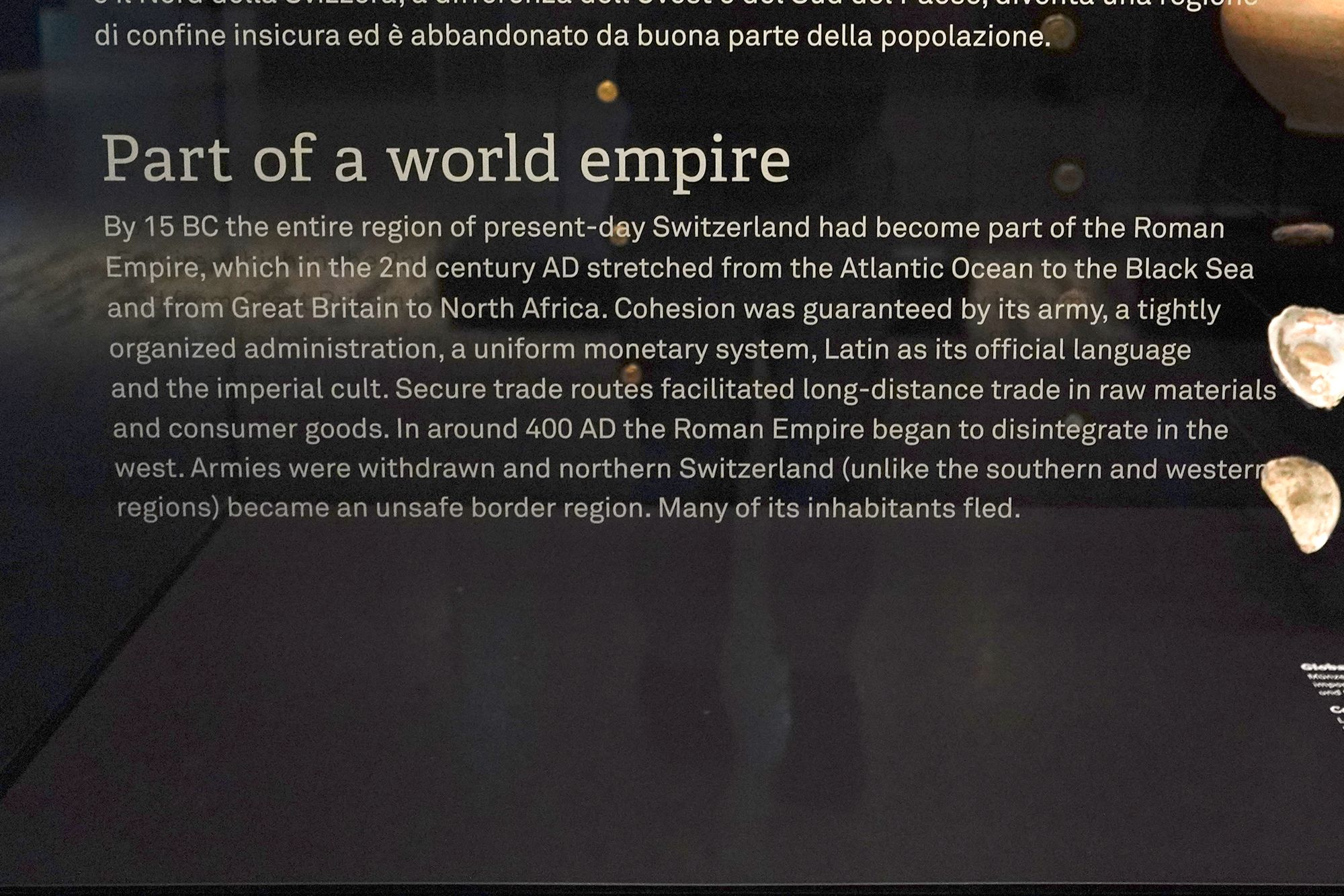
By 15 BC, the area of present-day Switzerland was part of the Roman Empire. Roman roads, administration, and a shared currency supported trade across the empire. When Roman power weakened around 400 AD, northern Switzerland became a less secure border region, and many residents left.
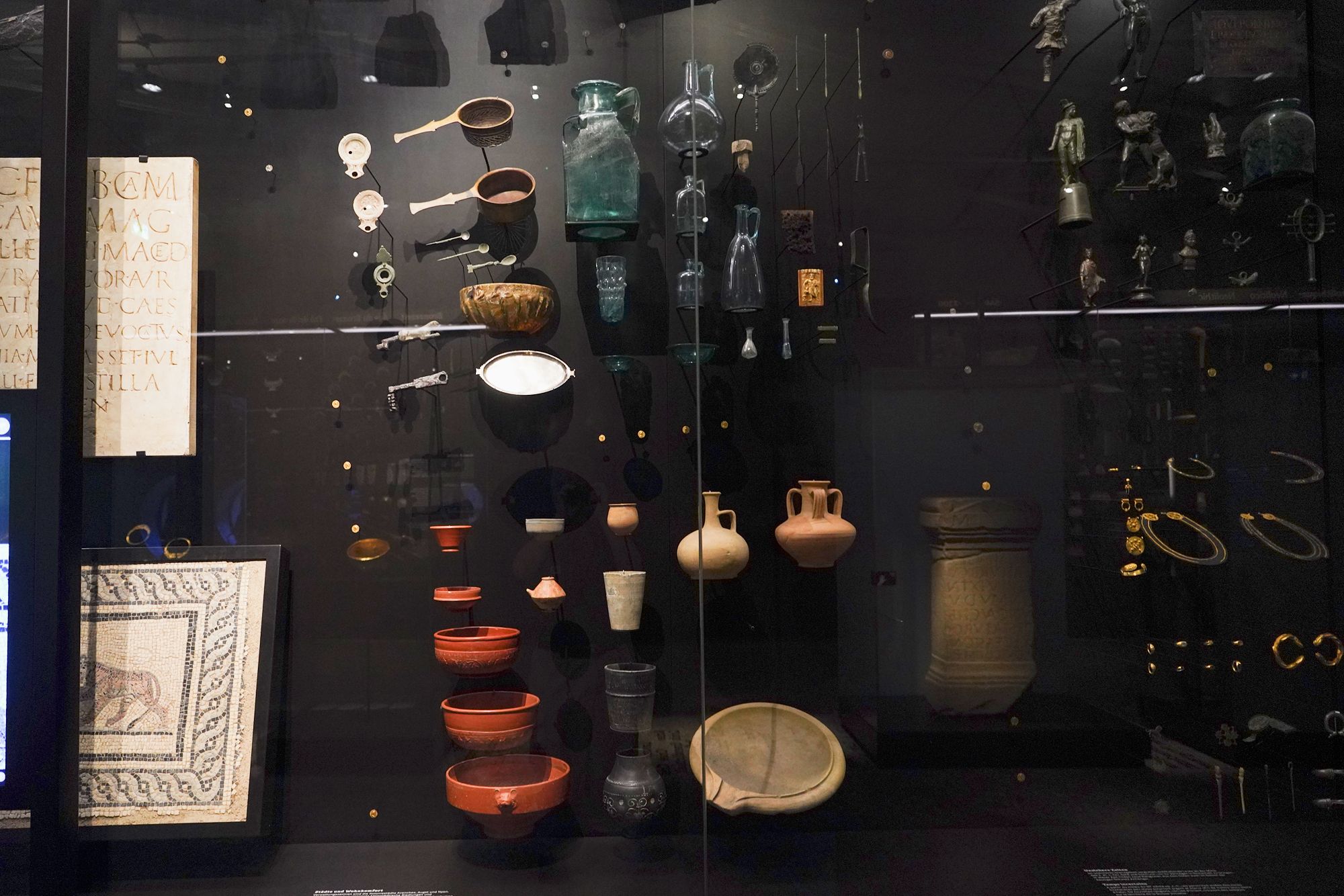
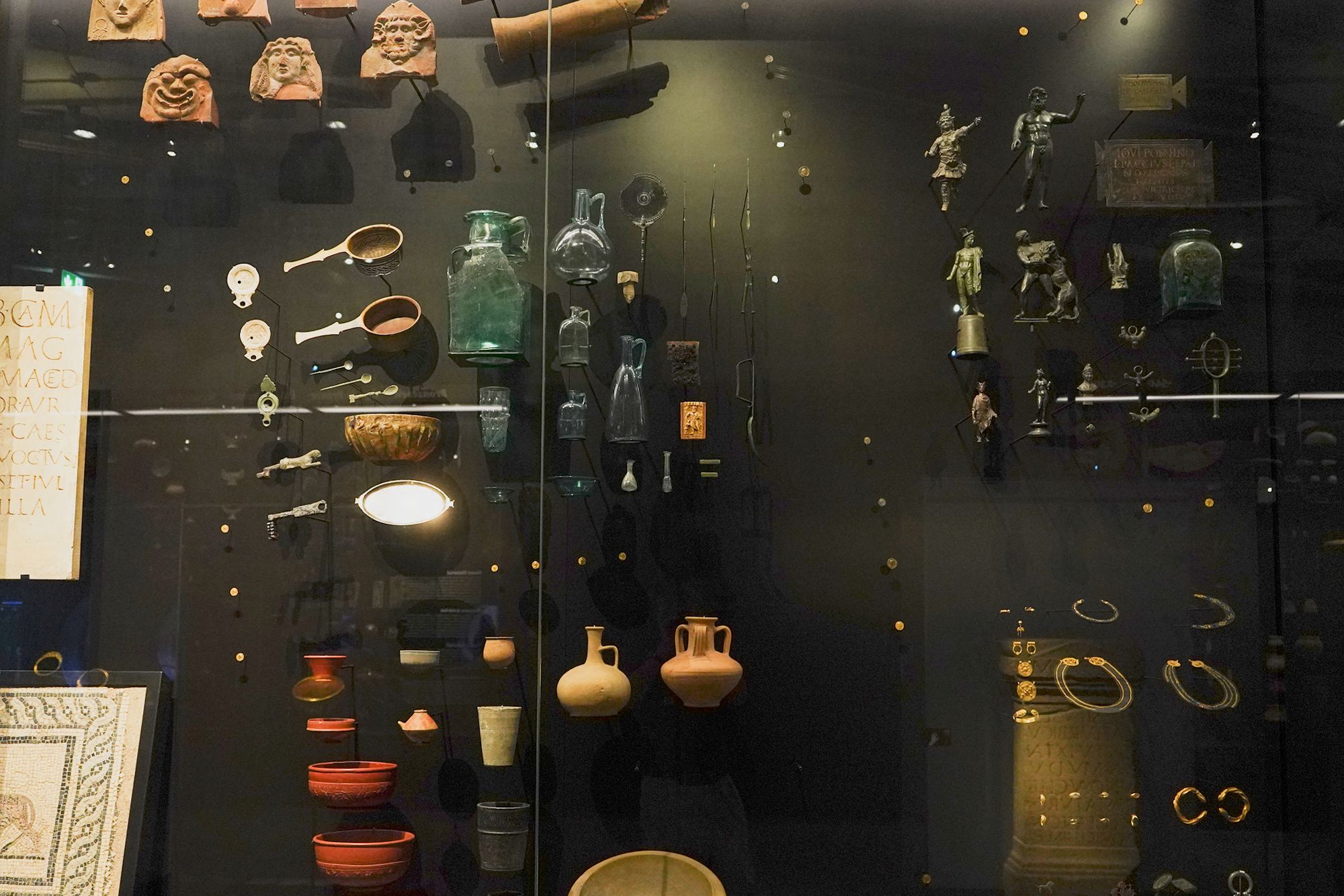
After Roman rule weakened, the area of present-day Switzerland became part of Germanic kingdoms and later came under Frankish rule. Christianity spread through bishops and monasteries. During this period, Alemannic took hold in regions that are German-speaking today, while Latin remained common in the west and south.
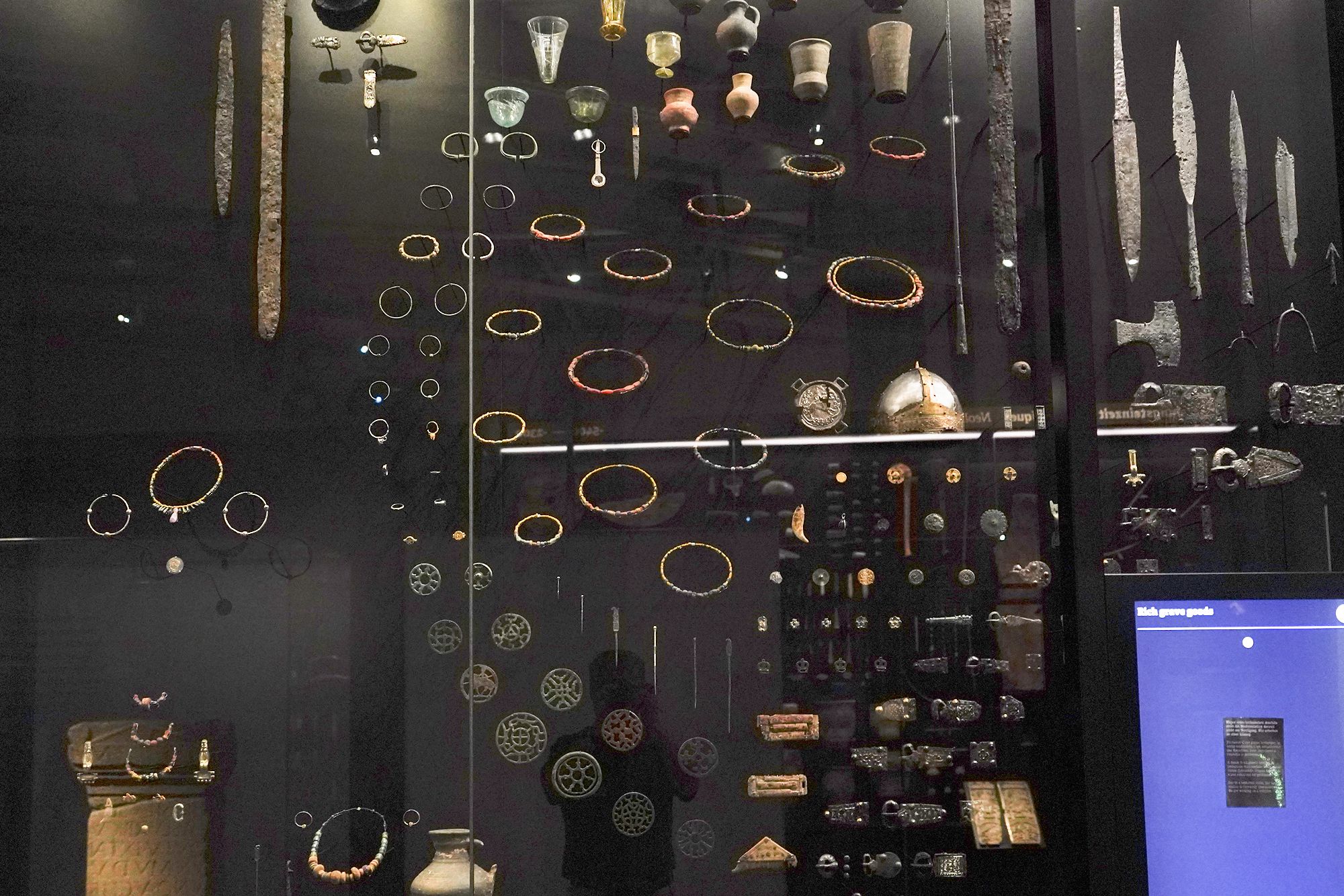
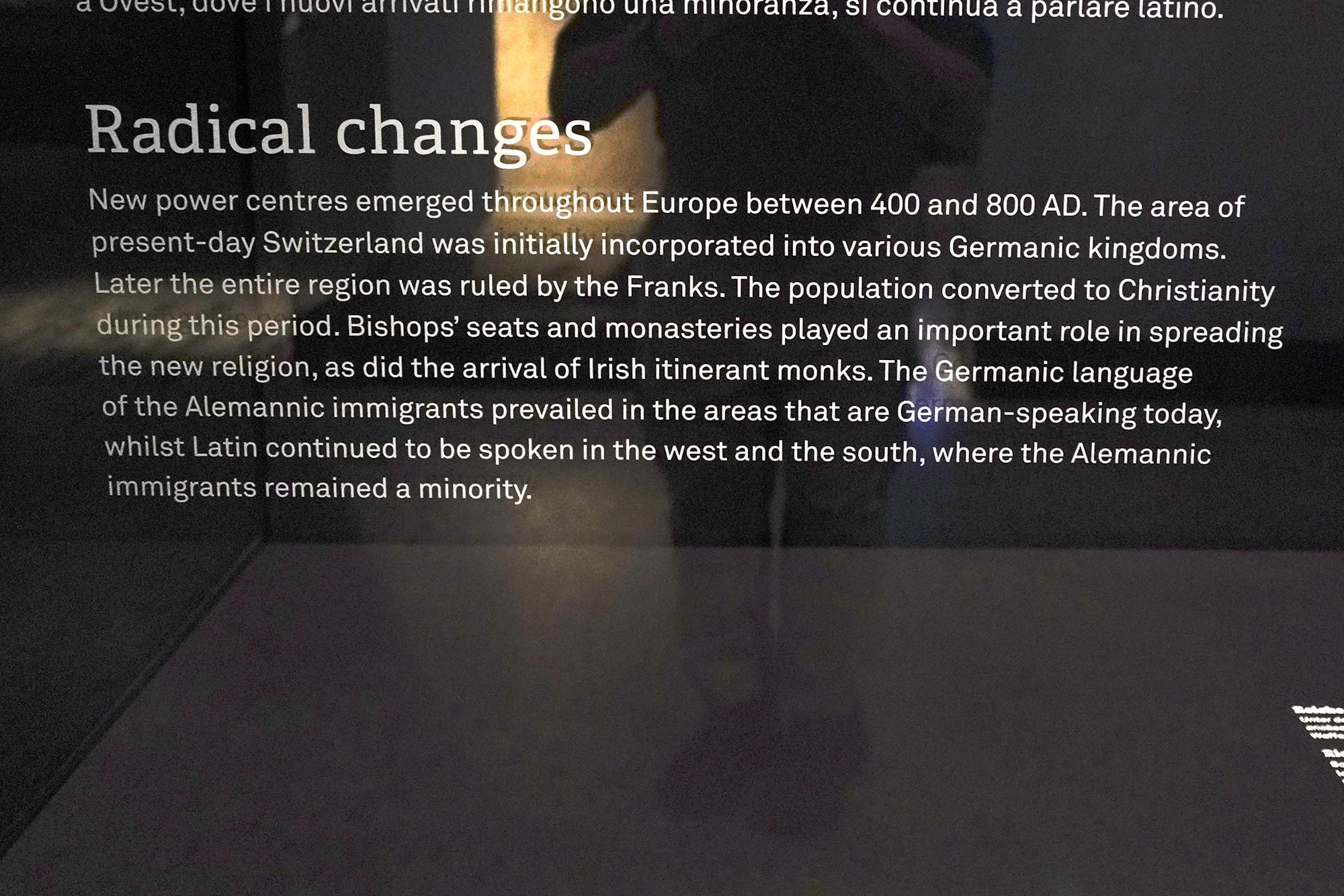
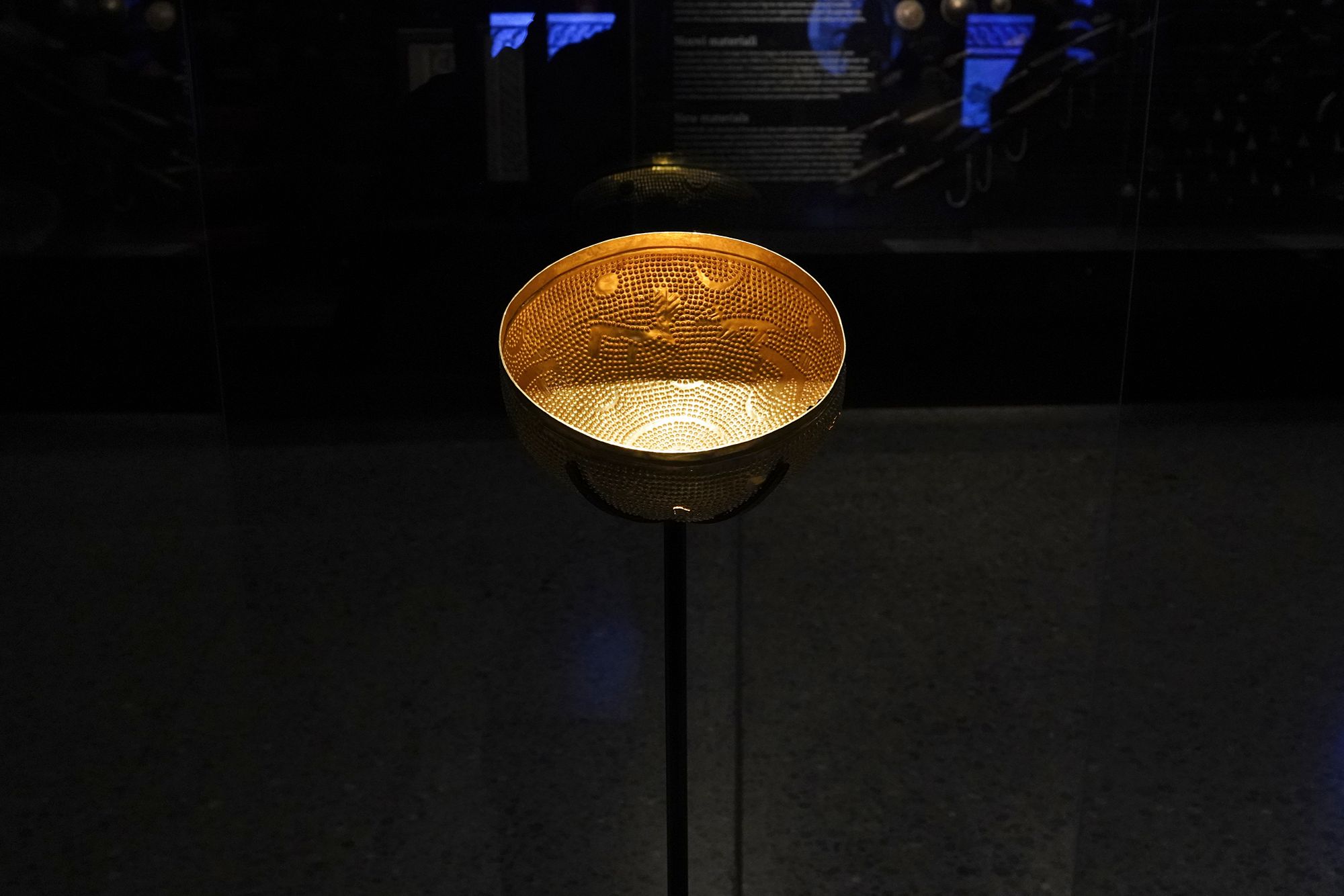
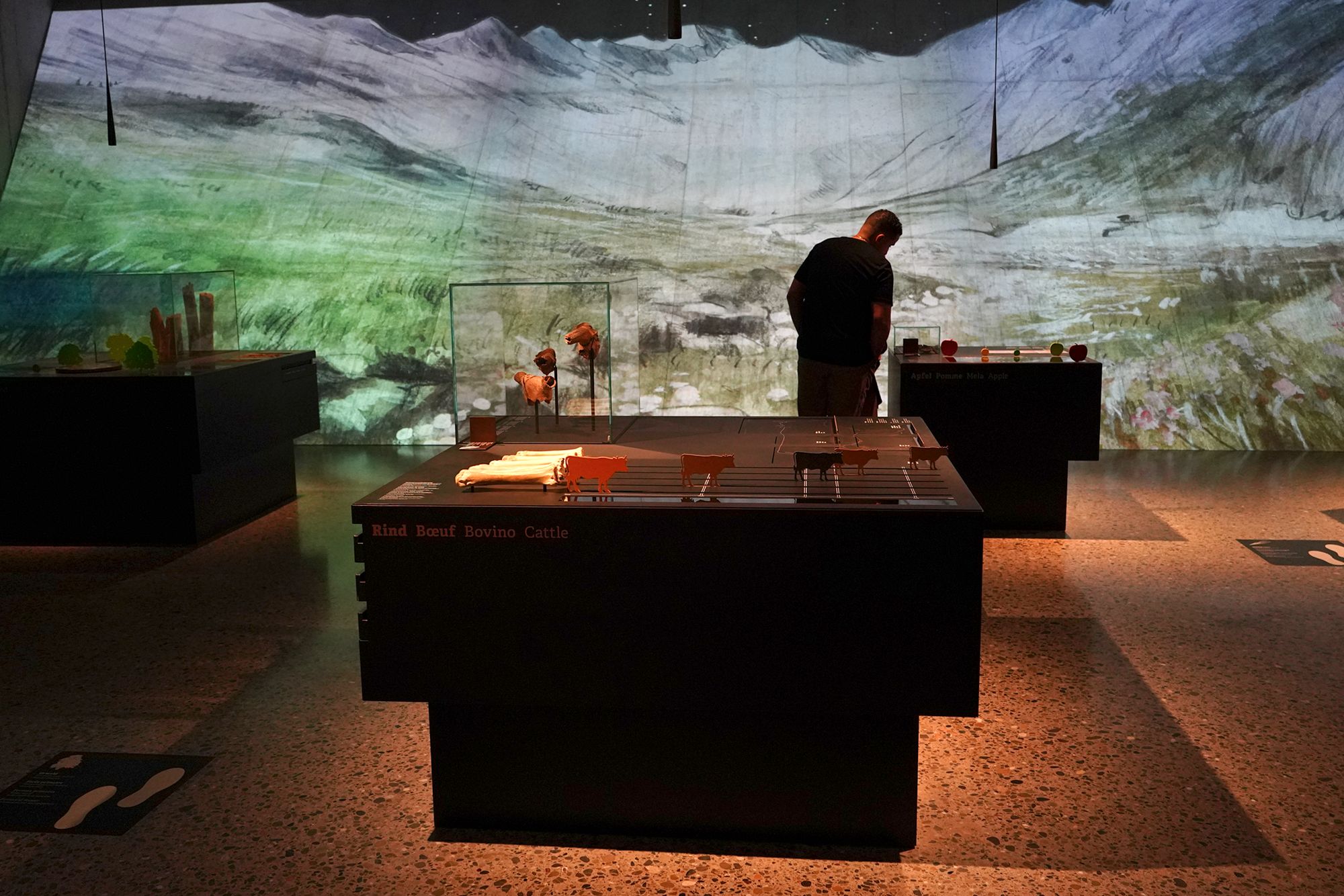

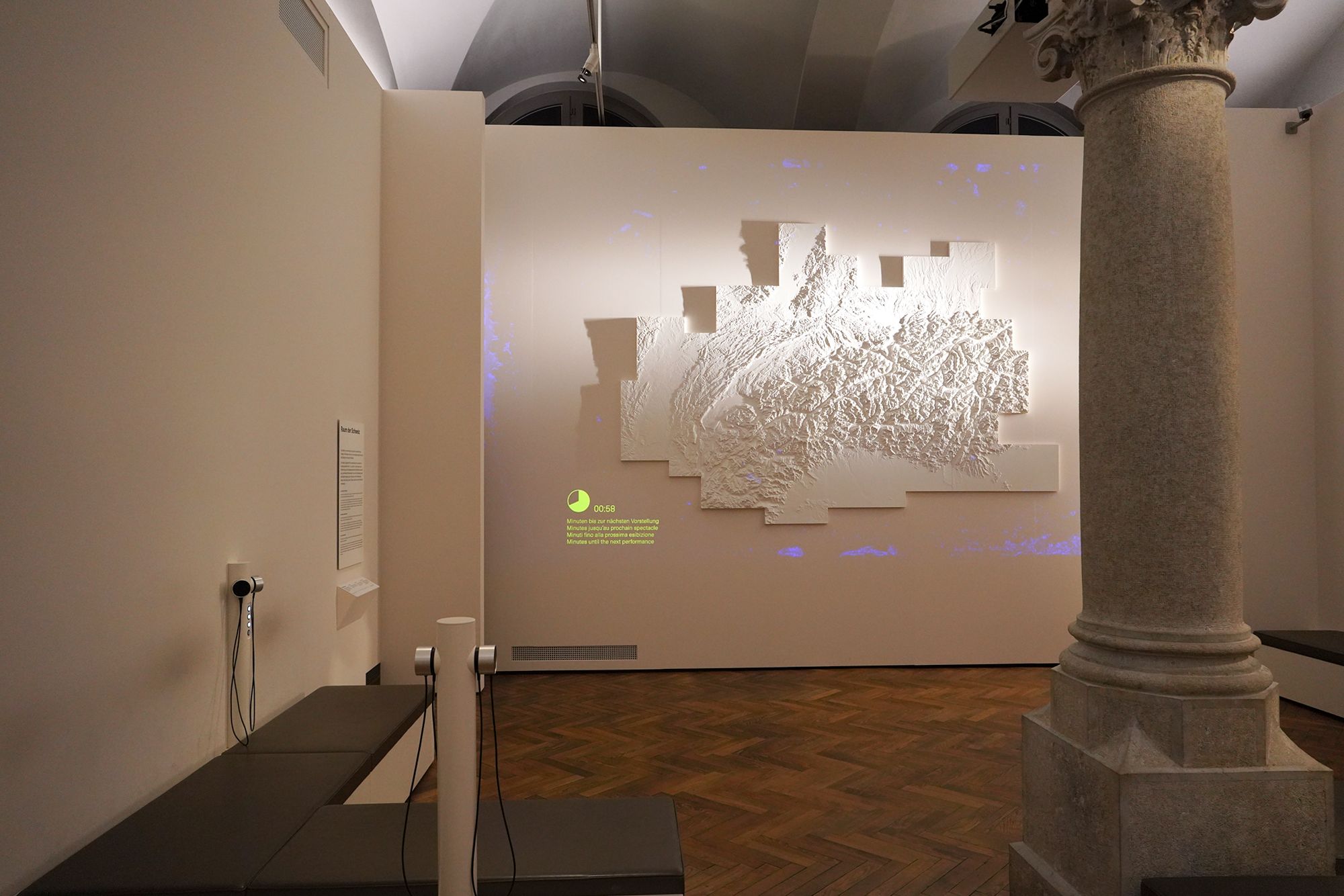

The next section covers the years 1000–1400, when the region that is now Switzerland was part of the Holy Roman Empire. Local rulers held power, while growing towns and rural communities began forming alliances to protect their interests.
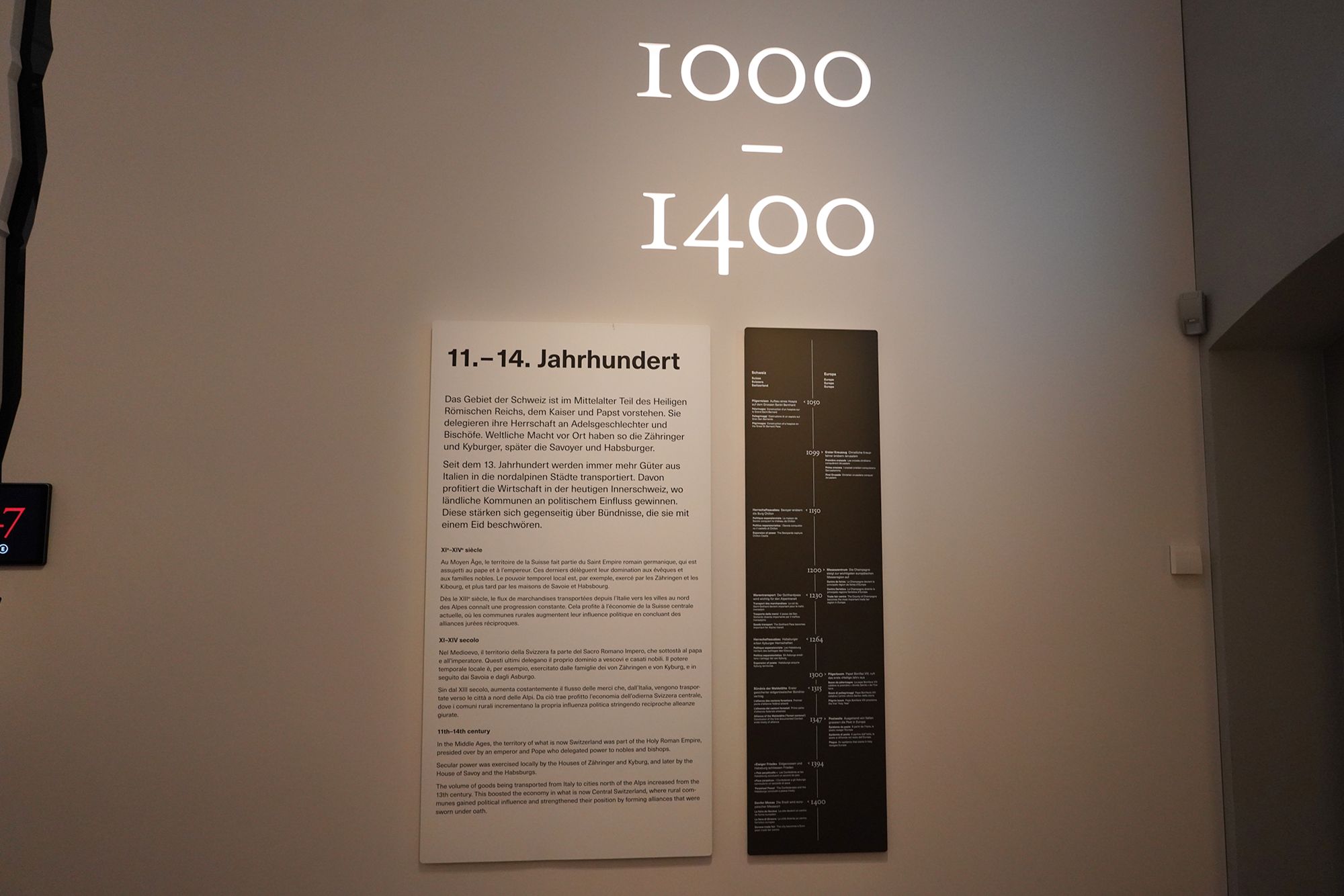
I ran out of time, so I had to skip this part of the Swiss history exhibition.
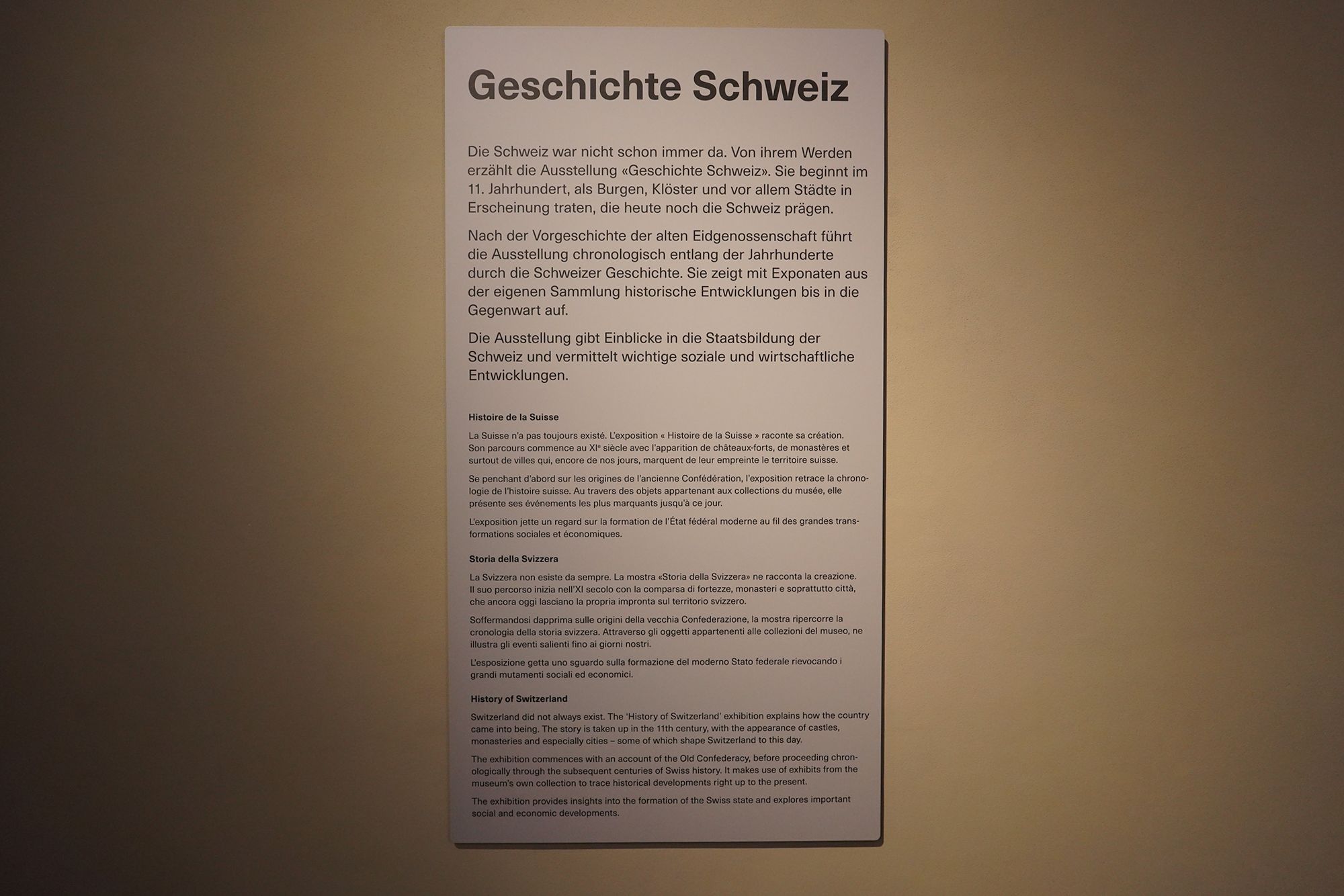
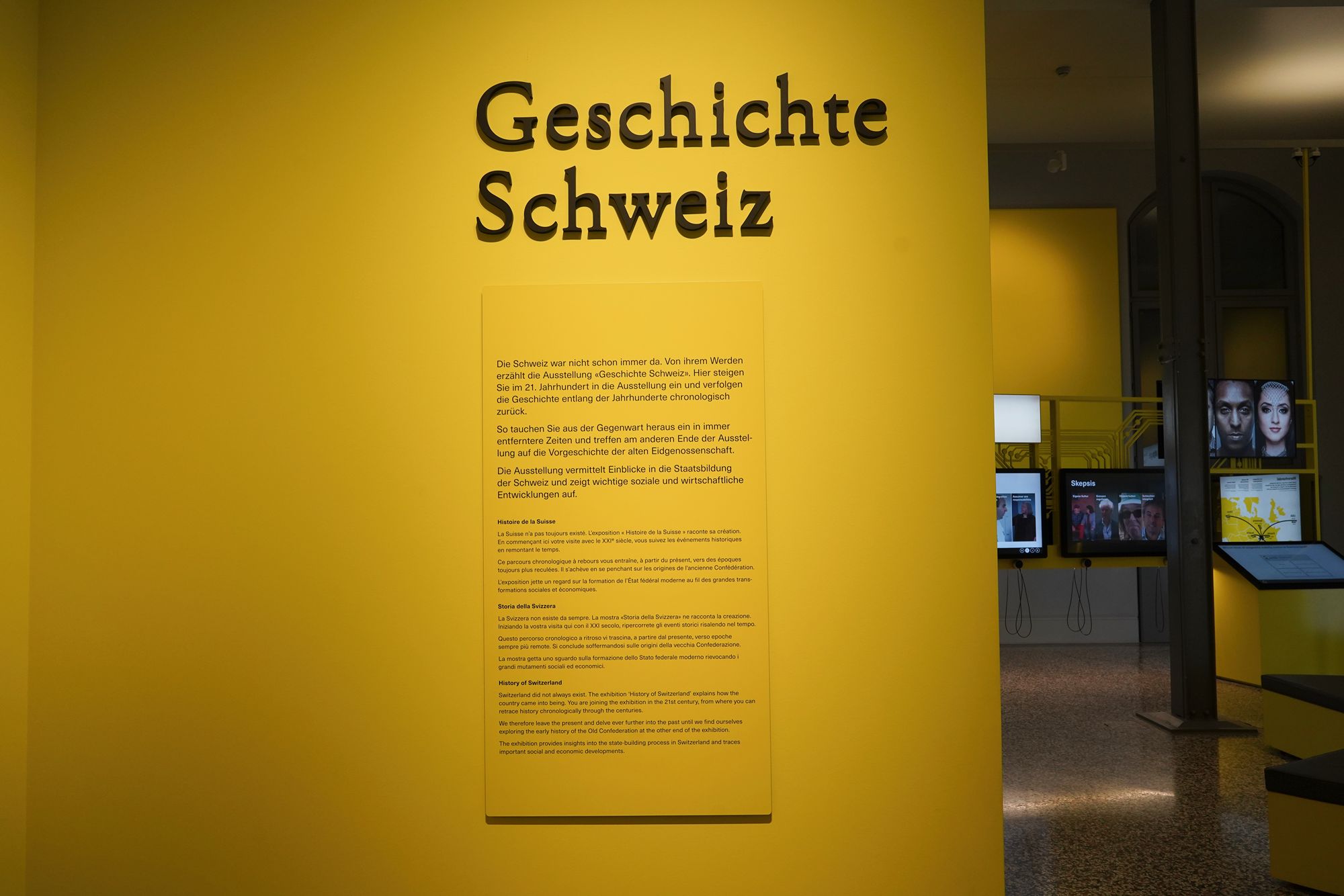
The “History of Switzerland” exhibition traces how the country developed from the Old Confederacy to the present. It uses objects from the museum’s collection to show changes in government, society, and the economy over the centuries.
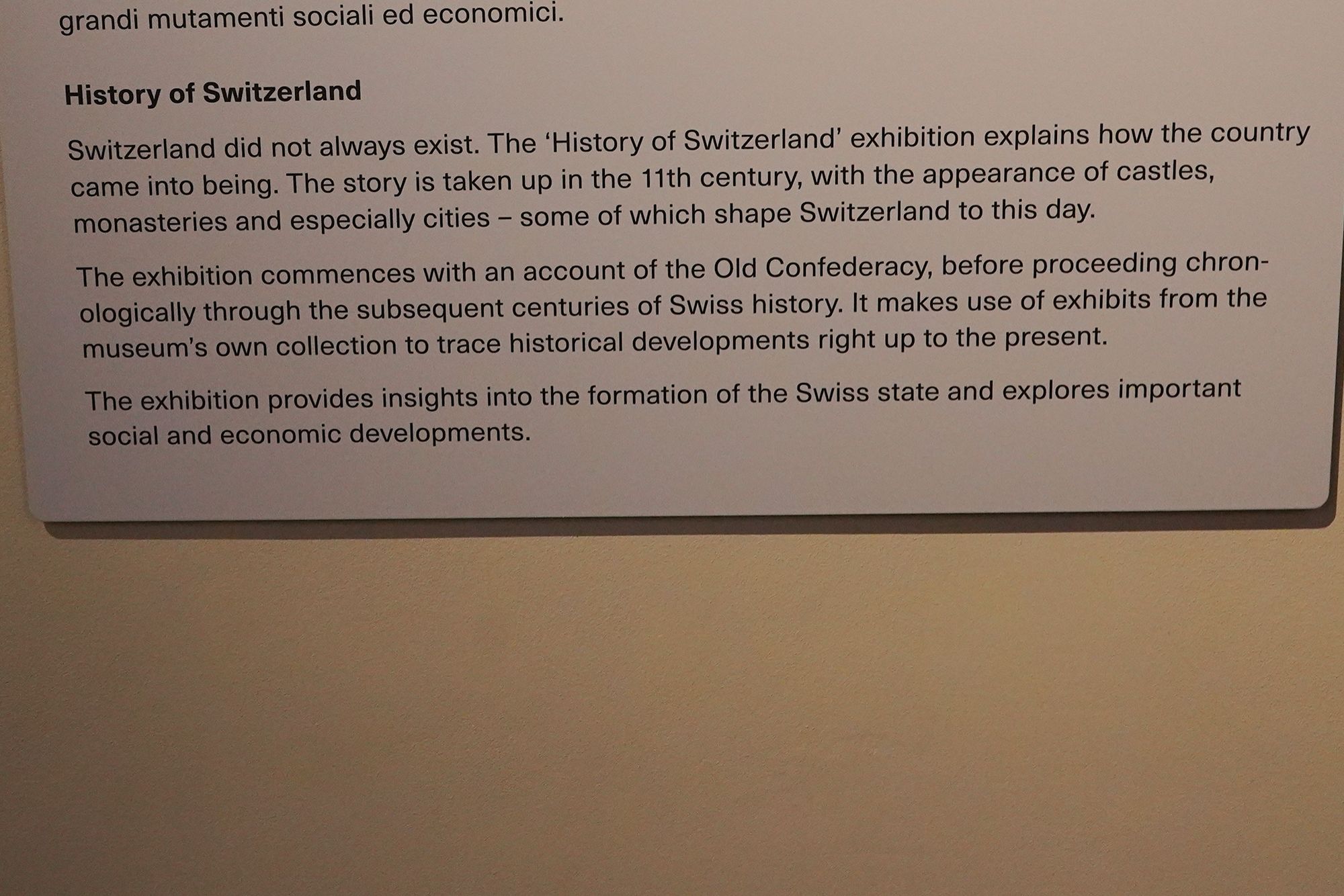
This display explains how alliances helped shape the Old Swiss Confederacy. From the 13th century, rural cantons, cities, and rulers made agreements promising safe passage and military support. By the mid-15th century, cantons within the confederate alliance could no longer make separate alliances elsewhere, strengthening the Confederation’s political independence.
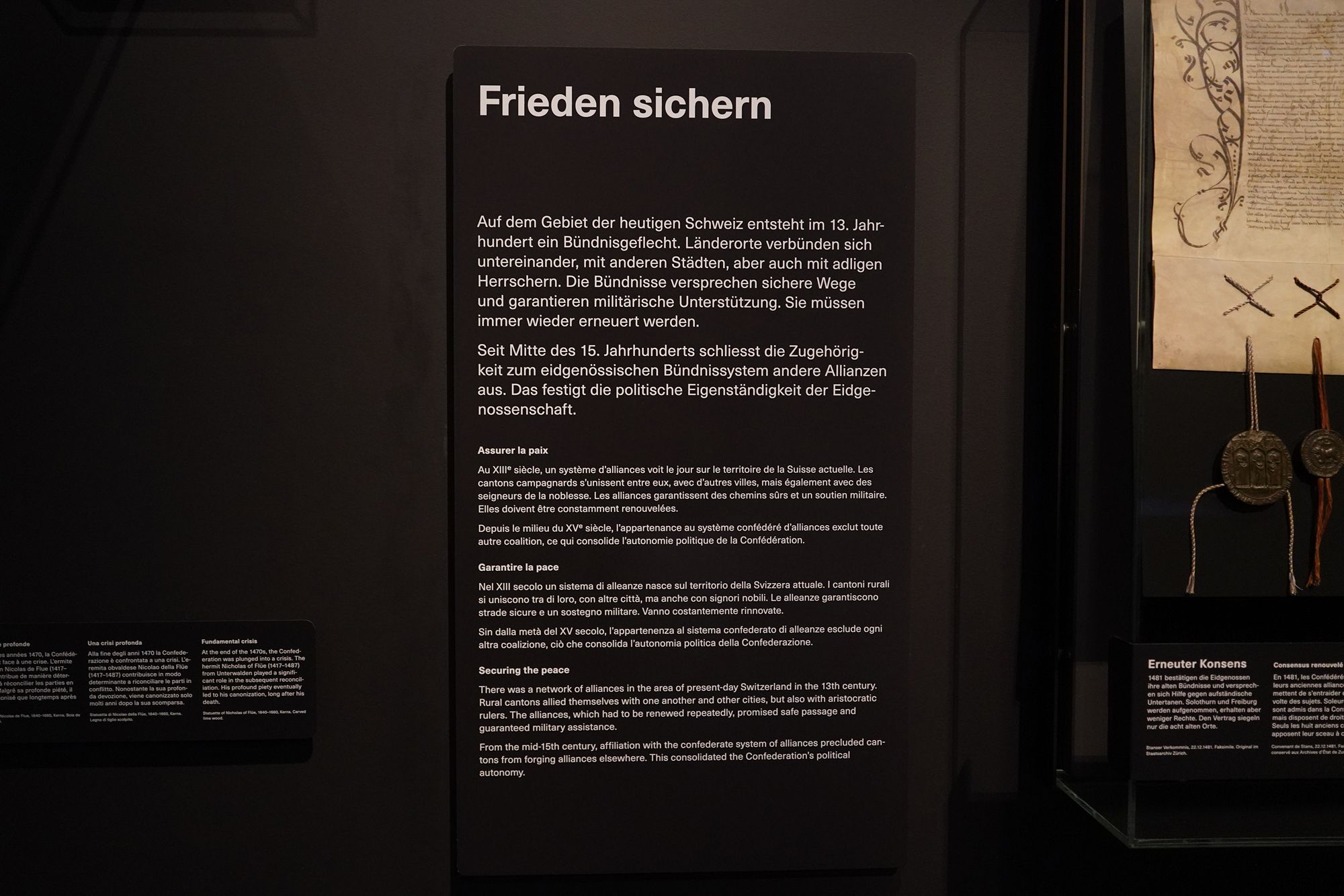
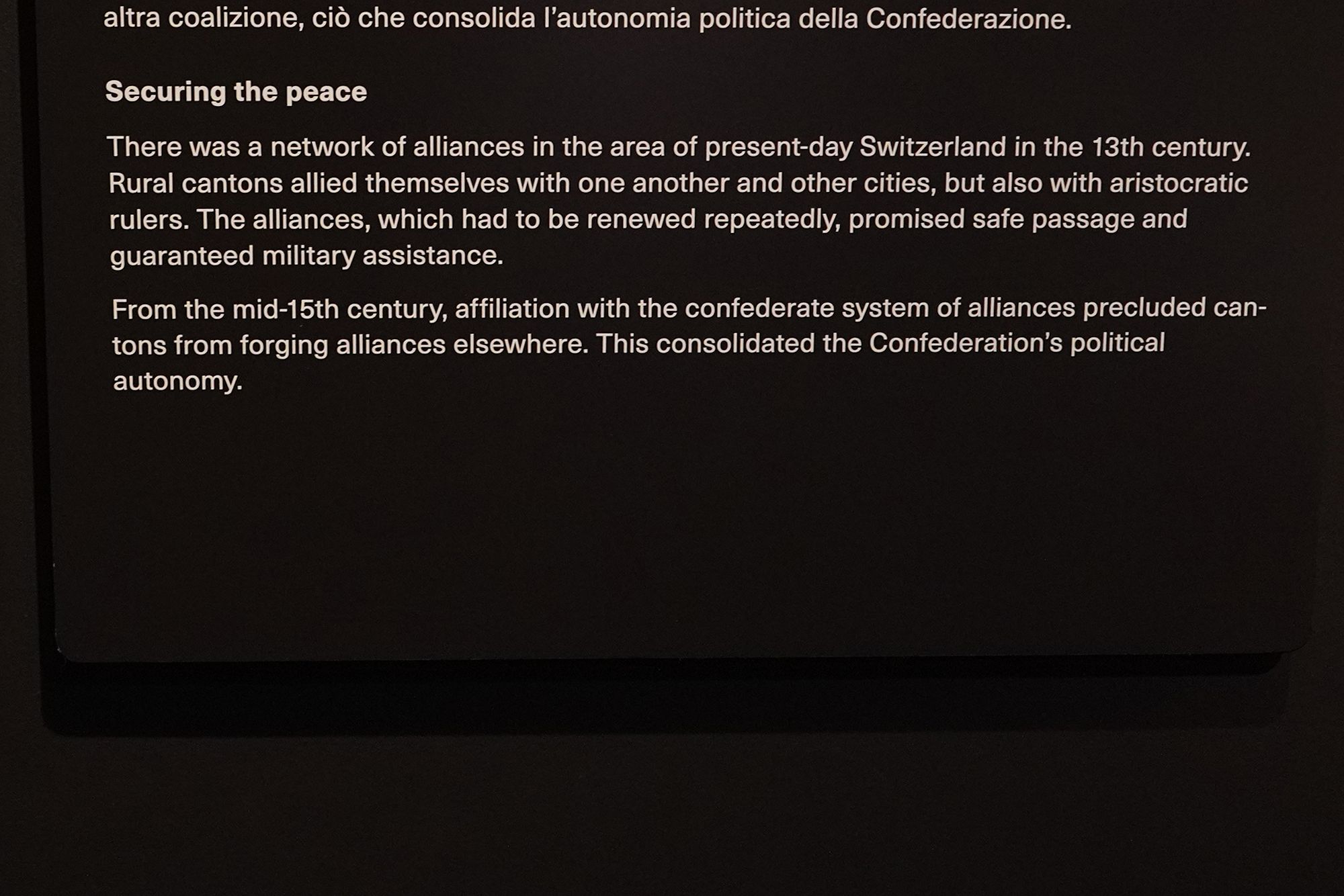
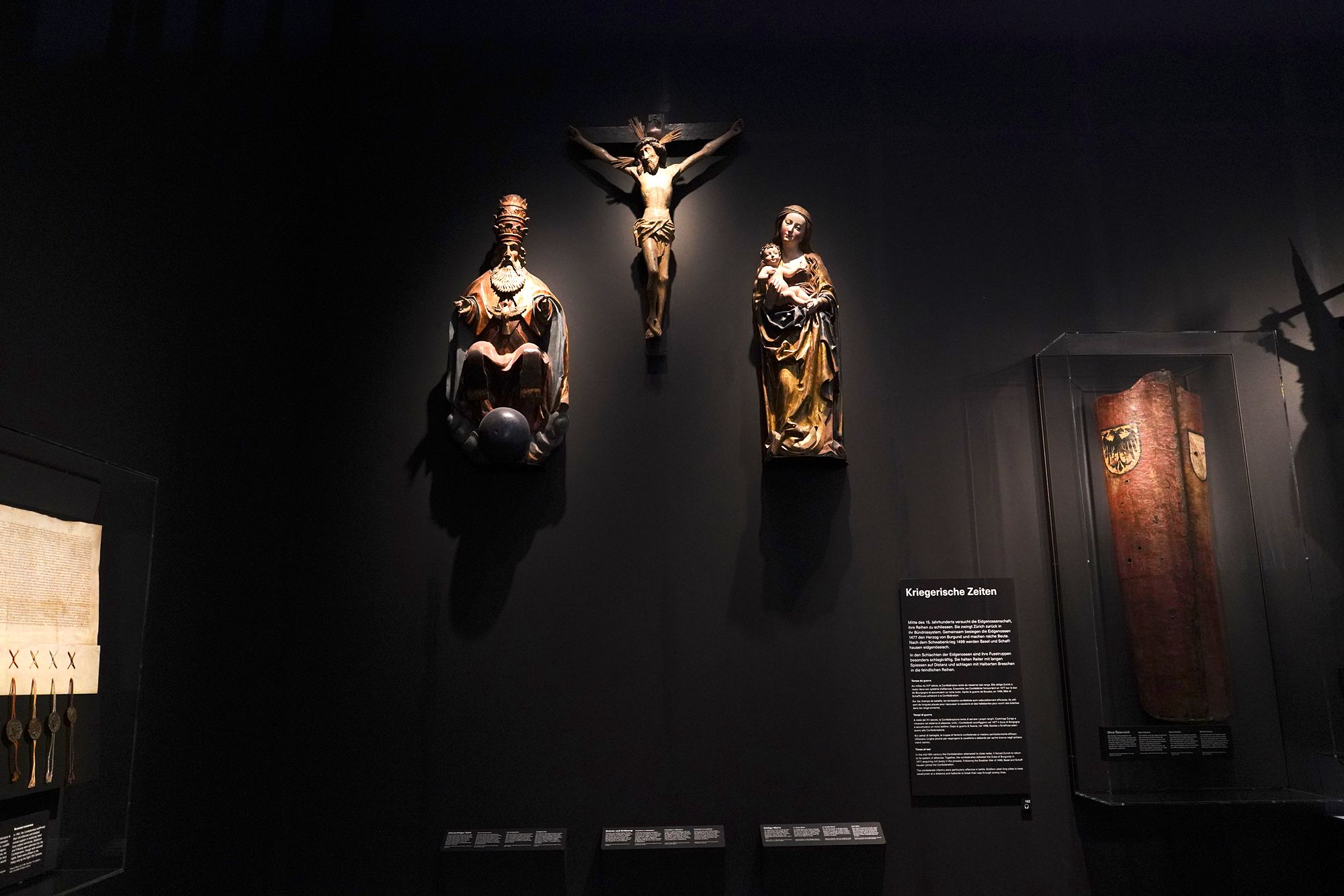
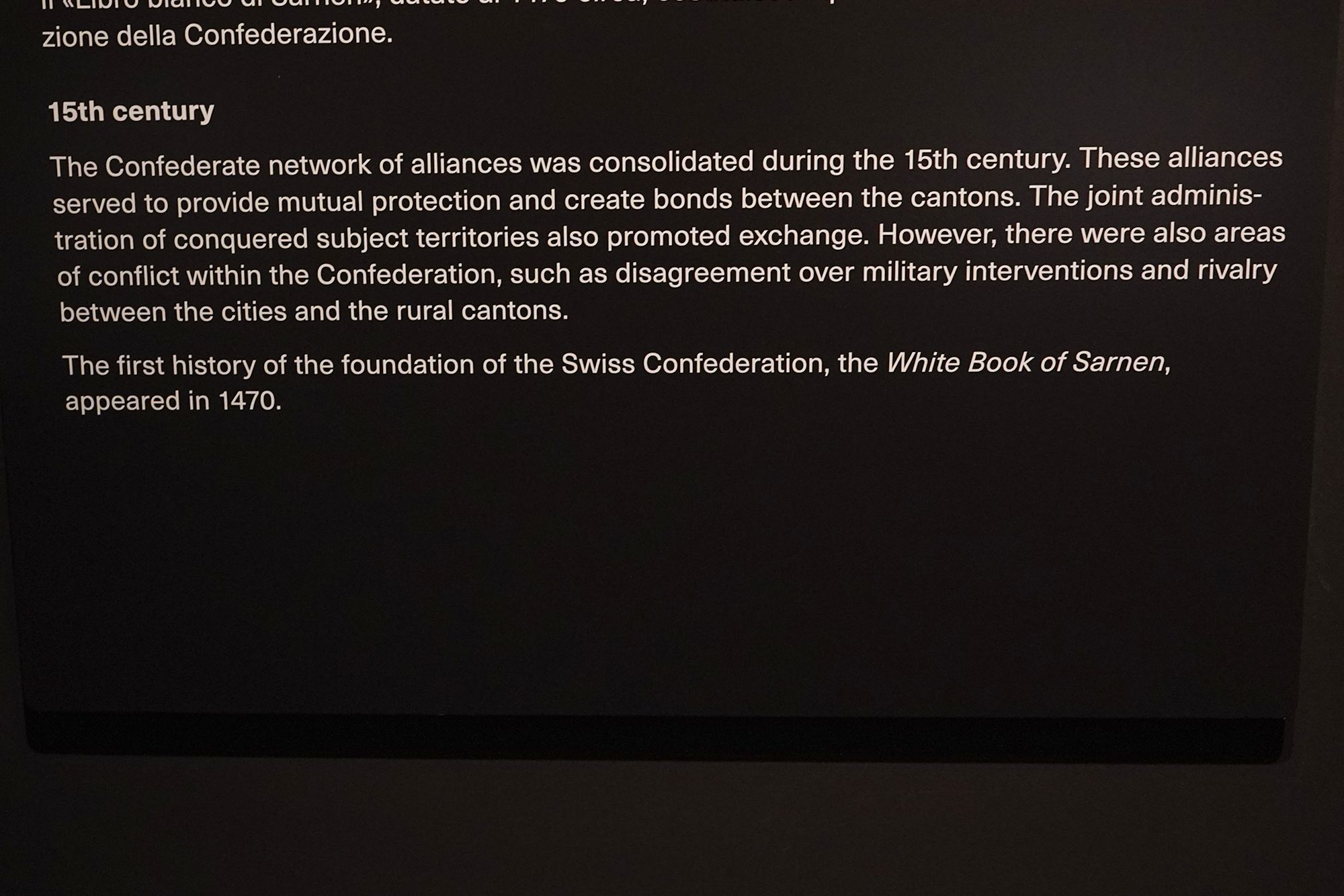
In the 15th century, the Swiss cantons strengthened their alliances for mutual protection. They also governed some territories together, though the cities and rural cantons did not always agree. The White Book of Sarnen, written in 1470, recorded an early account of the Confederation’s founding.

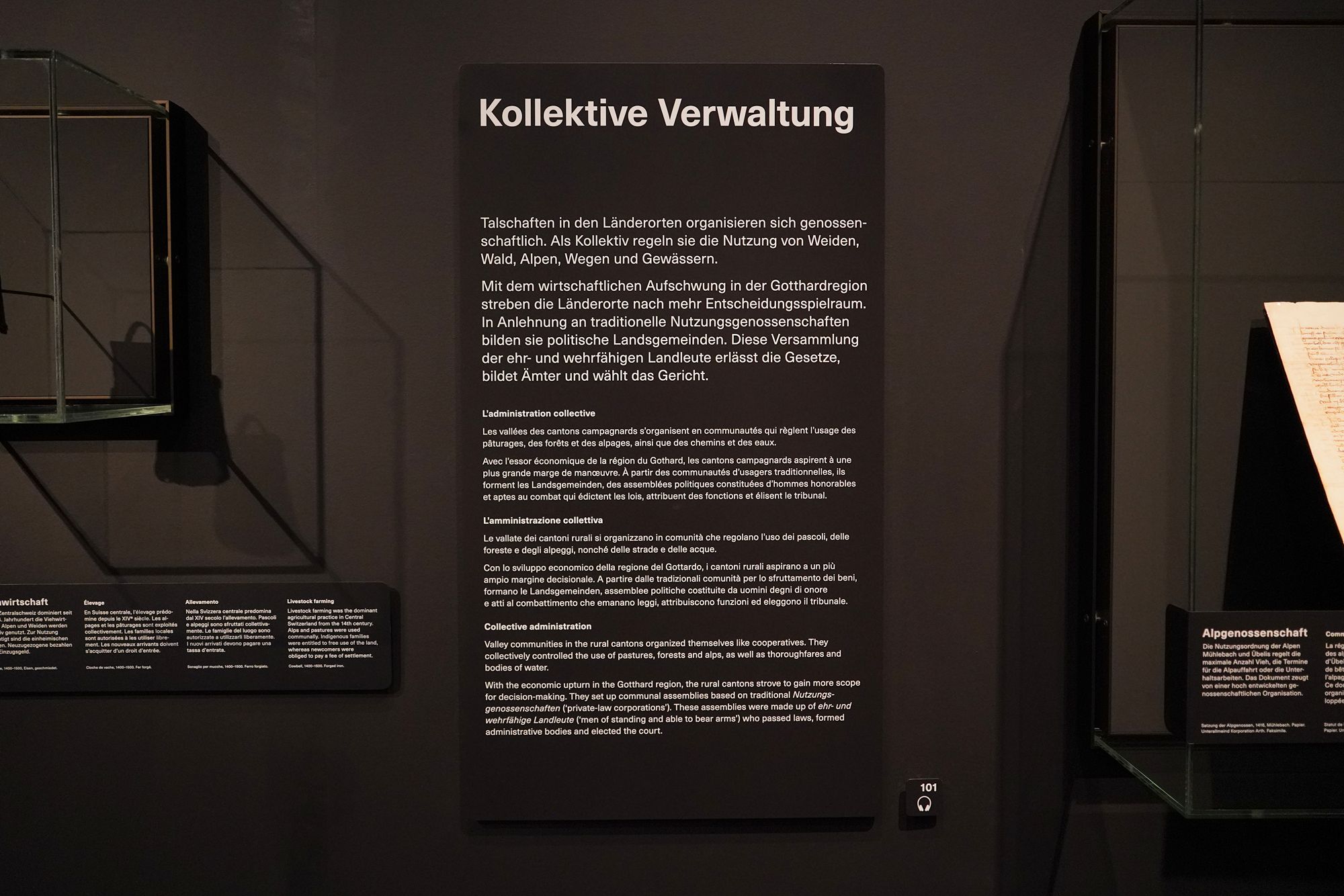
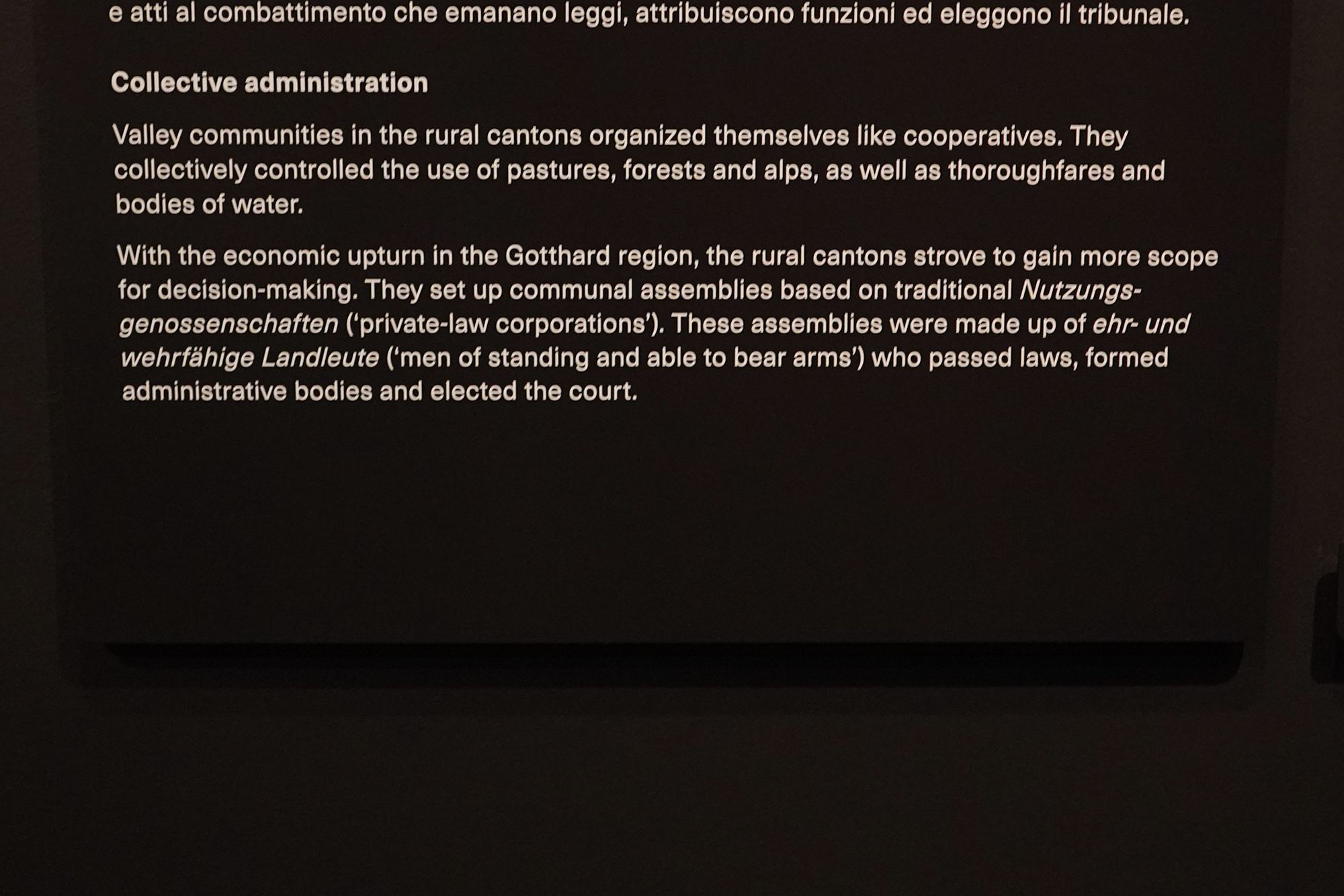
In the rural cantons, valley communities shared control of pastures, forests, roads, and waterways. As trade grew in the Gotthard region, they formed assemblies to make local decisions. Participation was limited to men of standing who could bear arms; these assemblies made laws, appointed administrators, and elected the court.
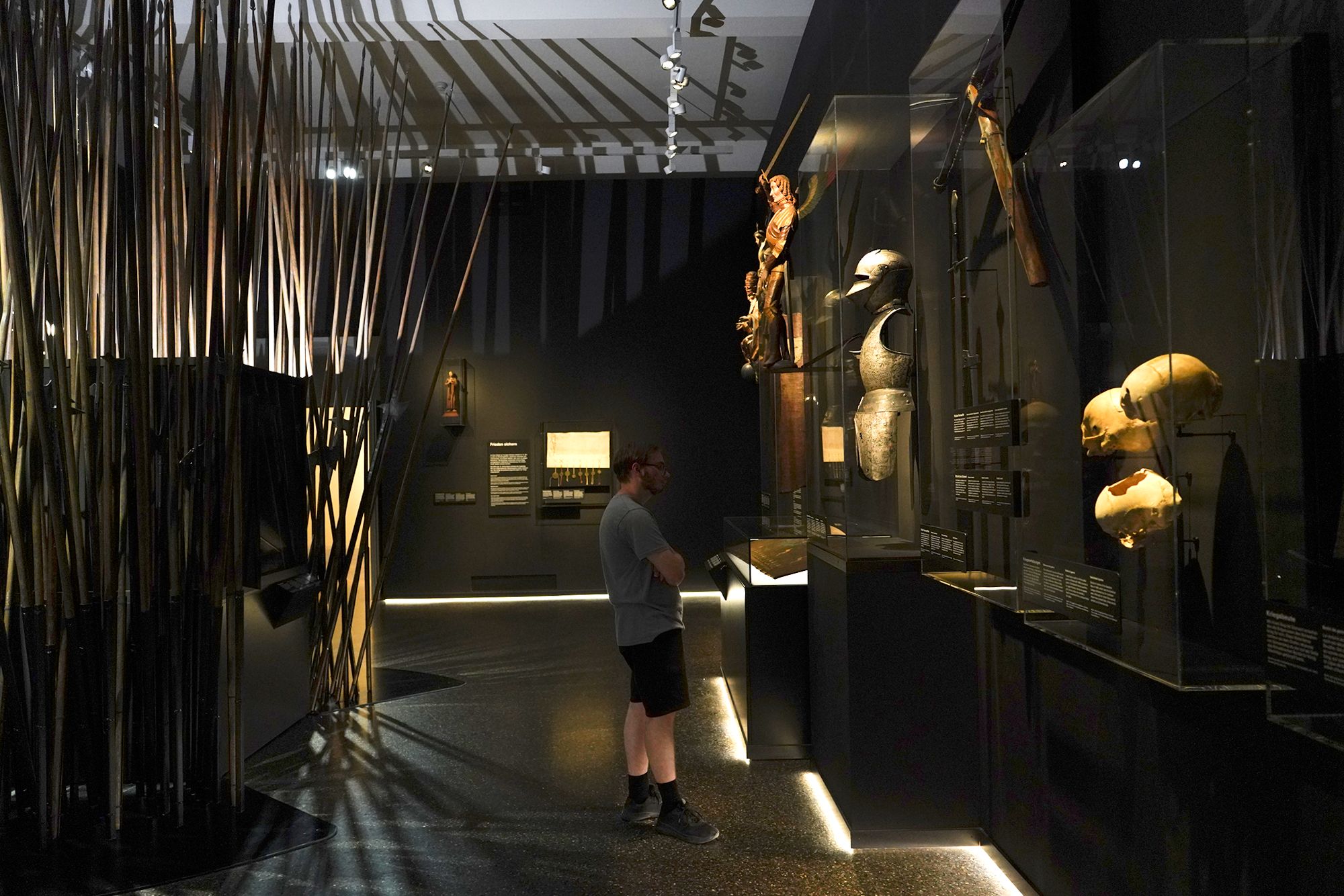

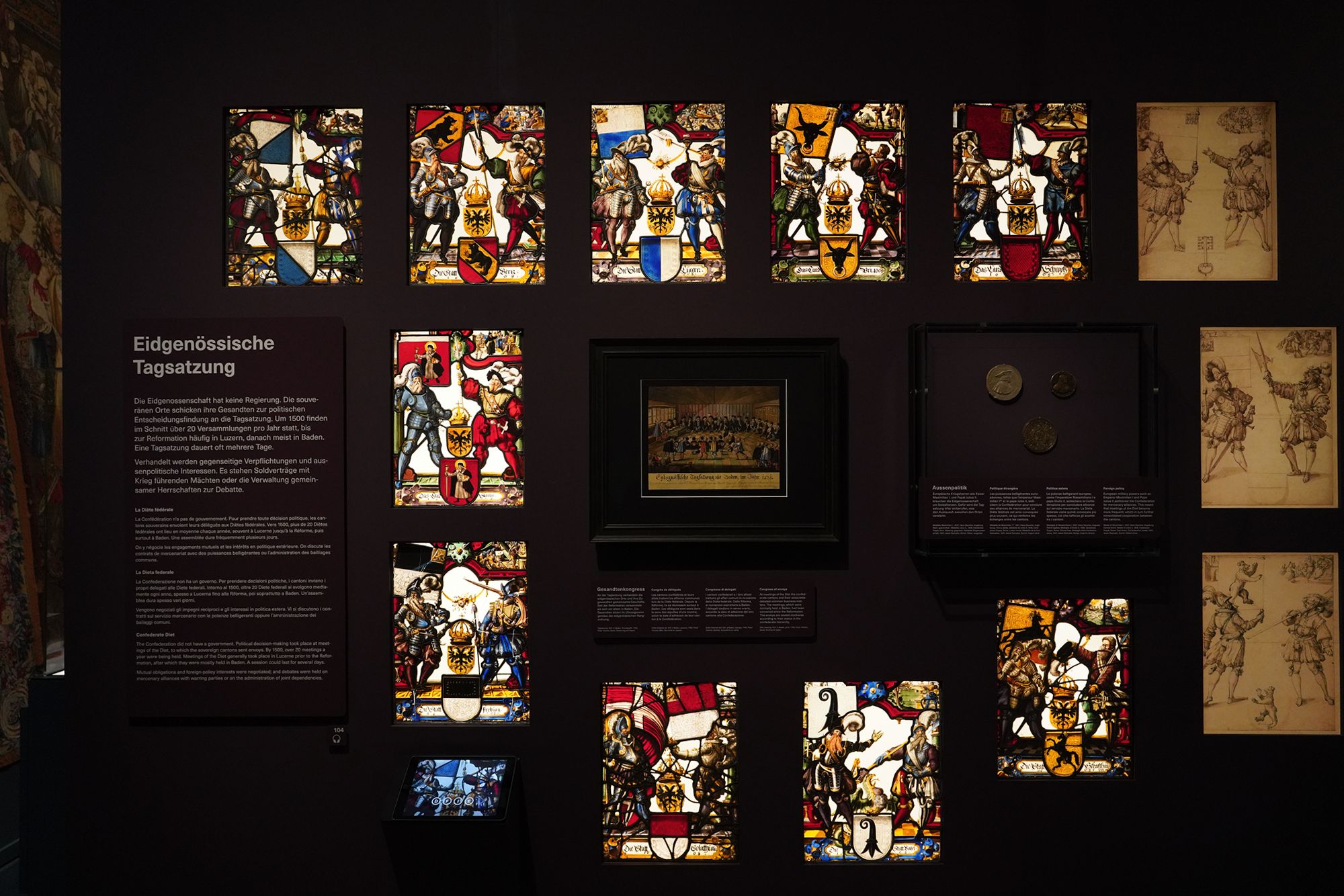
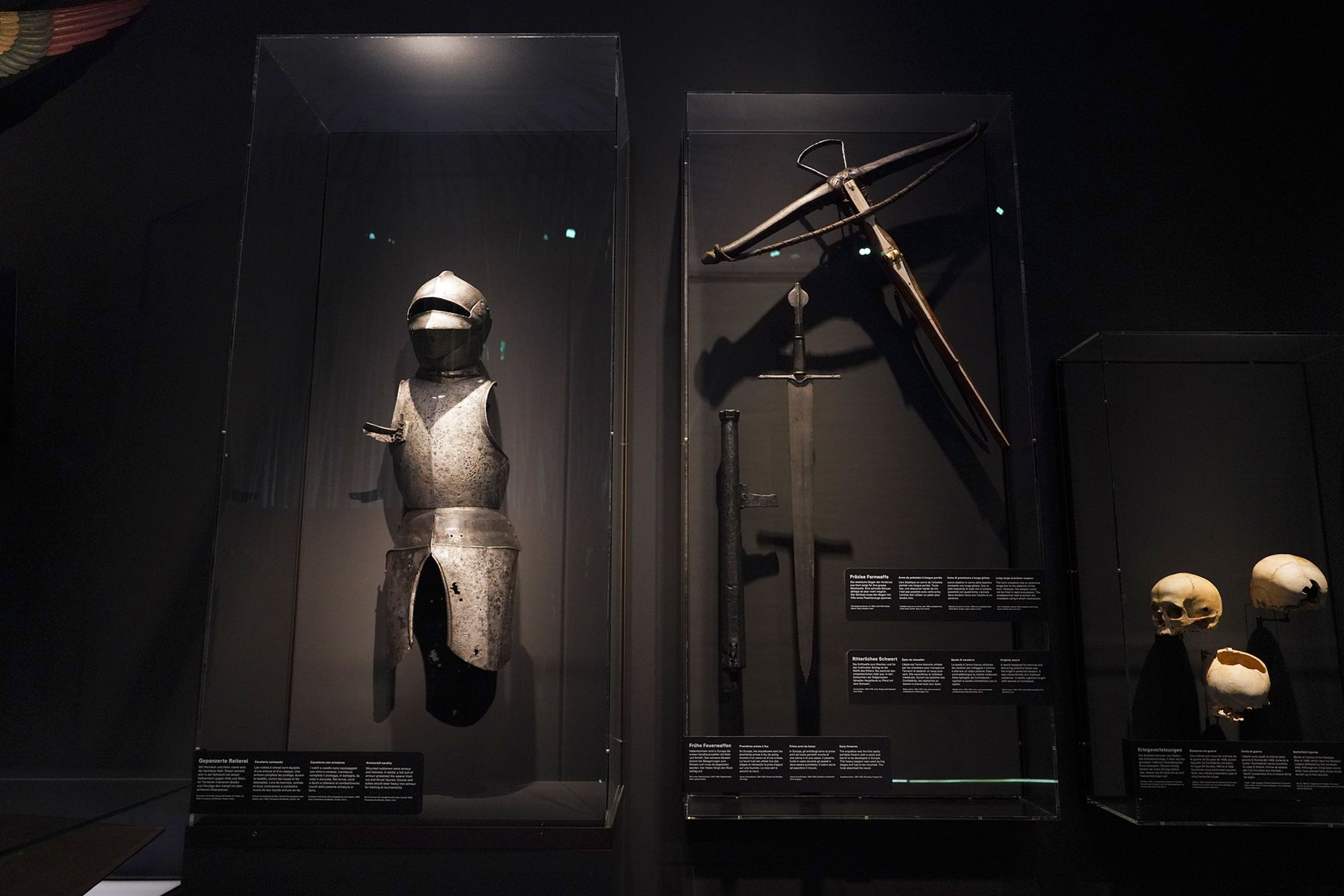
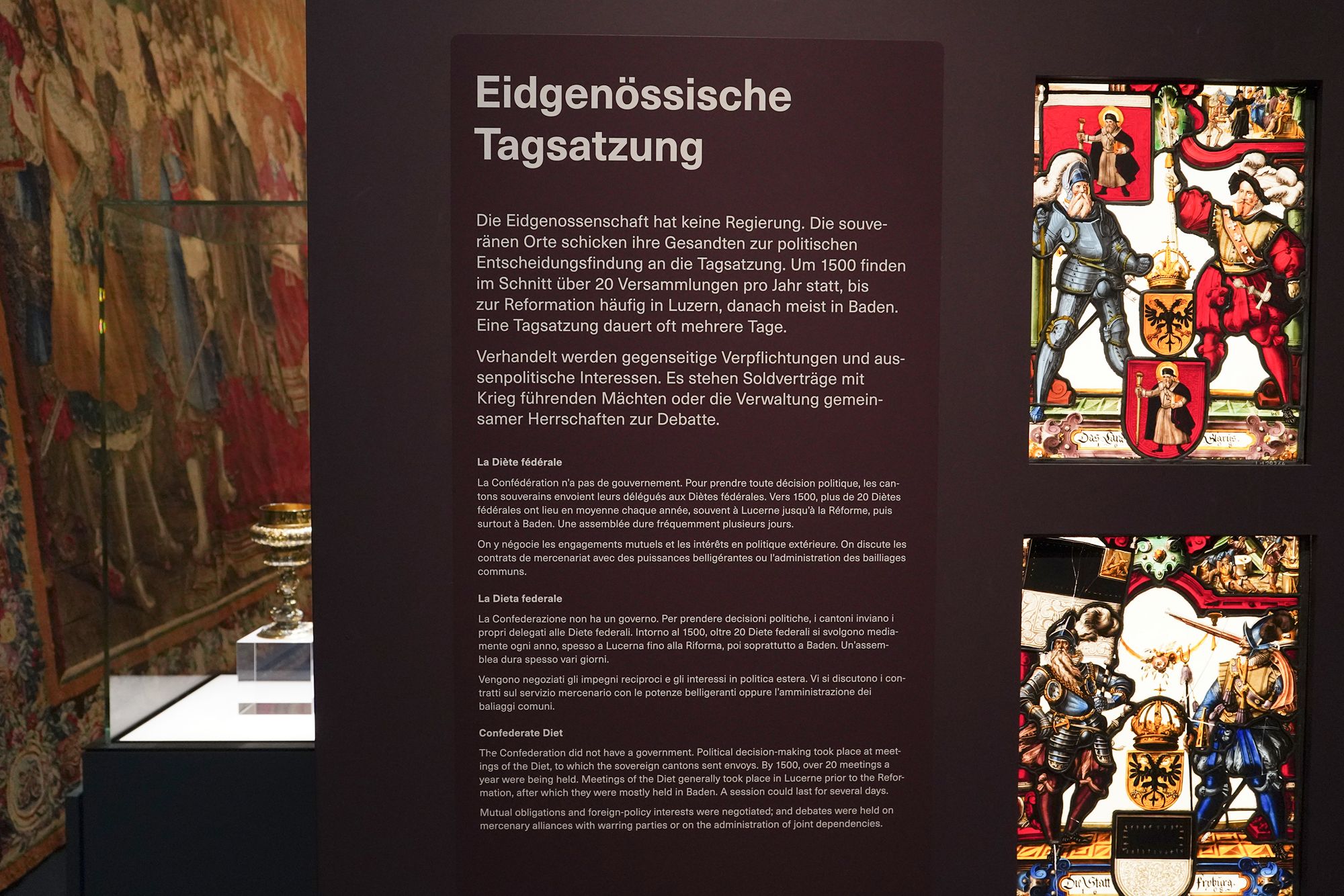
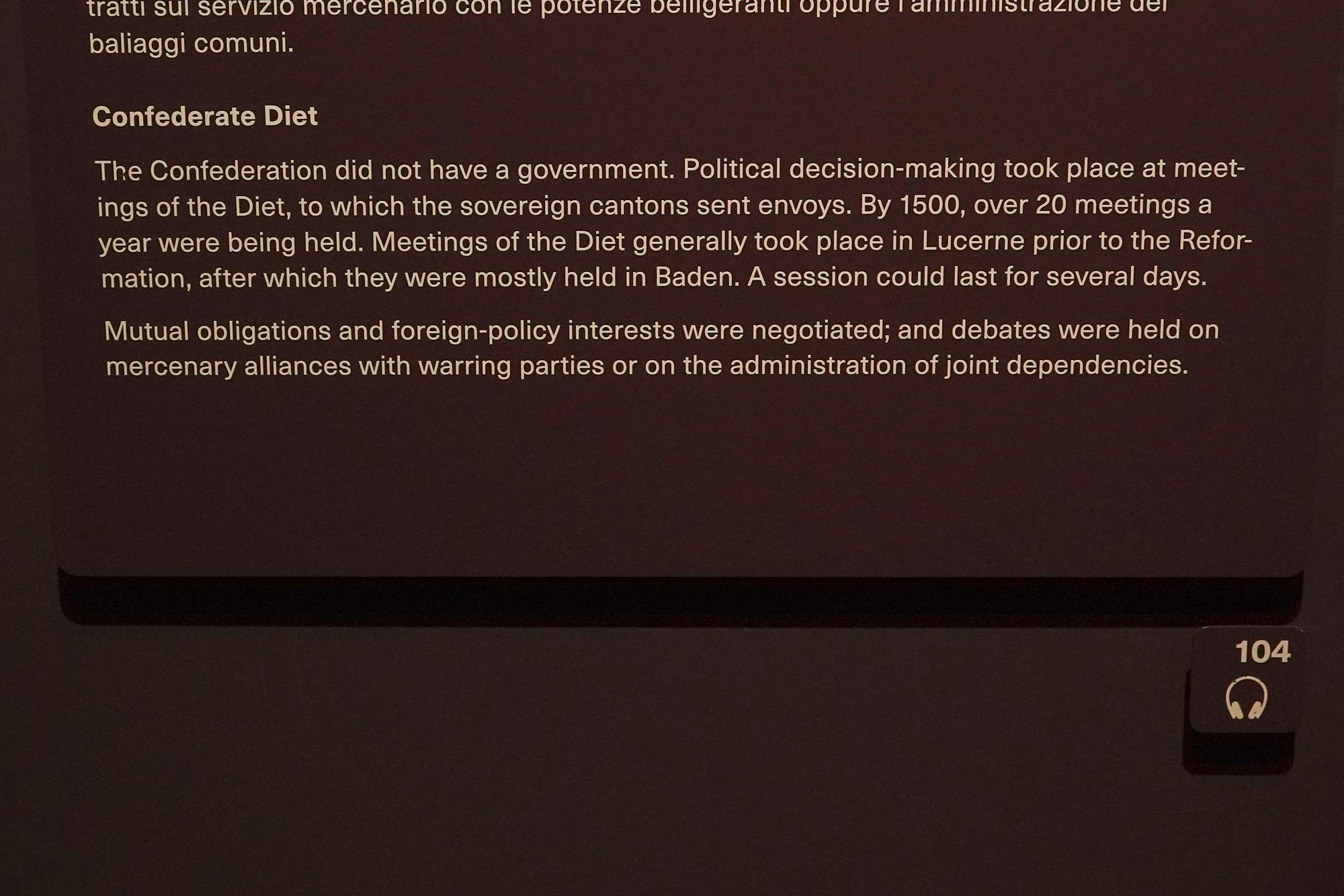
The early Swiss Confederation had no central government. Instead, the cantons sent representatives to meetings called the Confederate Diet. There they discussed shared territories, foreign relations, and agreements to supply soldiers to other powers. By 1500, the Diet met more than 20 times a year.
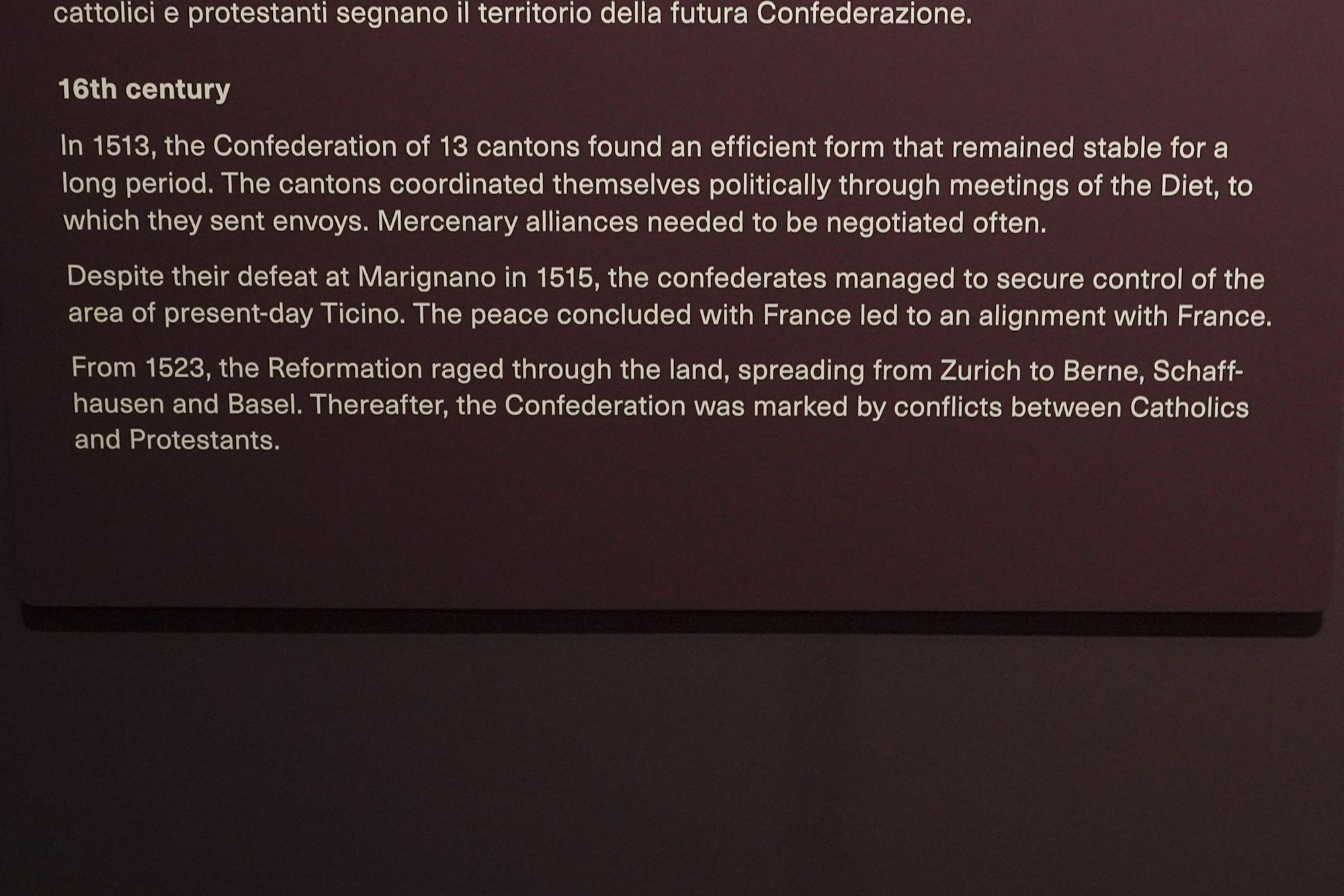
By 1513, the Swiss Confederation had grown to 13 cantons, which coordinated through meetings of the Diet. After a defeat at Marignano in 1515, the cantons made peace with France. The Reformation then spread from Zürich, leading to conflicts between Catholic and Protestant cantons.

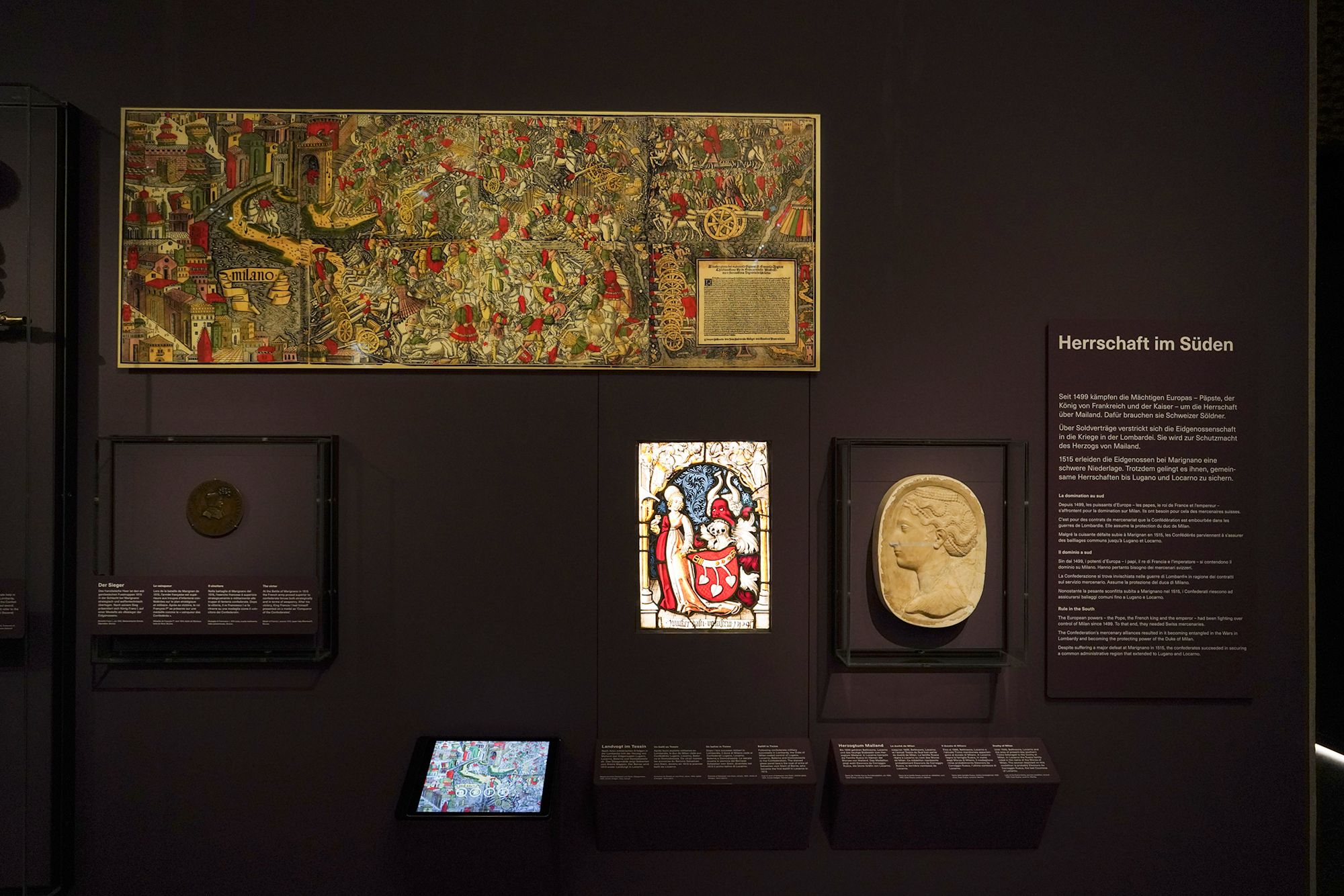
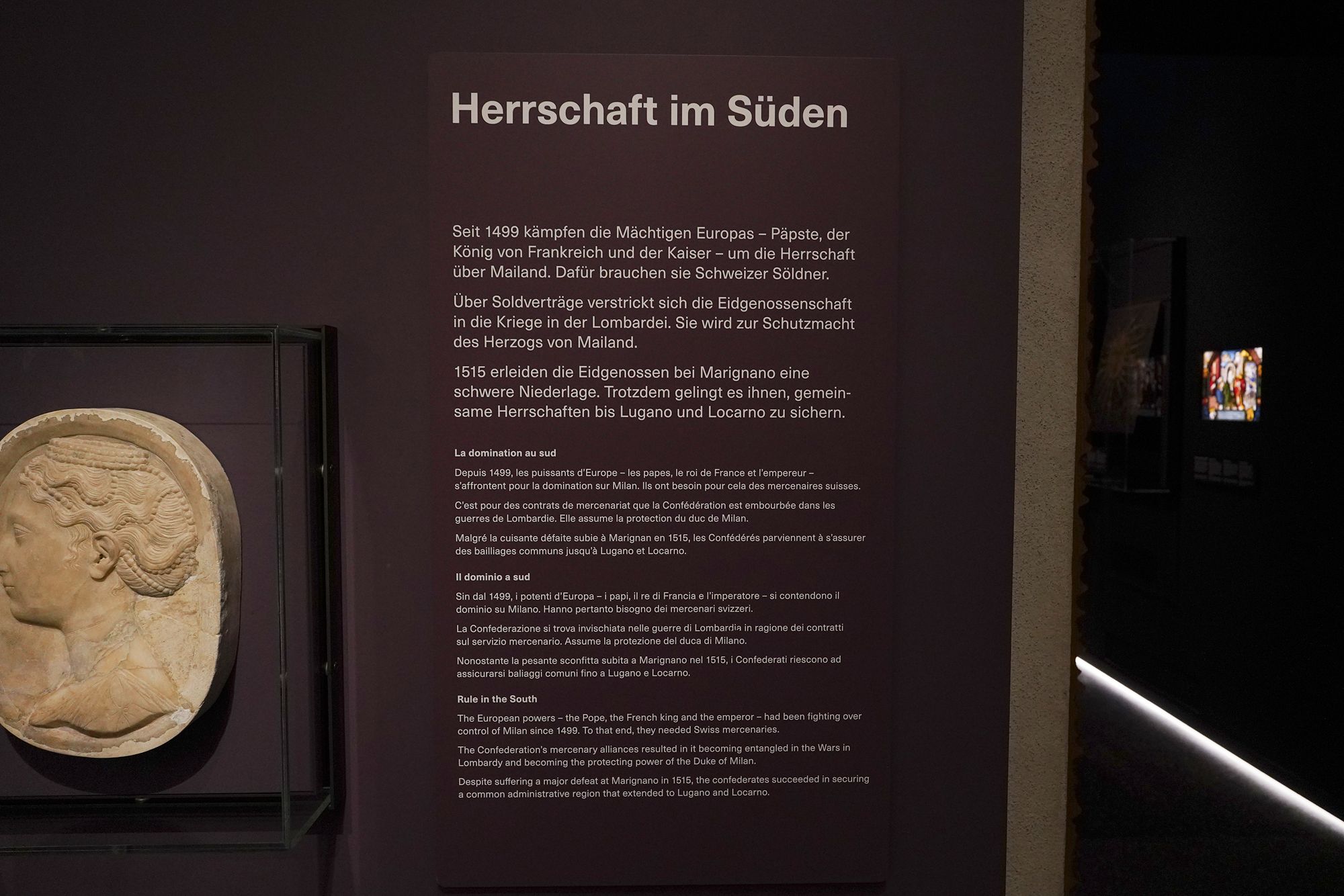
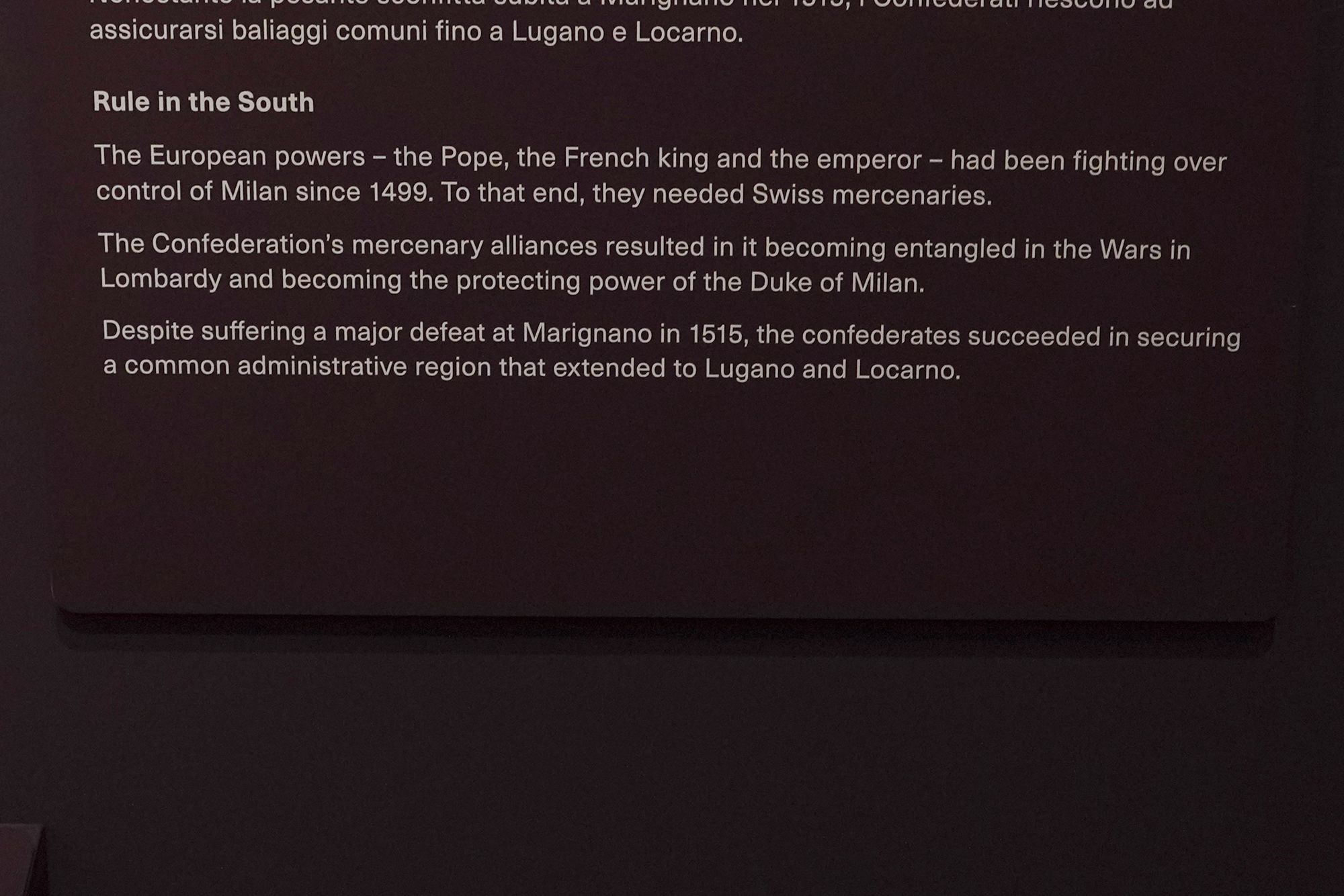
Swiss mercenary alliances drew the Confederation into the struggle for control of Milan. Although the Swiss suffered a major defeat at Marignano in 1515, they retained jointly administered territory in the south, including Lugano and Locarno in present-day Ticino.
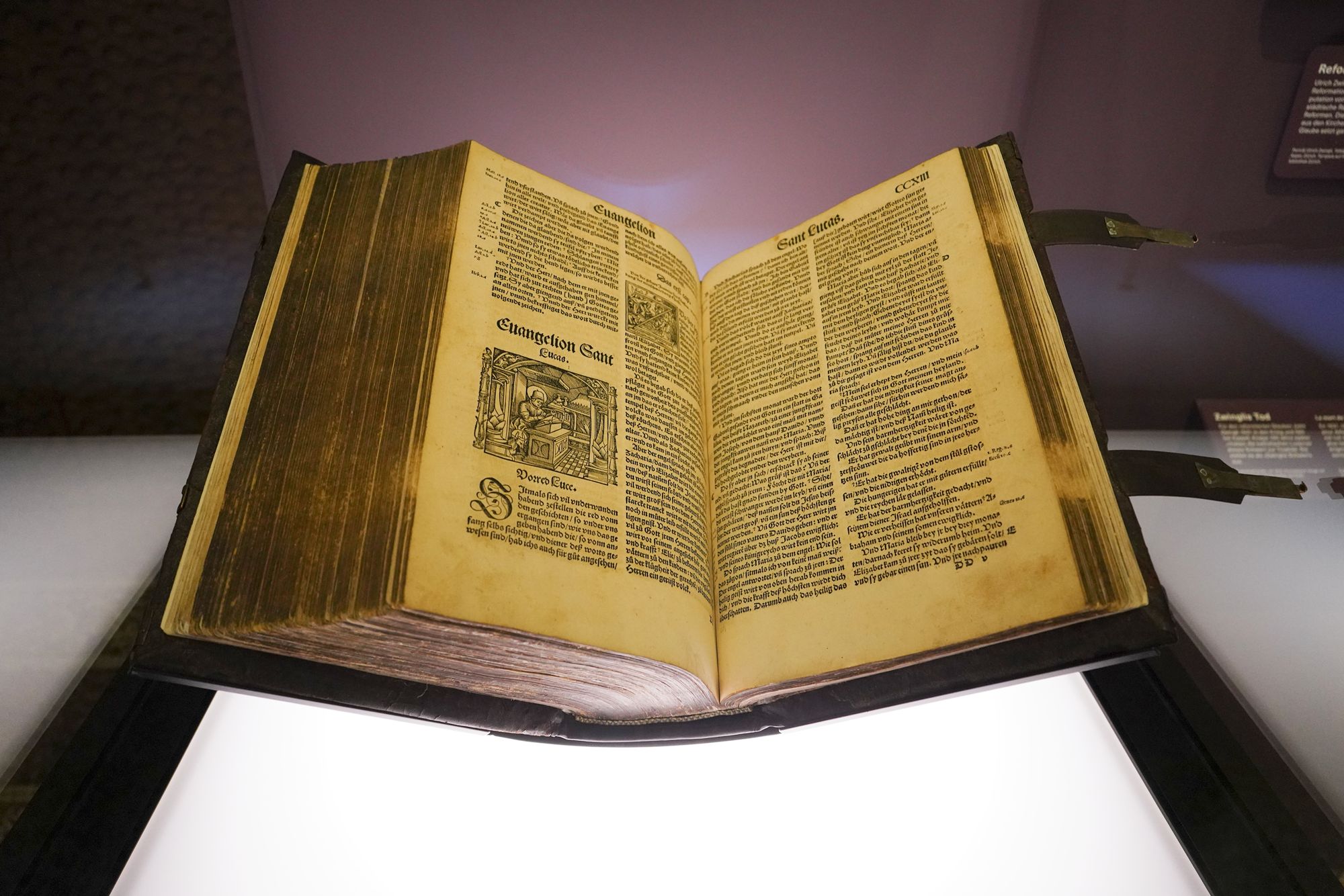
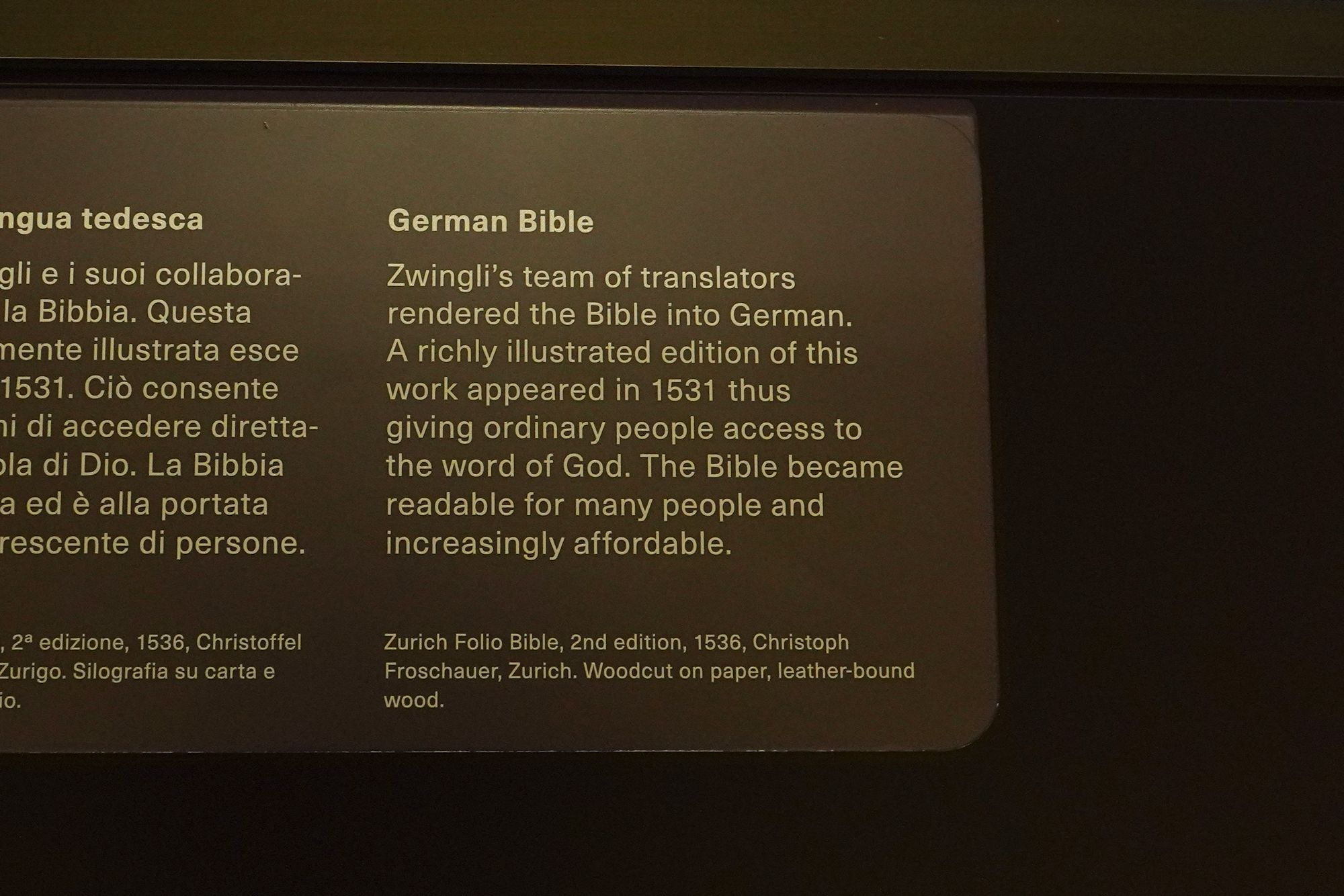
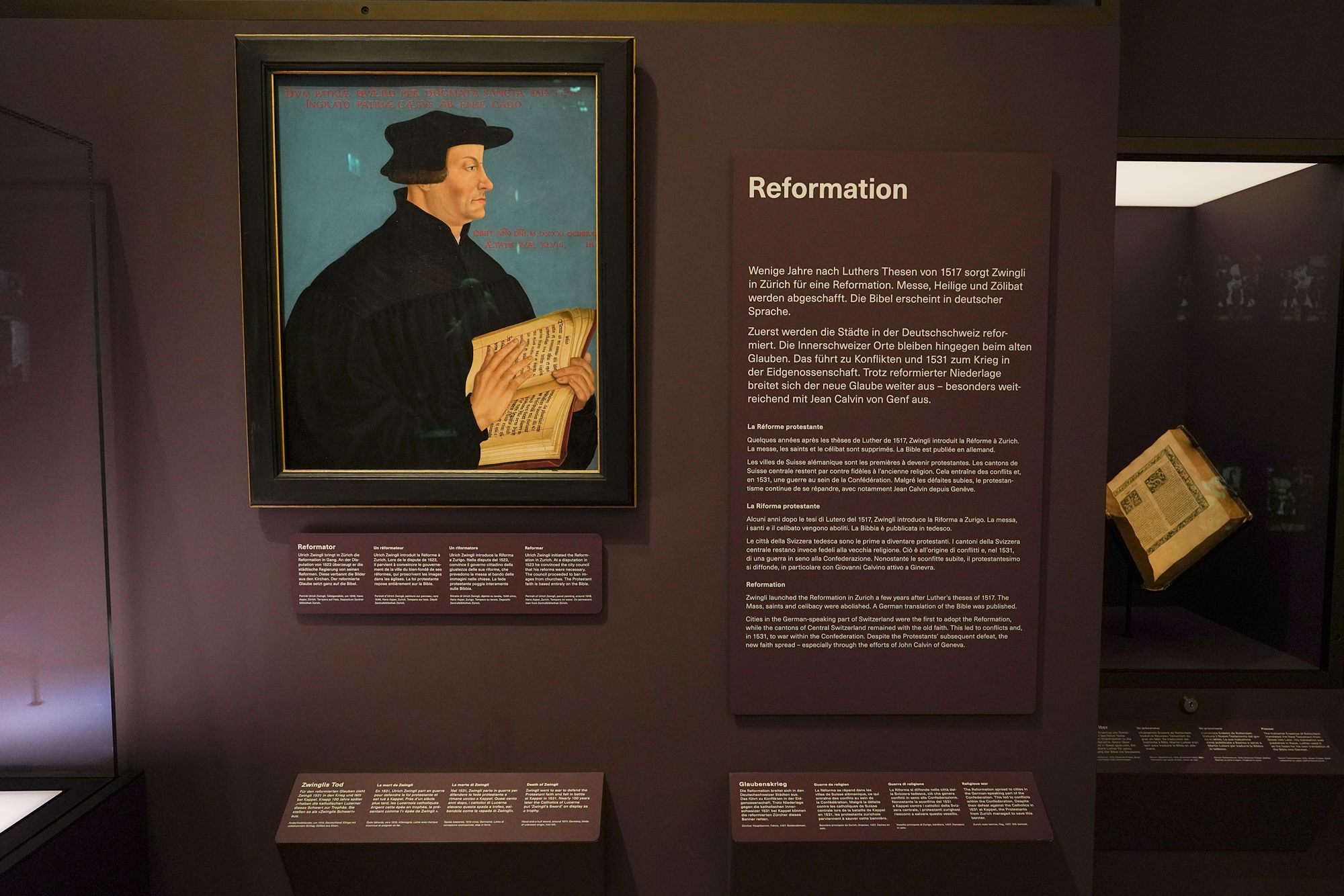
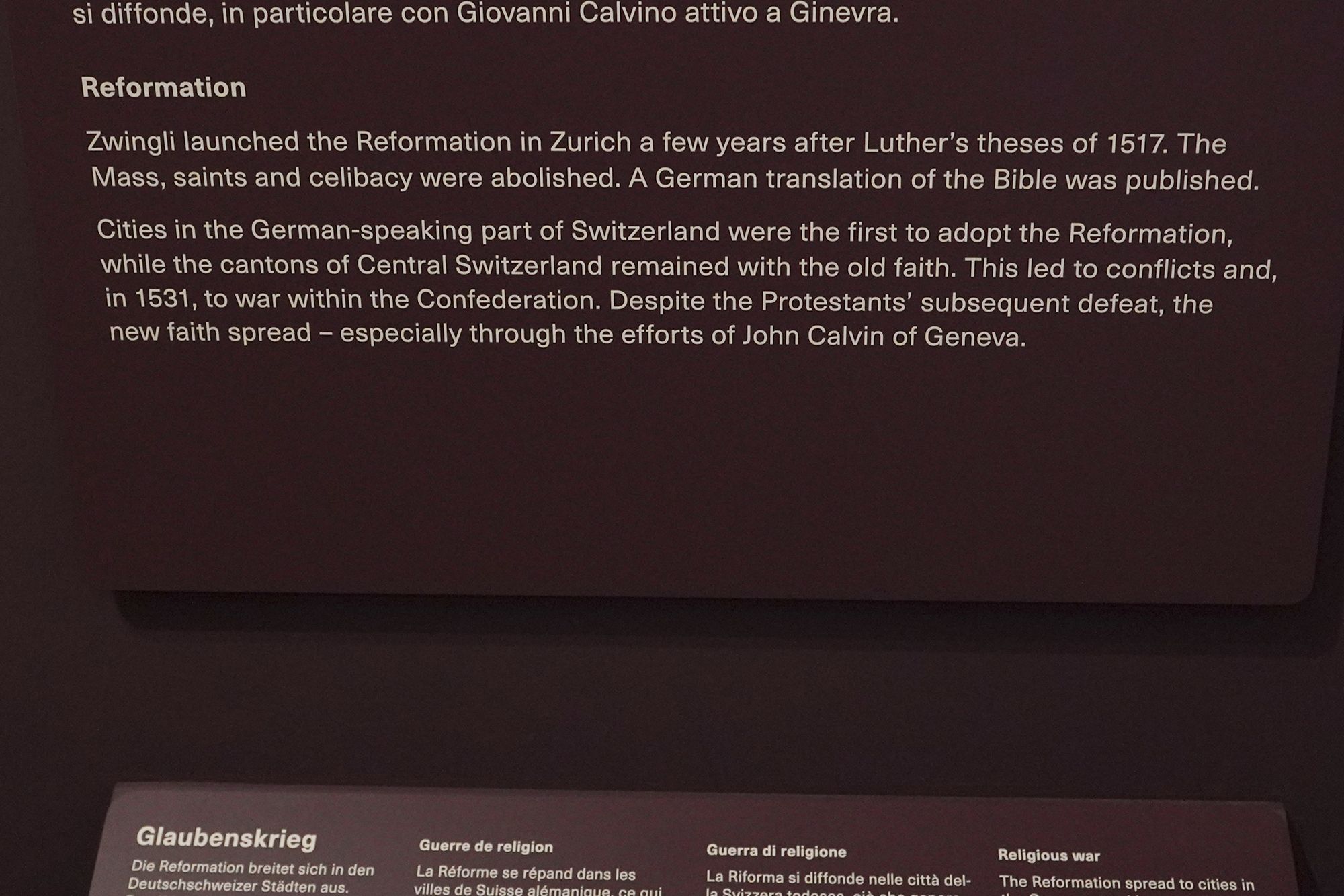
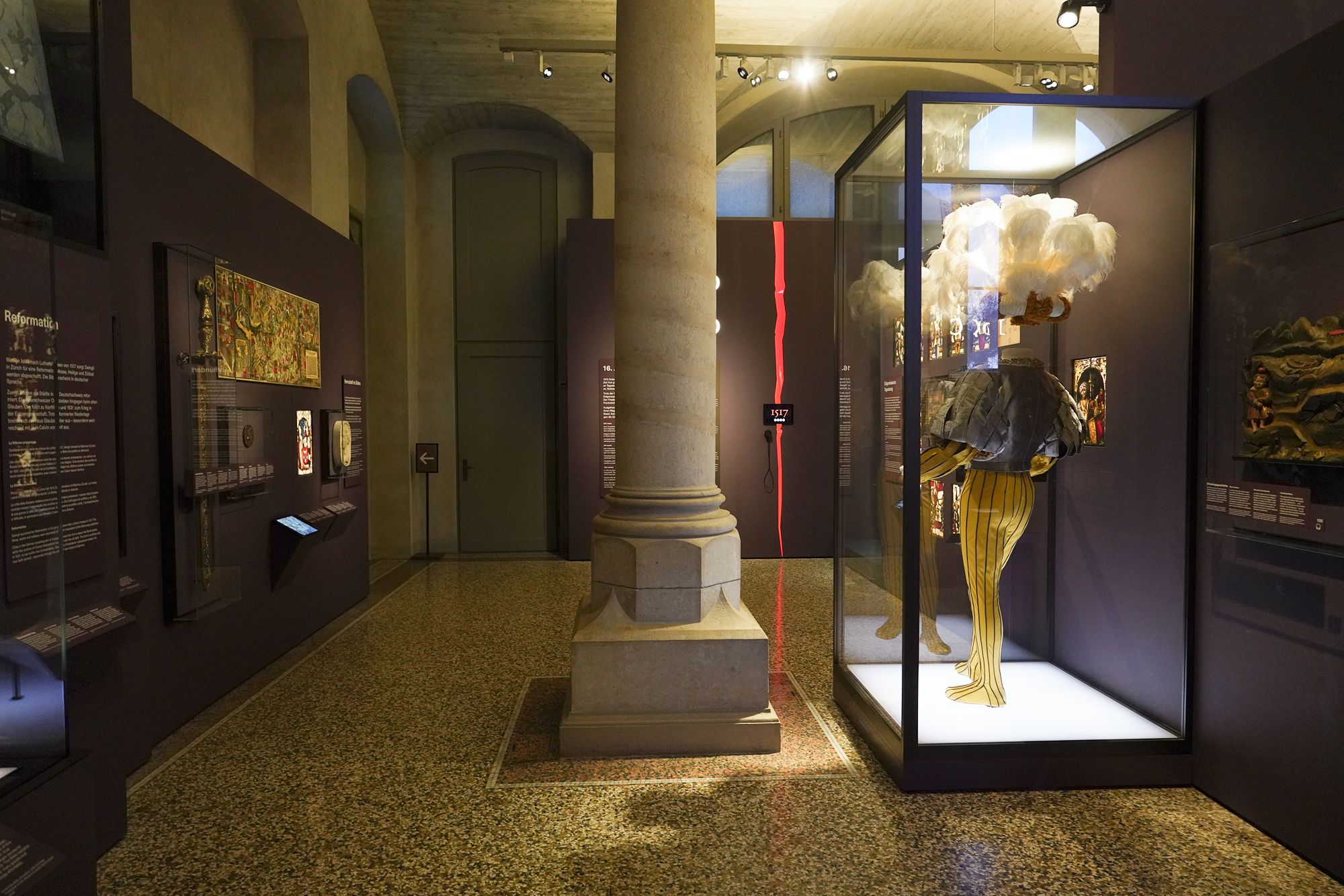
The Reformation began in Zürich under Huldrych Zwingli in the early 1500s. Several Swiss cities adopted Protestant reforms, while the central cantons remained Catholic. The division led to war within the Confederation in 1531. Protestantism continued to spread, particularly through John Calvin’s work in Geneva.
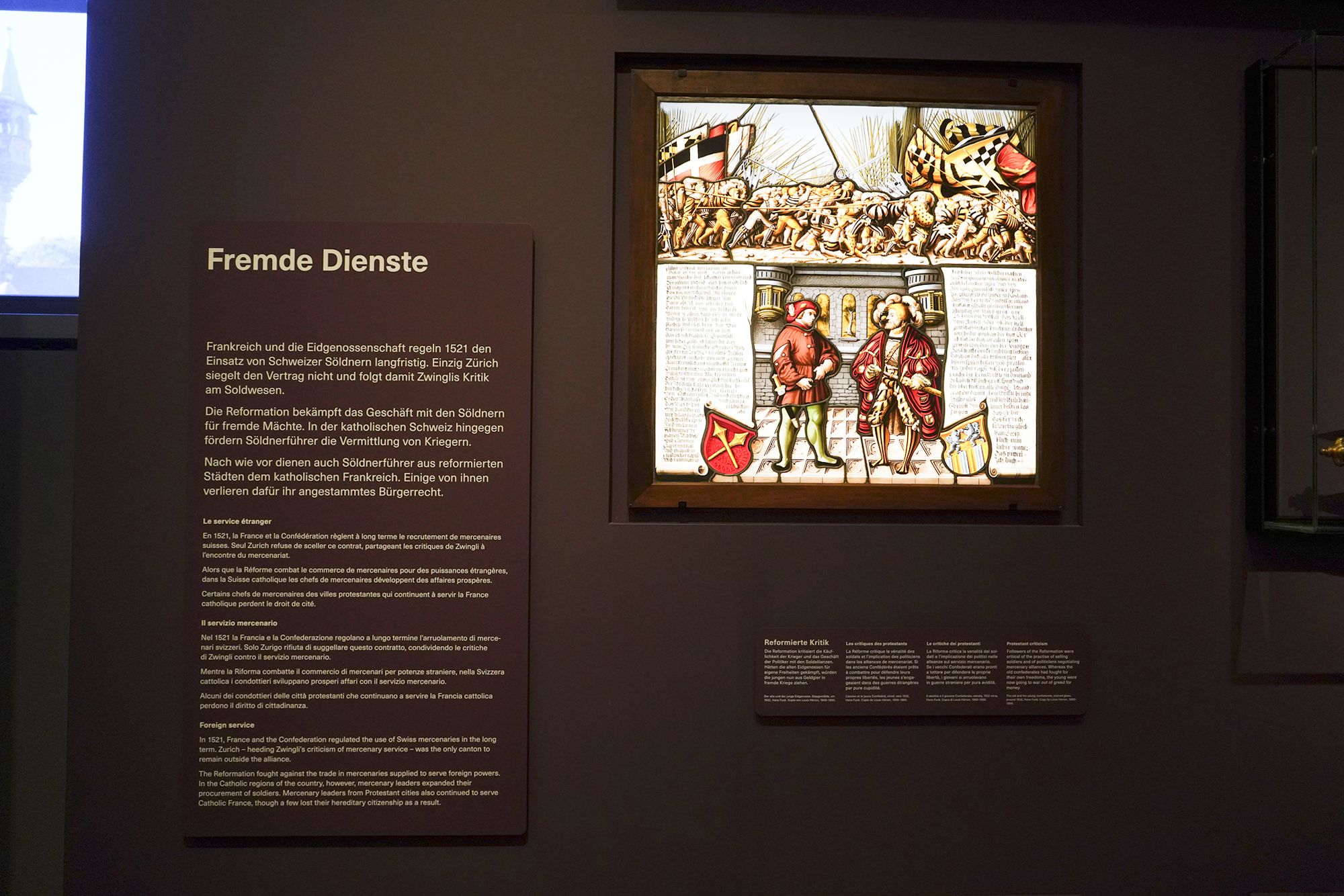
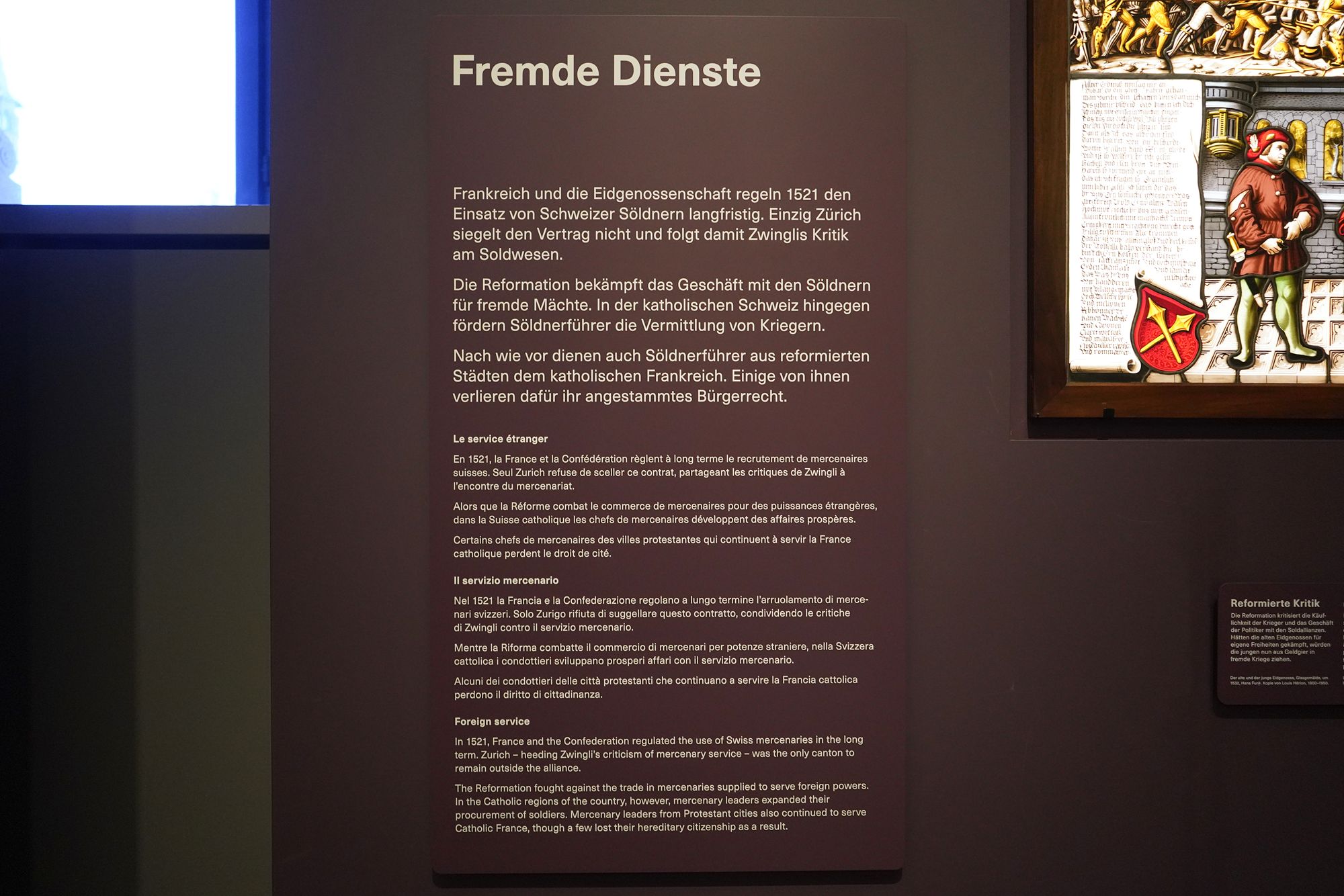
A 1521 agreement with France established the long-term recruitment of Swiss mercenaries. Zürich stayed outside the alliance after the reformer Zwingli criticized foreign military service. Despite religious objections, Swiss soldiers continued to serve abroad, including men recruited from both Catholic regions and Protestant cities.
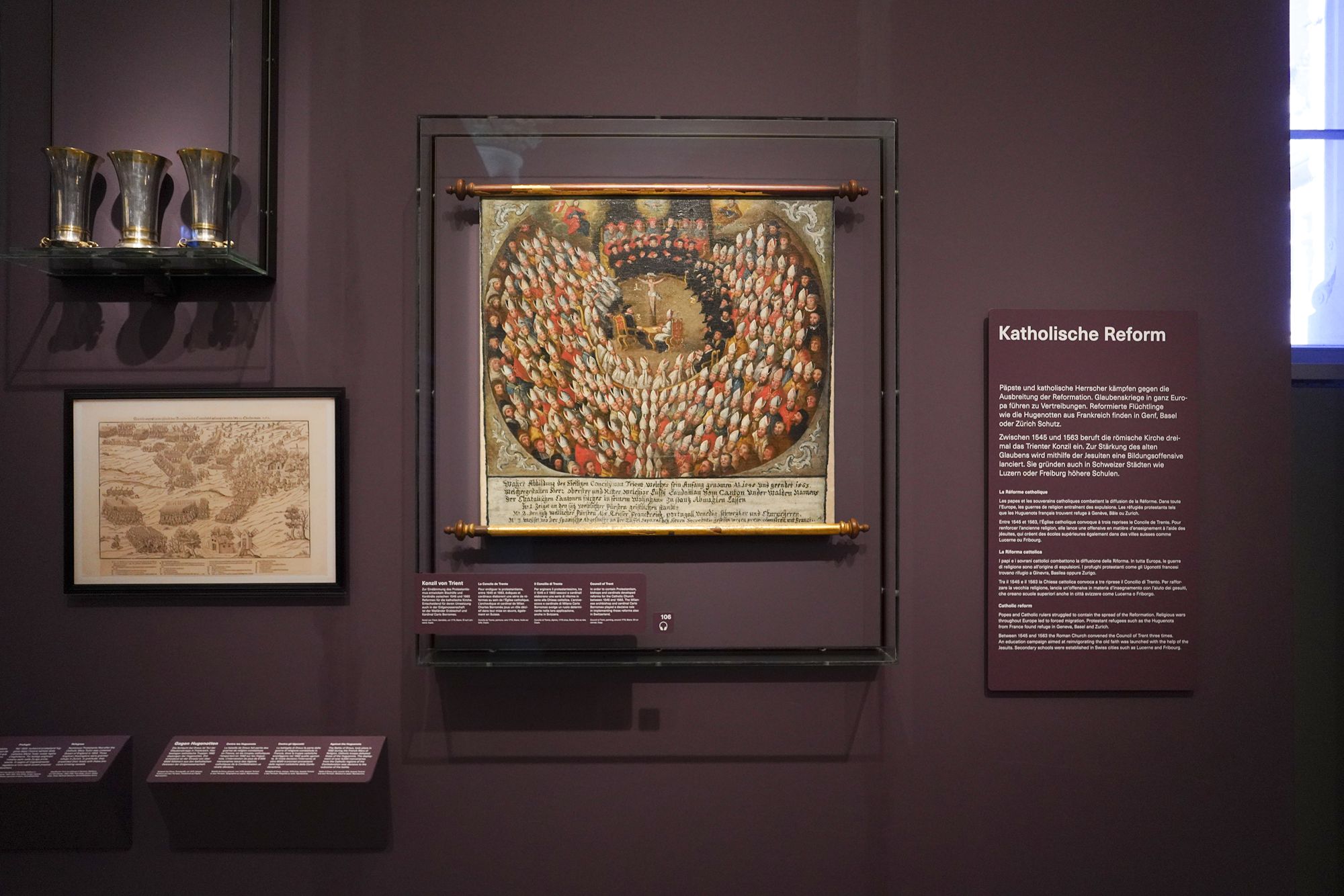
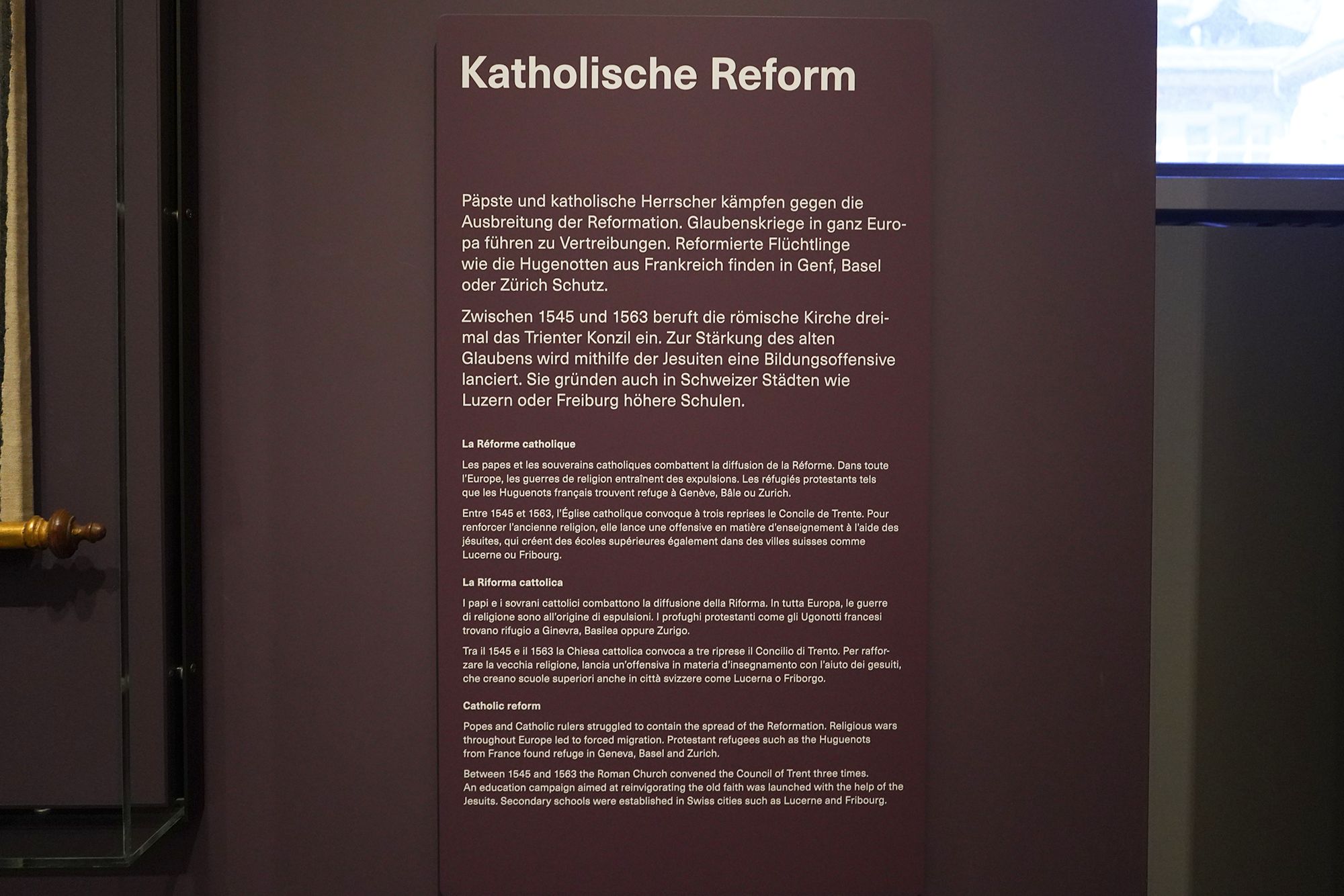
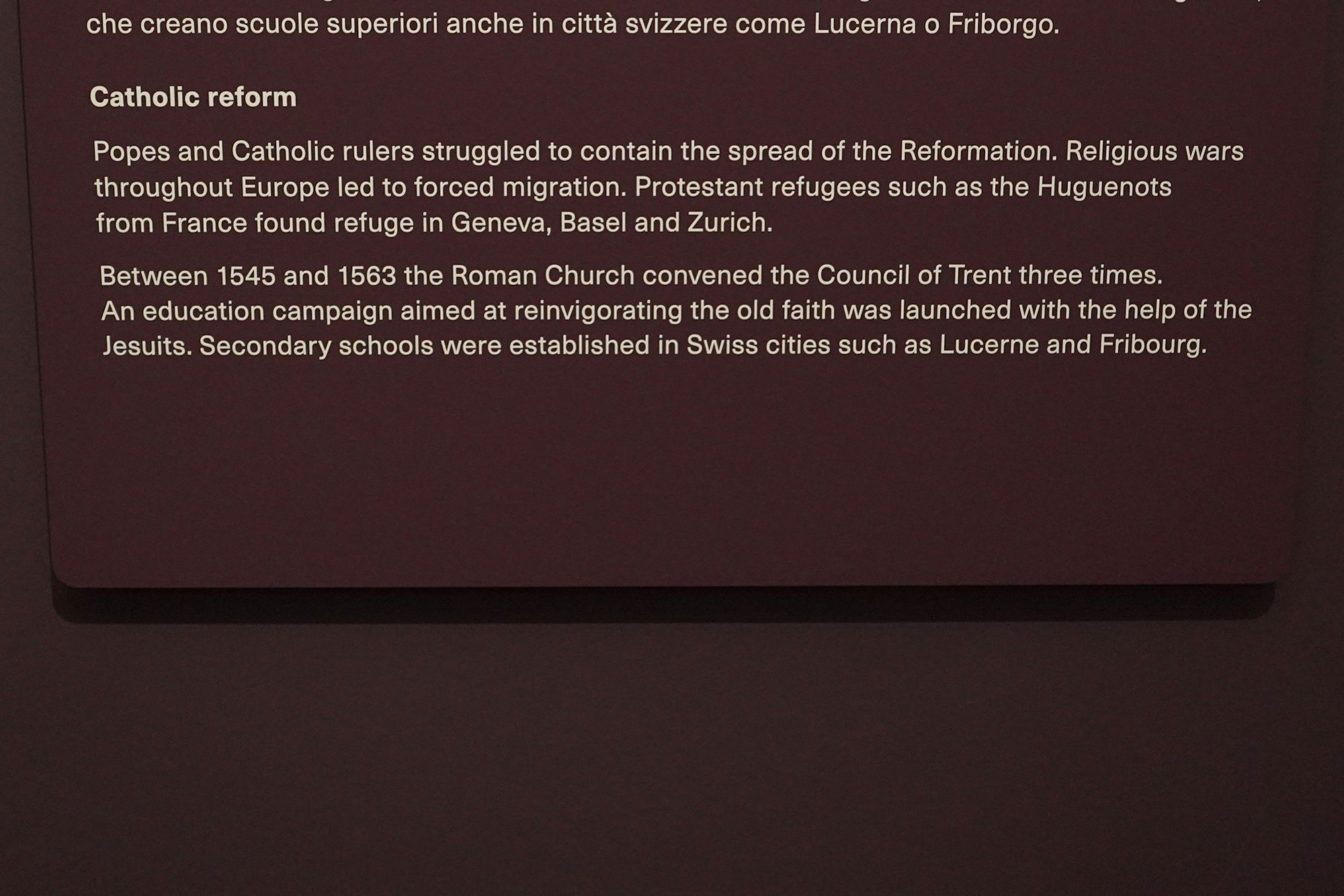
The Reformation also prompted Catholic reforms. The Jesuits helped establish schools in Swiss cities such as Lucerne and Fribourg, while religious wars elsewhere in Europe drove Protestant refugees, including French Huguenots, to Geneva, Basel, and Zürich.
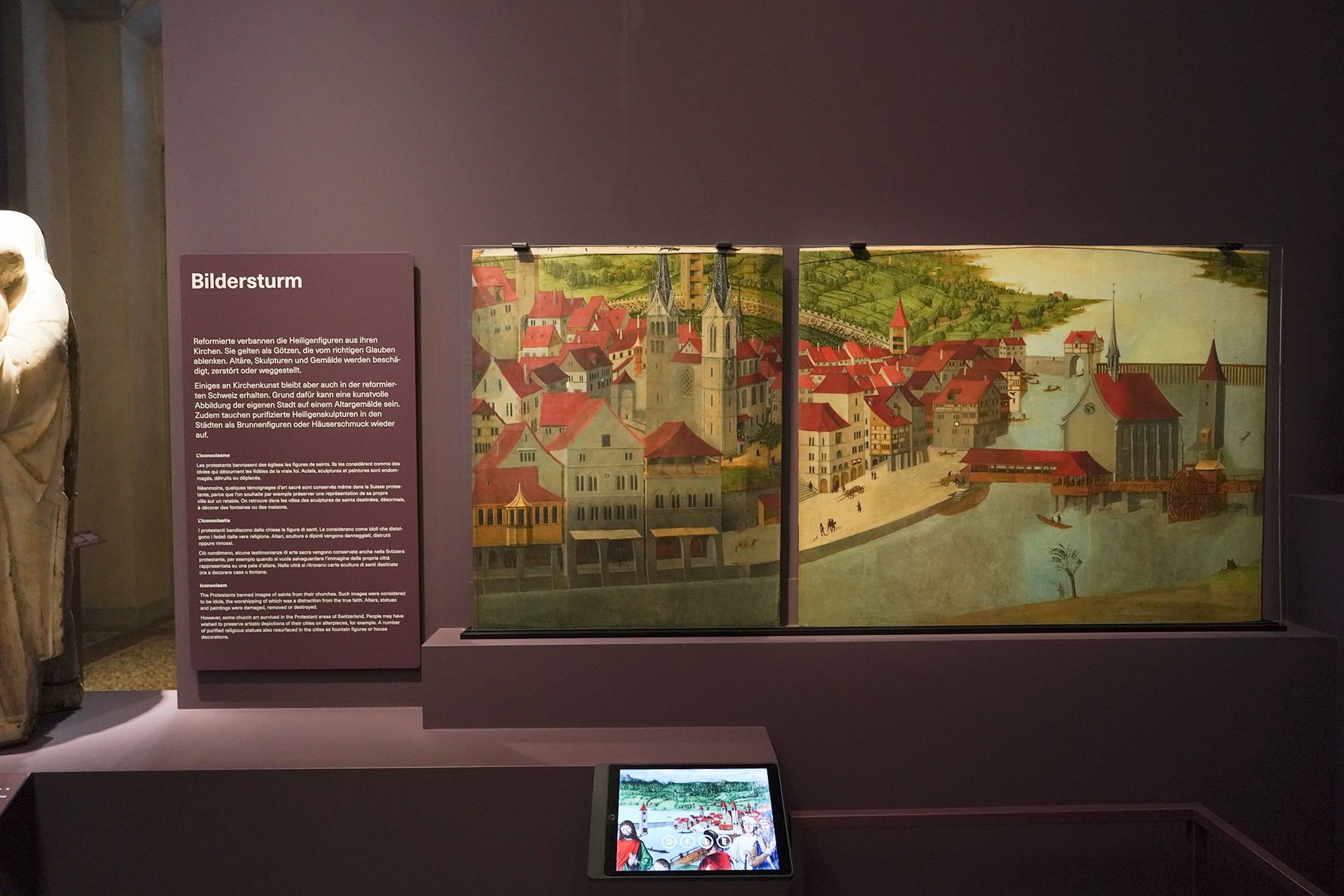
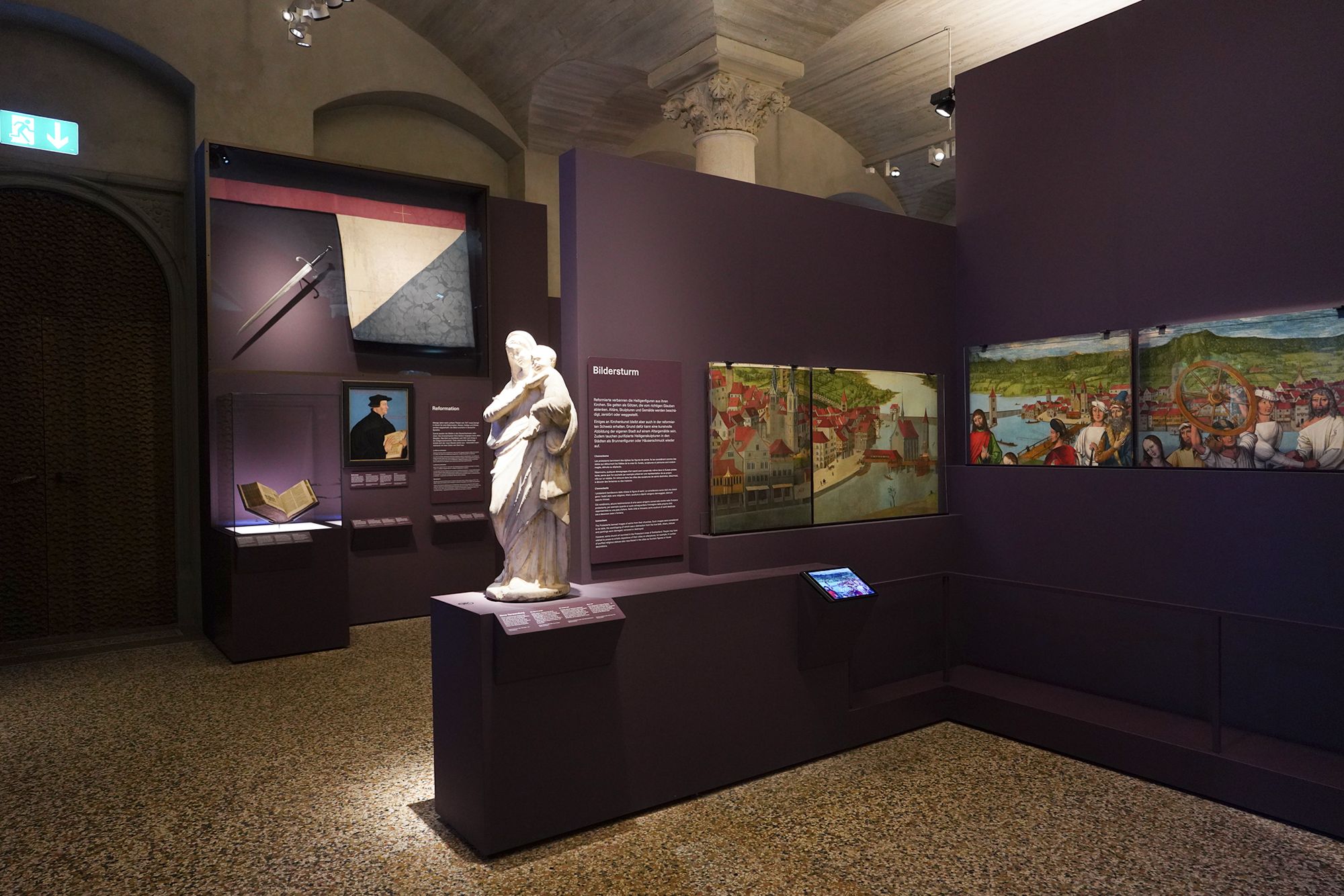
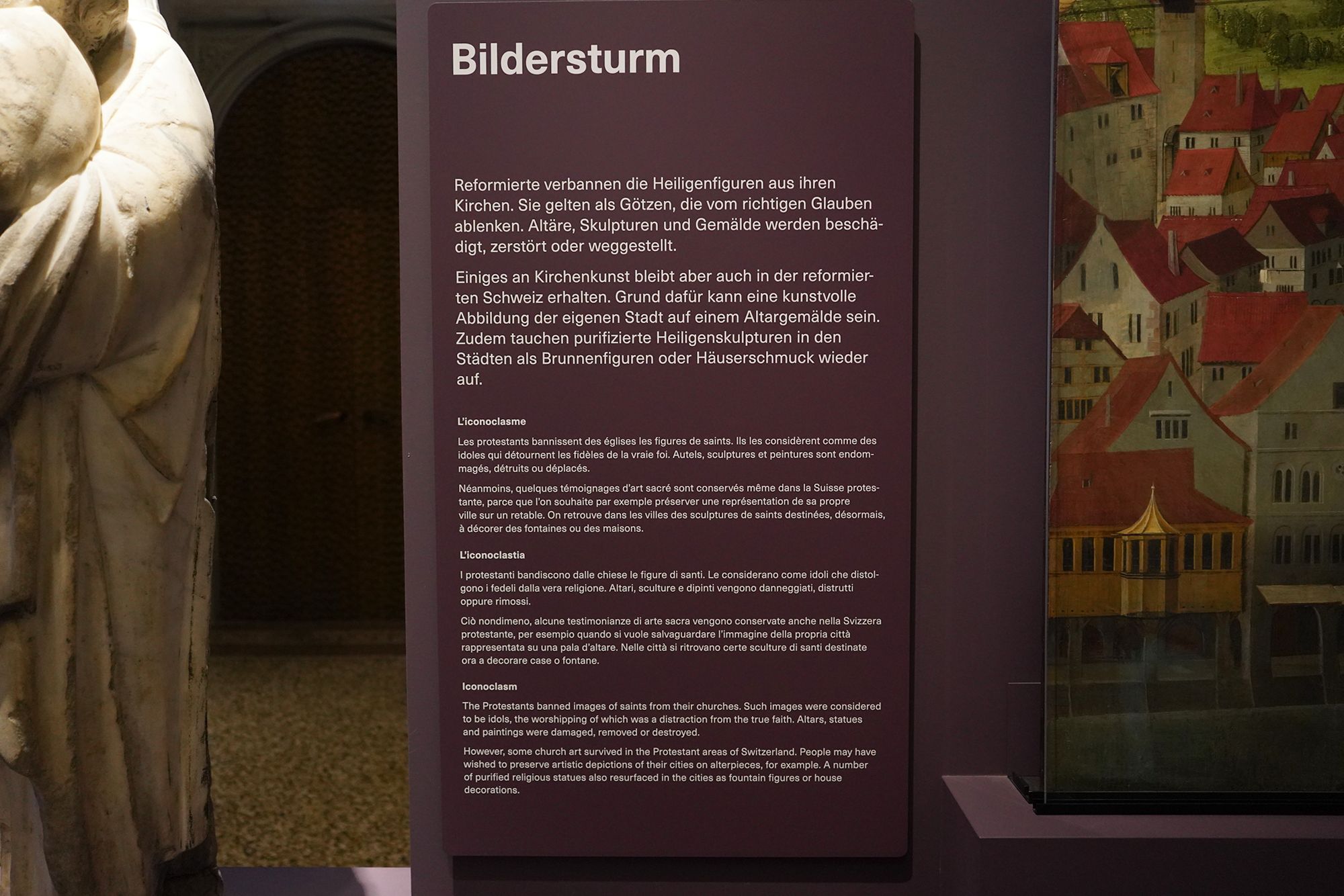
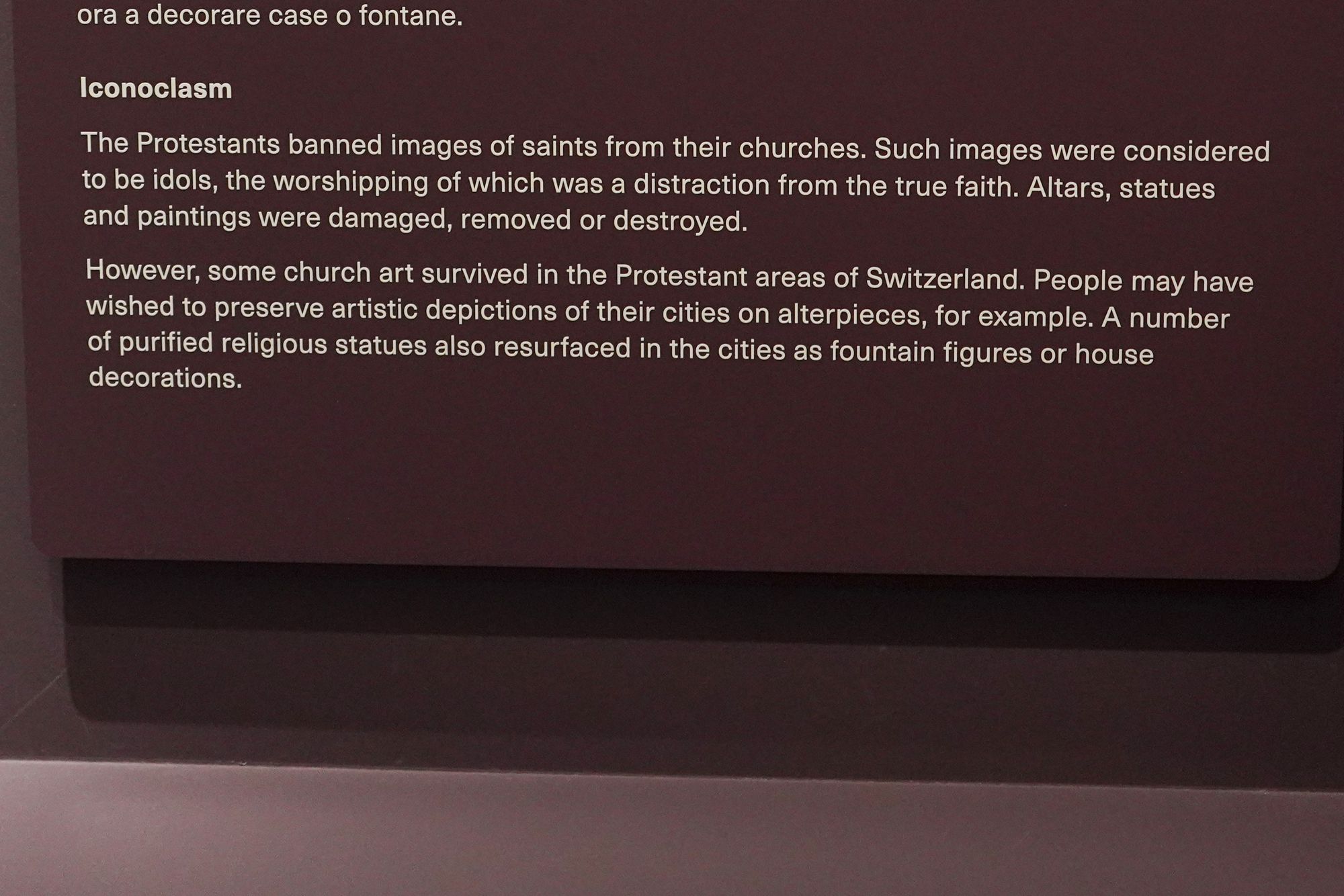
During the Reformation, Protestants removed images of saints from their churches, believing they distracted from worship. Many altars, statues, and paintings were damaged or destroyed. Some art survived, and a few former religious statues later appeared as fountain figures or house decorations.
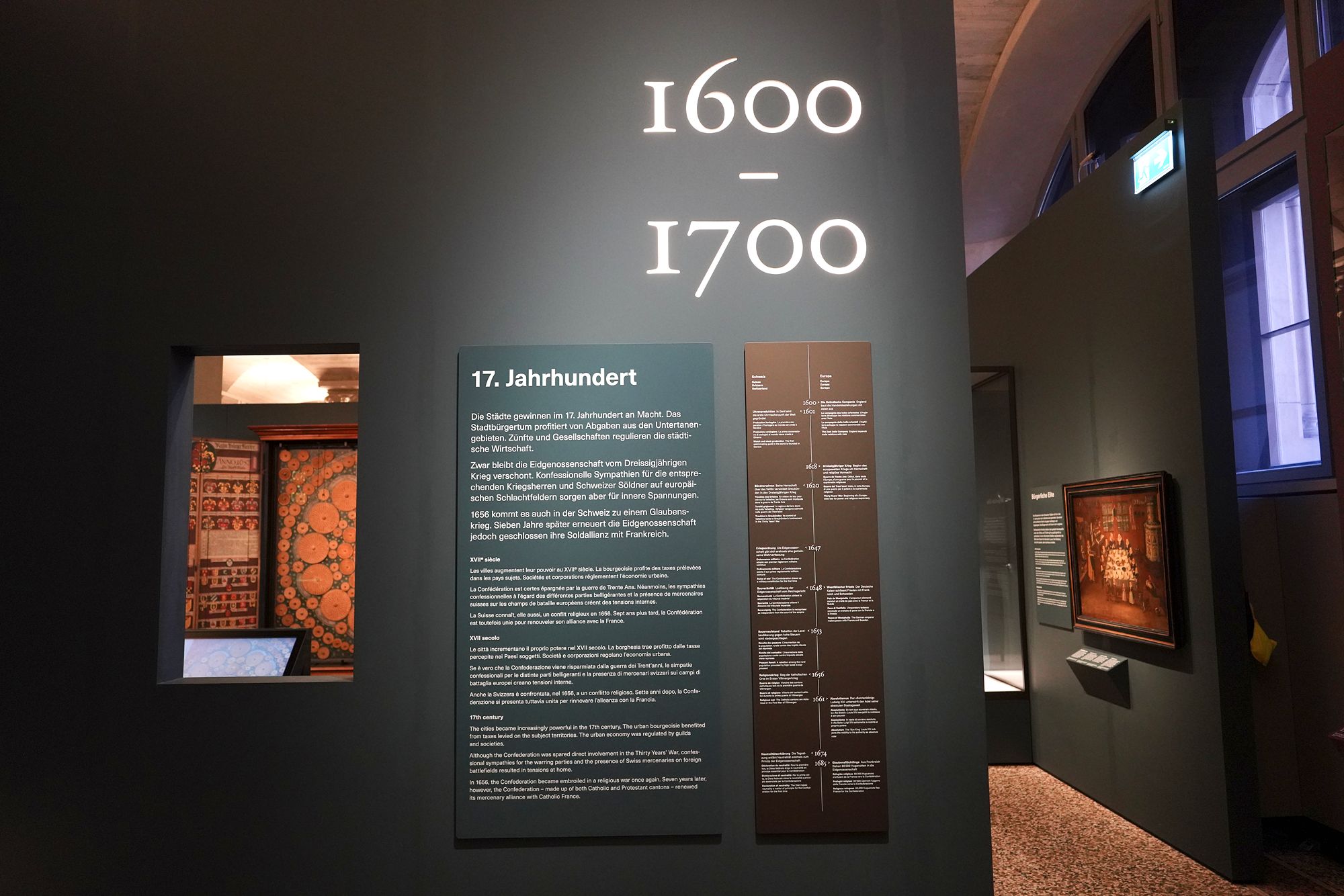
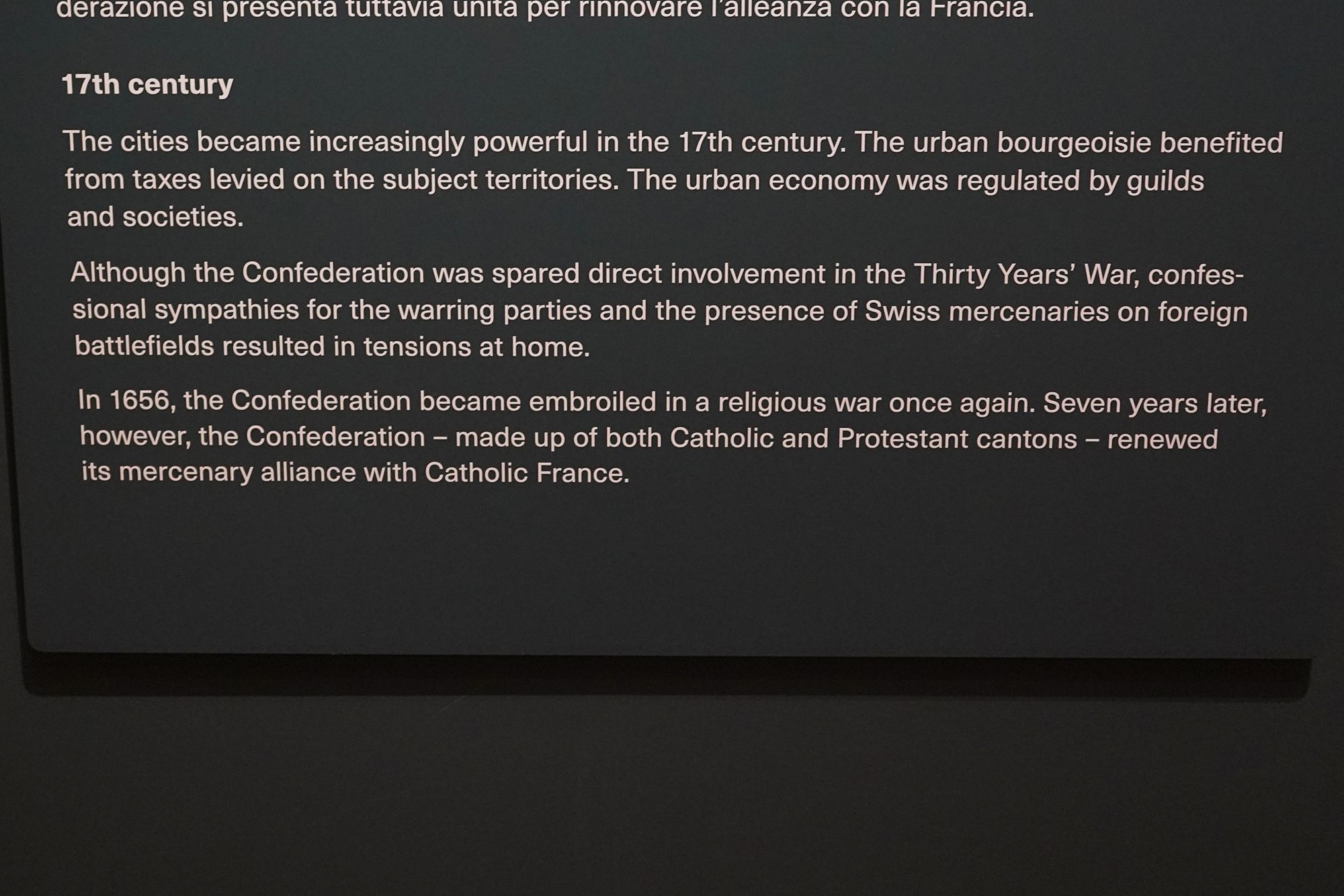
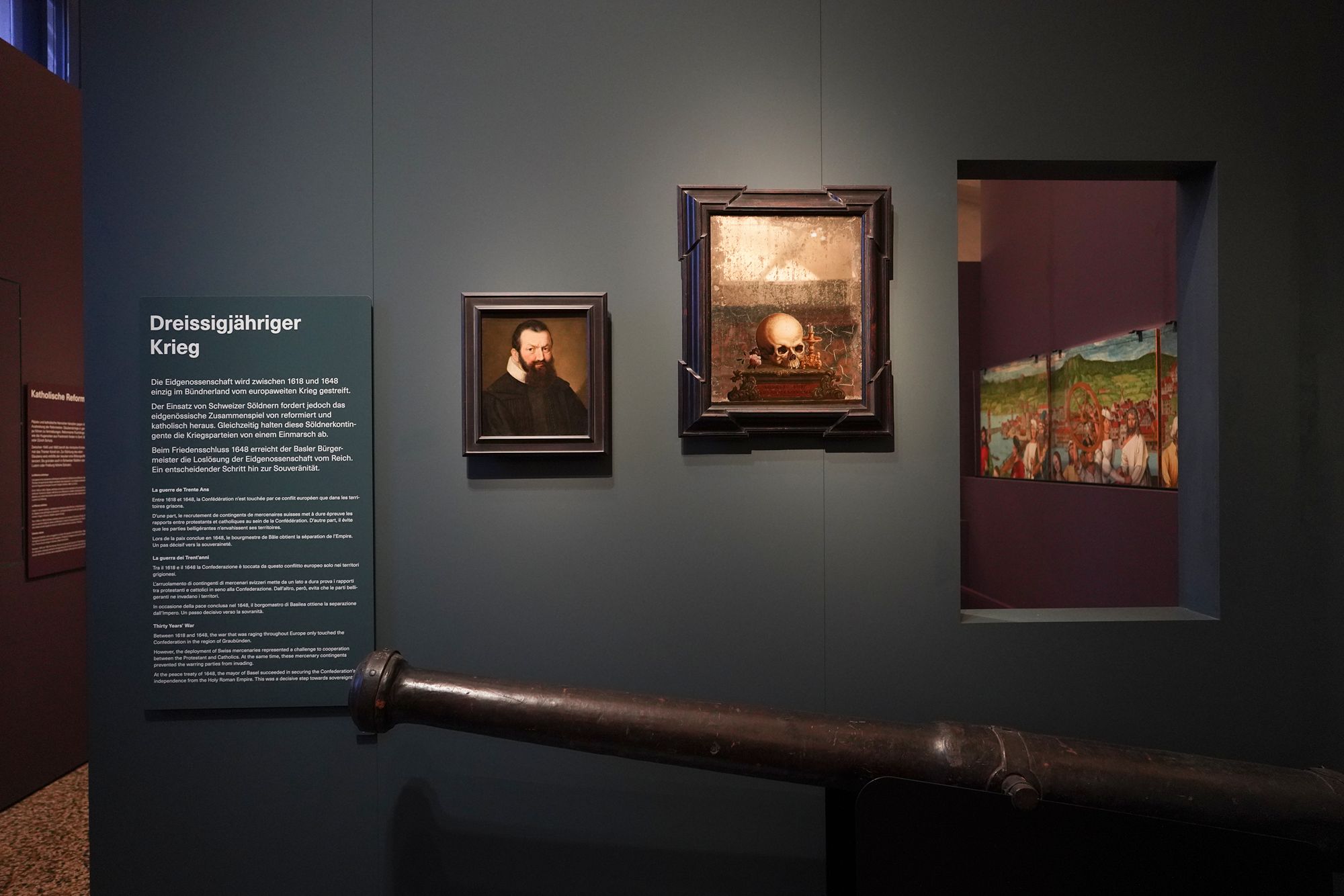
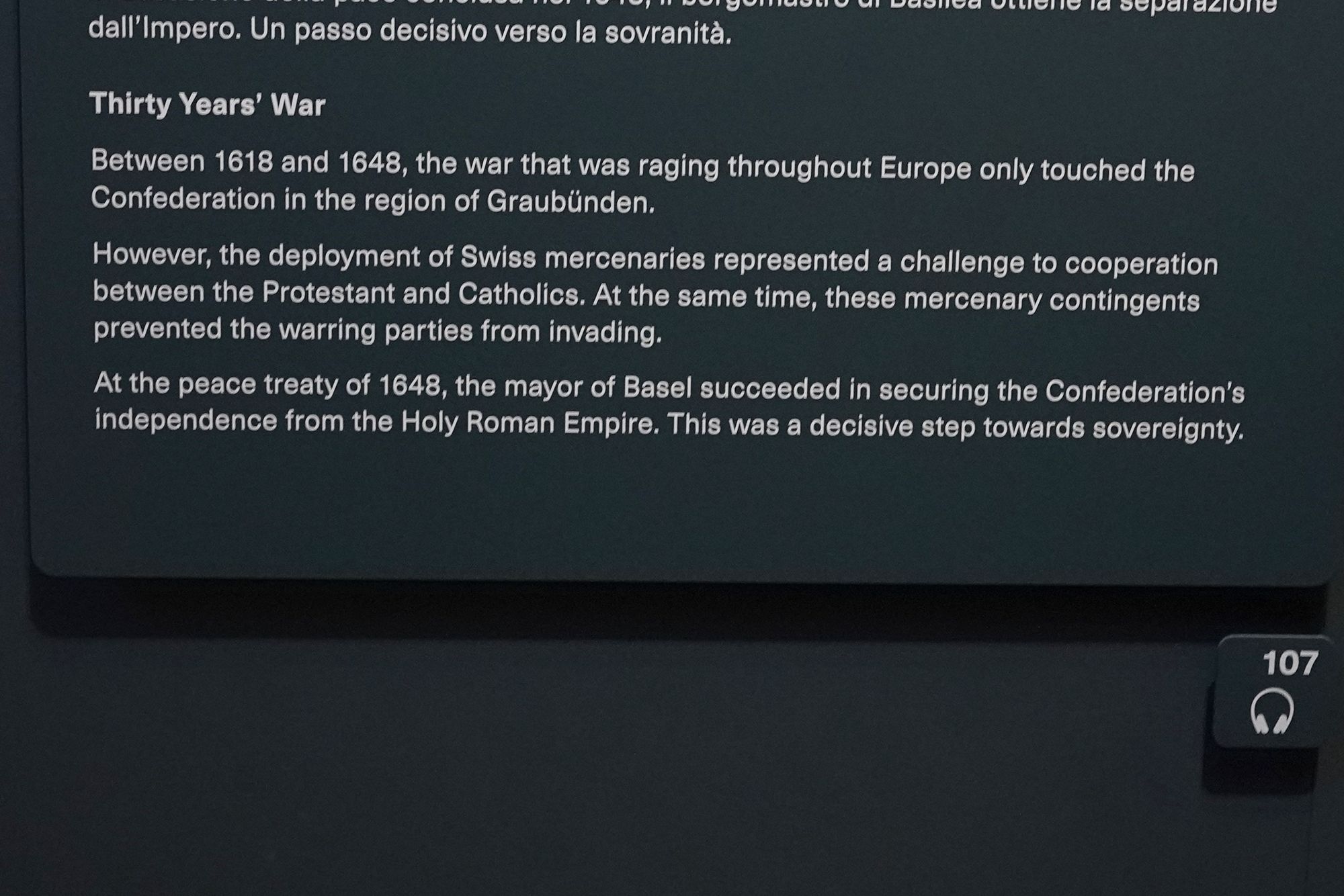
In the 17th century, Swiss cities grew more powerful through trade and taxes from the territories they governed. The Confederation stayed out of the Thirty Years’ War, but religious divisions and Swiss mercenaries fighting abroad caused tensions at home. In 1656, Catholic and Protestant cantons fought another war.
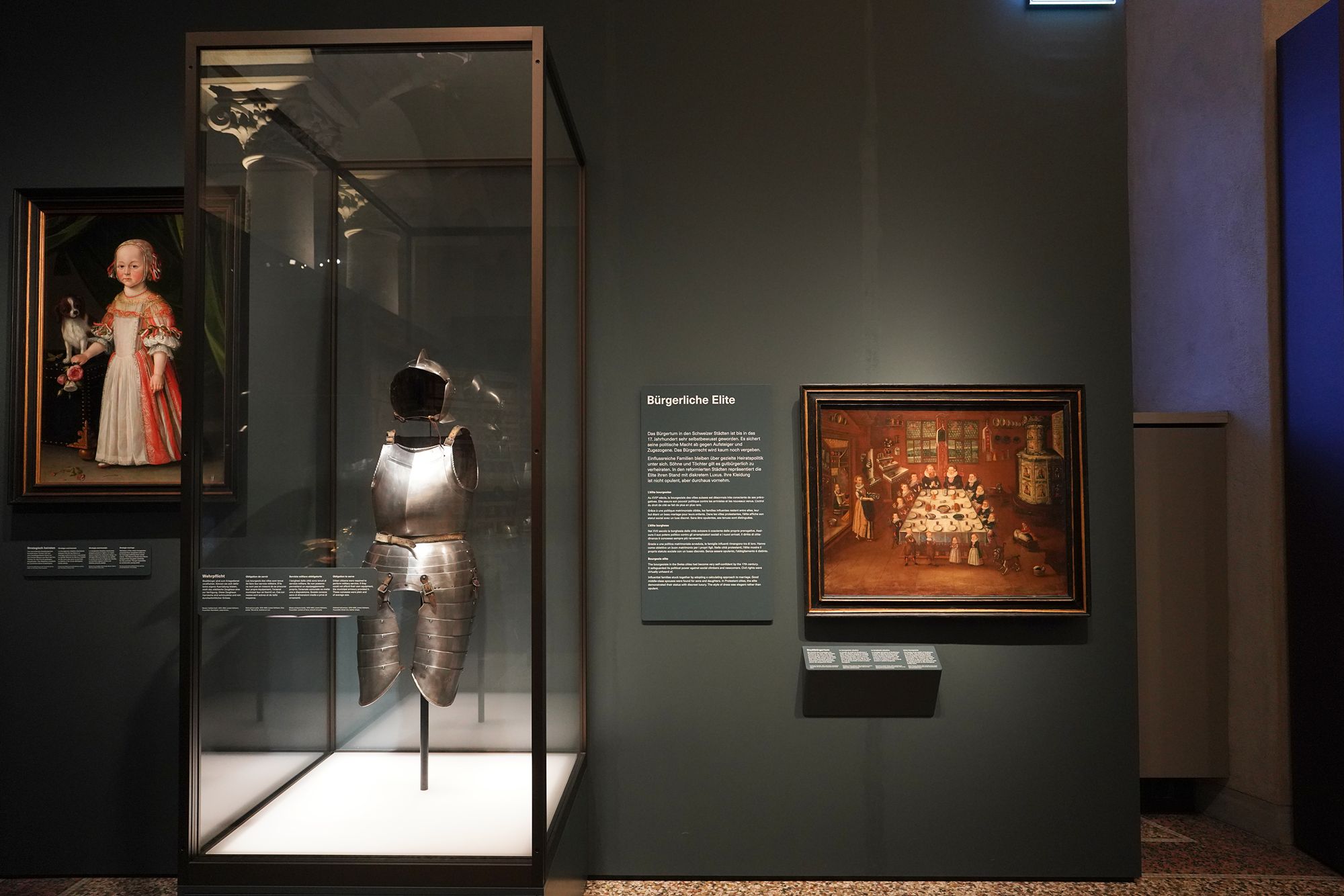
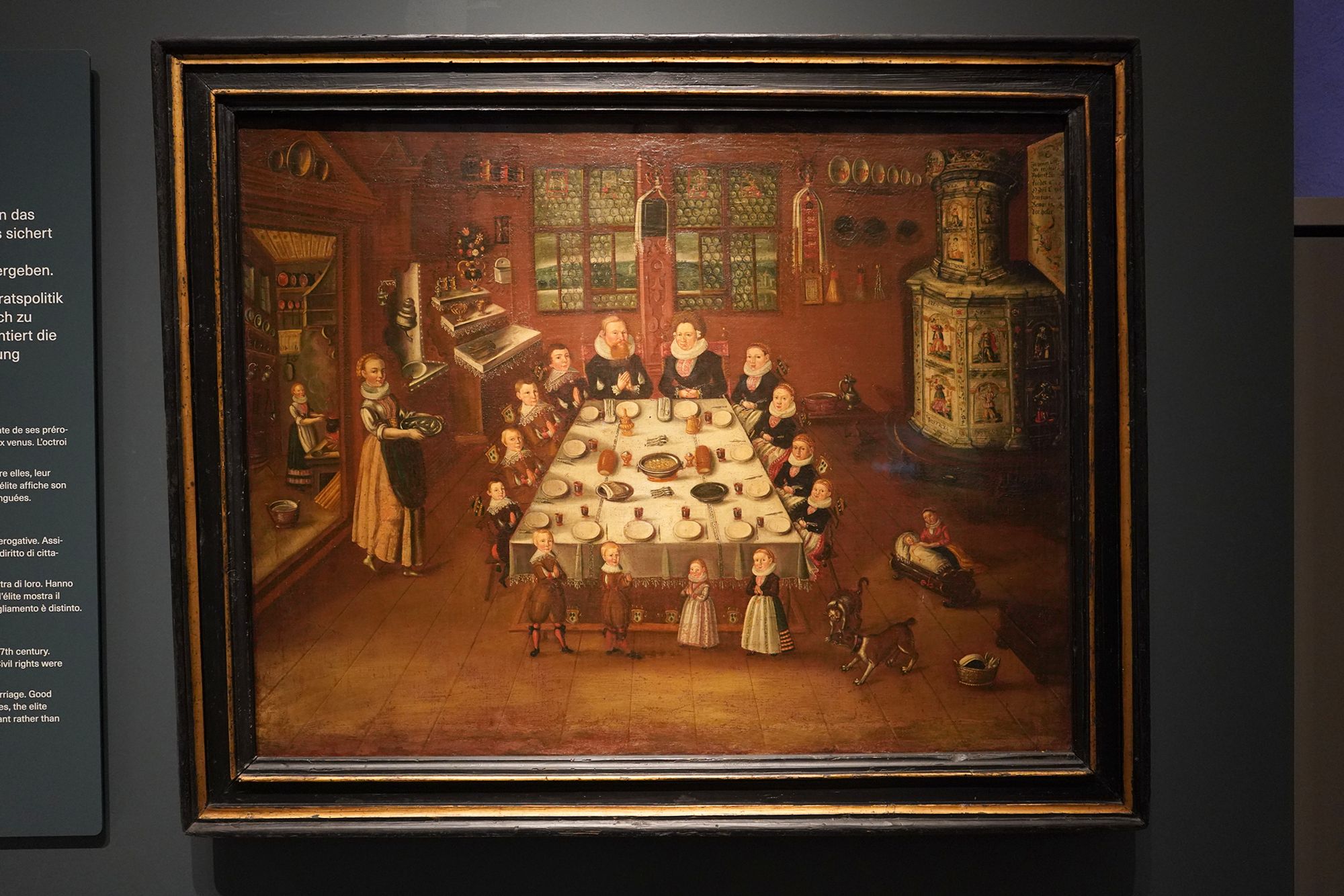
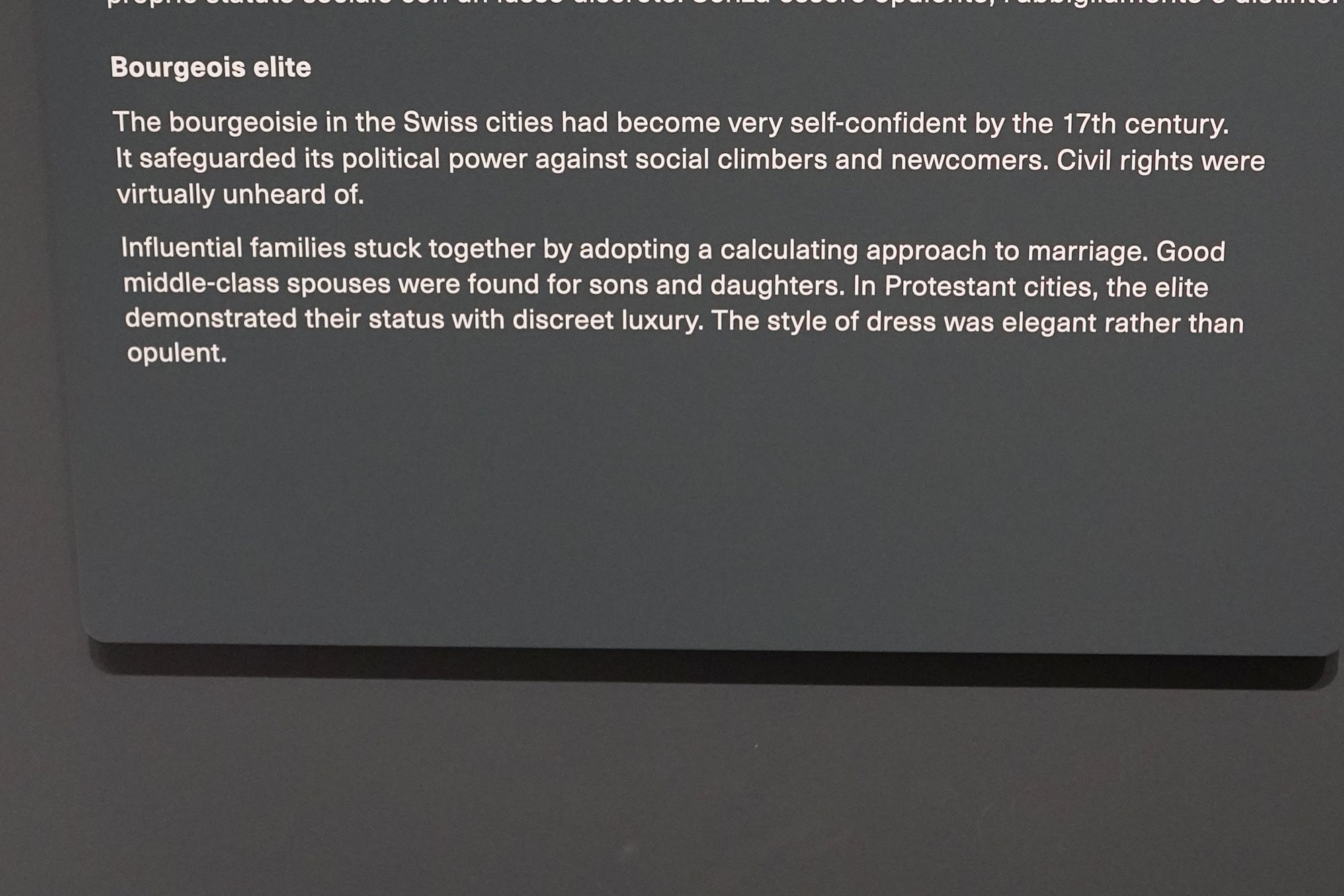
By the 17th century, influential families held much of the political power in Swiss cities. They strengthened their position through marriage and kept newcomers from gaining influence. In Protestant cities, they showed their status through elegant clothing and restrained luxury.
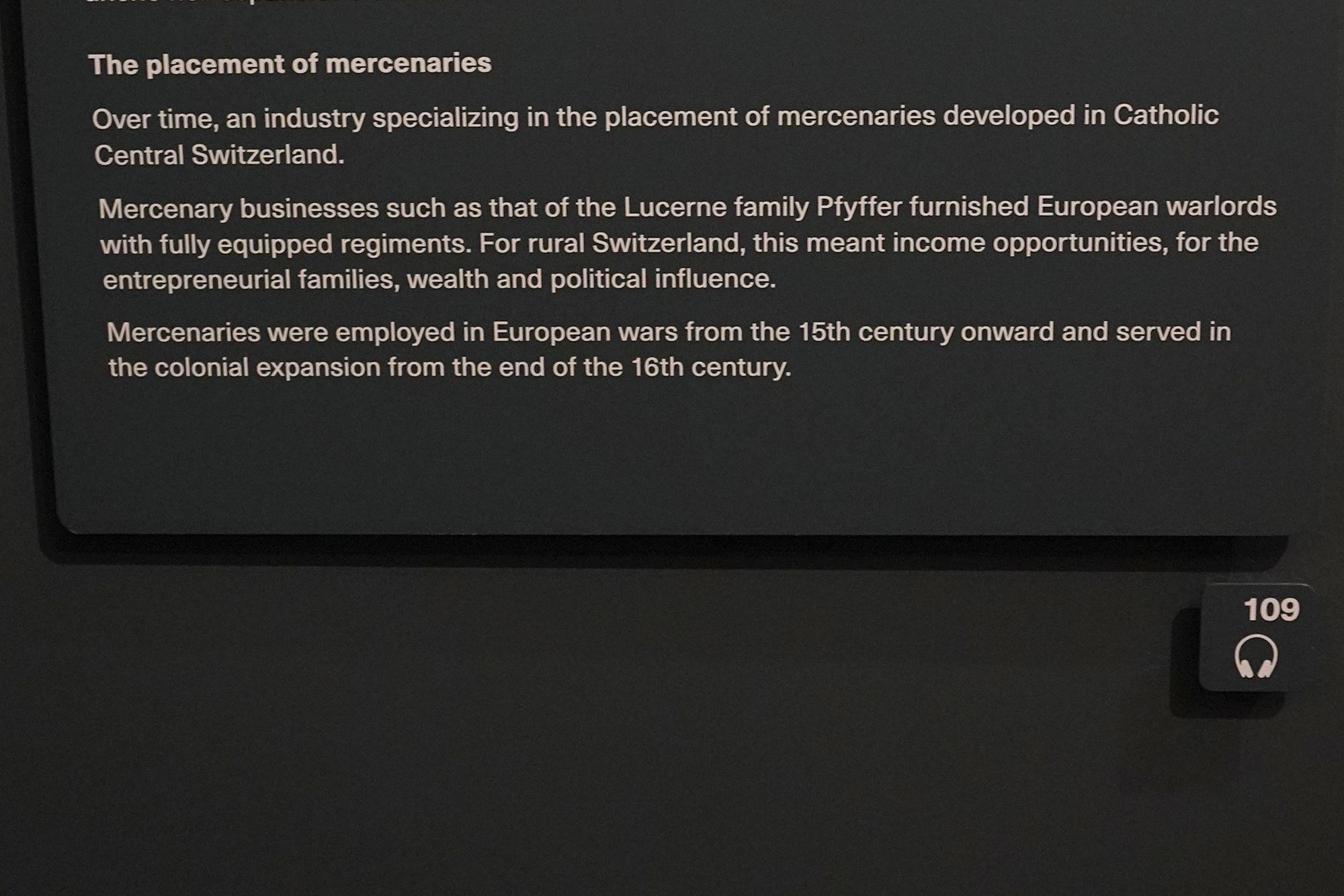
Recruiting Swiss mercenaries became a business in Catholic Central Switzerland. Families such as the Pfyffers of Lucerne supplied European rulers with equipped regiments. The work brought income to rural communities and wealth and influence to recruiters, while Swiss soldiers fought in European wars and later took part in colonial expansion.
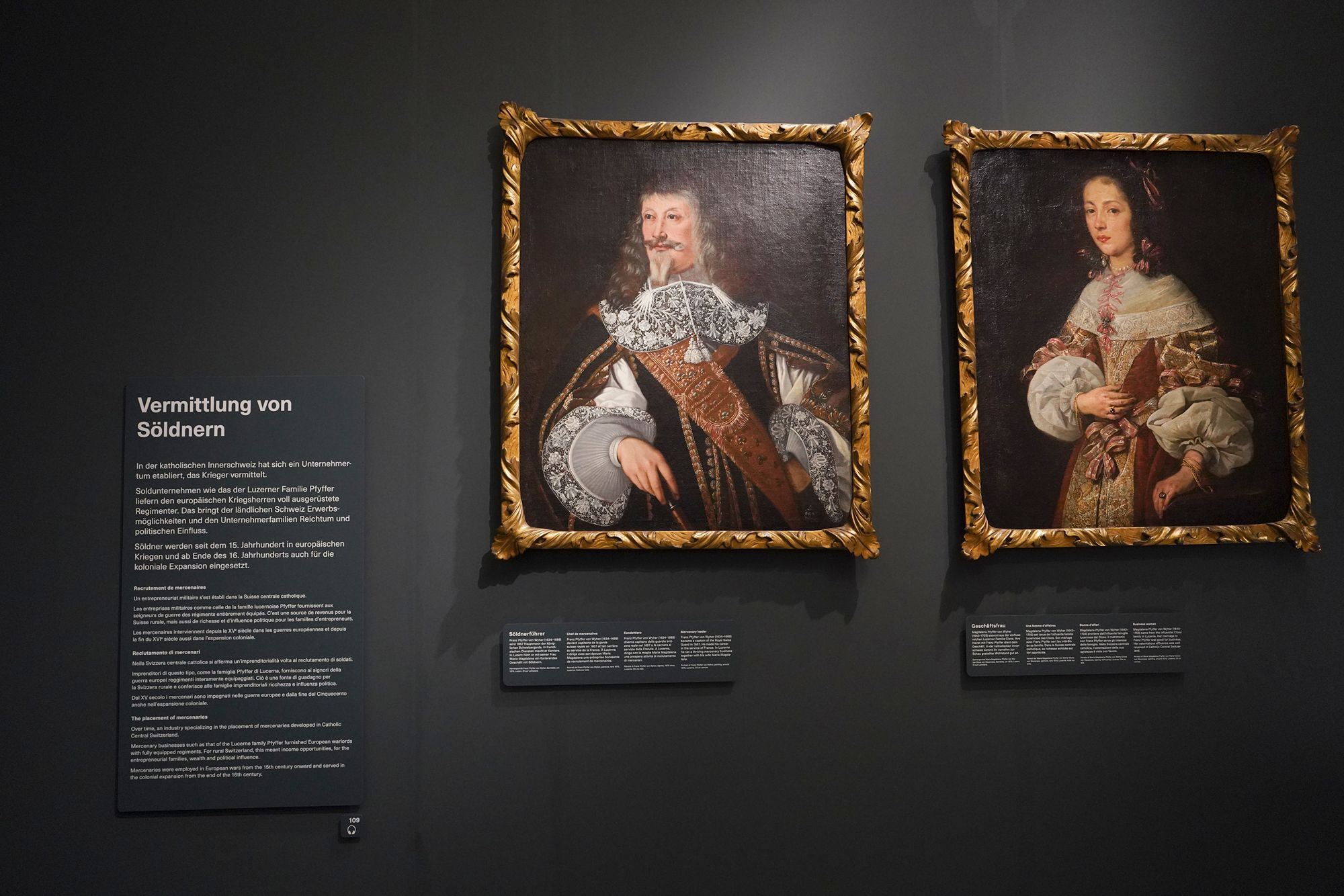
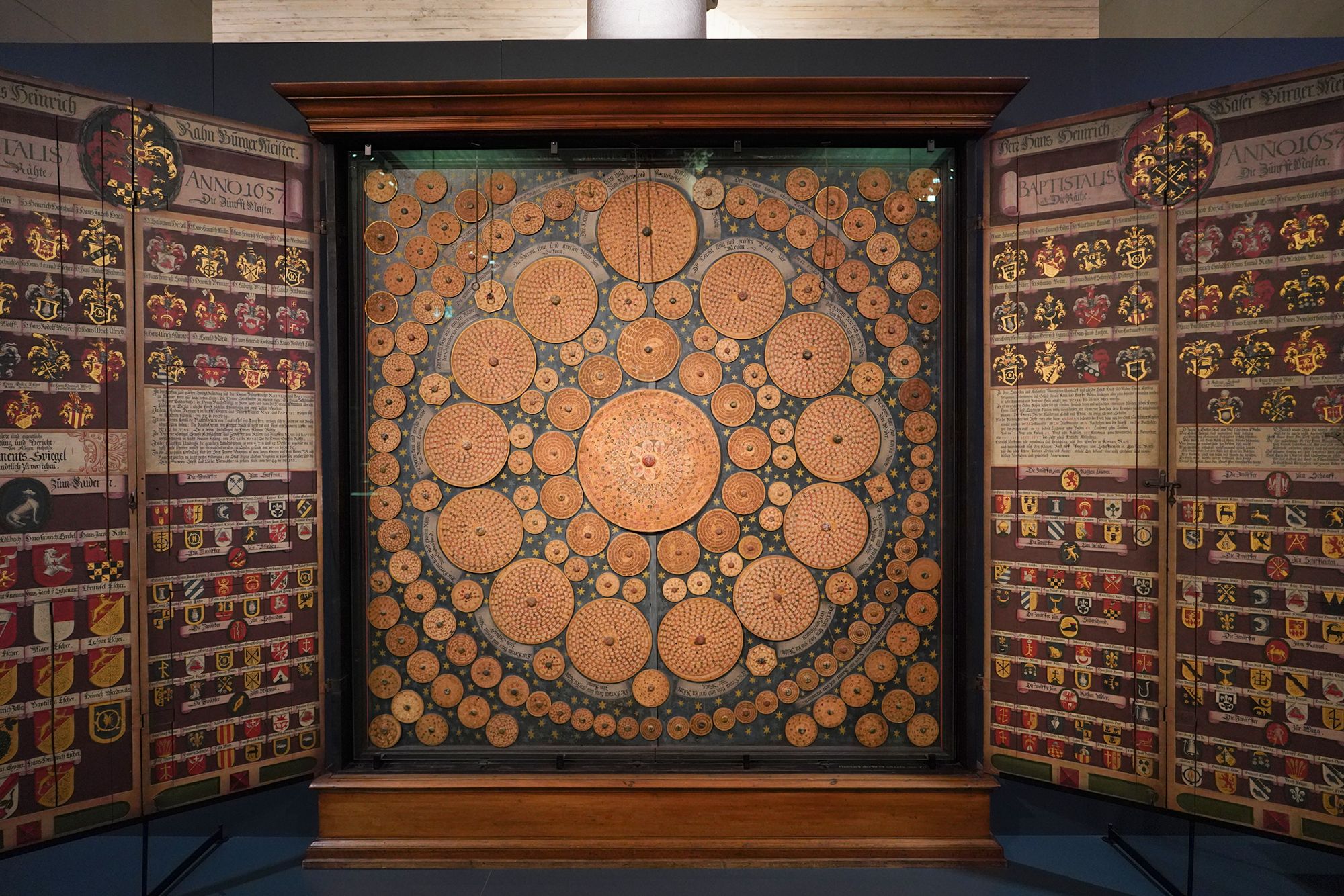
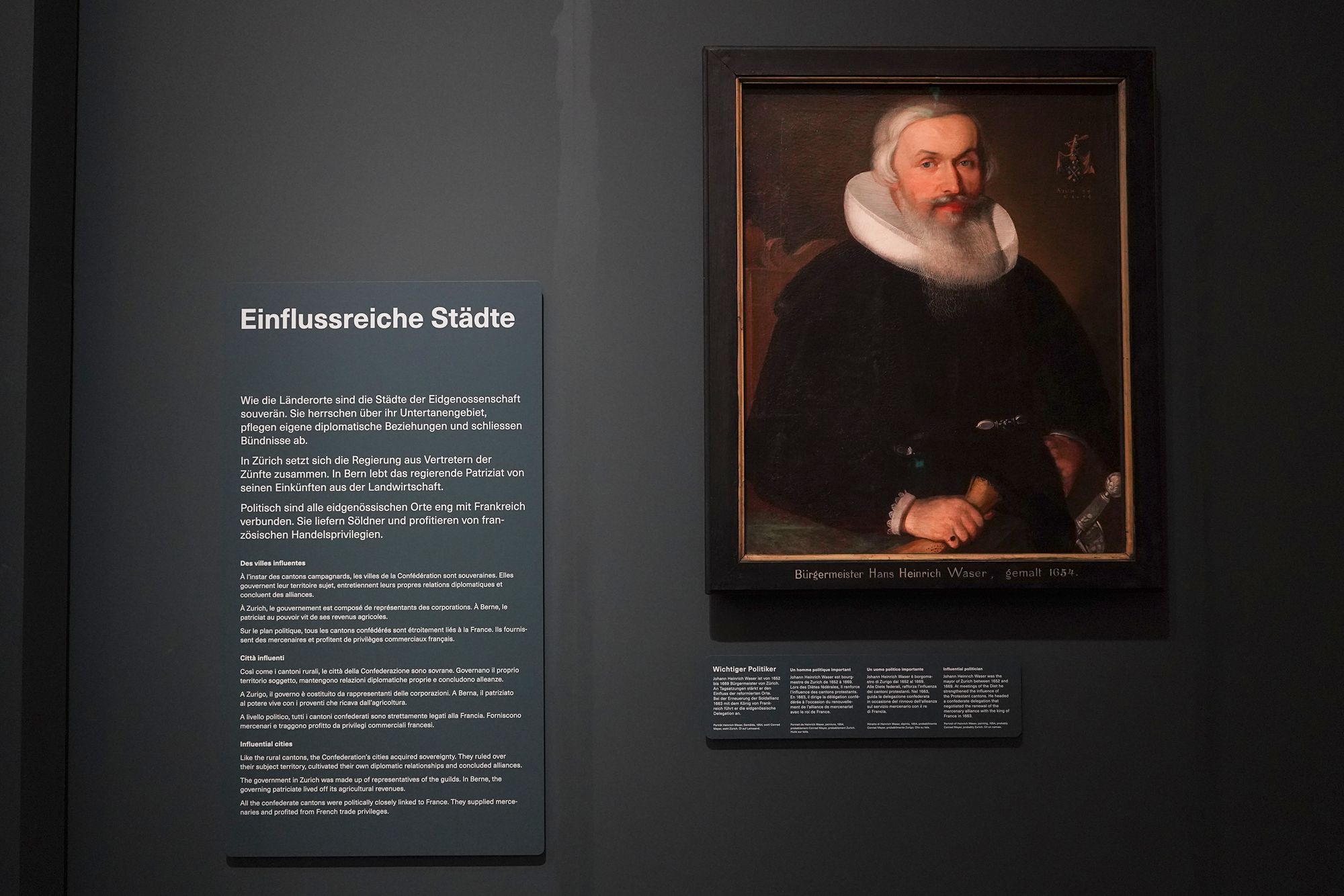
The Confederation’s cities governed their own territories and formed diplomatic alliances. Zürich was led by representatives of its trade guilds, while Bern was governed by wealthy families whose income came from agriculture. The cantons also had close ties to France, supplying soldiers and receiving trade privileges.

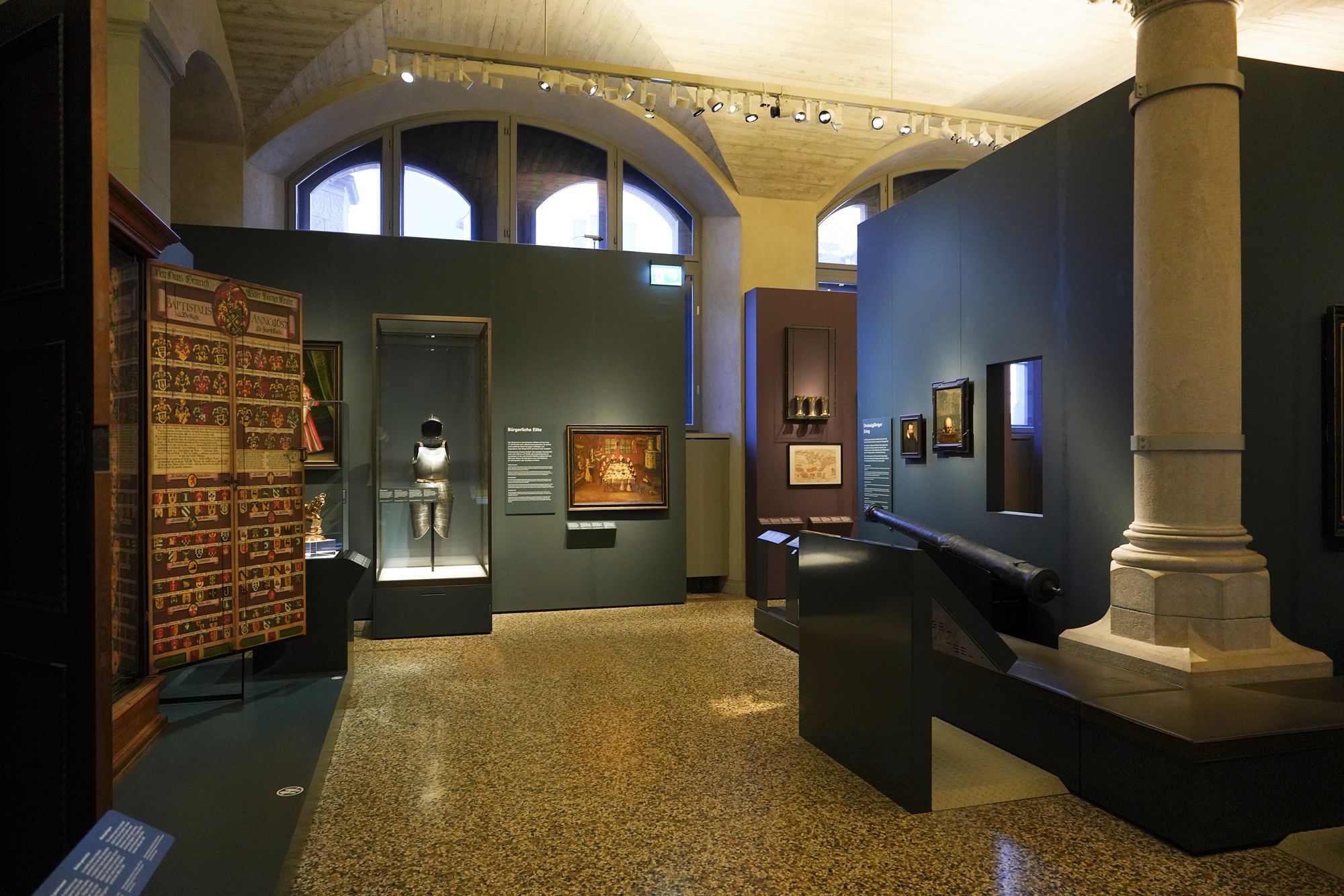
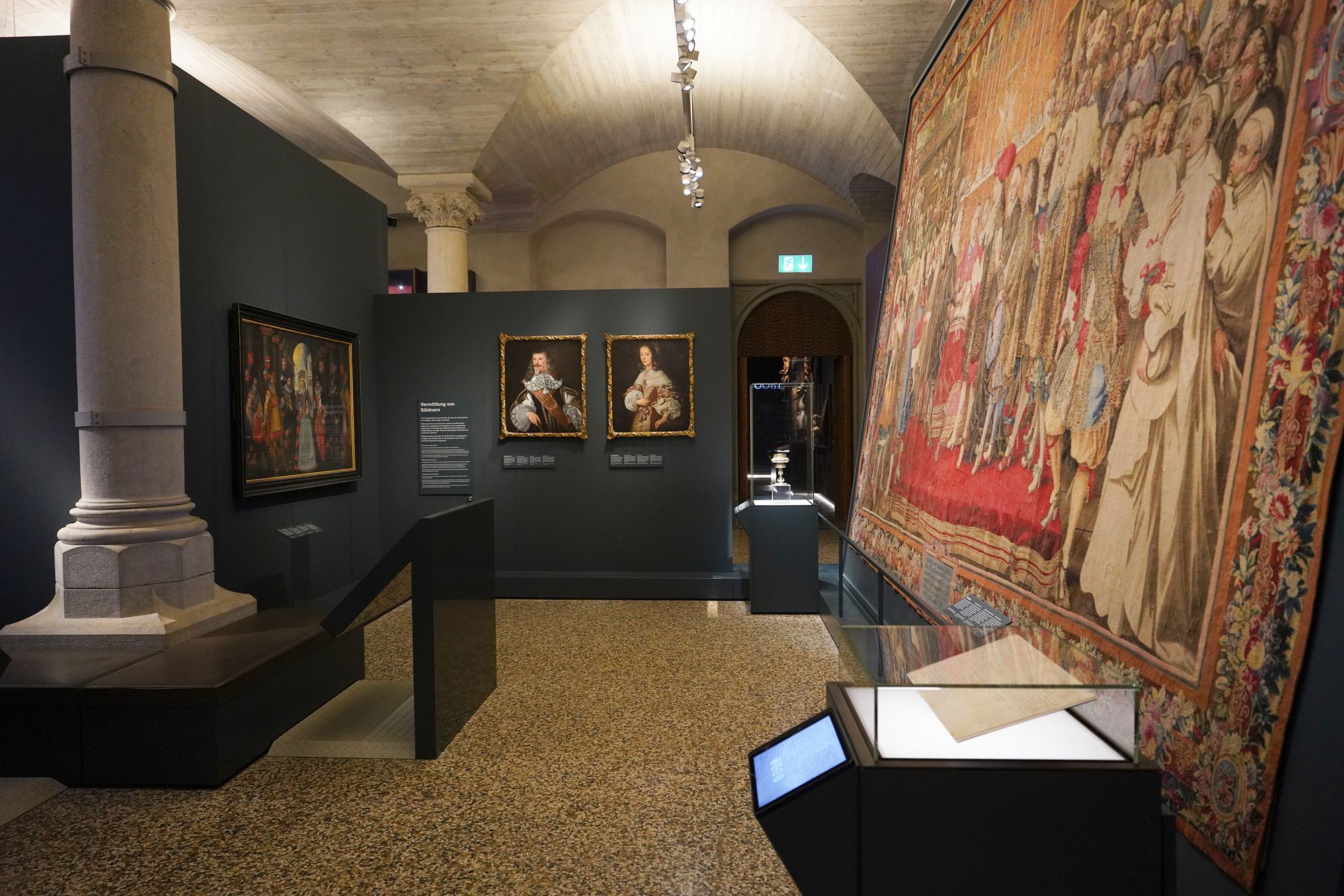
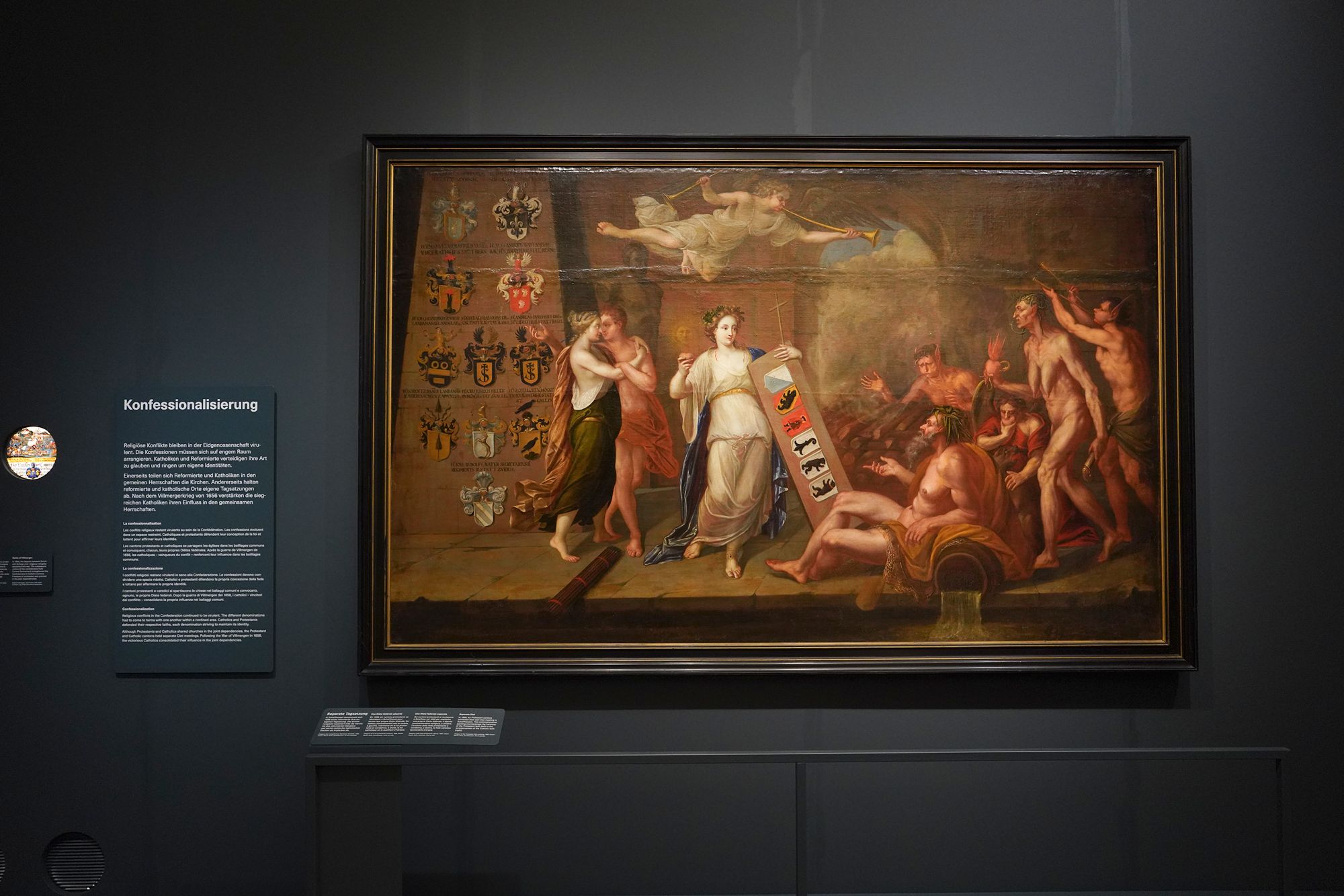
Religious divisions remained strong within the Confederation. Catholics and Protestants sometimes shared churches in territories governed jointly, but their cantons held separate political meetings. After the Catholic victory in the 1656 War of Villmergen, Catholic cantons gained greater influence over those shared territories.
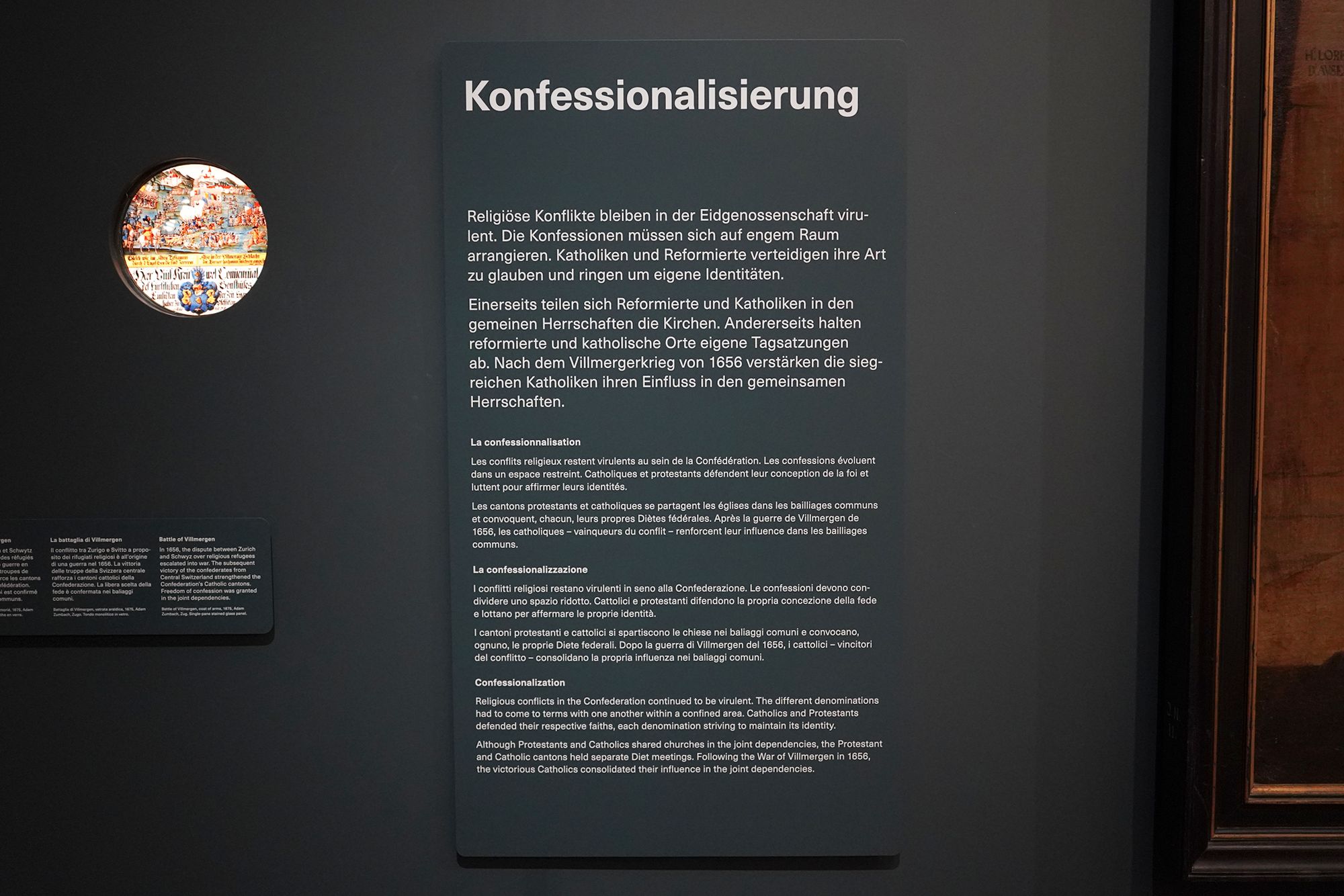
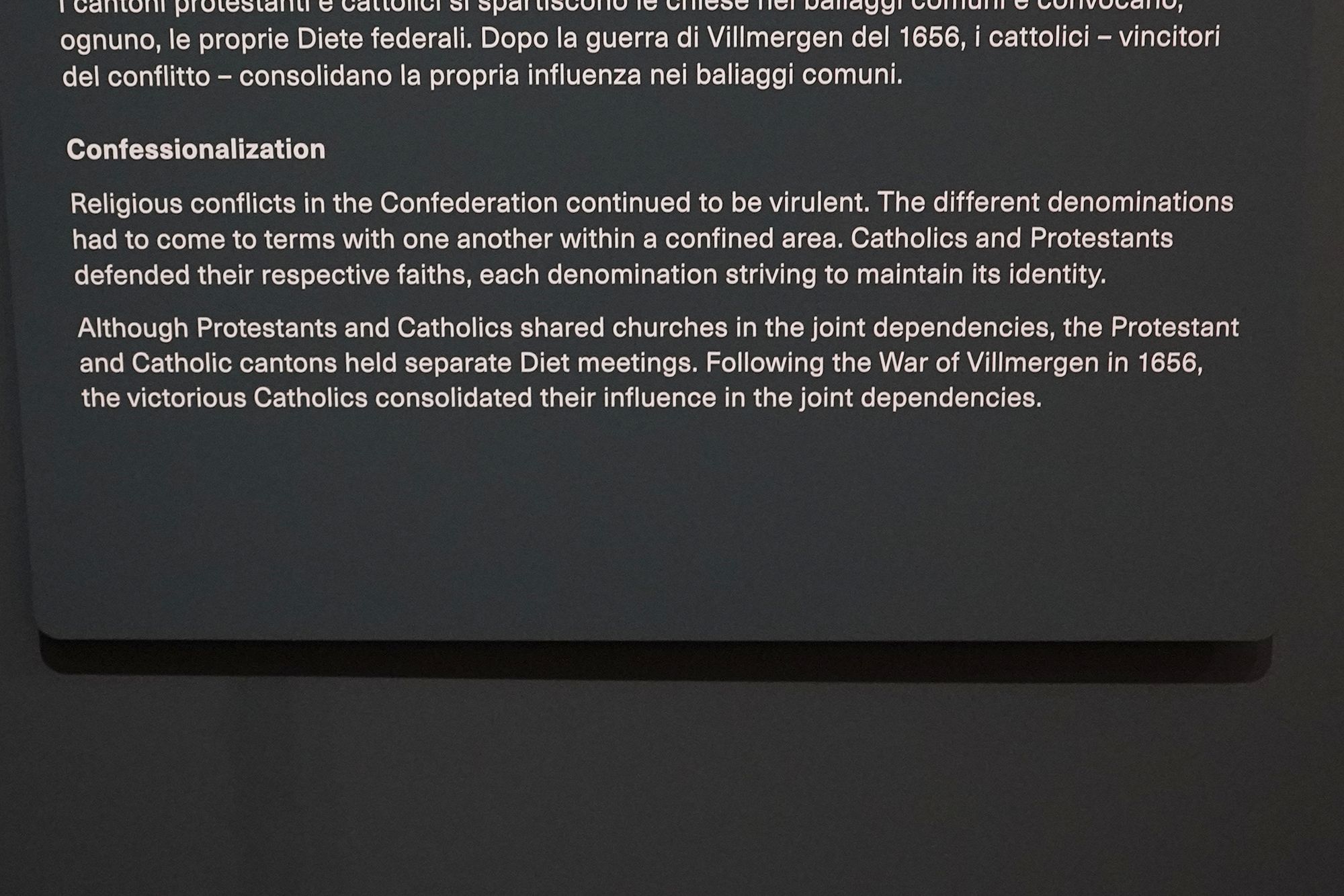
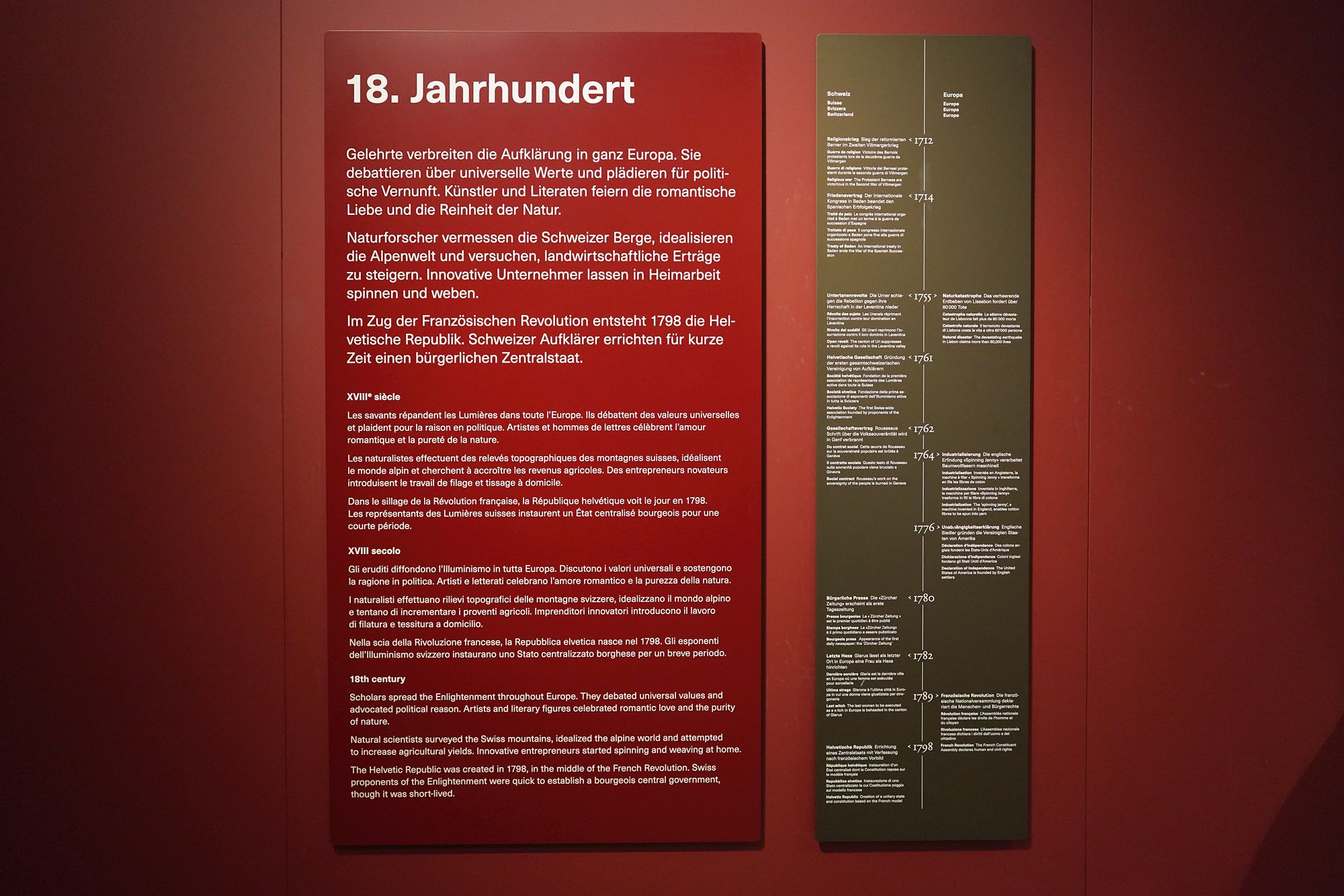
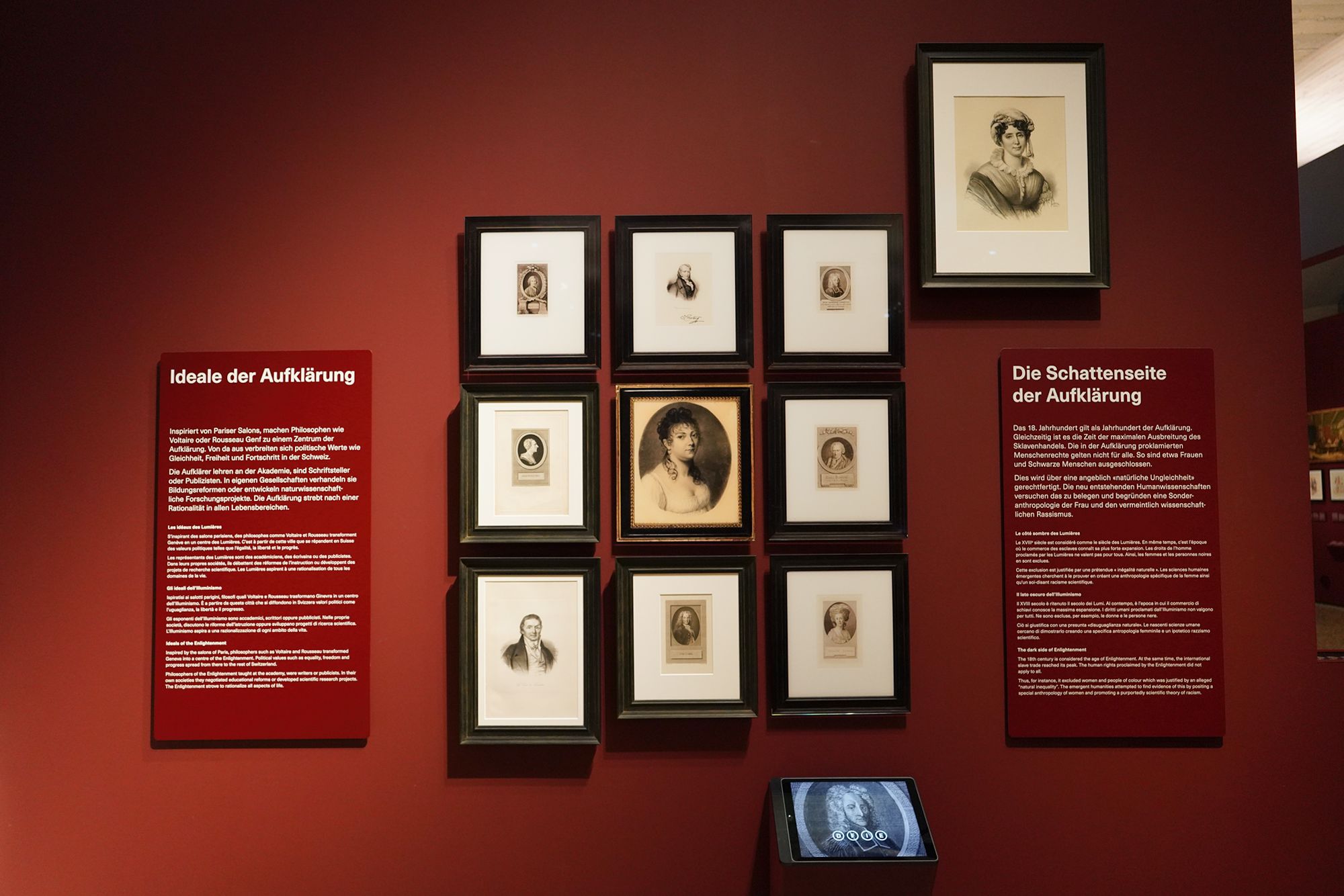
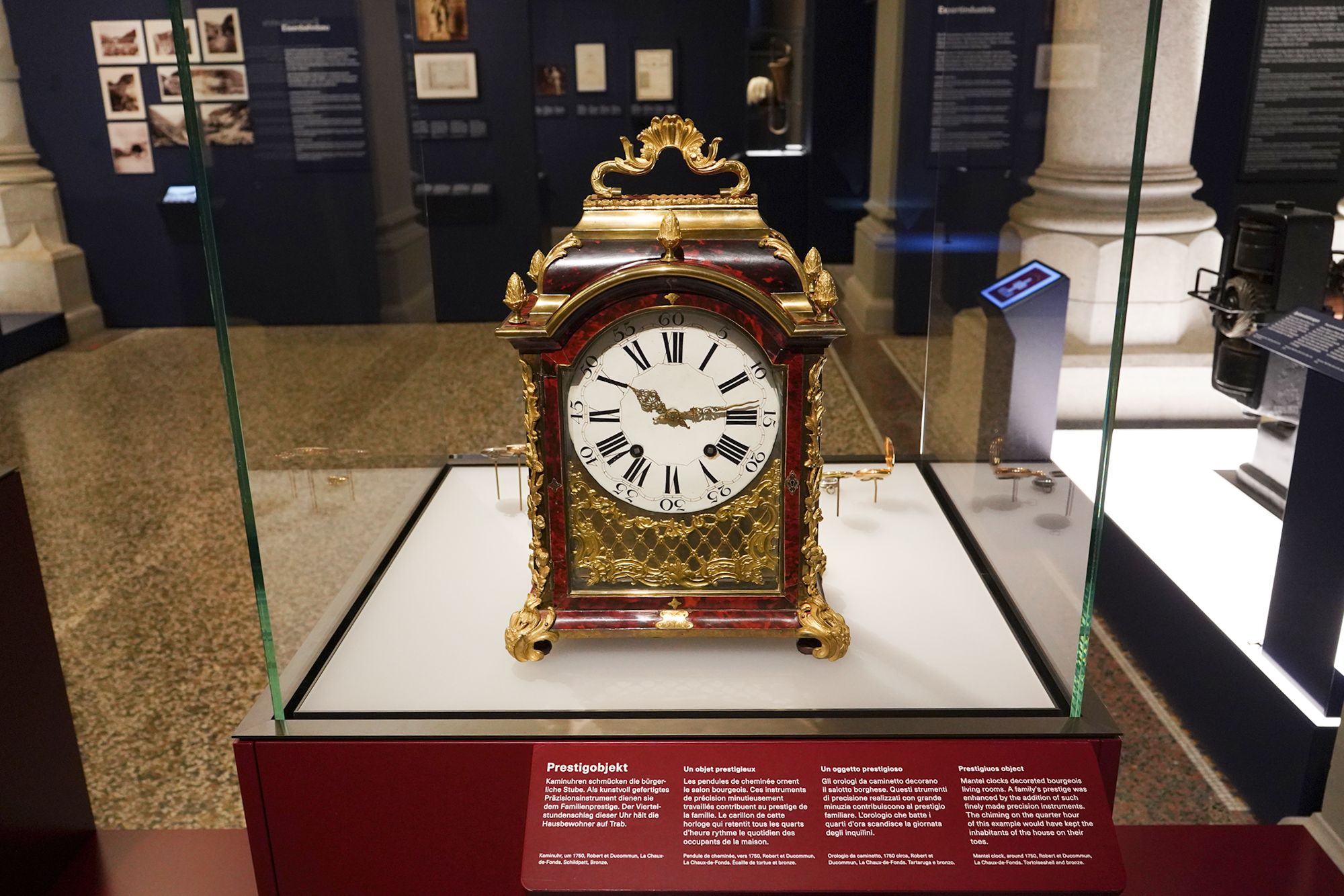
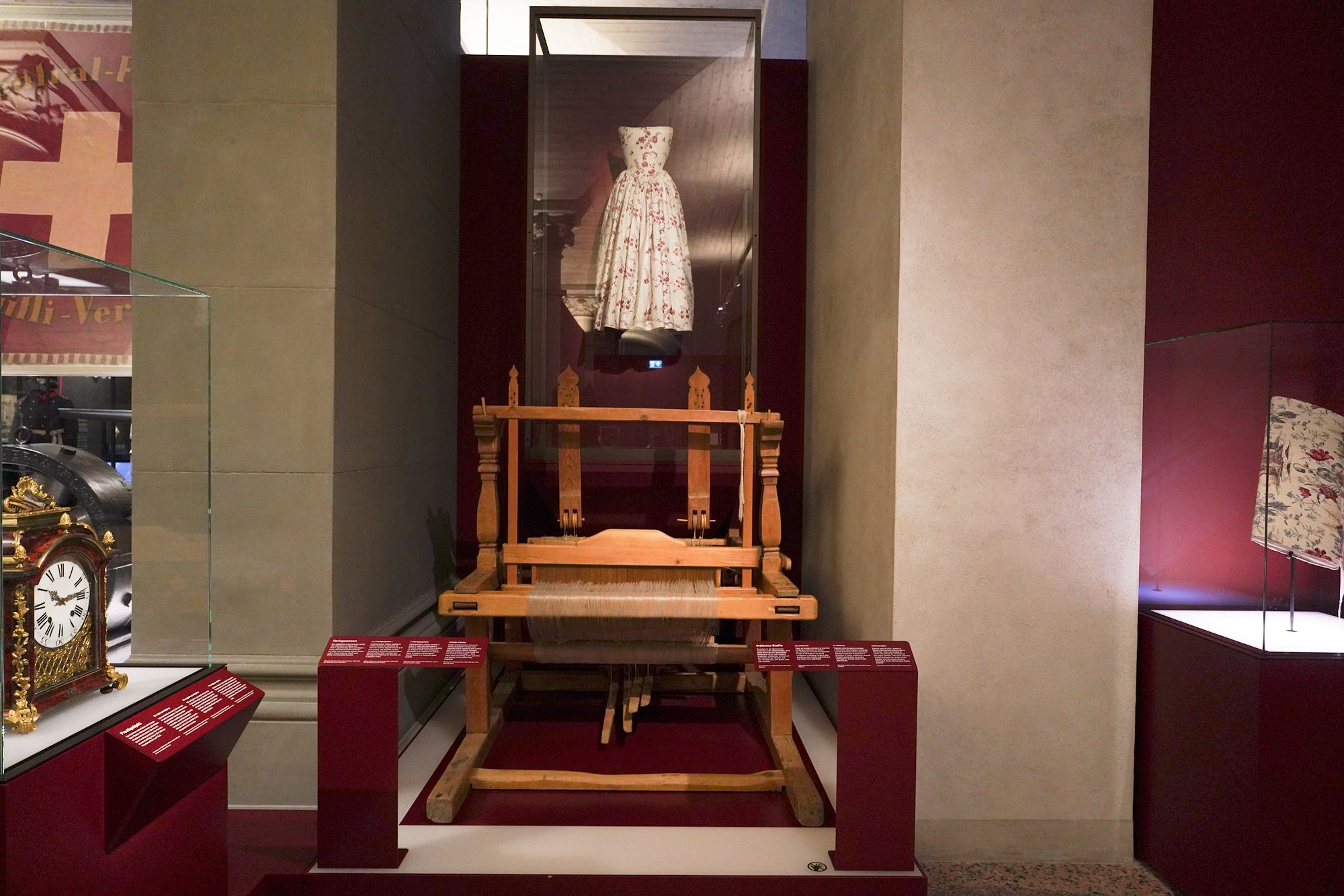
The 18th-century display traces the spread of Enlightenment ideas in Switzerland, alongside growing interest in the Alps, agricultural improvements, and home-based textile production. In 1798, amid the French Revolution, the Helvetic Republic replaced the old Confederation with a central government, though it lasted only a few years.
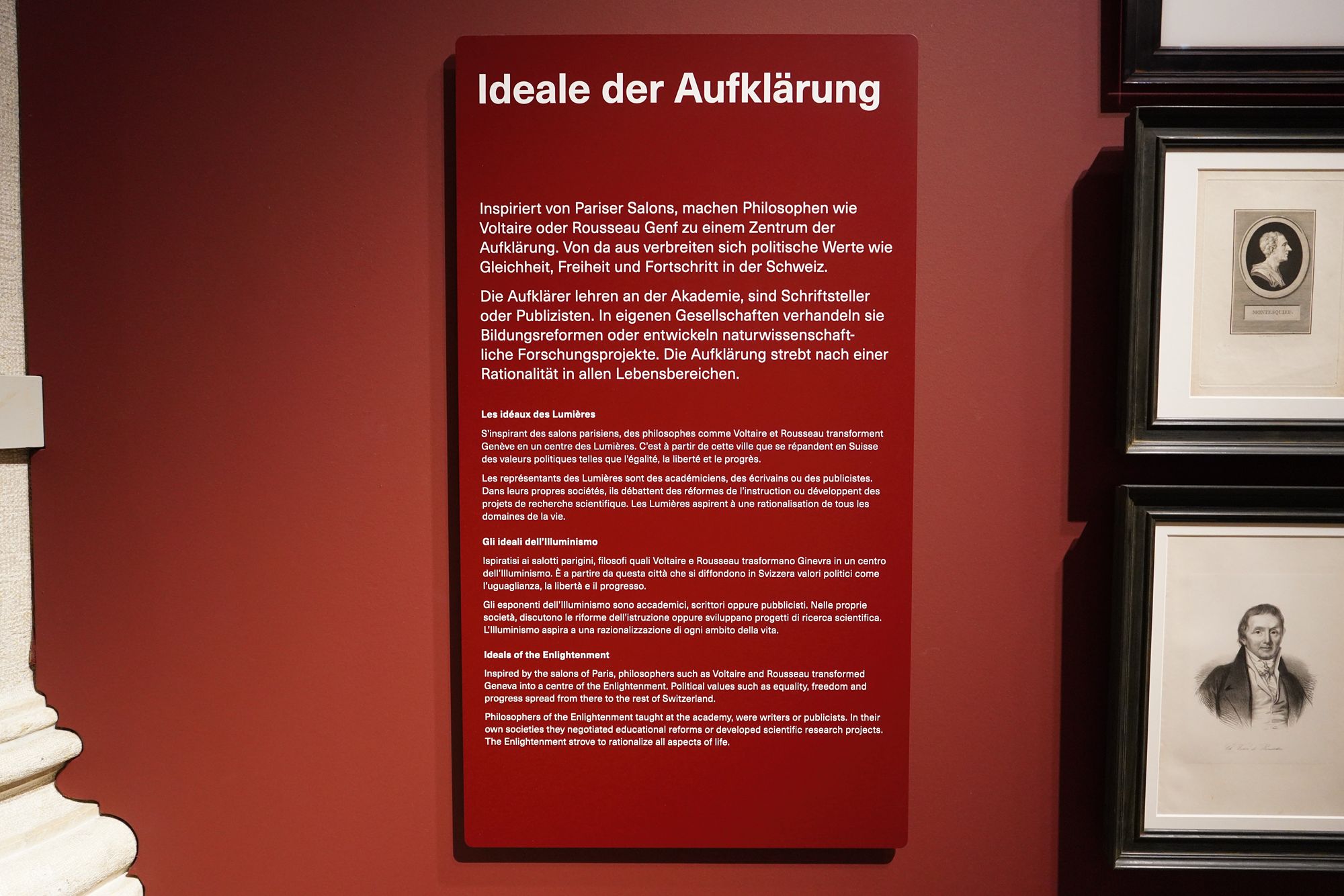

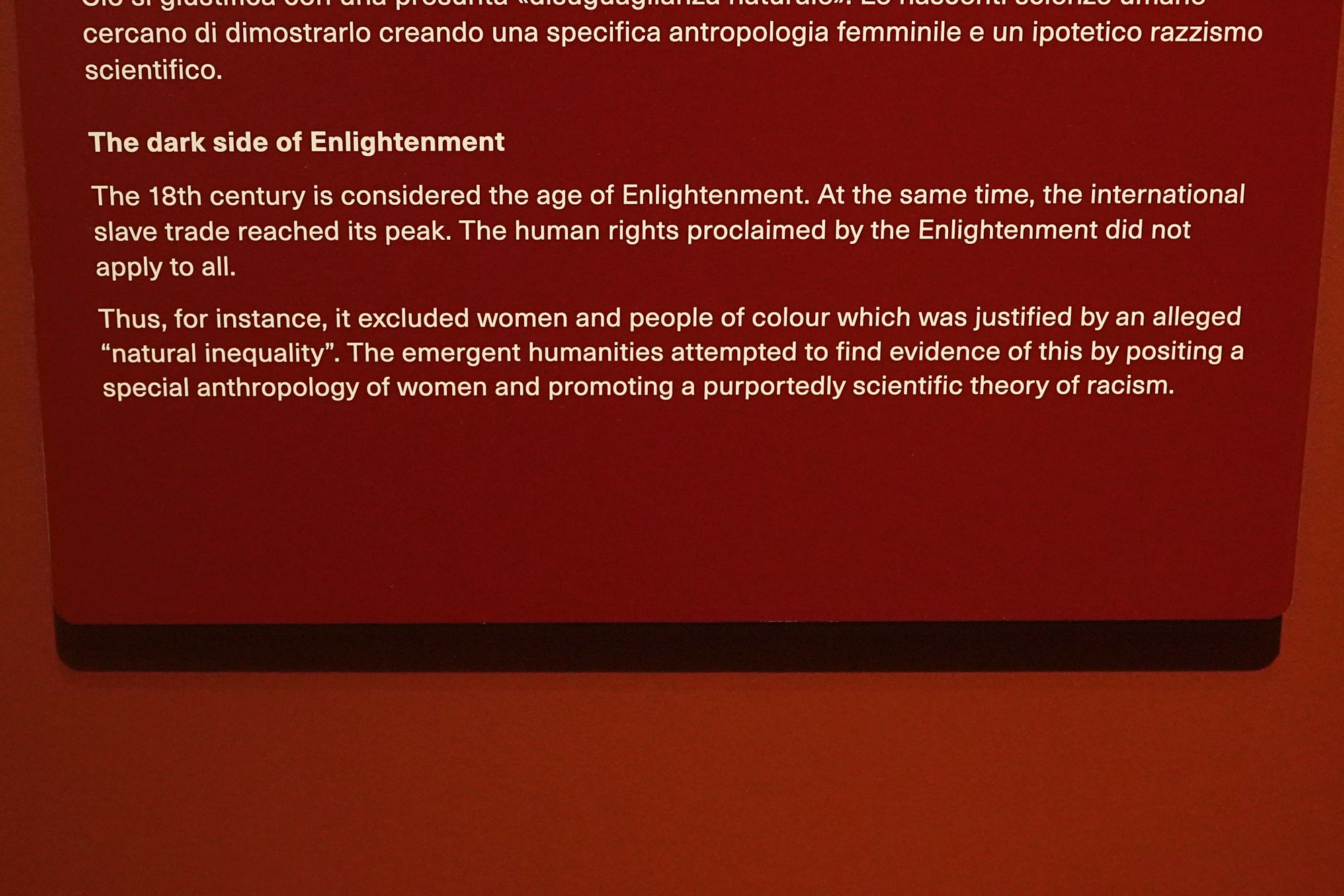
The exhibition also examines the limits of Enlightenment ideals. While thinkers promoted human rights in the 18th century, women and people of color were often excluded. At the same time, the transatlantic slave trade flourished, and claims of “natural inequality” were used to justify racism and discrimination.
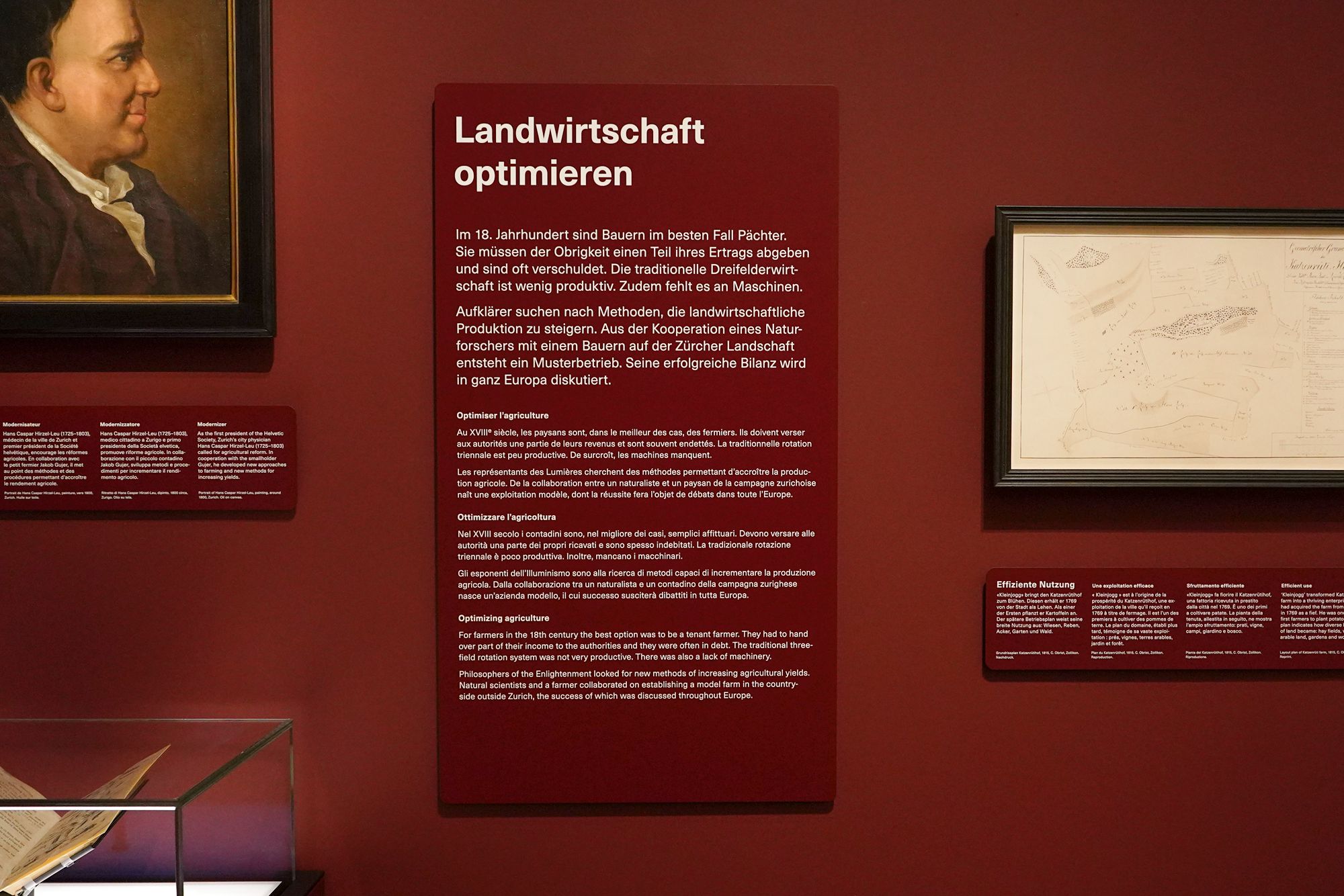
In the 18th century, Swiss farmers often struggled with debt and low crop yields. Enlightenment thinkers sought ways to improve agriculture, and a farmer and natural scientists established a model farm outside Zürich. Its success drew attention across Europe.
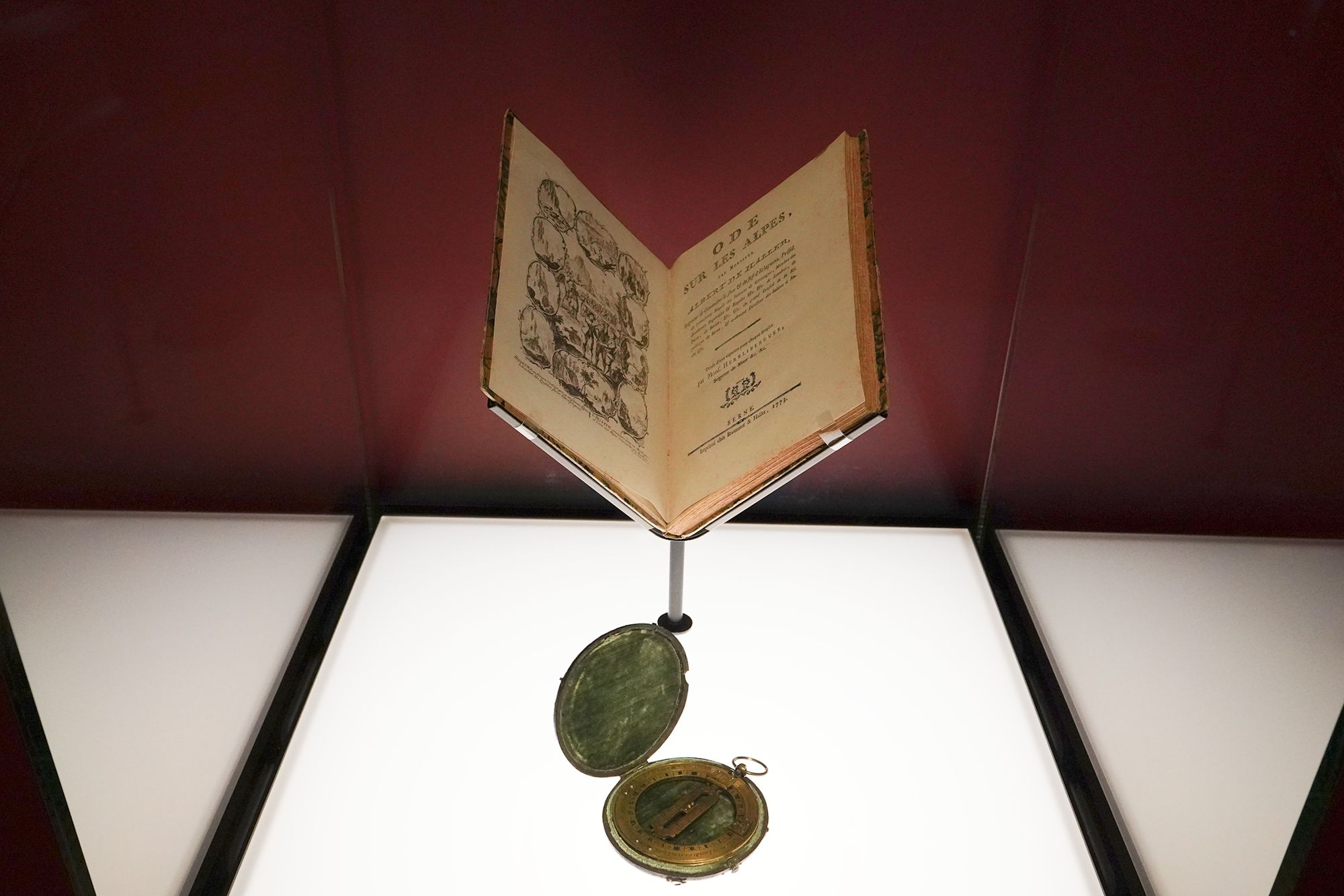
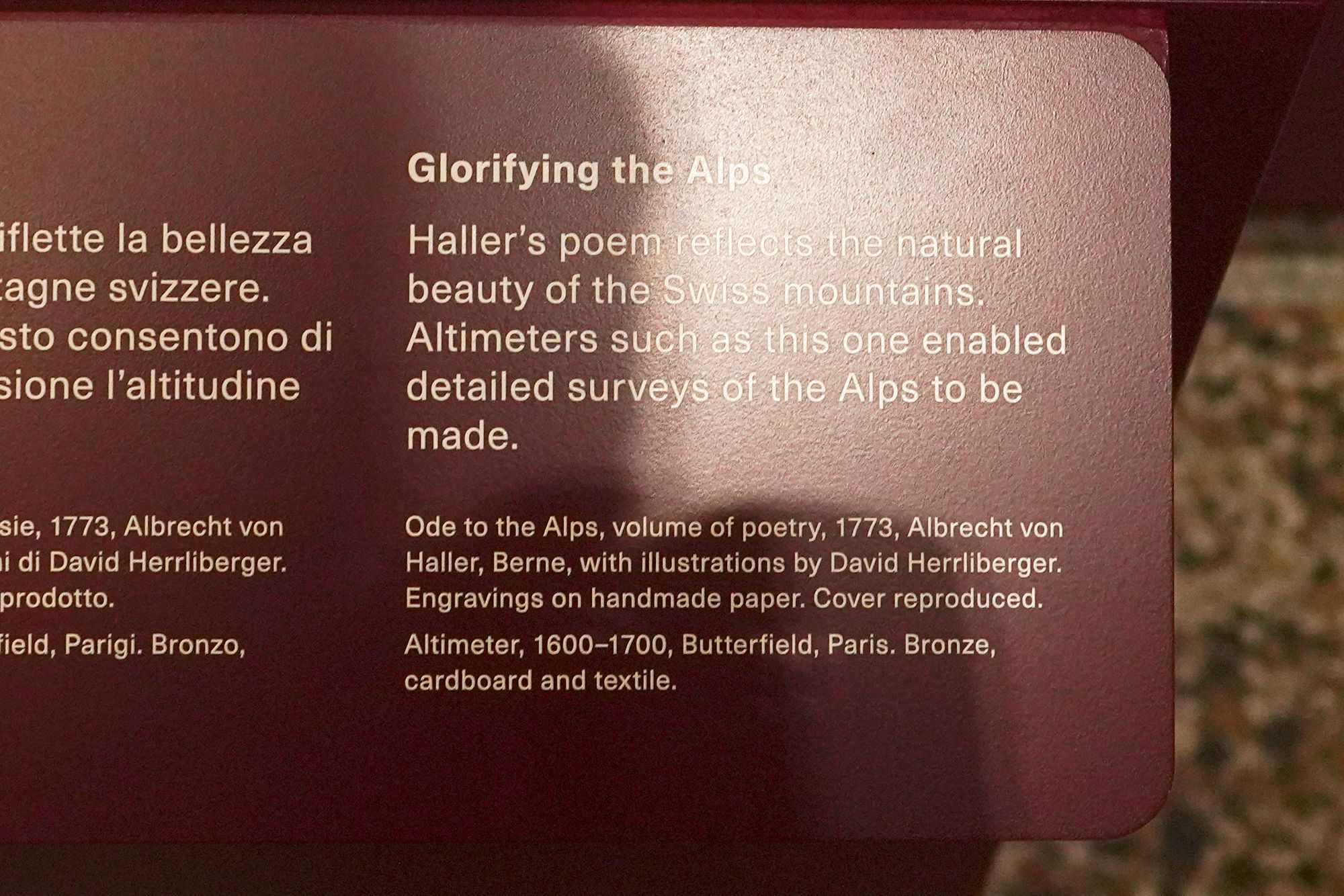
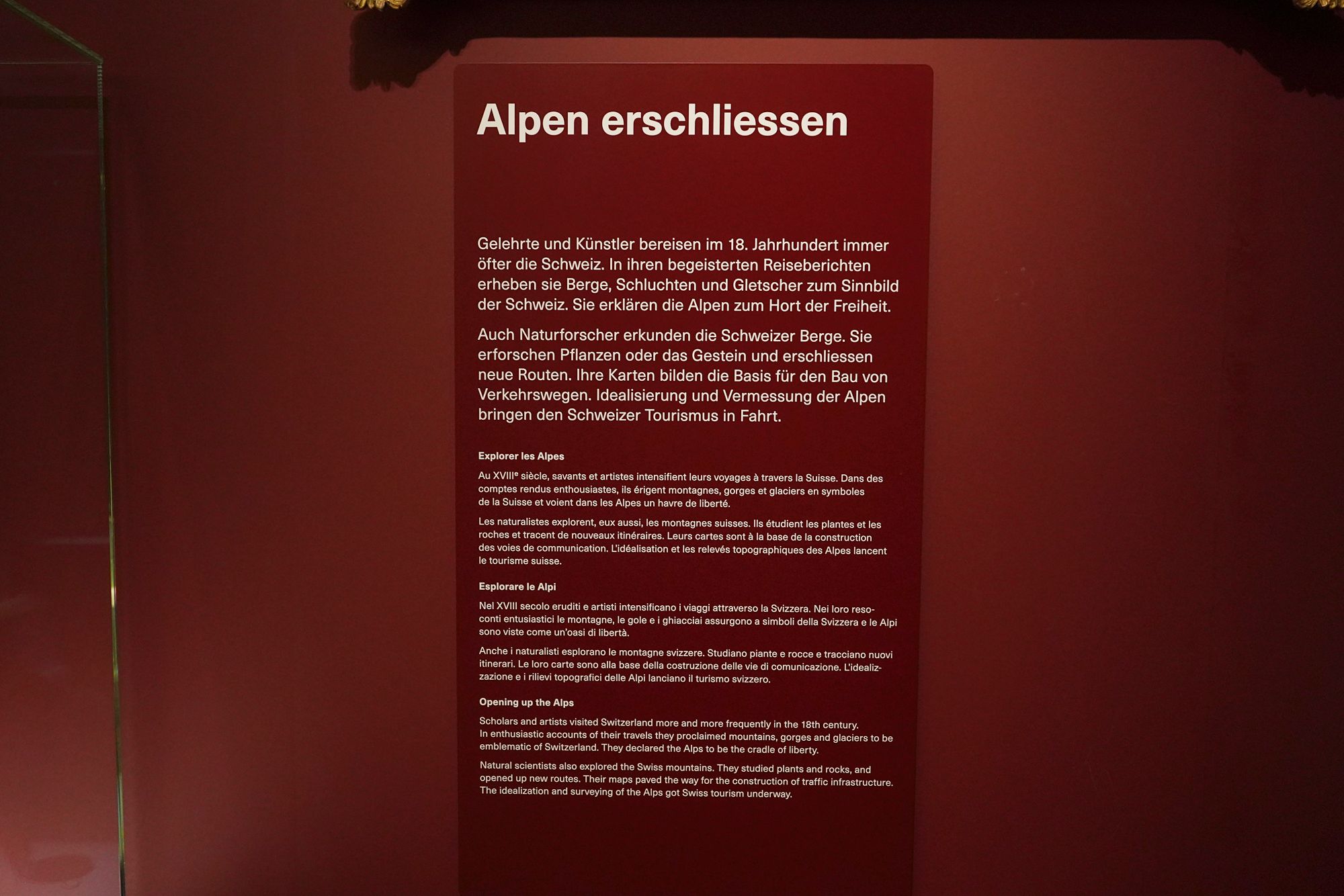
In the 18th century, artists and scholars helped make the Alps a symbol of Switzerland through their travel accounts. Natural scientists explored and mapped the mountains, opening new routes. Together, their work helped lay the foundations for Swiss tourism.

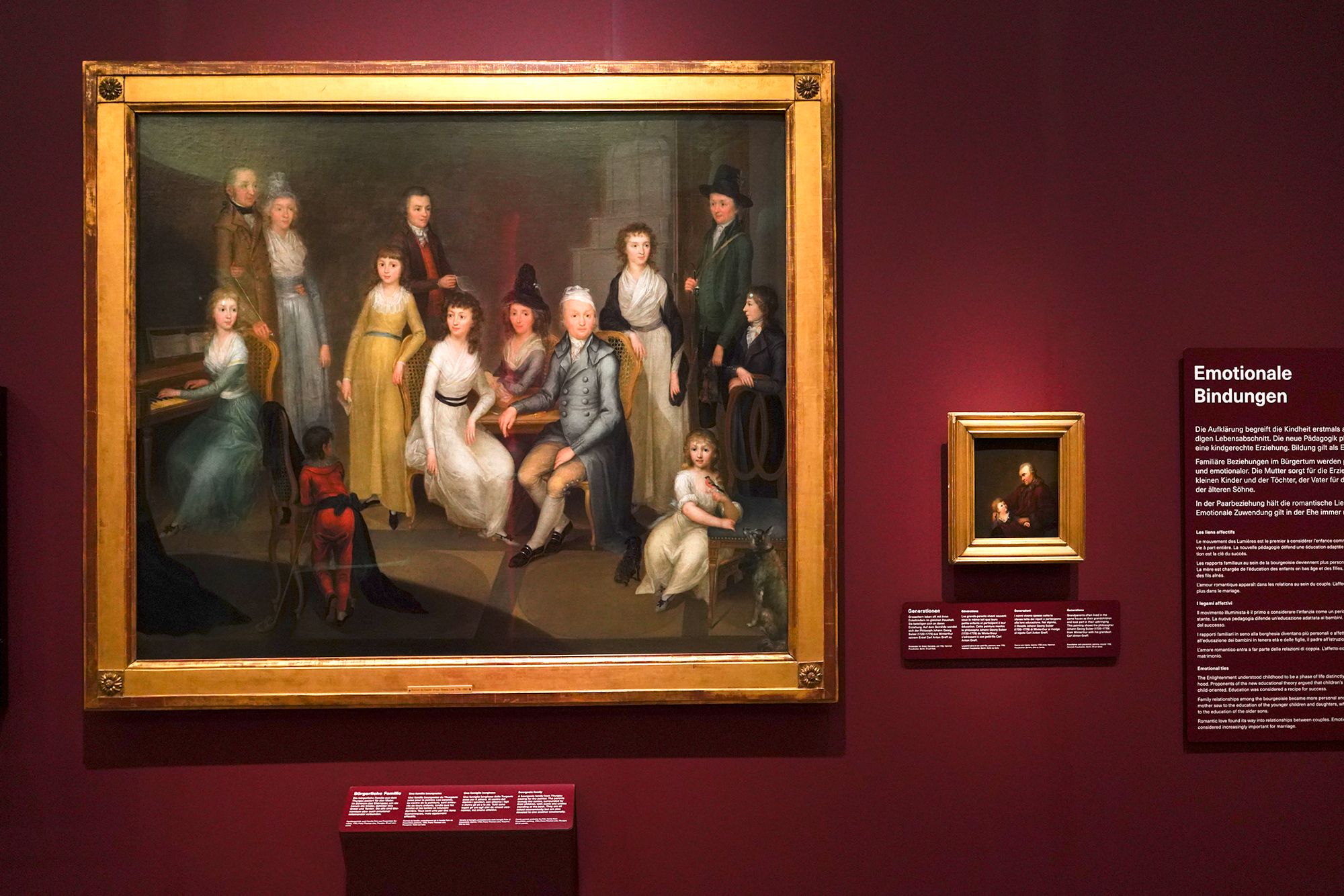
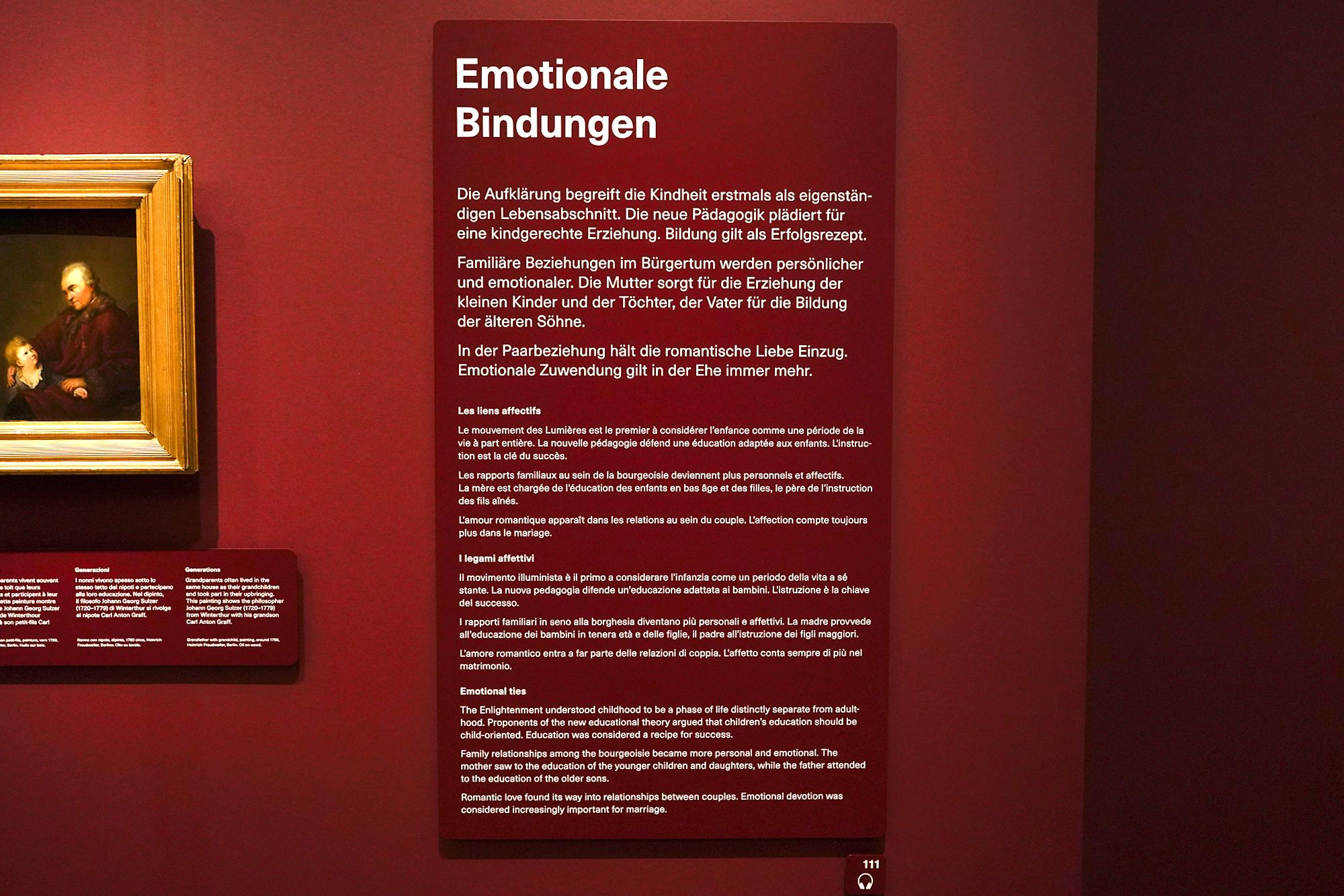
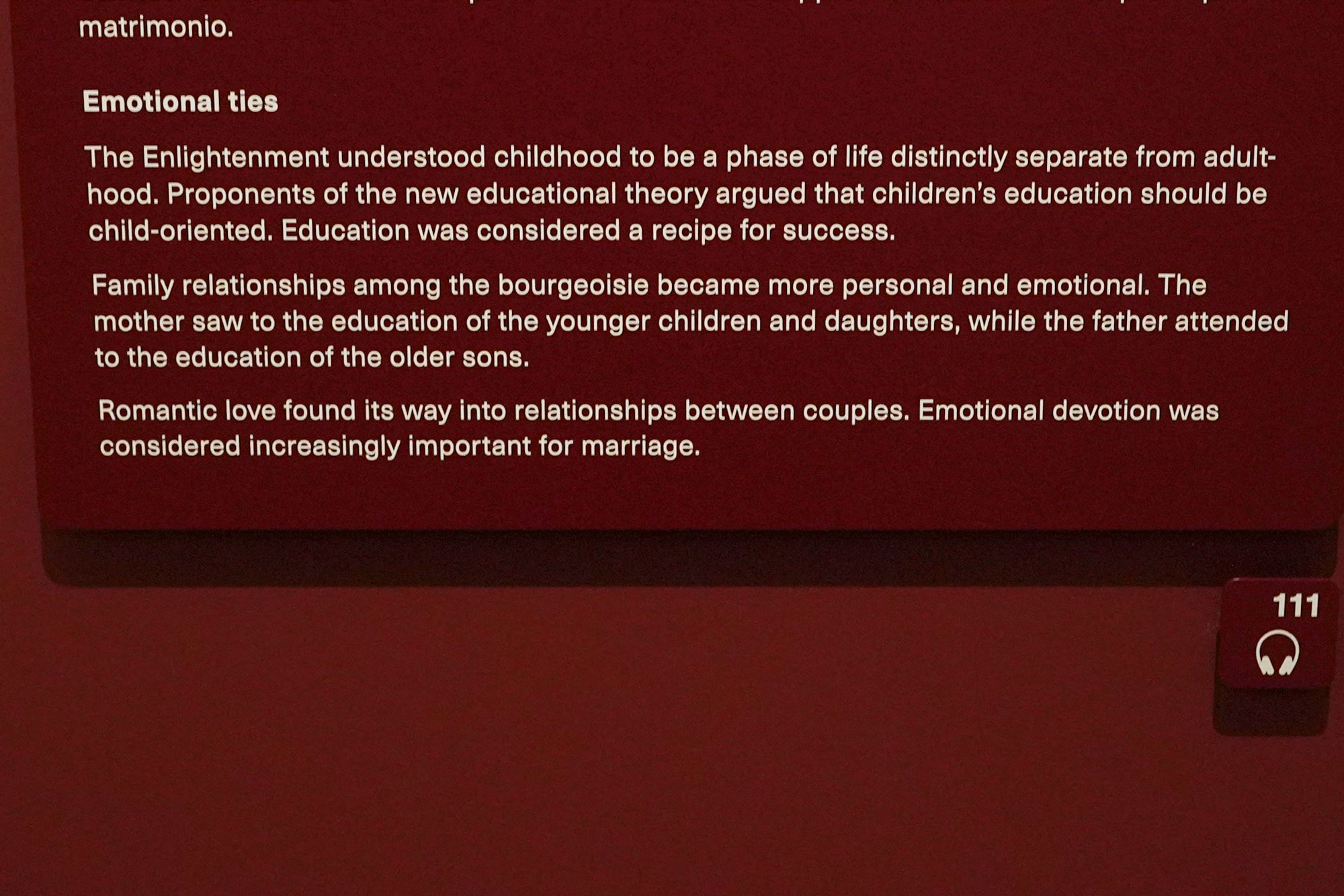
During the Enlightenment, childhood came to be seen as a distinct stage of life, and educators argued that teaching should suit children’s needs. Among middle-class families, relationships became more personal, while romantic love and emotional closeness grew more important in marriage.

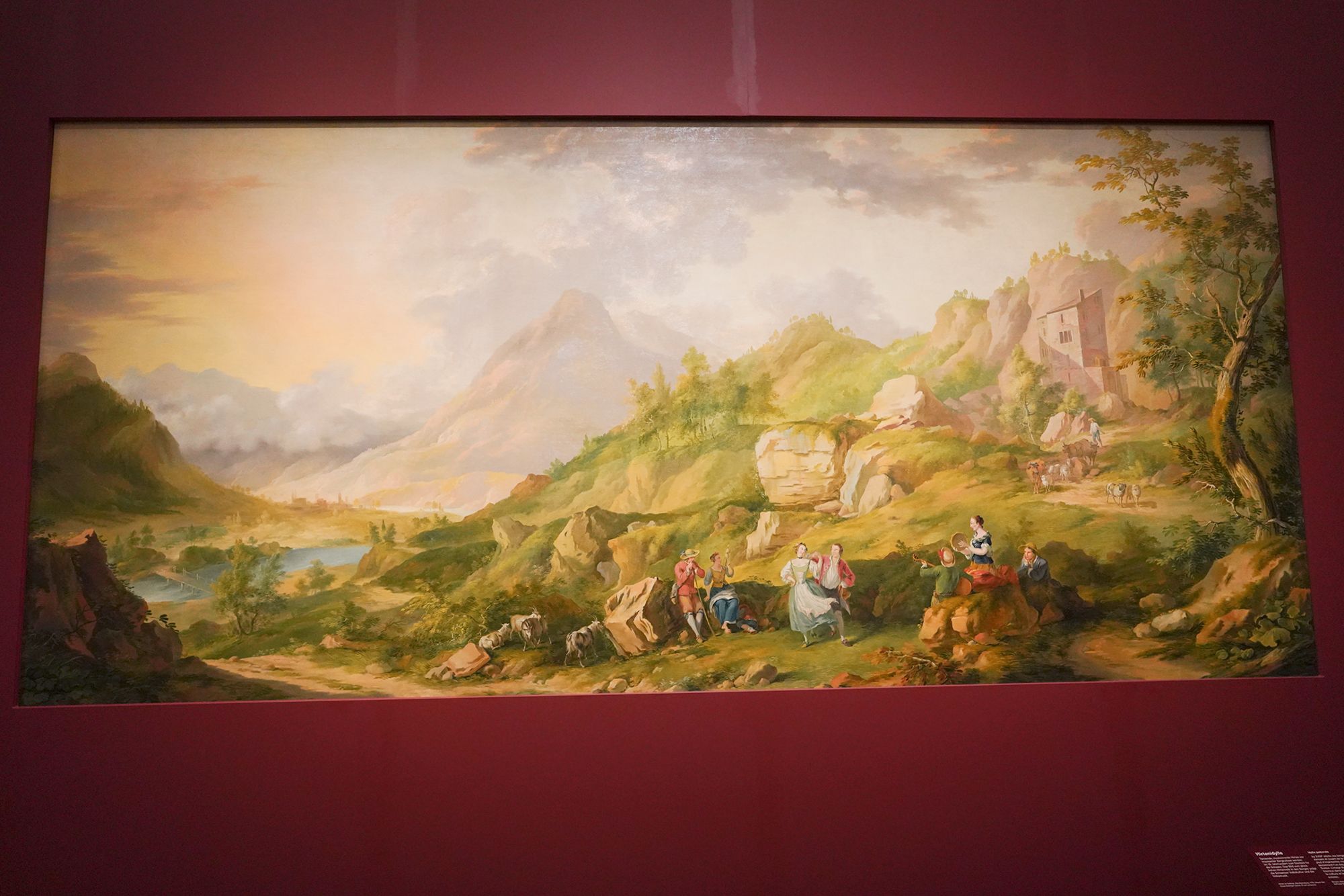
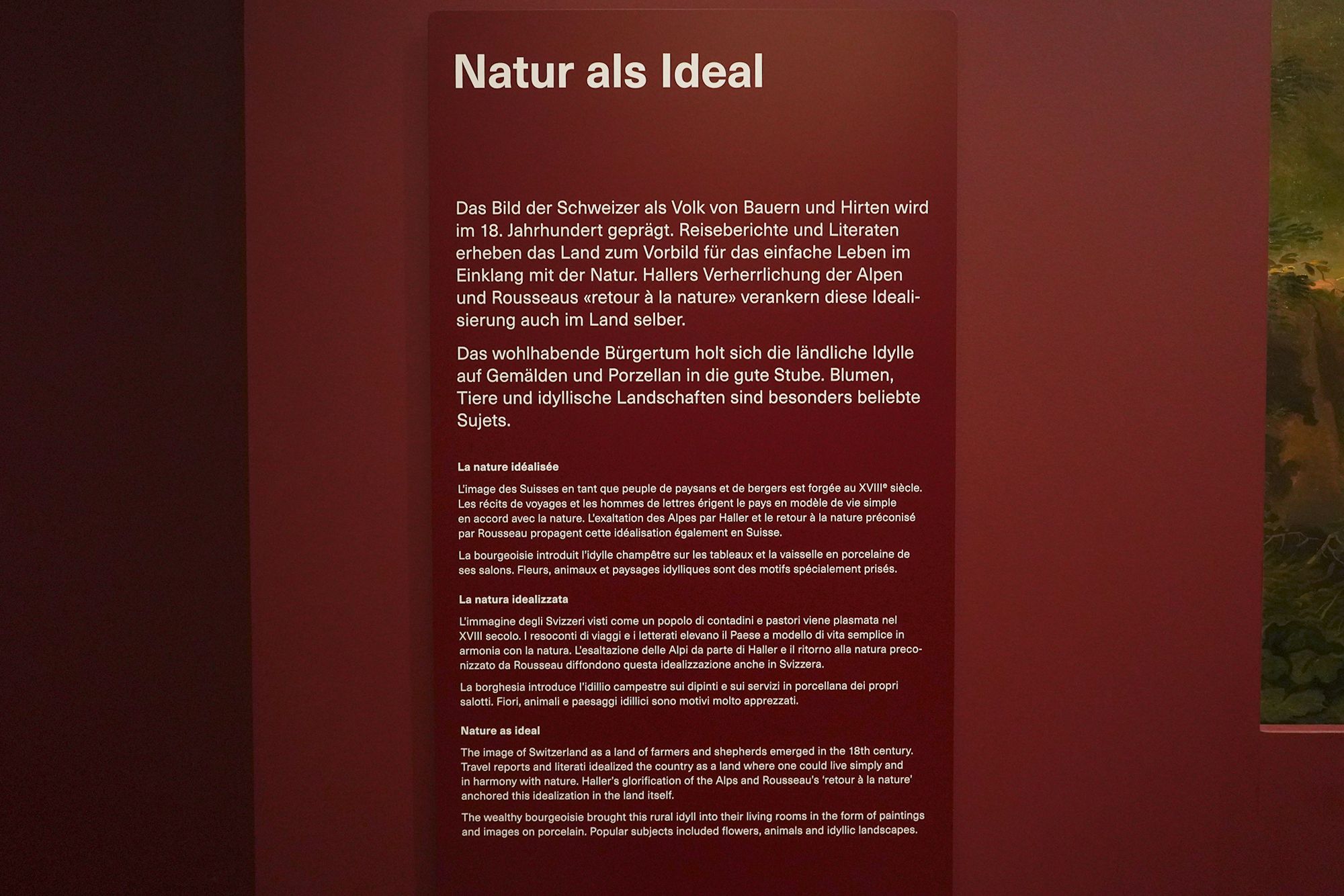
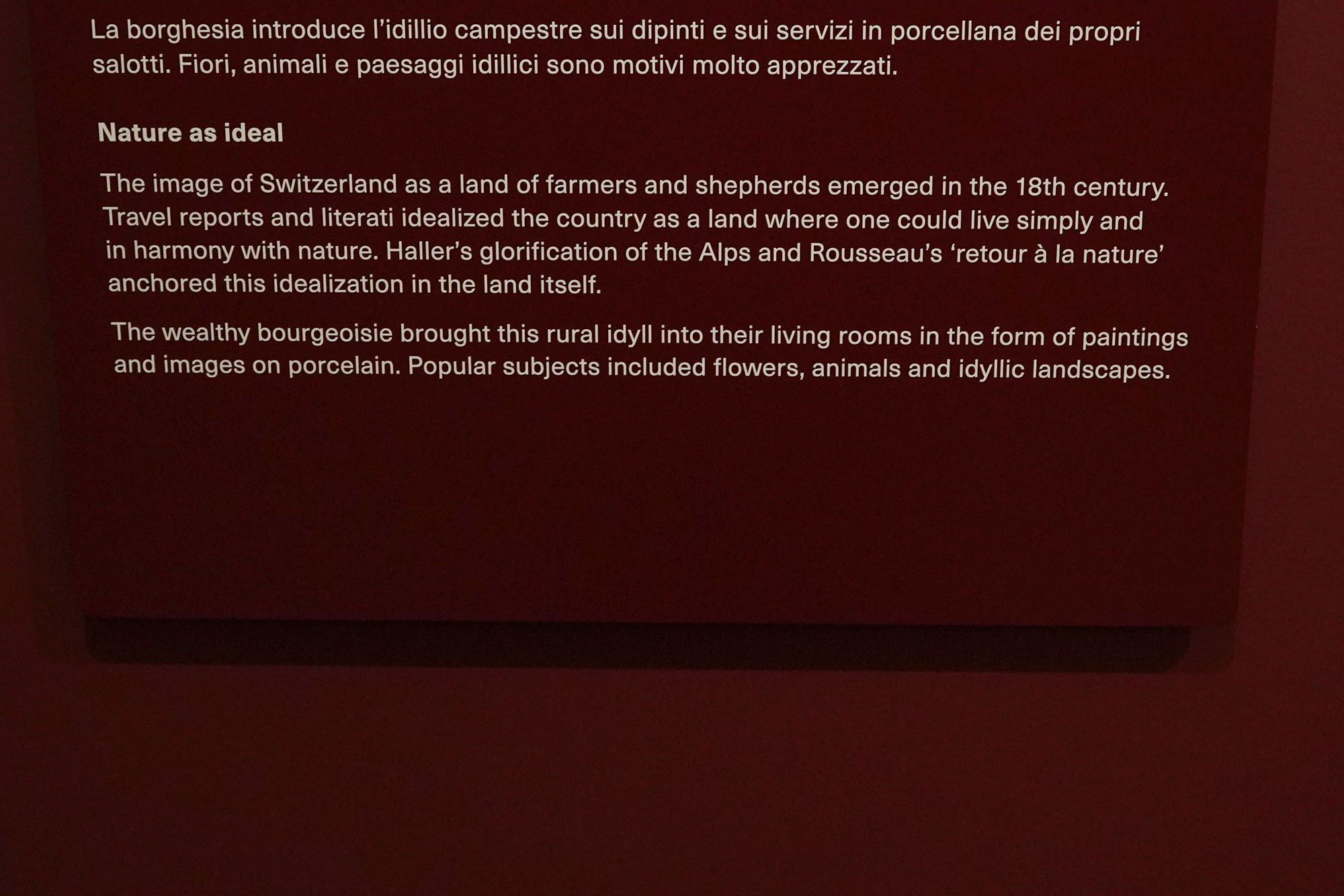
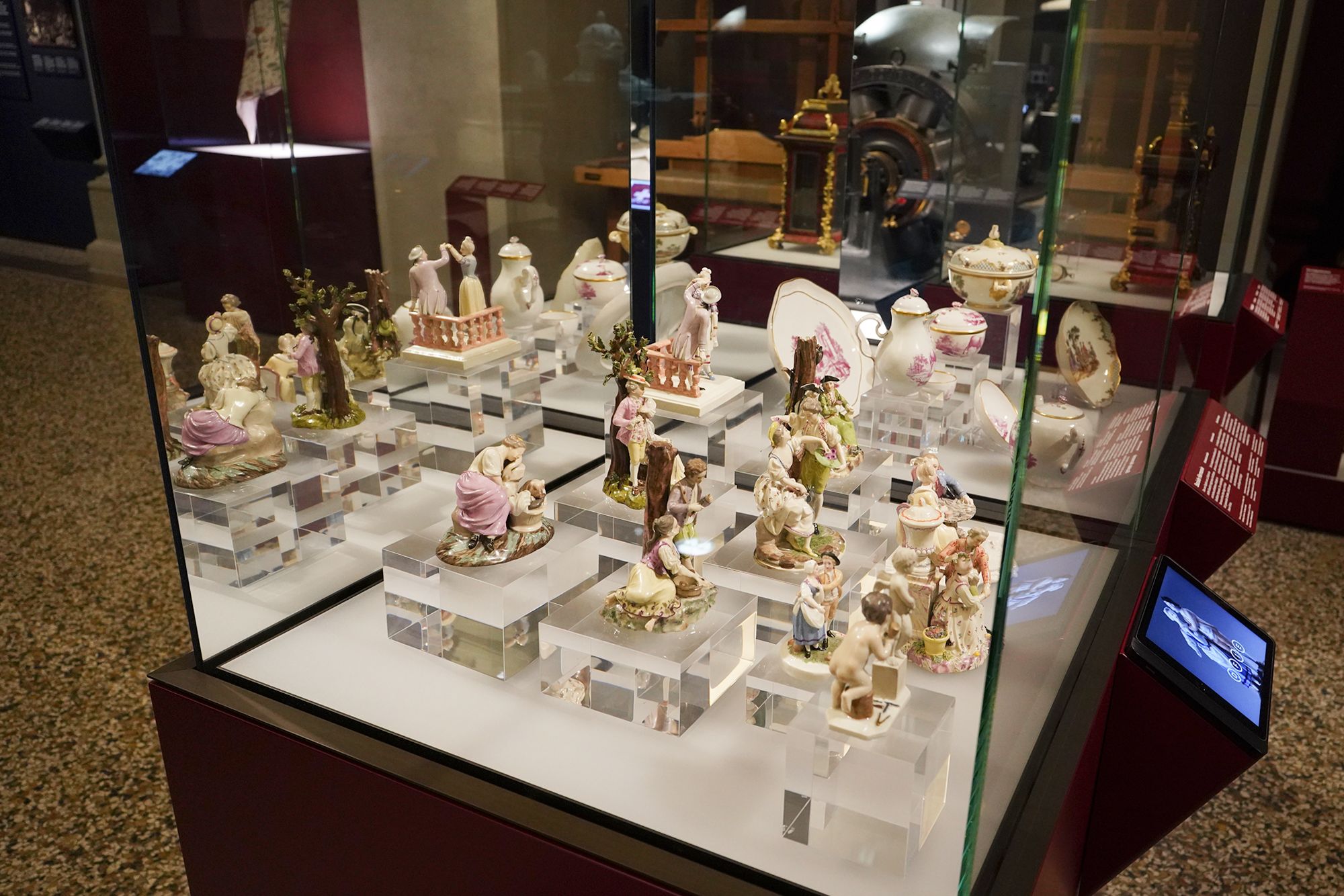
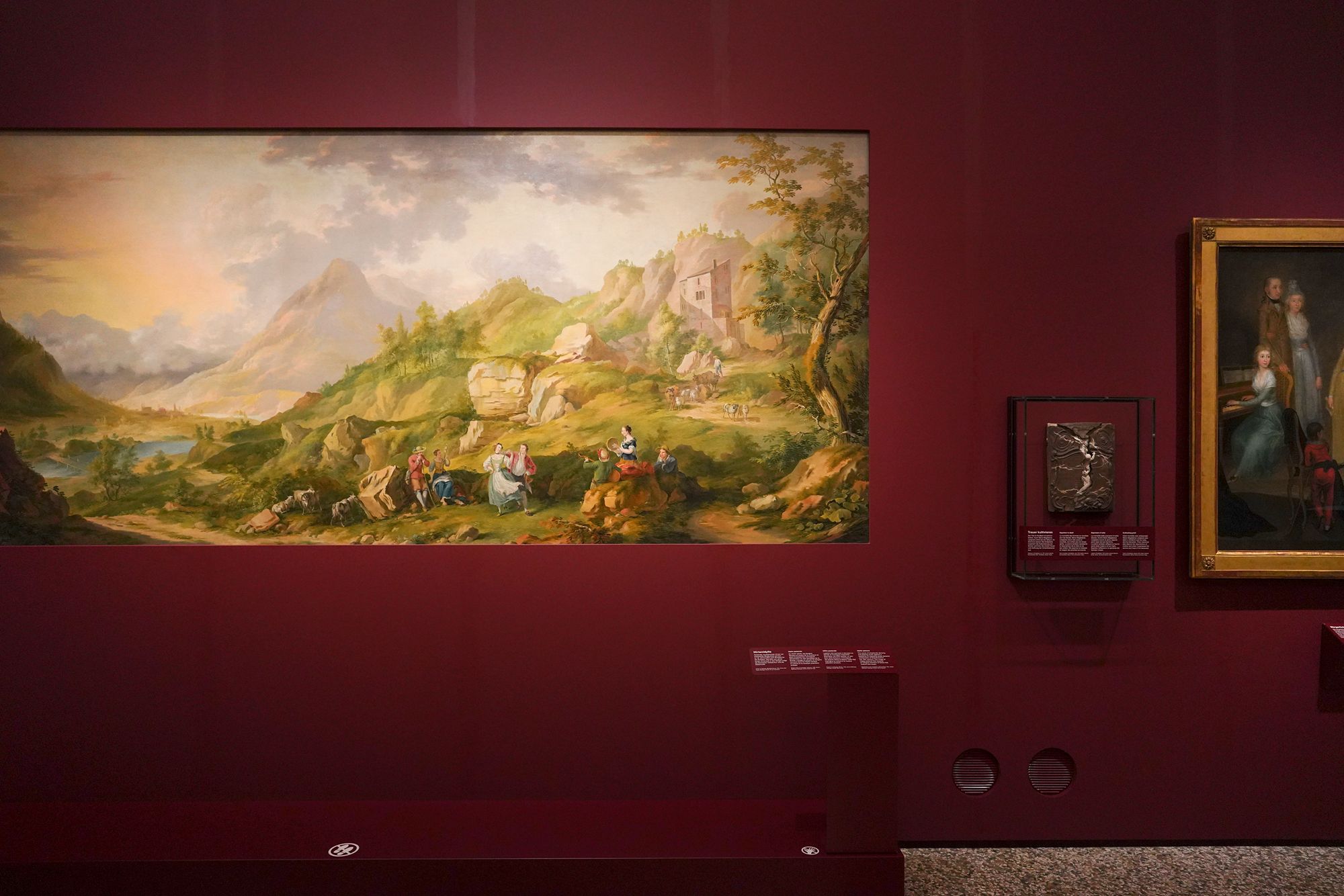
In the 18th century, writers and travelers portrayed Switzerland as a peaceful land of farmers, shepherds, and Alpine scenery. Wealthy families brought this idealized view of nature into their homes through paintings and porcelain decorated with flowers, animals, and landscapes.
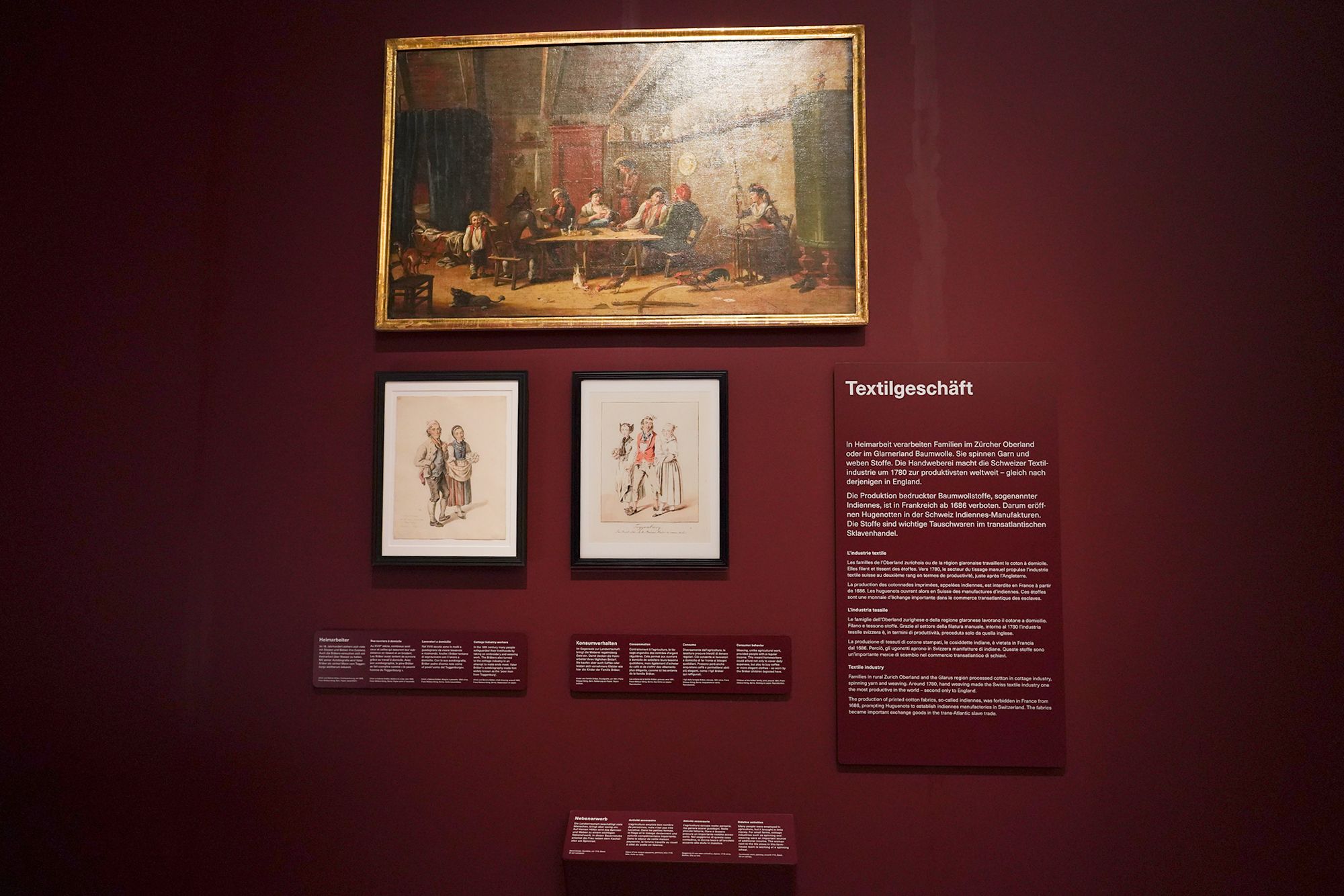
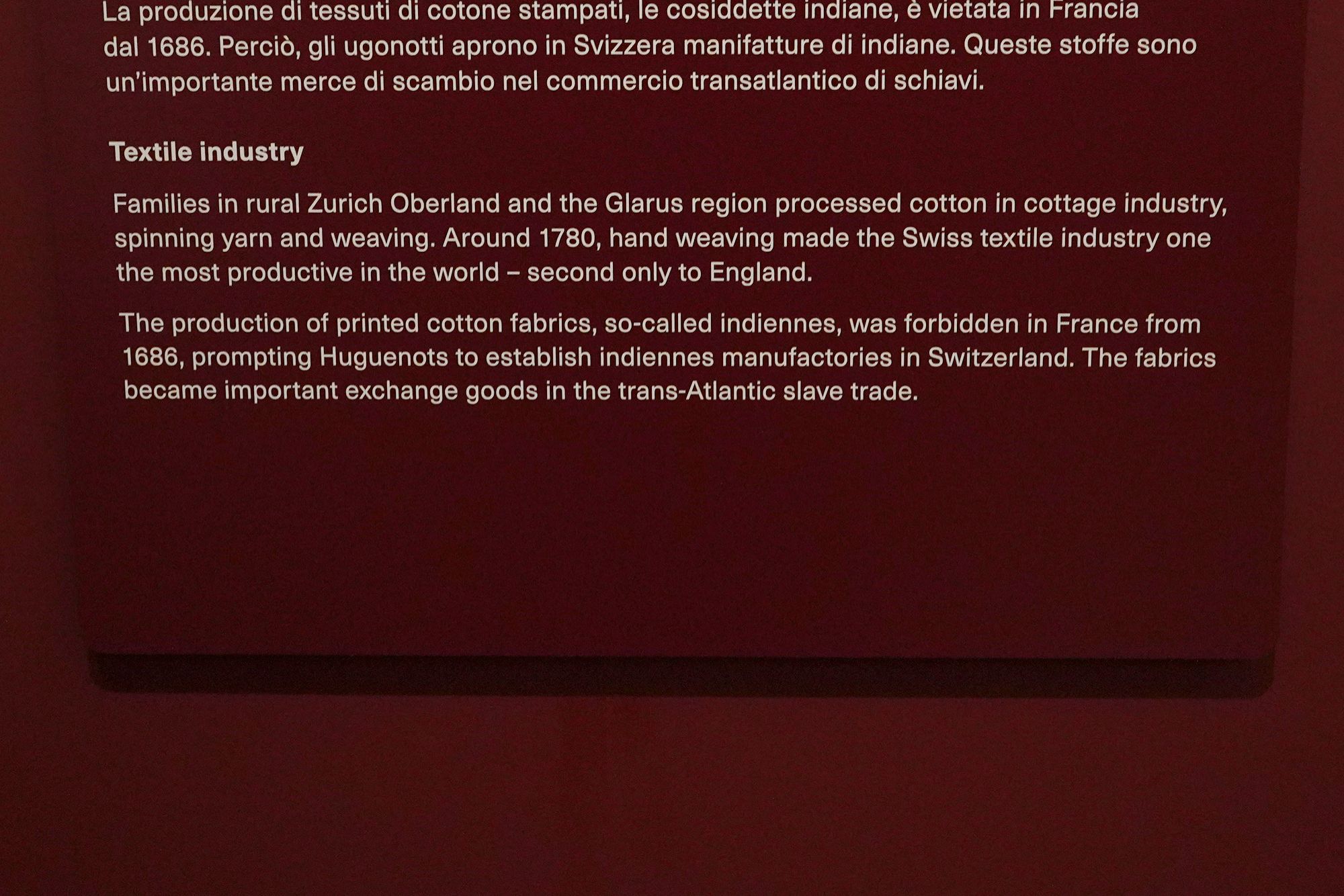
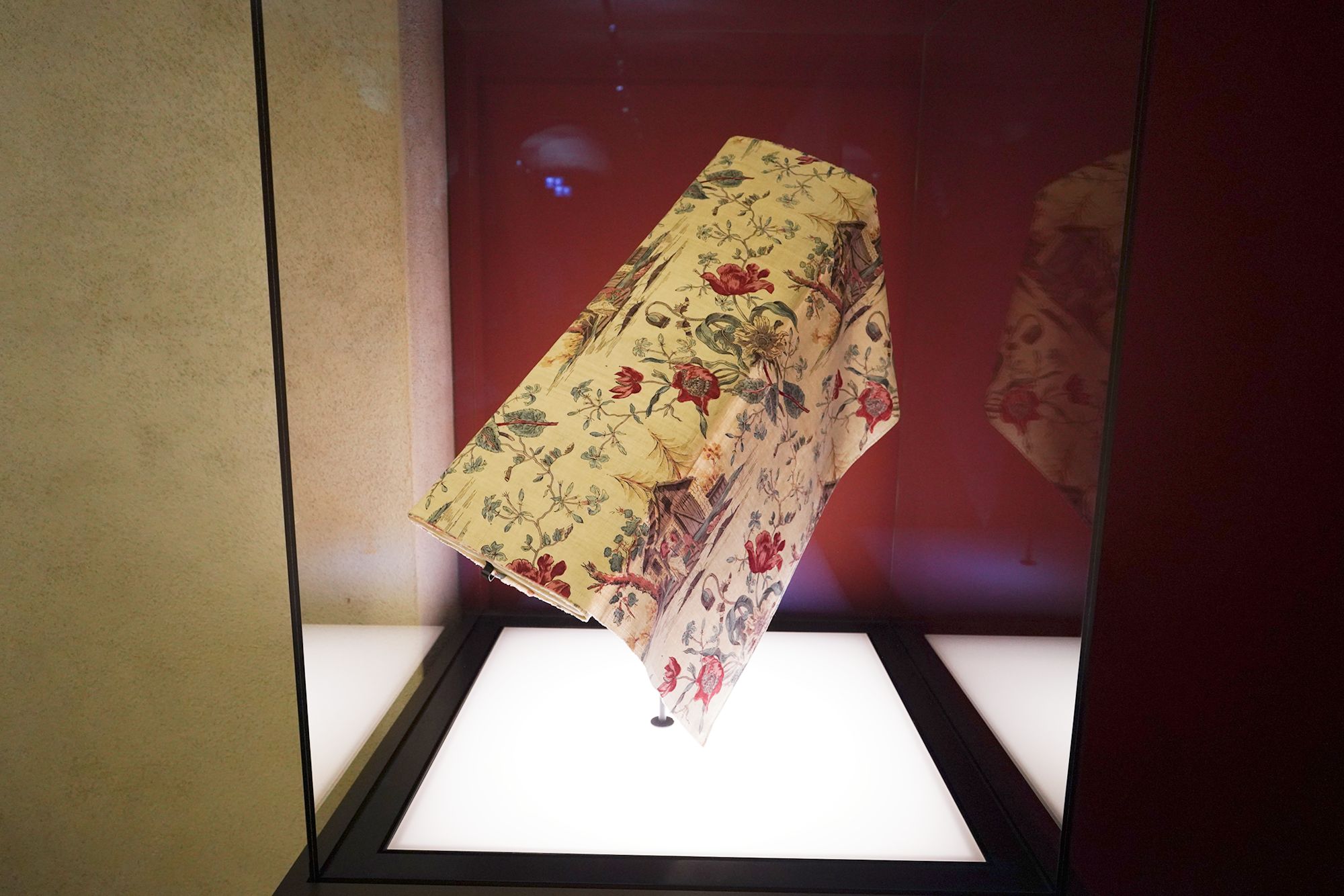
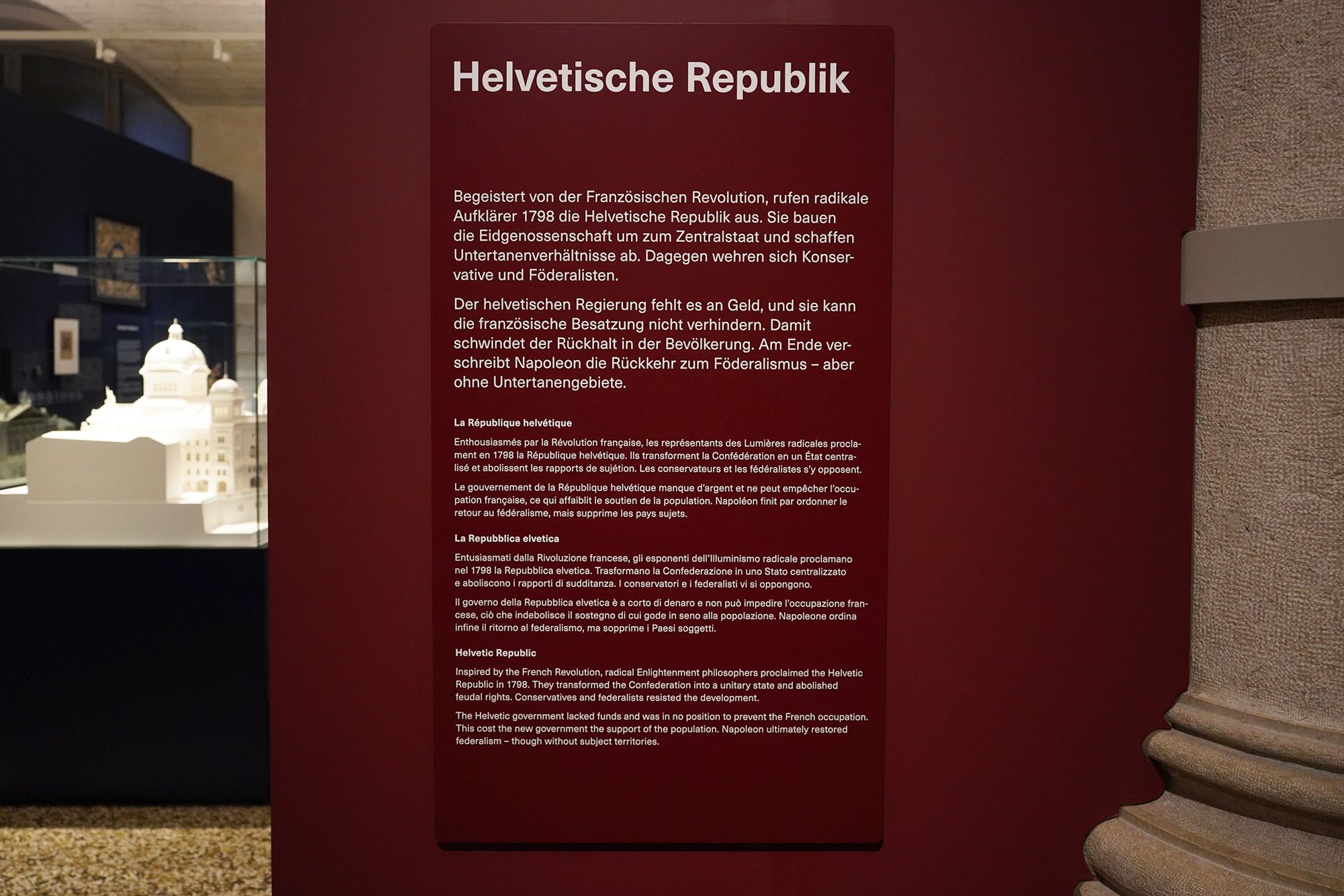
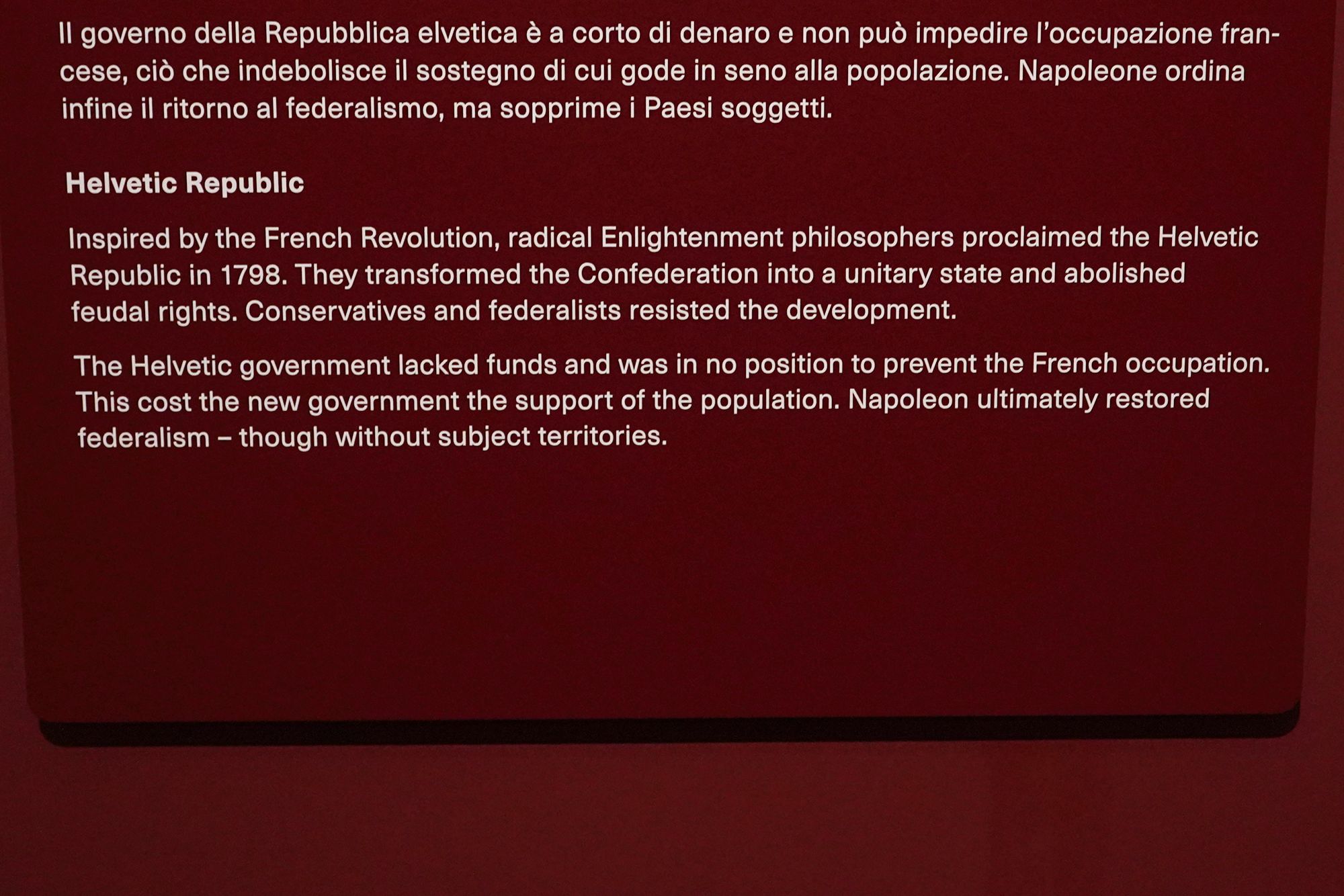
Inspired by the French Revolution, reformers established the Helvetic Republic in 1798, replacing the old Confederation with a centralized state and ending feudal rights. Opposition, financial troubles, and French occupation weakened it. Napoleon later restored Switzerland’s federal system, but the former subject territories did not return.
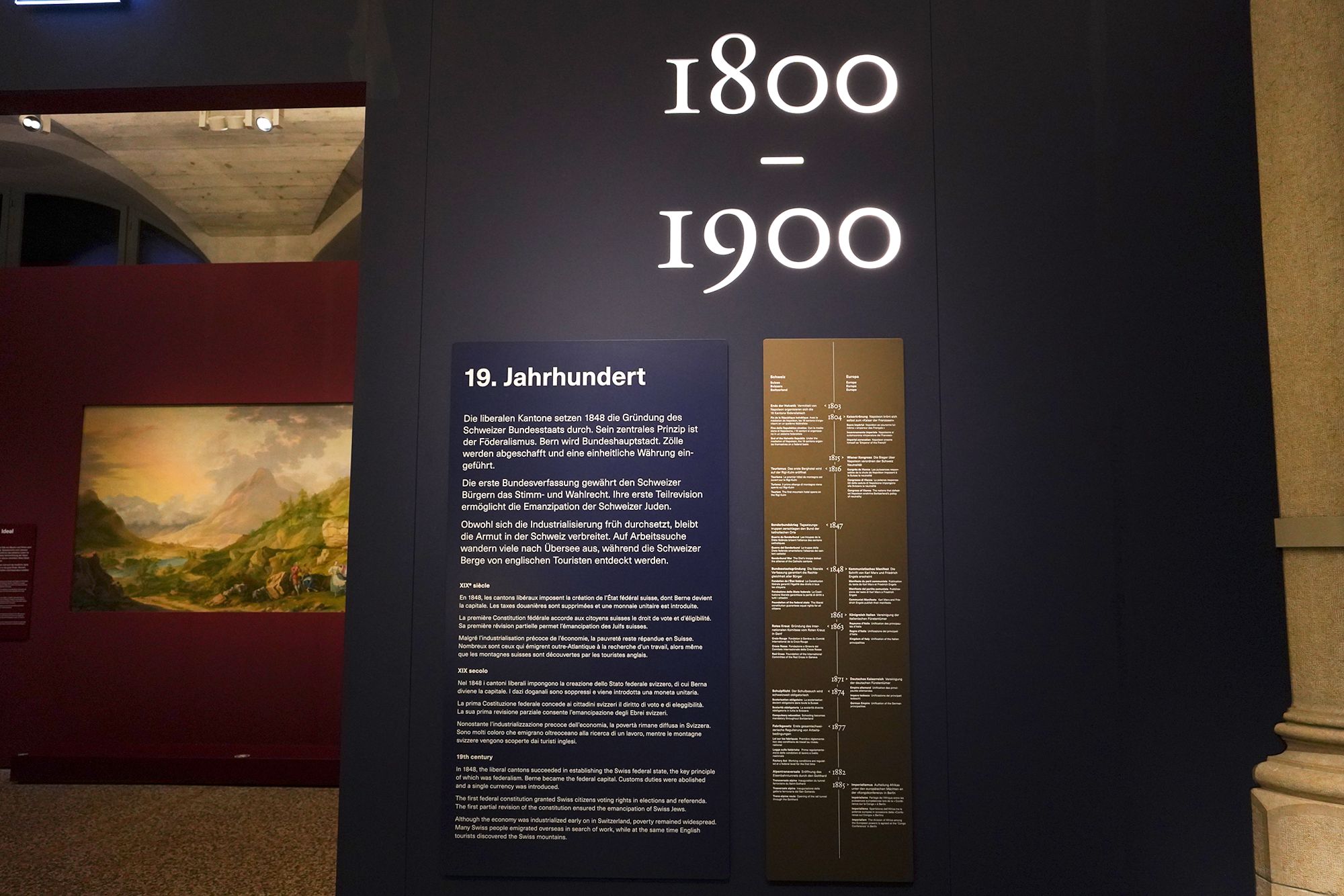
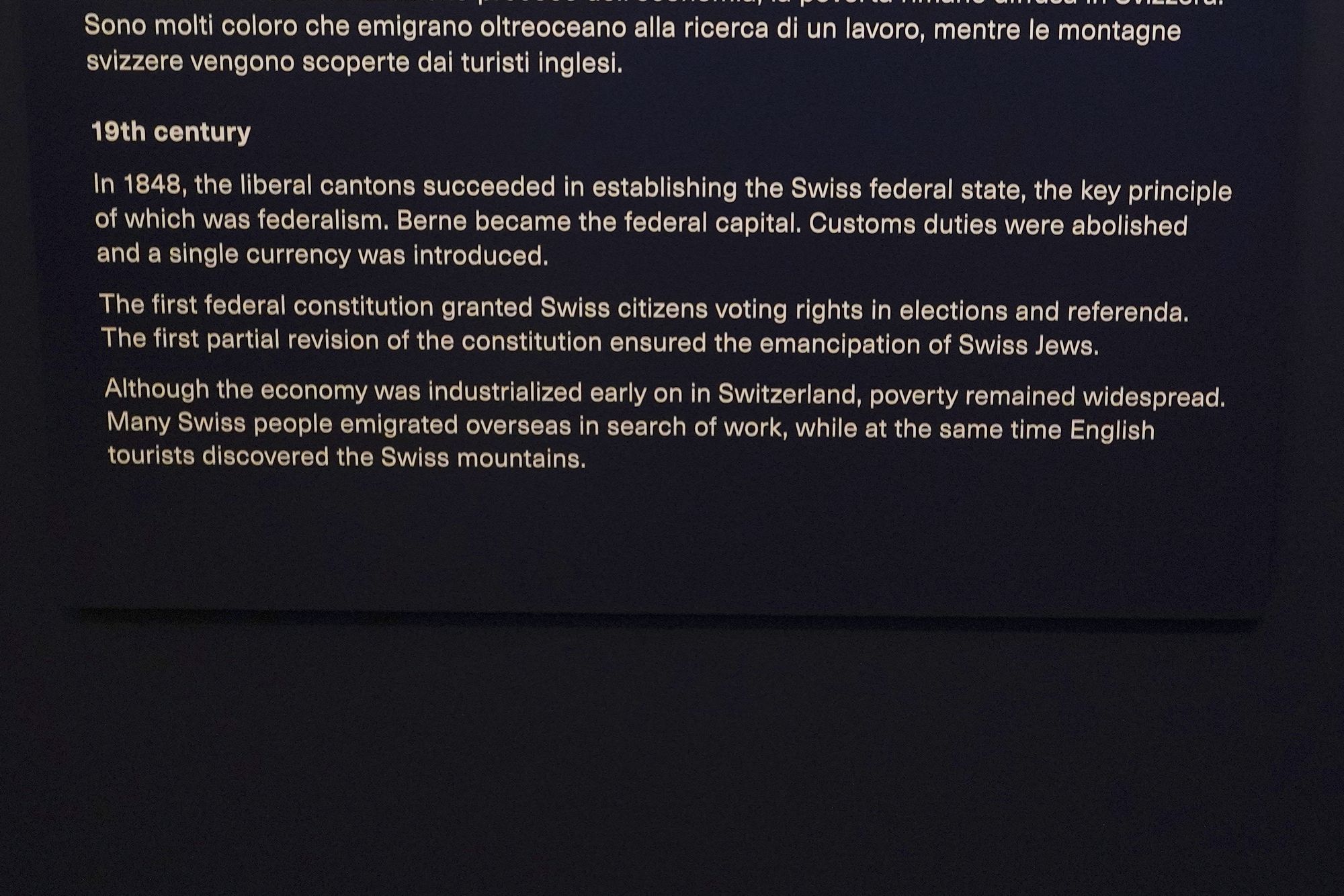
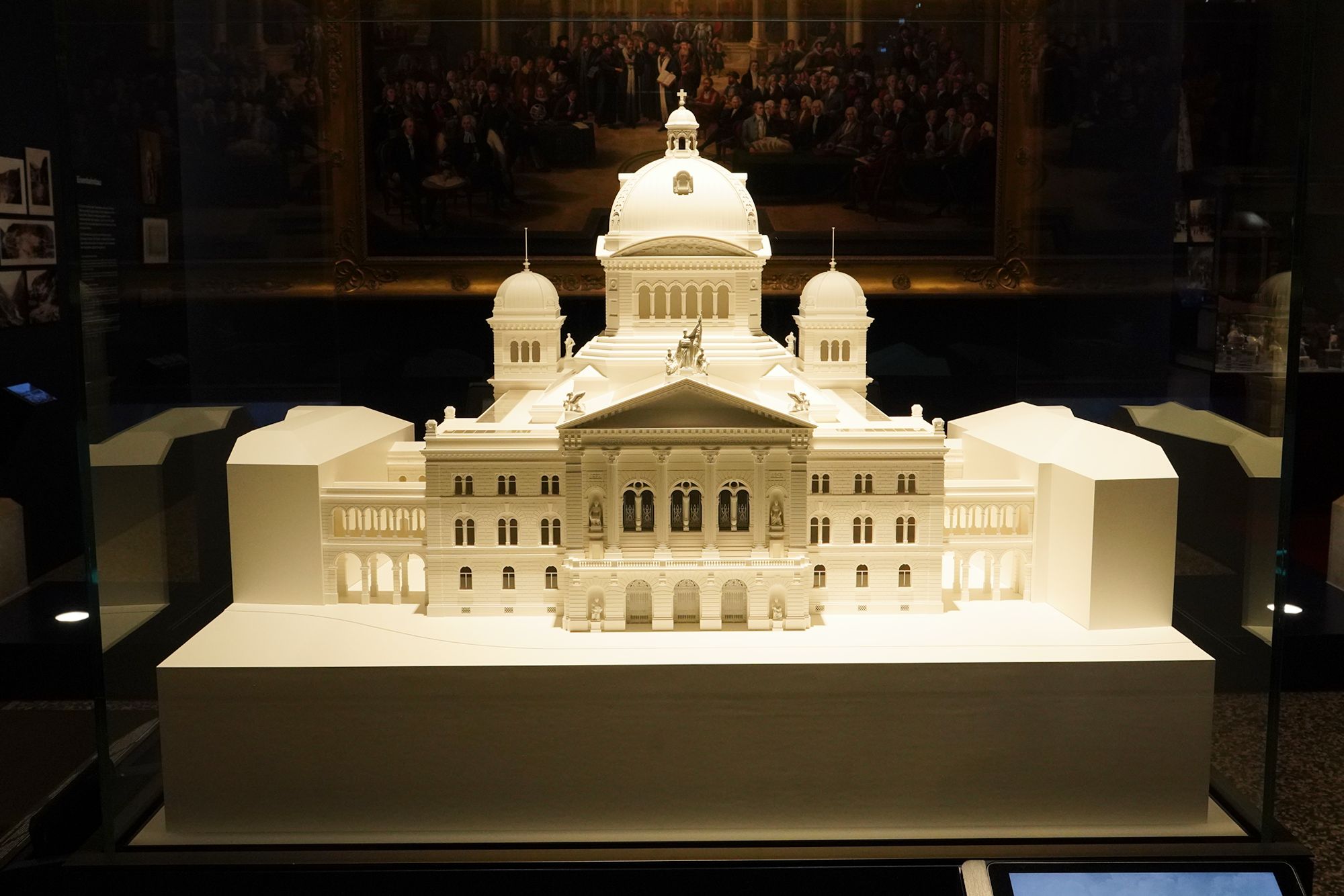
In 1848, Switzerland became a federal state, with Bern as its capital and a shared currency. Industrialization brought change, but poverty remained widespread, prompting many Swiss people to seek work overseas. At the same time, English visitors began traveling to the Swiss mountains.
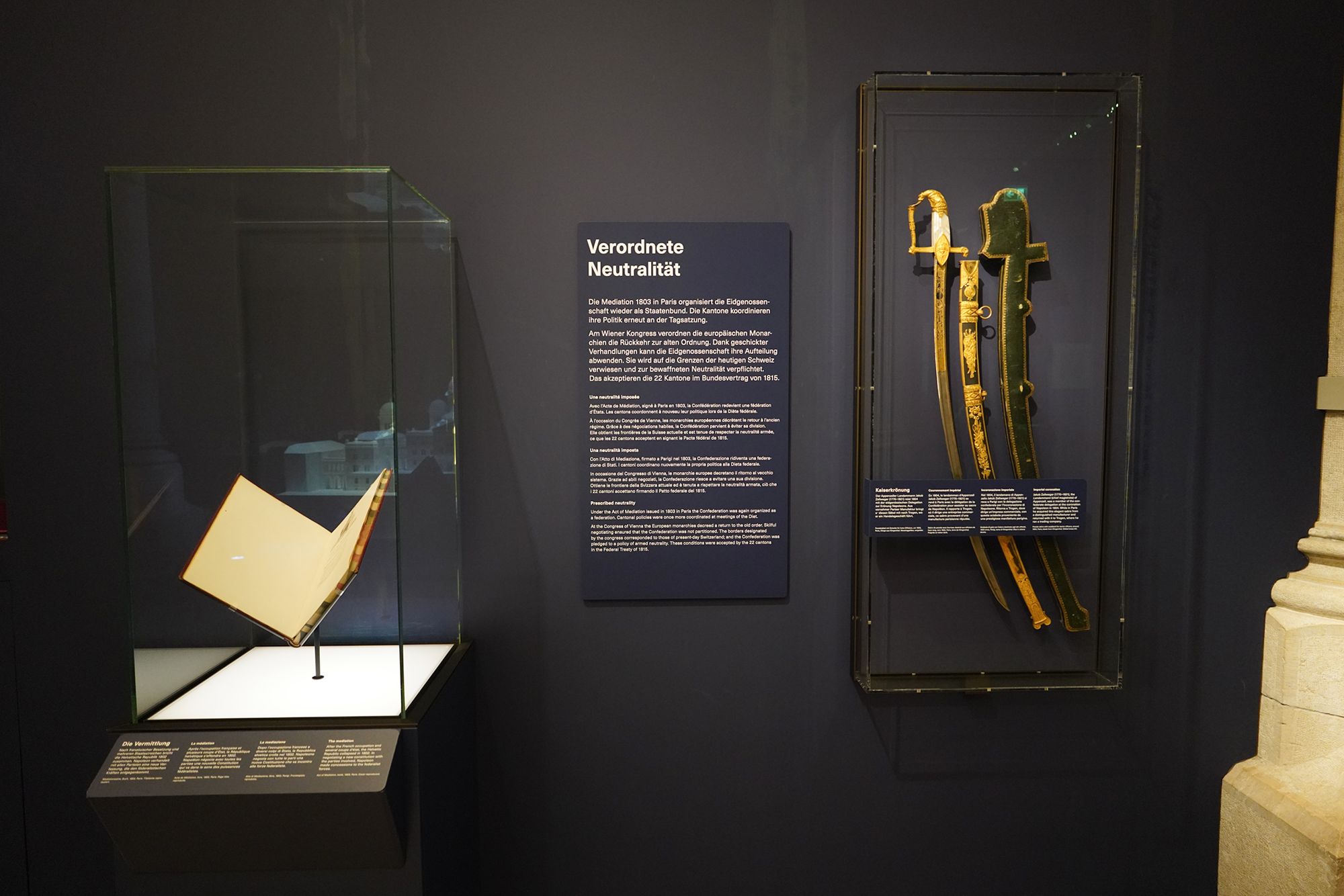
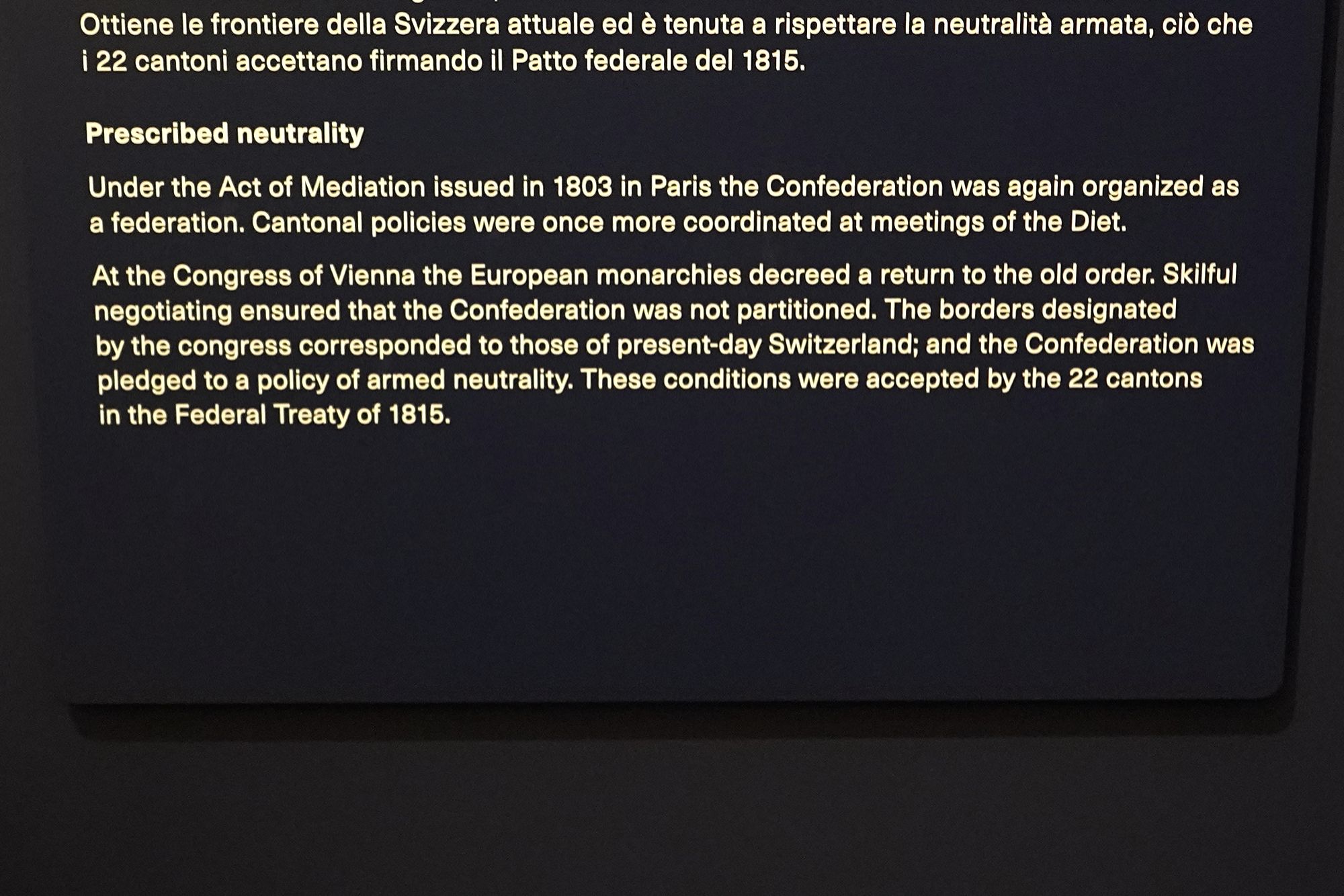
In 1803, Napoleon’s Act of Mediation restored Switzerland as a federation of cantons. After his defeat, the Congress of Vienna recognized borders close to those of present-day Switzerland and affirmed its armed neutrality. The 22 cantons accepted these arrangements in the Federal Treaty of 1815.
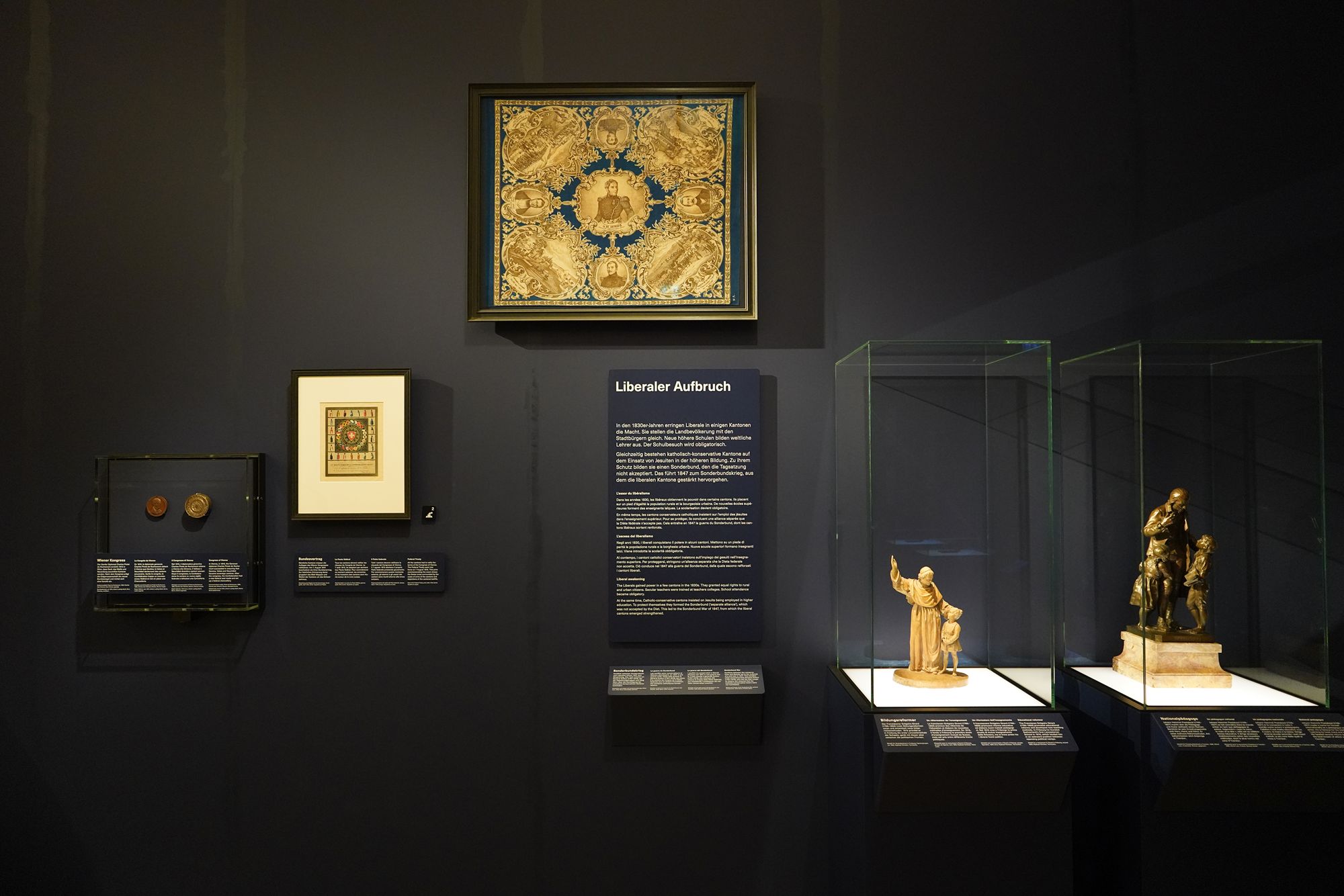
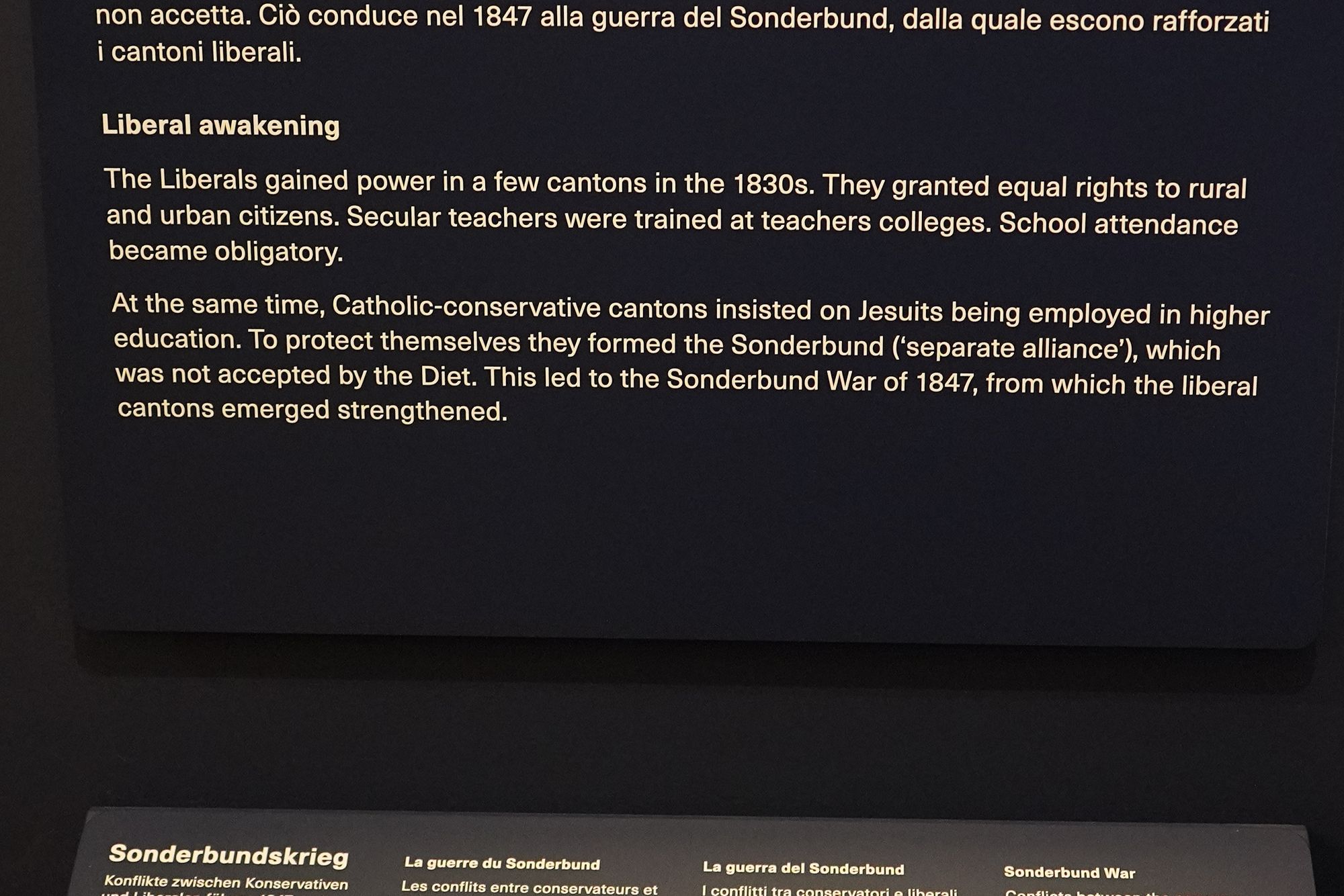
In the 1830s, liberal cantons introduced reforms such as equal rights for rural and urban citizens and compulsory schooling. Catholic conservative cantons resisted some changes and formed a separate alliance, the Sonderbund. The resulting war in 1847 strengthened the liberals and paved the way for the federal state established the following year.
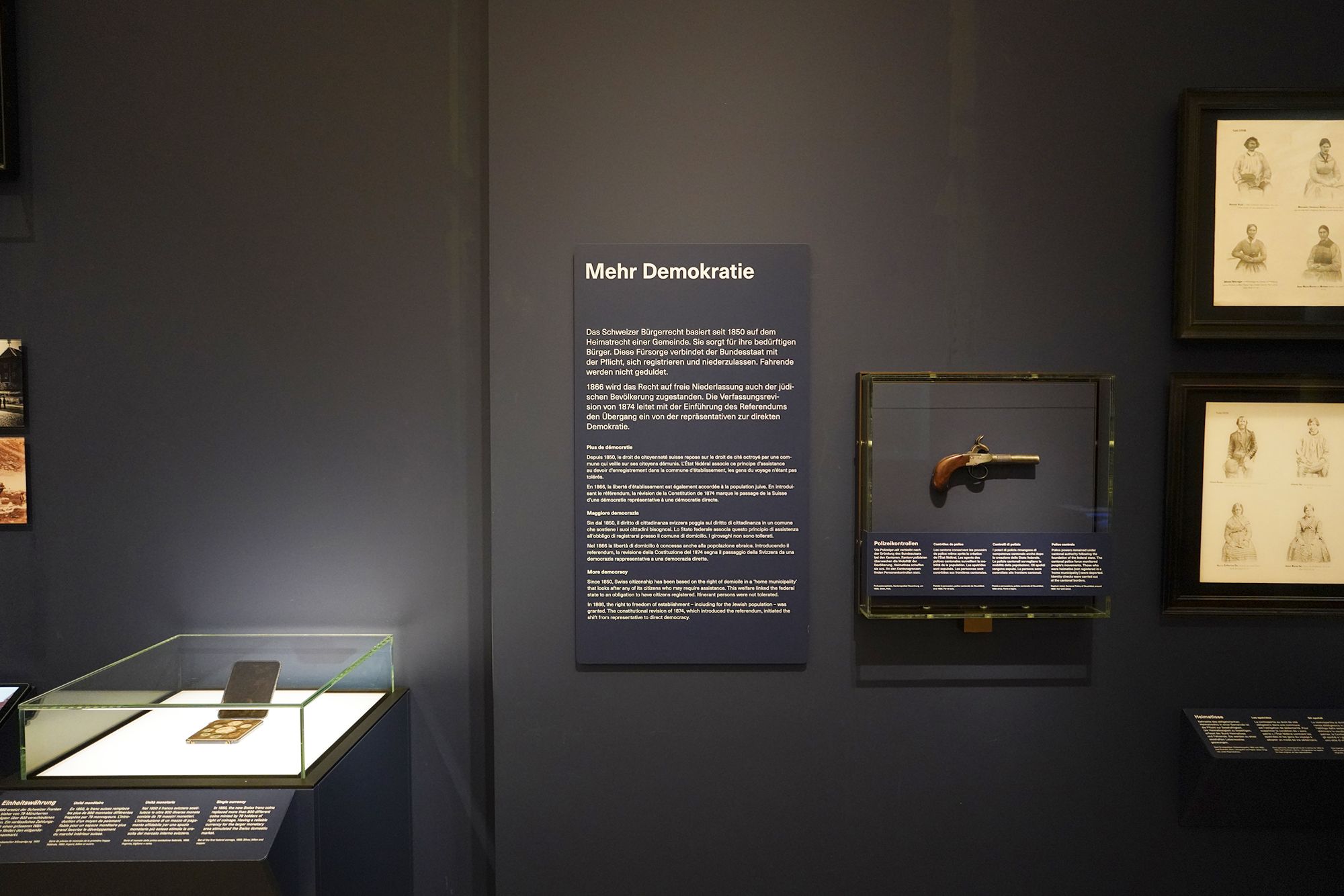
In the mid-19th century, Switzerland expanded civil rights, including freedom to settle anywhere in the country for Jewish citizens in 1866. A constitutional revision in 1874 introduced the referendum, giving citizens a more direct role in federal decisions.
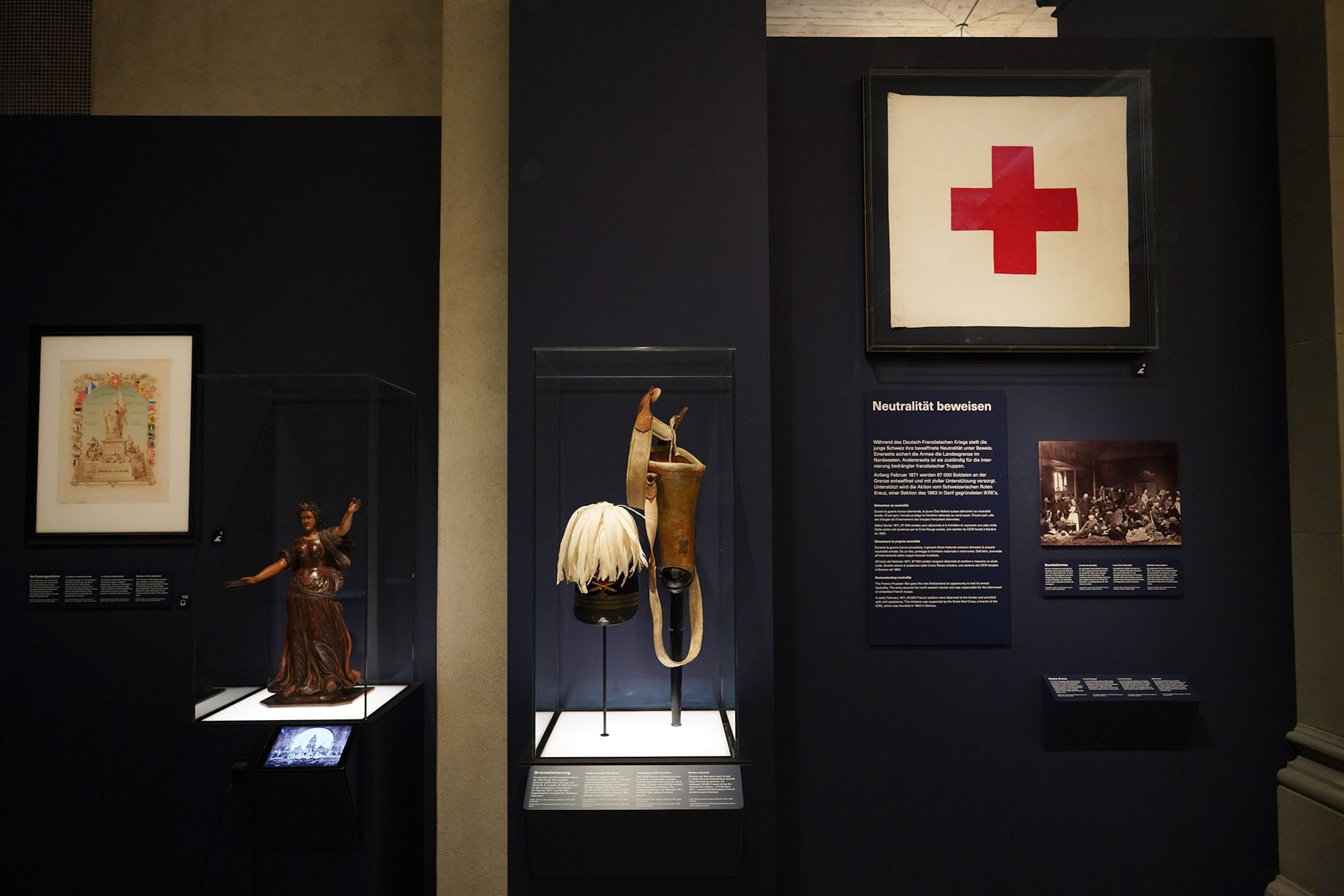
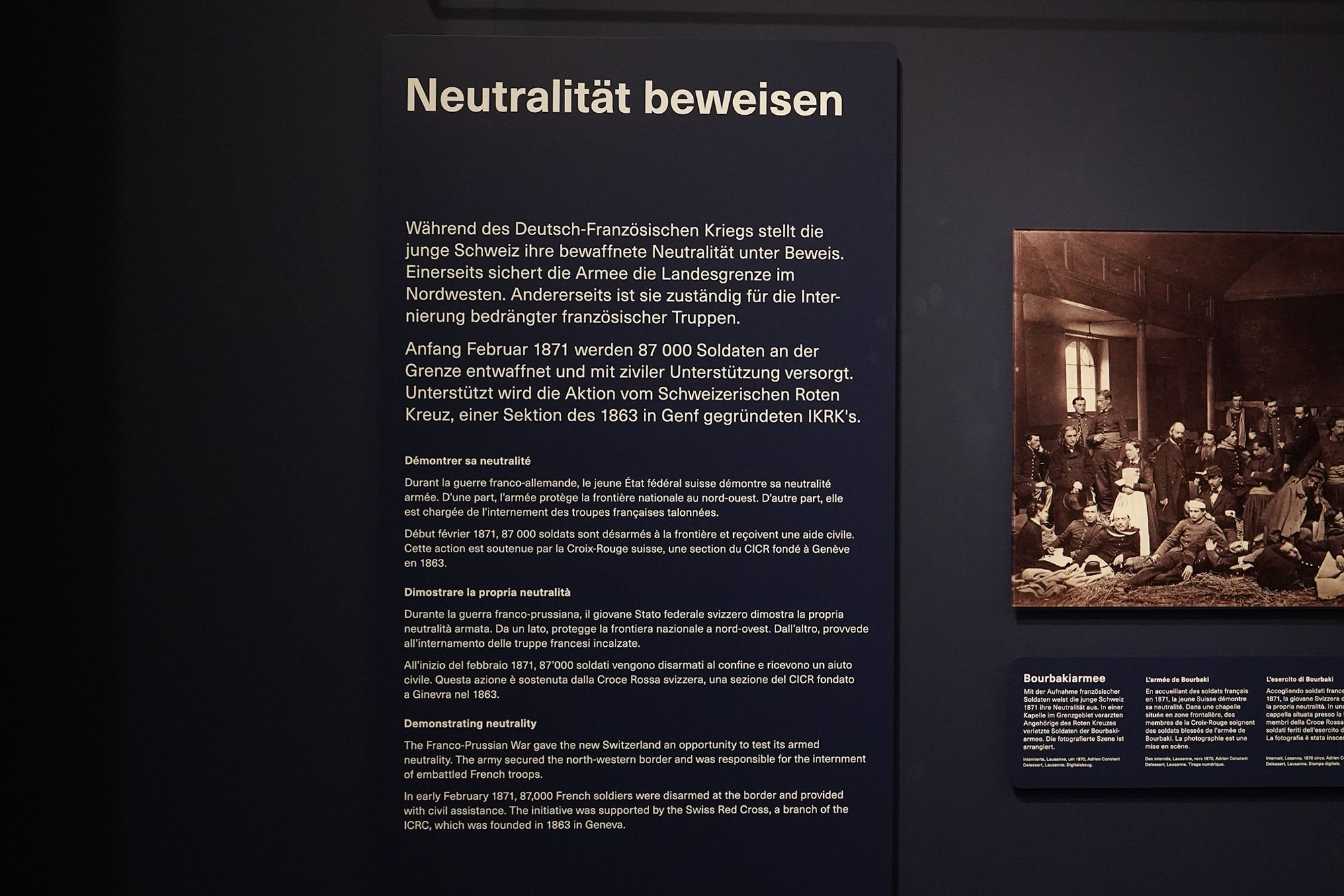
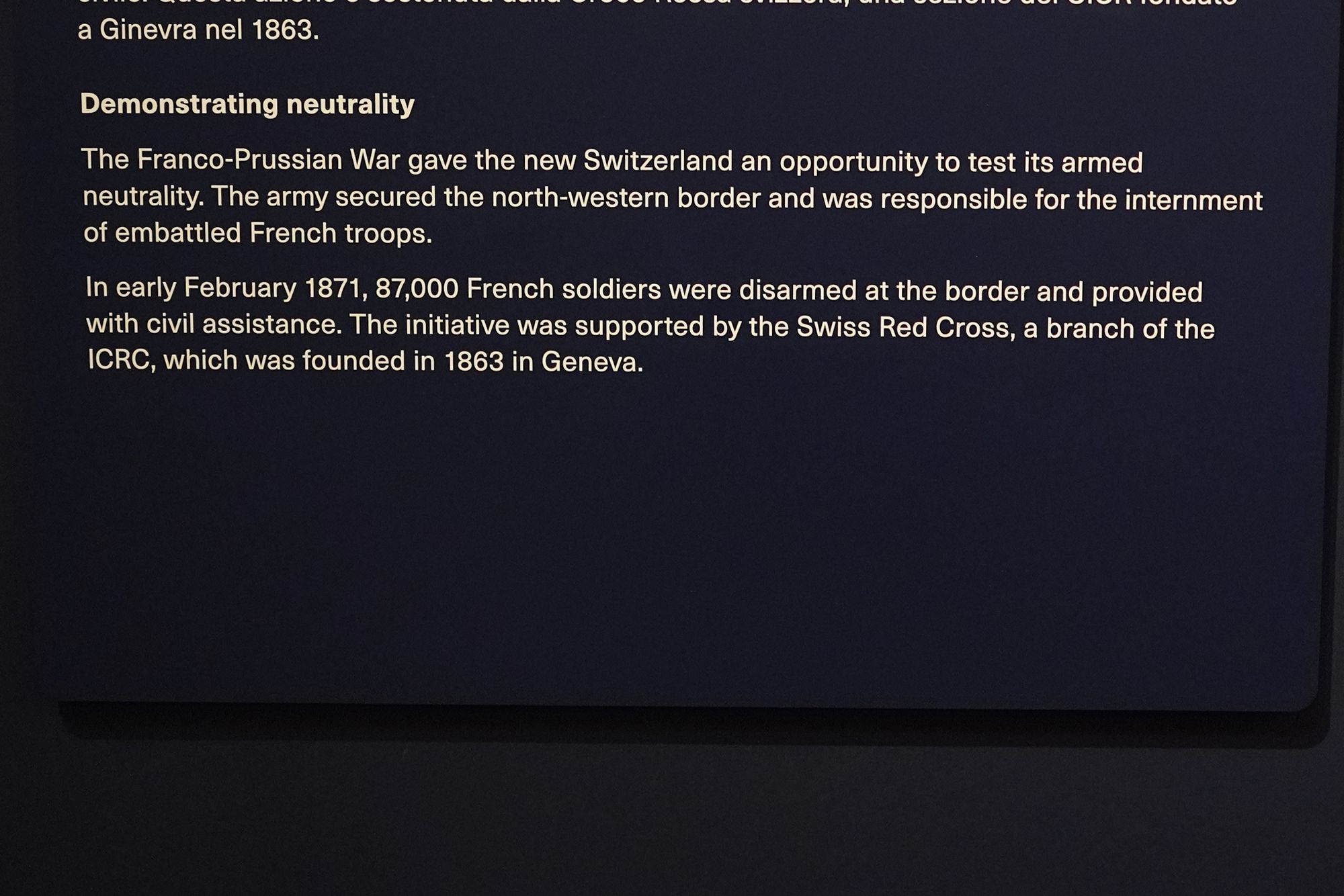
During the Franco-Prussian War, Switzerland put its armed neutrality into practice by securing its border and taking in French troops. In February 1871, about 87,000 French soldiers crossed into Switzerland, where they were disarmed and given assistance with support from the Swiss Red Cross.
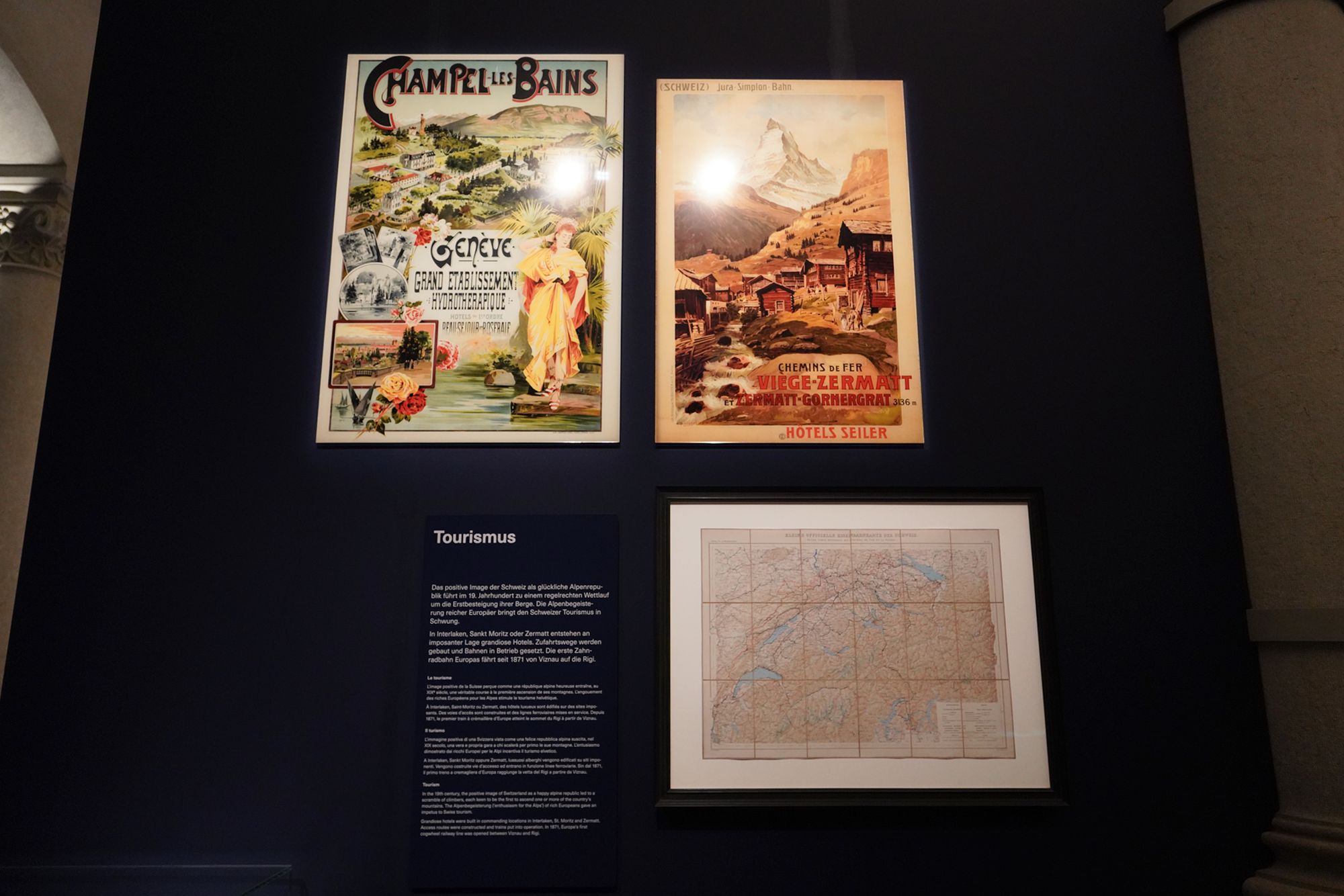
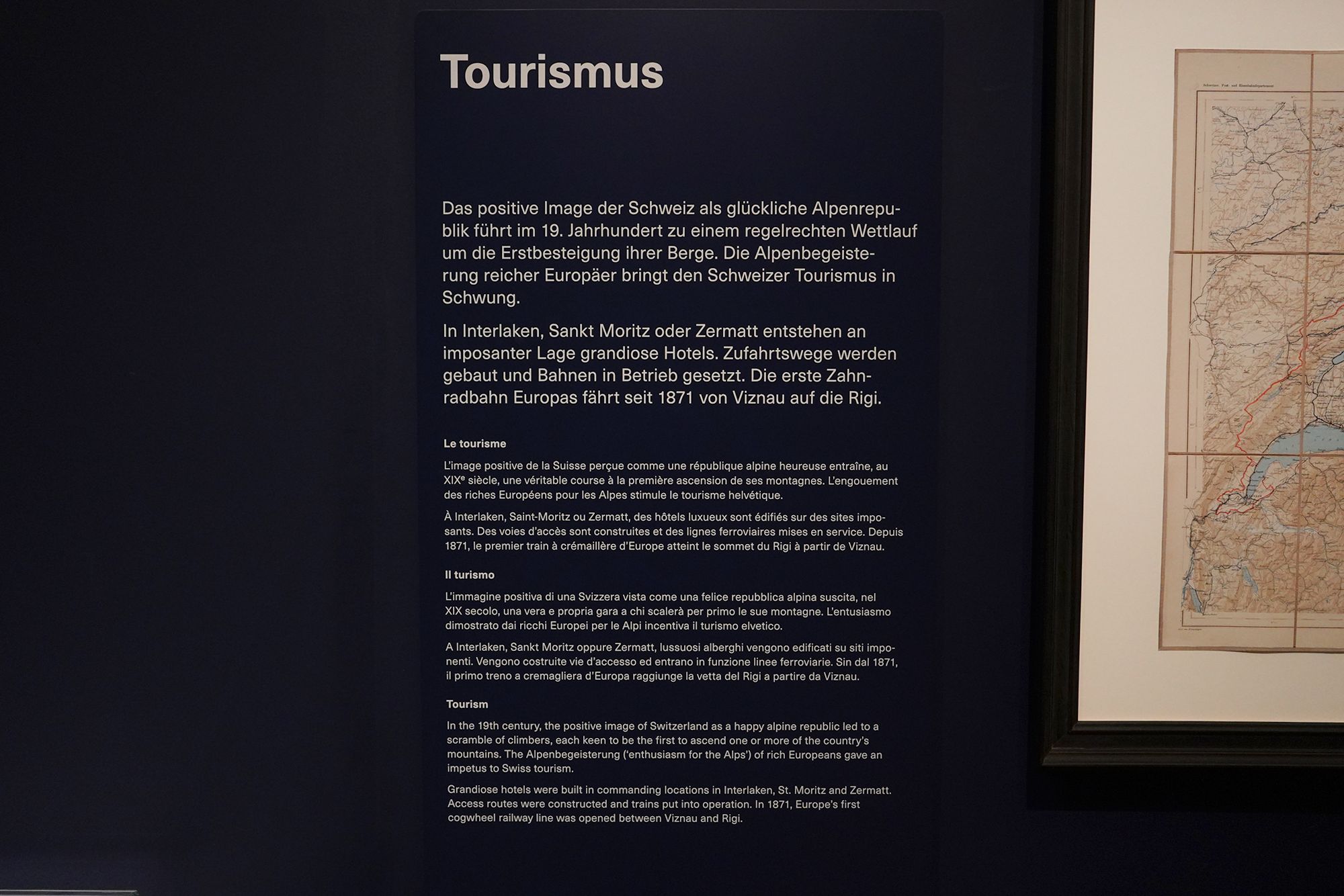
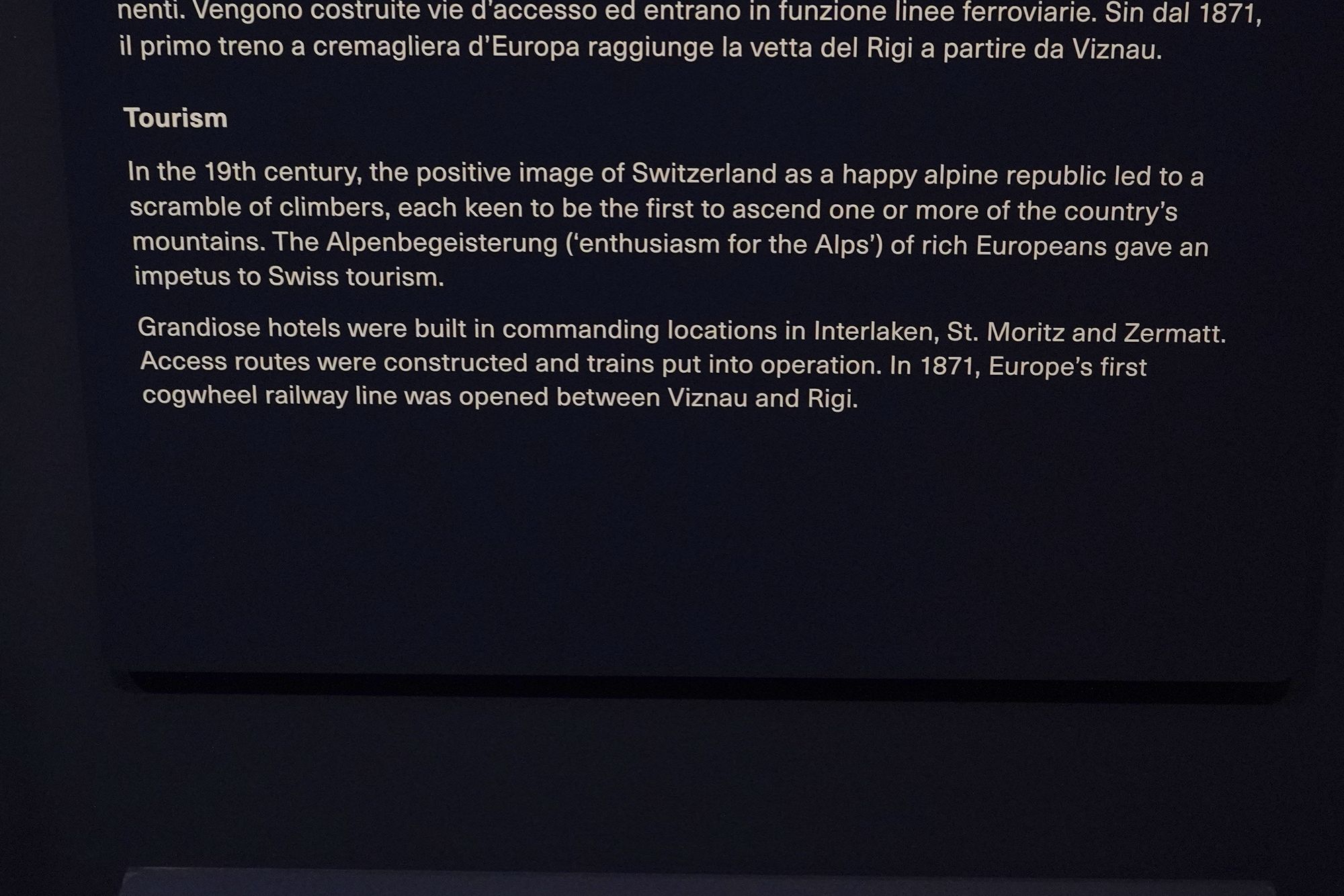
In the 19th century, wealthy European travelers and climbers helped establish Swiss tourism. Hotels, mountain routes, and railways followed. One early milestone was the cogwheel railway from Vitznau up Mount Rigi, which opened in 1871—the same route I took during my visit.
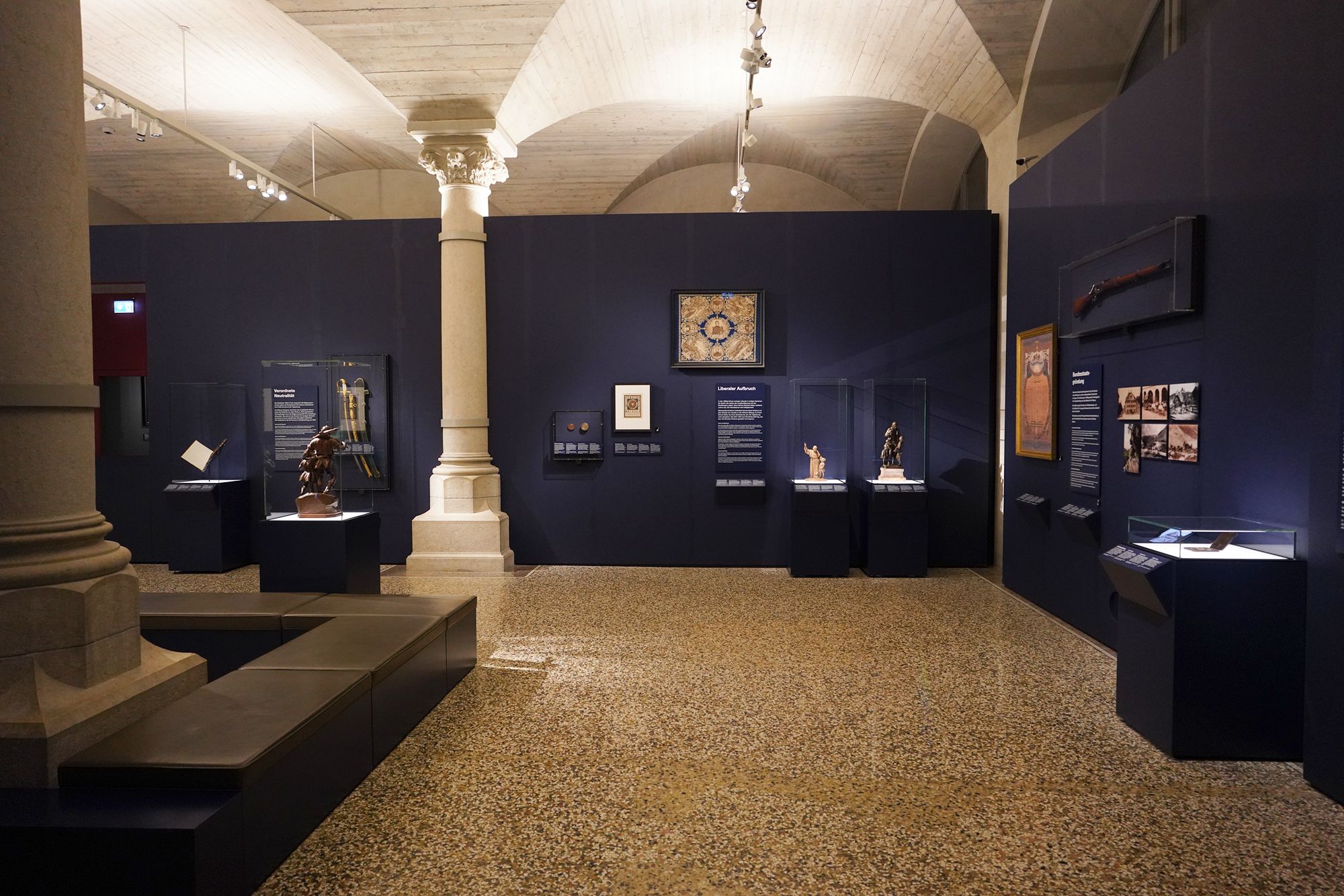
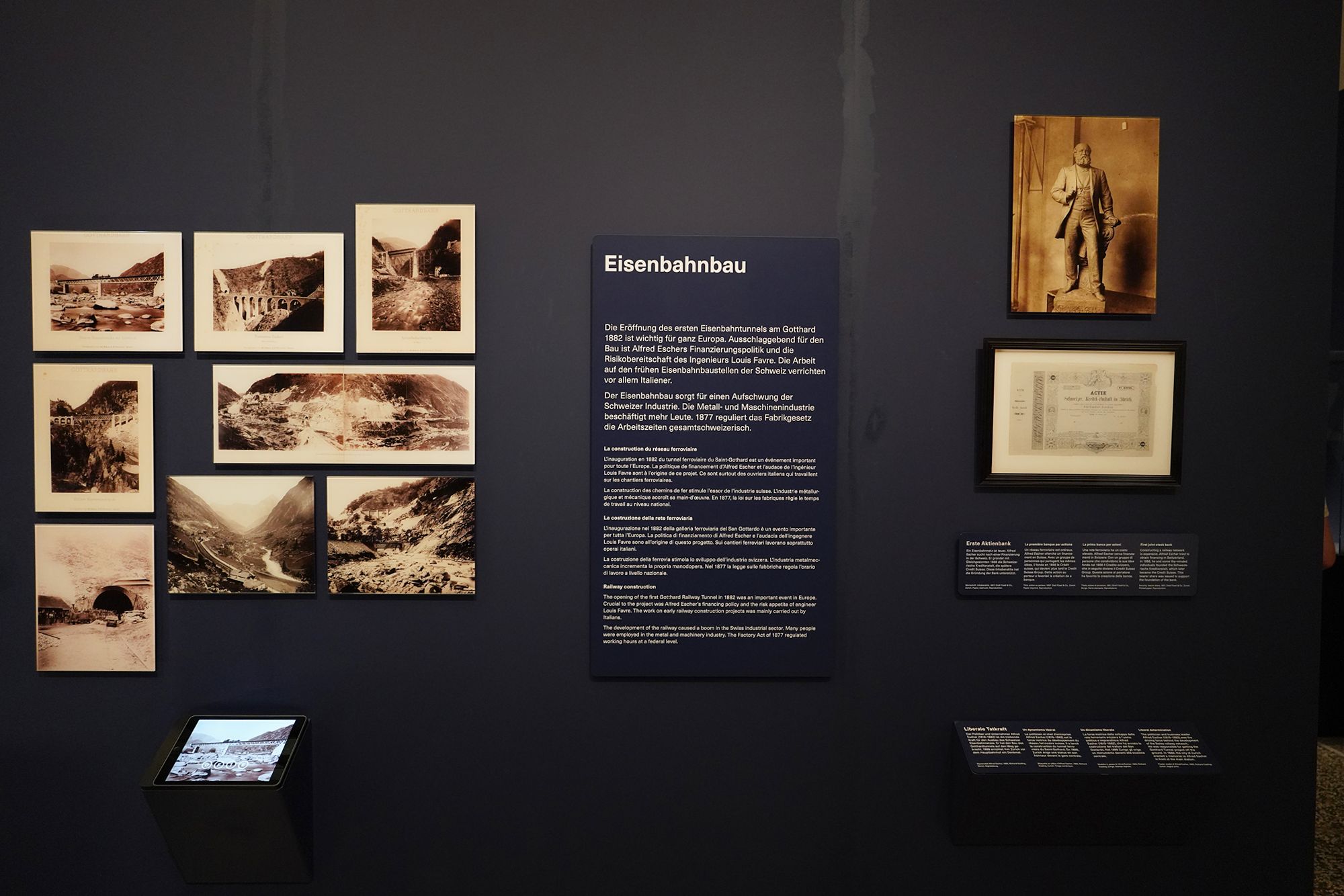
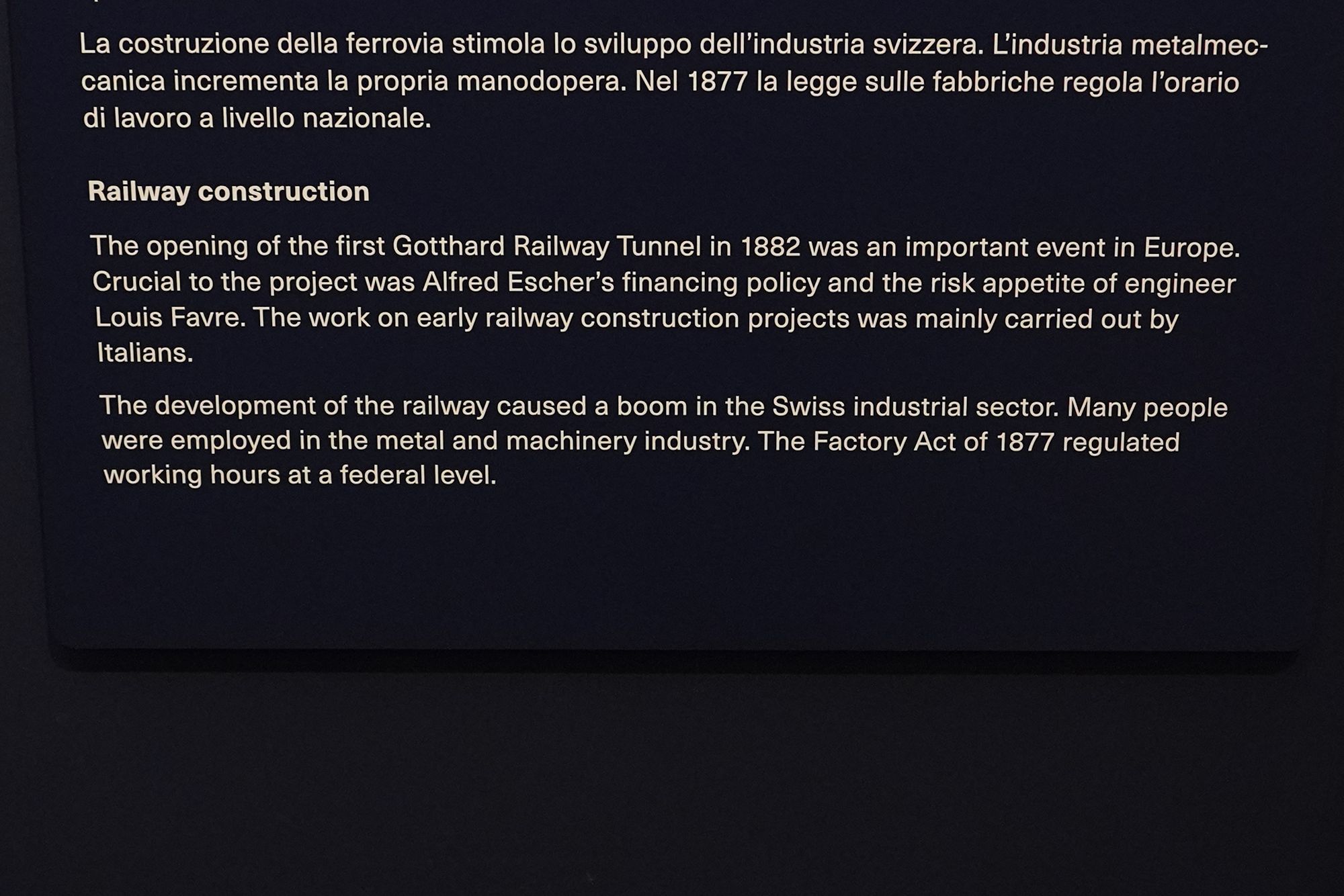
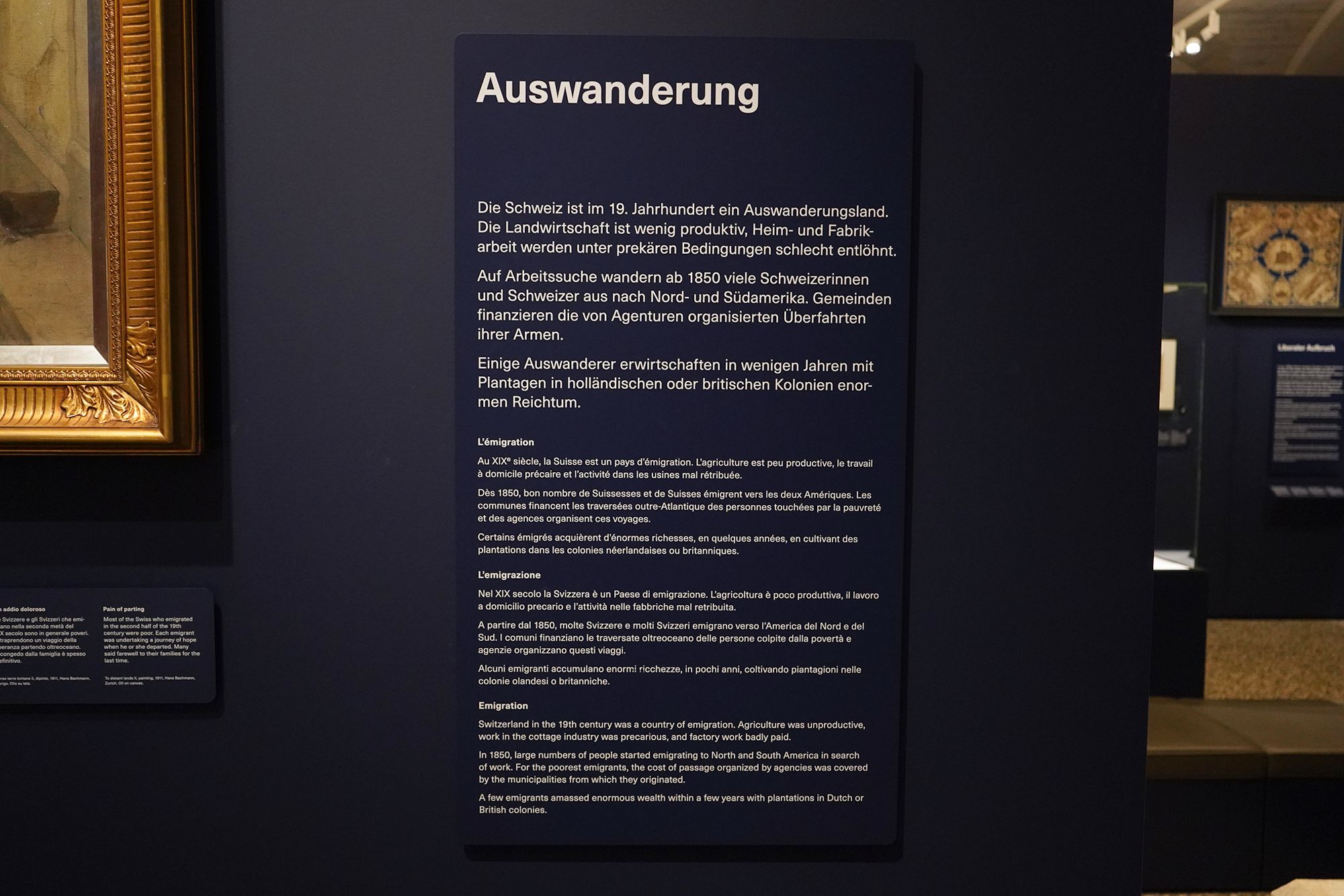
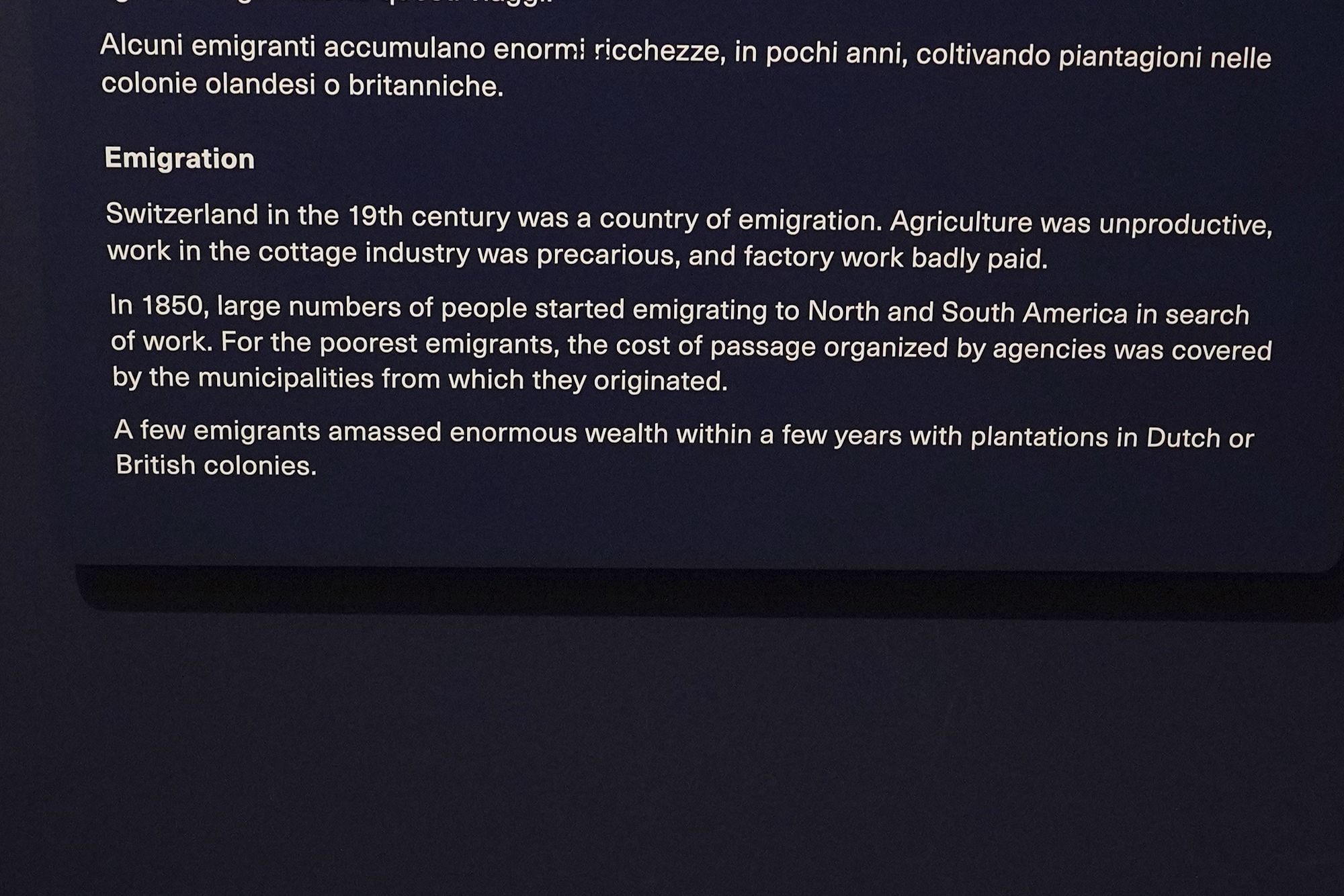
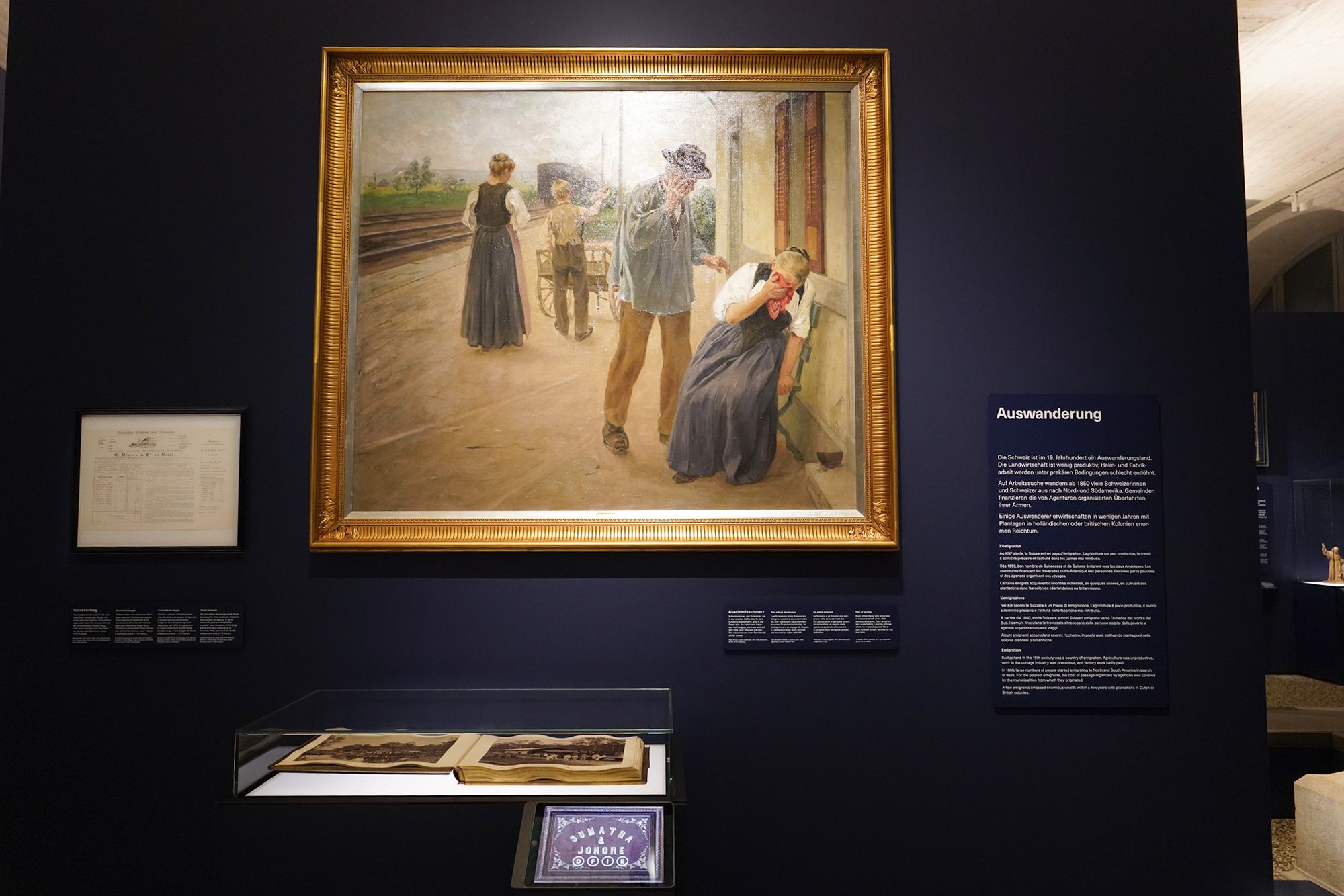
In the 19th century, many Swiss people left home because farming produced little and industrial work paid poorly. From around 1850, large numbers sought work in North and South America. Some municipalities even paid the passage for their poorest residents.

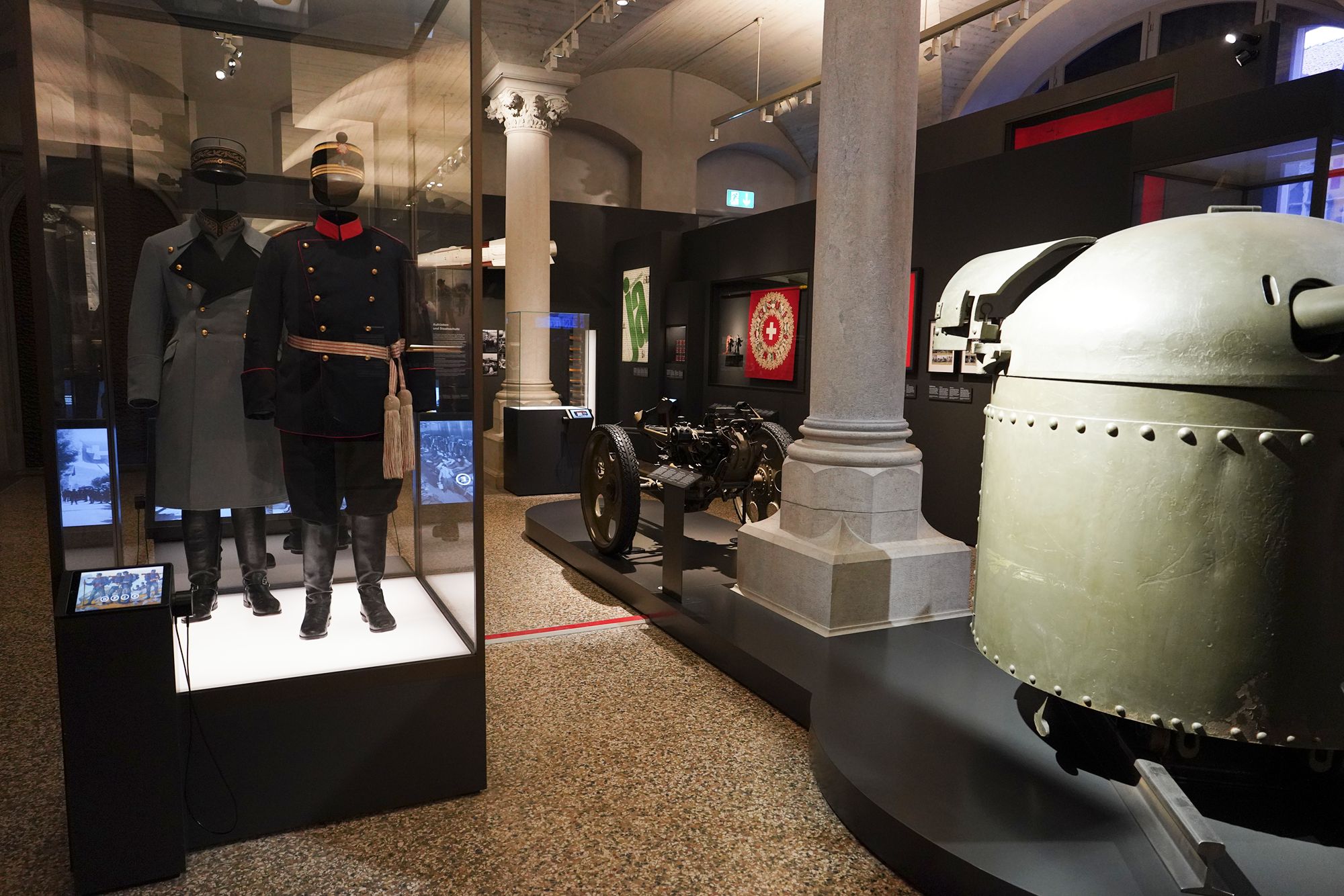
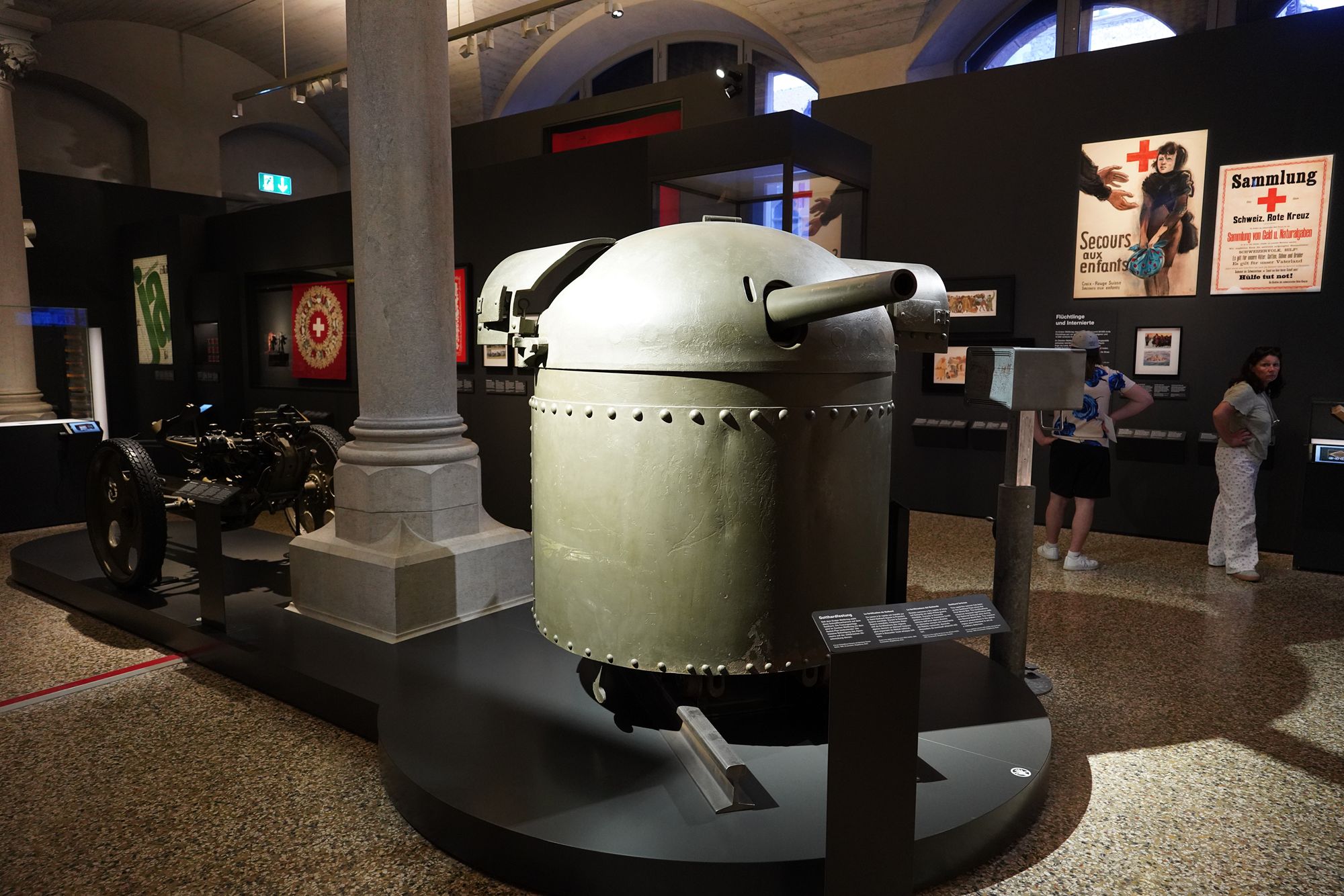
The 20th-century section examines how Switzerland maintained its neutrality through two world wars and the Cold War. It describes the country’s military preparations, trade with warring nations, and refuge offered to some people fleeing conflict. During the Cold War, Switzerland also acted as a diplomatic intermediary.
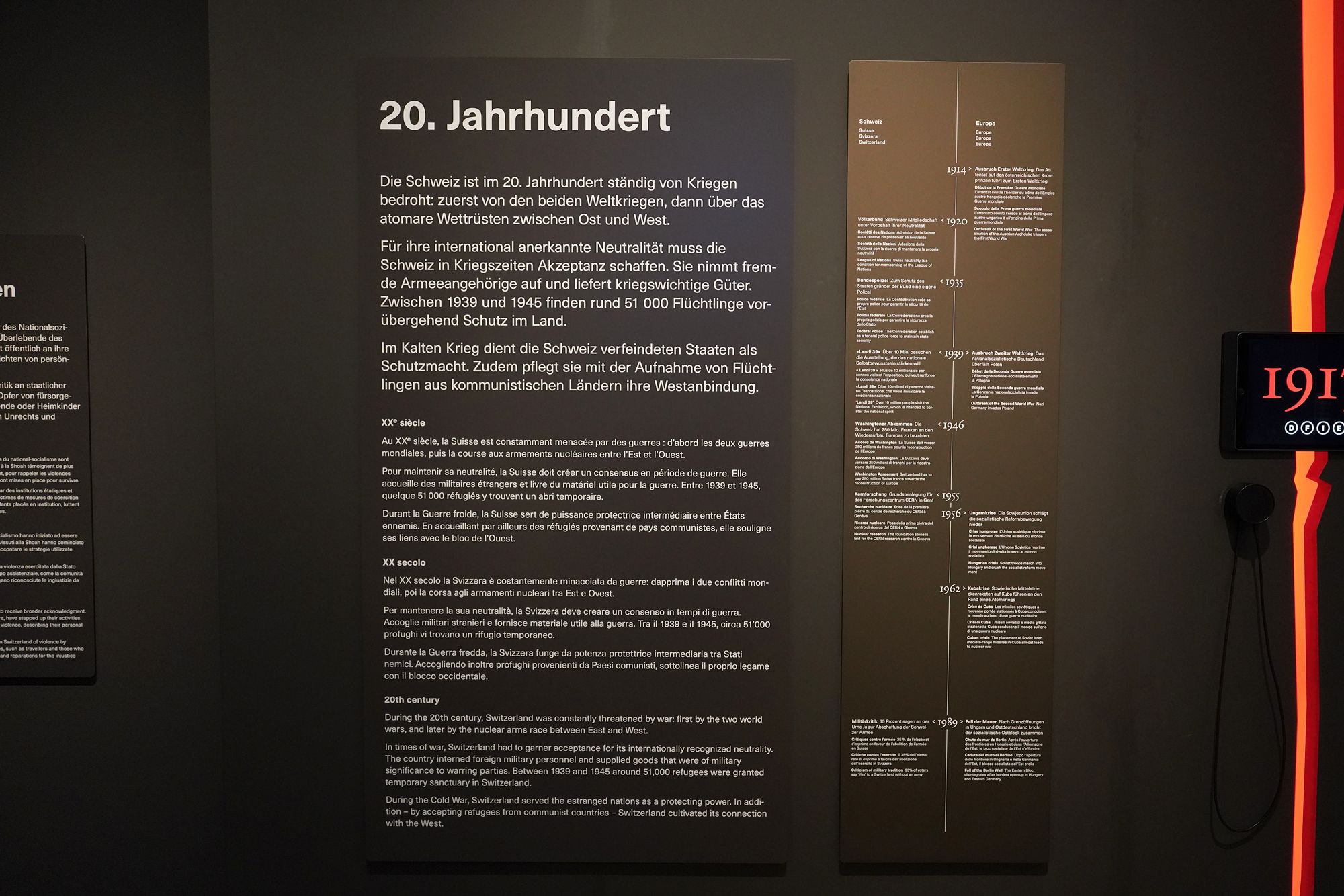
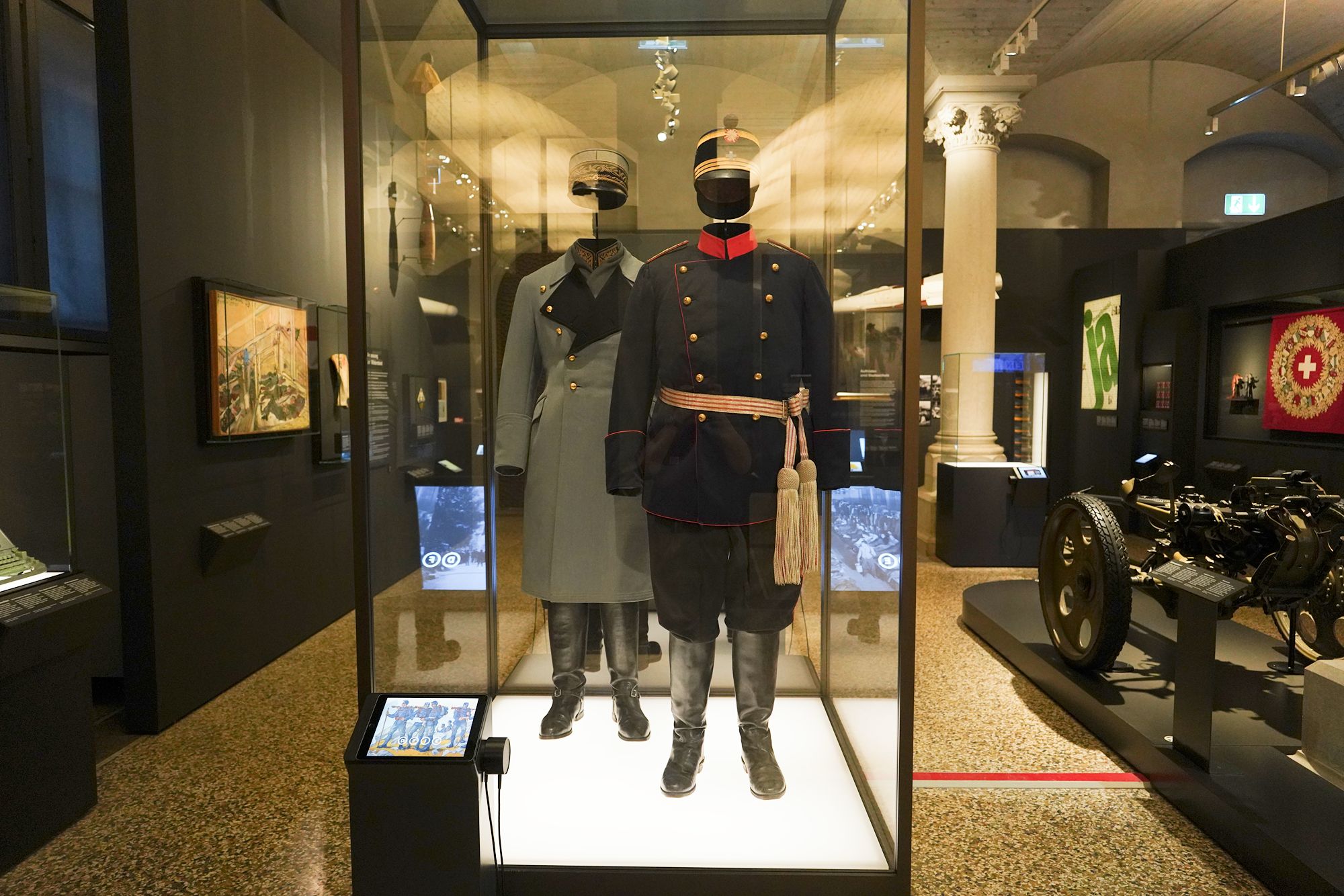
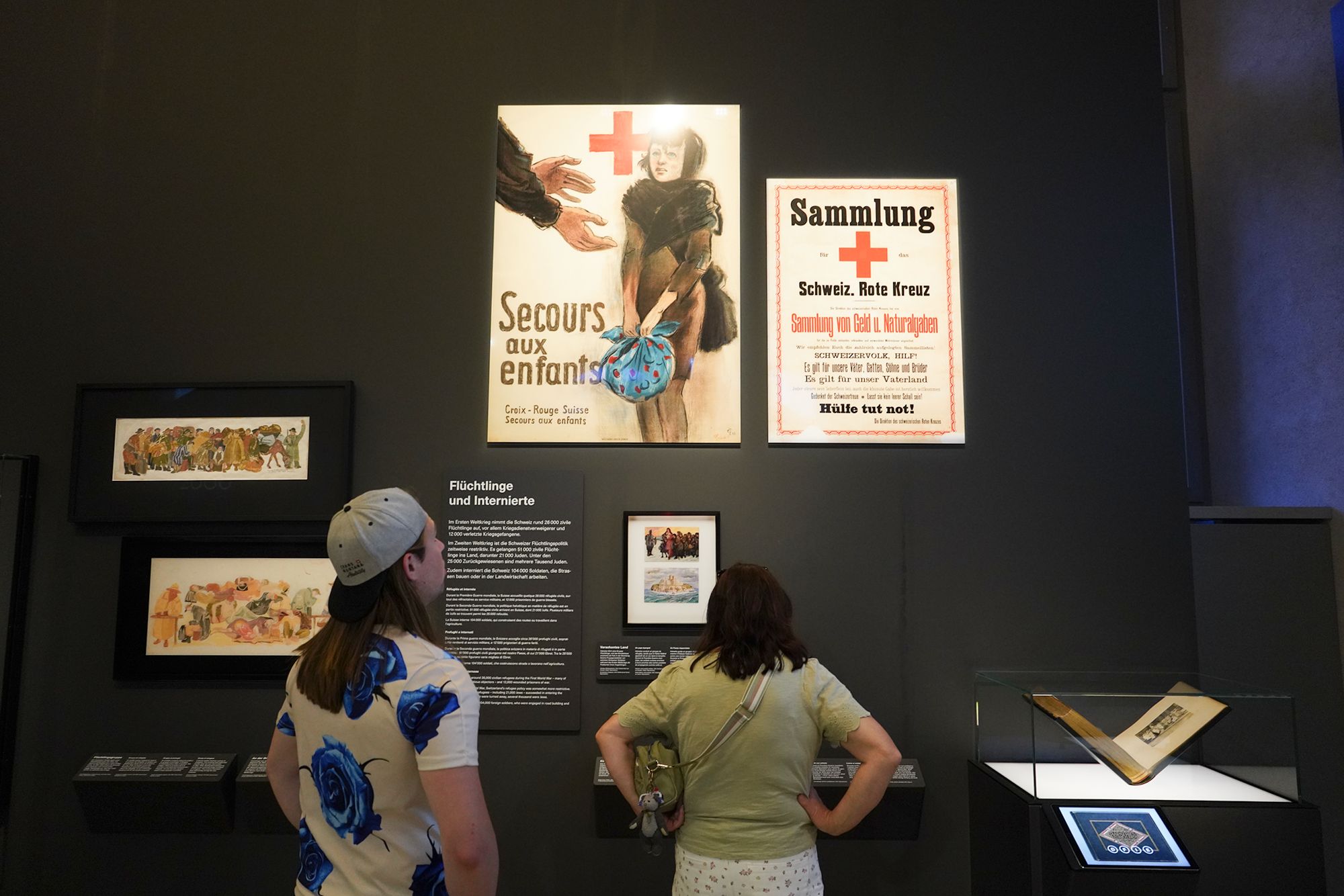
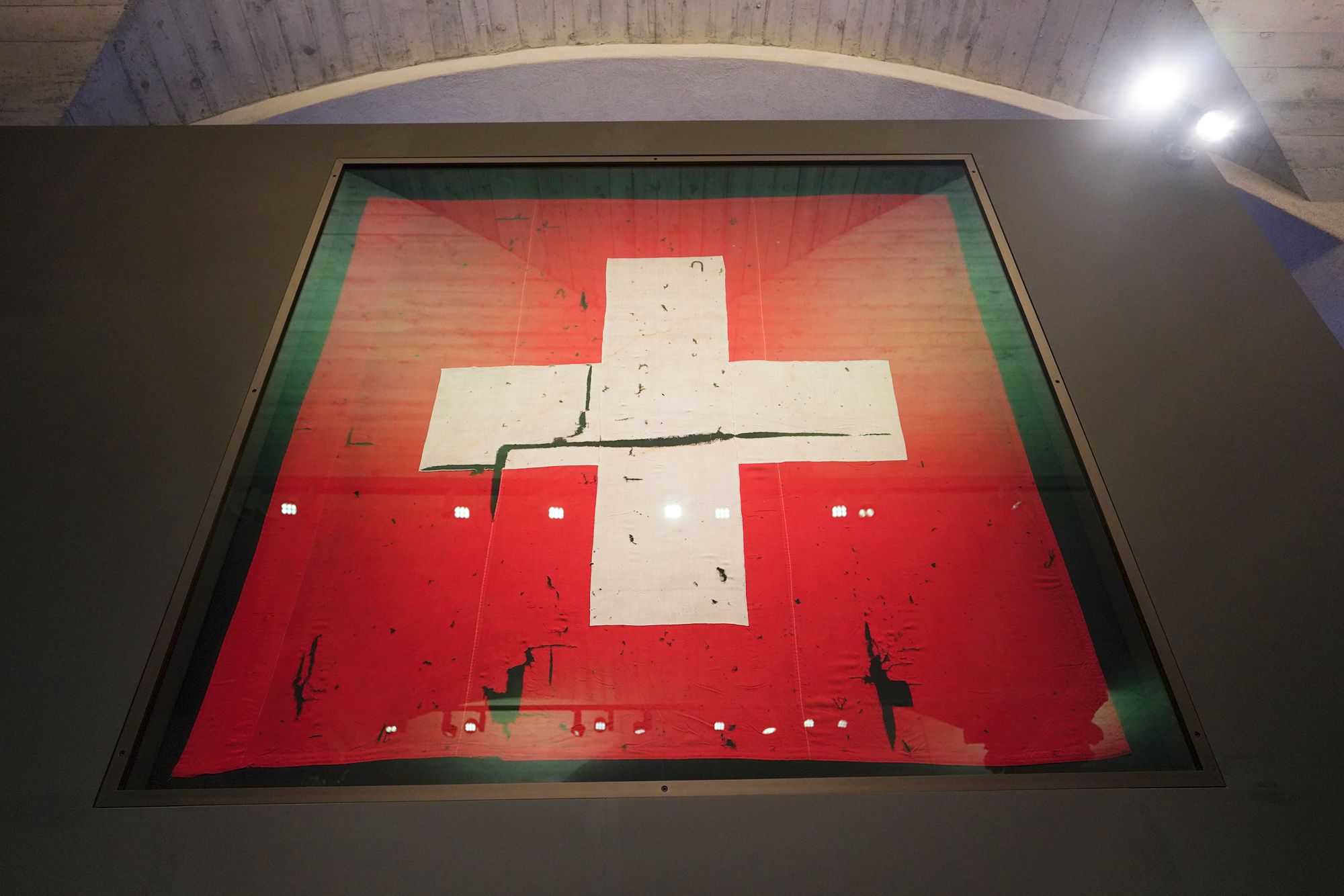
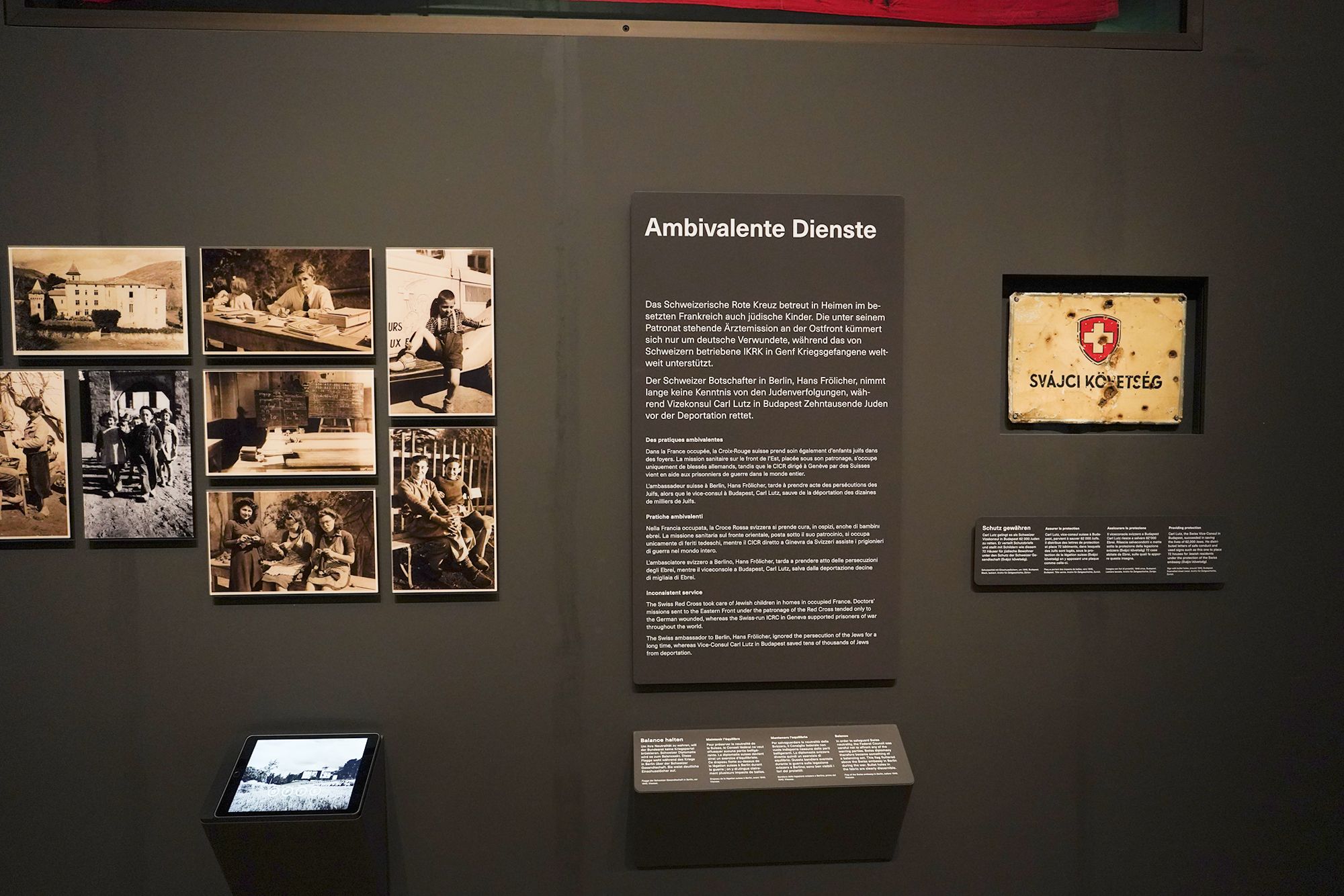
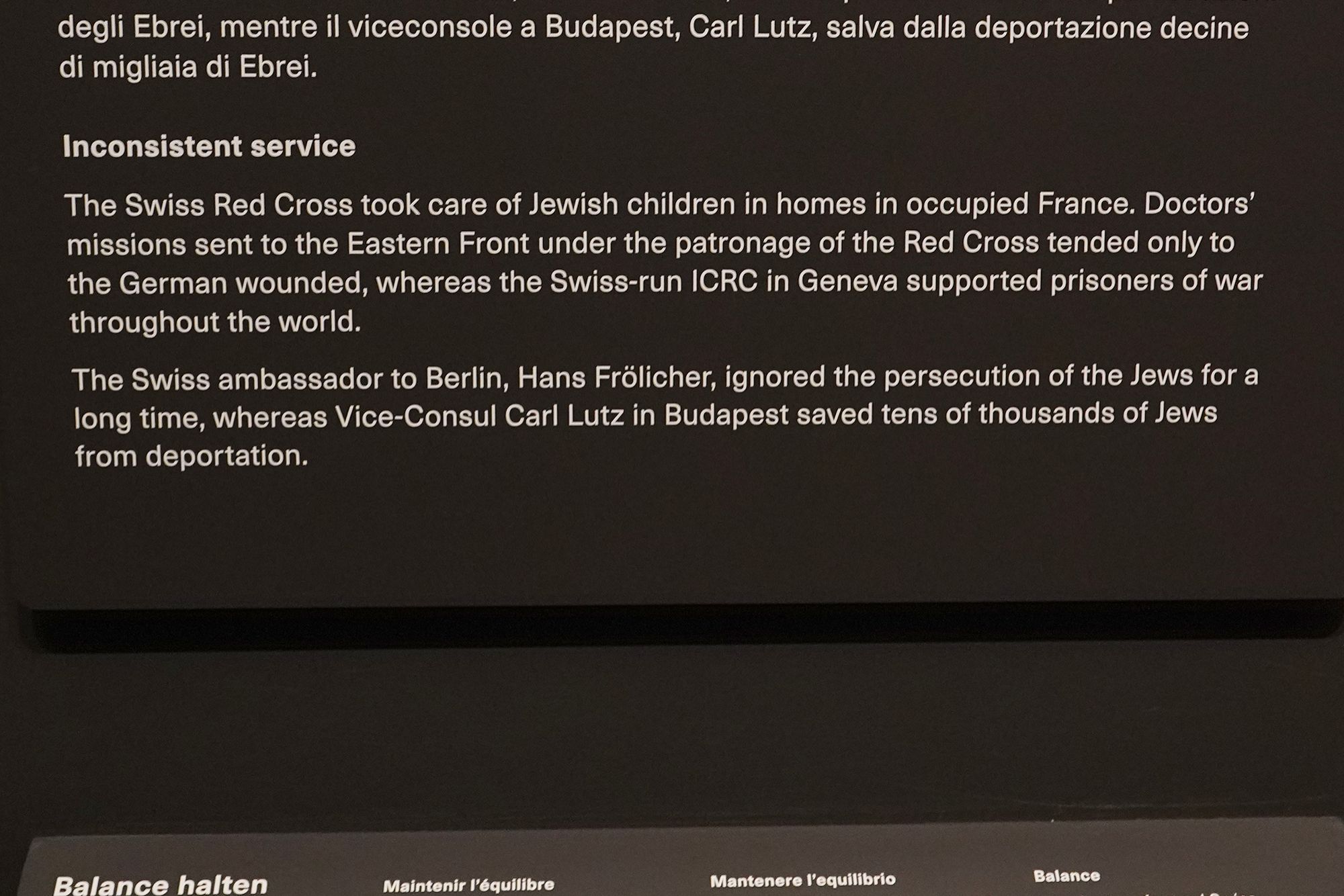
Switzerland’s actions during World War II were inconsistent. The Swiss Red Cross cared for Jewish children in occupied France, while Swiss doctors on the Eastern Front treated only German wounded. In Berlin, the Swiss ambassador long ignored the persecution of Jews; in Budapest, Swiss Vice-Consul Carl Lutz helped save tens of thousands from deportation.
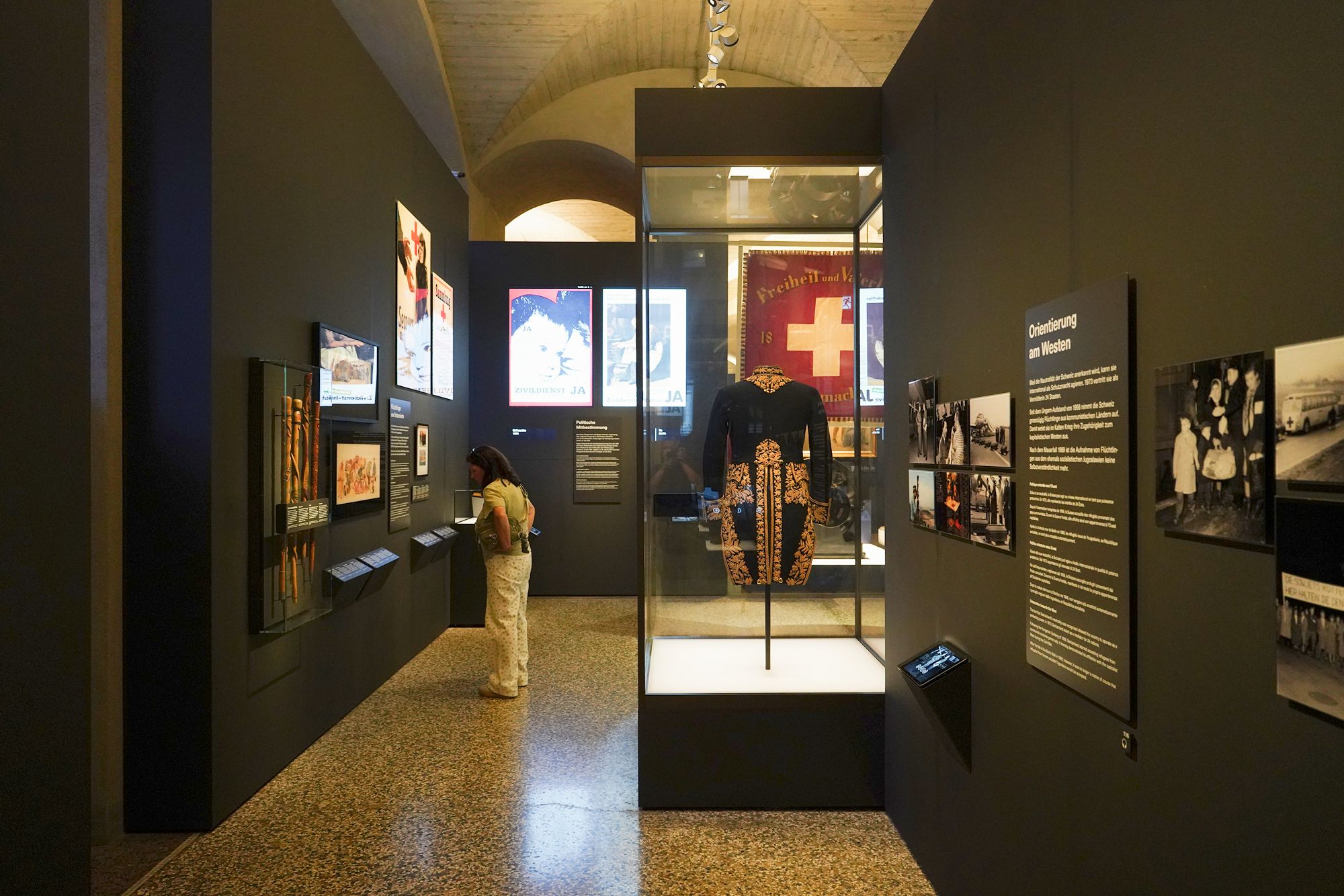
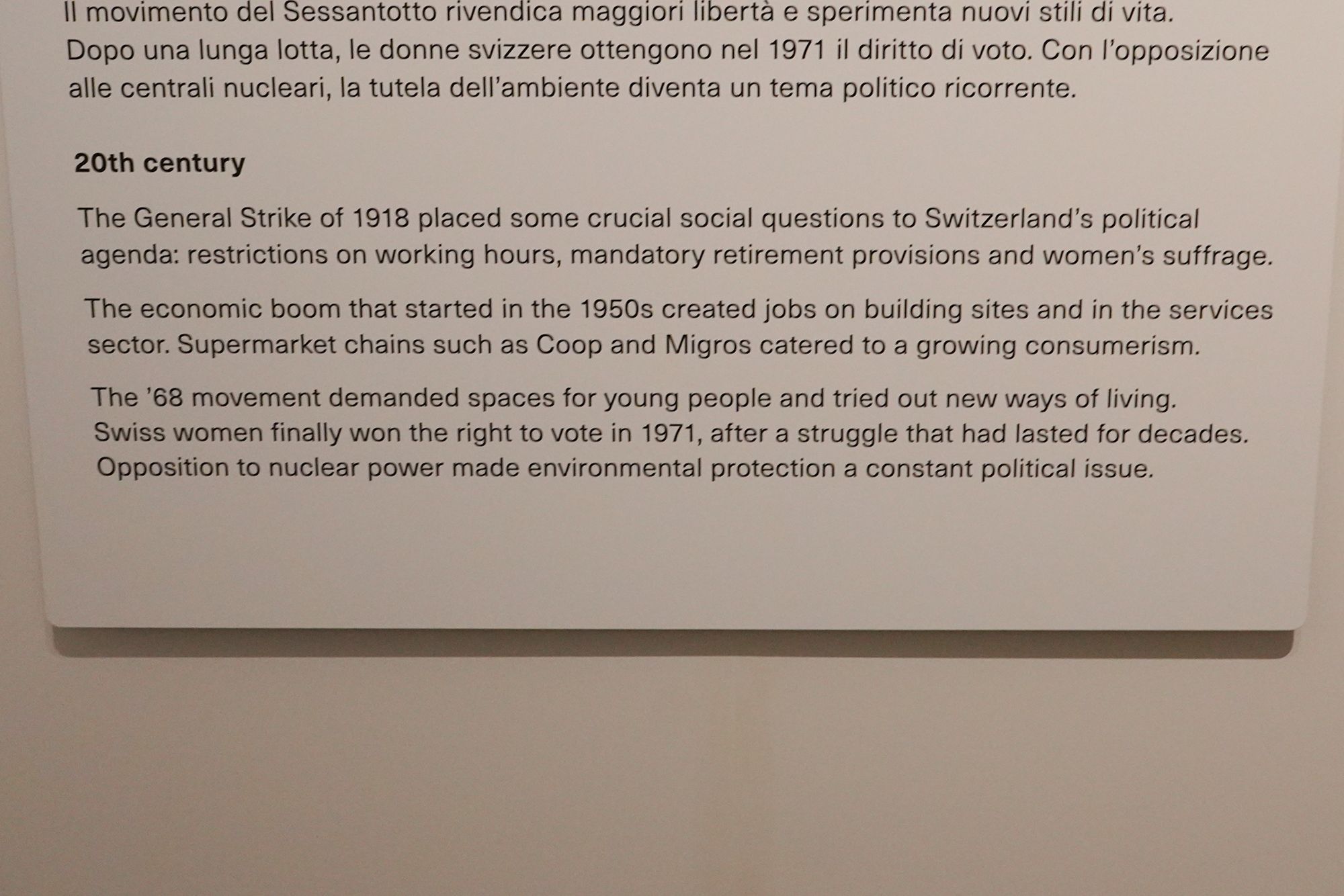
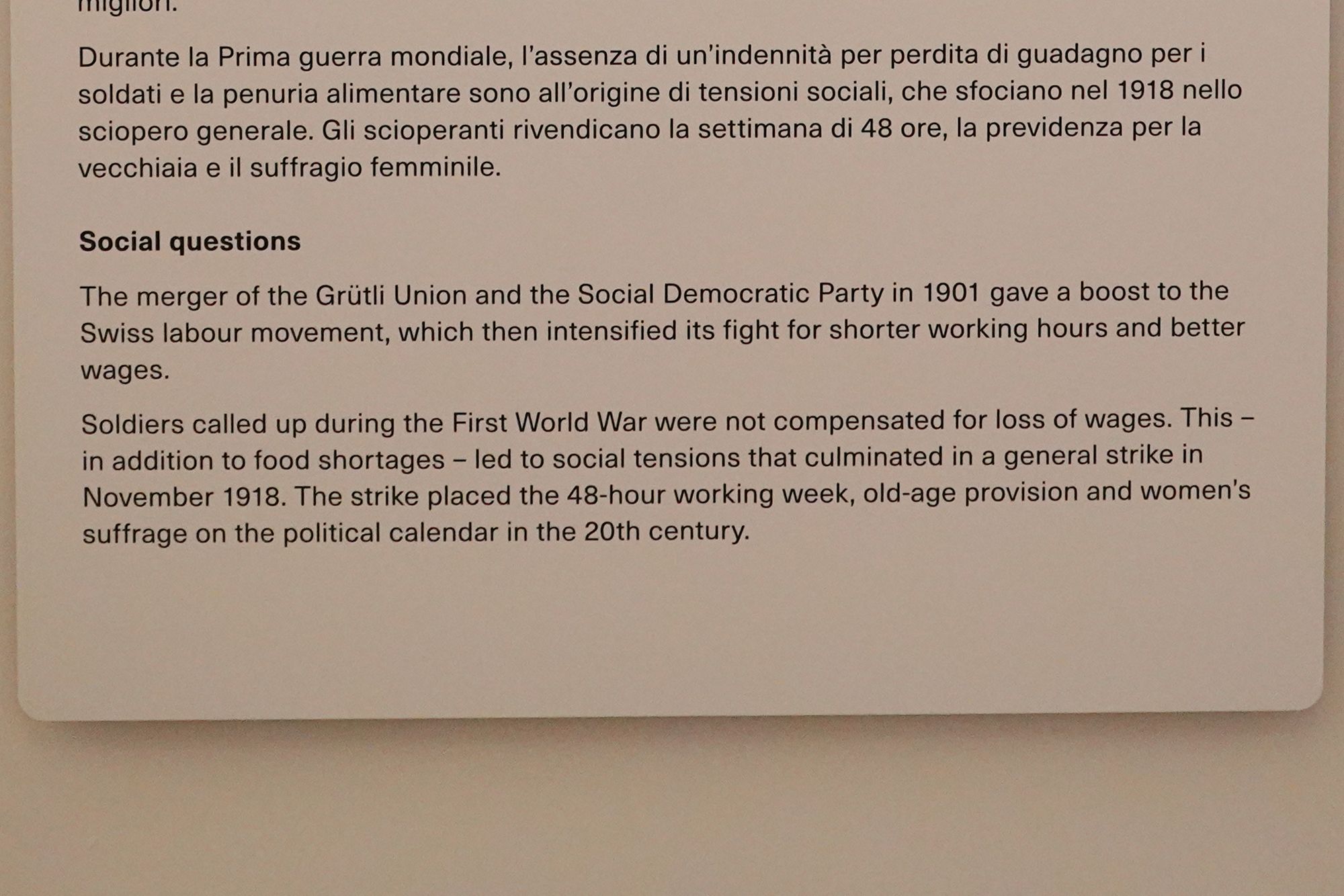
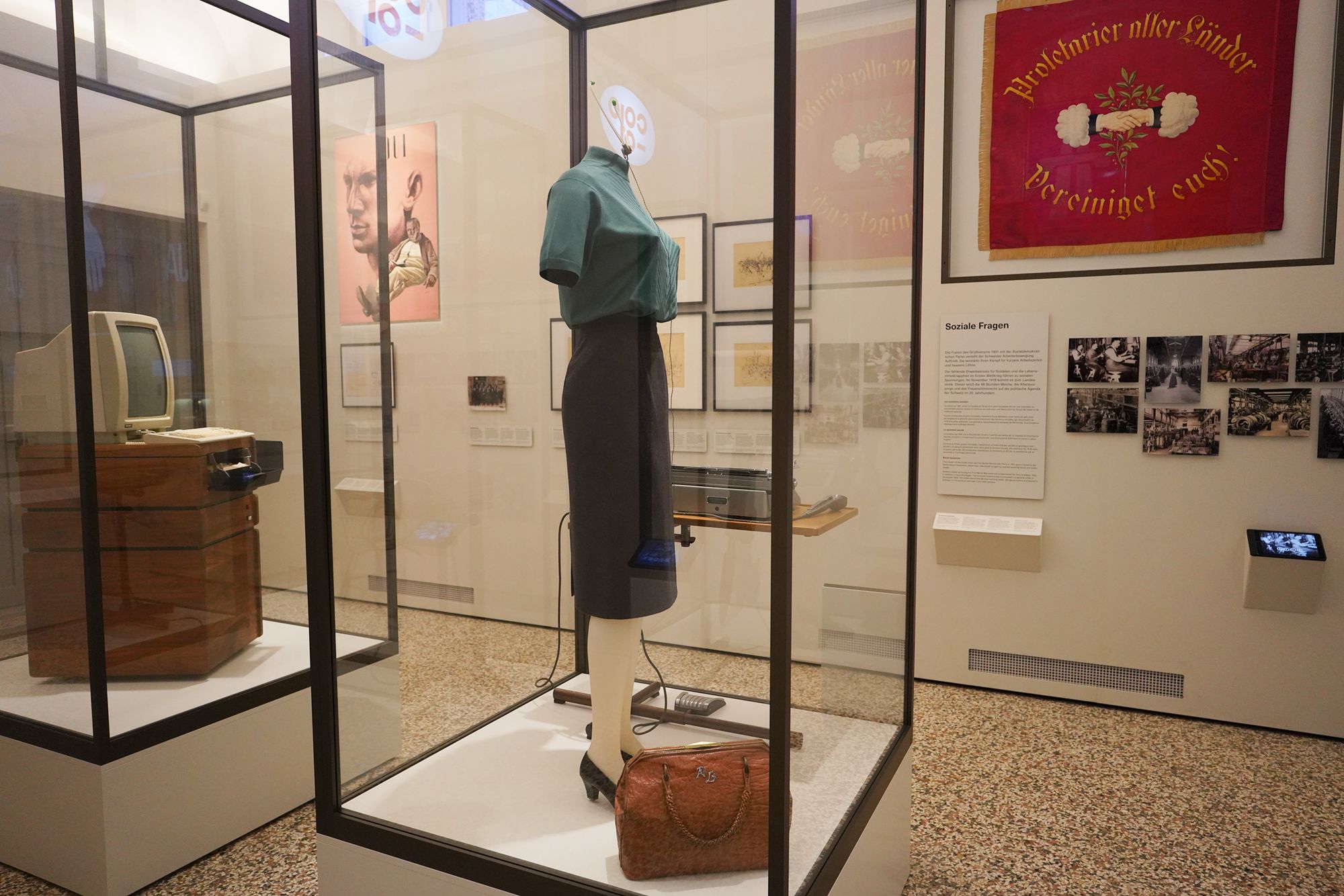
Switzerland’s 20th century brought social and economic change. The 1918 General Strike put working hours, retirement provisions and women’s suffrage on the political agenda. A boom from the 1950s expanded jobs and consumer culture; later movements challenged established ways of life. Women gained the federal vote in 1971, while opposition to nuclear power made environmental protection a lasting issue.
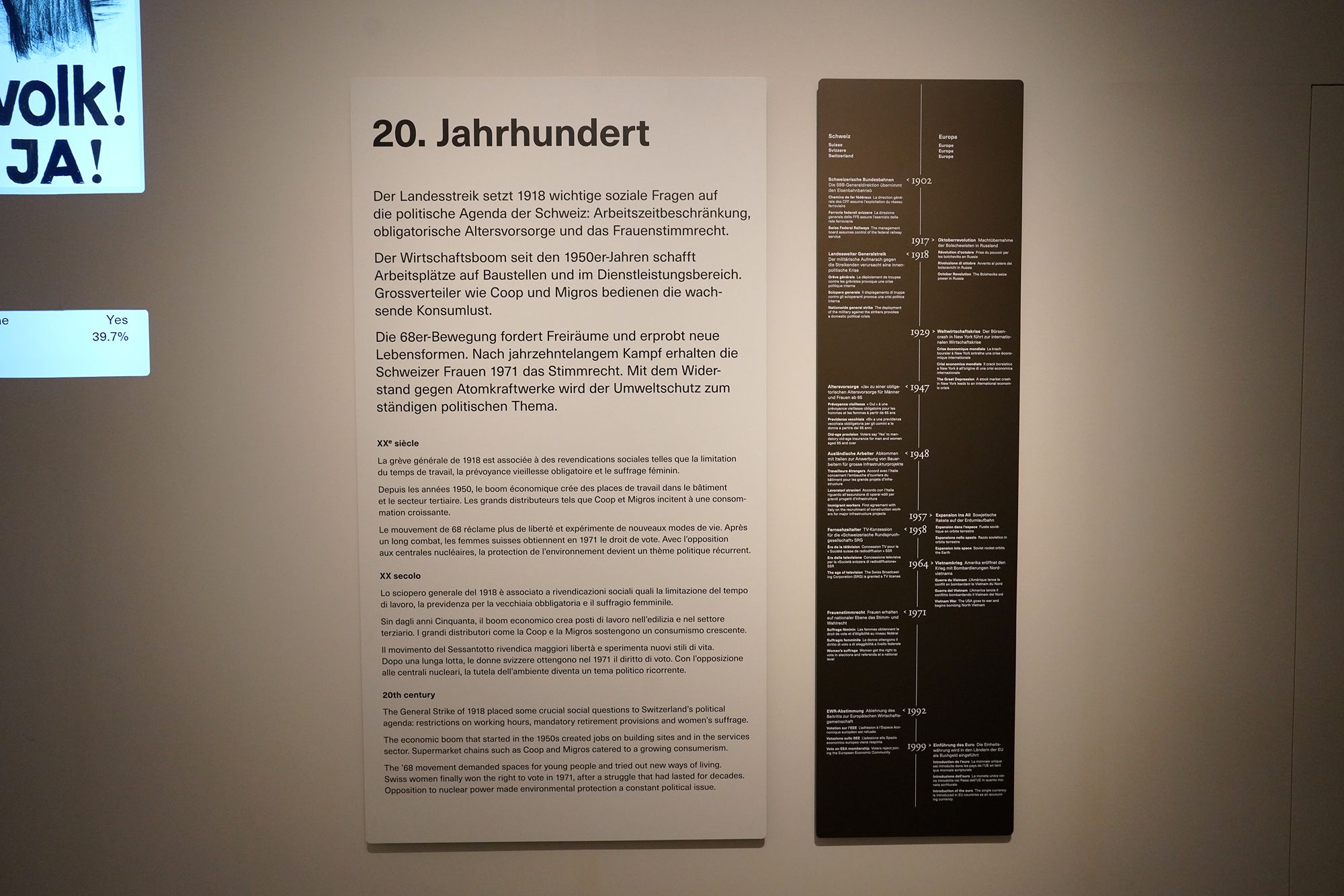
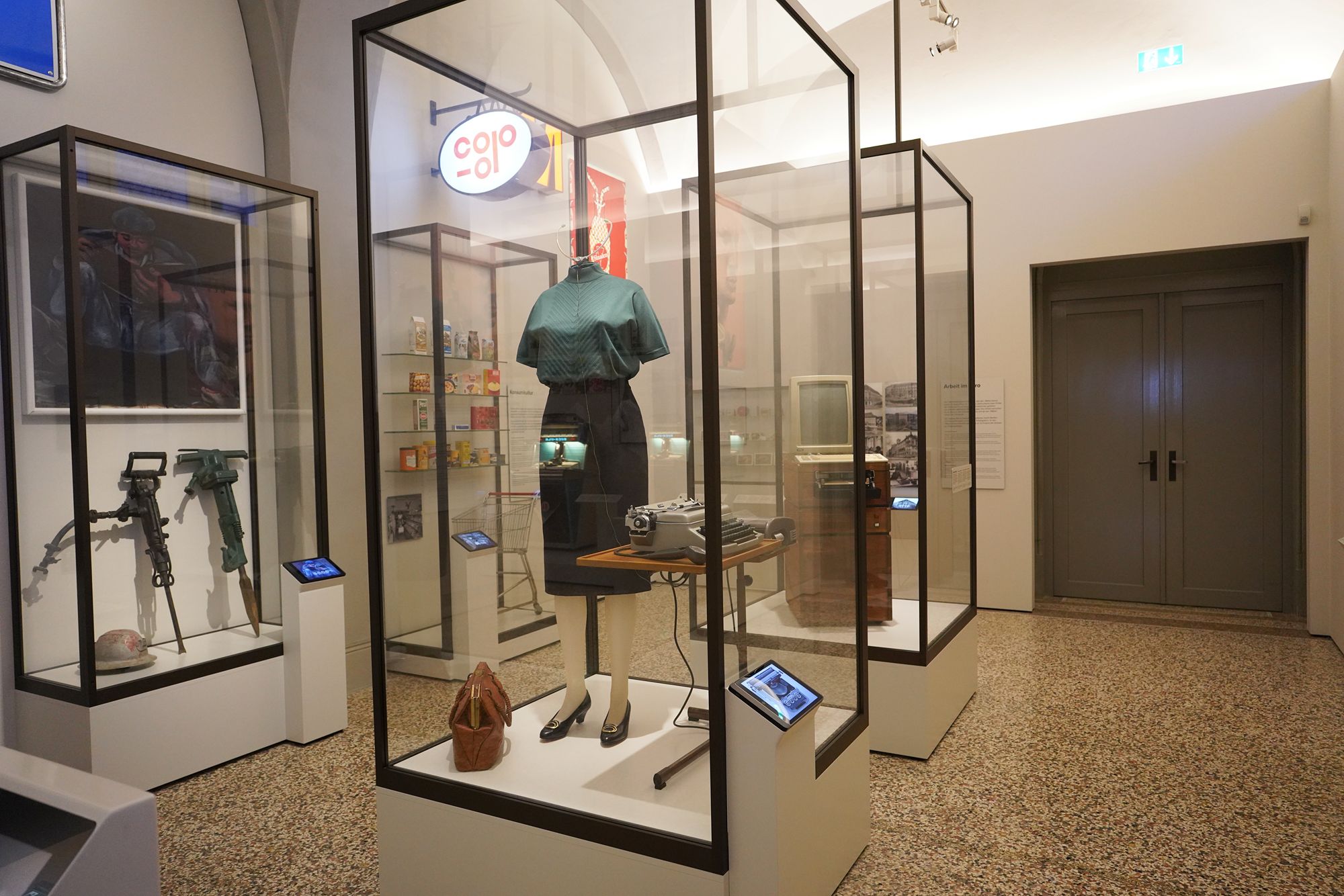
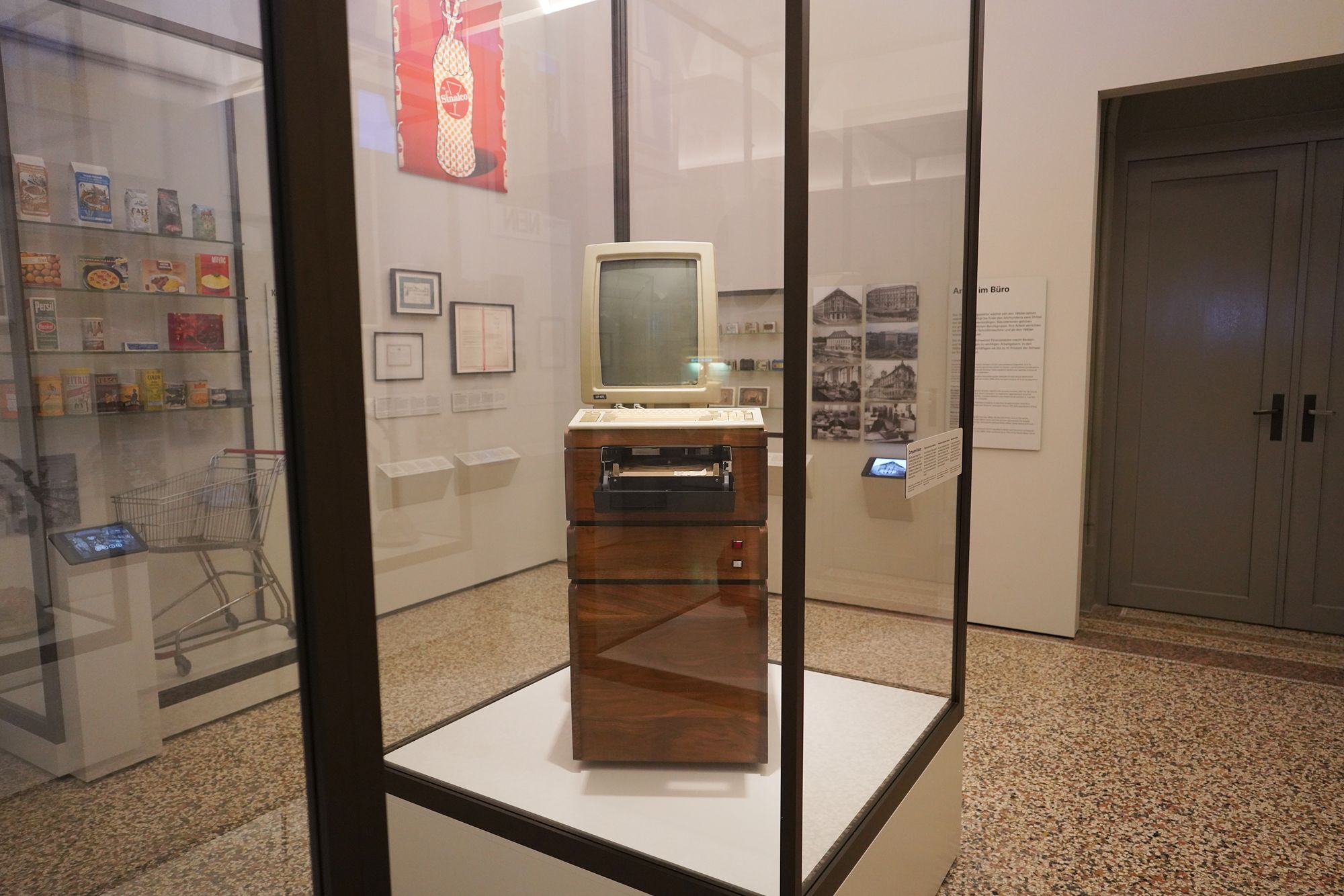
Switzerland’s labour movement gained strength in the early 1900s and pressed for shorter hours and better wages. During the First World War, food shortages and lost wages for mobilized soldiers fueled unrest. The general strike of November 1918 brought a 48-hour workweek, old-age provision, and women’s suffrage onto the political agenda.
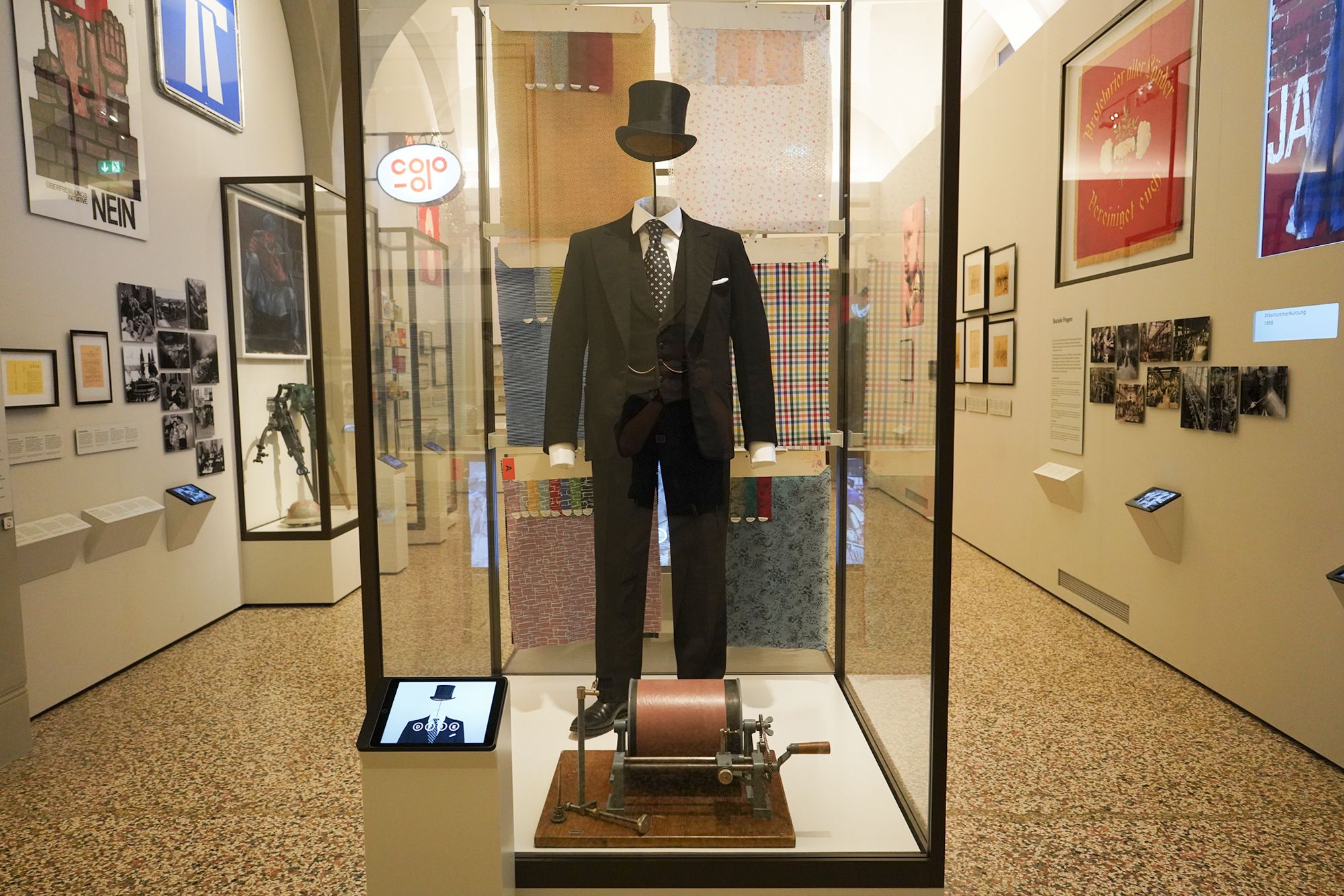
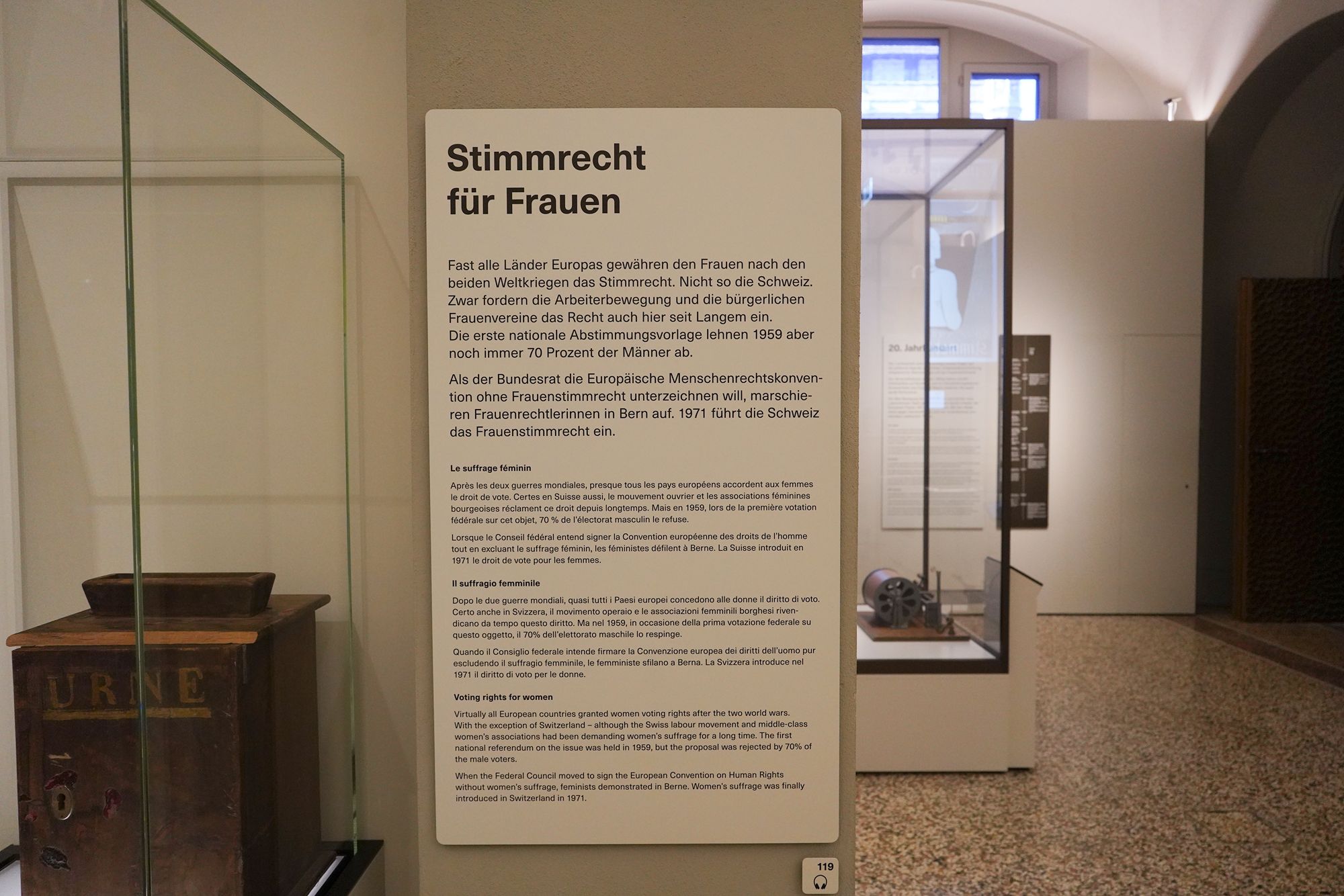
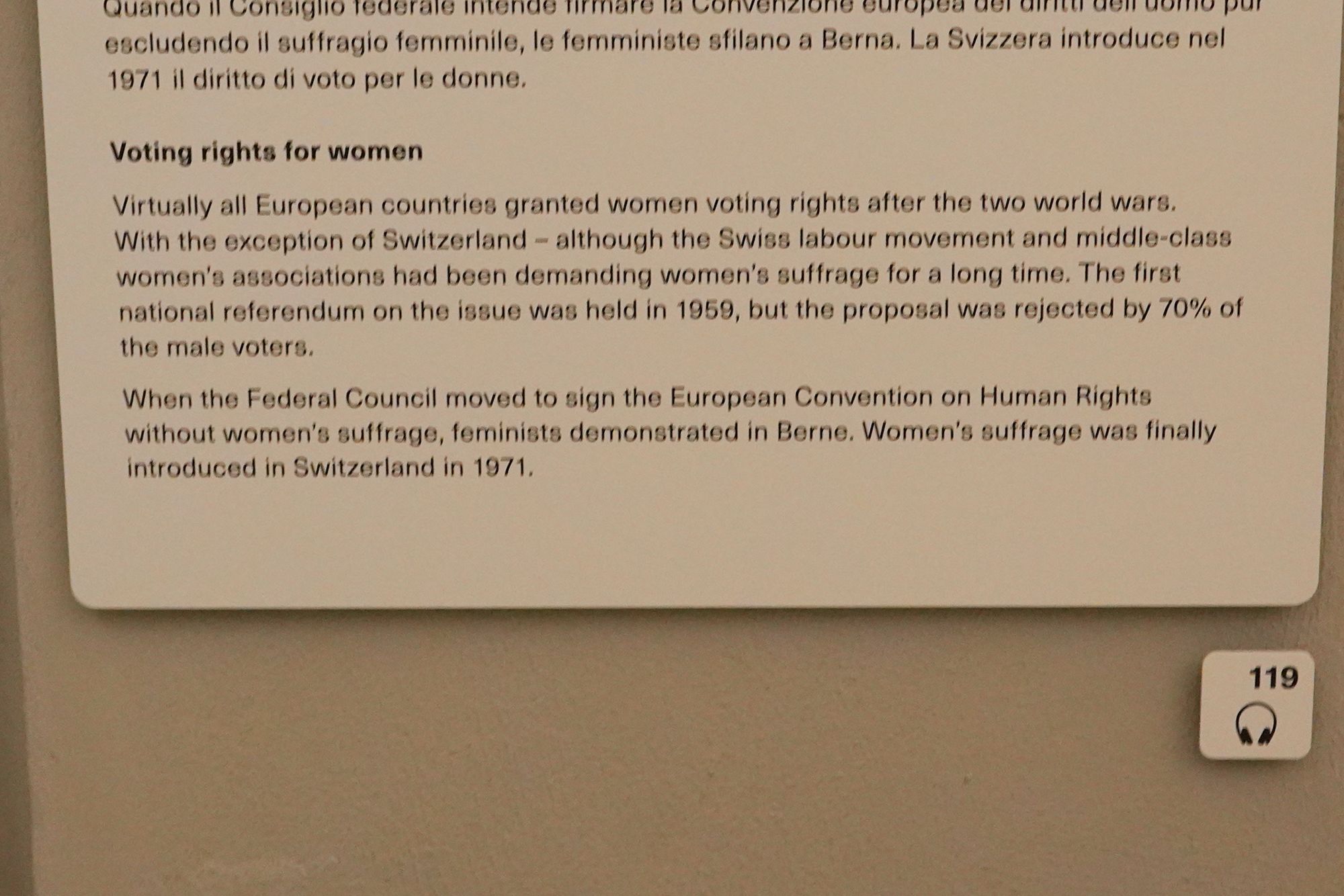
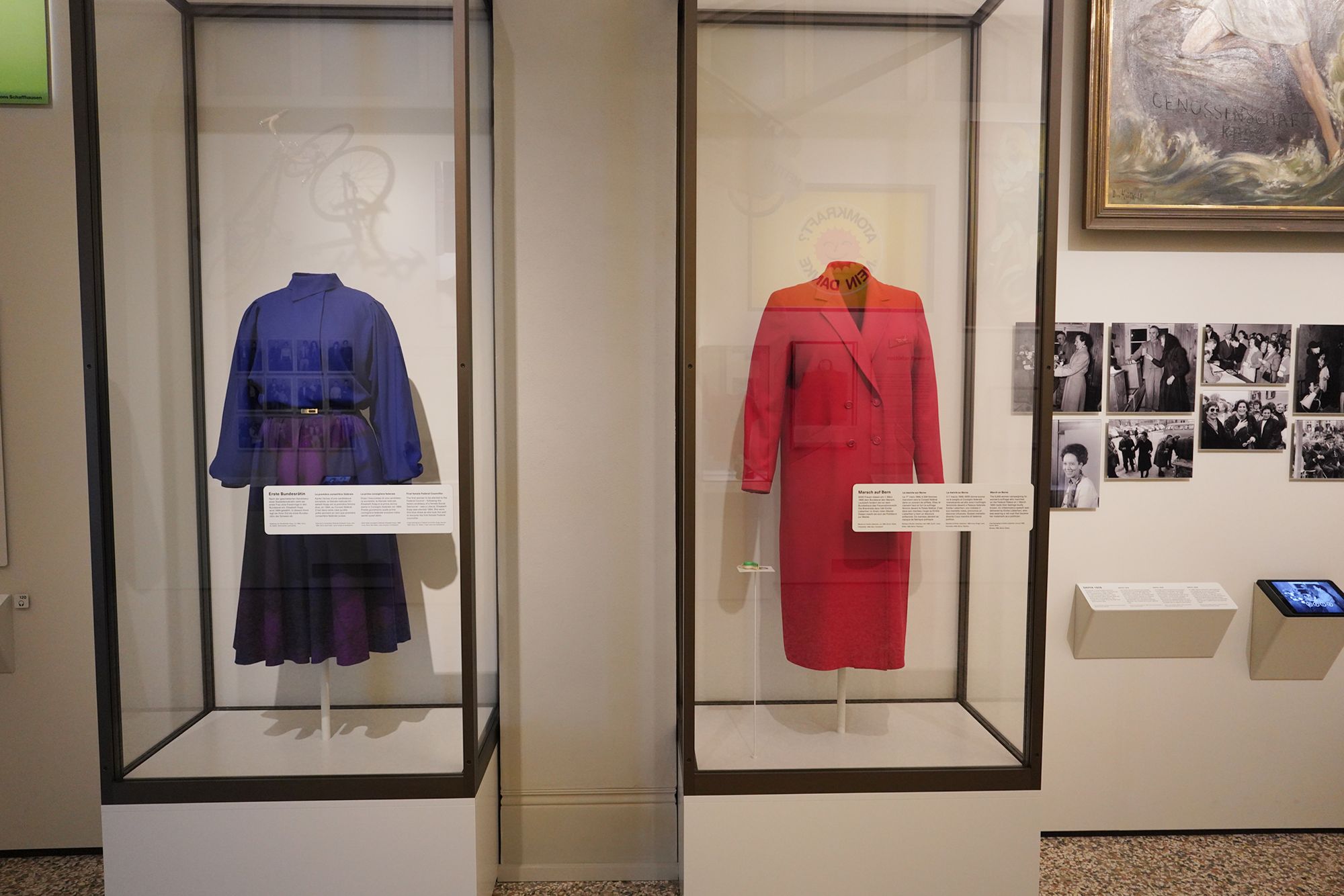
Swiss women campaigned for voting rights for decades. In 1959, a national referendum failed when 70% of male voters rejected the proposal. Women continued to protest, including a demonstration in Bern, and gained the right to vote in federal elections in 1971.
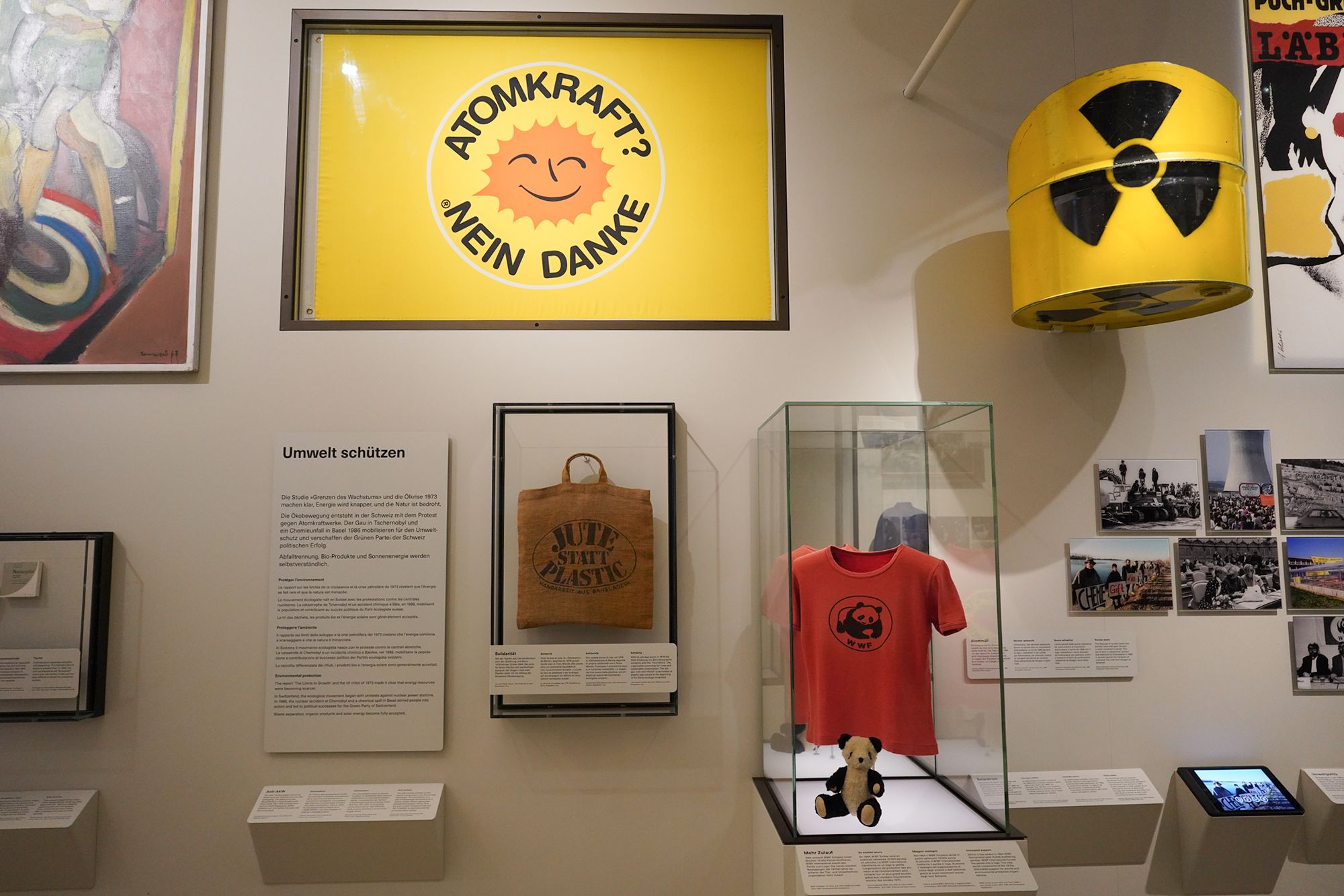
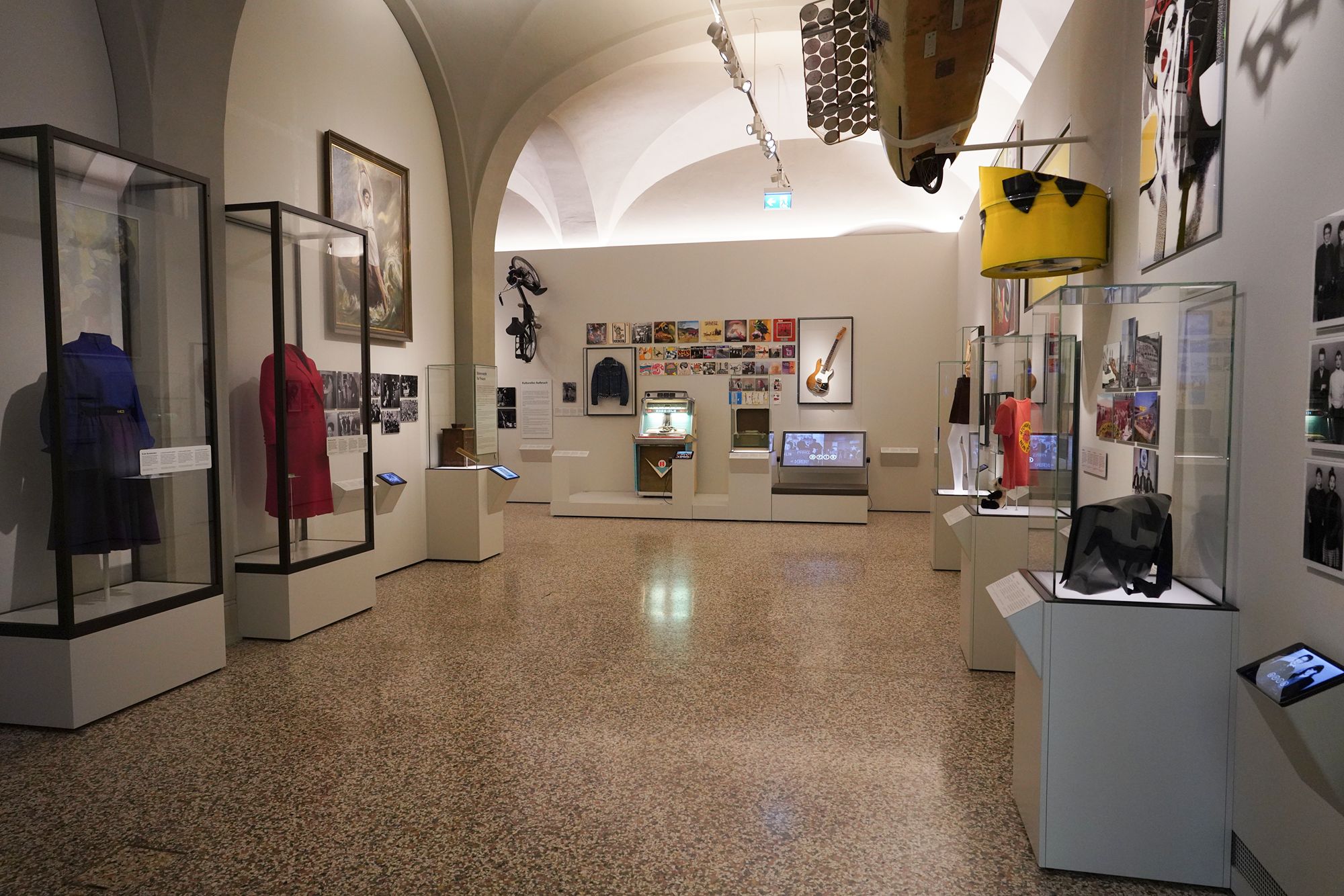
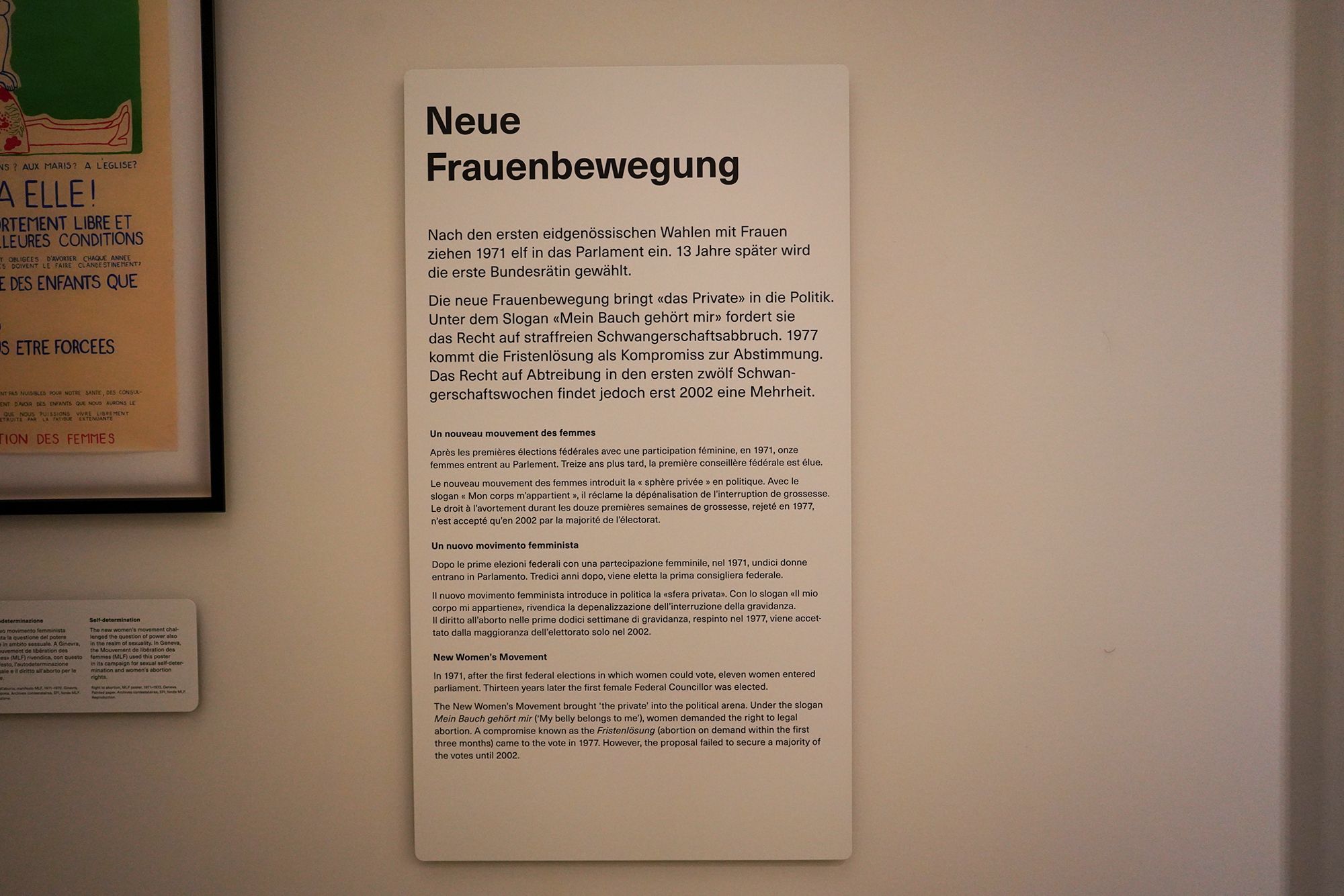
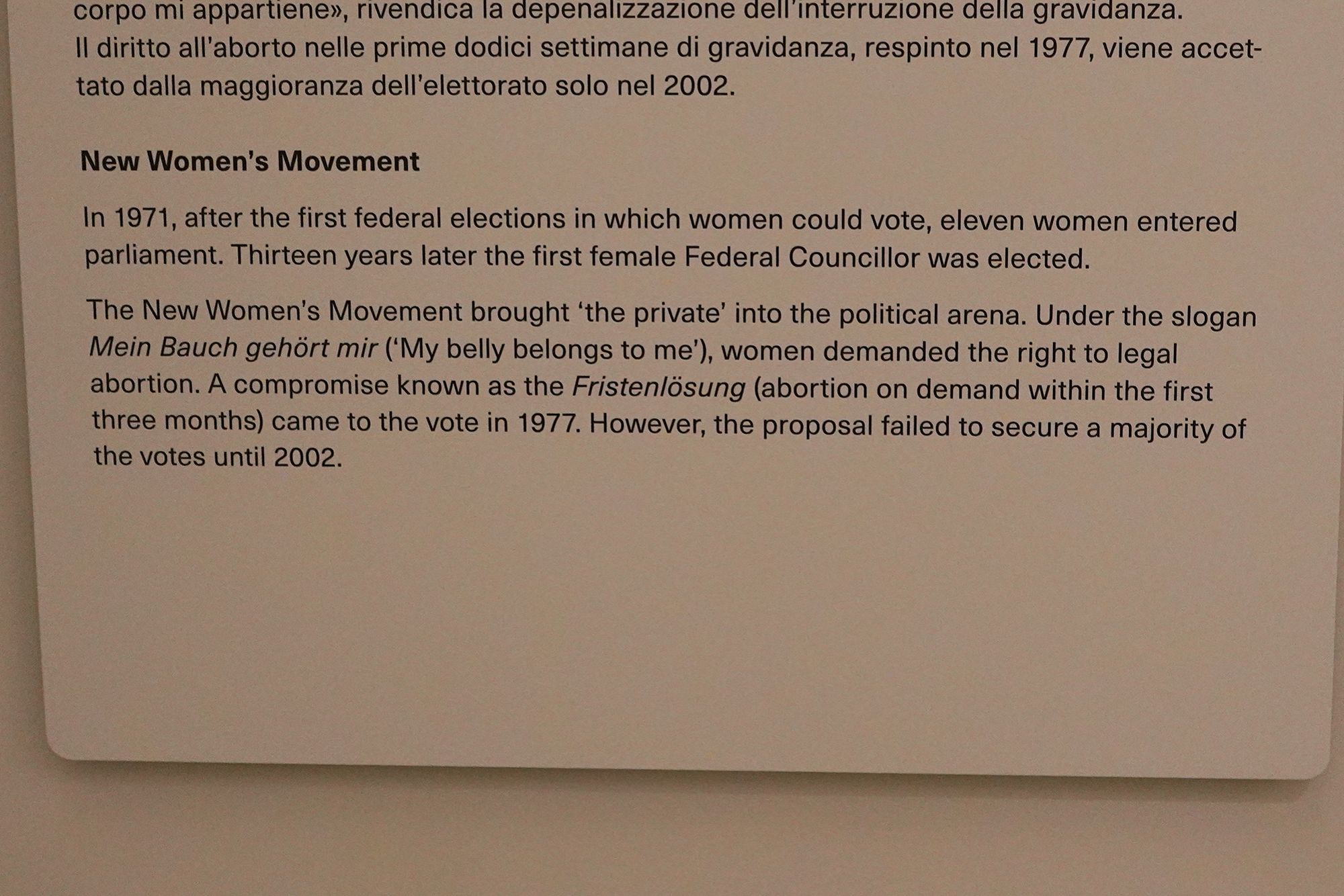
In Switzerland’s first federal election after women gained the vote in 1971, eleven women entered parliament. The New Women’s Movement also campaigned for abortion rights. A proposal allowing abortion during the first three months was rejected in 1977; voters approved a similar measure in 2002.
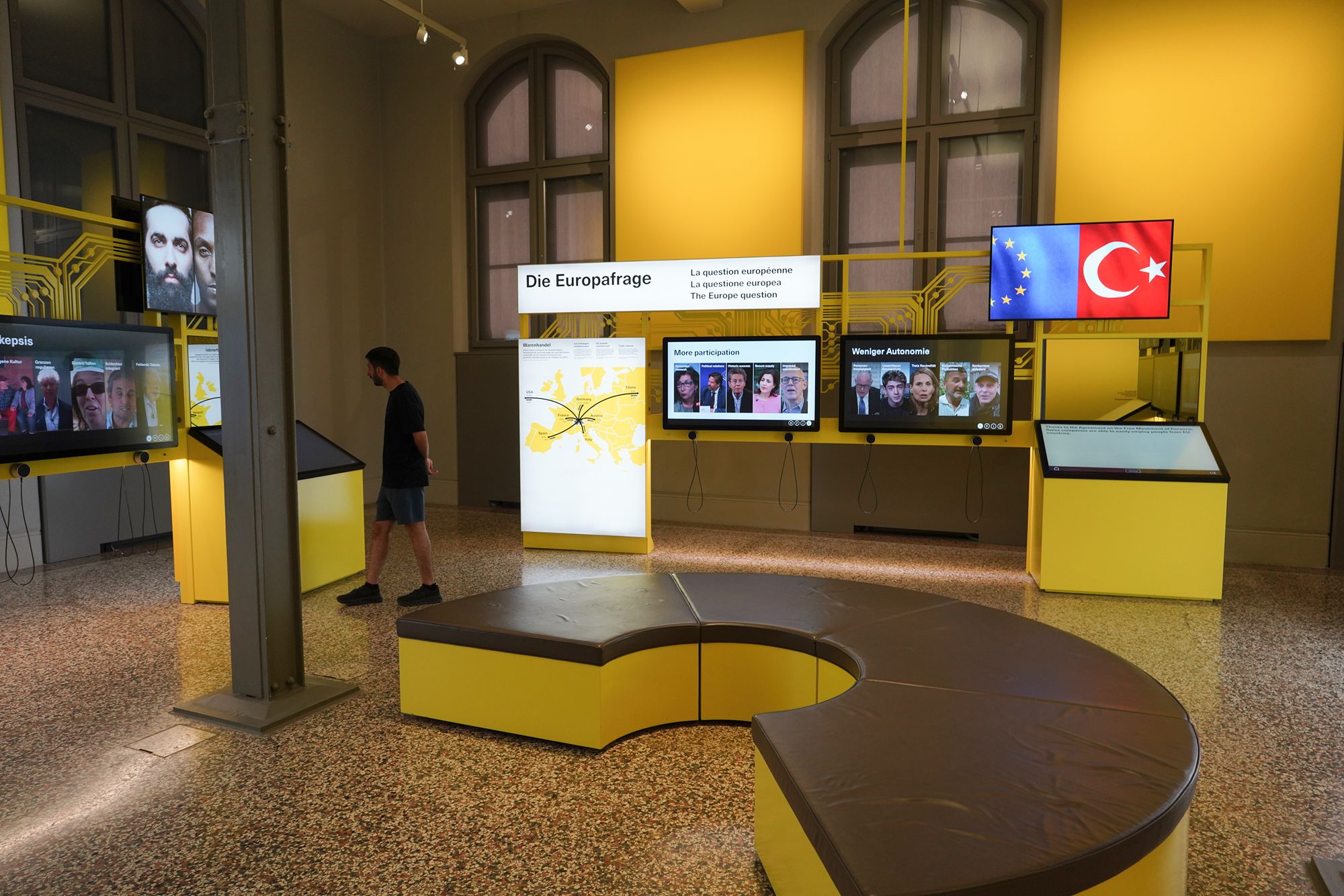
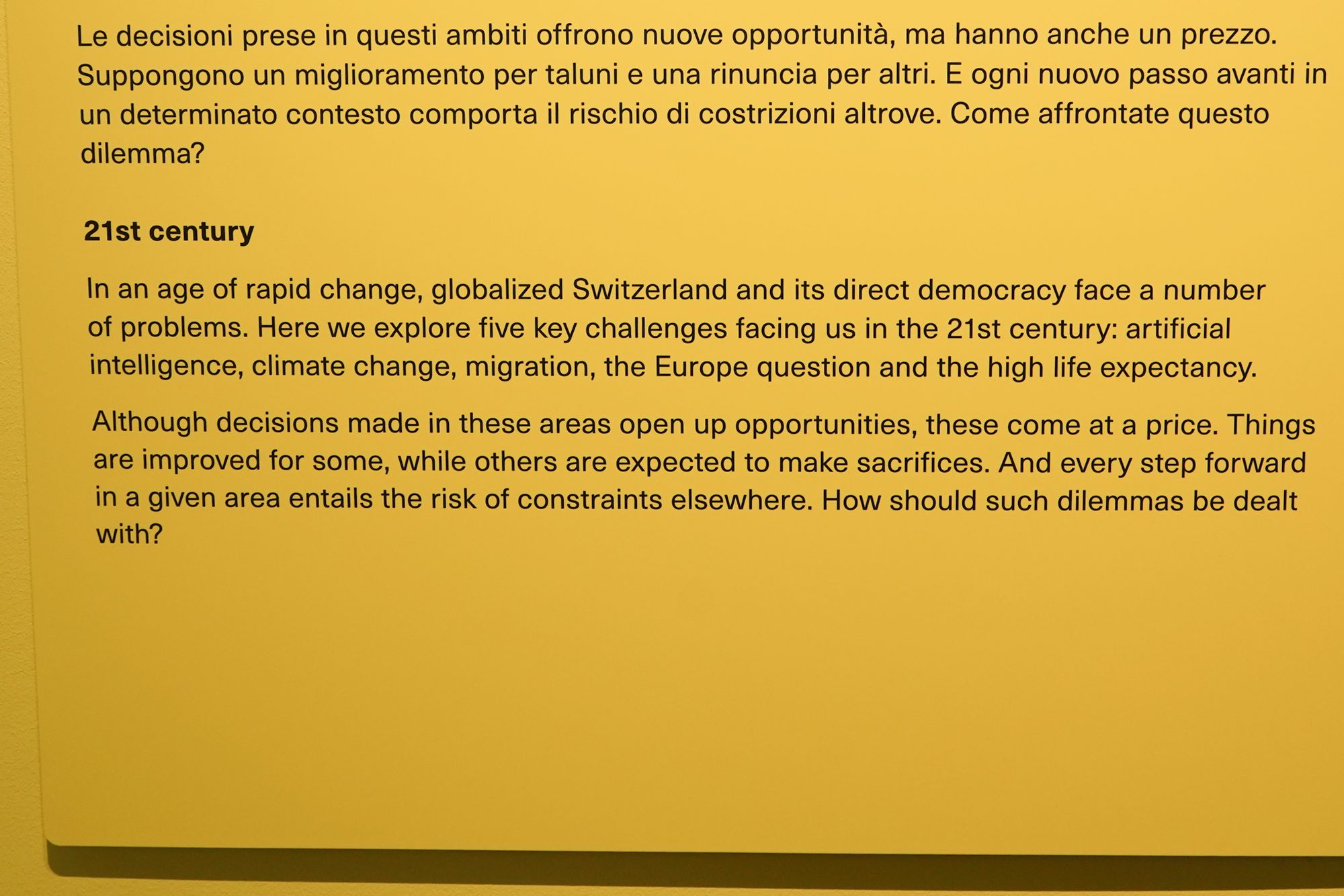
The museum ends its historical timeline with five challenges facing Switzerland today: artificial intelligence, climate change, migration, its relationship with Europe, and an aging population. Its final question is how a direct democracy can make choices that bring benefits to some people while asking others to bear the costs.