Hawa Mahal and Amber Palace, Jaipur, India
Hawa Mahal is Jaipur’s famous “Palace of Winds,” while nearby Amber Palace is a magnificent hilltop palace and fortress built by the Rajput rulers of Amber. 1252
Hawa Mahal: Hawa Mahal Rd, Badi Choupad, J.D.A. Market, Pink City, Jaipur, Rajasthan 302002, India
Amber Palace: Devisinghpura, Amer, Jaipur, Rajasthan 302001, India
Date Picture Taken: Feb, 2026
Hawa Mahal
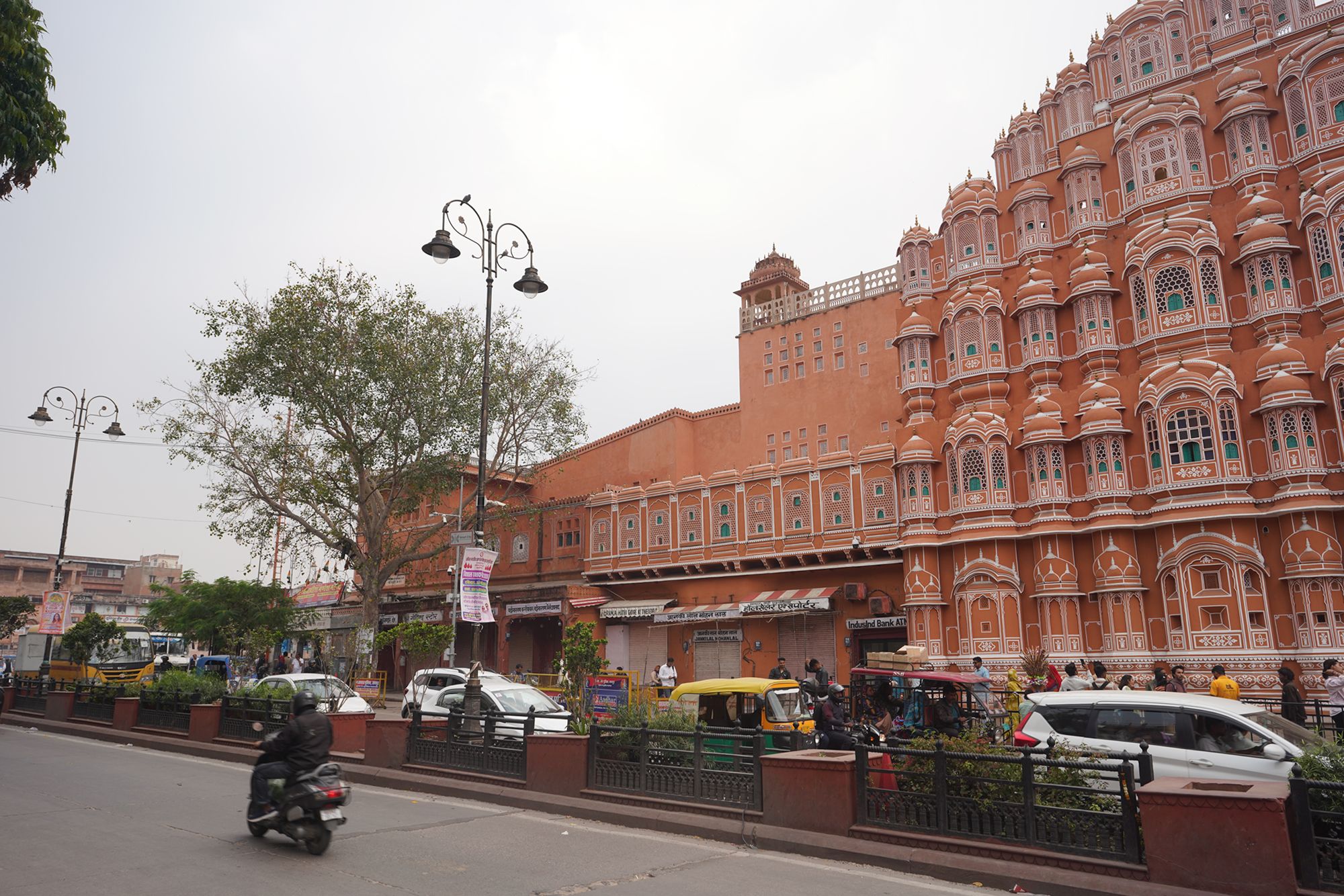
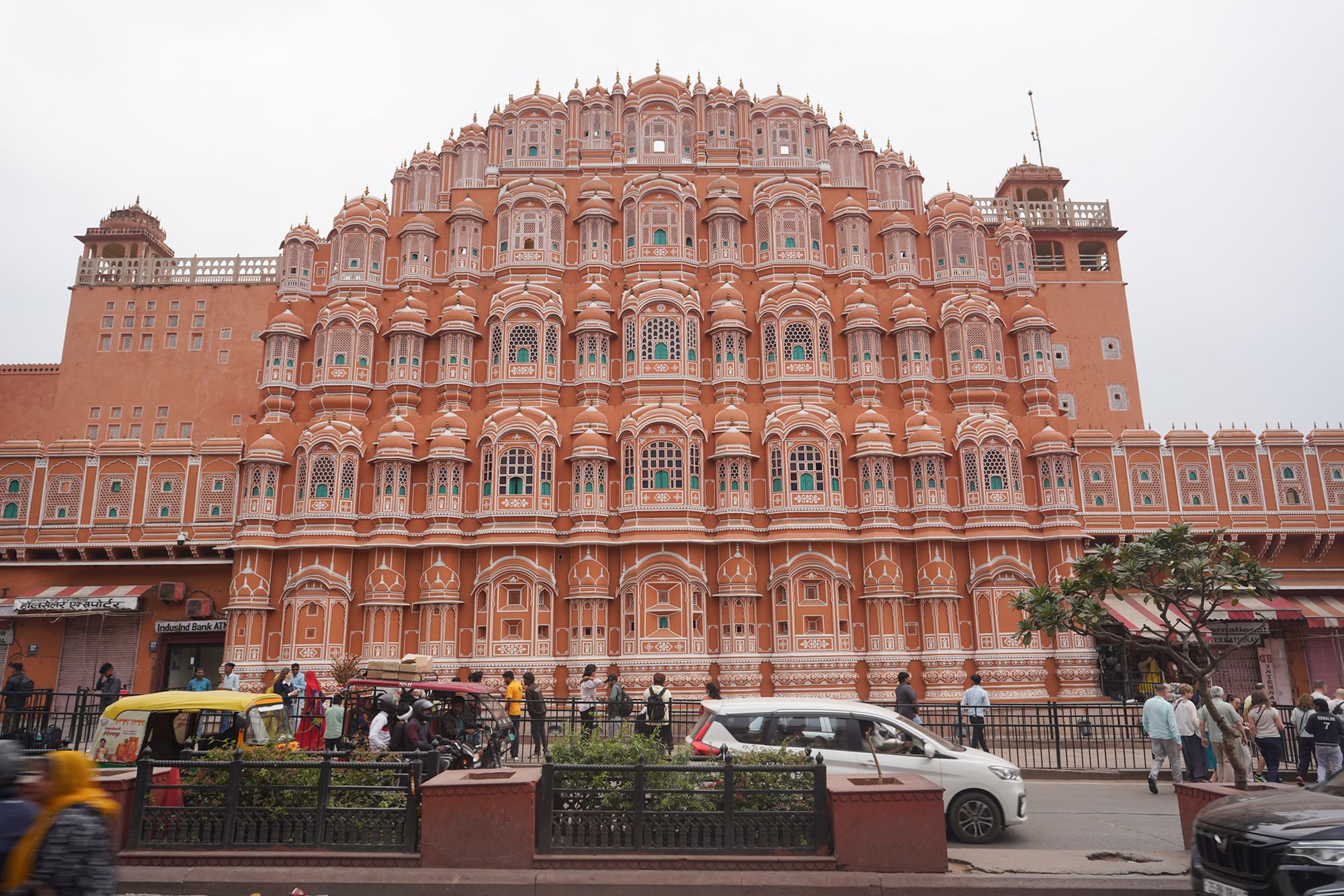
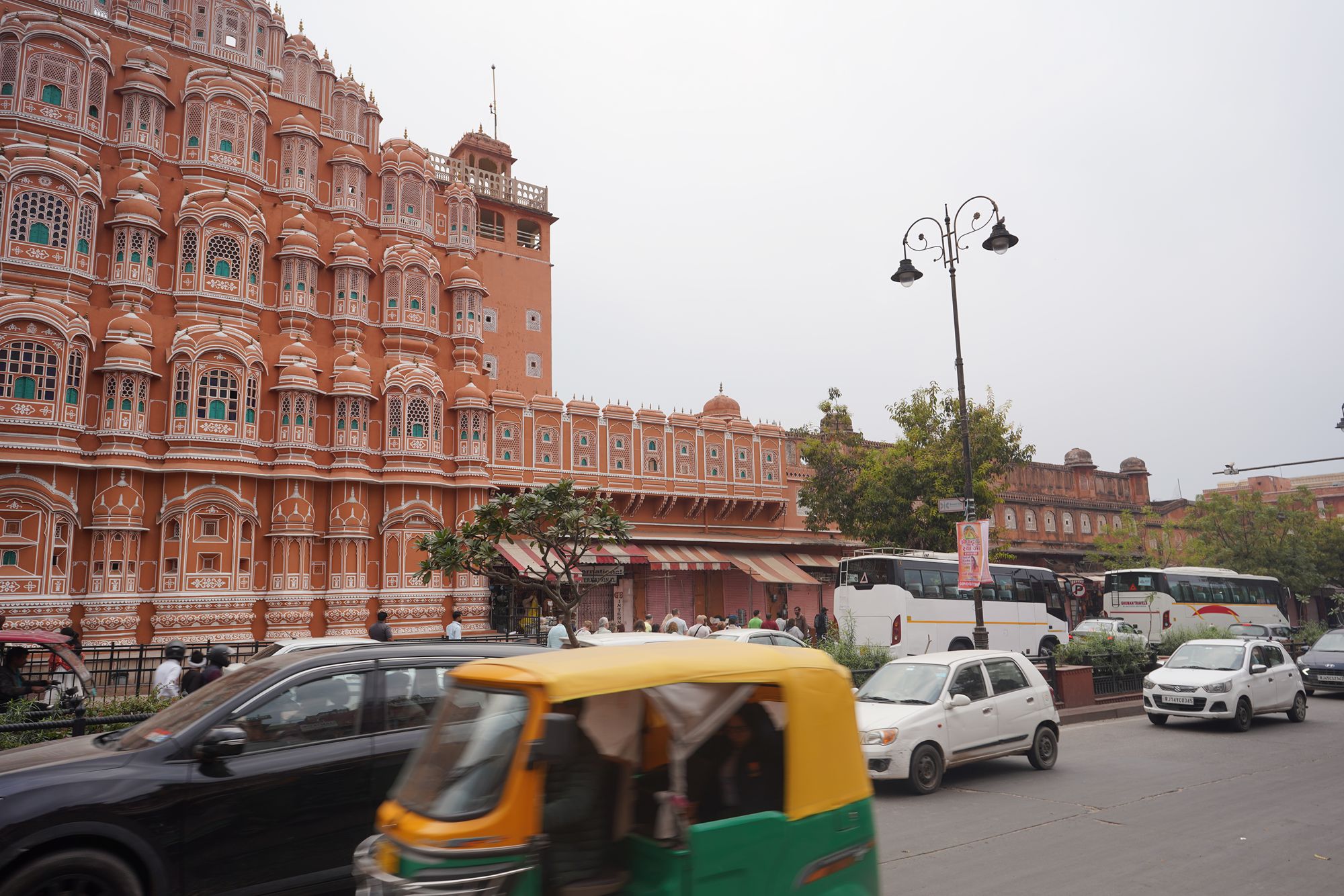
The Hawa Mahal, or “Palace of Winds,” is one of Jaipur’s most recognizable landmarks. It was built in 1799 by Maharaja Sawai Pratap Singh as an extension of Jaipur’s City Palace.
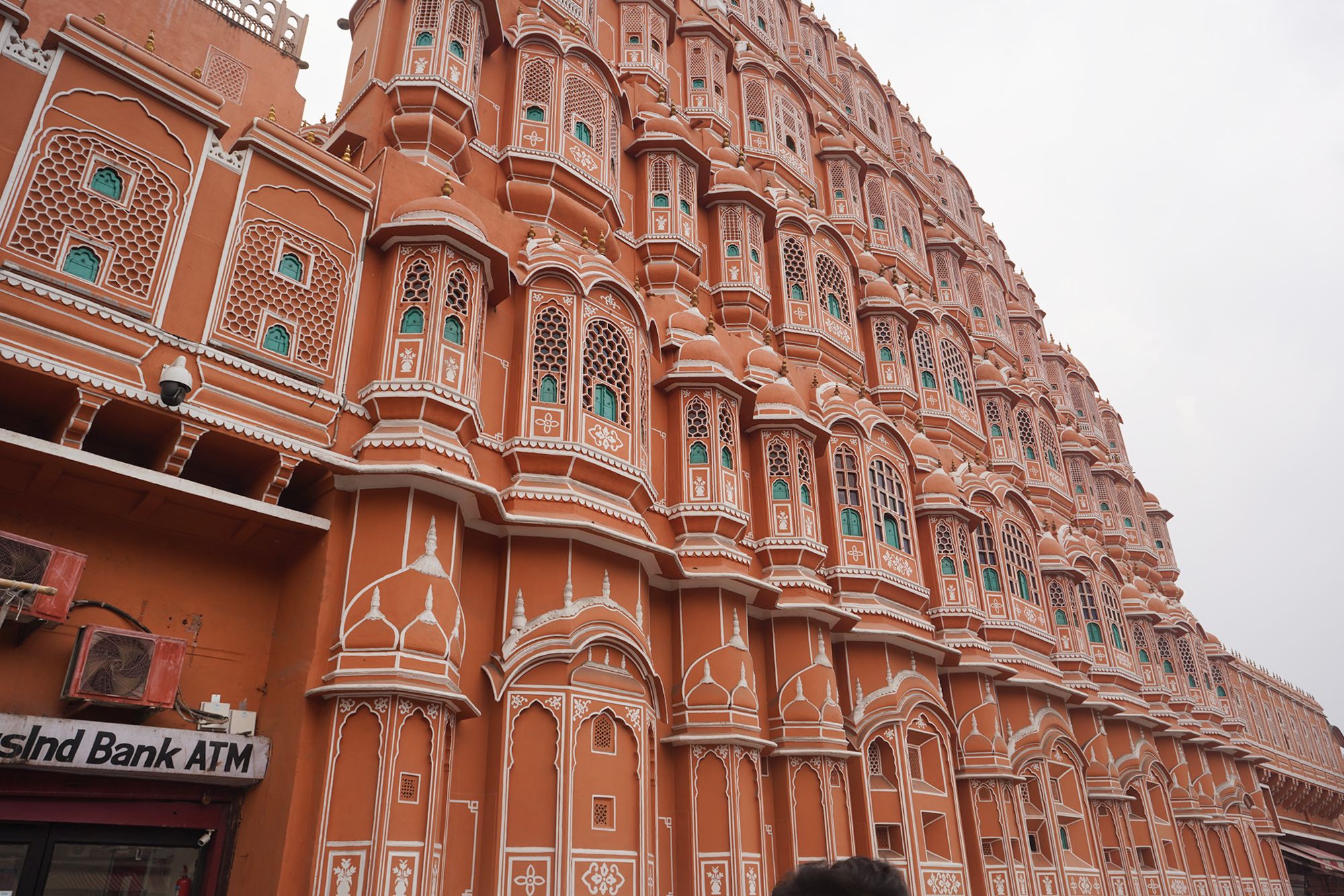
Its distinctive five-story façade is made of pink and red sandstone and contains 953 small windows, called jharokhas, decorated with intricate latticework. The numerous openings allowed air to circulate through the building, helping keep the interior relatively cool and giving the palace its name.
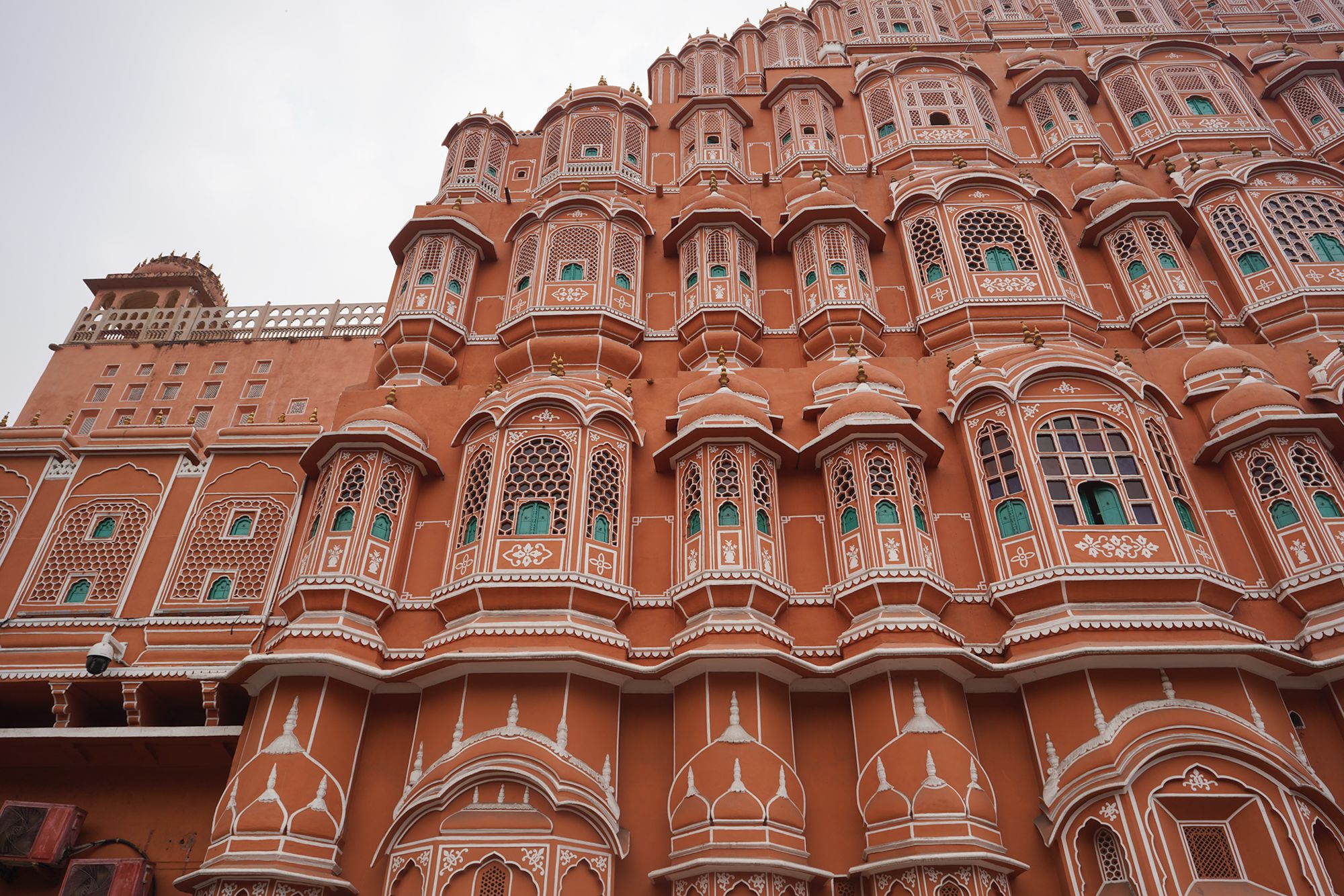
The lattice windows also allowed women of the royal household to observe festivals, processions, and everyday life on the streets below without being easily seen from outside, in keeping with the customs of the royal court at the time.
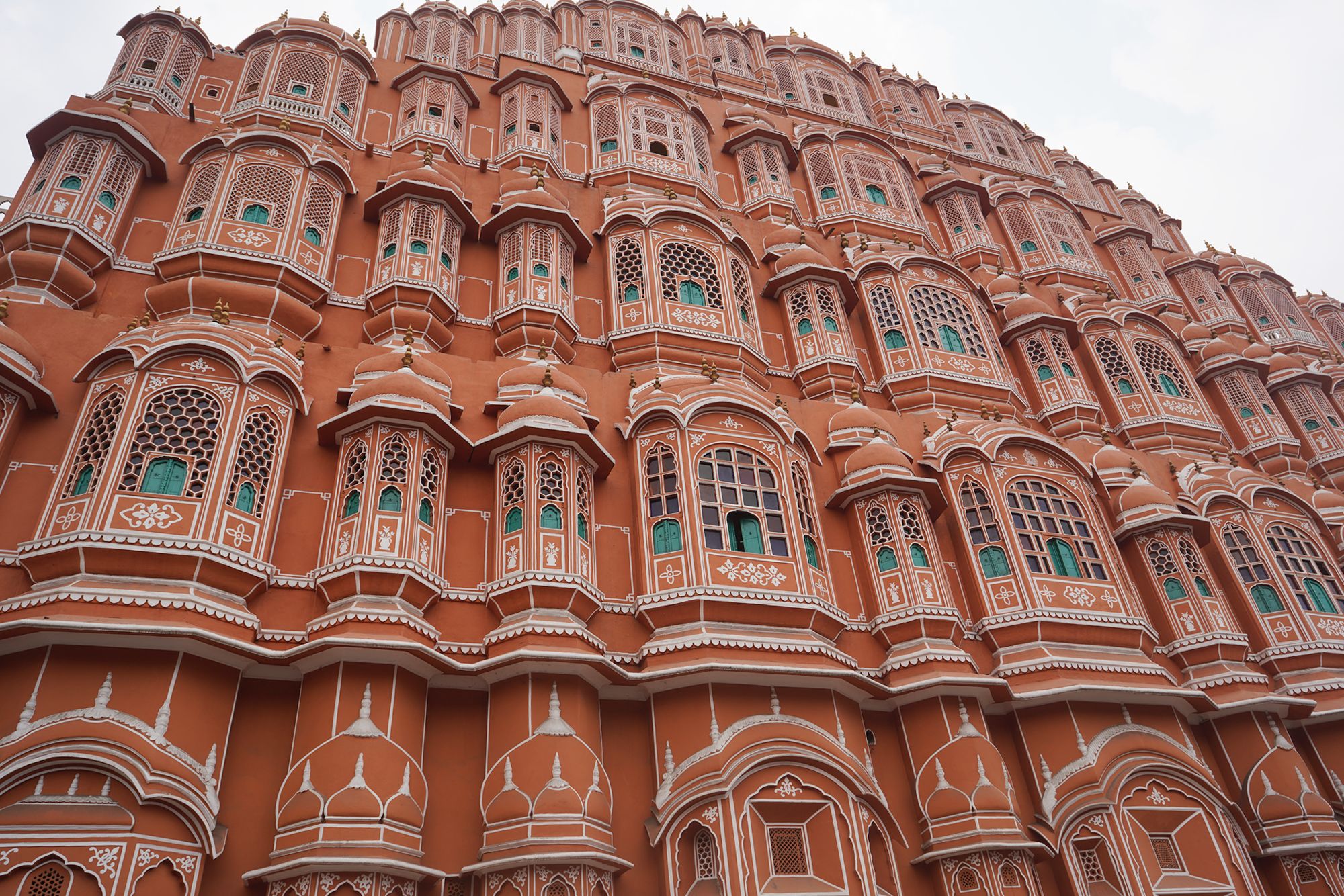
Interestingly, the famous façade seen from the street is essentially the rear exterior of the palace. The building is quite shallow in its upper levels, with narrow passages and small rooms rather than the large halls one might expect from its impressive appearance.
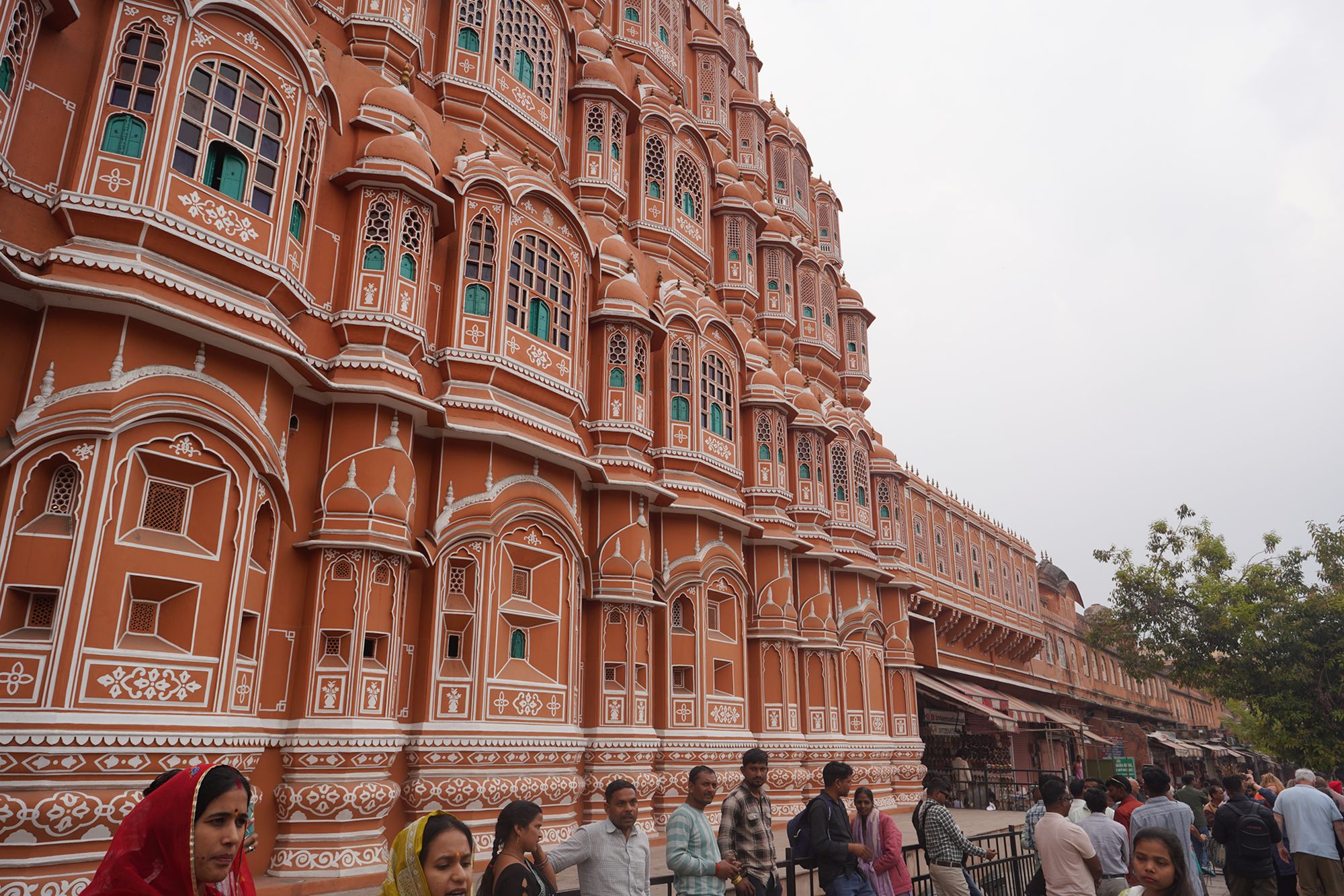
Today, the Hawa Mahal is one of the best-known examples of Rajput architecture in Jaipur and has become a symbol of the city.
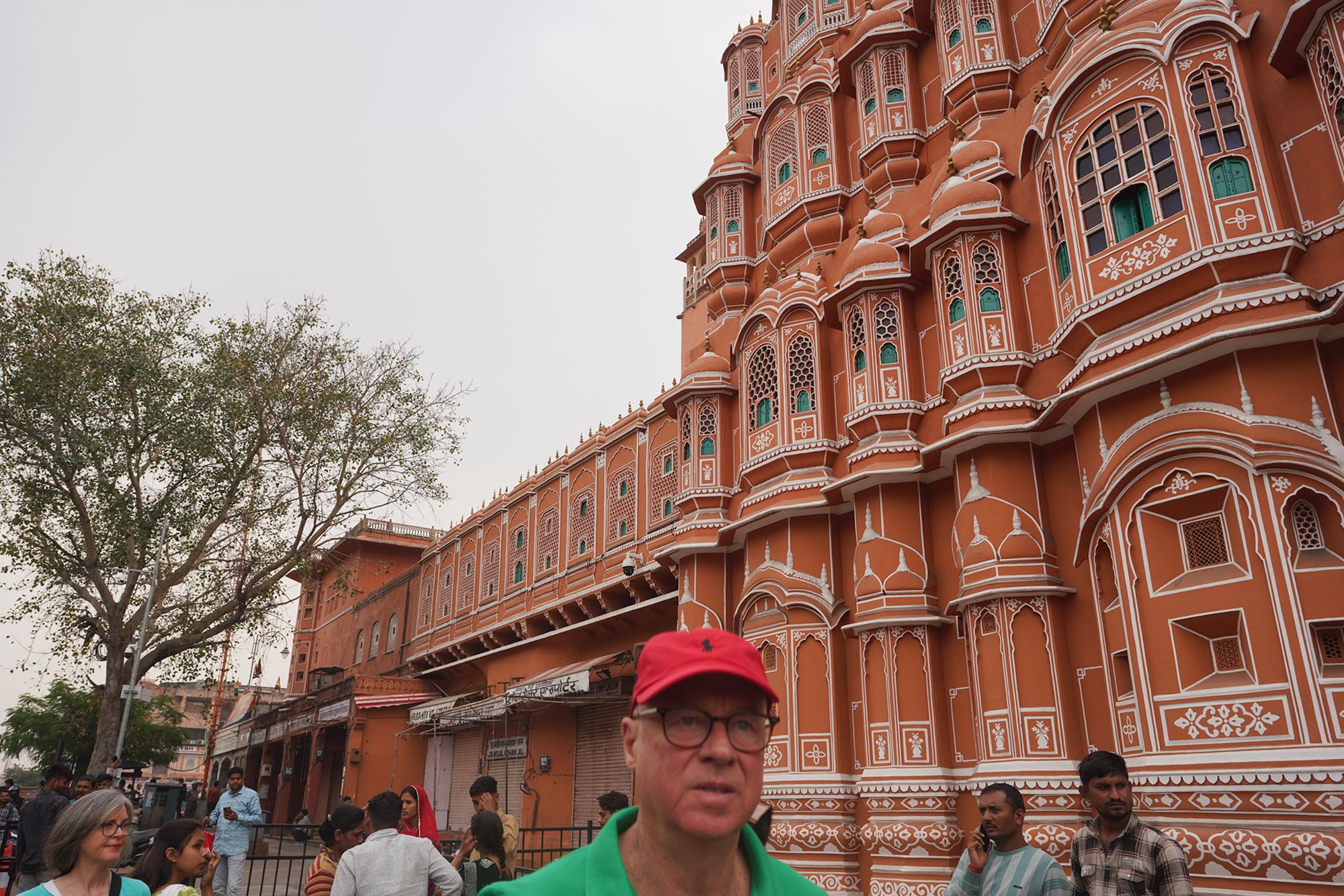
We viewed the Hawa Mahal from the street but did not go inside. The famous exterior façade is the main attraction; the interior is relatively simple, with narrow corridors, small rooms, courtyards, and ramps rather than the elaborate halls of a grand palace. The upper levels do, however, offer interesting views over Jaipur and a closer look at the palace’s many lattice windows.
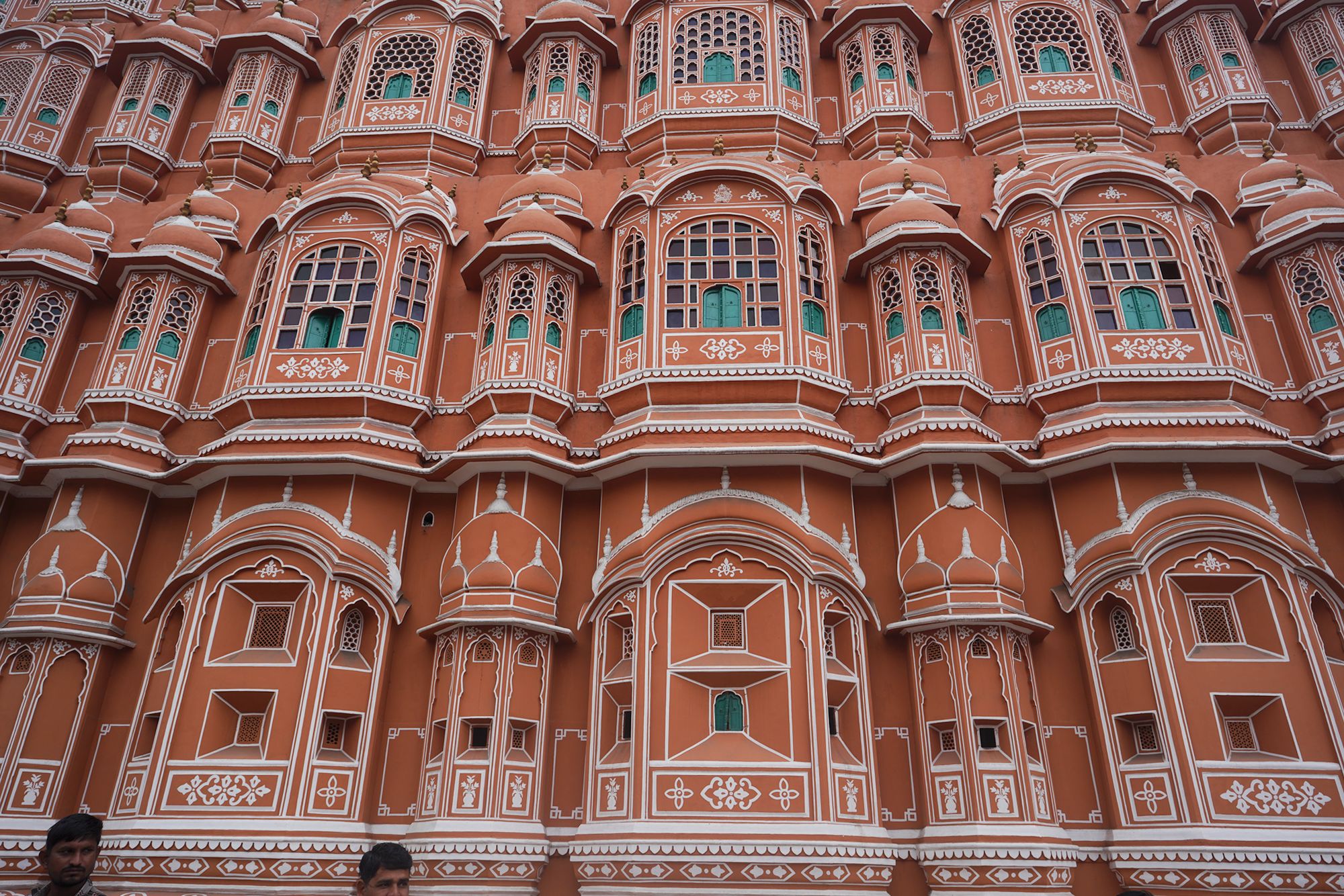
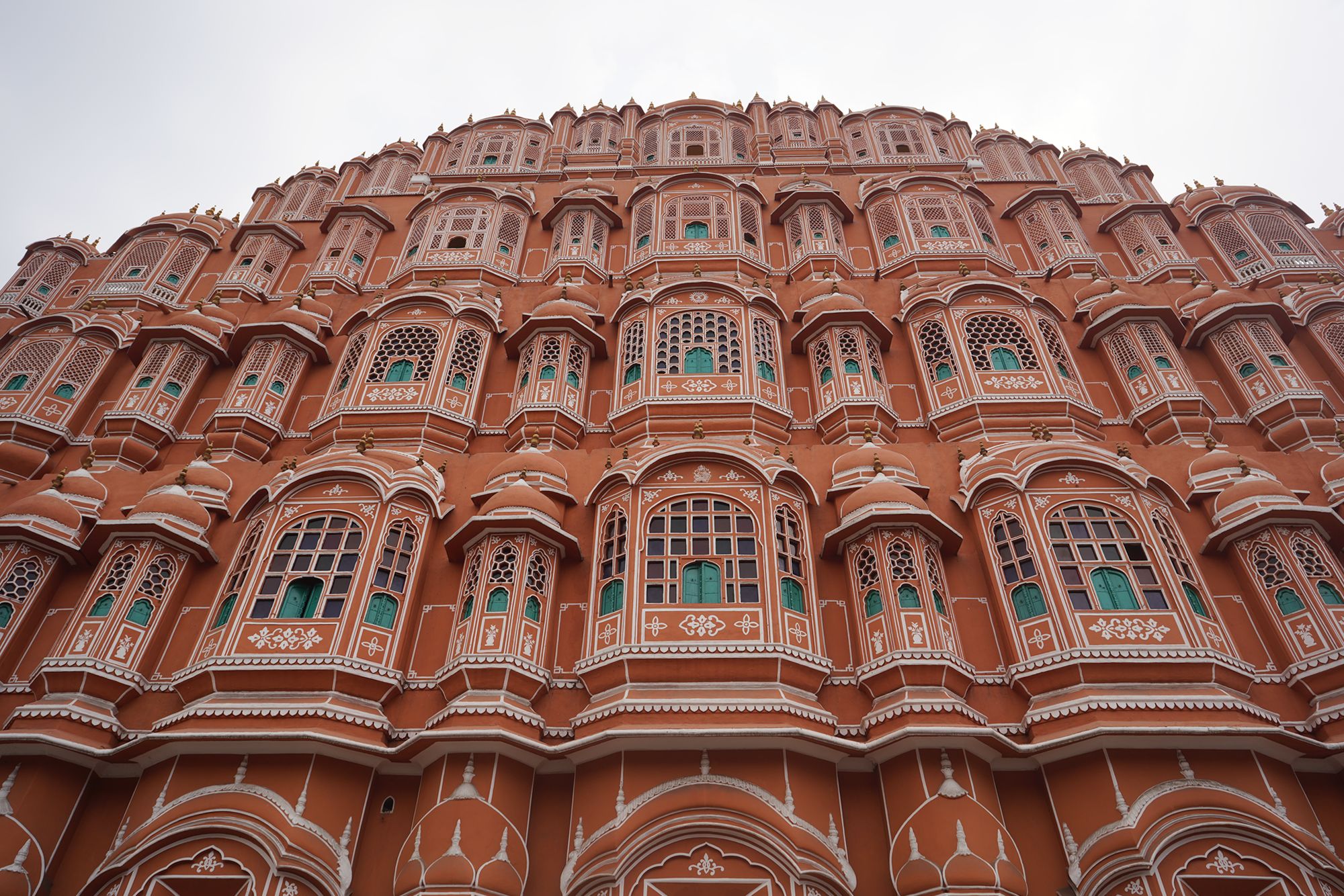
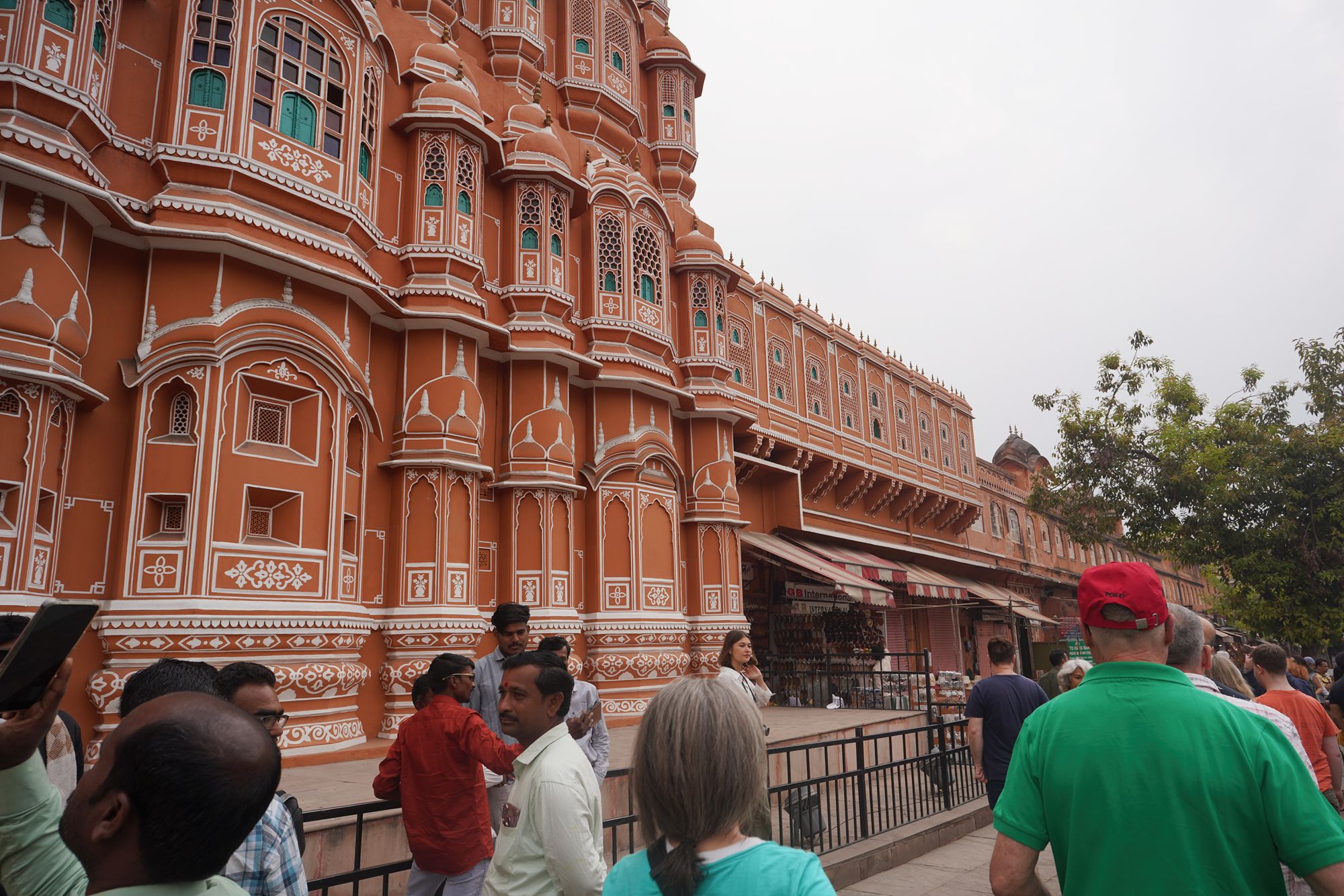
After viewing the Hawa Mahal, we boarded our tour bus and headed to Amber Palace.
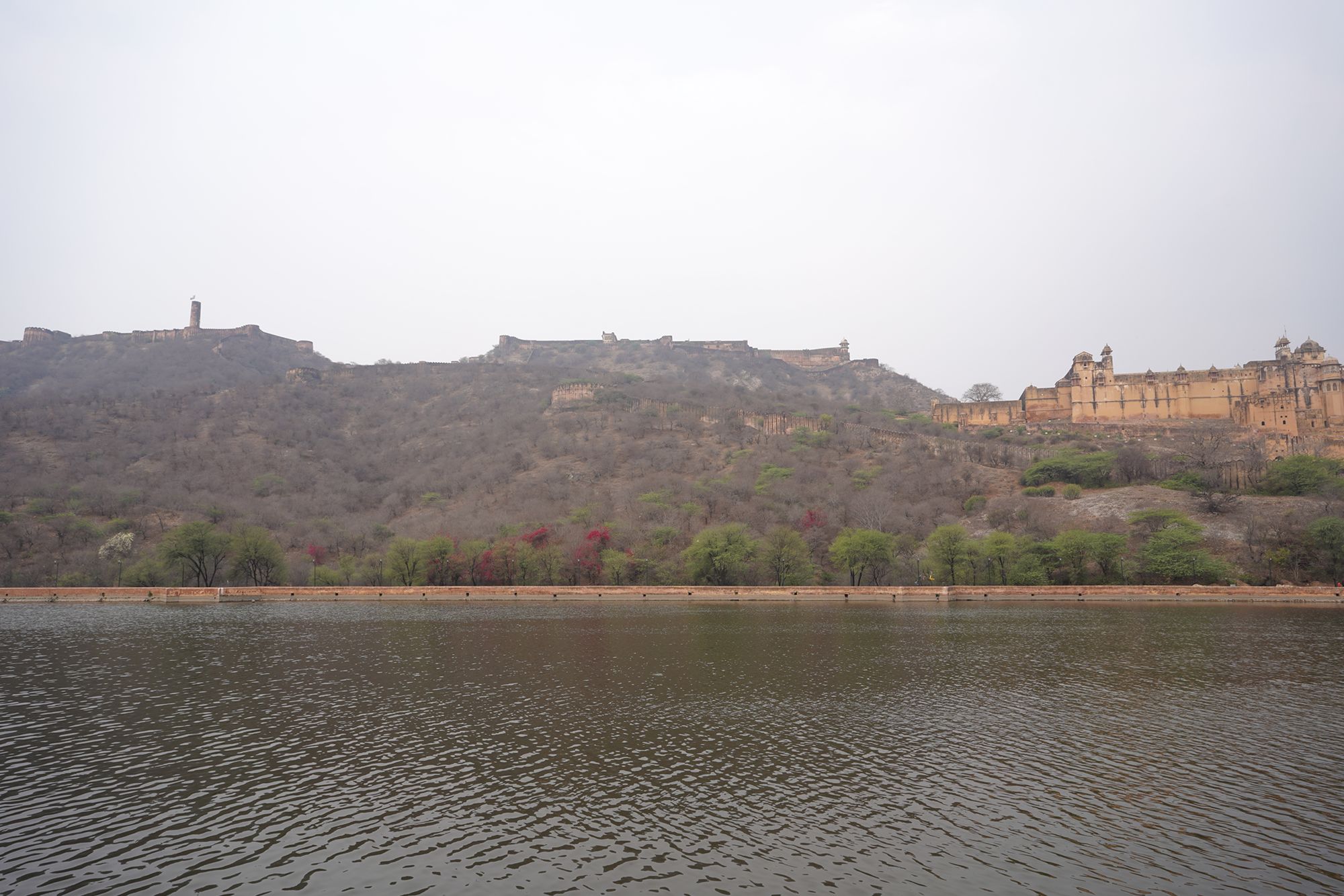
Amber Palace
Amber Palace, also known as Amer Fort, is a magnificent hilltop palace and fortress located about 11 kilometers (7 miles) from Jaipur. Construction began in 1592 under Raja Man Singh I, and successive rulers expanded the complex over the following centuries.
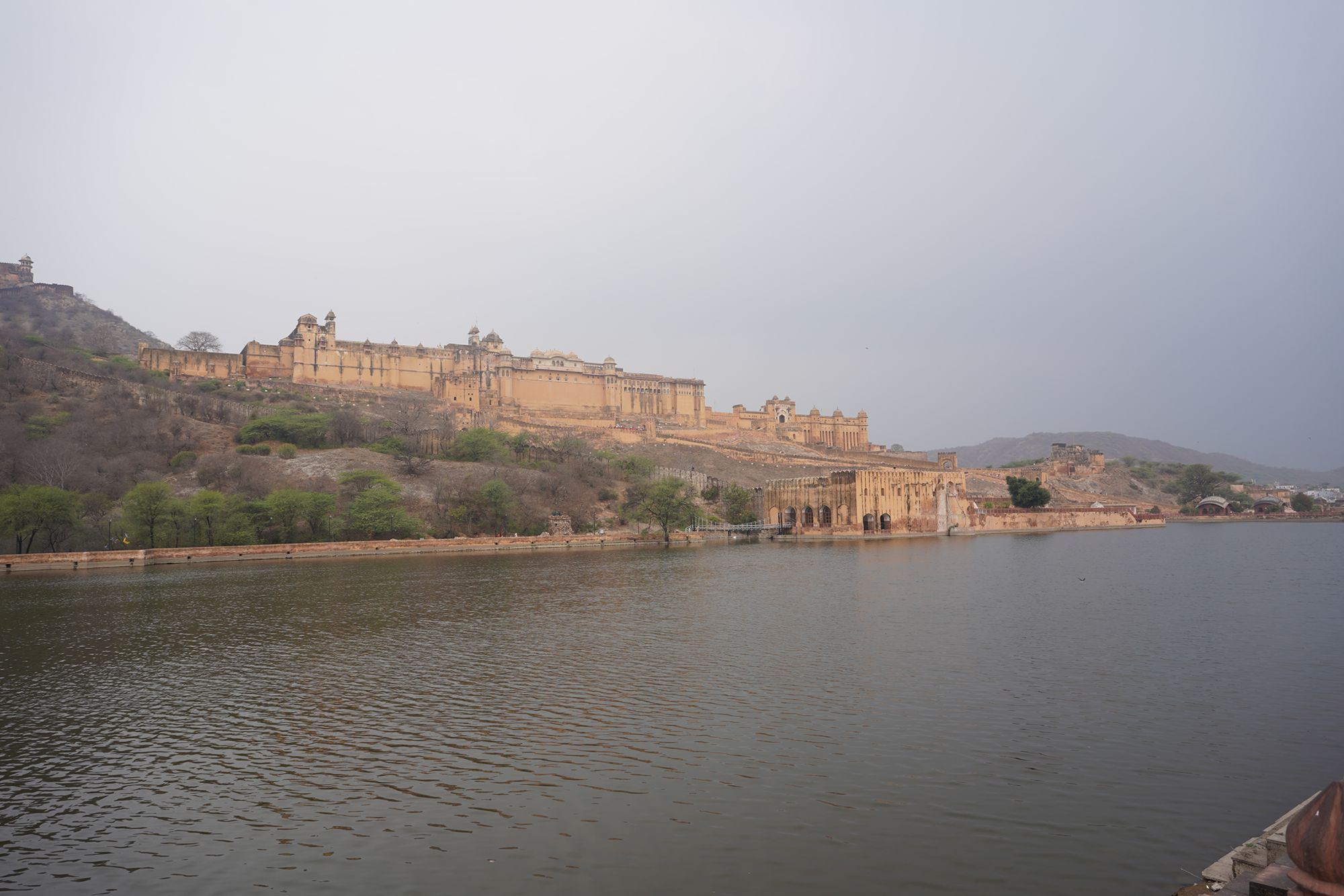
Built primarily of red sandstone and marble, Amber Palace combines Rajput and Mughal architectural styles. Behind its massive defensive walls are a series of courtyards, royal apartments, audience halls, gardens, temples, and beautifully decorated rooms.
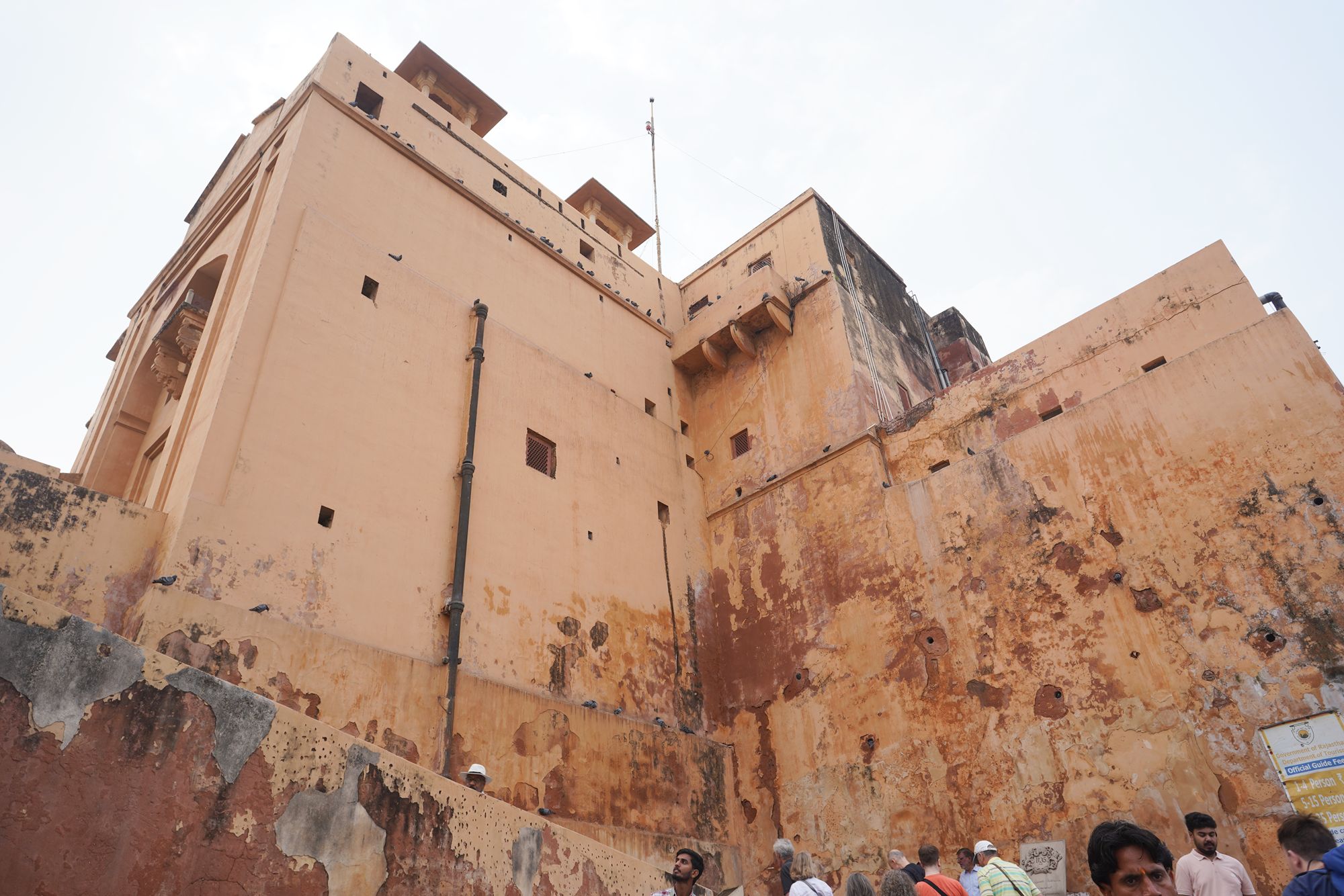
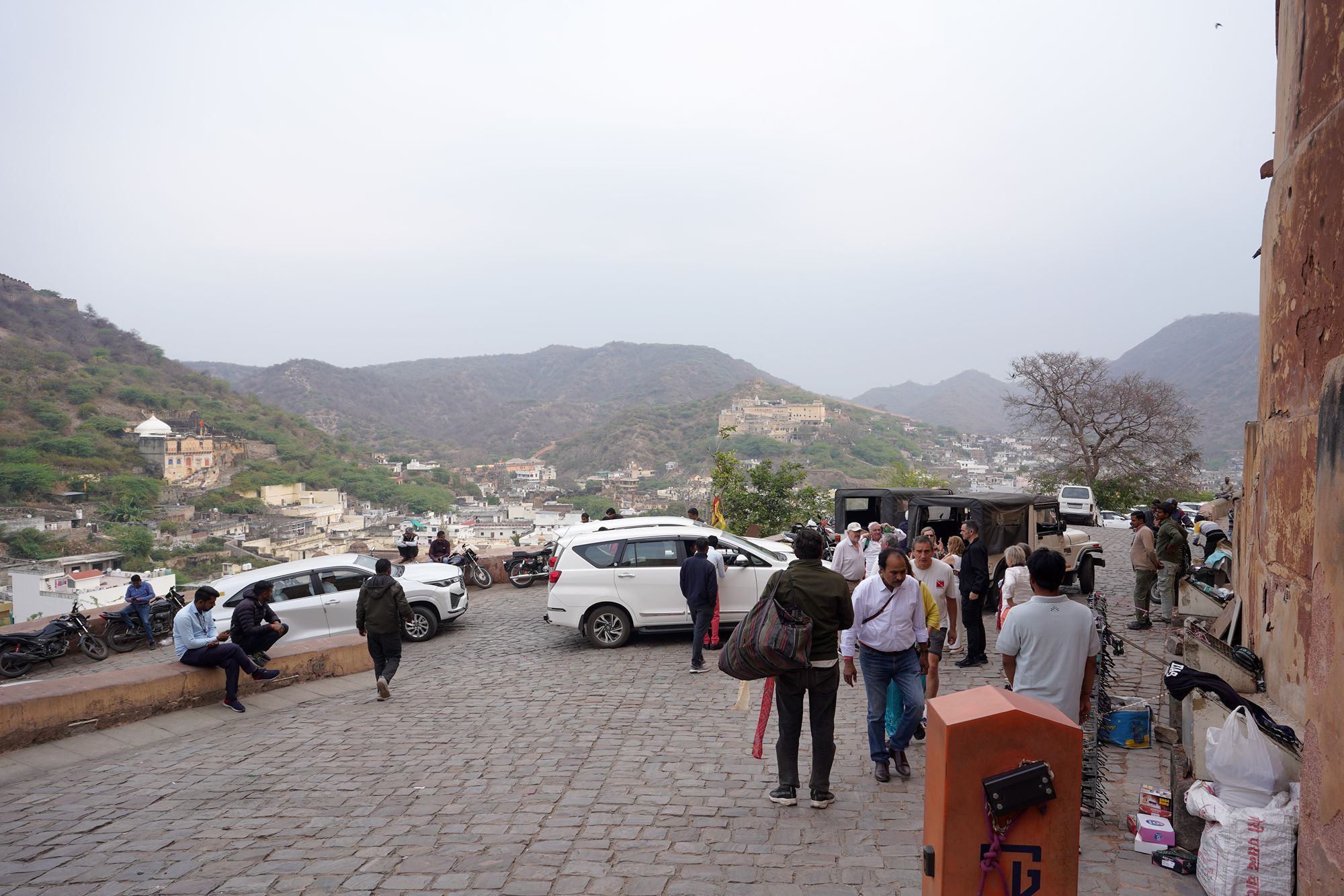
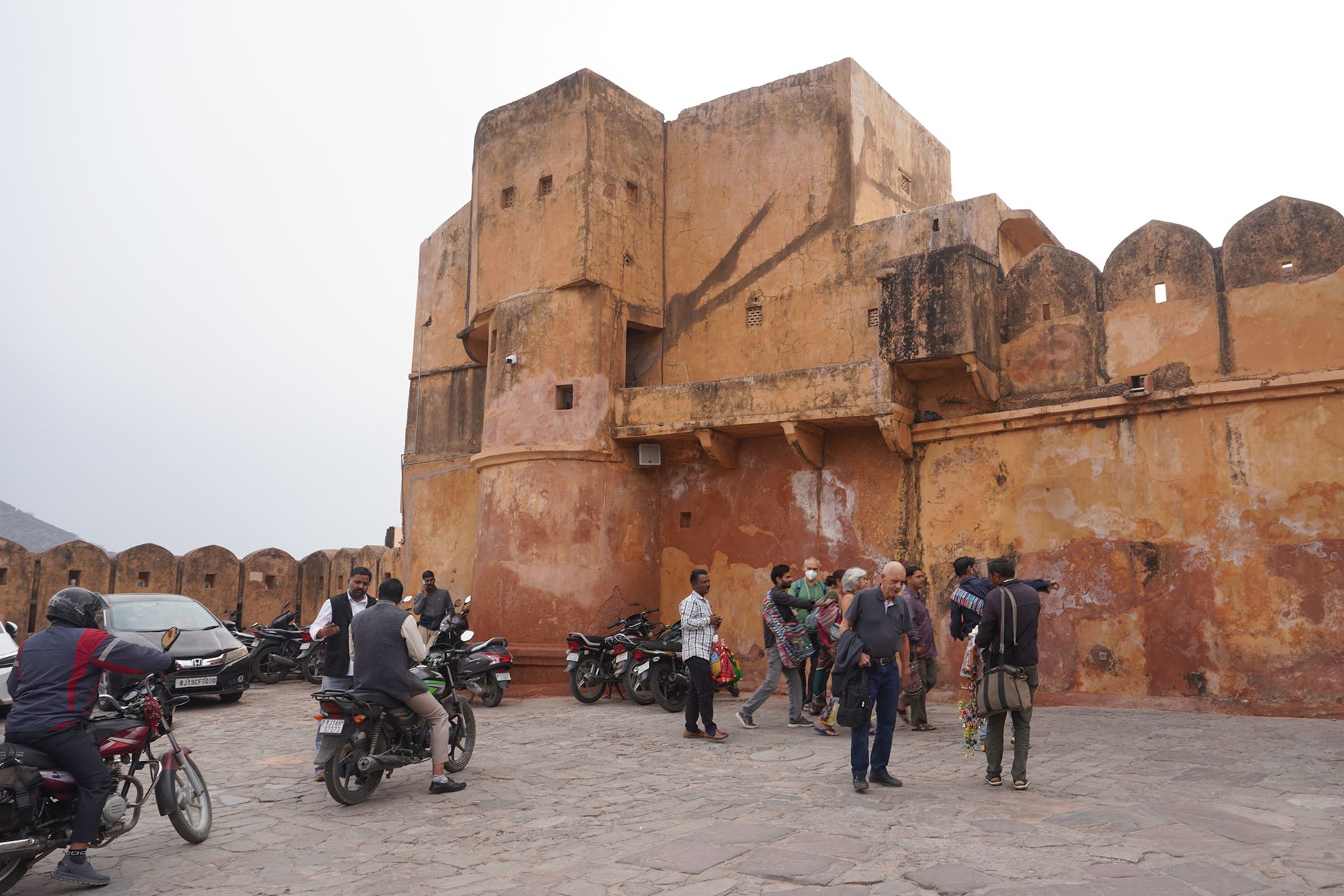
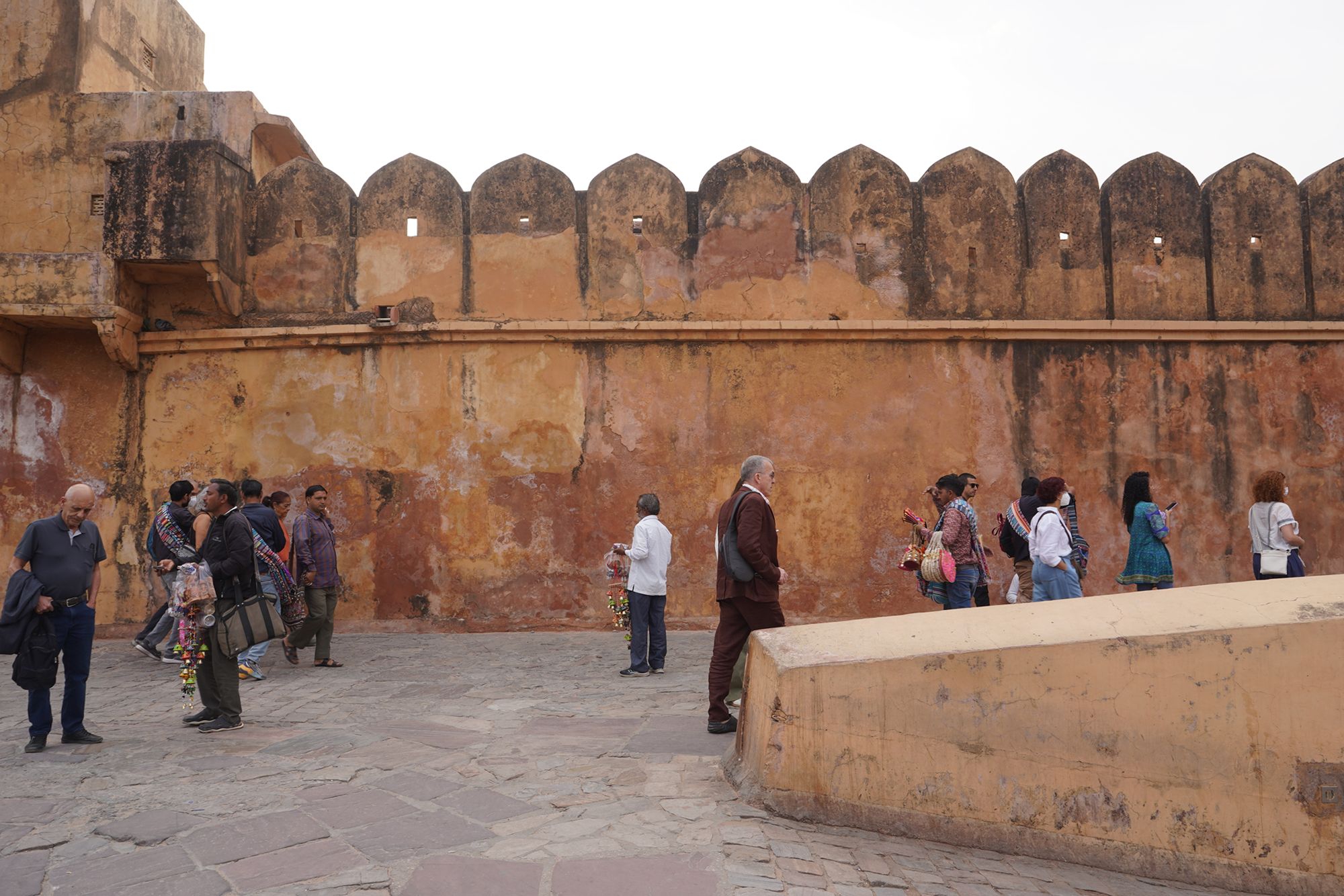
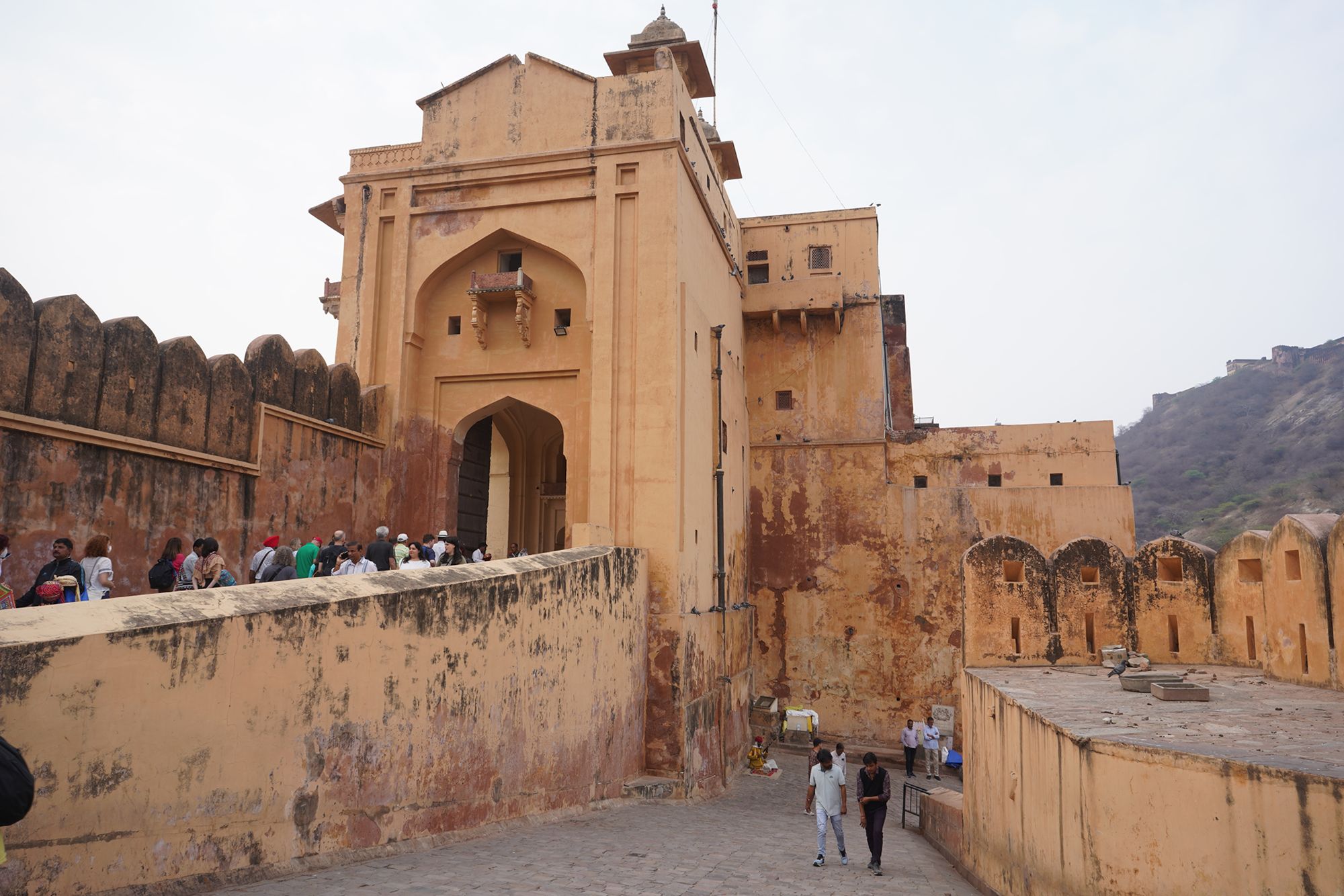
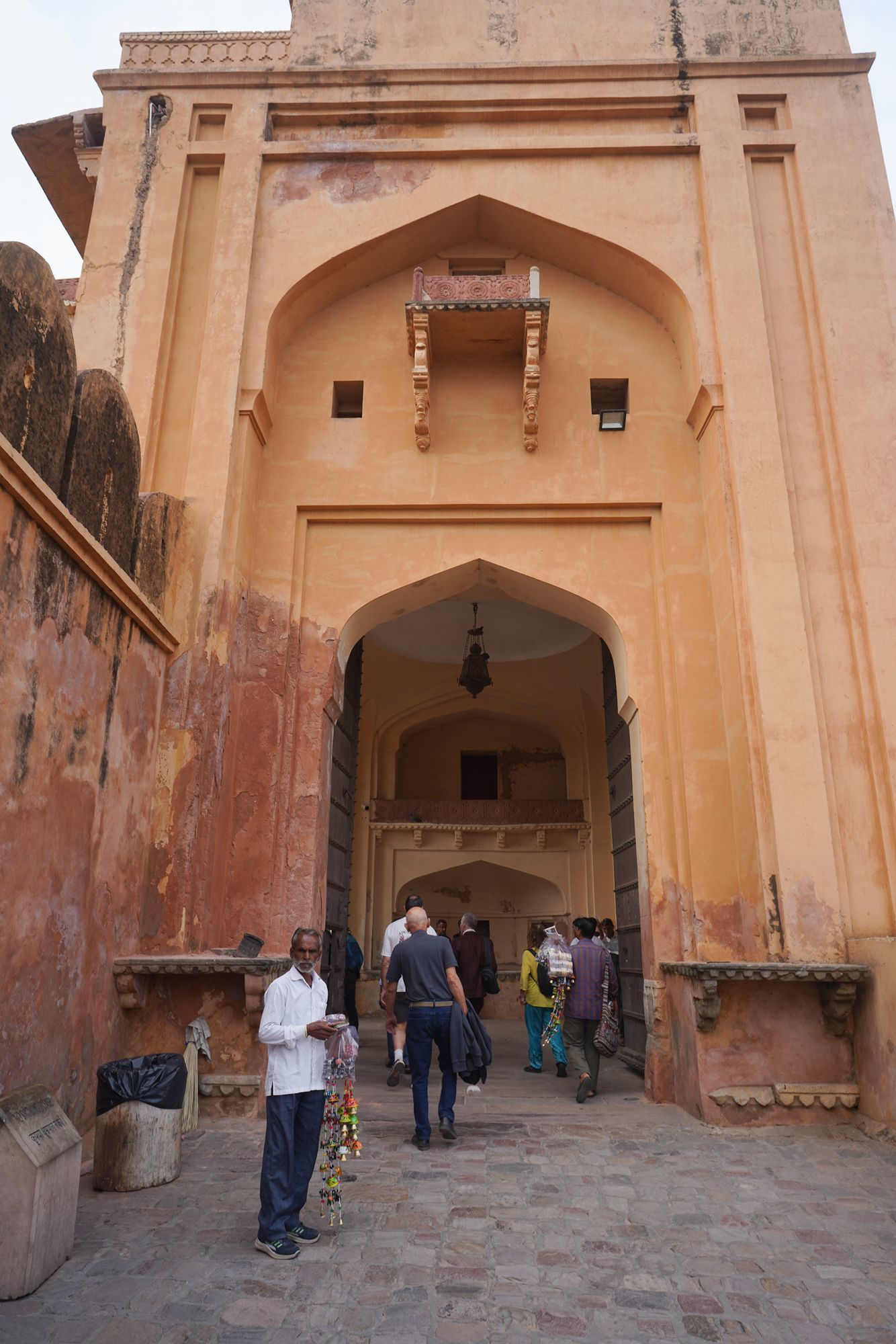
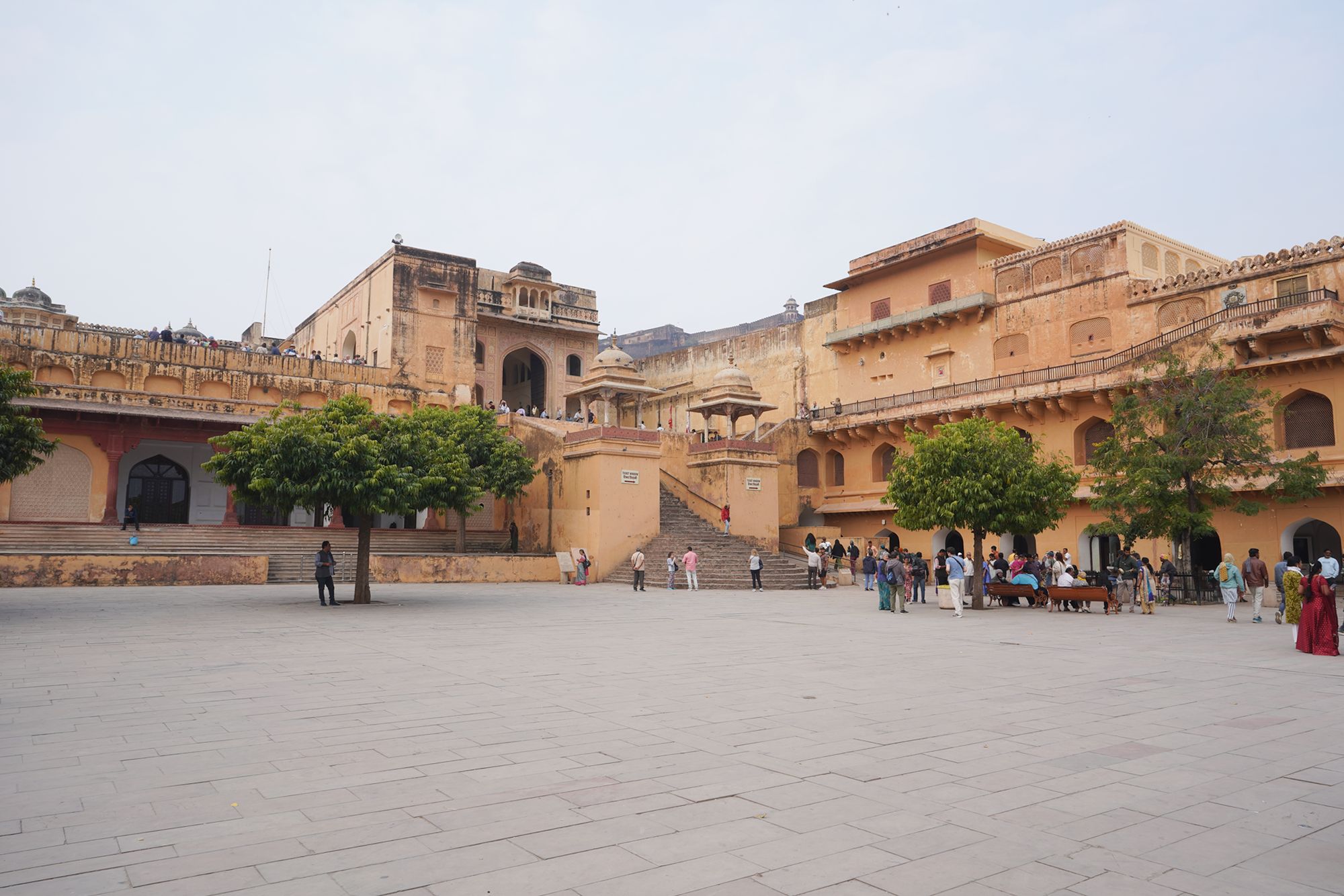
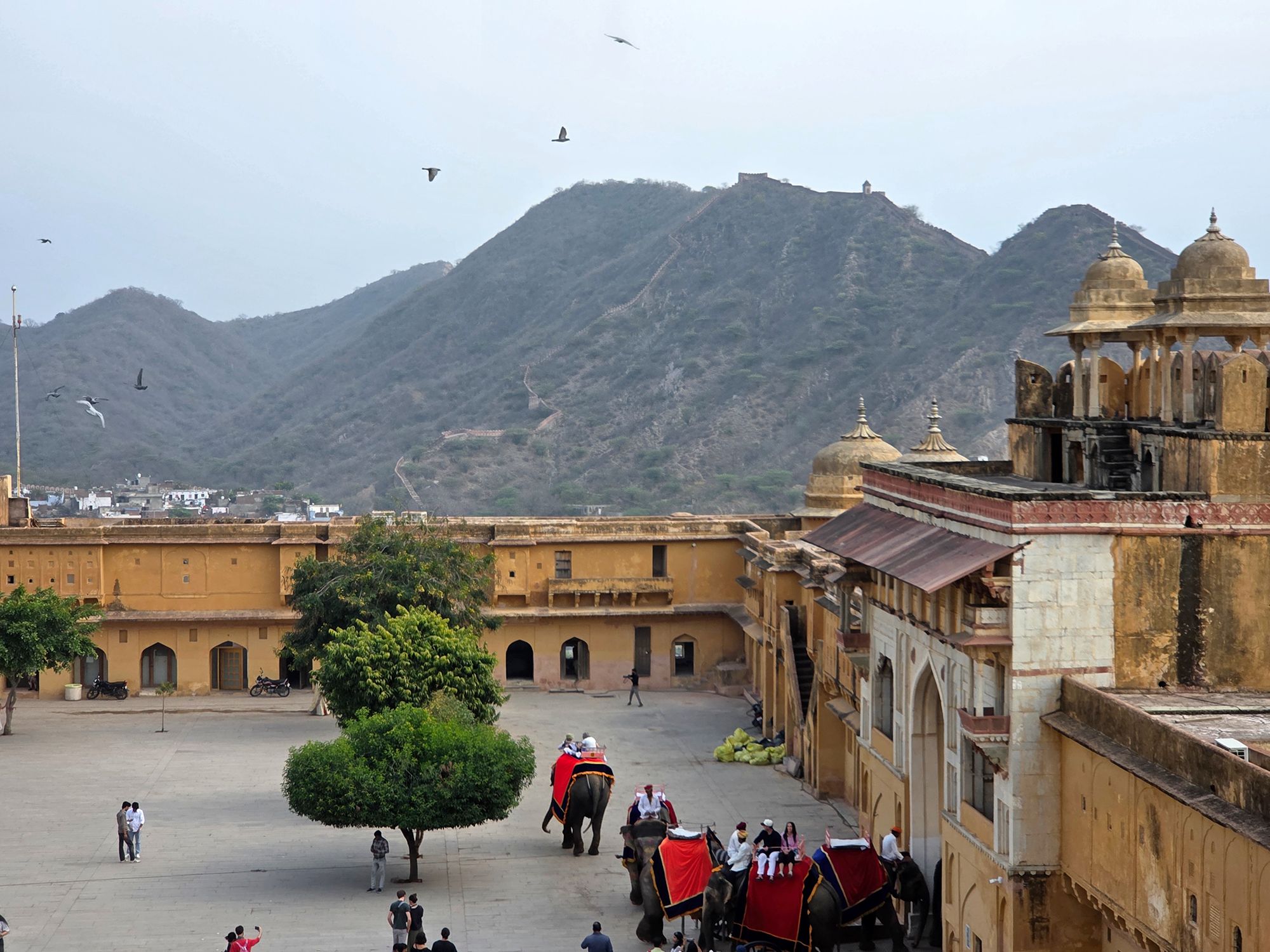
Jaleb Chowk is the main entrance courtyard of the palace. During the time of the Rajput rulers, returning armies would gather here and display their war booty to the public and the royal household. It was also used for military gatherings and ceremonial processions.
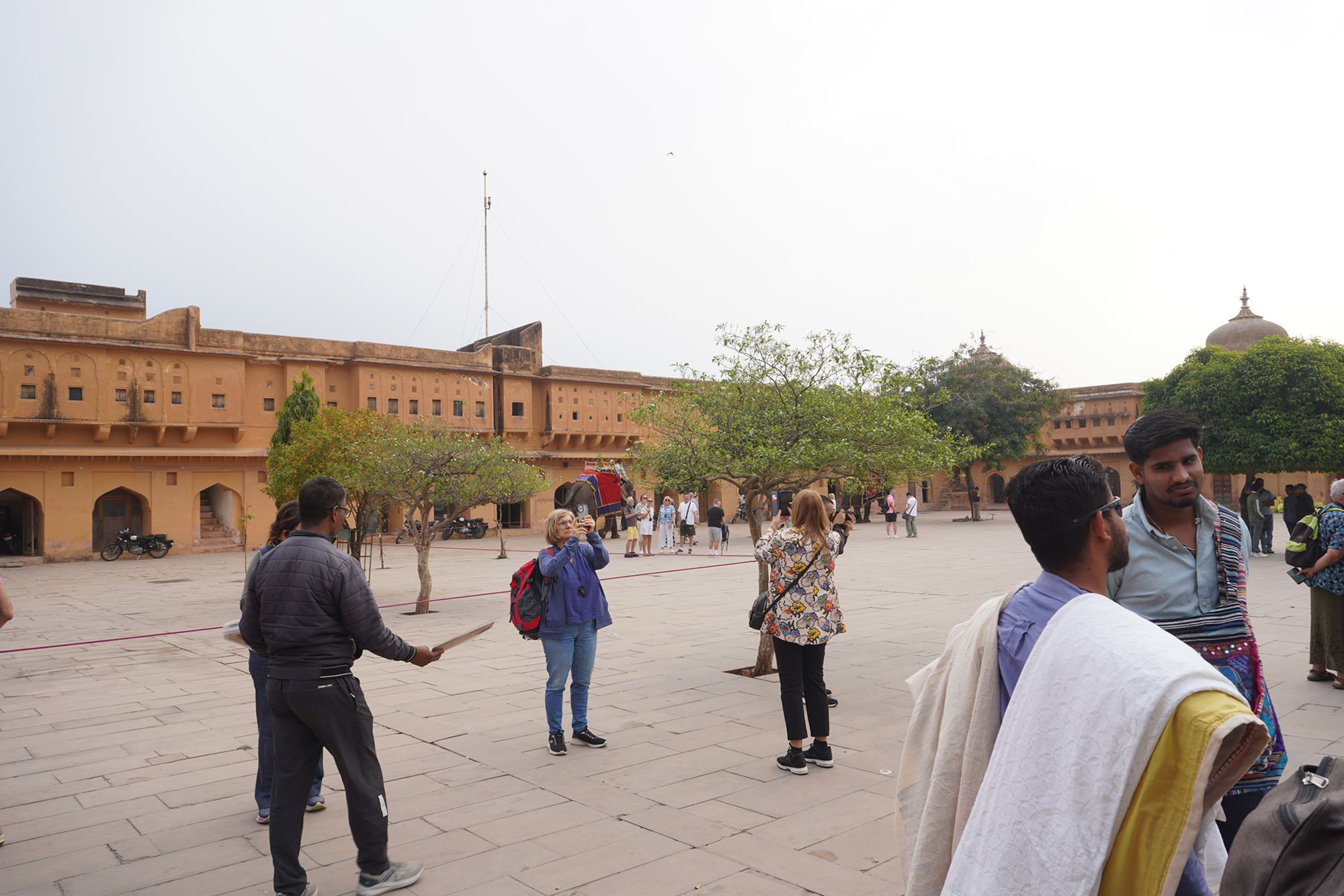
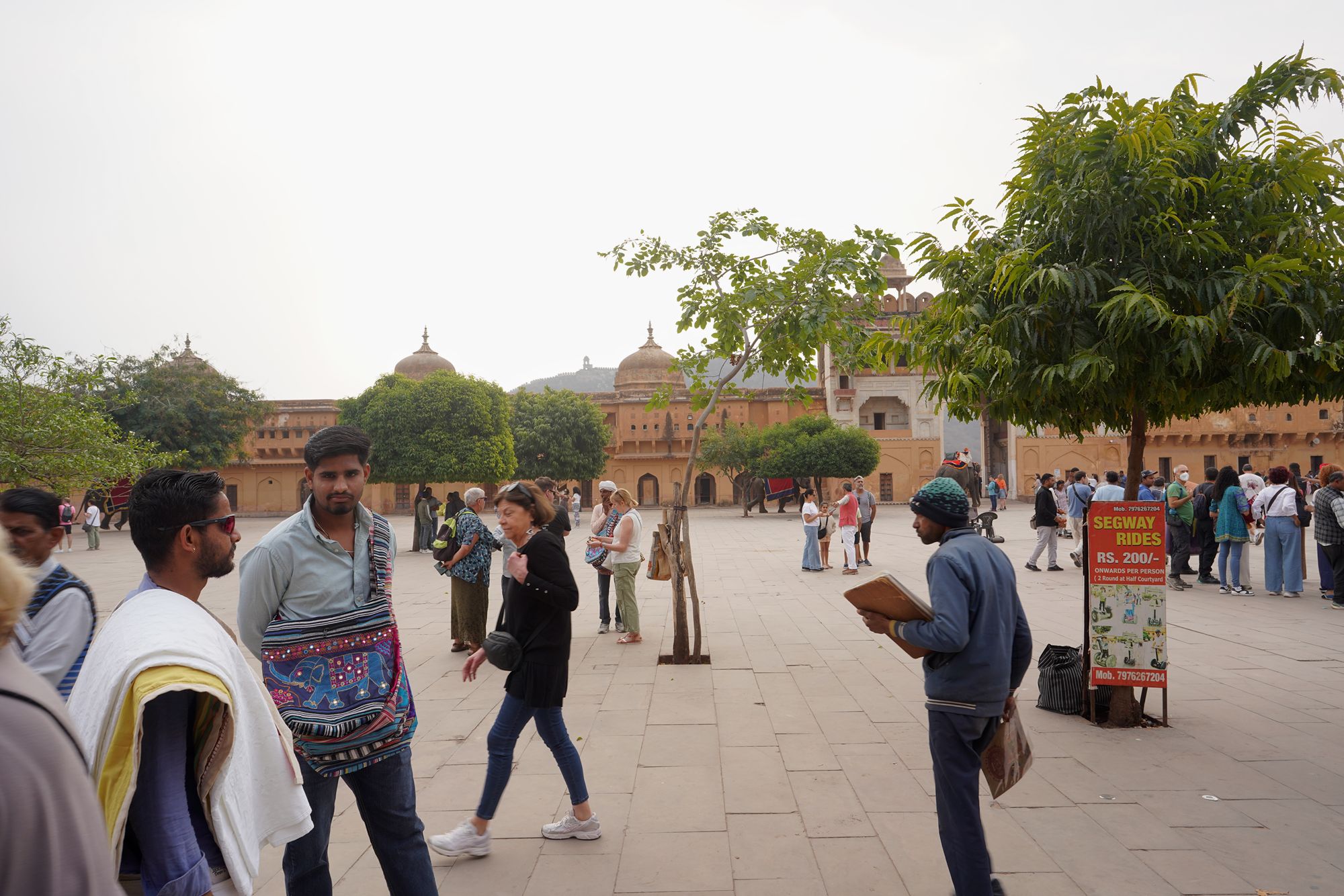
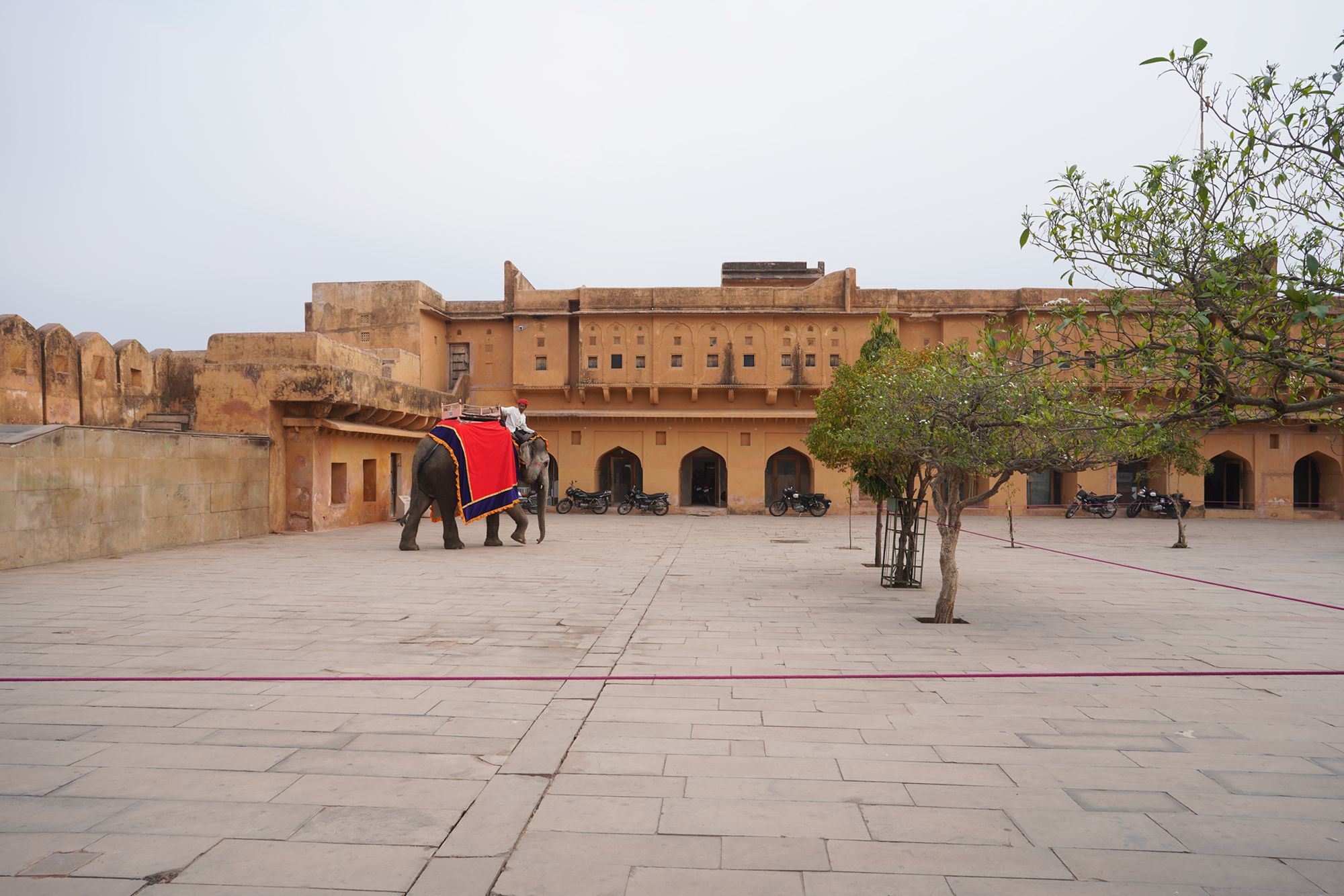
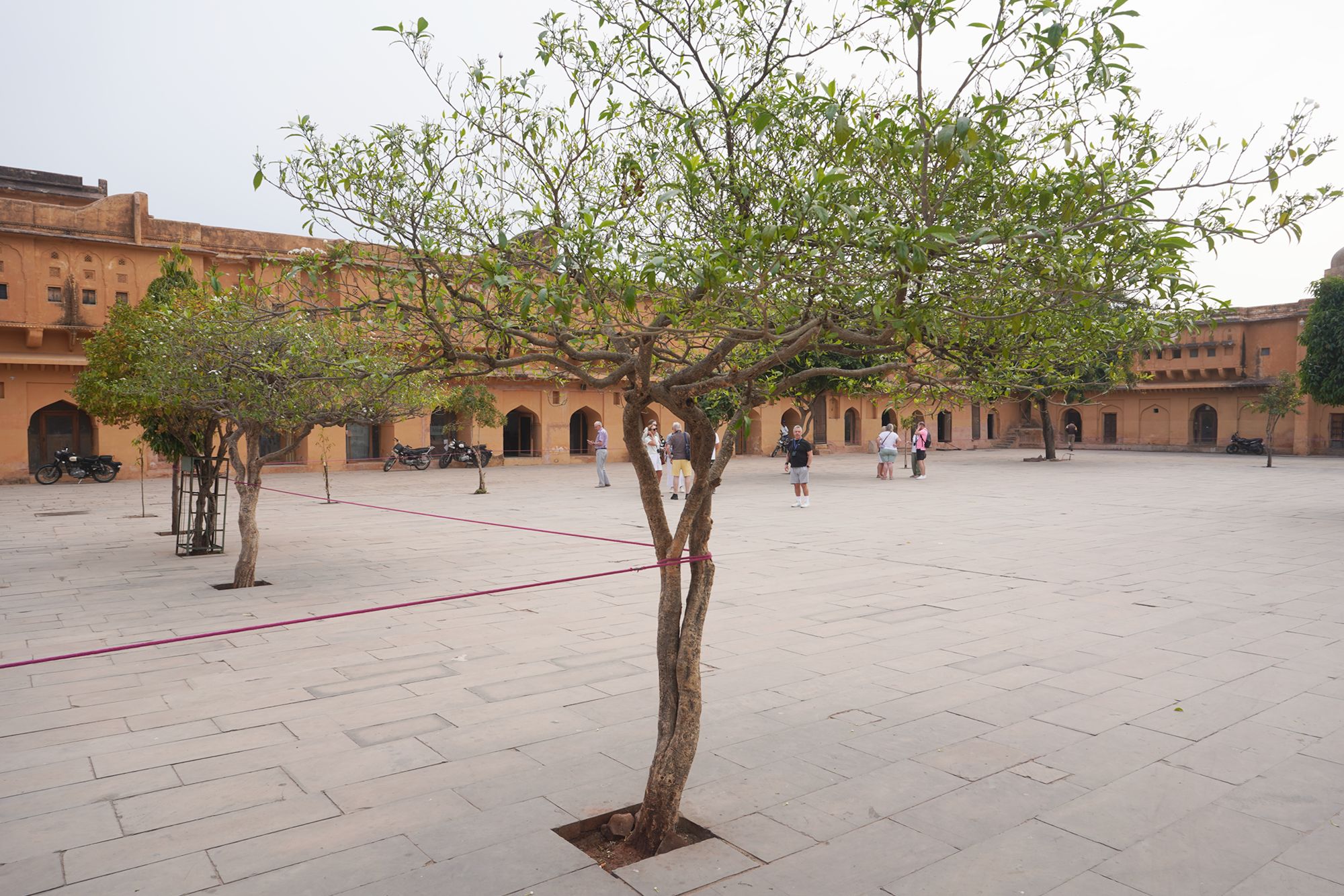
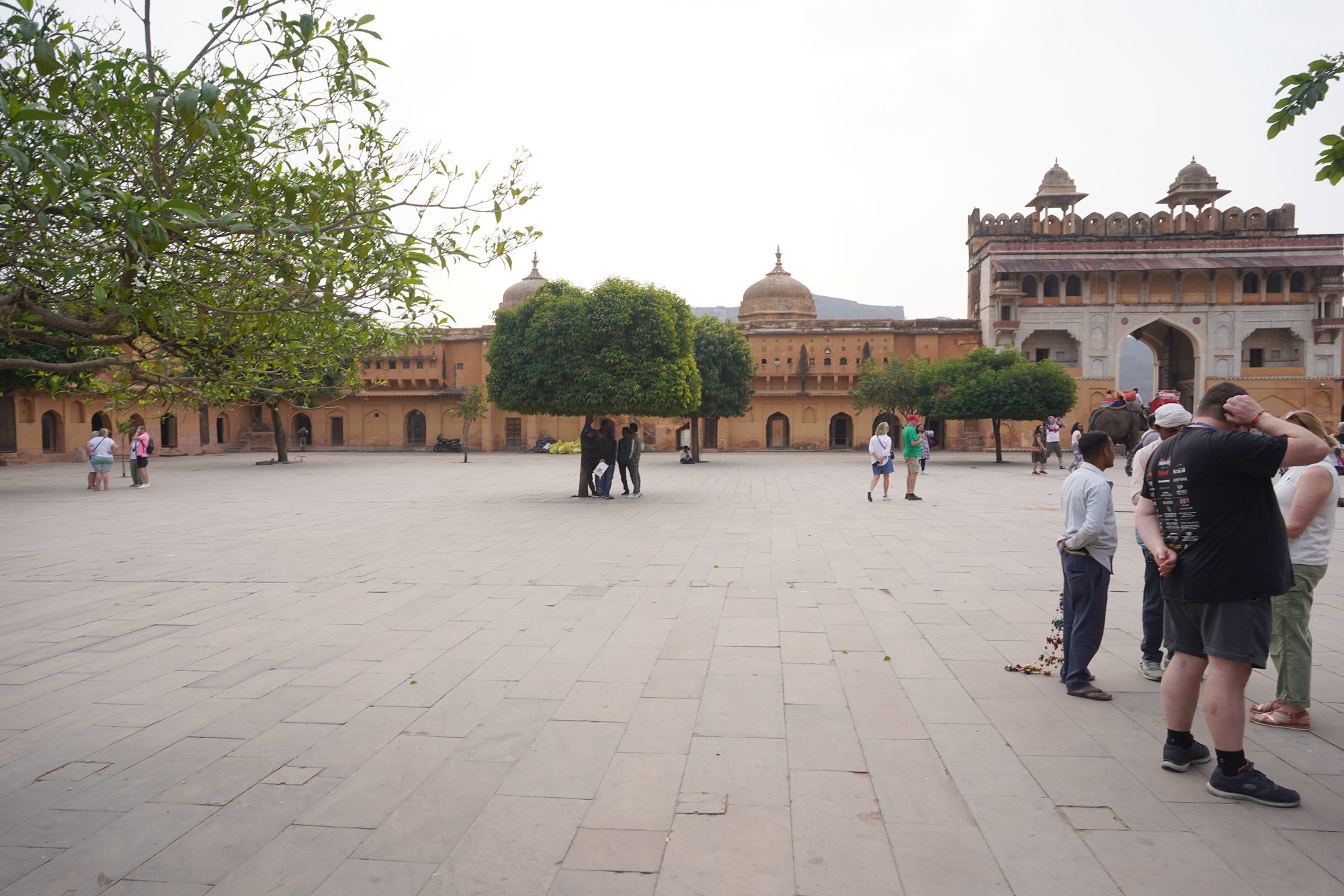
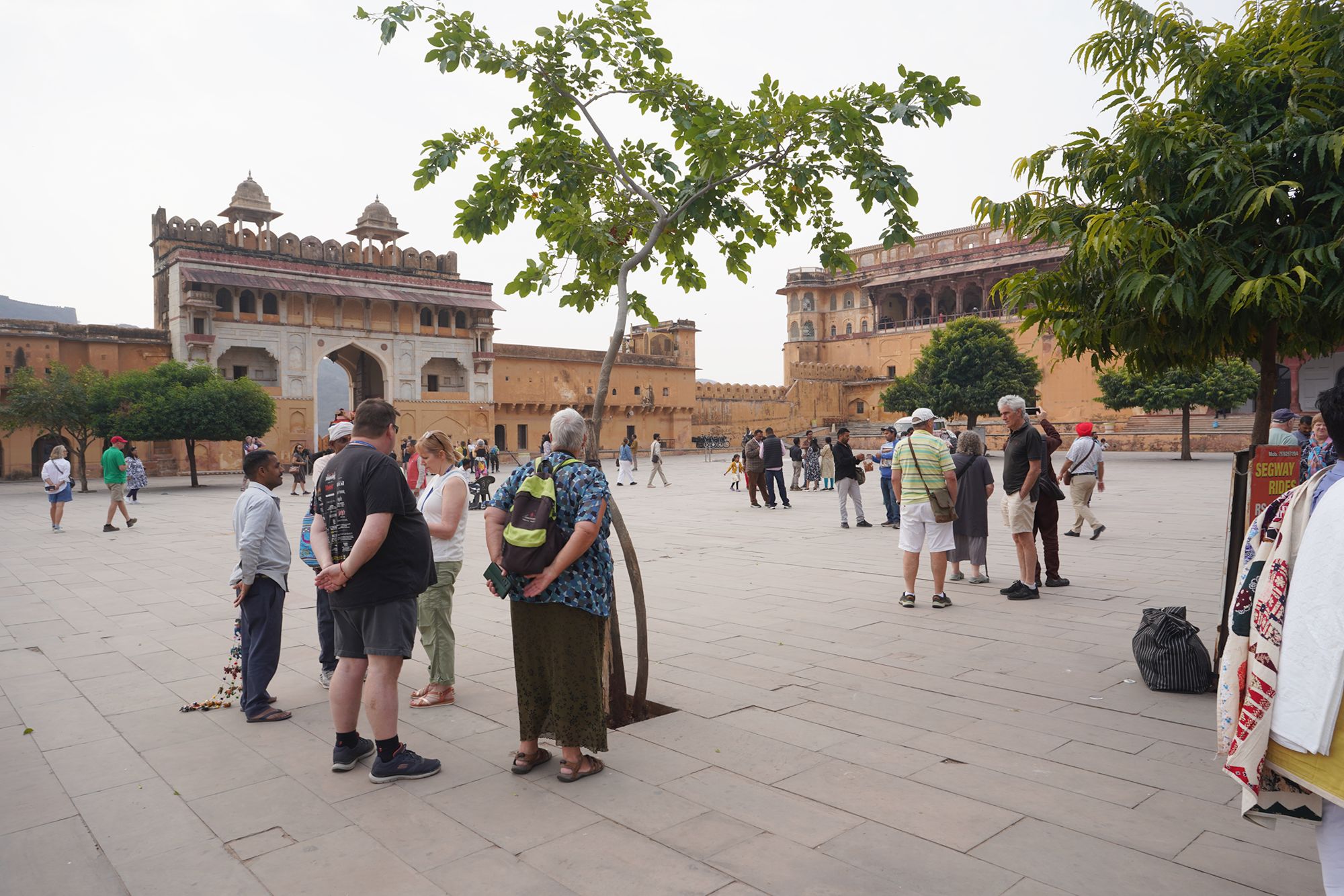
The main buildings of Amber Palace can be seen ahead.
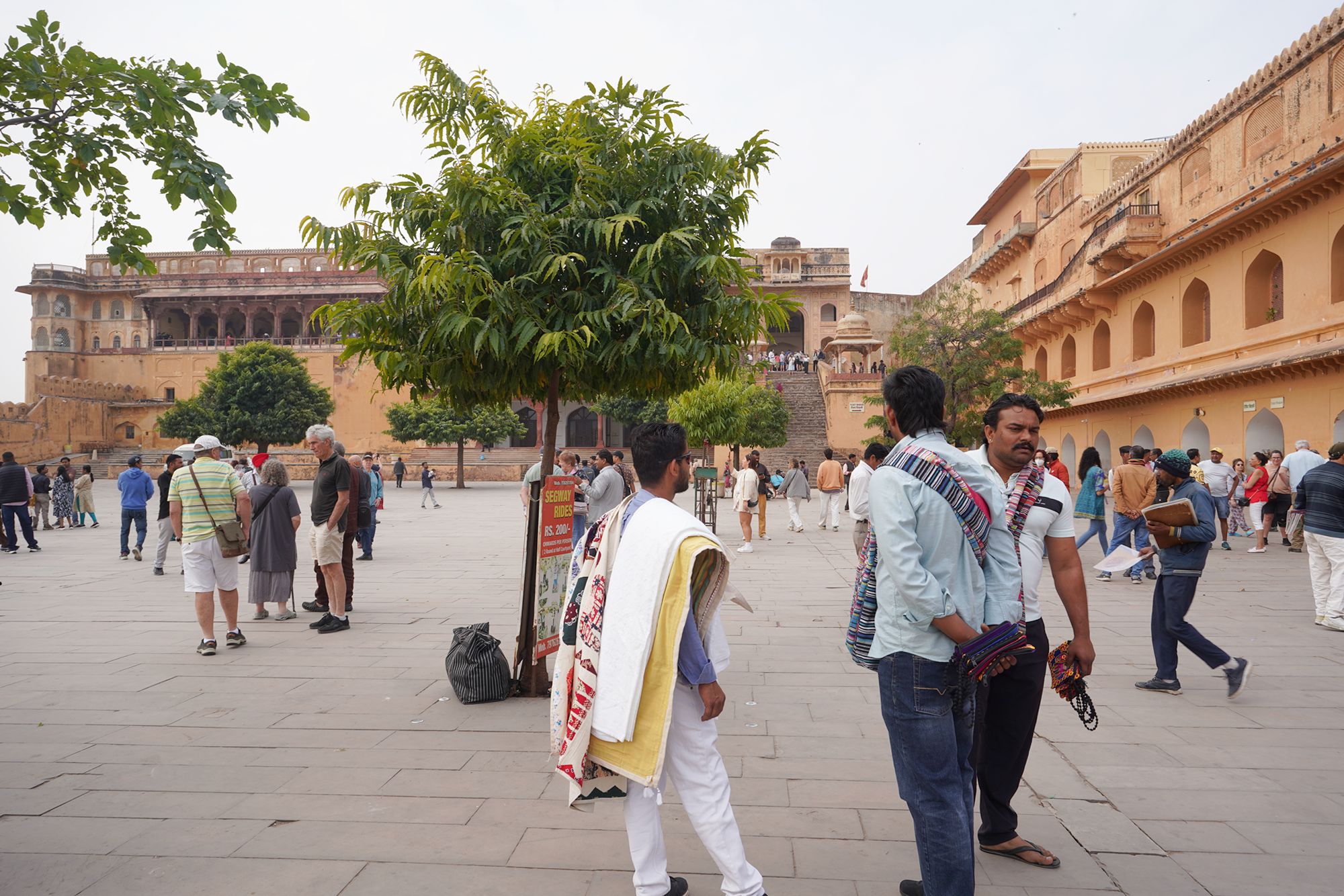
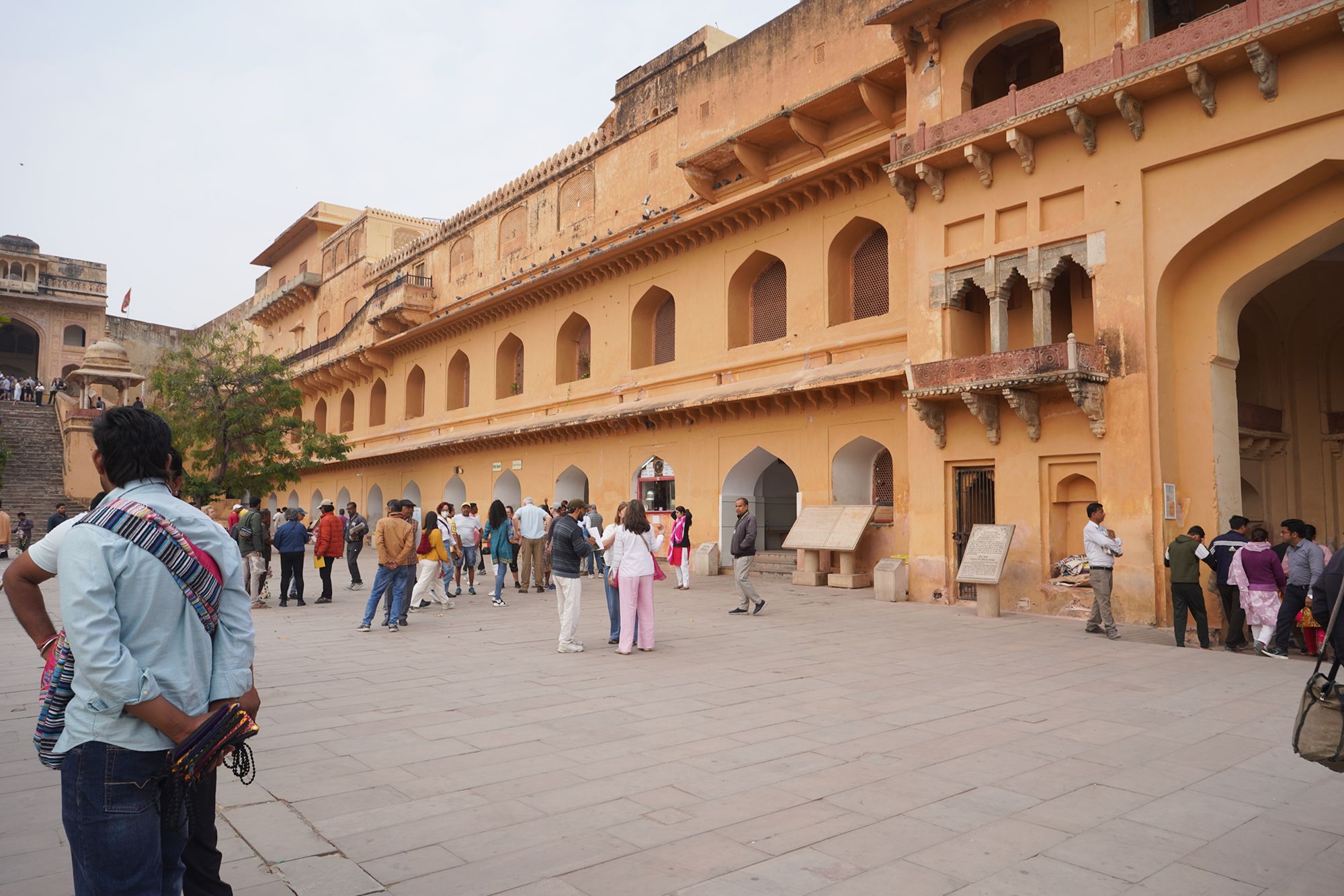
The Sun Gate
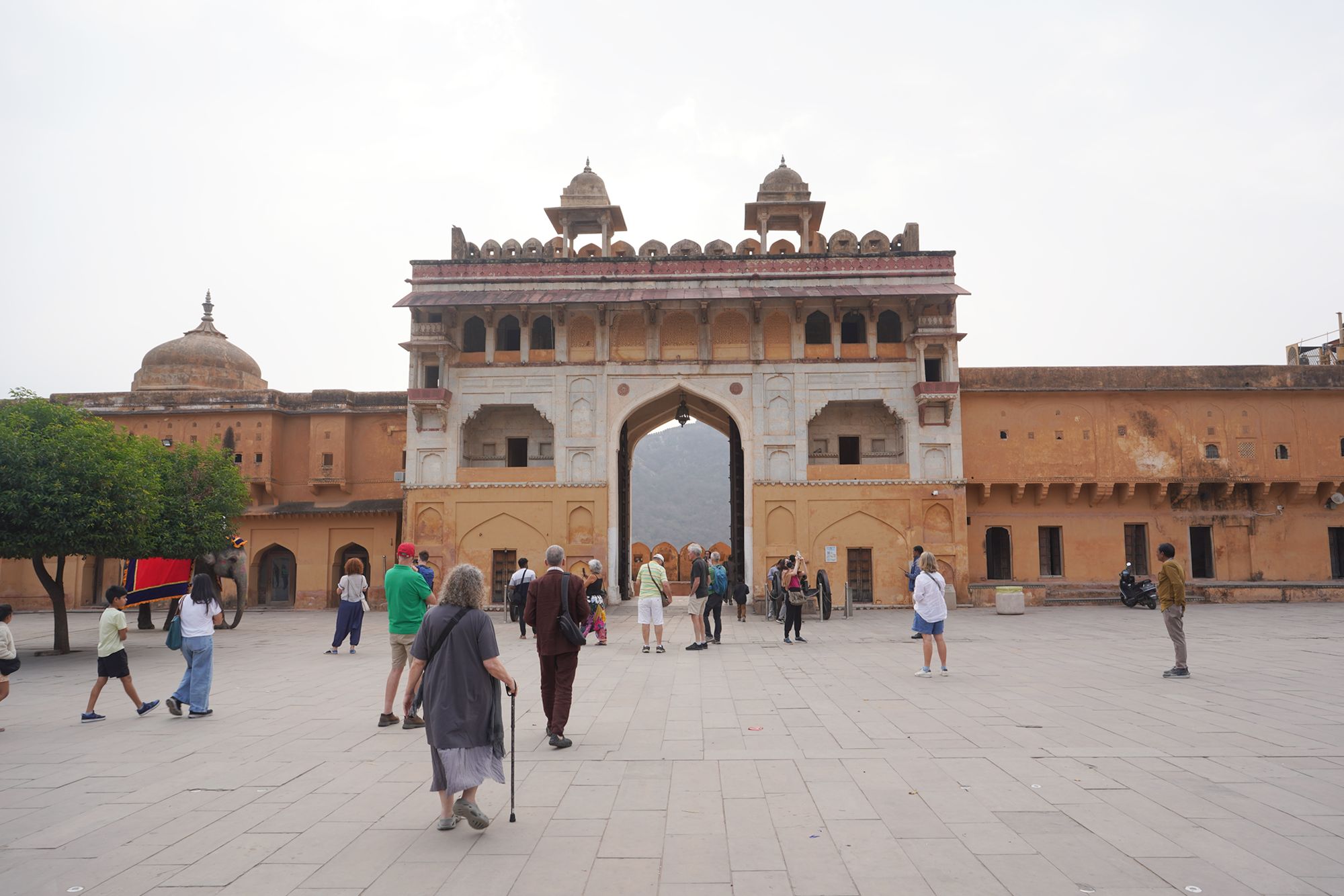
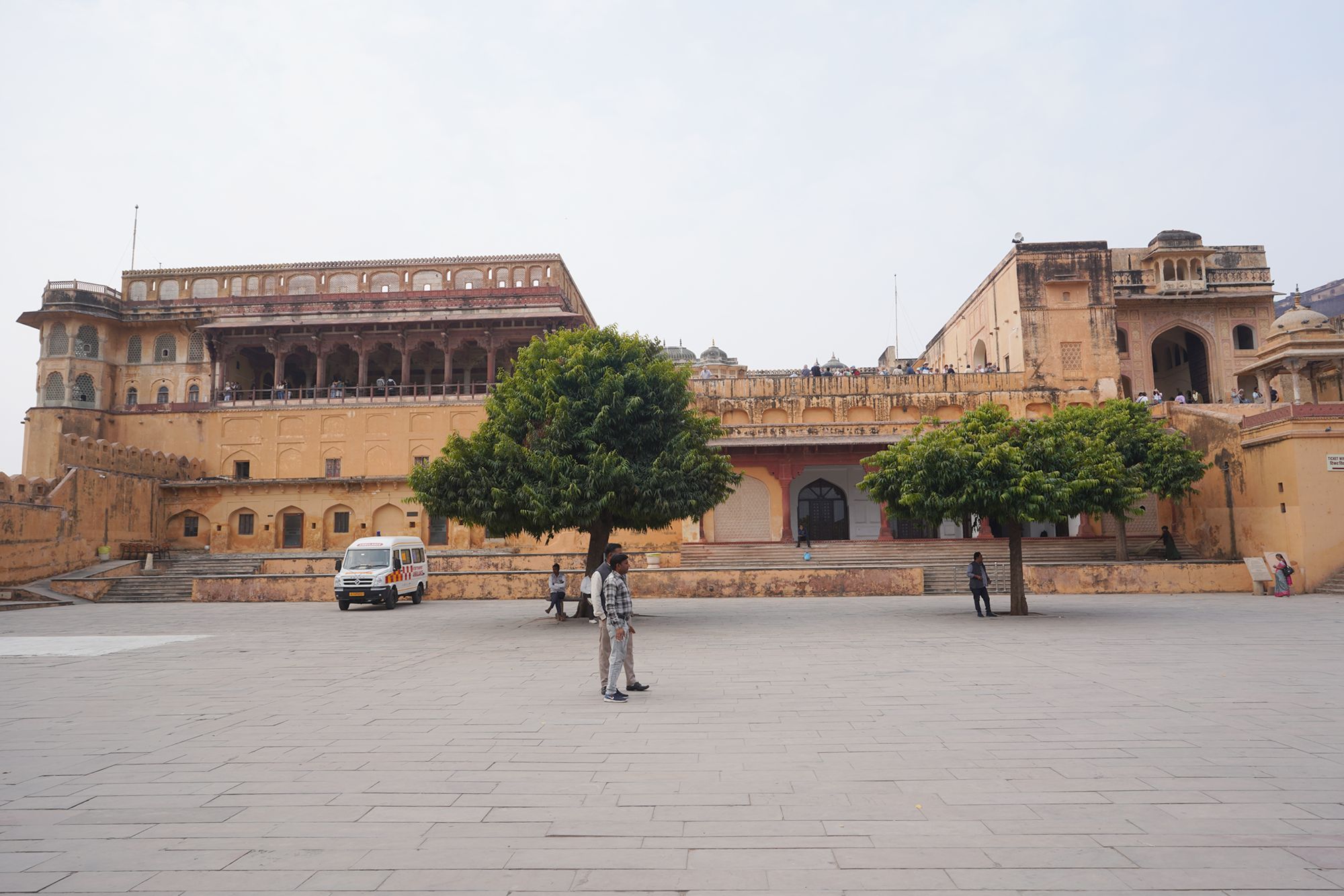
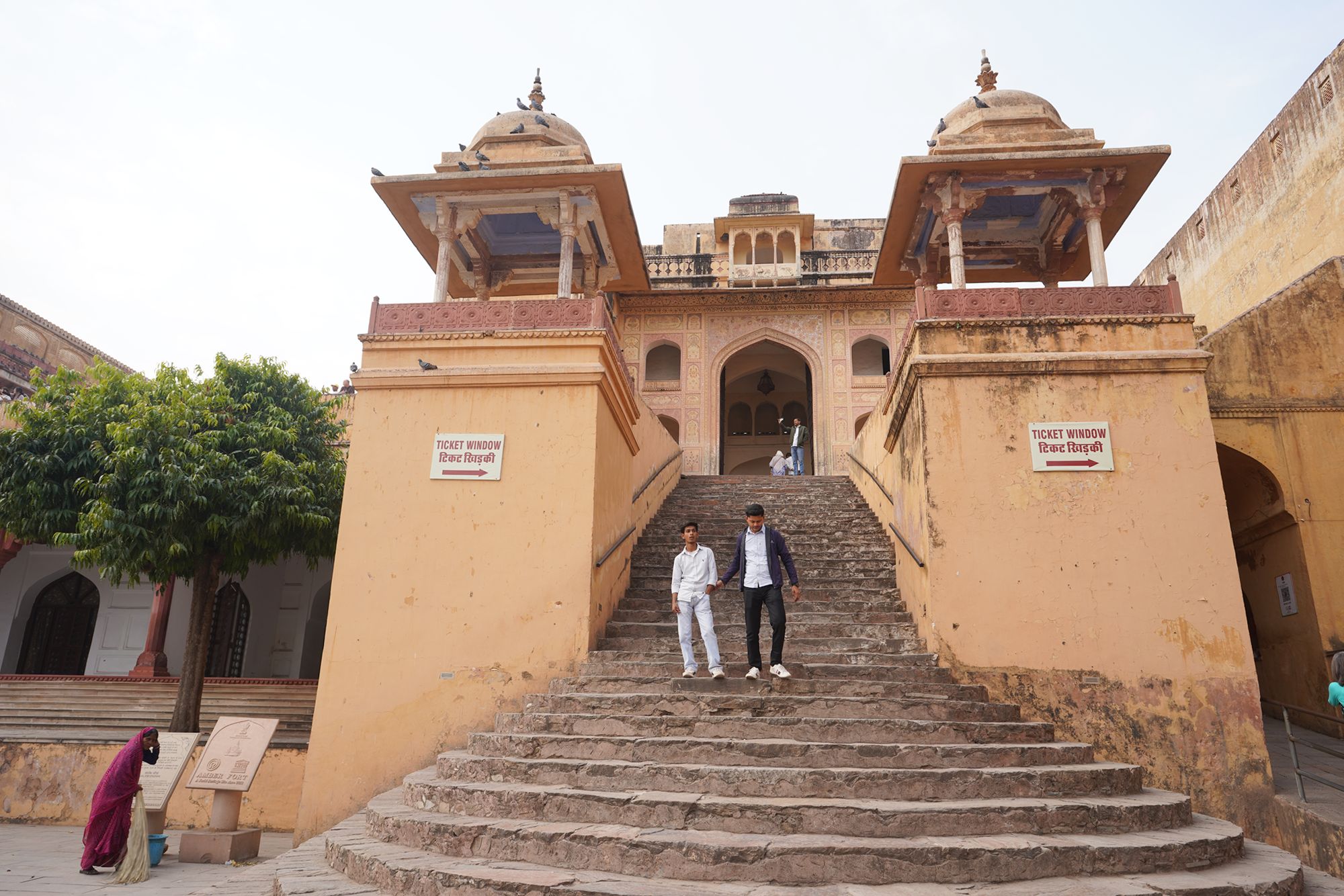
From Jaleb Chowk, the stairs up ahead lead up toward the main buildings of Amber Palace.
Suraj Pol (Sun Gate)
The Suraj Pol, or “Sun Gate,” is one of the main gateways into Amber Palace. Located on the eastern side of the complex, it was named the Sun Gate because it faces the rising sun.
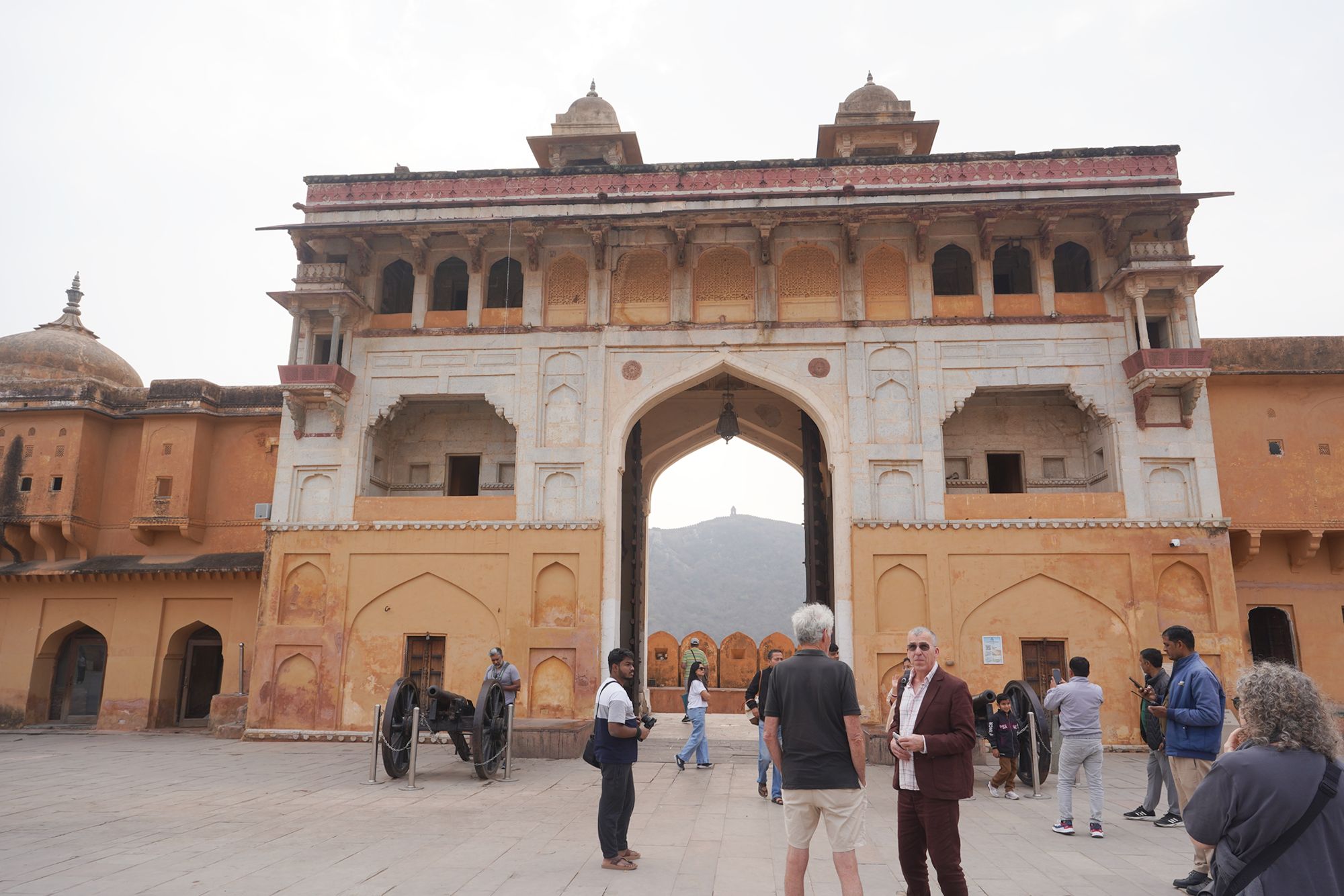
The gate leads directly into Jaleb Chowk, the large first courtyard you saw upon entering the palace. Historically, this was an important ceremonial entrance used by the Maharajas and their armies, particularly when returning from military campaigns.
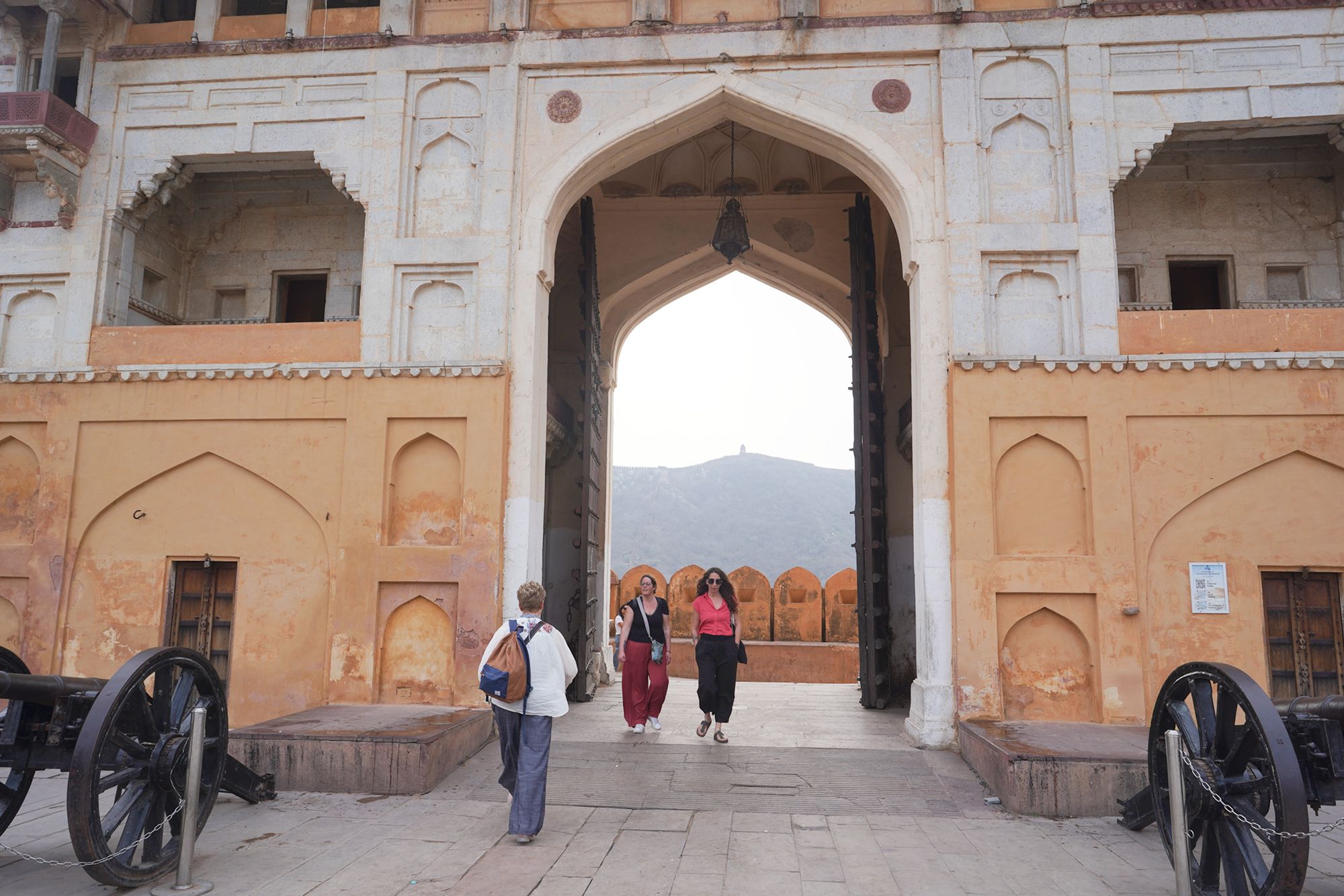
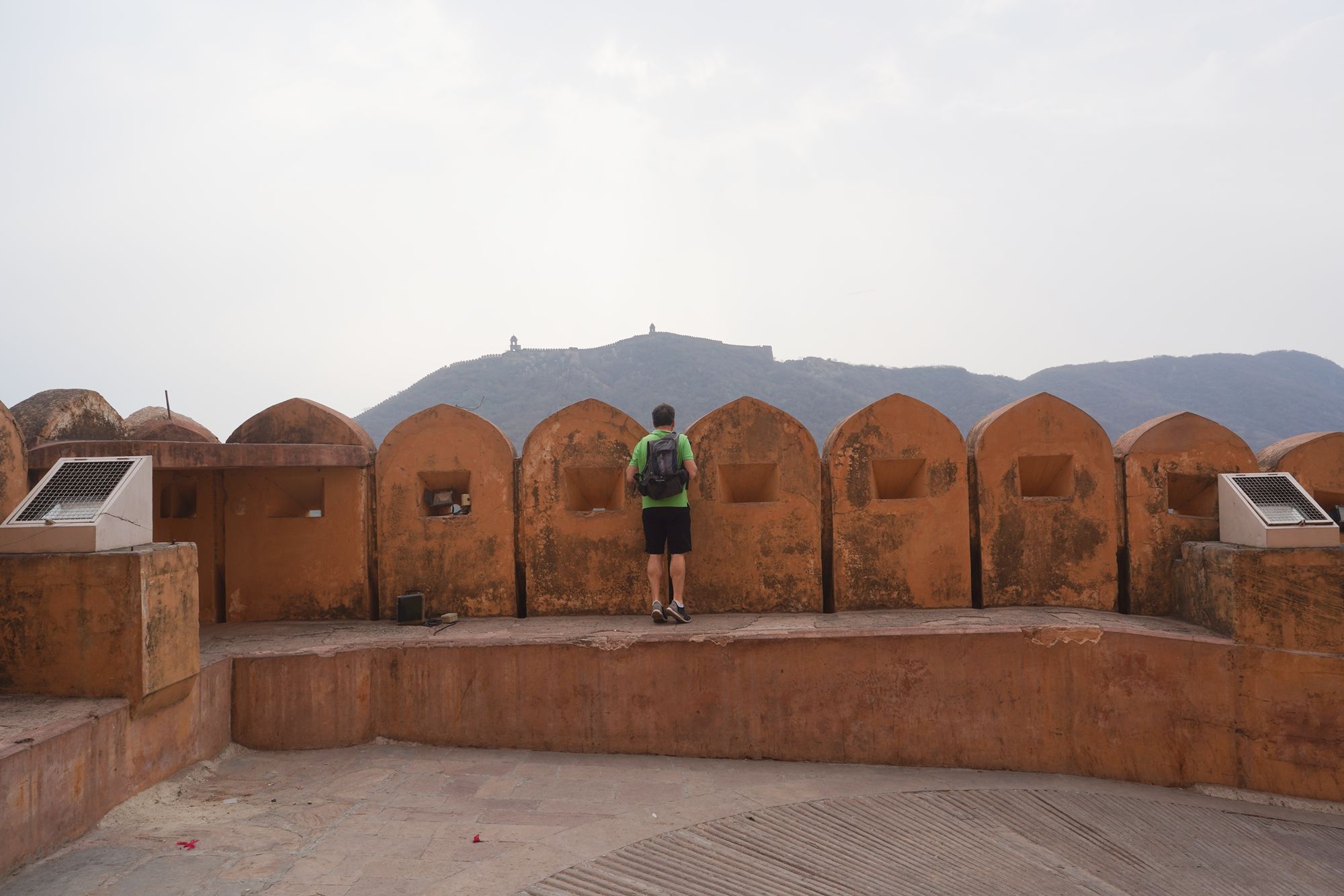
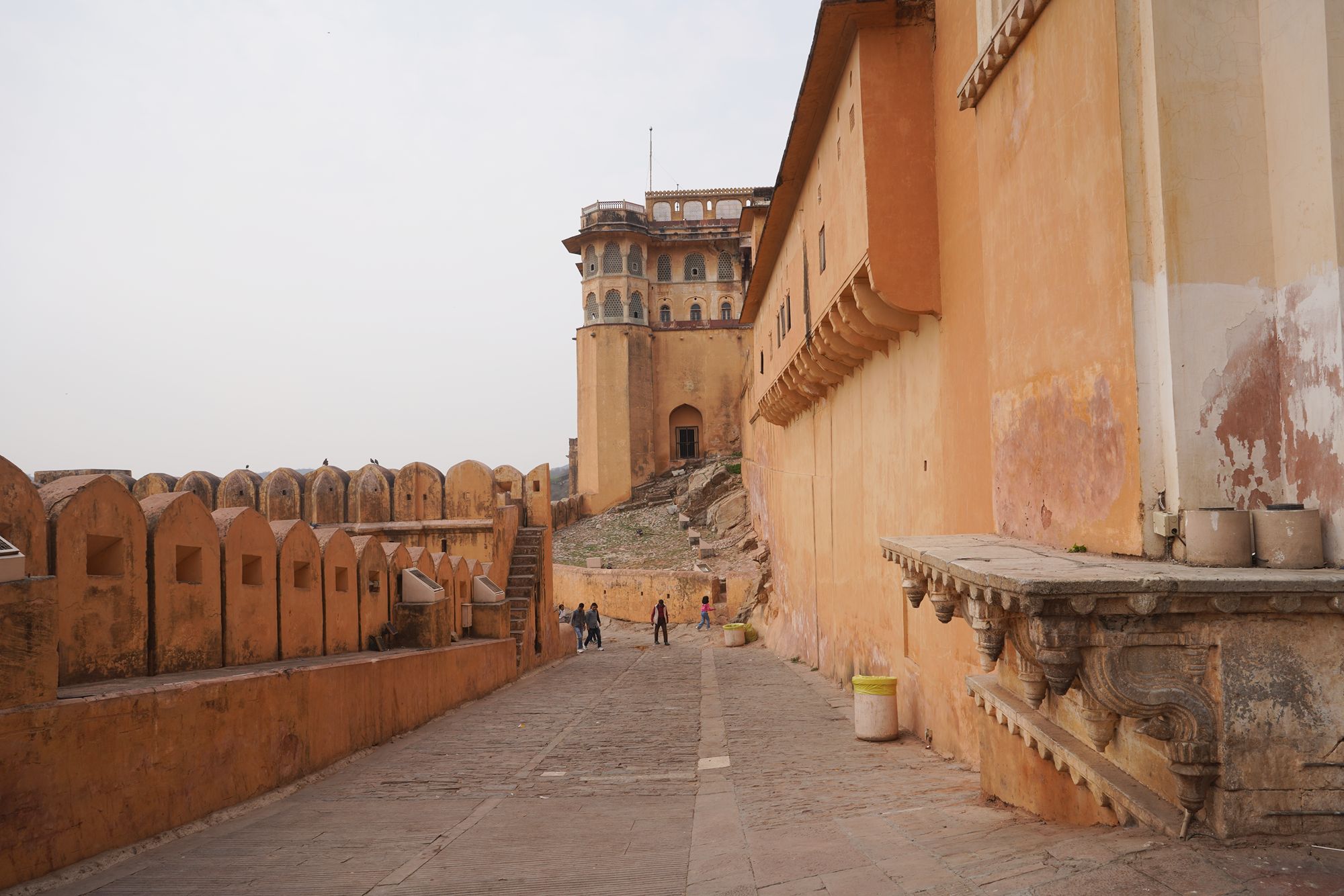
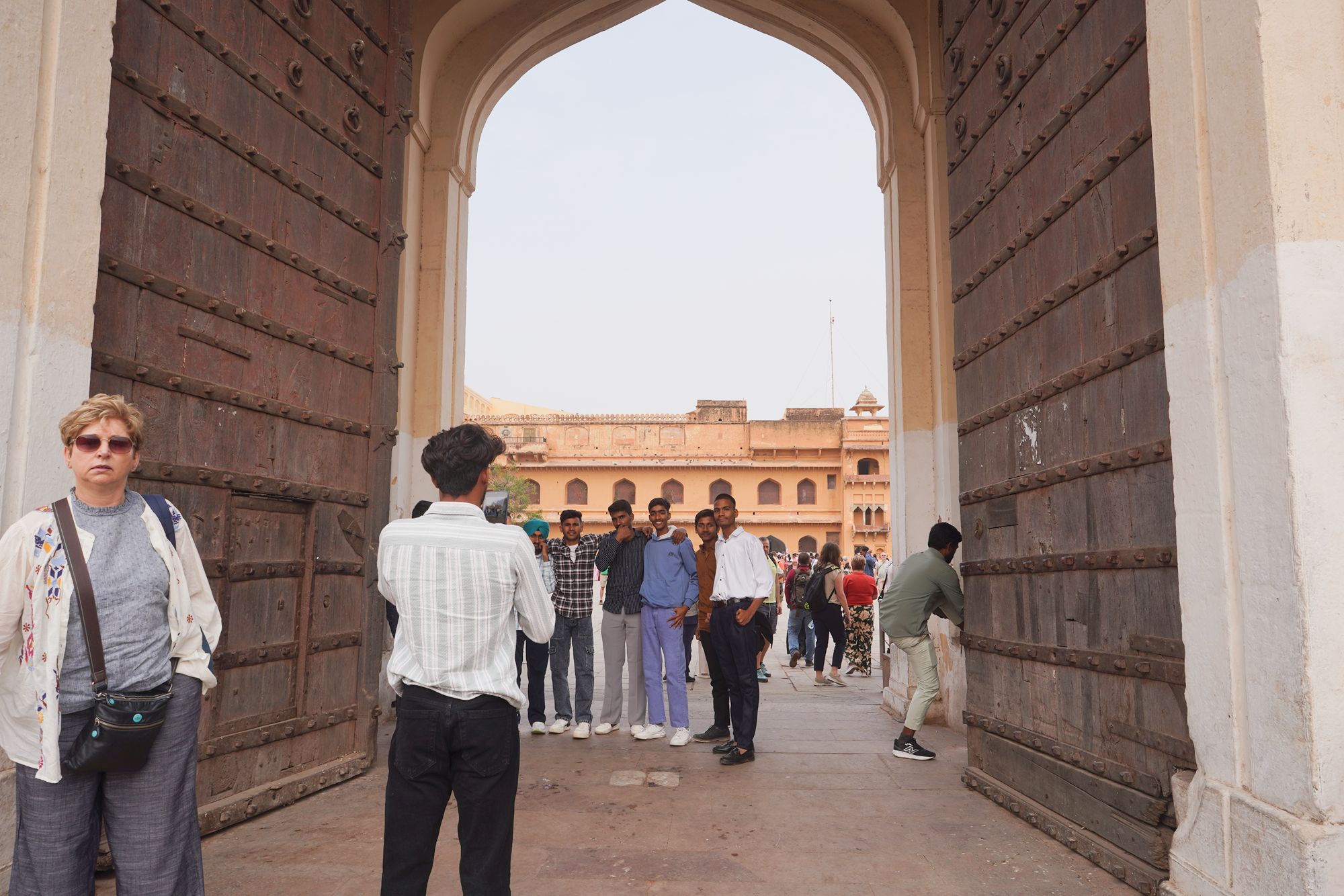
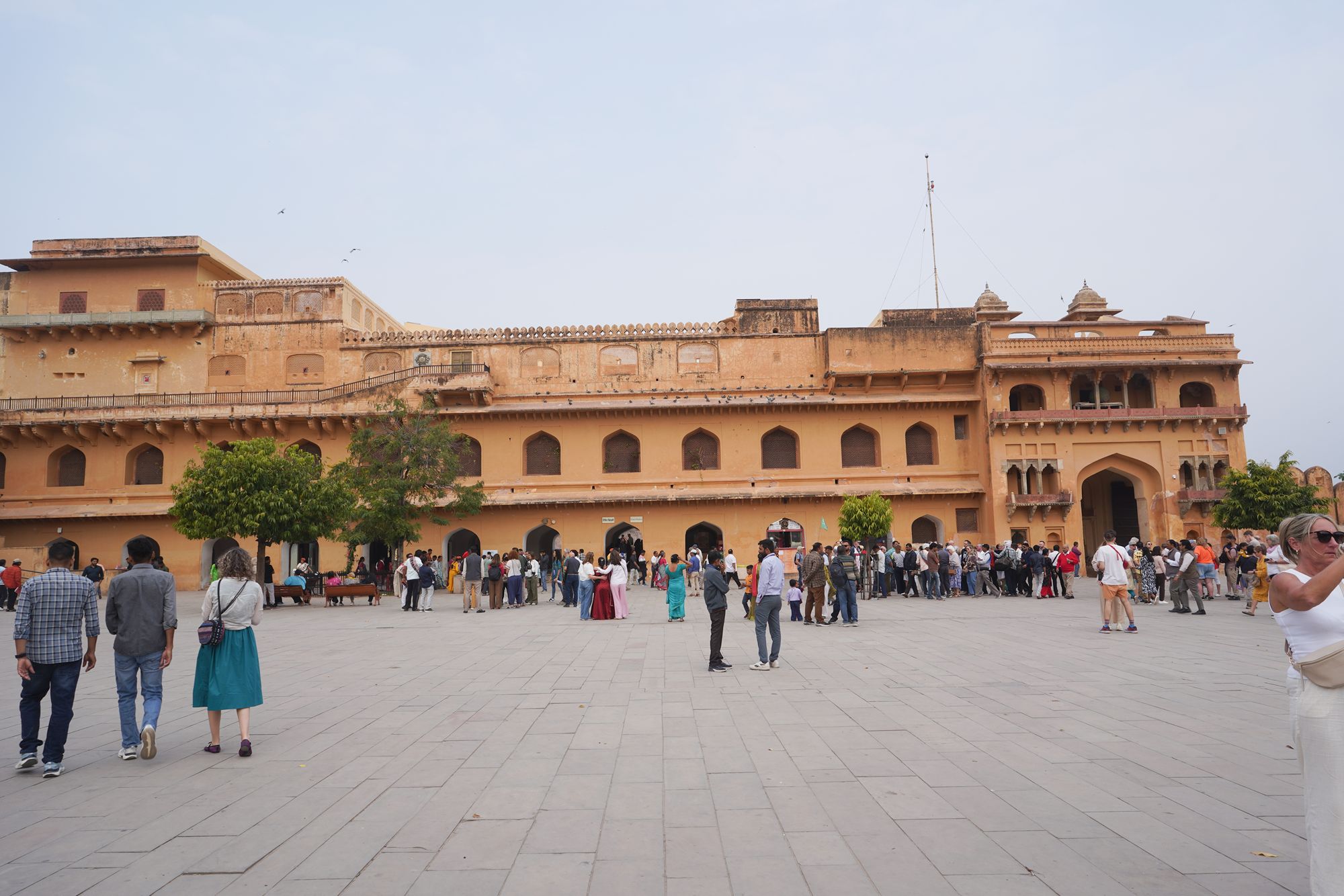
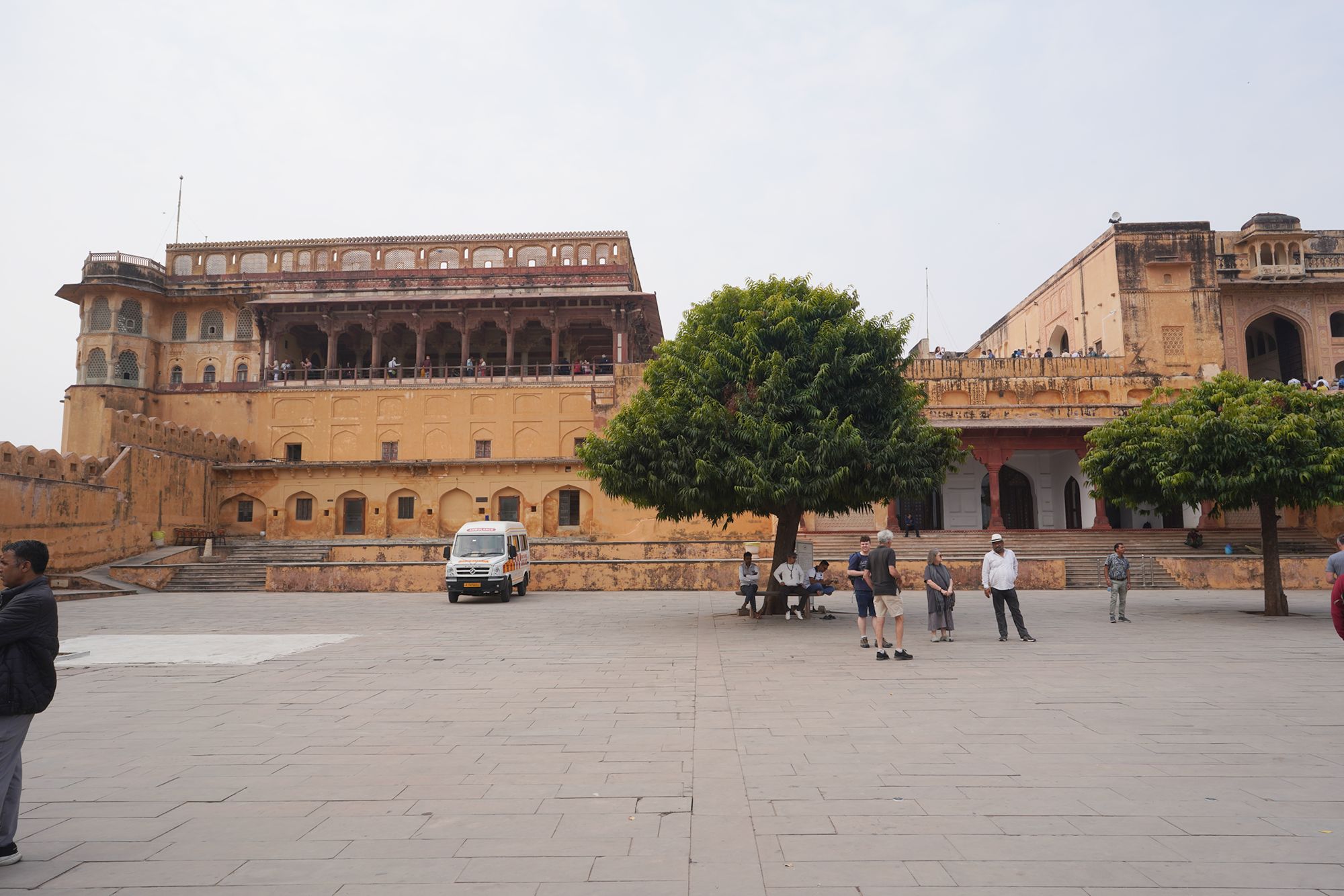
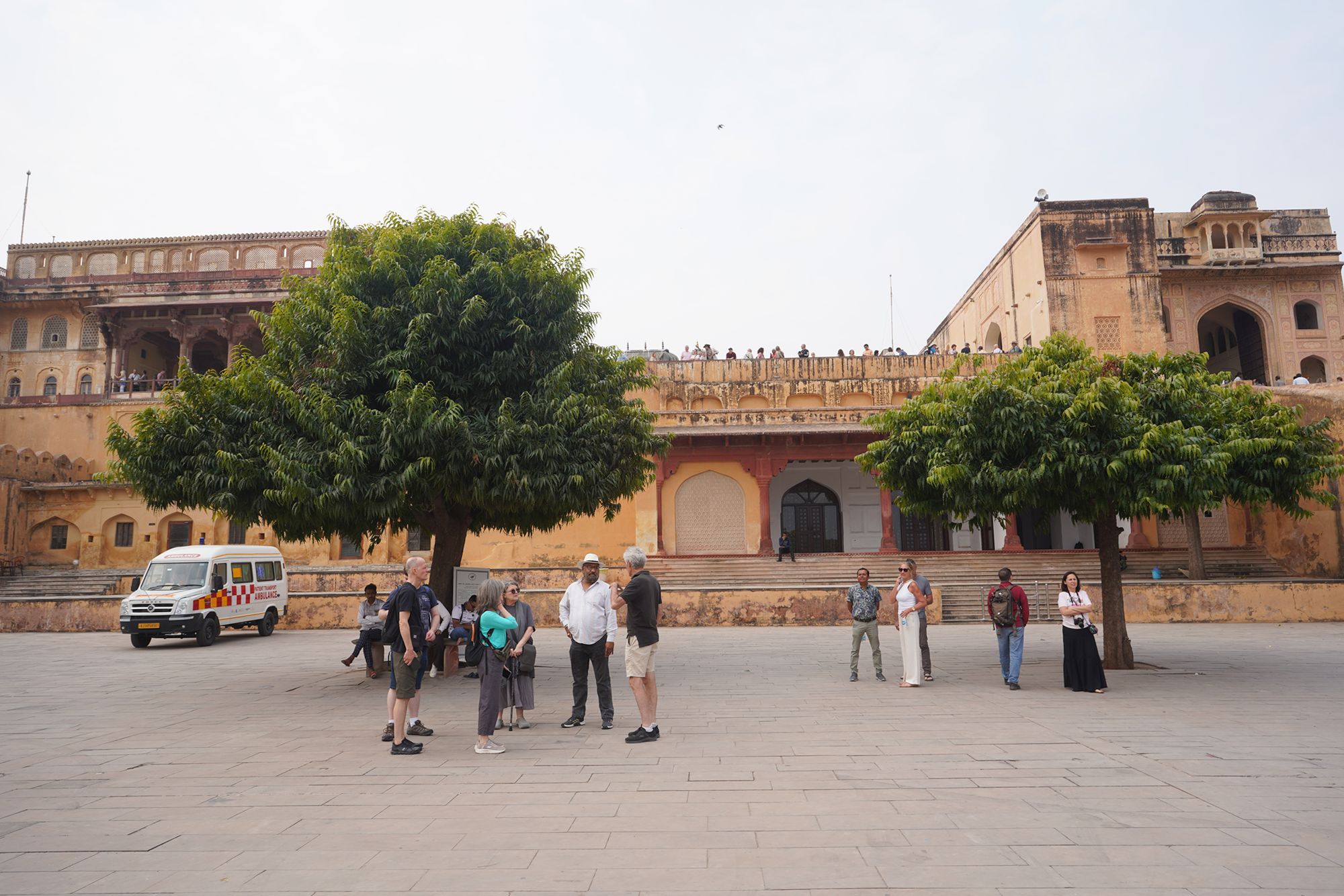
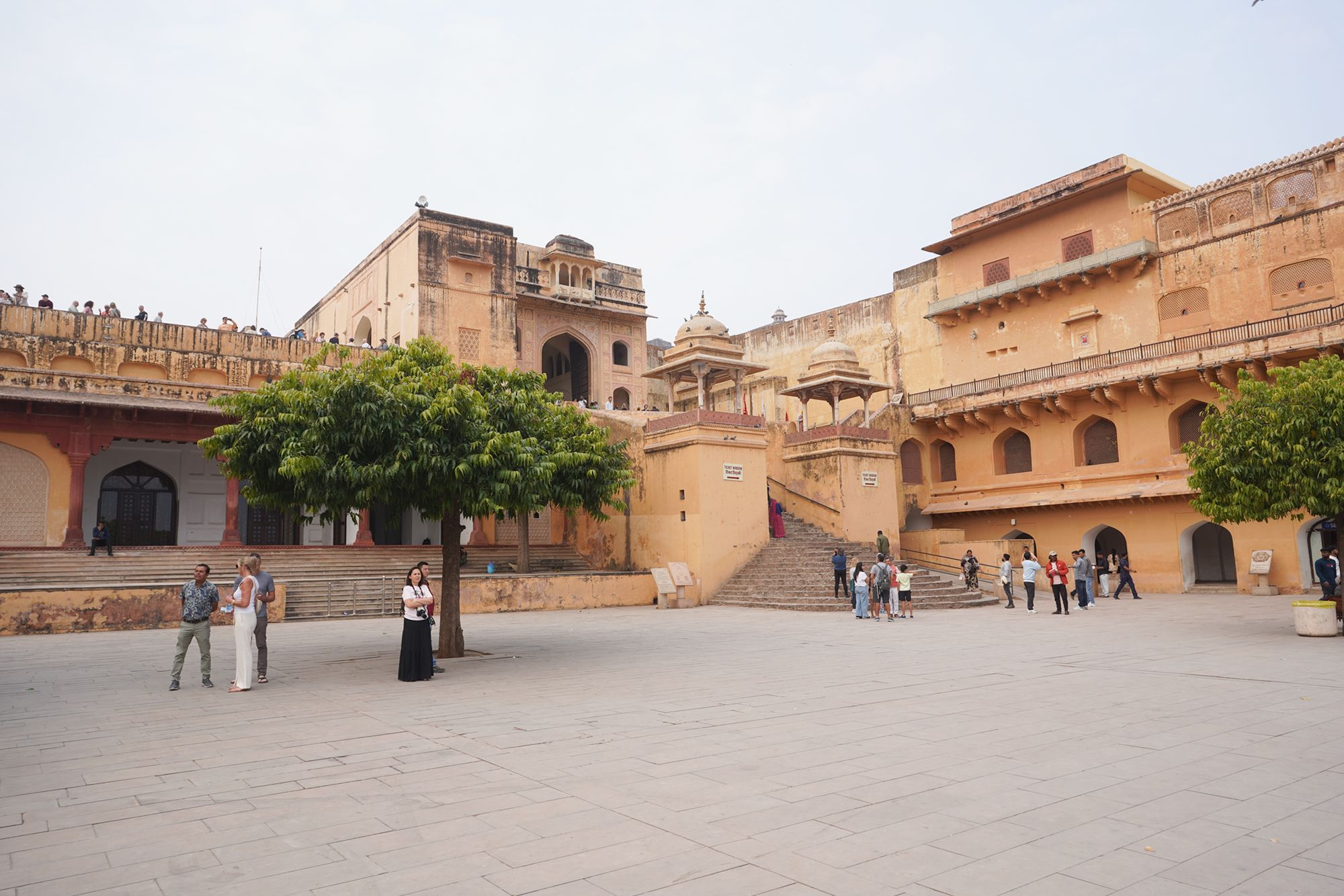
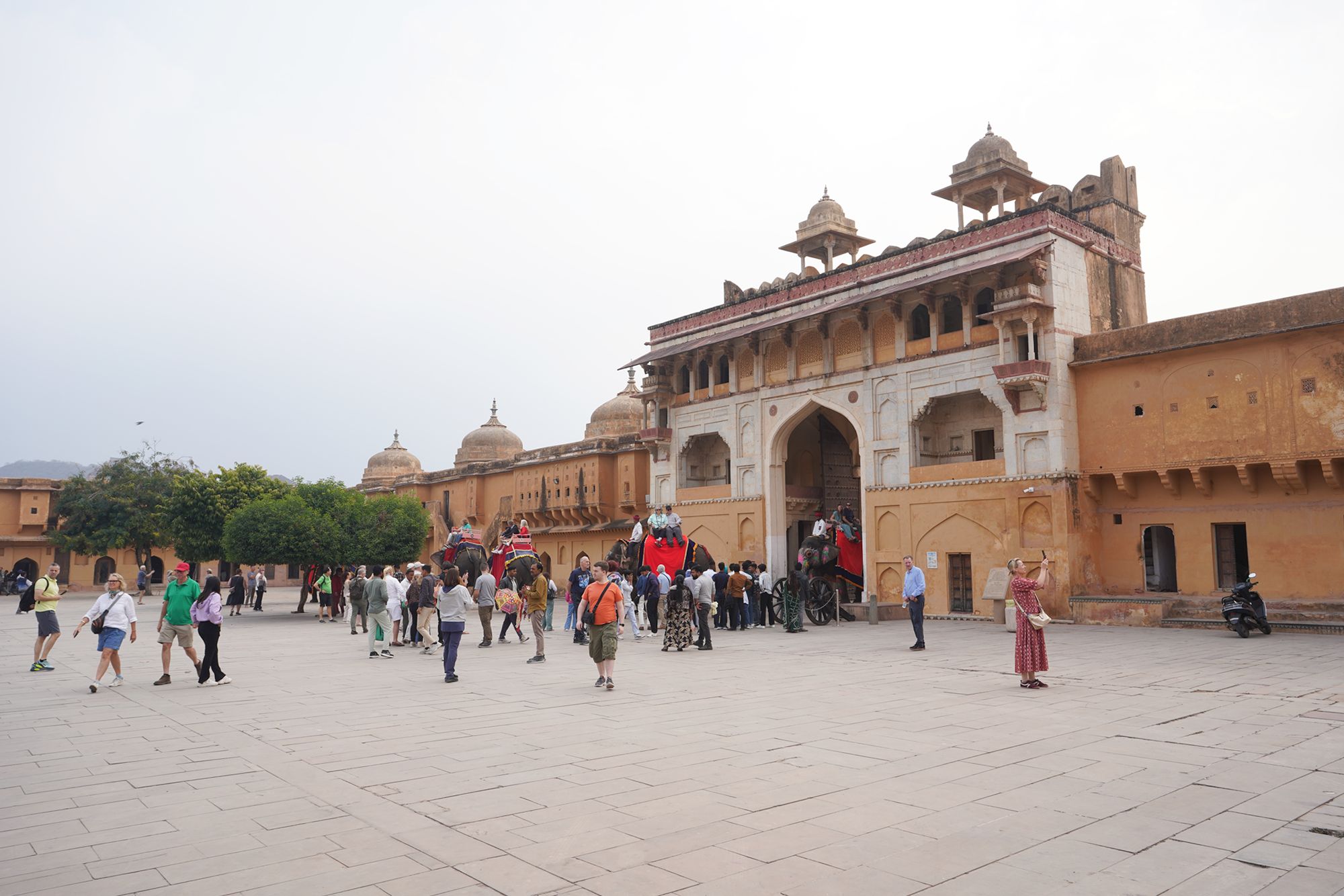
Tourists riding elephants enter Amber Palace through the Suraj Pol (Sun Gate) and into Jaleb Chowk.
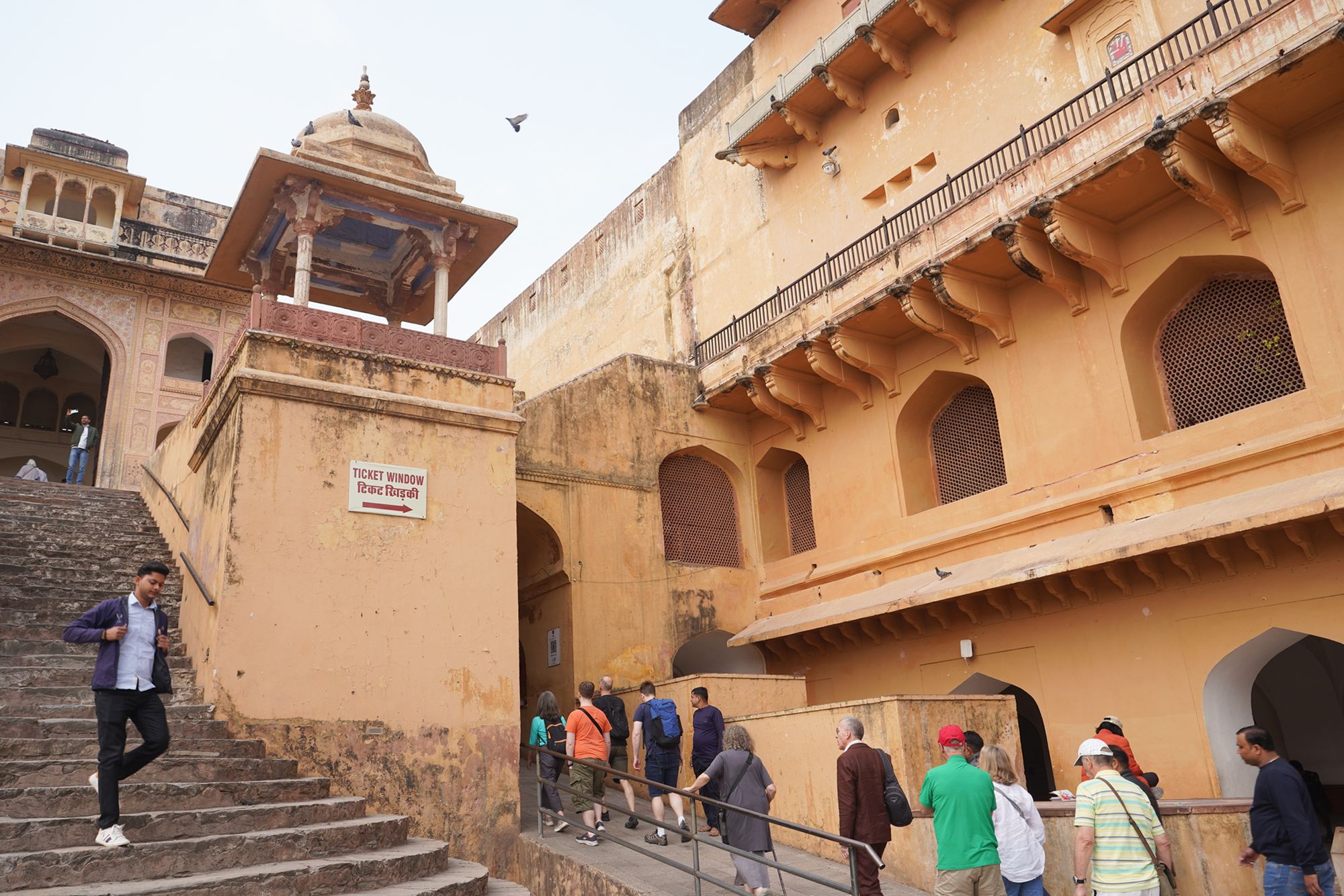
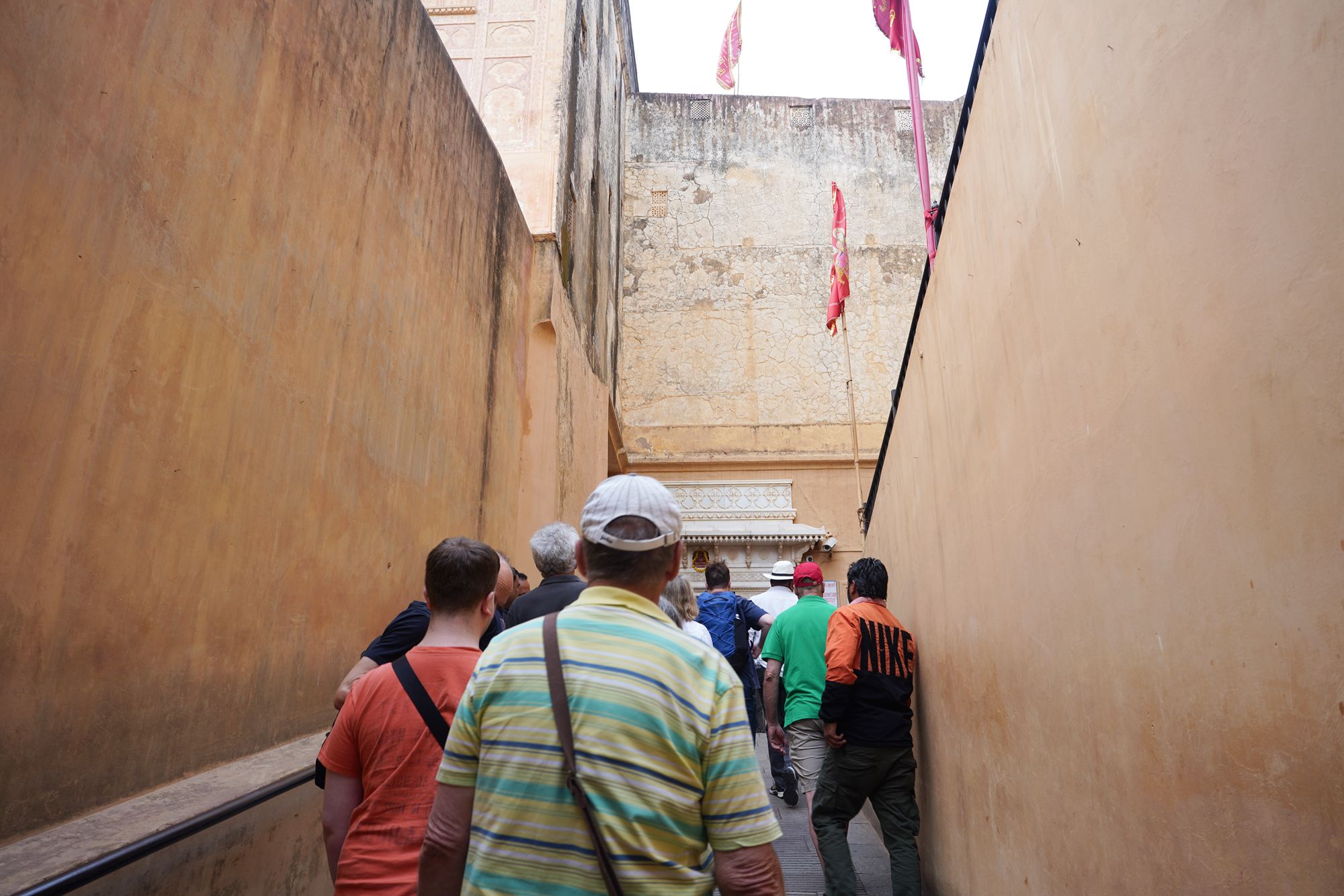
Walking up the stairs toward the main palace buildings.
Looking back at Jaleb Chowk from the stairs leading up to the palace.
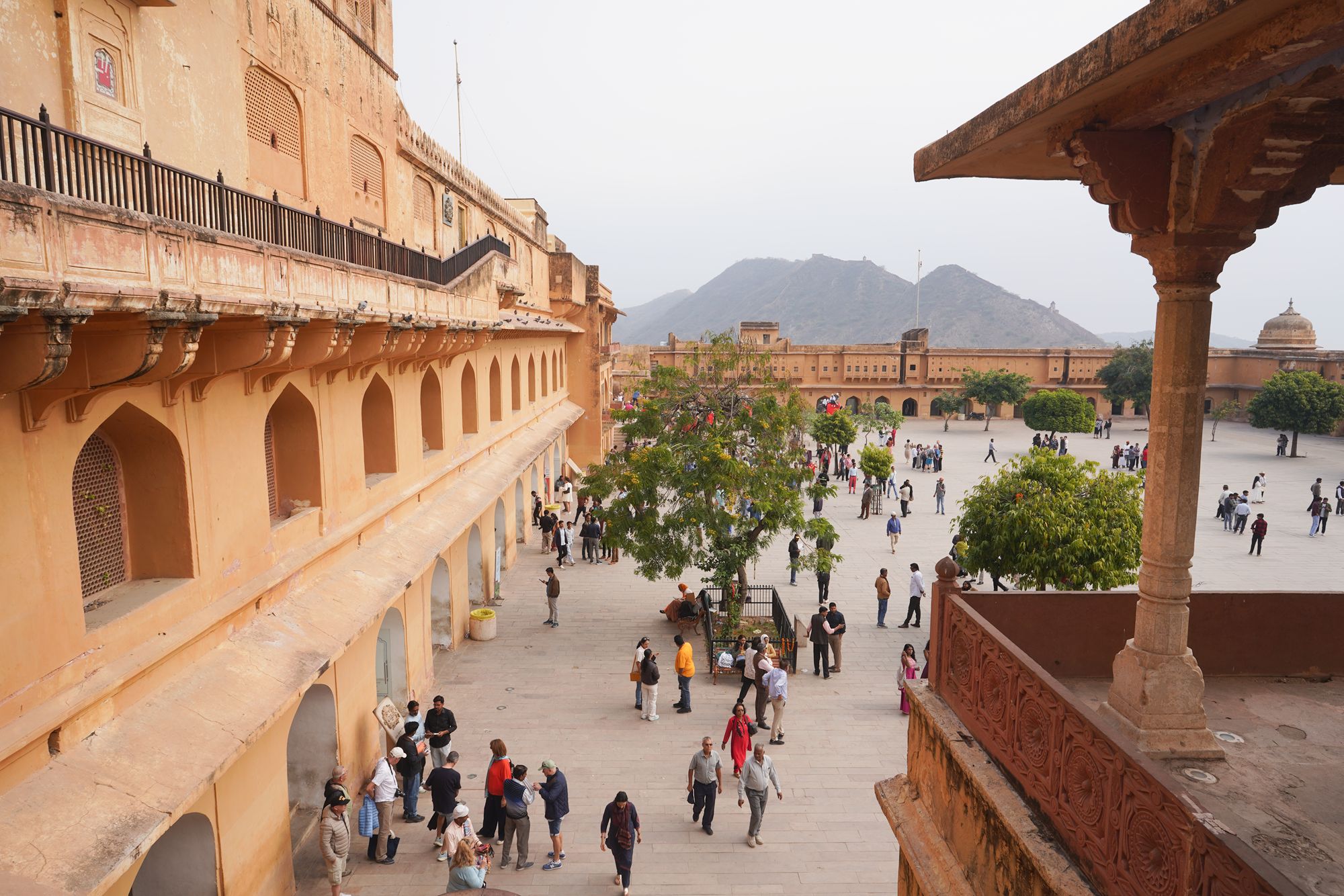
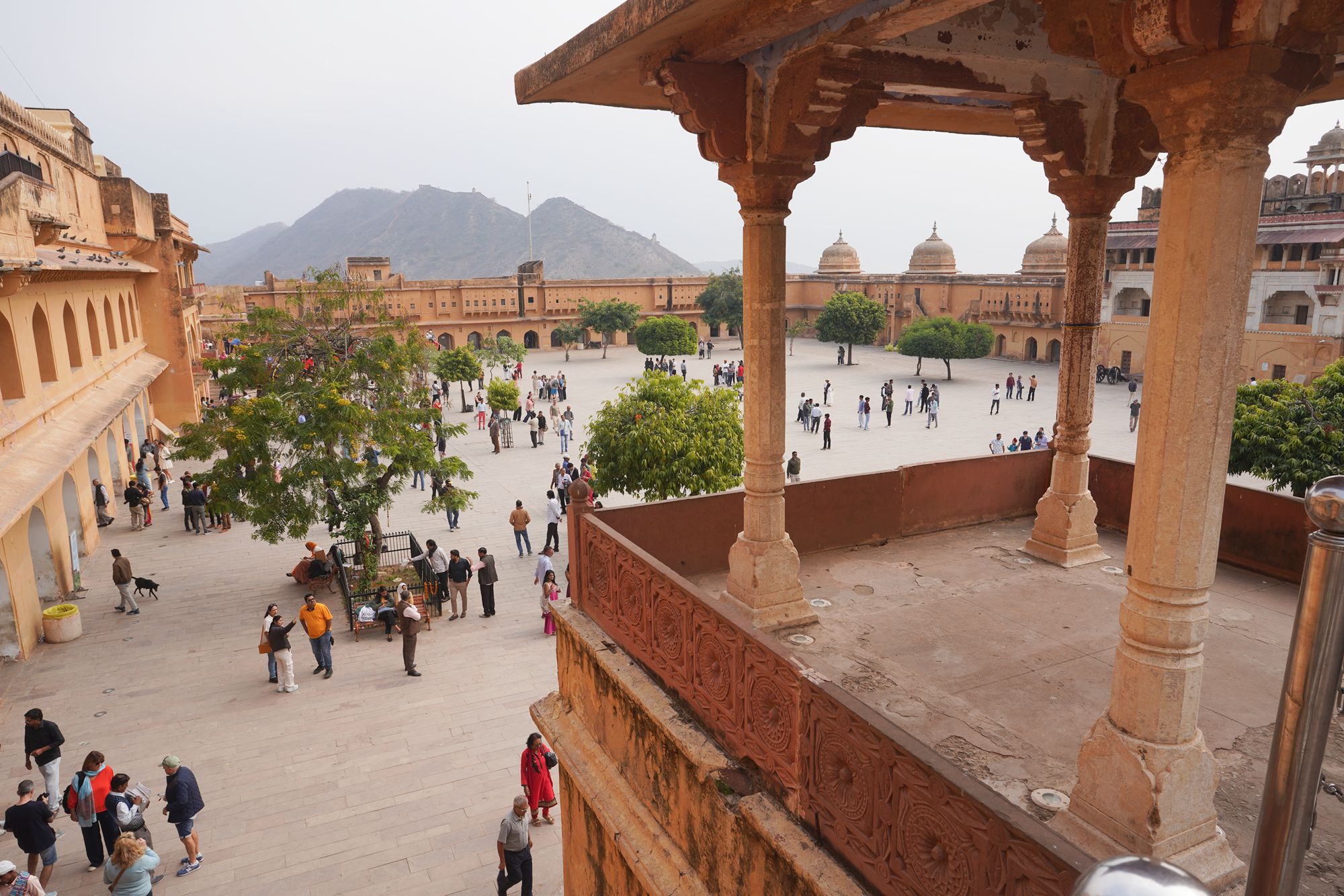
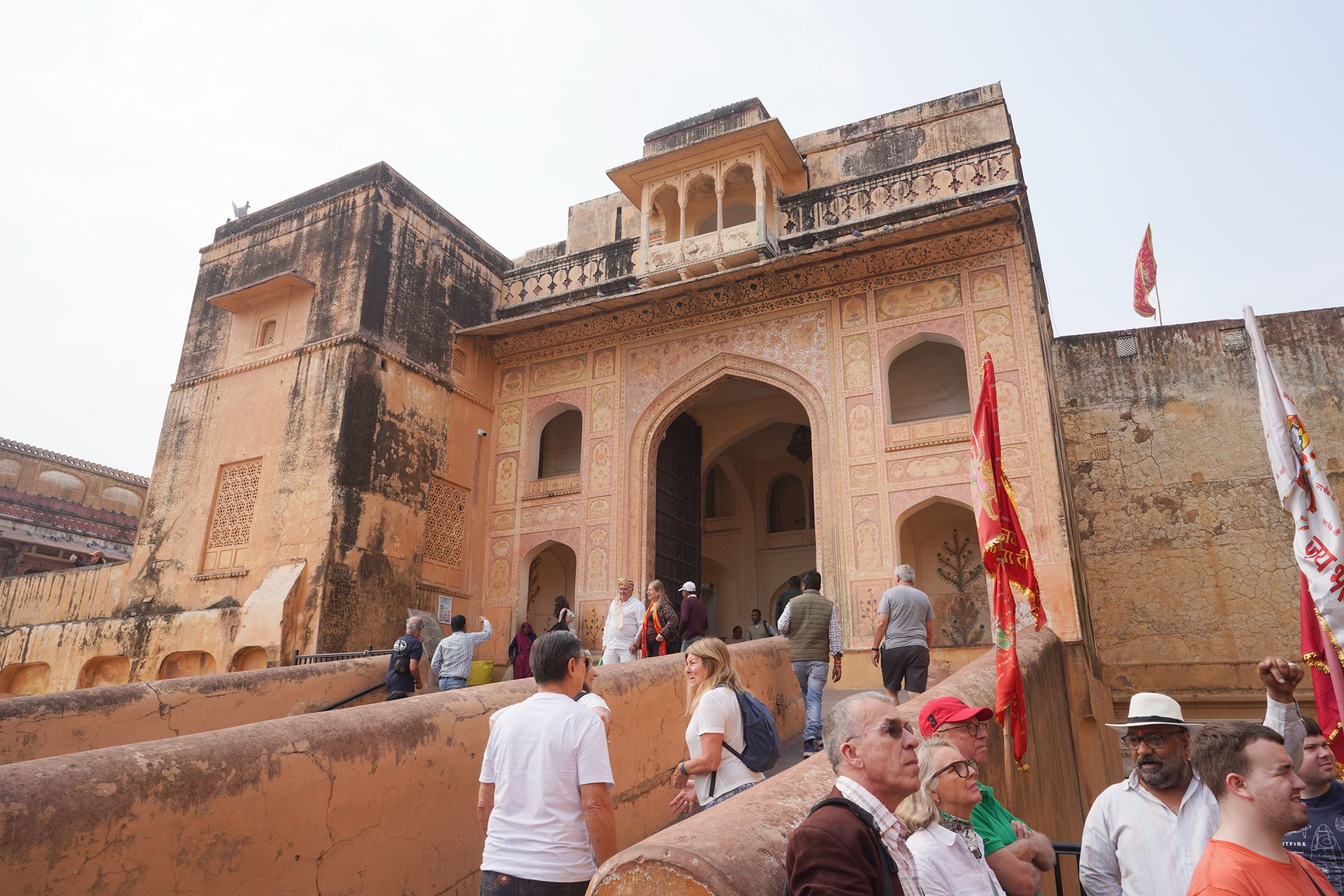
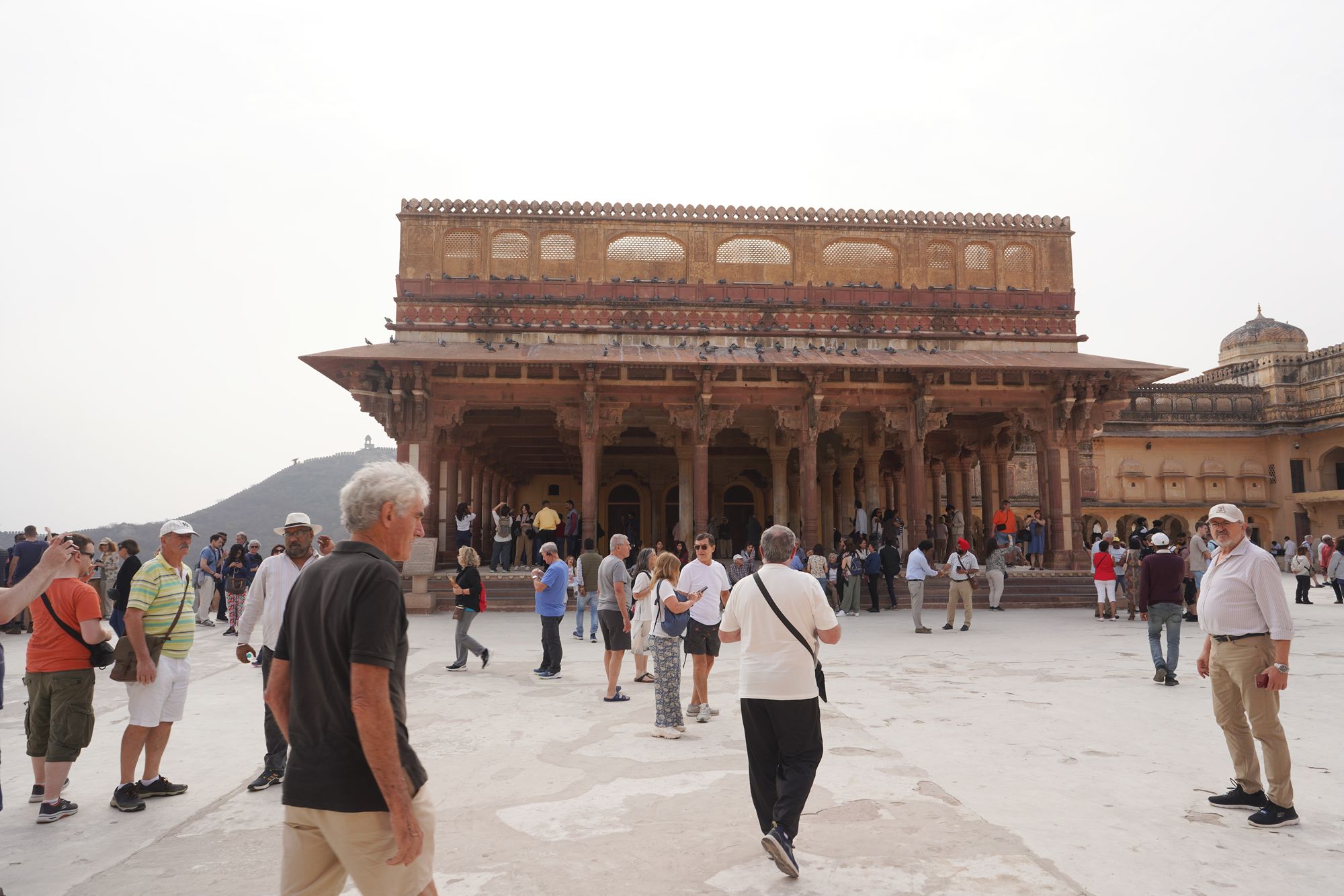
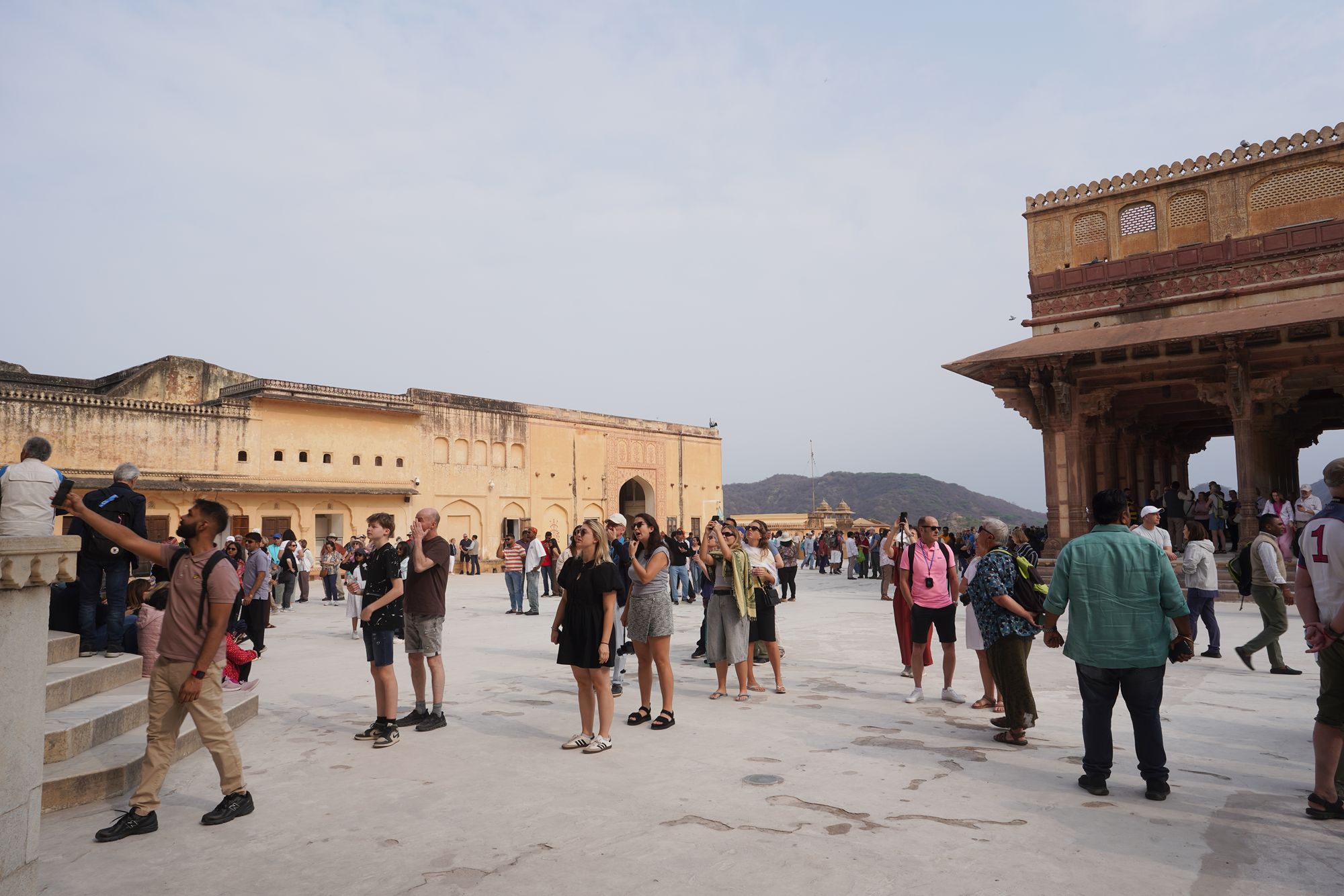
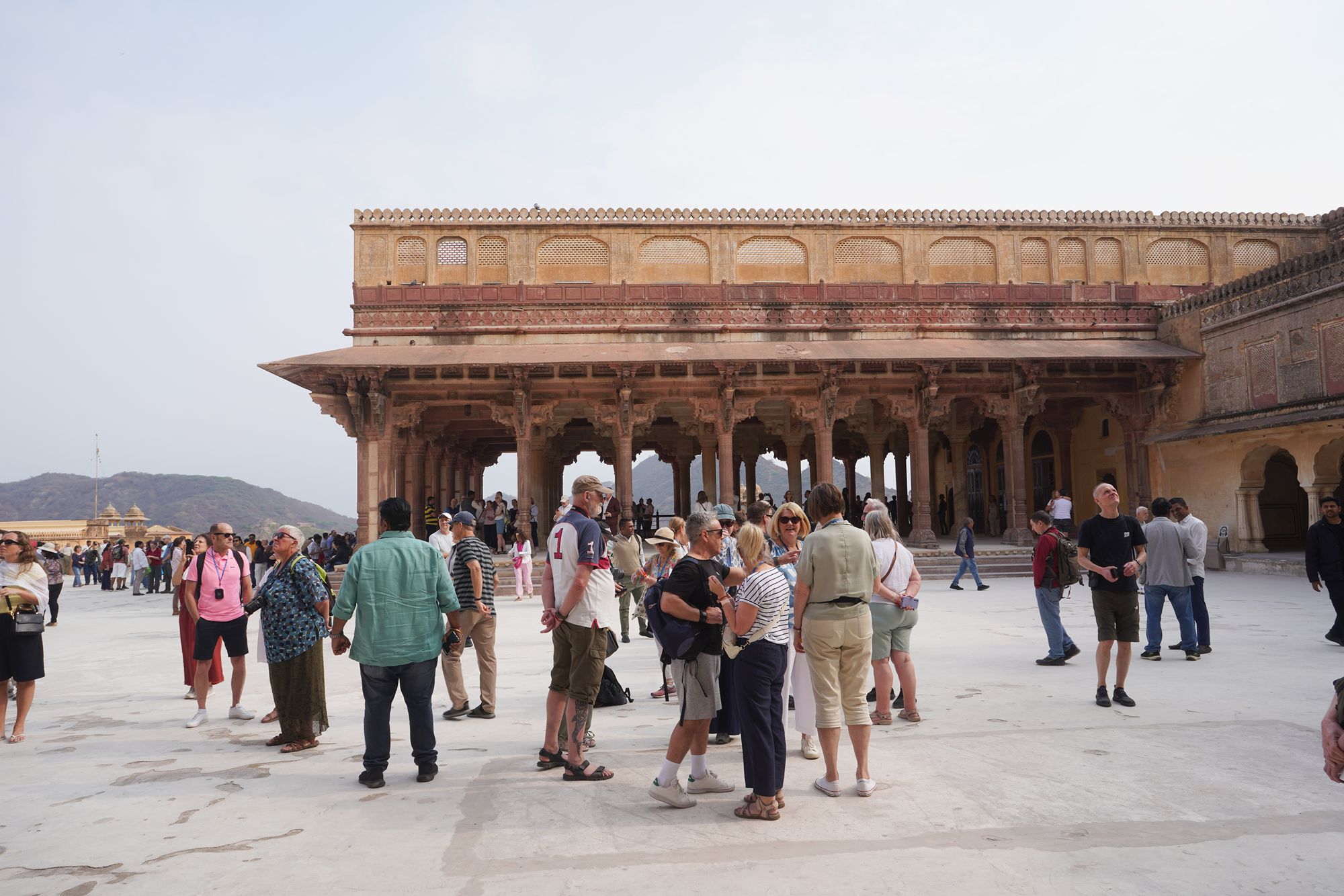
Diwan-i-Aam courtyard, or the second courtyard.
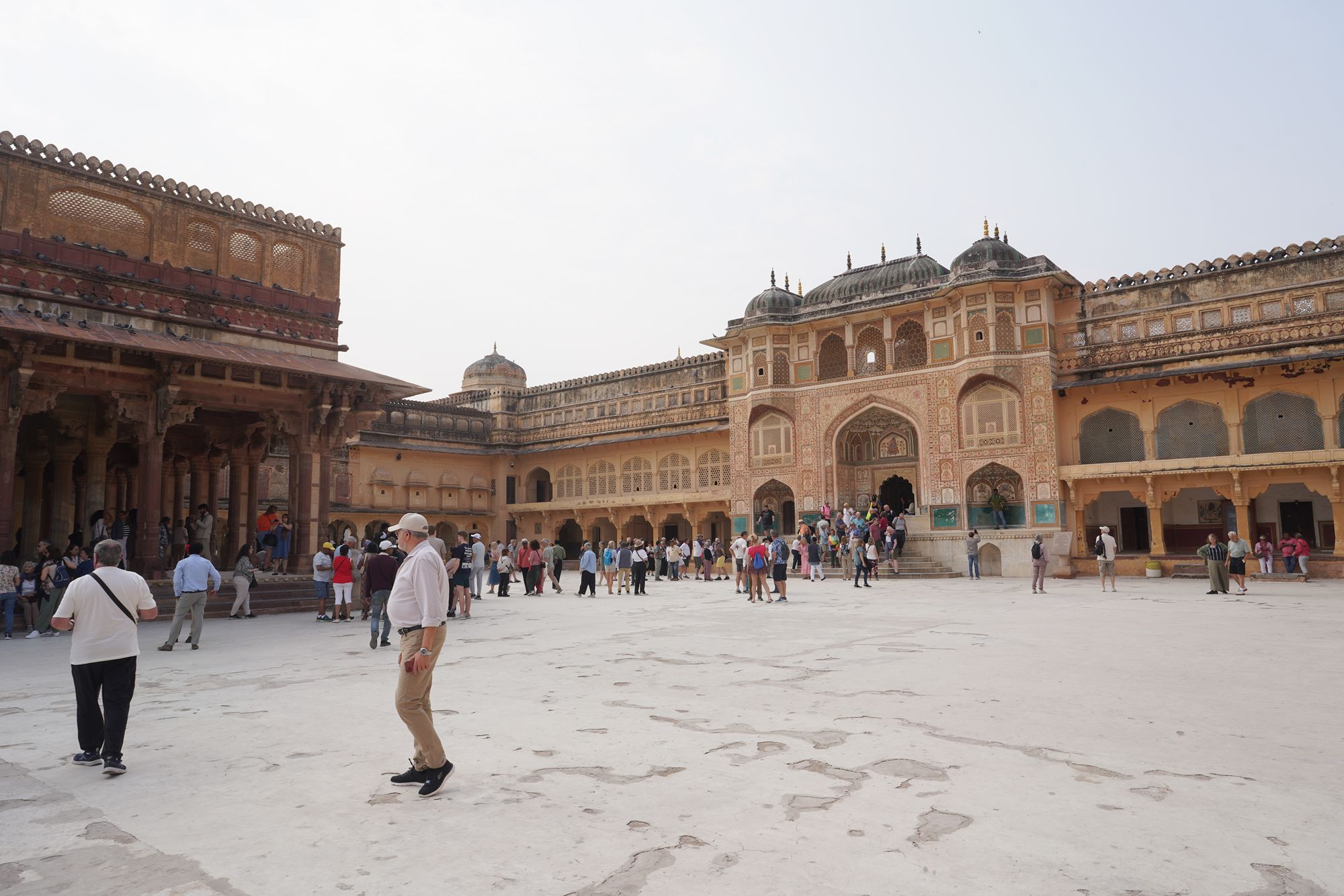
It contains the Diwan-i-Aam (Hall of Public Audience), where the ruler held public audiences and received petitions. From this level, you then continue through the magnificent Ganesh Pol (Ganesh Gate) into the more private royal sections of the palace.
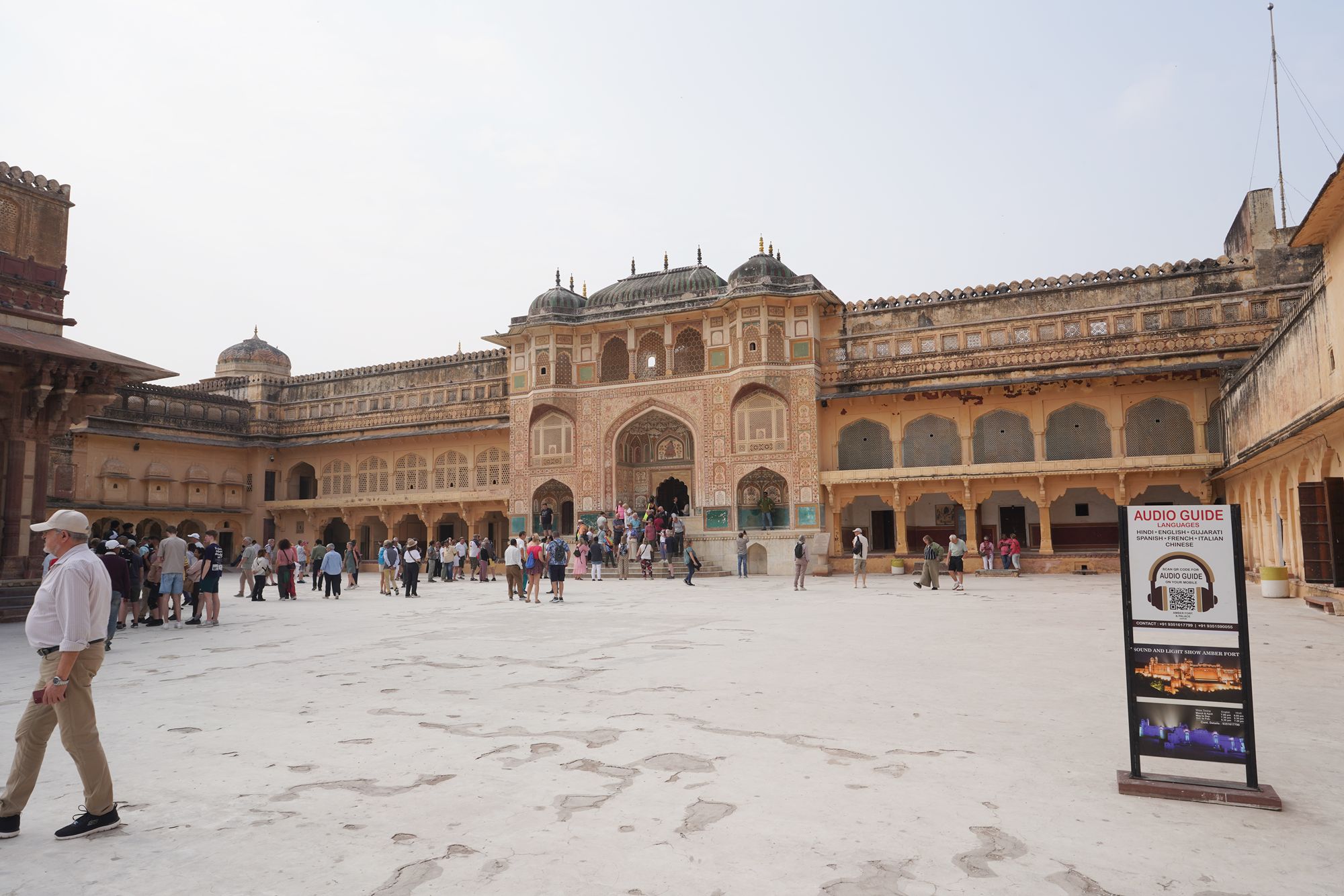
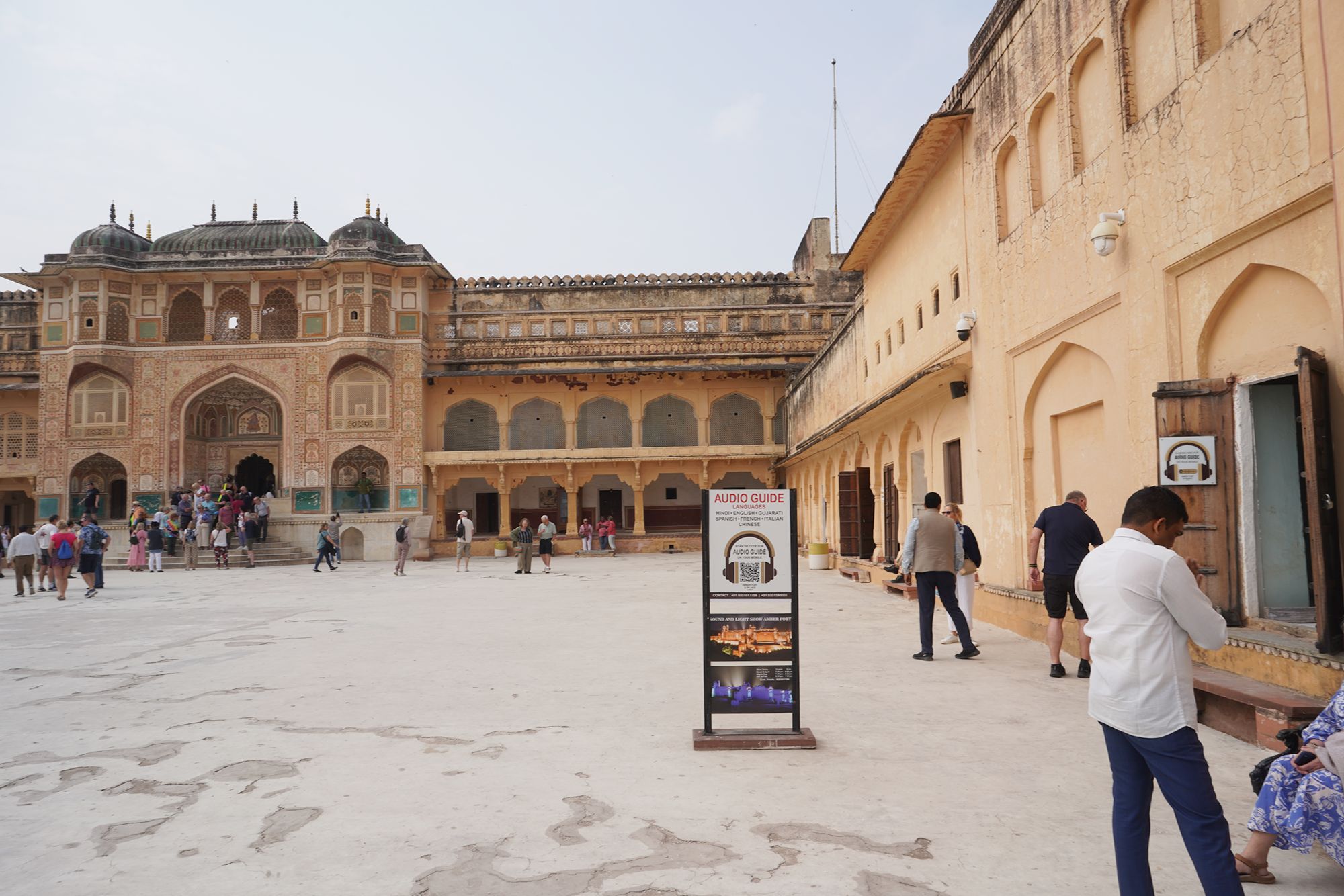
Ganesh Pol (Ganesh Gate)
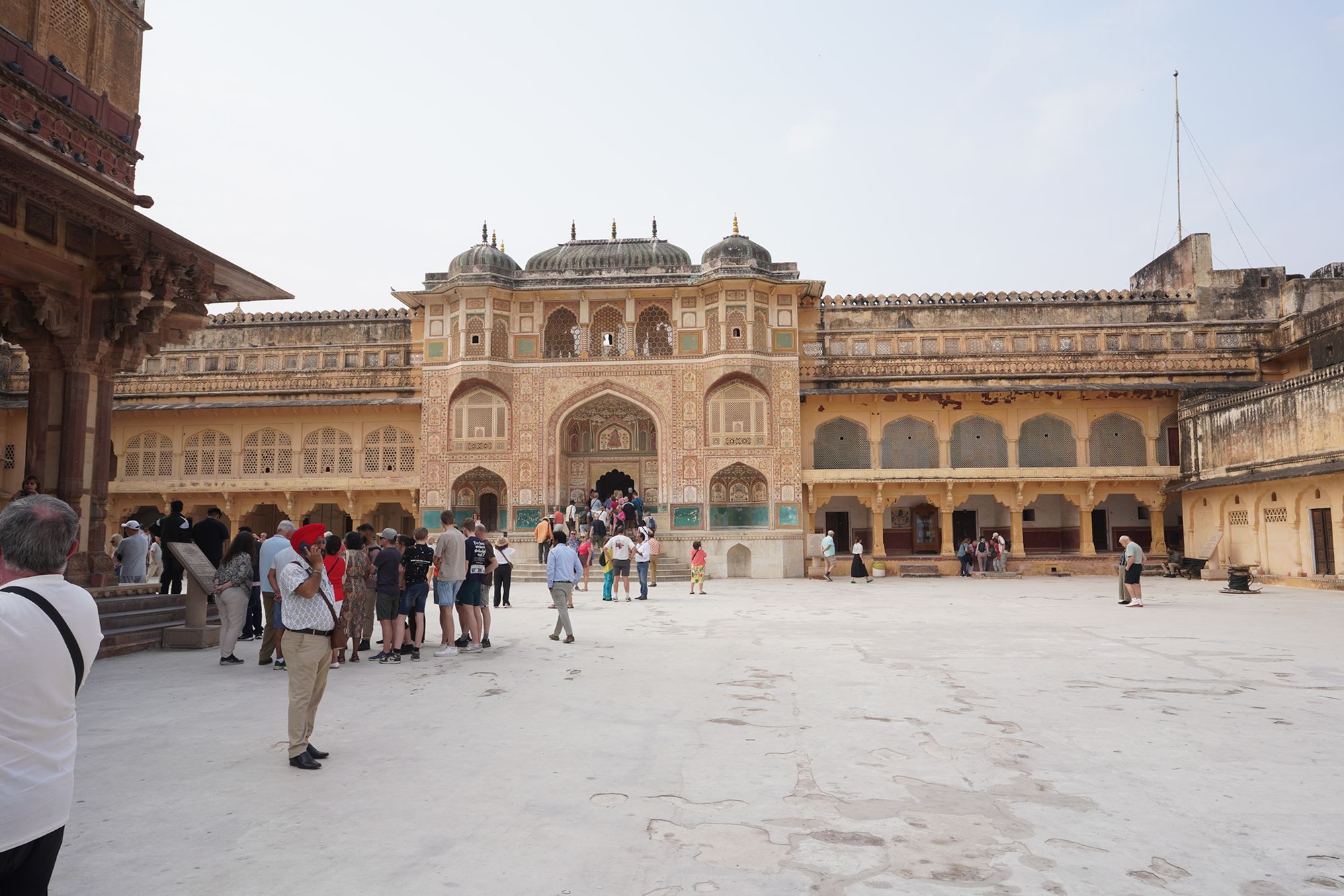
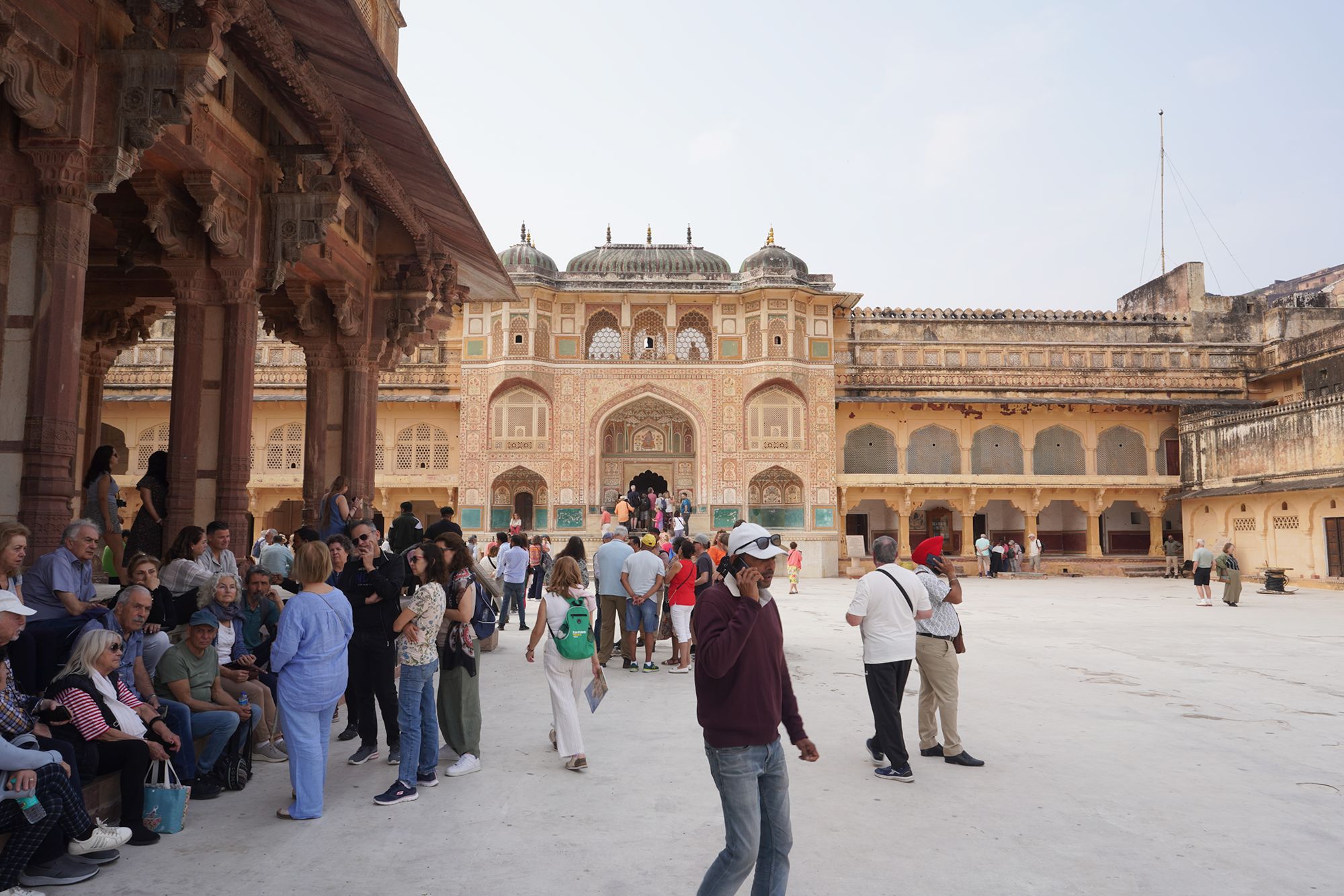
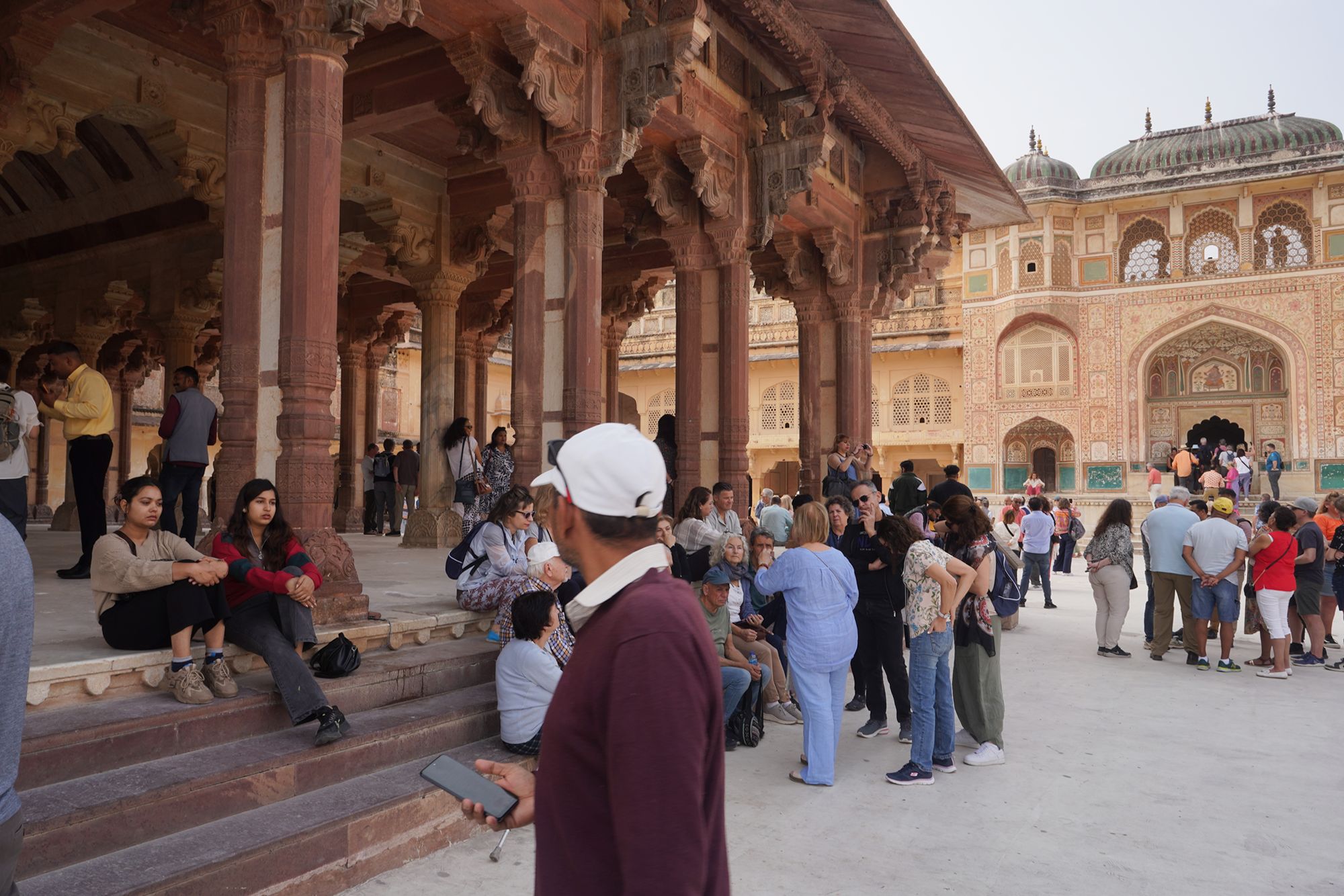
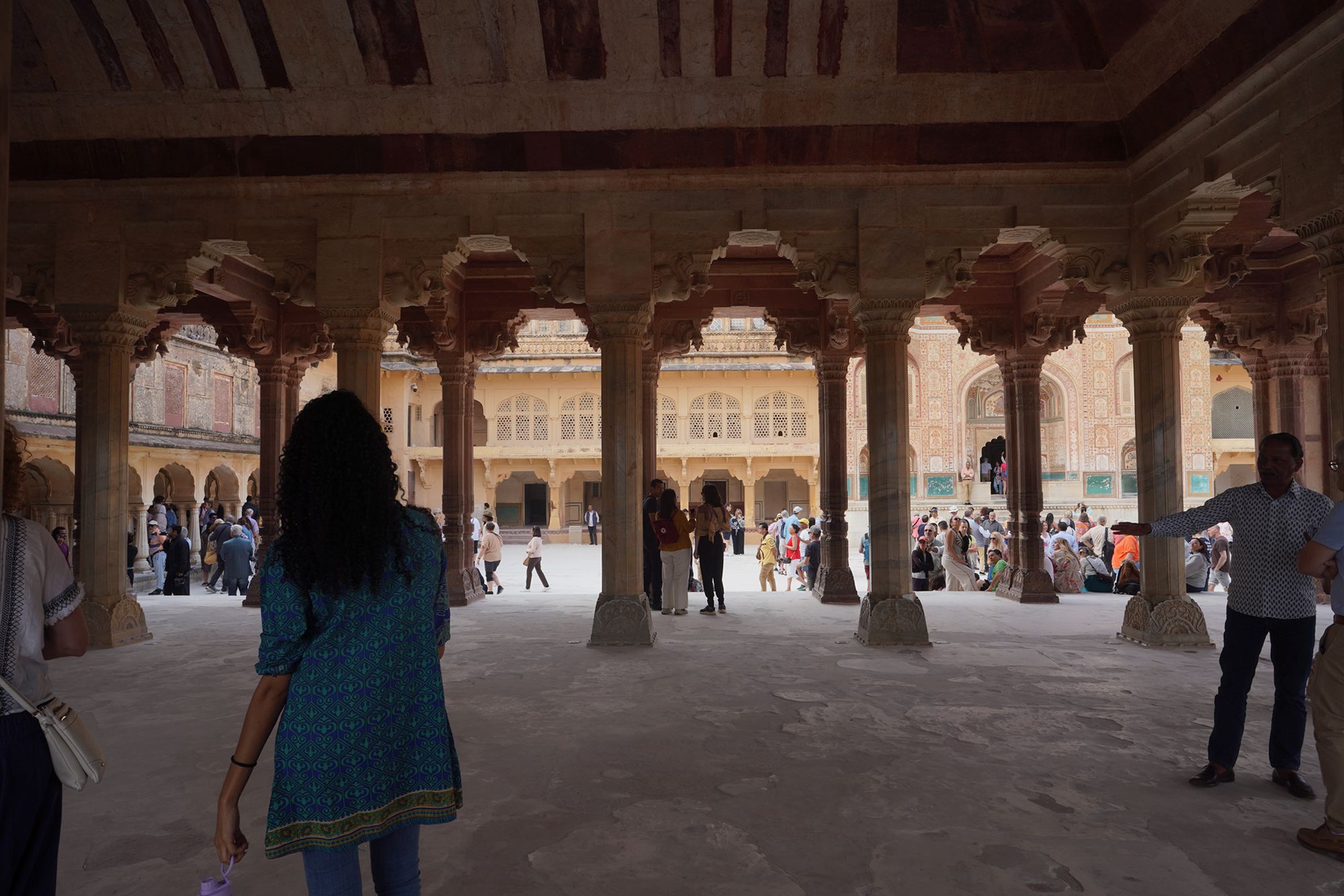
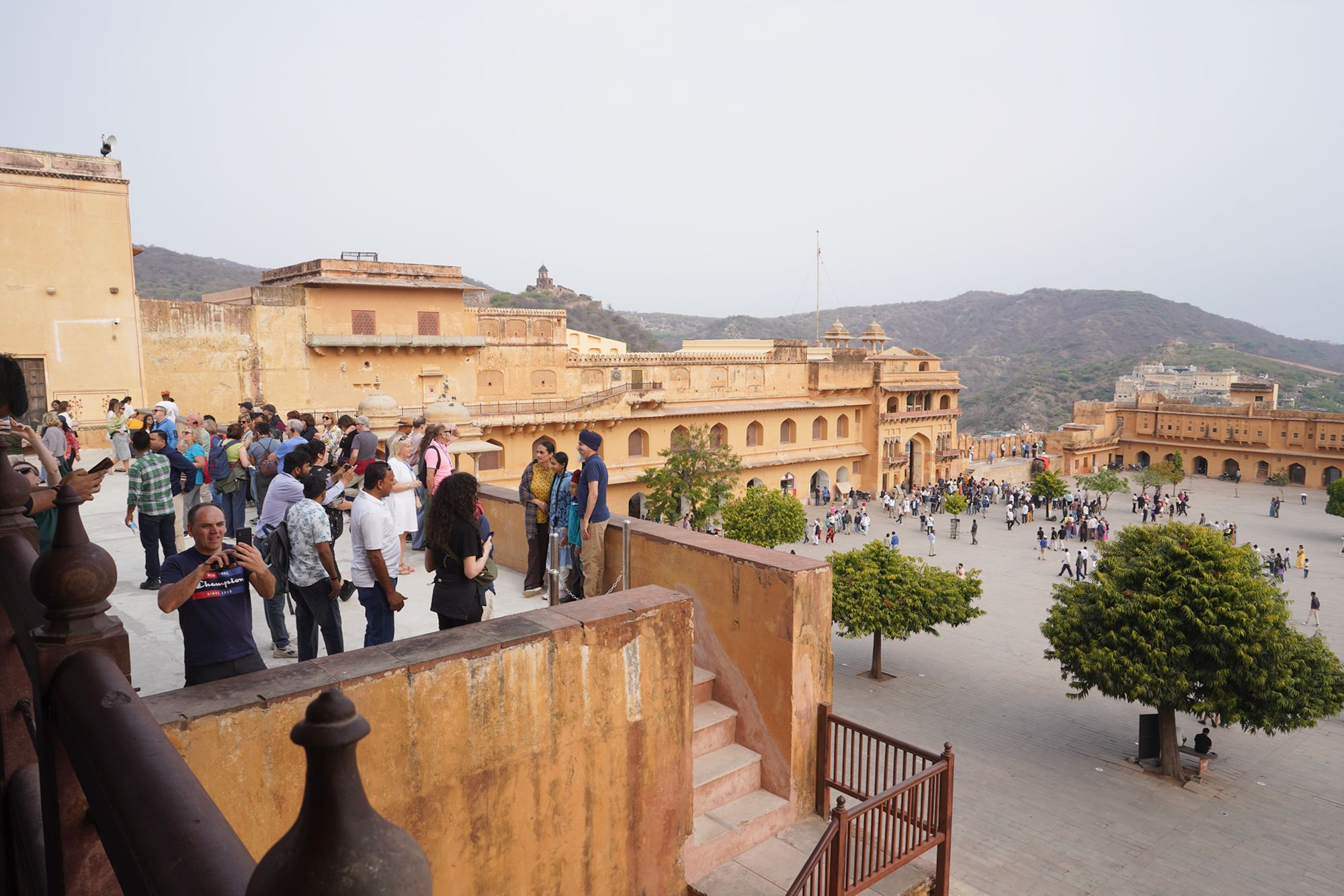
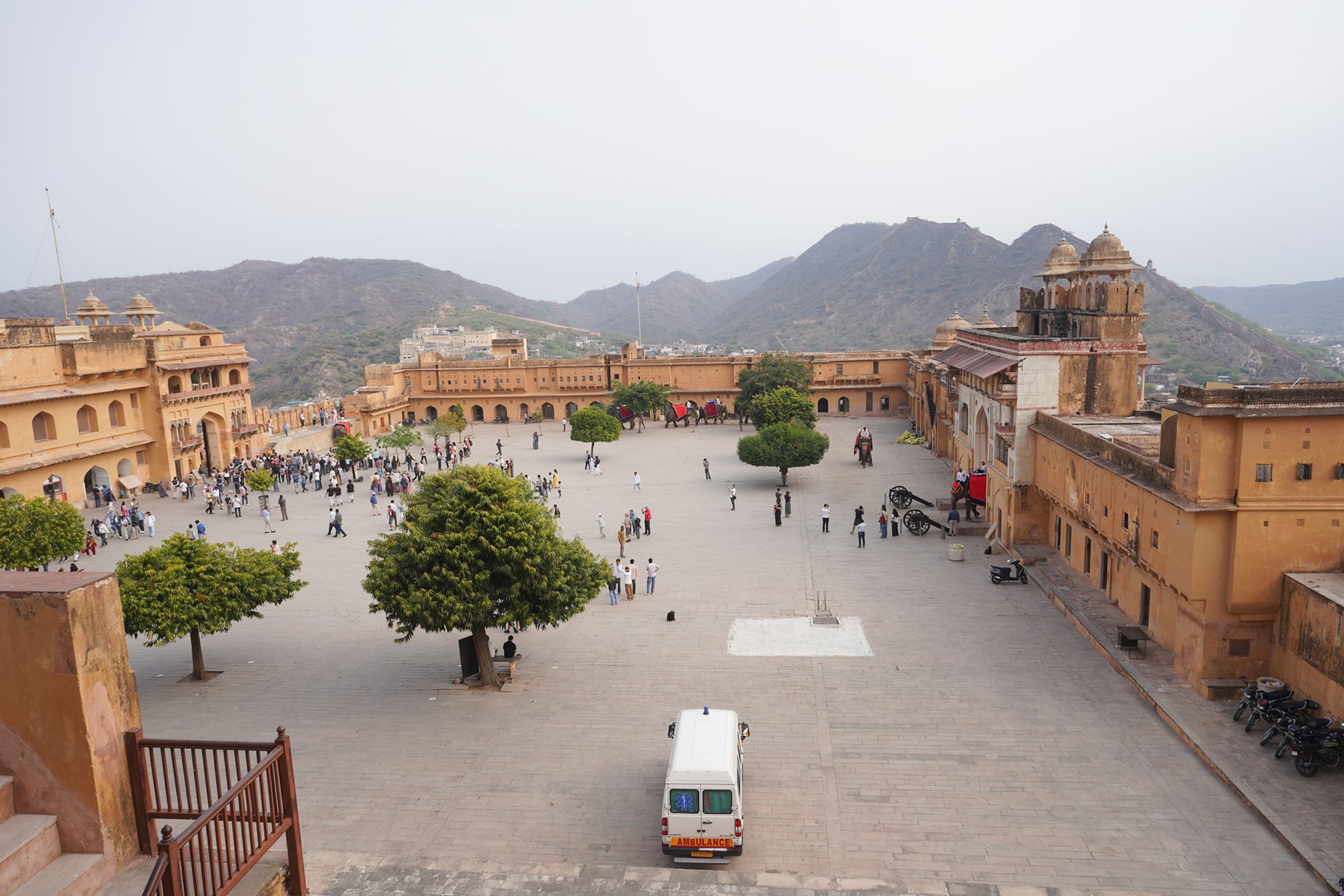
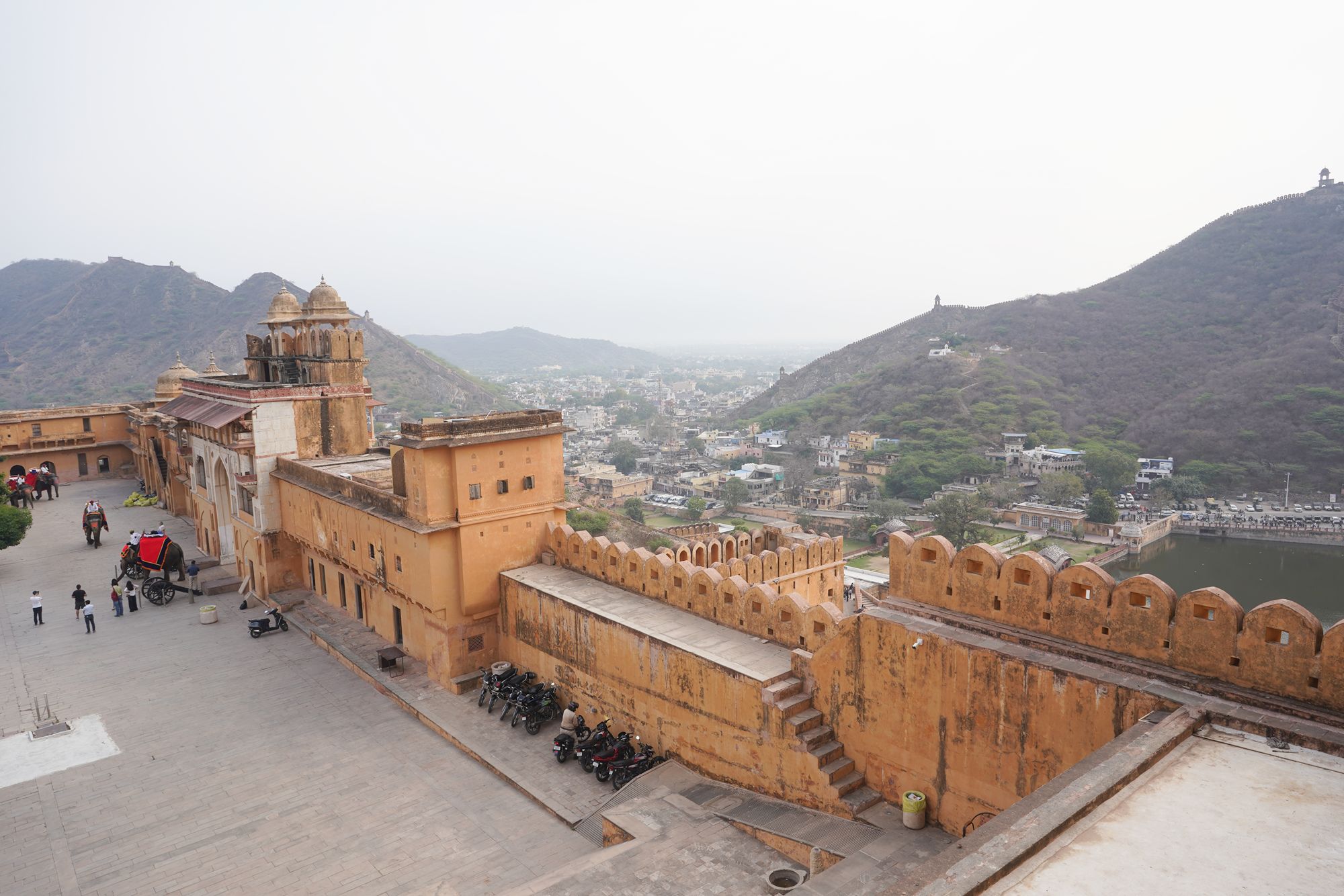
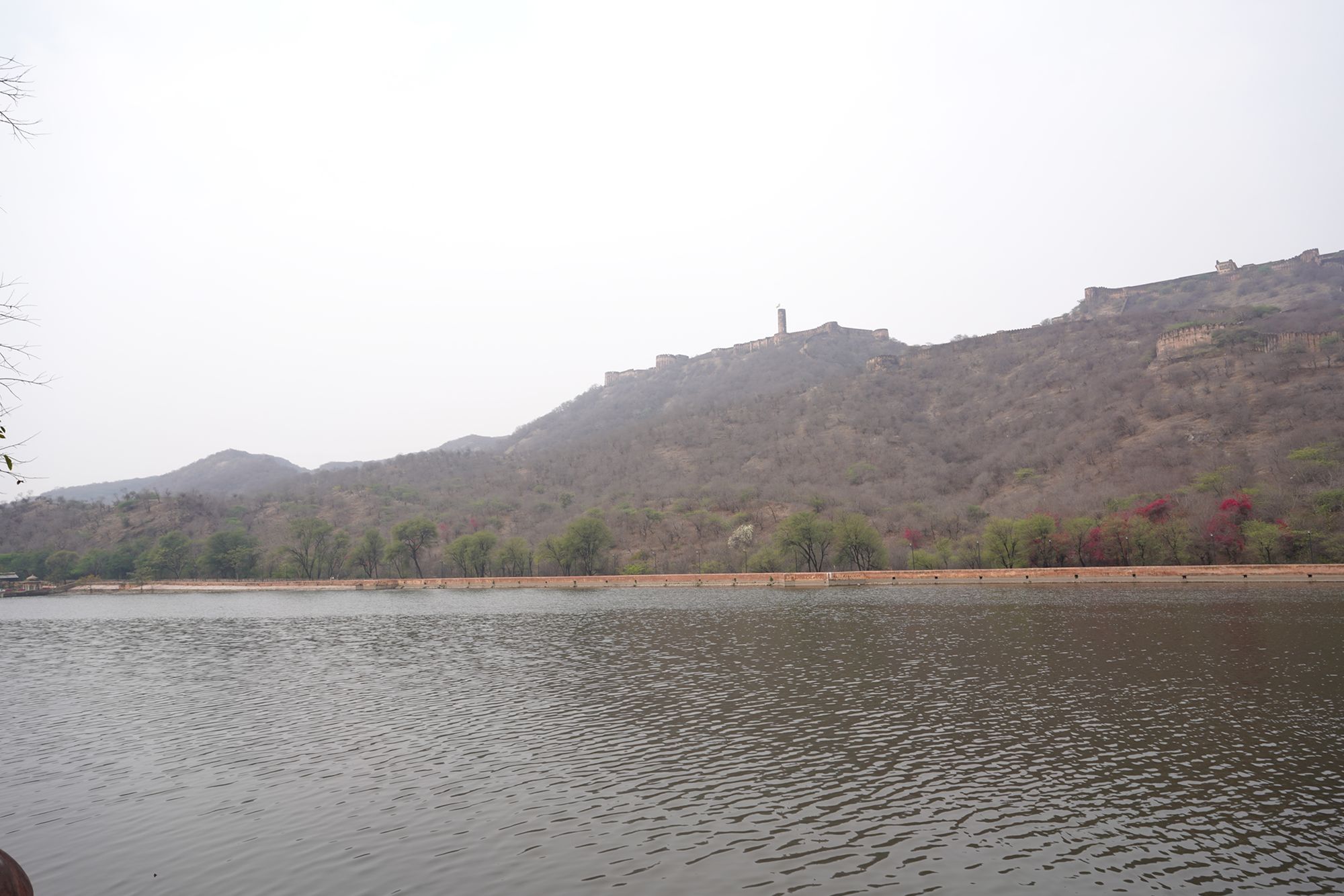
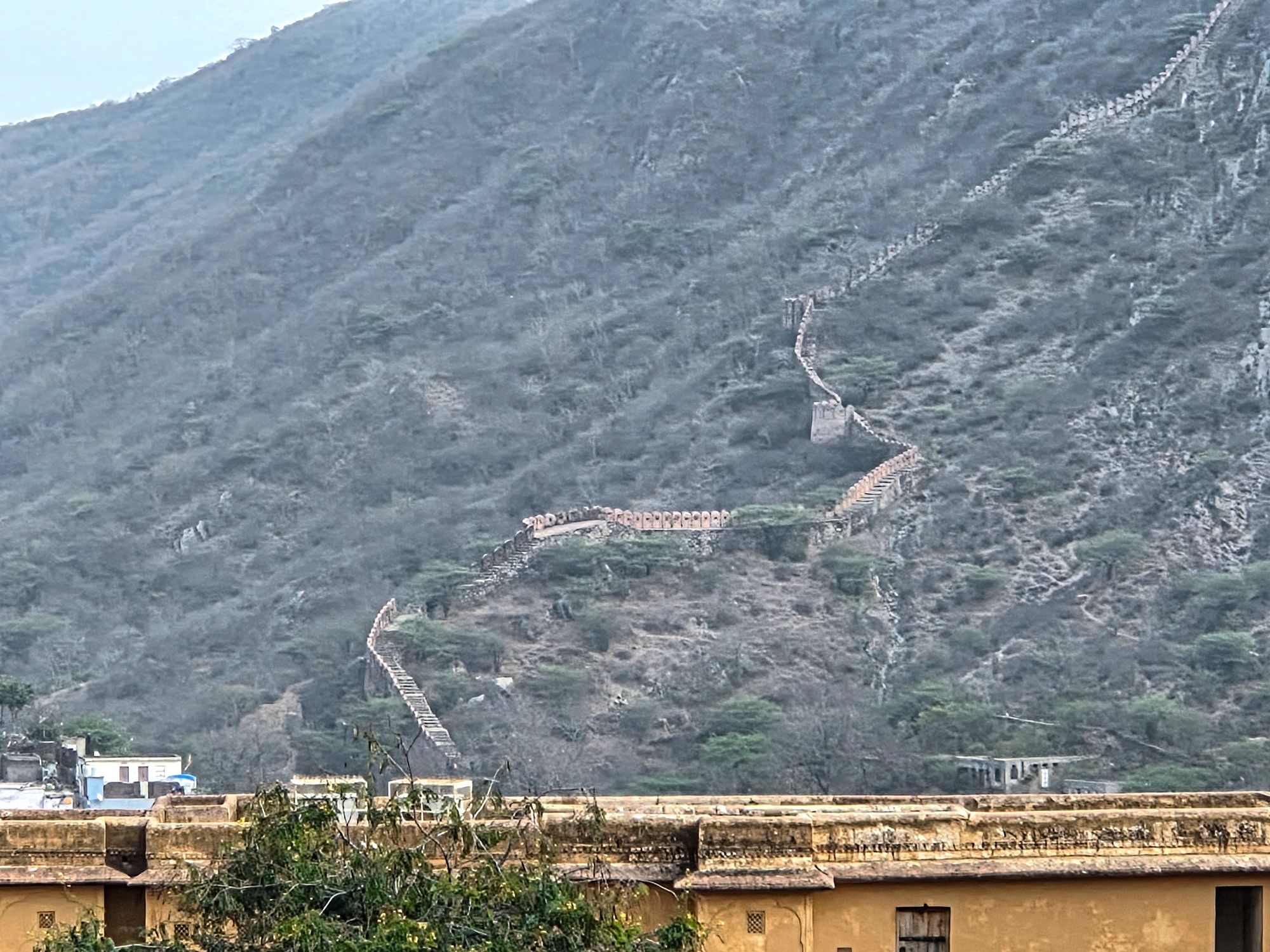
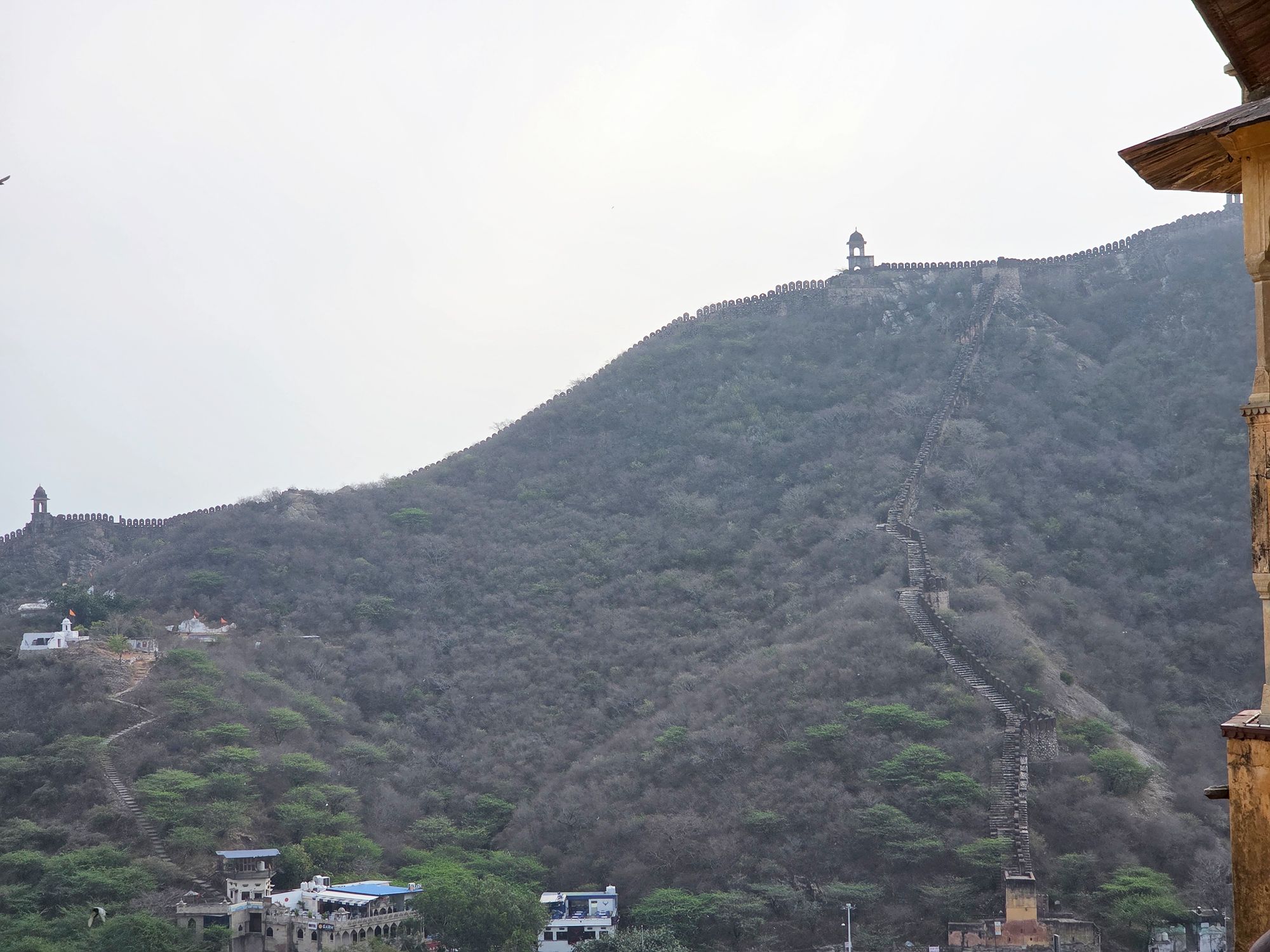
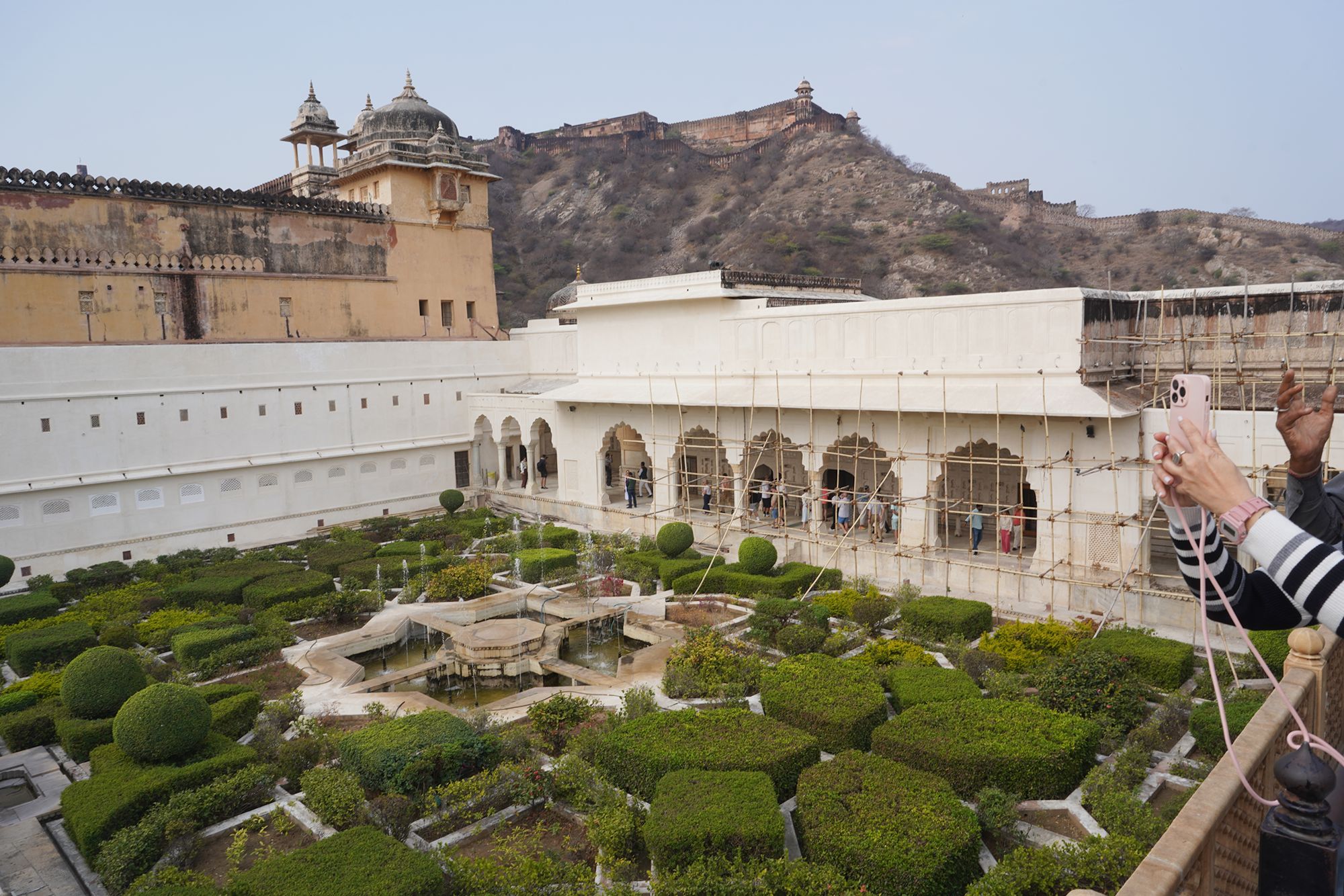
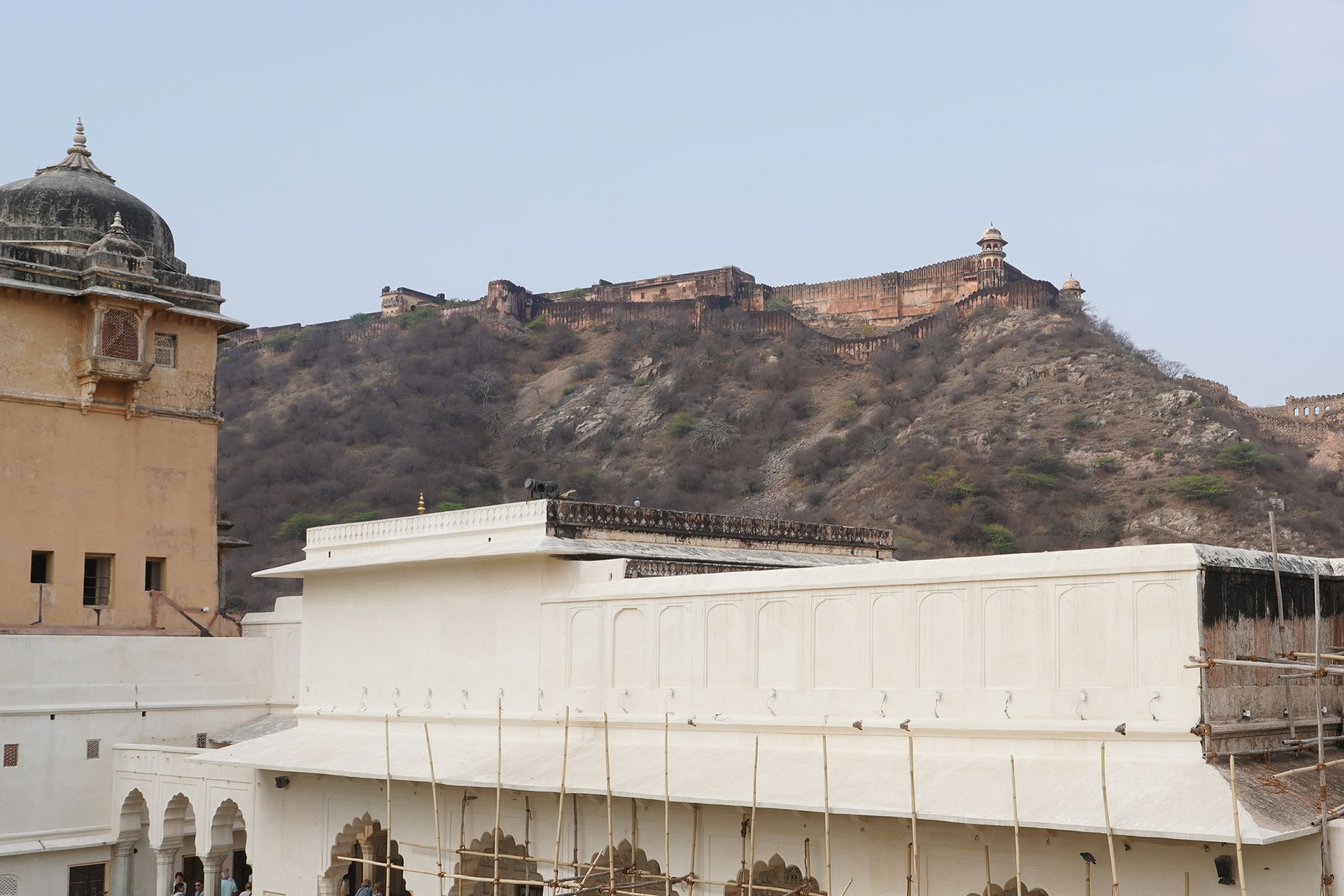
From Amber Palace you can see long fortification walls running along the surrounding Aravalli hills. These defensive walls connected Amber’s fortified landscape with nearby watchtowers and defenses, including Jaigarh Fort higher on the ridge.
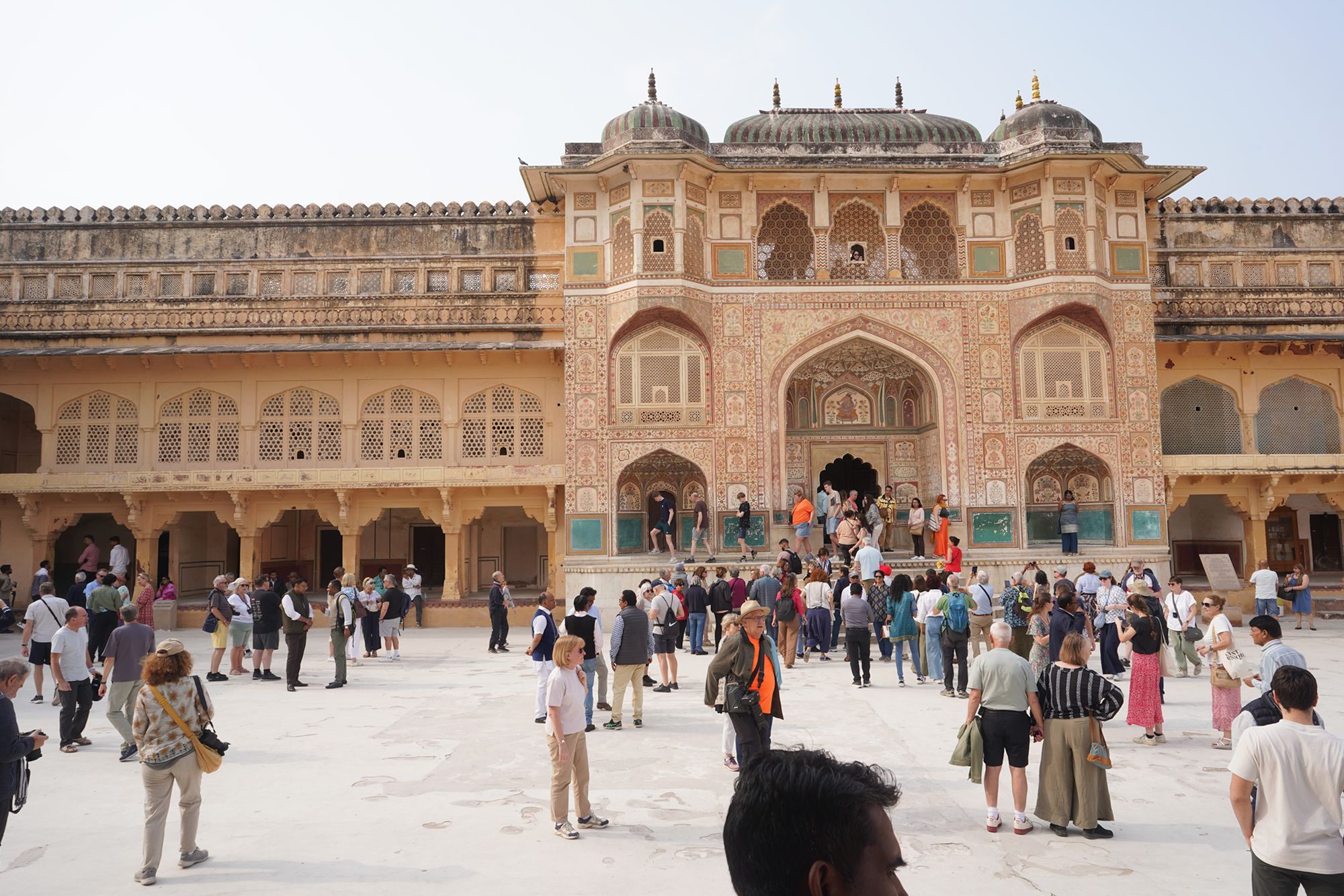
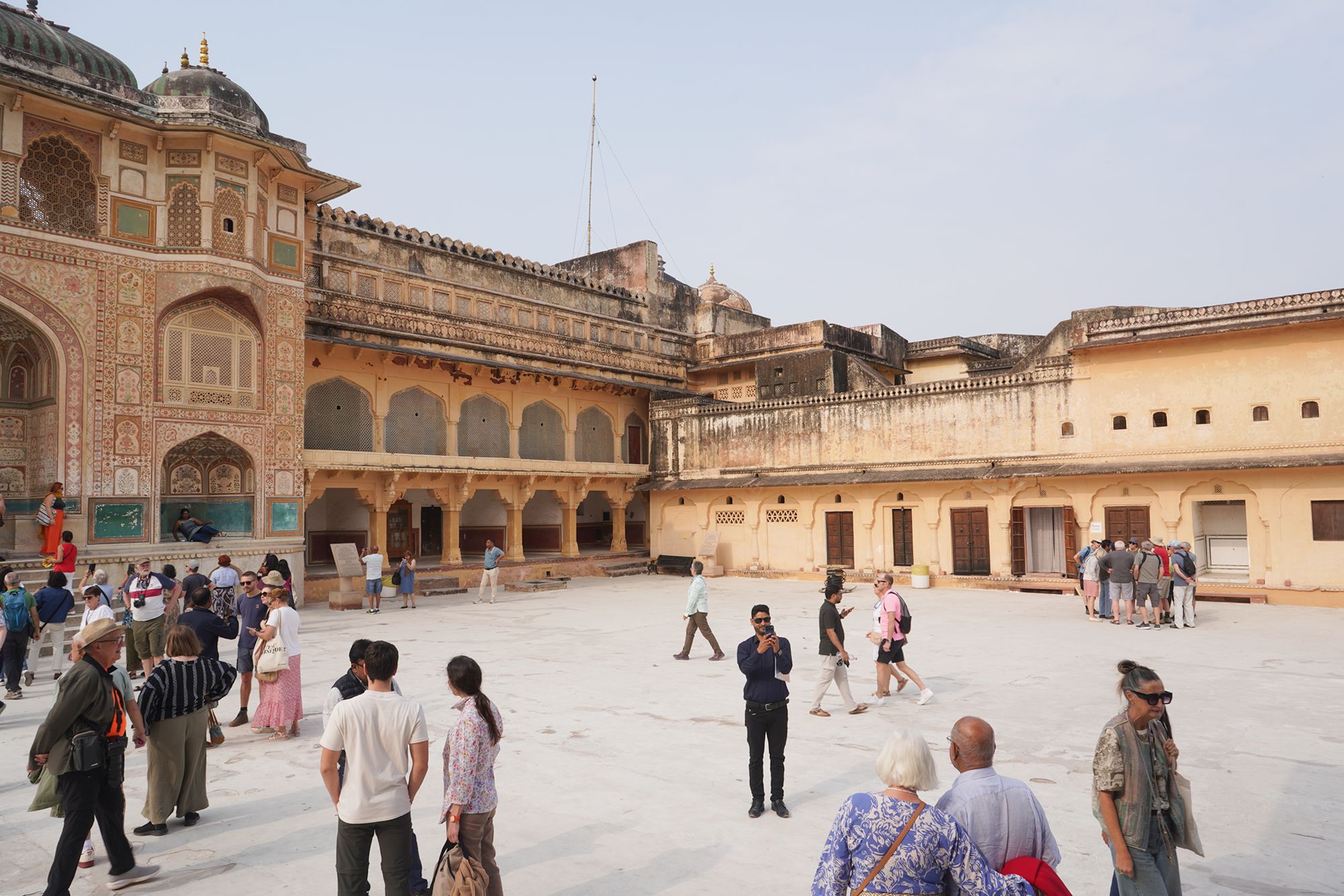
Ganesh Pol
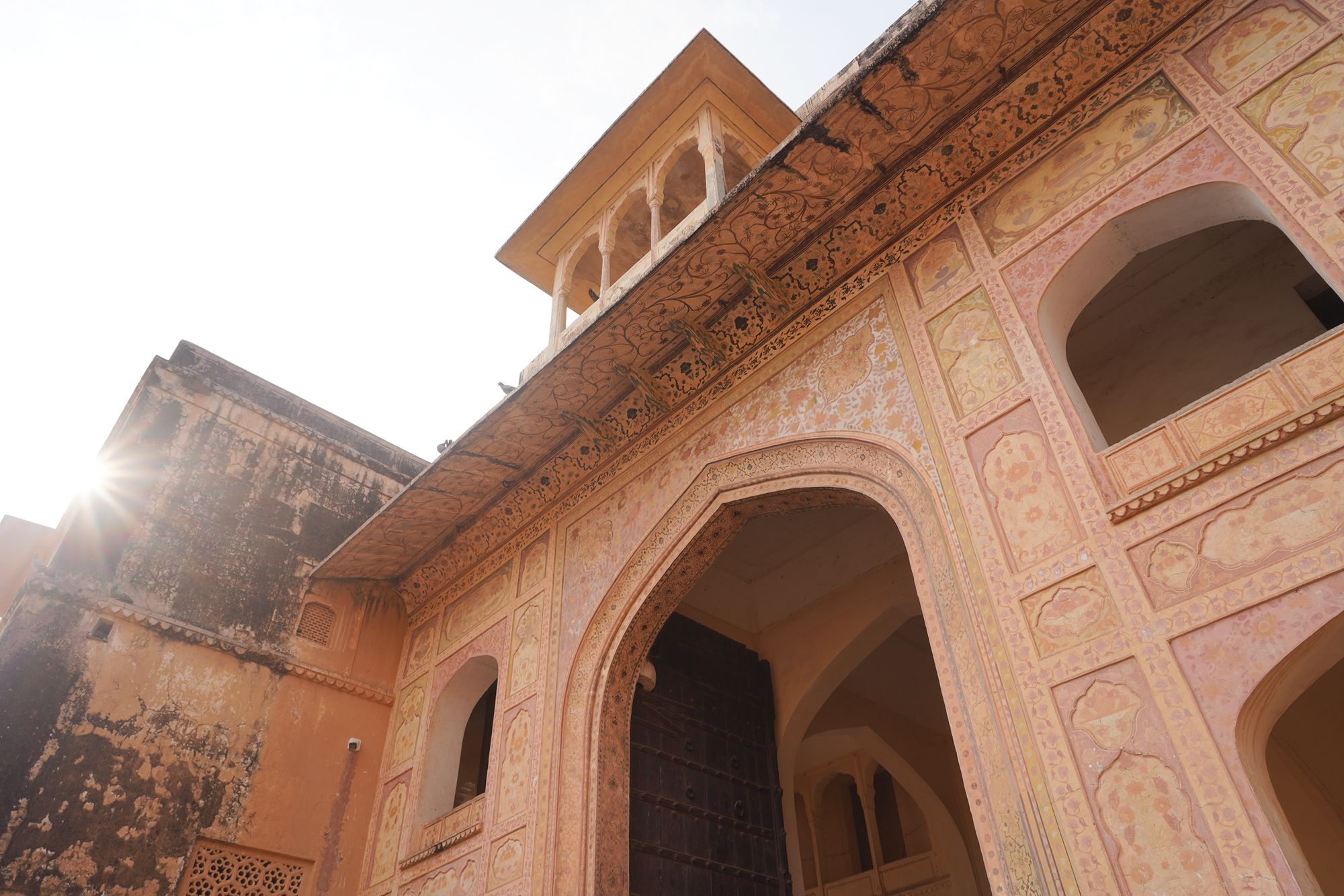
The Ganesh Pol, or Ganesh Gate, is one of the most beautiful and elaborate gateways in Amber Palace. Built in the 17th century, it marks the transition from the more public areas of the palace into the private royal quarters.
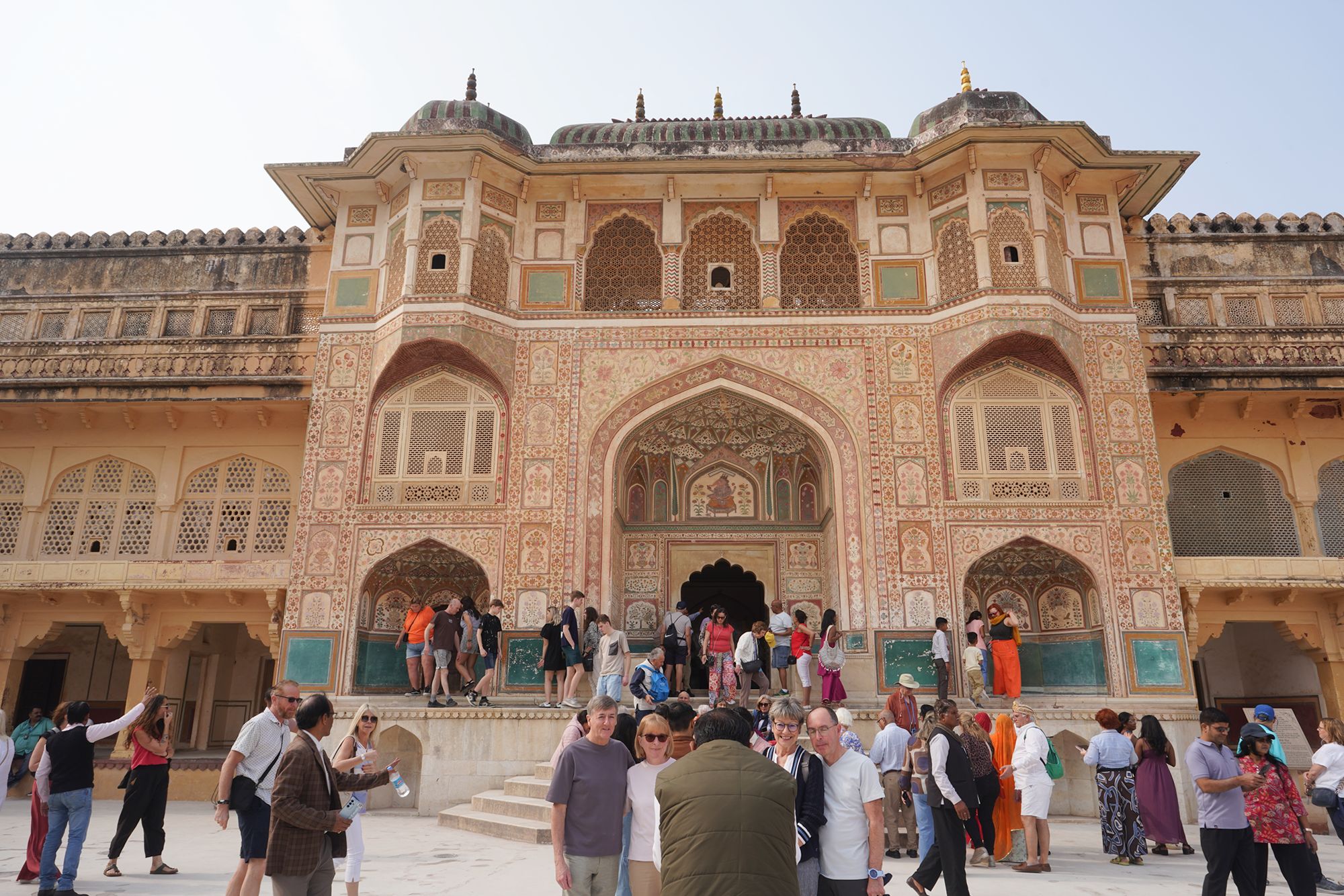
The gateway is richly decorated with colorful floral and geometric designs, and above the entrance is an image of Lord Ganesha, the Hindu god associated with good fortune and the removal of obstacles. This image gives the gate its name.
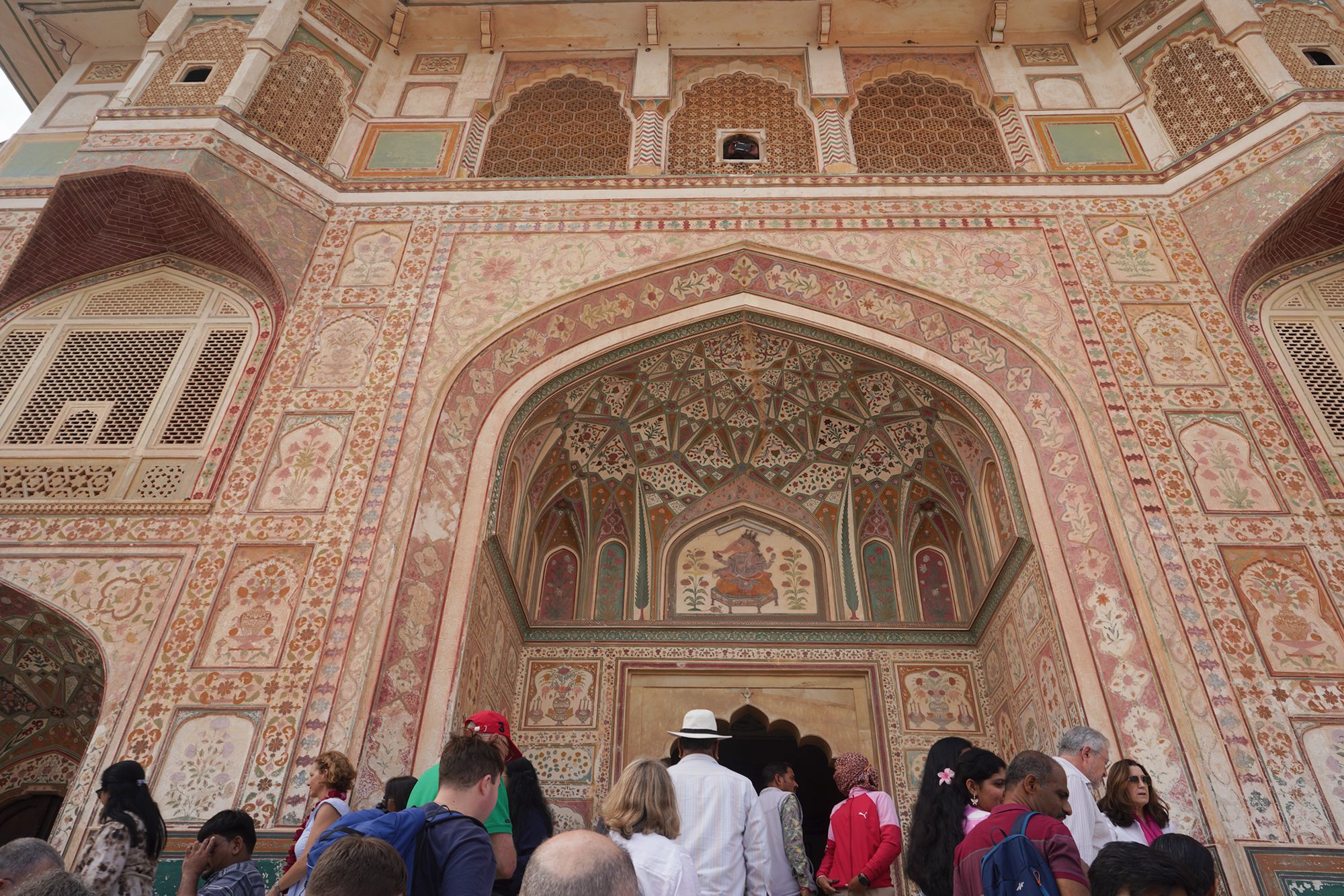
Above the gateway are small screened windows and pavilions from which women of the royal household could observe activities below without being seen.
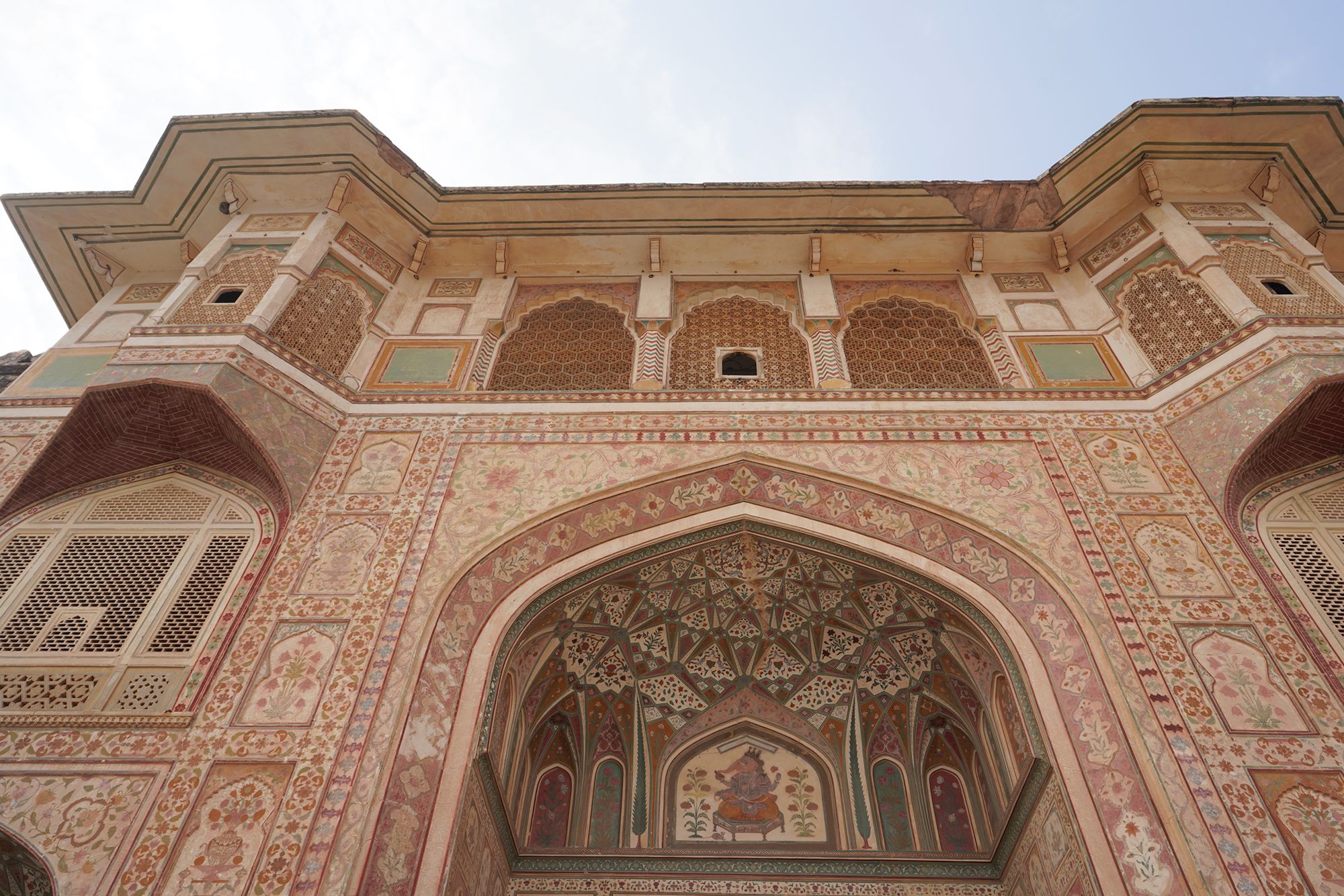
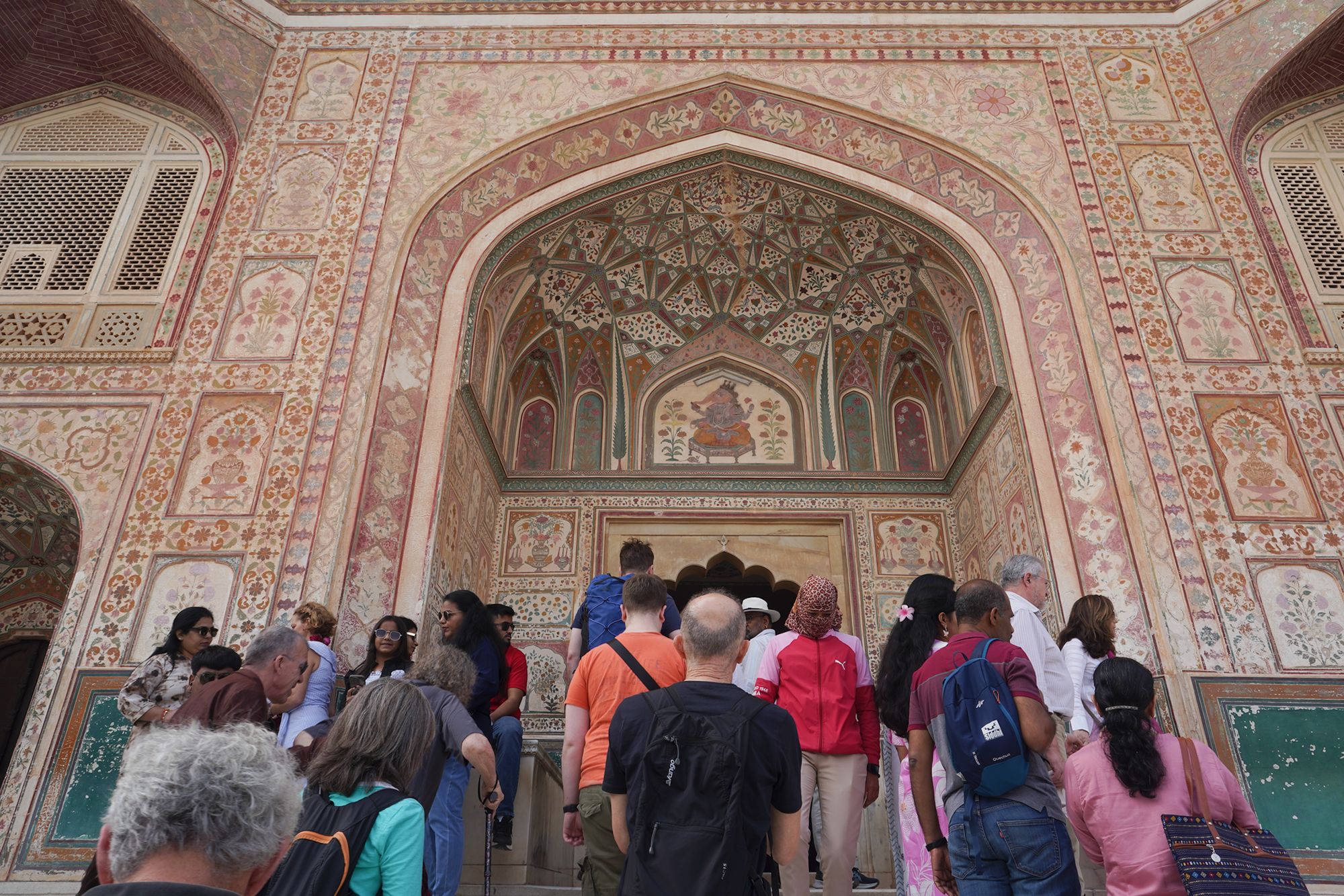
Passing through Ganesh Pol leads into the more private and luxurious sections of Amber Palace, including the courtyard containing the Jai Mandir and the famous Sheesh Mahal (Mirror Palace).
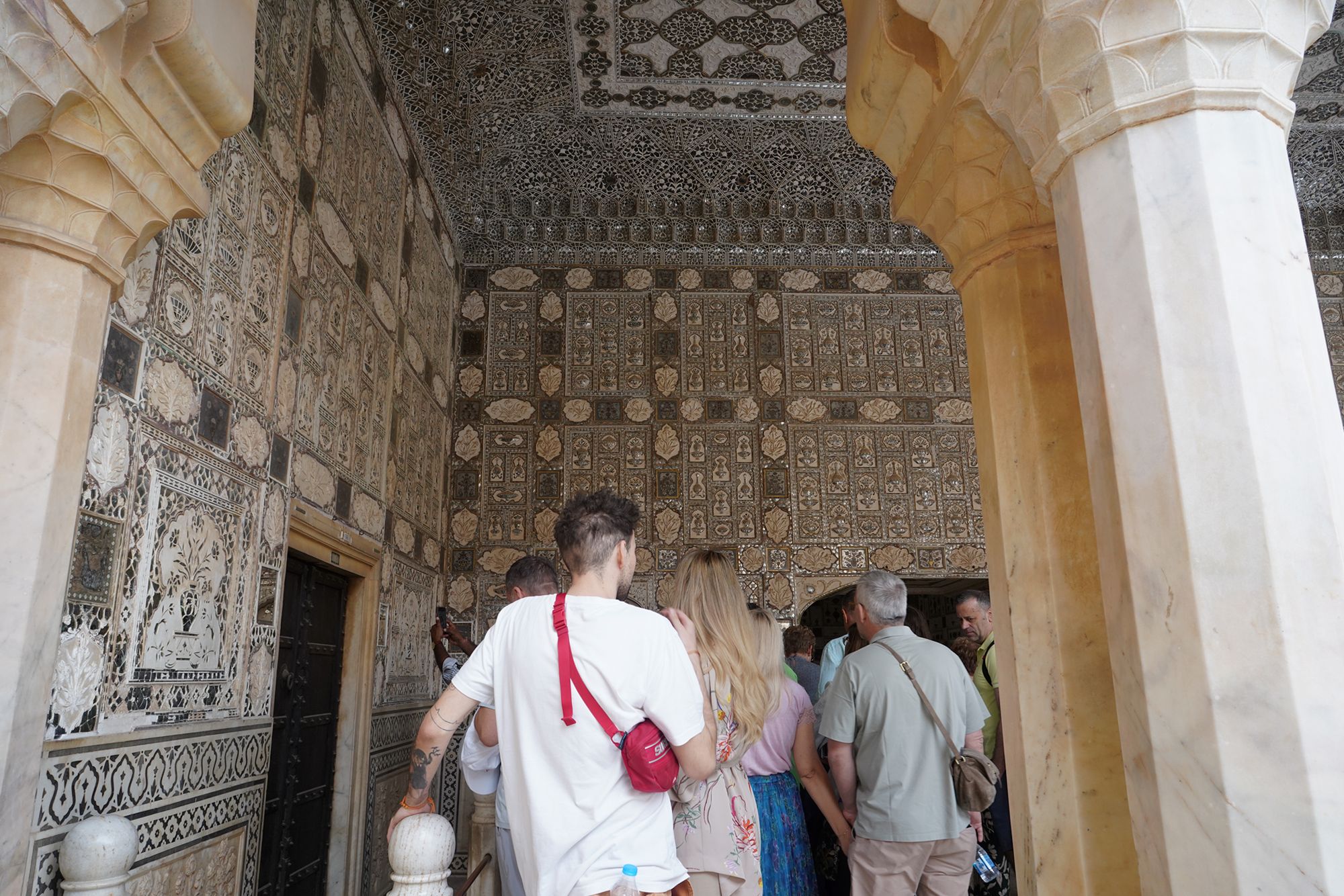
Sheesh Mahal (Mirror Palace)
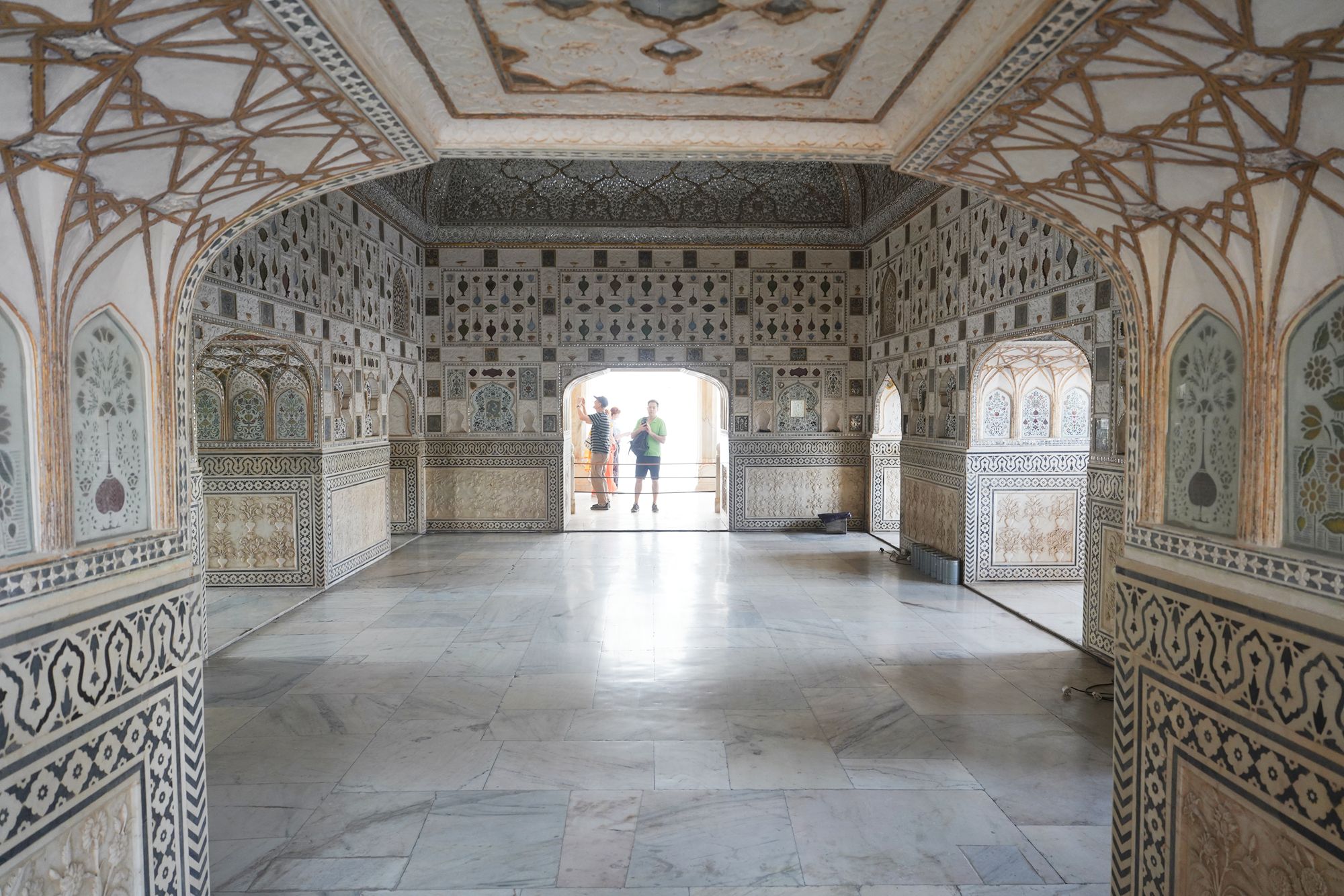
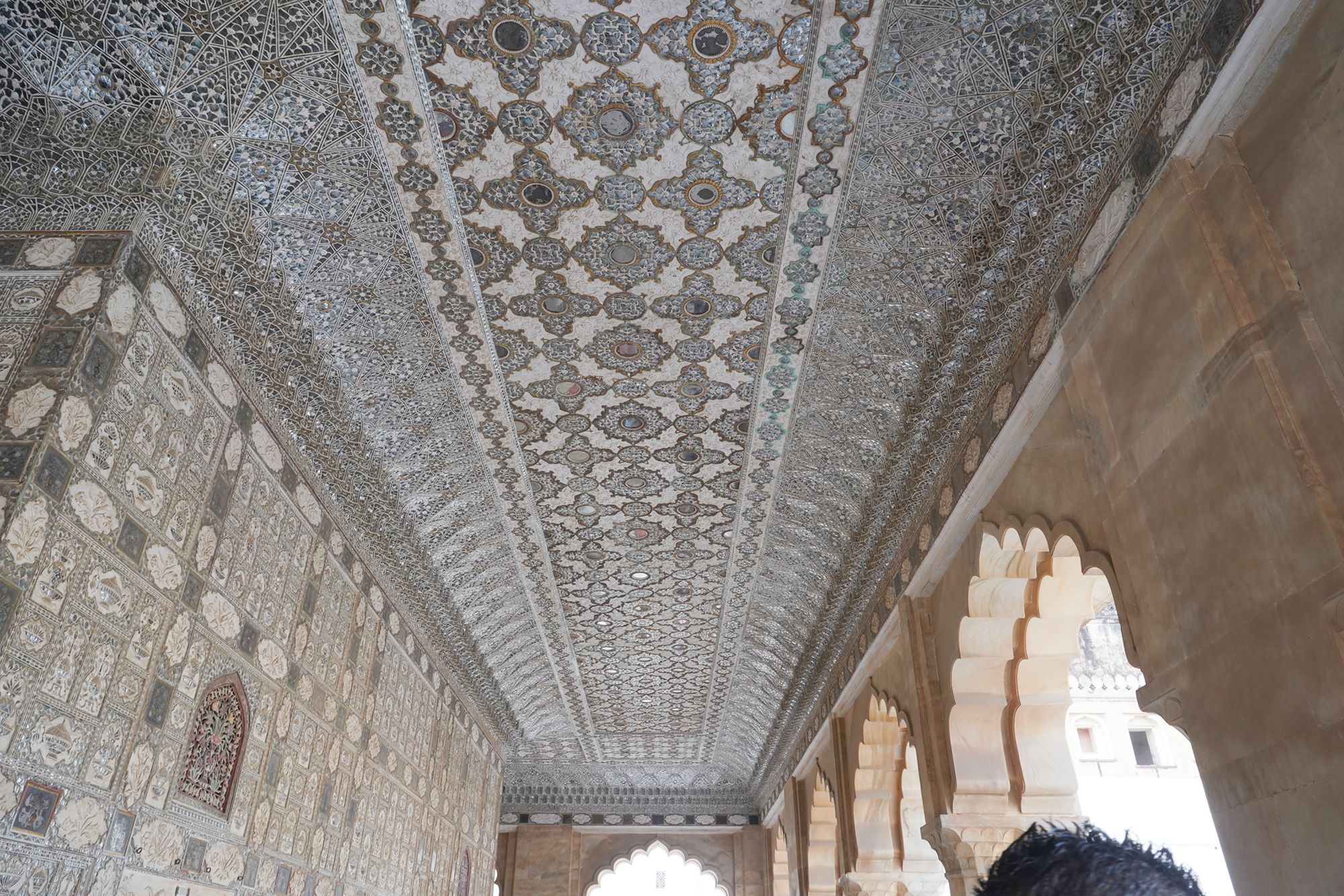
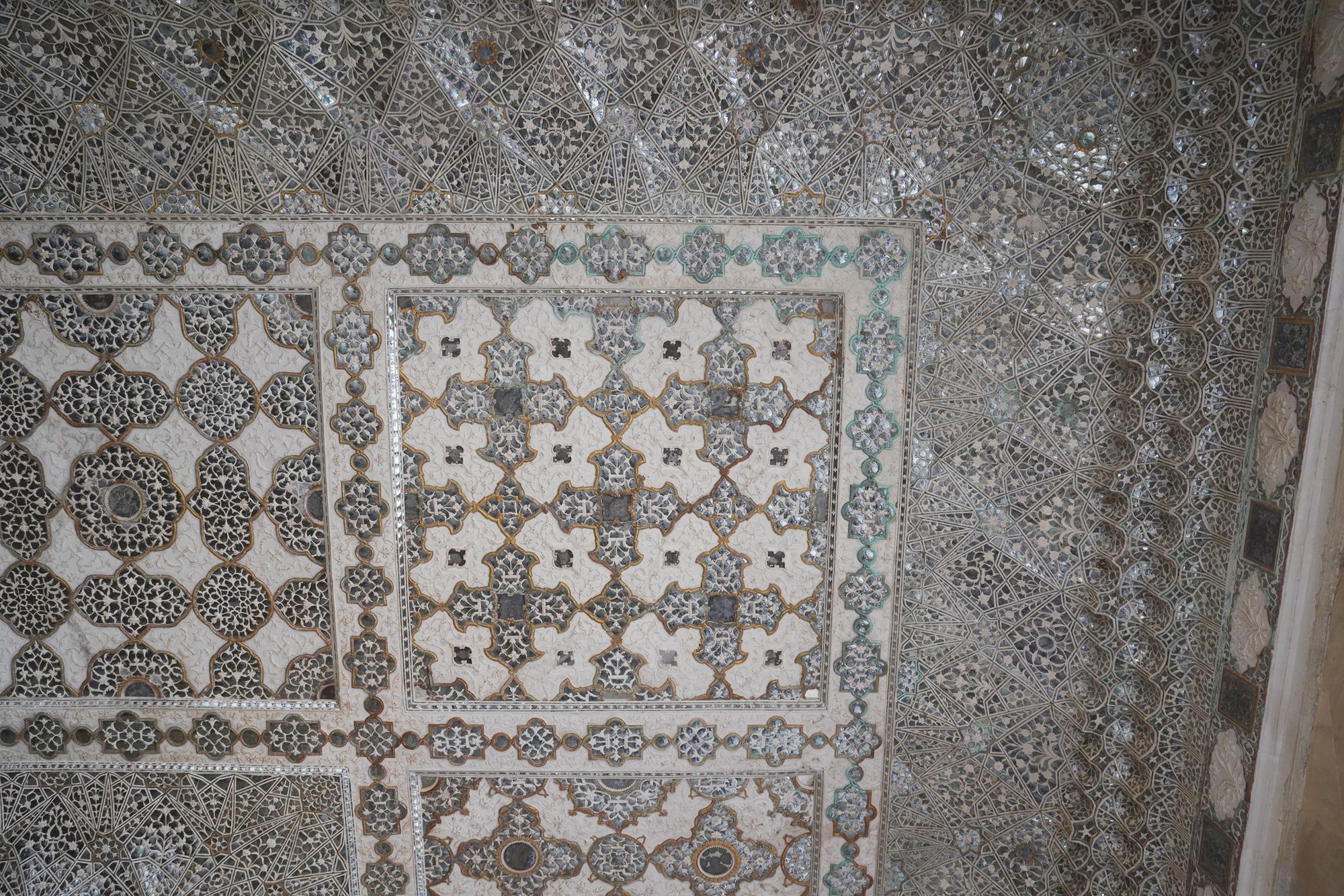
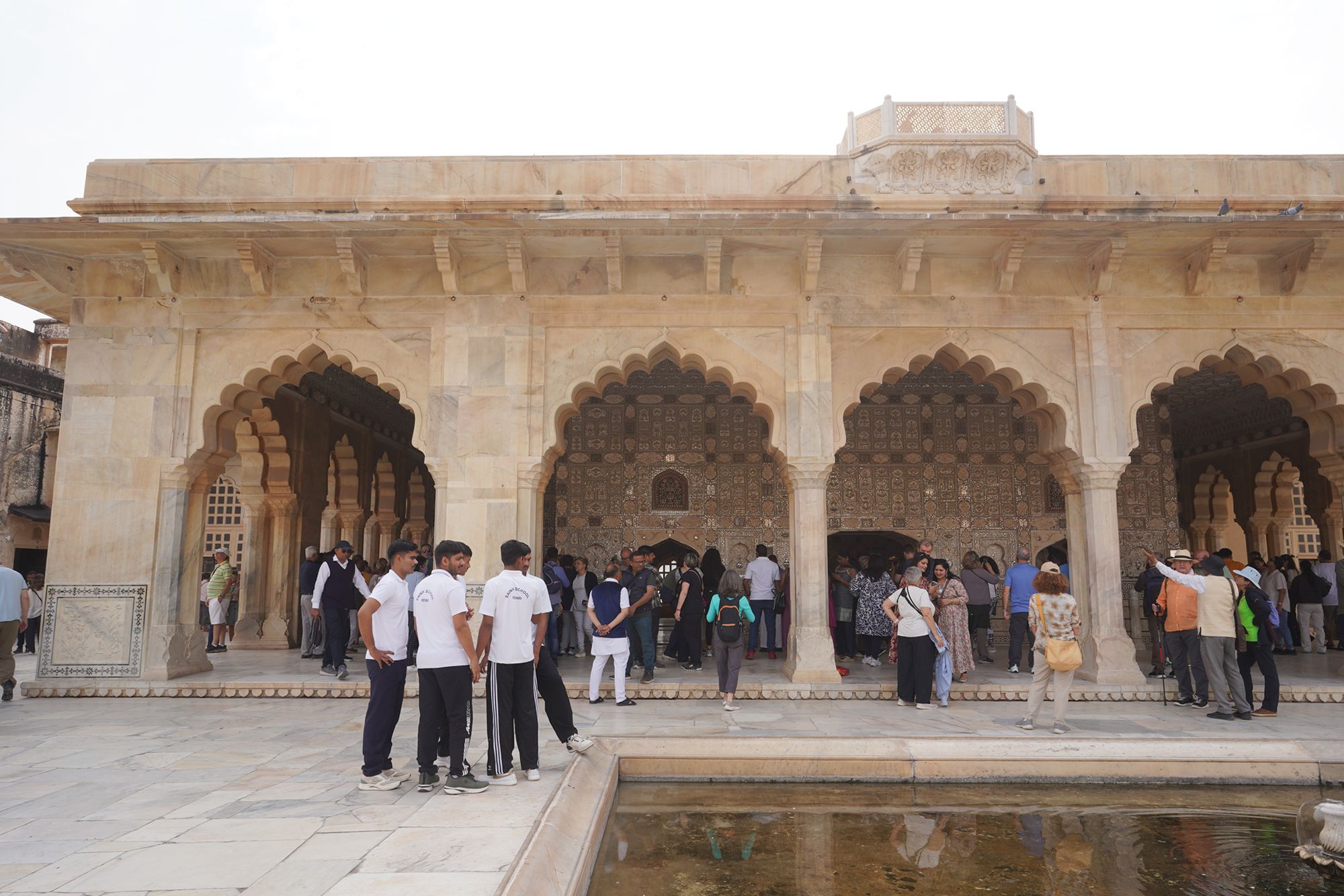
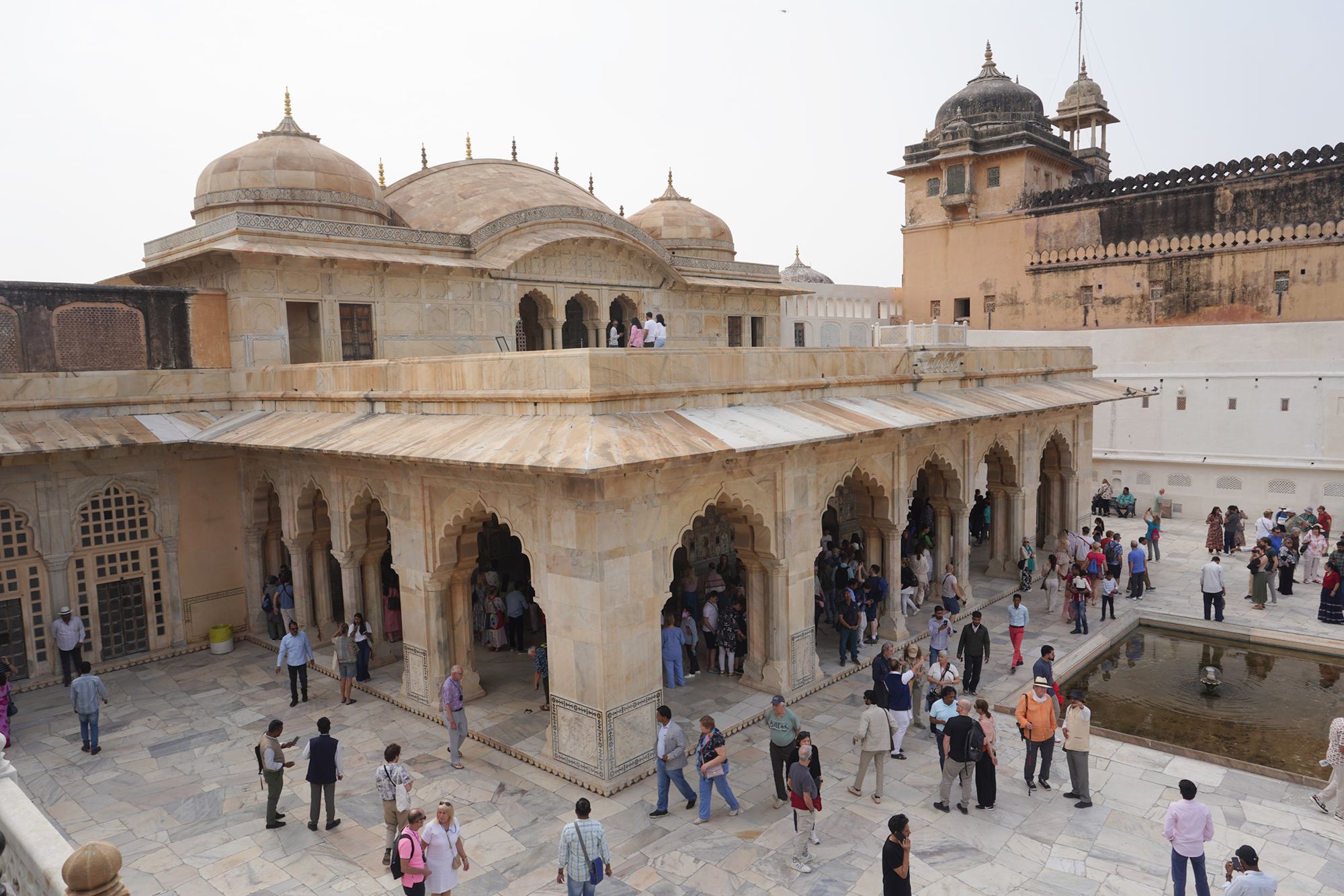
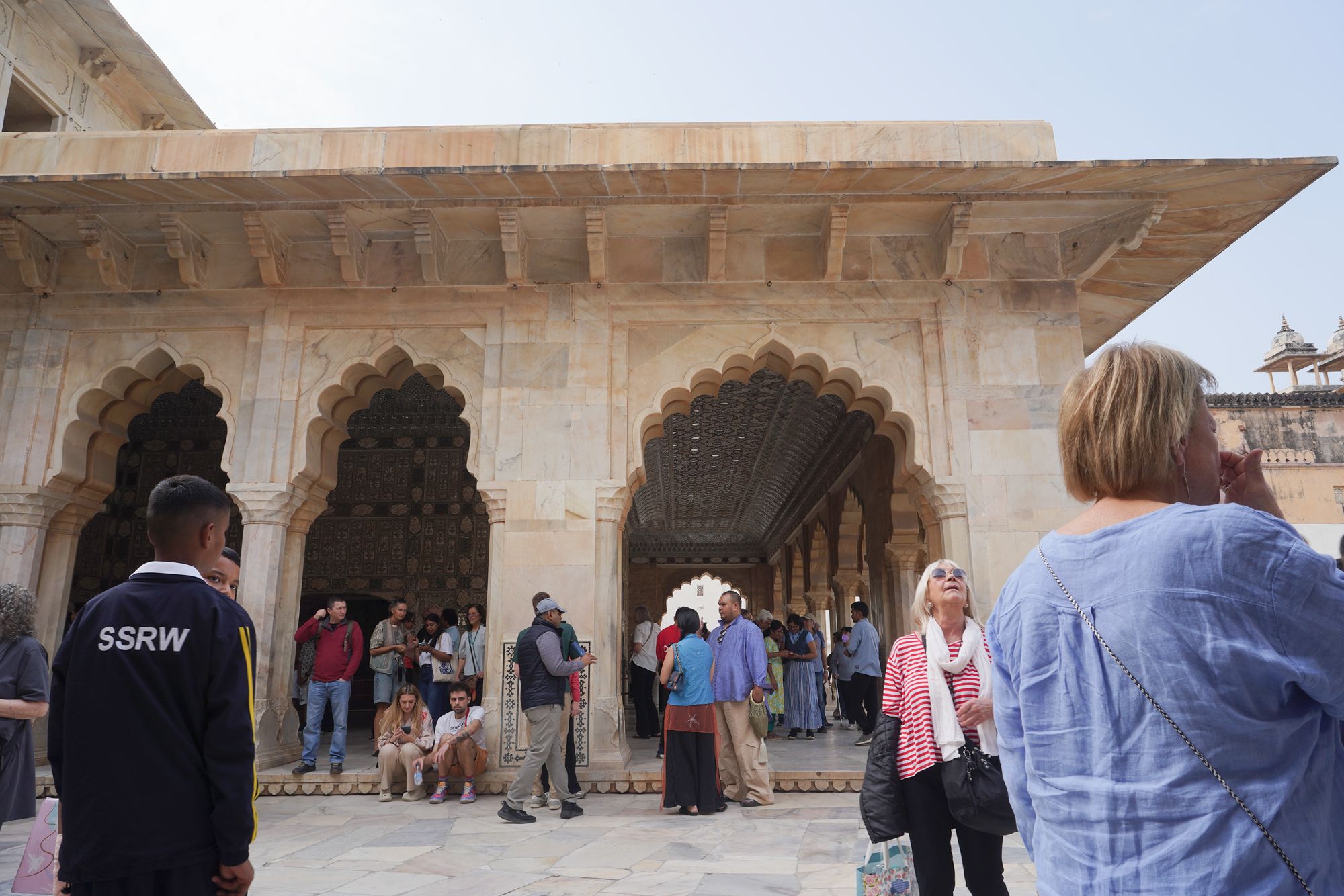
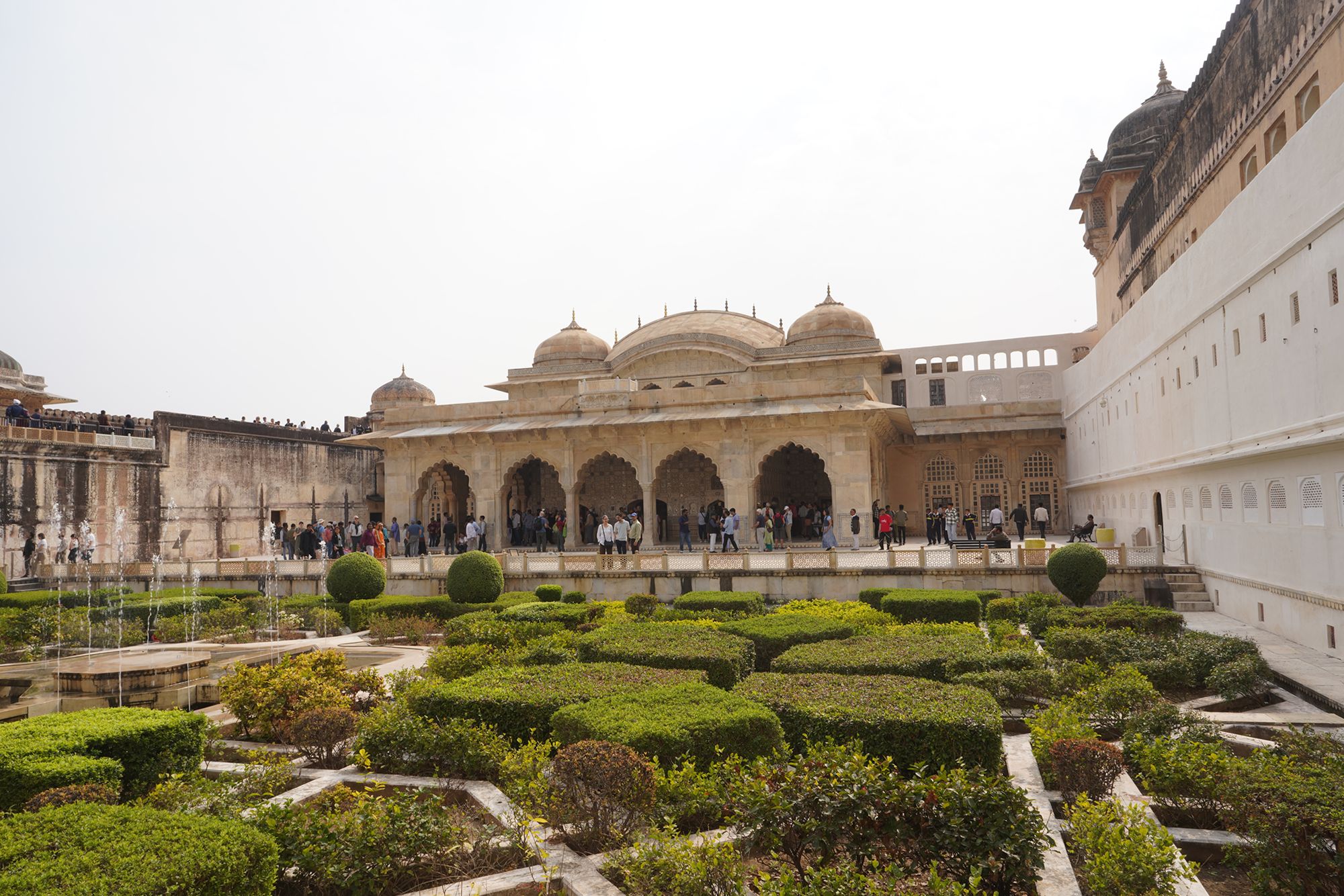
The Sheesh Mahal, or Mirror Palace, is one of the most beautiful and famous parts of Amber Palace. Built during the reign of Mirza Raja Jai Singh I in the 17th century, it formed part of the private royal section of the palace.
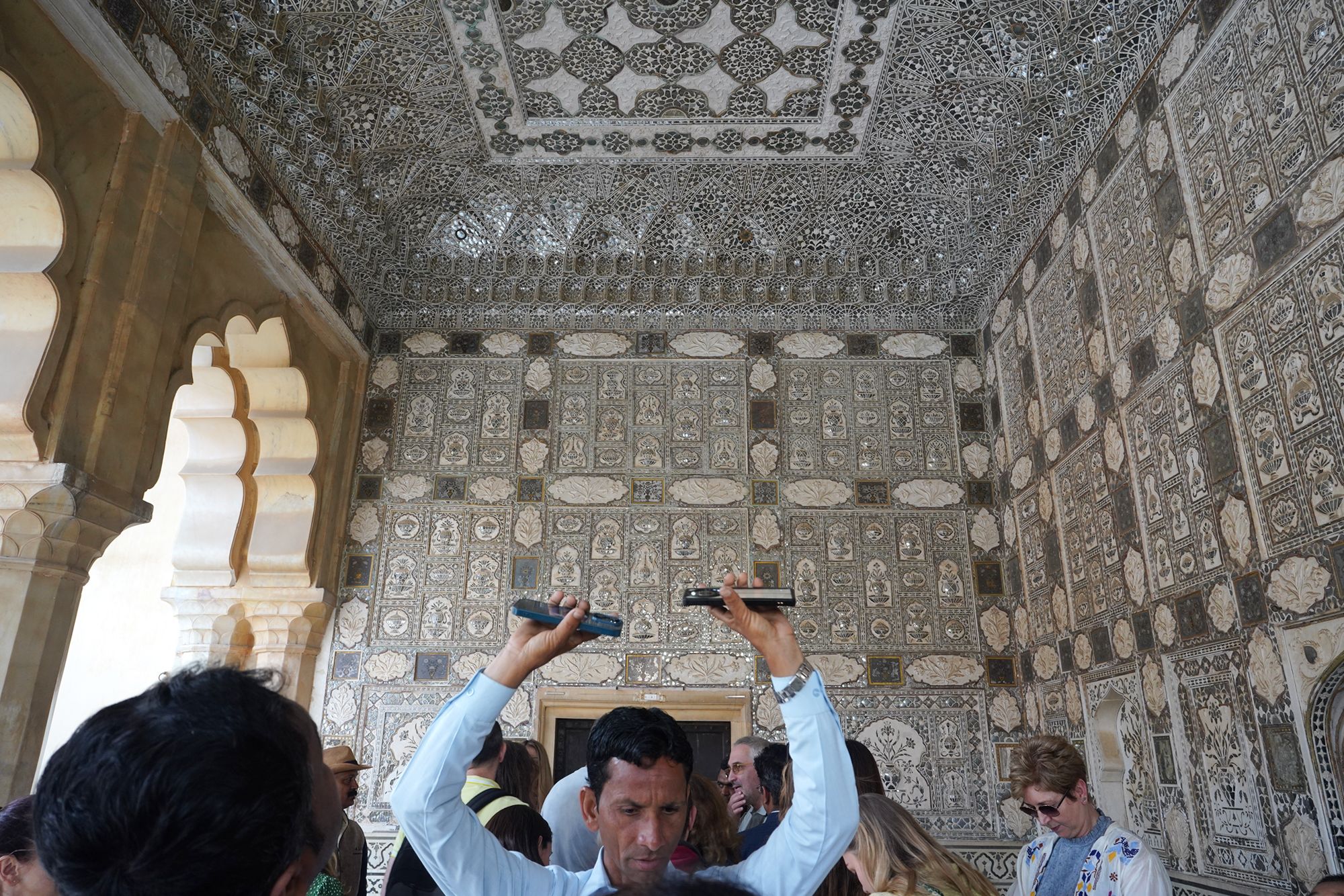
Its walls and ceilings are decorated with thousands of tiny pieces of mirror and colored glass, arranged in intricate floral and geometric patterns. The mirrors were designed to reflect even a small amount of light throughout the room. Traditionally, it is said that the light from a single candle could create the effect of countless sparkling stars across the walls and ceiling.
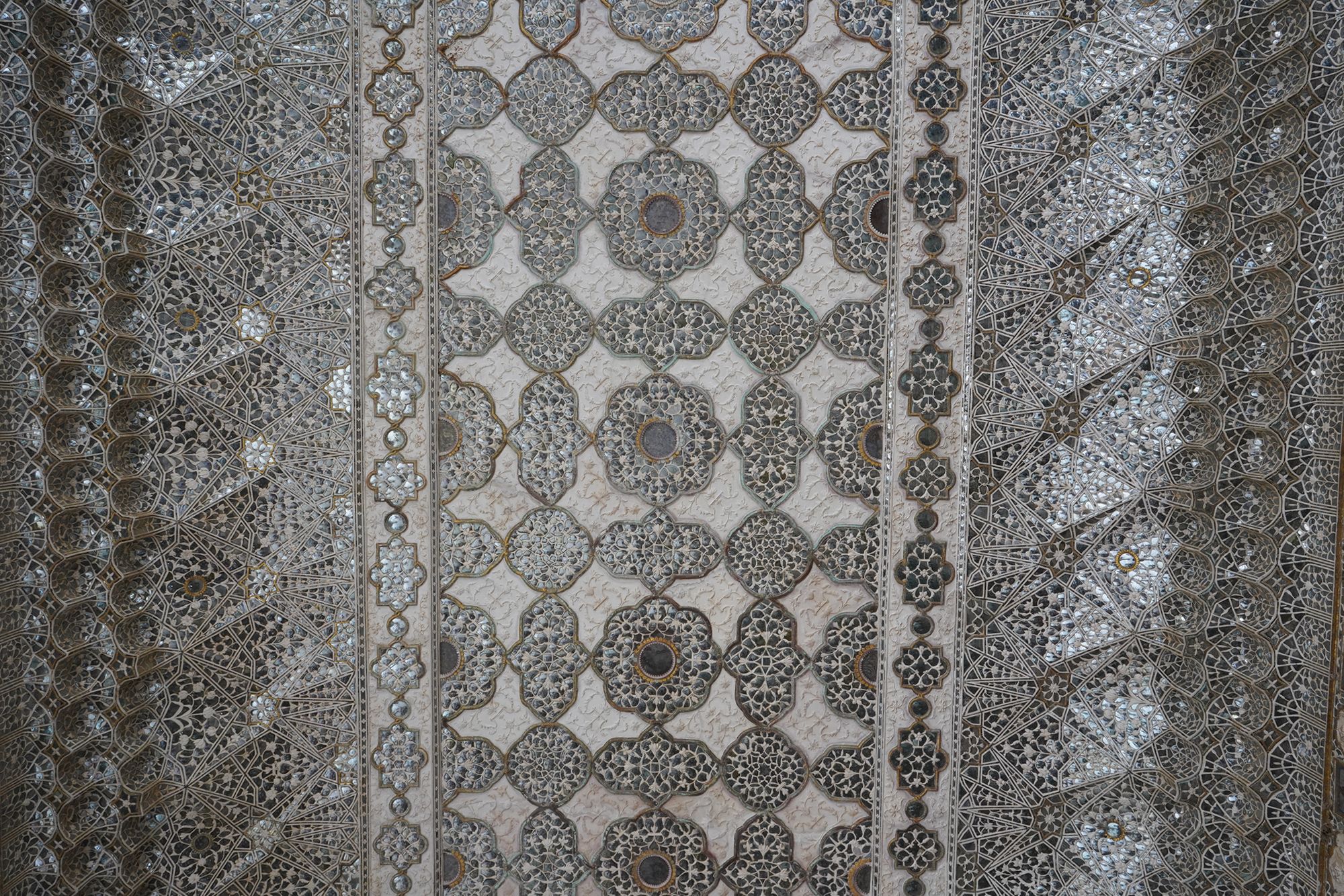
The Sheesh Mahal was part of the Jai Mandir, a richly decorated hall used by the royal family. In addition to the mirror work, the interior contains finely carved marble panels and elaborate decorative designs.
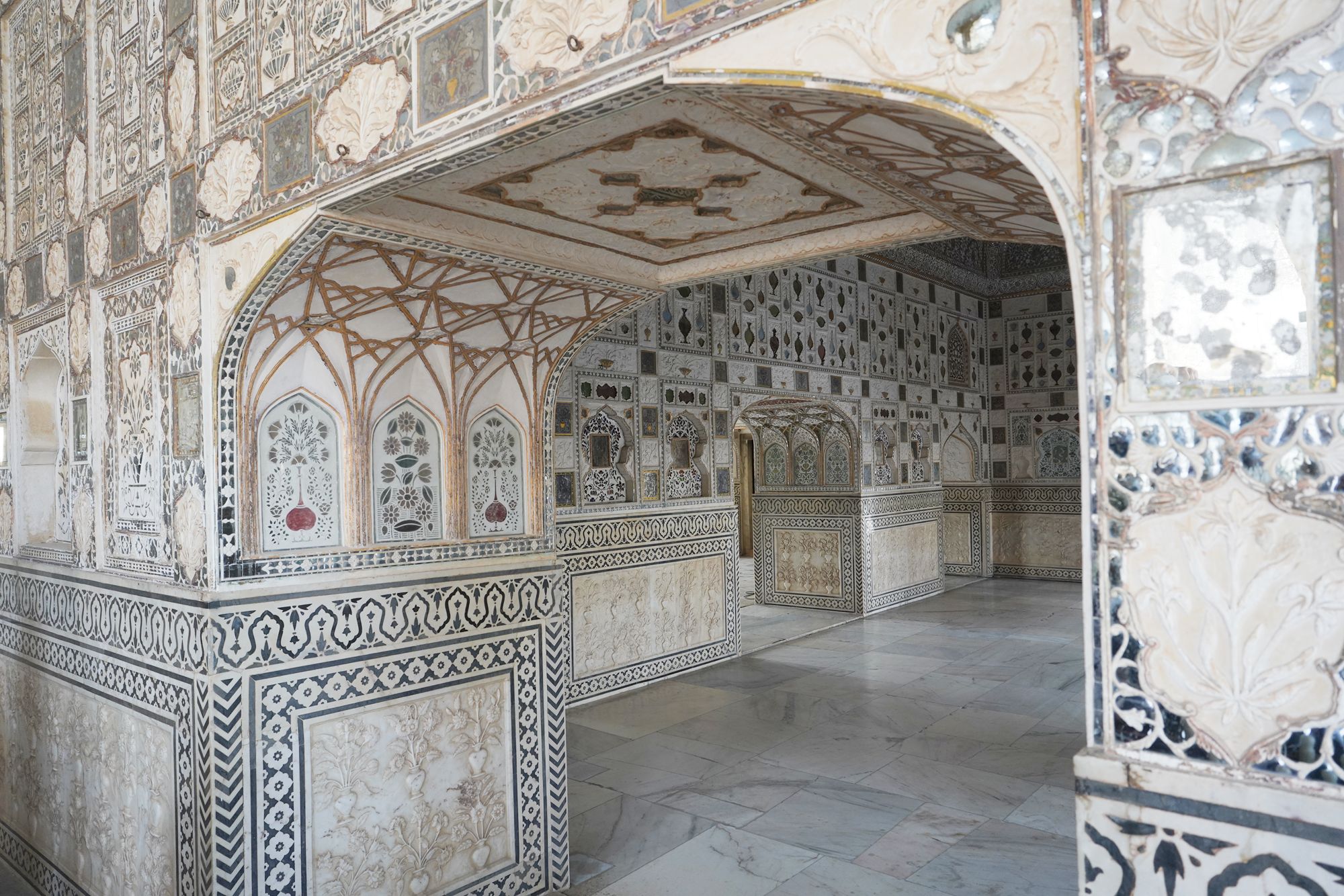
The combination of mirrors, marble, and detailed craftsmanship makes the Sheesh Mahal one of the finest examples of the luxurious Rajput-Mughal architecture found inside Amber Palace.
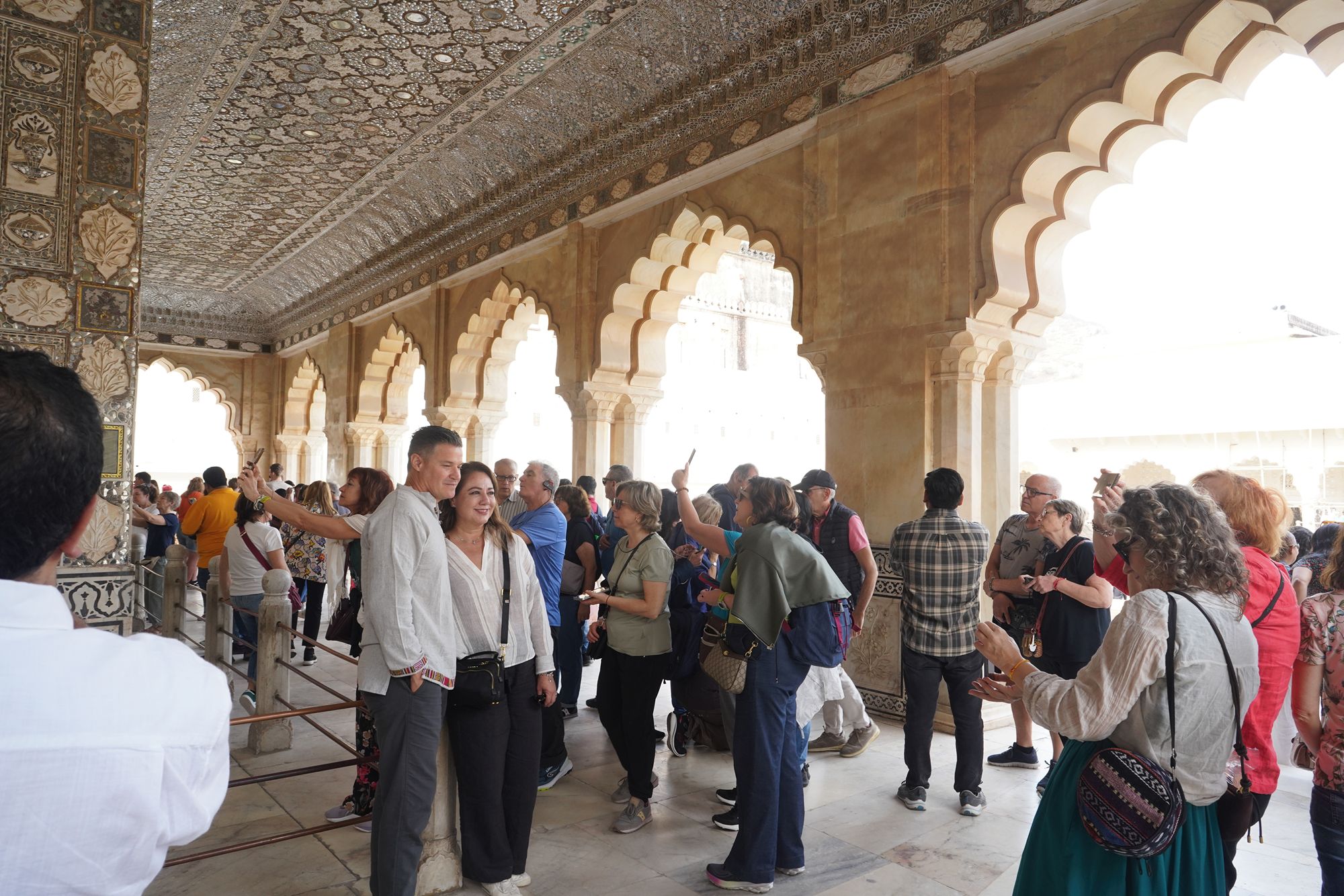
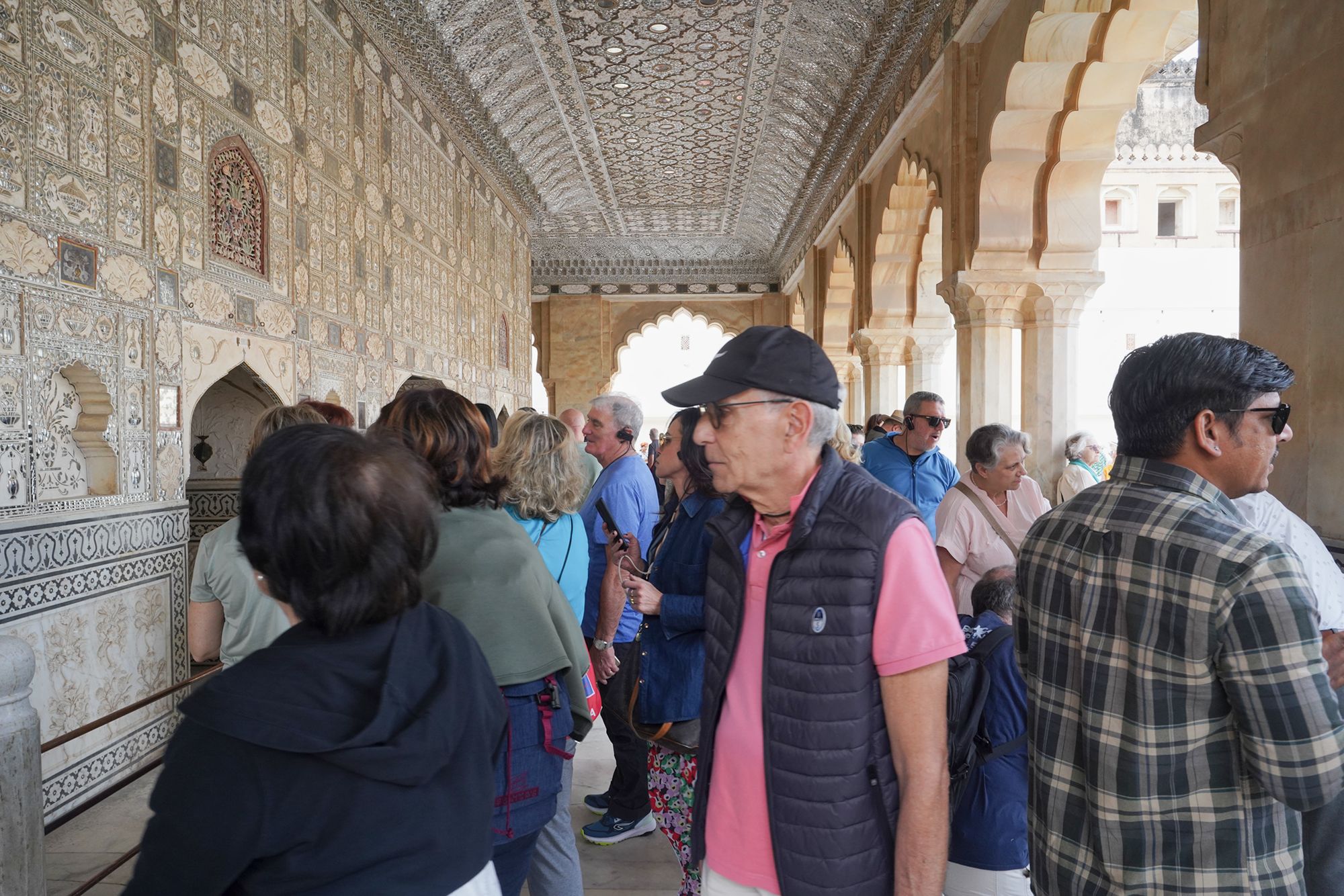
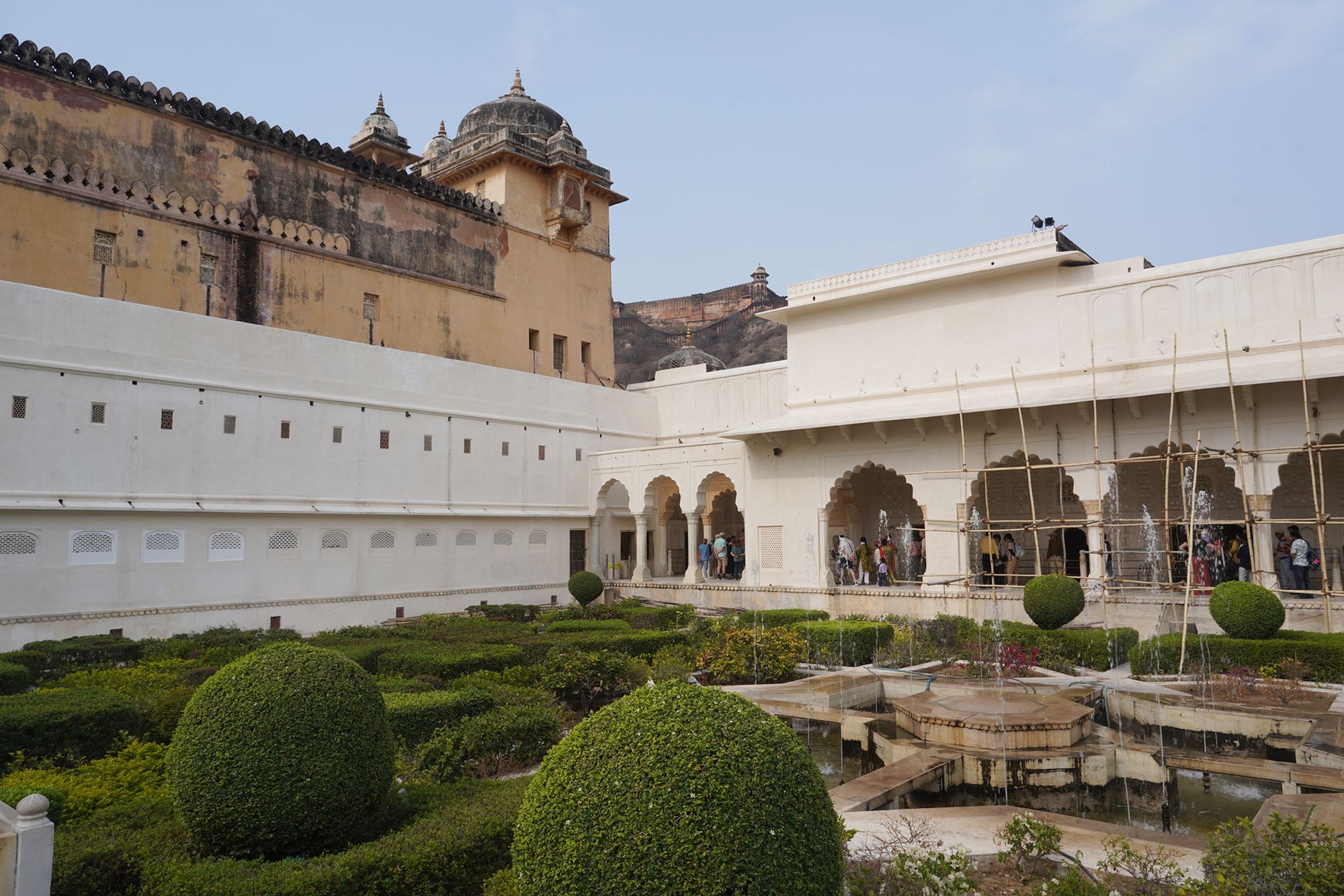
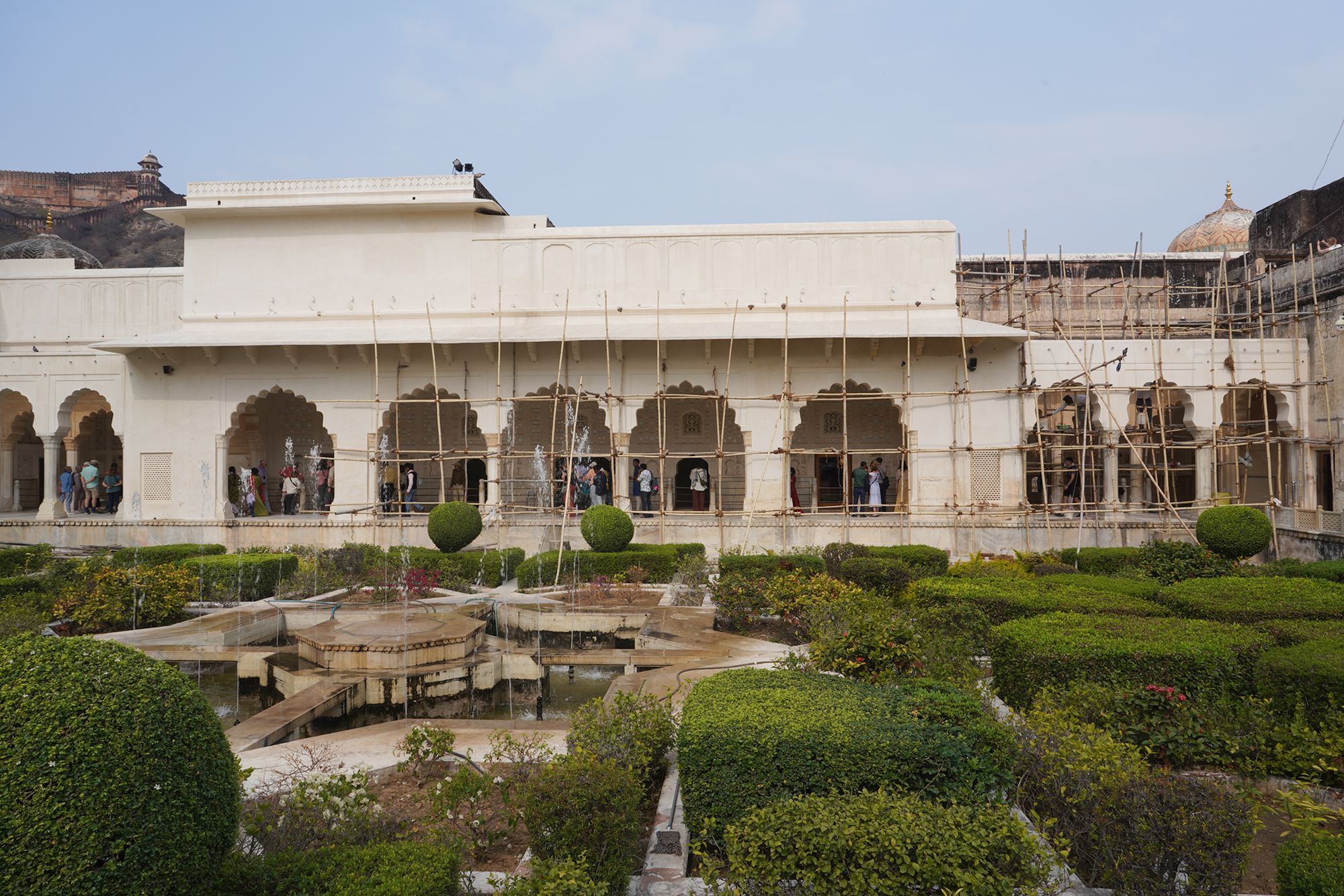
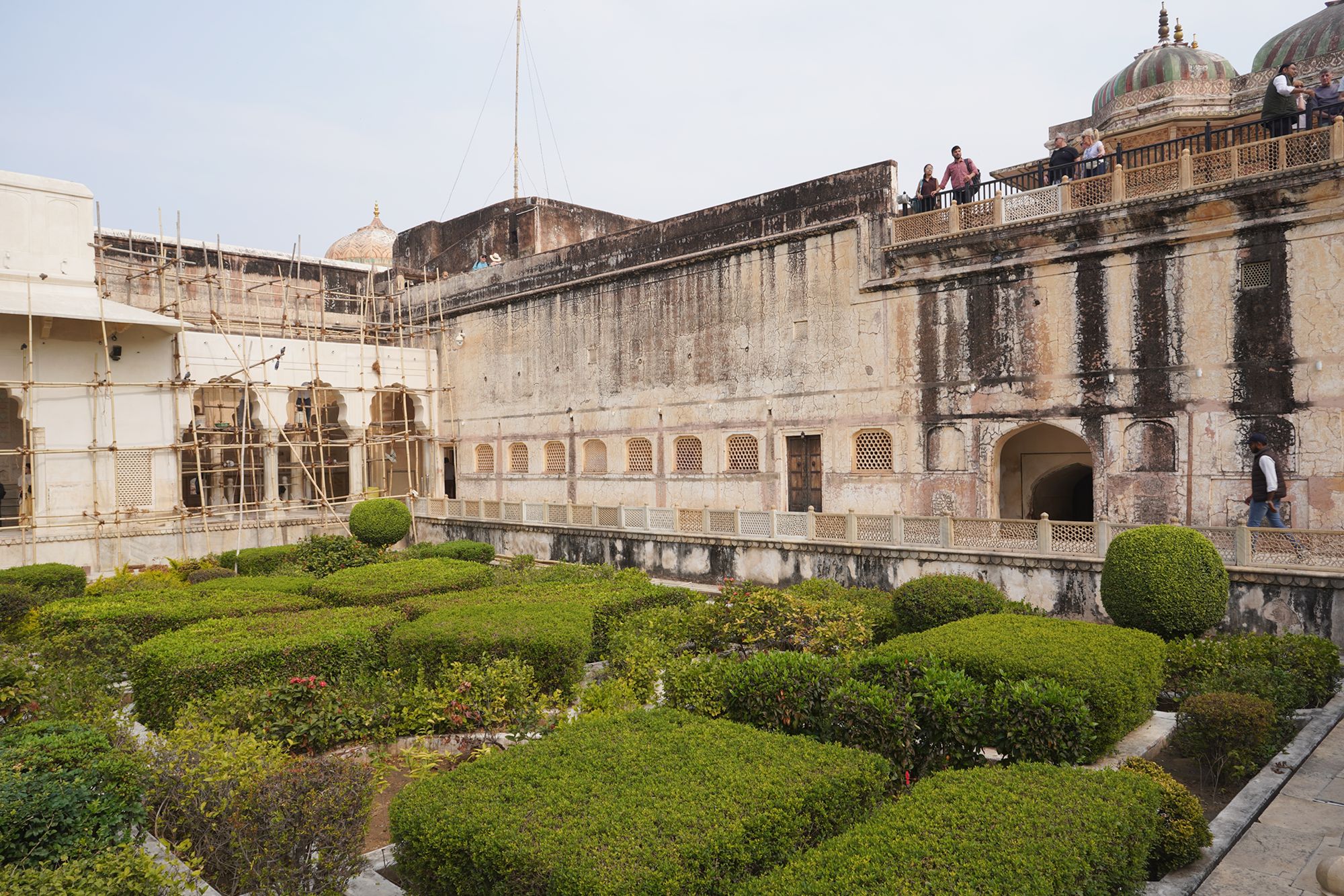
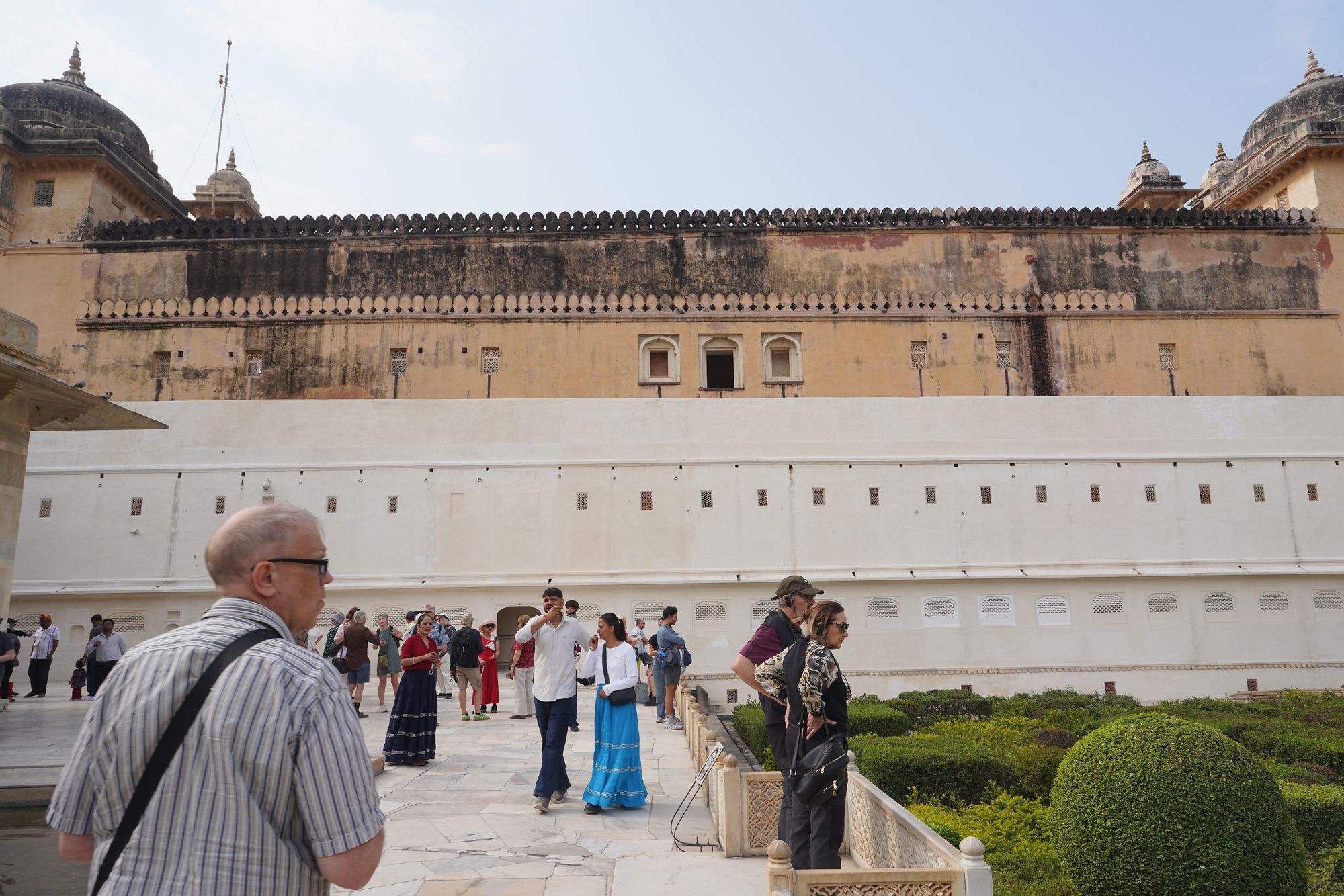
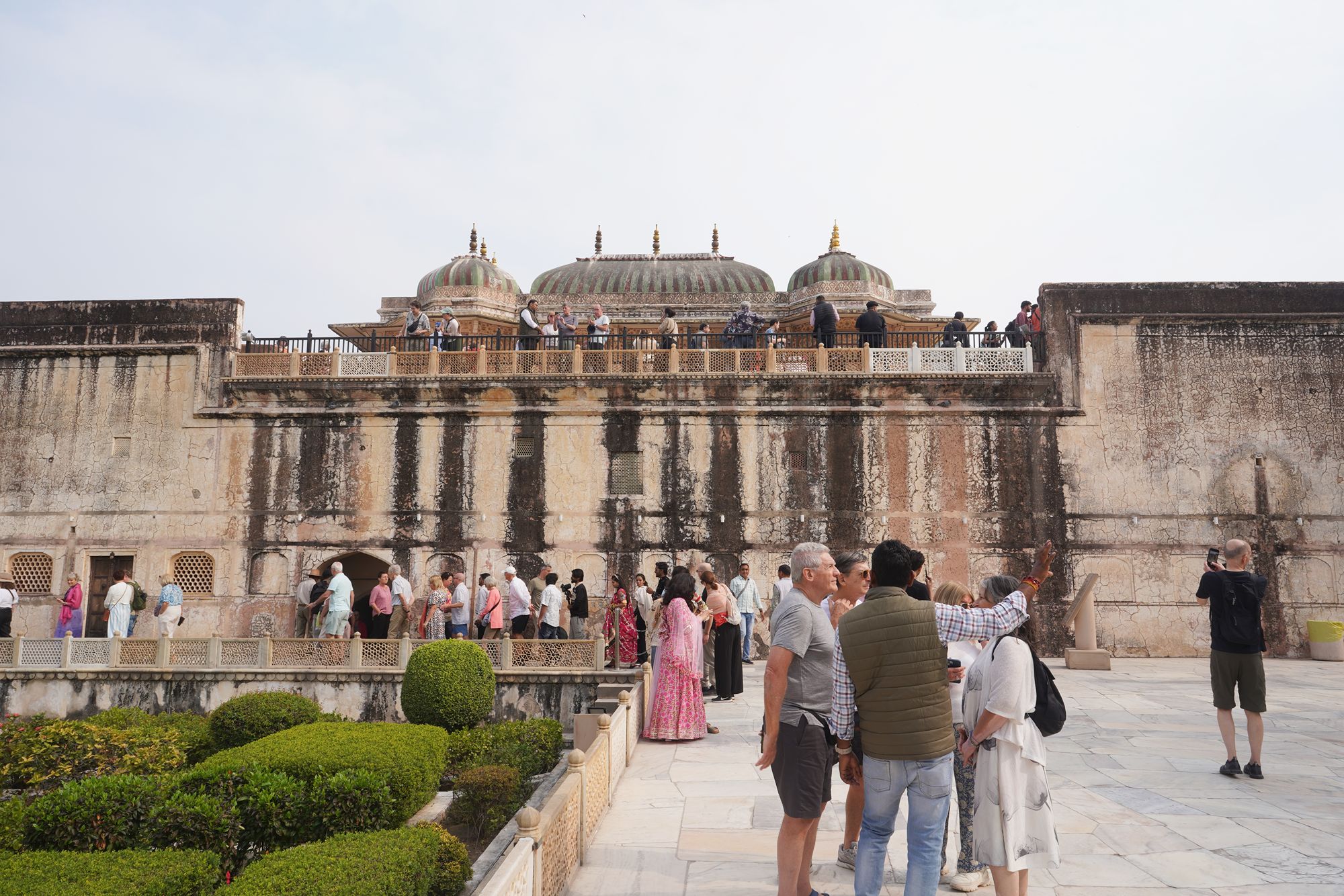
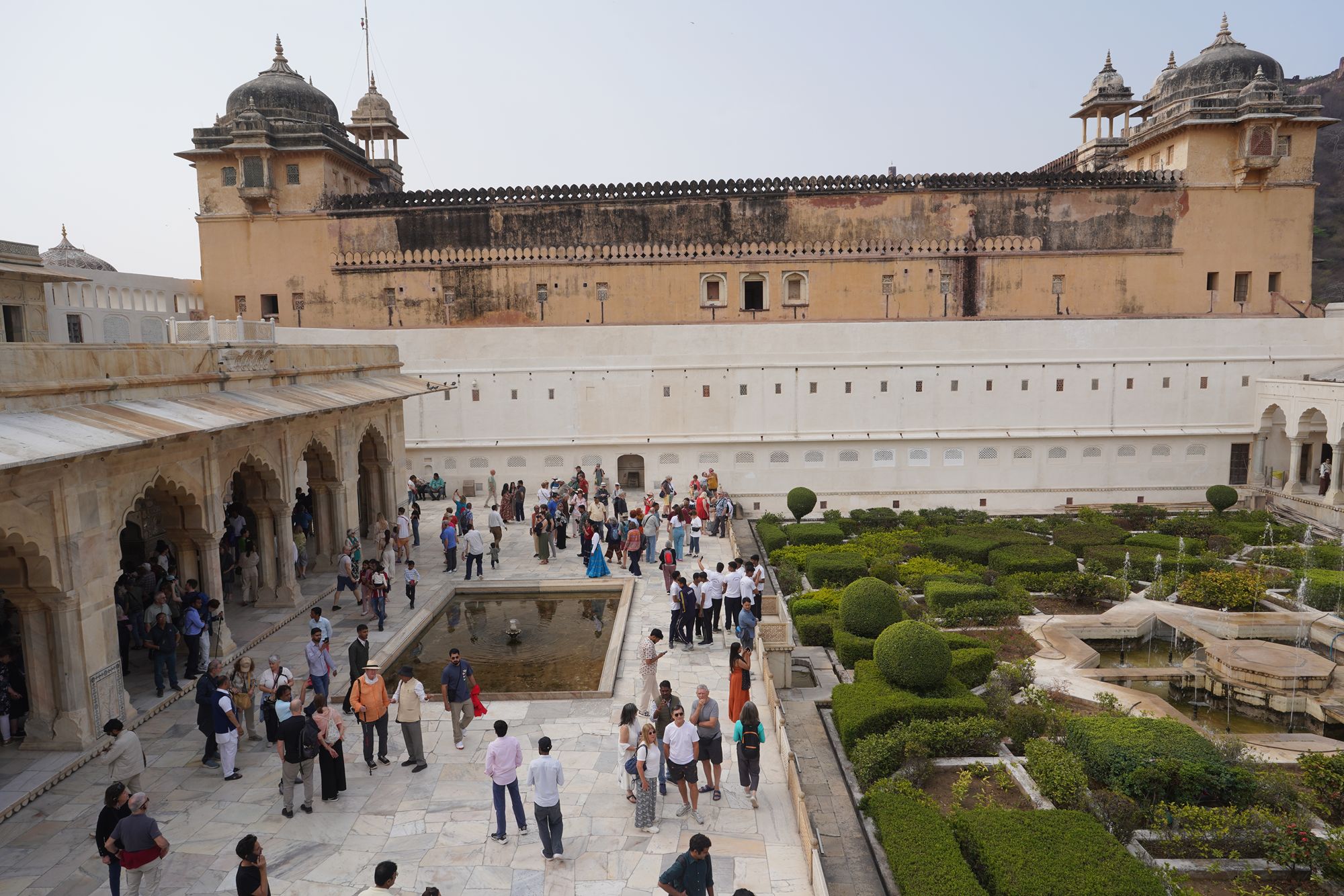
The inner courtyard contains Aram Bagh, a formal Mughal-style garden surrounded by the private royal buildings of Amber Palace.
Jaigarh Fort
Jaigarh Fort sits high on the Aravalli hills overlooking Amber Palace. It was built in its present form in 1726 by Maharaja Sawai Jai Singh II, primarily to protect Amber Palace and the surrounding area.
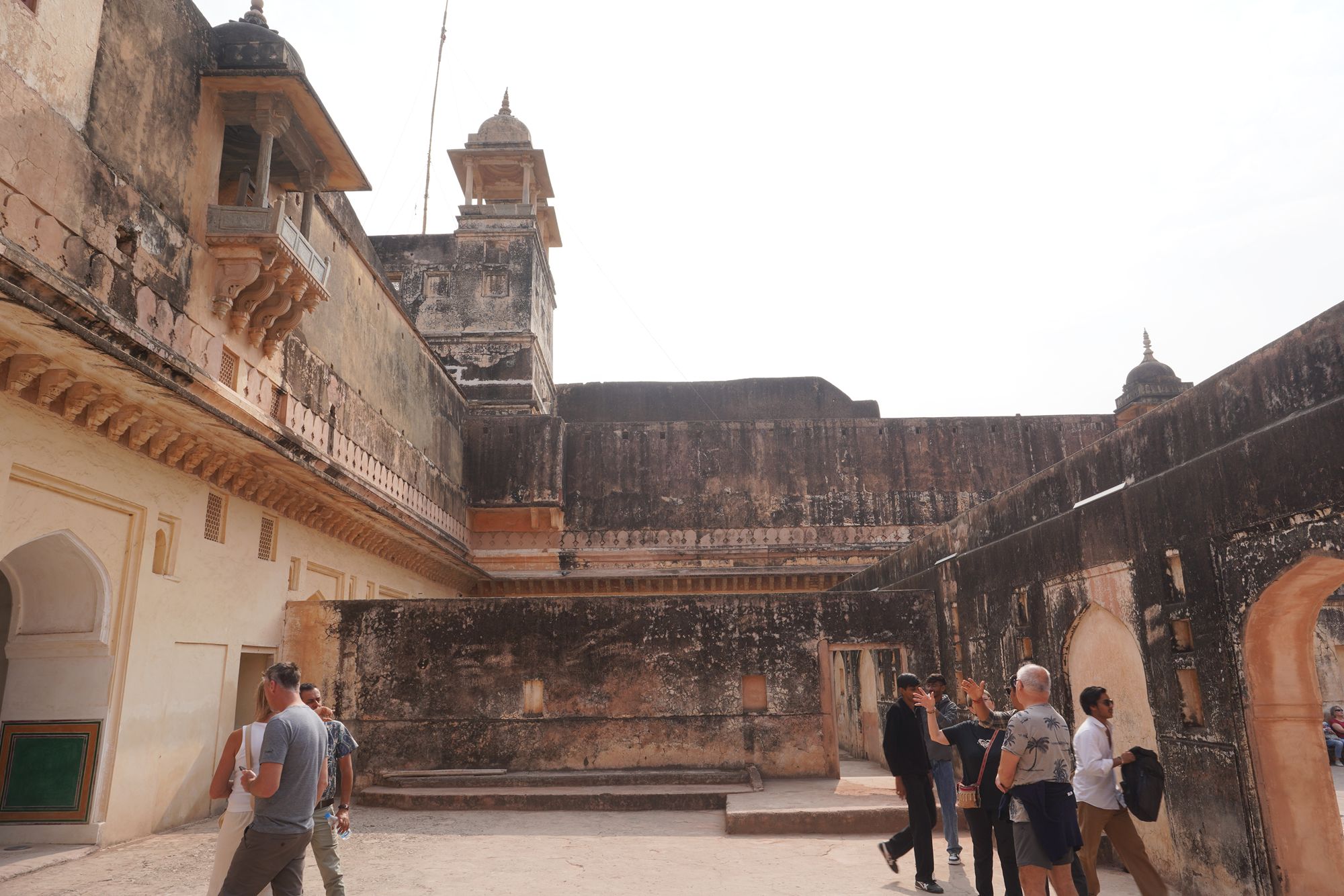
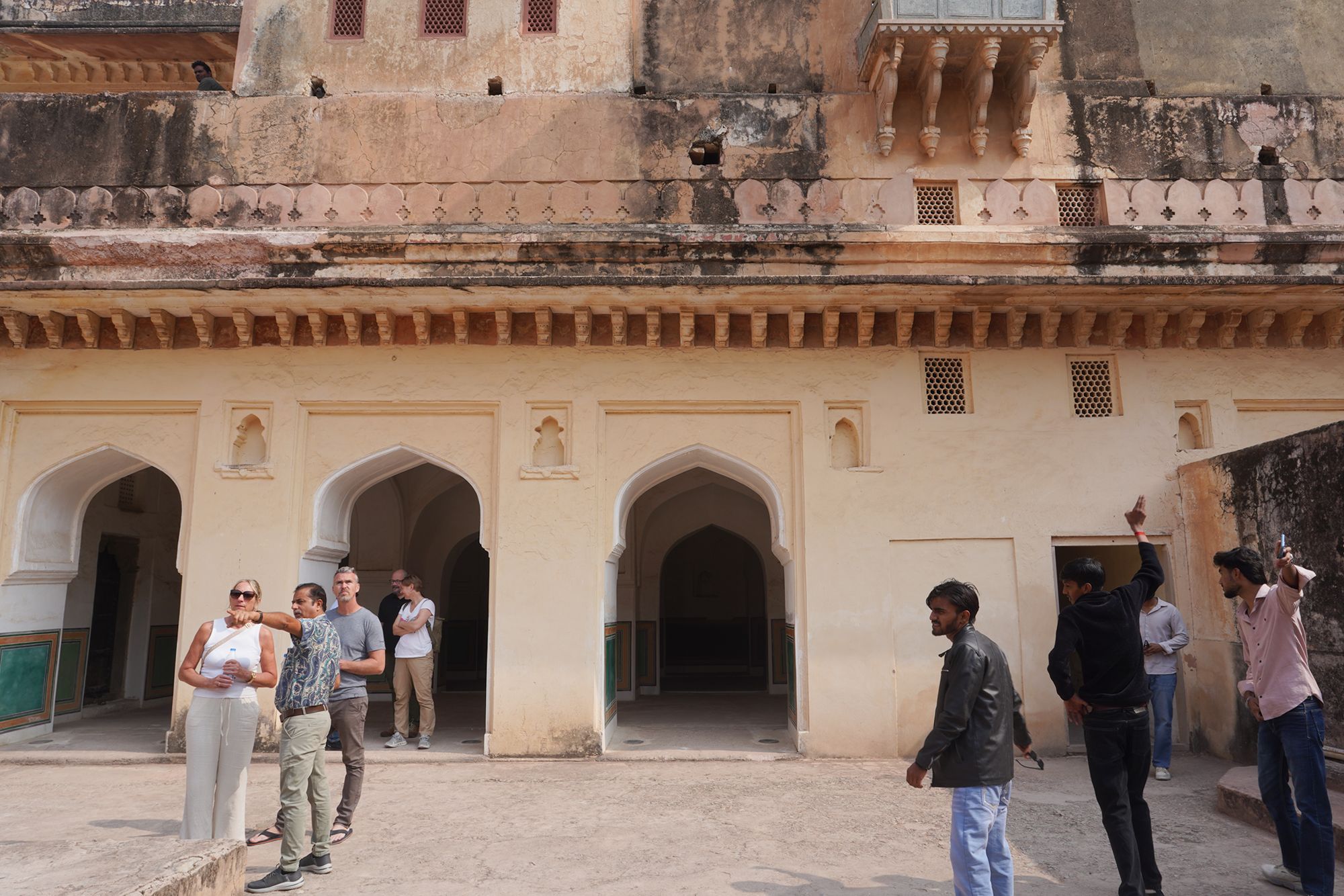
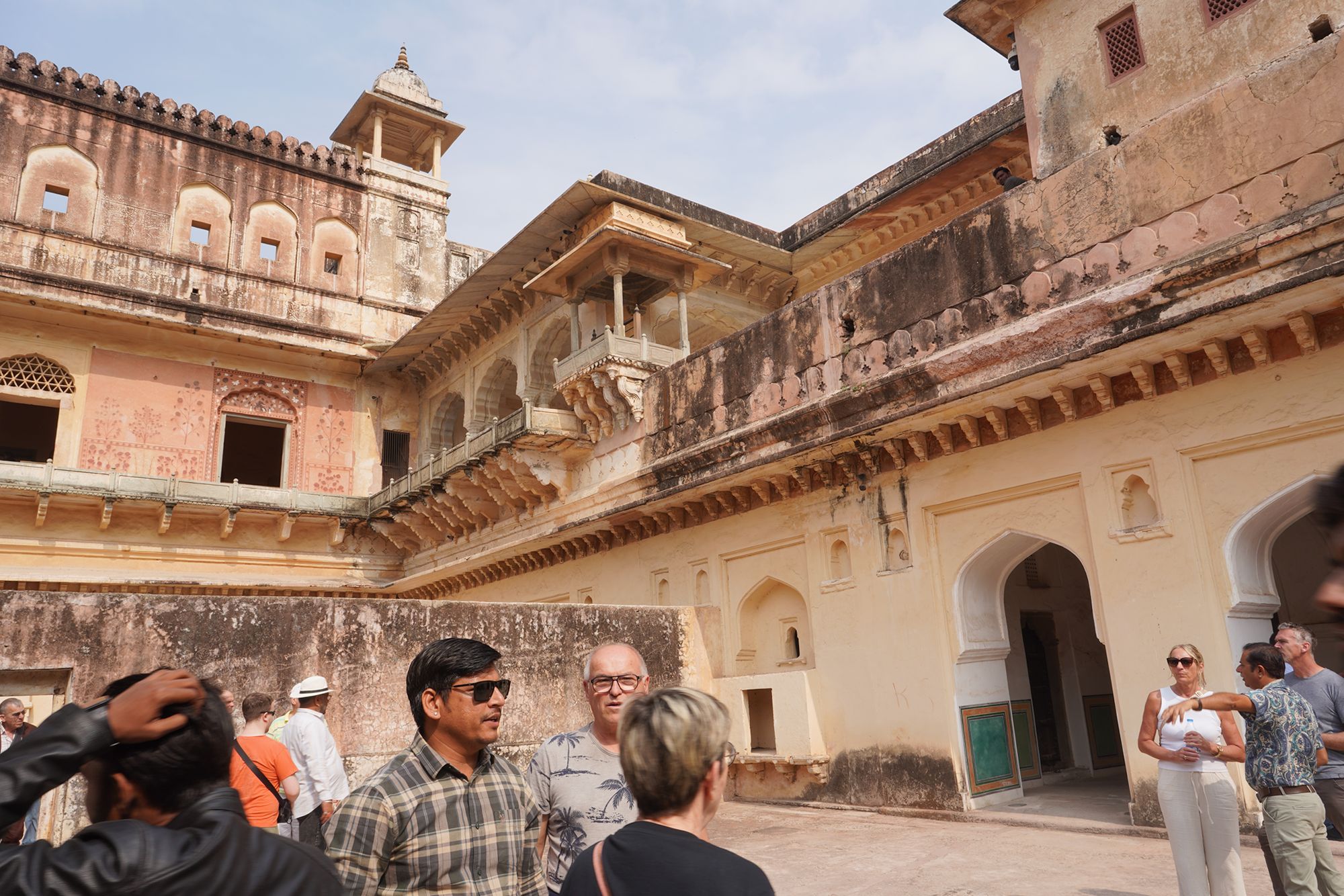
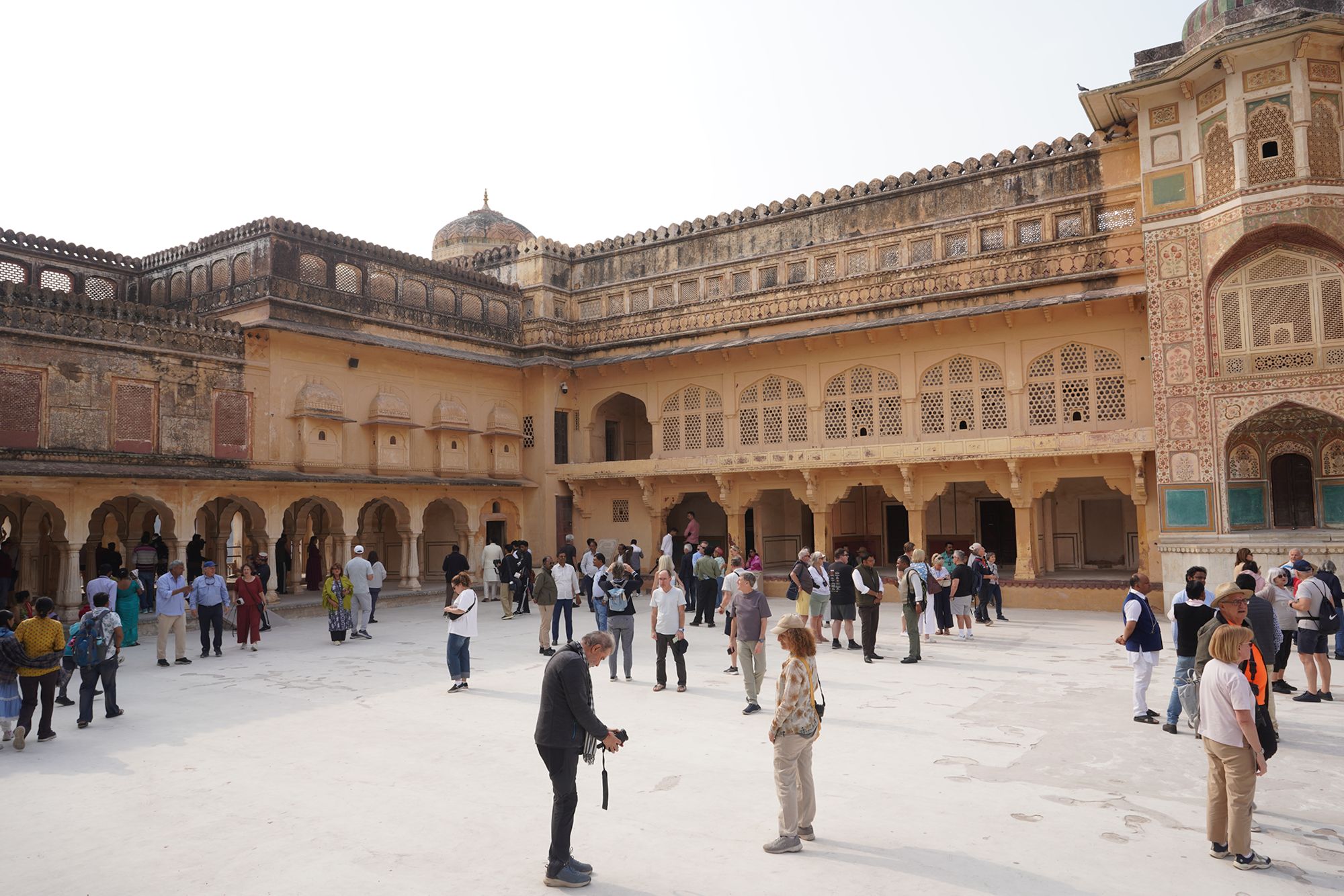
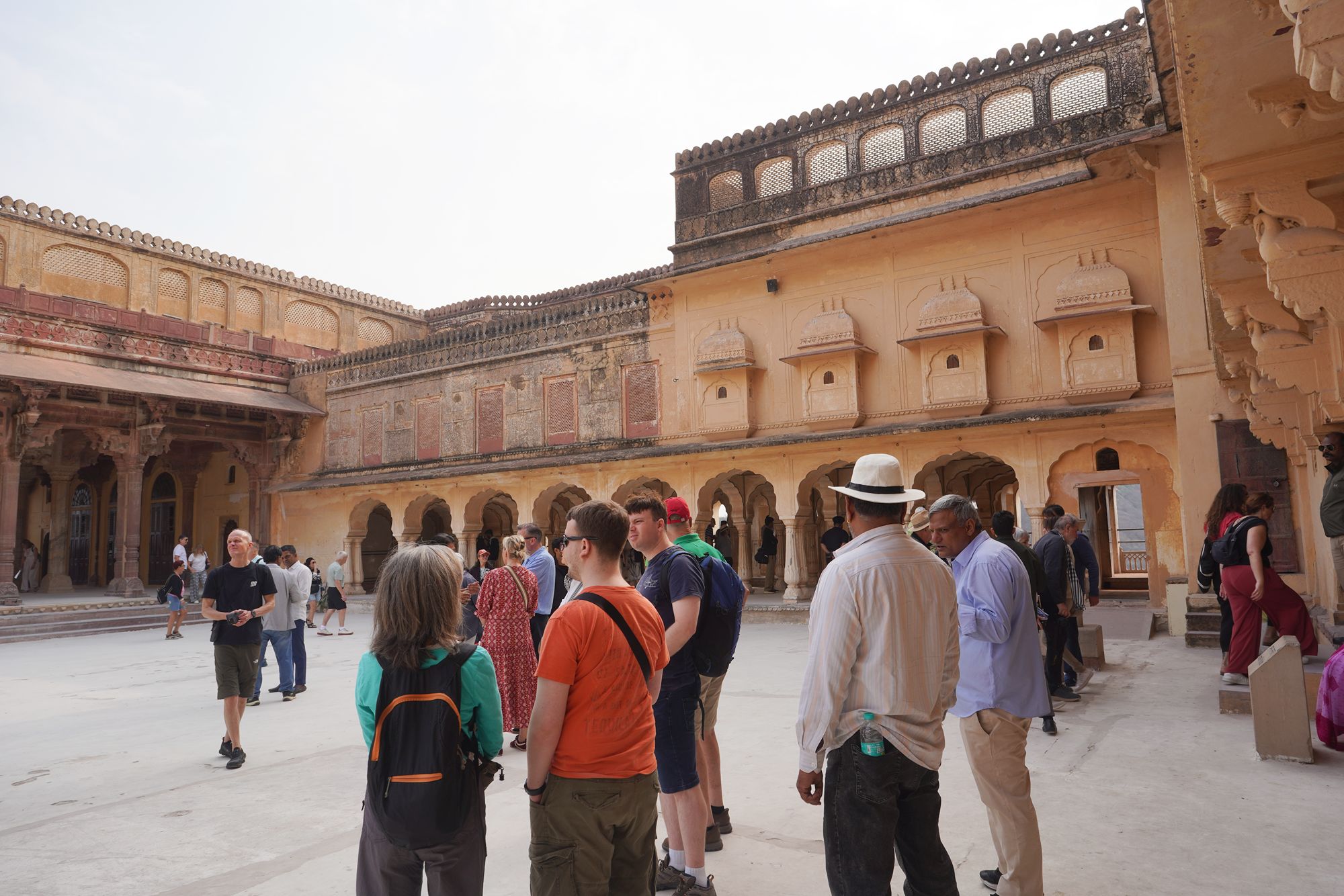
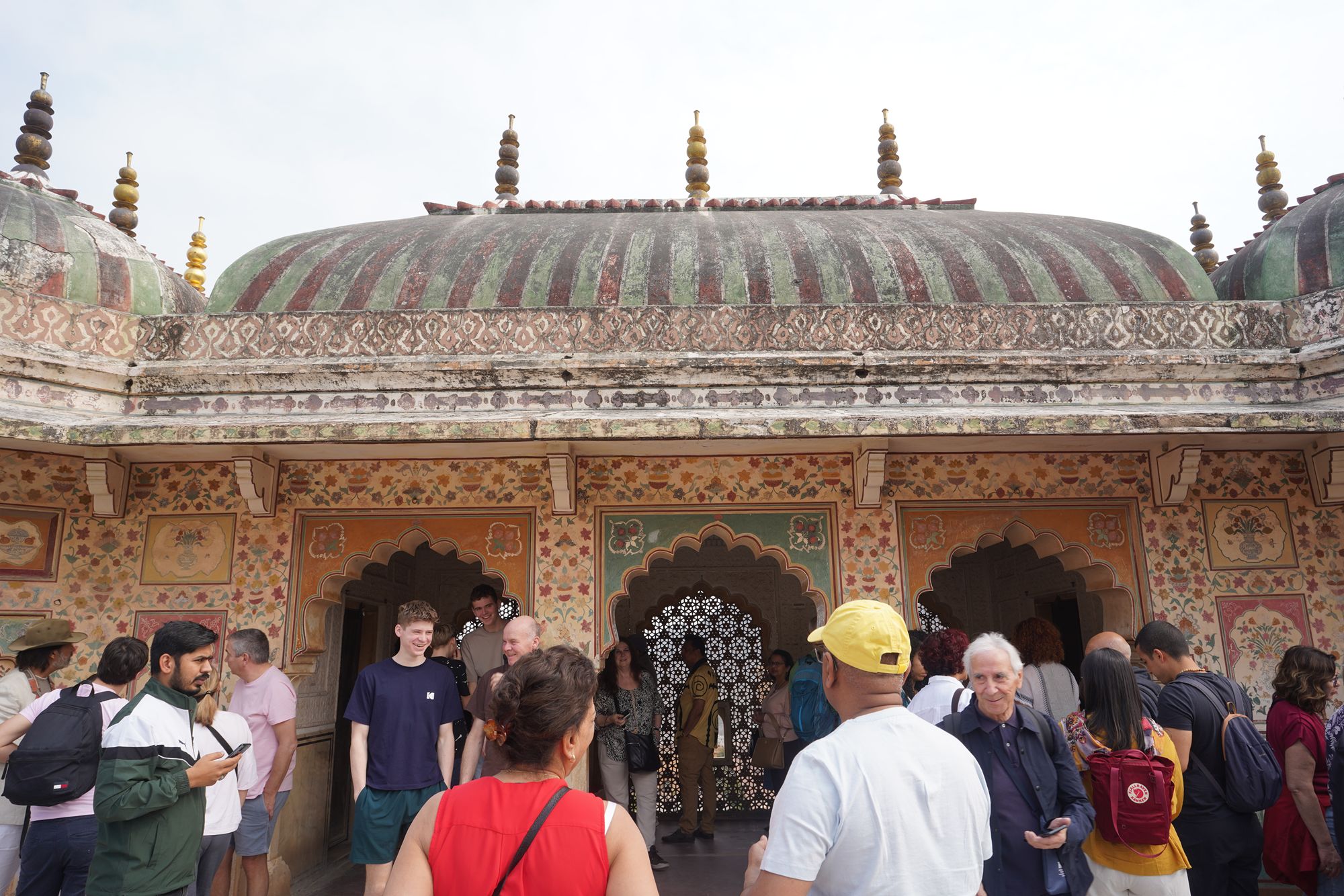
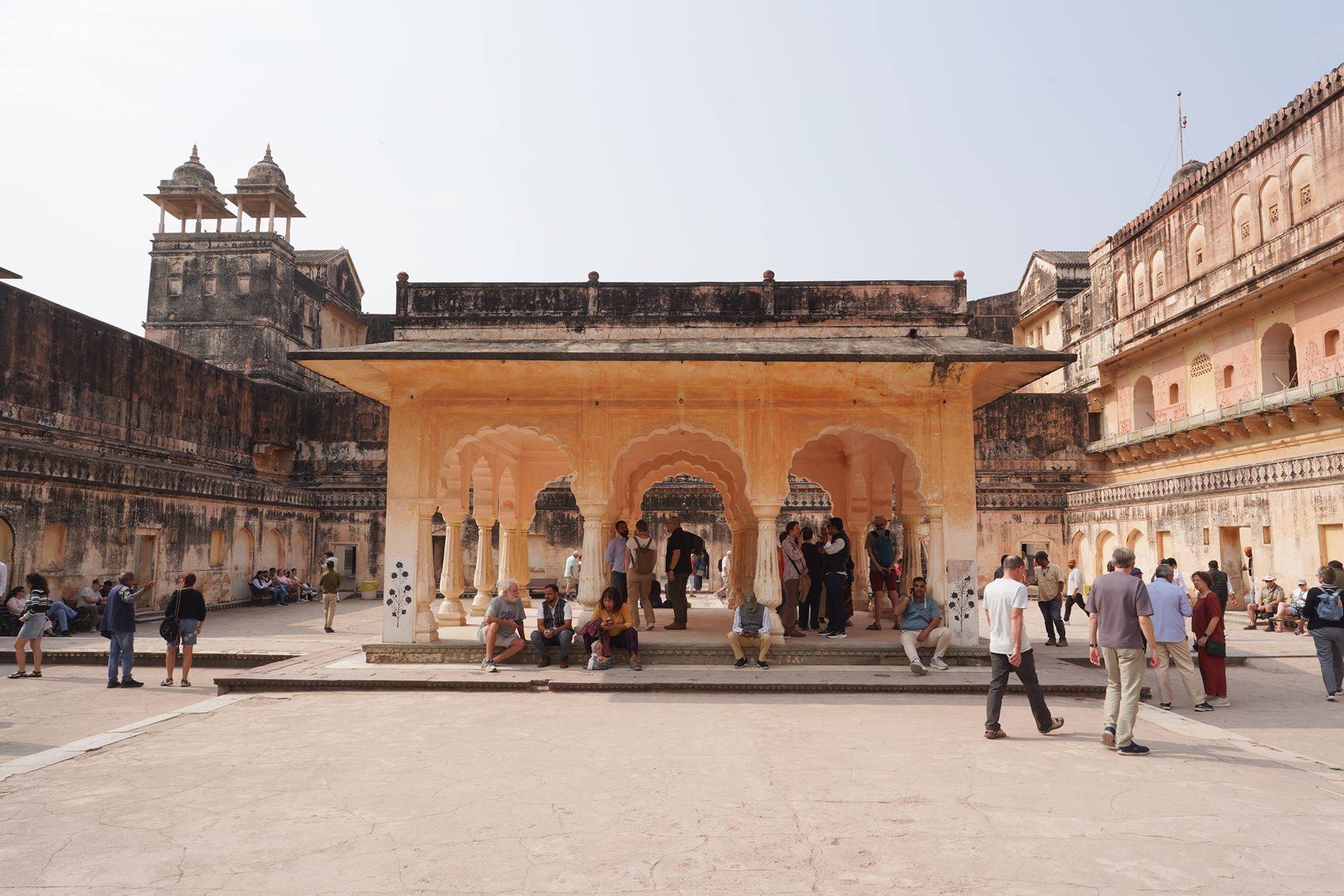
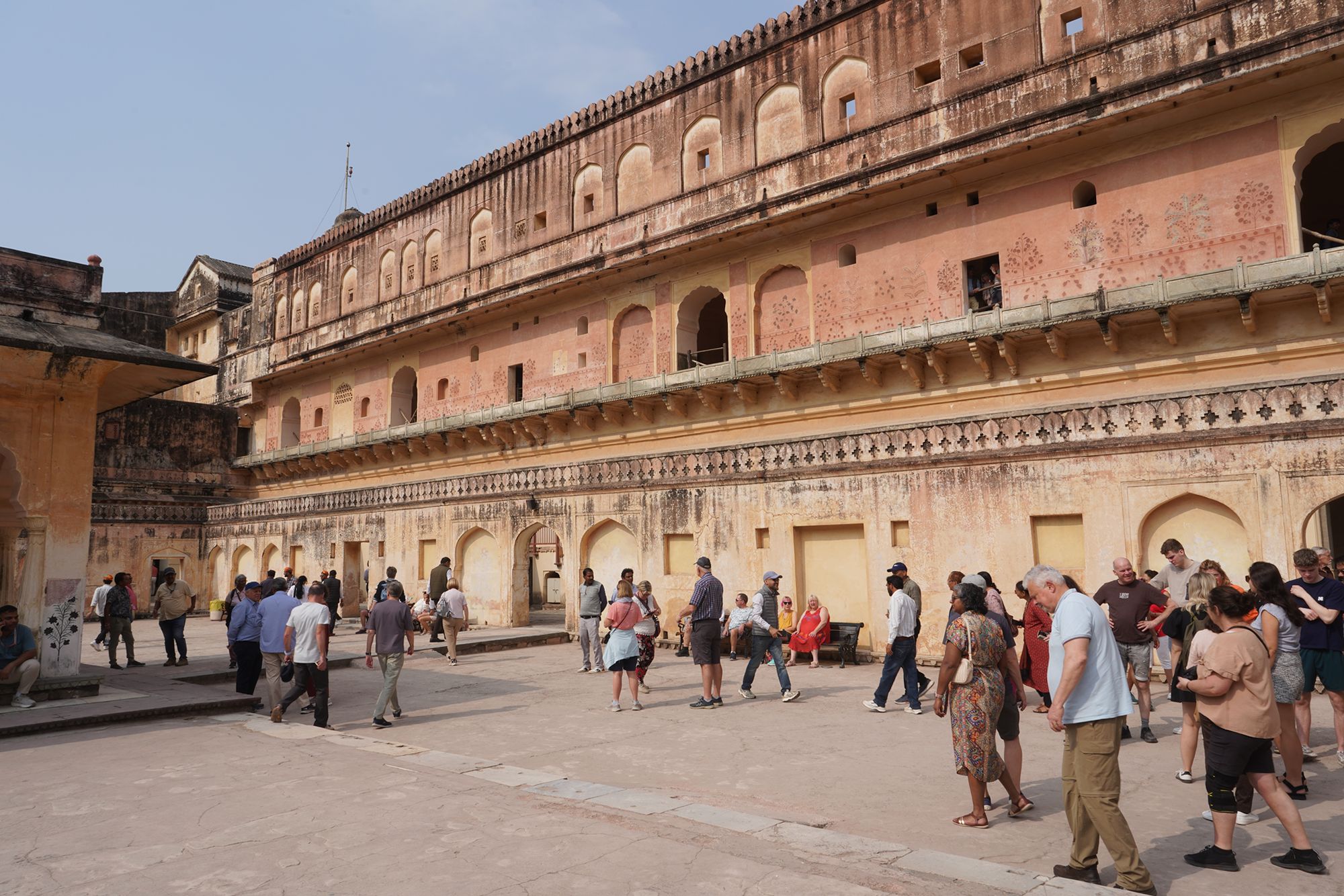
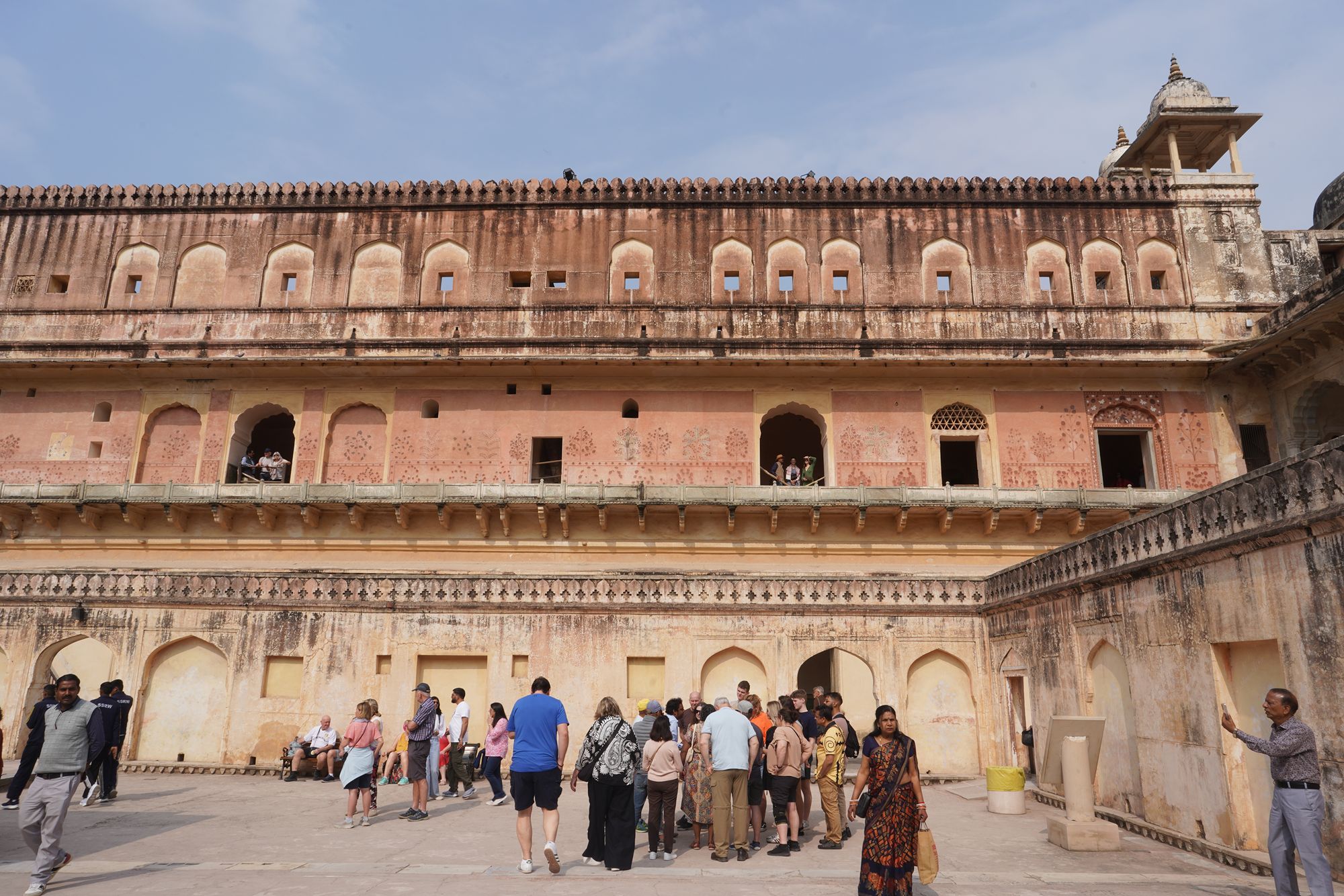
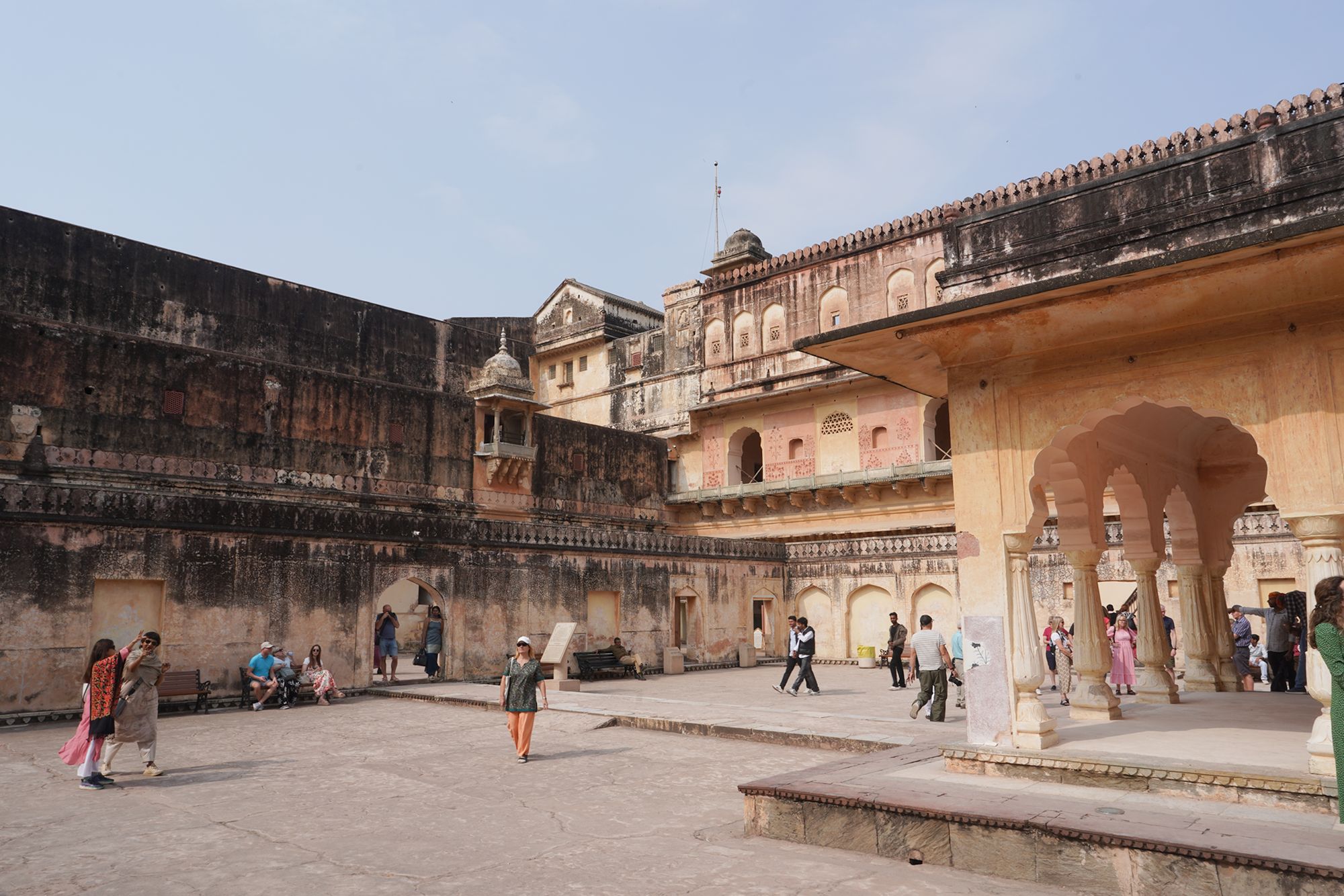
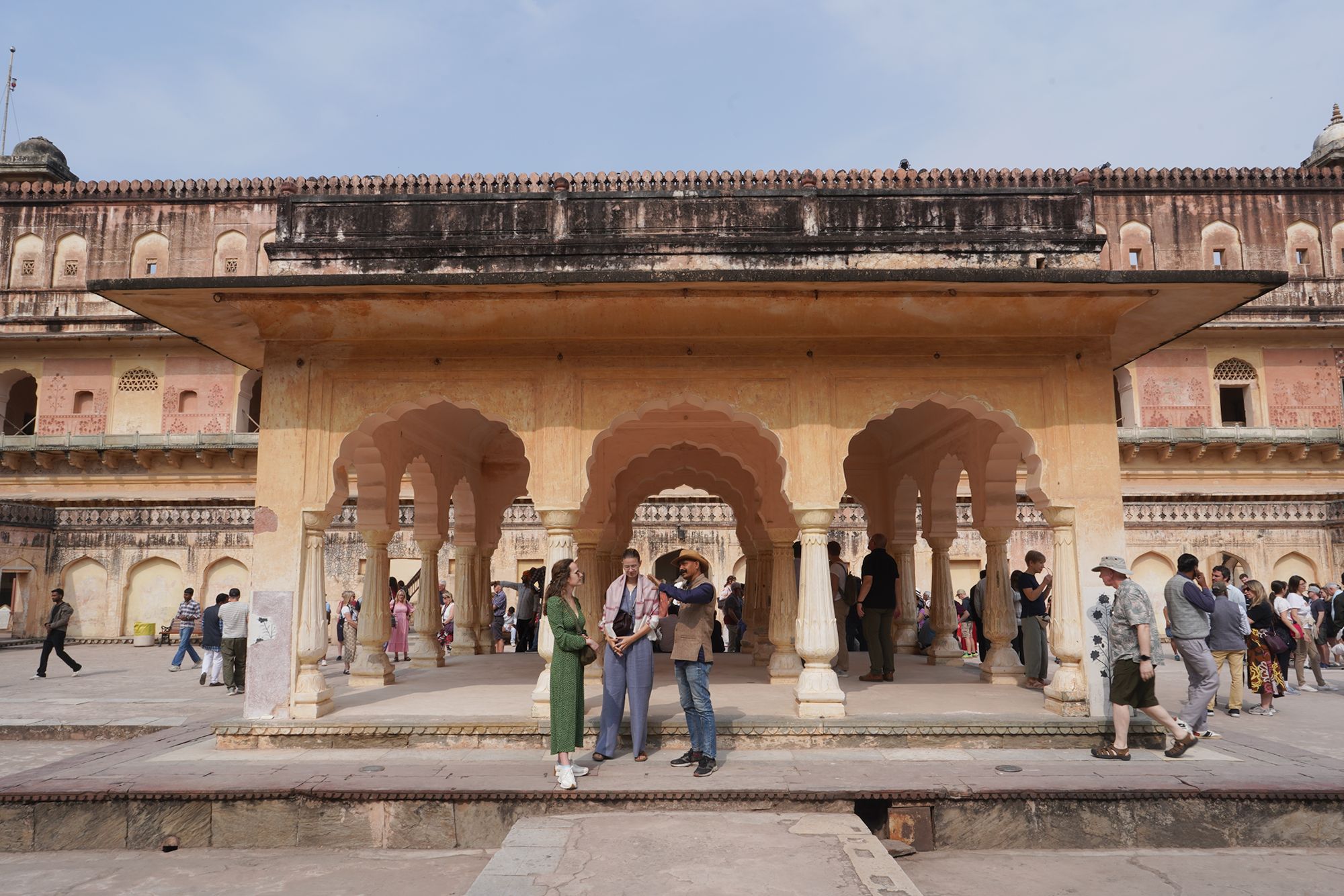
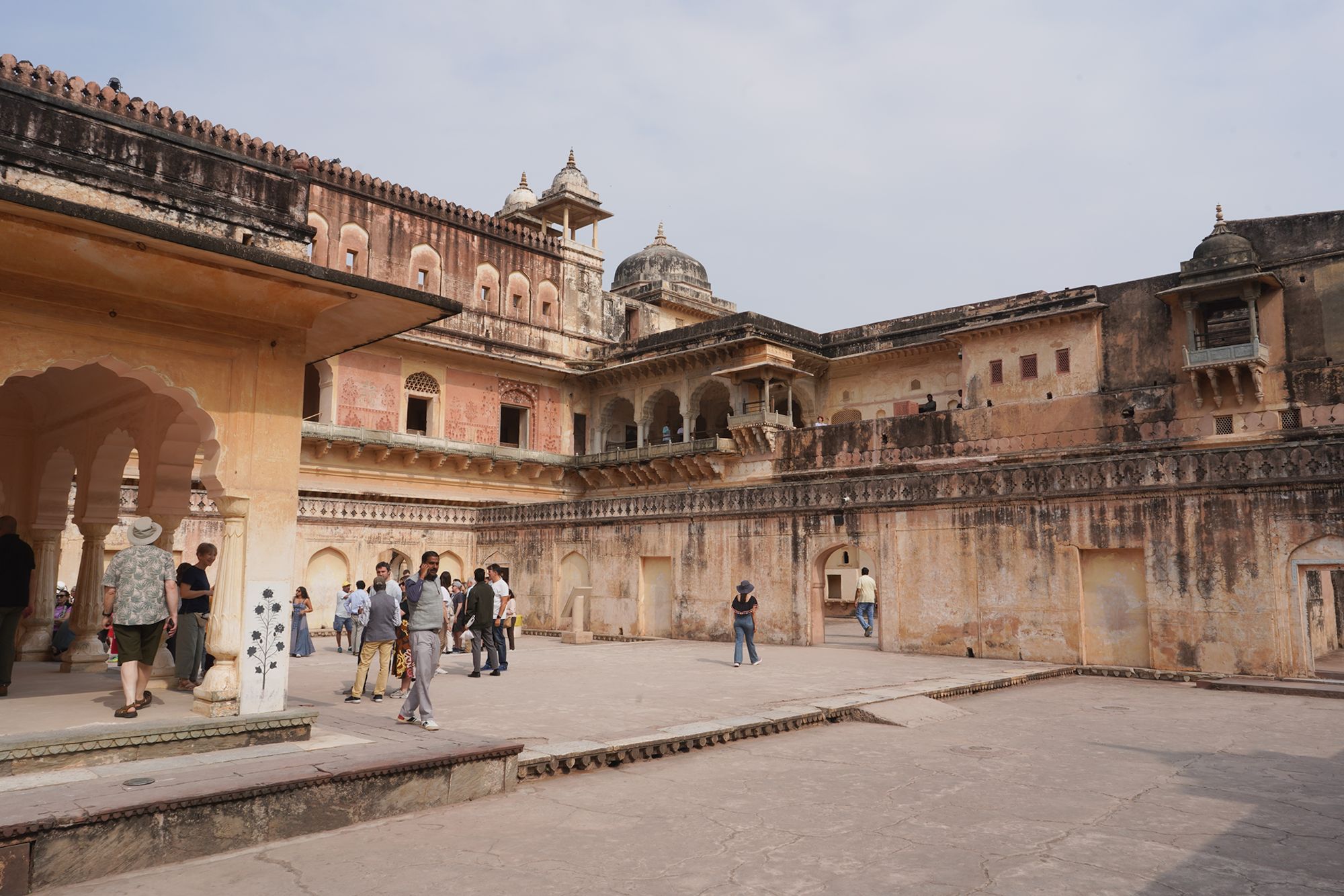
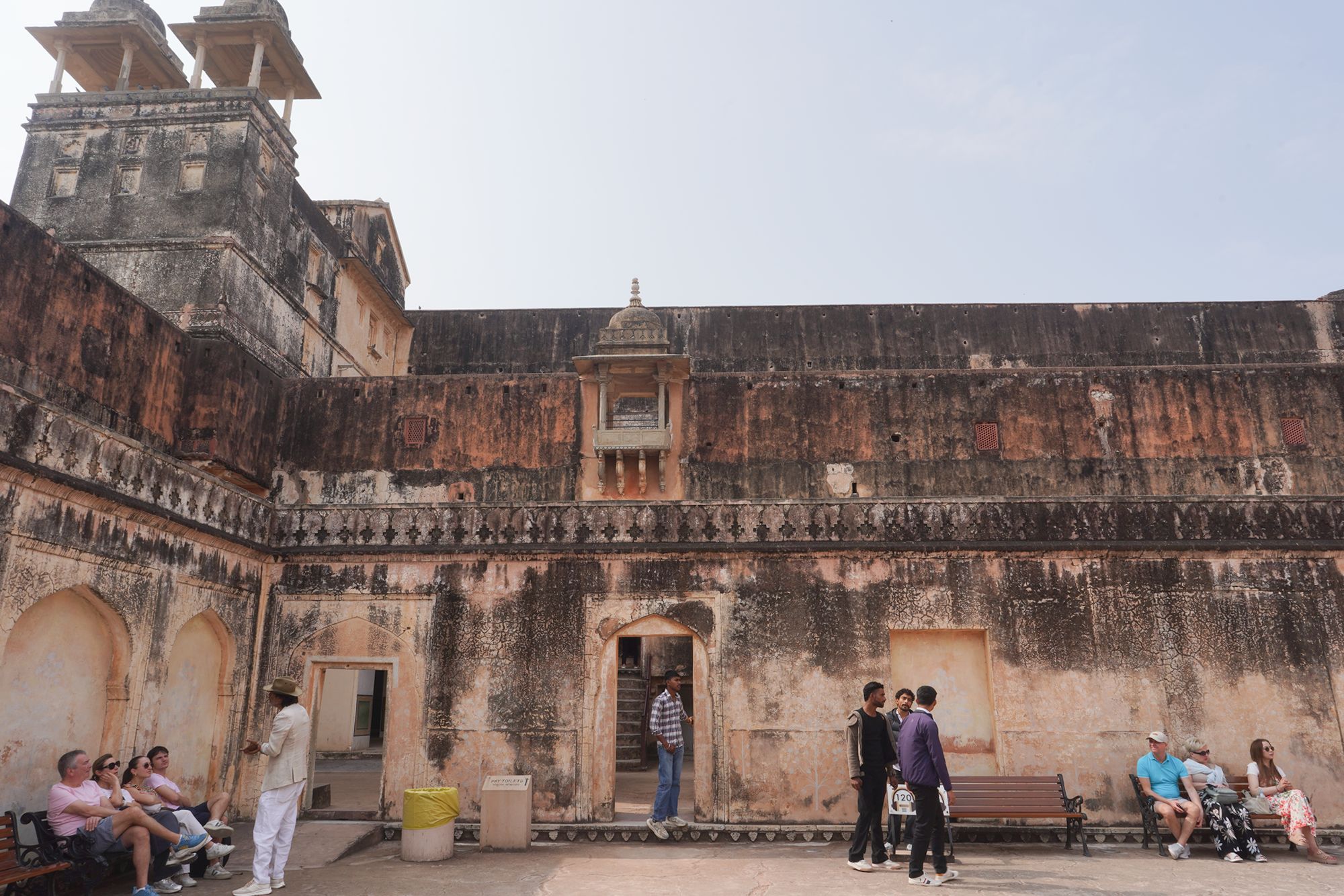
This is another section within Amber Palace, and the pavilion in the center appears to be in the Man Singh Palace (Man Singh Mahal) area, one of the older residential sections of the complex.
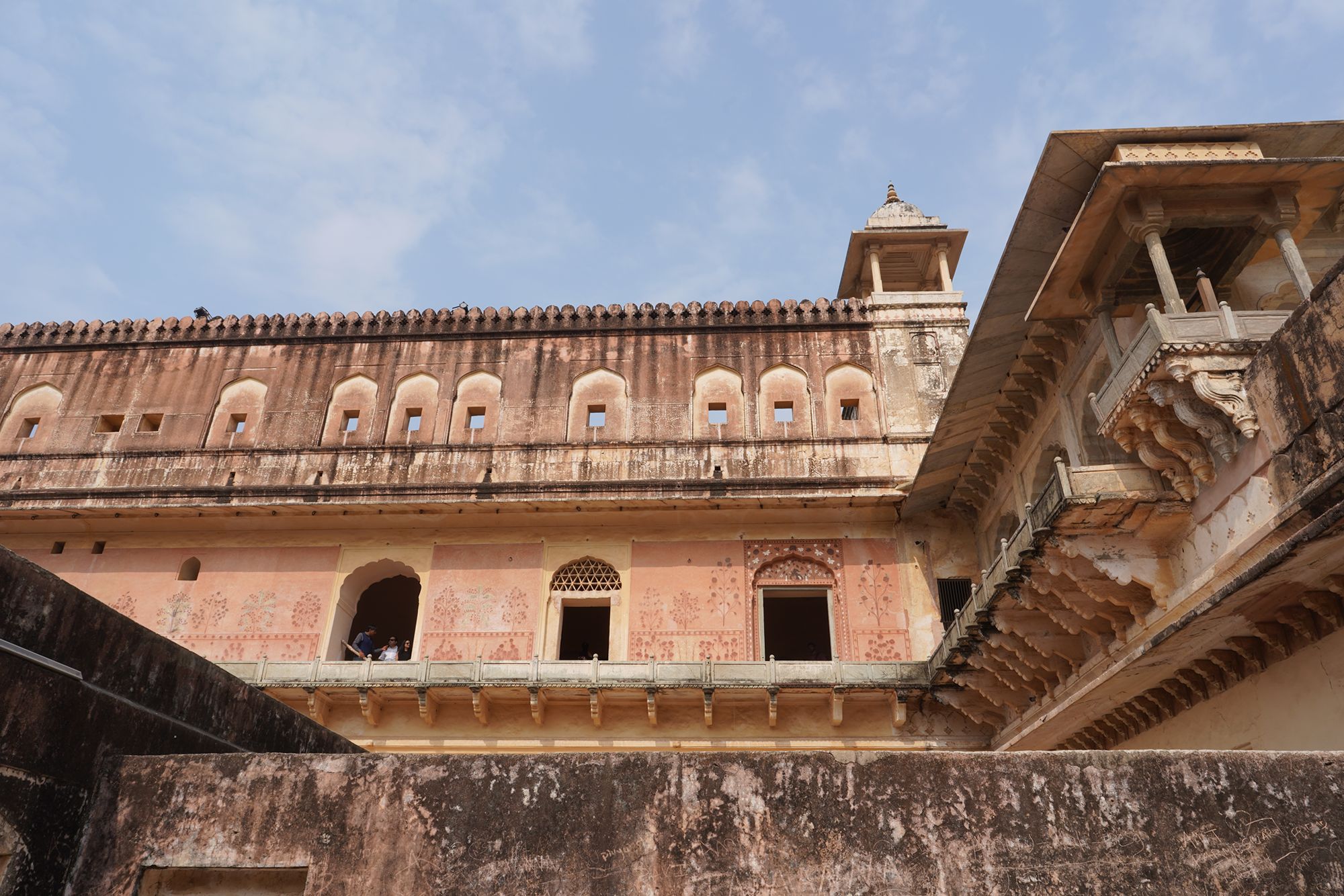
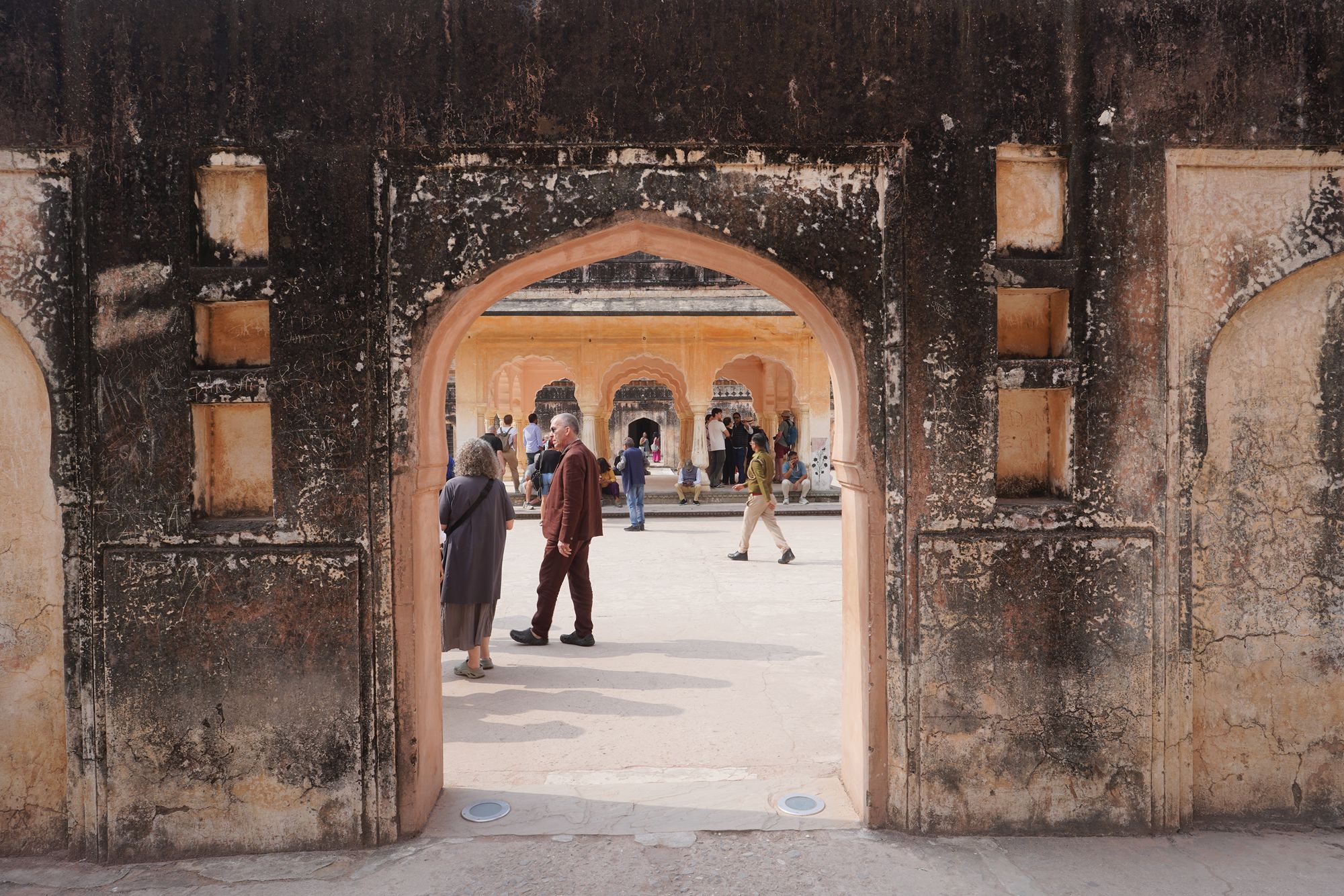
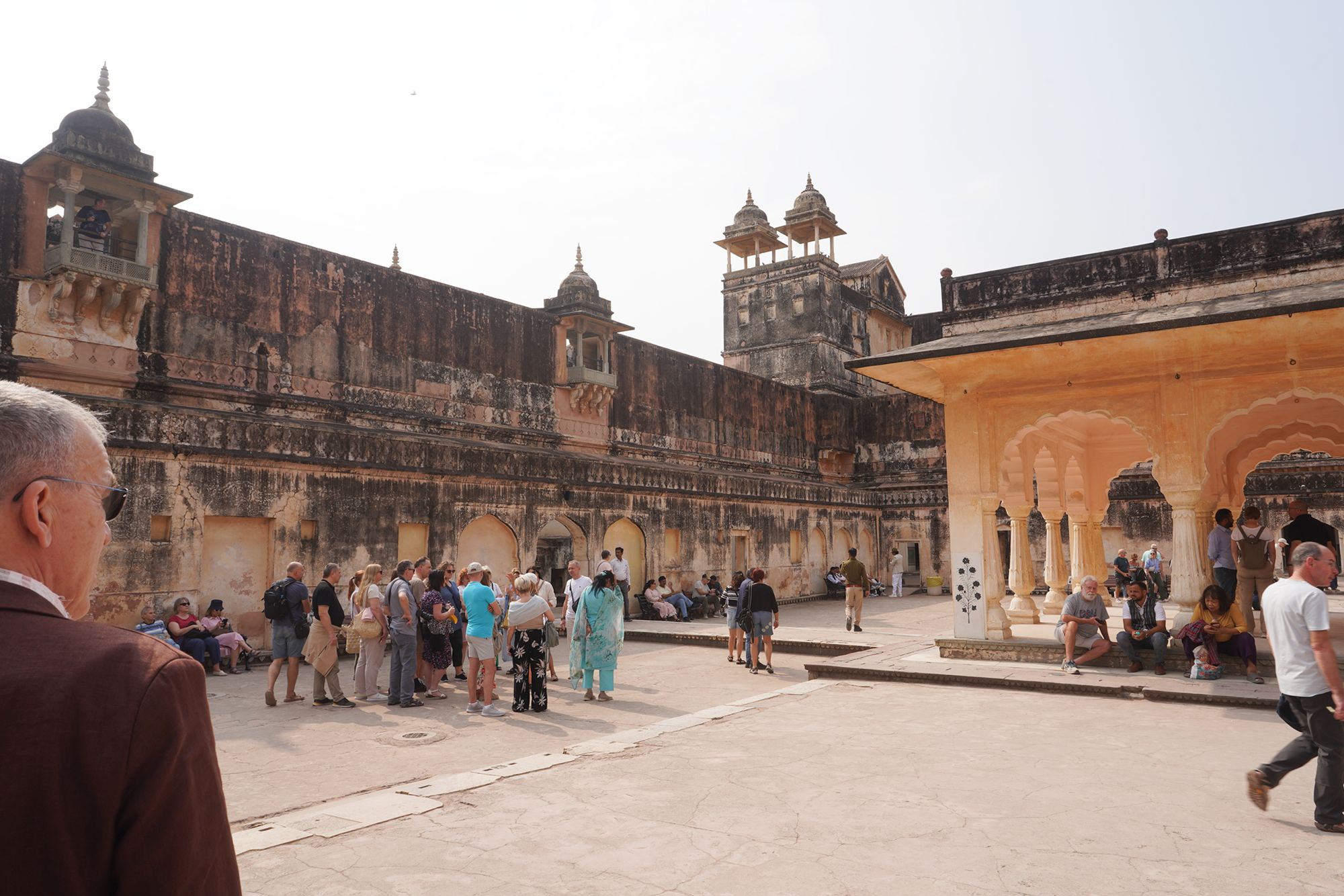
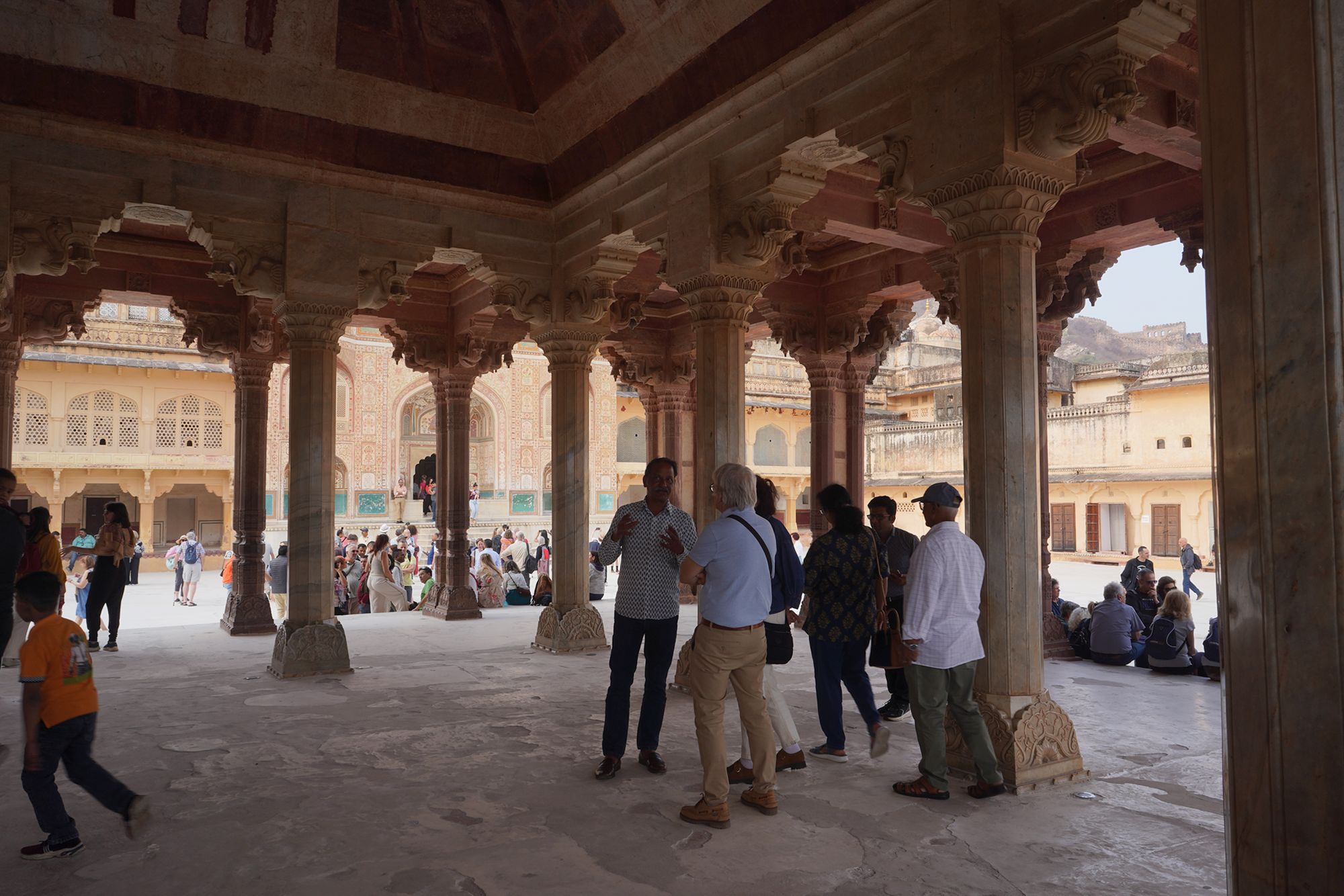
This part of Amber Palace contains a more enclosed courtyard surrounded by royal residential rooms. The central open pavilion provided a gathering or resting space, while the rooms around the courtyard were associated with the royal household.
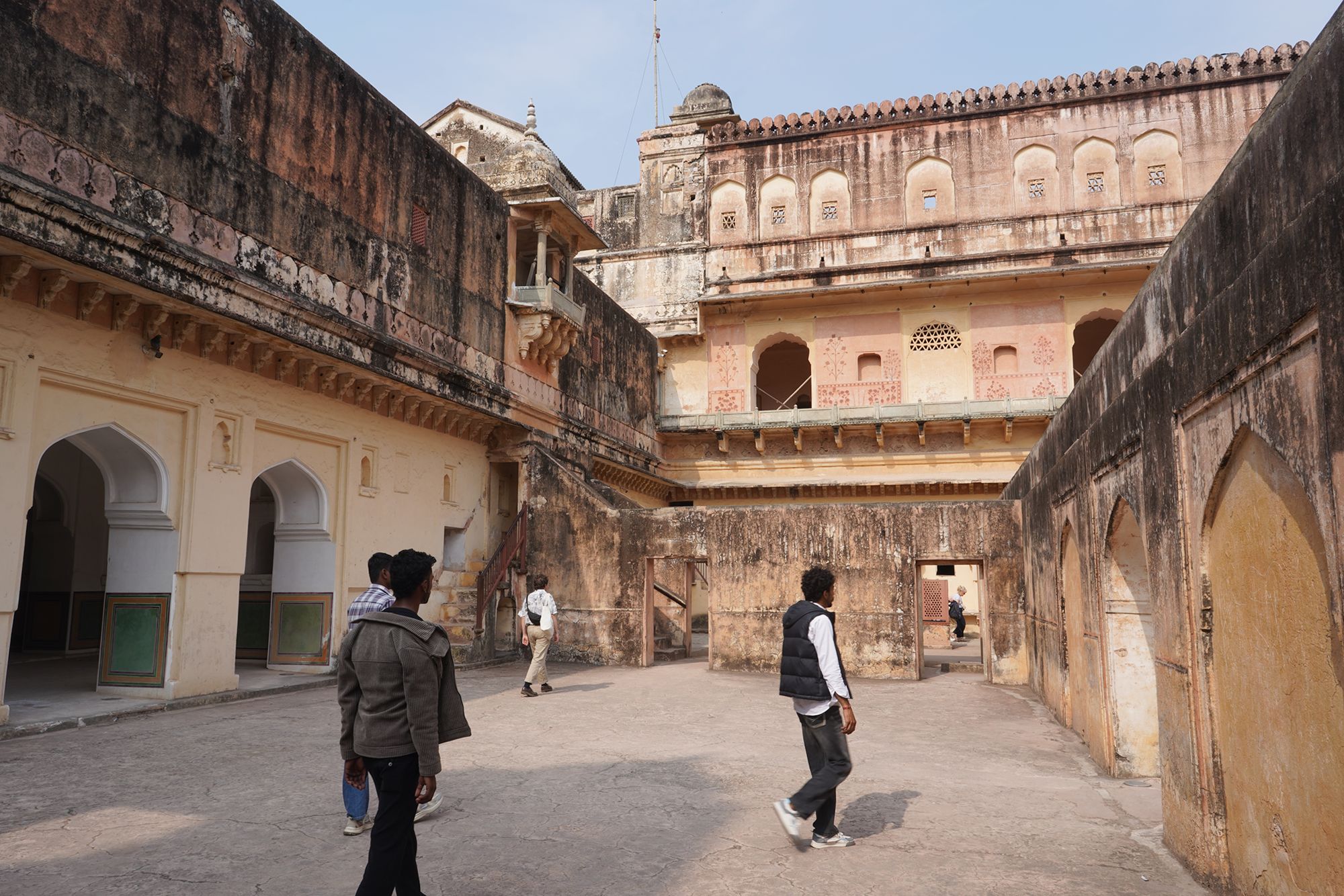
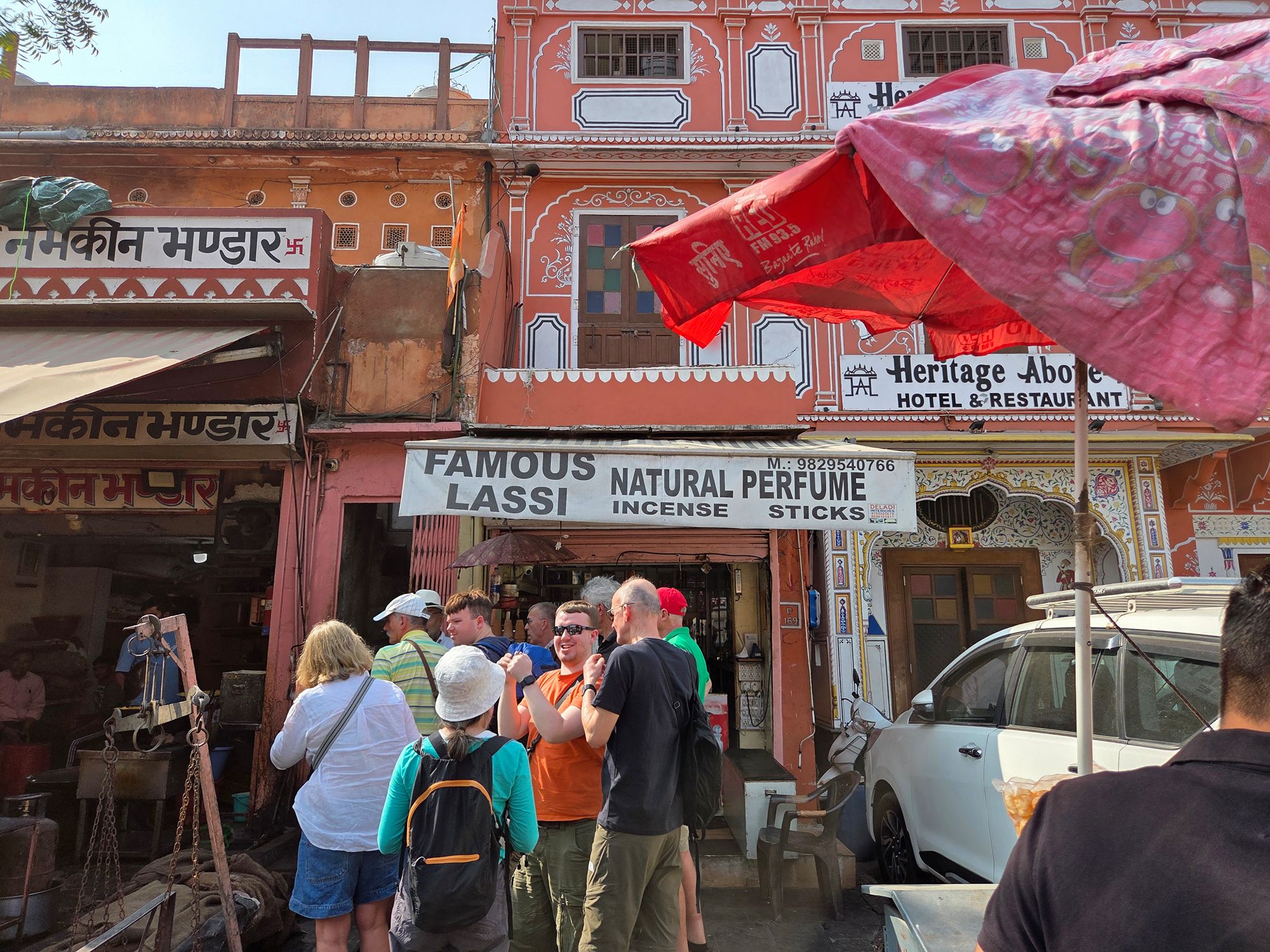
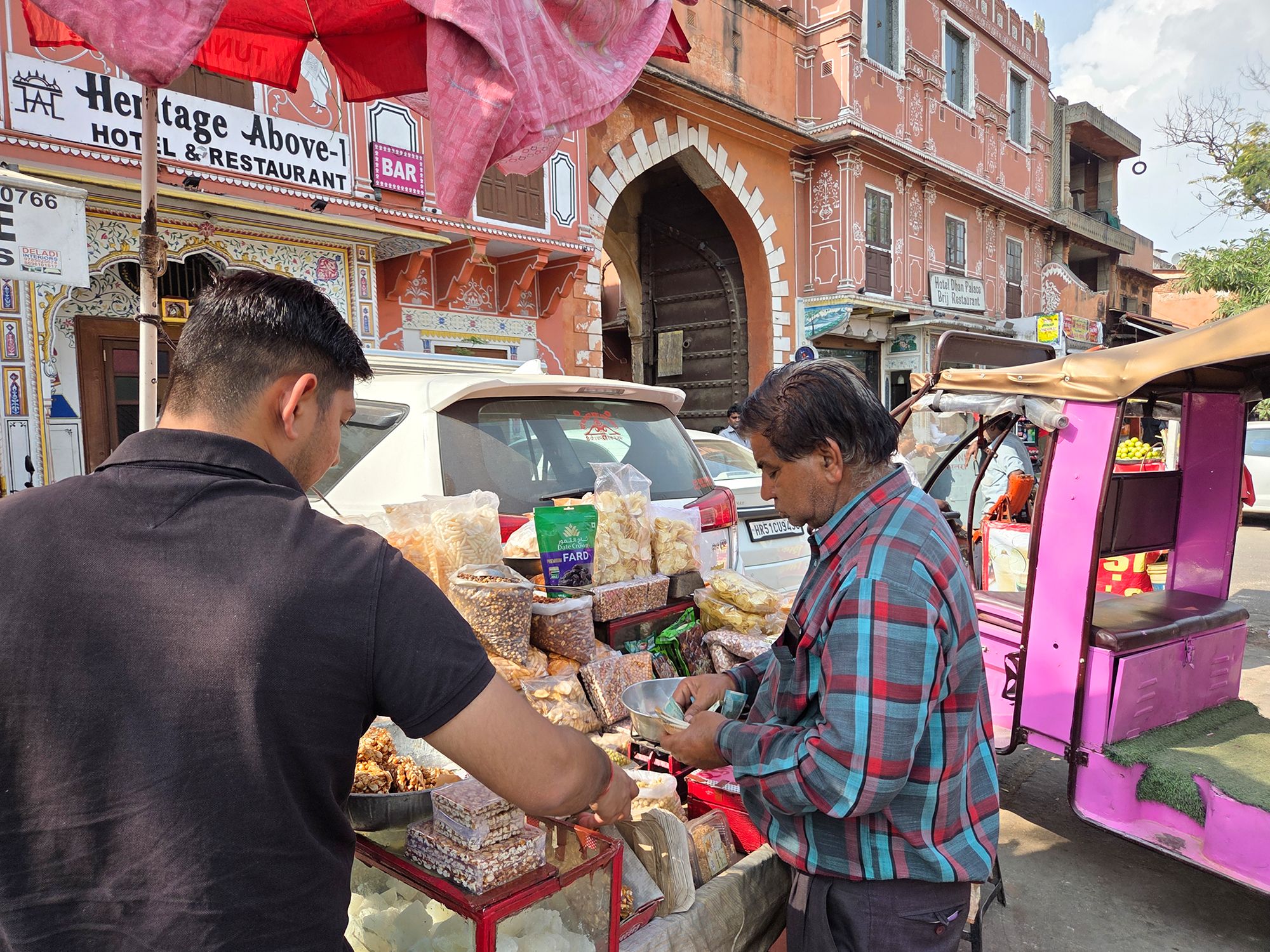
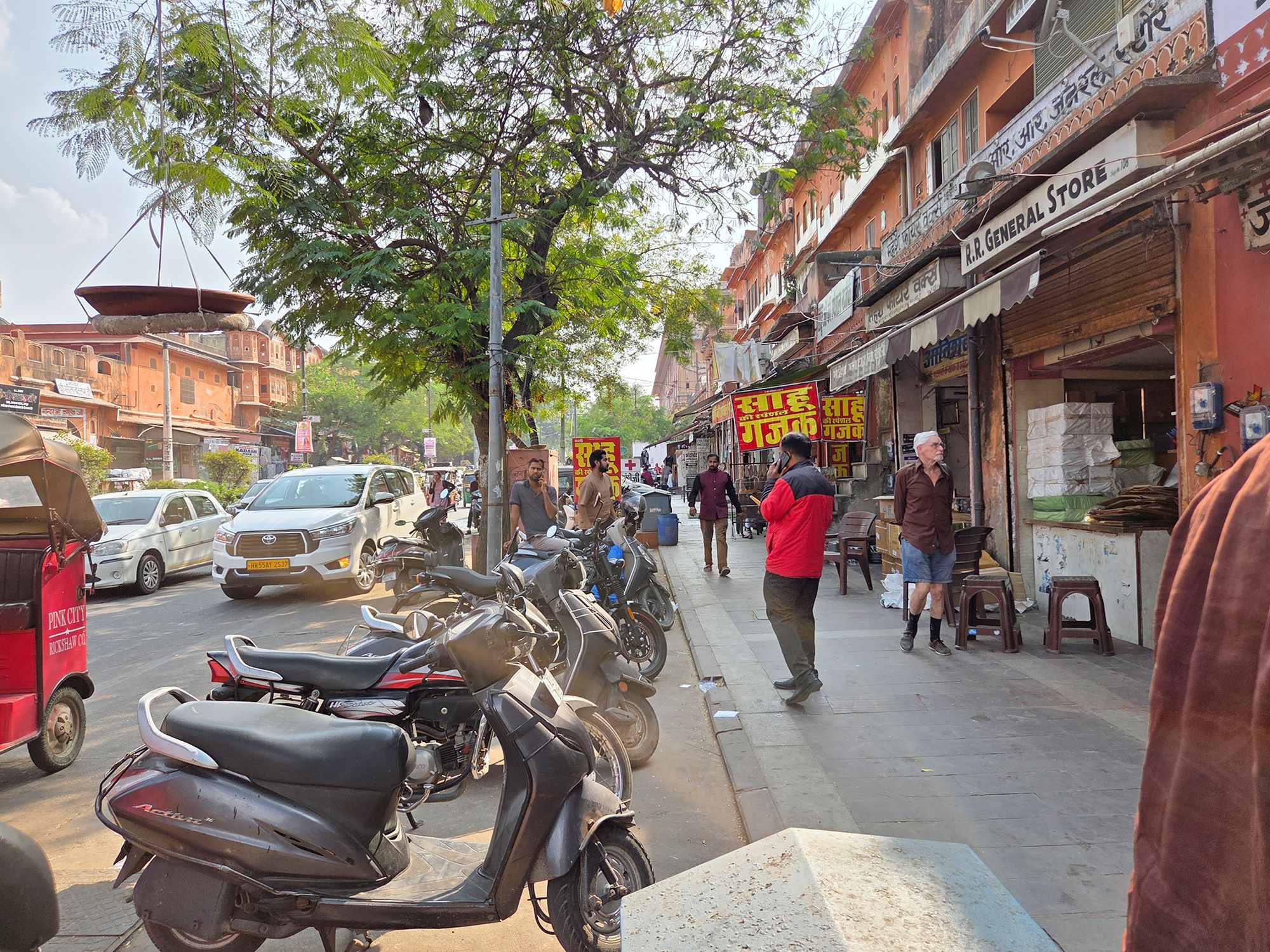
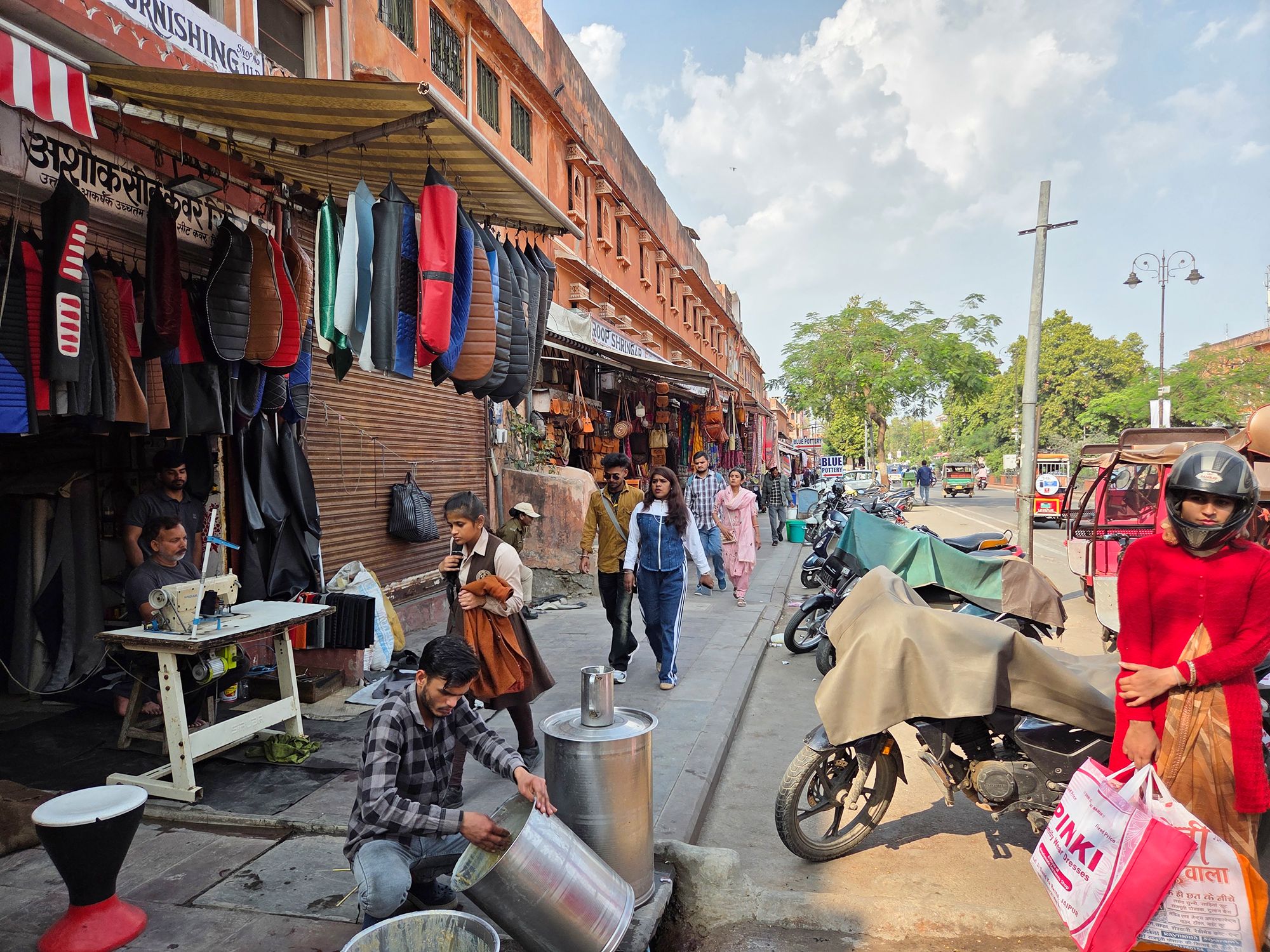
After visiting Amber Palace, we rode around Jaipur by tuk-tuk, exploring the historic Pink City, named for the distinctive pink-colored buildings that line its streets.
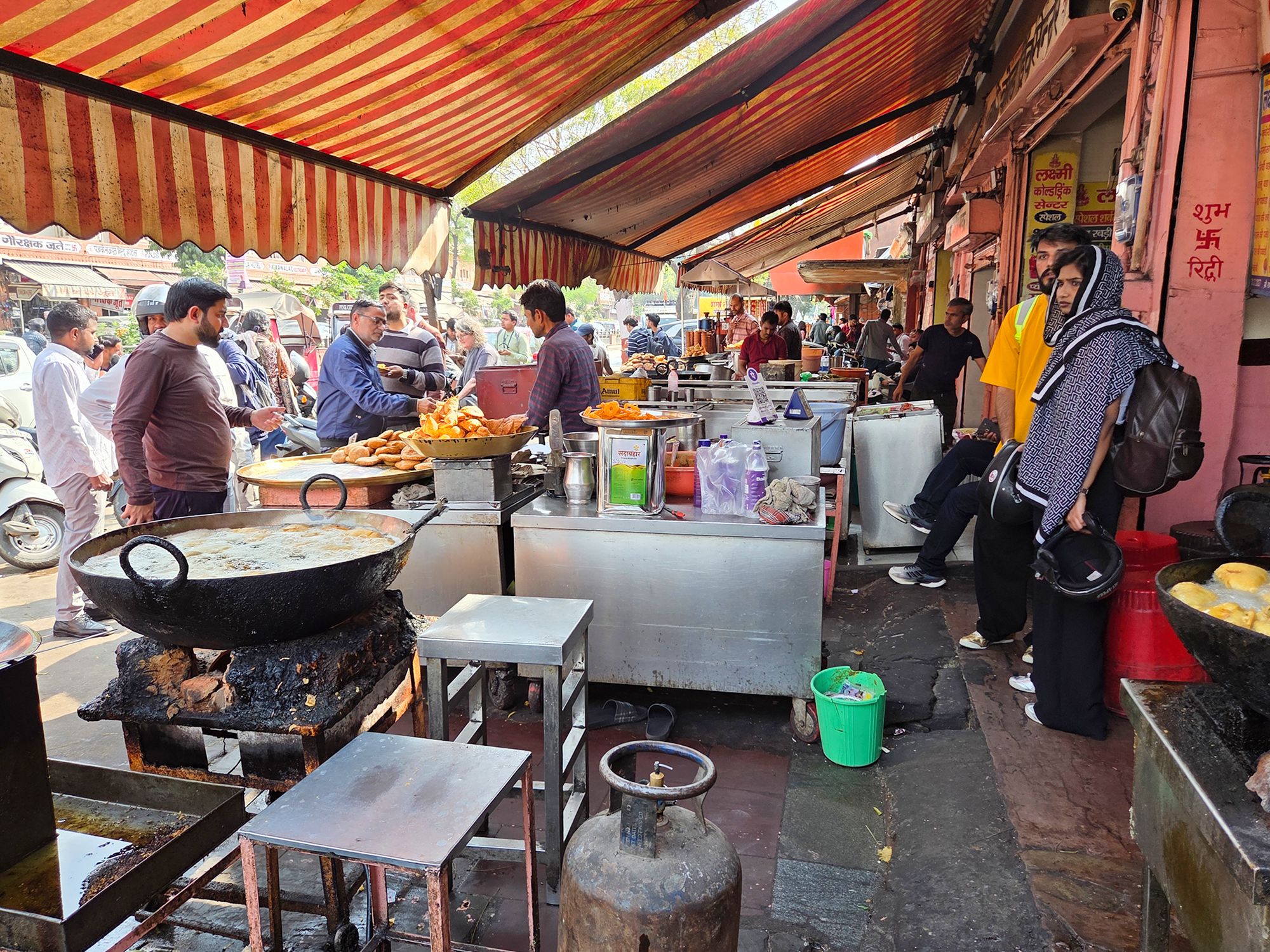
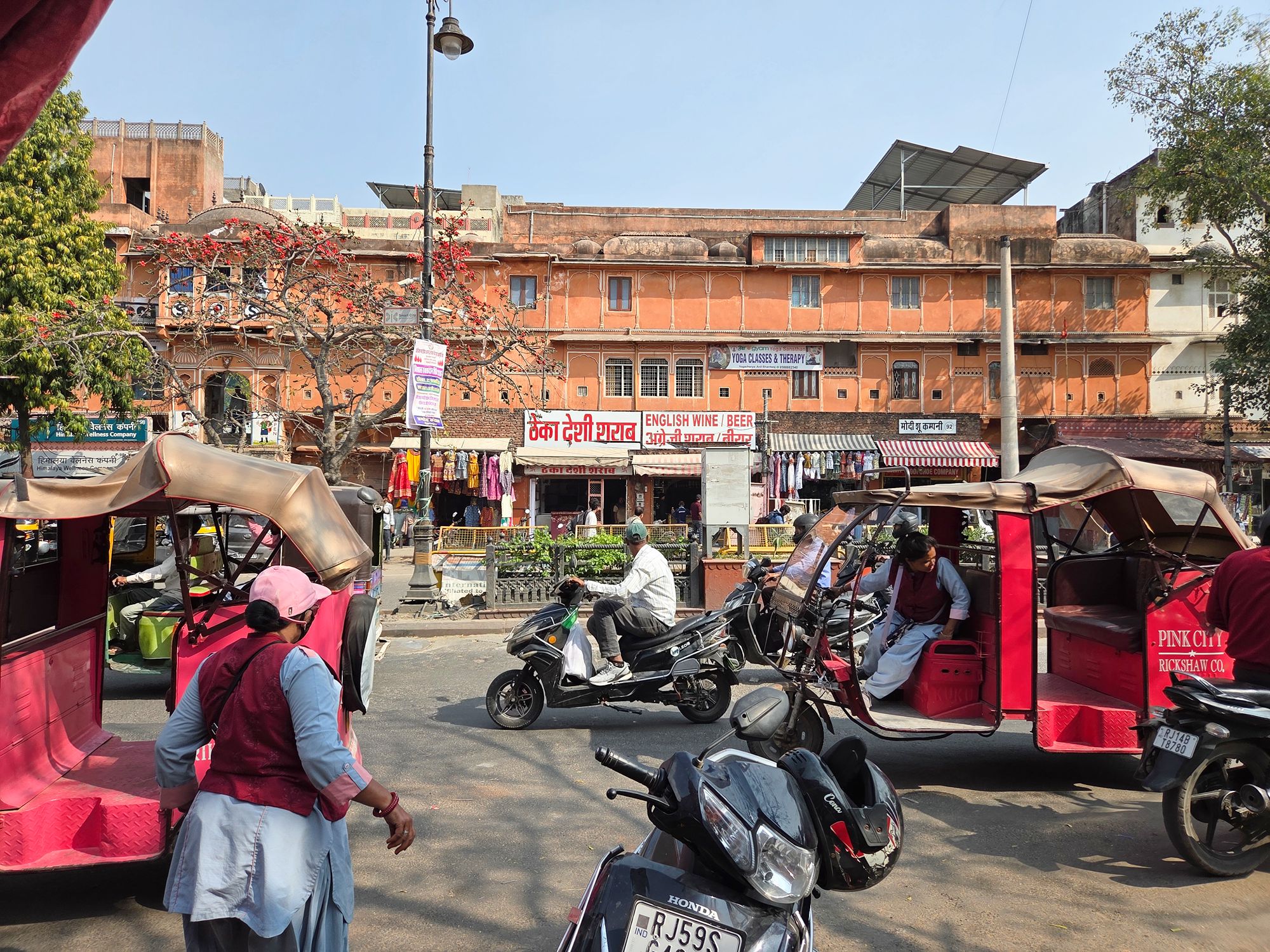
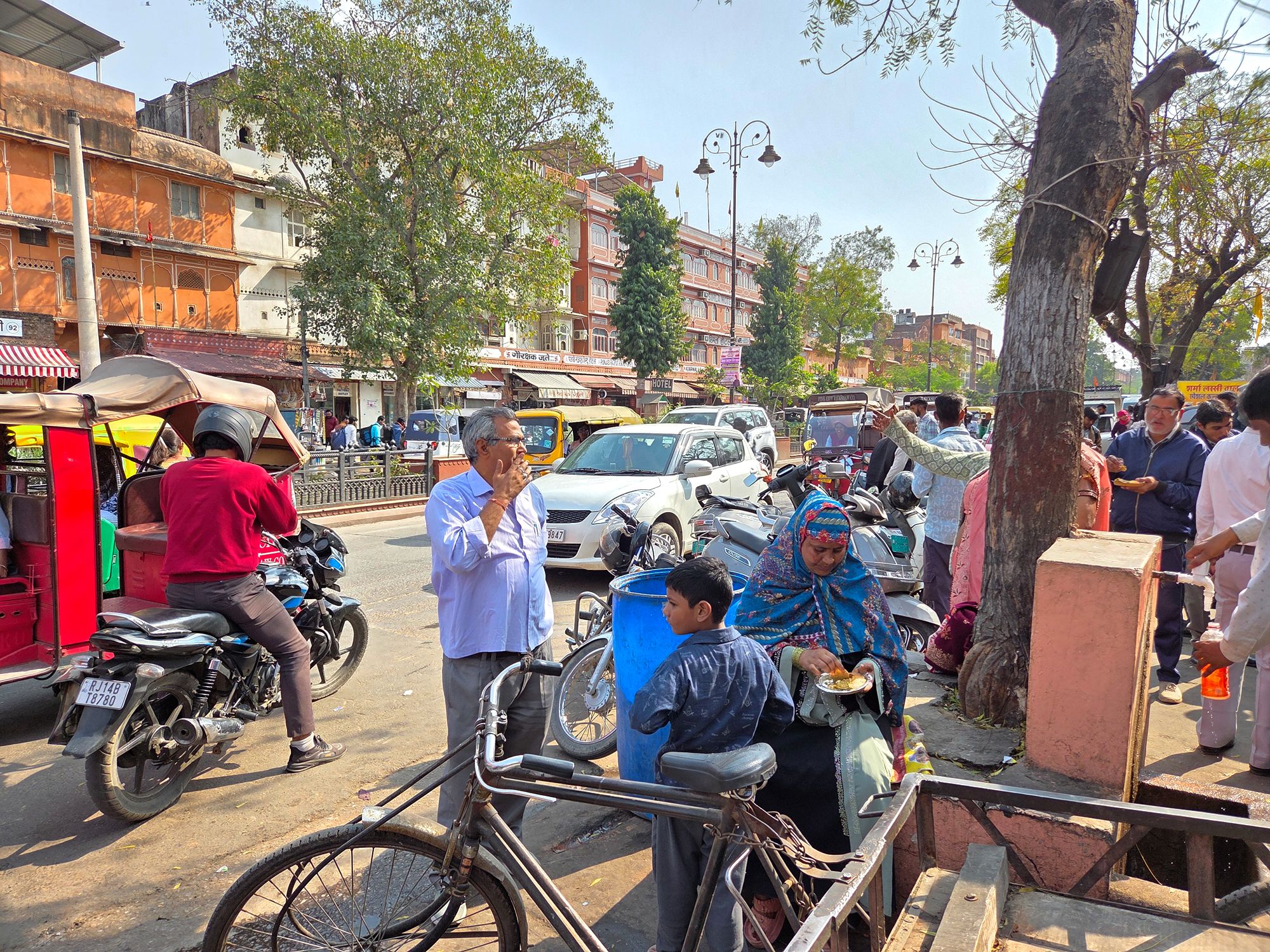
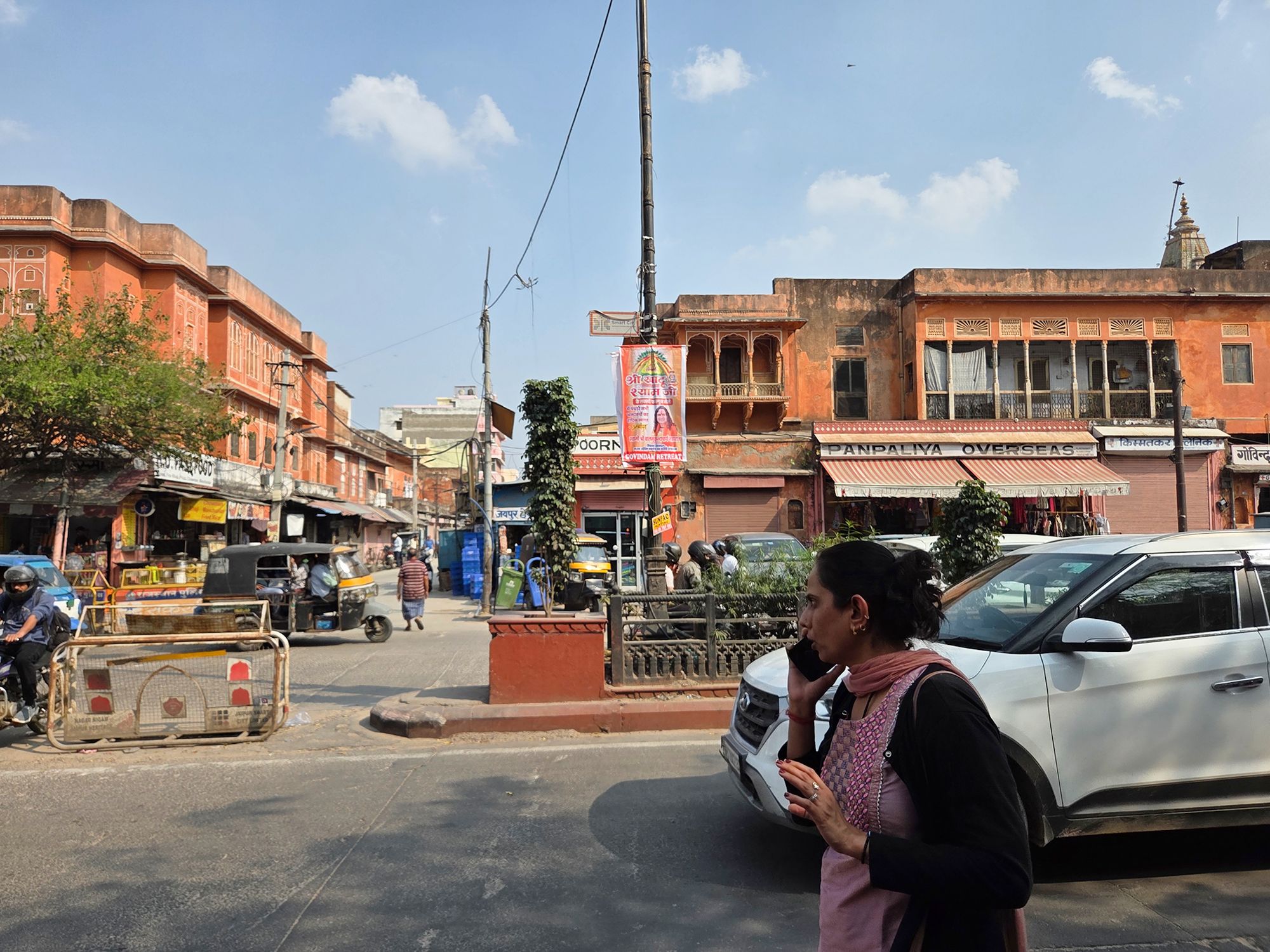
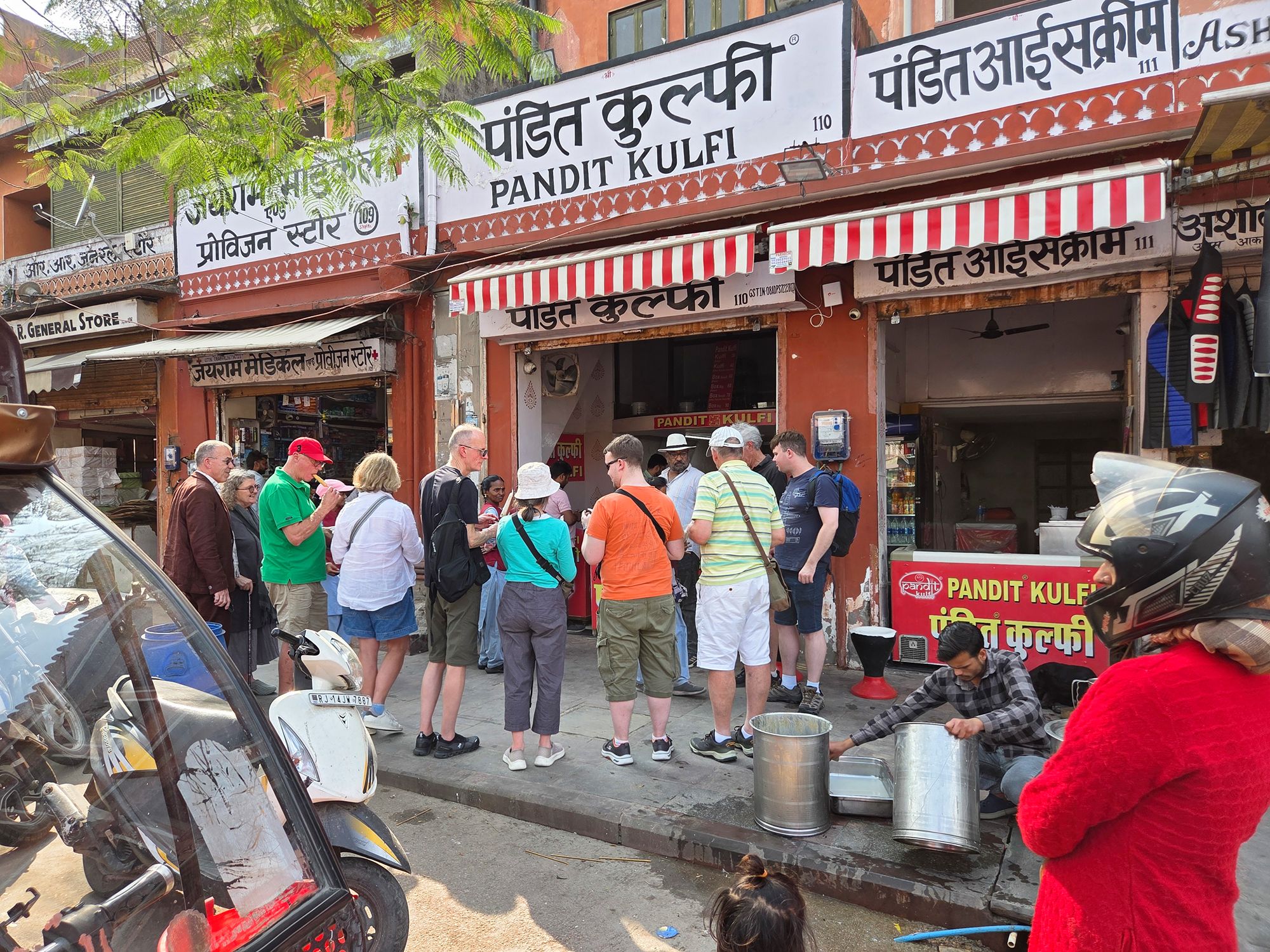
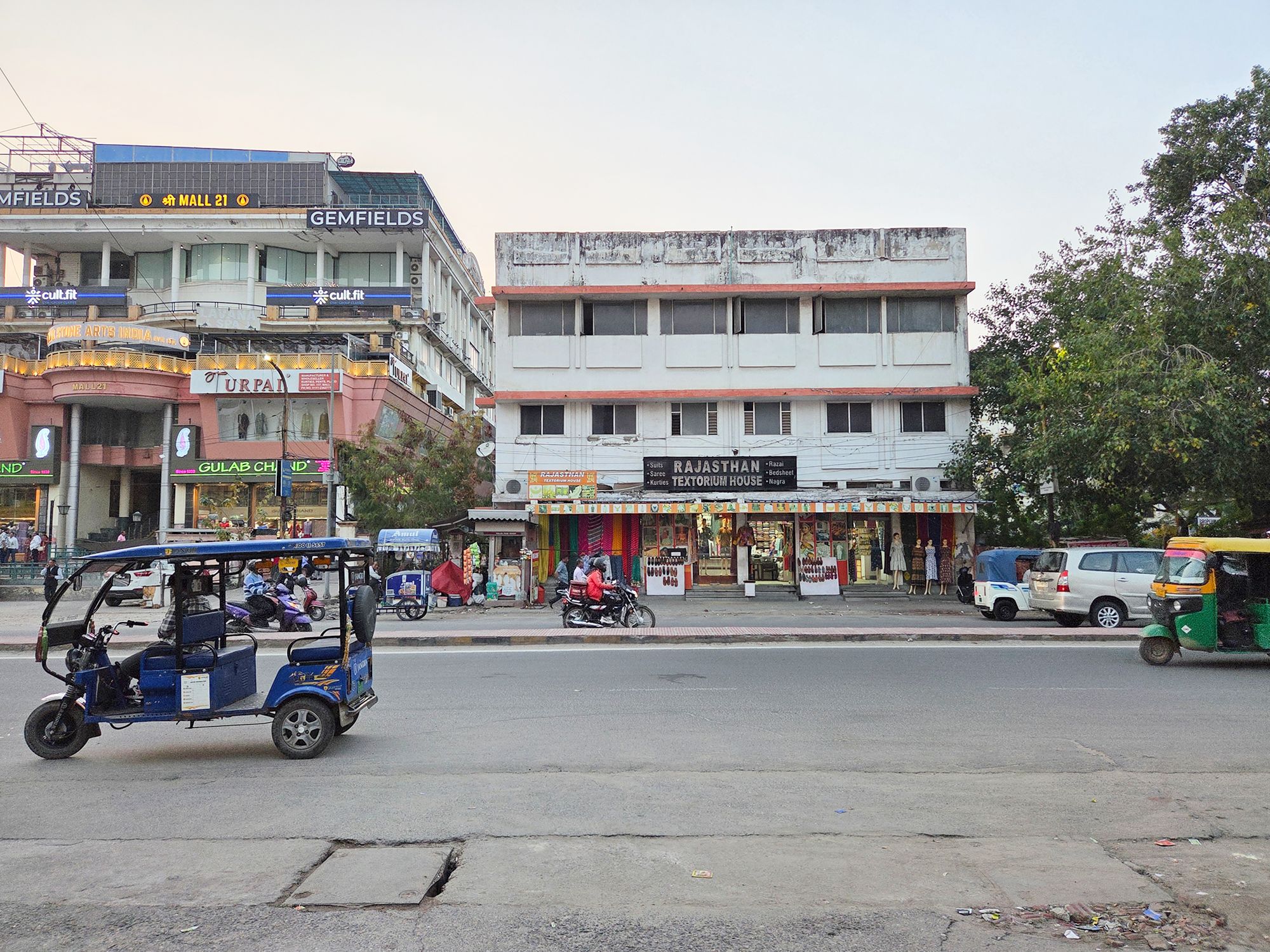
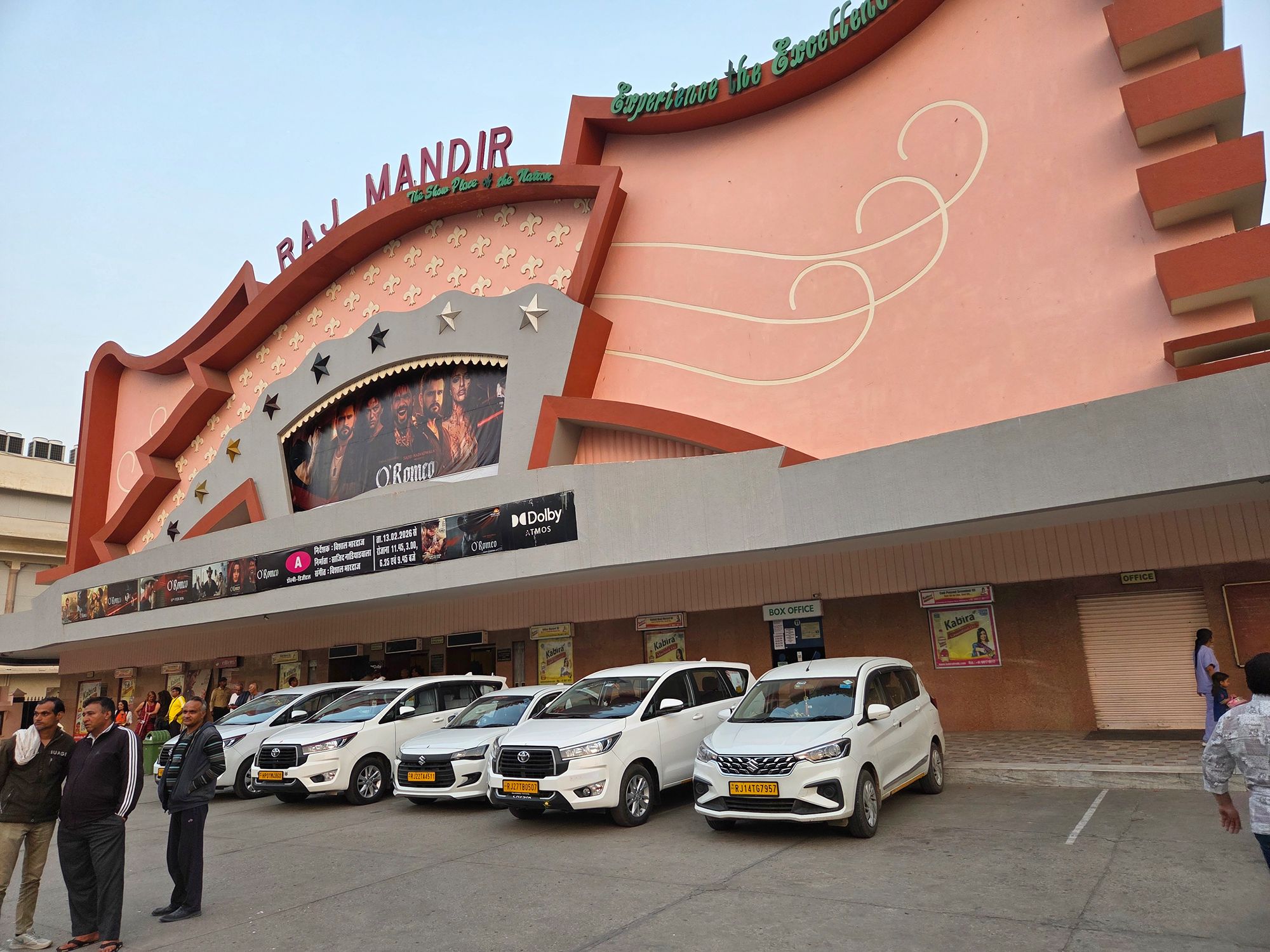
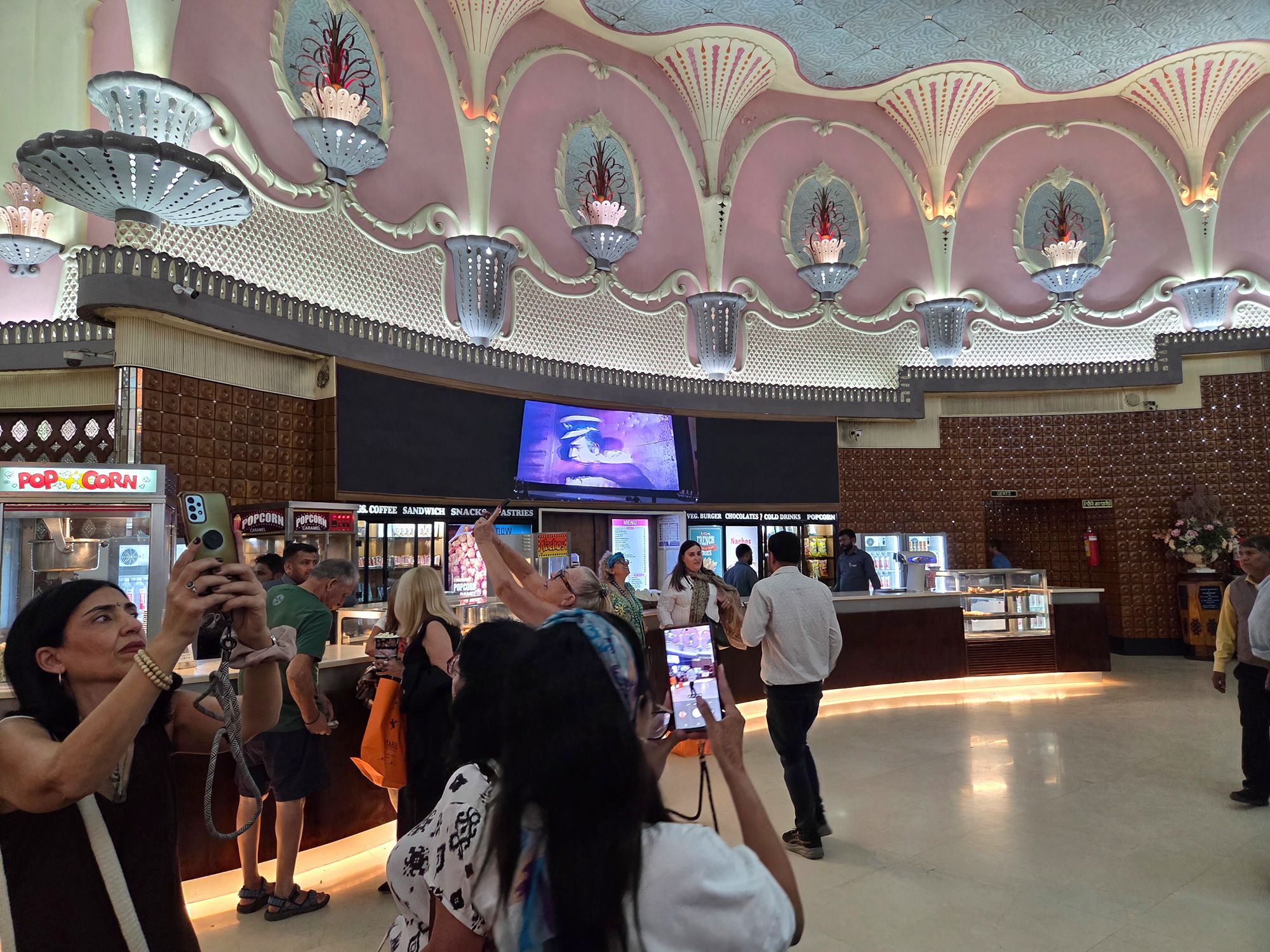
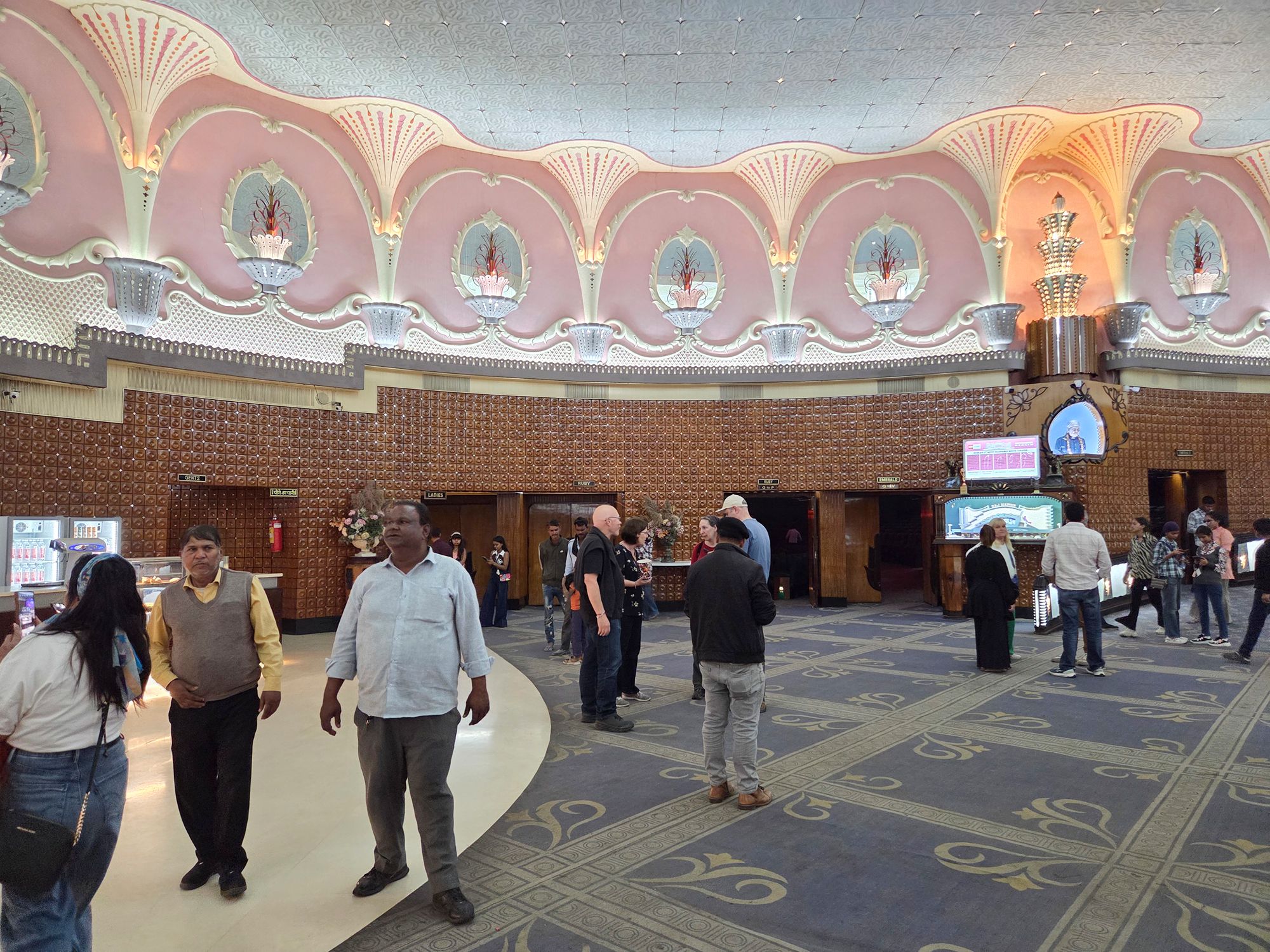
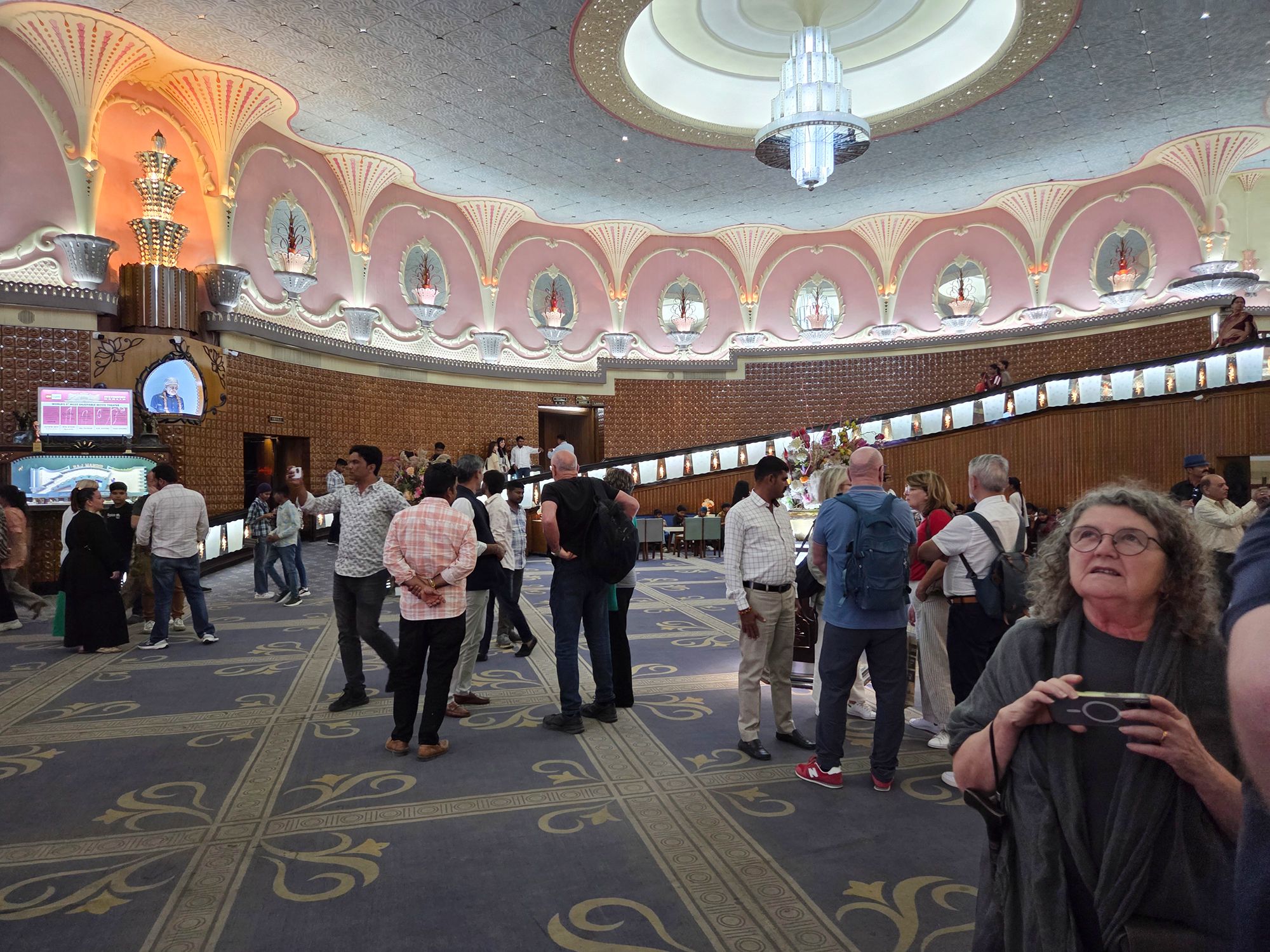
After our tour of the Pink City, we went to a movie theater to watch a Bollywood movie.