Humayun’s Tomb, New Delhi, India
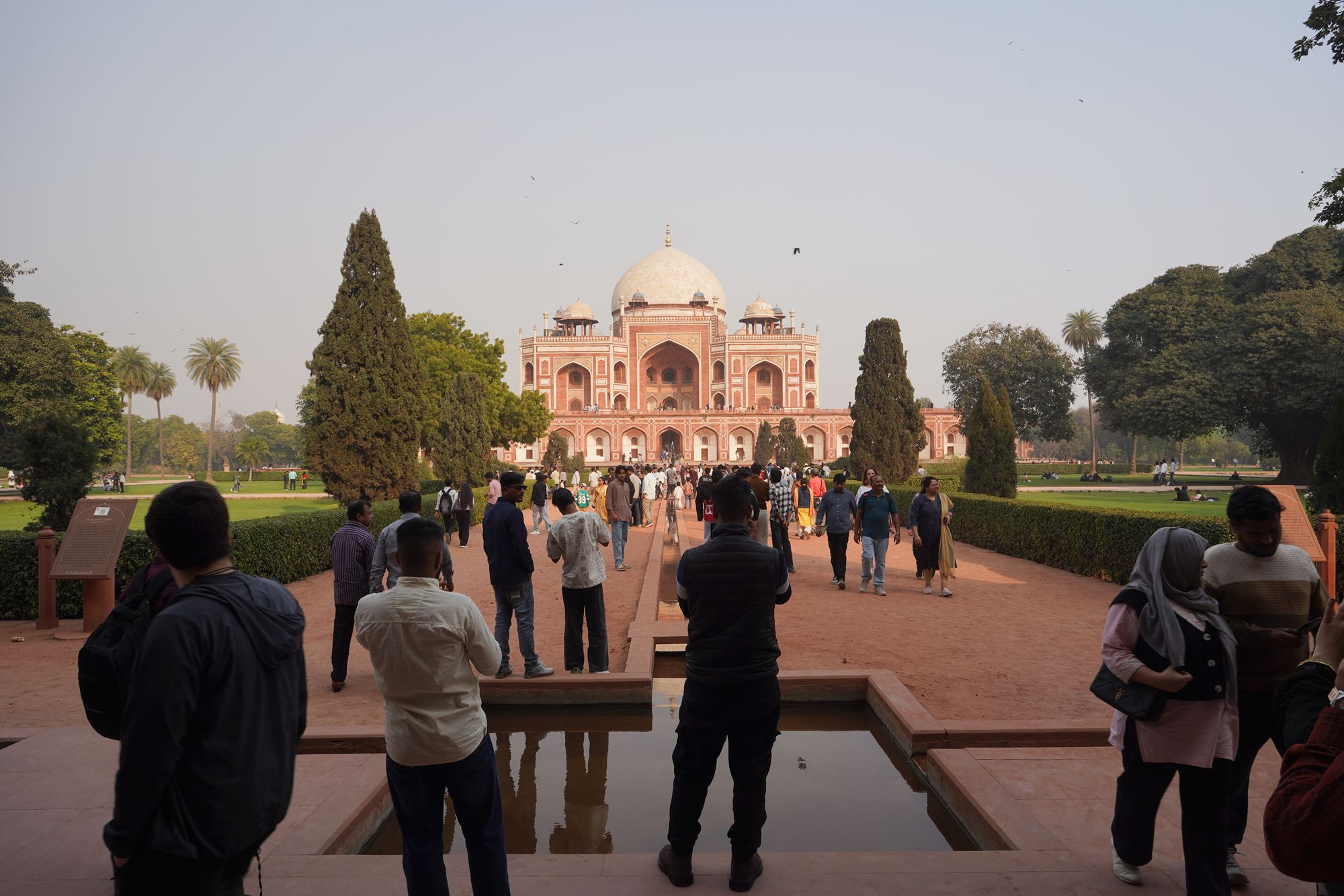
Humayun’s Tomb in New Delhi is a magnificent 16th-century Mughal mausoleum, famous for its grand architecture and gardens. 1246
Humayun's Tomb: Hazrat Nizamuddin Aulia Dargah, Mathura Rd, Nizamuddin, Nizamuddin East, New Delhi, Delhi 110013, India
Date Picture Taken: Feb, 2026
Humayun’s Tomb in New Delhi is a magnificent 16th-century Mughal mausoleum, built in the 1560s for Emperor Humayun and commissioned by his widow, Bega Begum.
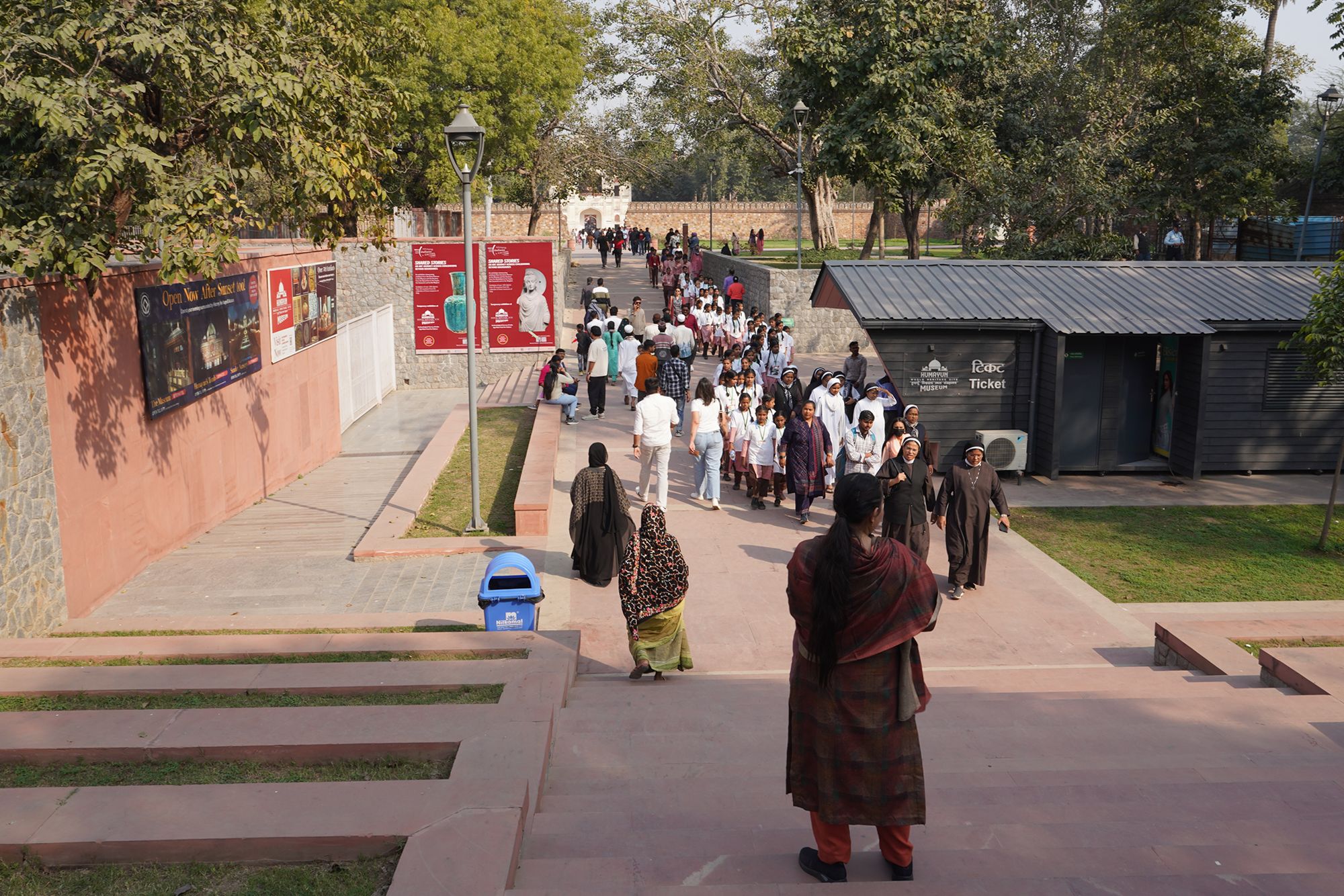
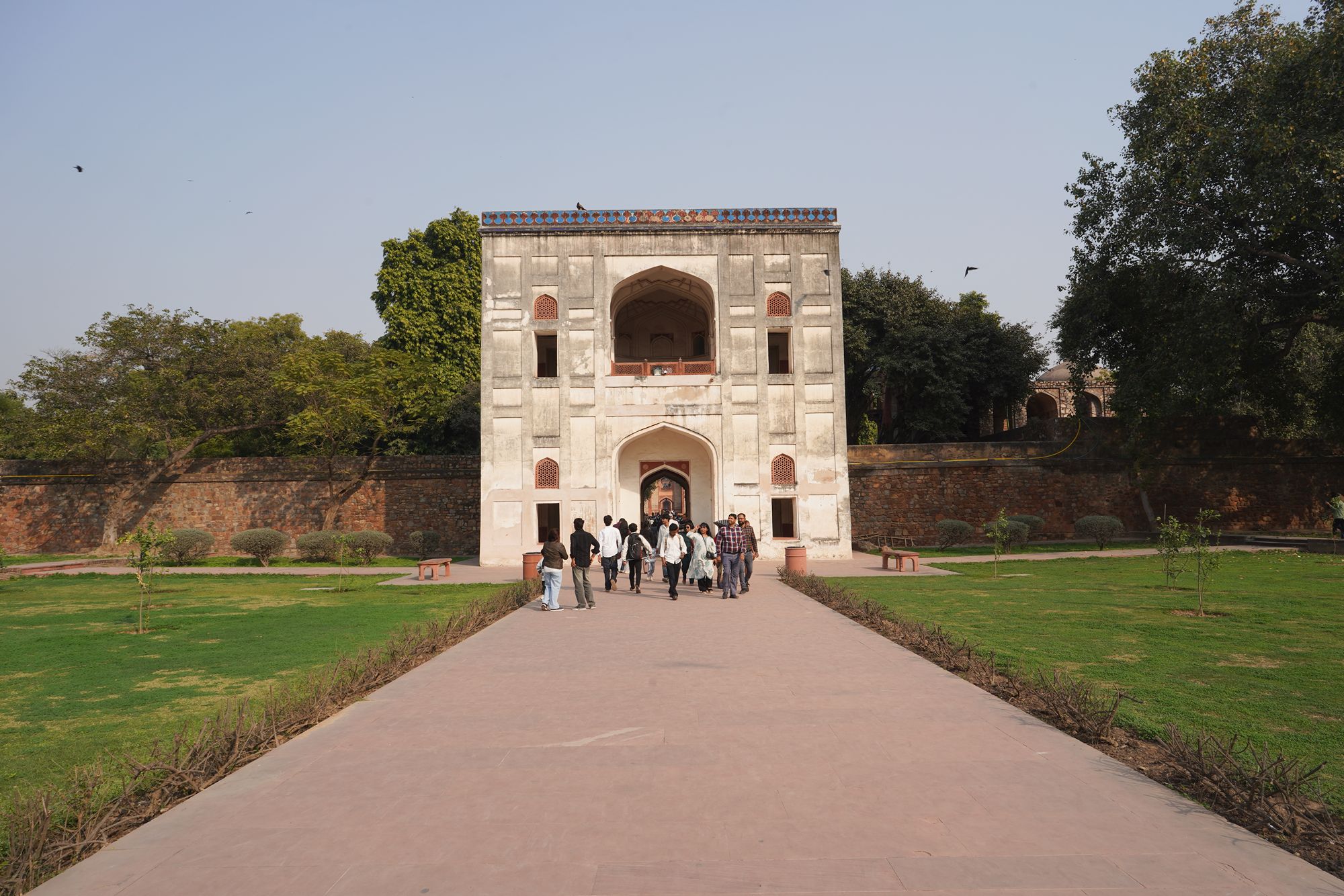
To reach Humayun’s Tomb, I needed to walk straight through the white gate, but I first turned left to visit Isa Khan’s Tomb.
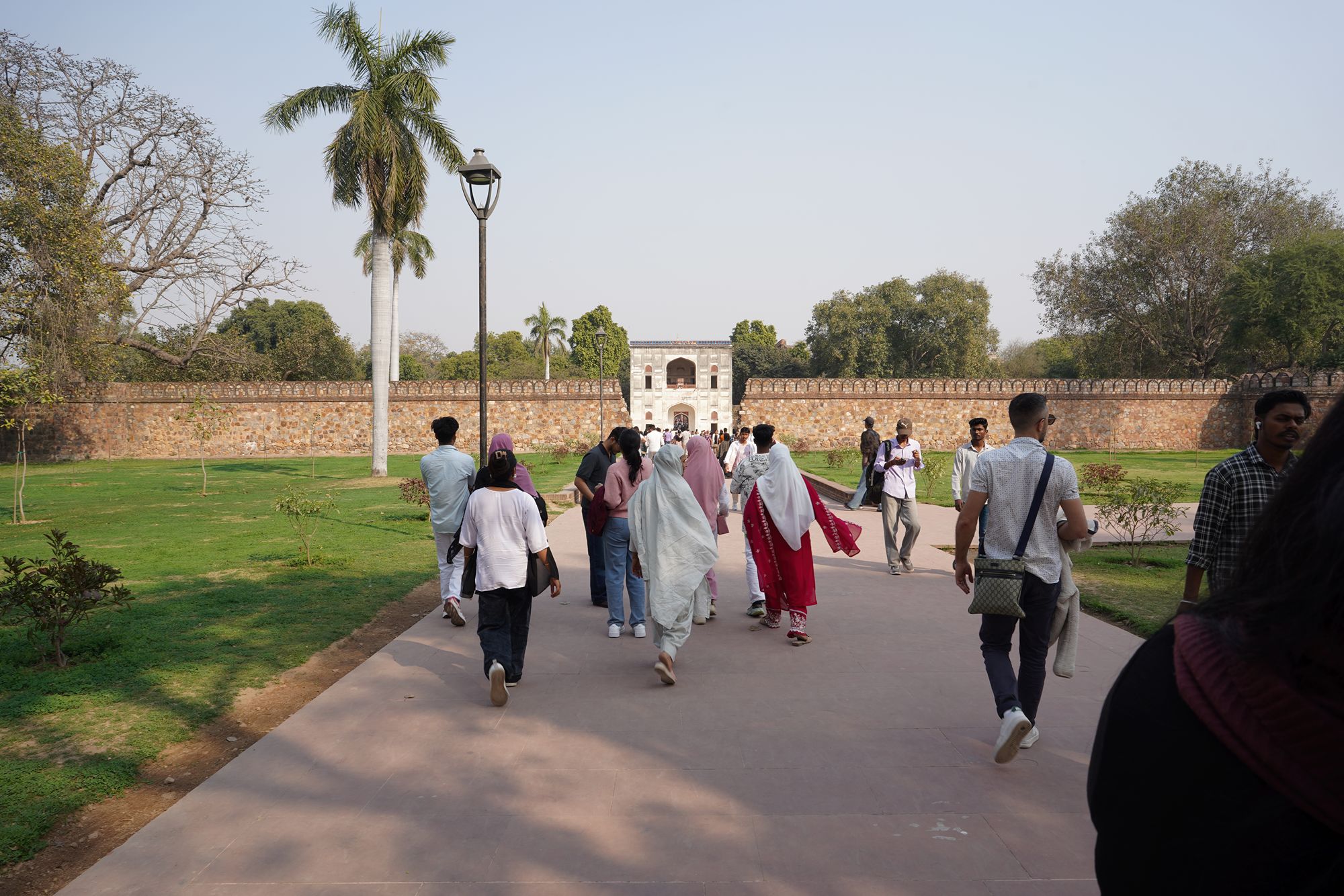
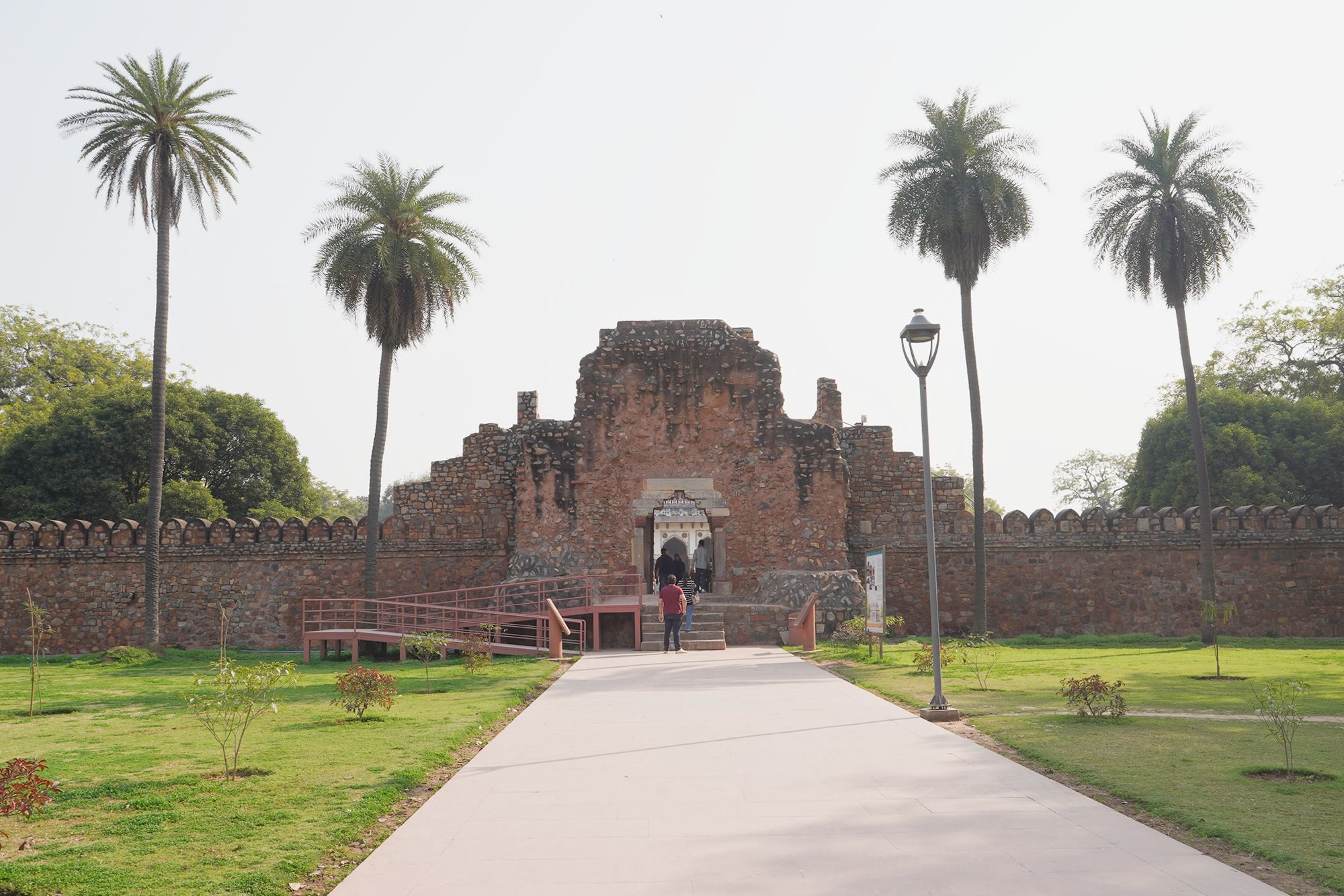
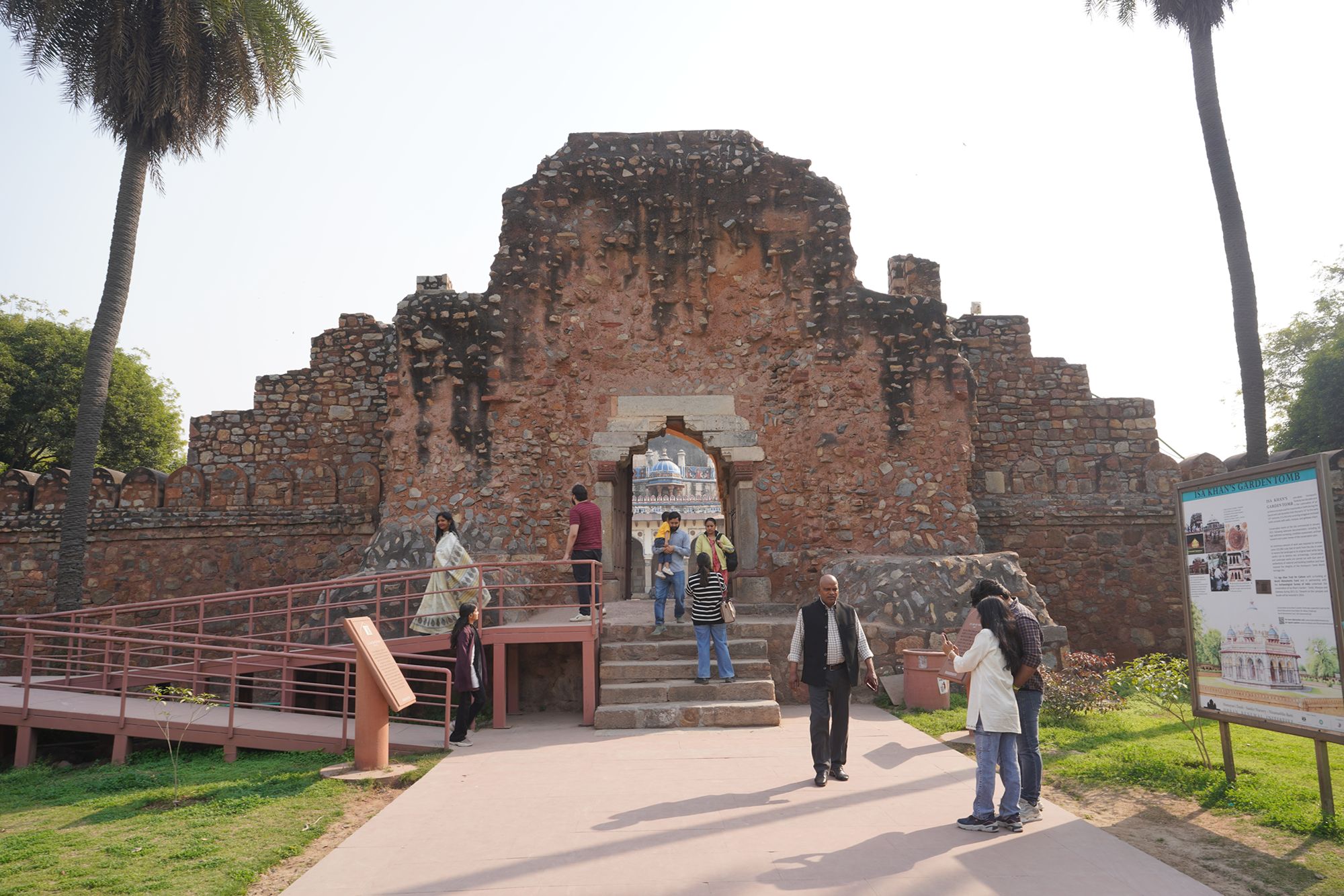
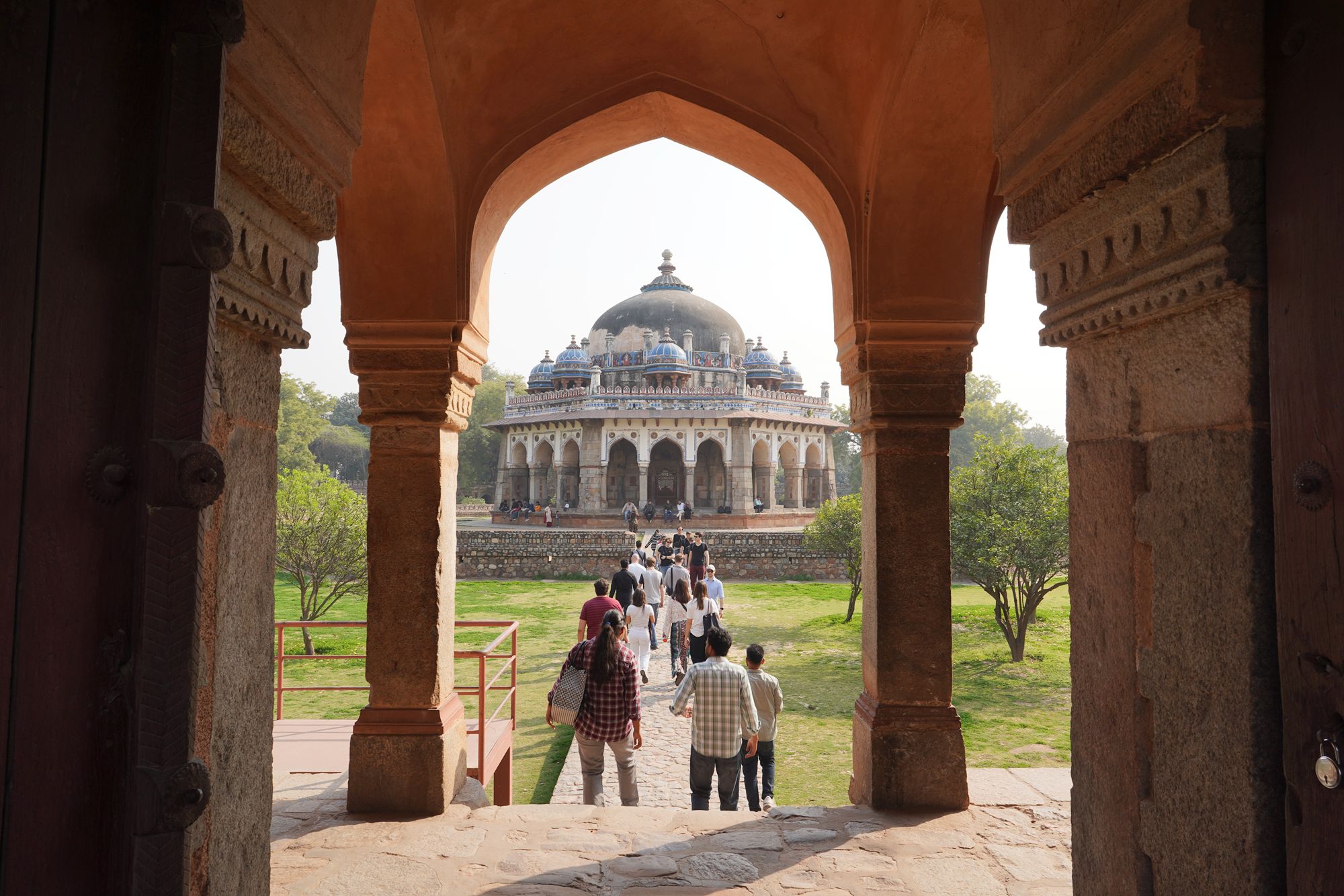
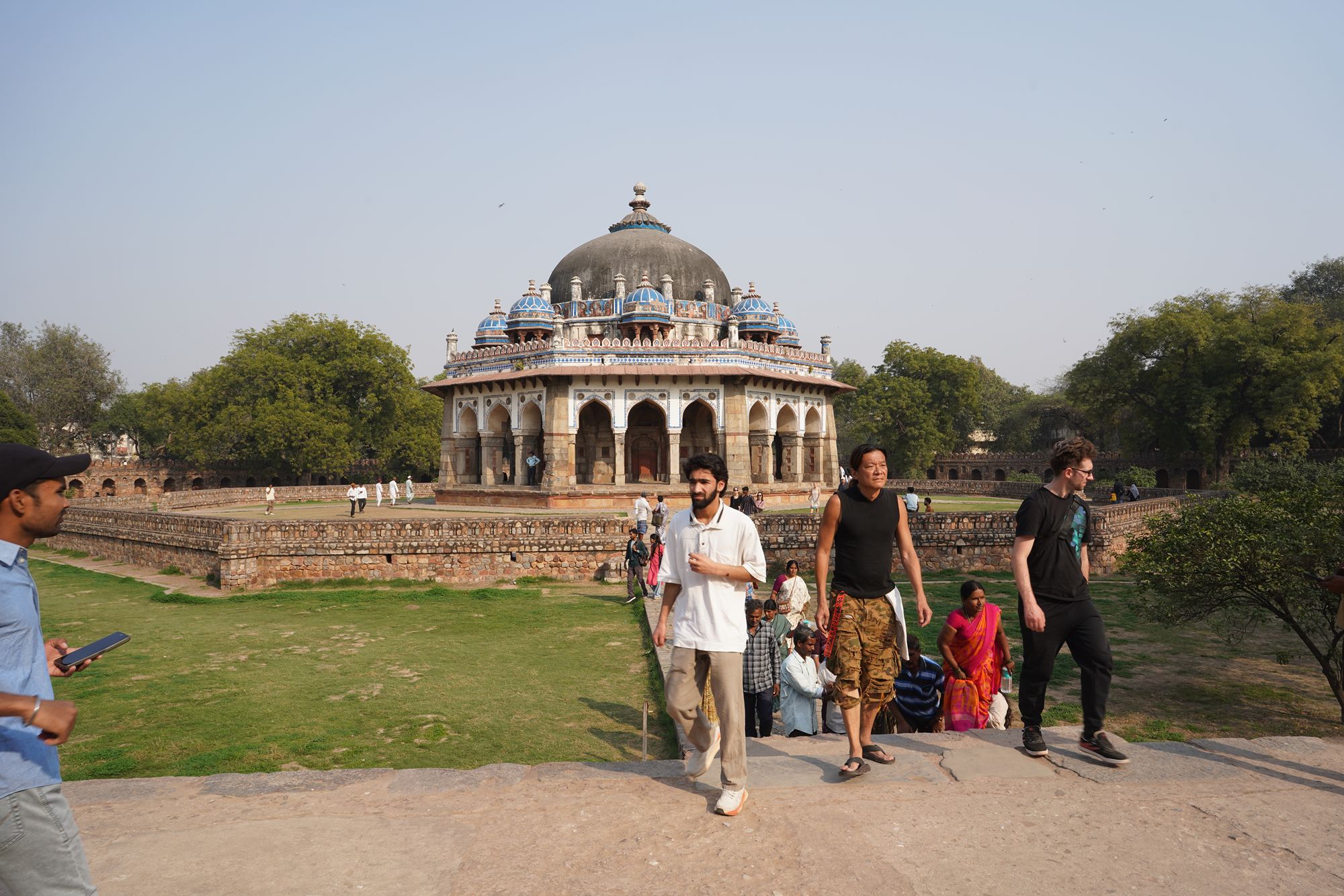
Isa Khan’s Tomb is a 16th-century mausoleum built in 1547–48, several years before Humayun’s Tomb. It was built for Isa Khan Niyazi, an Afghan nobleman who served during the reign of Sher Shah Suri
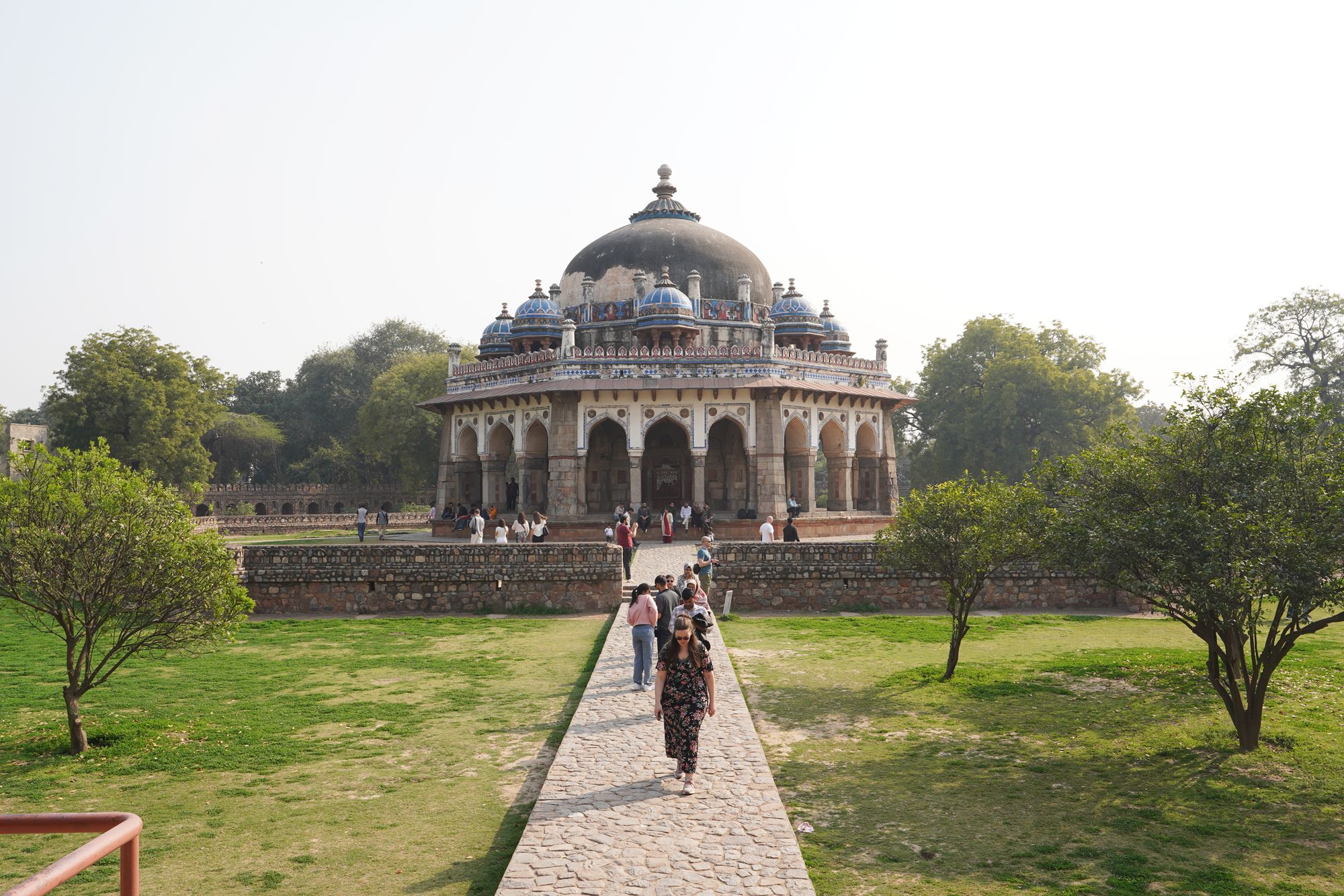
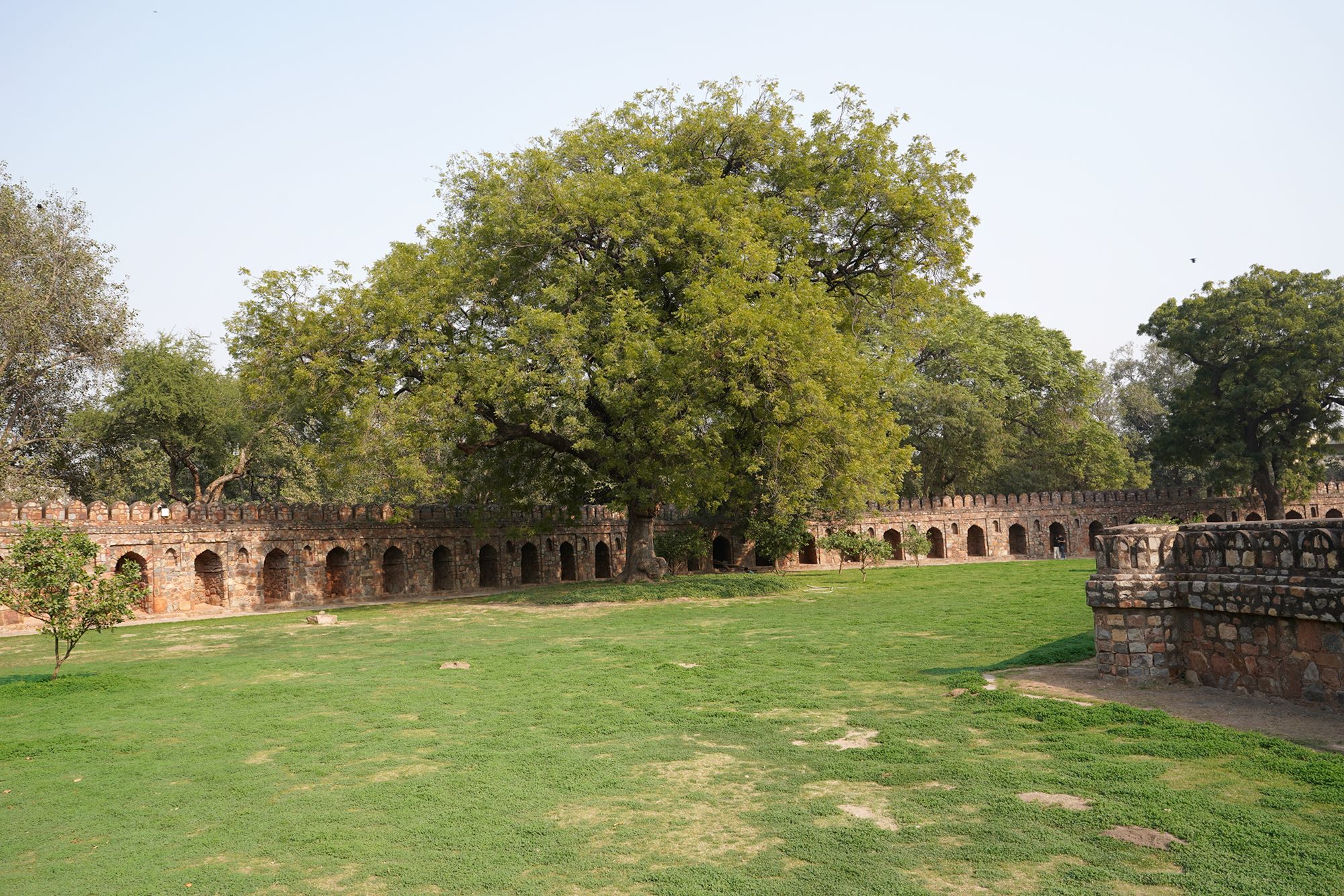
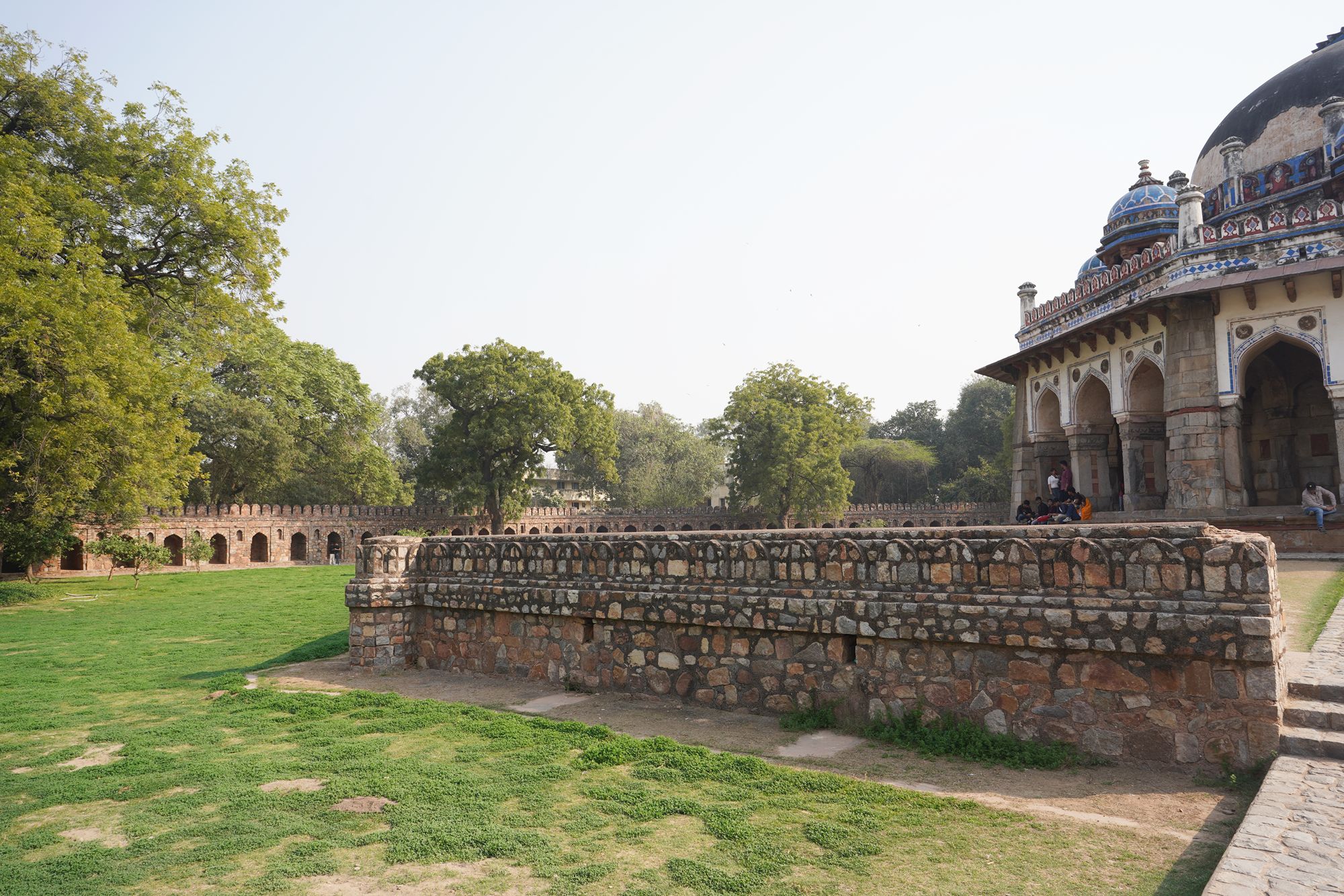
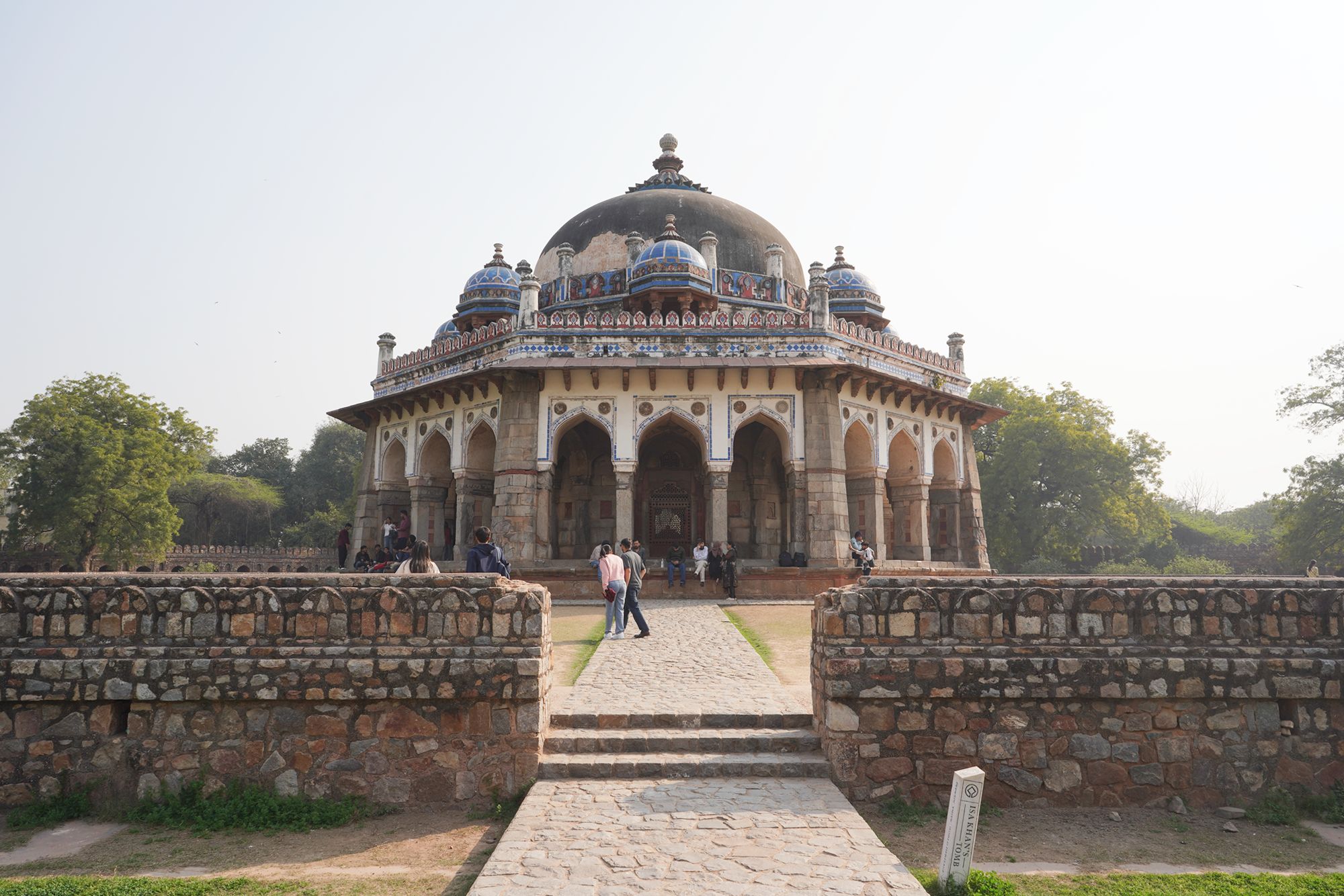
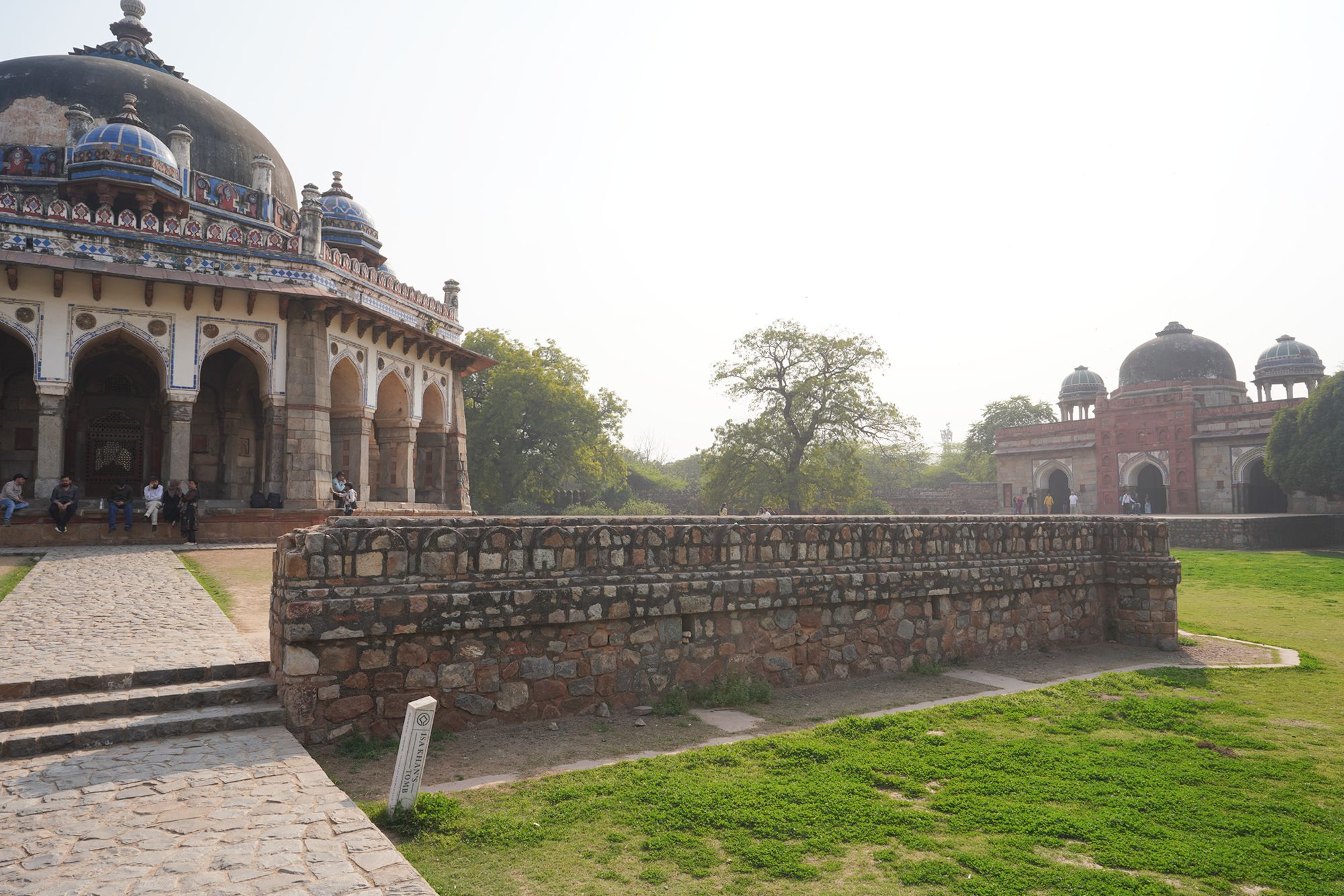
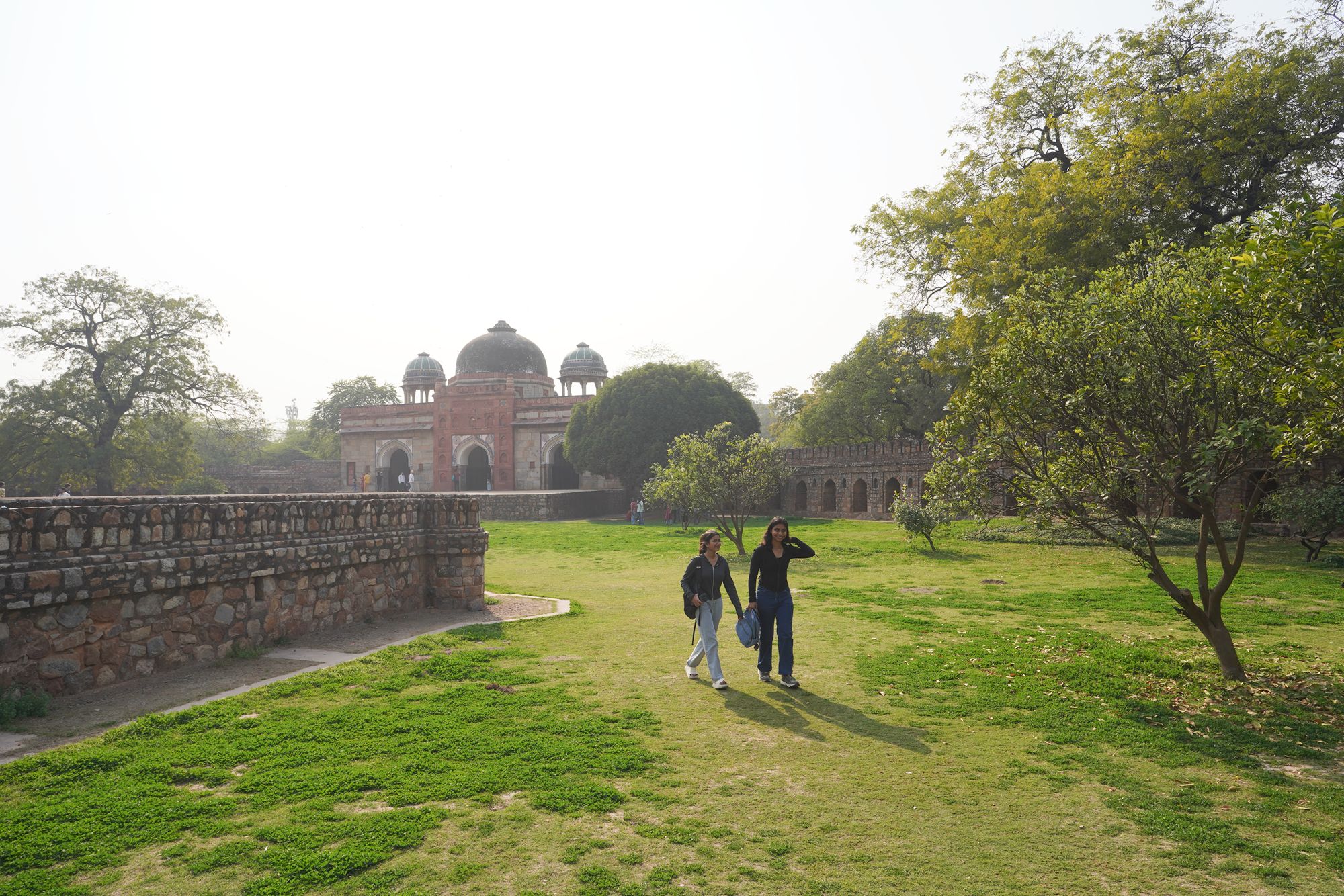
The octagonal tomb is surrounded by a walled garden and is decorated with colorful tiles, intricate stonework, and arched openings. Its architecture represents the Lodi and Sur styles that preceded the grand Mughal architecture seen at Humayun’s Tomb.
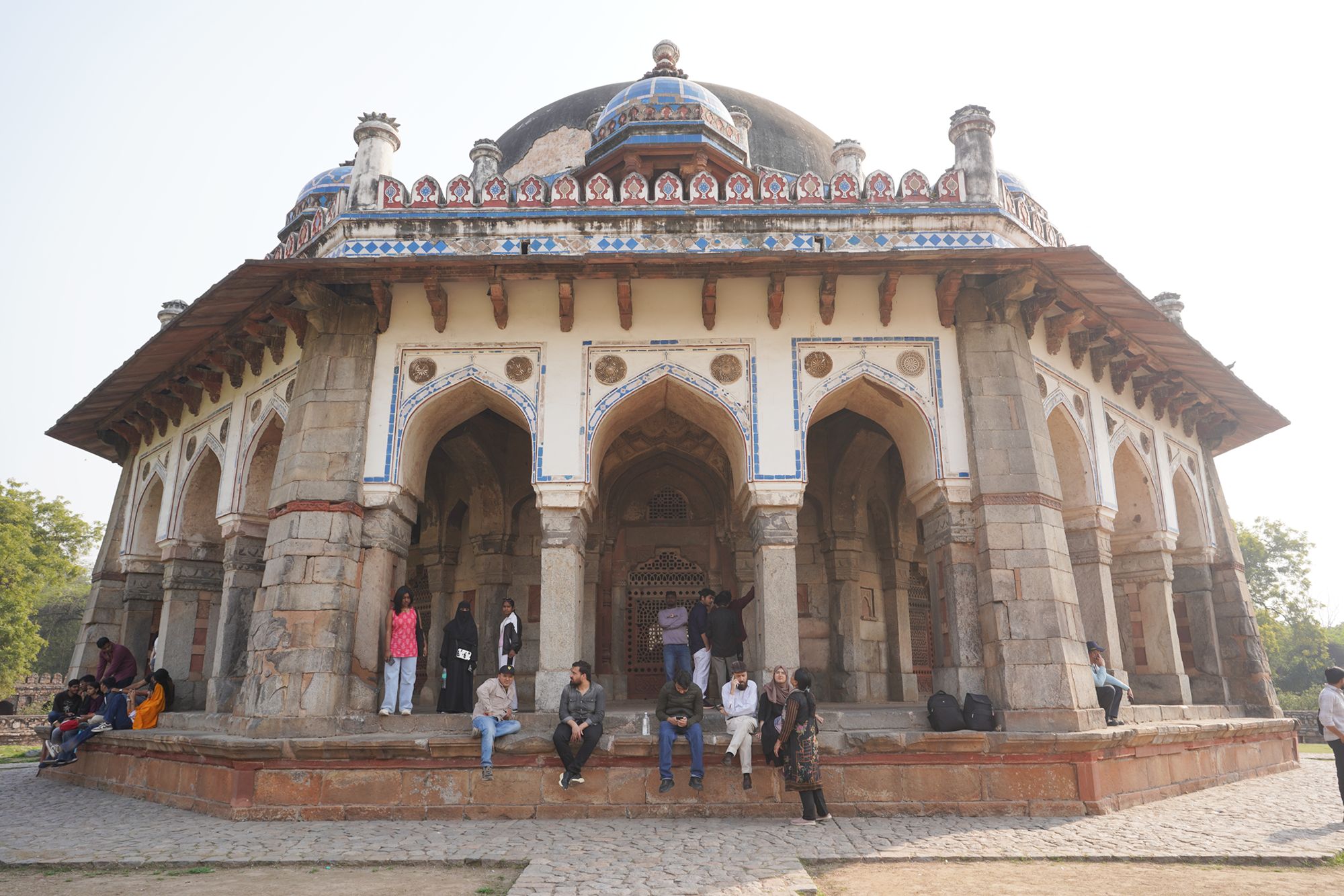
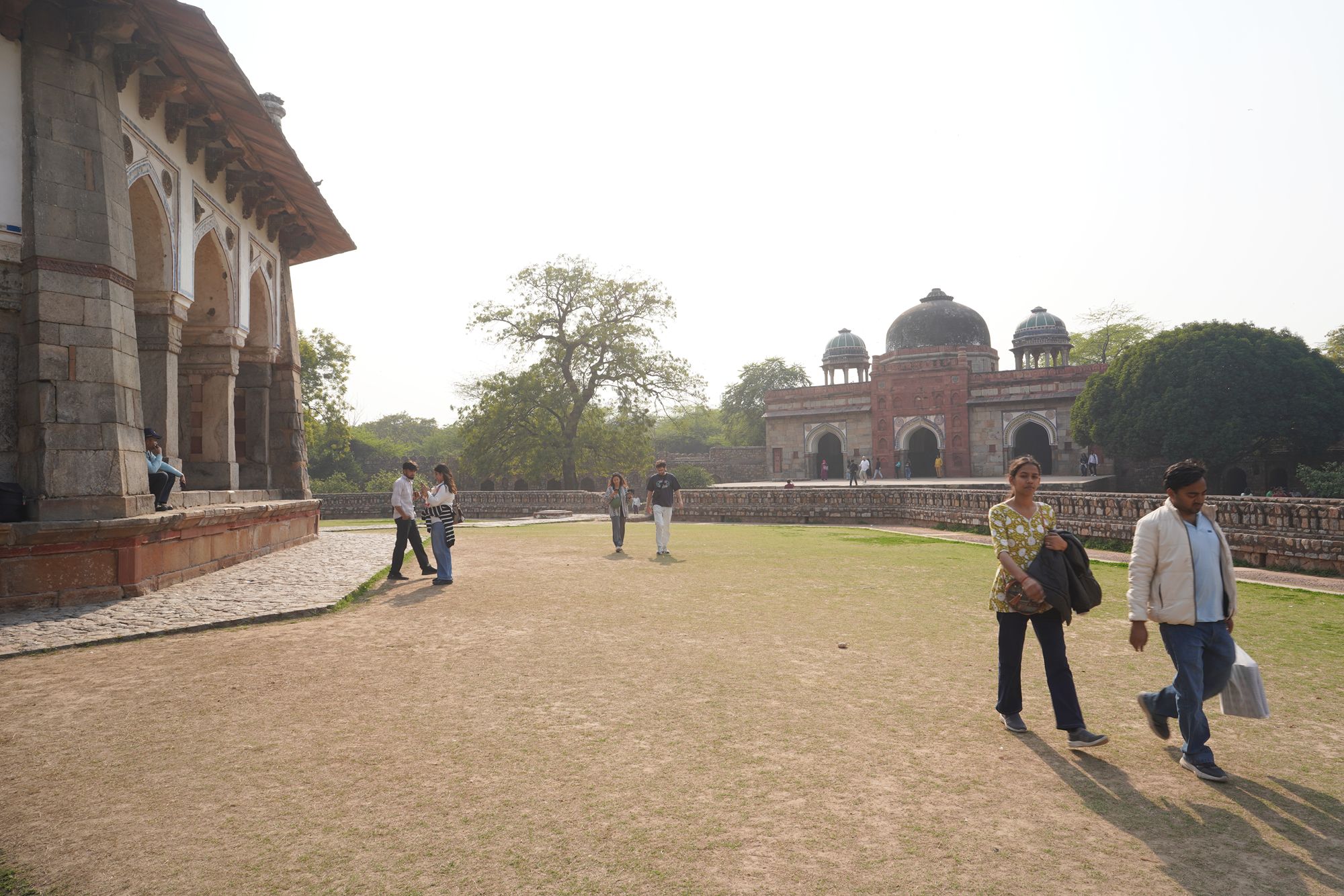
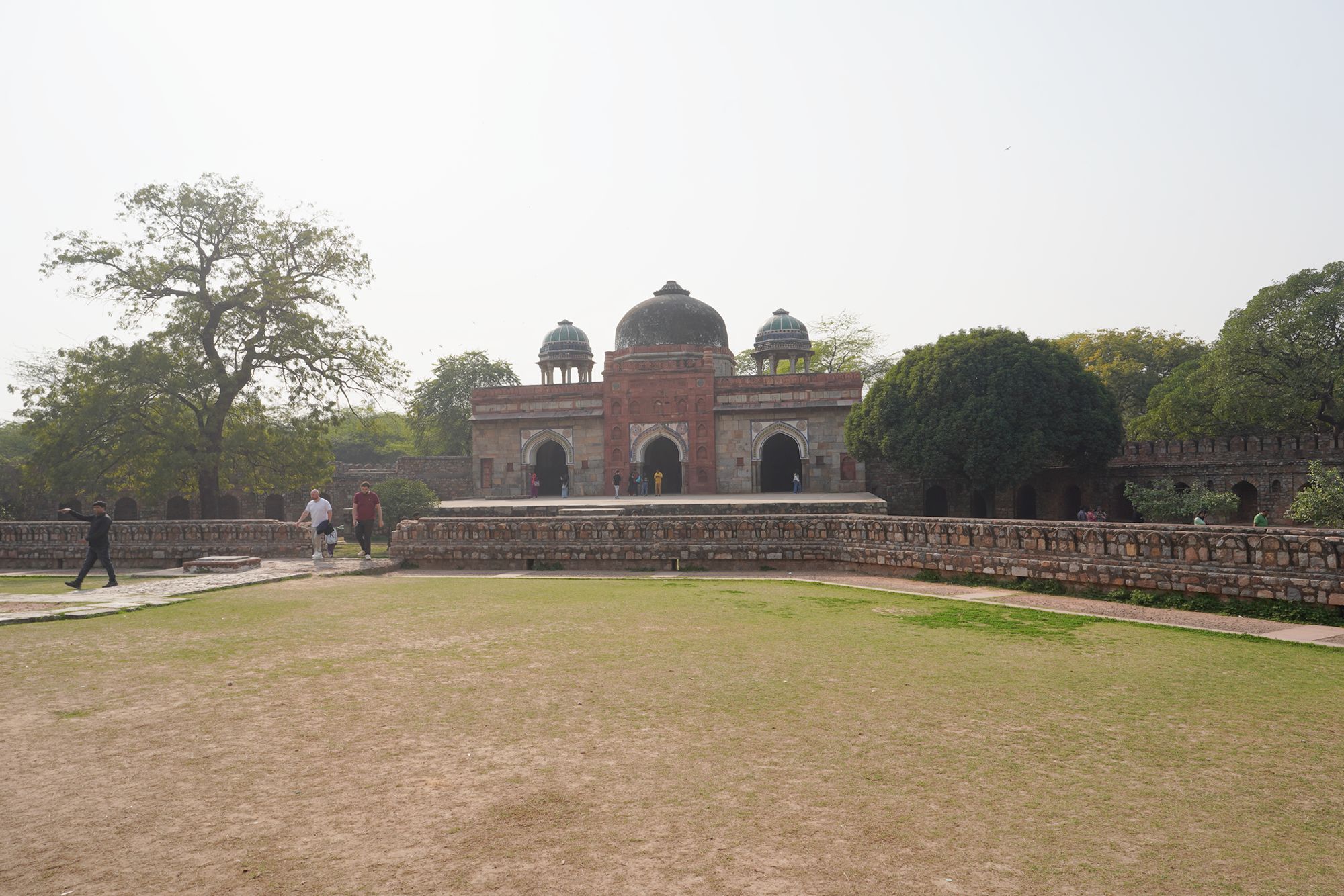
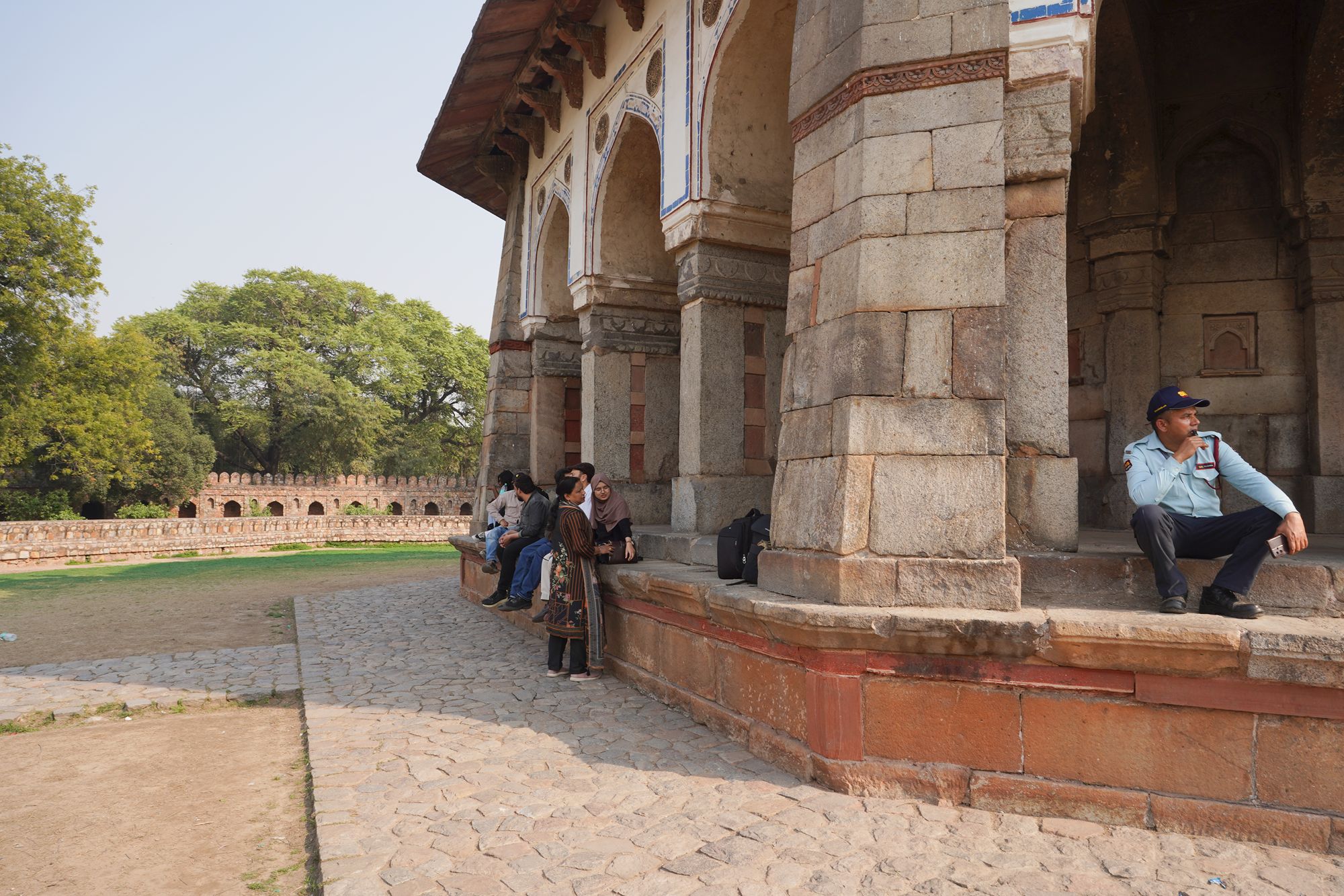
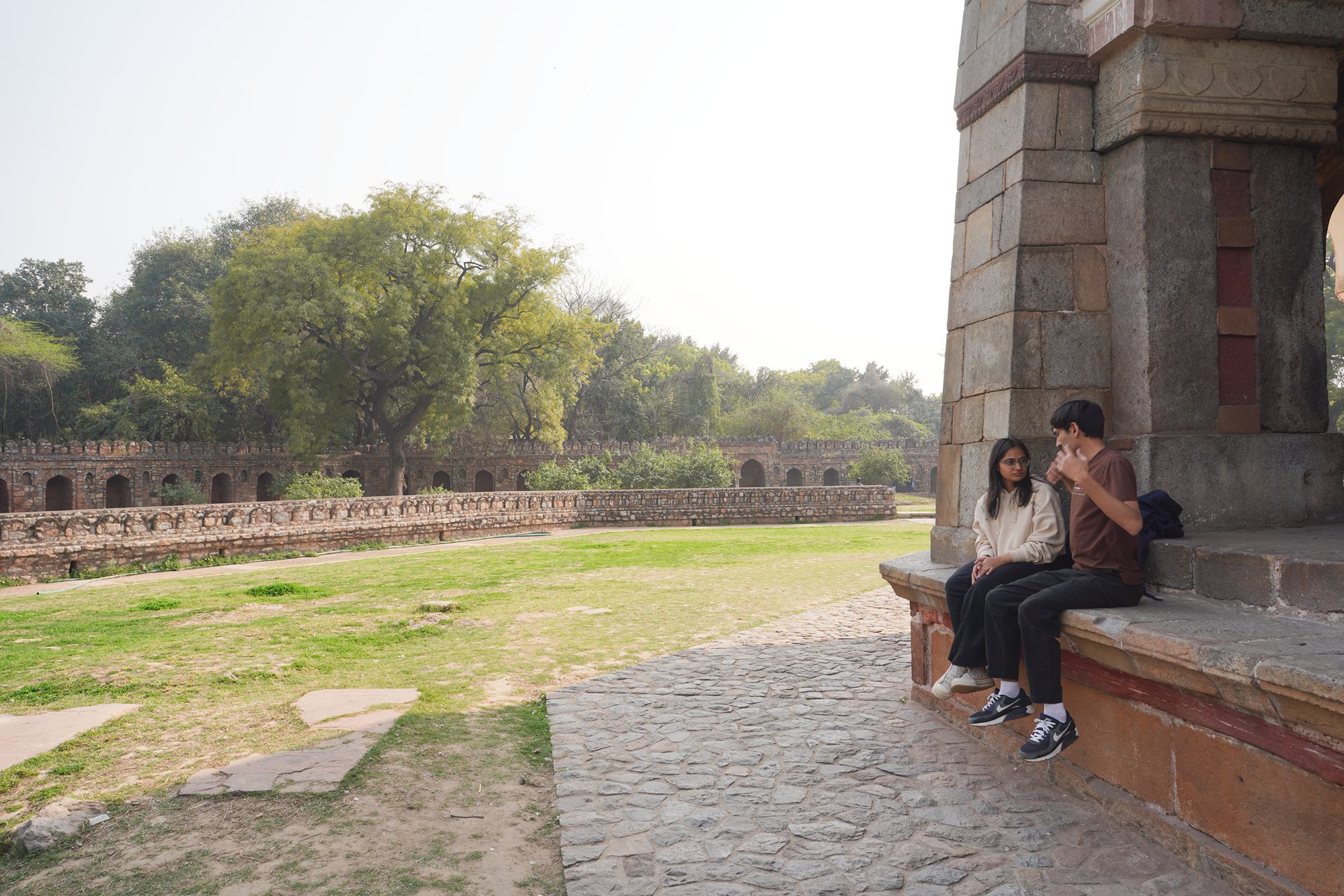
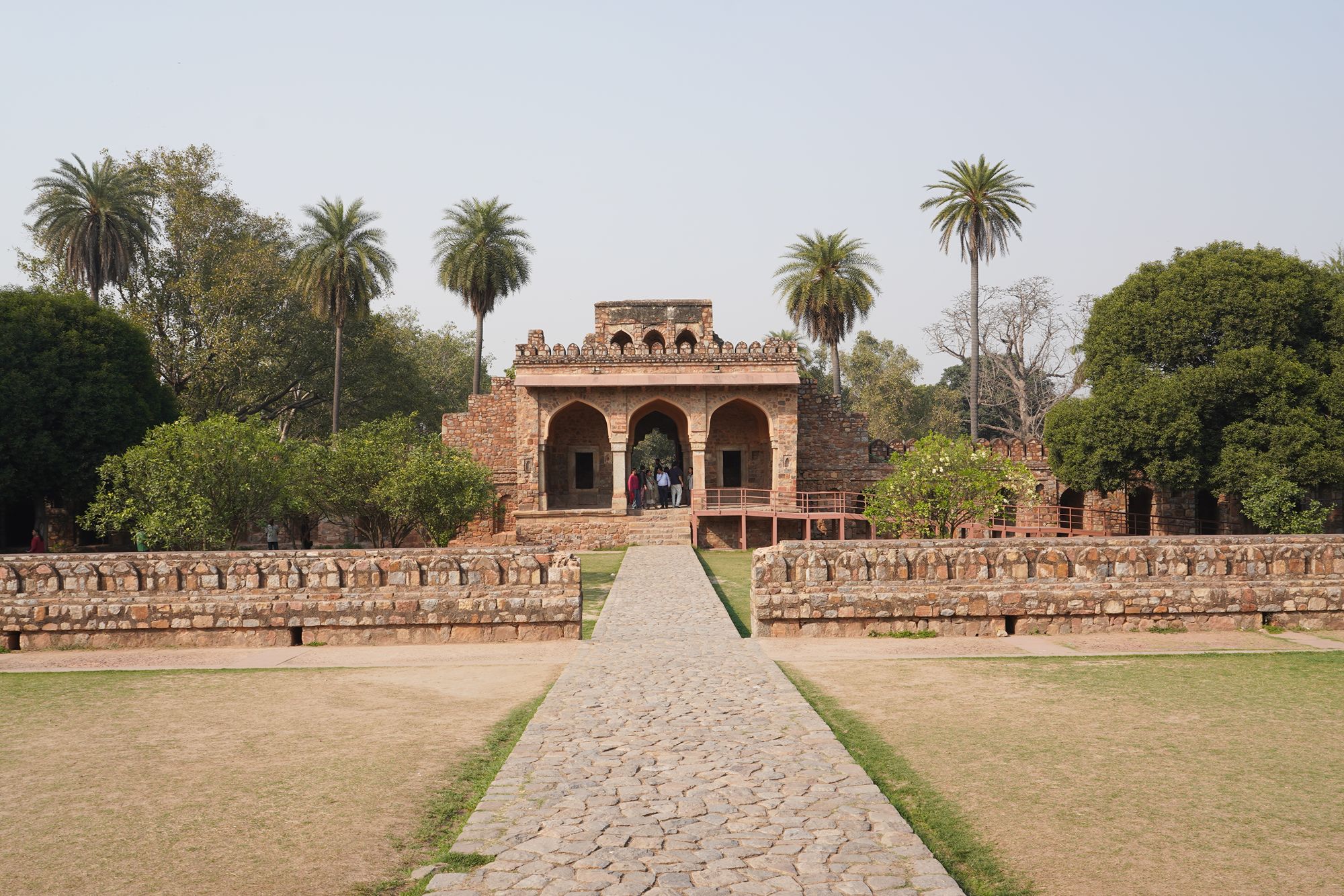
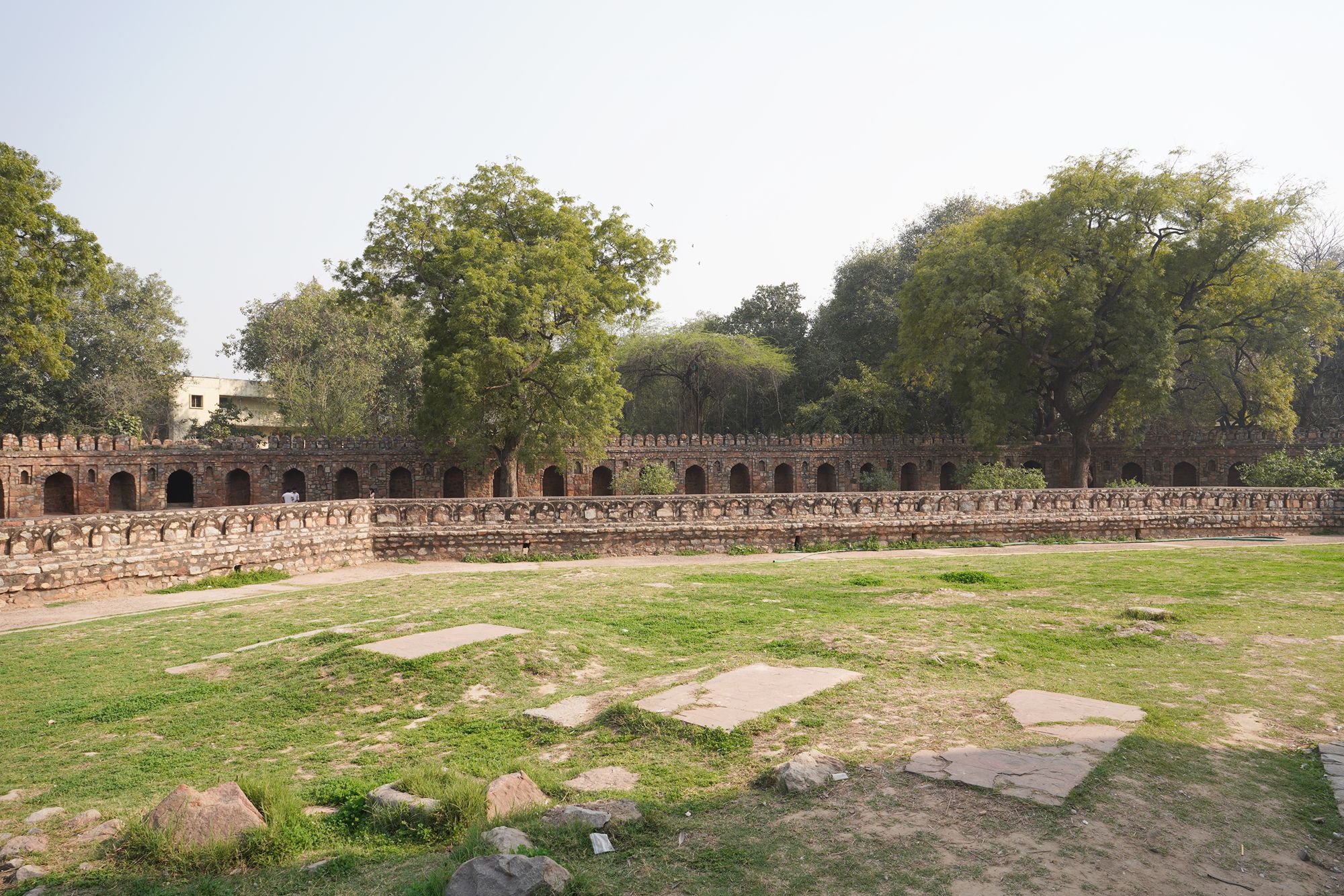
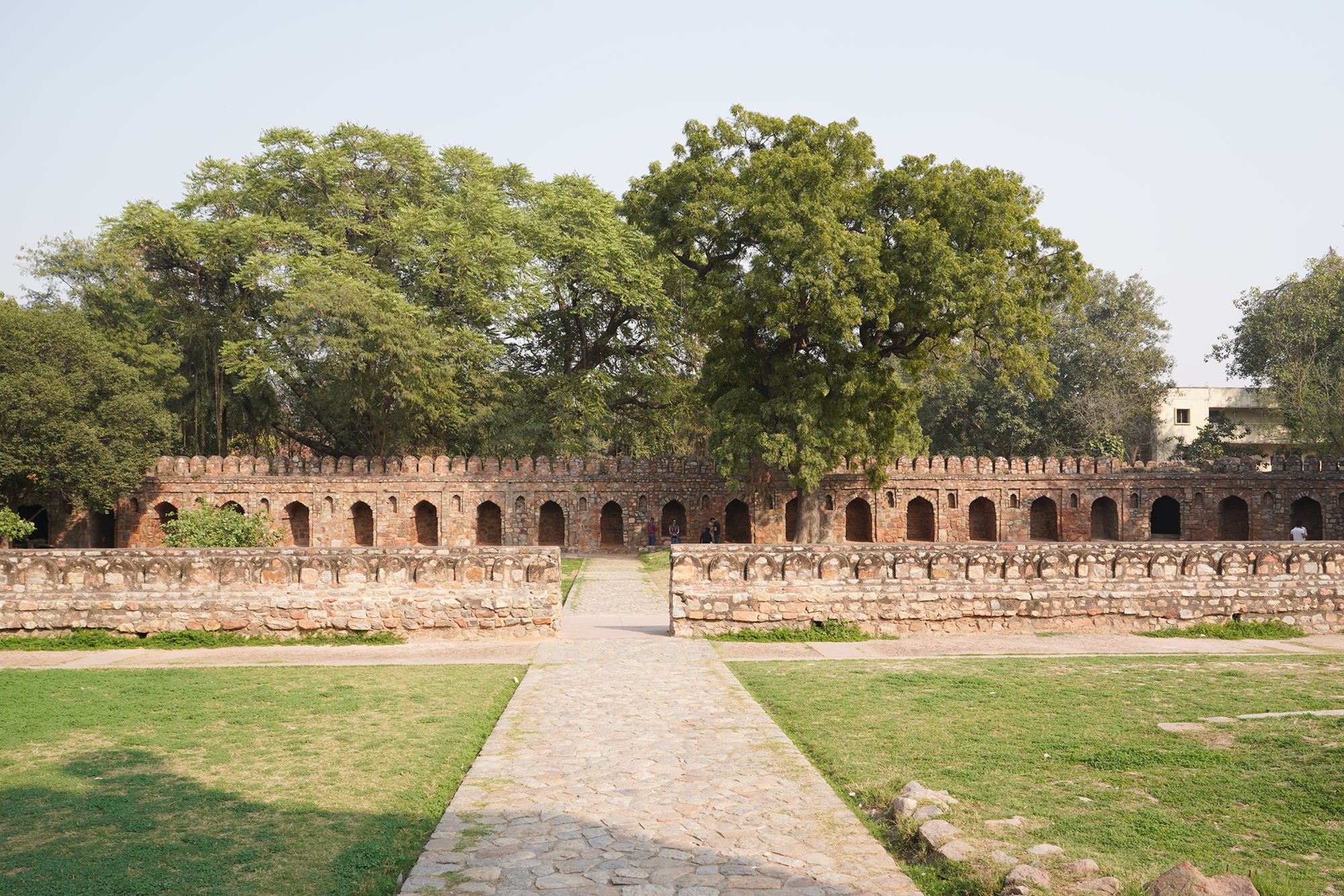
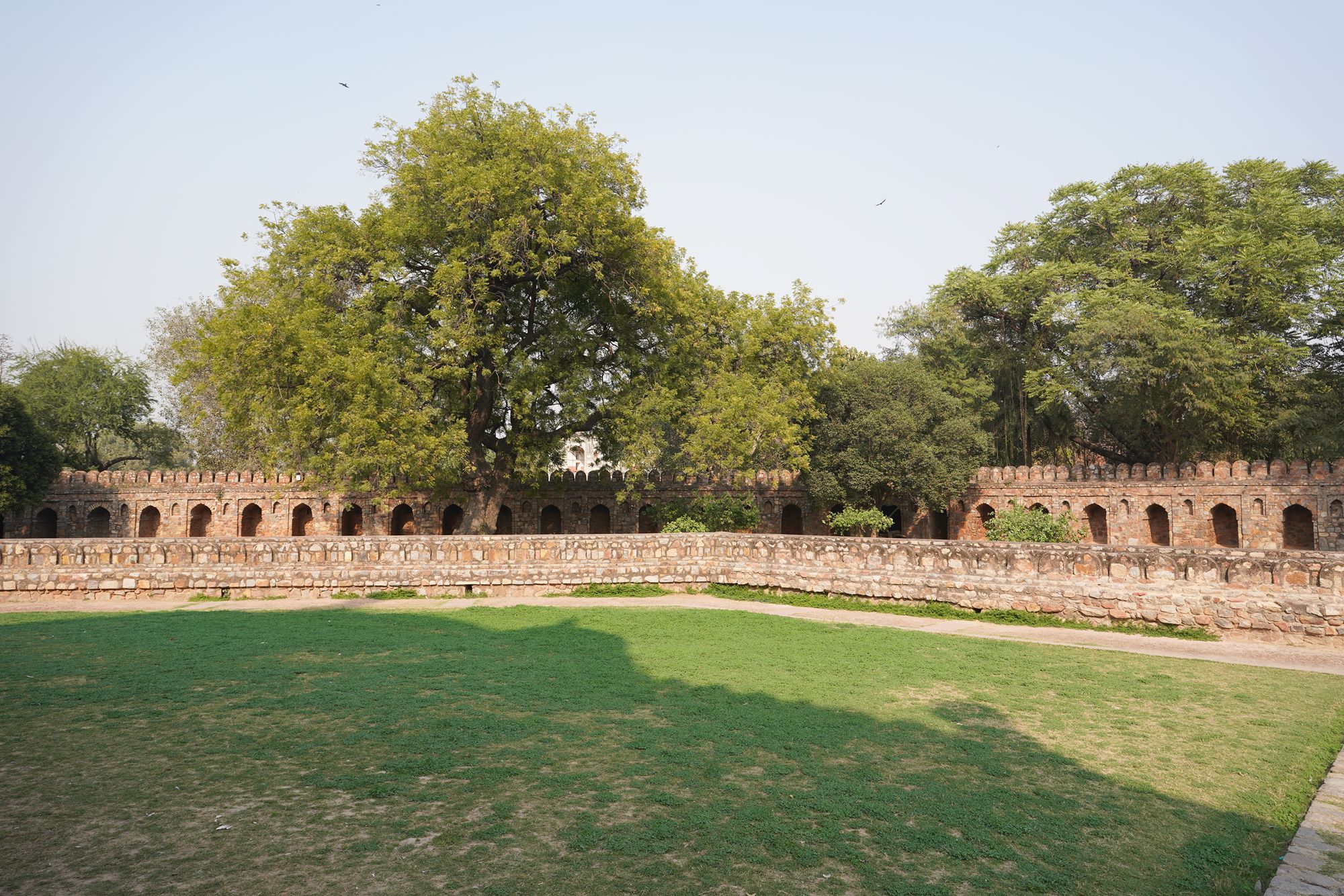
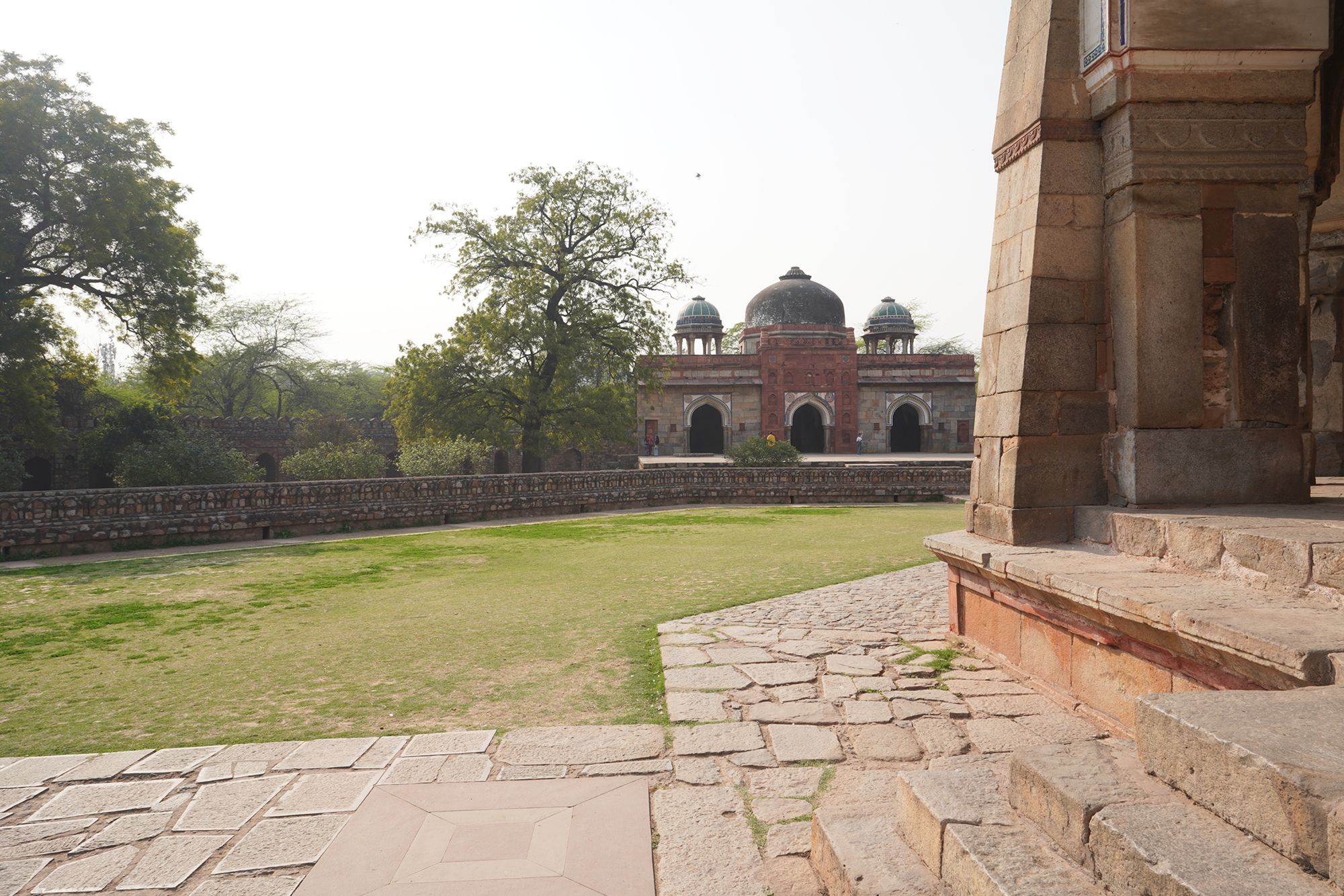
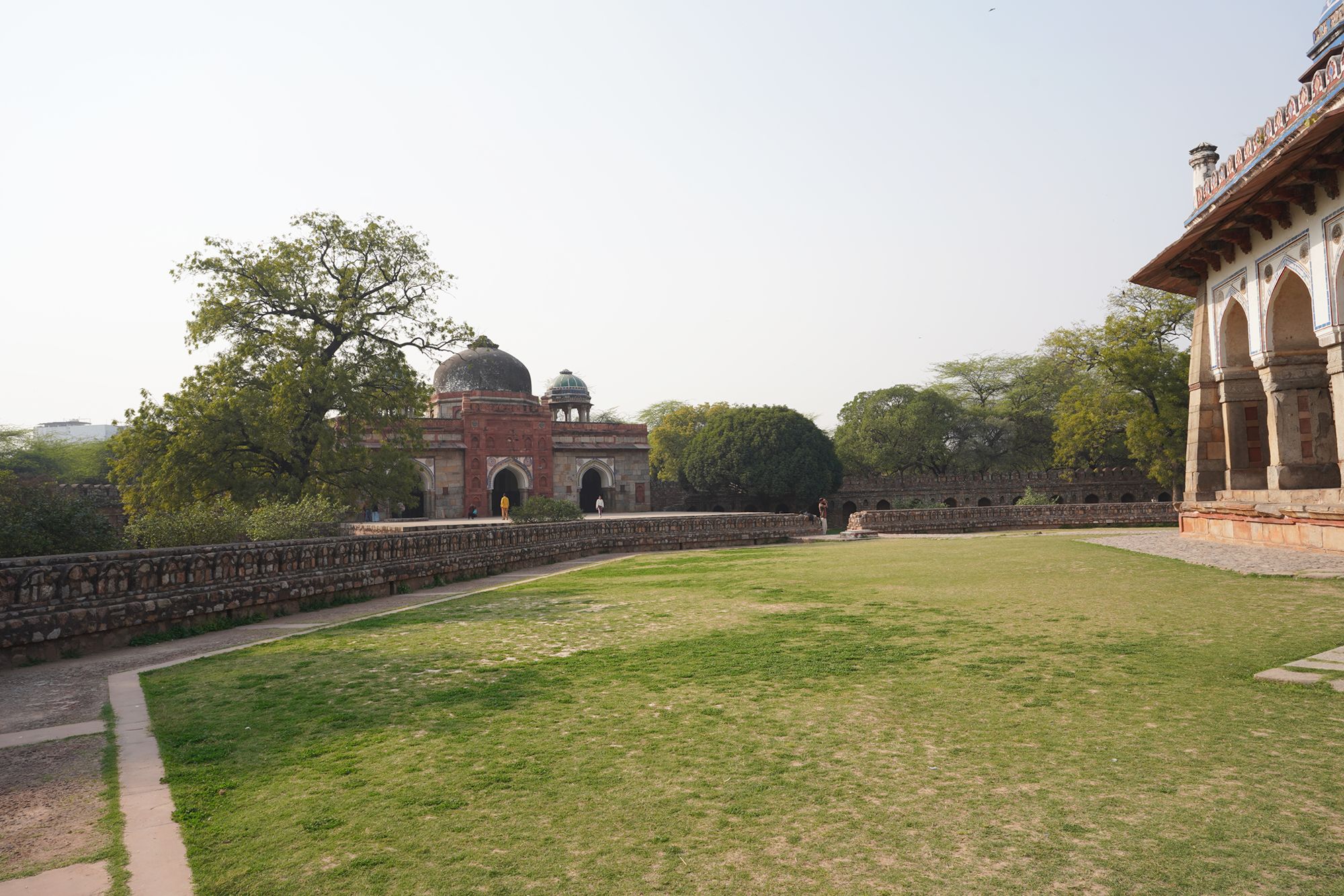
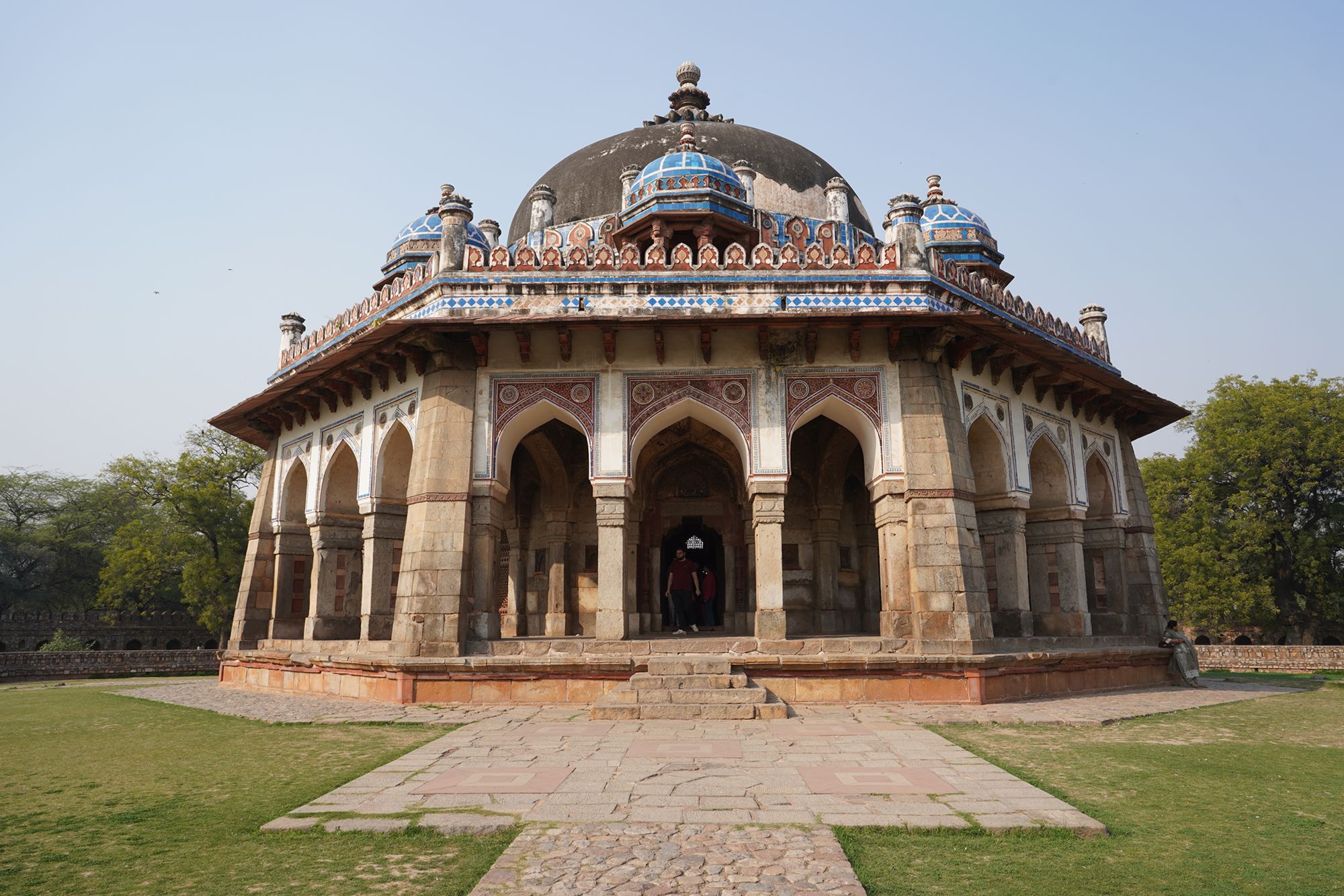
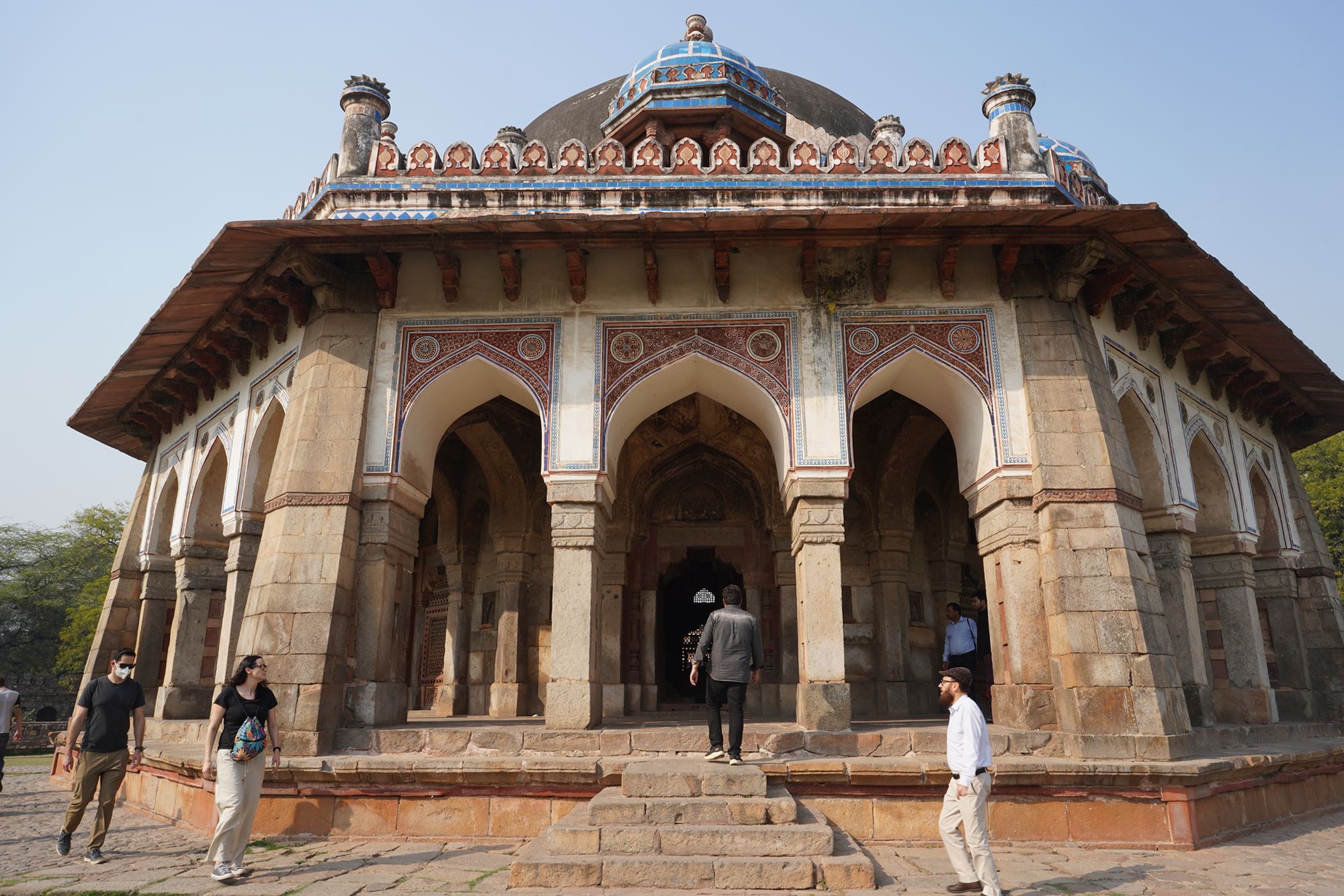
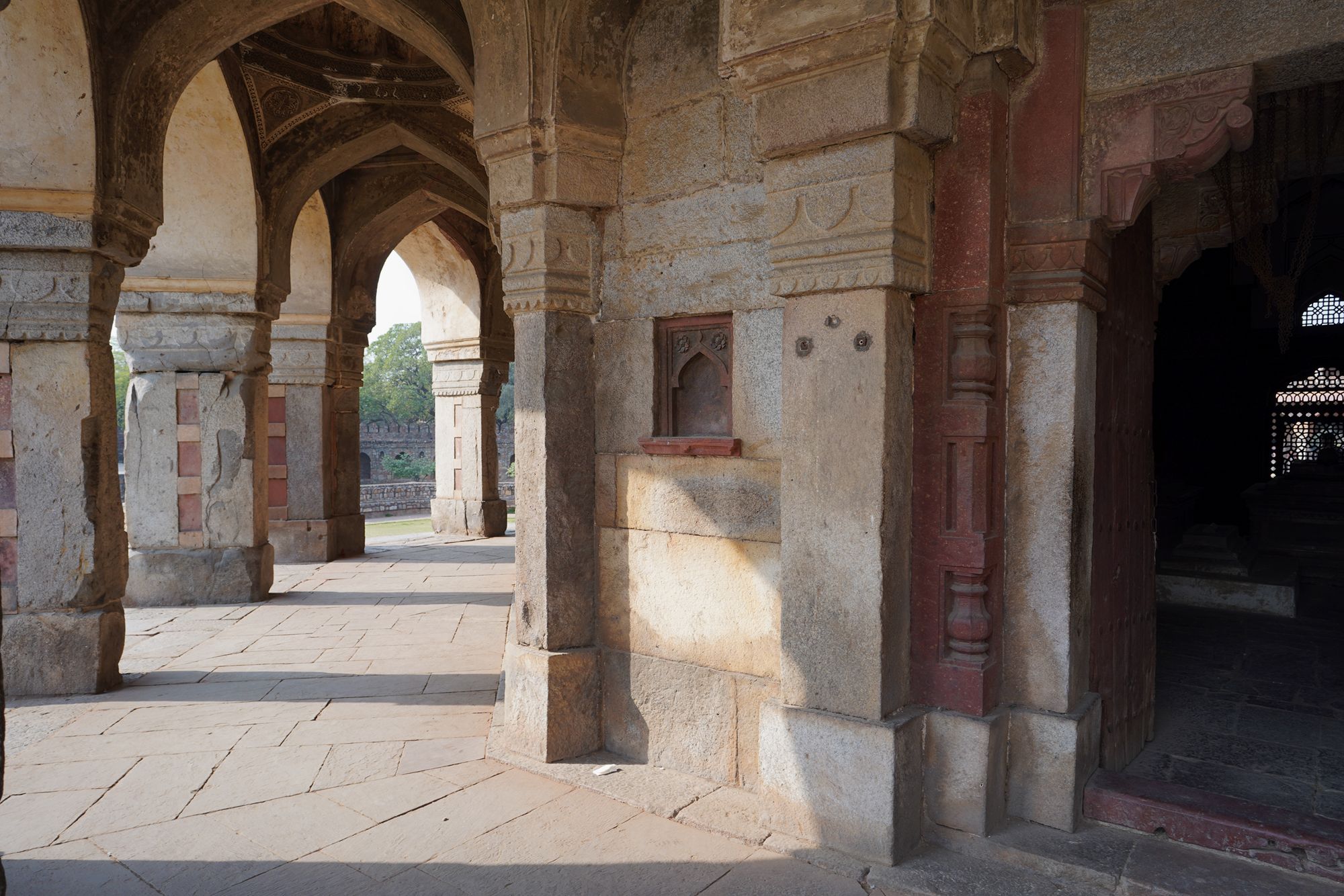
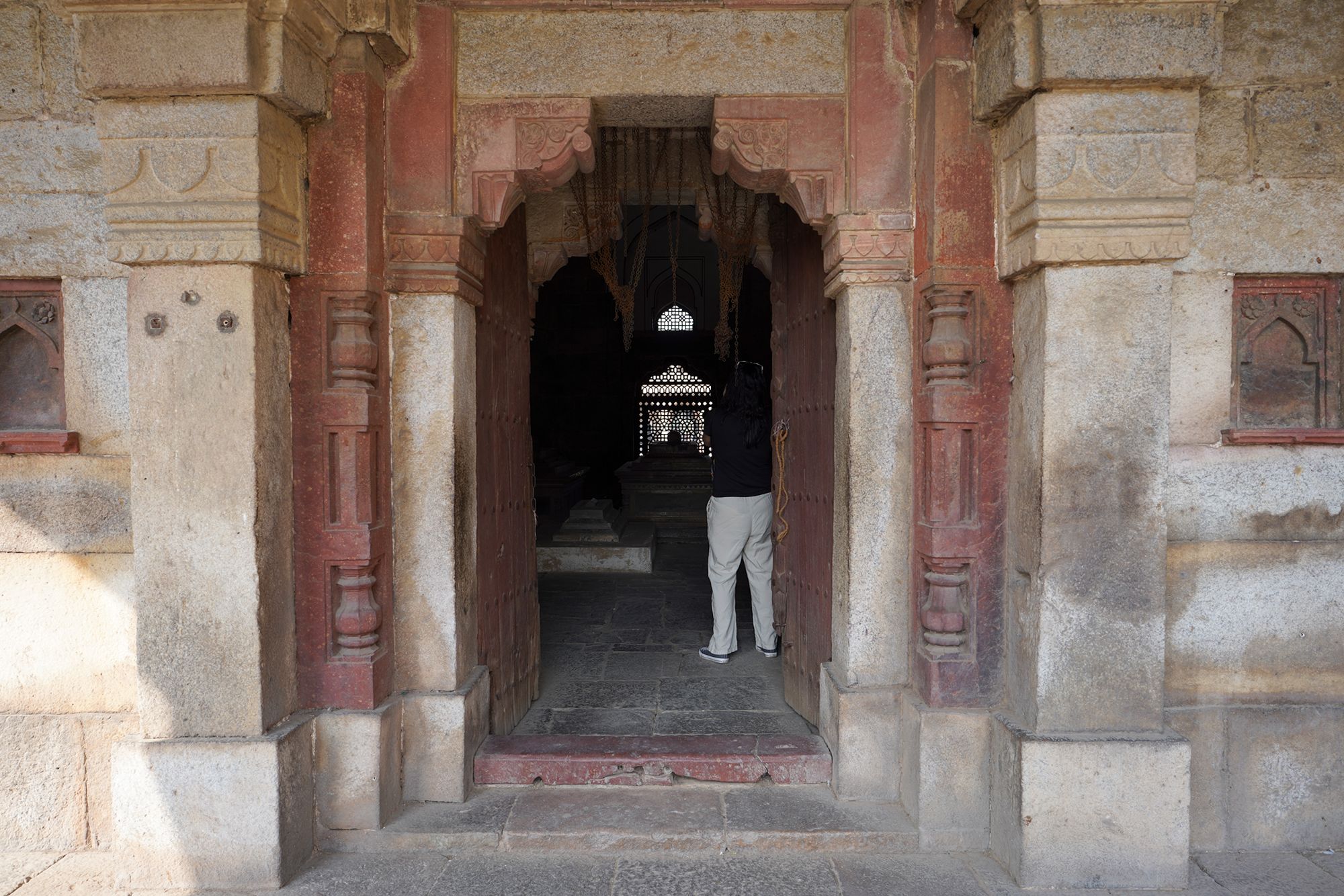
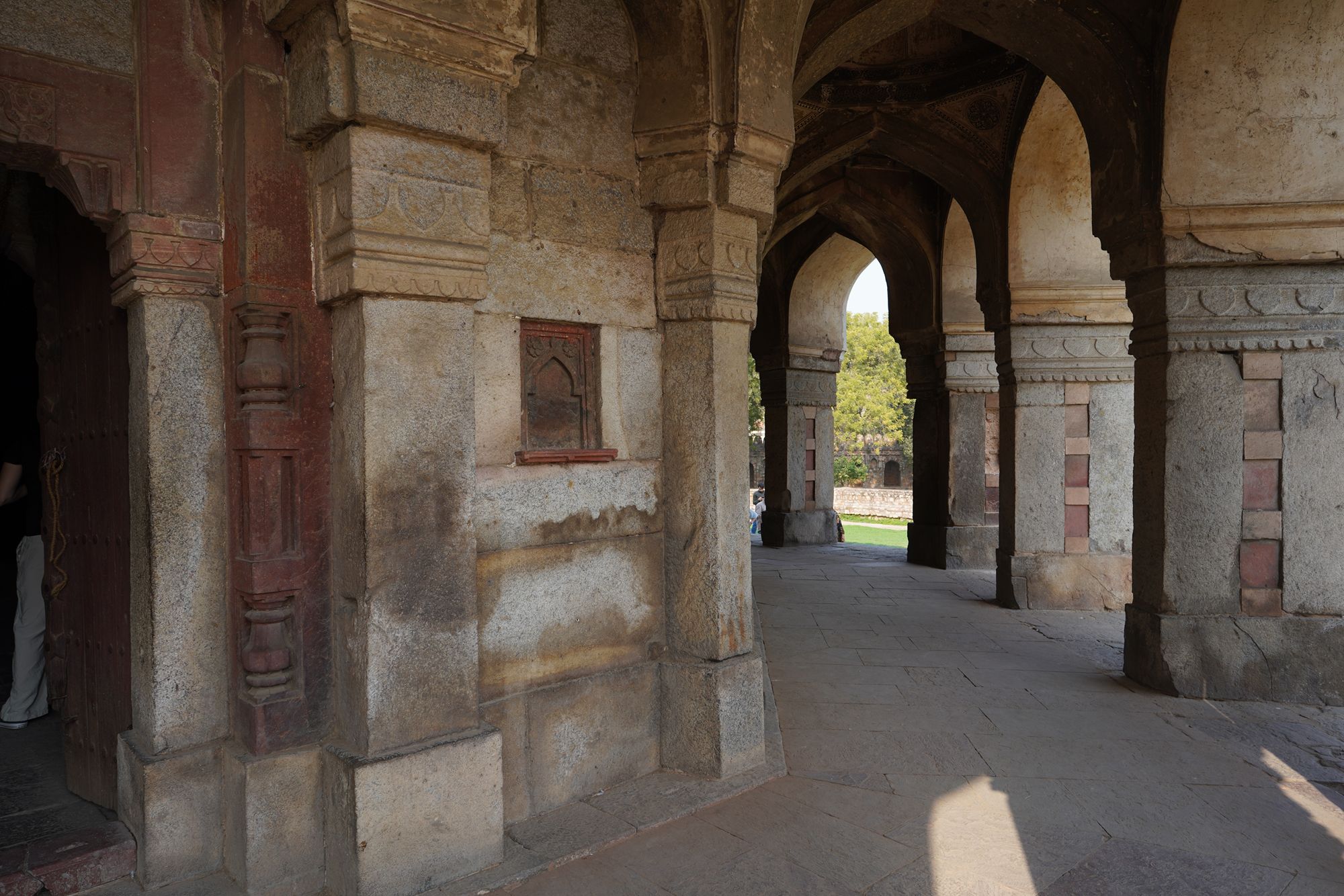
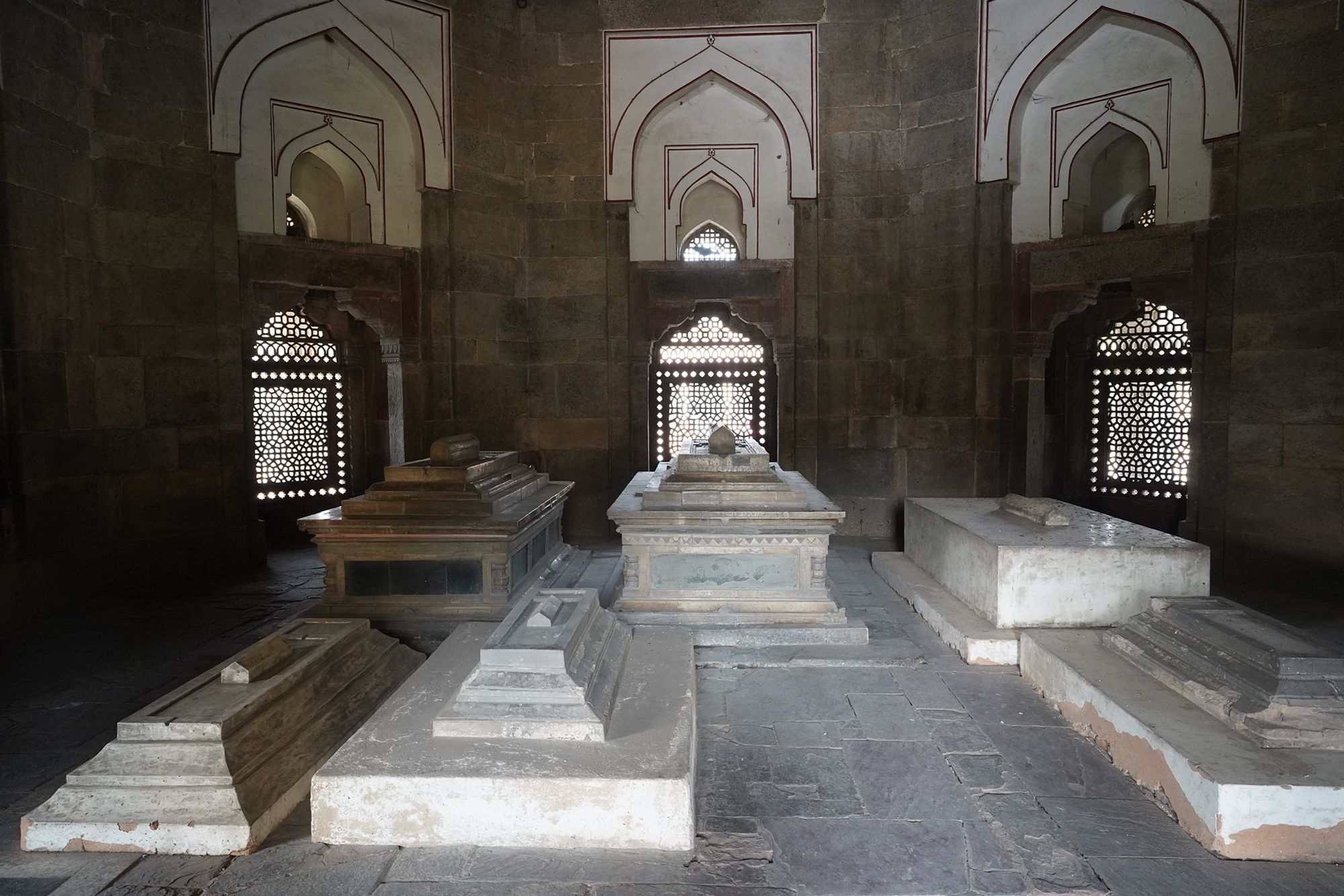
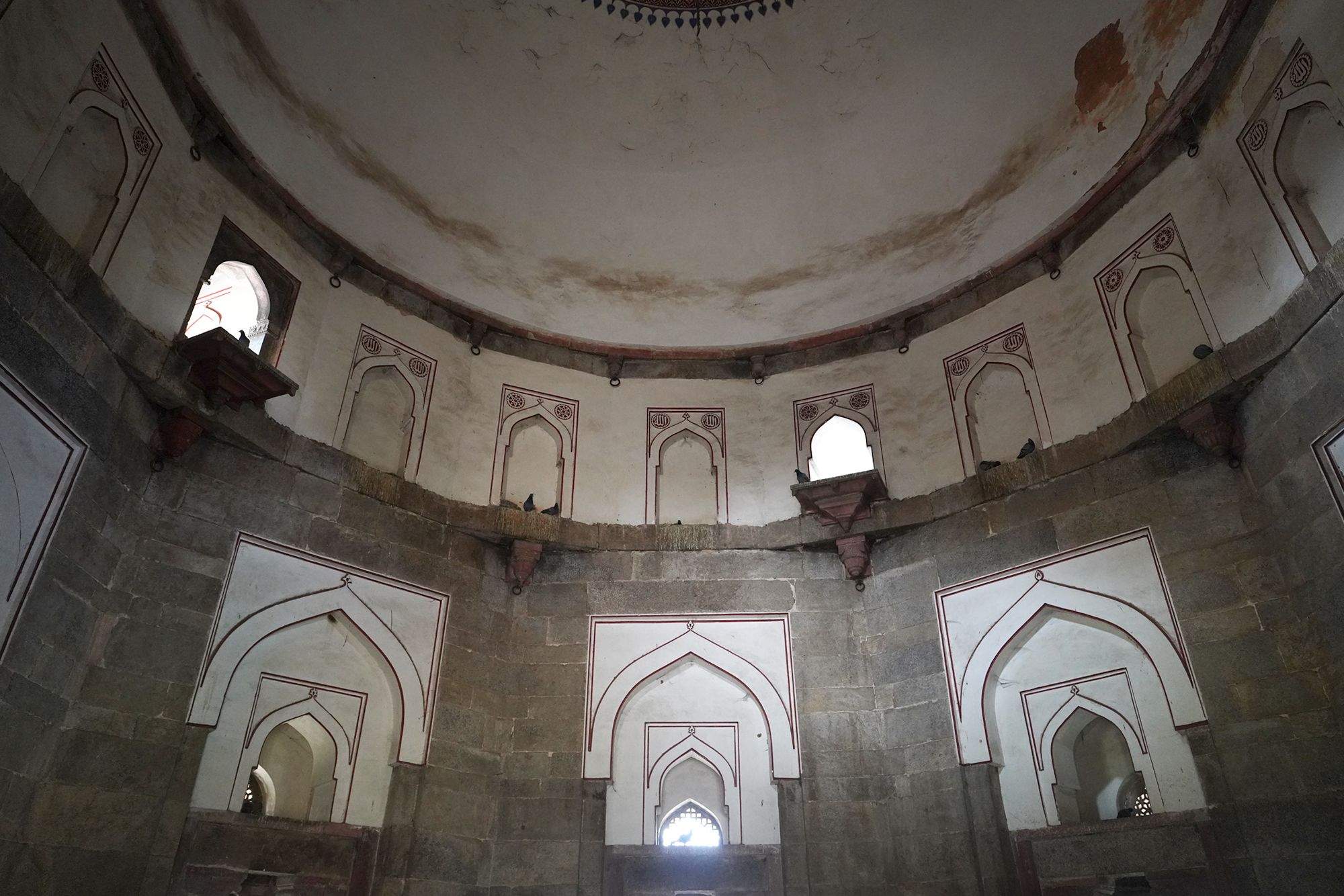
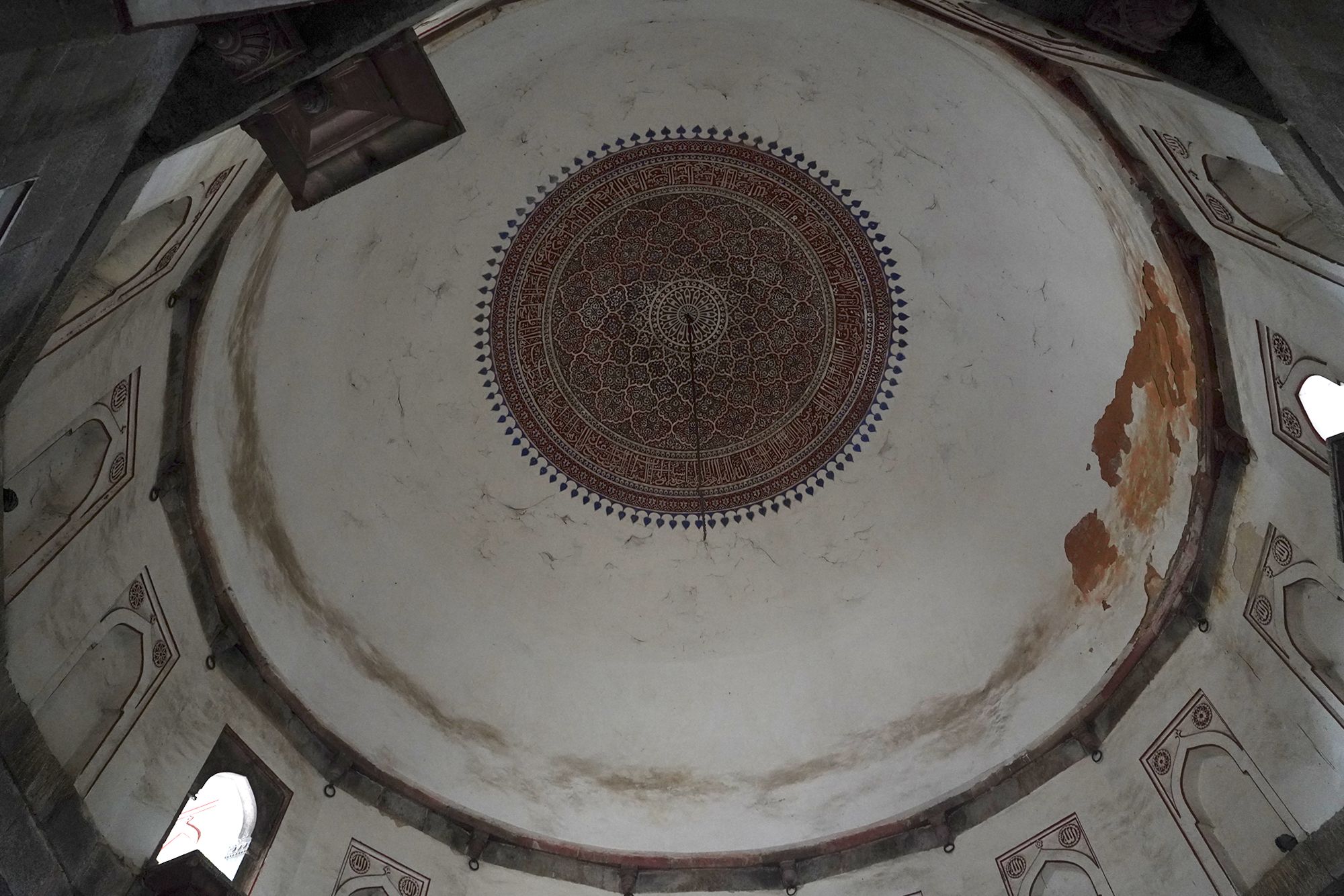
Inside Isa Khan’s Tomb is the burial chamber containing the grave of Isa Khan Niyazi, along with several other graves believed to belong to members of his family. The interior is relatively simple compared with the richly decorated exterior, with a high domed ceiling and arched openings.
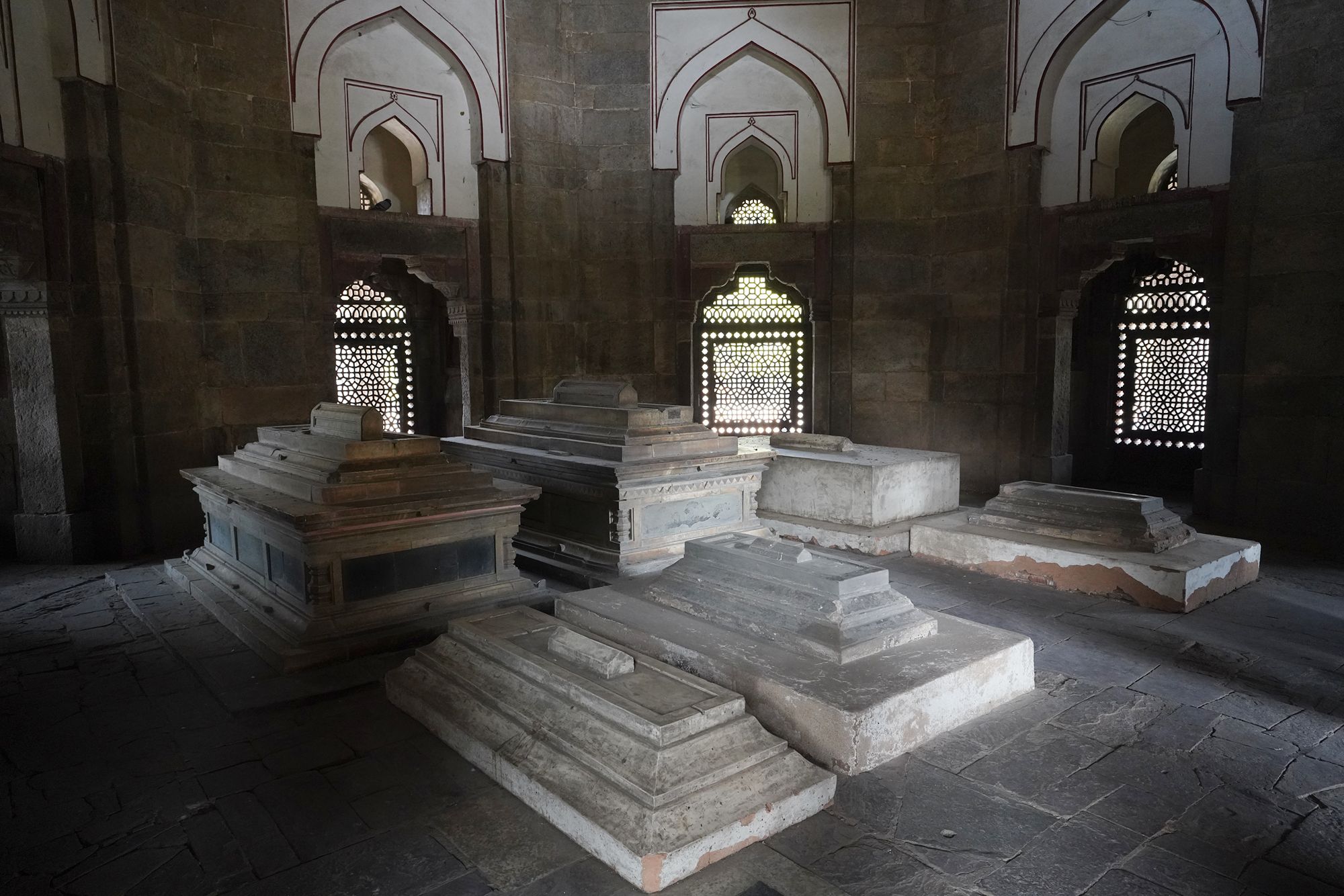
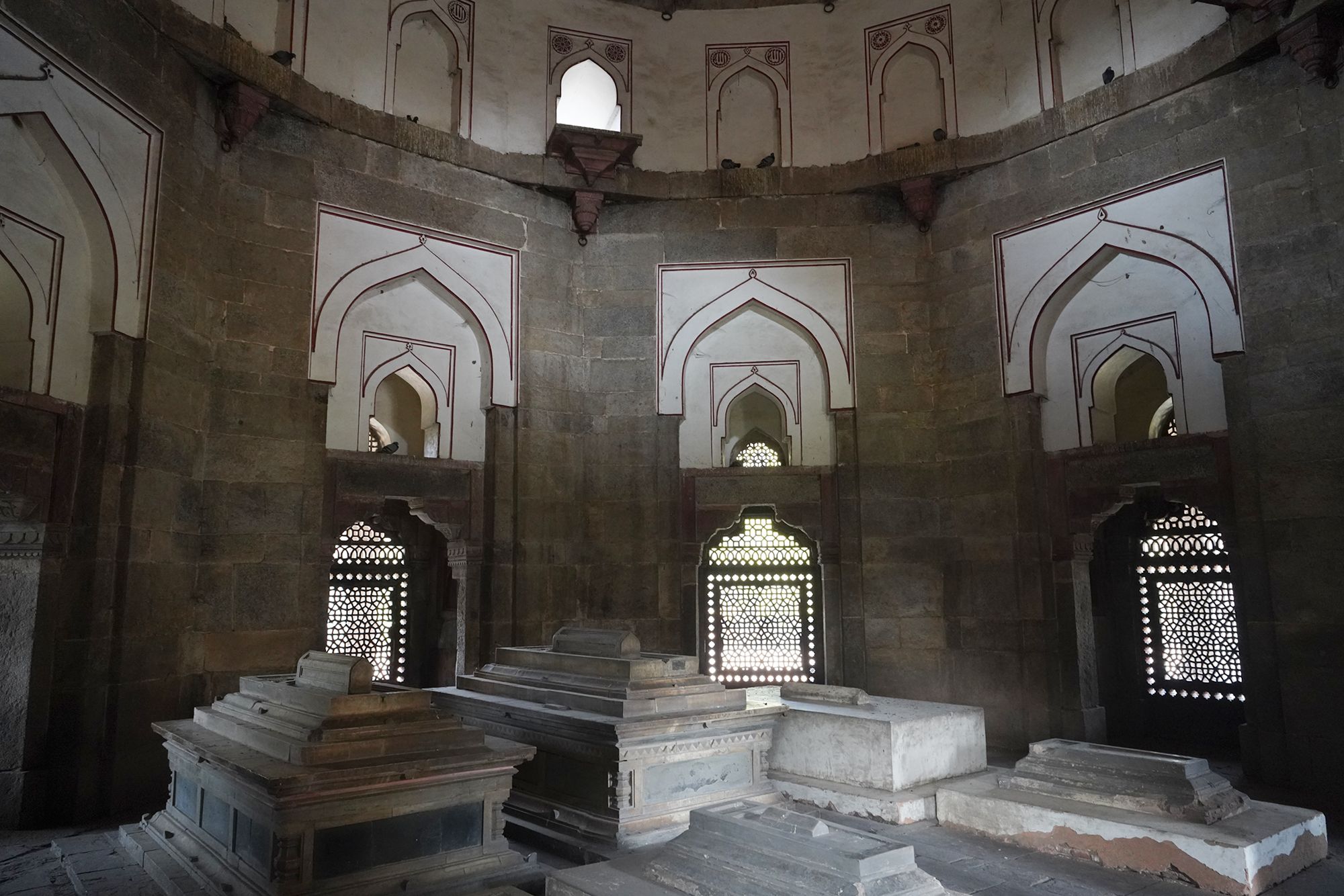
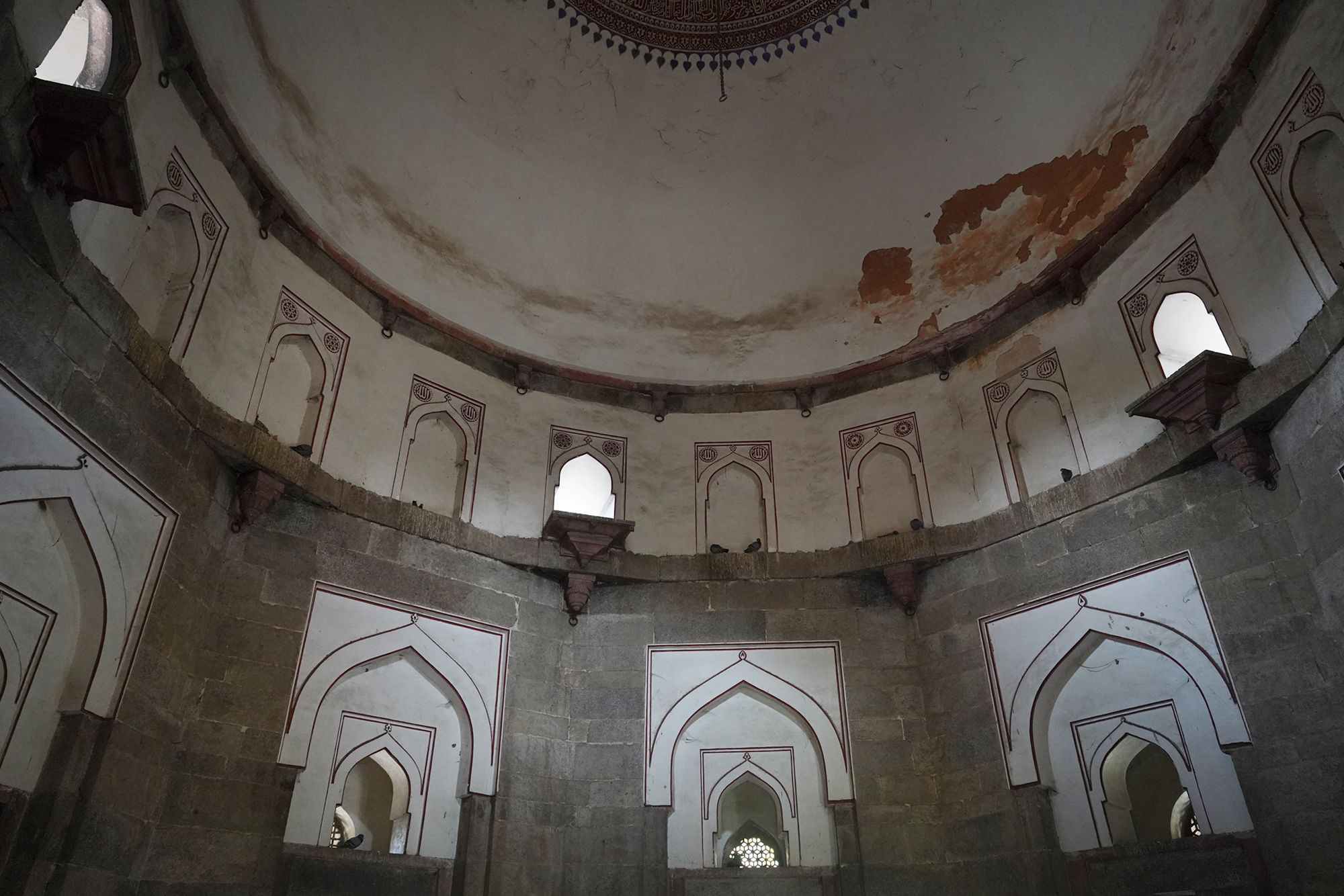
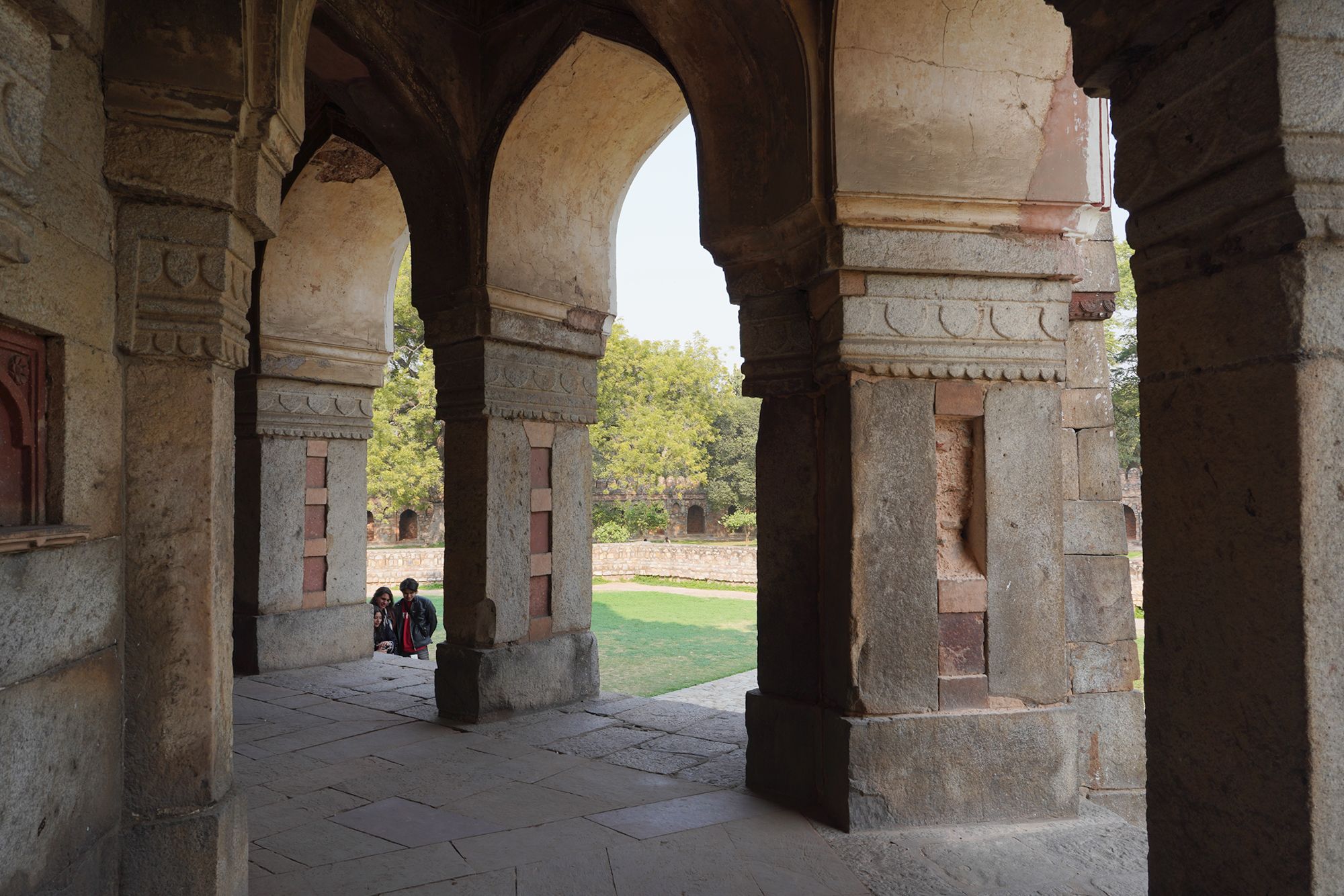
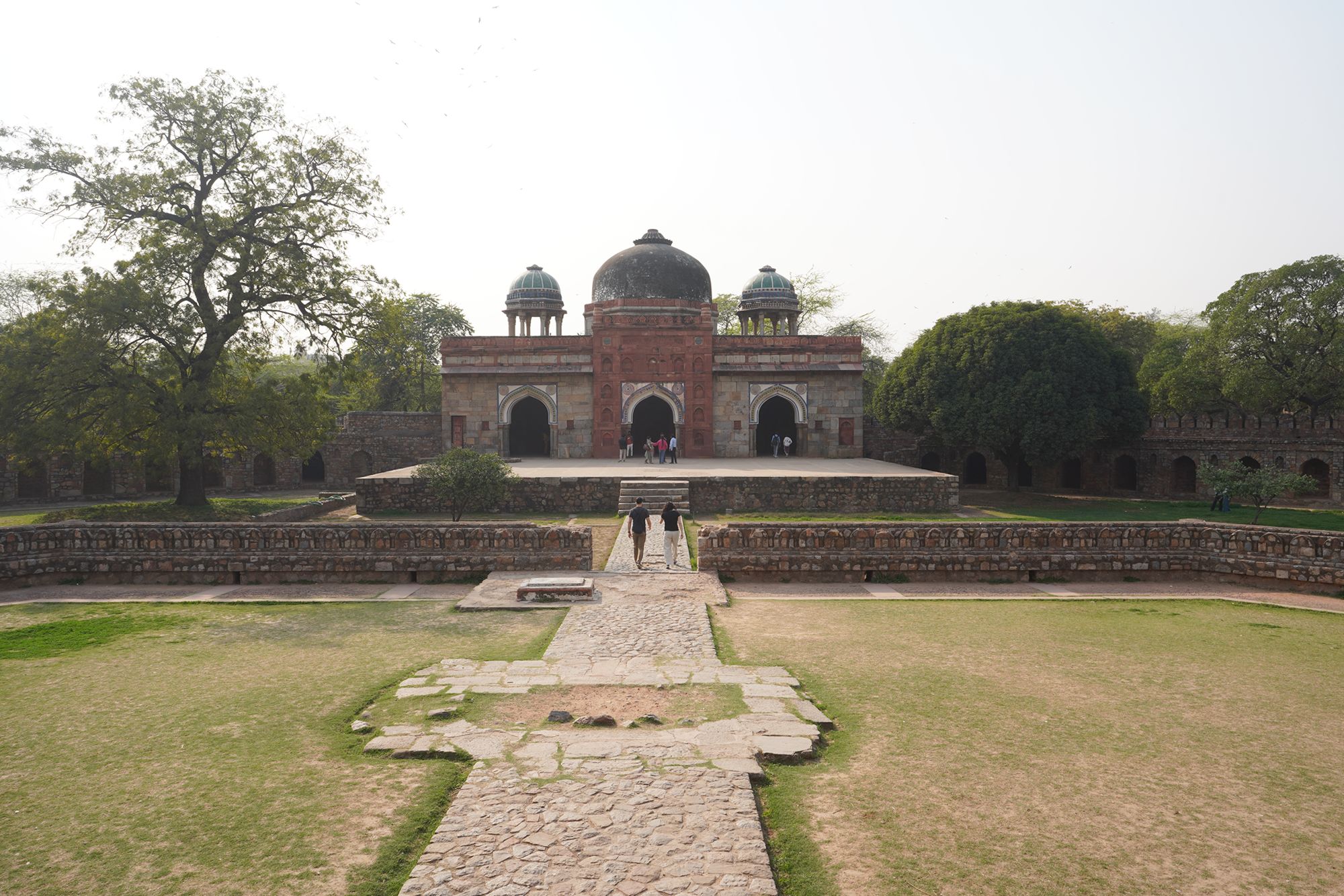
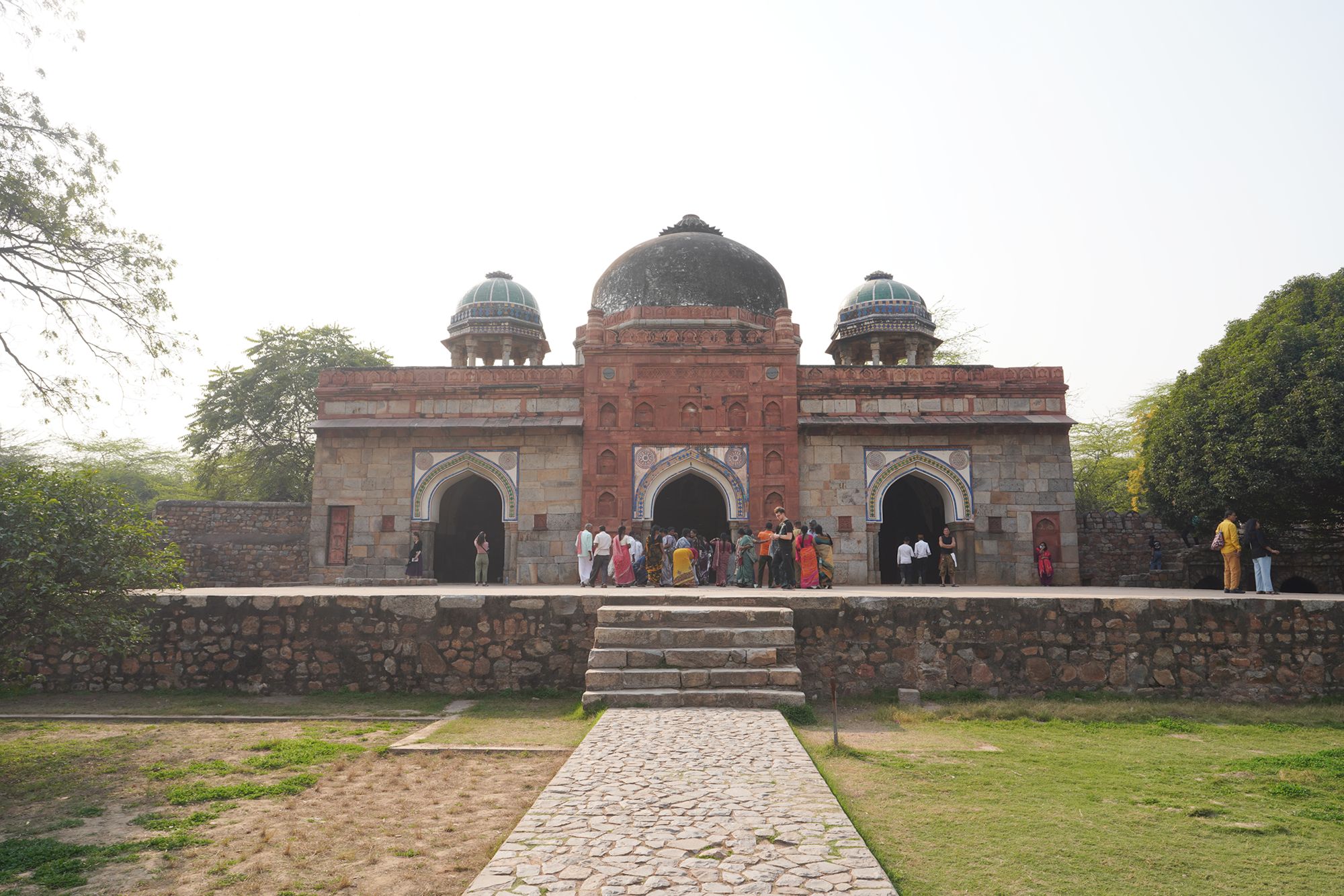
The Isa Khan Mosque, a 16th-century mosque located next to Isa Khan’s Tomb.
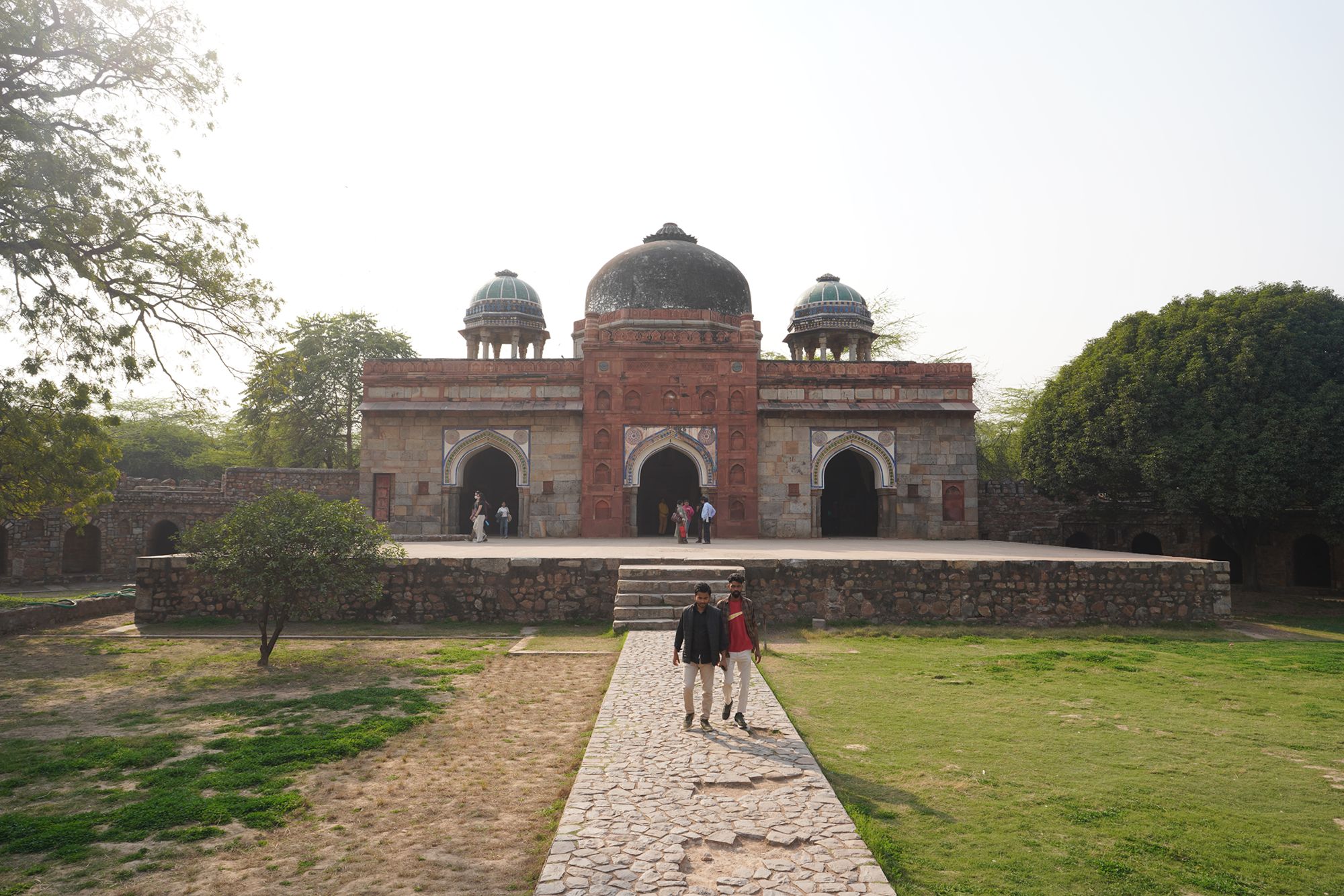
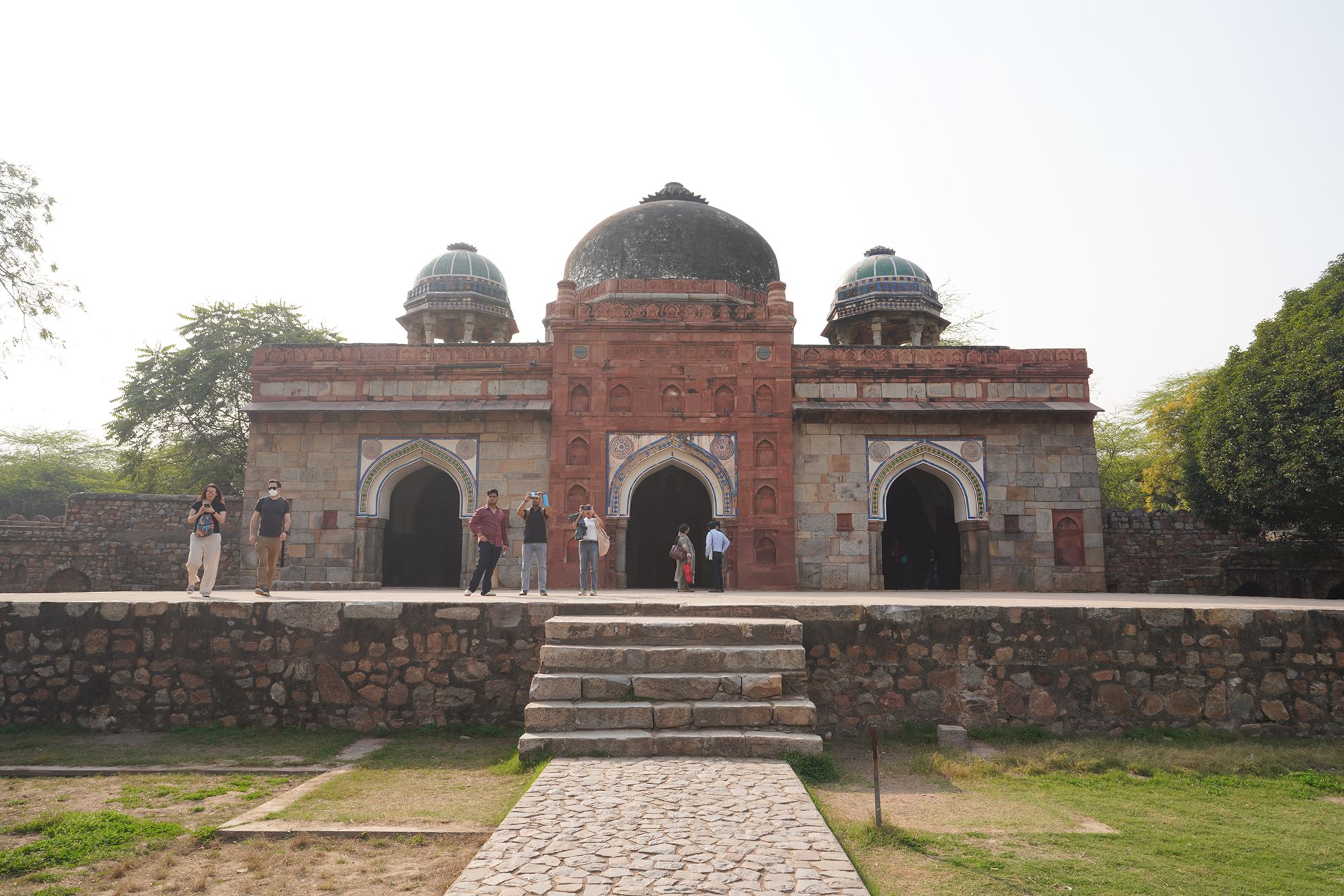
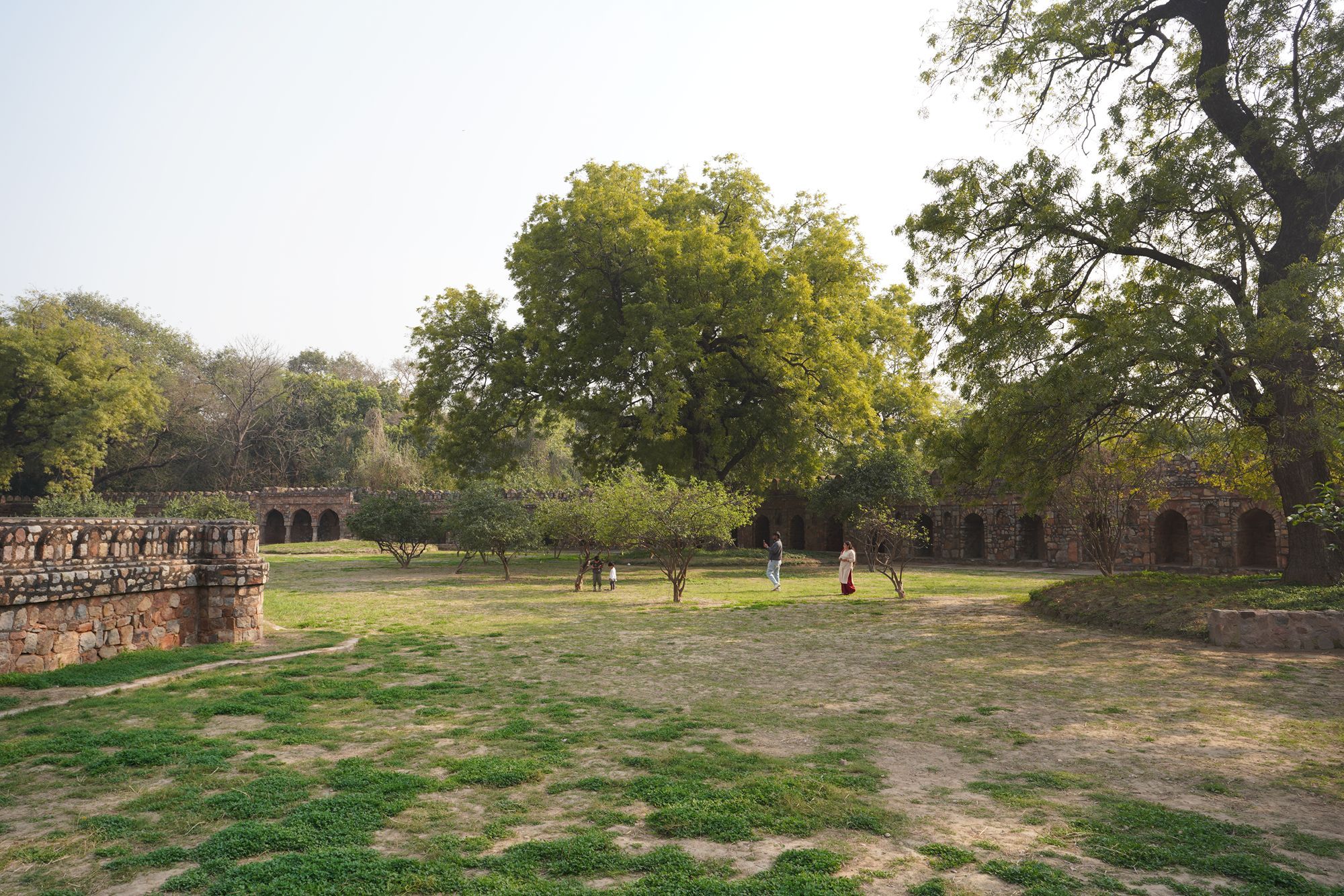
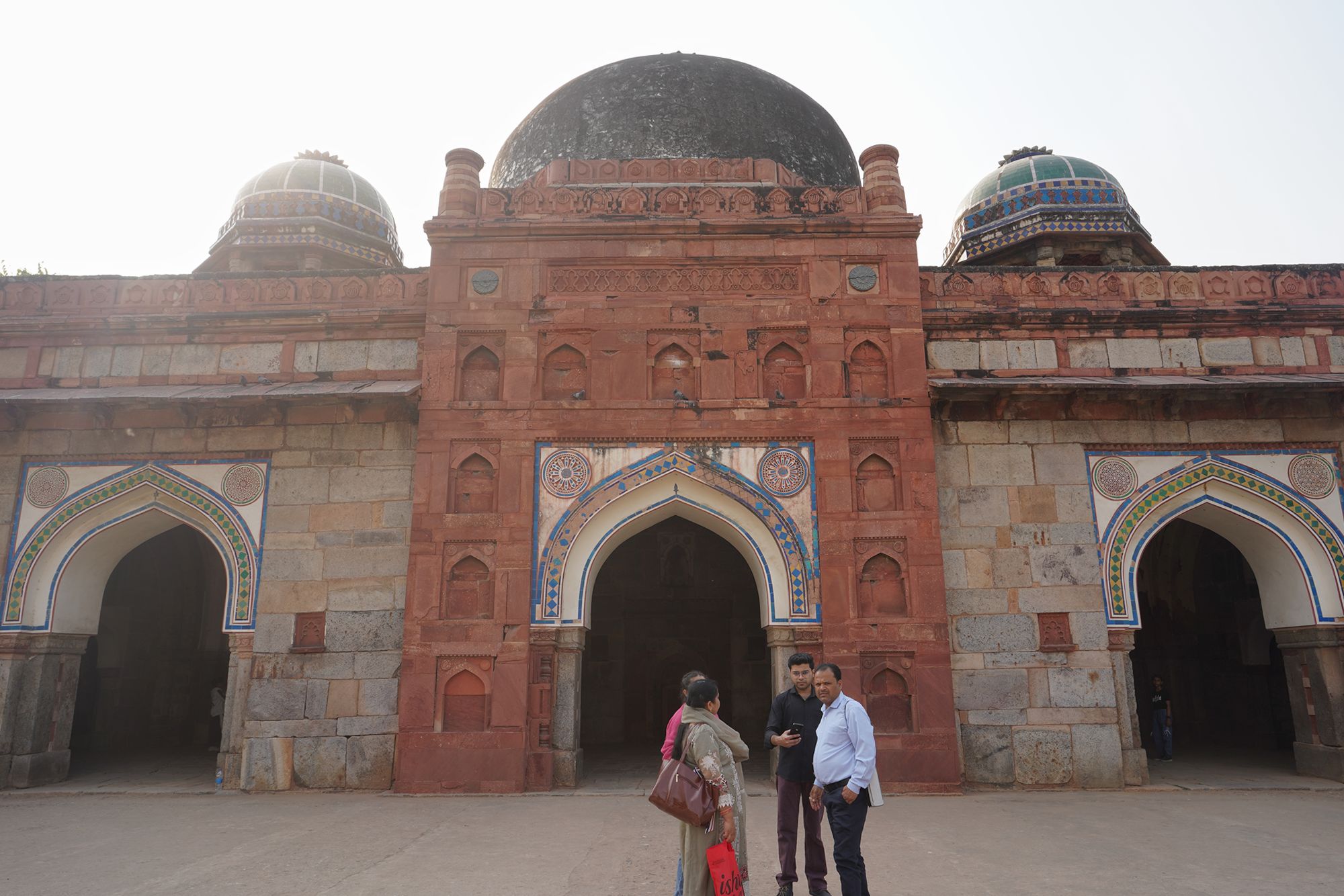
The interior of the Isa Khan Mosque is relatively simple and mostly empty, with an open prayer hall beneath its arches and domes.
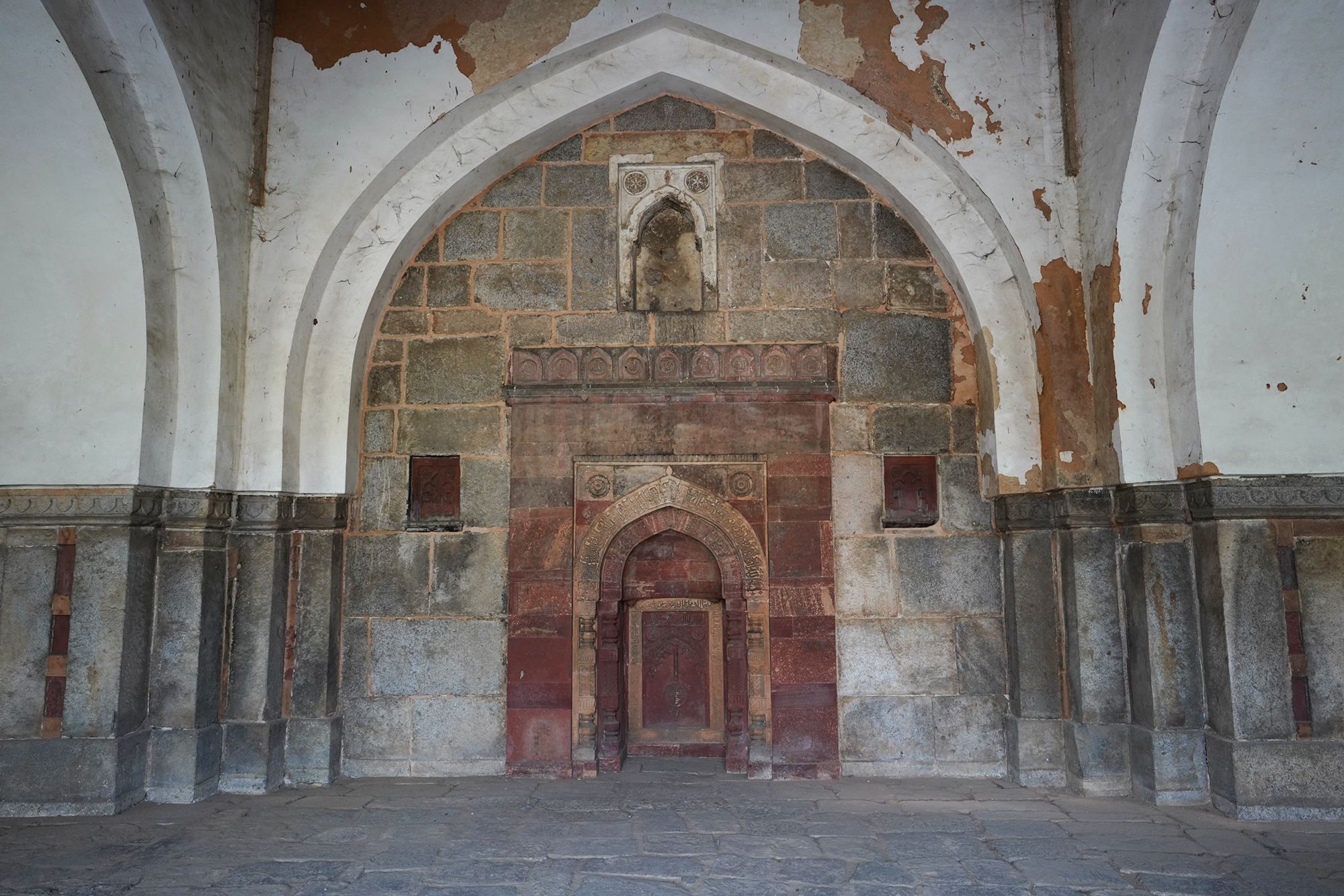
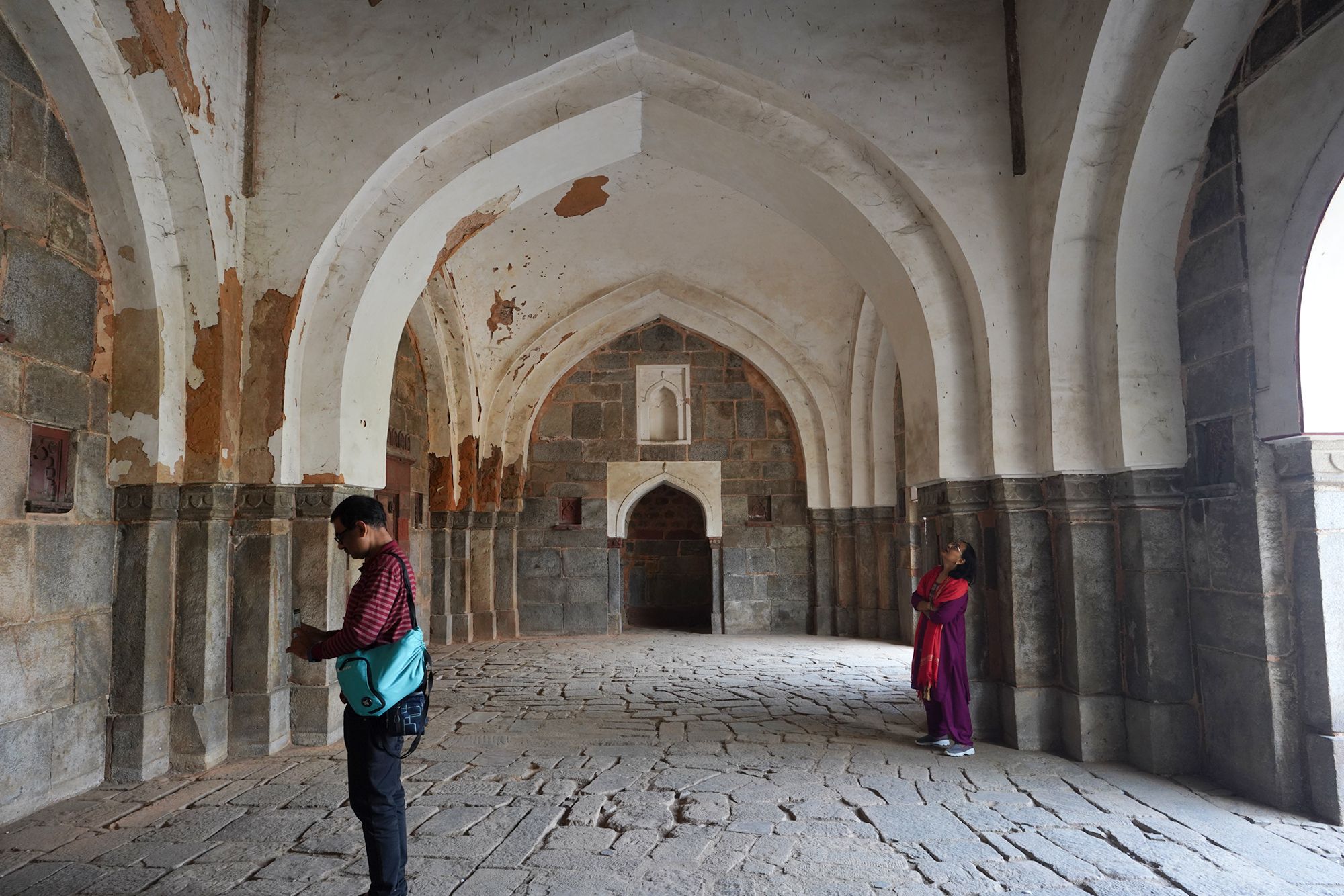
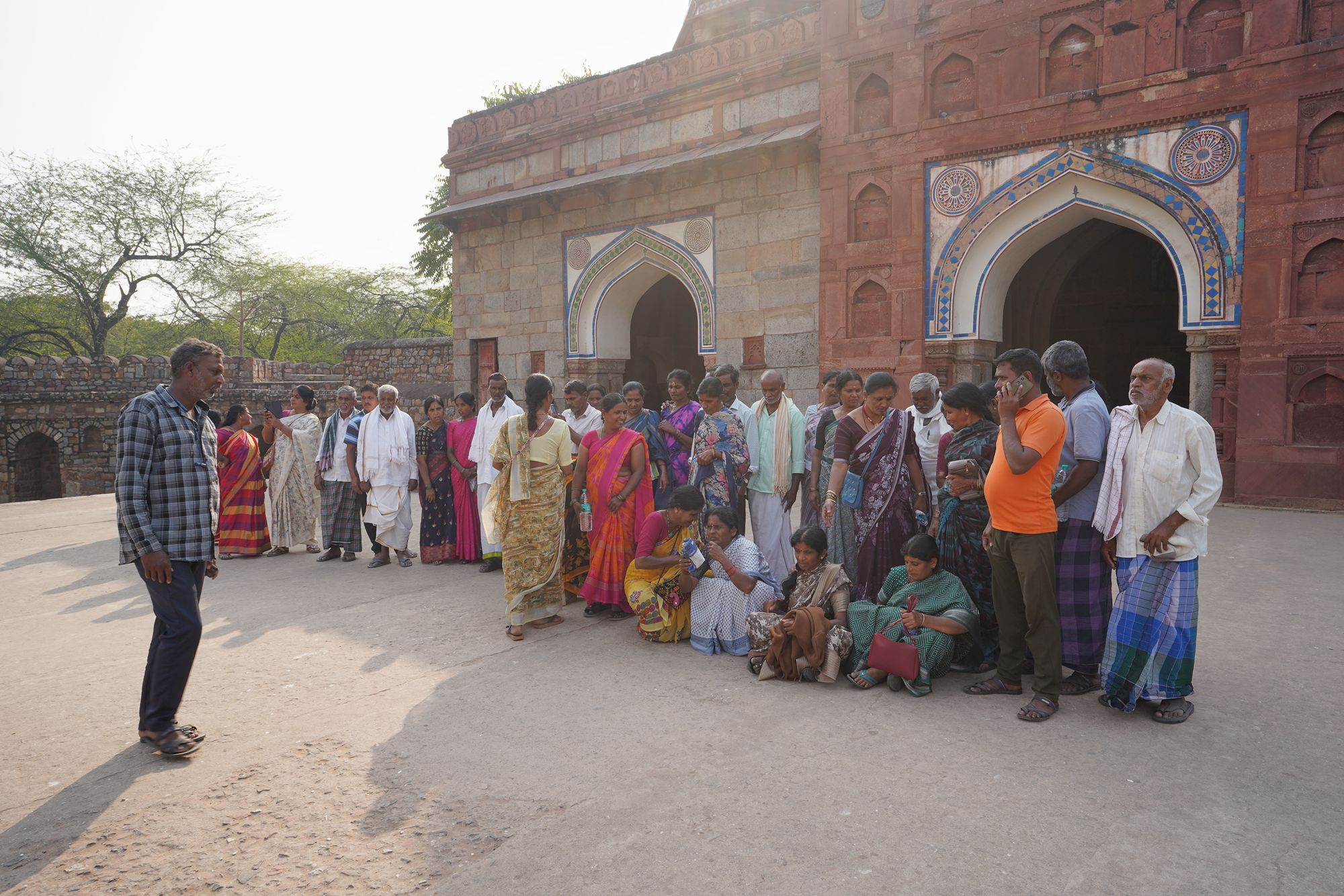
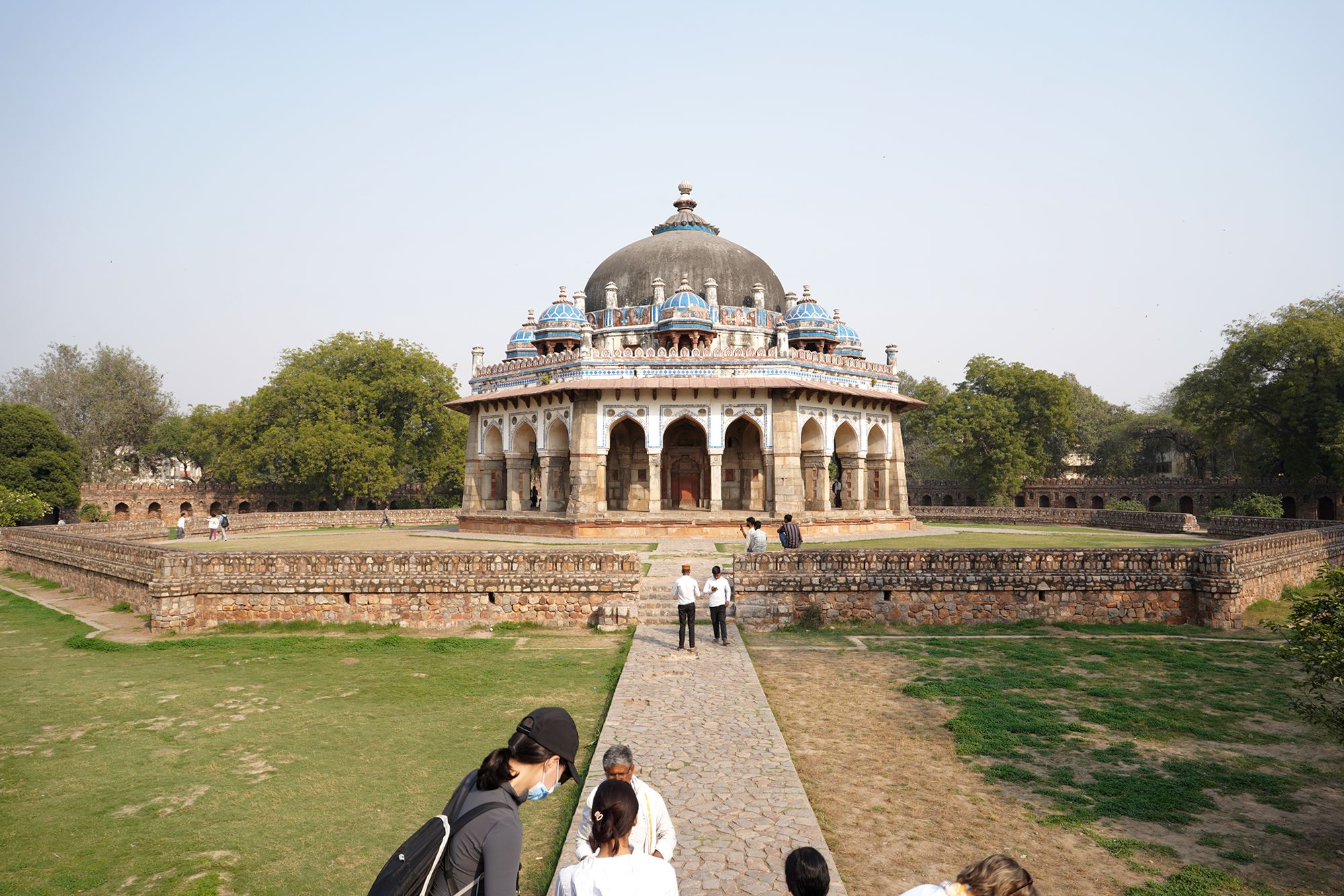
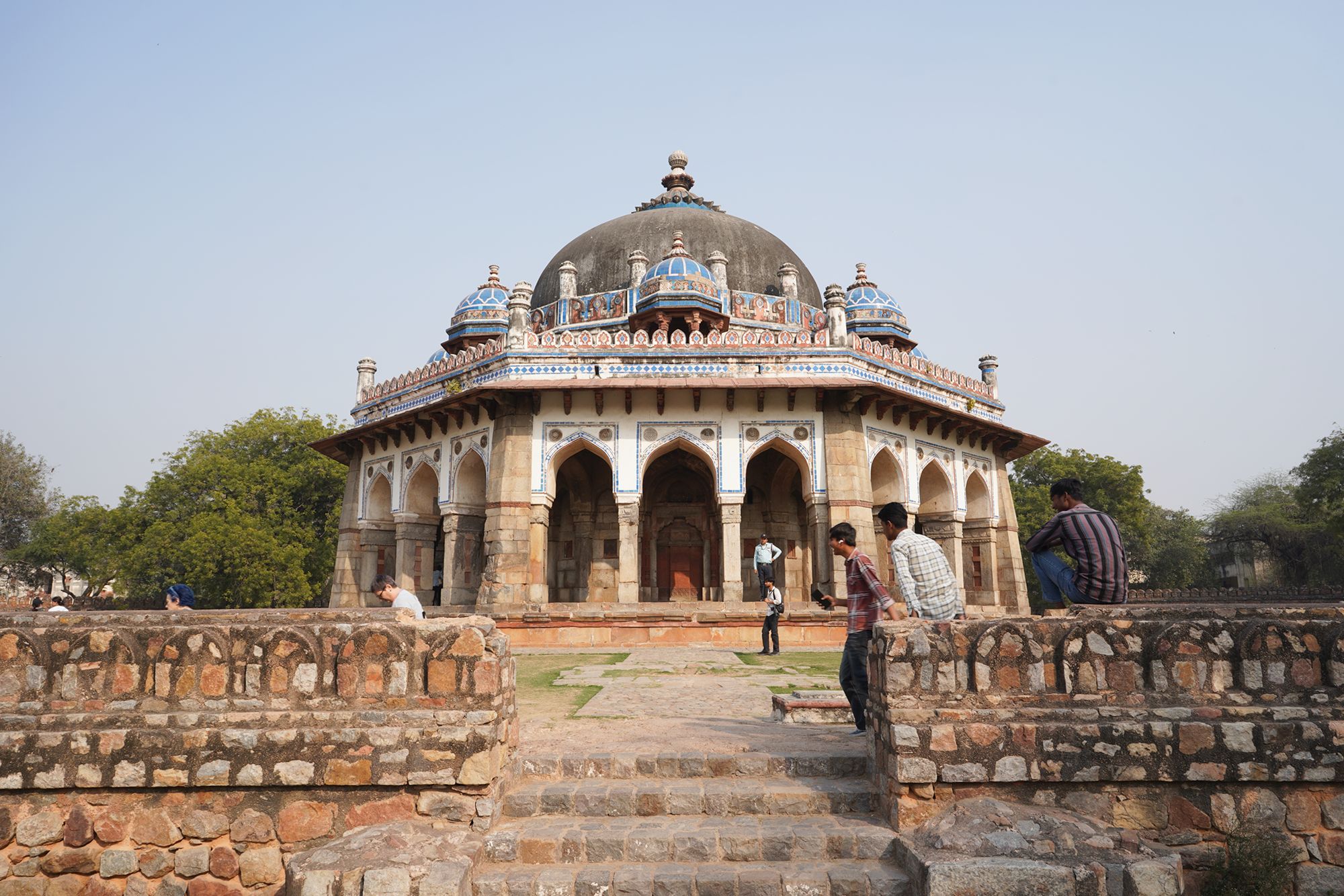
Looking back at the Isa Khan Mosque
Exiting the Isa Khan’s Tomb complex through the same gate I entered from.
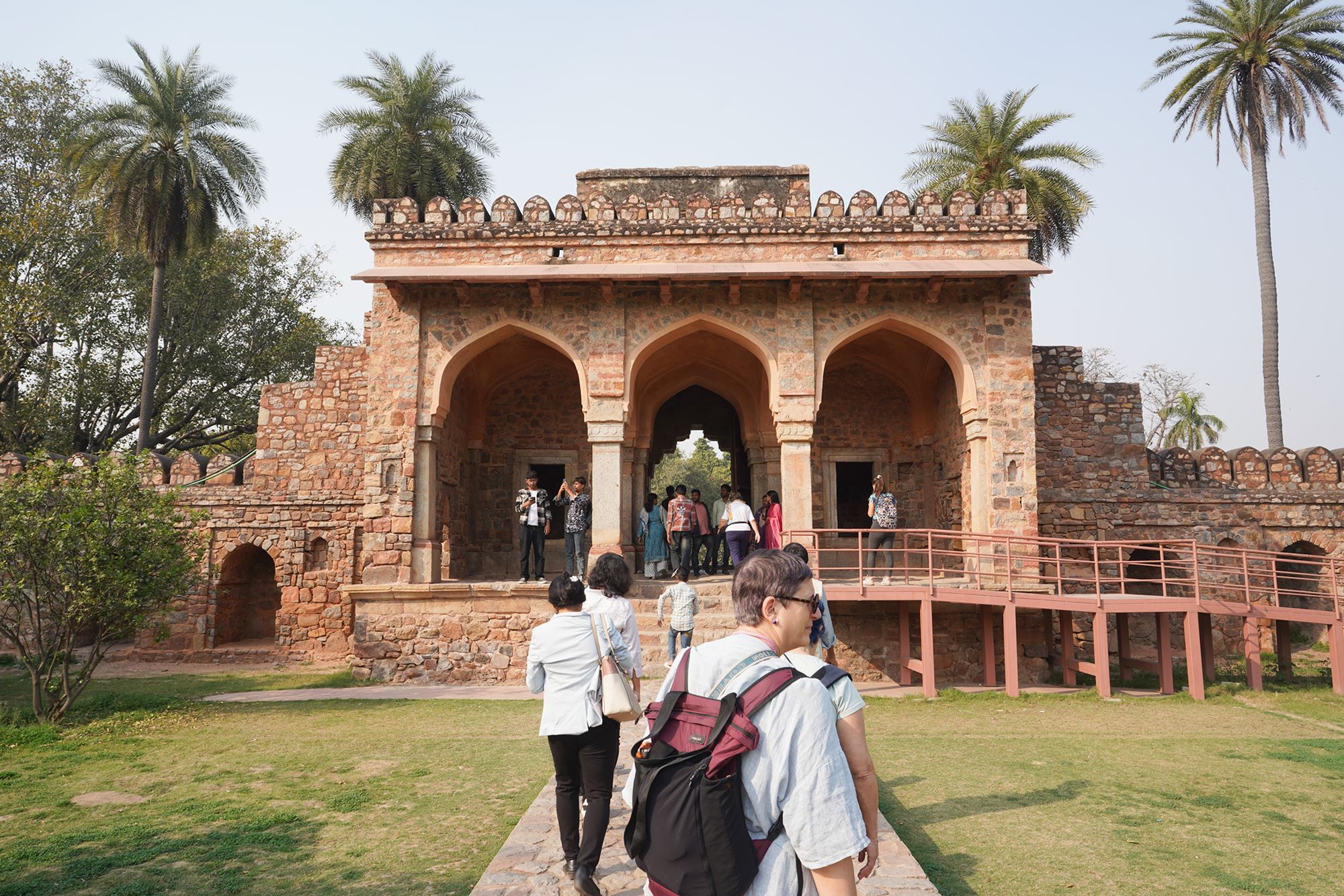
I was back on the way to Humayun’s Tomb.
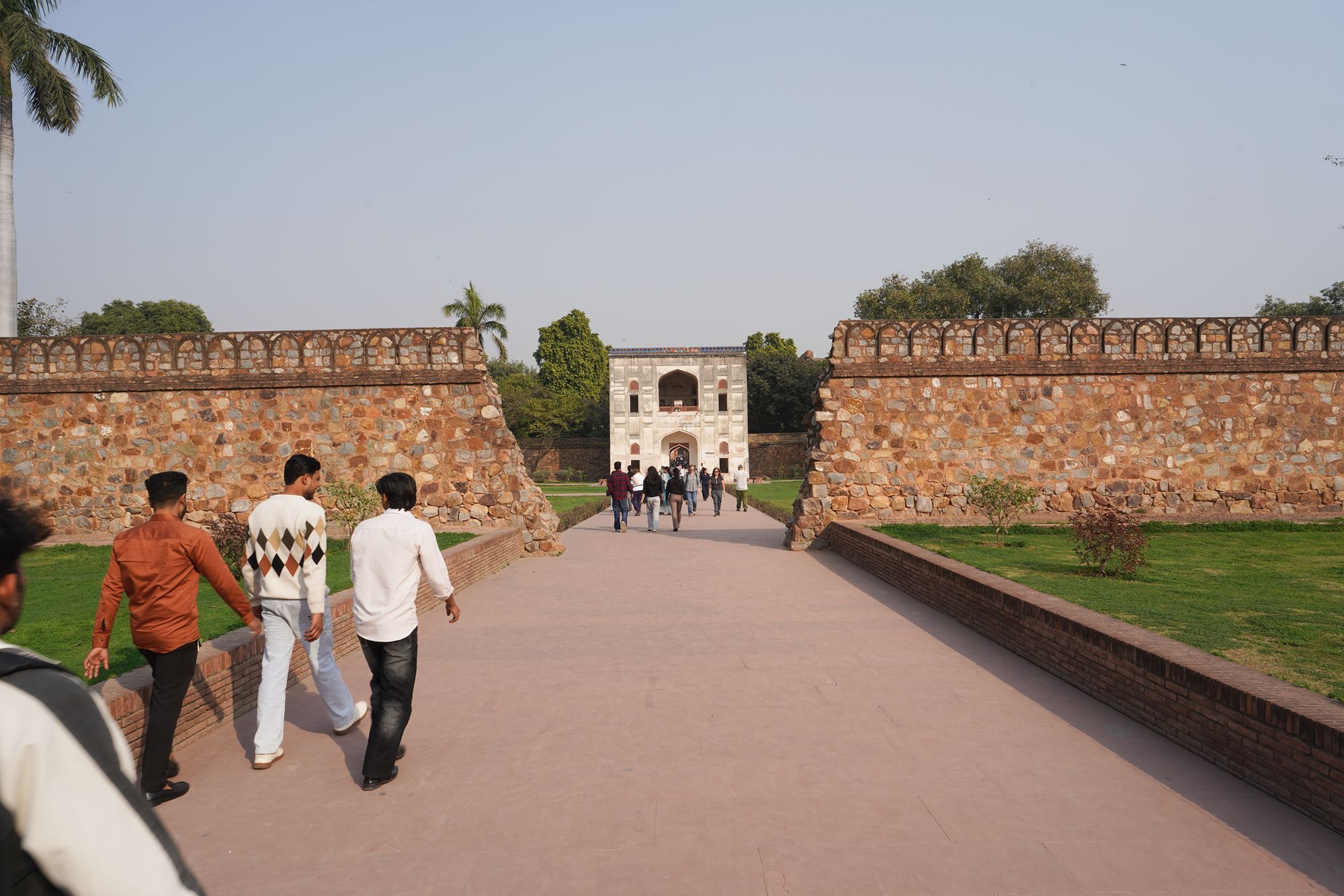
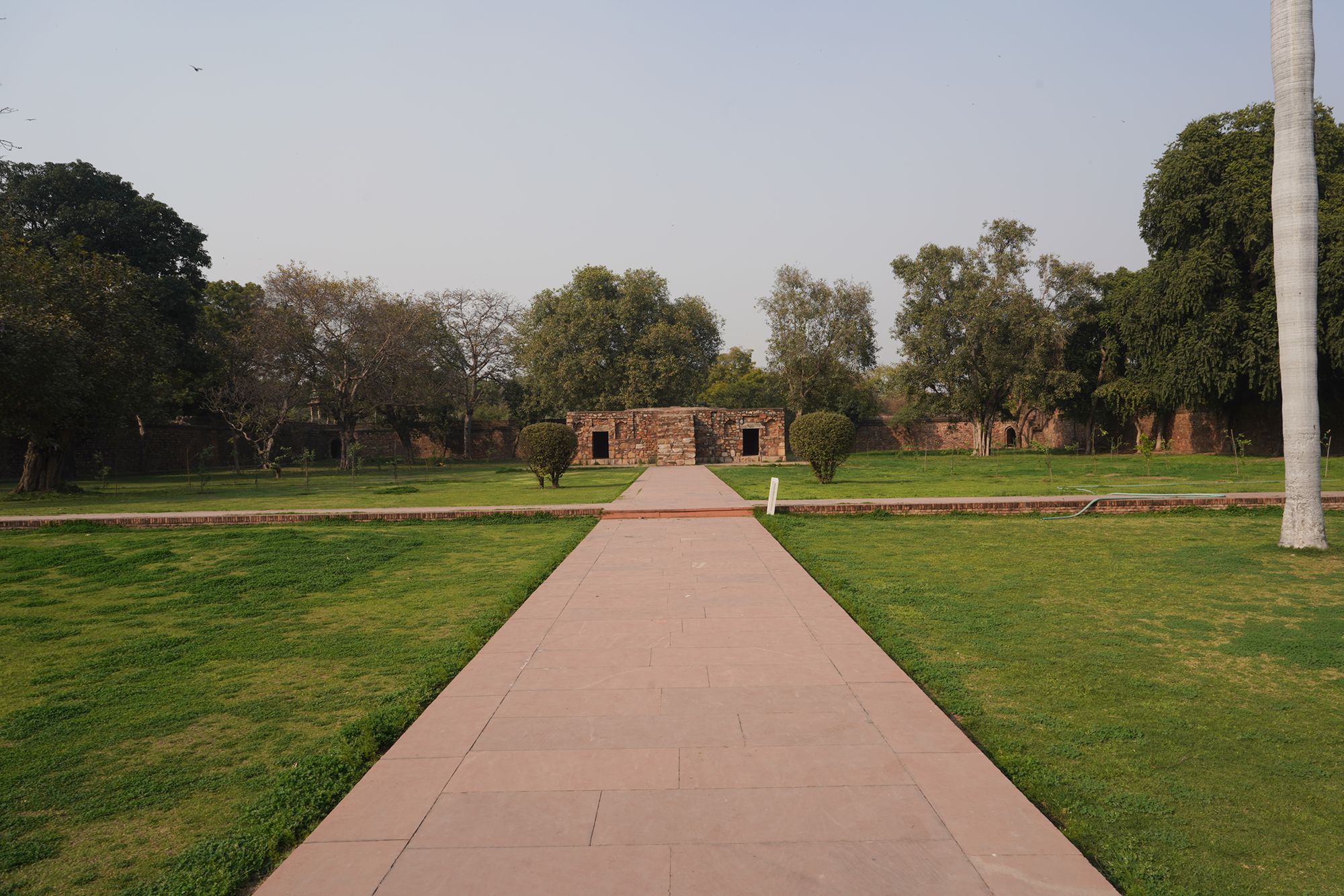
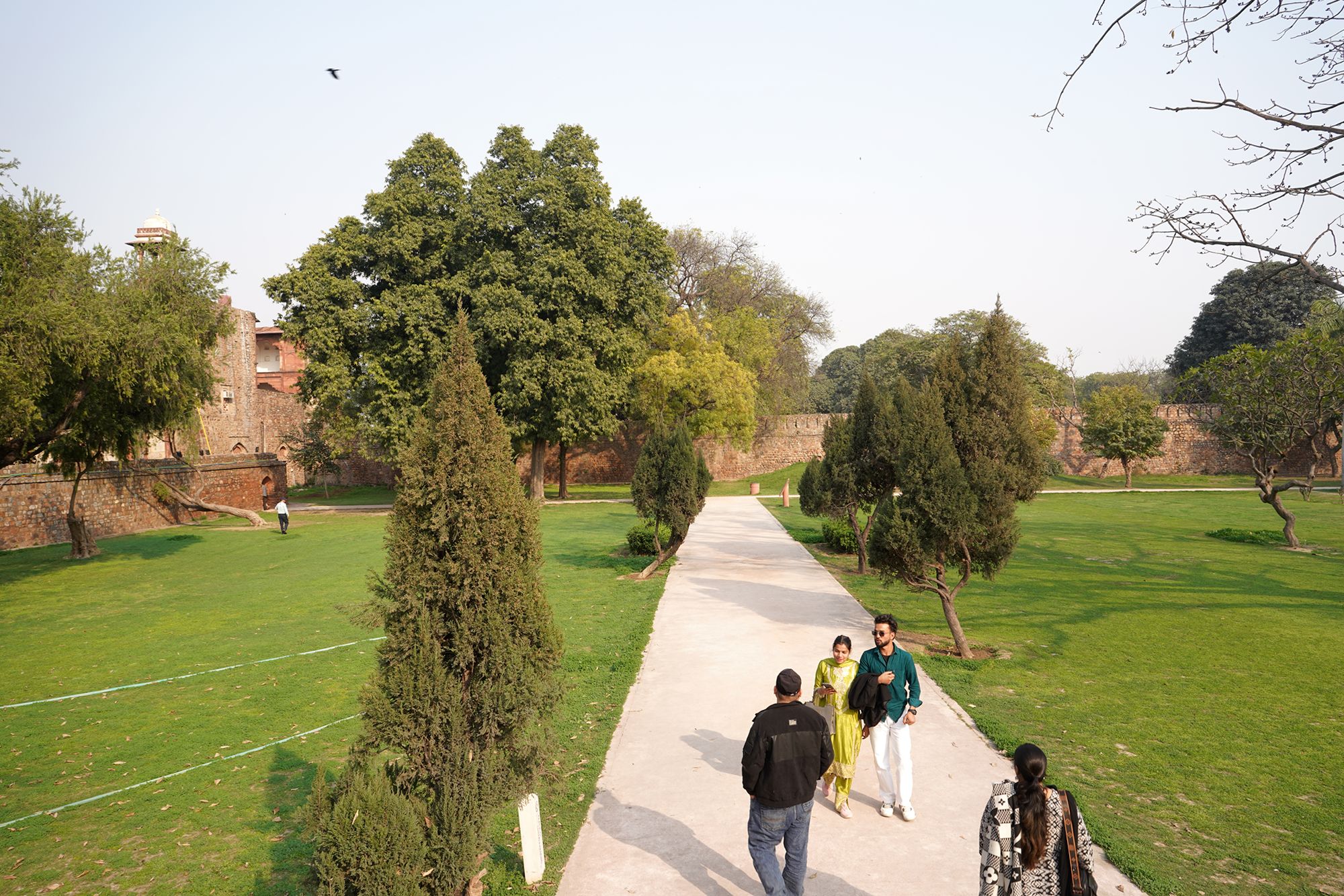
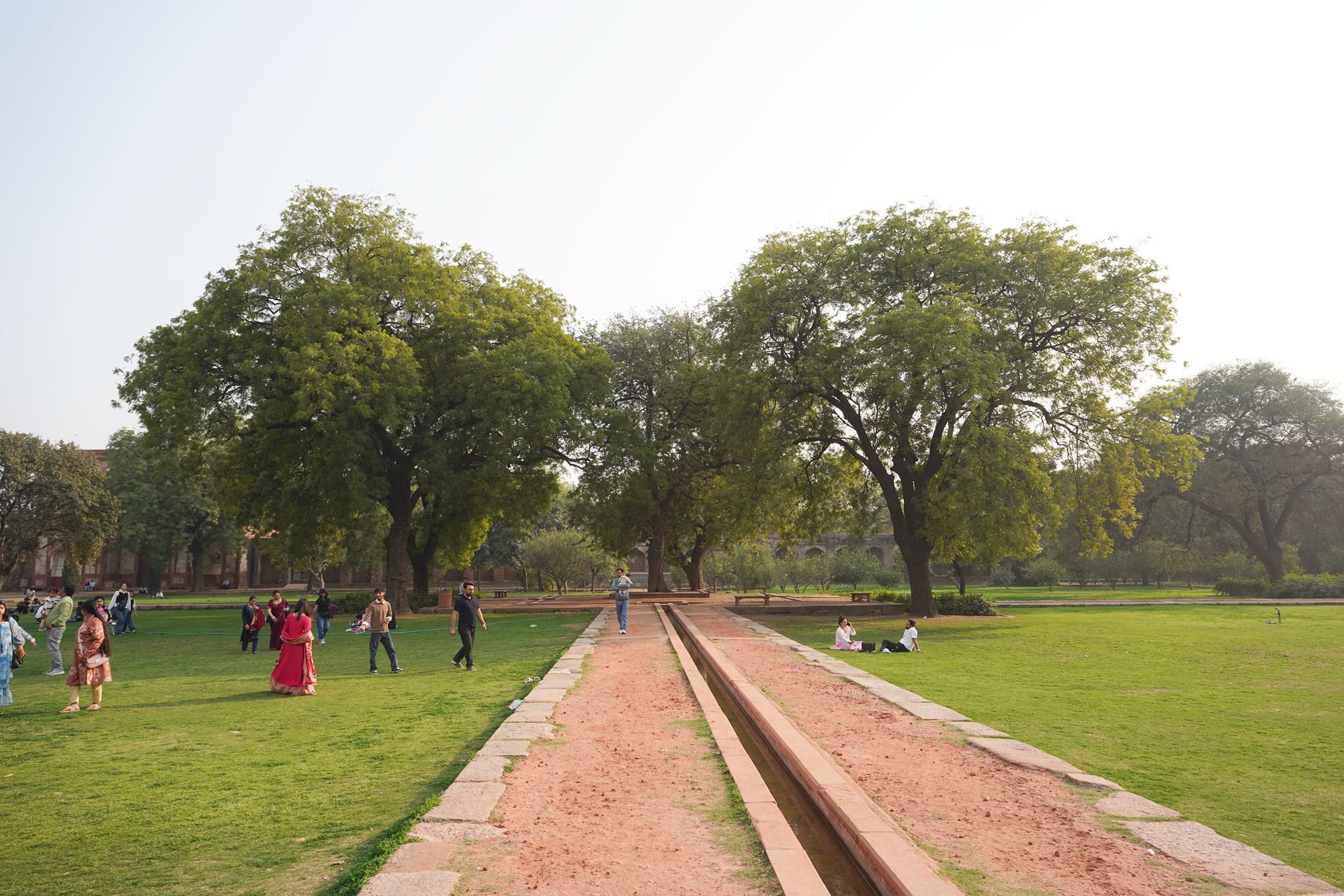
An area on the left side of the path leading to Humayun’s Tomb.
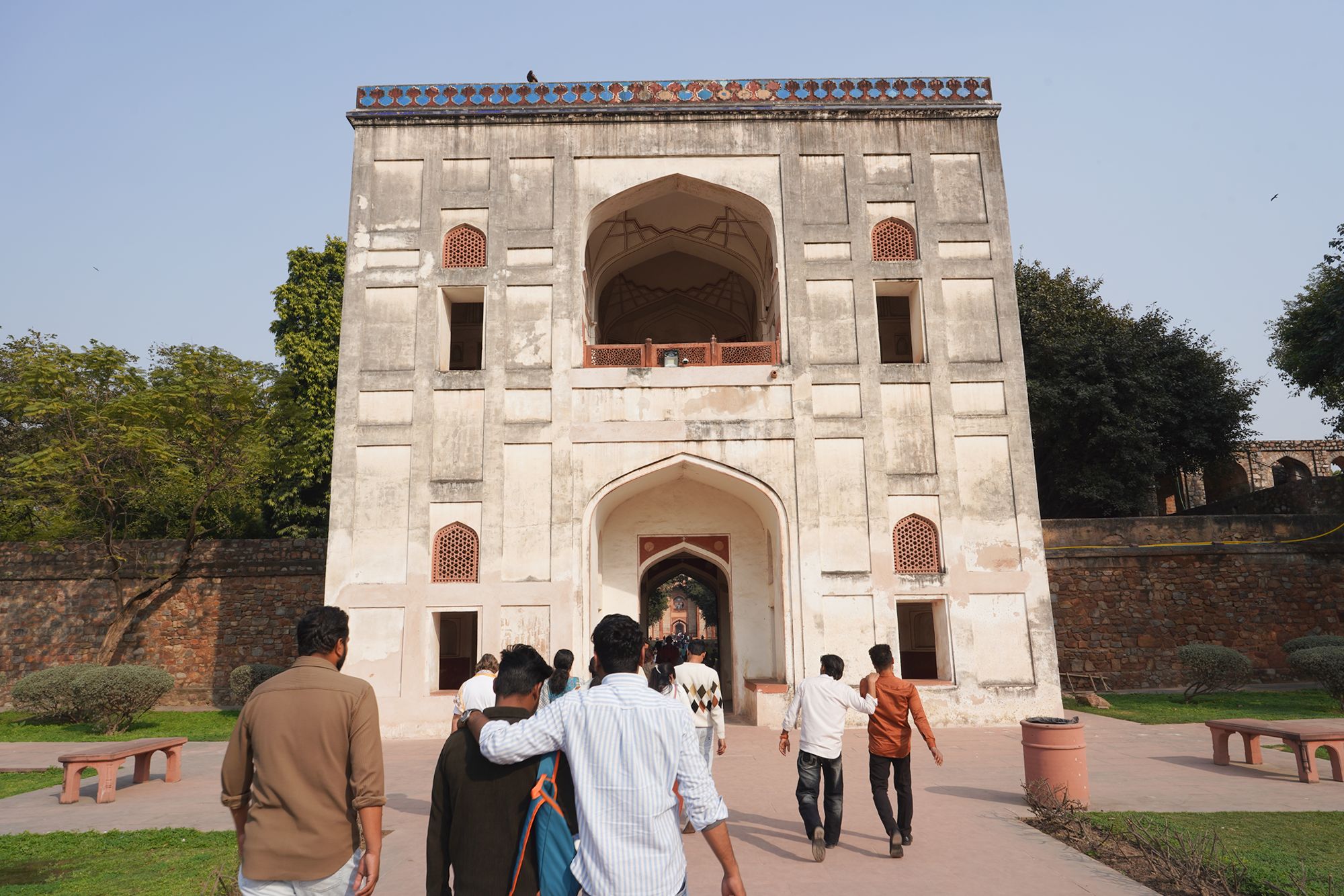
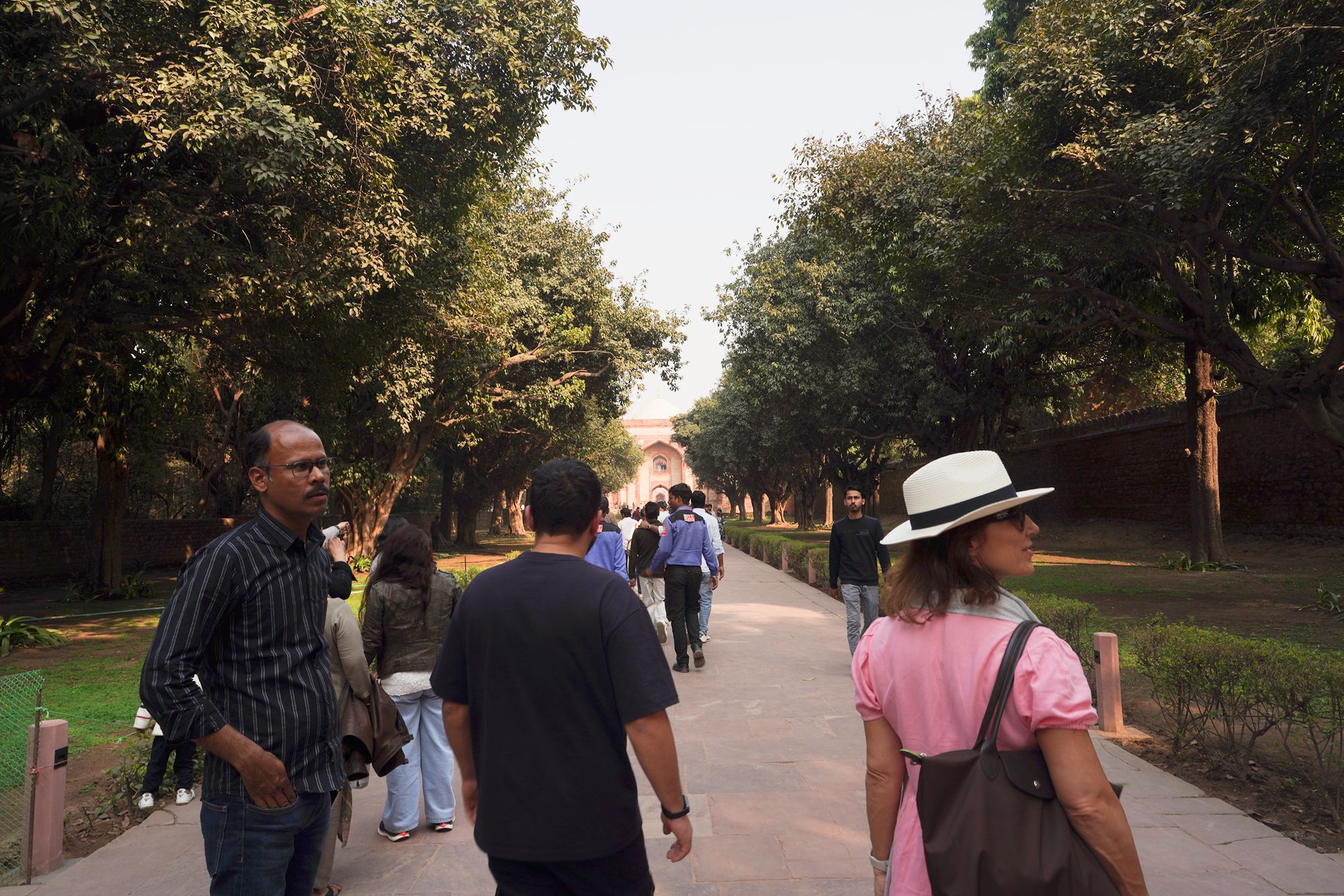
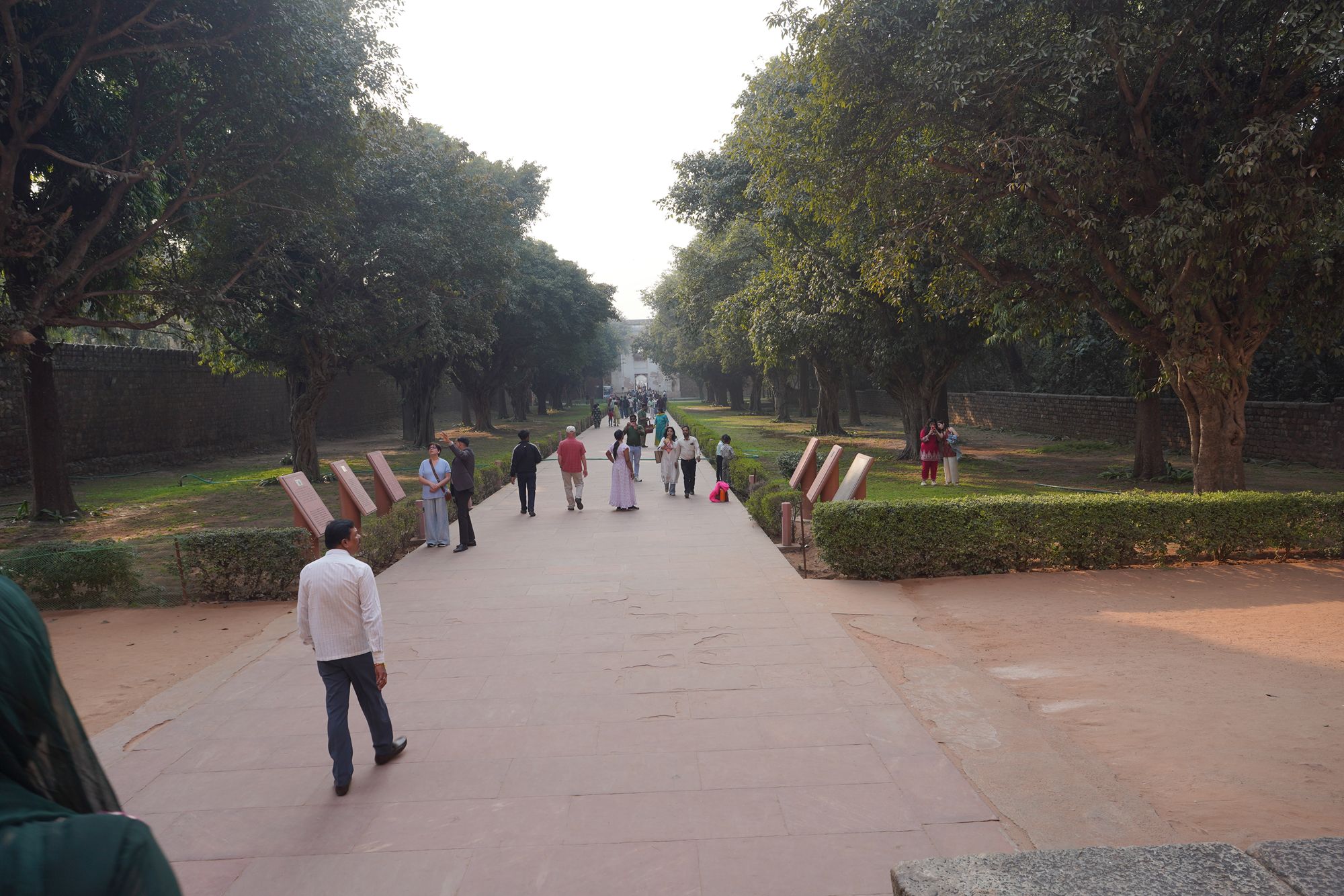
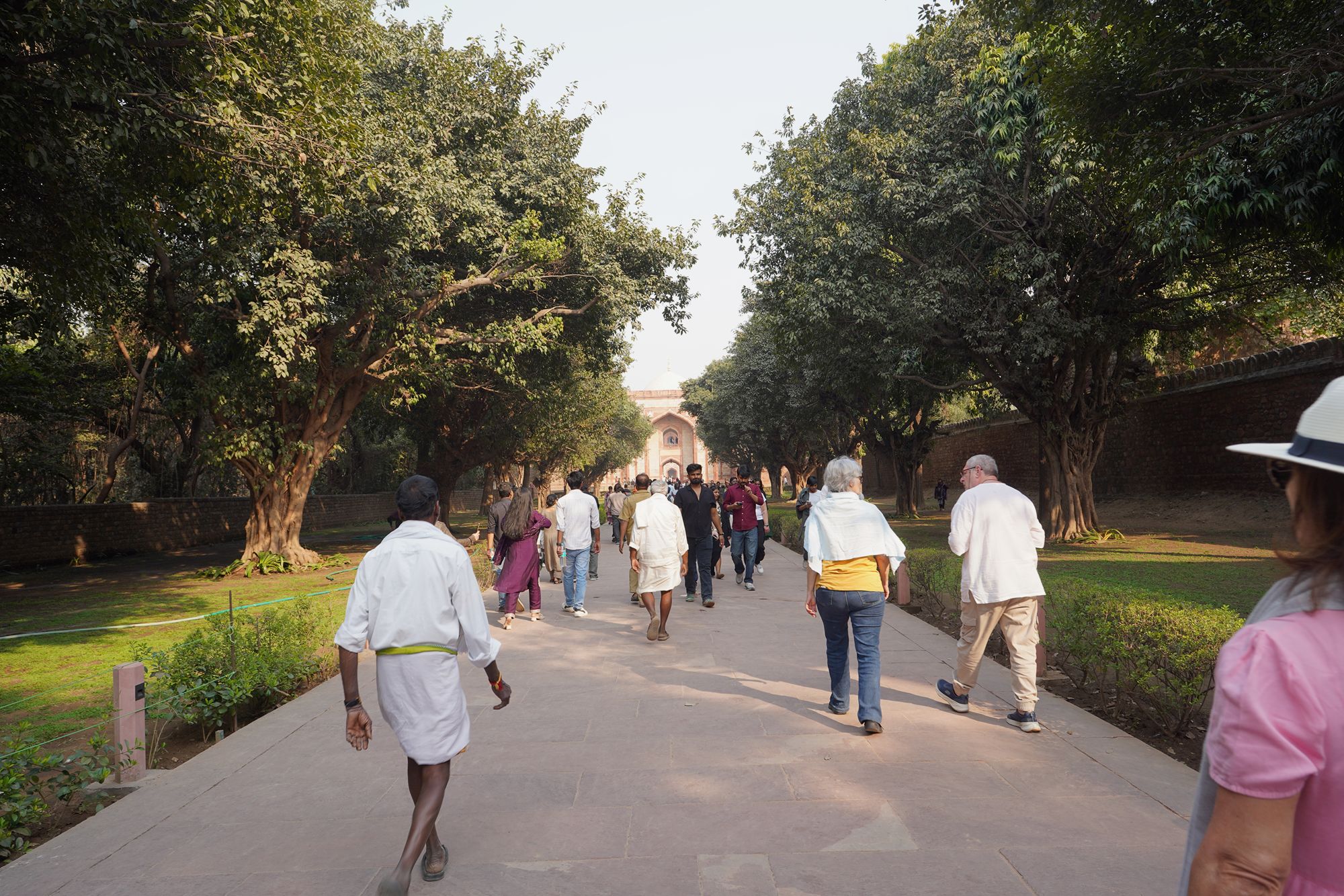
After passing through the white gate, I came to another long road with a red gate at the end, with Humayun’s Tomb beyond it. But to my right was another gateway that caught my attention, so I decided to explore it first.
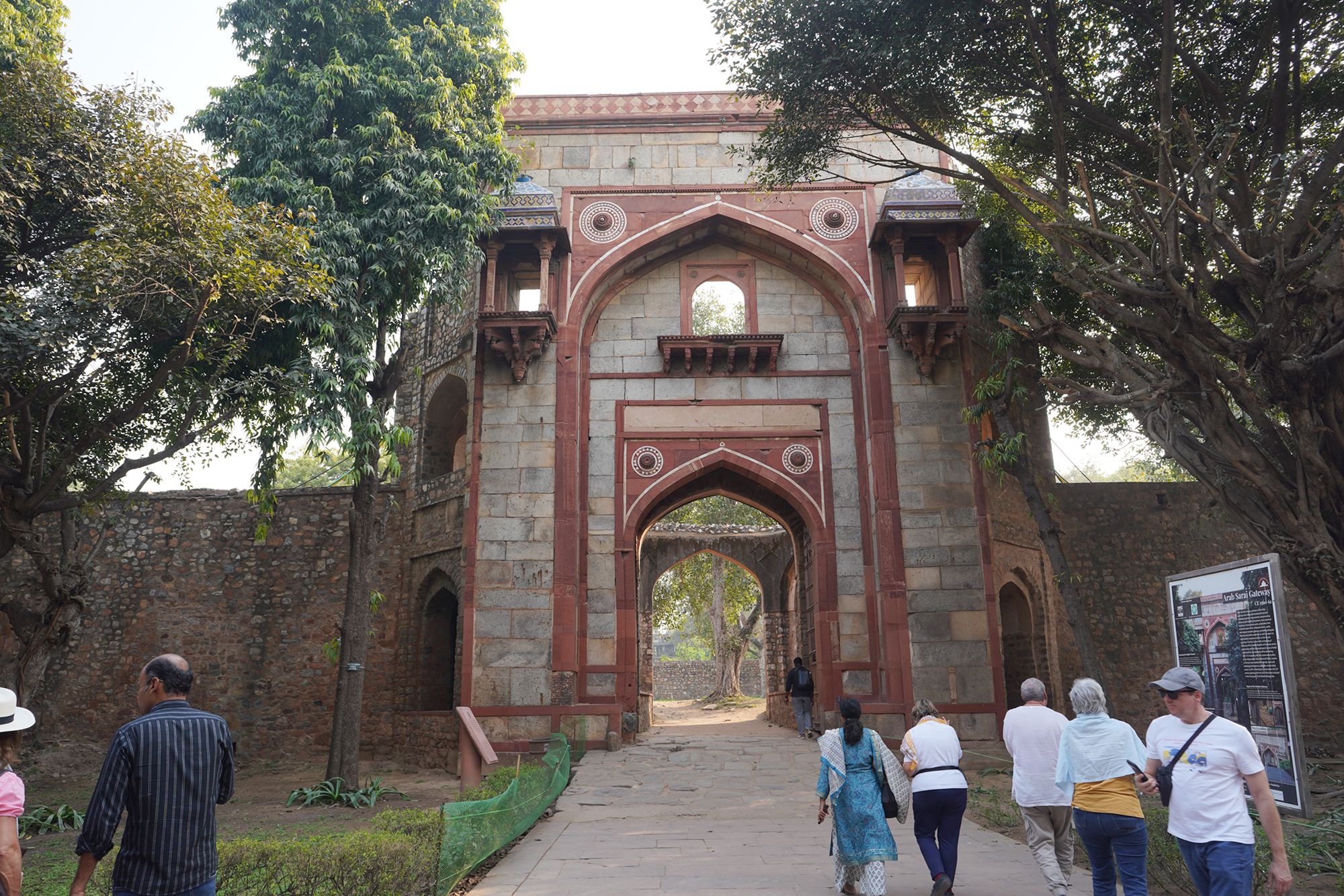
Arab Serai Gate
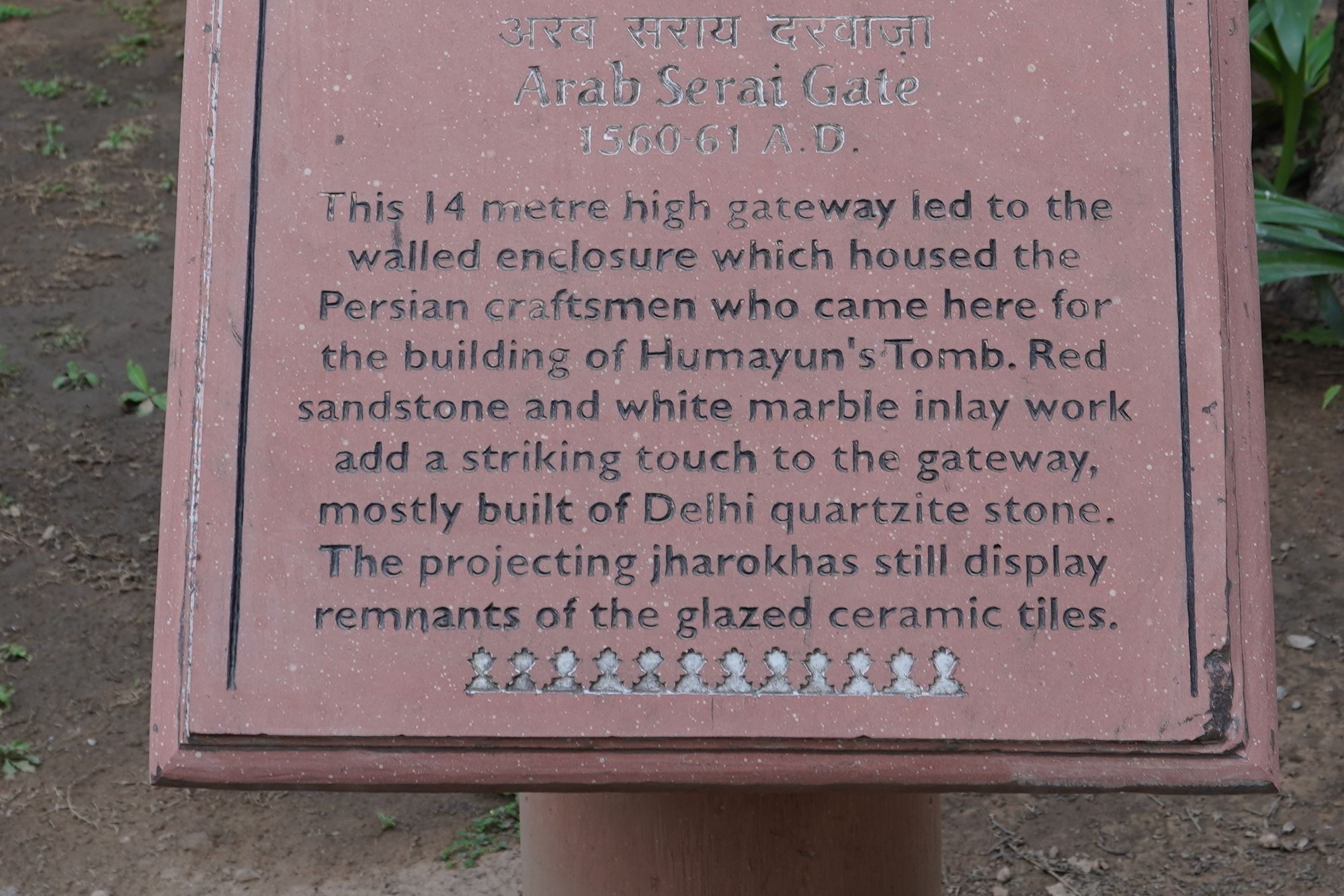
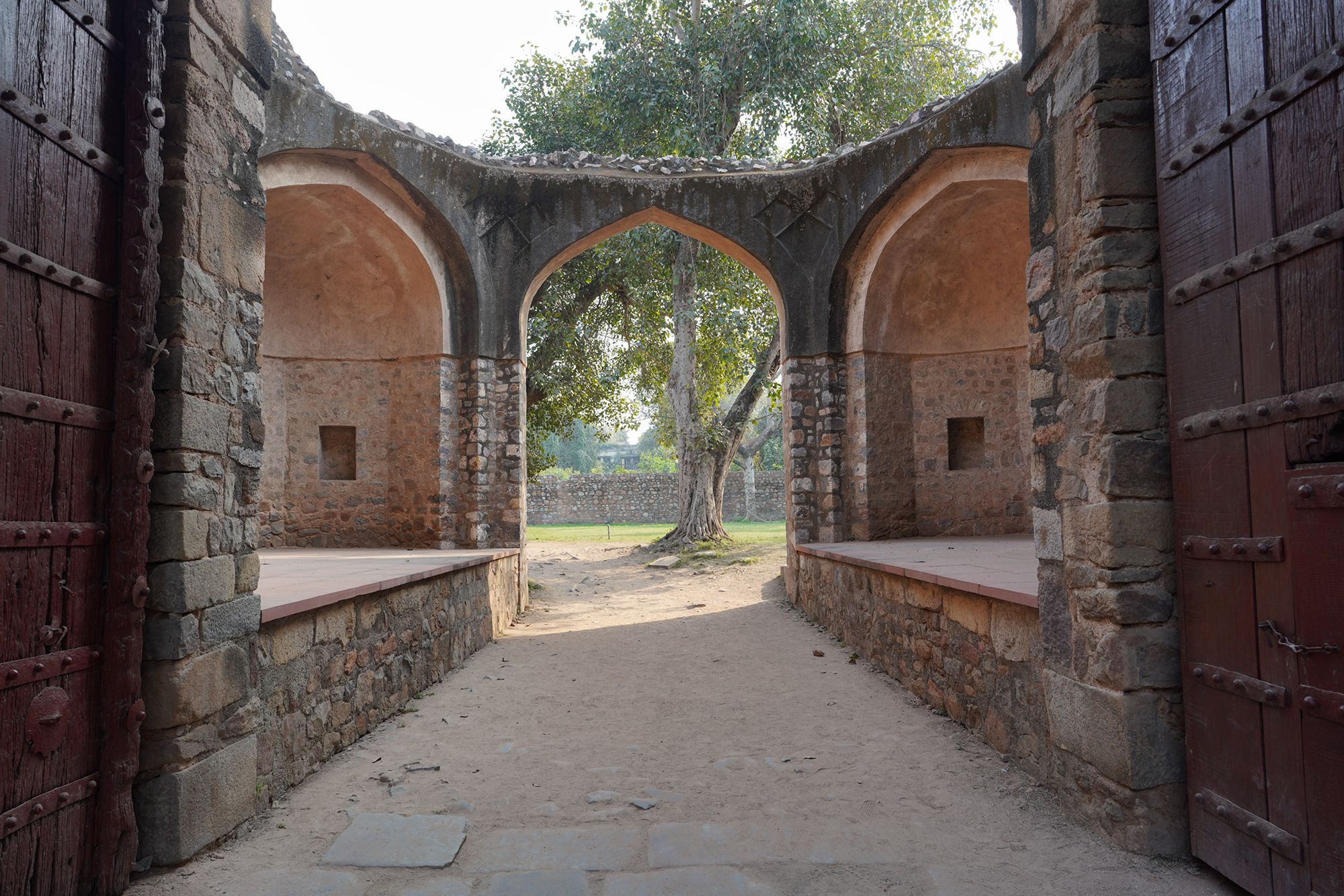
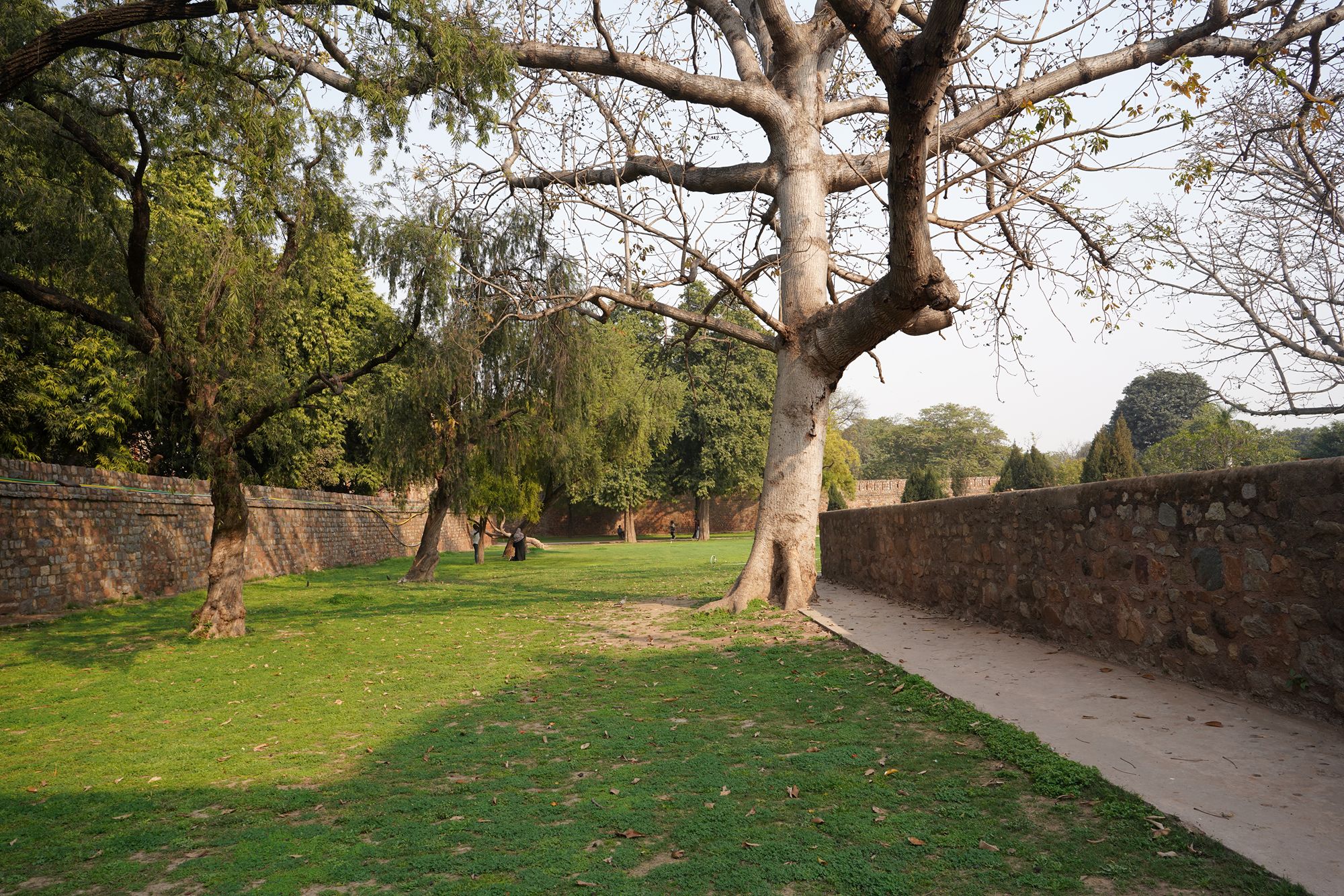
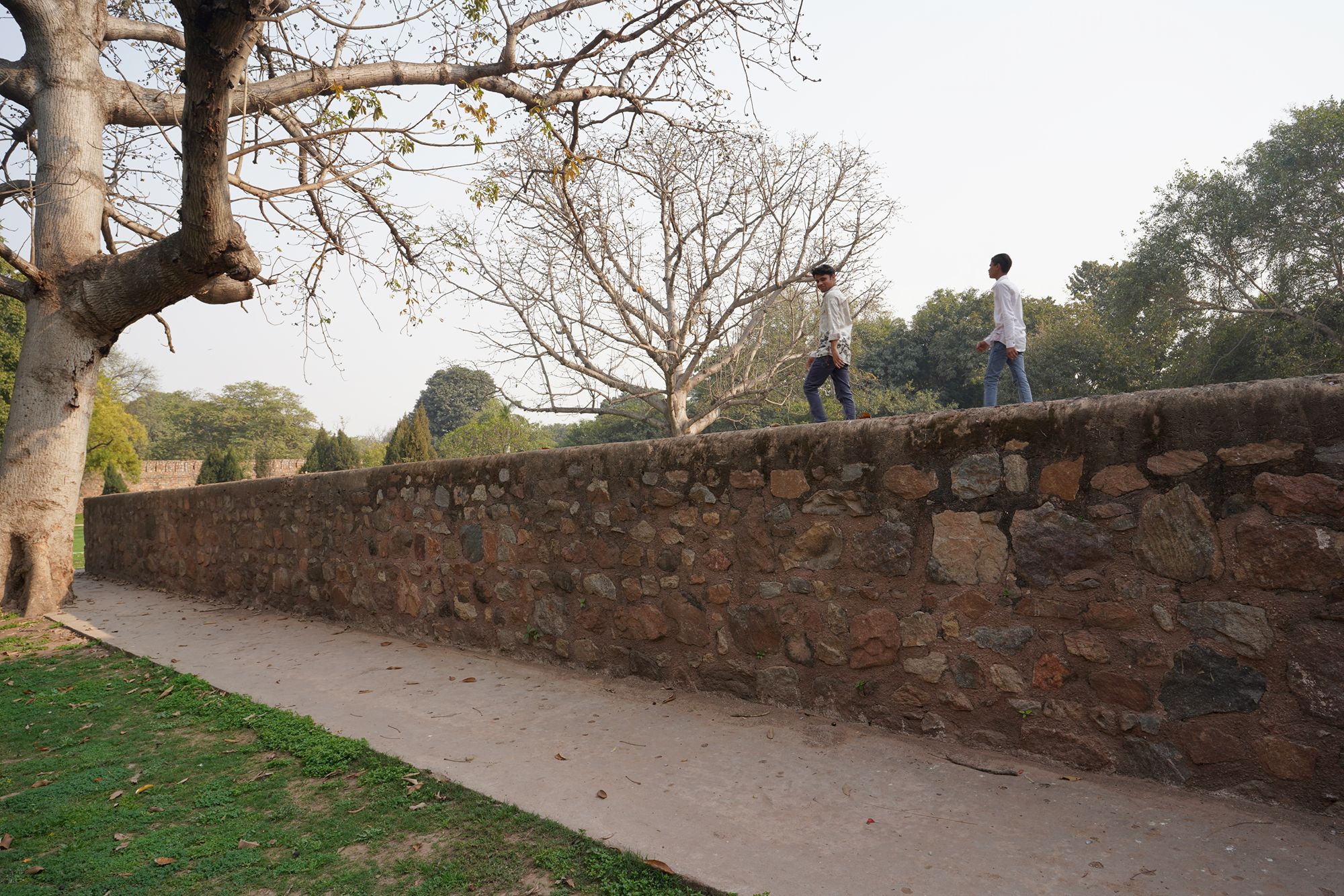
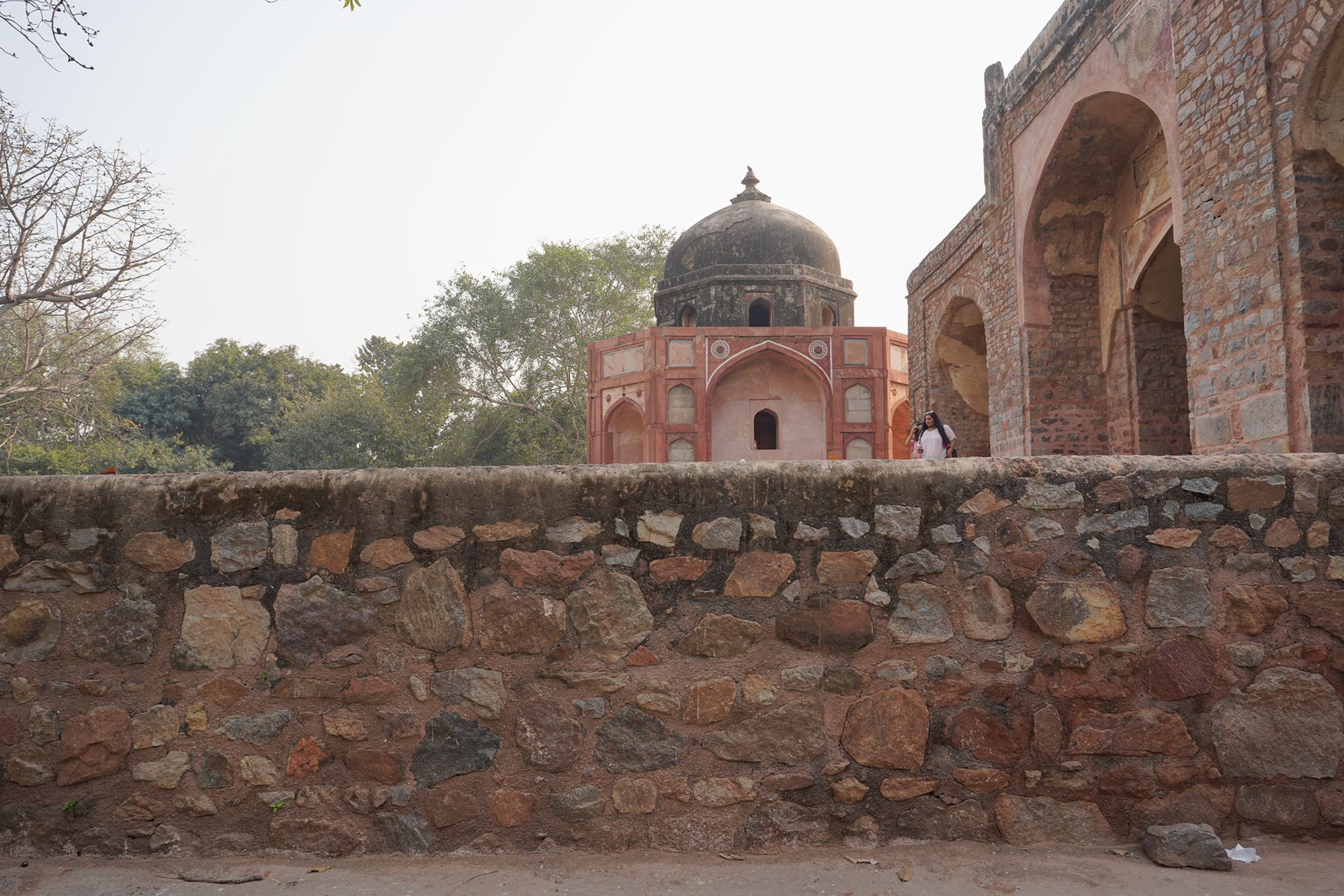
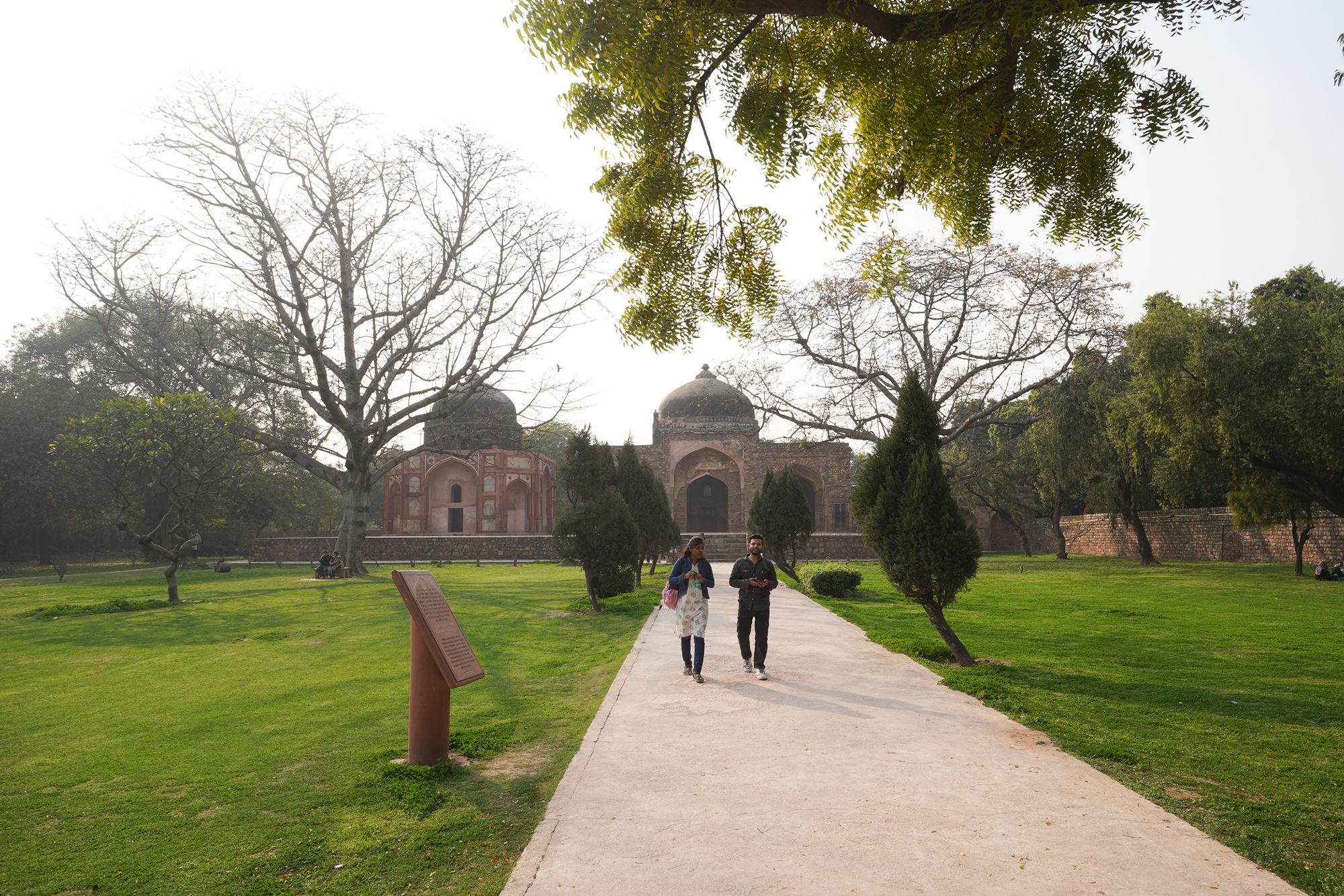
After passing through the Arab Serai Gate, I came to the Afsarwala Tomb.
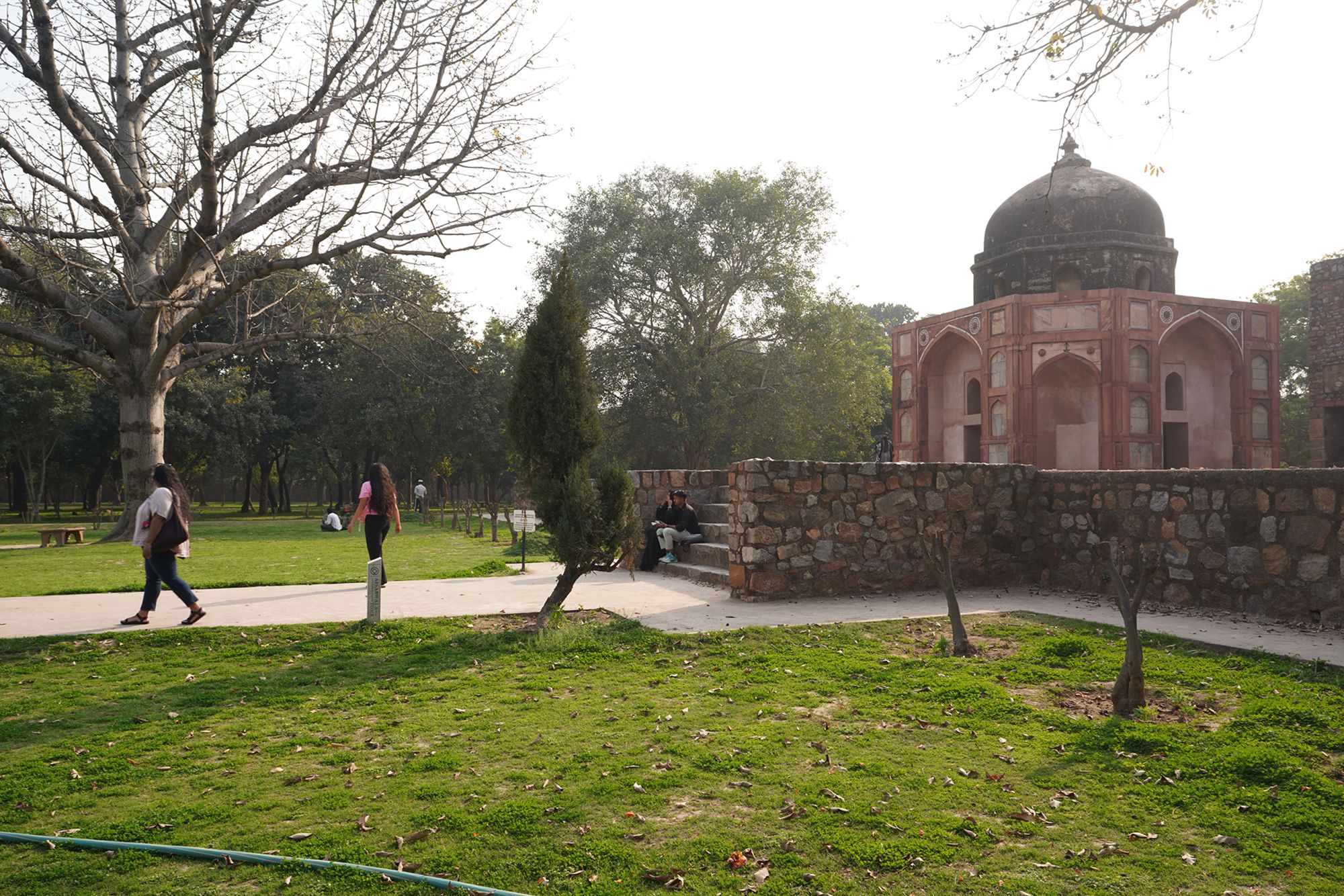
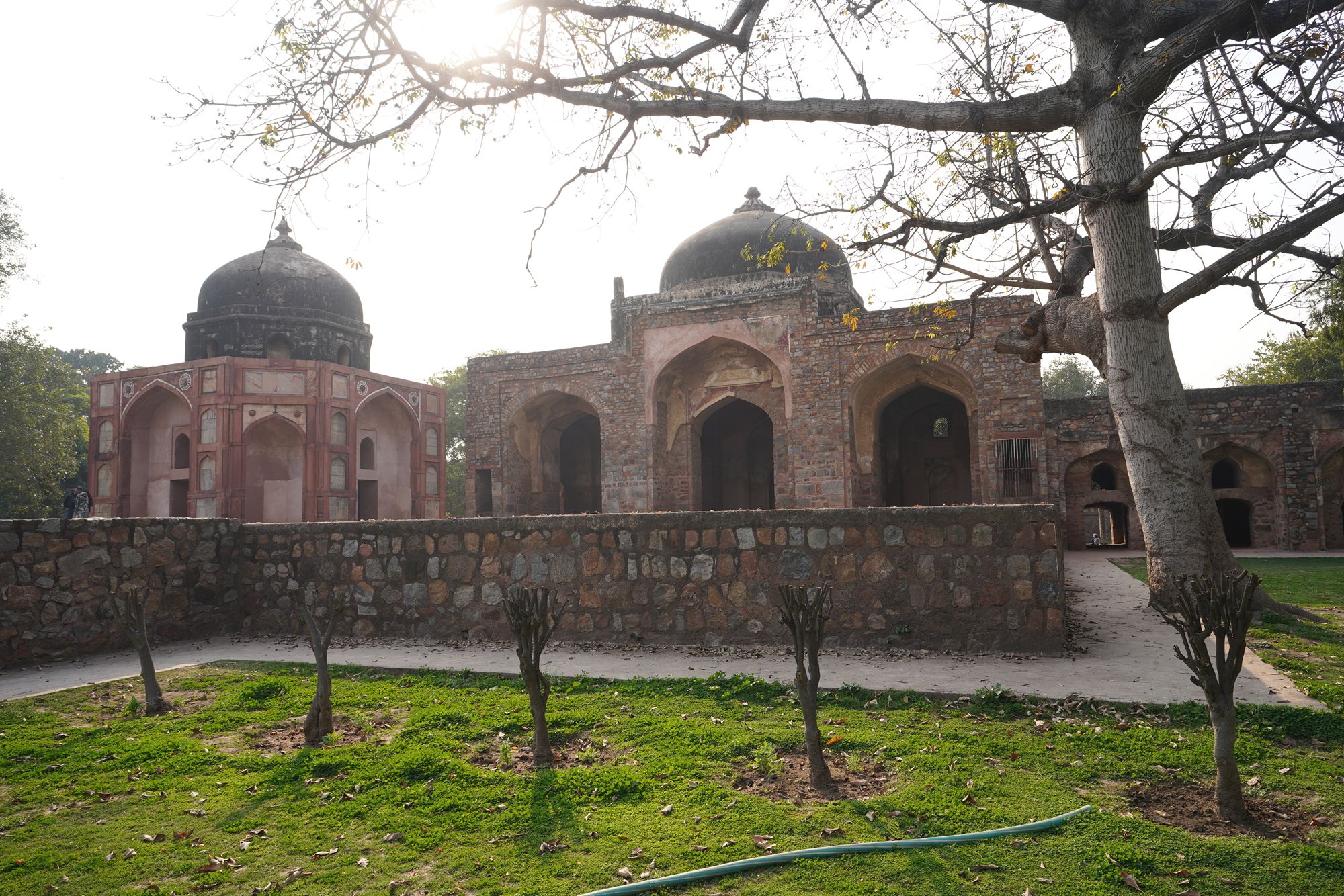
The Afsarwala Tomb is a 16th-century Mughal tomb located near Humayun’s Tomb, built of red sandstone and marble and standing beside the Afsarwala Mosque.
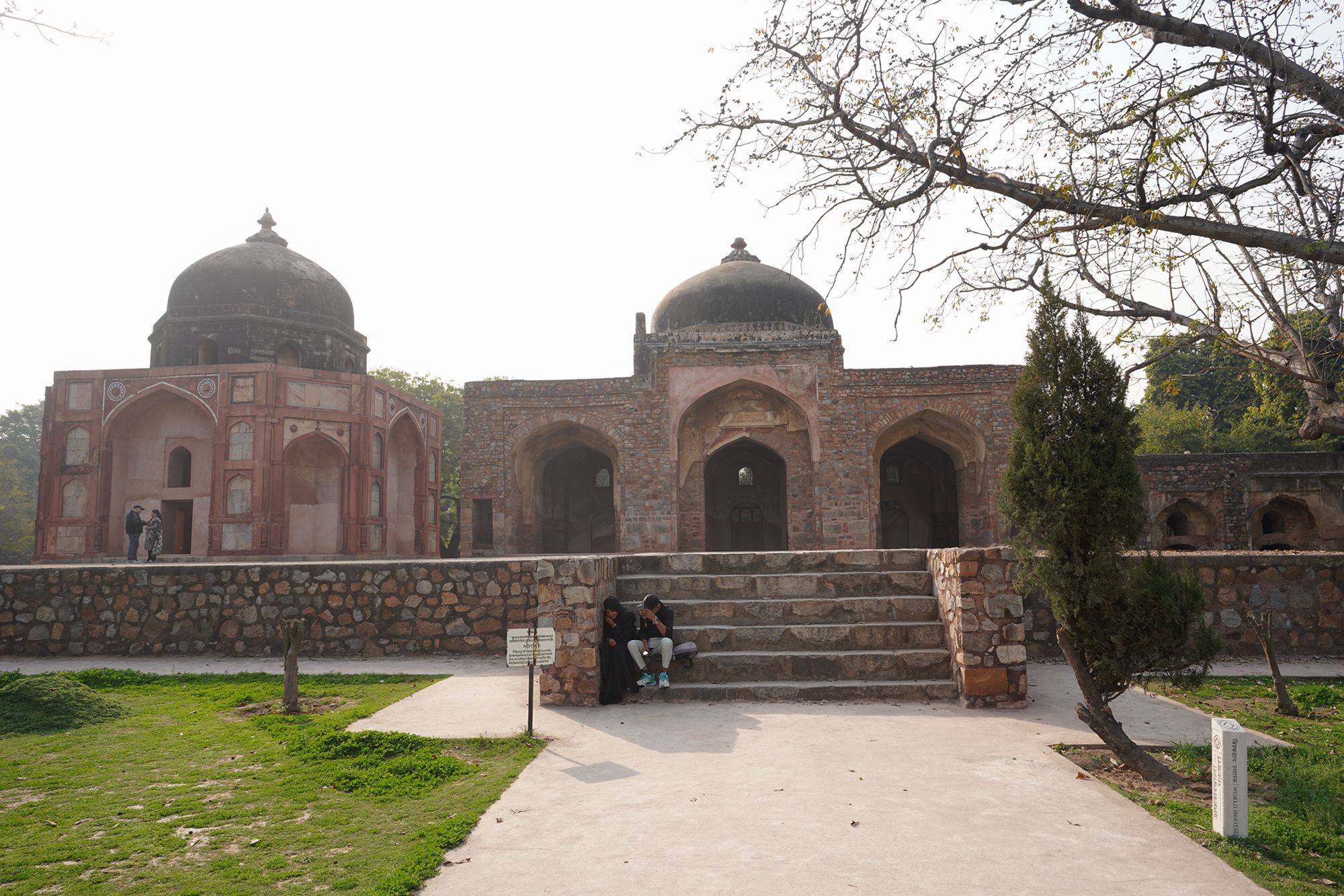
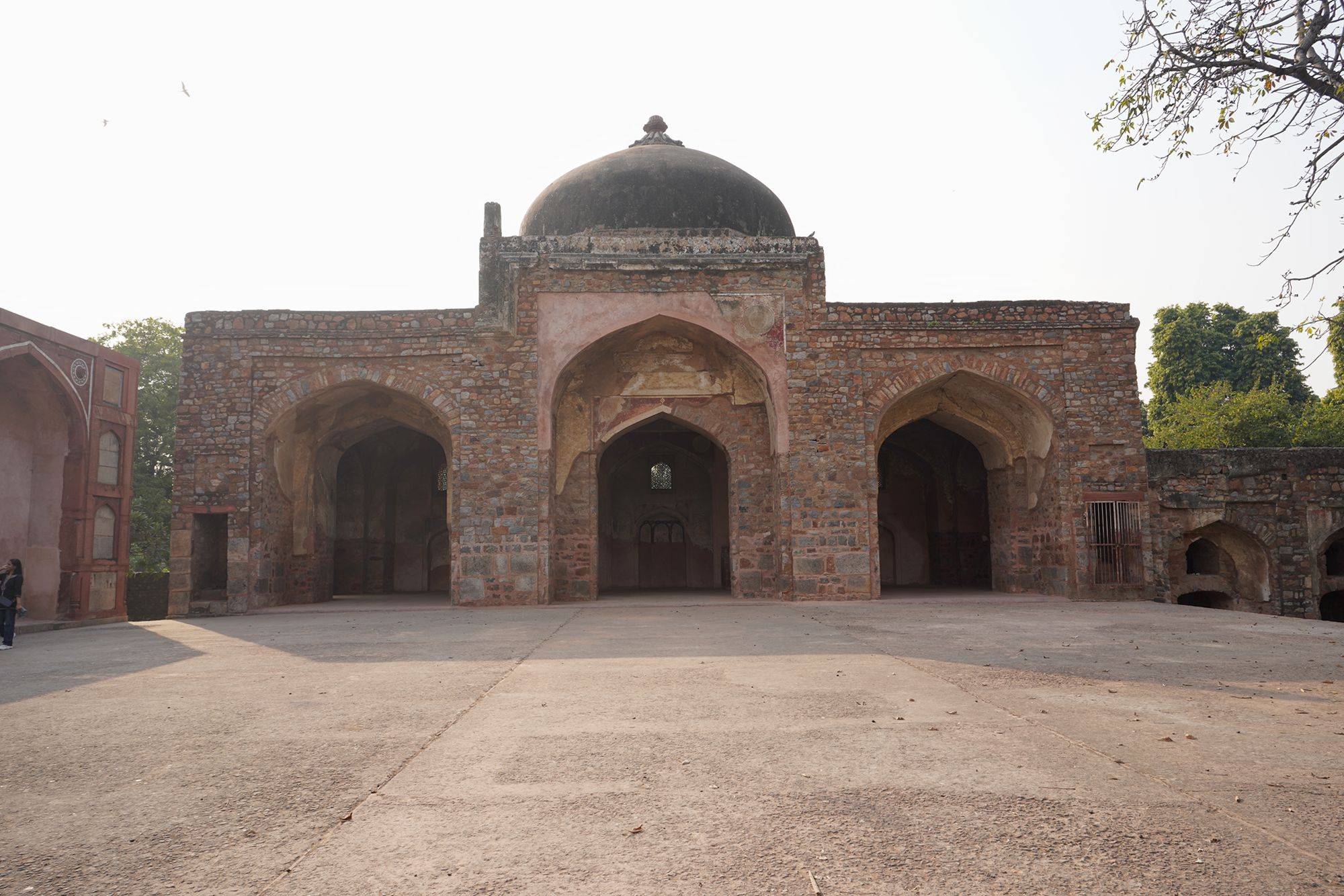
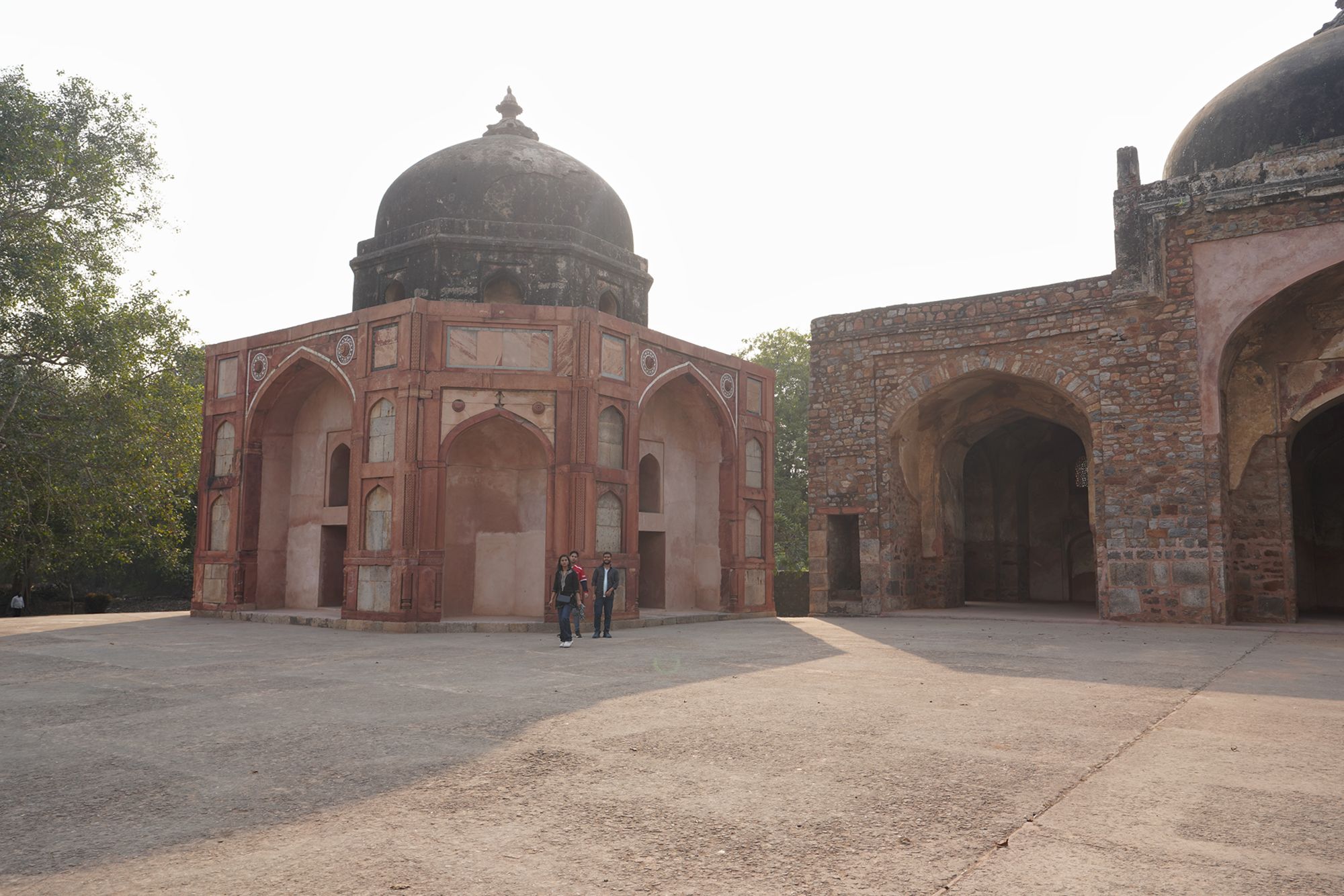
The Afsarwala Tomb contains several graves, but the identities of the people buried here have been lost to history.
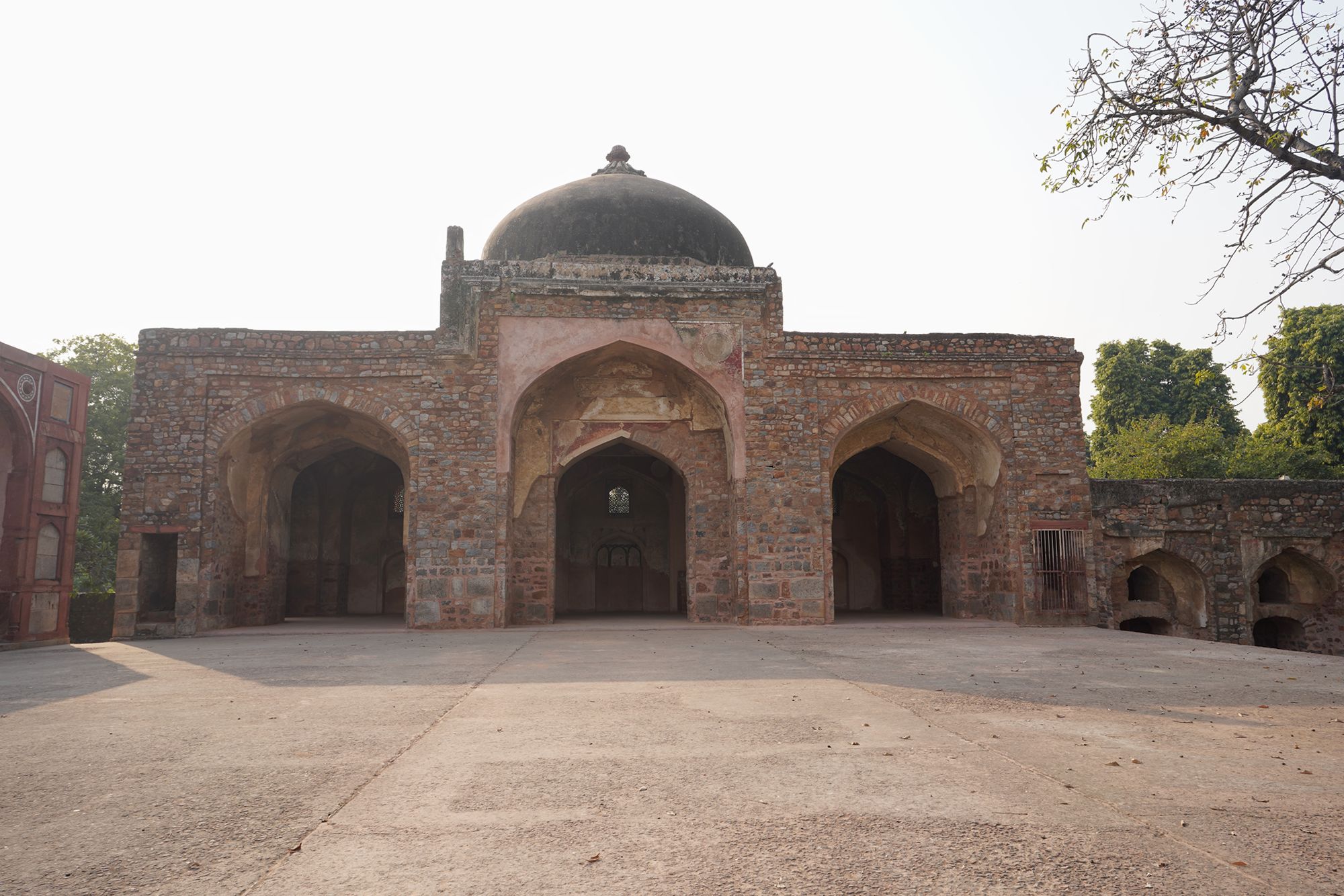
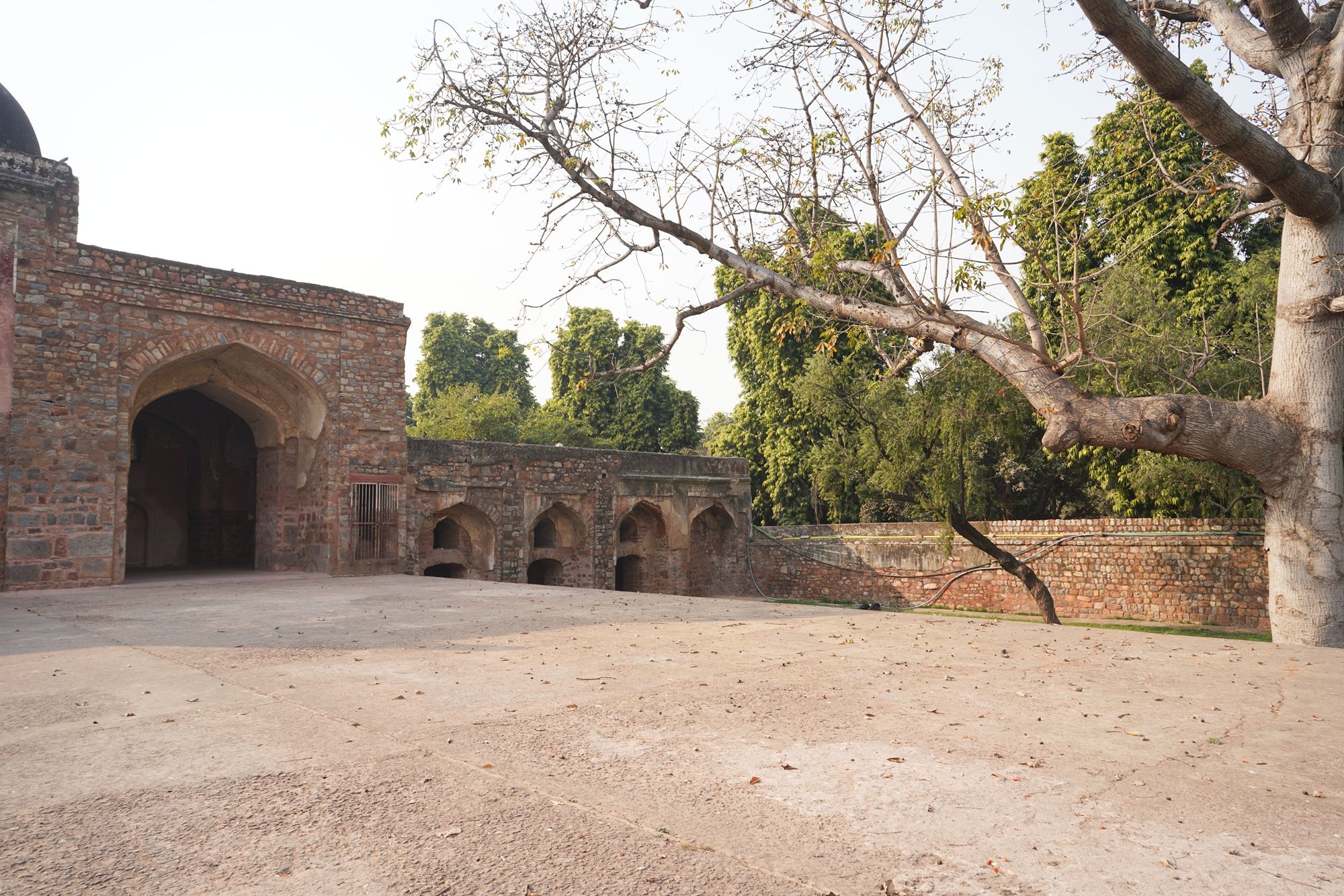
Looing back at the tomb
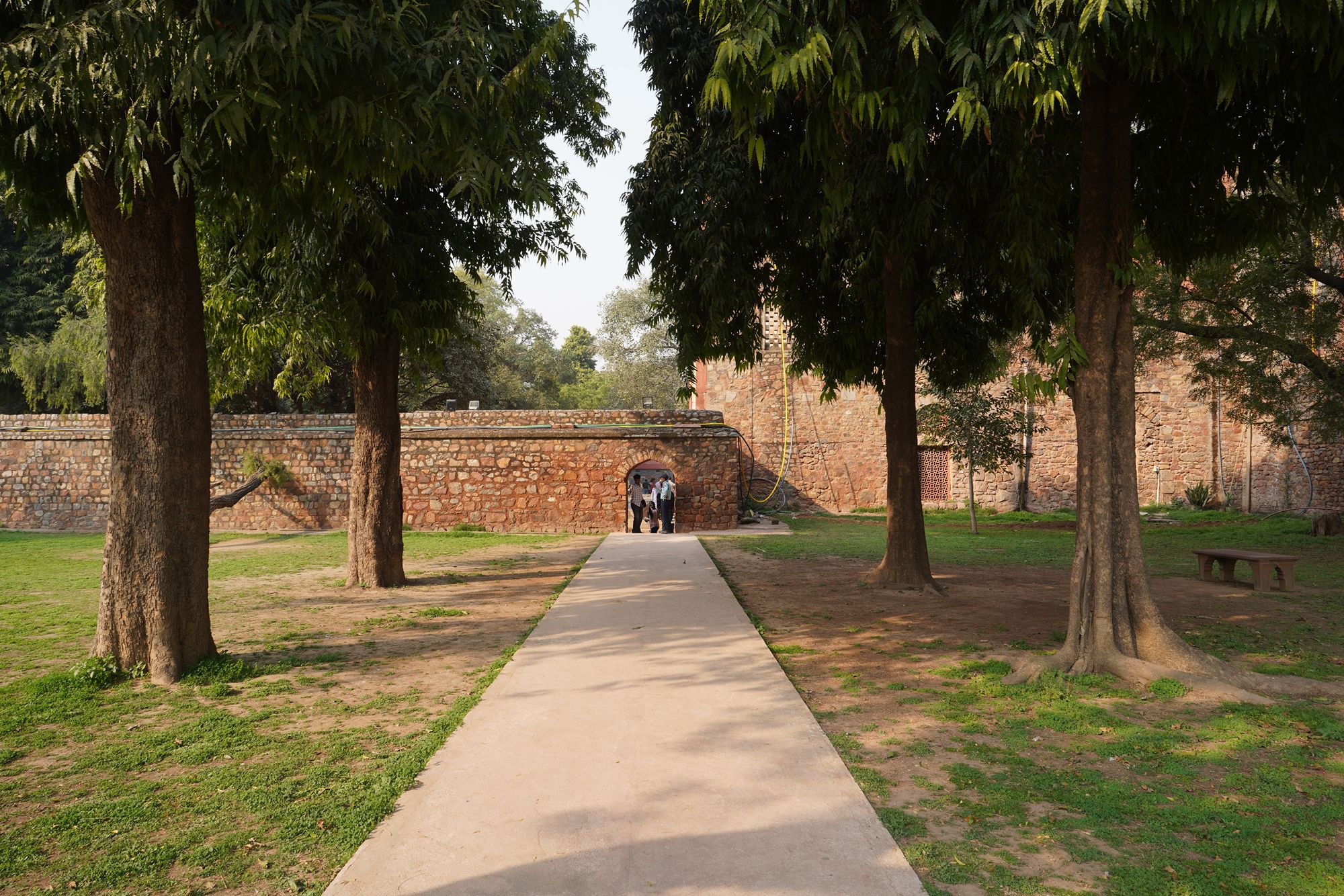
On the left-hand side was a small gate that led back to the main road toward Humayun’s Tomb.
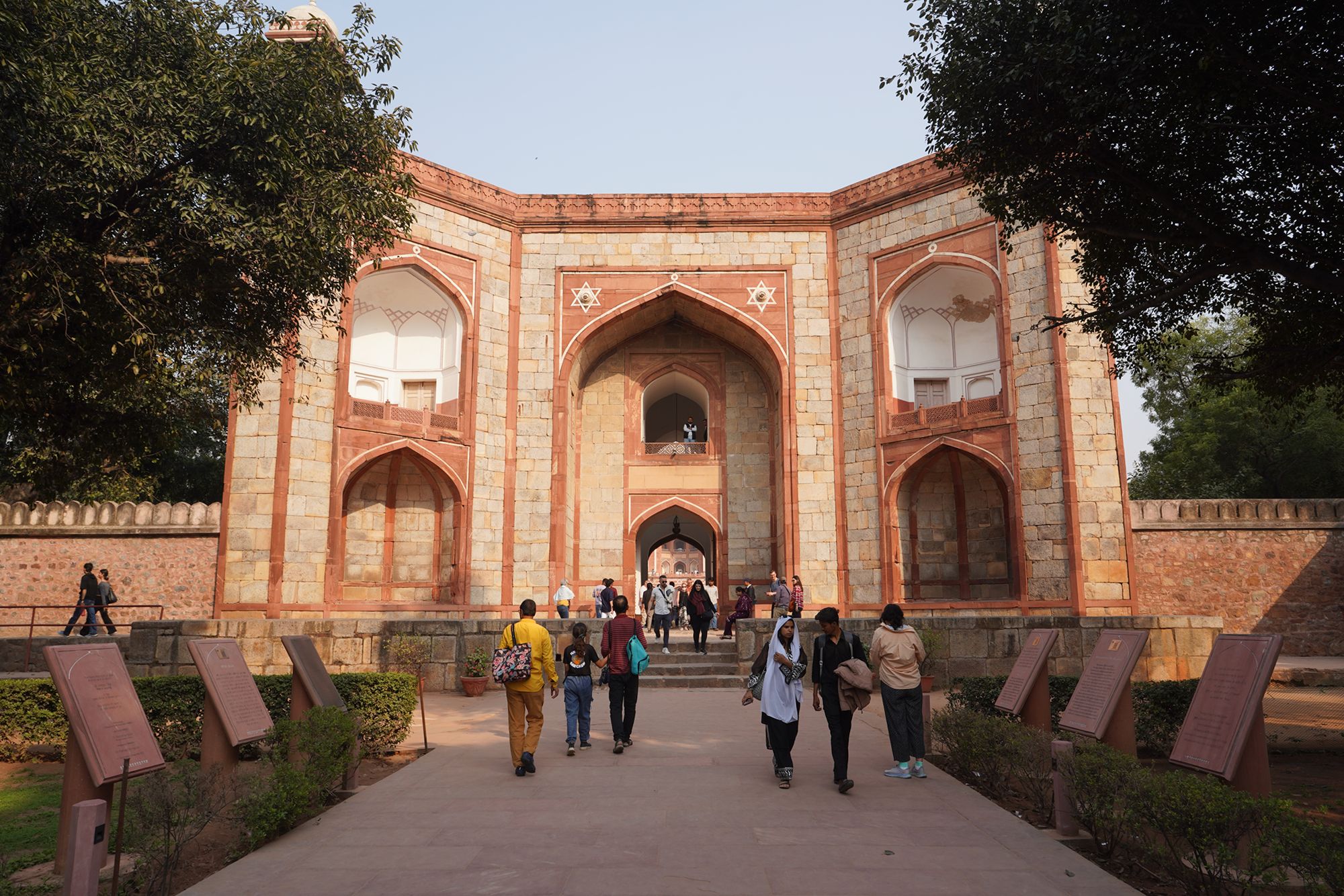
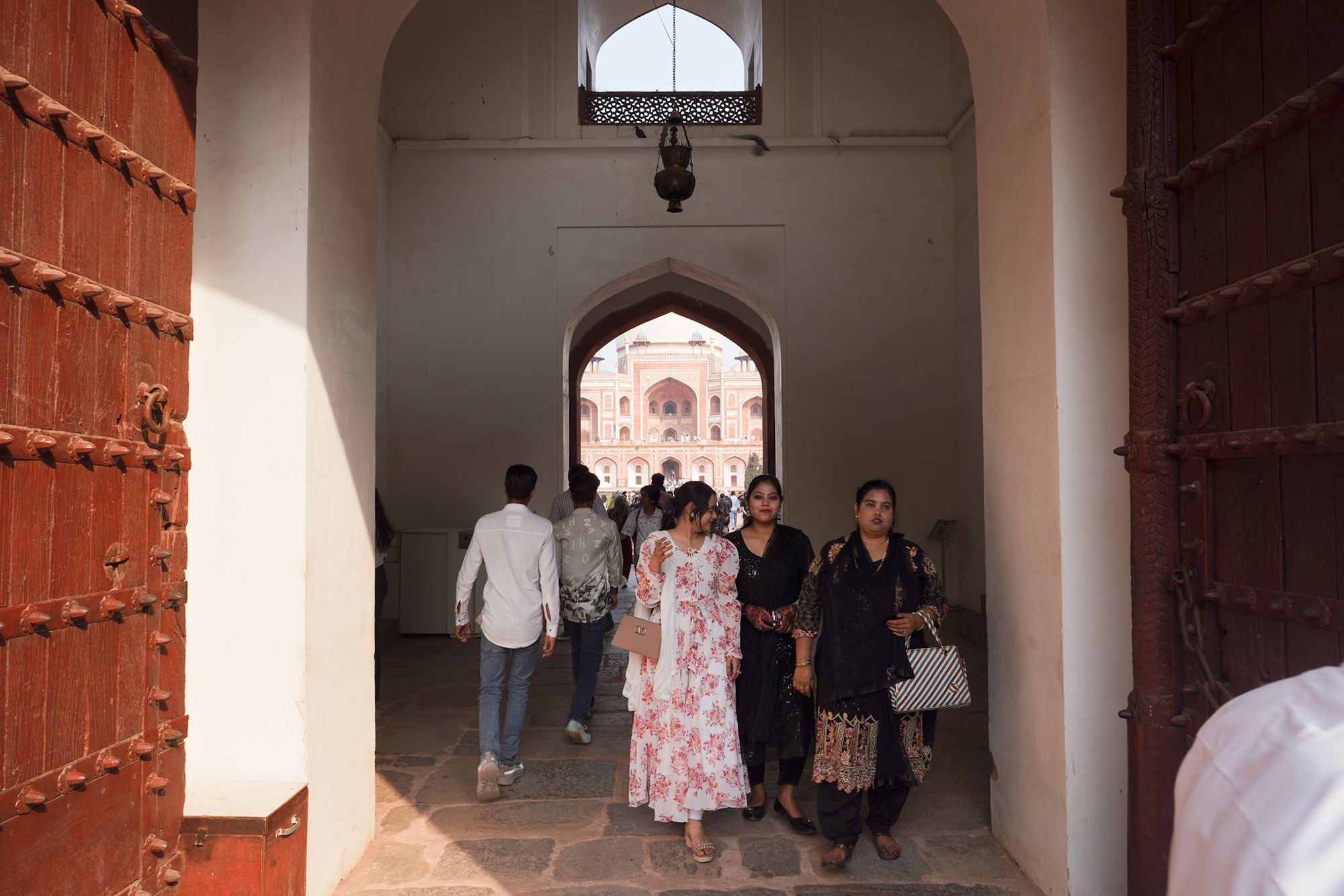
The Humayun’s Tomb.
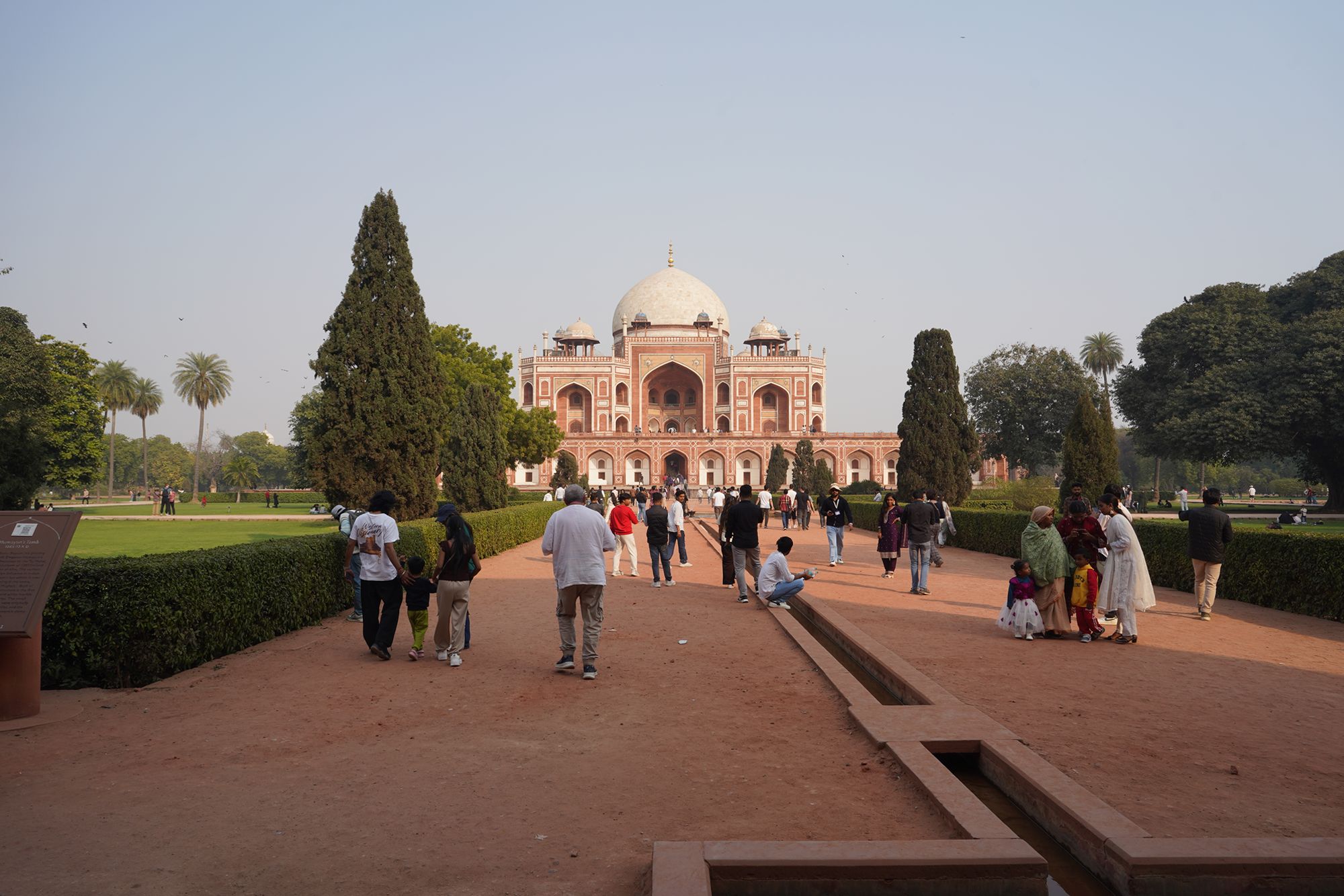
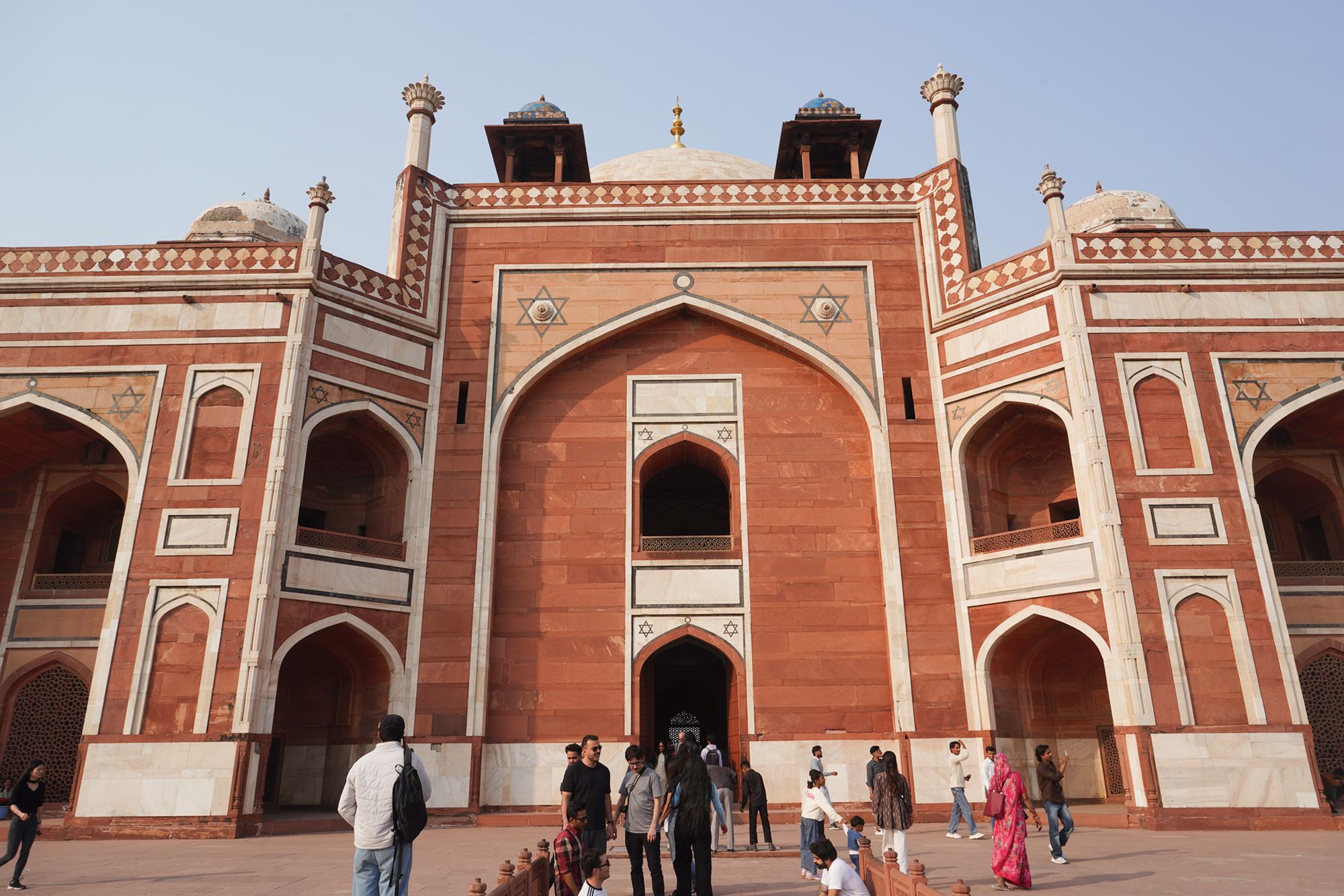
Humayun’s Tomb is one of the finest examples of early Mughal architecture in India. It was built in the 1560s for the Mughal emperor Humayun, commissioned by his widow Bega Begum several years after his death.
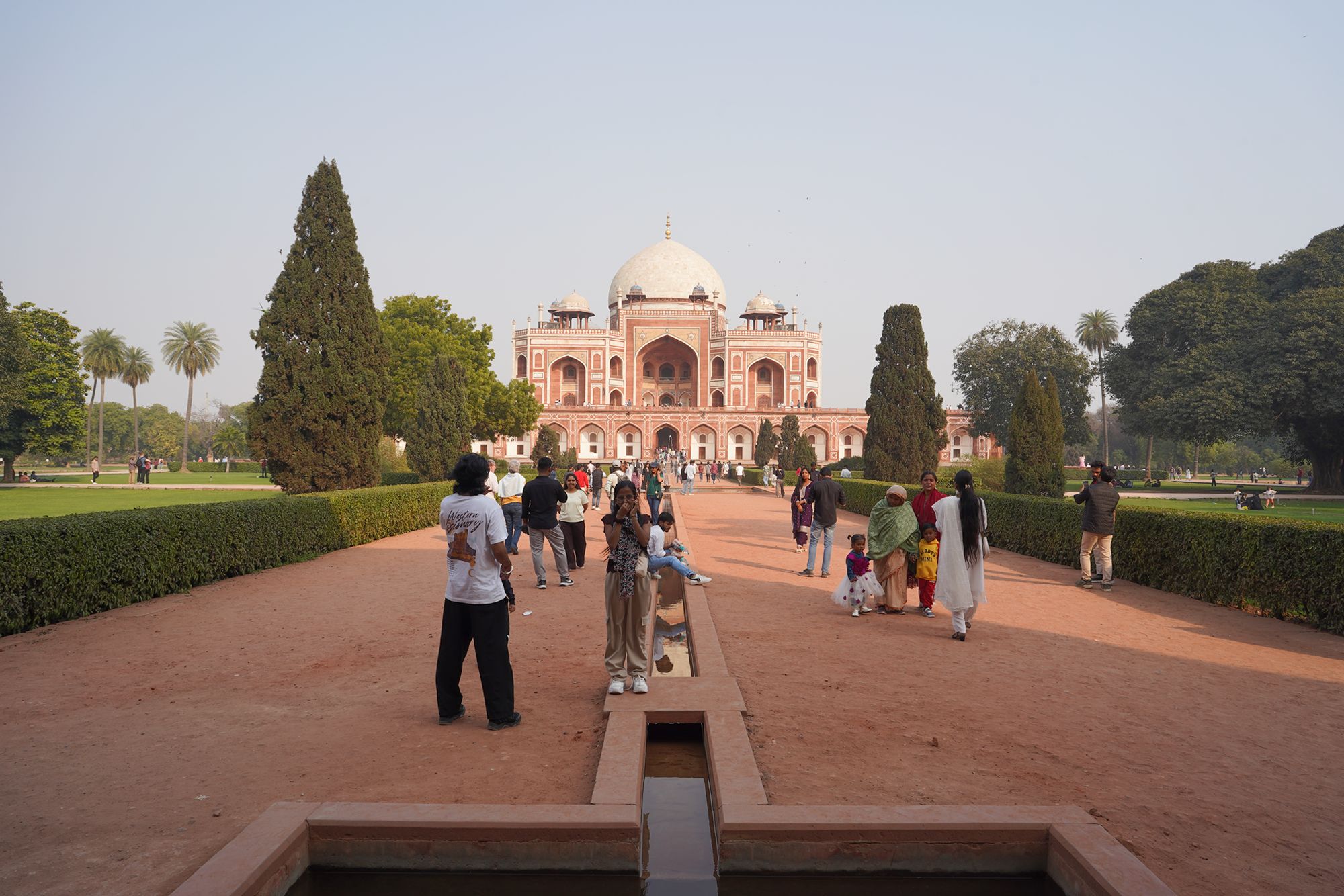
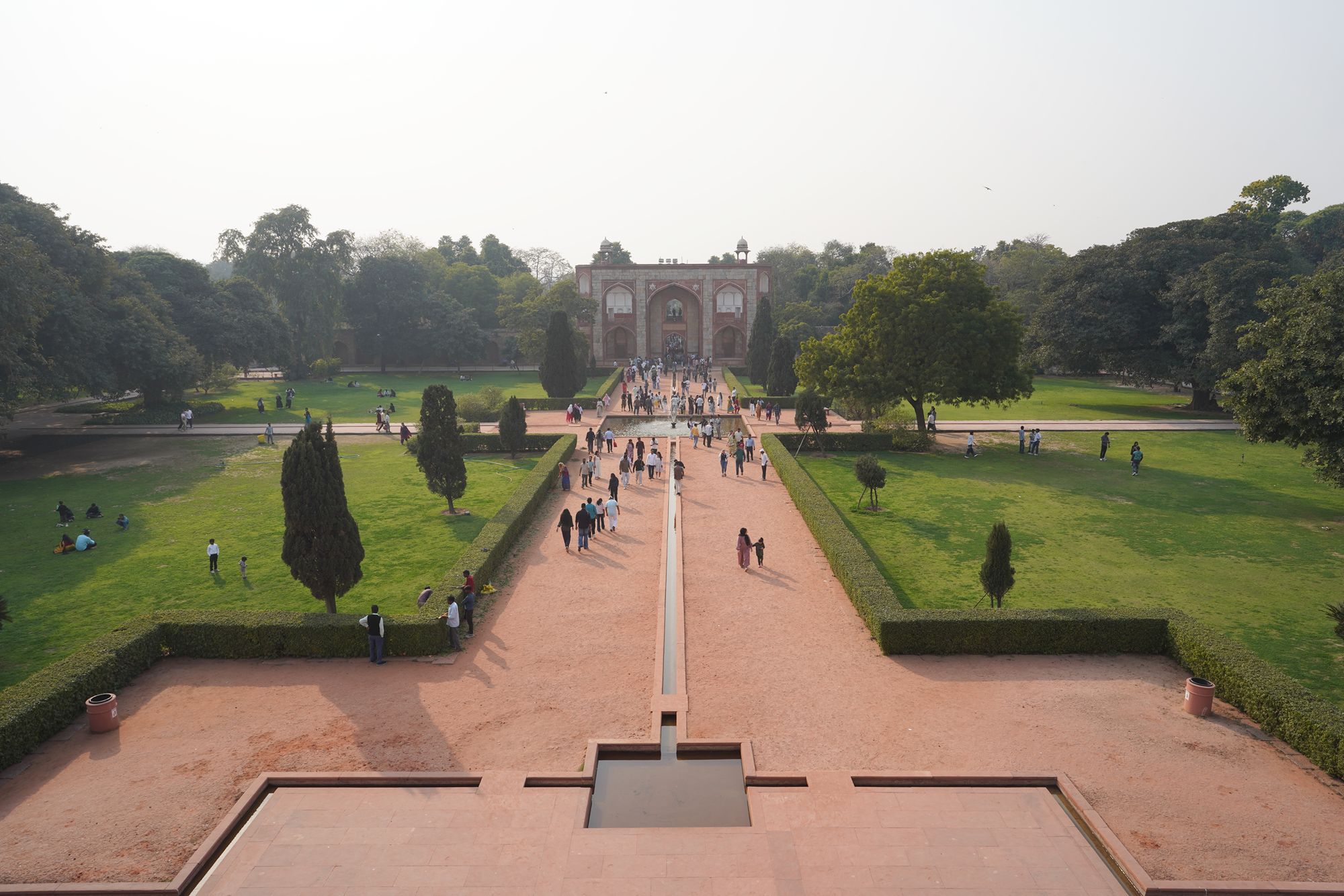
The tomb combines Persian and Indian architectural styles, with a massive red-sandstone structure decorated with white marble and topped by a large double dome. It stands at the center of a symmetrical charbagh, or four-part Persian-style garden, divided by walkways and water channels.
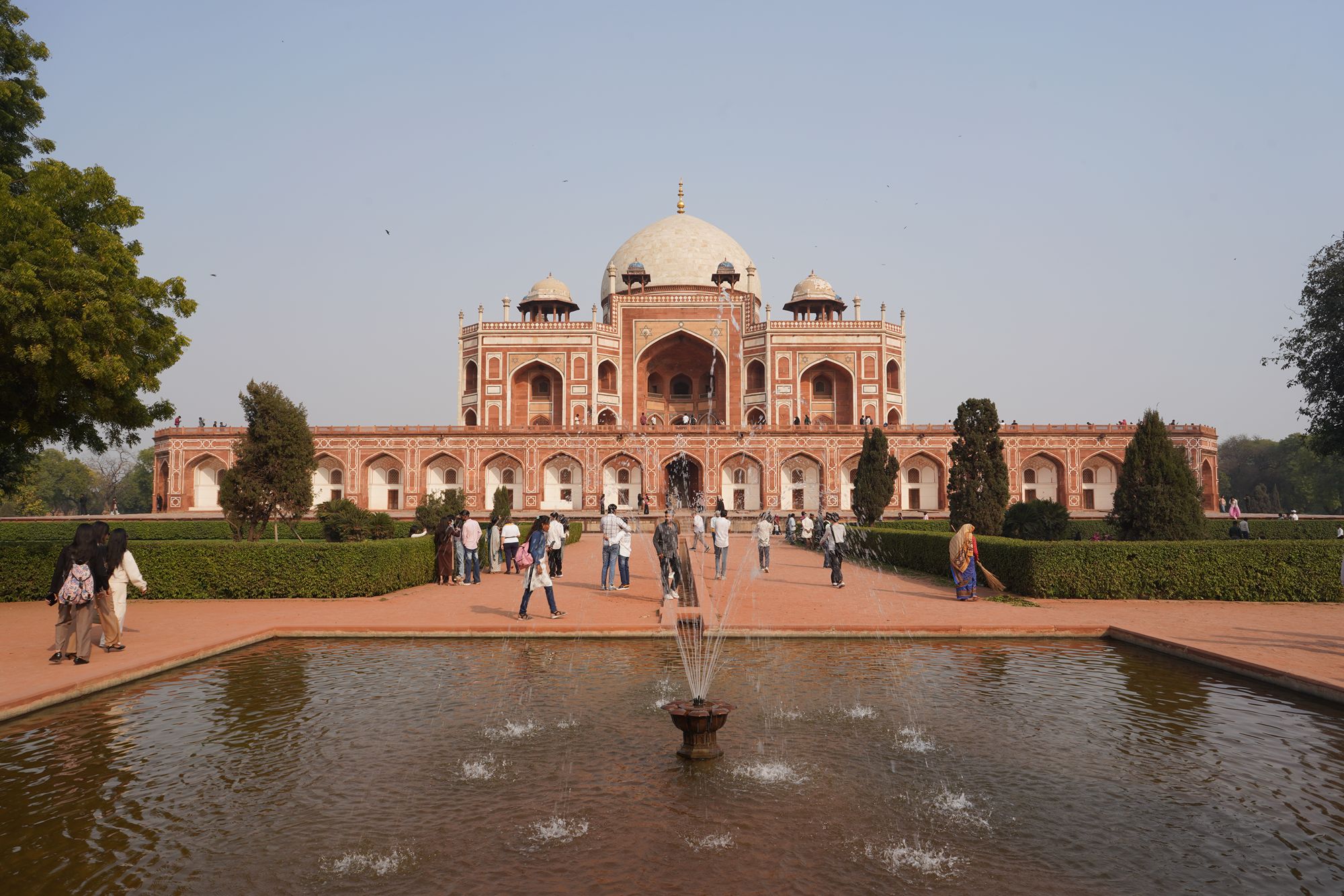
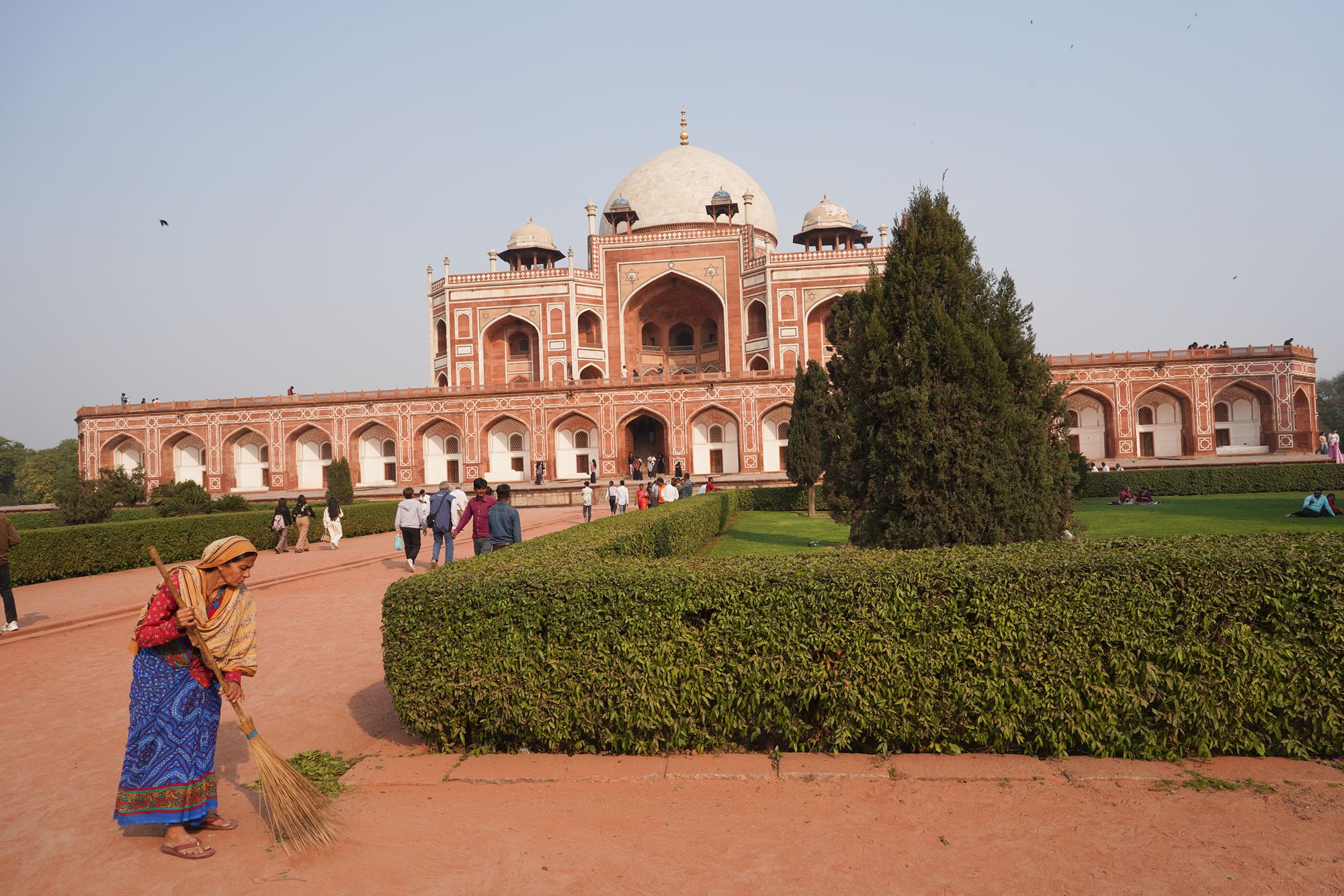
Humayun’s Tomb was especially important in the development of Mughal architecture because its design influenced later imperial tombs. Many of its features—symmetry, formal gardens, red sandstone, white marble, and a prominent central dome—were further developed in later monuments, most famously the Taj Mahal.
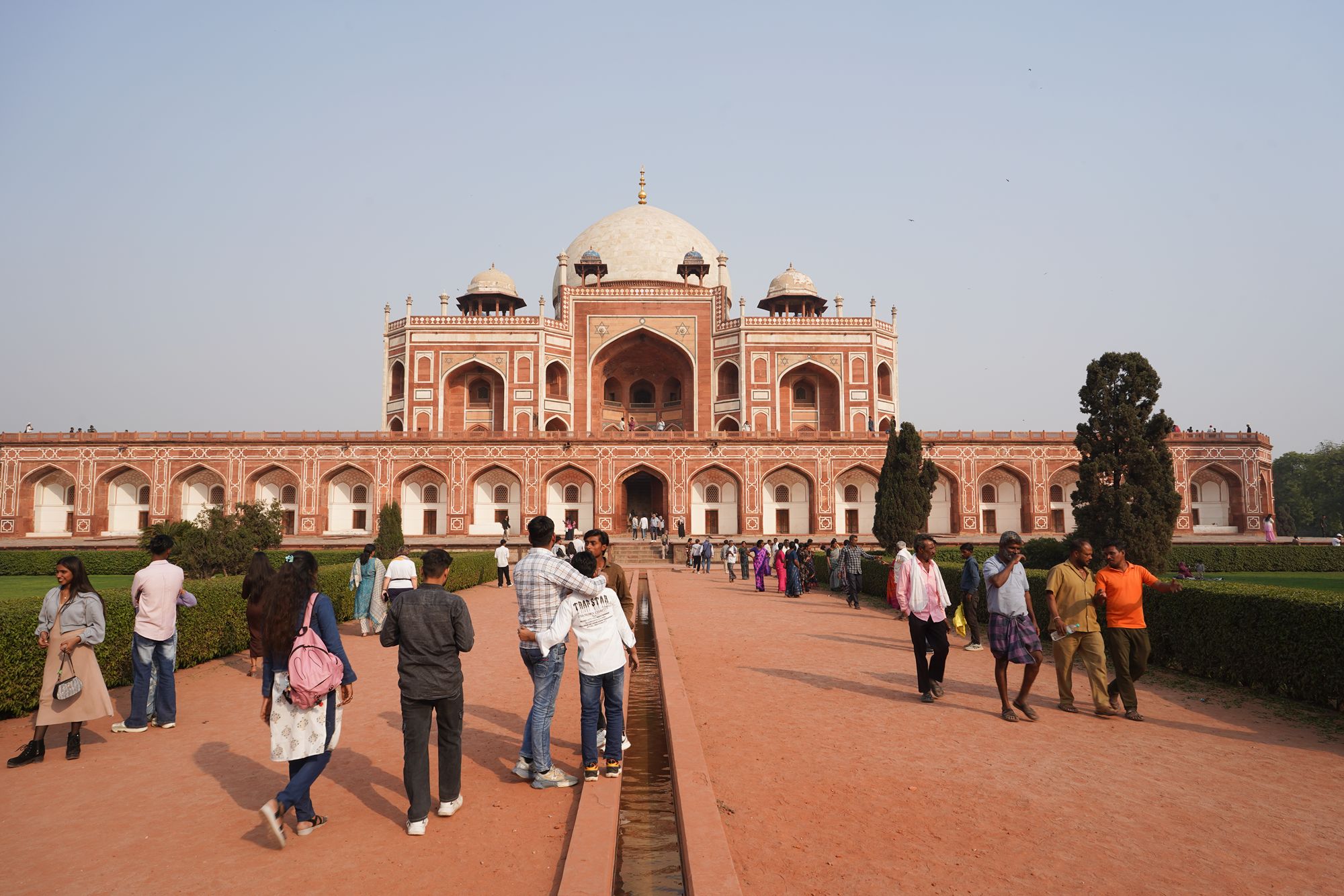
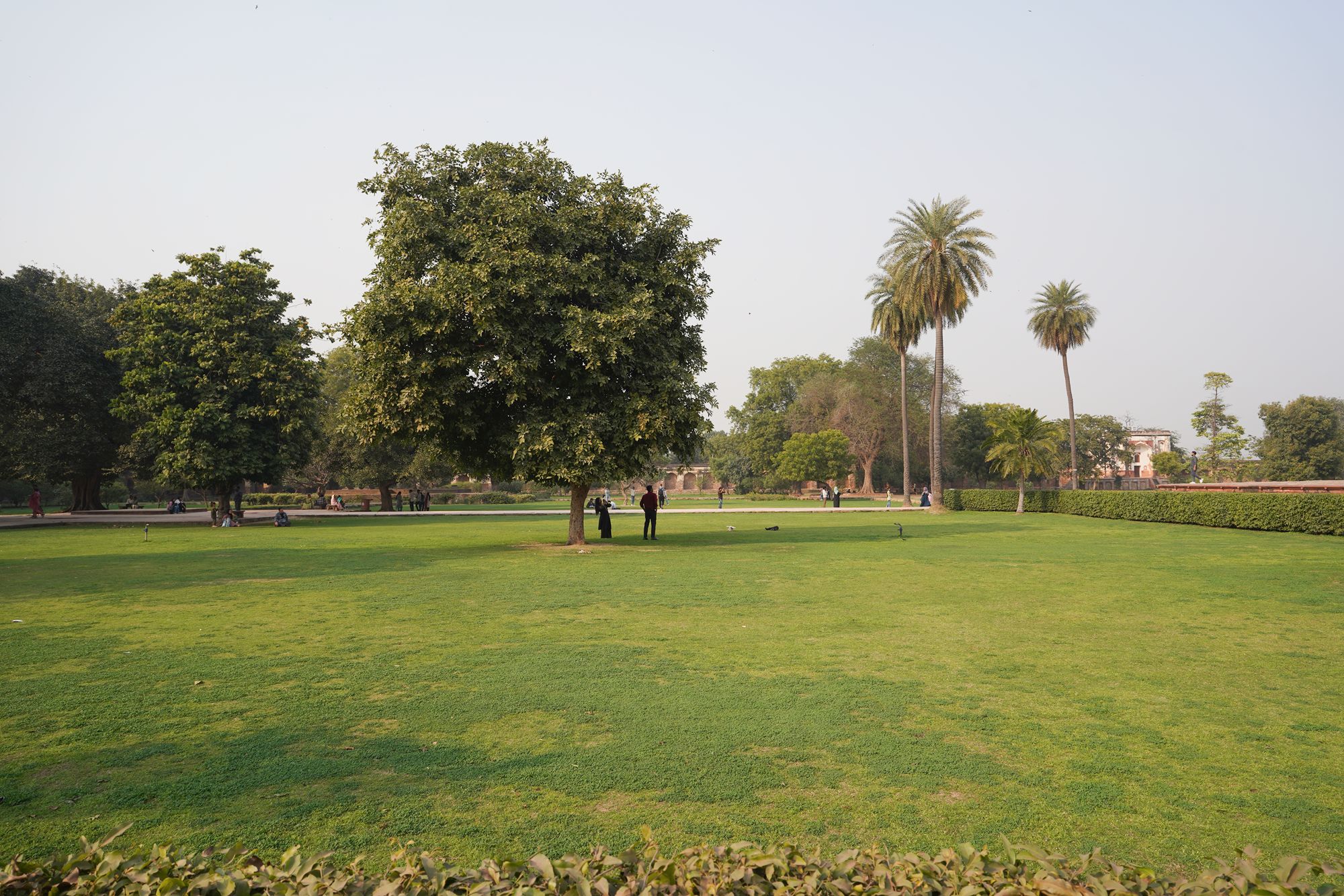
The complex also became a burial place for the Mughal royal family, with more than 100 graves associated with Mughal princes, nobles, and other members of the dynasty. Today, Humayun’s Tomb is a UNESCO World Heritage Site and one of New Delhi’s most important historic monuments.
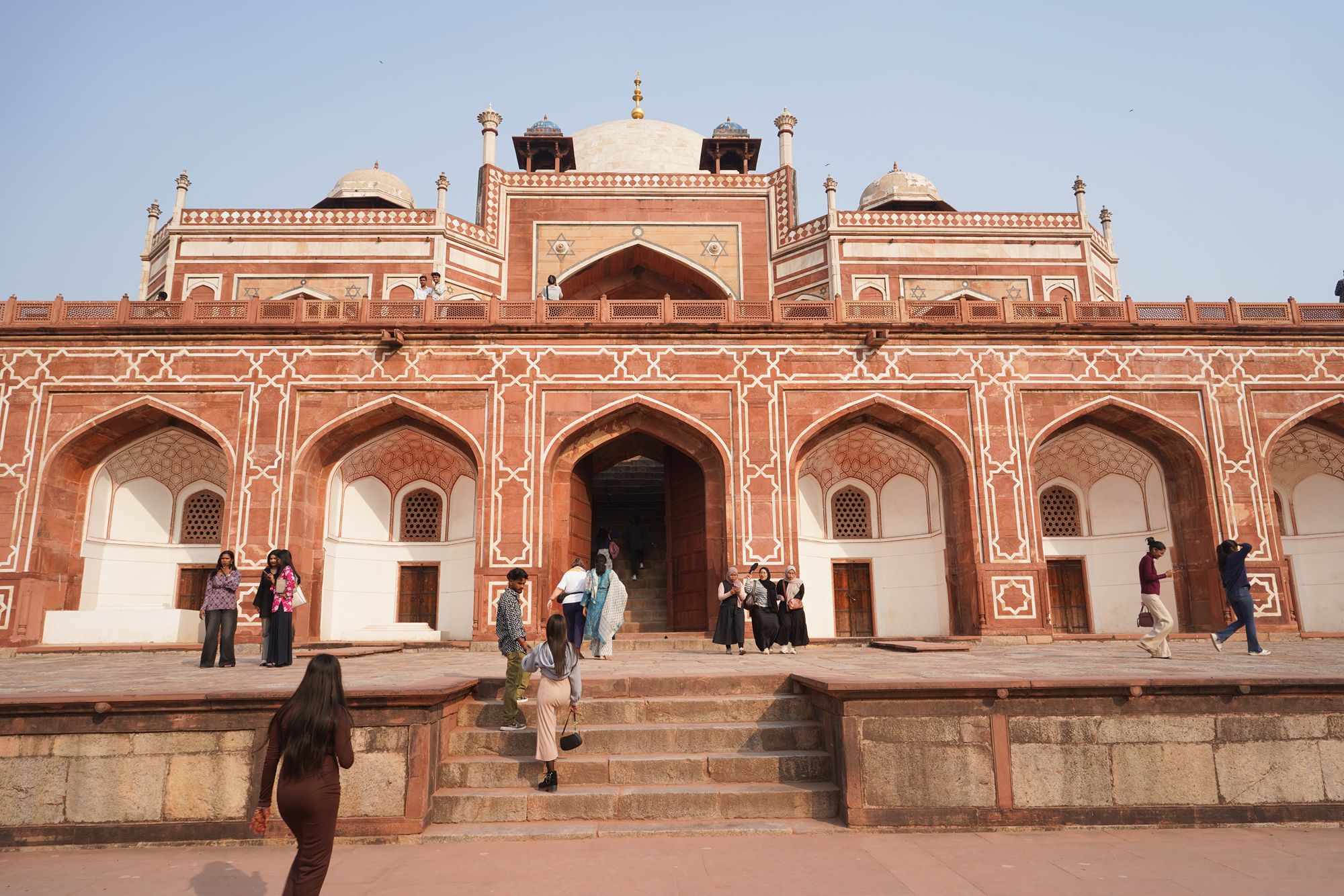
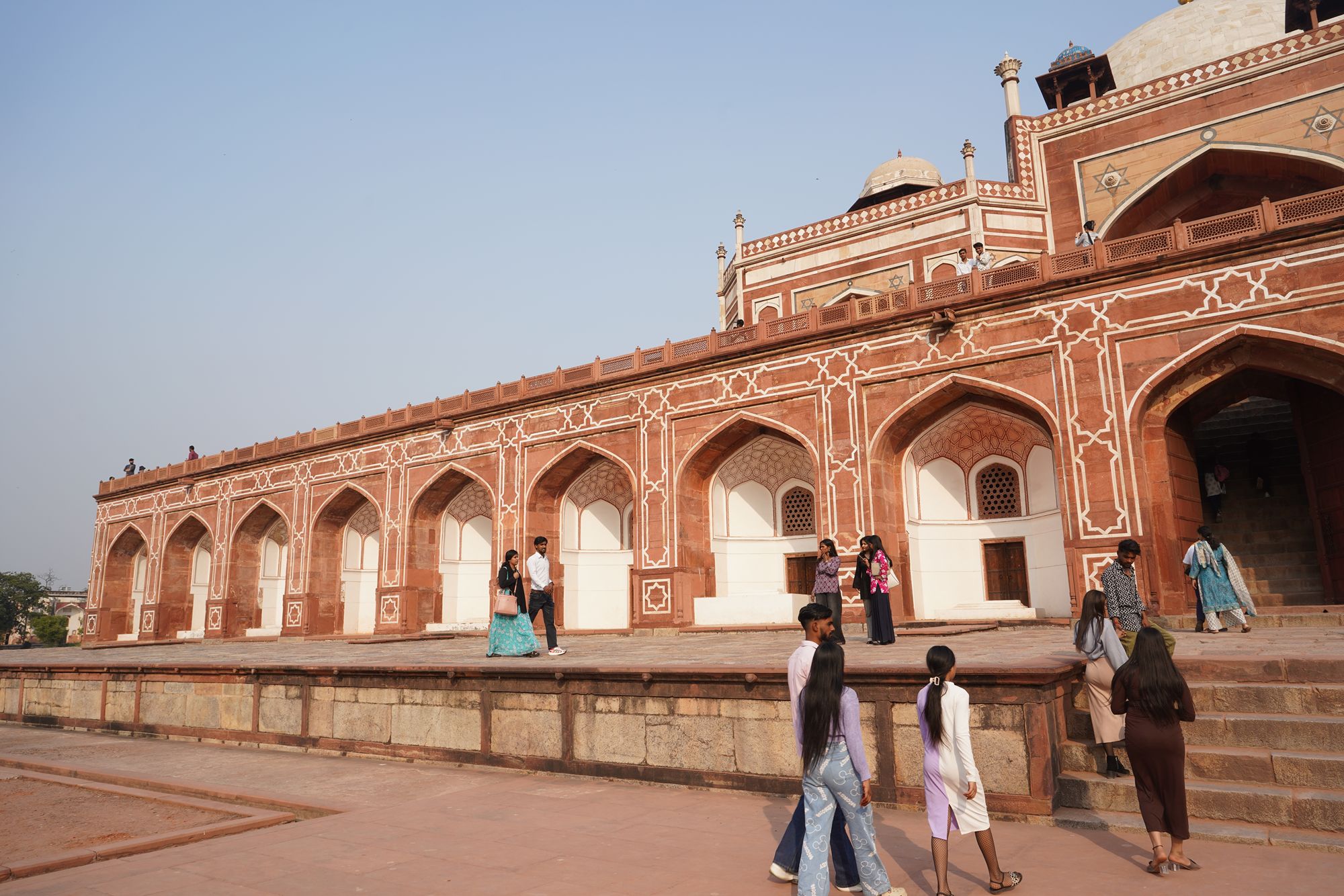
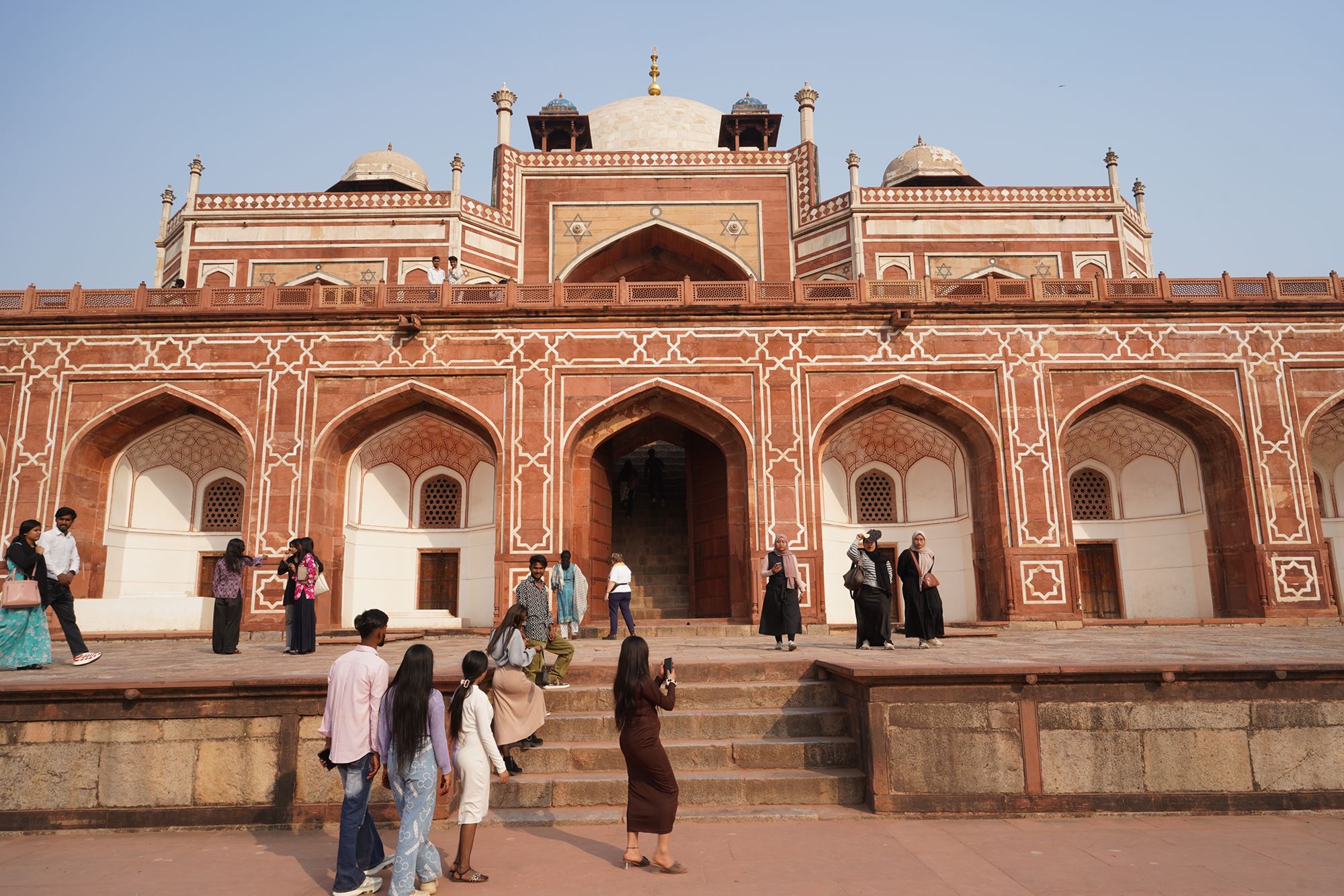
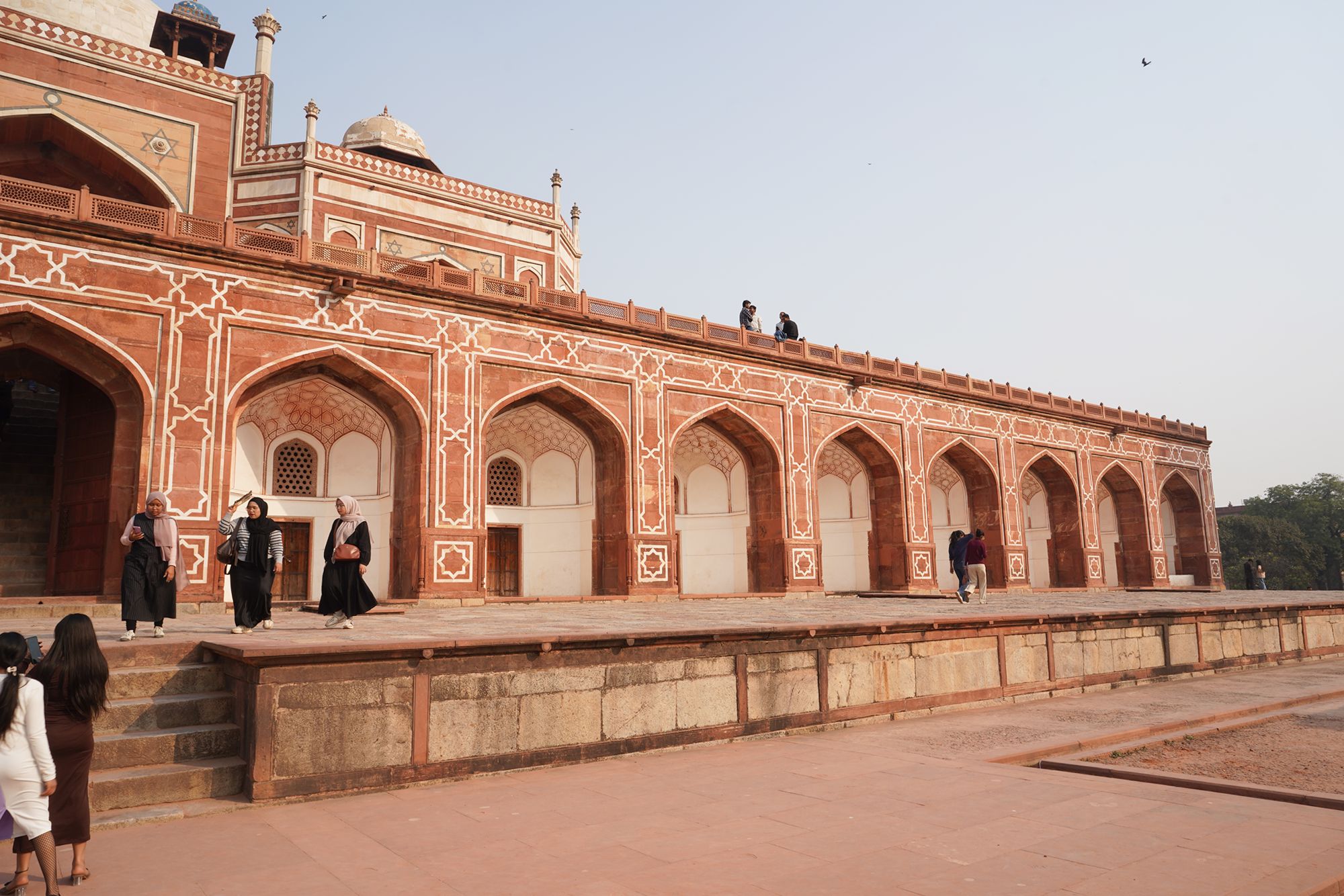
Walking up the stairs toward Humayun’s Tomb.
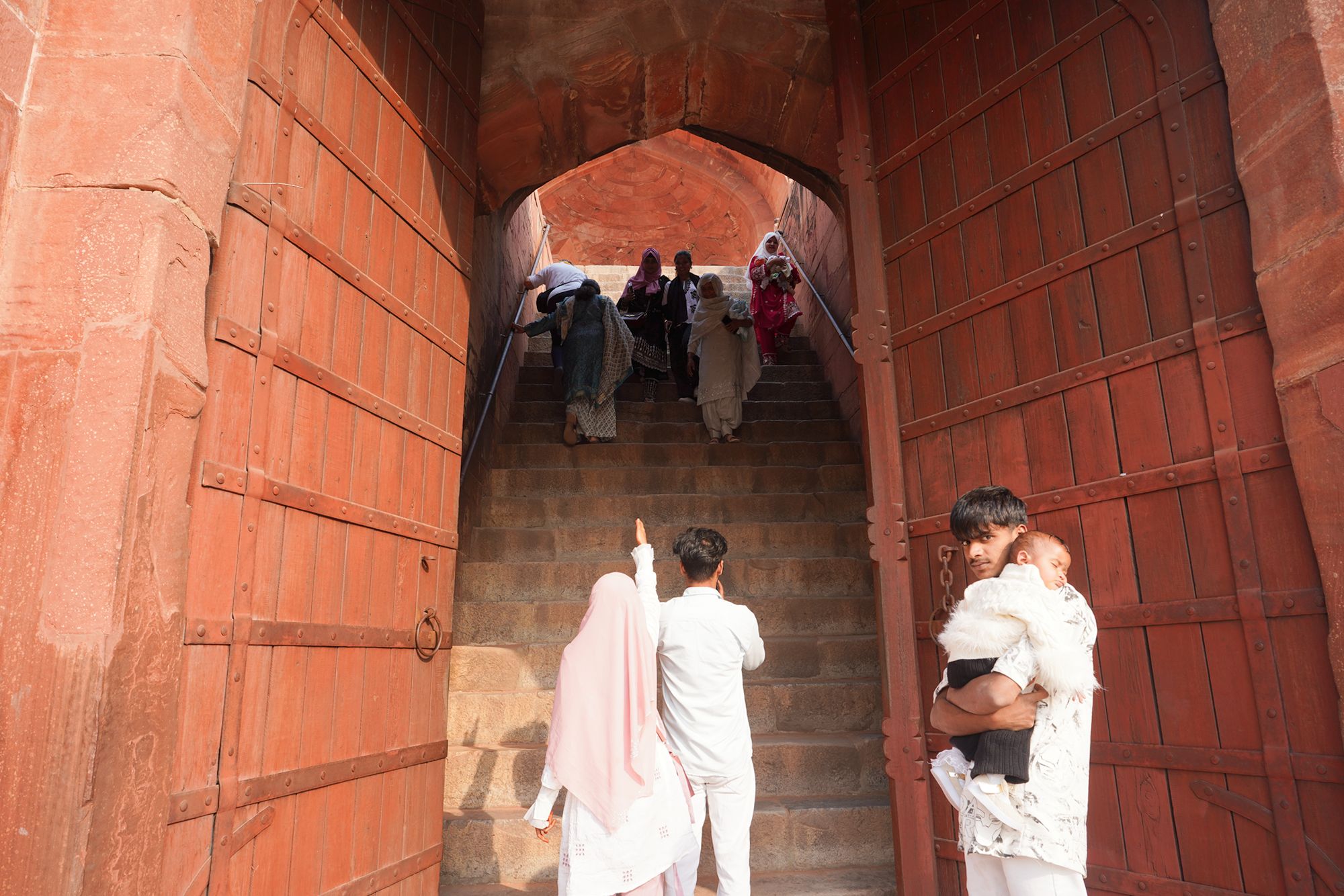
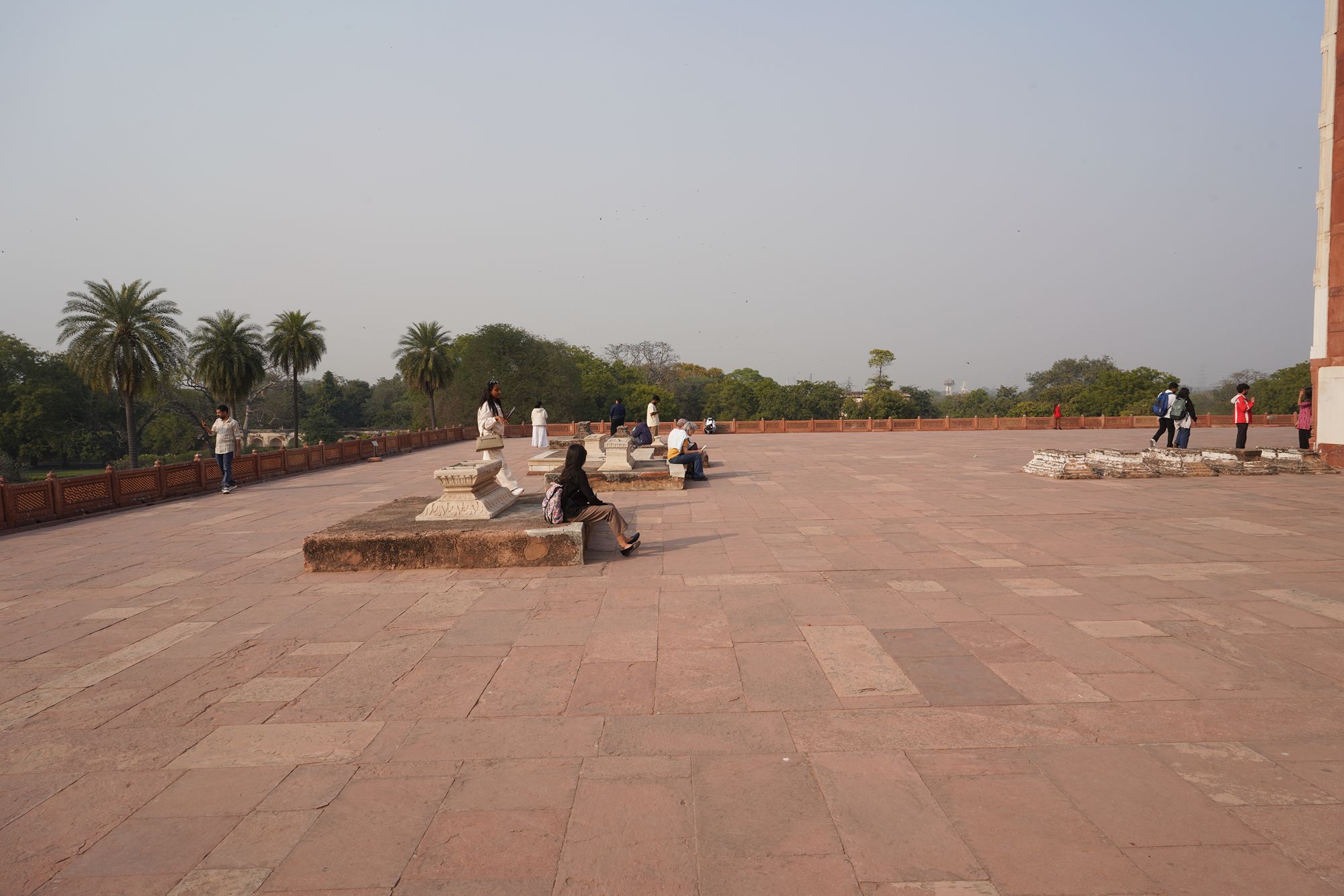
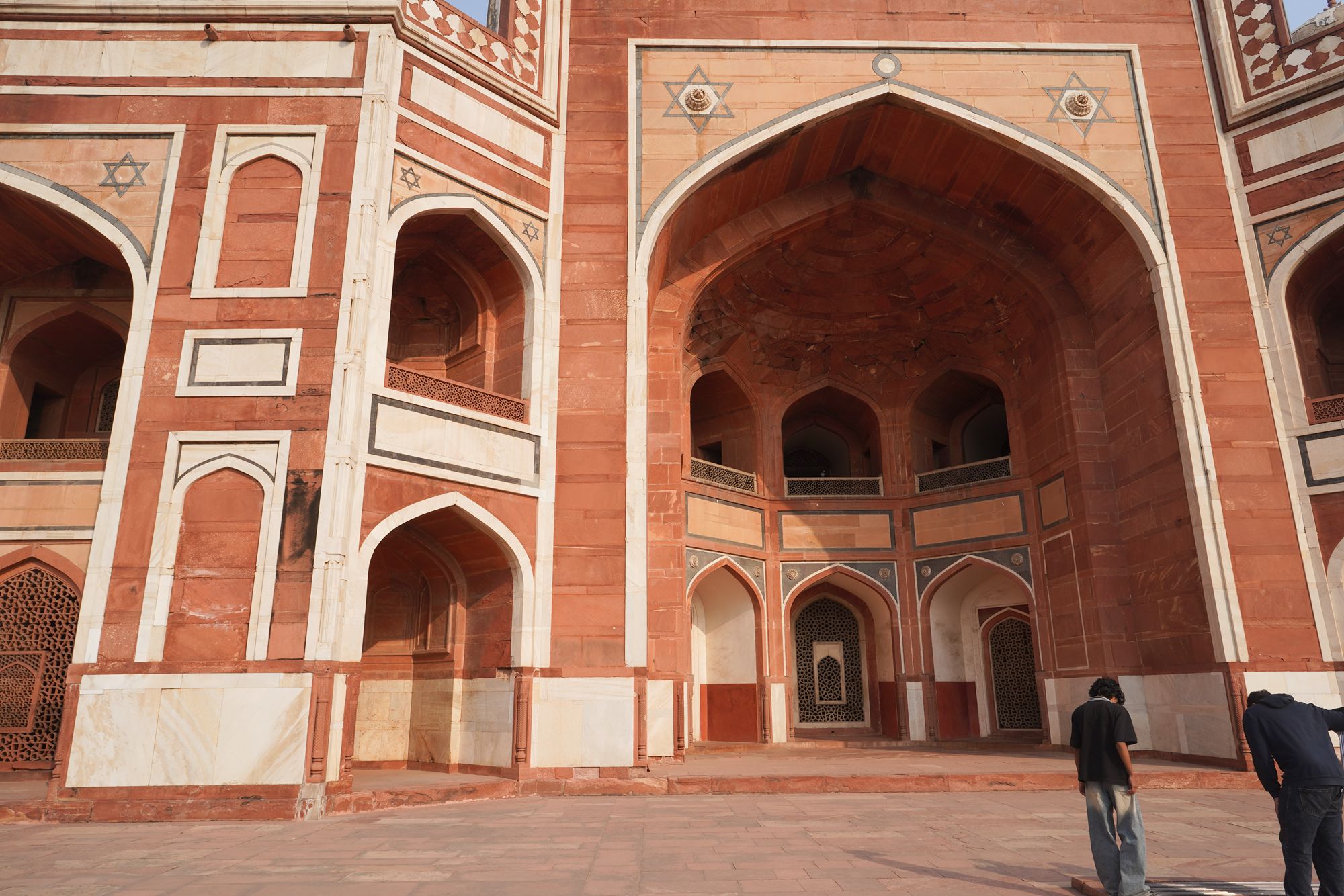
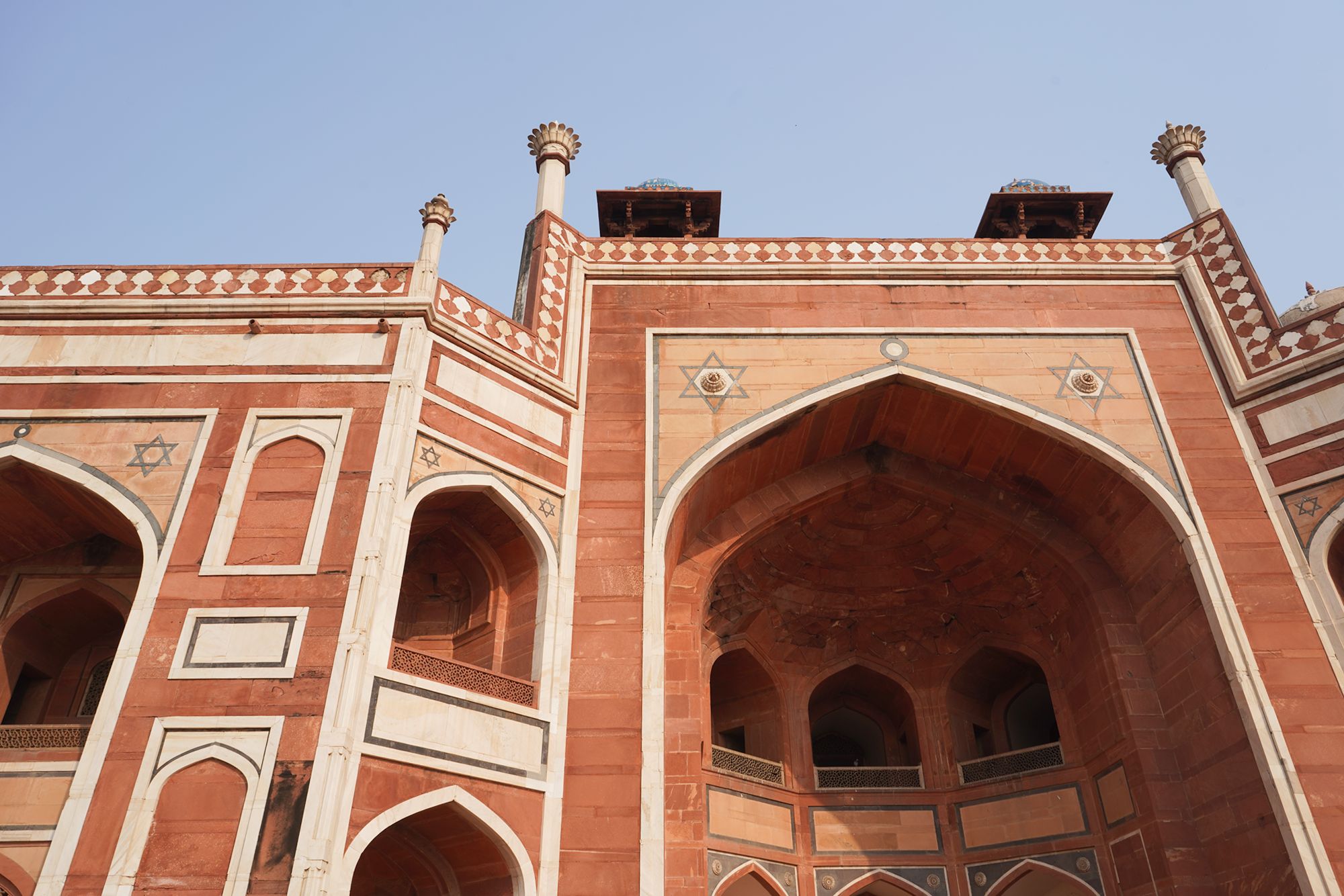
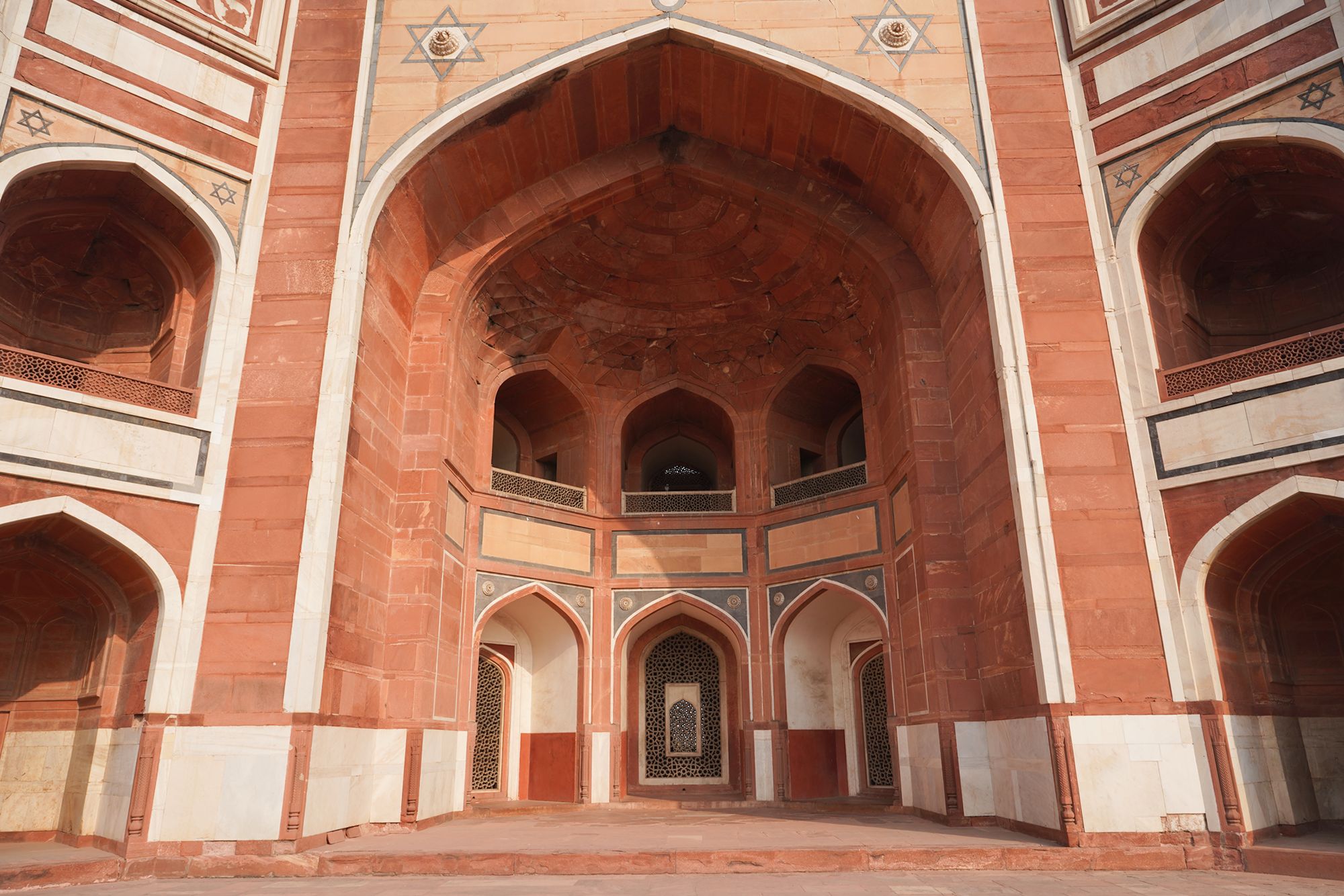
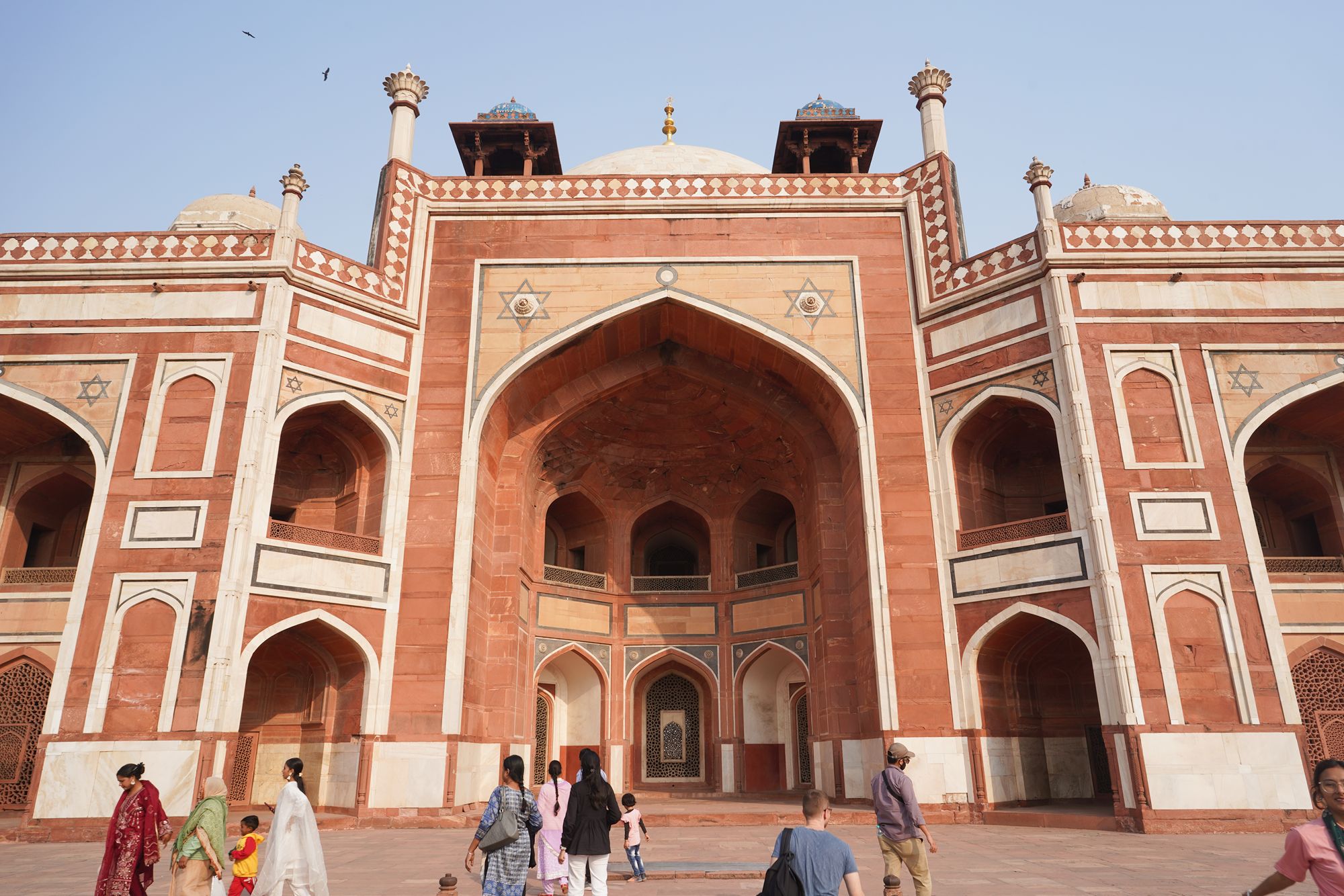
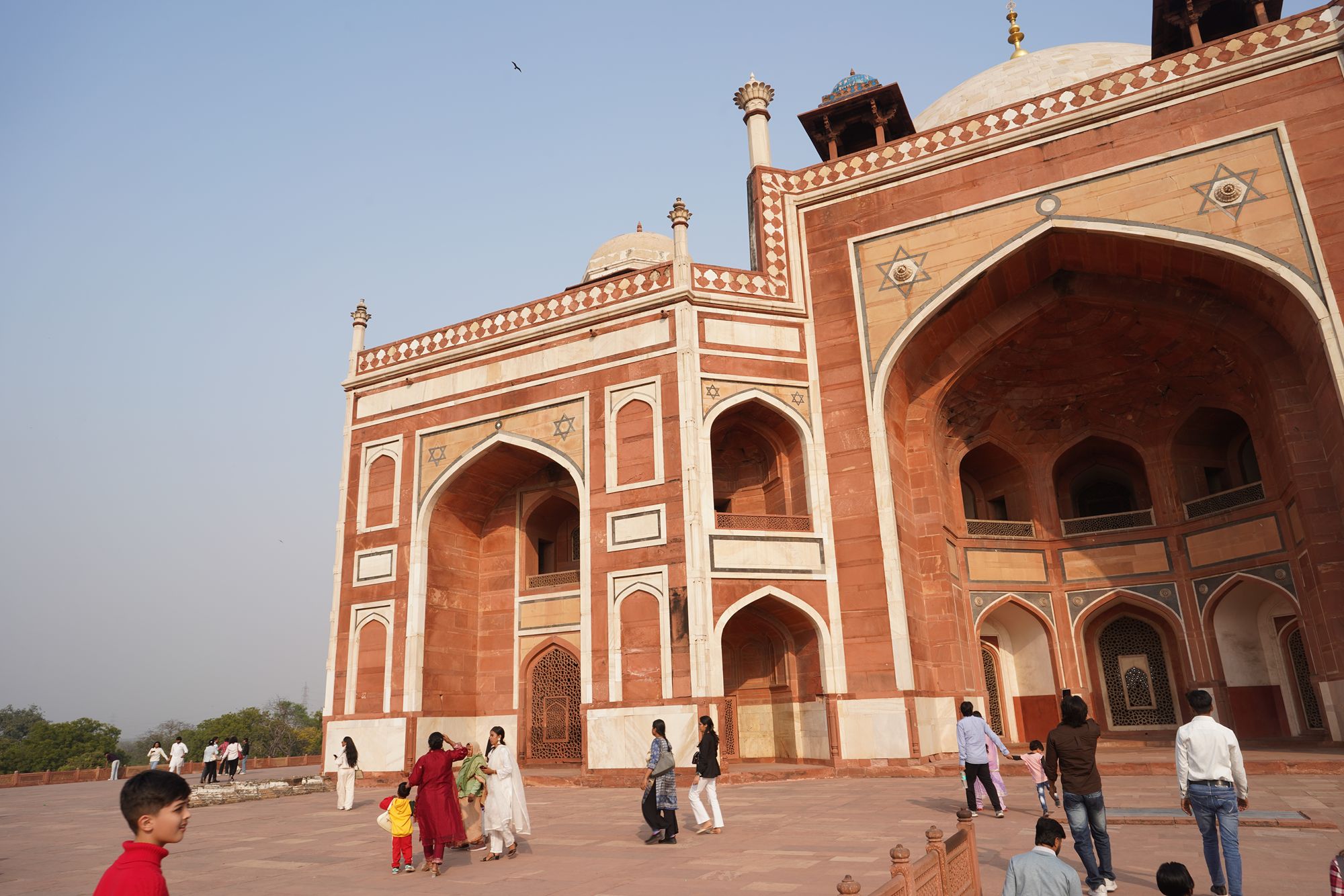
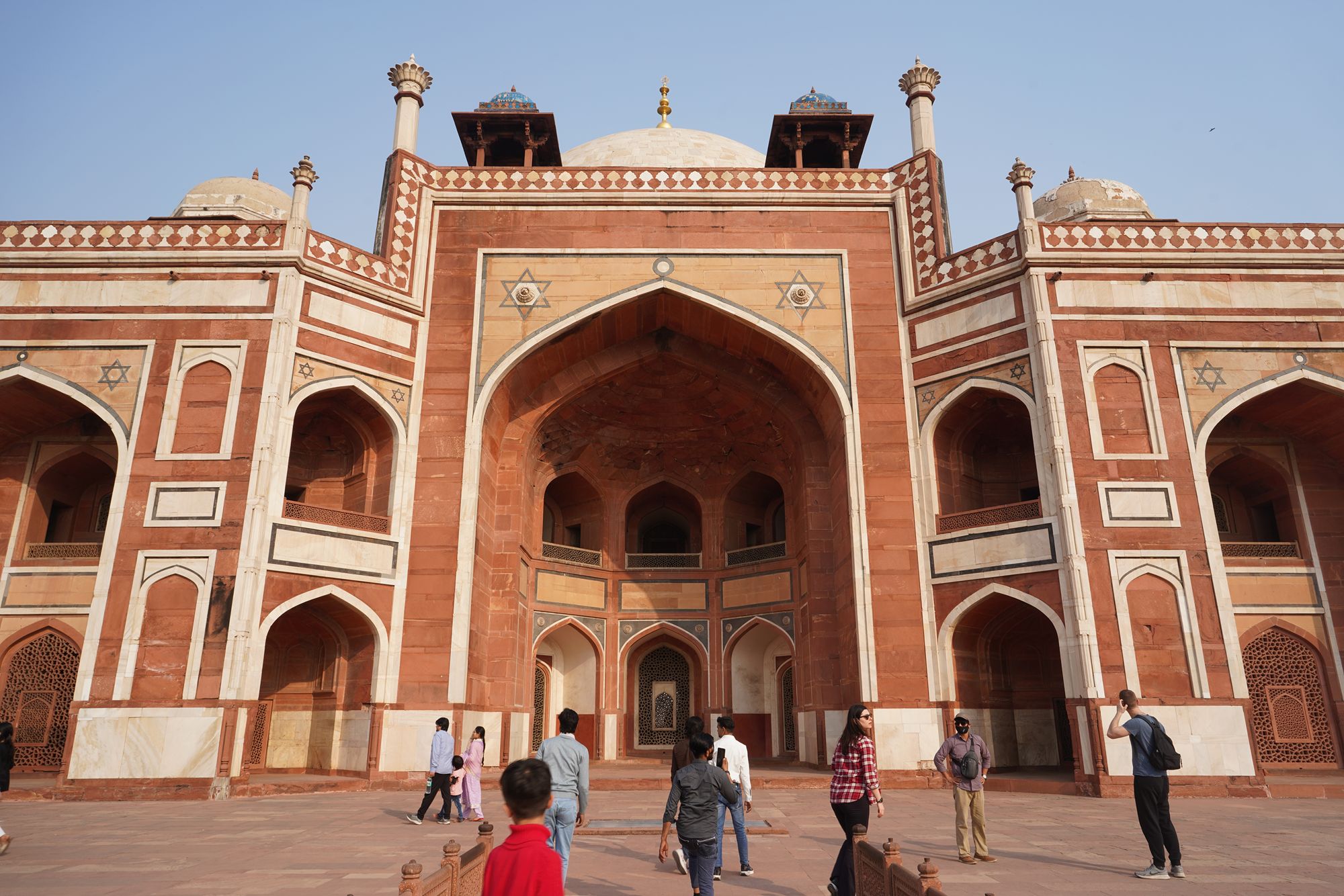
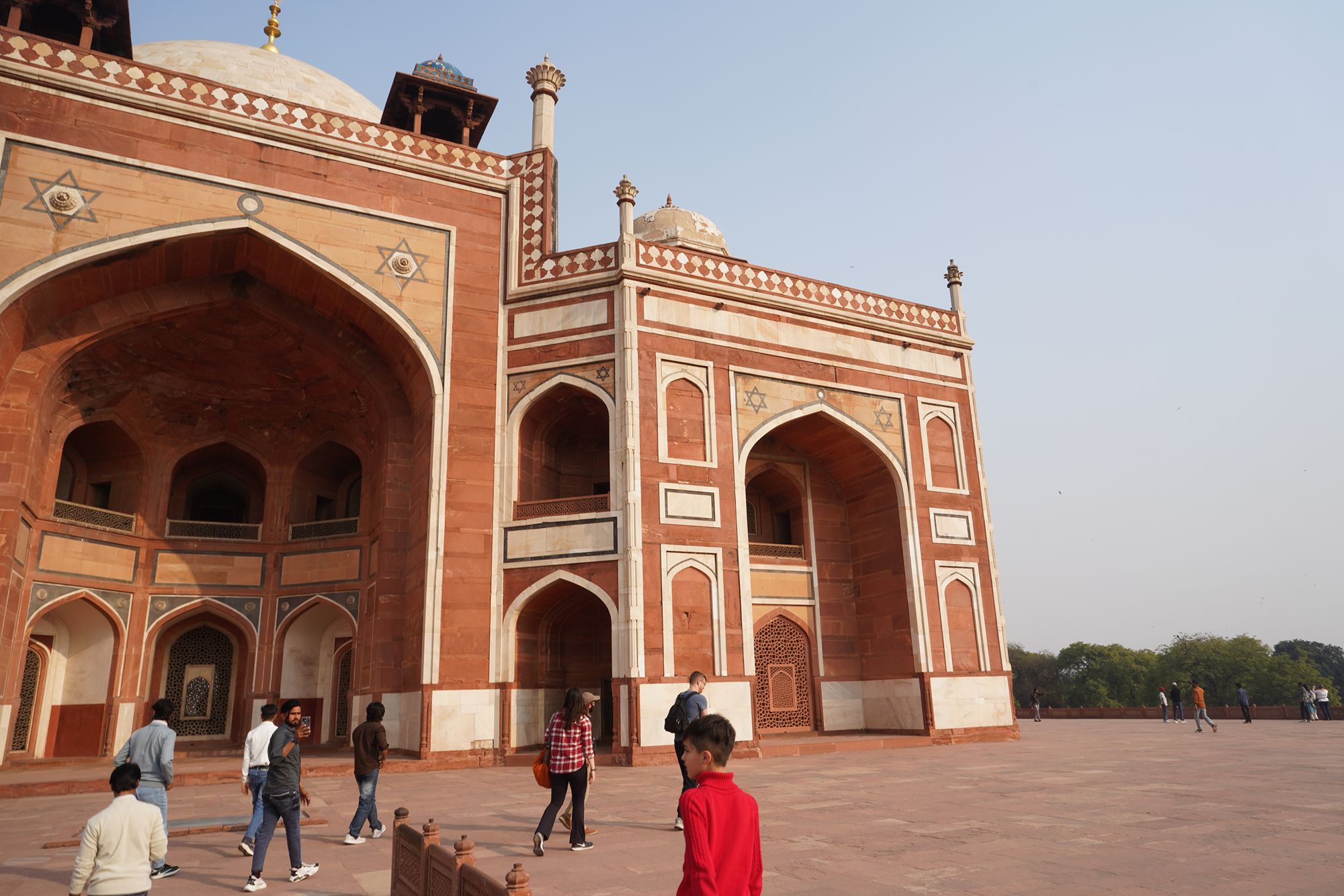
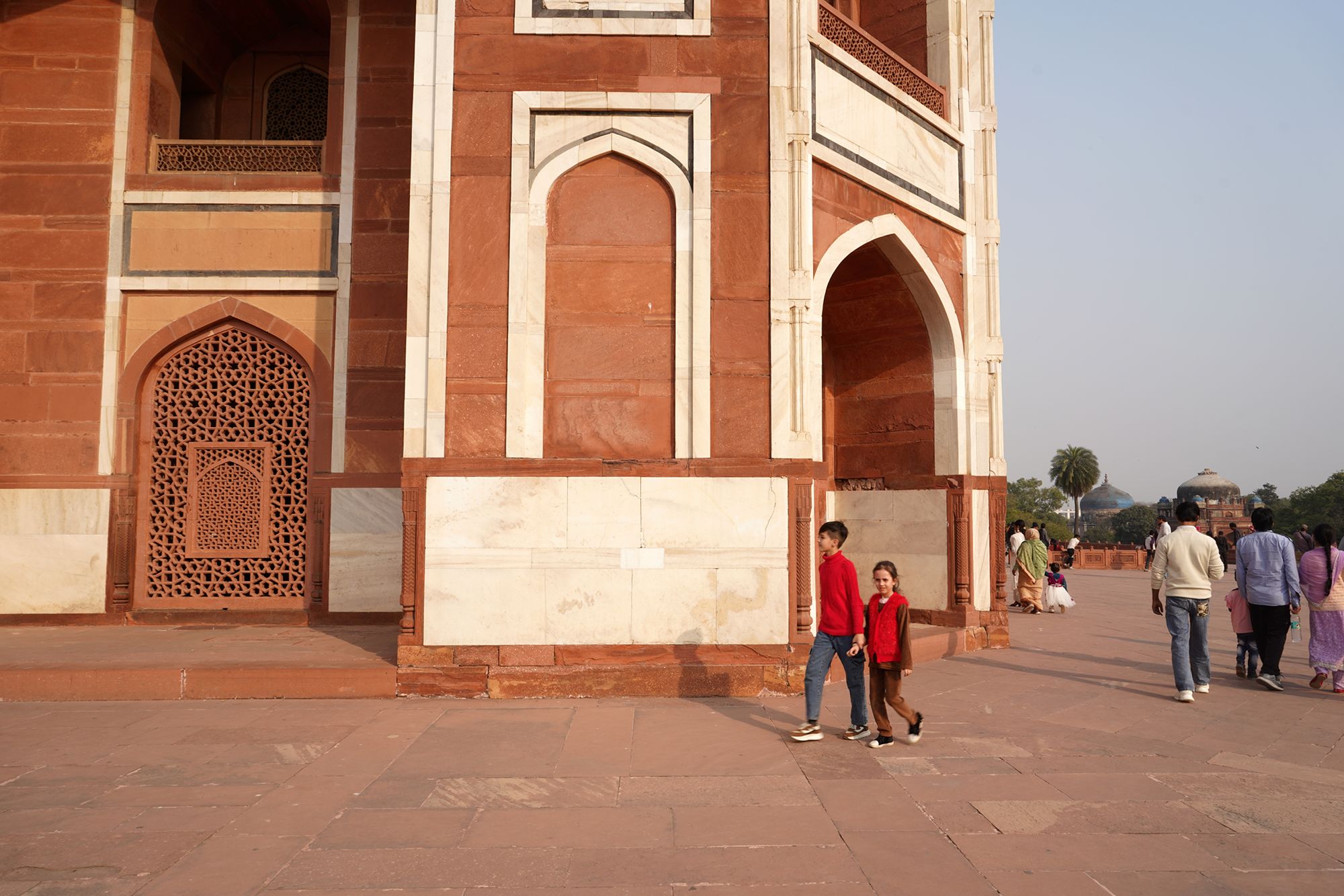
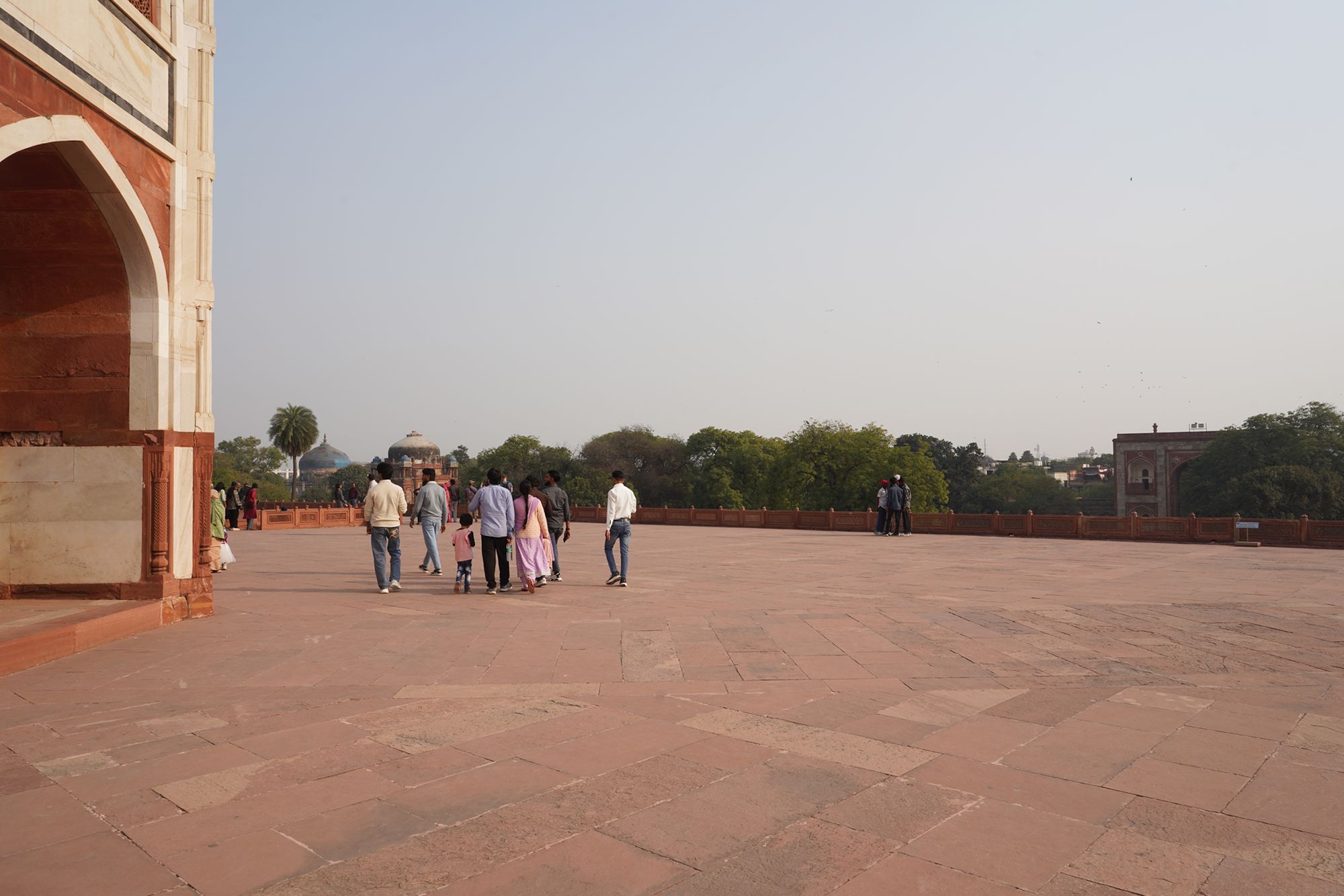
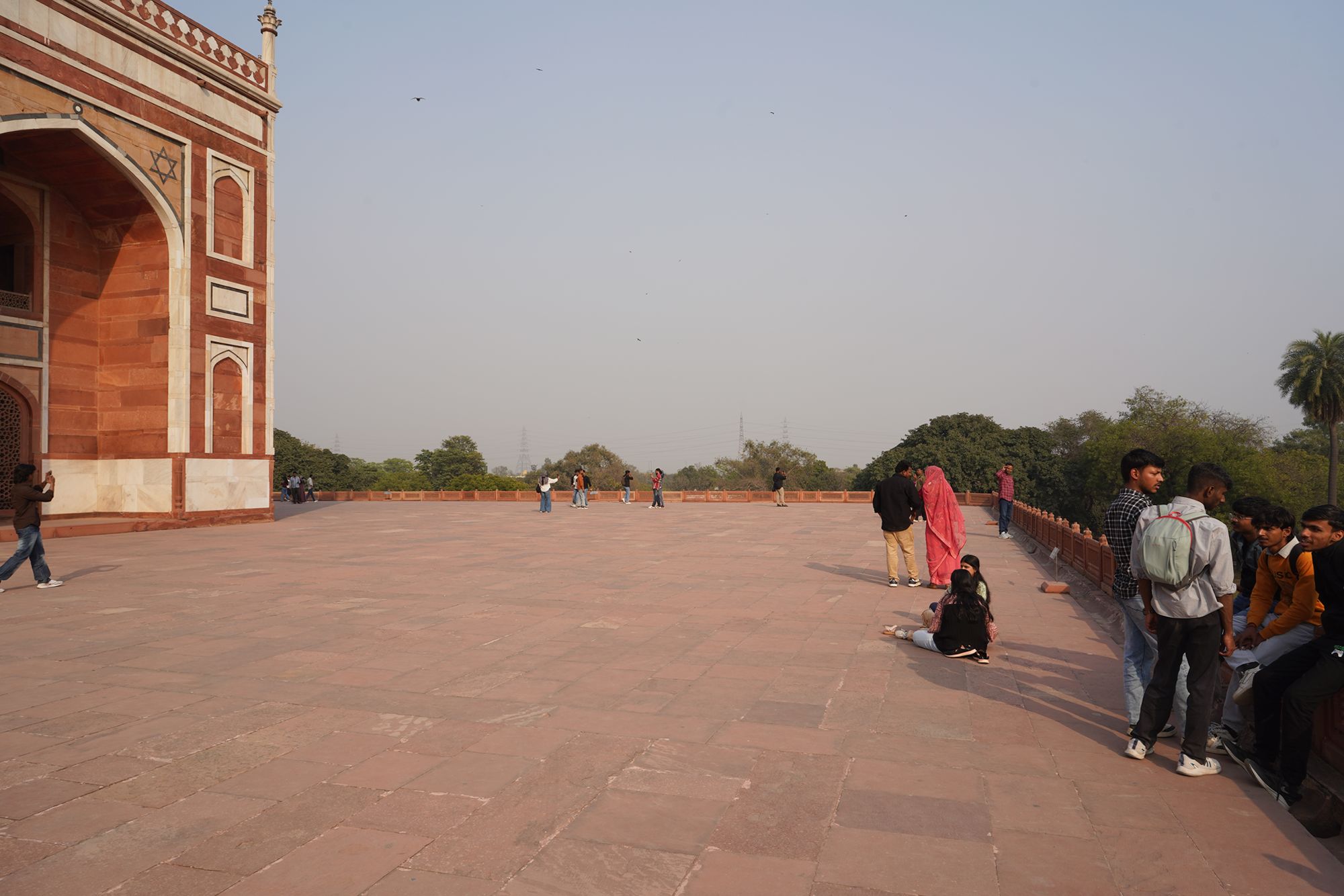
Walking toward the right side of the central structure of Humayun’s Tomb.
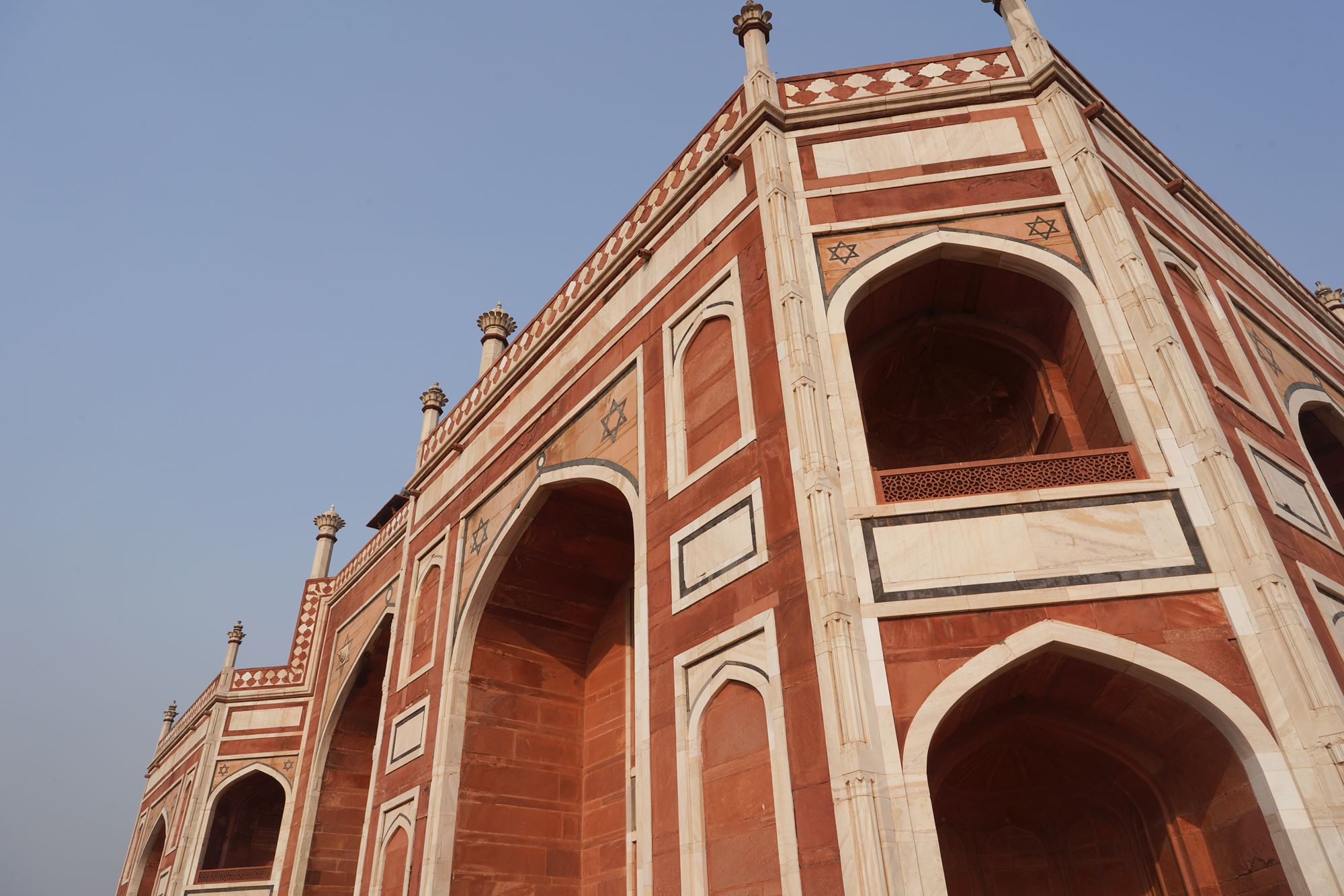
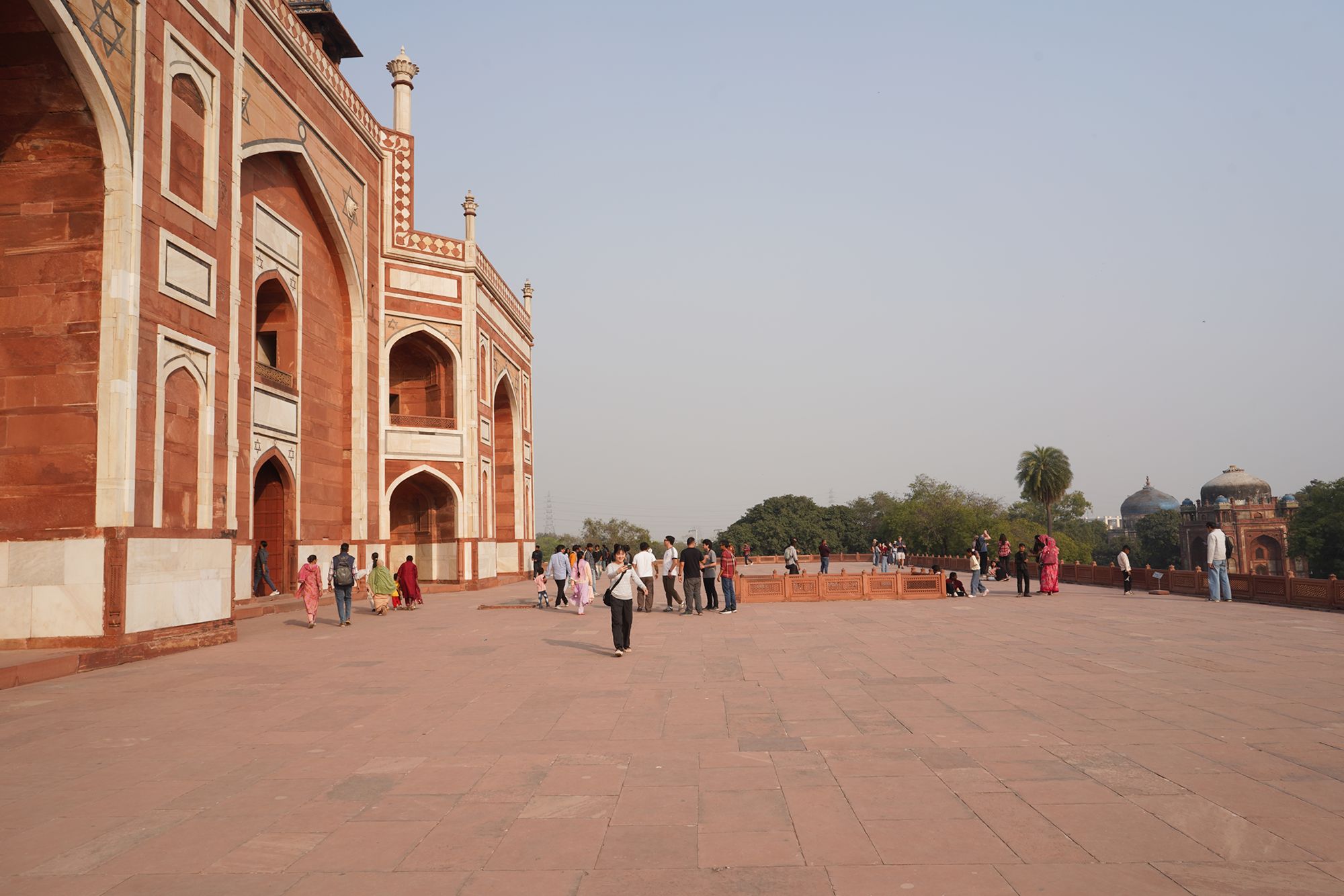
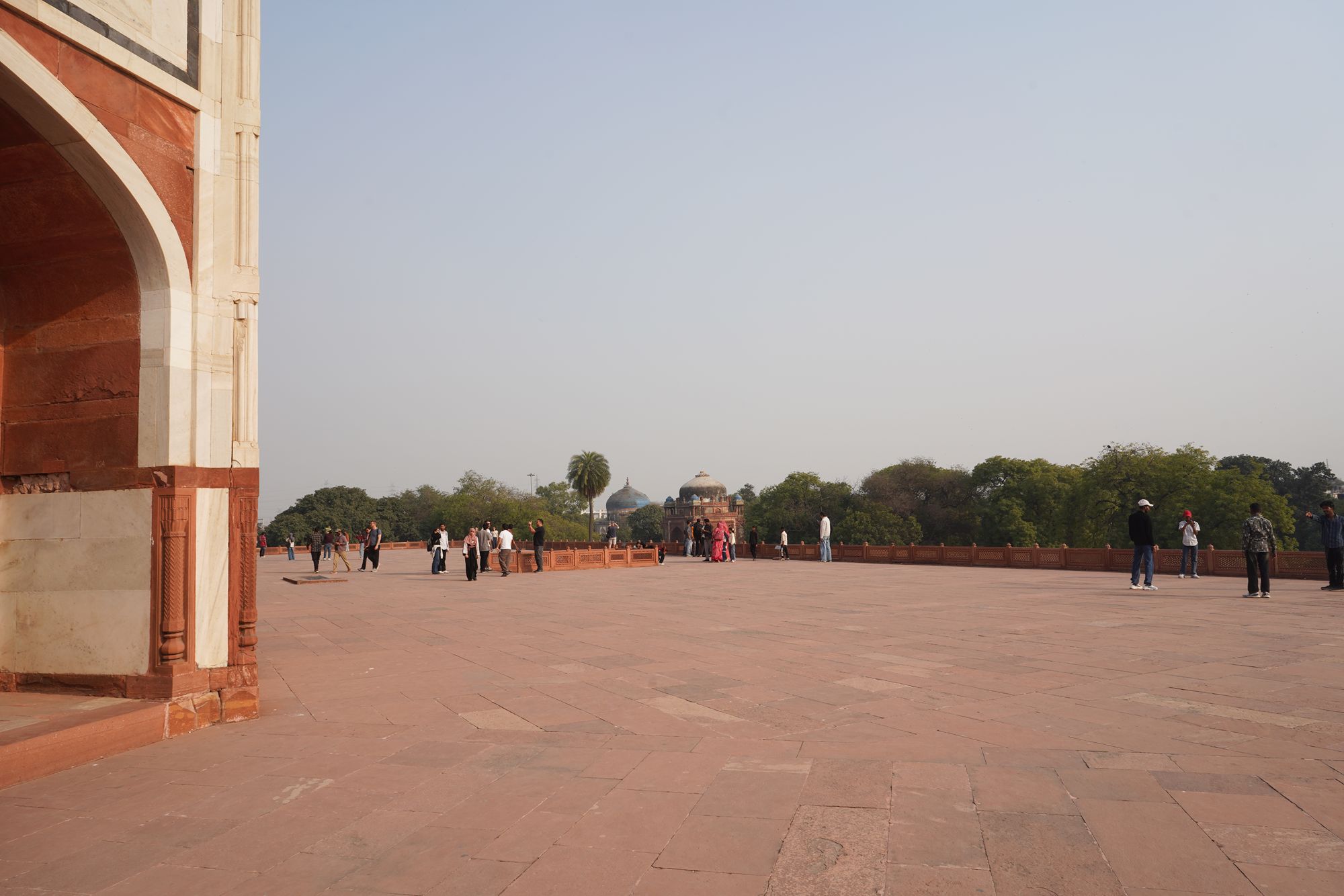
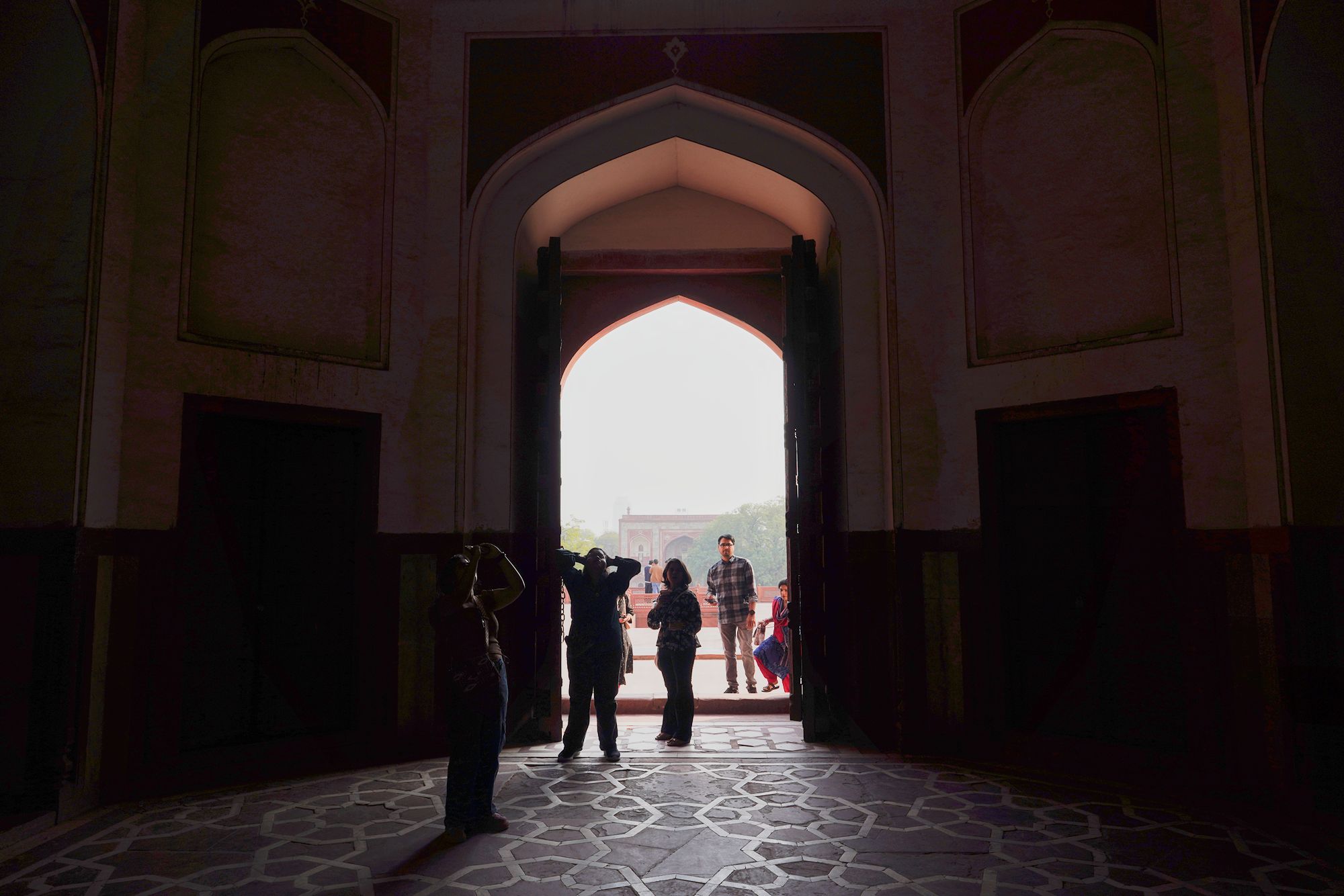
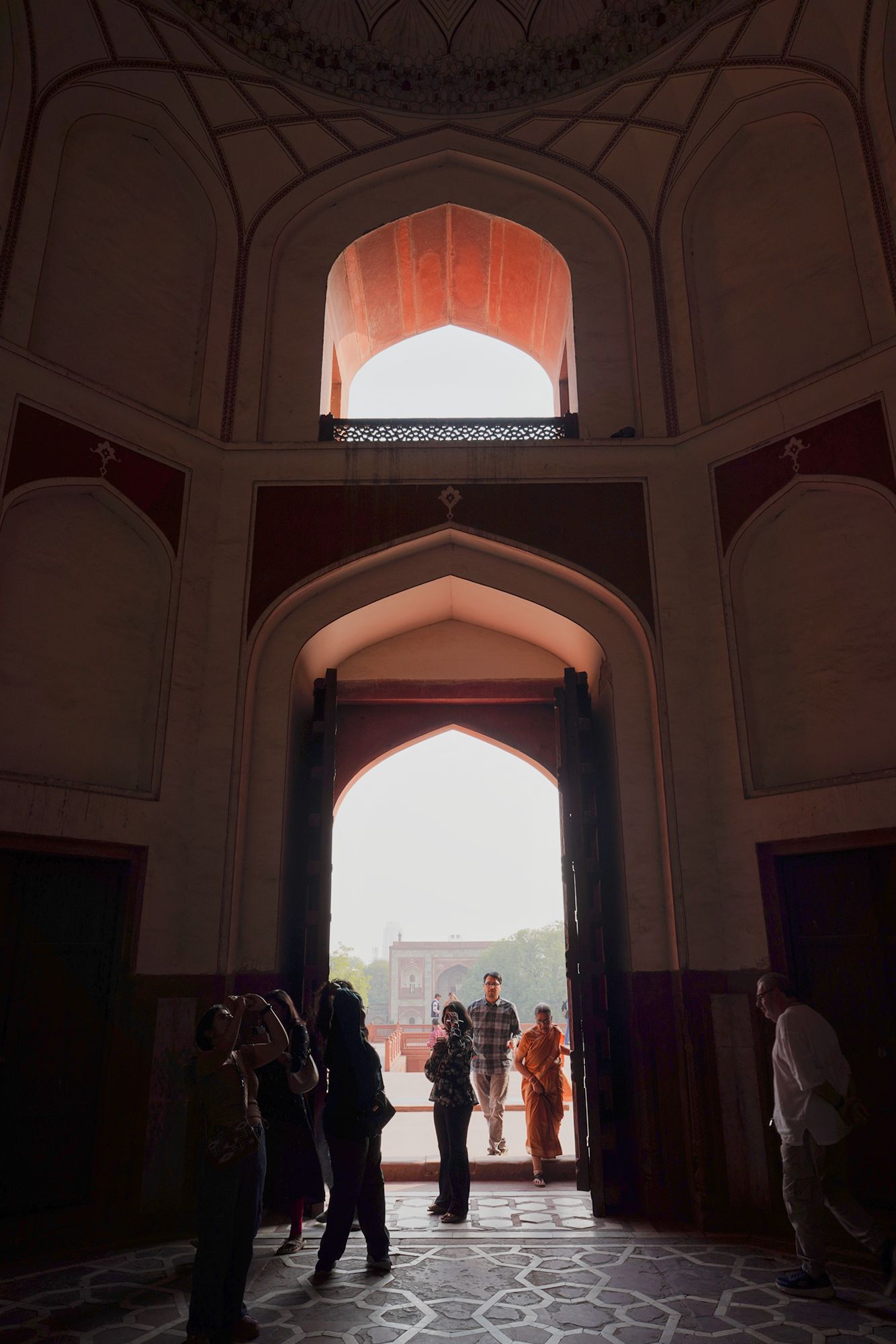
The entrance leading inside Humayun’s Tomb.
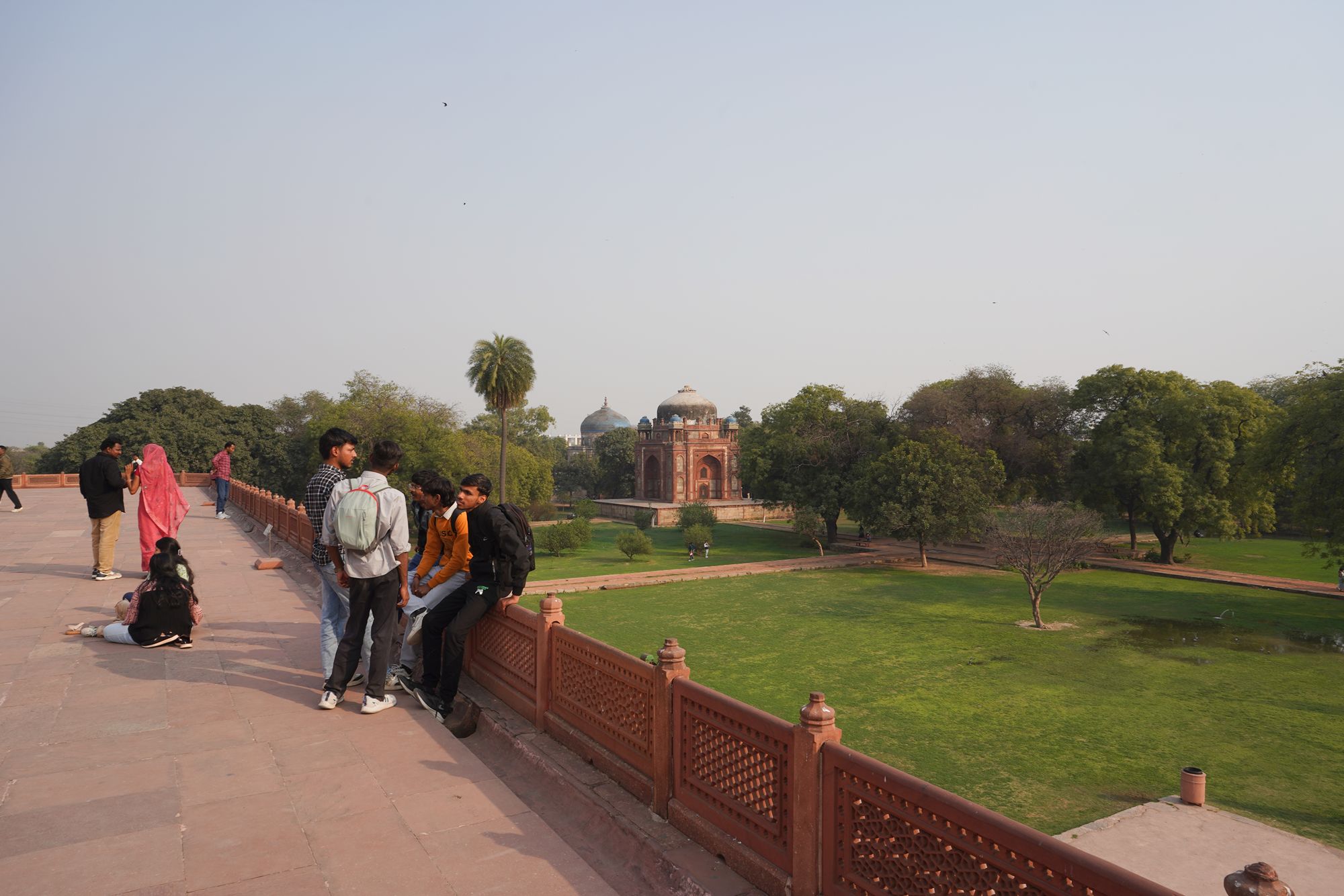
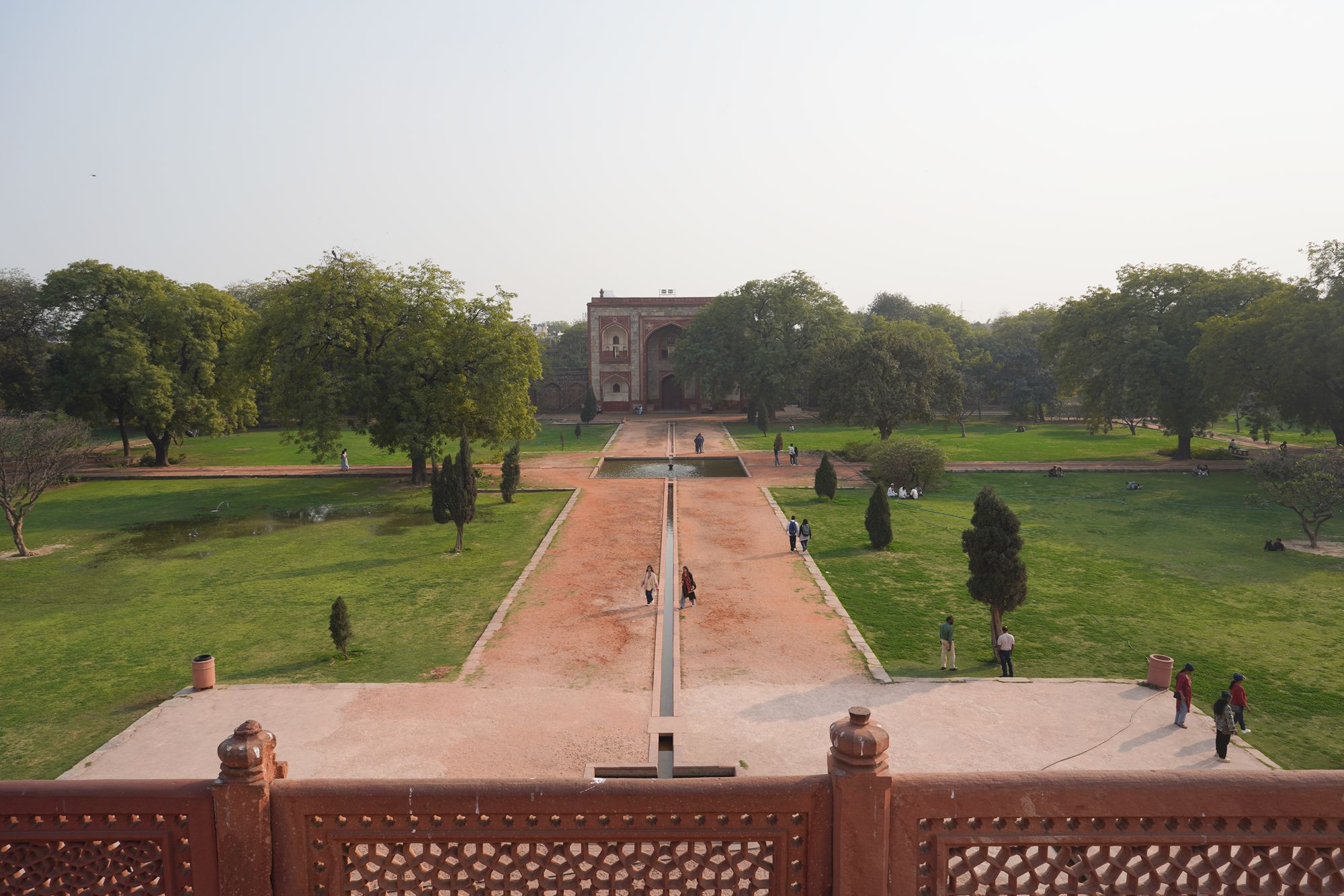
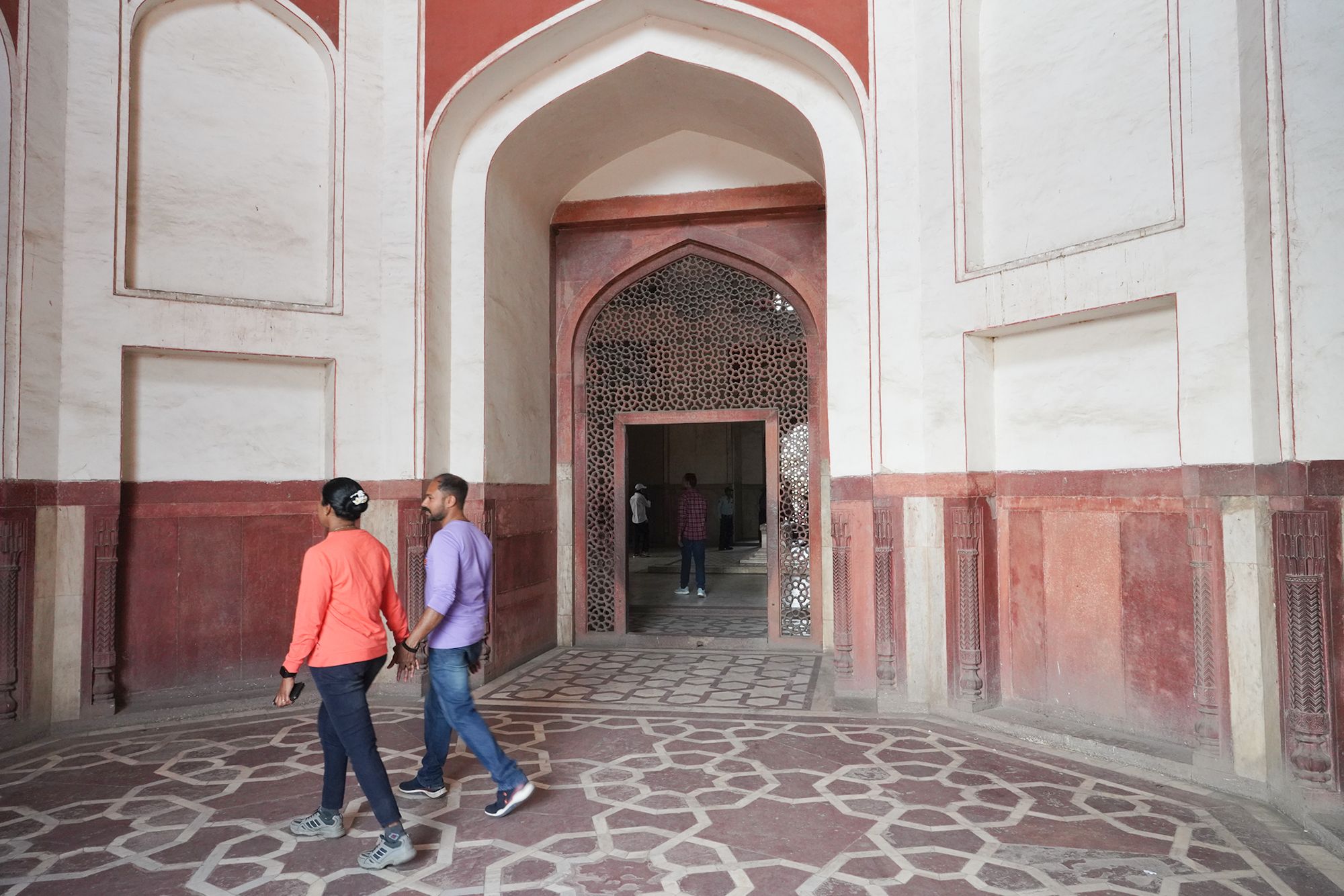
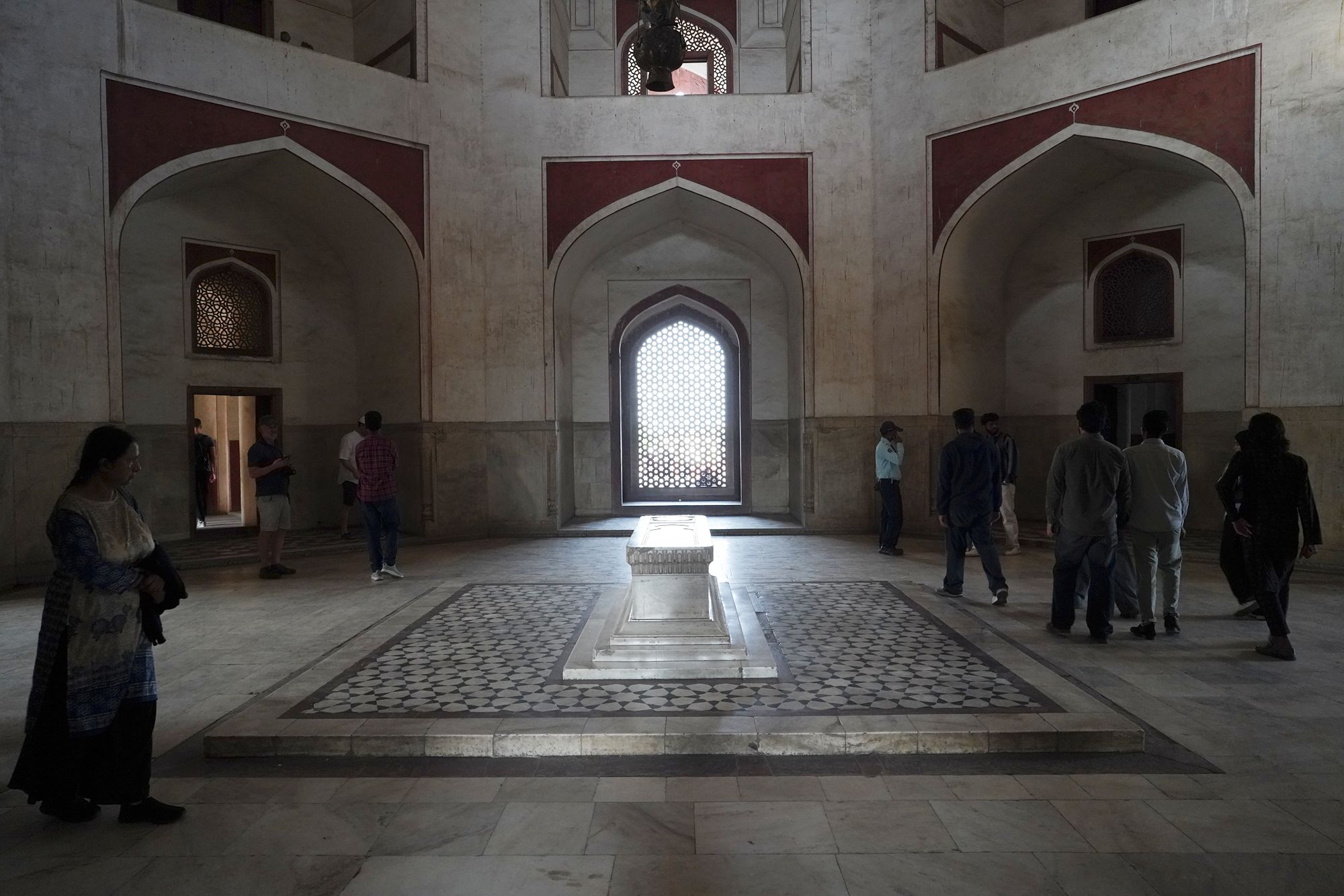
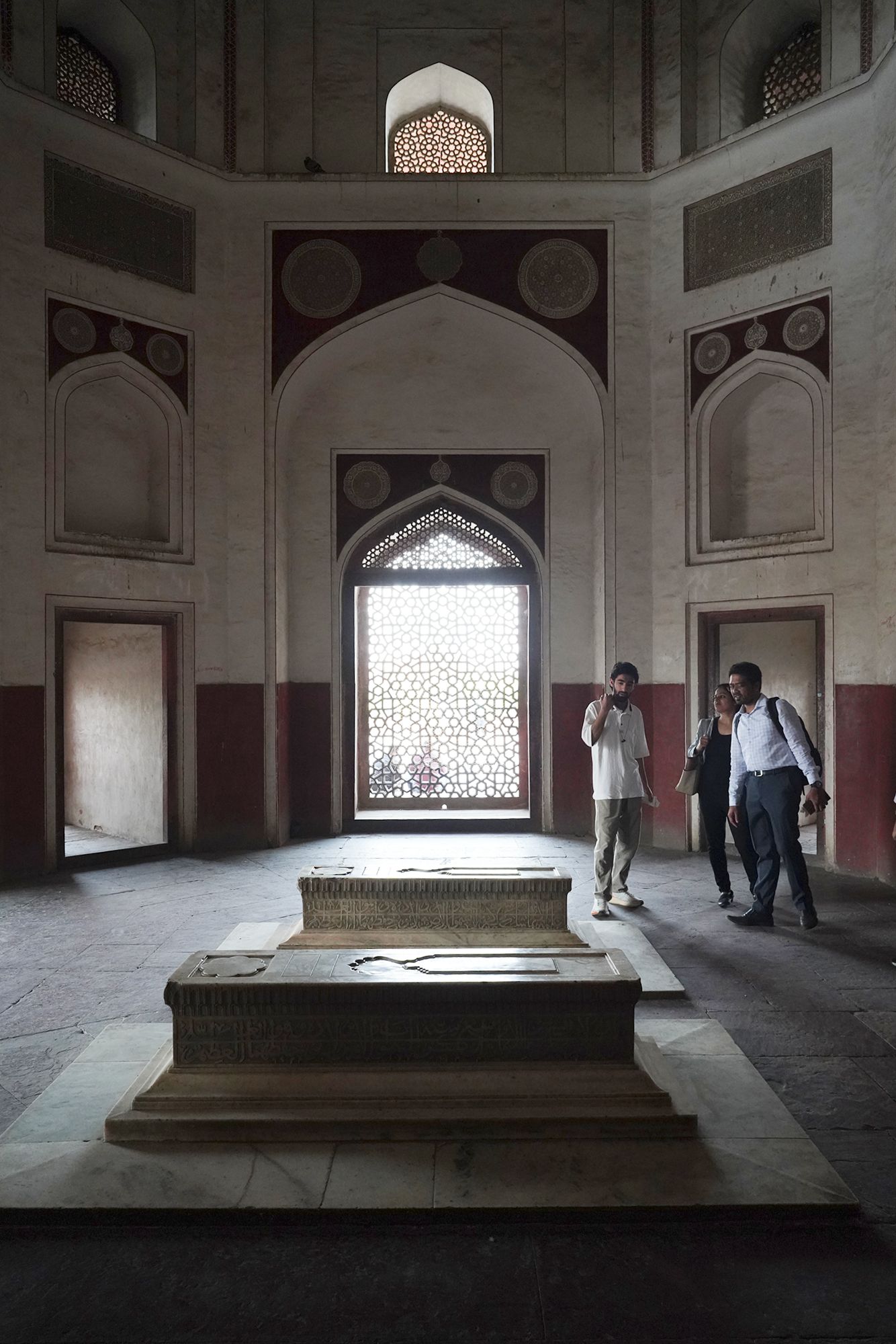
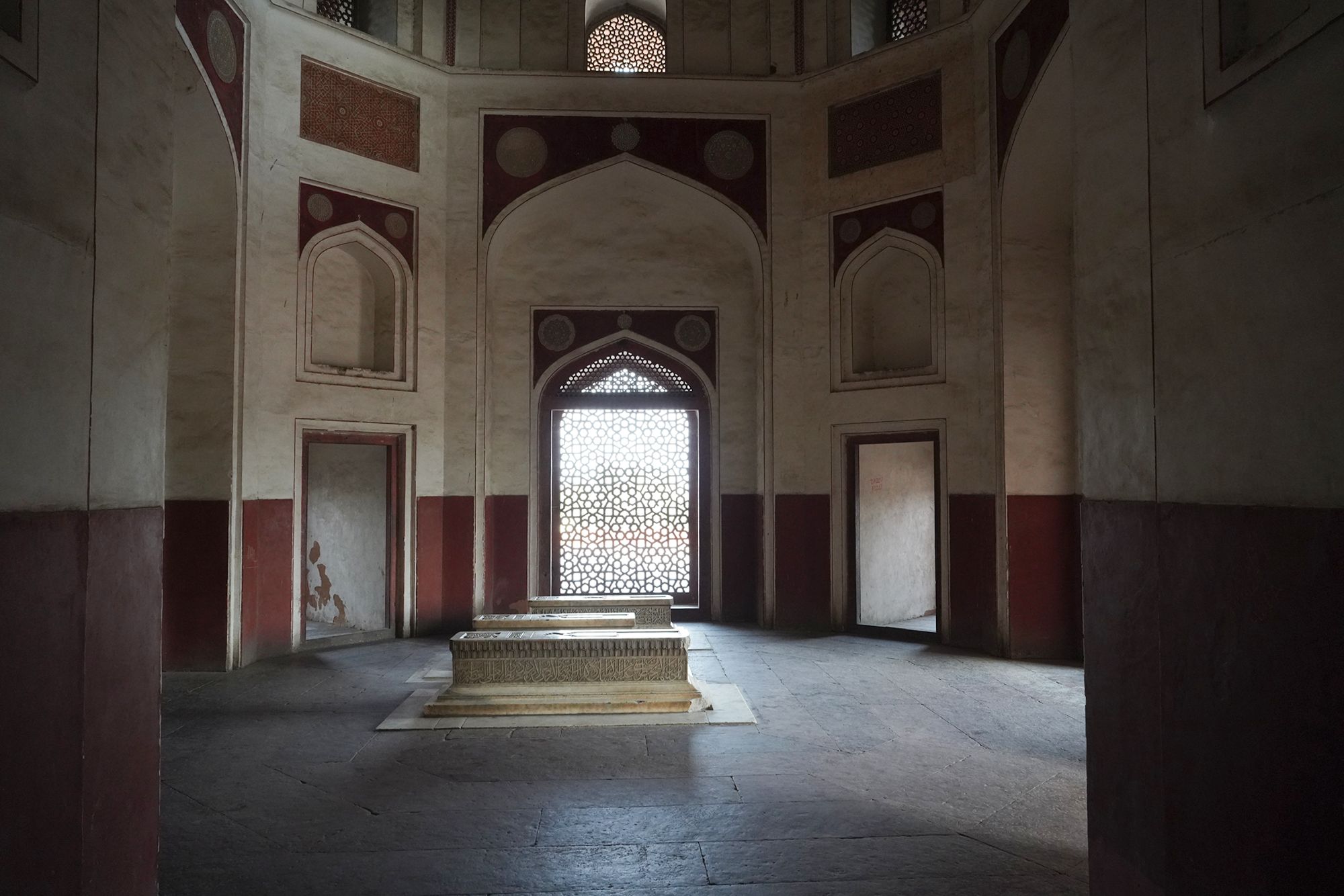
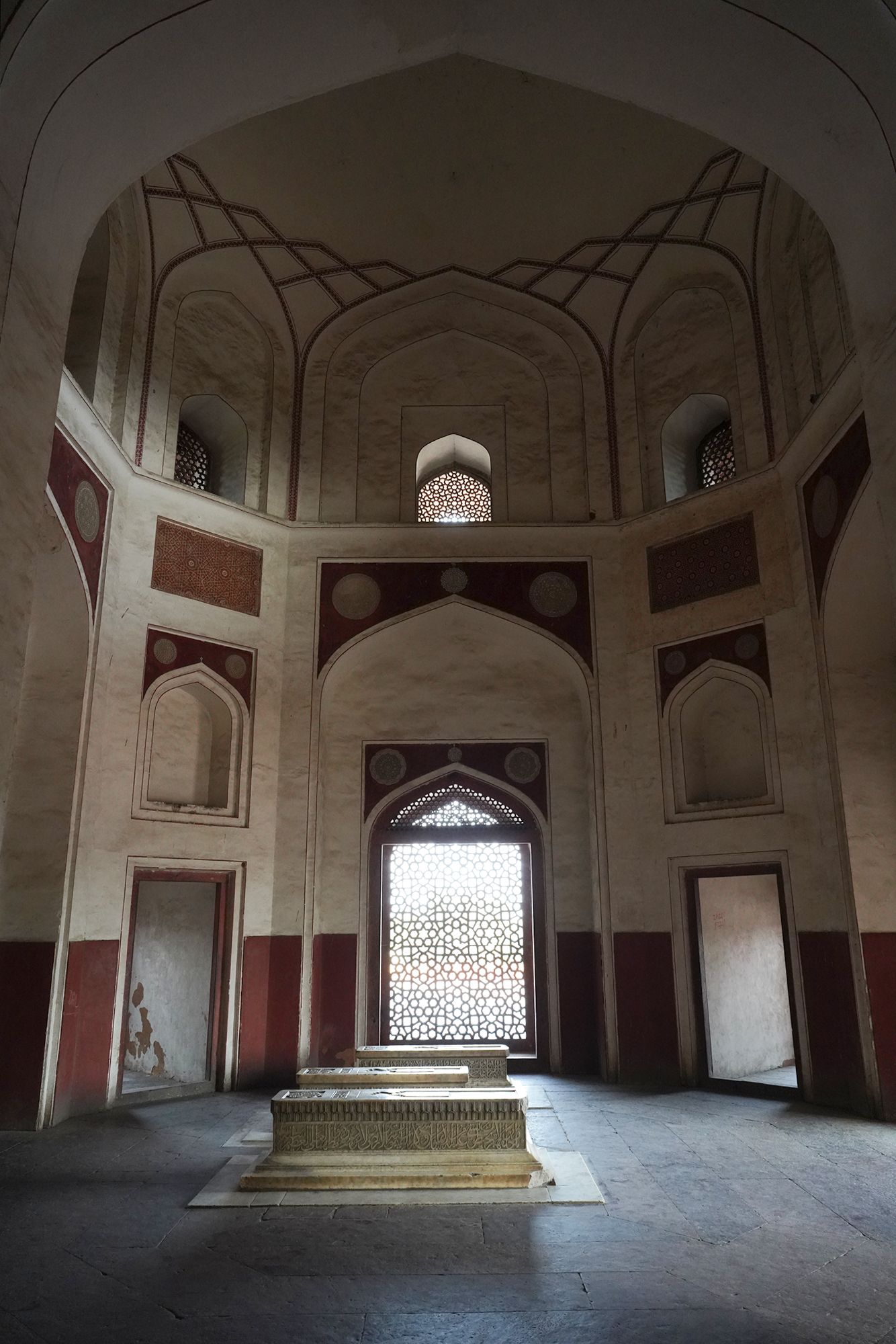
At the center of the main chamber is the cenotaph of Emperor Humayun, while his actual grave lies in a chamber below.
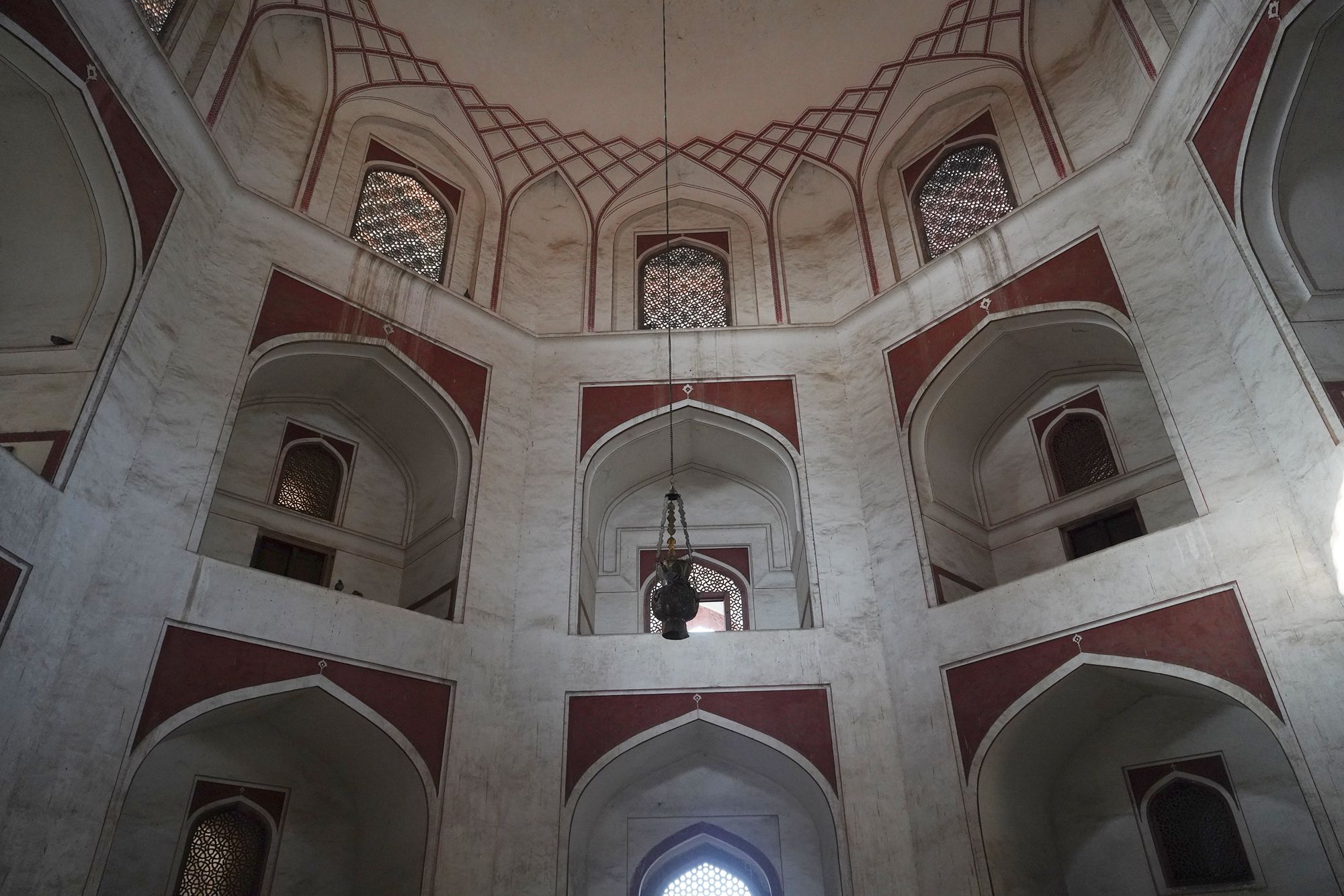
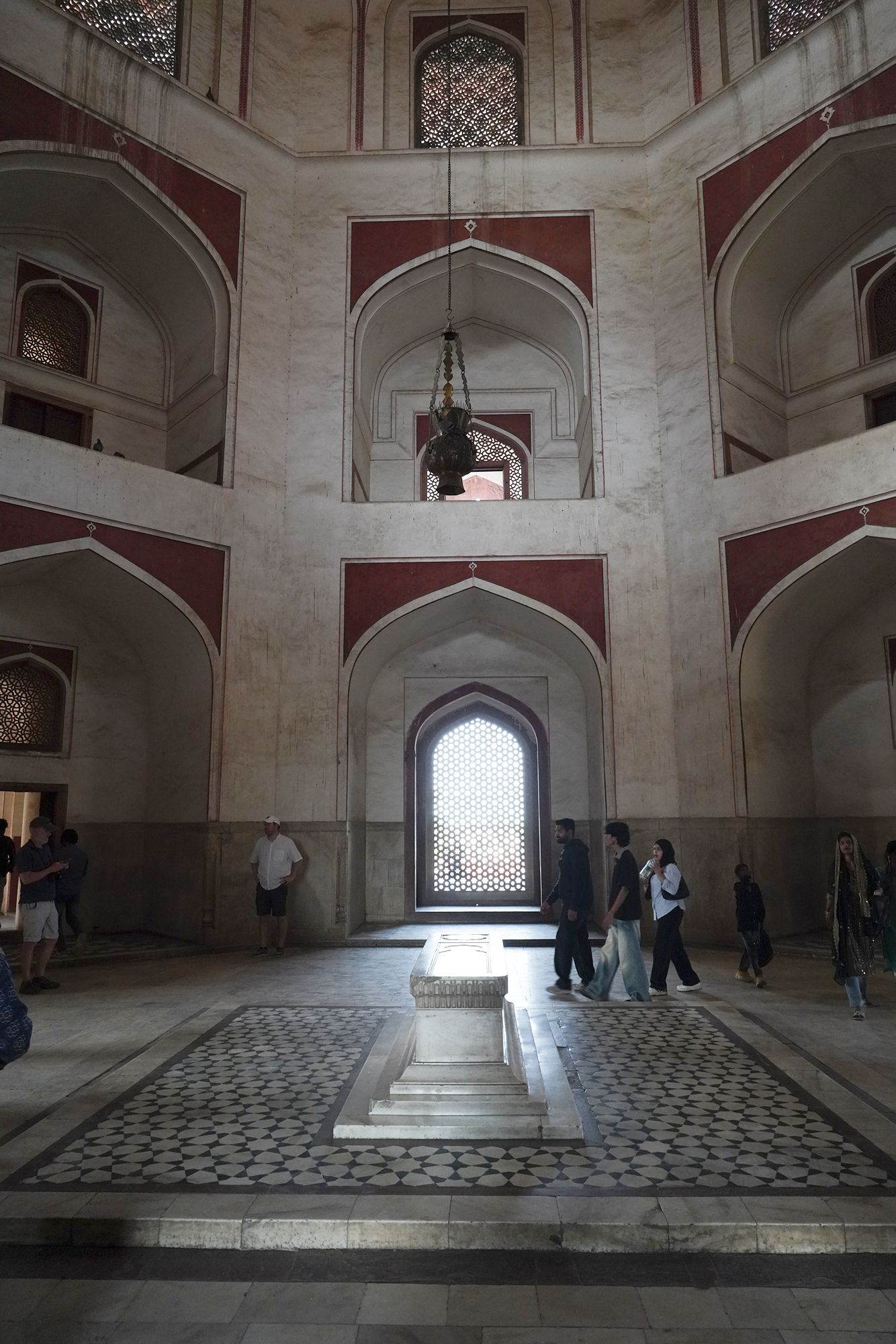
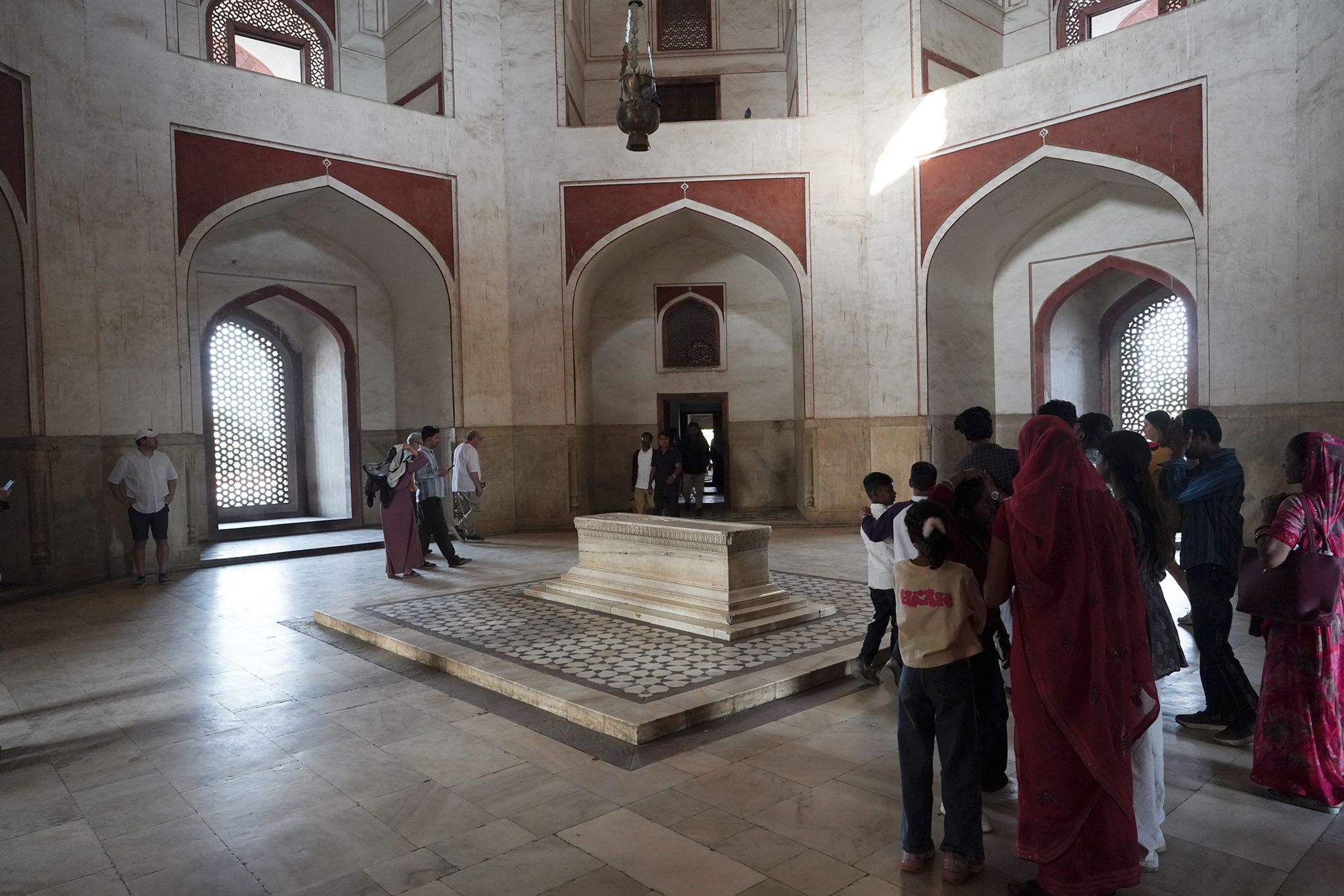
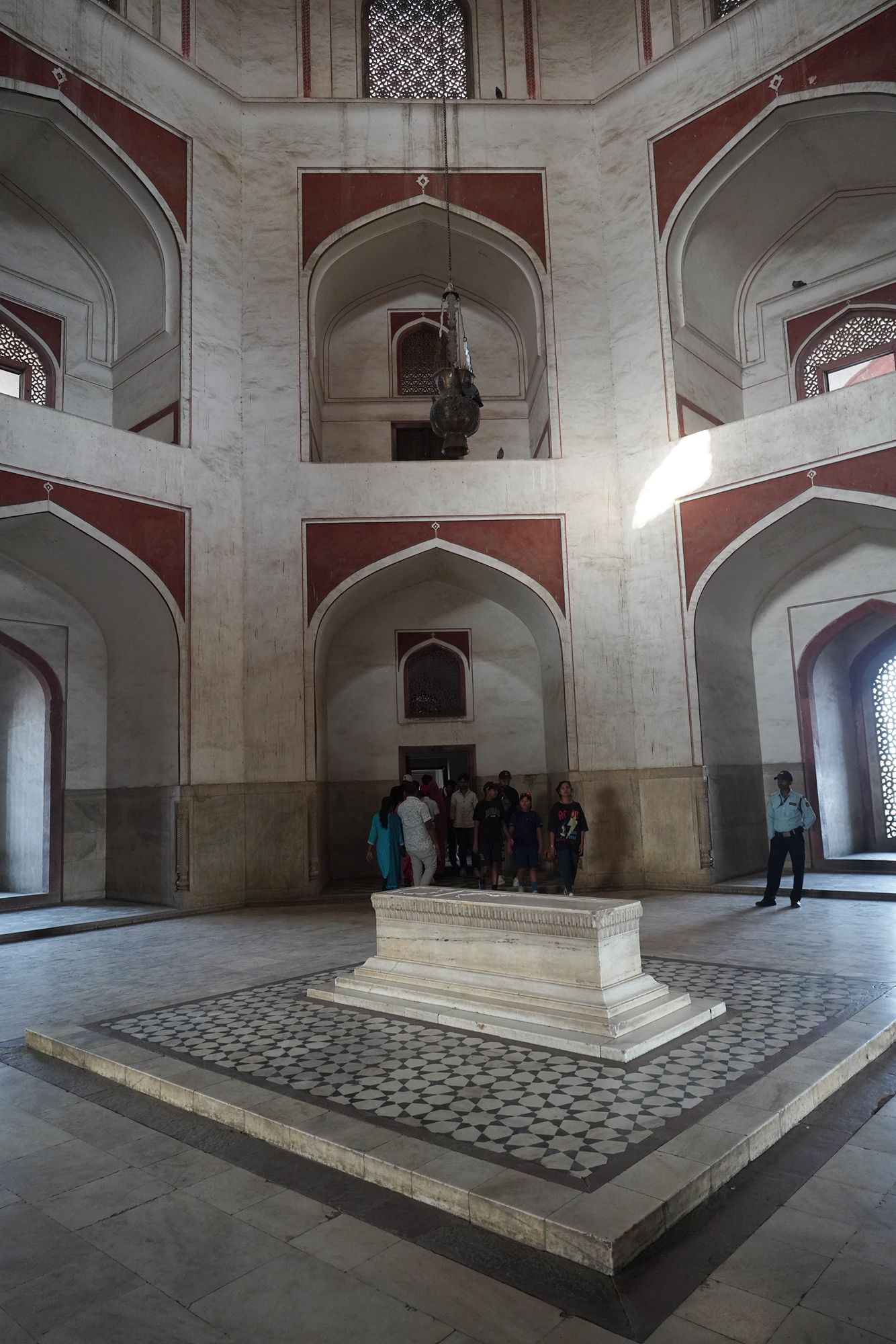
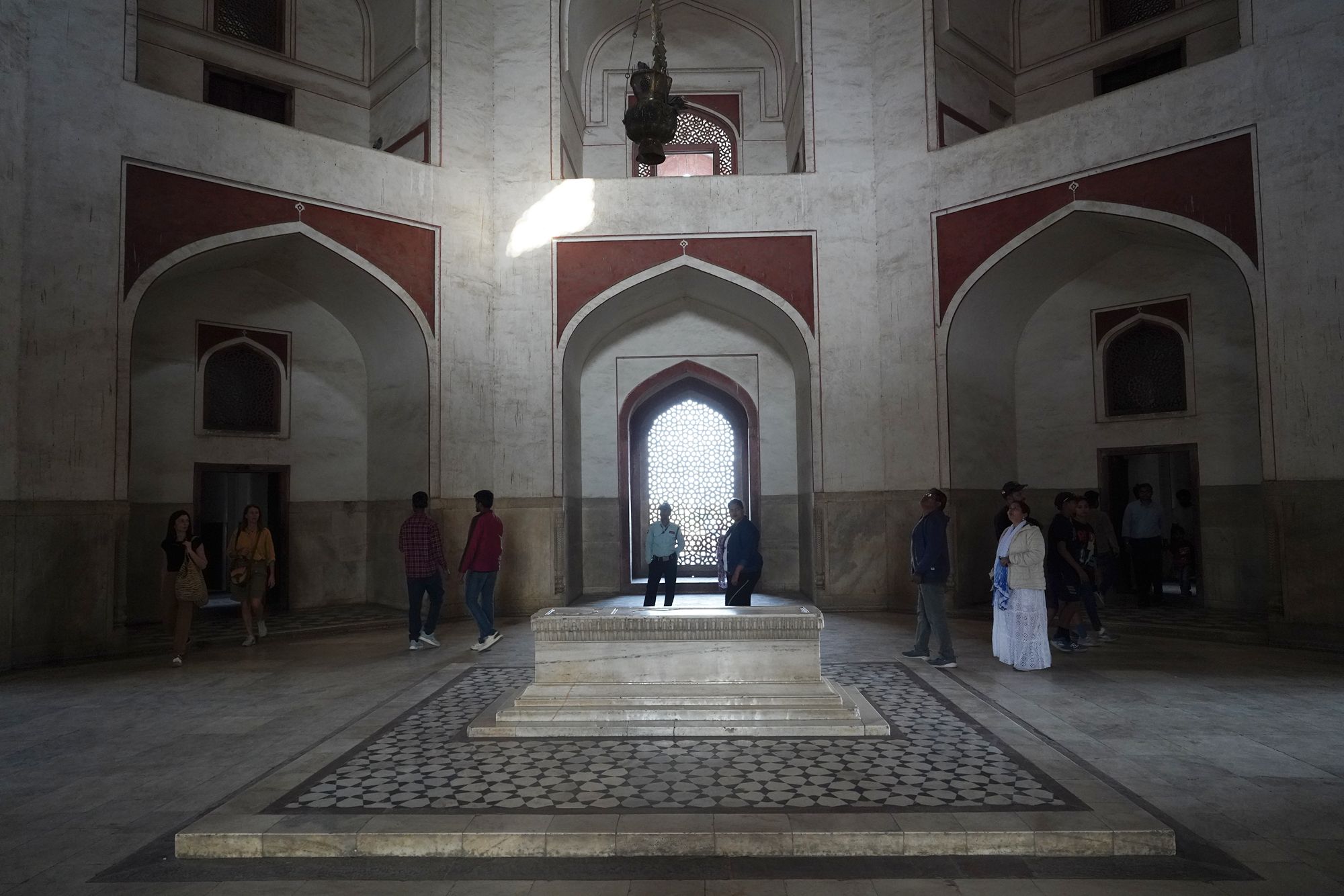
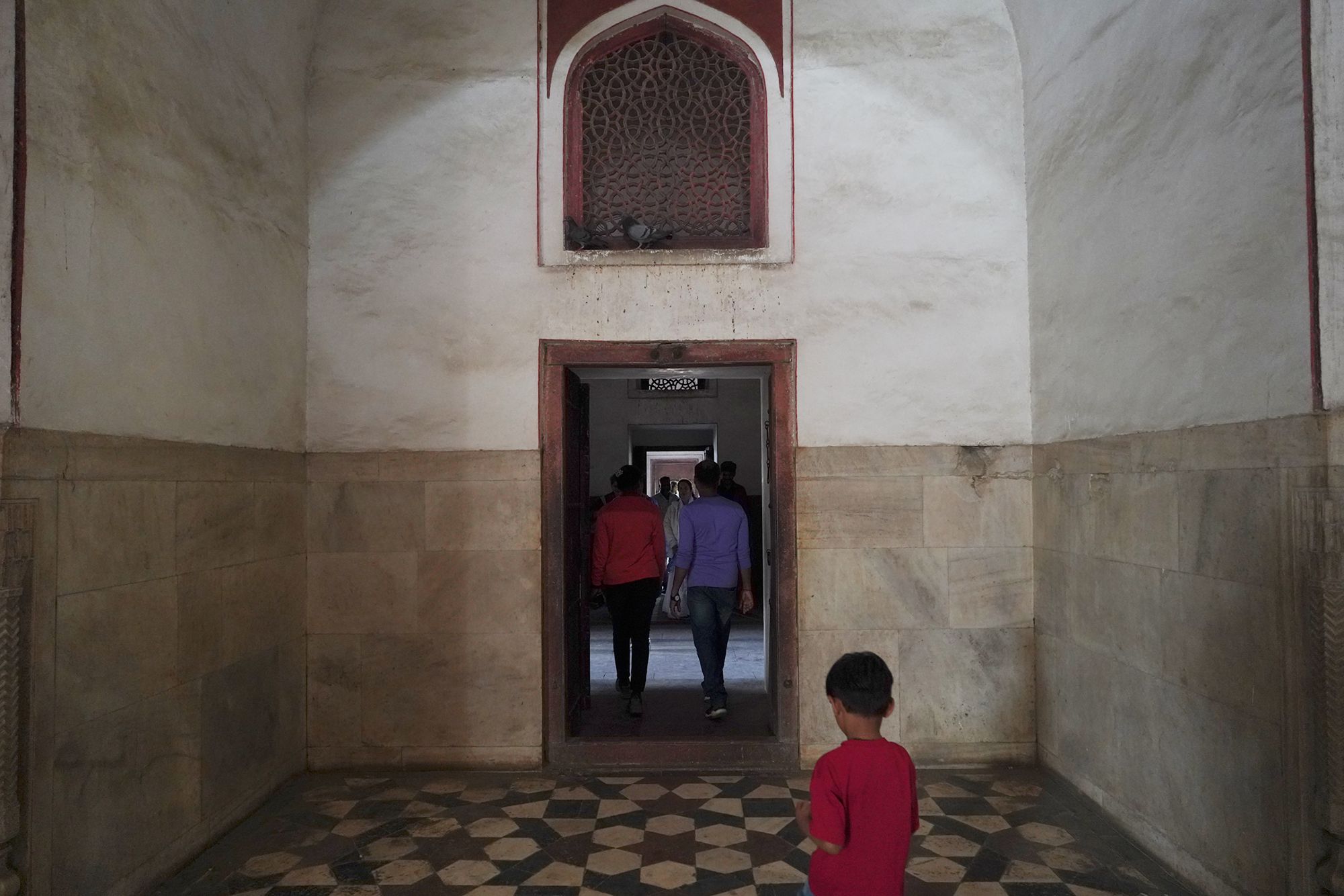
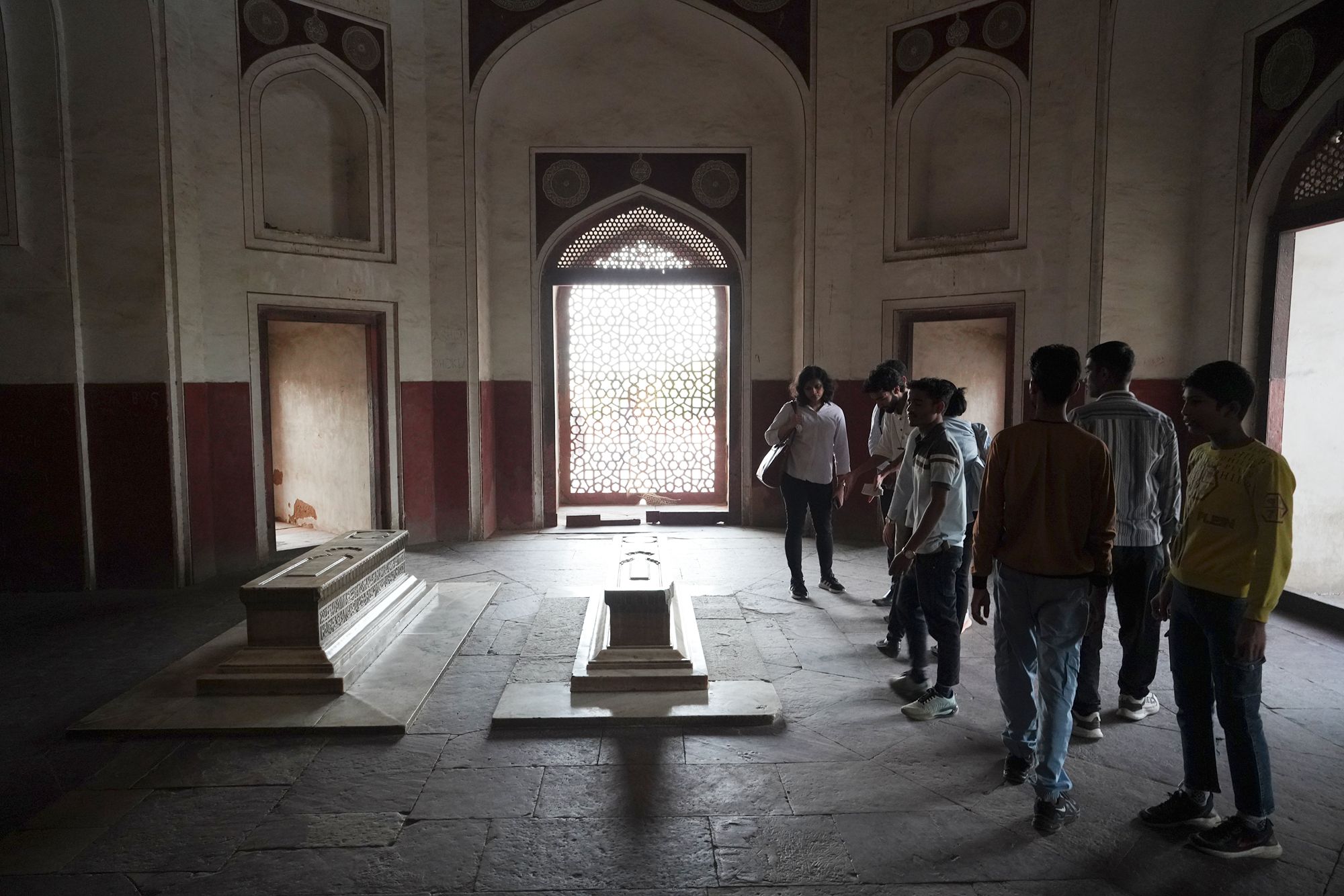
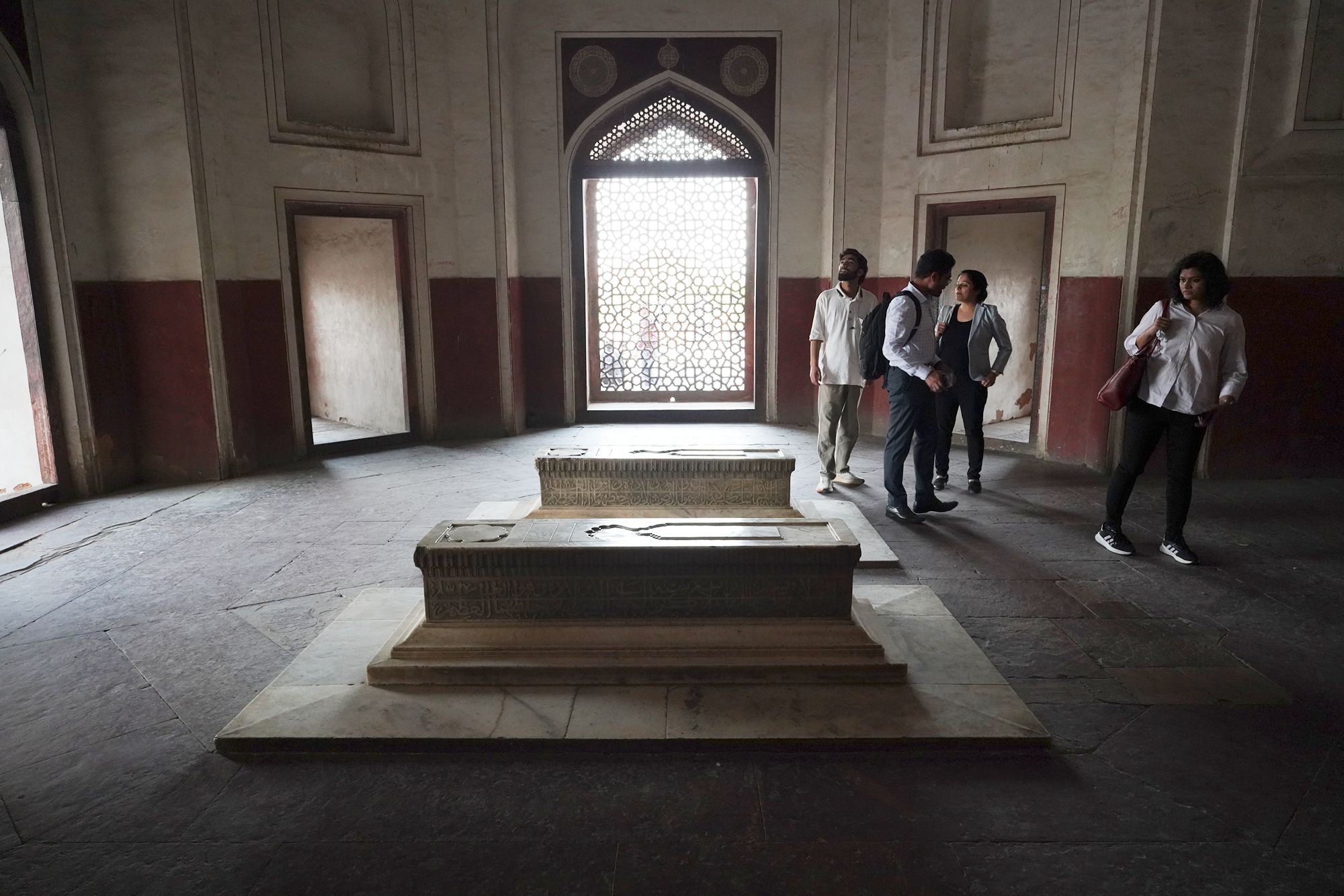
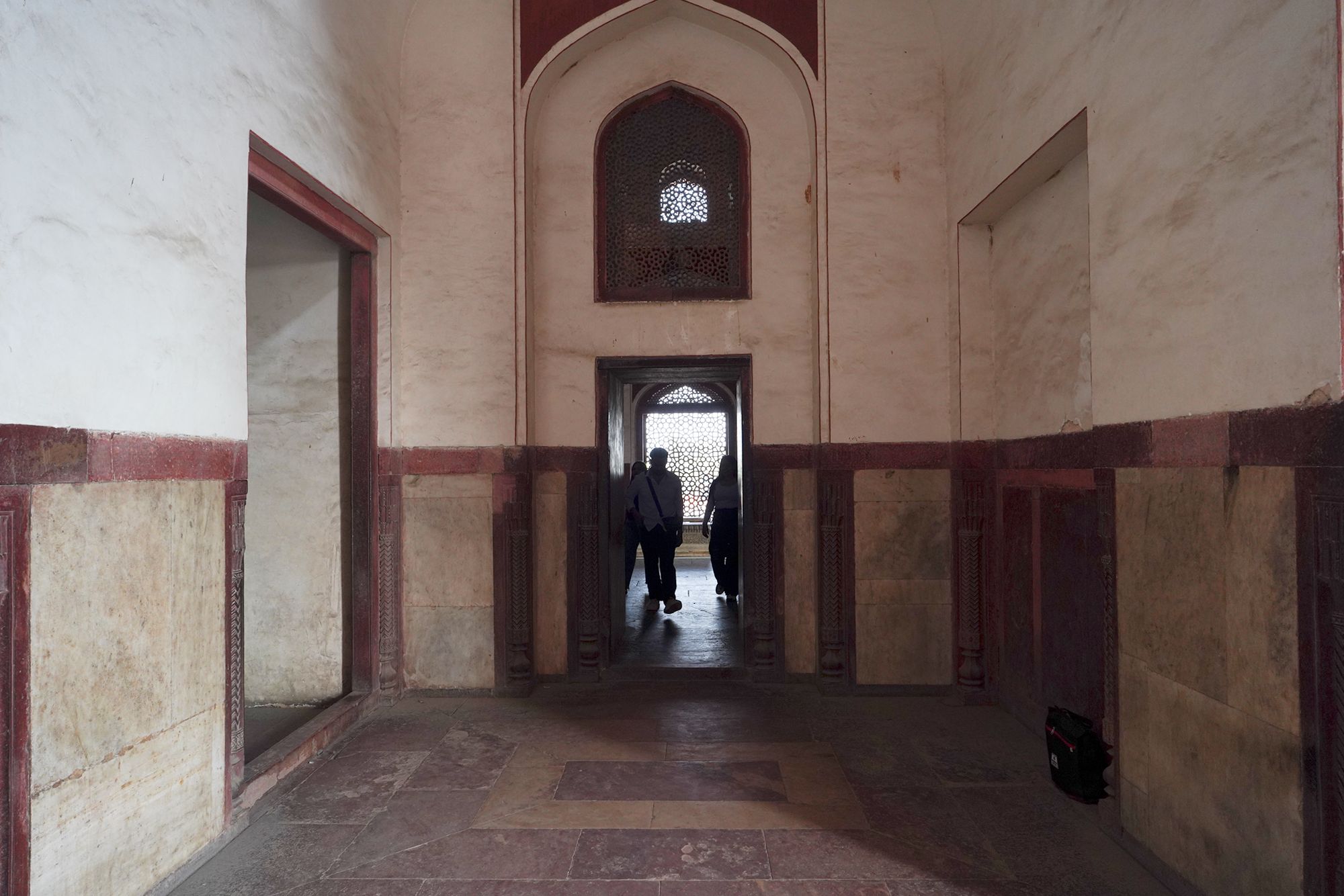
Inside the tomb are many chambers containing several cenotaphs of members of the Mughal royal family.
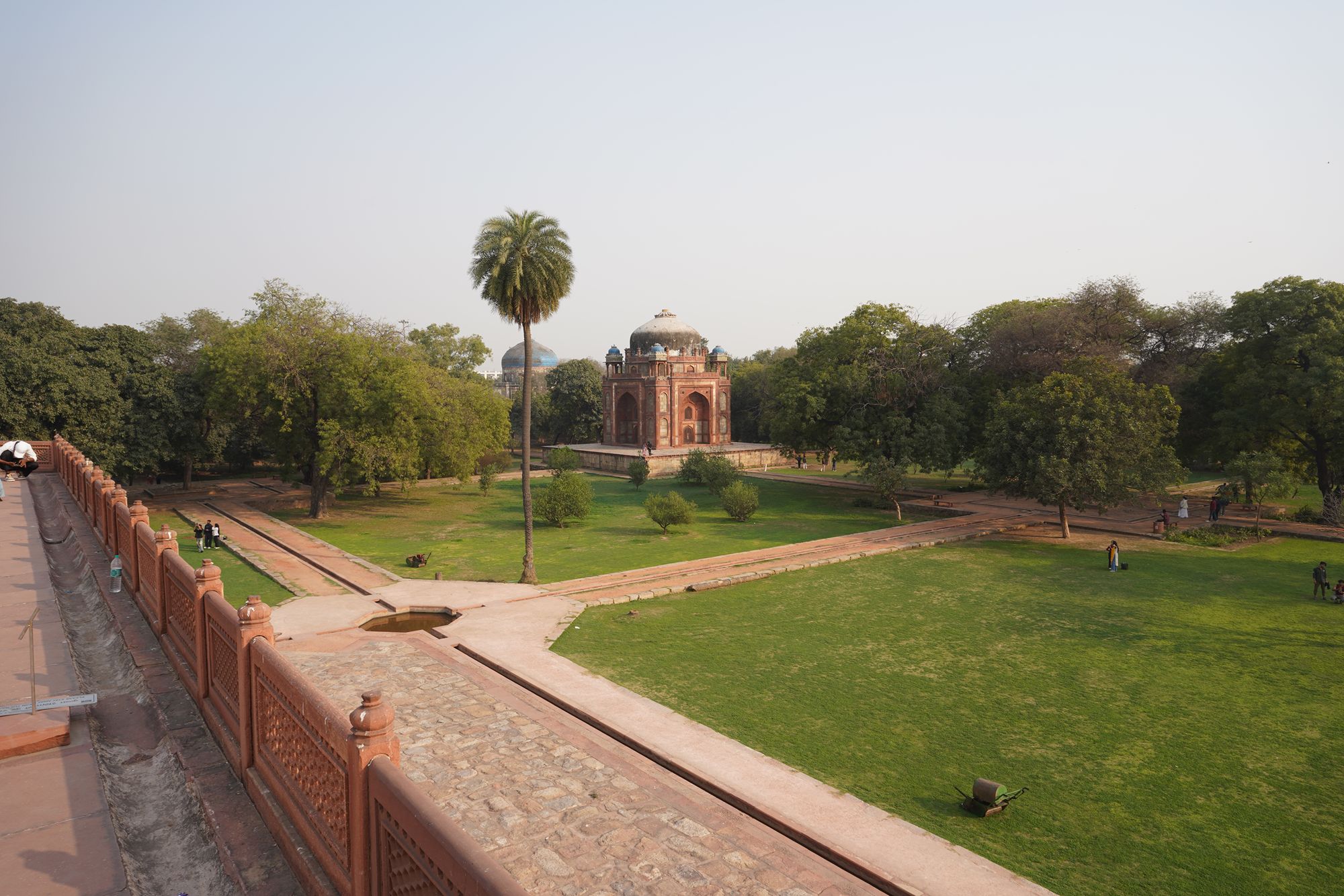
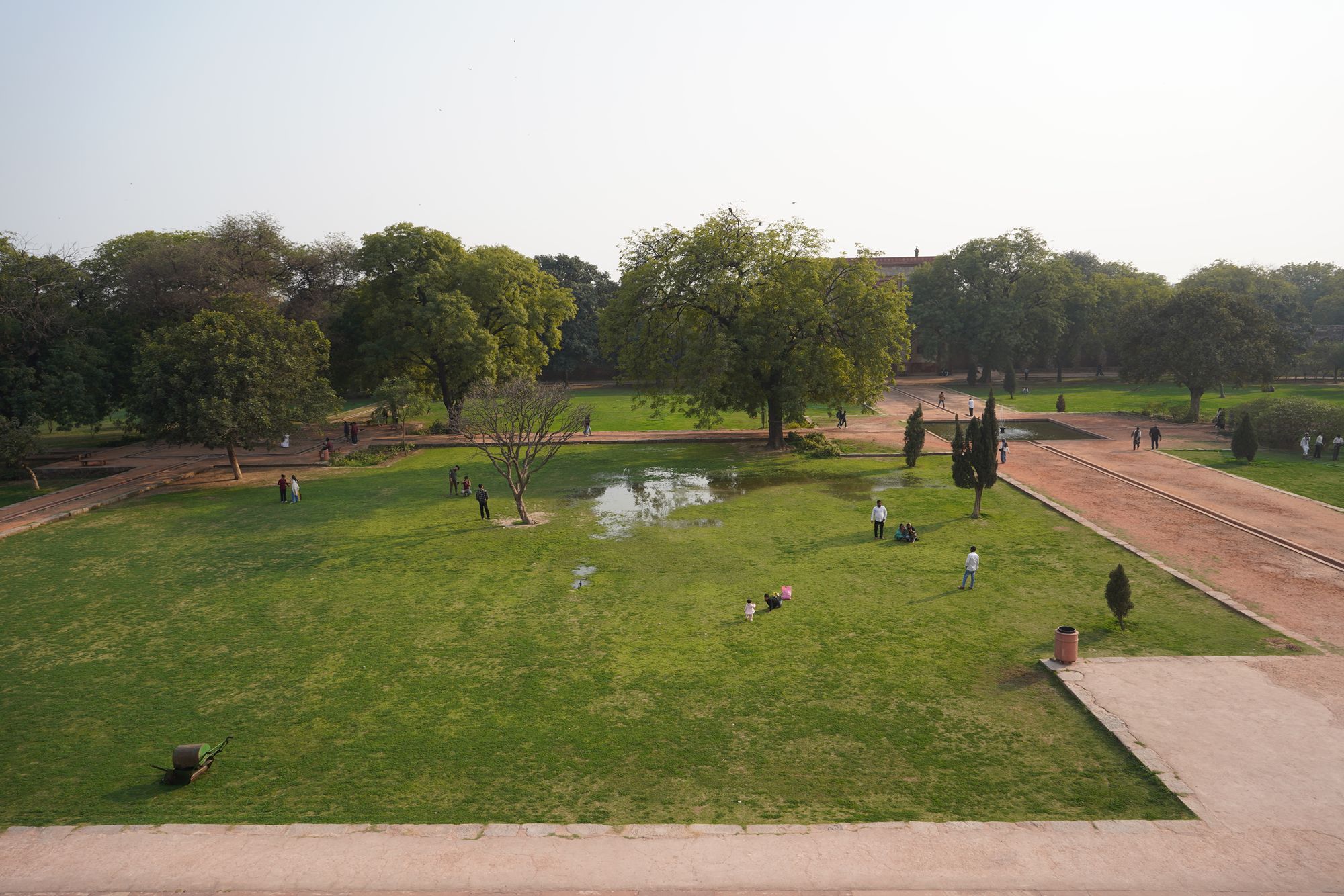
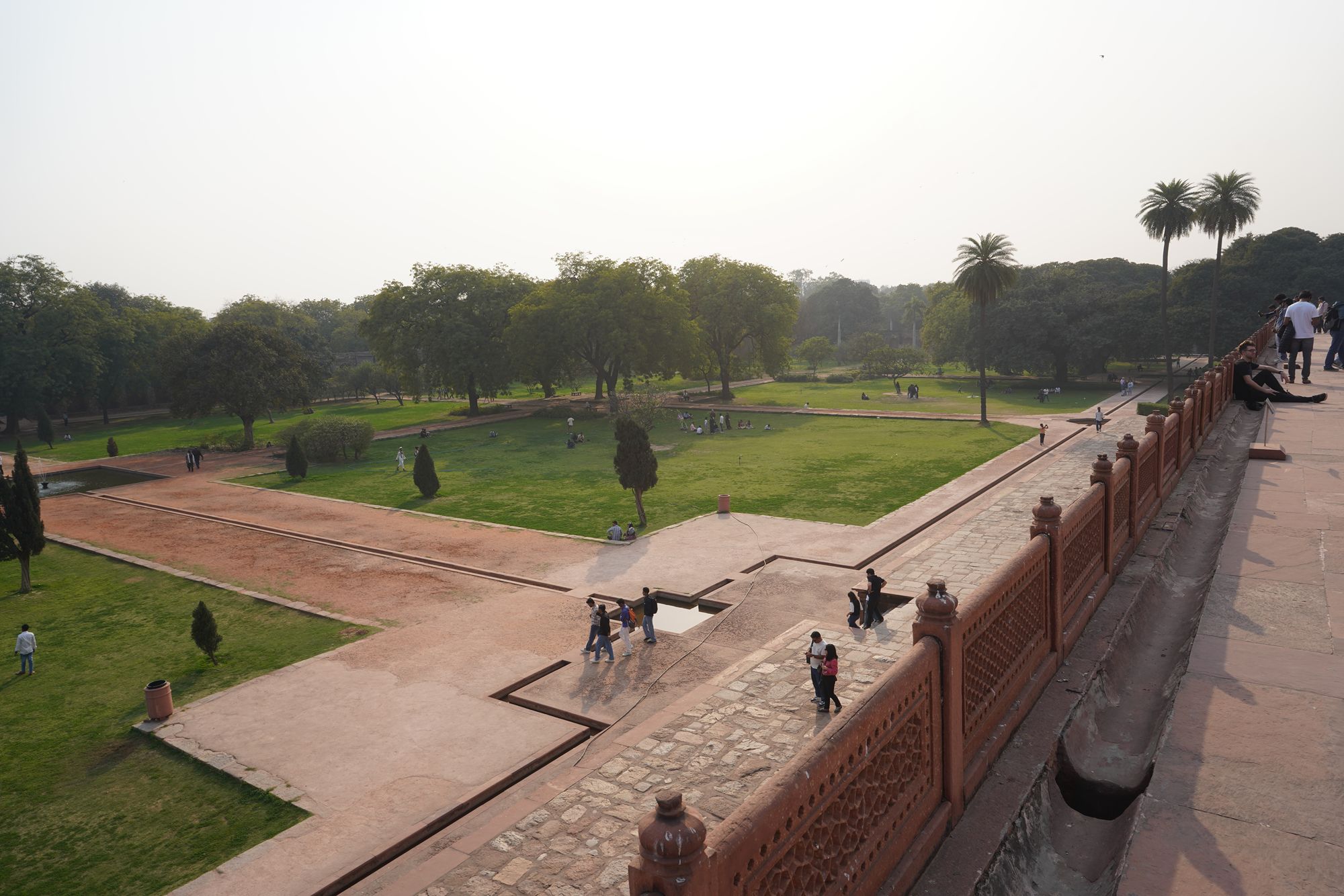
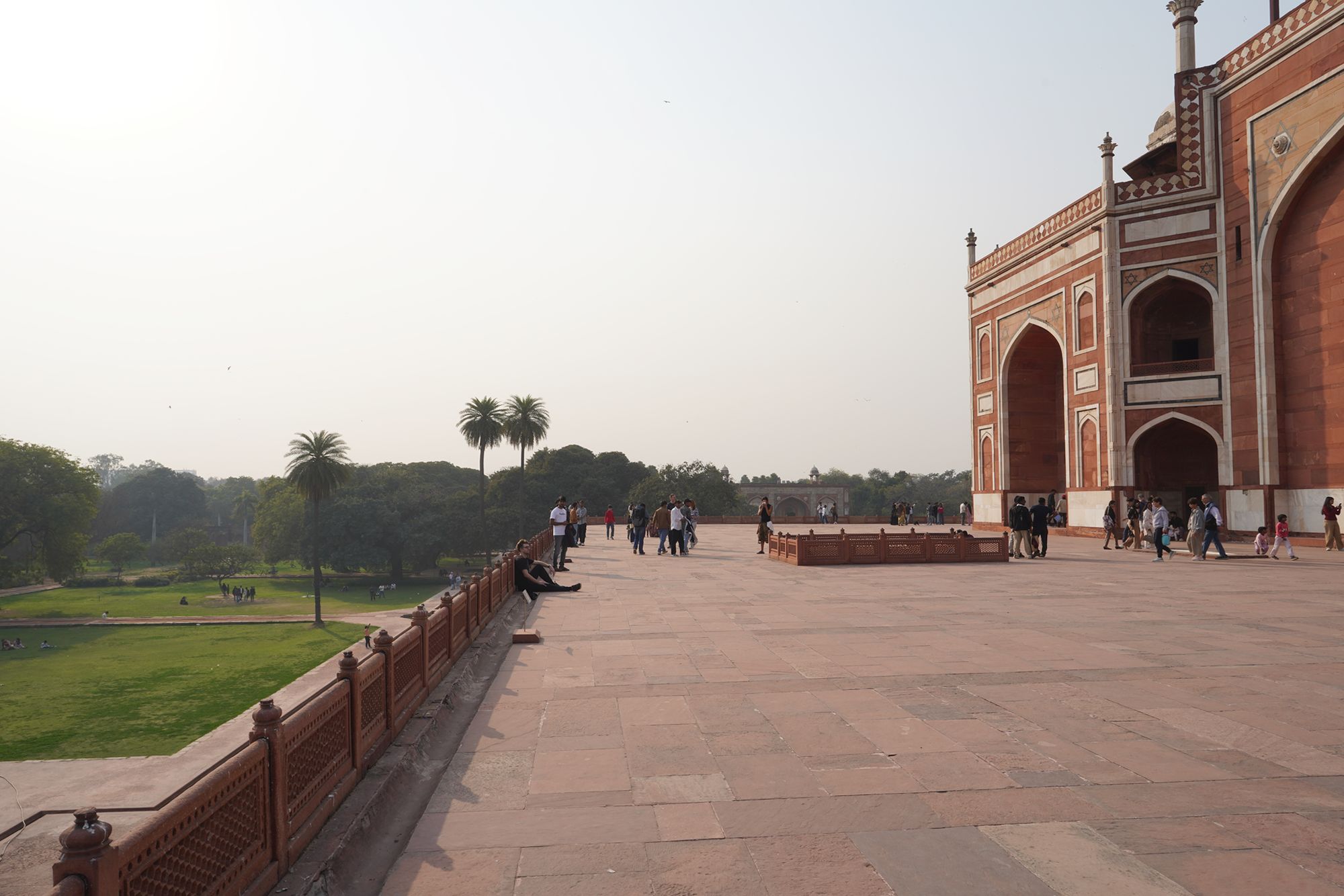
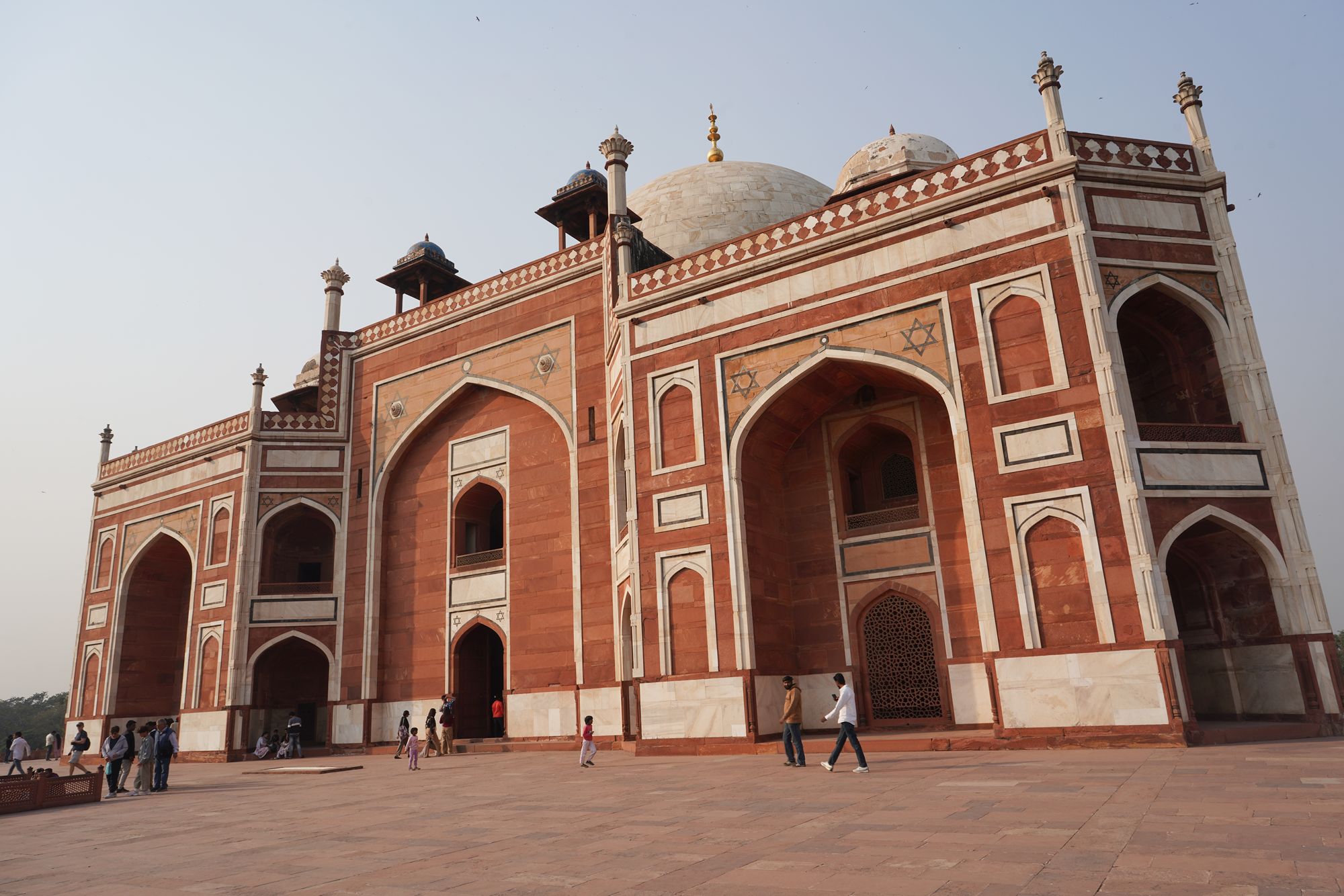
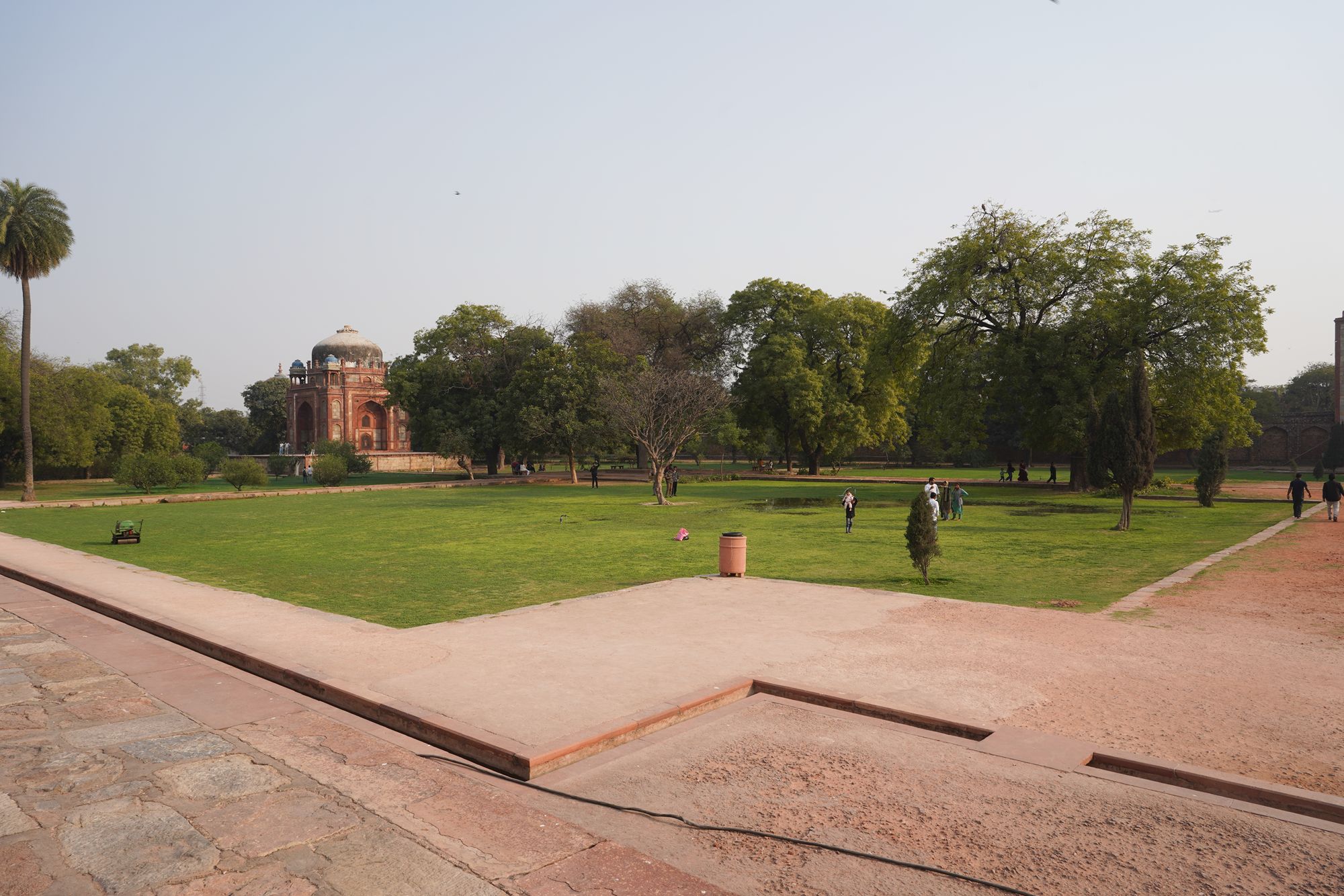
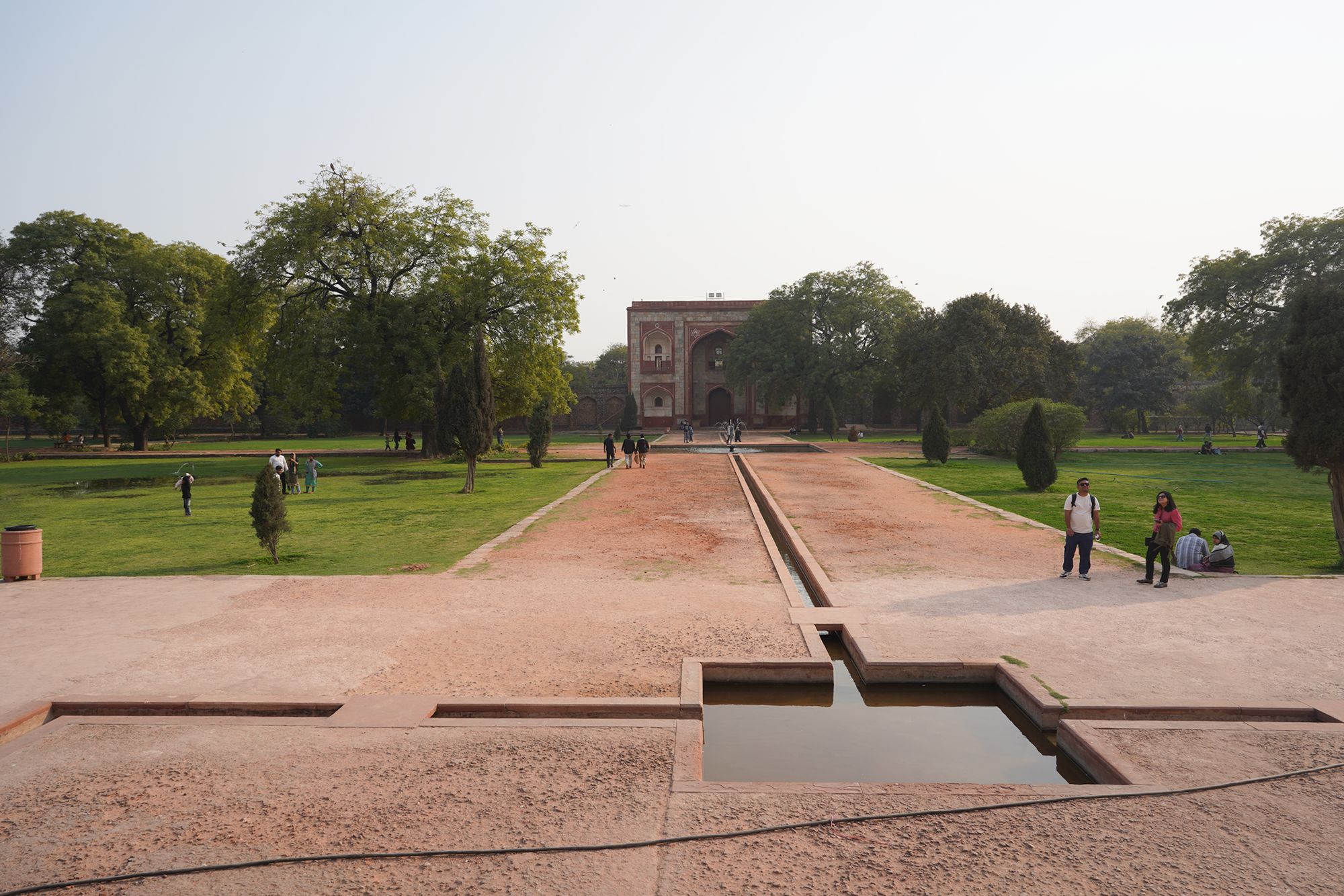
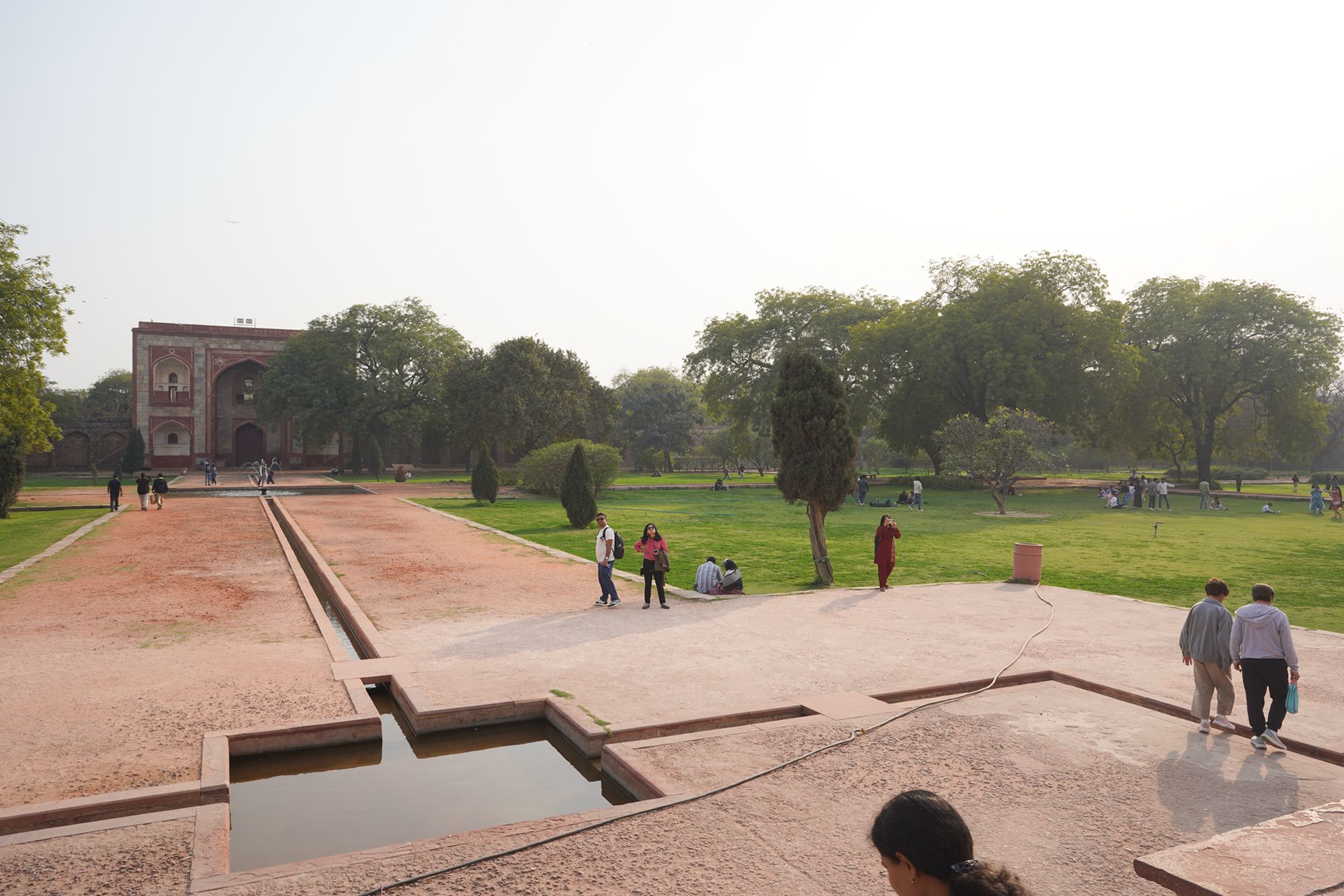
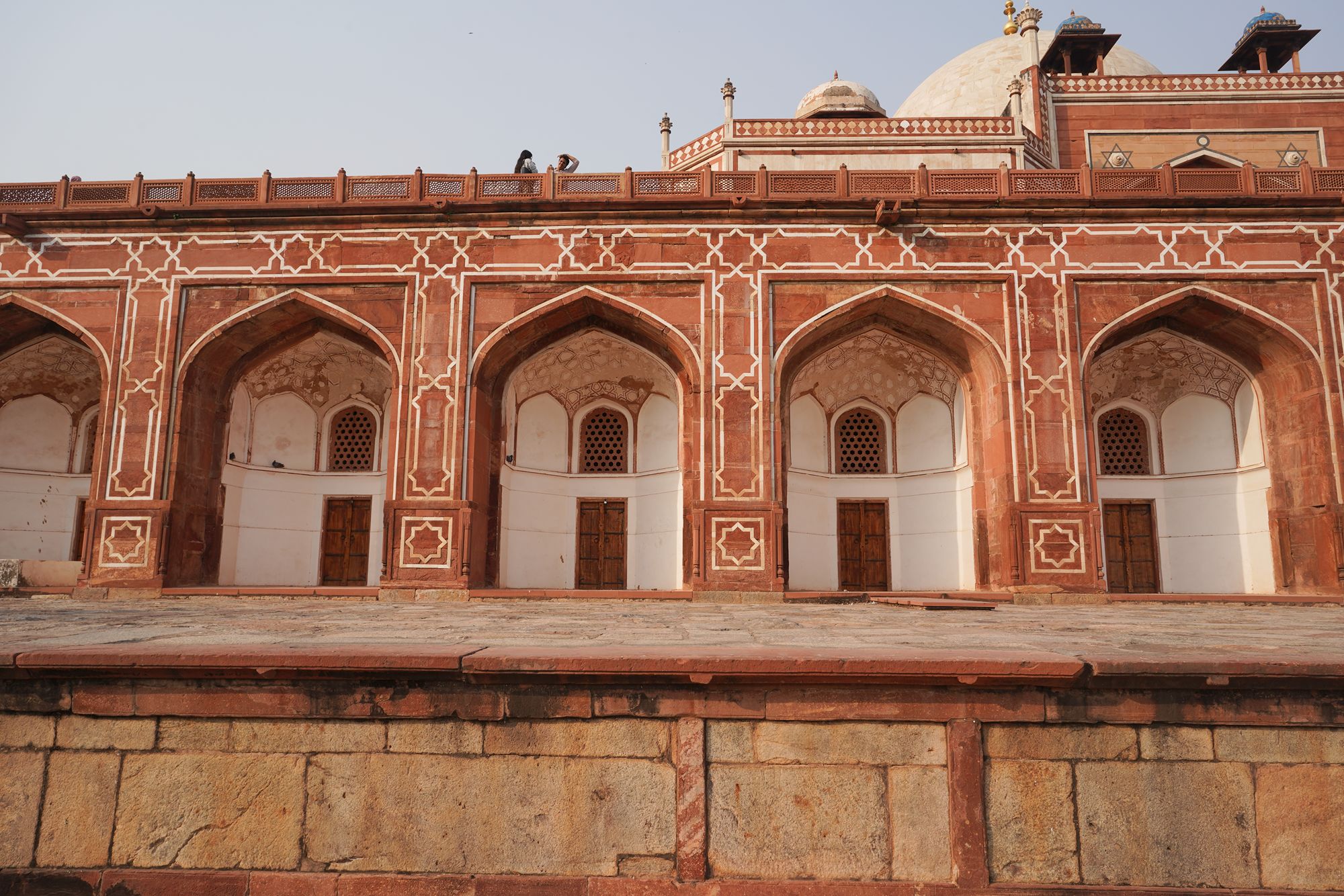
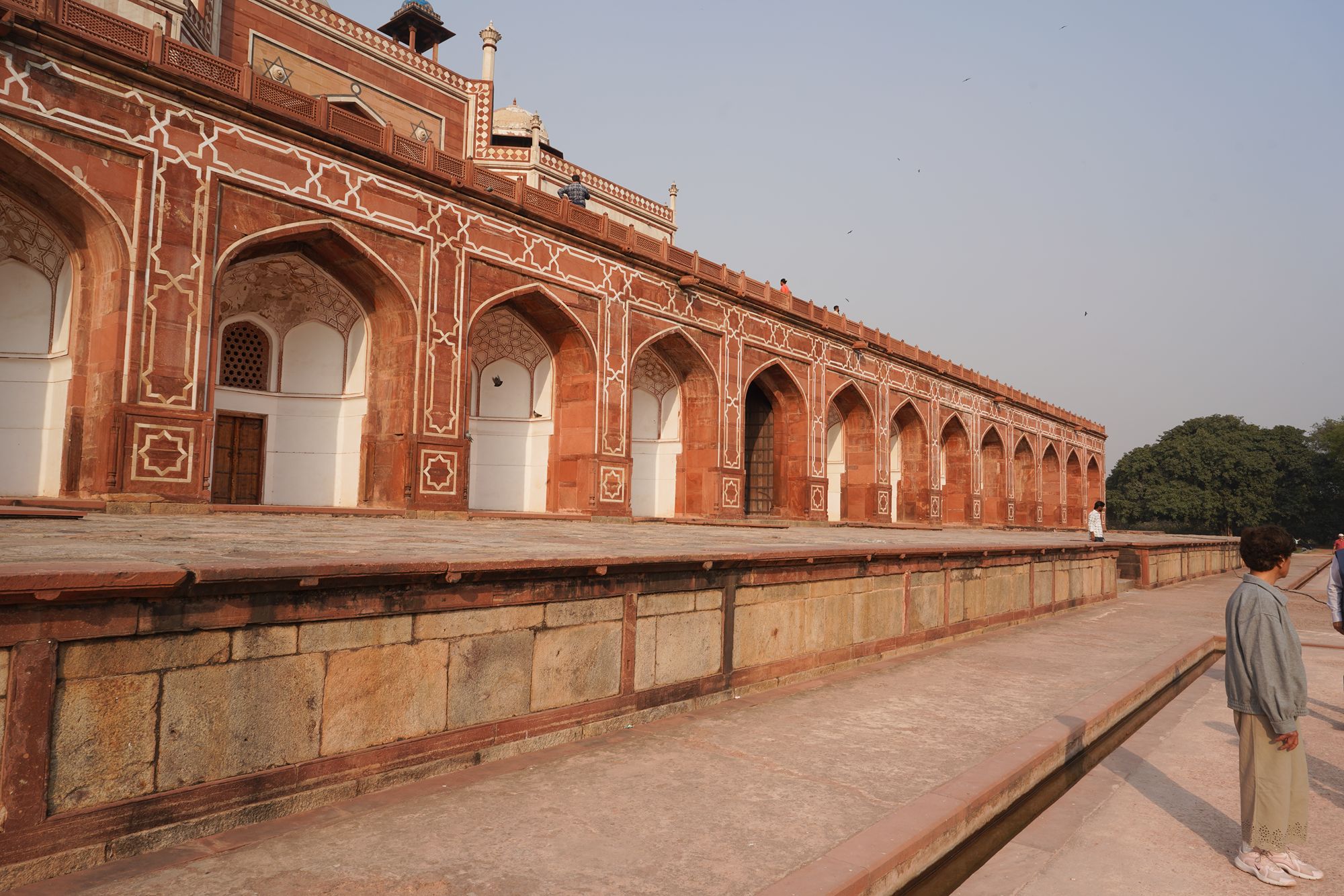
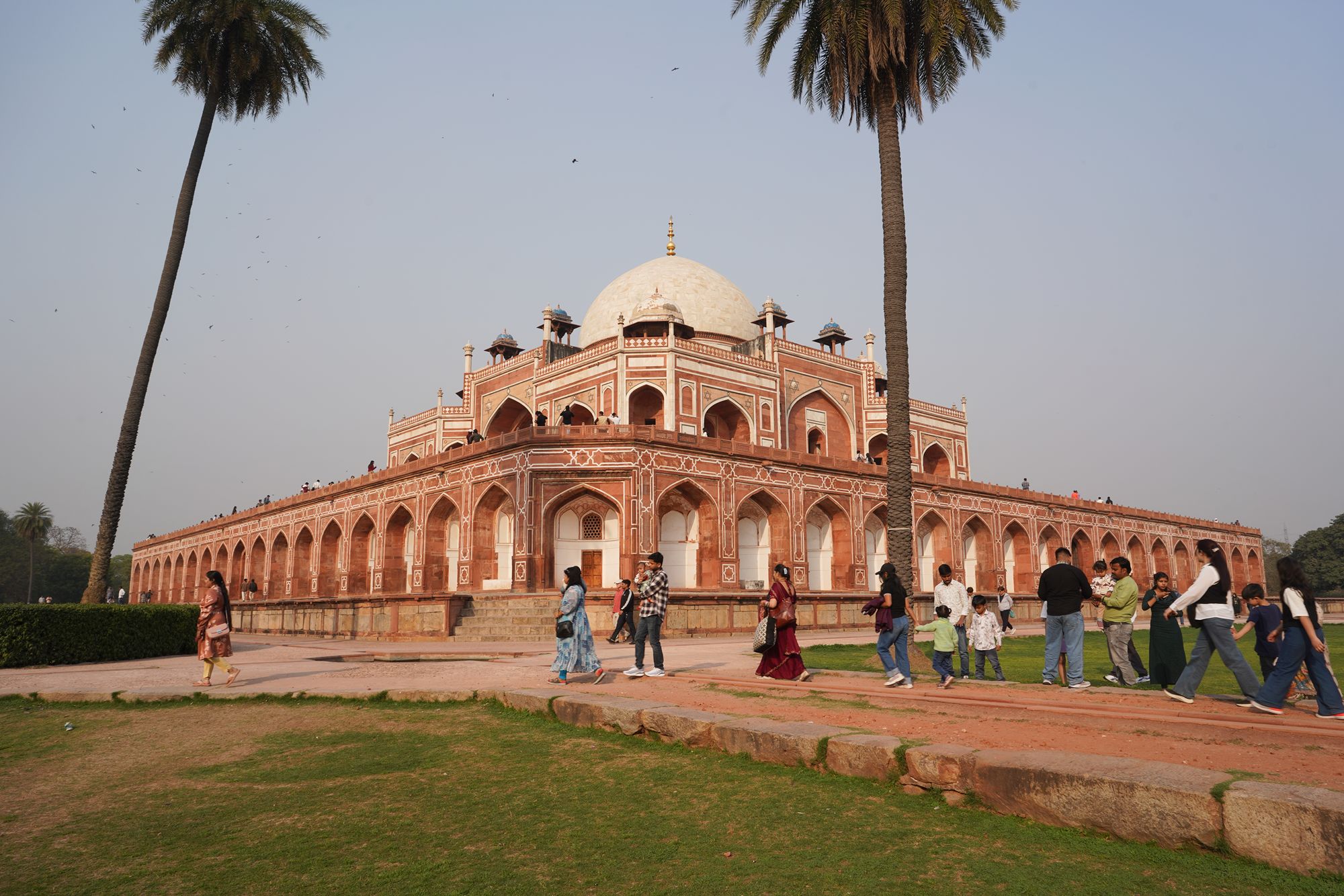
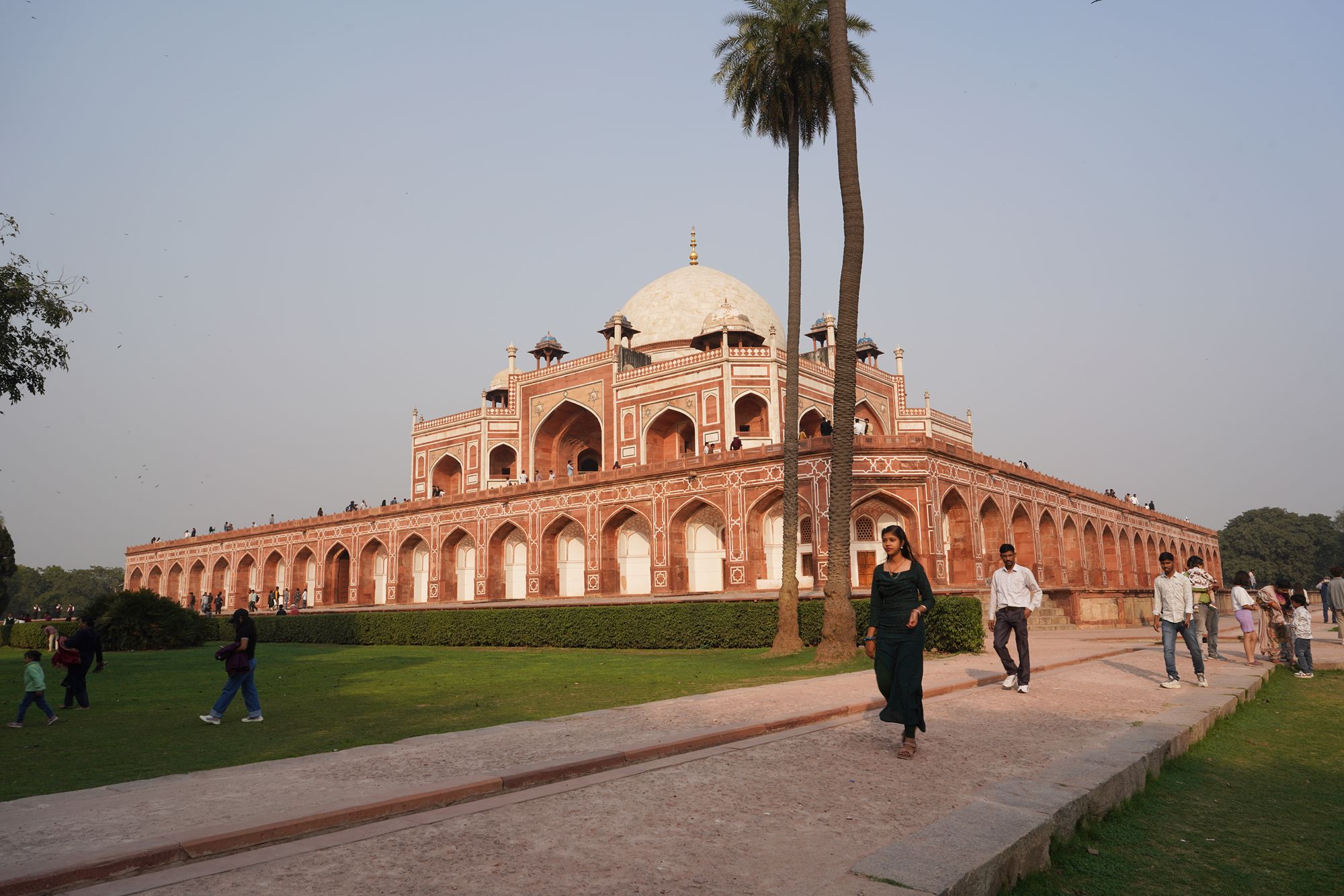
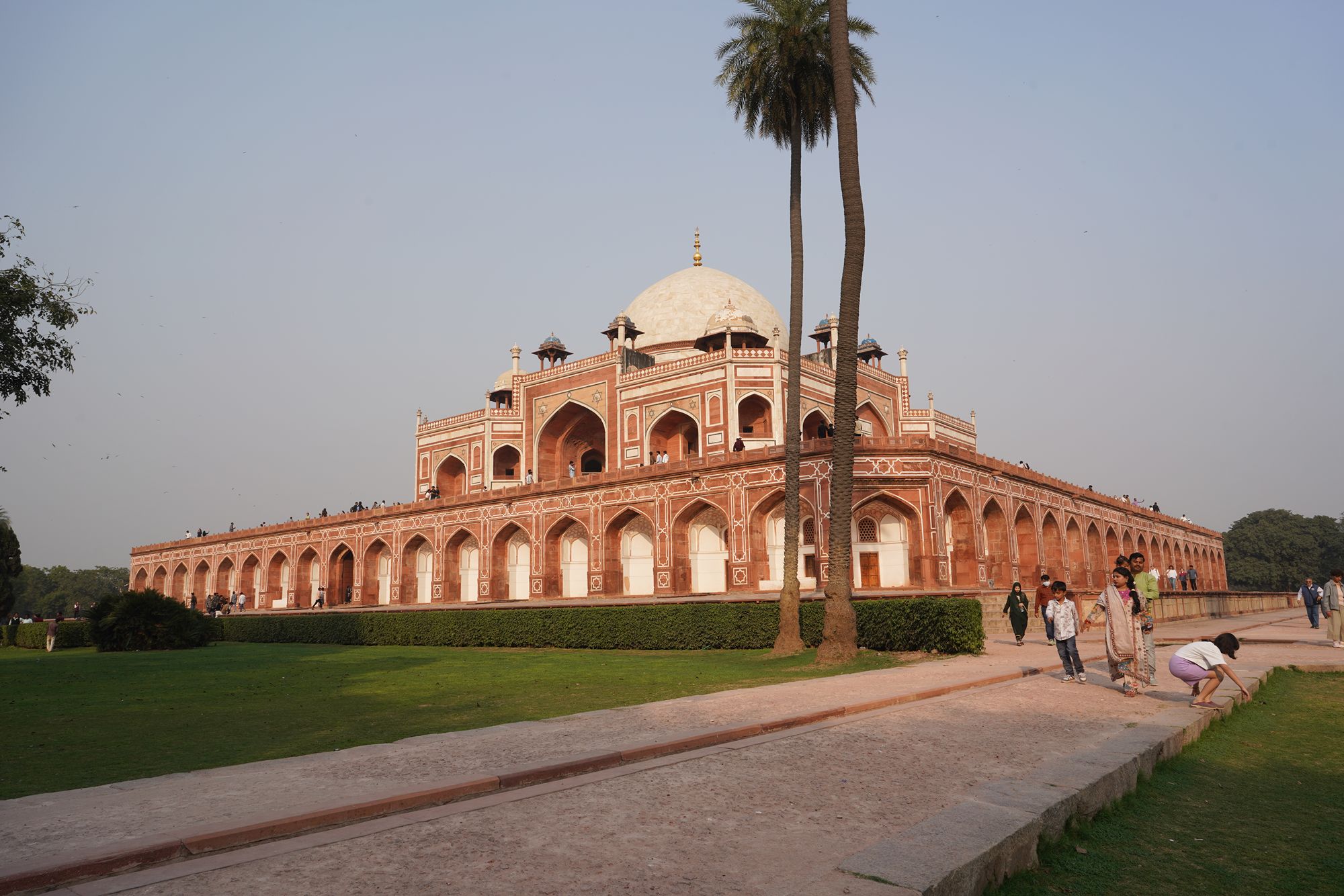
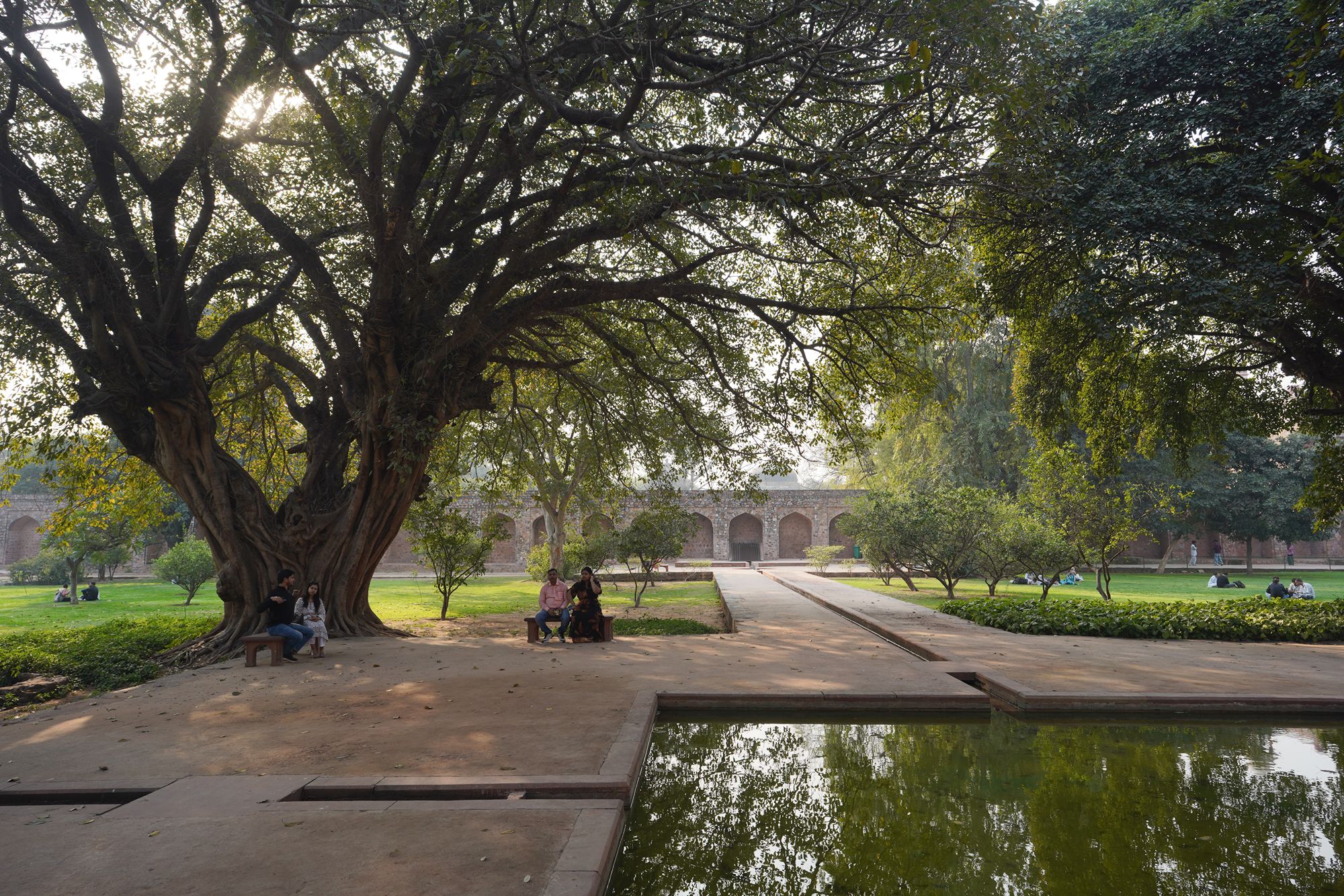
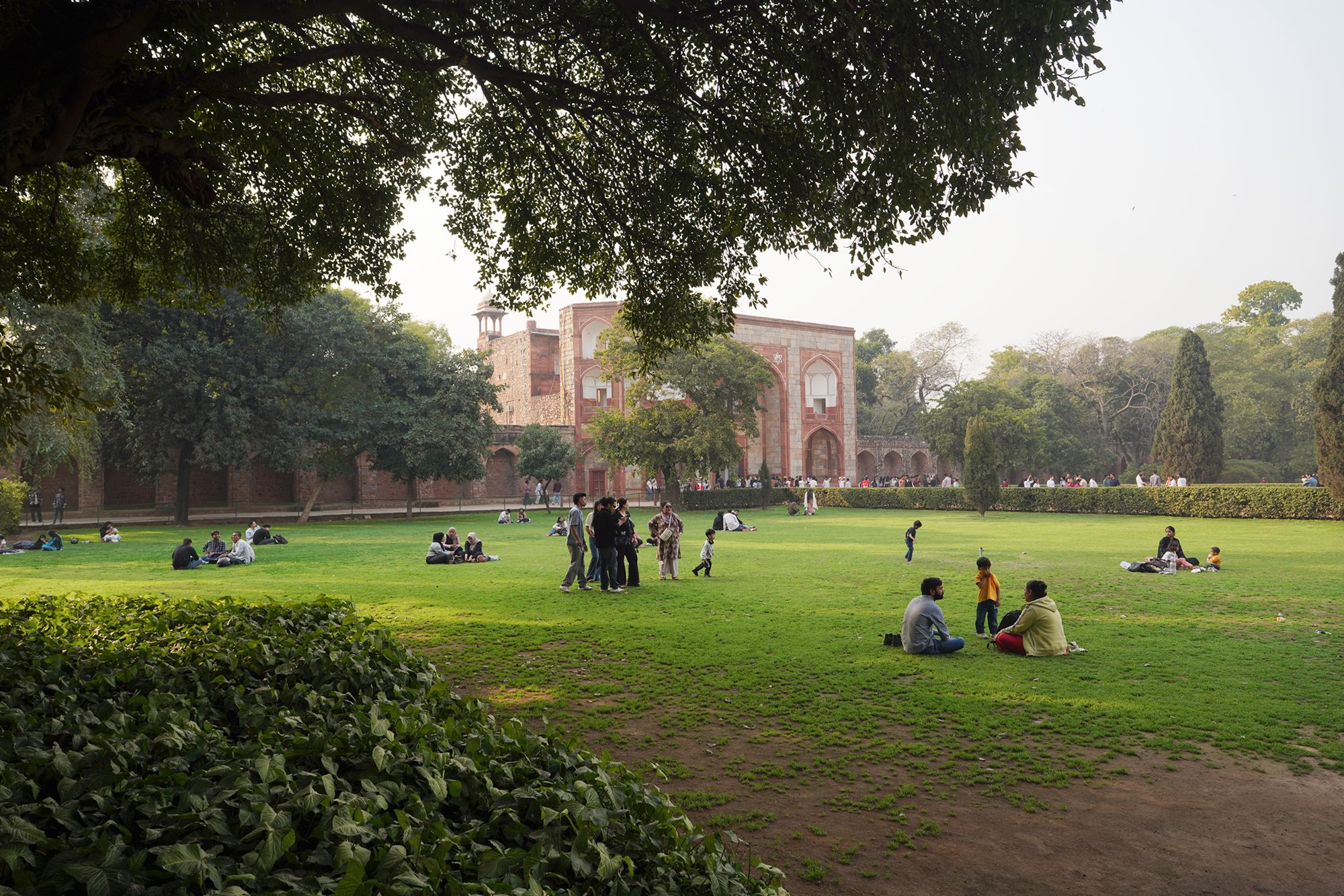
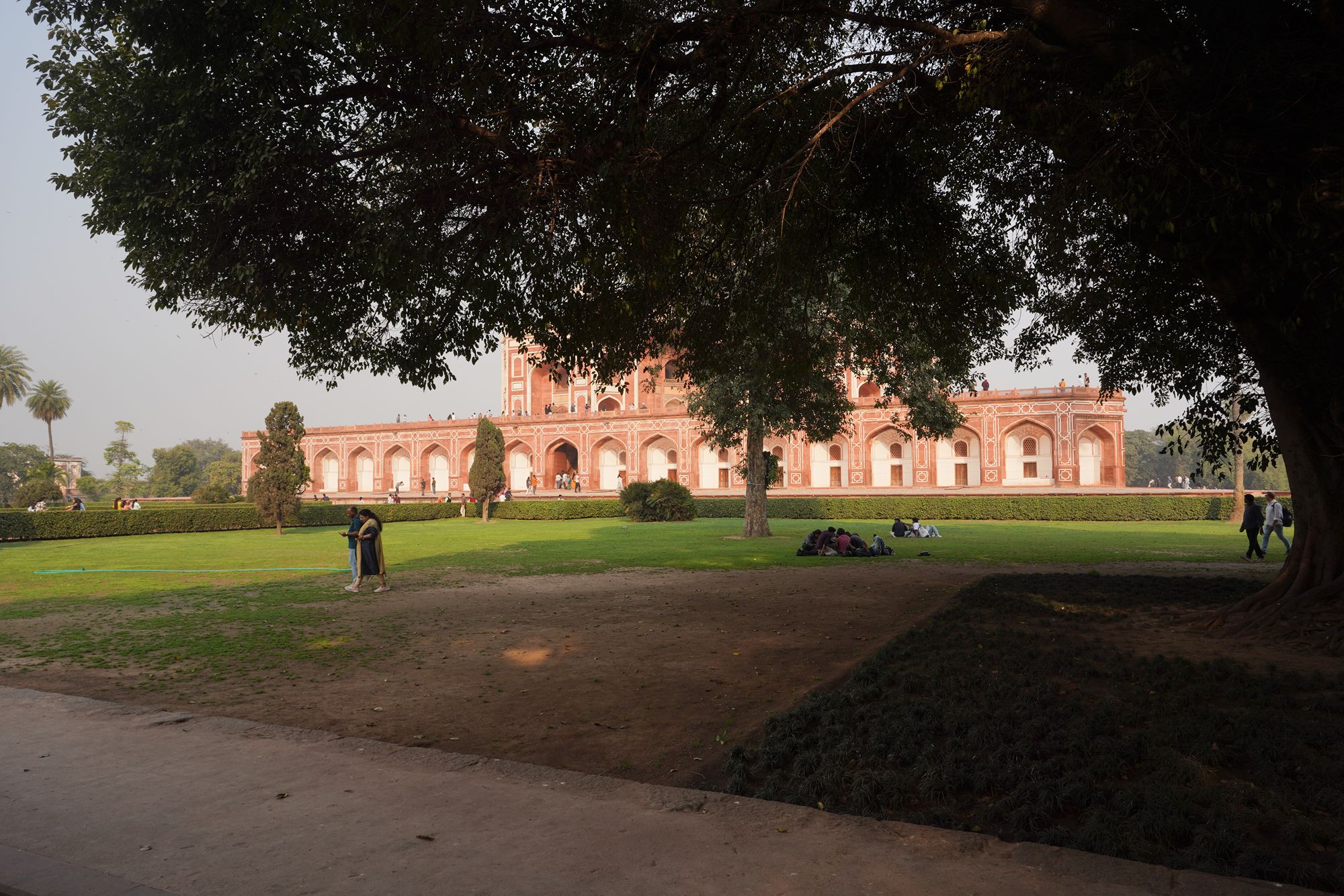
From this side, Humayun’s Tomb looks remarkably similar to the Taj Mahal.