Seoul Museum of History: Seoul’s History After 1900, Seoul, South Korea
The second part of my visit to the Seoul Museum of History covers Seoul’s transformation from the early 1900s through the 21st century. 1282
Seoul Museum of History: 55 Saemunan-ro, Jongno District, Seoul, South Korea
Date Picture Taken: Apr, 2026
This is the second part of my visit to the Seoul Museum of History, this time covering Seoul’s history from 1900 to the present day.
Seoul during the Port Opening and Korean Empire Period
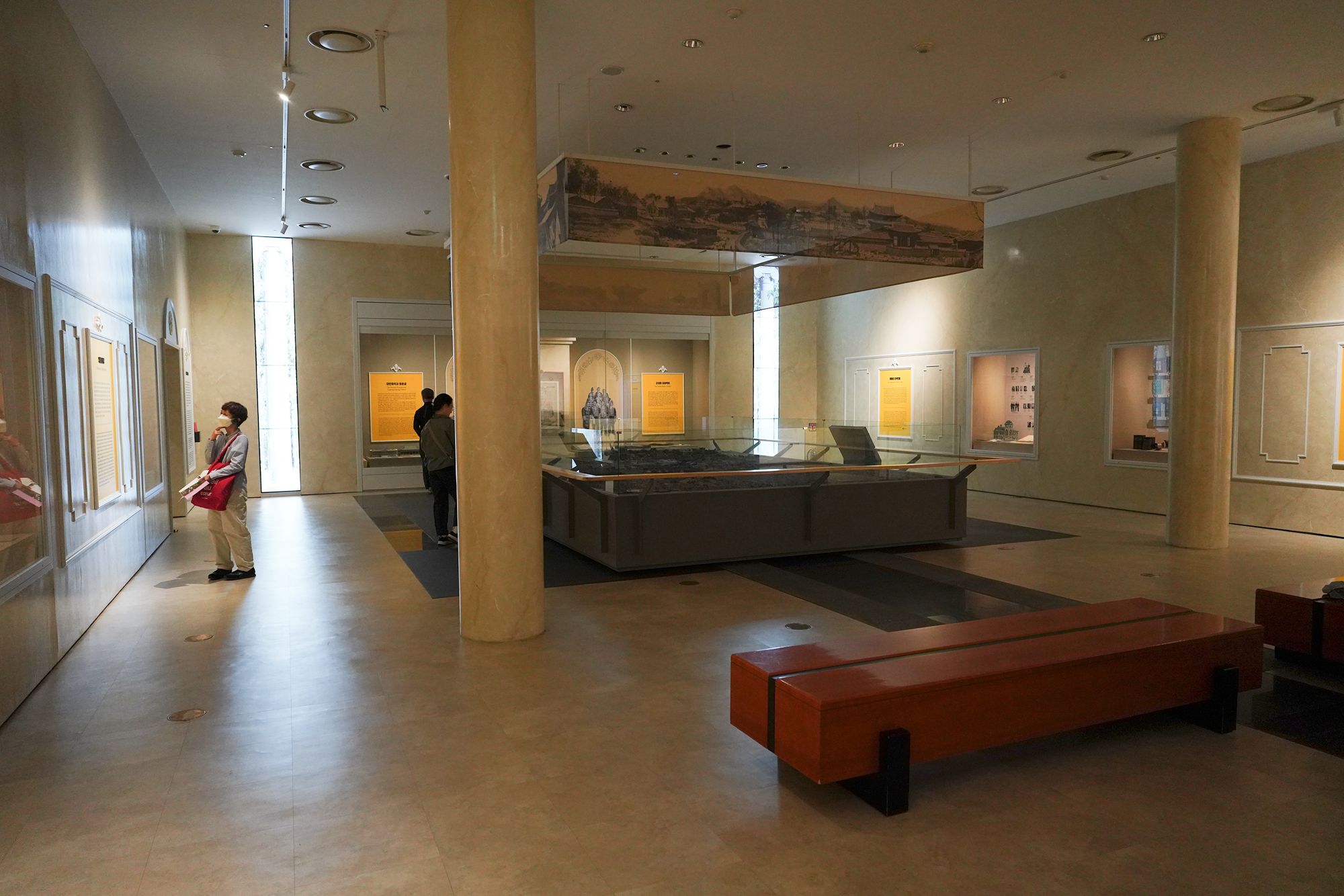
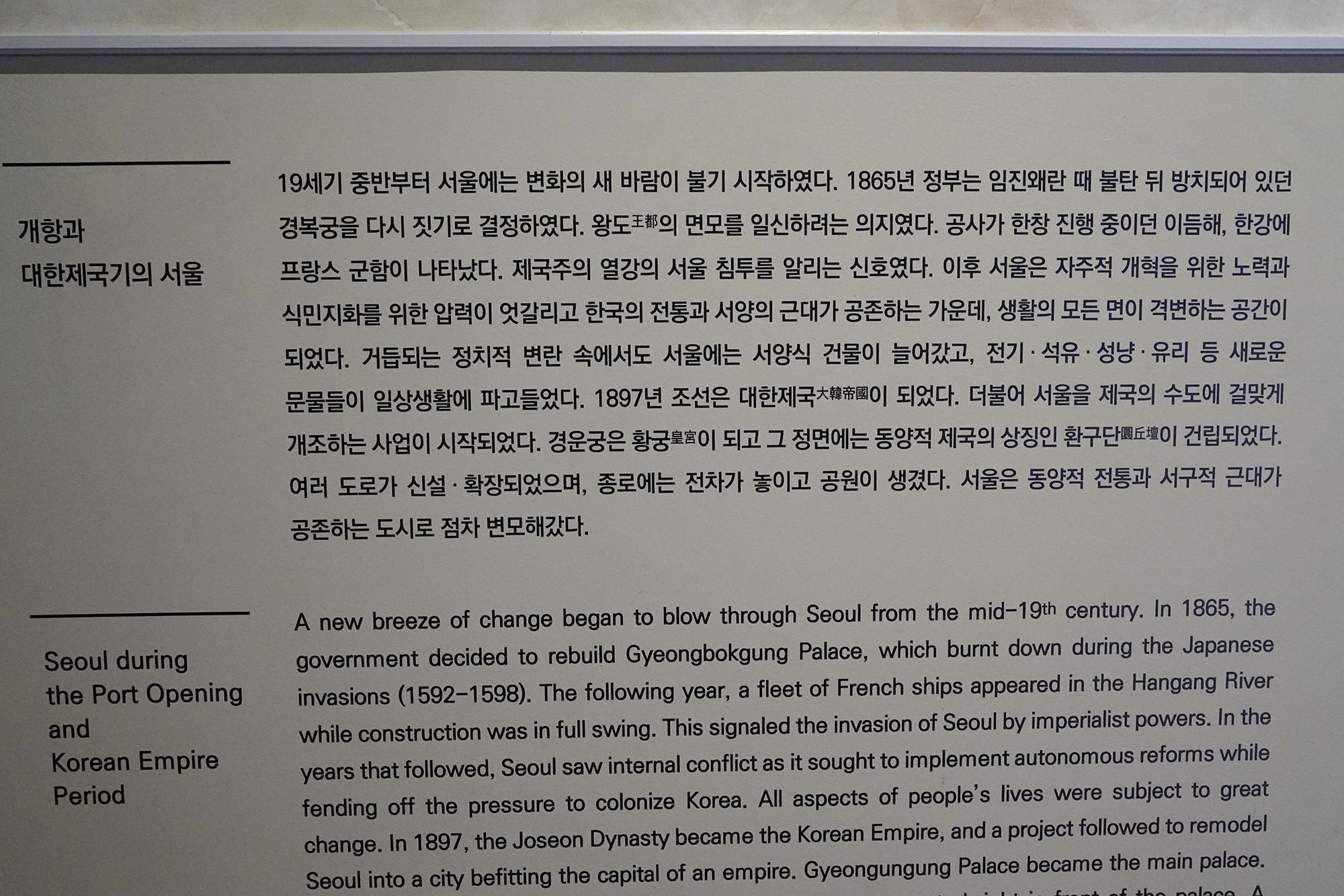
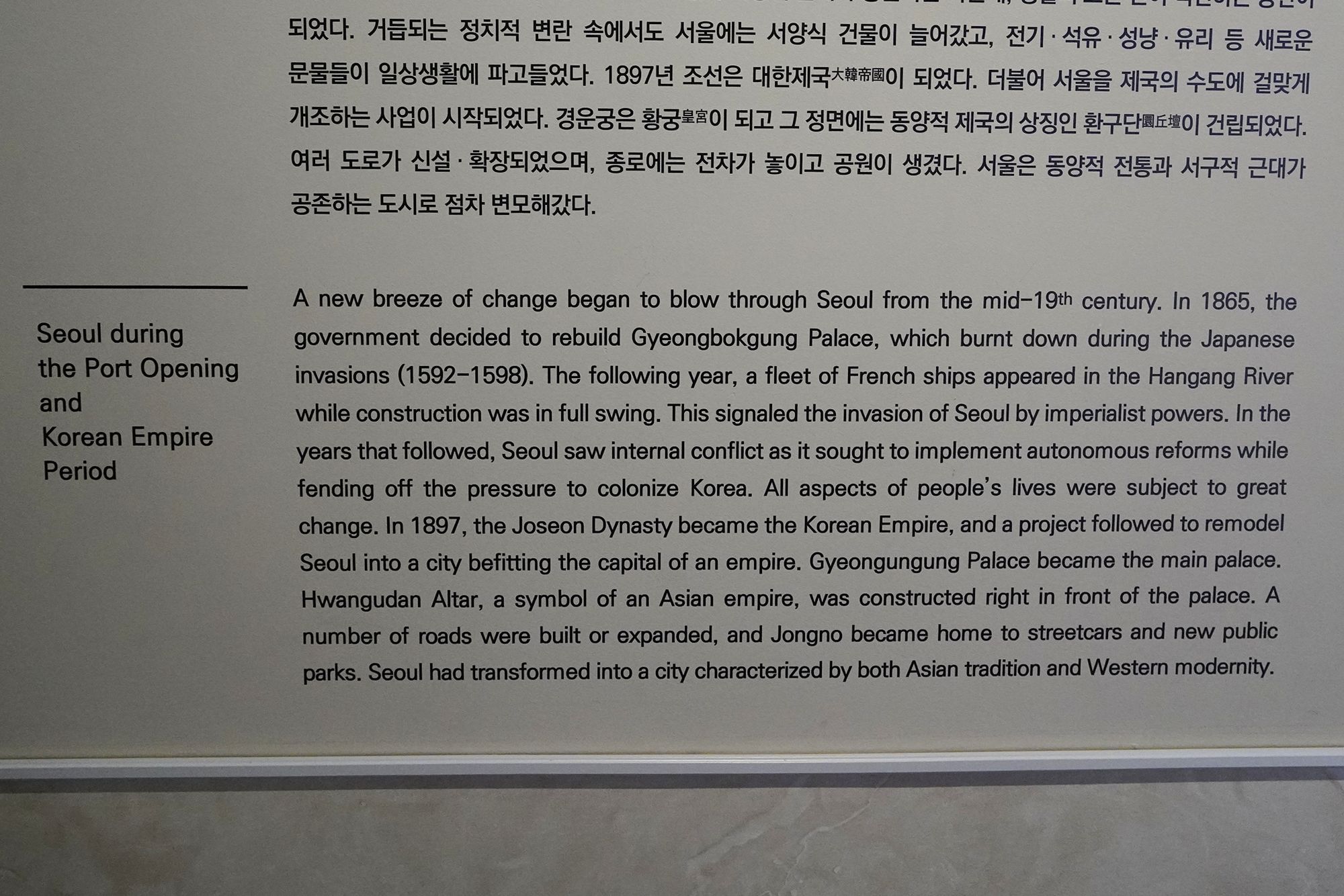
Beginning in the late 19th century, Seoul entered a period of rapid change as Korea faced growing foreign influence and began modernizing. After the Korean Empire was established in 1897, new roads, streetcars, and public parks appeared, transforming Seoul into a city that combined Korean traditions with Western influences.
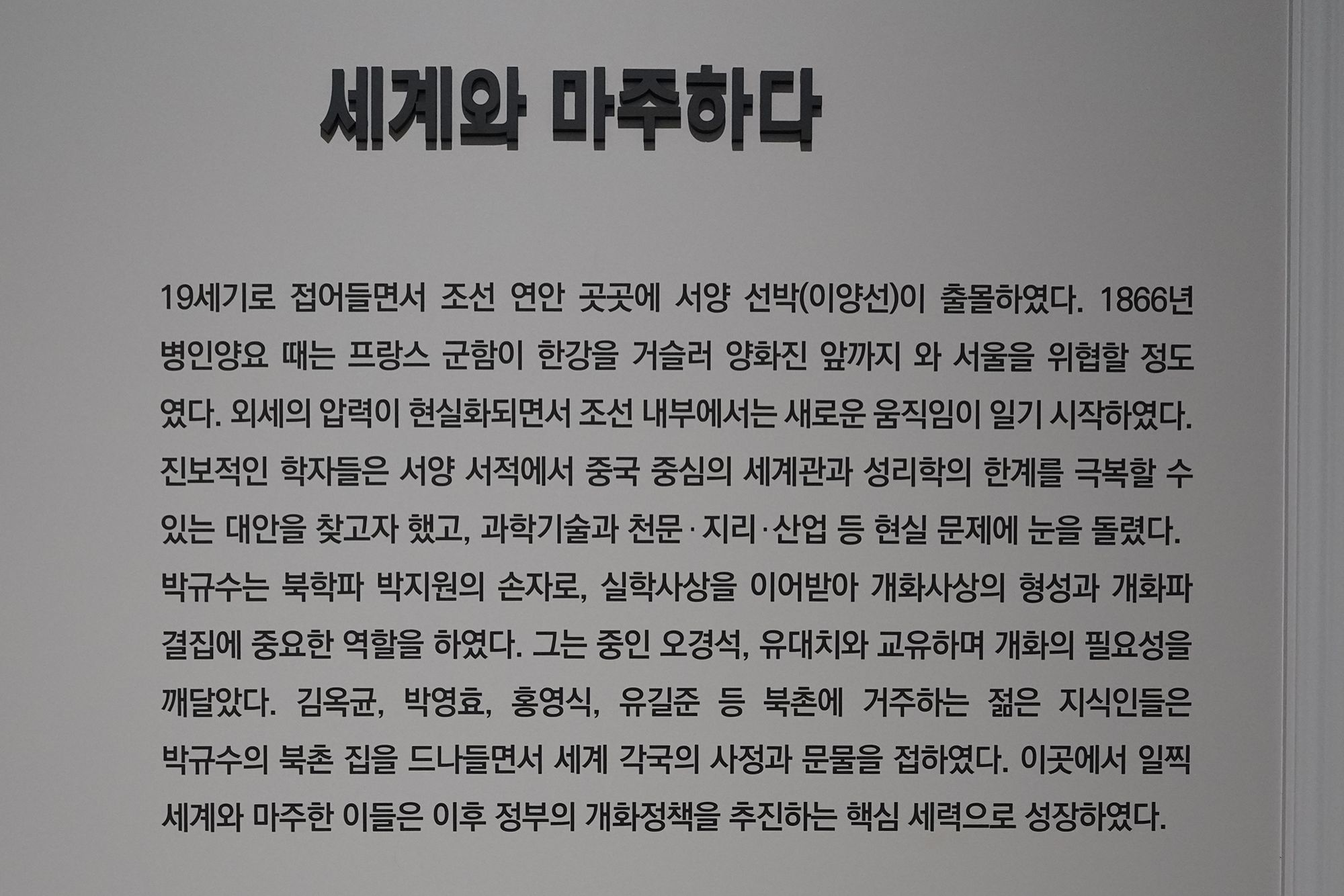
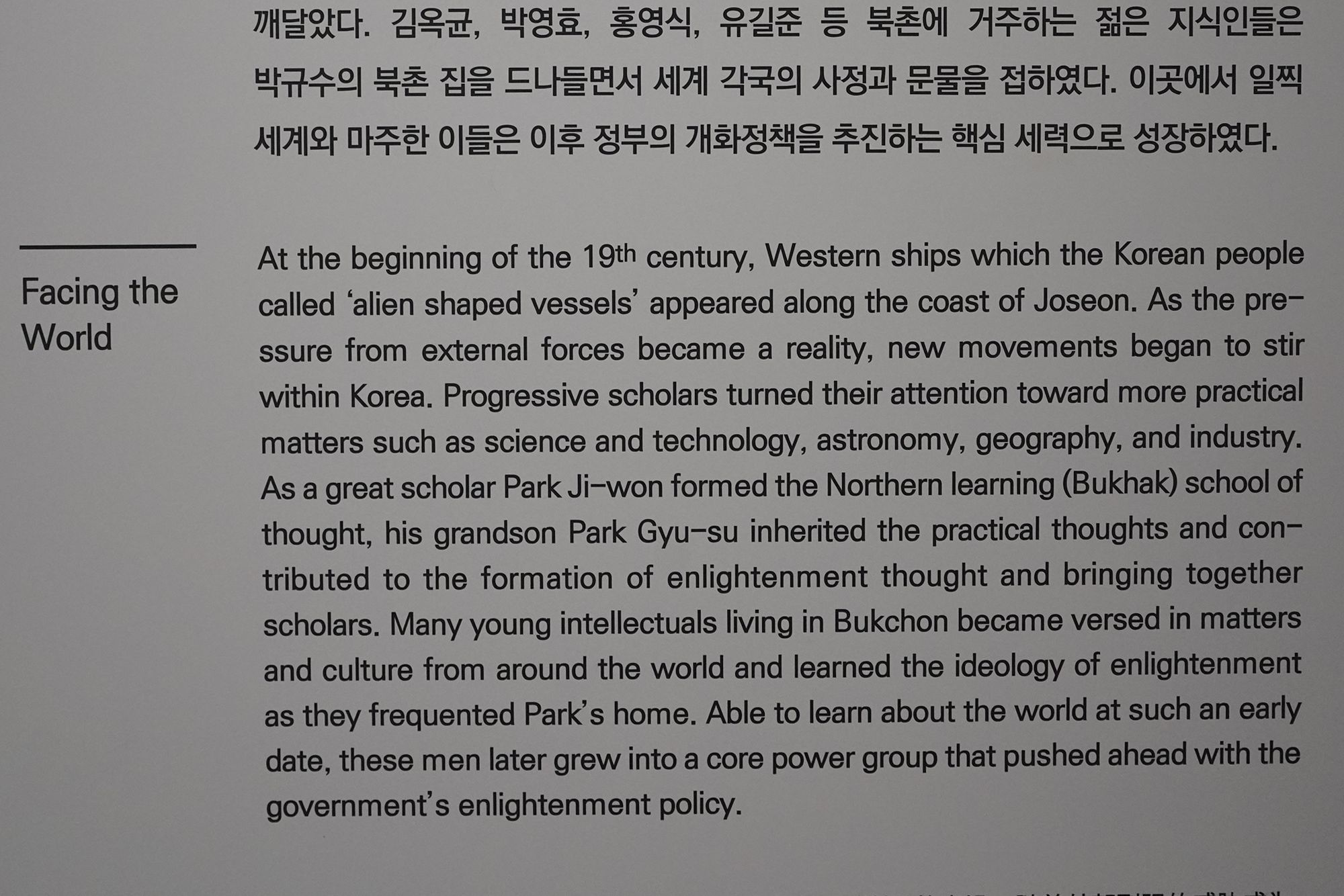
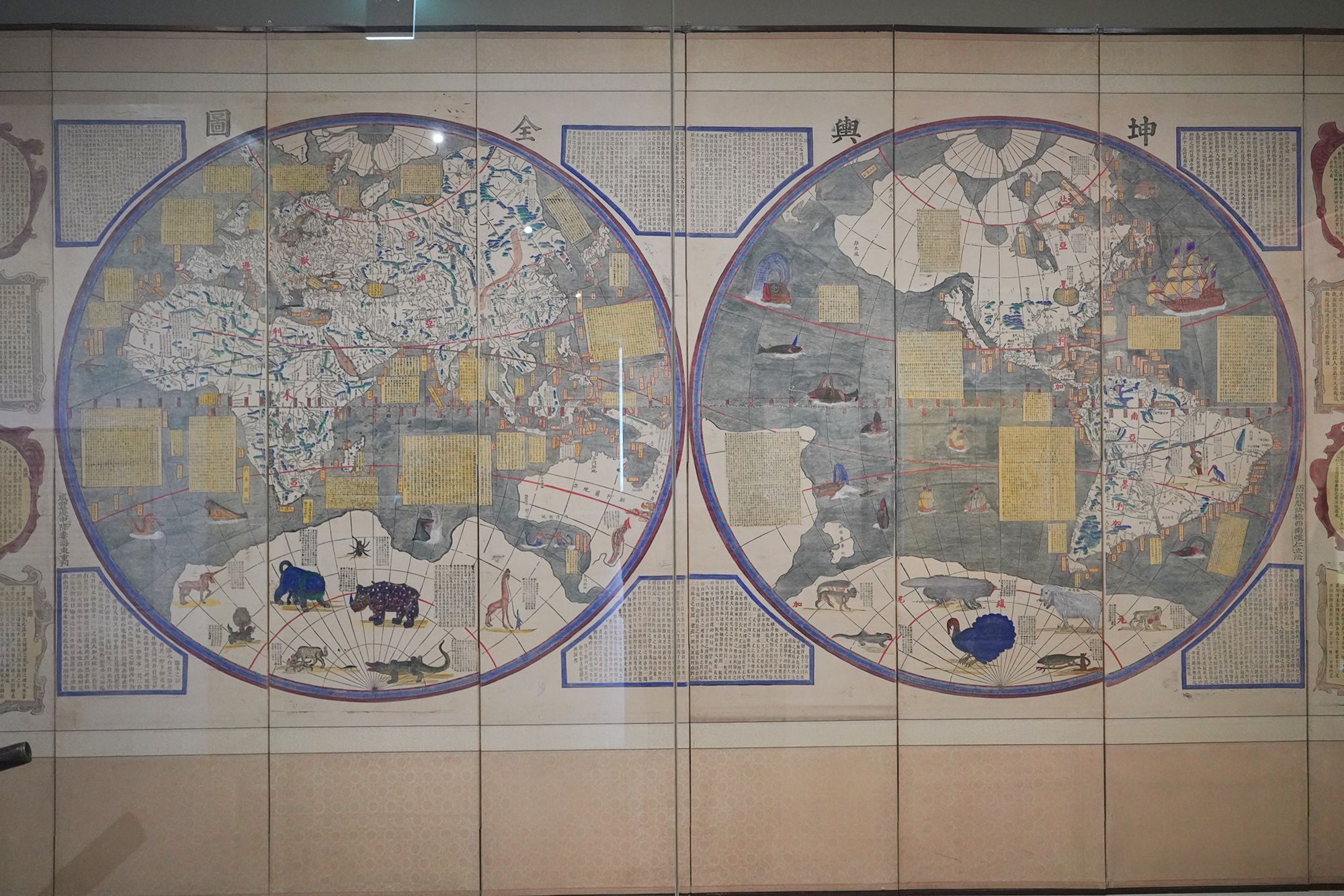
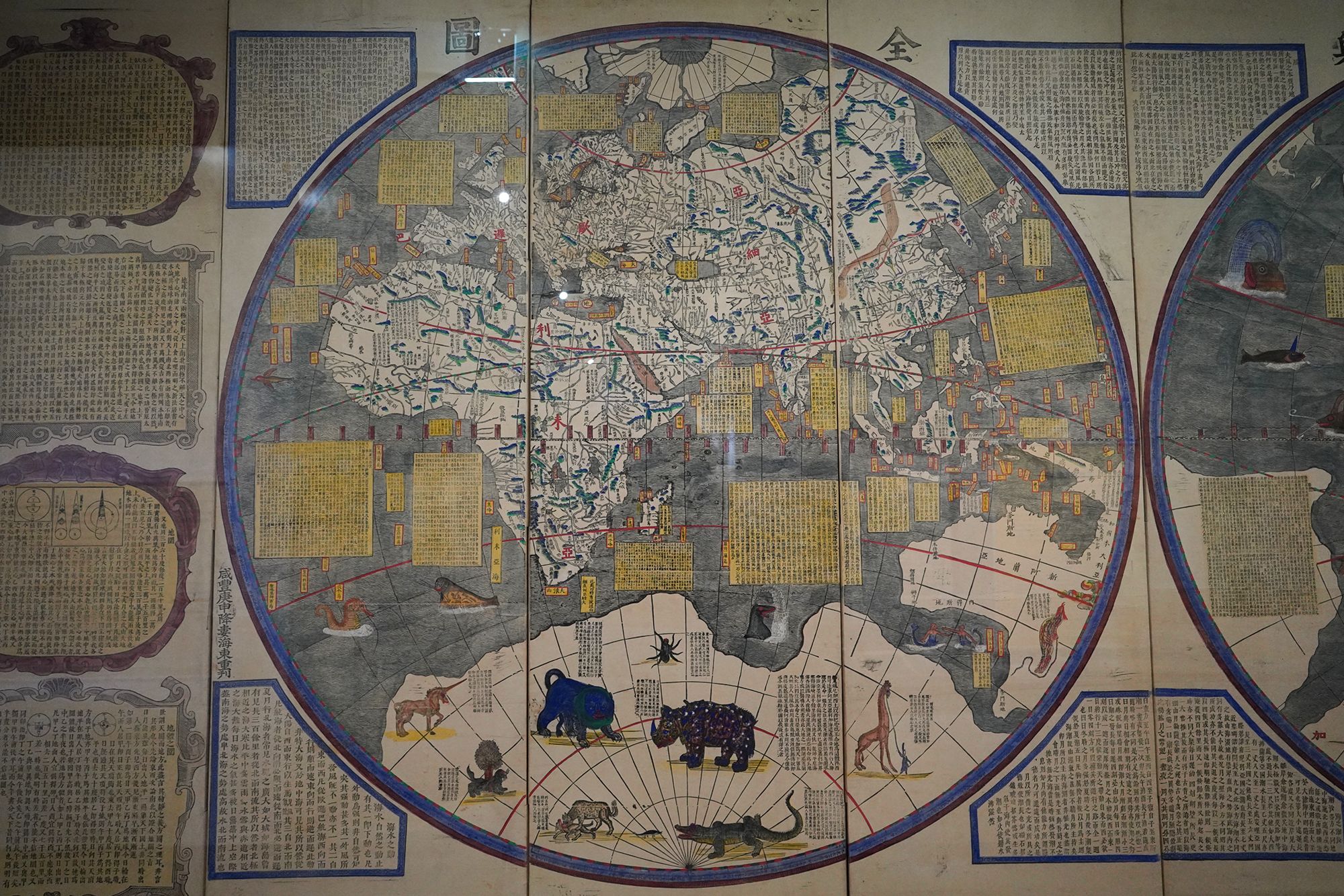
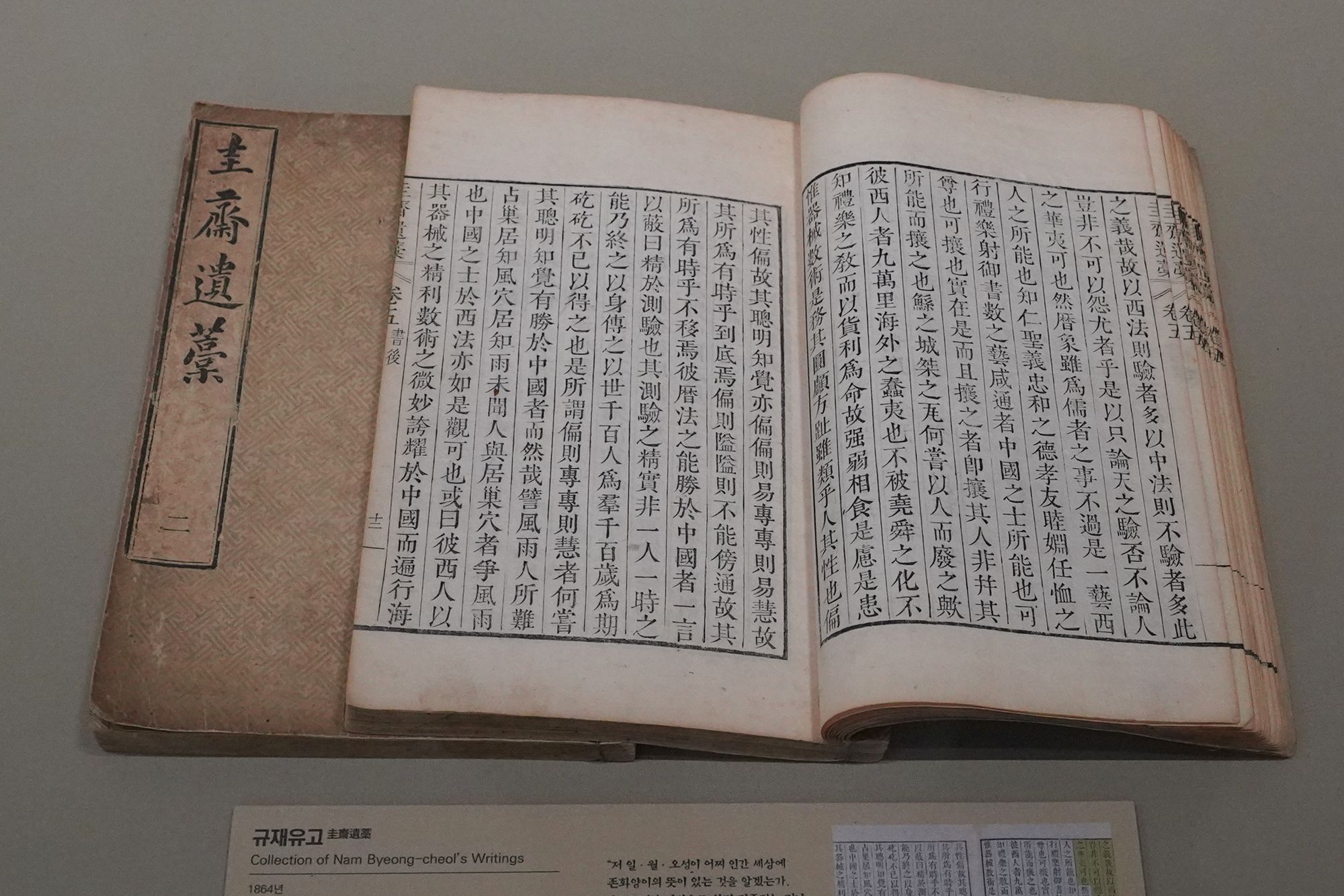
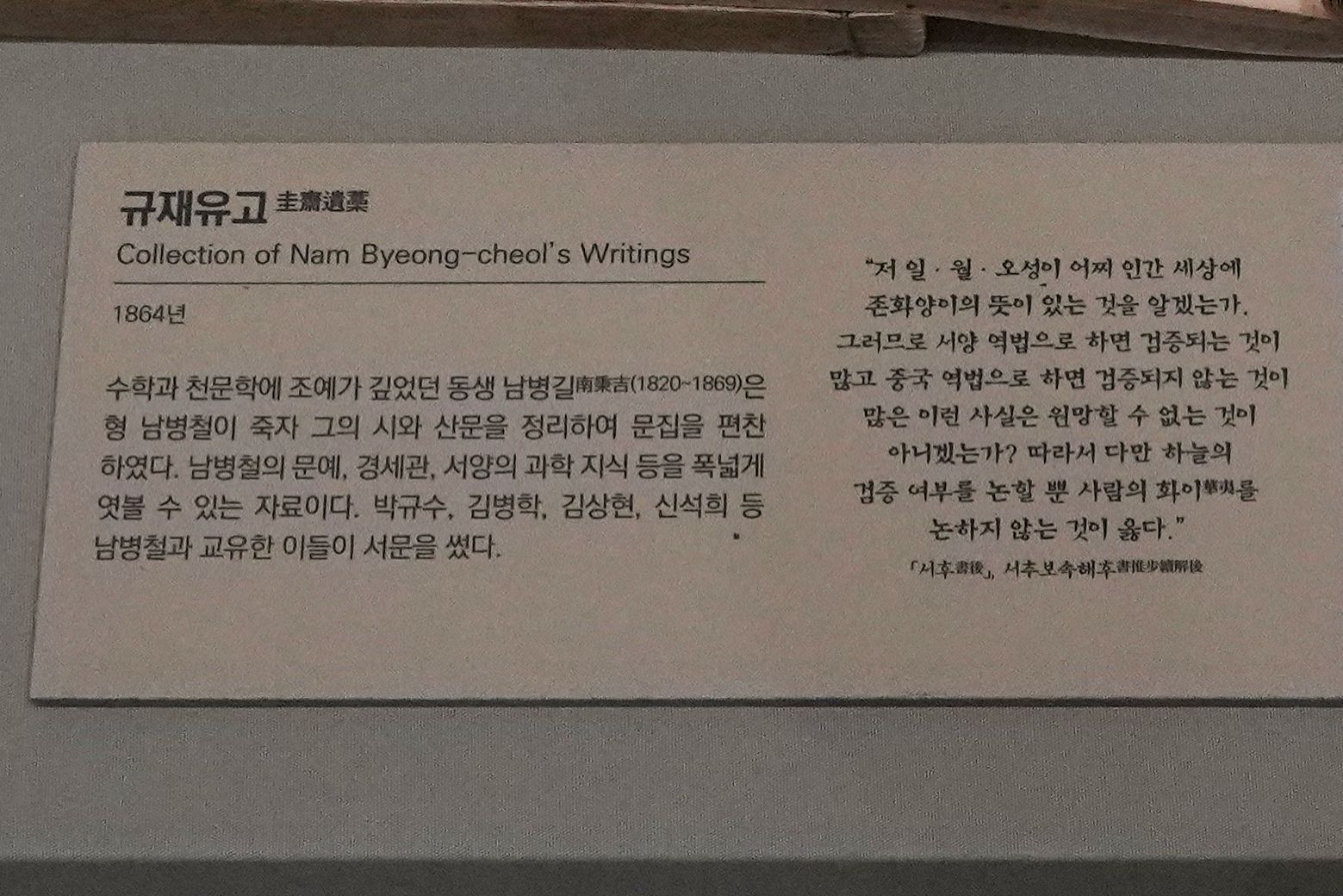
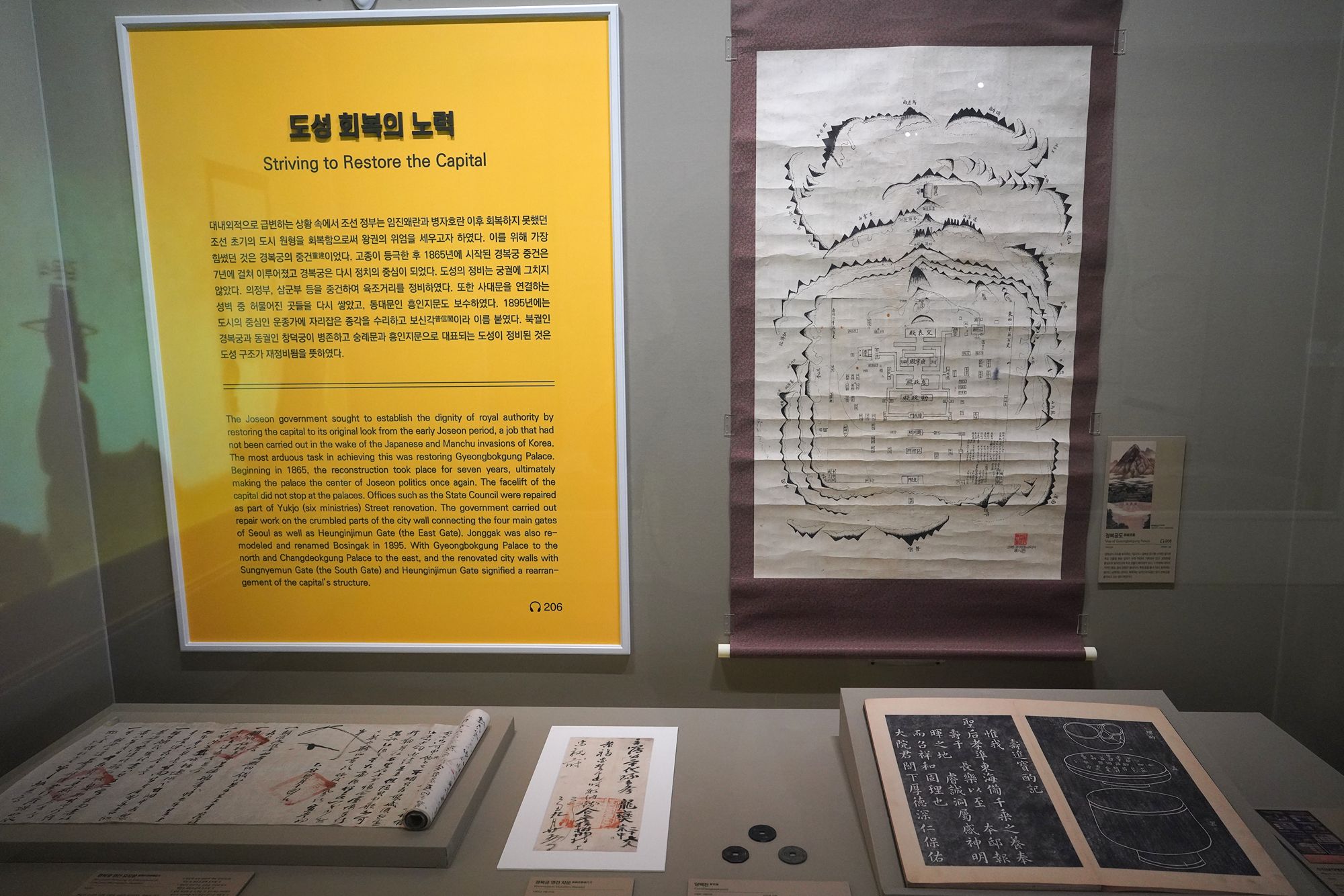
During the 19th century, Korea faced increasing contact and pressure from foreign powers. At the same time, progressive scholars began studying science, technology, geography, and ideas from abroad, helping to lay the foundation for Korea’s modernization.
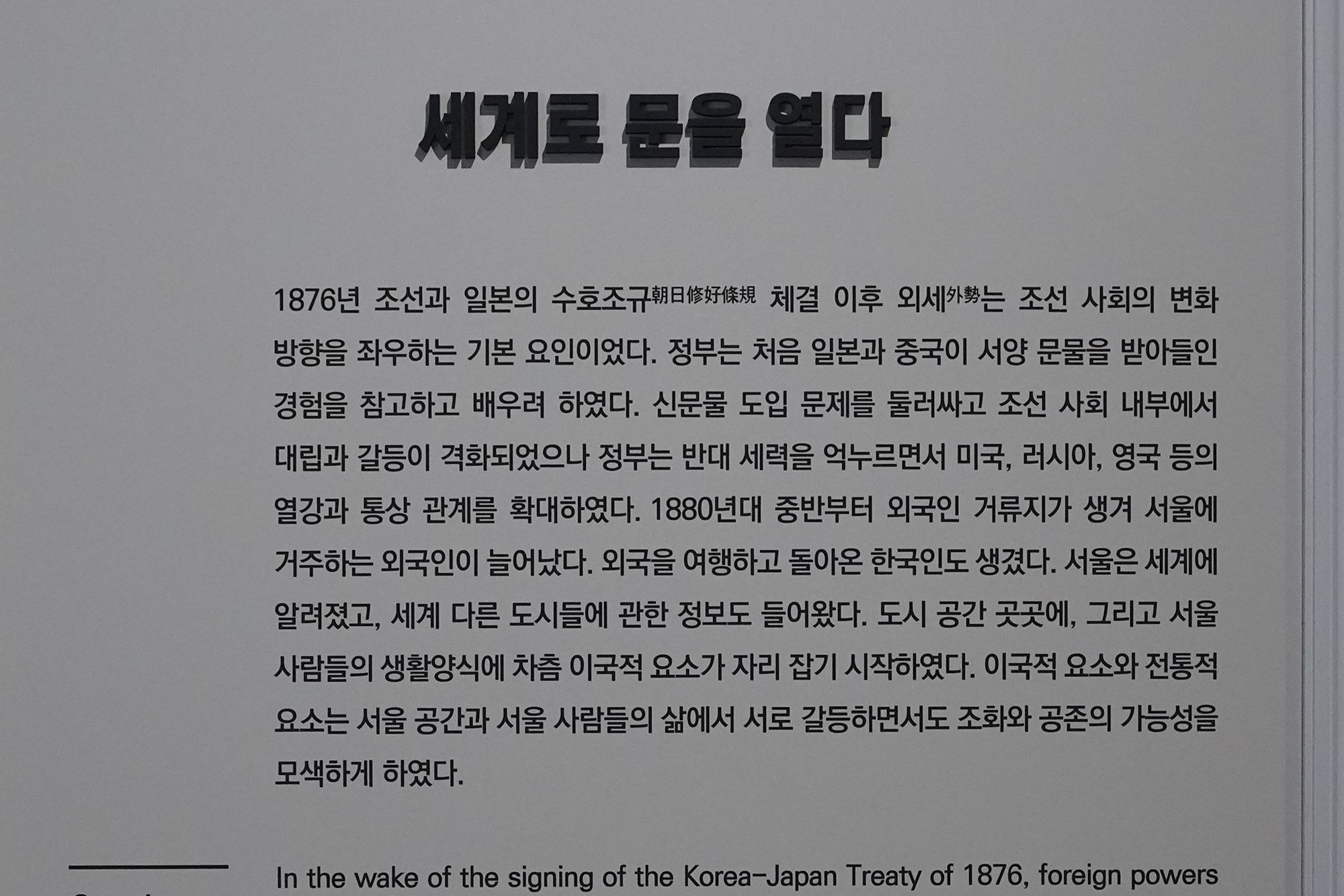
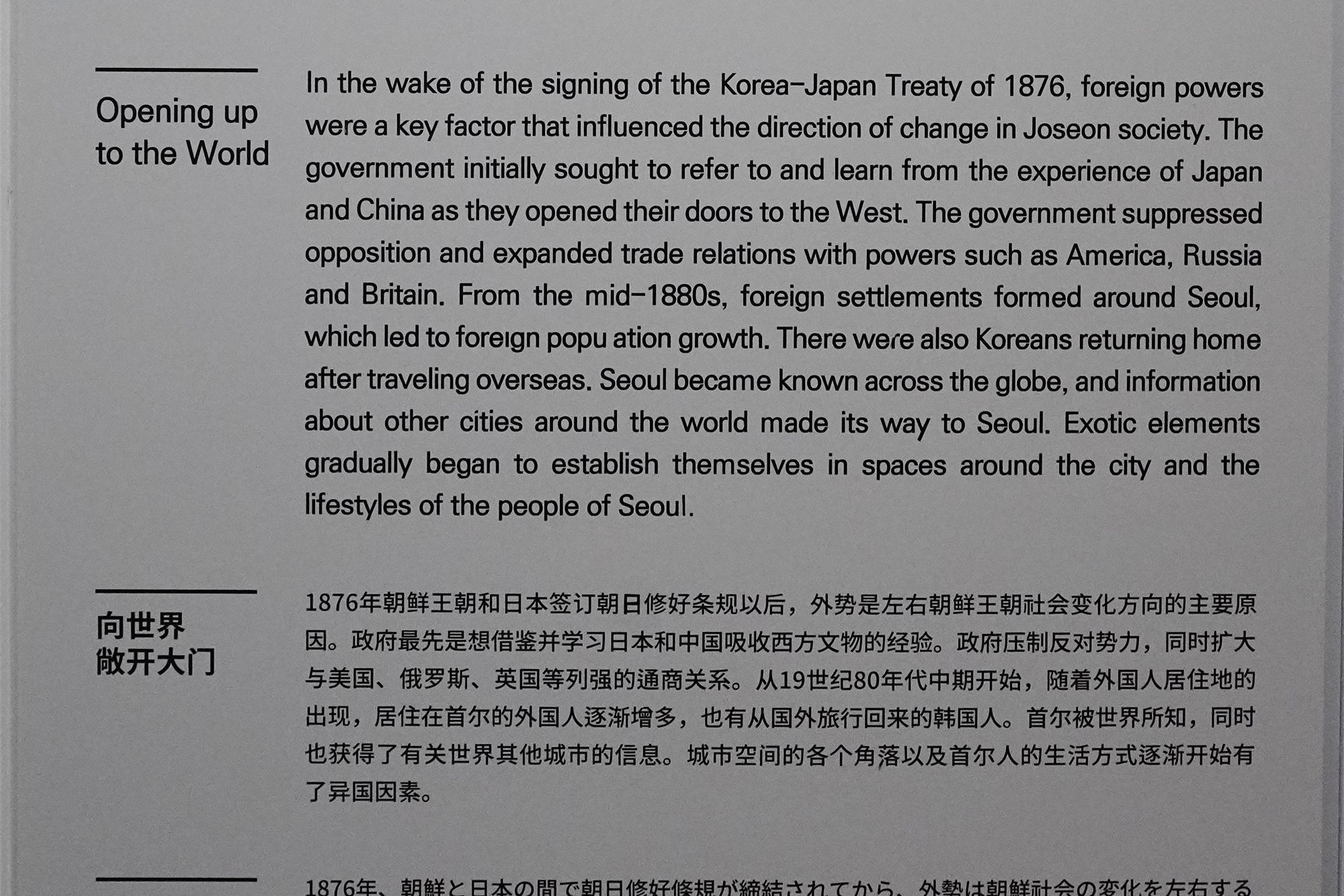
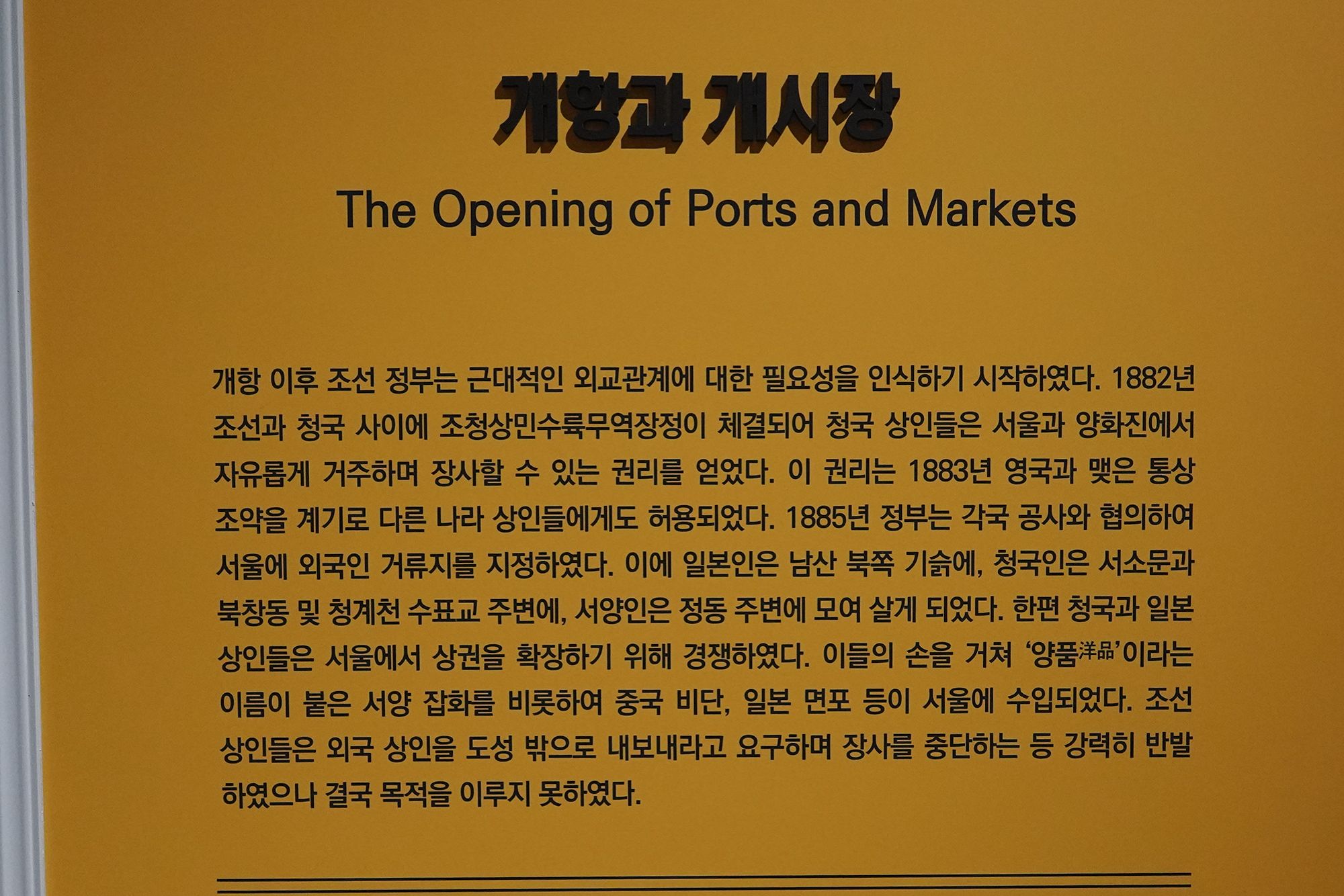
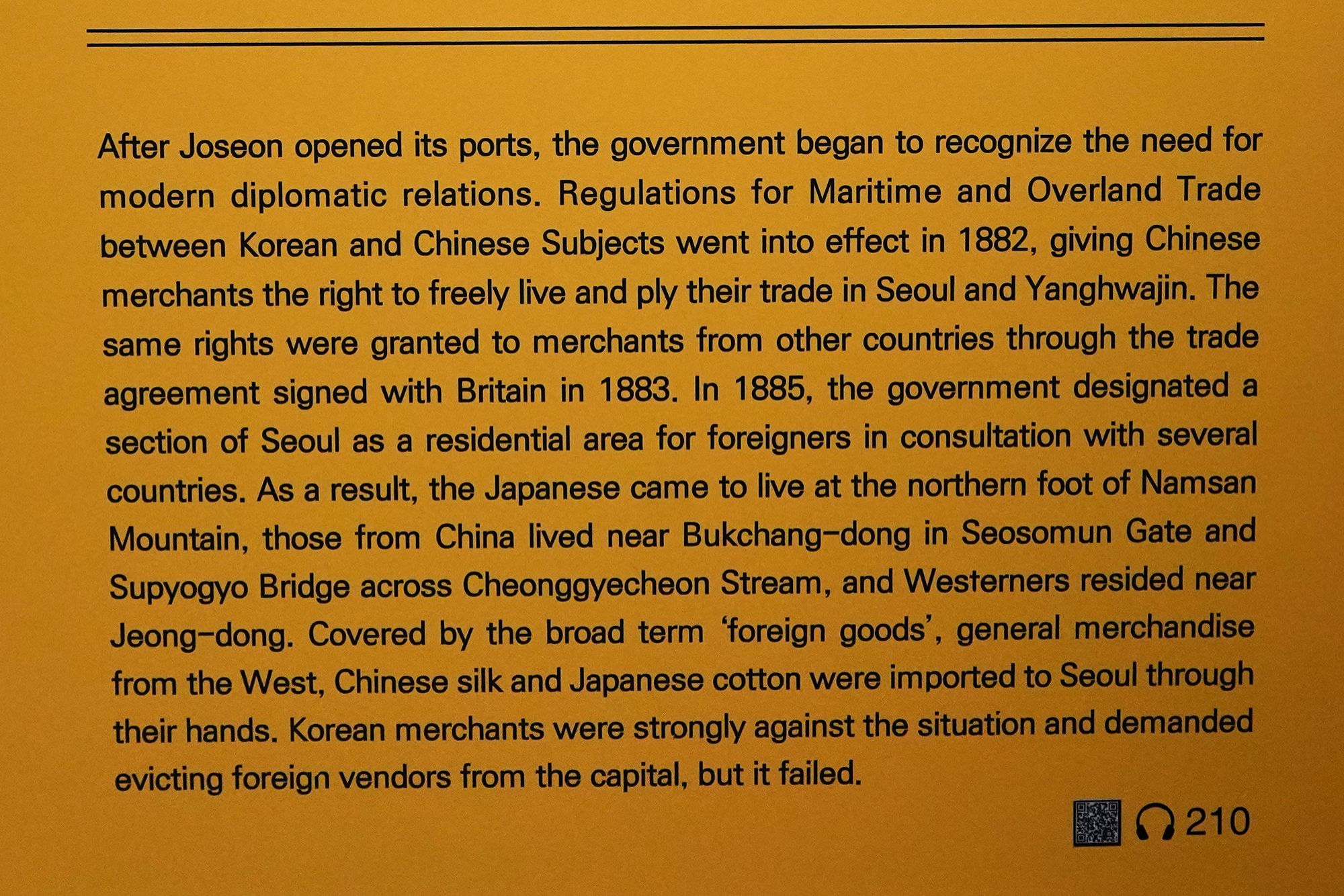
As Korea opened to international trade in the late 19th century, foreign merchants and residents began settling in Seoul. Japanese, Chinese, and Western communities developed in different parts of the city, bringing imported goods and increasing foreign influence on everyday life in Seoul.
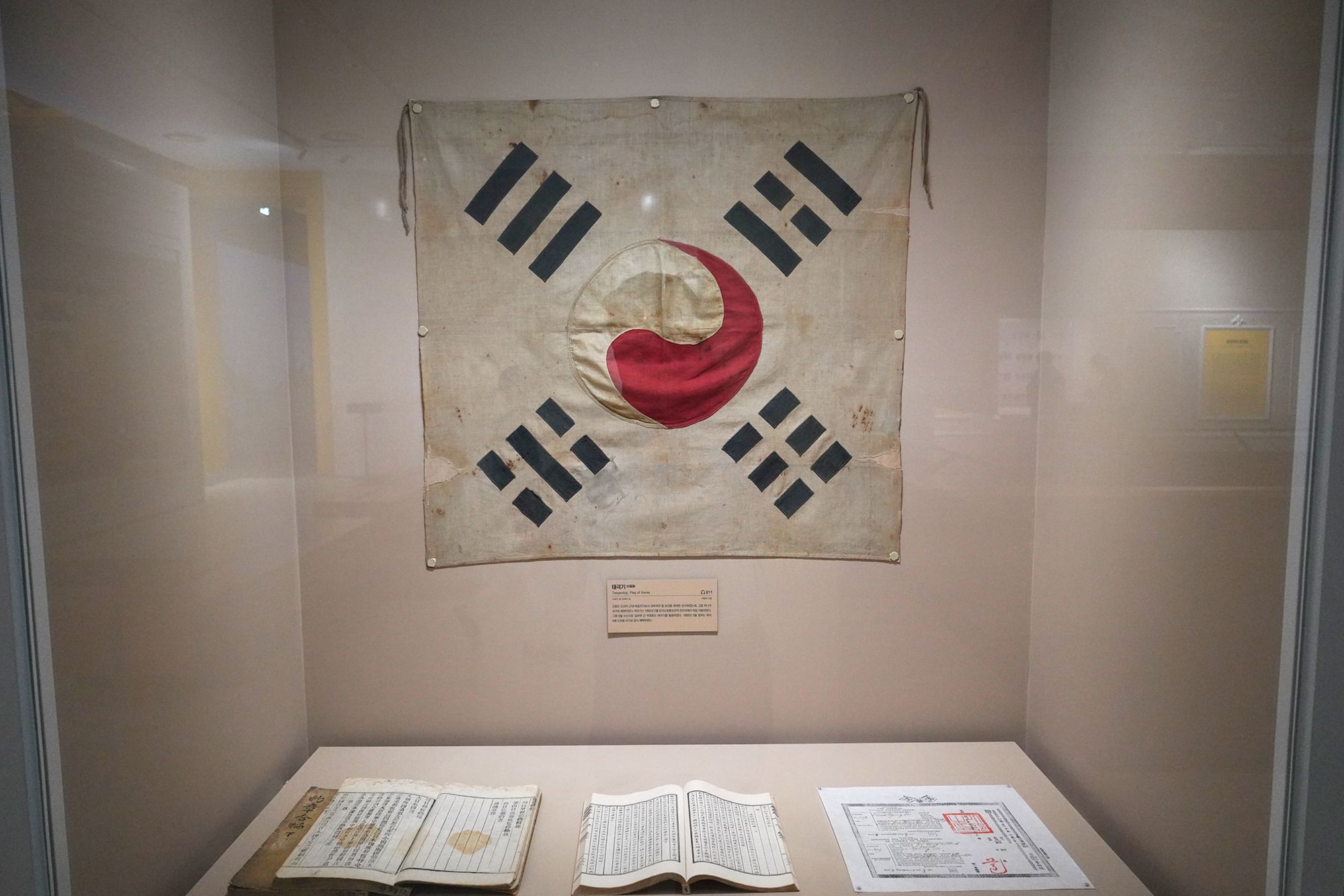
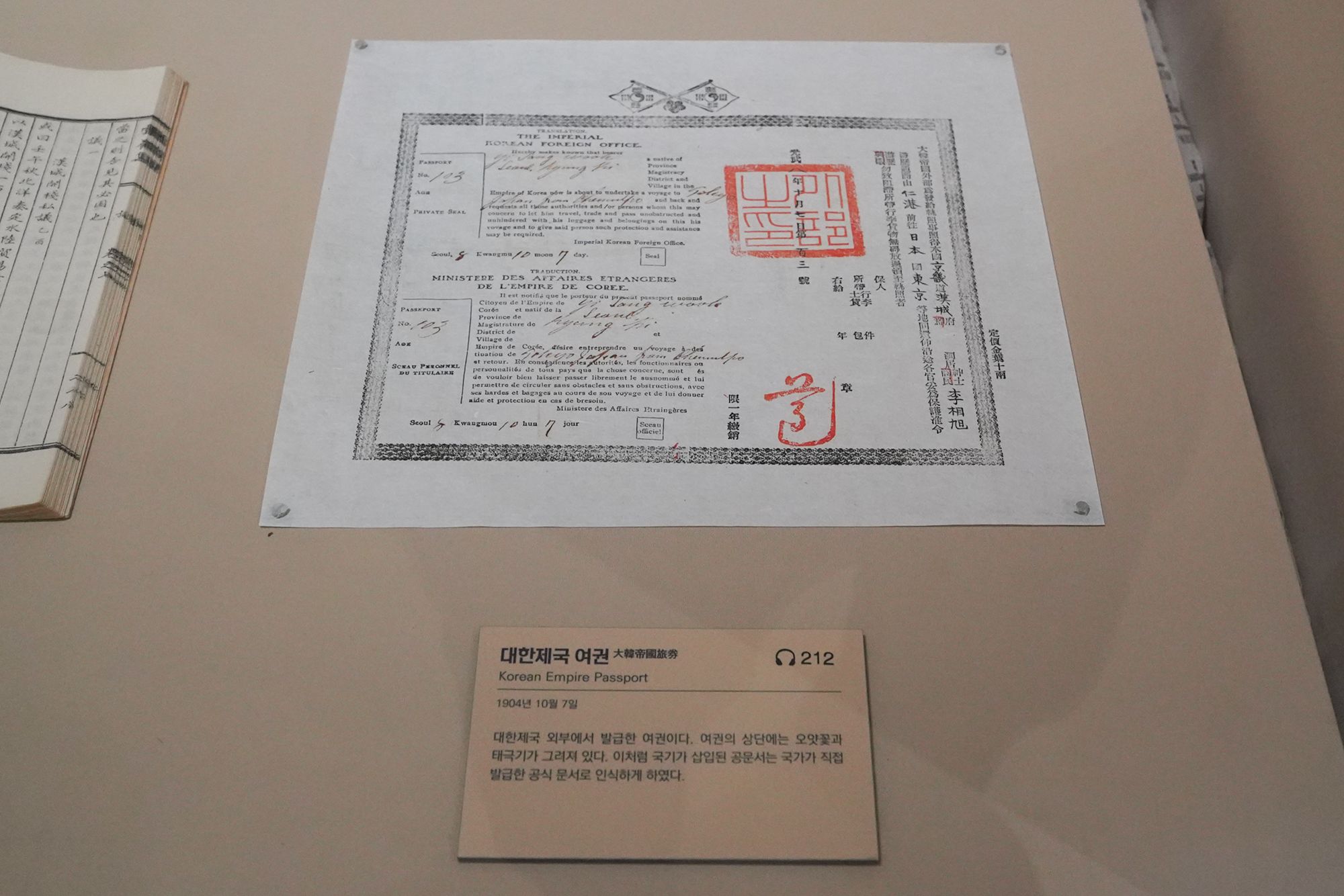
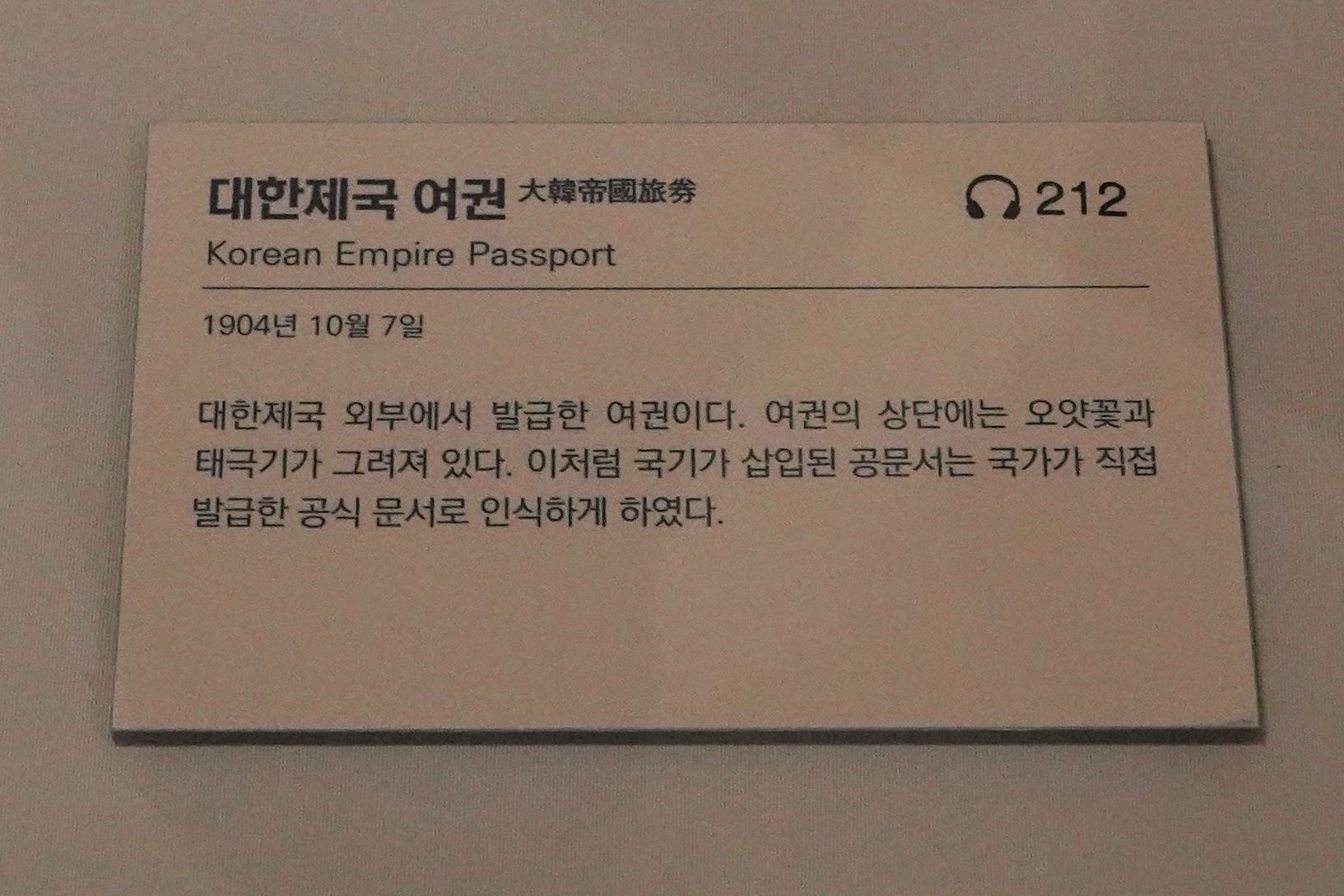
Korean Empire Passport
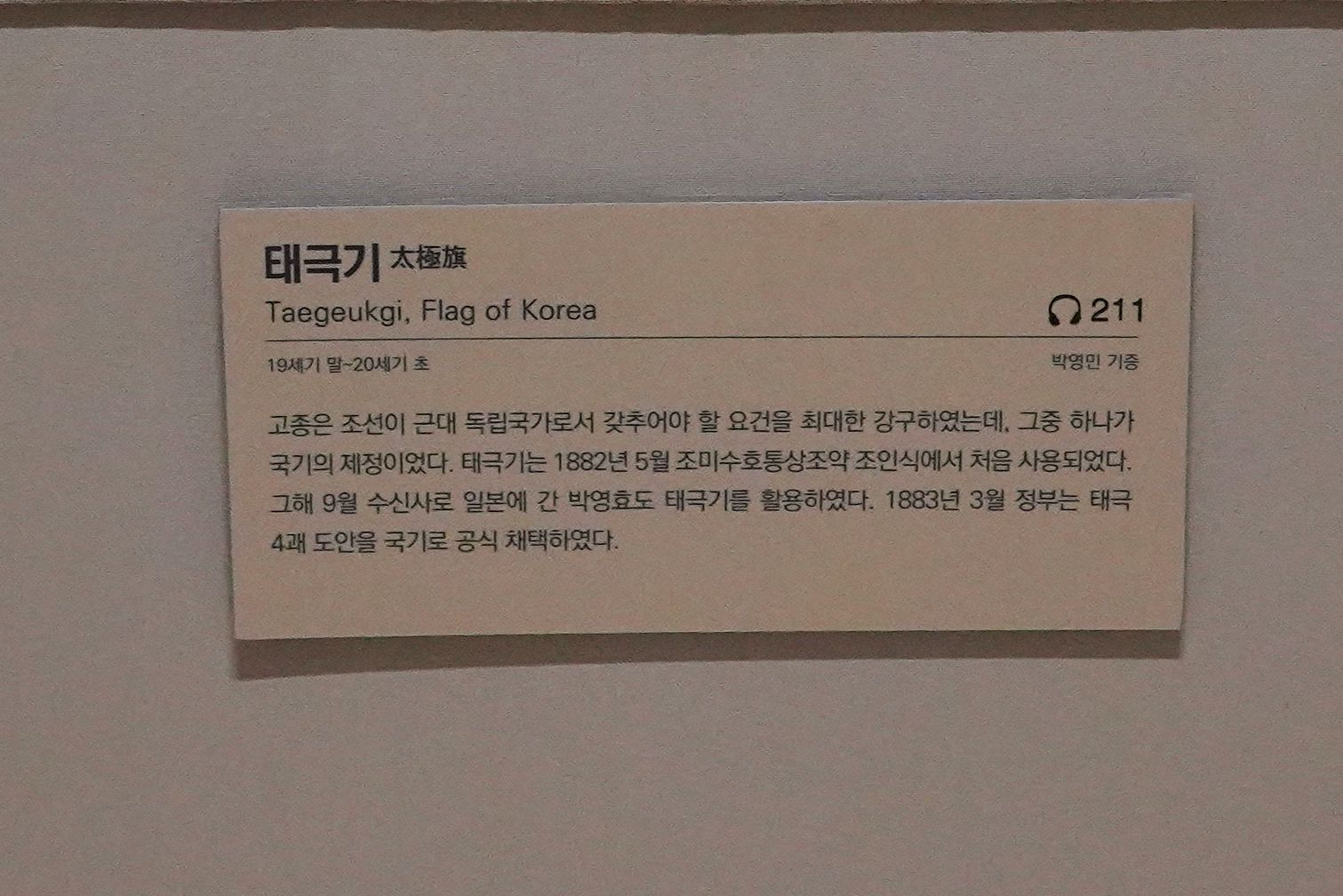
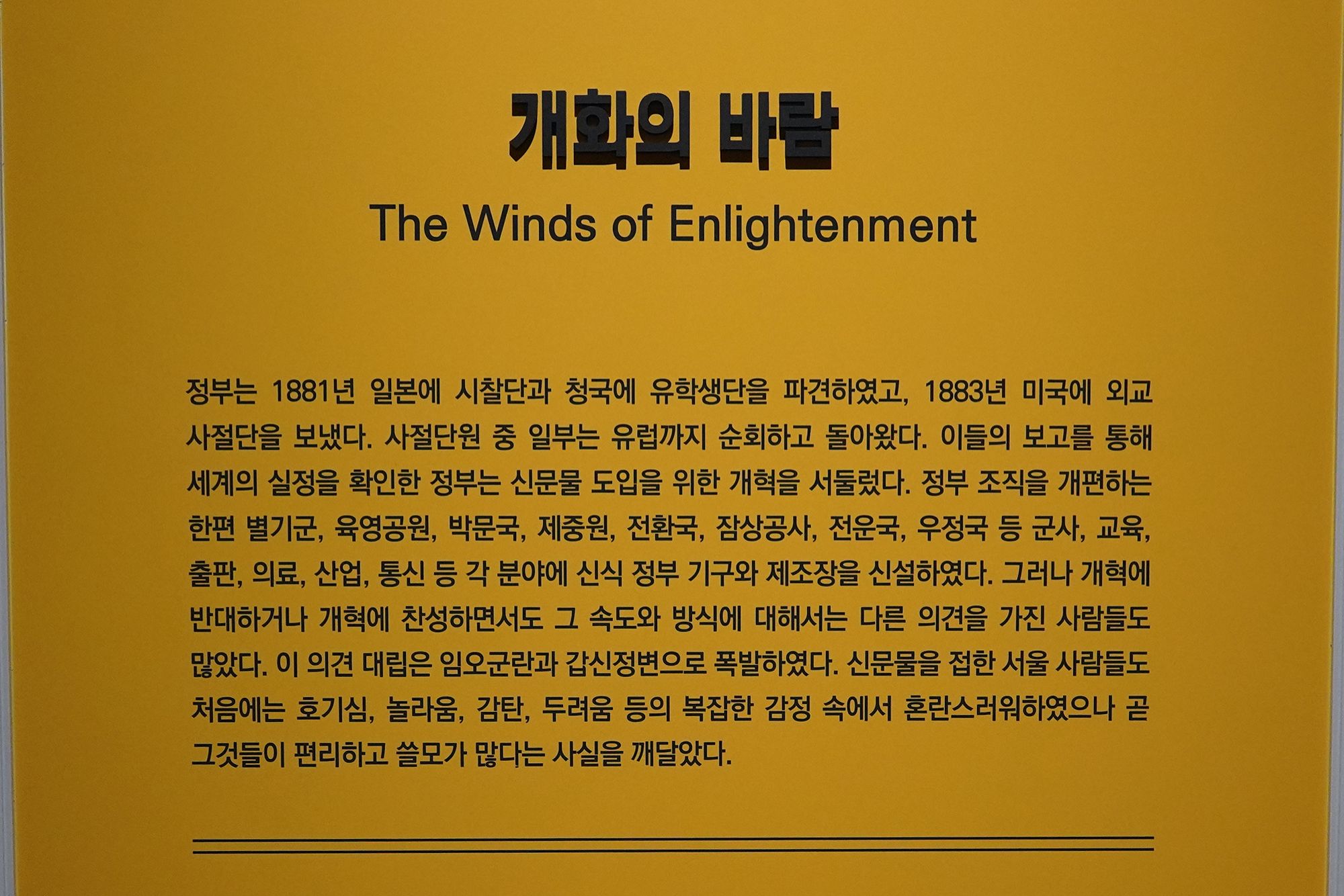
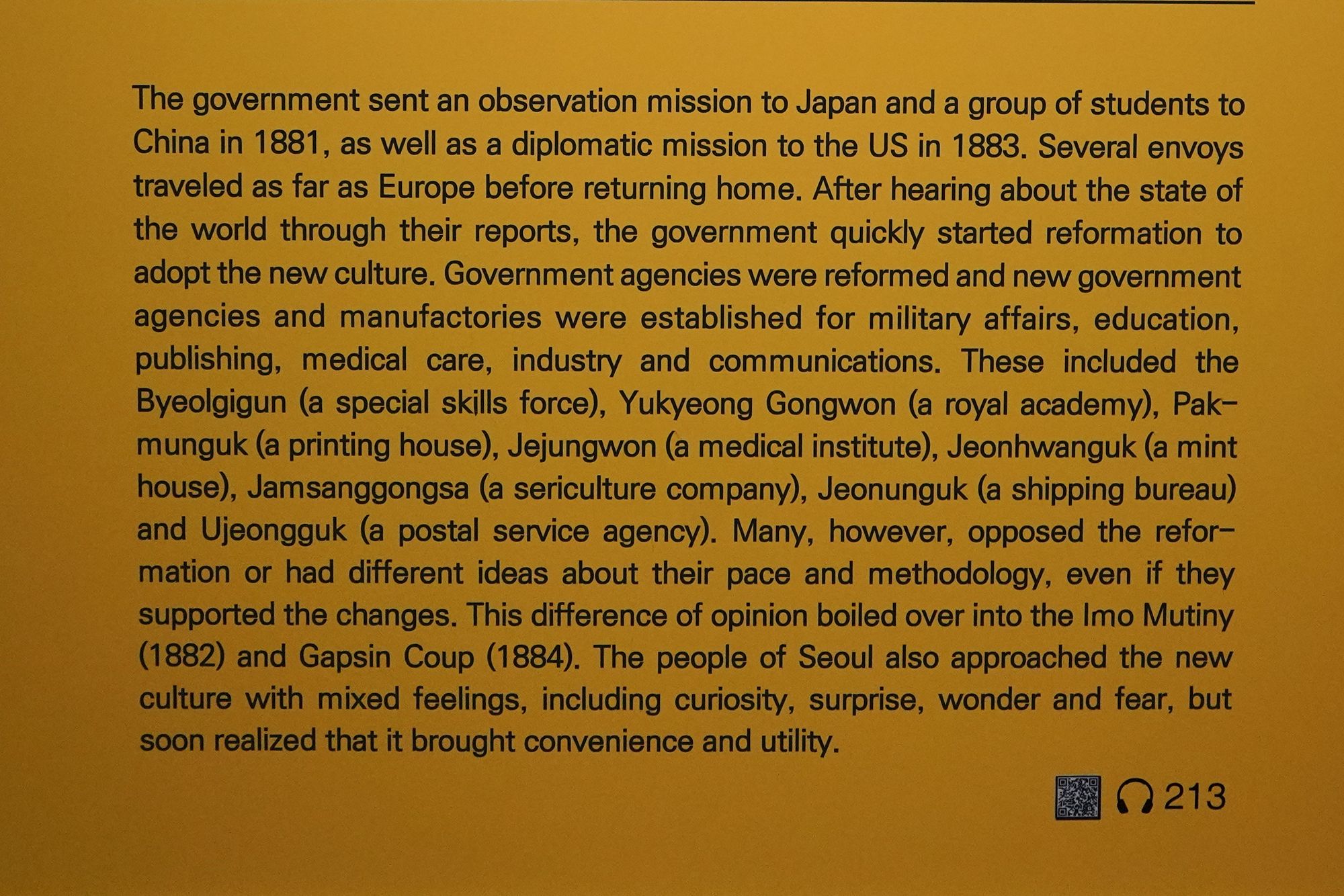
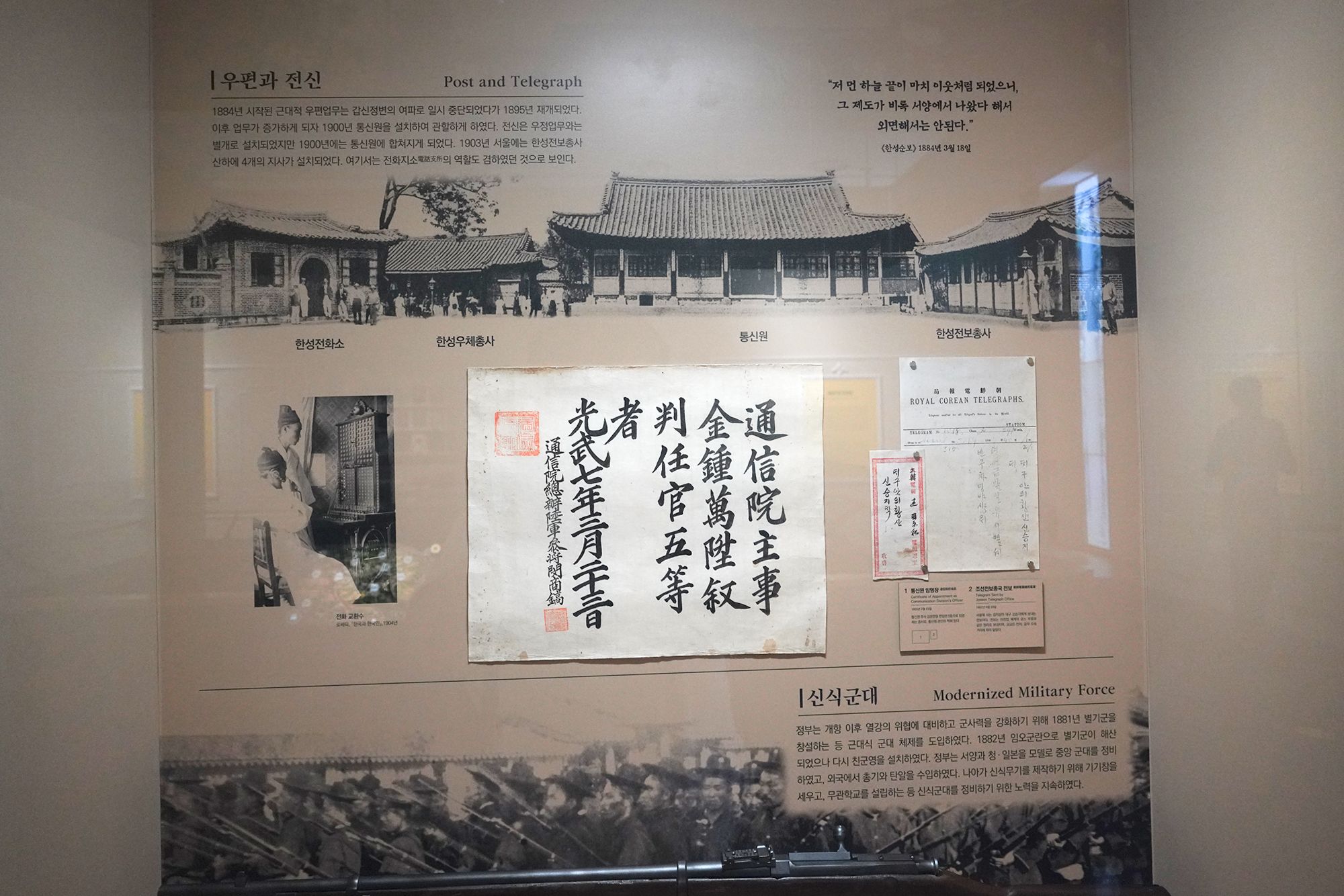
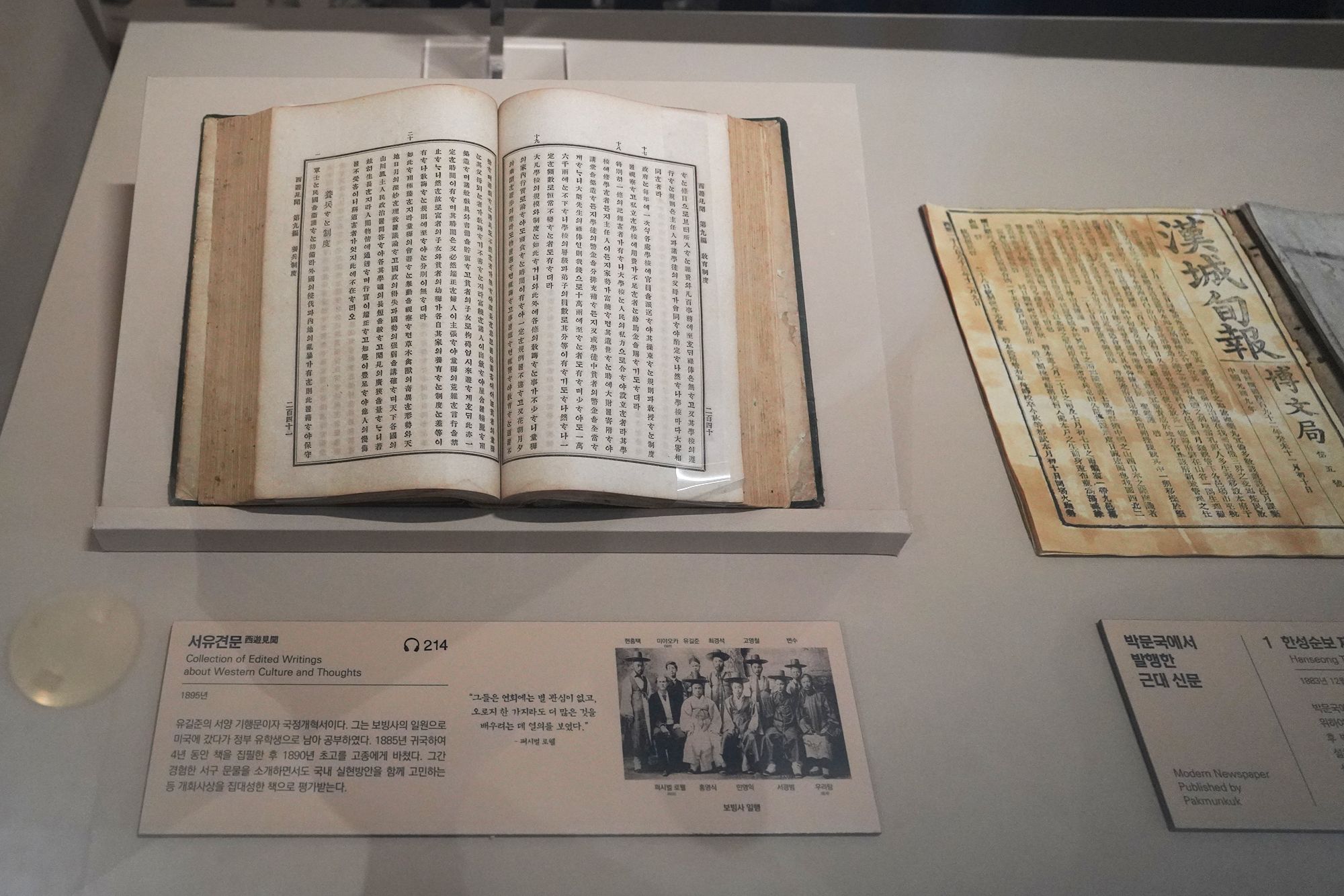
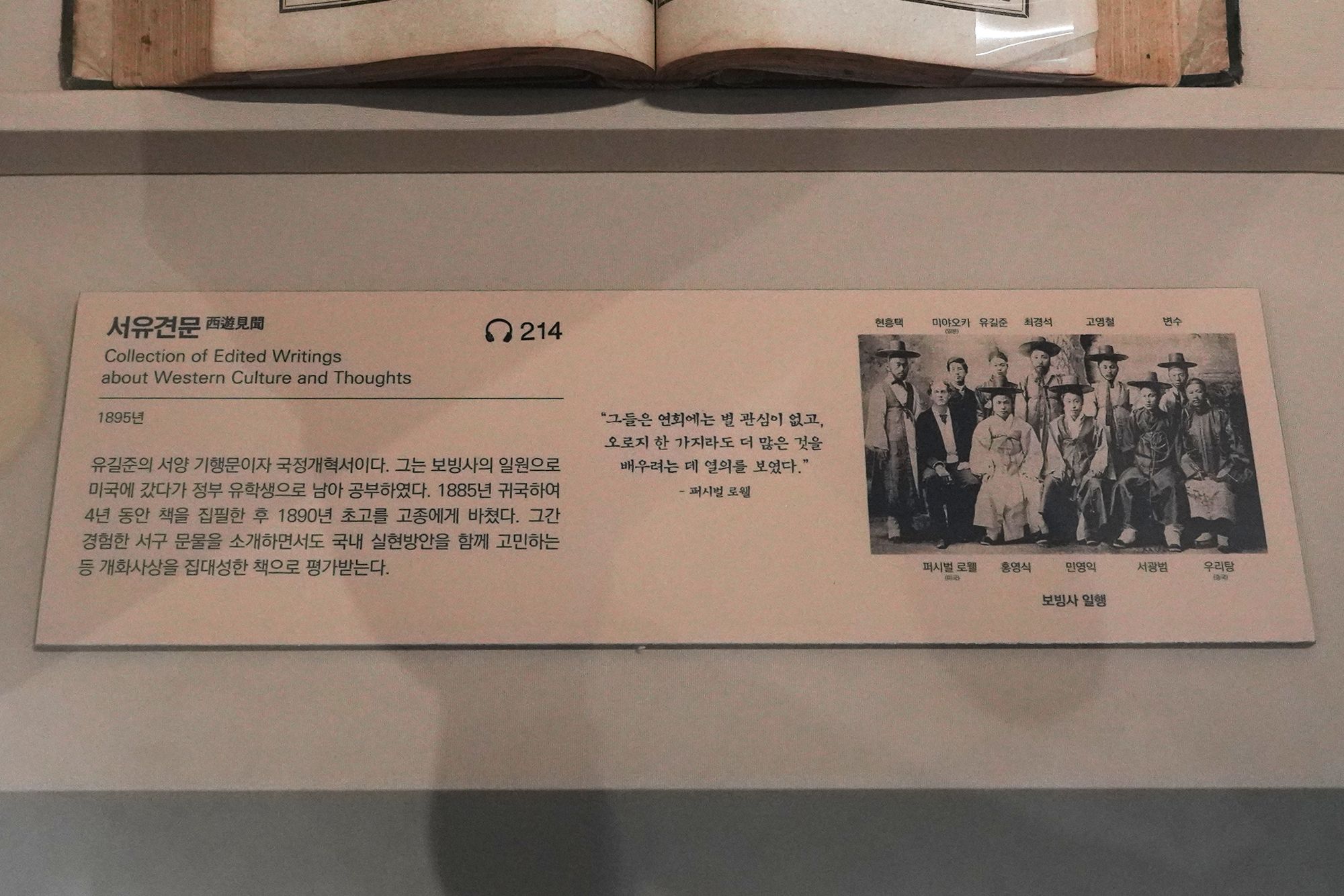
In the 1880s, the Joseon government sent missions to Japan, China, the United States, and Europe to learn about the outside world. Seoul soon began adopting modern institutions in education, medicine, publishing, industry, communications, and the military, although these rapid changes also created political and social conflict.
The New Heart of Seoul, Jeong-dong
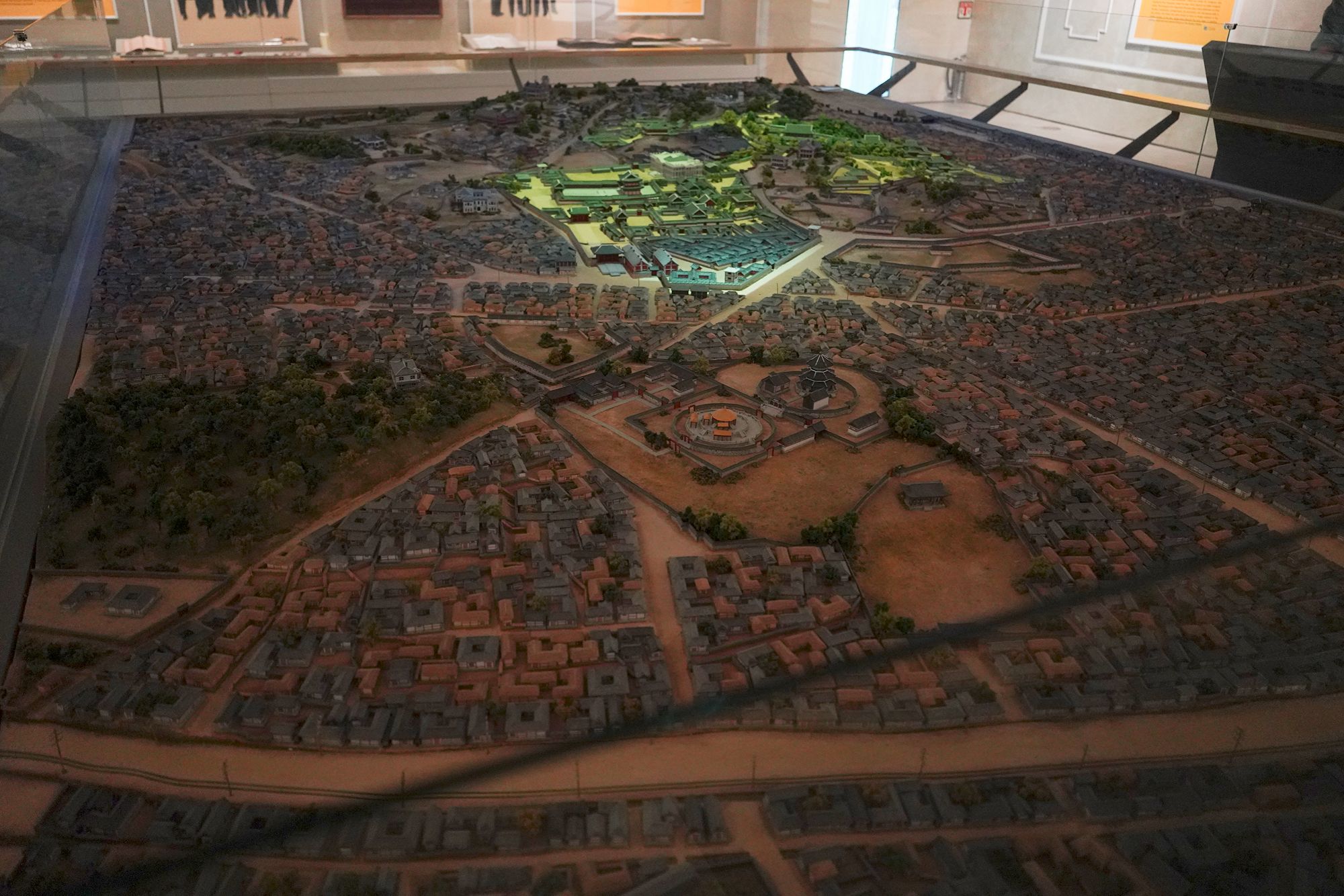
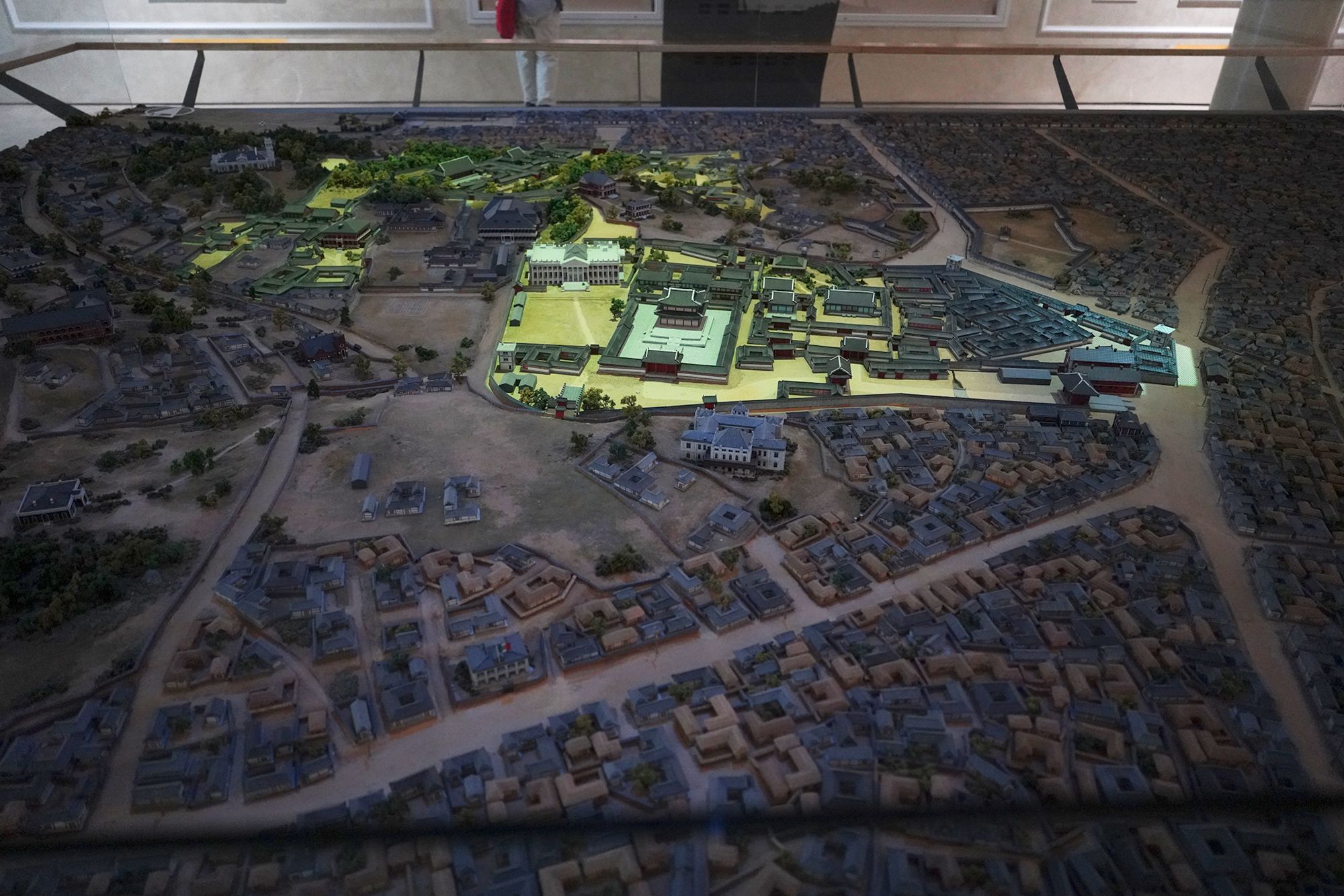
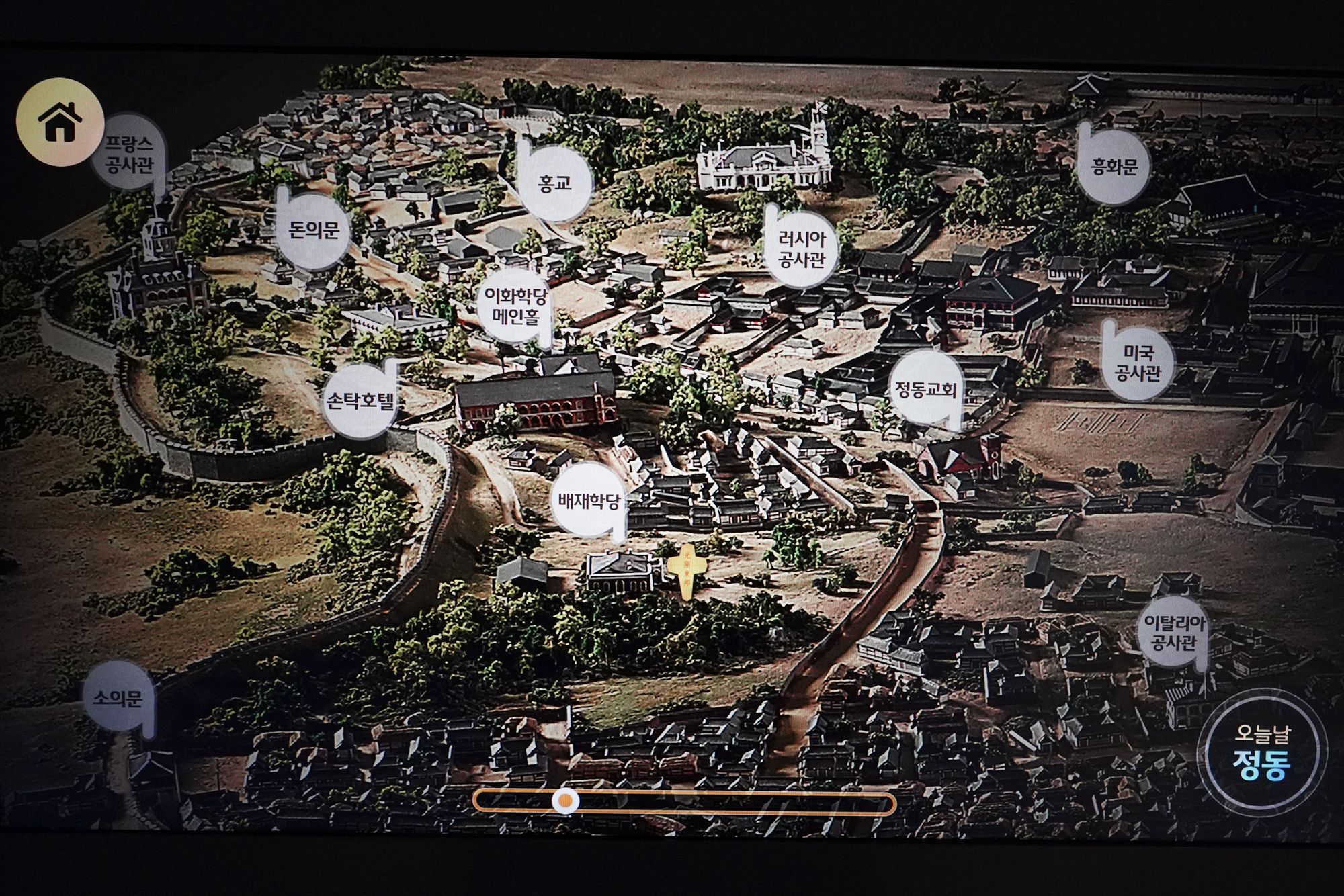
In 1897, King Gojong proclaimed the Korean Empire and began transforming Seoul into a modern imperial capital. Jeong-dong became a center of this change, with foreign legations, modern schools, religious institutions, and Western-style buildings appearing alongside traditional Korean architecture.
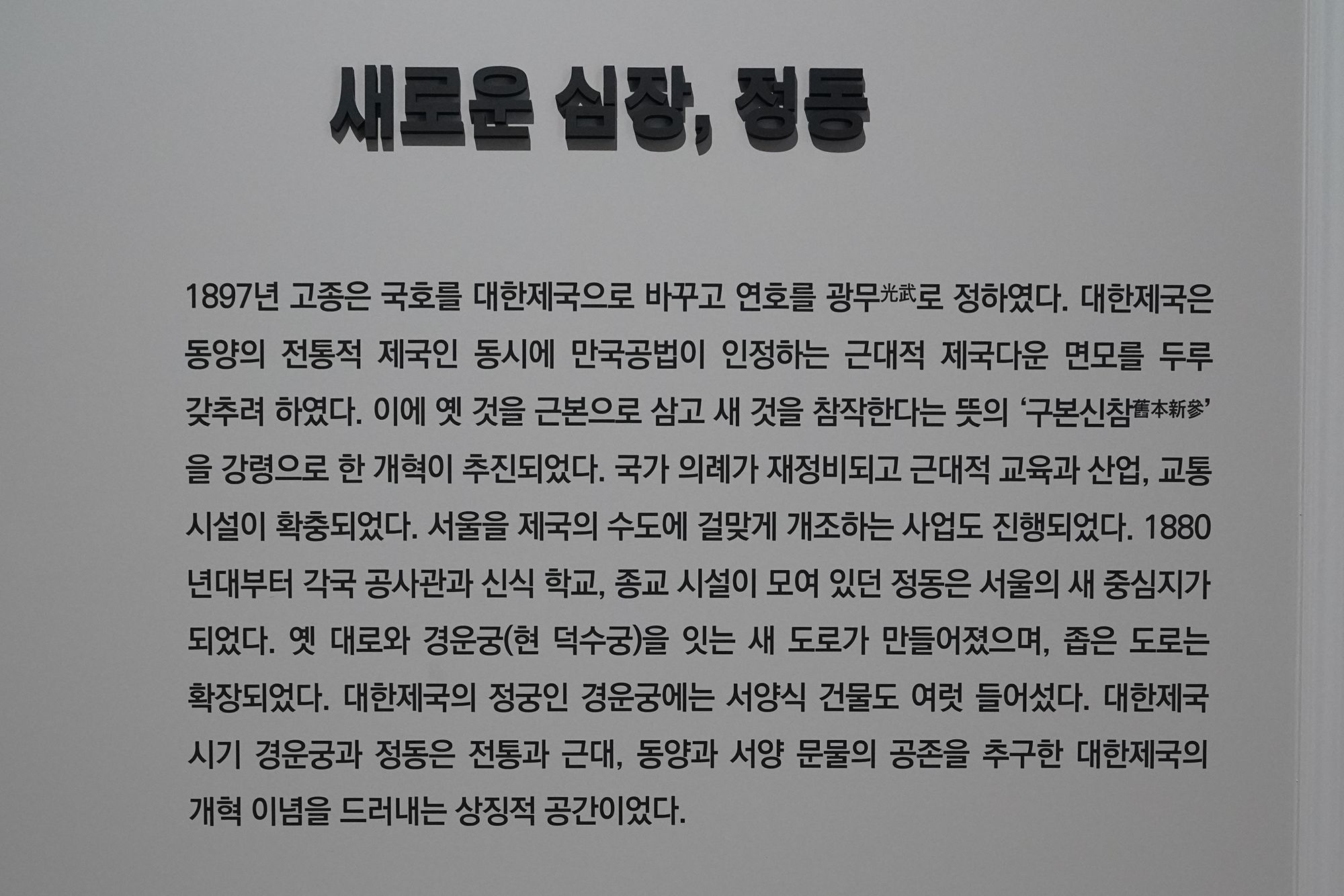
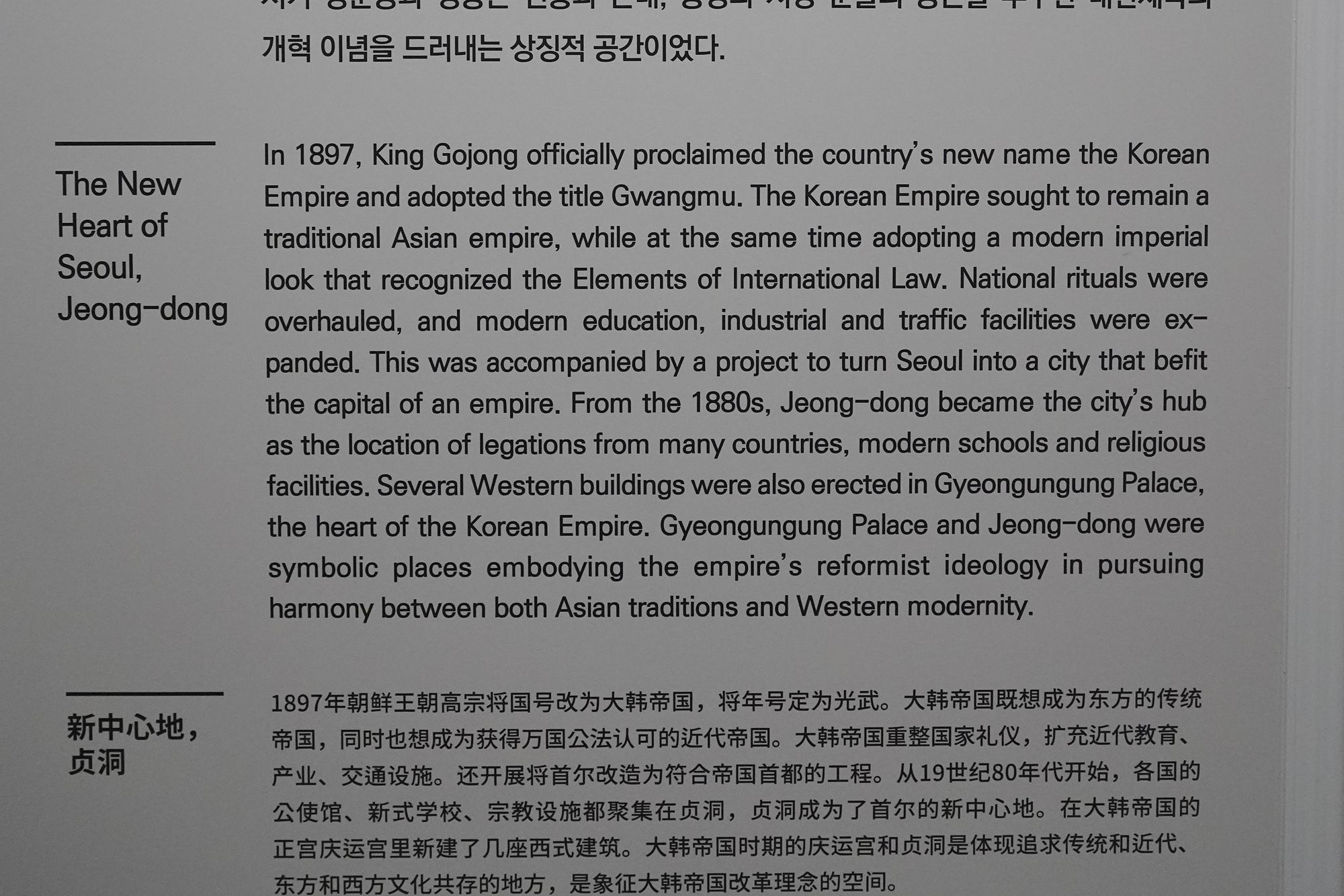
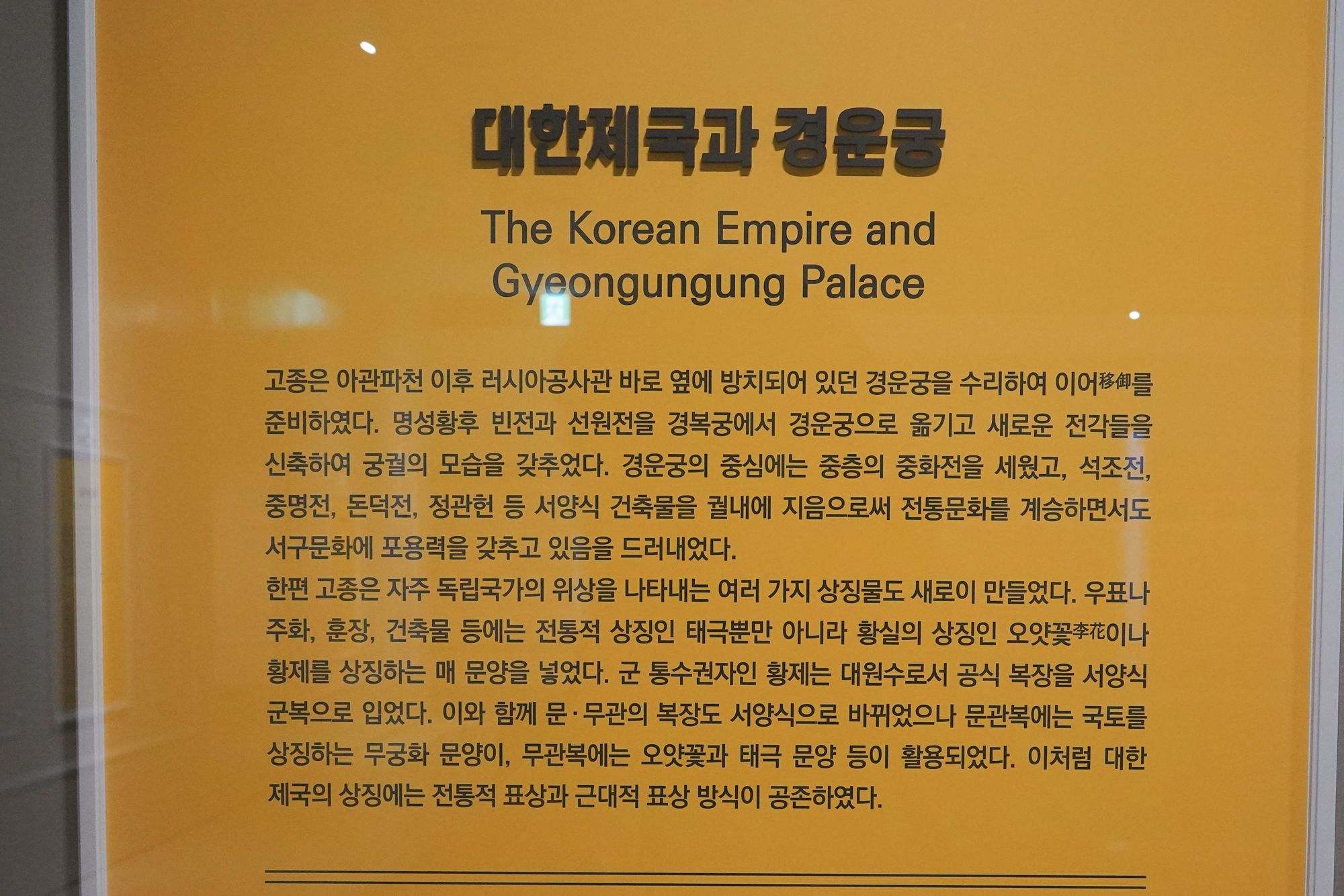
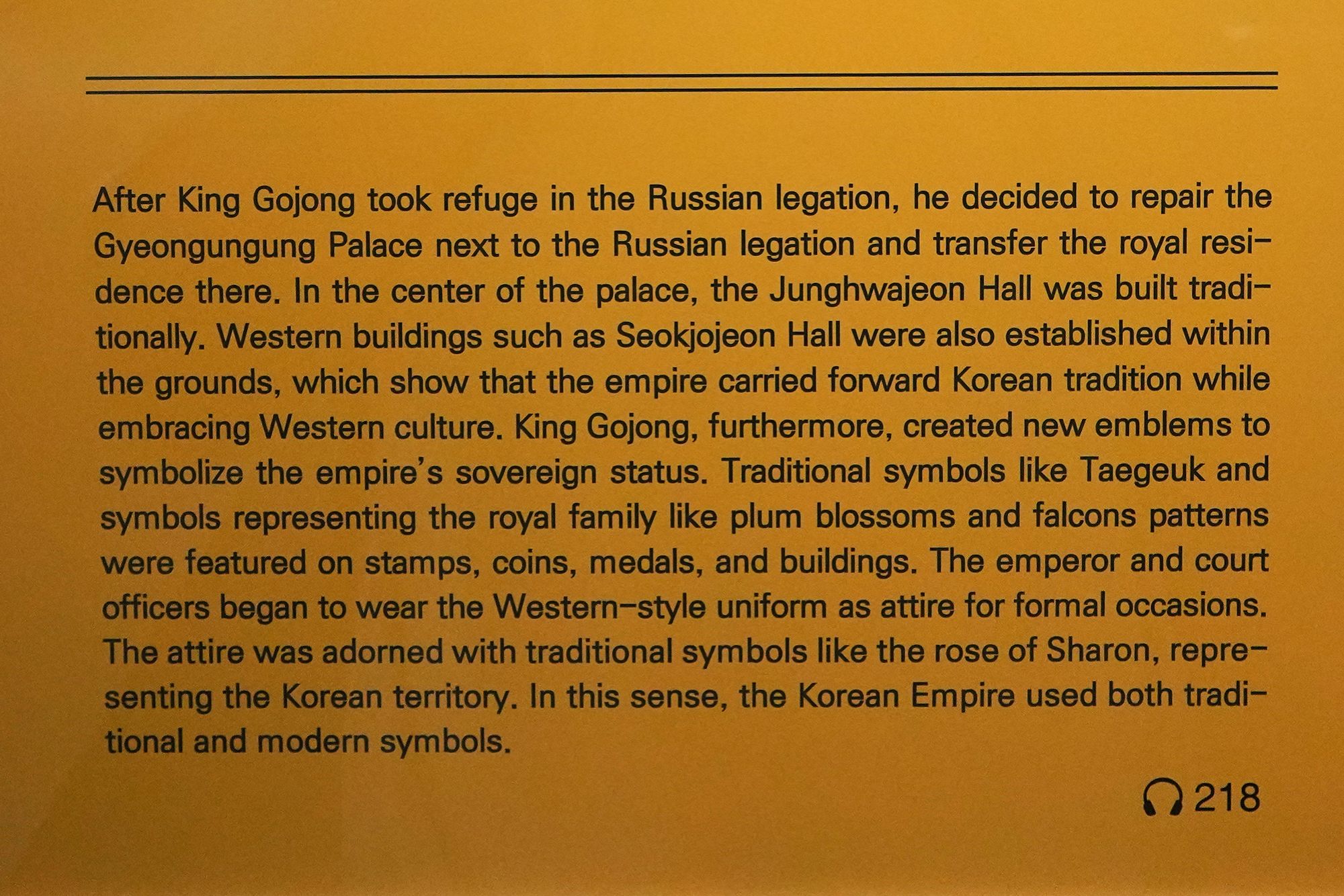
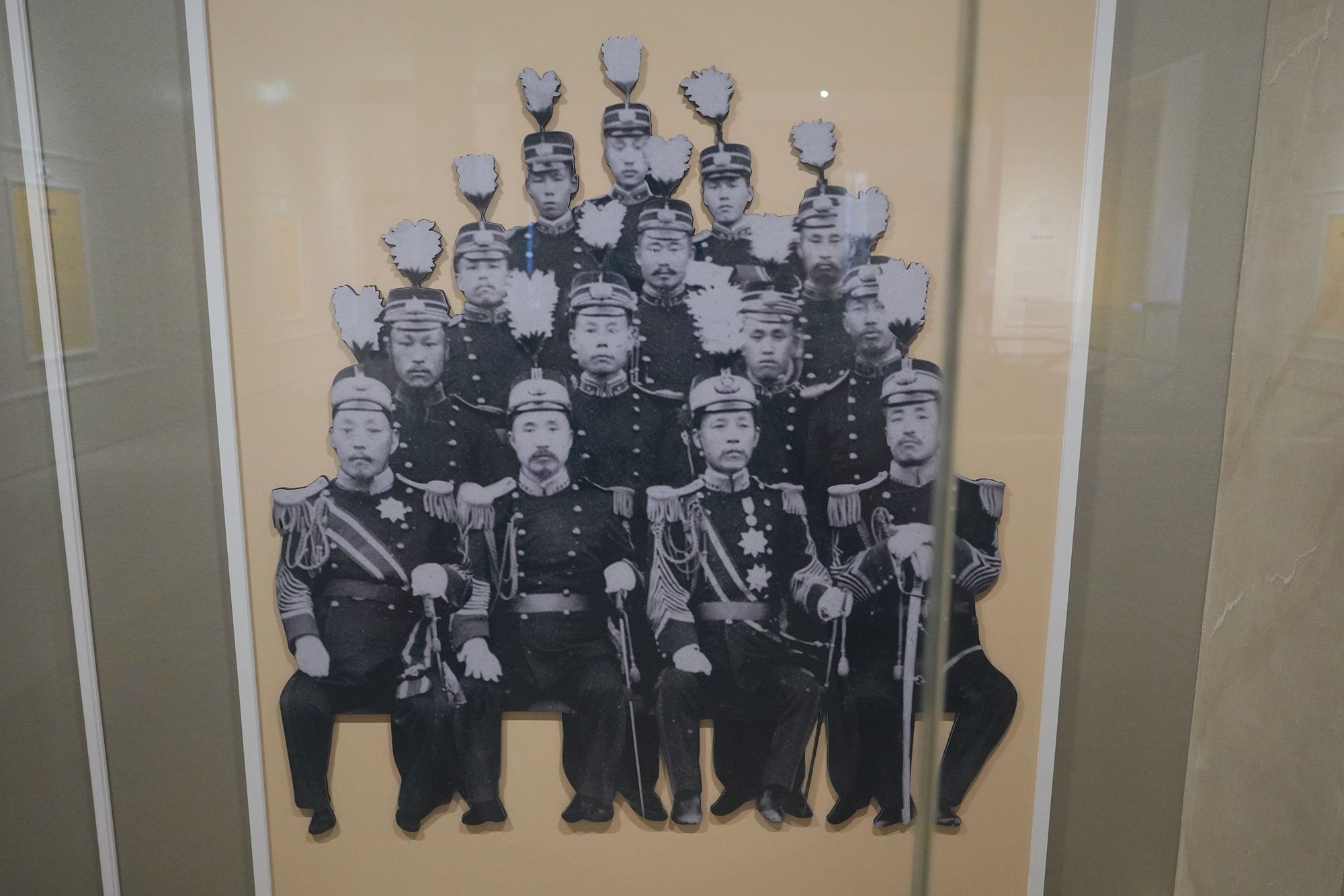
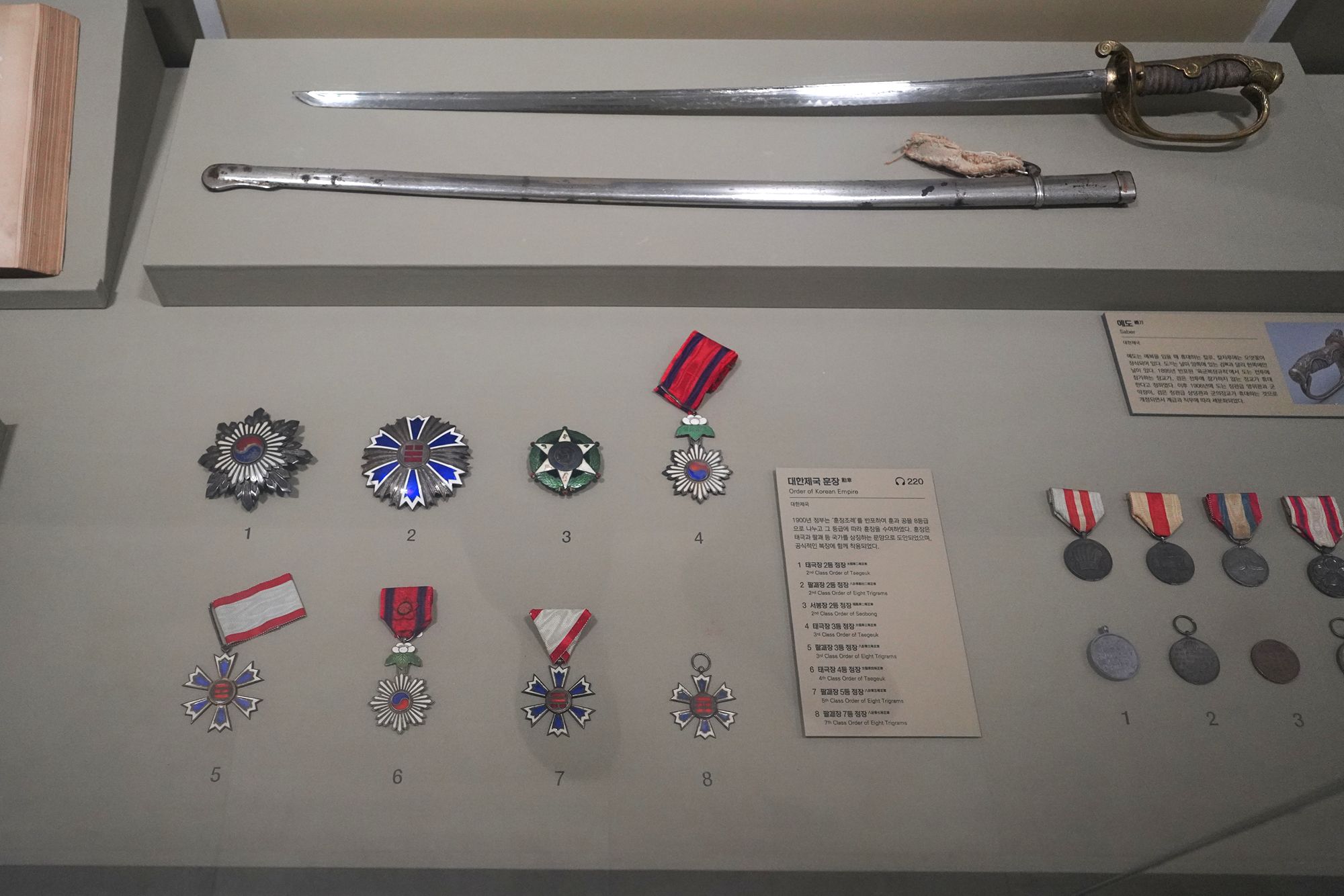
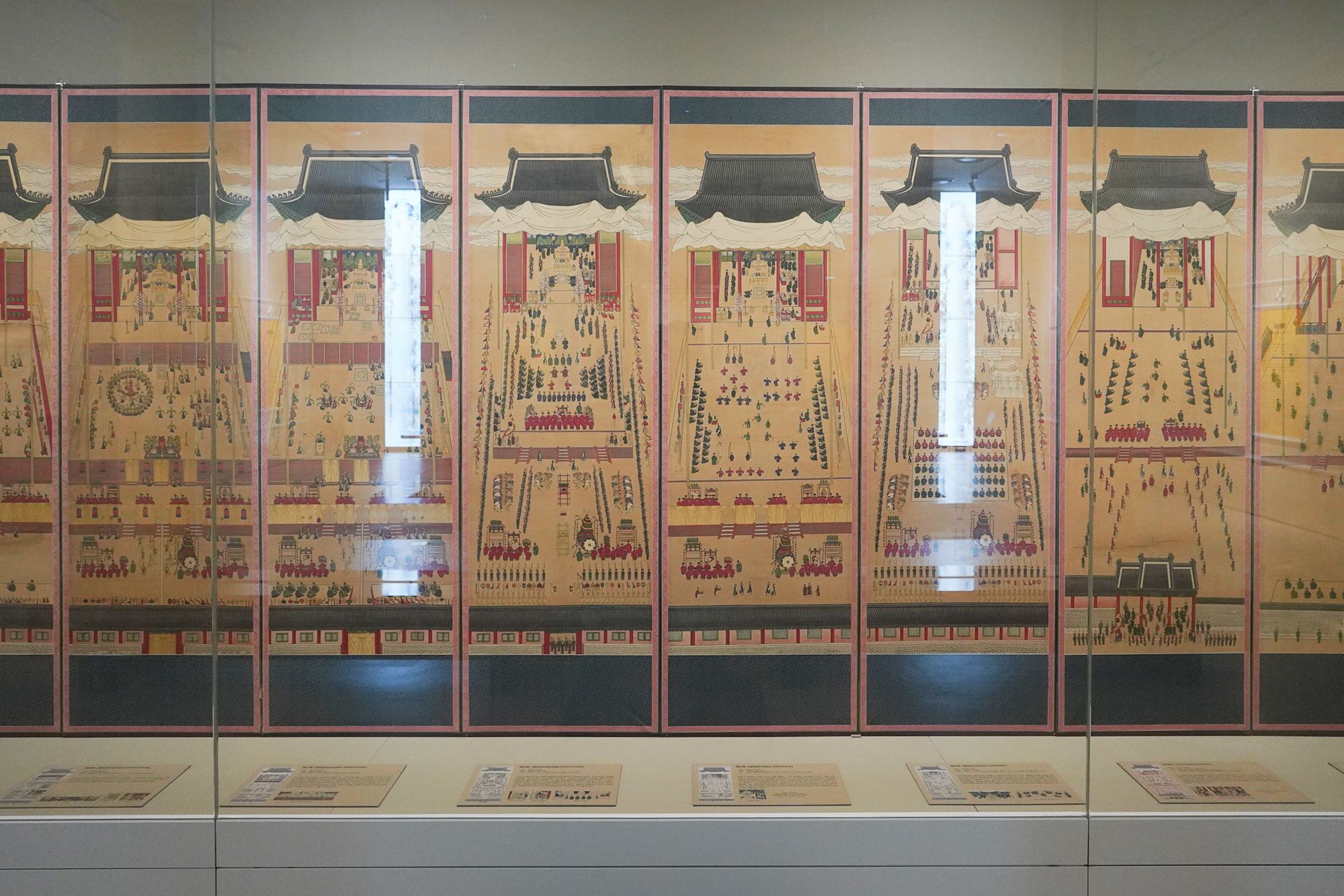
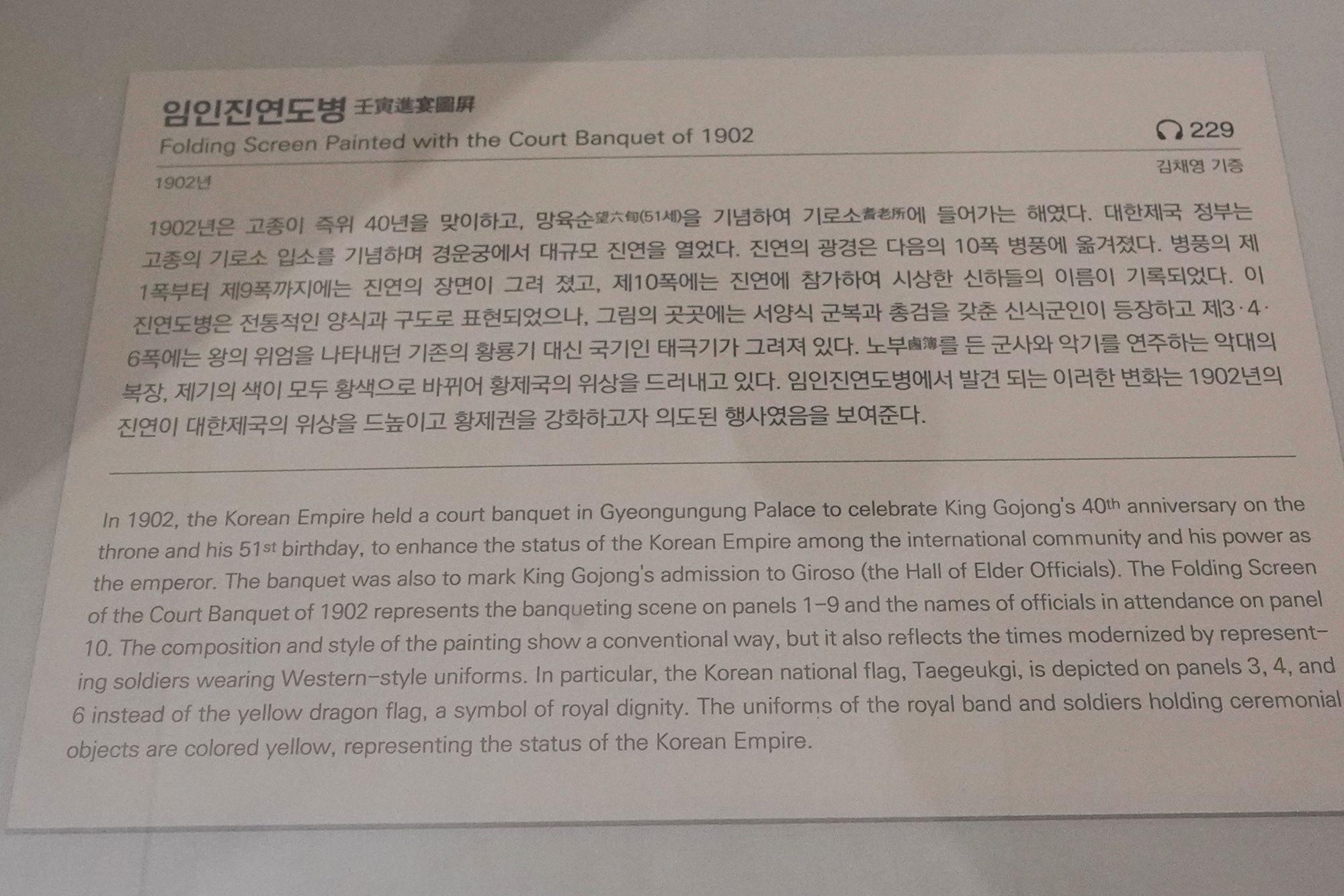
After King Gojong moved his royal residence to Gyeongungung Palace, the palace came to reflect both Korean tradition and Western influence. Traditional buildings stood alongside Western-style structures, while new imperial symbols appeared on coins, stamps, uniforms, and government buildings.
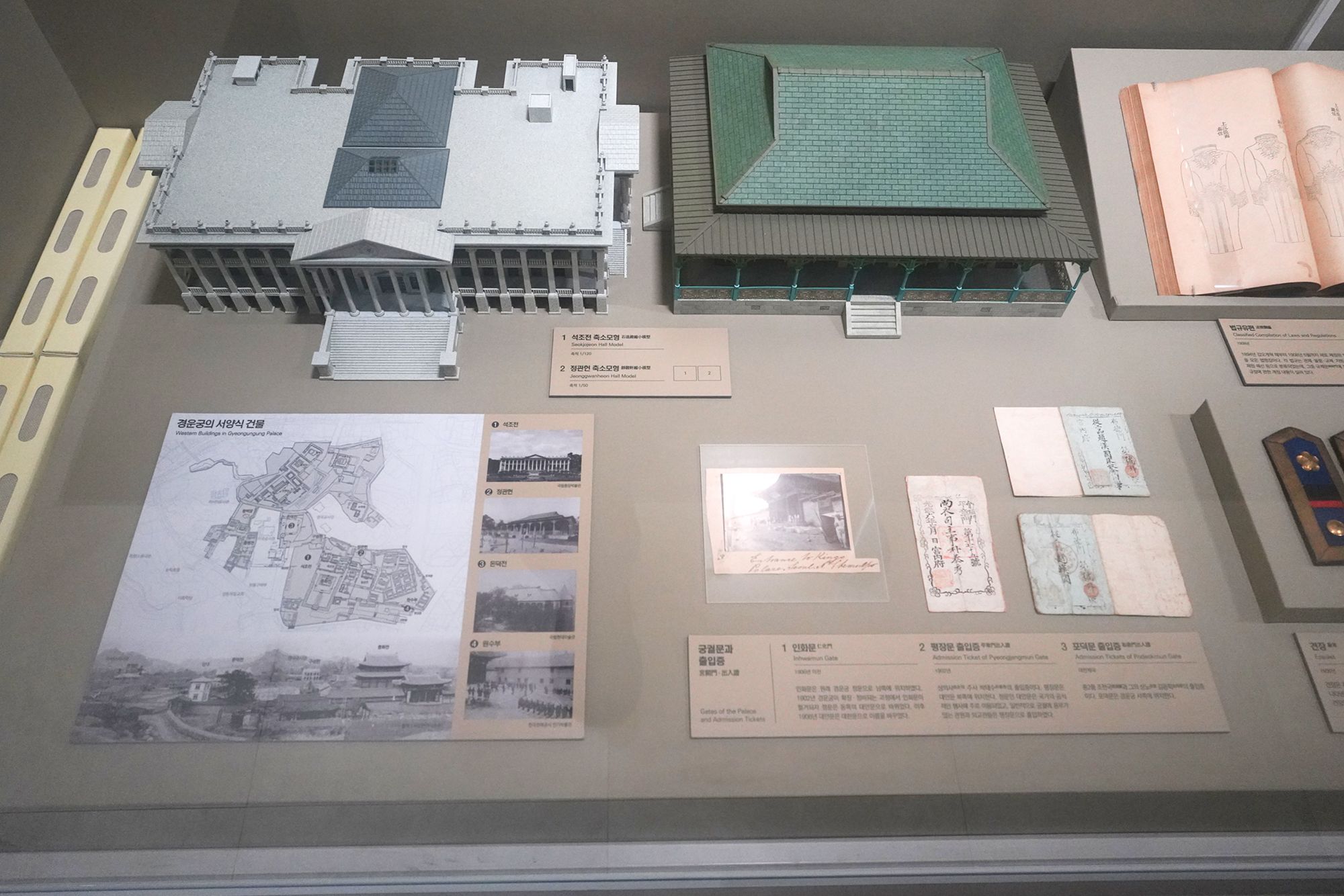
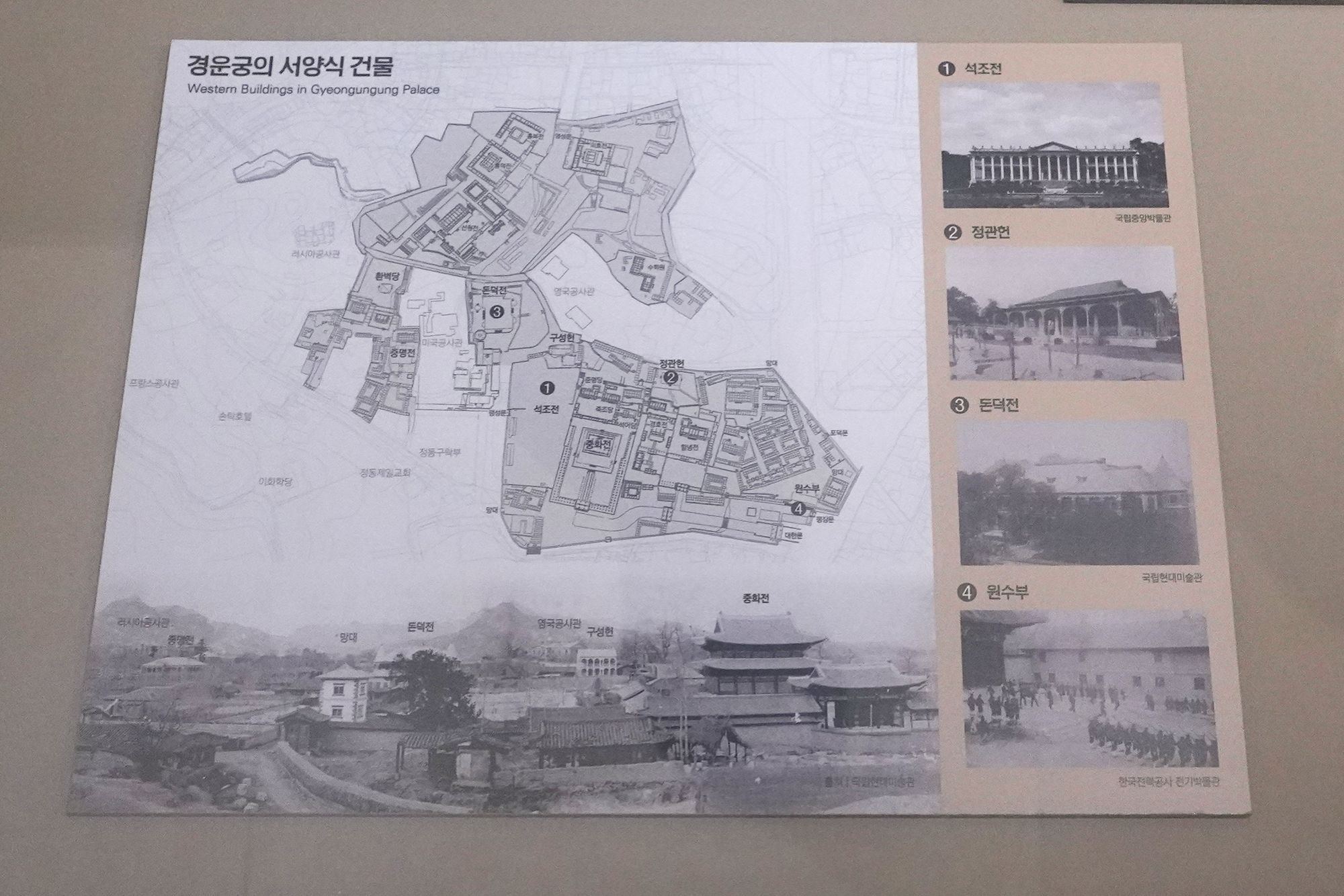
King Gojong
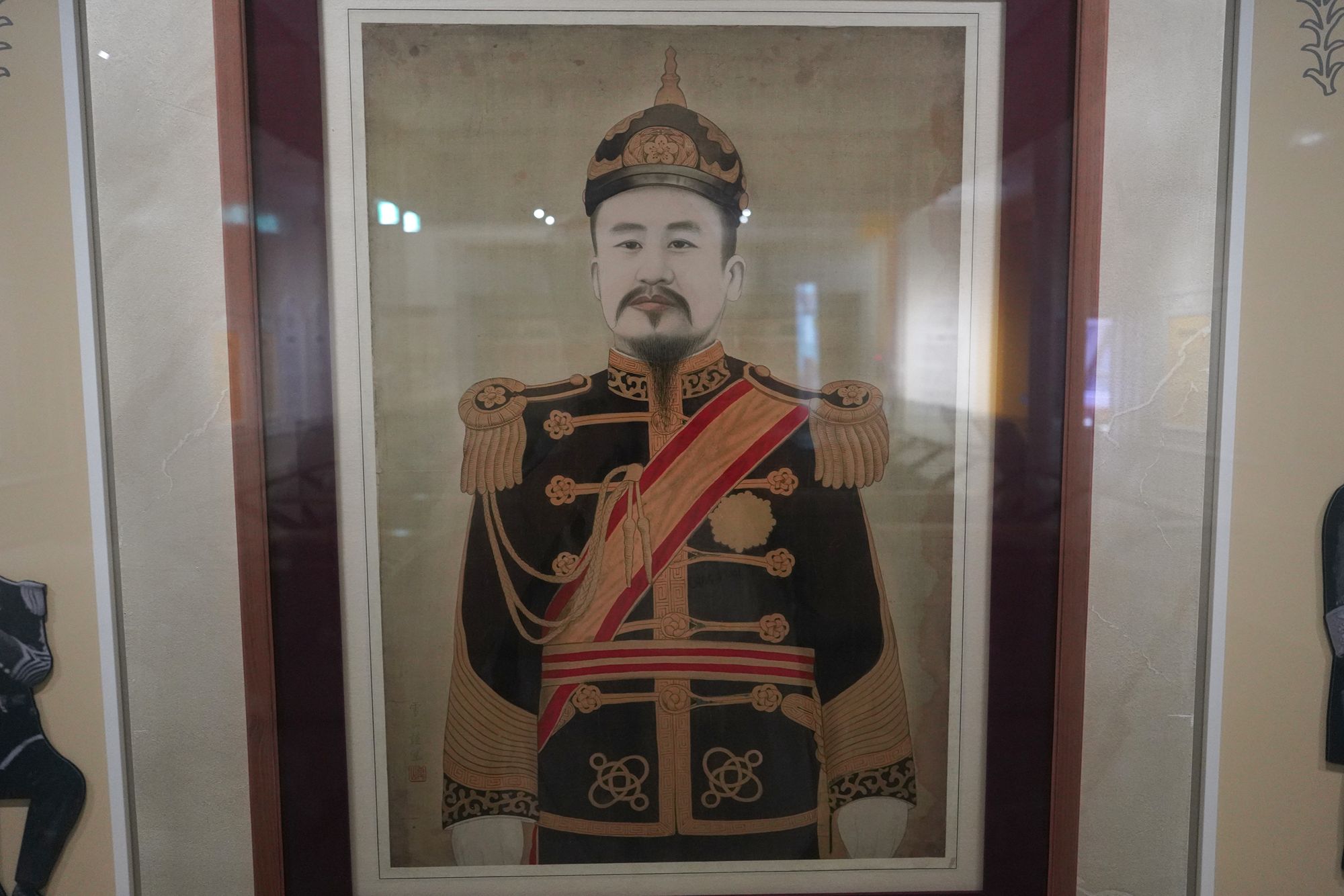
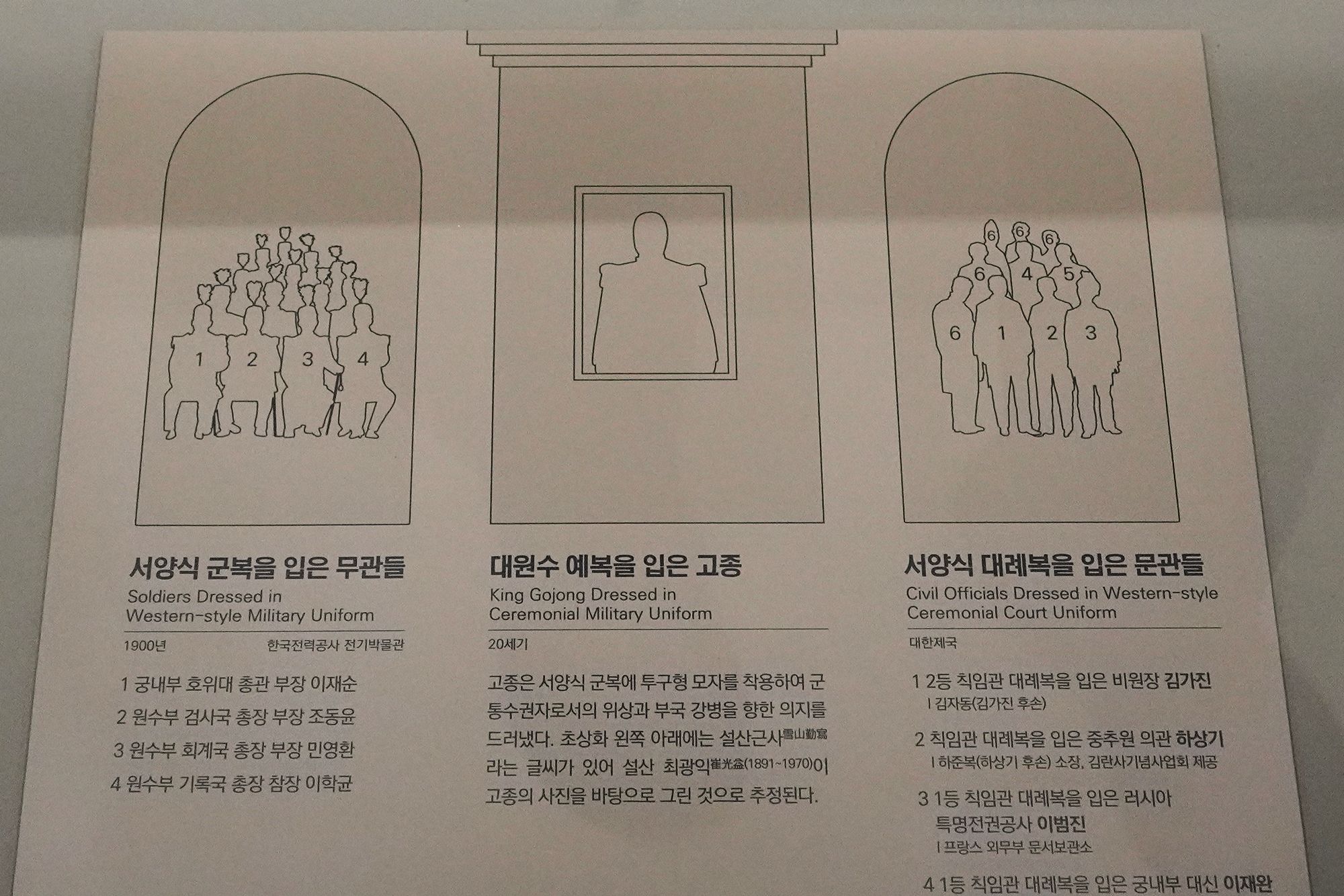
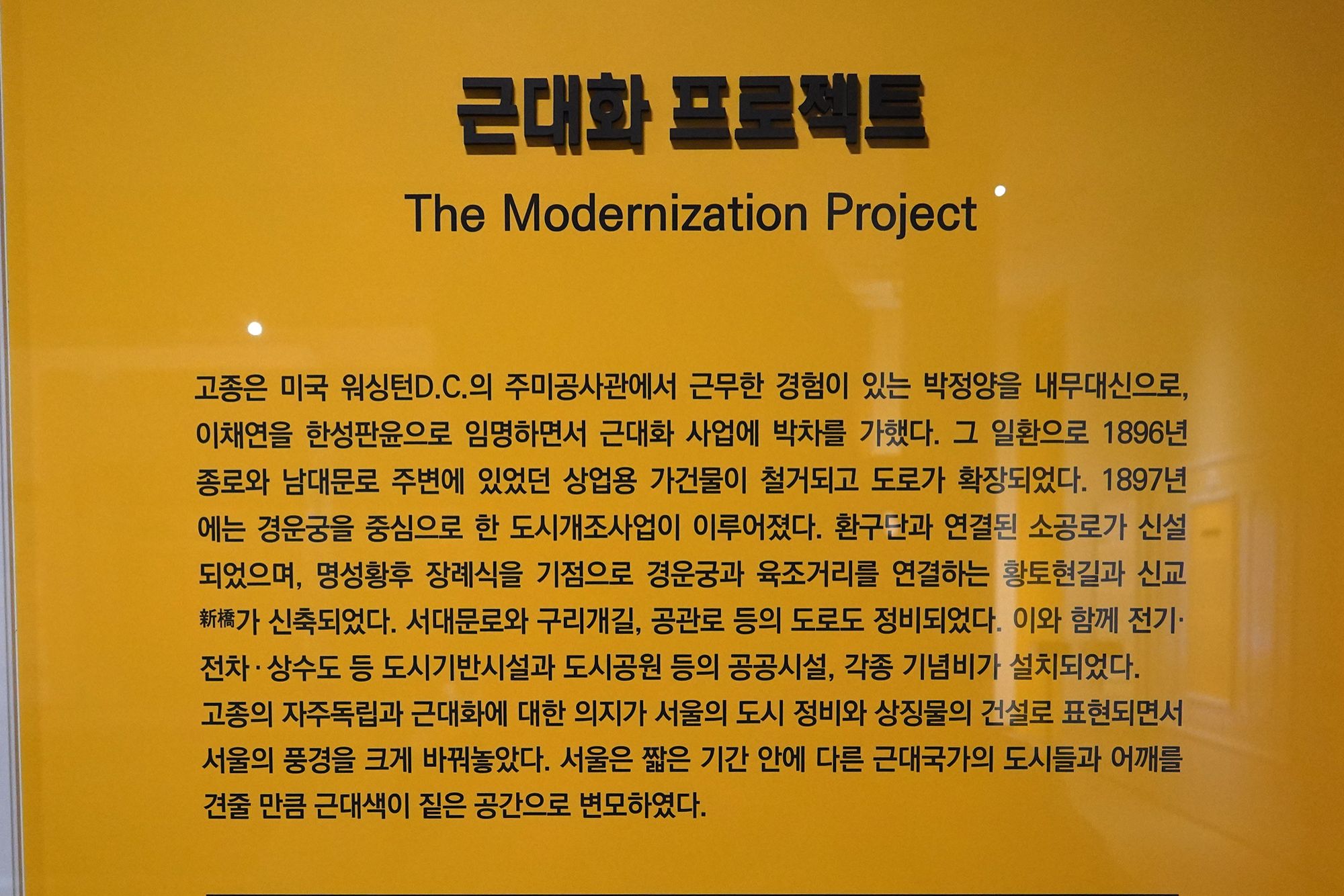
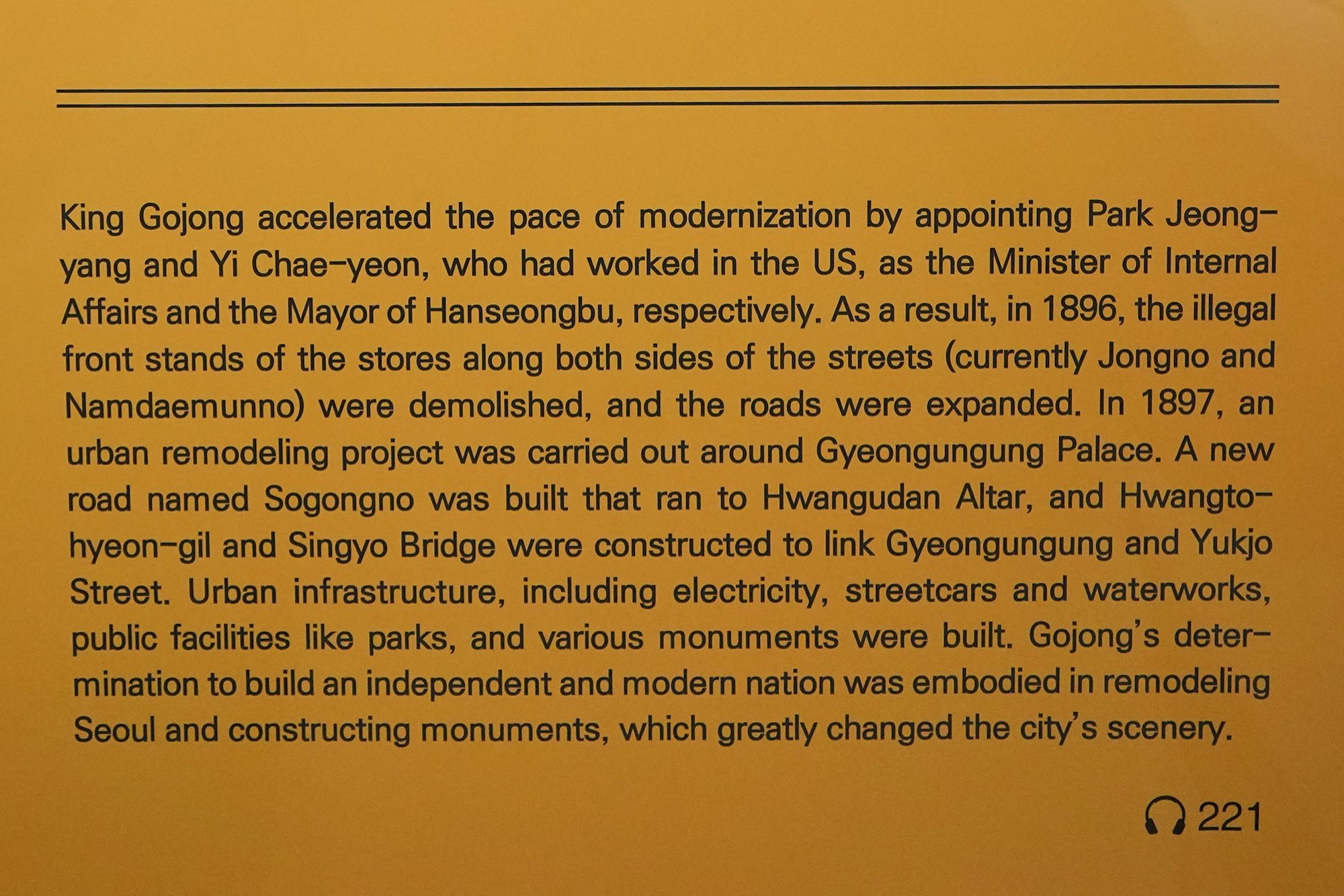
Under King Gojong, Seoul underwent major modernization in the late 1890s. Roads were widened and improved, while electricity, streetcars, water systems, public parks, and monuments were introduced, beginning Seoul’s transformation into a modern city.
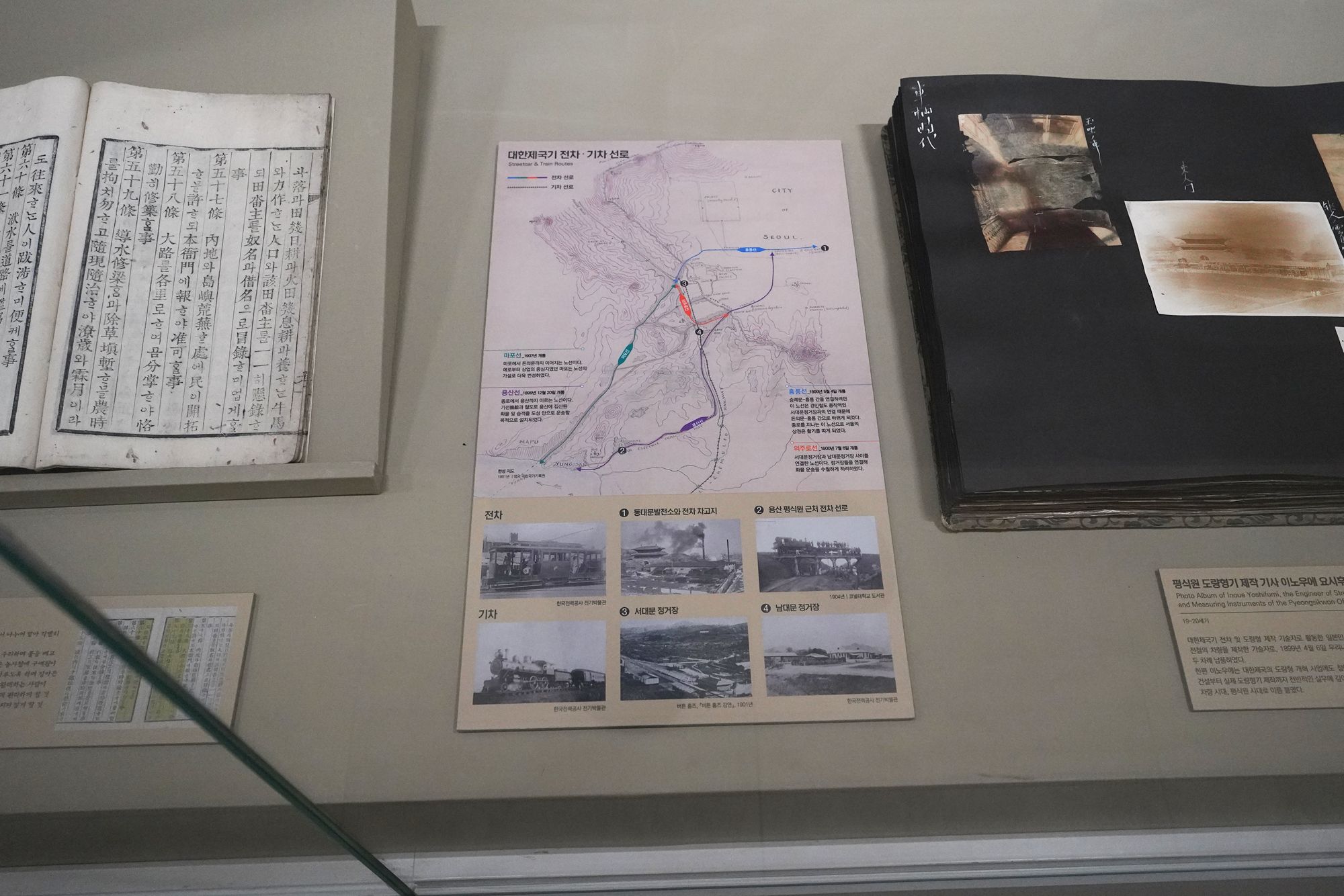
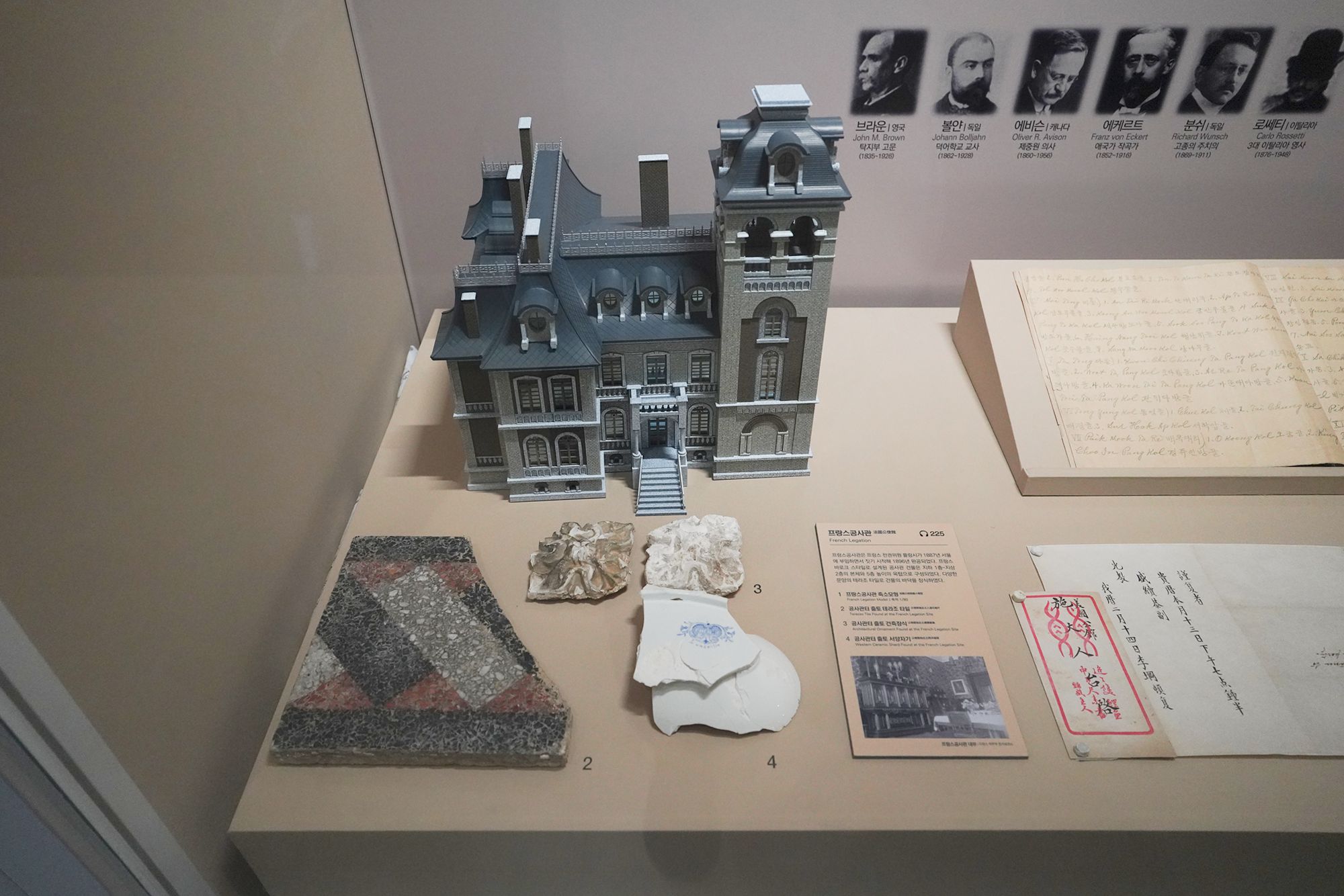
Jeong-dong became Seoul’s international district as the United States and other Western countries established diplomatic missions there. Schools, churches, medical institutions, hotels, and shops followed, making the neighborhood an important center of foreign influence and modernization in Seoul.
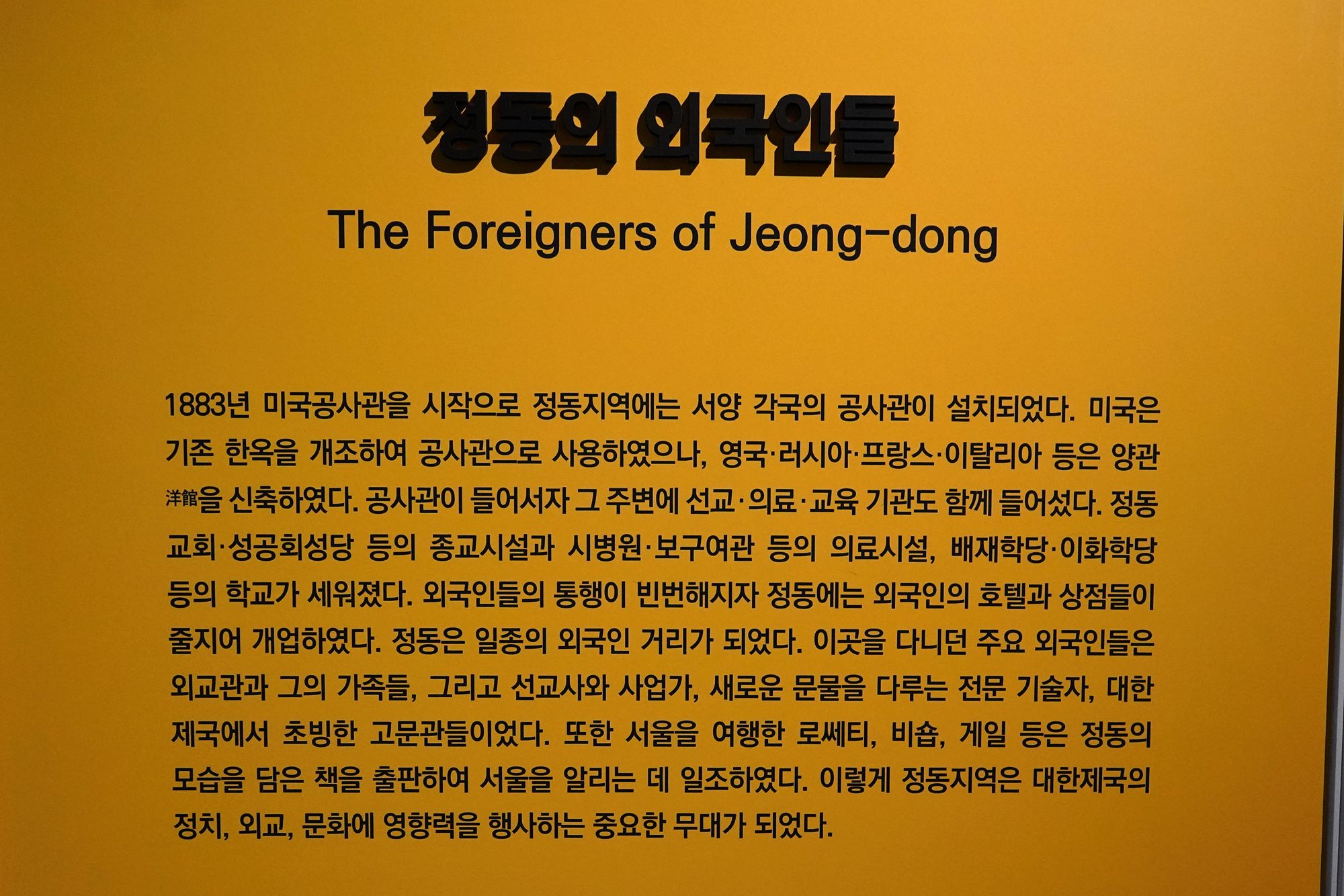
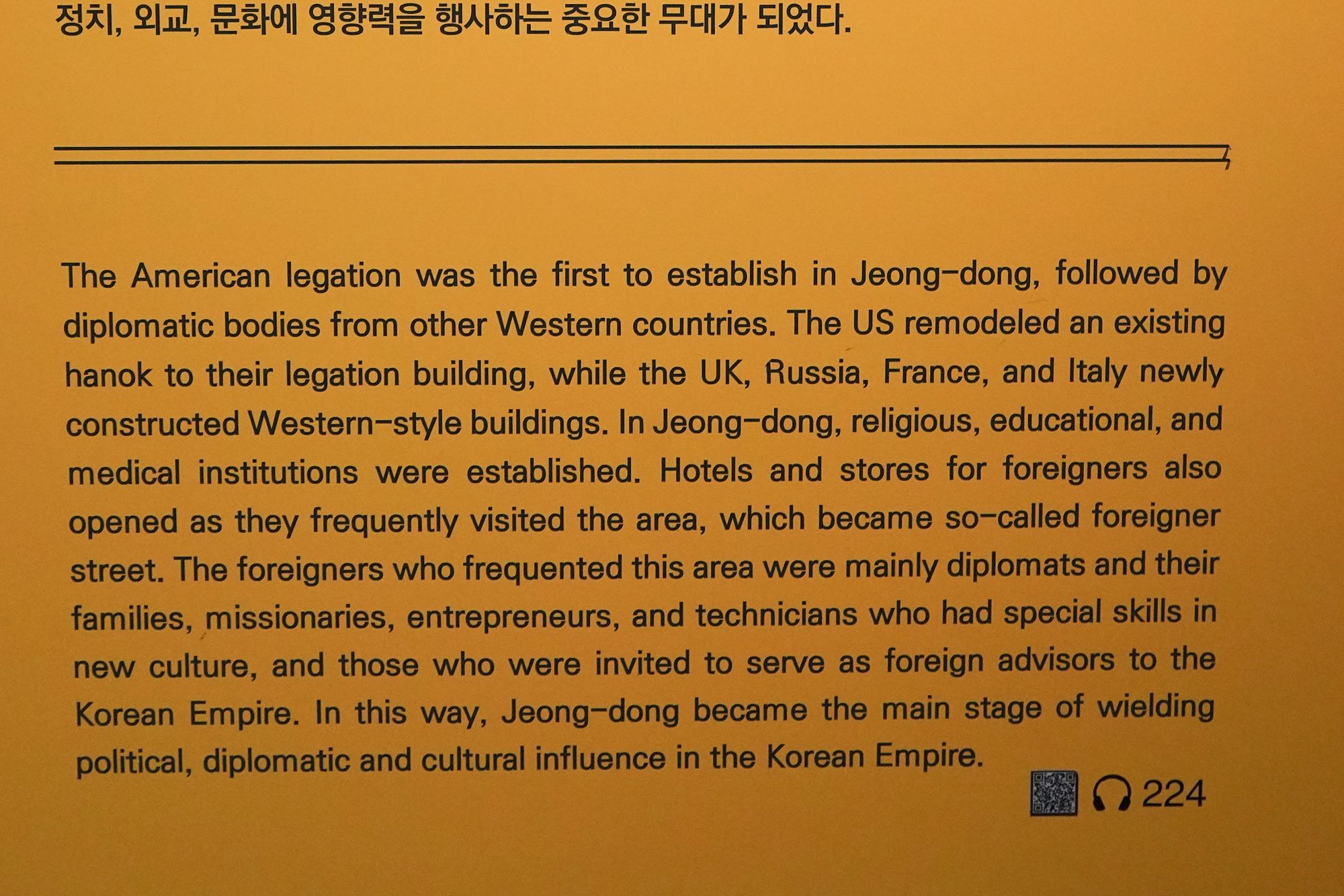
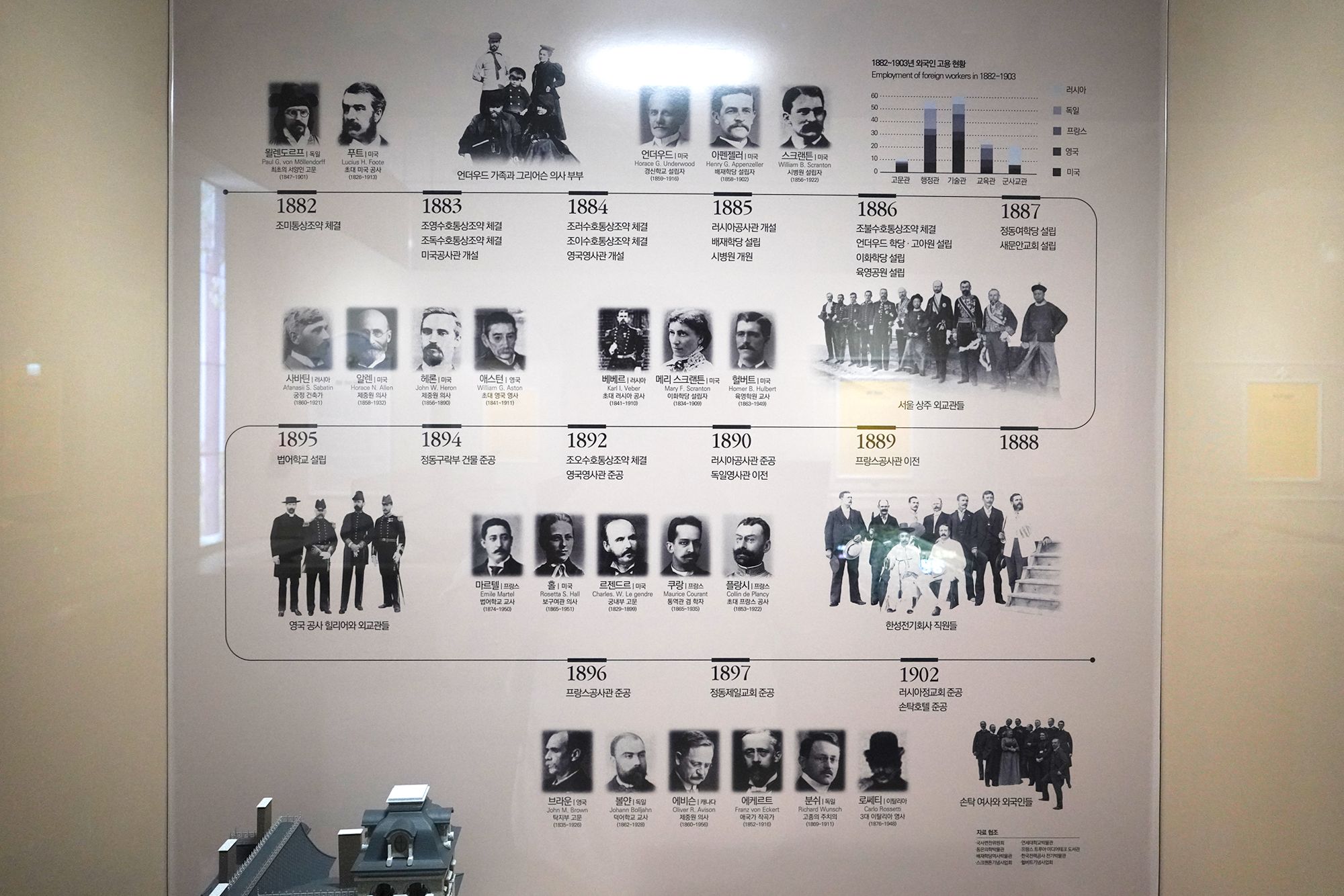
Brief History during the Time (Foreigners of Jung-dong)
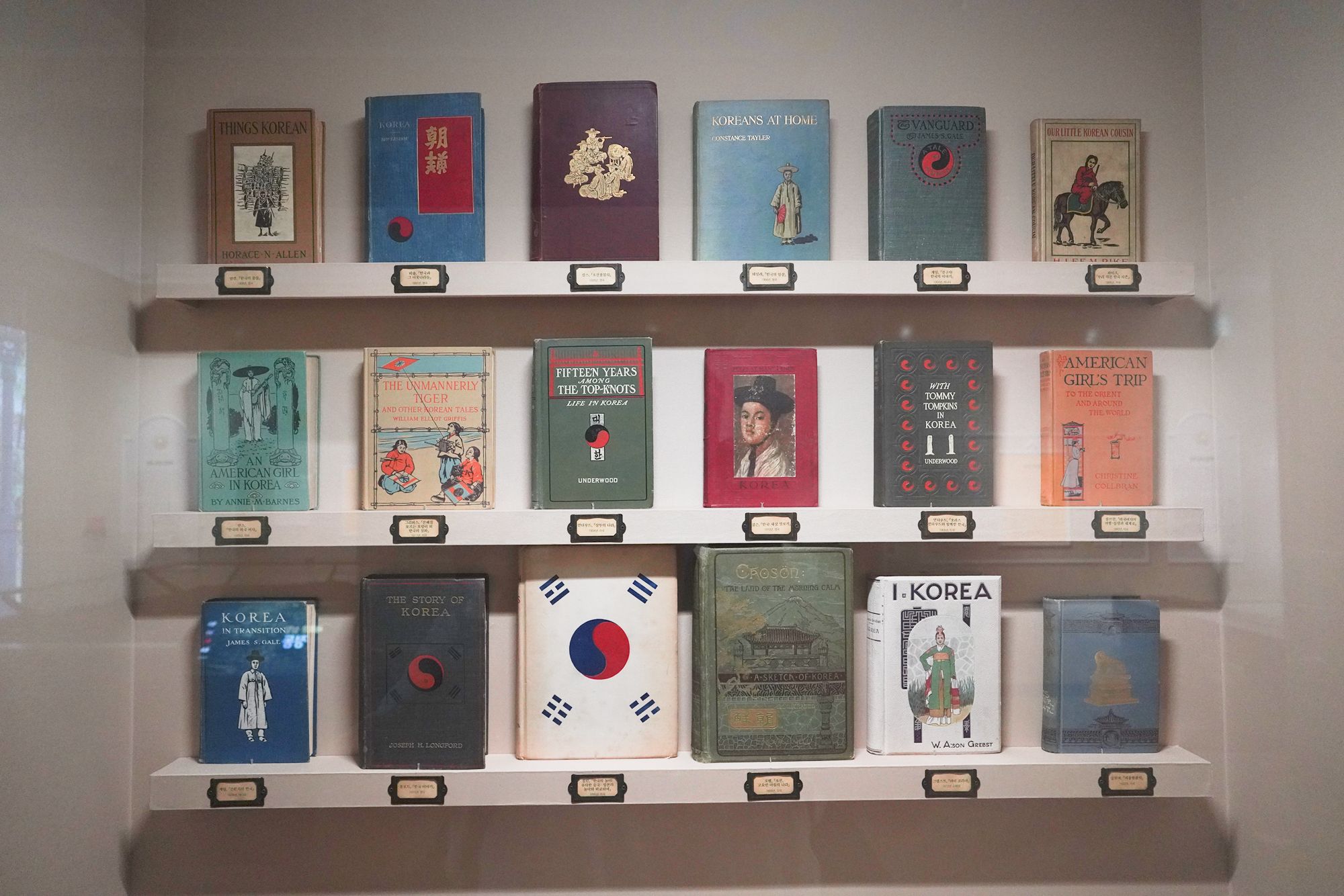
English-language books about Korea published during this period, reflecting the growing Western interest in Korea as the country opened to the outside world.
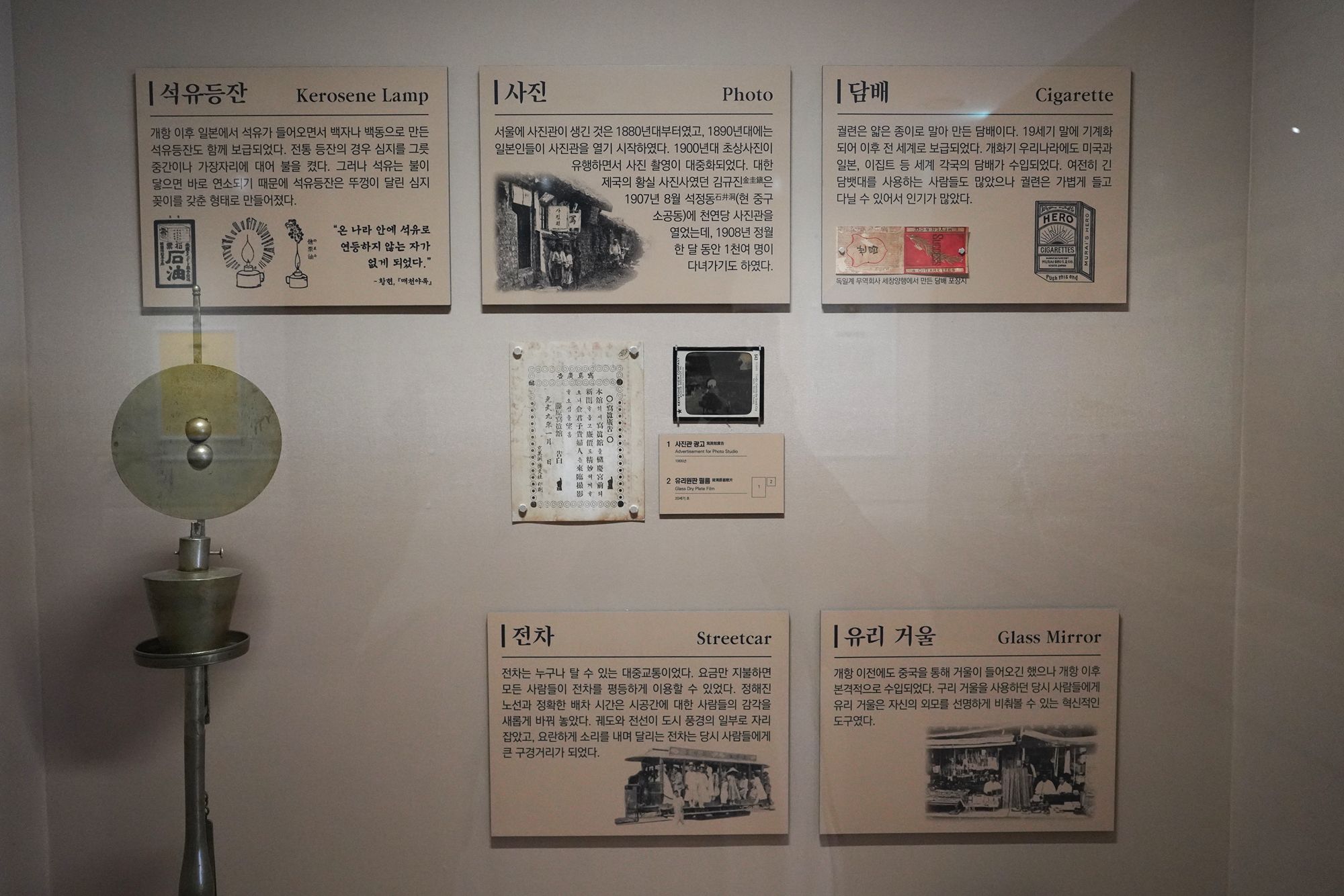
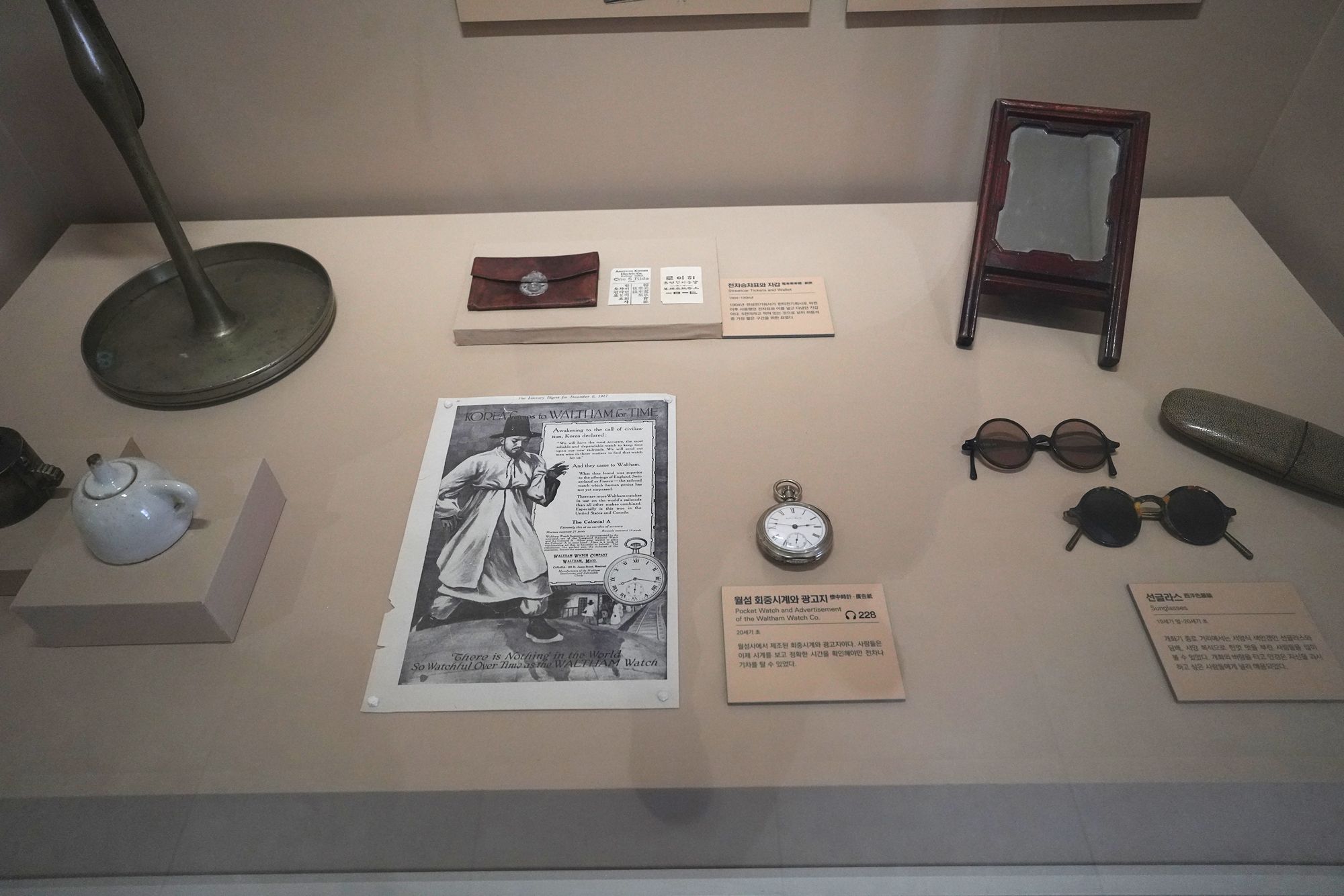
By the late 19th century, new technology and Western influences were changing everyday life in Seoul. Electricity, telephones, streetcars, cameras, and Western-style clothing became increasingly common, changing how people traveled, communicated, dressed, and spent their time.
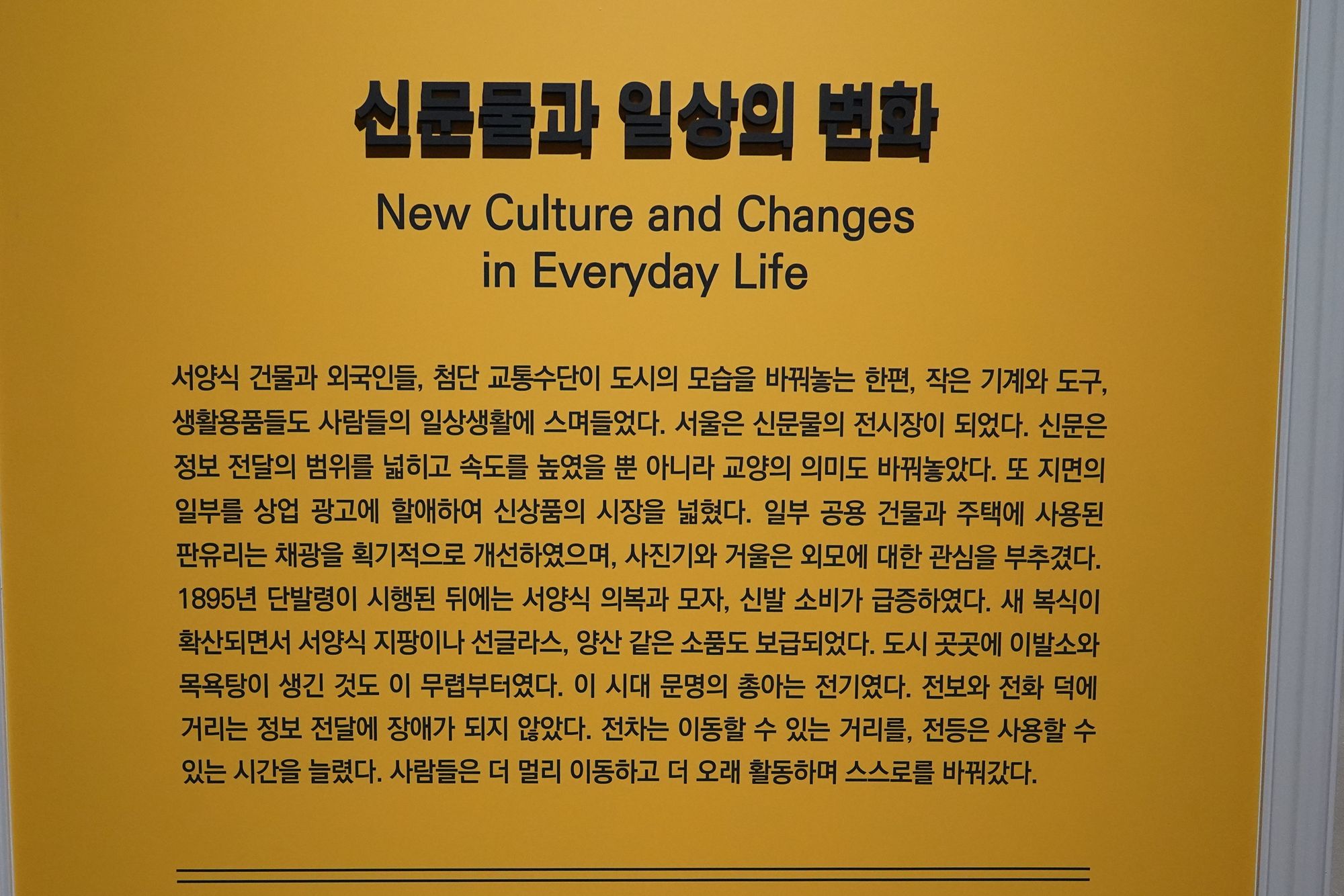
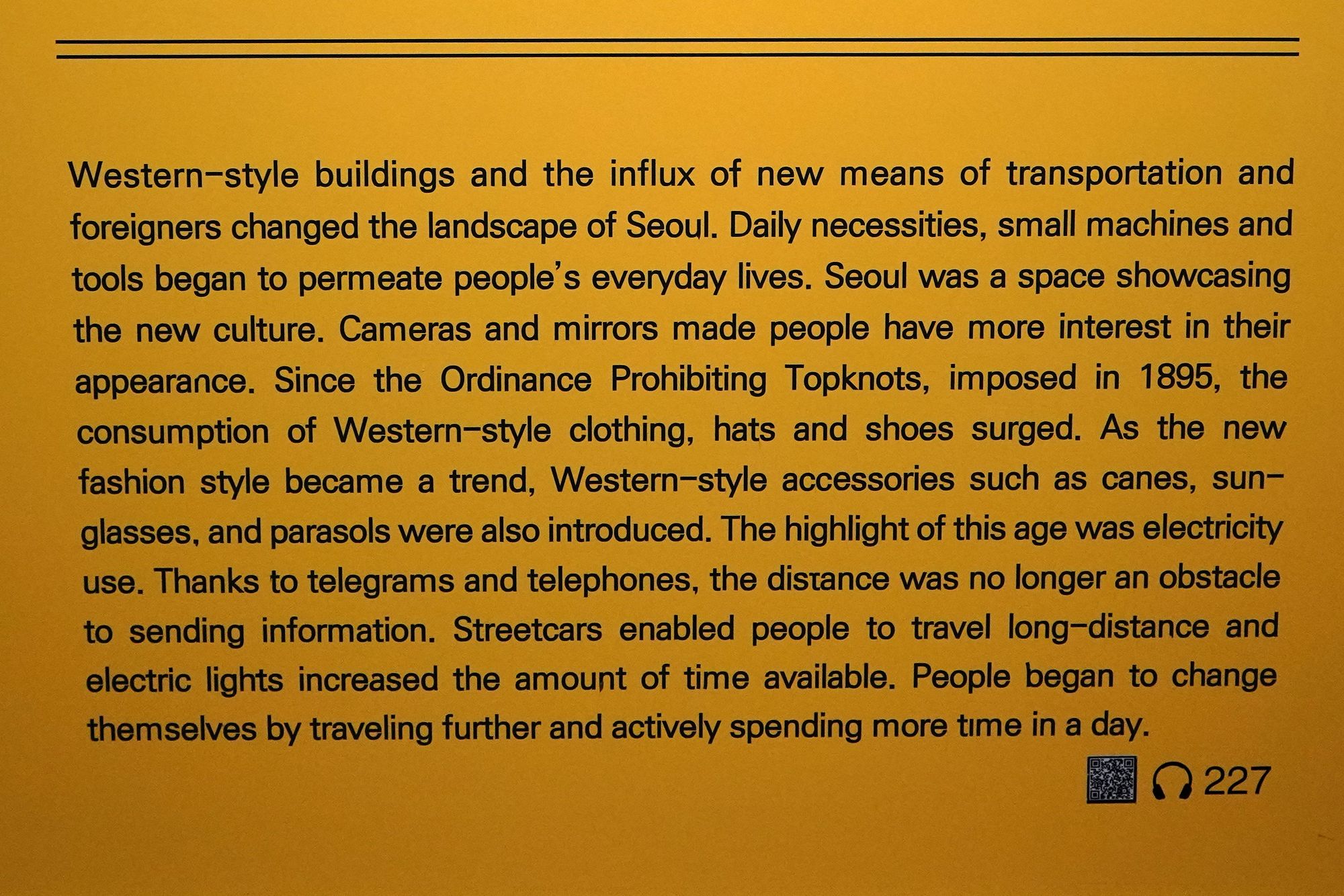
"Modern" items
The Street of Enlightenment, Jongno
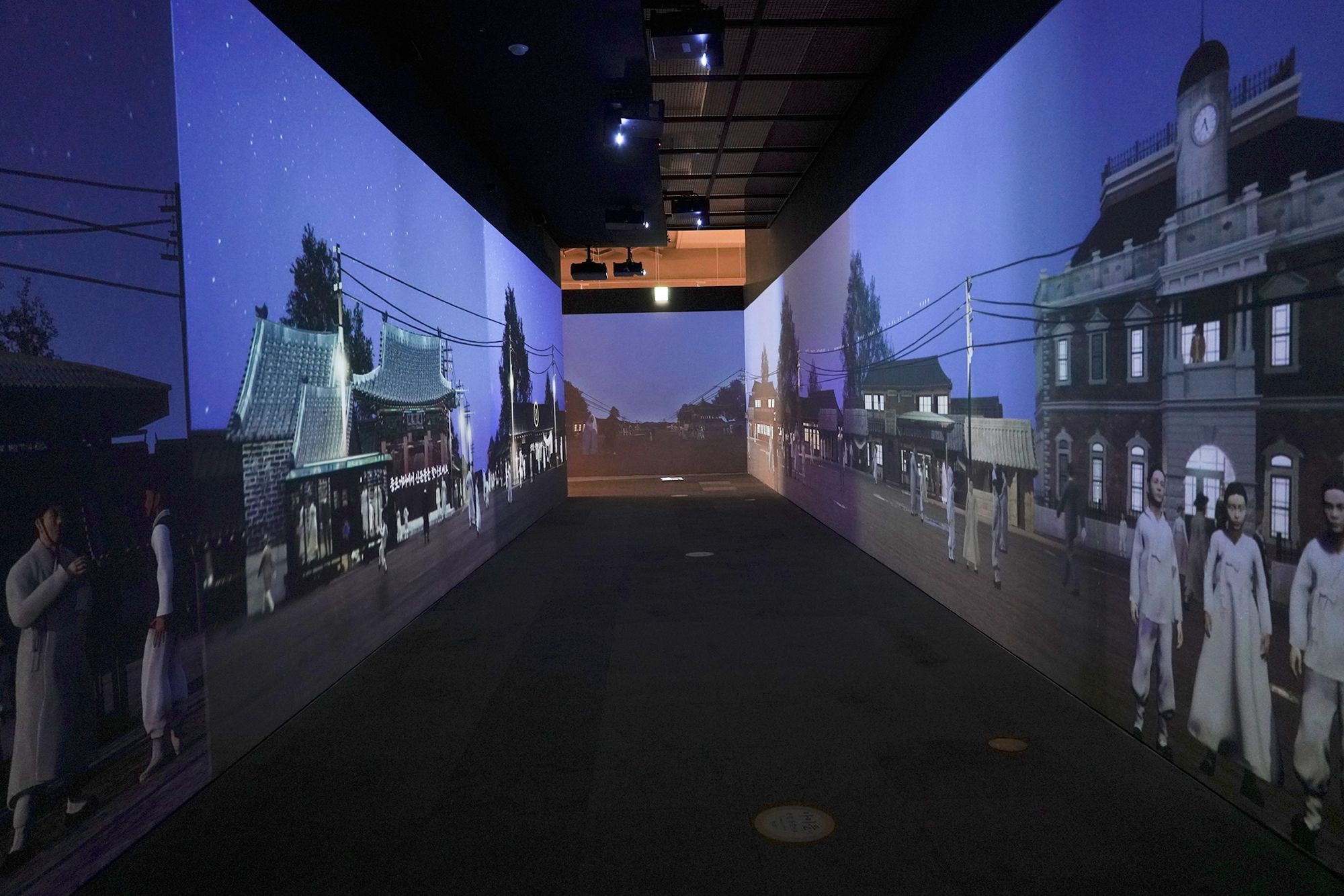
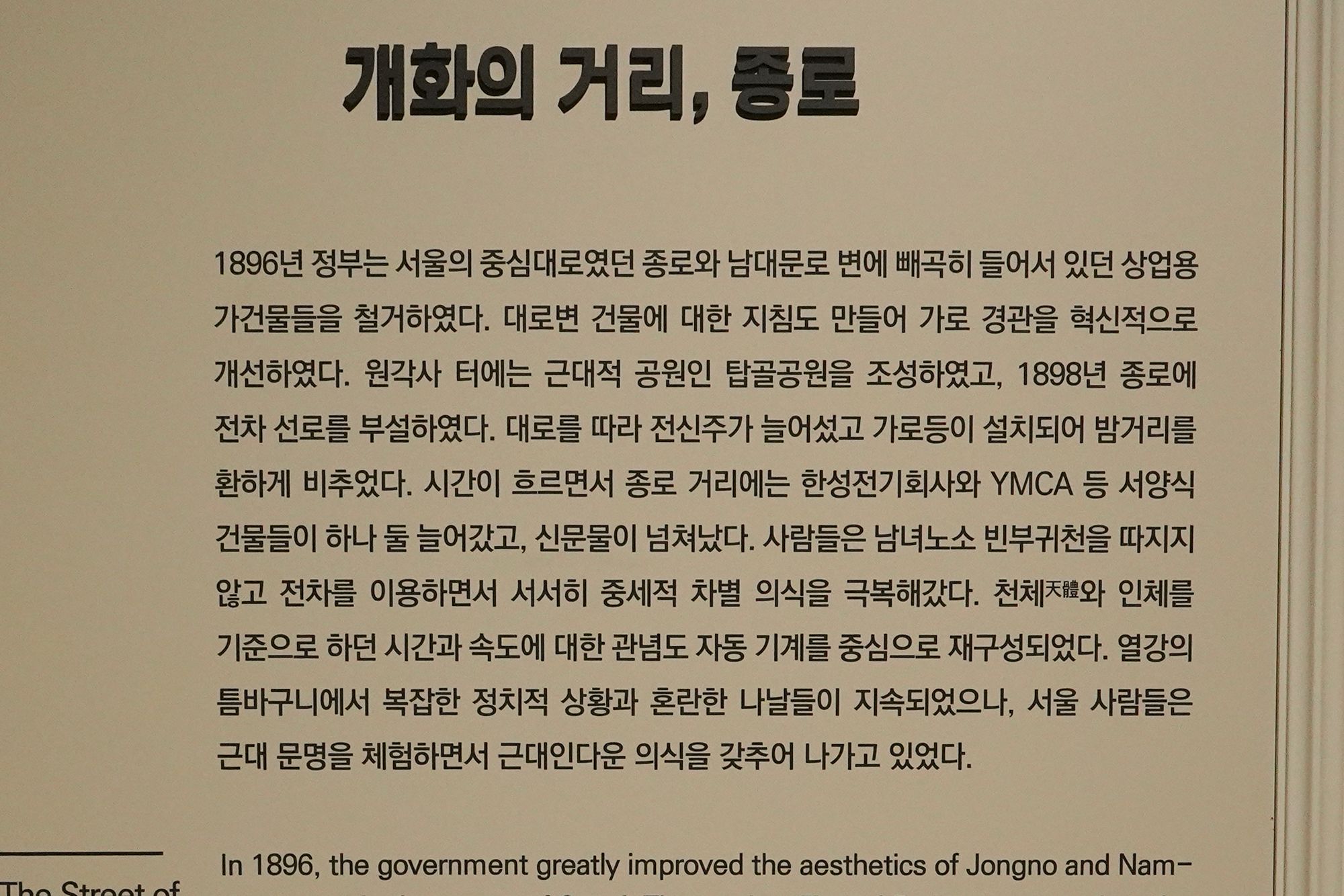
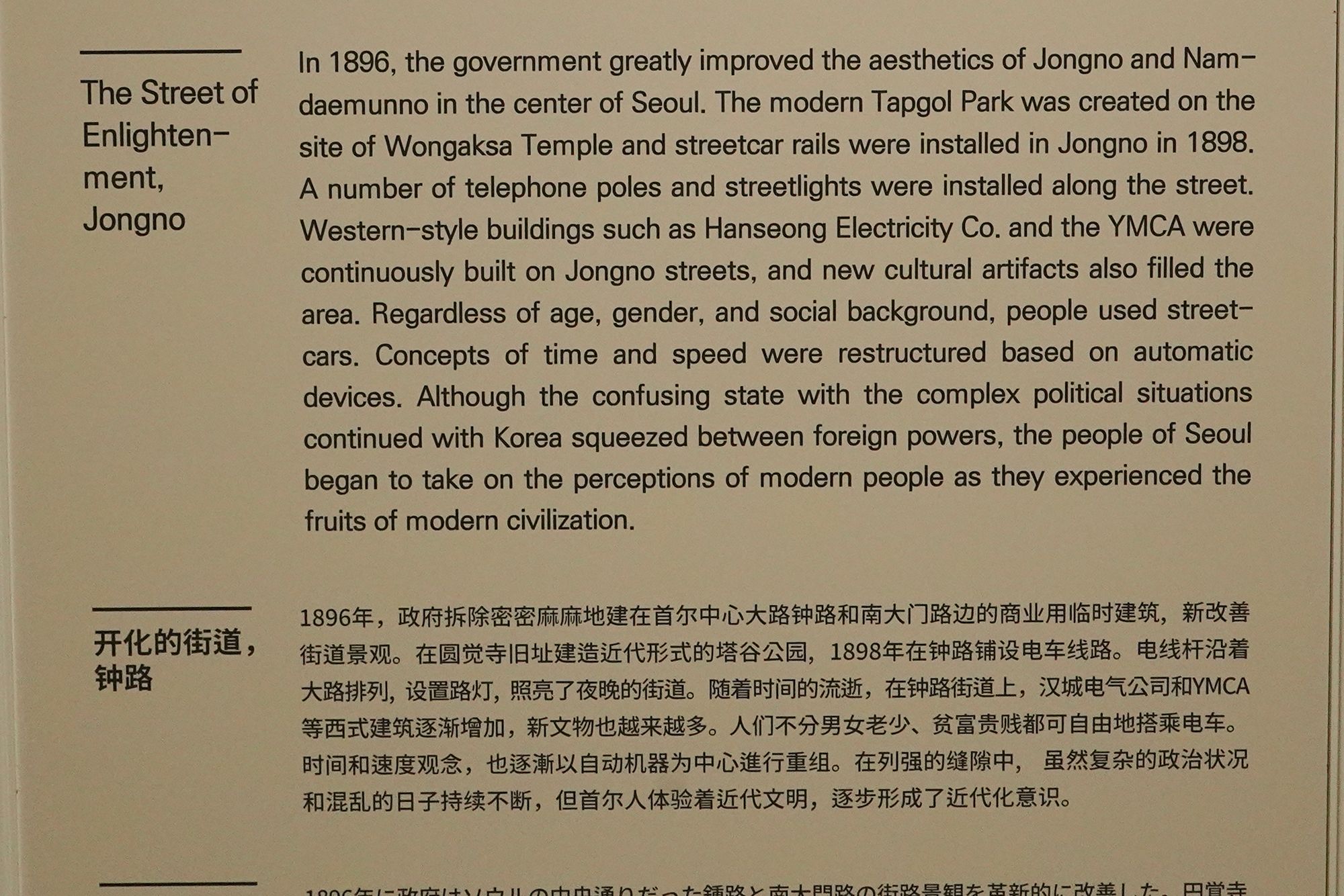
By the late 1890s, Jongno was becoming the center of modern life in Seoul. Streetcars, streetlights, telephone poles, Western-style buildings, and Tapgol Park transformed the area, giving Seoul residents a new experience of transportation, technology, and urban life.
Seoul under Japanese Control, 1910-1945
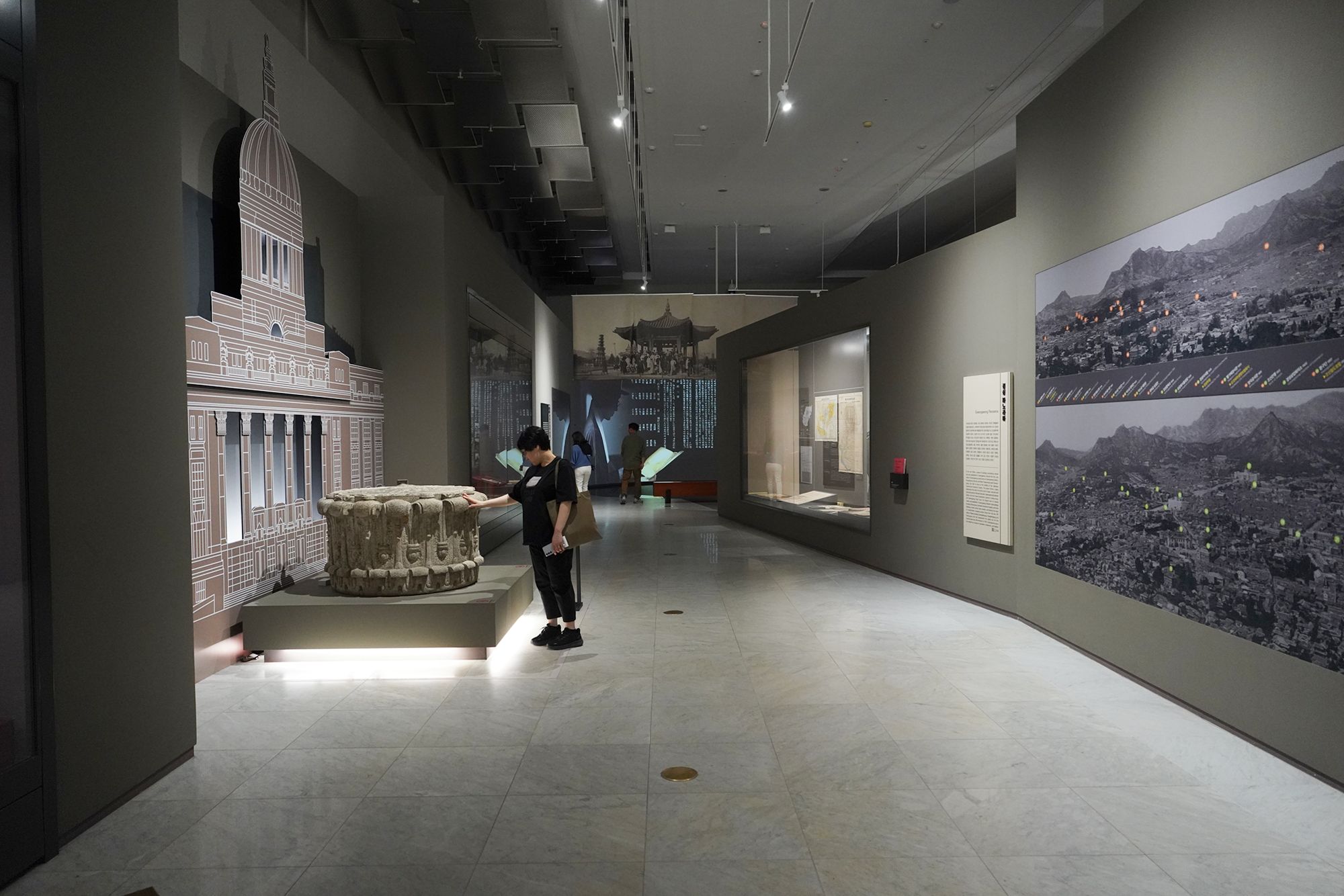
By the late 1890s, Jongno was becoming the center of modern life in Seoul. Streetcars, streetlights, telephone poles, Western-style buildings, and Tapgol Park transformed the area, giving Seoul residents a new experience of transportation, technology, and urban life.
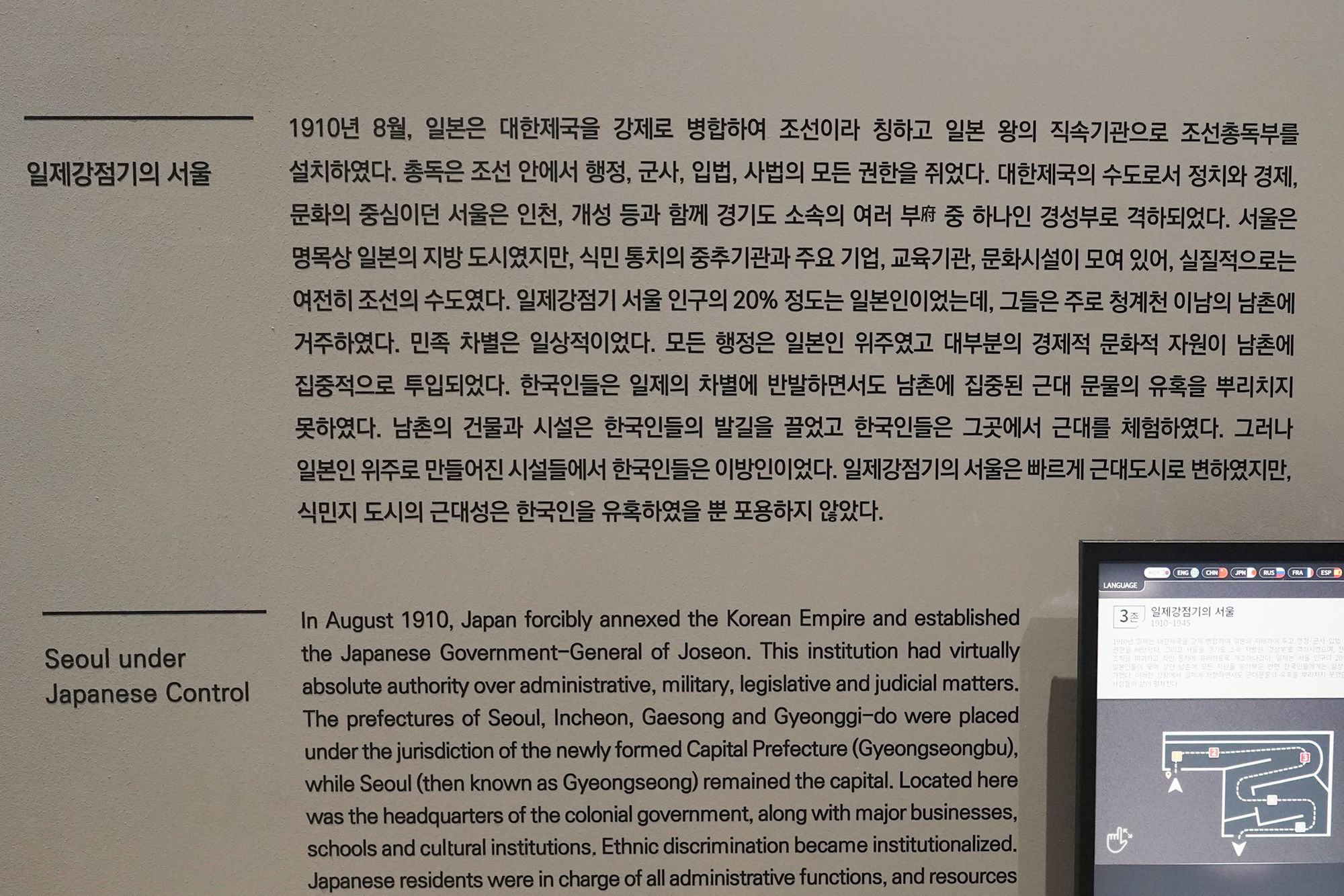
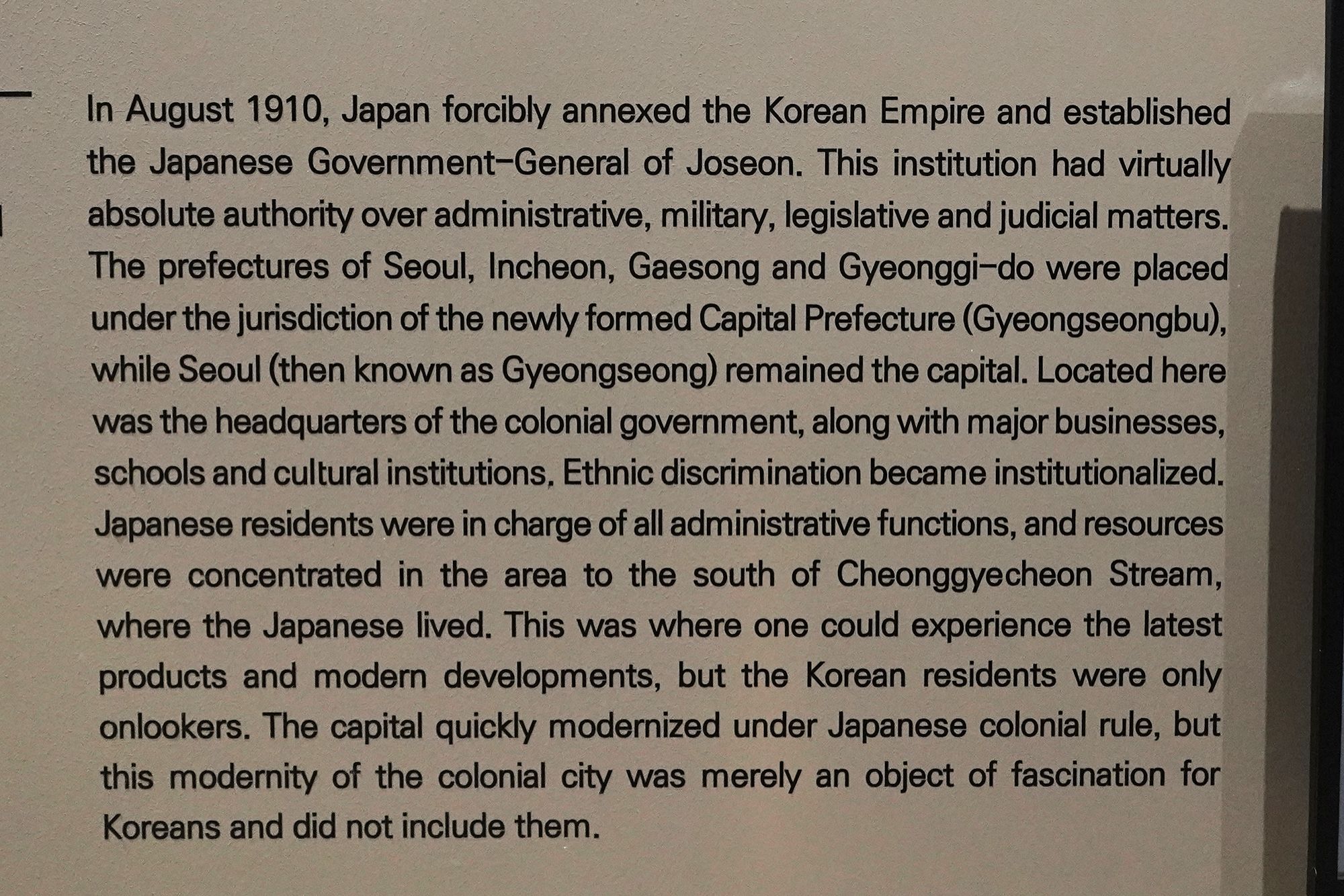
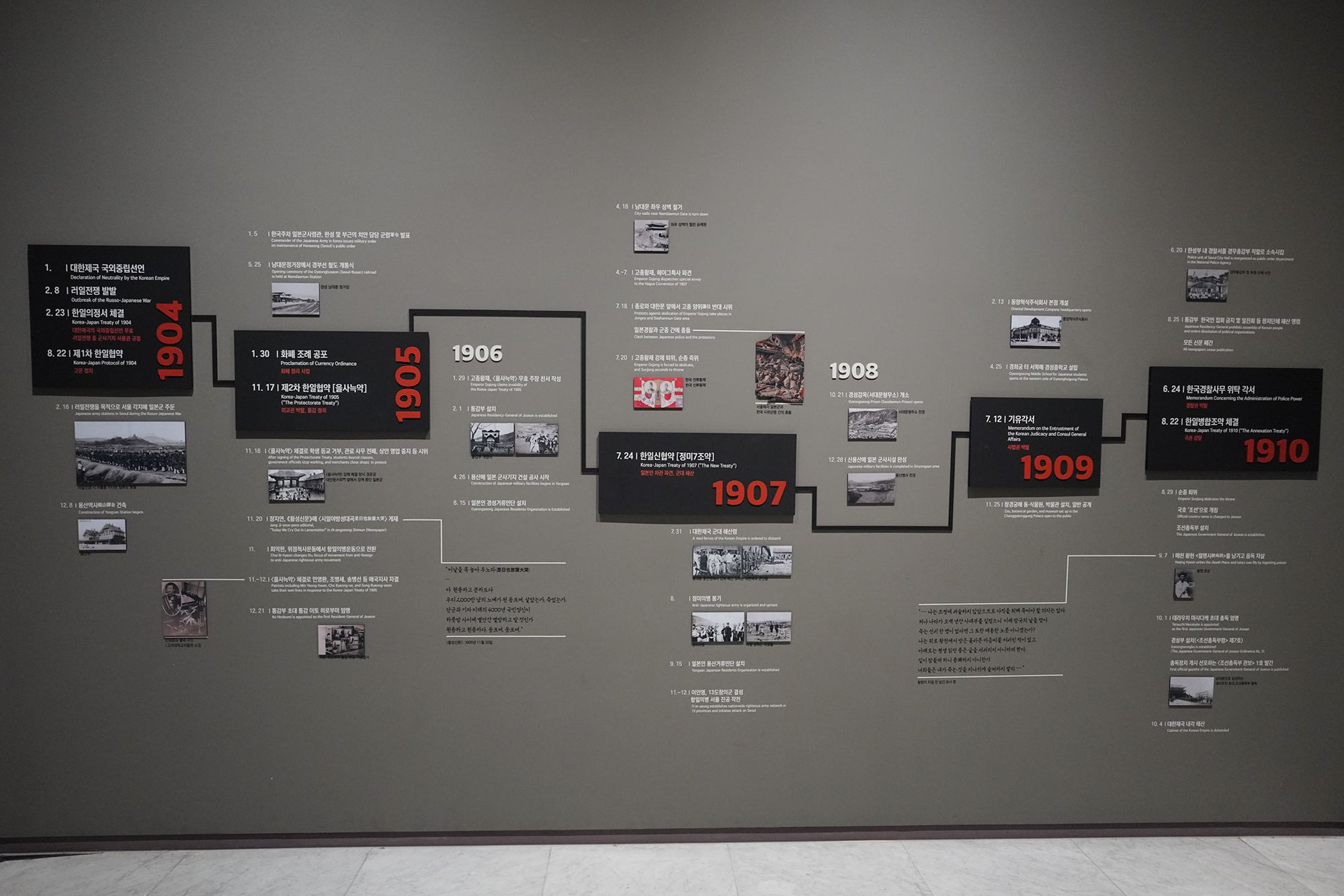
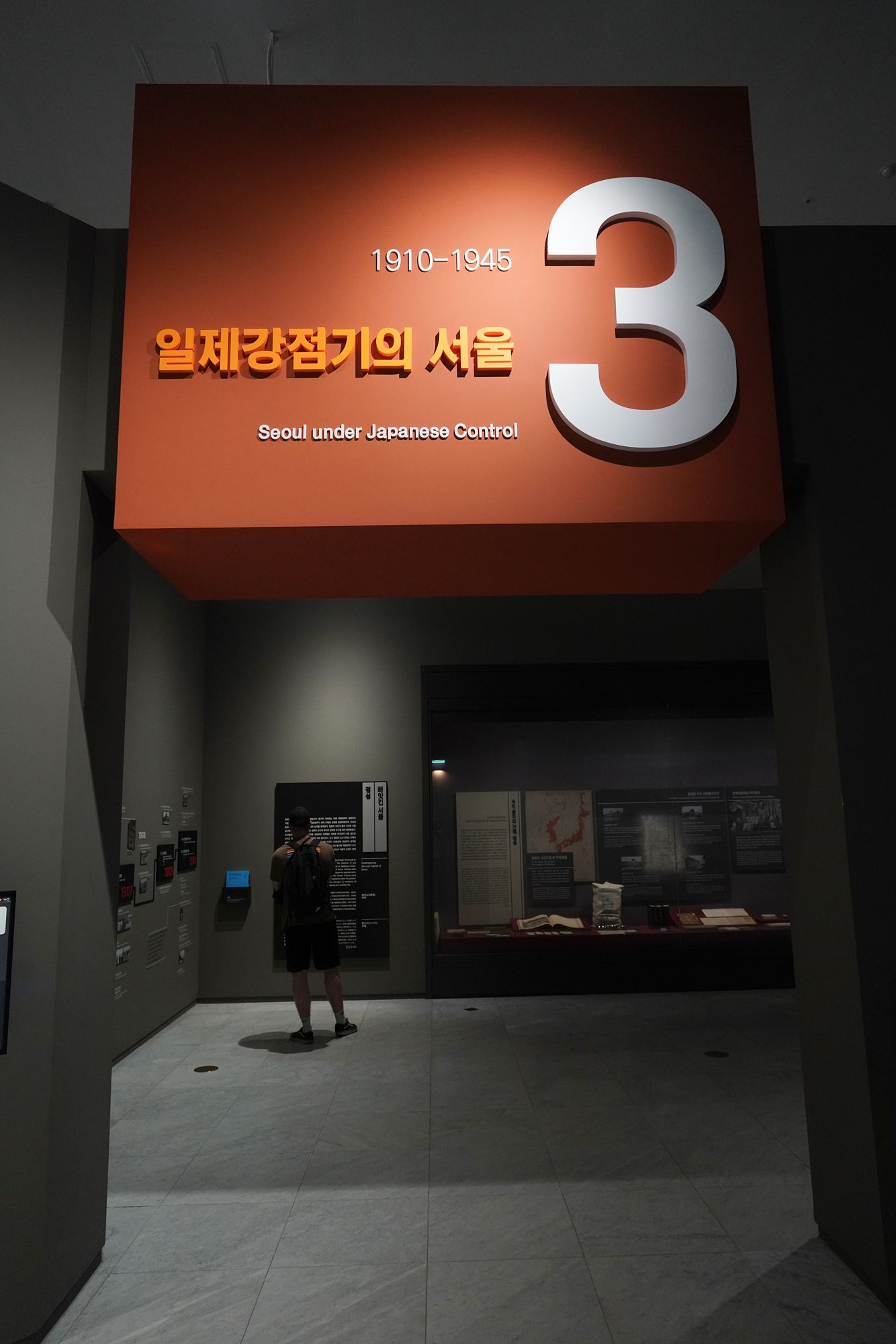
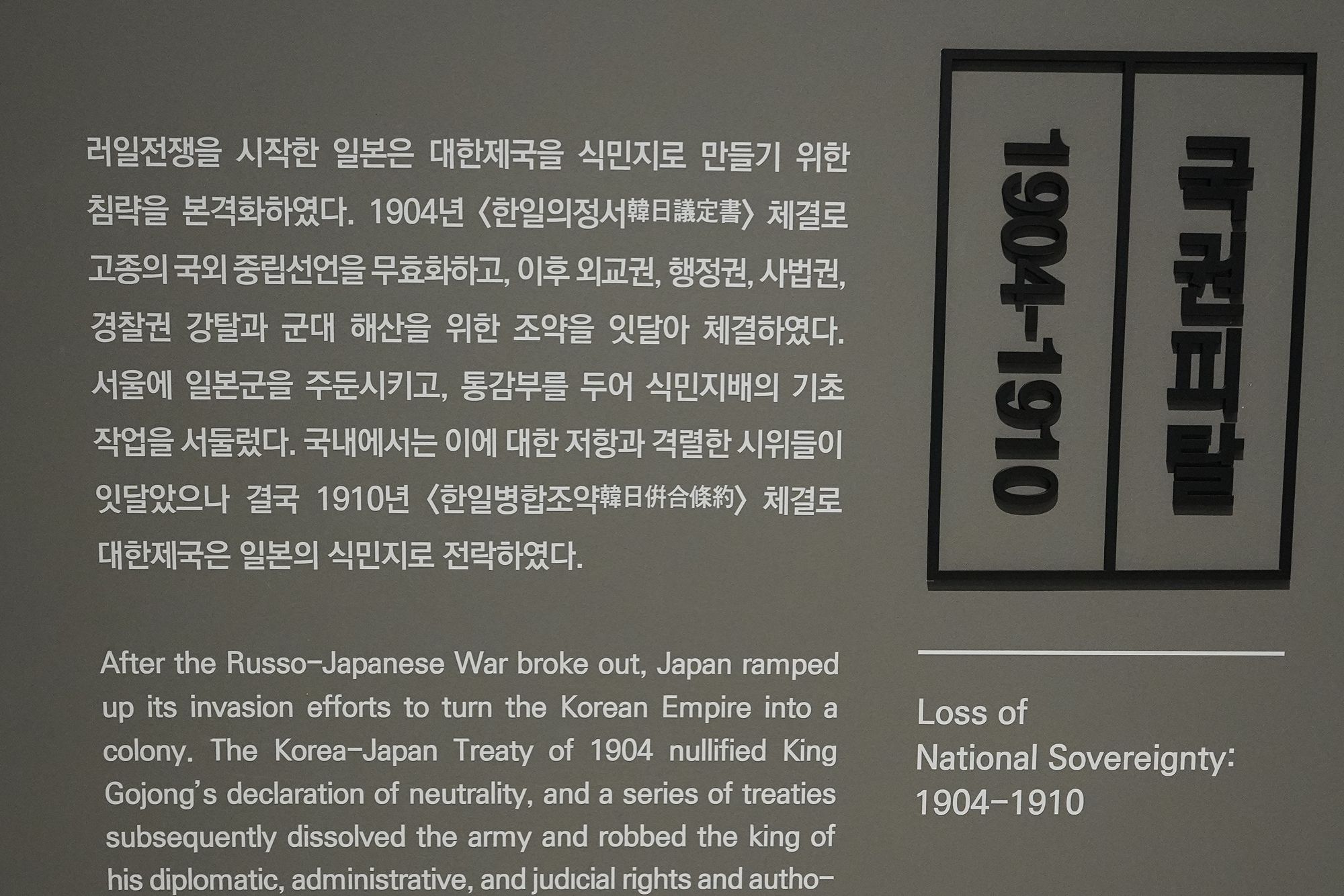
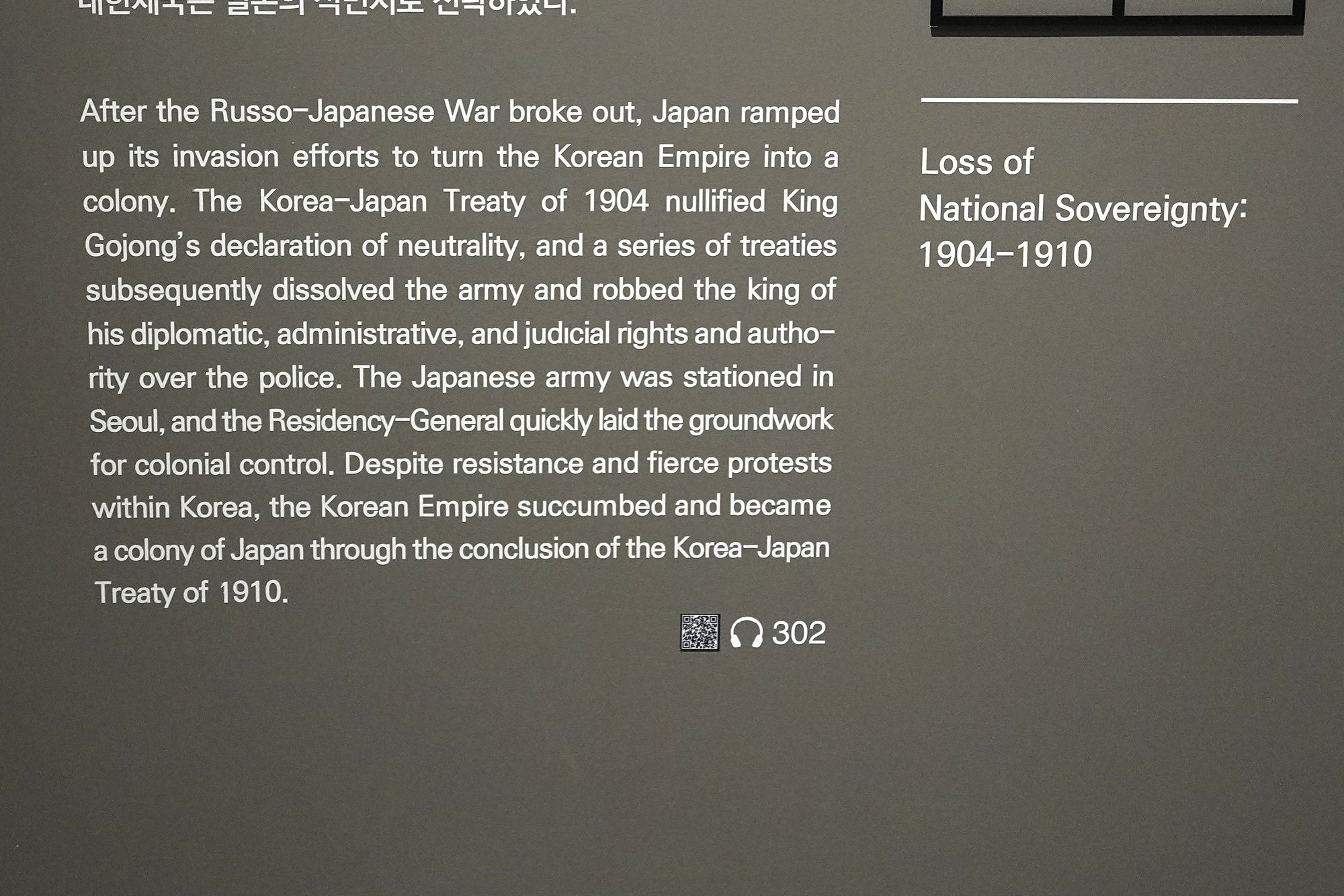
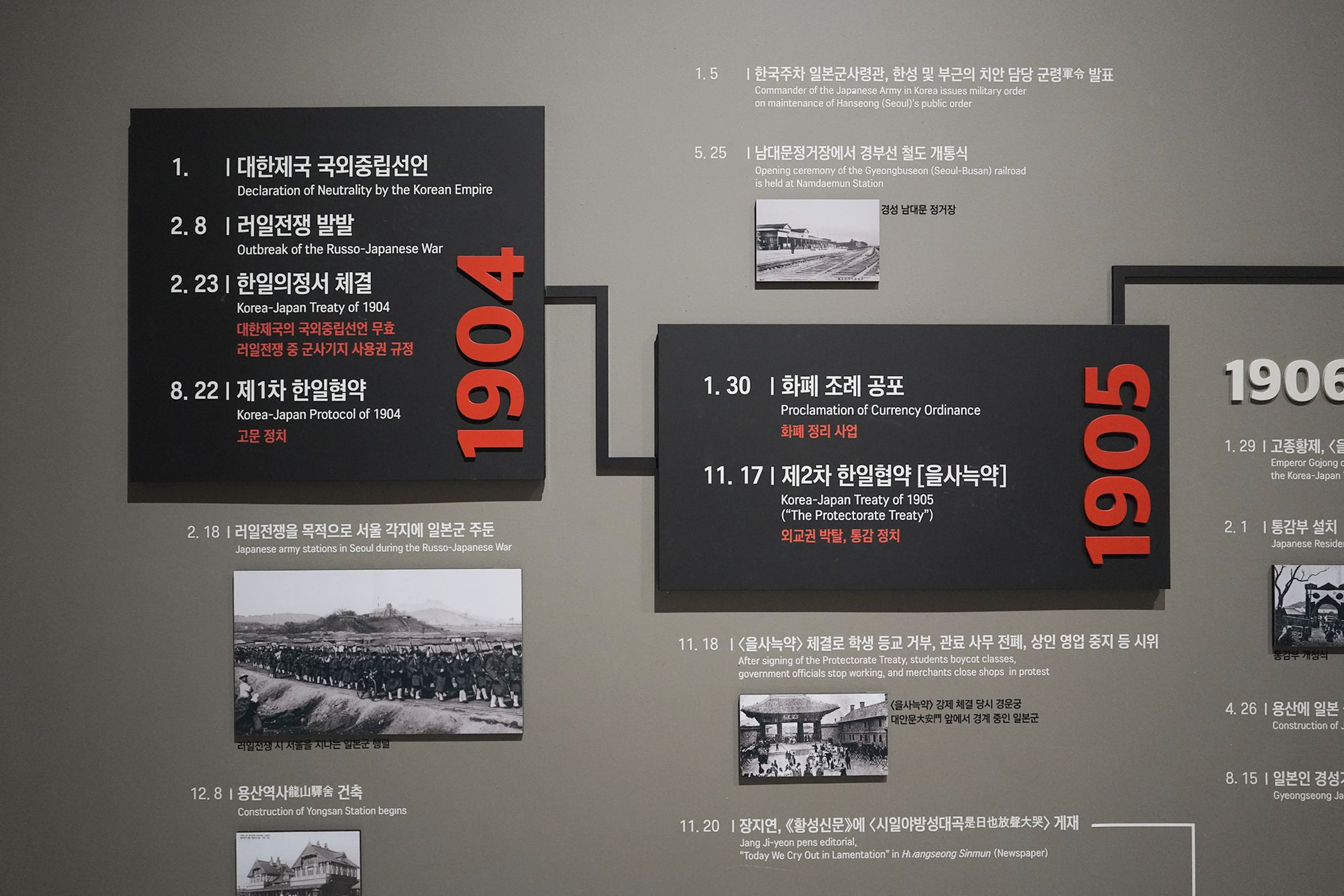
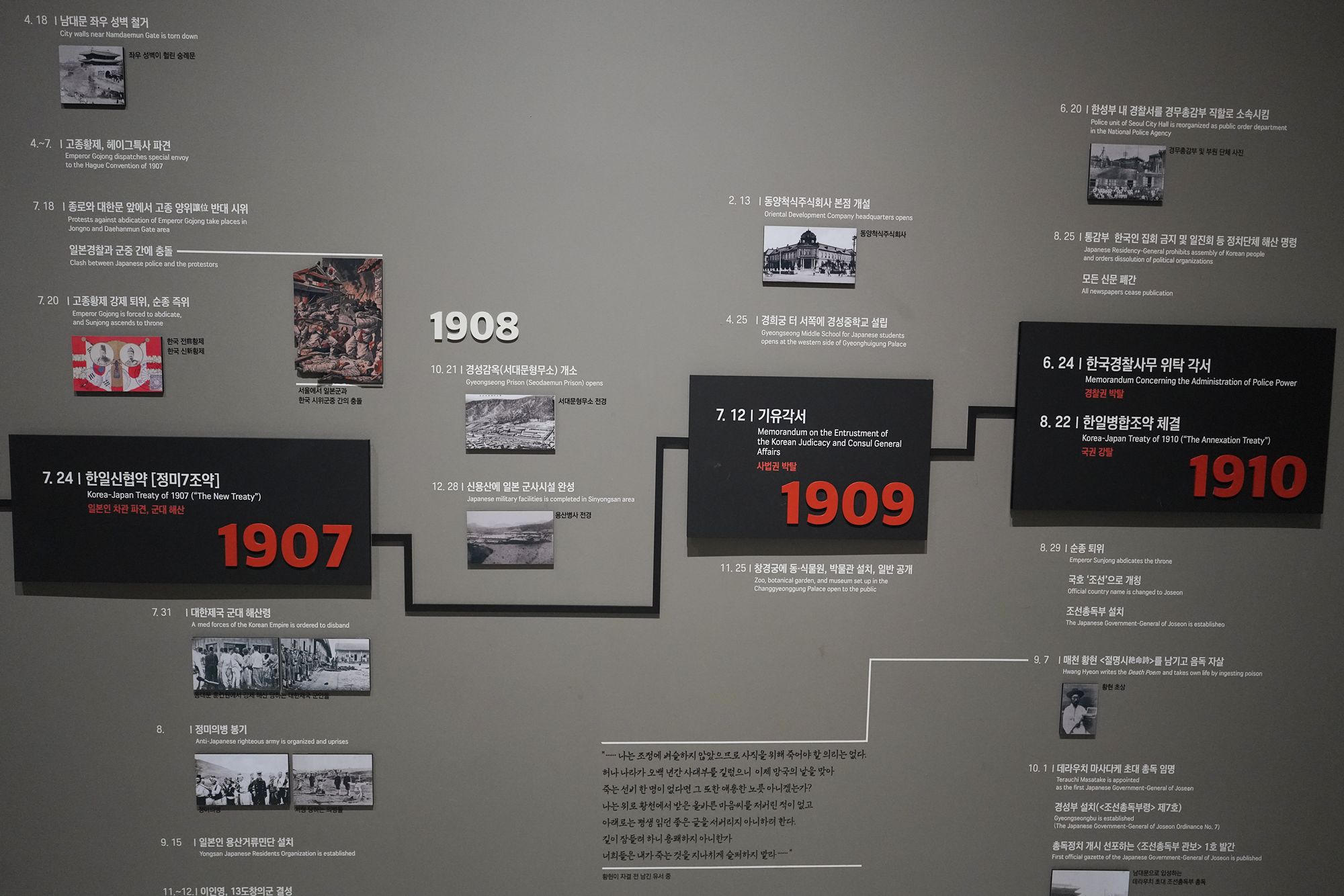
After the Russo-Japanese War began in 1904, Japan tightened its control over Korea. Through a series of treaties, Korea gradually lost control of its diplomacy, government, military, and police. Despite strong Korean resistance, Japan formally annexed Korea in 1910, beginning 35 years of Japanese colonial rule.
A brief history during that time
During Japanese colonial rule, Seoul—then called Gyeongseong—was reshaped to serve Japan’s political, military, and economic interests. Streets were altered, important symbols of the Joseon Dynasty and Korean Empire were demolished, and urban development largely favored the Japanese colonial administration and residents.
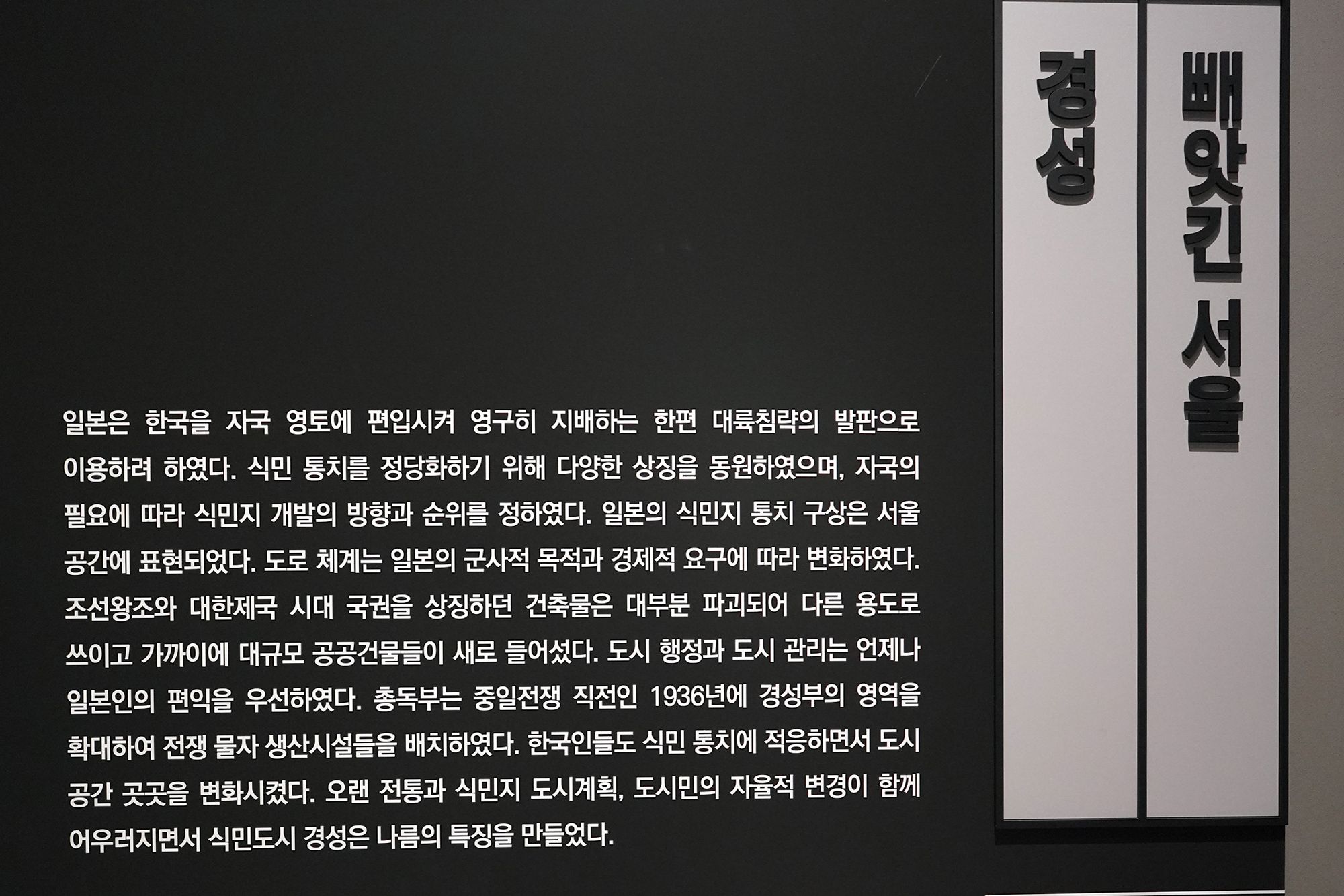
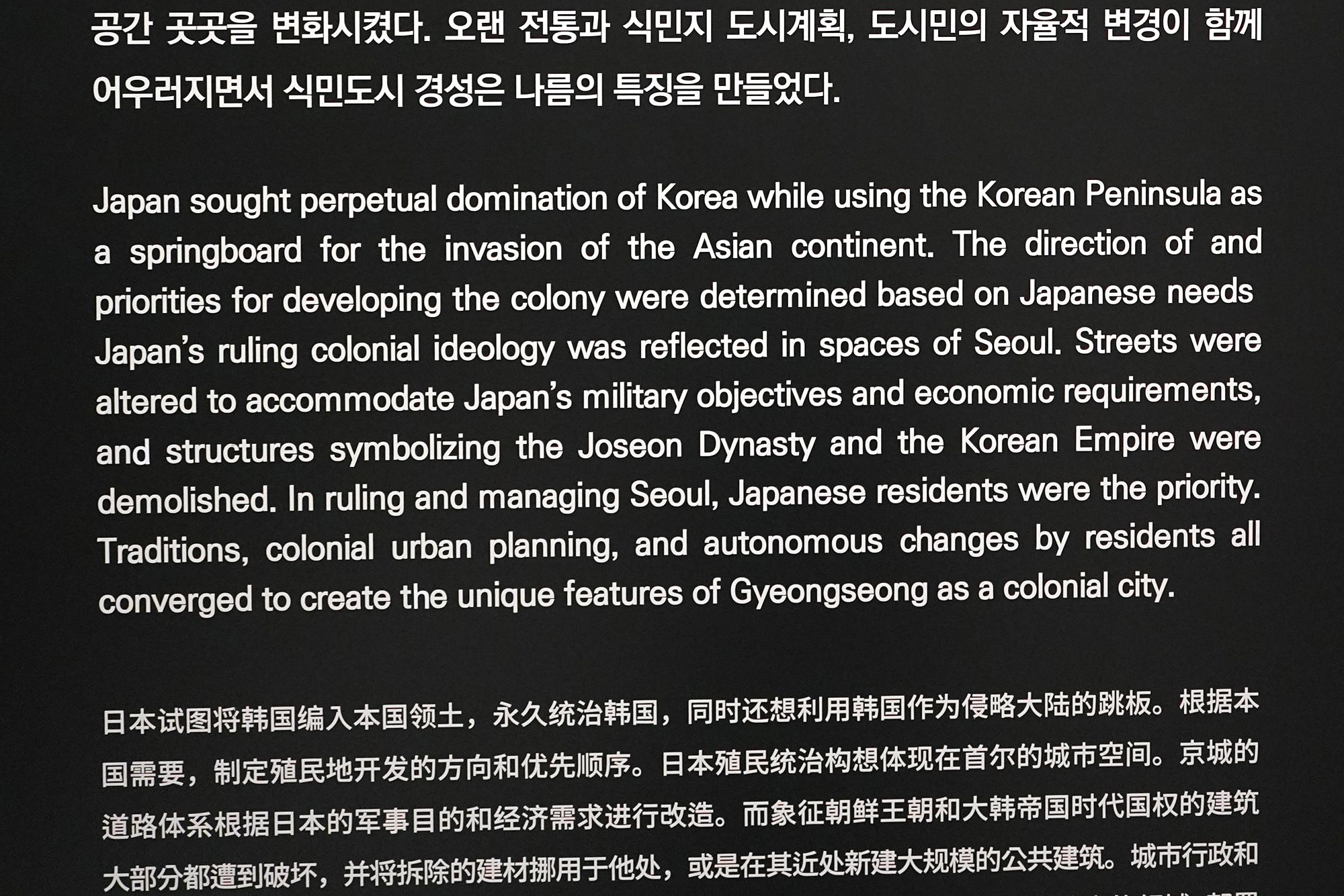
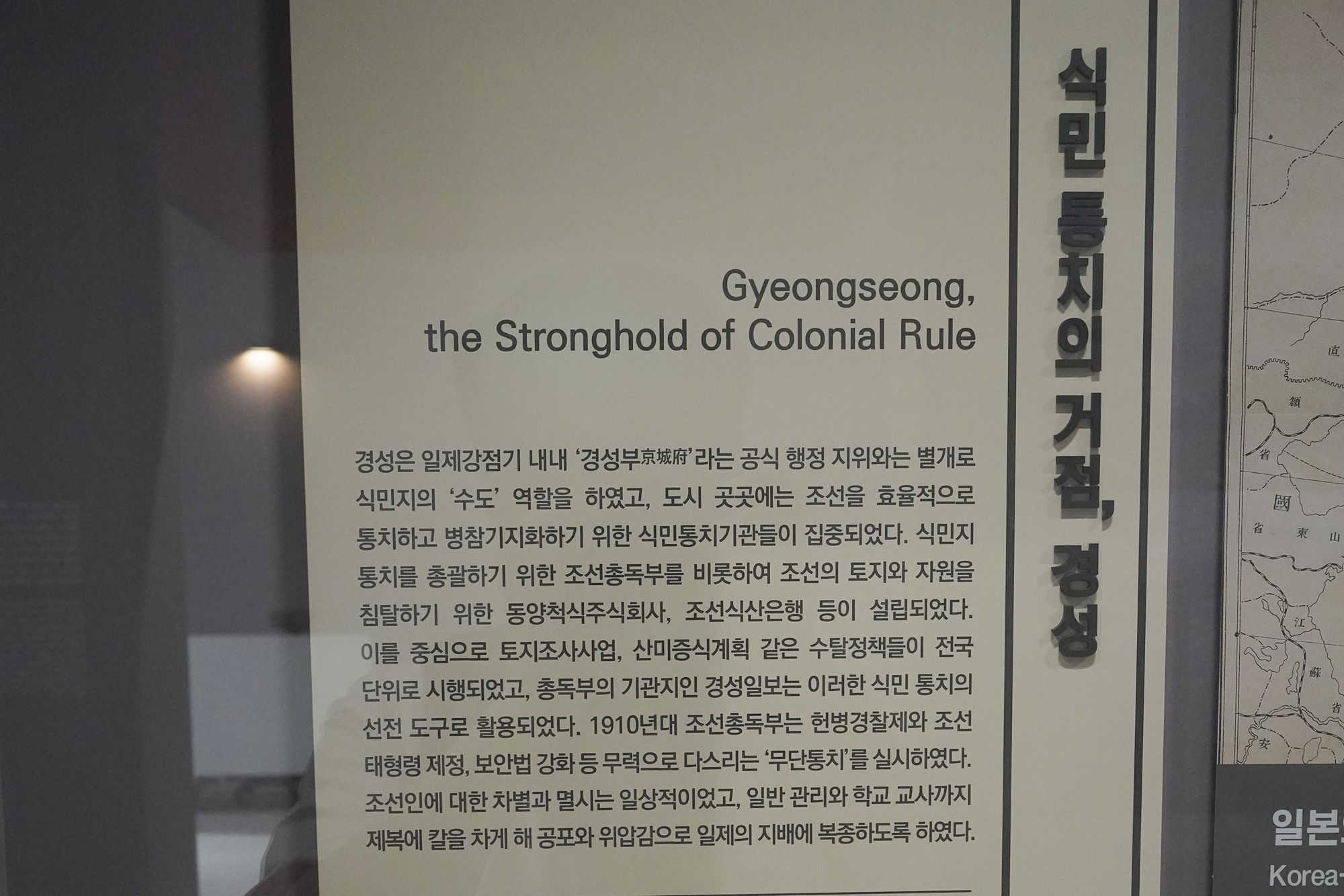
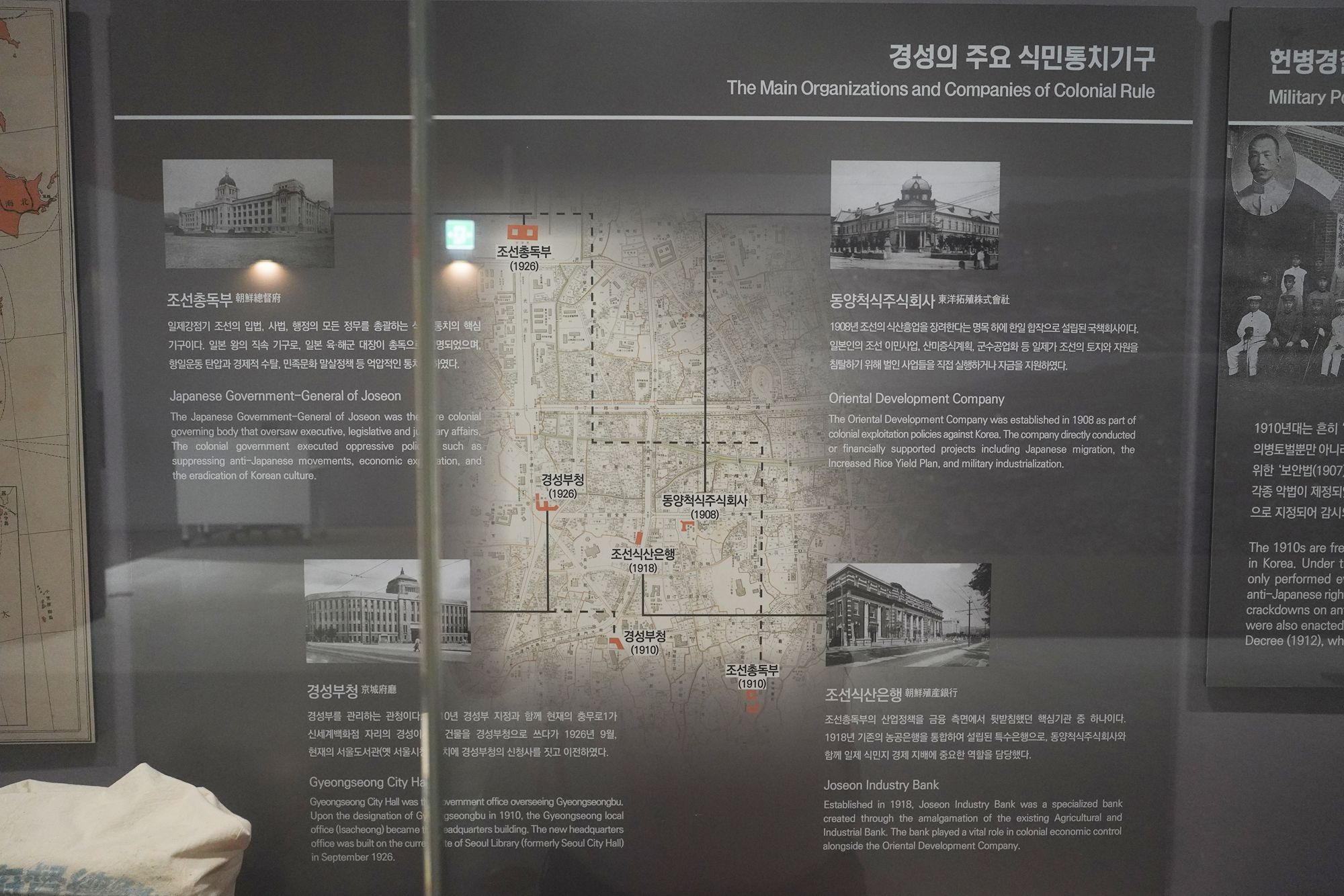
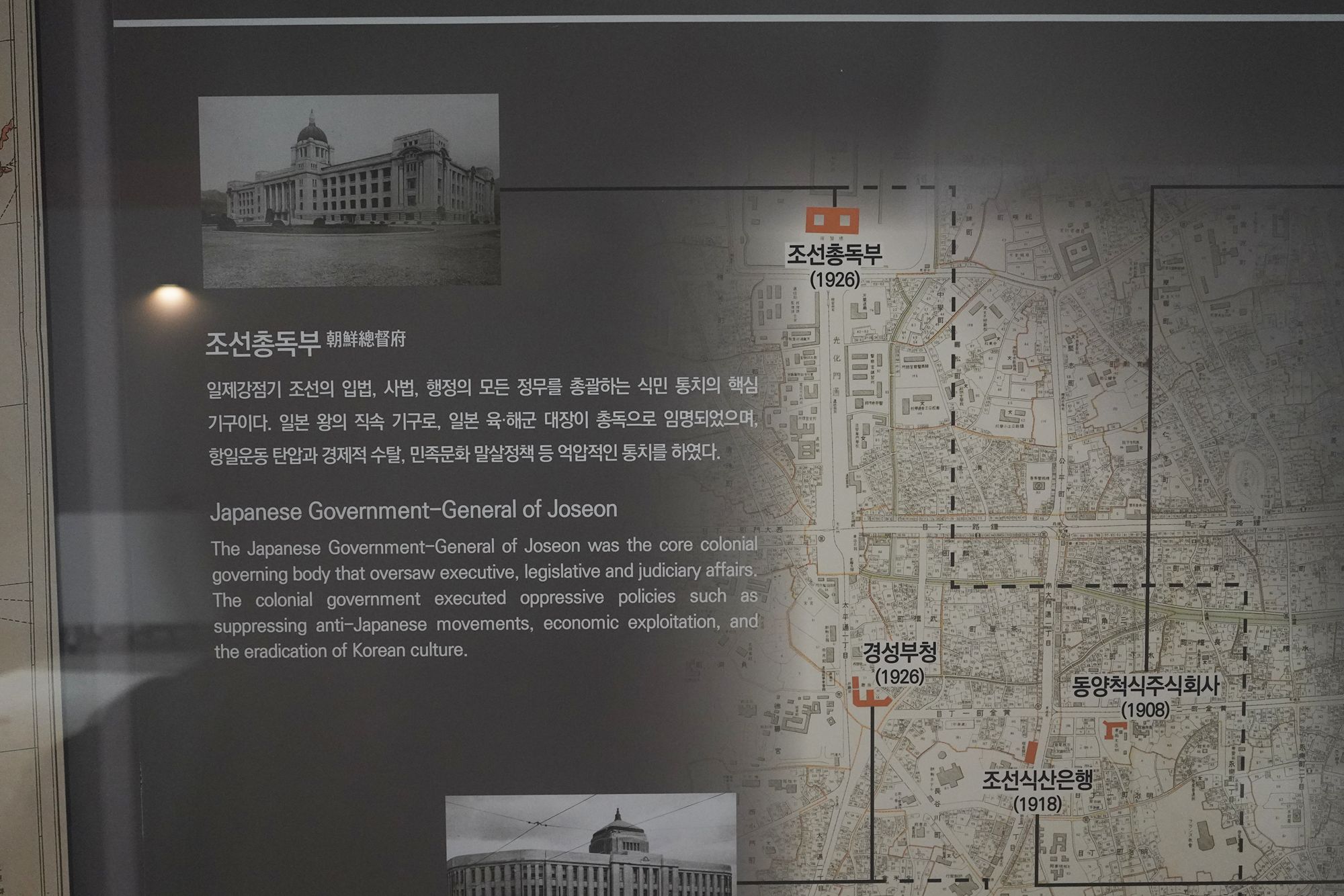
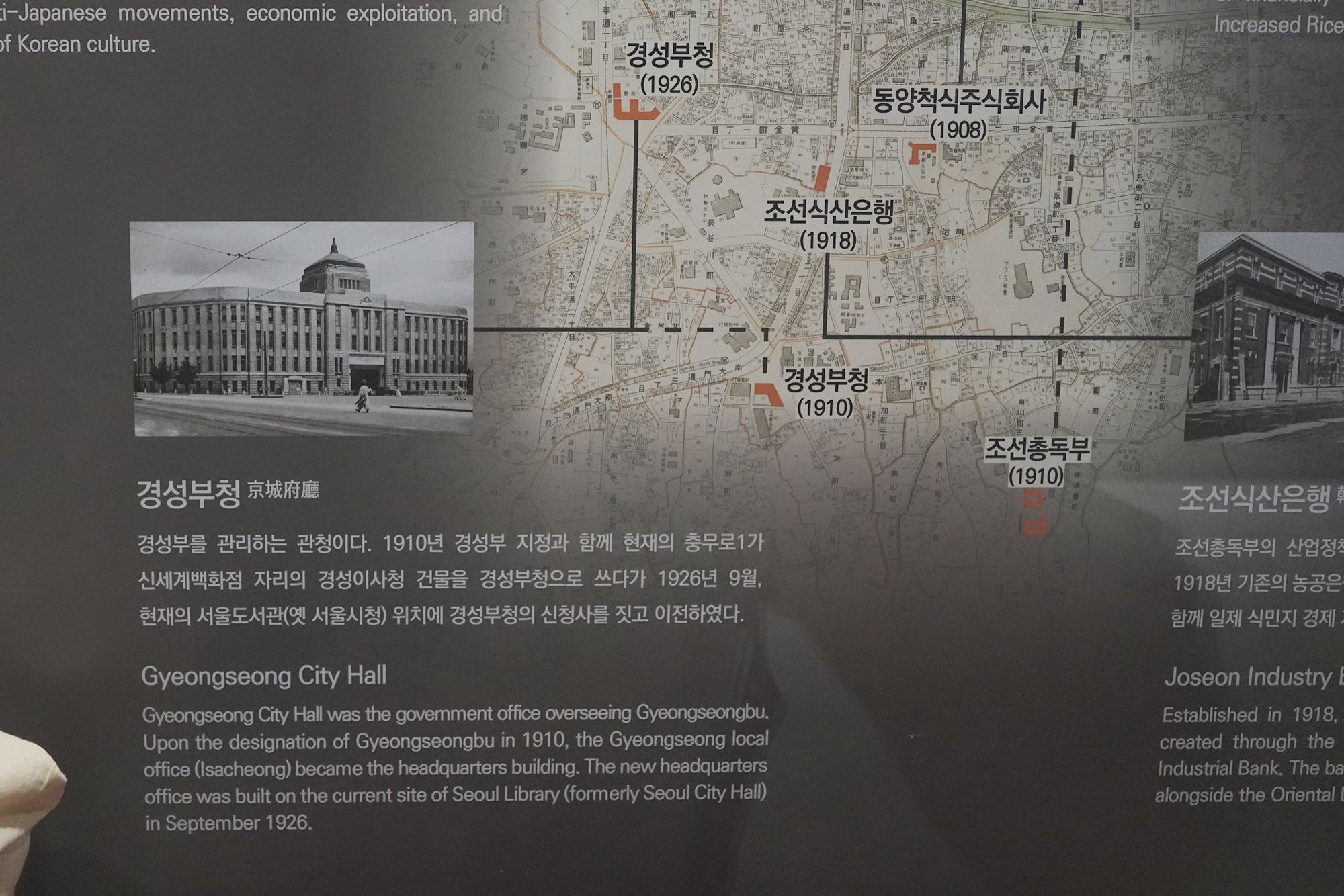
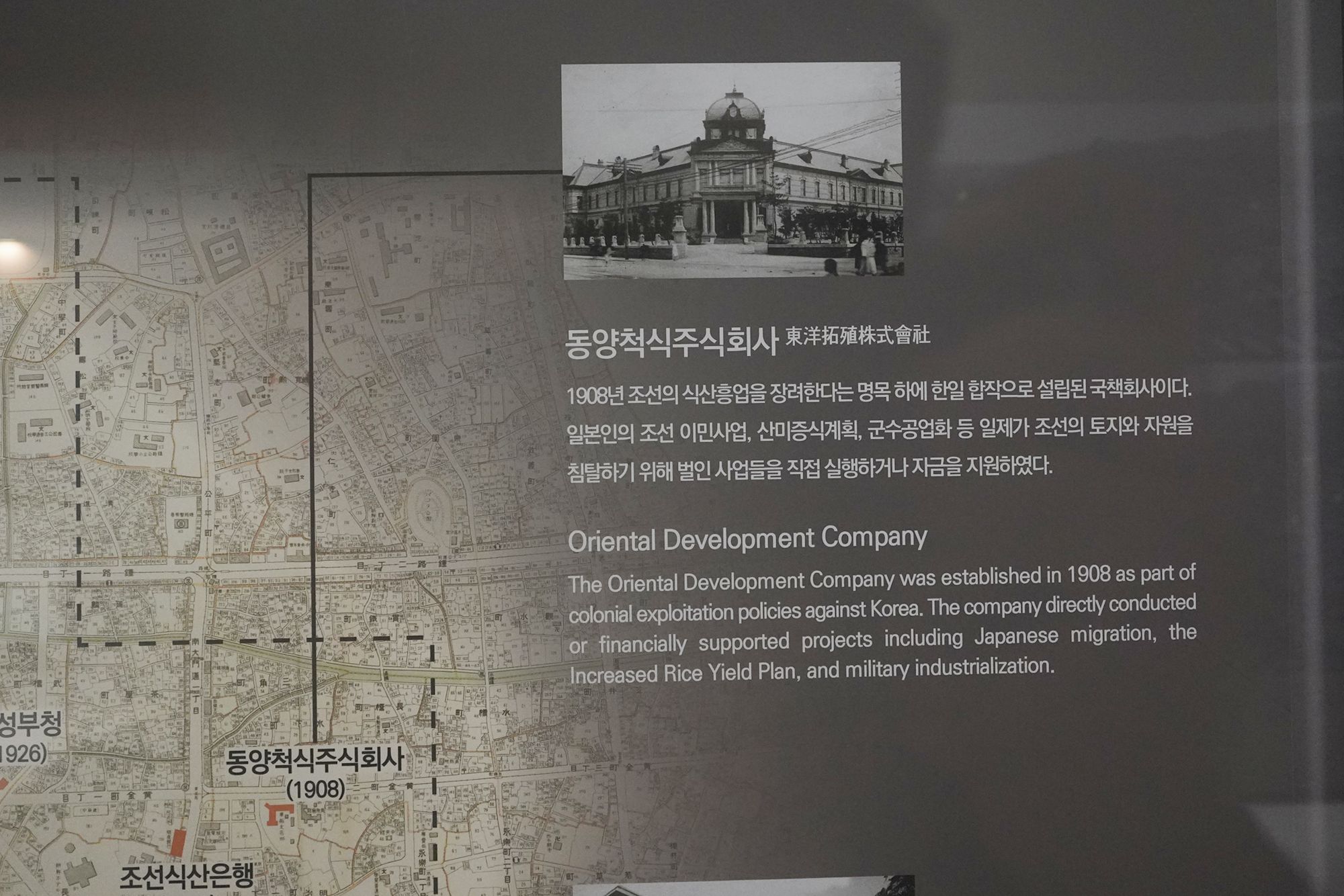
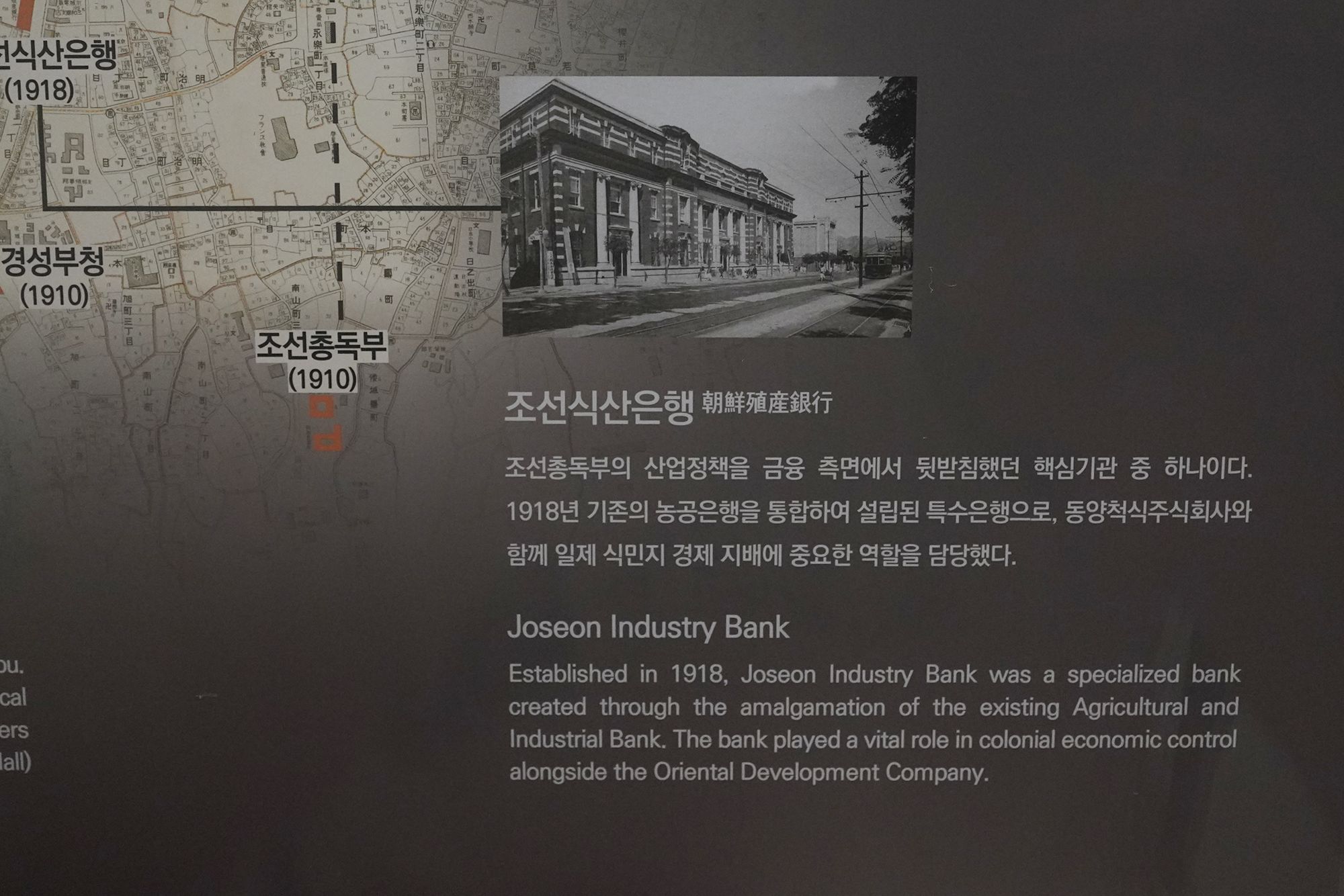
During Japanese colonial rule, Gyeongseong became the center of Japan’s control over Korea. Colonial government agencies, banks, and companies were concentrated in the city, while strict laws, policing, surveillance, and discrimination were used to control the Korean population and exploit Korea’s land and resources.
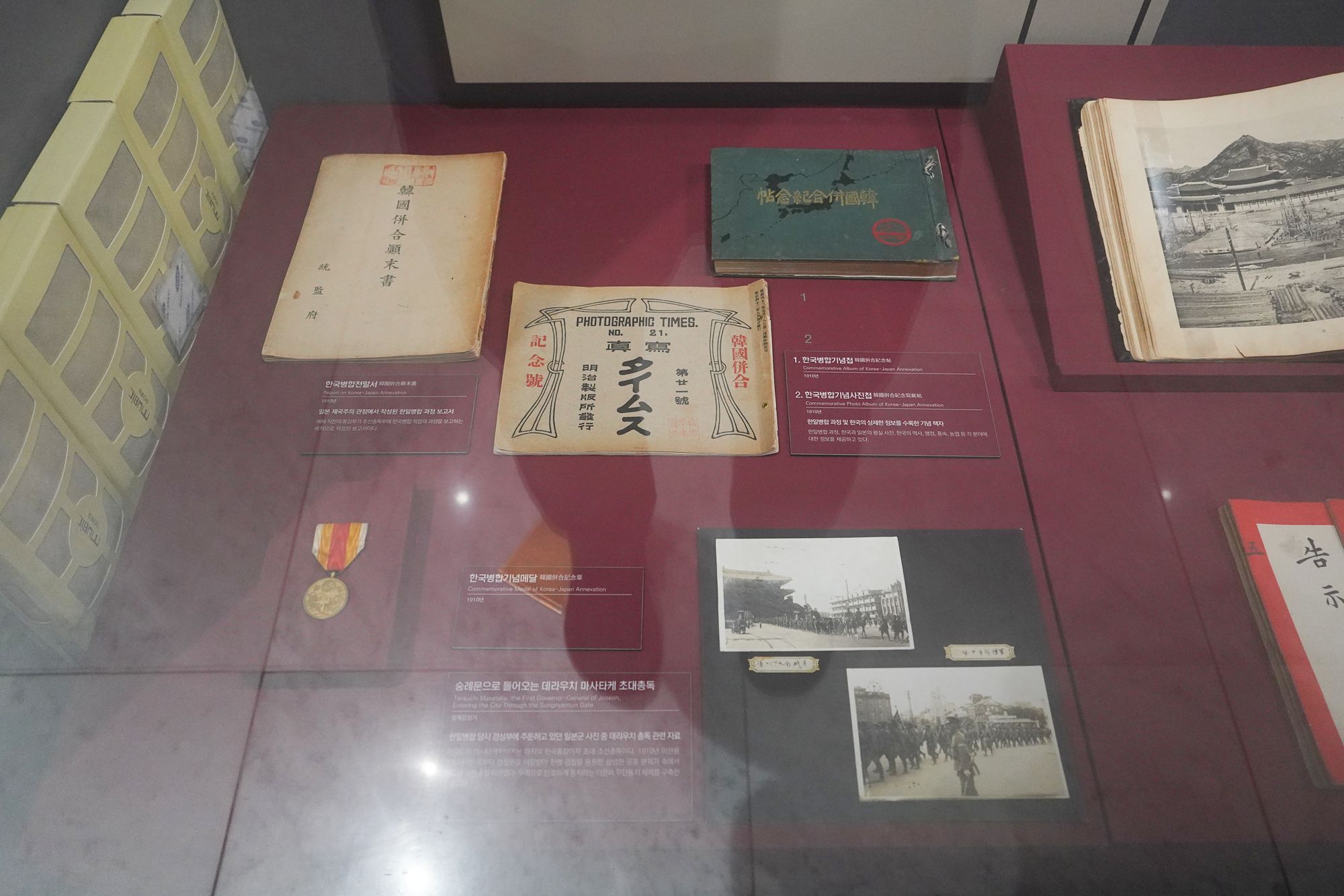
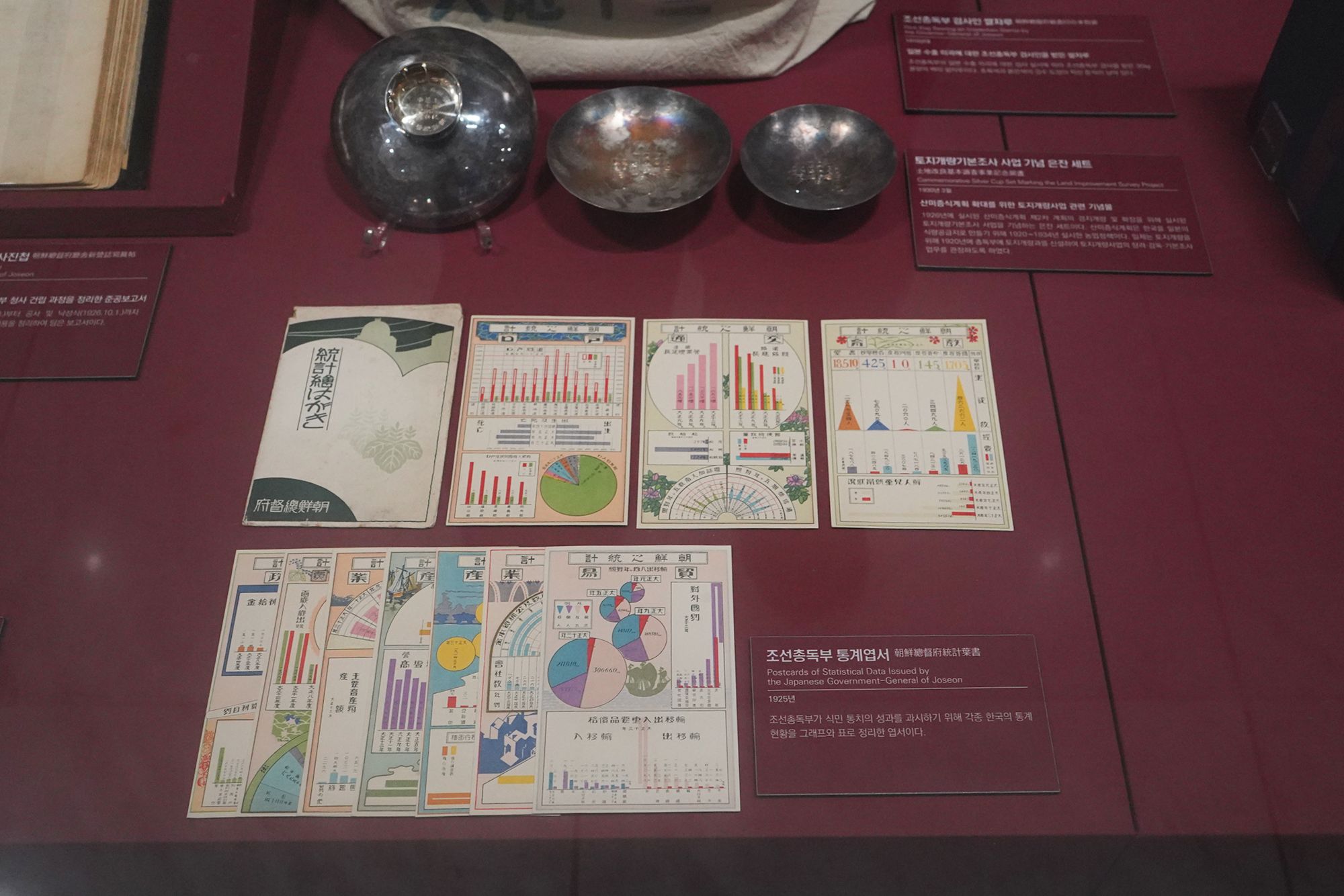
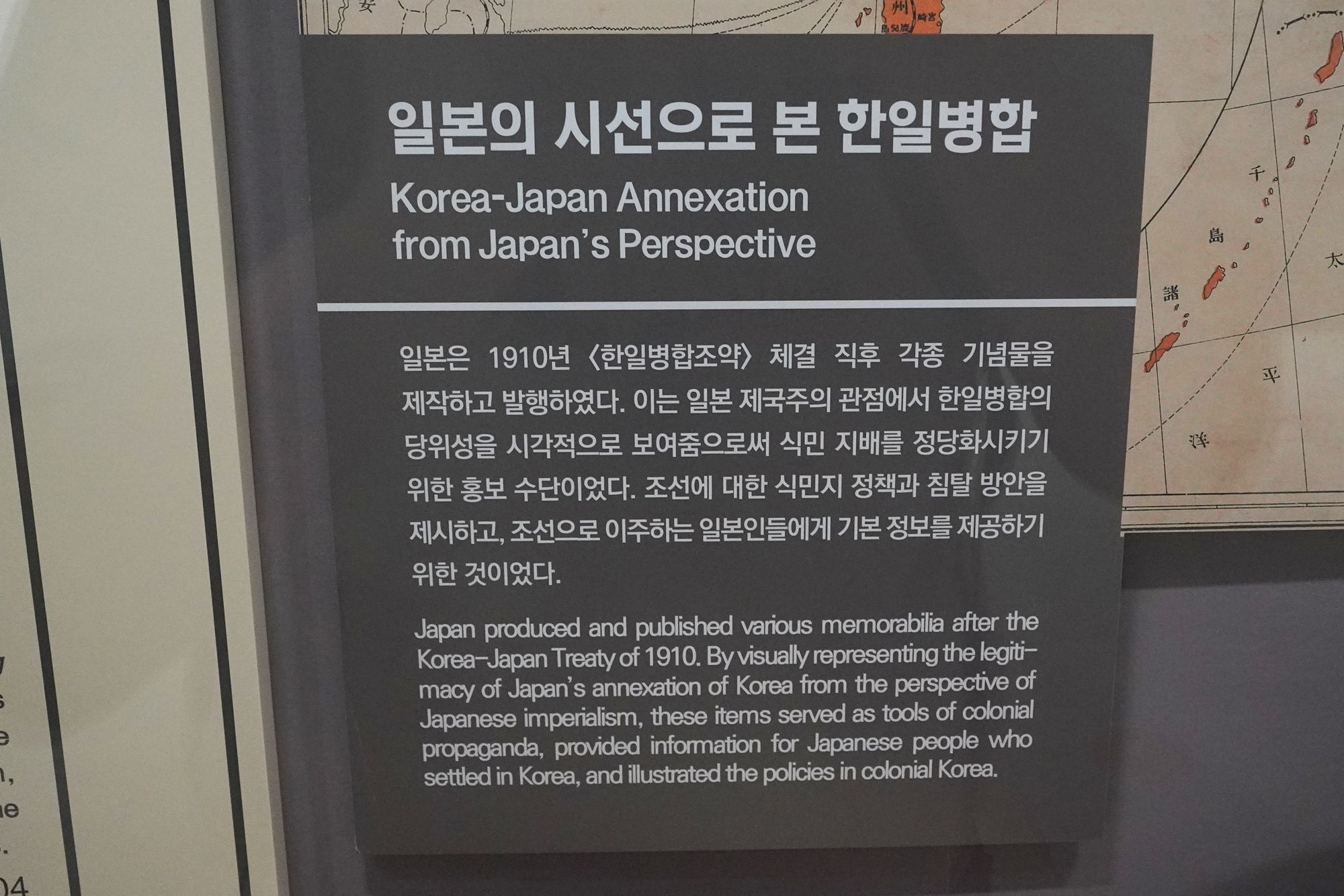
After Japan annexed Korea in 1910, it produced books, postcards, and other materials that portrayed the annexation as legitimate. These items served as colonial propaganda while also providing information about Korea to Japanese people who traveled or settled there.
The Main Organizations and Companies of Colonial Rule
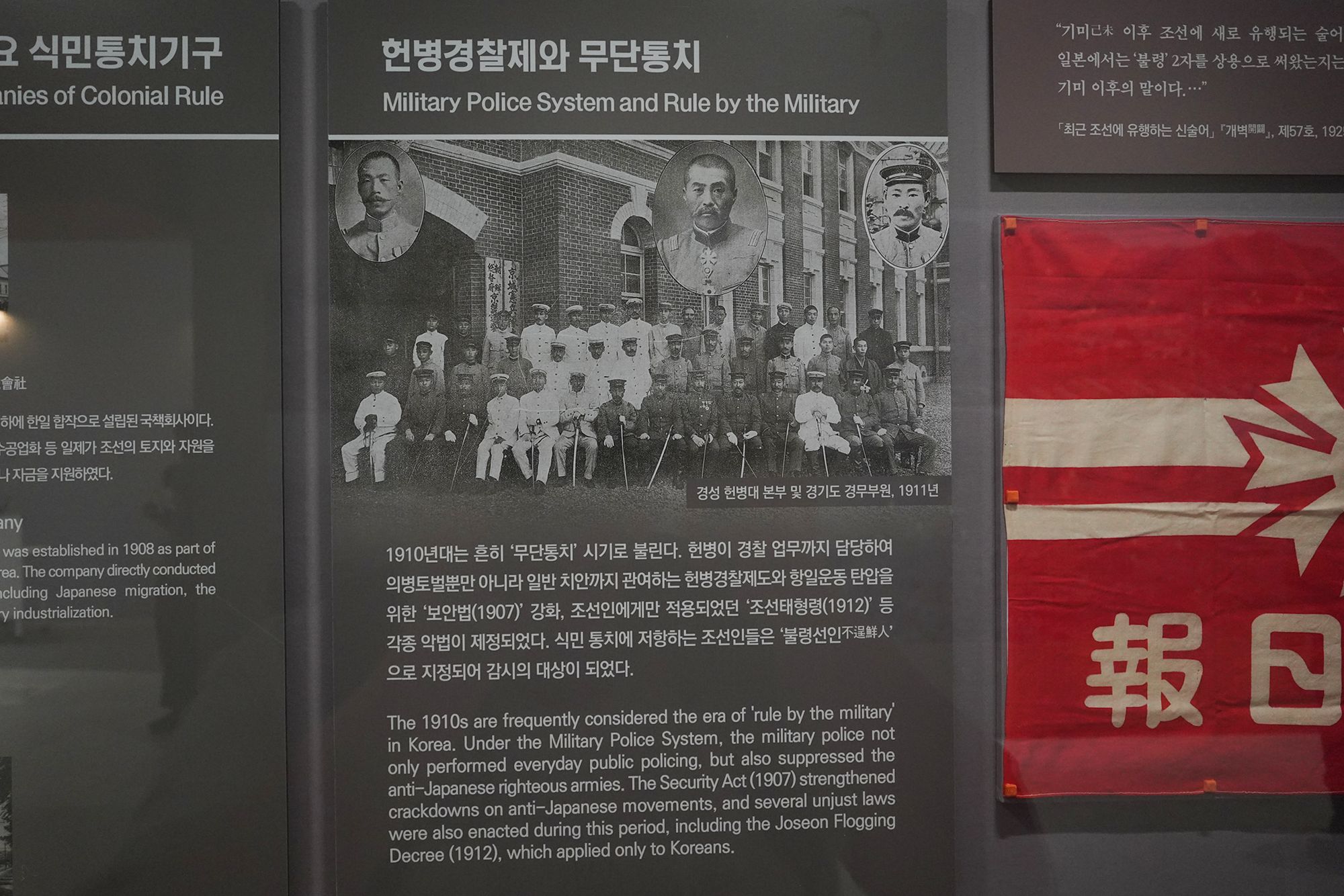
The 1910s were a period of strict Japanese military rule in Korea. Military police controlled everyday life, while laws were used to suppress anti-Japanese resistance and punish Koreans, including a flogging law that applied only to Koreans.
Finance in the country
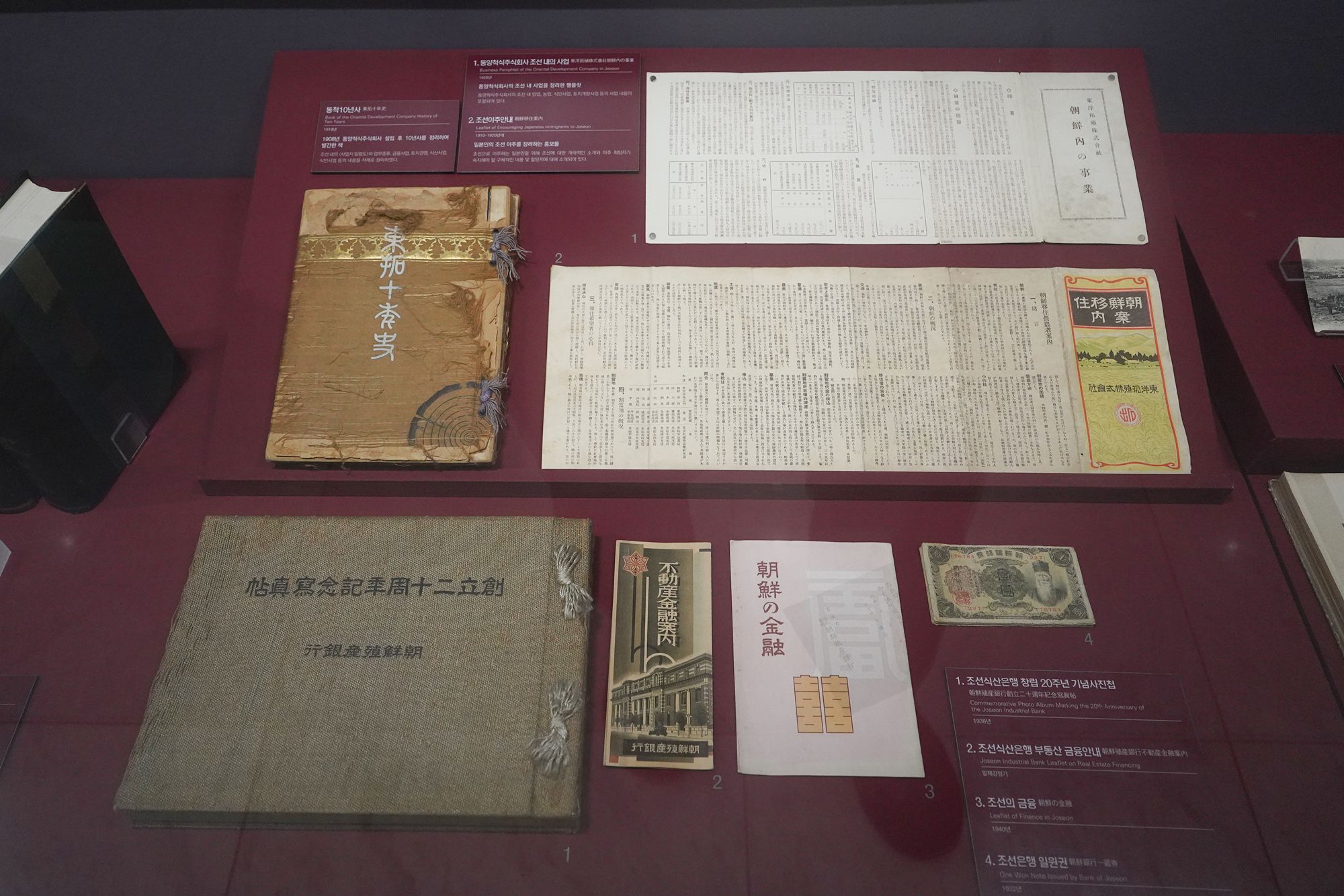
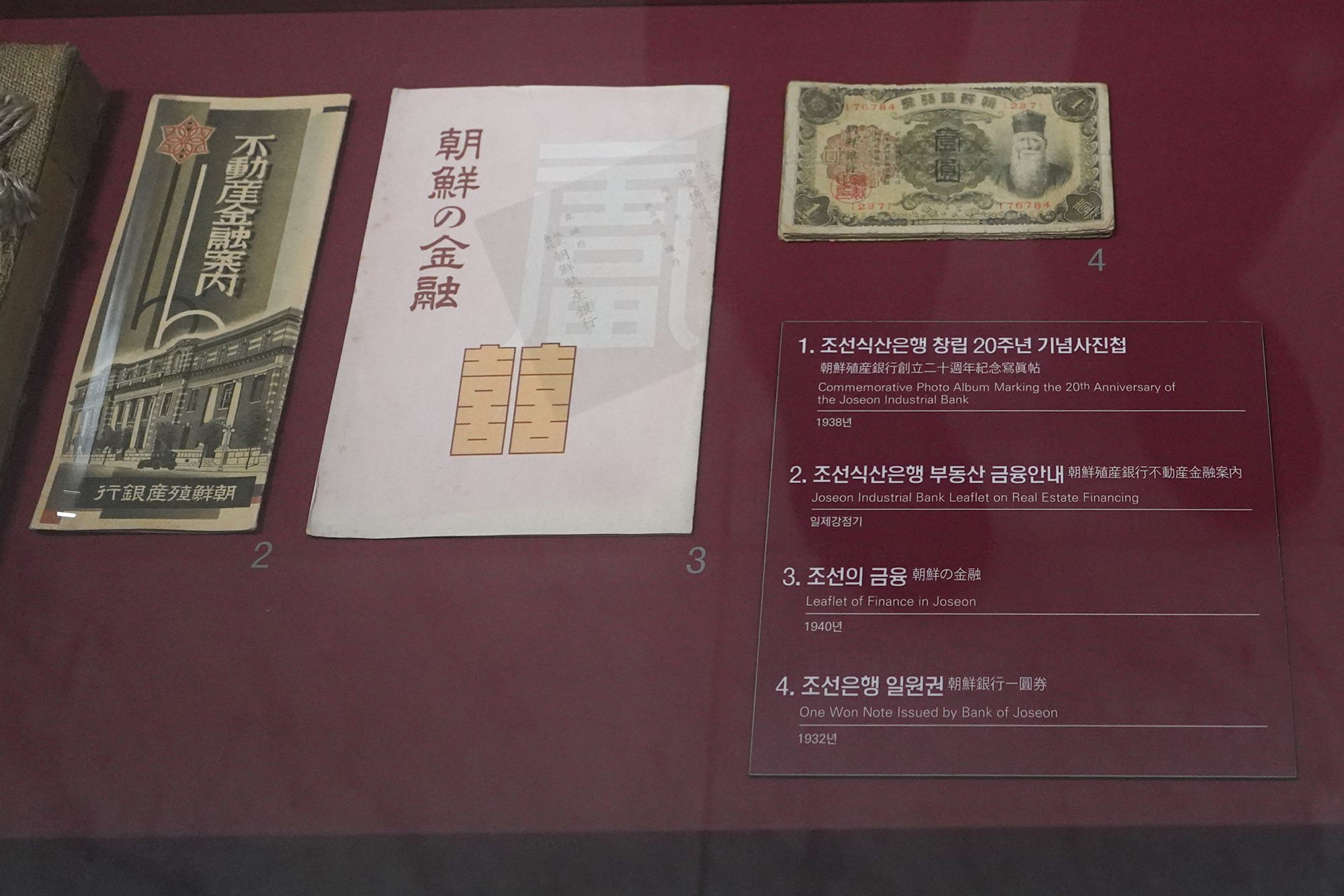
Many new buildings were constructed in Seoul during the 1920s to house the institutions and government offices of Japanese colonial rule.
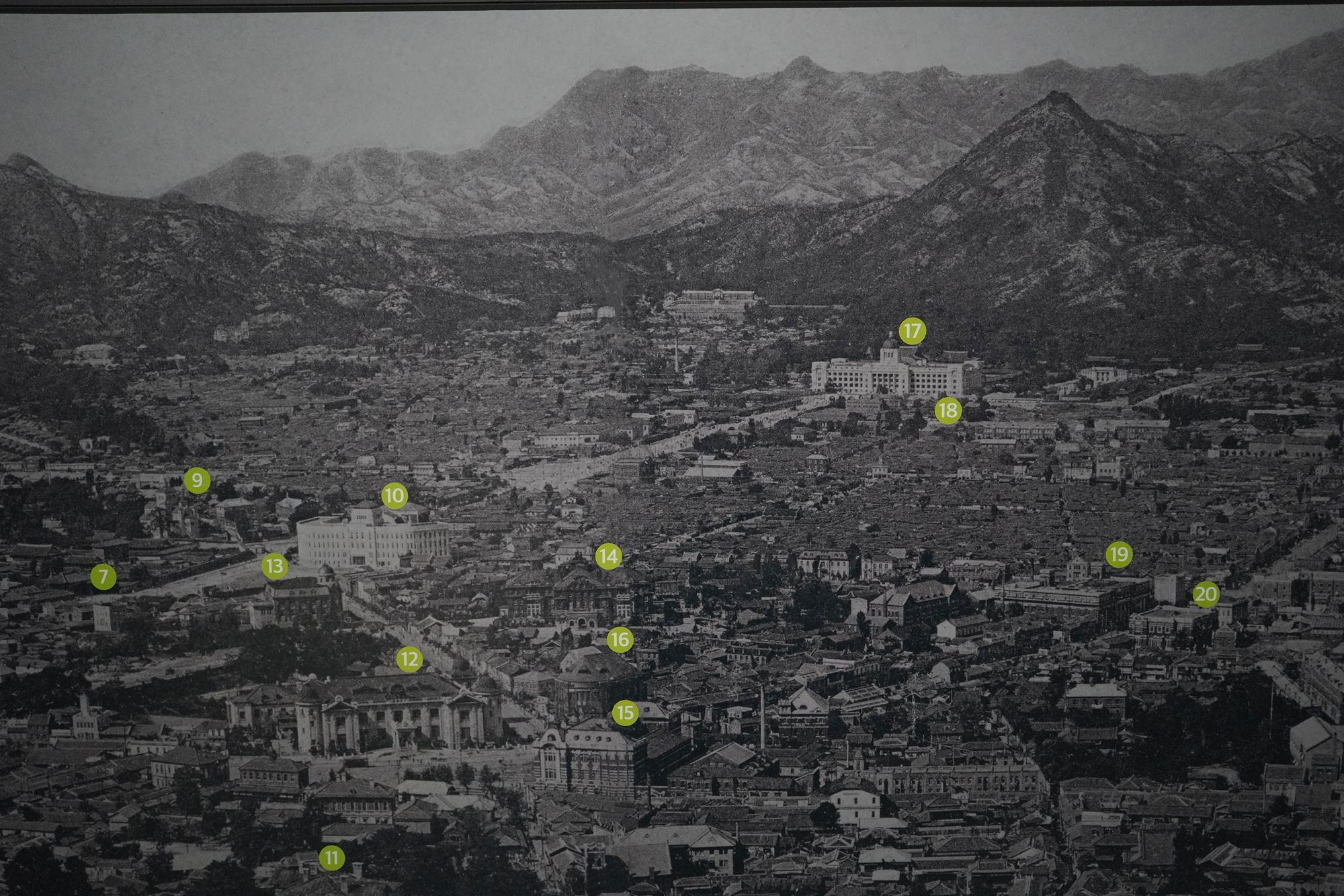
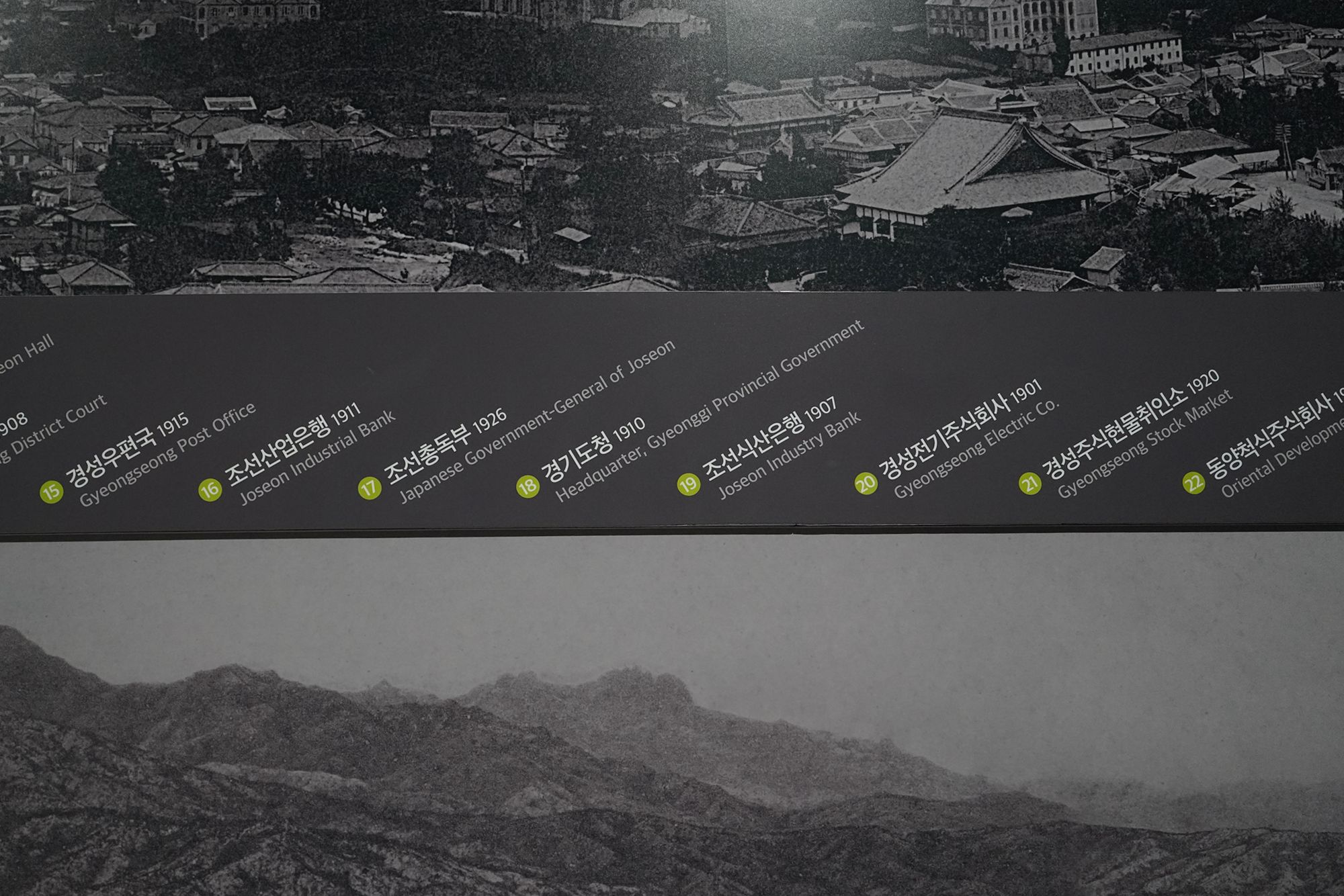
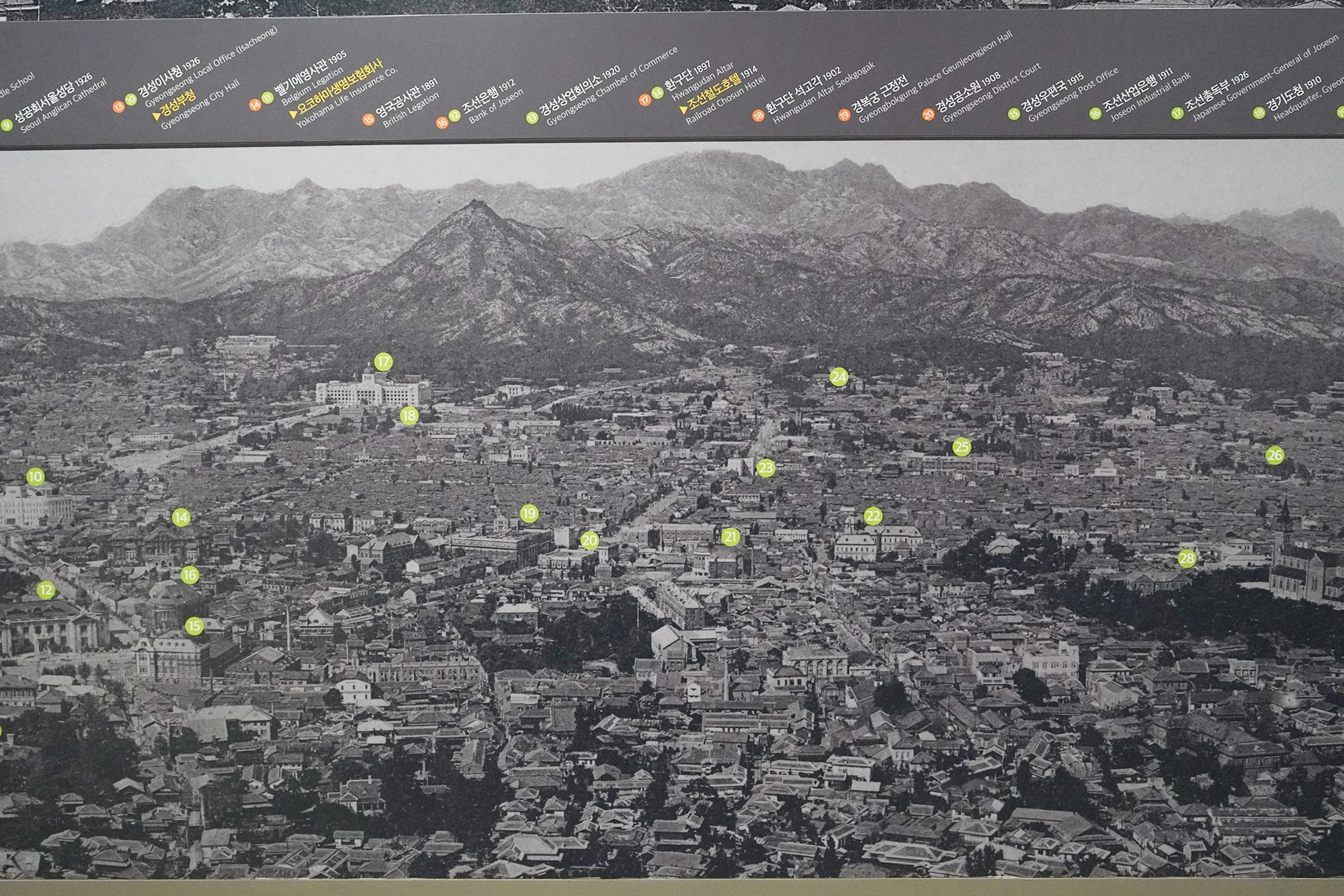
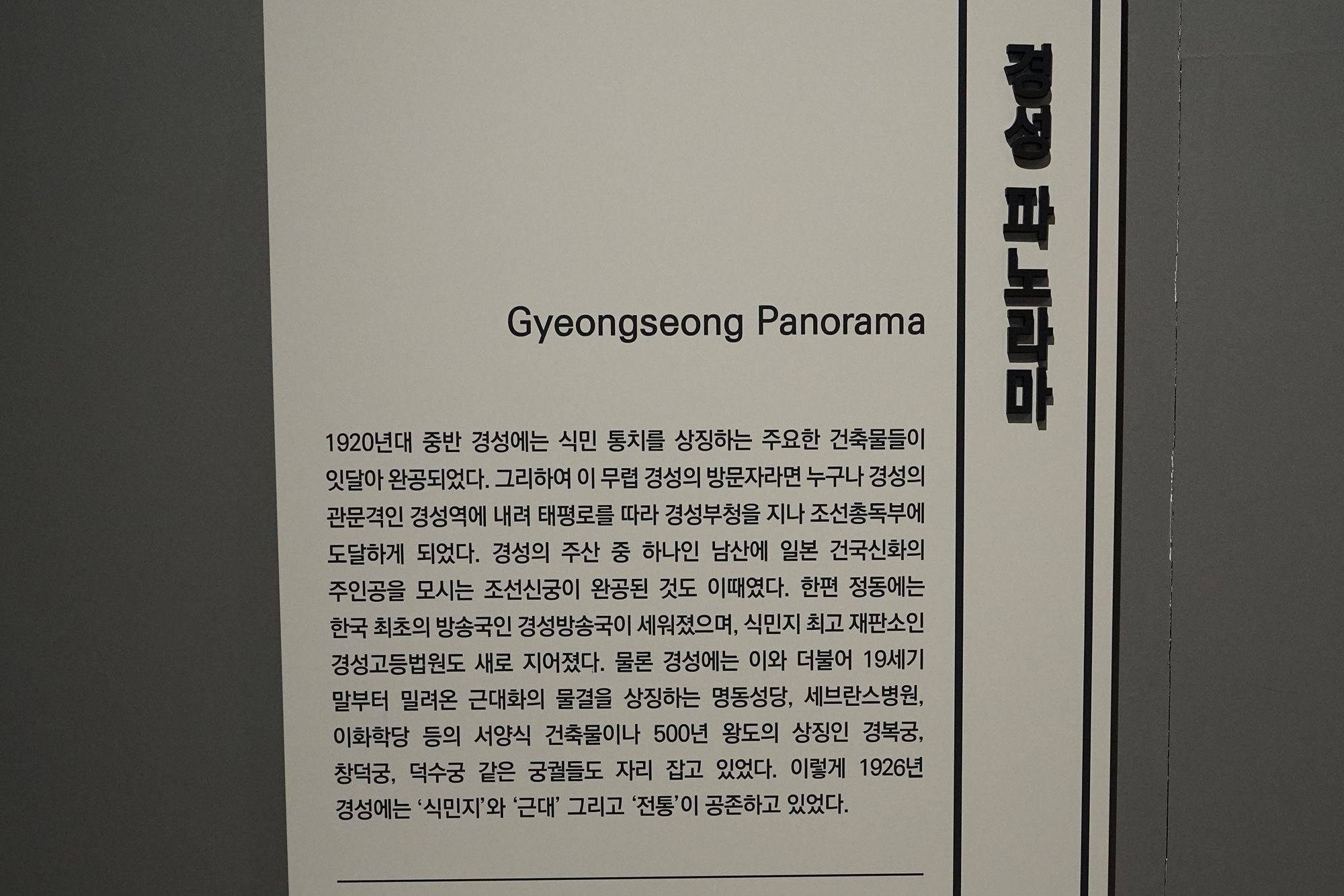
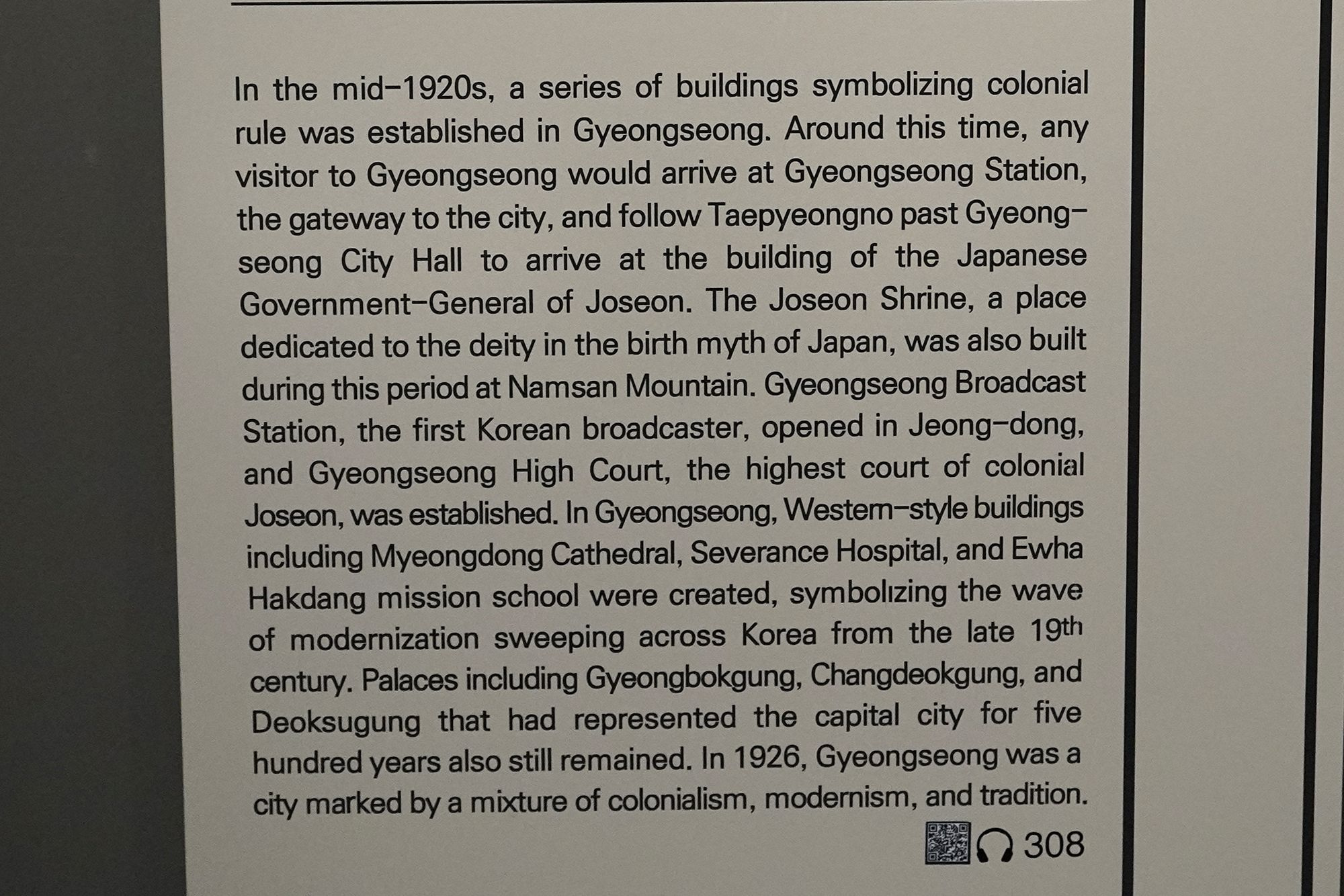
By the mid-1920s, many major buildings associated with Japanese colonial rule had been constructed in Seoul, then called Gyeongseong. Alongside these colonial buildings, Western-style institutions and the old Joseon palaces remained, creating a city that reflected a mixture of colonialism, modernization, and Korean tradition.
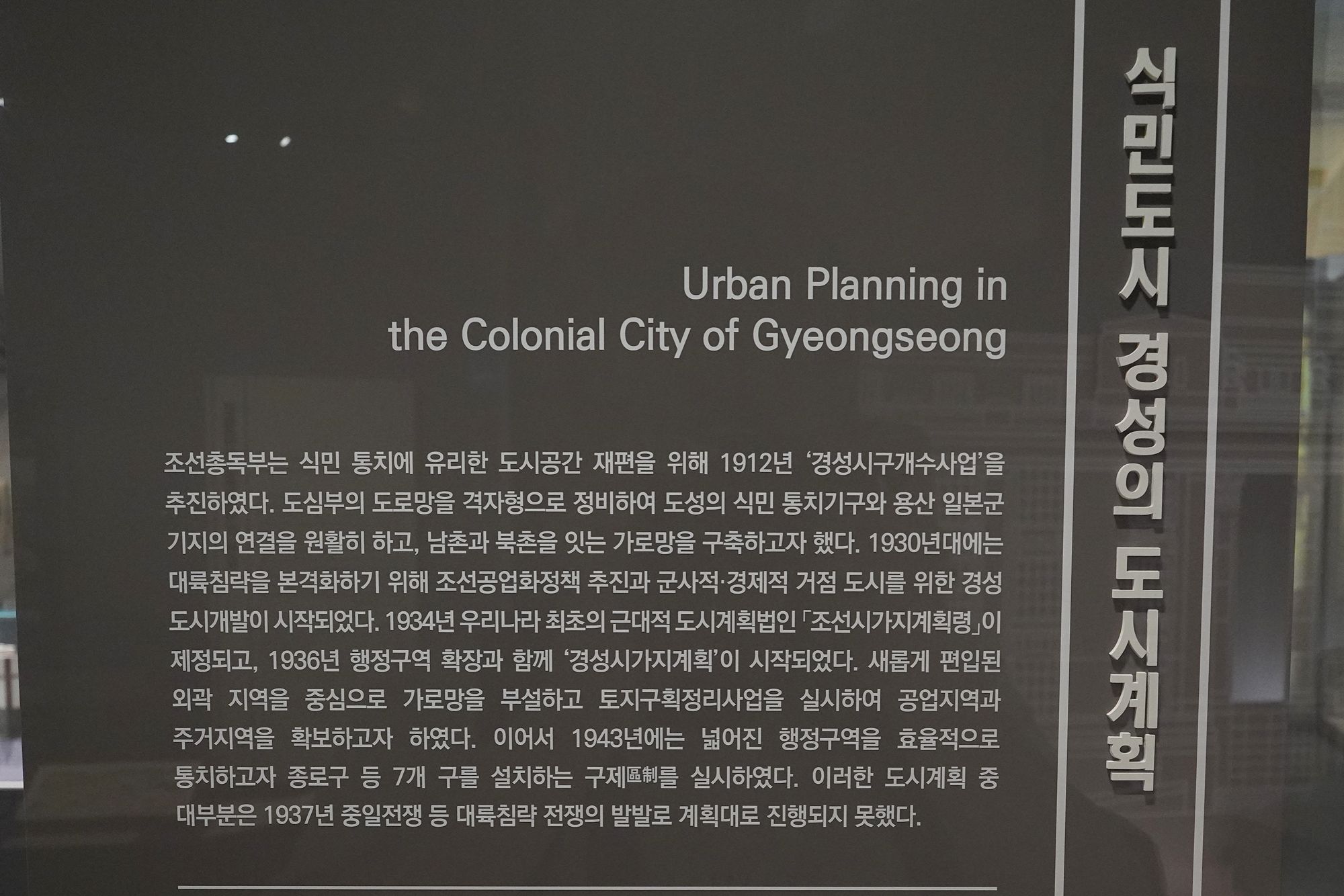
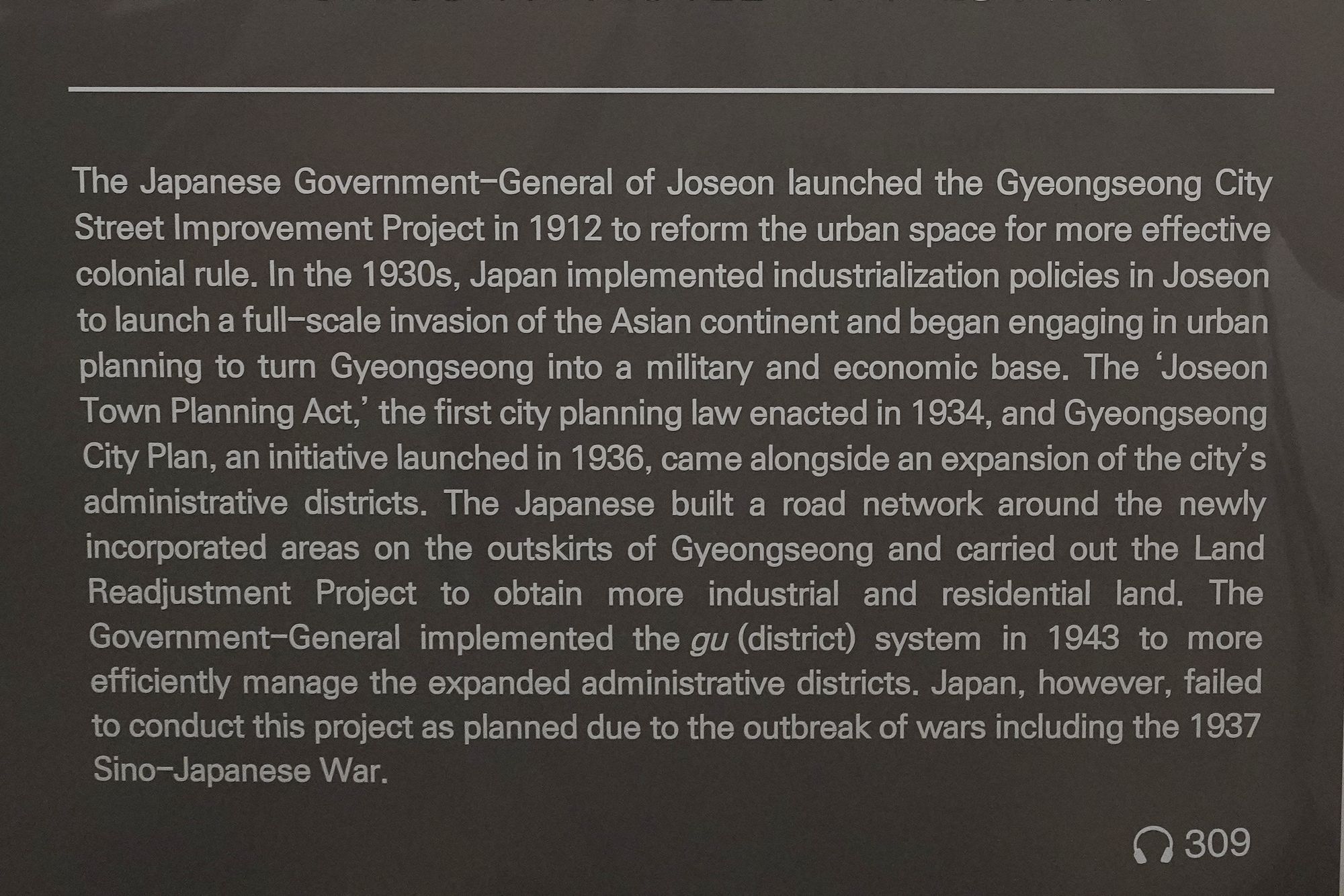
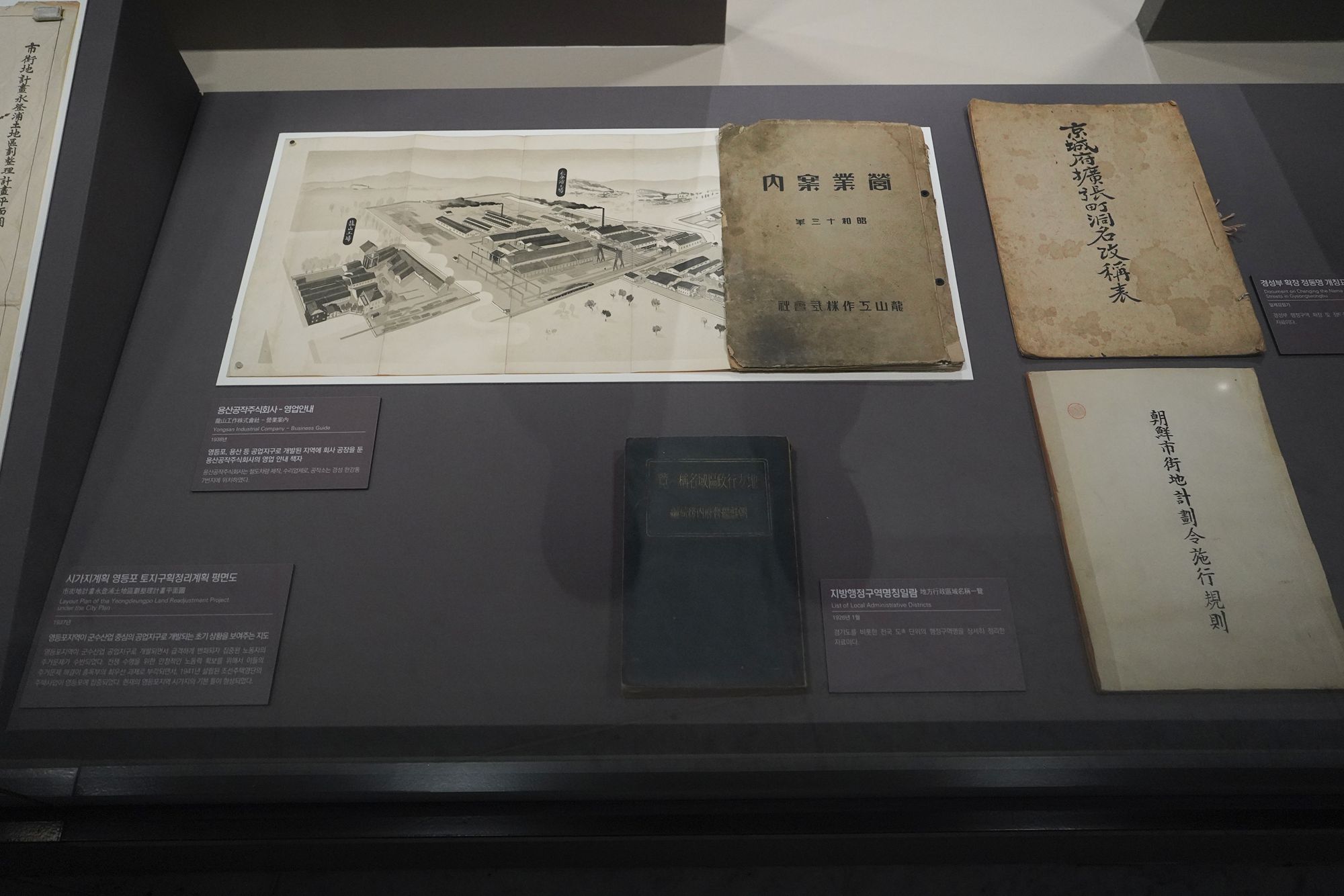
Under Japanese colonial rule, Seoul was expanded and redesigned with new roads, industrial areas, and residential districts. During the 1930s, much of this urban planning was intended to develop the city as a military and economic base for Japan’s expansion into Asia.
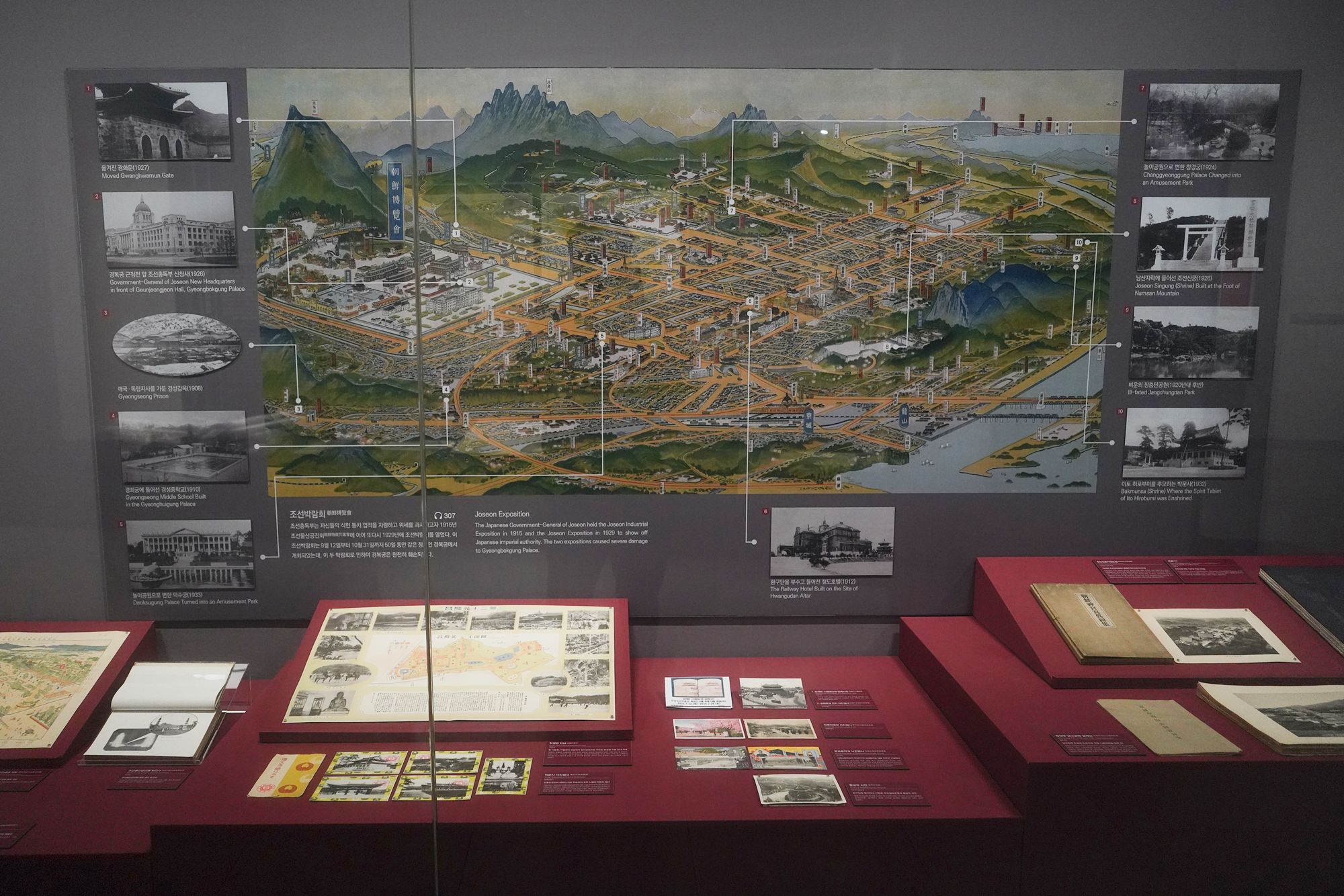
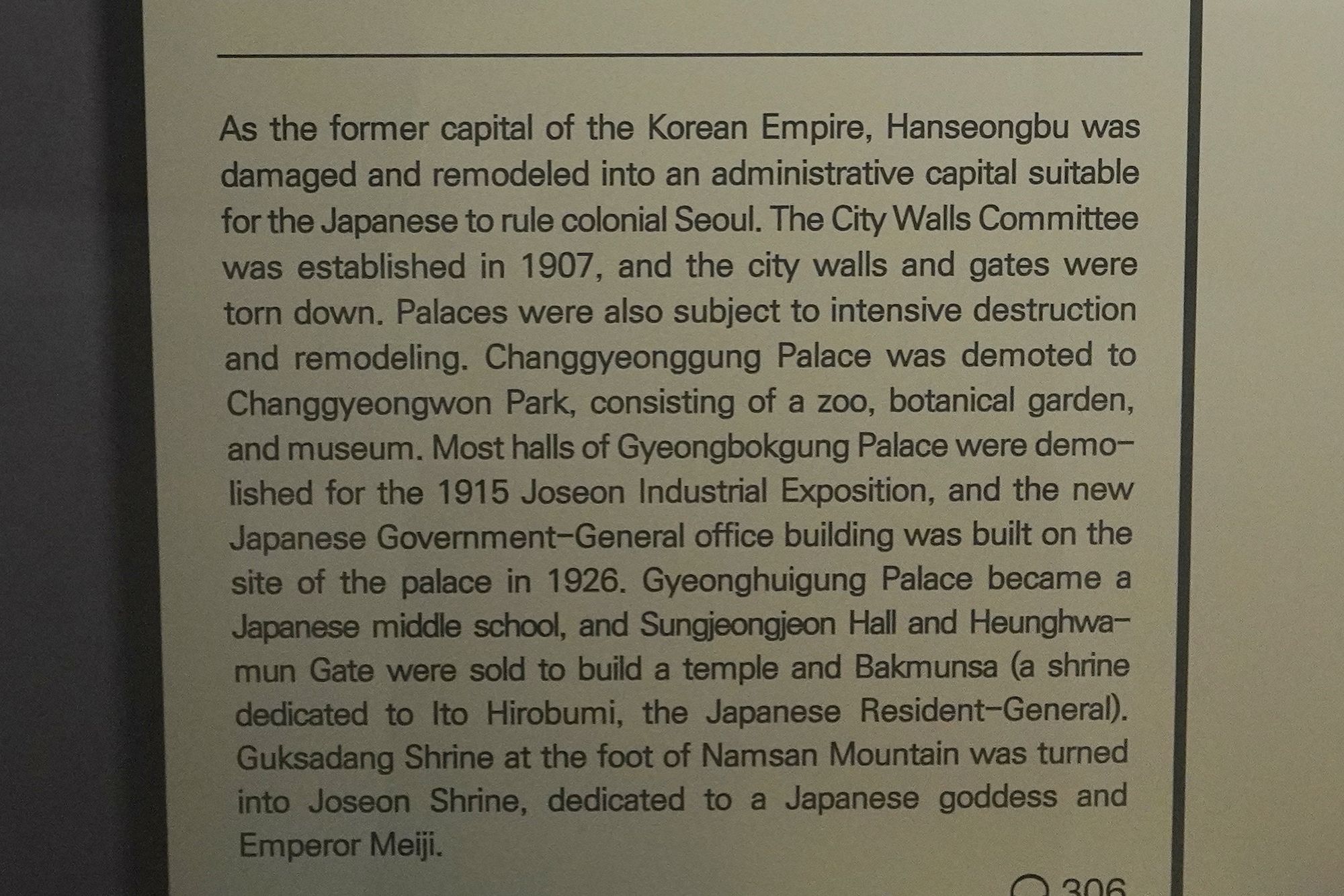
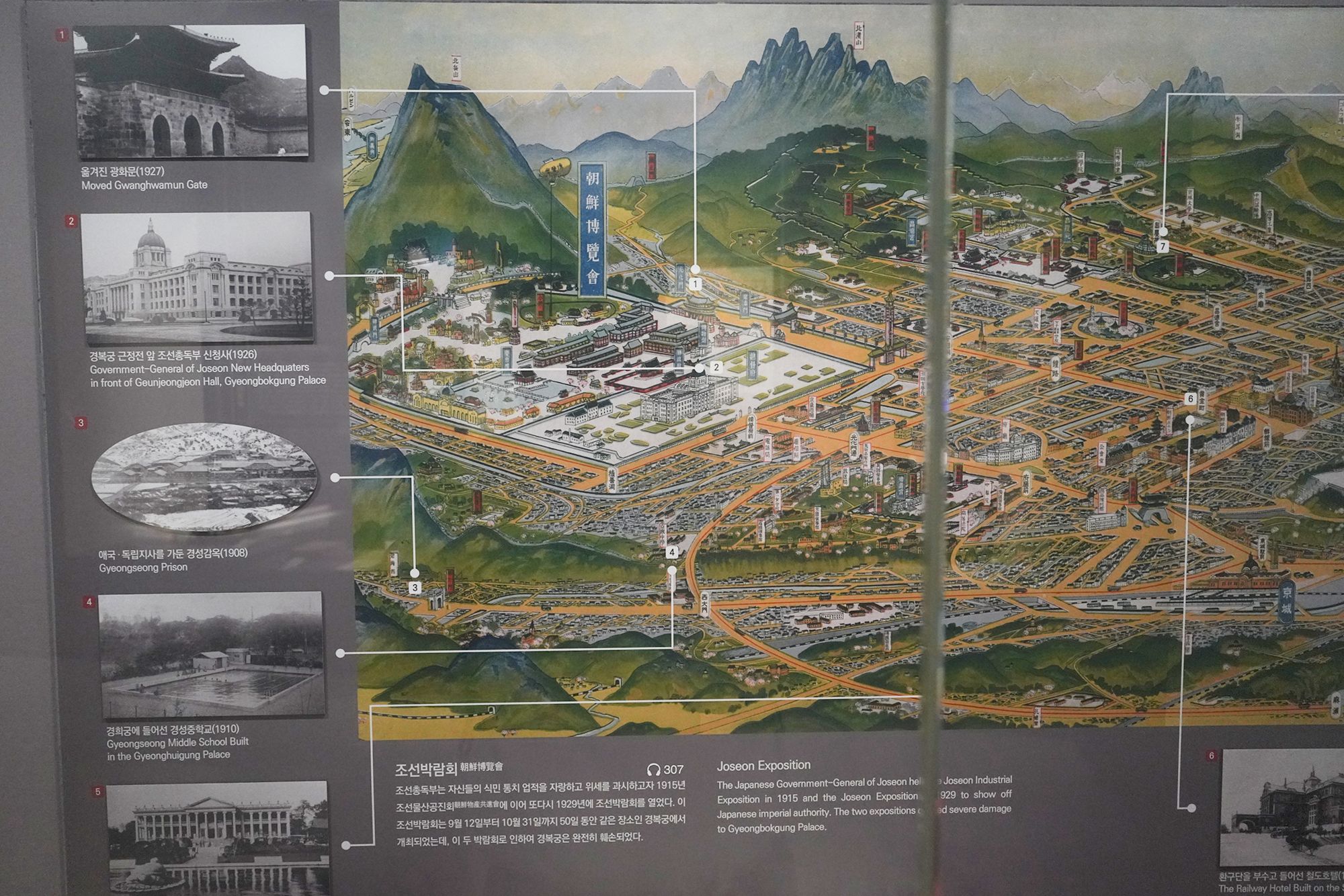
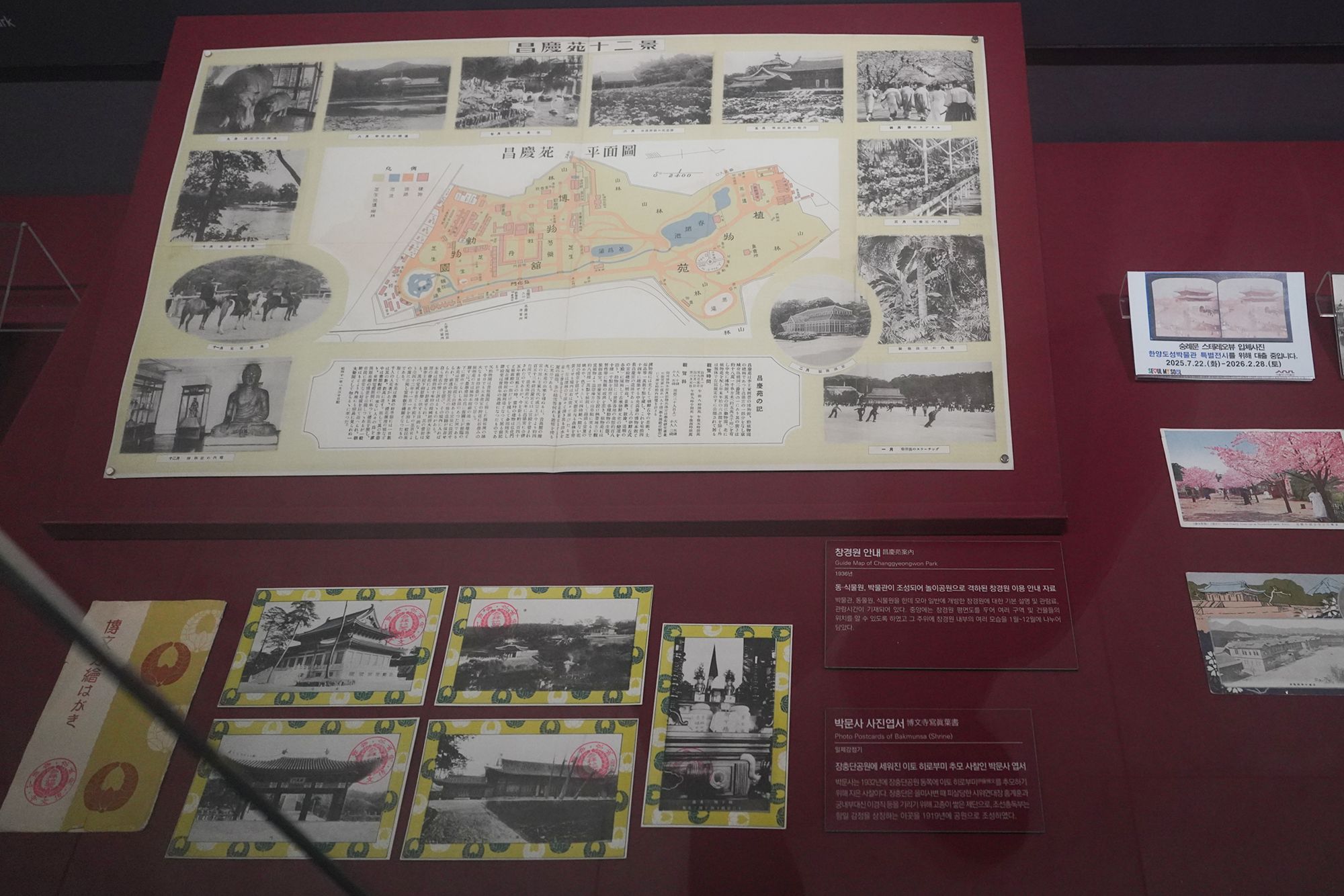
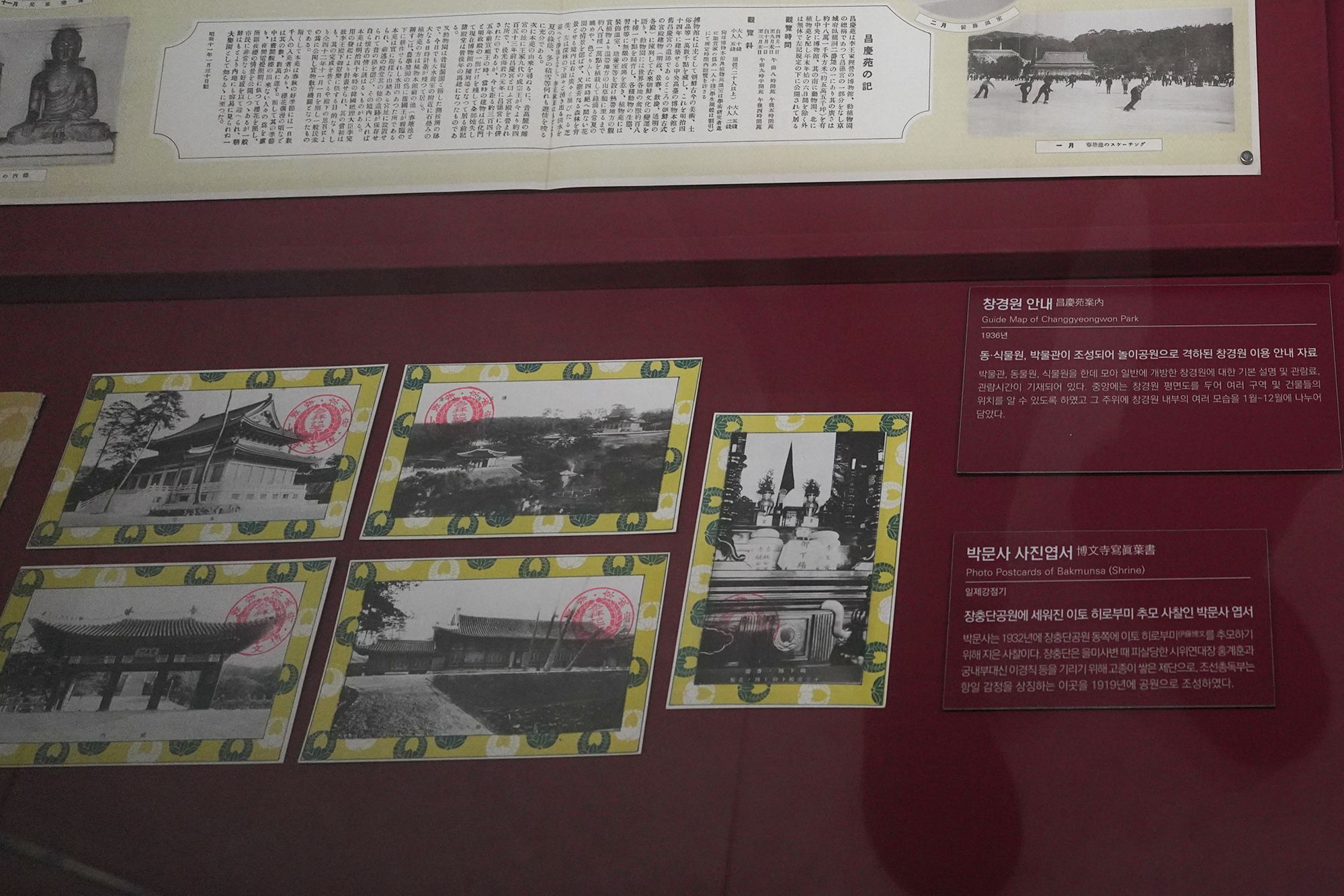
During Japanese colonial rule, many of Seoul’s historic city walls, gates, and palace buildings were demolished or altered. Parts of the royal palaces were converted into parks, schools, and exhibition grounds, while the Japanese Government-General building was constructed within Gyeongbokgung Palace, dramatically changing the historic center of Seoul.
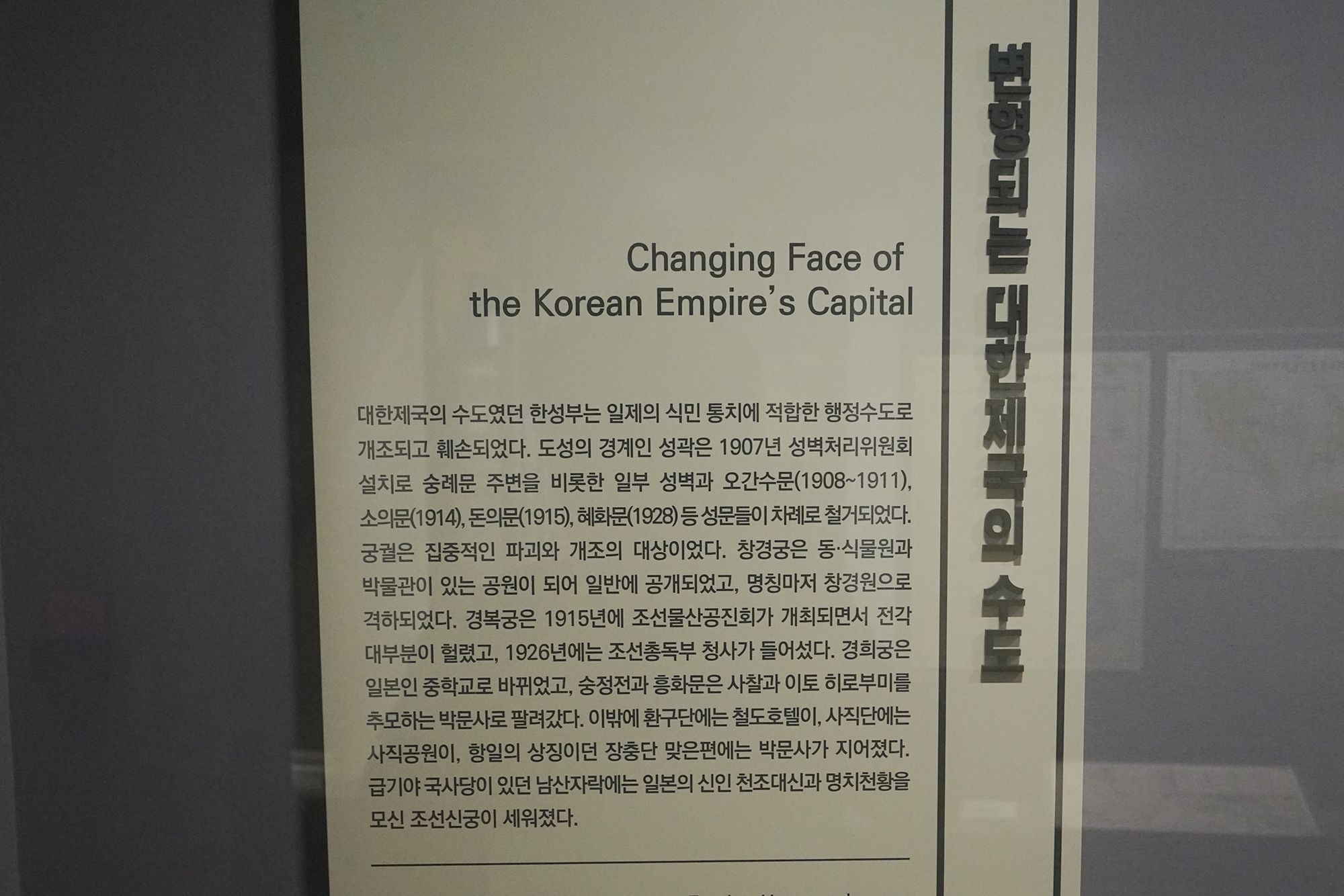
Many historic buildings were moved, altered, or given new purposes during Japanese colonial rule.
Seoul was an important center of the Korean independence movement during Japanese colonial rule. The March 1st Movement began there in 1919 and spread throughout Korea, while activists and intellectuals continued organizing resistance and working to preserve Korean national culture despite Japanese repression.
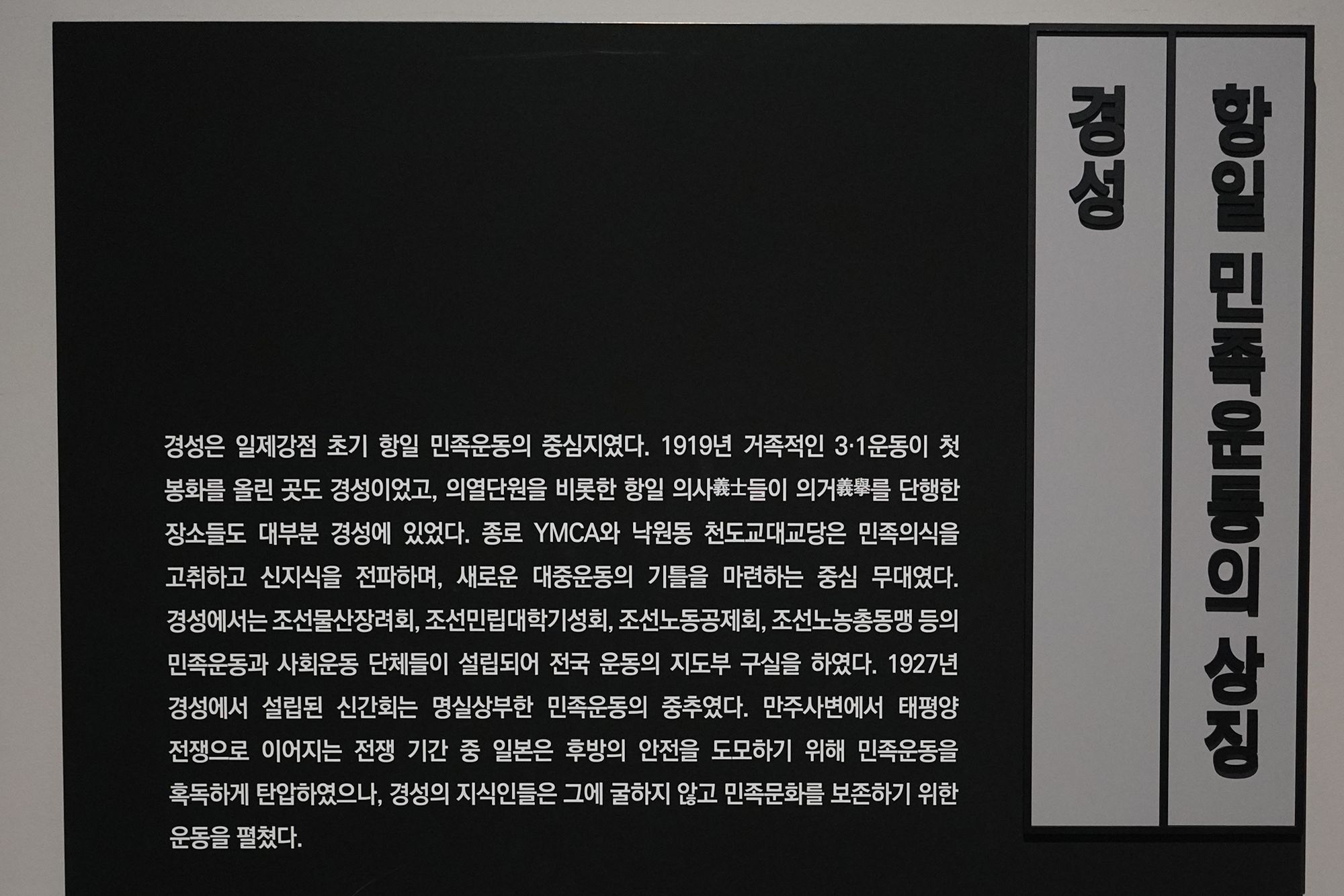
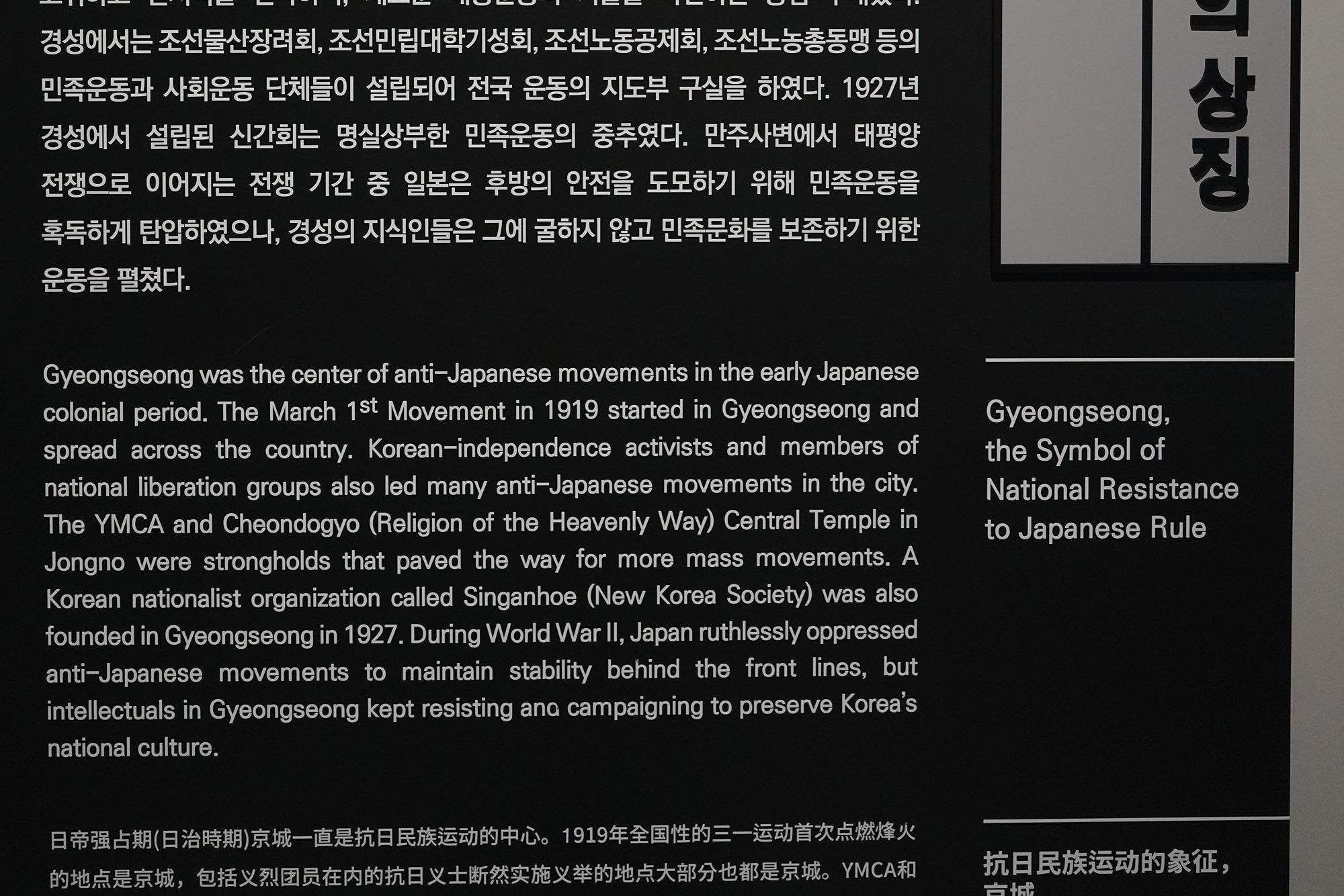
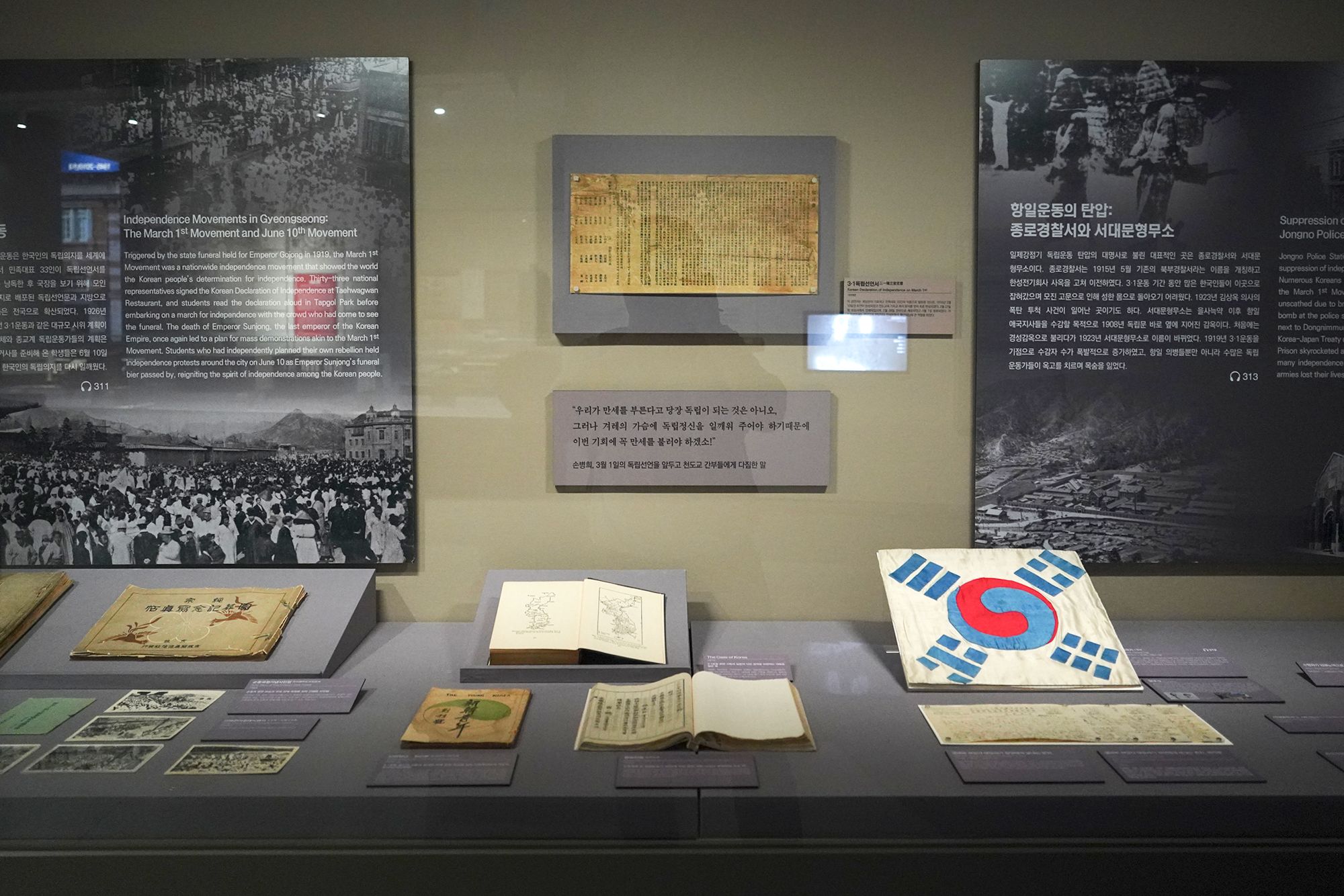
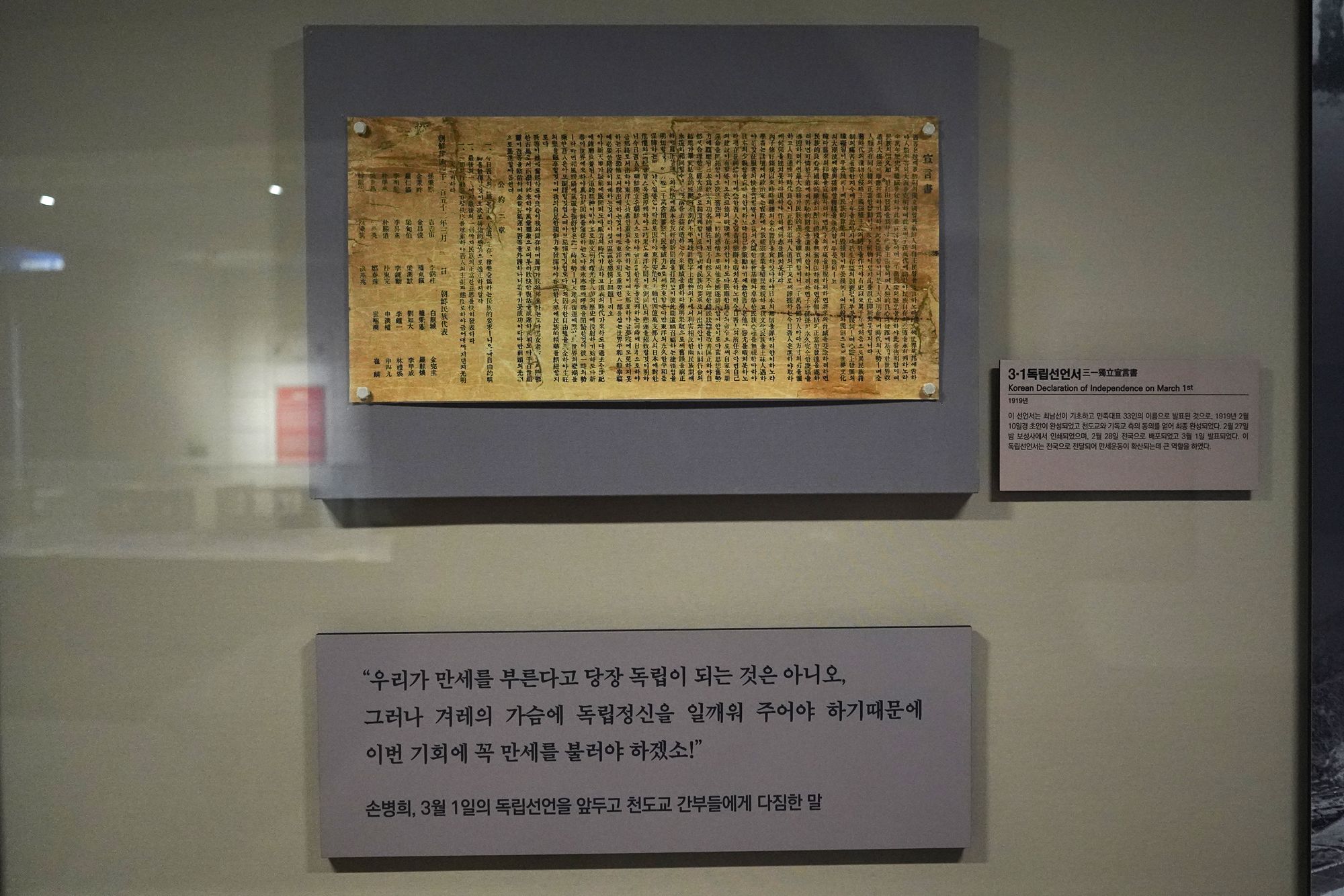
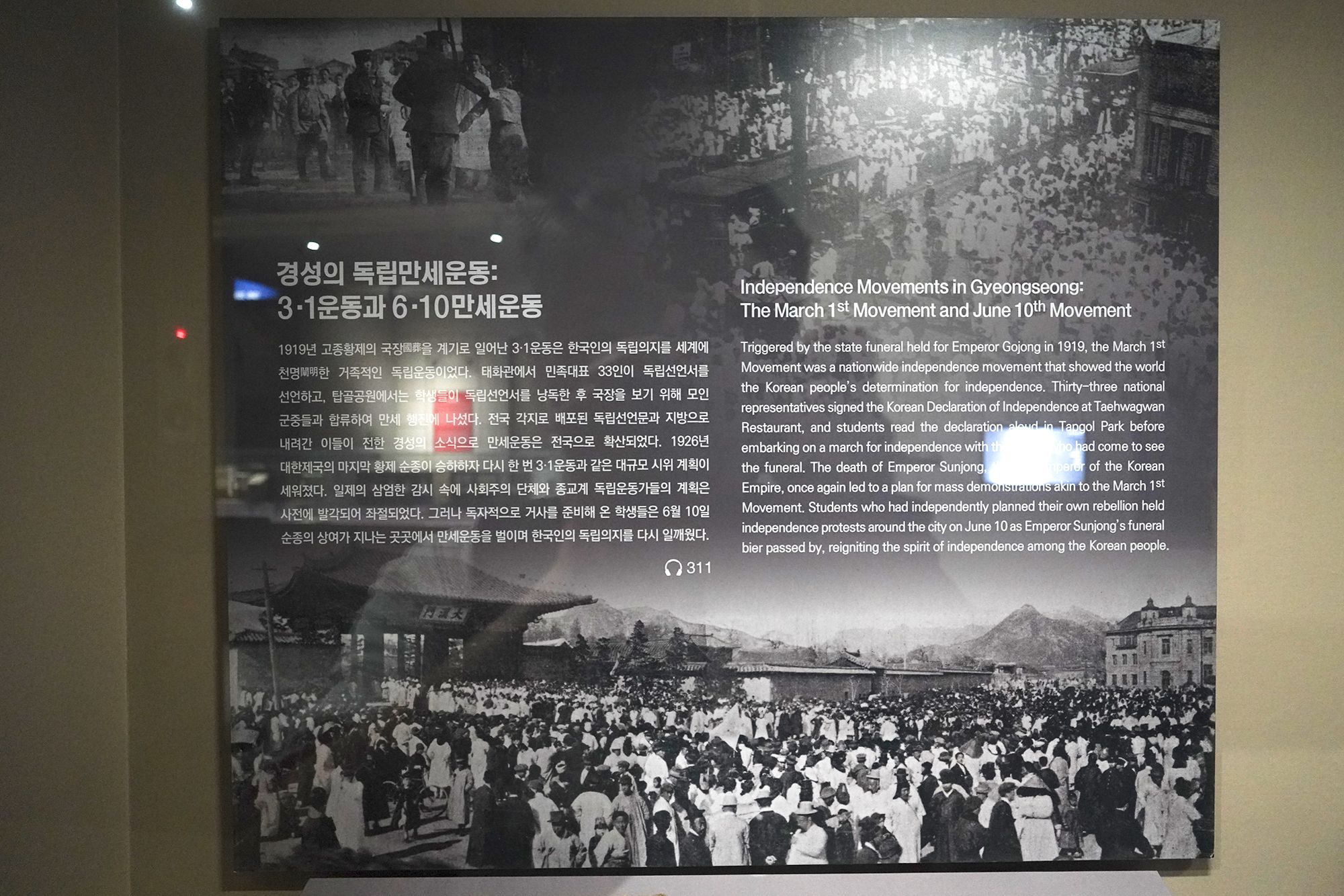
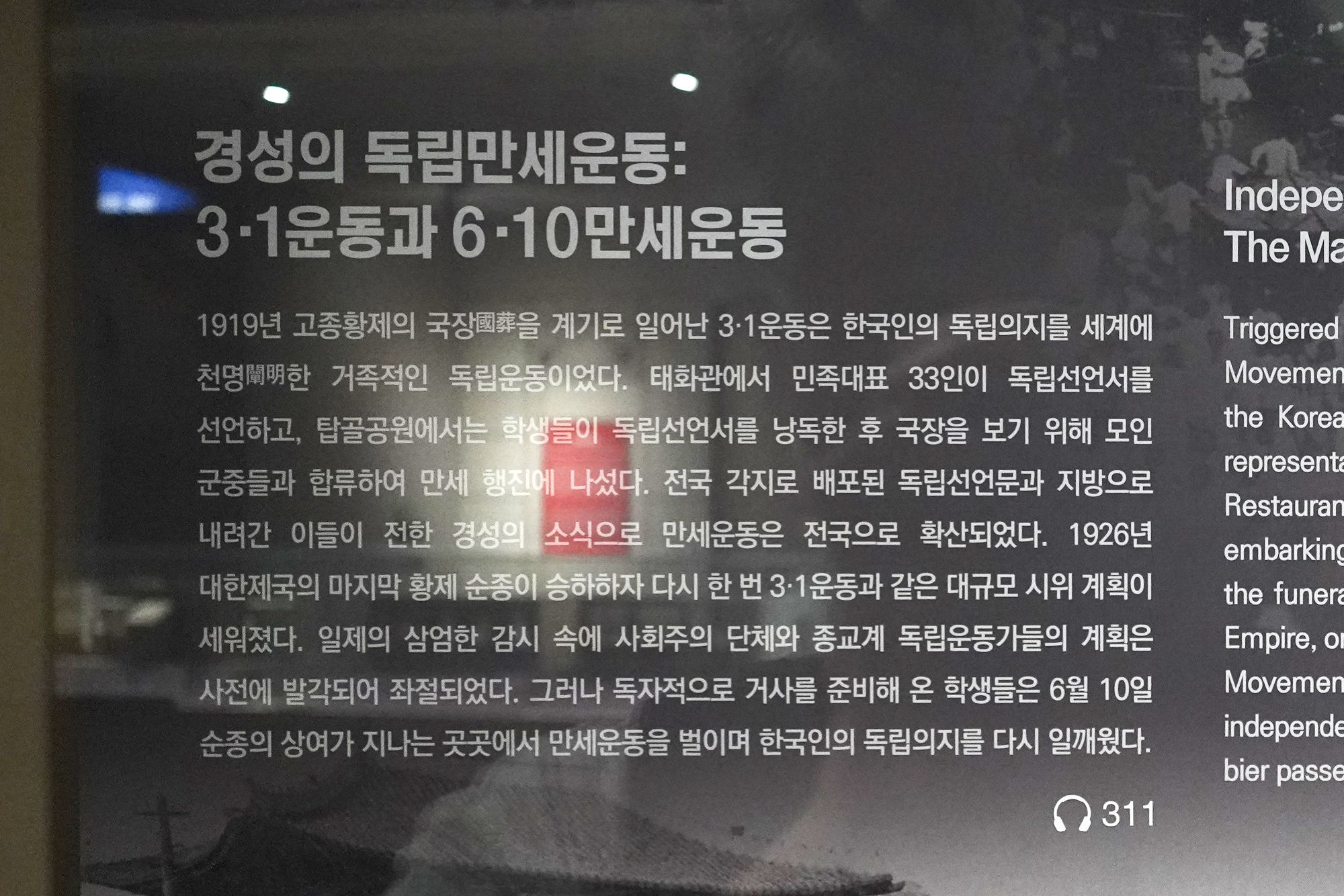
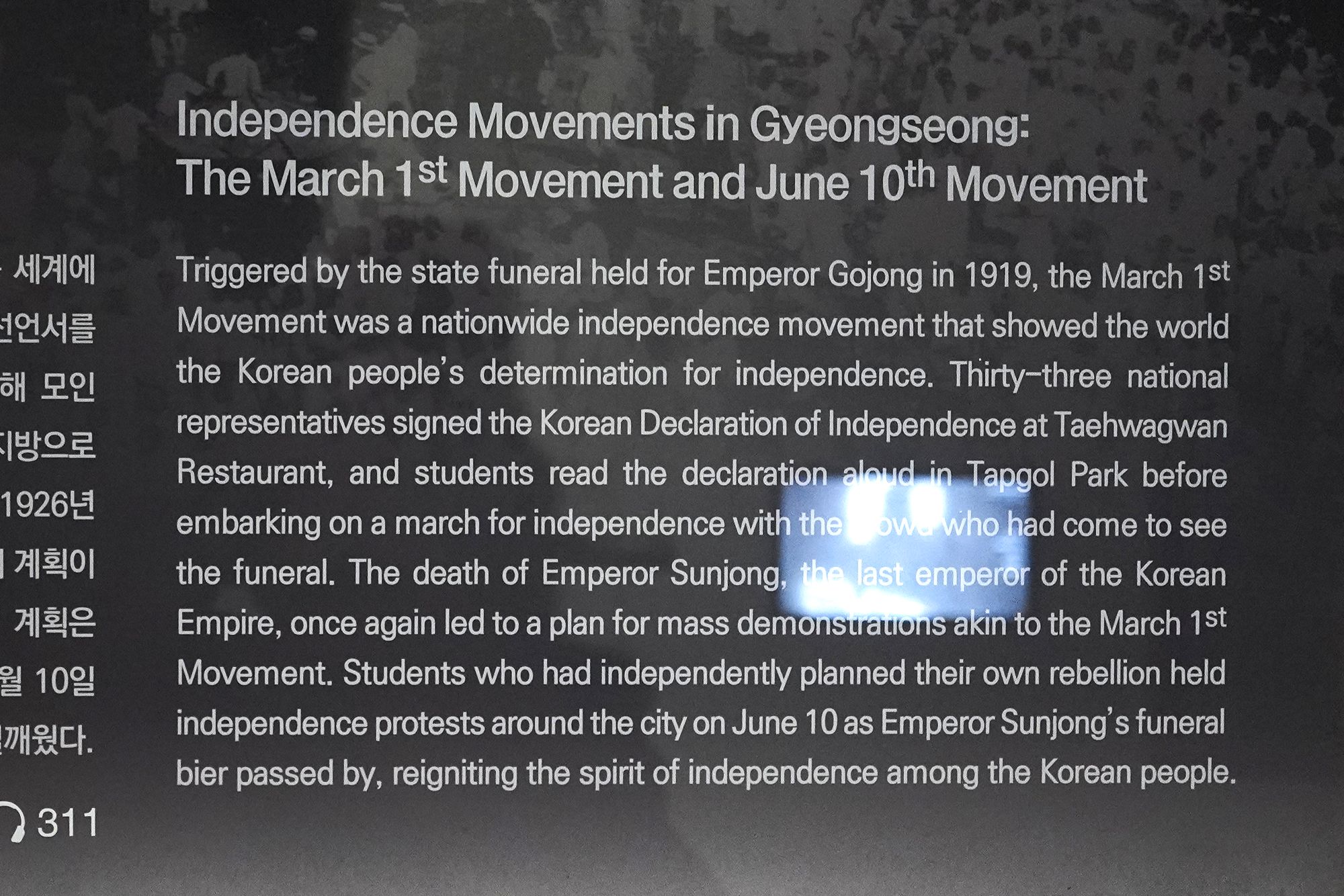
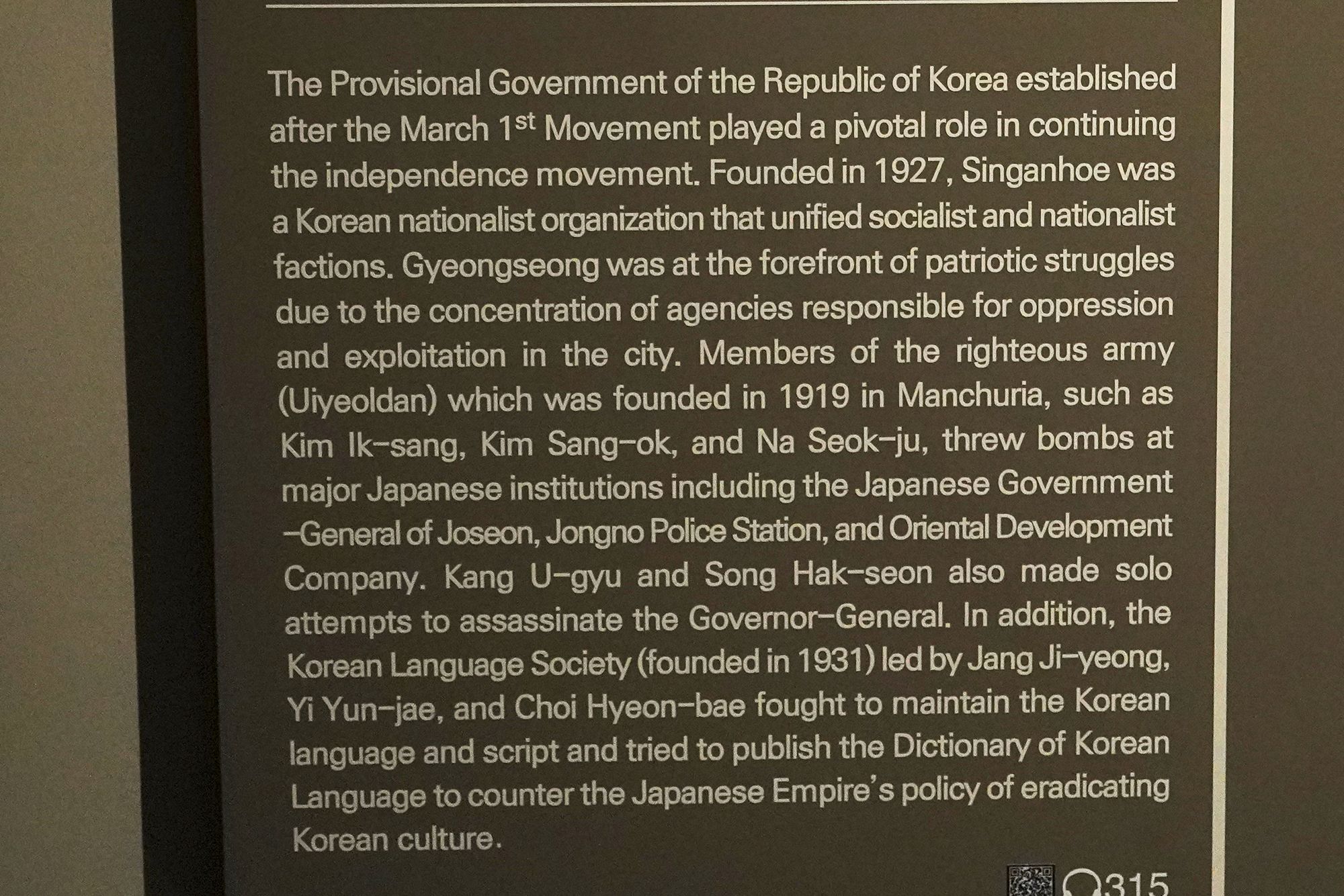
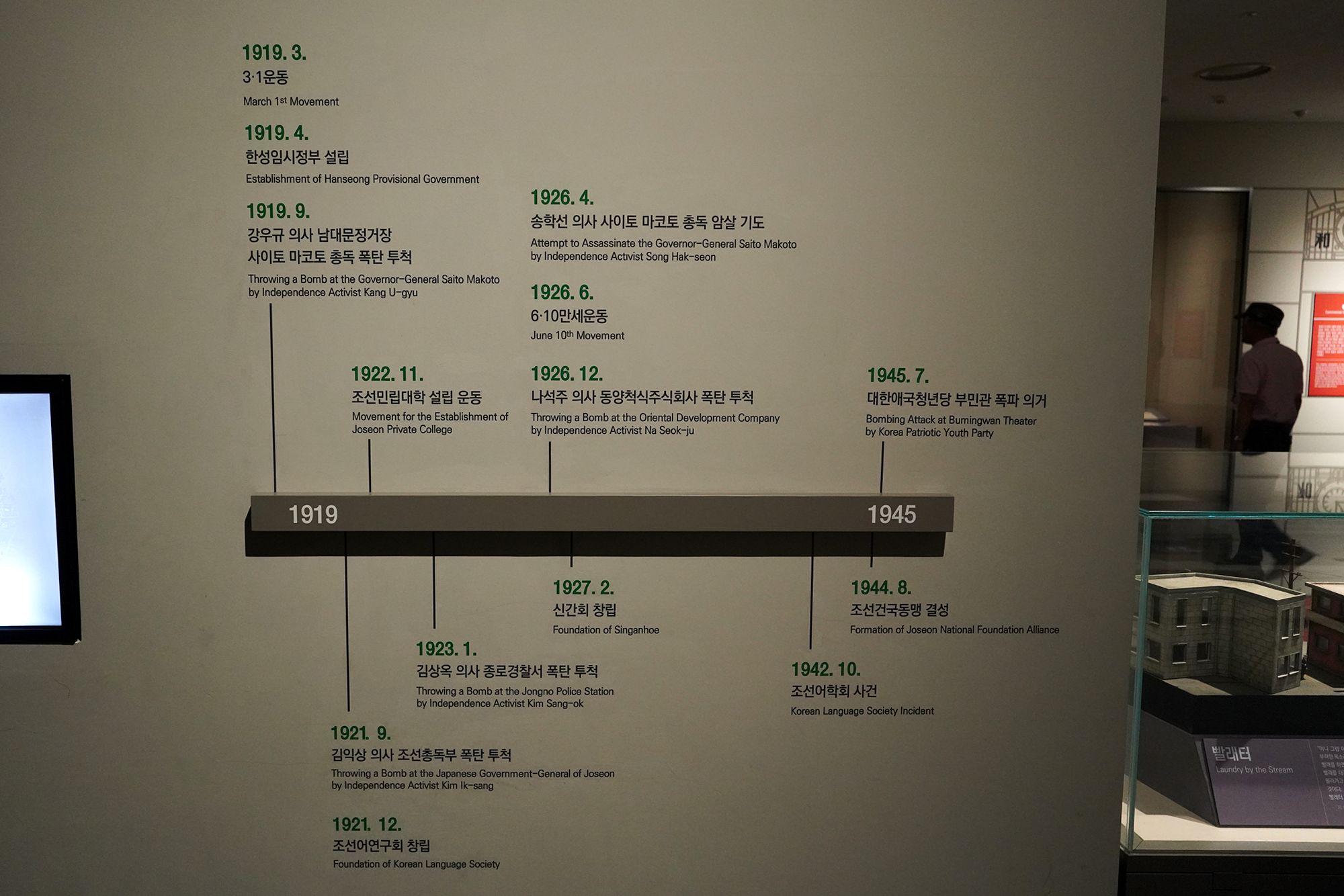
The March 1st Movement of 1919 began in Seoul, where the Korean Declaration of Independence was proclaimed and large demonstrations called for independence from Japanese rule. Another major protest, the June 10th Movement, took place in 1926 during the funeral of Emperor Sunjong, once again bringing Koreans into the streets to demand independence.
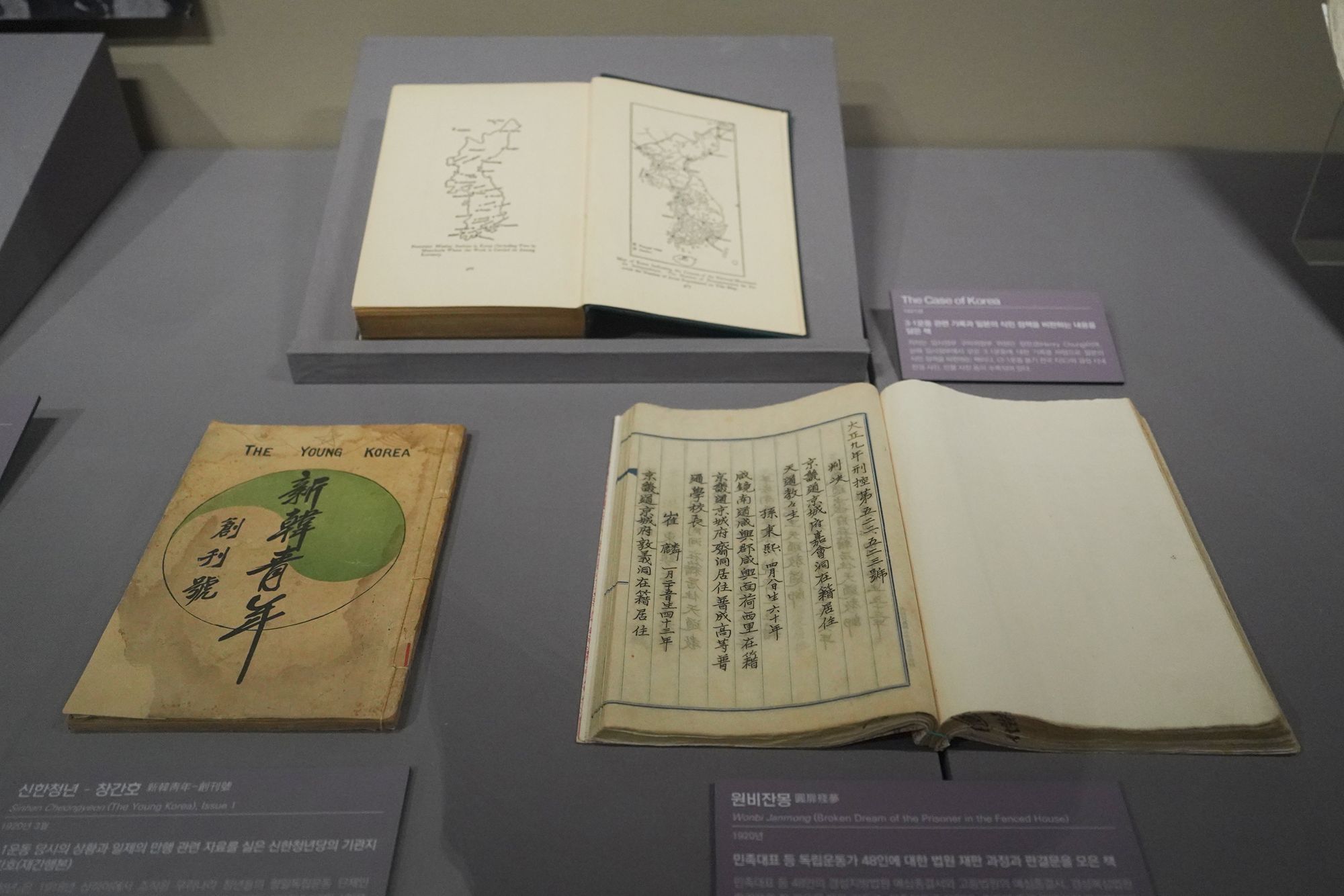
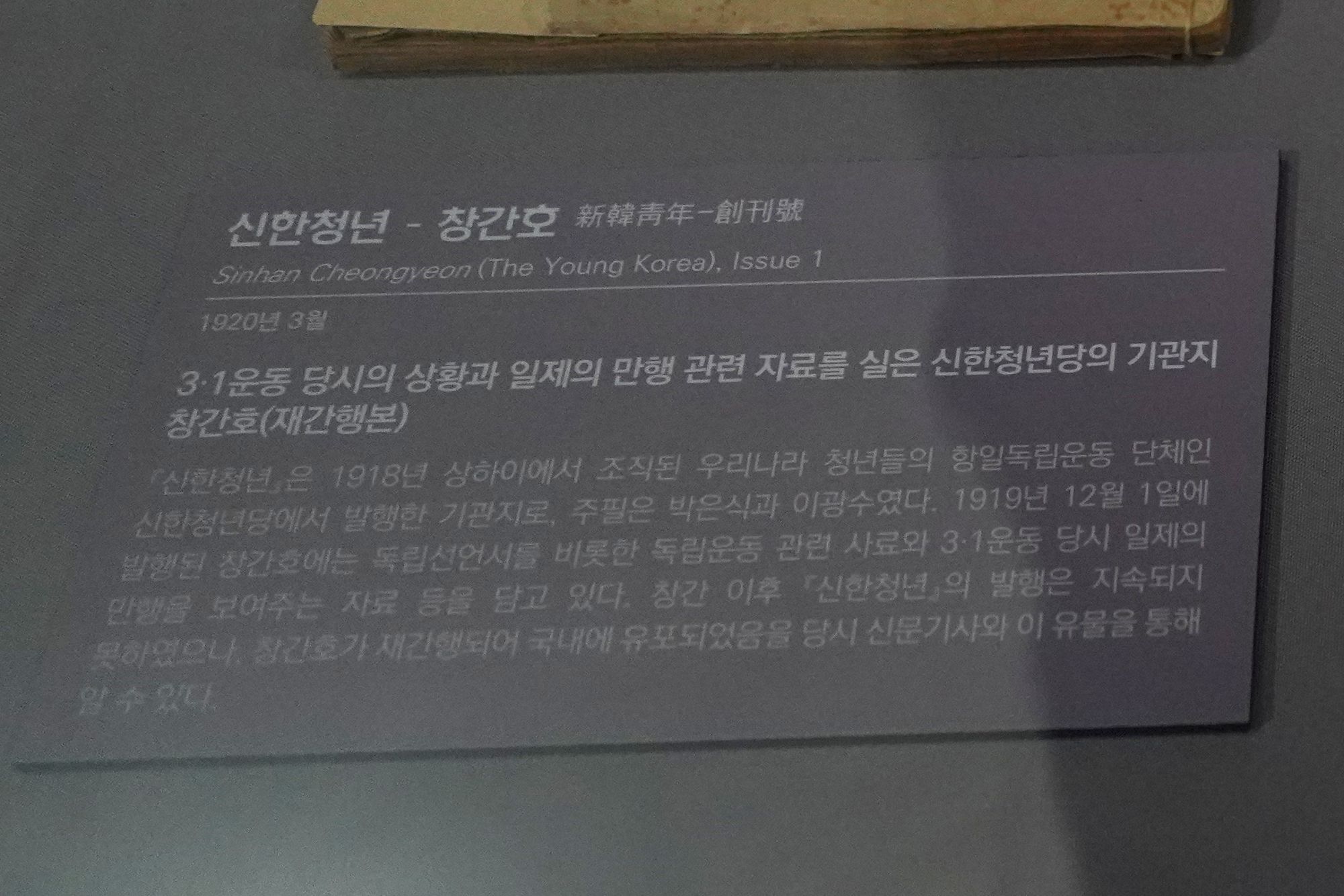
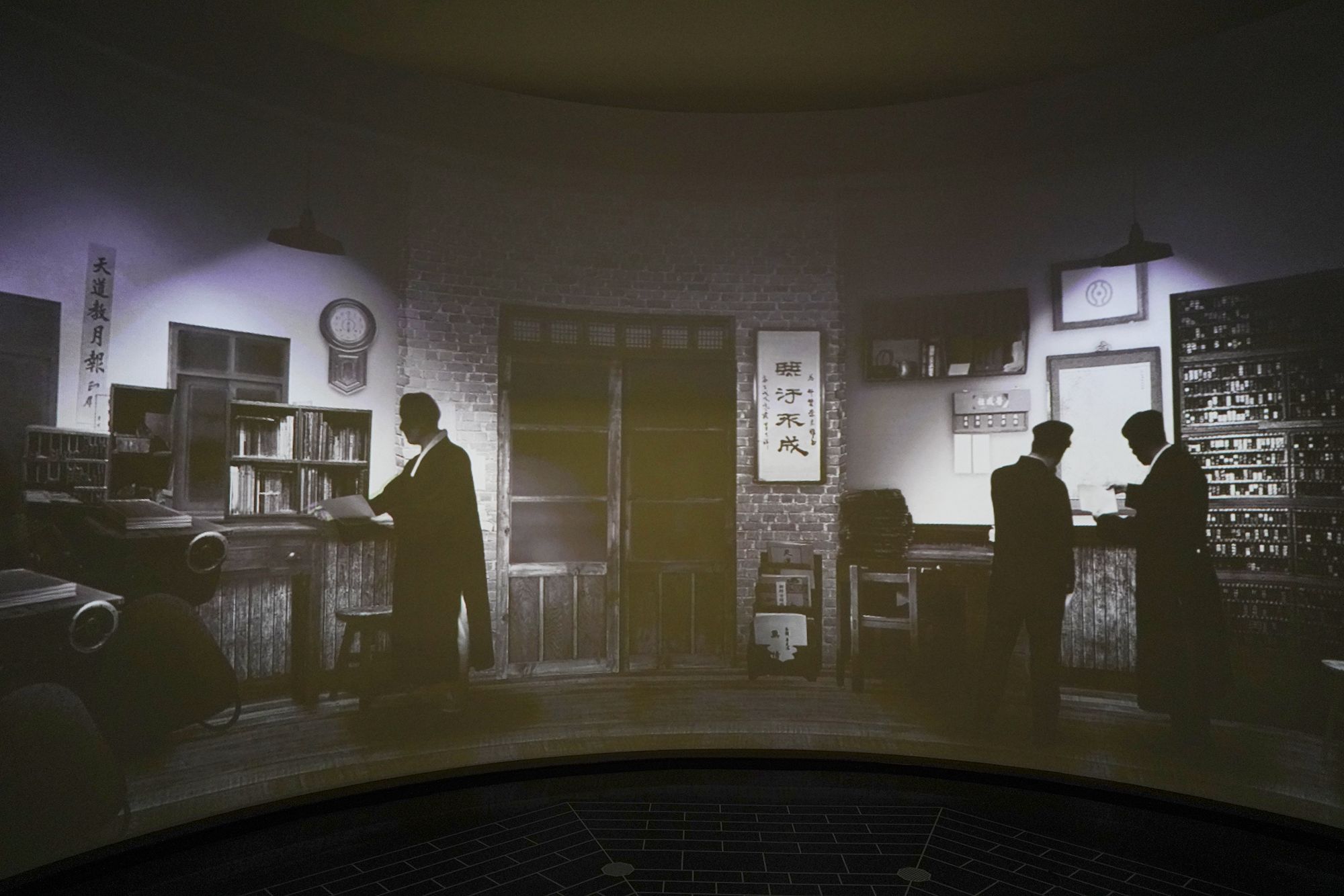
After the March 1st Movement, resistance to Japanese rule continued through political organizations, armed actions, and efforts to preserve Korean culture. Activists in Seoul challenged Japanese colonial institutions, while scholars worked to protect the Korean language and writing system from Japanese attempts to suppress Korean identity.
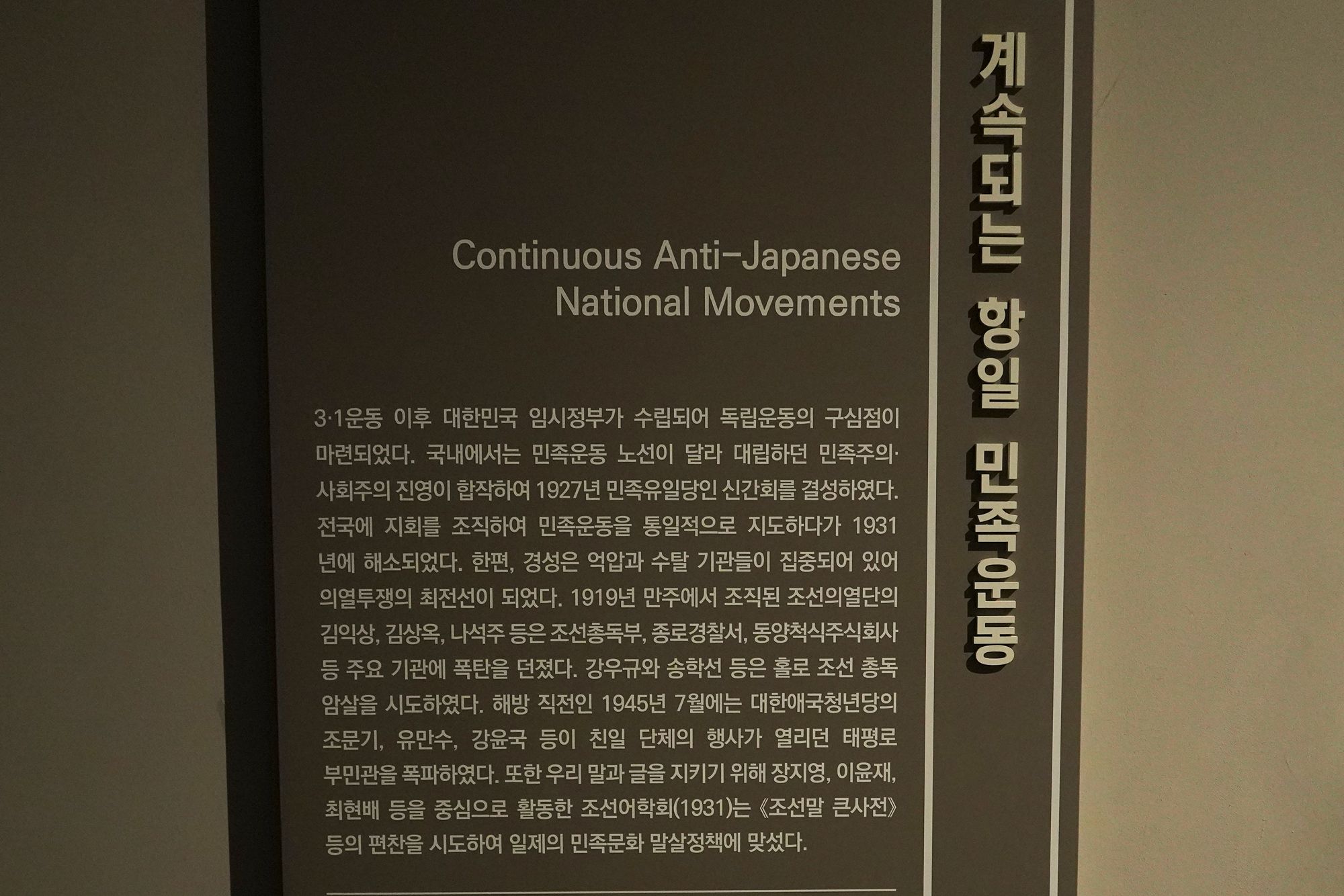
A brief history
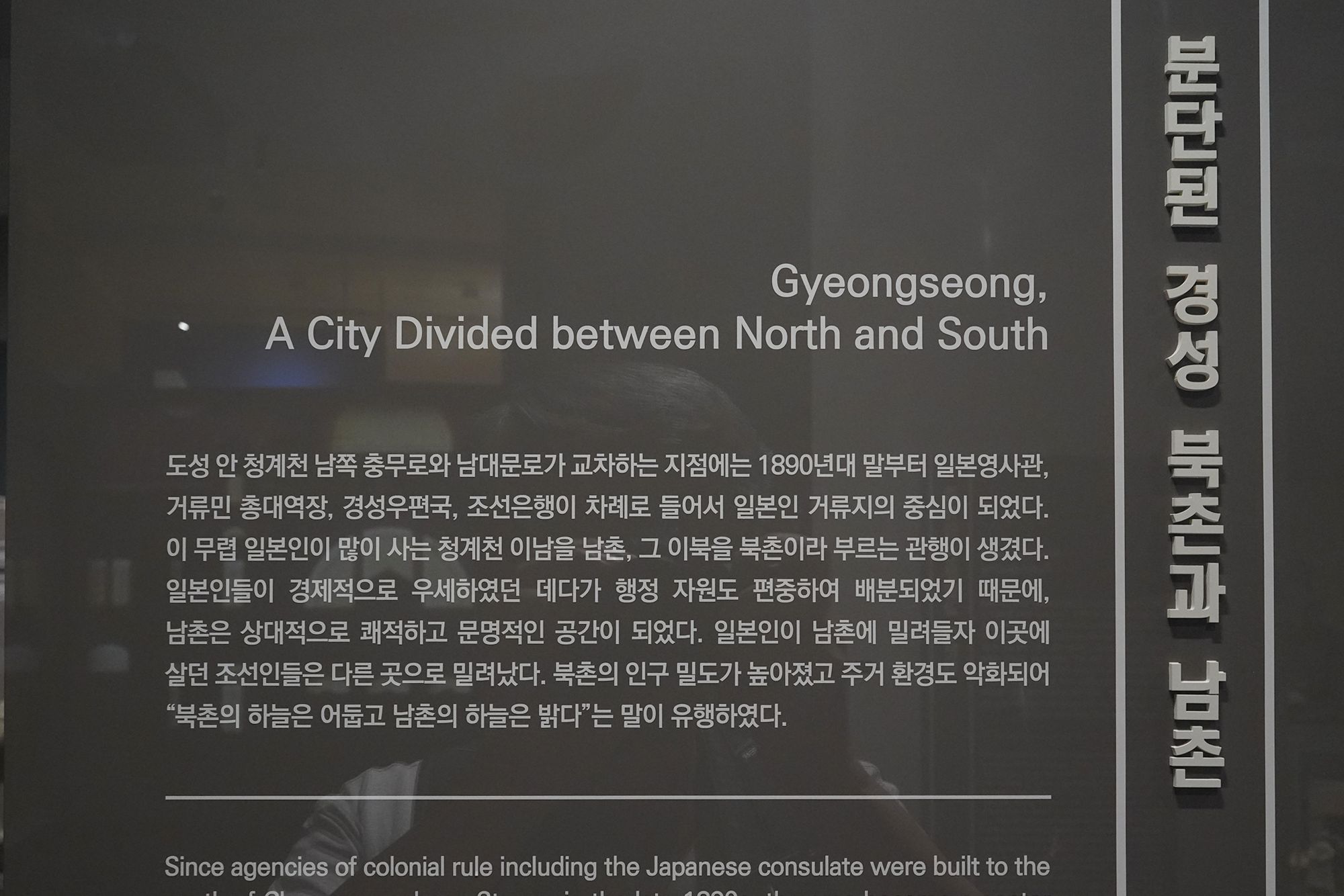
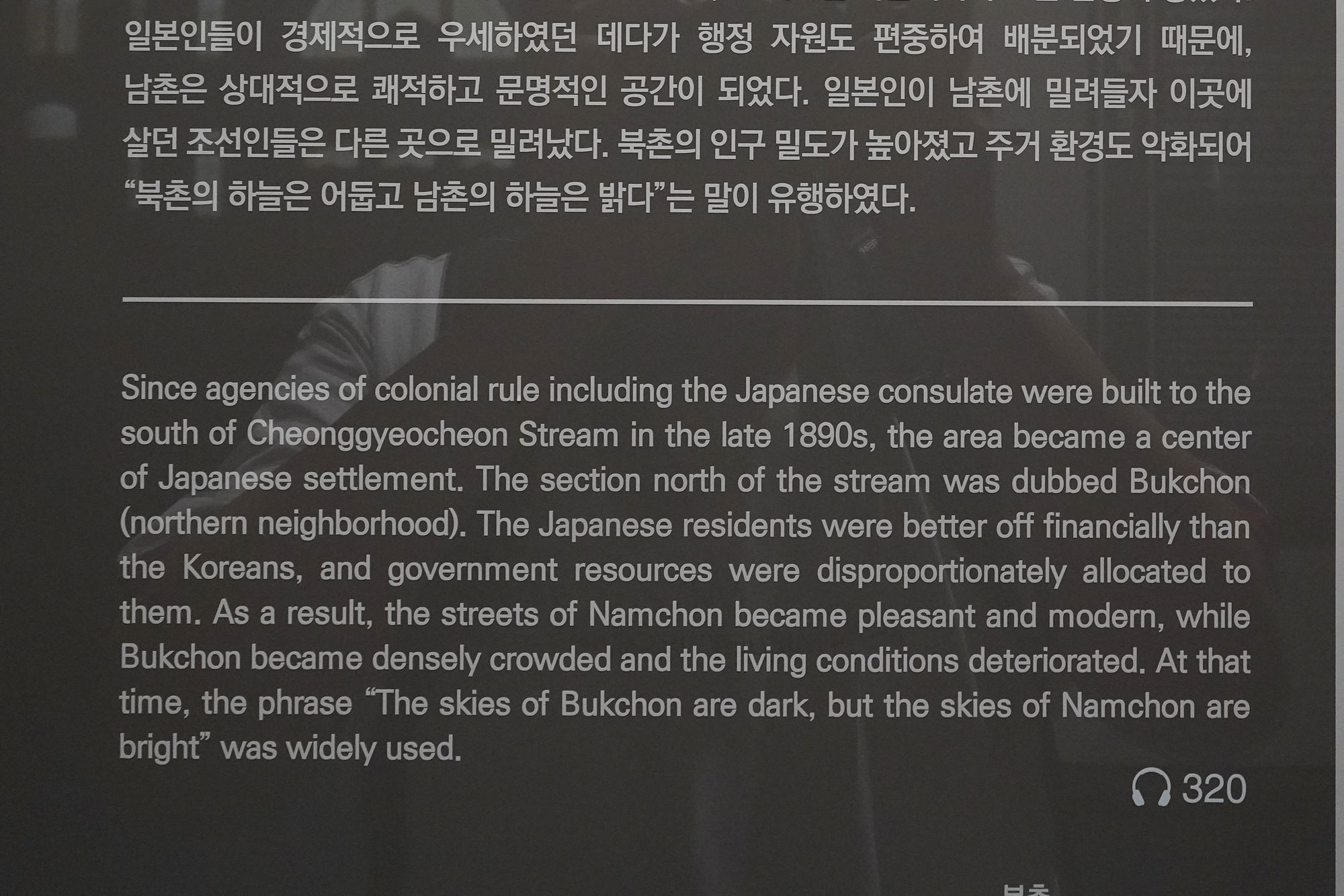
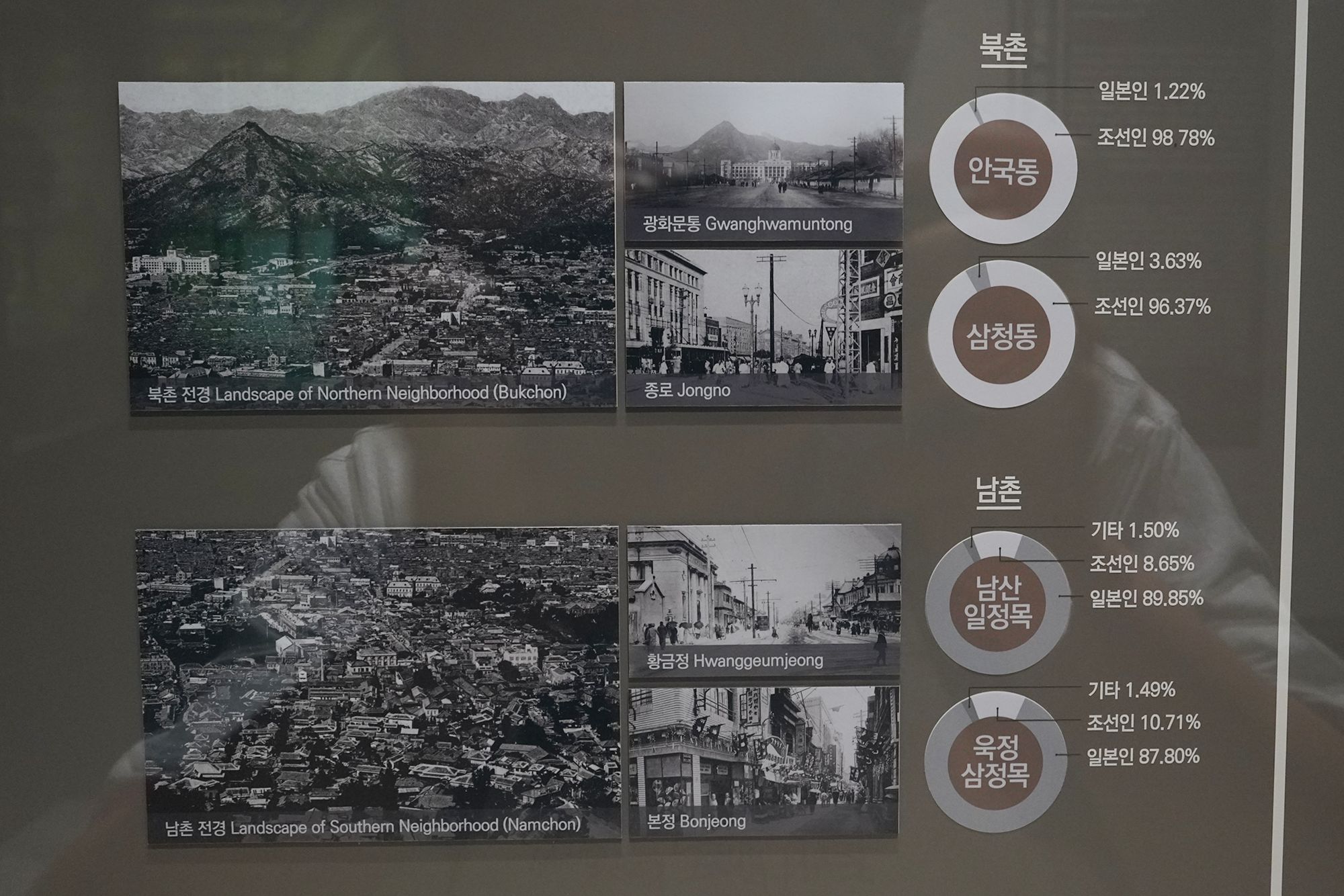
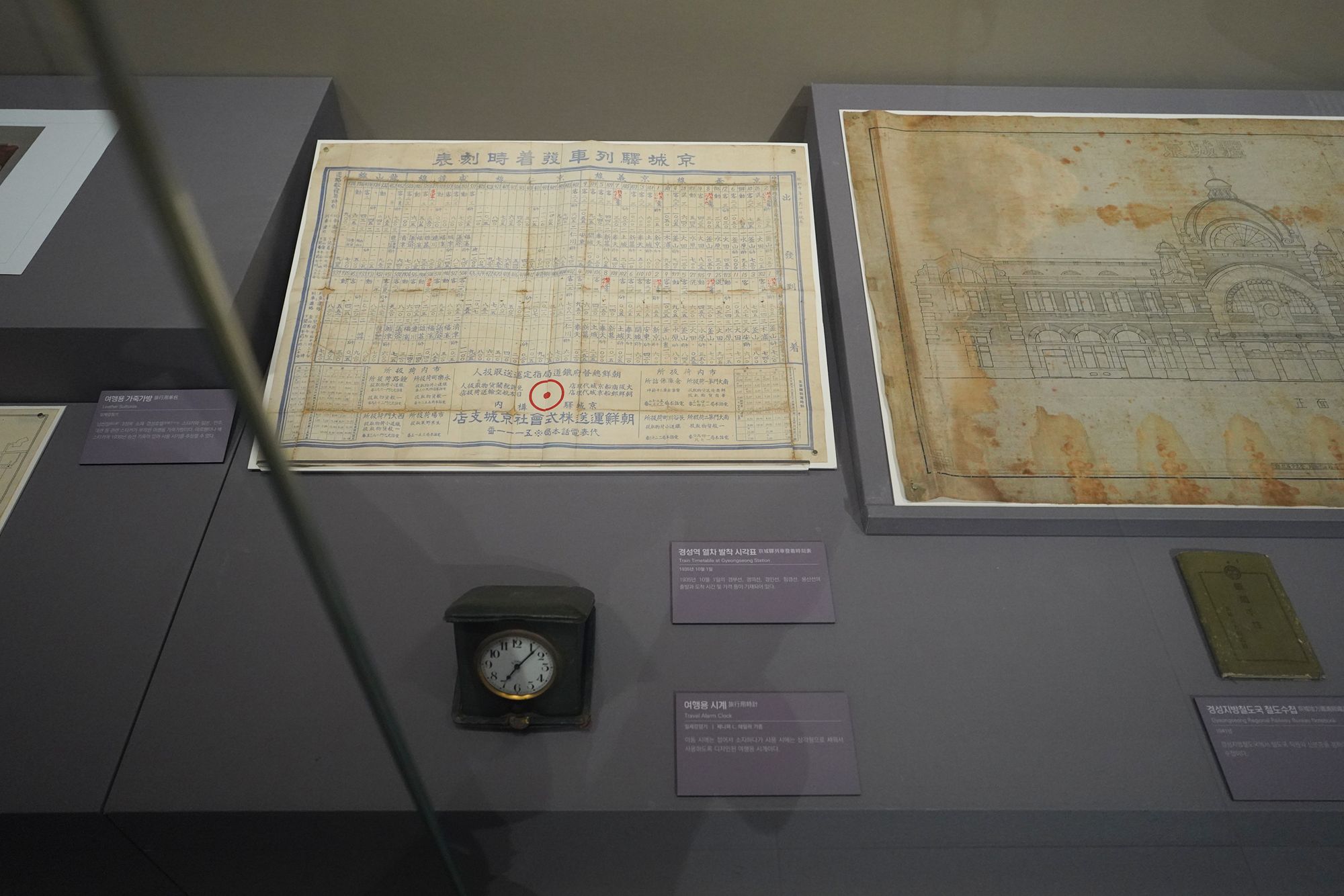
During the 1920s and 1930s, Gyeongseong began to take on the appearance of a modern city, with streetcars, Western-style buildings, department stores, cafés, and theaters. However, development was deeply unequal. Japanese neighborhoods such as Namchon received better infrastructure and became prosperous commercial areas, while many Korean neighborhoods in Bukchon remained overcrowded and poorly developed. This contrast reflected the discrimination and inequality of life under Japanese colonial rule.
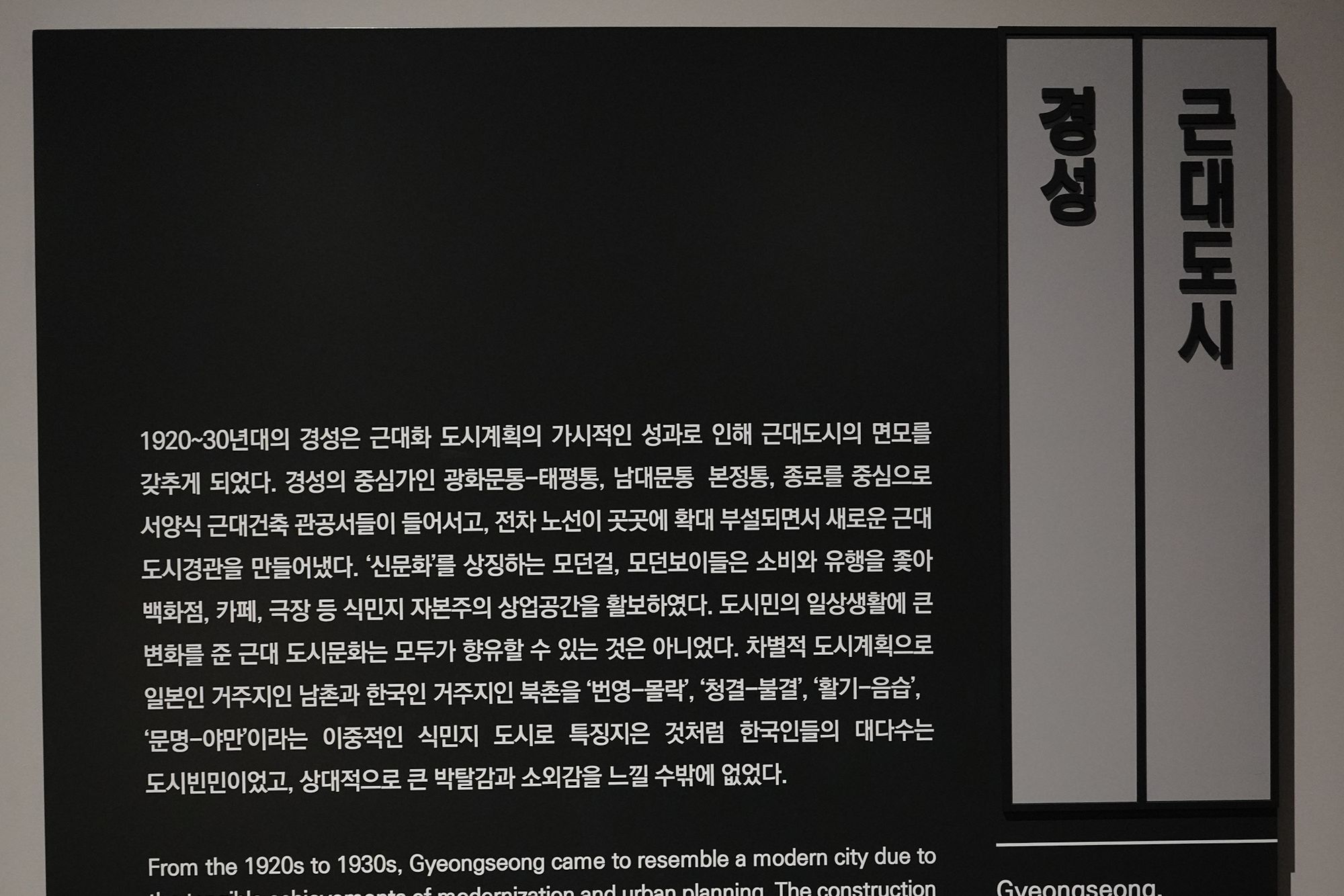
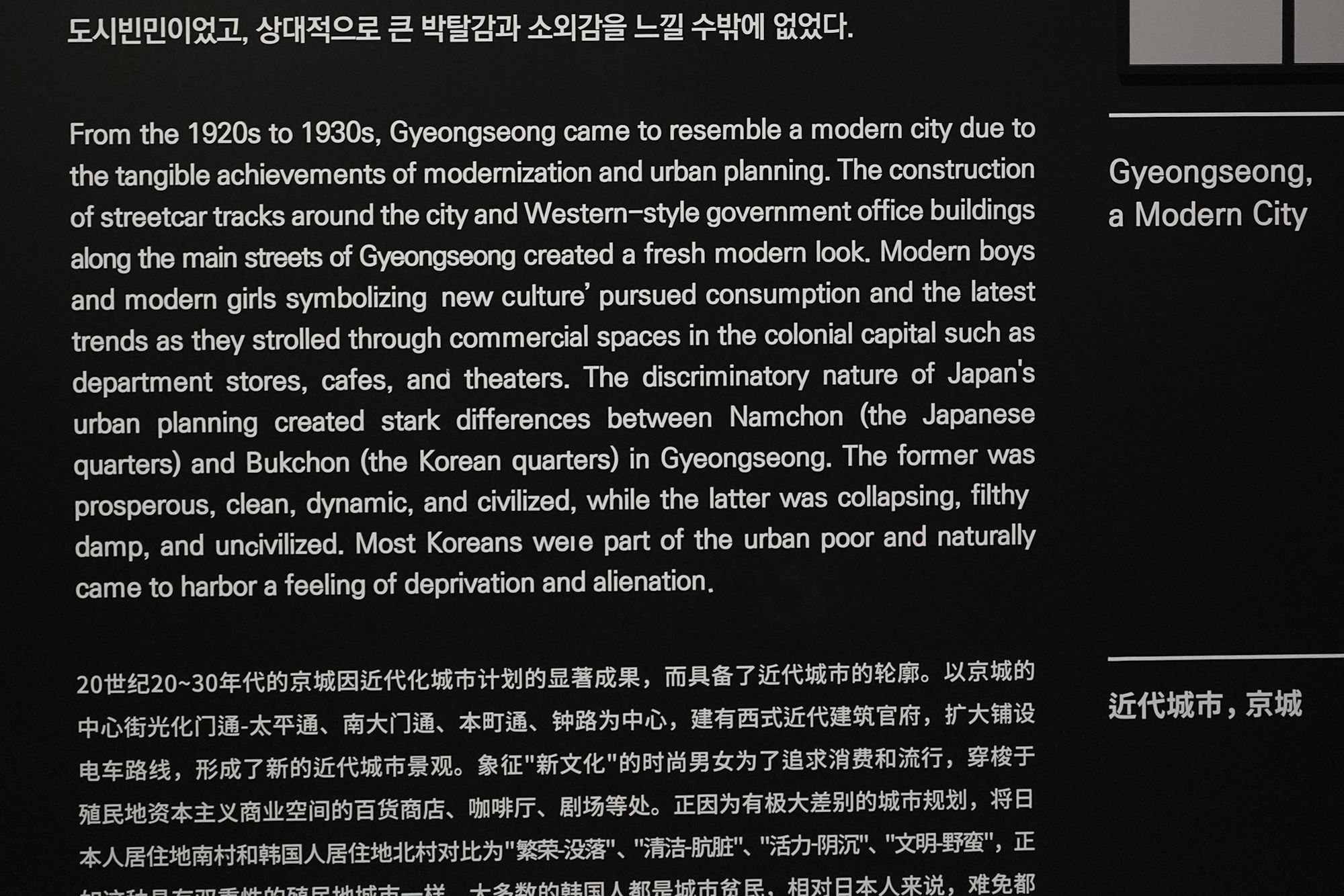
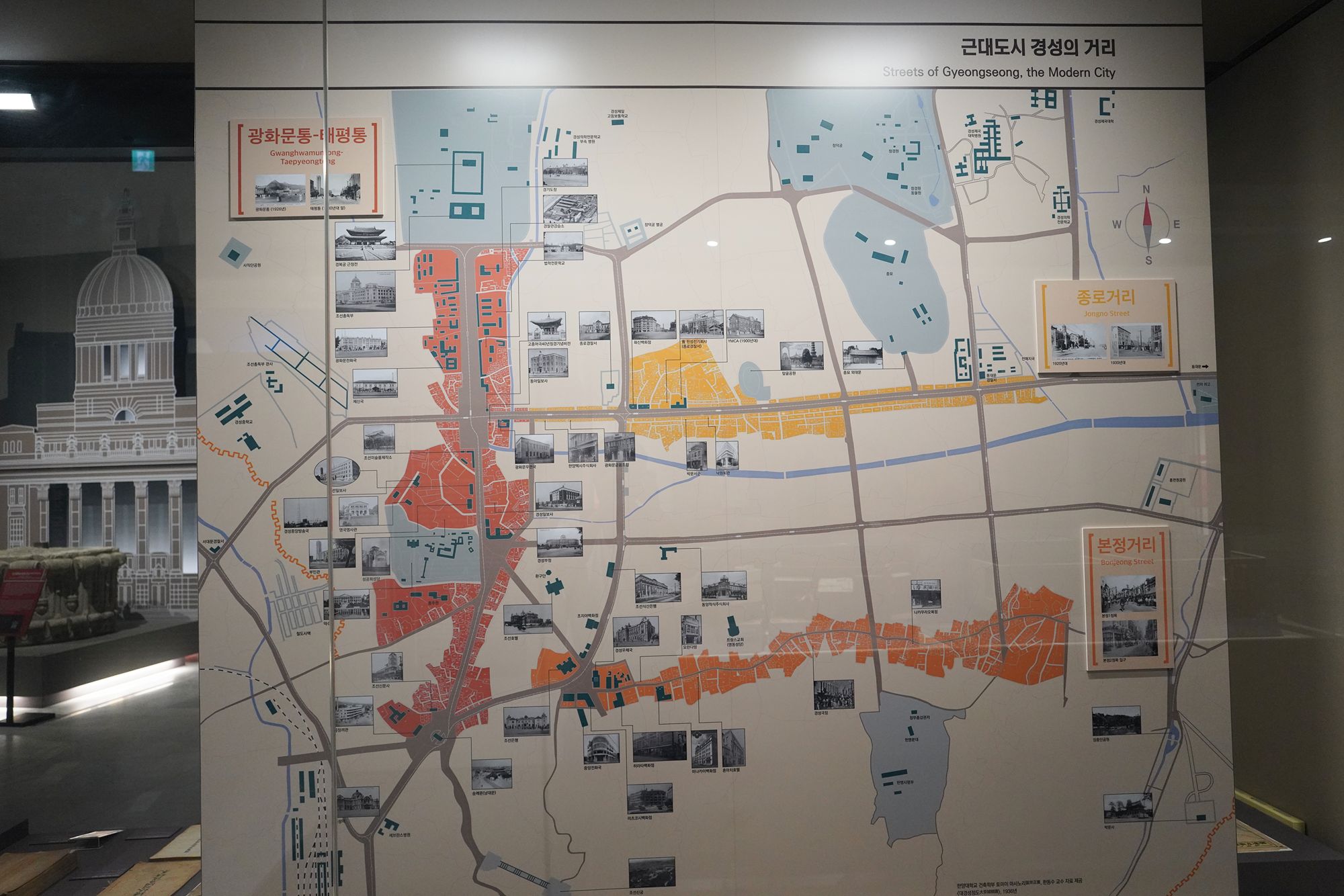
During Japanese colonial rule, the area south of Cheonggyecheon, known as Namchon, became a prosperous Japanese neighborhood with modern streets and better public services. Meanwhile, the largely Korean Bukchon area to the north became increasingly crowded and received fewer government resources, reflecting the inequality of colonial Seoul.
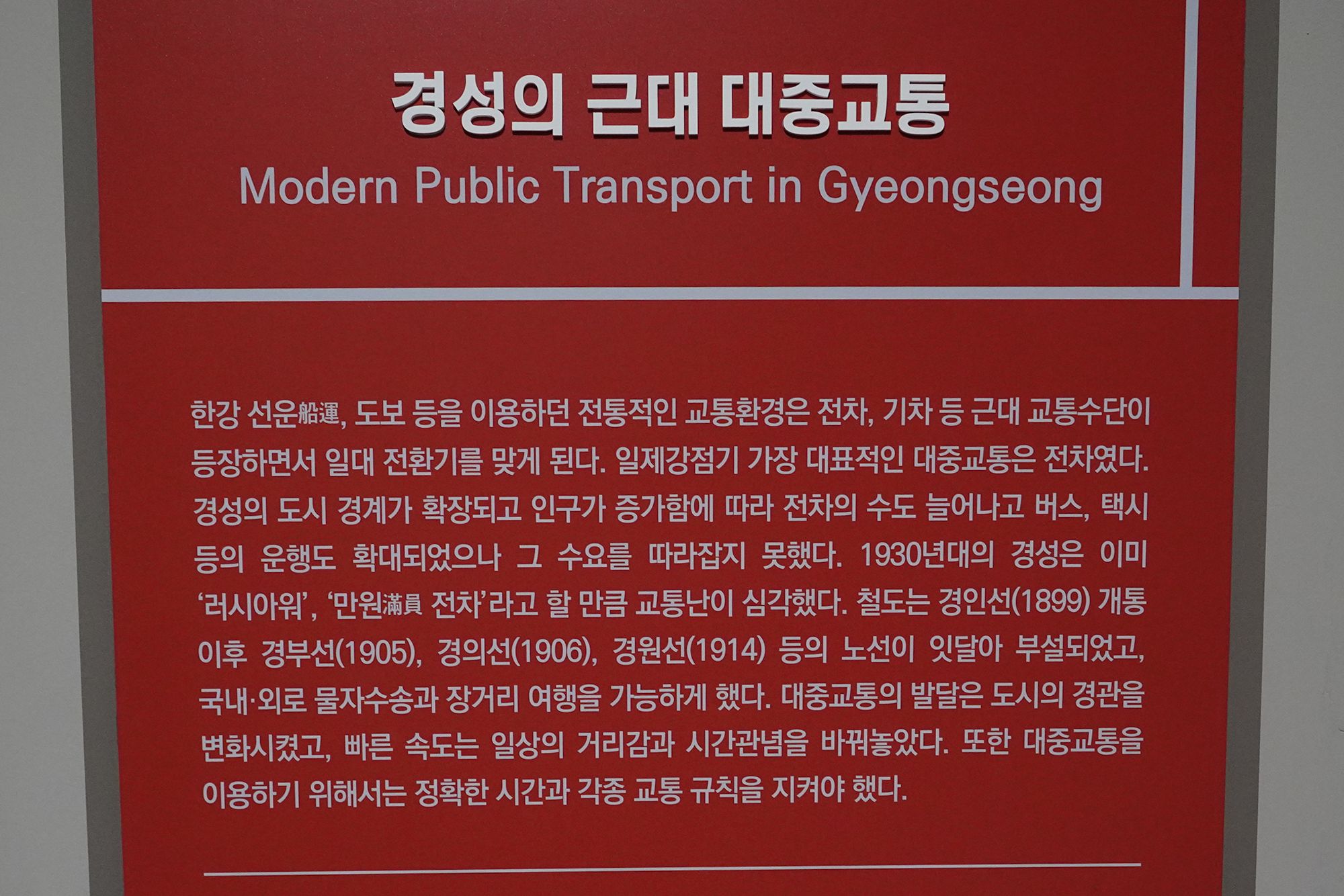
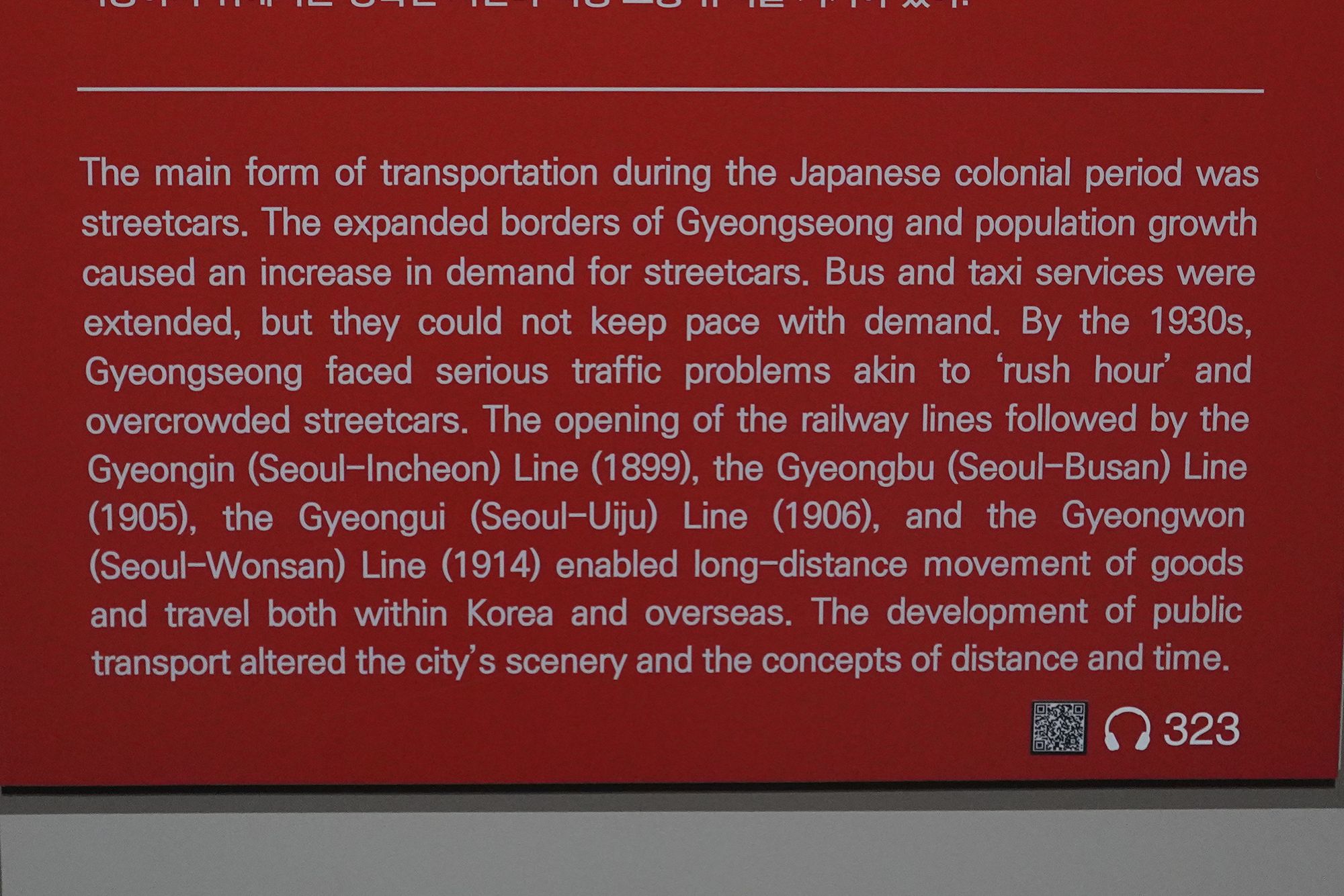
Streetcars were the main form of public transportation in Seoul during the Japanese colonial period, while buses and taxis also became increasingly common. New railway lines connected Seoul with other parts of Korea, and by the 1930s the growing city was already experiencing crowded streetcars and rush-hour traffic.
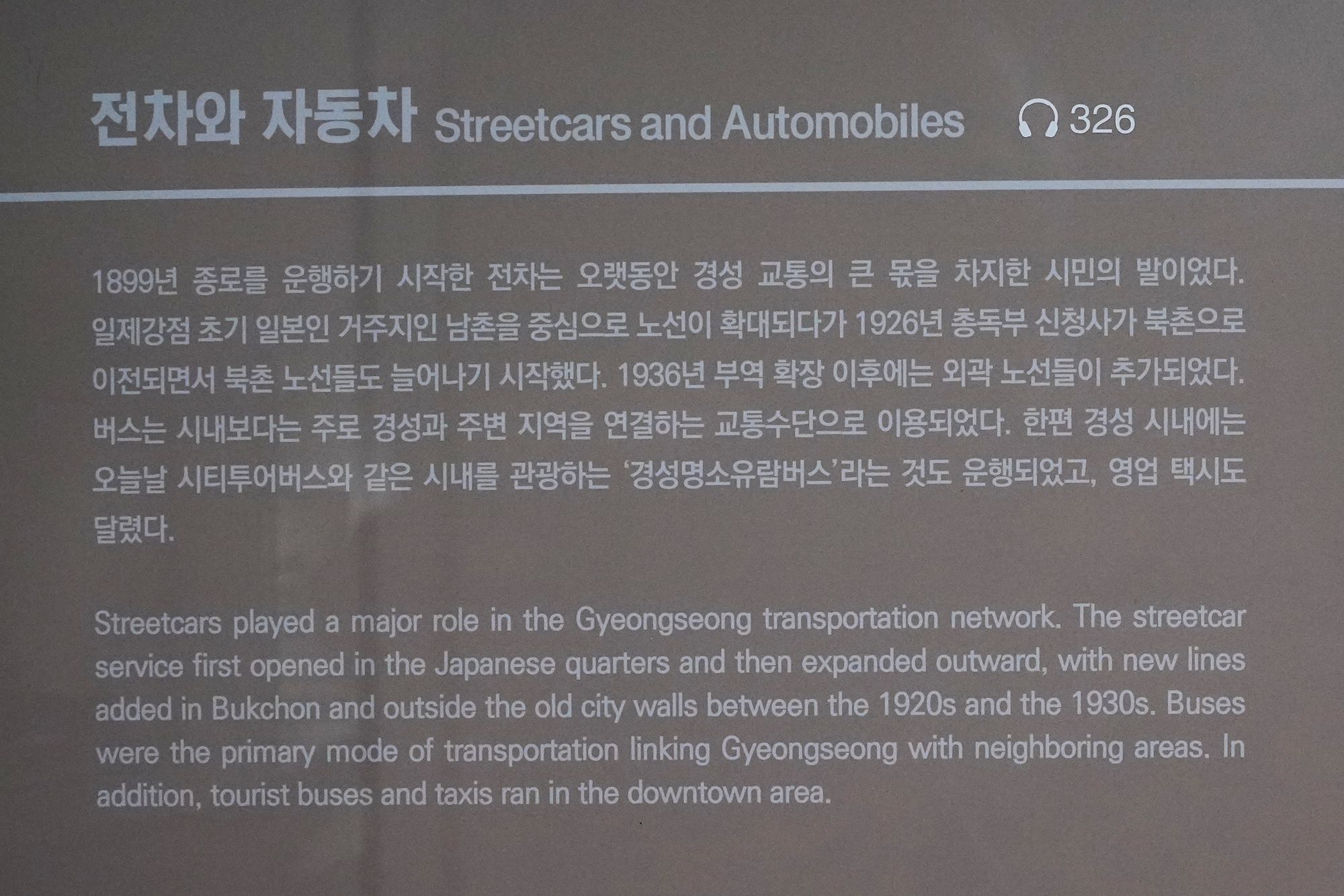
Streetcars played an important role in Gyeongseong’s growing transportation system. Initially concentrated in the Japanese neighborhoods, the streetcar network gradually expanded into Korean neighborhoods such as Bukchon and beyond the old city walls during the 1920s and 1930s. Buses connected the city with surrounding areas, while taxis and tourist buses also began appearing in central Gyeongseong.
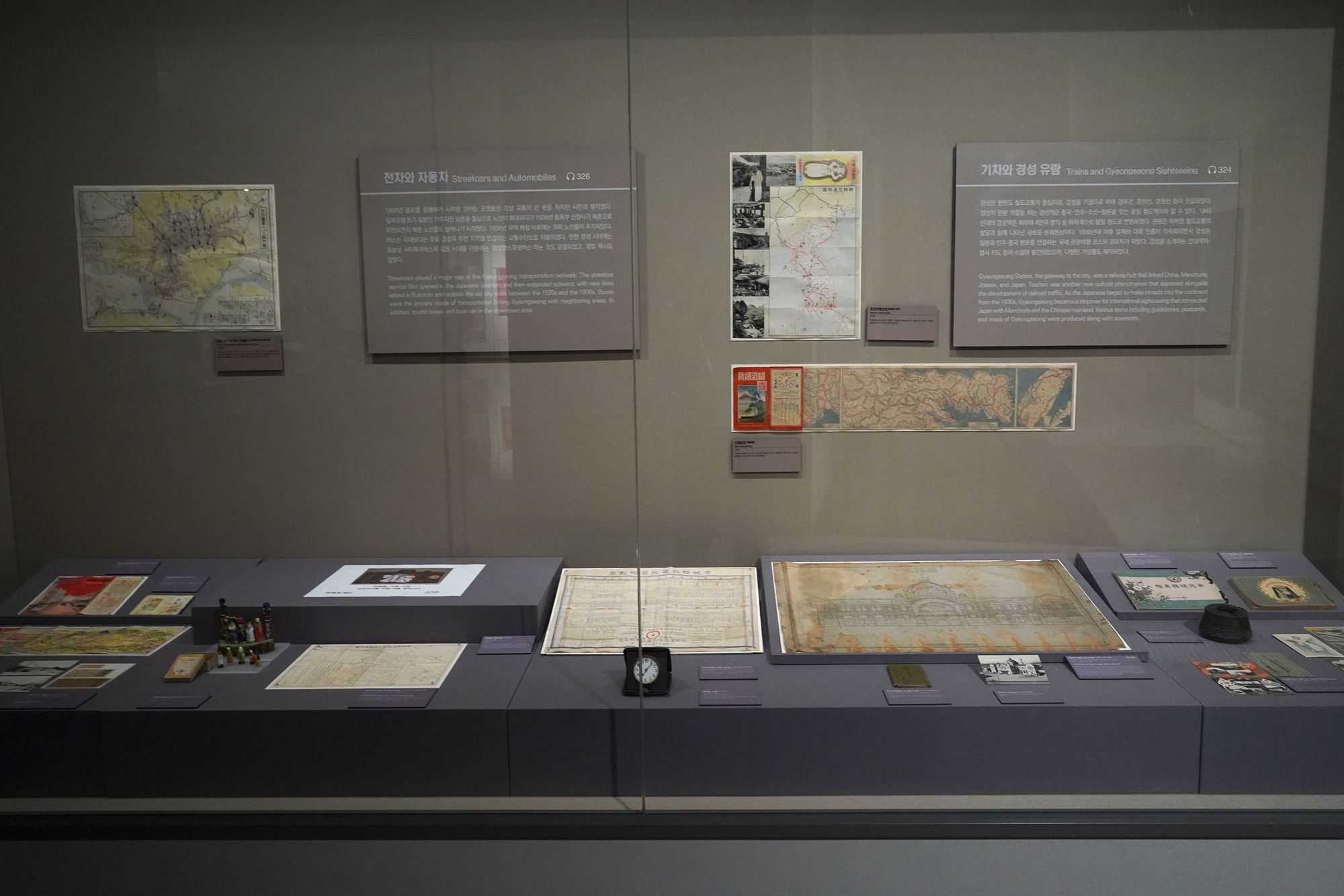
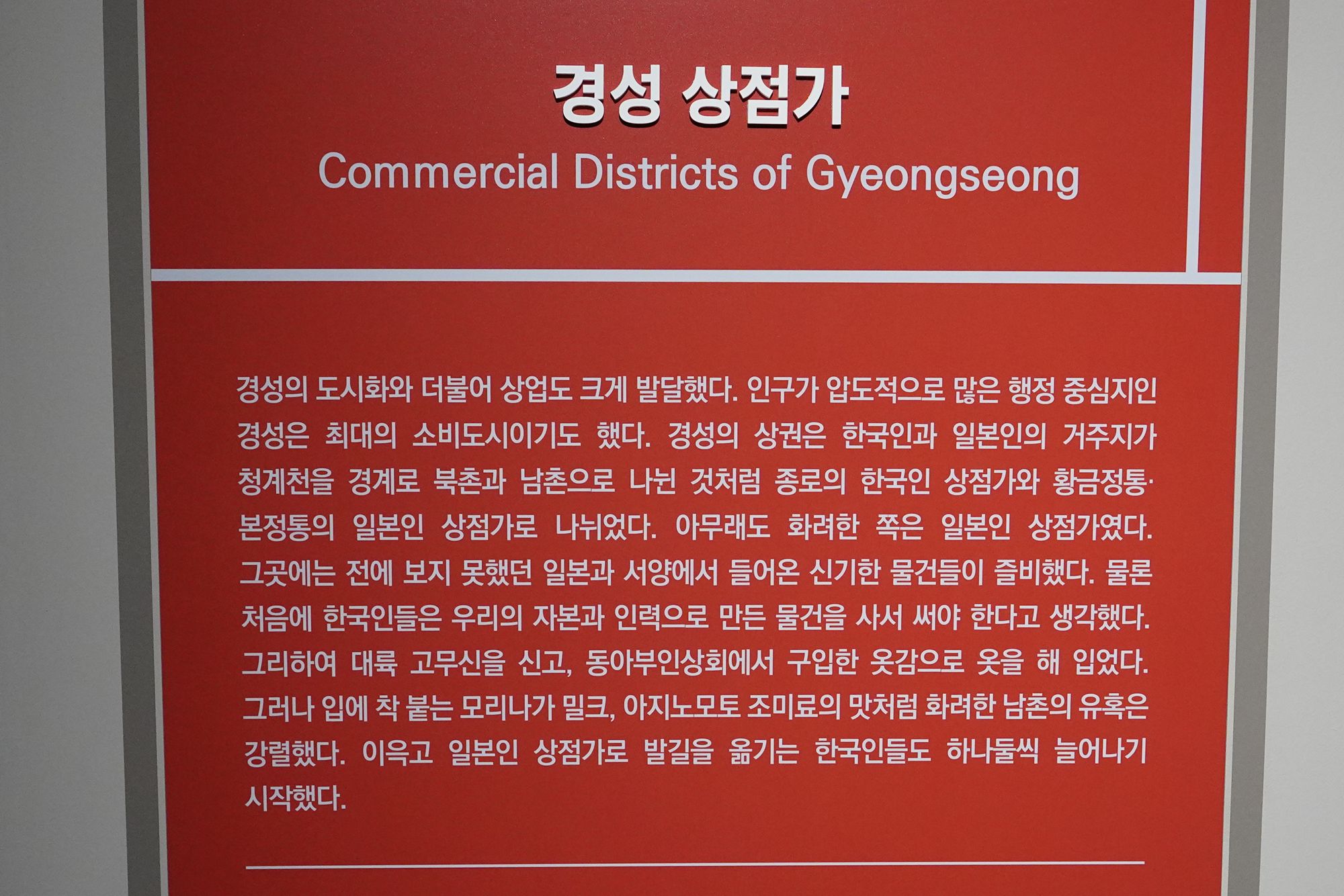
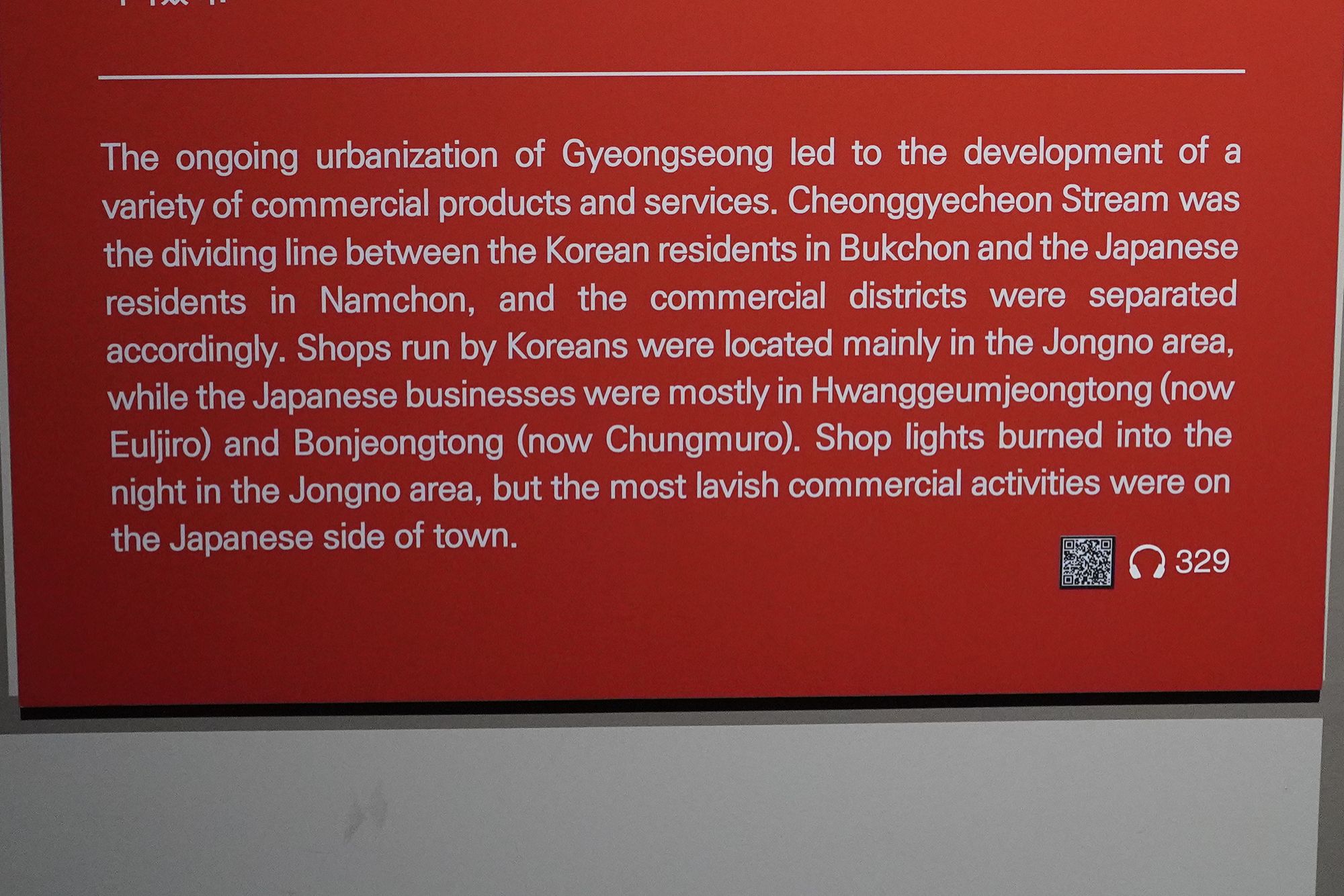
As Seoul became more urbanized, its commercial districts expanded but remained divided. Korean businesses were concentrated around Jongno, while Japanese businesses dominated areas such as today’s Euljiro and Chungmuro, where the city’s more prosperous and modern shopping districts developed.
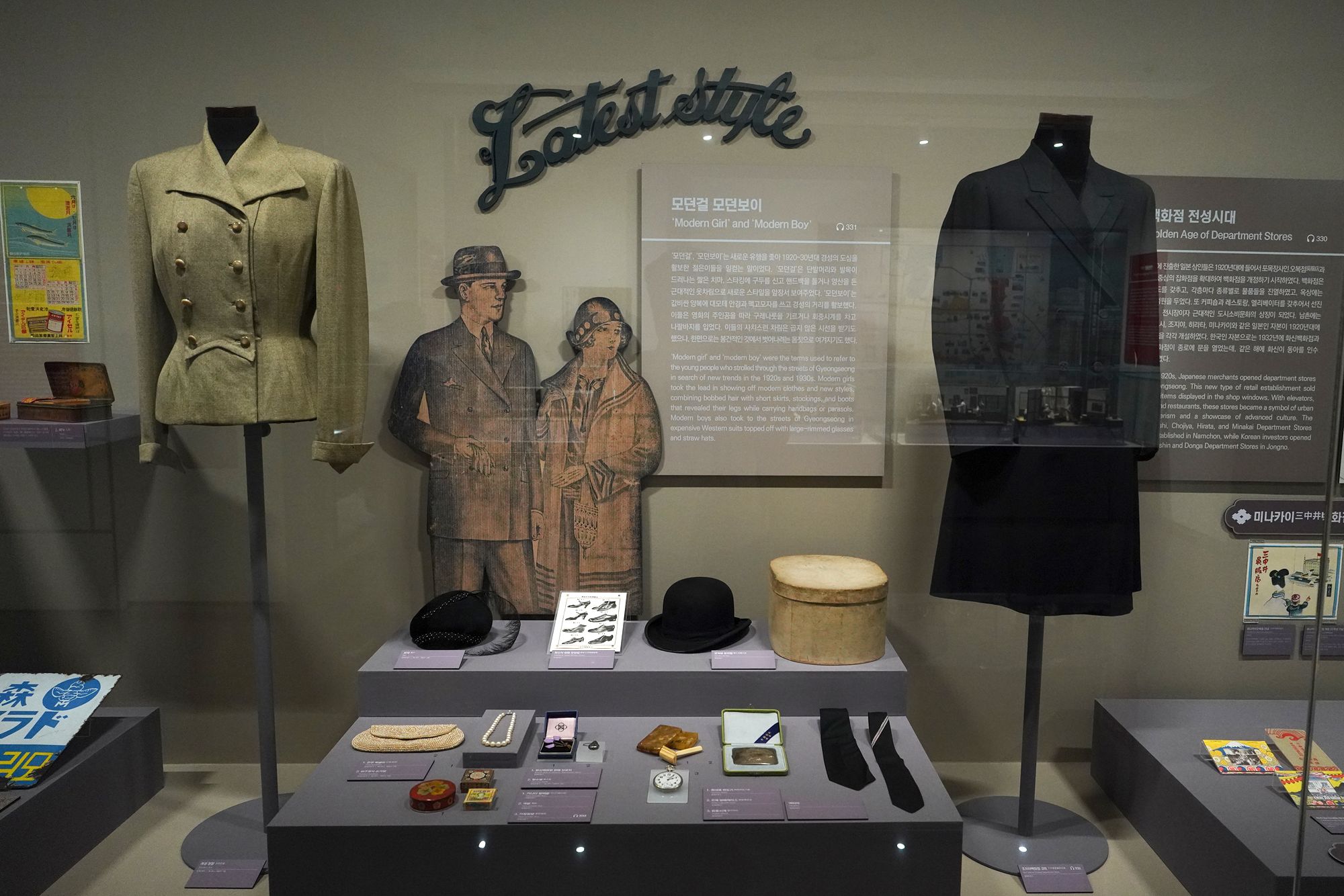
During the 1920s and 1930s, fashionable young people known as “modern girls” and “modern boys” became symbols of Gyeongseong’s changing urban culture. Modern girls wore bobbed hair, short skirts, stockings, and boots, while modern boys favored expensive Western-style suits, large-rimmed glasses, and straw hats. They represented a younger generation embracing new fashions and lifestyles as they explored the increasingly modern streets of colonial-era Seoul.
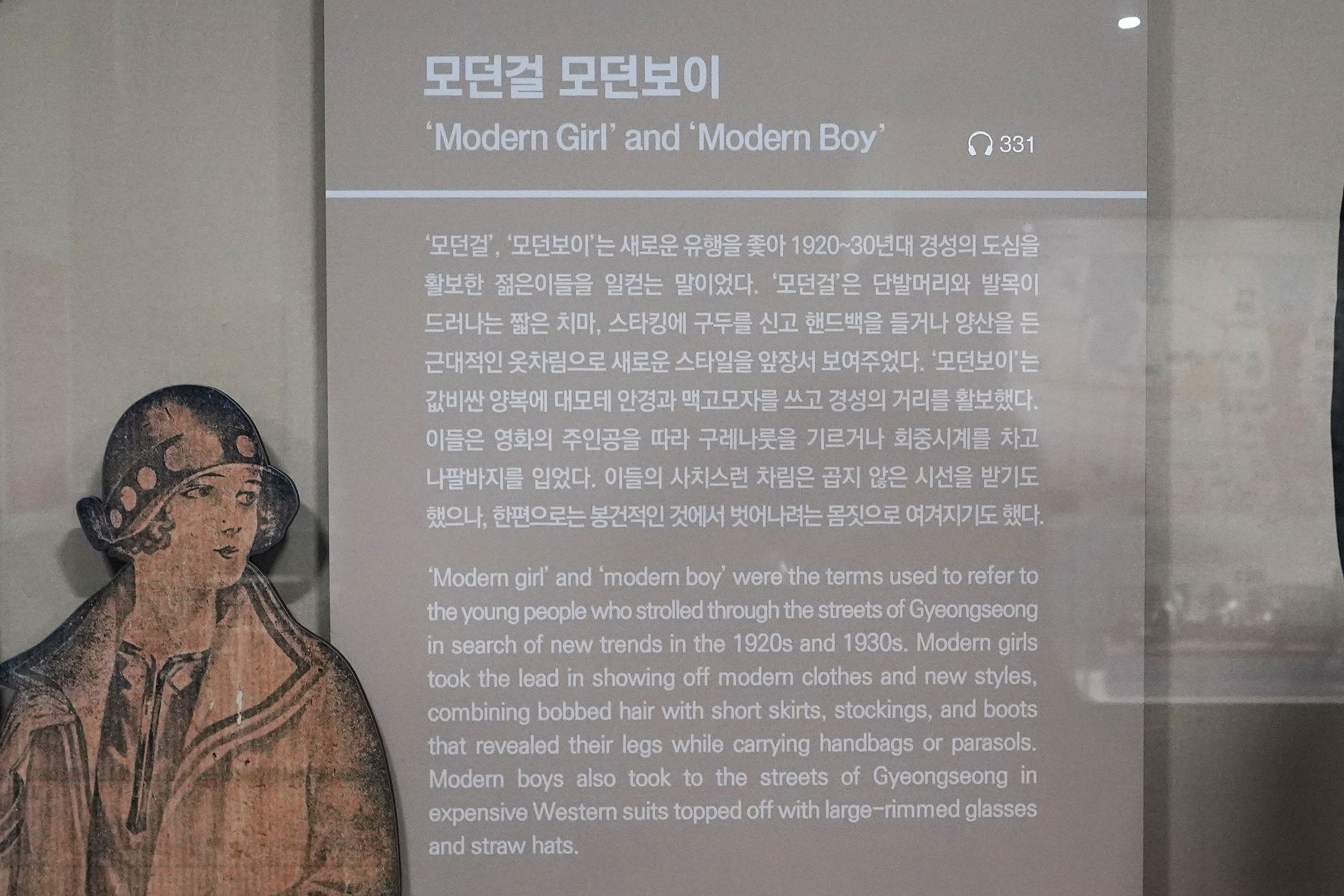
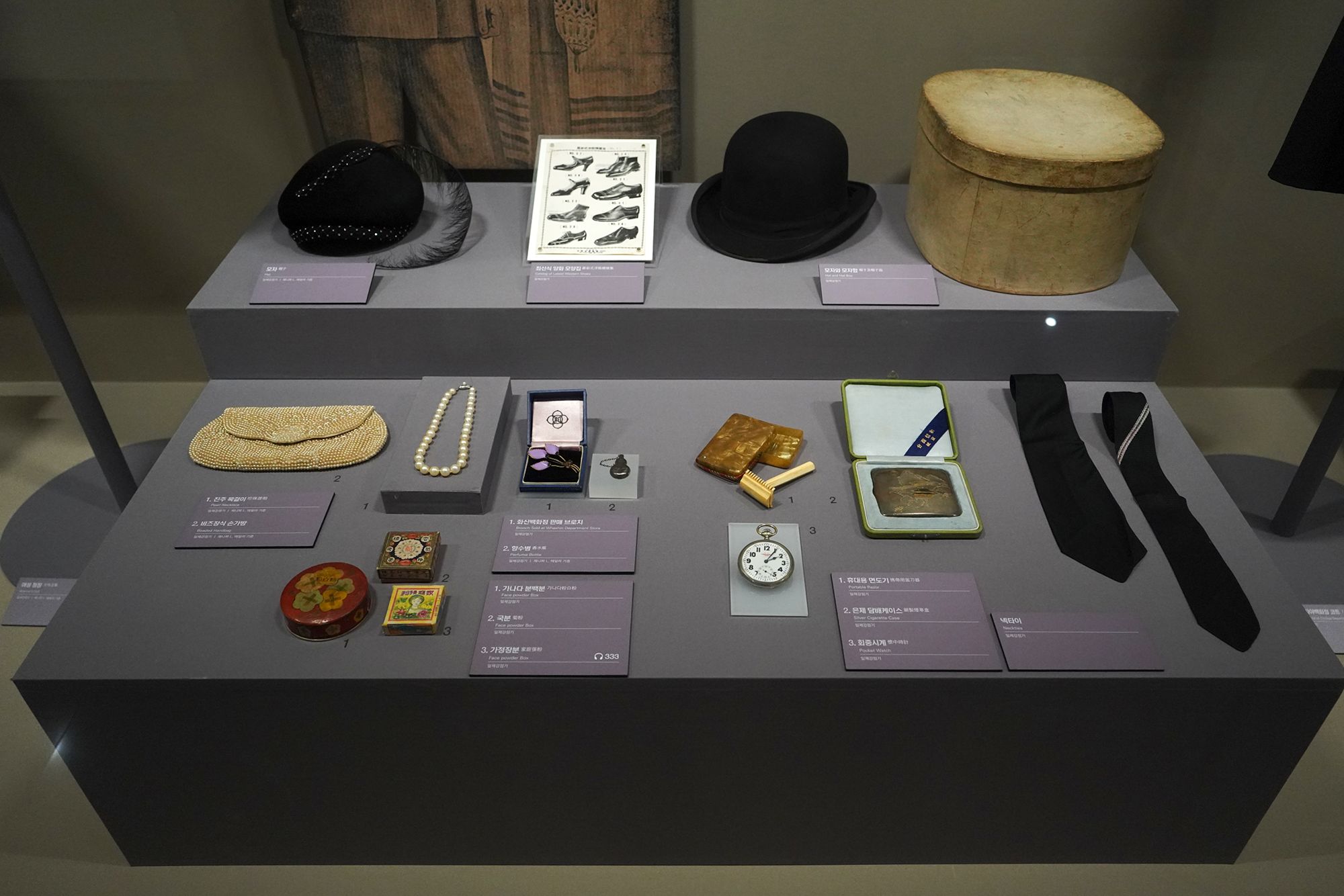
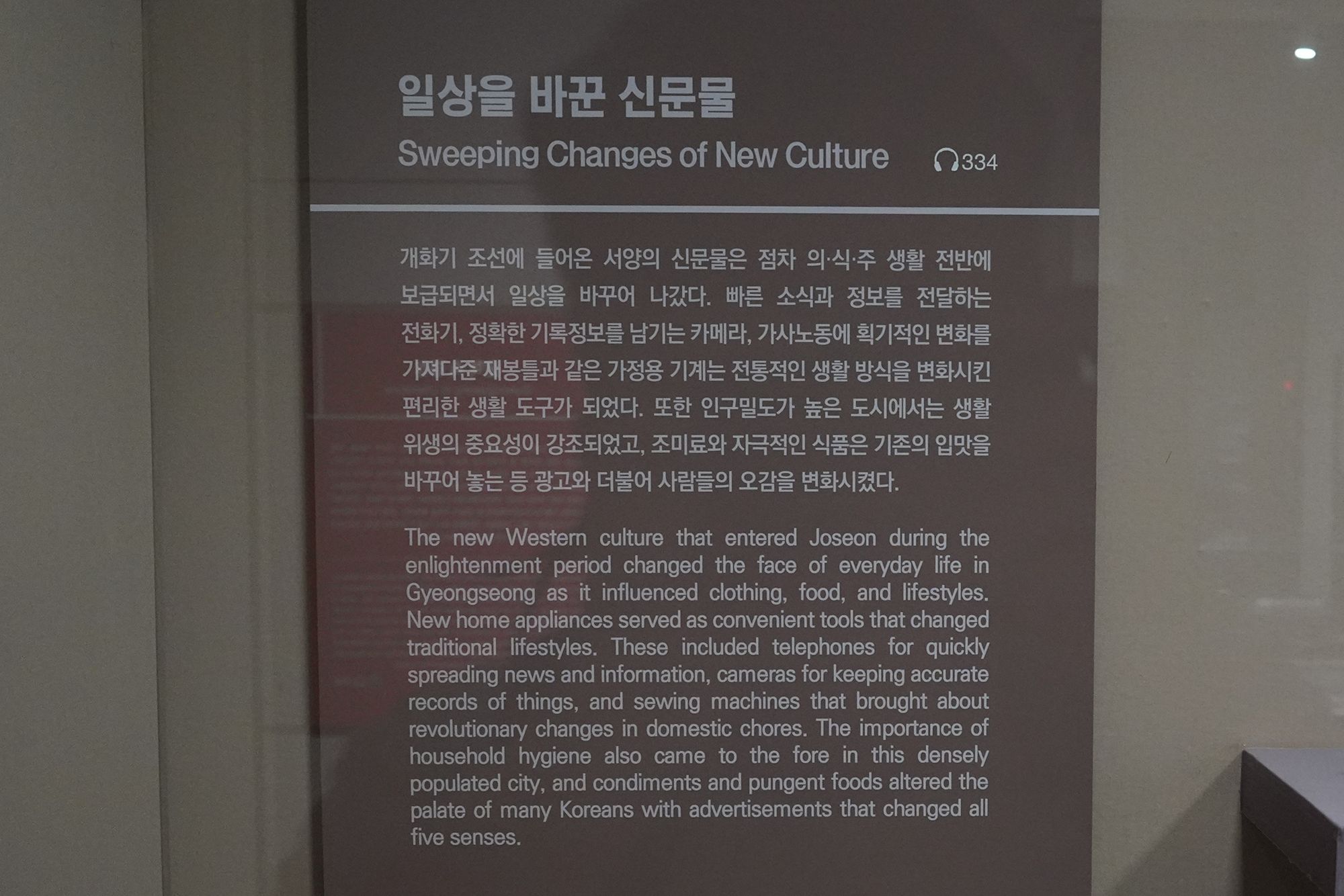
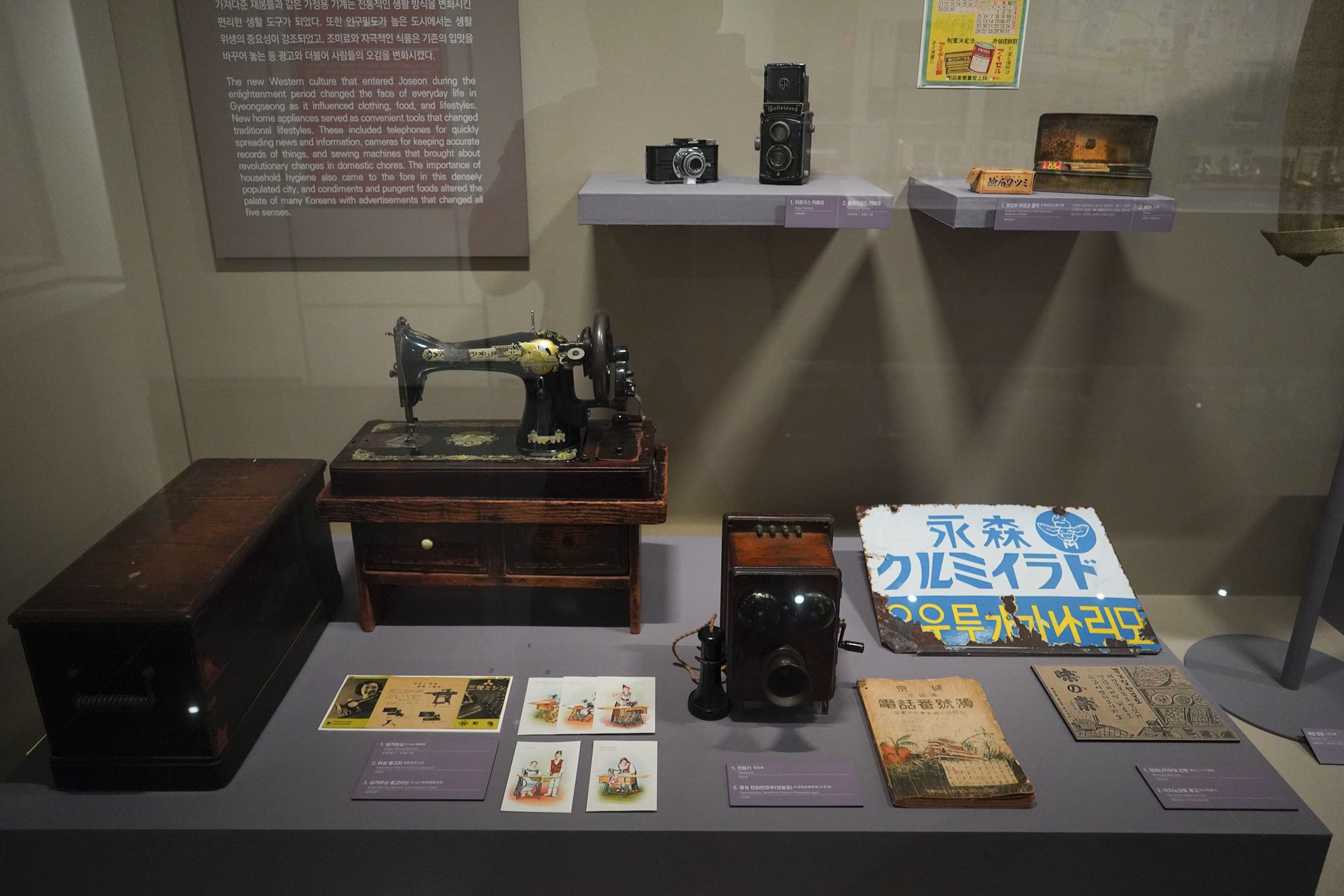
Western influences brought major changes to everyday life in Seoul, affecting clothing, food, and lifestyles. New technologies such as telephones, cameras, sewing machines, and household products became increasingly common, gradually changing how people lived and worked.
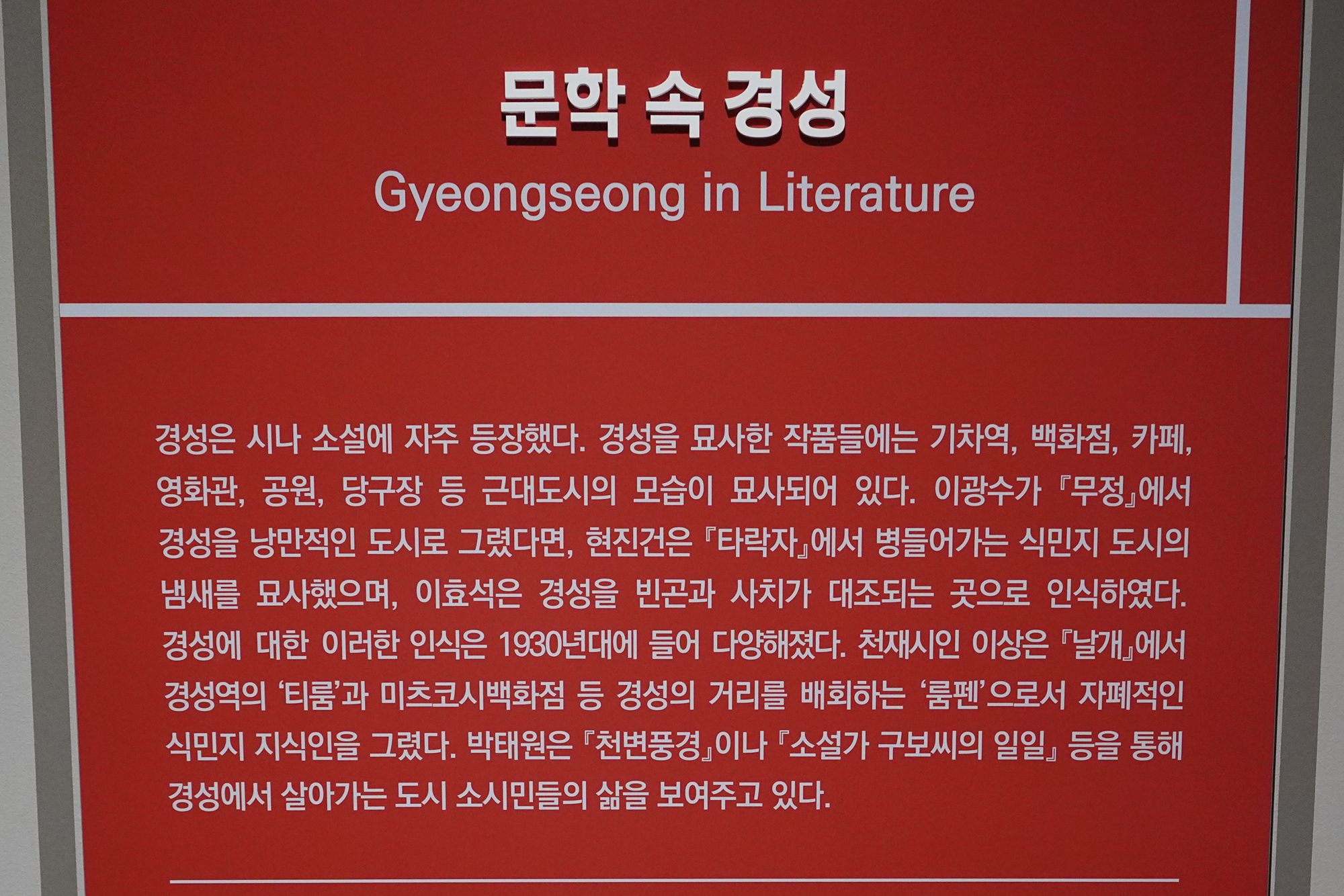
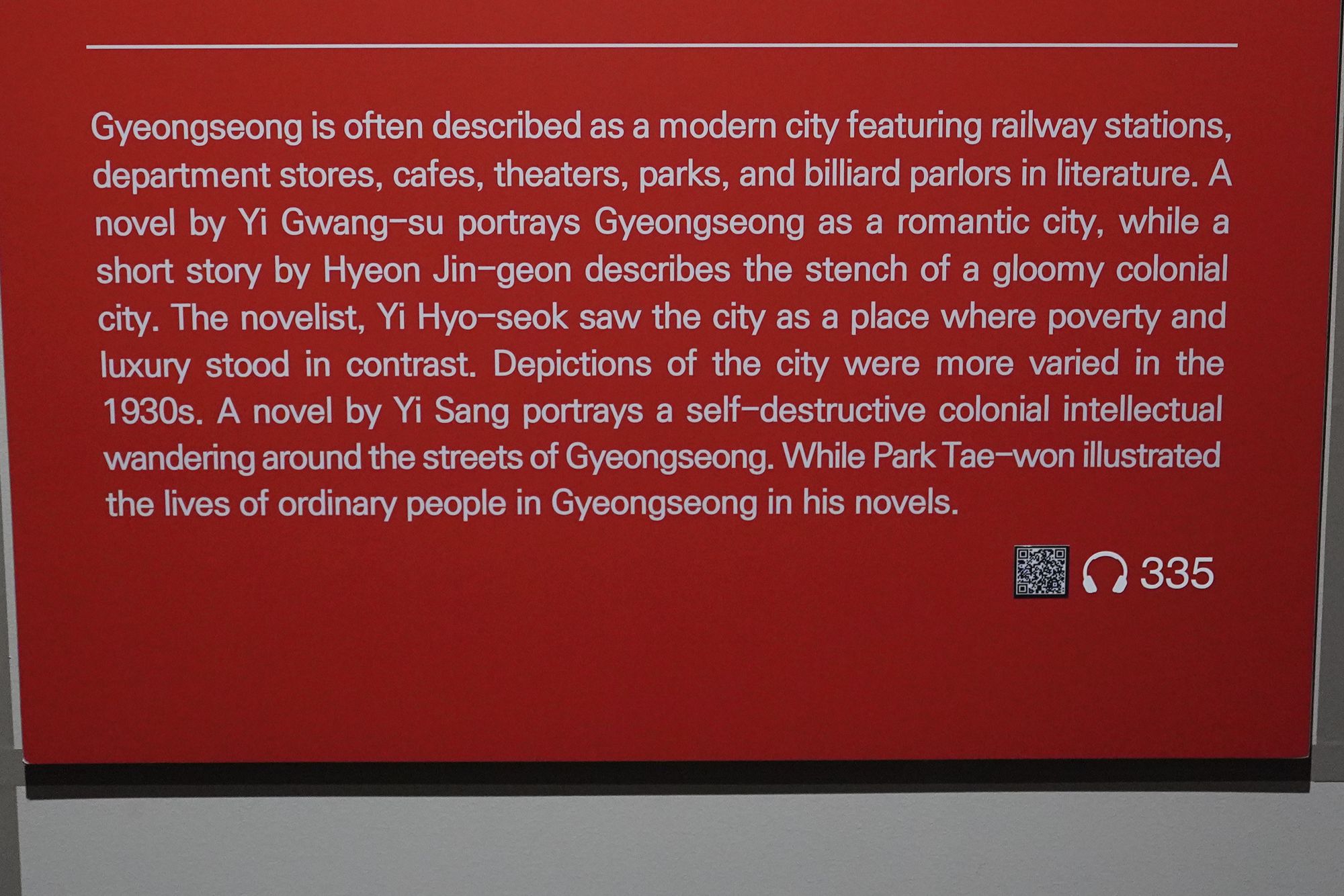
In the 1920s and 1930s, Korean writers portrayed Seoul in very different ways. Some described a modern city filled with department stores, cafés, theaters, and parks, while others focused on poverty, inequality, and the hardships of life under Japanese colonial rule.
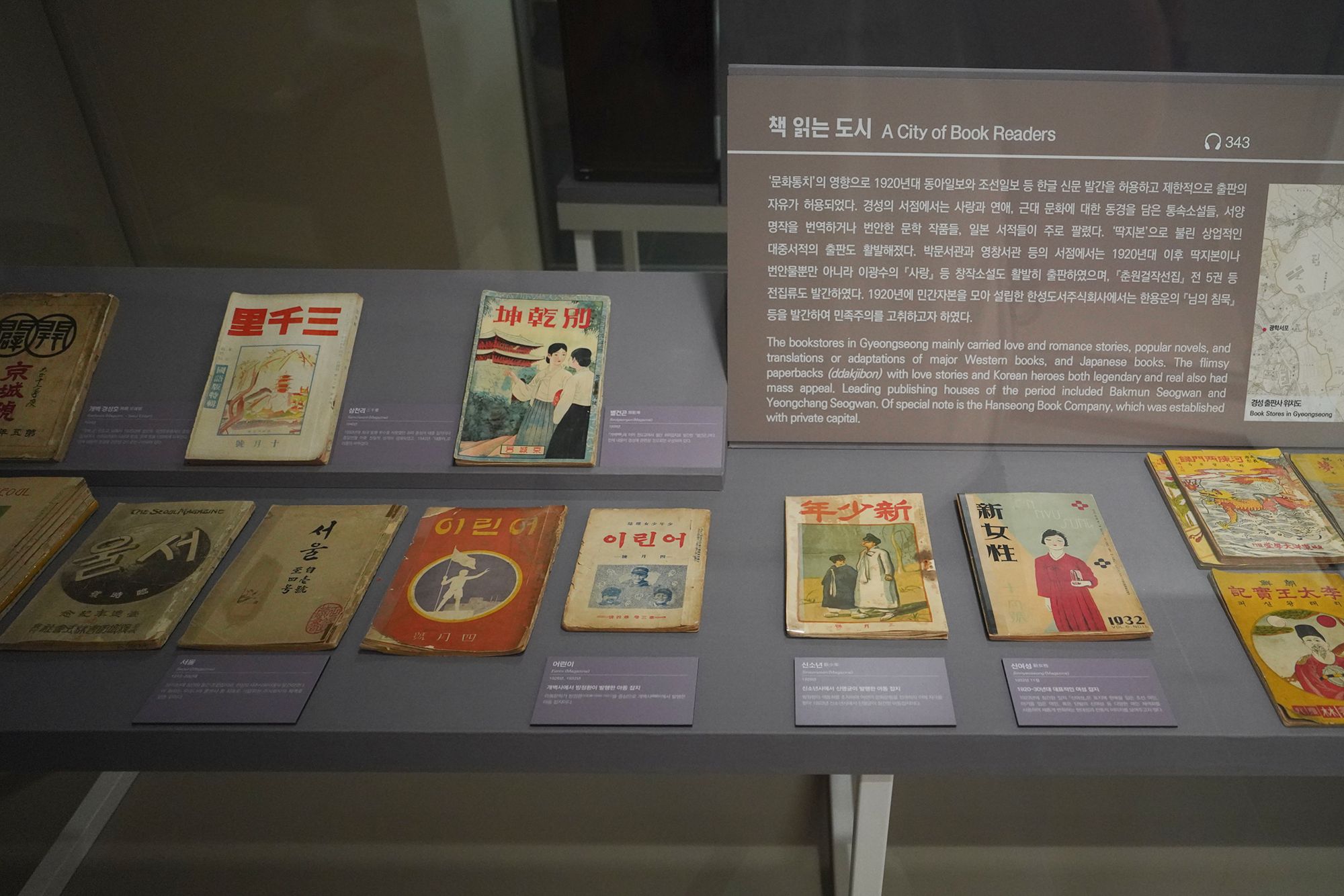
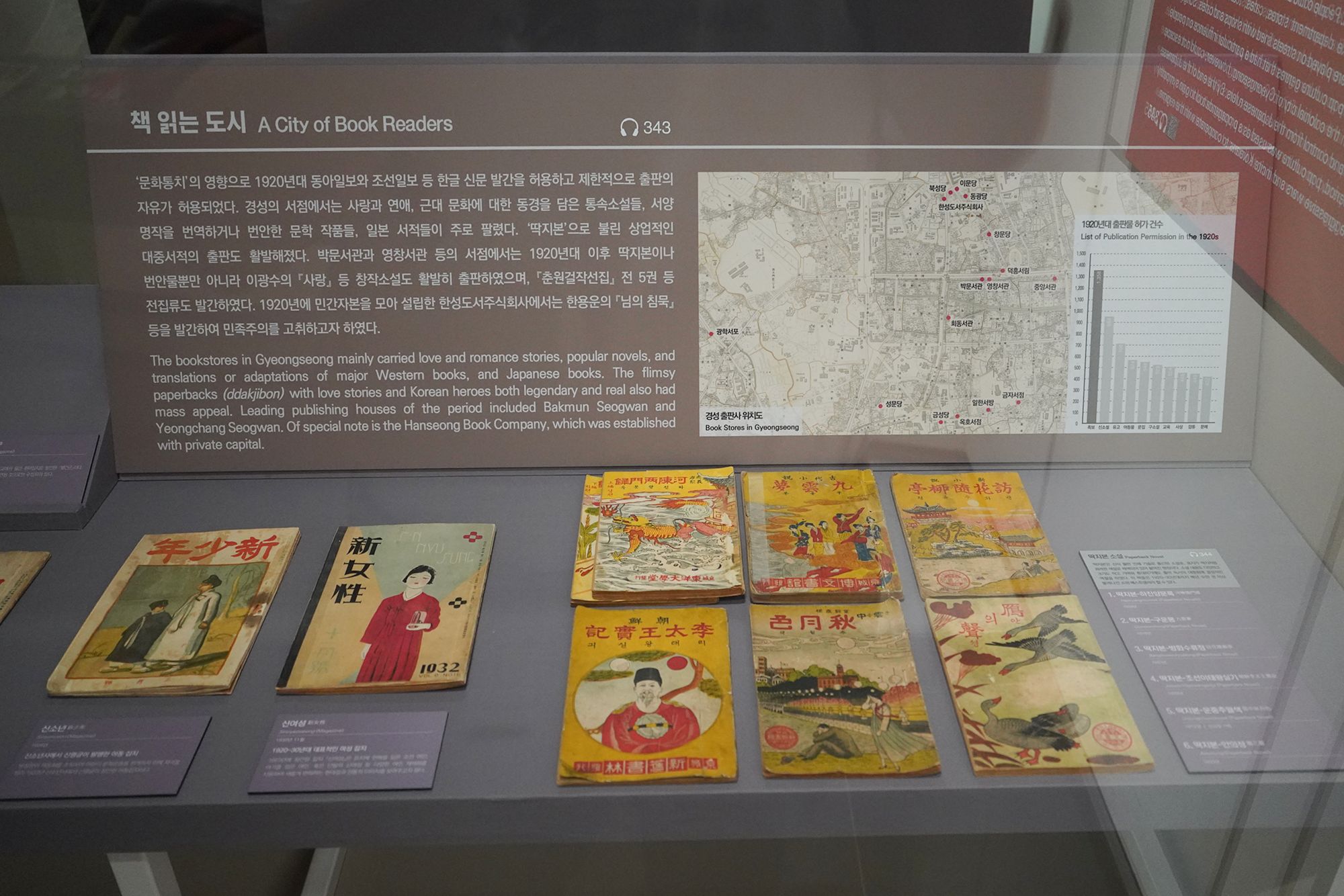
A City of Book Readers
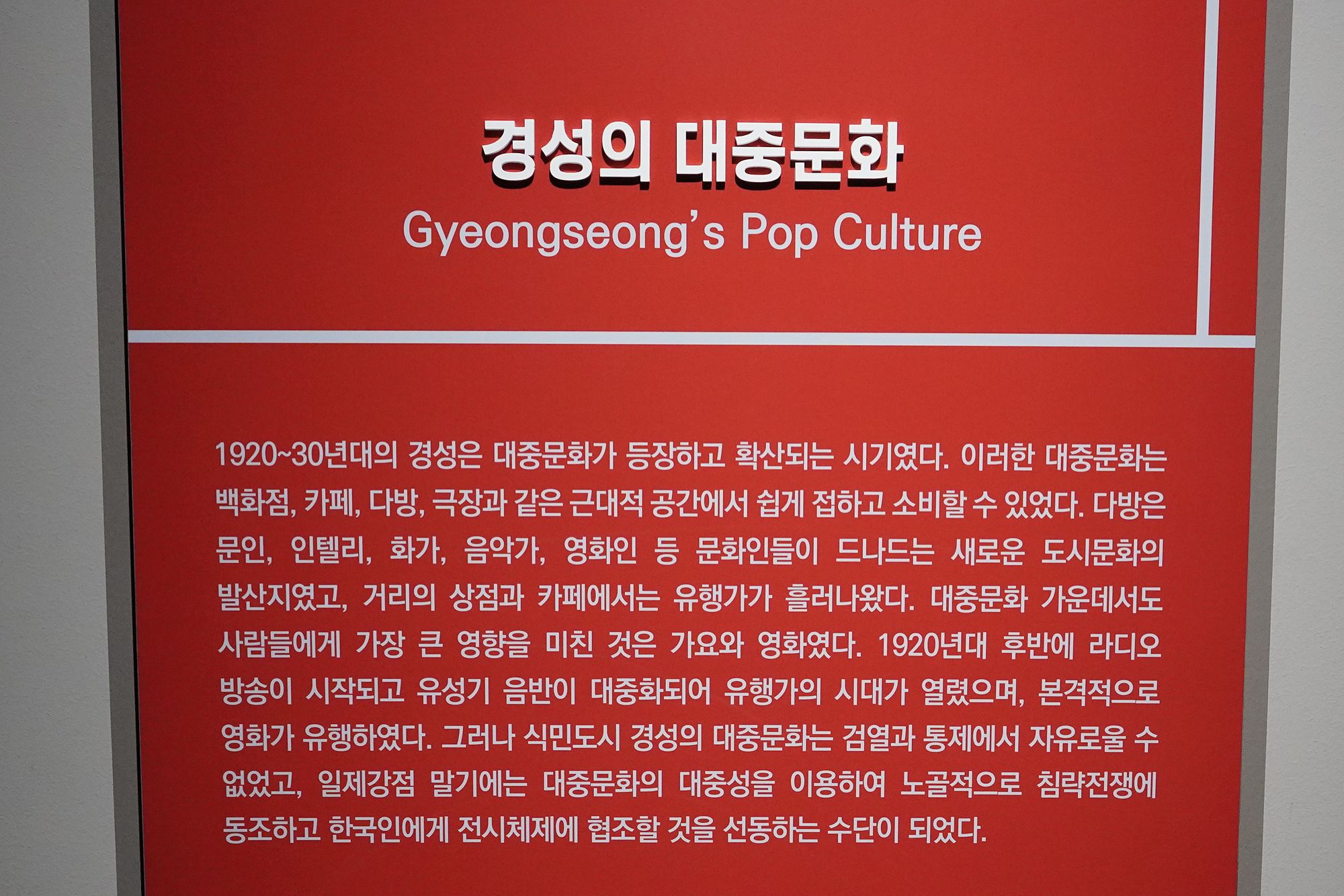
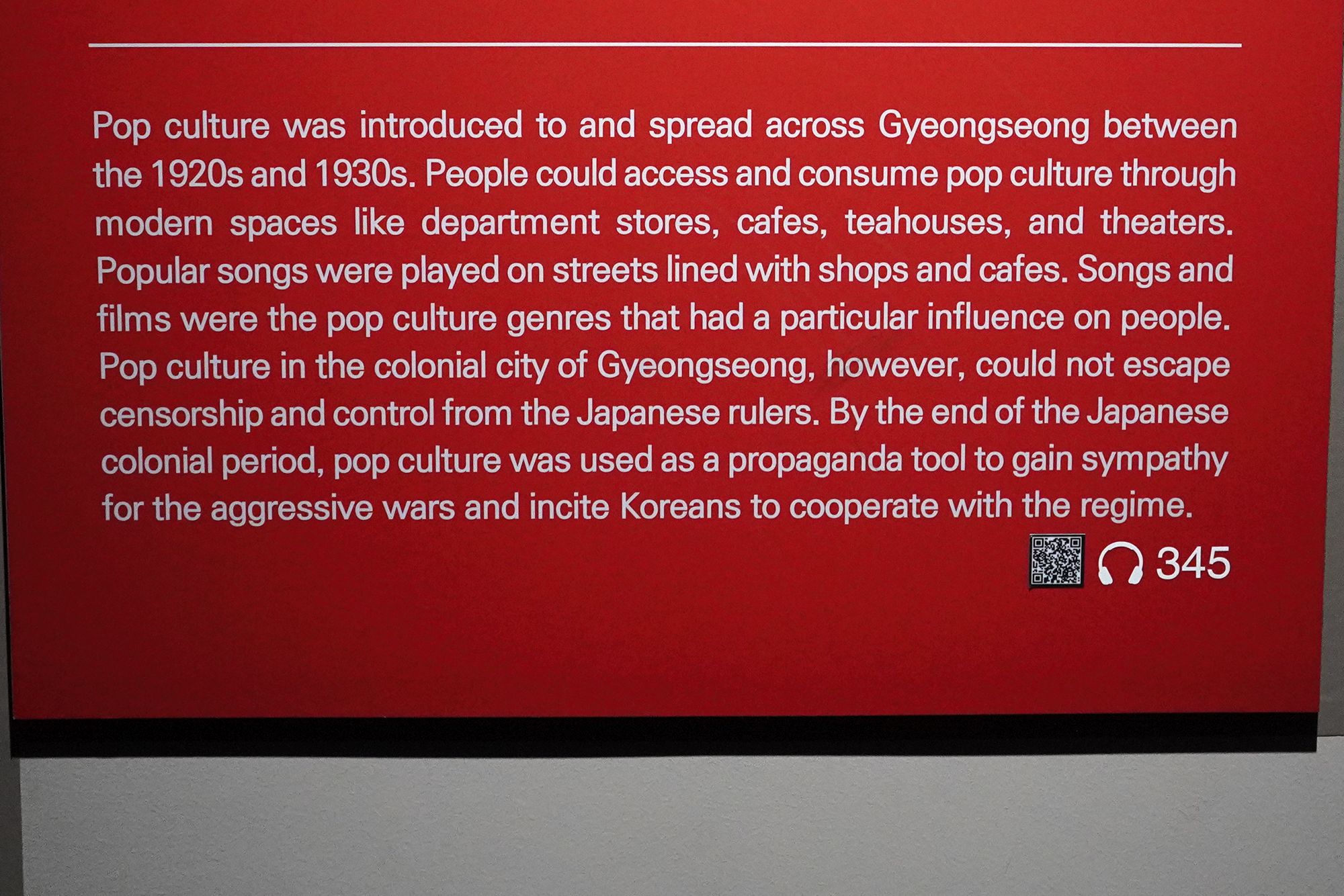
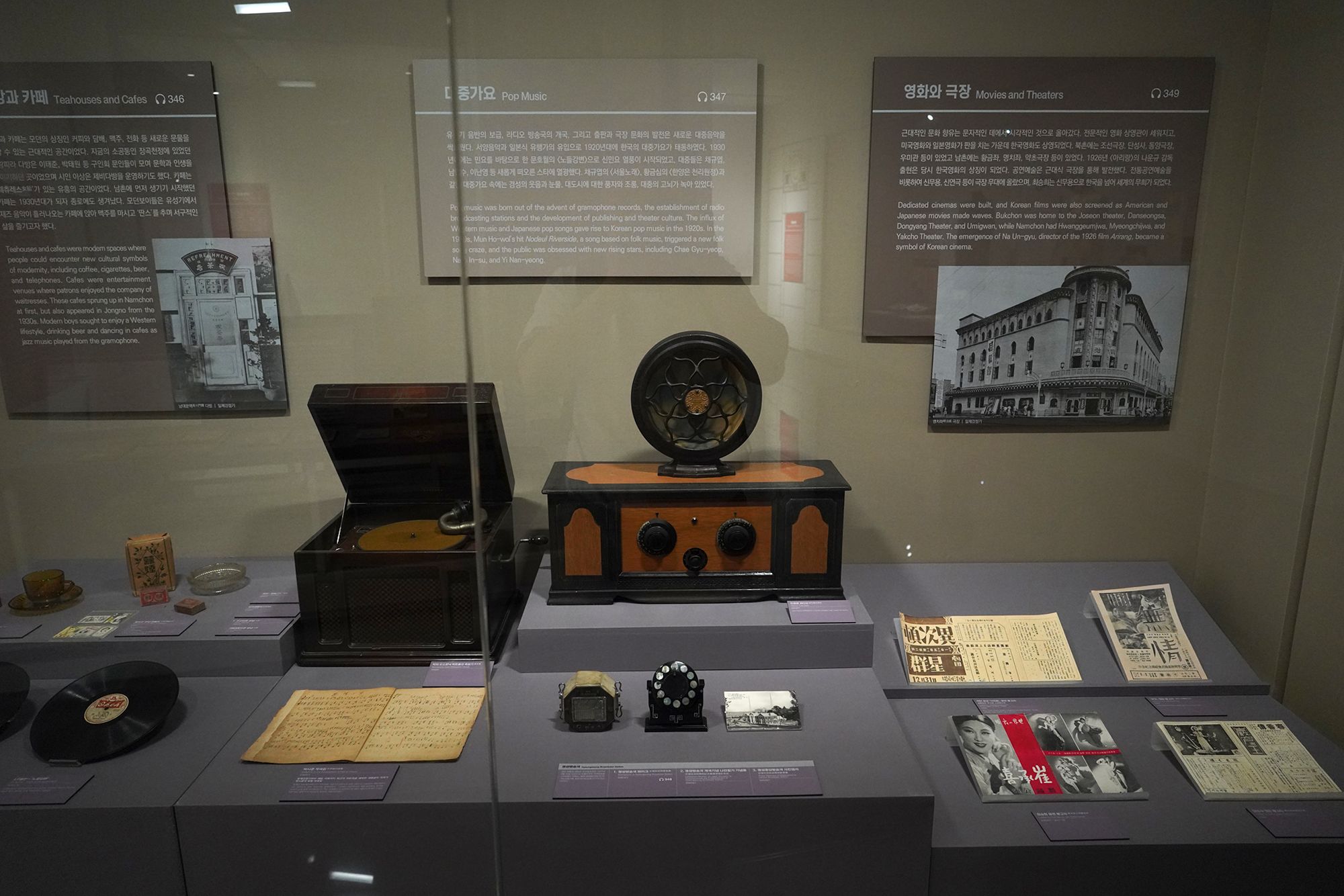
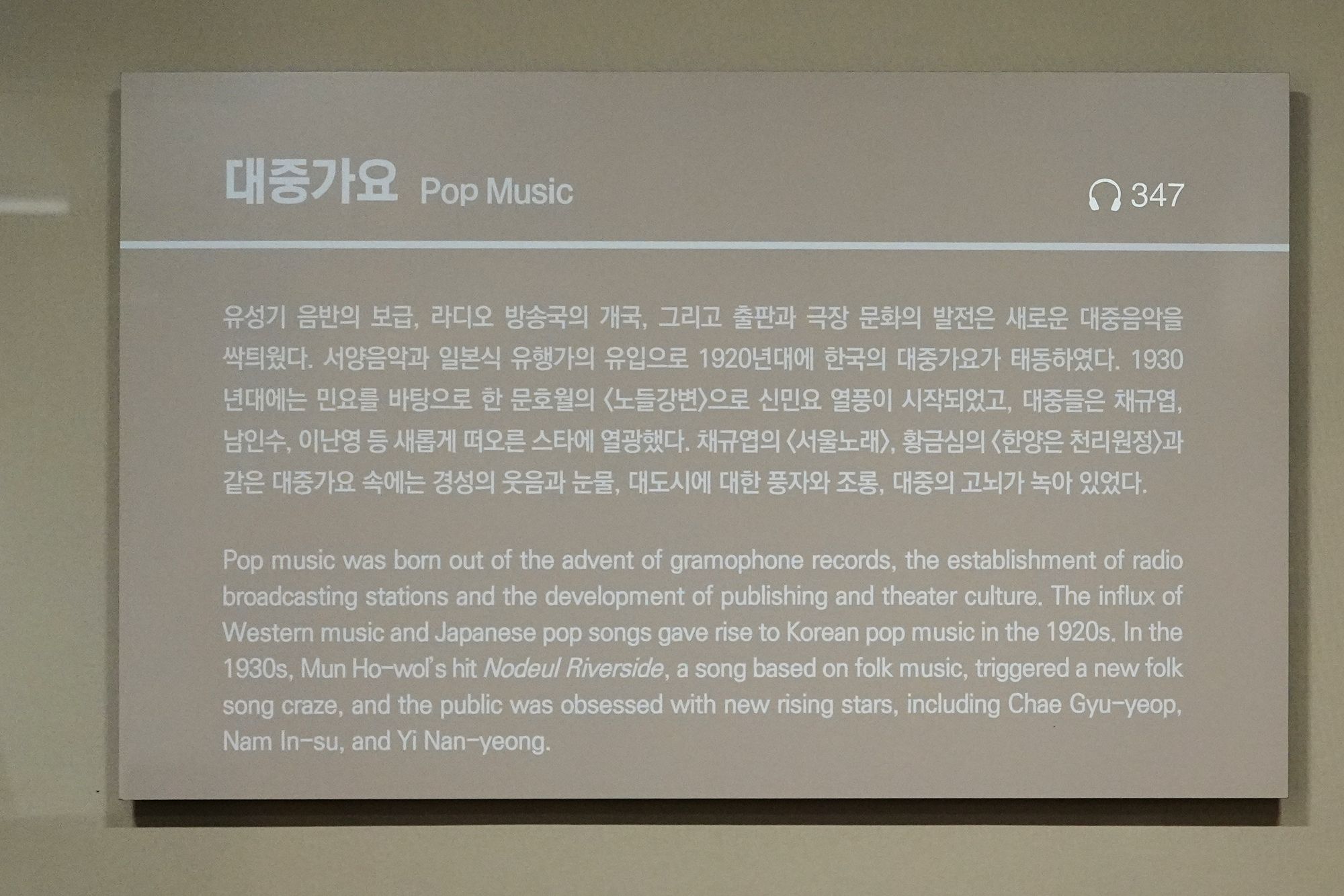
During the 1920s and 1930s, popular culture flourished in Seoul through cafés, department stores, theaters, music, and movies. However, these forms of entertainment were subject to Japanese censorship and were increasingly used as propaganda as Japan moved toward war.
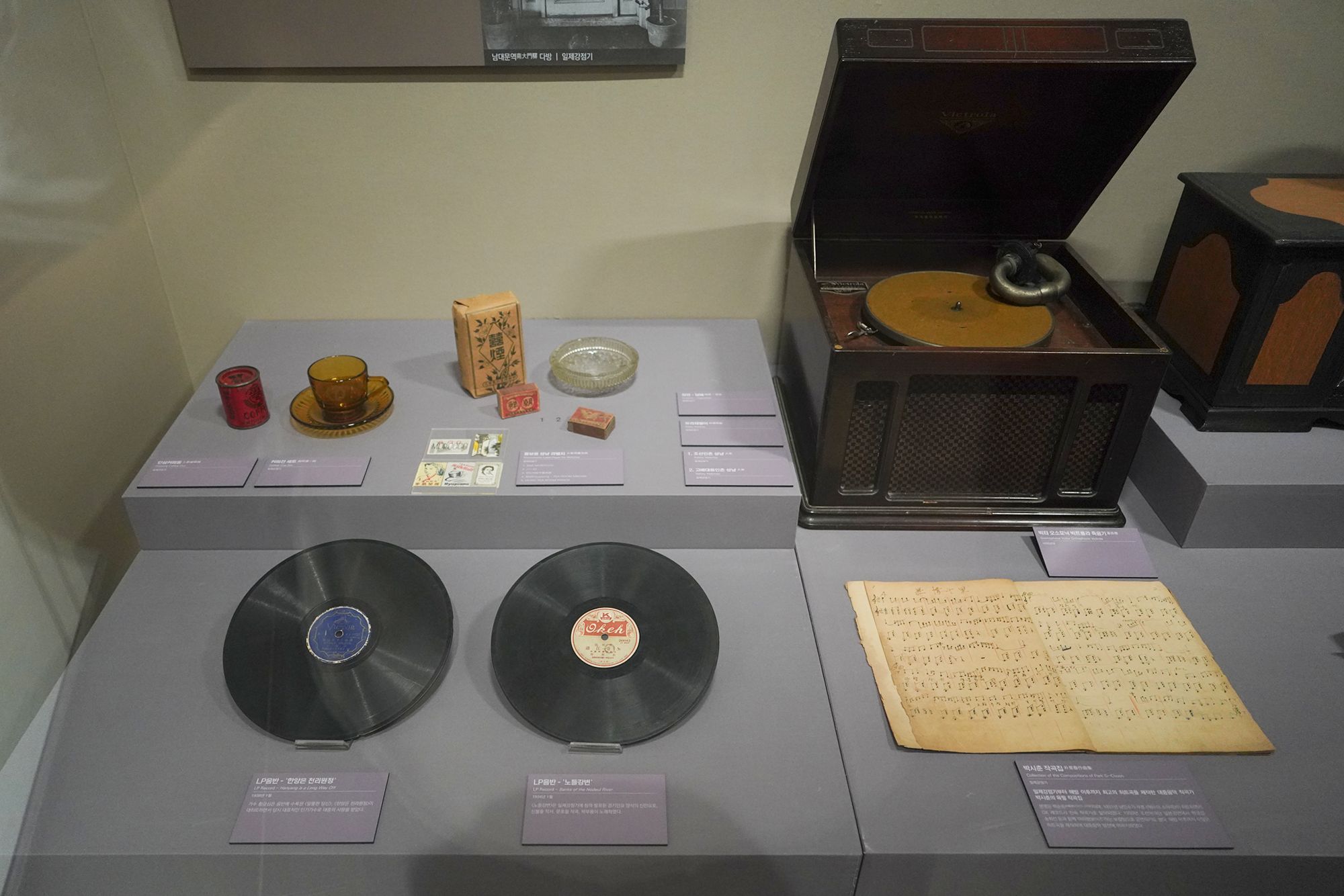
Pop Music
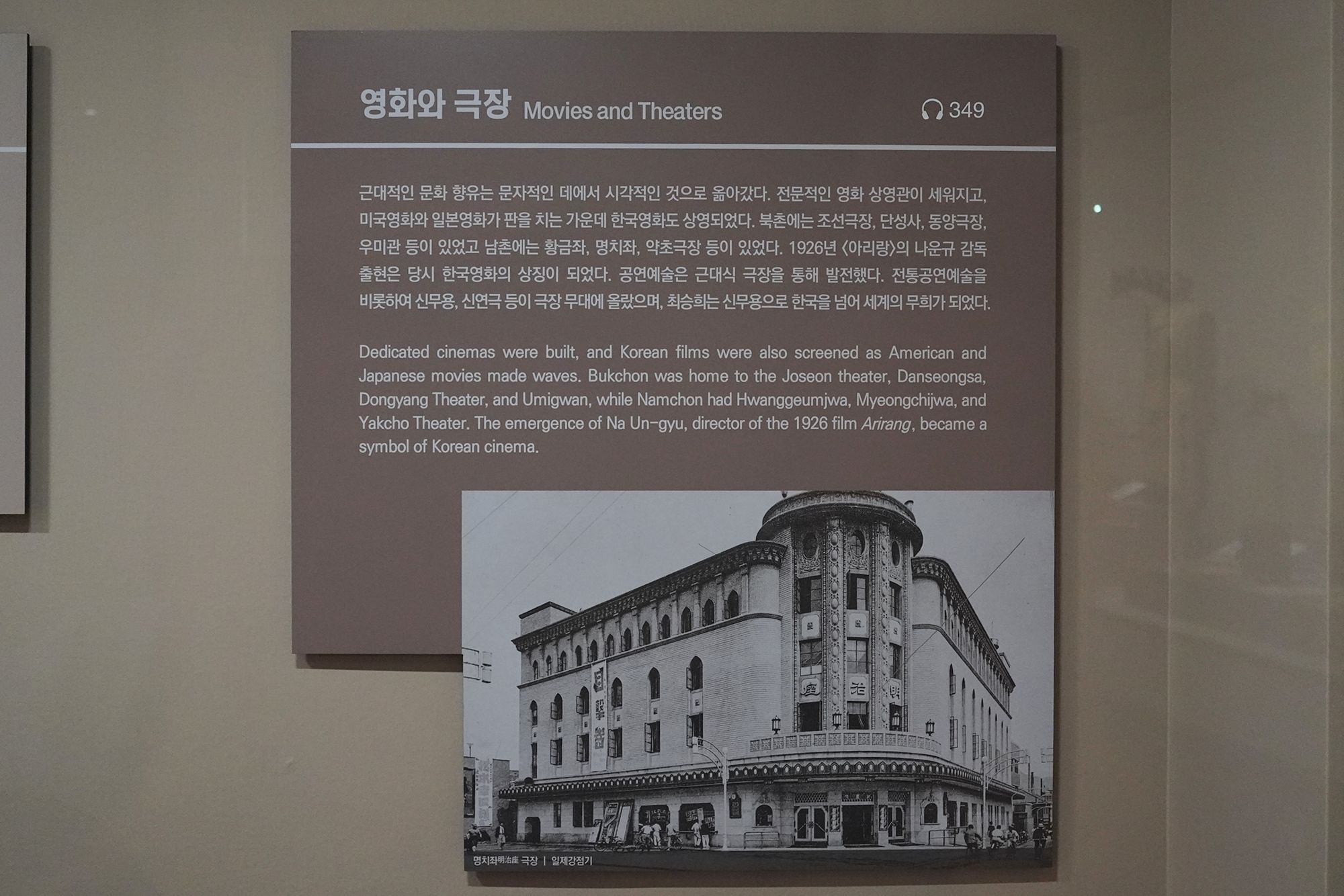
Movies and Theaters
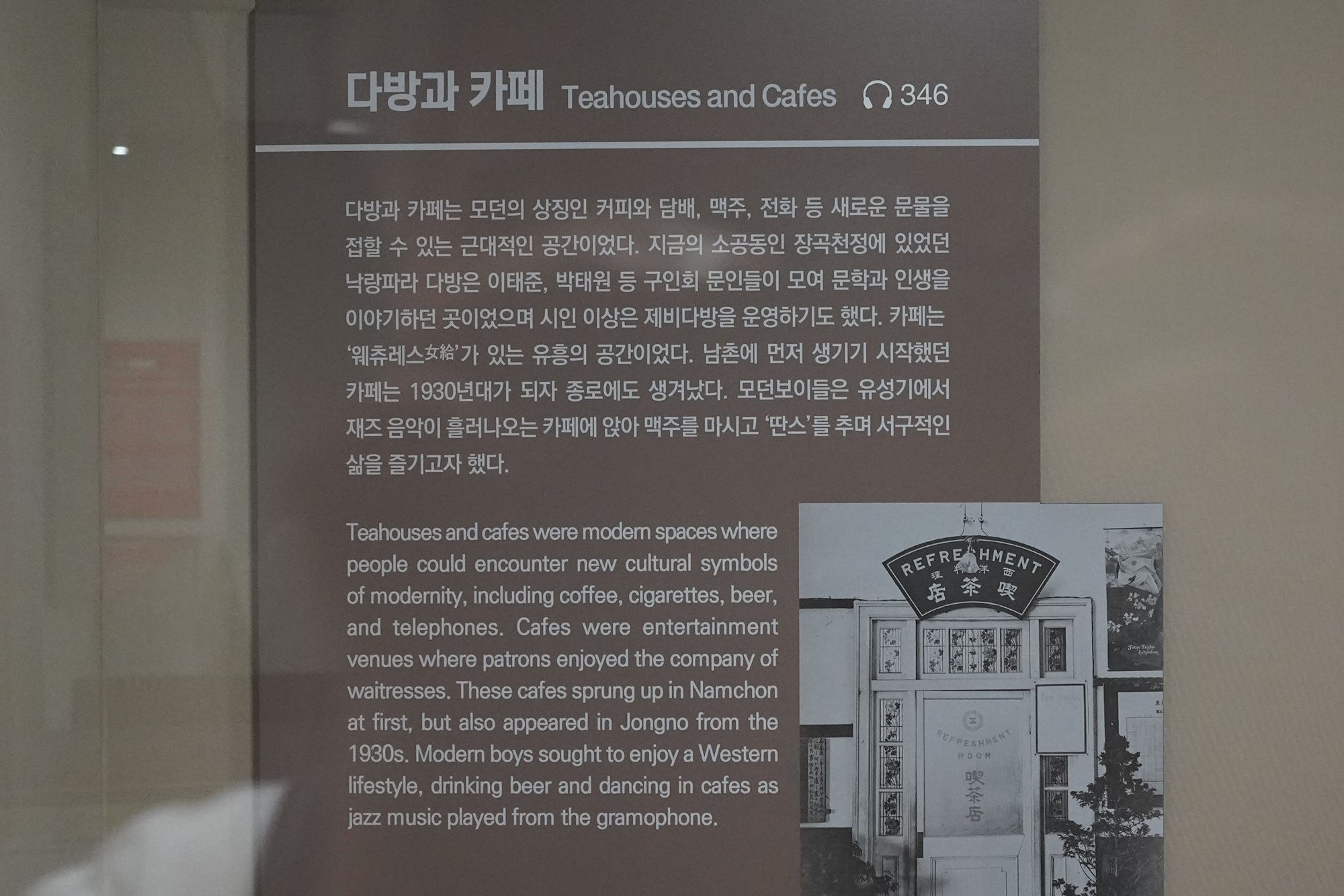
Teahouses and Cafes
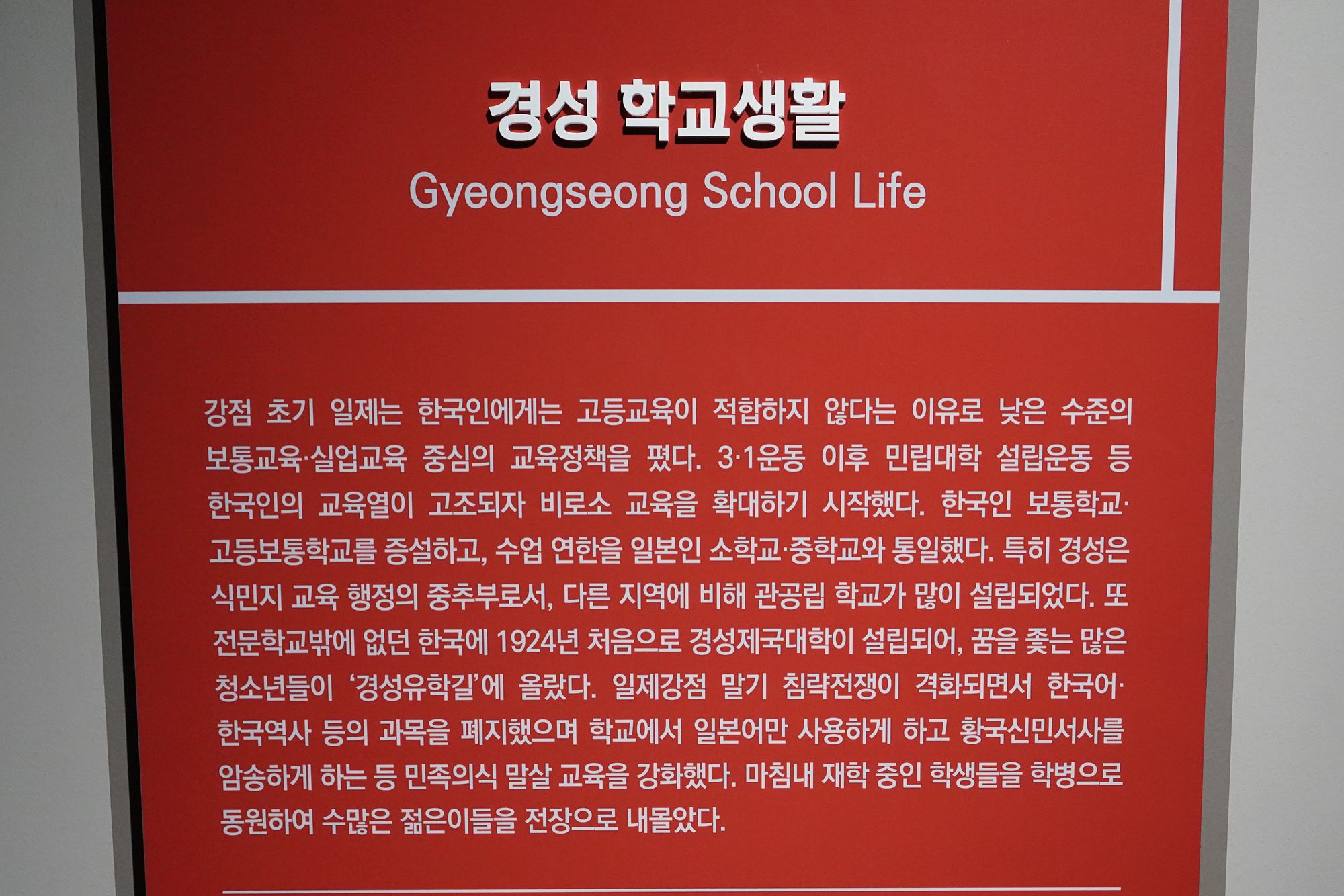
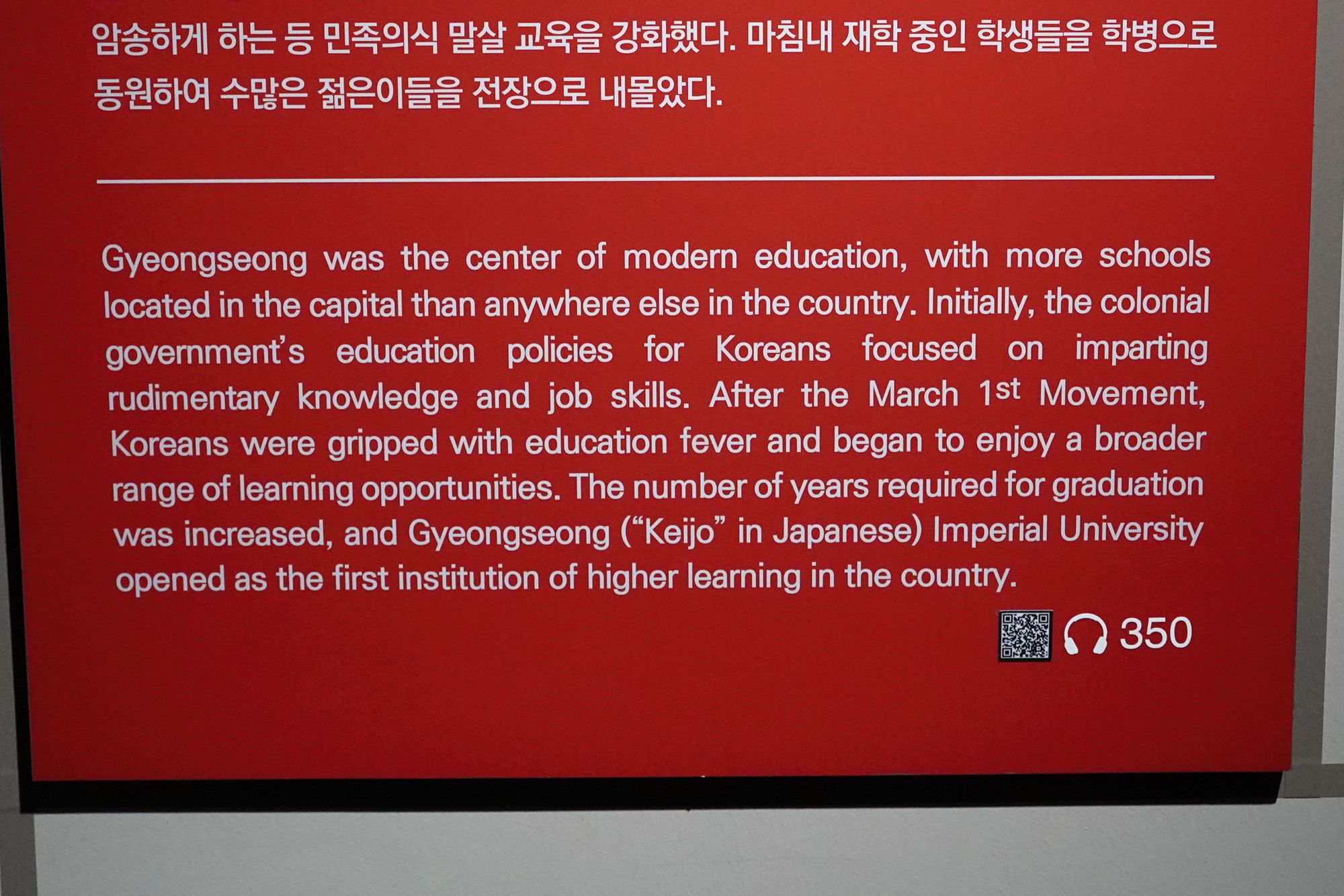
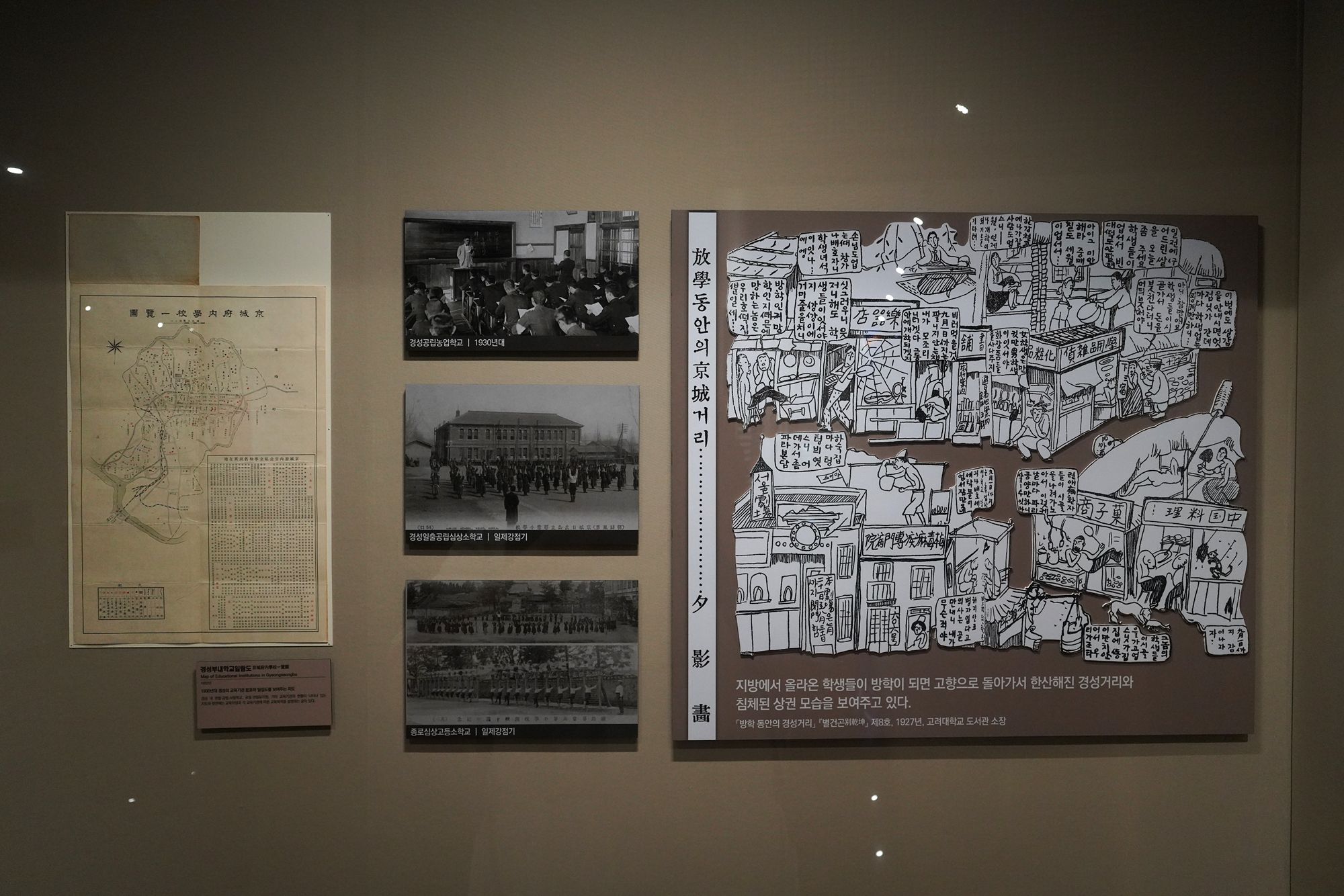
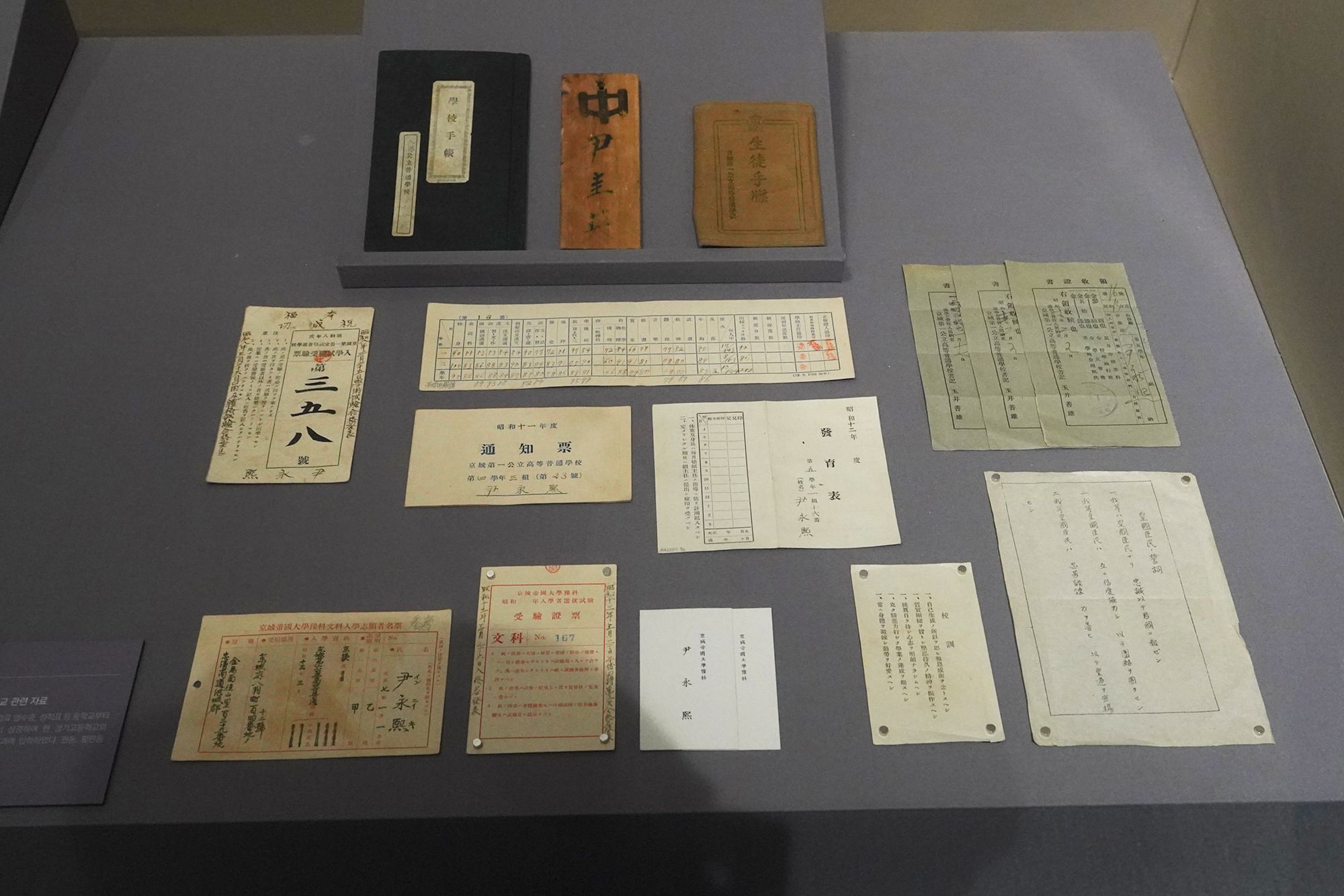
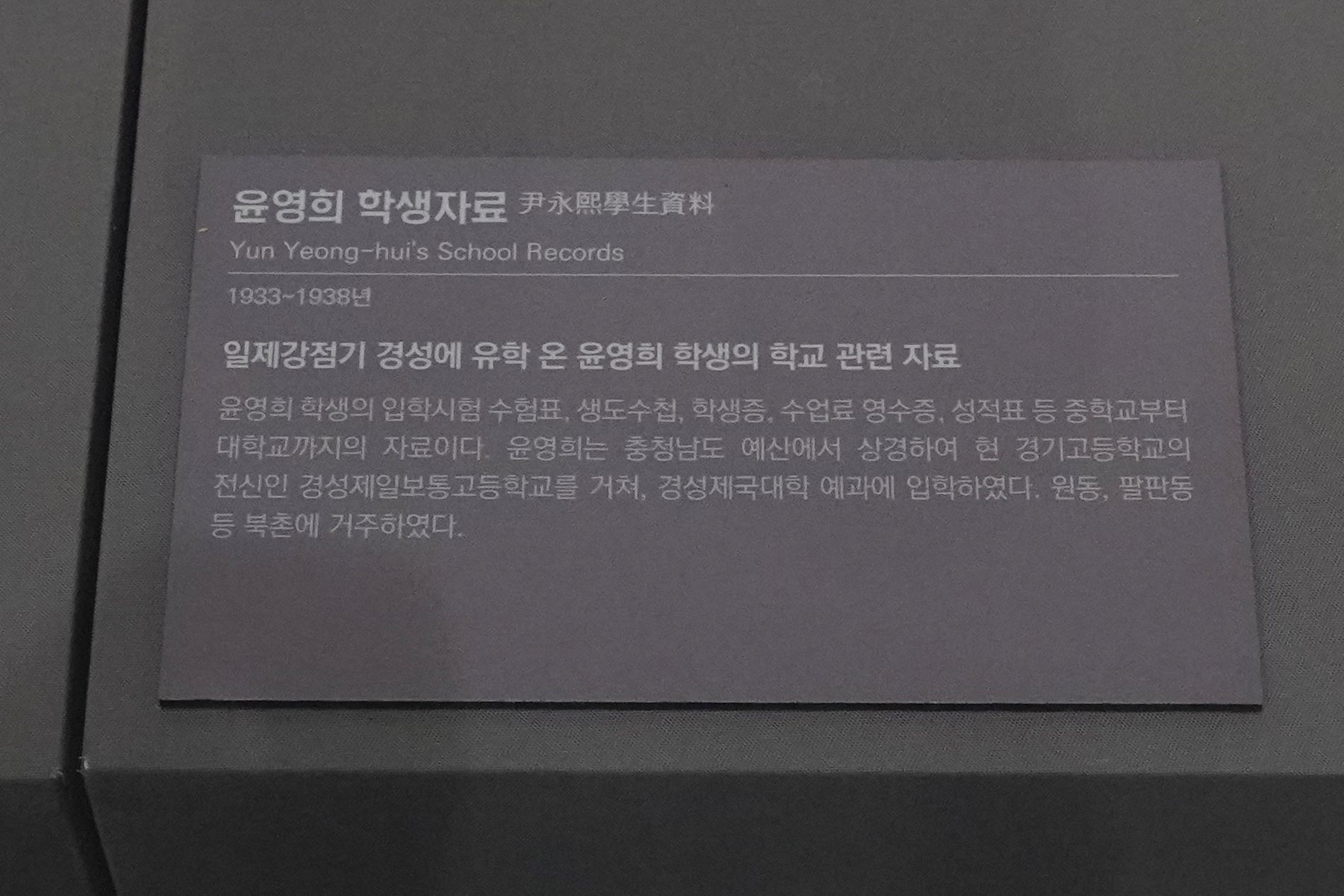
Seoul became the center of modern education, with more schools than anywhere else in Korea. Educational opportunities gradually expanded, especially after the March 1st Movement, and Gyeongseong Imperial University was established as the country’s first modern university-level institution.
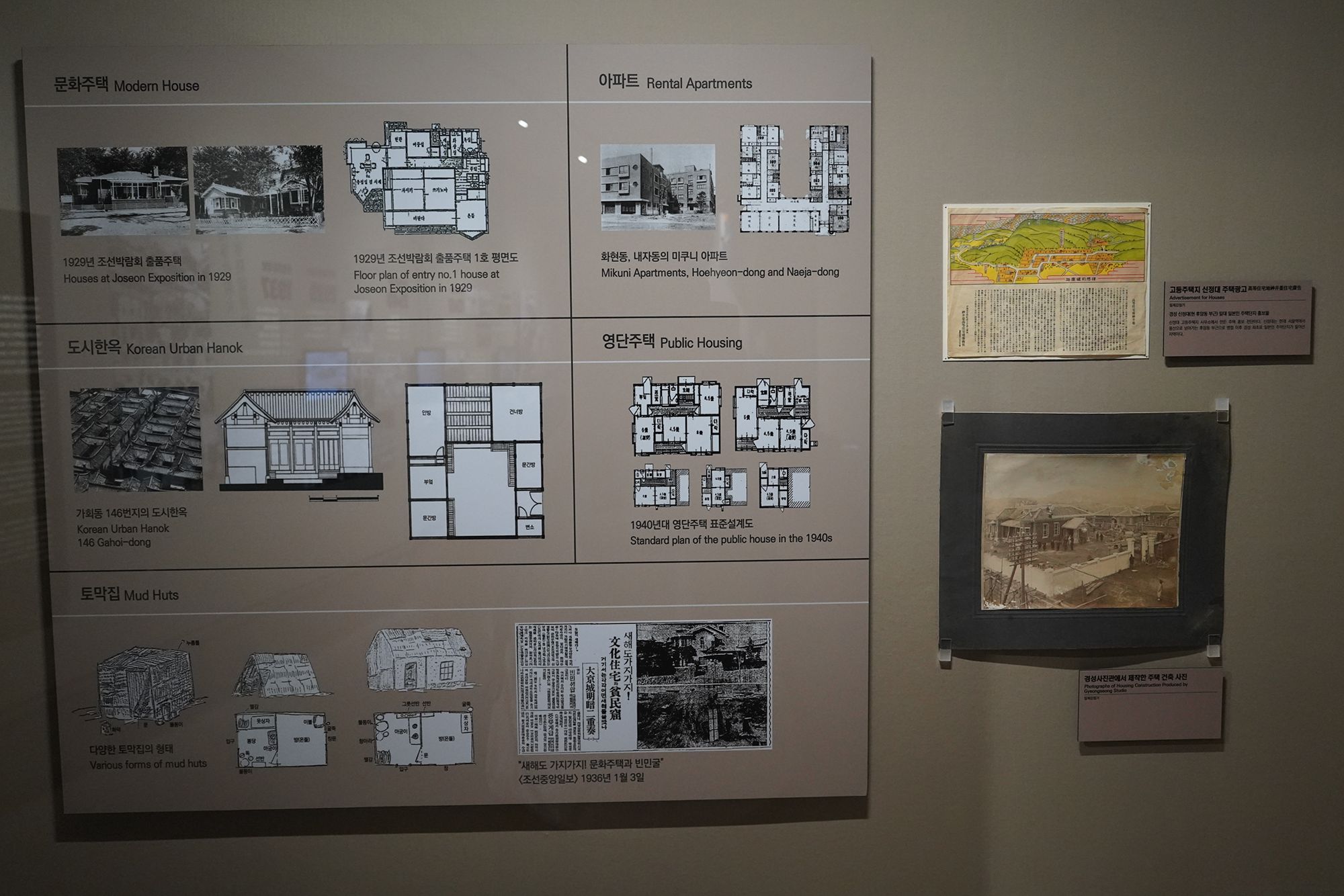
As Seoul’s population grew rapidly during the 1920s and 1930s, new types of housing appeared, including urban hanok and rental apartments. However, housing shortages remained severe, and many poorer residents lived in makeshift homes on the outskirts of the city.
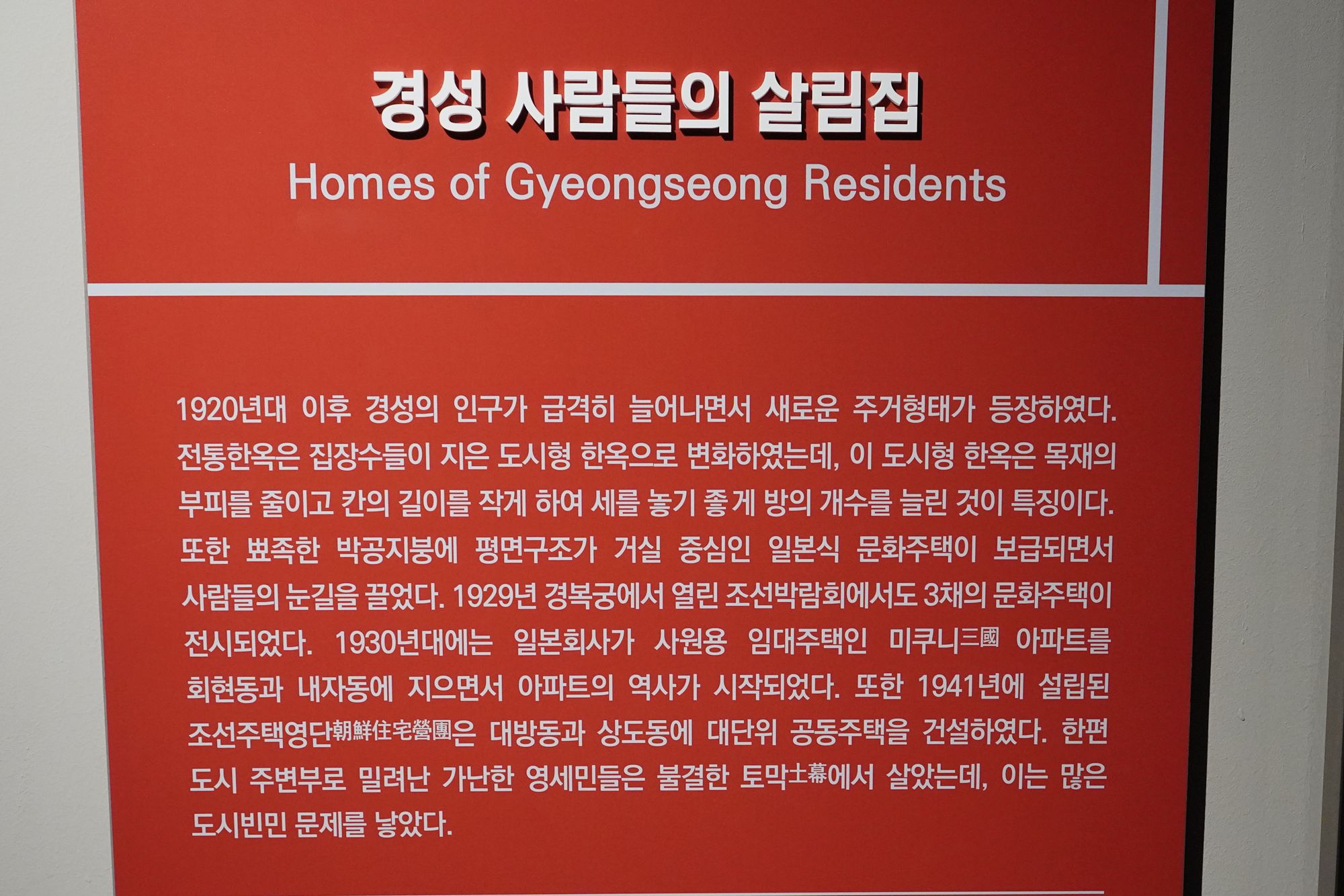
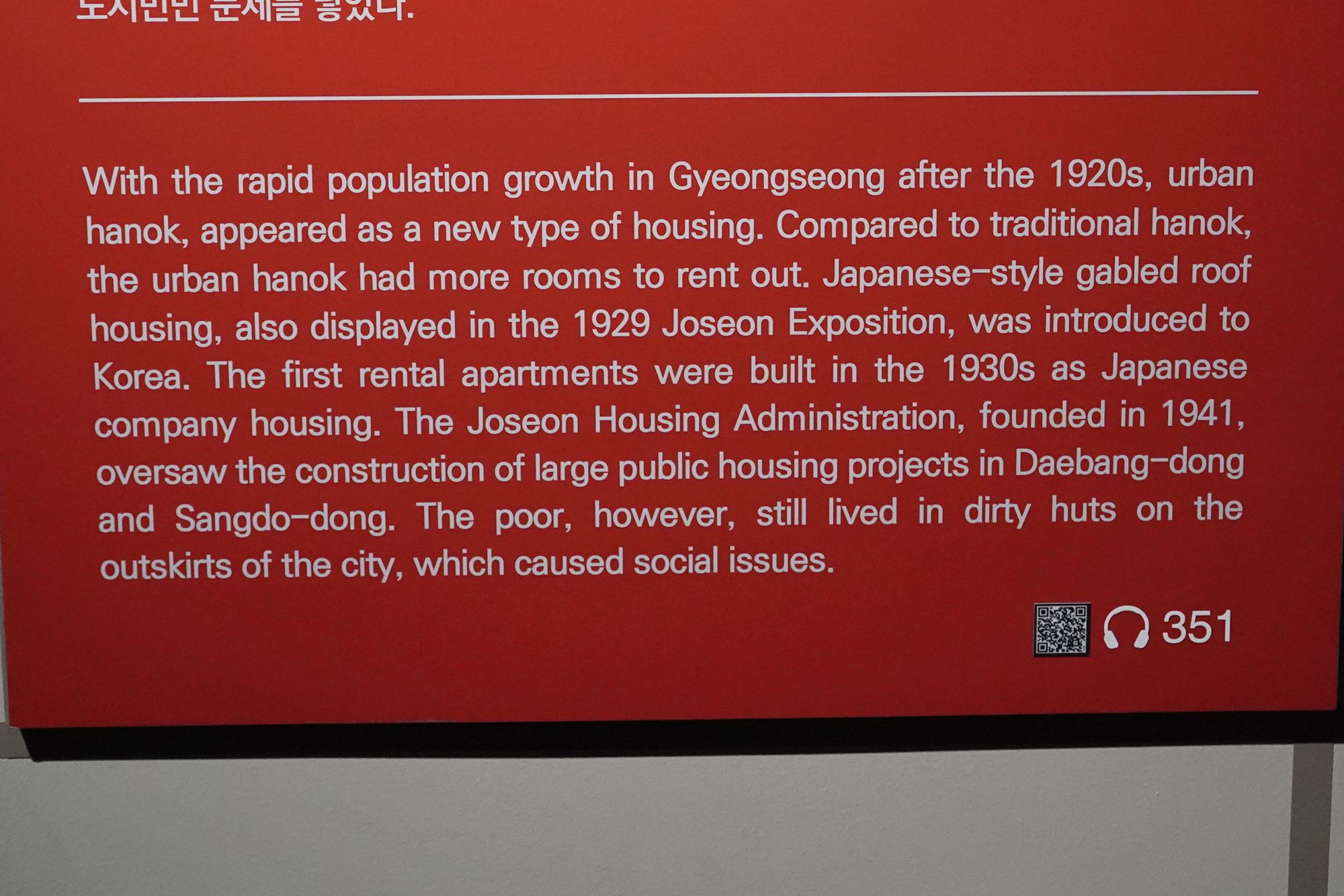
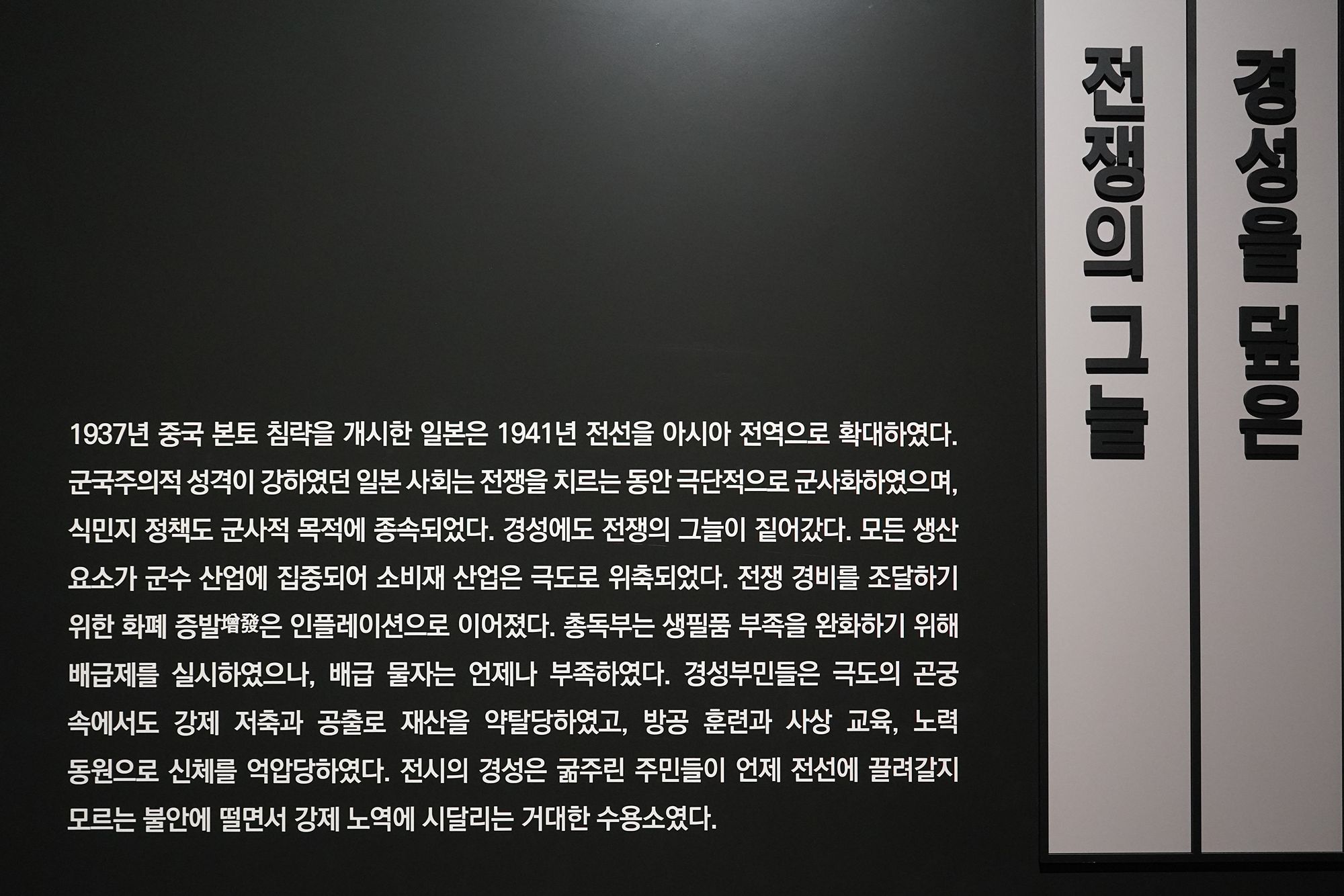
As Japan expanded its wars in Asia from 1937, Seoul was increasingly mobilized for the Japanese war effort. Resources were diverted to military production, while inflation and shortages caused severe hardship. Residents faced rationing, forced seizure of goods and rice, air-raid drills, ideological education, and labor mobilization.
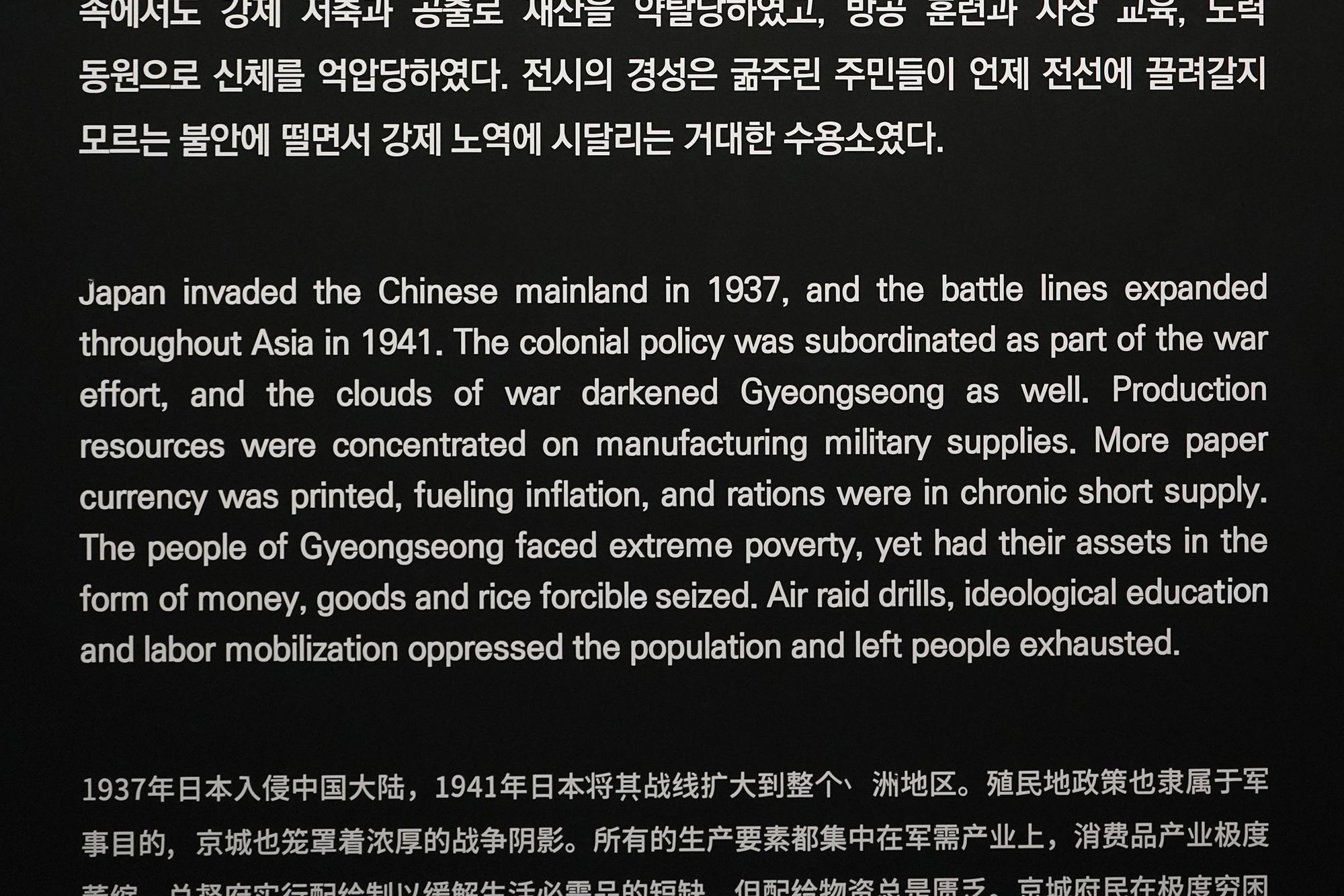
A brief history during this period
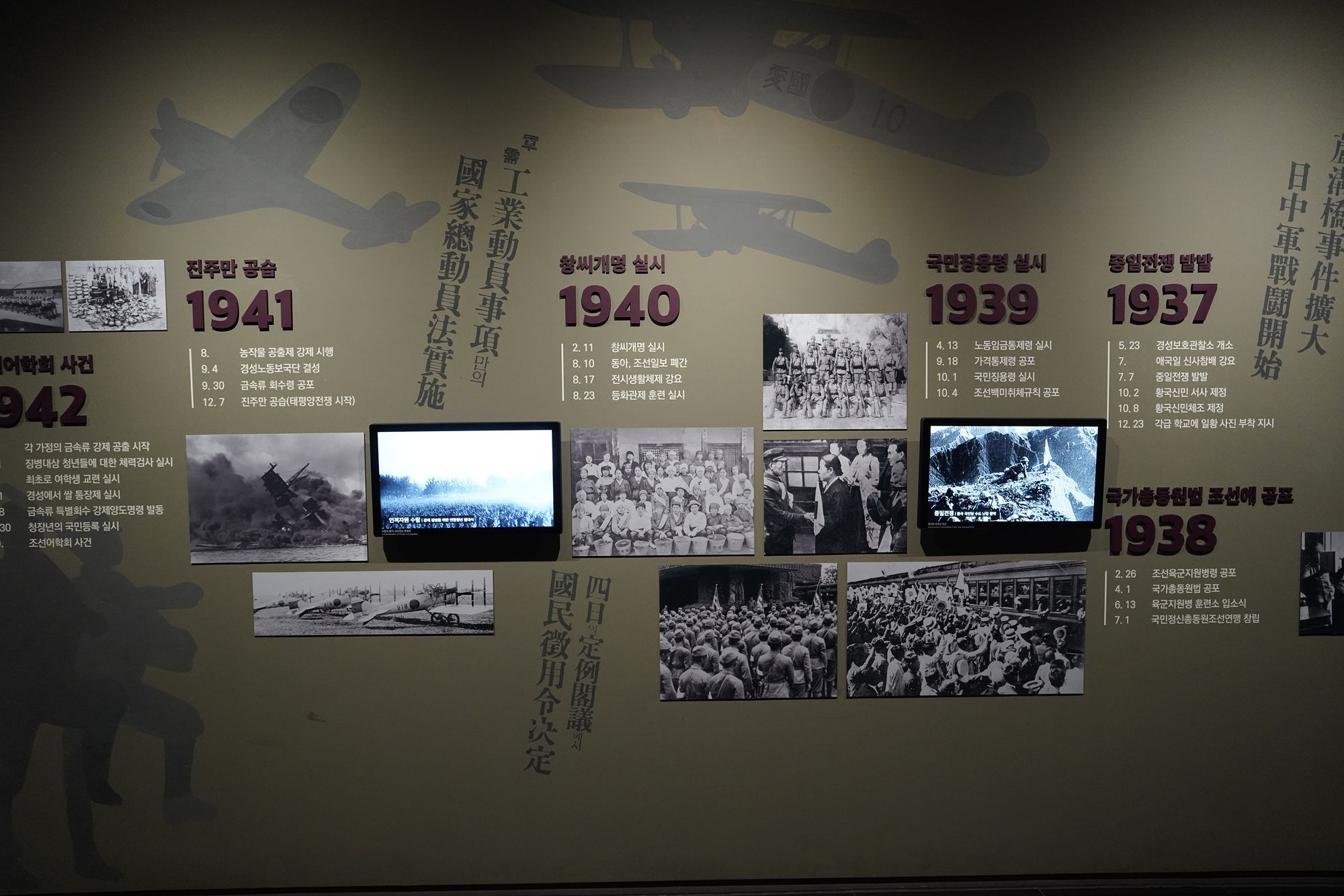
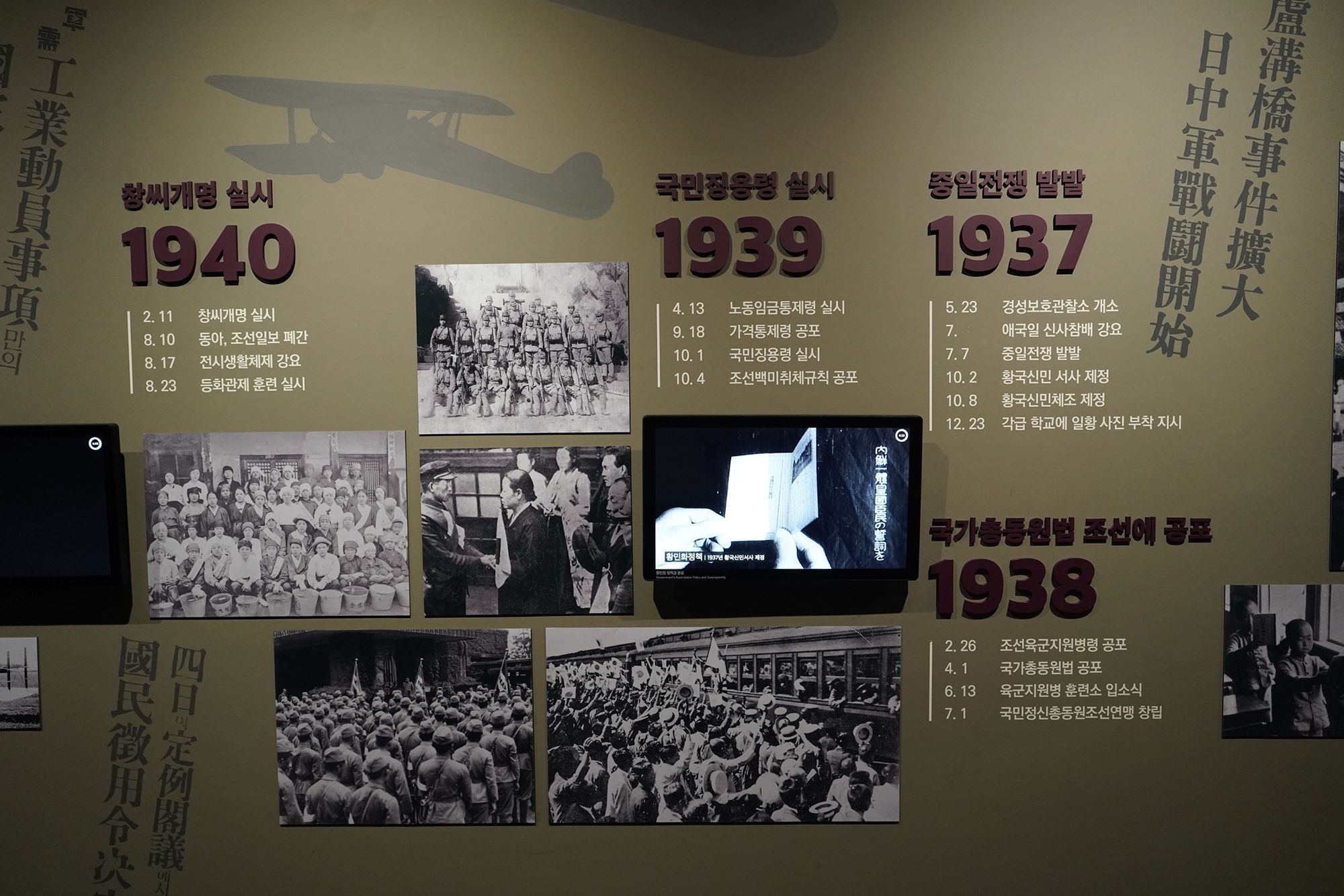
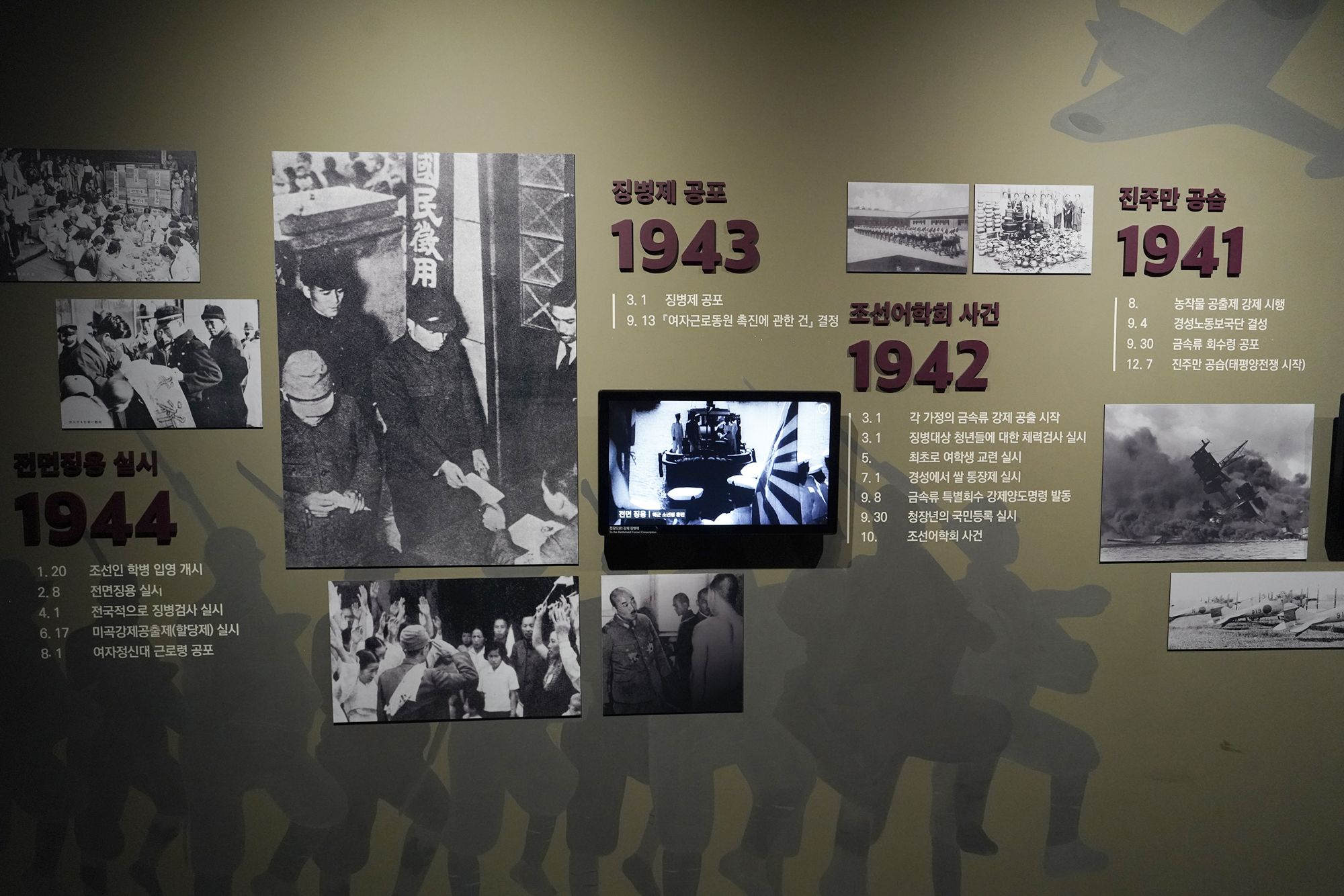
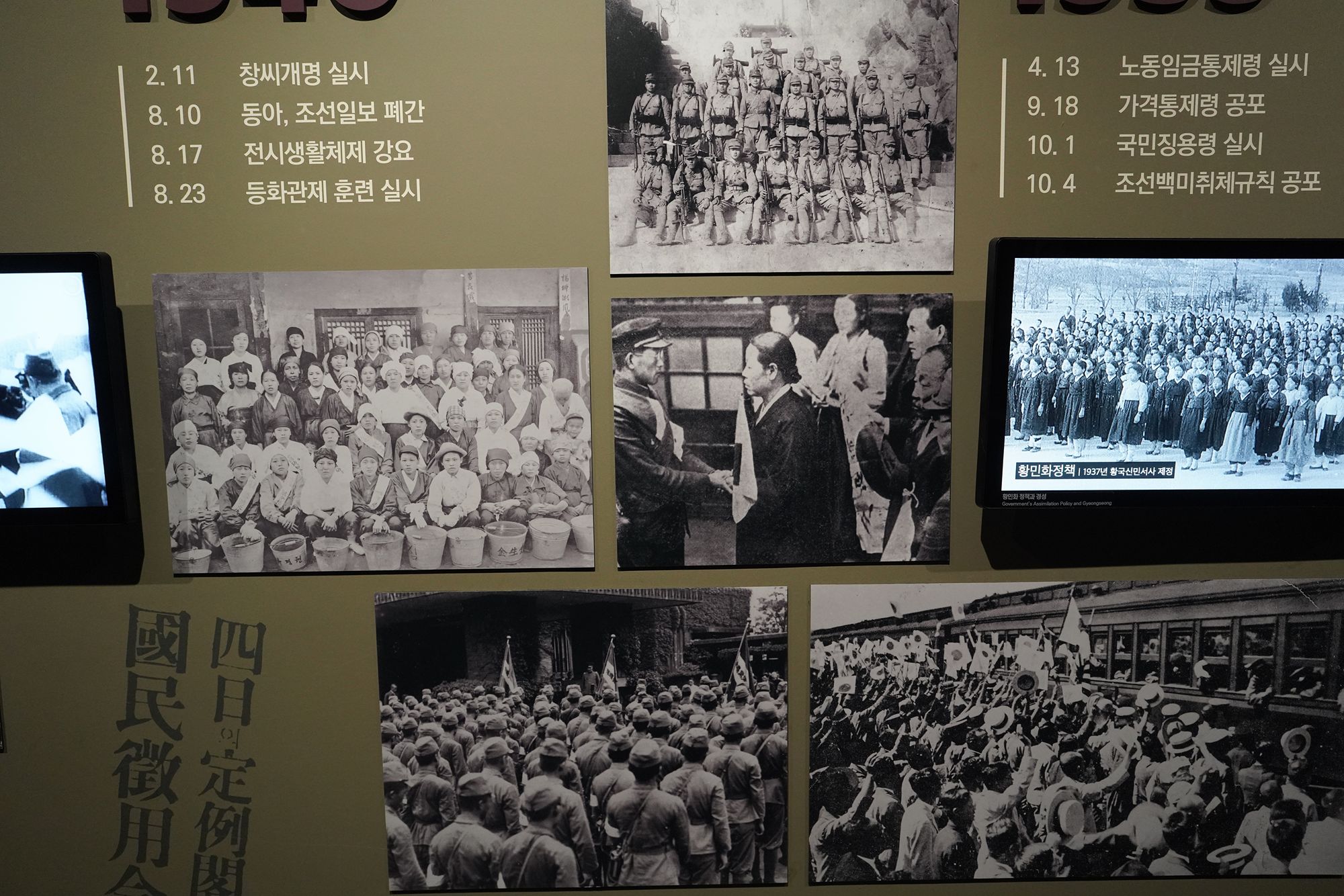
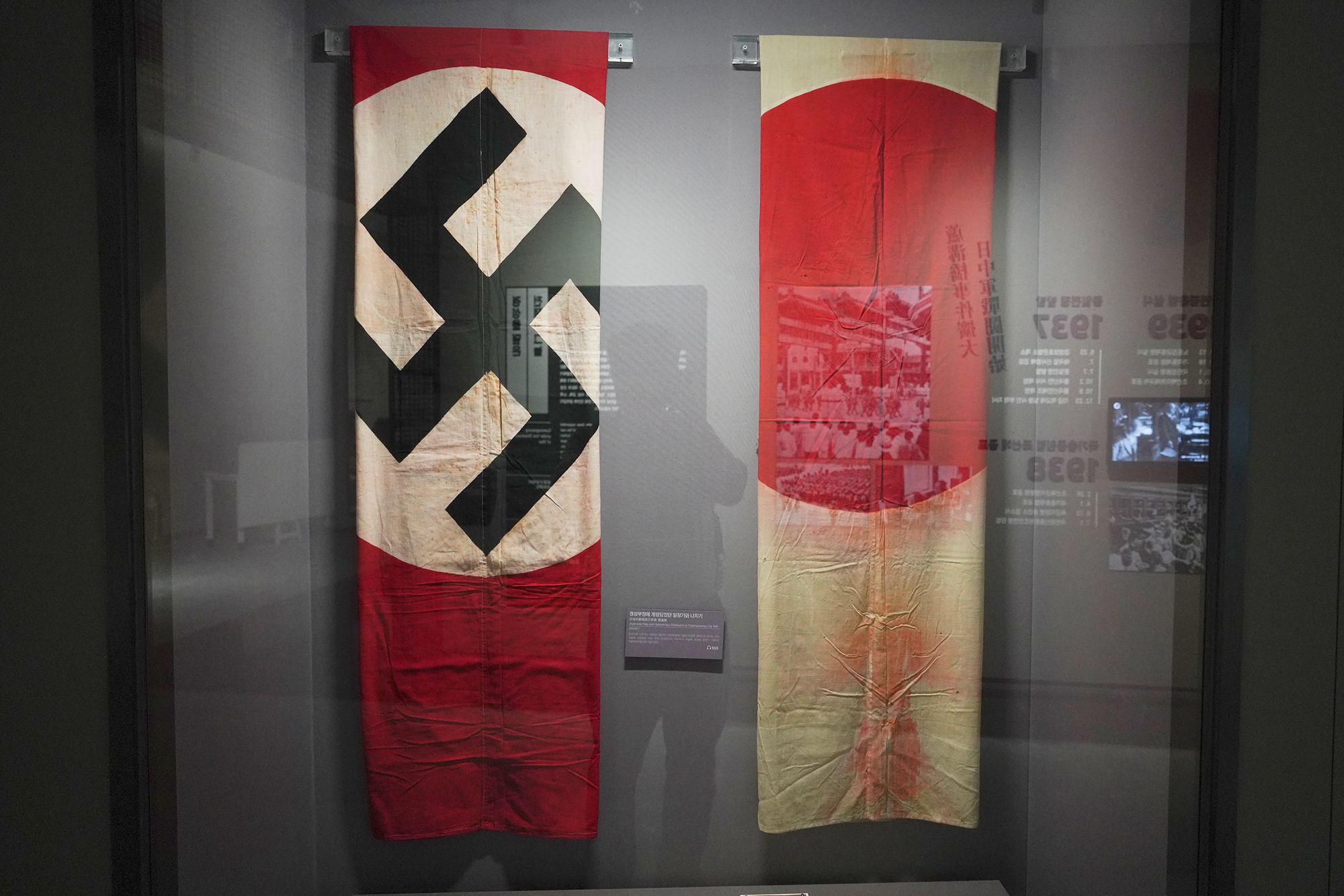
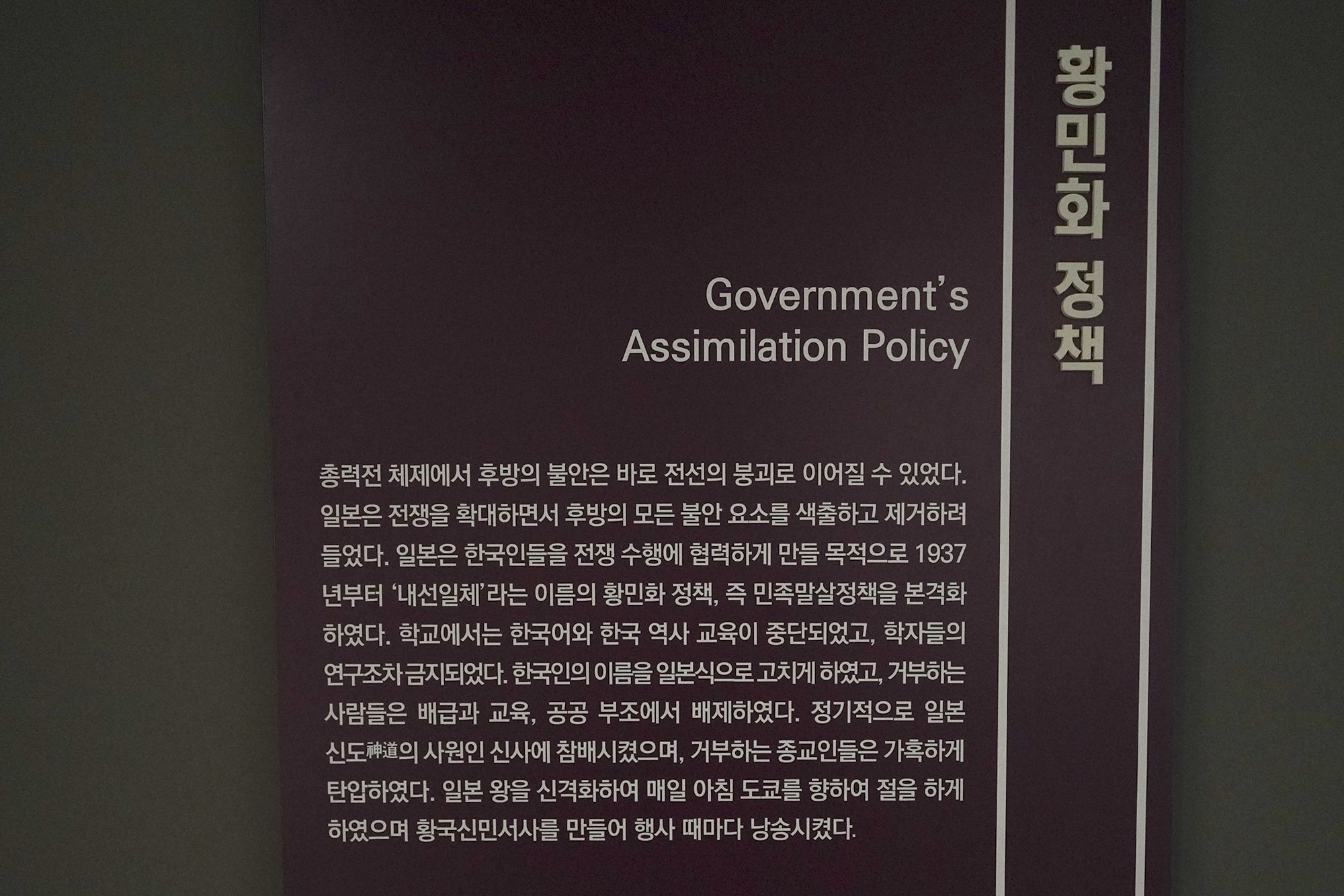
Beginning in the late 1930s, Japan intensified efforts to assimilate Koreans into the Japanese Empire and mobilize them for war. Korean-language and history education was suppressed, Koreans were pressured to adopt Japanese-style names and participate in Shinto shrine worship, and public rituals required expressions of loyalty to the Japanese emperor. These policies were intended to weaken Korean national identity and strengthen loyalty to imperial Japan.
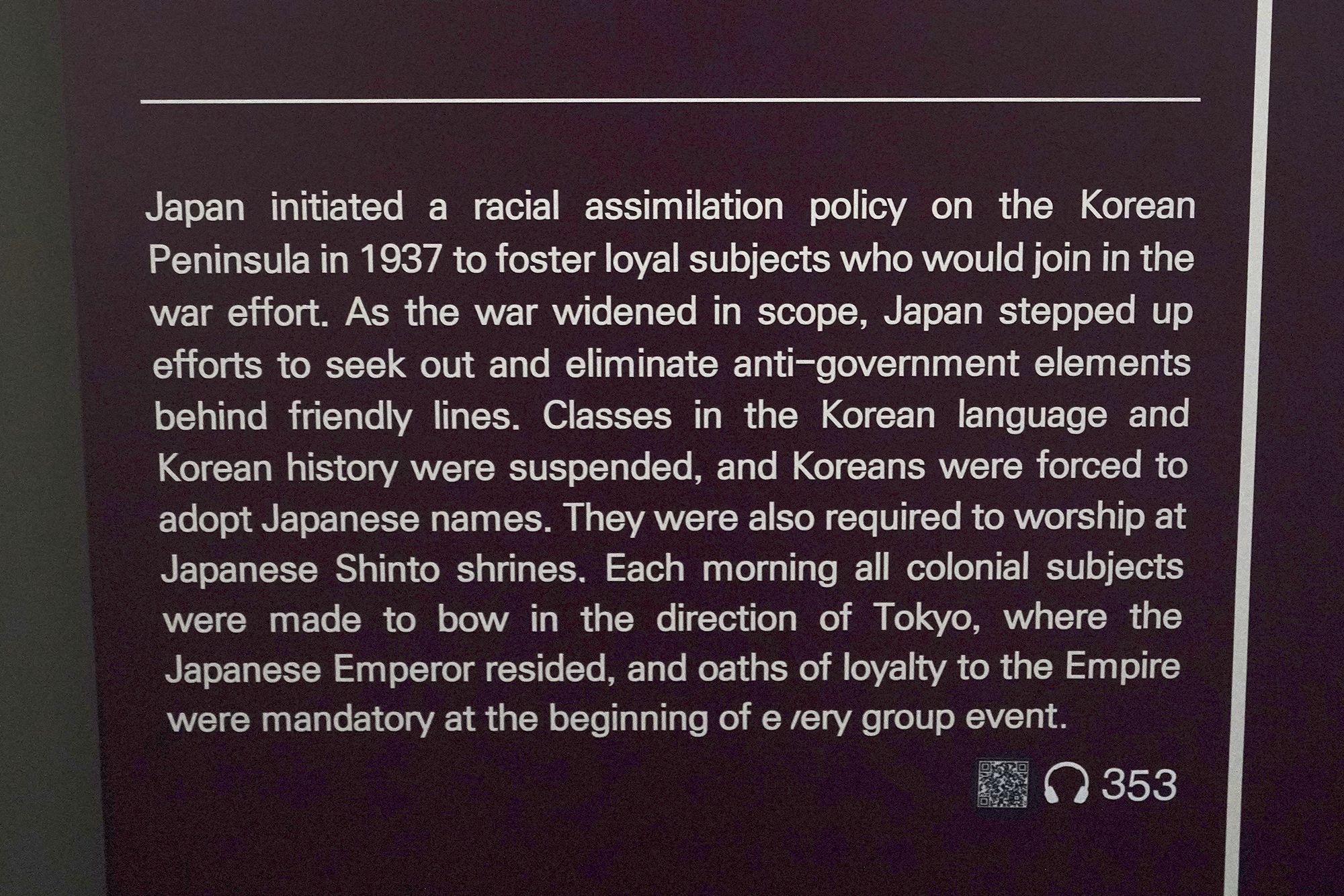
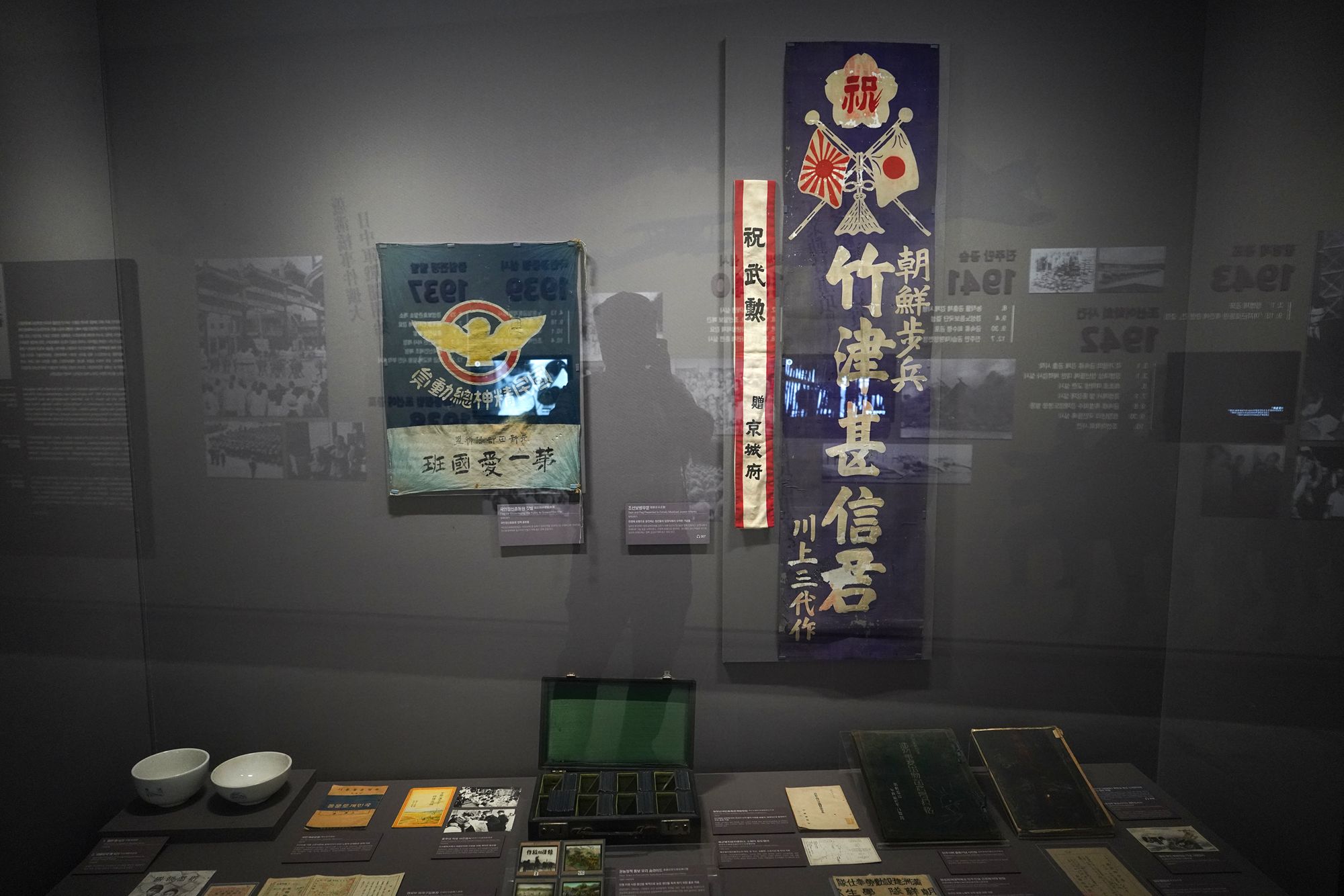
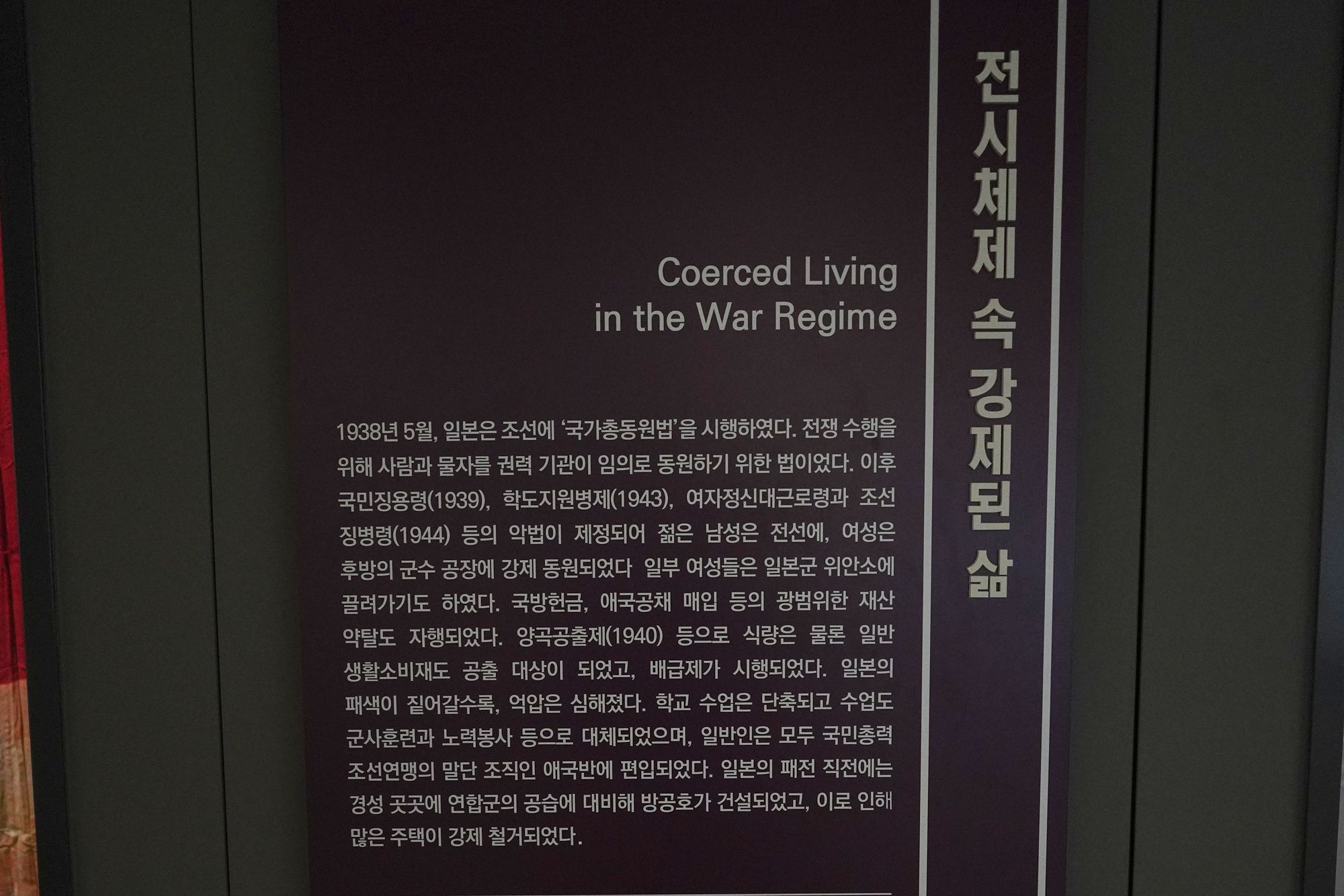
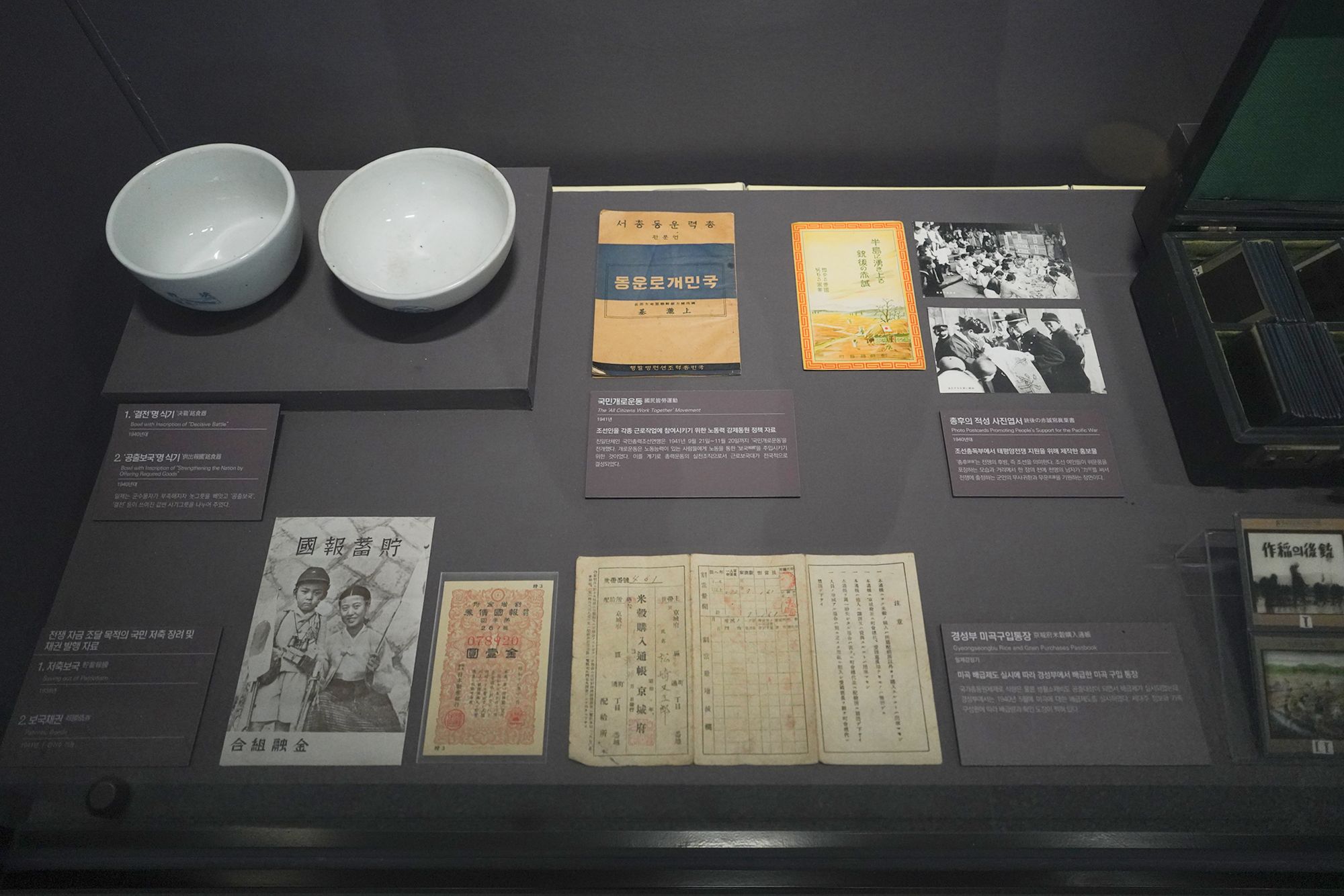
As Japan expanded its wars in Asia, life in colonial Korea became increasingly controlled by the wartime government. Beginning in 1938, Koreans were mobilized for military service and labor, while money, goods, and other resources were collected for the war effort. Food and everyday necessities were rationed, and schools increasingly emphasized military training and labor instead of normal education. In the final years of the war, Seoul also prepared for possible air raids, with air-raid shelters constructed throughout the city, sometimes requiring homes to be demolished.
Seoul: The Capital of the Republic of Korea 1945-2010
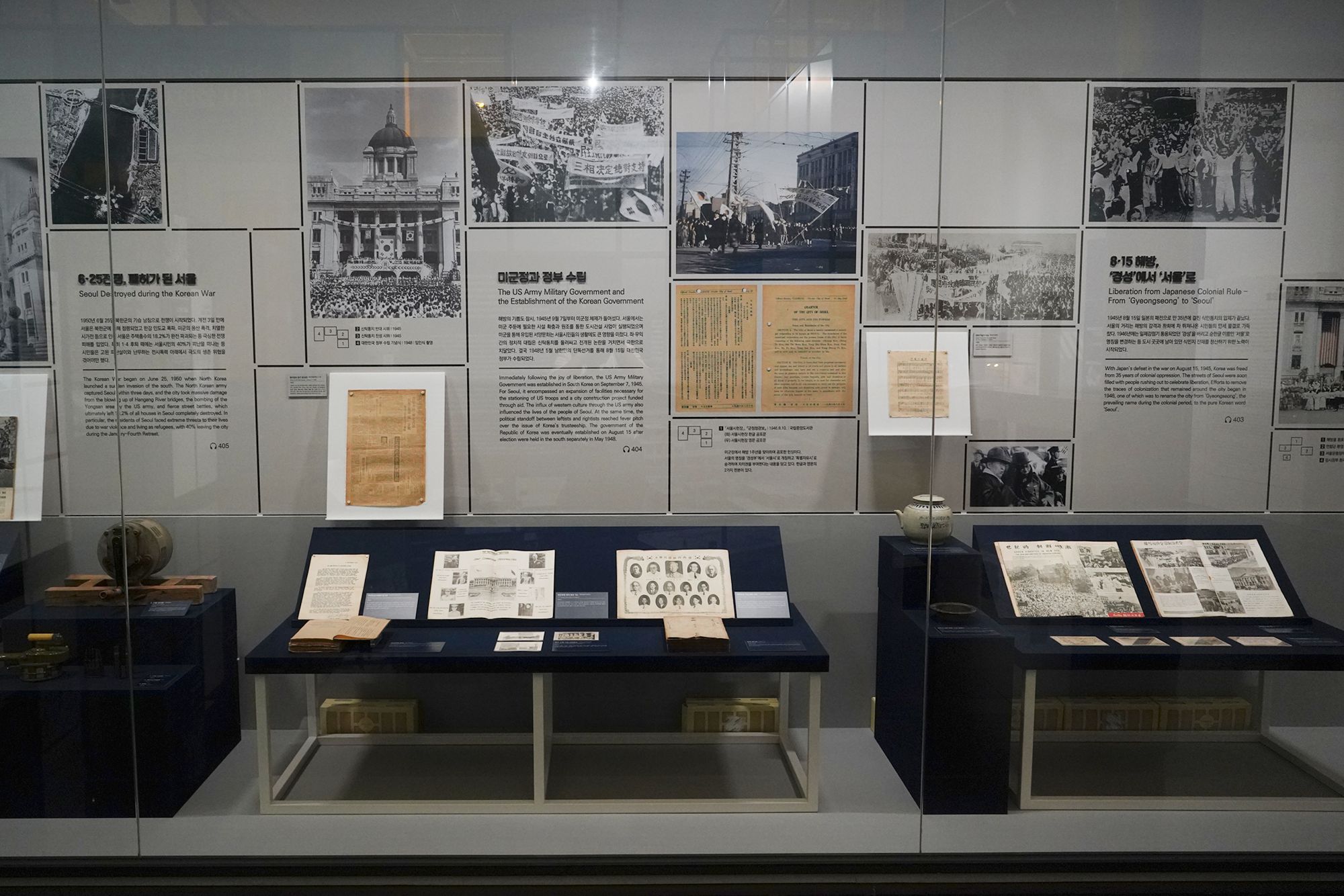
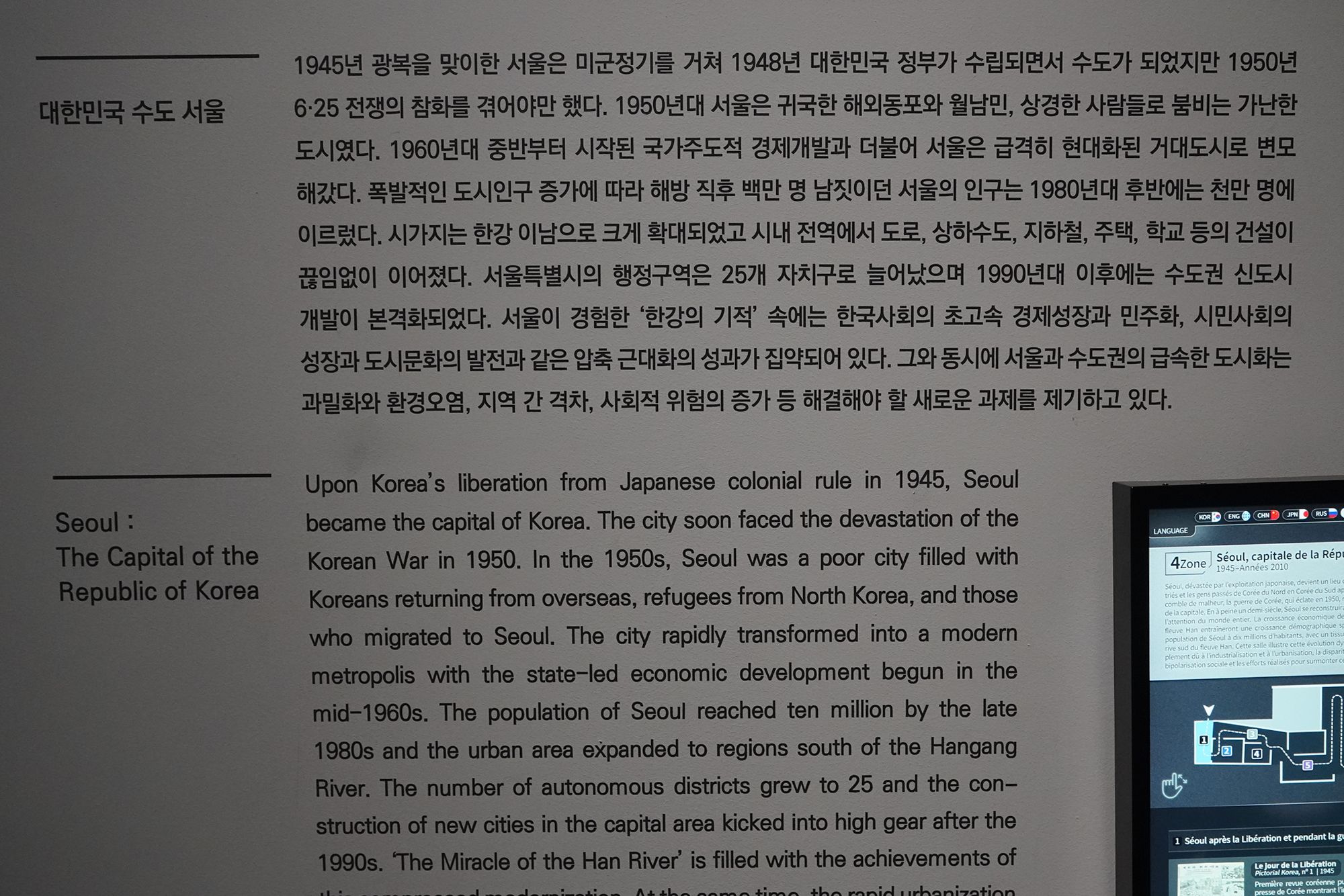
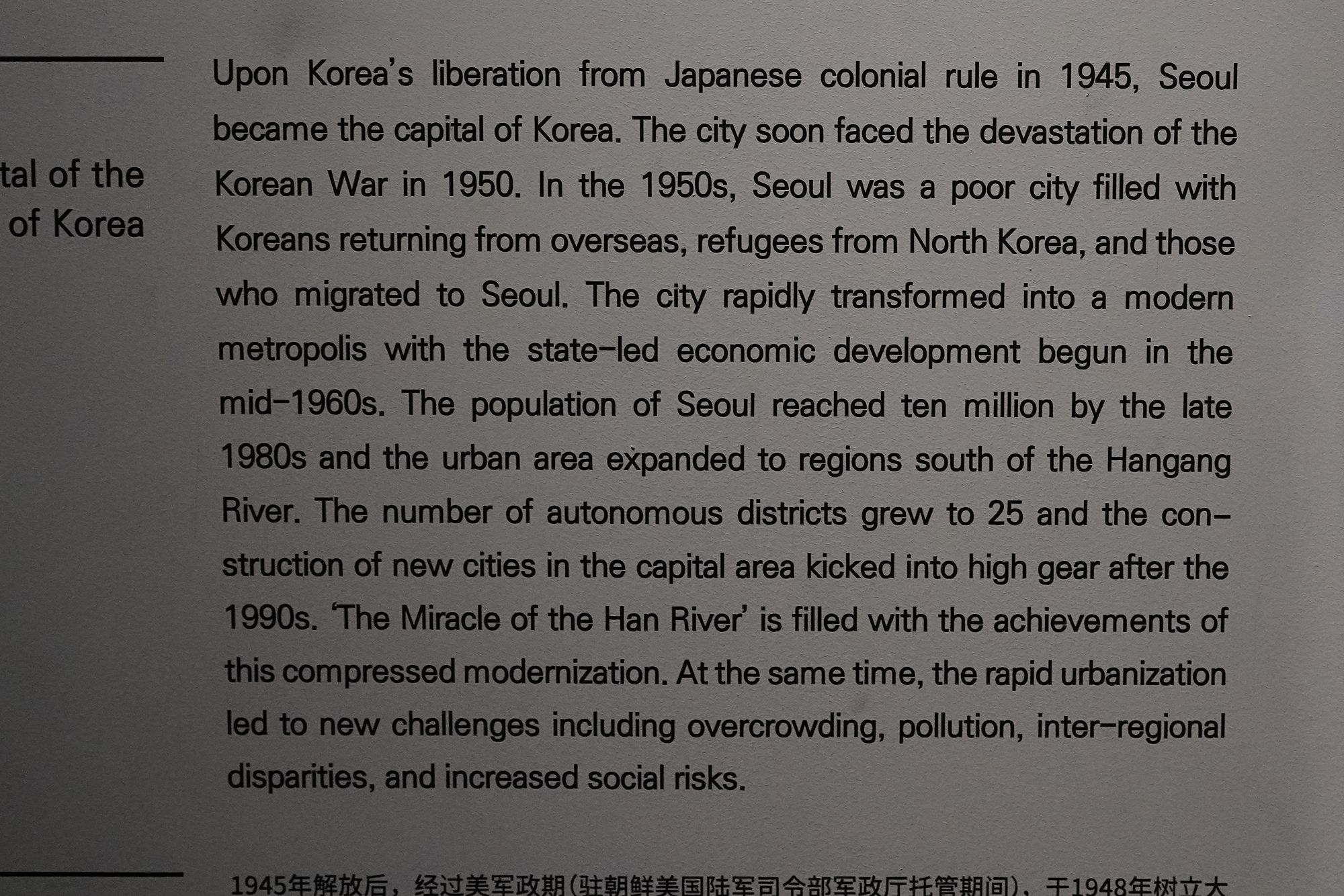
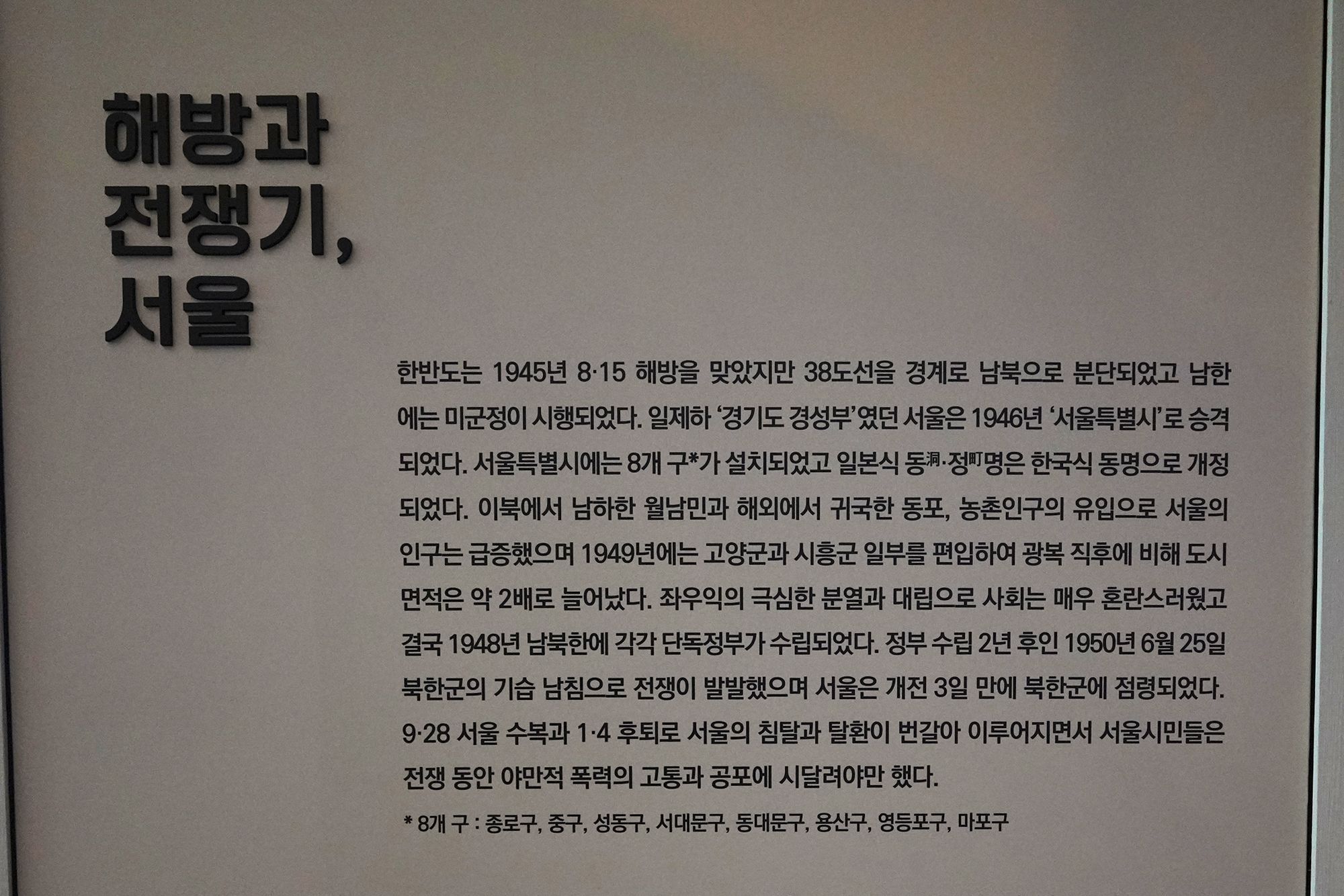
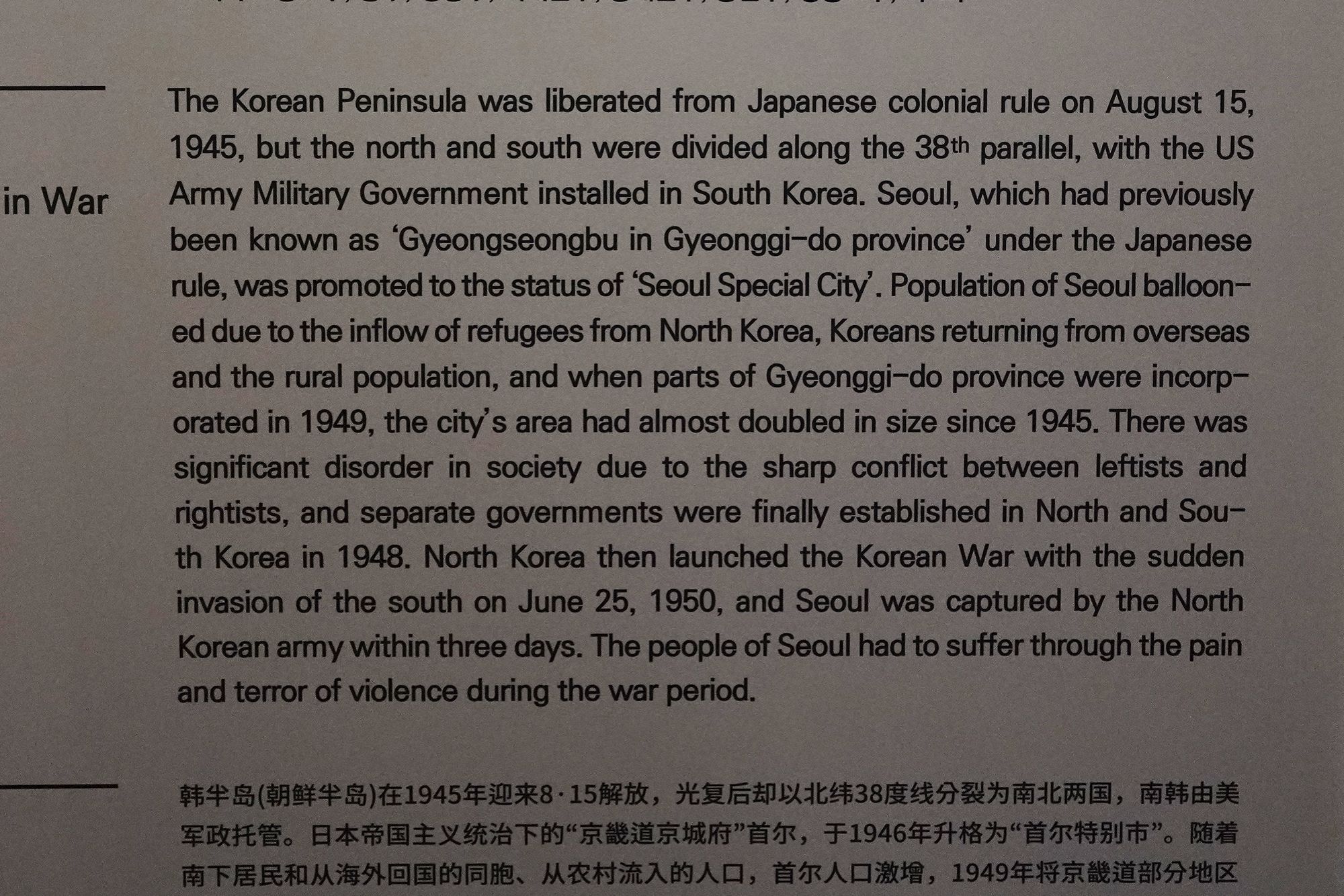
Korea was liberated from Japanese colonial rule on August 15, 1945, but the peninsula was soon divided at the 38th parallel, with Soviet forces in the north and the U.S. military governing the south. Seoul regained its Korean name and became a Special City. Its population grew rapidly as Koreans returned from overseas, refugees arrived from North Korea, and people migrated from rural areas. Separate governments were established in North and South Korea in 1948. On June 25, 1950, North Korea invaded South Korea, beginning the Korean War, and Seoul fell to North Korean forces only three days later. The city and its residents would suffer enormously during the war.
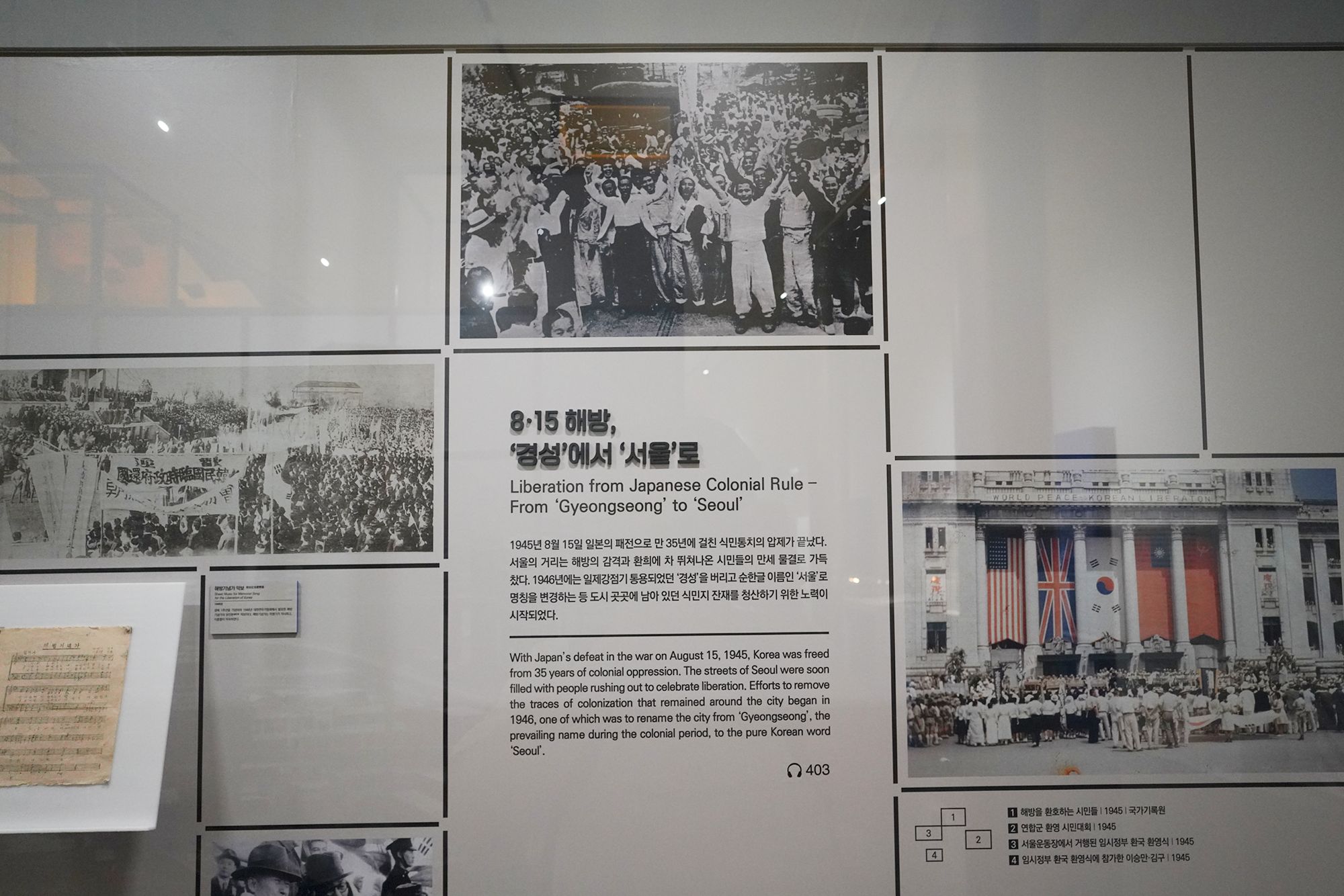
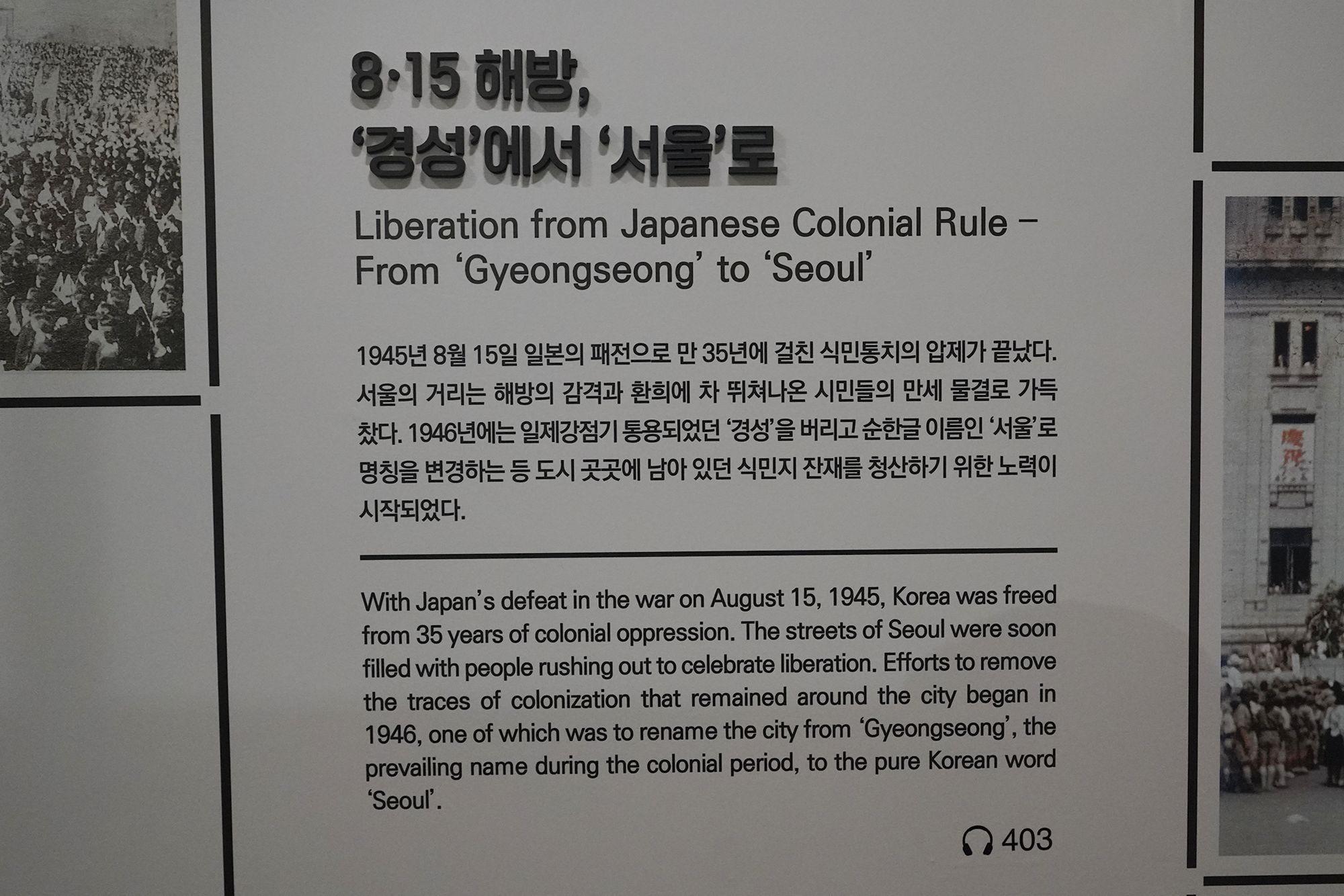
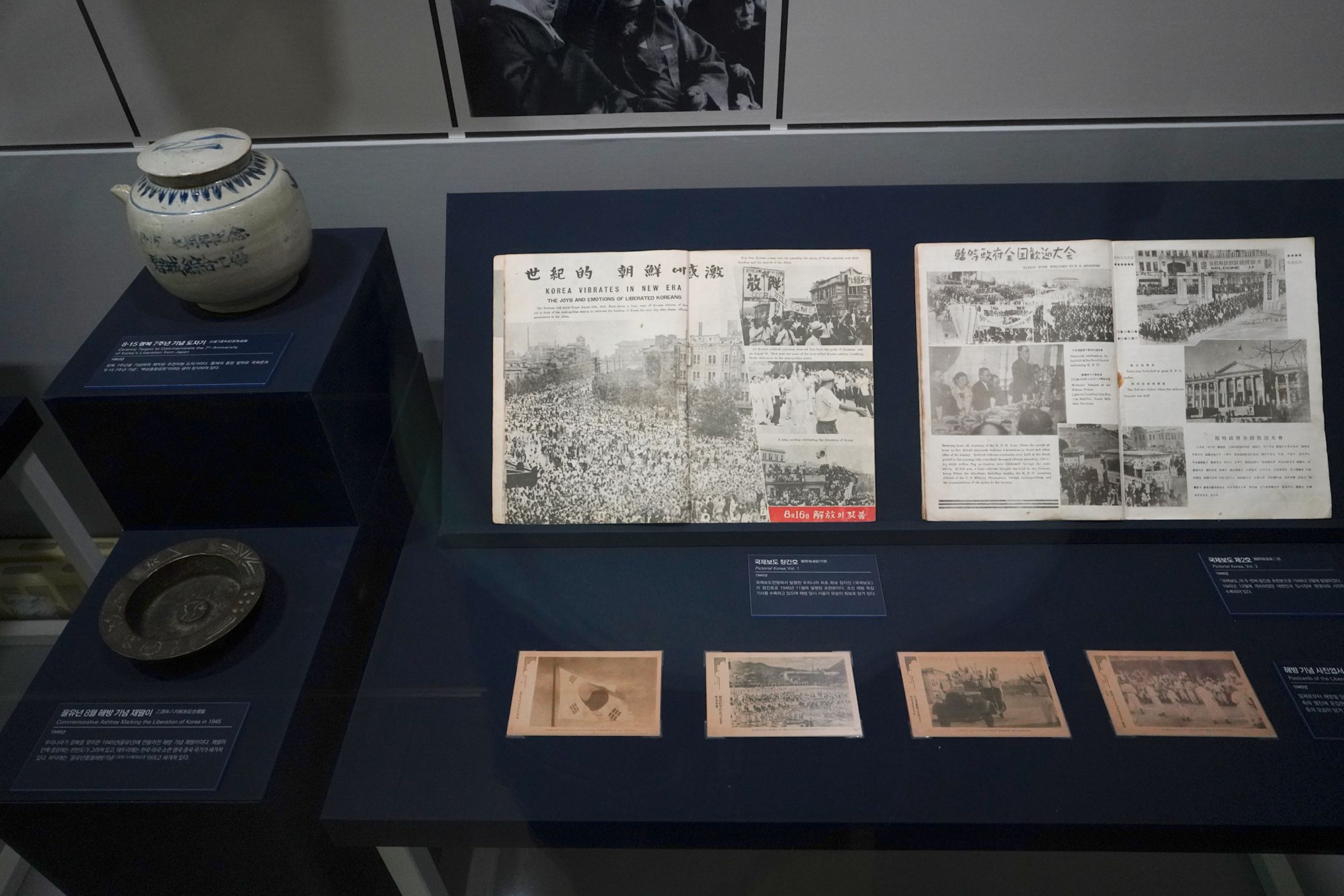
When Japan surrendered on August 15, 1945, Korea was liberated after 35 years of Japanese colonial rule. People poured into the streets of the capital to celebrate. Beginning in 1946, efforts were made to remove remnants of Japanese colonial rule, including changing the city’s colonial-era name, Gyeongseong, back to “Seoul,” a native Korean name.
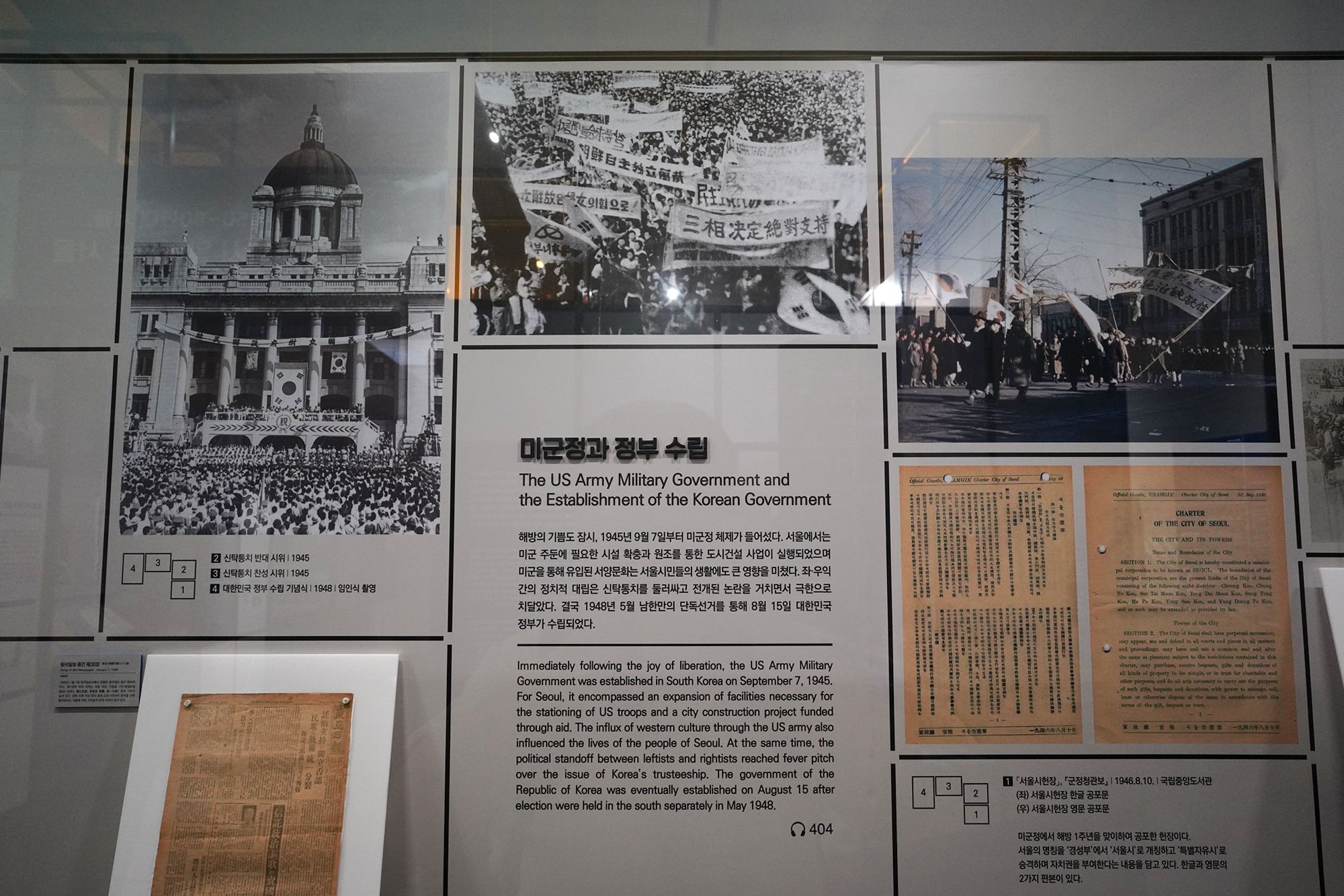
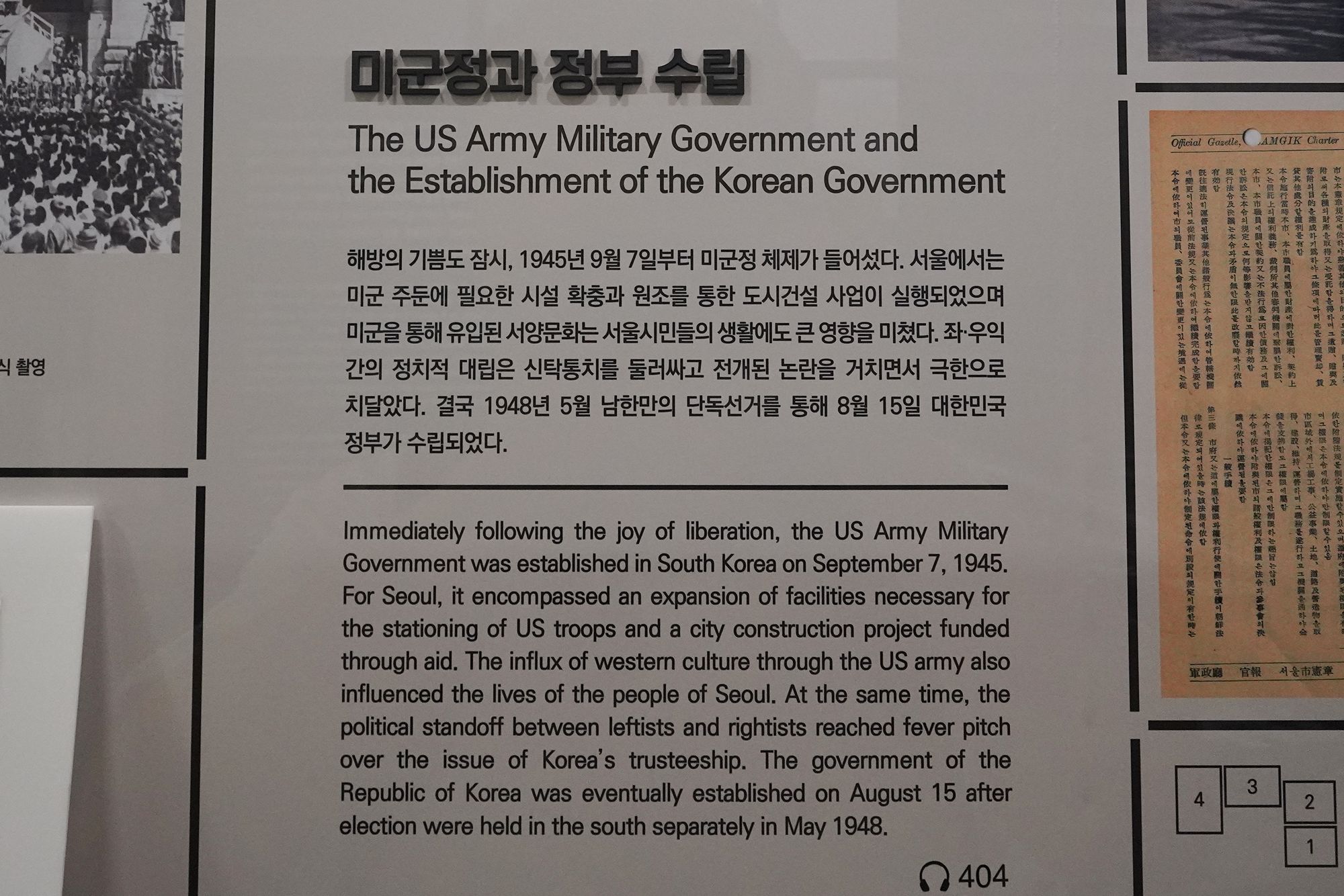
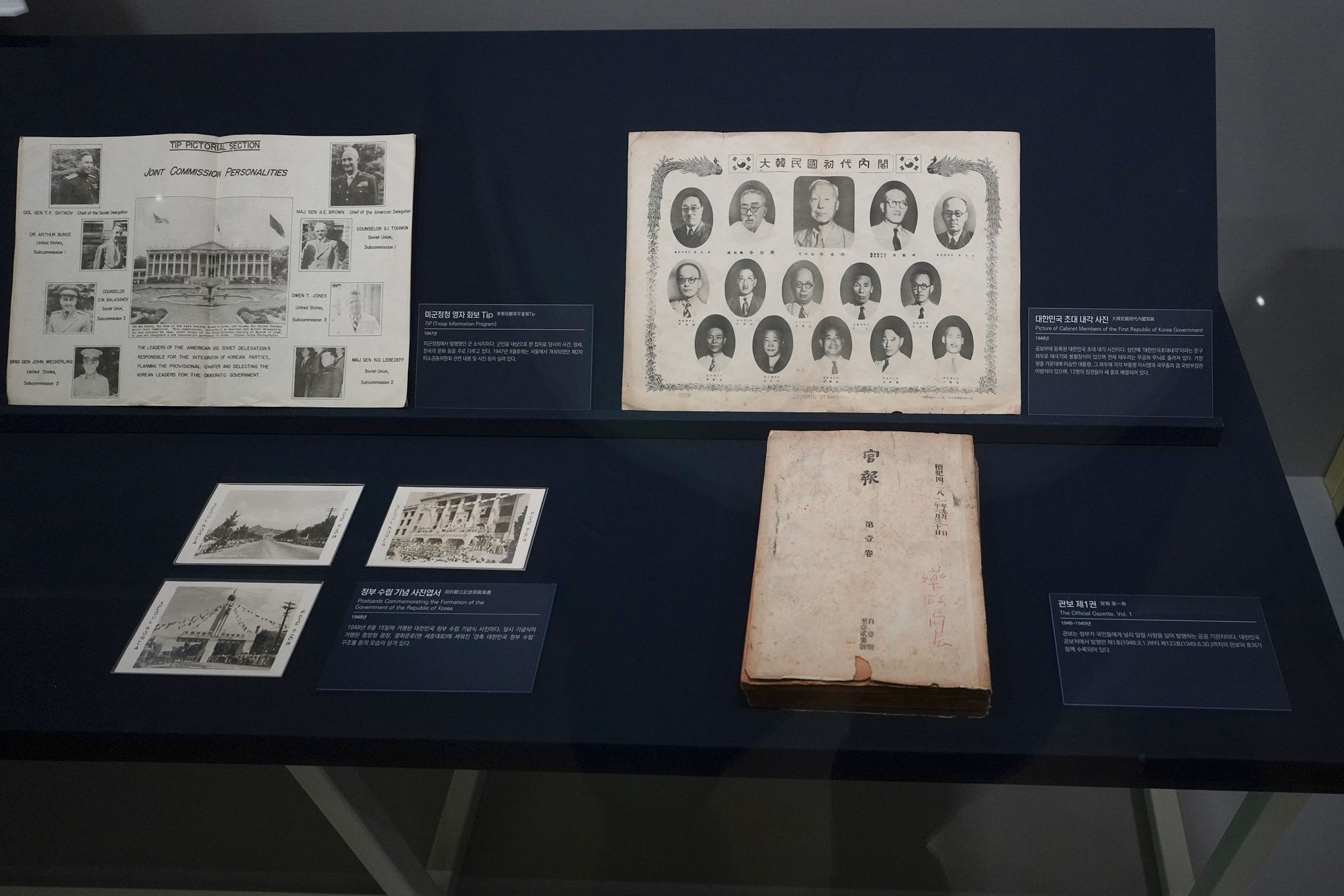
After liberation in 1945, South Korea came under the U.S. Army Military Government. In Seoul, facilities were expanded to accommodate American troops, while U.S. aid supported reconstruction and American culture increasingly influenced everyday life. At the same time, intense conflict developed between left- and right-wing political groups over Korea’s future. Elections were held in South Korea in May 1948, leading to the establishment of the Republic of Korea on August 15, 1948.
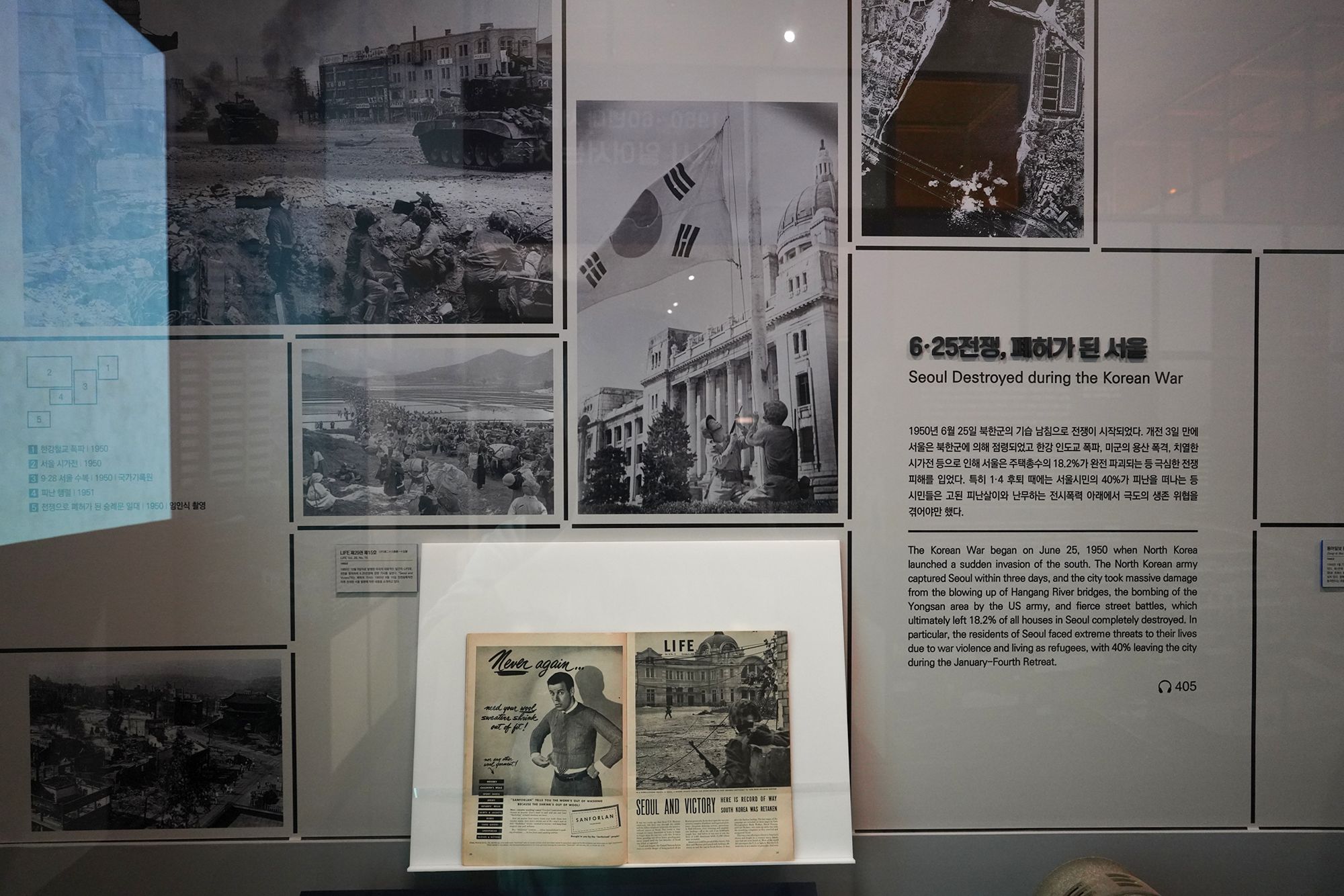
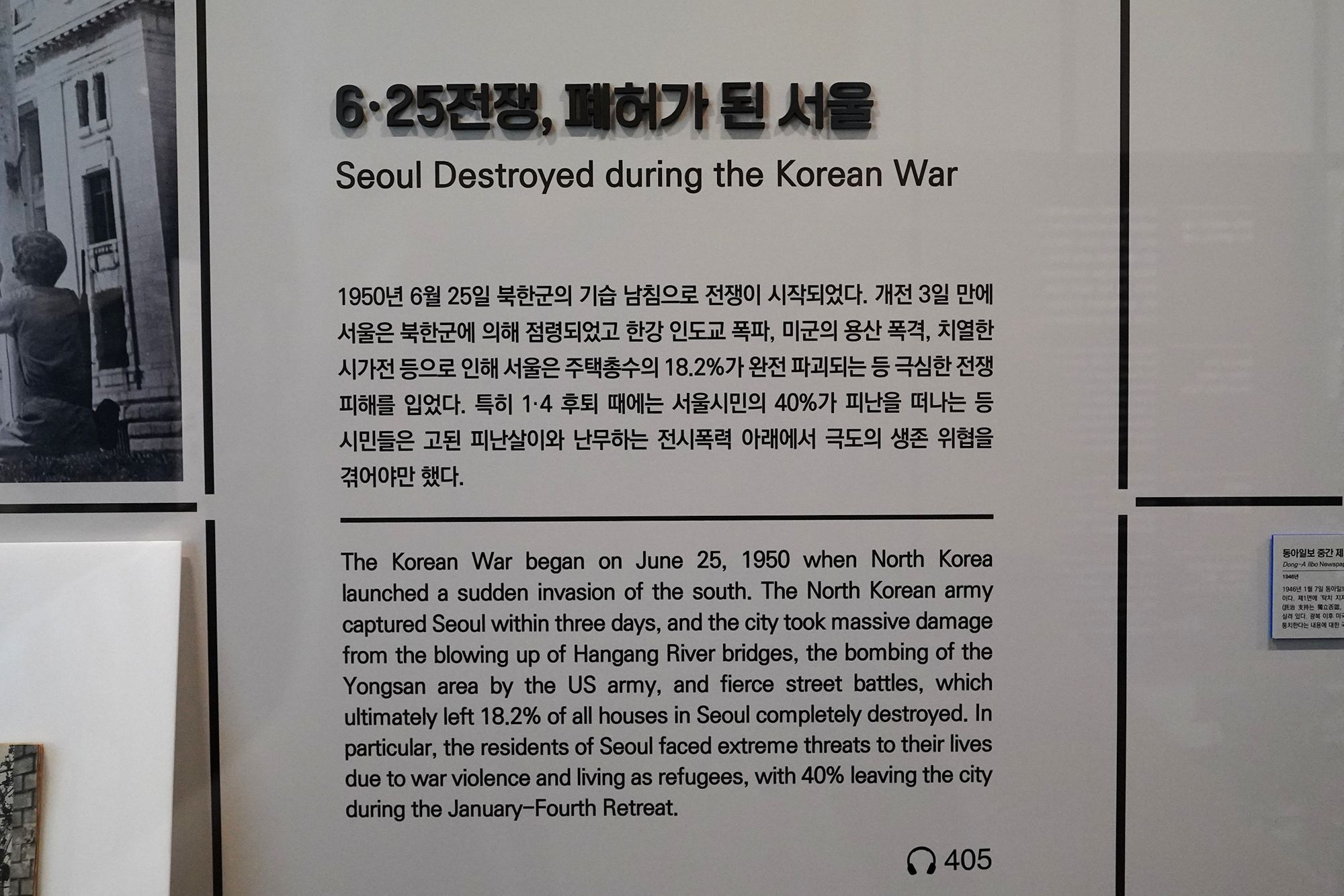
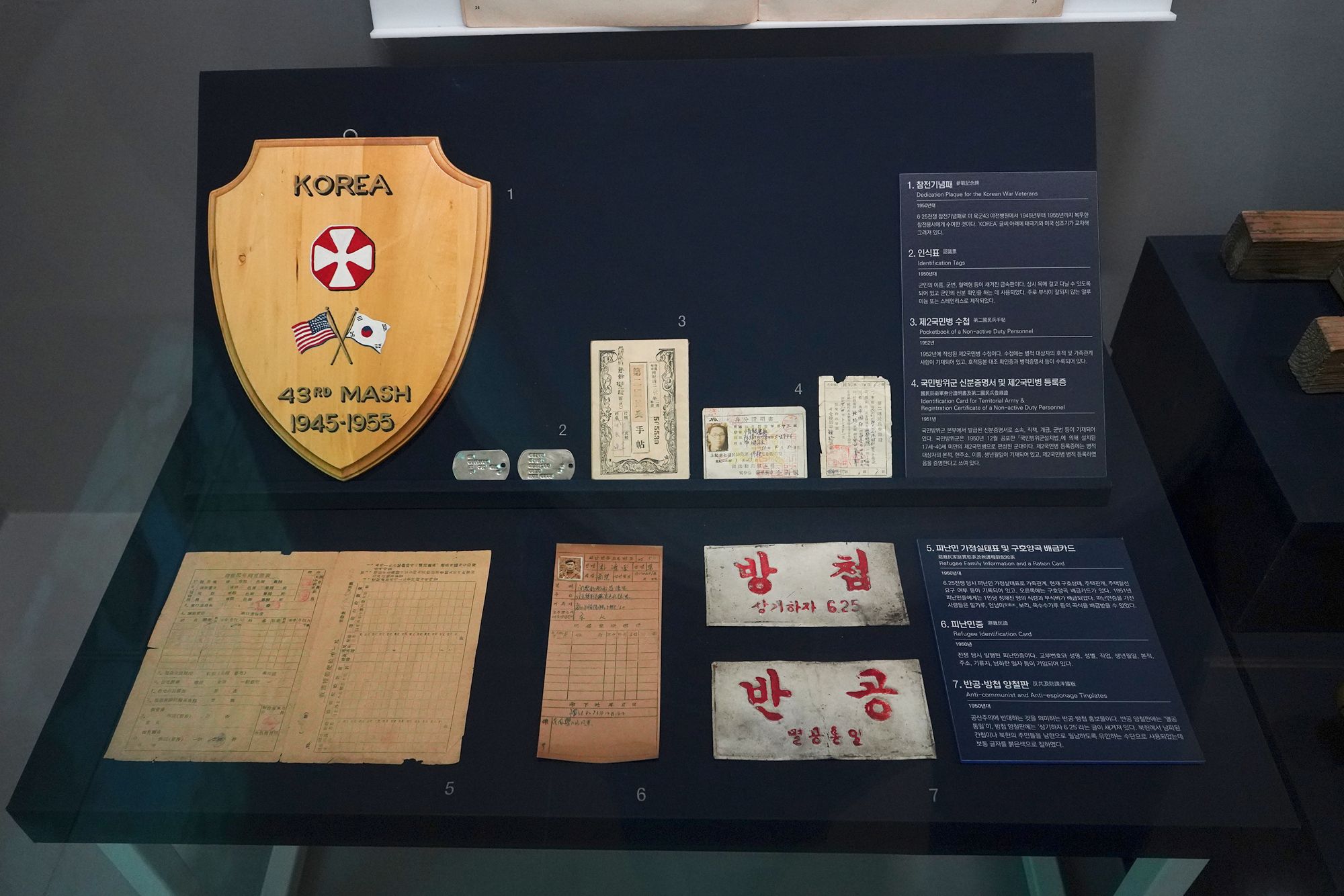
When the Korean War began on June 25, 1950, North Korean forces captured Seoul within three days. The city suffered extensive destruction from fighting, bombing, and the demolition of Han River bridges. Many residents became refugees, and during the January 1951 retreat, about 40 percent of Seoul’s population fled the city.
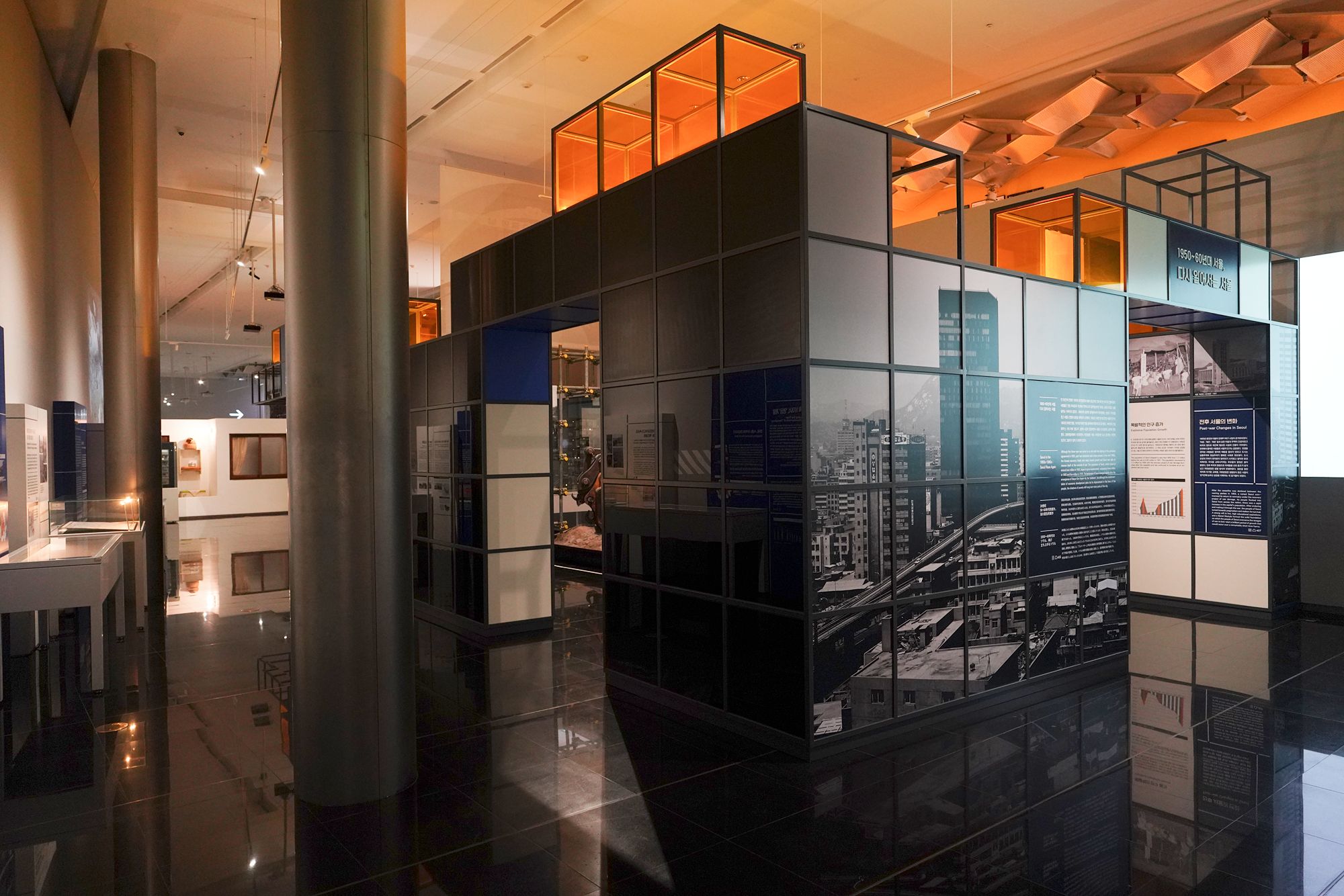
1950 to 1960 Seoul, from Ruins to Reconstruction
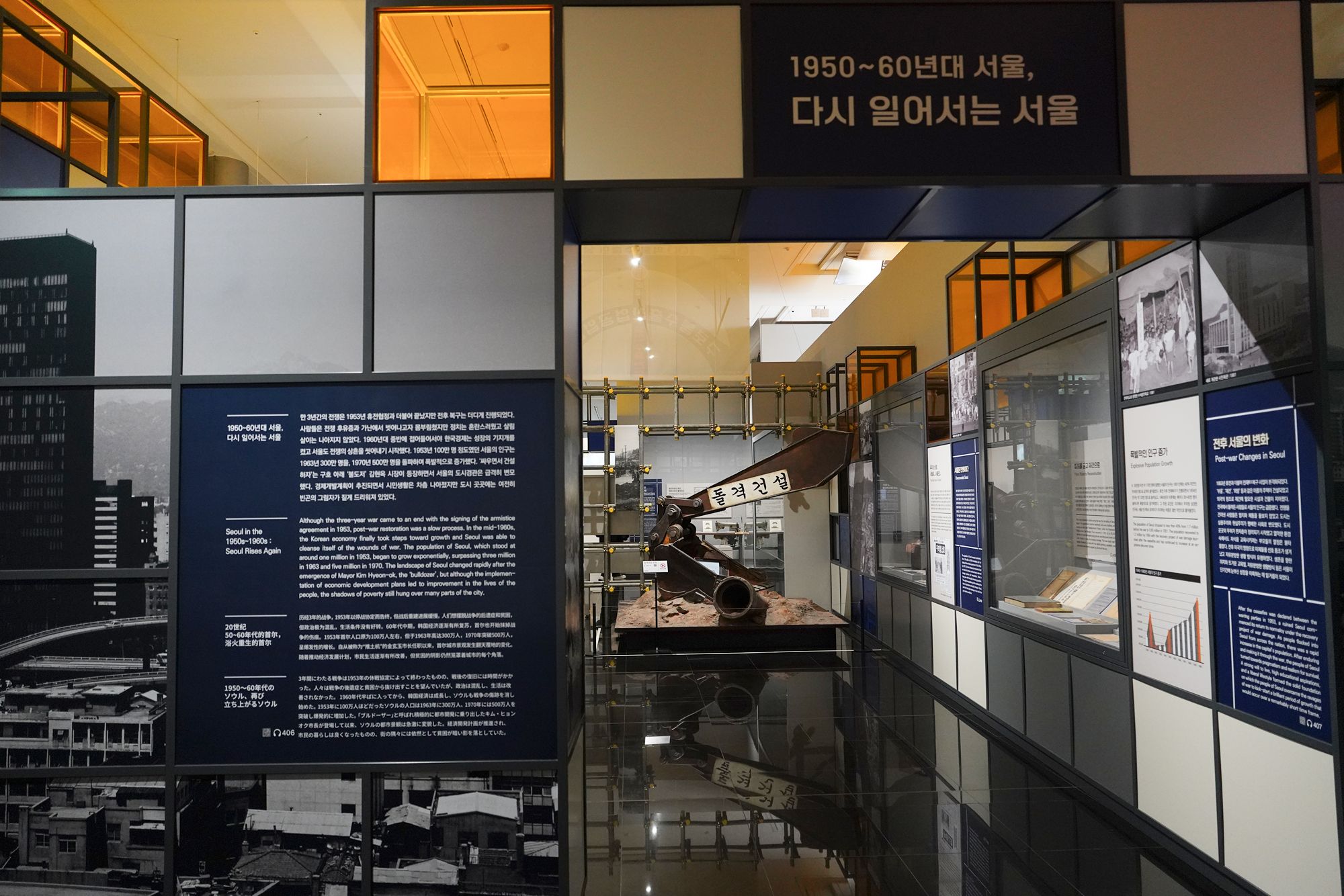
After the Korean War ended in 1953, Seoul faced a long period of rebuilding. Economic growth accelerated in the 1960s, transforming the city as its population surged from about one million in 1953 to five million by 1970. New construction and development rapidly changed Seoul’s landscape, although poverty remained widespread in many parts of the city.
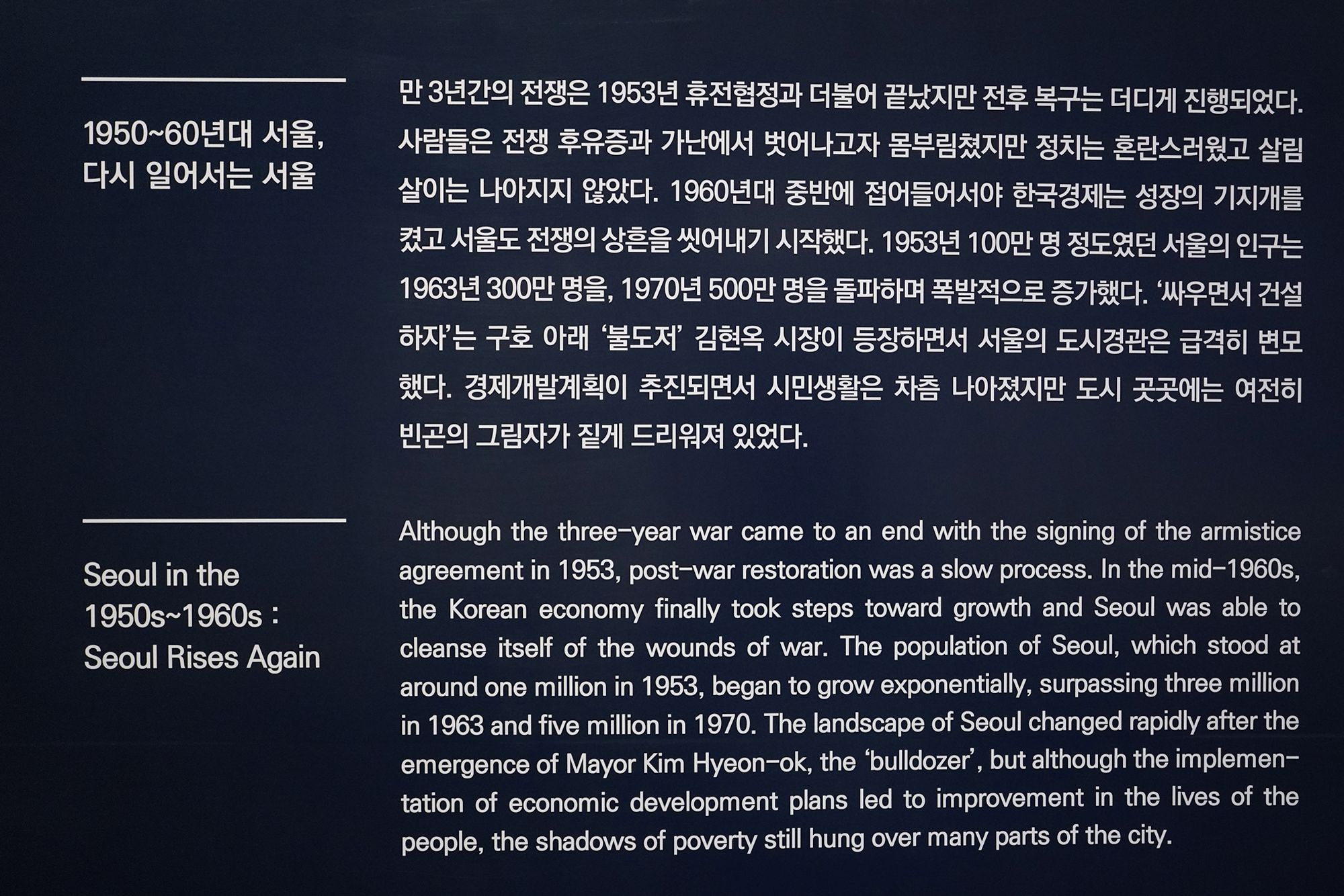
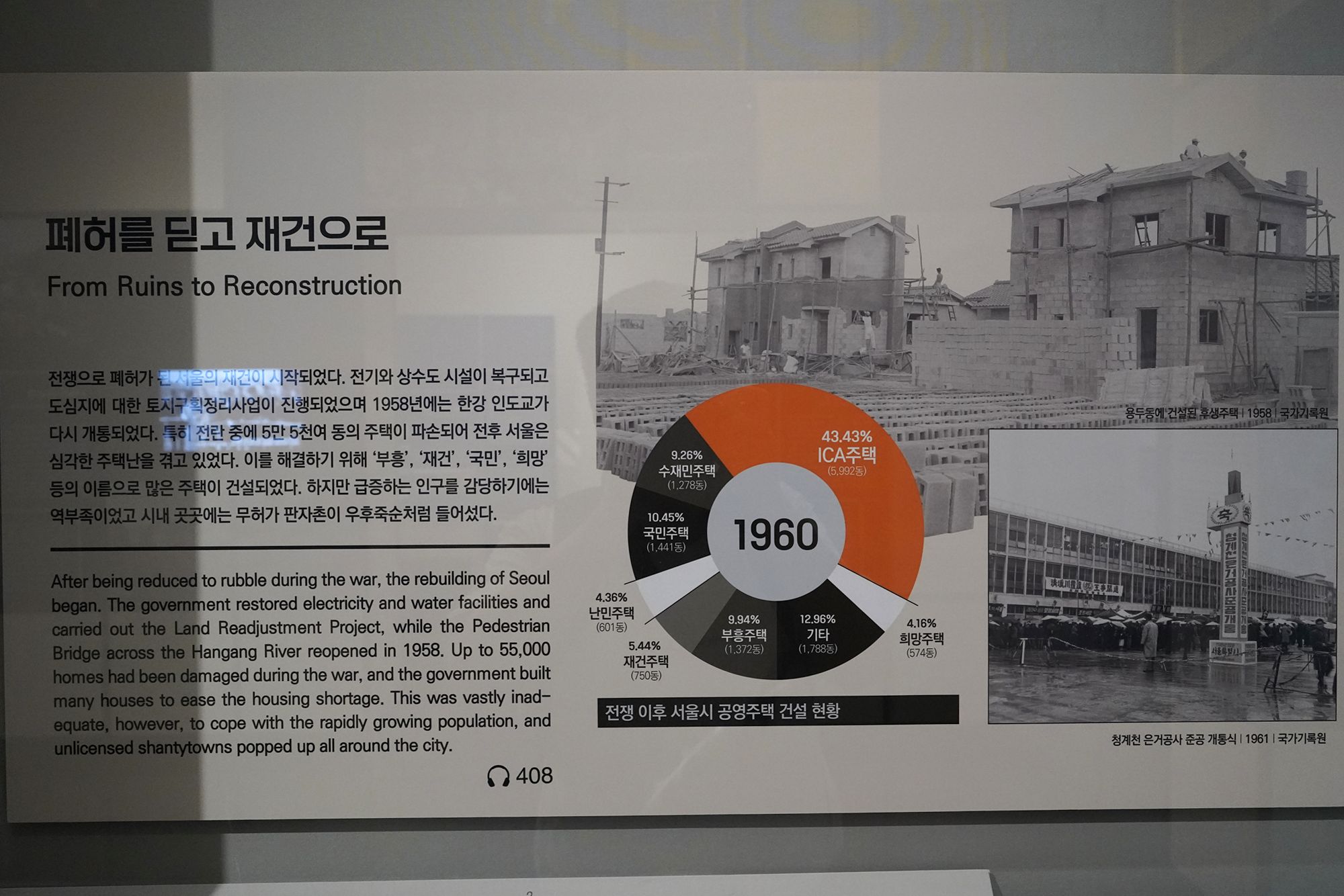
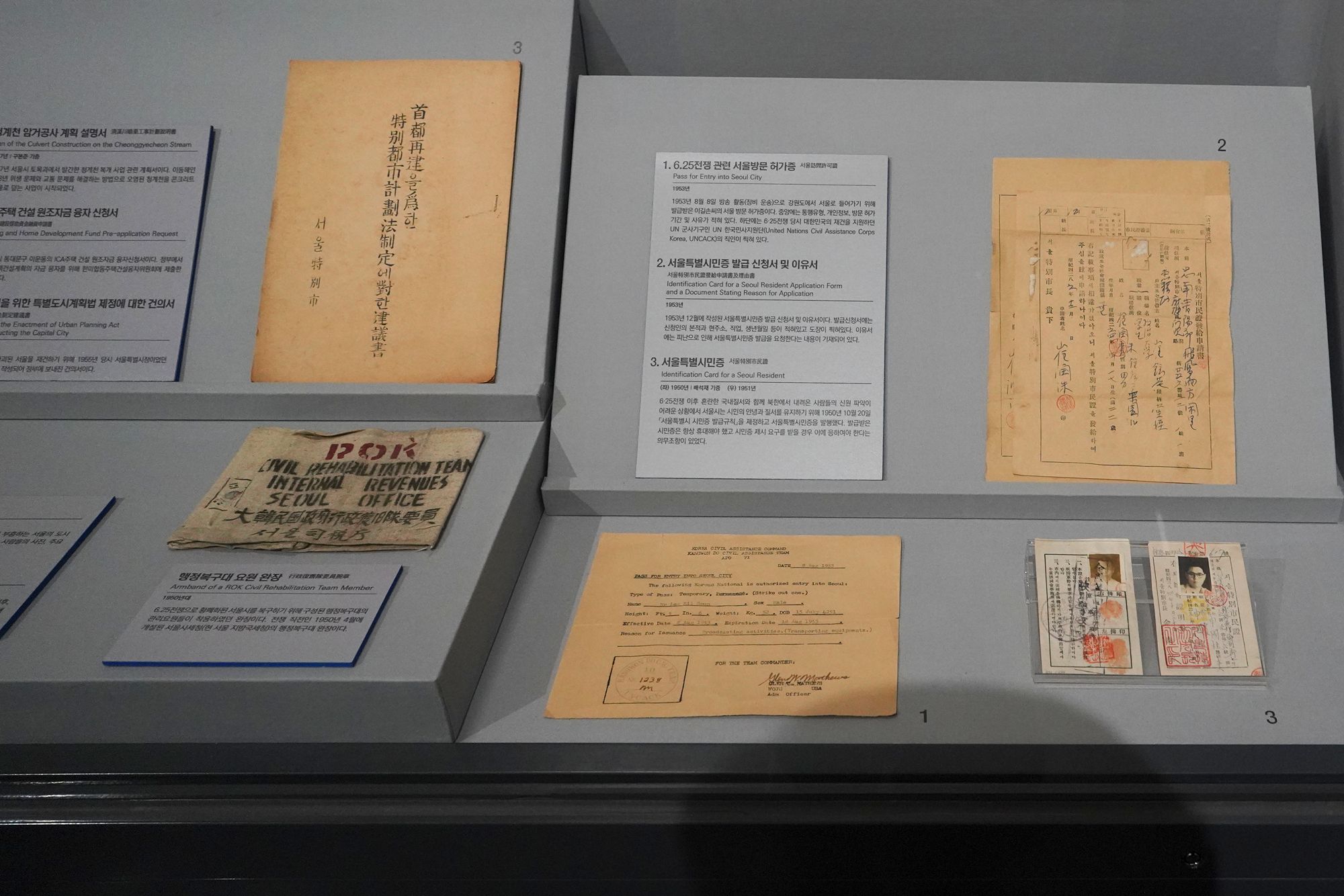
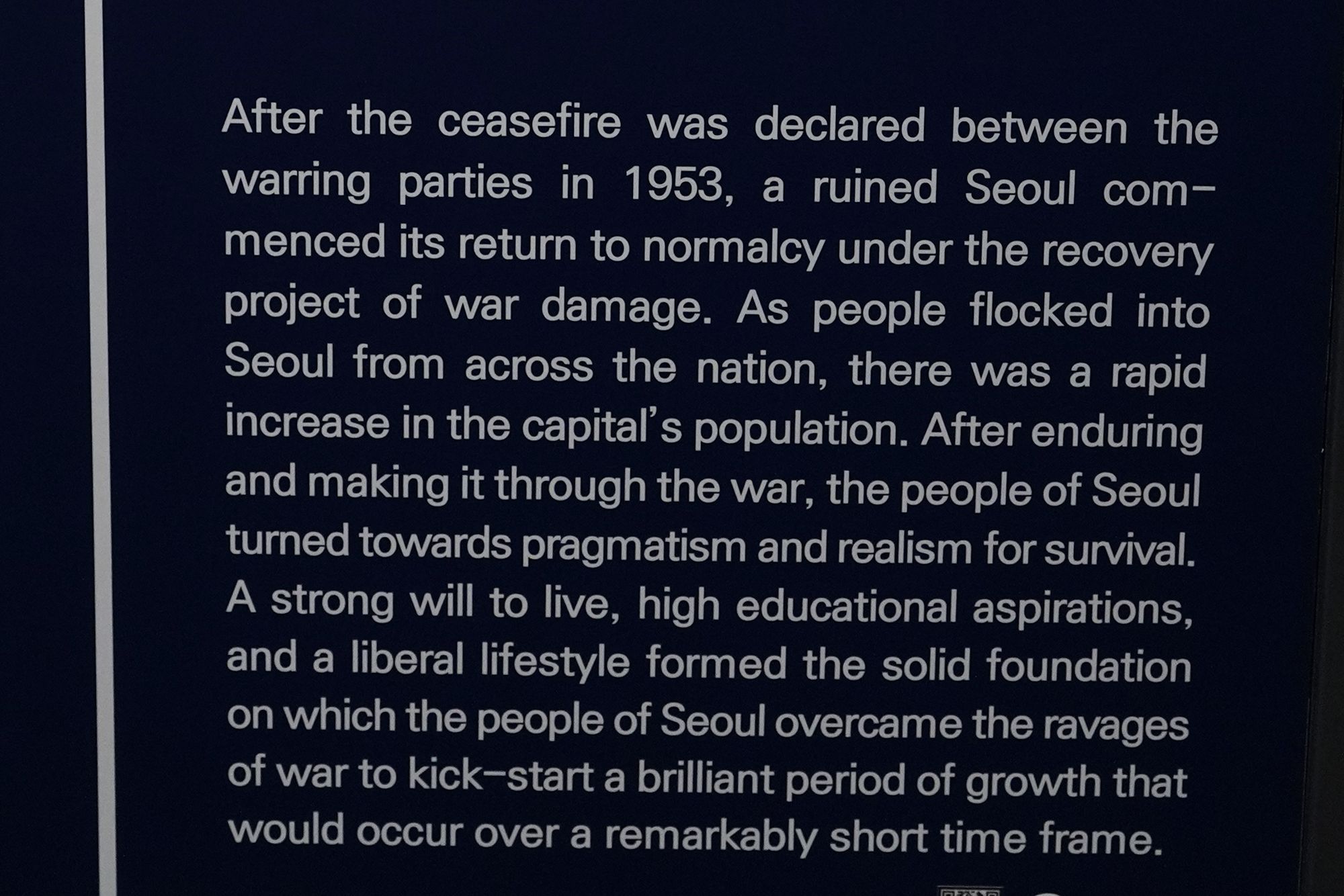
After the Korean War ended in 1953, Seoul began the difficult process of rebuilding from the destruction of war. People poured into the capital from across Korea, causing its population to grow rapidly. Despite widespread hardship, Seoul’s residents focused on rebuilding their lives, and their emphasis on education and economic survival helped lay the foundation for the city’s remarkable growth in the following decades.
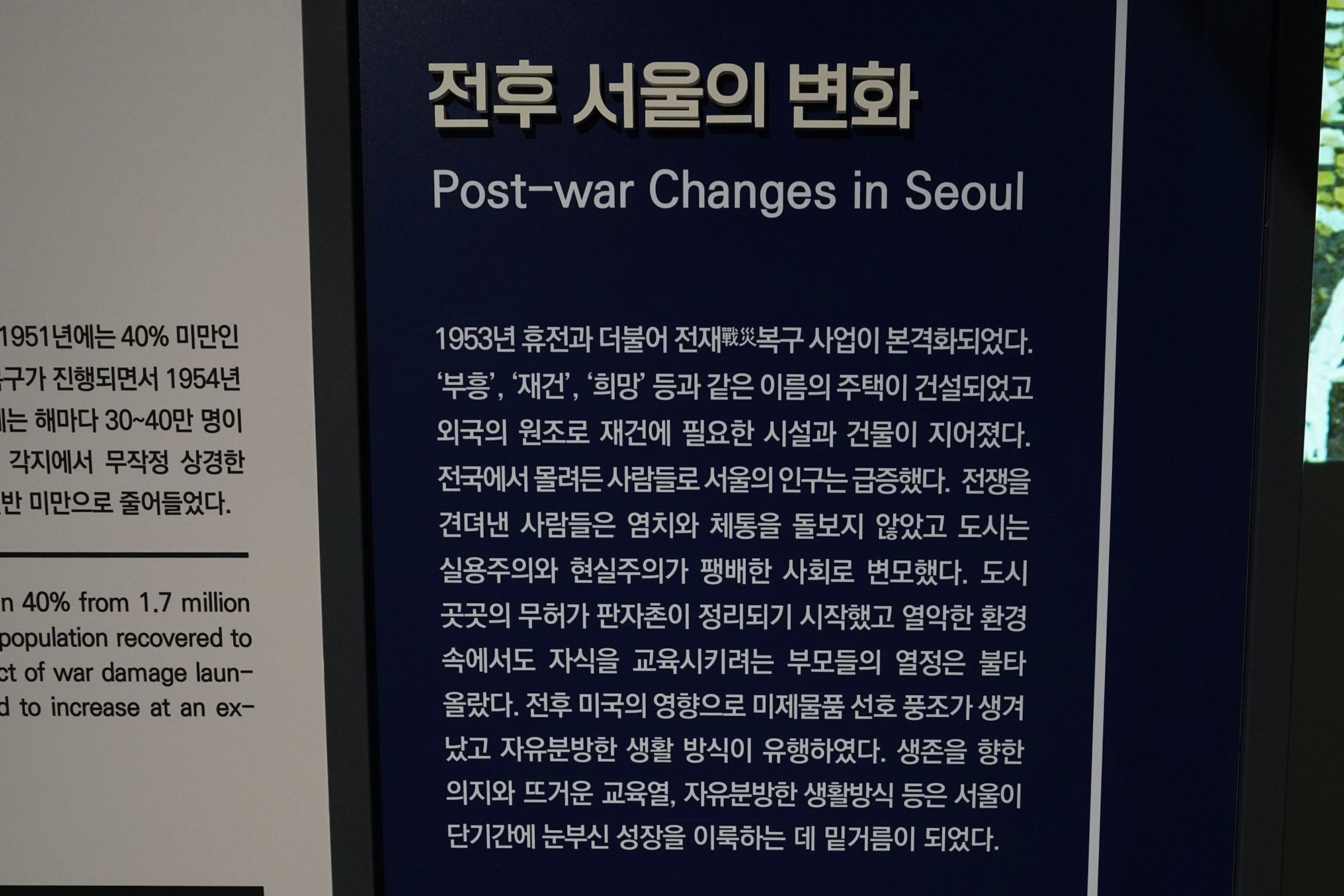
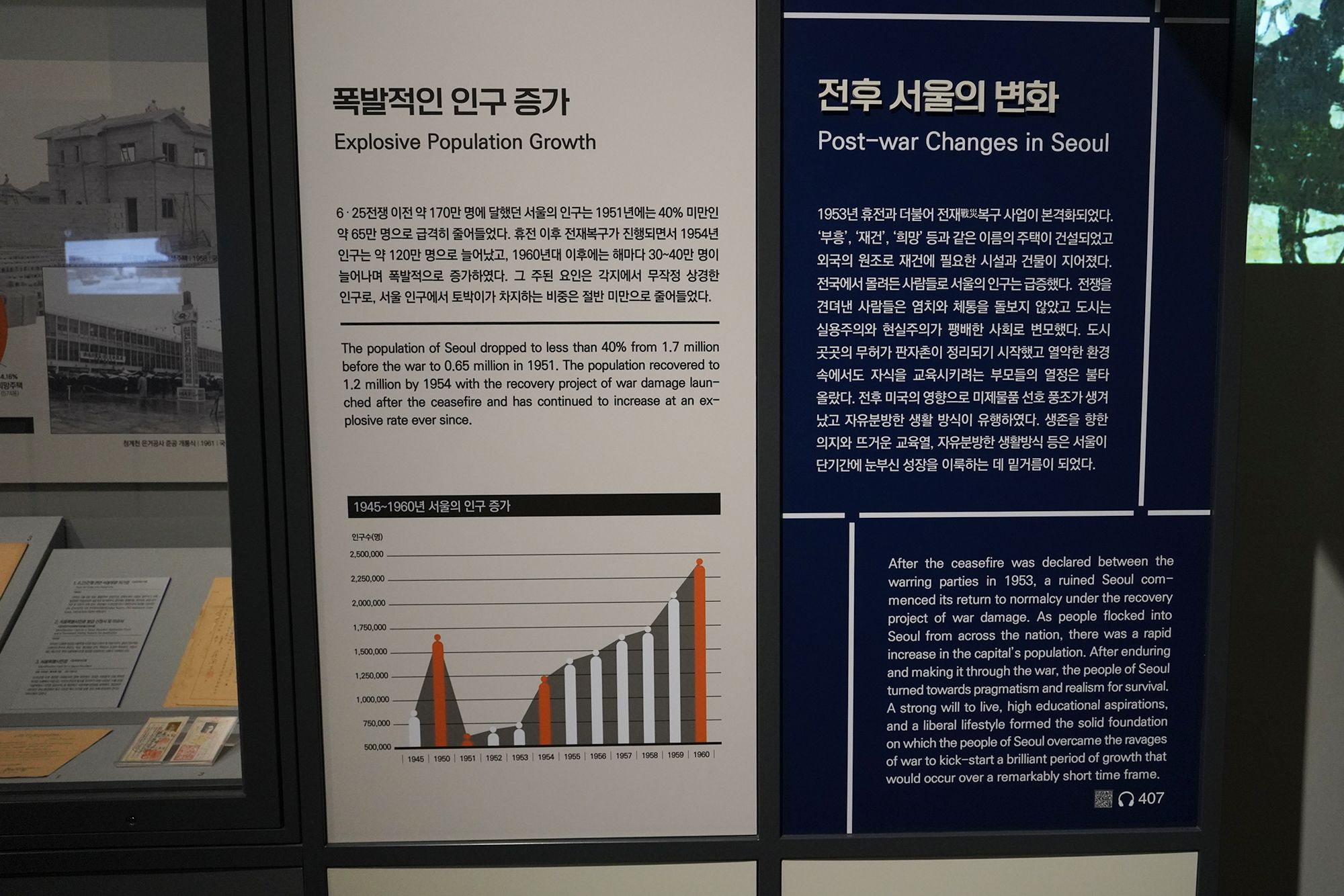
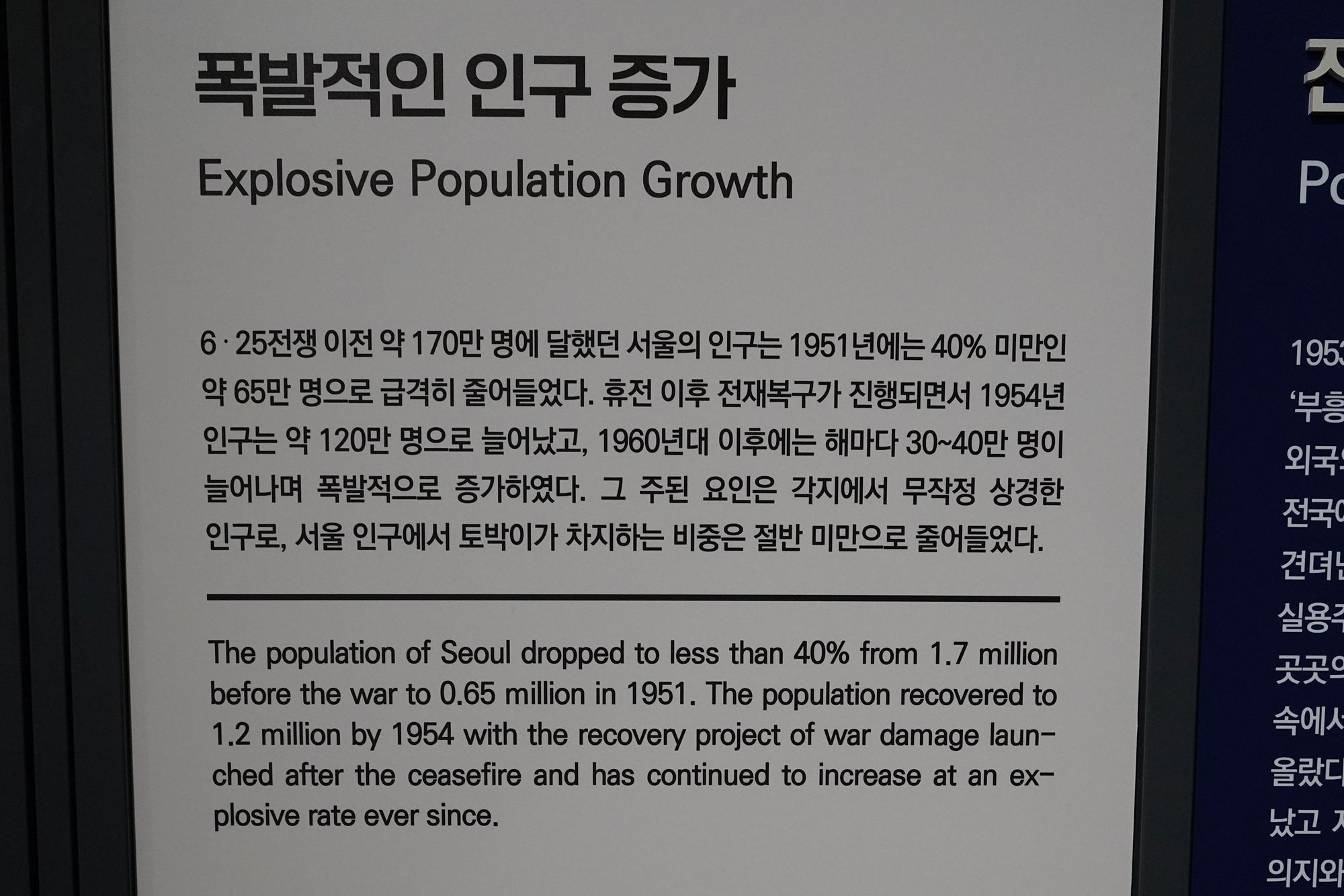
Explosive Population Growth
As Seoul rapidly industrialized and developed during the 1960s, people from across Korea flocked to the capital in search of jobs, education, and a better life. This massive migration caused Seoul’s population to grow at an extraordinary pace.
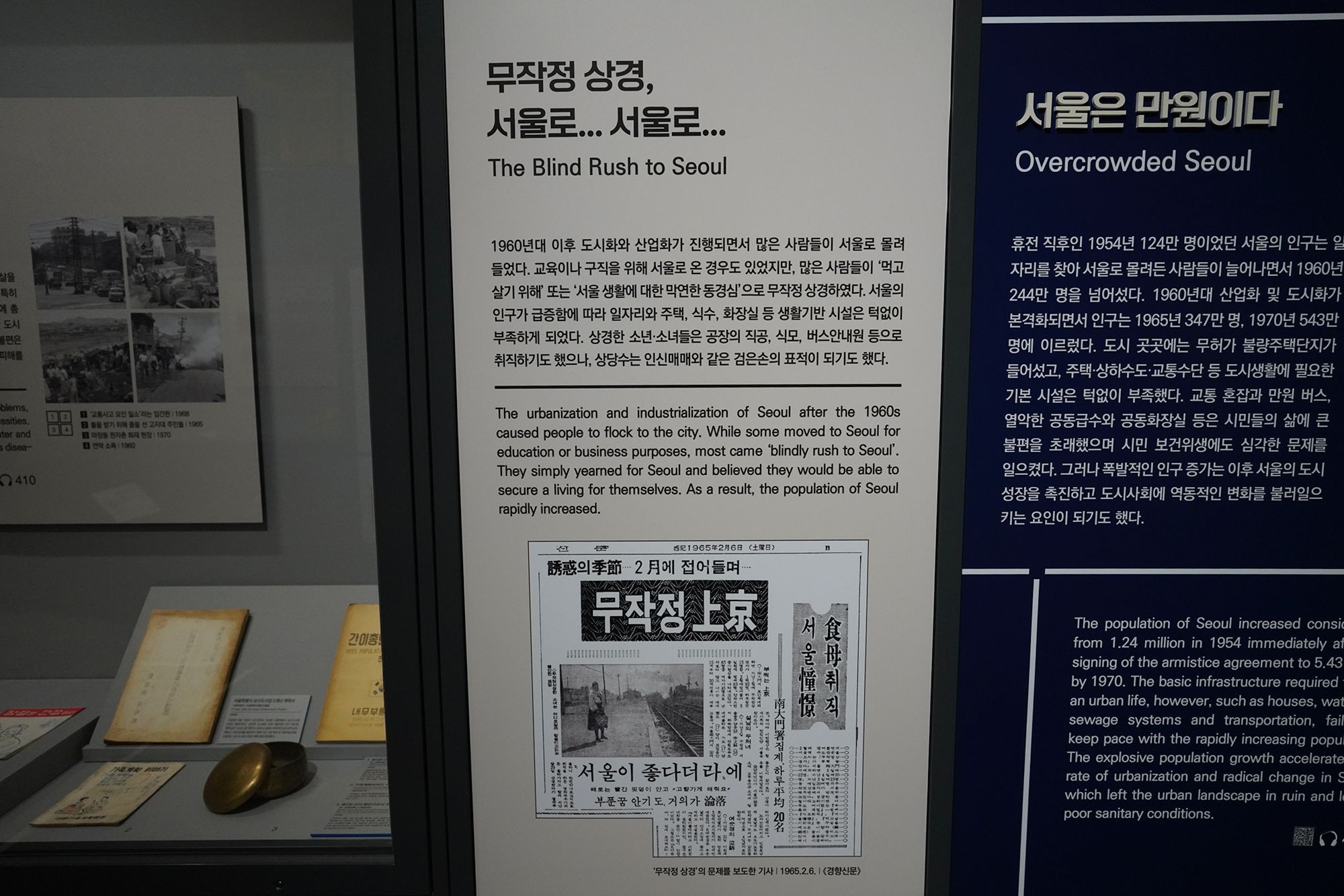
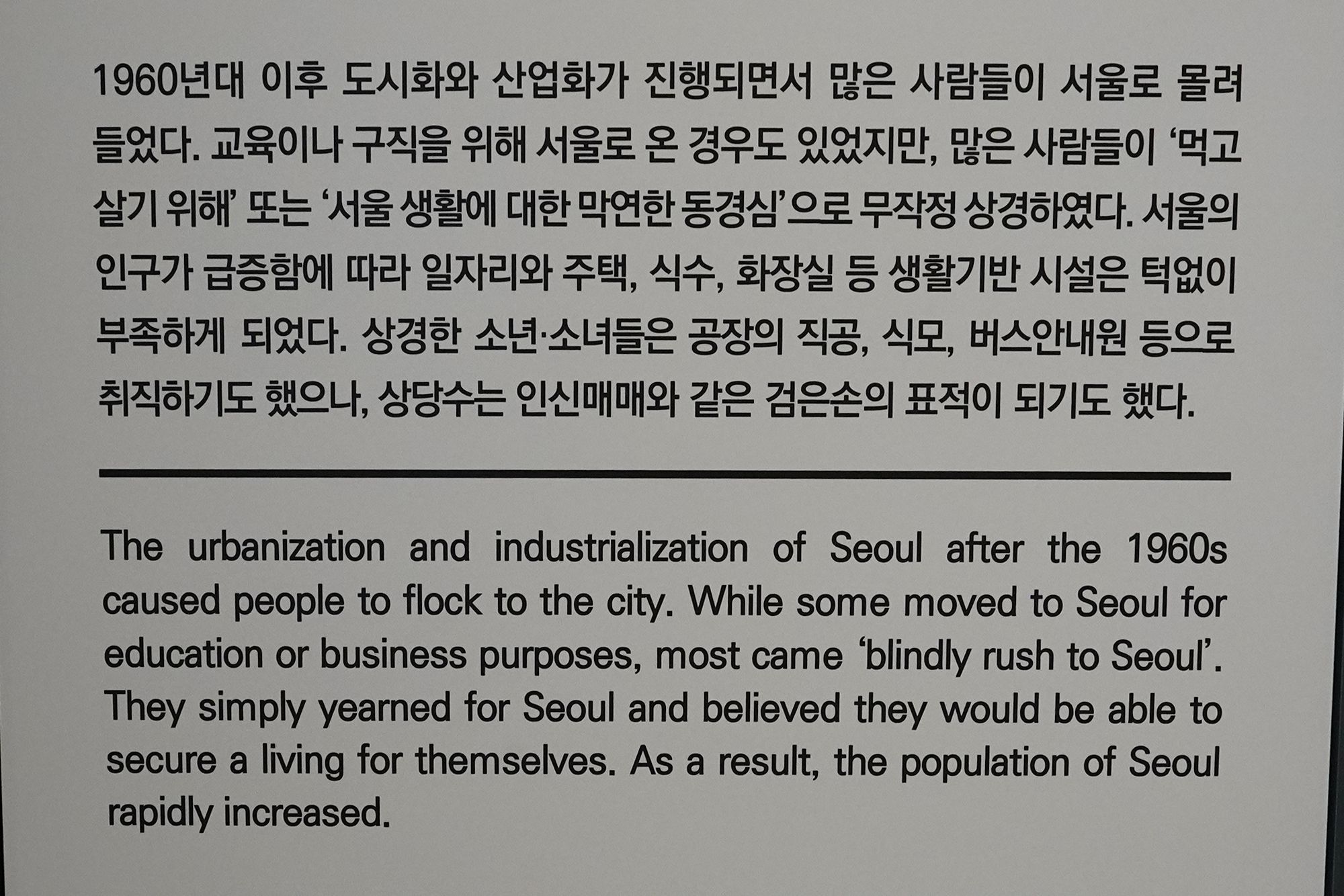
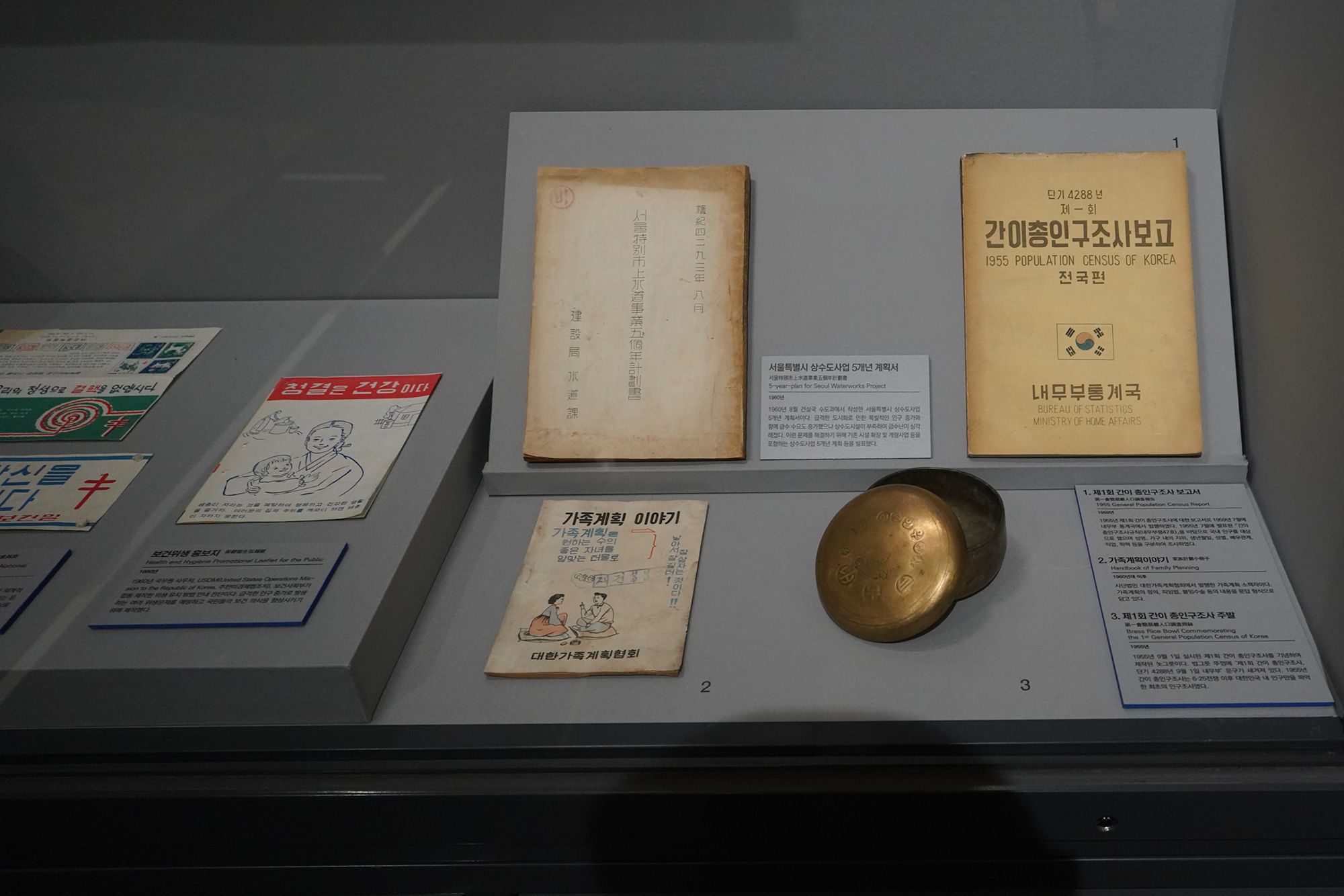
Seoul’s population grew dramatically from about 1.24 million in 1954 to 5.43 million by 1970. Housing, transportation, water, and sewage systems could not keep pace with this rapid growth, resulting in overcrowding, poor sanitation, and major challenges as the city struggled to accommodate millions of new residents.
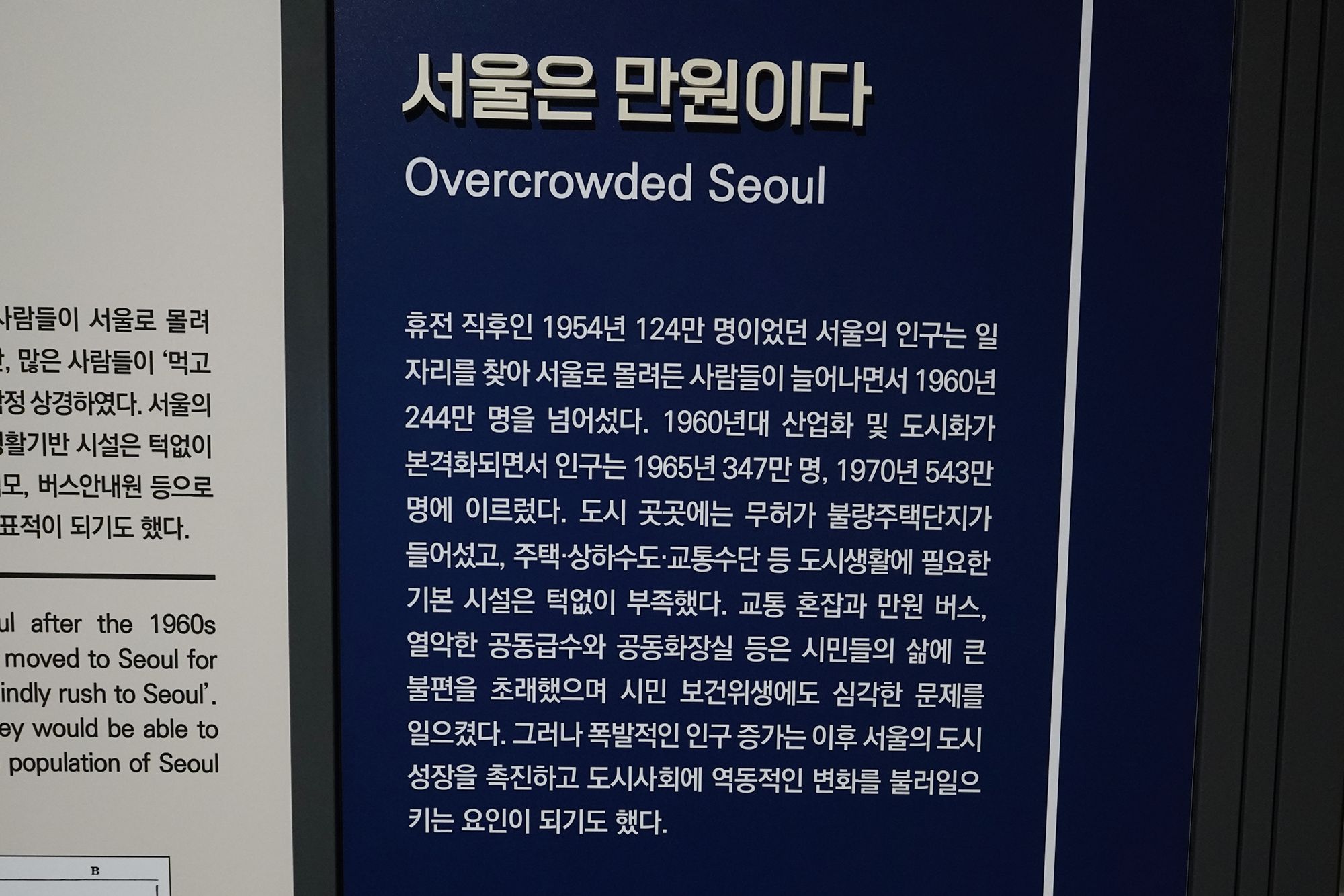
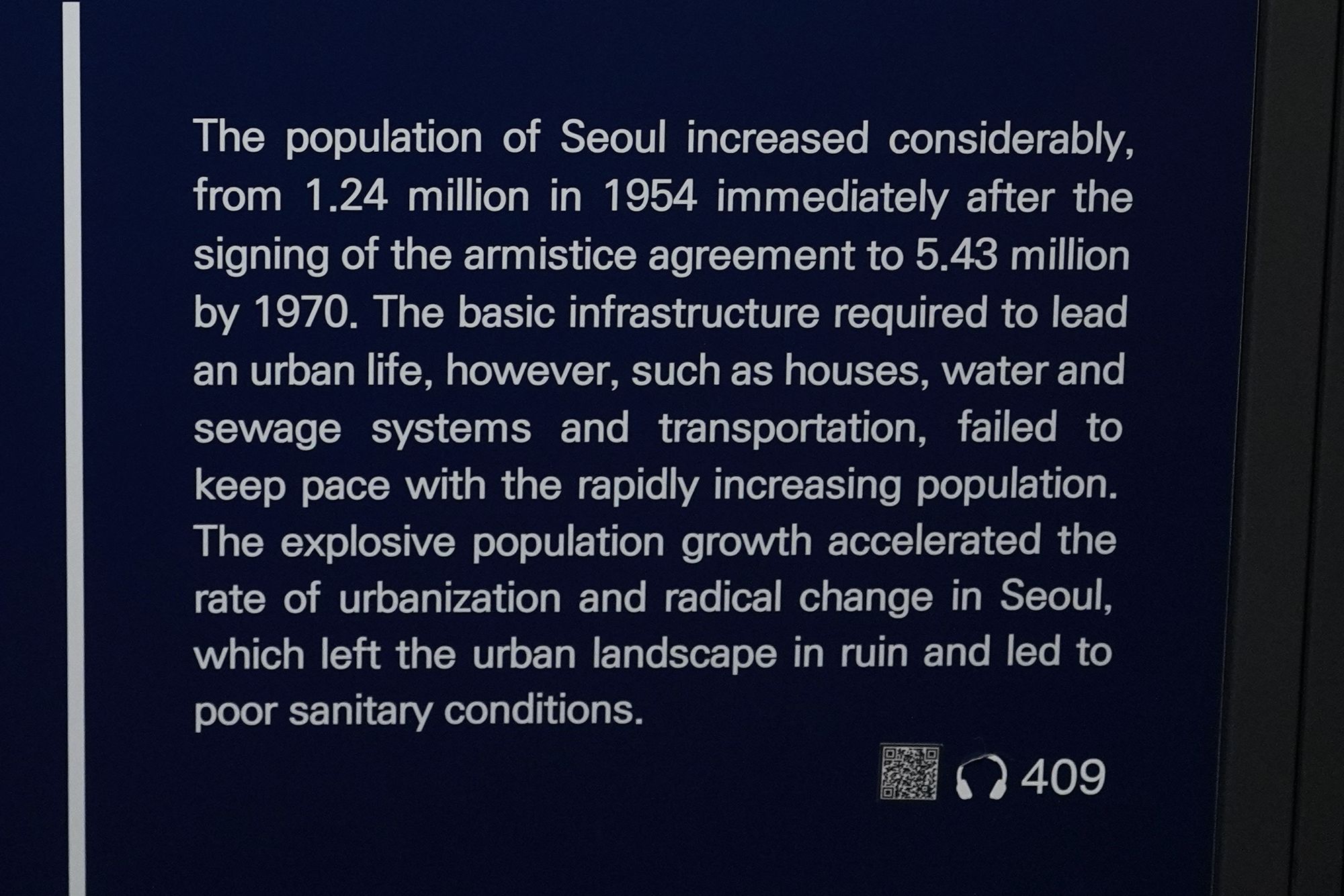
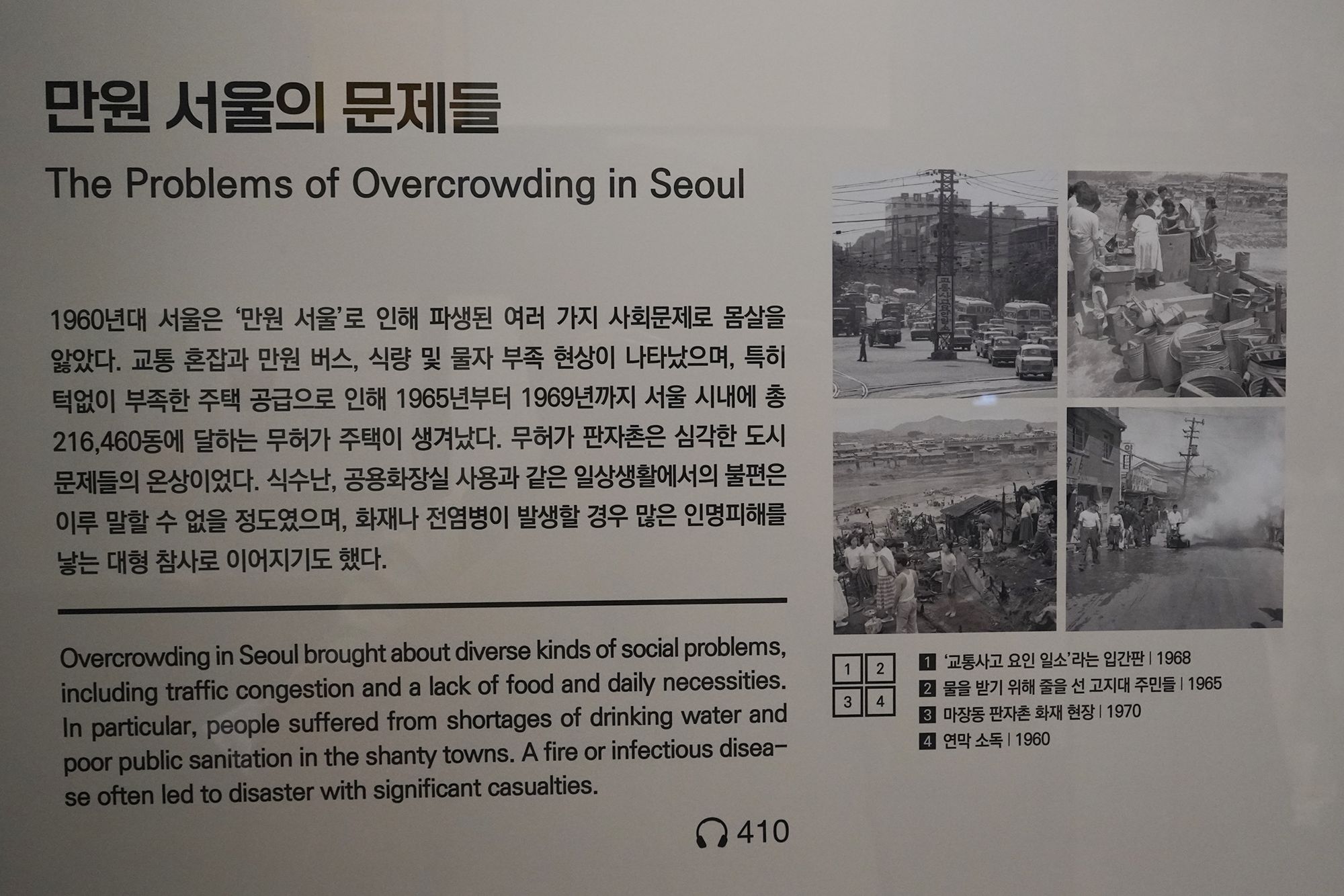
Seoul’s rapid population growth created serious problems, including traffic congestion and shortages of food, water, and other necessities. Conditions were especially difficult in the city’s shantytowns, where poor sanitation and overcrowding made fires and infectious diseases particularly dangerous.
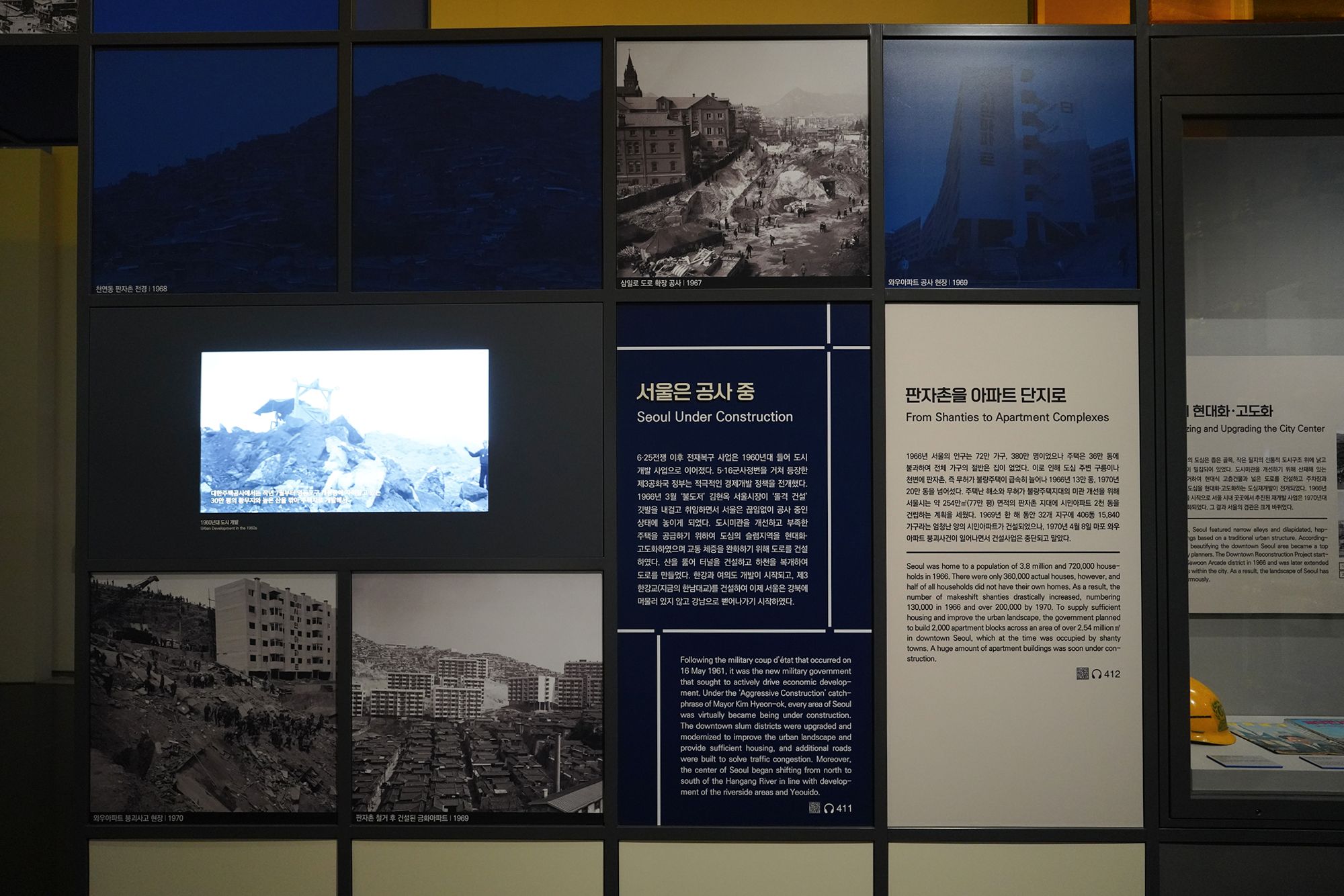
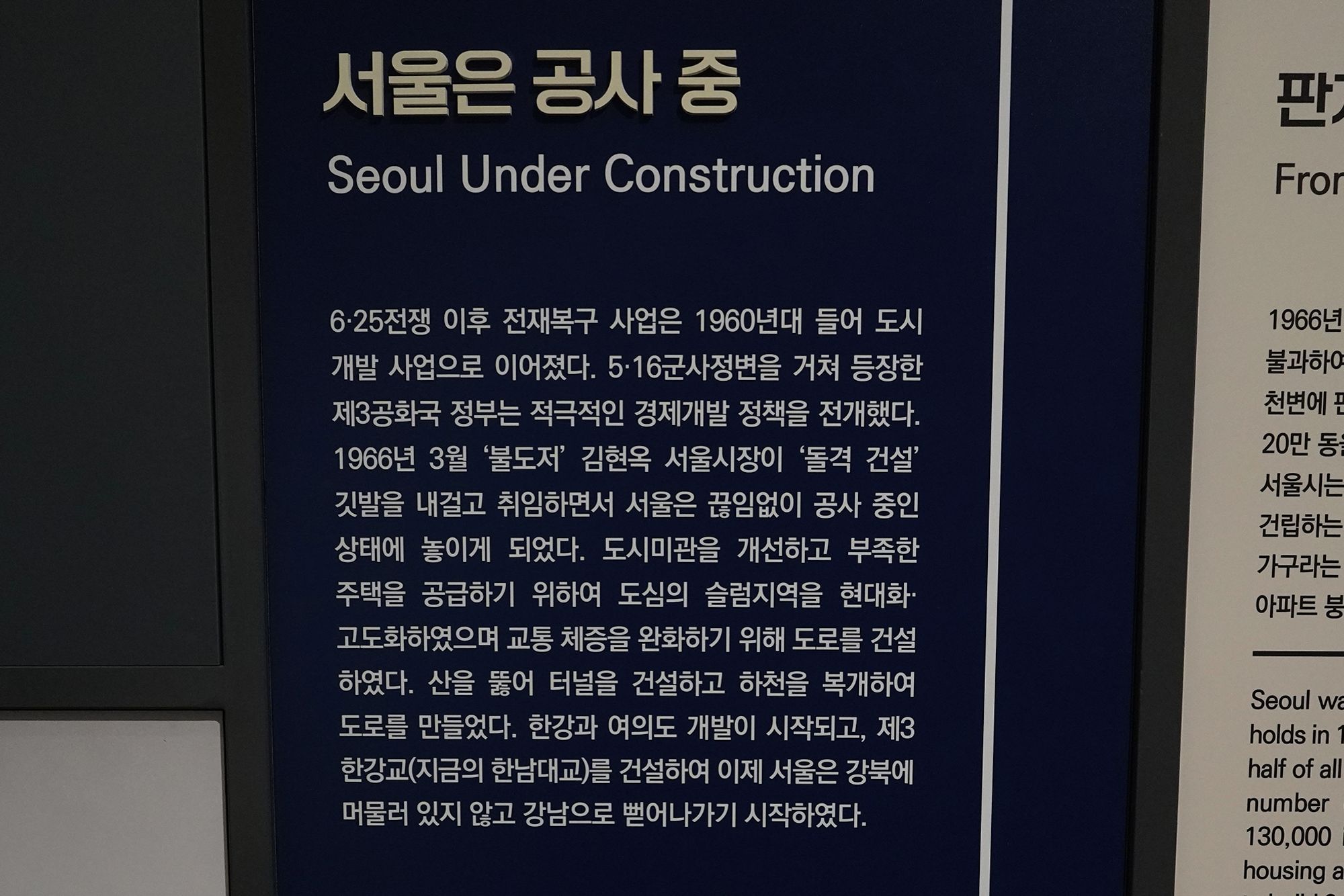
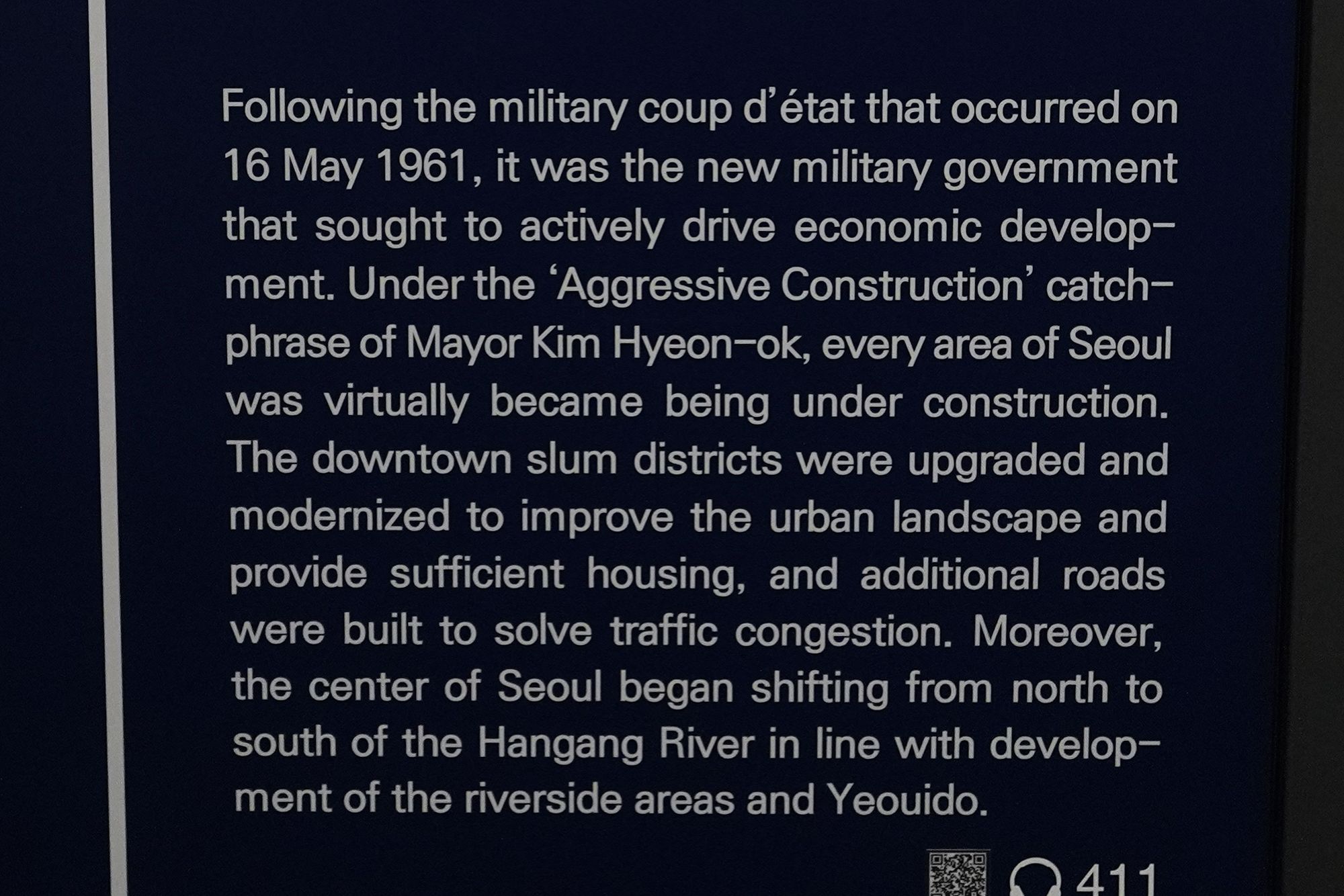
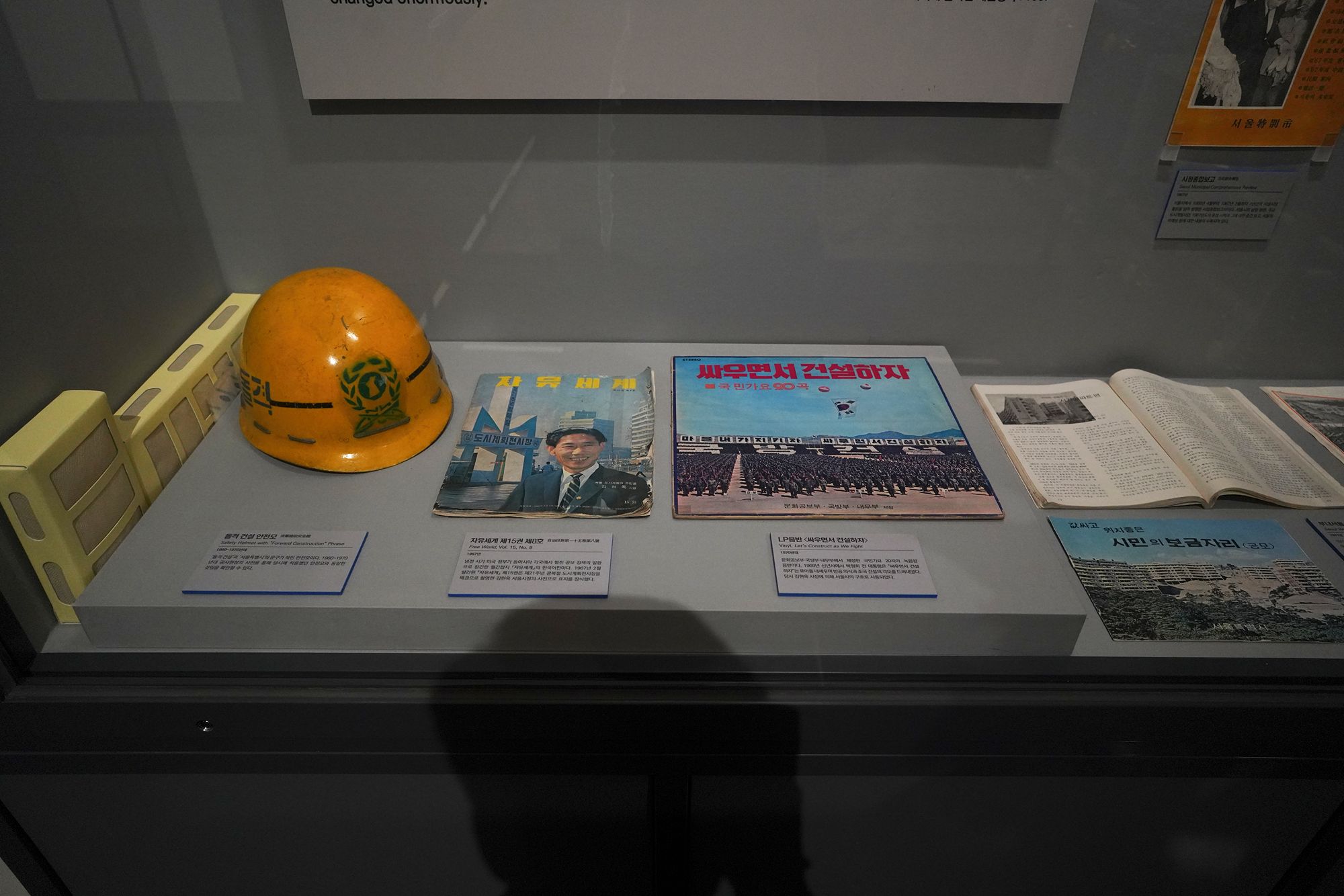
Following the 1961 military coup, the government pushed rapid economic development and large-scale construction throughout Seoul. Under Mayor Kim Hyeon-ok, old neighborhoods were redeveloped, new housing and roads were built, and the city began expanding south across the Han River, including the development of Yeouido.
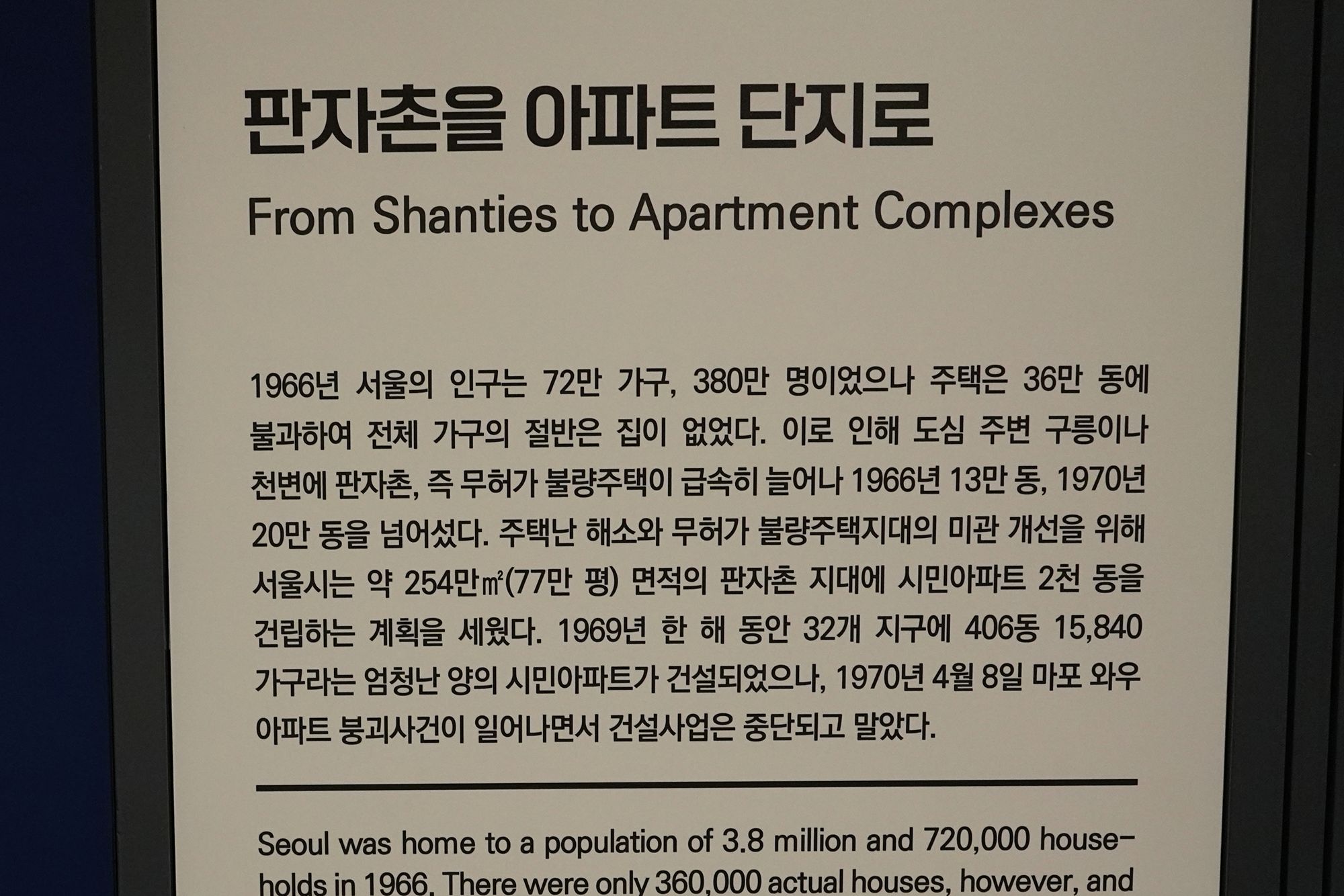
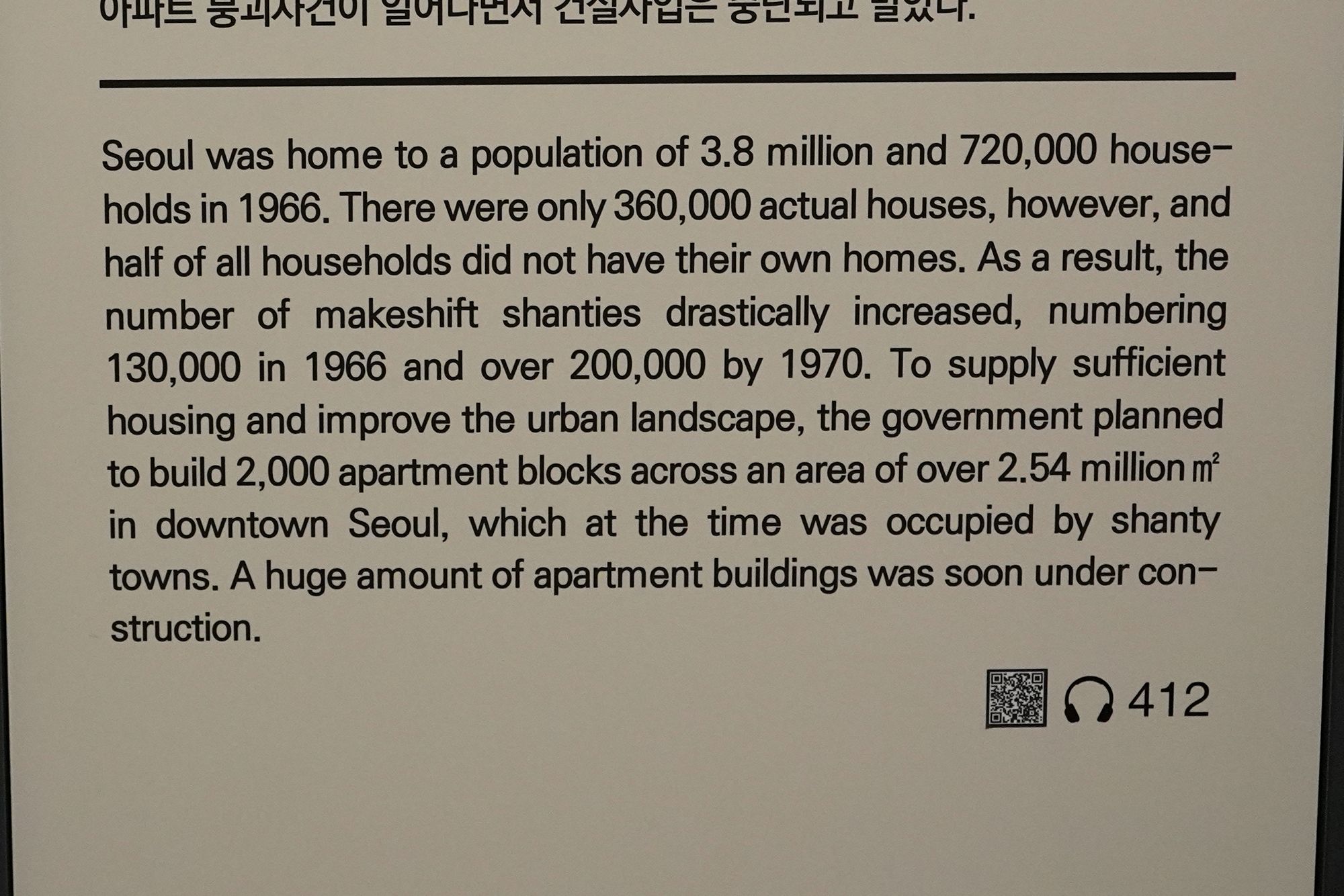
By 1966, Seoul had grown to 3.8 million people, but there were far too few homes for its rapidly increasing population. Makeshift shantytowns spread throughout the city, leading the government to begin large-scale apartment construction and redevelopment of areas occupied by informal housing.
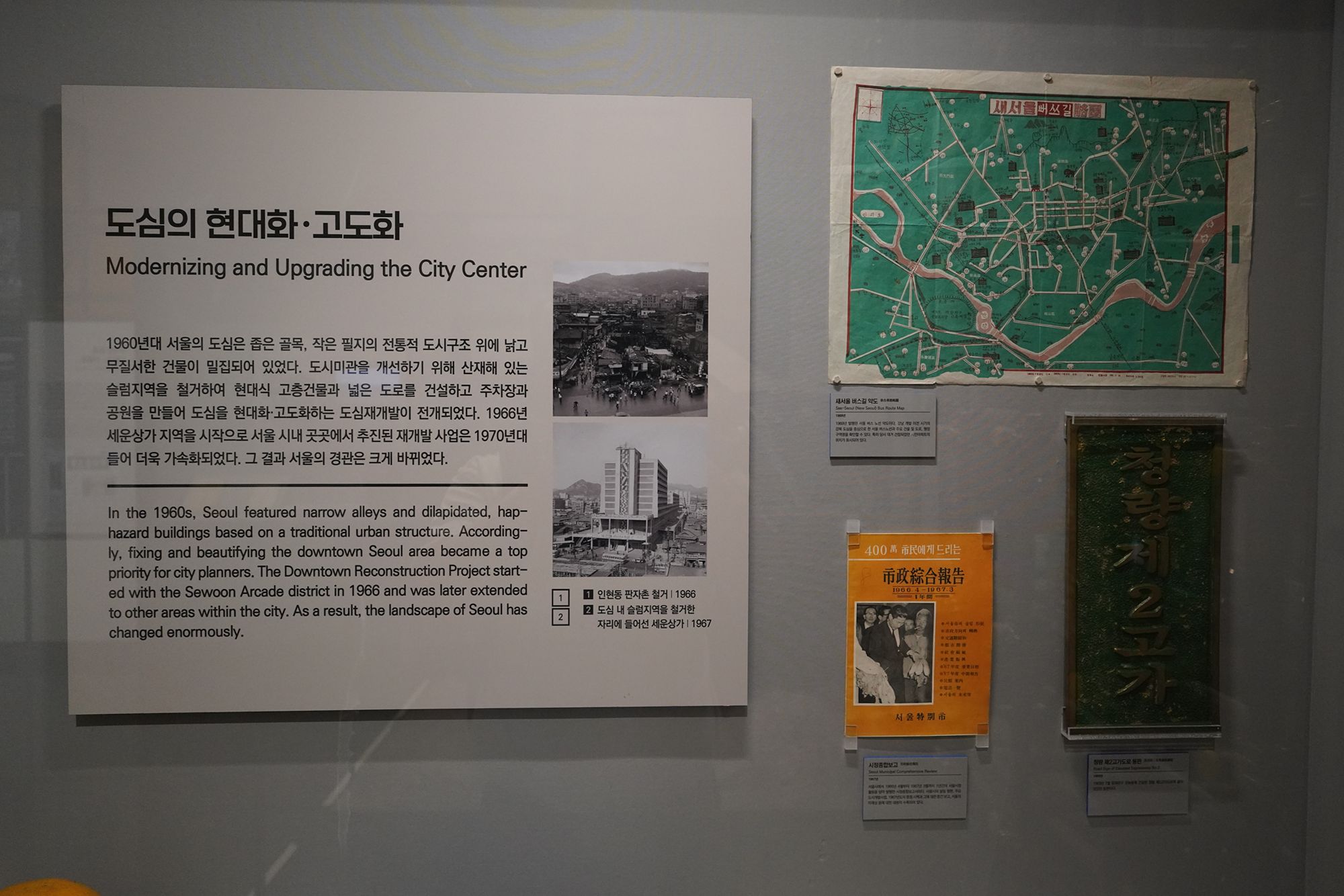
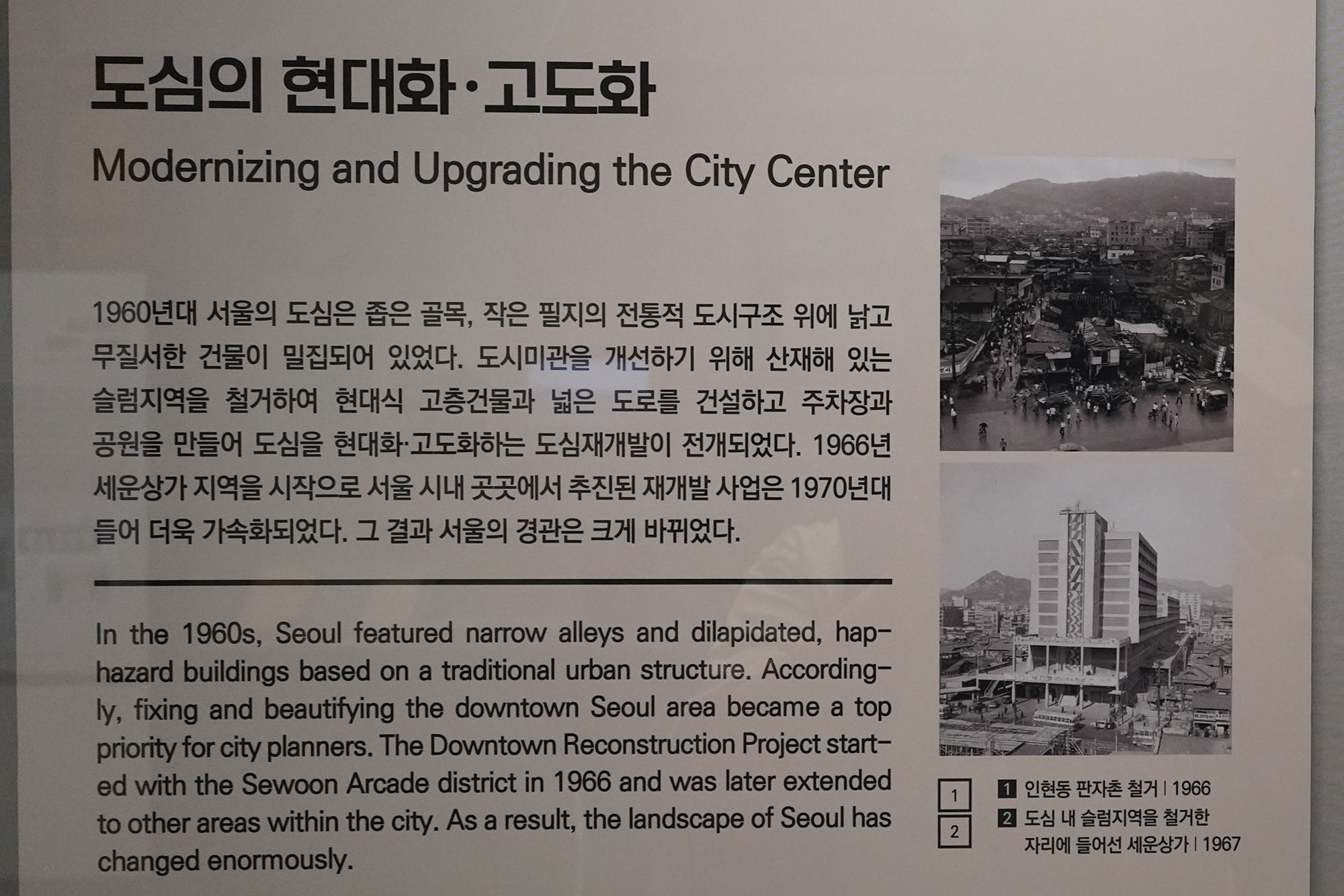
In the 1960s, much of downtown Seoul still consisted of narrow alleys and aging, poorly organized buildings. The city began a major reconstruction program in 1966, starting with the Sewoon Arcade area and later expanding to other parts of downtown, dramatically transforming Seoul’s urban landscape.
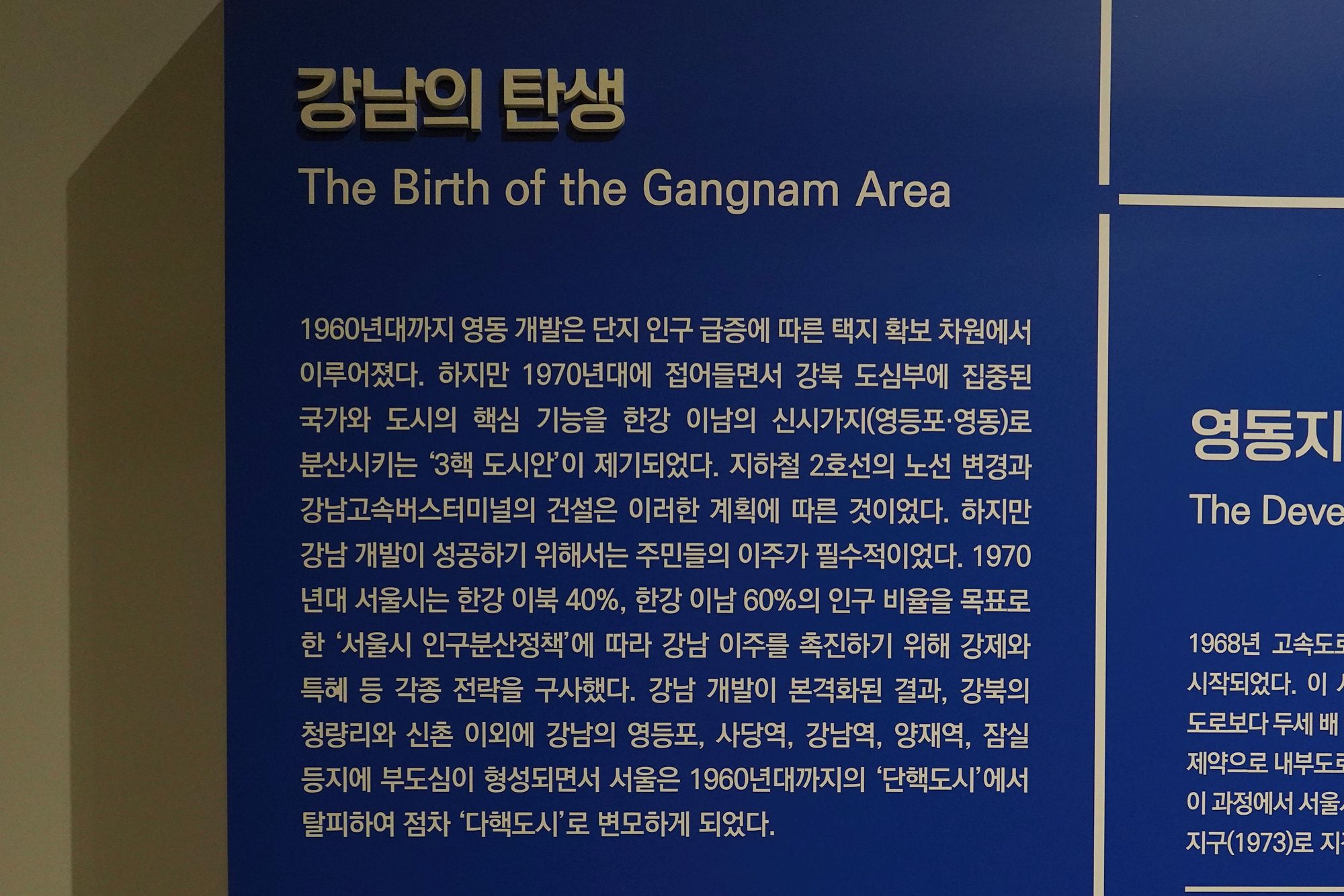
During the 1970s, Seoul experienced rapid economic and population growth, but also increasing poverty and inequality. Development began shifting south of the Han River, where the largely rural Yeongdong area was transformed into what became known as Gangnam. The government actively encouraged development south of the river, helping turn Gangnam into a major new residential and economic center of Seoul.
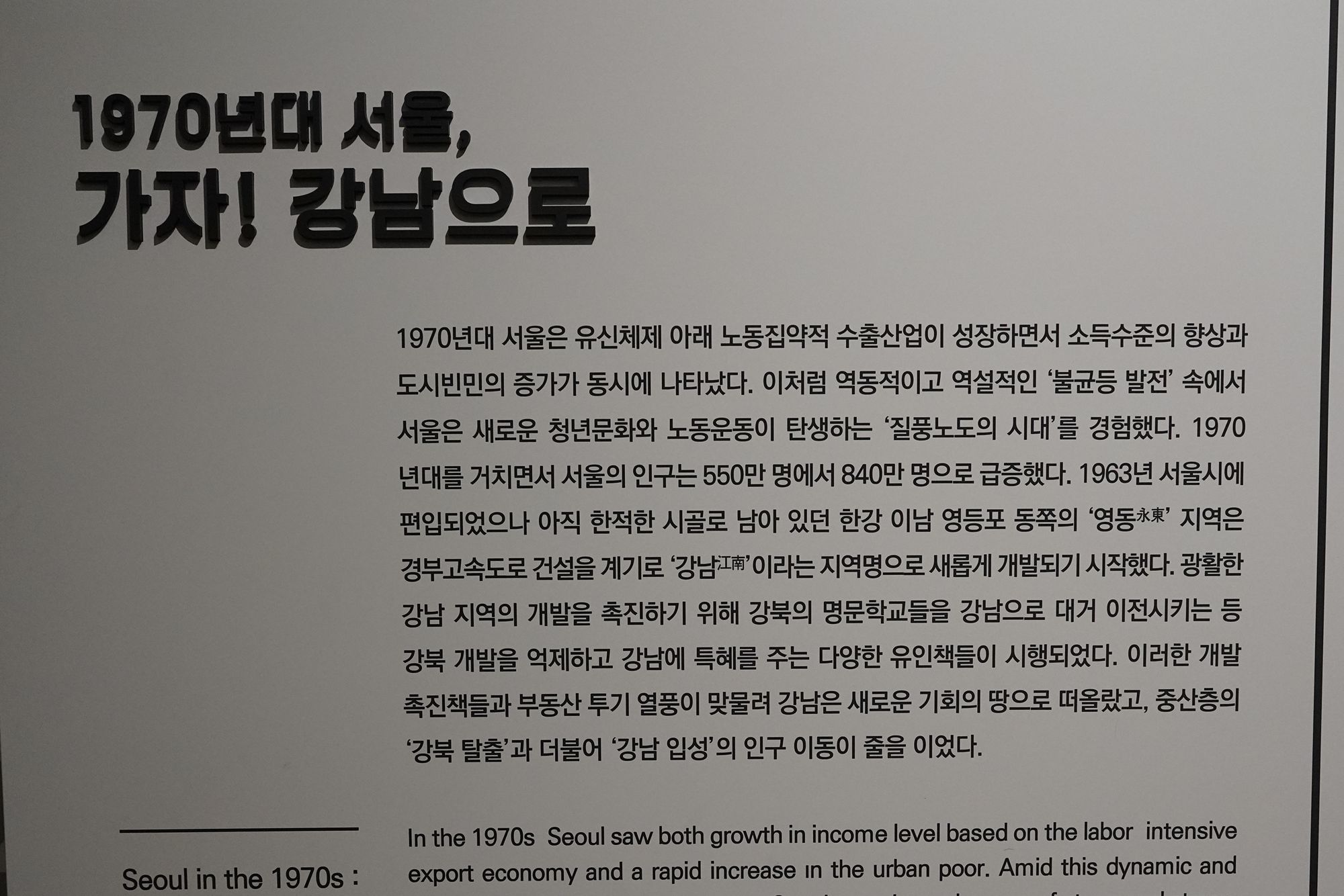
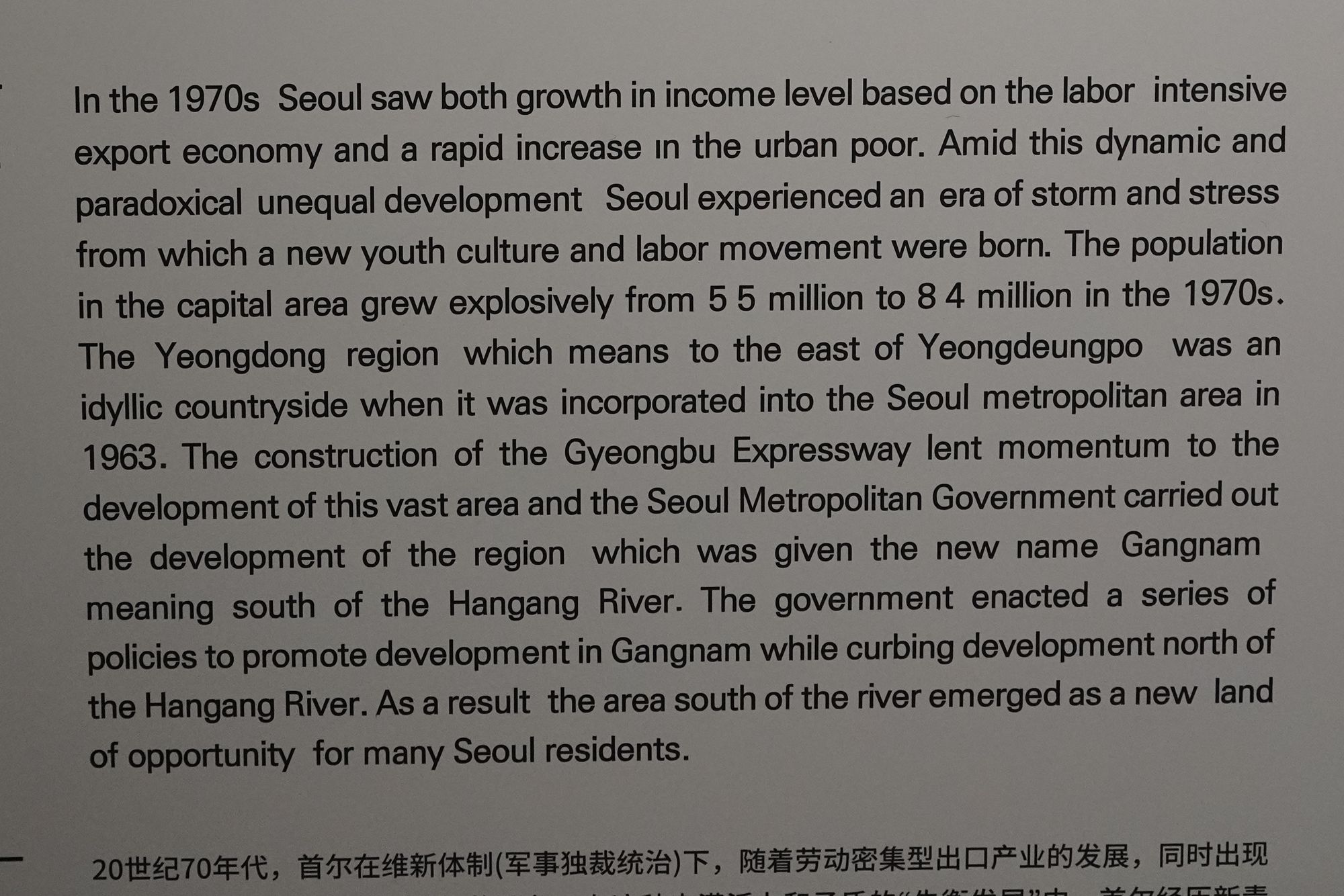
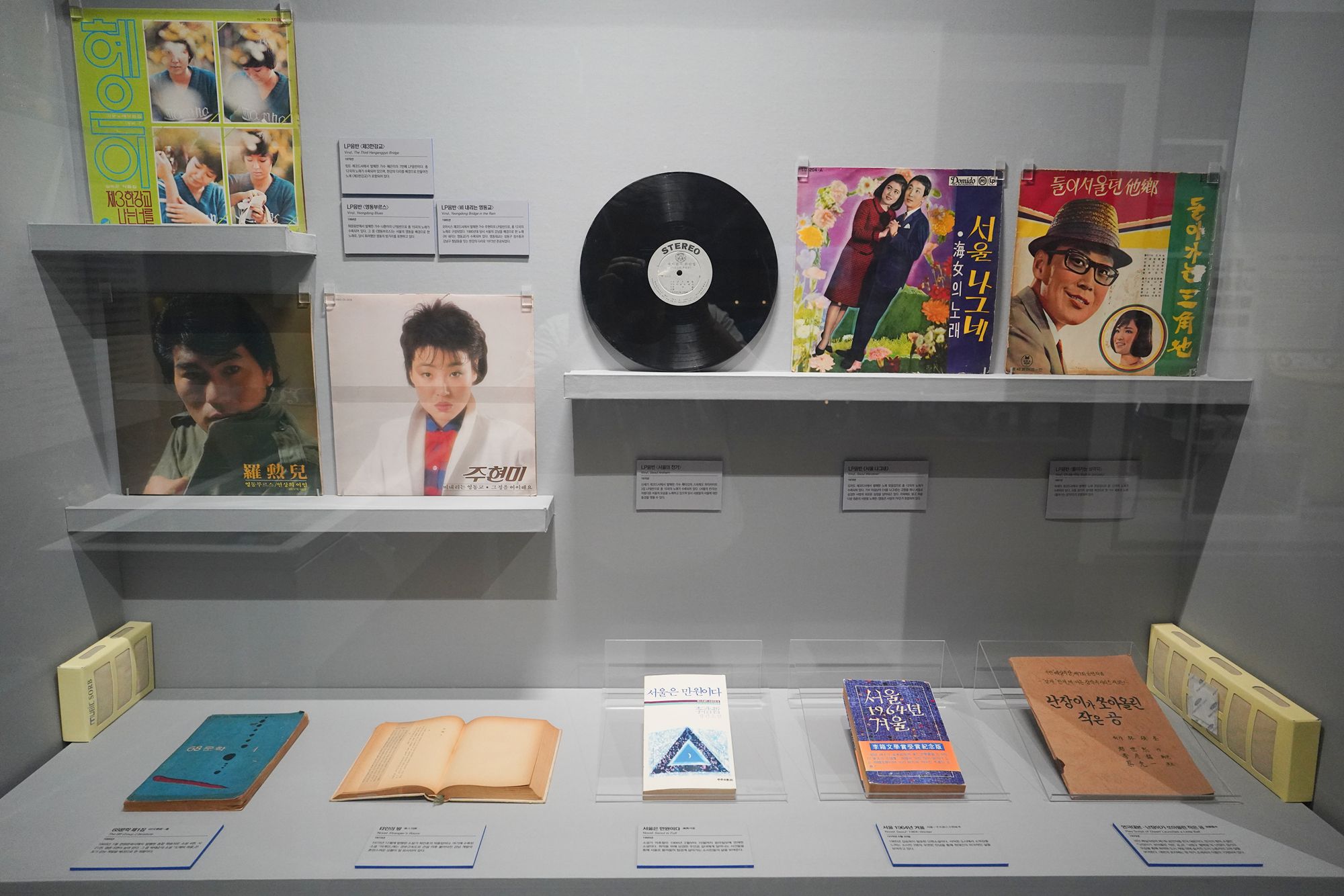
In the 1960s, much of what is now Gangnam, Seocho, Songpa, and Gangdong was still sparsely populated countryside known as Yeongdong. To relieve overcrowding in central Seoul, the government began developing the area south of the Han River. New transportation links, including the Gyeongbu Expressway and Hangang Bridge No. 3, made the area easier to reach. Rapid development followed, and the former rural landscape soon became a center of real-estate investment and the beginning of modern Gangnam.
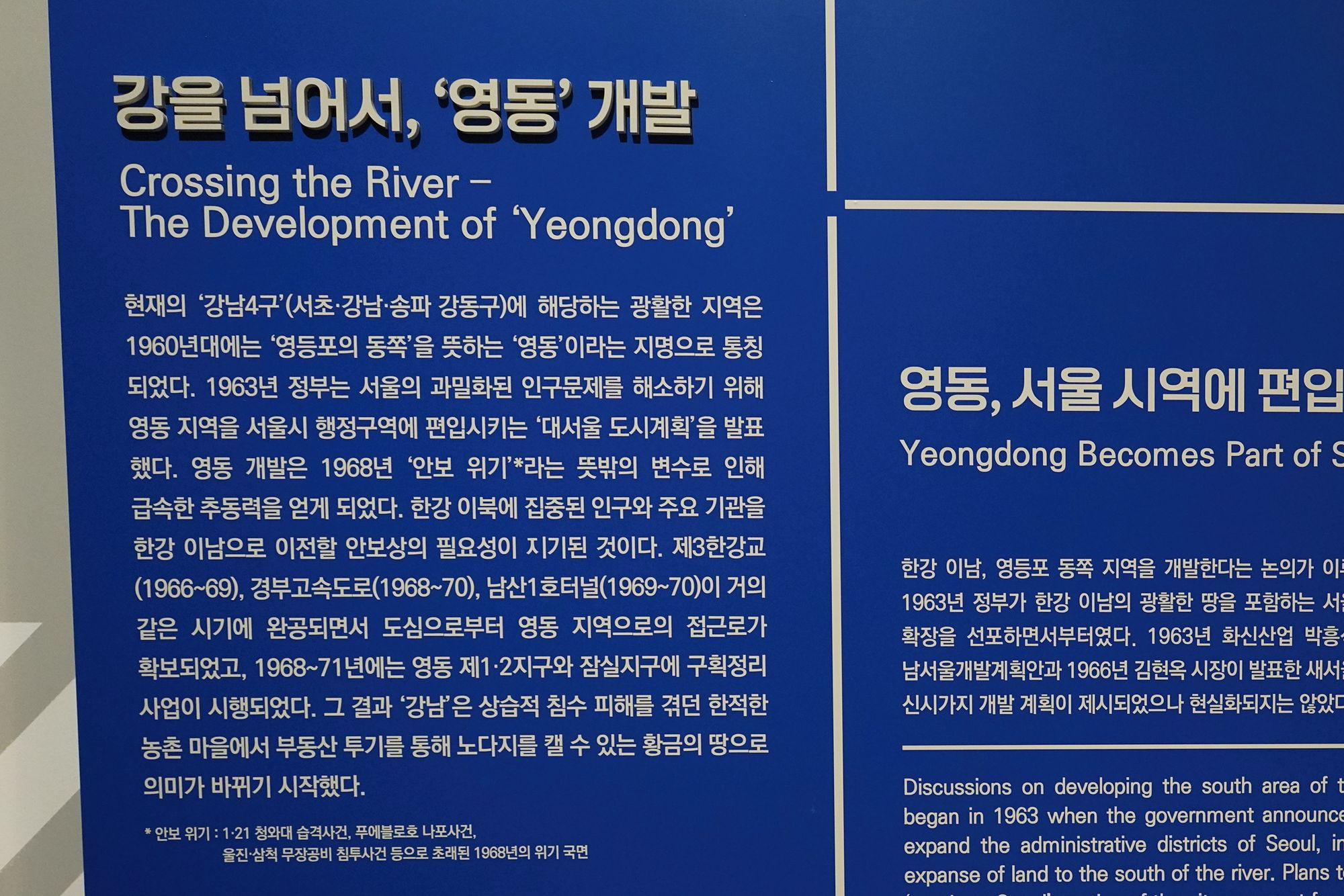
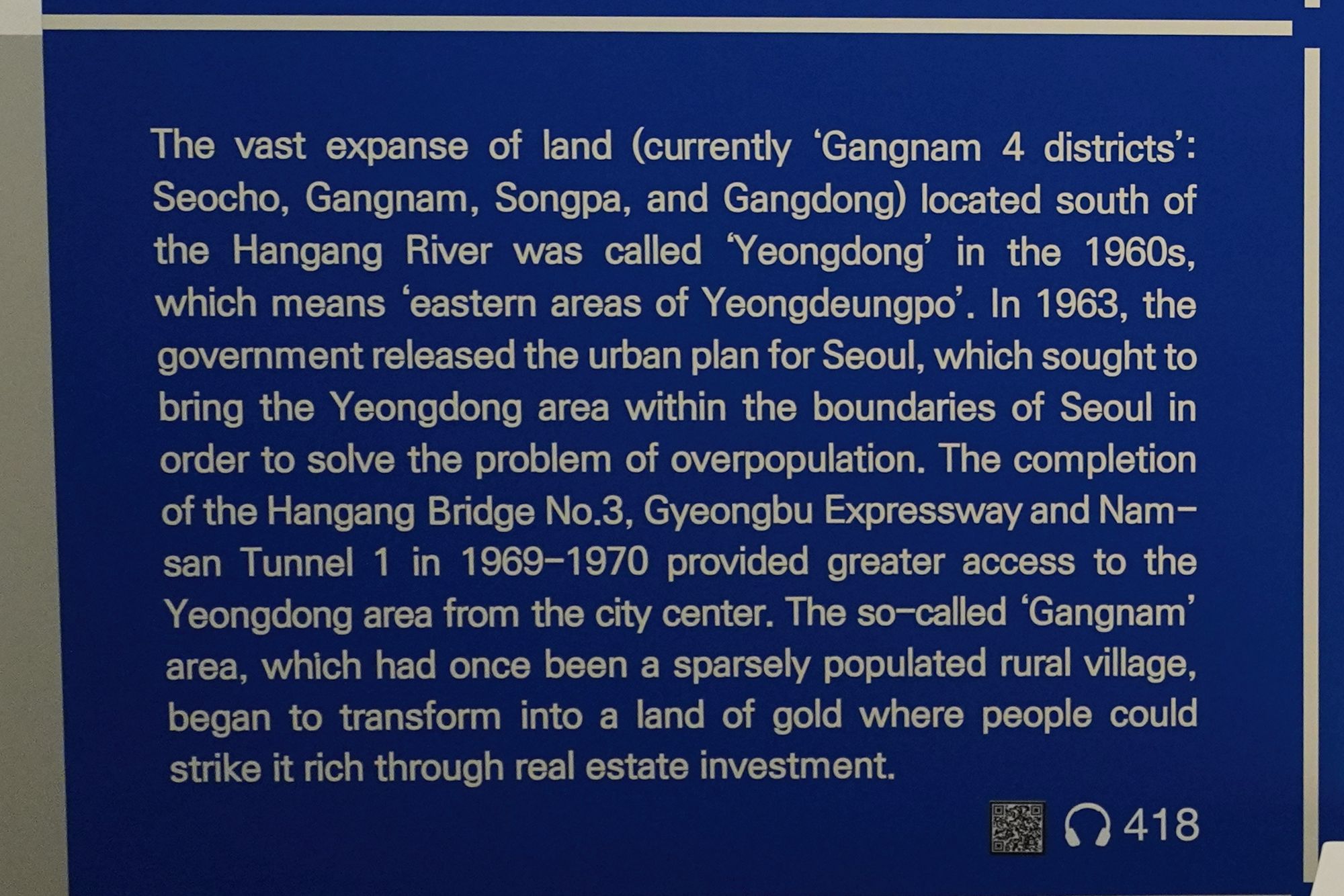
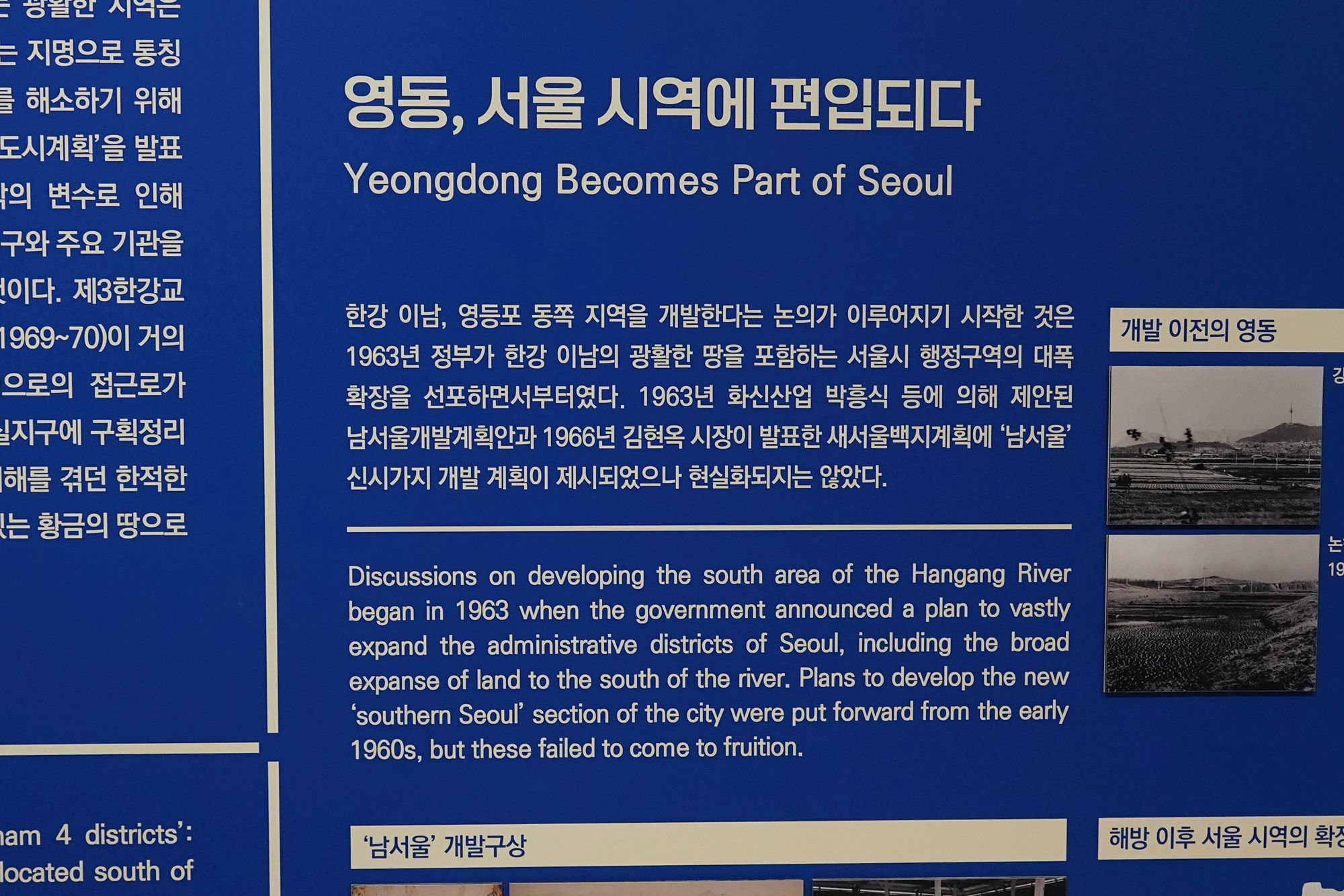
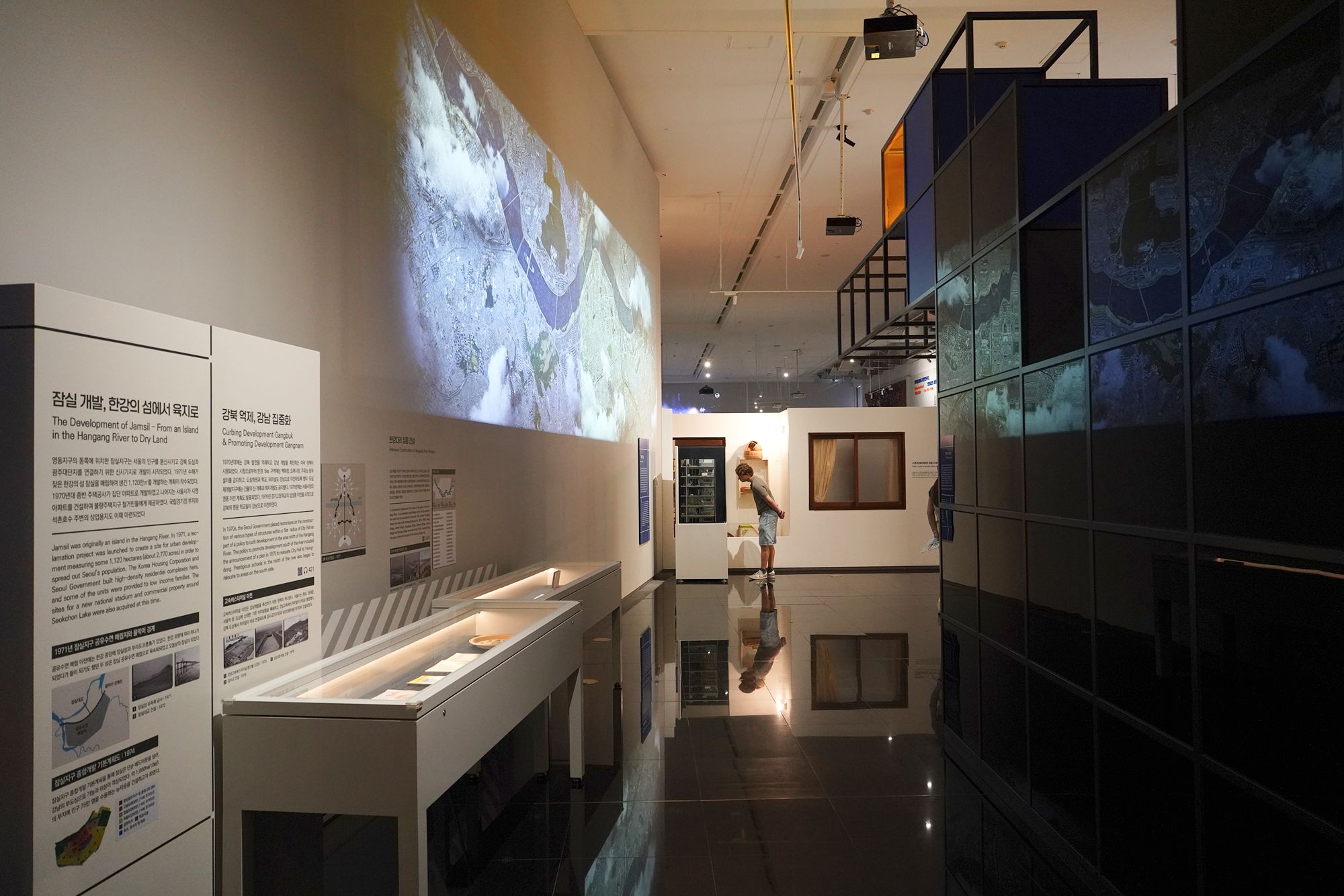
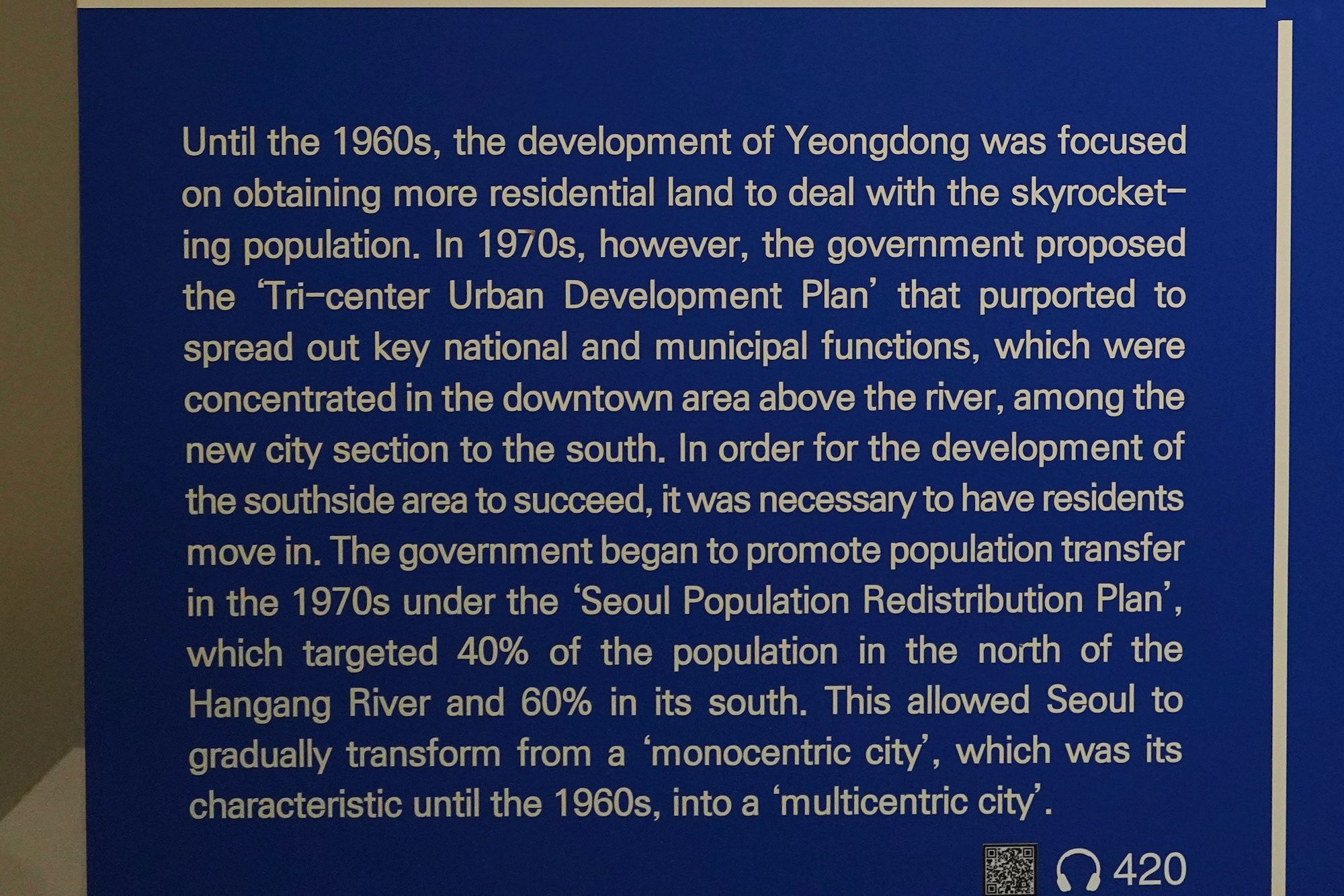
At first, the development of Yeongdong, today’s Gangnam area, was mainly intended to provide housing for Seoul’s rapidly growing population. In the 1970s, the government went further, encouraging residents and important urban functions to move south of the Han River. This population redistribution helped transform Seoul from a city centered almost entirely on the old downtown north of the river into a modern city with several major centers, including the rapidly developing Gangnam area.
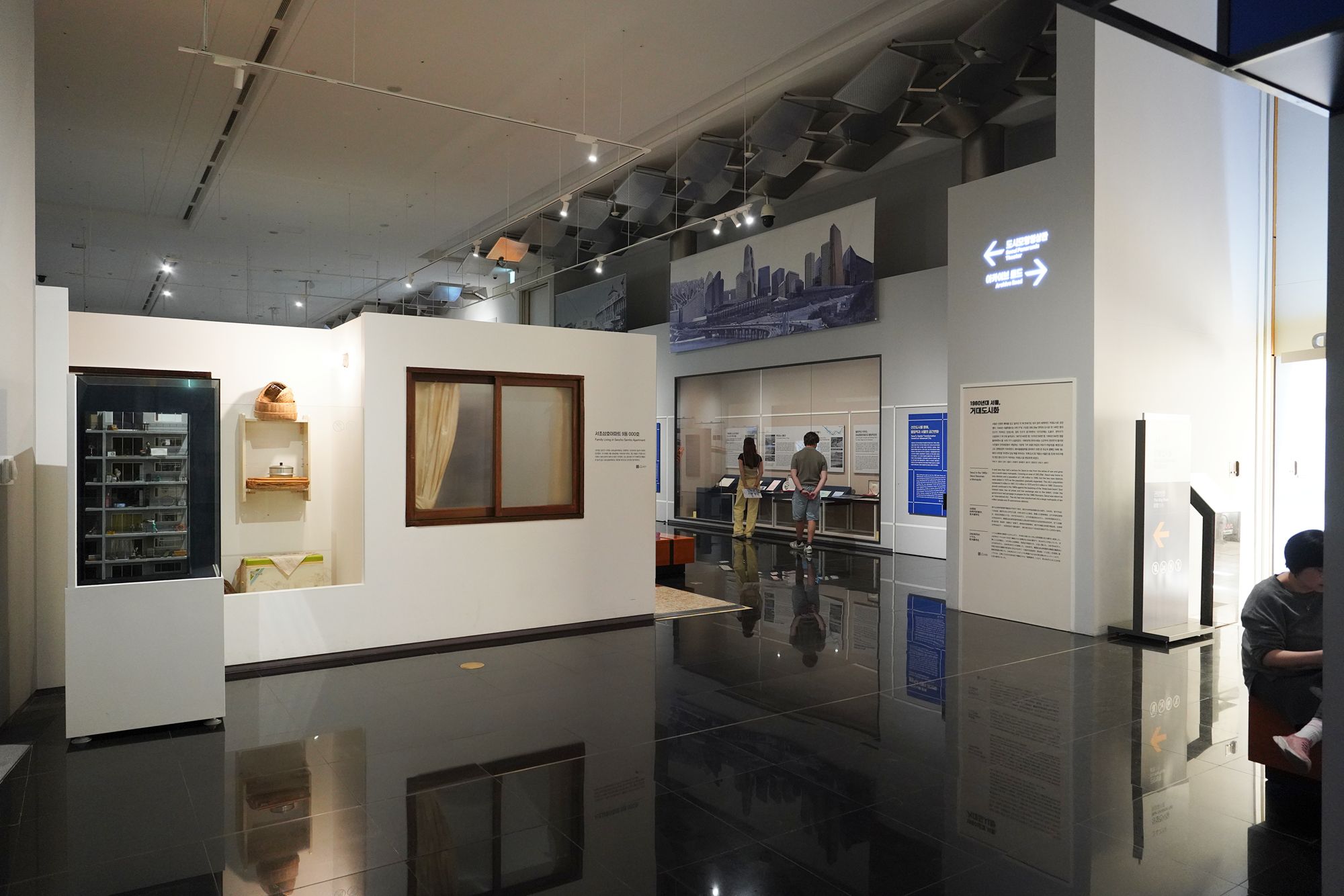
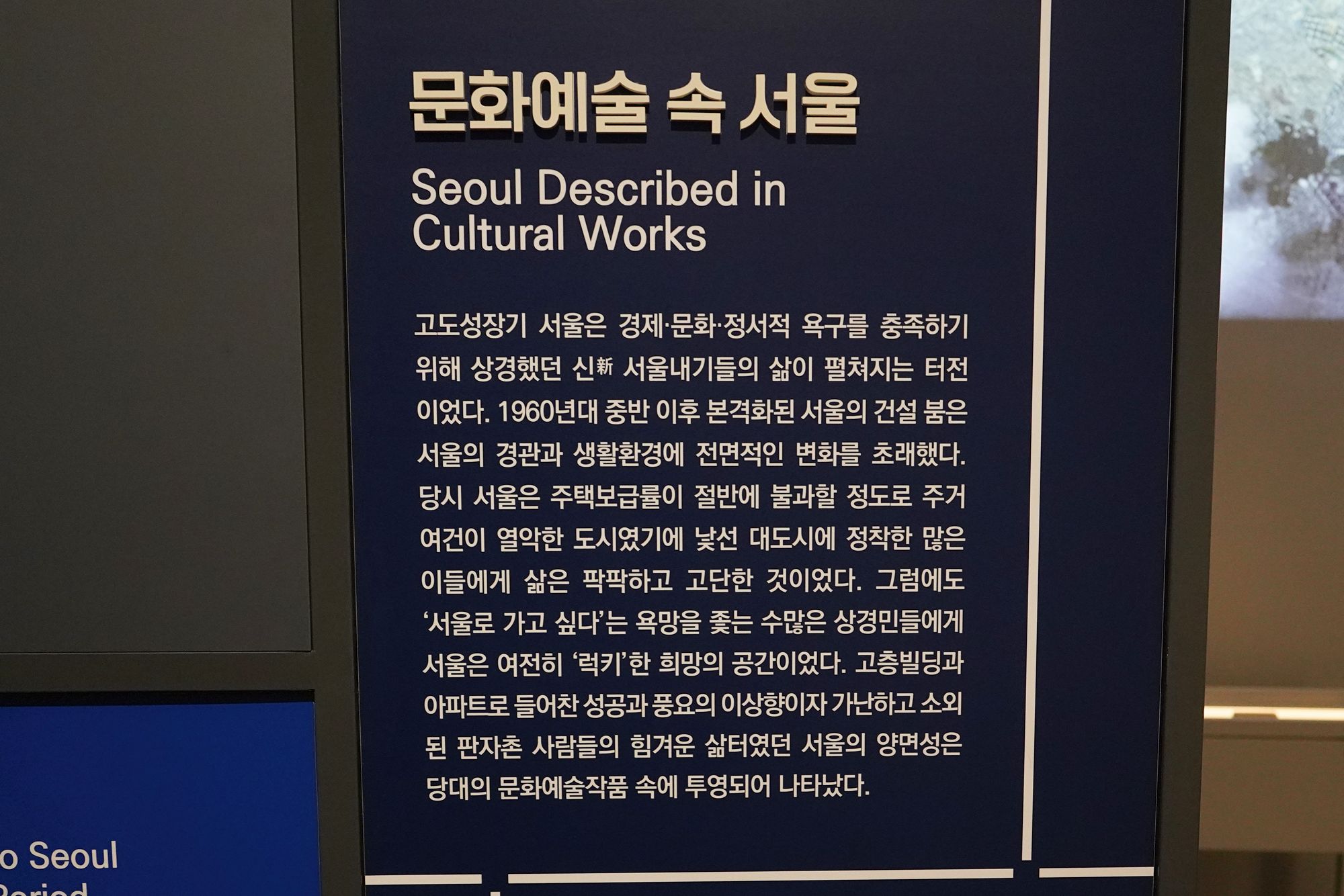
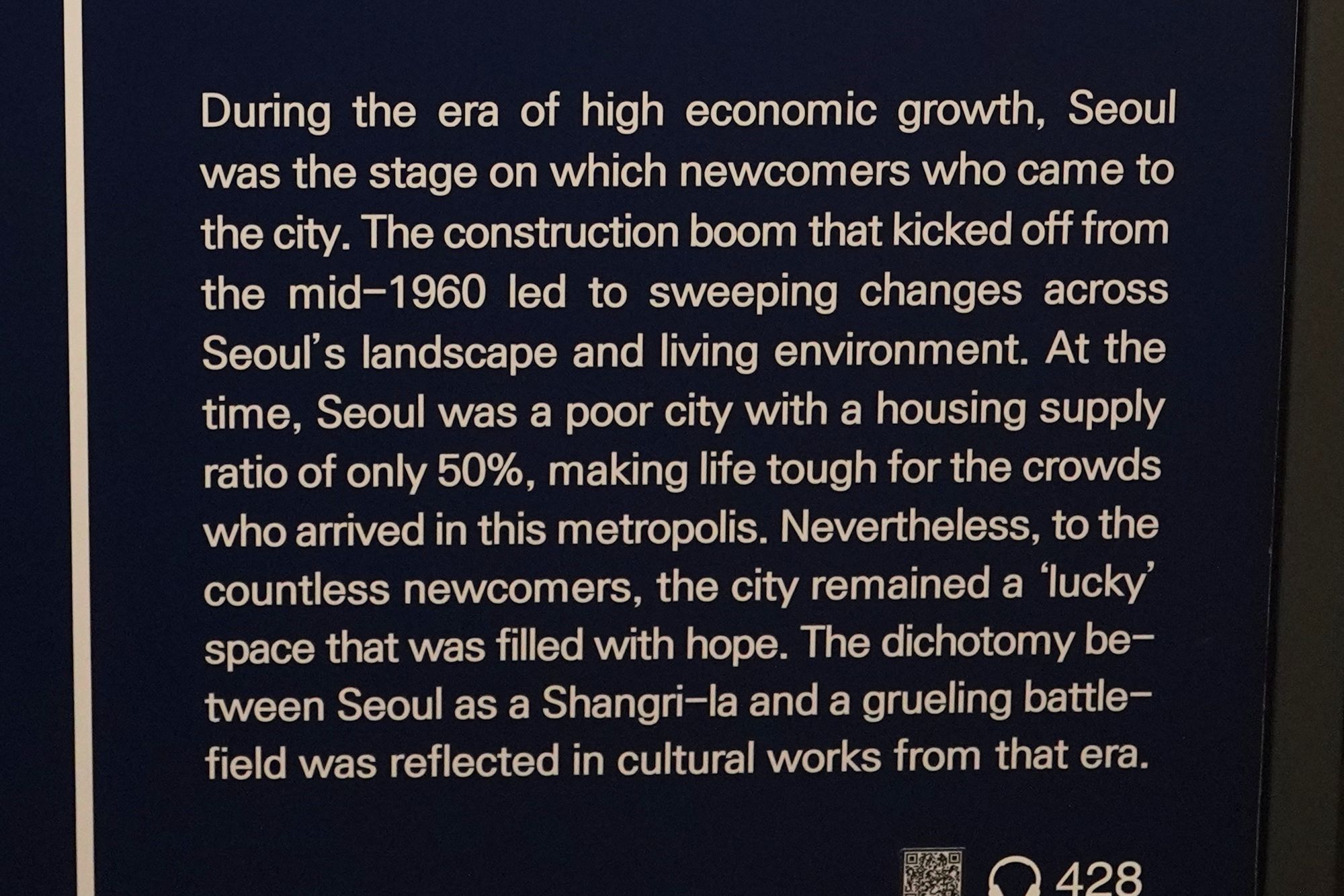
During Seoul’s rapid economic growth, huge numbers of people moved to the city hoping for a better life. Construction transformed the city beginning in the mid-1960s, but housing remained severely inadequate, with only about half of households having proper housing. Life could be extremely difficult for newcomers, yet Seoul was also seen as a place of opportunity and hope—a city where people believed they might build a better future.
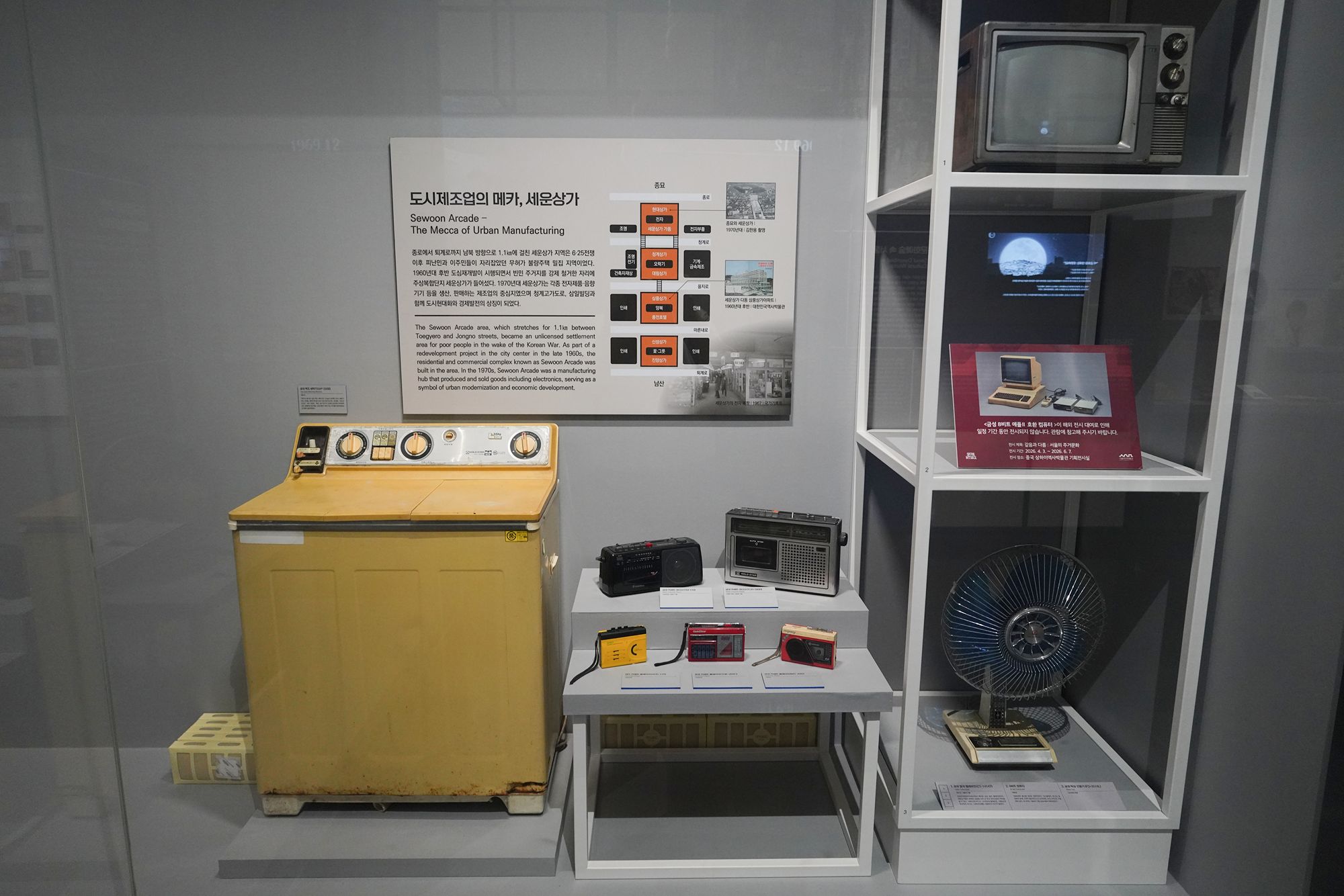
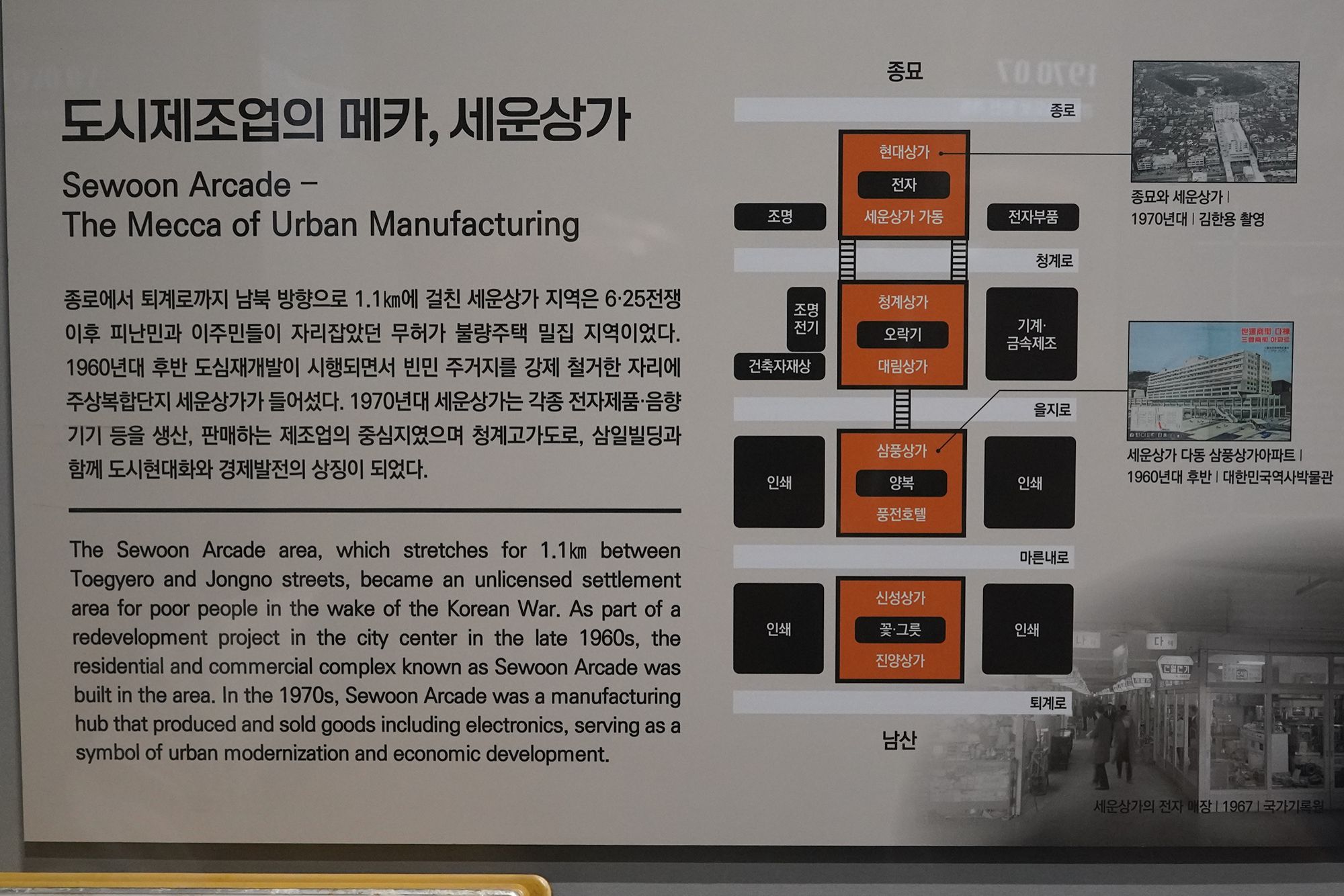
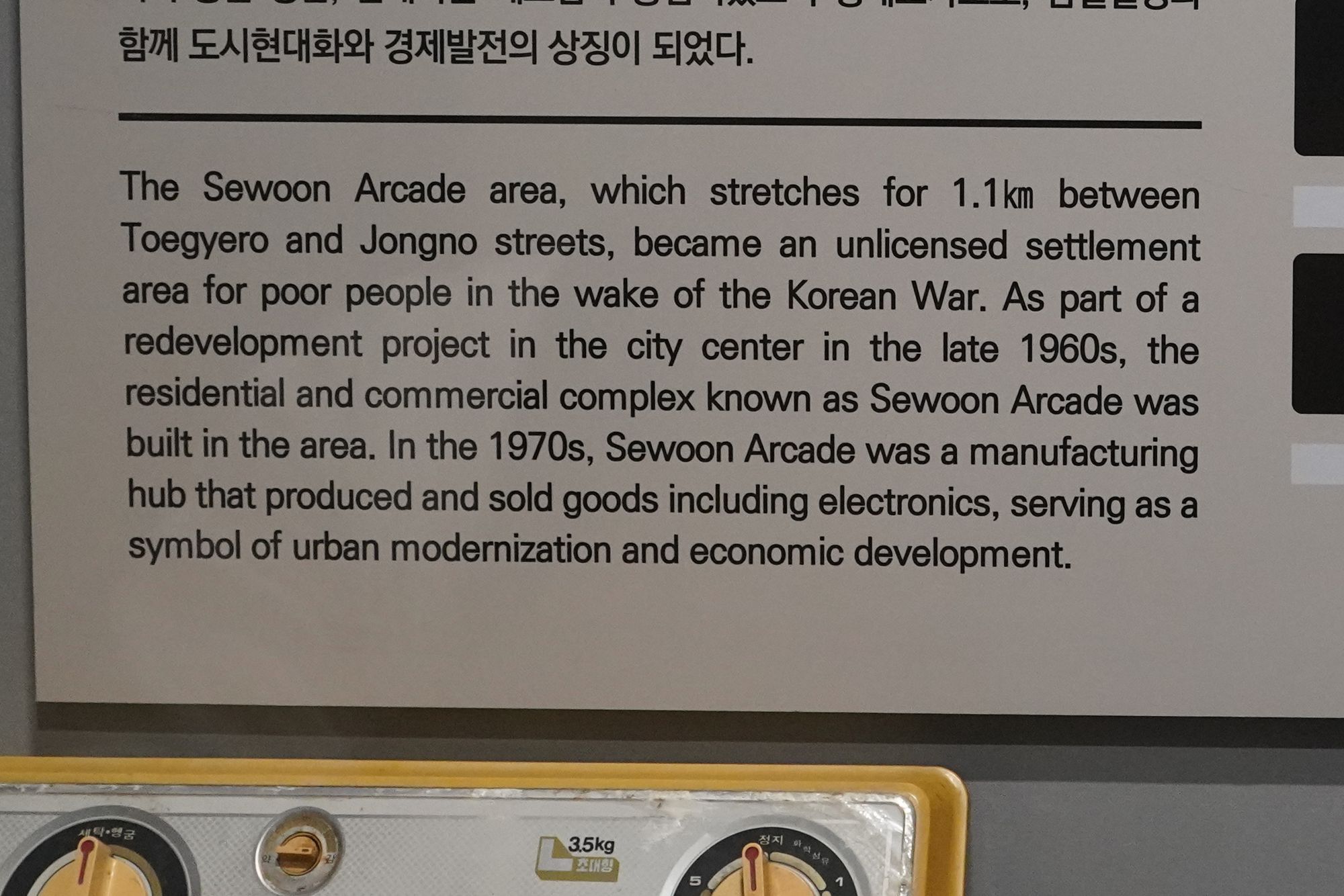
After the Korean War, the area between Jongno and Toegyero became a large settlement for poor residents. As part of Seoul’s redevelopment in the late 1960s, the settlement was cleared and replaced by Sewoon Arcade, a huge residential and commercial complex stretching about 1.1 kilometers through central Seoul. By the 1970s, Sewoon Arcade had become a major center for electronics and manufacturing and a symbol of Seoul’s rapid modernization.
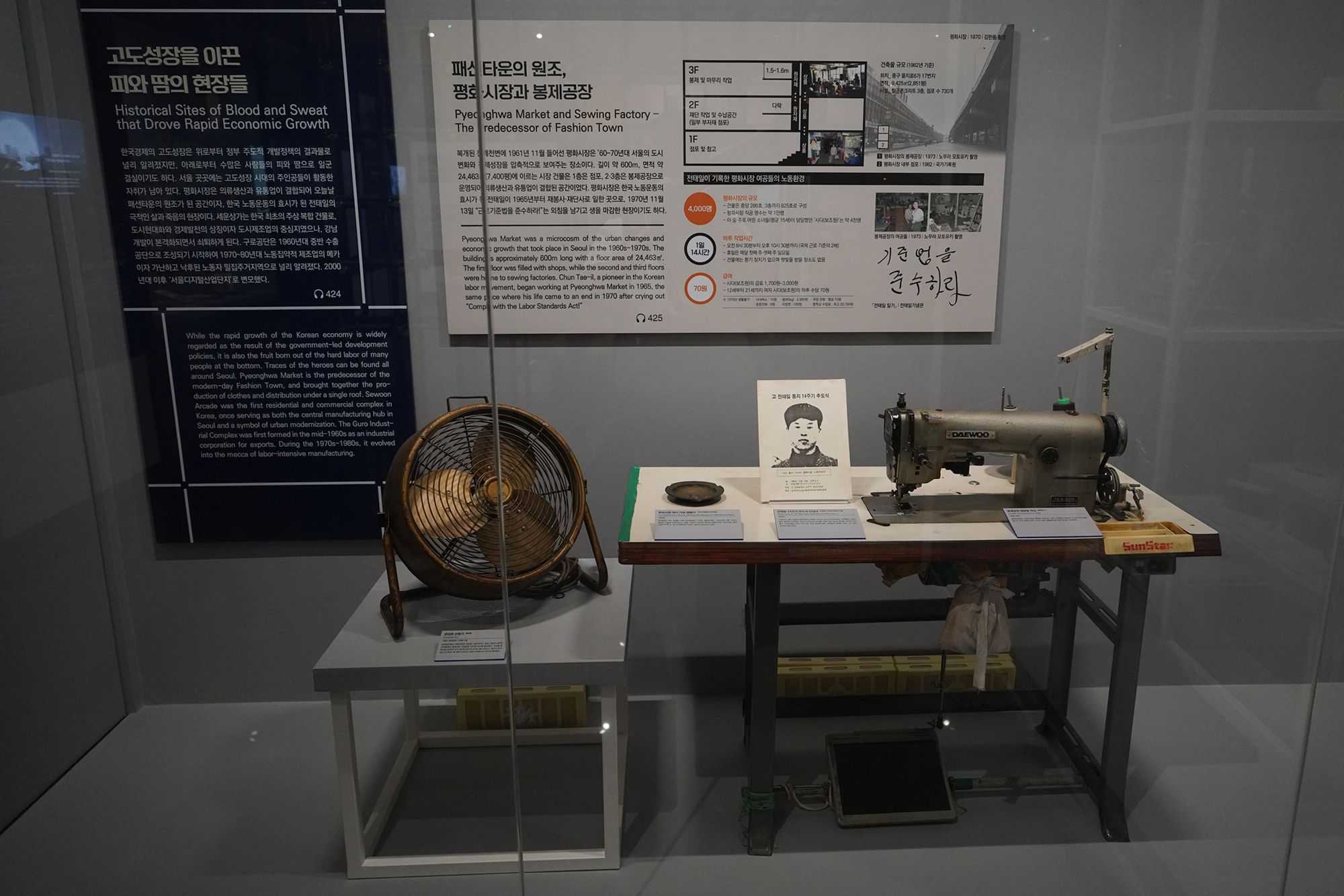
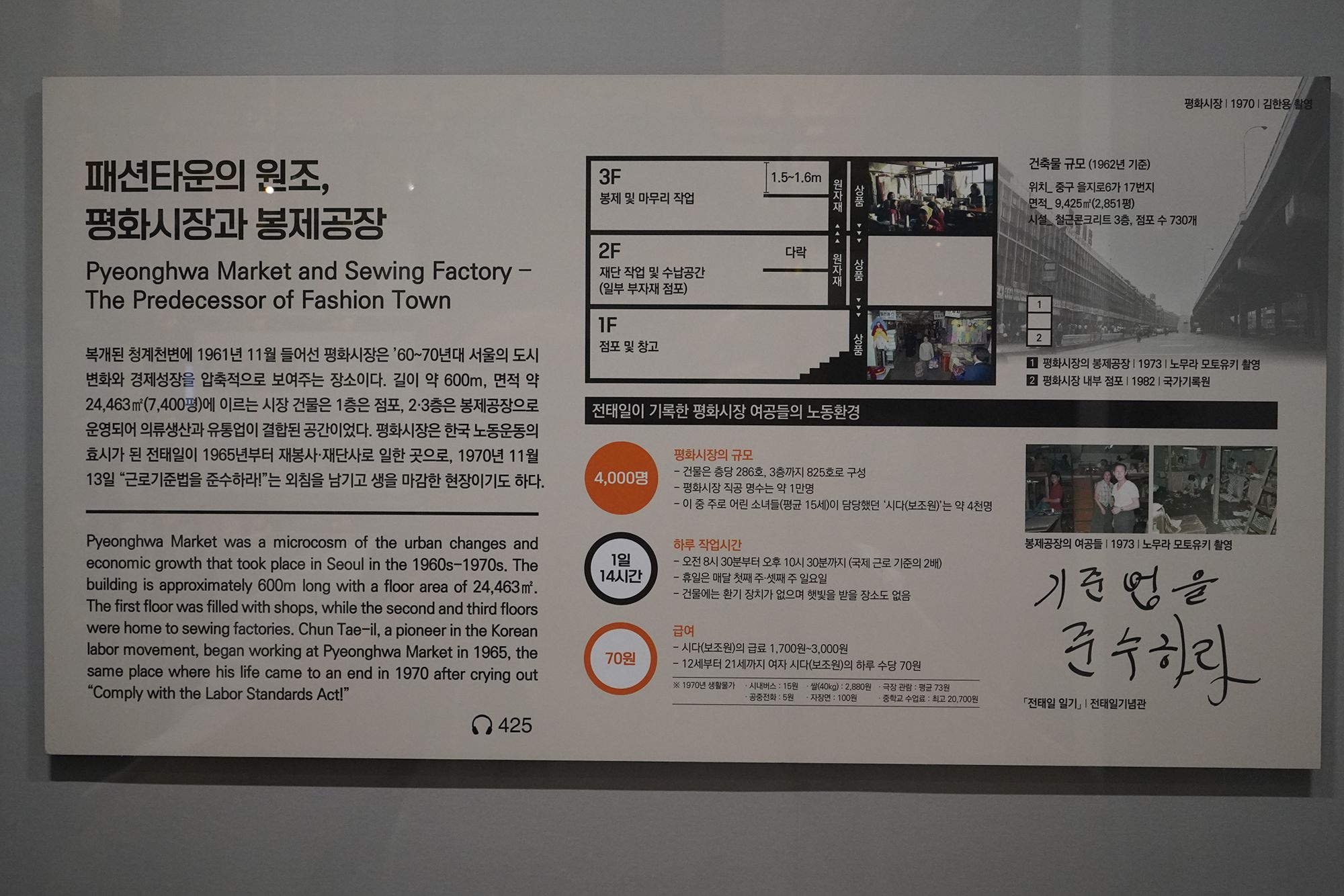
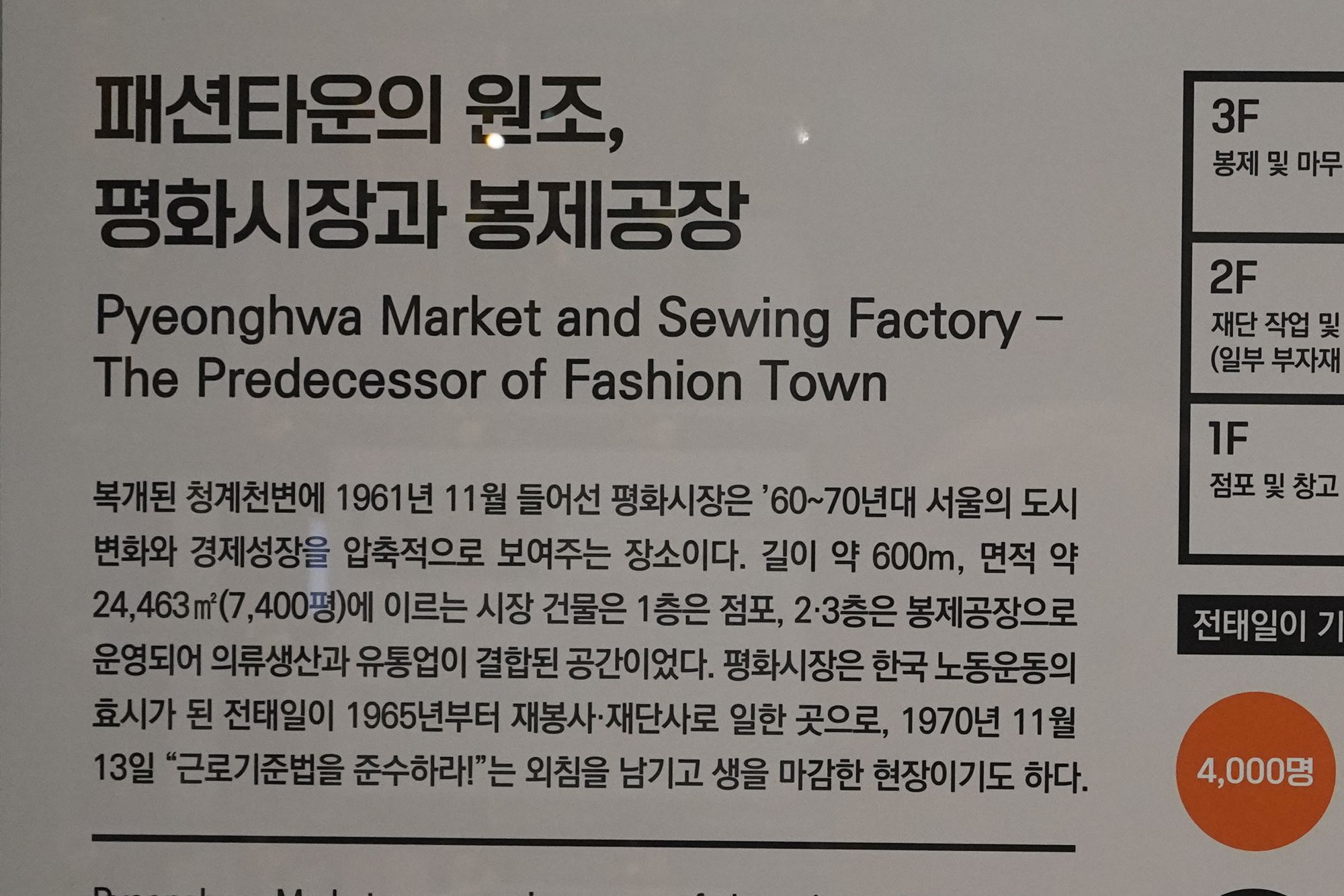
Pyeonghwa Market was one of the centers of Seoul’s growing garment industry, with shops on the first floor and sewing factories above. It also became an important place in Korean labor history. Garment worker and labor activist Chun Tae-il worked here beginning in 1965. In 1970, he died after setting himself on fire in protest of the terrible working conditions, calling for employers to “Comply with the Labor Standards Act!” His death became a major turning point in South Korea’s labor movement.
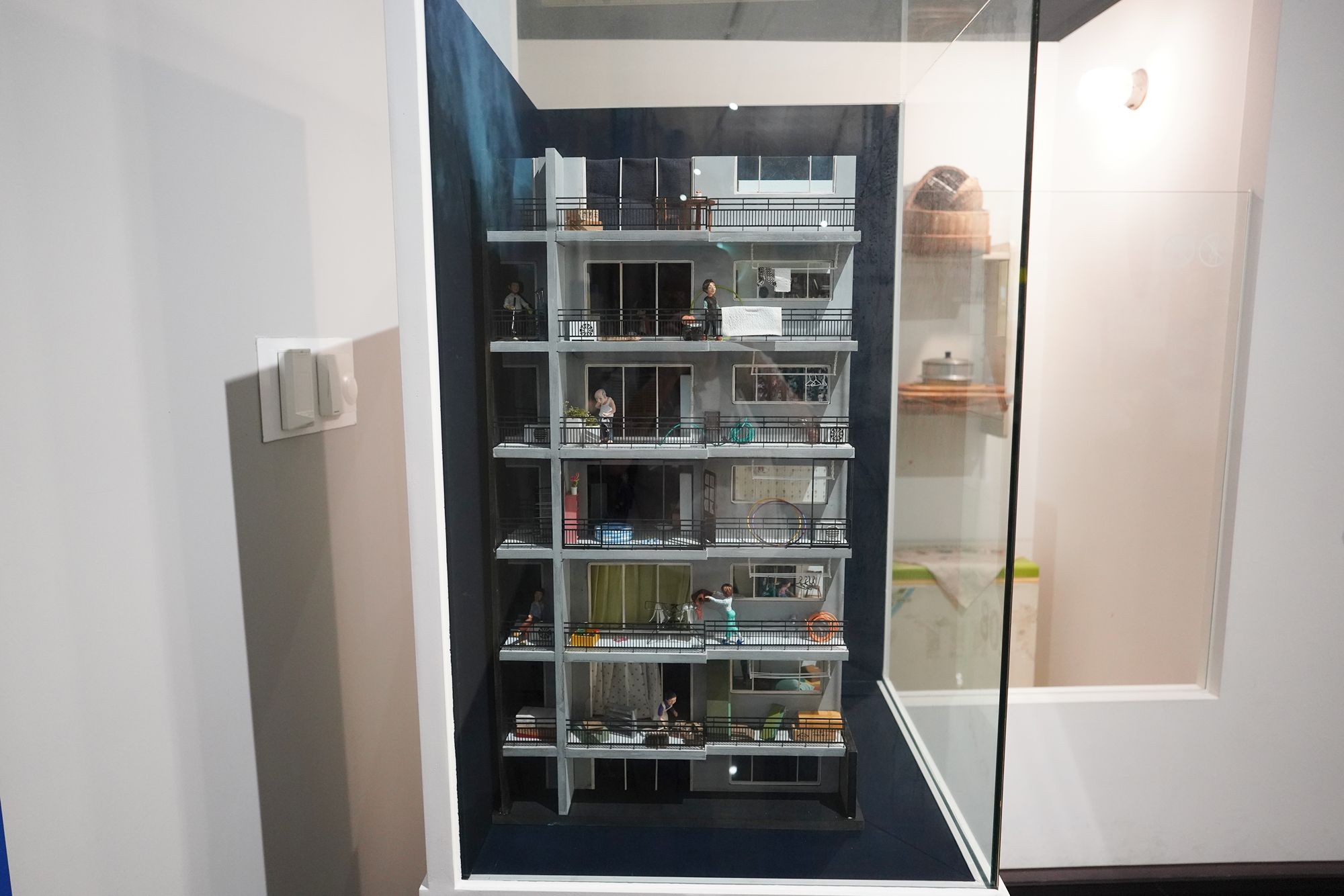
During the 1960s and 1970s, Seoul’s population grew much faster than its housing supply. After the success of the Mapo Apartments, built in 1962, large apartment complexes became an important solution to the housing shortage. Beginning in the 1970s, apartment construction expanded rapidly, particularly south of the Han River. This development helped create the landscape of countless high-rise apartment complexes that is so characteristic of Seoul today.
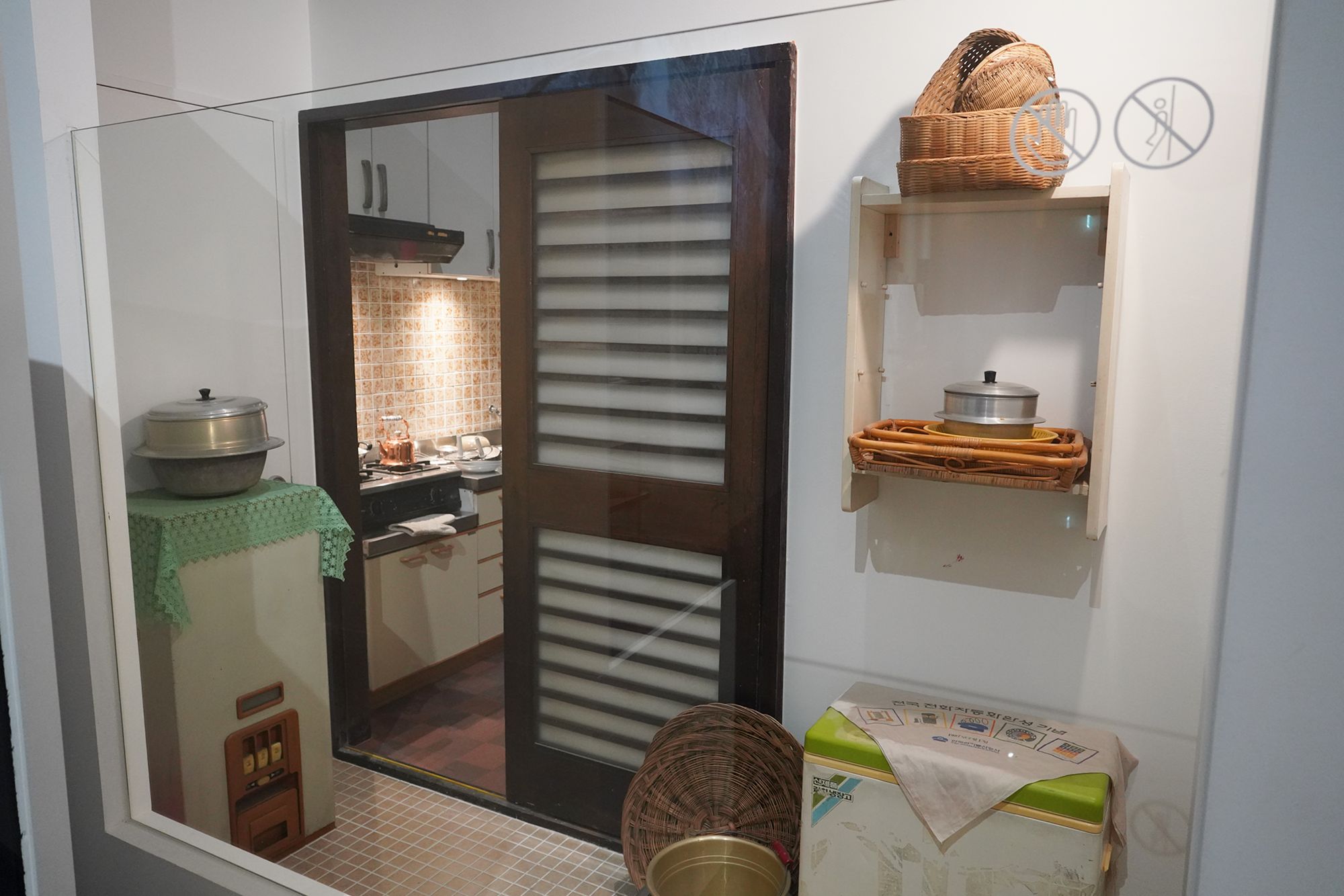
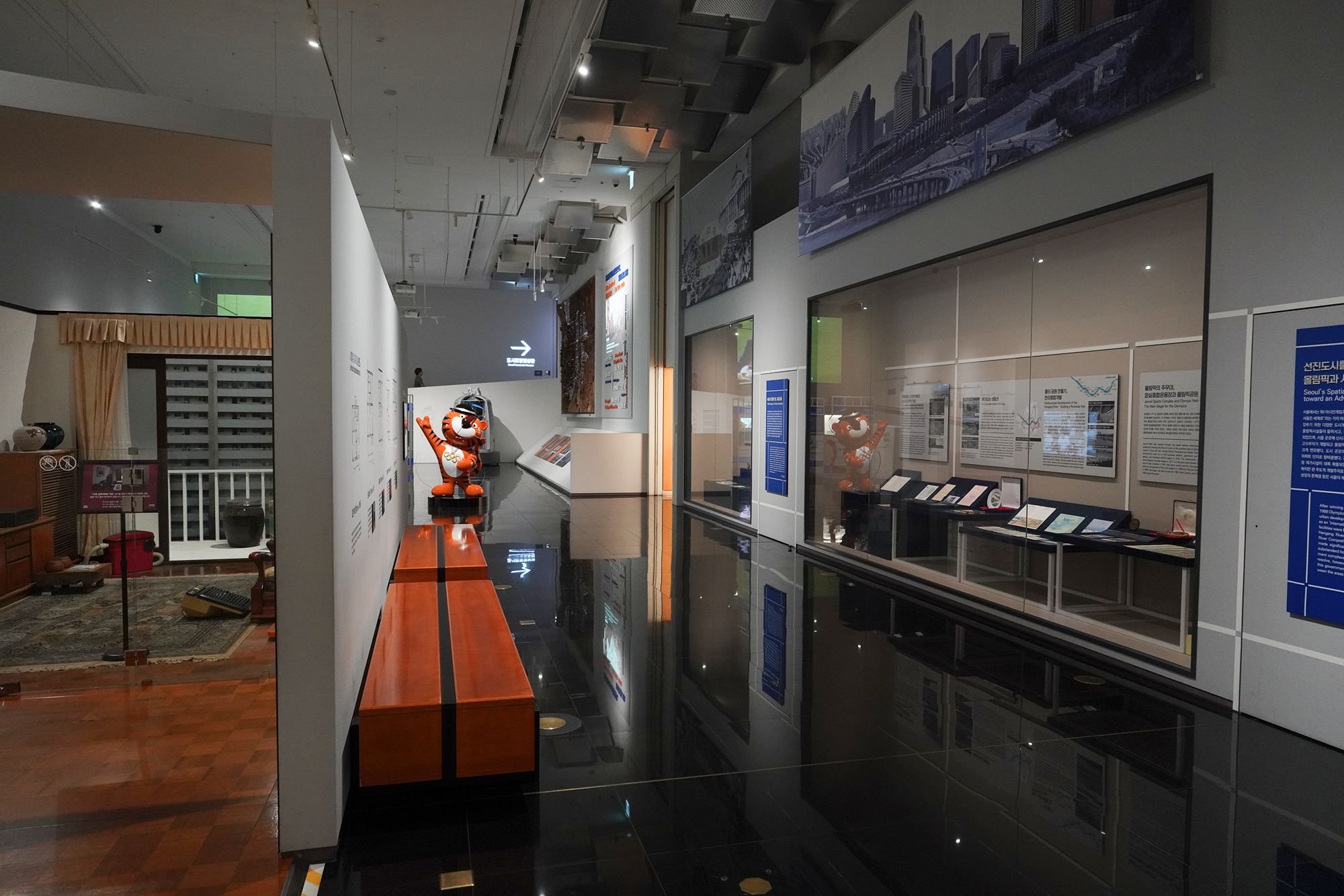
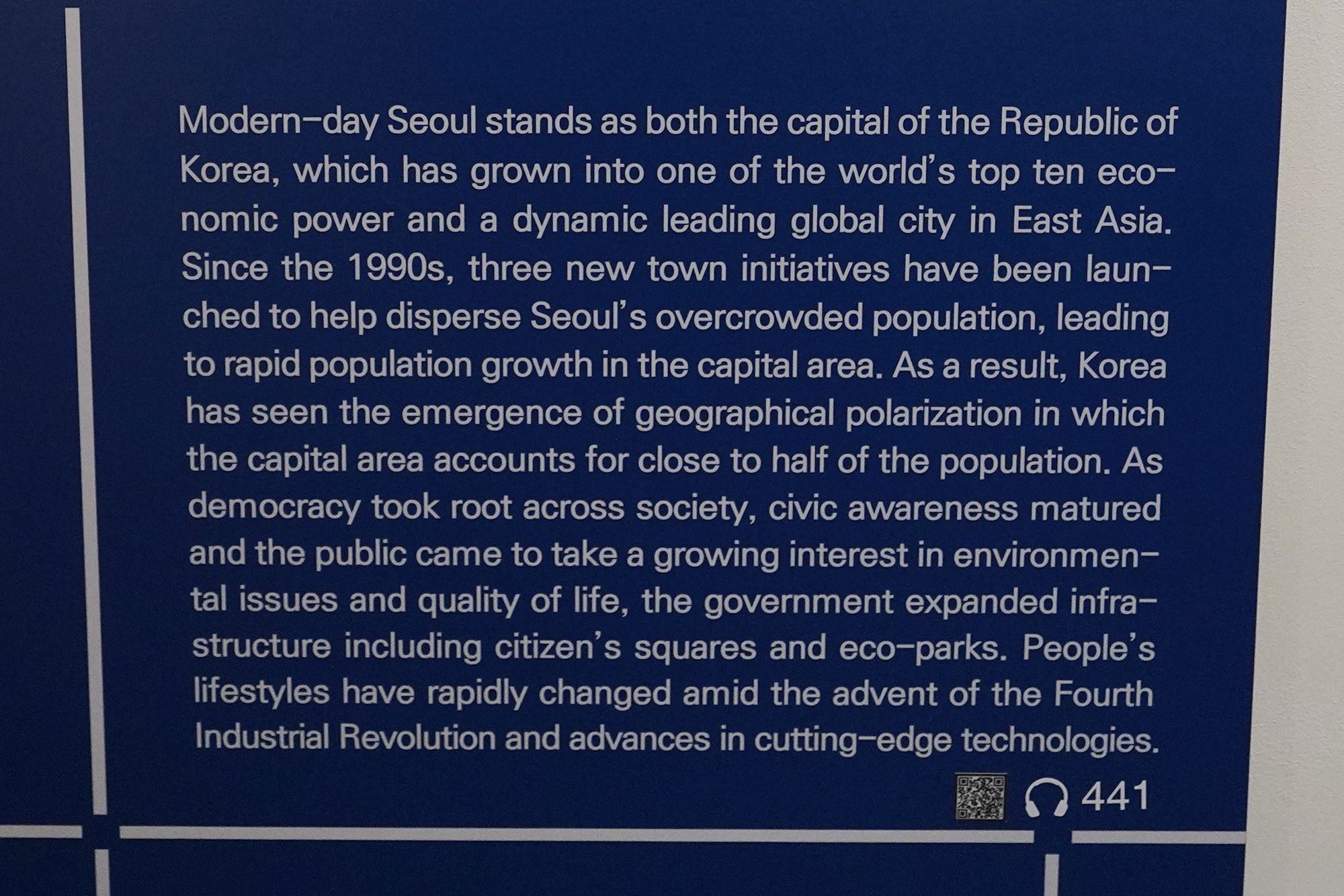
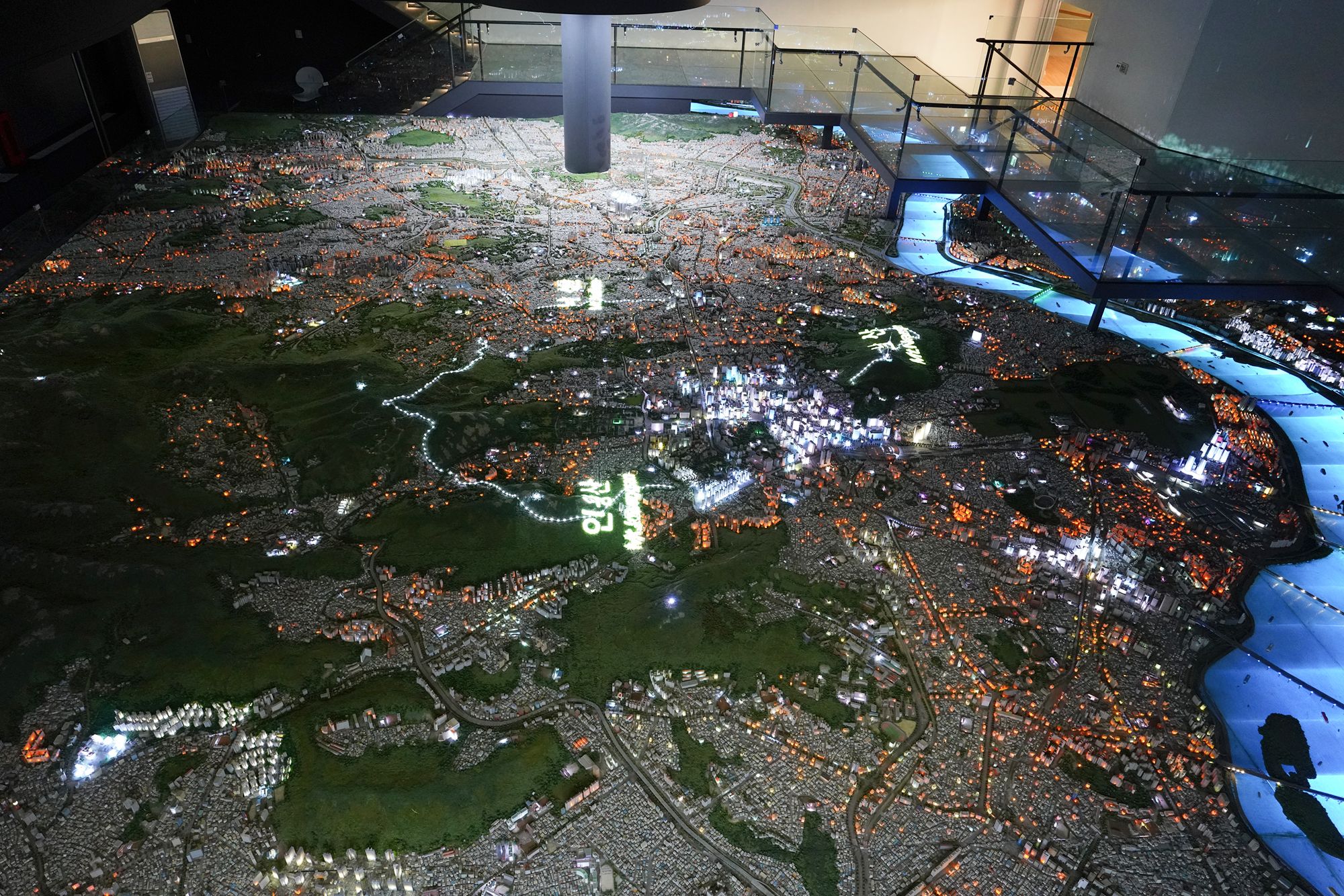
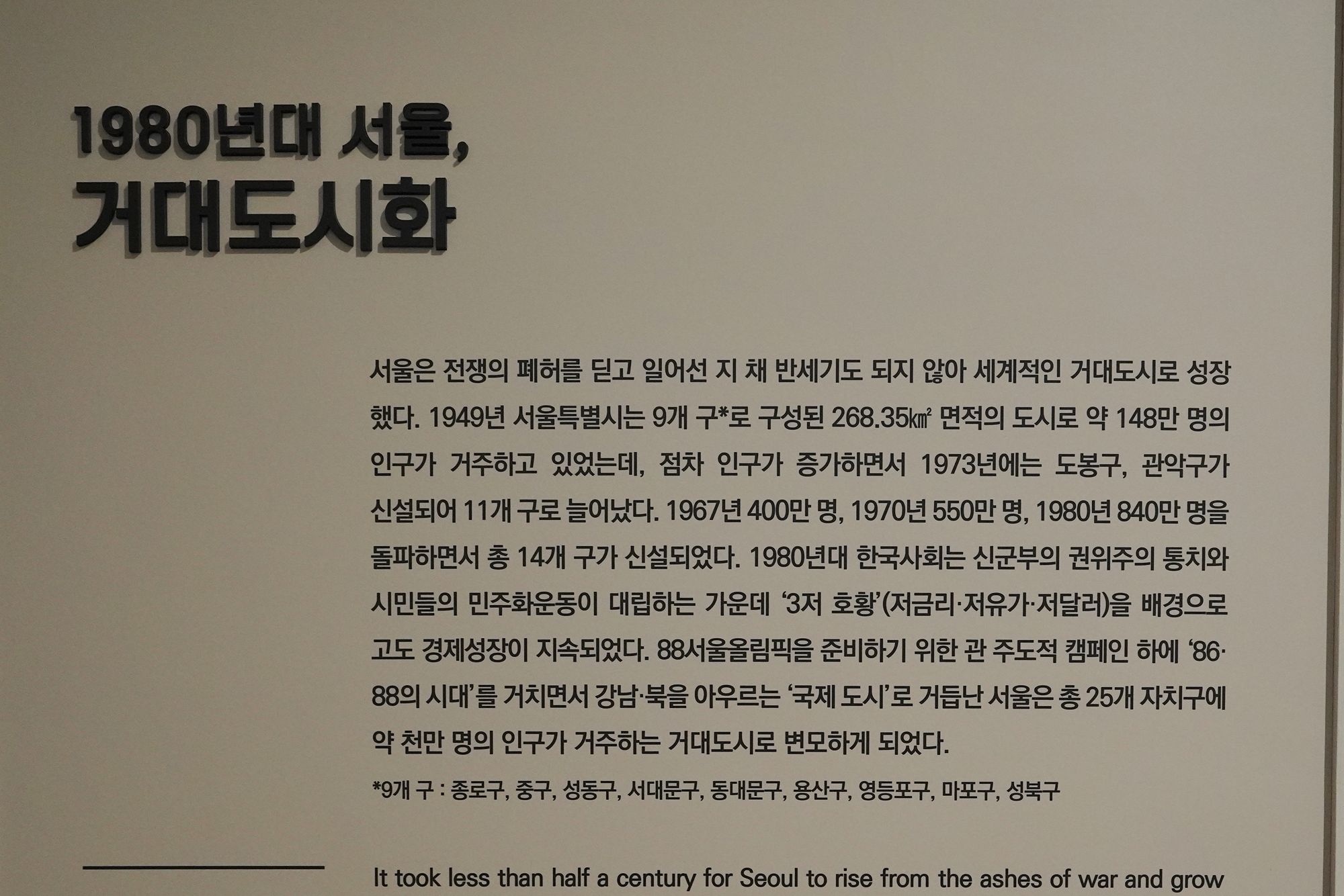
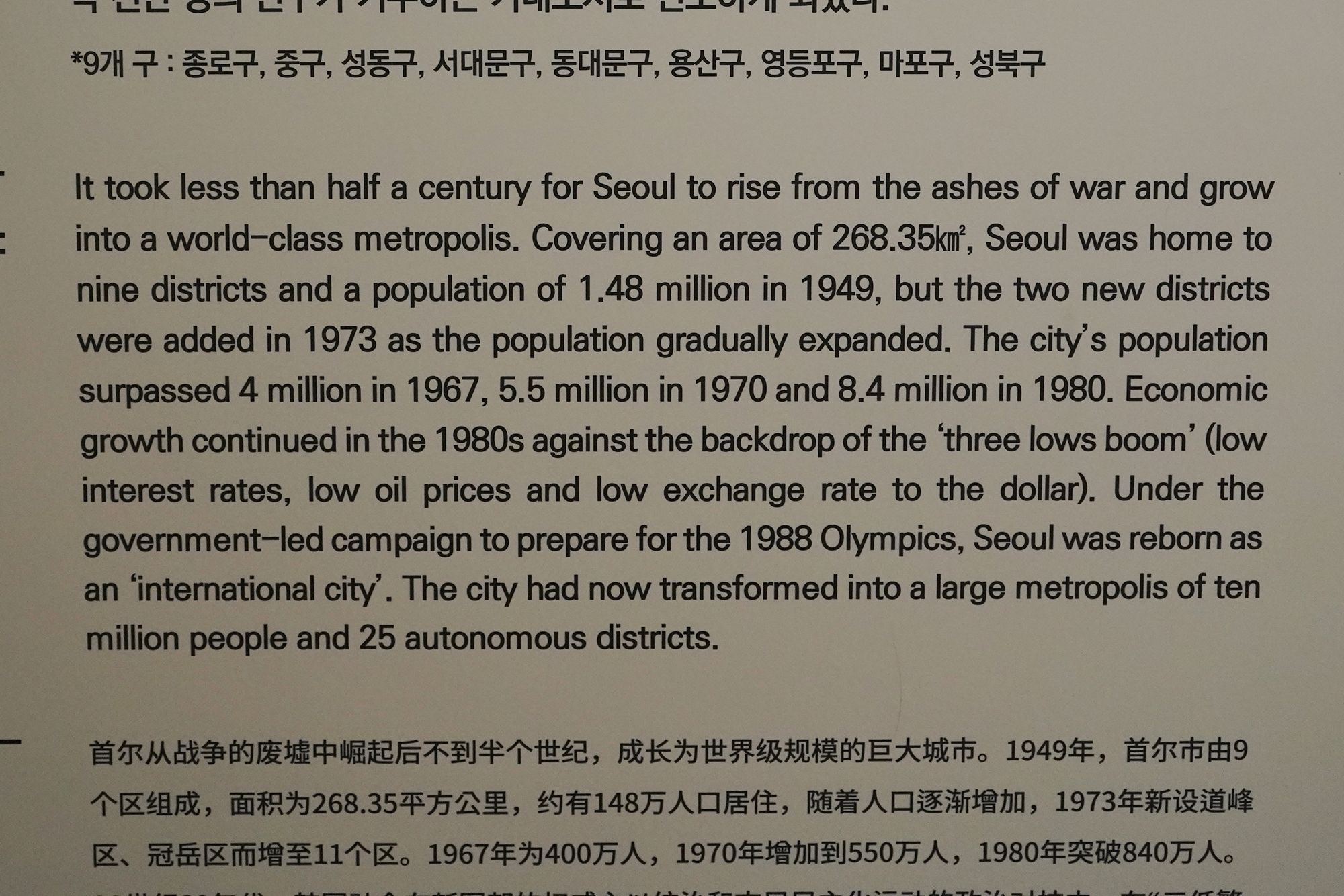
In just a few decades, Seoul experienced extraordinary growth. Its population increased from about 1.5 million in 1949 to more than 8 million by 1980, accompanied by rapid economic development and massive urban expansion. During the 1980s, preparations for the 1988 Seoul Olympics accelerated the city’s modernization and helped transform Seoul into an international metropolis of nearly 10 million people.
The 1988 Seoul Olympics showcased Seoul’s remarkable transformation from the capital of a poor, war-torn country into a modern international metropolis. After Seoul was selected to host the Games in 1981, extensive development projects transformed the city in preparation for the event. The Olympics brought athletes from around the world and became an important symbol of South Korea’s rapid economic growth, often called the “Miracle on the Han River.”
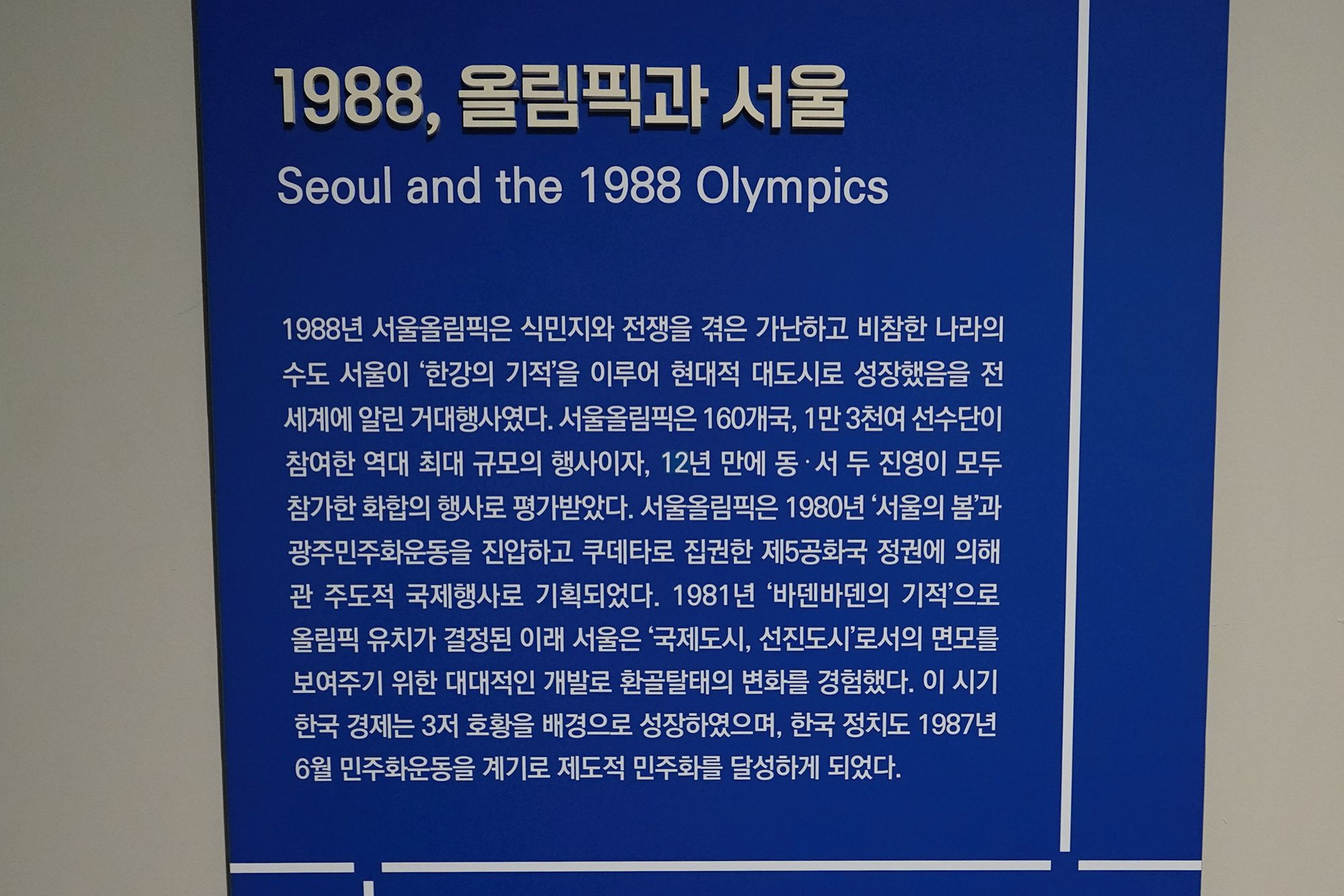
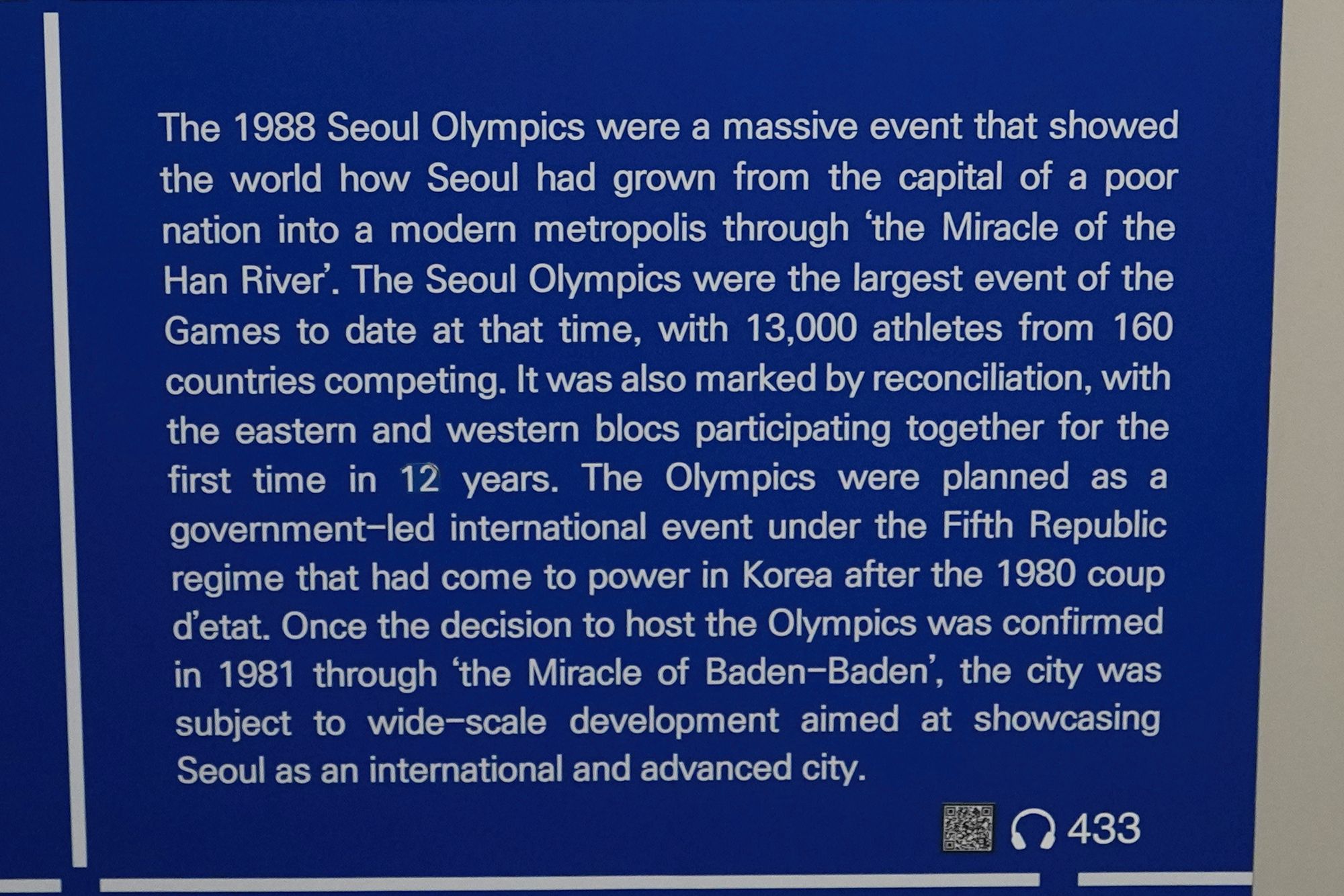
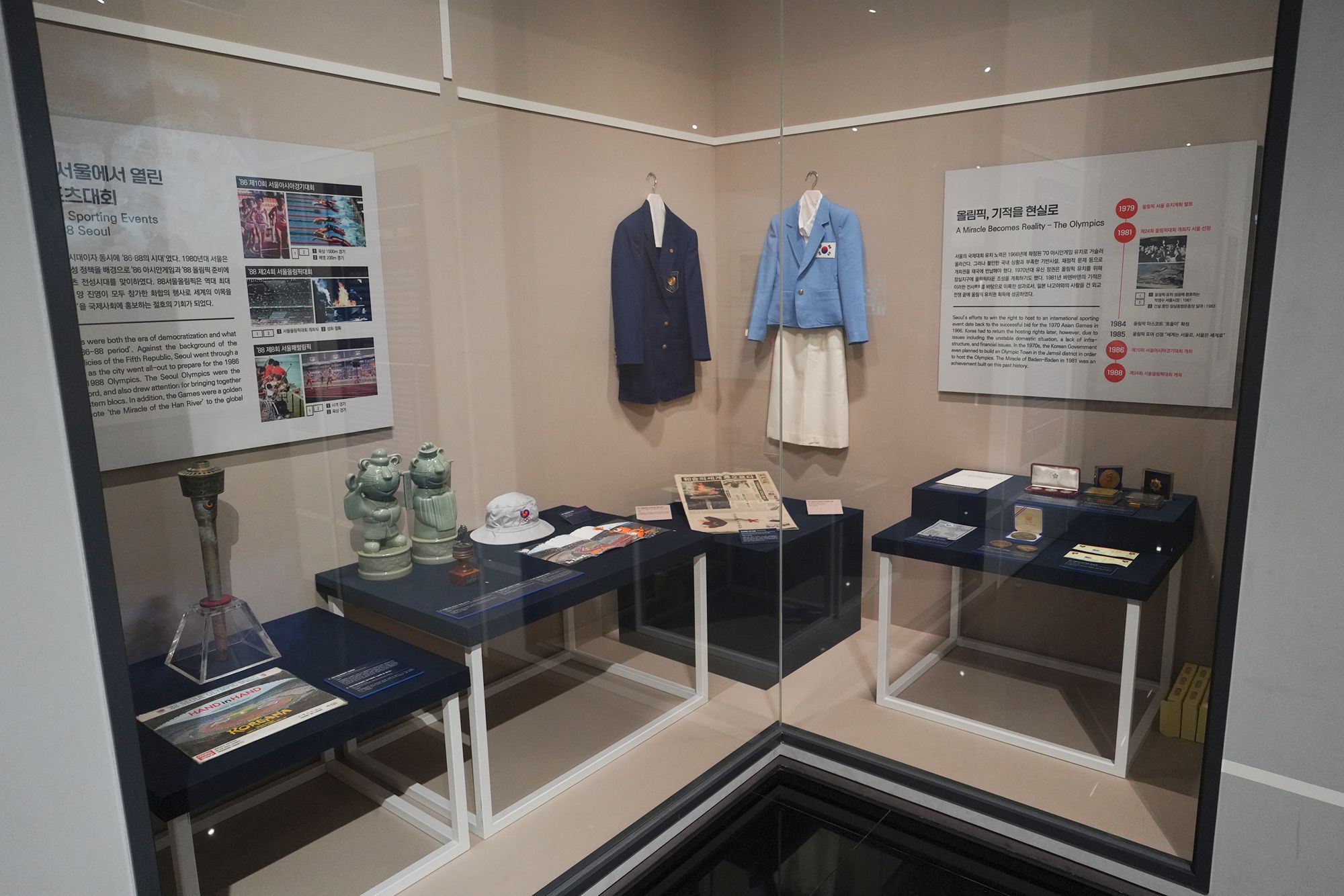
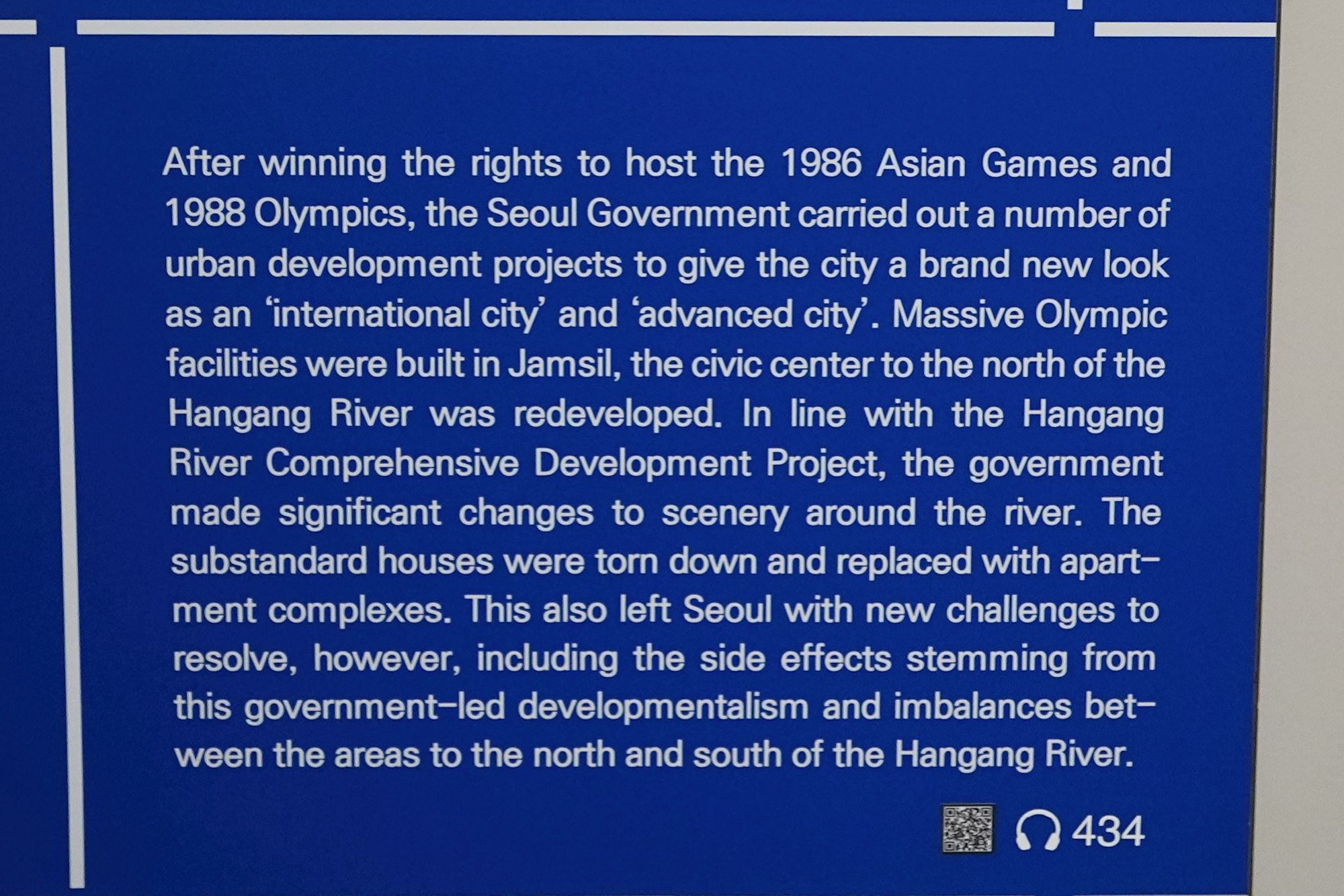
In preparation for the 1986 Asian Games and 1988 Seoul Olympics, Seoul underwent another major transformation. New Olympic facilities were constructed in Jamsil, the Han River waterfront was extensively redeveloped, and older neighborhoods were replaced by modern apartment complexes. These projects helped give Seoul the appearance of a modern international city, although rapid redevelopment also created social problems and increased the imbalance between areas north and south of the Han River.
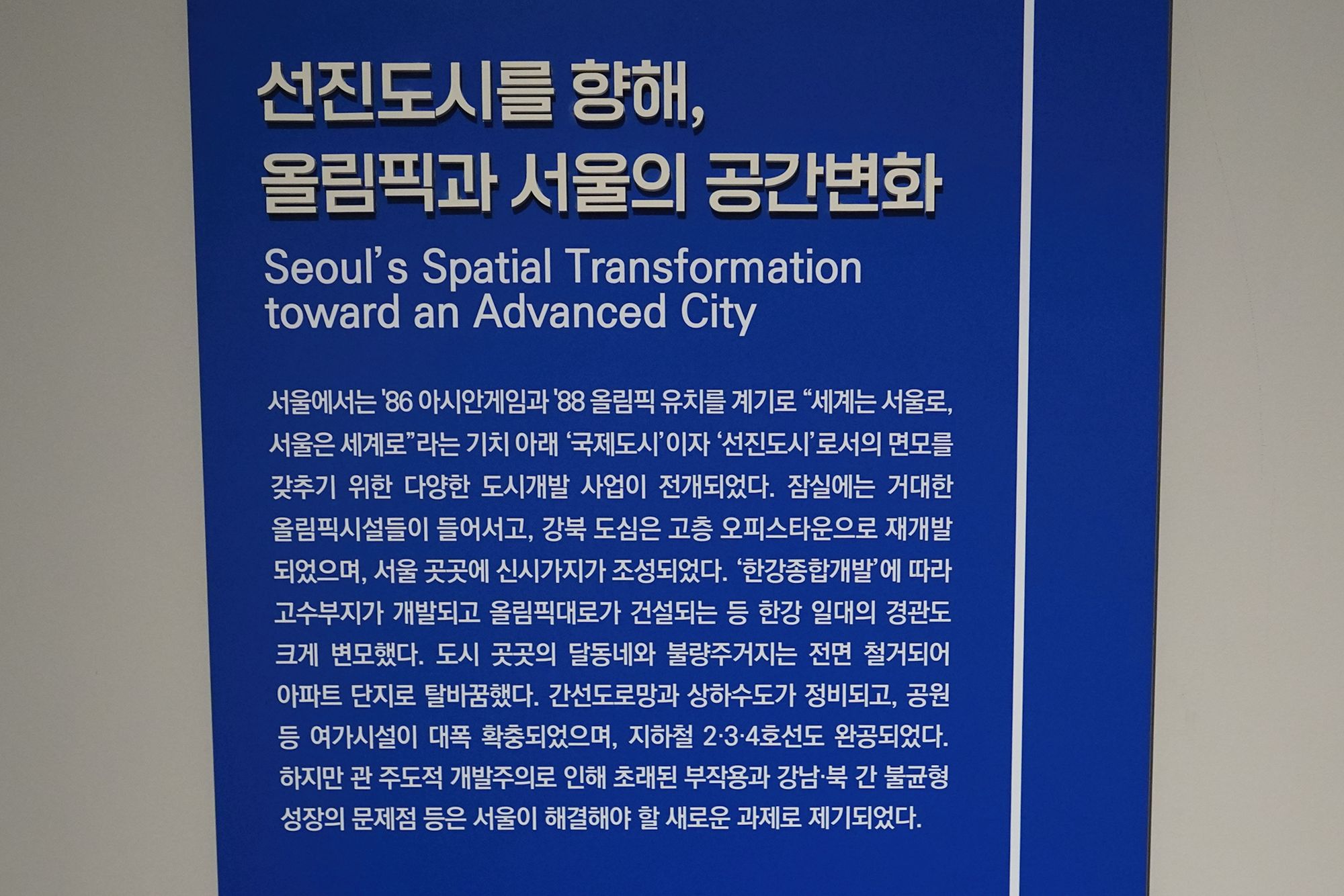
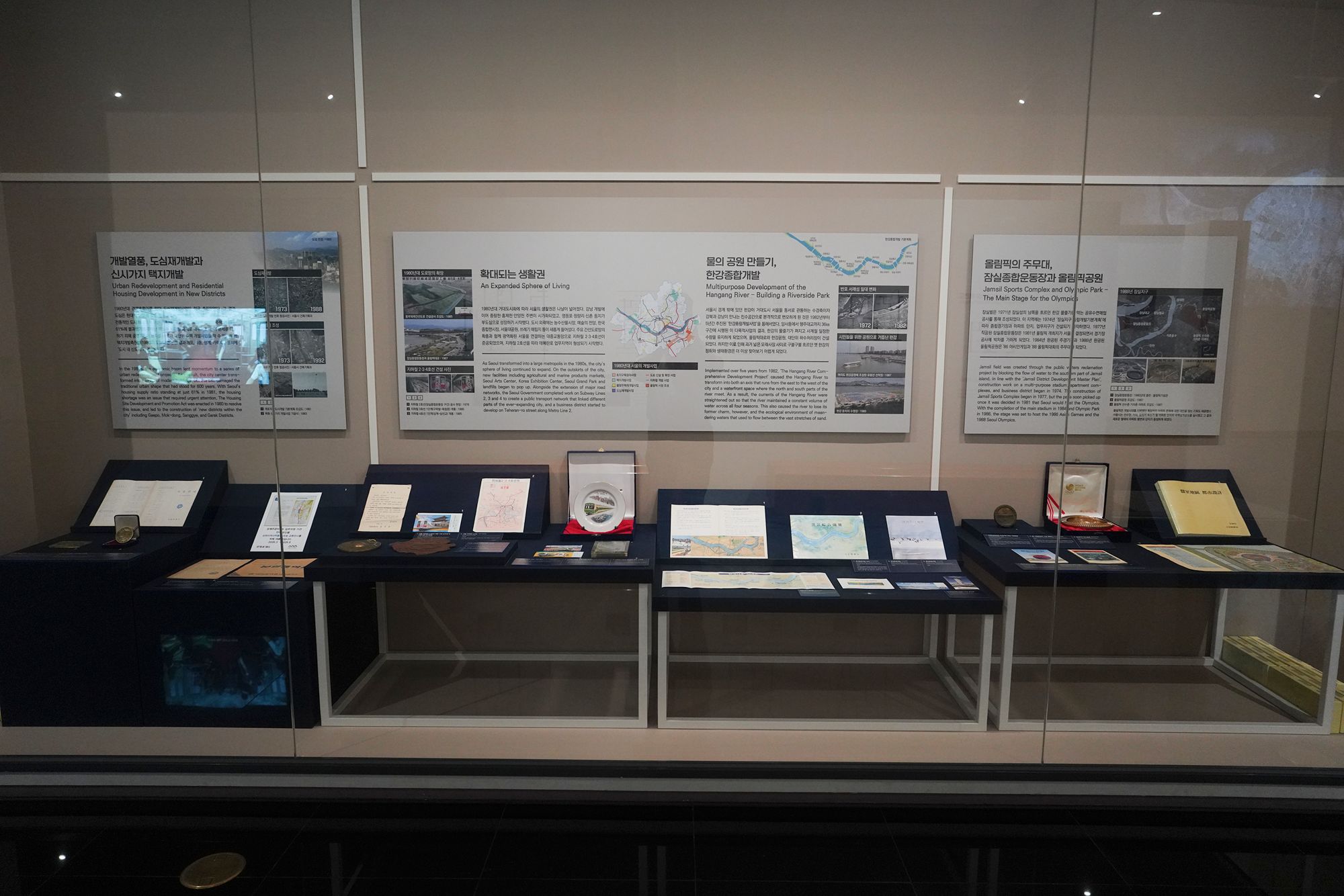
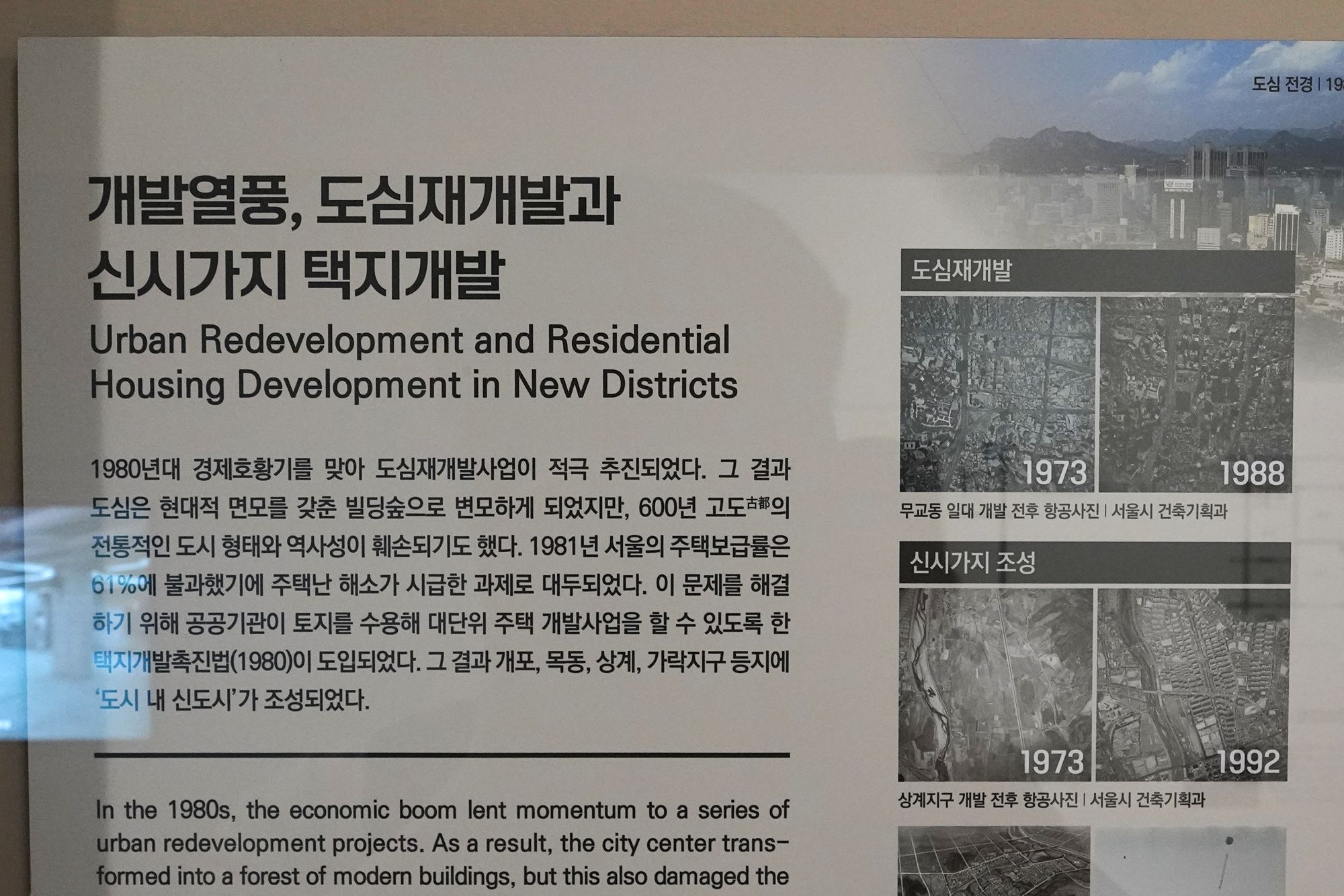
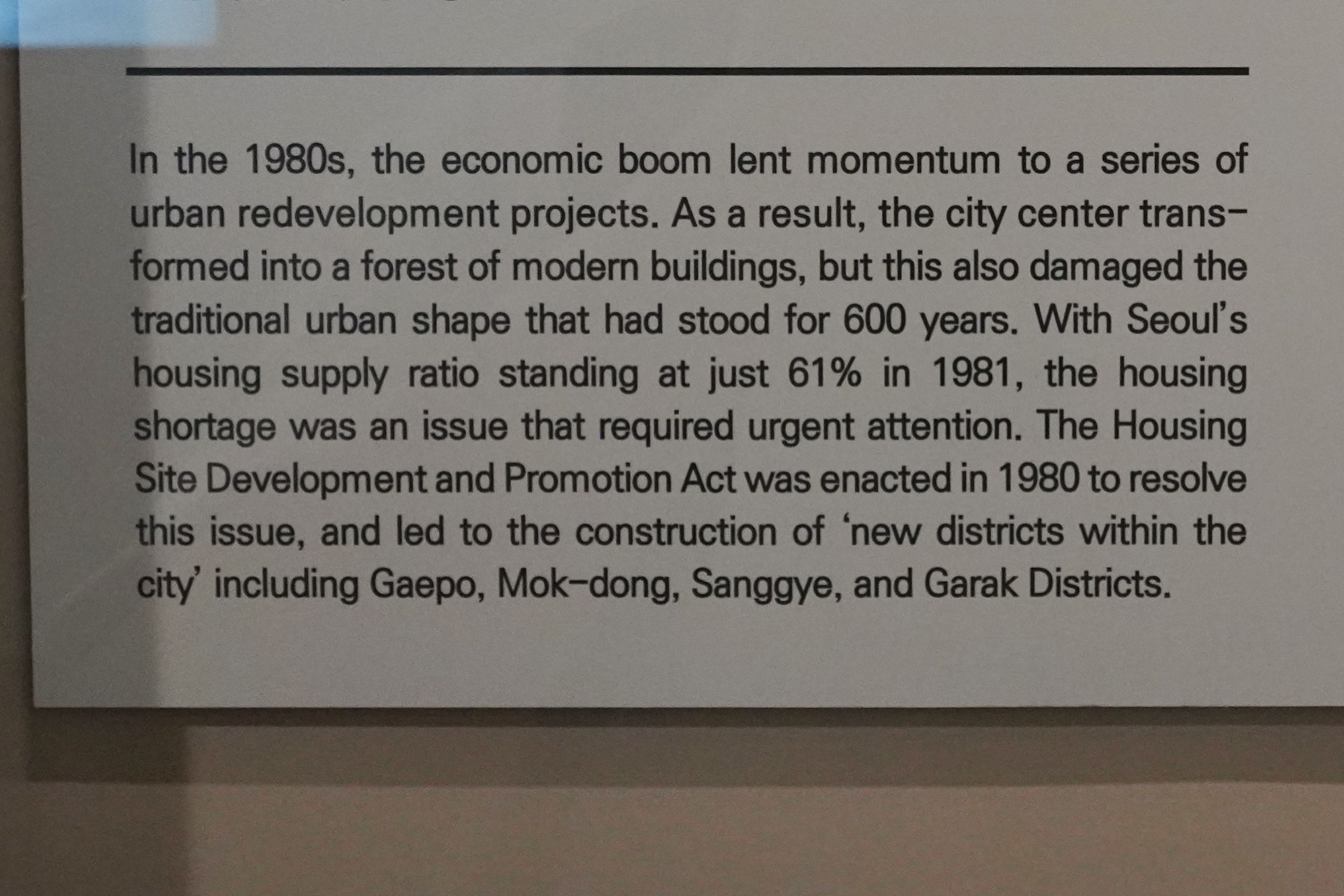
During the 1980s, Seoul’s economic boom fueled extensive urban redevelopment. Modern buildings transformed the city center, often at the expense of Seoul’s centuries-old urban landscape. With housing still in short supply, the government also developed new residential districts such as Gaepo, Mok-dong, Sanggye, and Garak, greatly expanding the city’s modern housing supply.
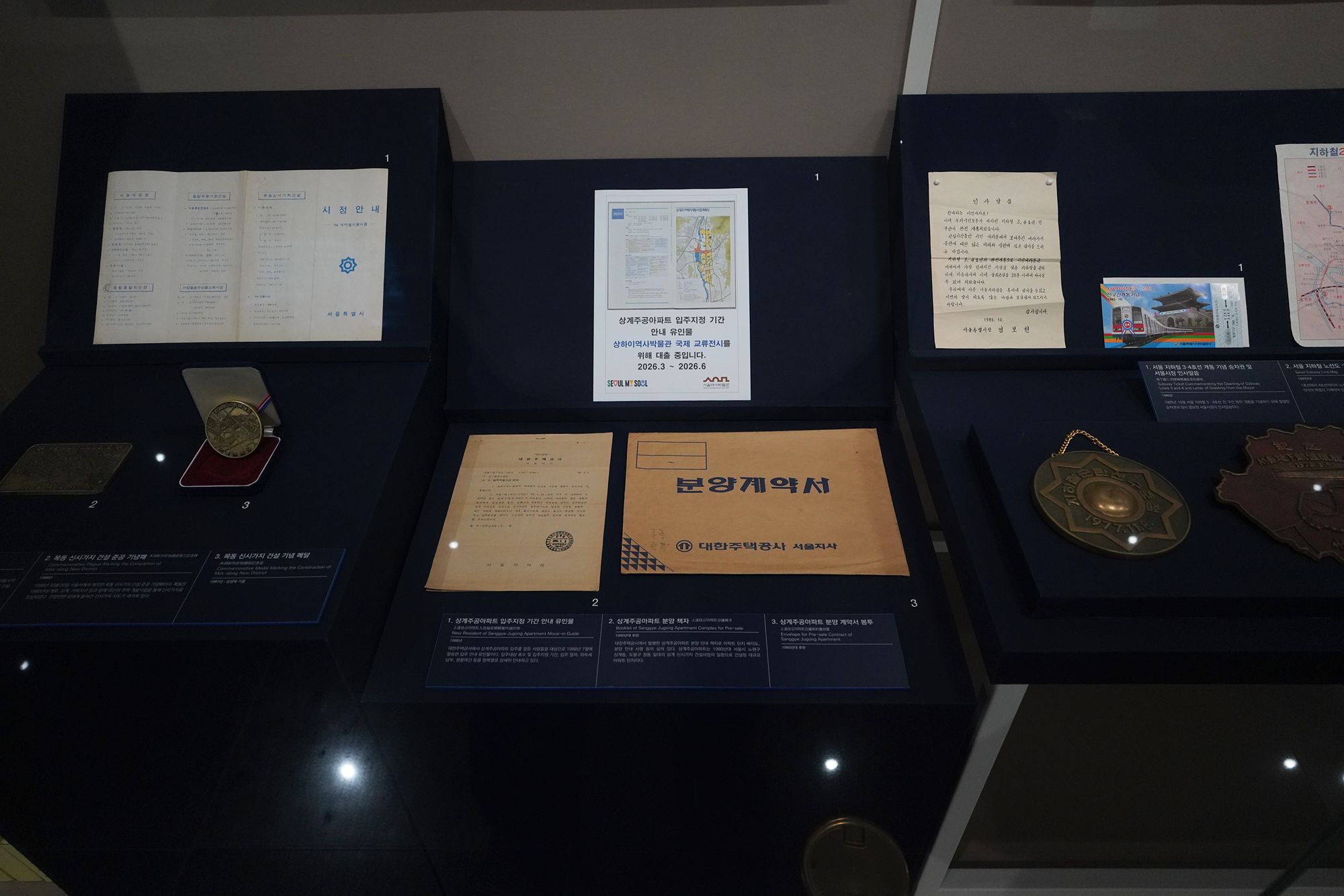
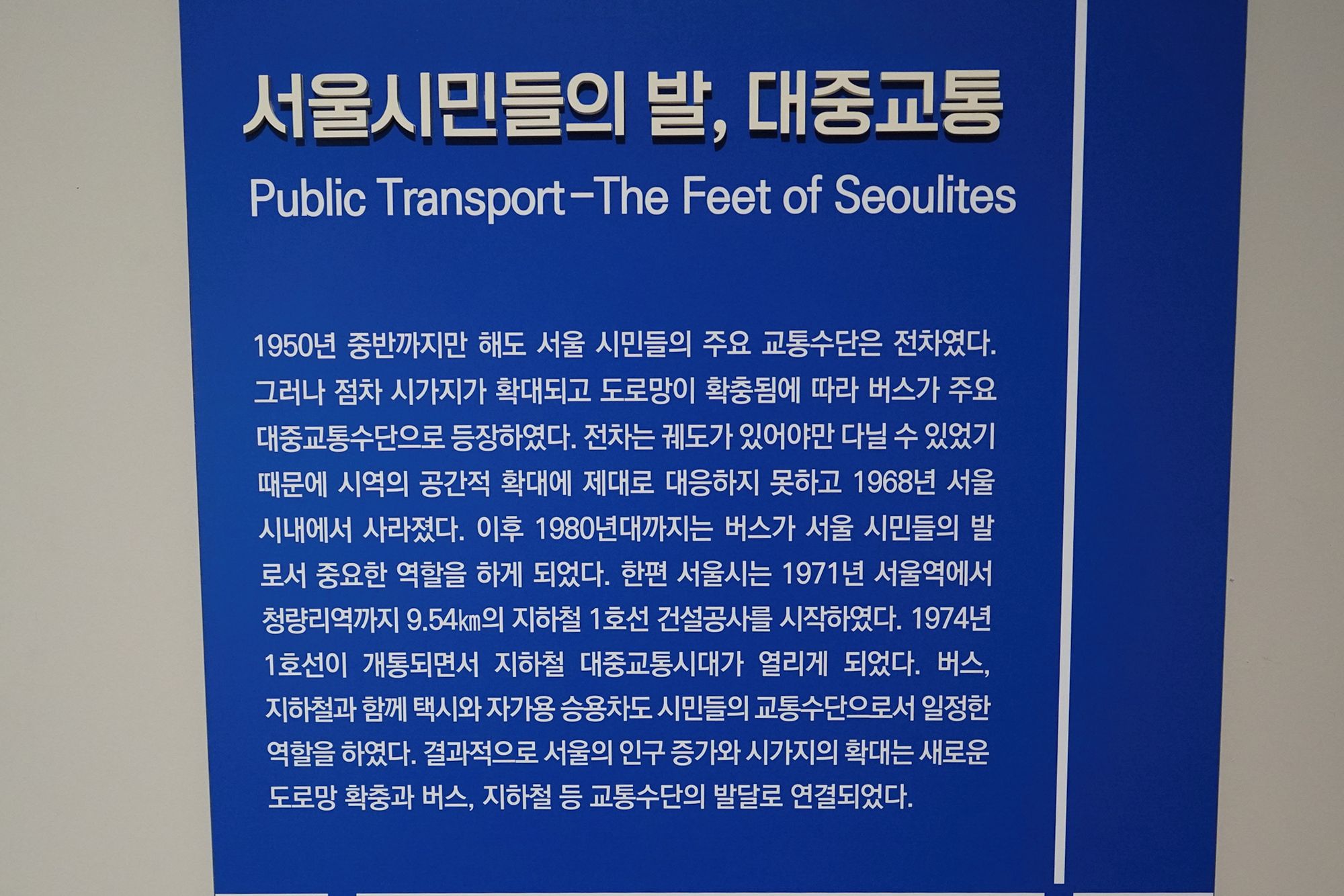
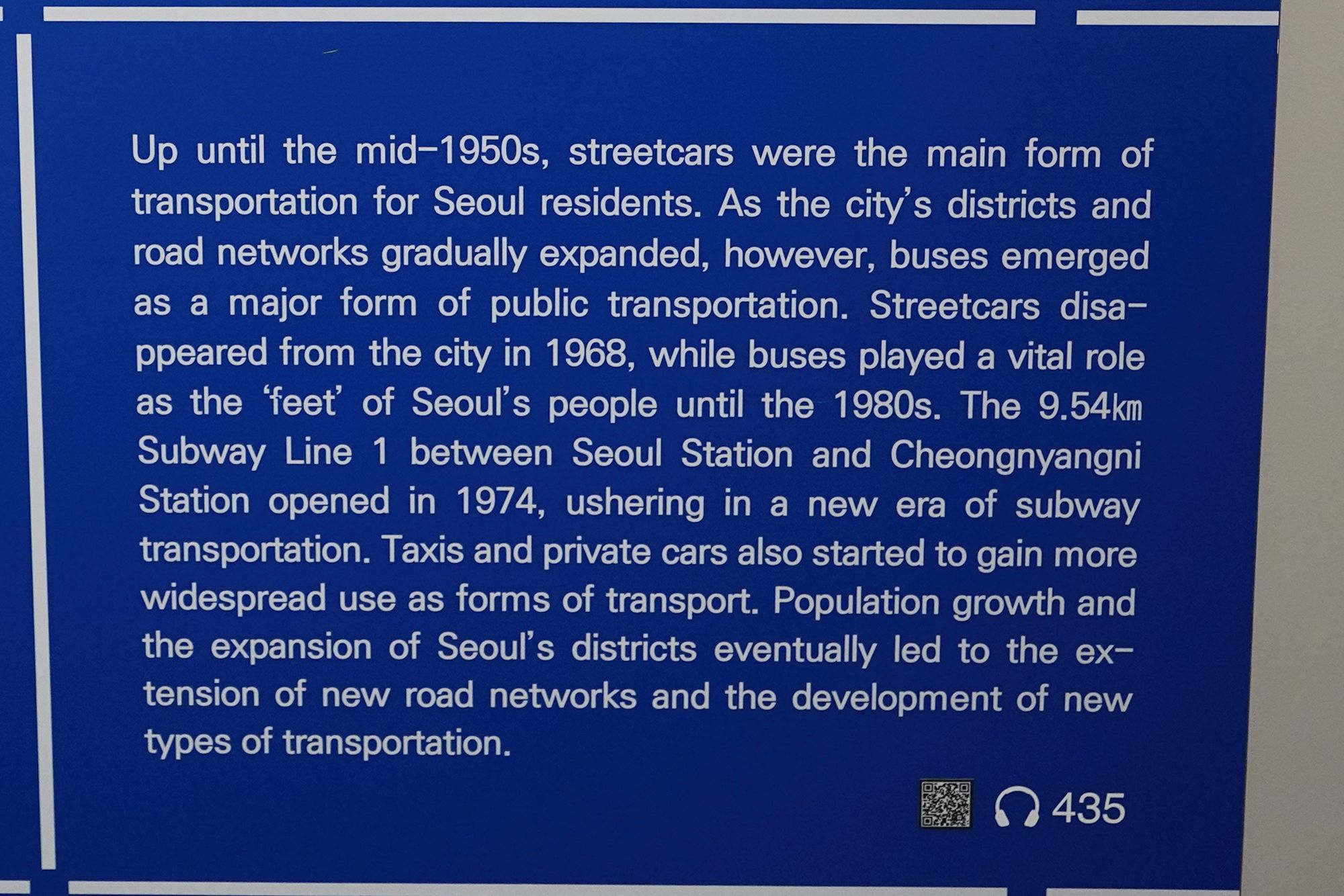
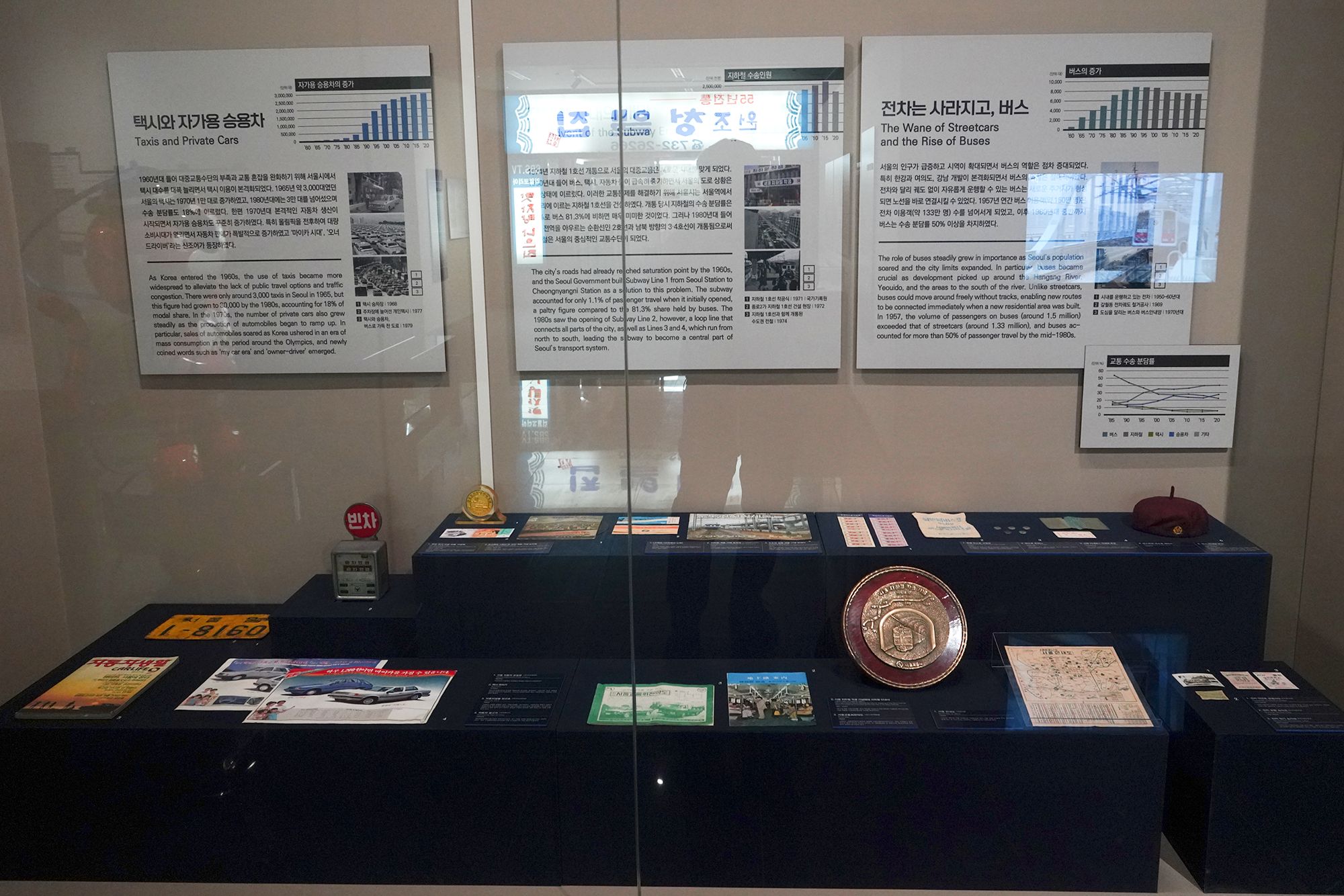
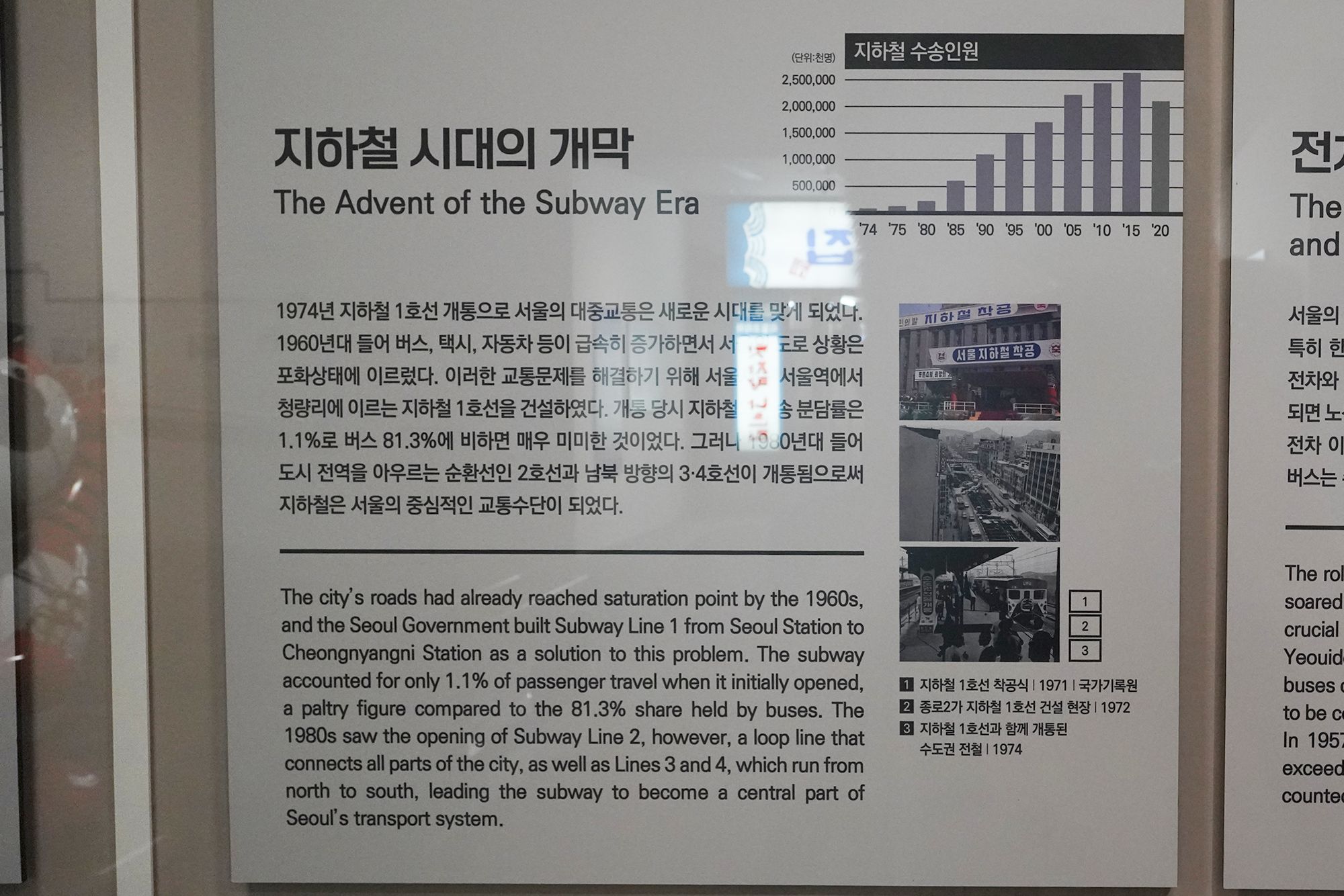
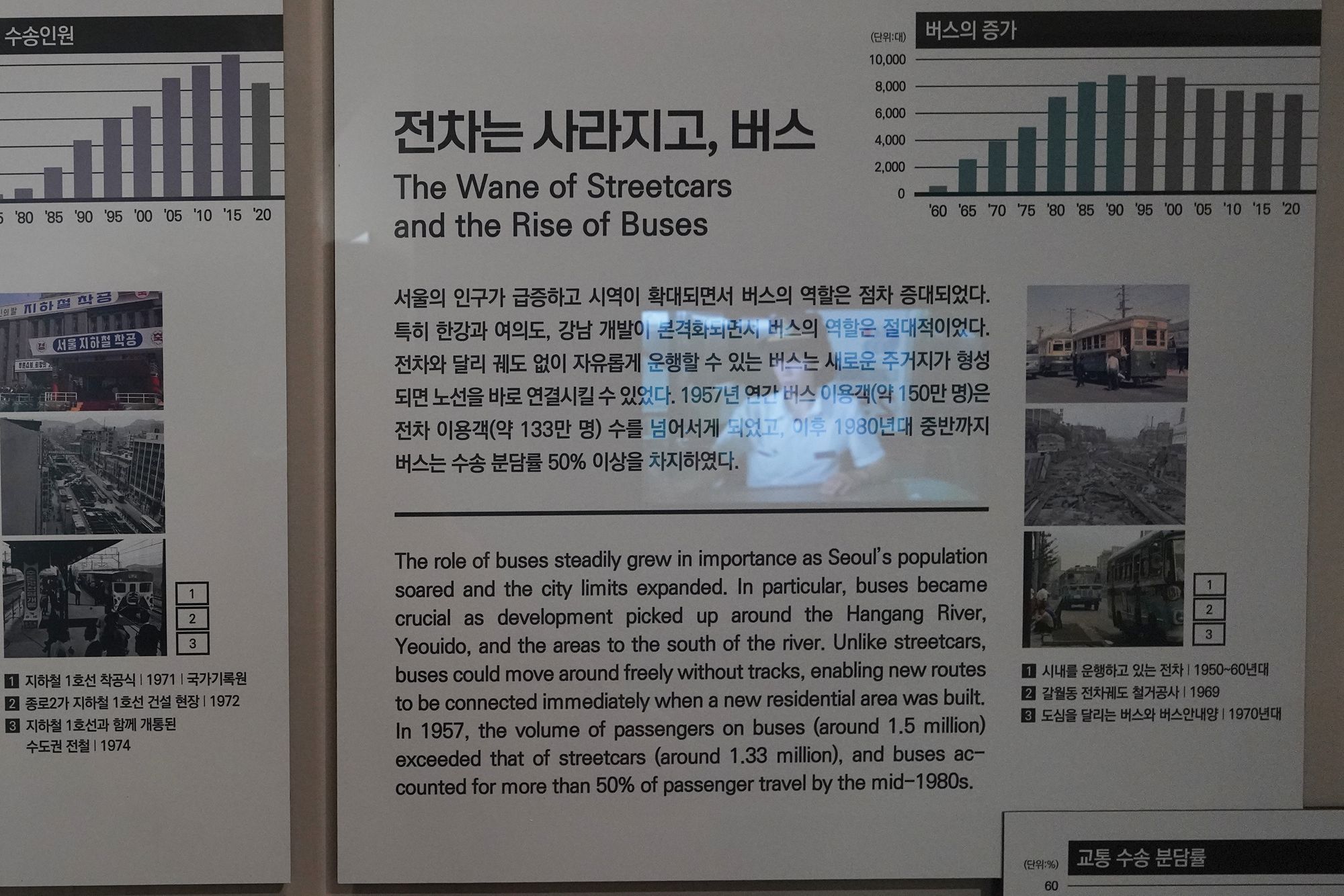
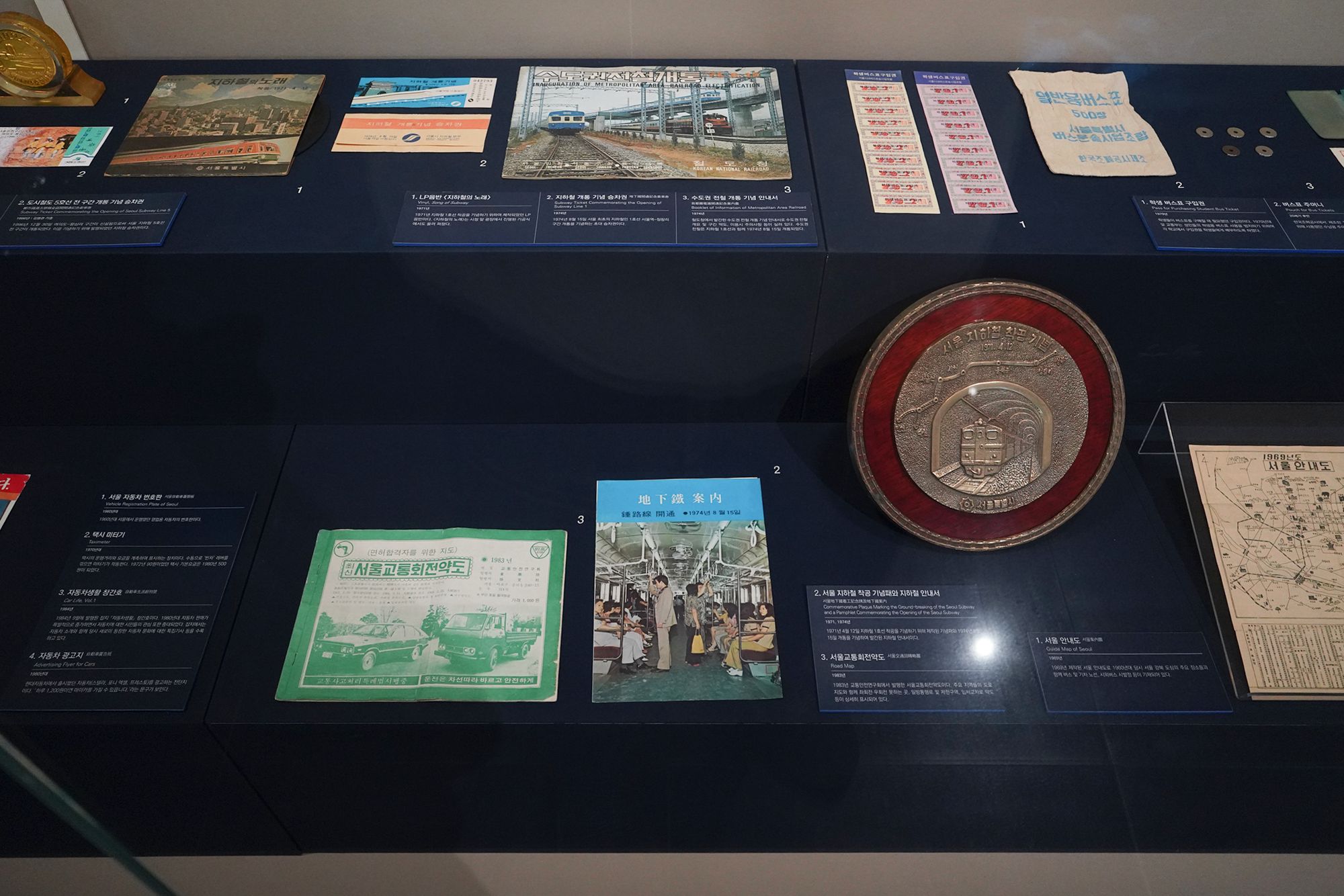
As Seoul expanded, its transportation system changed dramatically. Streetcars were the city’s main form of public transportation until the 1950s, but buses gradually took their place and the last streetcars disappeared in 1968. A major turning point came in 1974 with the opening of Seoul Subway Line 1 between Seoul Station and Cheongnyangni, beginning the development of the extensive subway system that serves Seoul today.