The Gateway Arch National Park Museum, St. Louis, Missouri, USA
Museum at the Gateway Arch: St. Louis, MO 63113
Date Picture Taken: June 2025
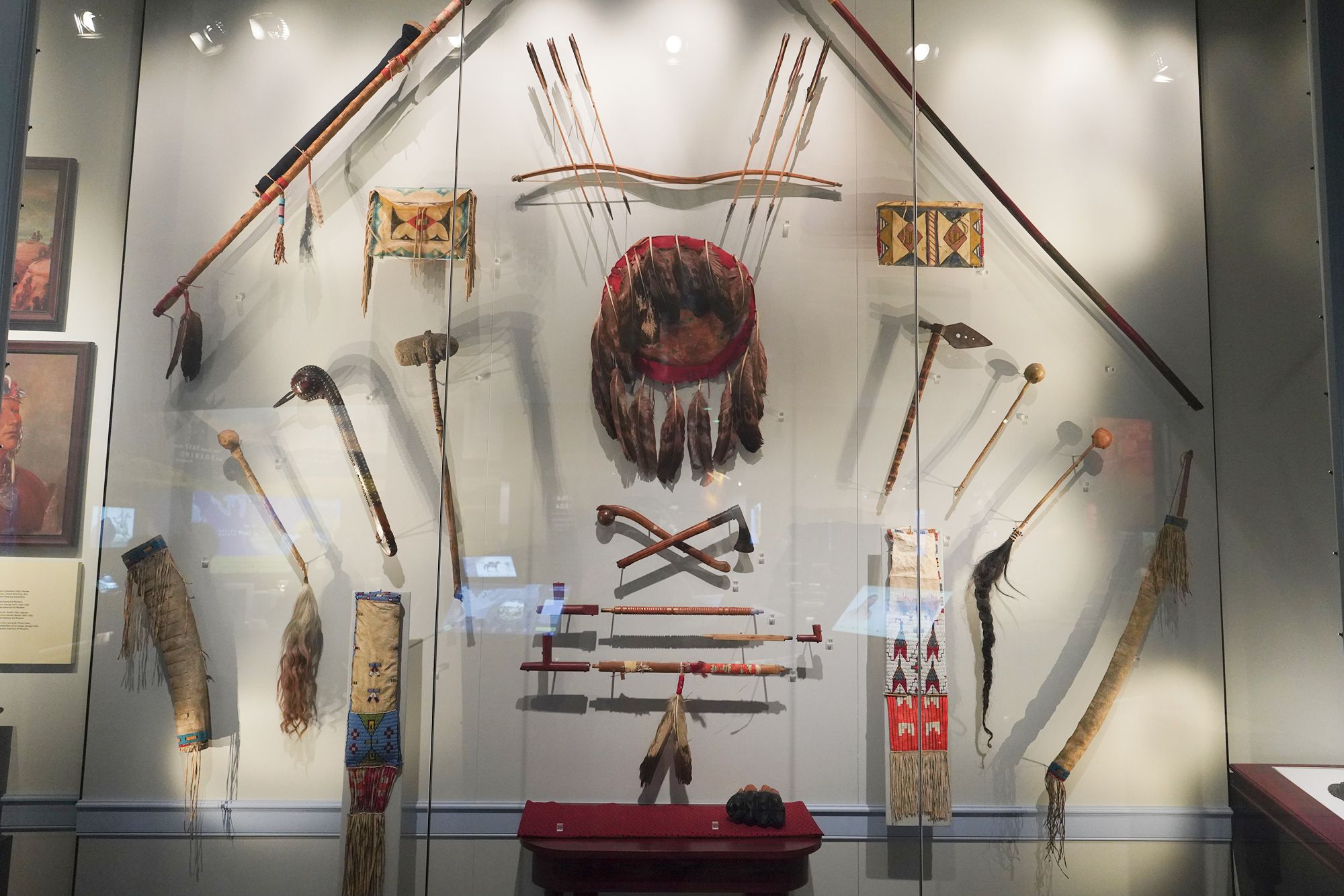
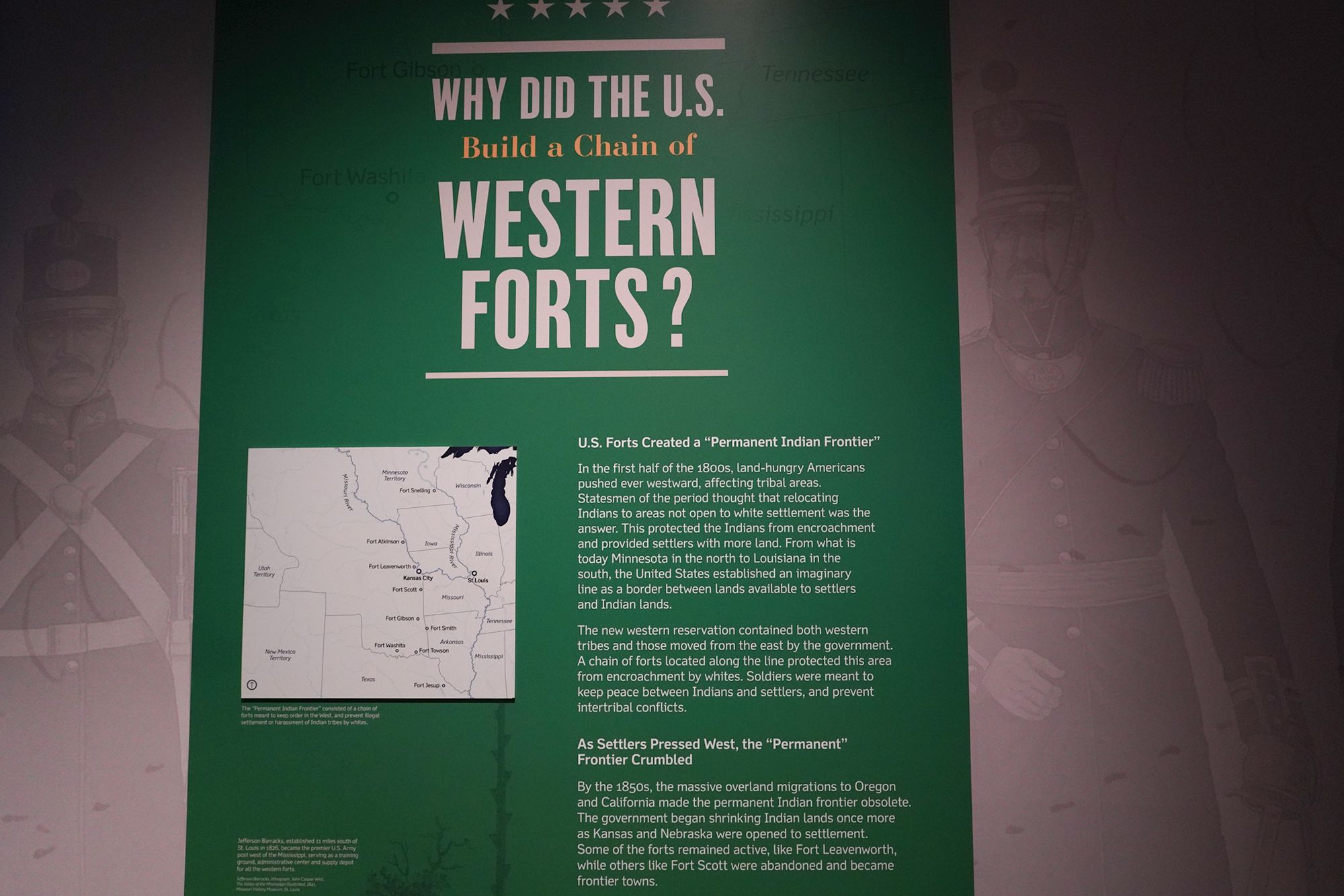
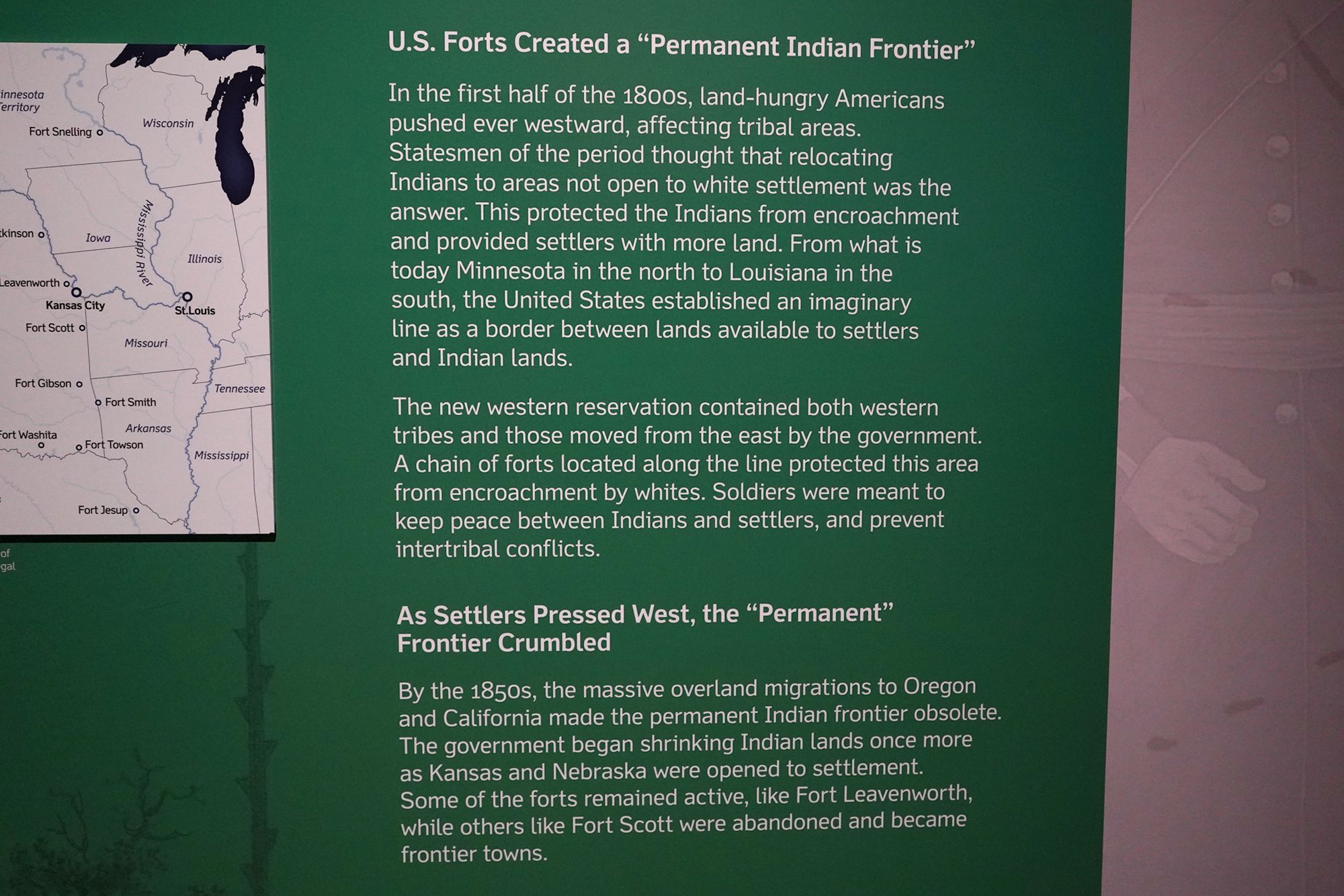
The museum beneath the Gateway Arch explores the story of westward expansion through interactive exhibits on Native American cultures, frontier settlement, river commerce, immigration, territorial conflicts, and the cultural mythology of the American West.

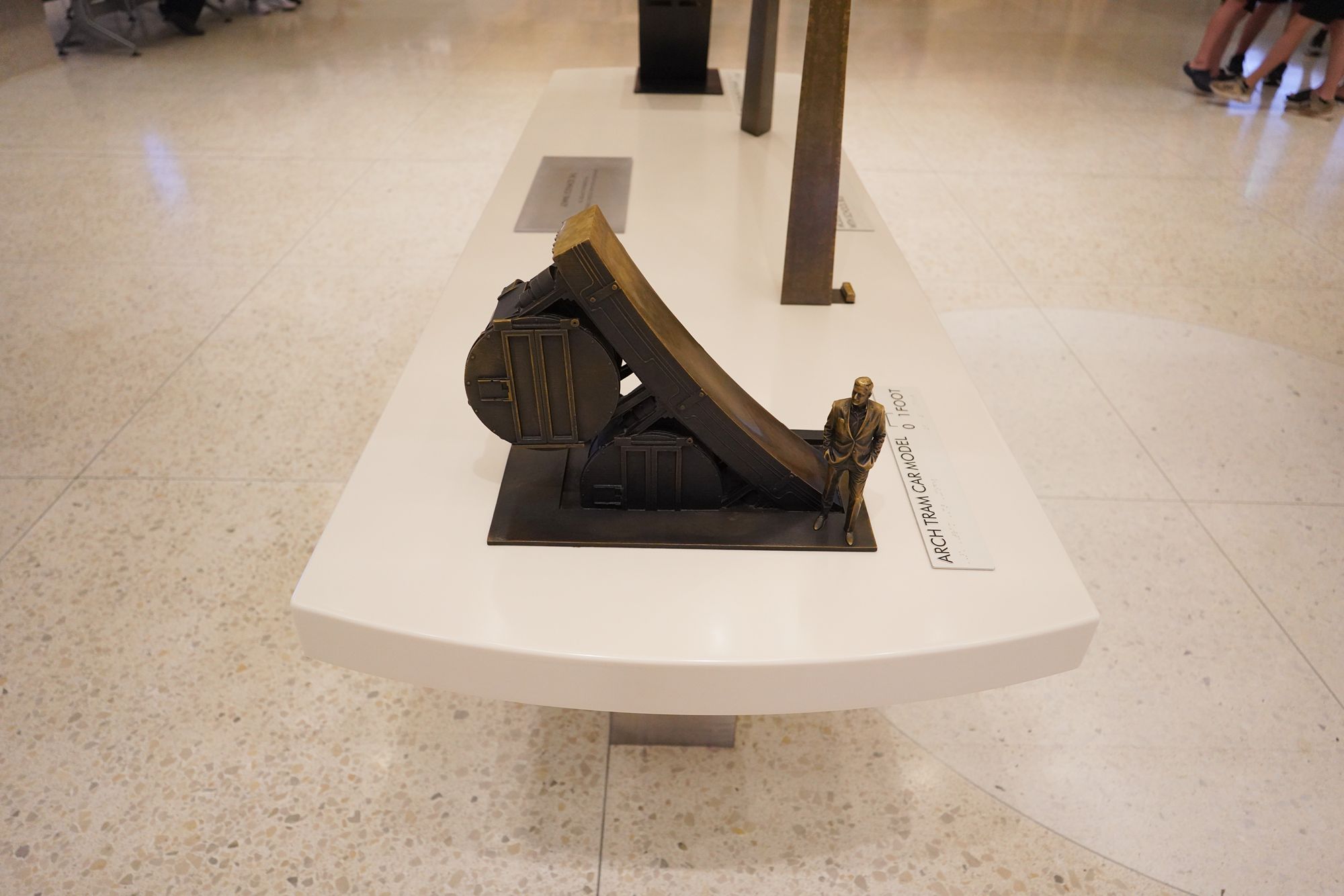
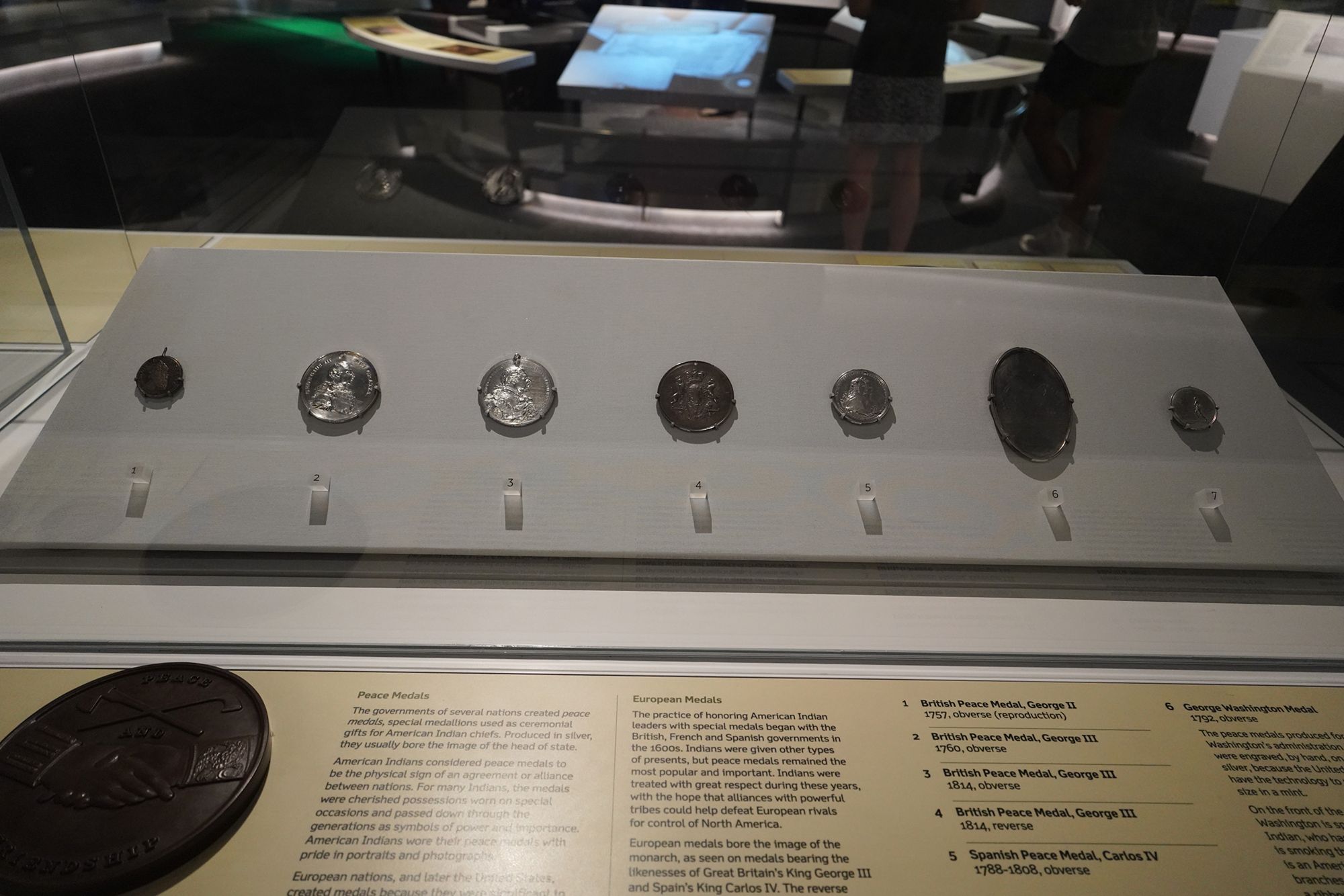
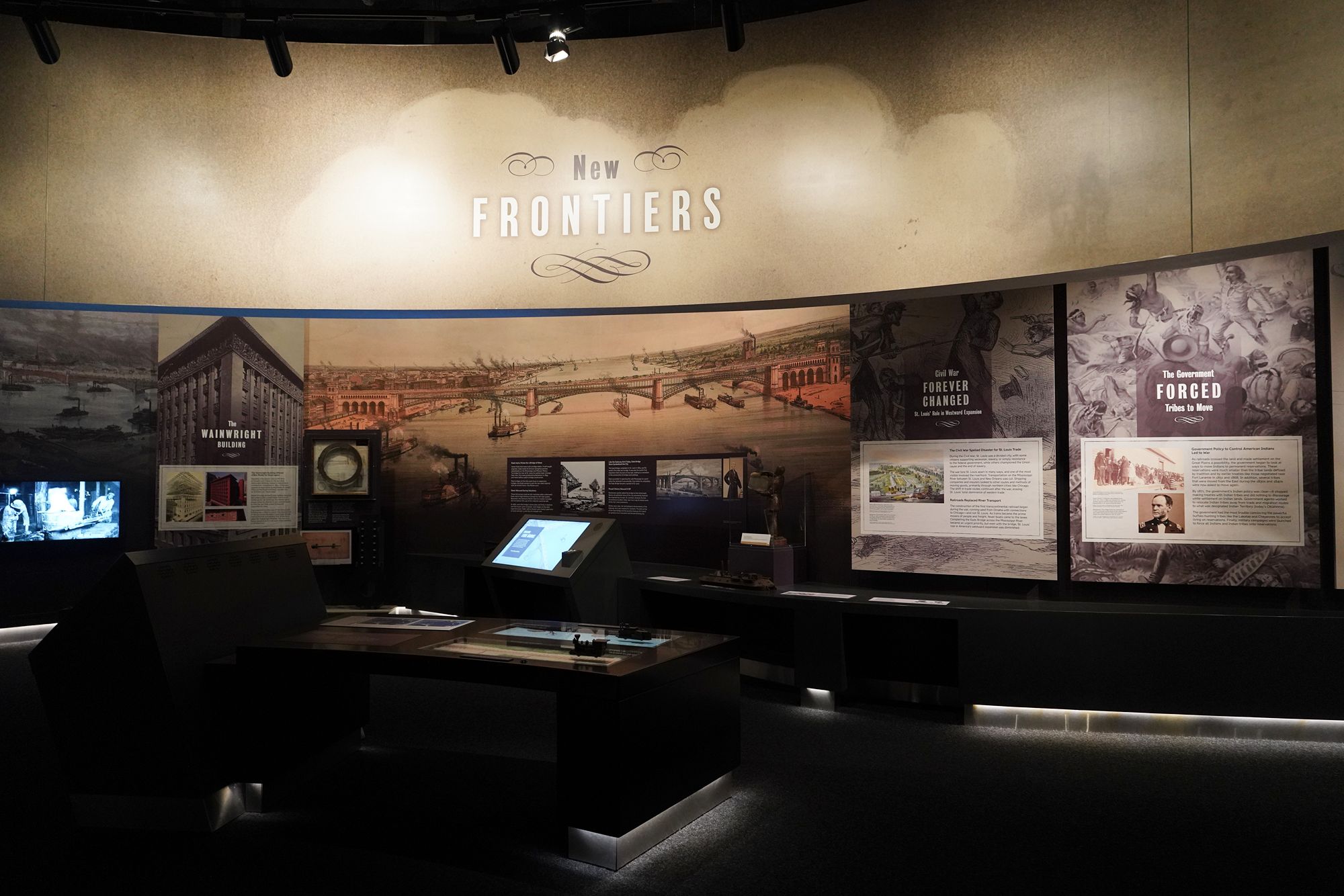
Artifacts, multimedia displays, life-size scenes, and personal narratives trace how exploration, technology, trade routes, and political decisions transformed the continent, while also examining the consequences for Indigenous peoples. The exhibits are arranged along a sweeping, chronological pathway that leads visitors toward St. Louis’s emergence as a crucial crossroads in America’s expansion.
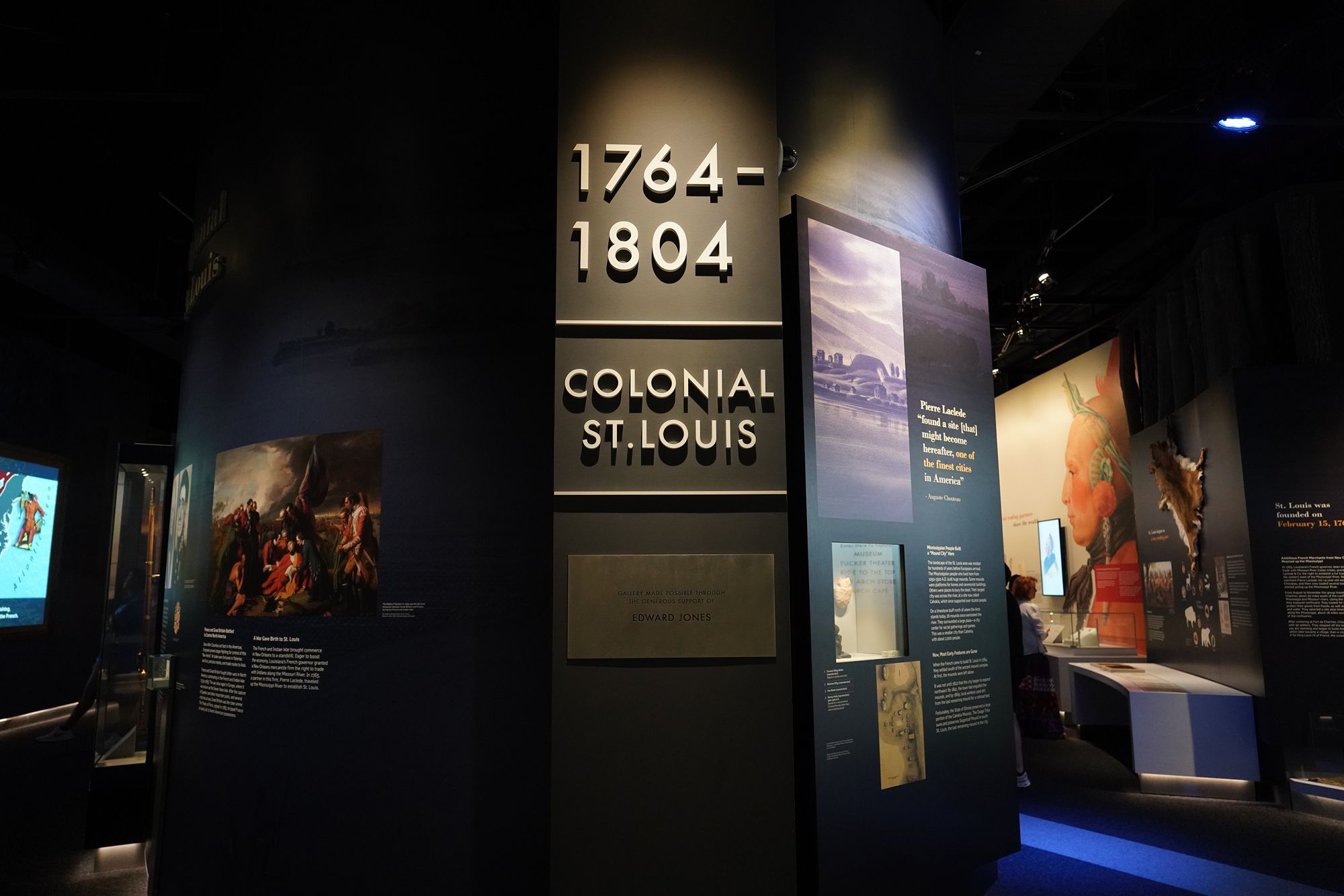
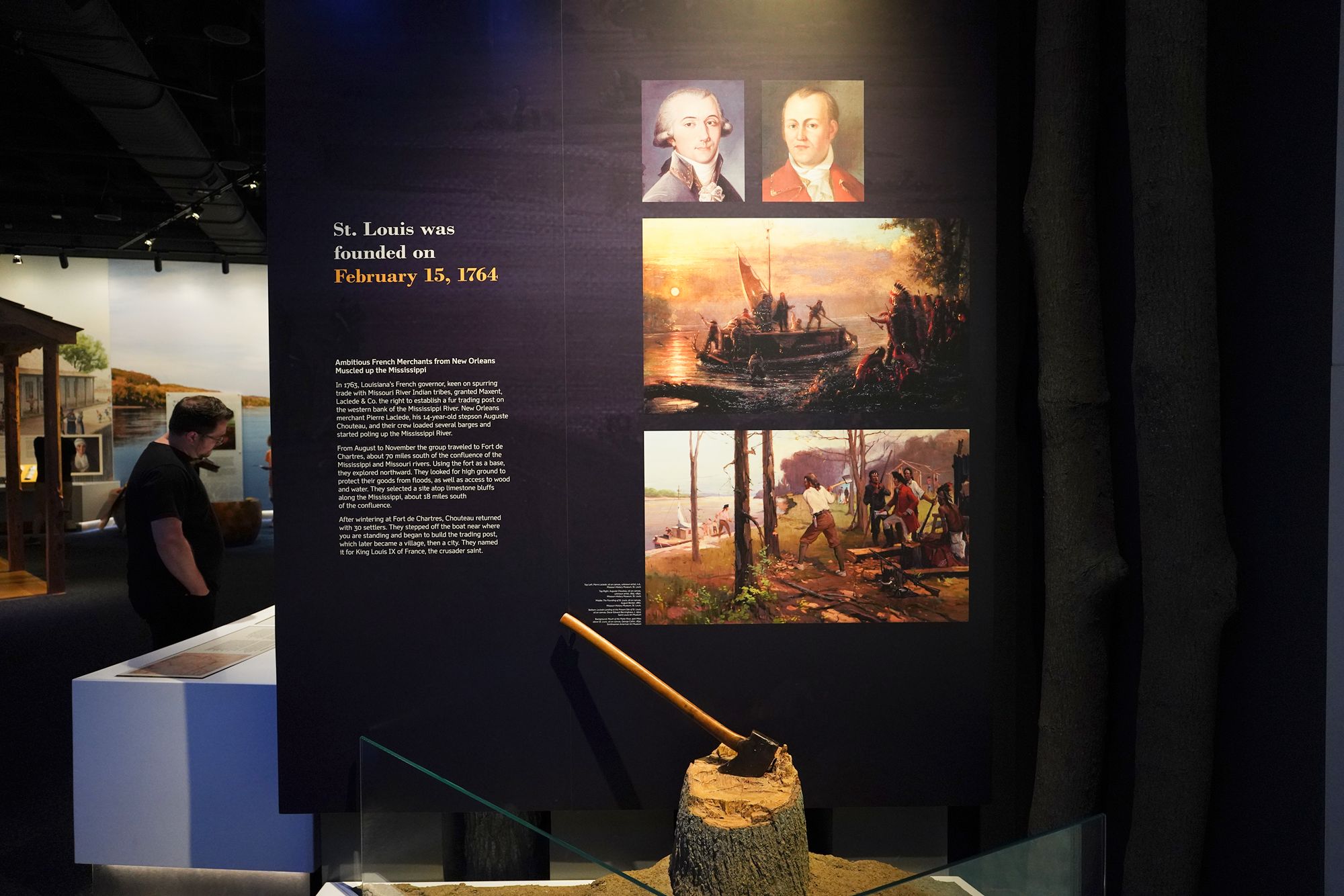
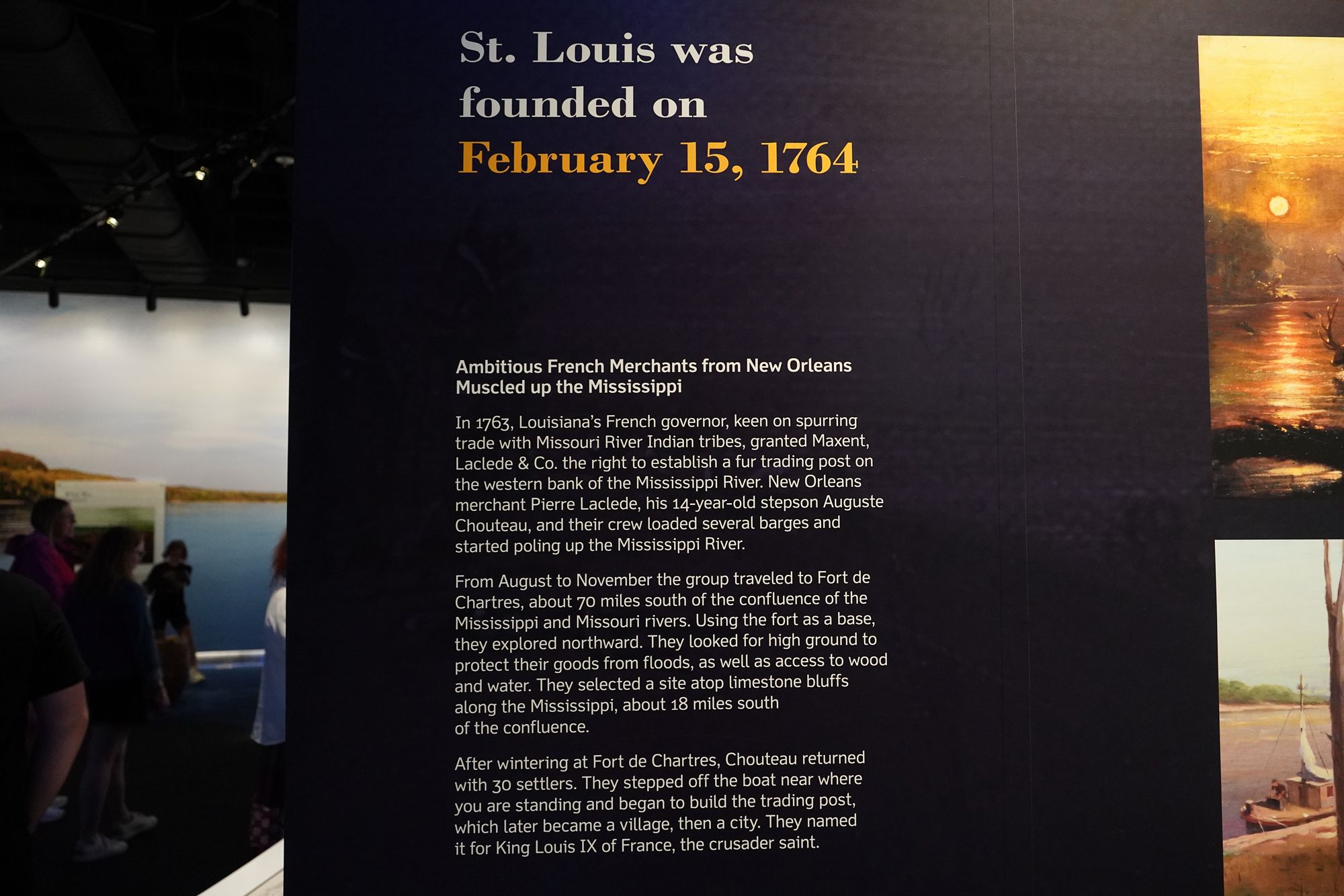
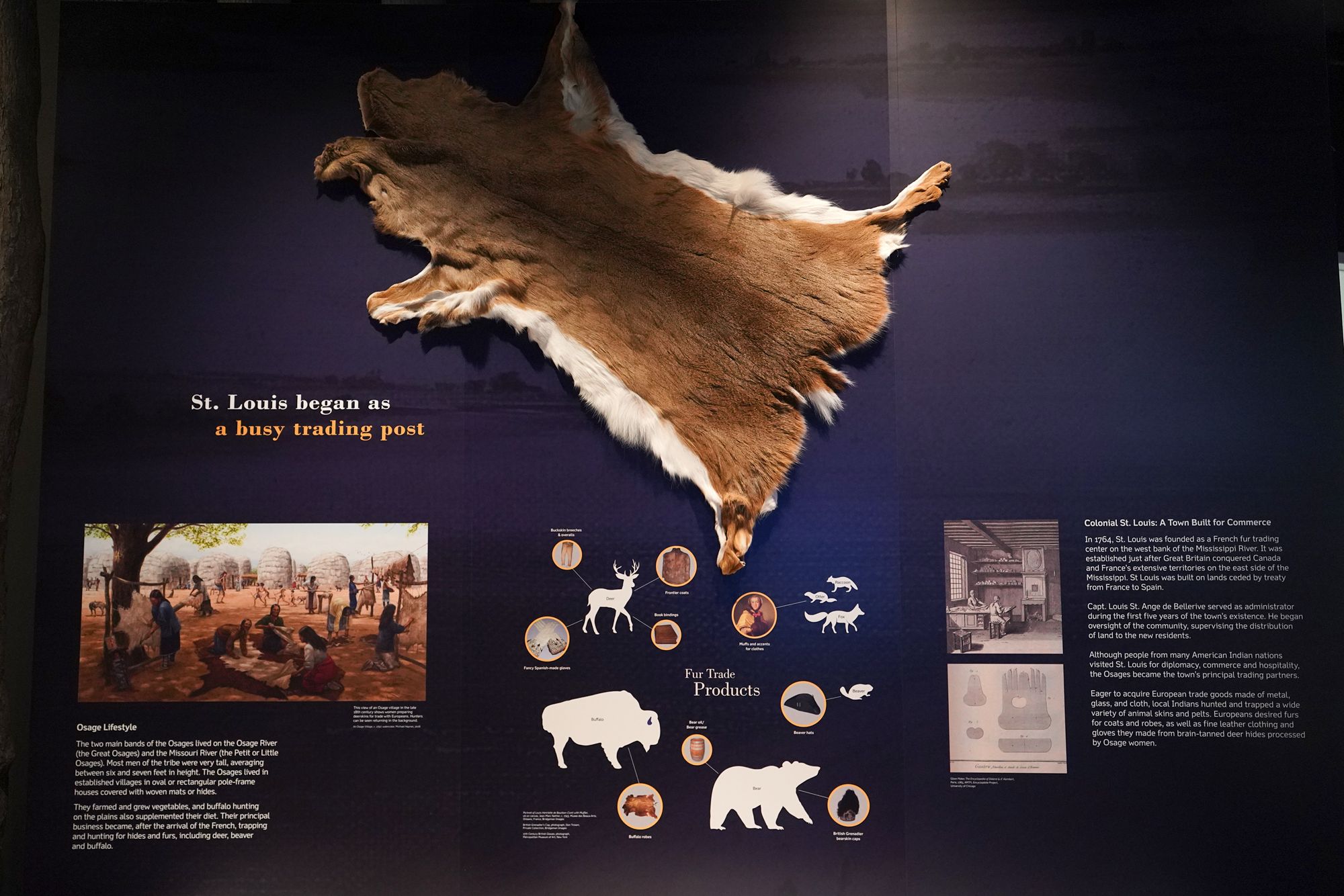
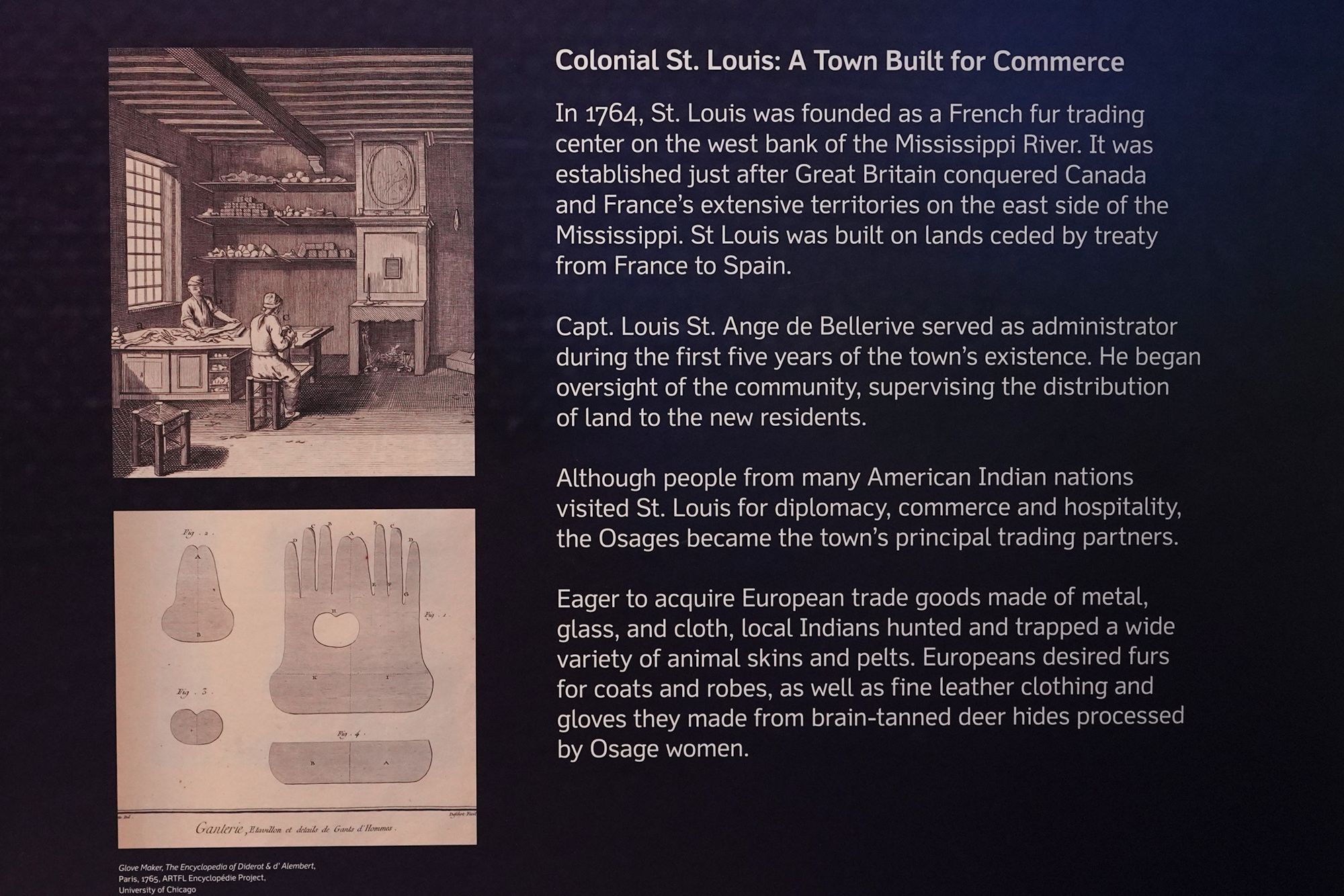
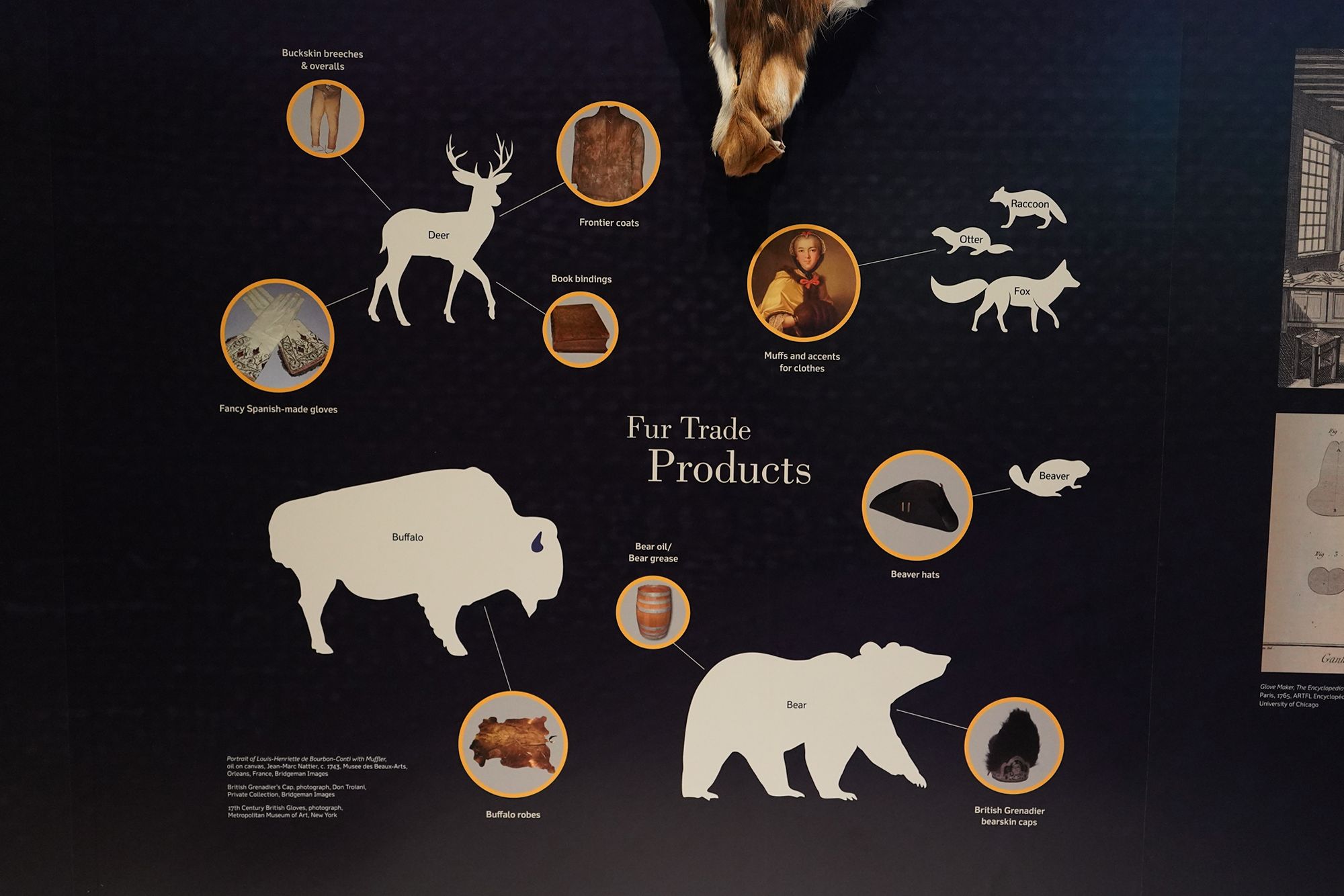
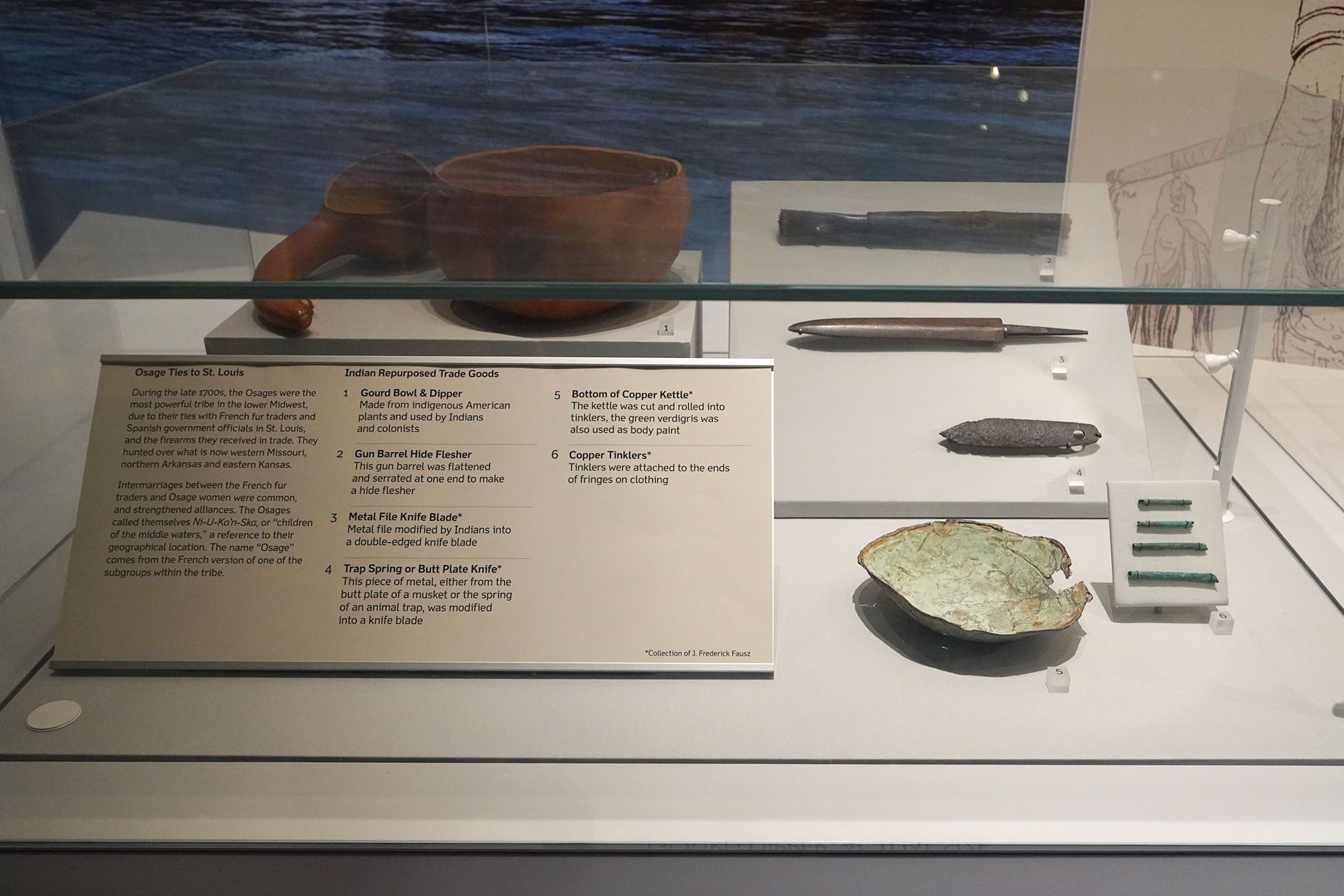
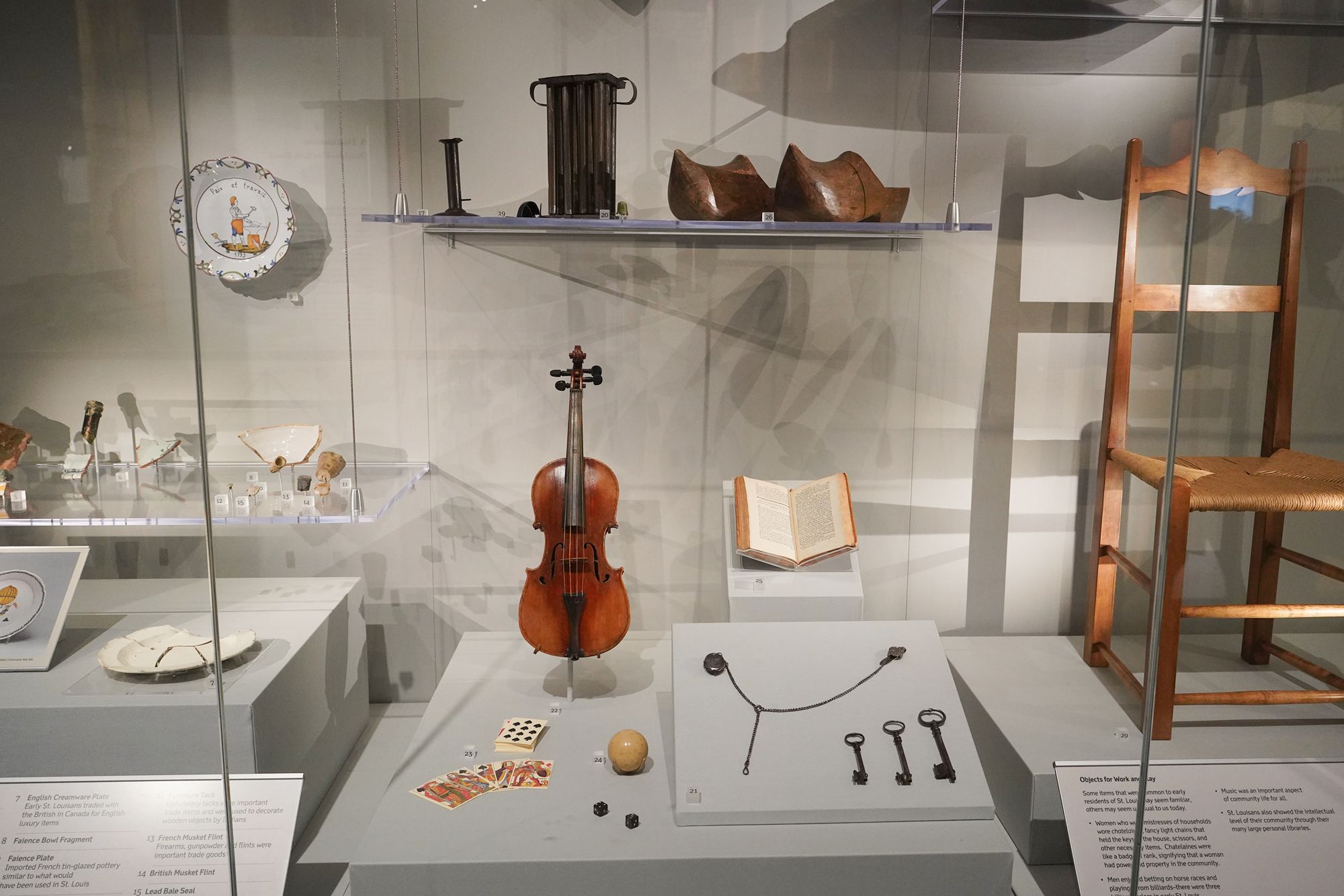
St. Louis was founded in 1764 by French fur traders Pierre Laclède and Auguste Chouteau, who chose the site for its high bluffs above the Mississippi River and its access to major waterways, making it an ideal trading post that quickly grew into a key hub for commerce and westward exploration.
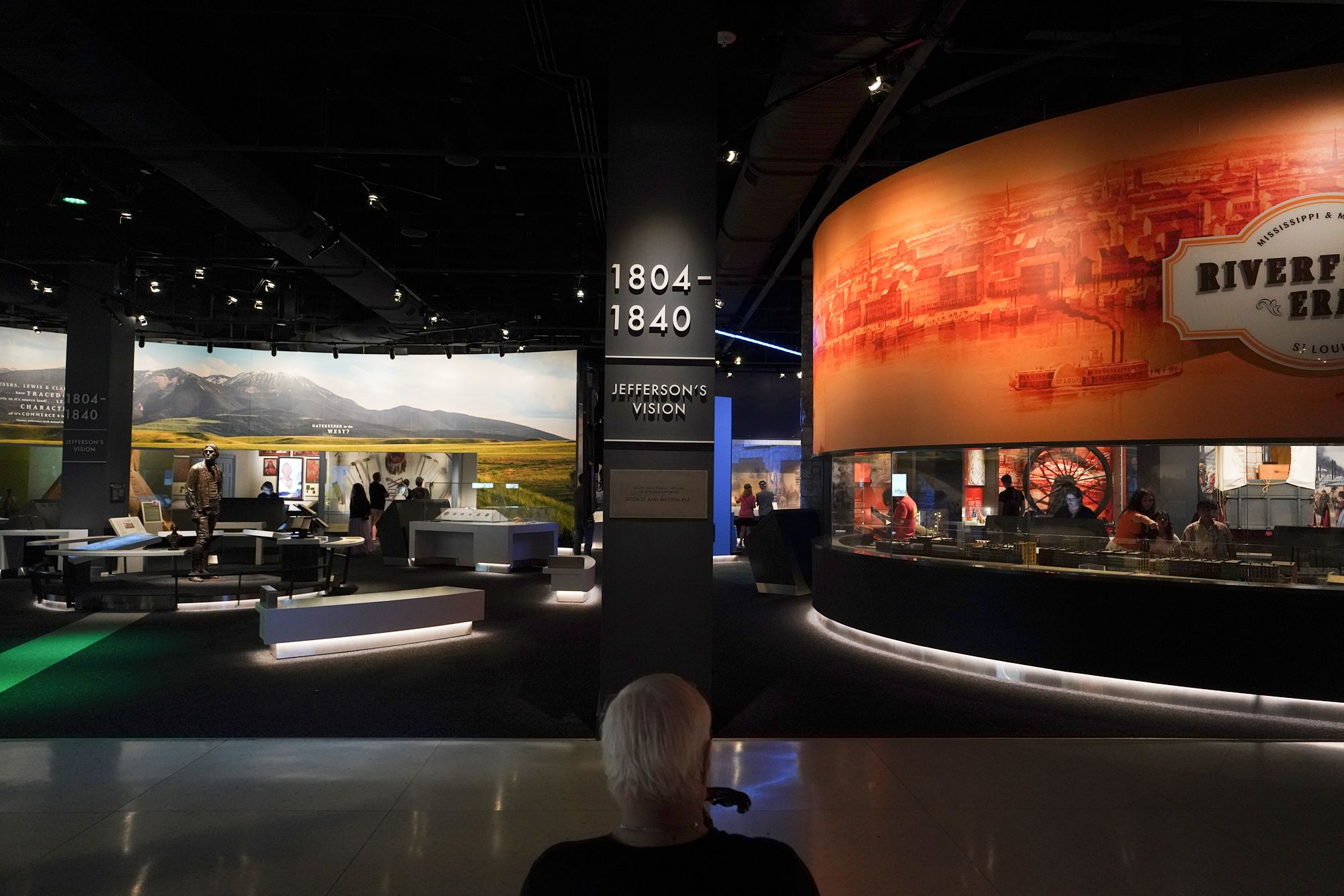
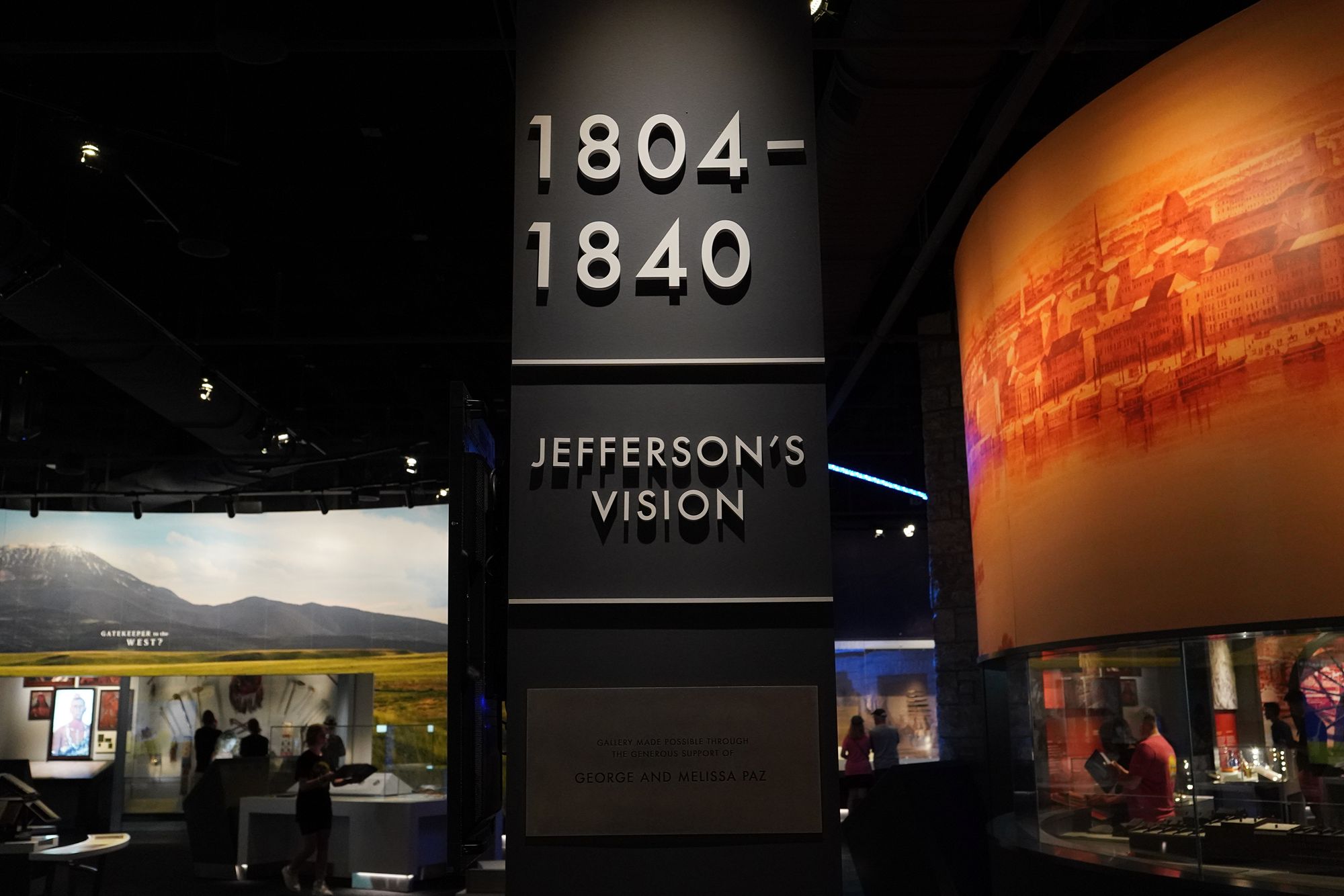
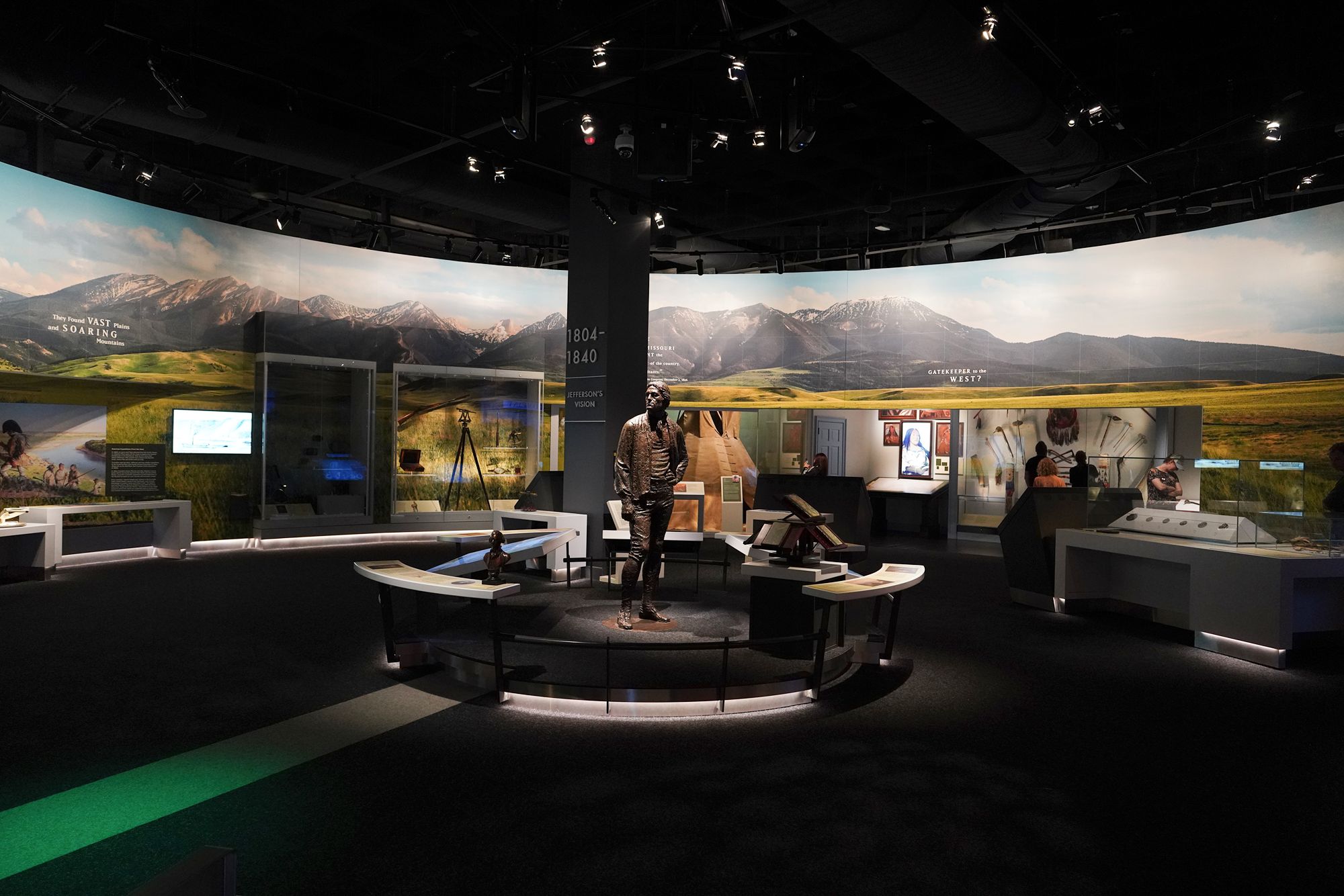
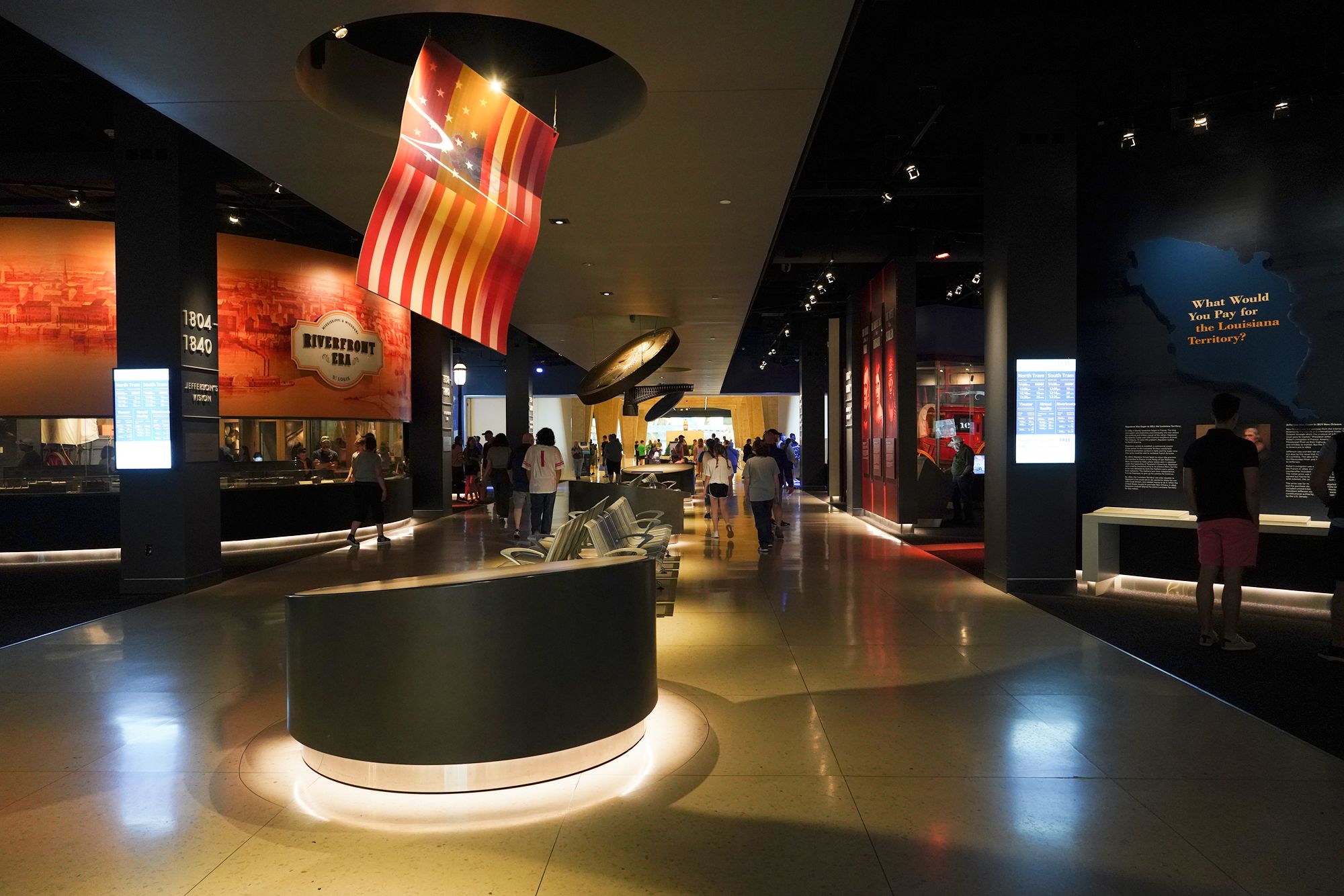
Thomas Jefferson’s vision emphasized a nation of independent farmers expanding westward across abundant land, spreading democratic ideals, and sustaining a republic built on education, civic virtue, and economic opportunity rather than concentrated urban power.
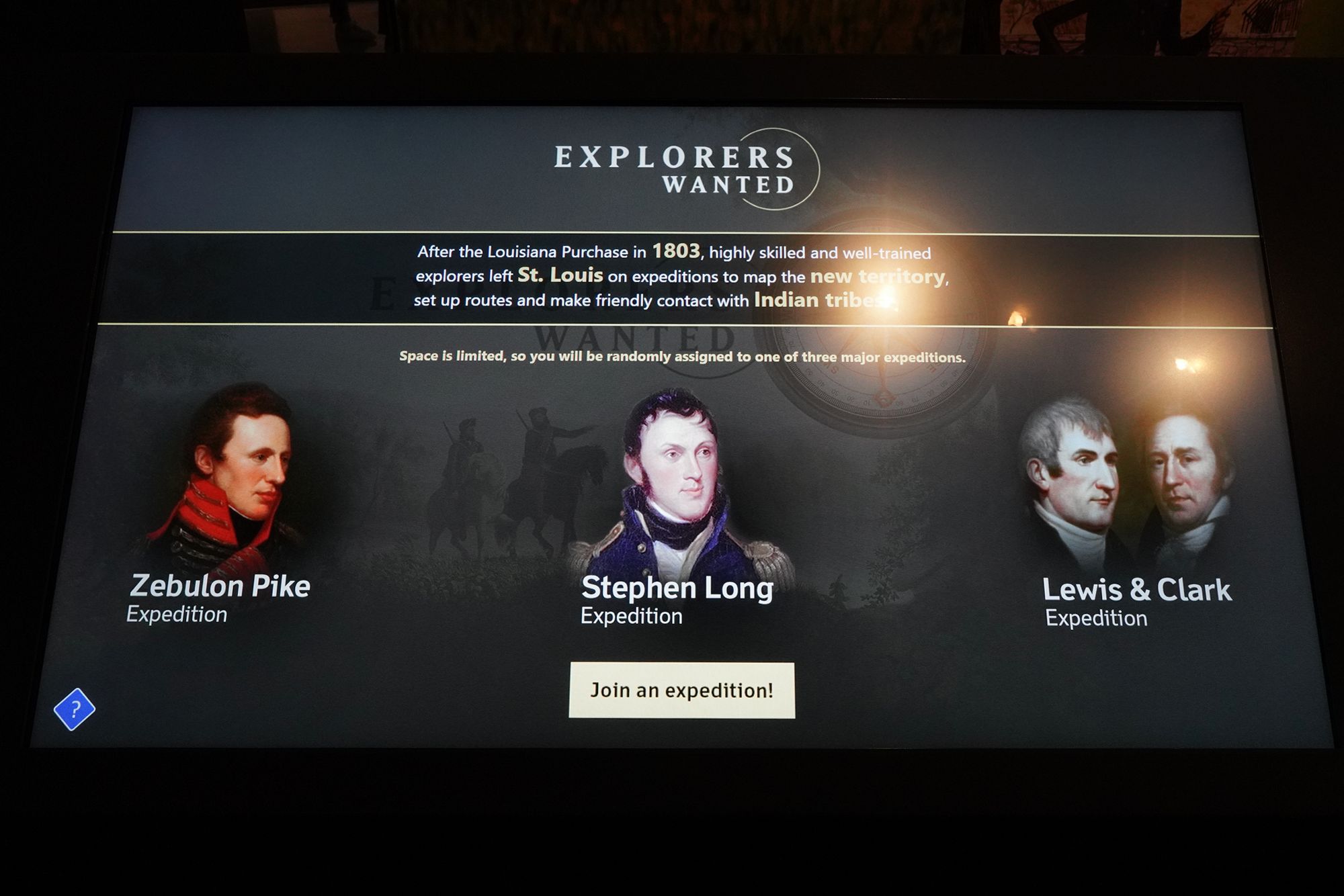
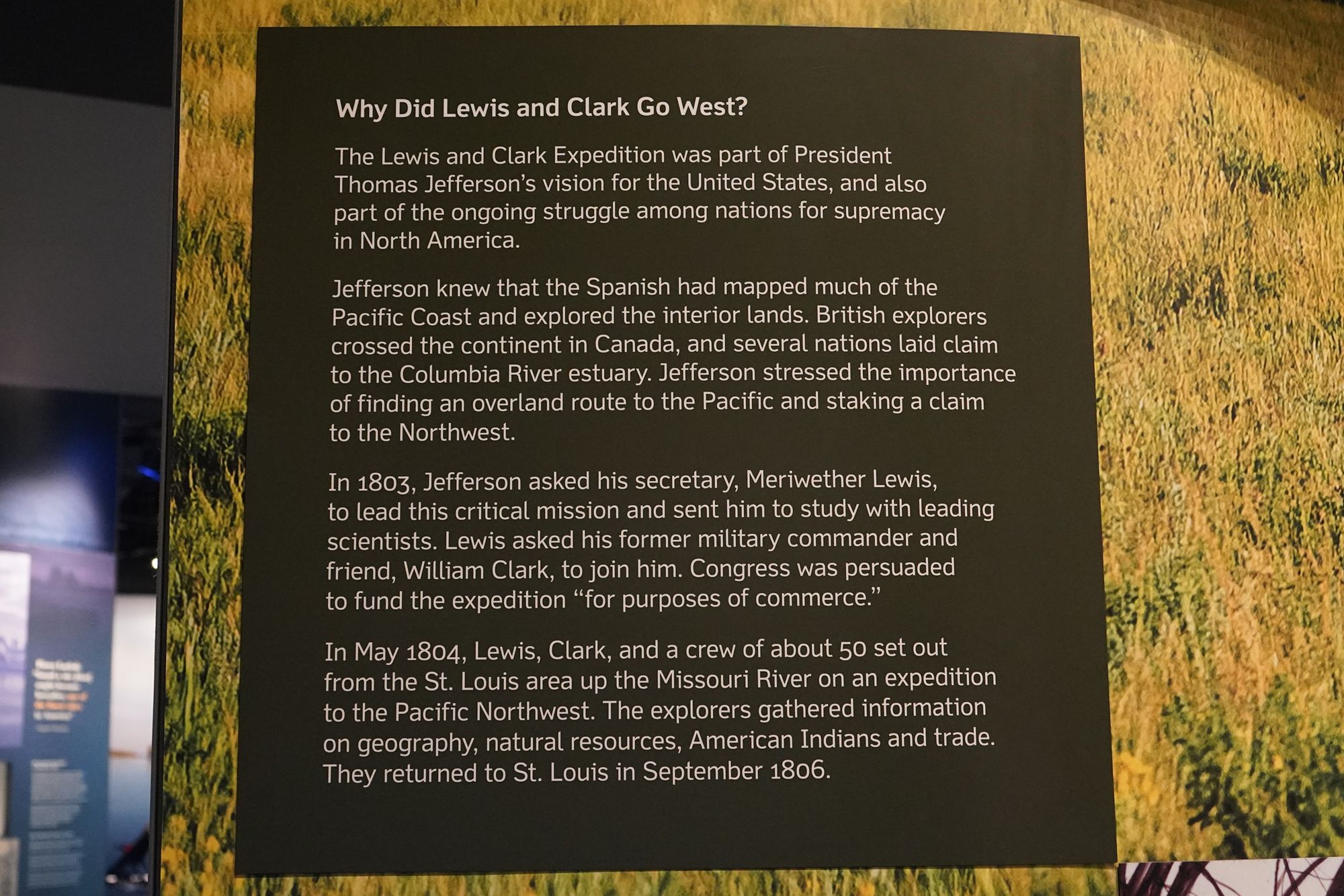
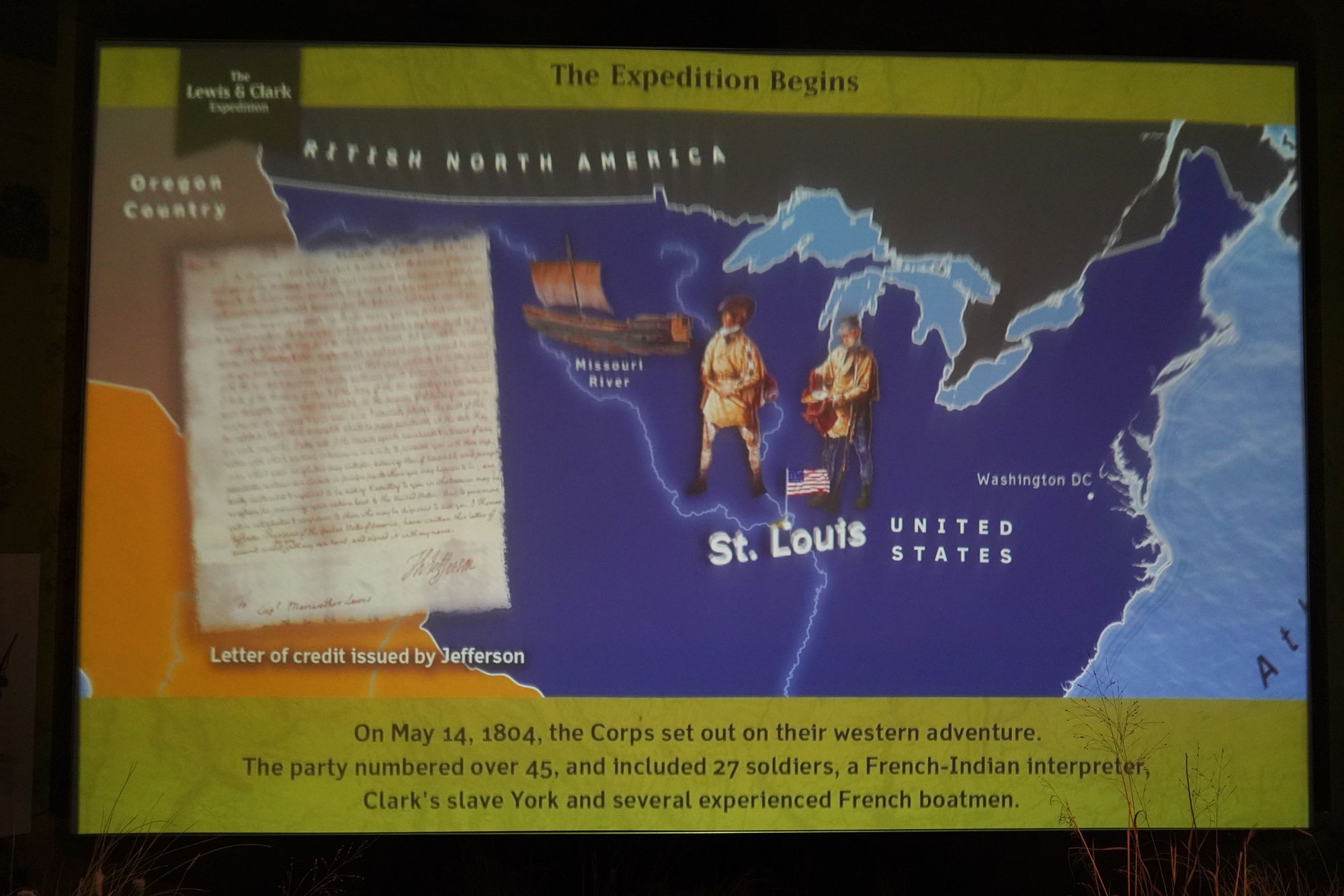
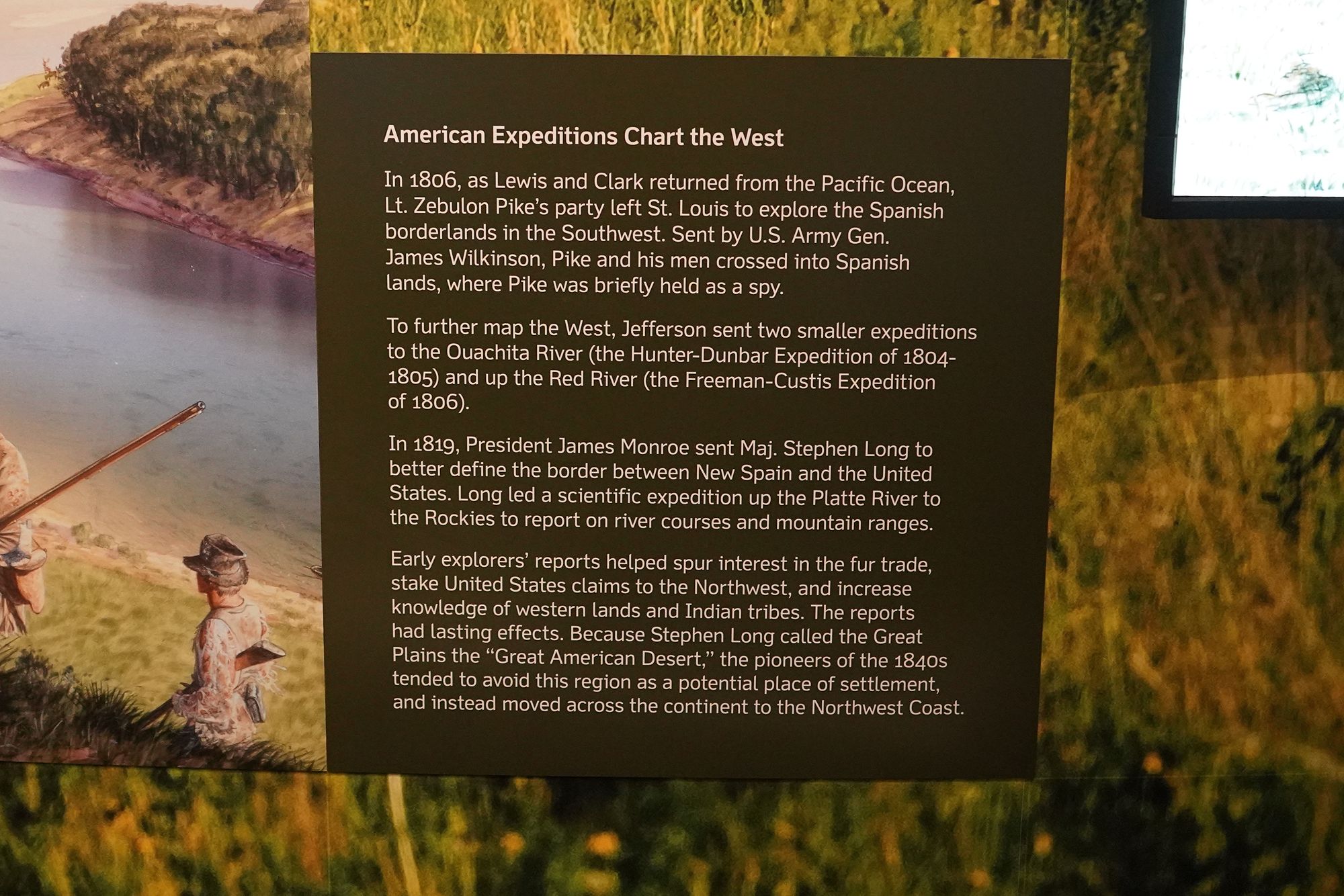
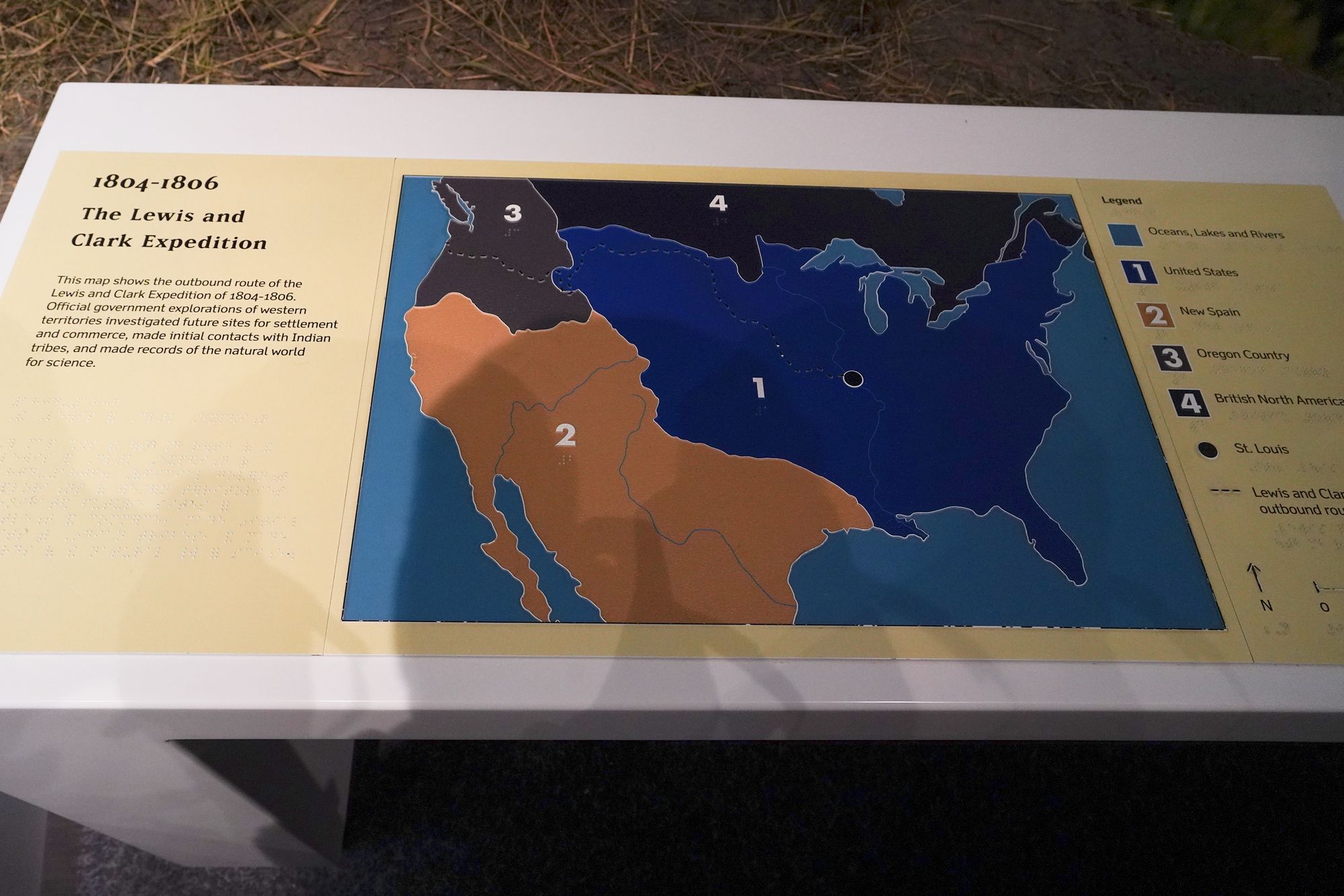
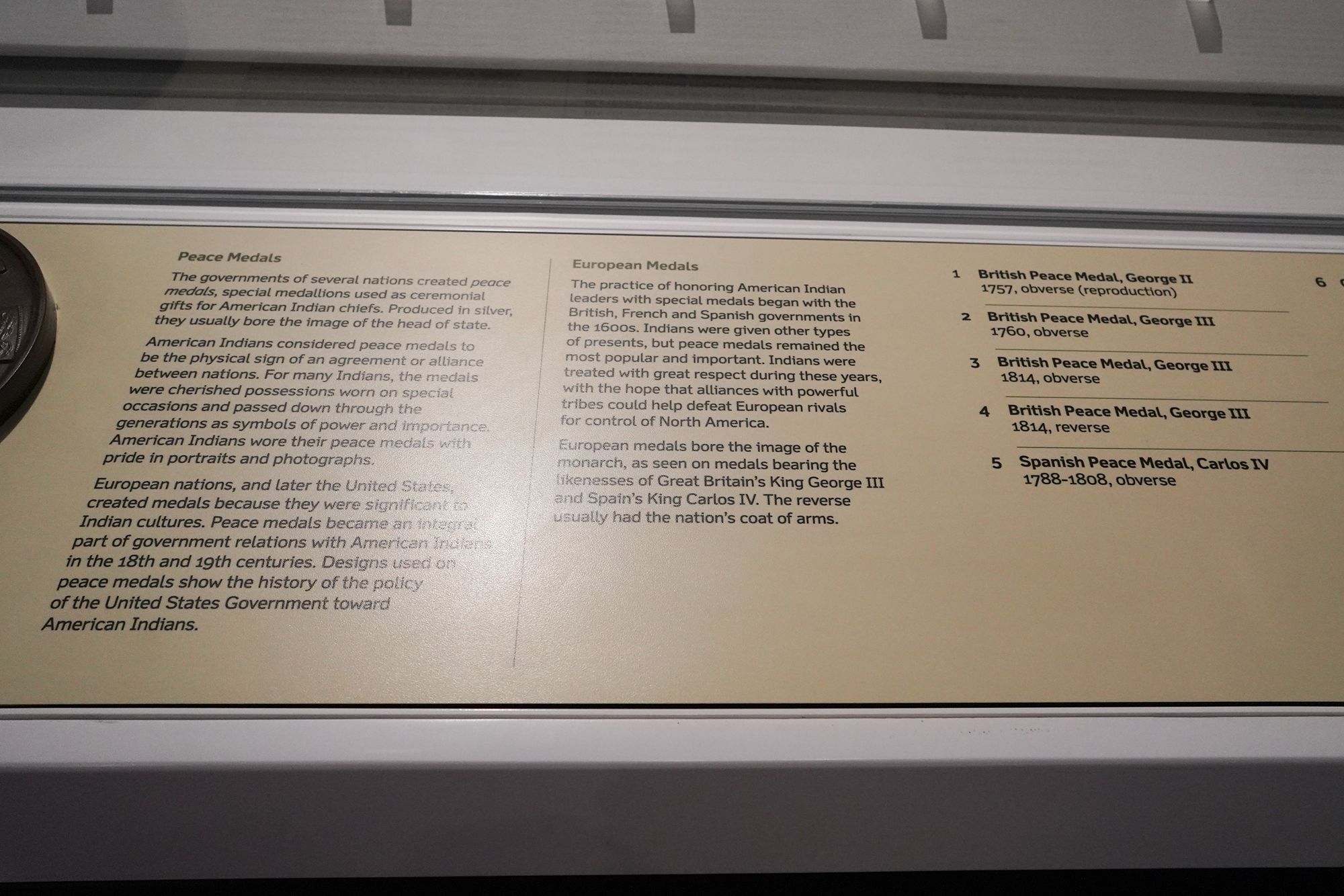
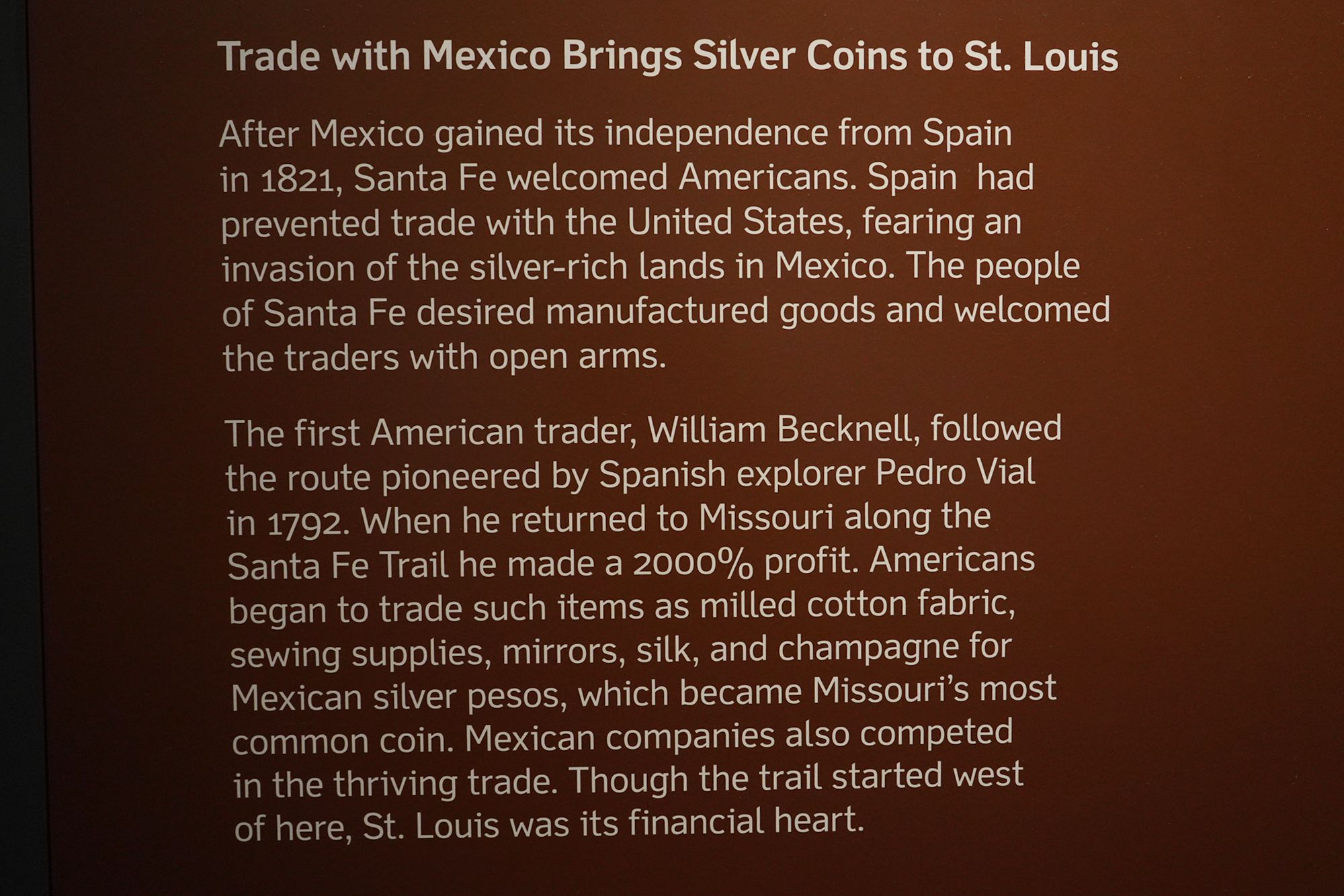
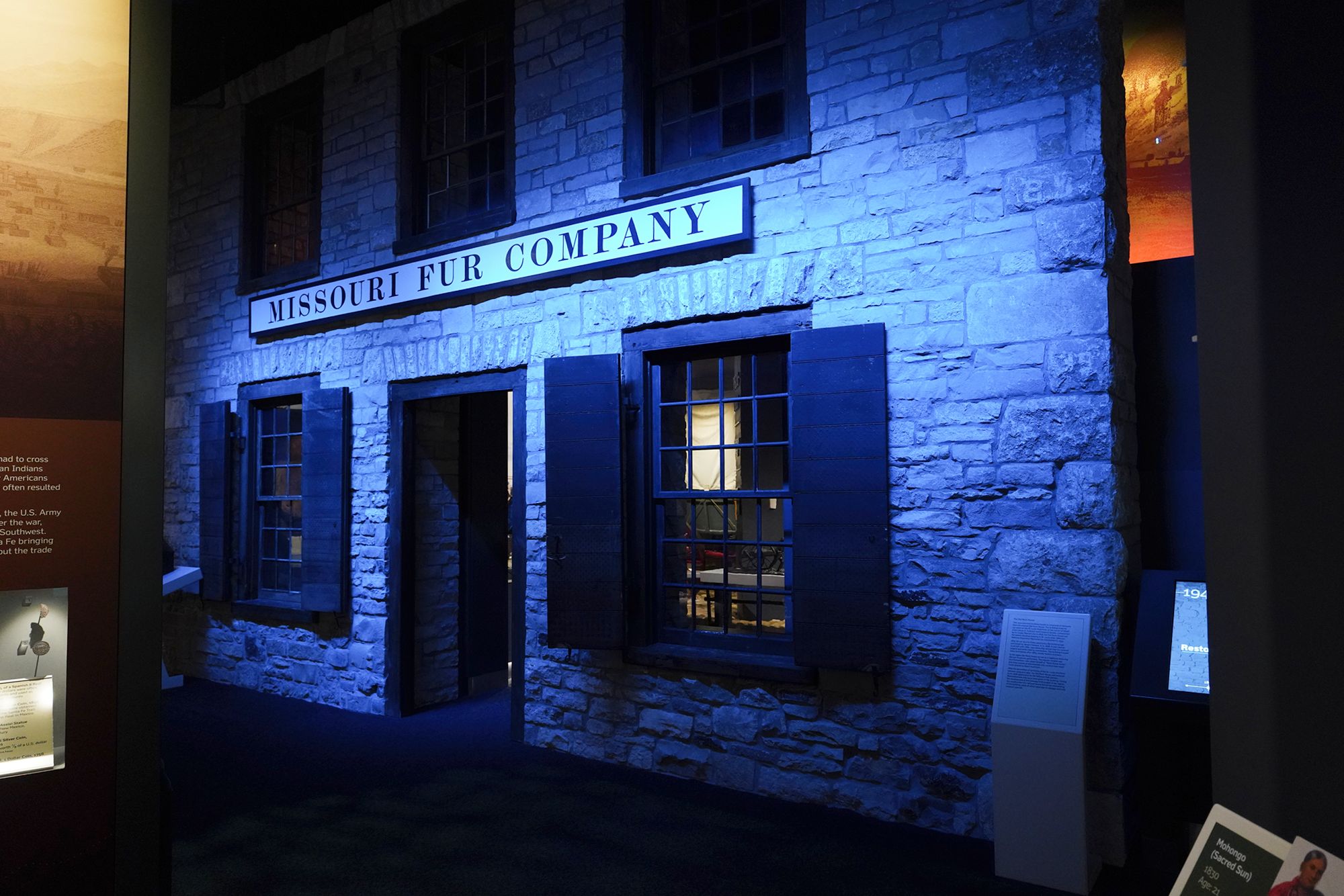
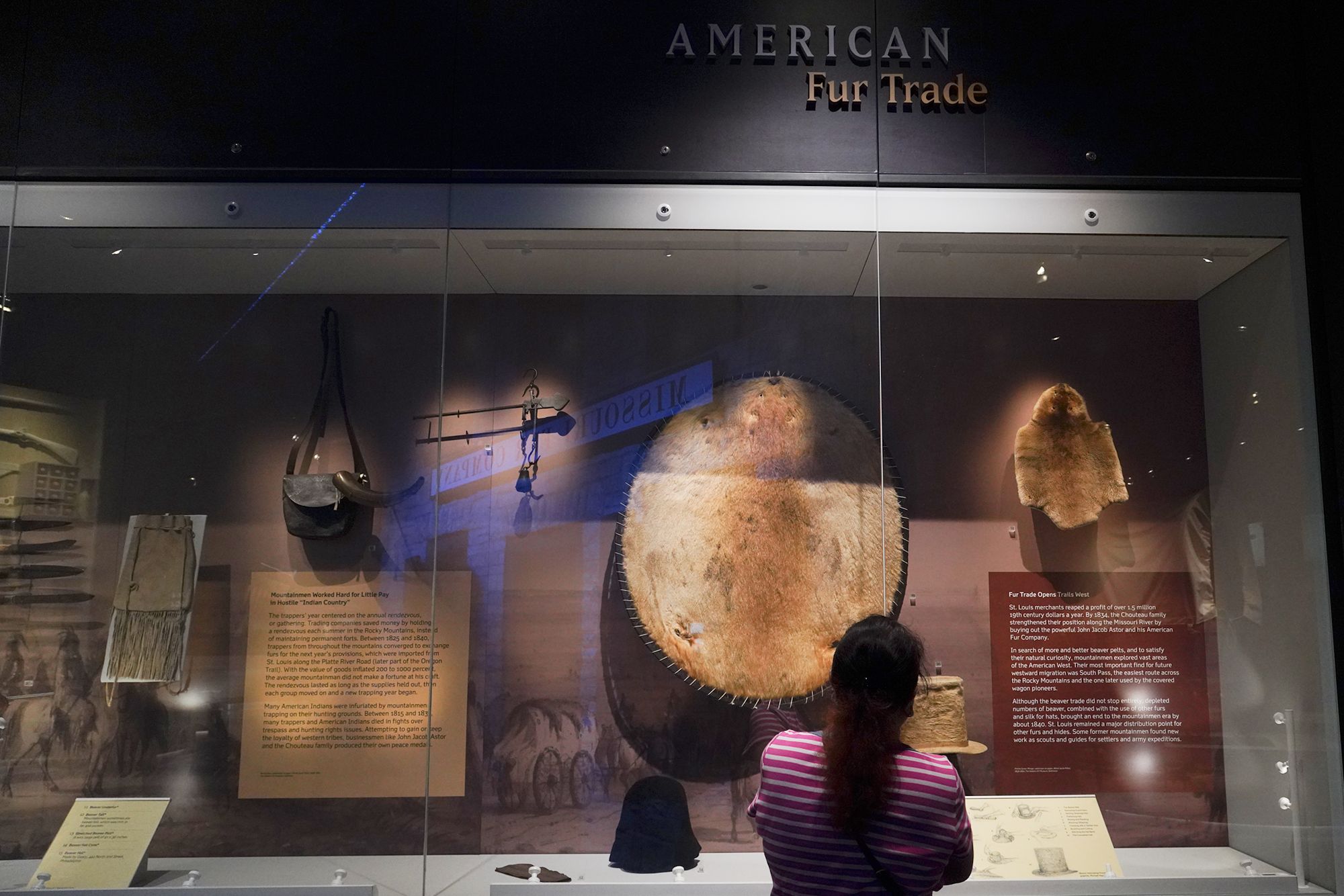
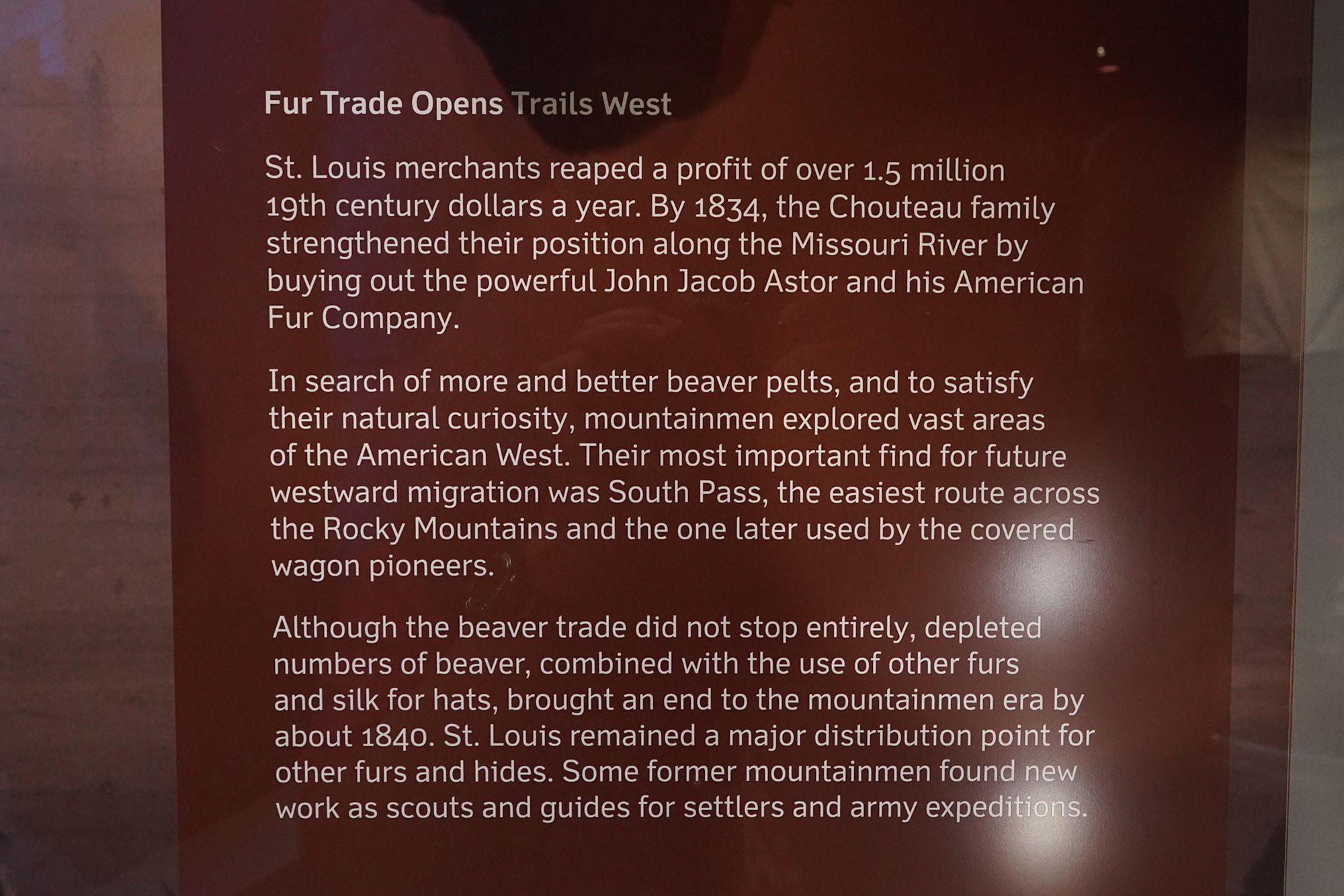
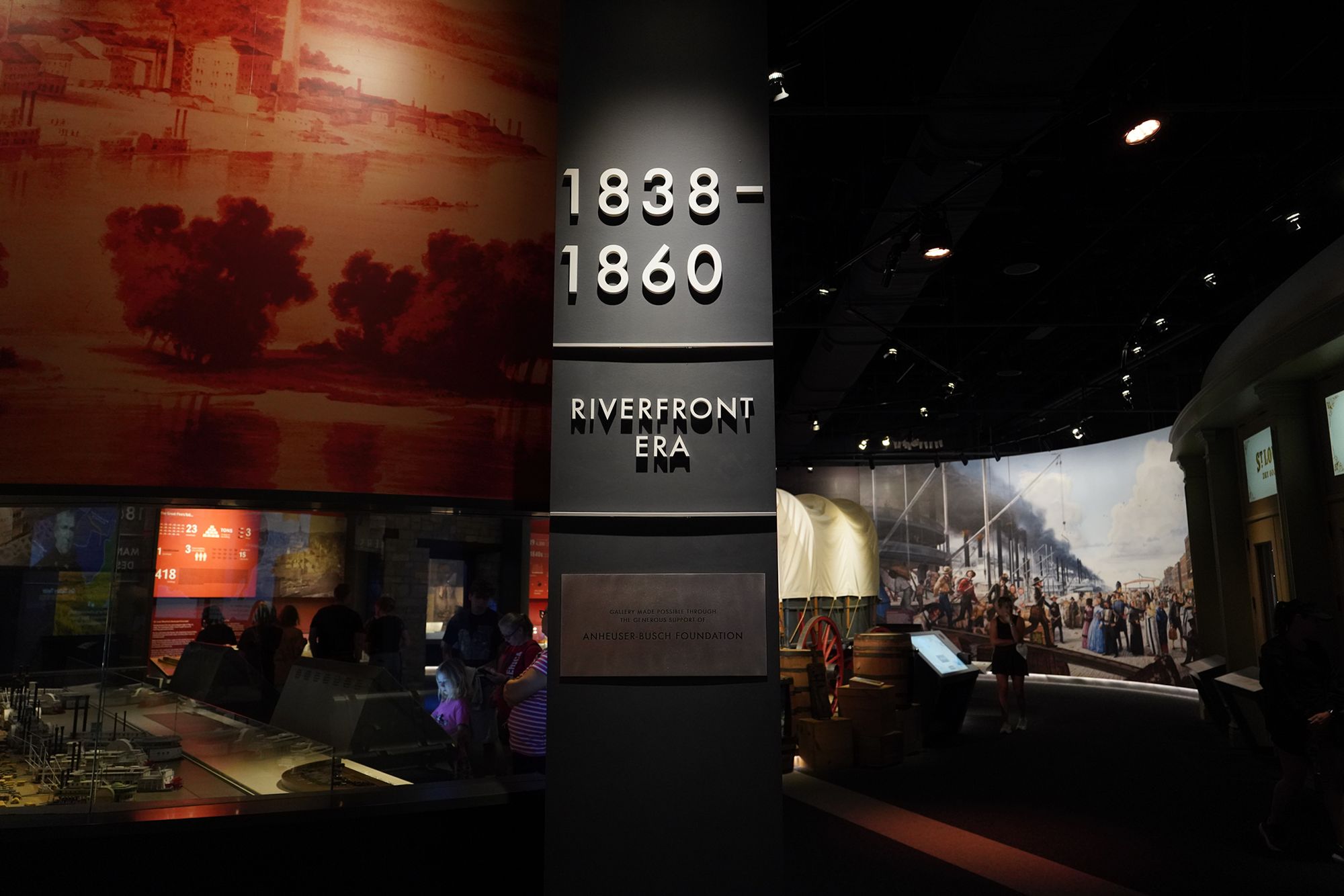
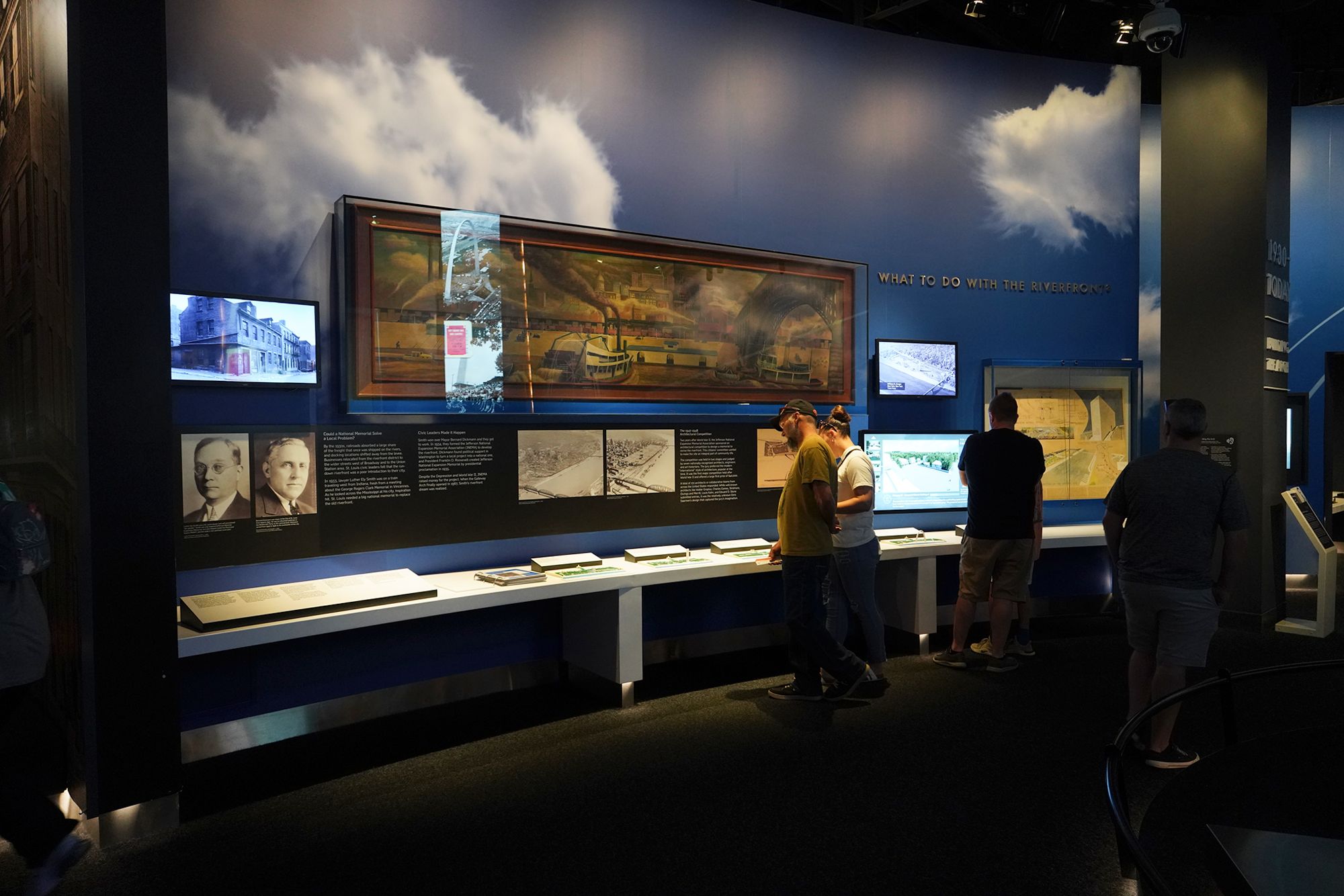
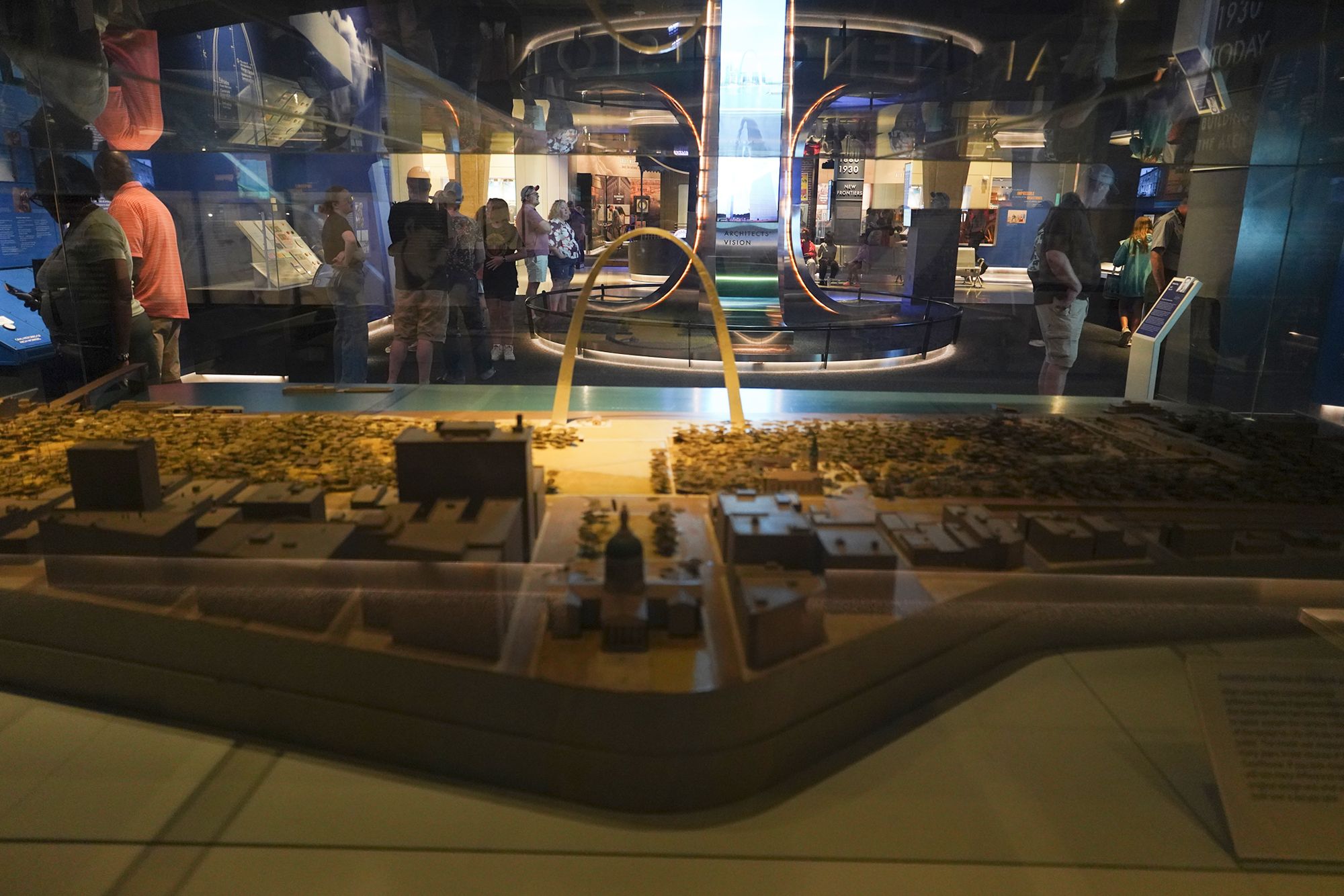
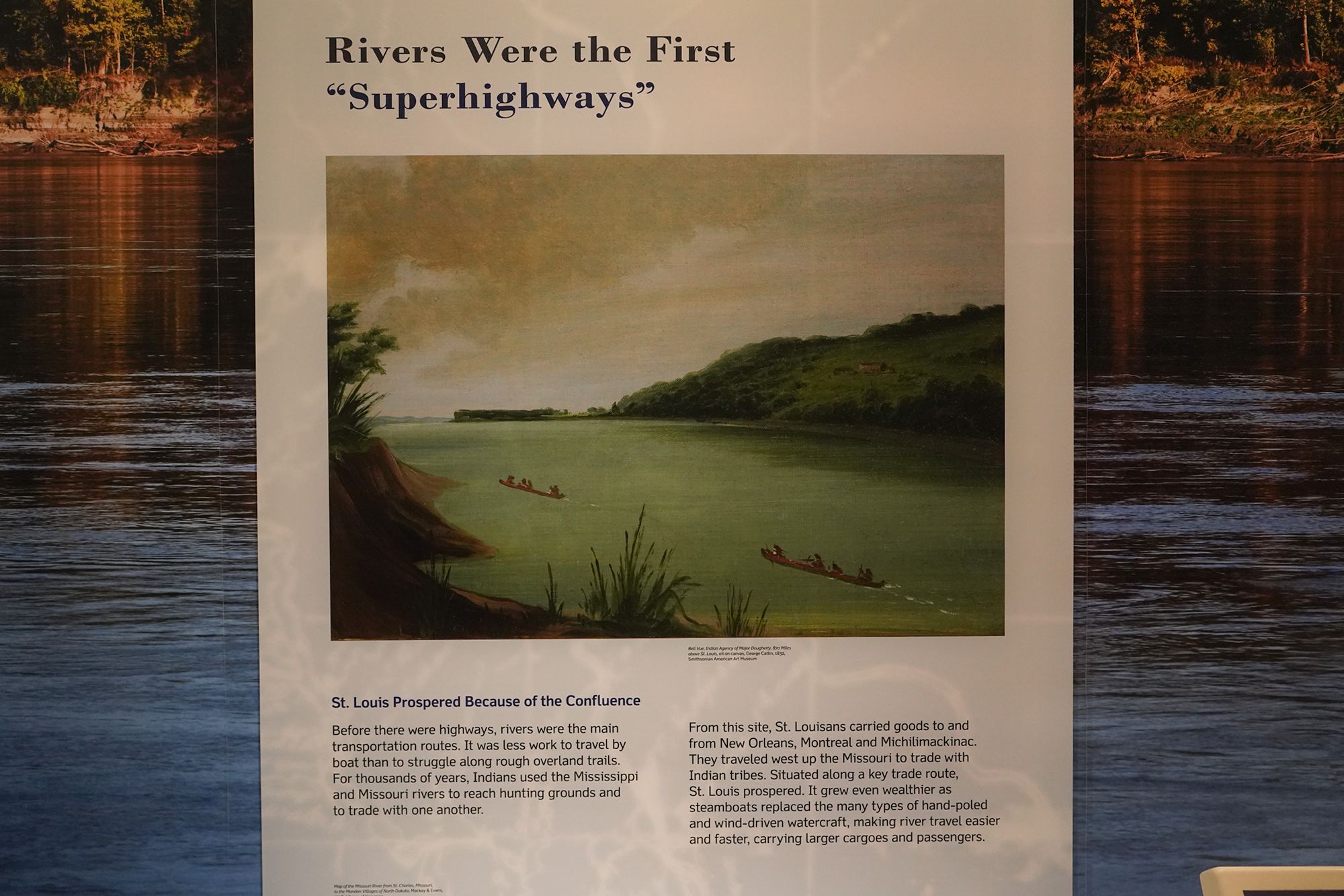
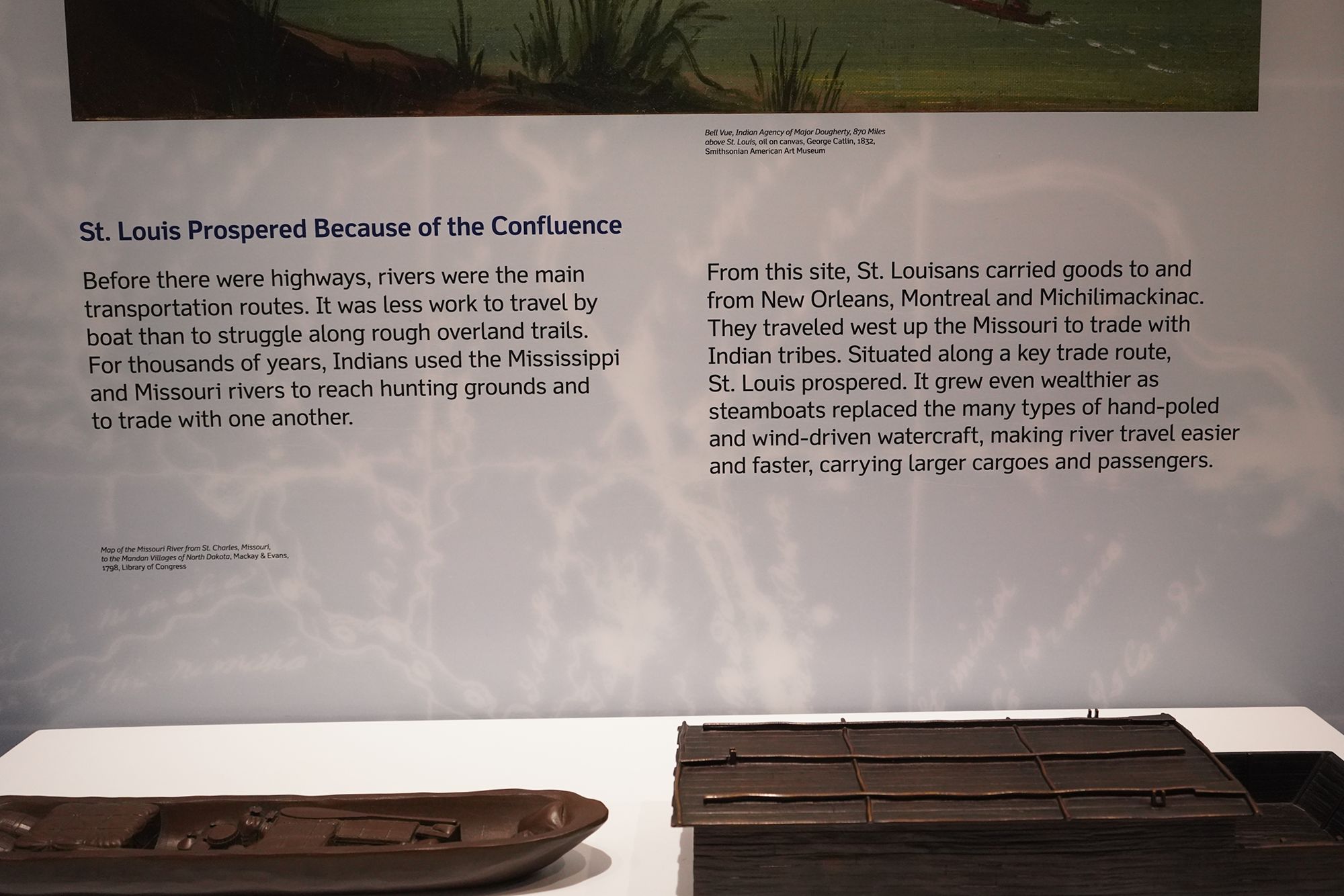
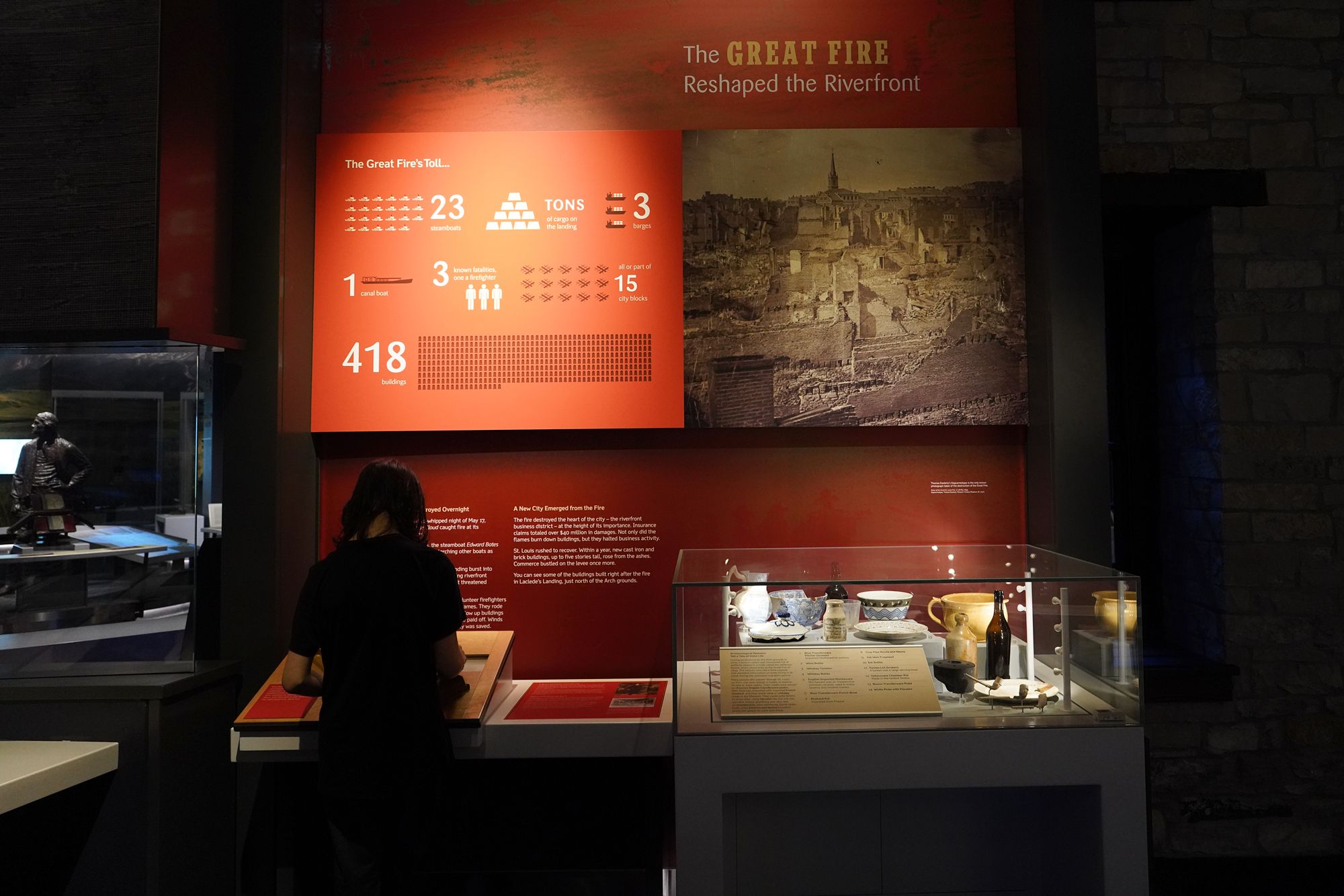
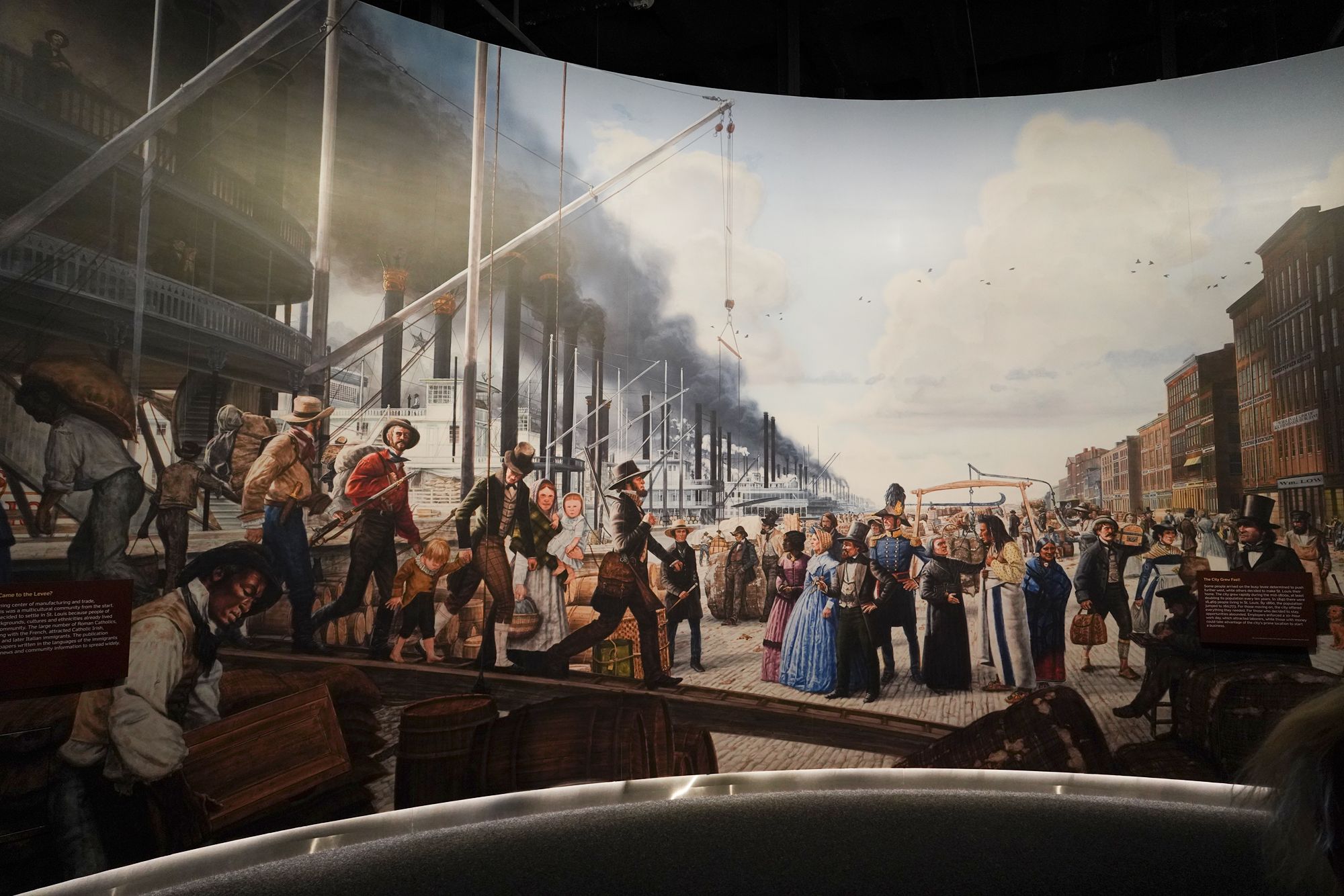
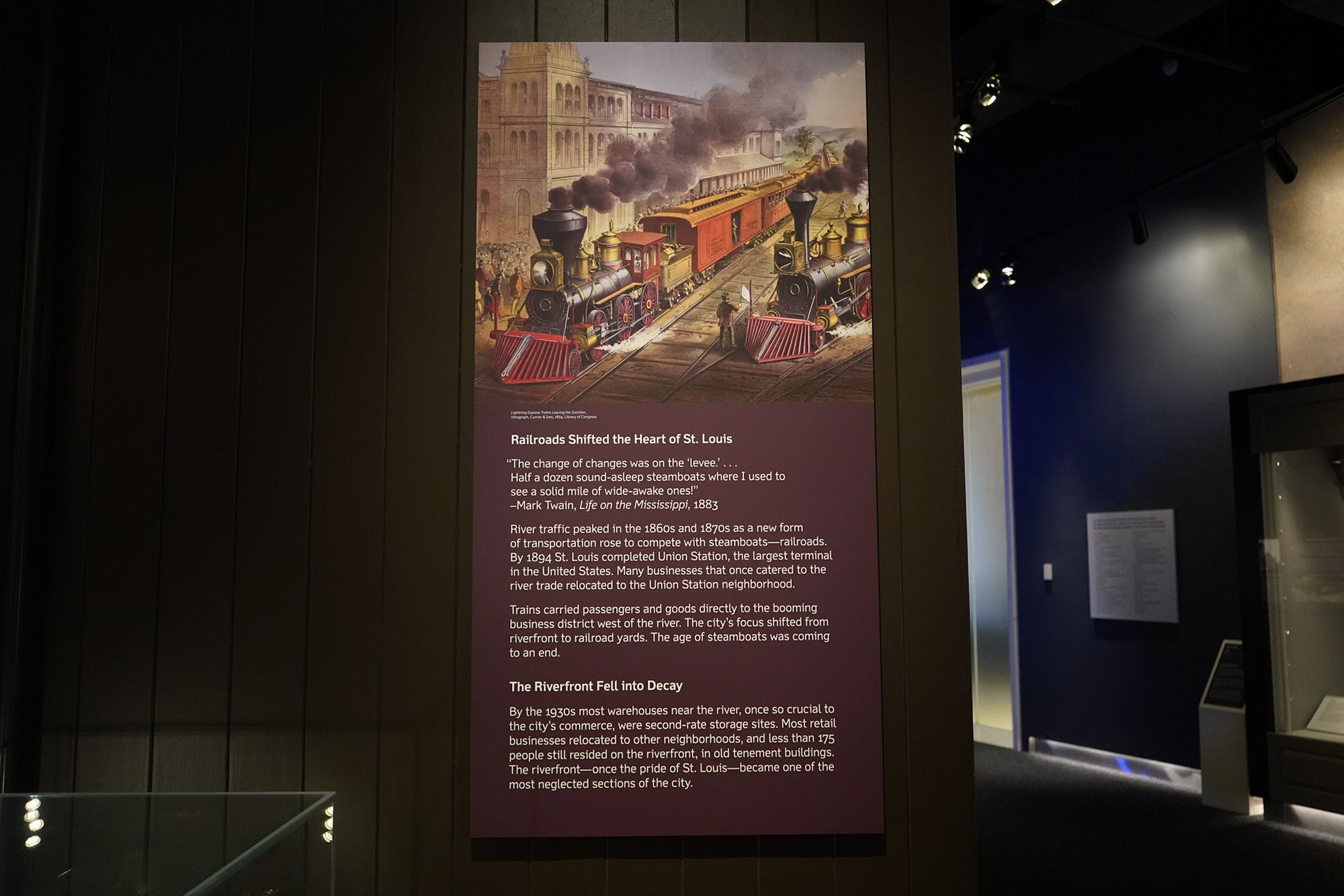
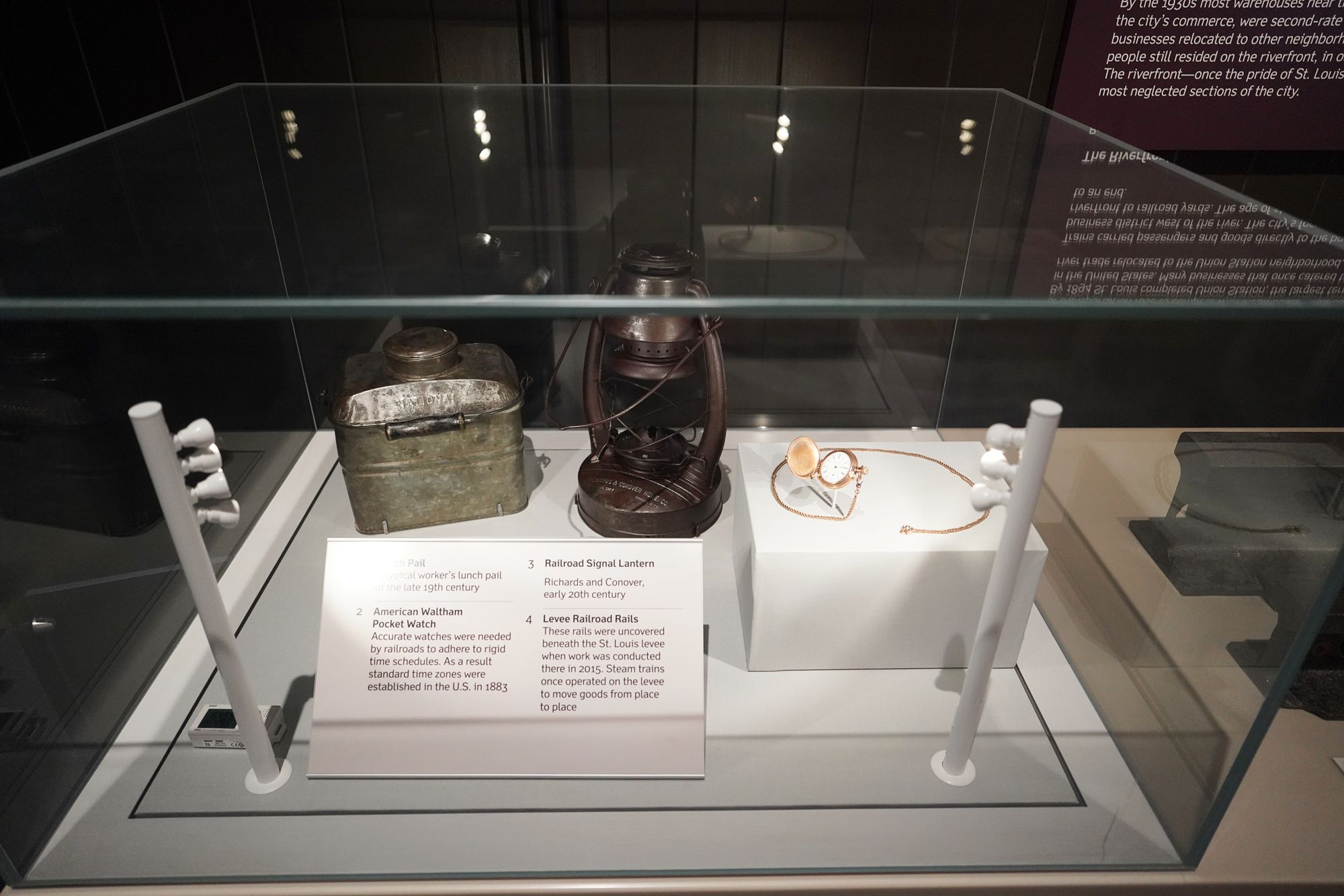
The riverfront era refers to the period when St. Louis thrived as a major Mississippi River port, with steamboats crowding its levees, warehouses and markets lining the shoreline, and river trade driving the city’s growth as a gateway for goods, immigrants, and westward expansion.
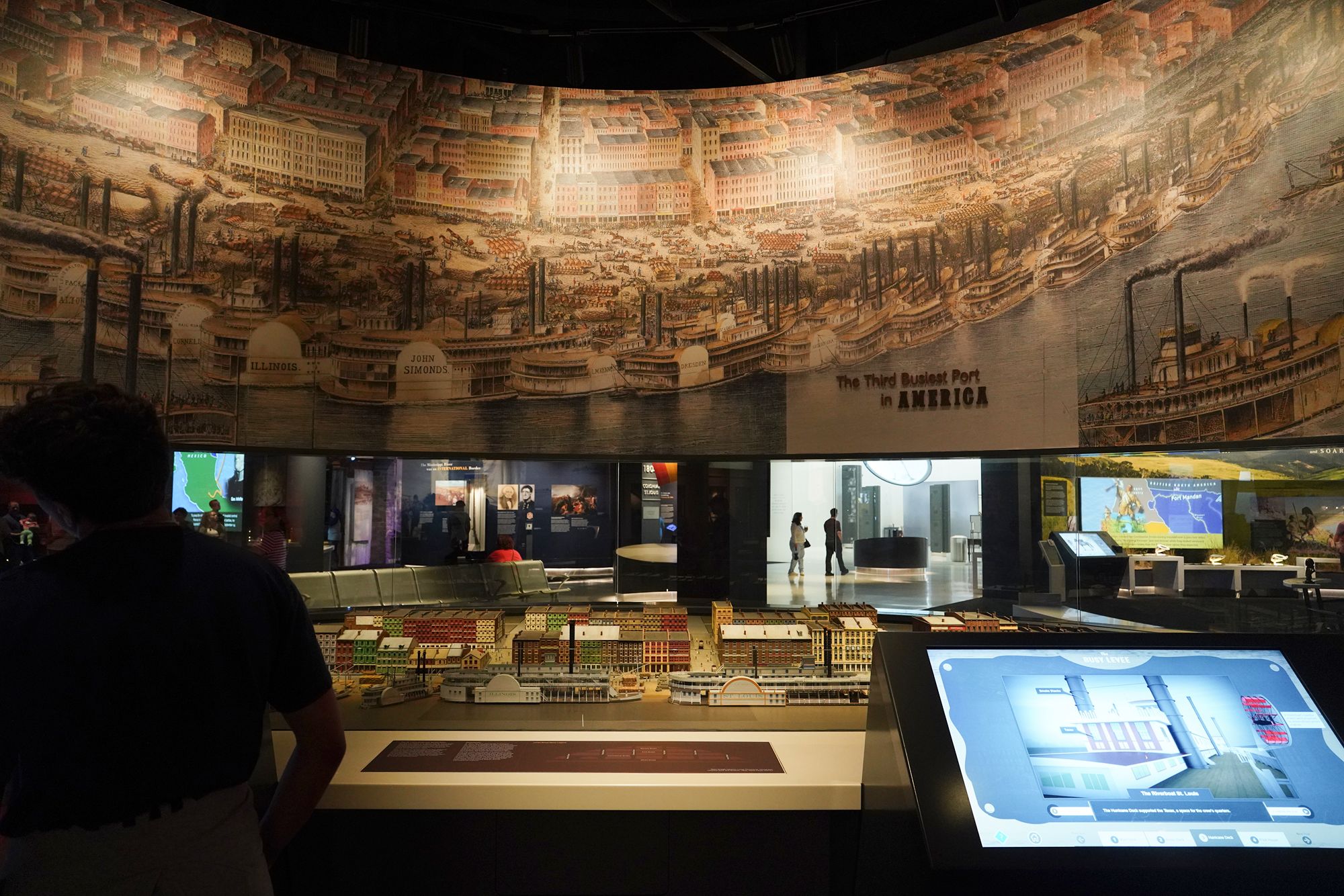
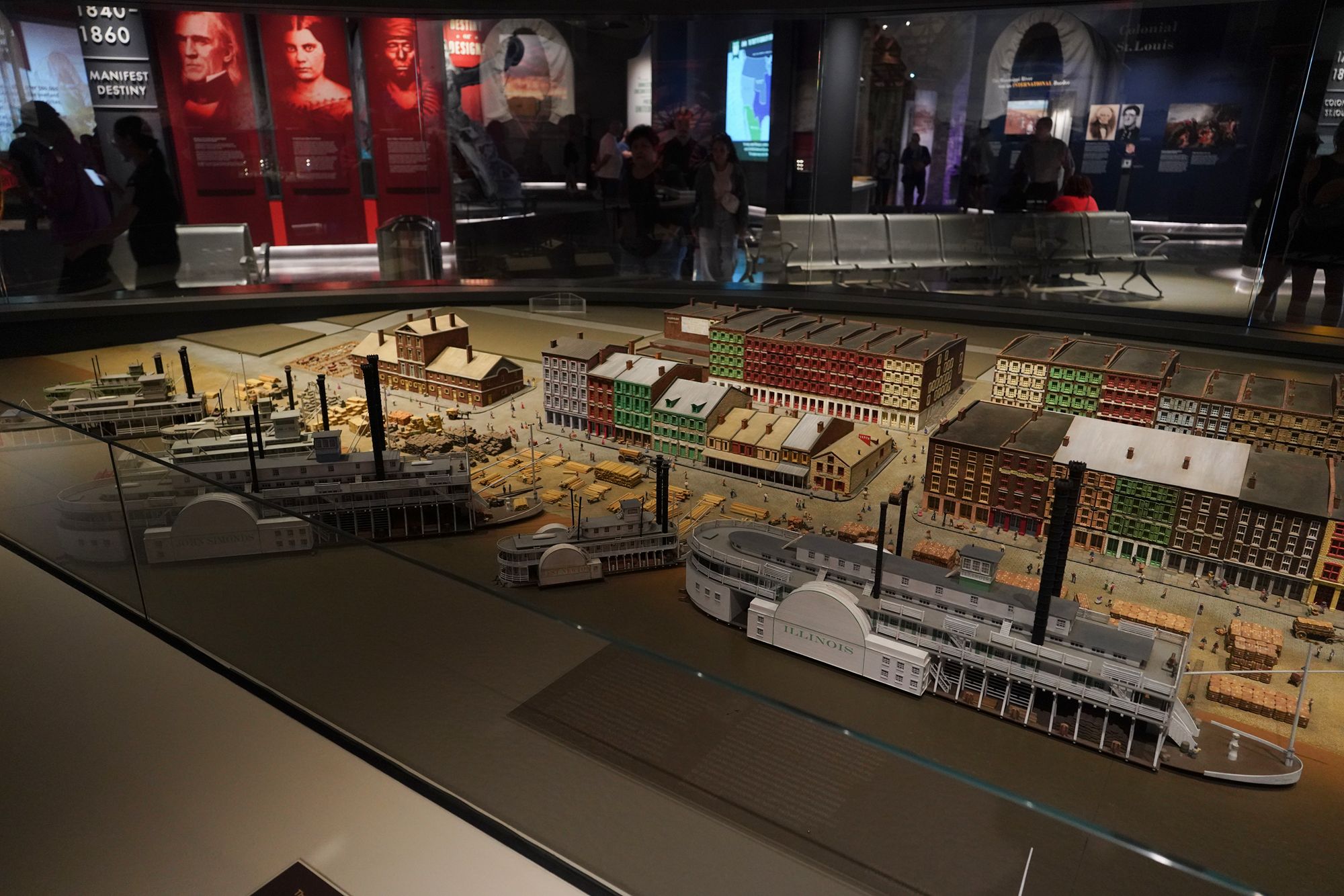
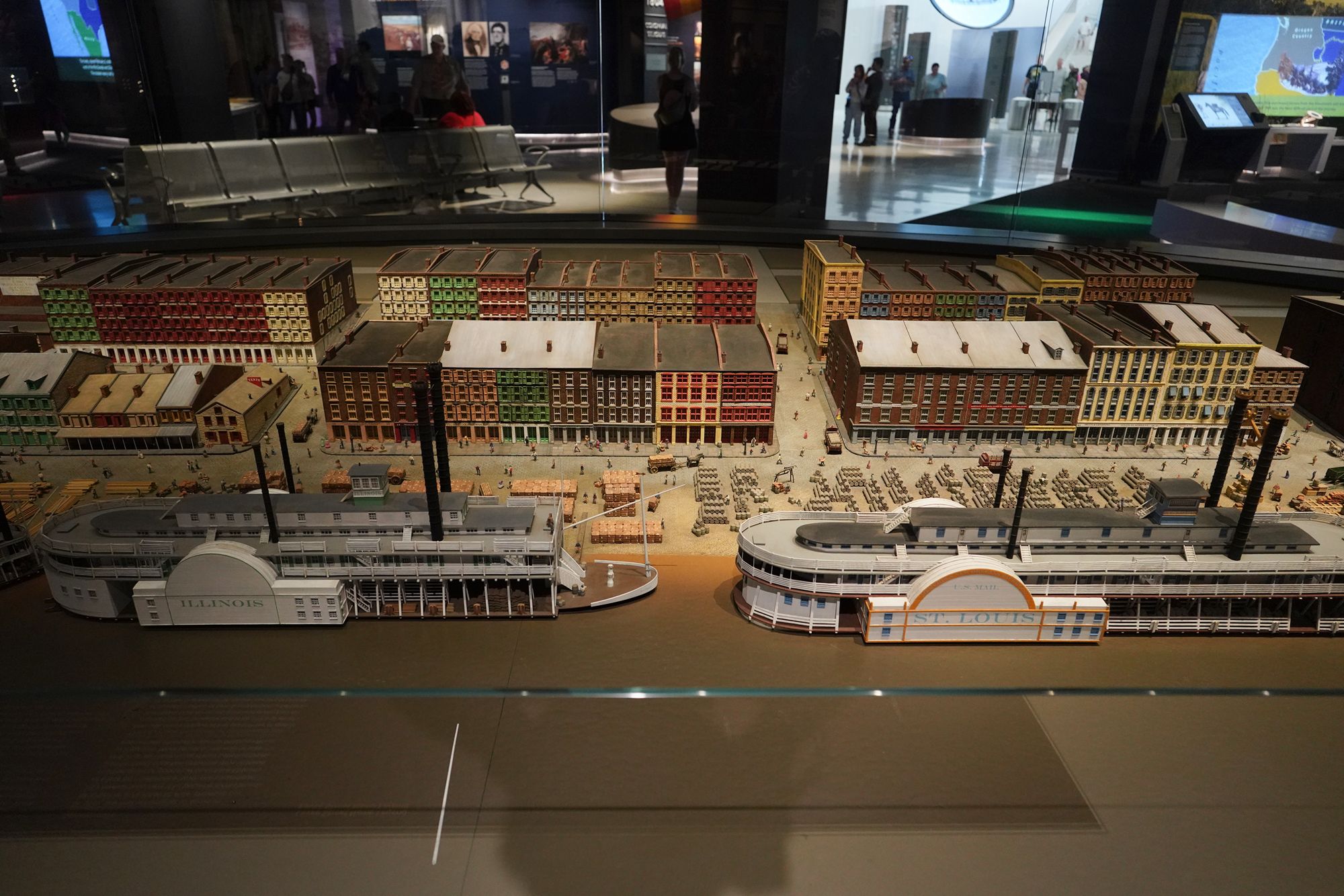
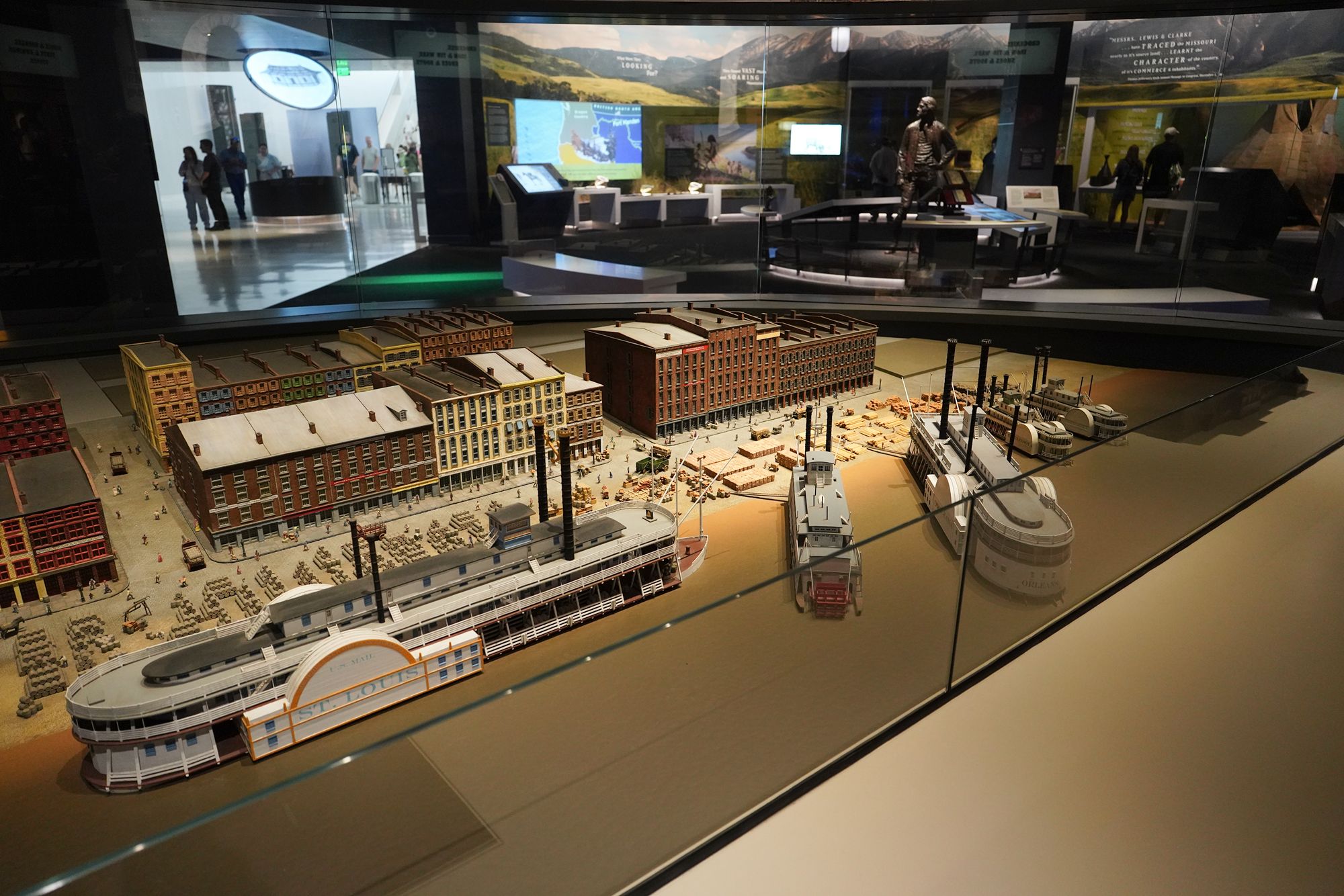
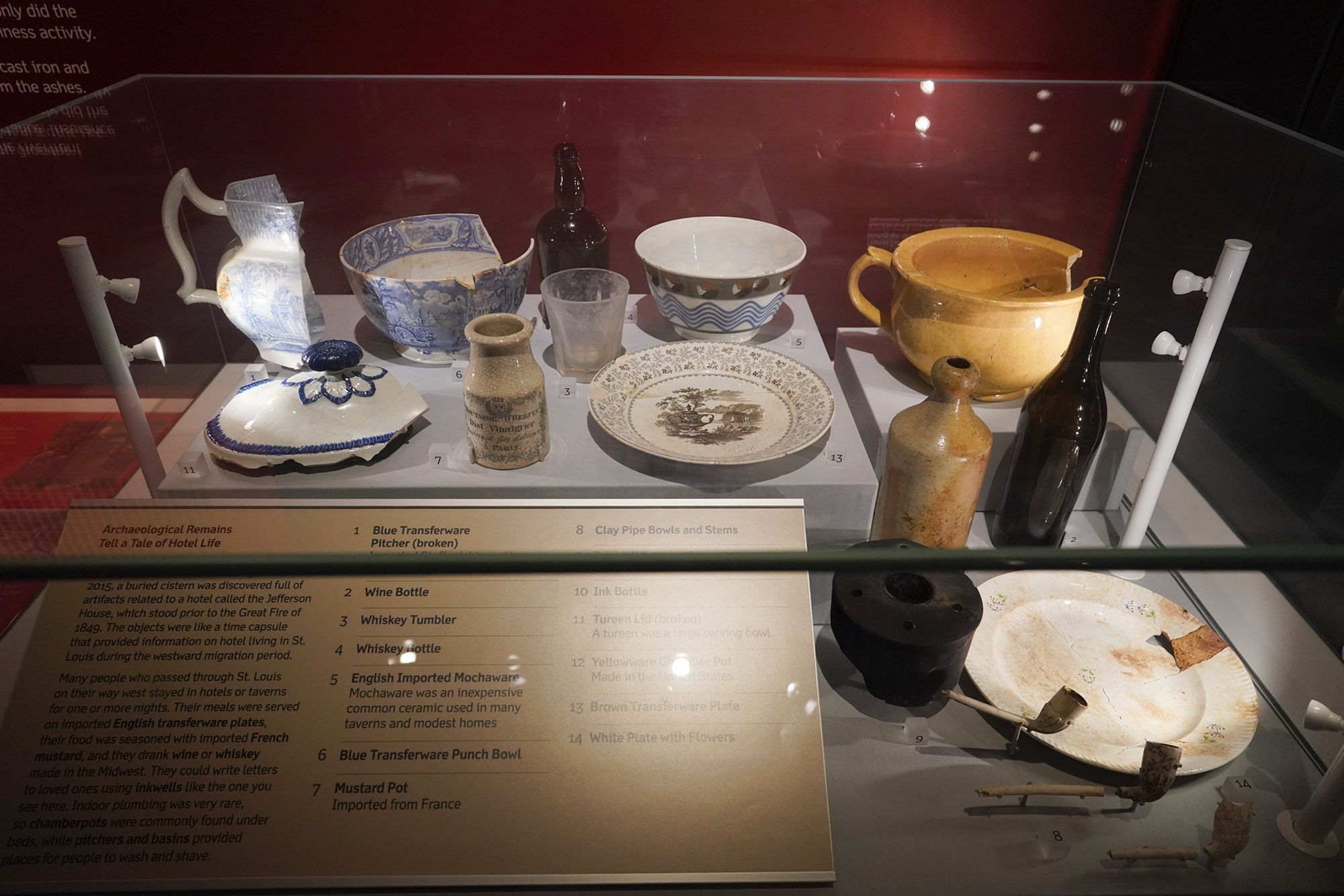
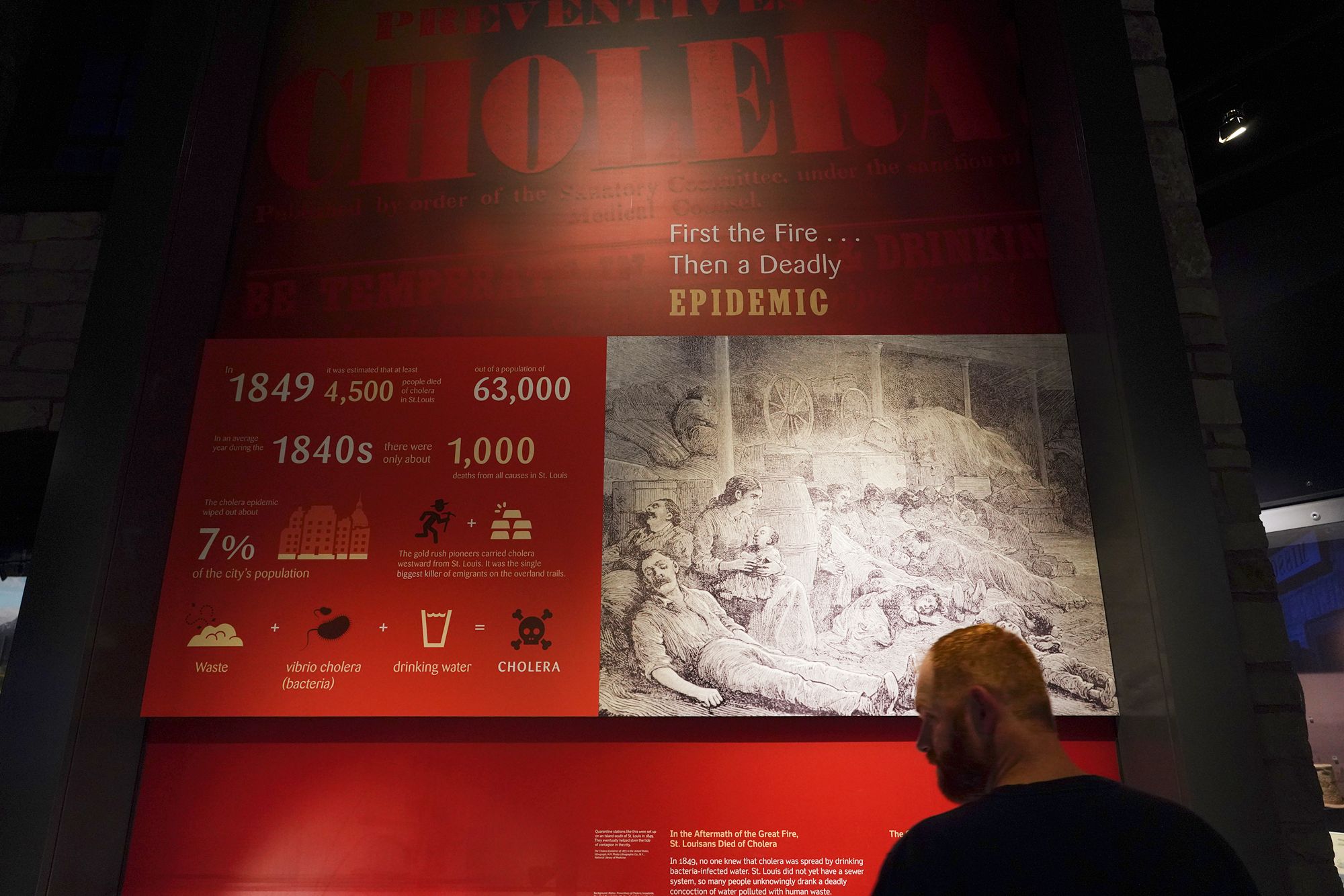
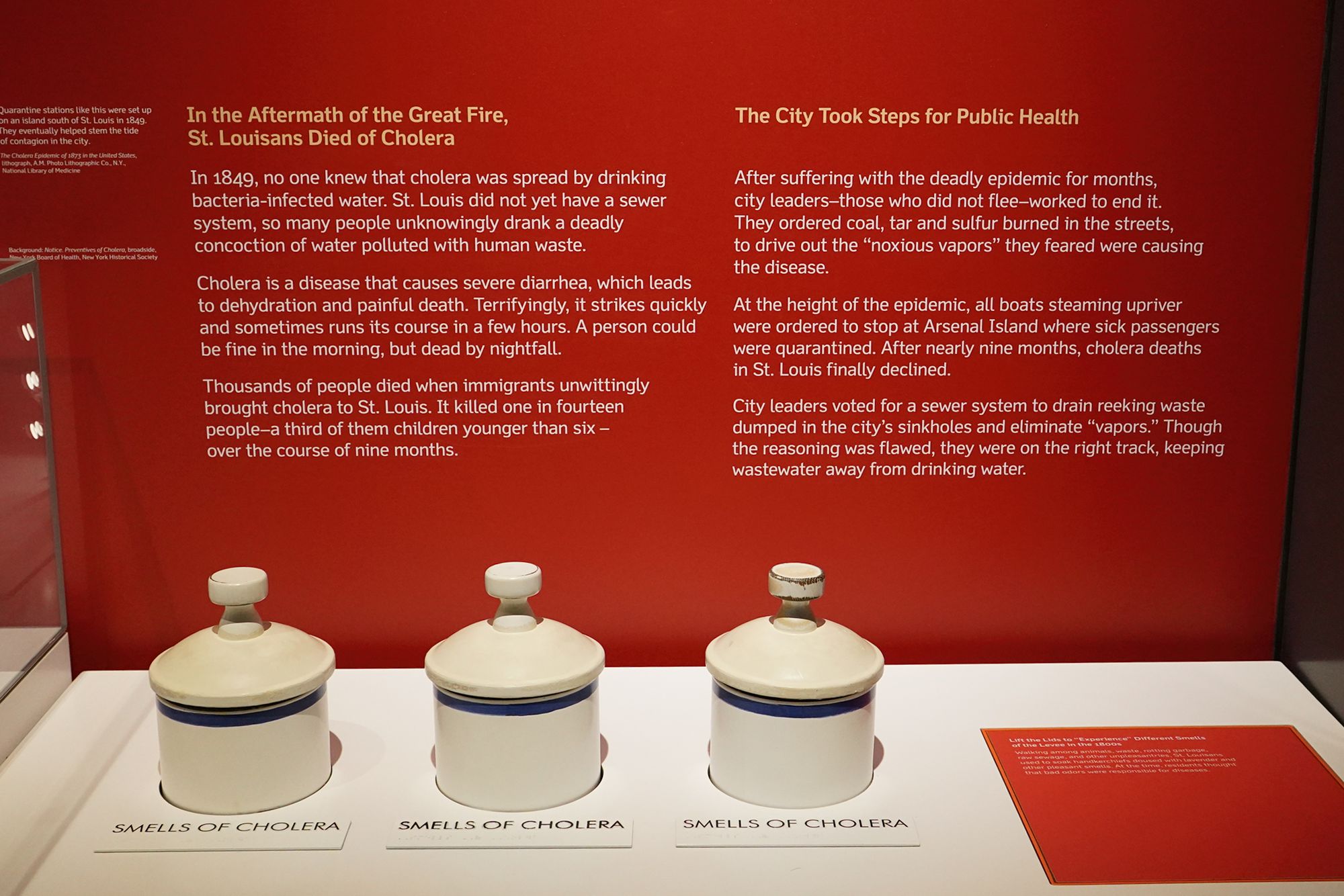
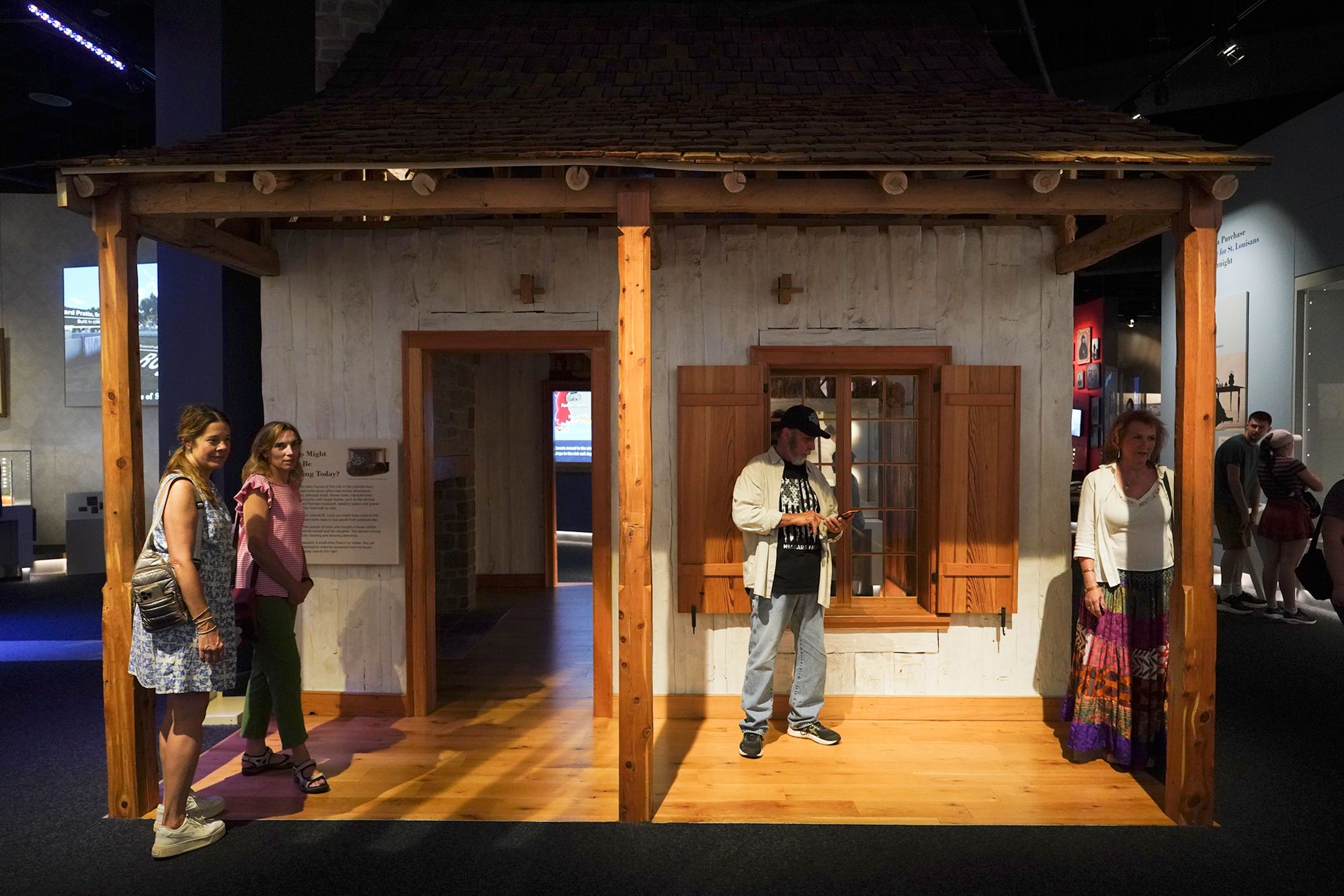
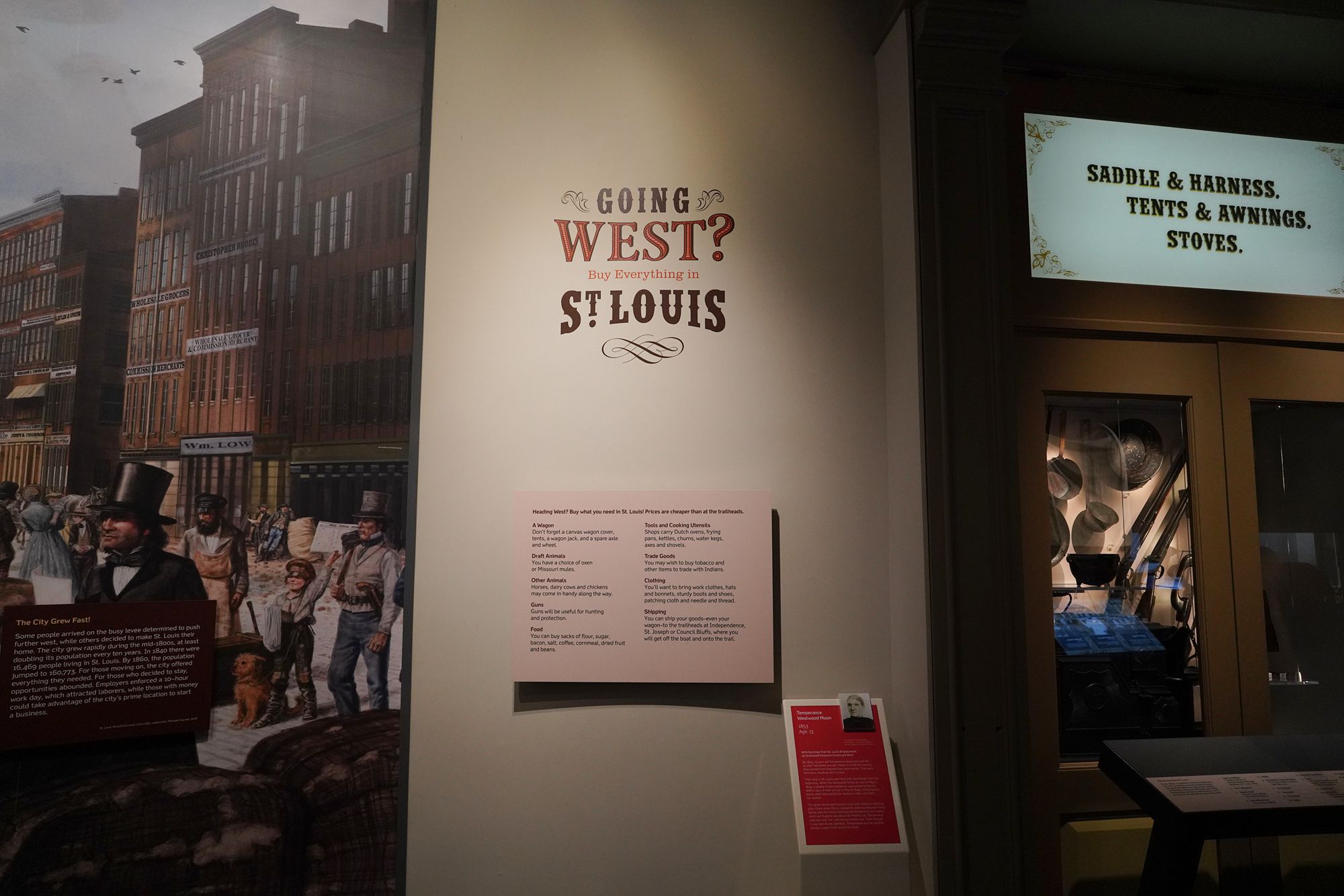
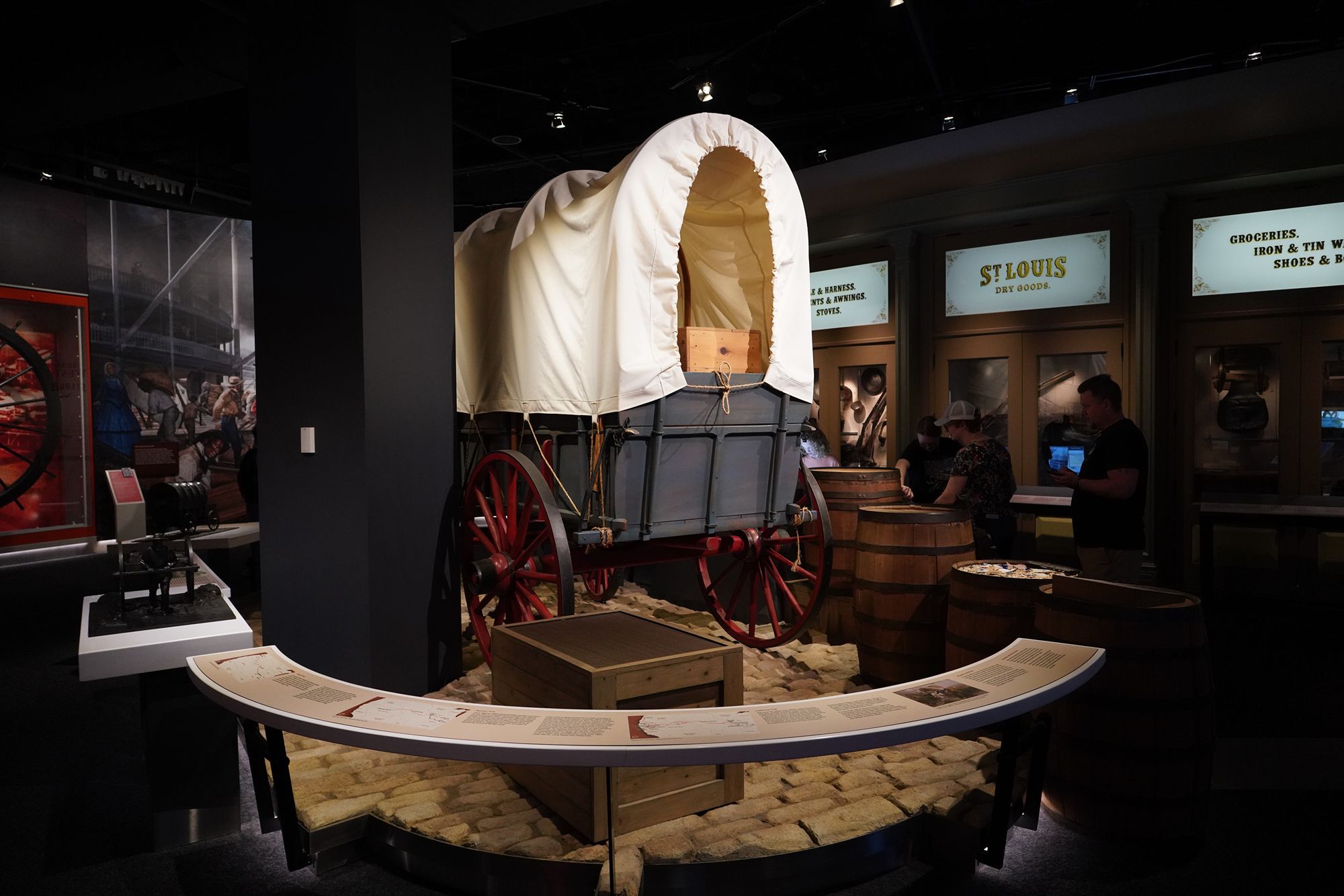
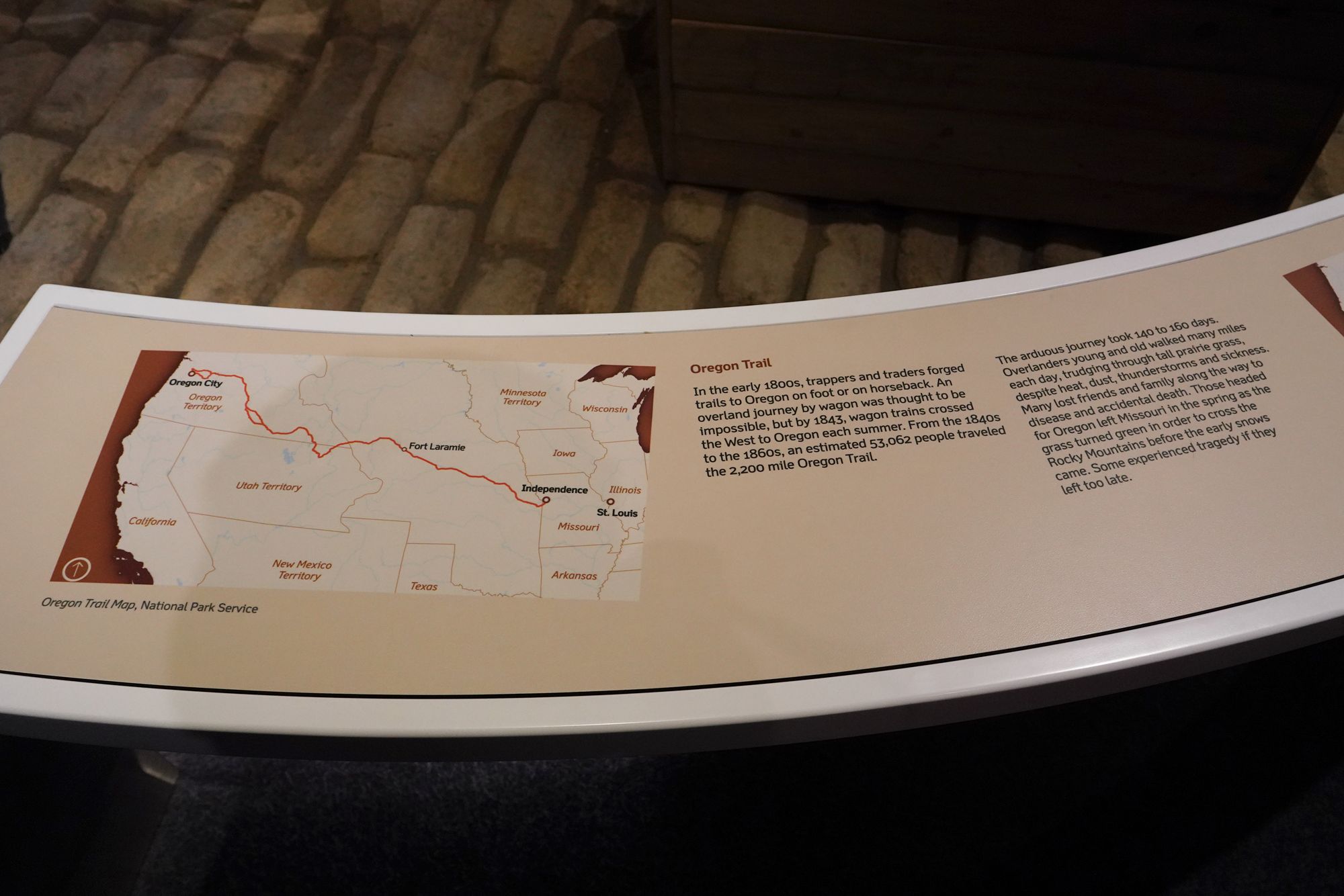
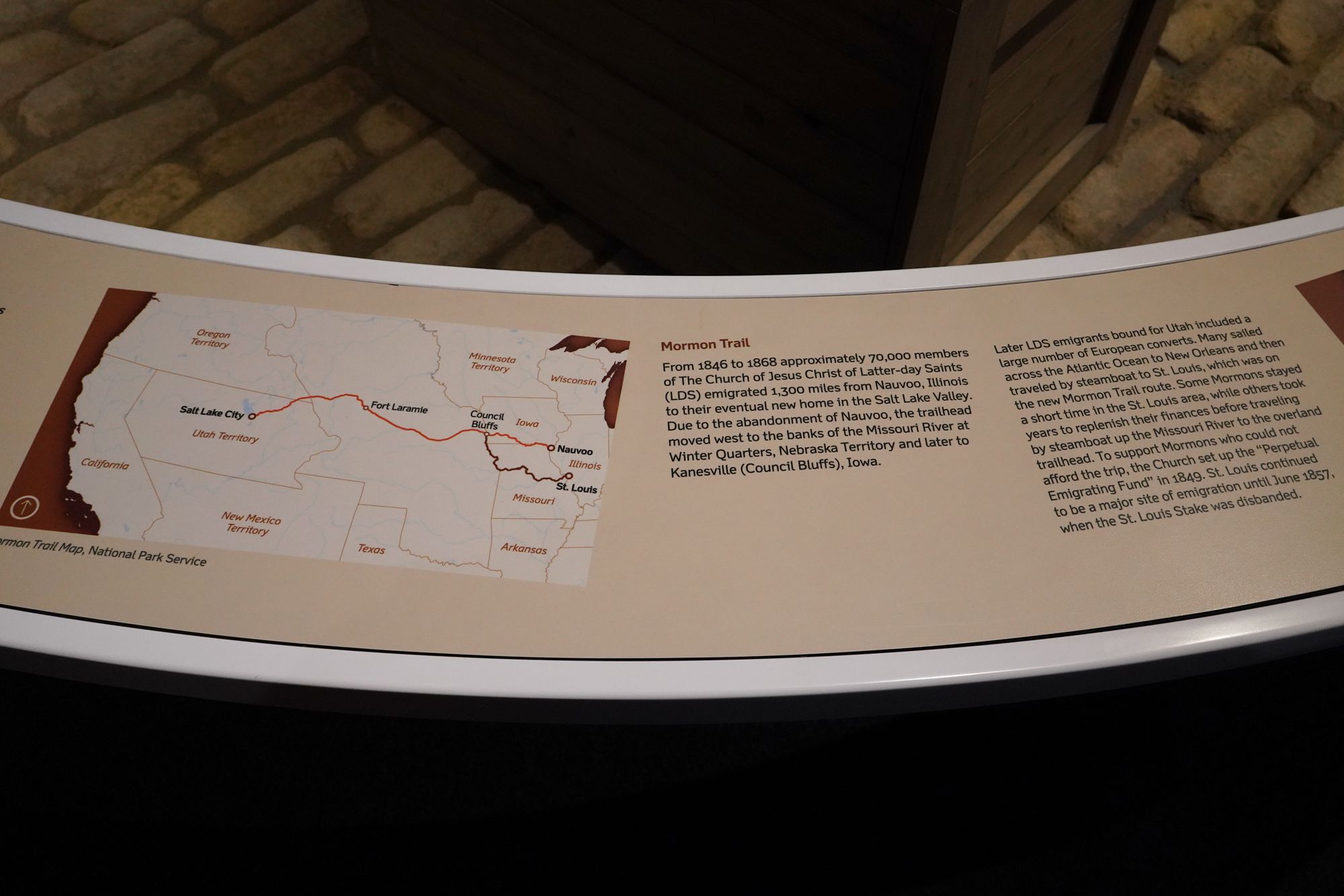
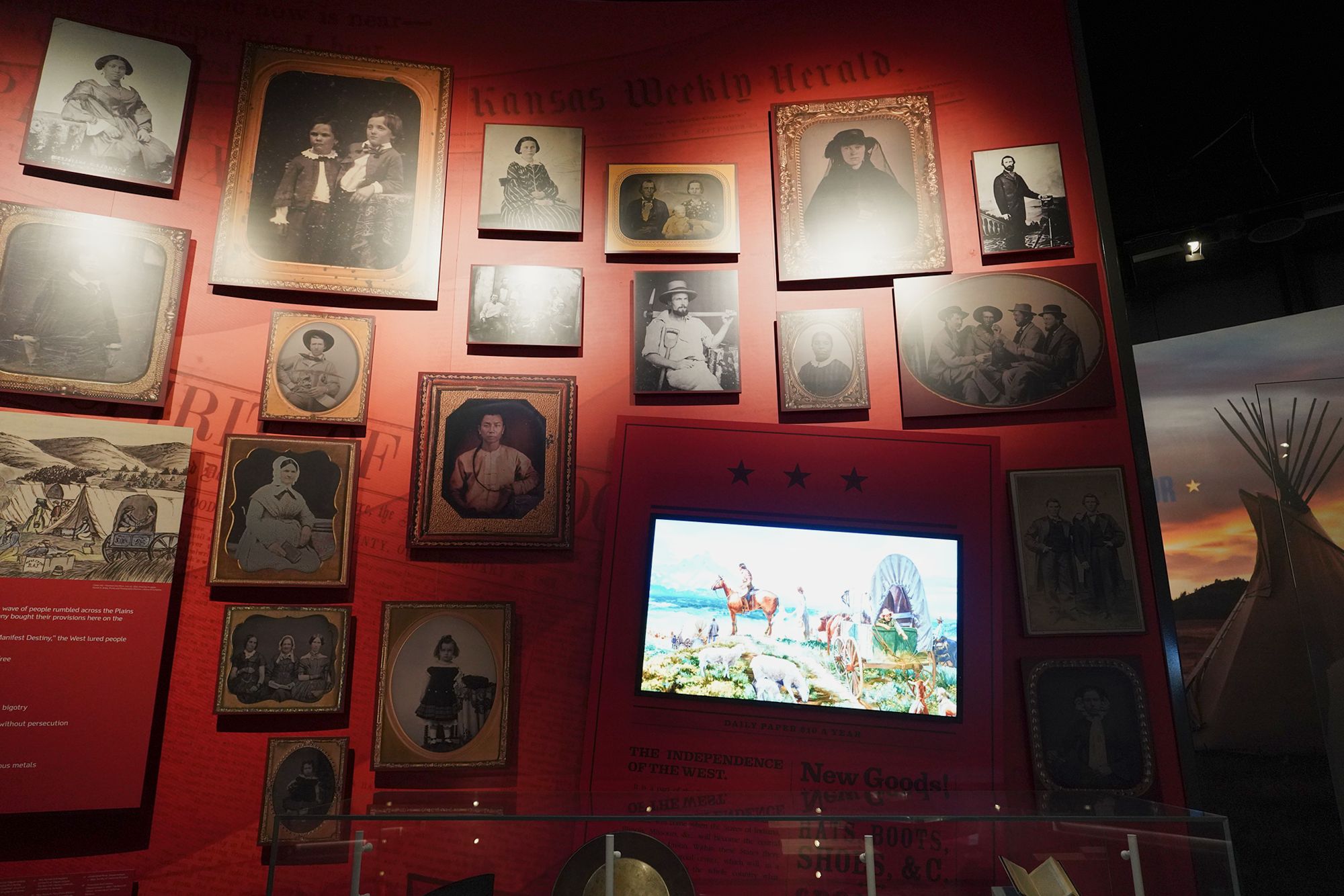
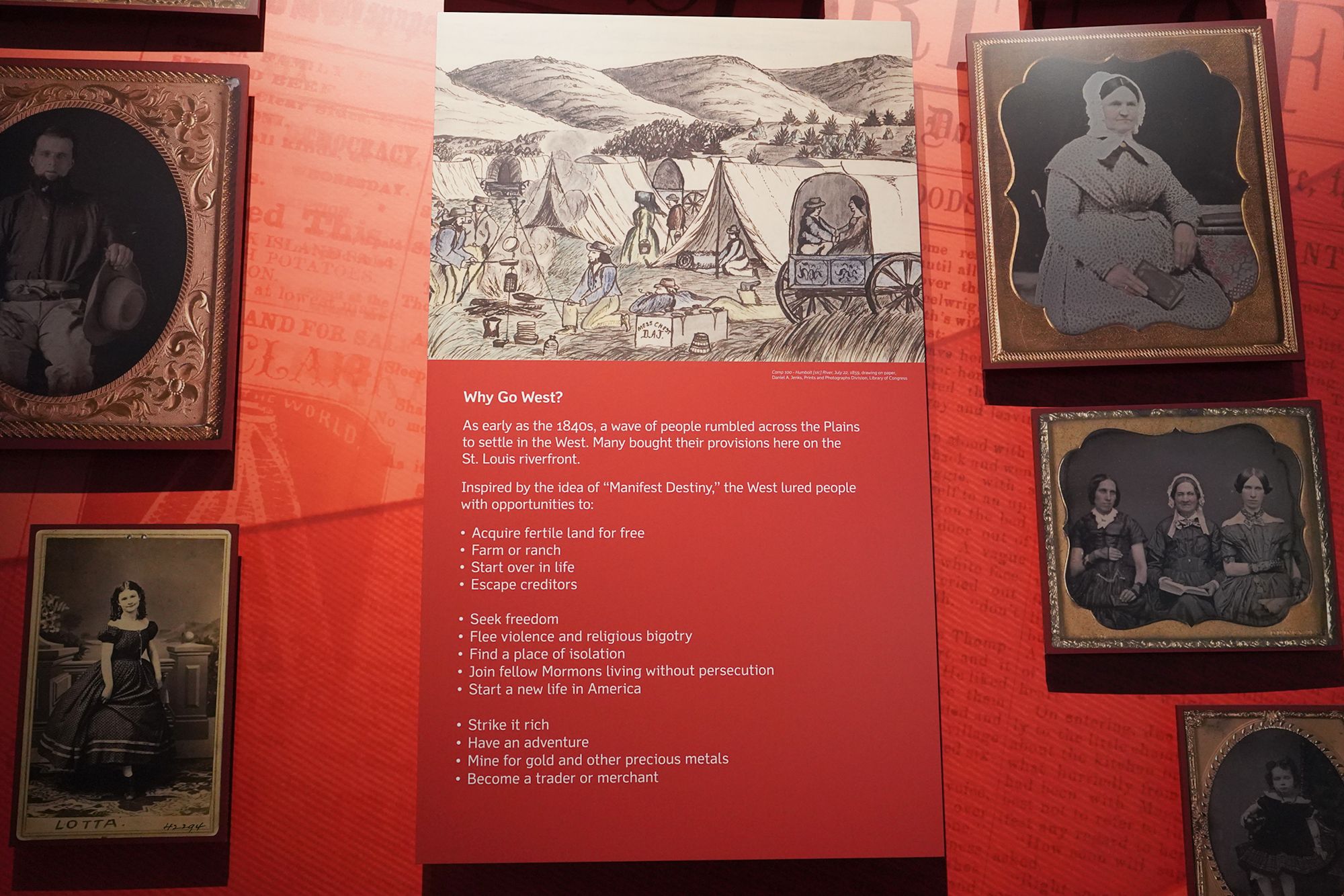
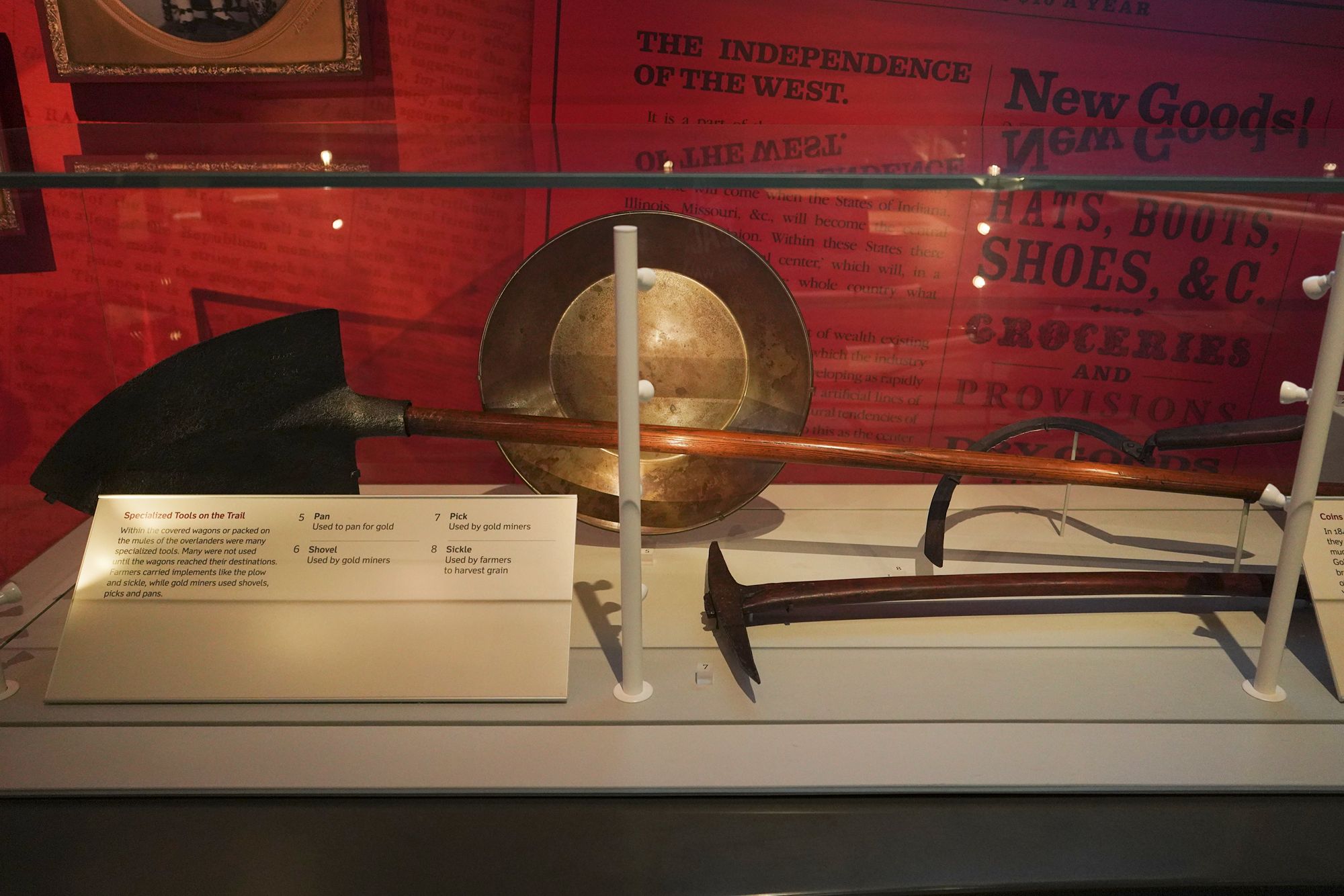
St. Louis became the primary launch point for westward expansion, where settlers purchased supplies, hired guides, registered wagon trains, and joined trading caravans before crossing the frontier, making the city an essential hub of preparation, commerce, and organization for journeys into the American West.

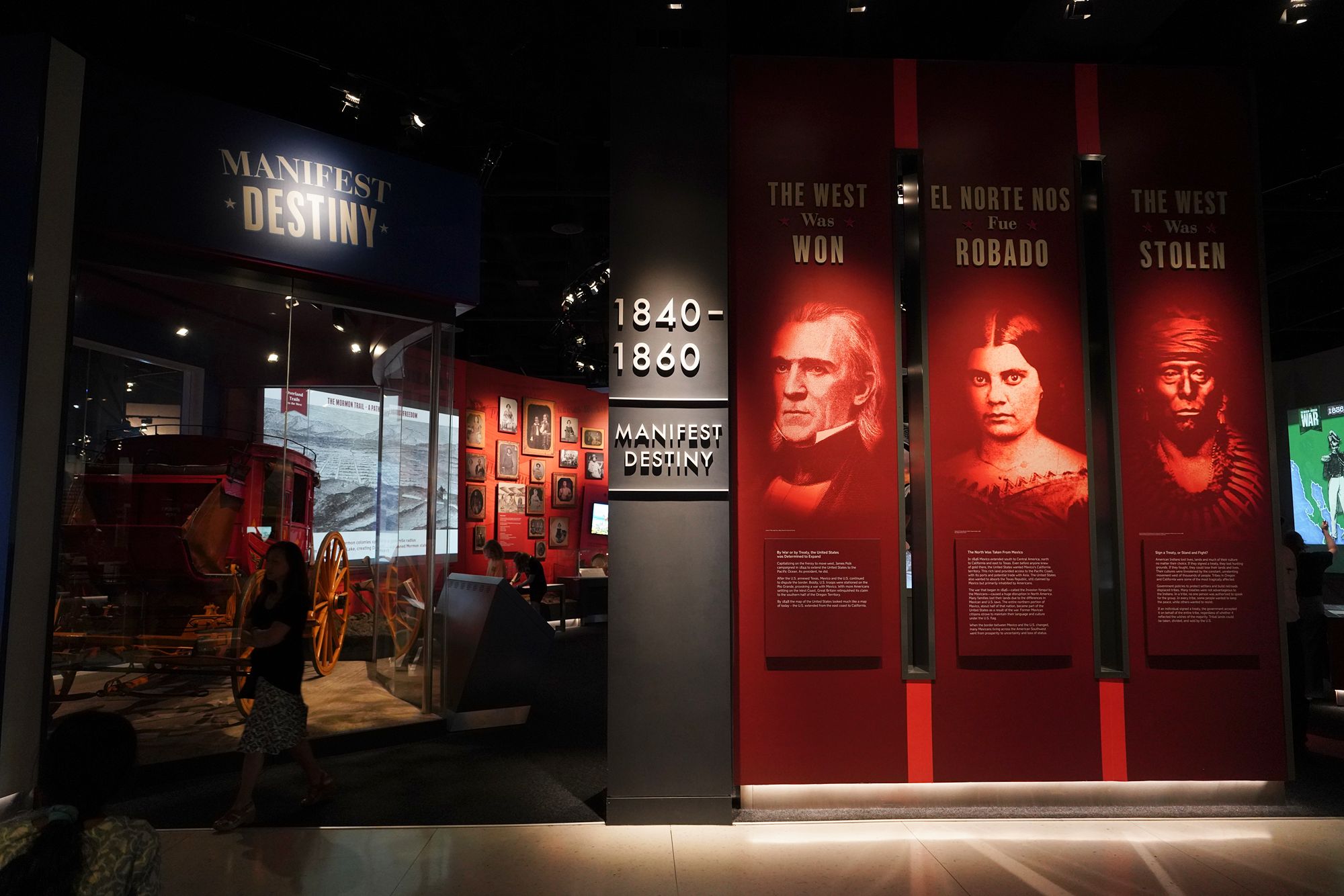
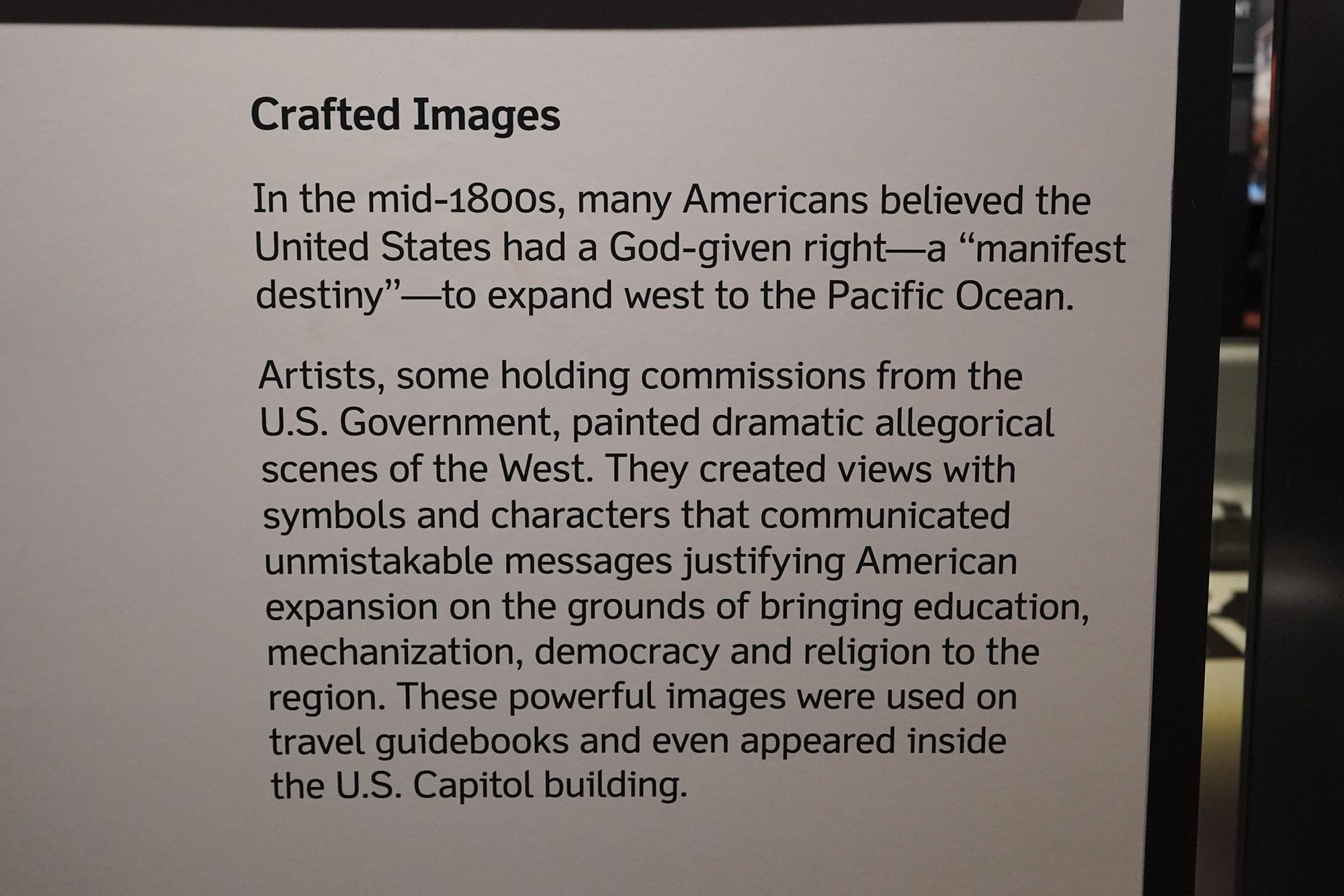
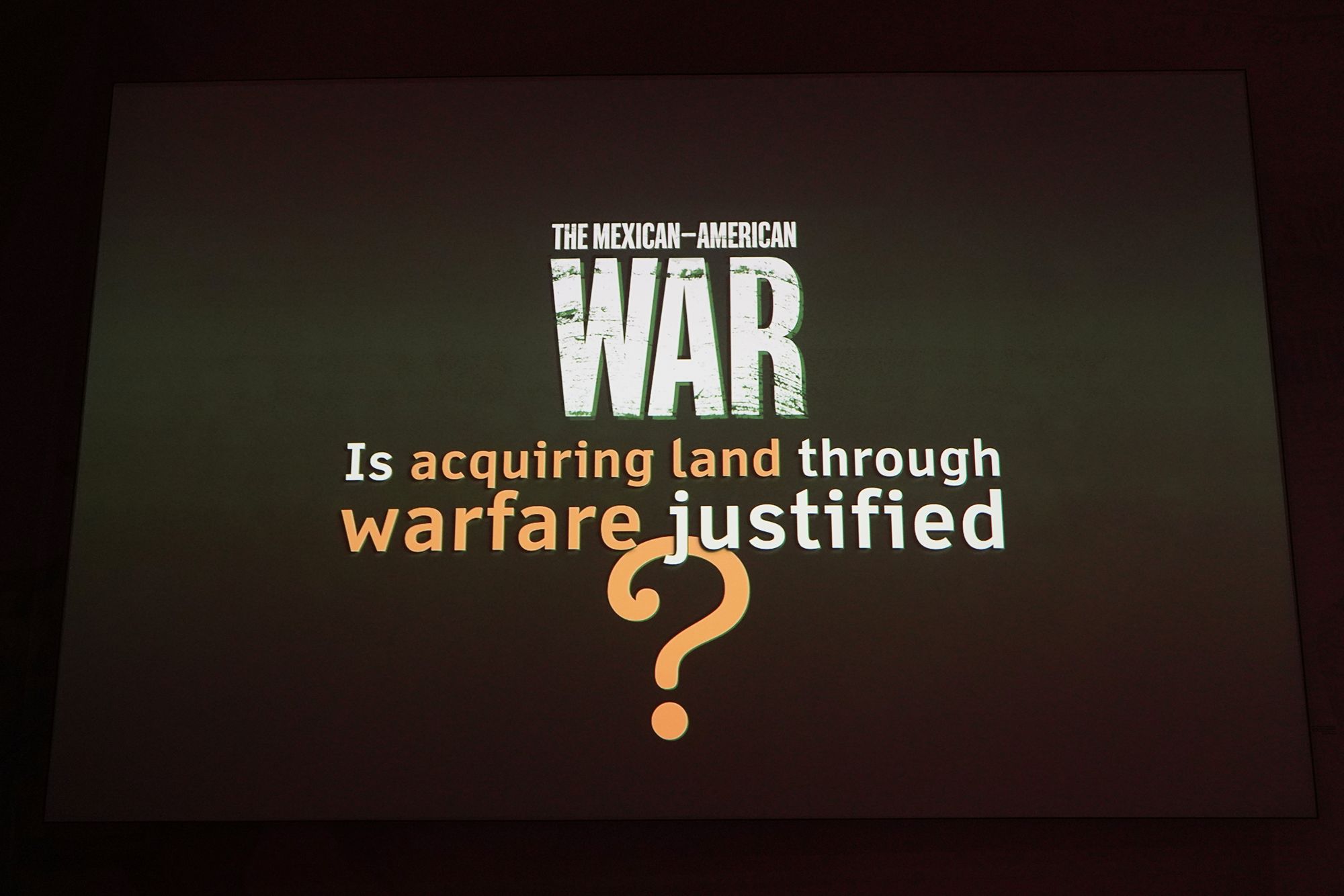
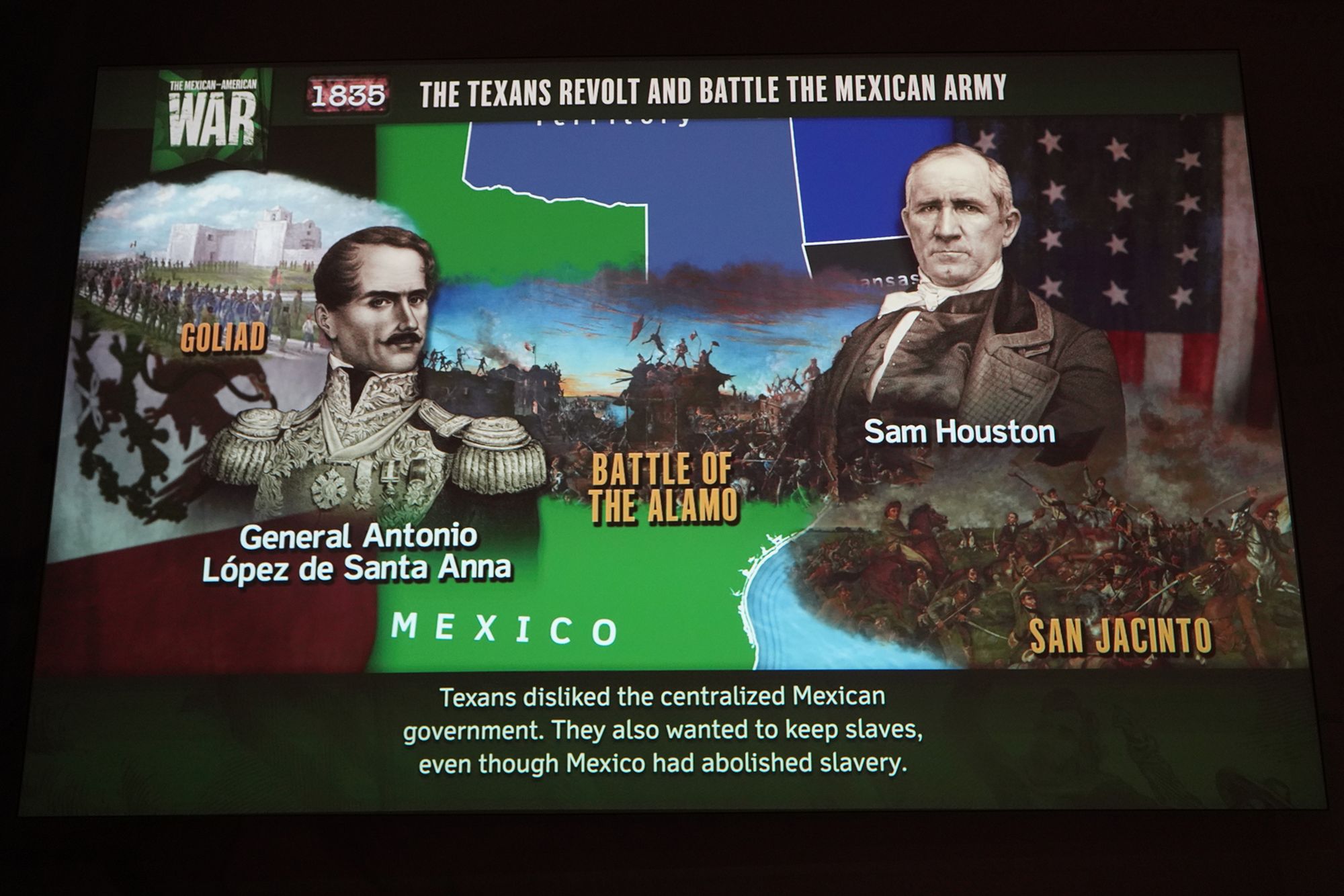
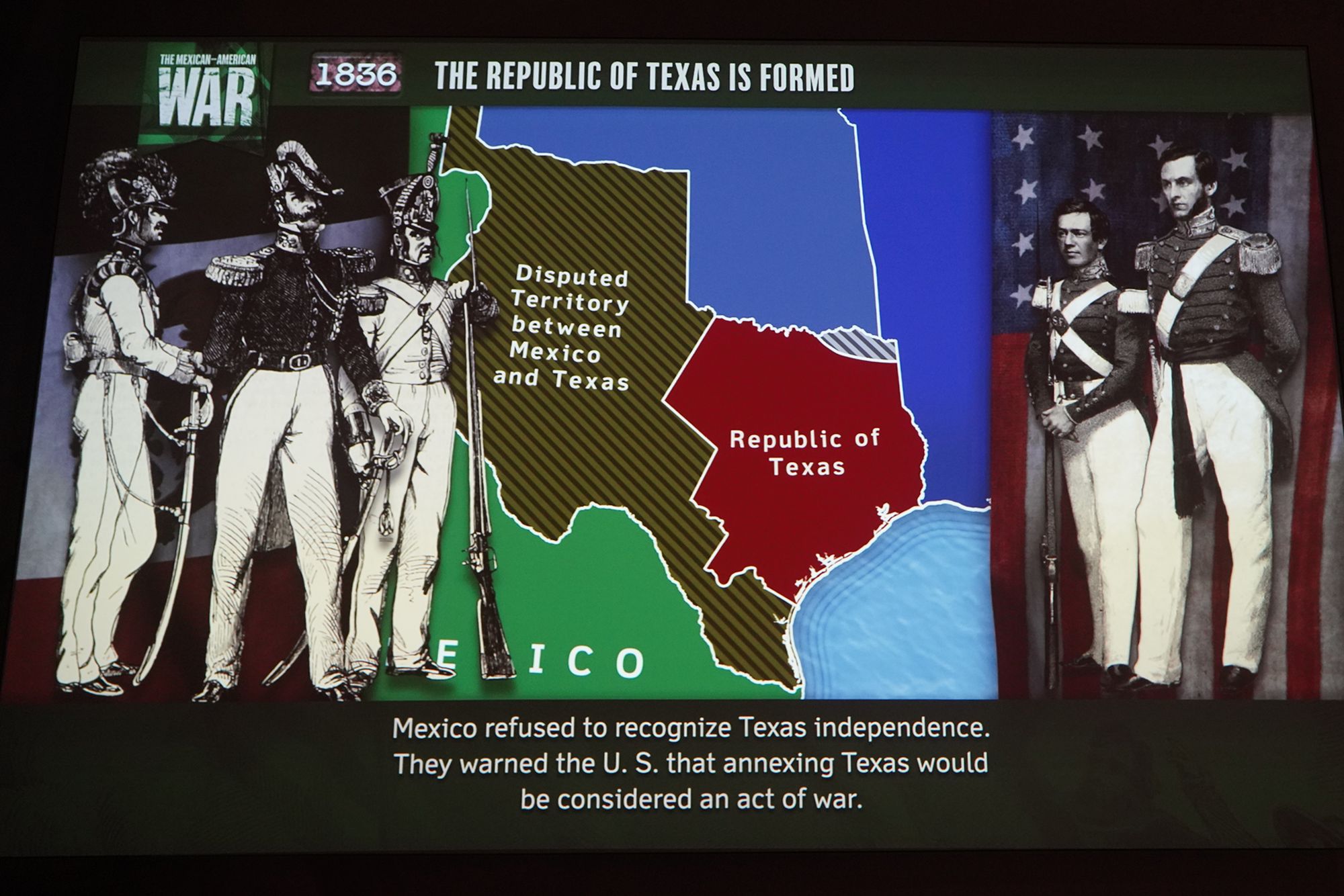
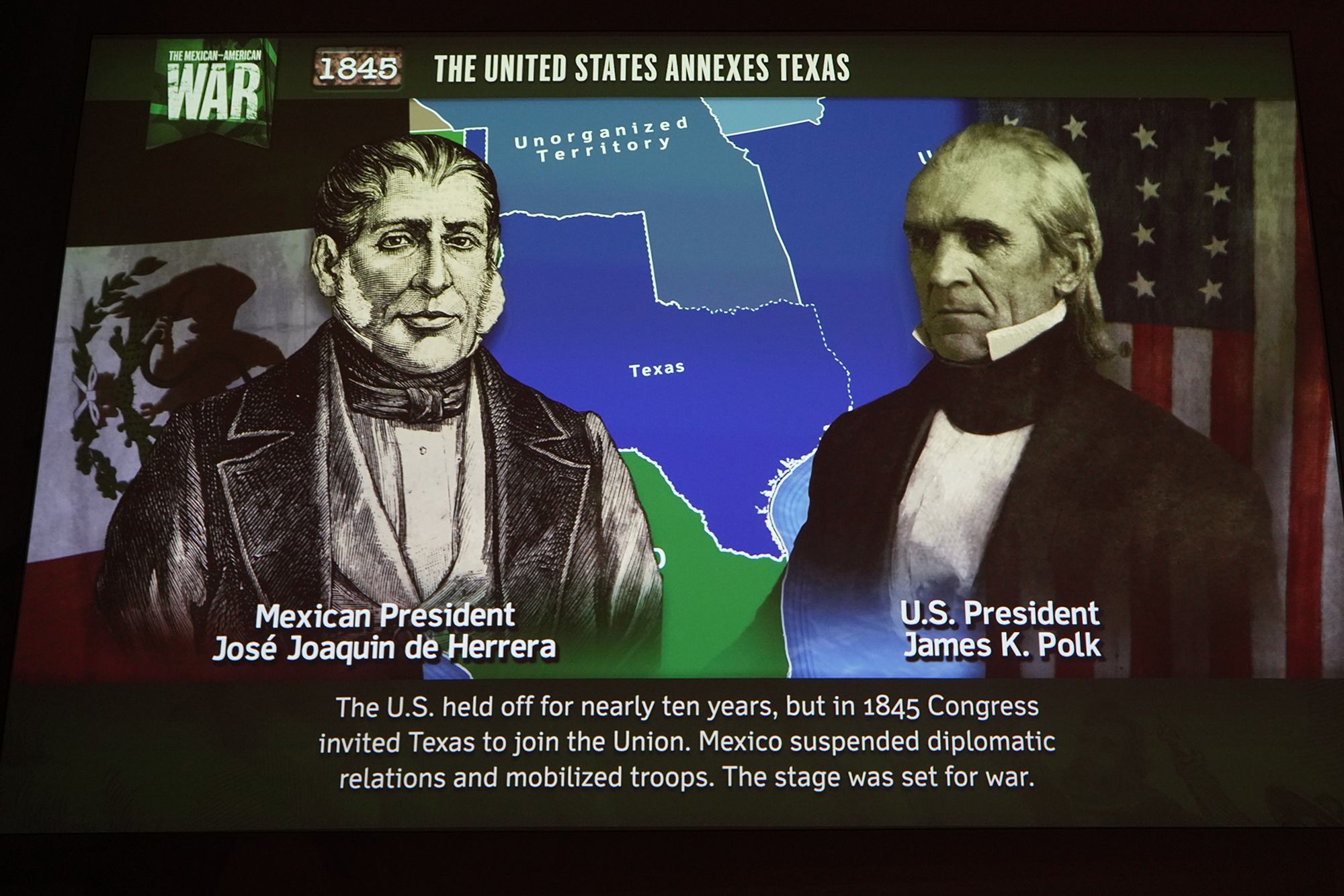
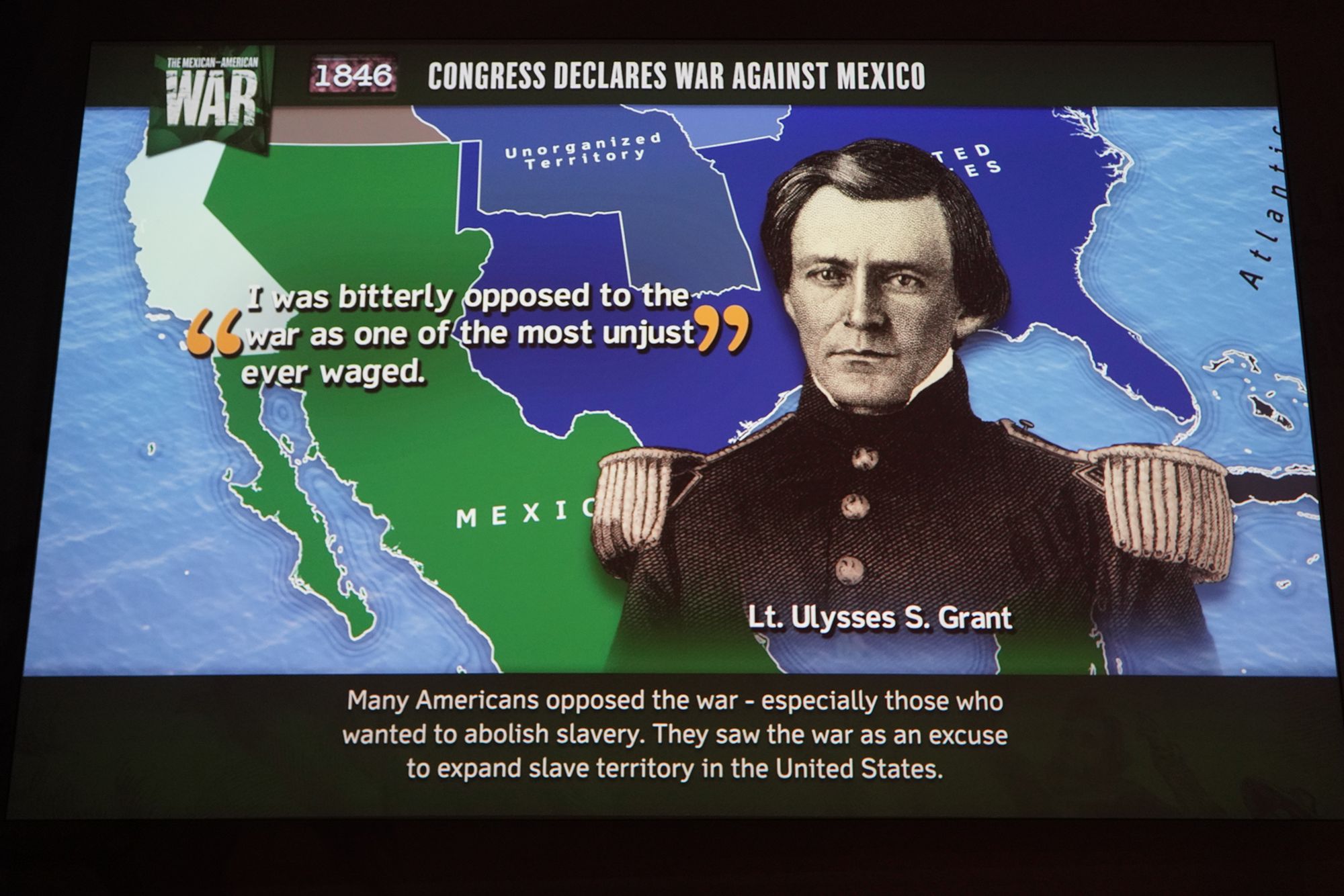
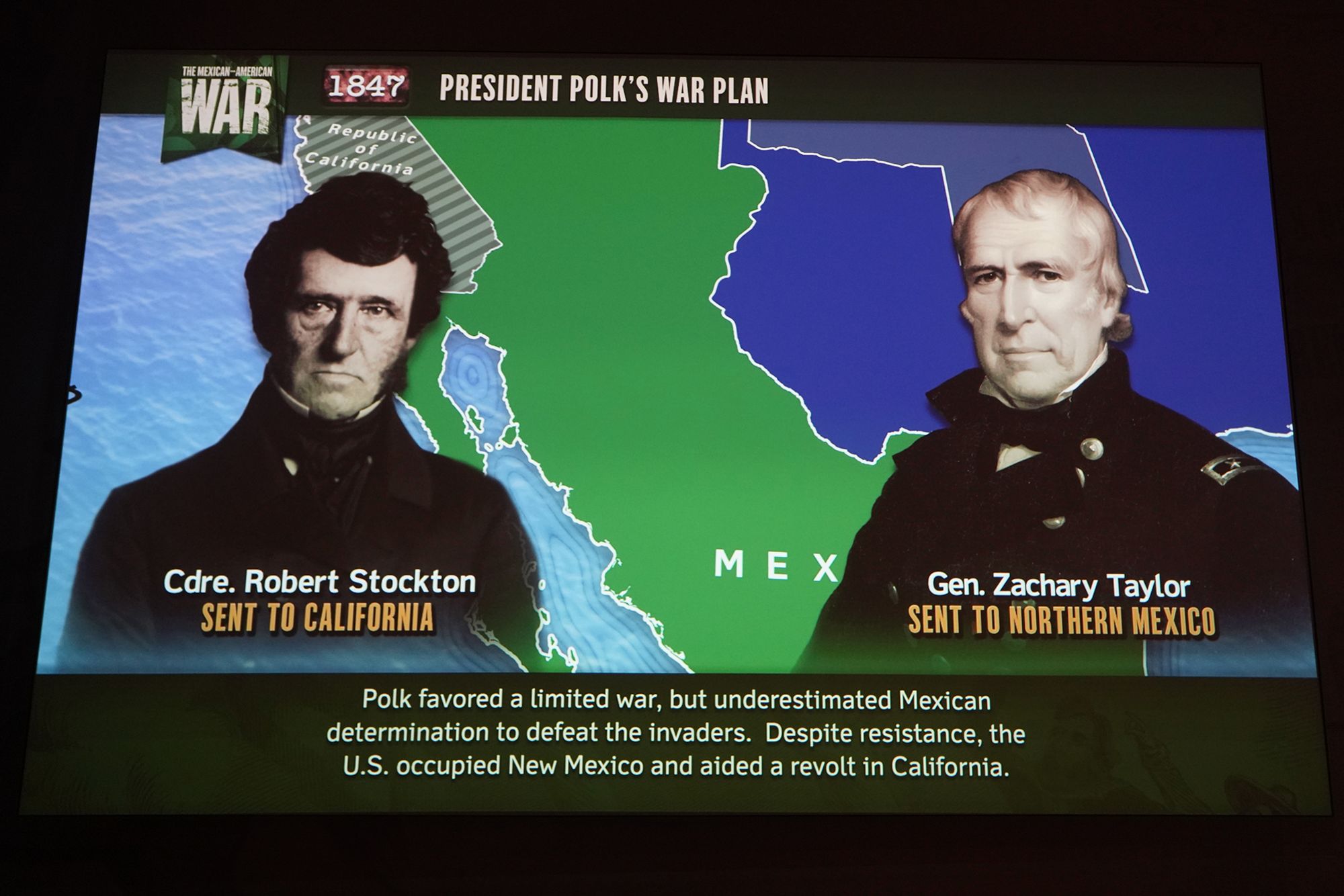
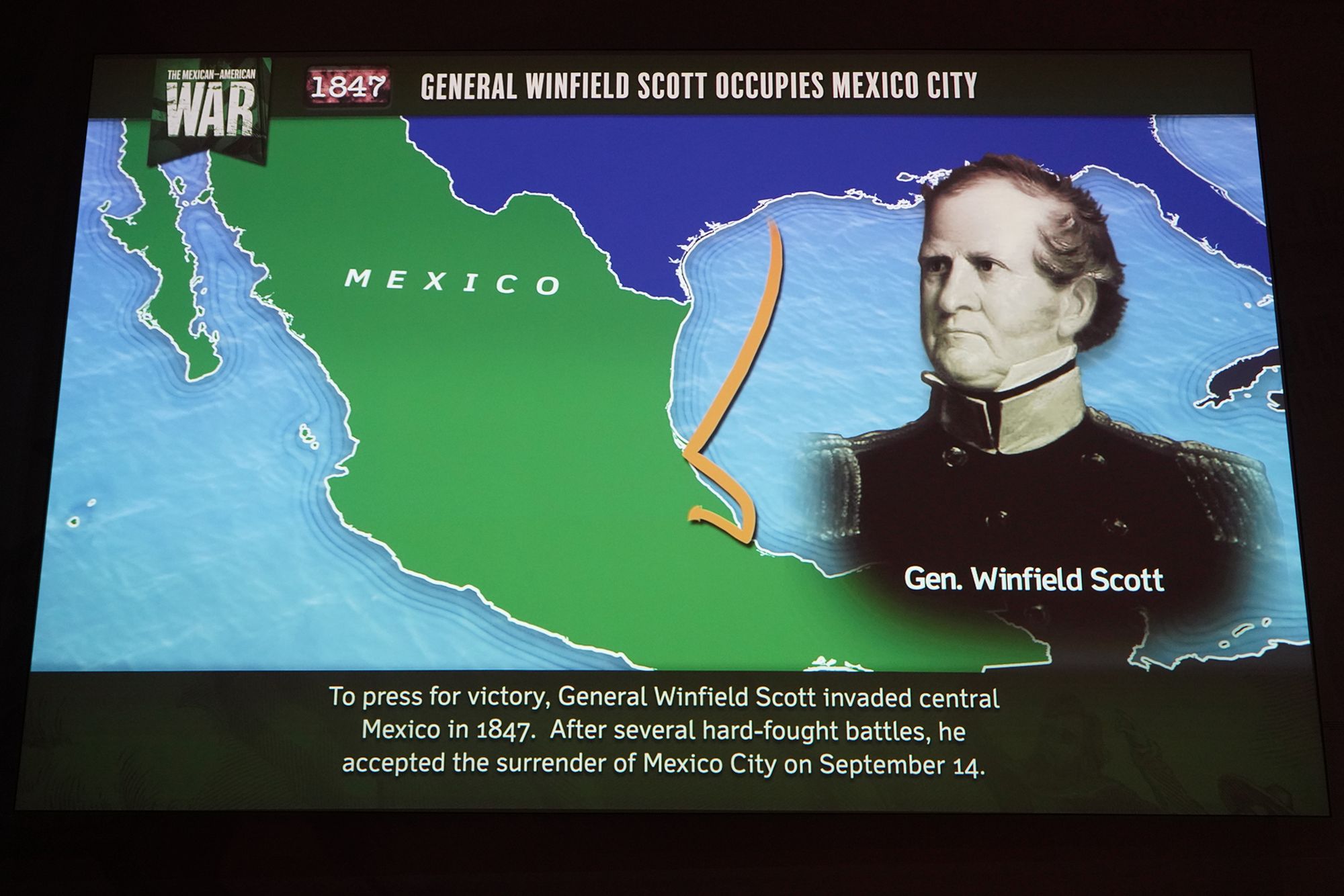
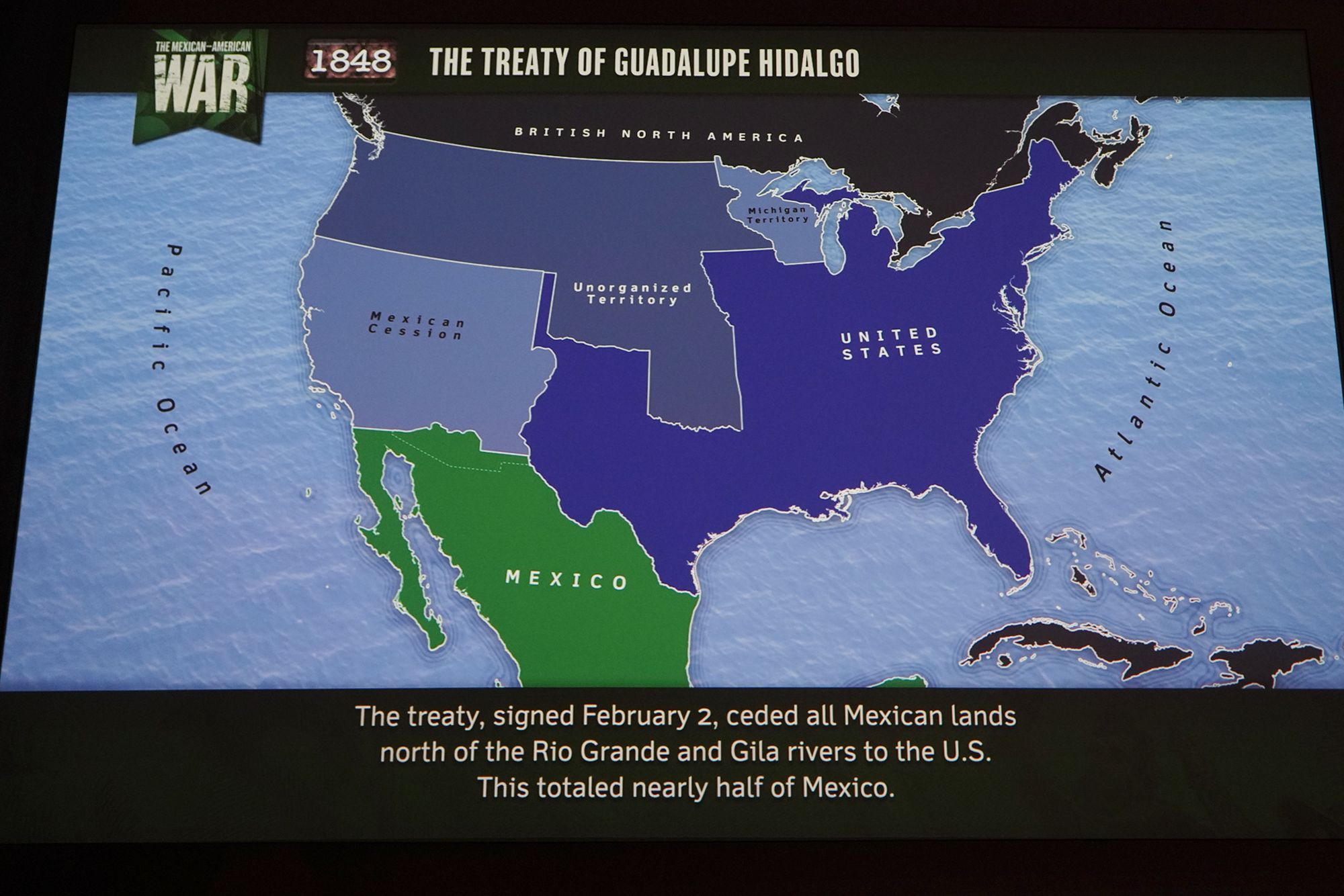
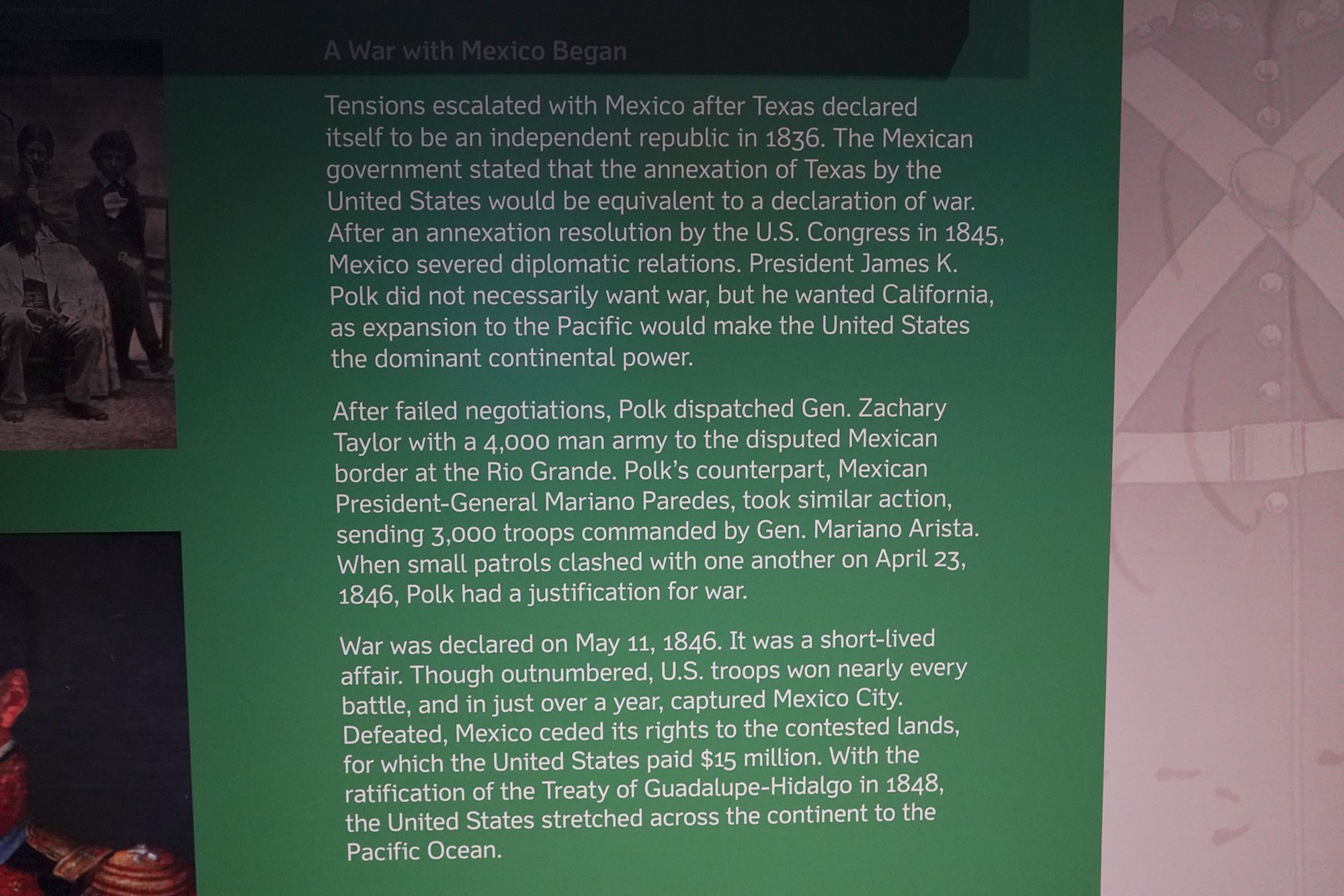
“Manifest Destiny” was the 19th-century belief that the United States was destined—by divine providence, national mission, and cultural superiority—to expand westward across the continent, used to justify territorial growth, displacement of Native peoples, and conflicts such as the Mexican-American War.
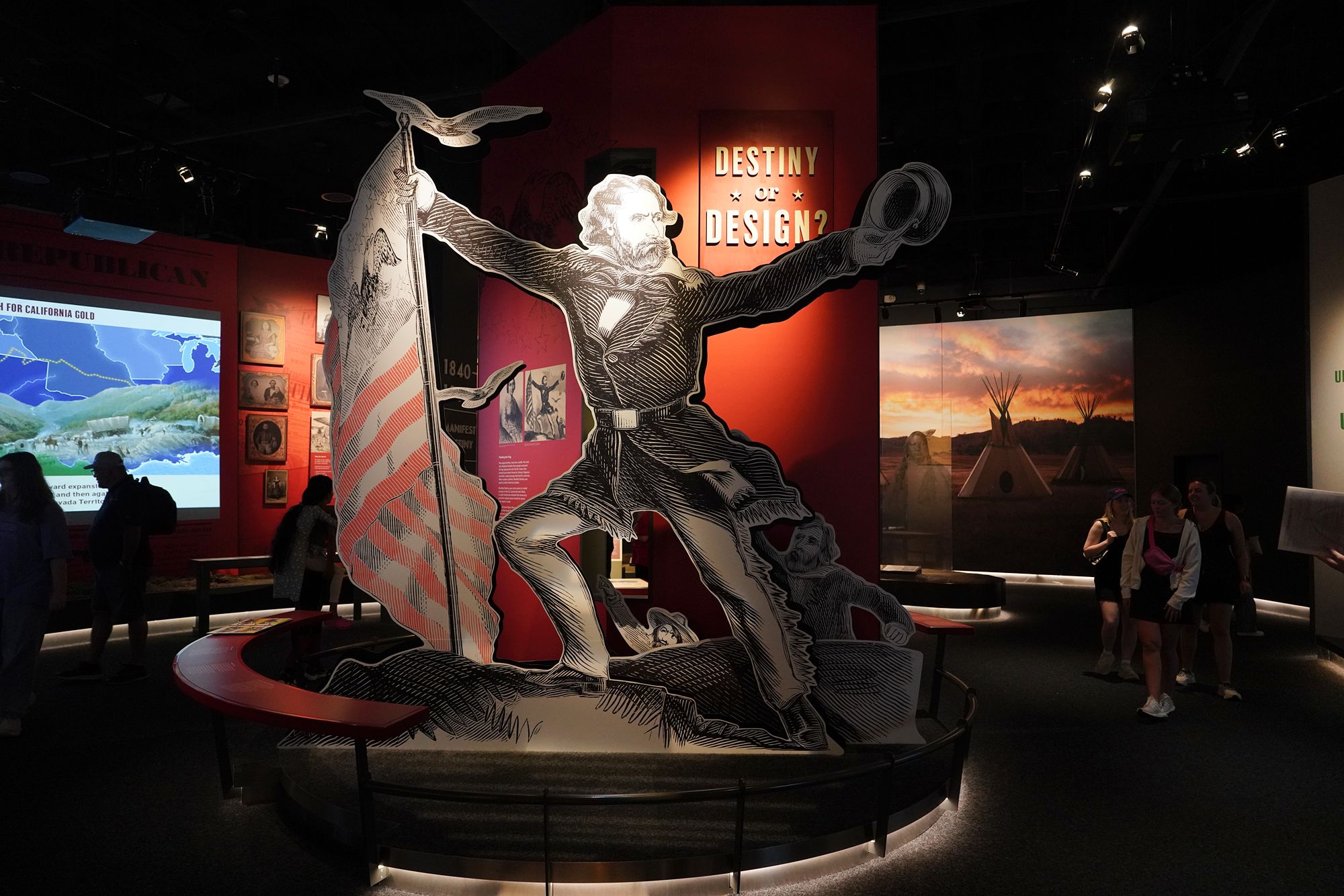
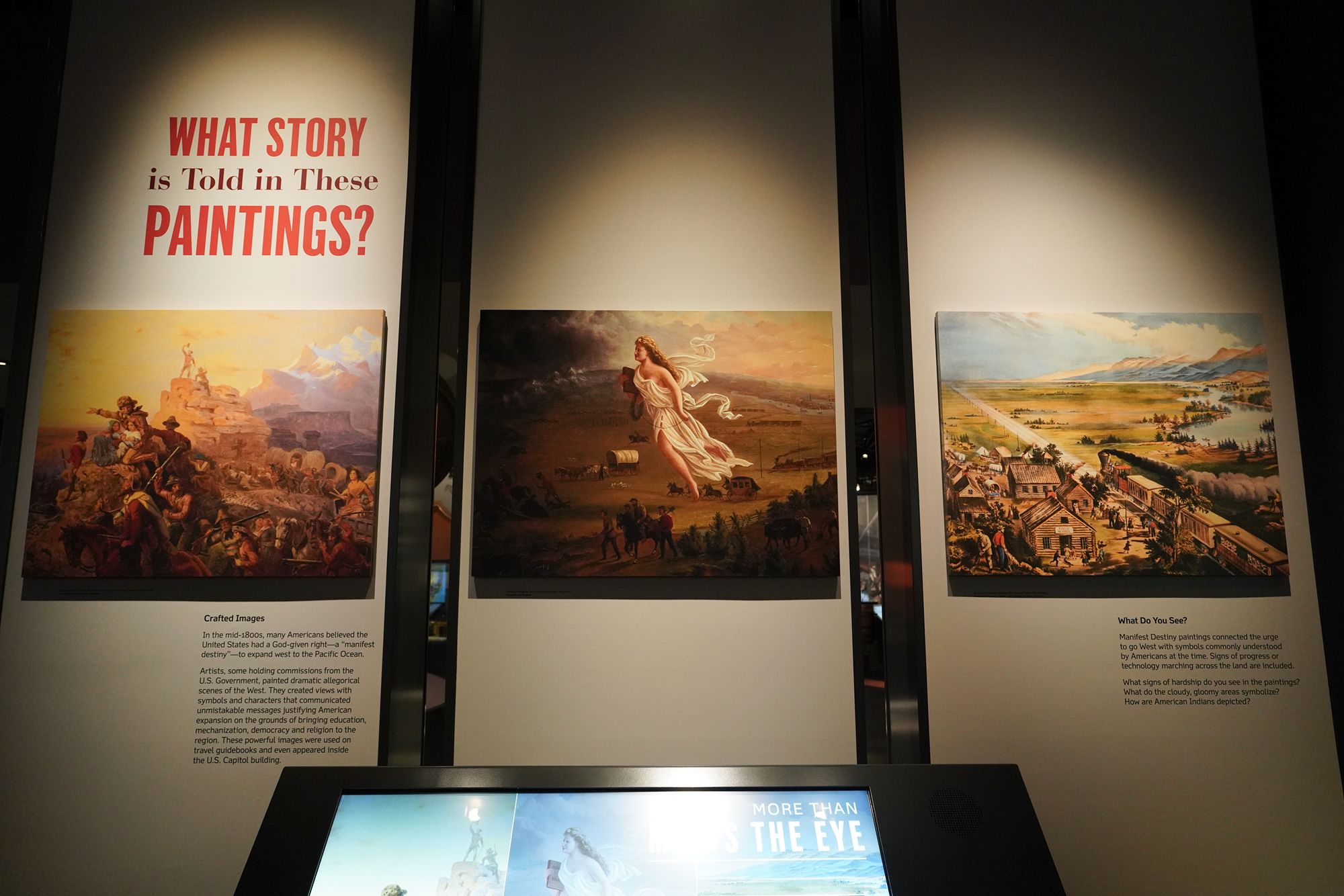
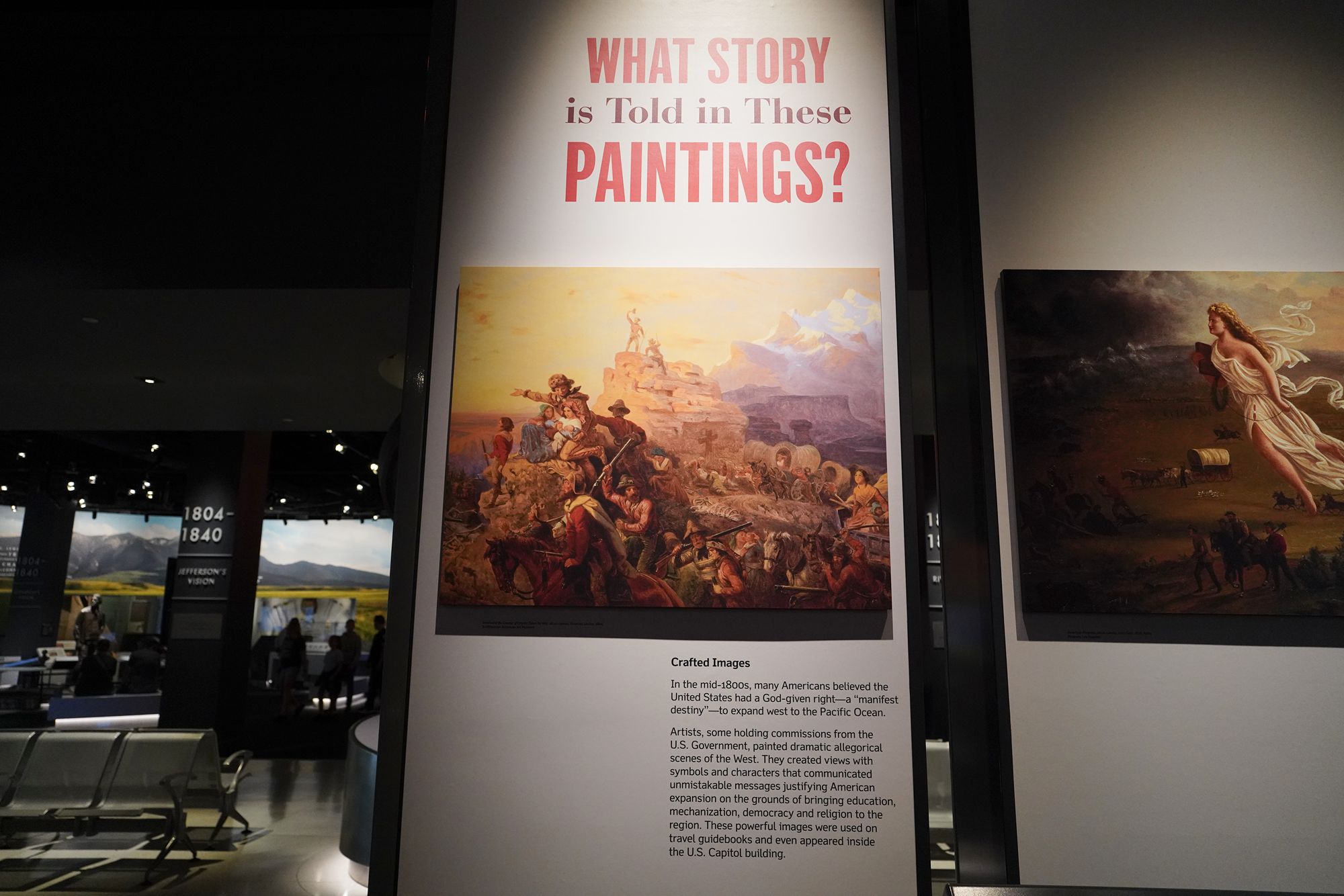
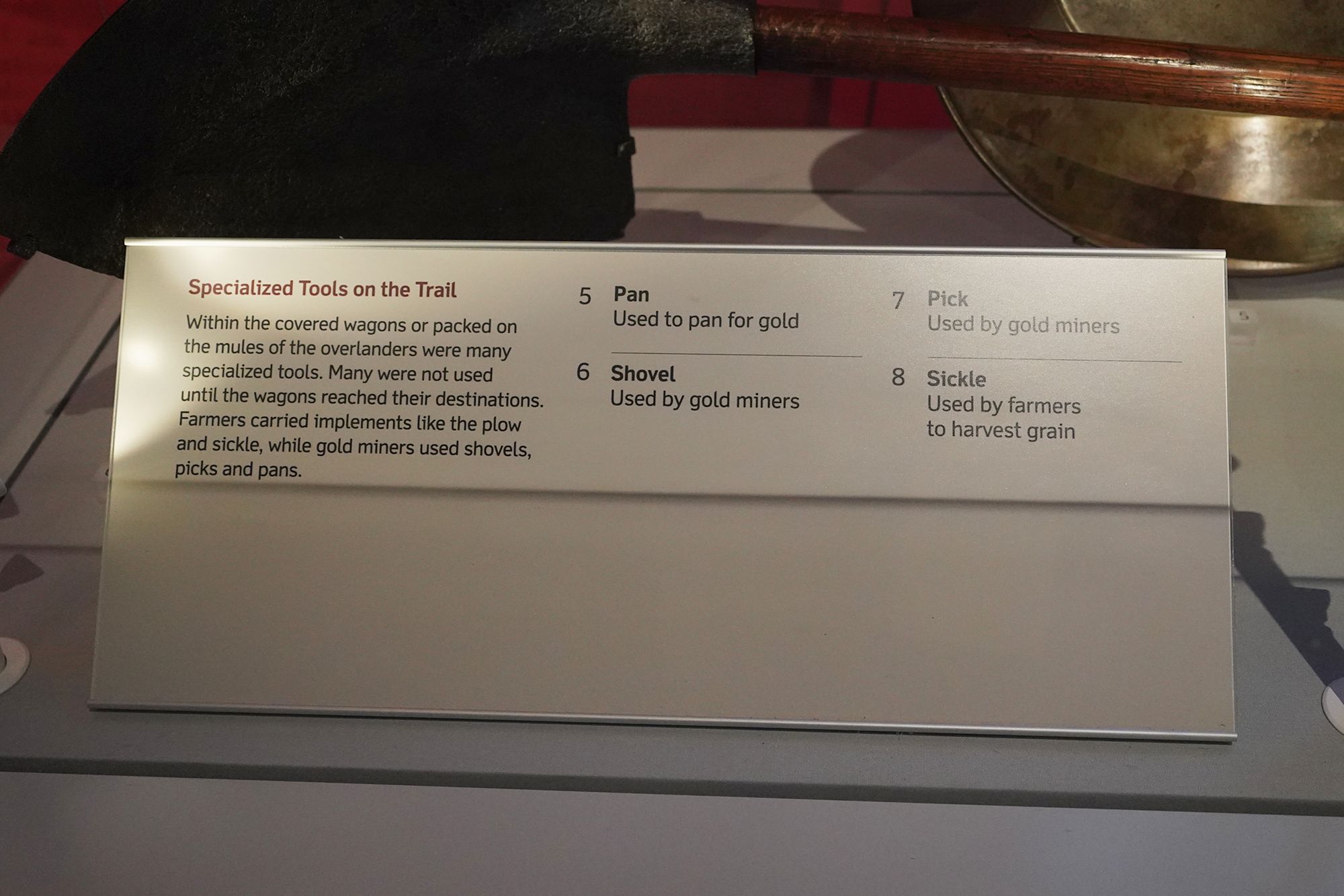
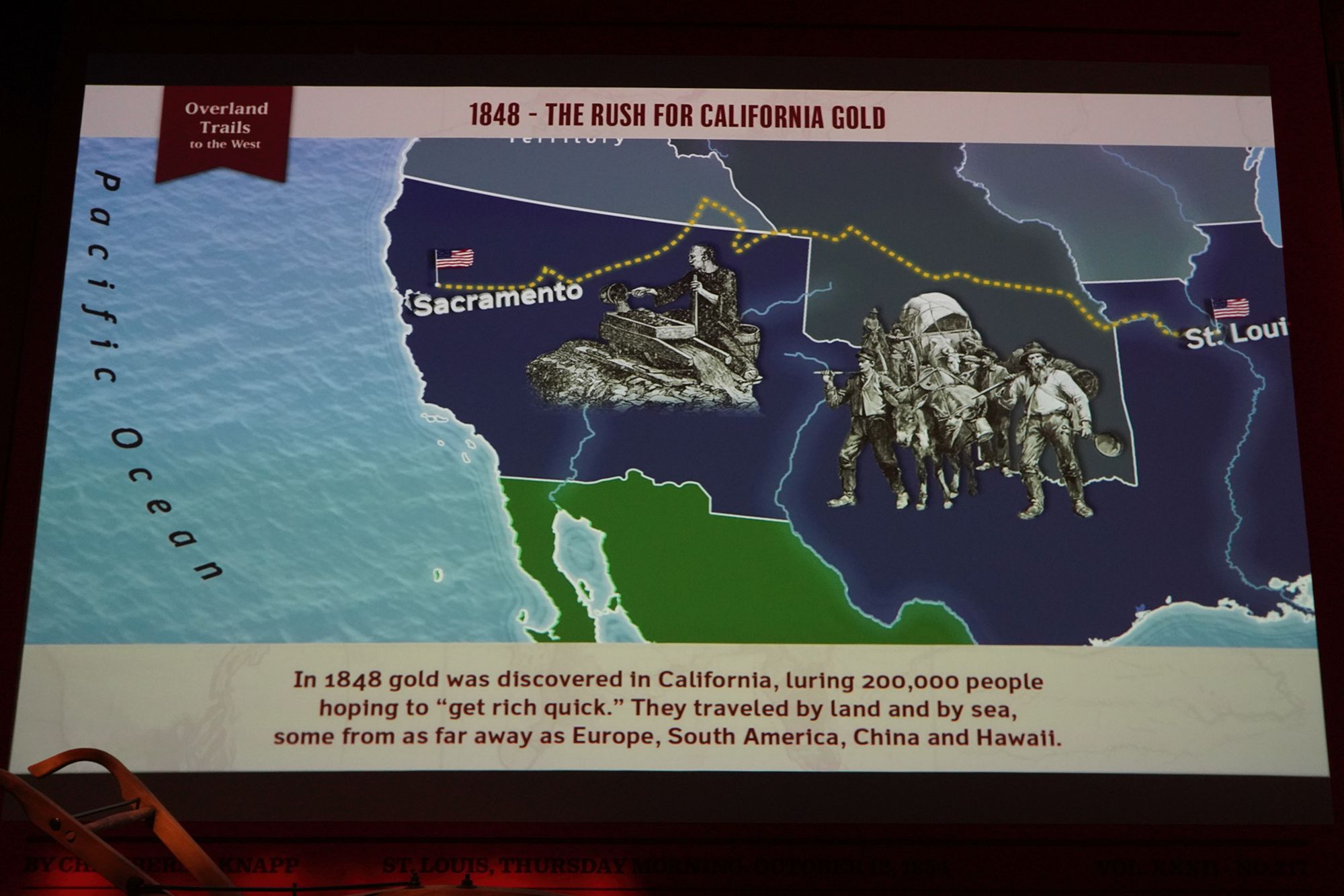
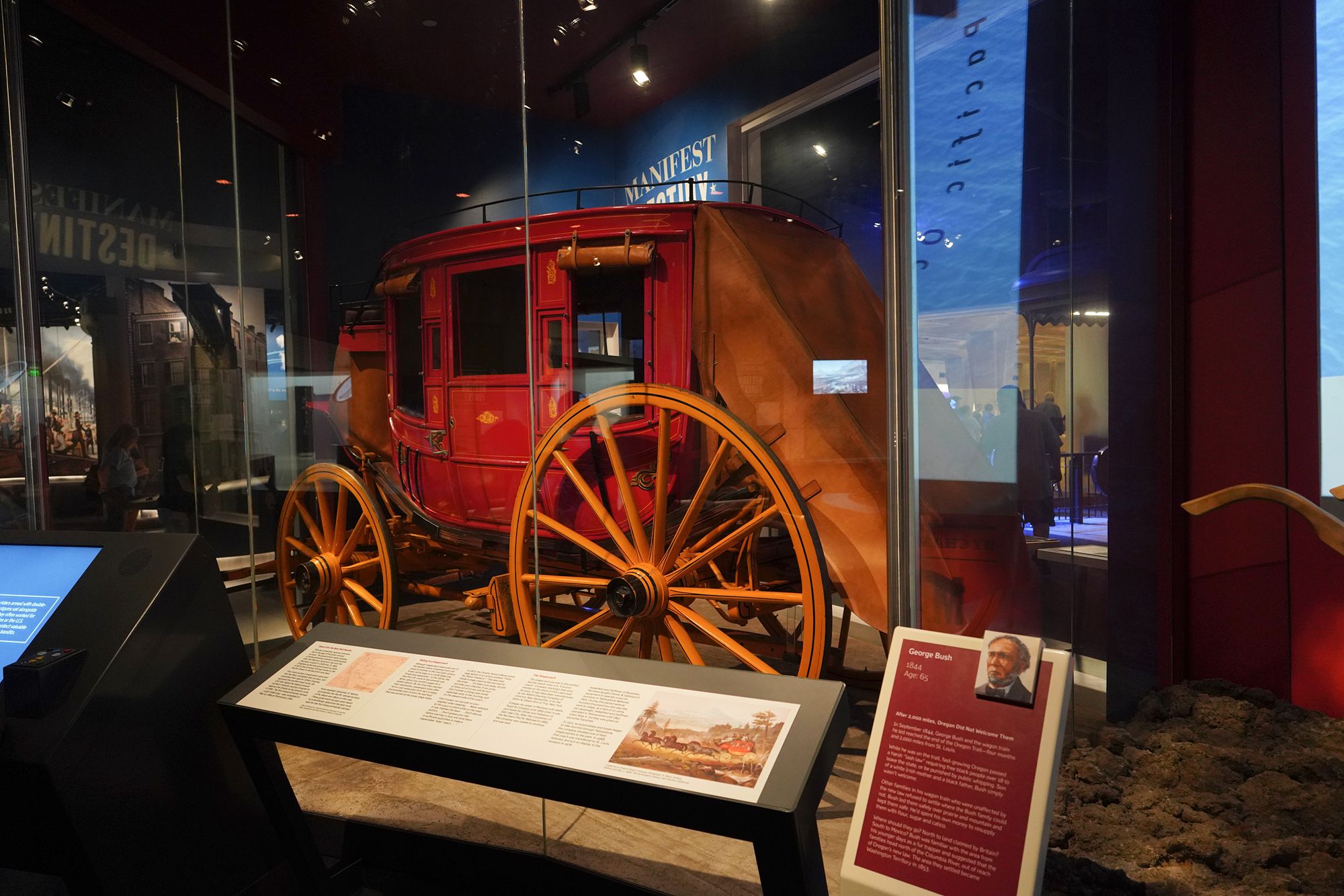
On Mexican – American War
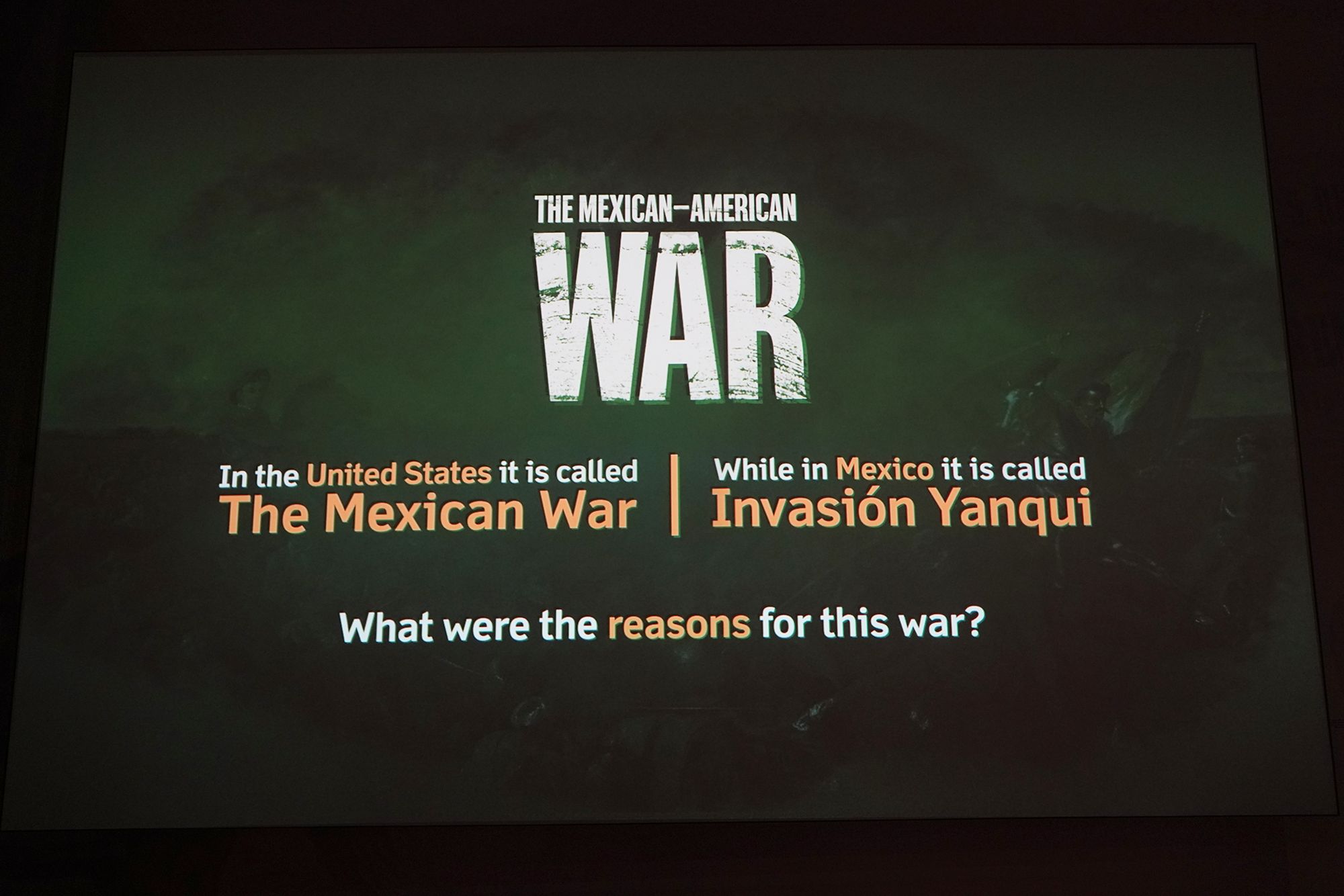
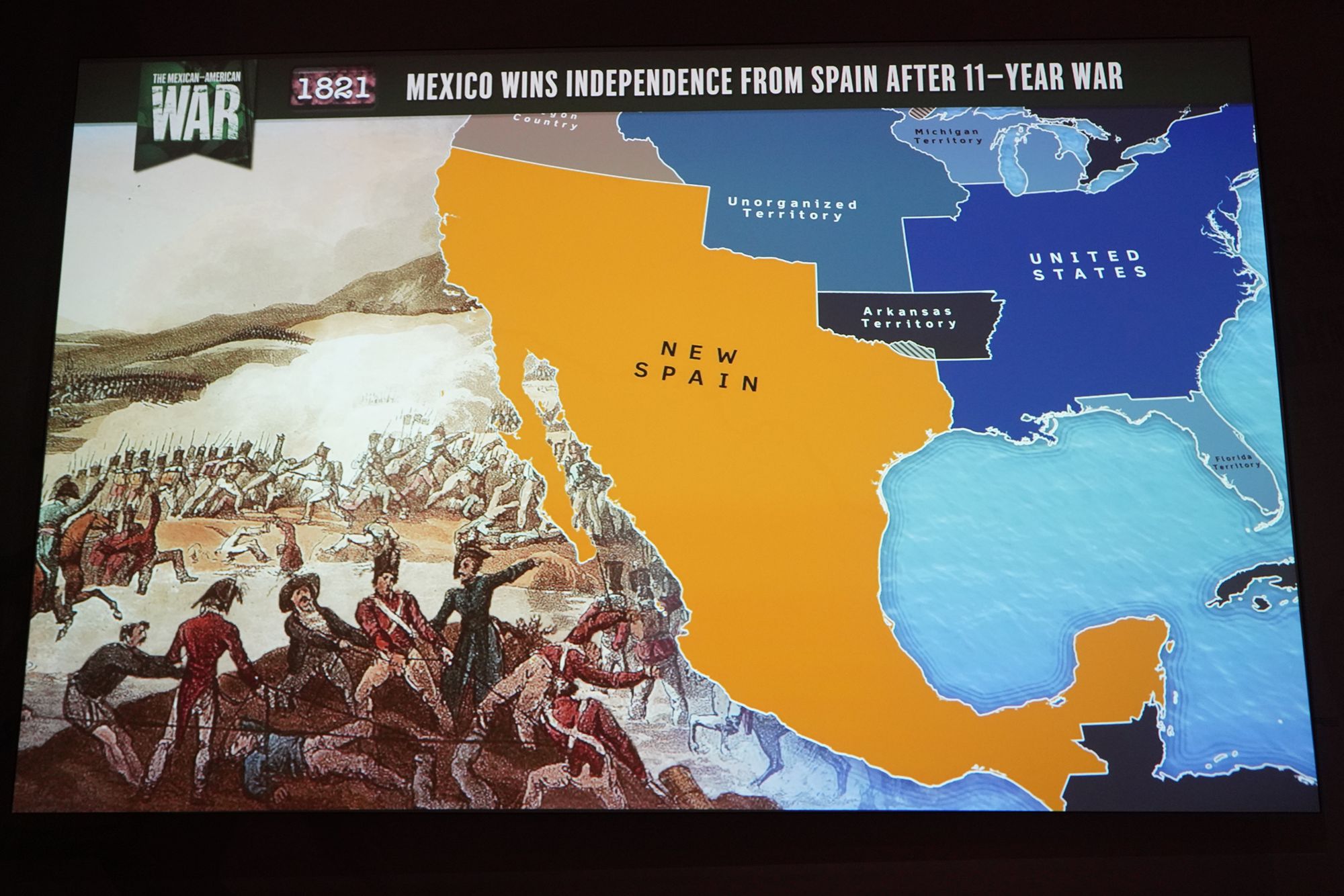
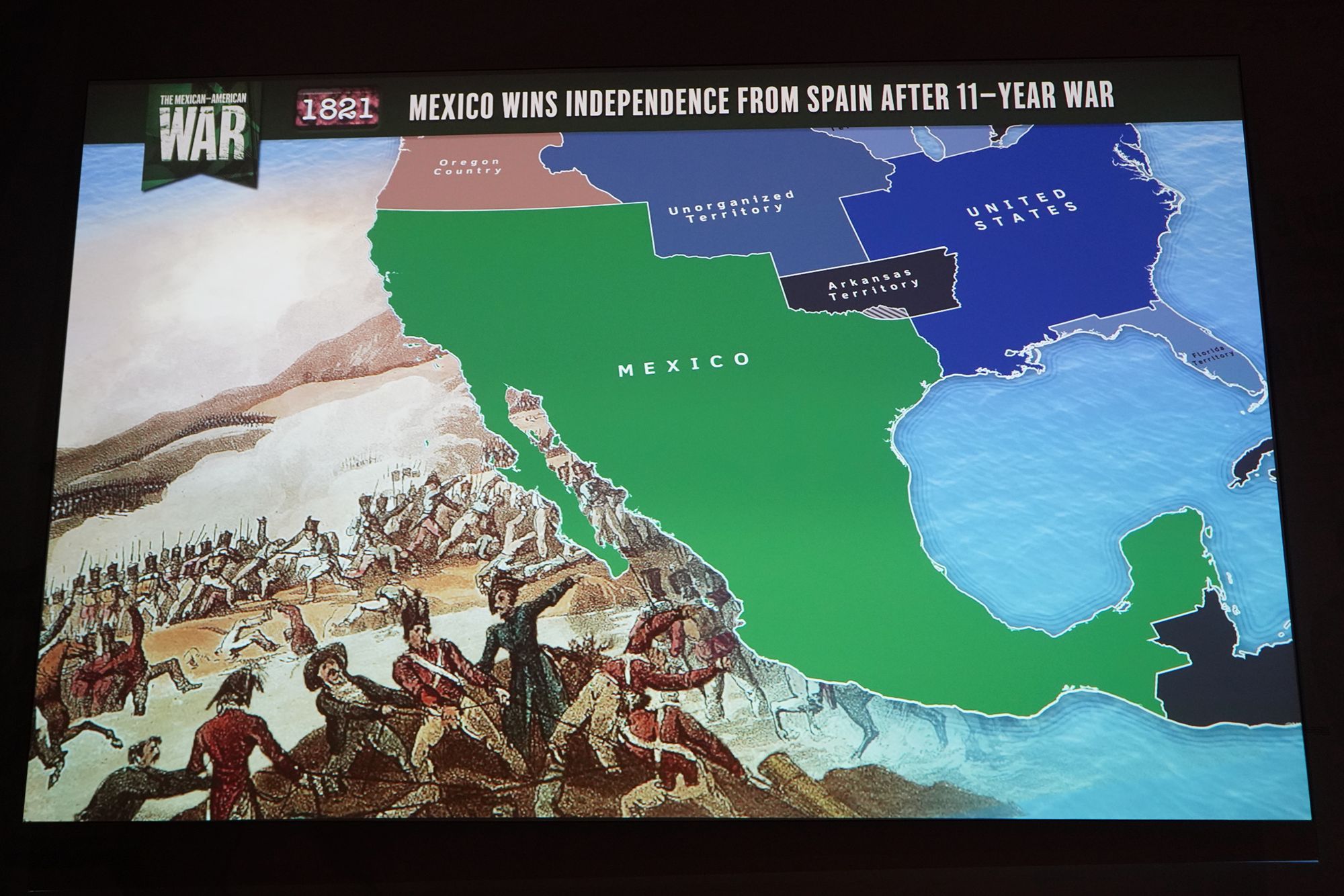
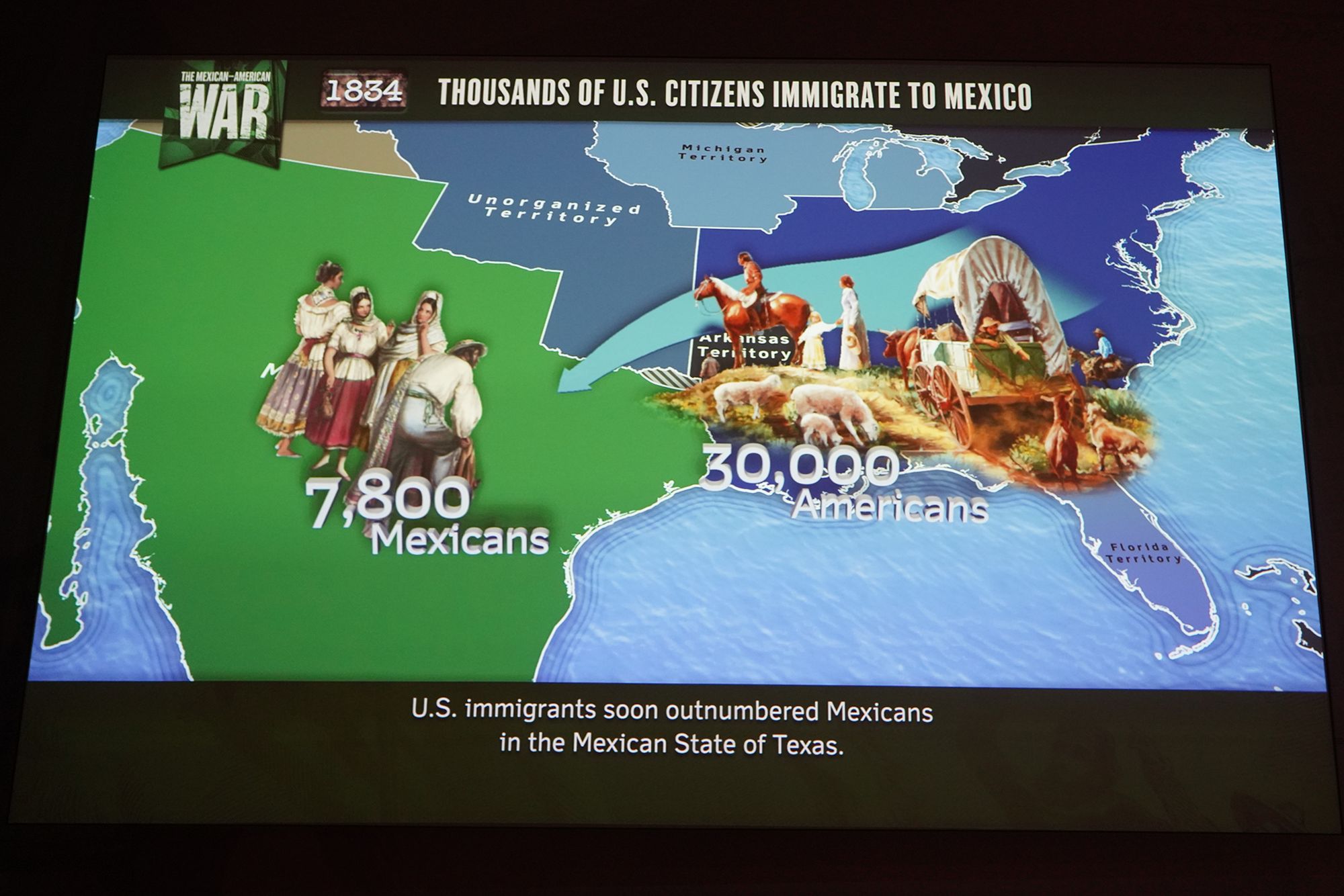
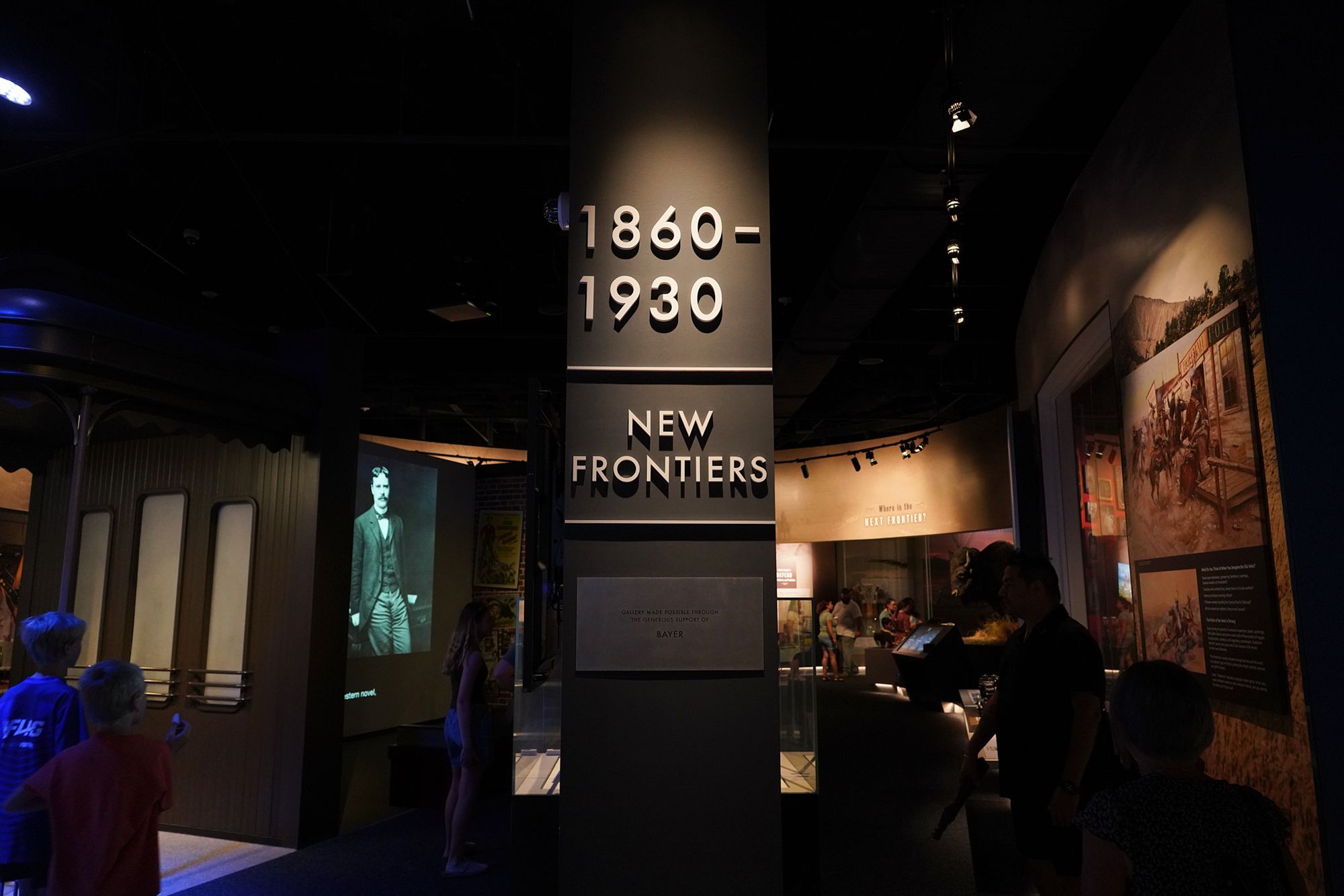
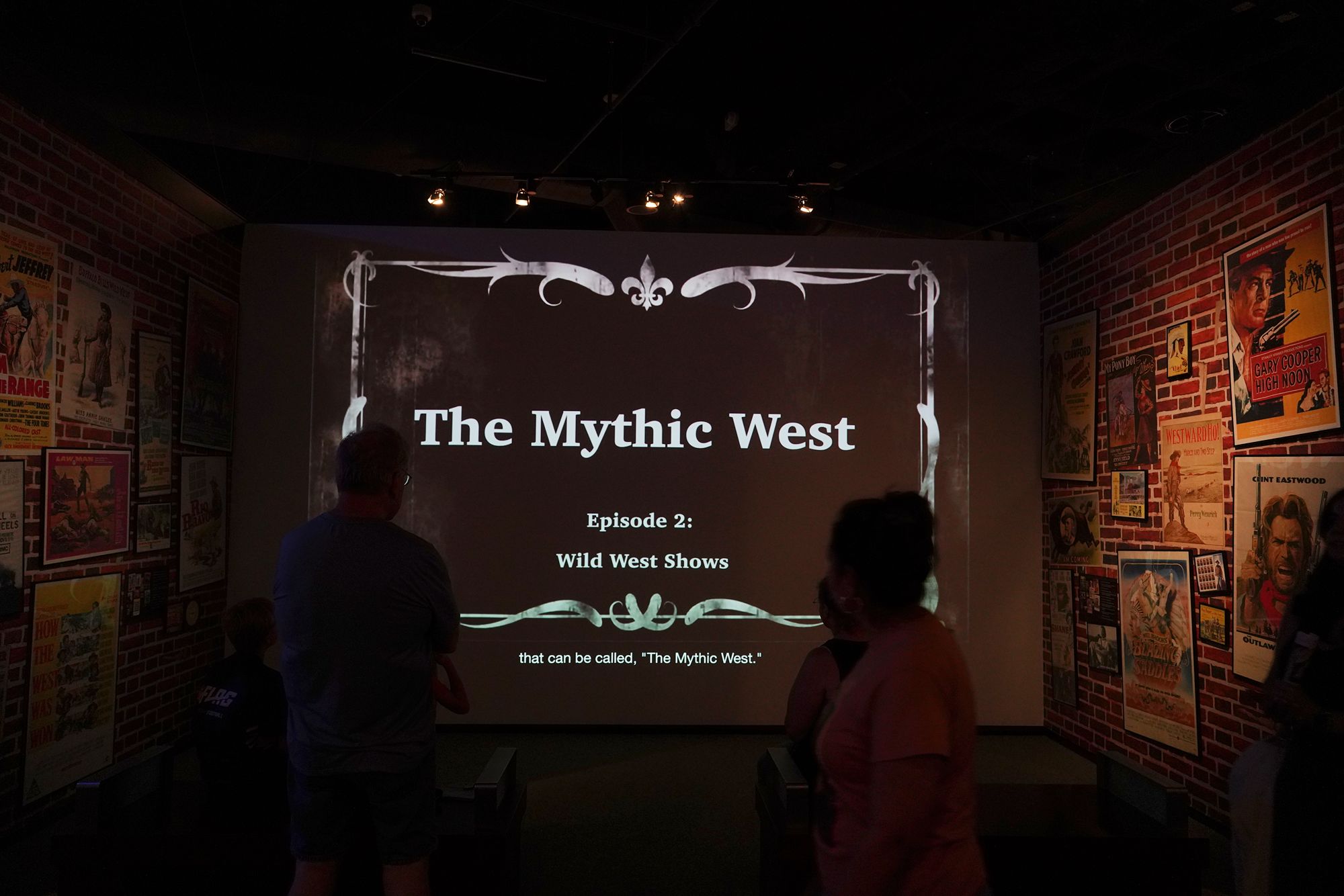
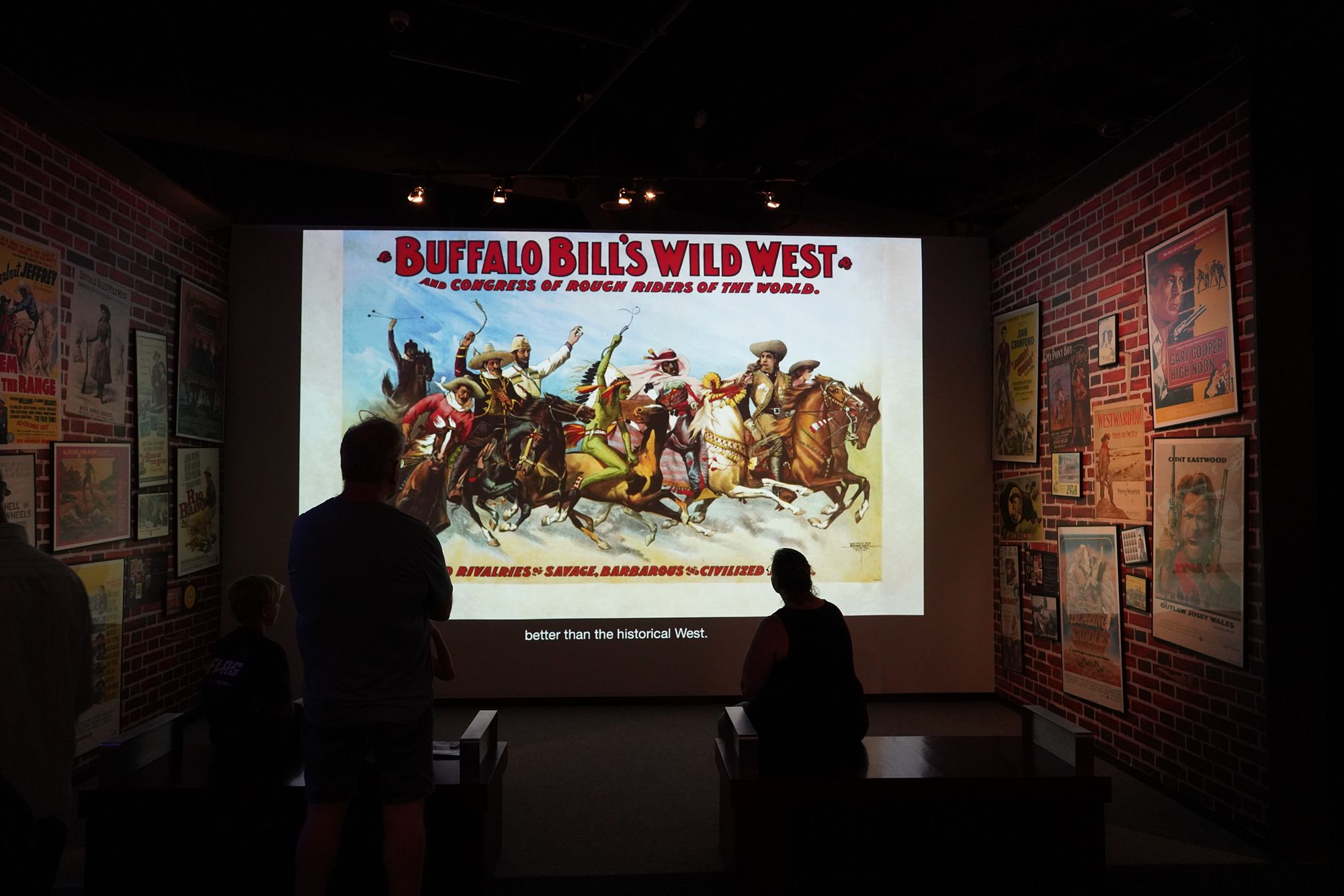
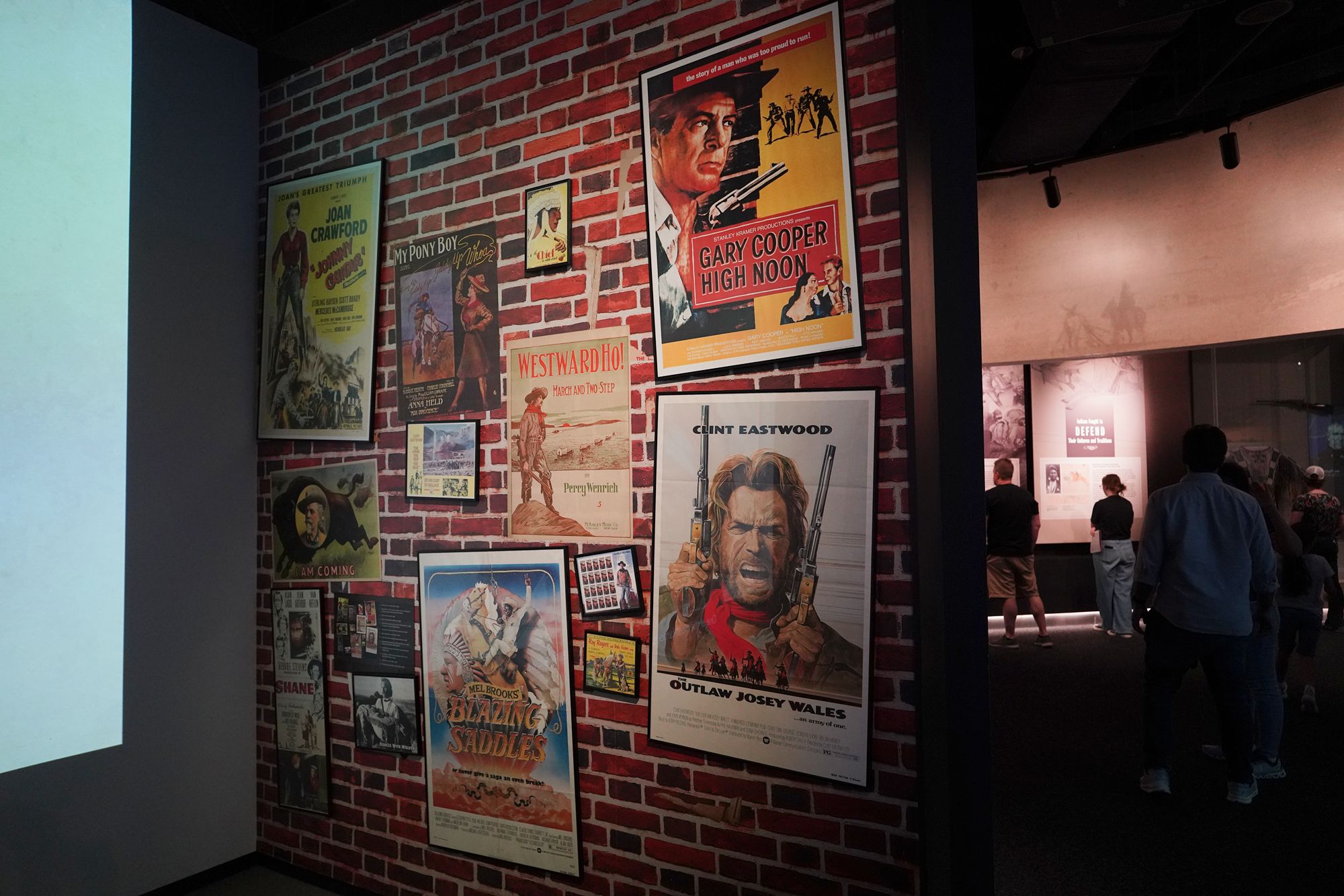
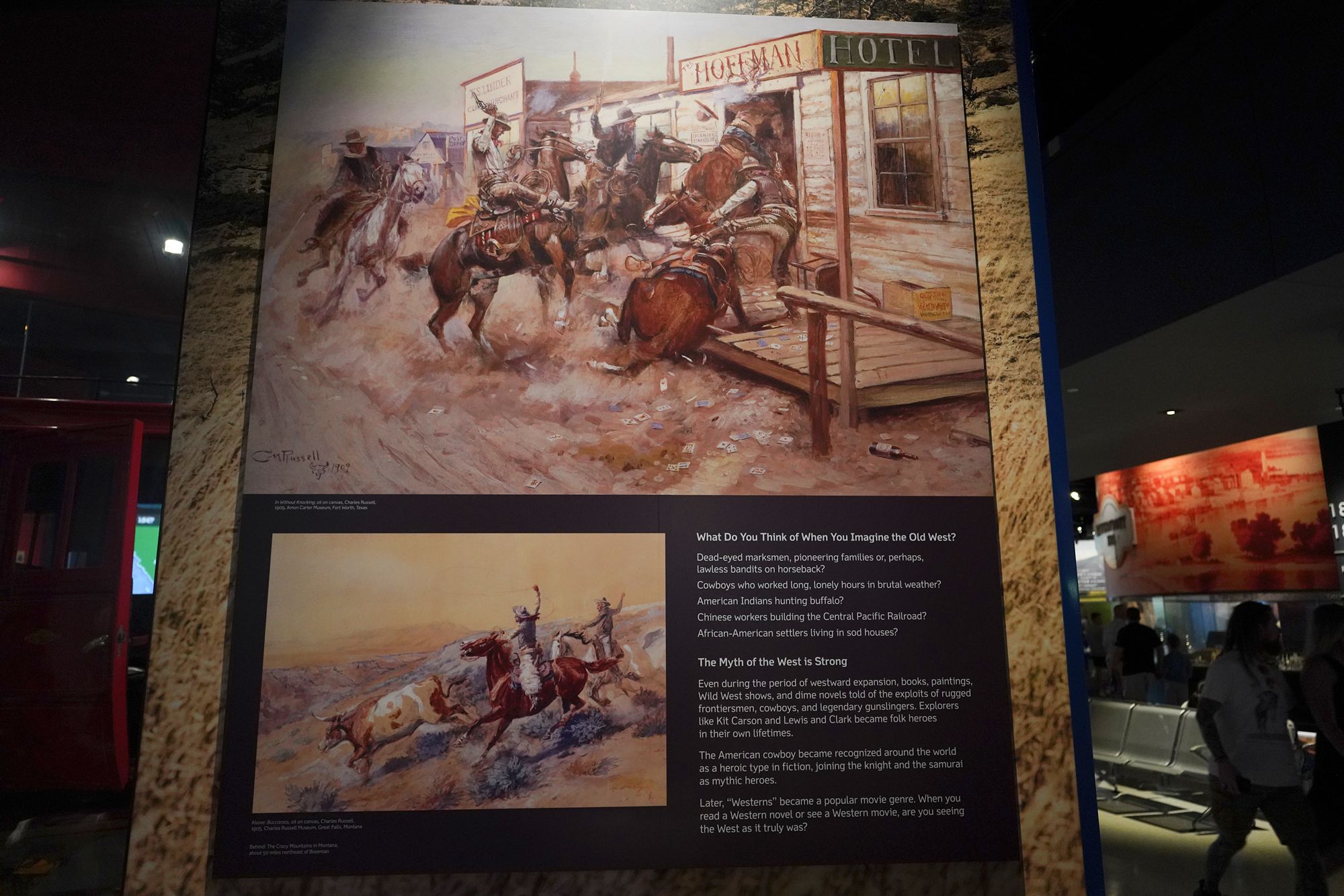
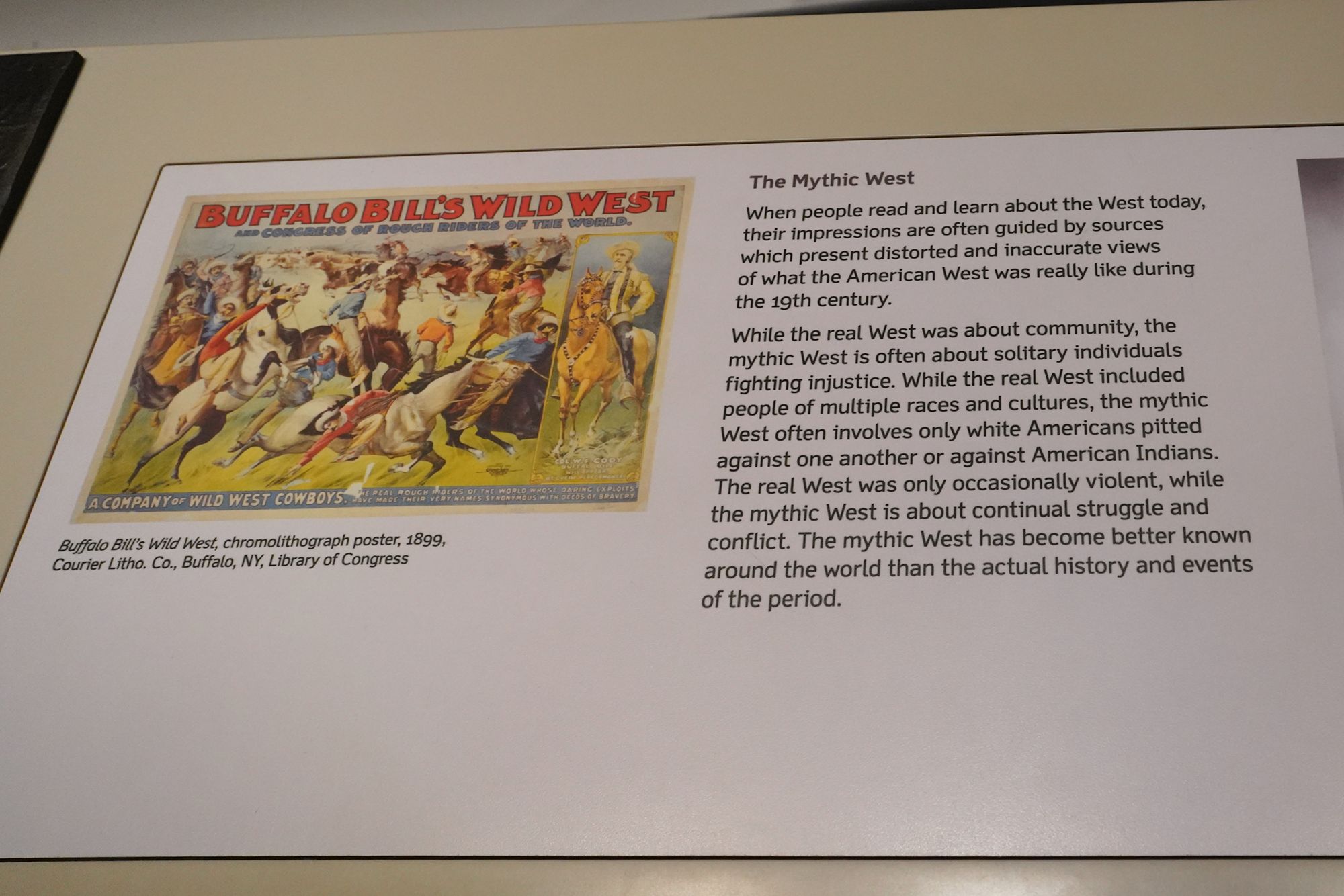
“The mythic West” refers to the romanticized version of the American frontier—filled with cowboys, vast open ranges, noble settlers, and constant adventure—that simplifies history and overlooks the harsher realities of conflict, hardship, and diverse peoples who lived there.
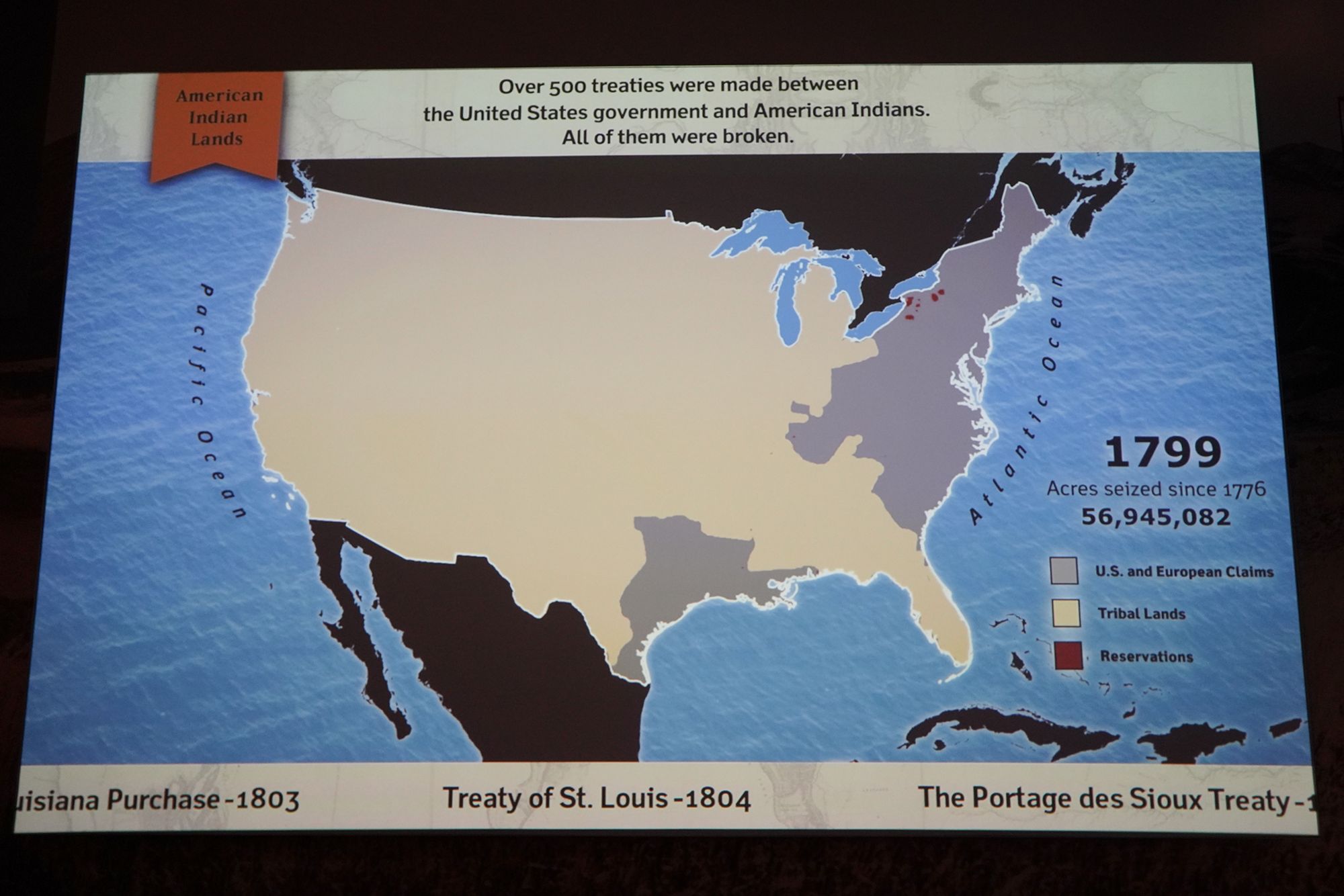
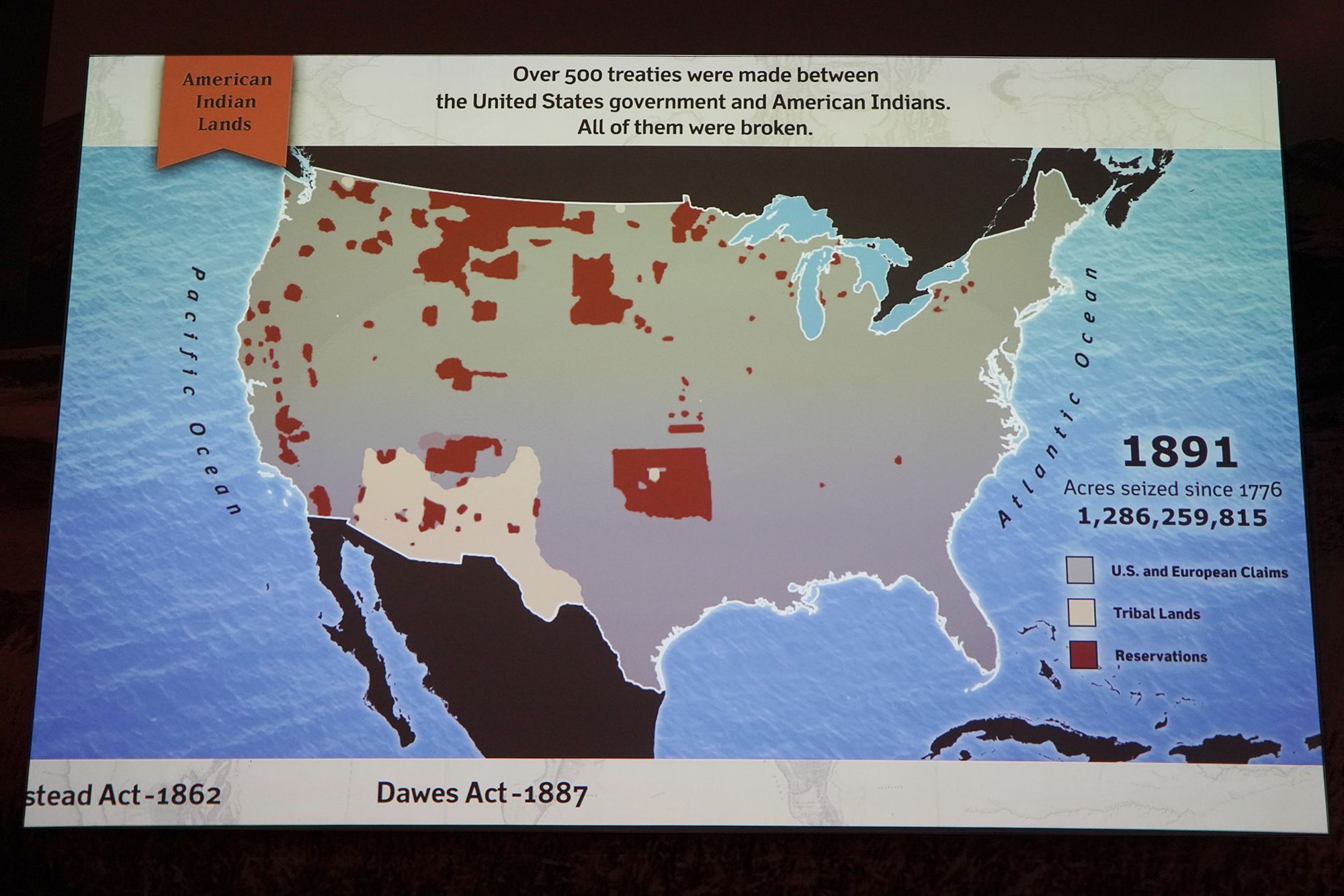
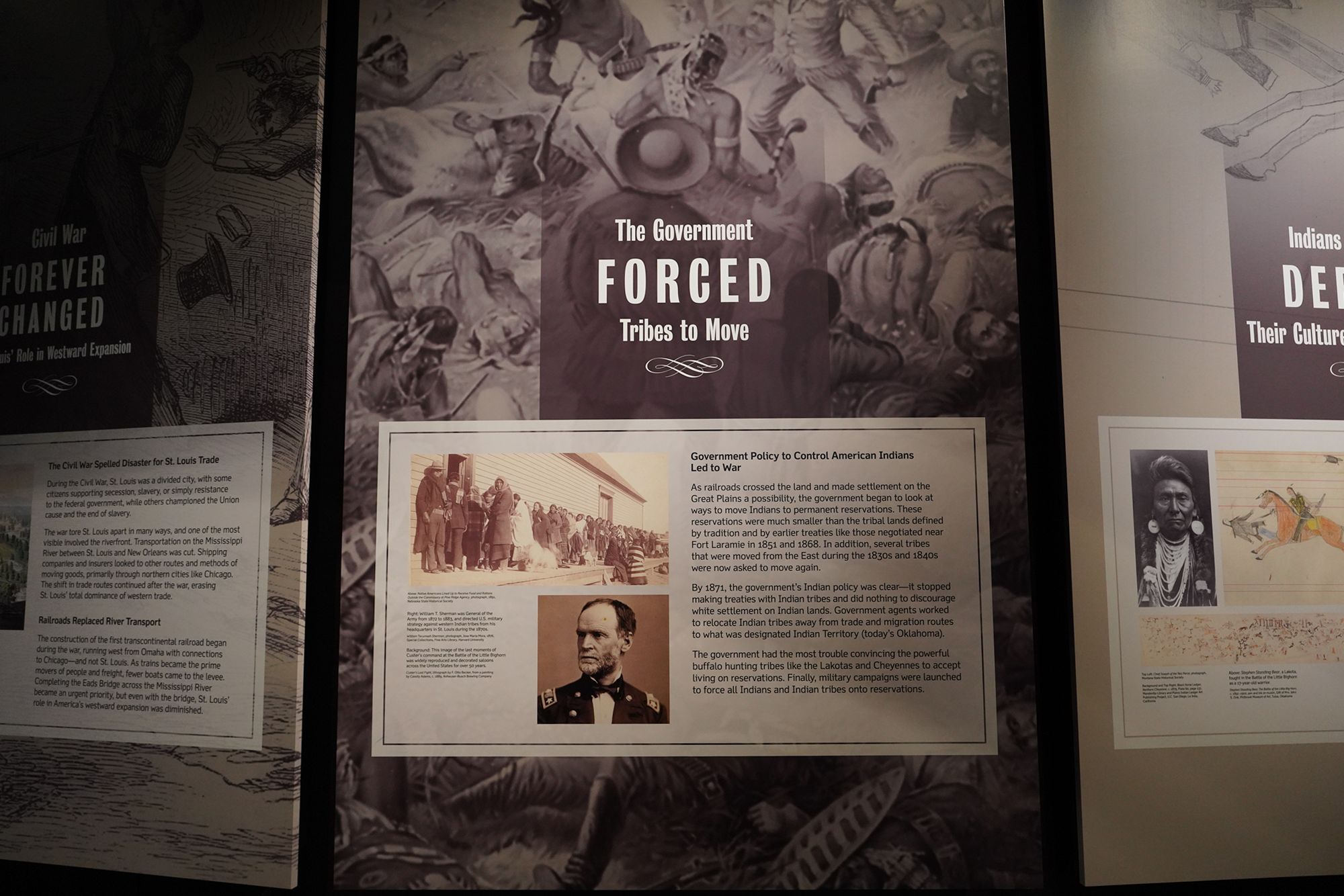
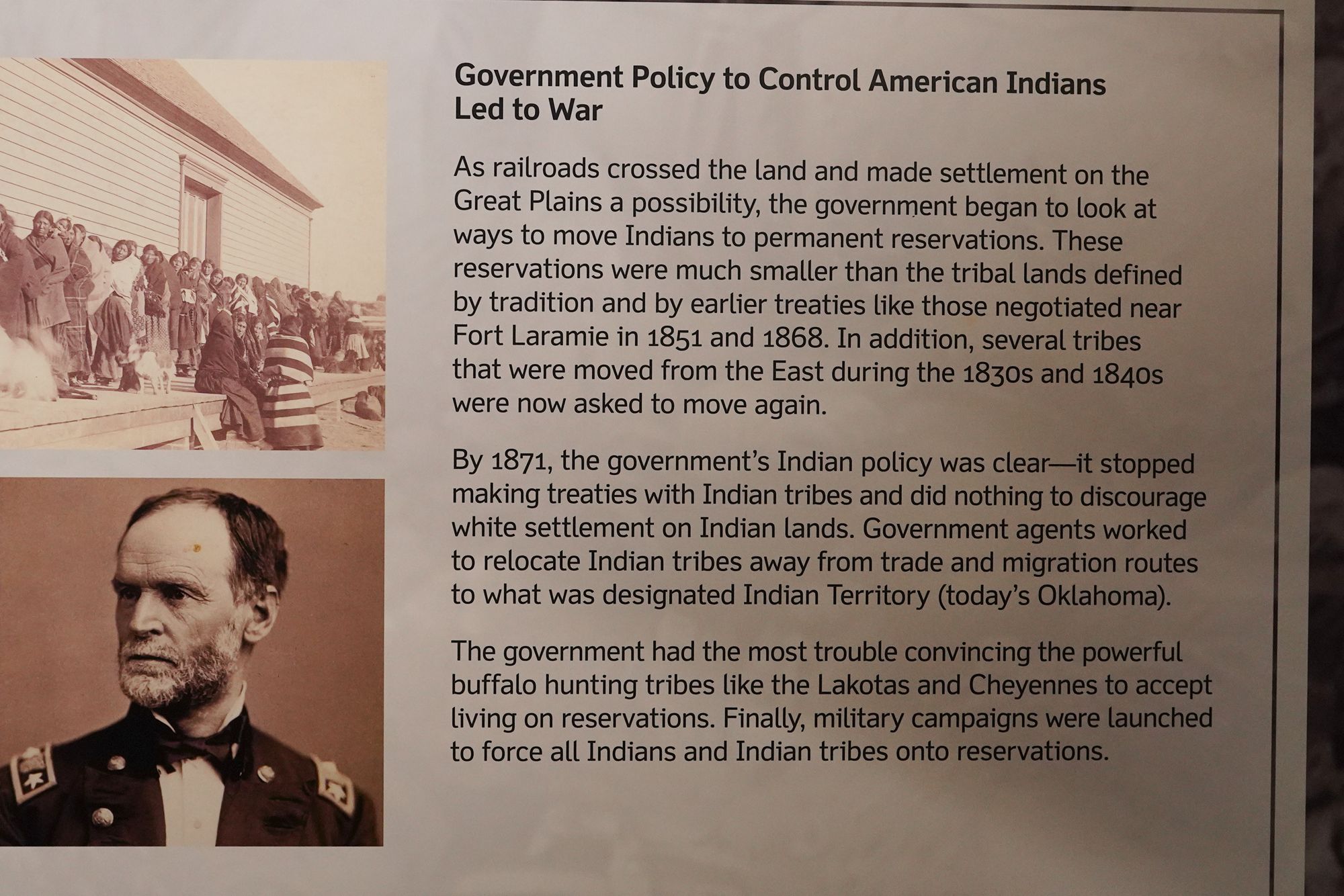
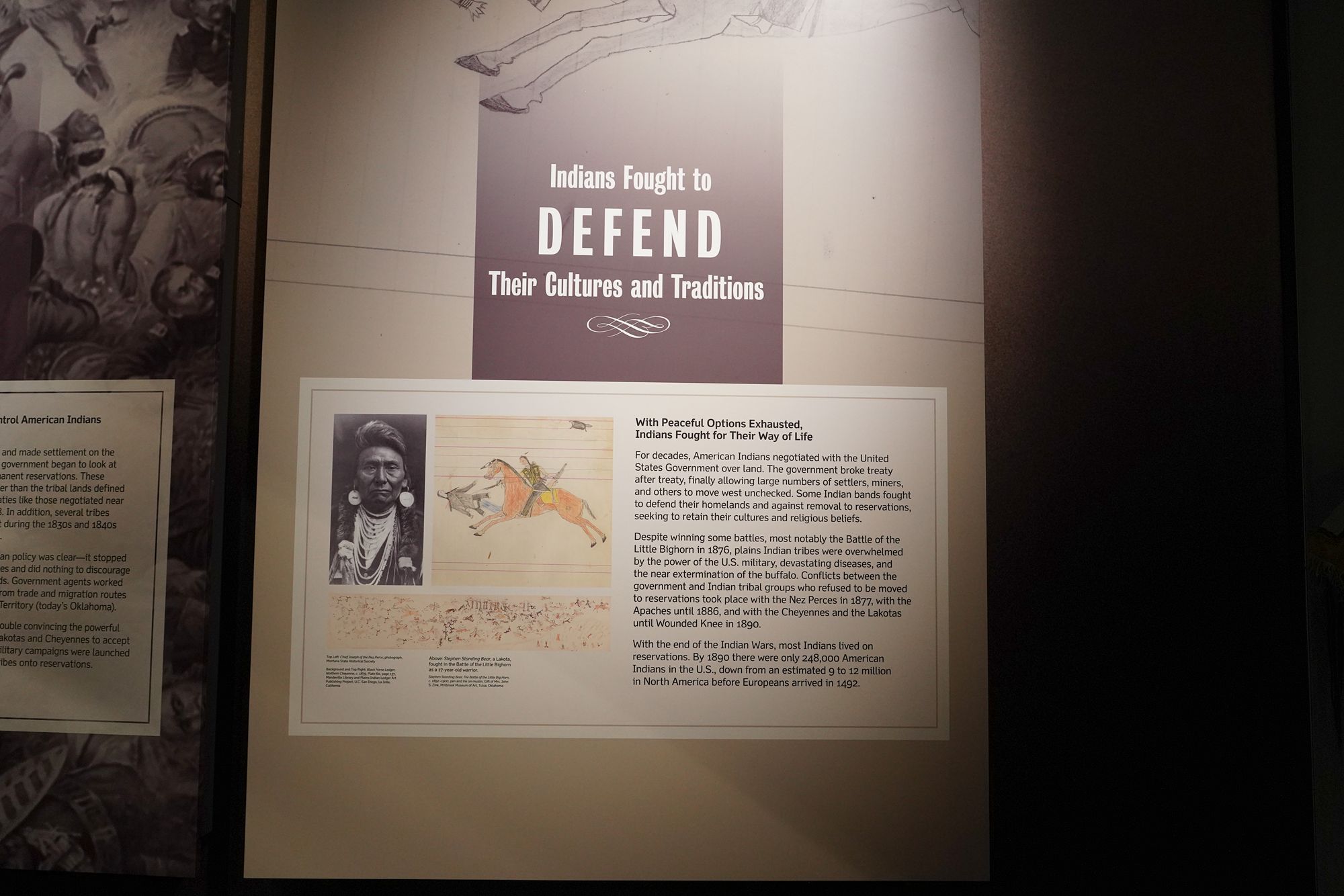
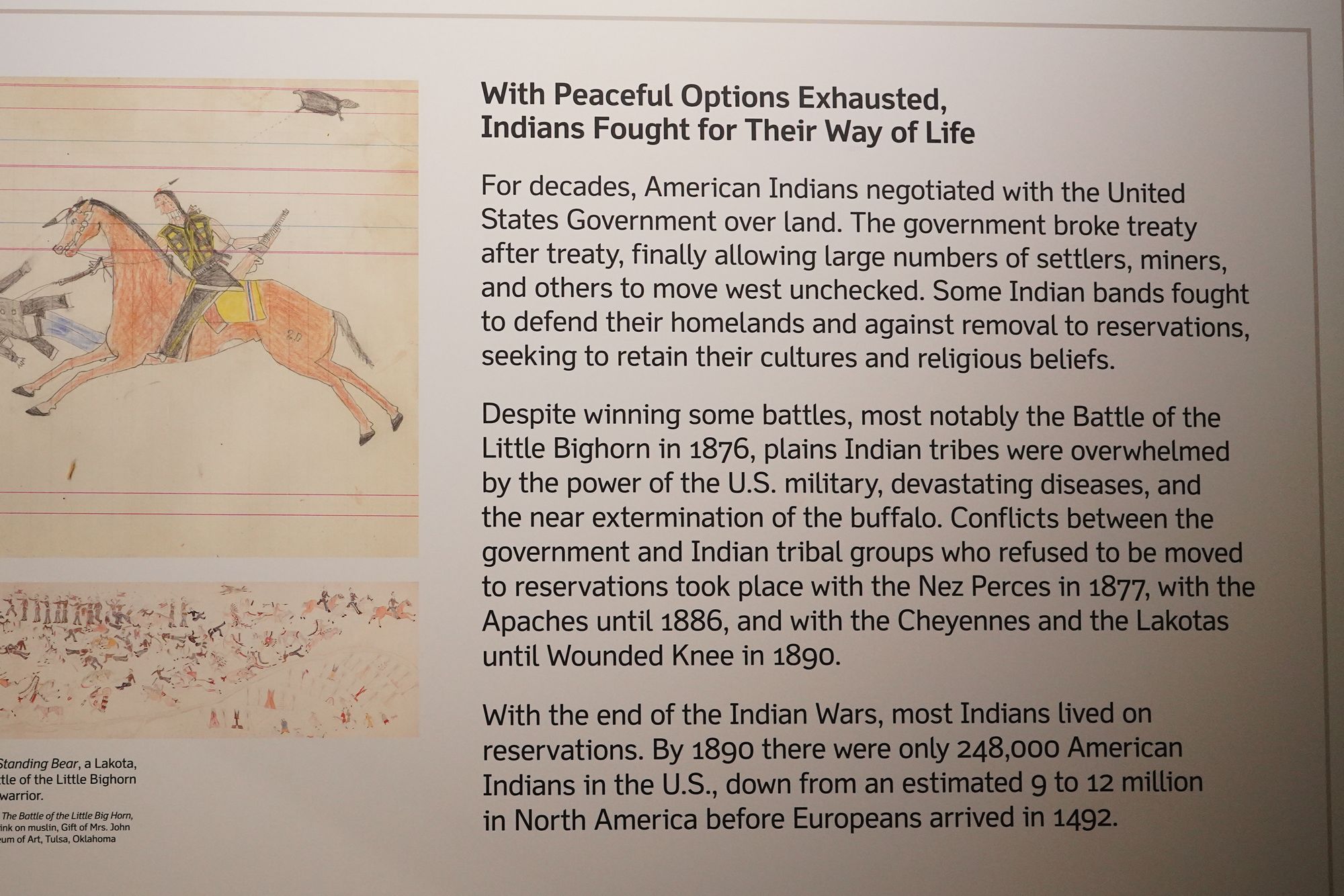
Over 500 treaties were made between the United States government and American Indians. All of them were broken.
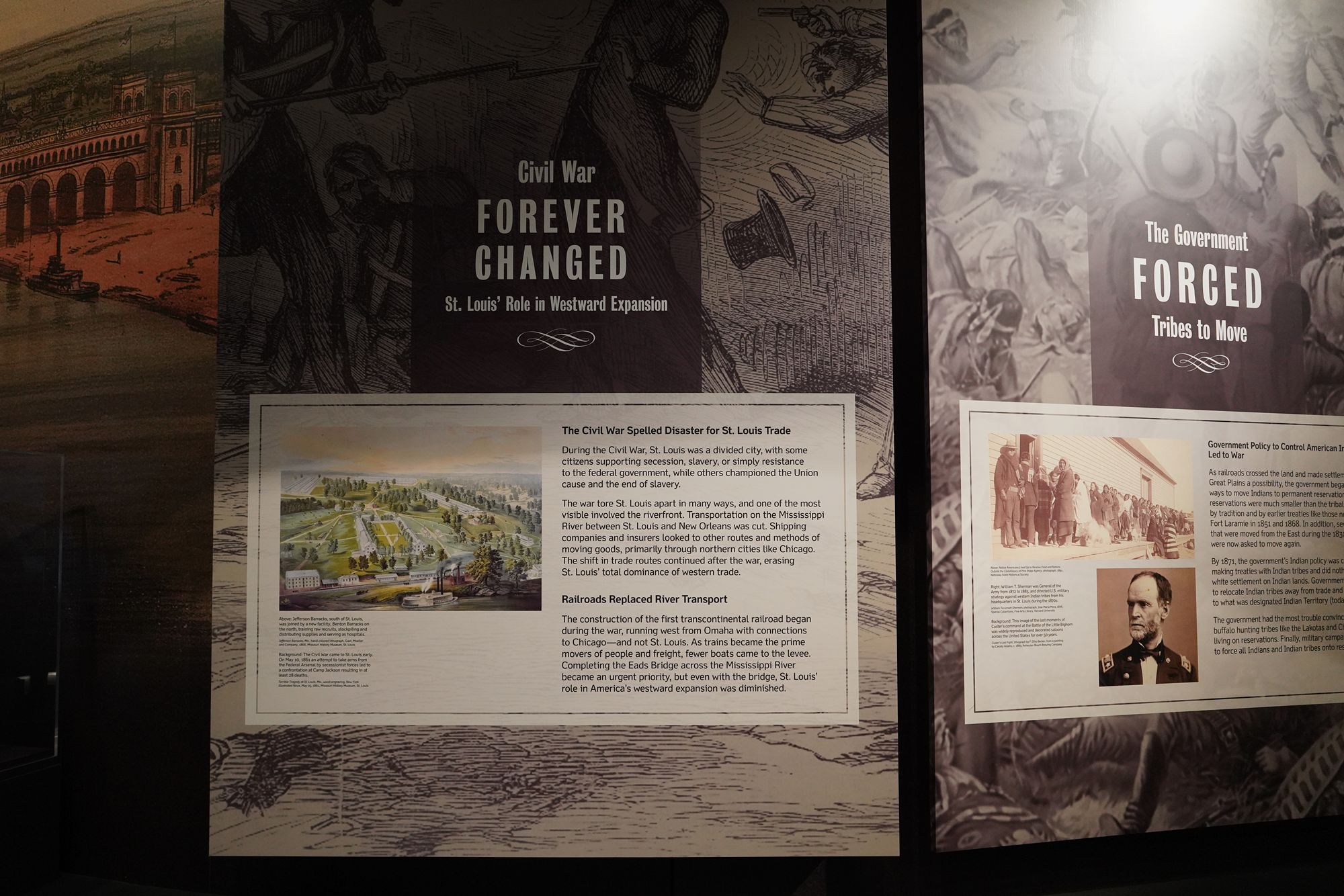
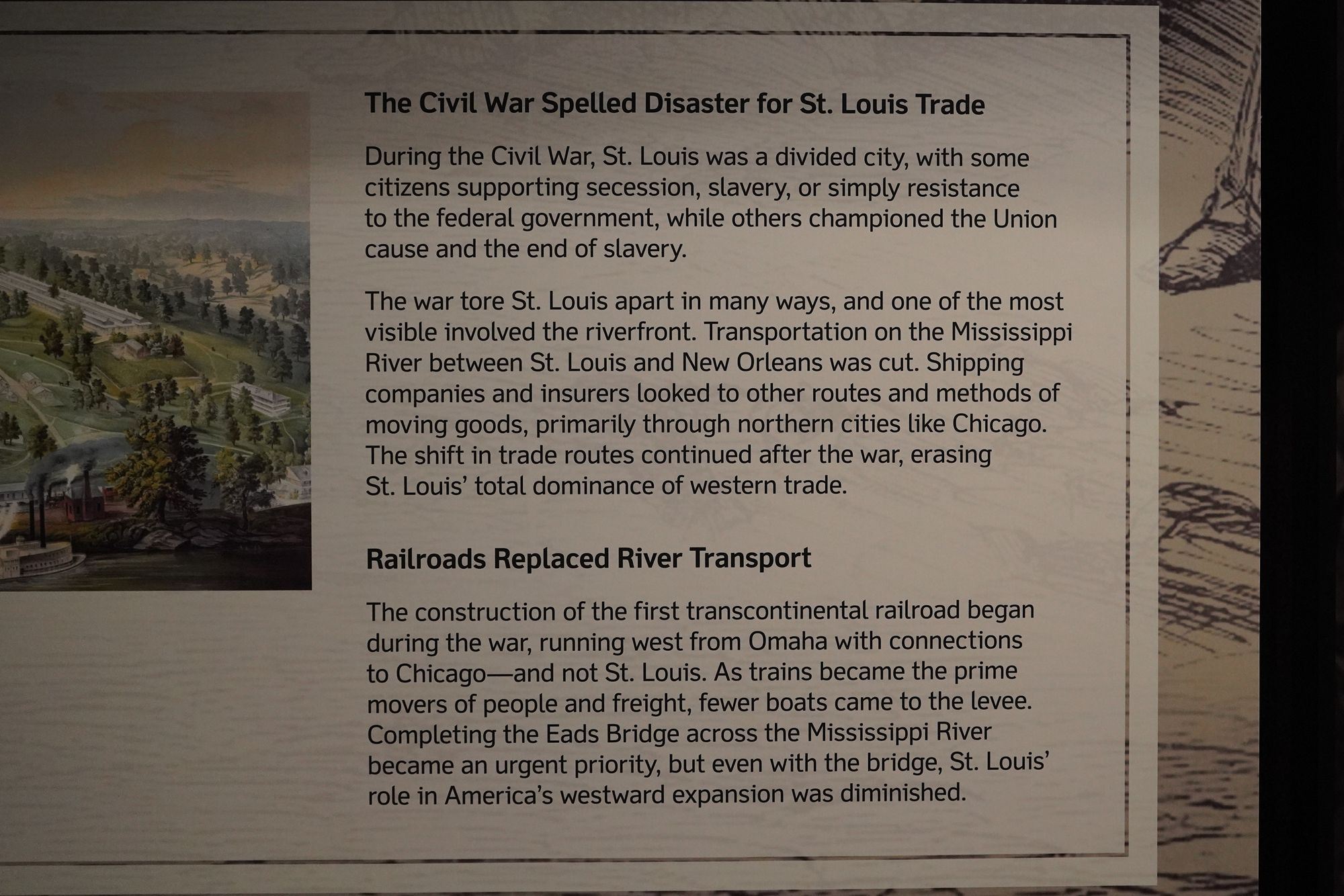
Civil War
Indian Removal
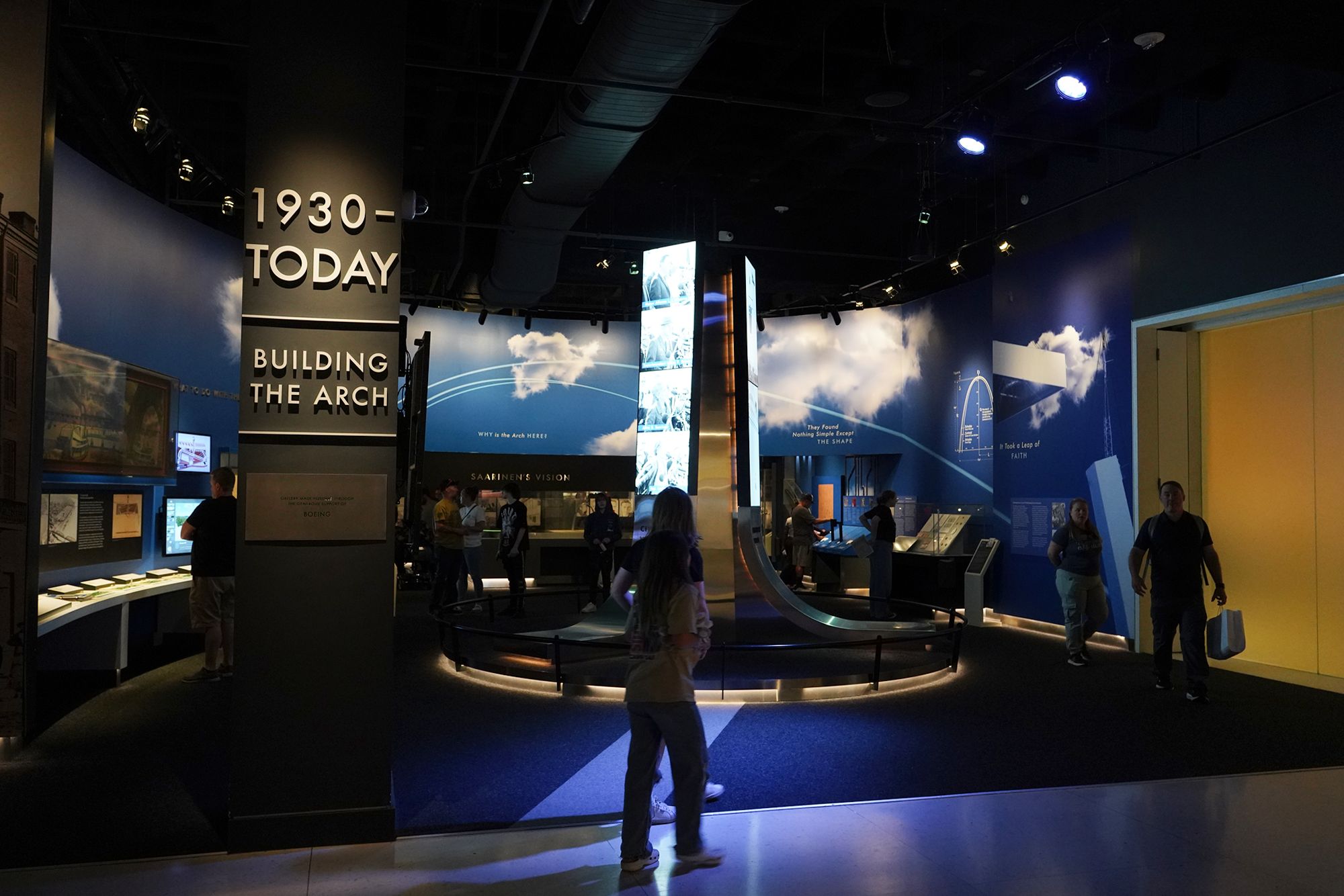
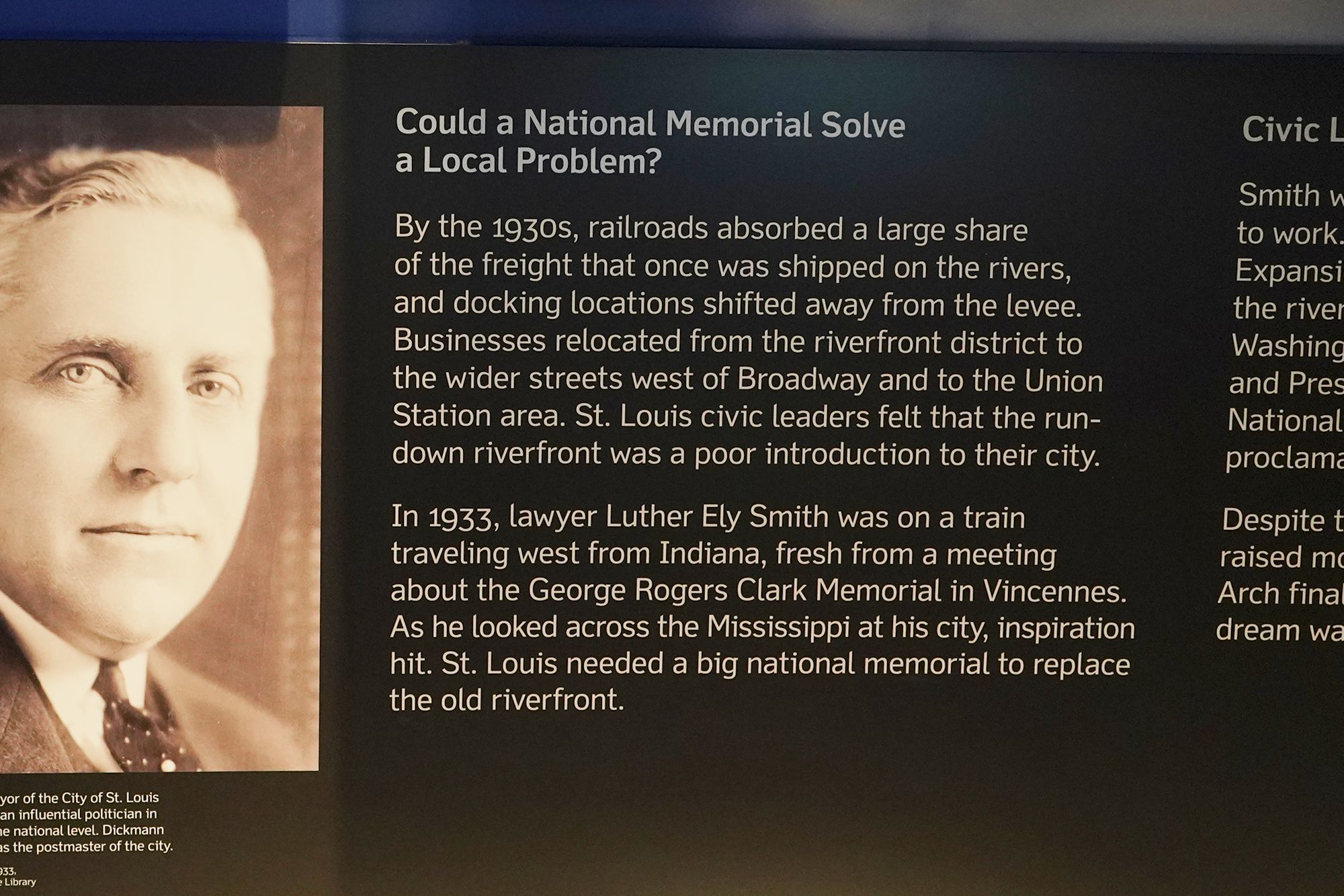
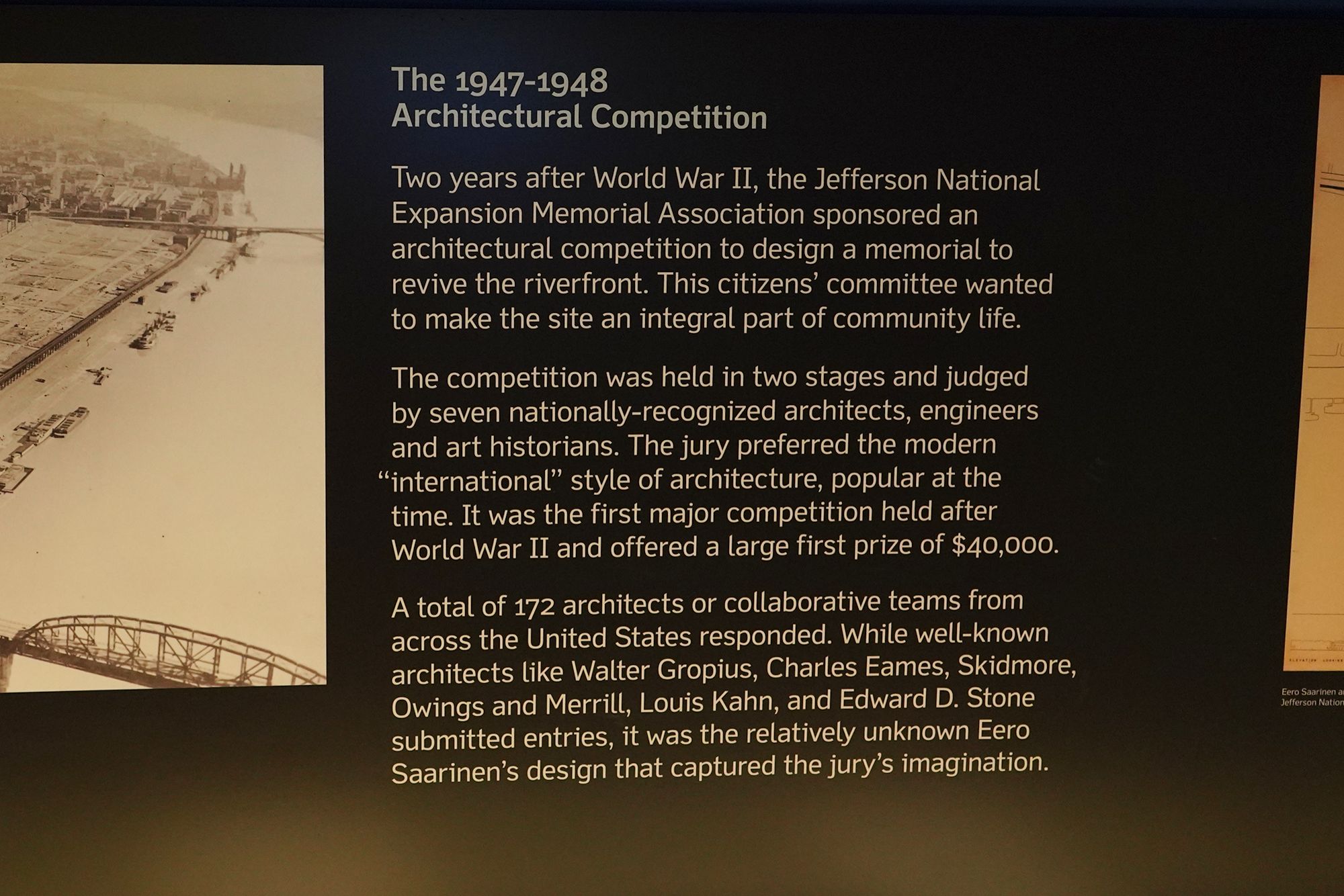
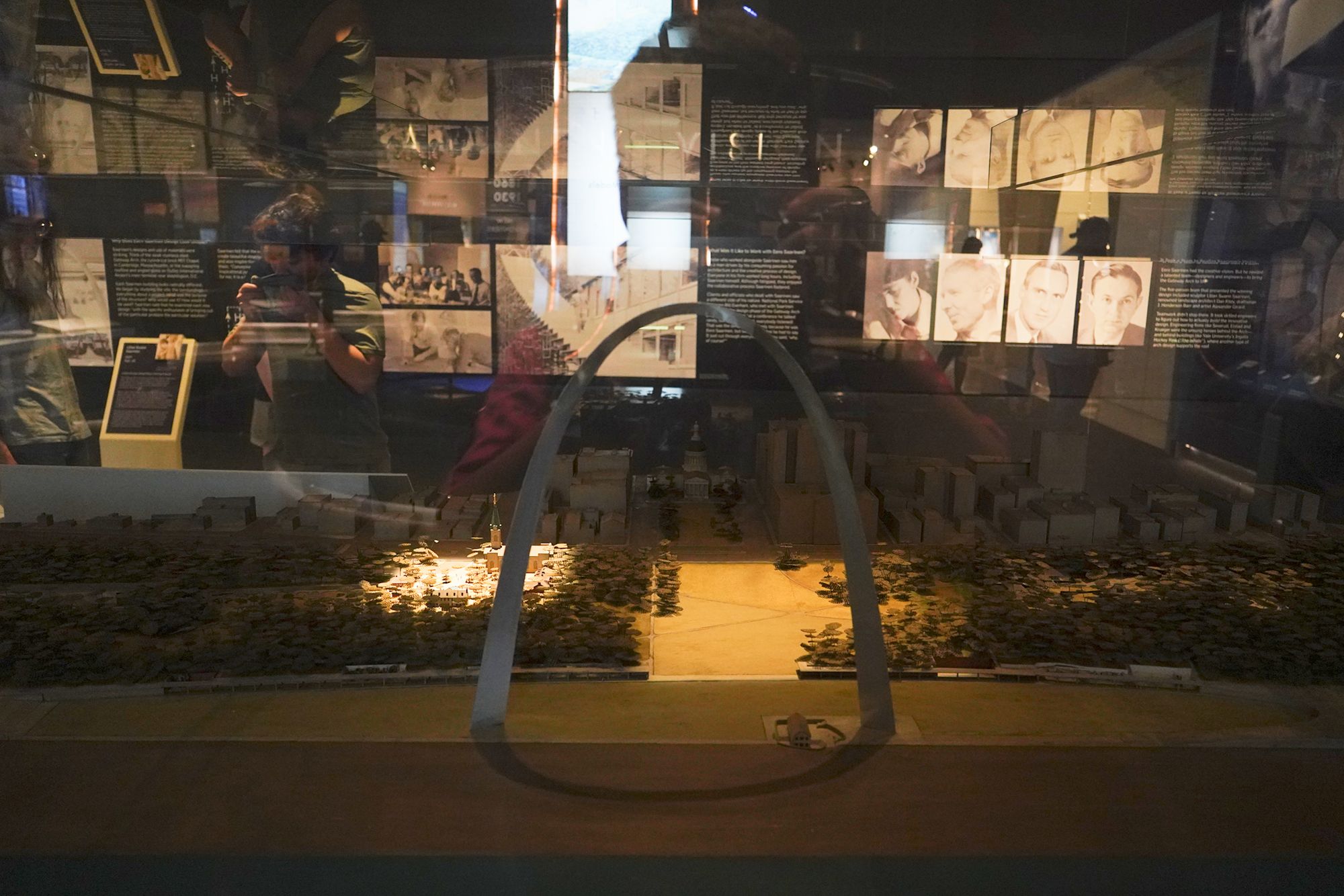
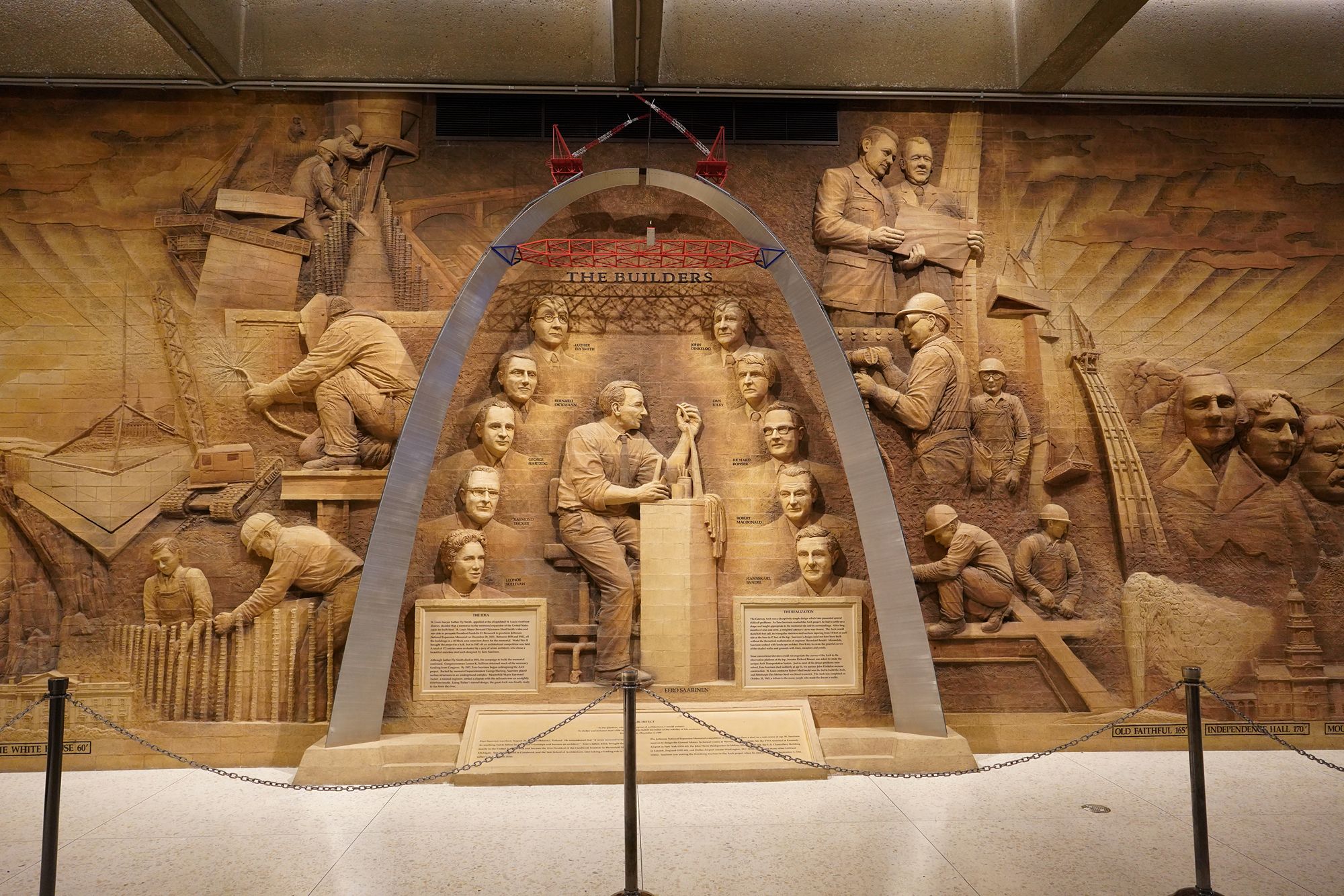
Building the Arch