Van Gogh Museum, Part 2, Amsterdam, Netherland
This is the second part of my visit to the Van Gogh Museum, with more of its remarkable collection. 1299
Van Gogh Museum: Museumplein 6, 1071 DJ Amsterdam, Netherlands
Date Picture Taken: May, 2026
This is the second part of my visit to the Van Gogh Museum in Amsterdam. Continuing through the museum’s extensive collection, I saw more of Van Gogh’s paintings and drawings, along with works by artists who influenced him. The exhibits showed how his style evolved from the dark colors of his early years to the bold colors and expressive brushwork for which he became famous.
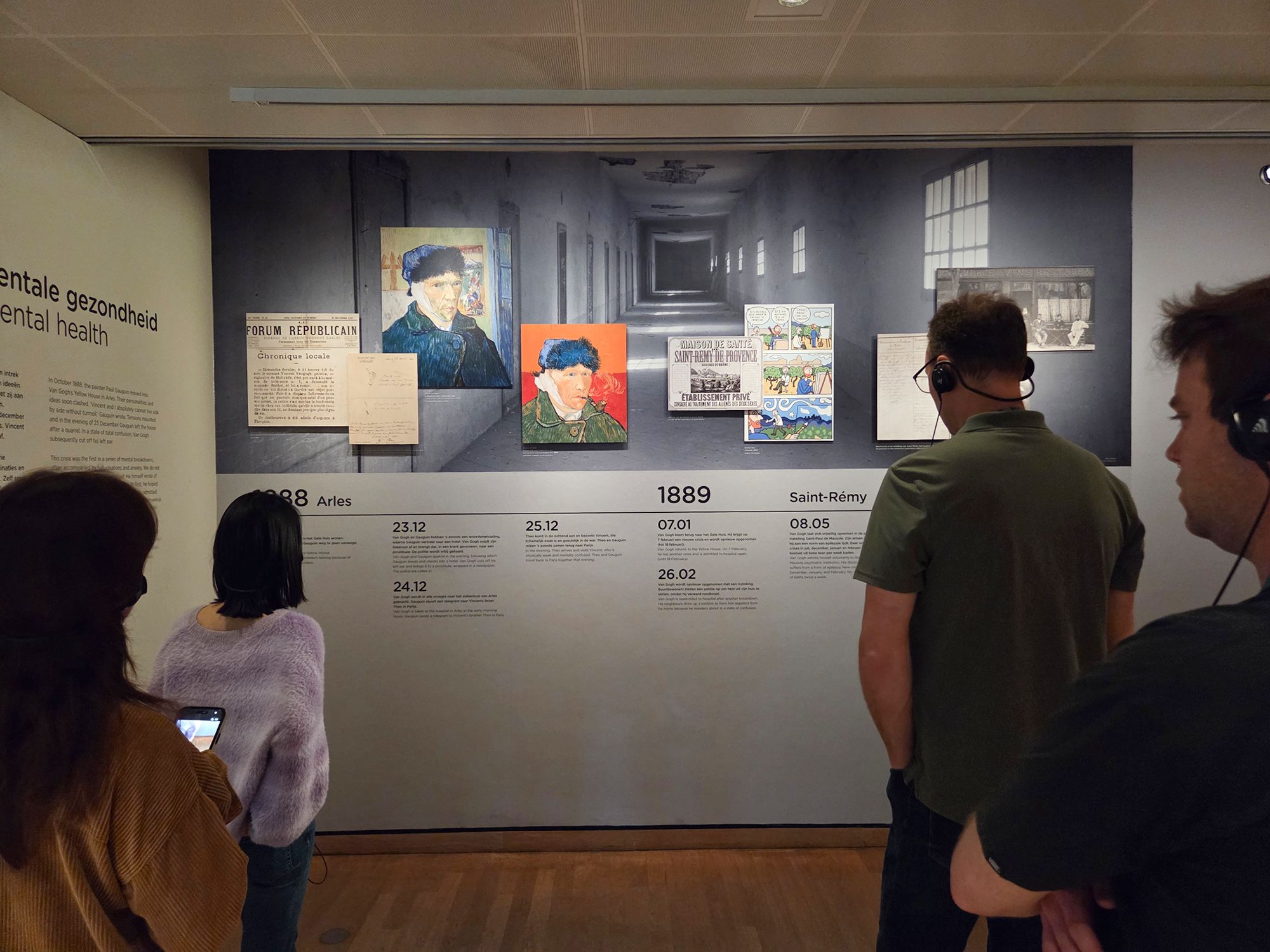
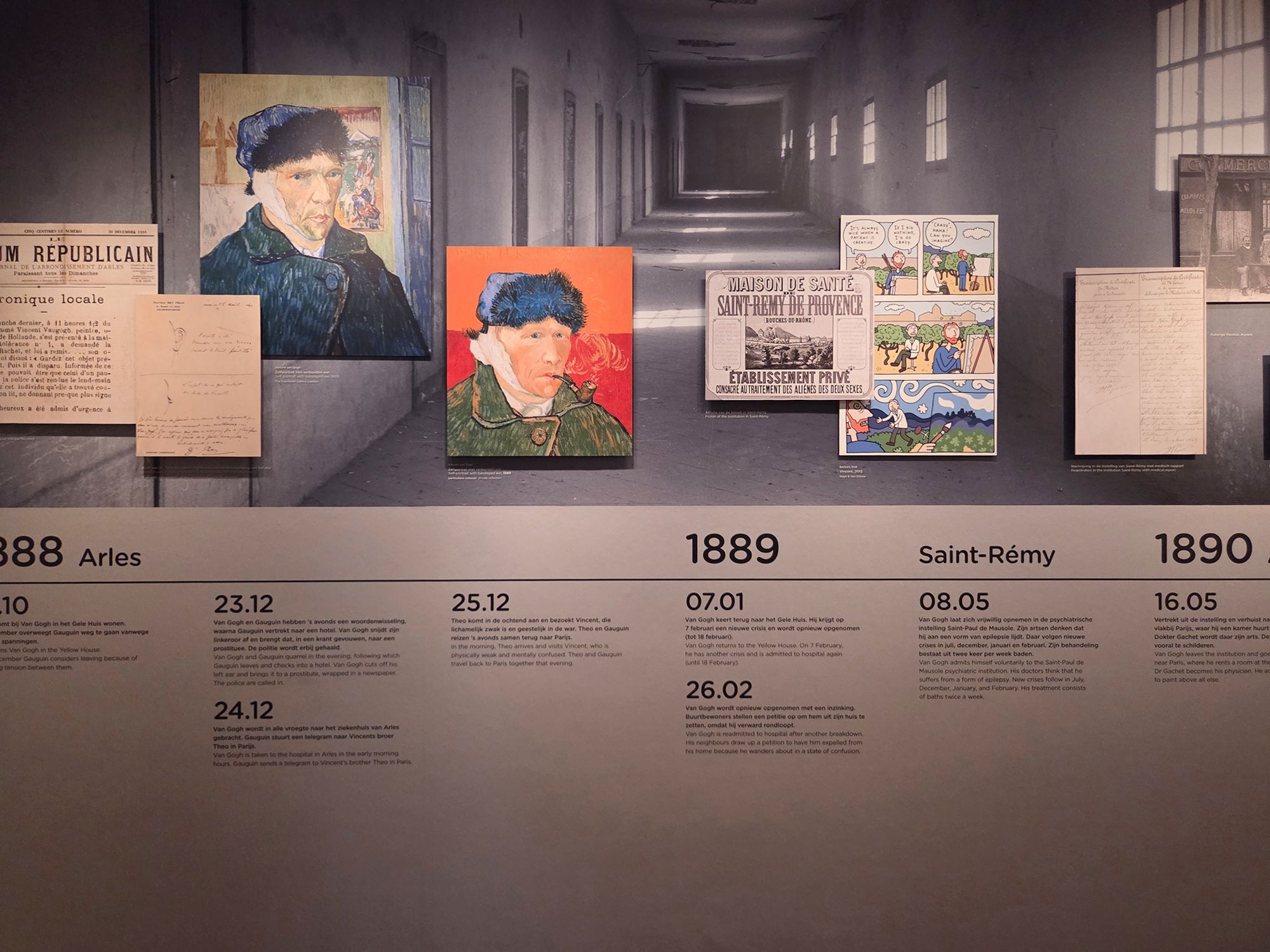
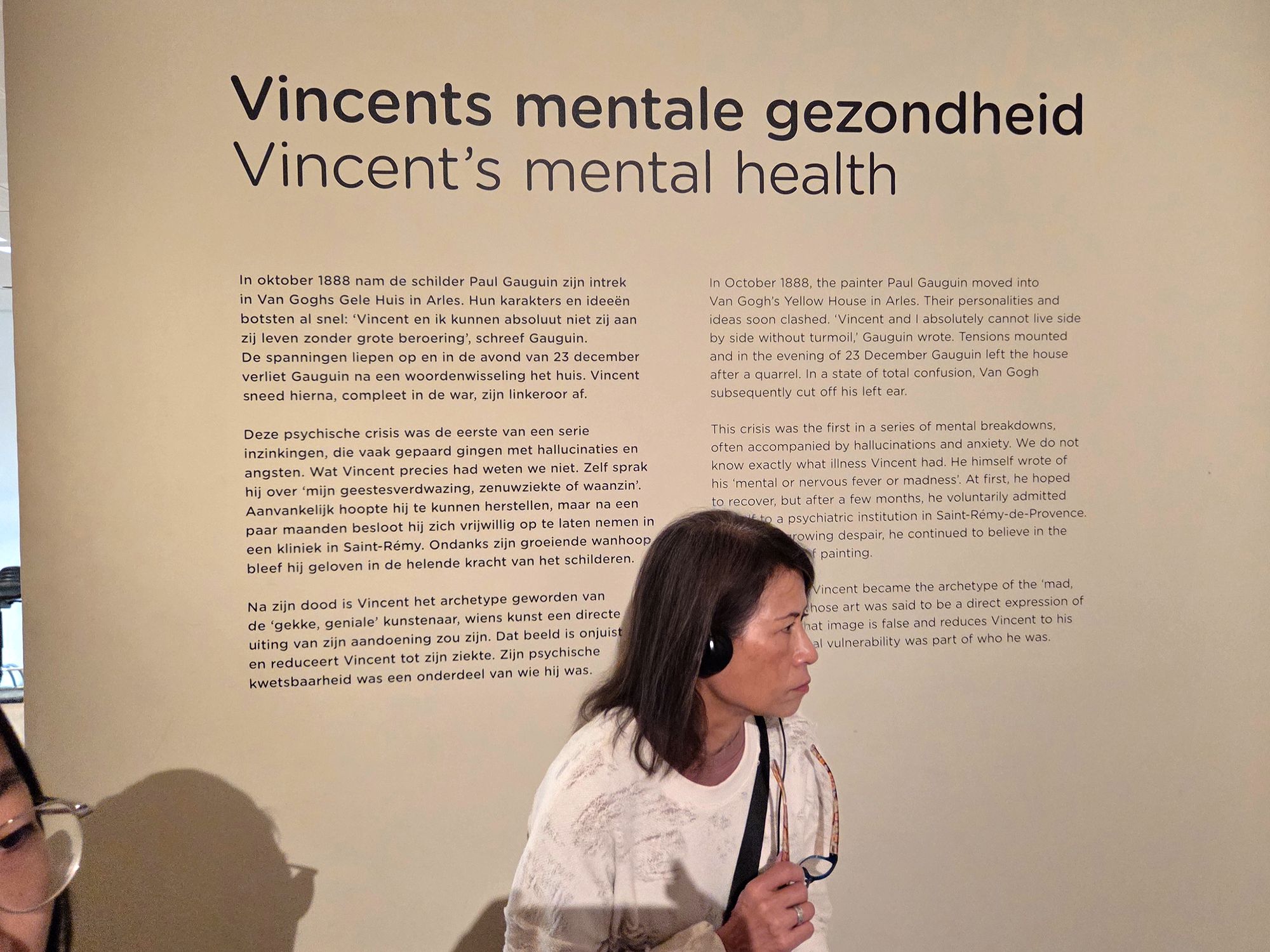
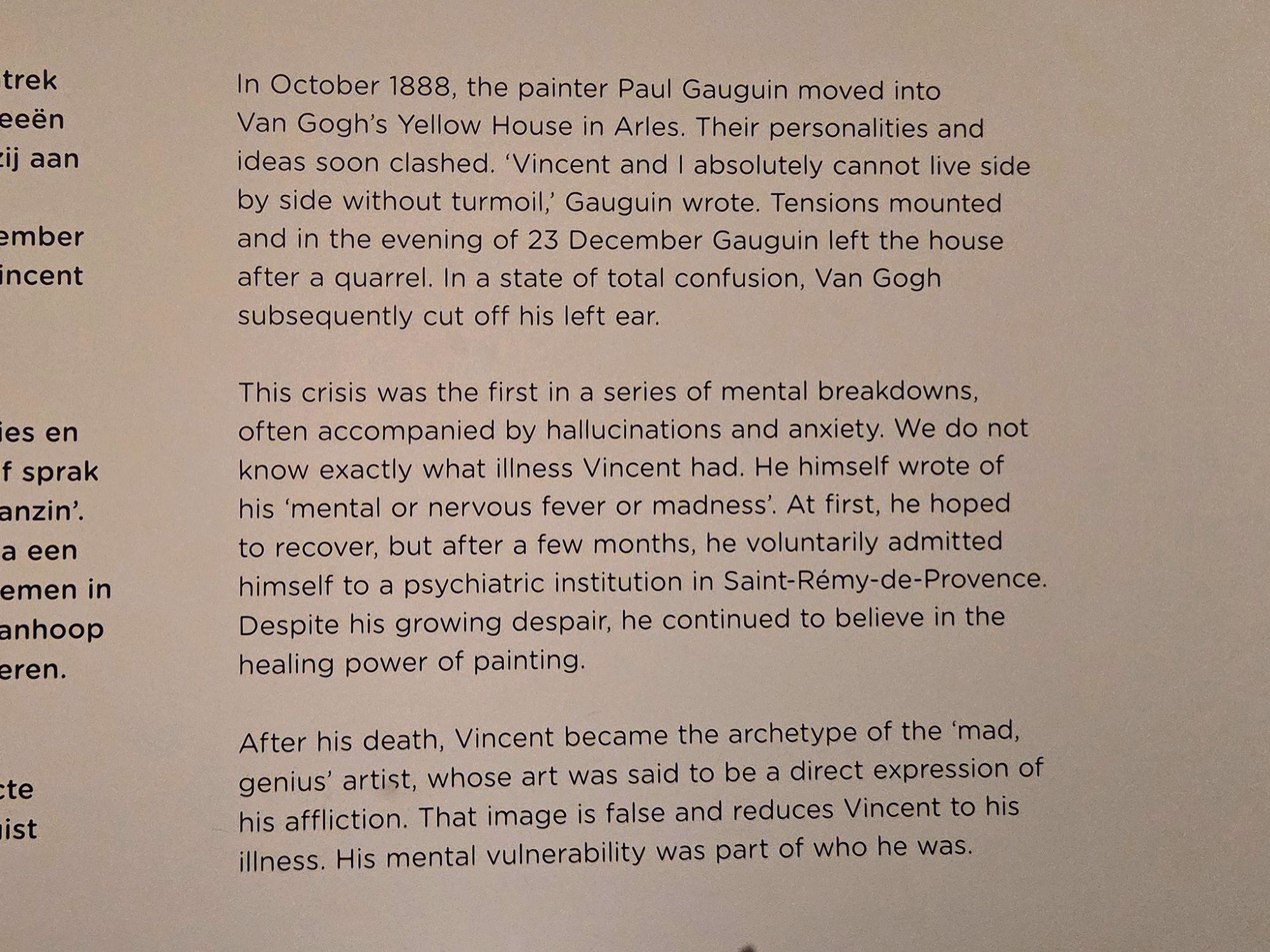
After a serious quarrel with Paul Gauguin in December 1888, Van Gogh suffered a mental crisis and cut off part of his left ear. This marked the beginning of recurring periods of mental illness, and a few months later he voluntarily entered a psychiatric hospital in Saint-Rémy, where he continued to paint and found comfort in his art.
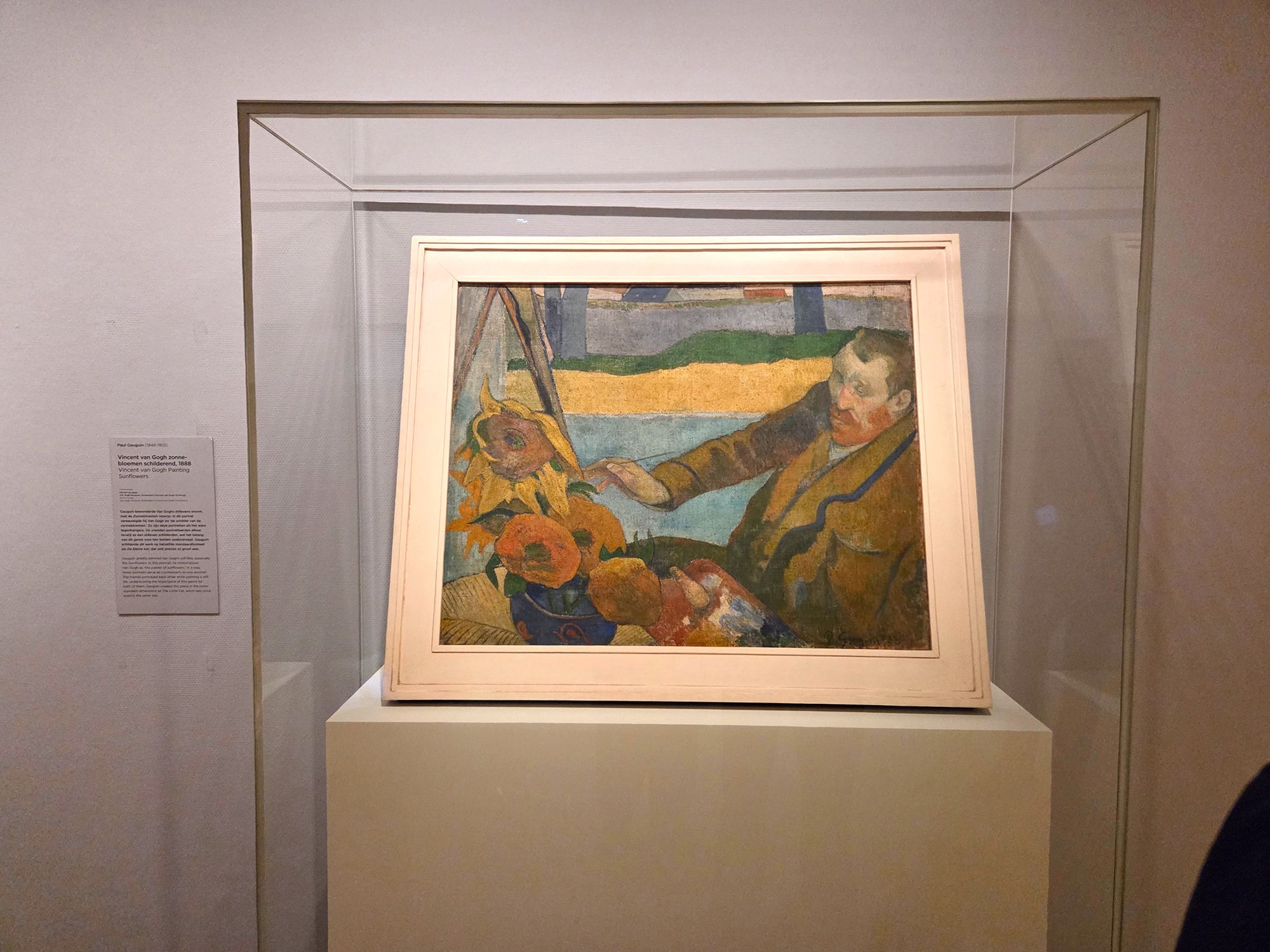
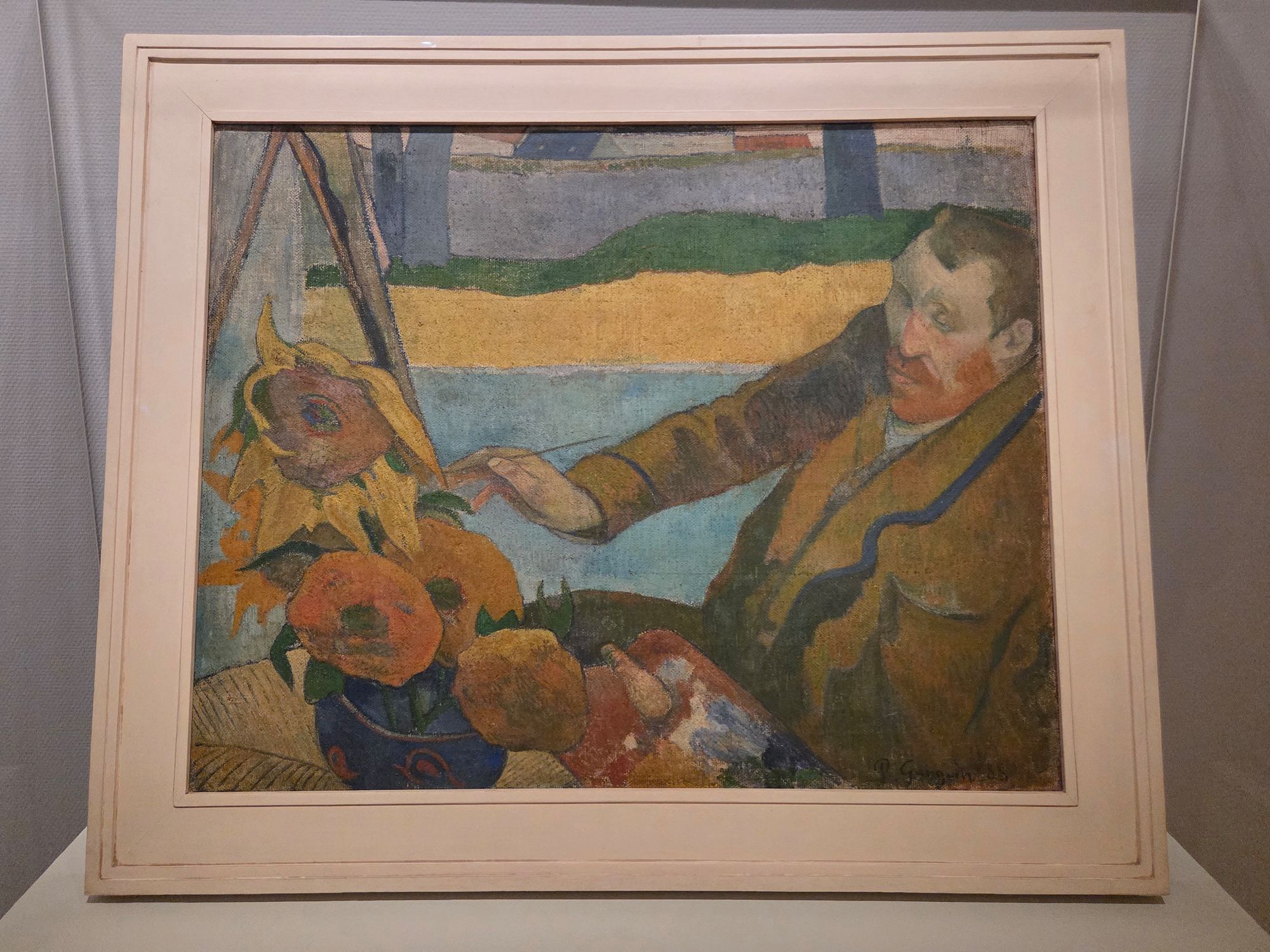
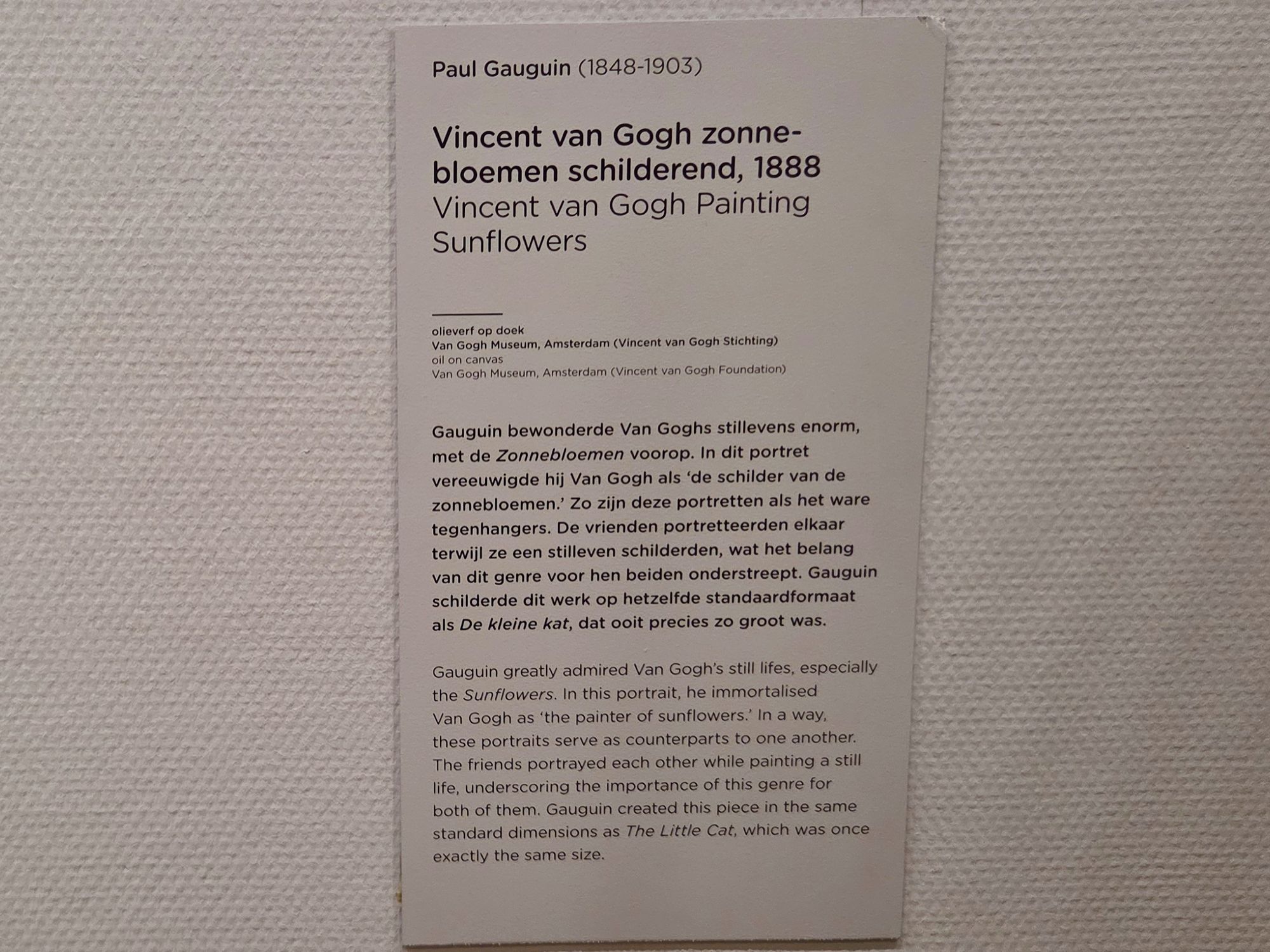
Paul Gauguin greatly admired Van Gogh’s still lifes, especially his Sunflowers. In this portrait, Gauguin depicted Van Gogh painting sunflowers, emphasizing how closely this subject had become associated with him as the “painter of sunflowers.”
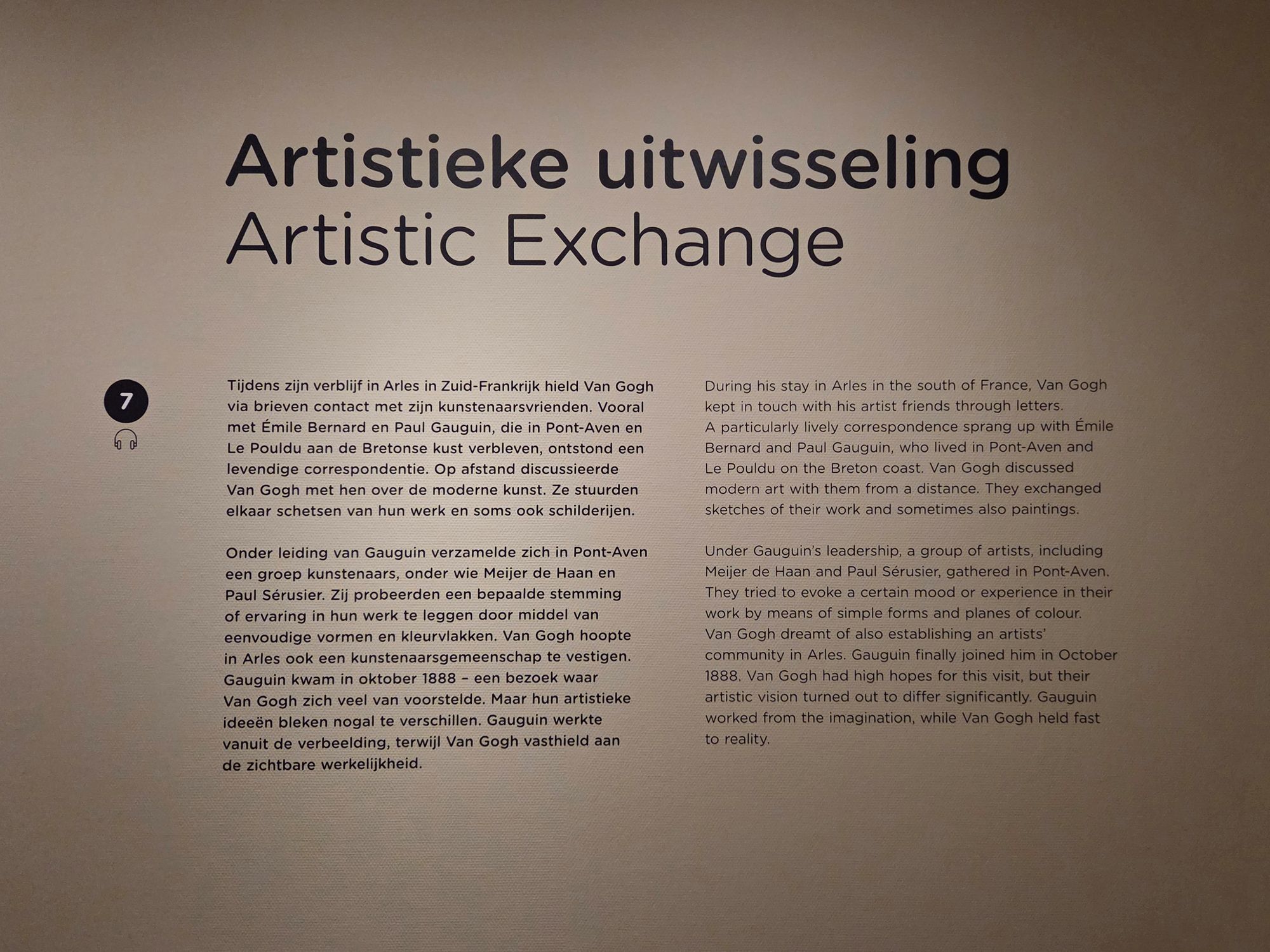
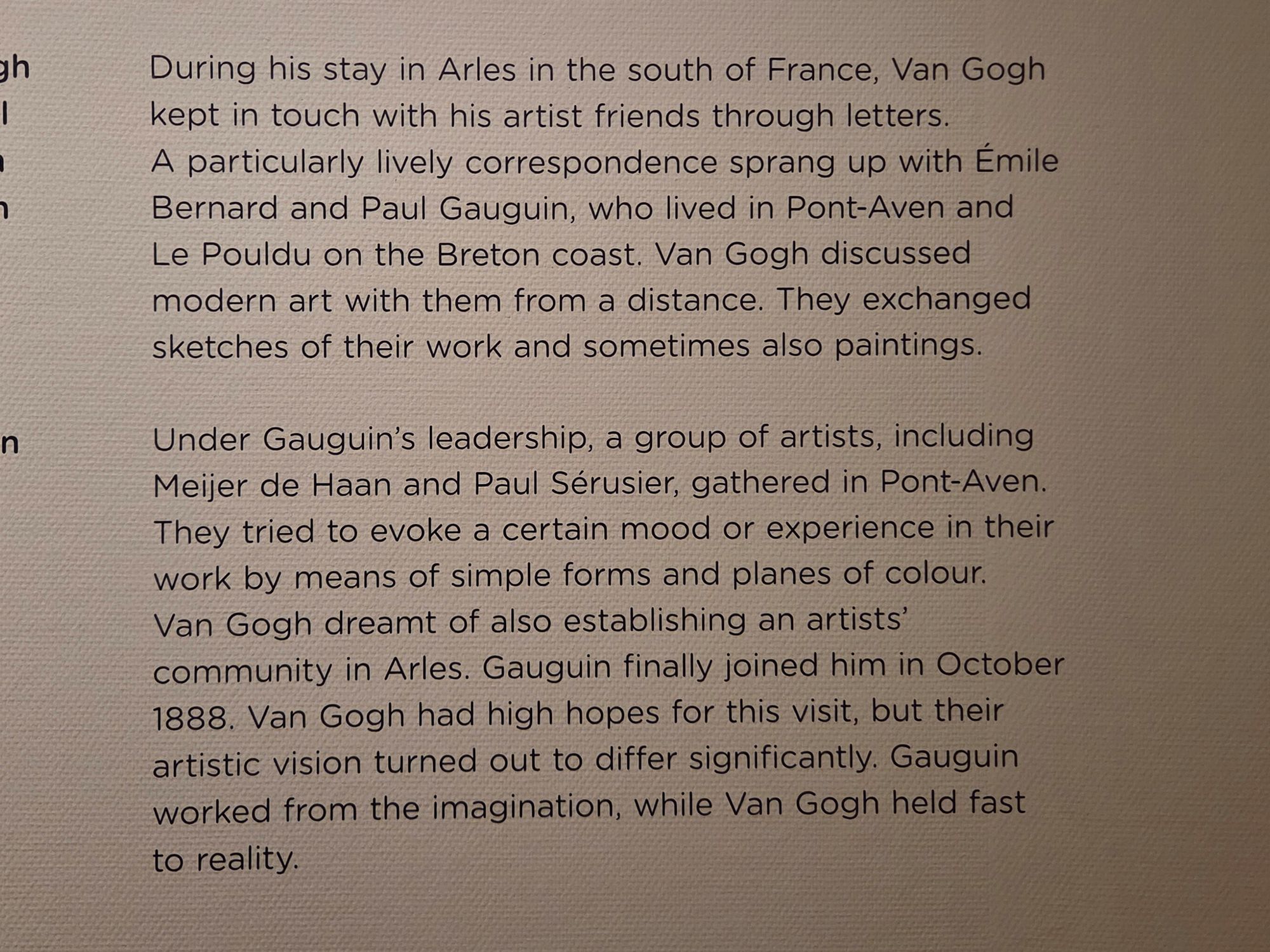
While living in Arles, Van Gogh kept in close contact with fellow artists Paul Gauguin and Émile Bernard, exchanging letters, sketches, and paintings. He dreamed of creating an artists’ community in Arles, and Gauguin joined him in 1888, but their very different personalities and artistic ideas soon created tension.
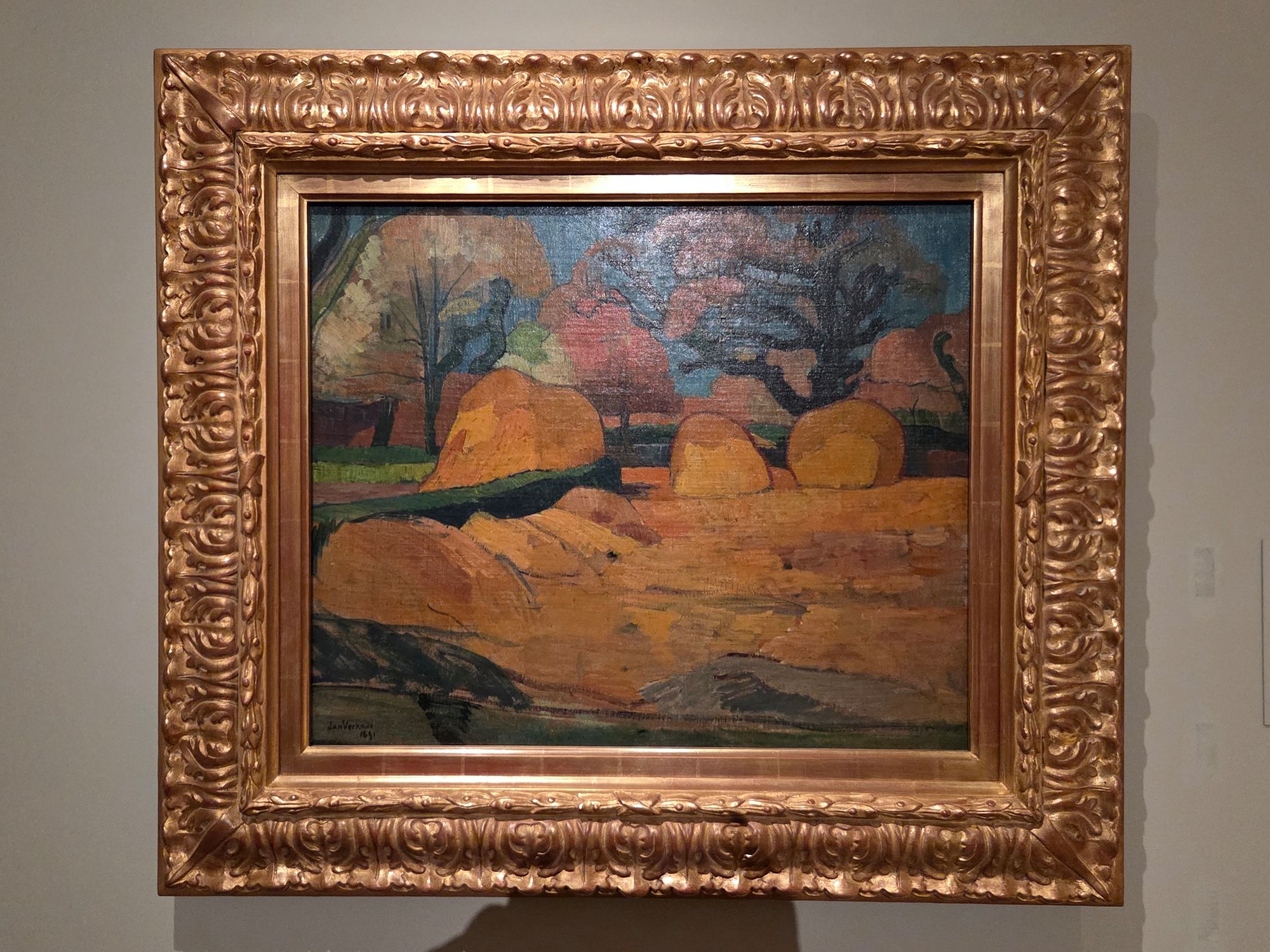
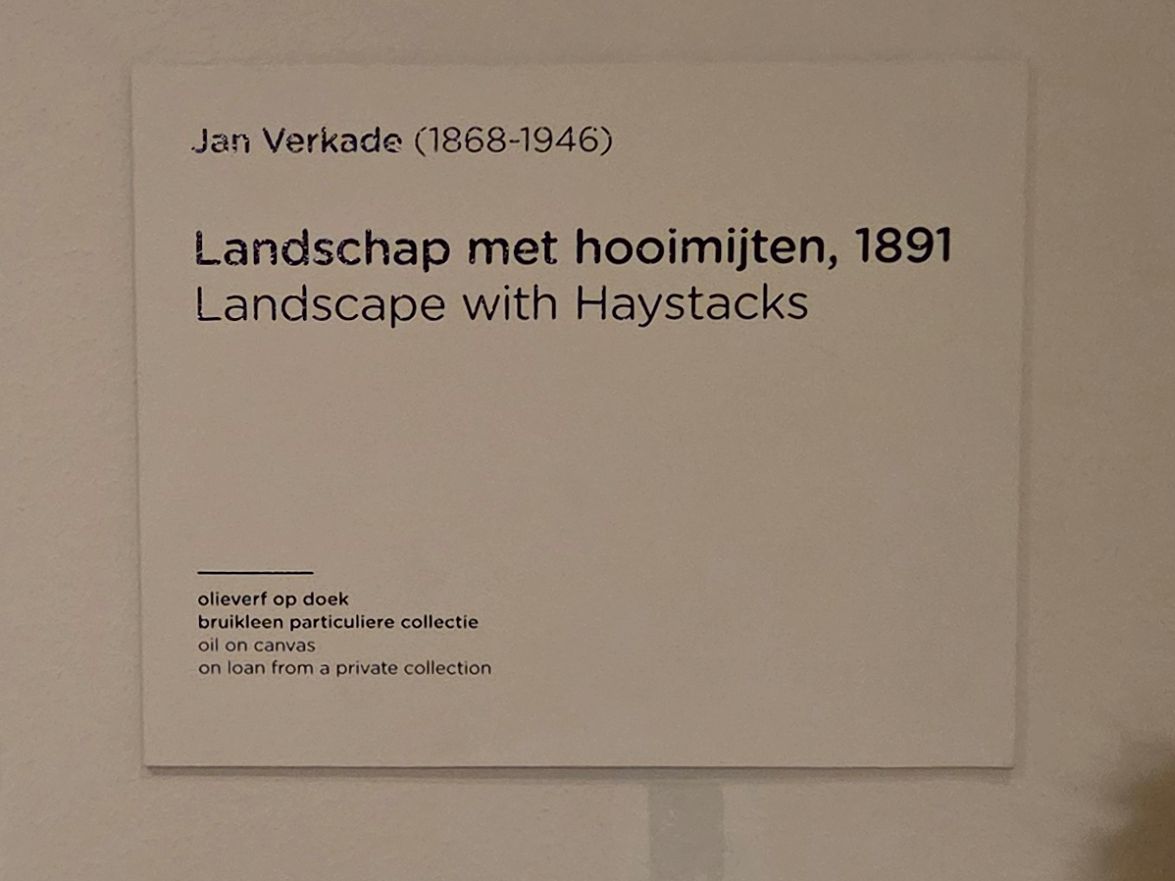
The museum exhibited many paintings by artists whose work influenced Van Gogh, helping to show how he developed his own distinctive style from the artists he admired.
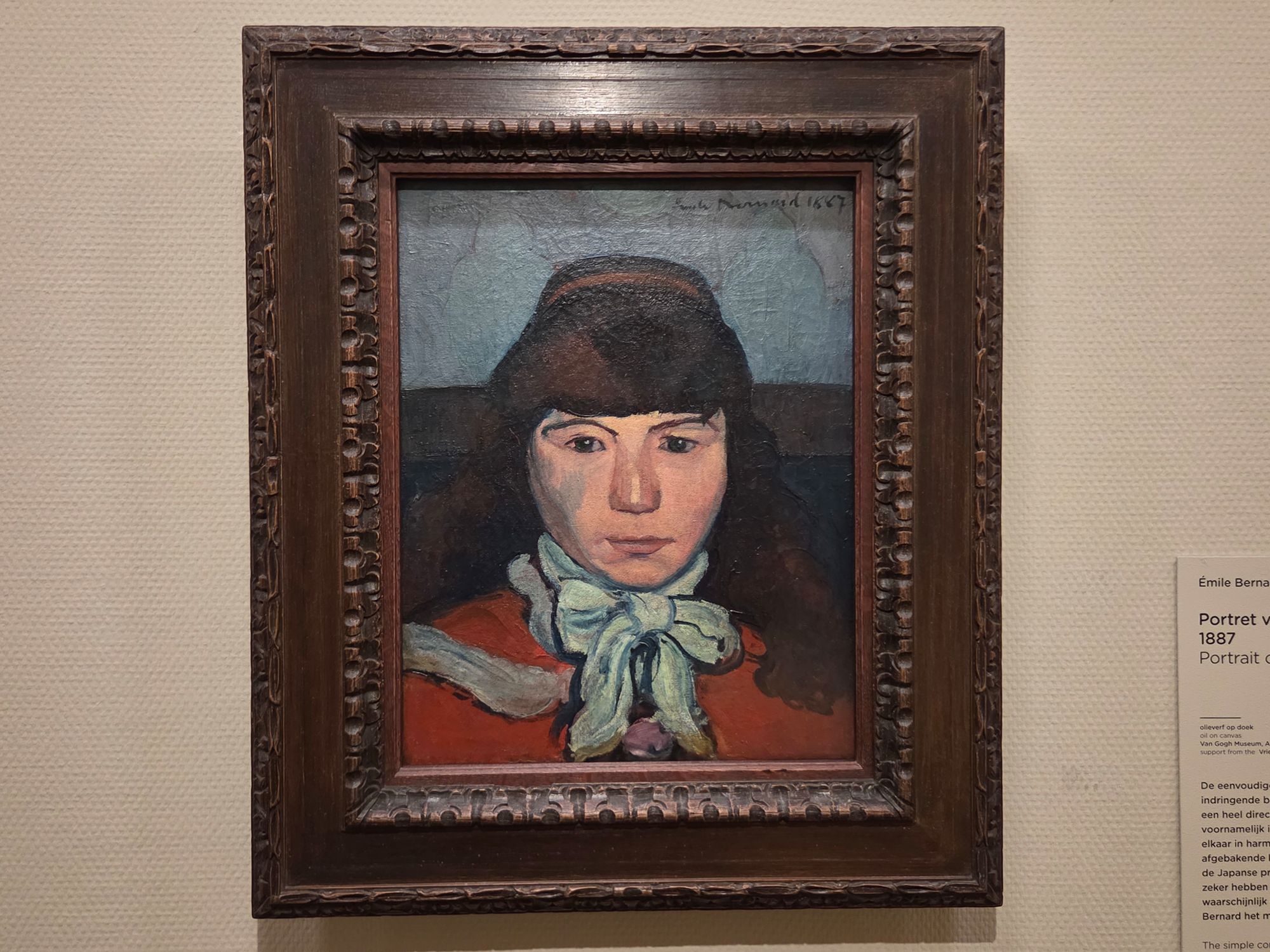
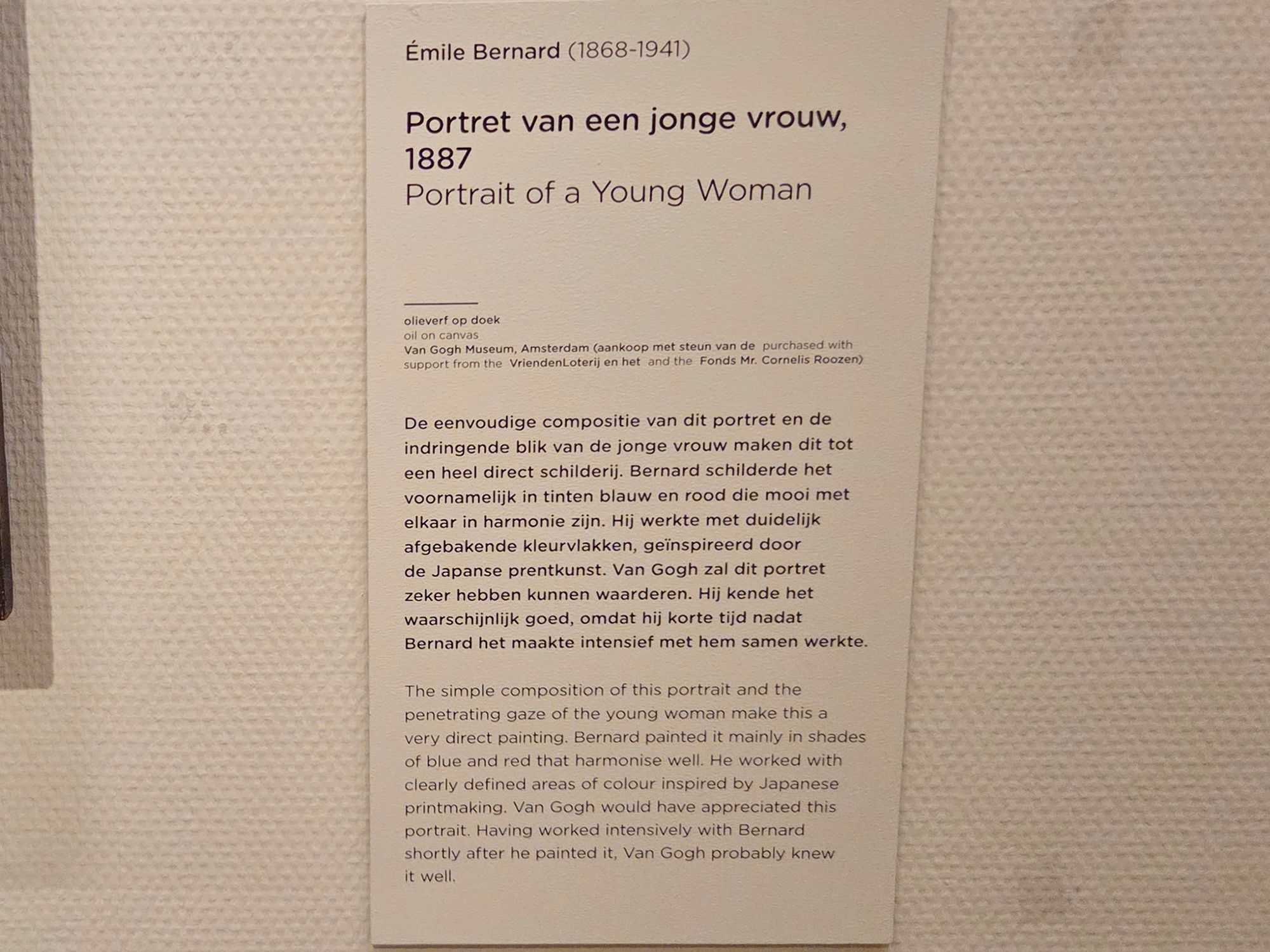
This portrait by Émile Bernard uses simple forms and strong areas of blue and red, showing the influence of Japanese prints. Van Gogh knew Bernard well and would likely have been familiar with this painting and appreciated its bold use of color.
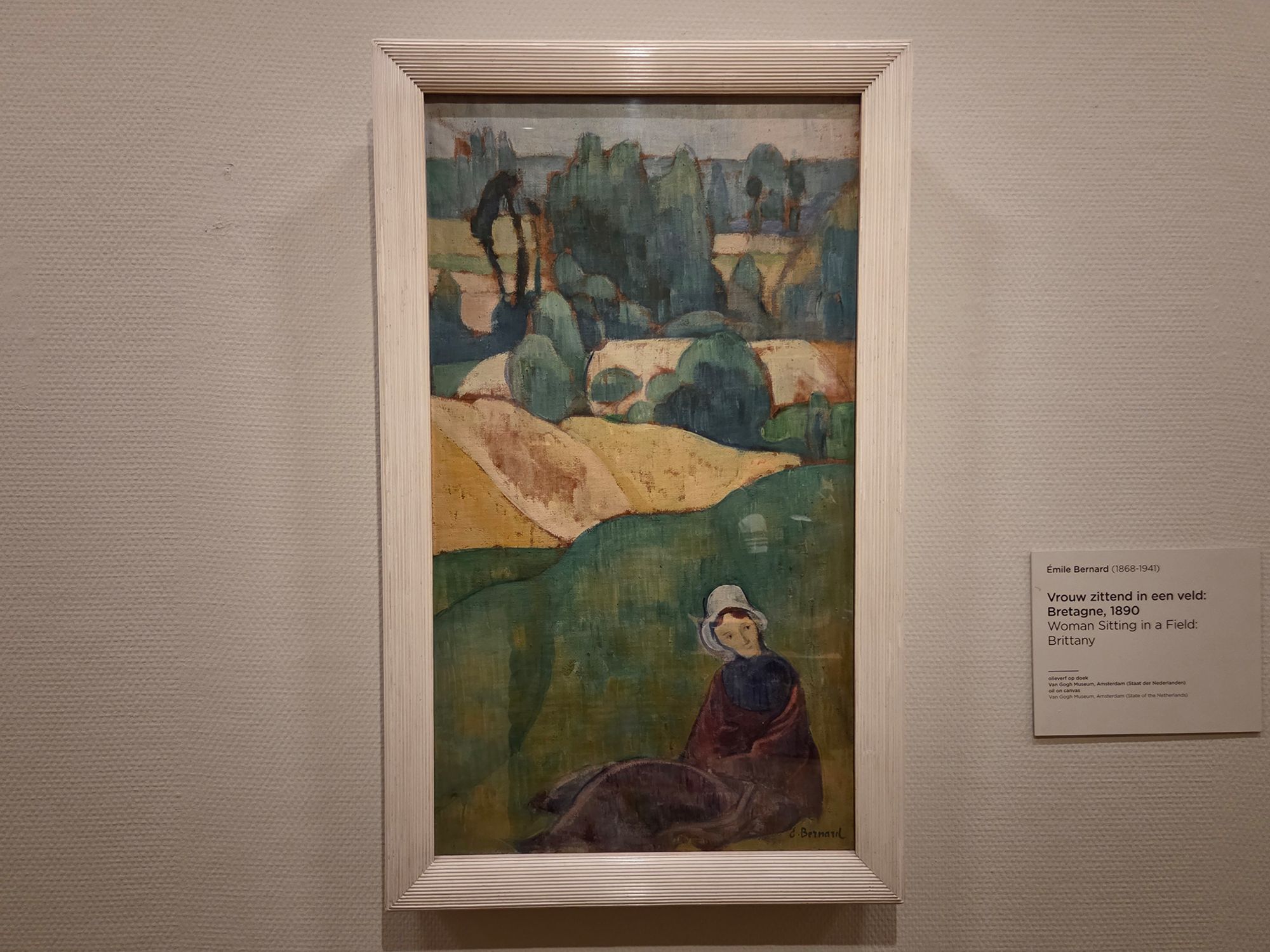
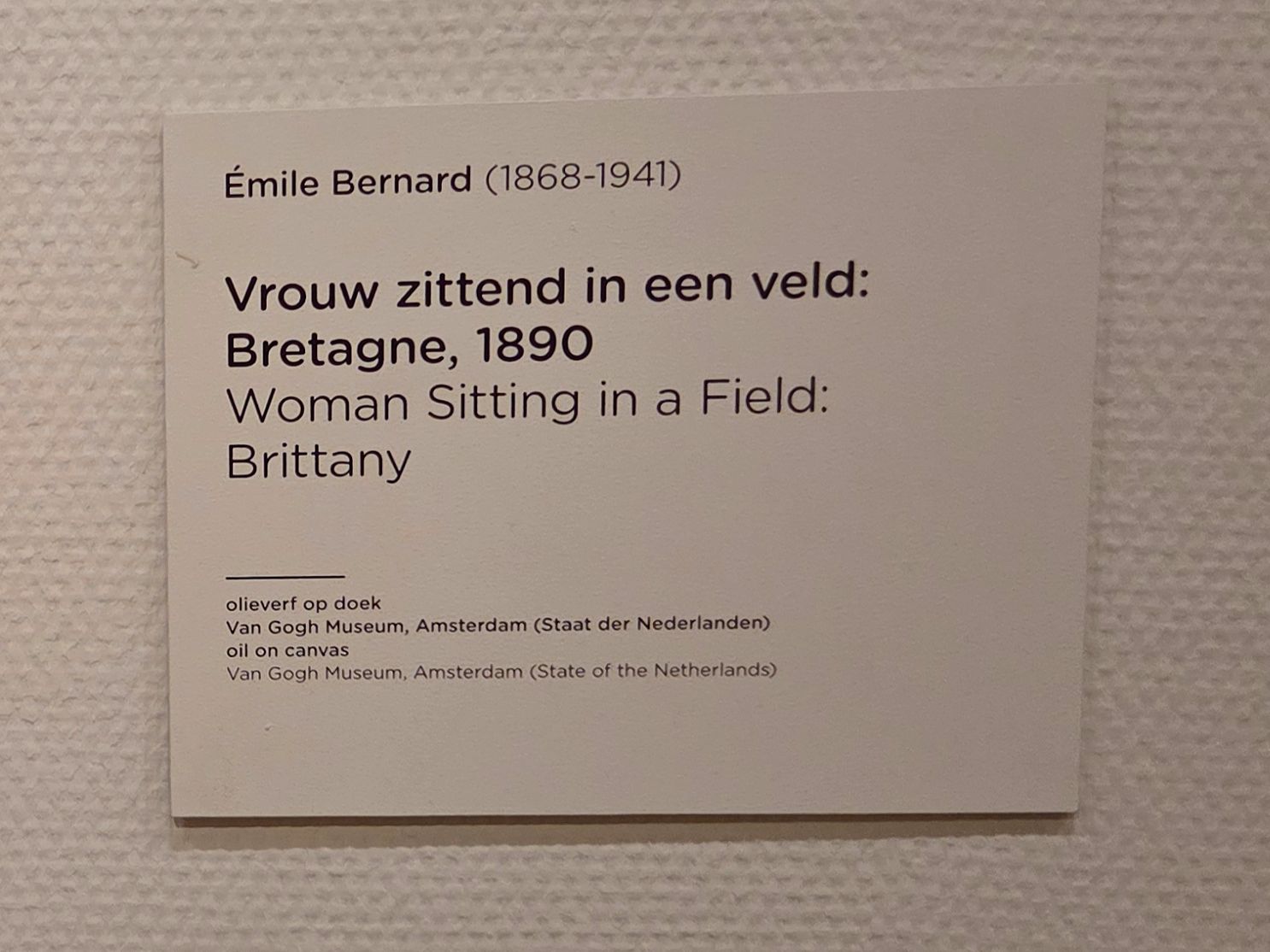
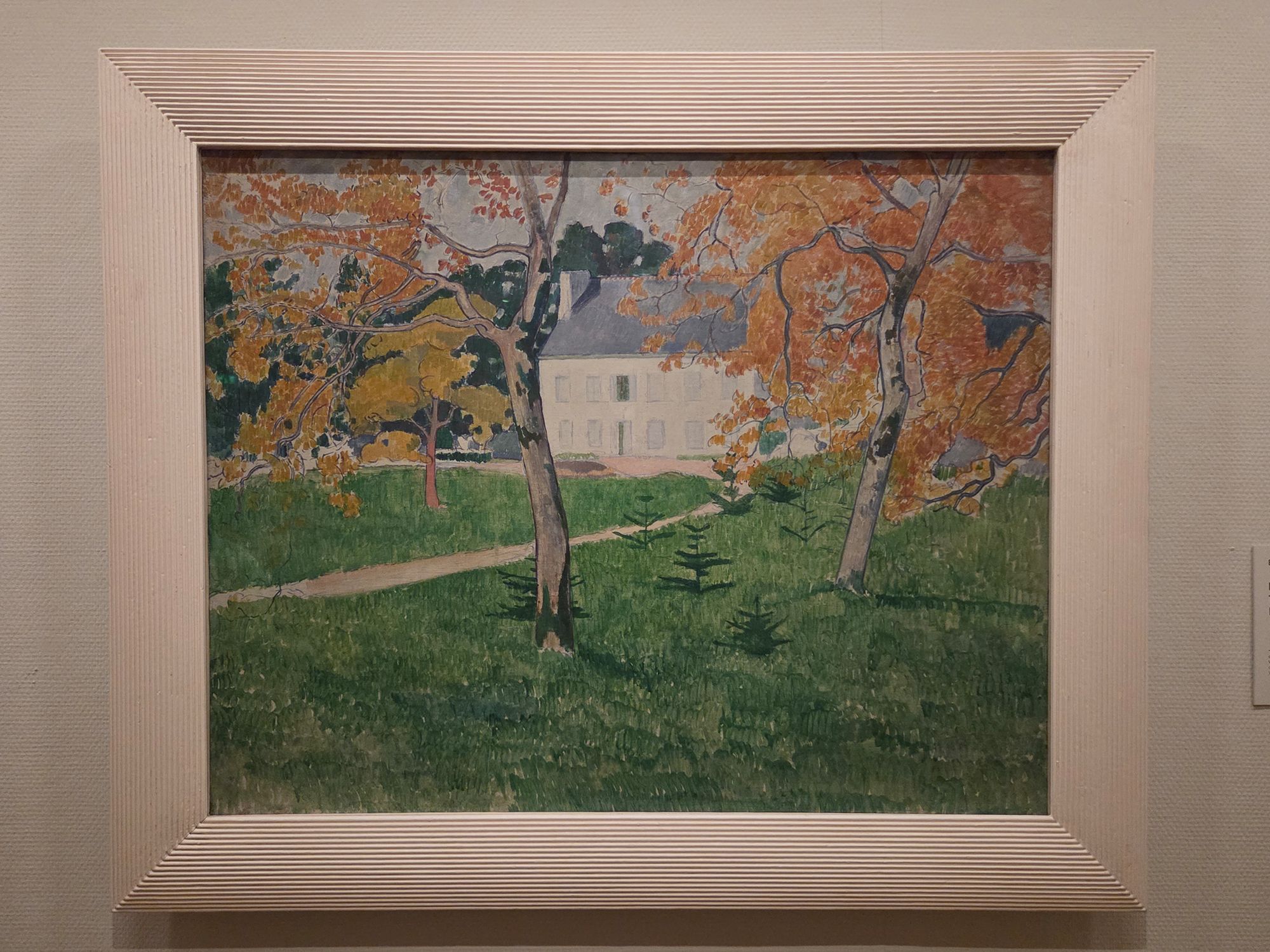
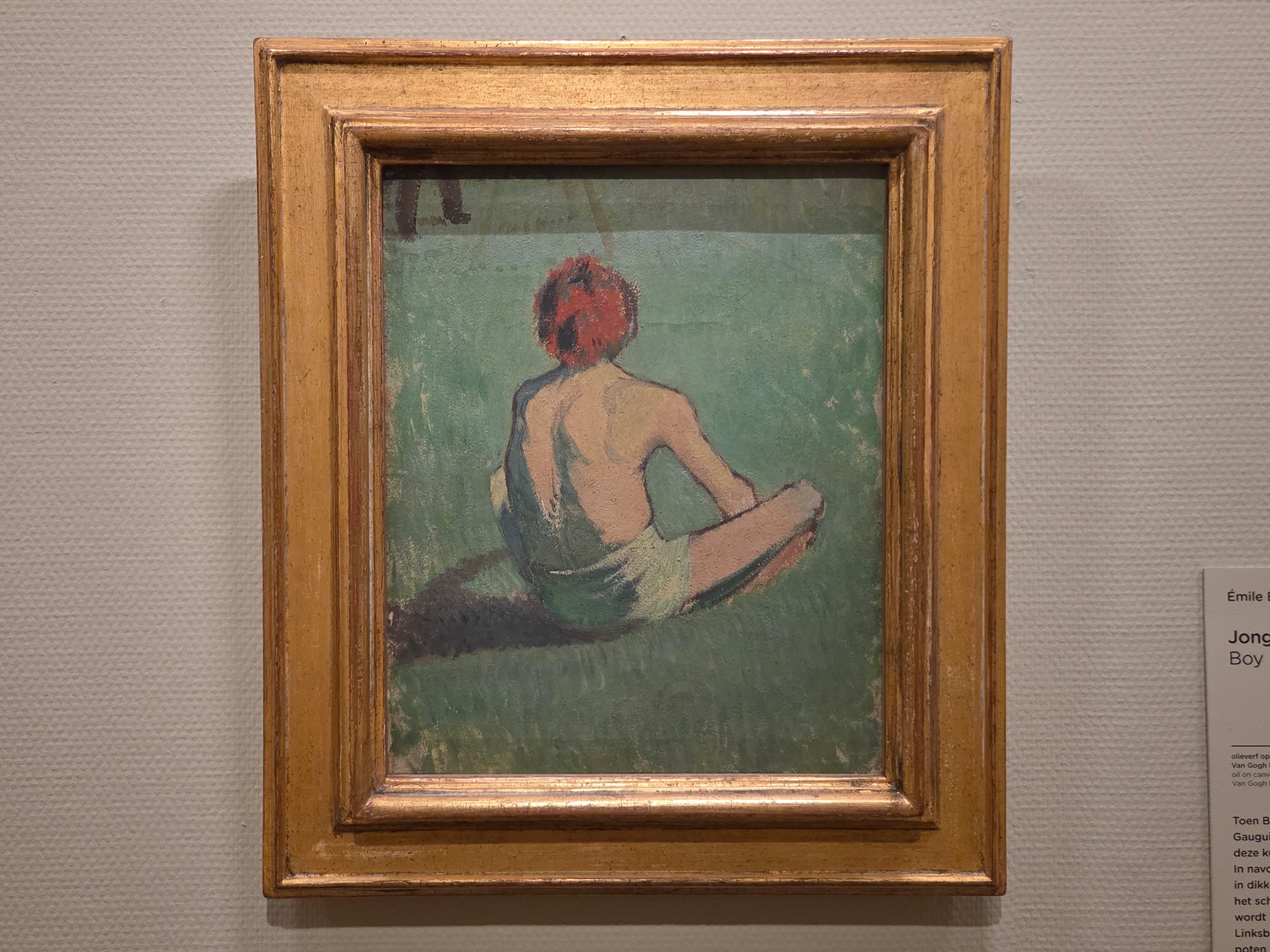
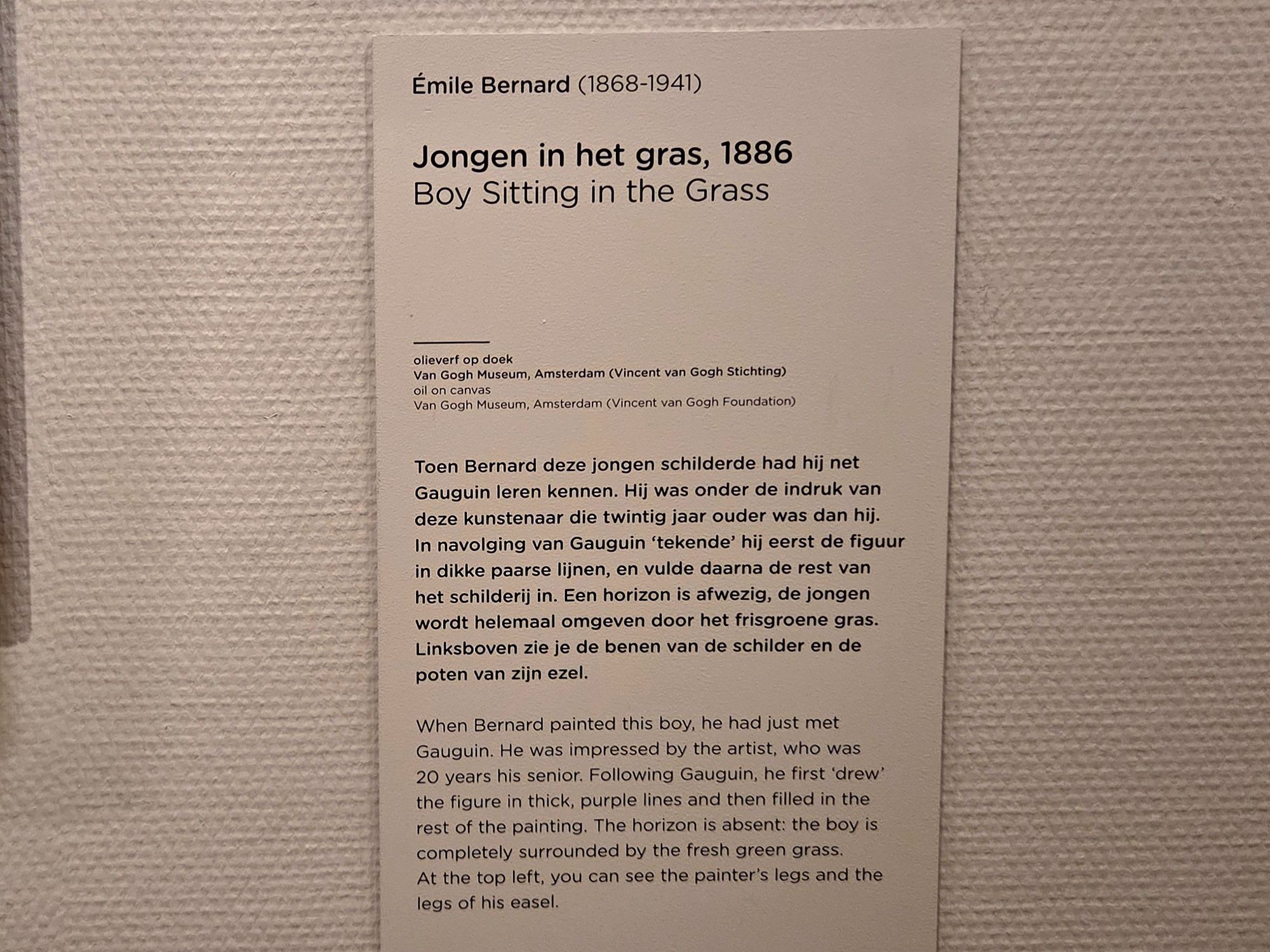
When Émile Bernard painted this boy, he had just met Paul Gauguin and was strongly influenced by his style. Bernard outlined the figure in thick purple lines and filled the scene with broad areas of color, eliminating the horizon so that the boy appears completely surrounded by green grass.
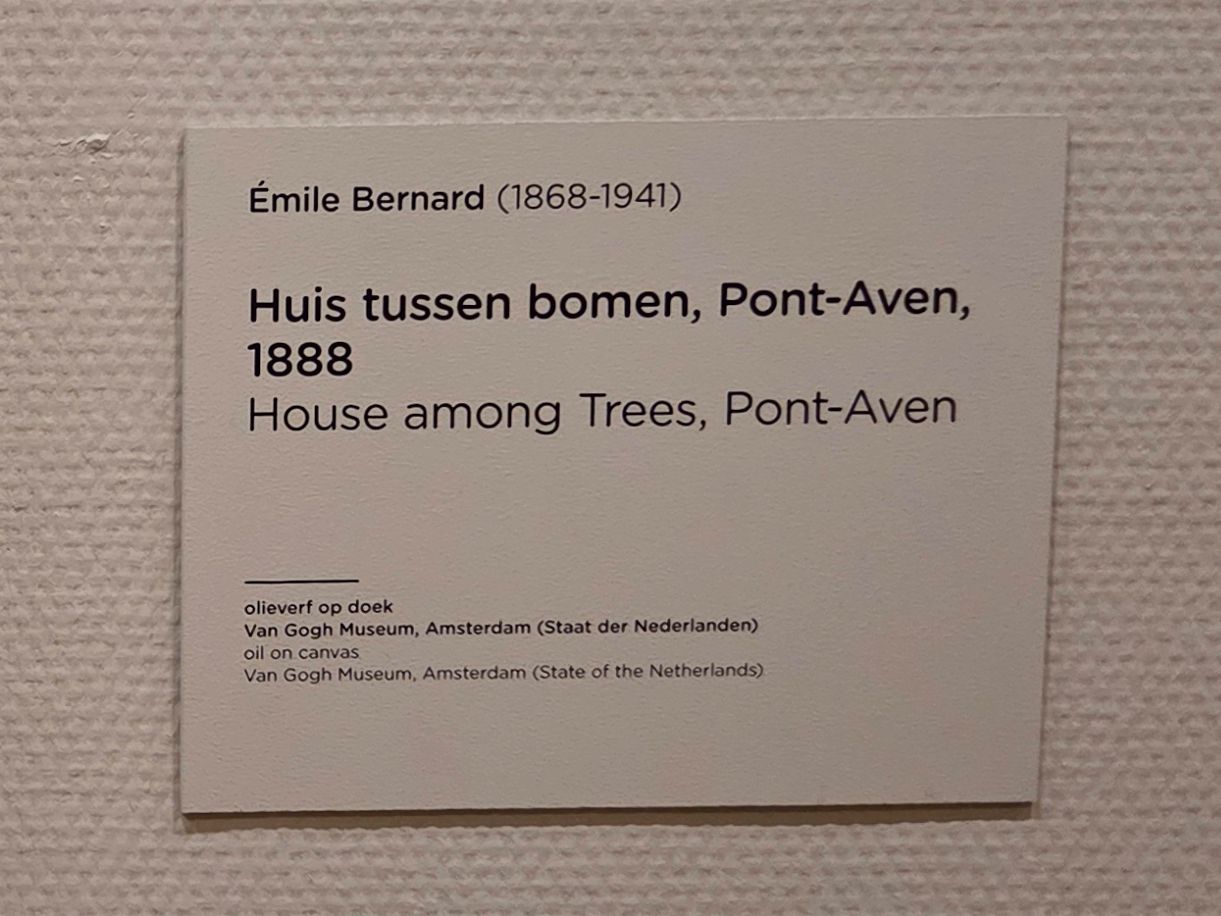
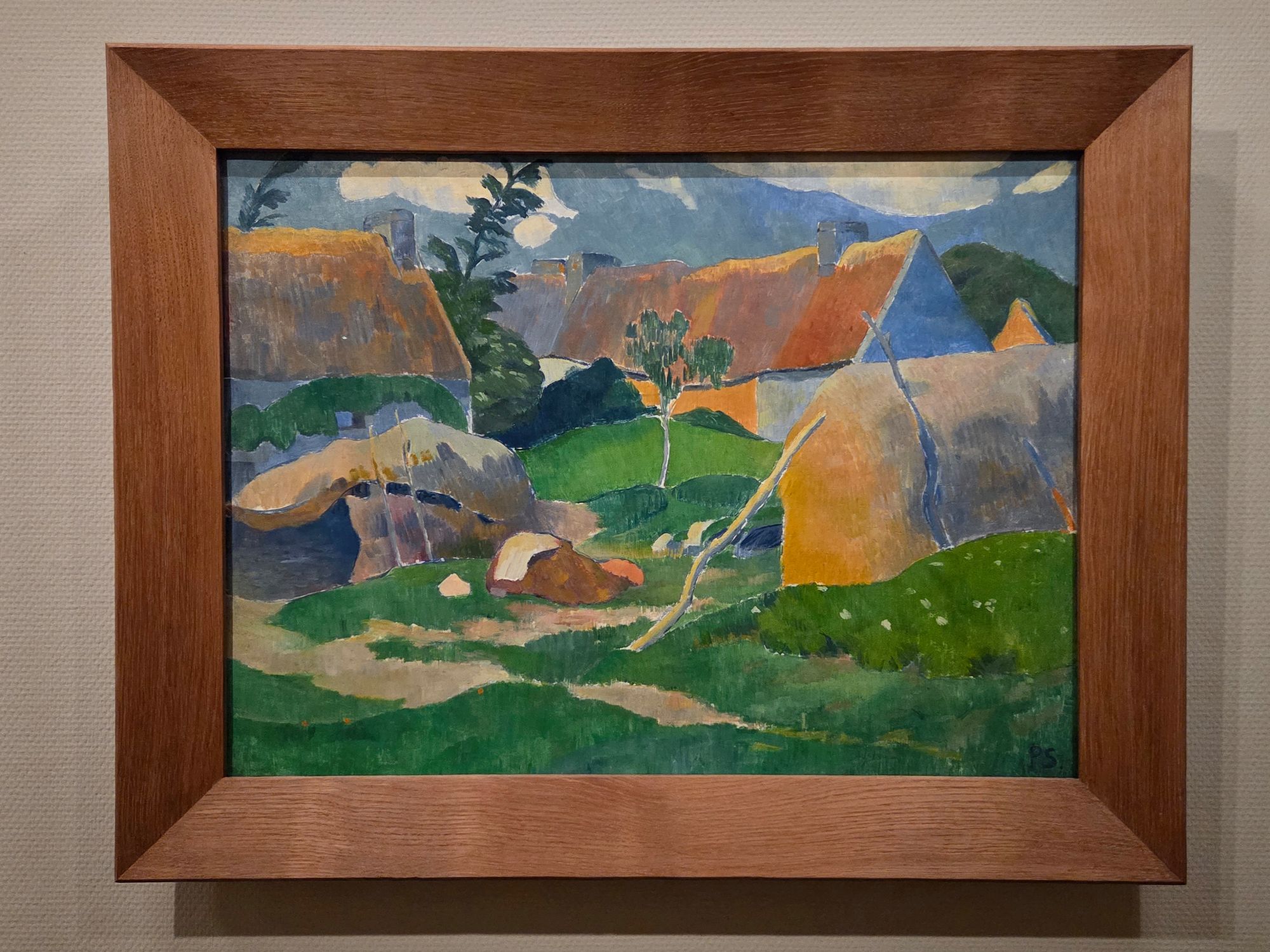
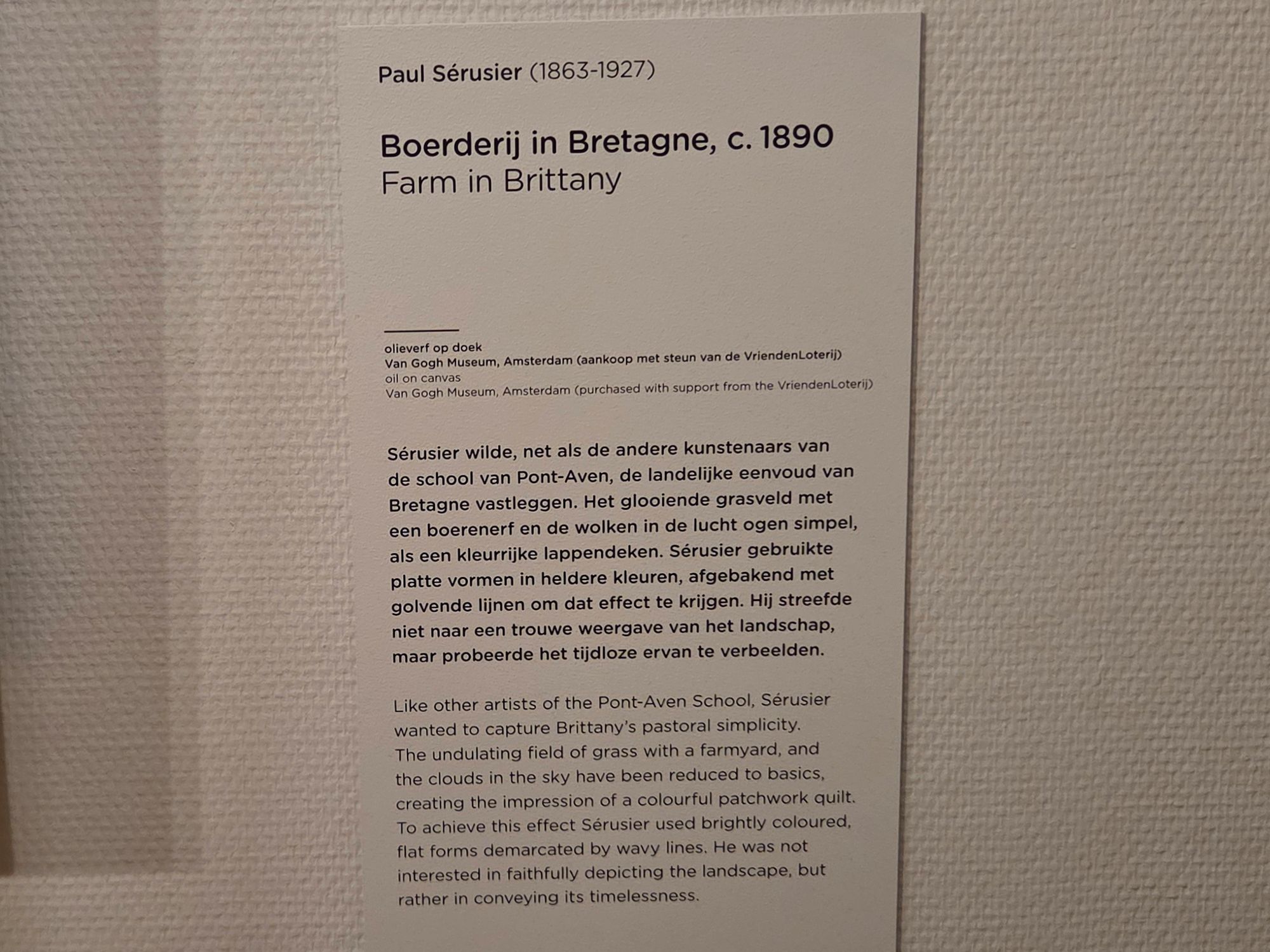
Like other artists of the Pont-Aven School, Paul Sérusier simplified the landscape into flat areas of bright color and flowing lines. Rather than realistically depicting the countryside of Brittany, he wanted to capture its peaceful, timeless character.
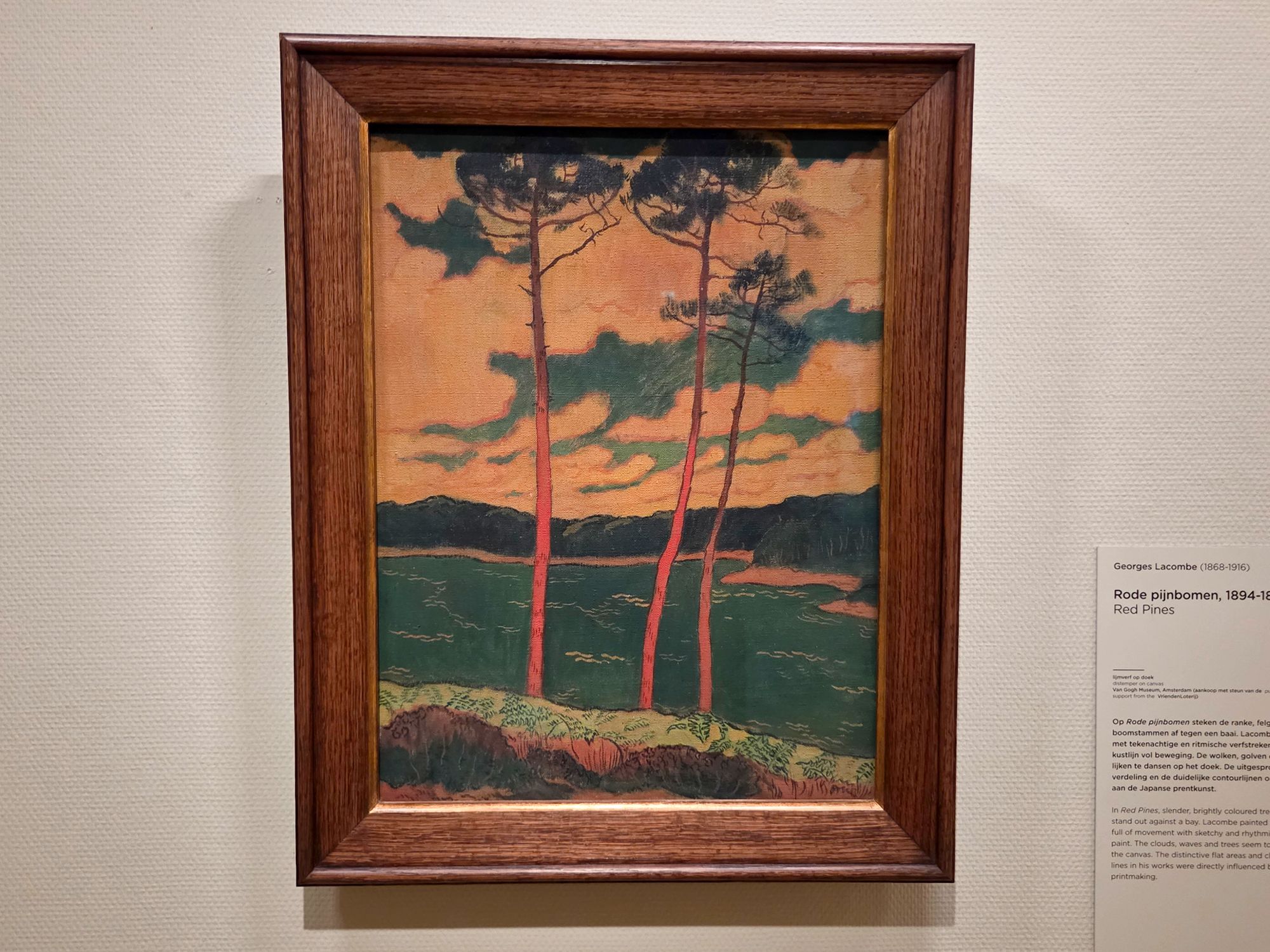
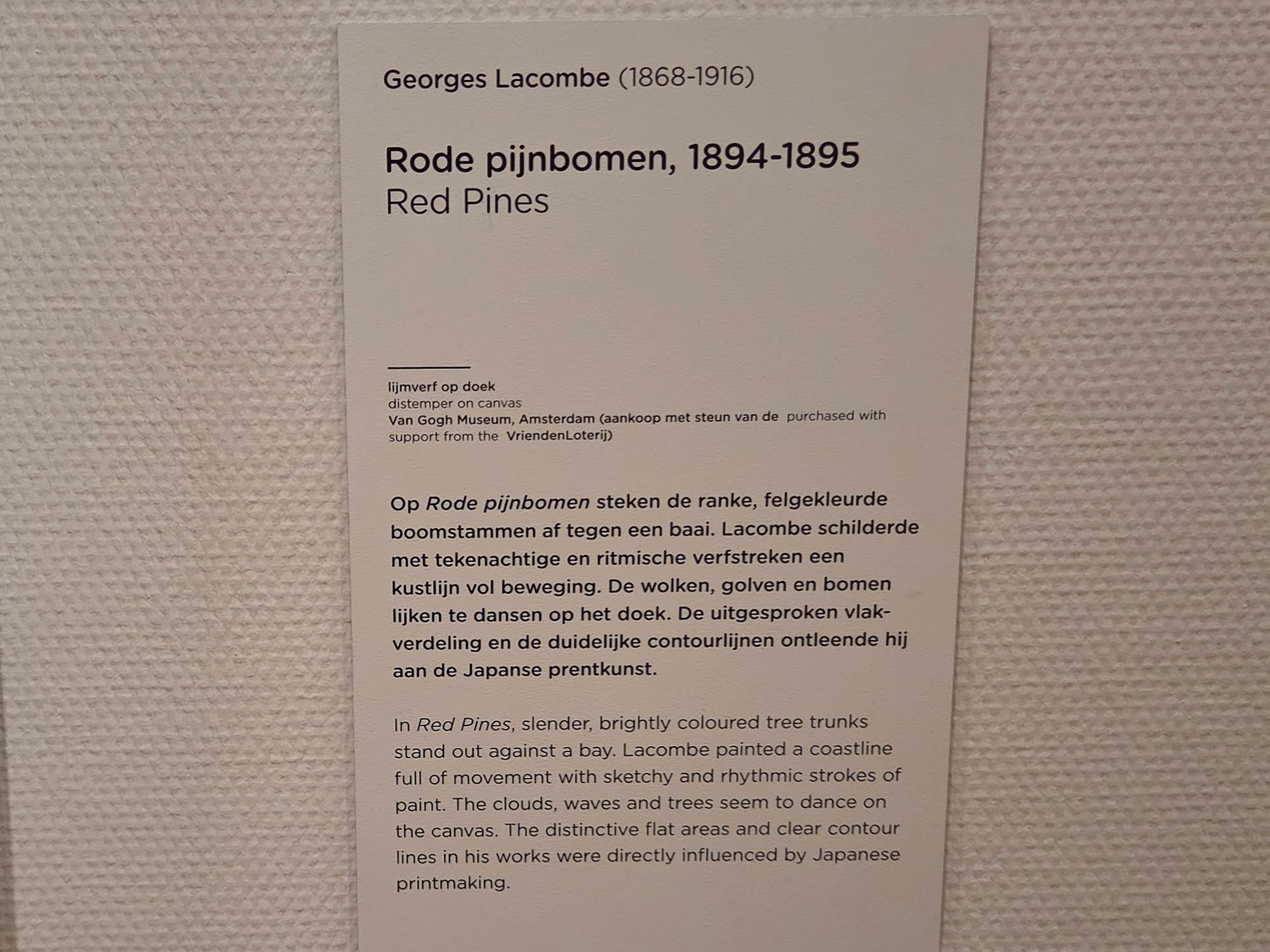
In Red Pines, Georges Lacombe used bright colors, flat areas, and strong outlines to create a lively coastal landscape. The simplified forms and bold contours show the strong influence of Japanese woodblock prints.
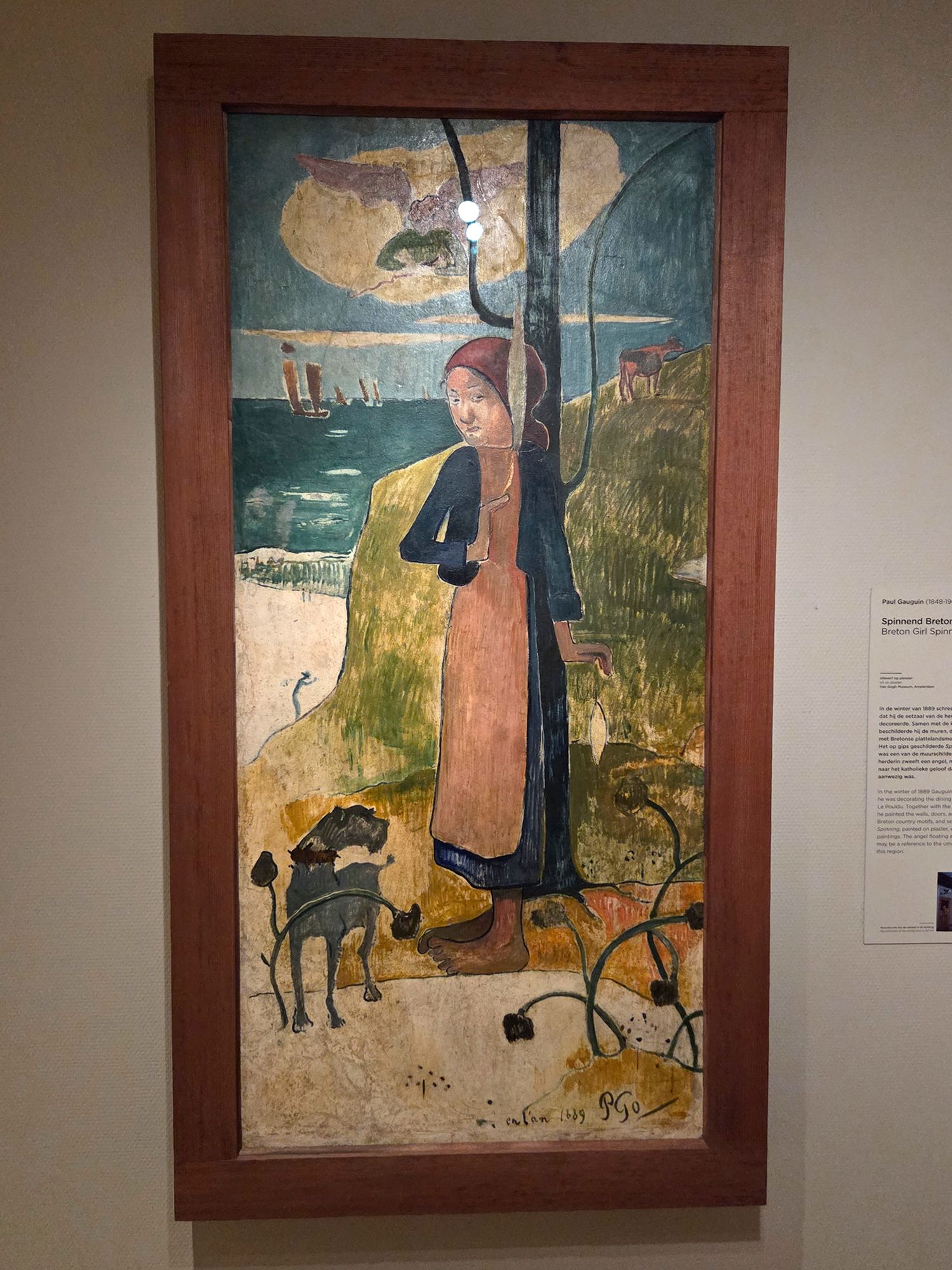
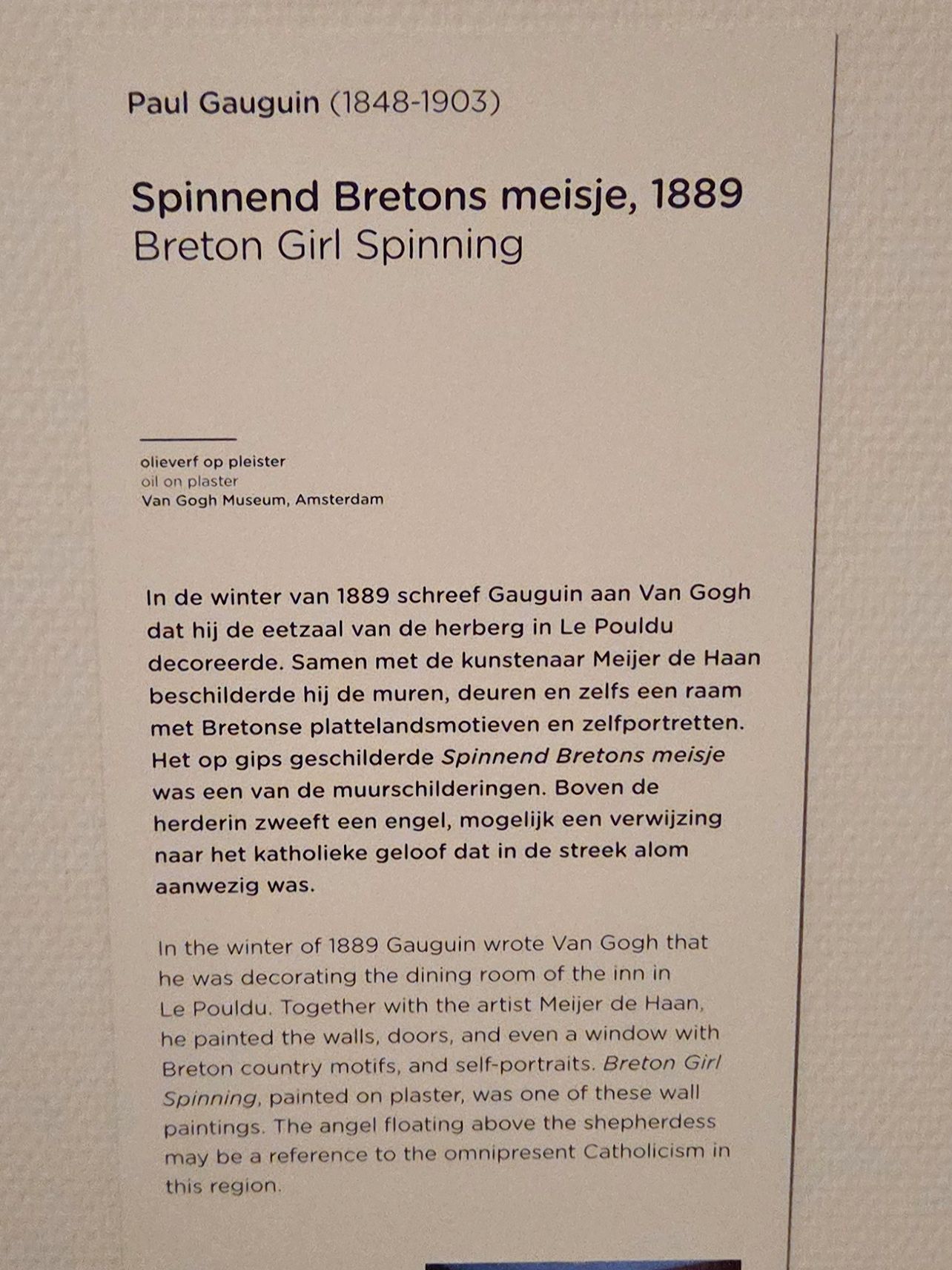
In 1889, Paul Gauguin and Meijer de Haan decorated an inn in Le Pouldu with paintings inspired by life in Brittany. Gauguin’s Breton Girl Spinning was painted directly on the plaster wall and combines a rural scene with religious imagery reflecting the strong Catholic traditions of the region.
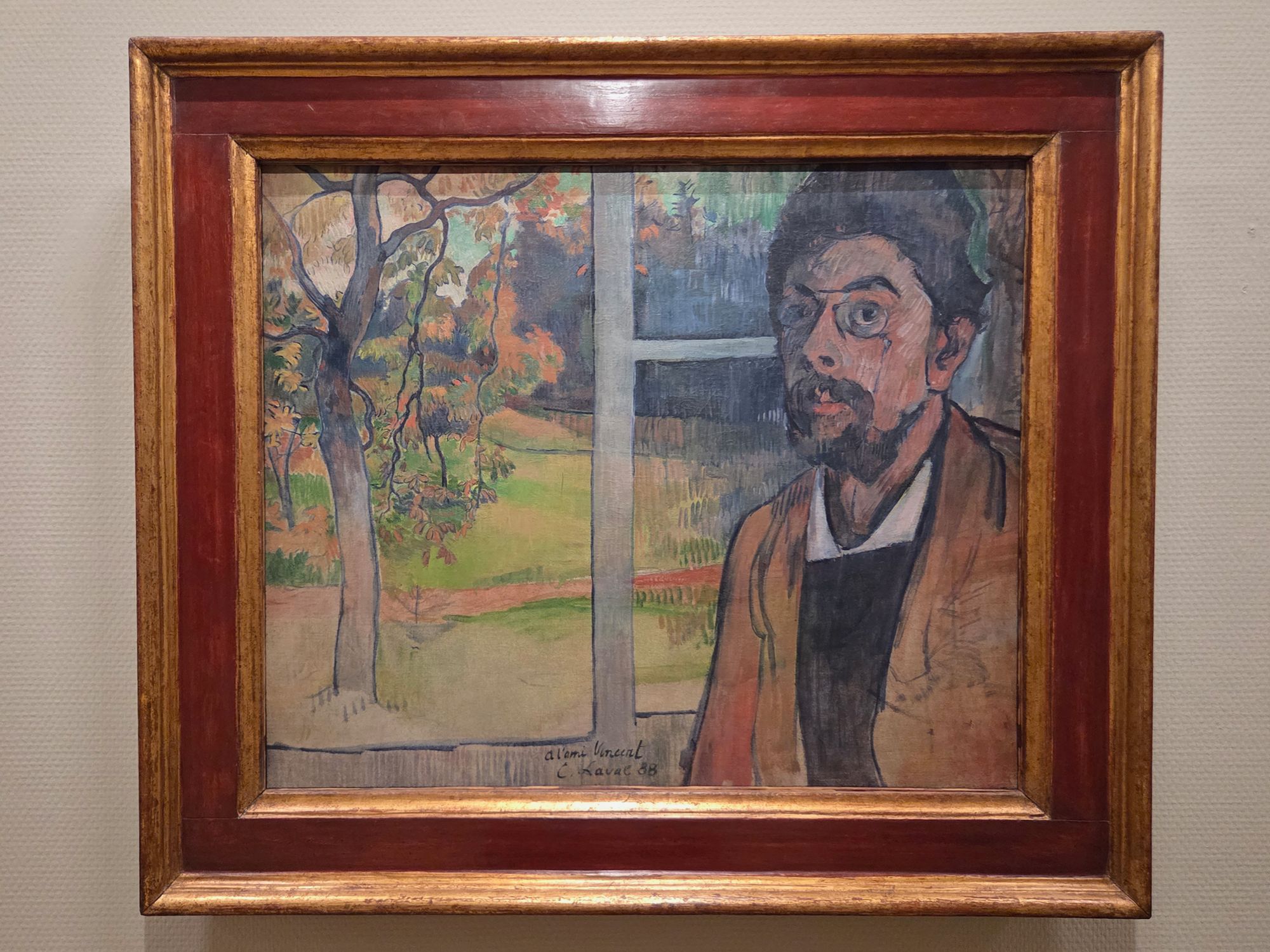
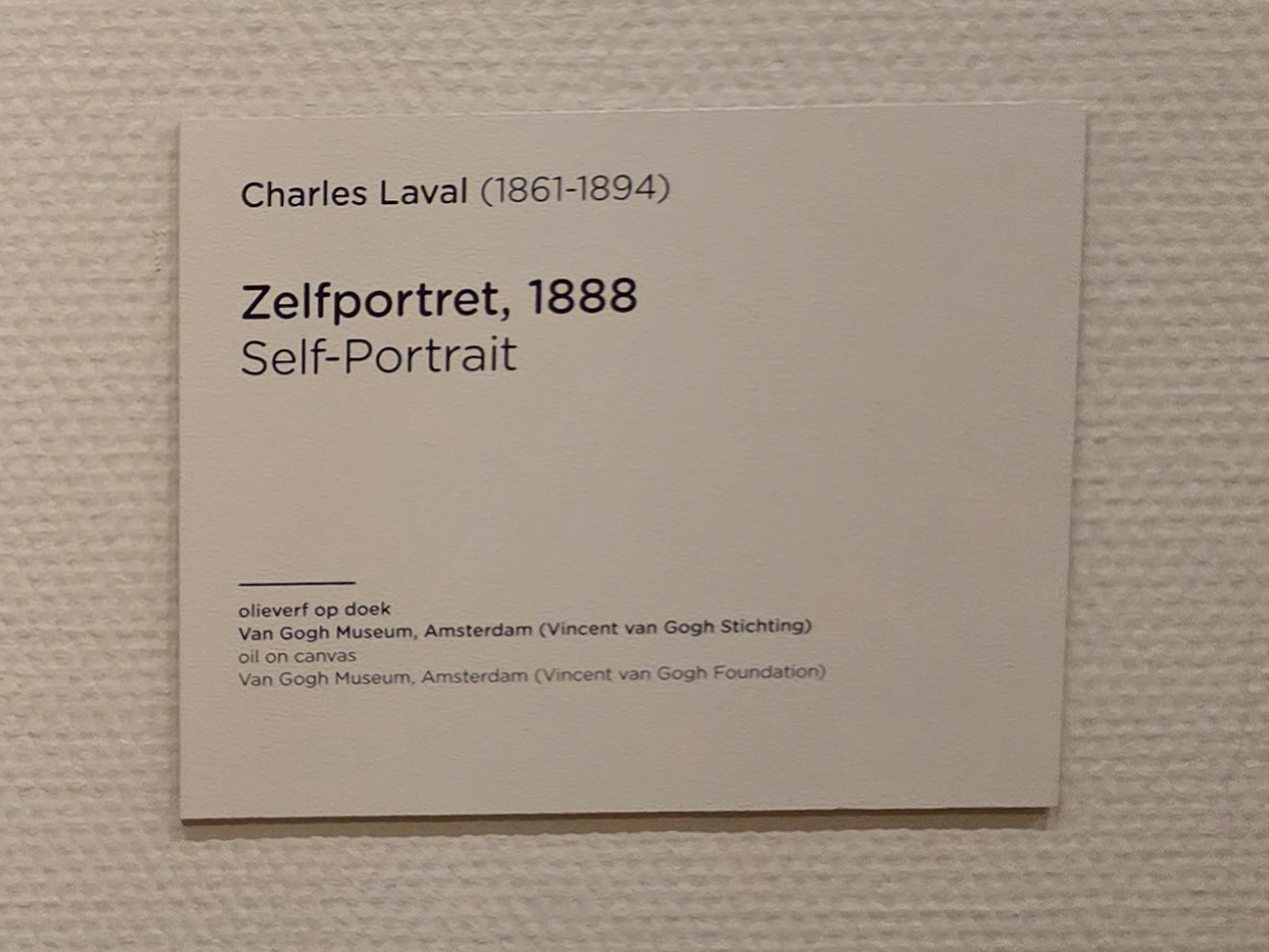
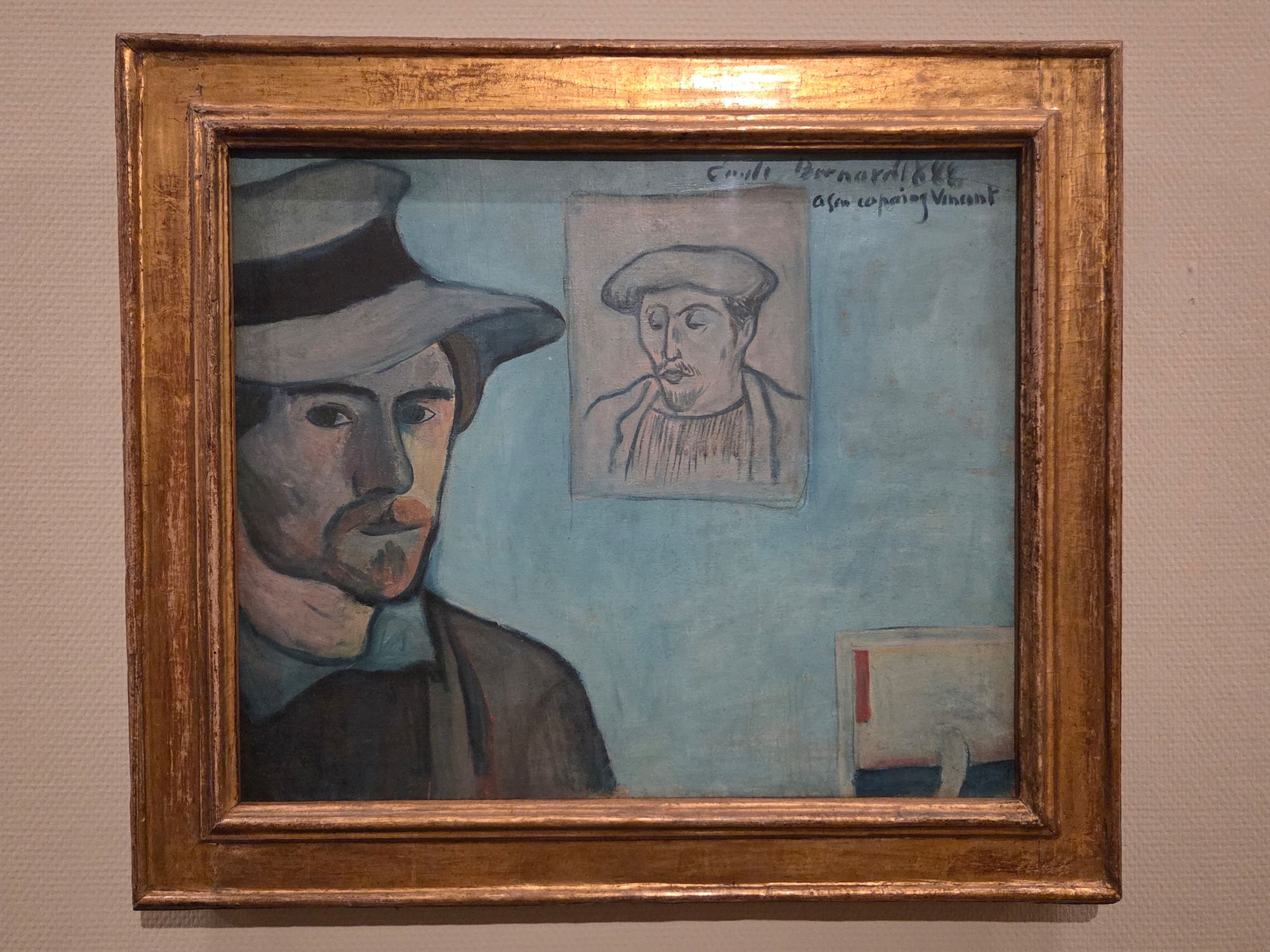
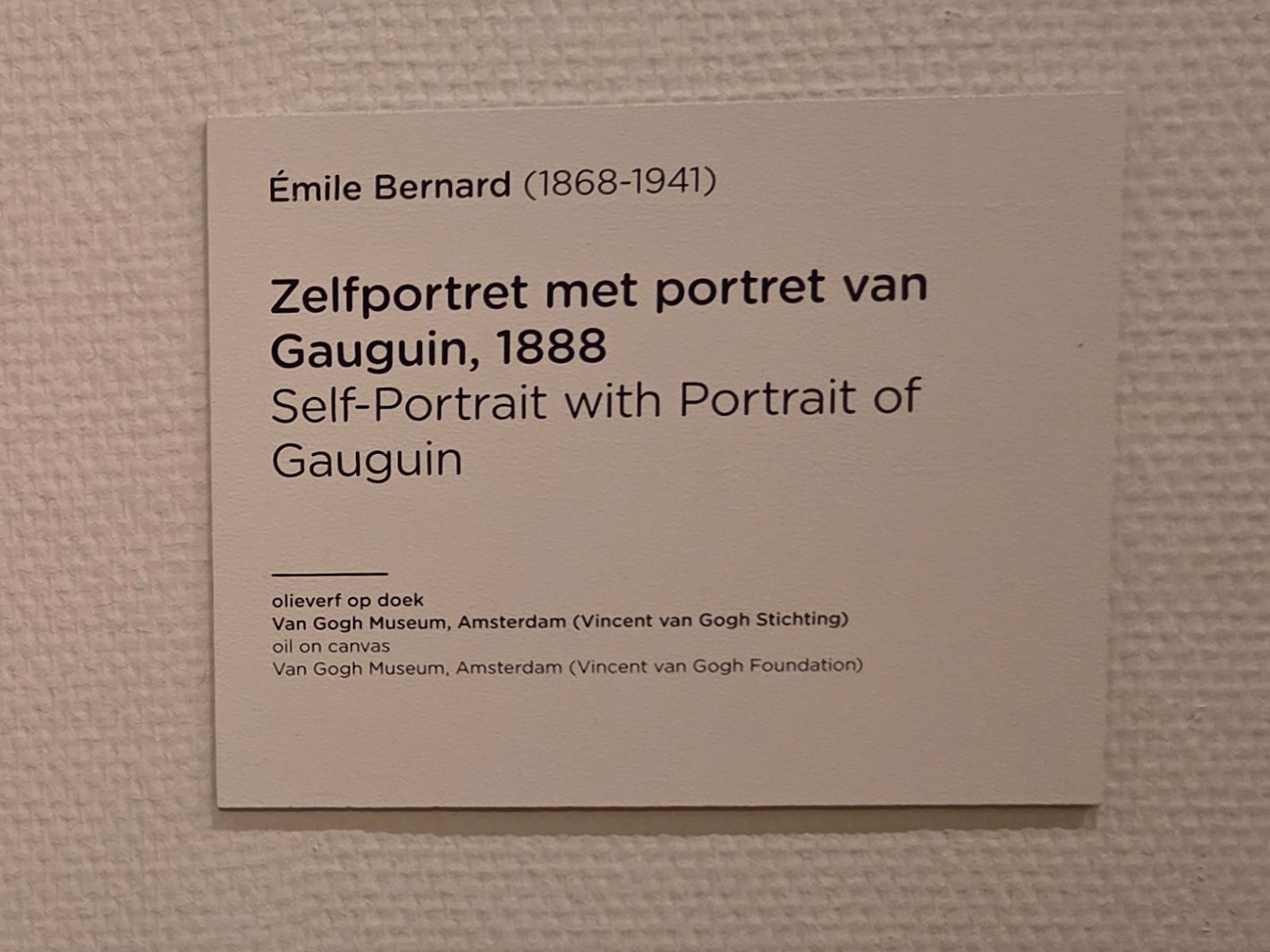
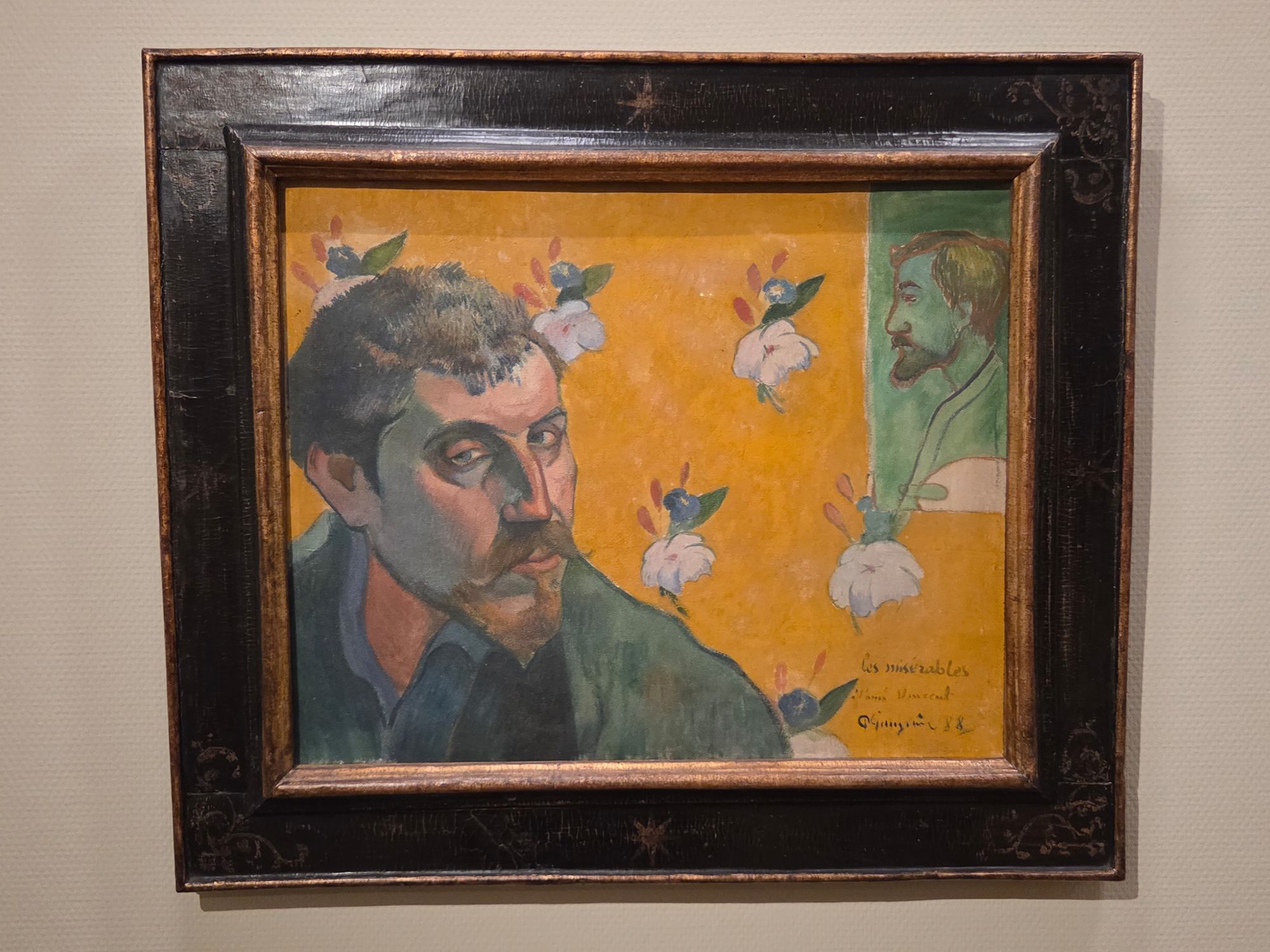
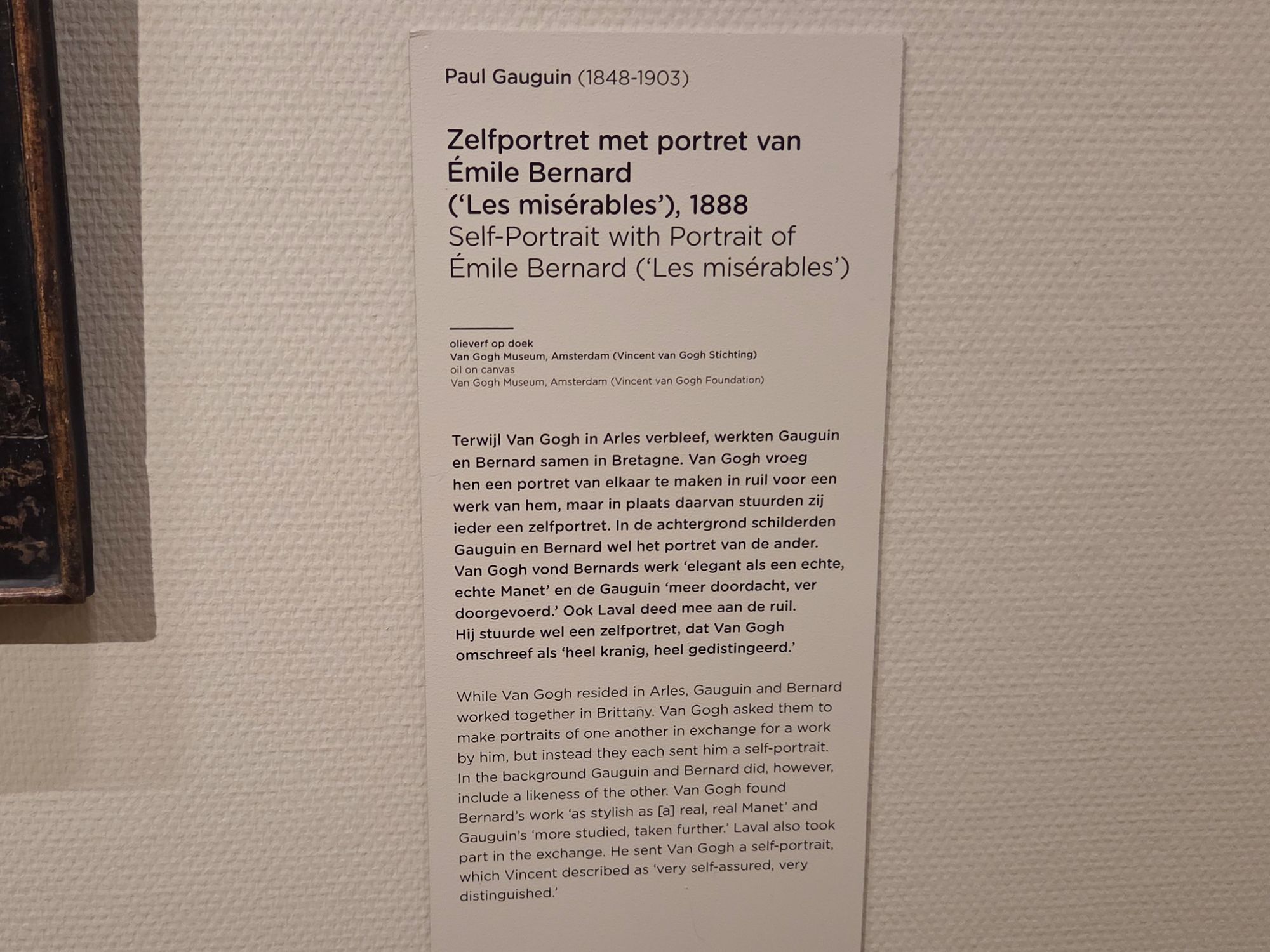
While Van Gogh was living in Arles, he exchanged artwork with Paul Gauguin, Émile Bernard, and Charles Laval in Brittany. They sent one another self-portraits, sometimes including images of their fellow artists in the background, as a way of sharing their different artistic styles and ideas.
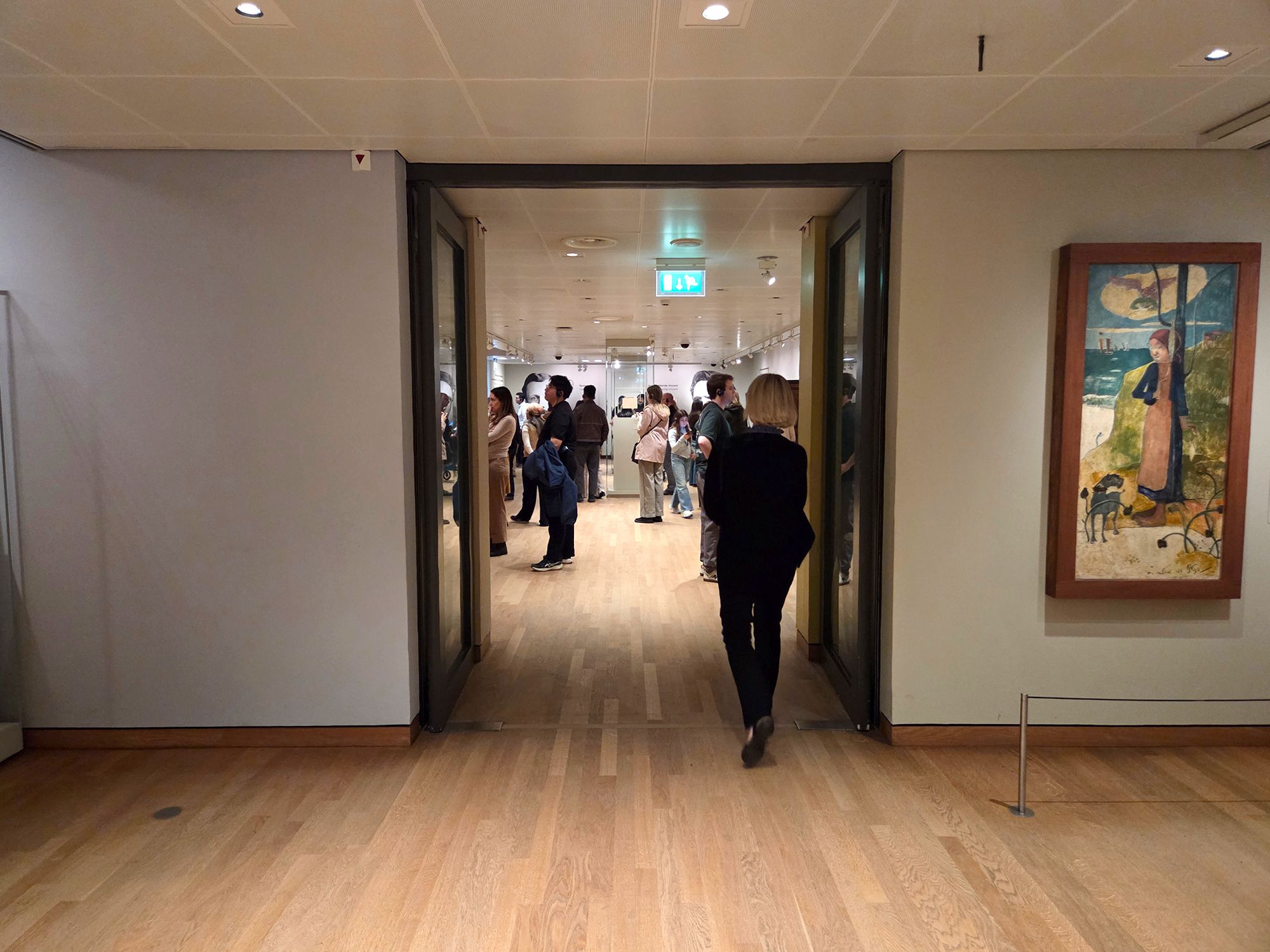
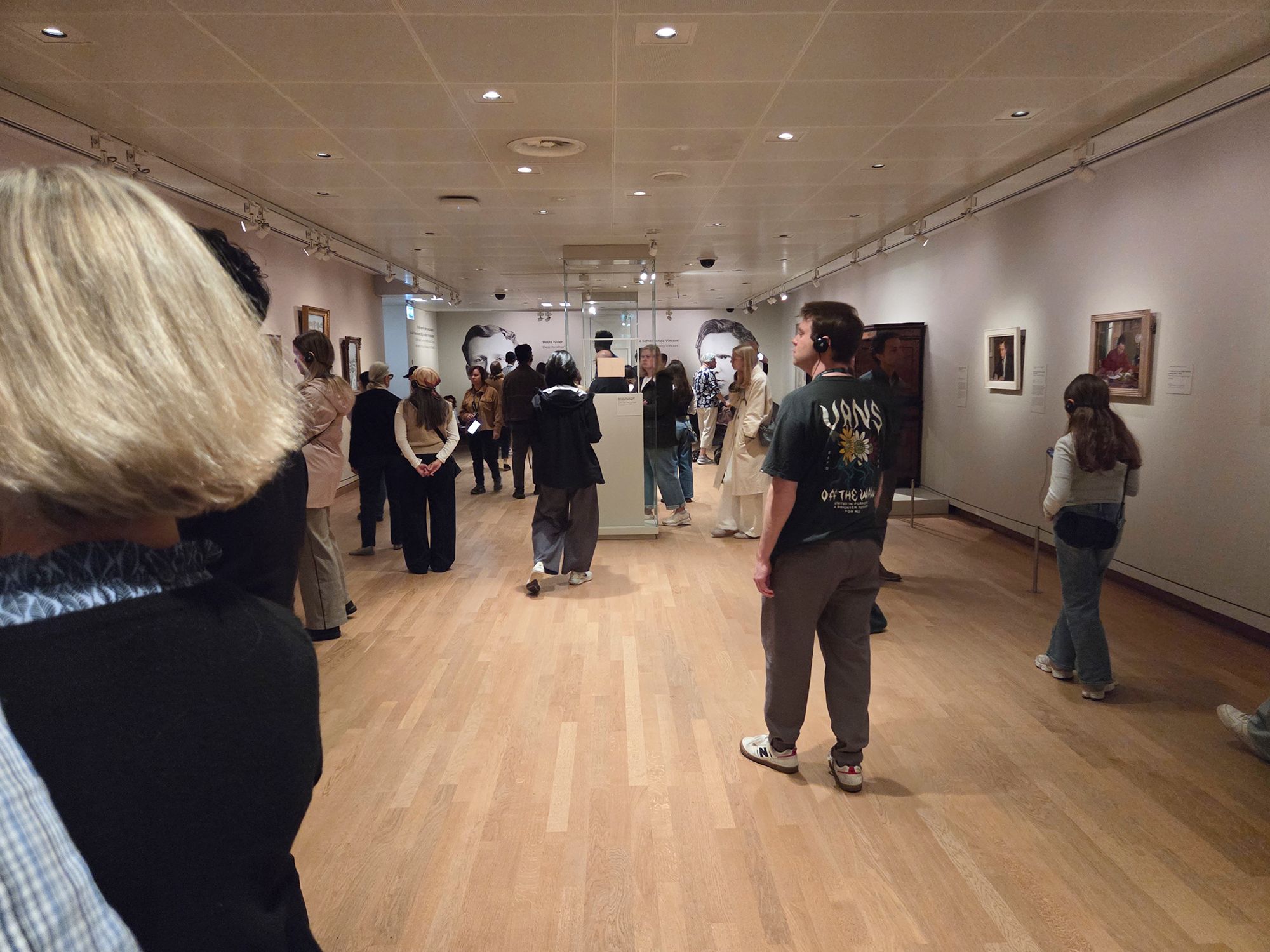
Van Gogh had an exceptionally close relationship with his younger brother Theo, who supported him emotionally and financially throughout his artistic career. Their bond is documented in hundreds of letters, which provide an extraordinary record of Van Gogh’s thoughts about art, life, and his struggles.
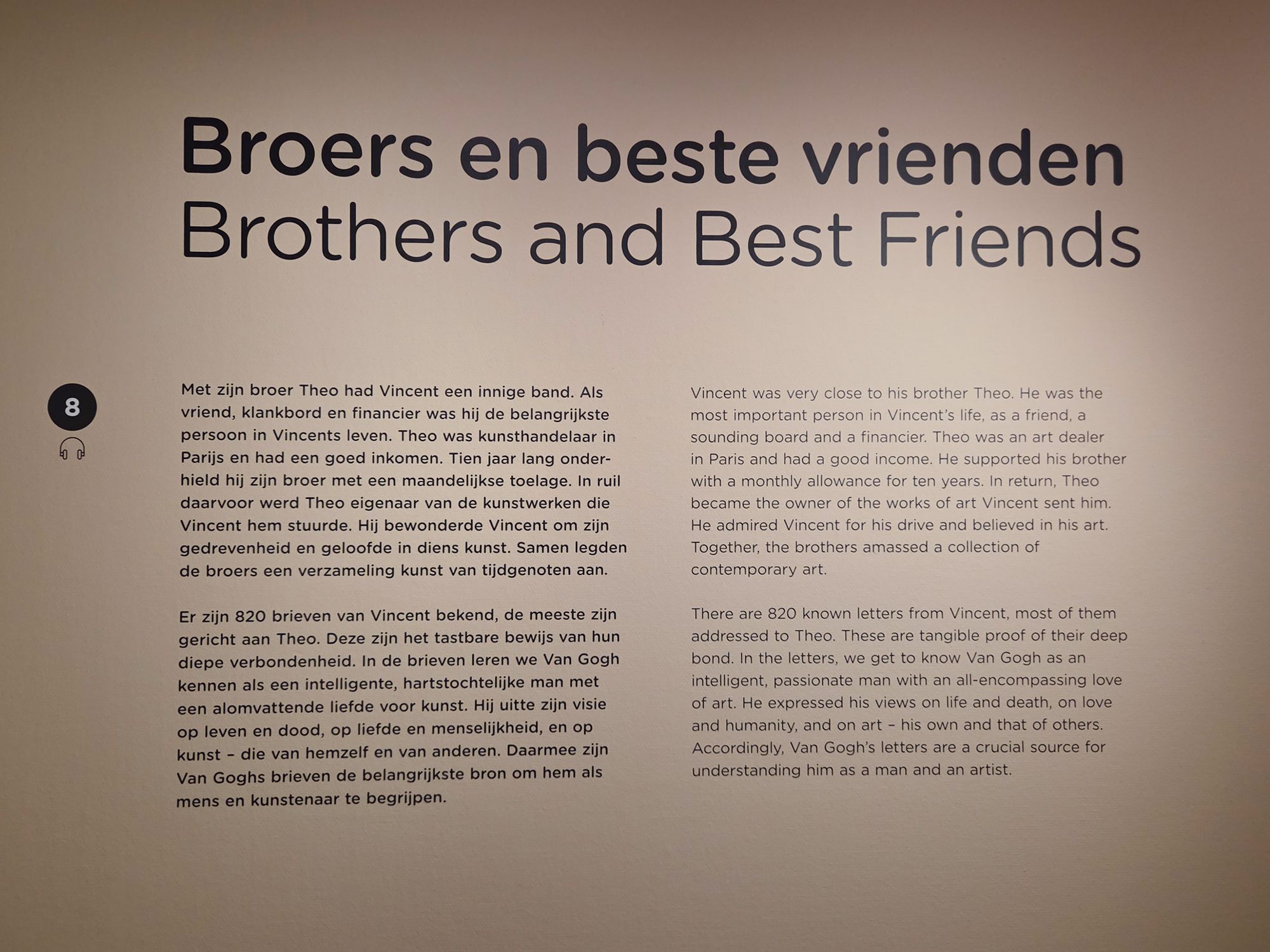
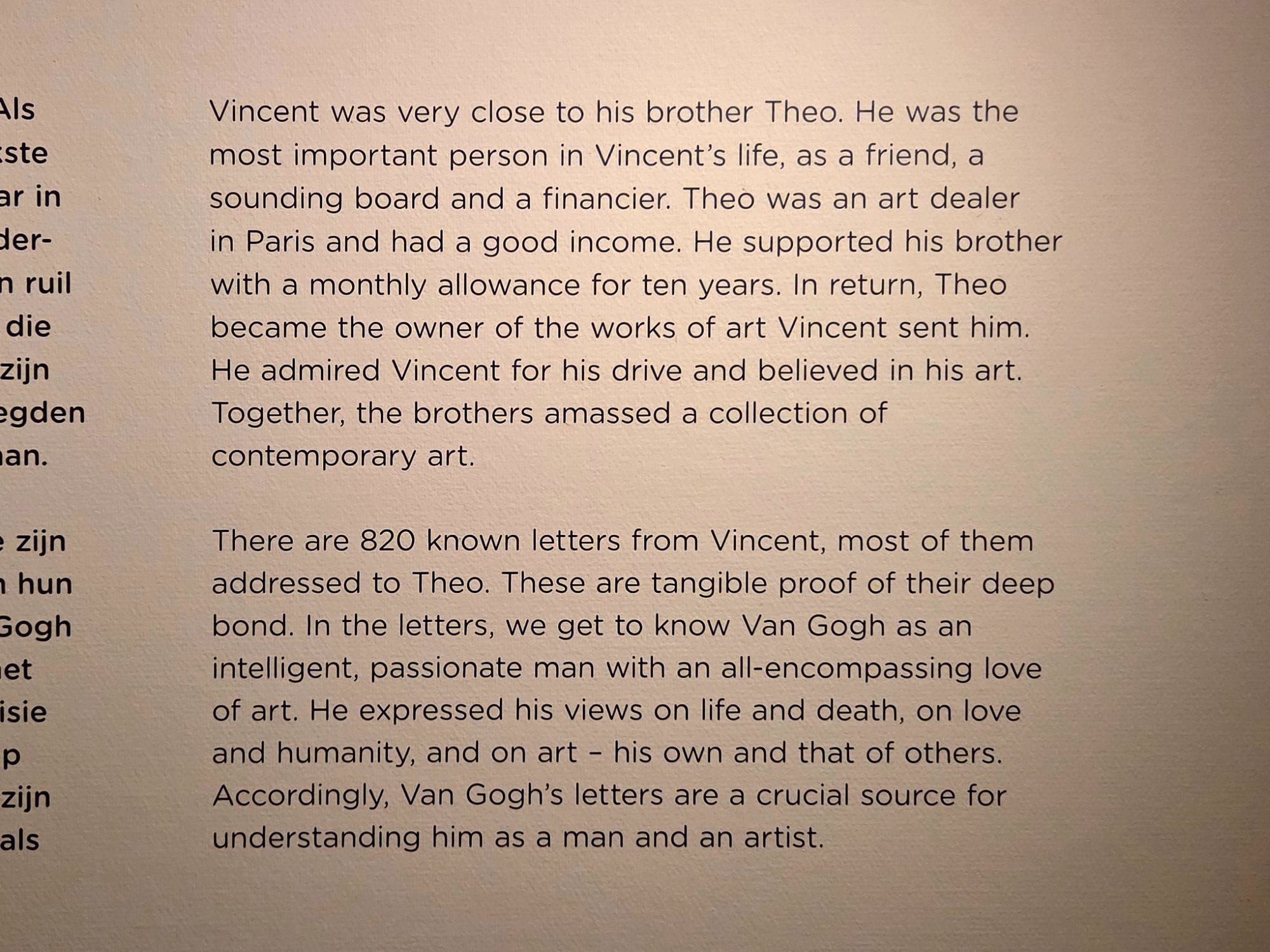
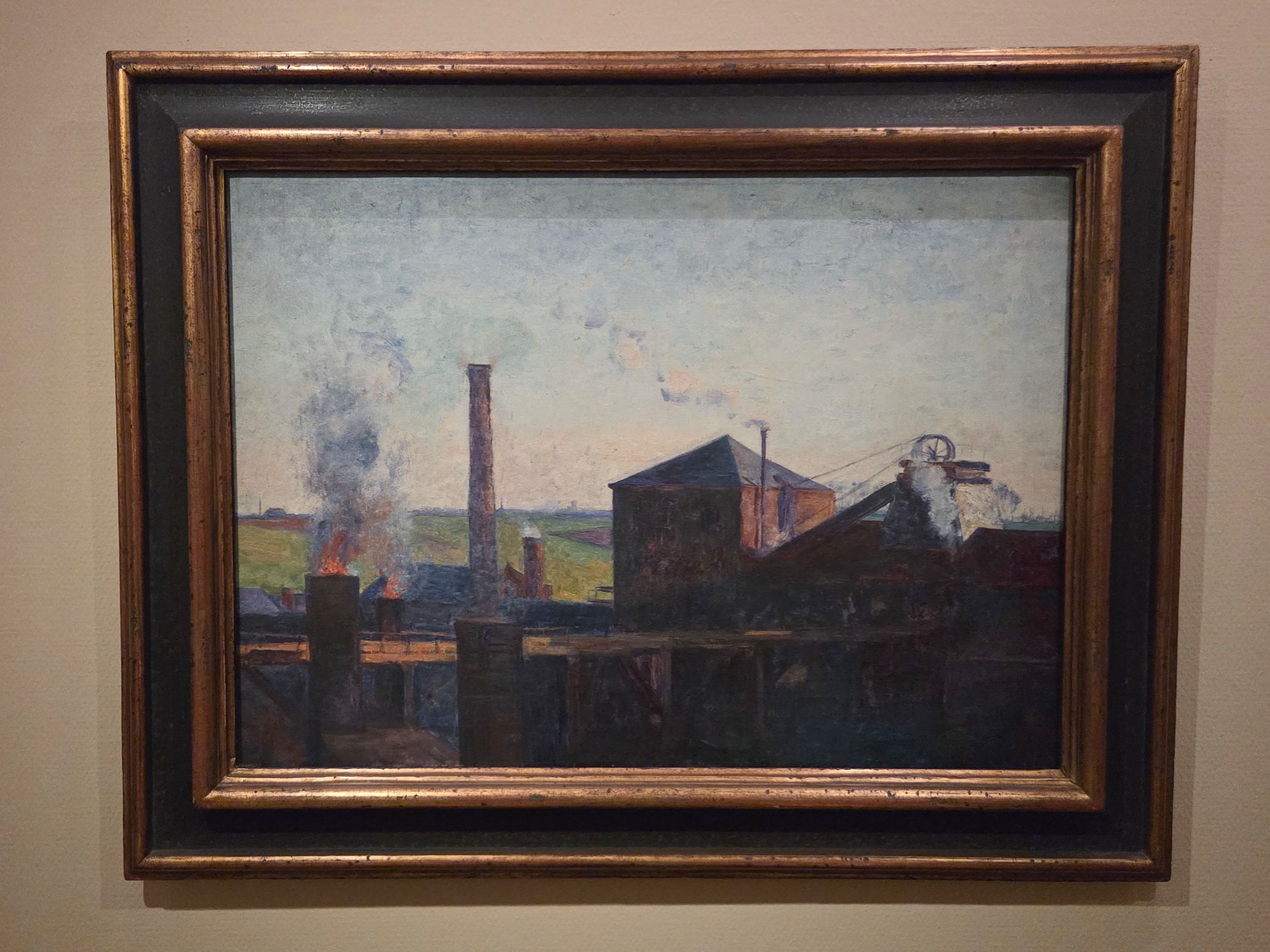
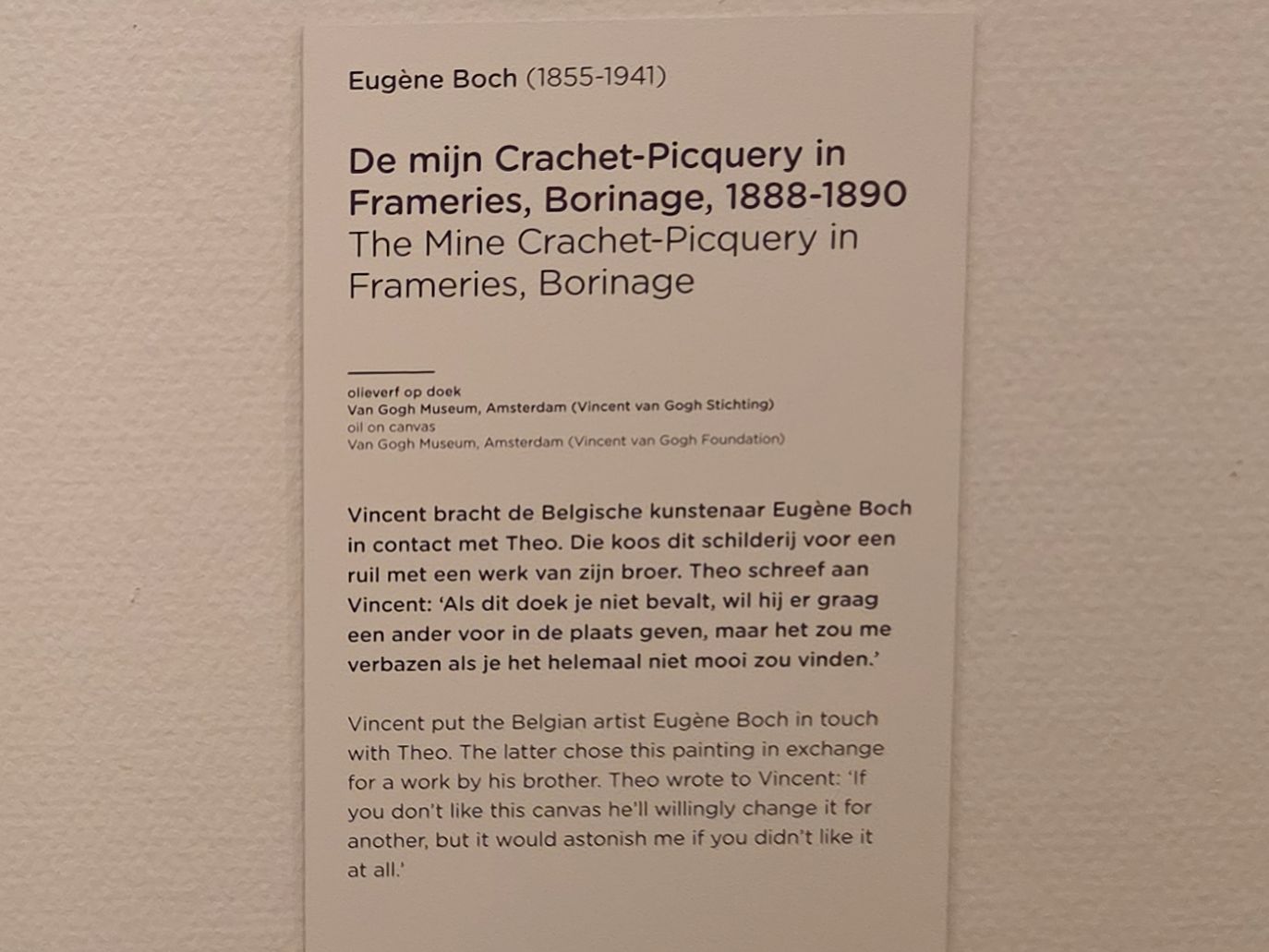
Van Gogh introduced the Belgian artist Eugène Boch to his brother Theo. Theo admired Boch’s work and chose one of his paintings in exchange for a painting by Vincent, showing how the brothers also supported and collected the work of fellow contemporary artists.
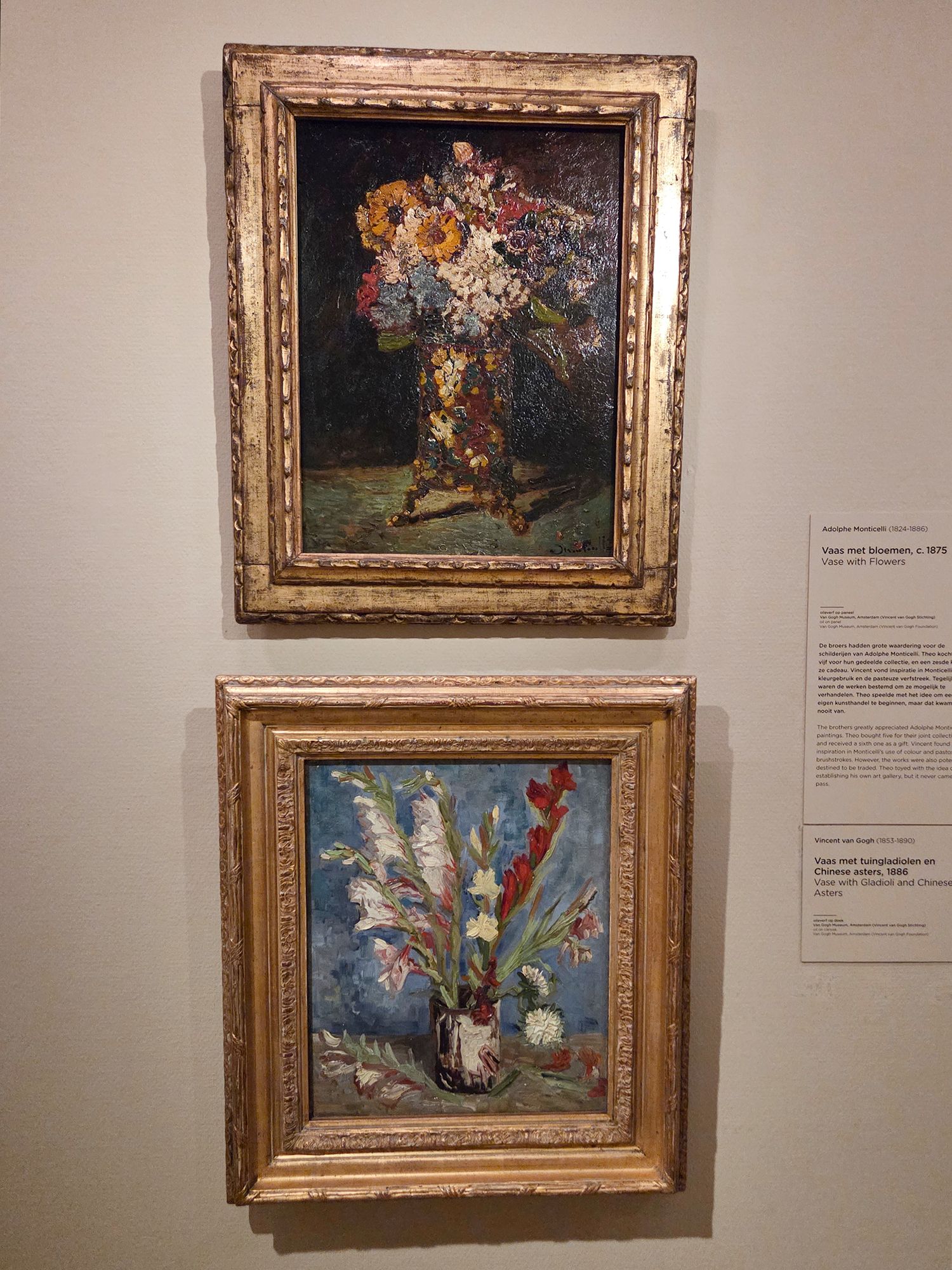
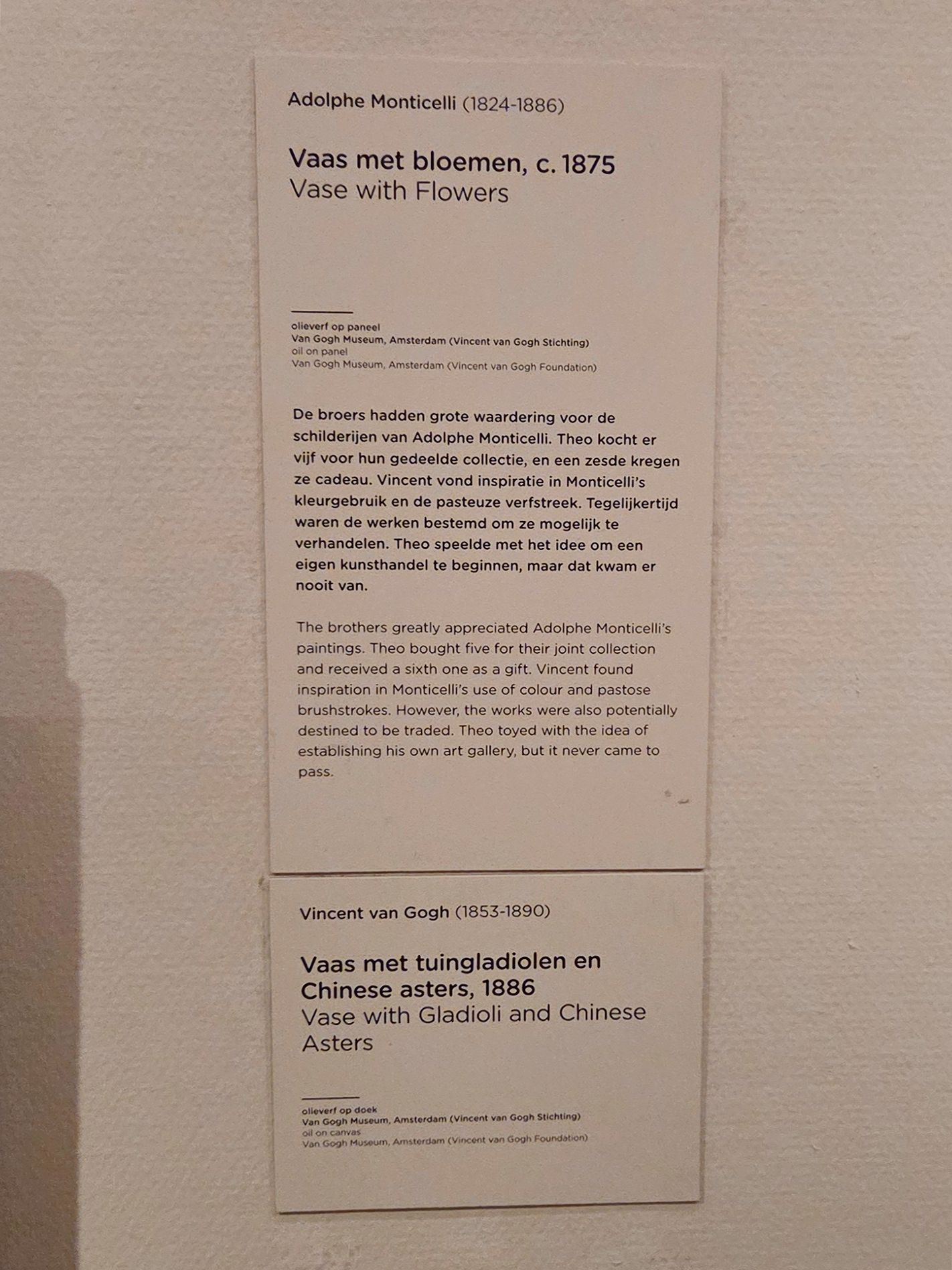
Van Gogh and Theo greatly admired the paintings of Adolphe Monticelli, whose rich colors and thick brushstrokes influenced Vincent’s own work. Theo bought several of Monticelli’s paintings for their collection and even considered selling them through an art gallery he hoped to establish.
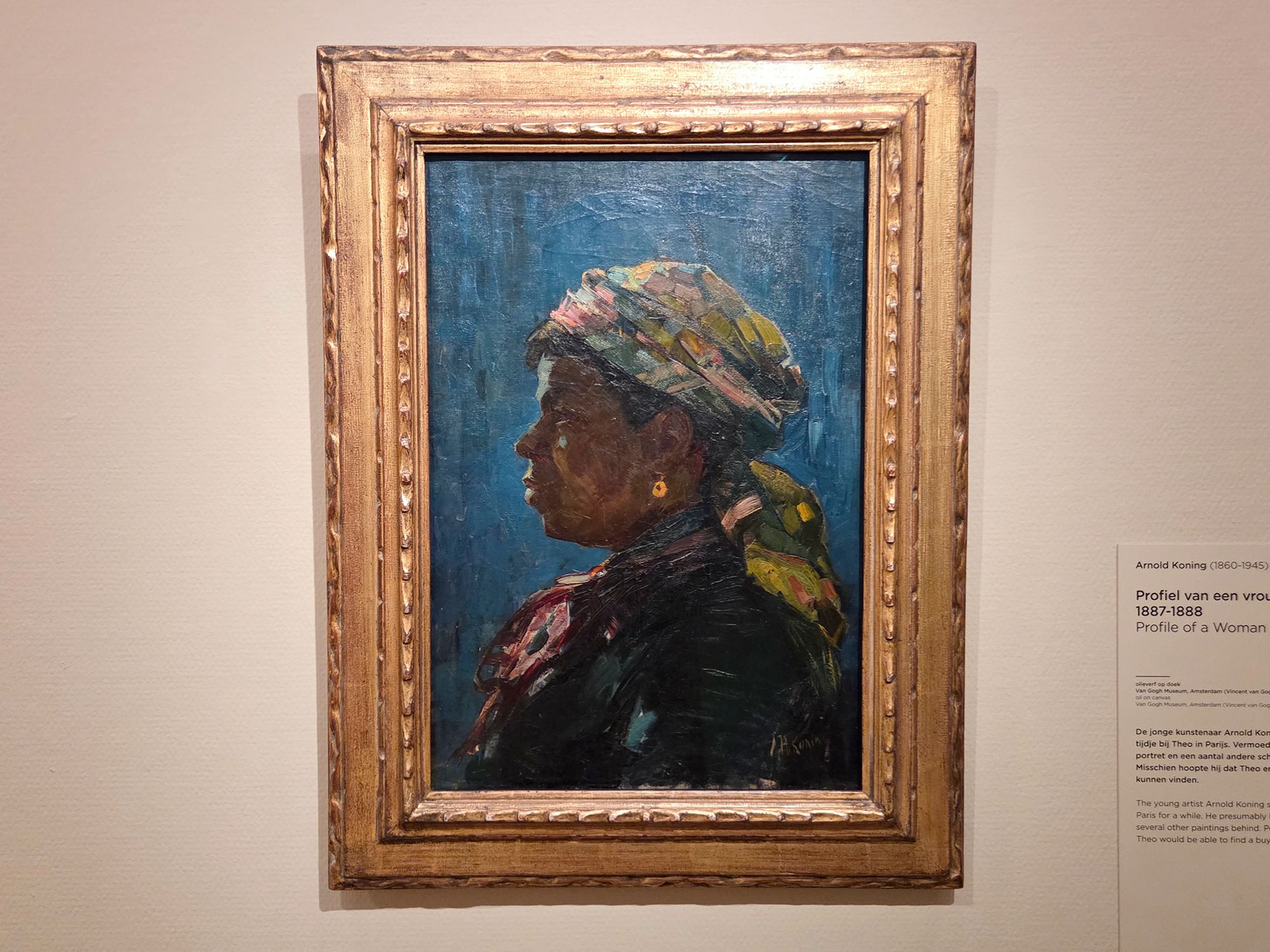
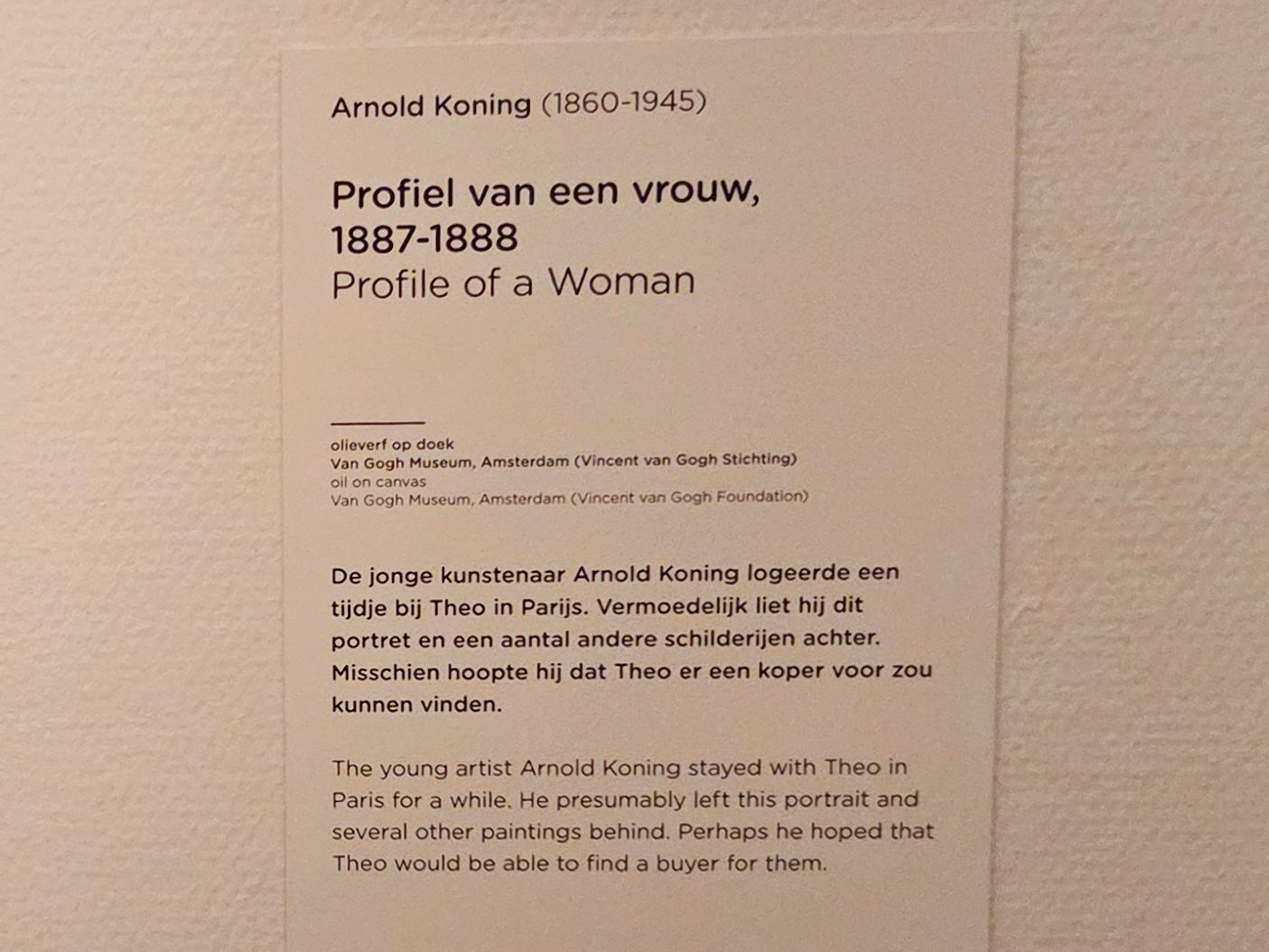
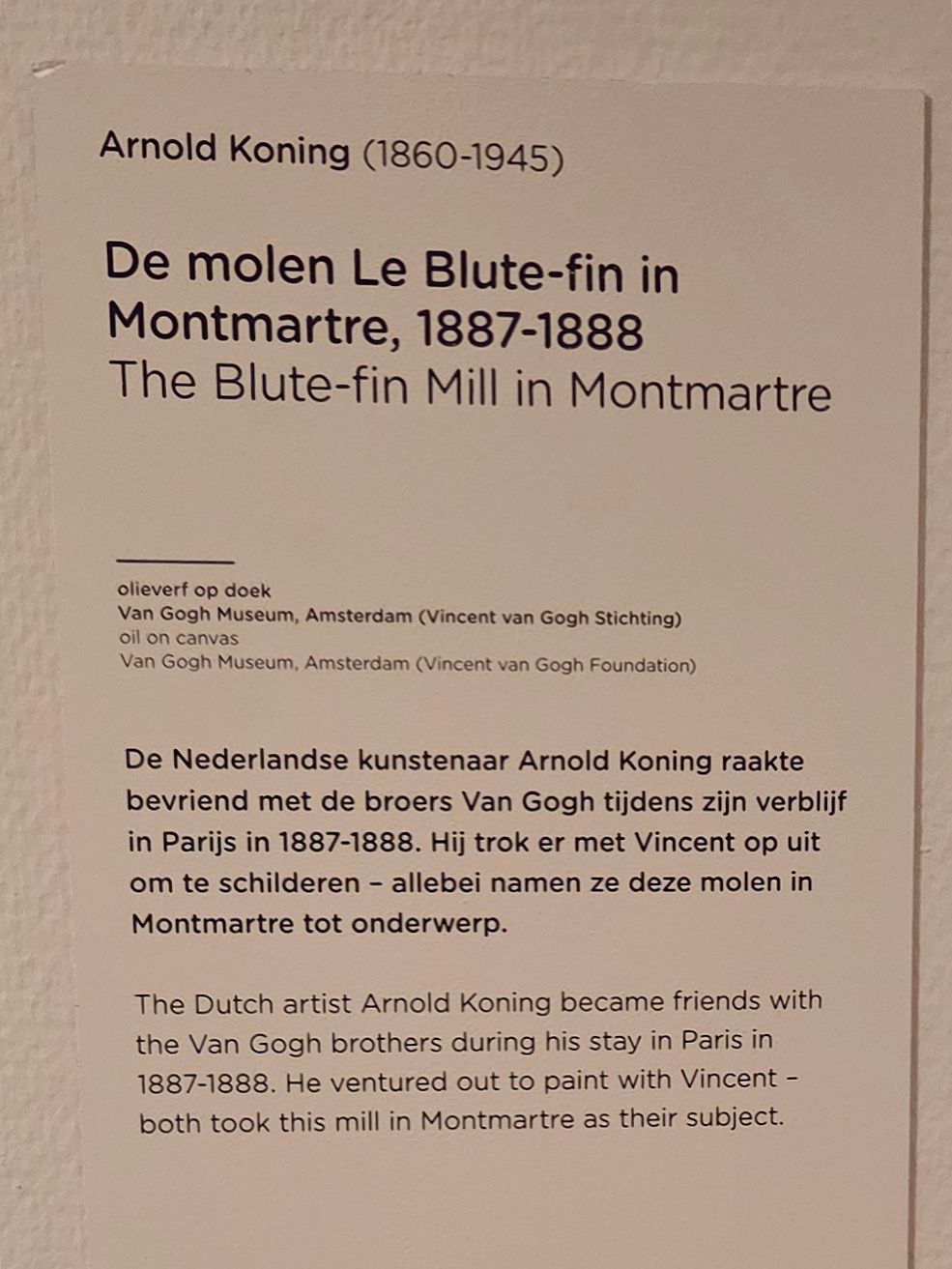
The young Dutch artist Arnold Koning stayed with Theo in Paris and left several paintings with him. He may have hoped that Theo, who worked as an art dealer, would be able to find buyers for his work.
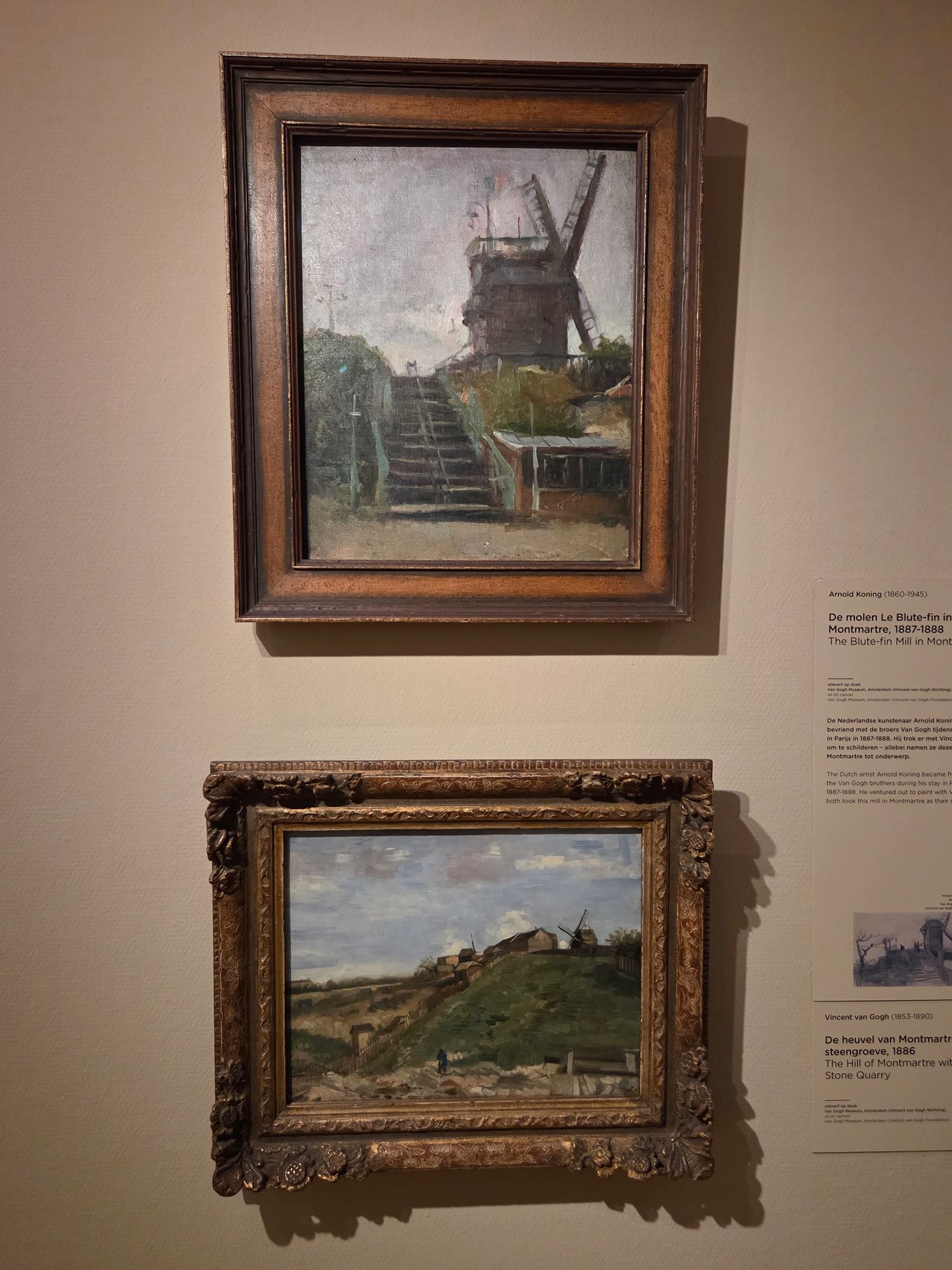
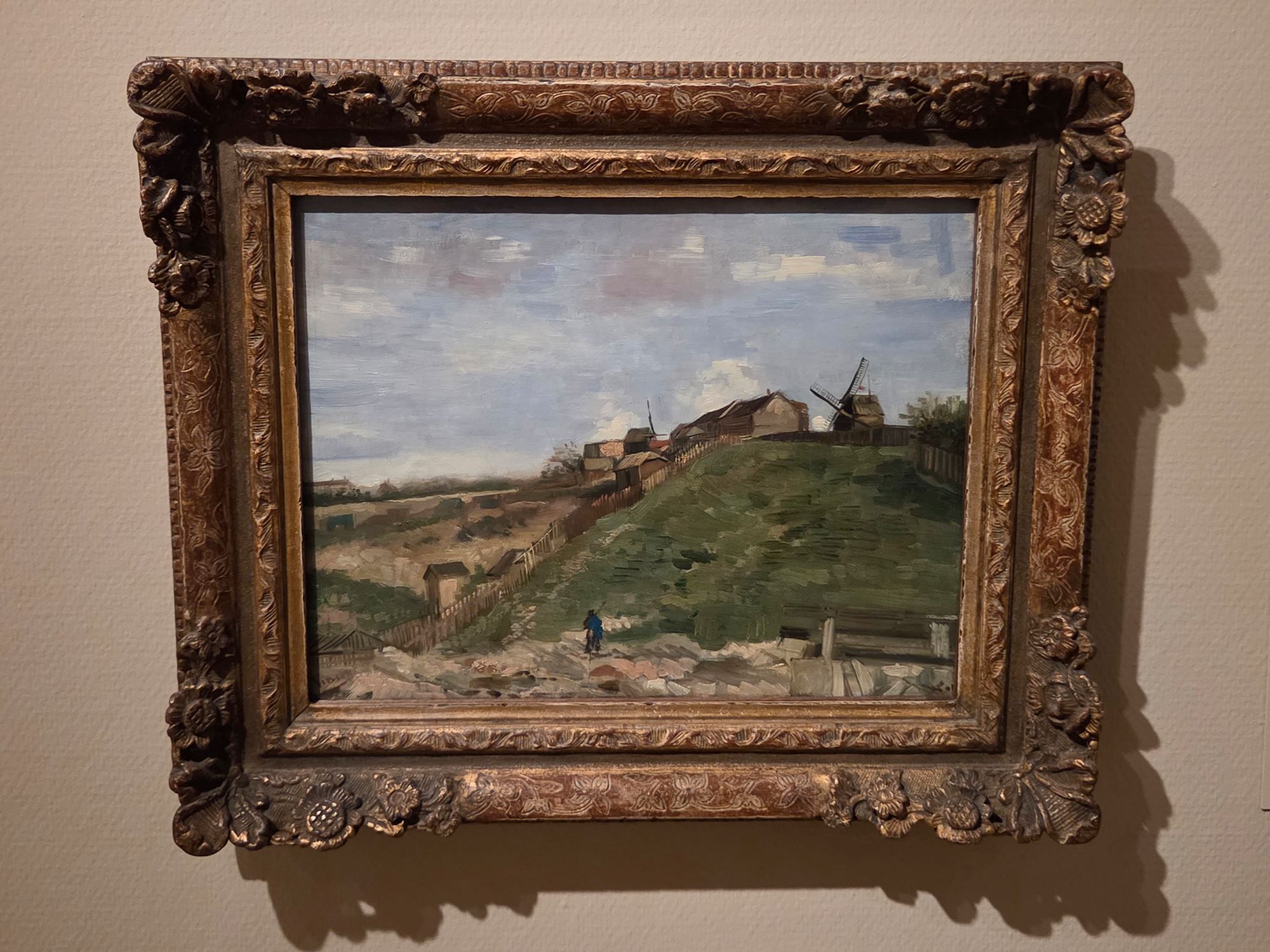
The Dutch artist Arnold Koning became friends with Vincent and Theo while living in Paris in 1887–1888. He sometimes painted alongside Van Gogh, and both artists depicted the same windmill in Montmartre.
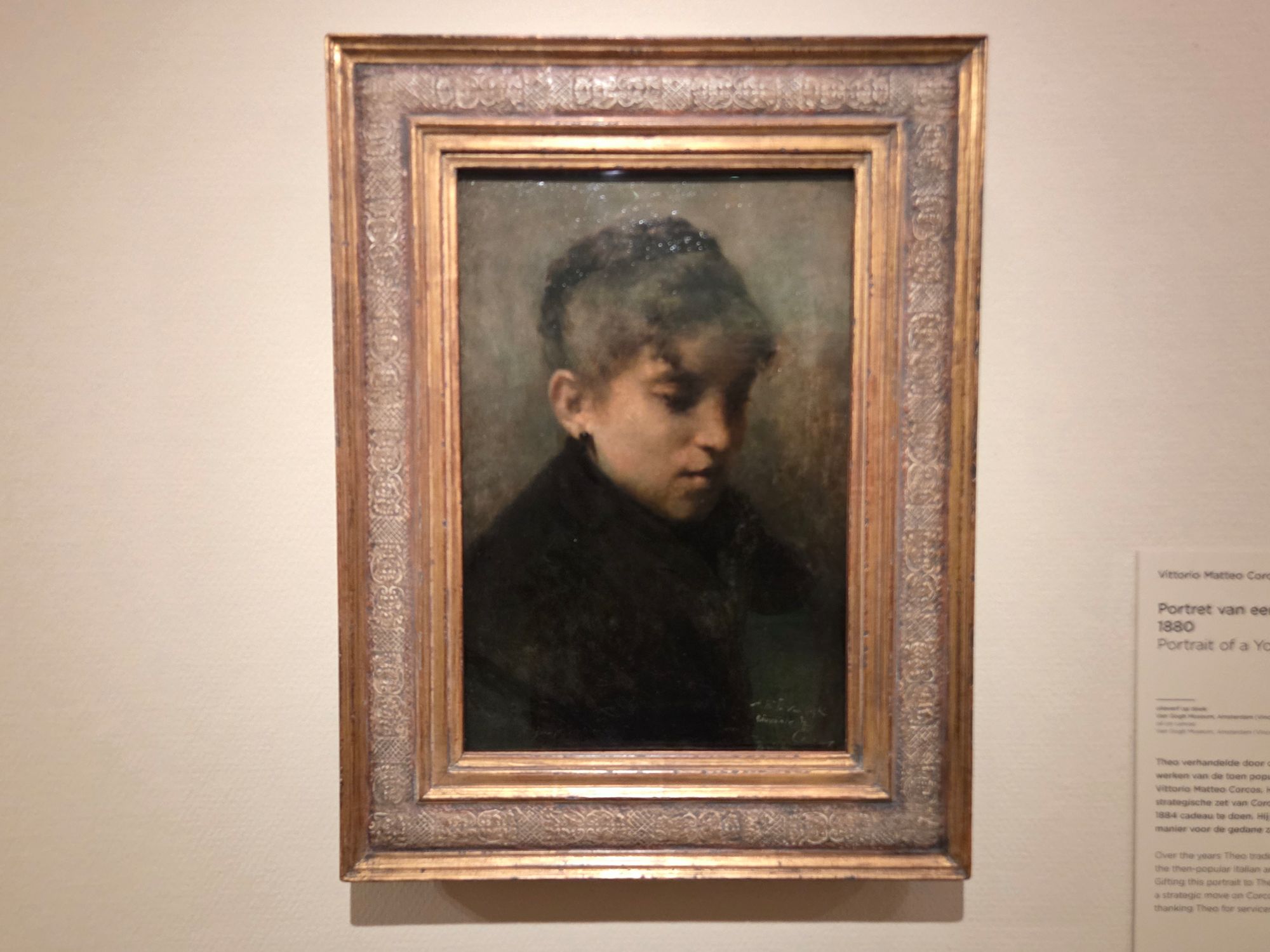
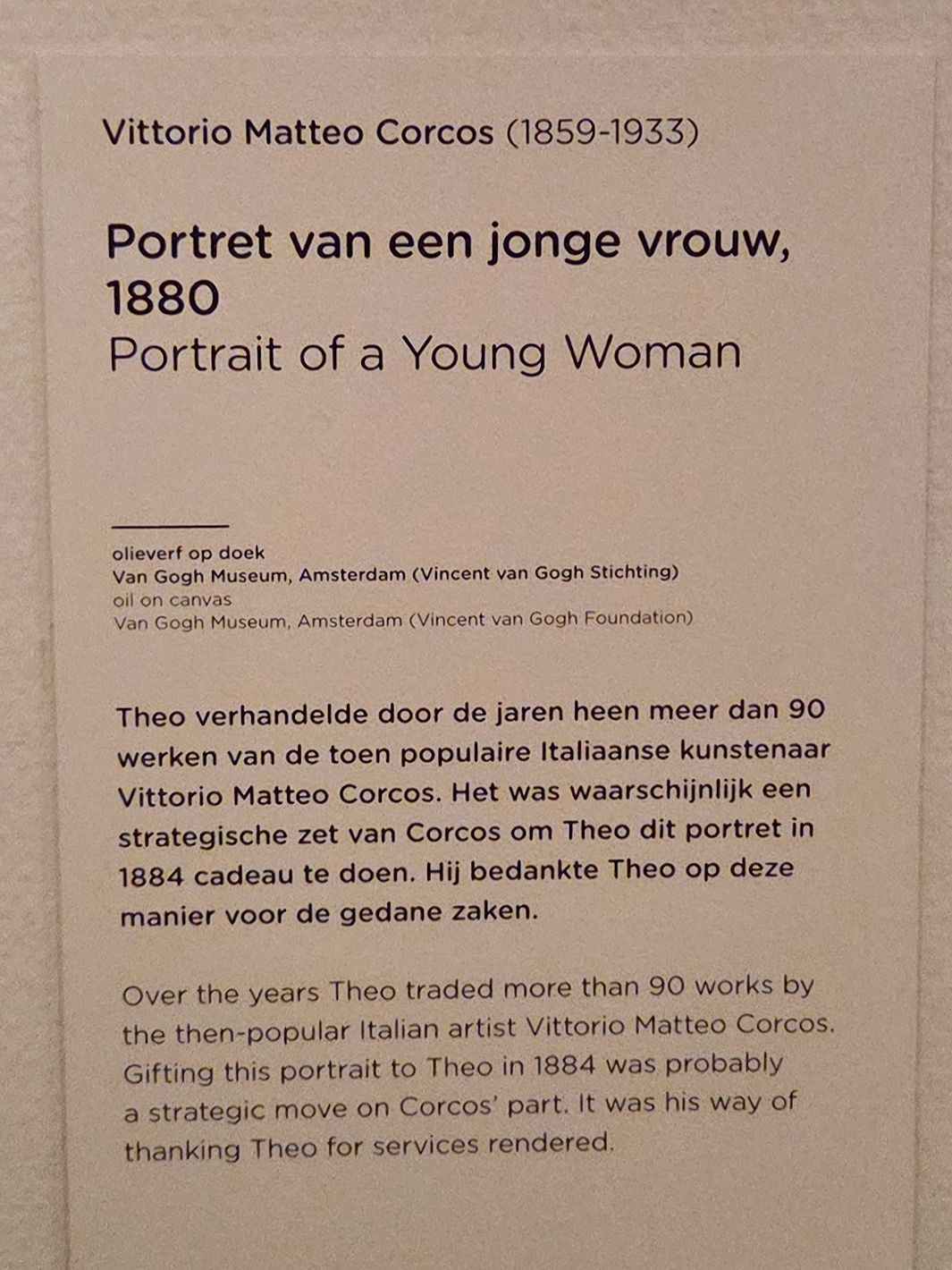
Theo worked as an art dealer and handled more than 90 works by the popular Italian painter Vittorio Matteo Corcos. Corcos gave Theo this portrait in 1884, probably as a gesture of thanks for his help in promoting and selling his work.
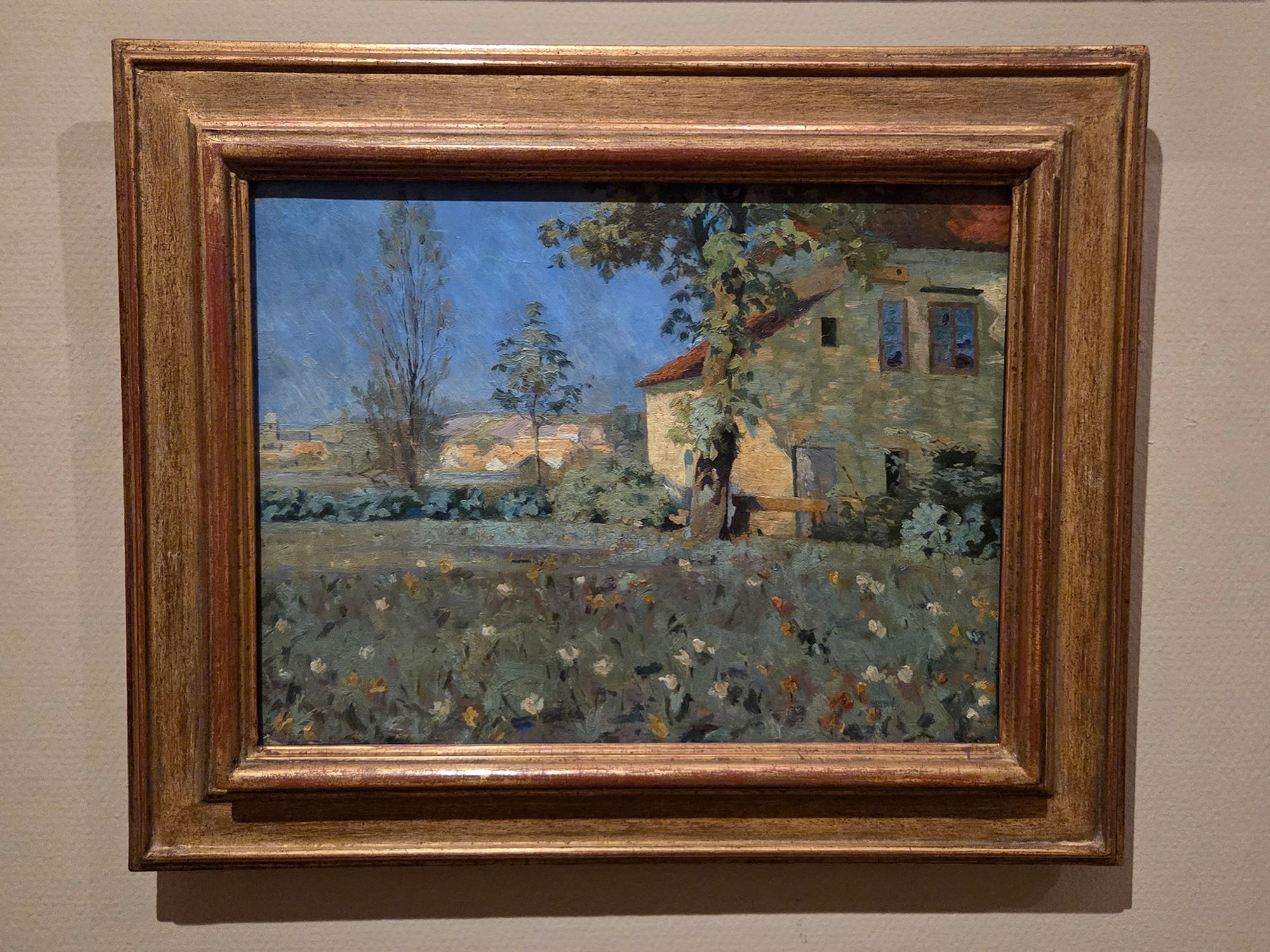
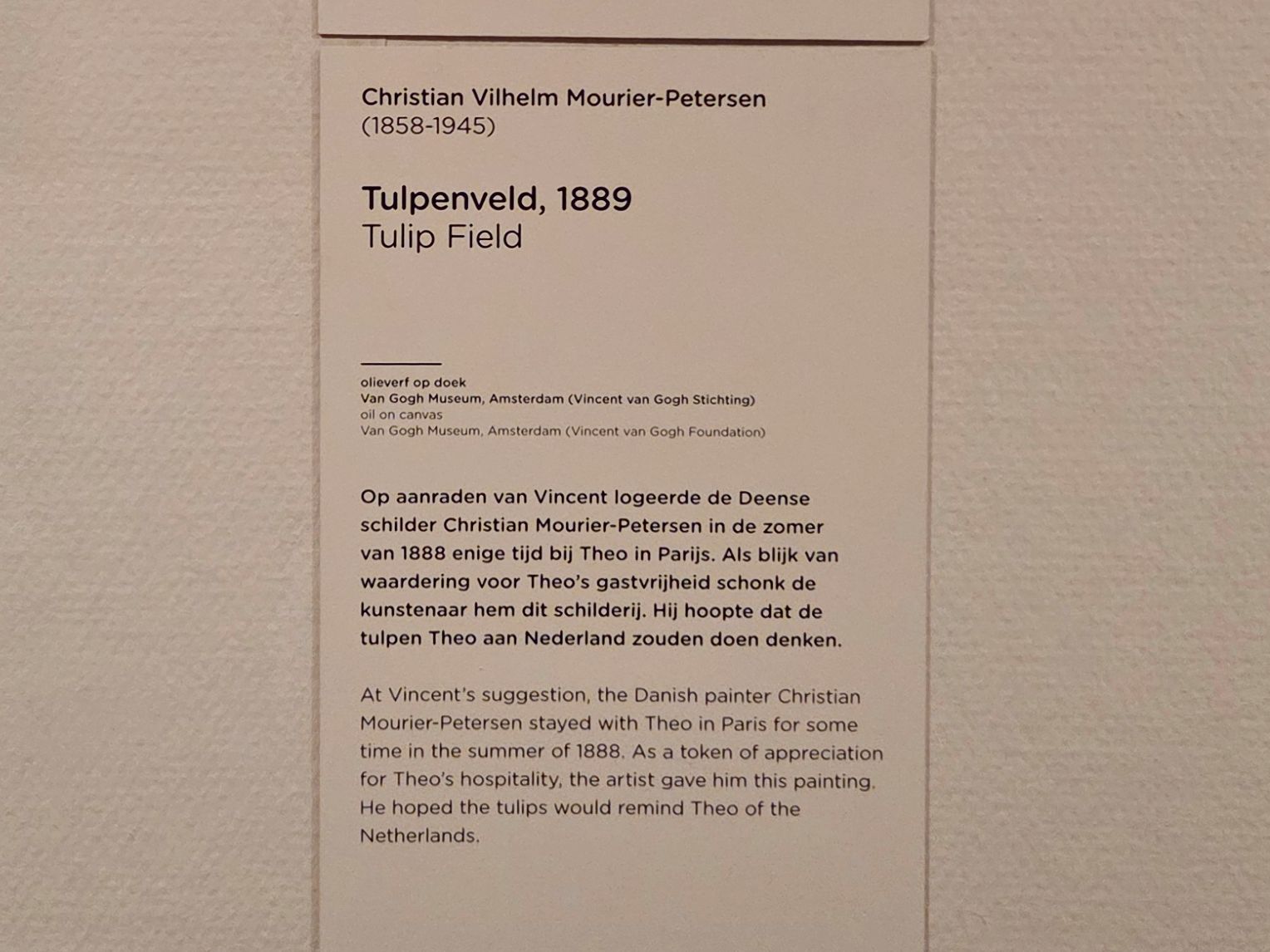
At Van Gogh’s suggestion, the Danish painter Christian Mourier-Petersen stayed with Theo in Paris during the summer of 1888. As thanks for Theo’s hospitality, he gave him this painting of tulips, hoping the flowers would remind him of the Netherlands.
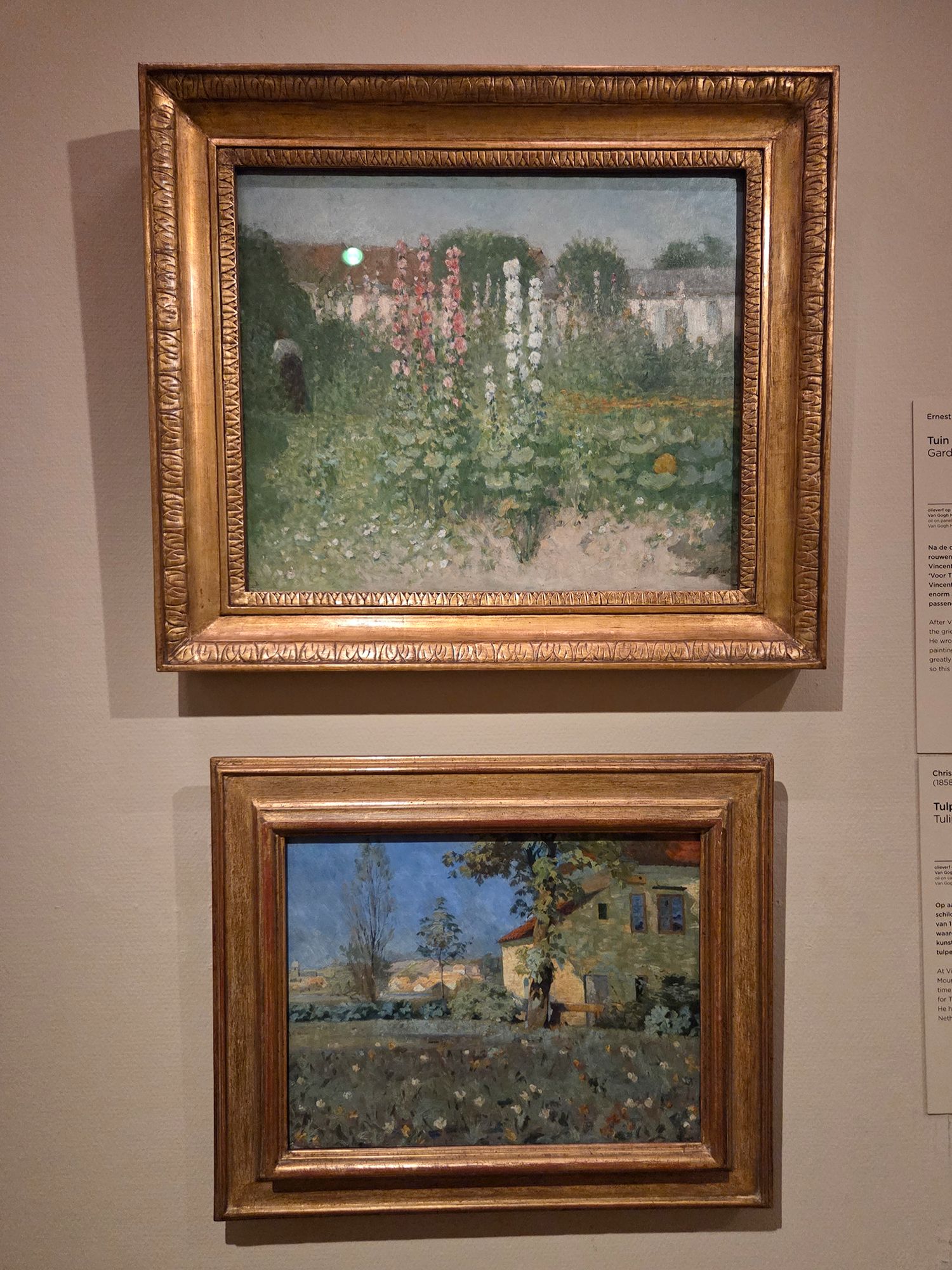
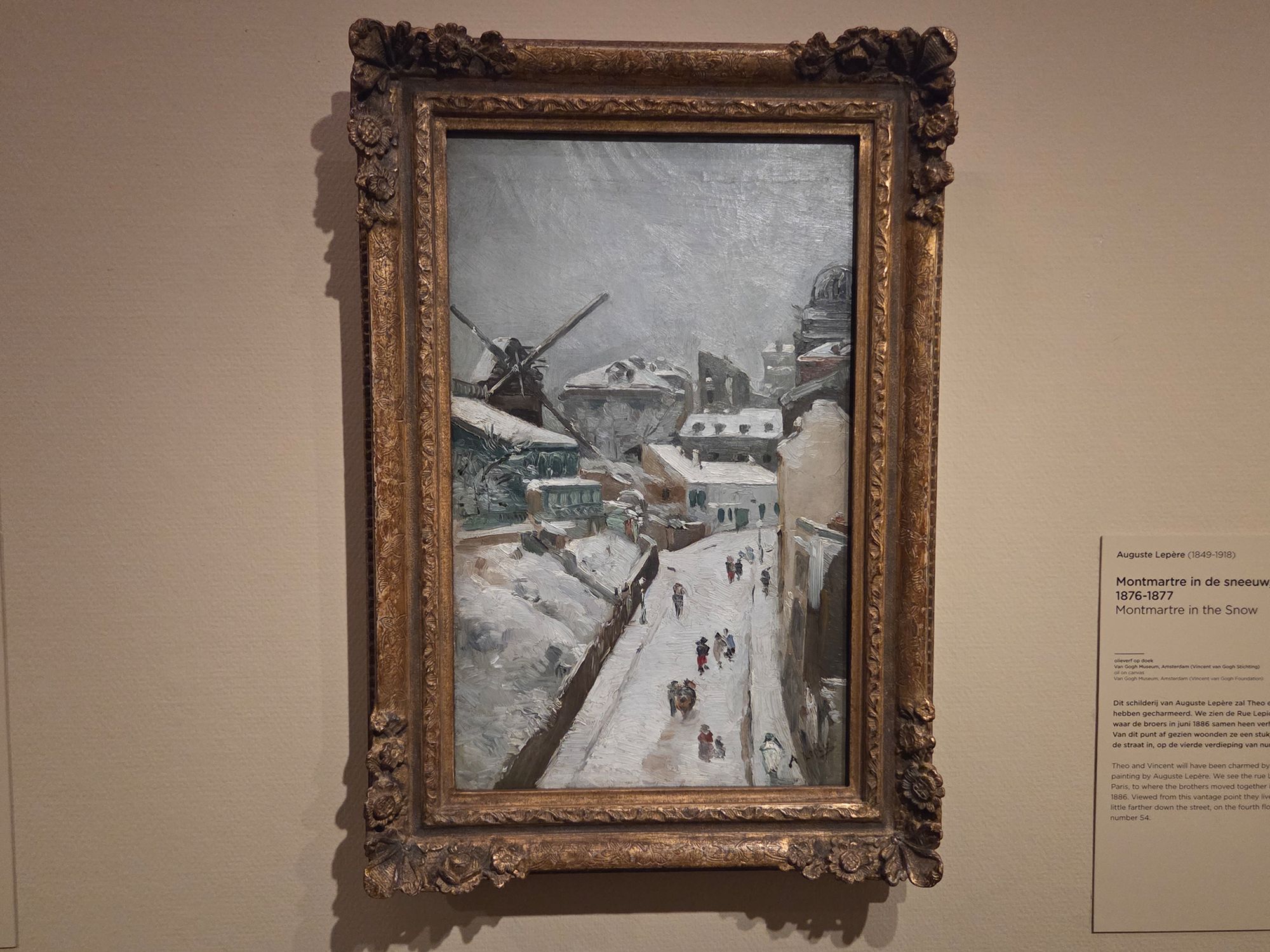
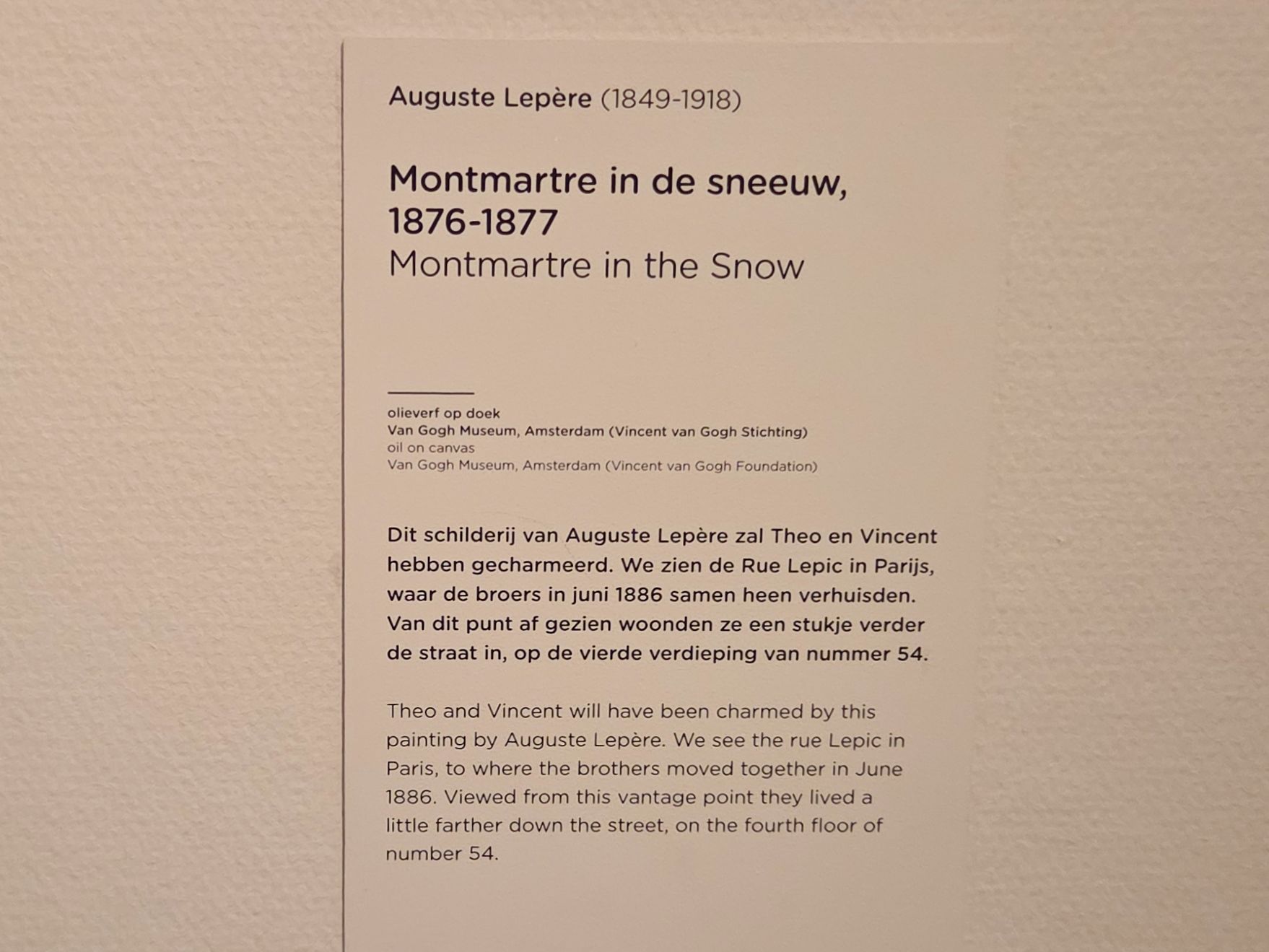
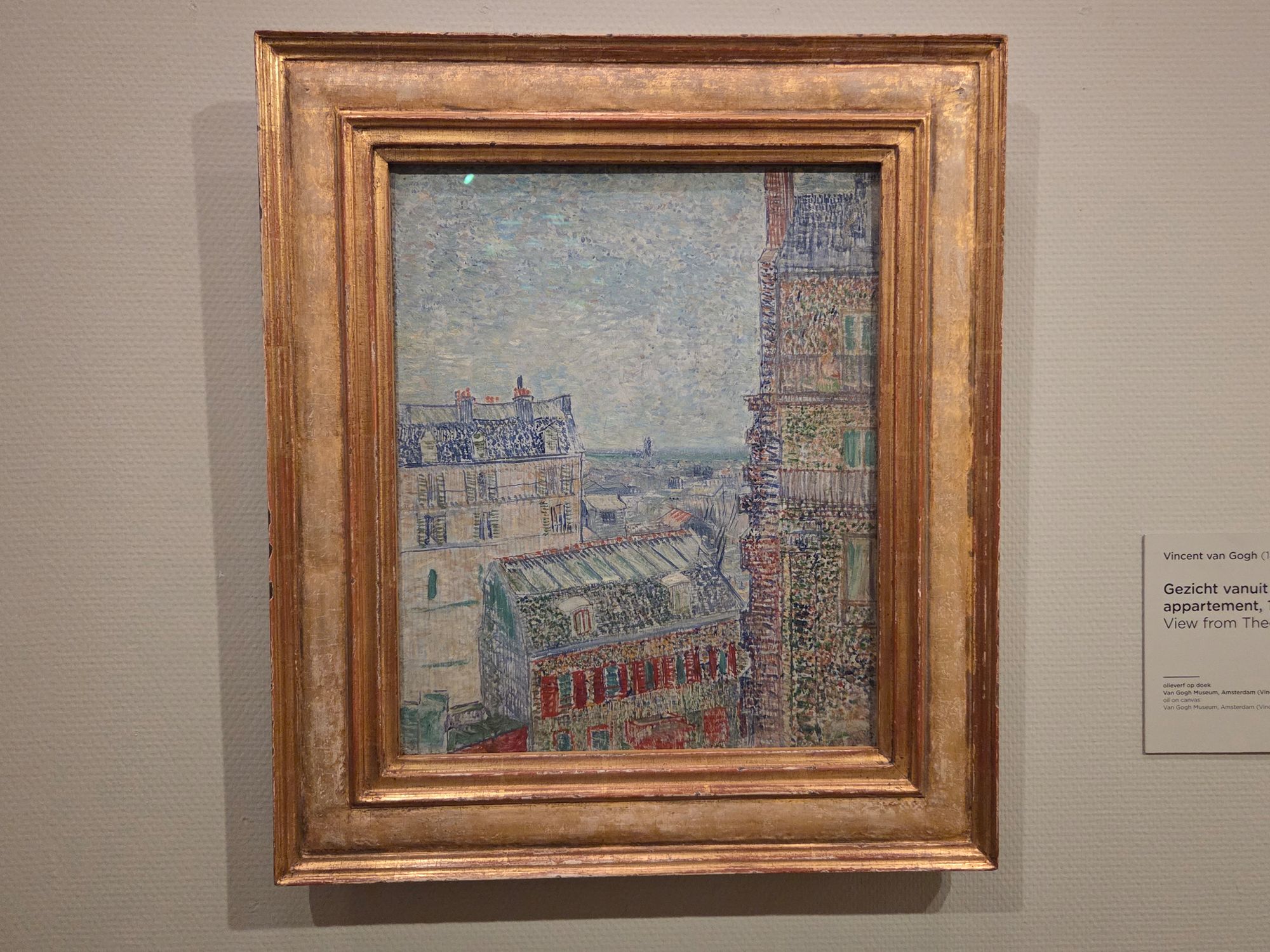
This painting by Auguste Lepère shows Rue Lepic in Montmartre, where Vincent and Theo lived together after moving there in 1886. Their apartment was just a little farther down the street, making this scene especially personal to the brothers.
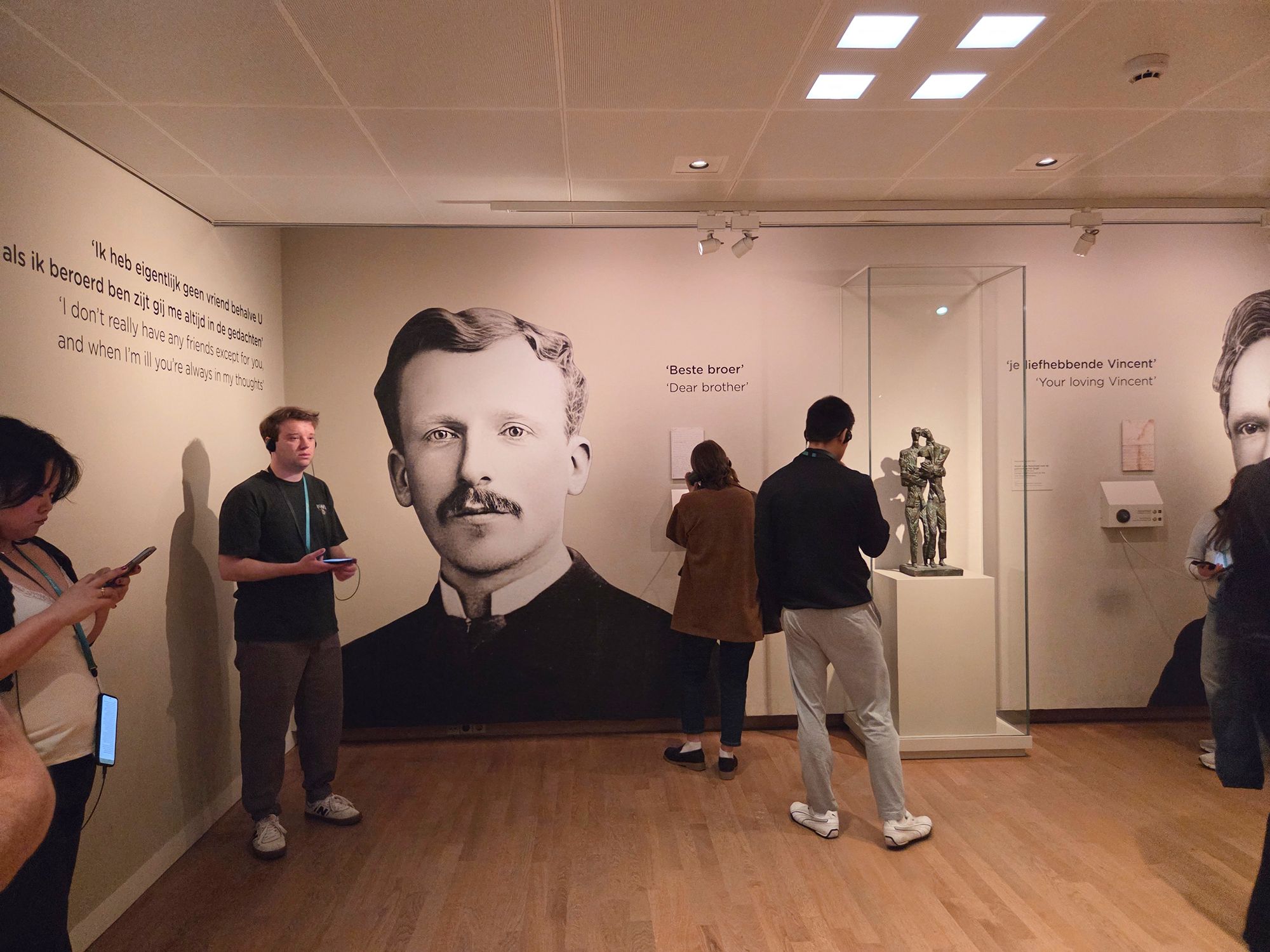
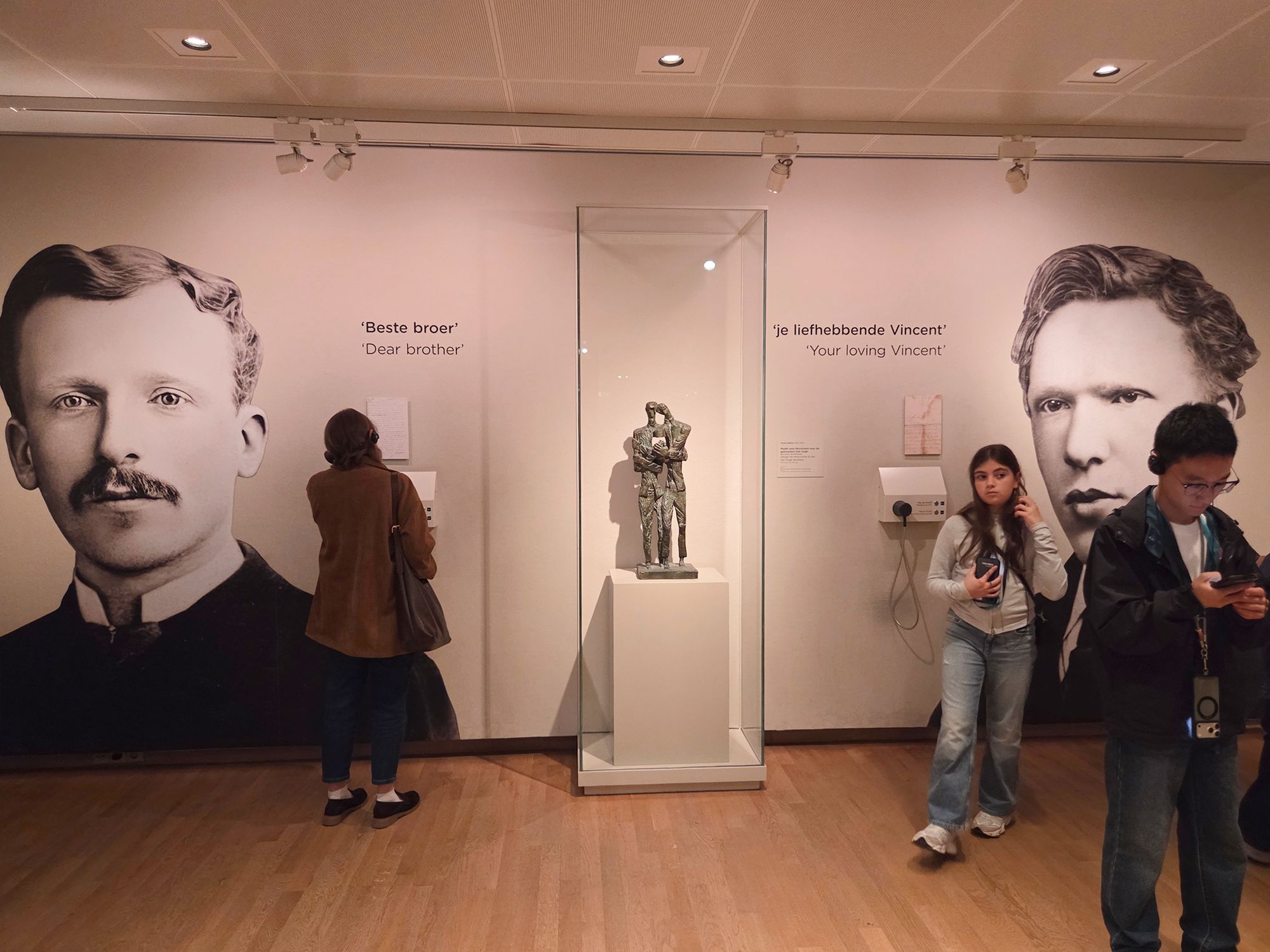
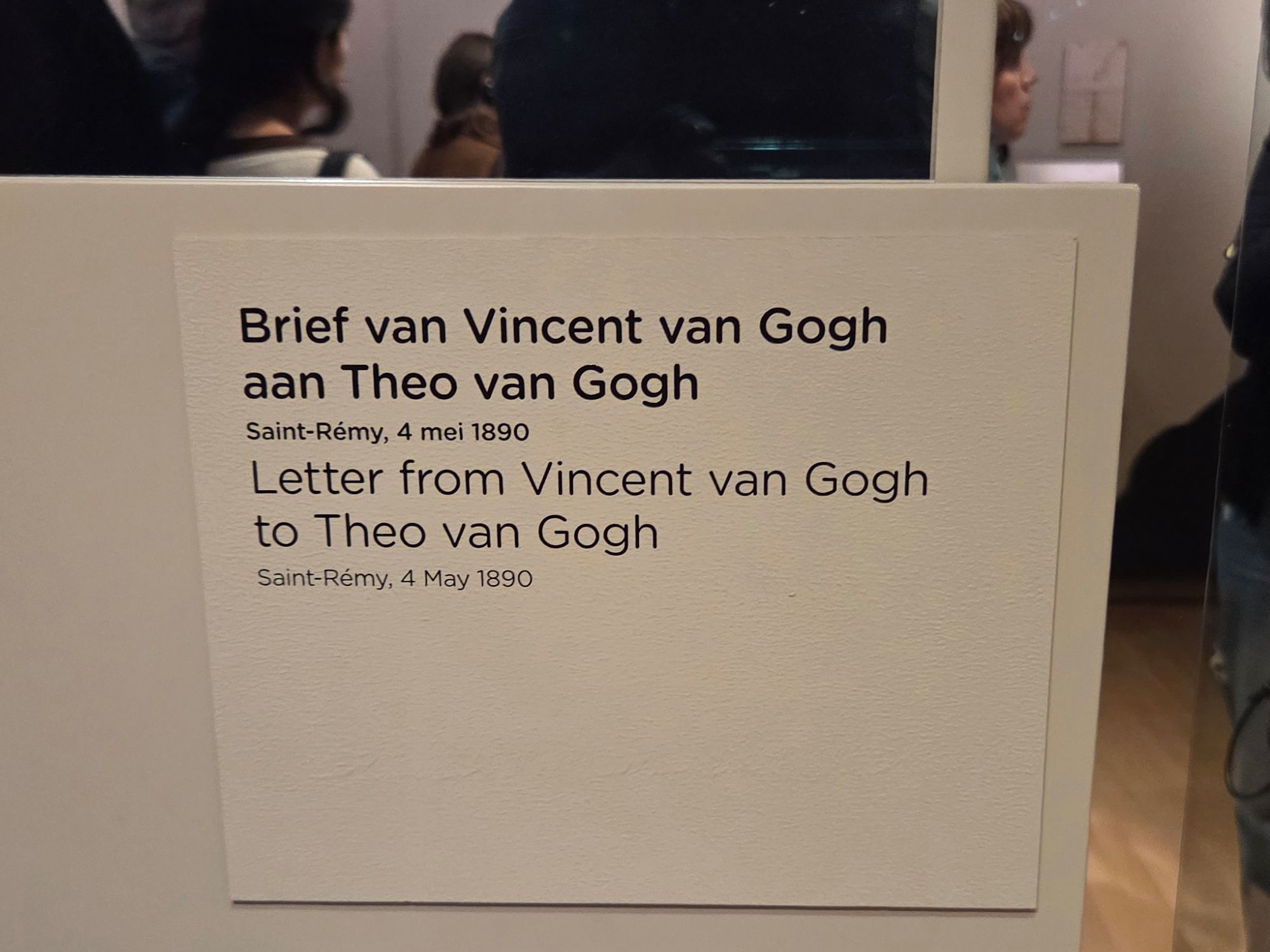
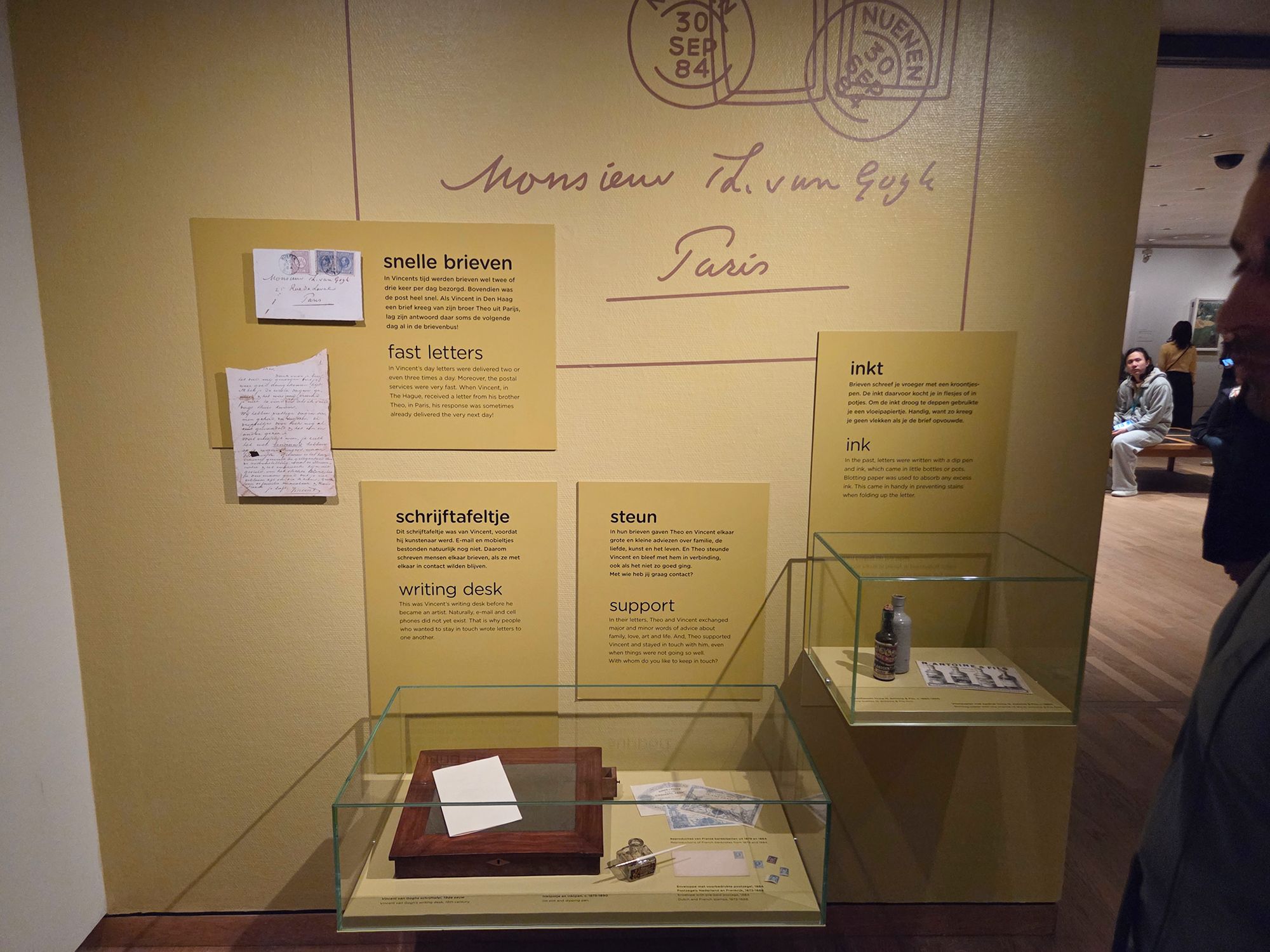
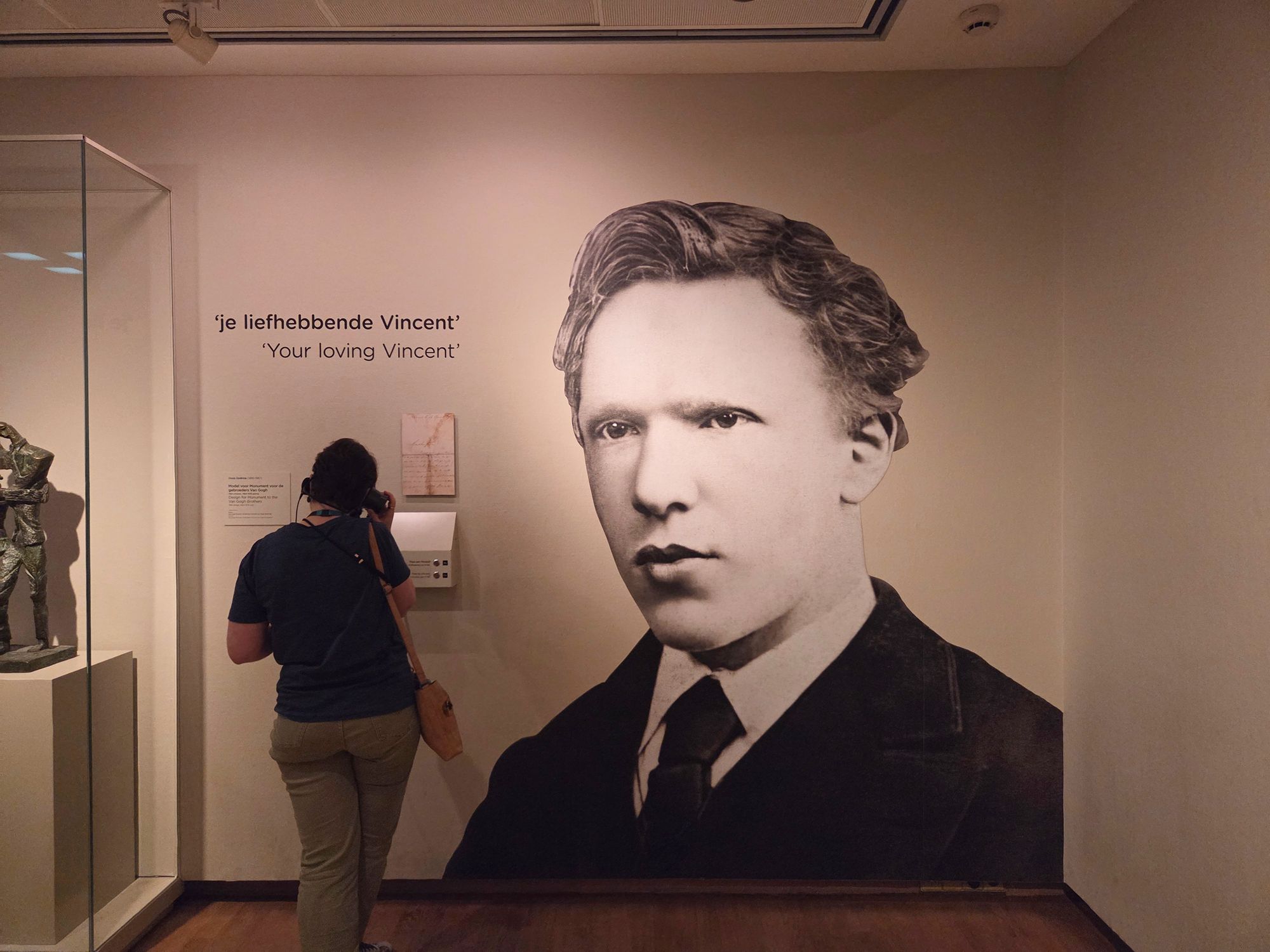
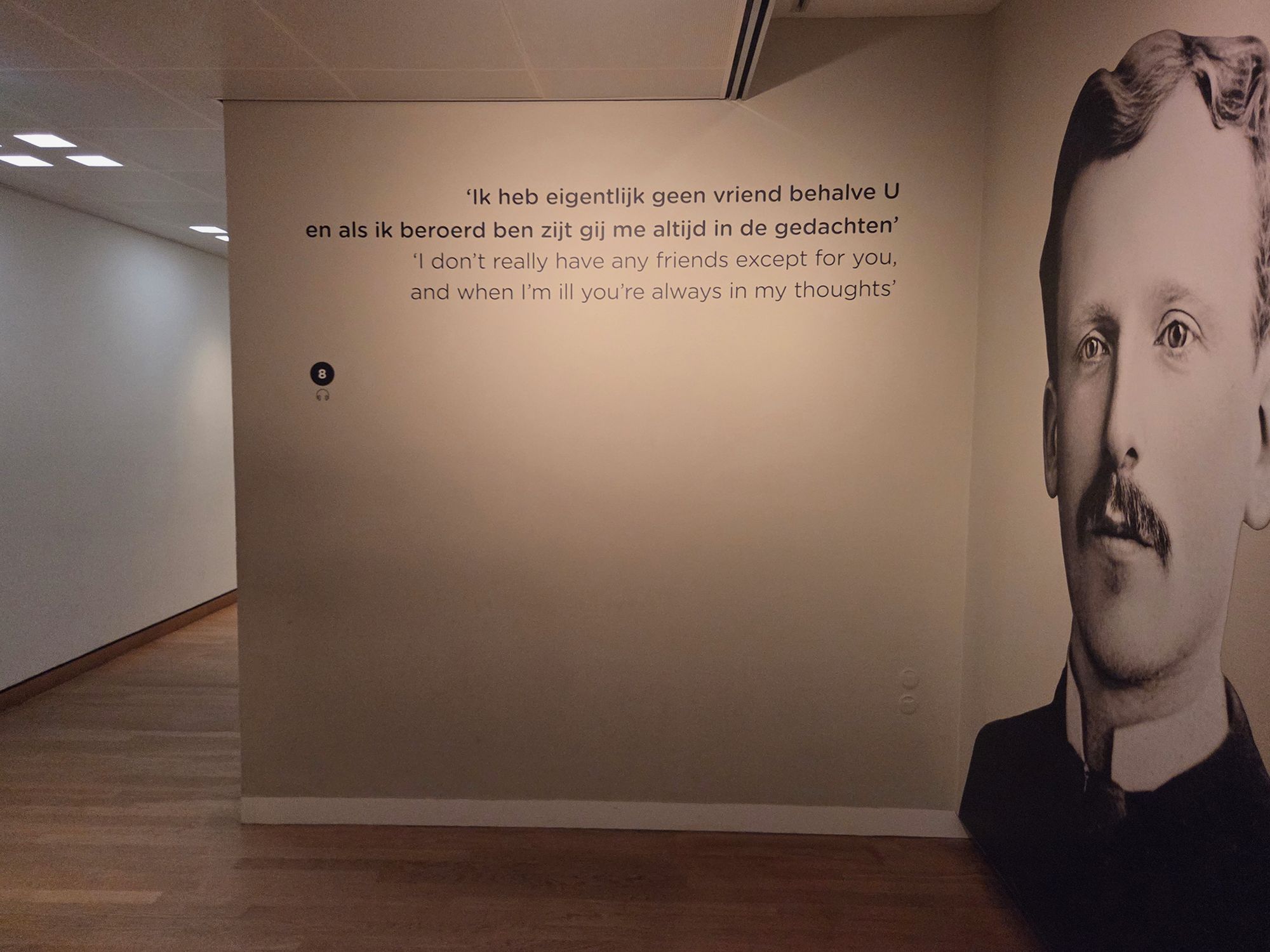
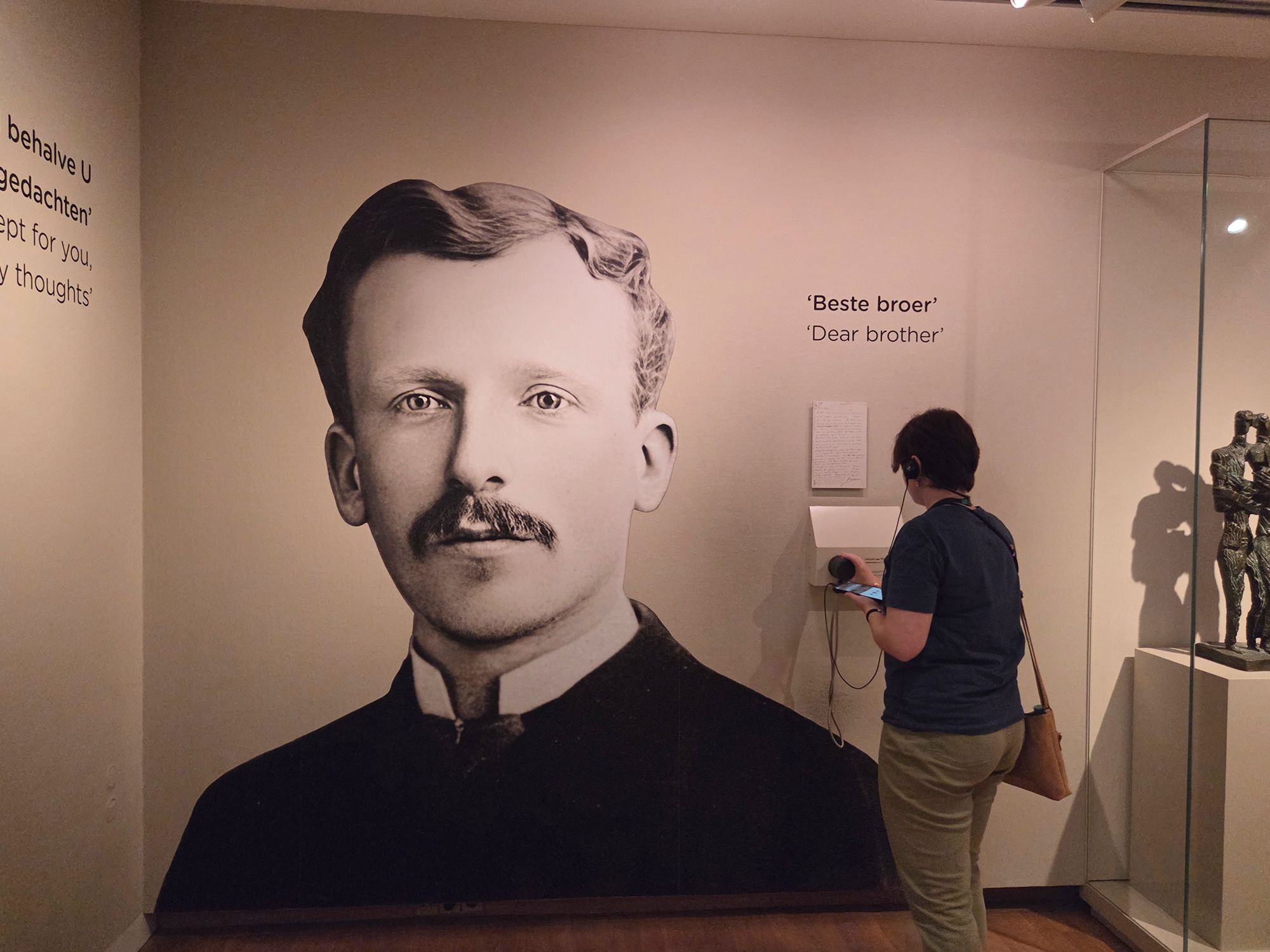
Vincent van Gogh and his younger brother Theo van Gogh exchanged hundreds of letters, and these letters are one of the most important sources for understanding Vincent’s life and art.
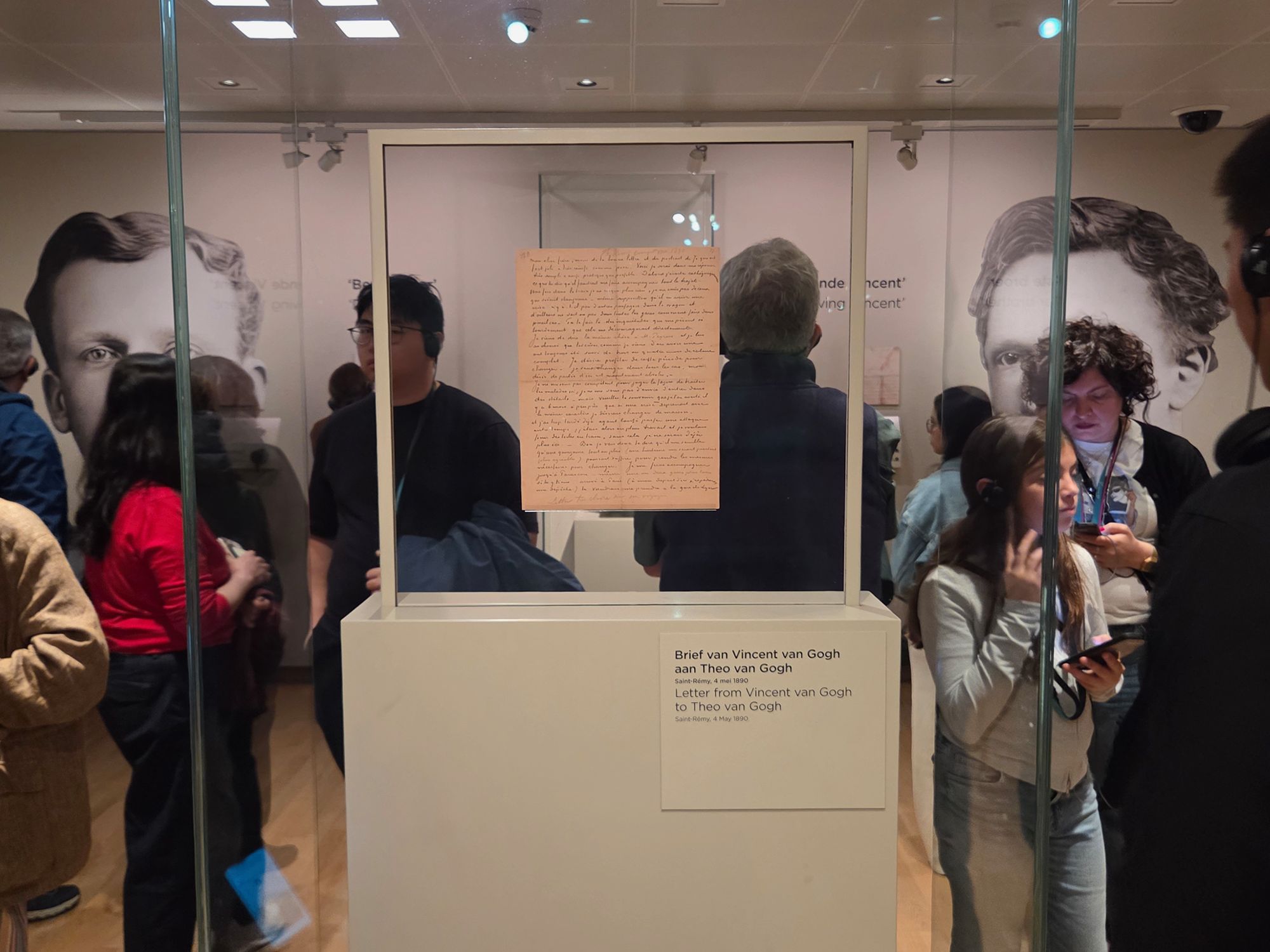
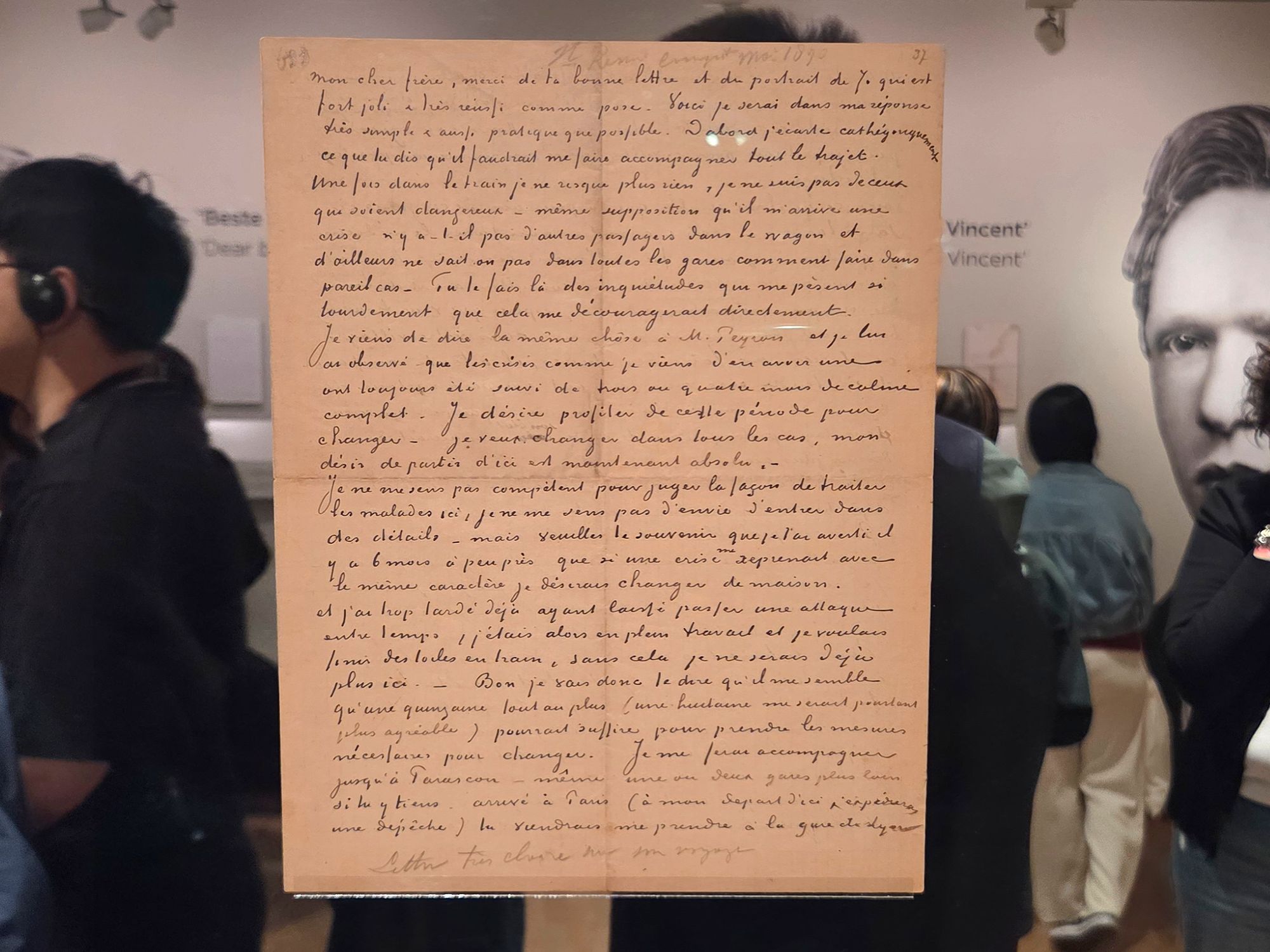
A letter from Vincent to Theo
Vincent wrote to Theo frequently about his paintings, ideas about color and art, financial difficulties, loneliness, relationships, and mental health. Theo was not only his brother but also his closest confidant and financial supporter. Because Vincent often described what he was working on in detail, the letters allow us to follow the development of many of his famous paintings almost as they were being created.
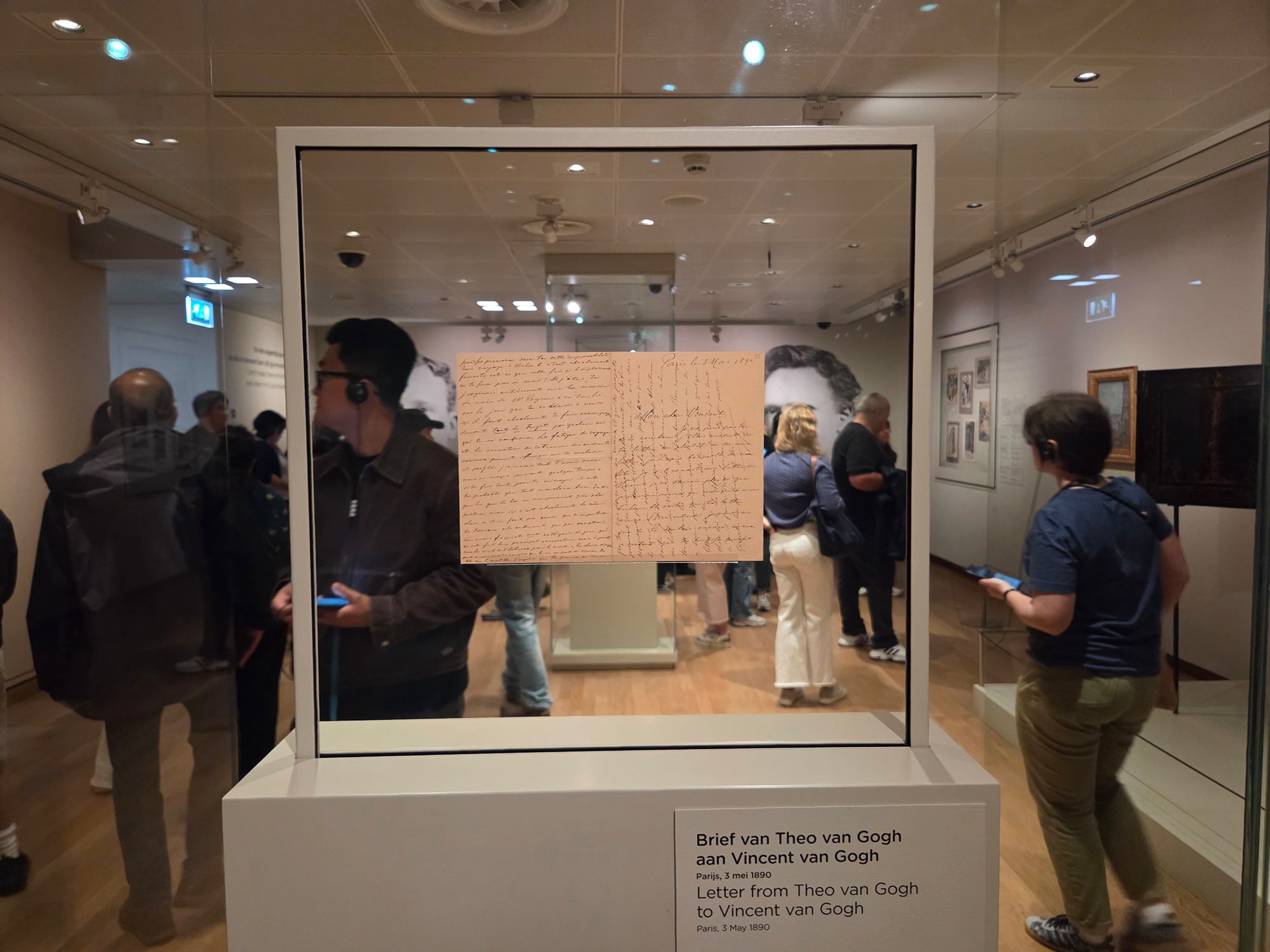
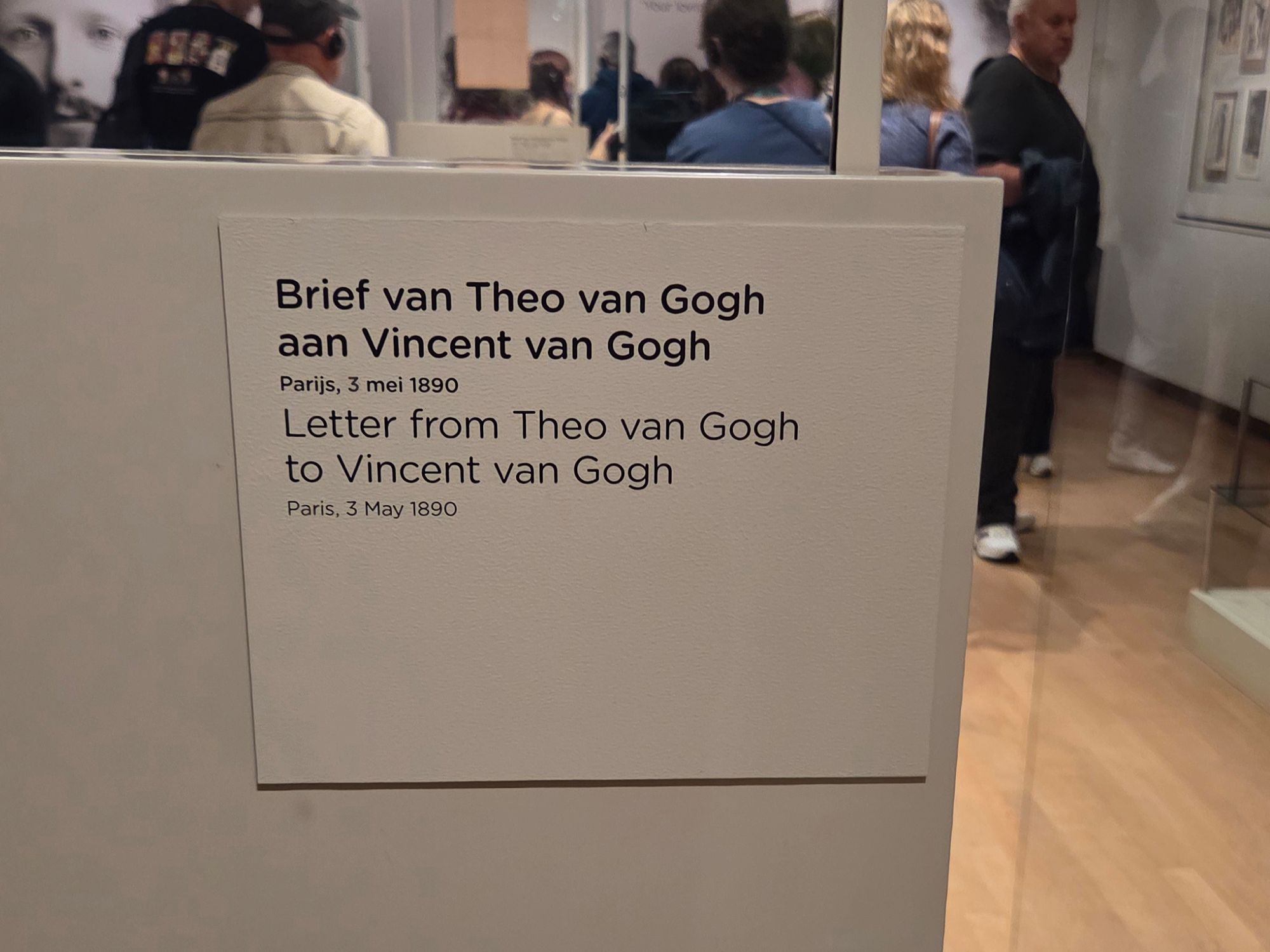
A letter from Theo to Vincent
Theo also wrote regularly to Vincent, offering encouragement, advice, money, and news from Paris and the art world. Unfortunately, far fewer of Theo’s letters survive because Vincent did not preserve them as carefully as Theo preserved Vincent’s.
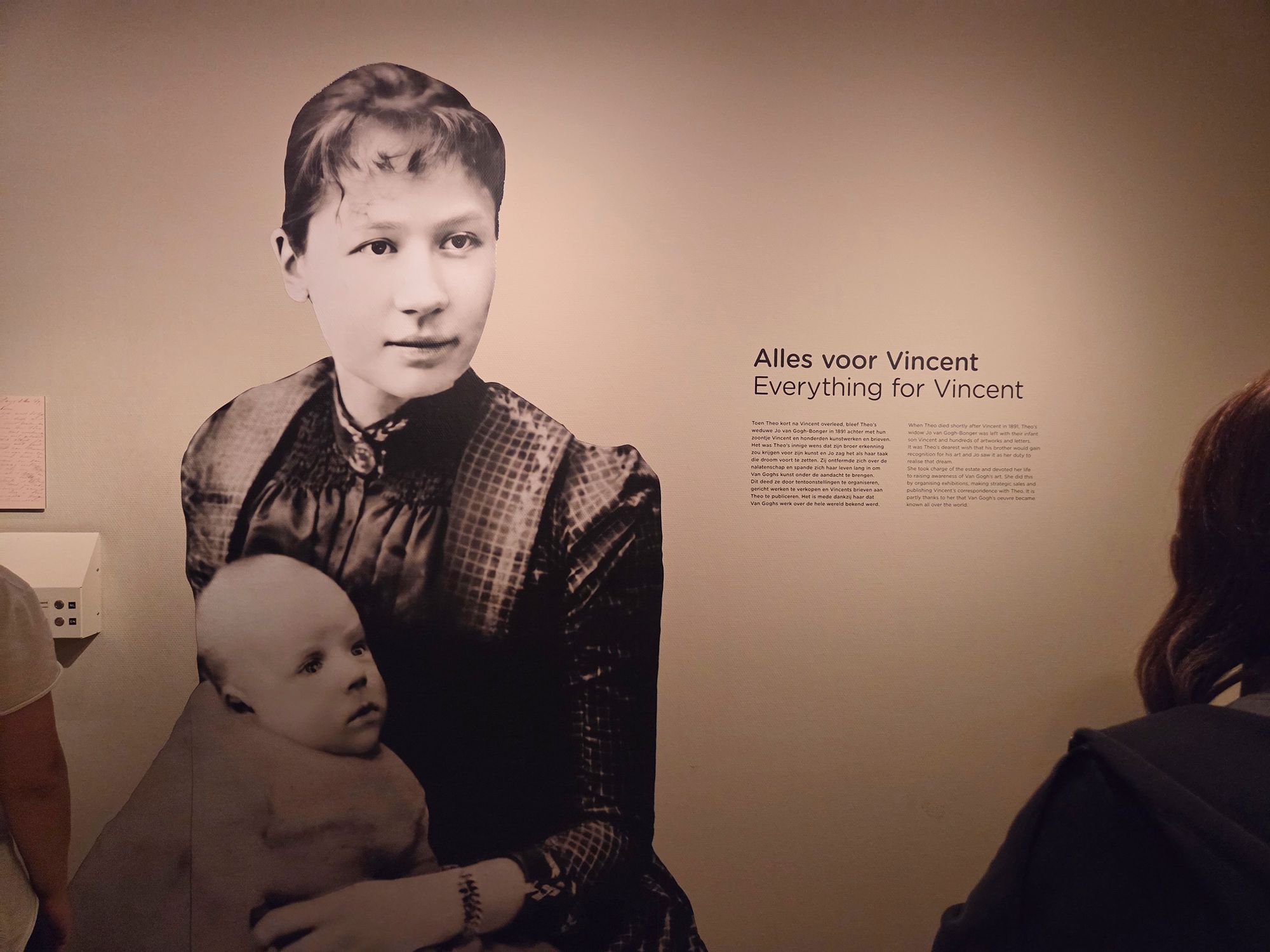
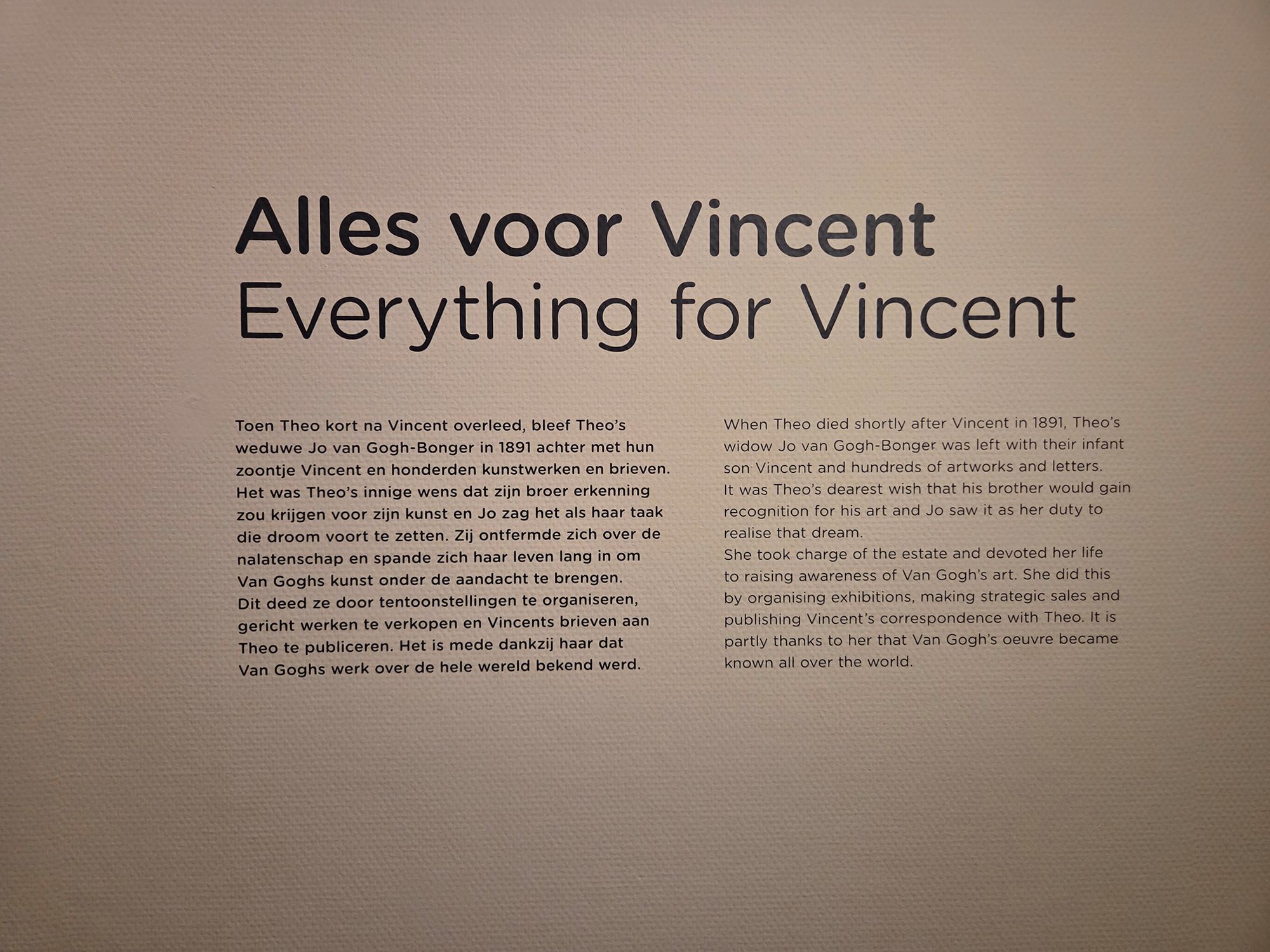
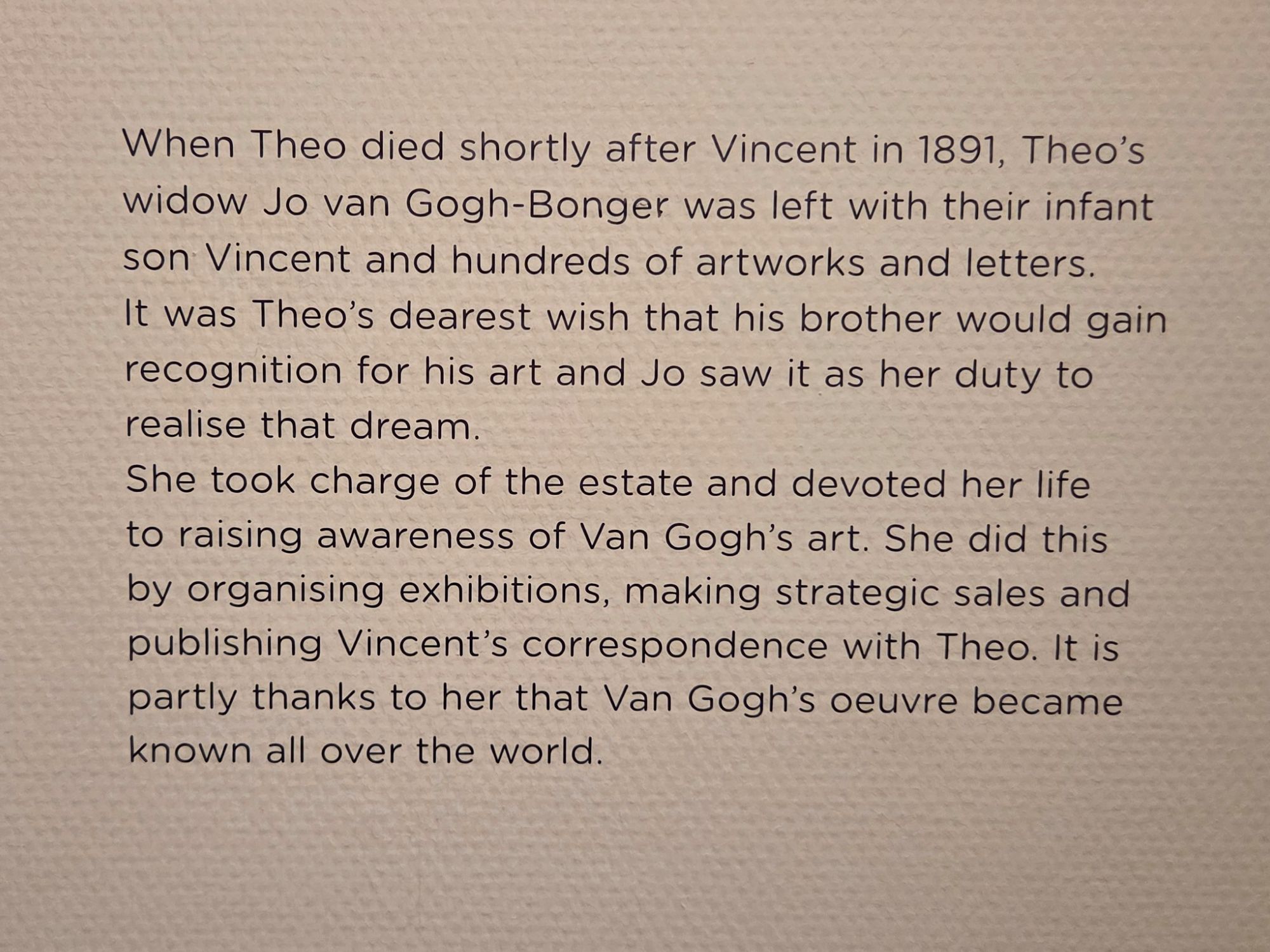
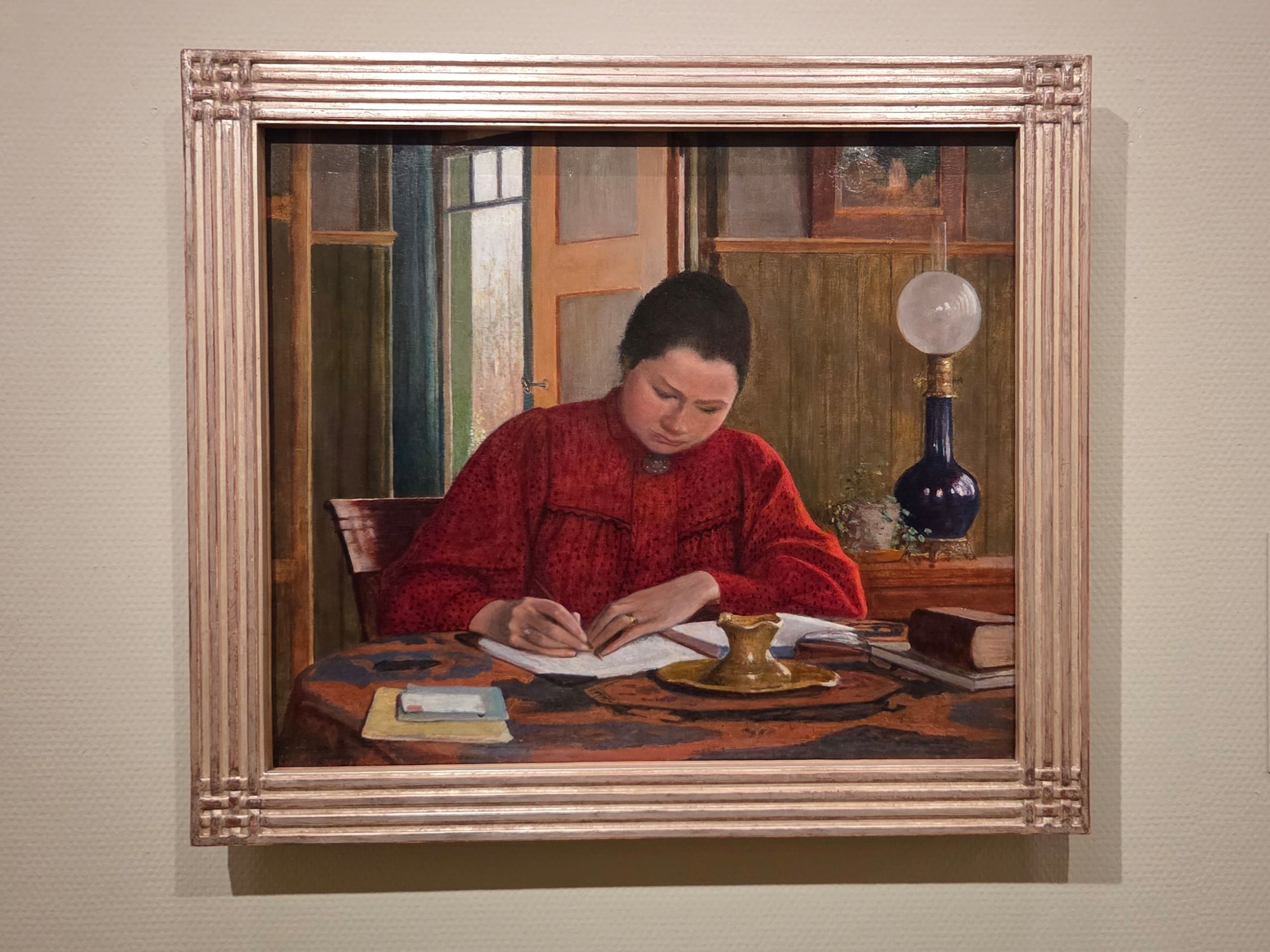
After Theo died in 1891, his widow Jo van Gogh-Bonger devoted herself to preserving and promoting Vincent’s art. By organizing exhibitions, selling selected works, and publishing Vincent’s letters to Theo, she played a crucial role in making Van Gogh internationally famous.
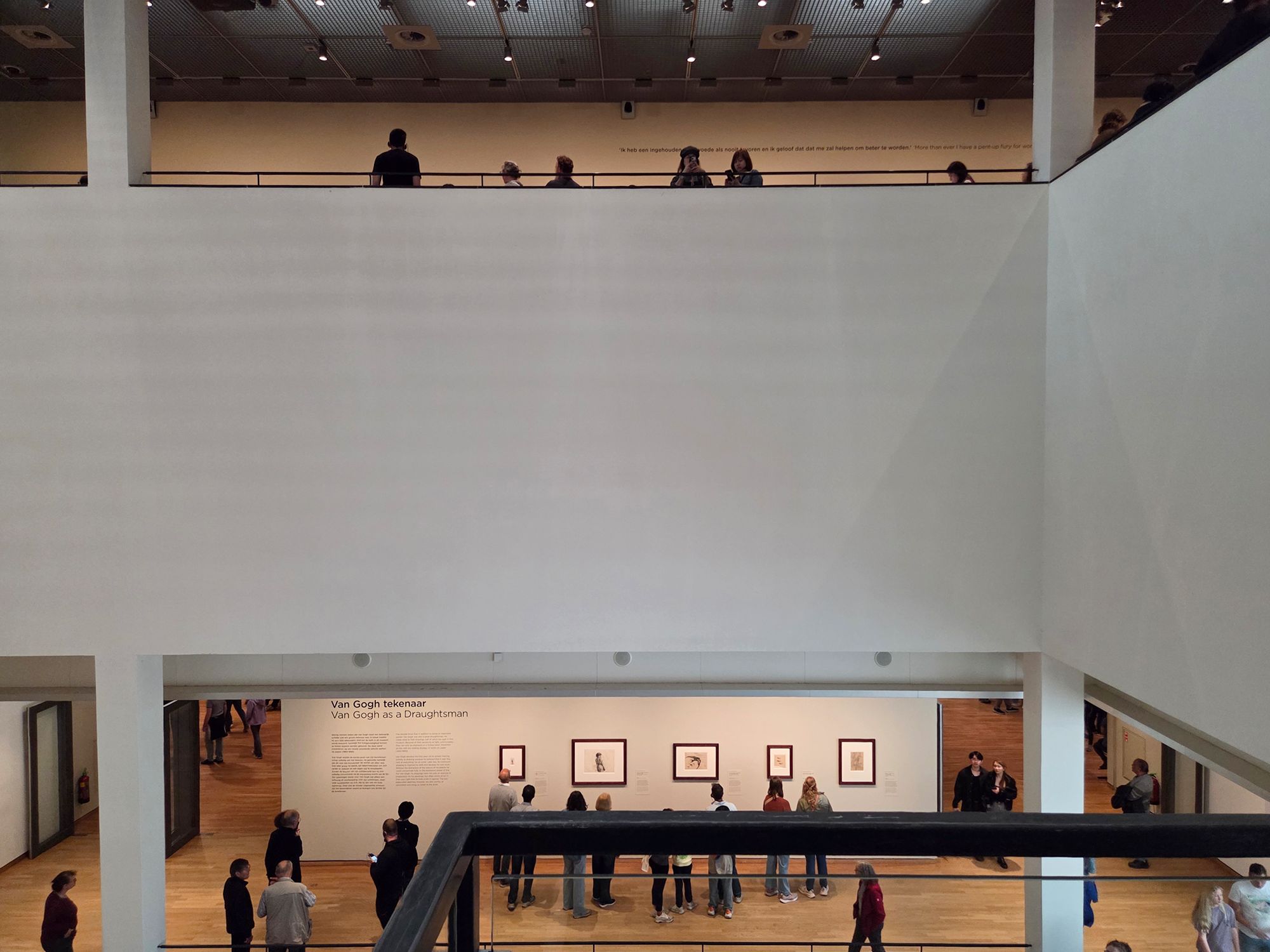
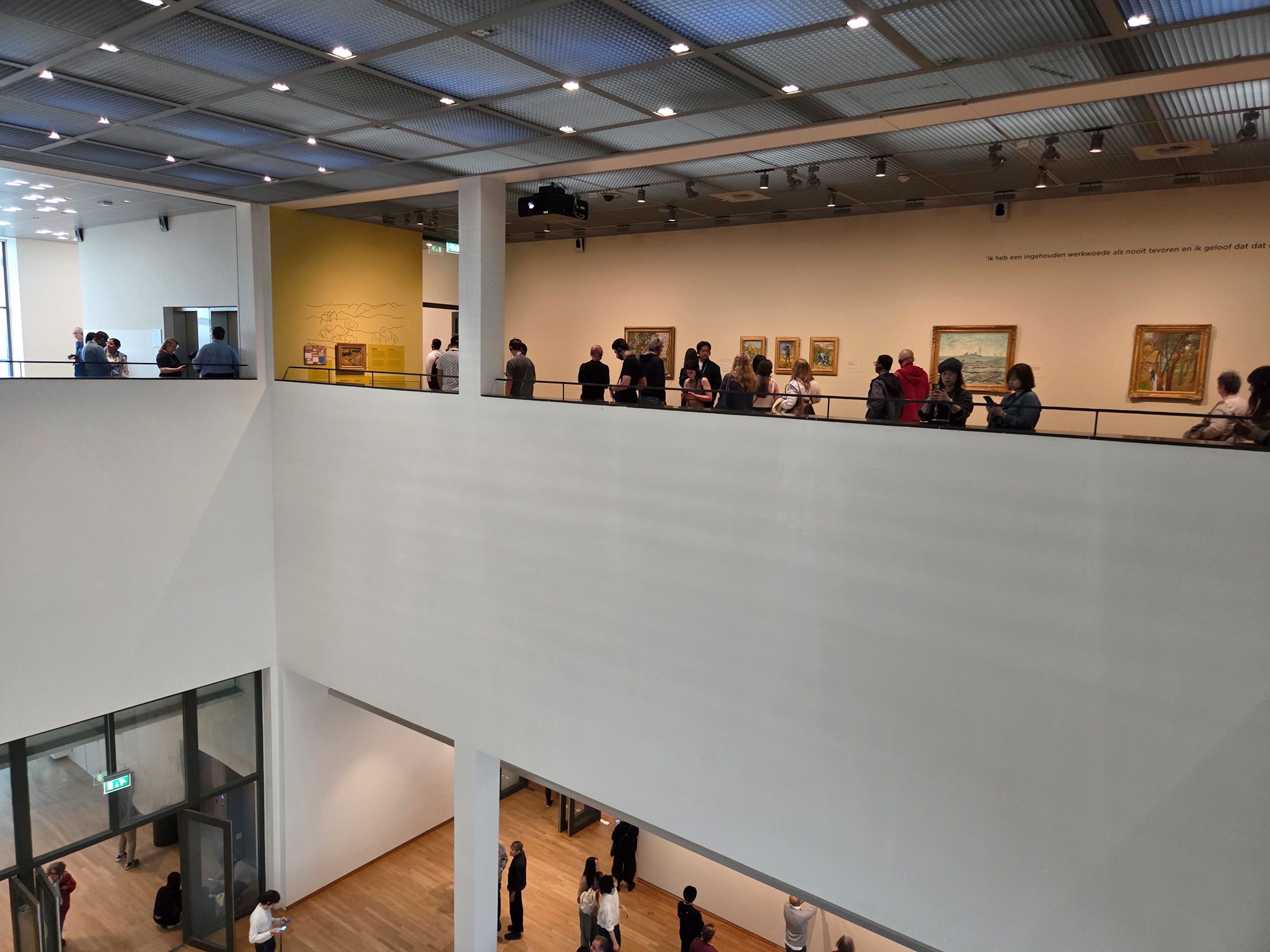
The fourth floor of the museum
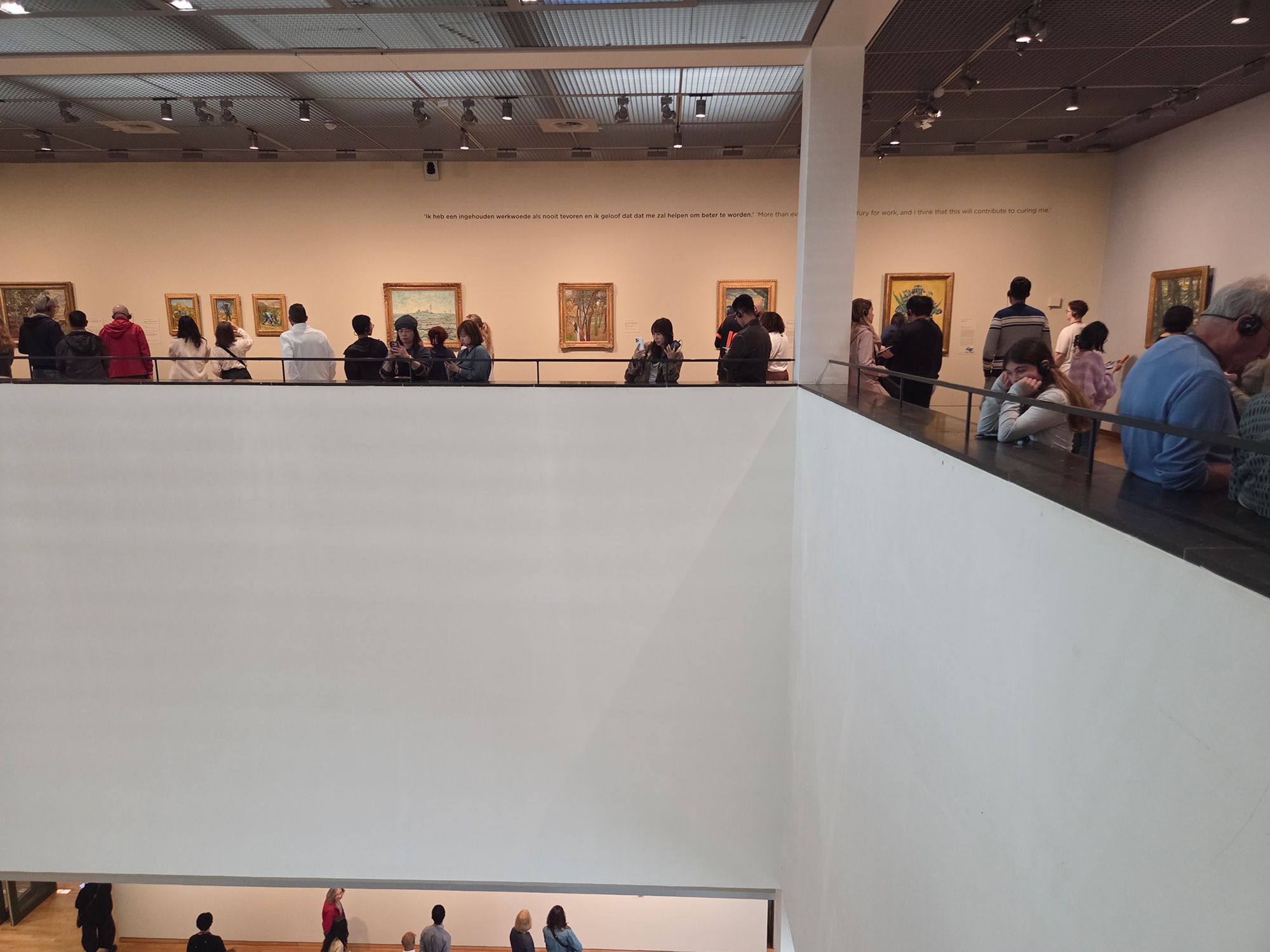
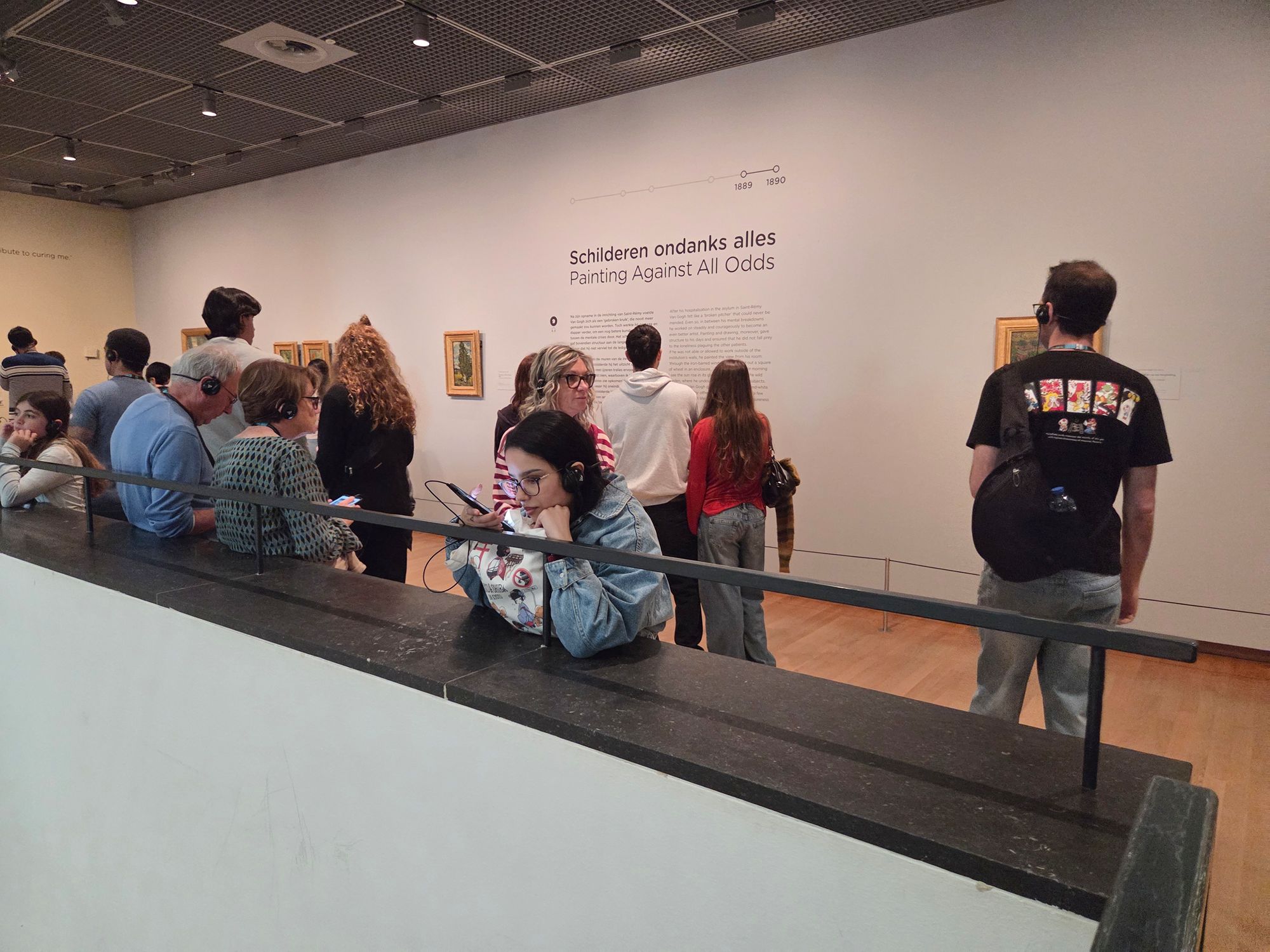
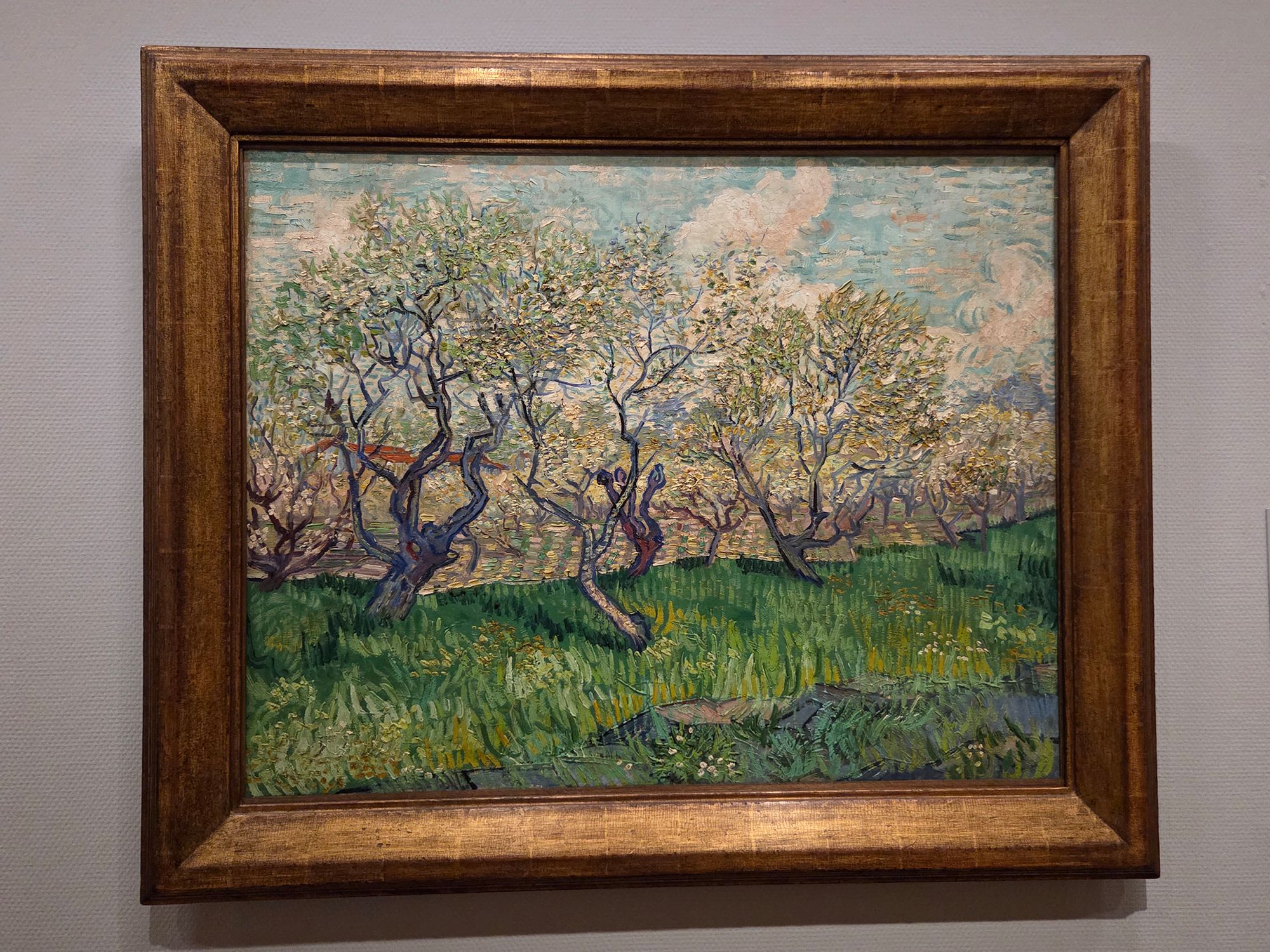
During his stay at the psychiatric hospital in Saint-Rémy, Van Gogh continued painting whenever his health allowed. Art gave structure and purpose to his days, and he found subjects in the view from his room, the hospital gardens, flowers, and copies of works by other artists.
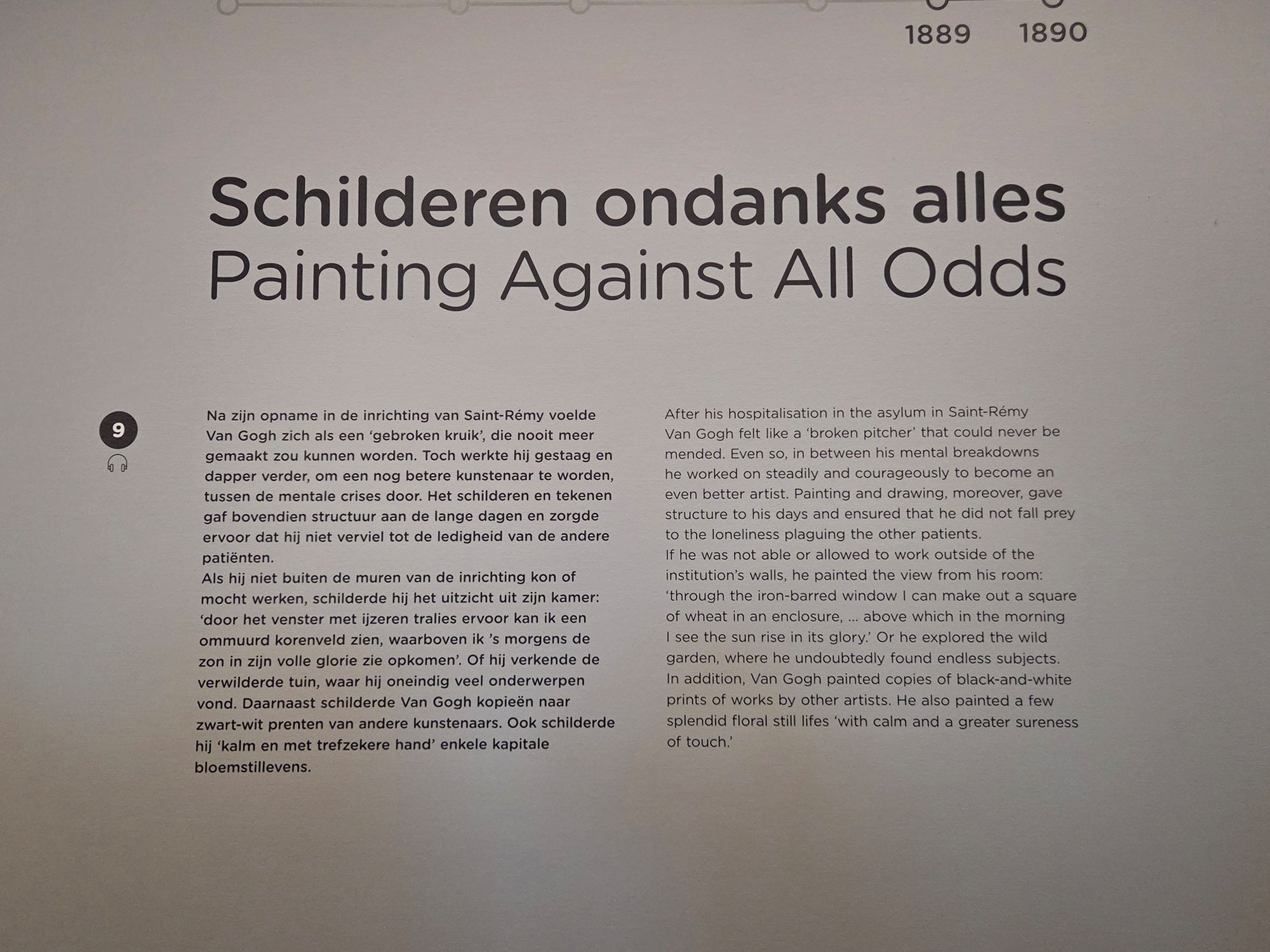
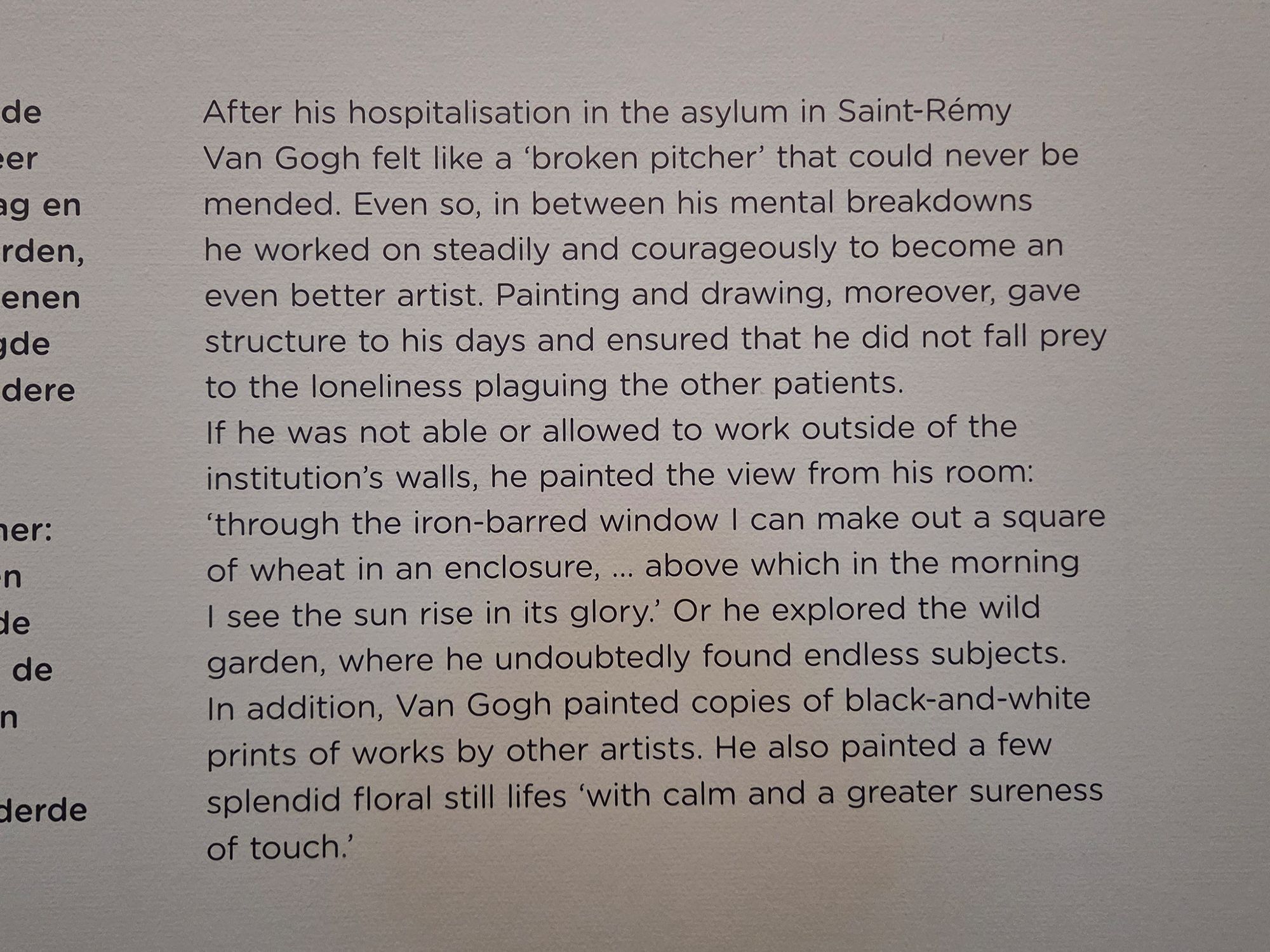
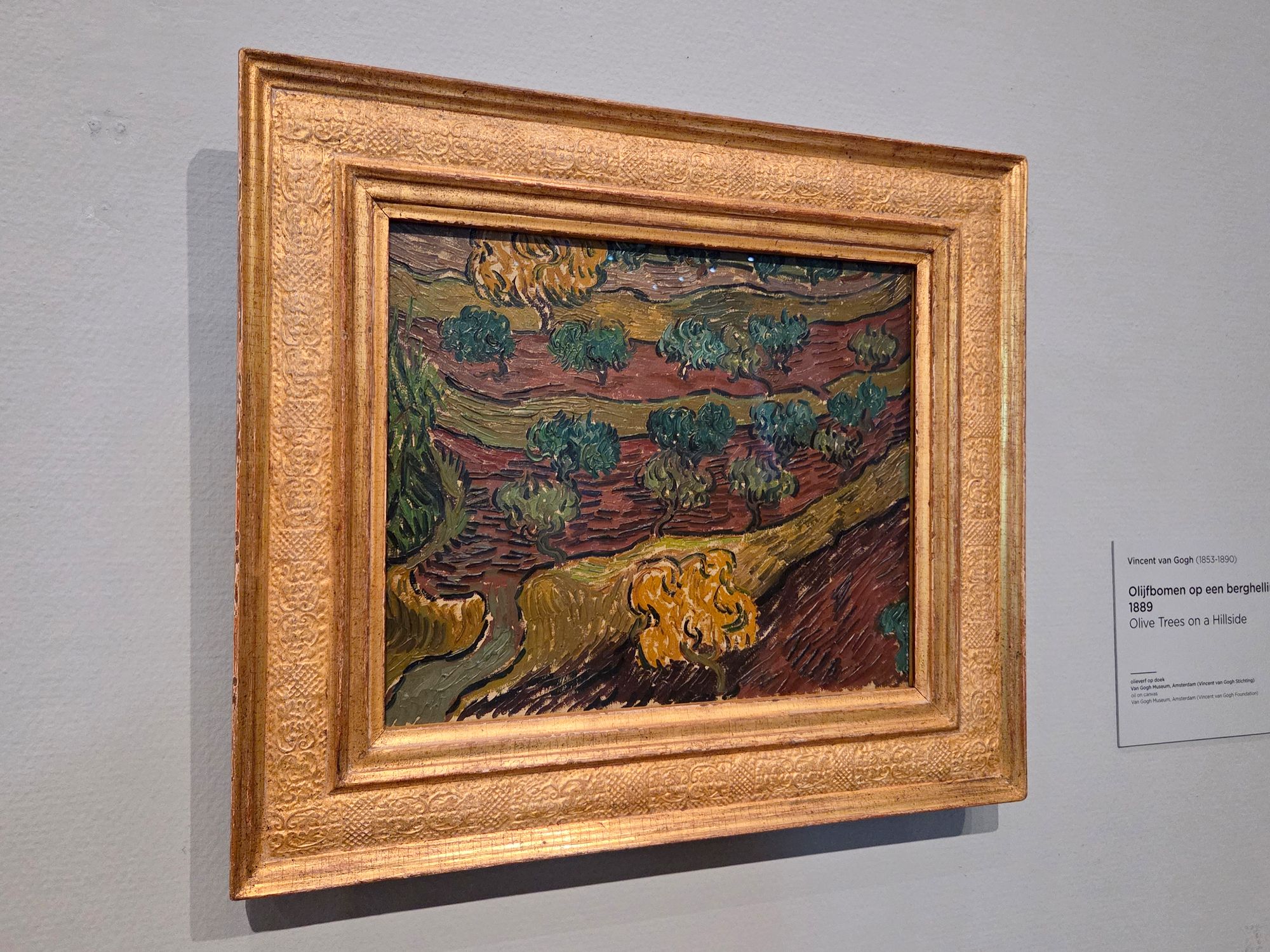
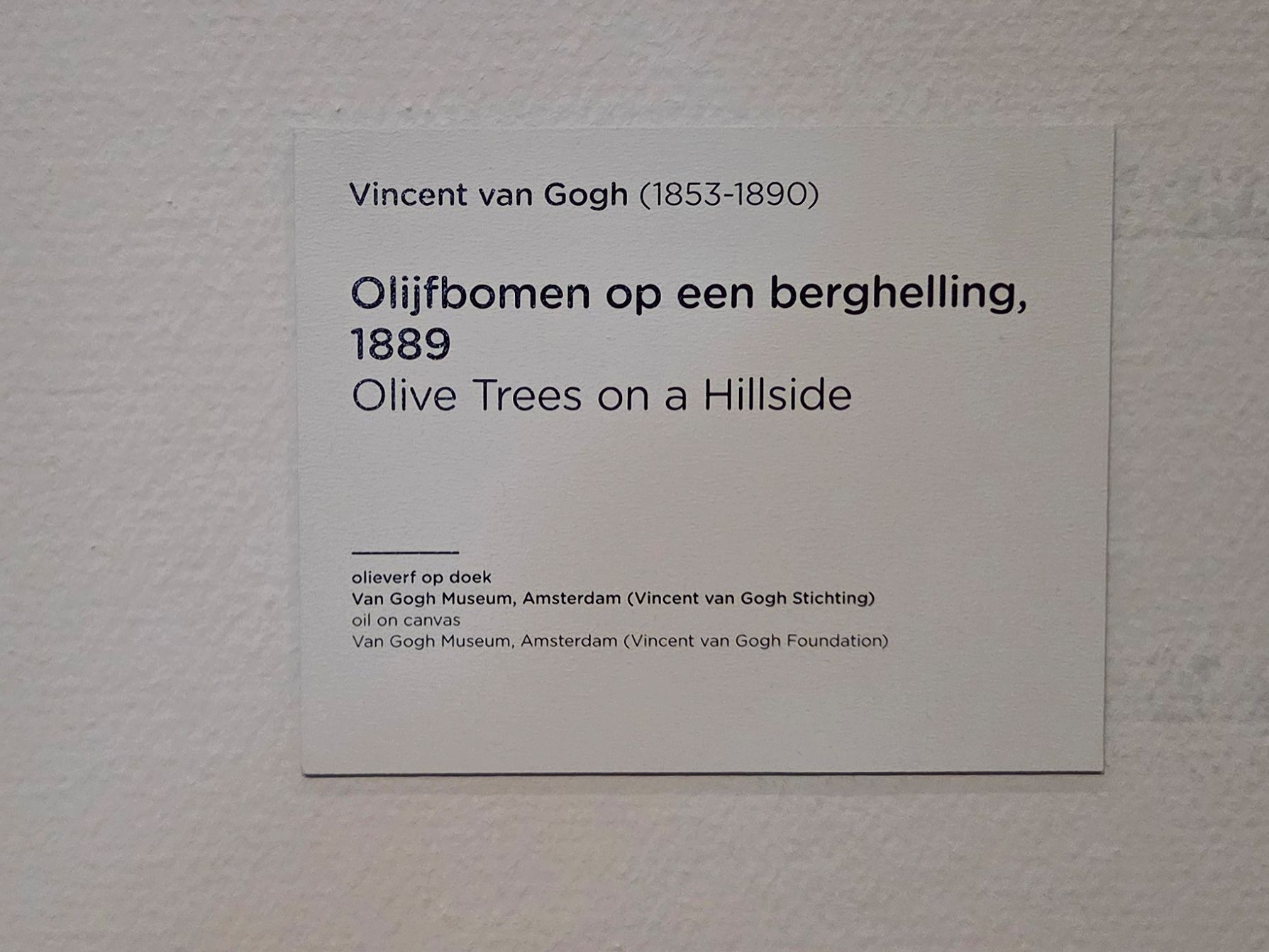
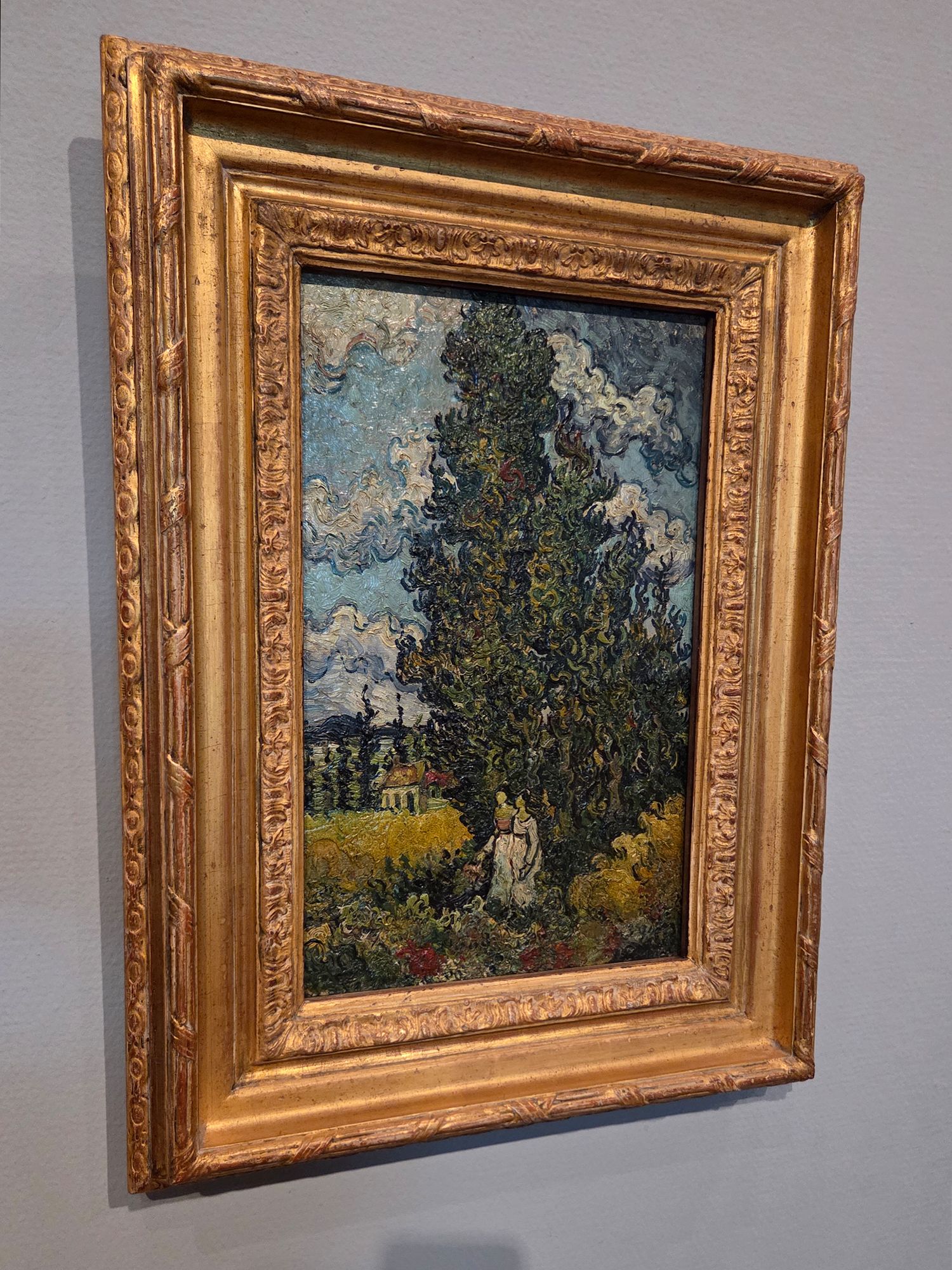
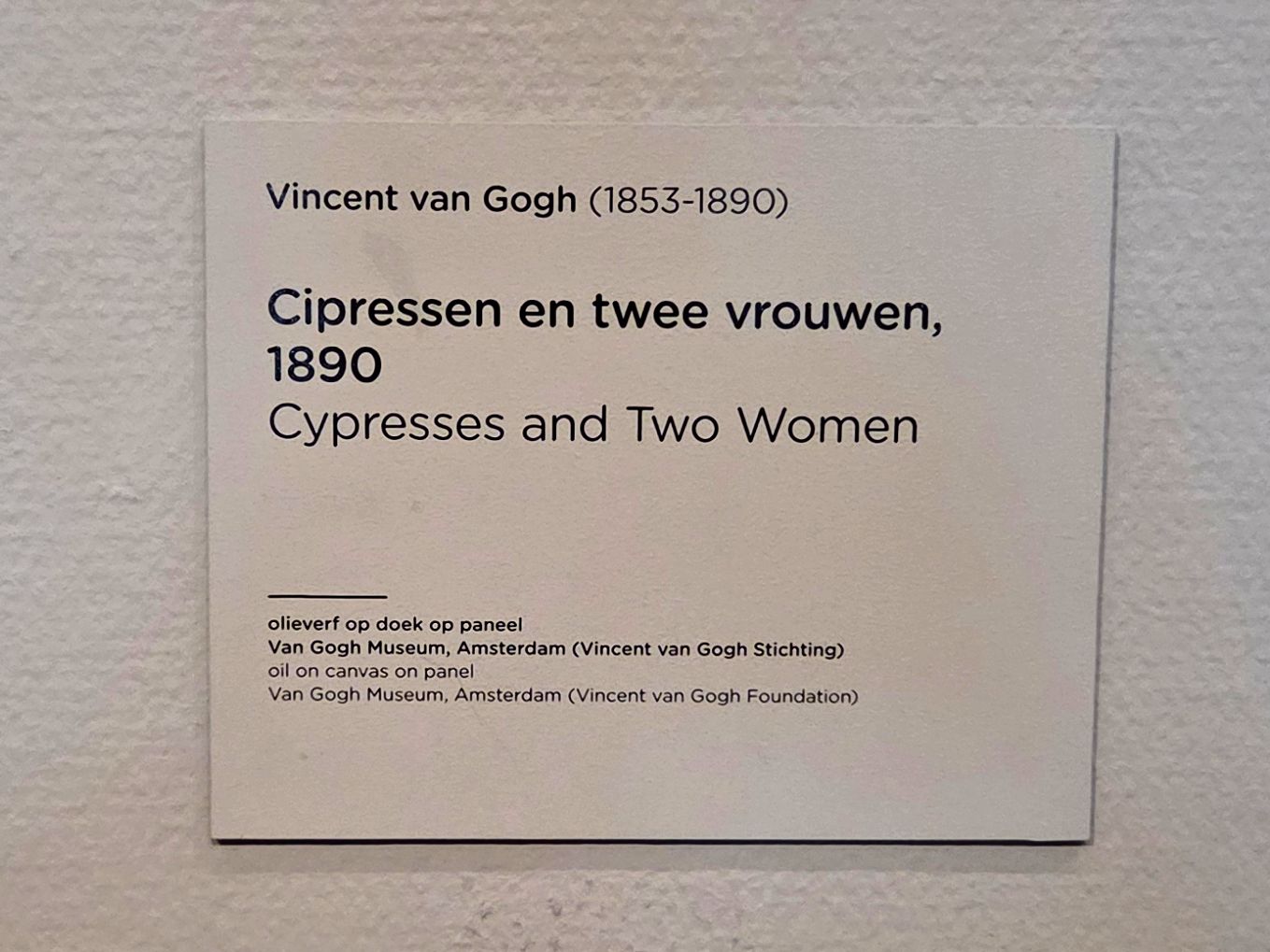
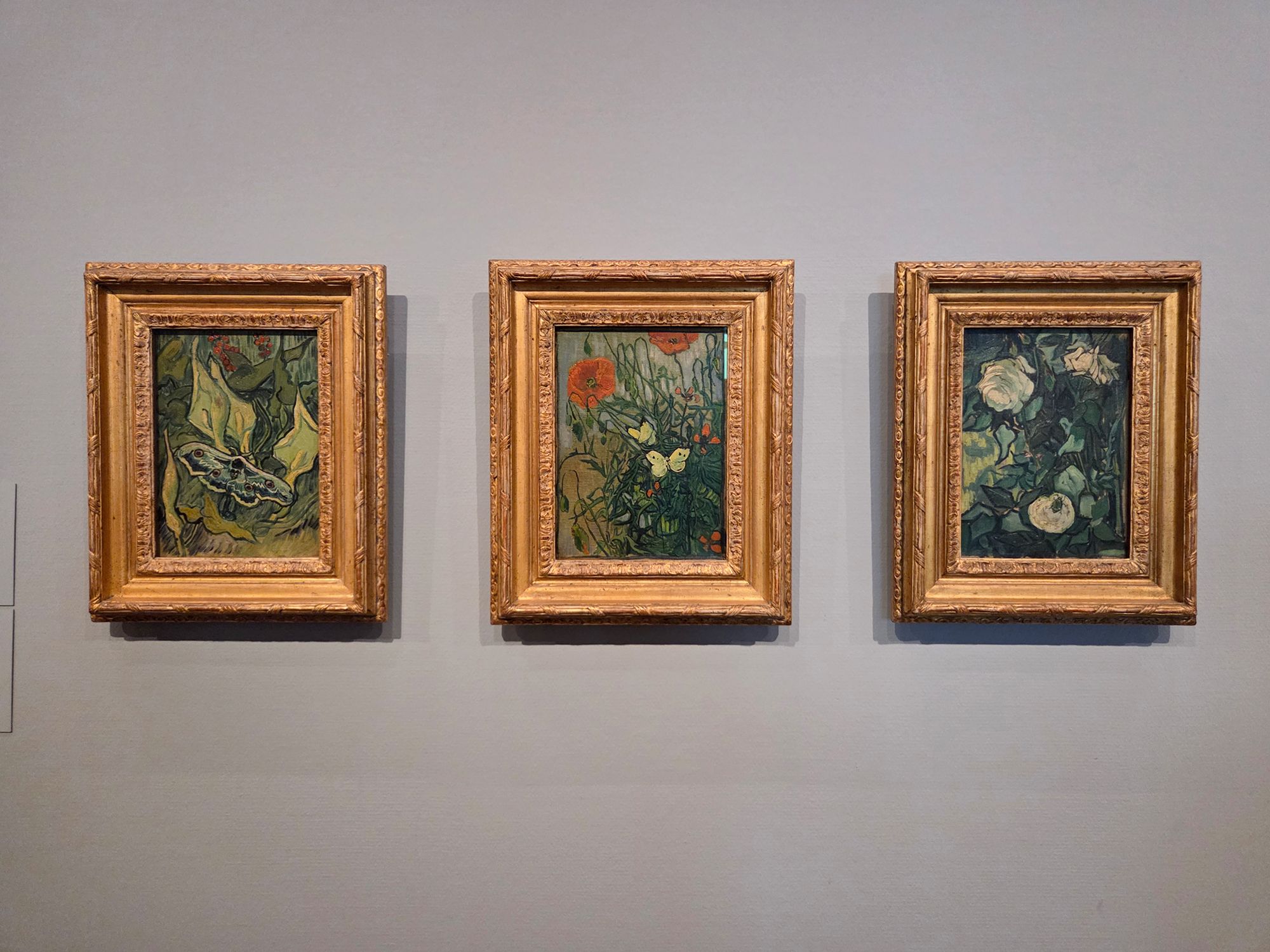
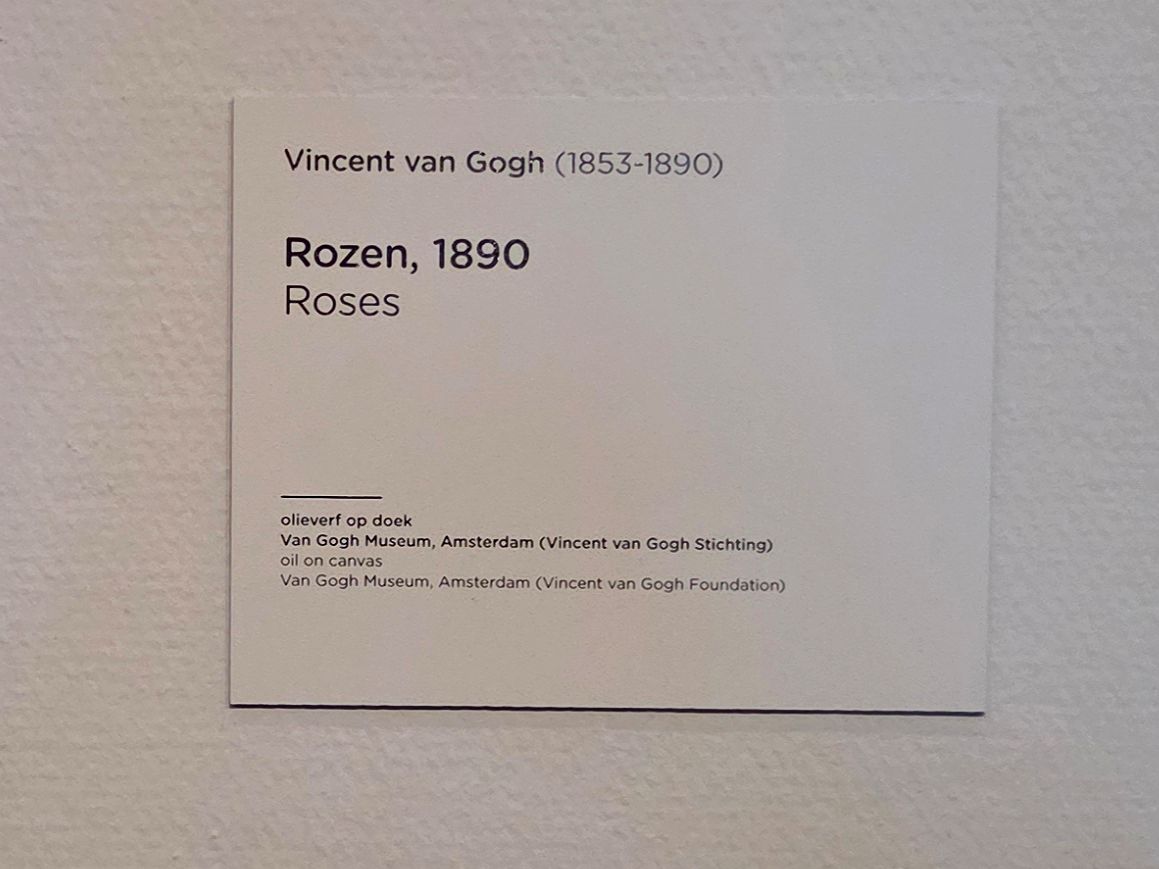
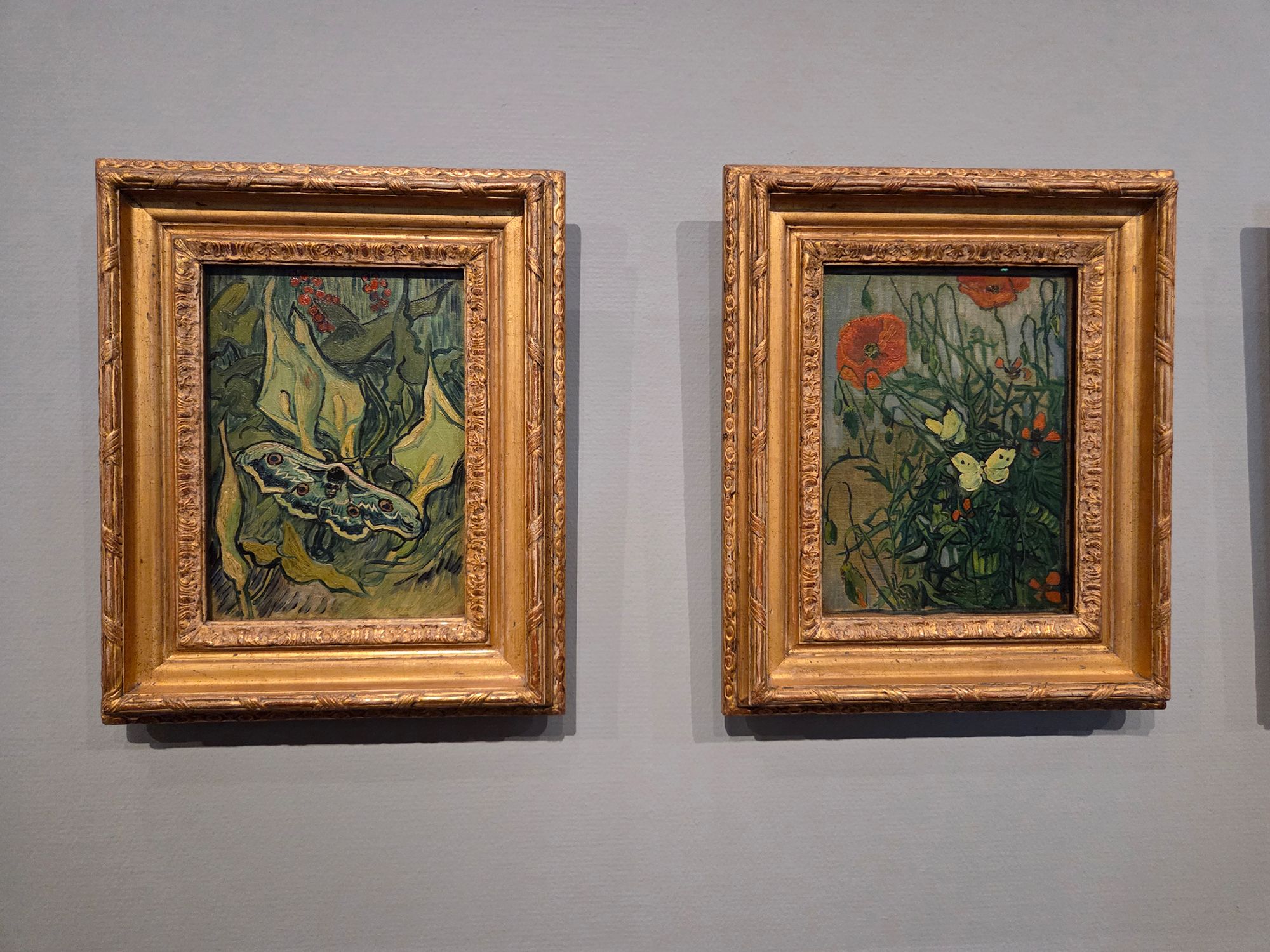
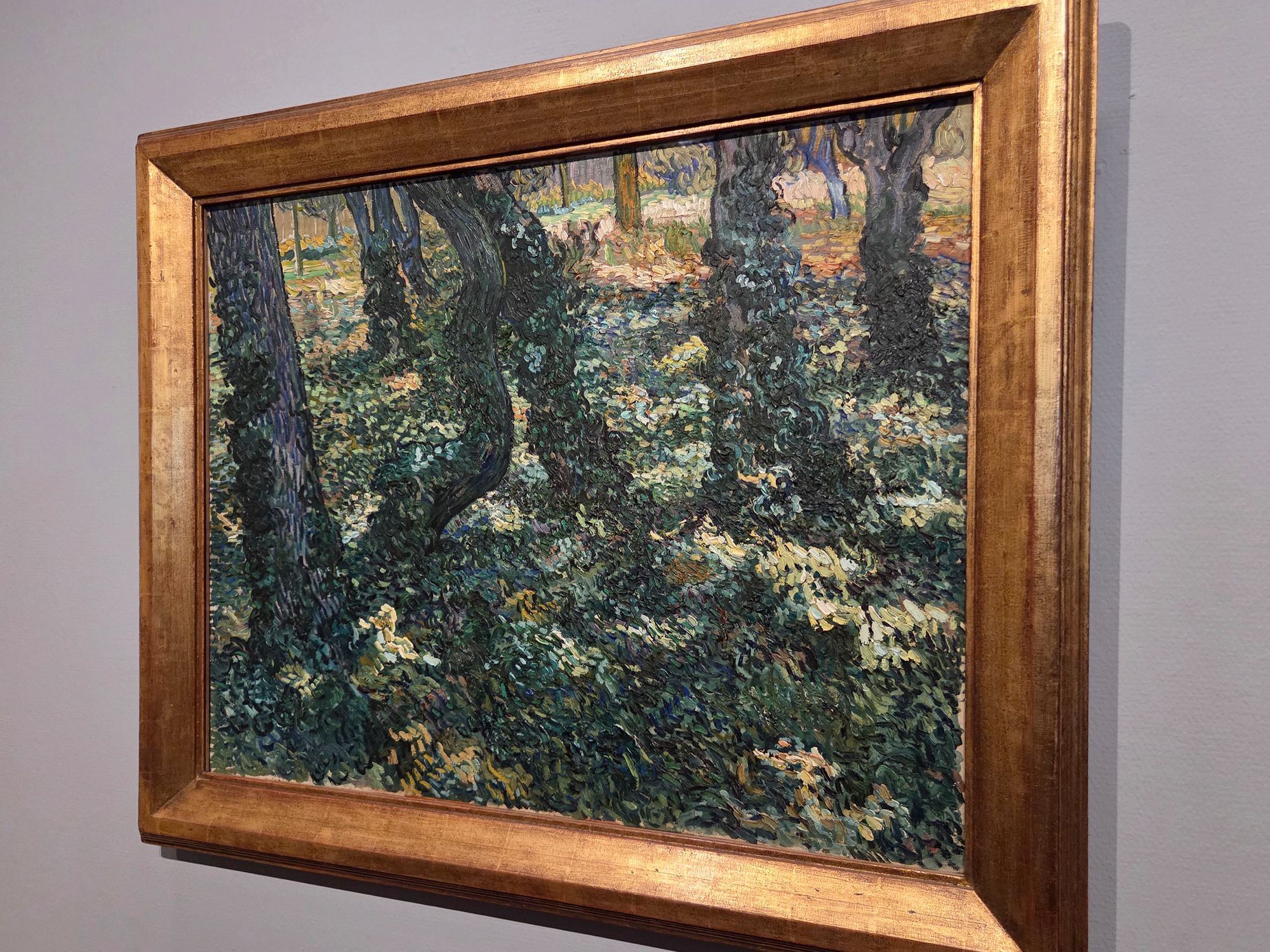
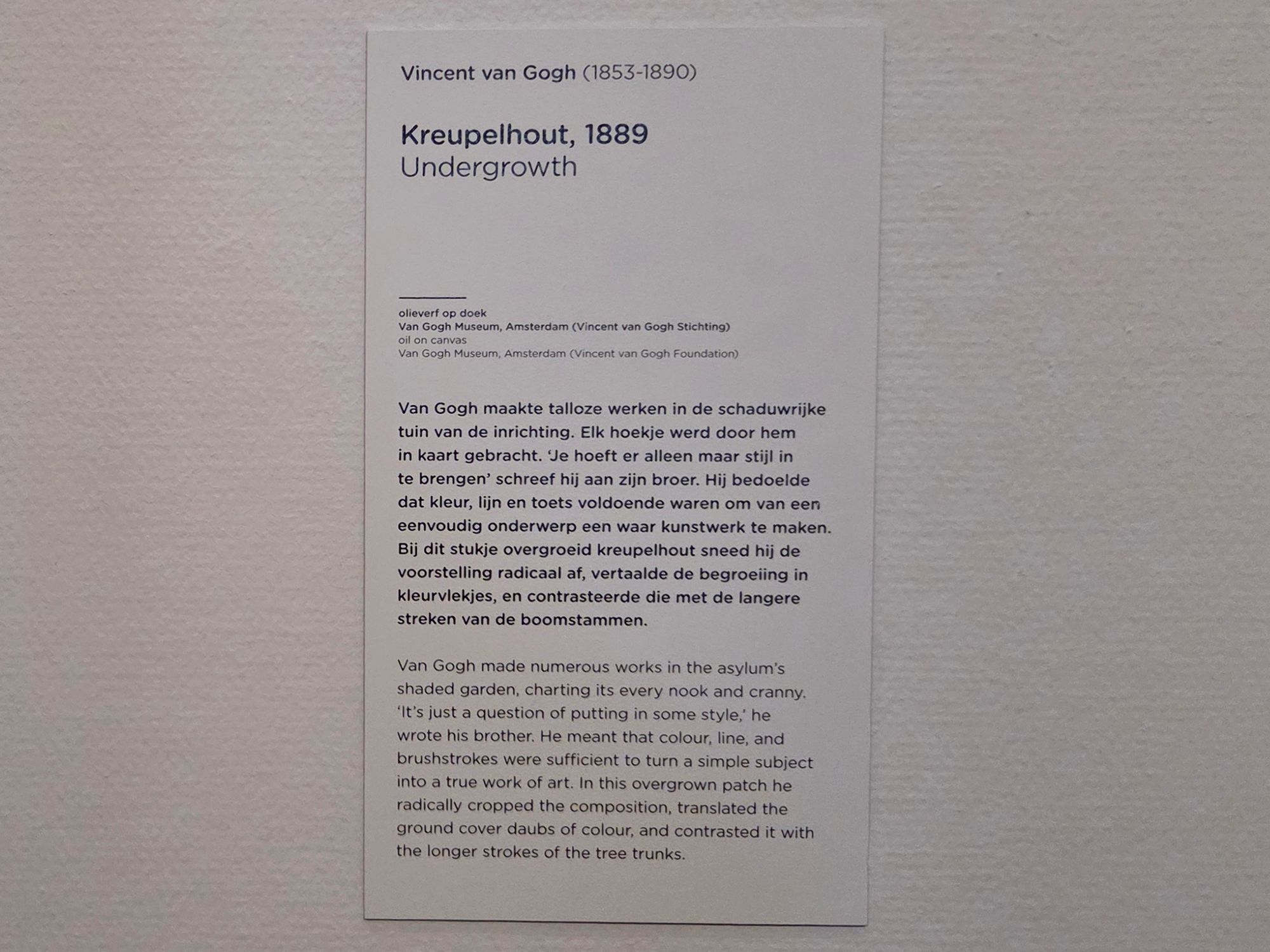
While at the asylum in Saint-Rémy, Van Gogh often painted in its garden, finding subjects in even the simplest corners of nature. He believed that his distinctive use of color, line, and expressive brushstrokes could transform an ordinary scene into a work of art.
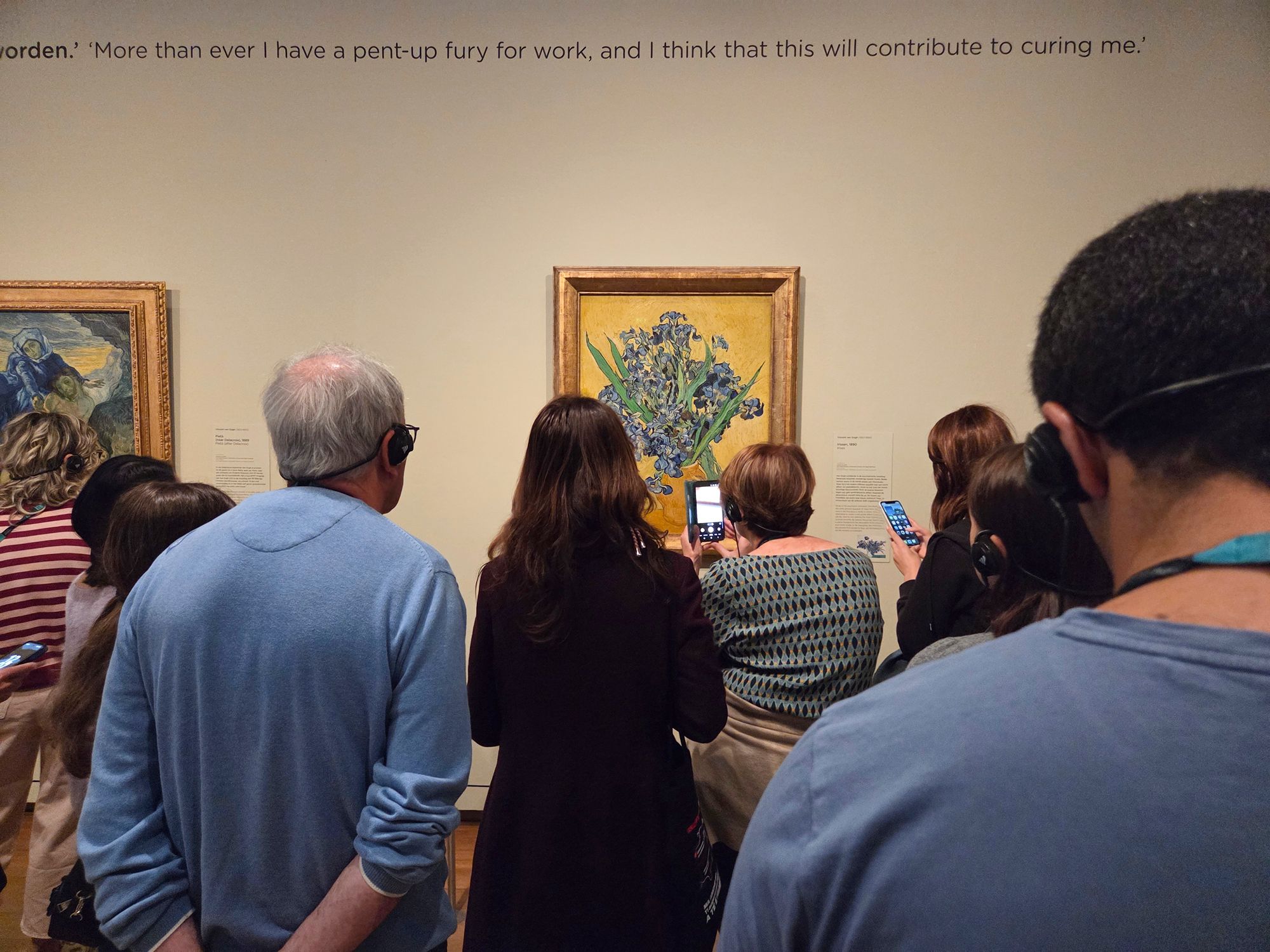
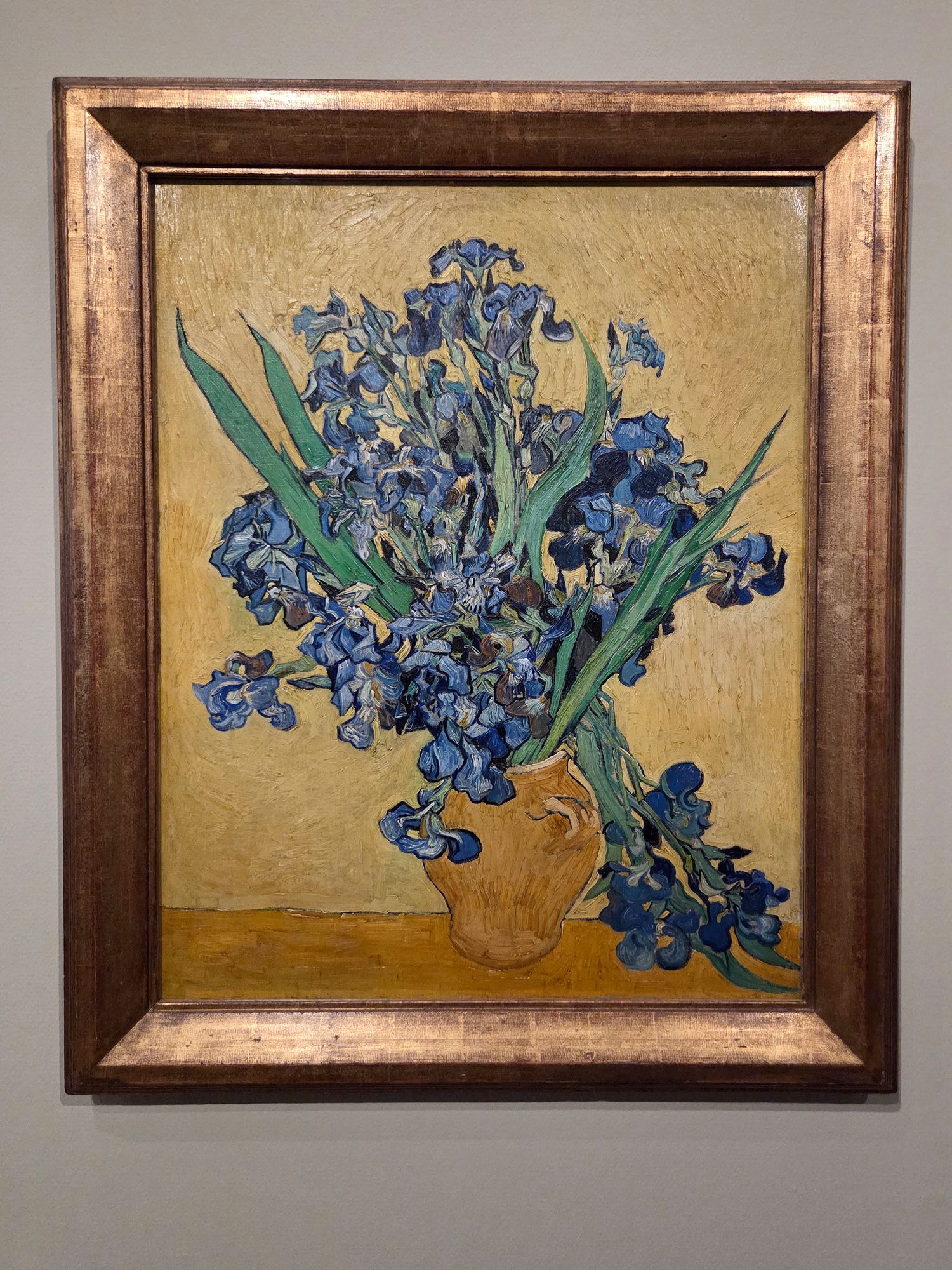
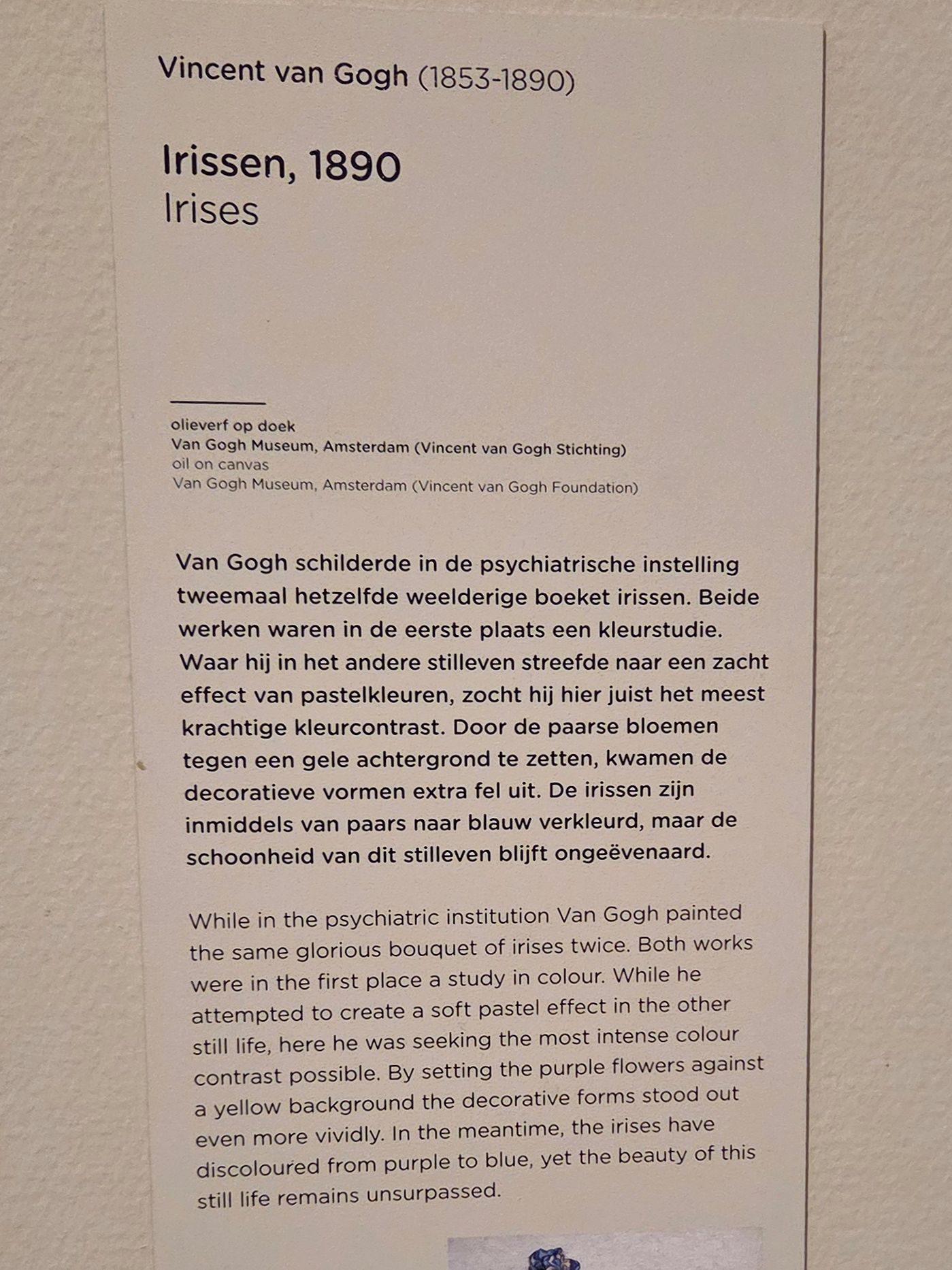
While staying at the psychiatric hospital, Van Gogh painted this bouquet of irises as an experiment with color. He originally contrasted the purple flowers with a yellow background for maximum intensity, although the purple pigment has since faded to blue.
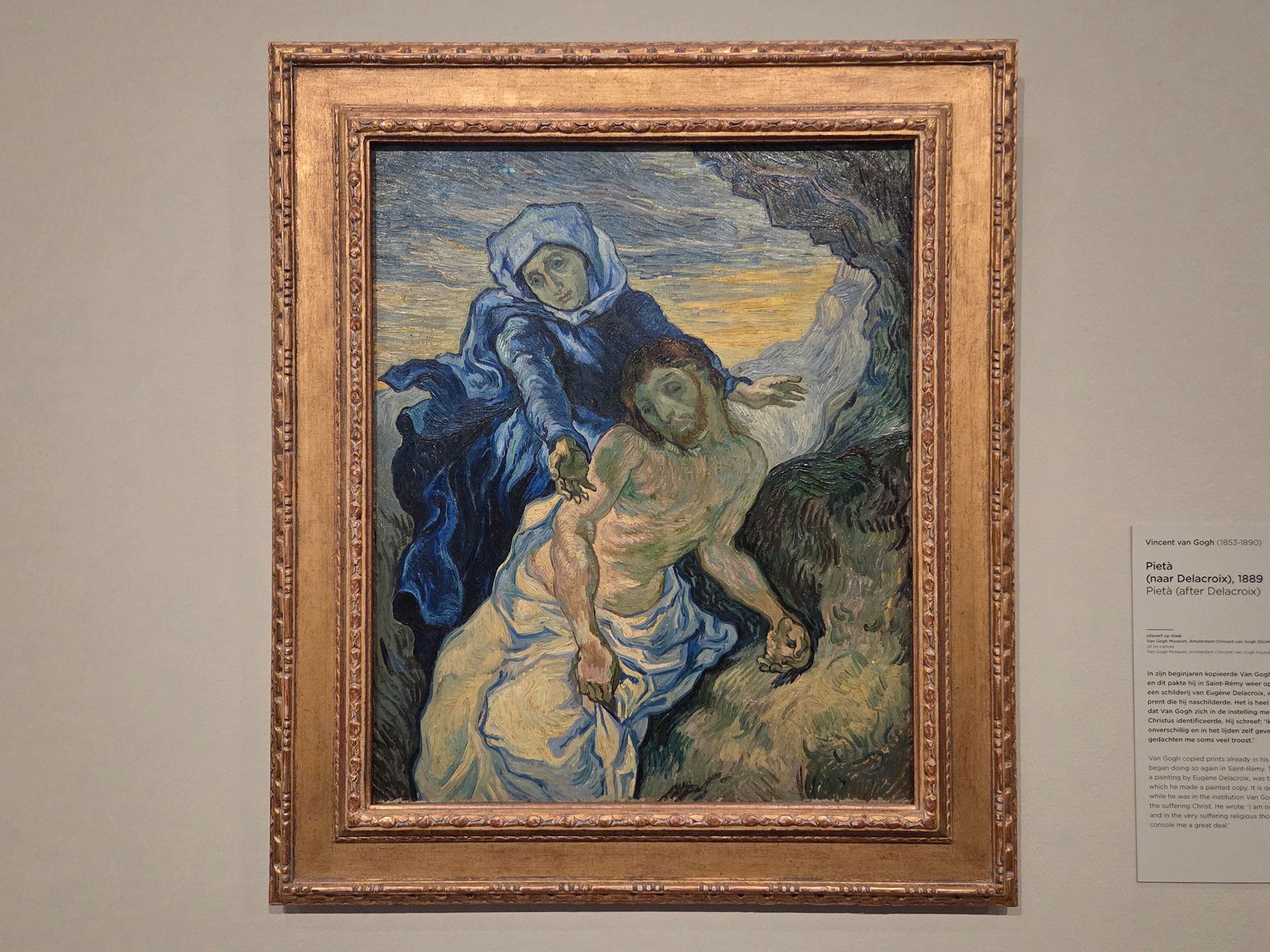
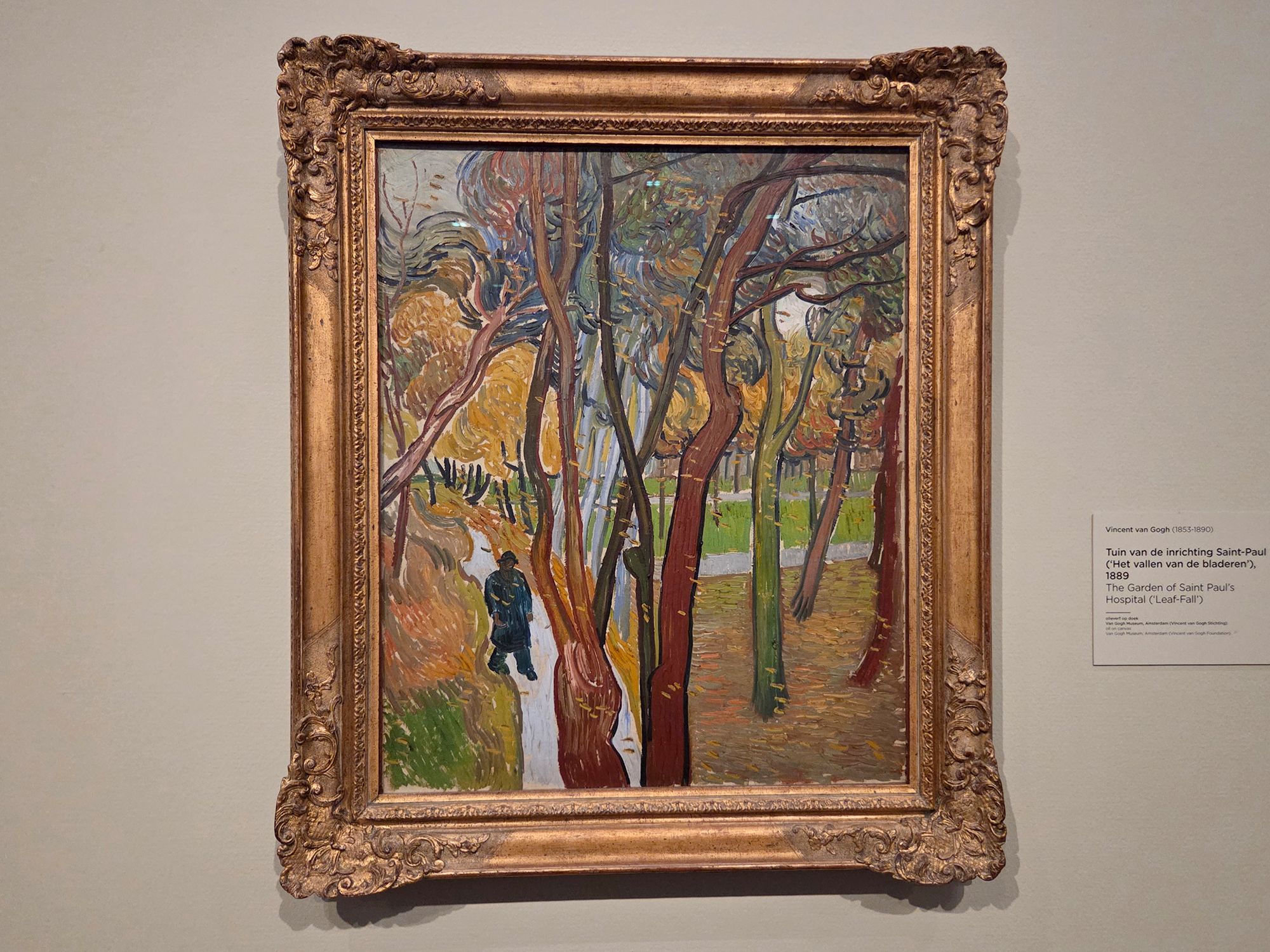
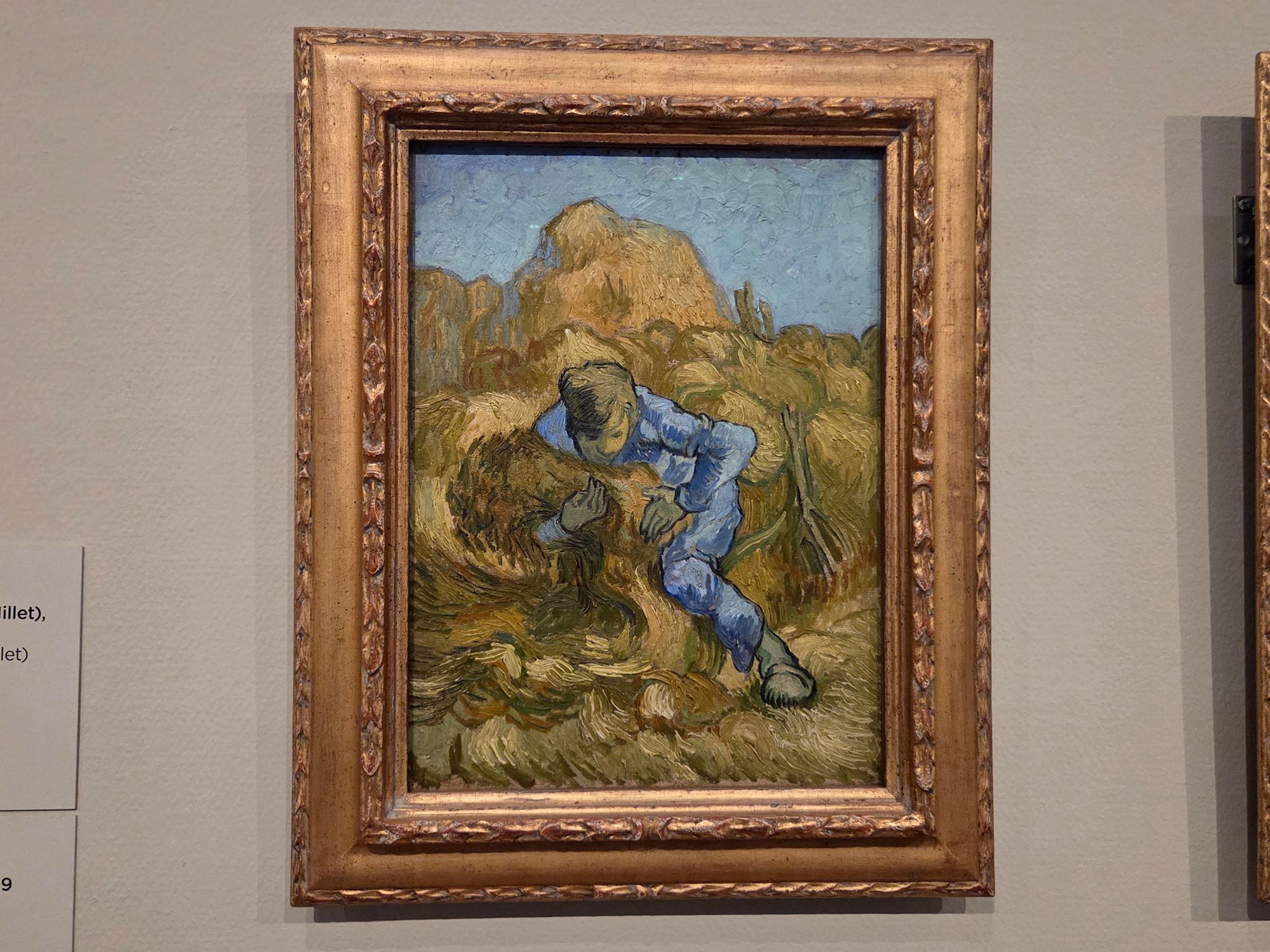
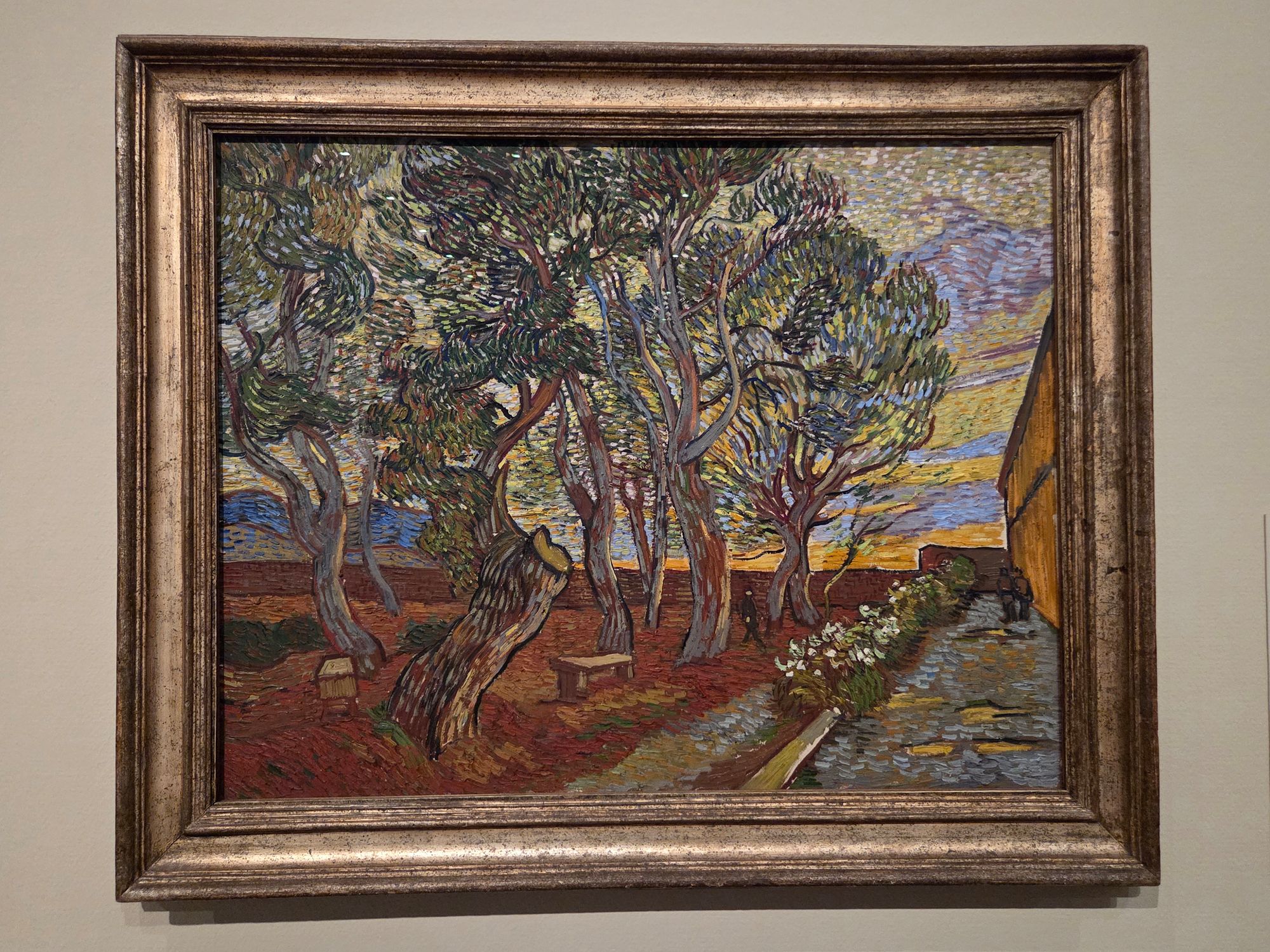
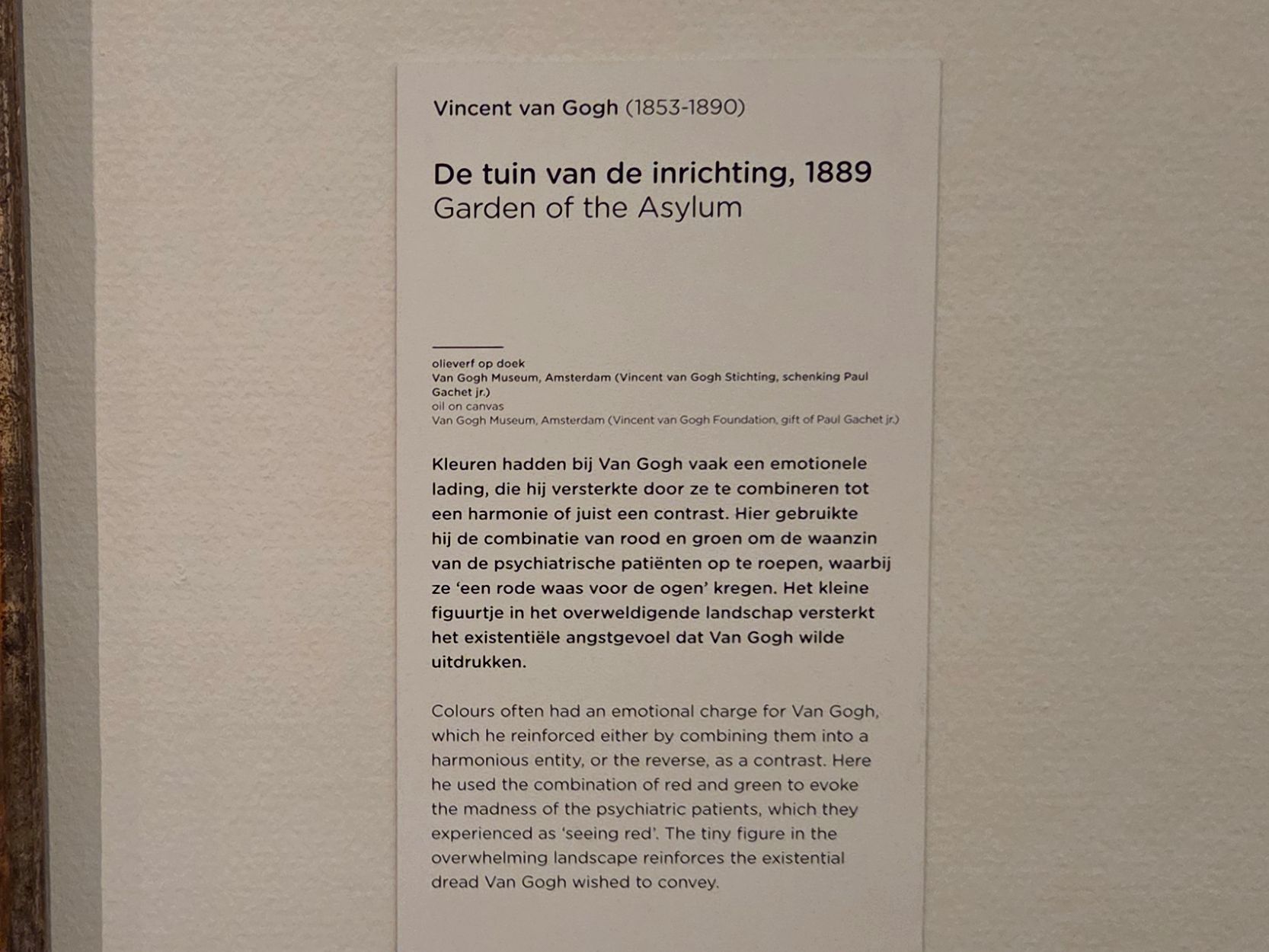
Van Gogh believed that colors could carry strong emotions. In this painting, he used contrasting red and green to suggest the turmoil and madness experienced by psychiatric patients, while the small figure in the overwhelming landscape conveys a sense of fear and isolation.
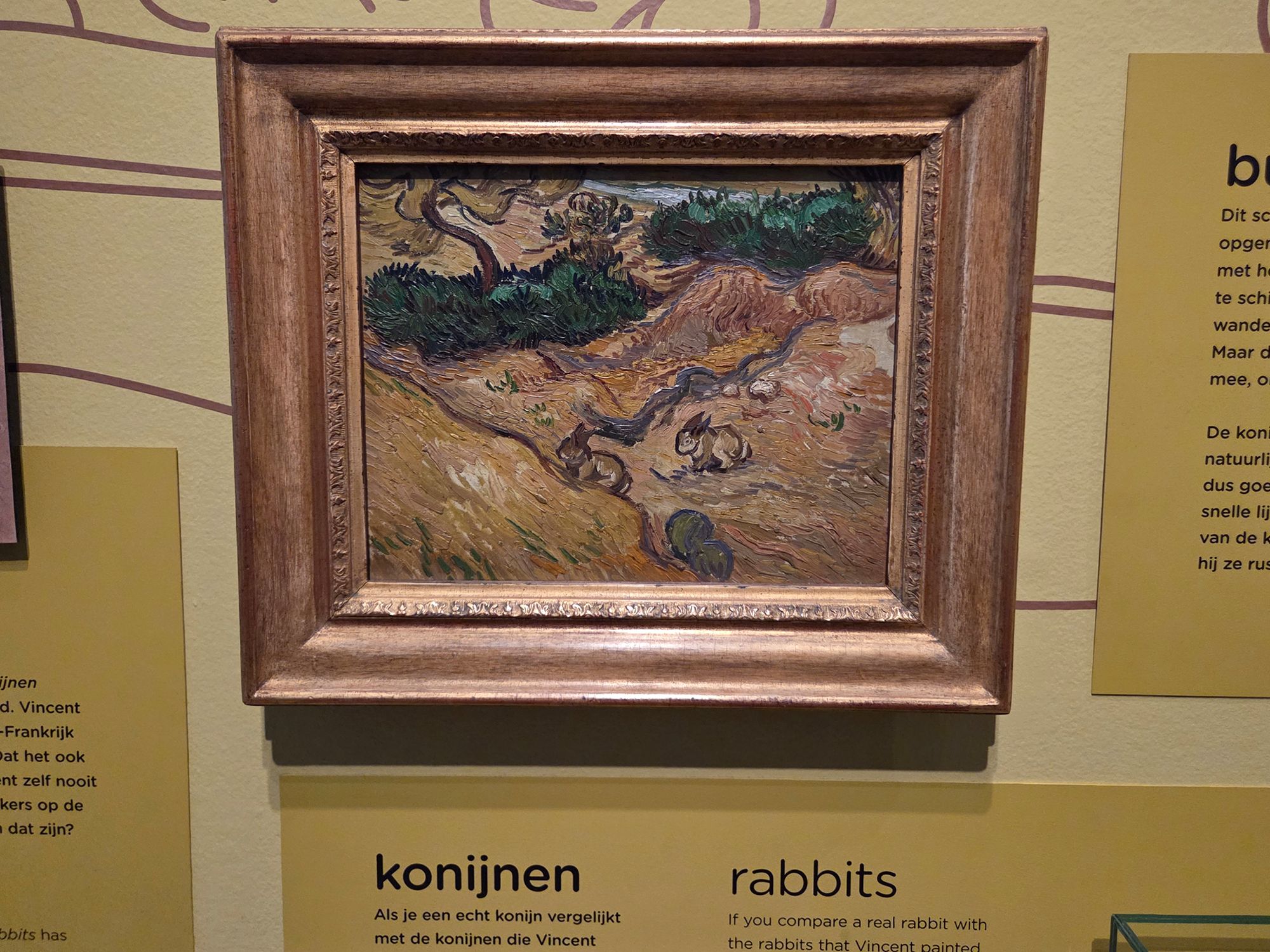
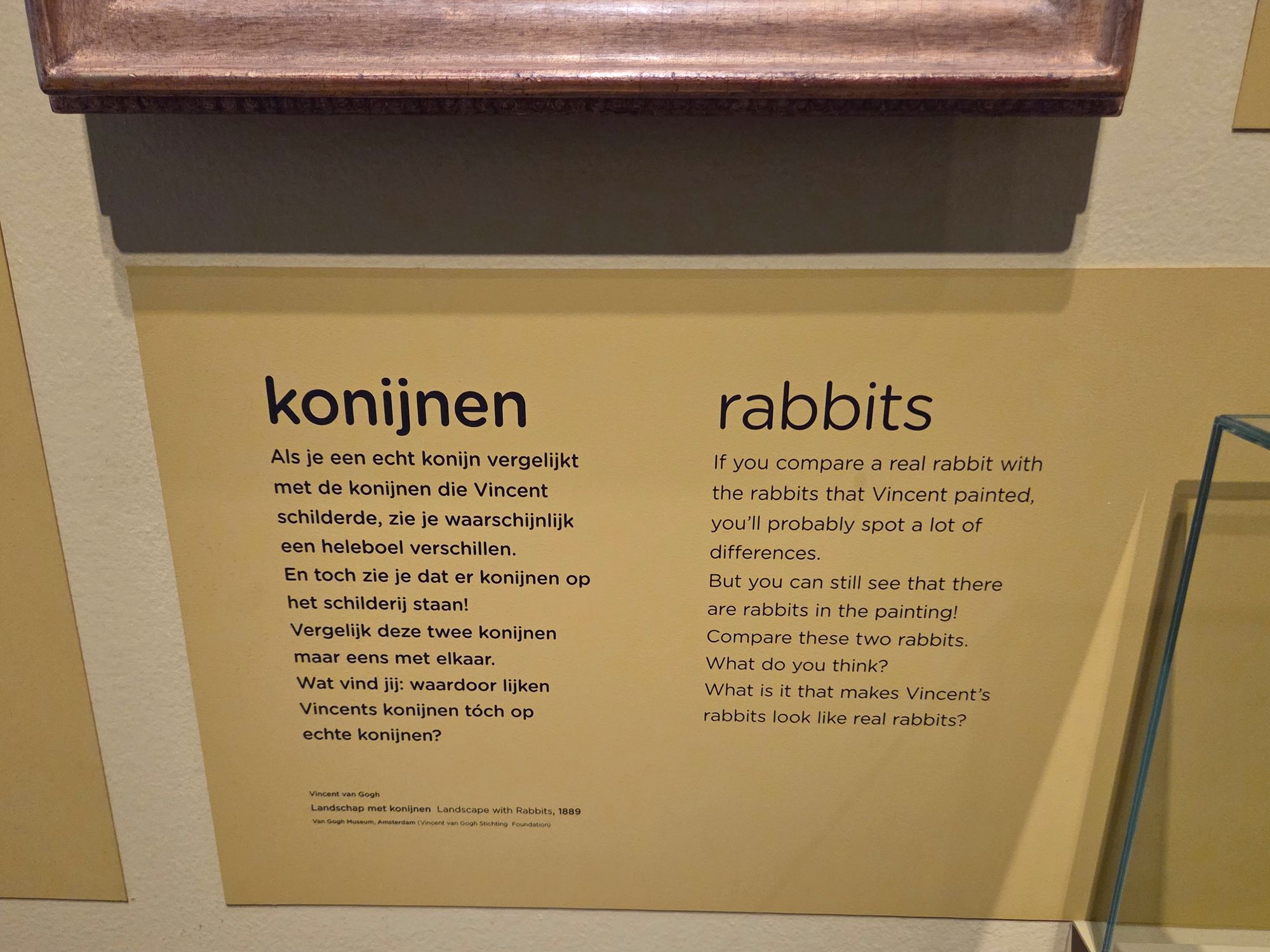
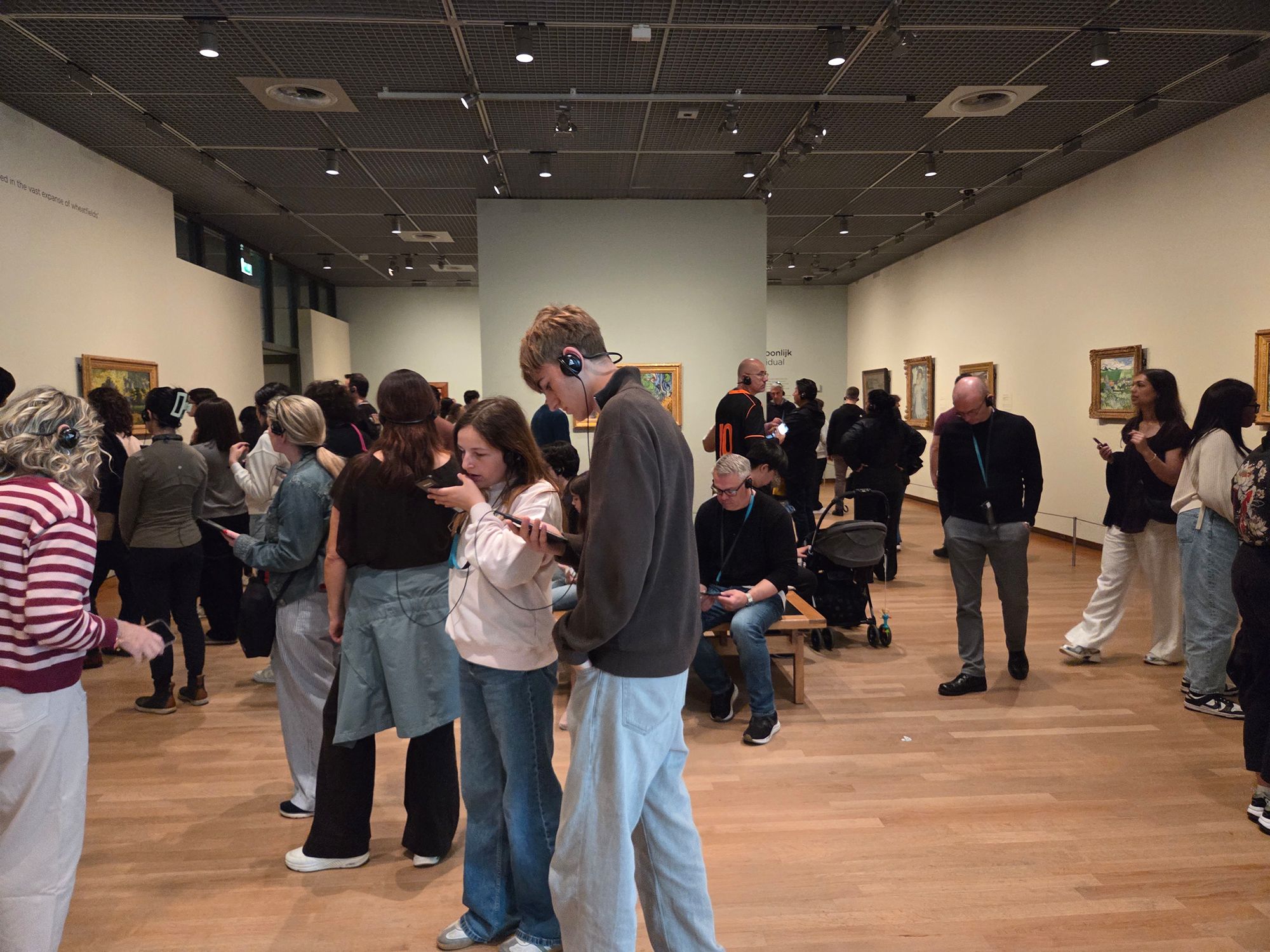
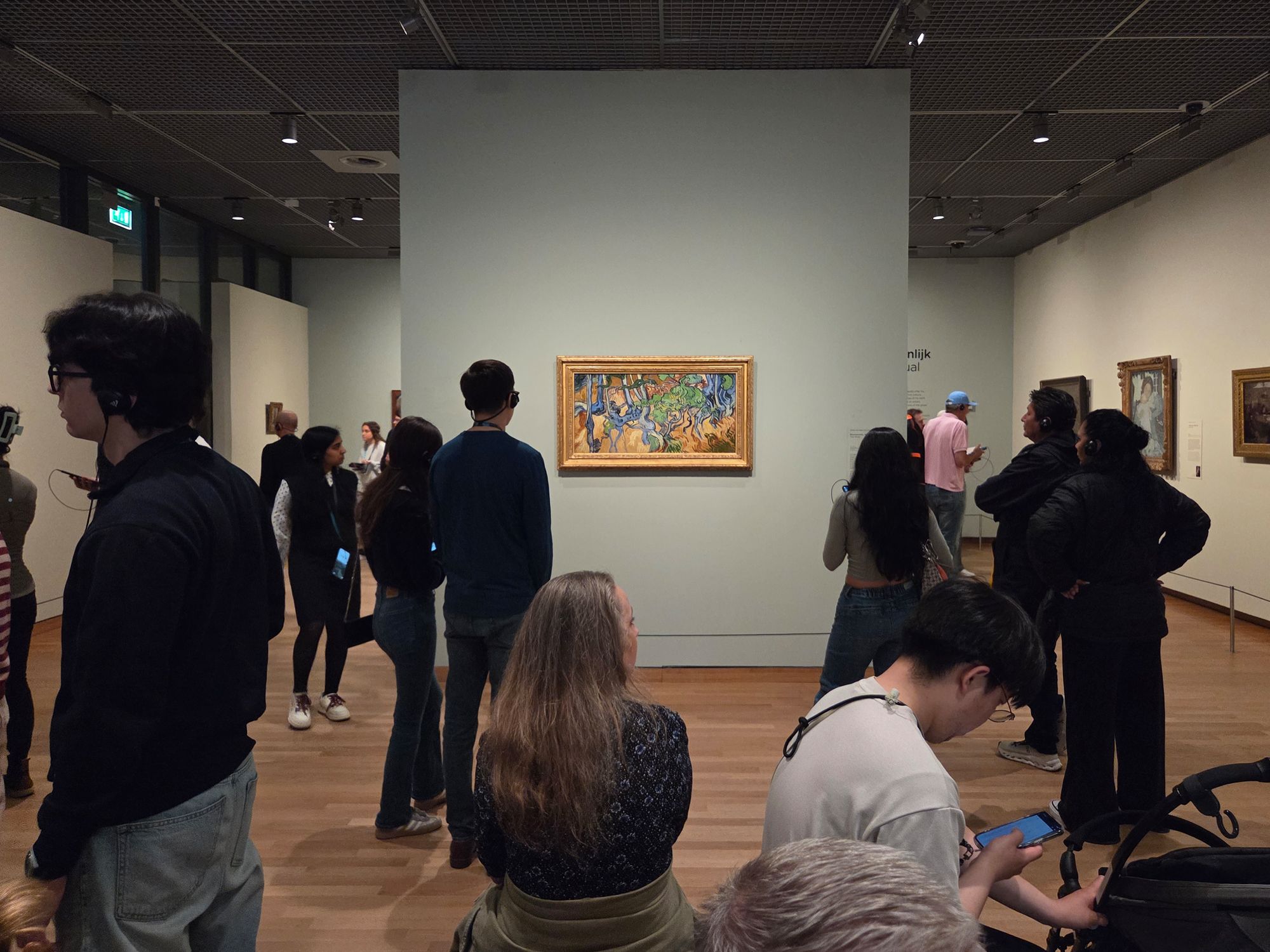
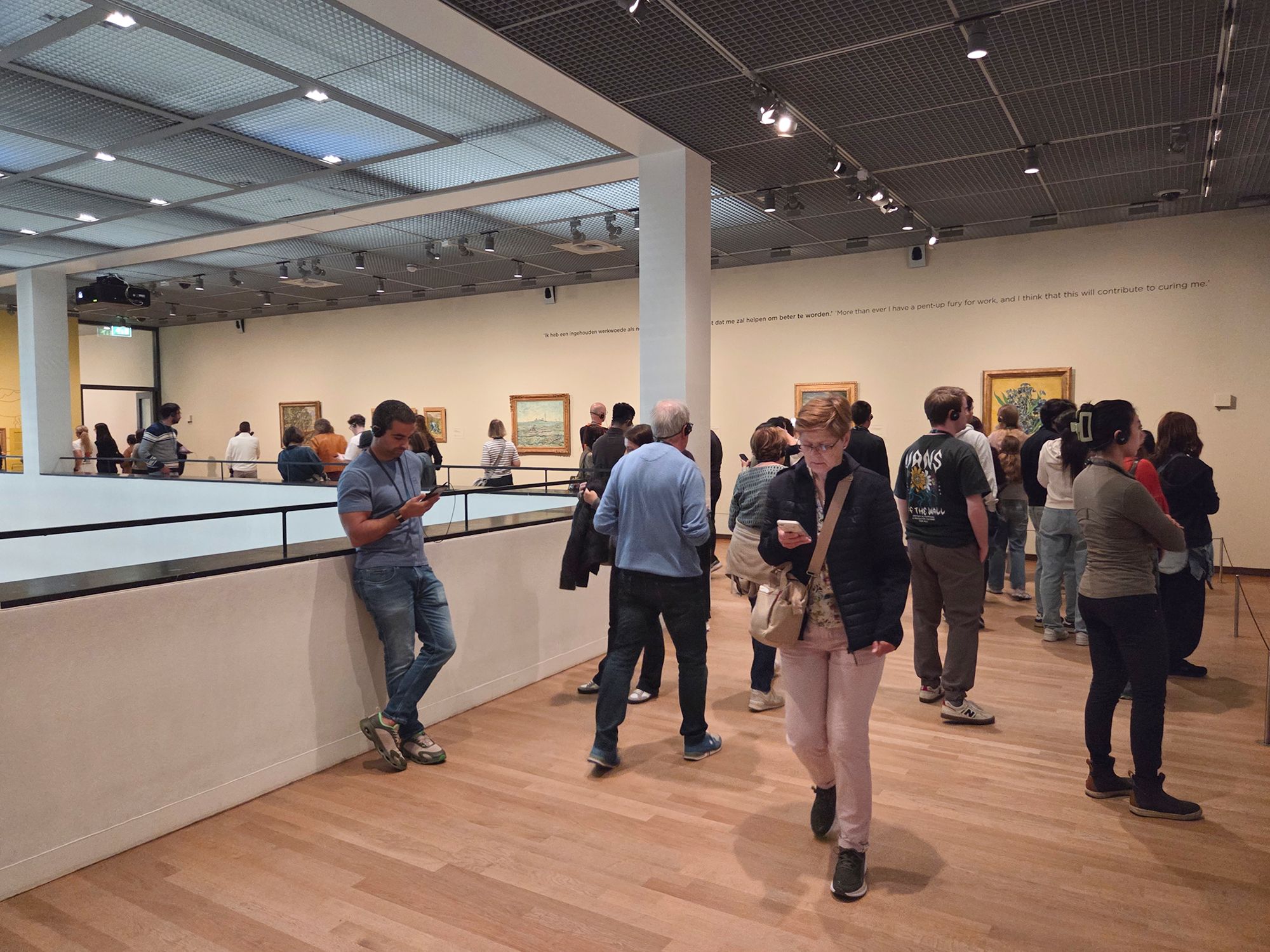
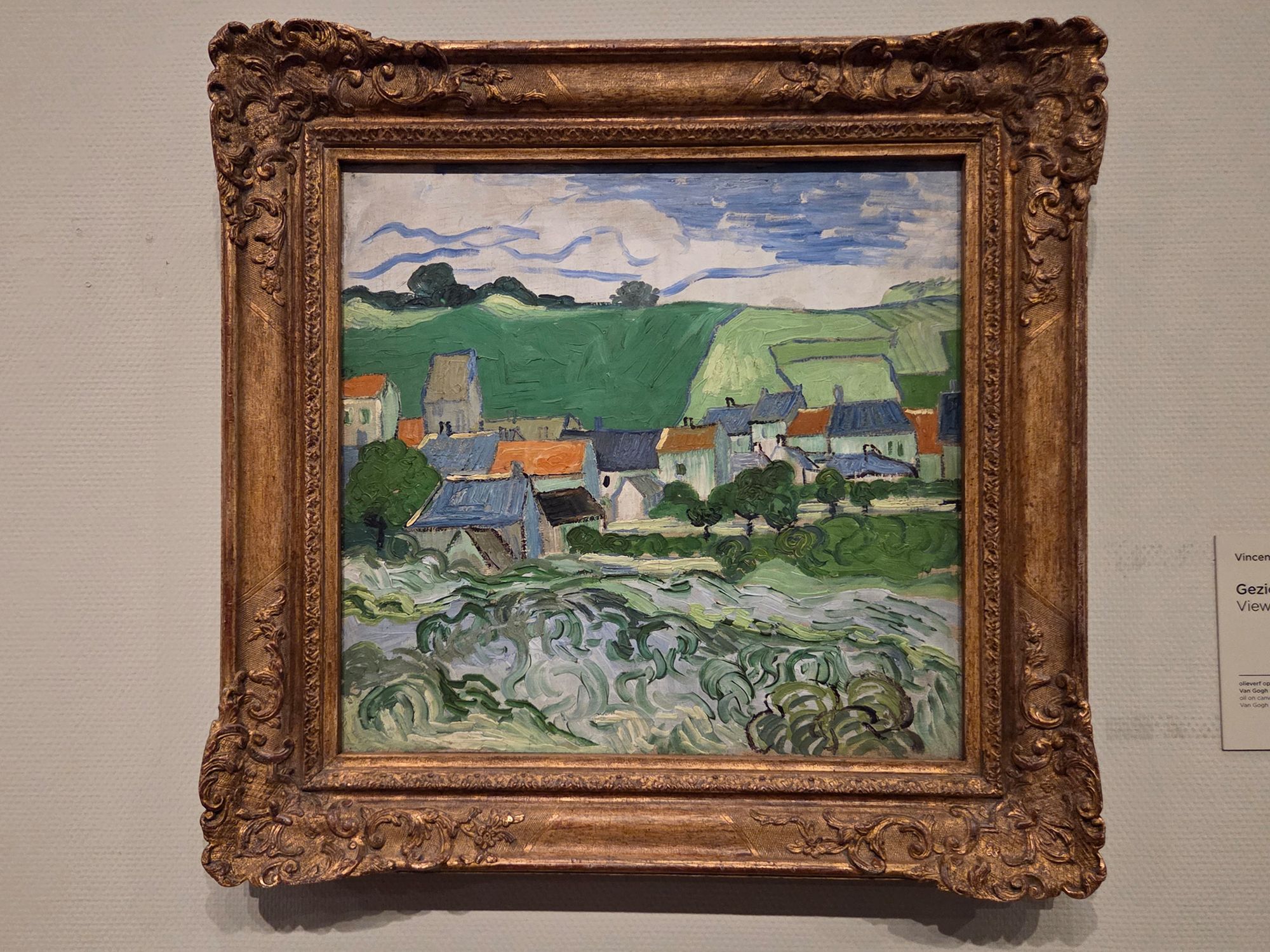
Van Gogh spent the final two months of his life in Auvers-sur-Oise, where he worked at an extraordinary pace, producing about 75 paintings in just 70 days. Nature remained his main inspiration, and he used gardens, wheat fields, and landscapes to express his emotions and find comfort and strength.
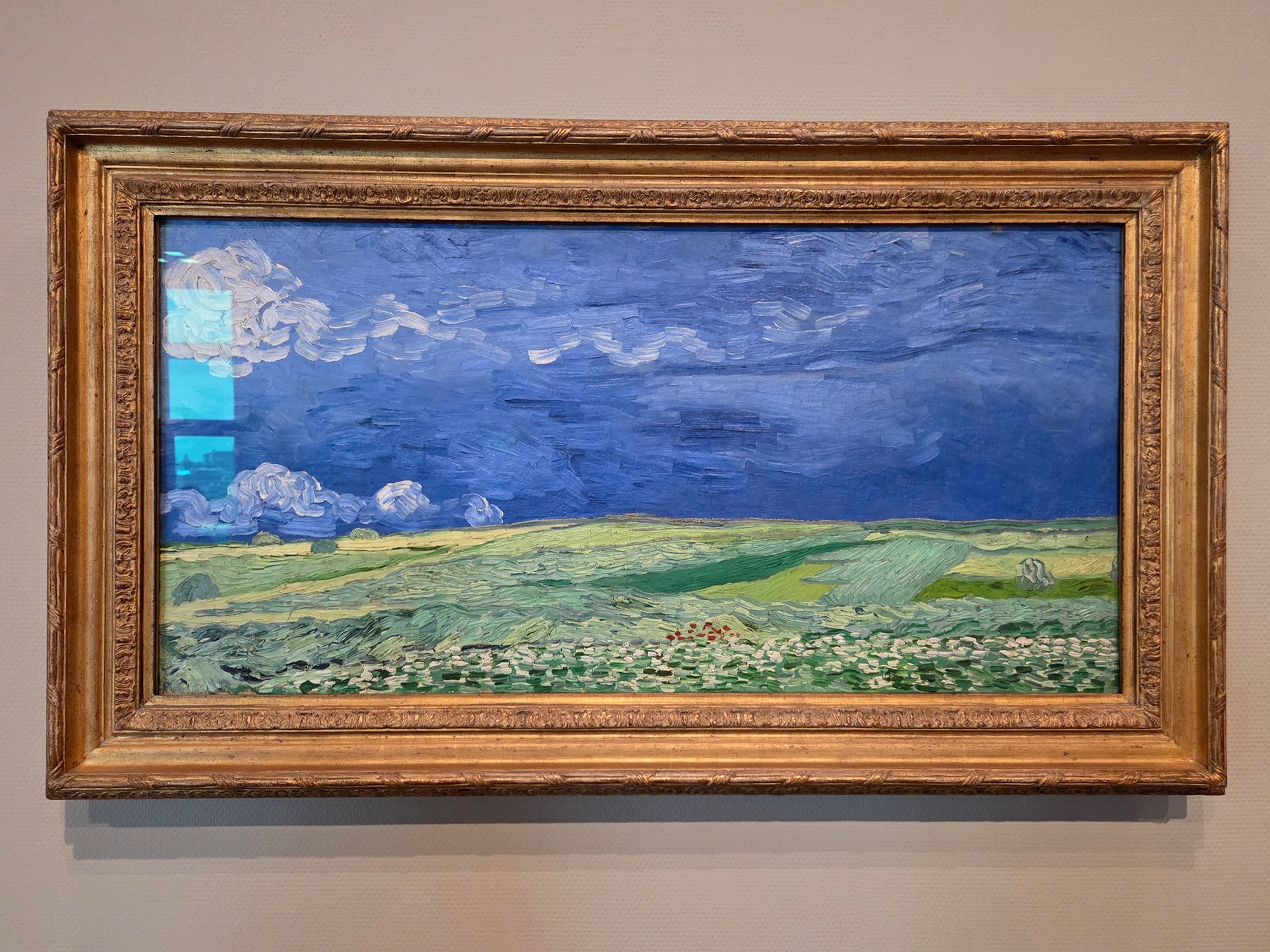
During the final weeks of his life, Van Gogh painted several dramatic landscapes of the wheat fields around Auvers-sur-Oise. Although he was deeply worried about his future, he found nature both emotionally powerful and comforting, using these landscapes to express his sadness and extreme loneliness.
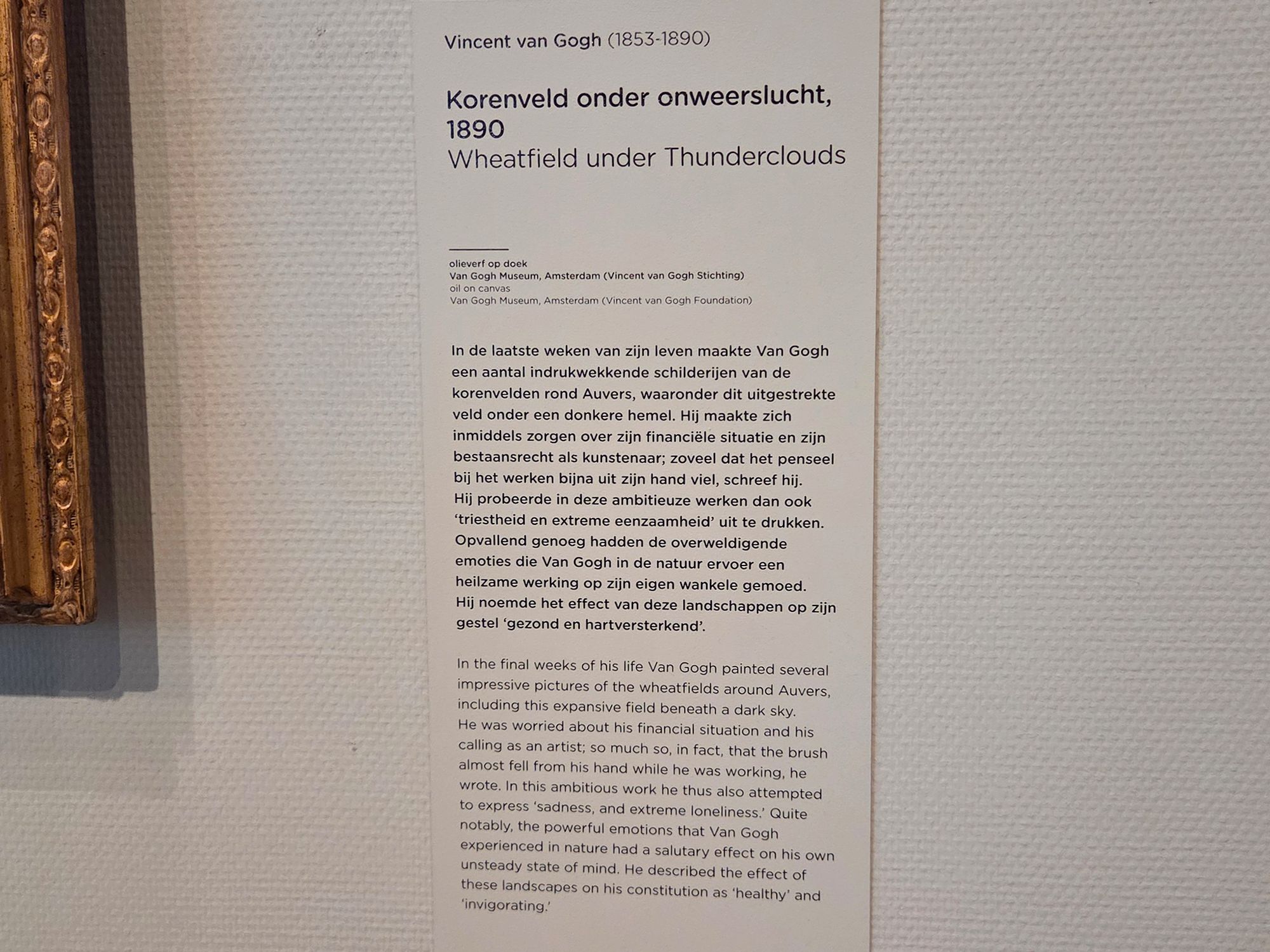
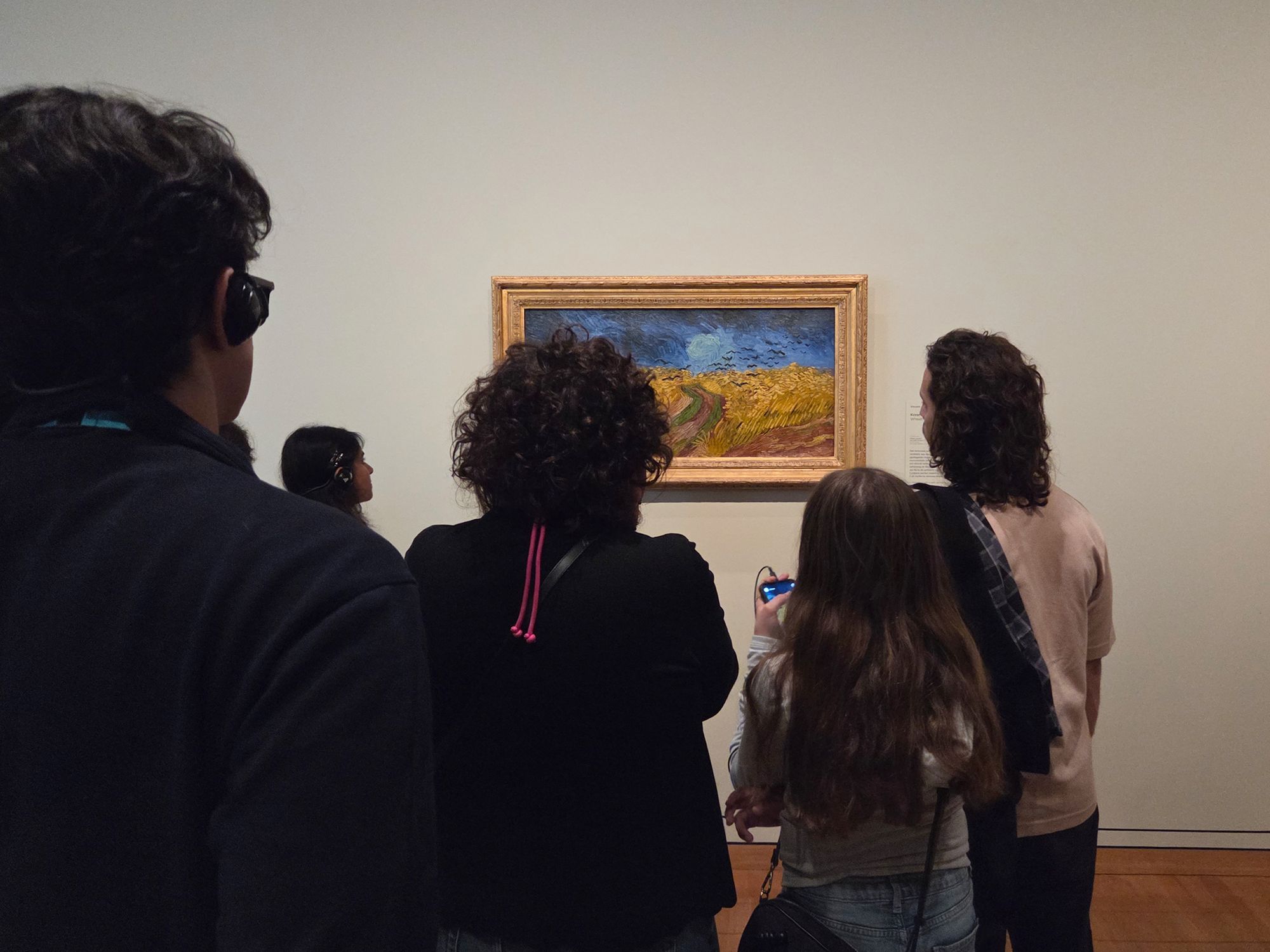
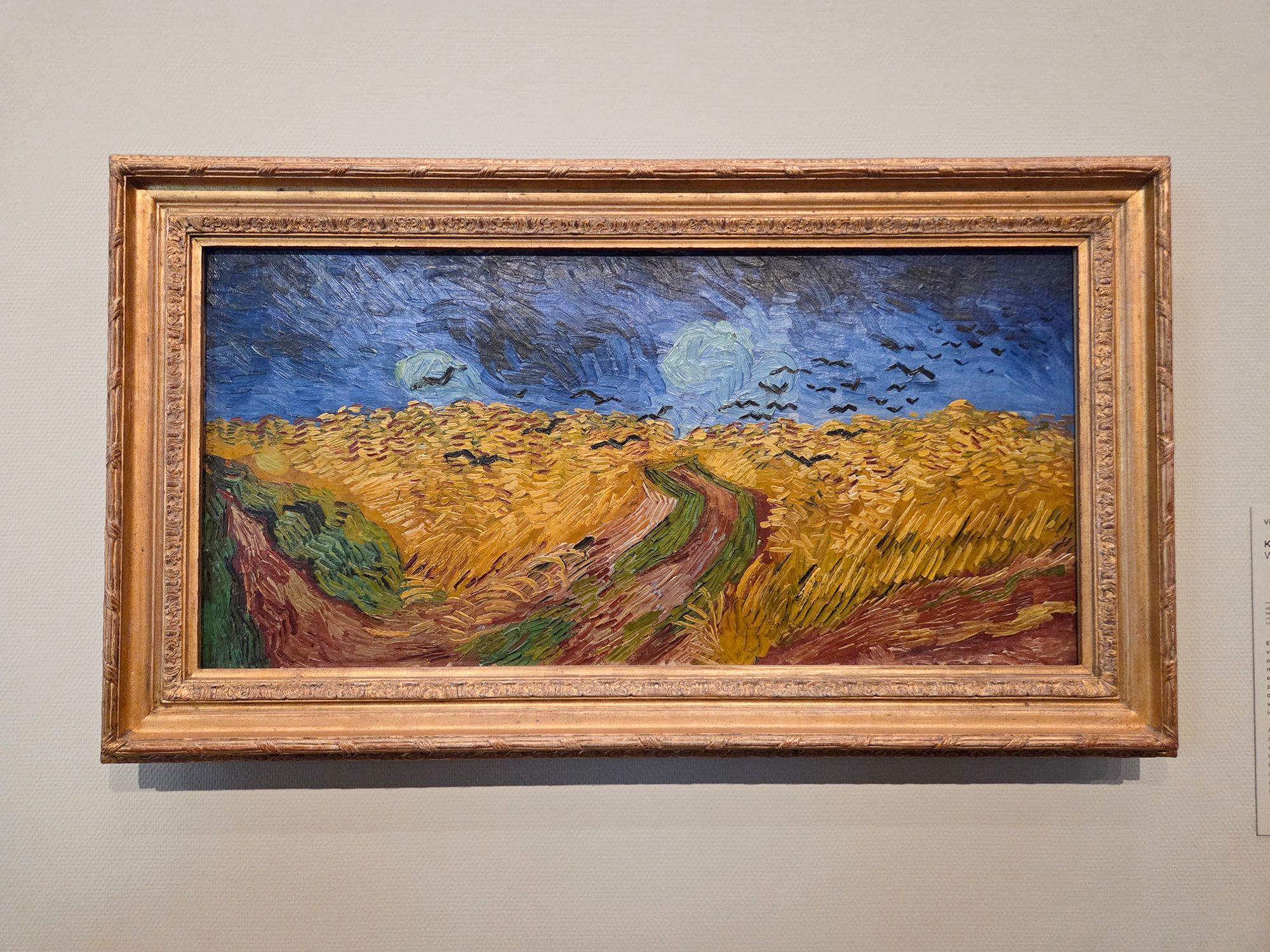
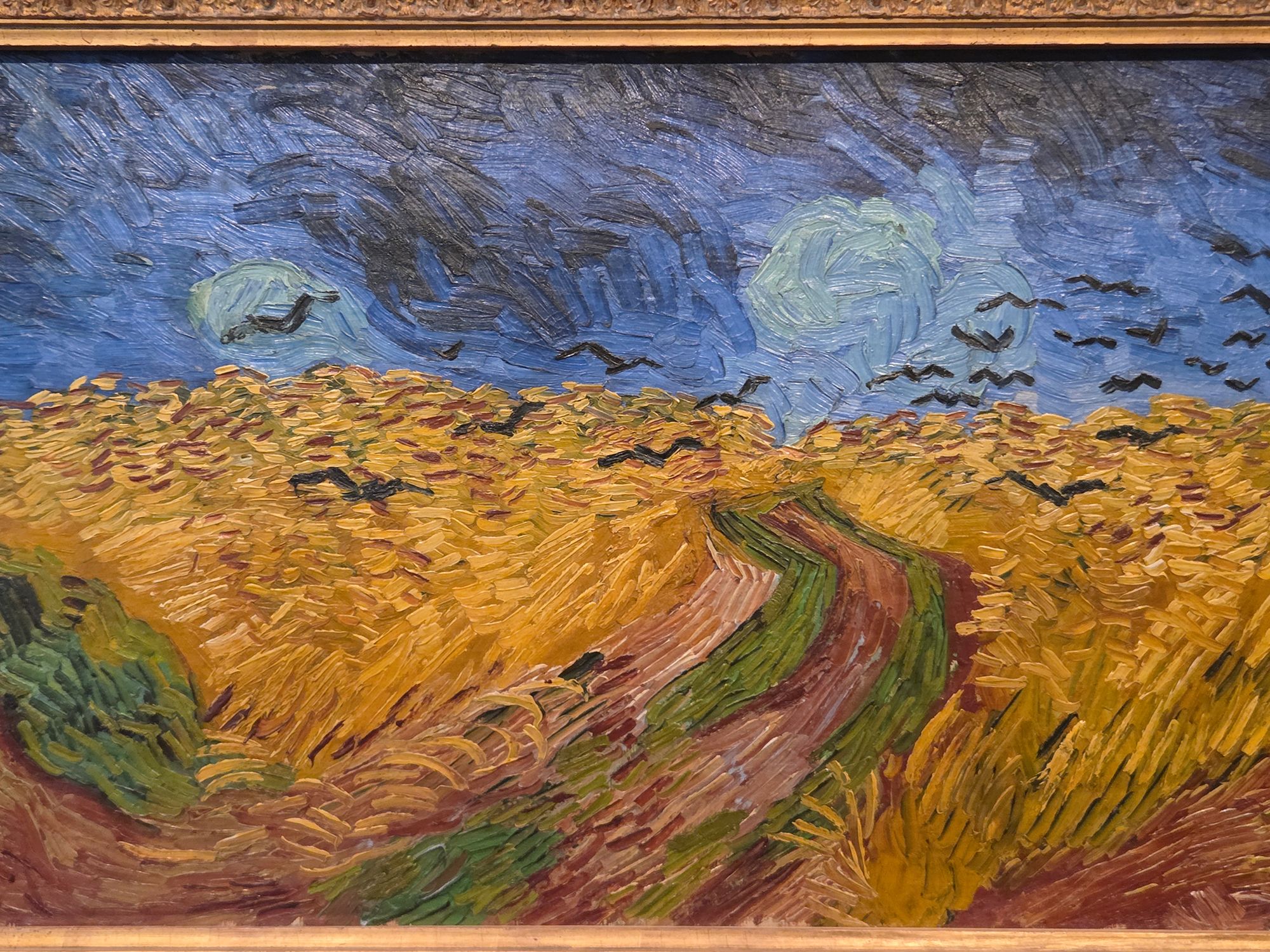
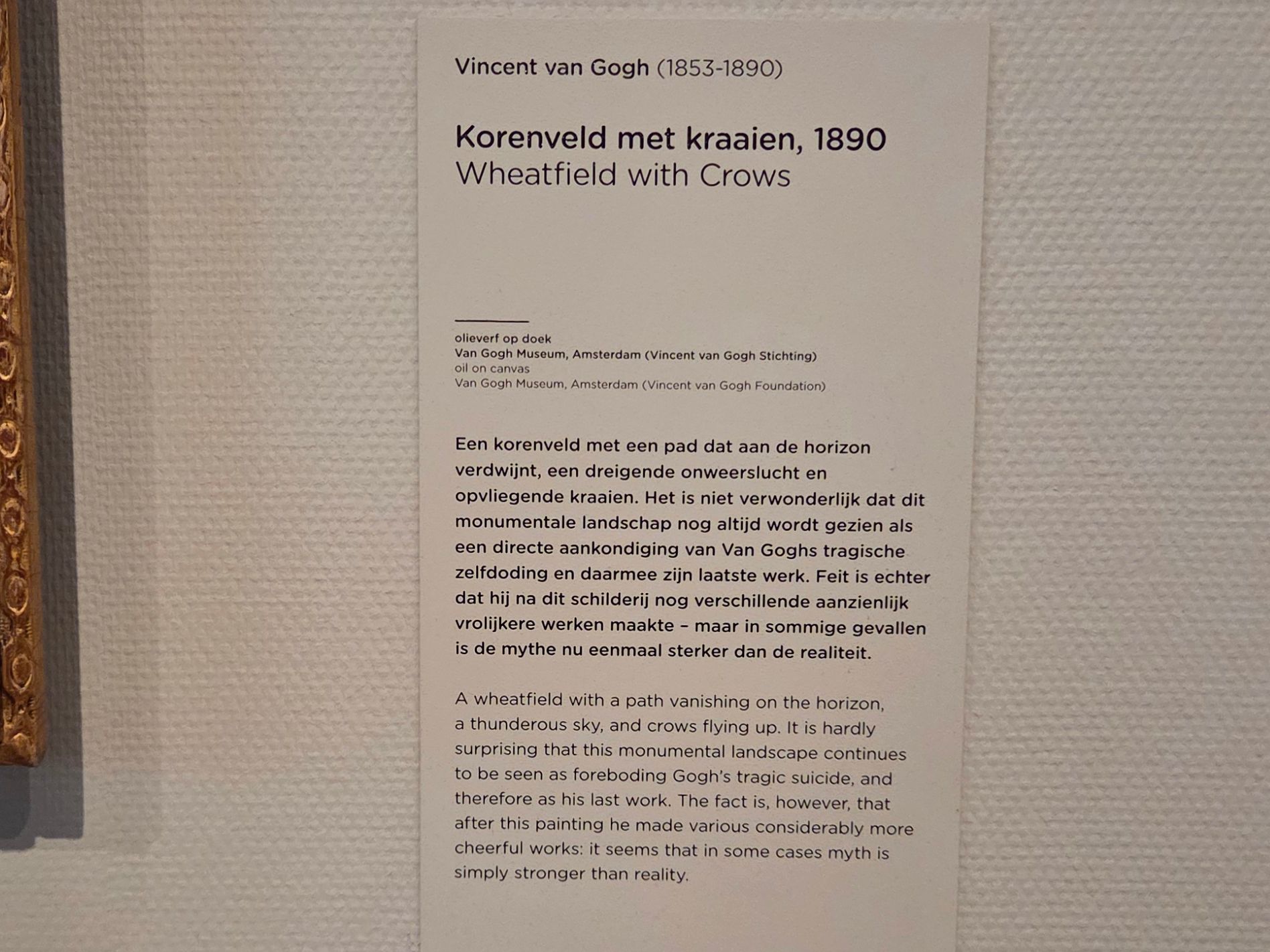
This dramatic painting of a wheat field beneath a dark sky is often thought to have been Van Gogh’s final painting, foreshadowing his death. In fact, he completed several brighter paintings afterward, showing how the popular story surrounding this work has become stronger than the historical evidence.
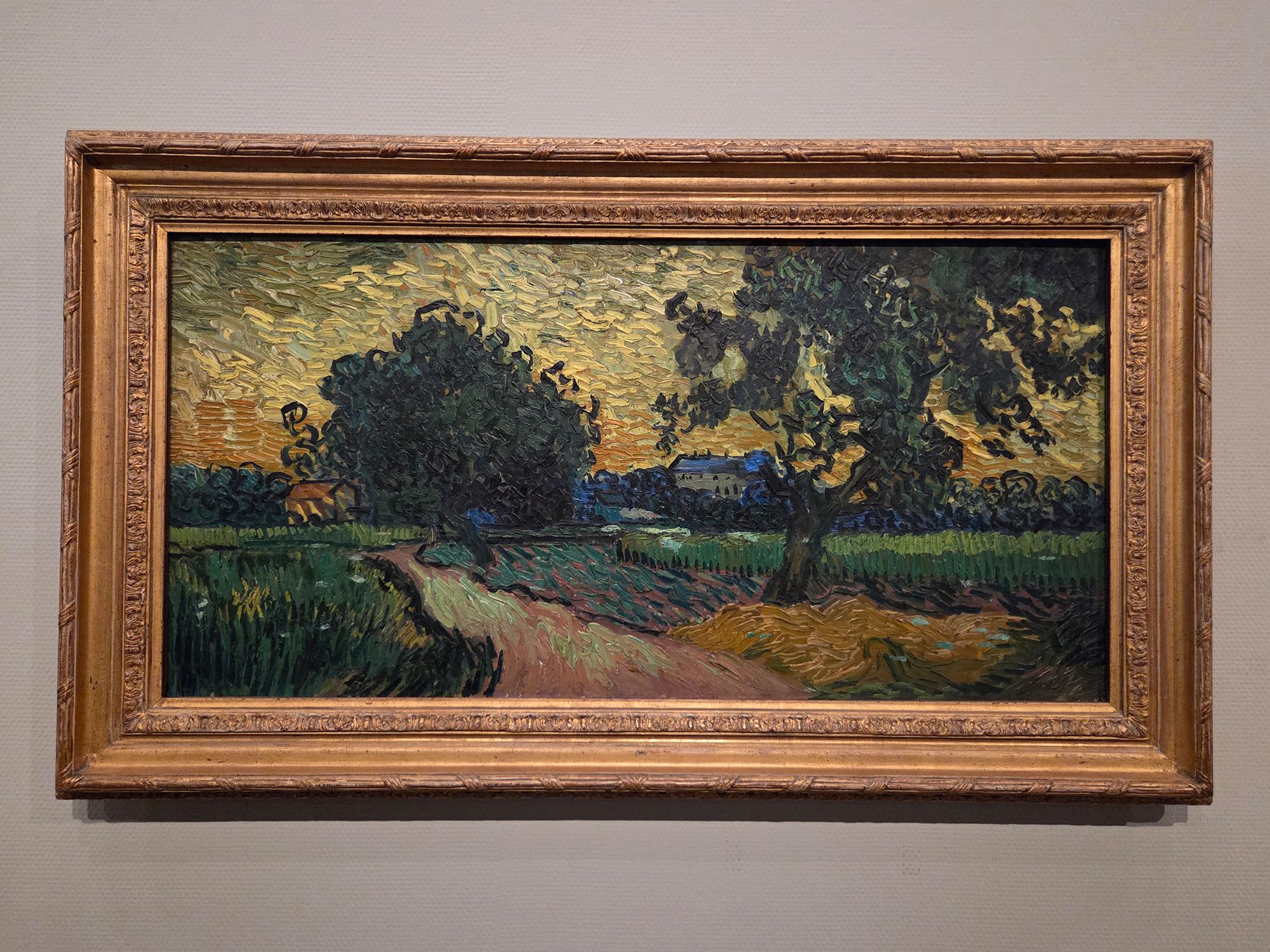
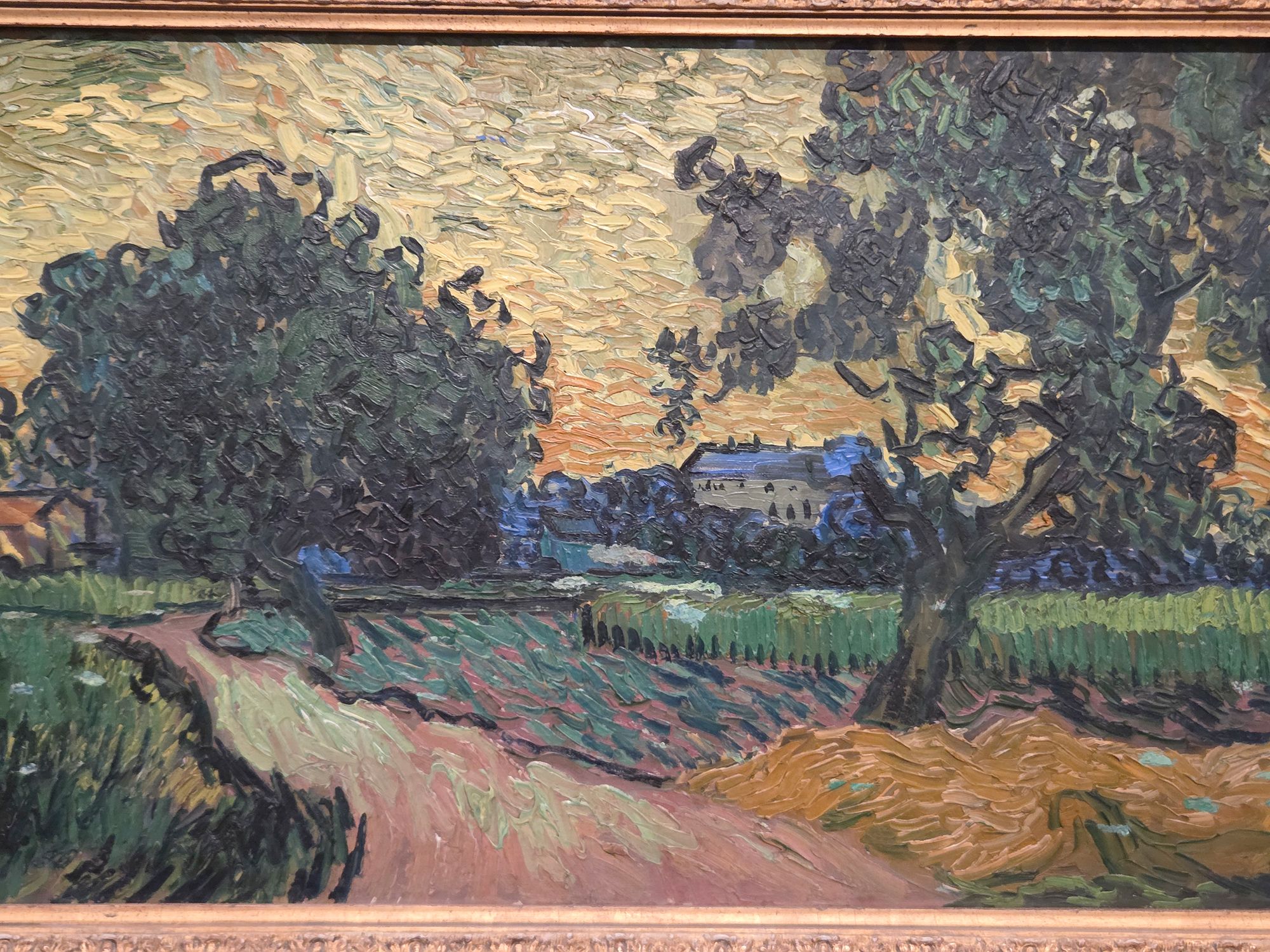
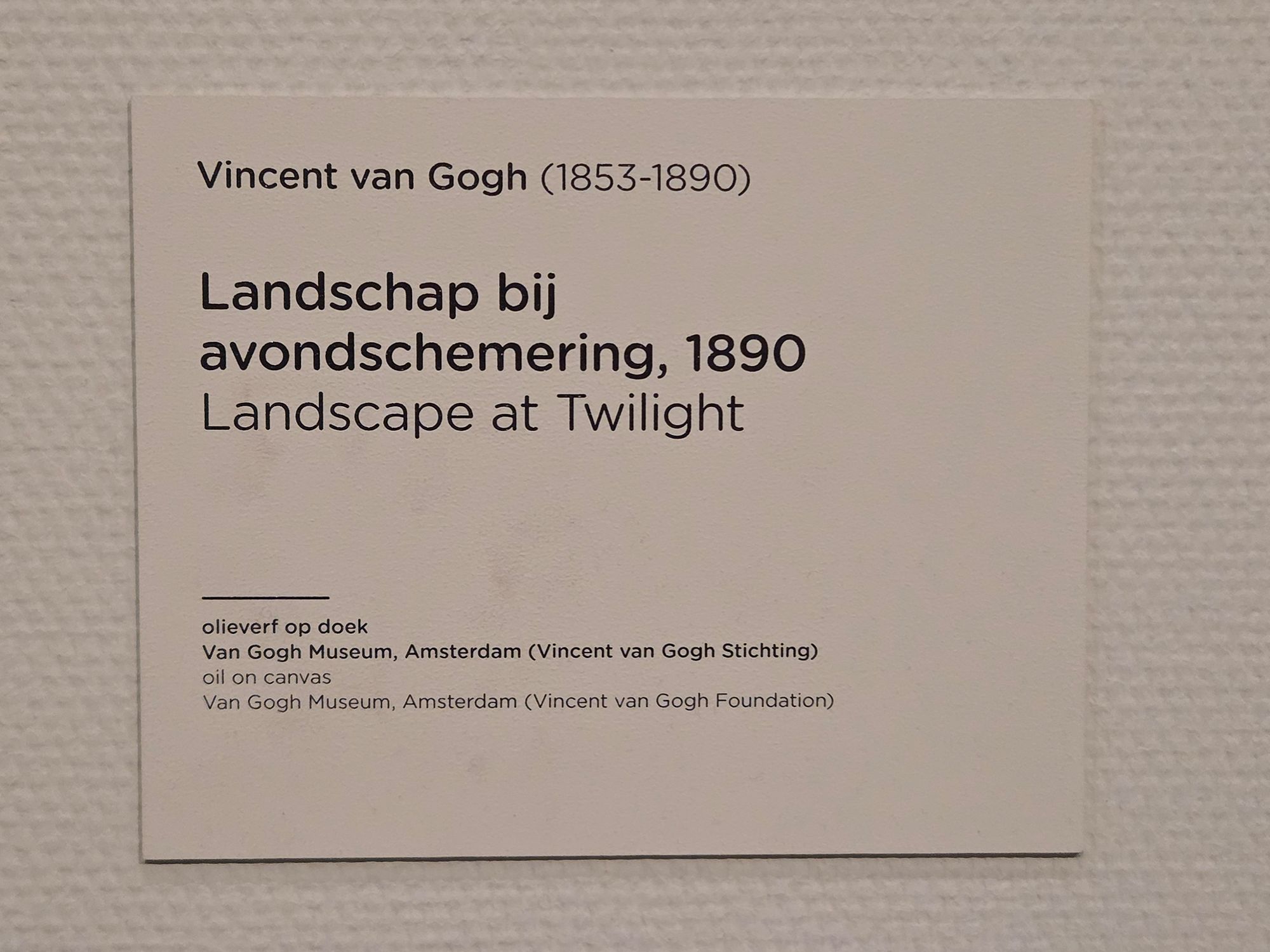
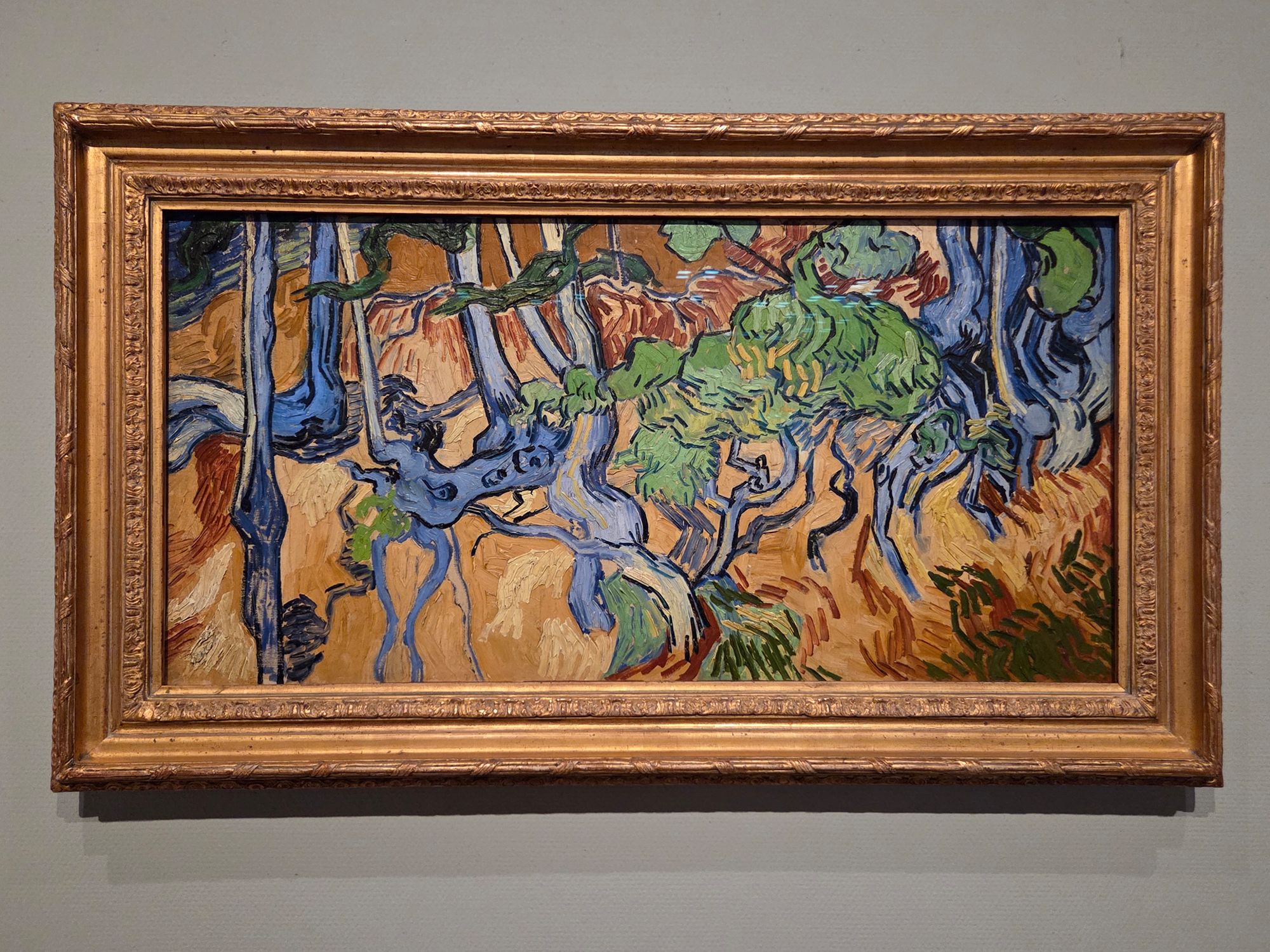
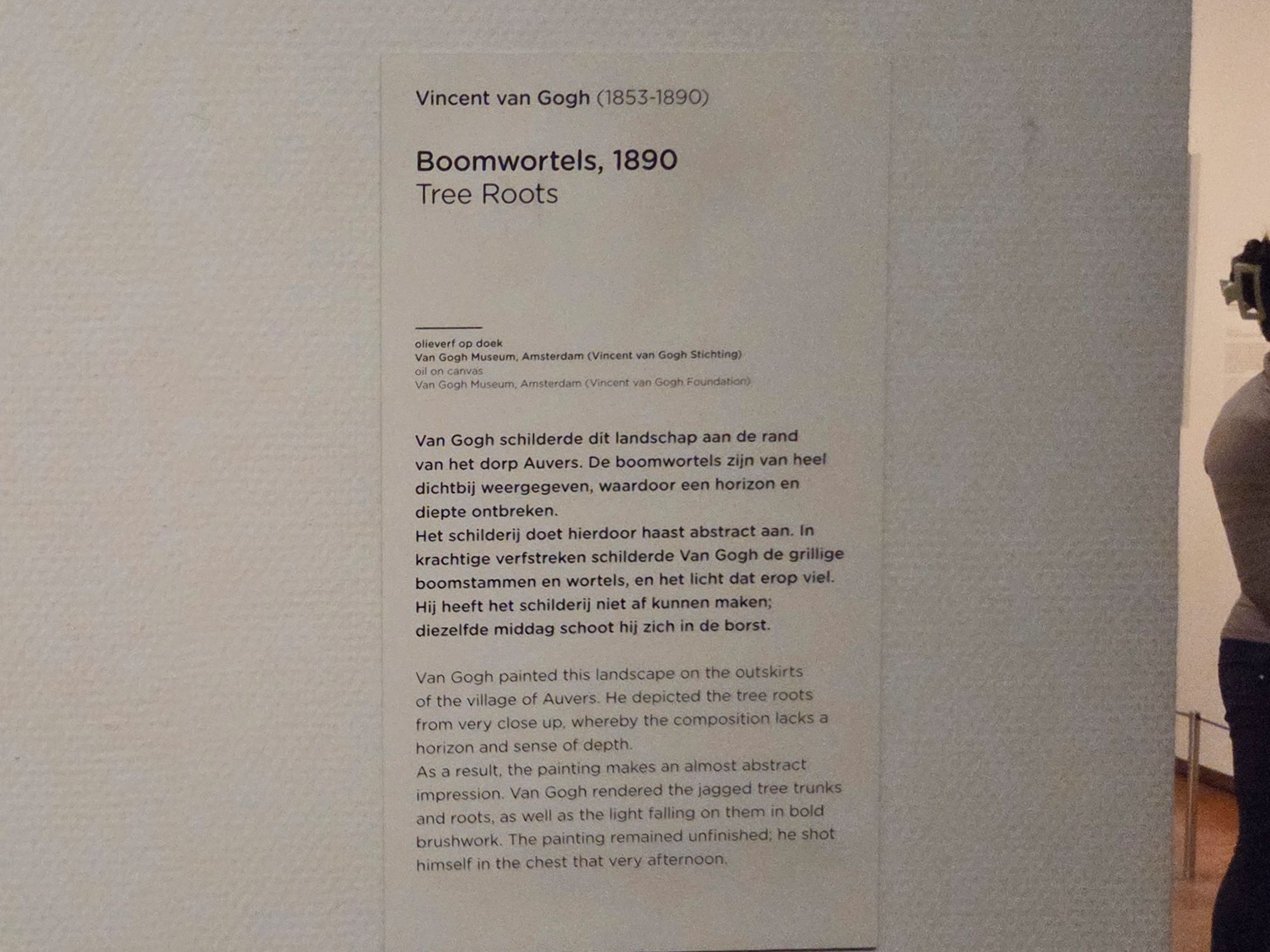
Van Gogh painted Tree Roots in Auvers-sur-Oise on the final day of his life. Its close-up view, bold brushwork, and lack of a horizon give the painting an almost abstract appearance; it remained unfinished when Van Gogh shot himself later that day.
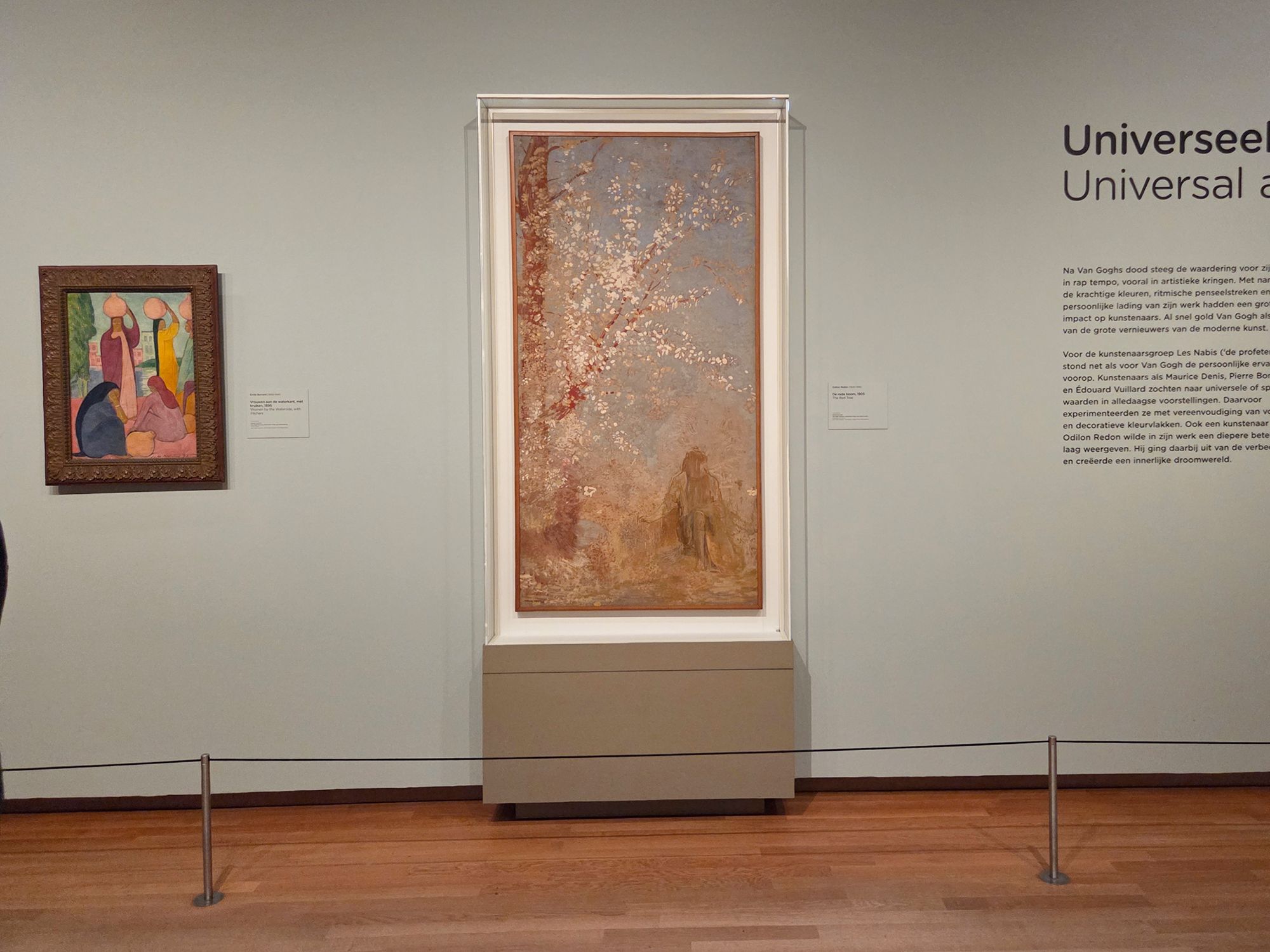
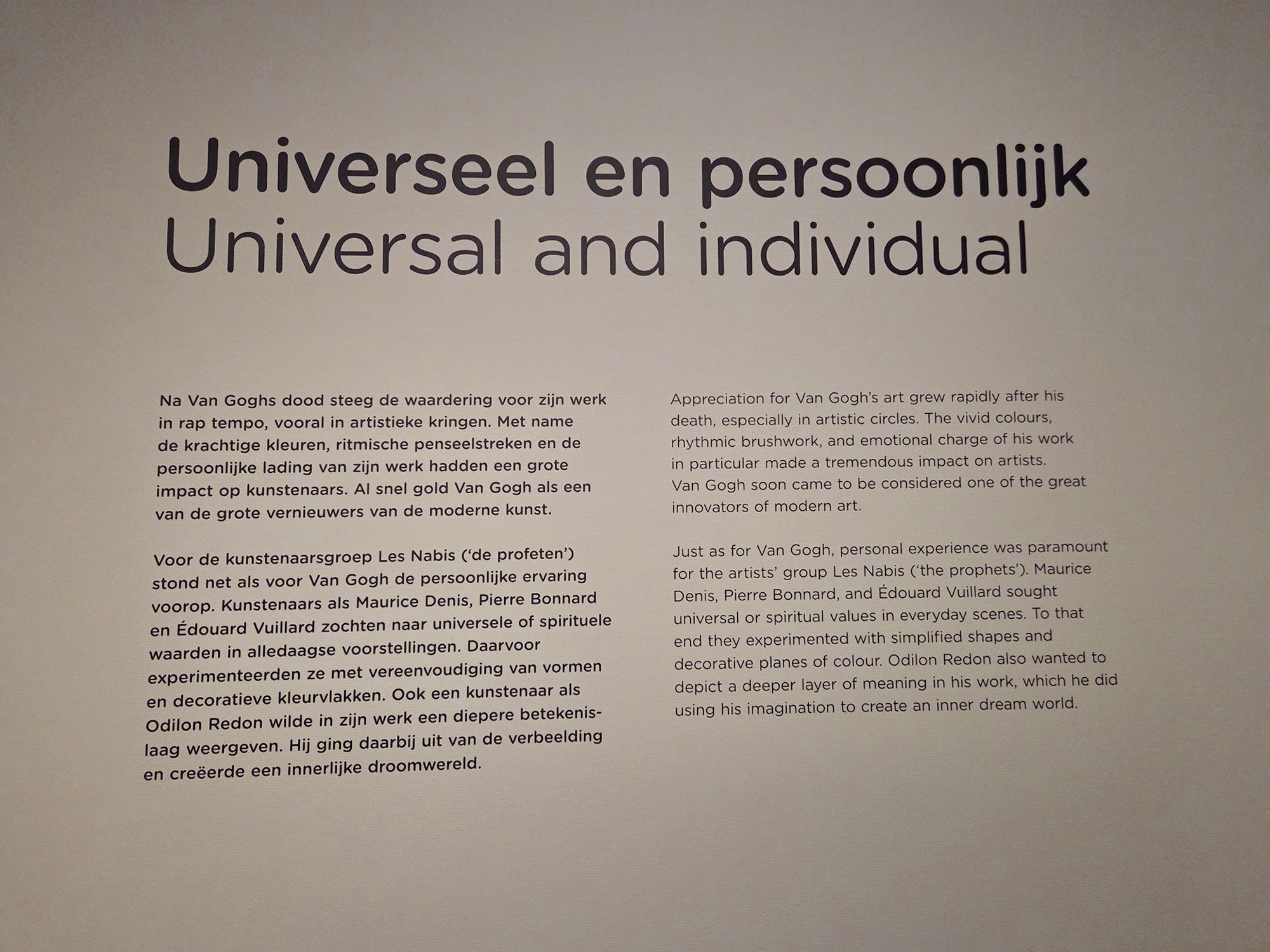
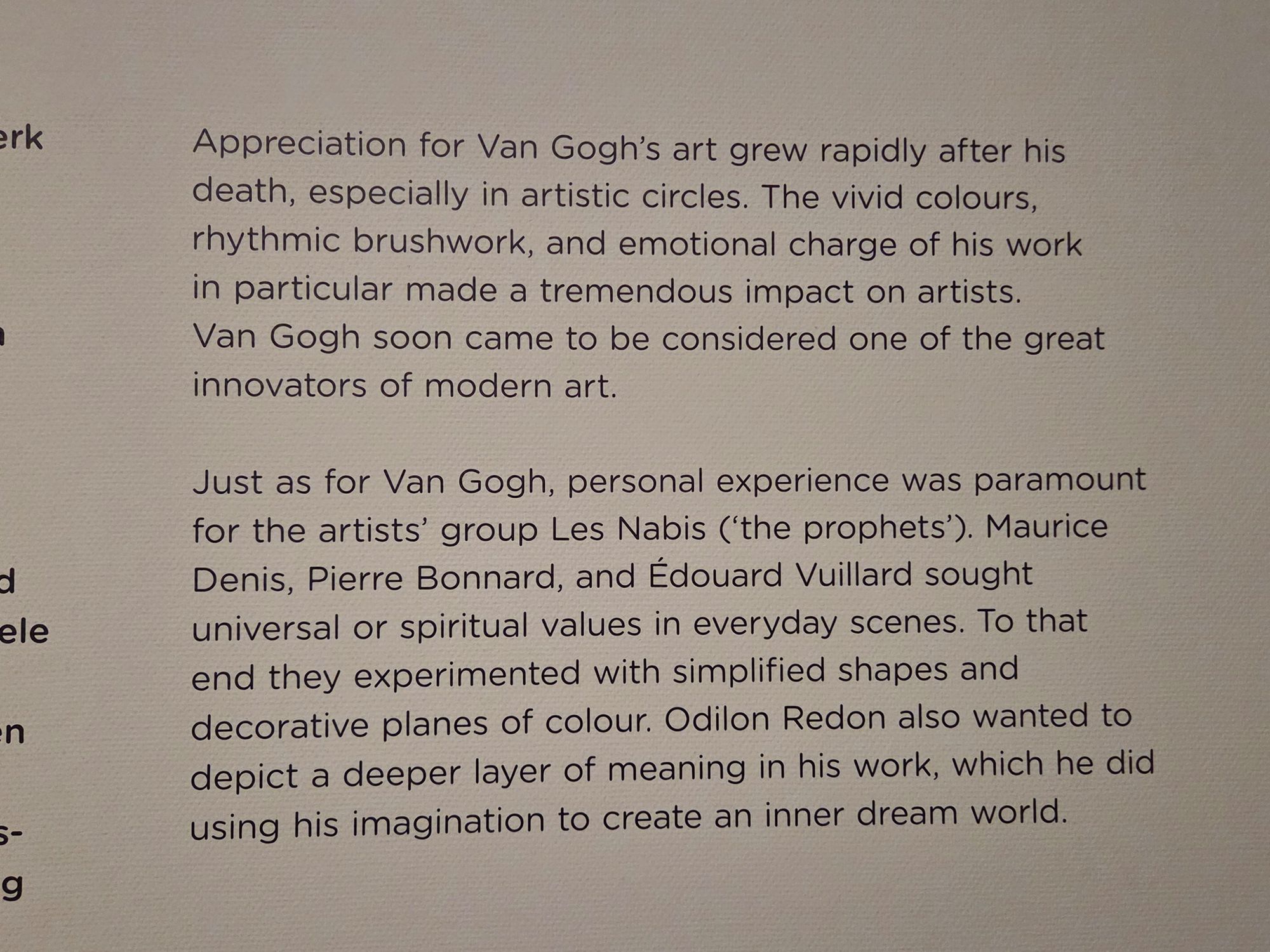
After Van Gogh’s death, appreciation for his art grew rapidly, and his vivid colors, expressive brushwork, and emotional intensity had a major influence on modern artists. Groups such as Les Nabis were inspired by similar ideas, using simplified forms and bold areas of color to express deeper emotions and meaning.
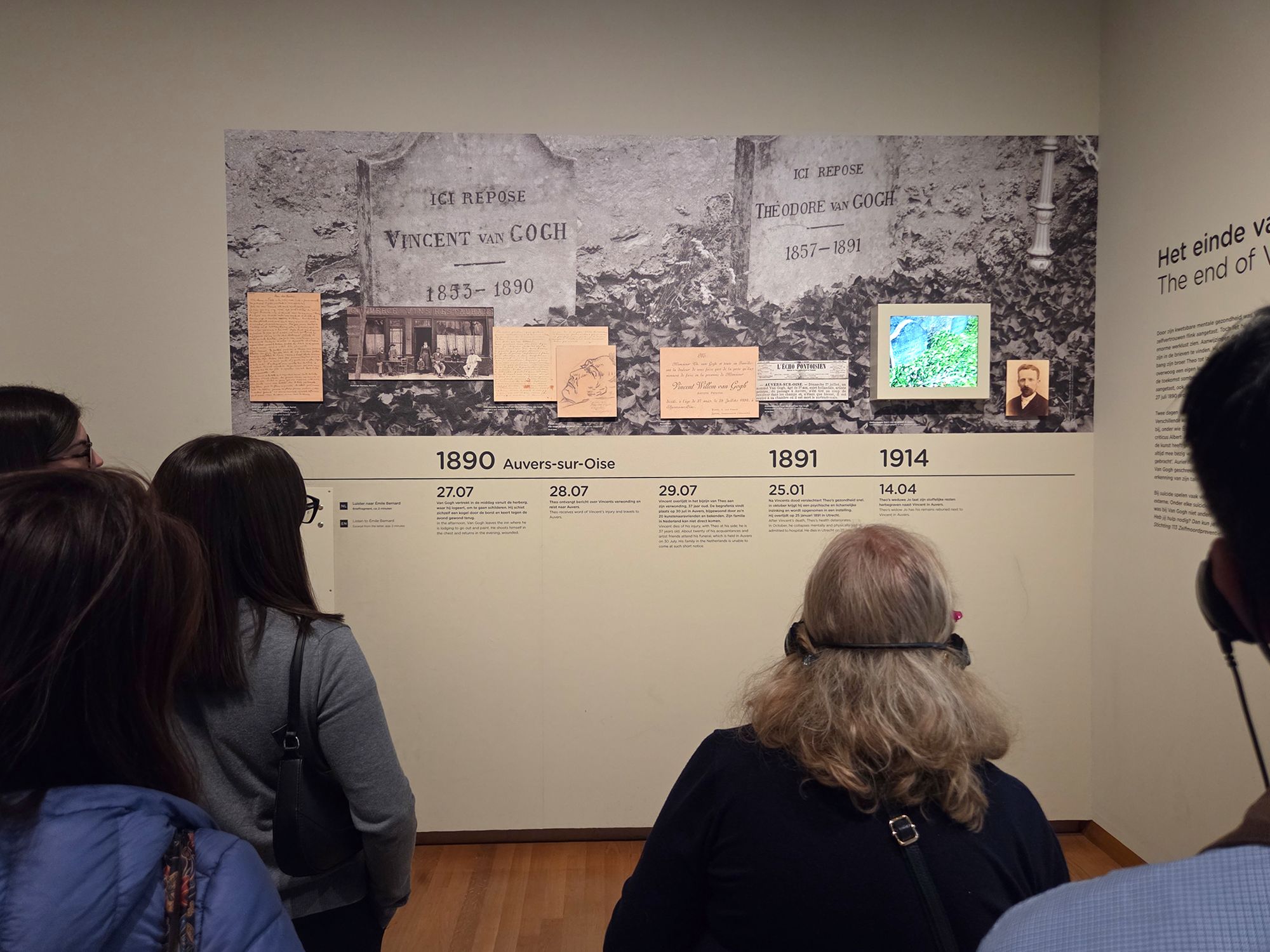
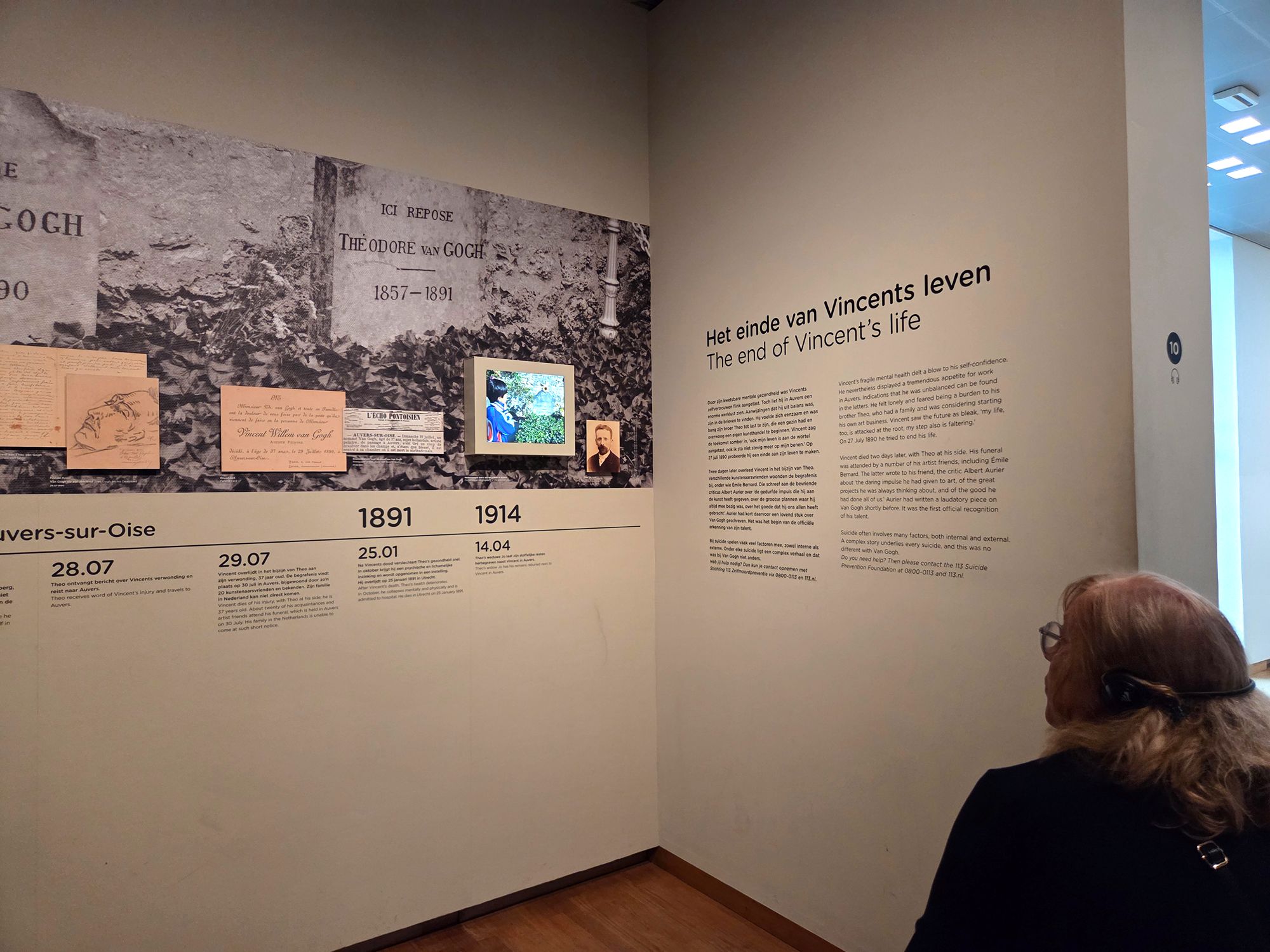
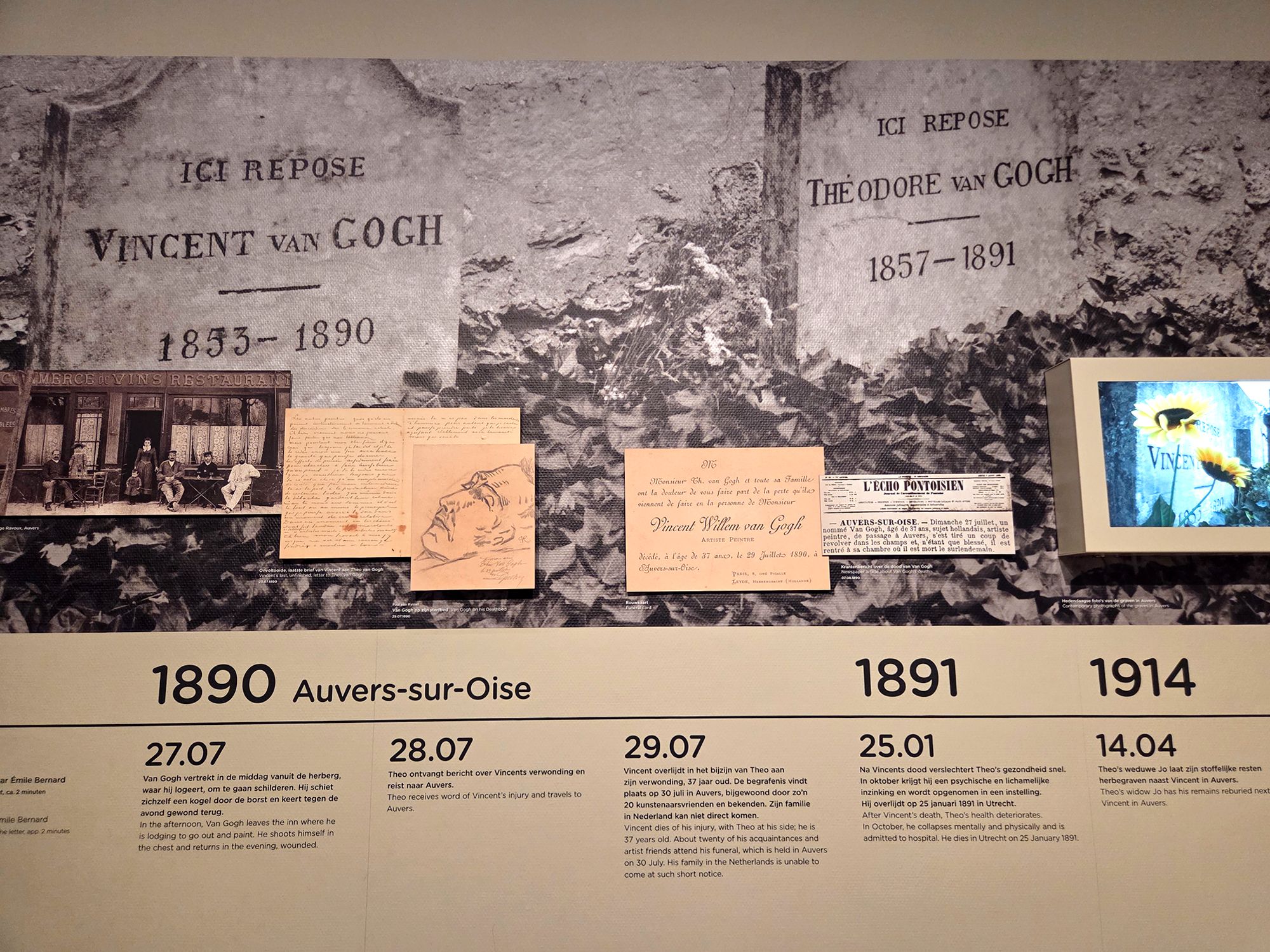
During his final weeks in Auvers, Van Gogh remained highly productive but struggled with loneliness, uncertainty about his future, and worries about being a burden to Theo. On July 27, 1890, he shot himself and died two days later with Theo at his side.
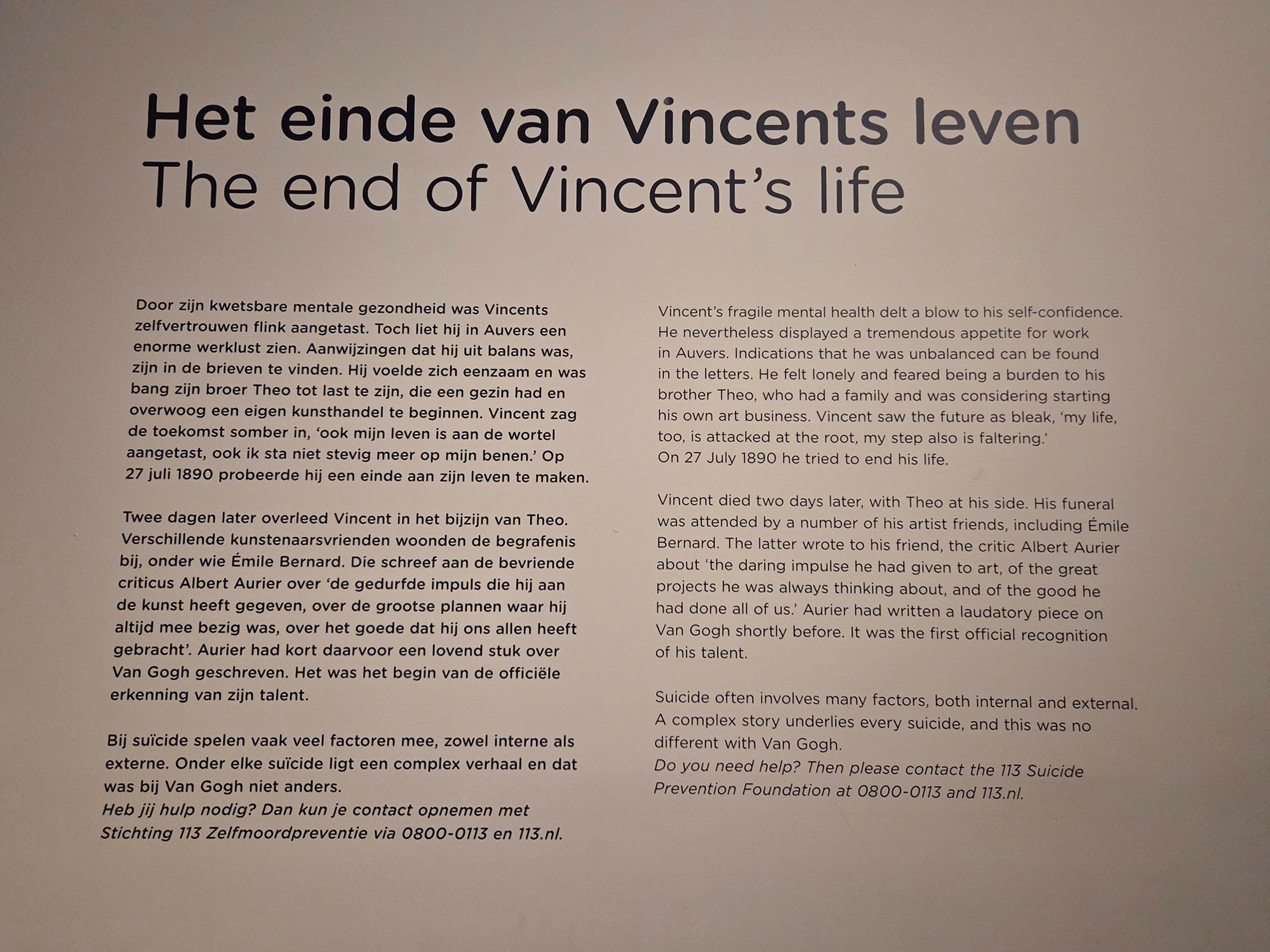
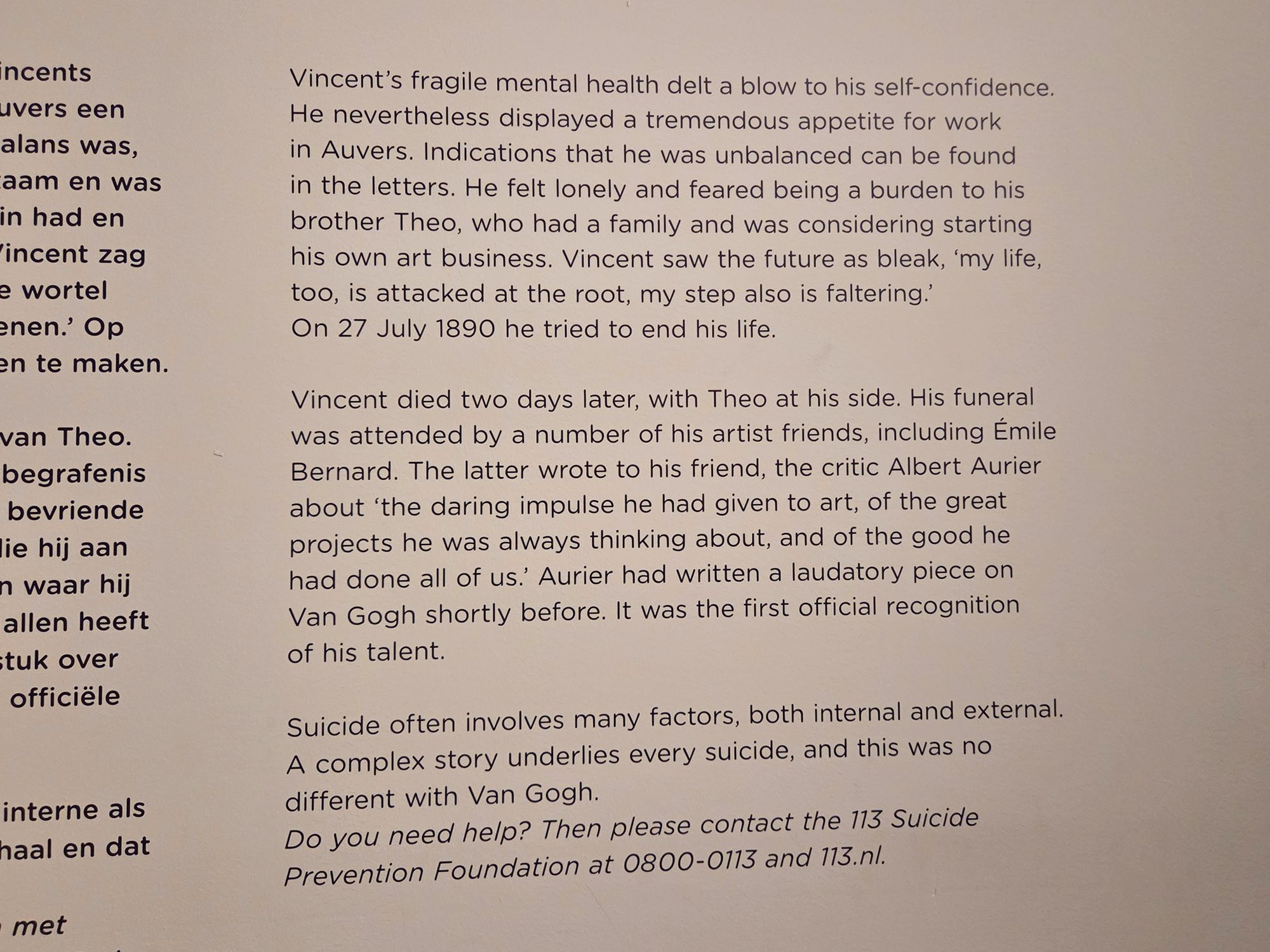
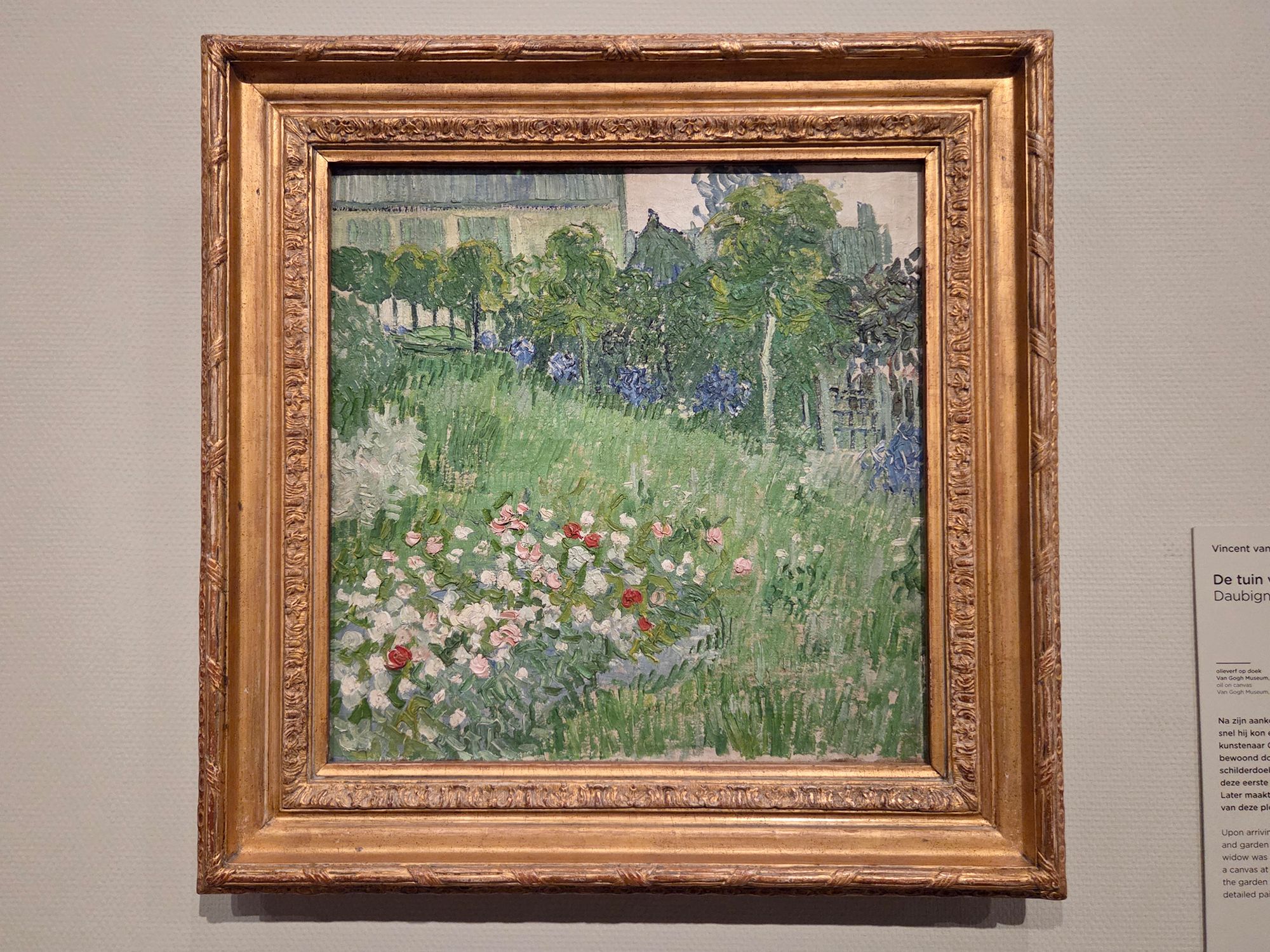
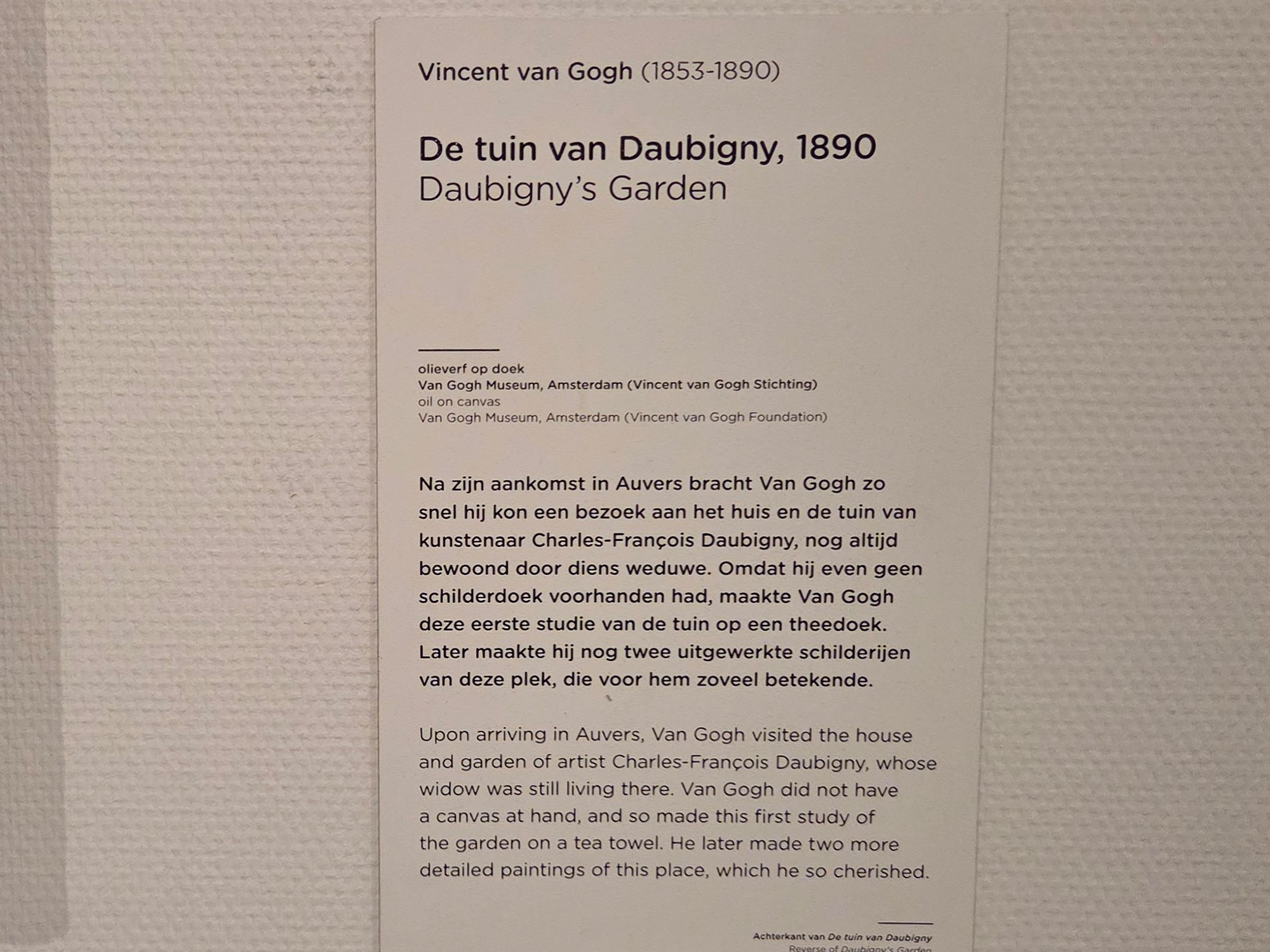
When Van Gogh arrived in Auvers-sur-Oise, he visited the home and garden of the artist Charles-François Daubigny, whom he greatly admired. Without a canvas available, he painted his first study of the garden on a tea towel, later returning to create two more detailed paintings of the same place.
The museum also exhibited many paintings by artists who were influenced by Van Gogh’s distinctive style, especially his bold use of color, expressive brushwork, and ability to convey emotion through painting.
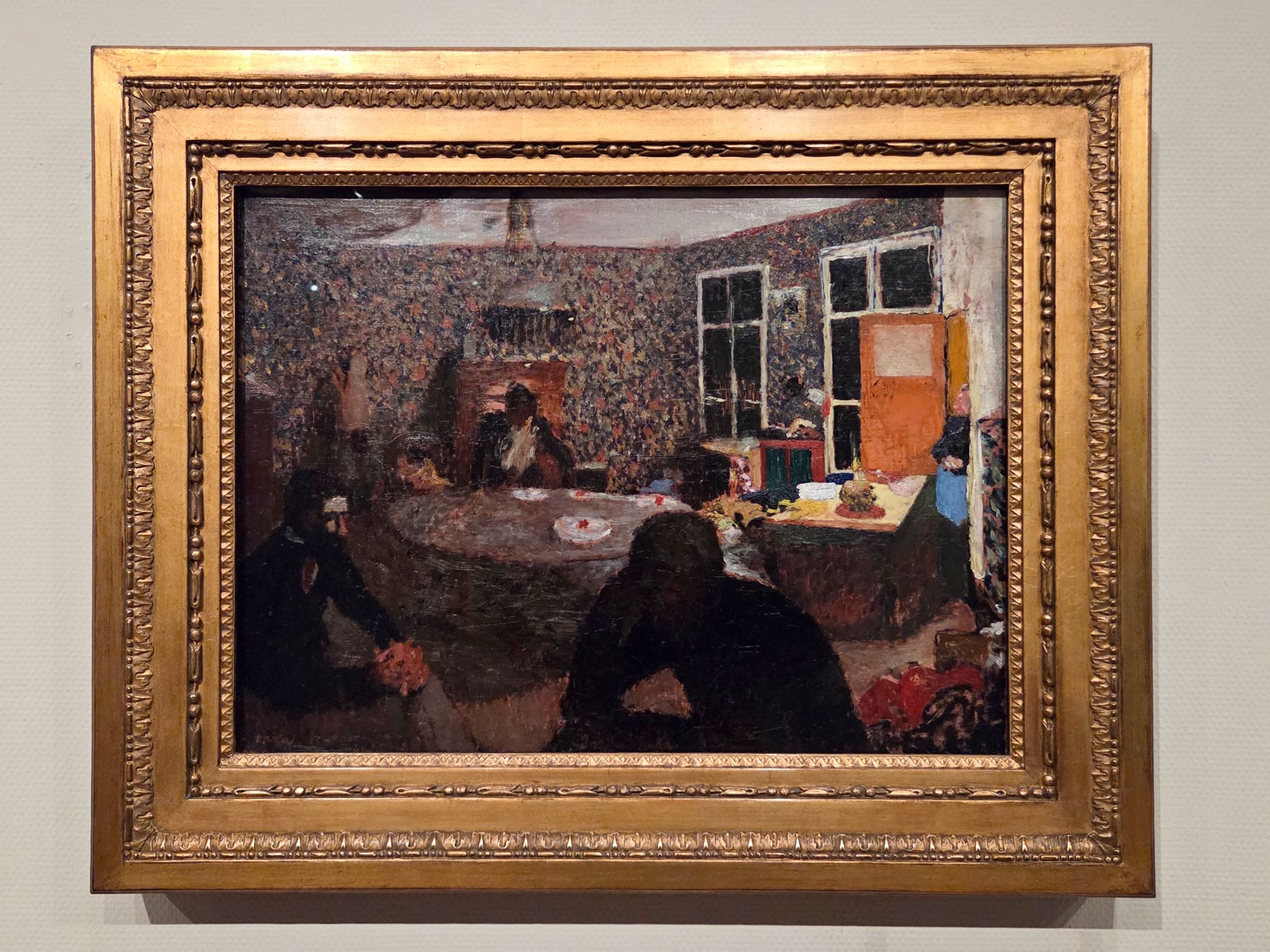
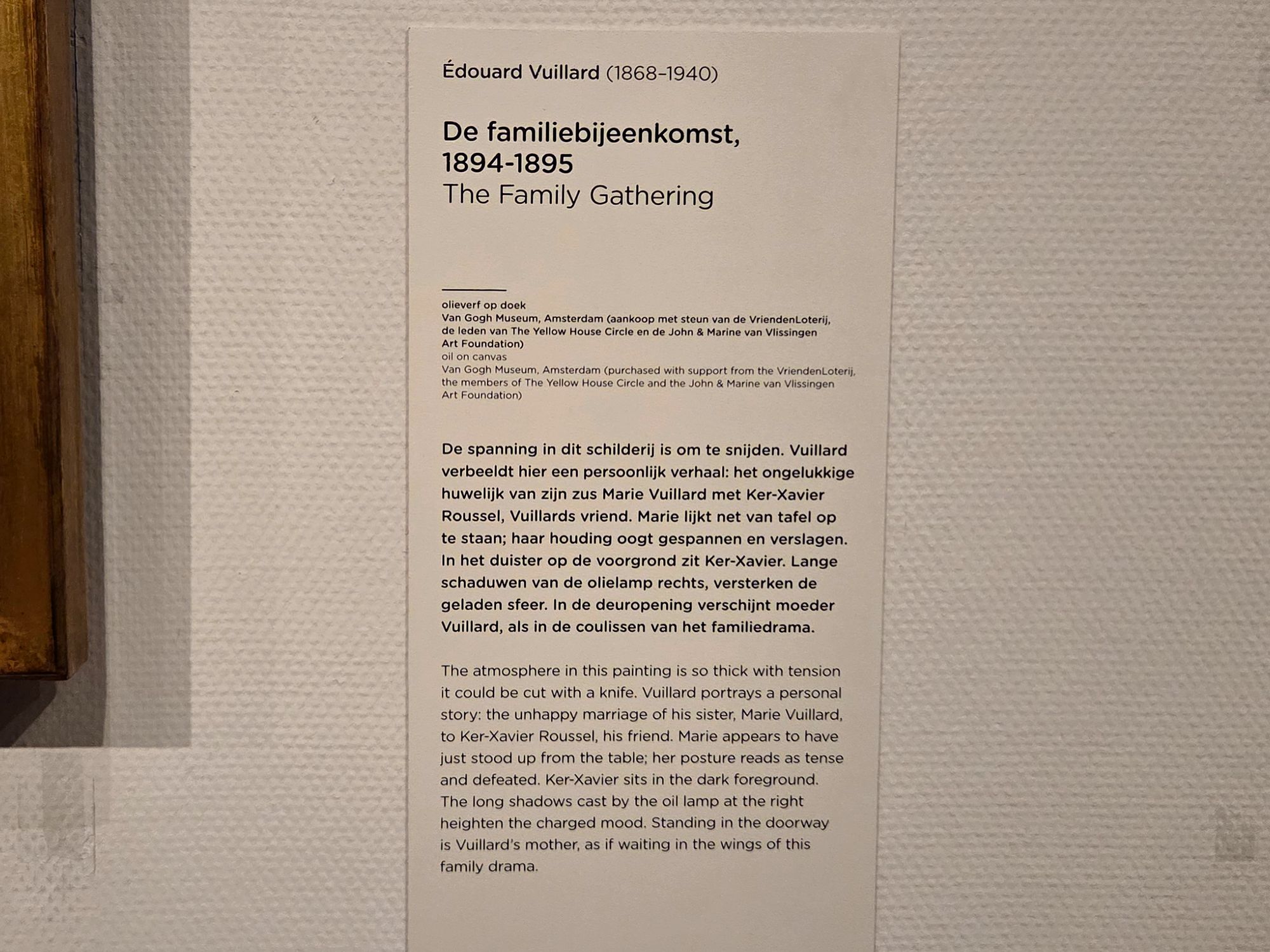
This painting by Édouard Vuillard portrays a tense family scene involving his sister Marie and her husband, Ker-Xavier Roussel. Marie appears unhappy and defeated, while her husband sits in the dark foreground and their mother watches from the doorway, adding to the sense of tension surrounding their troubled marriage.
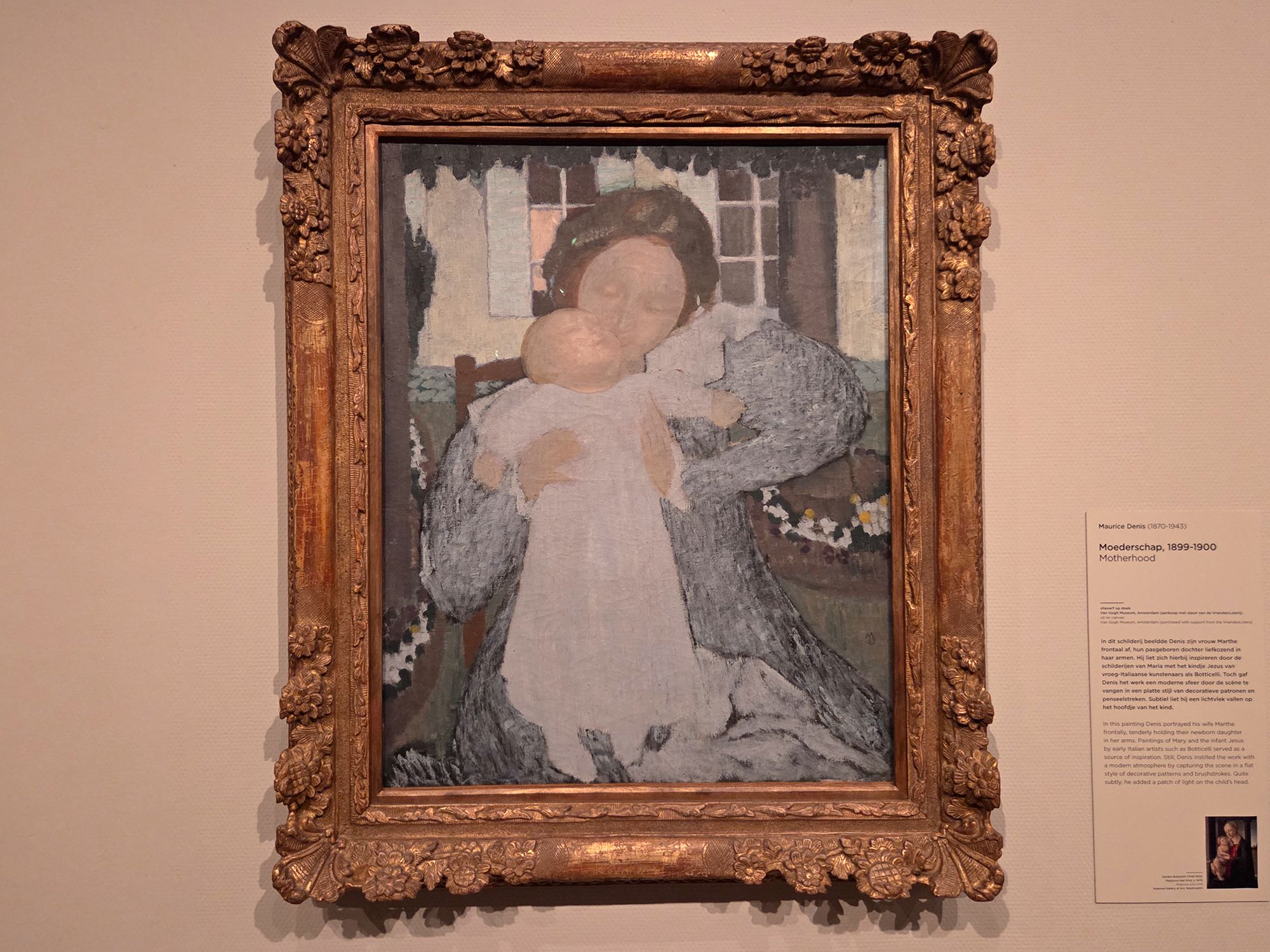
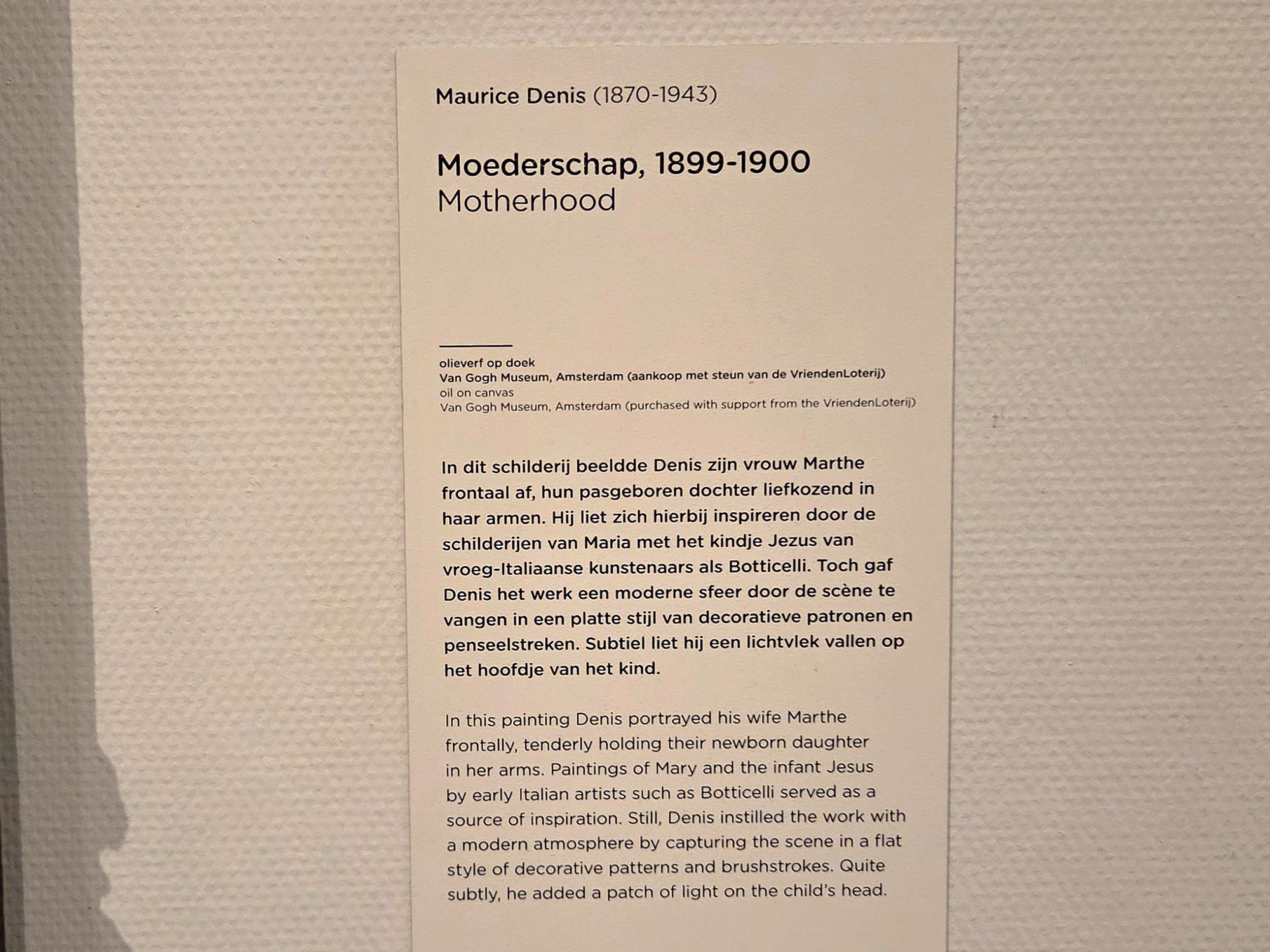
This painting by Maurice Denis shows his wife Marthe tenderly holding their newborn daughter. Inspired by traditional images of the Virgin Mary and the infant Jesus, Denis gave the scene a modern character through flattened forms, decorative patterns, and expressive brushwork.
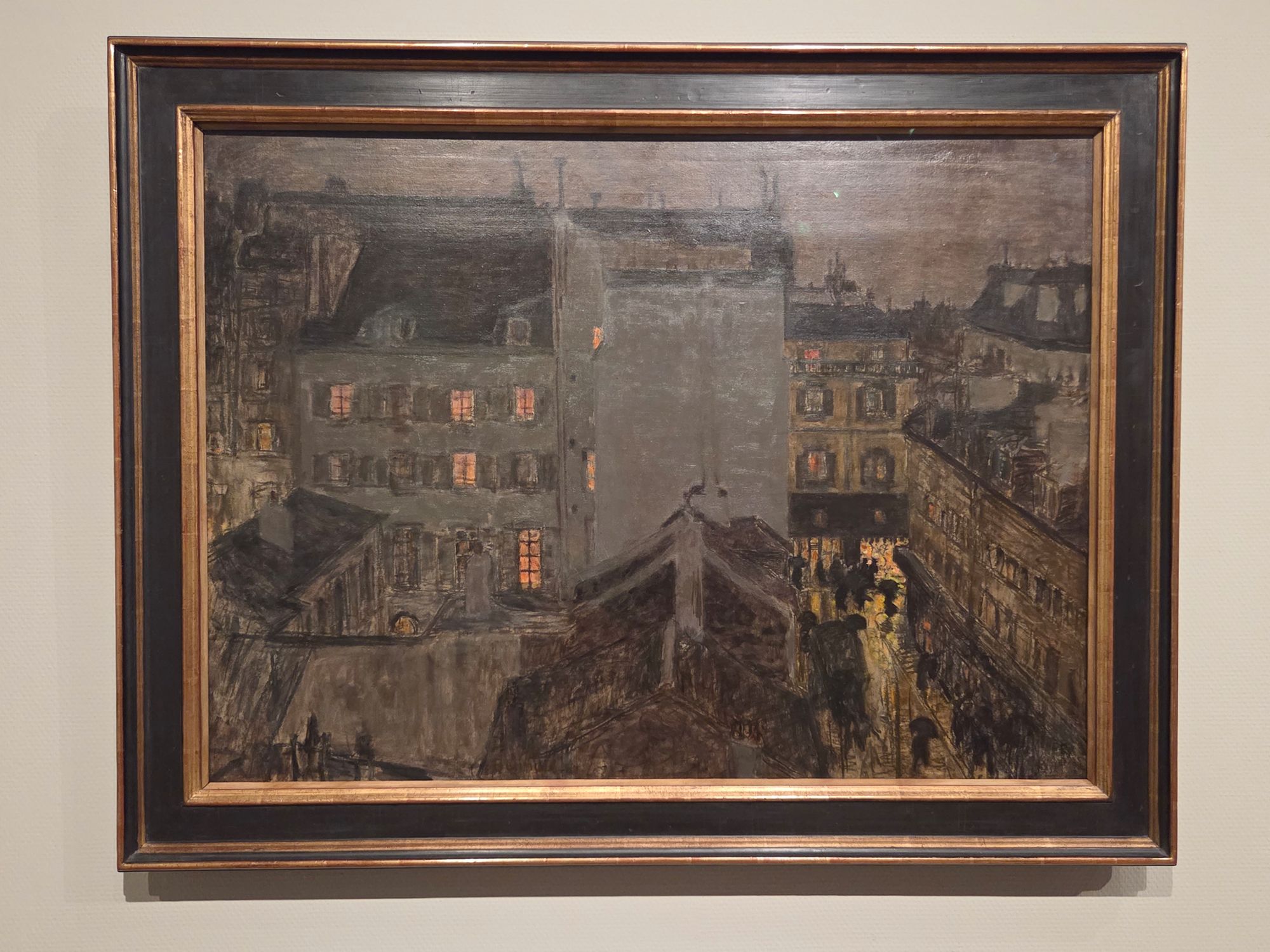
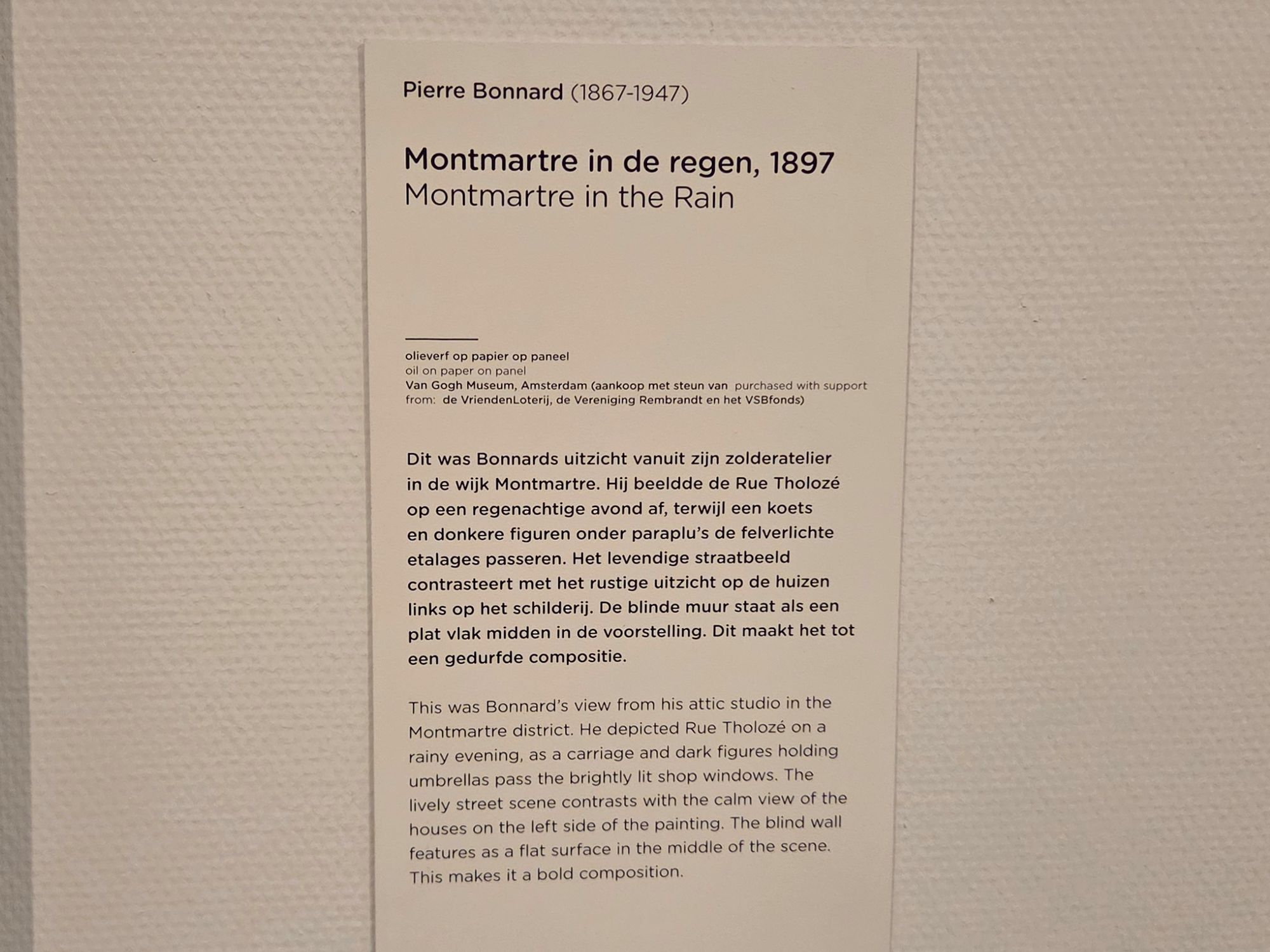
From his attic studio in Montmartre, Pierre Bonnard painted this rainy view of Rue Tholozé, with carriages and umbrella-carrying figures passing brightly lit shops. The lively street contrasts with the quieter houses, while the large blank wall in the center gives the painting its bold, unusual composition.
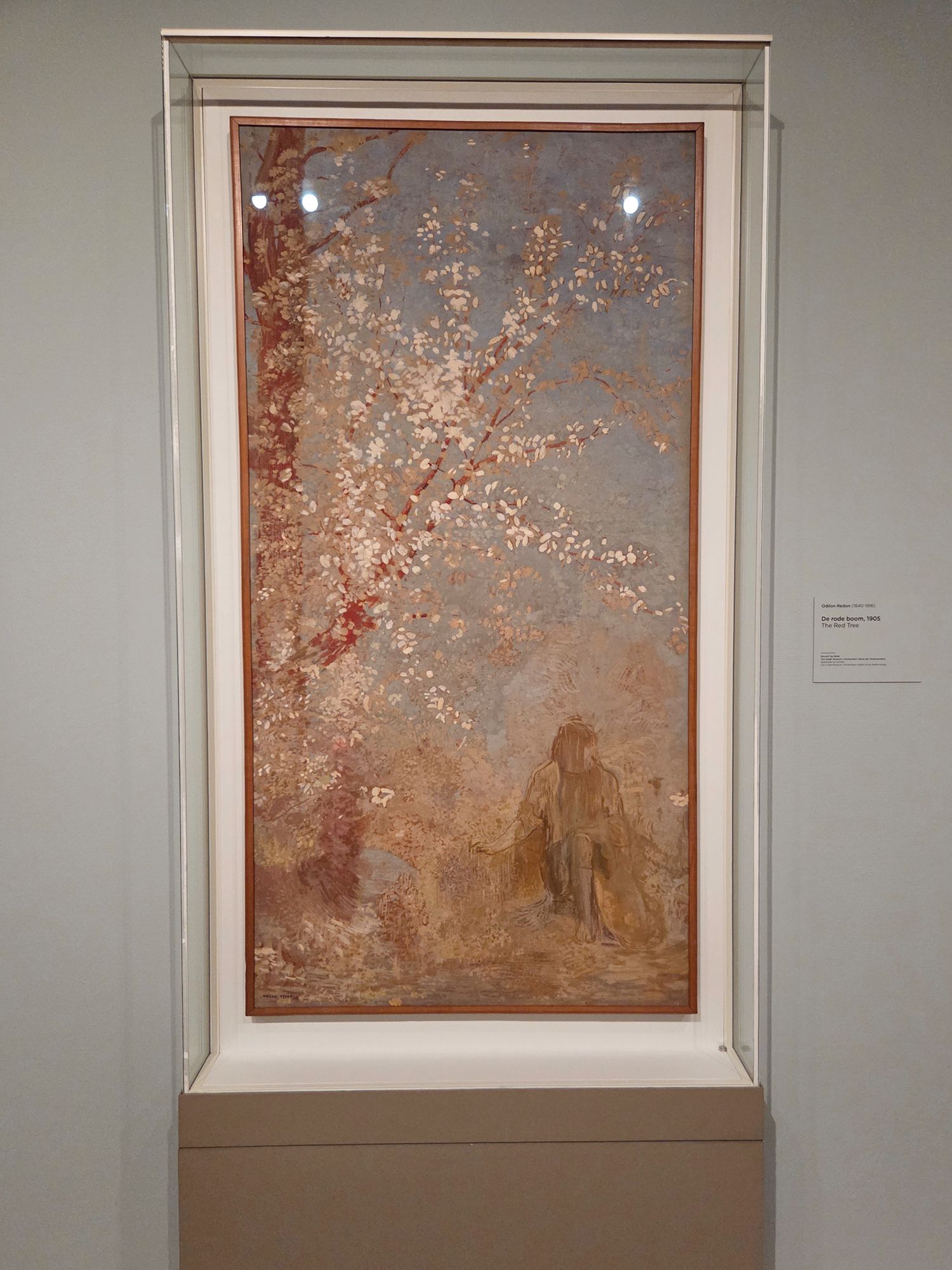
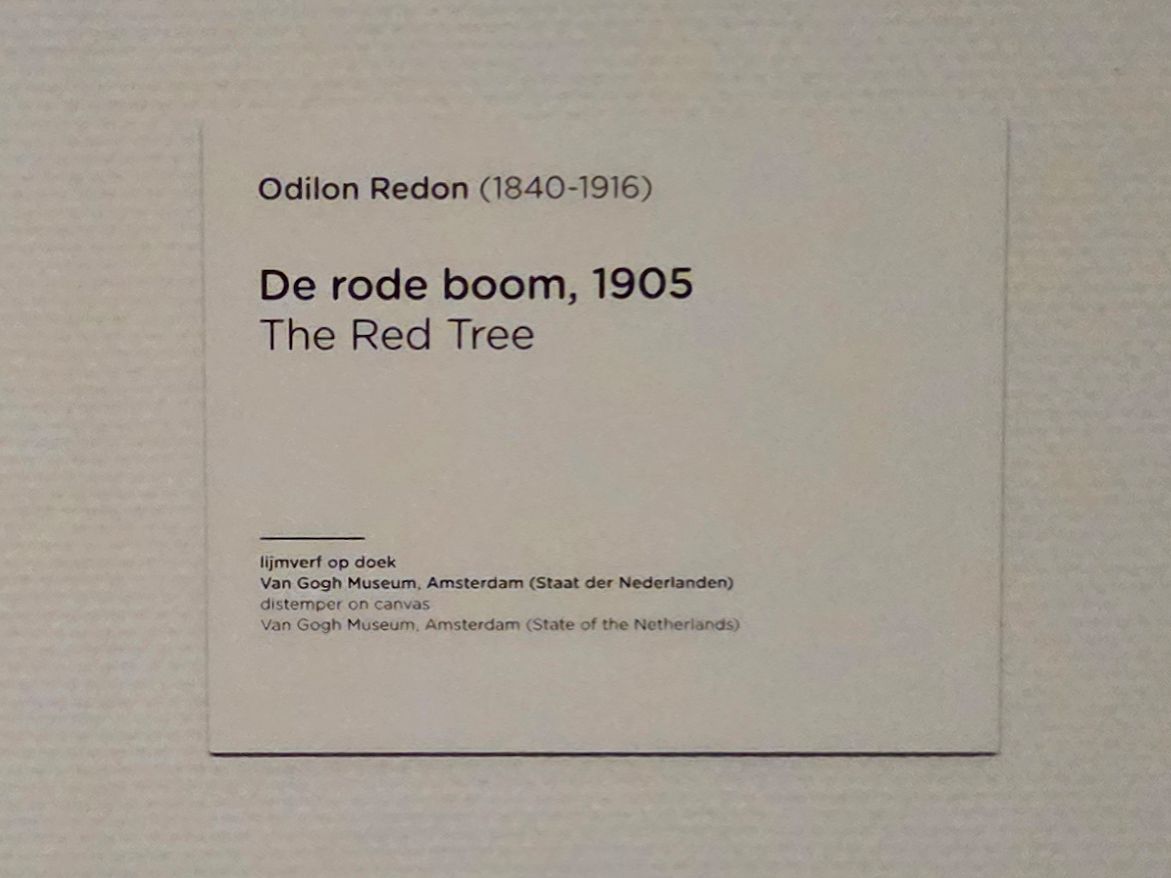
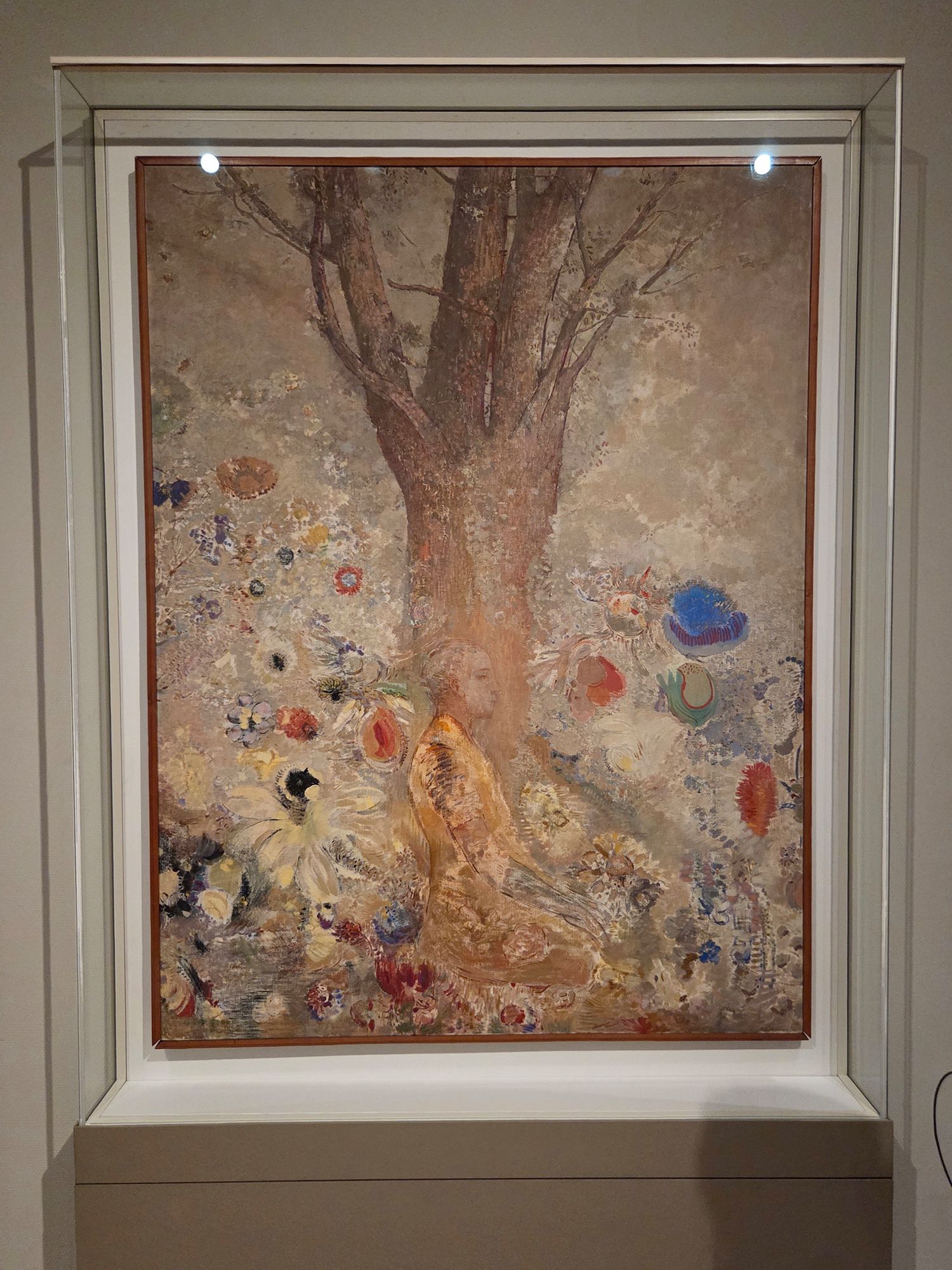
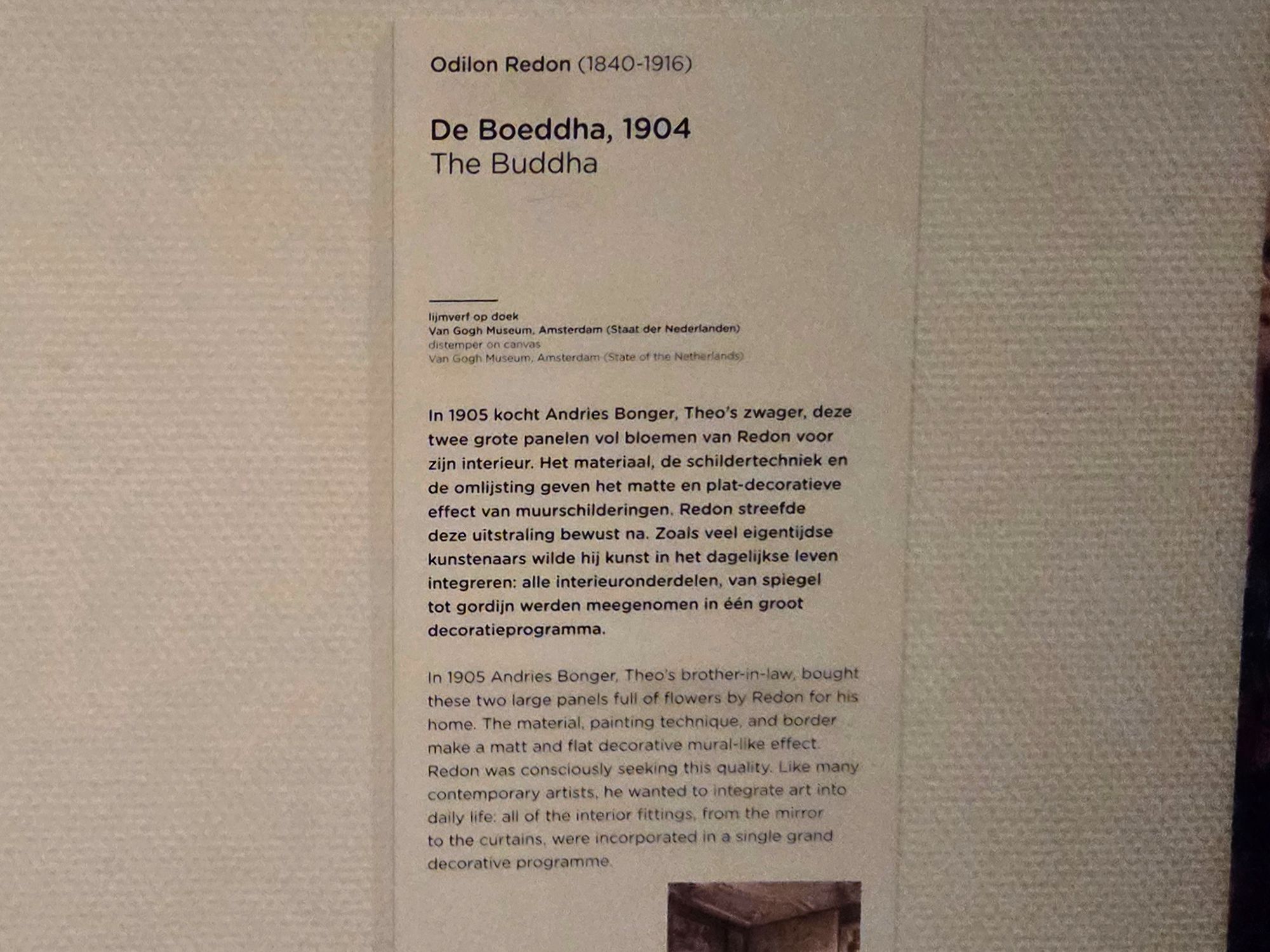
In 1905, Andries Bonger, Theo van Gogh’s brother-in-law, bought these two large flower panels by Odilon Redon for his home. Designed as part of the room’s overall decoration, the paintings have a flat, mural-like quality and reflect the period’s idea of integrating art into everyday life.
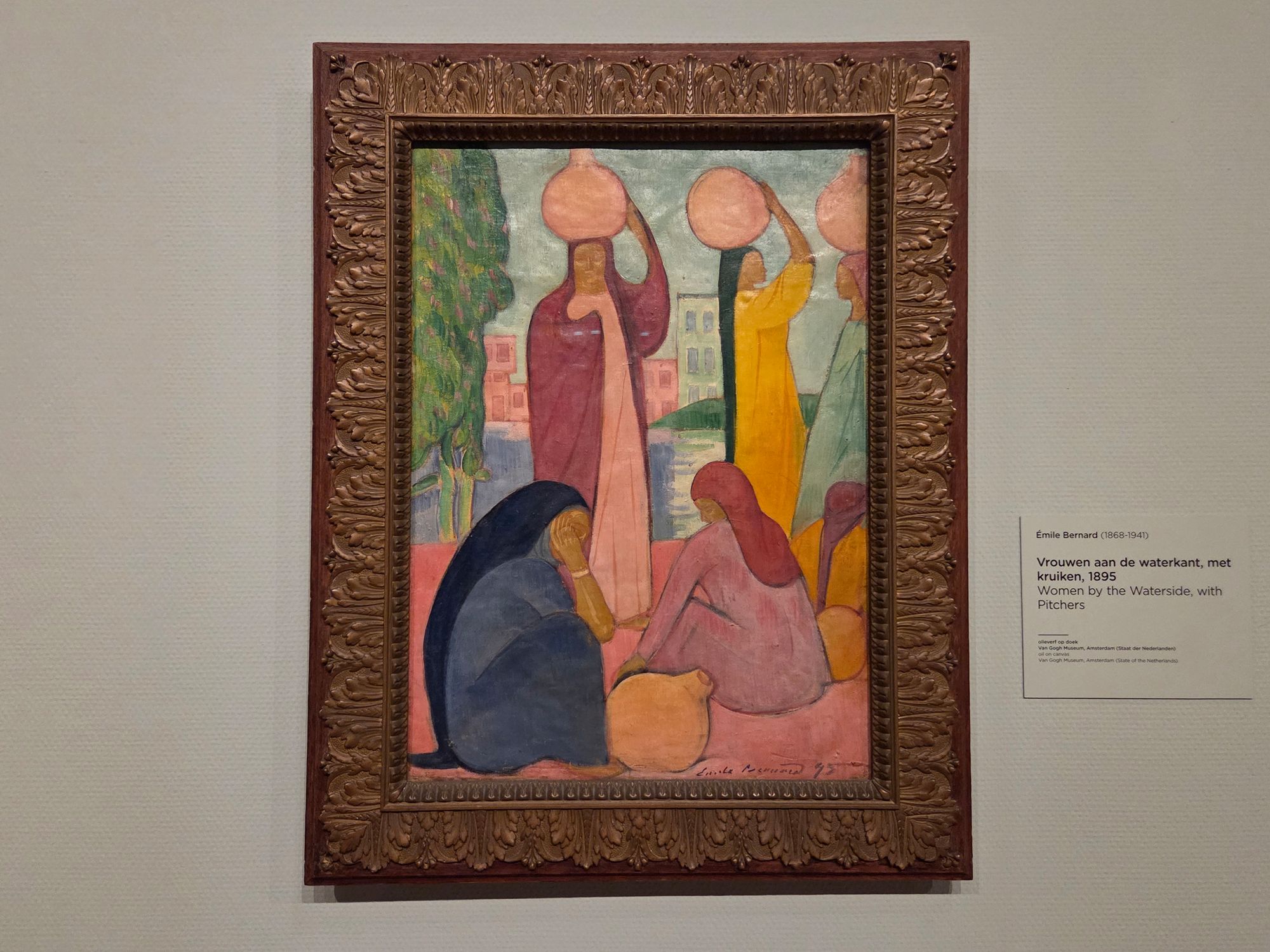
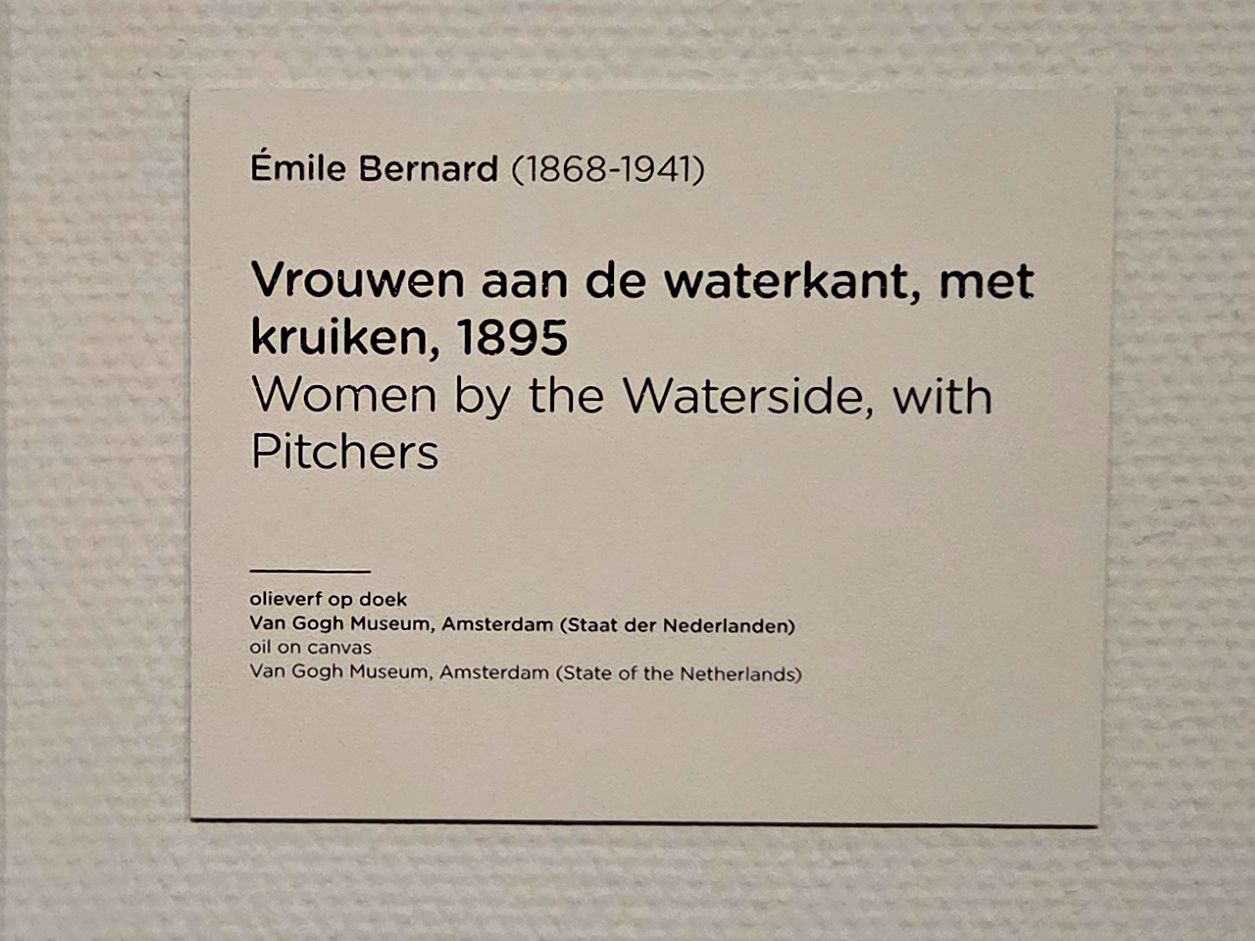
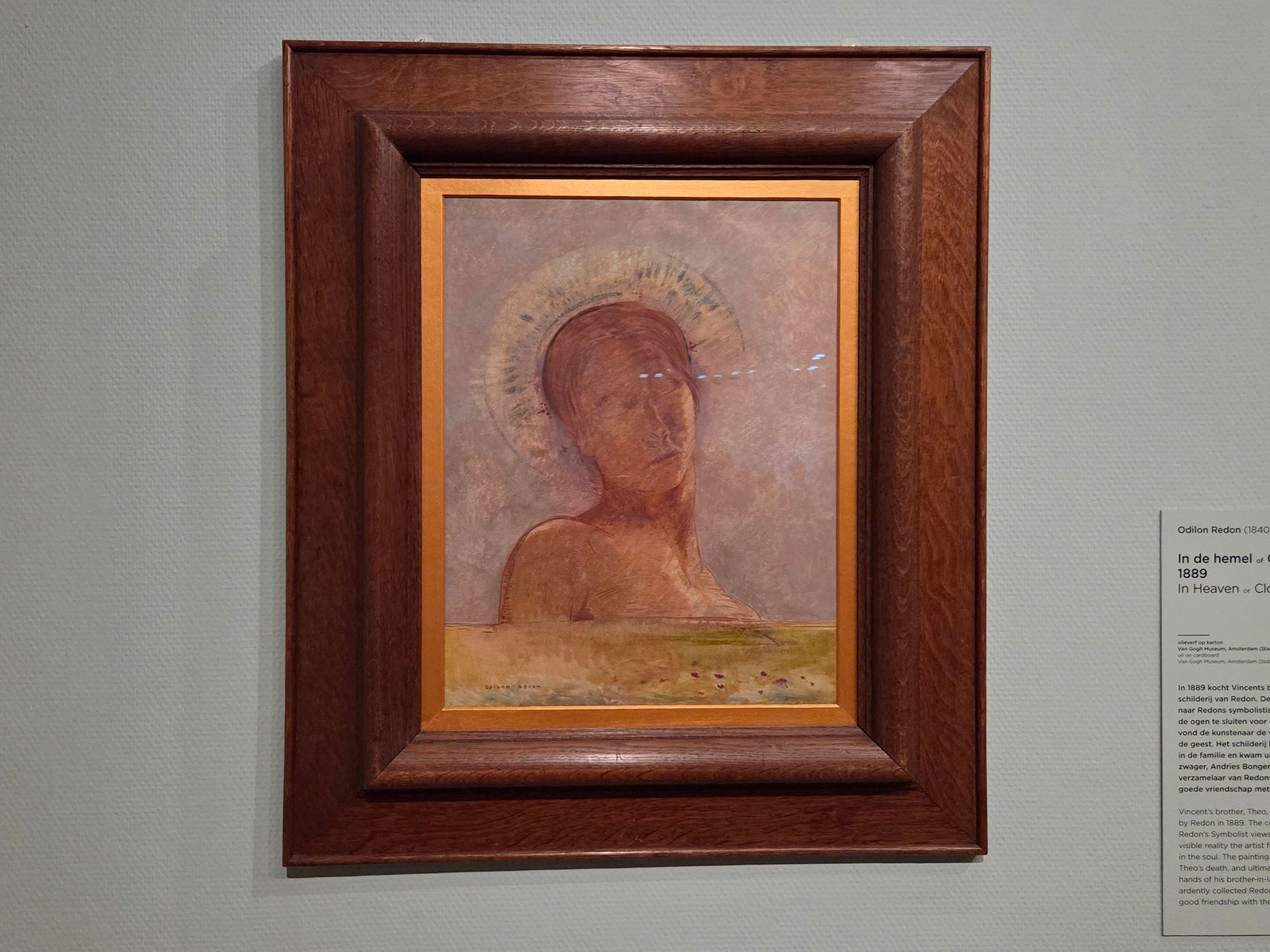
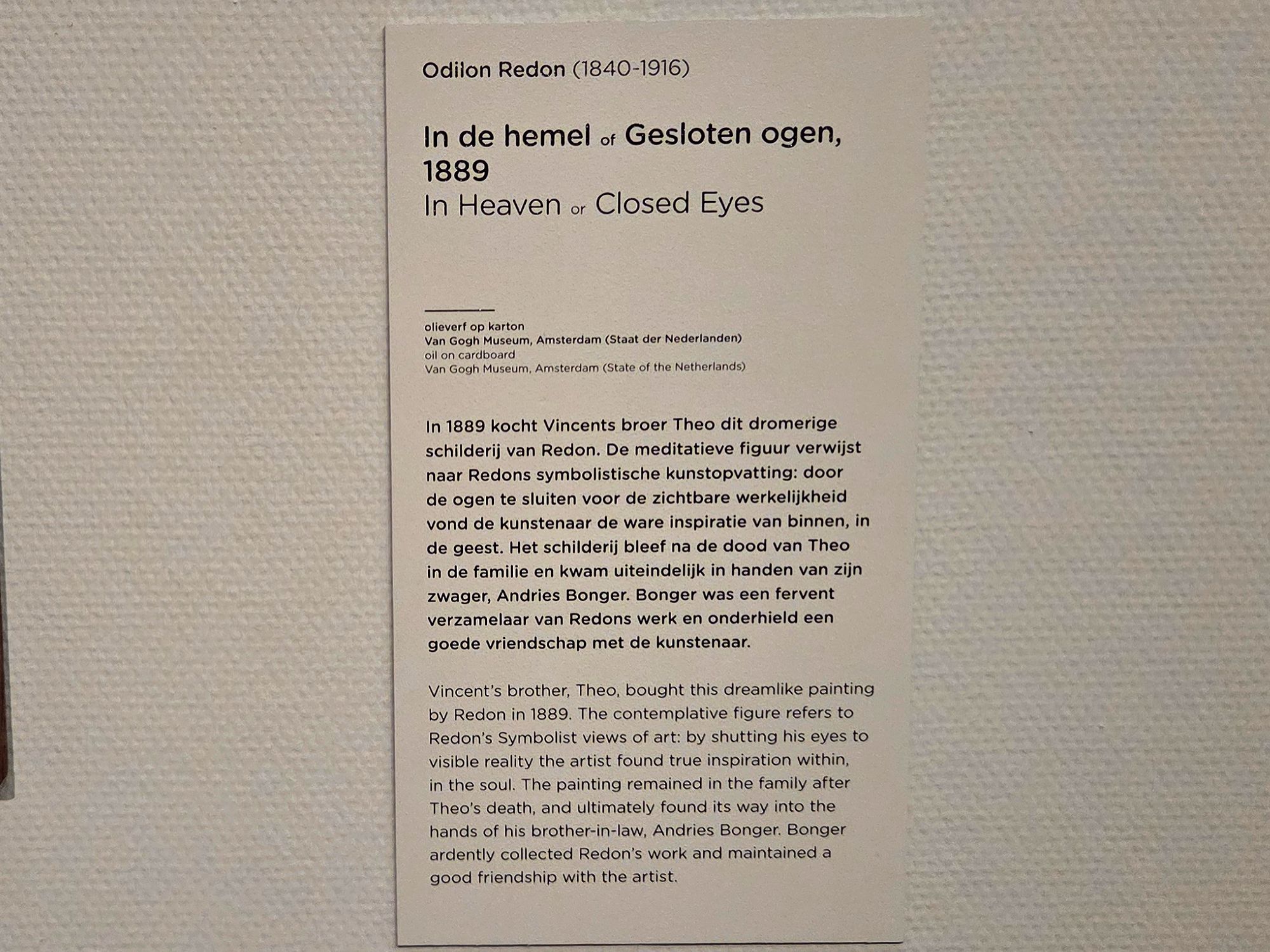
In 1889, Theo van Gogh bought this dreamlike painting by Odilon Redon. Its contemplative figure reflects Redon’s Symbolist belief that true artistic inspiration came from the inner world of imagination and the soul, rather than simply from visible reality.
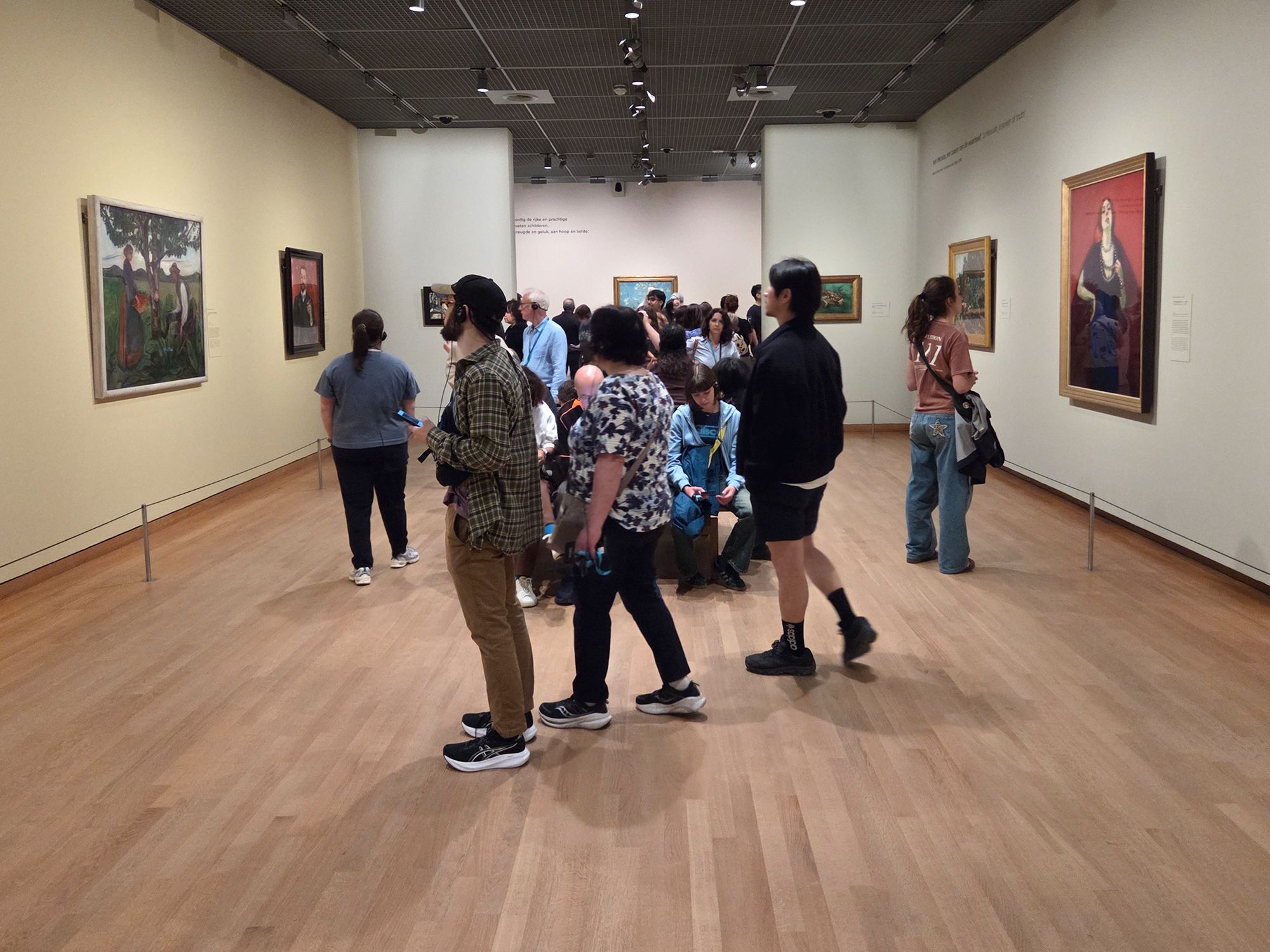
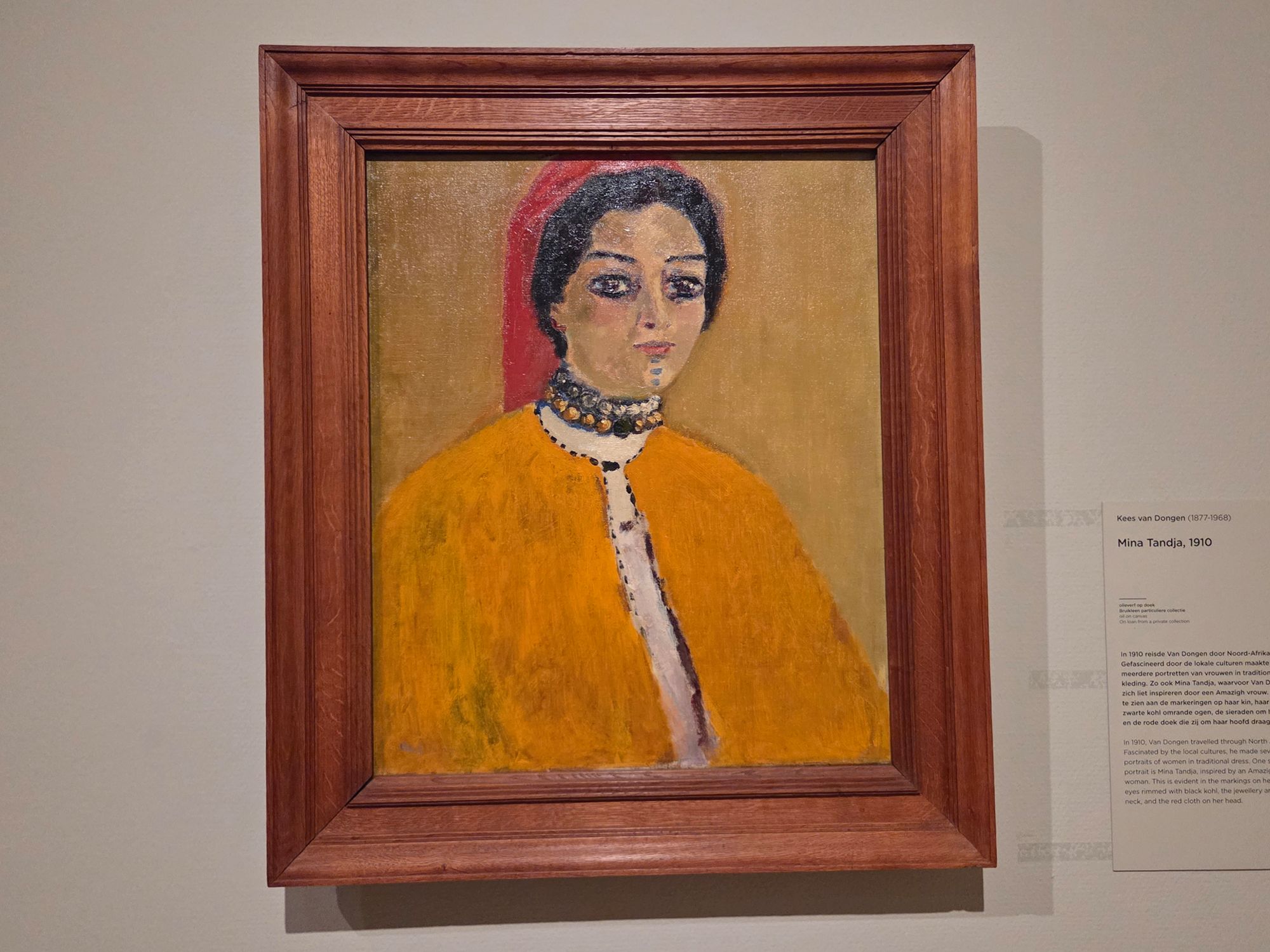
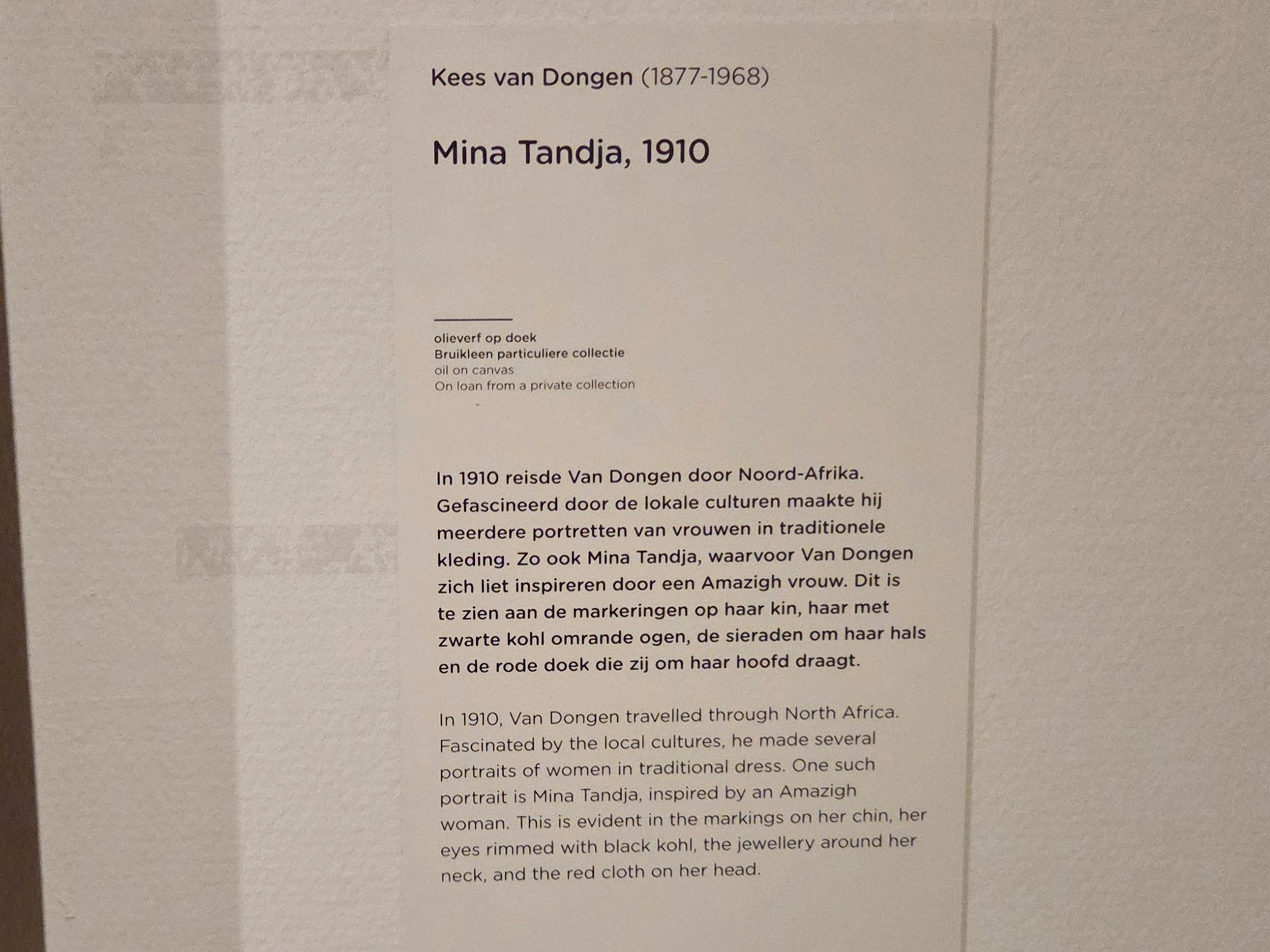
In 1910, Kees van Dongen traveled through North Africa, where local cultures inspired a series of portraits. This painting, Mina Tandja, depicts a woman inspired by Amazigh traditions, with distinctive facial markings, dark kohl around her eyes, jewelry, and a bright red head covering.
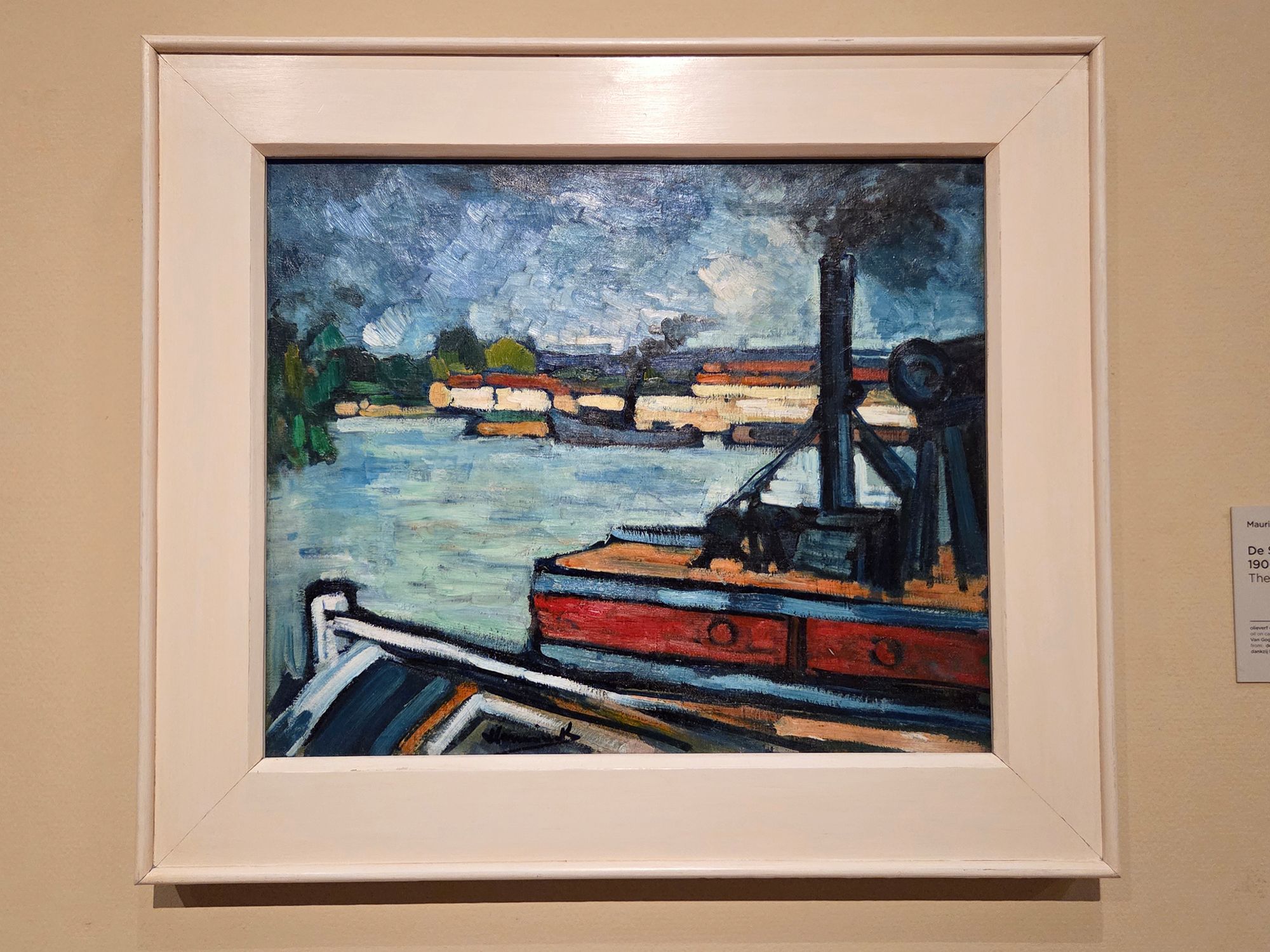
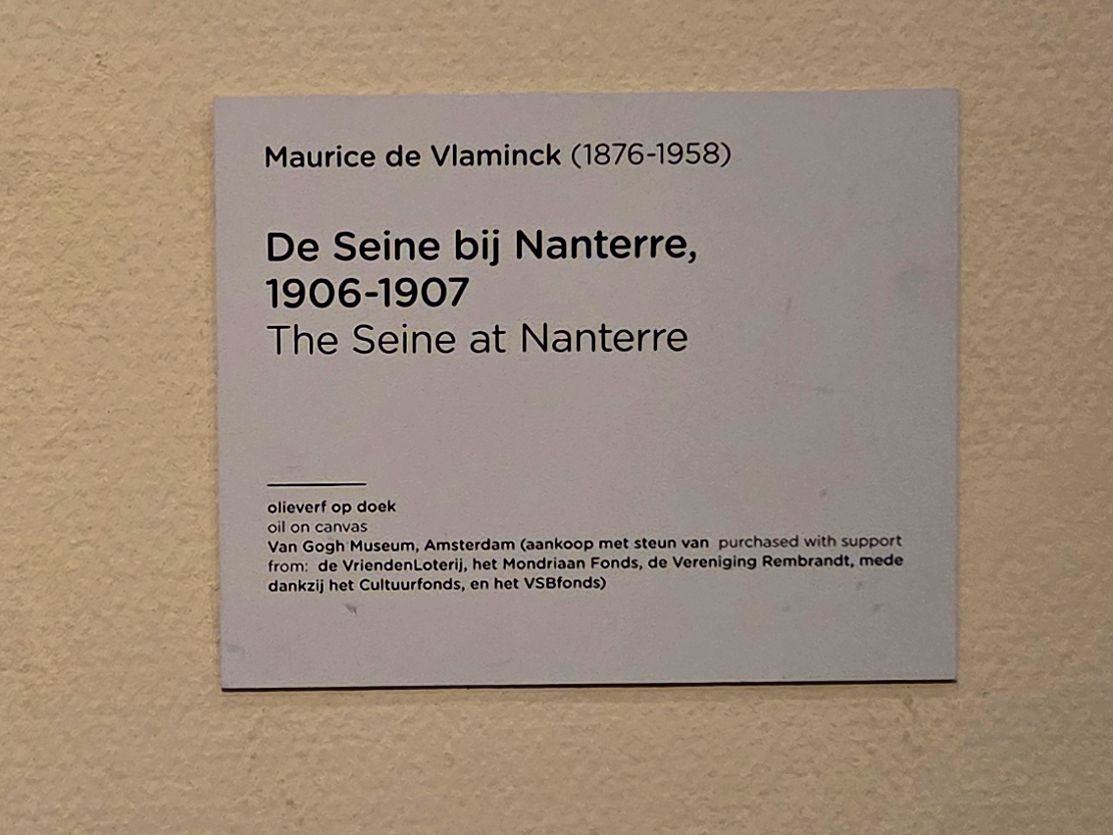
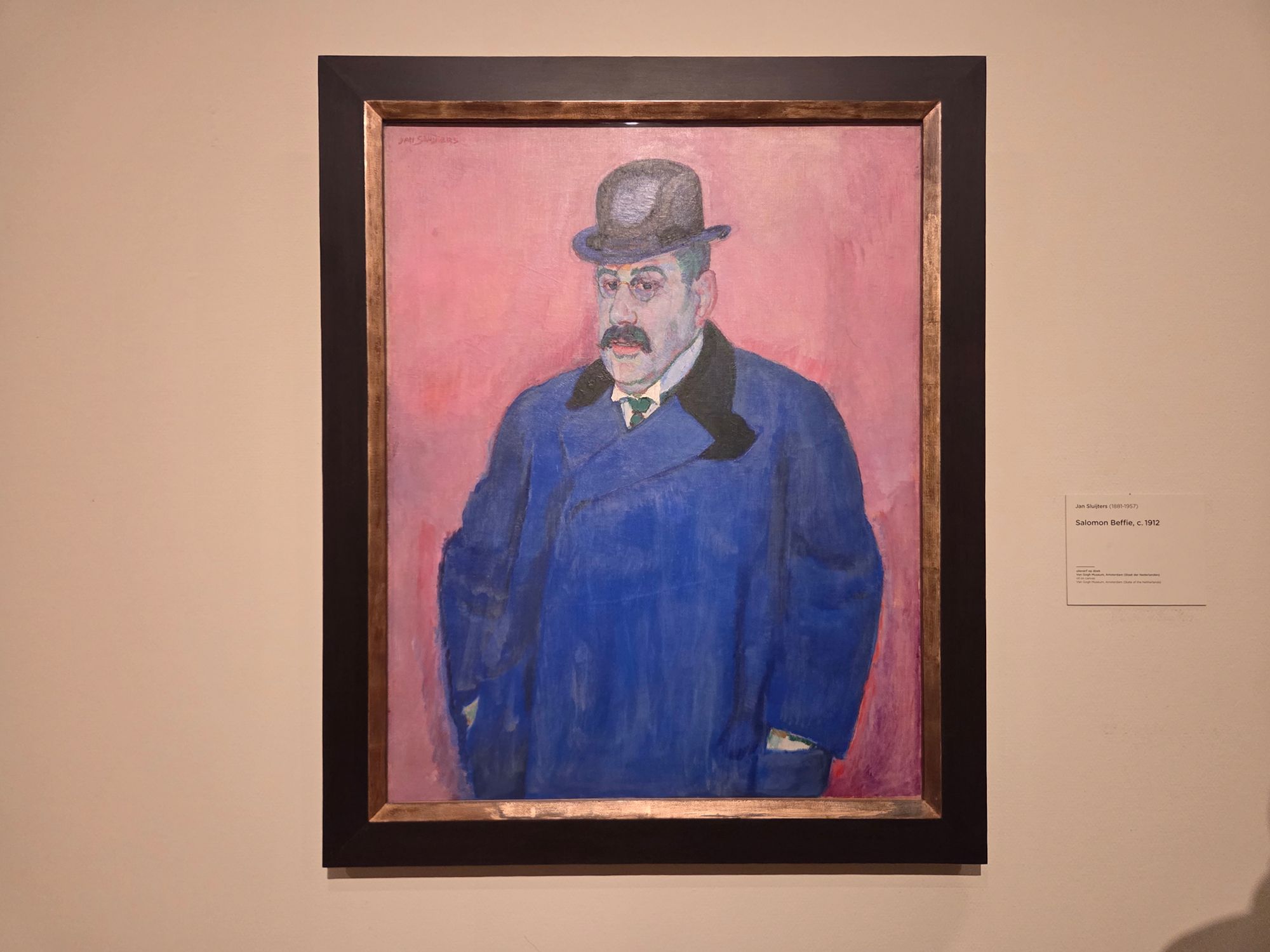
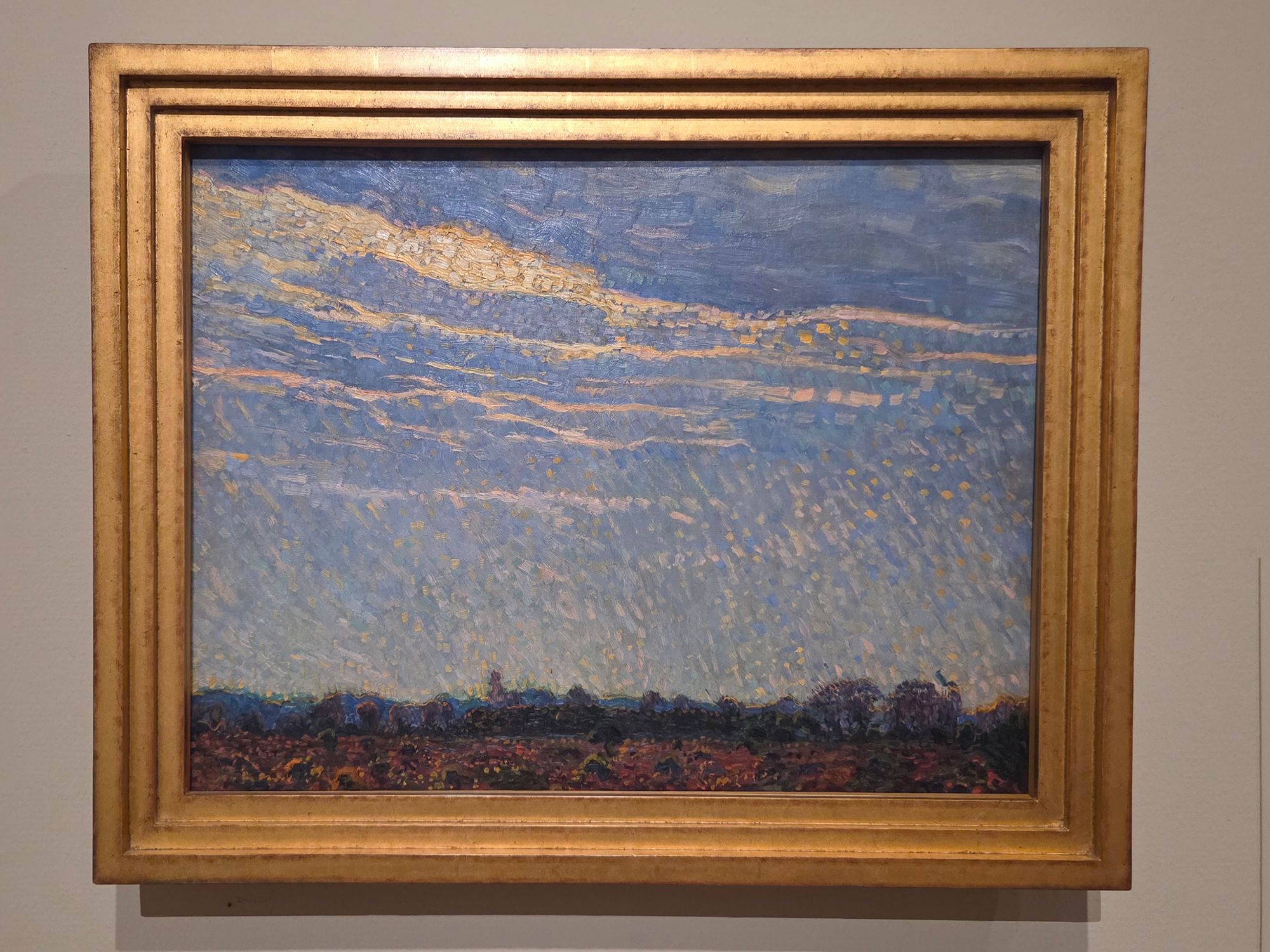
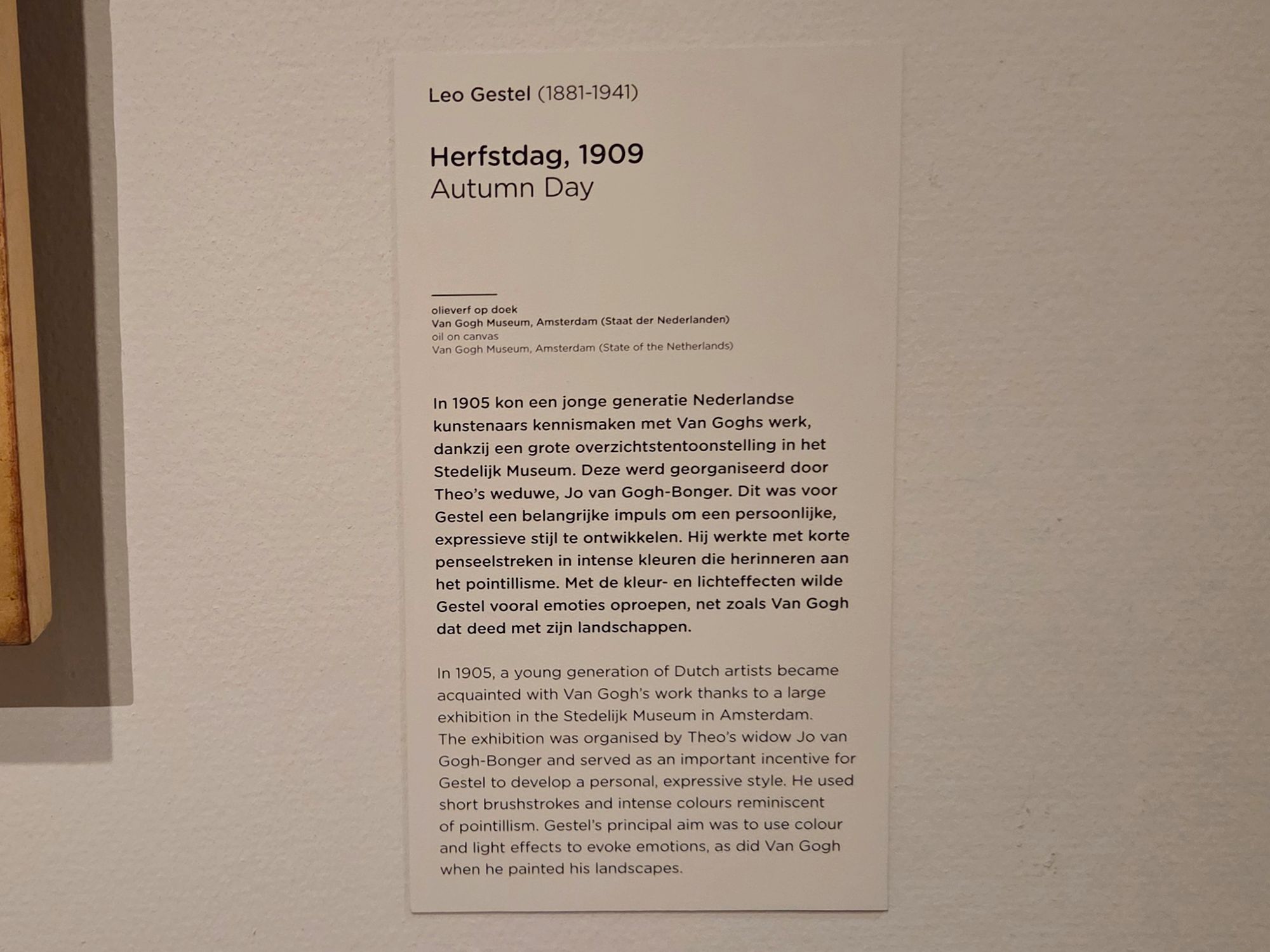
In 1905, a major Van Gogh exhibition at Amsterdam’s Stedelijk Museum, organized by Theo’s widow Jo van Gogh-Bonger, introduced his work to a younger generation of Dutch artists. Leo Gestel was among those inspired by Van Gogh, adopting intense colors and short brushstrokes to create landscapes that expressed emotion through color and light.
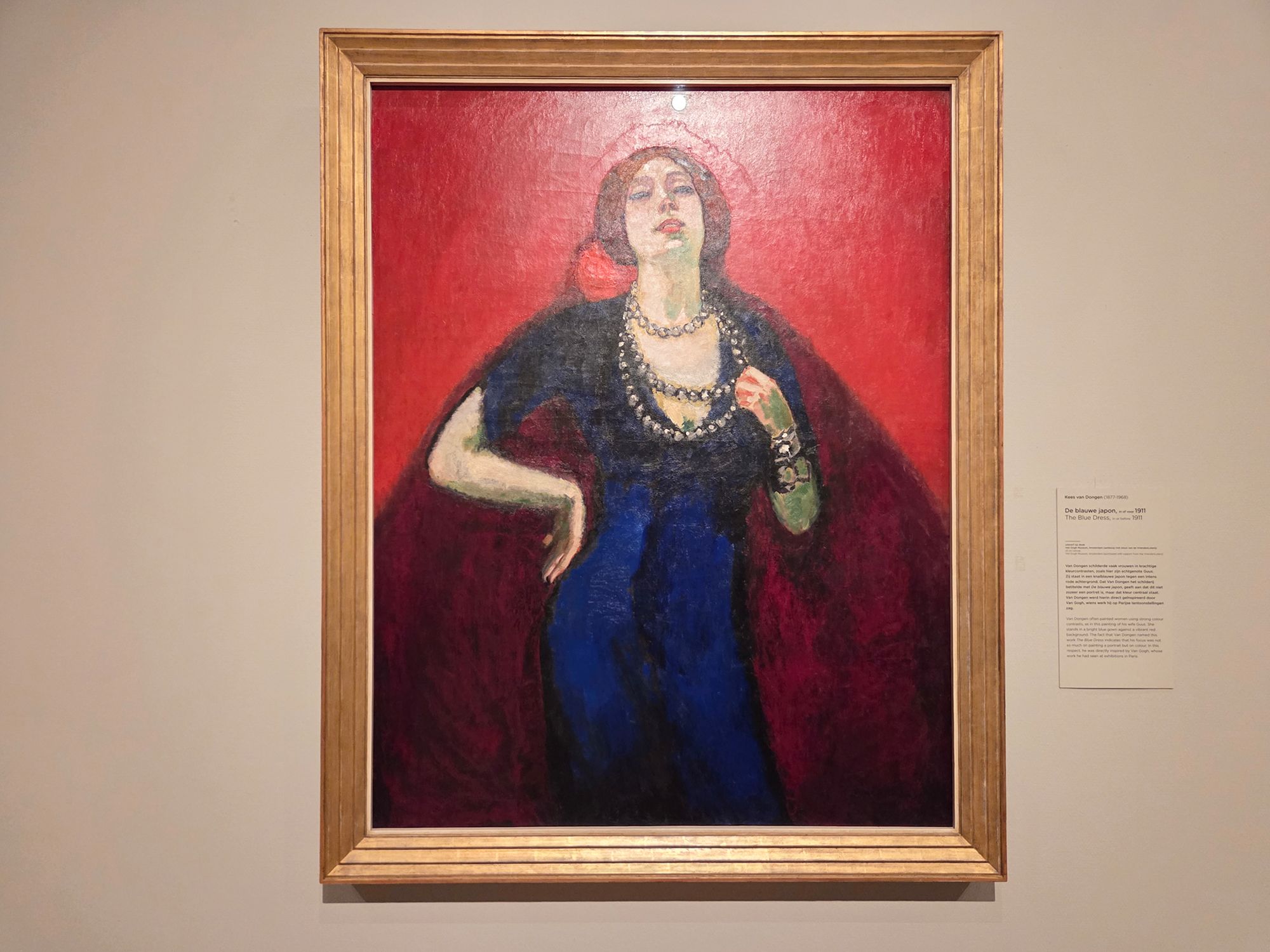
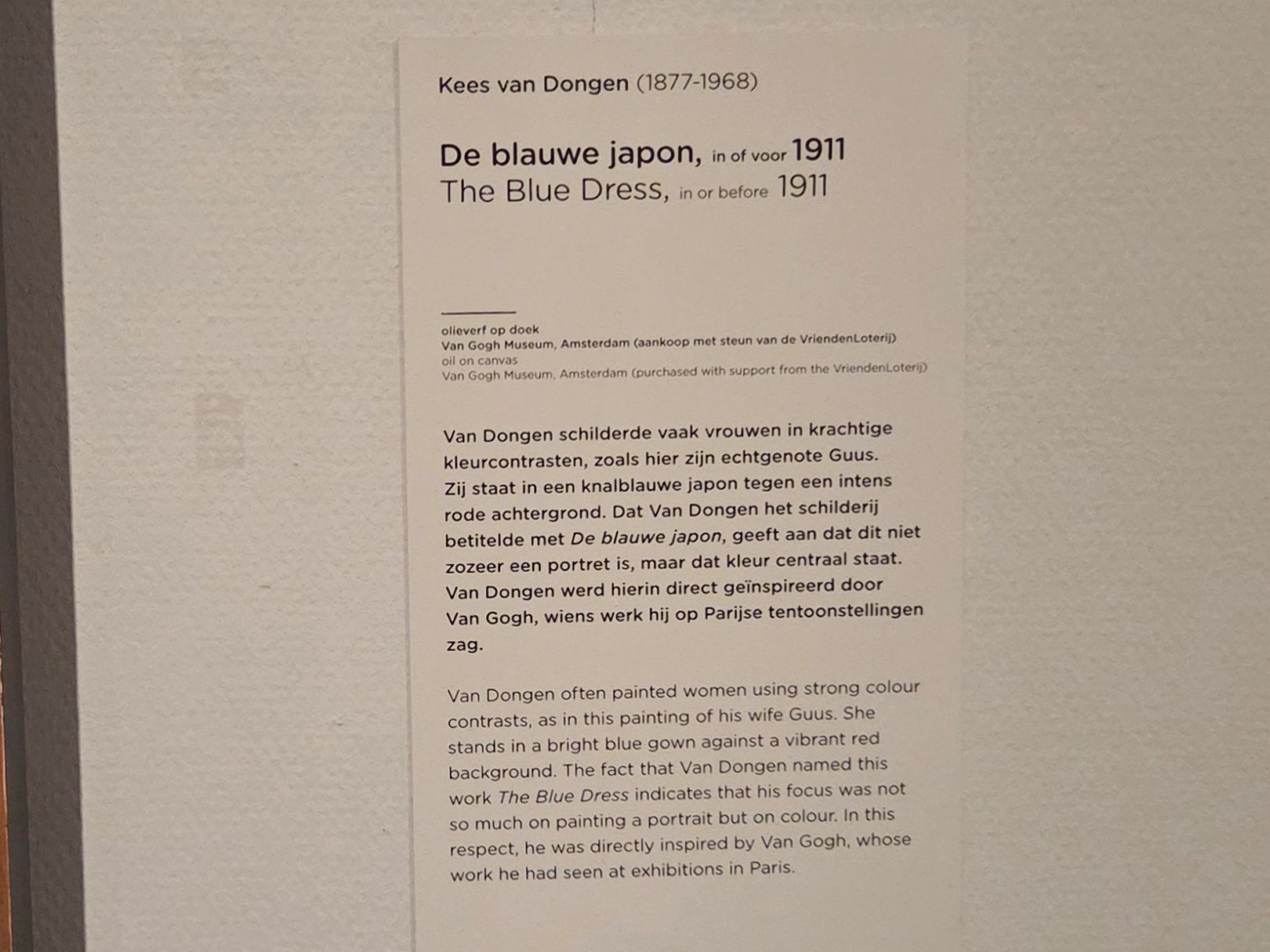
In The Blue Dress, Kees van Dongen painted his wife Guus in a brilliant blue gown against a vivid red background. His emphasis was less on creating a traditional portrait than on the expressive power of contrasting colors, an approach directly inspired by Van Gogh’s work.
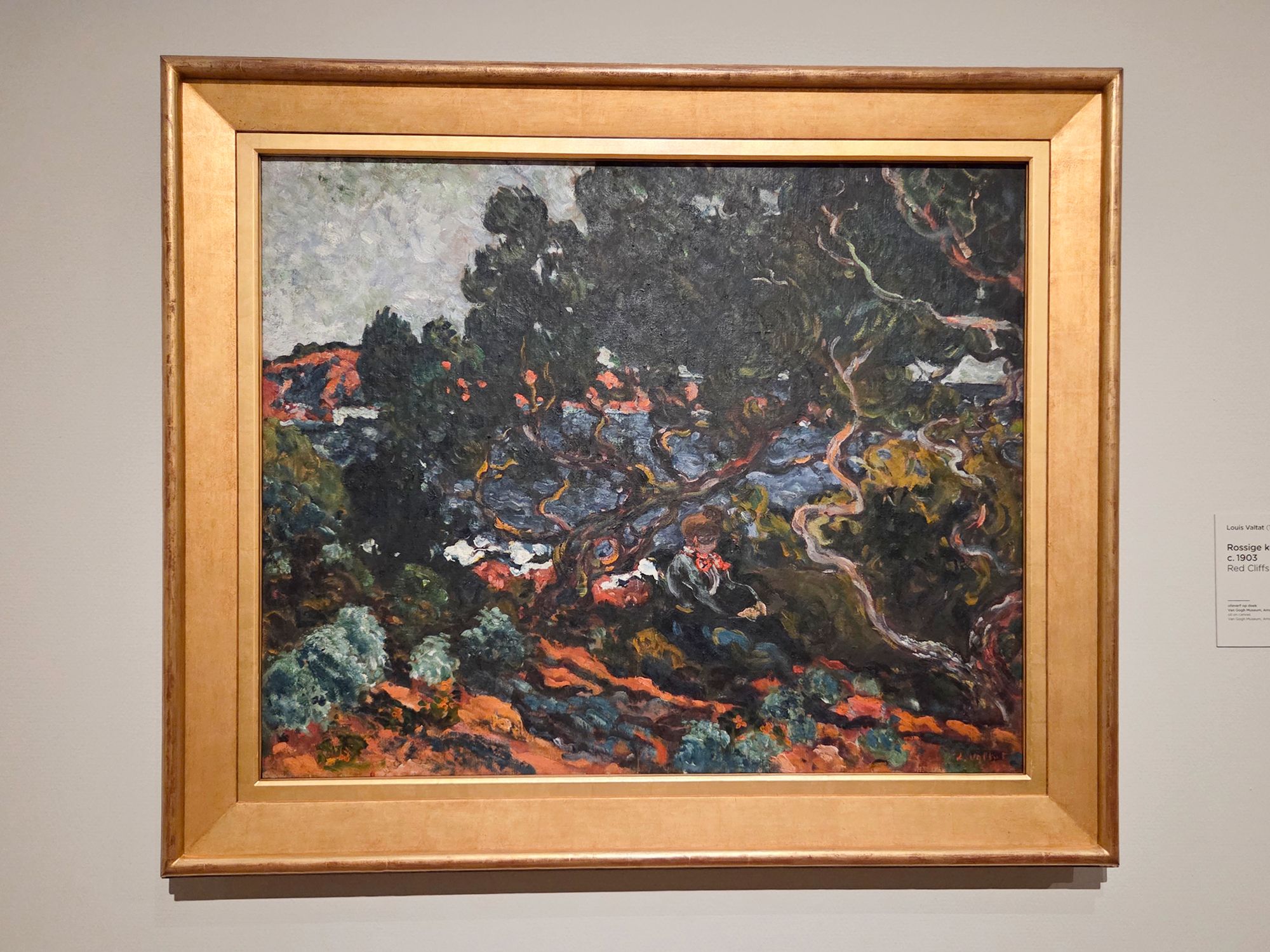
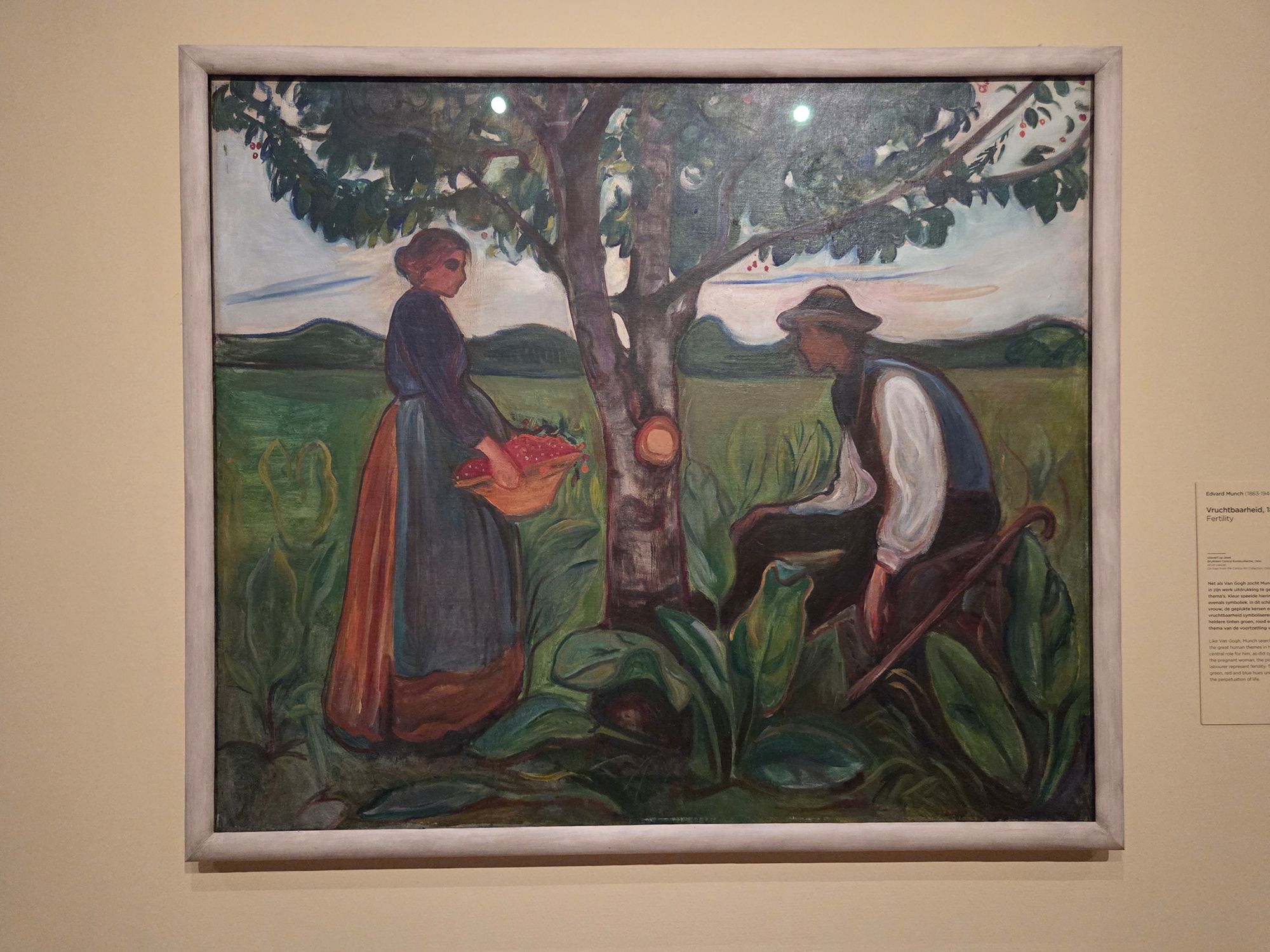
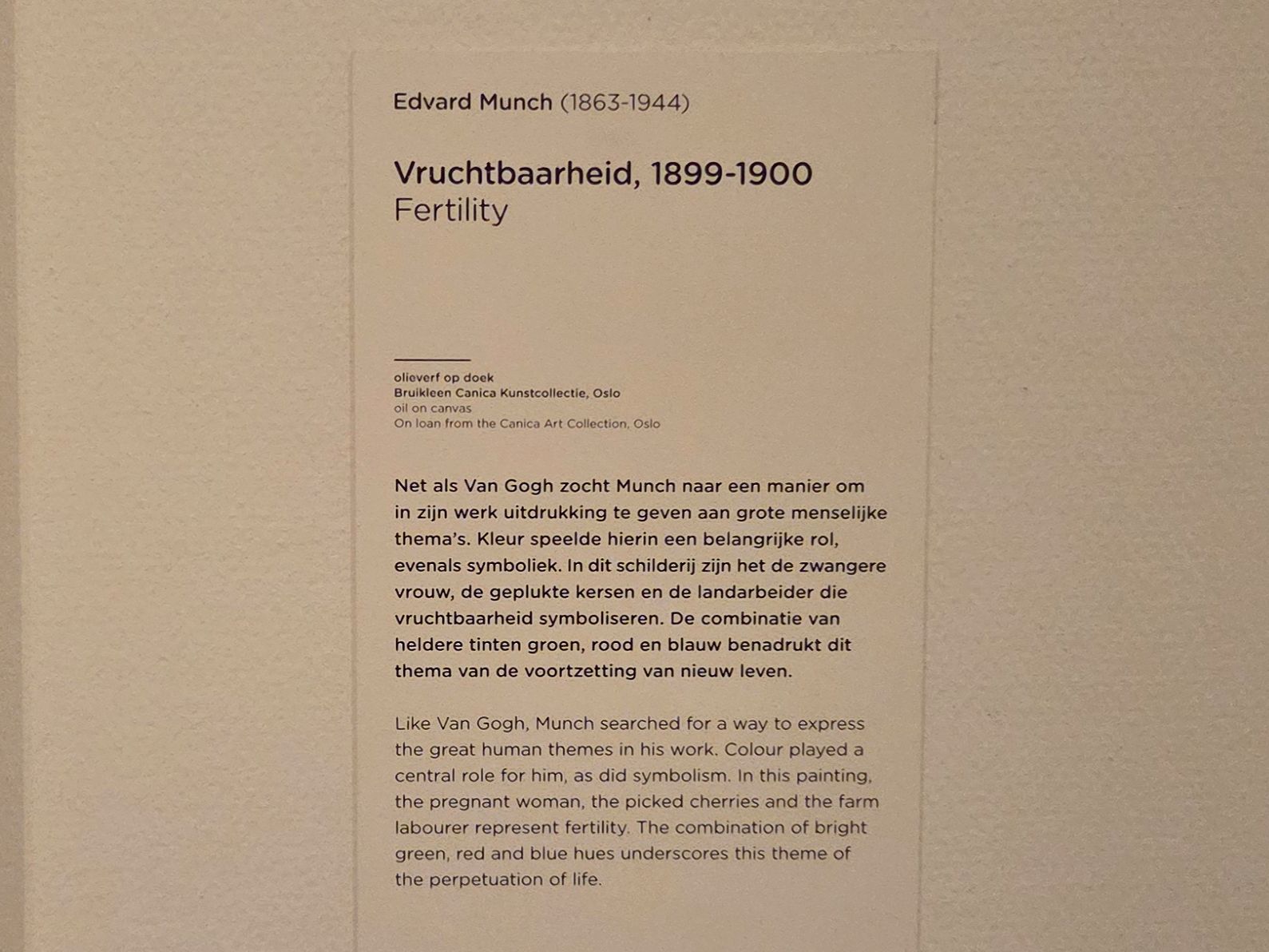
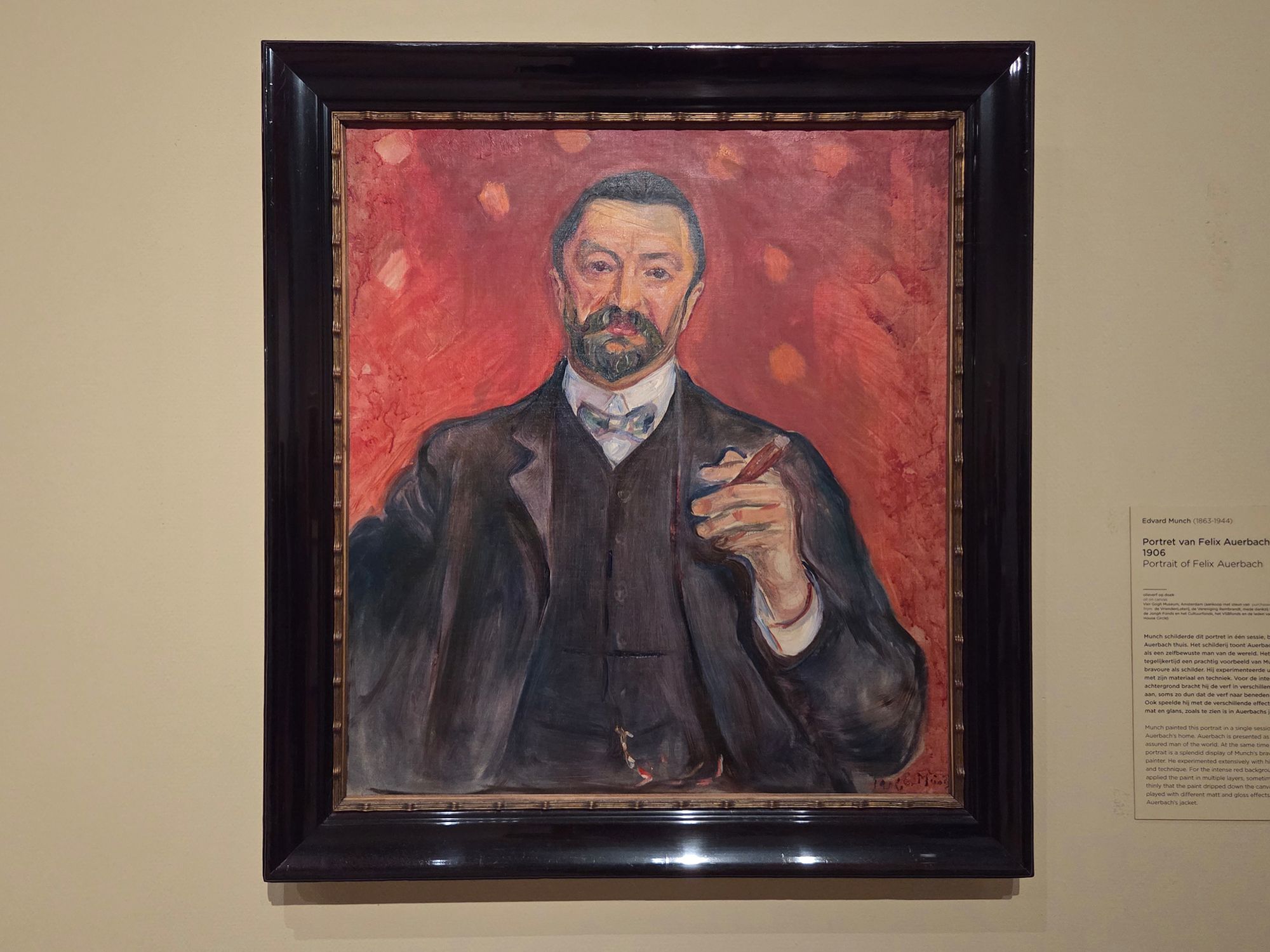
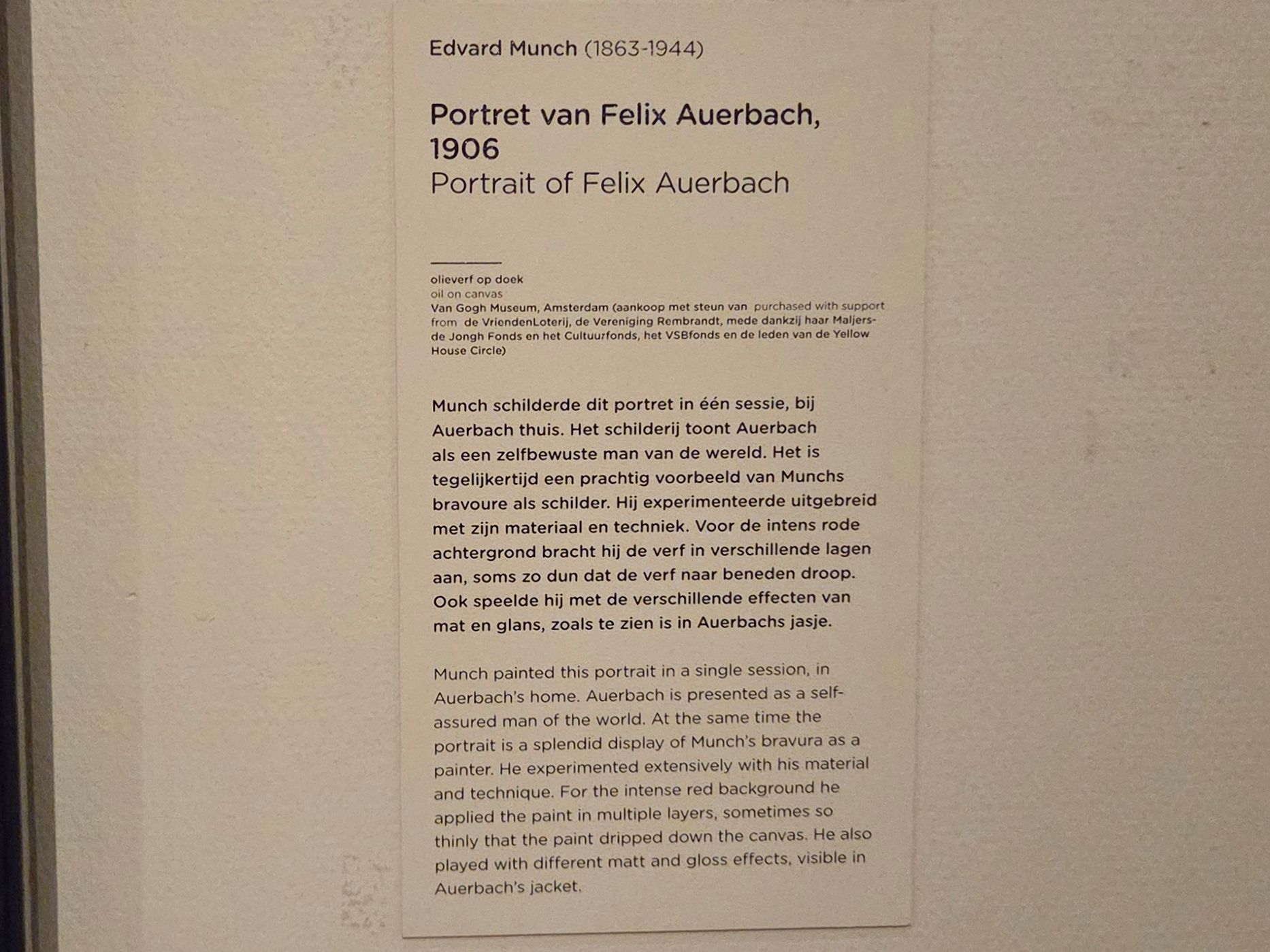
Edvard Munch painted this portrait of Auerbach in a single sitting at his home. The confident portrait also demonstrates Munch’s experimental technique, especially the intense red background, where he layered and thinned the paint until it sometimes dripped down the canvas.
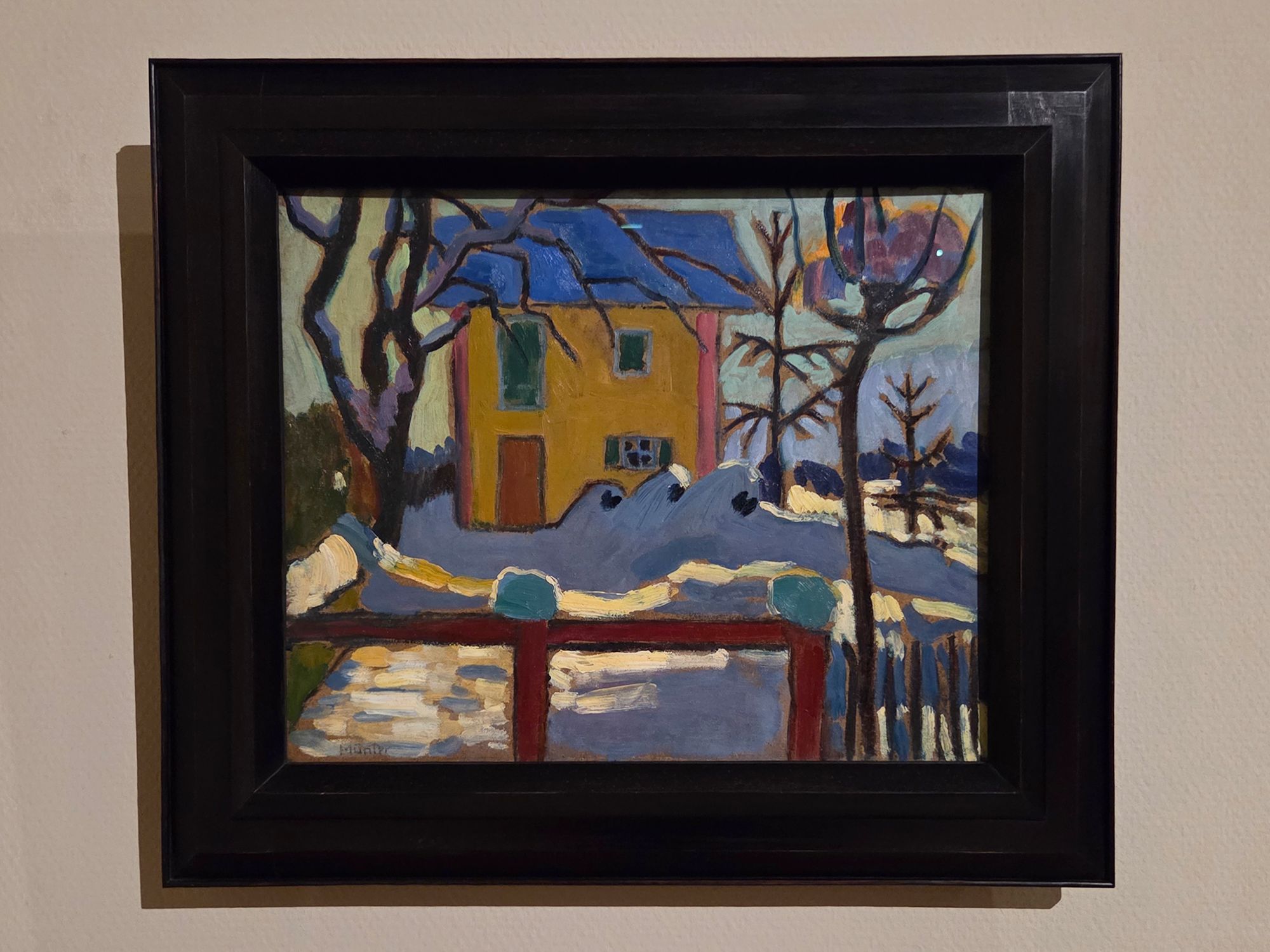
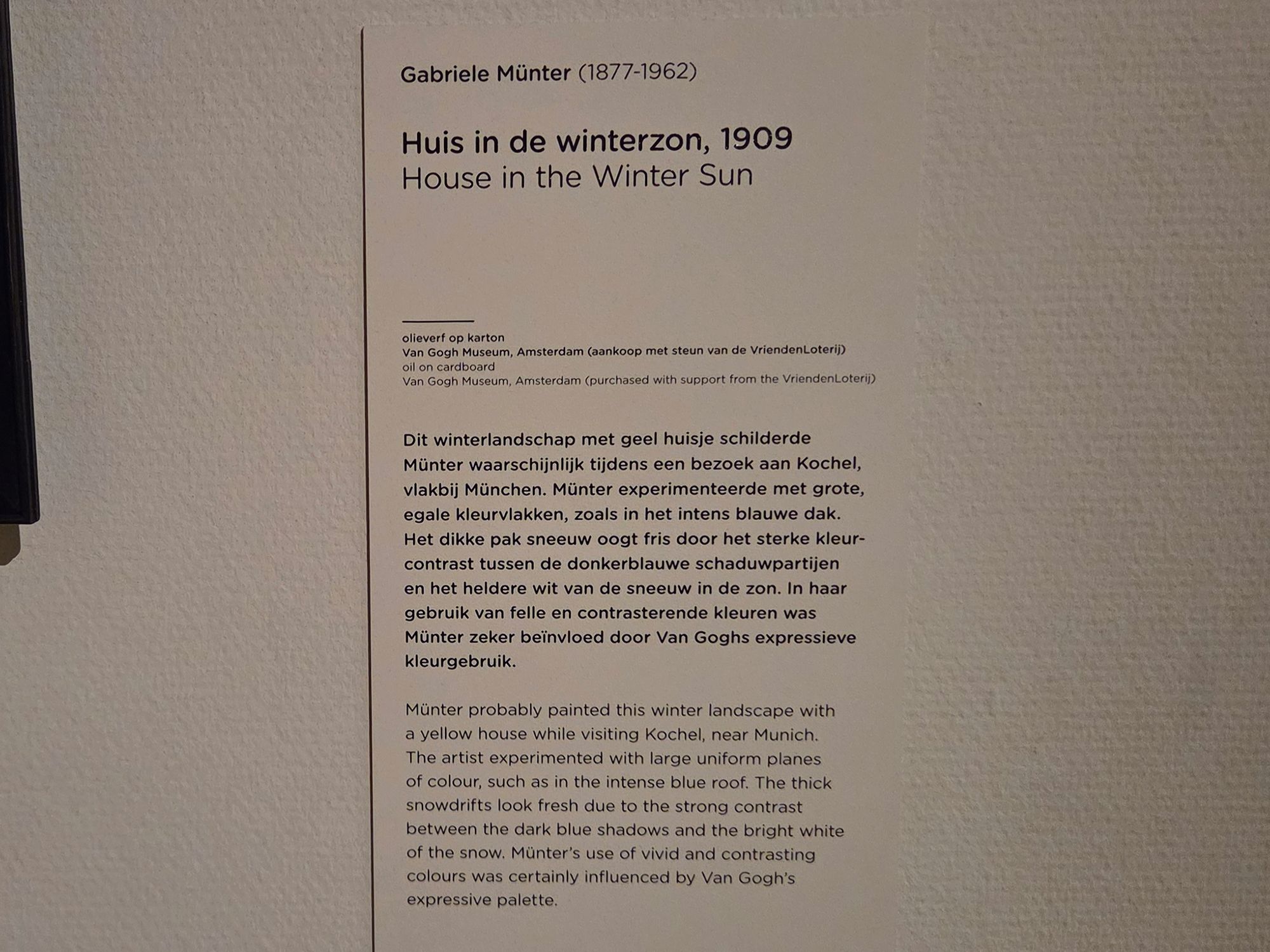
In this winter landscape, Gabriele Münter used large areas of vivid, contrasting color, especially the intense blue roof and deep blue shadows against the bright white snow. Her expressive use of bold color contrasts was strongly influenced by Van Gogh’s work.
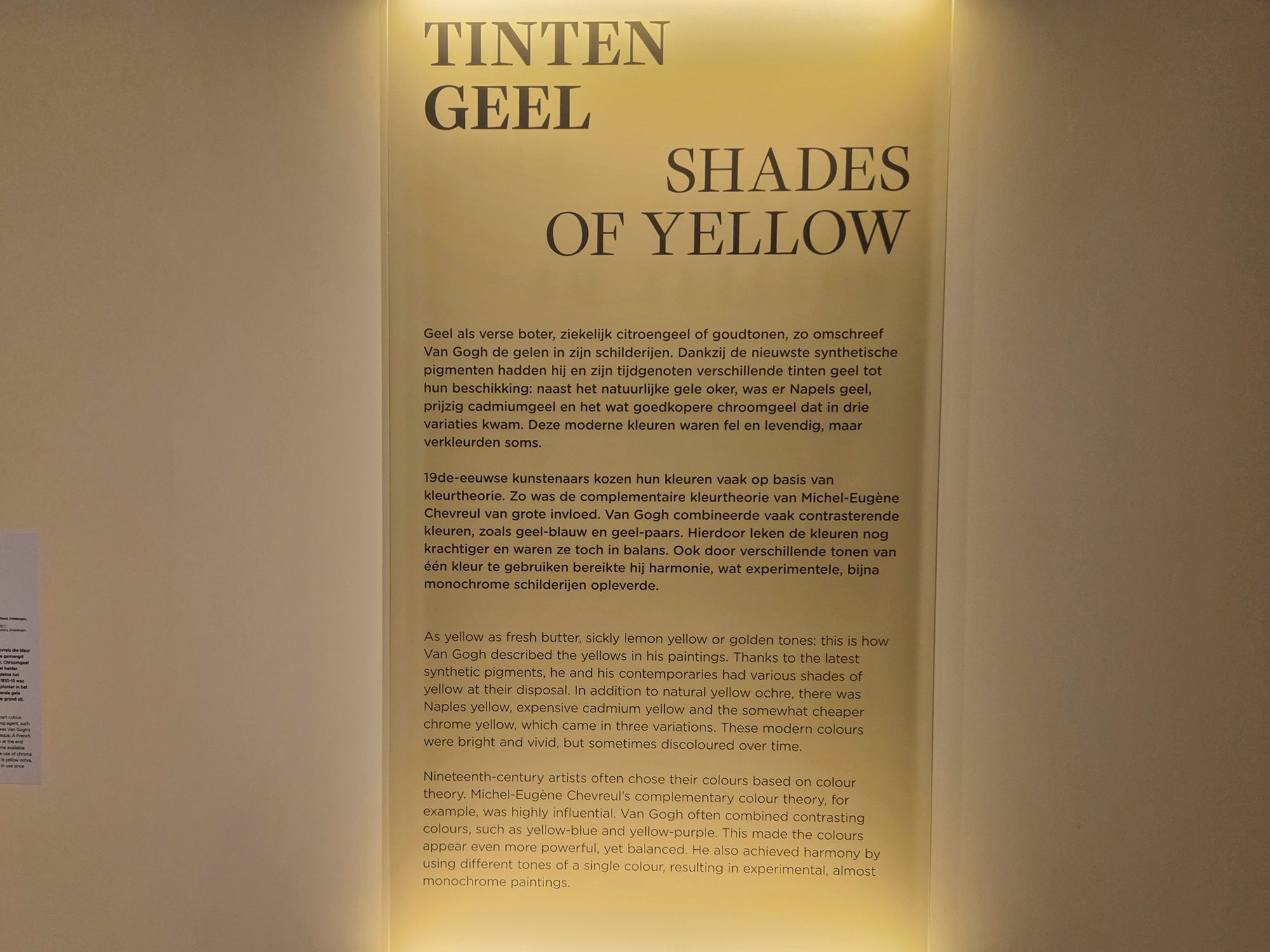
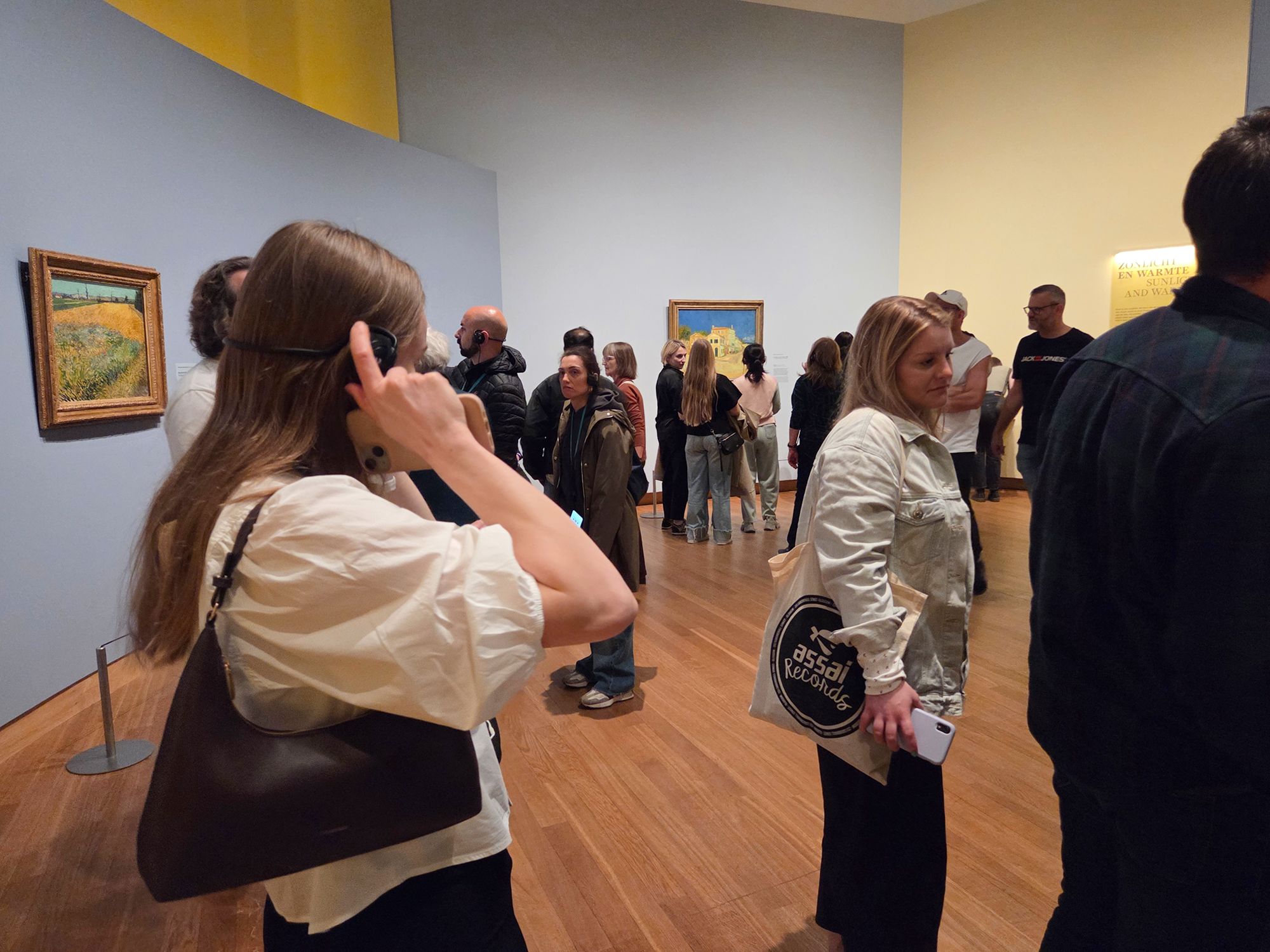
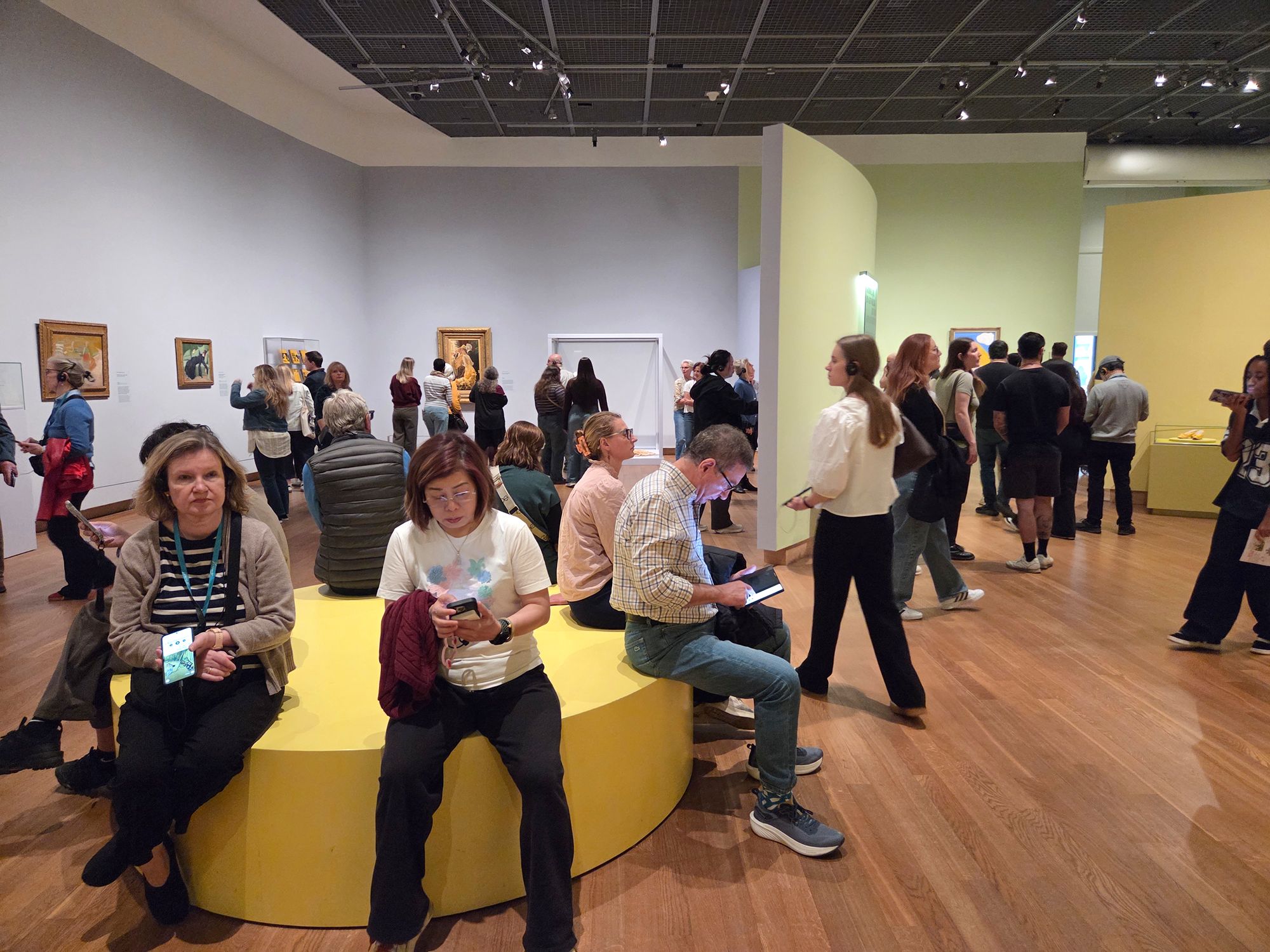
A special exhibition called “Yellow” explored the importance of the color yellow in Van Gogh’s art, showing how he used its brightness and intensity to express light, warmth, hope, and emotion.
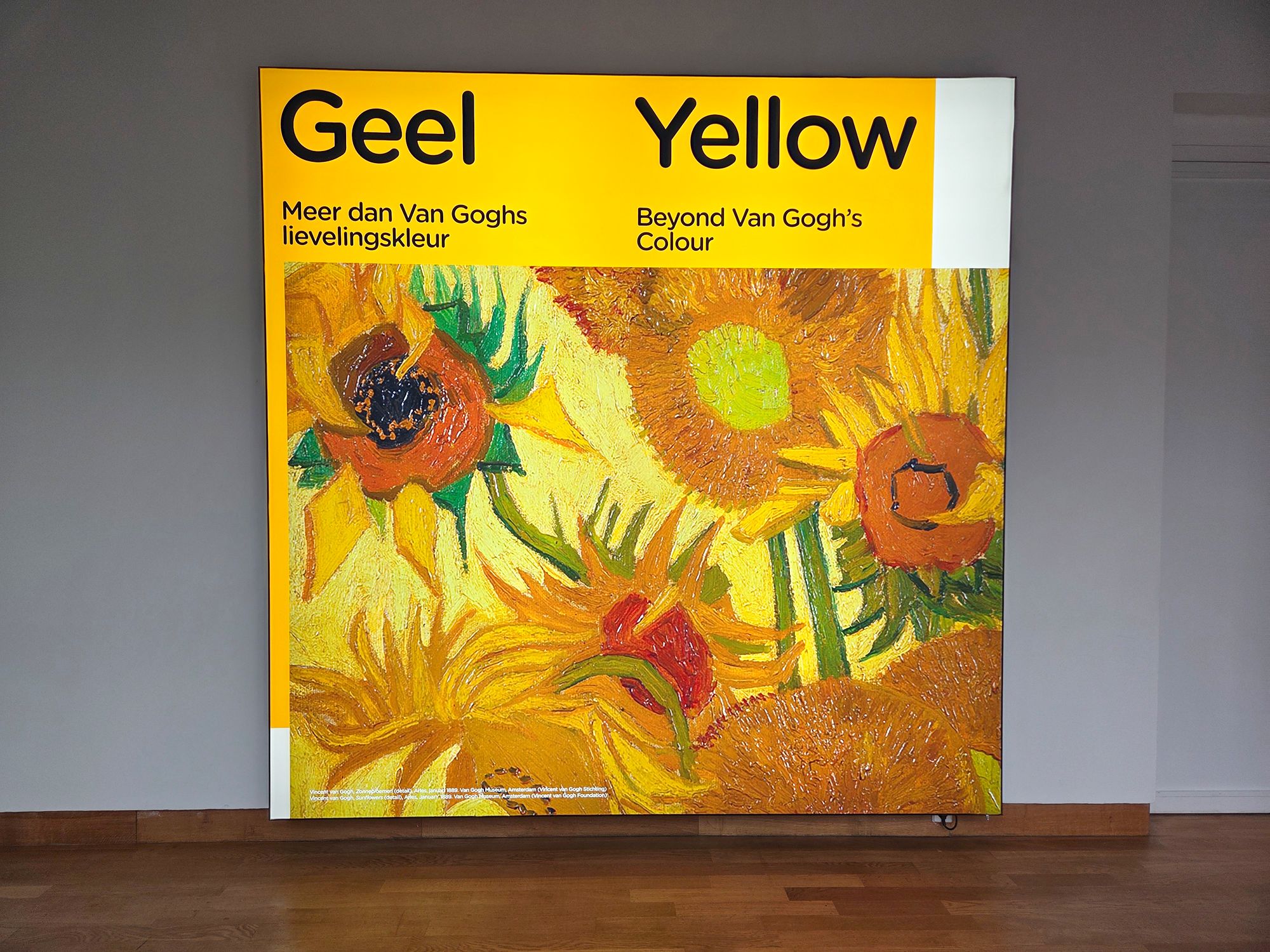
The special exhibition “Yellow” explored the many meanings of yellow for Van Gogh and his contemporaries. For Van Gogh, yellow was especially associated with the sunflowers, golden wheat fields, and brilliant sunlight of southern France. The exhibition showed how this warm and radiant color could convey many different feelings and meanings in art.
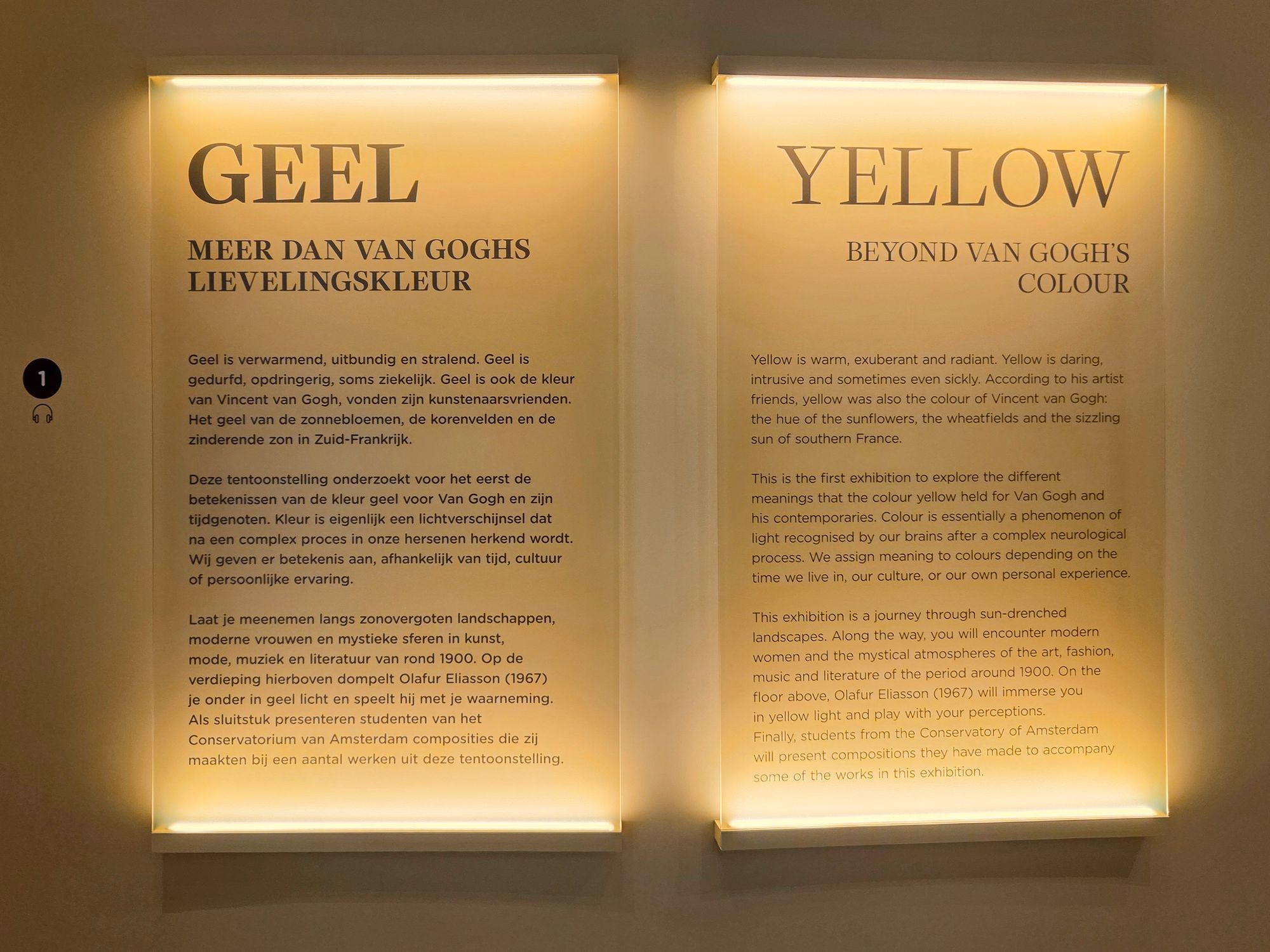
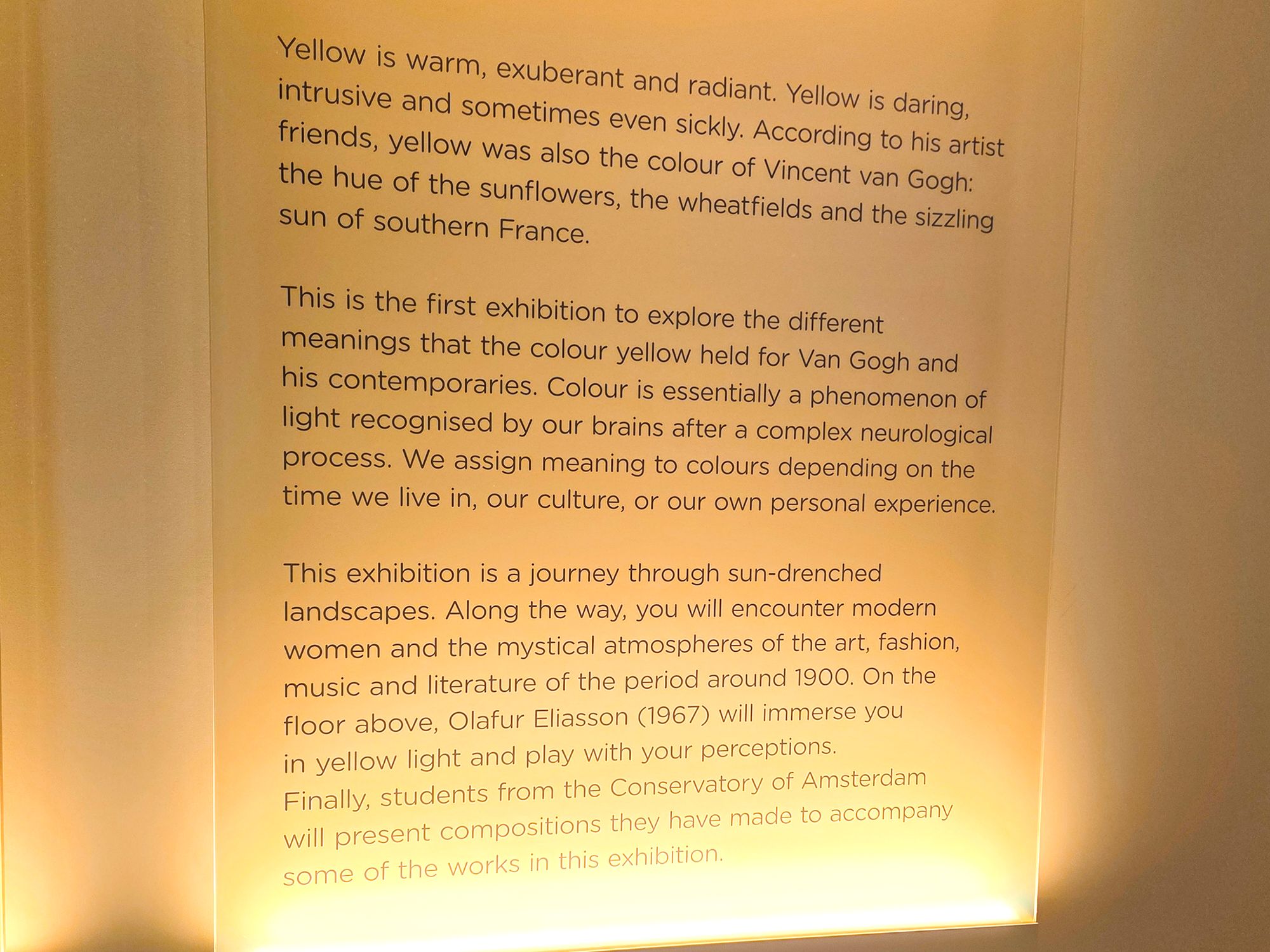
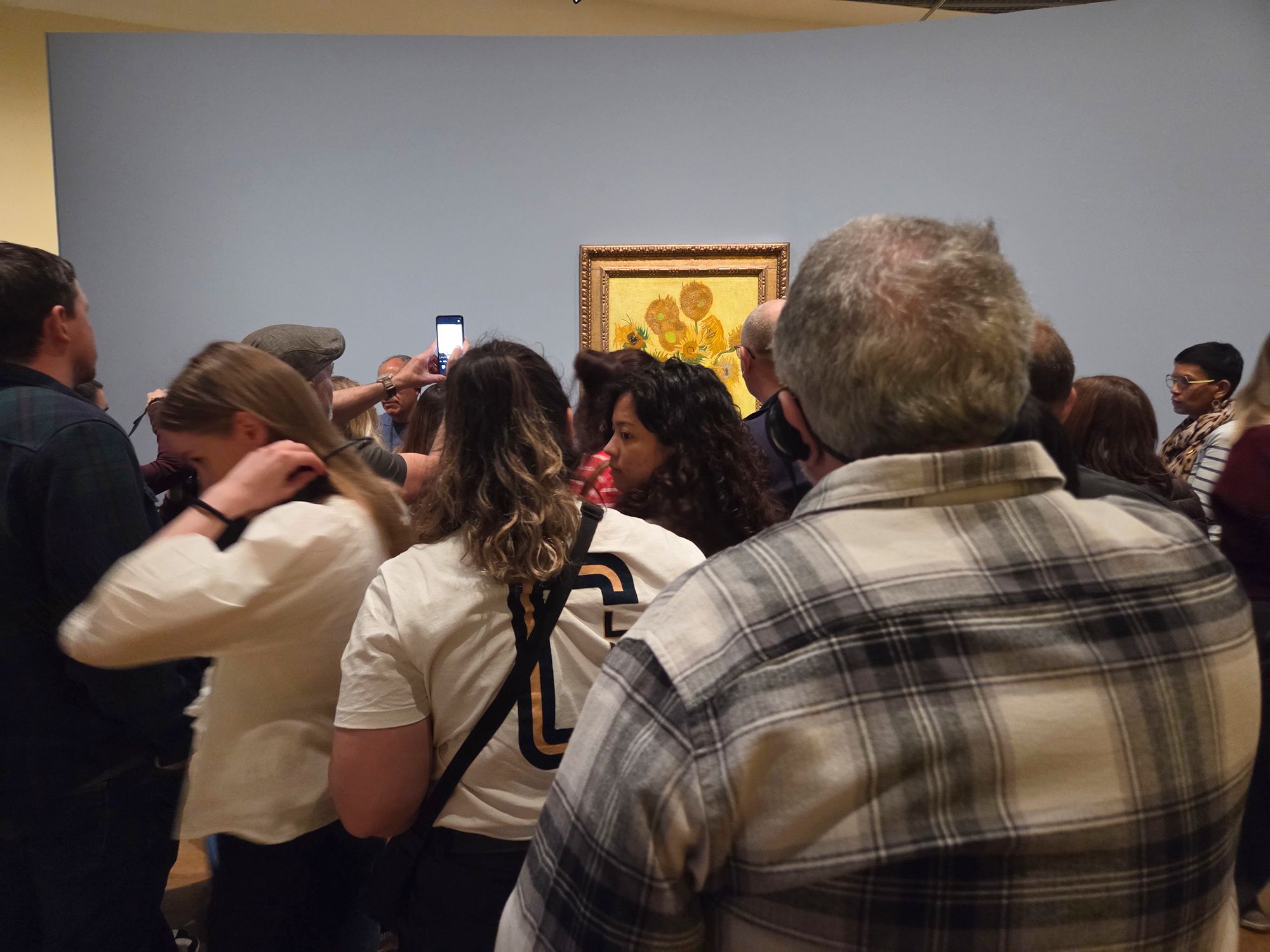
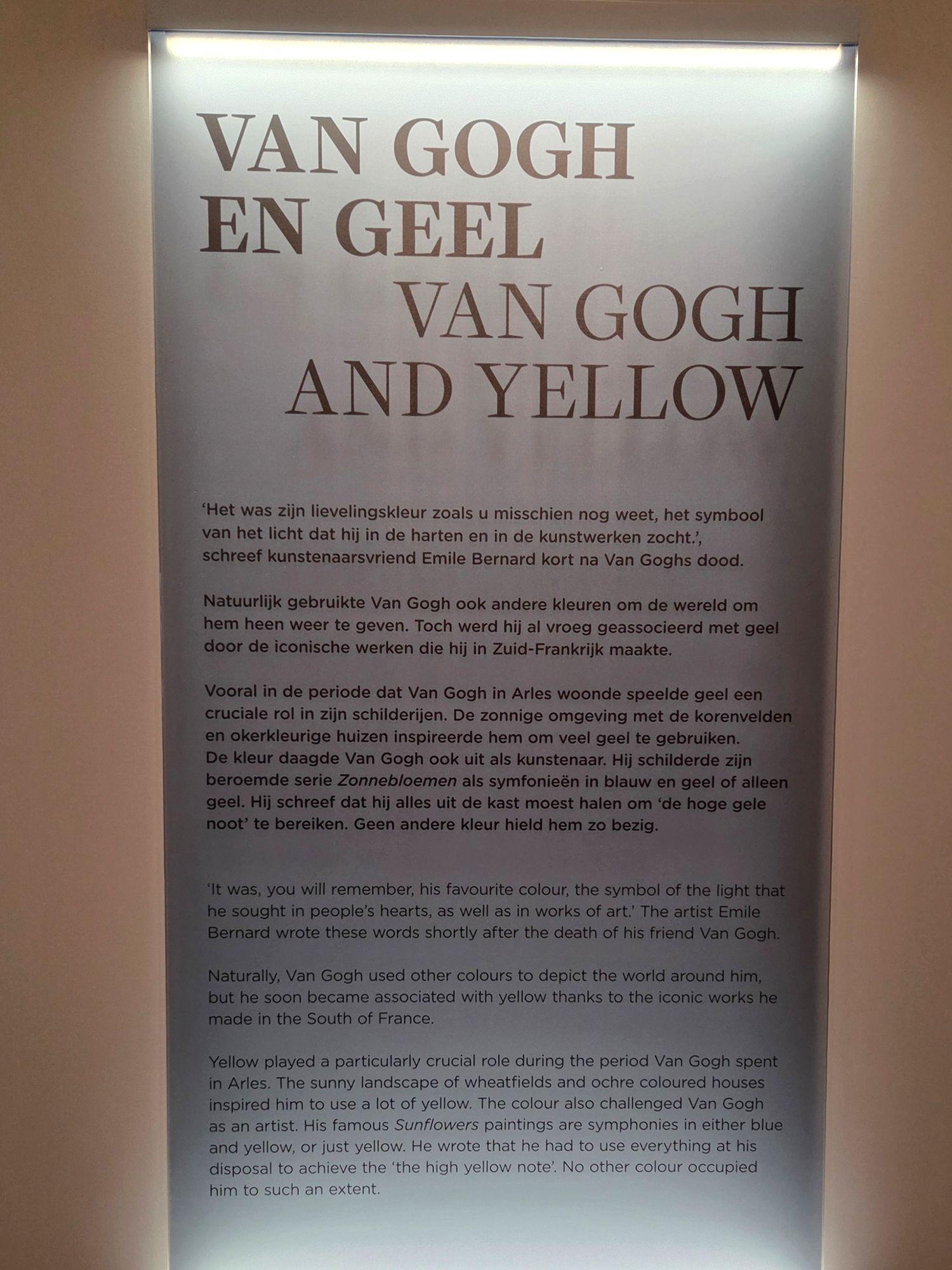
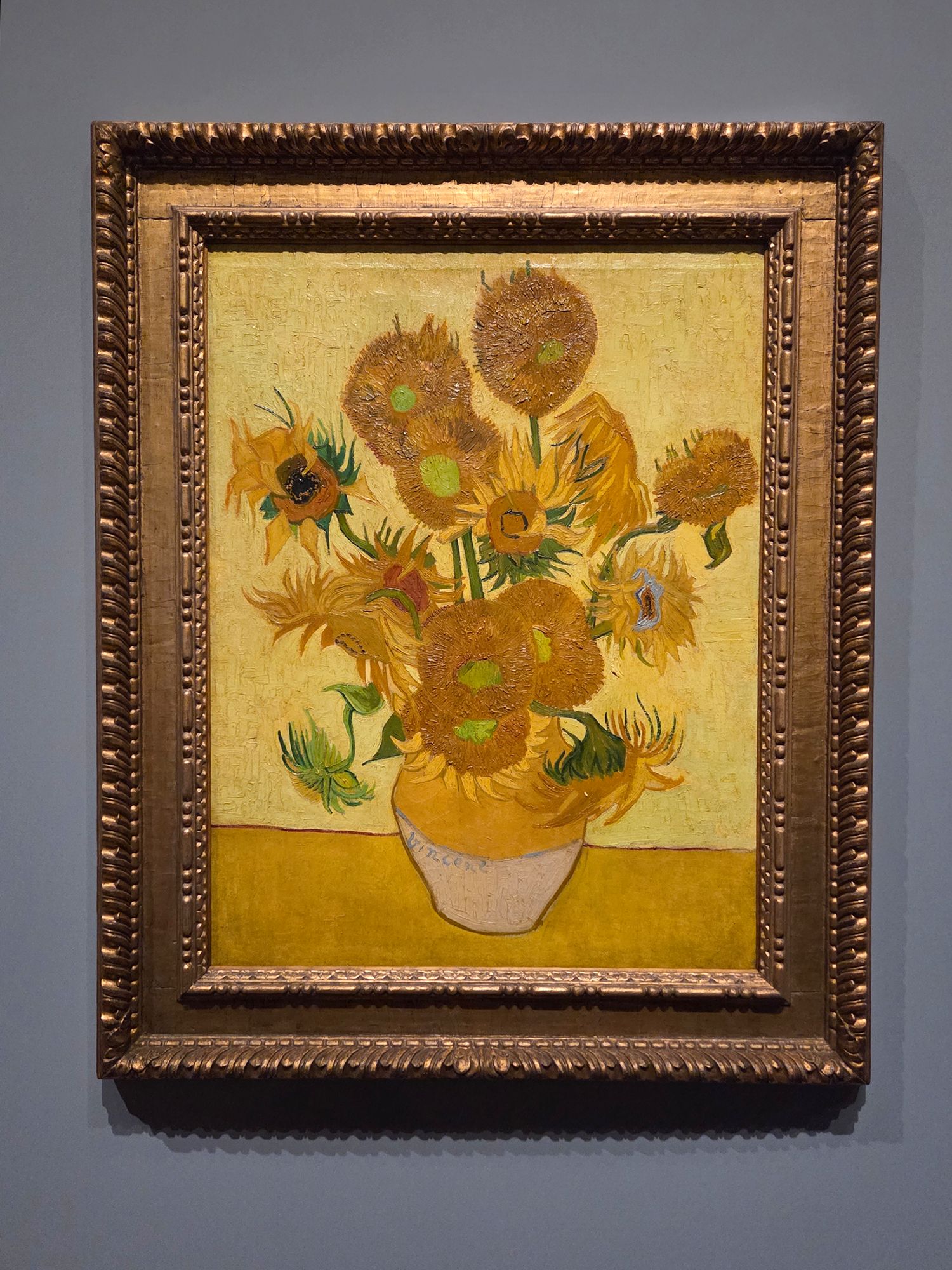
Van Gogh became closely associated with yellow, especially during his years in southern France. In Arles, the brilliant sunlight, golden wheat fields, and ochre-colored houses inspired him to explore the color intensely, most famously in his Sunflowers. His friend Émile Bernard later described yellow as Van Gogh’s favorite color and a symbol of the light he sought in both people and art.
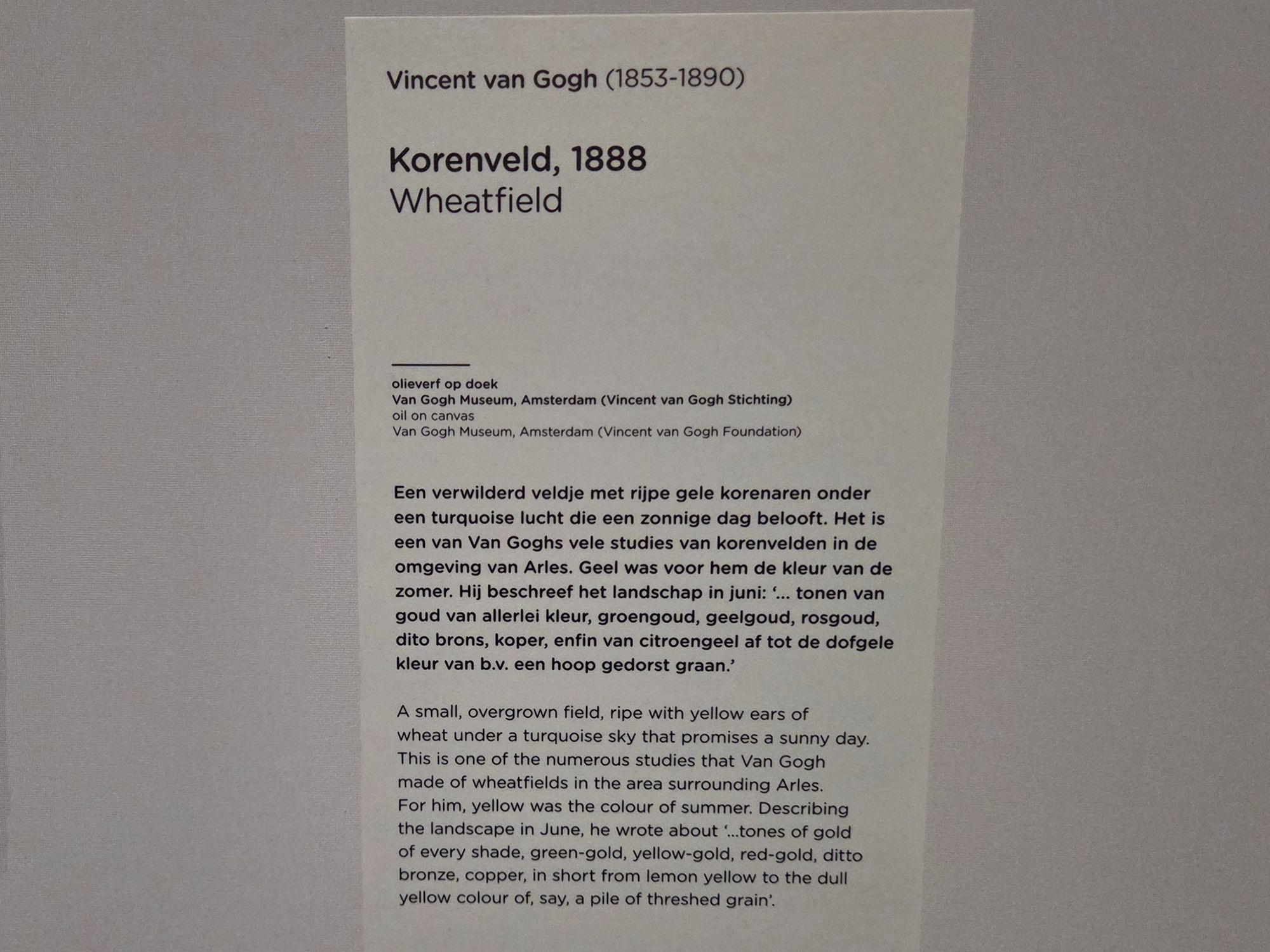
Van Gogh painted many studies of the wheat fields around Arles, where yellow became the color of summer for him. He was fascinated by the many shades of gold in the landscape, from green-gold and yellow-gold to red-gold and bronze, set against the brilliant blue of the Provençal sky.
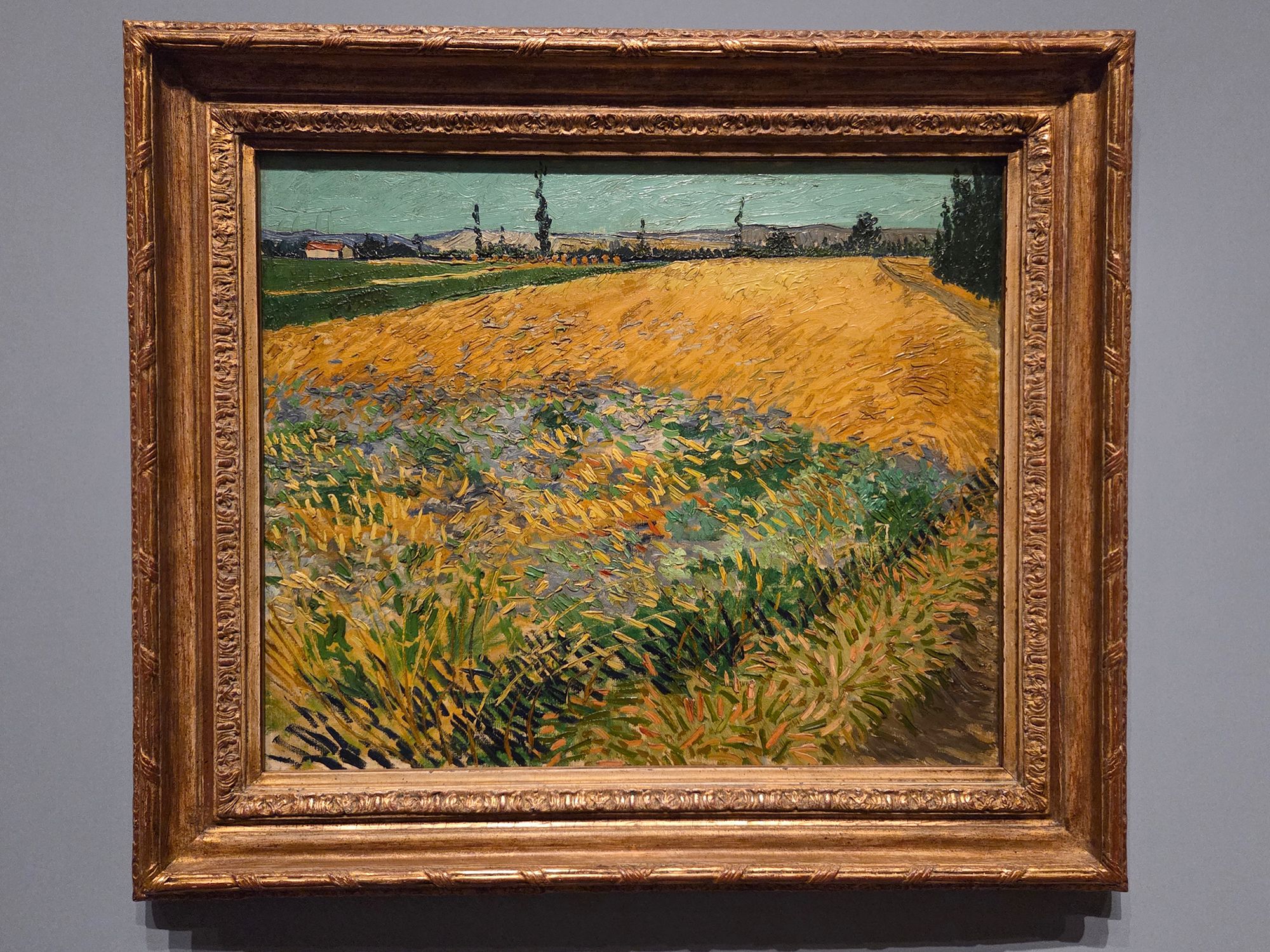
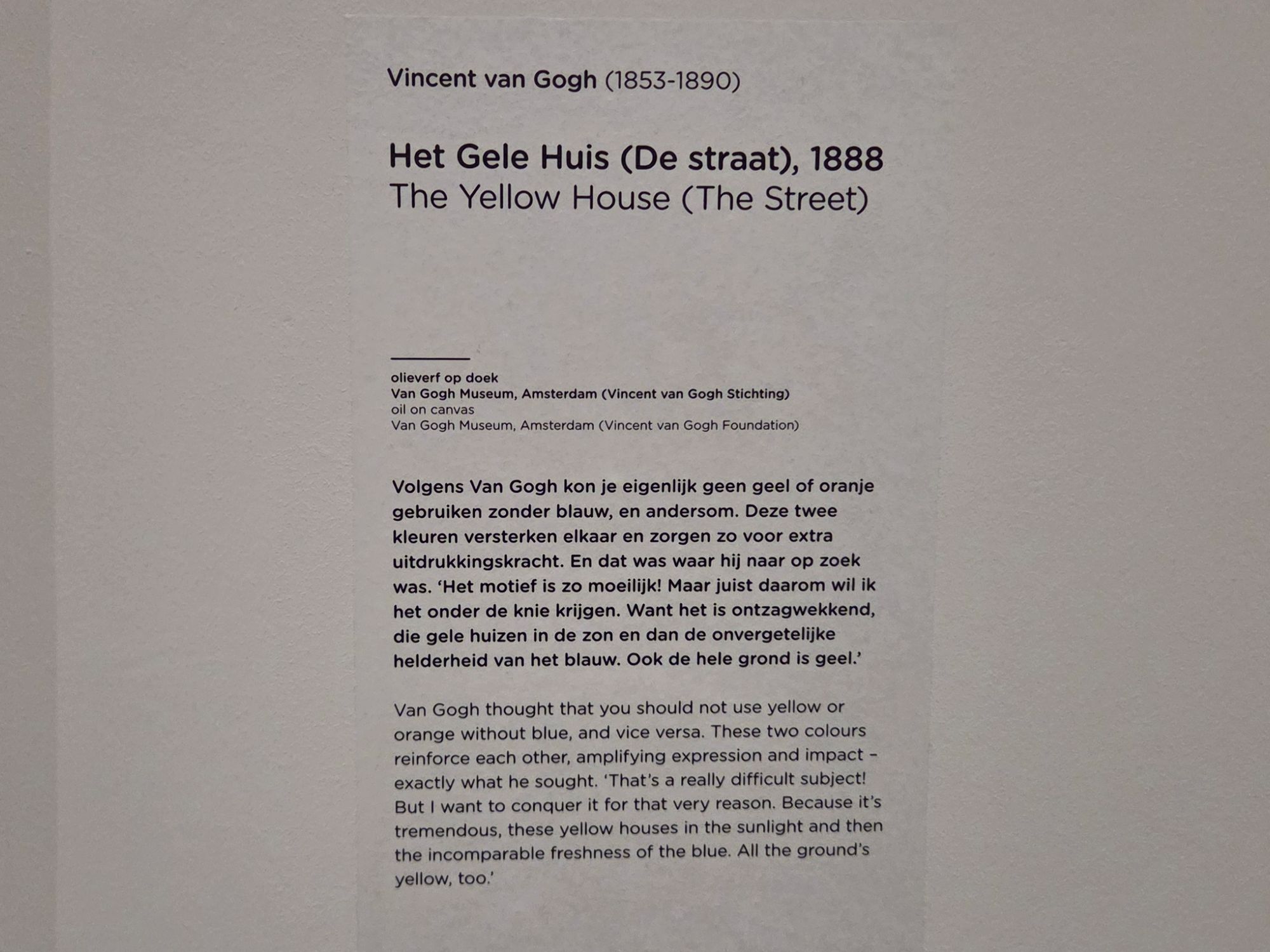
Van Gogh believed that yellow and orange became more powerful when contrasted with blue, and vice versa. He was especially fascinated by this combination in the landscapes around Arles, where sunlit yellow houses and fields stood against the brilliant blue sky, allowing him to intensify both color and emotion.
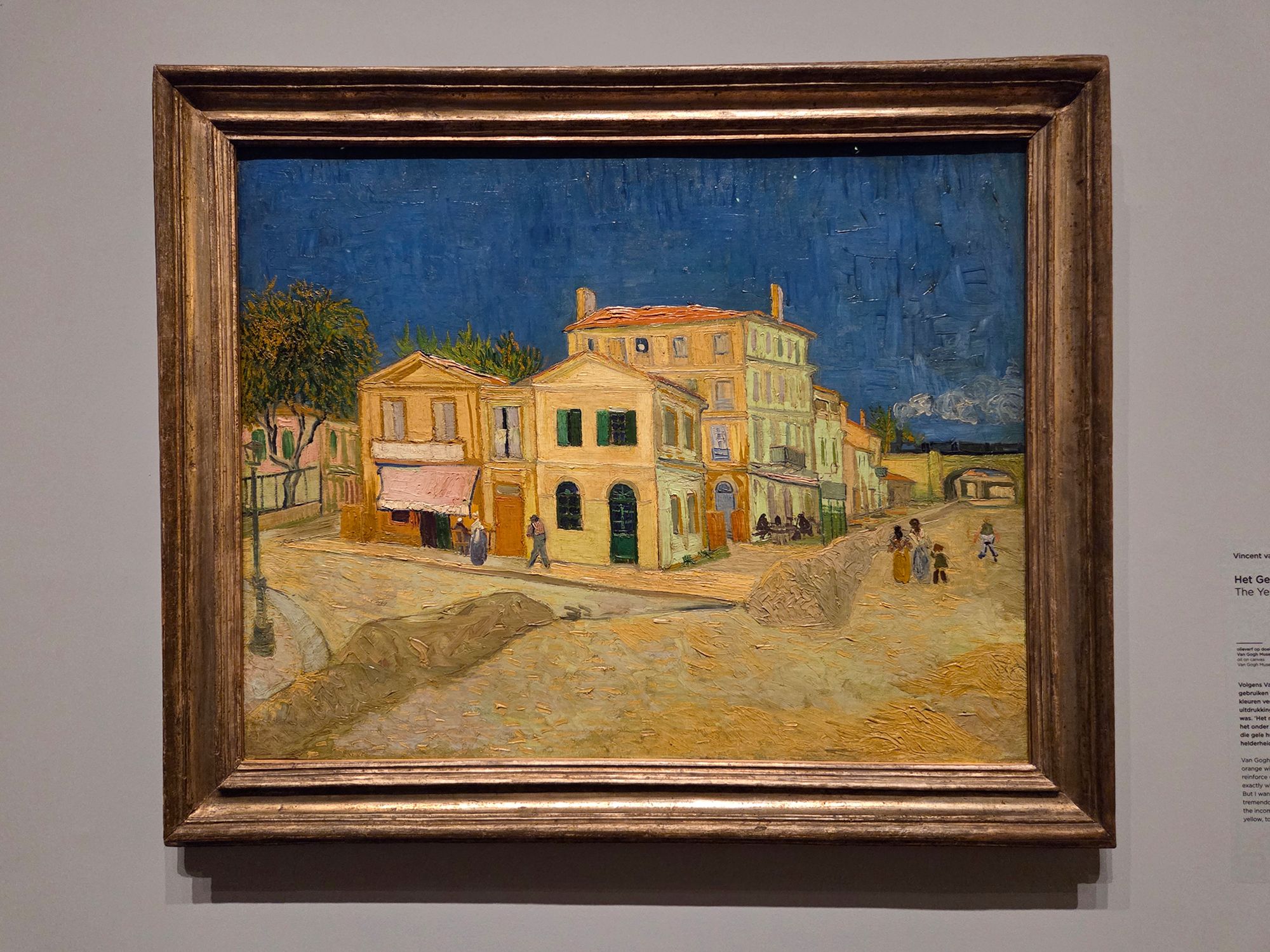
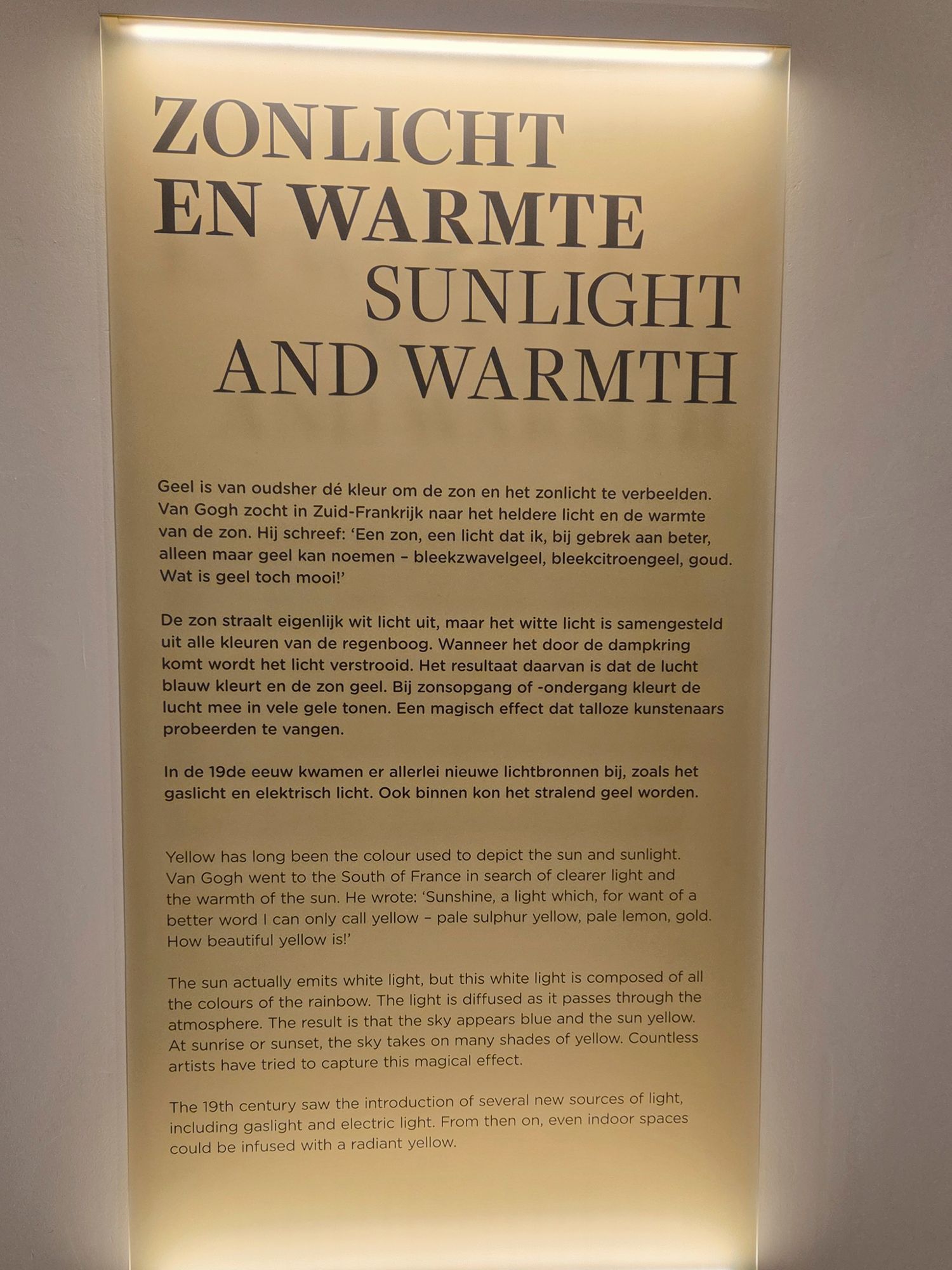
Van Gogh traveled to southern France in search of brighter light and the warmth of the sun, which he strongly associated with yellow. He was captivated by its many shades—from pale lemon to brilliant gold—and used yellow to capture the intense sunlight and warmth of Provence.
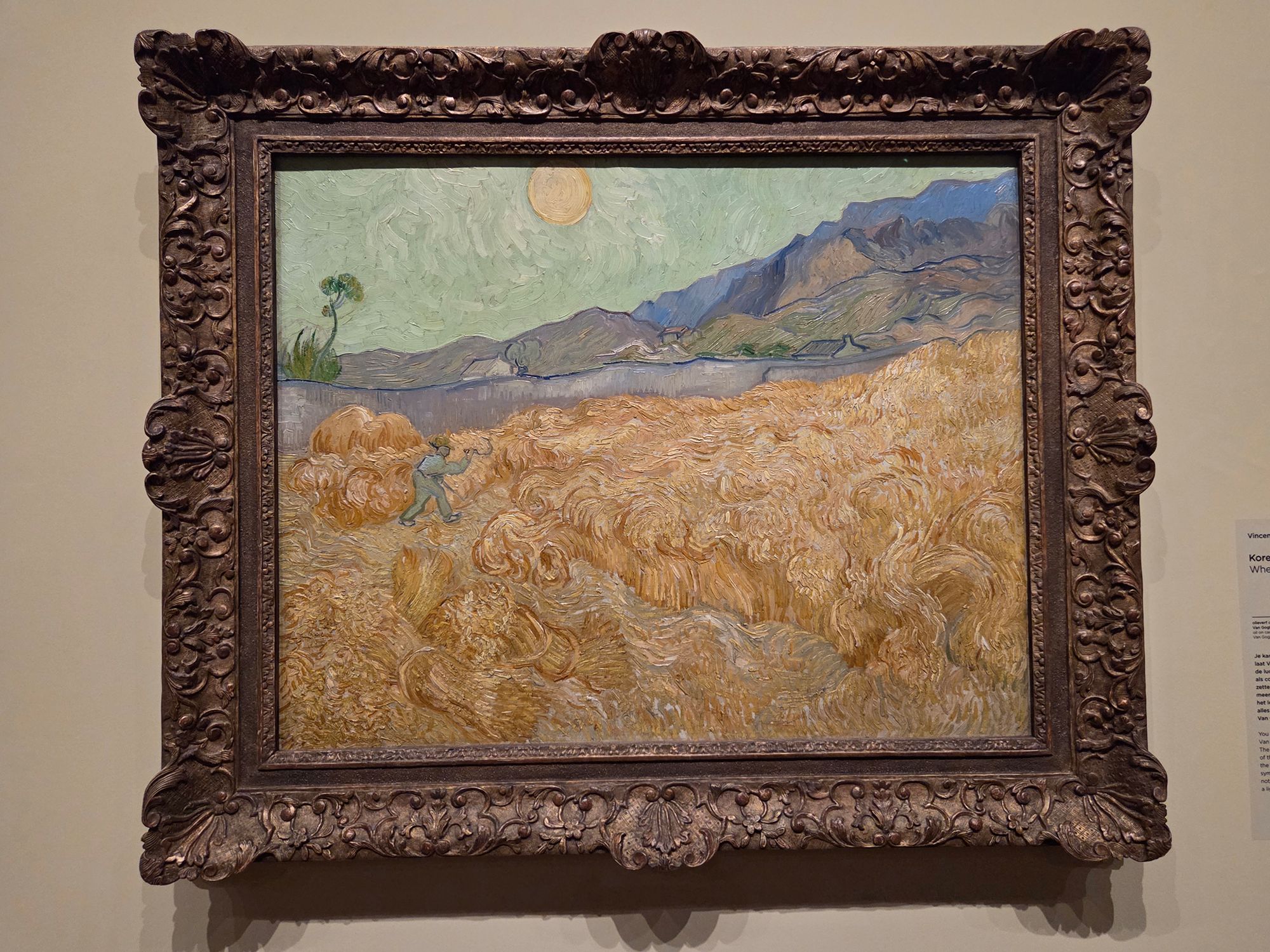
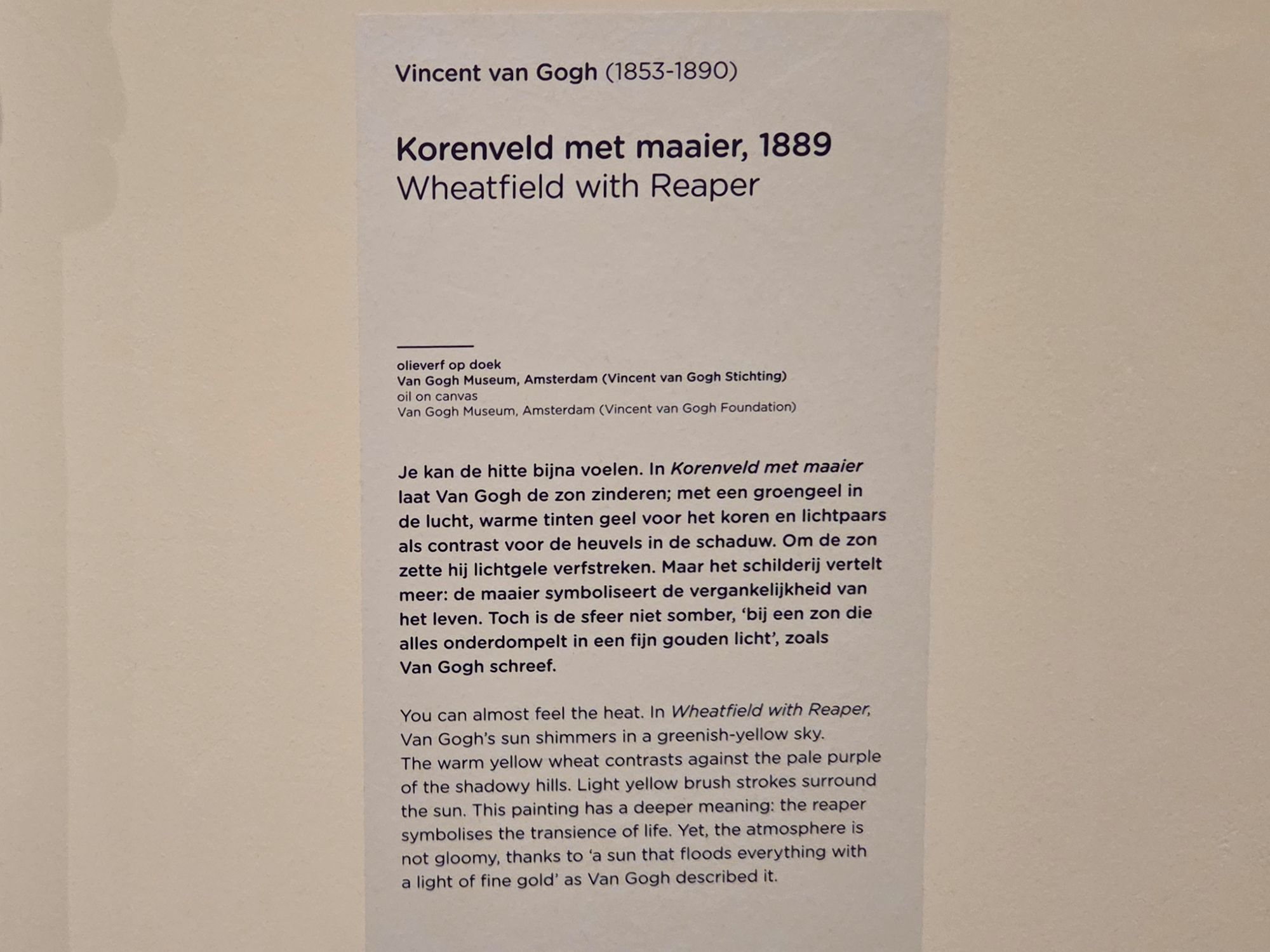
In Wheatfield with Reaper, Van Gogh used glowing yellows to convey the intense heat and sunlight of southern France. The lone reaper also carried a deeper meaning for him, symbolizing the passage and transience of life, while the golden sunlight keeps the scene peaceful rather than gloomy.
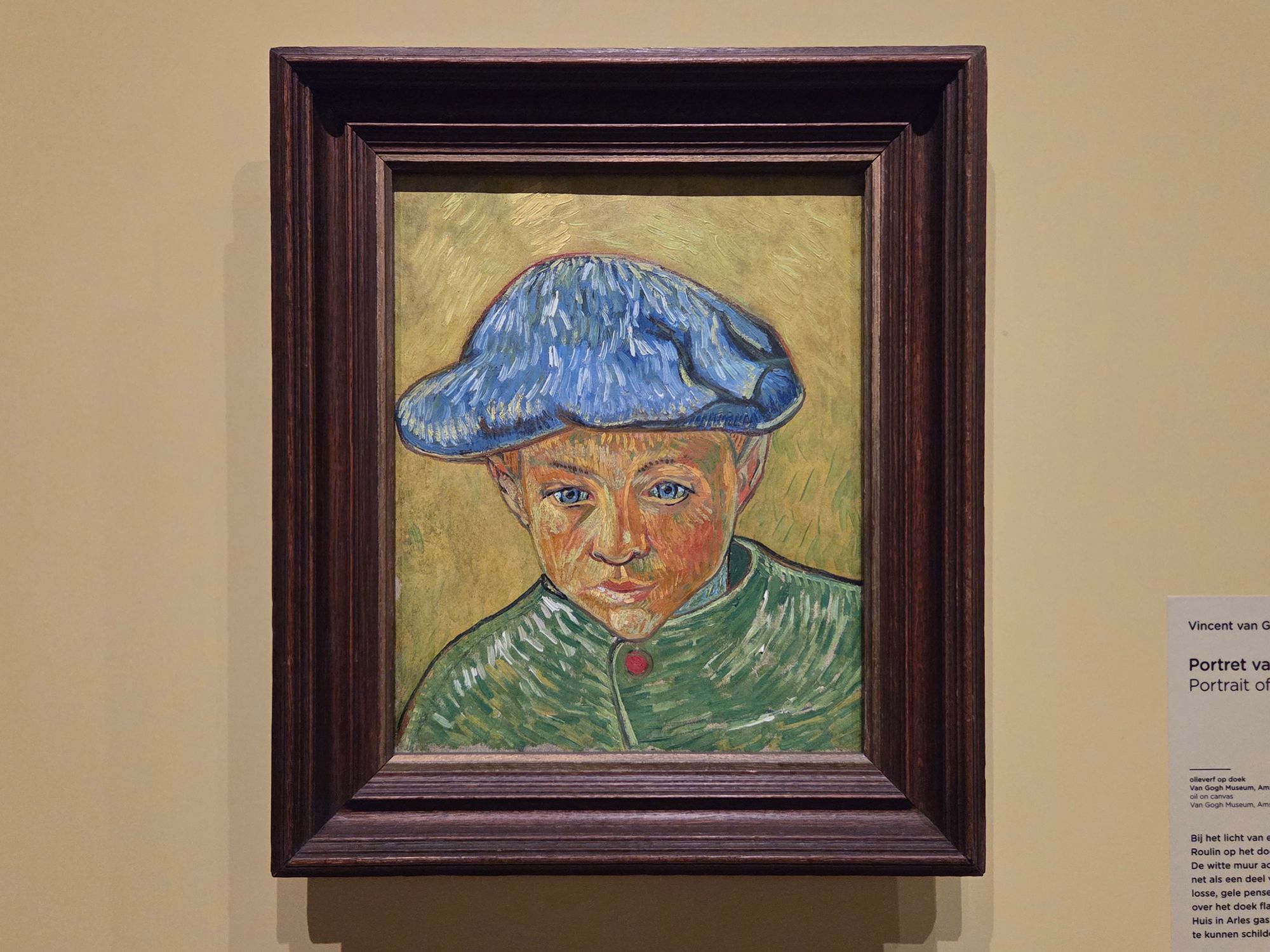
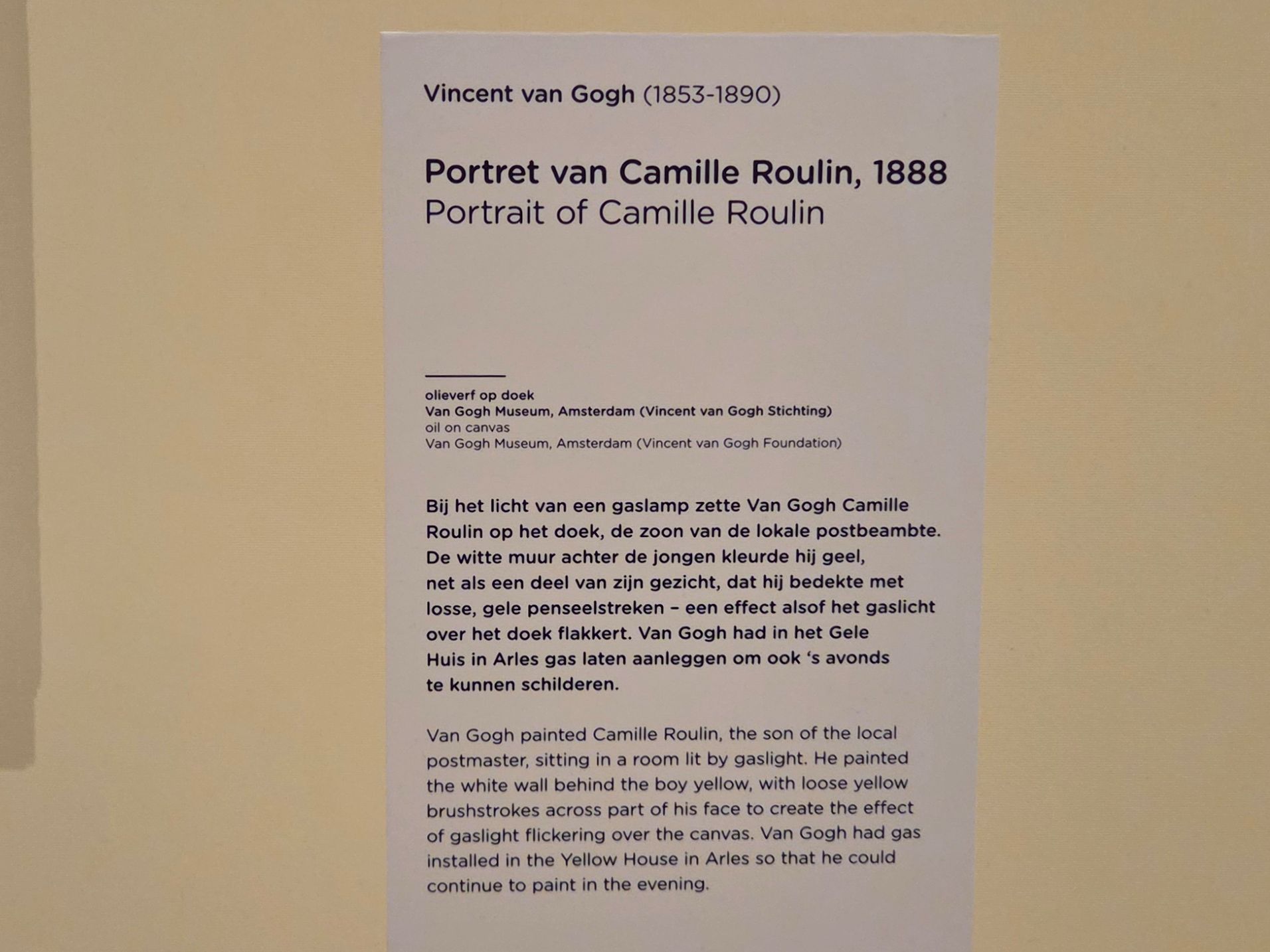
Van Gogh painted Camille Roulin, the son of the local postman, in a room illuminated by gaslight. He used a yellow wall and loose yellow brushstrokes across Camille’s face to recreate the flickering glow of the gaslight. Van Gogh even had gas installed in the Yellow House in Arles so he could continue painting at night.
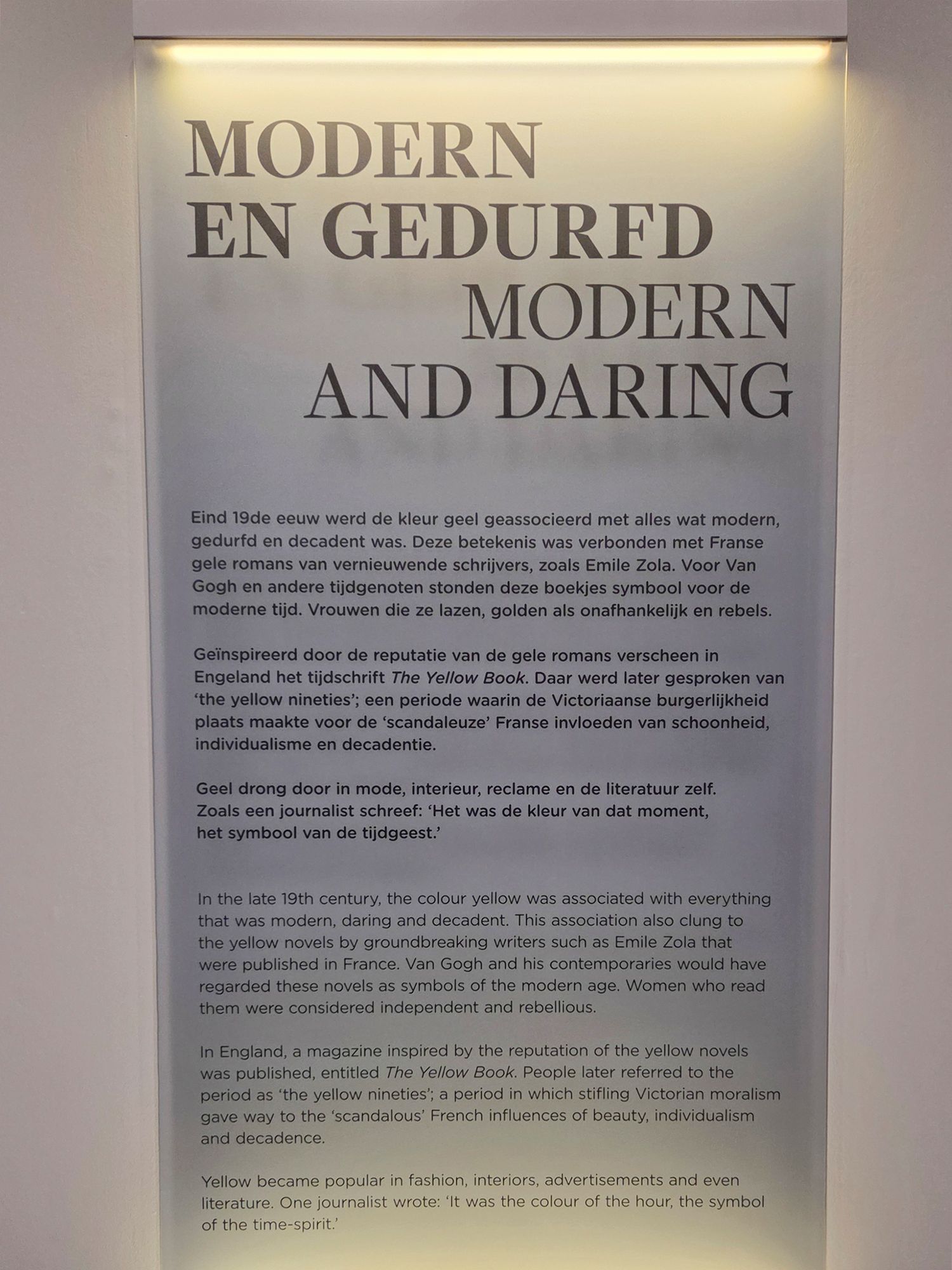
In the late 19th century, yellow became associated with modernity, daring, and even decadence. Yellow-covered novels by writers such as Émile Zola, and later the British magazine The Yellow Book, helped make the color a symbol of a new and rebellious age. By the 1890s, yellow had become fashionable in art, literature, clothing, interiors, and advertising—“the color of the hour.”
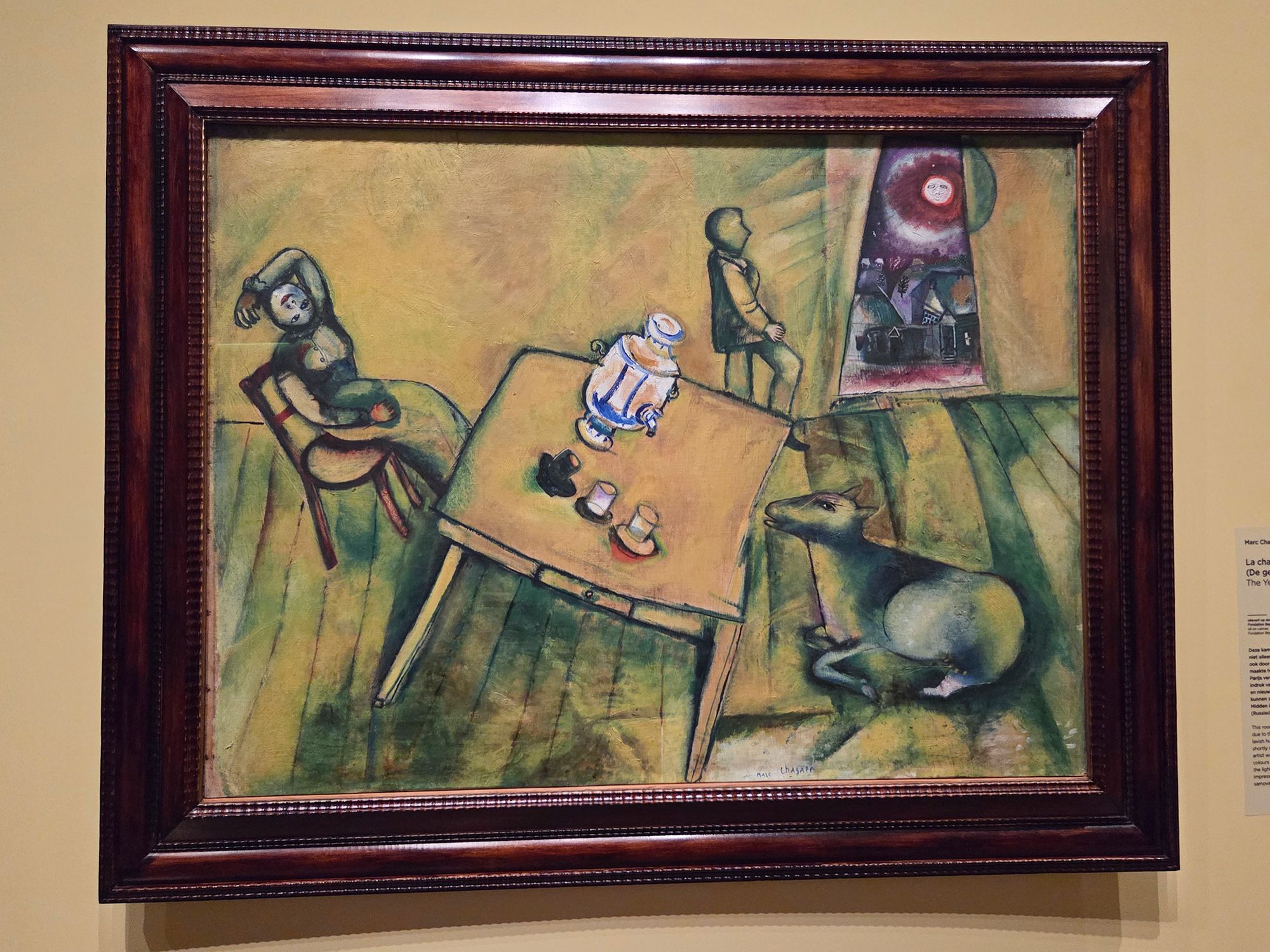
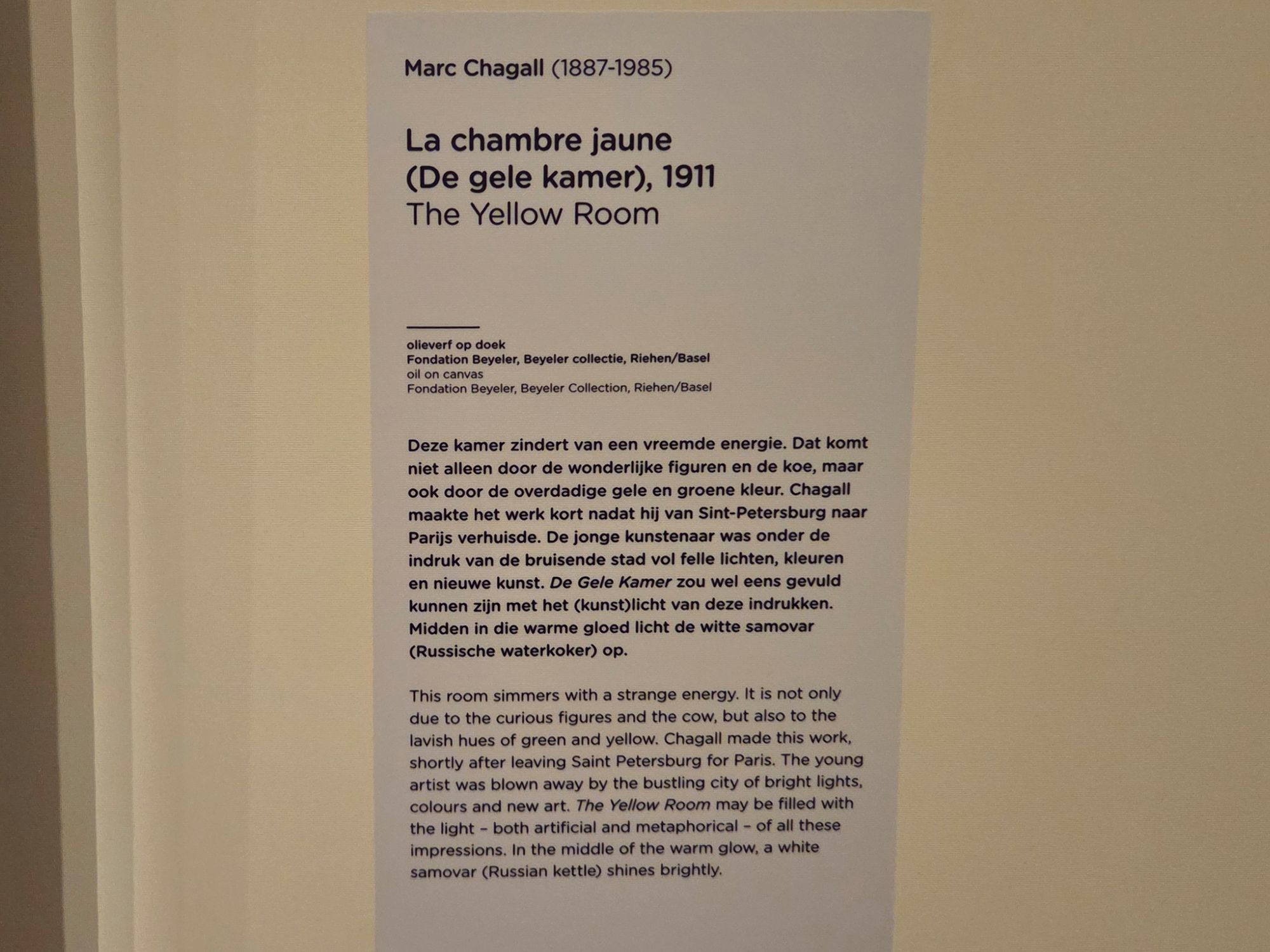
In The Yellow Room, Marc Chagall used brilliant yellows and greens to create a strange, dreamlike atmosphere. Painted shortly after he moved from Saint Petersburg to Paris, the work reflects his excitement at encountering the city’s bright lights, vivid colors, and modern art, while retaining the imaginative imagery of his Russian background.
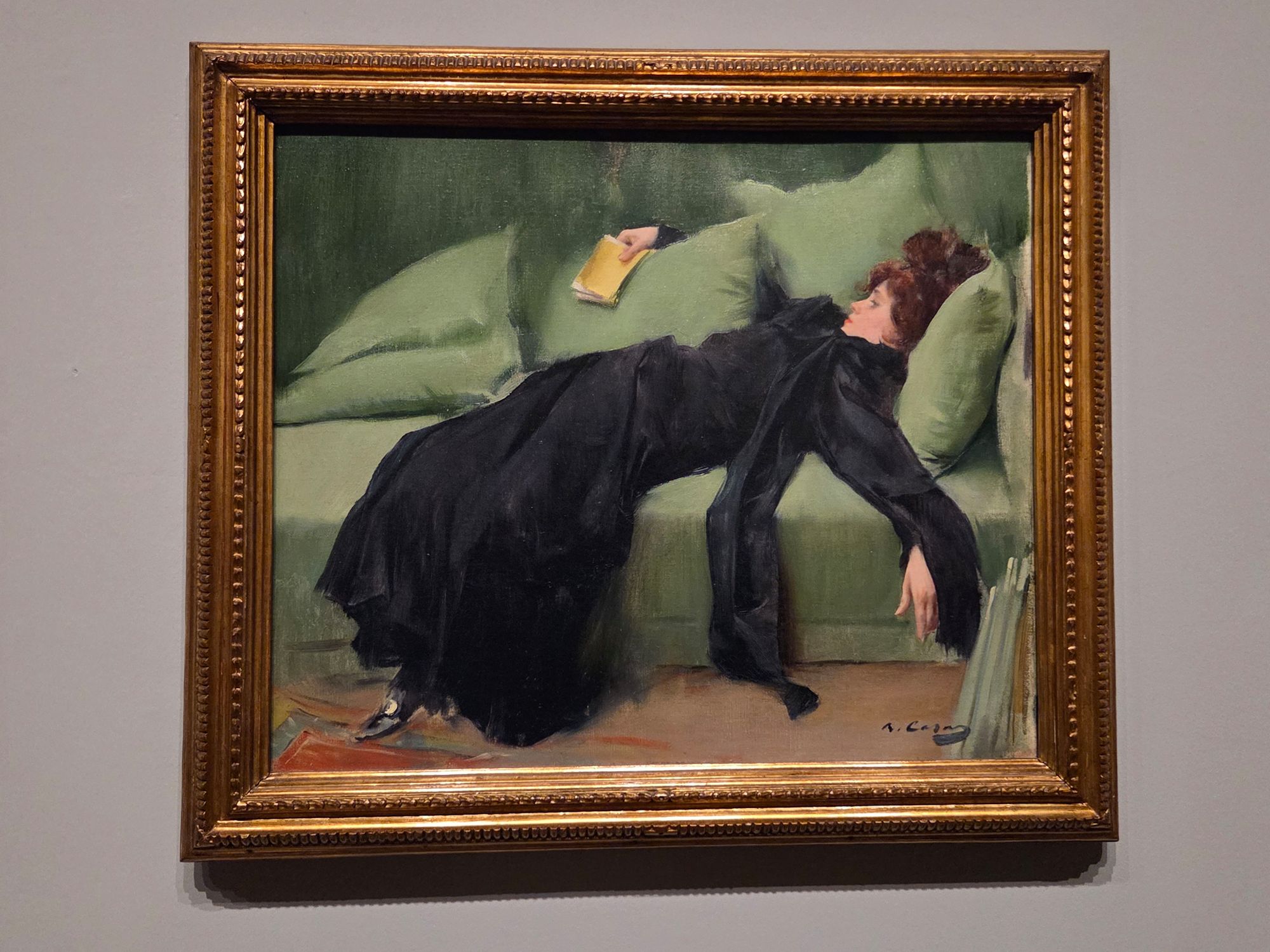
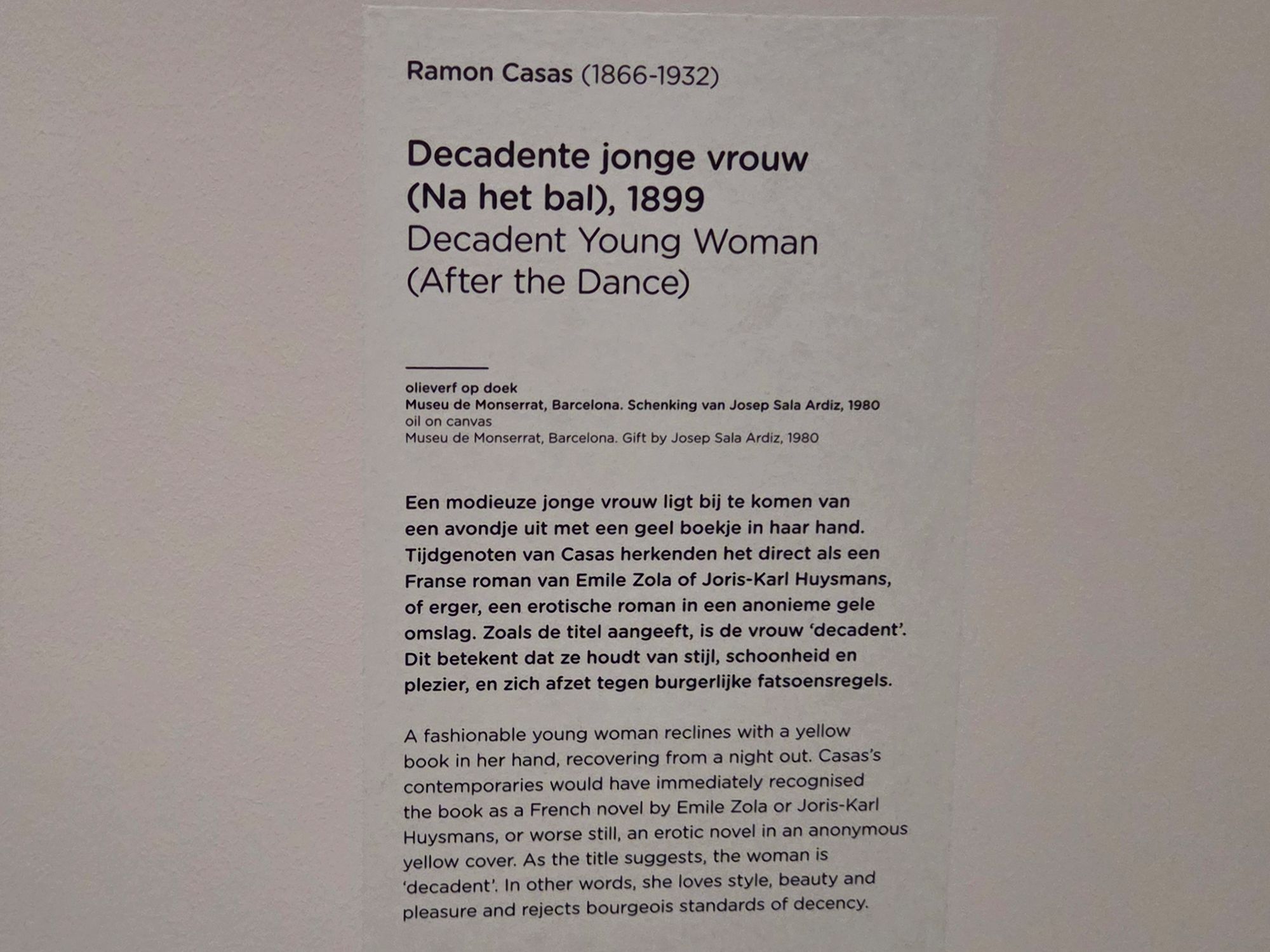
This painting by Ramon Casas shows a fashionable young woman reclining with a yellow-covered book, which contemporary viewers would have associated with daring or even scandalous literature. The woman’s relaxed pose and choice of reading present her as modern, independent, and rebellious, rejecting the conventional standards of respectable society.
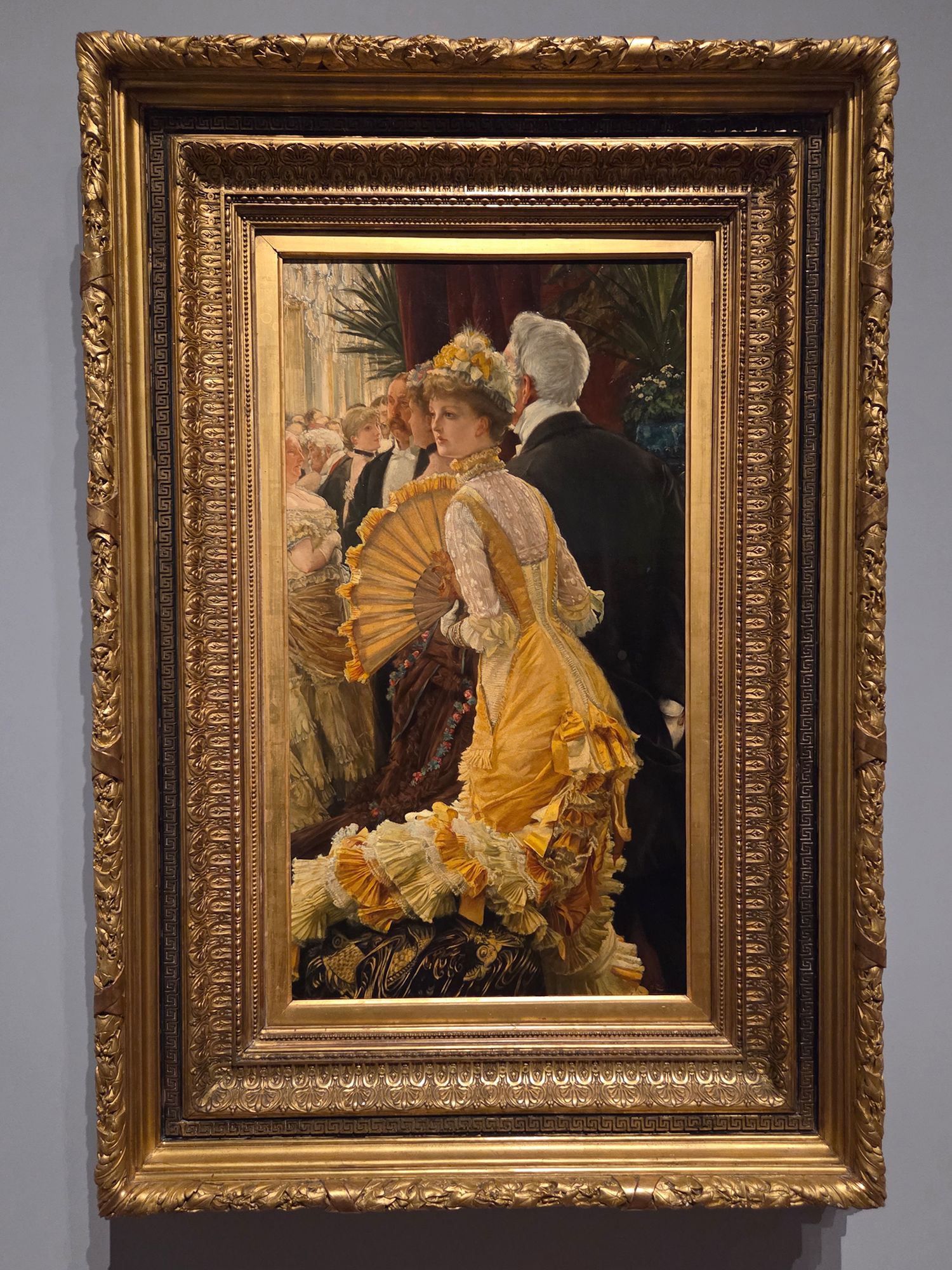
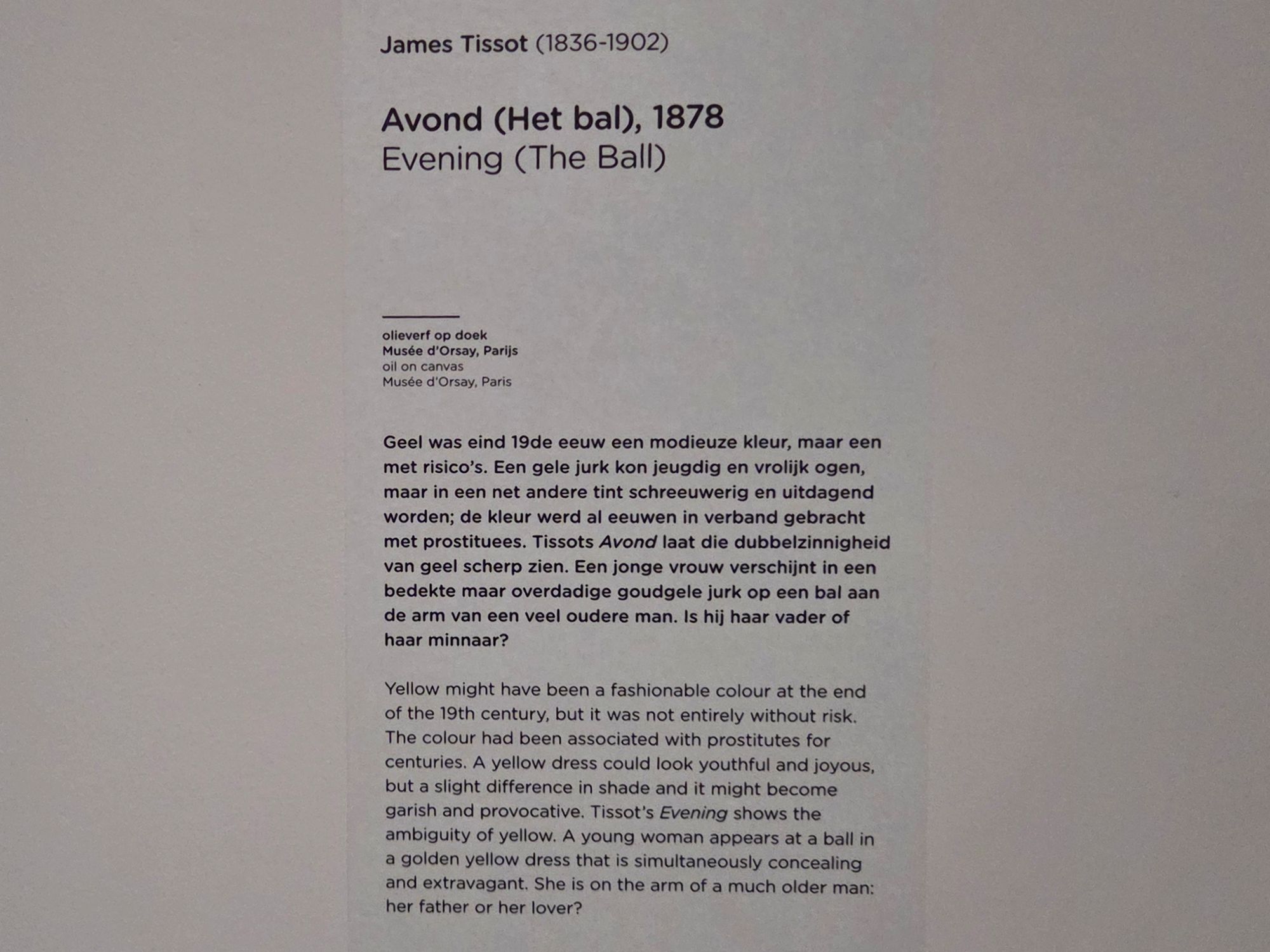
In the late 19th century, yellow could suggest both fashionable elegance and something provocative or scandalous. In James Tissot’s Evening, a young woman wears a striking golden-yellow gown while accompanied by a much older man. The scene deliberately leaves their relationship ambiguous—is he her father or her lover?
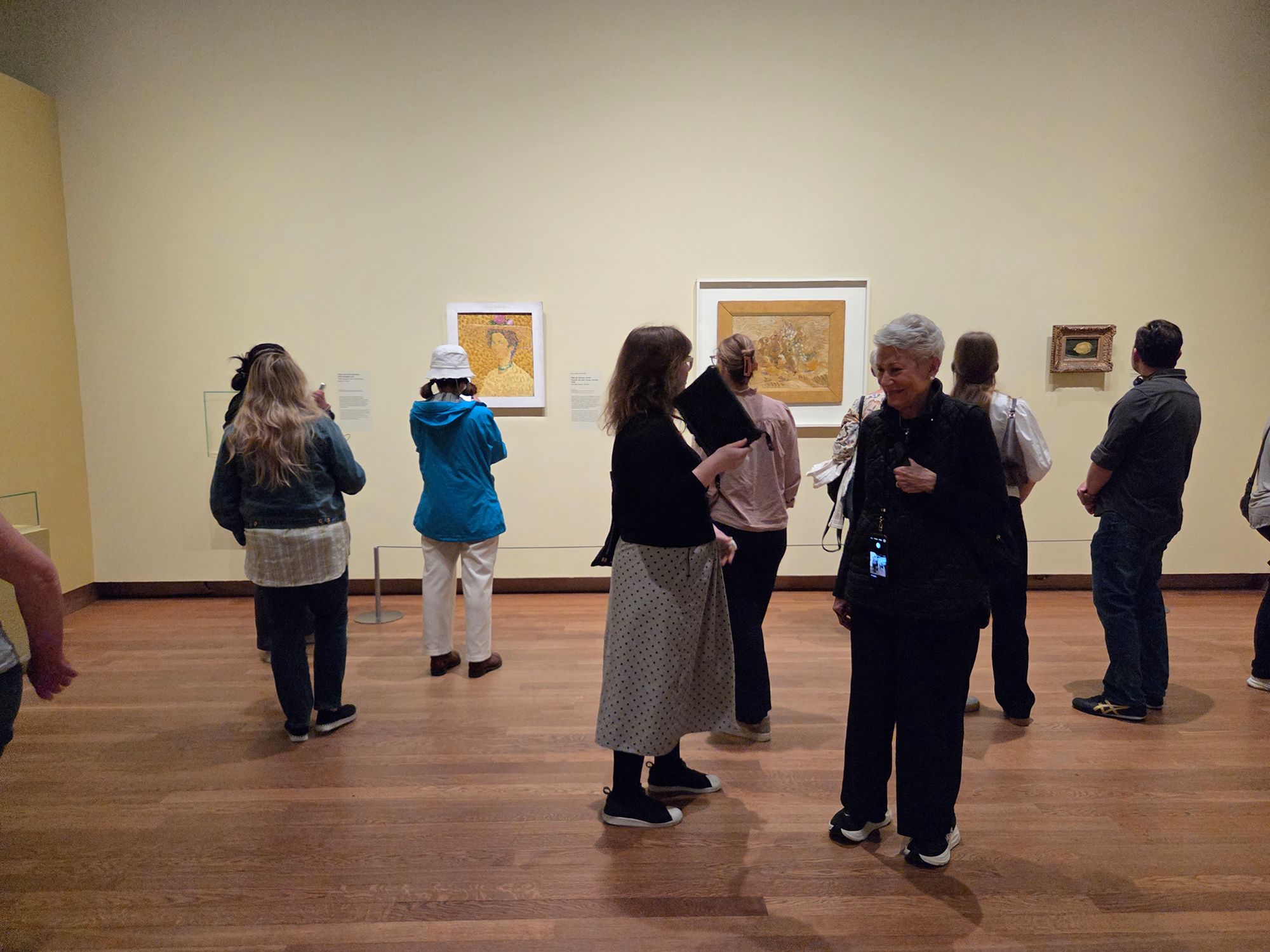
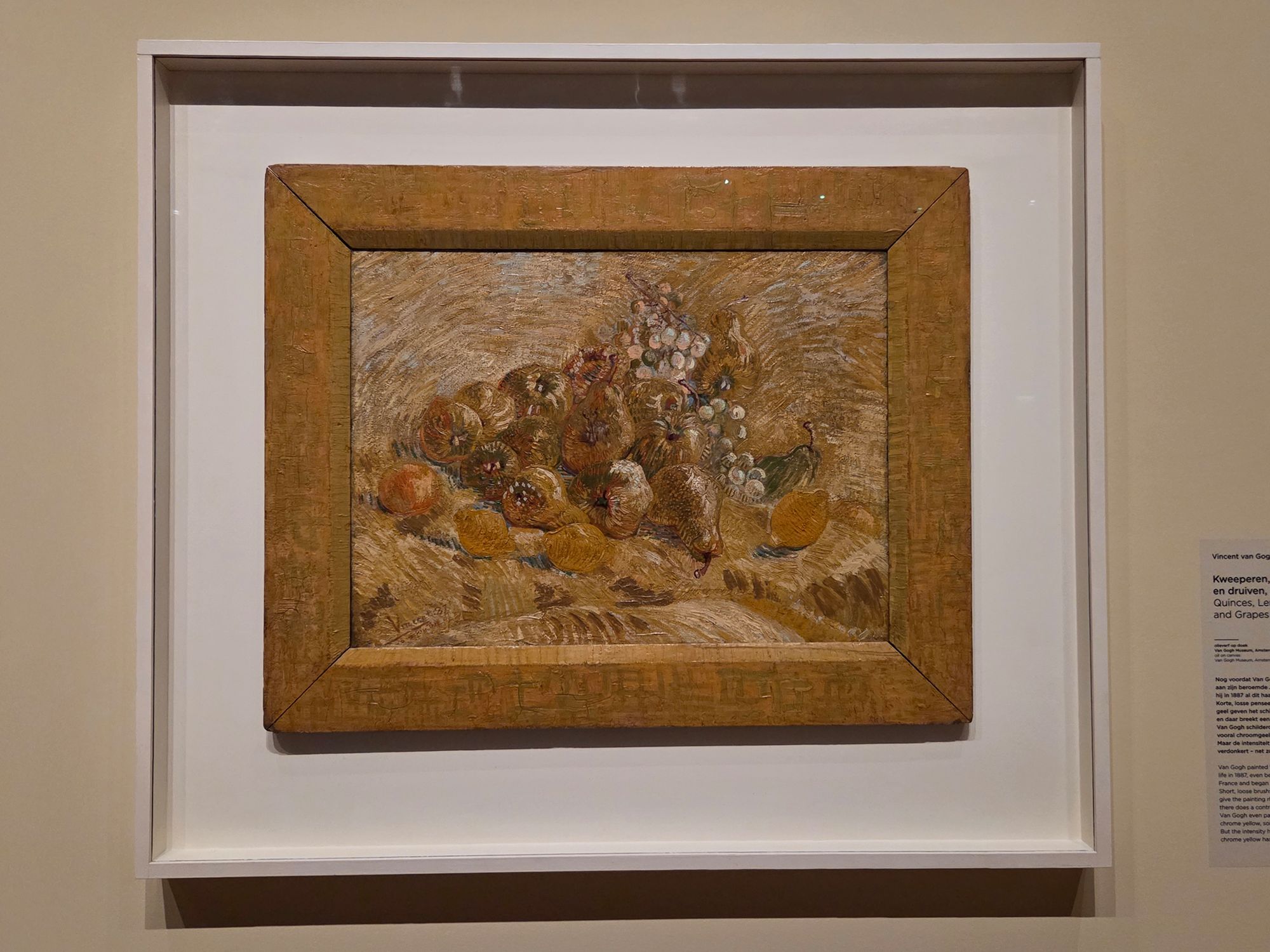
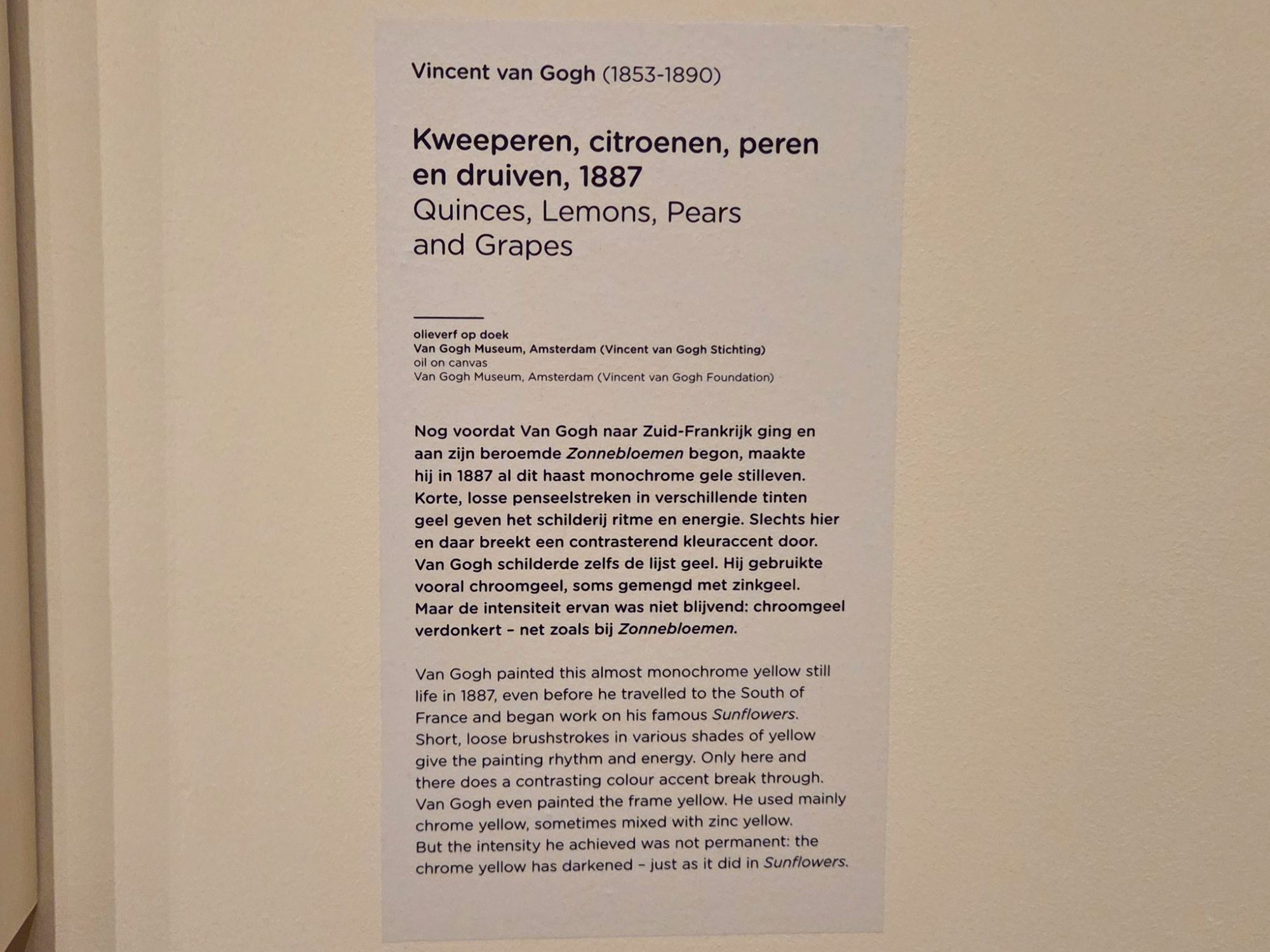
Van Gogh had access to a growing range of new yellow pigments, from natural yellow ochre to bright cadmium and chrome yellows. Influenced by contemporary color theory, he often paired yellow with its contrasting colors, especially blue and purple, making each appear more intense. He also experimented with different shades of yellow together, sometimes creating paintings that were almost entirely variations of a single color.
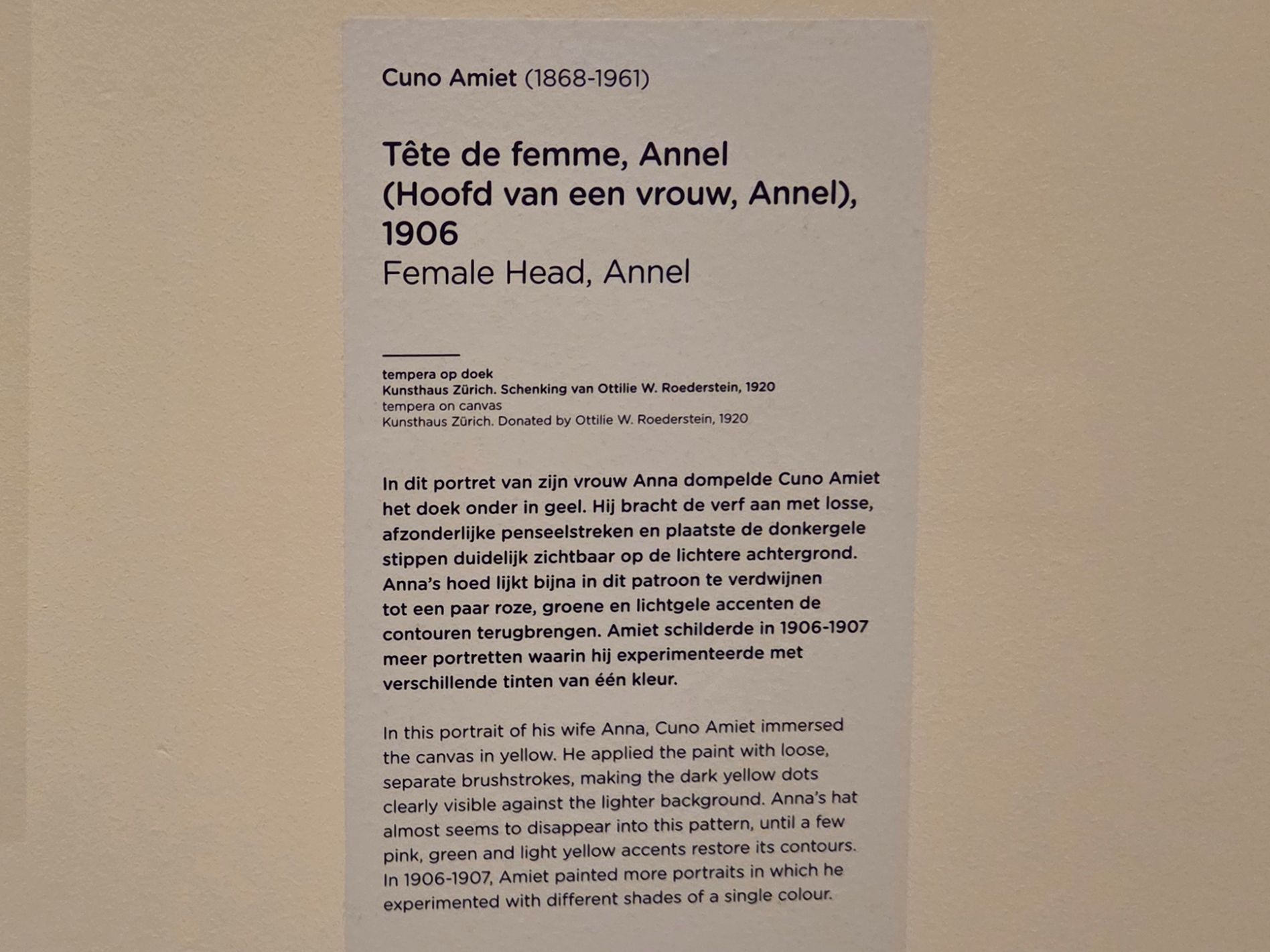
In this portrait of his wife Anna, Swiss artist Cuno Amiet experimented almost entirely with shades of yellow. Using loose, separate brushstrokes and subtle touches of pink and green, he allowed her figure to almost dissolve into the yellow background, creating a striking study of color rather than a conventional portrait.
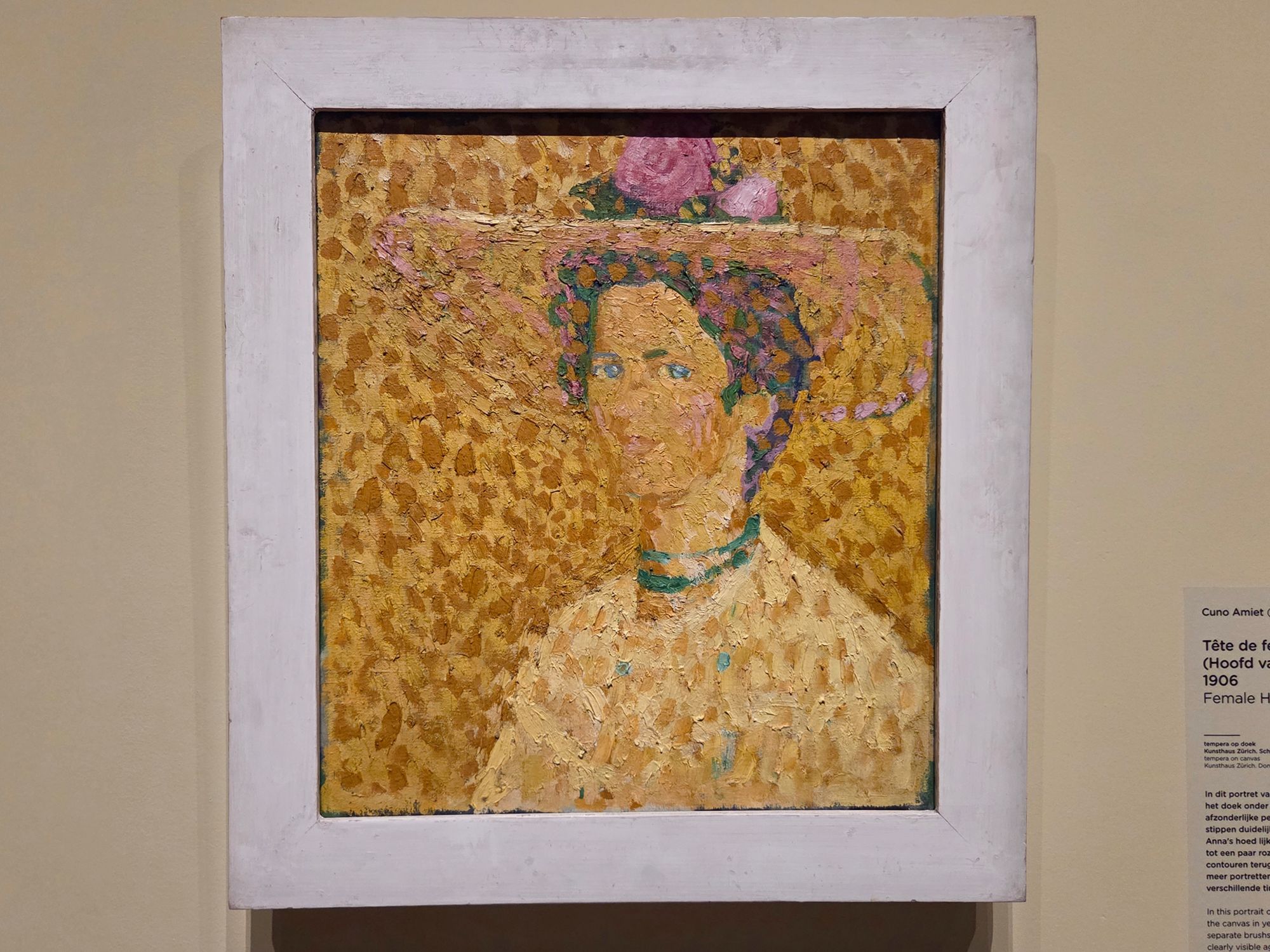
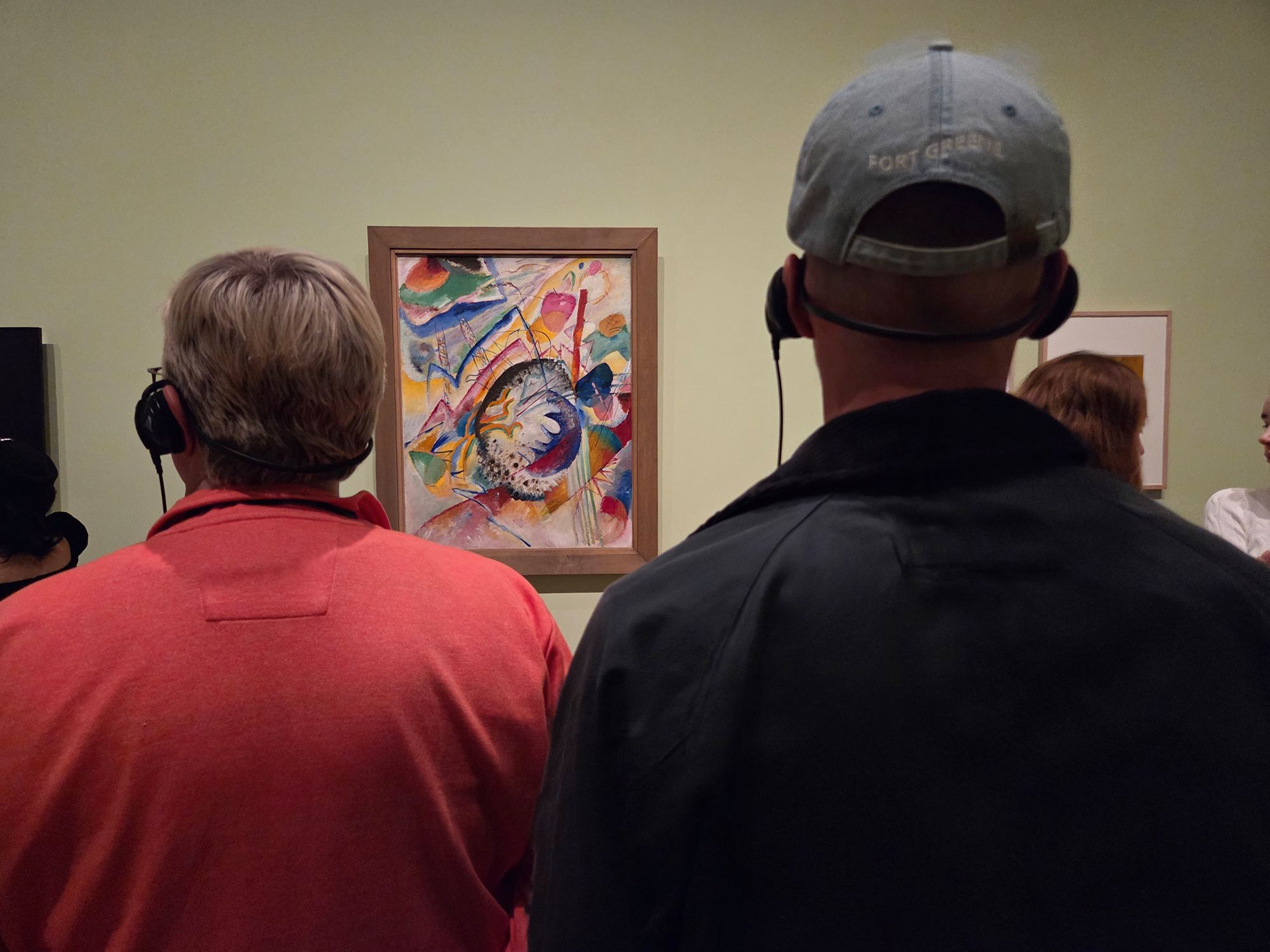
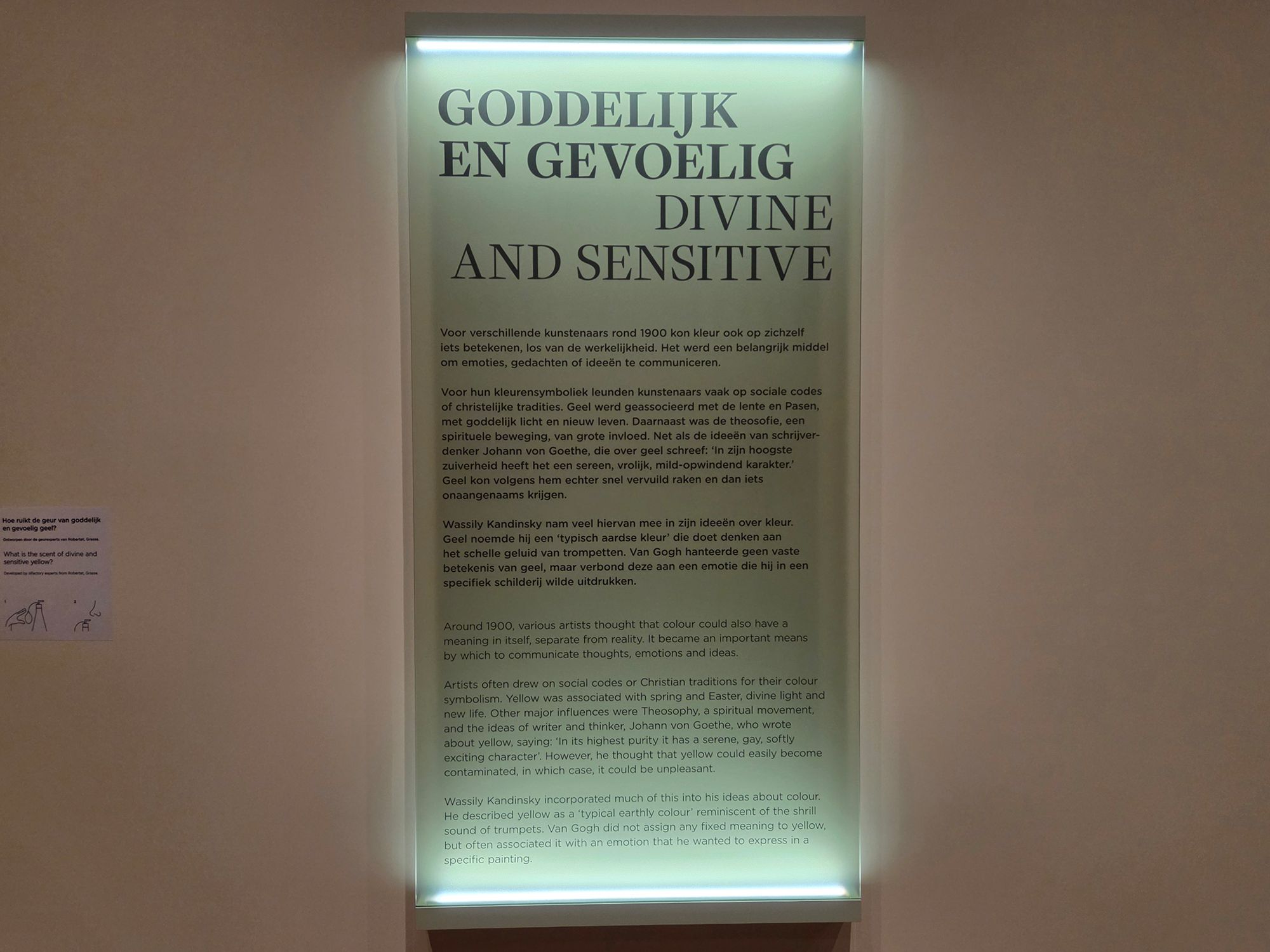
Around 1900, artists increasingly believed that color could express emotions and ideas independently of reality. Yellow could symbolize spring, divine light, and new life, but could also suggest something unpleasant or disturbing. Artists such as Wassily Kandinsky developed these ideas further, while Van Gogh often used yellow to convey a particular emotion or expressive mood in his paintings.
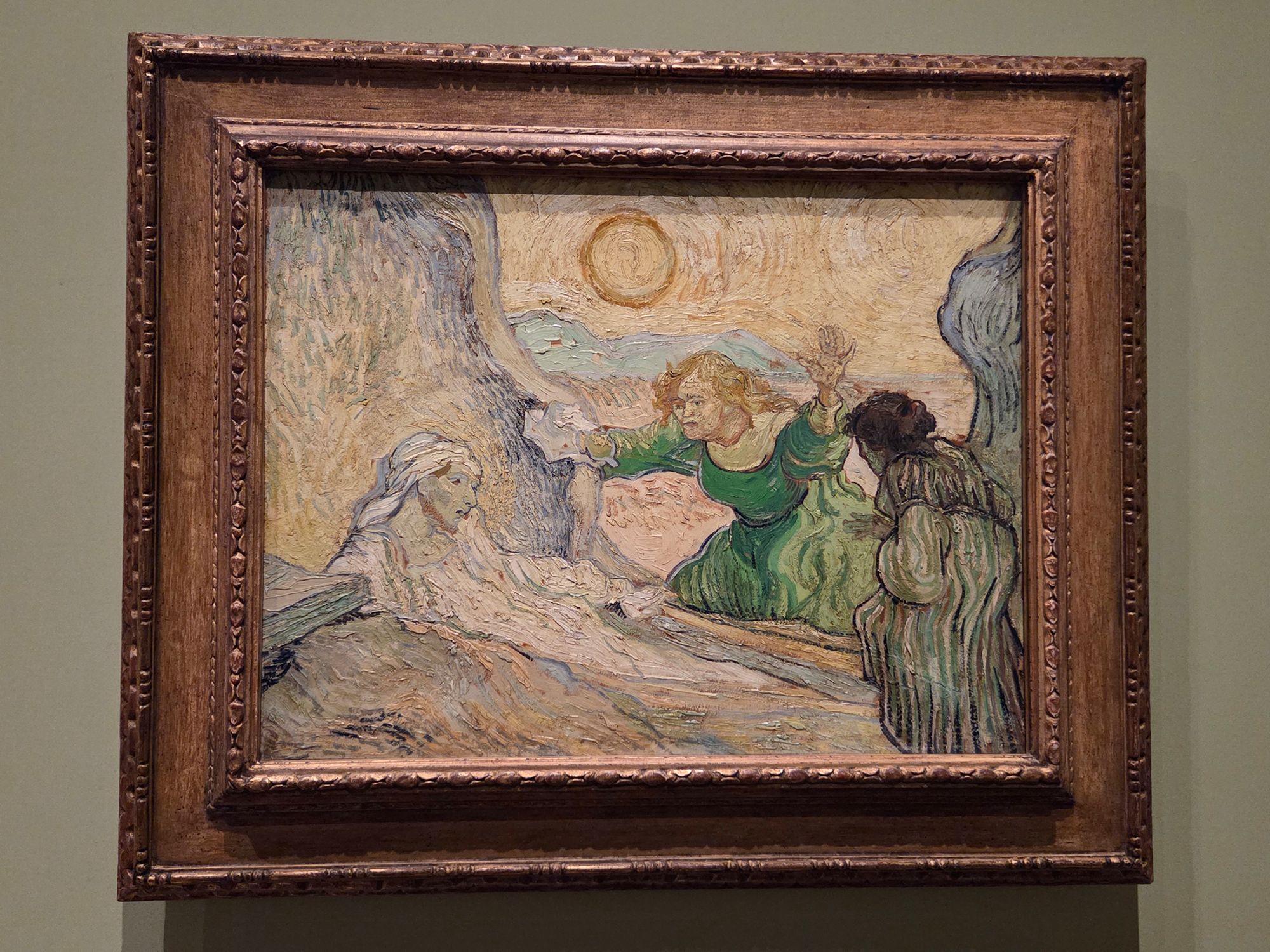
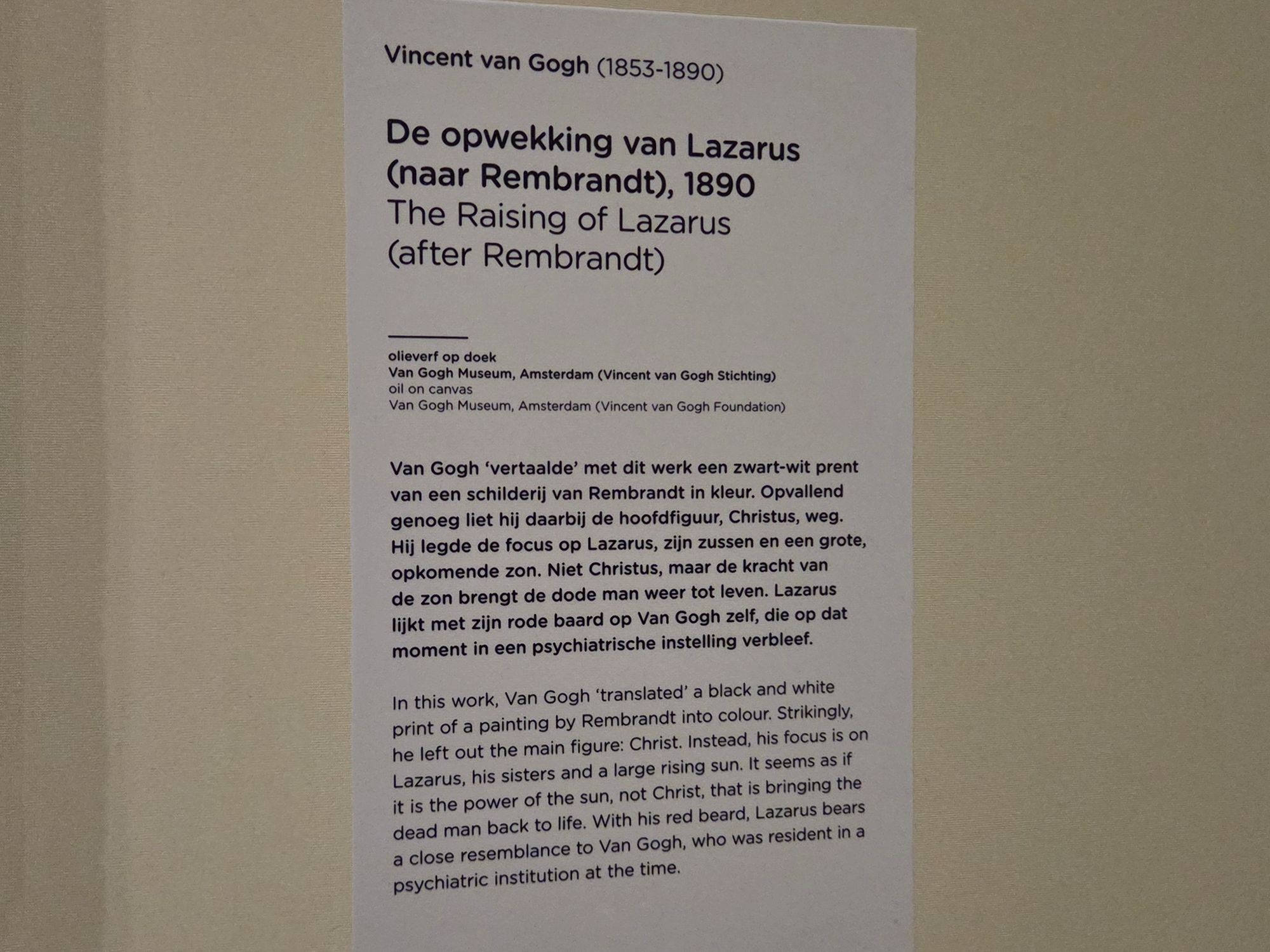
In this painting, Van Gogh transformed a black-and-white image of Rembrandt’s Raising of Lazarus into color, but surprisingly left out Christ. Instead, the large rising sun seems to bring Lazarus back to life, giving sunlight a powerful symbolic role. Van Gogh even gave Lazarus a red beard resembling his own, perhaps identifying personally with the figure during his stay at the psychiatric hospital.