Agra Fort, Agra, India
Agra Fort is a massive 16th-century Mughal fortress that served as both a royal residence and a military stronghold. 1249
Agra Fort: Agra Fort, Rakabganj, Agra, Uttar Pradesh 282003, India
Date Picture Taken: Feb, 2026
Agra Fort is one of the most important monuments of the Mughal Empire. Although a fort existed on the site earlier, the present complex was largely built by Emperor Akbar beginning in 1565, using massive walls of red sandstone. Later Mughal emperors, particularly Shah Jahan, added elegant palaces and halls made of white marble.
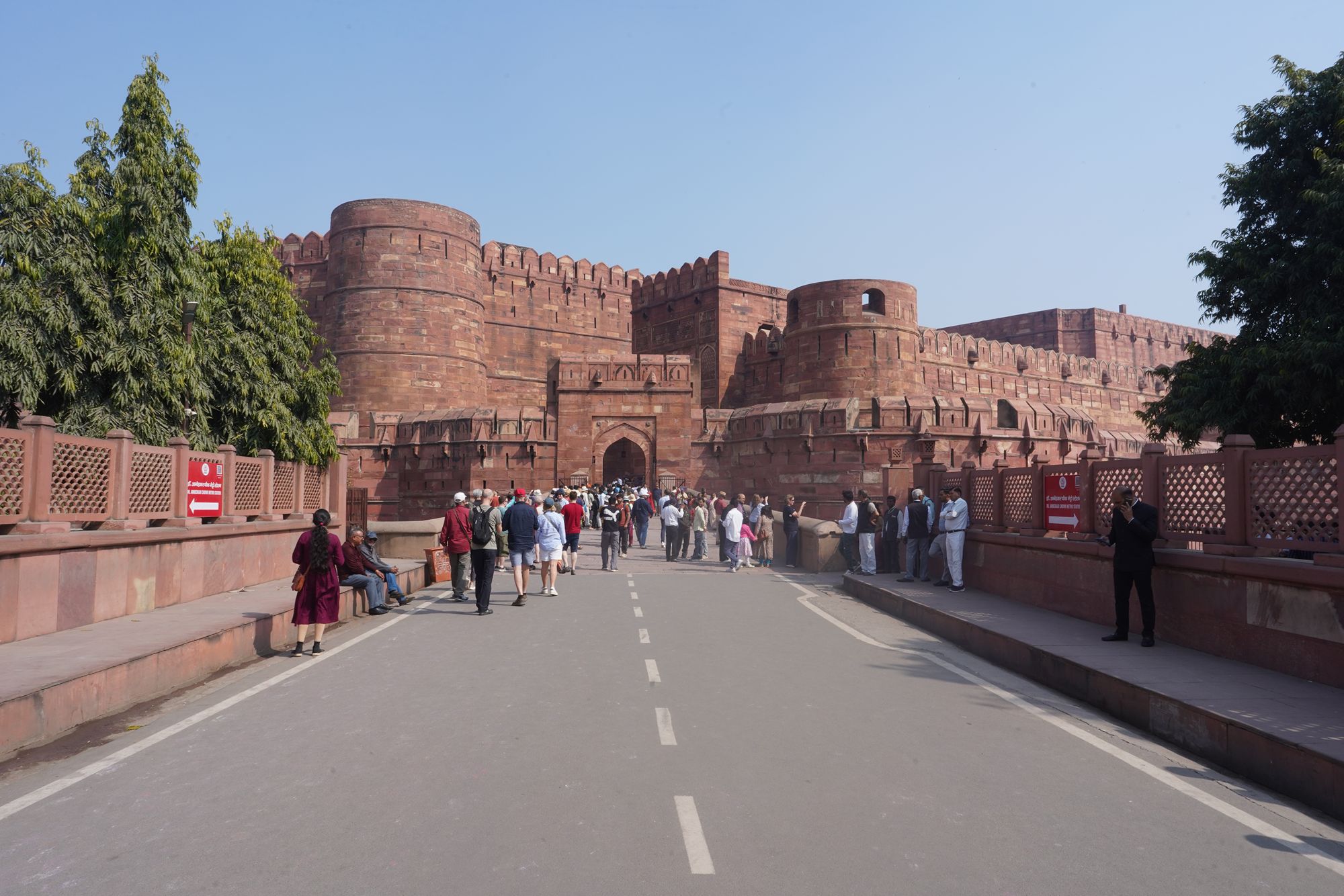
The fort served not simply as a military fortress but also as an imperial palace and center of government. Within its enormous walls are palaces, audience halls, courtyards, mosques, and gardens. Among its notable structures are Jahangiri Mahal, Diwan-i-Am (Hall of Public Audience), Diwan-i-Khas (Hall of Private Audience), and Musamman Burj.
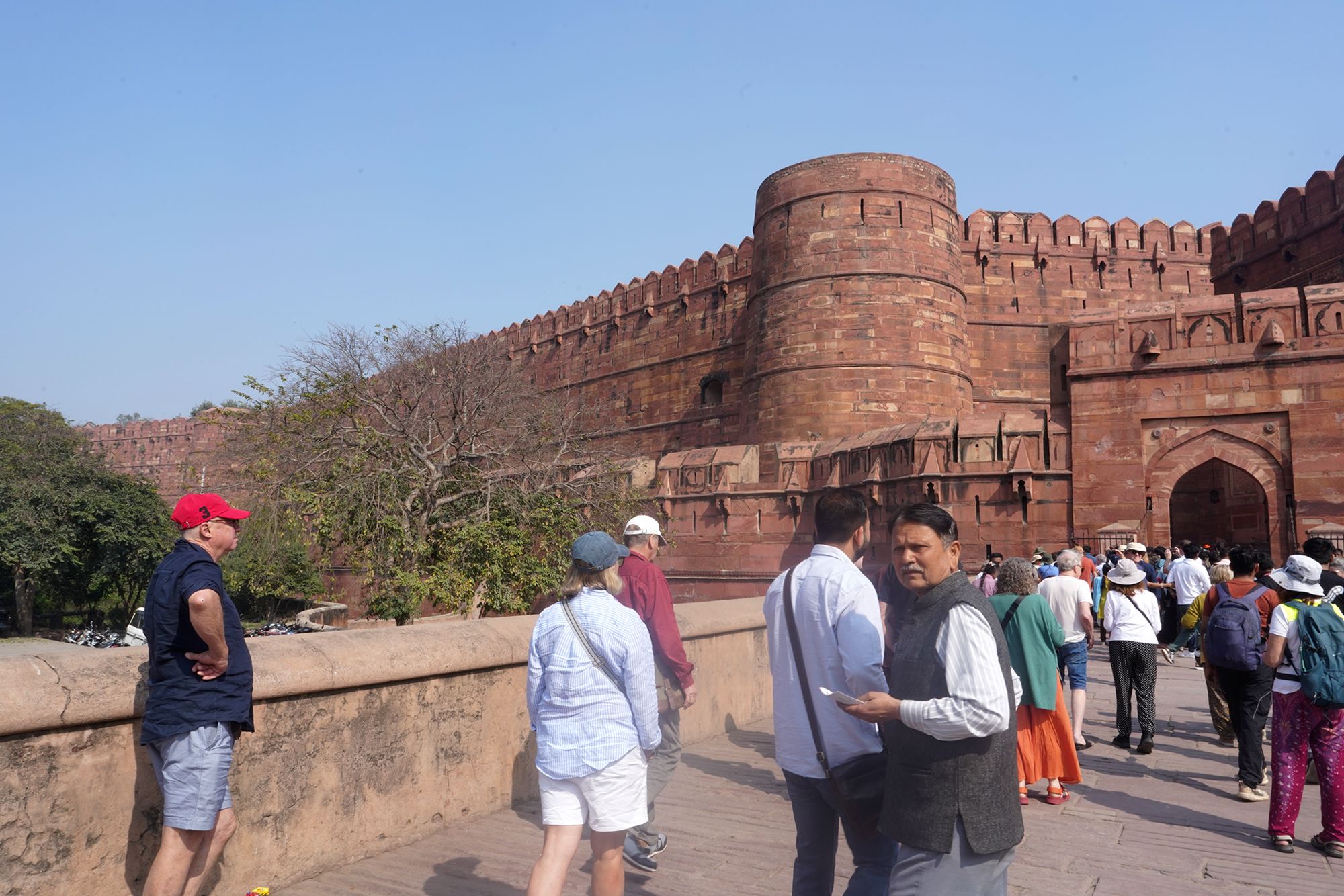
Agra Fort is also closely connected with Shah Jahan, the emperor who built the Taj Mahal. After his son Aurangzeb seized power in 1658, Shah Jahan spent the final years of his life confined at Agra Fort. Tradition associates his confinement with Musamman Burj, from which the Taj Mahal can be seen across the Yamuna River.
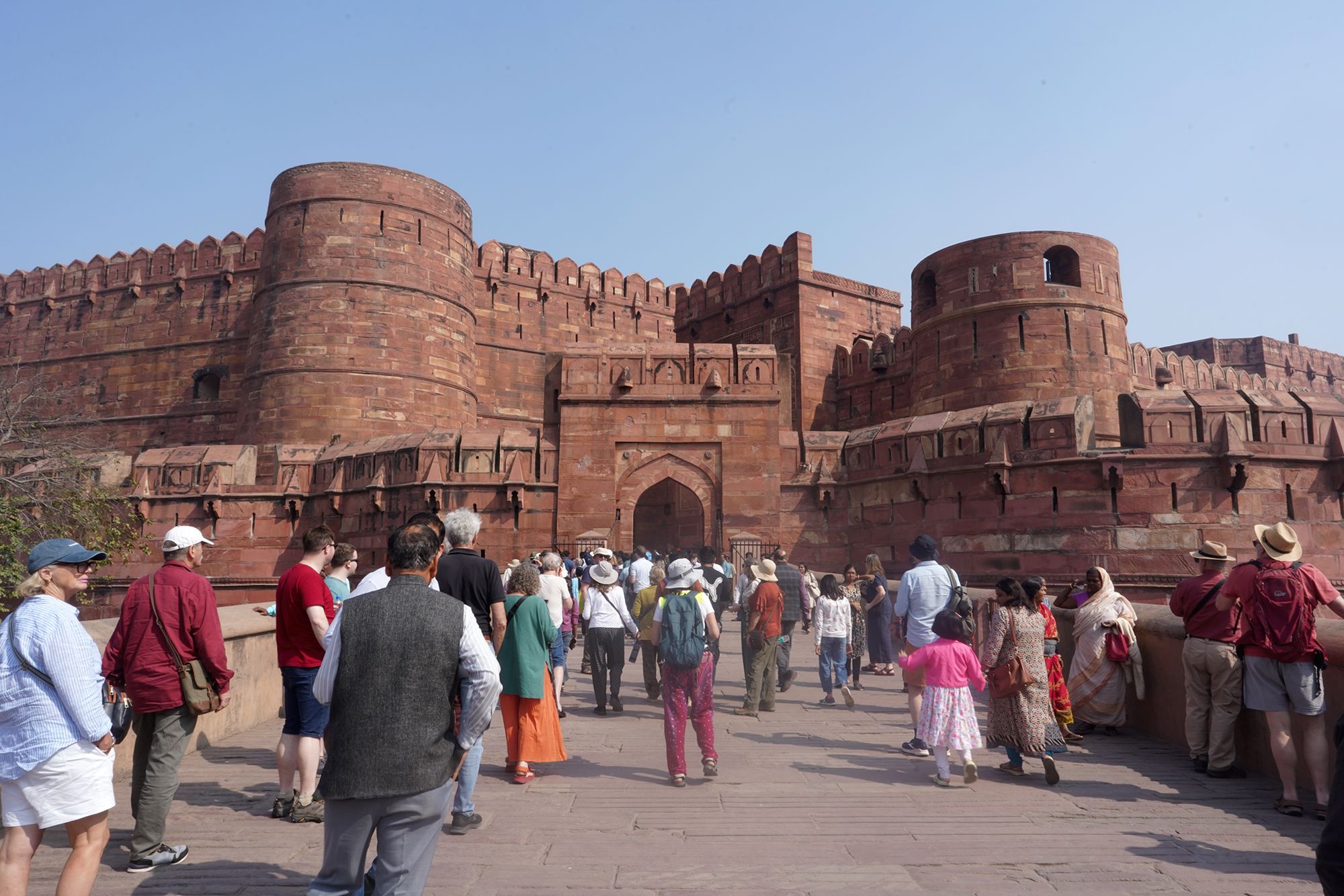
The fort was designated a UNESCO World Heritage Site in 1983 and remains one of the finest surviving examples of Mughal architecture.
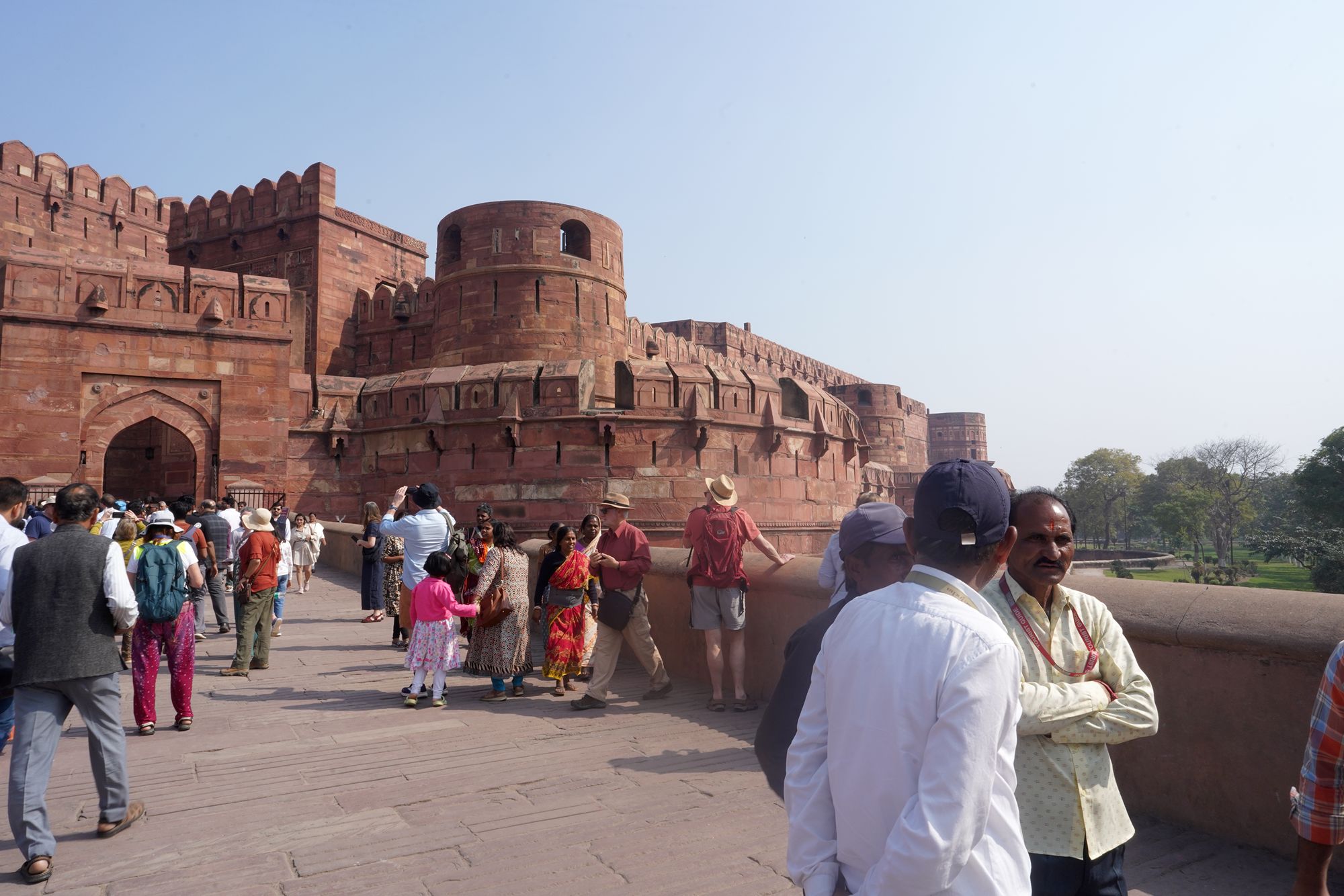
This was the first day of my 15-day guided group tour through Rajasthan and northern India. The tour began in New Delhi, traveled through many cities and historic sites, and eventually returned to New Delhi. Our first destination was Agra, home to two of India’s most famous landmarks—the Agra Fort and the Taj Mahal.
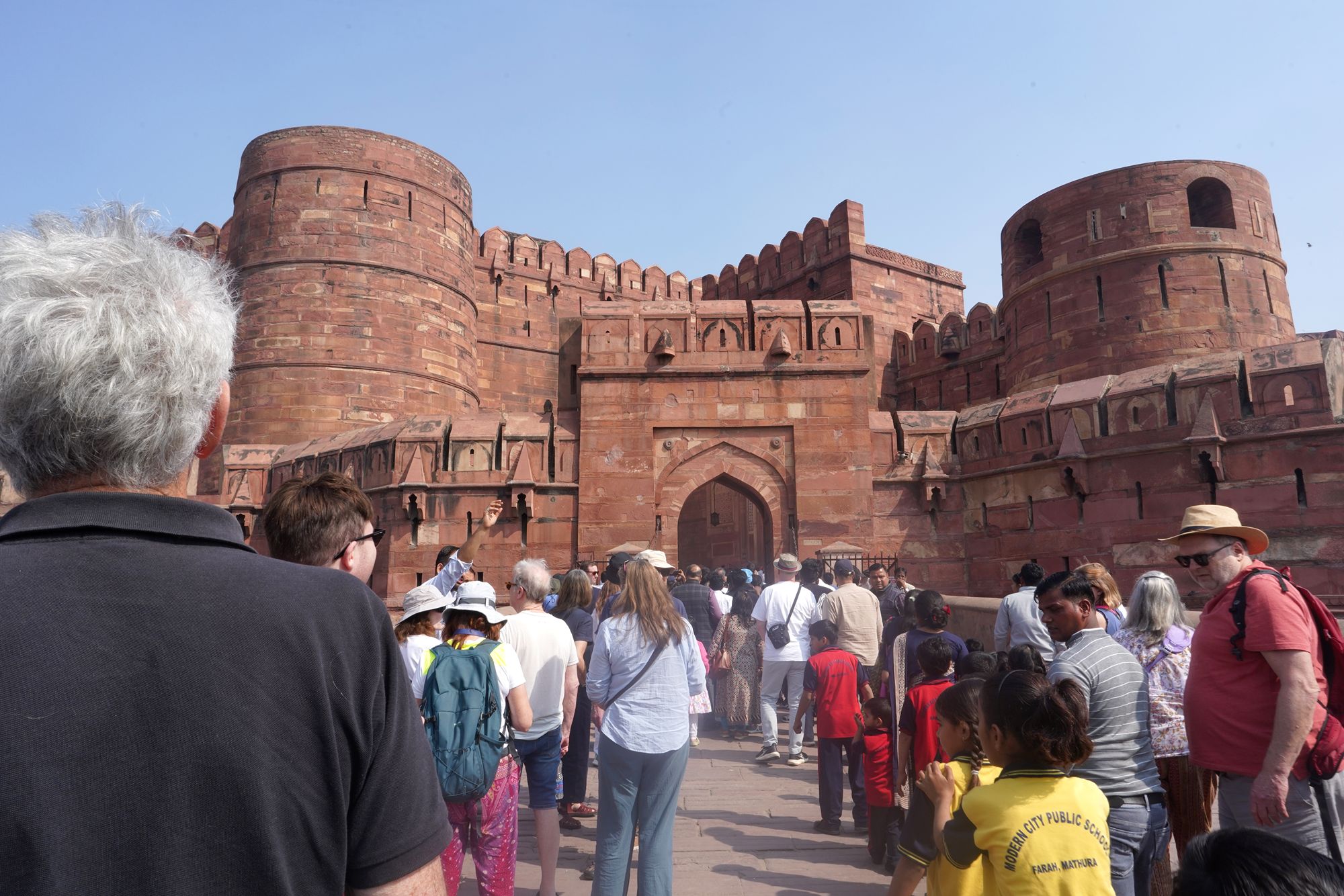
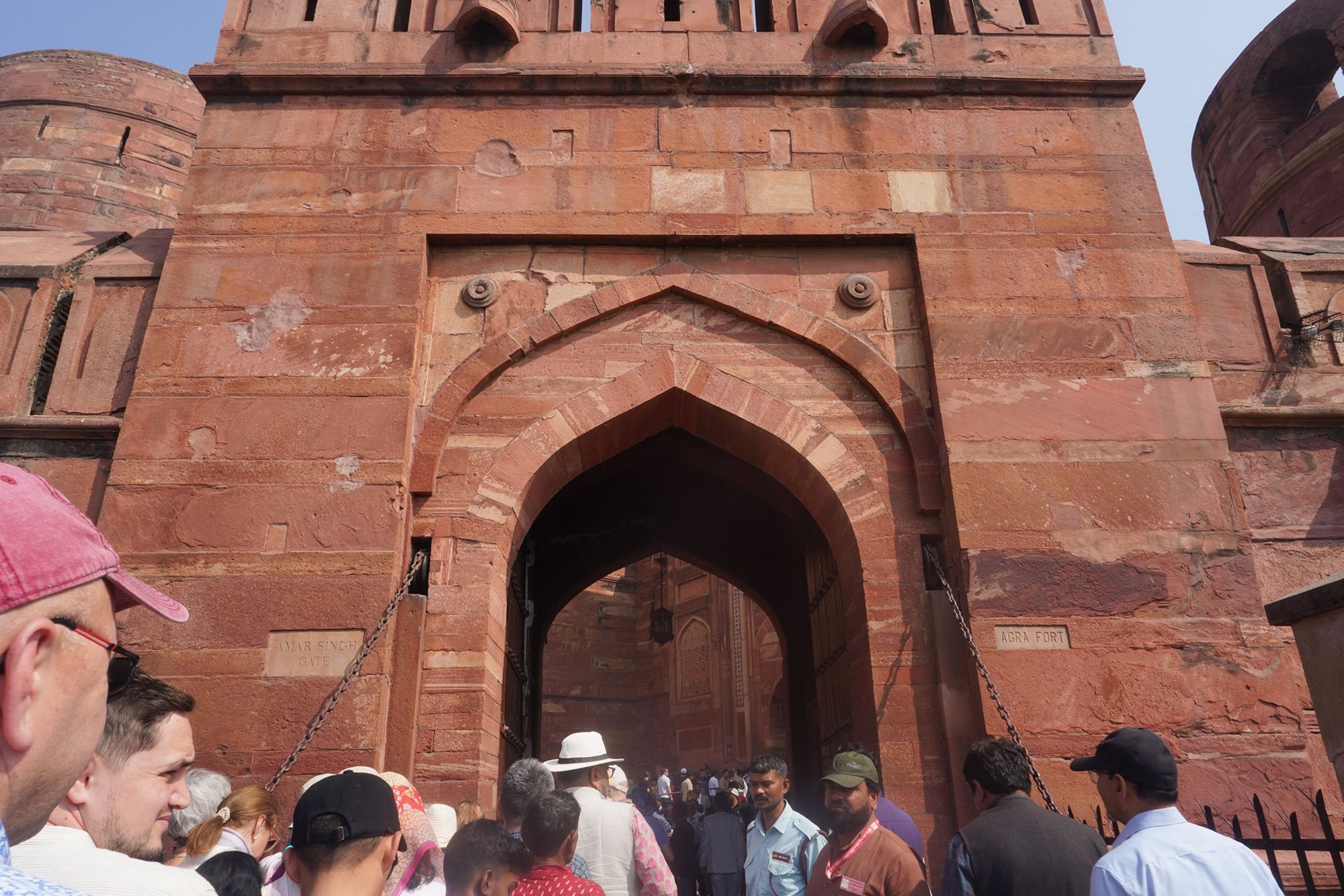
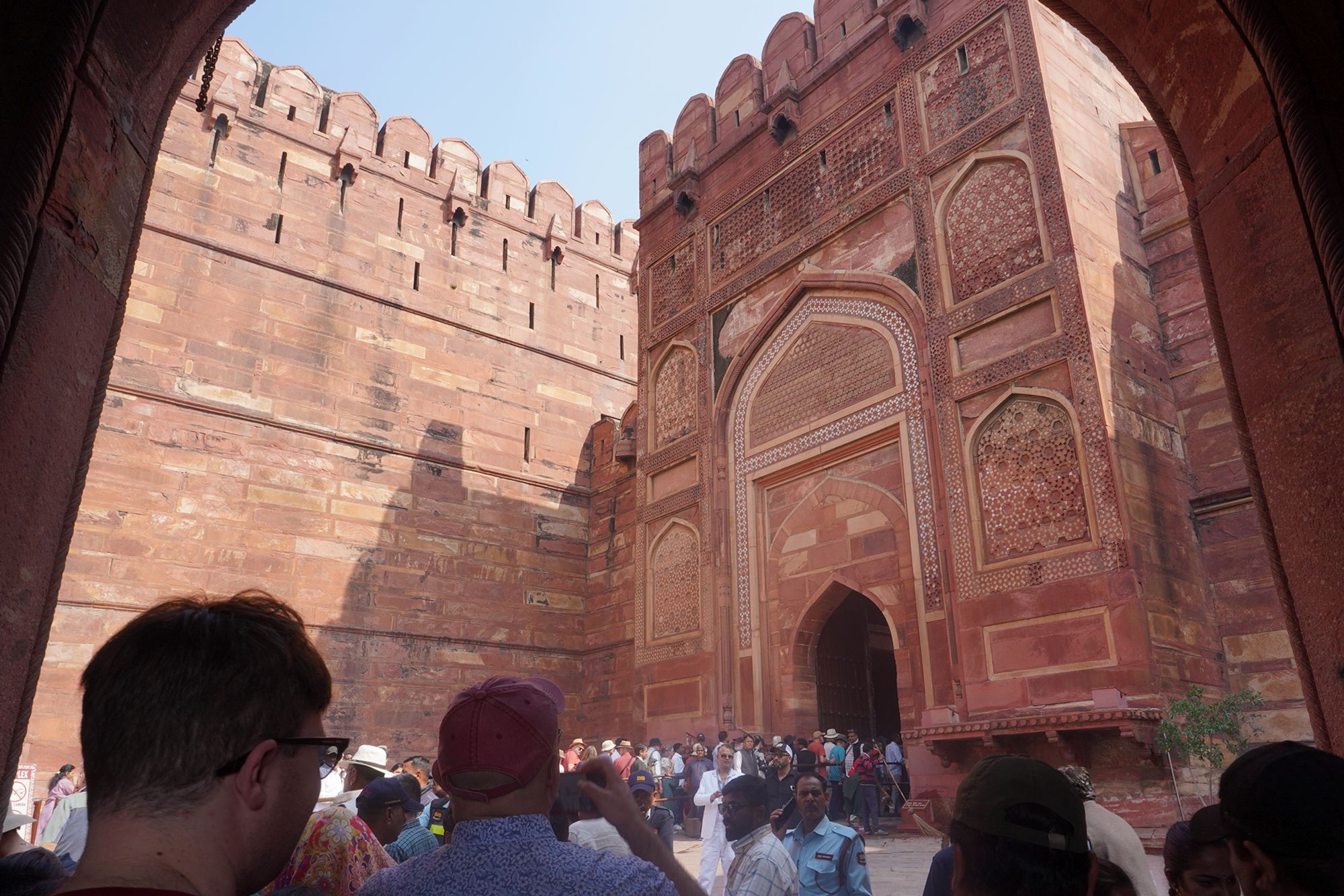
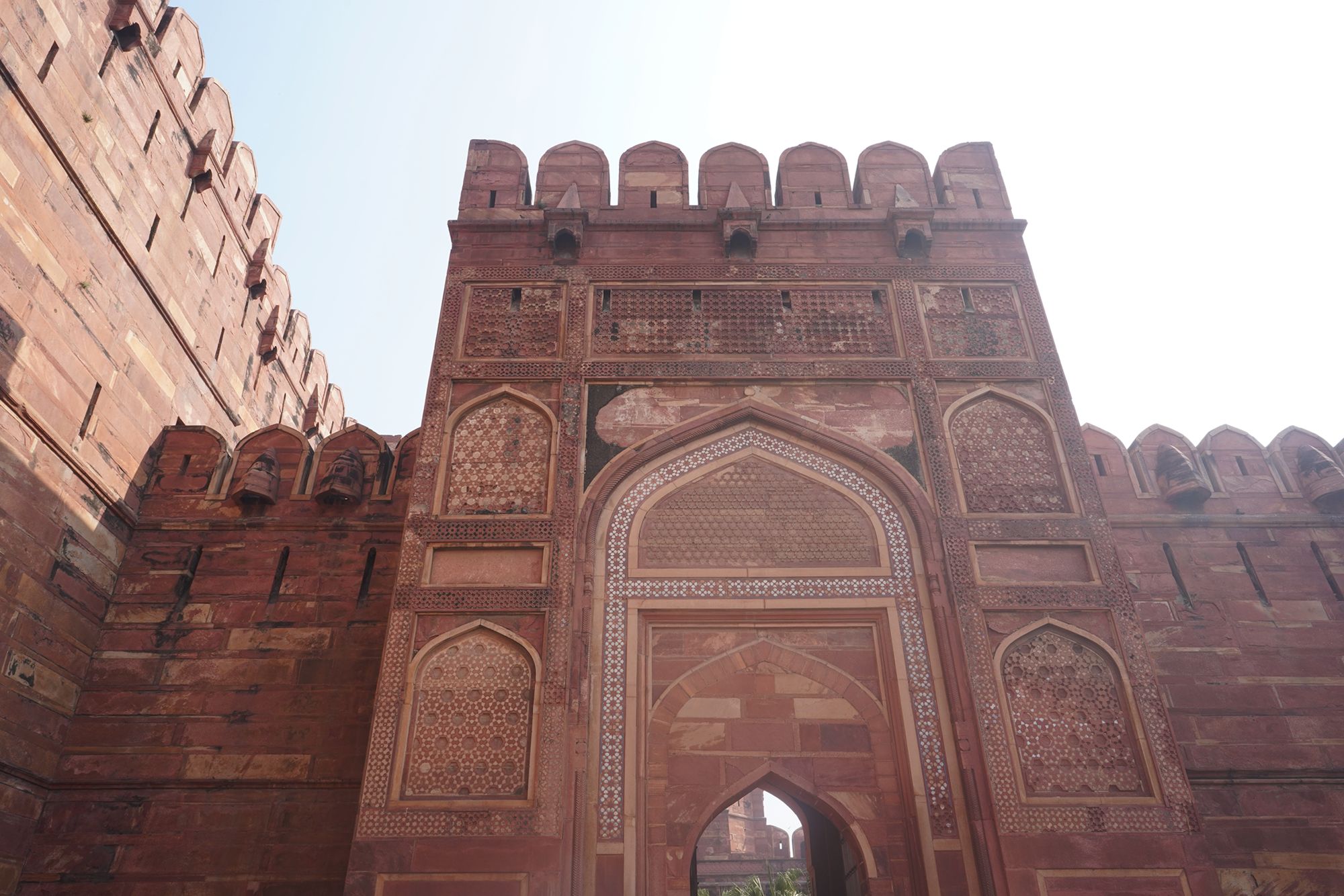
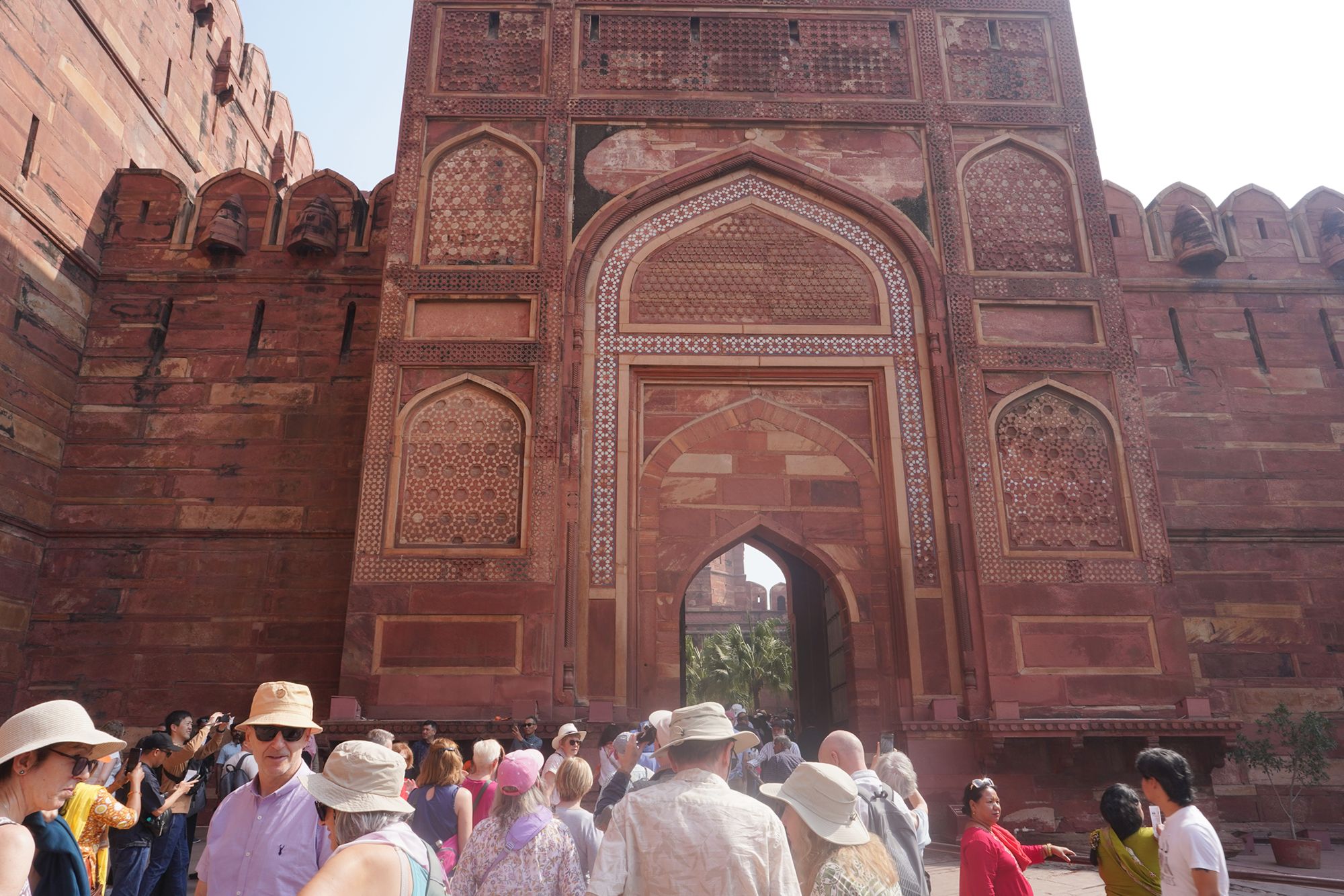
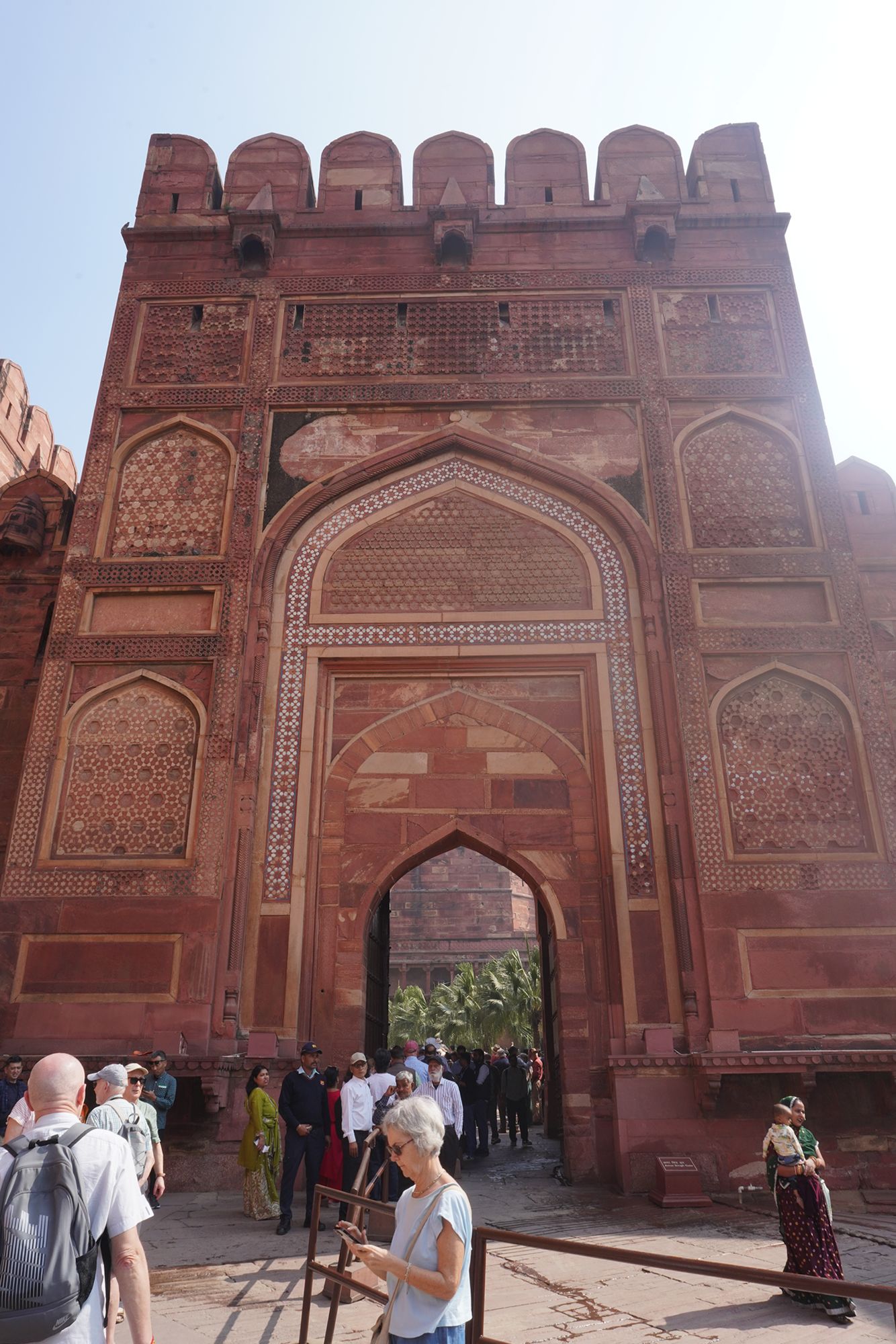
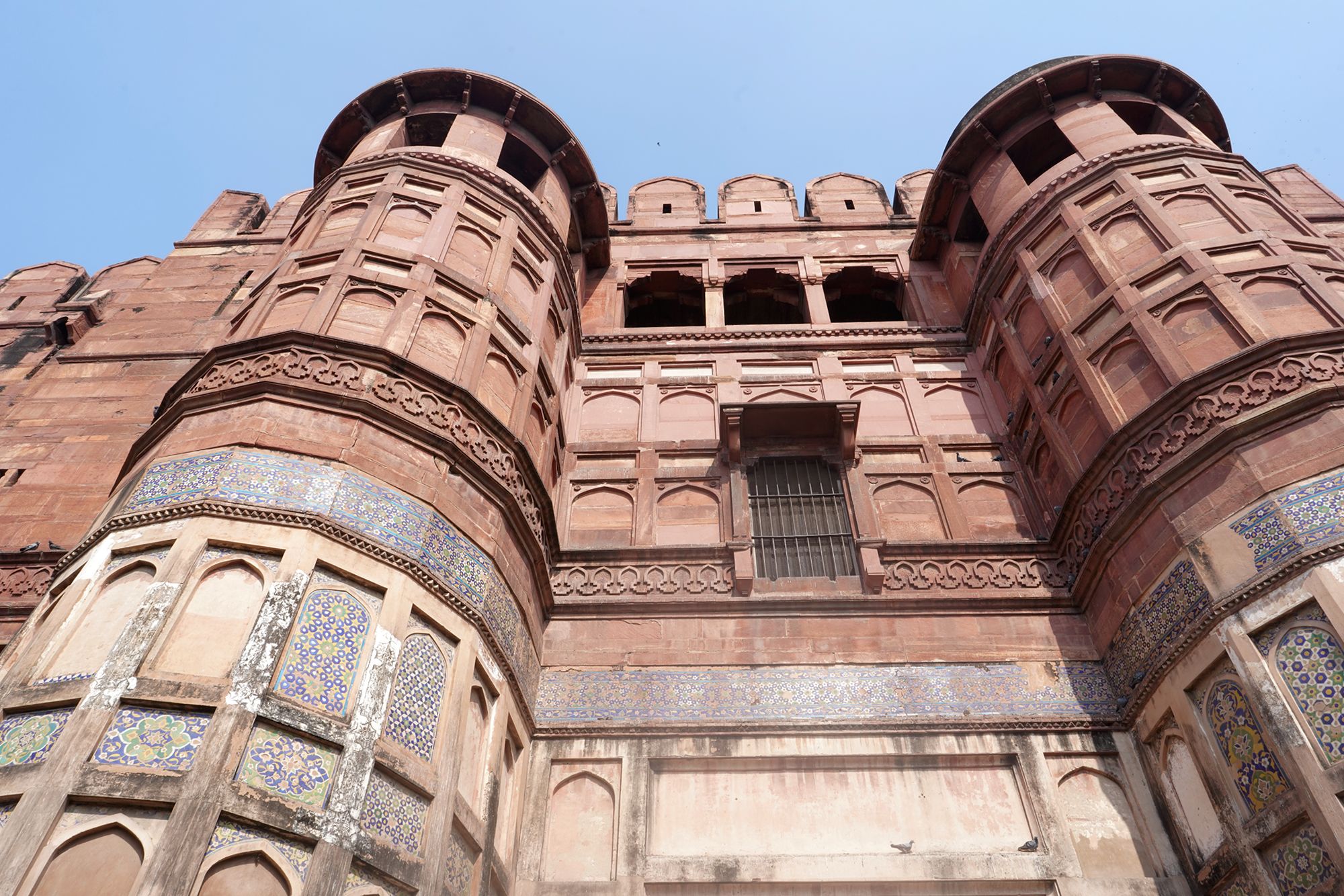
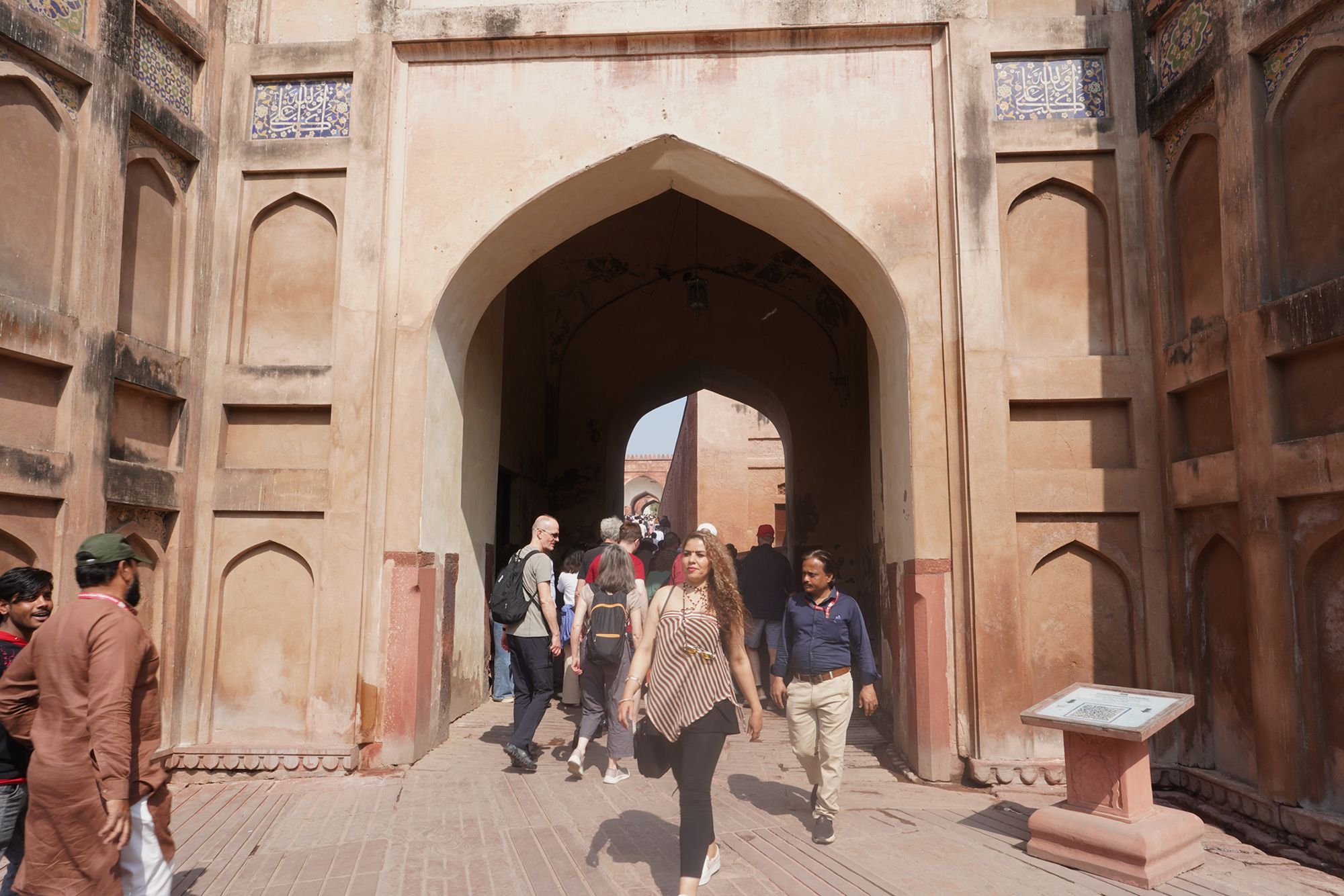
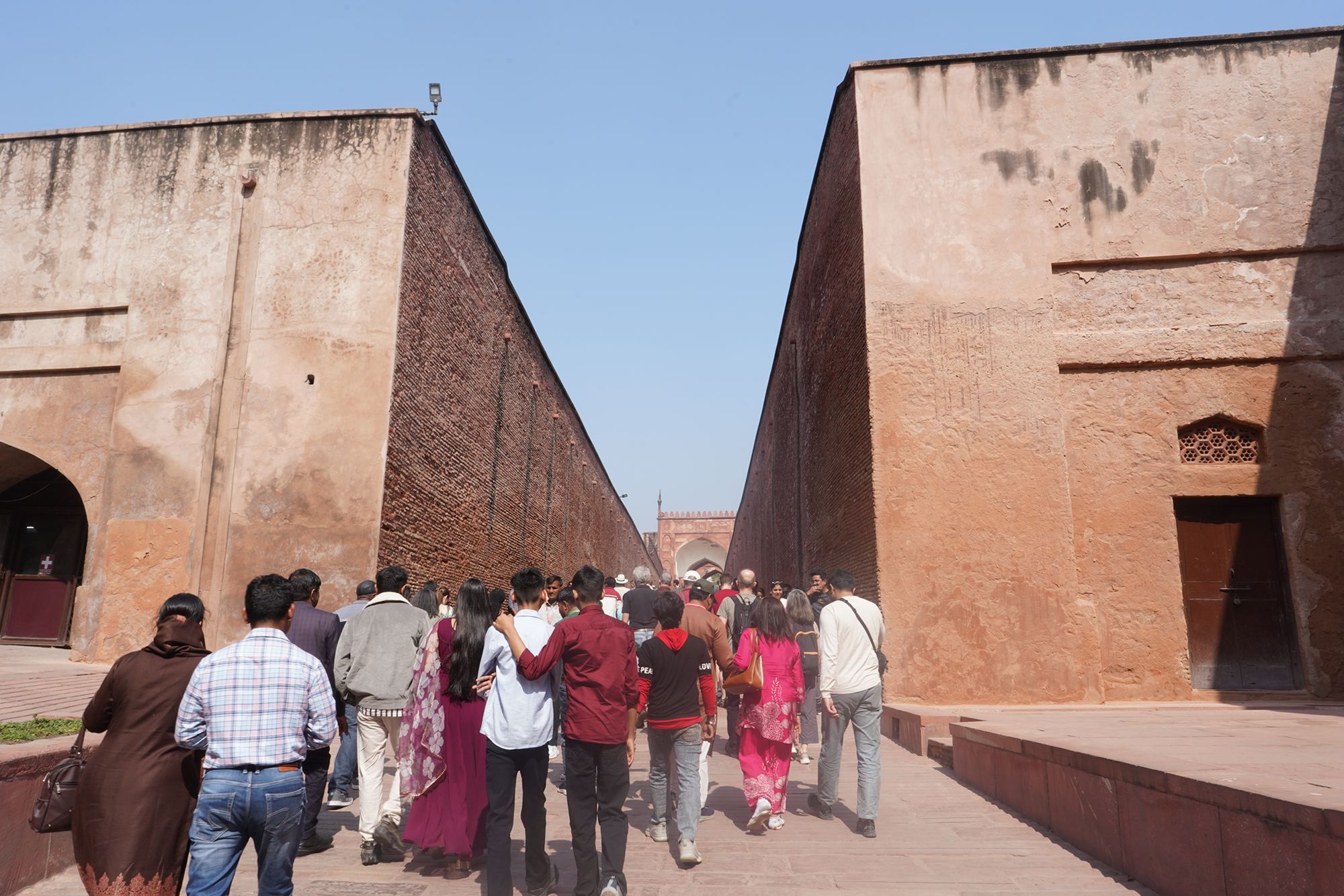
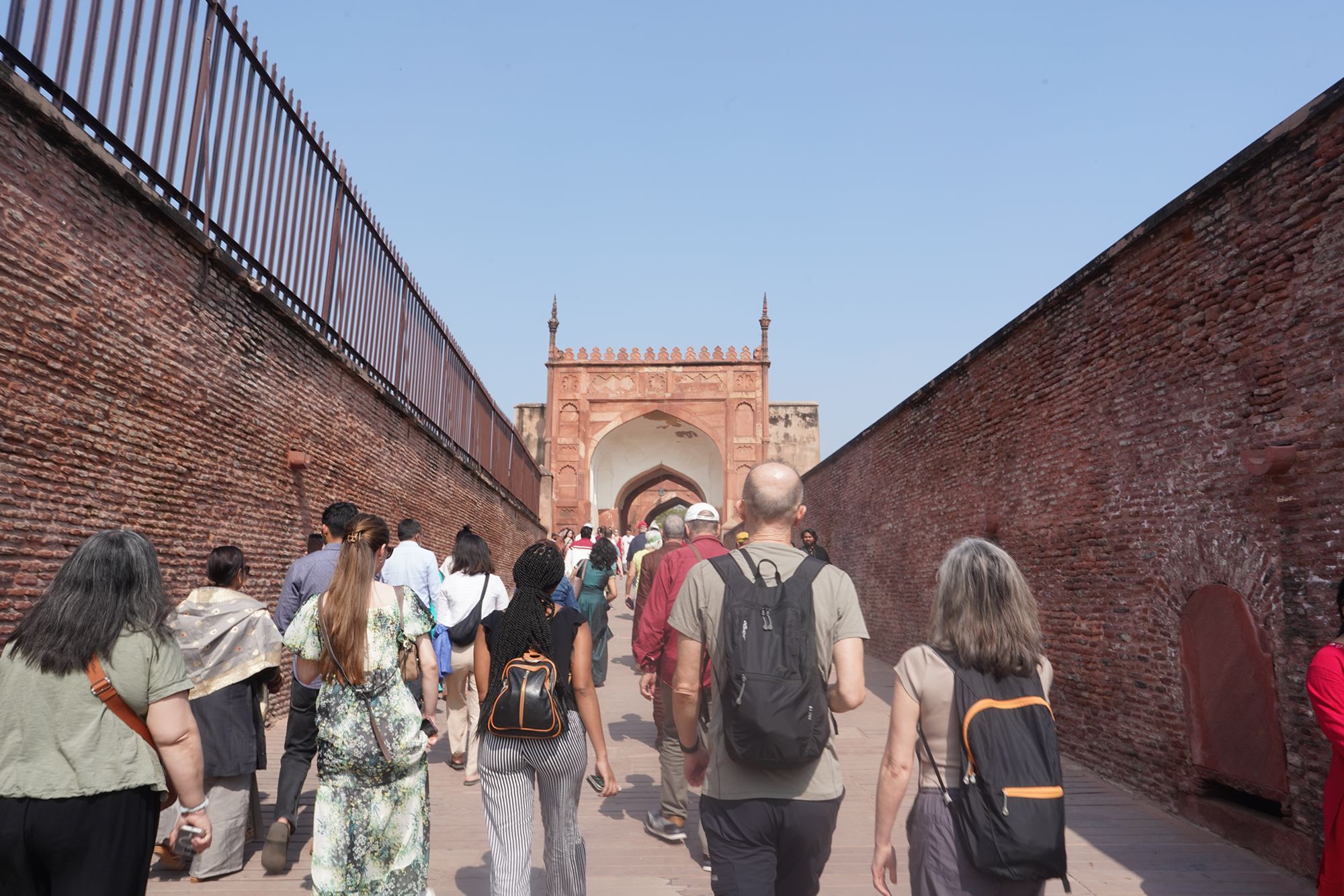
The main area of Agra Fort can be reached by going straight through this gate, but our group turned right here and followed a circular route through the fort.
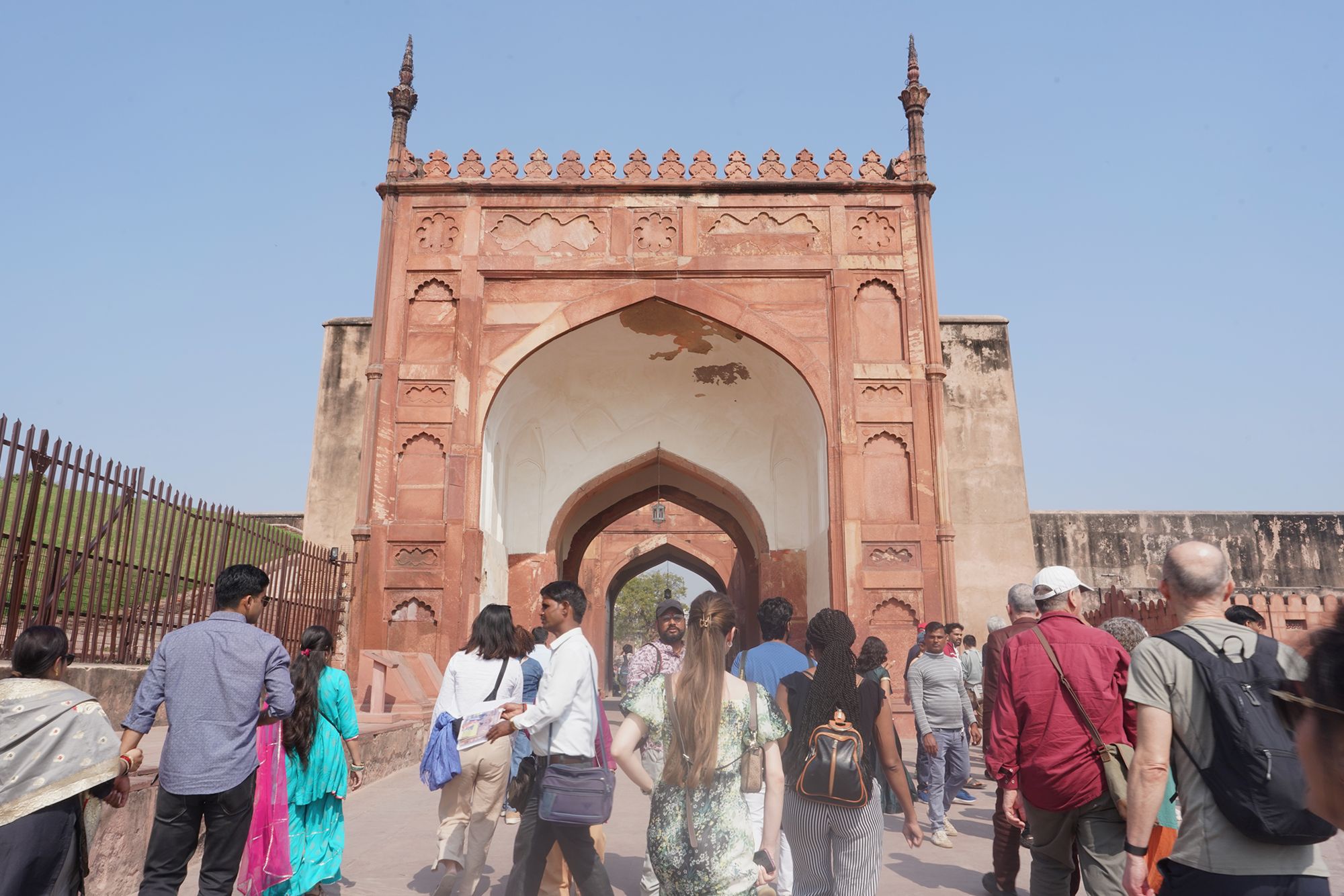
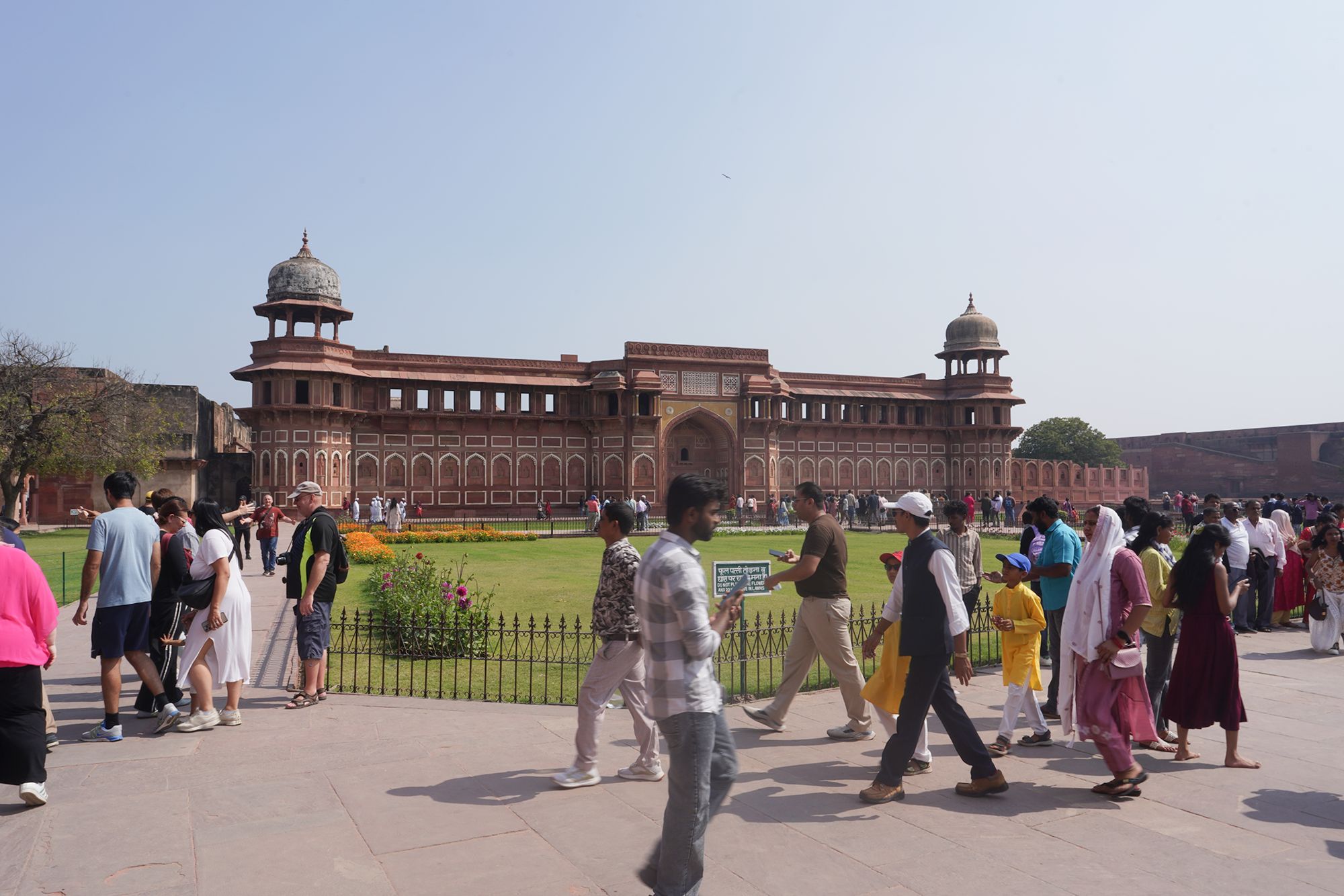
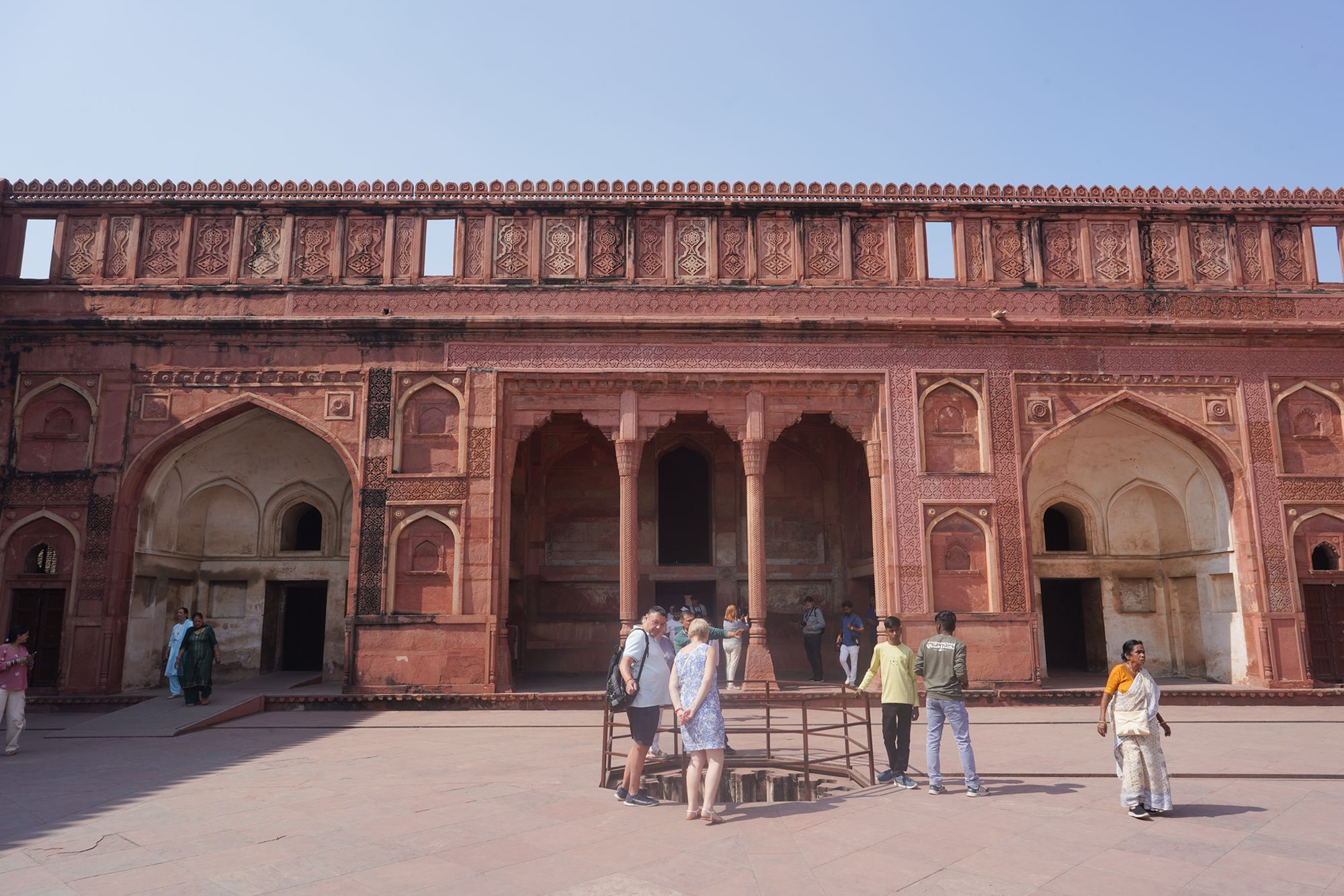
On the right-hand side was Jahangir Palace, which we visited first.
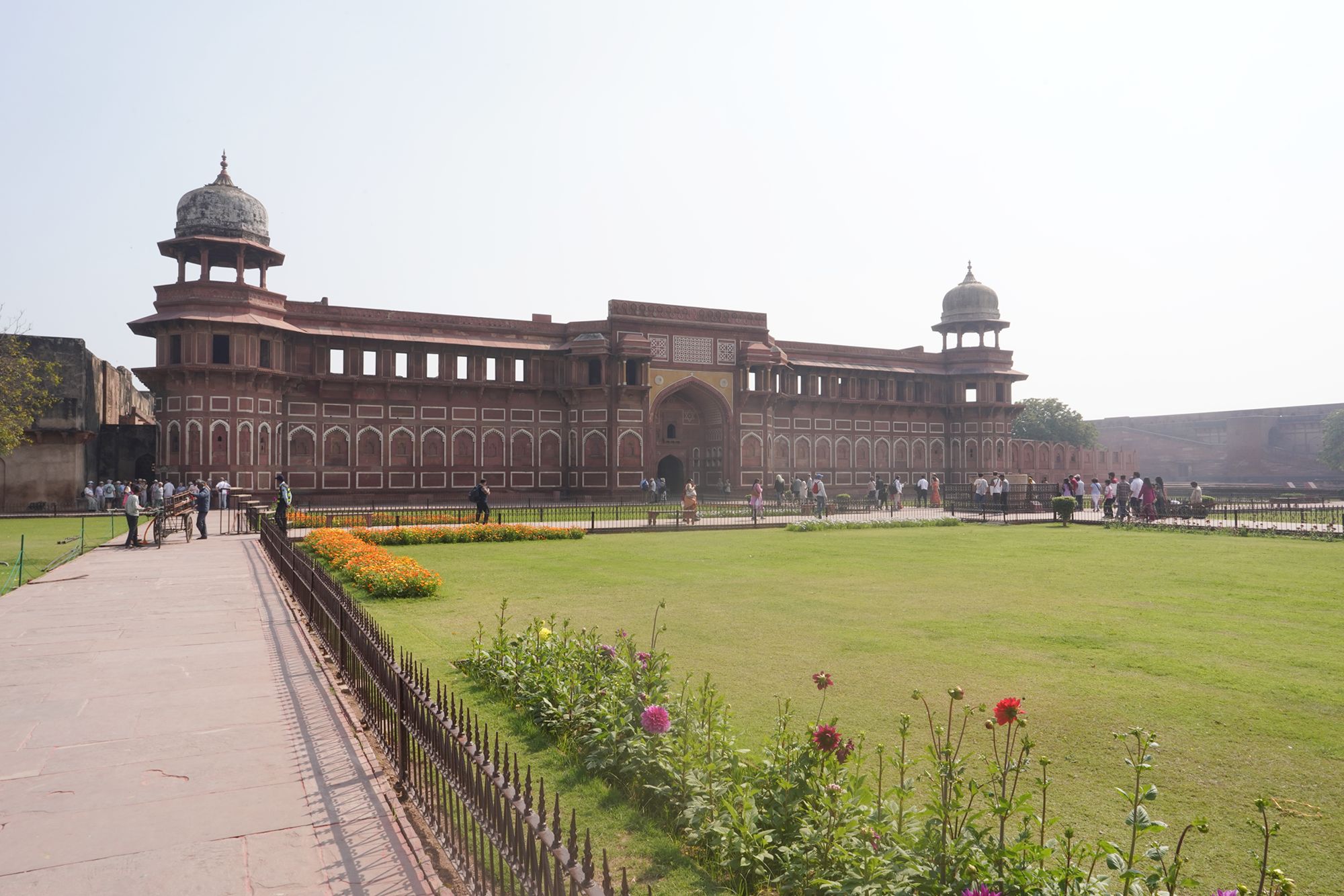
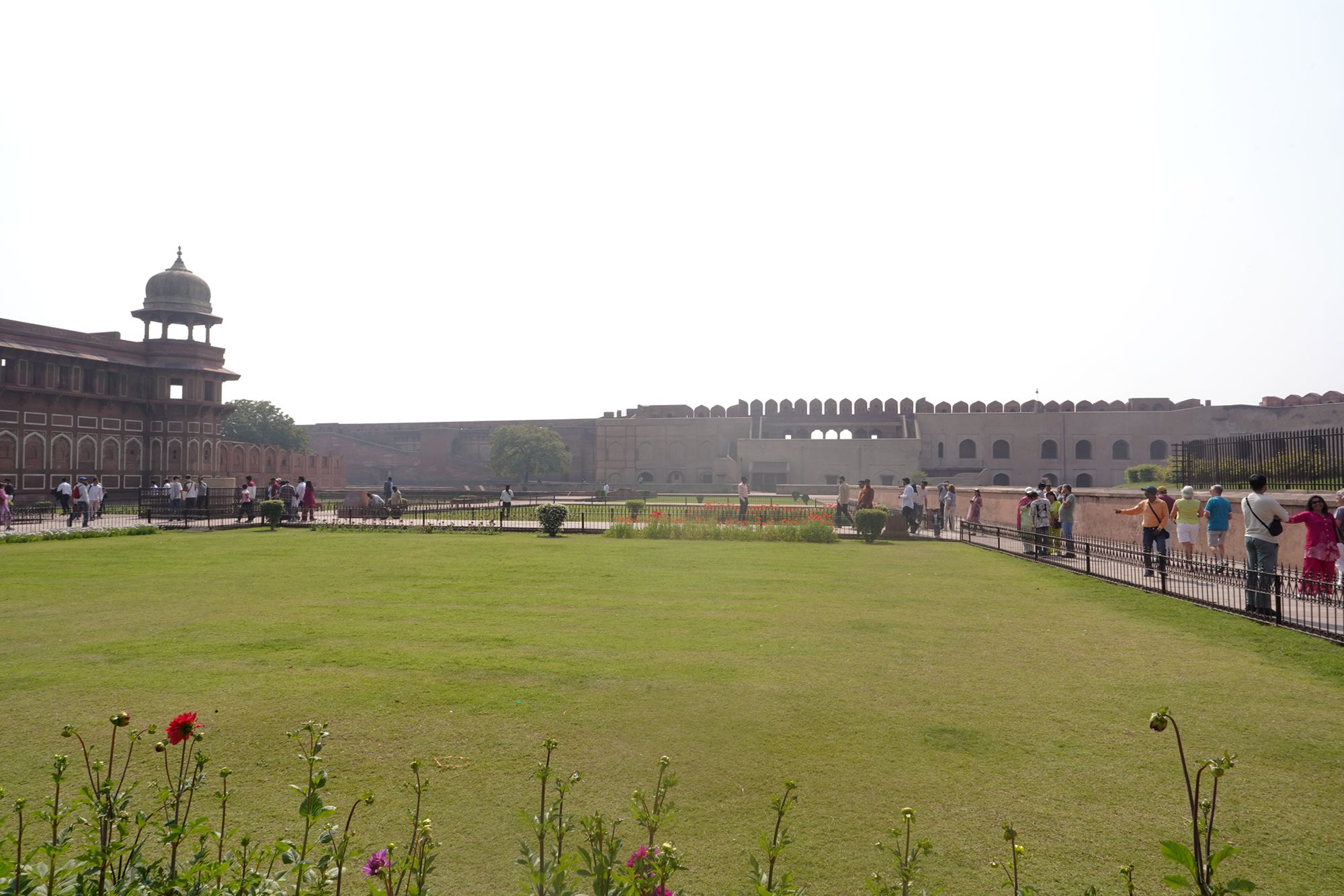
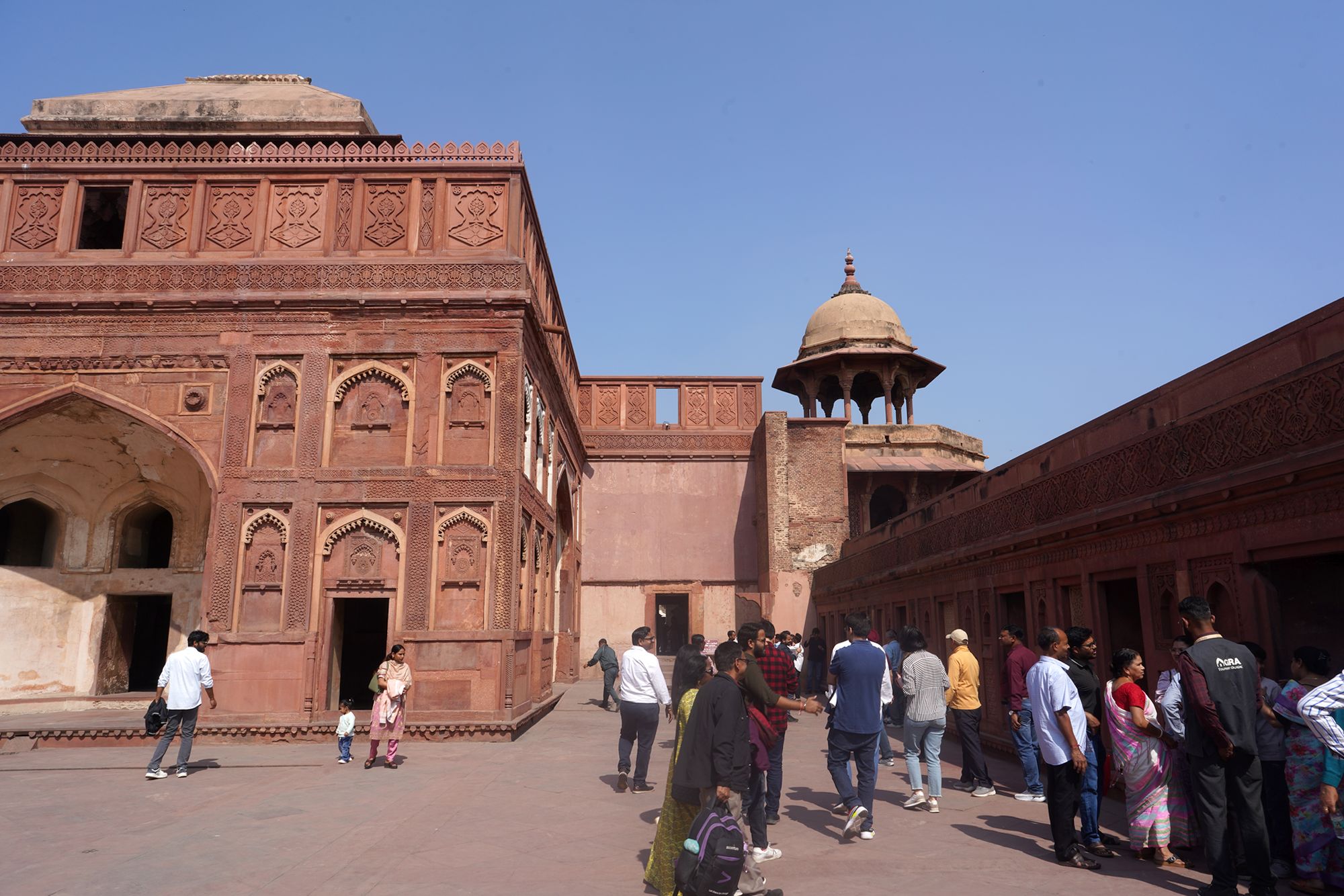
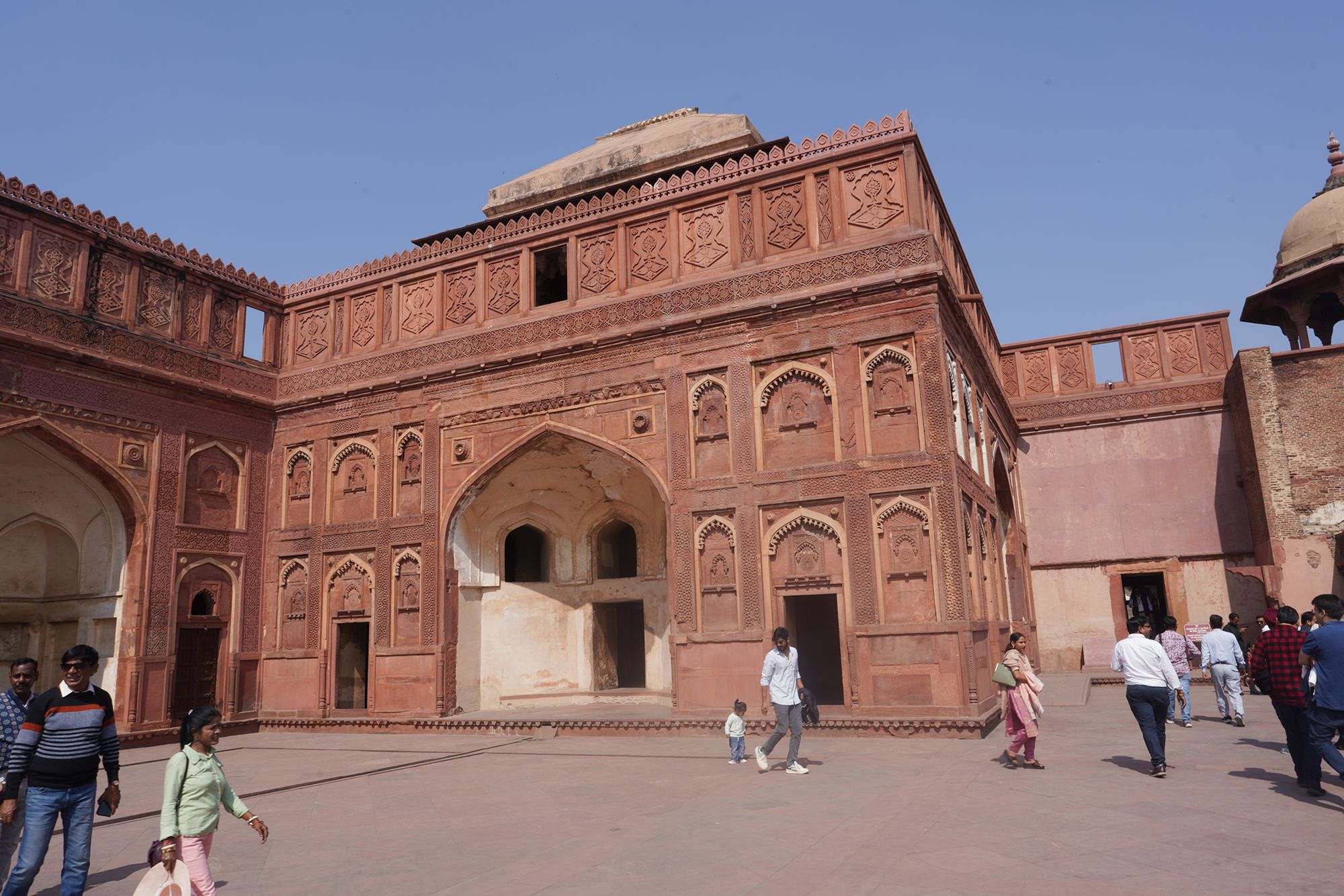
Jahangir Palace, also known as Jahangiri Mahal, is one of the most impressive surviving buildings in Agra Fort. It was built by Emperor Akbar in the late 16th century and is constructed mainly of red sandstone.
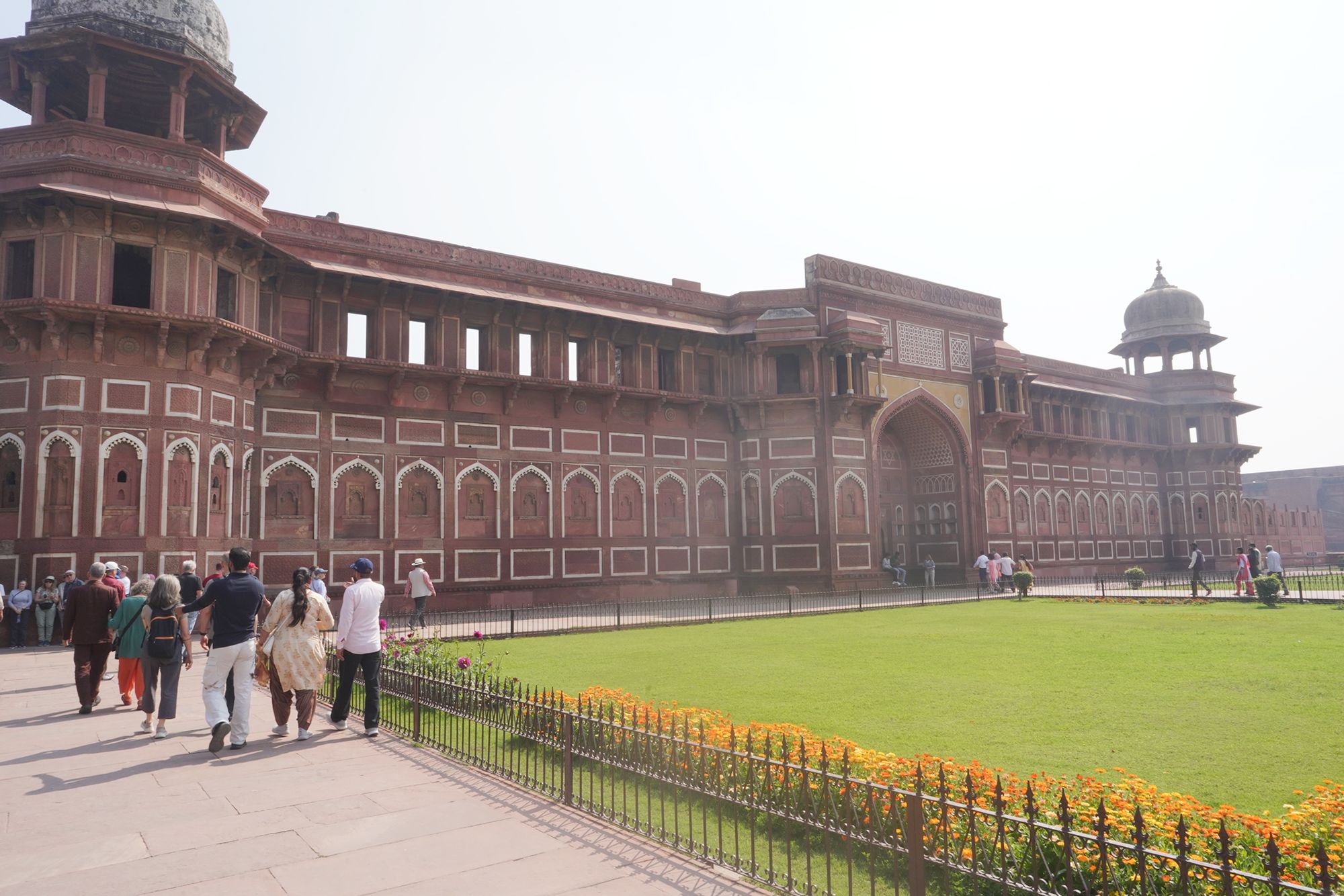
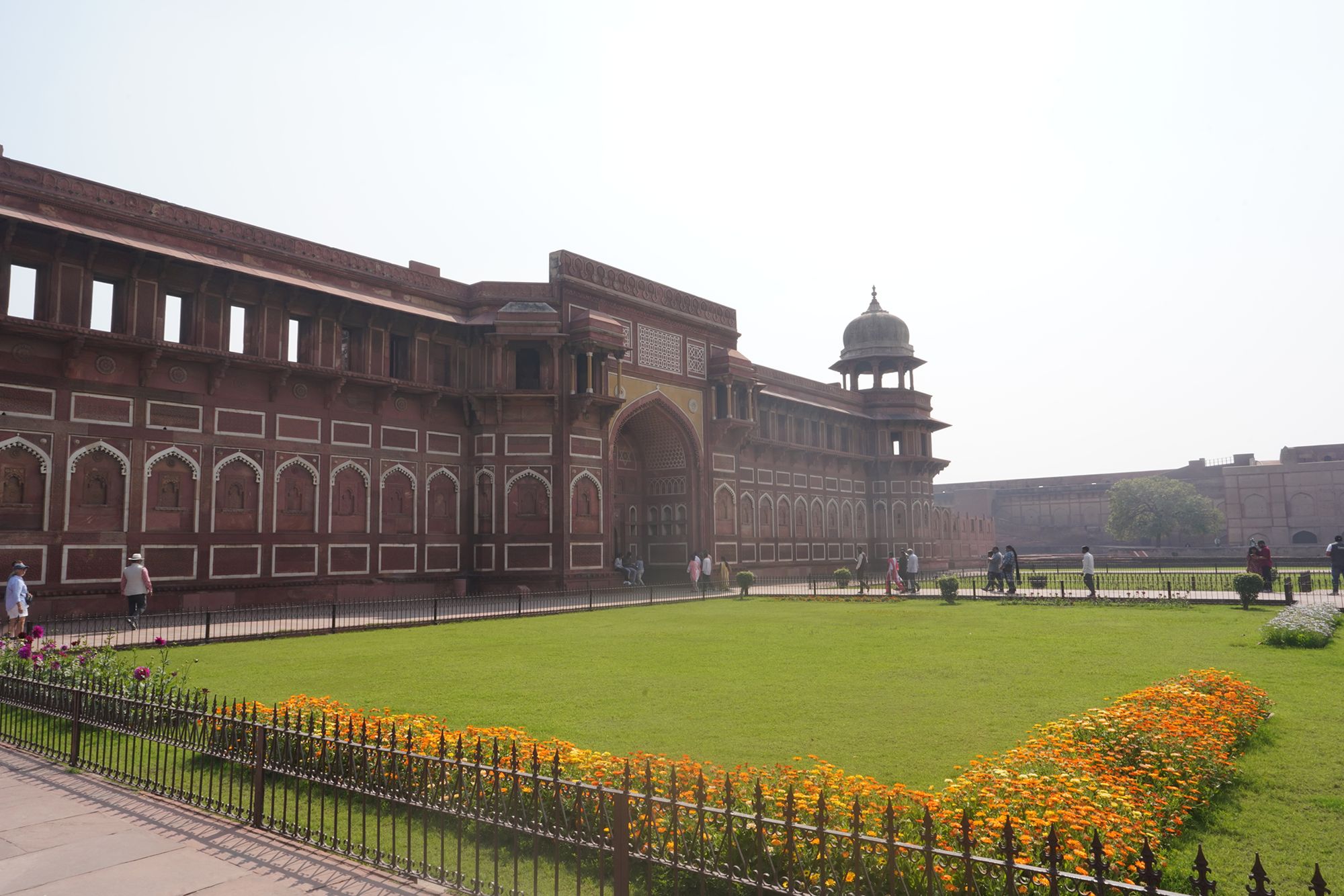
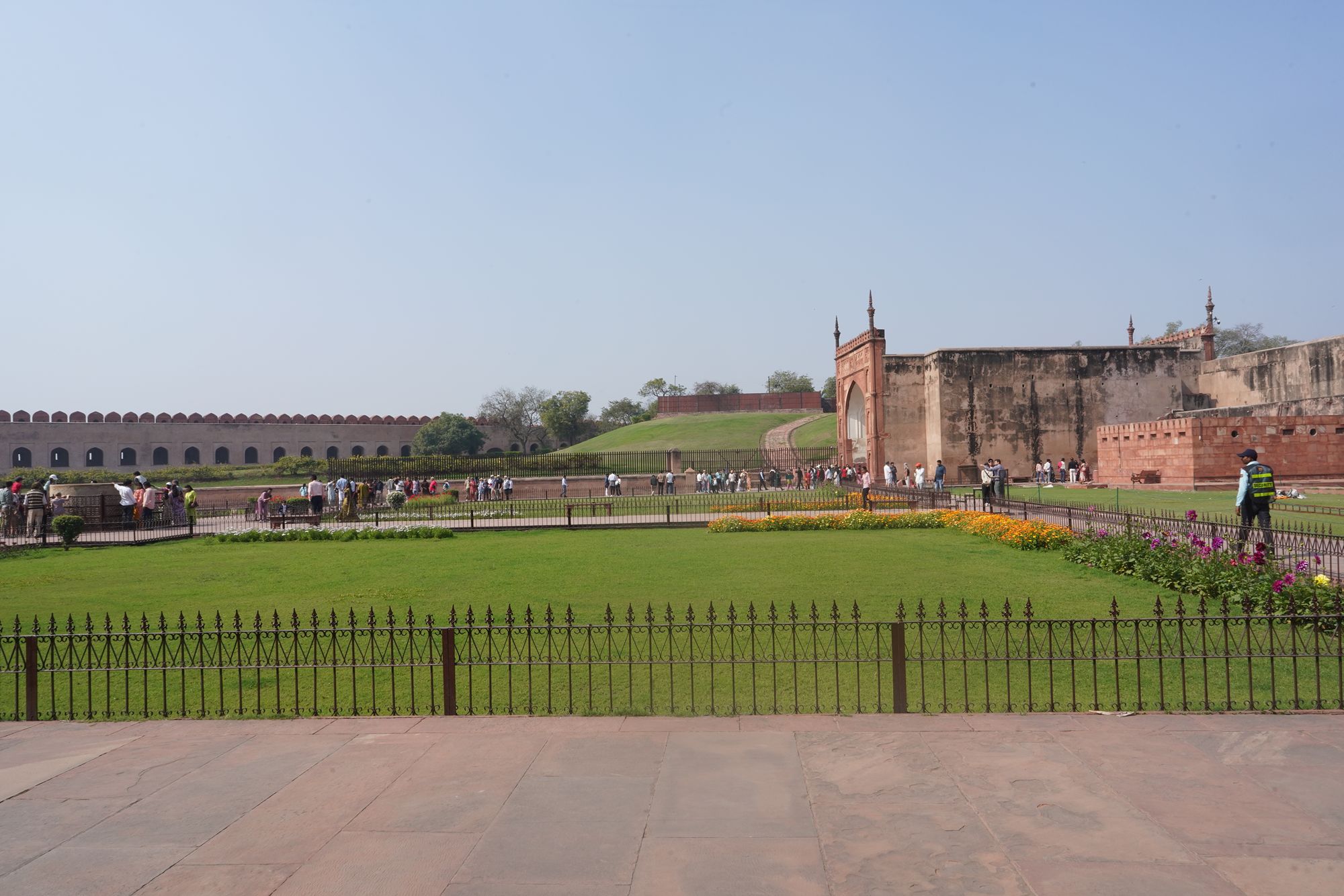
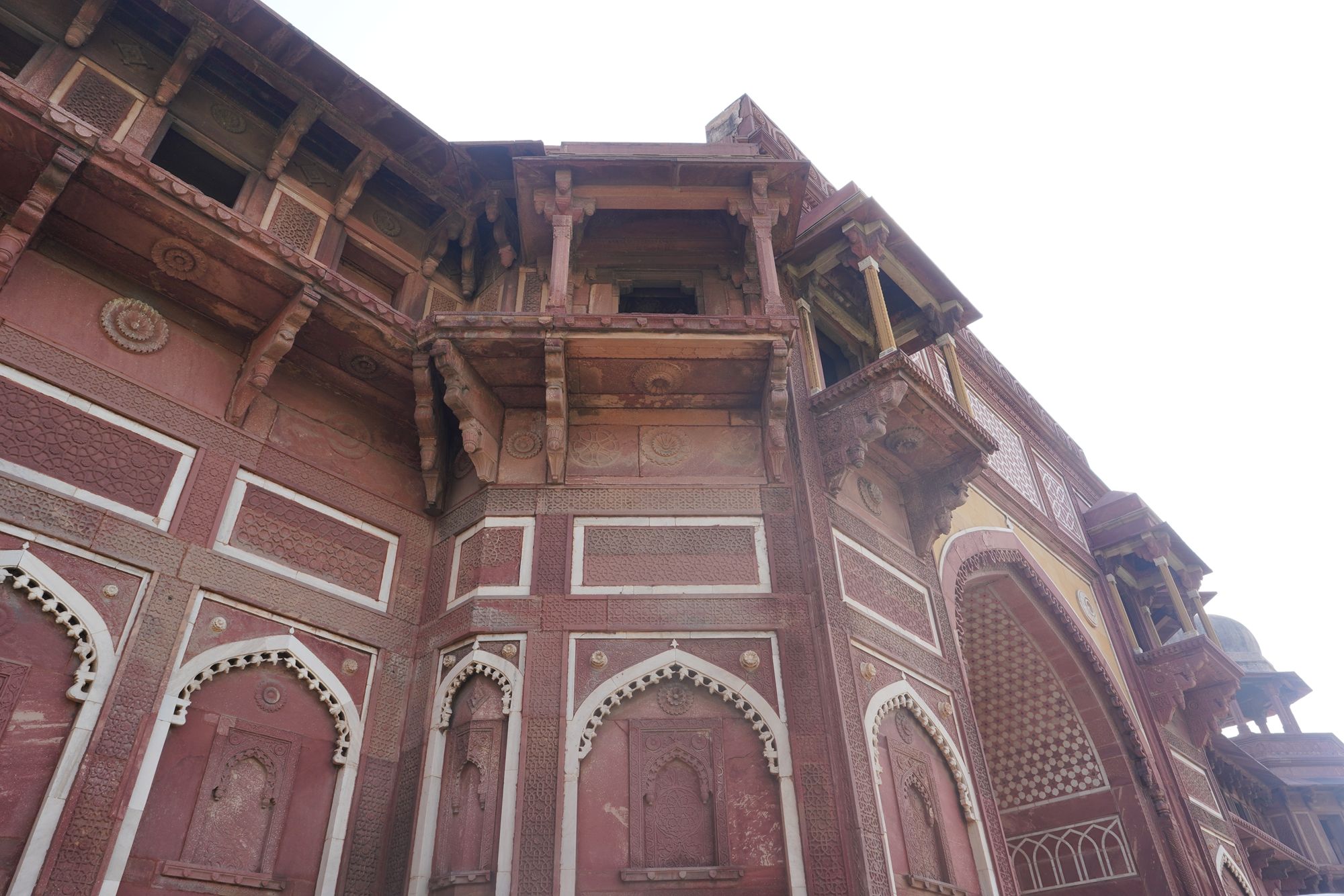
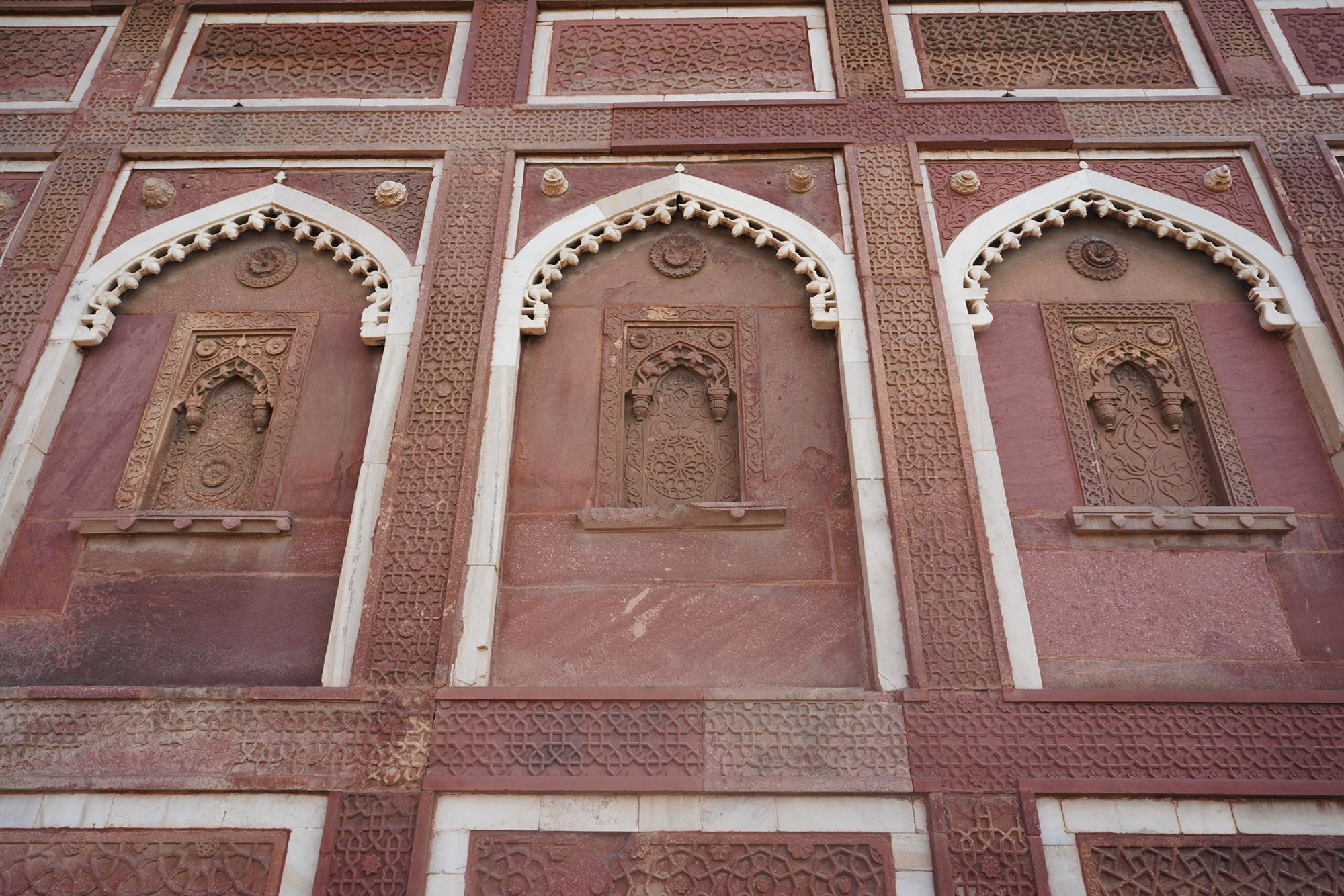
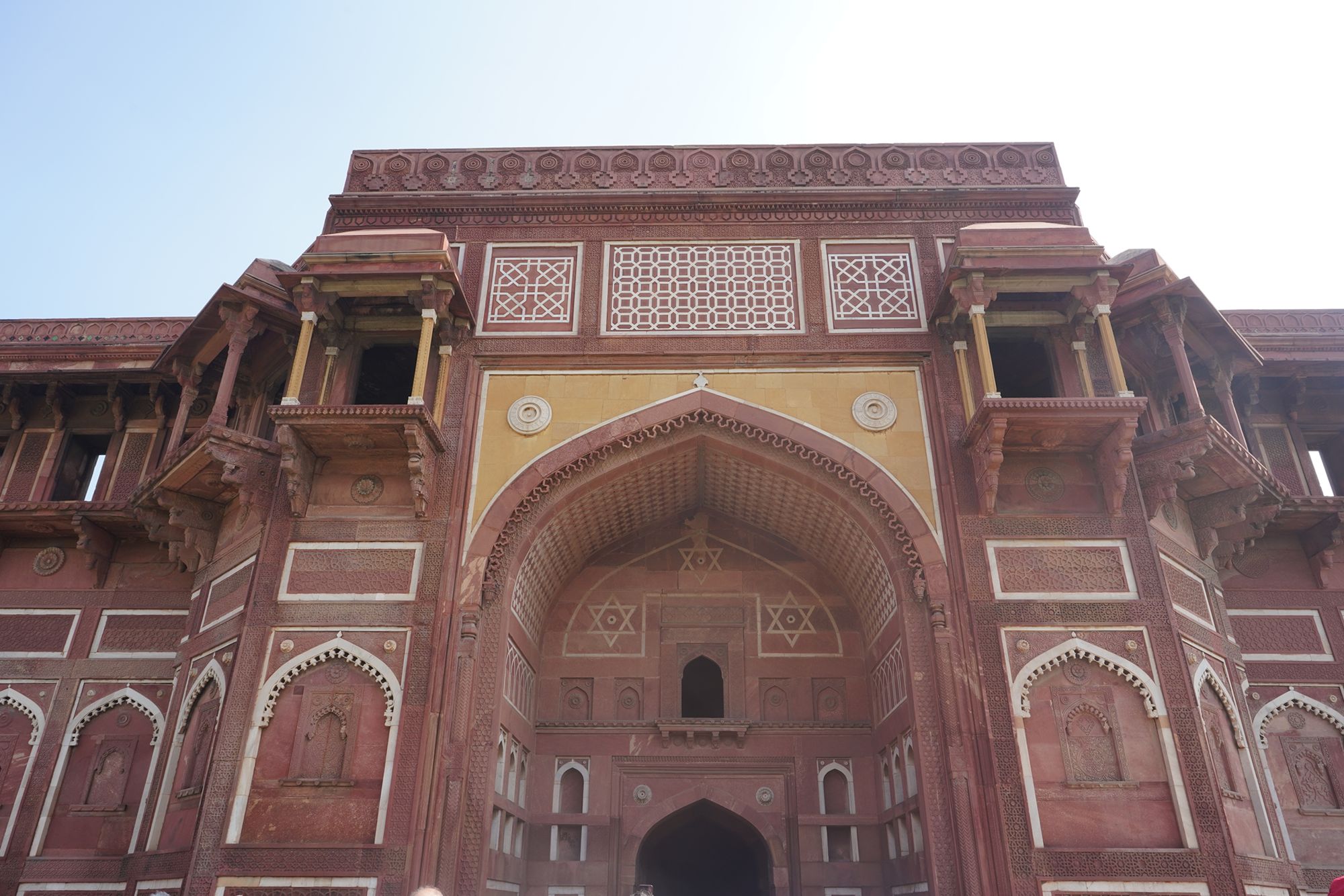
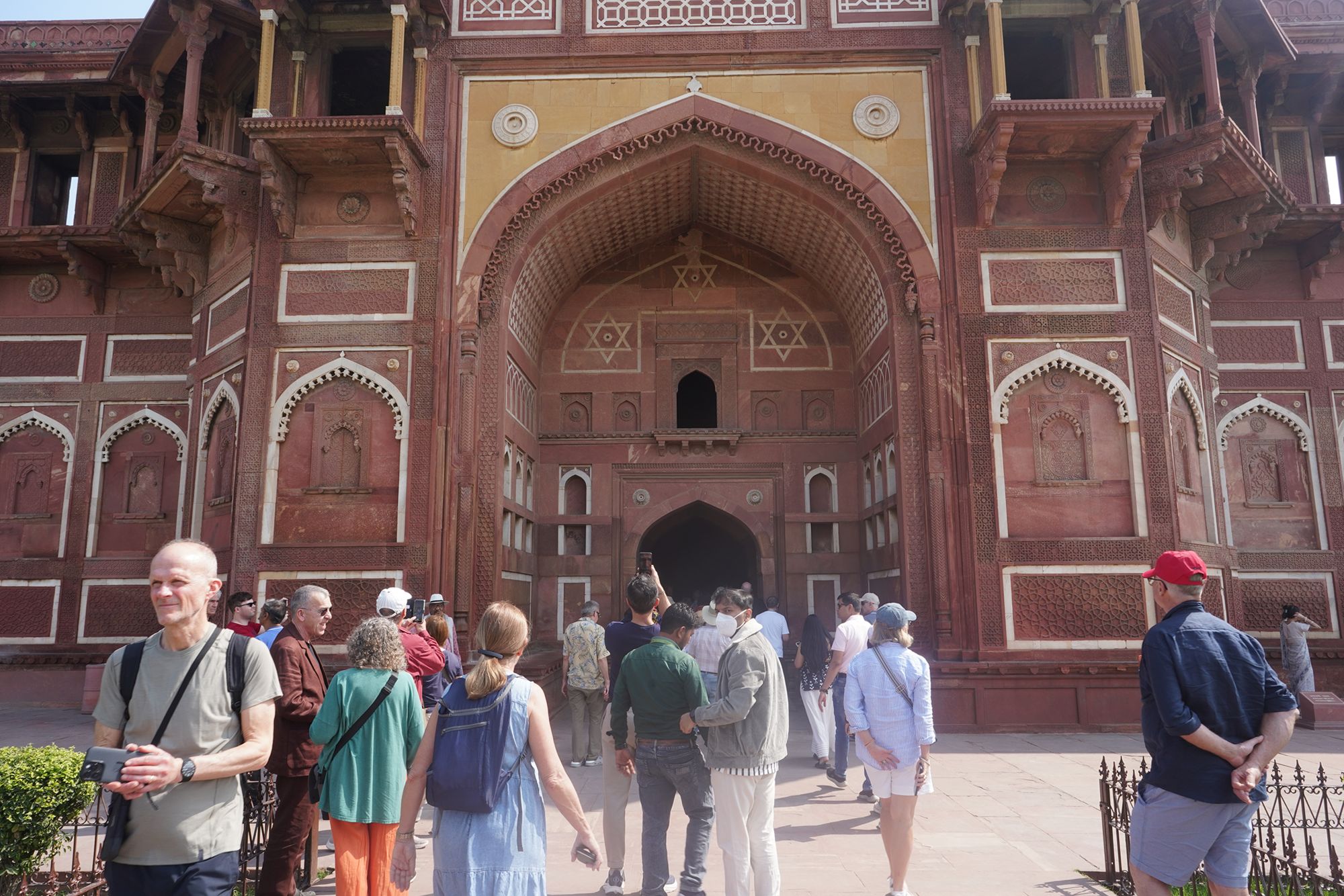
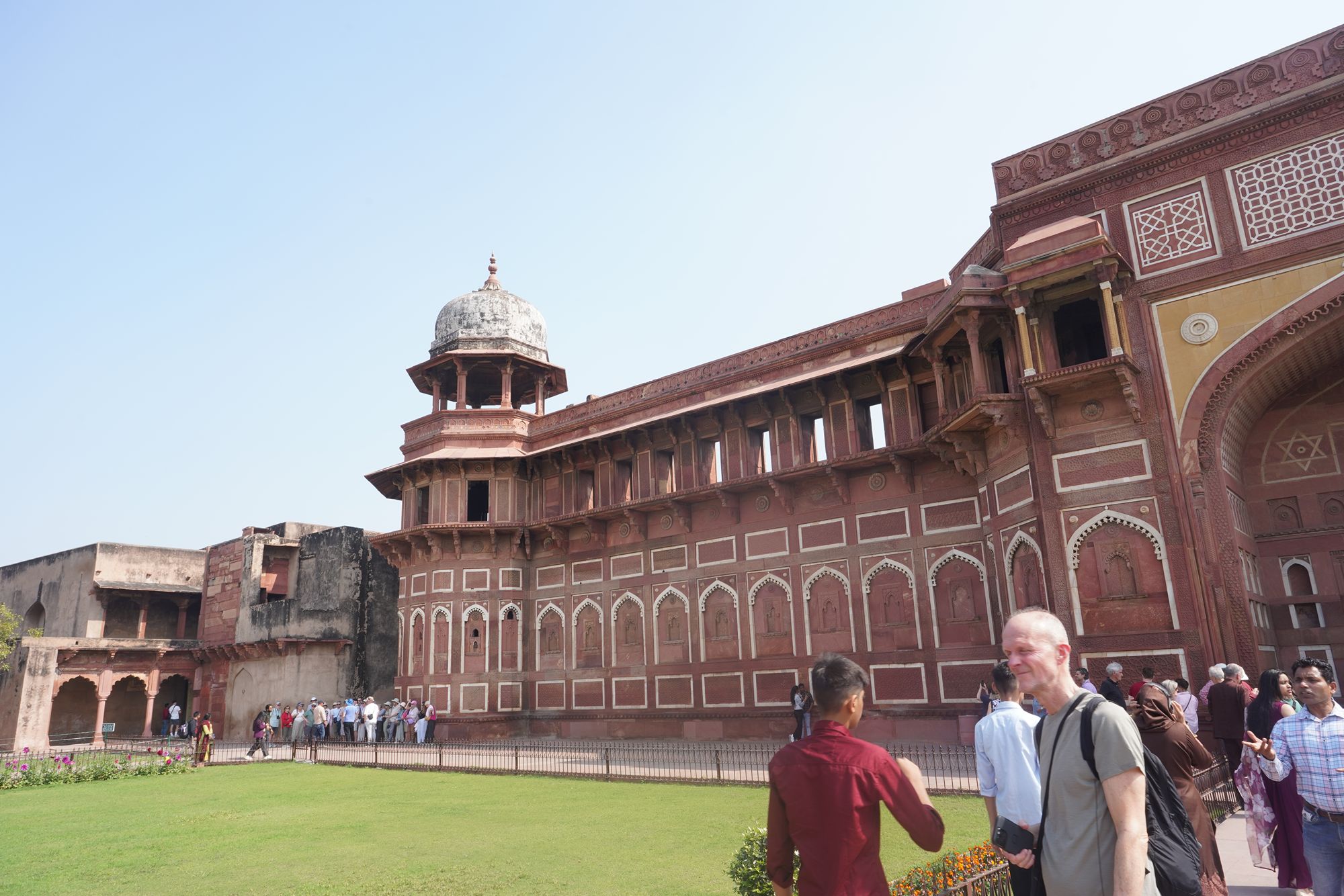
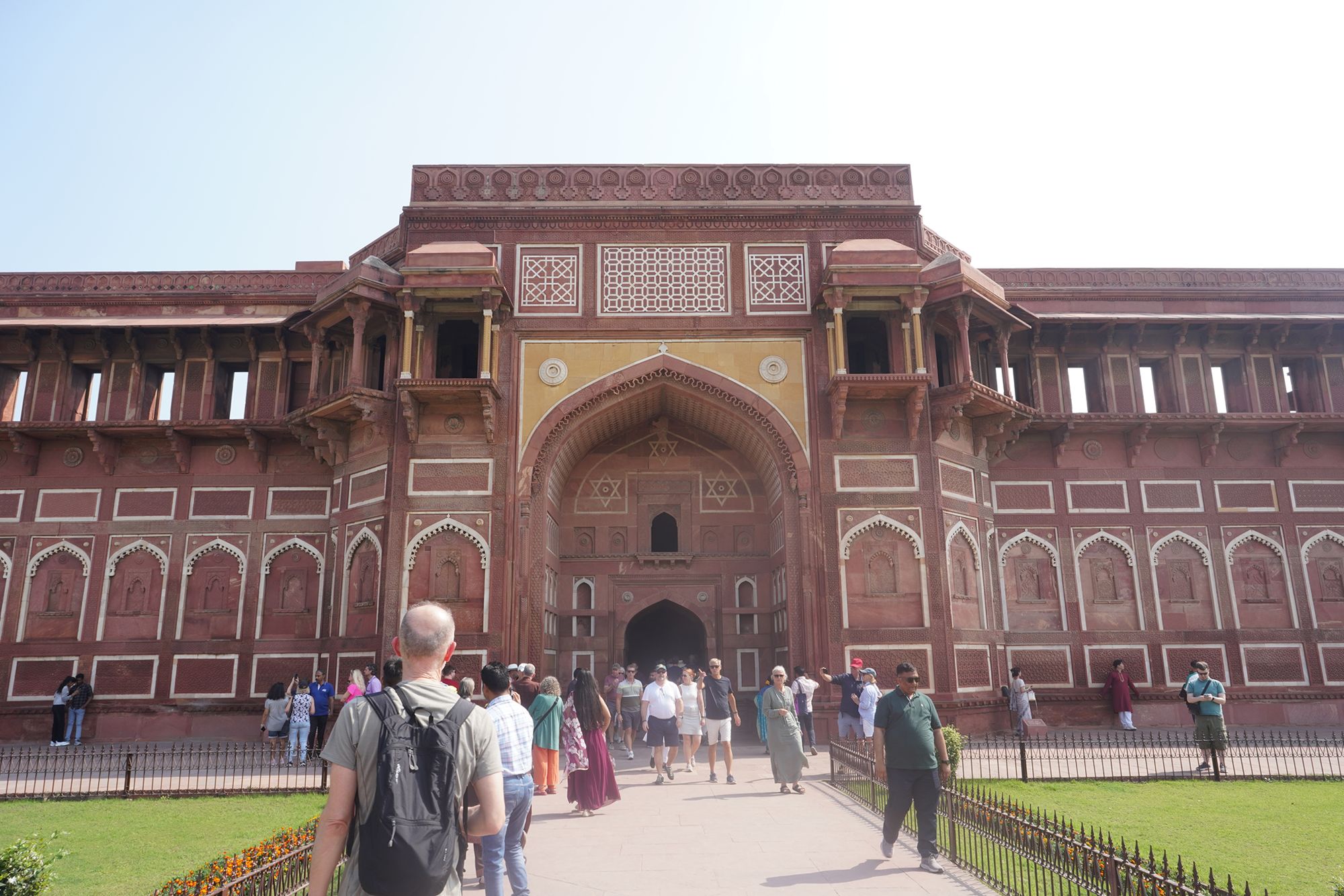
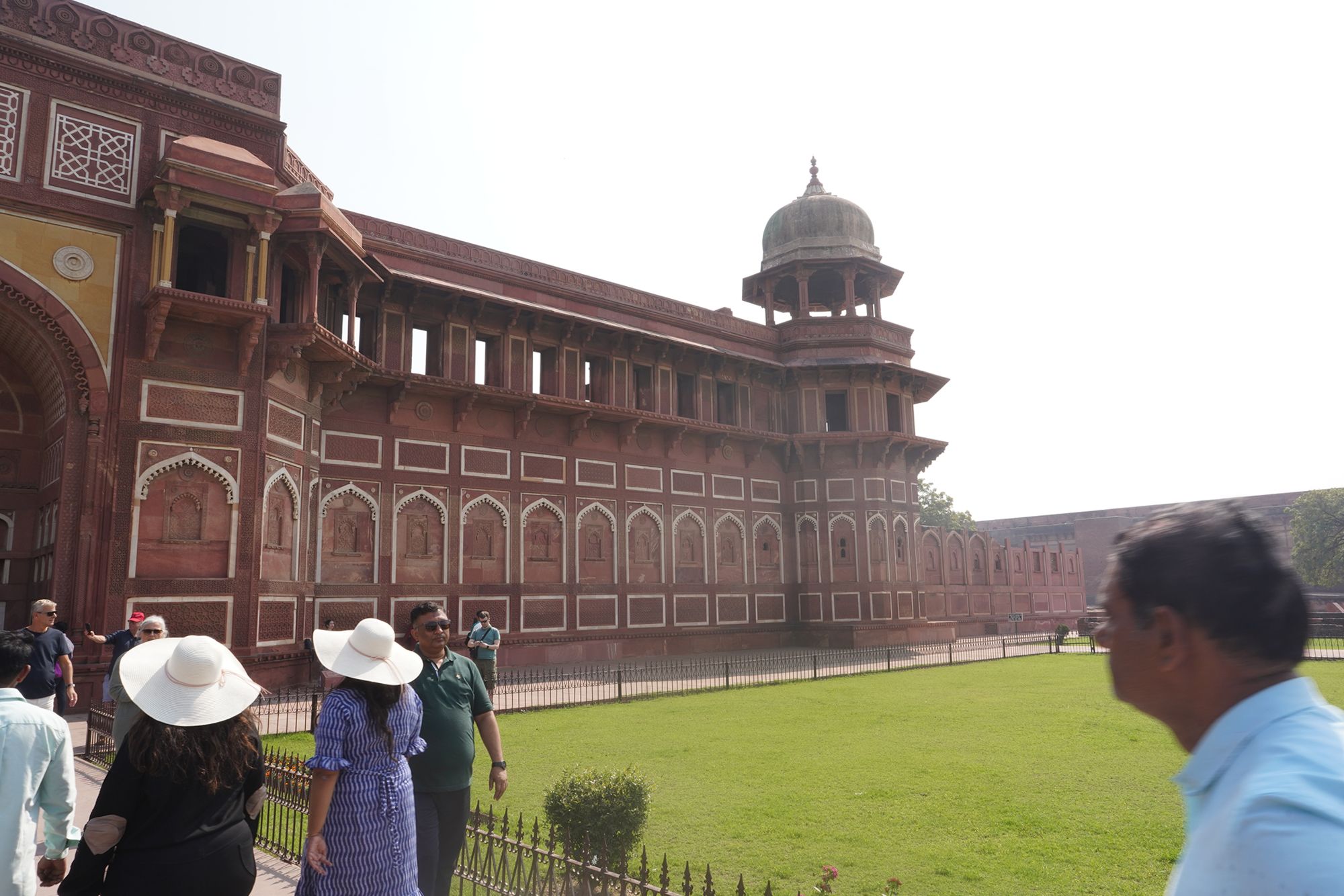
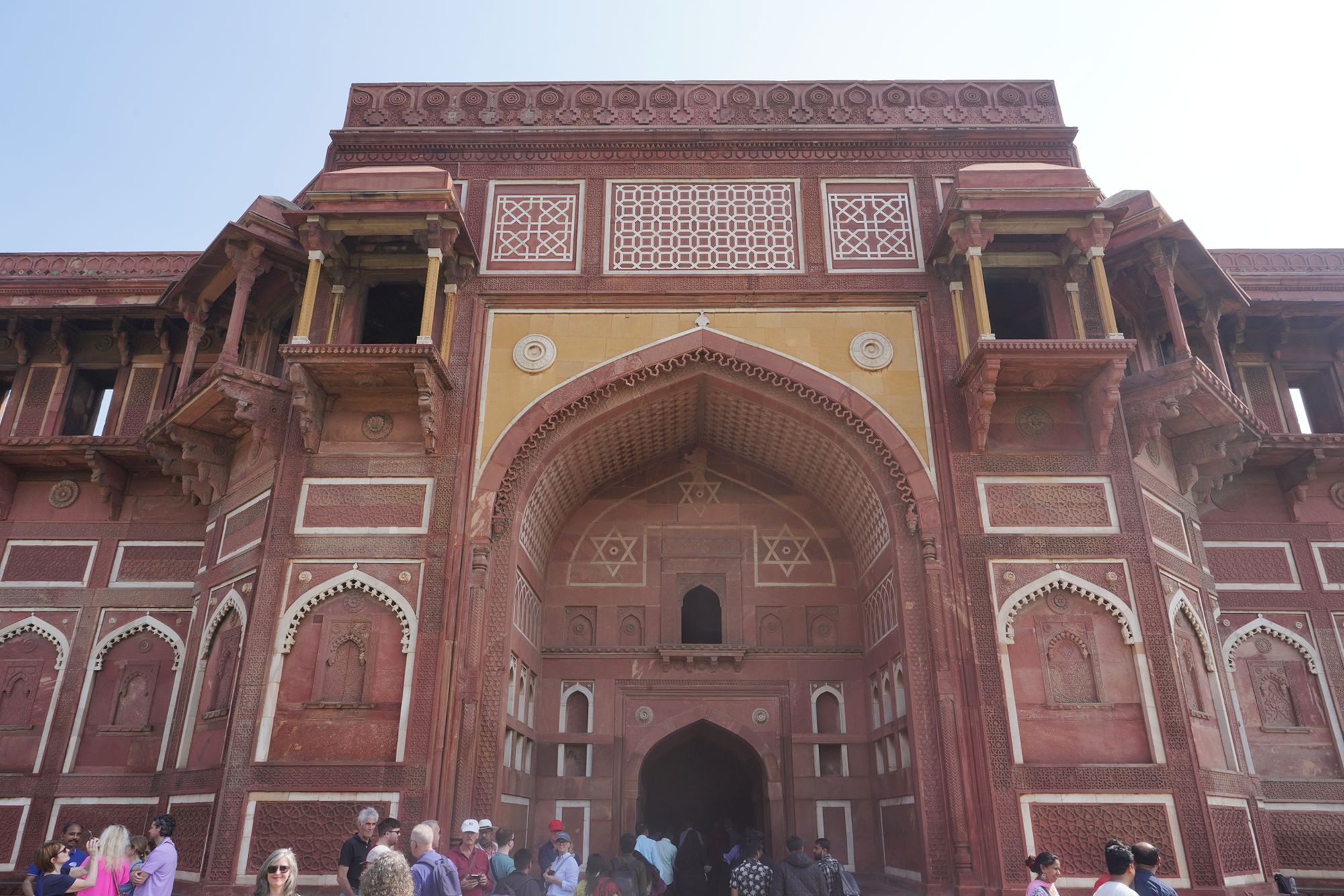
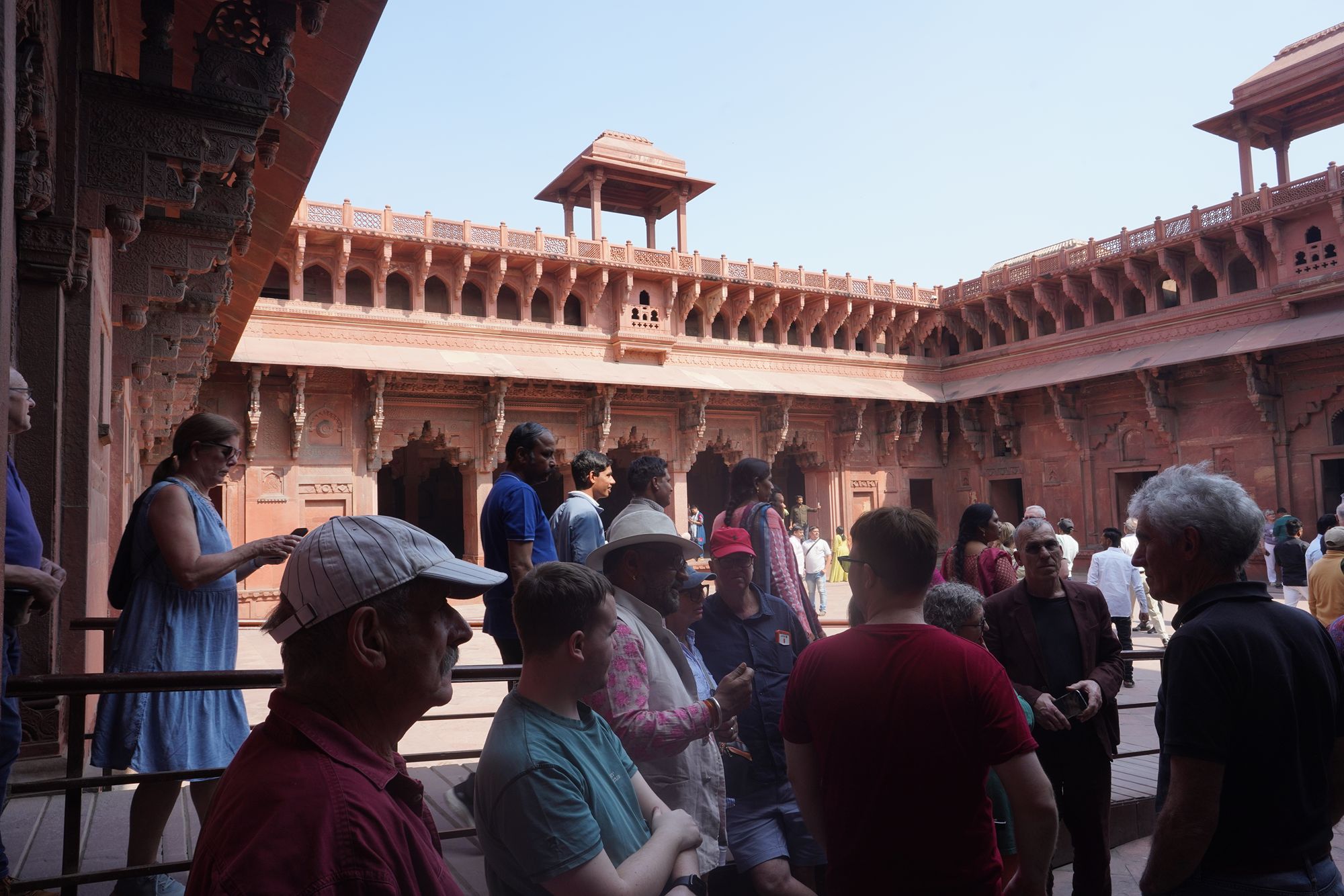
The palace features a large central courtyard surrounded by rooms, balconies, carved stonework, and decorative details that combine Islamic and traditional Indian architectural styles.
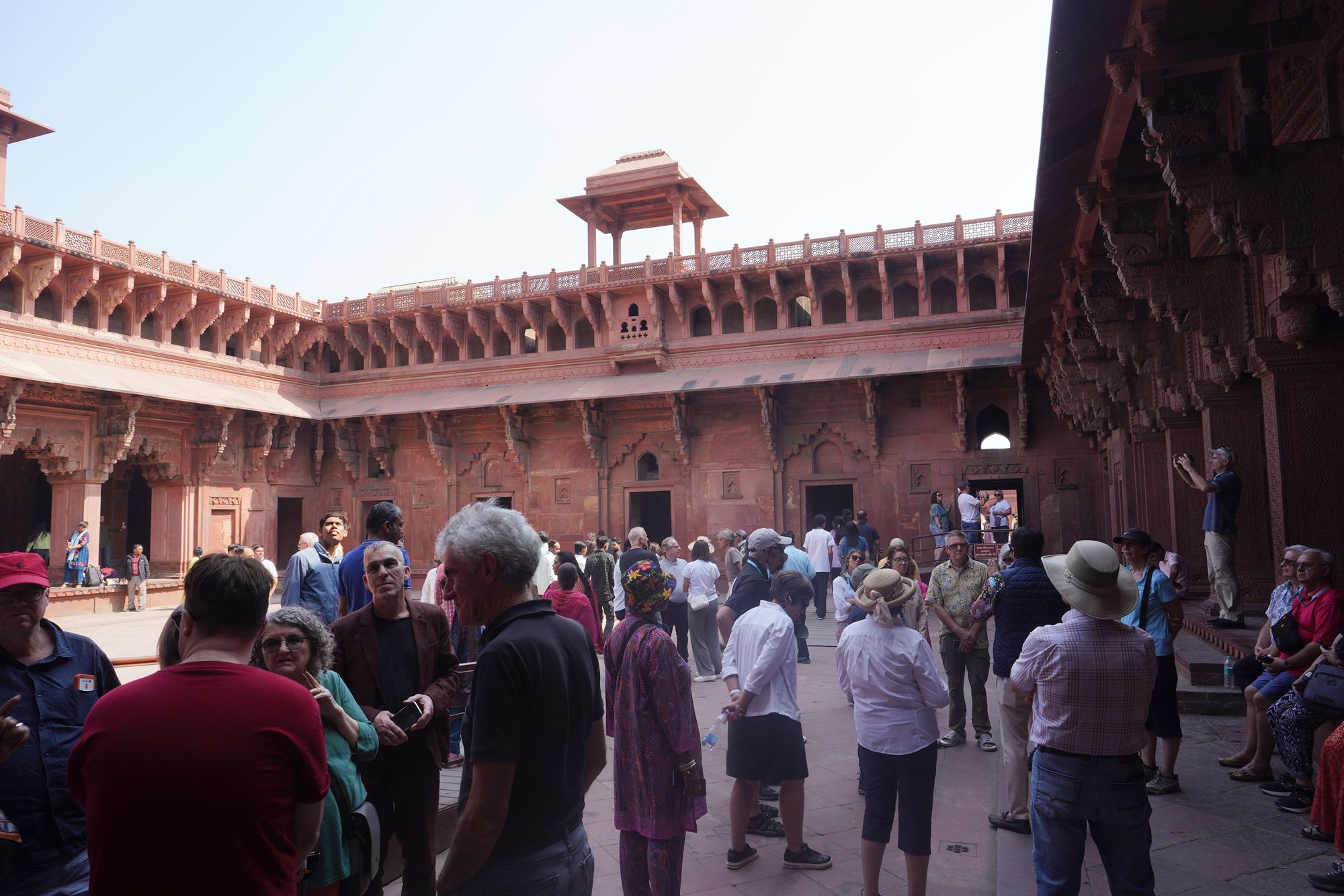
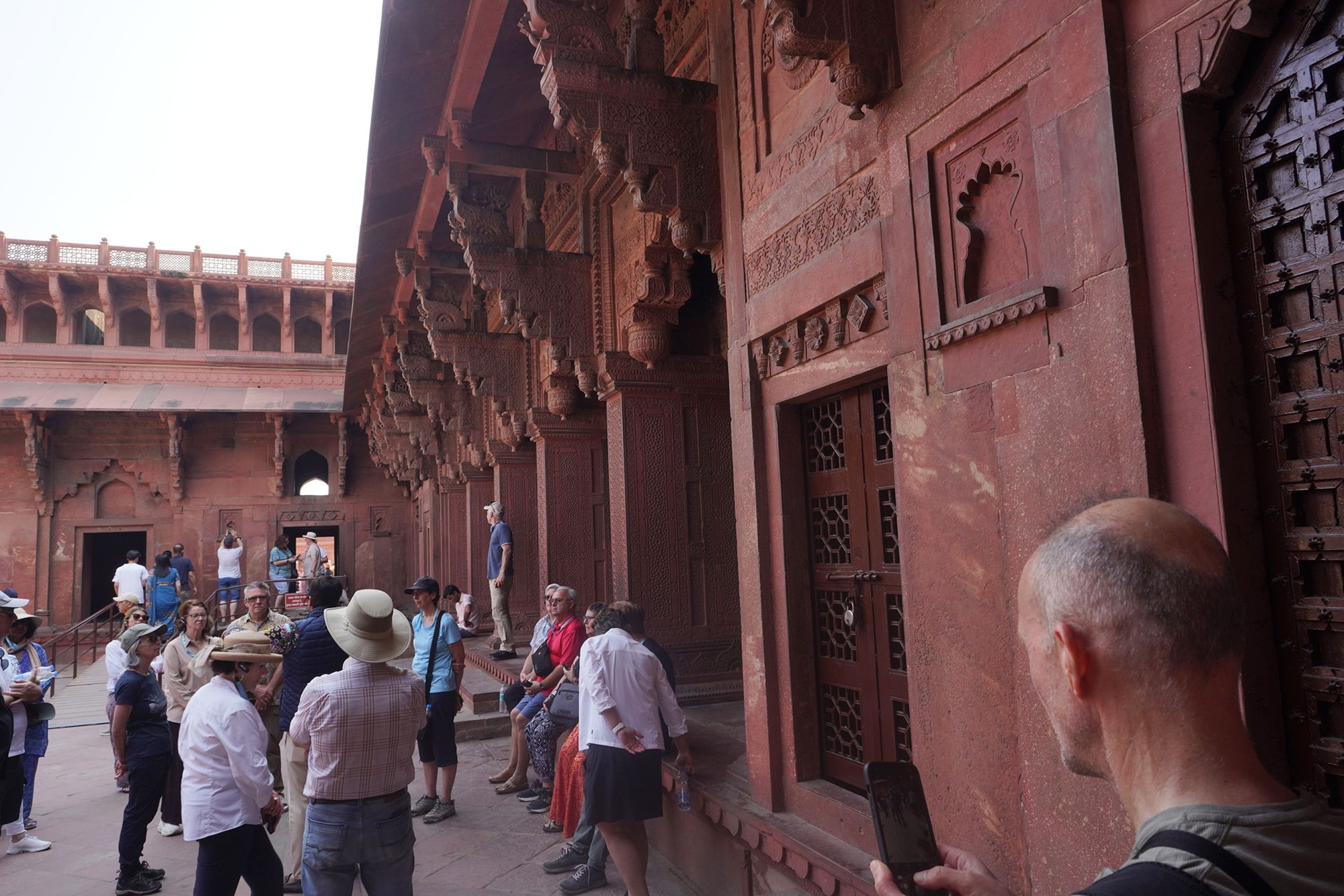
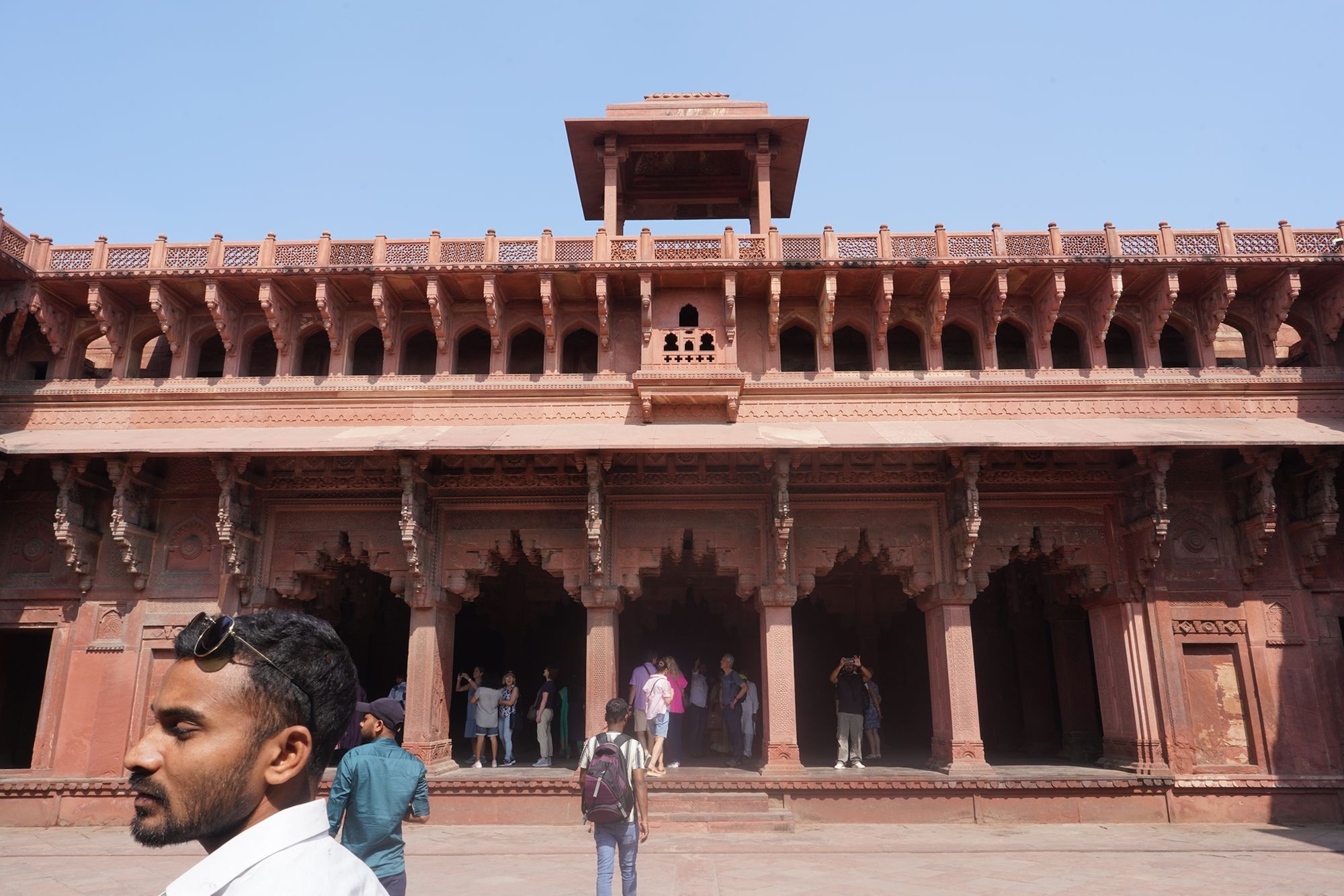
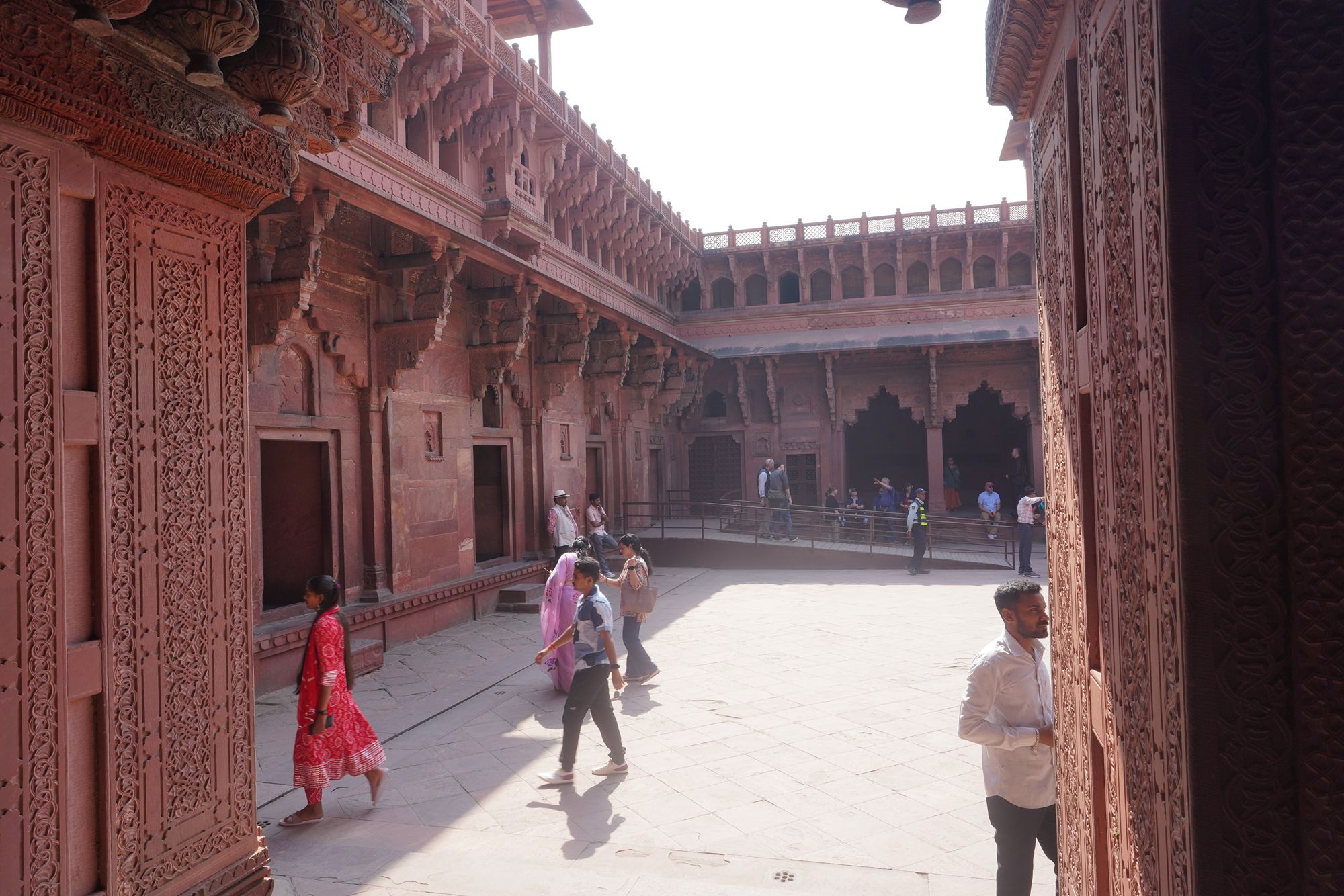
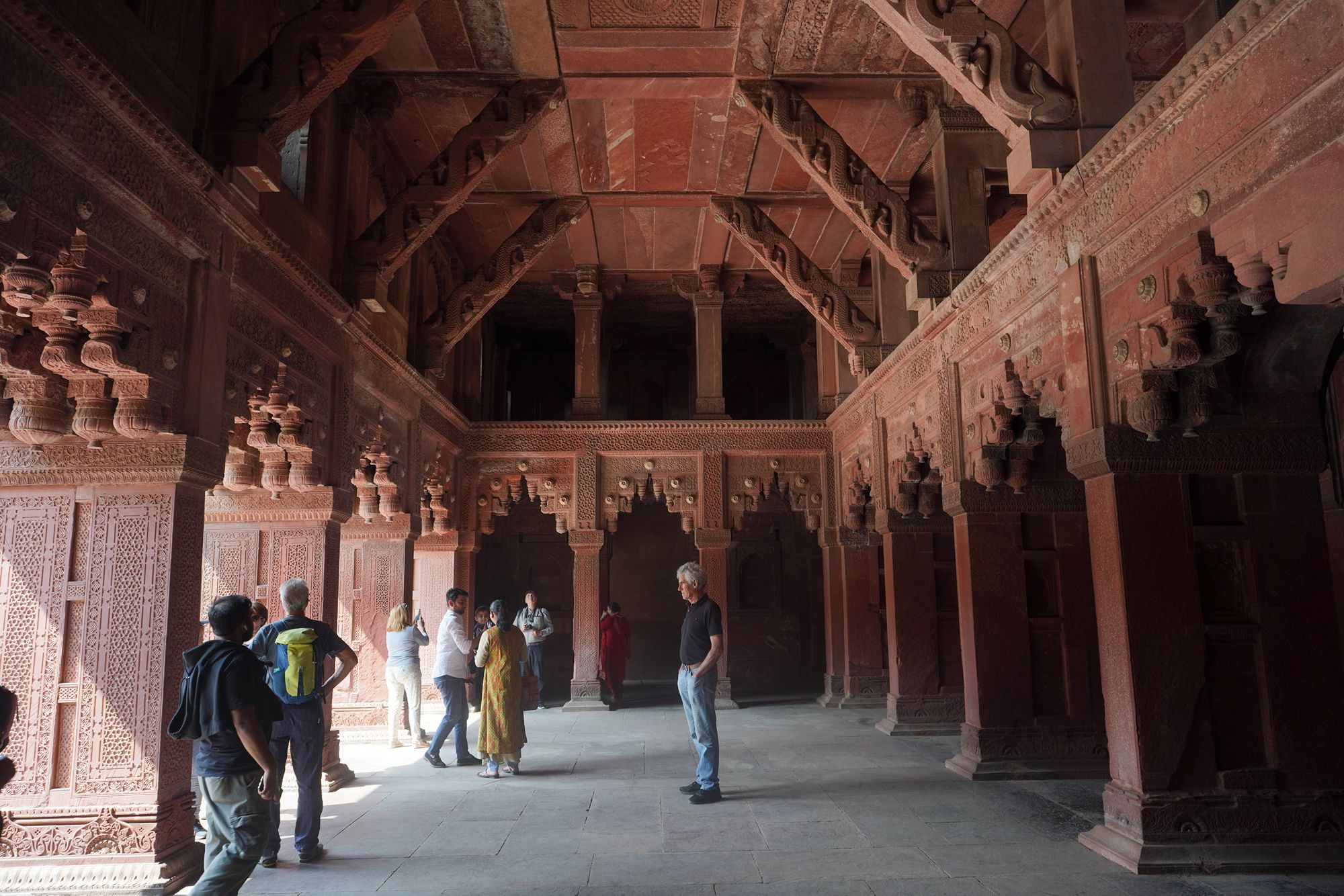
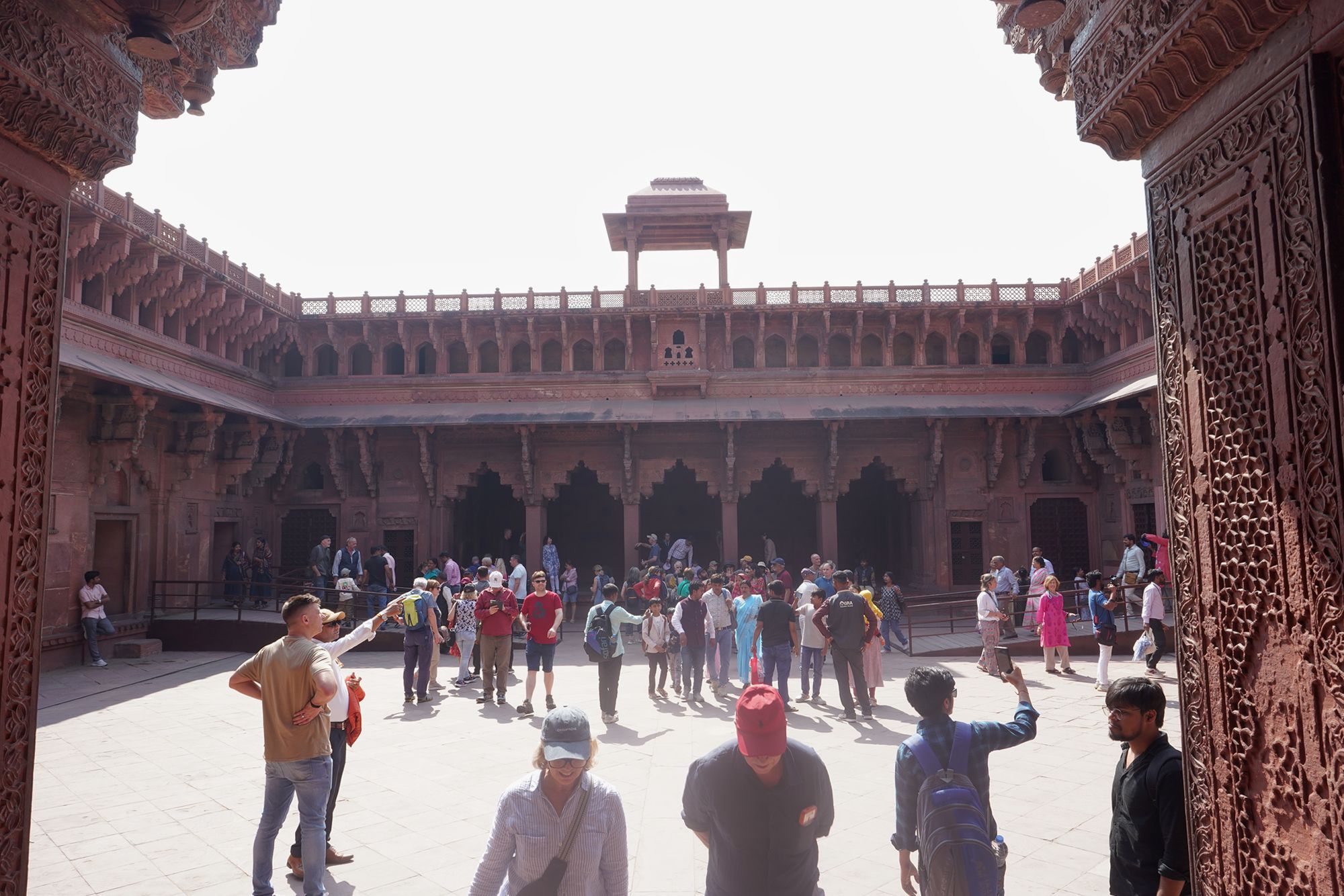
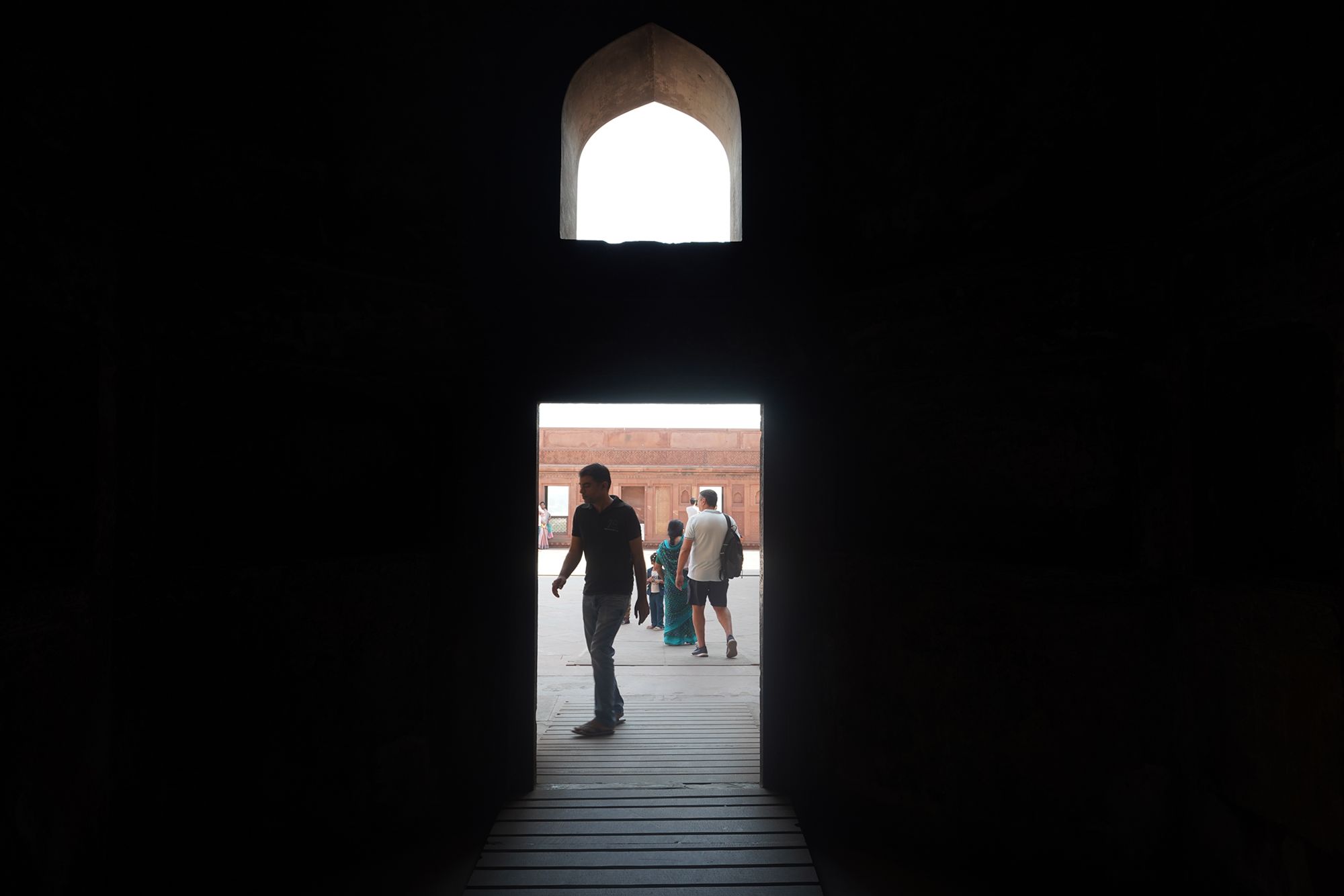
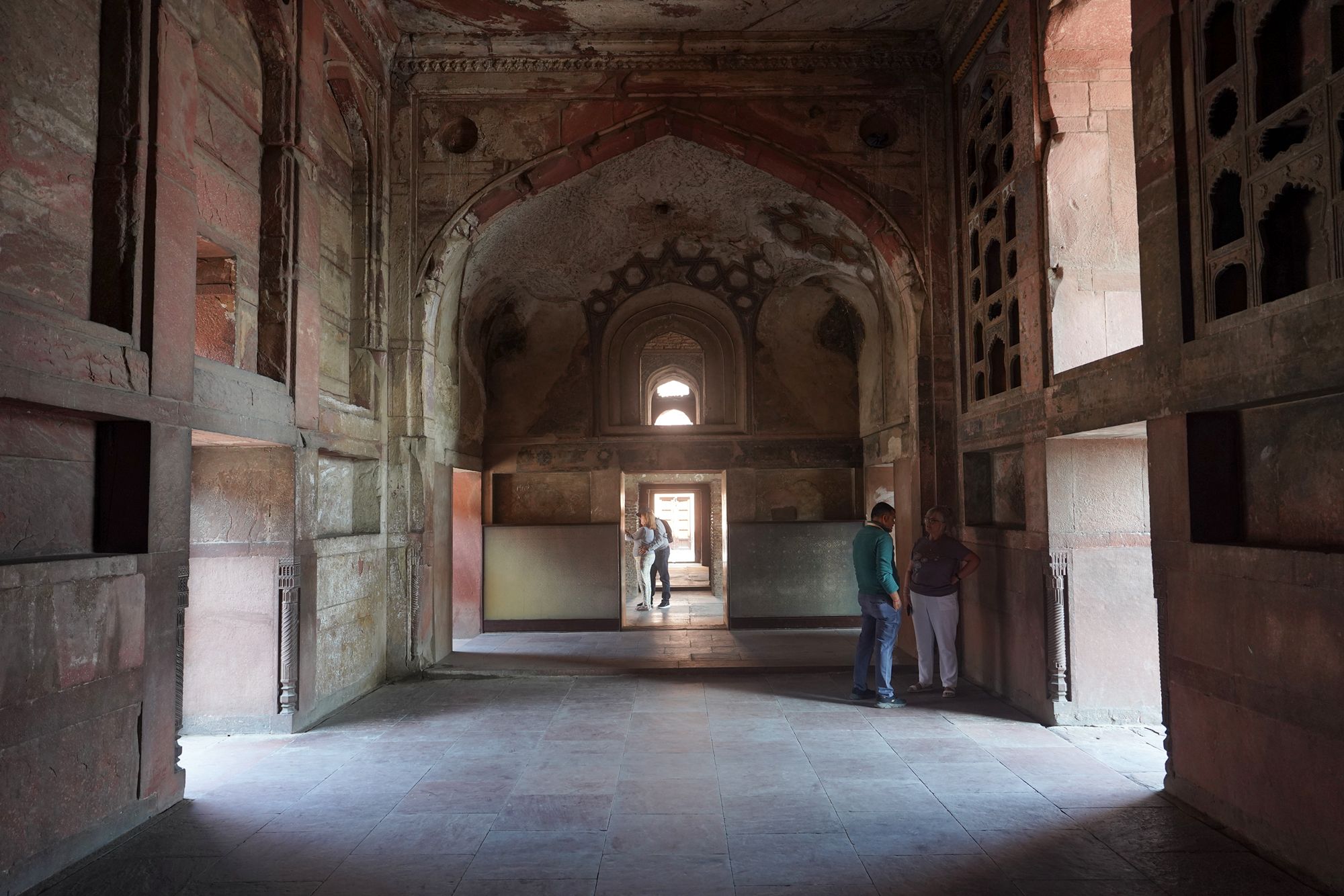
We walked through the central area of the palace and passed through an opening that led to an open terrace with views beyond the walls of Agra Fort.
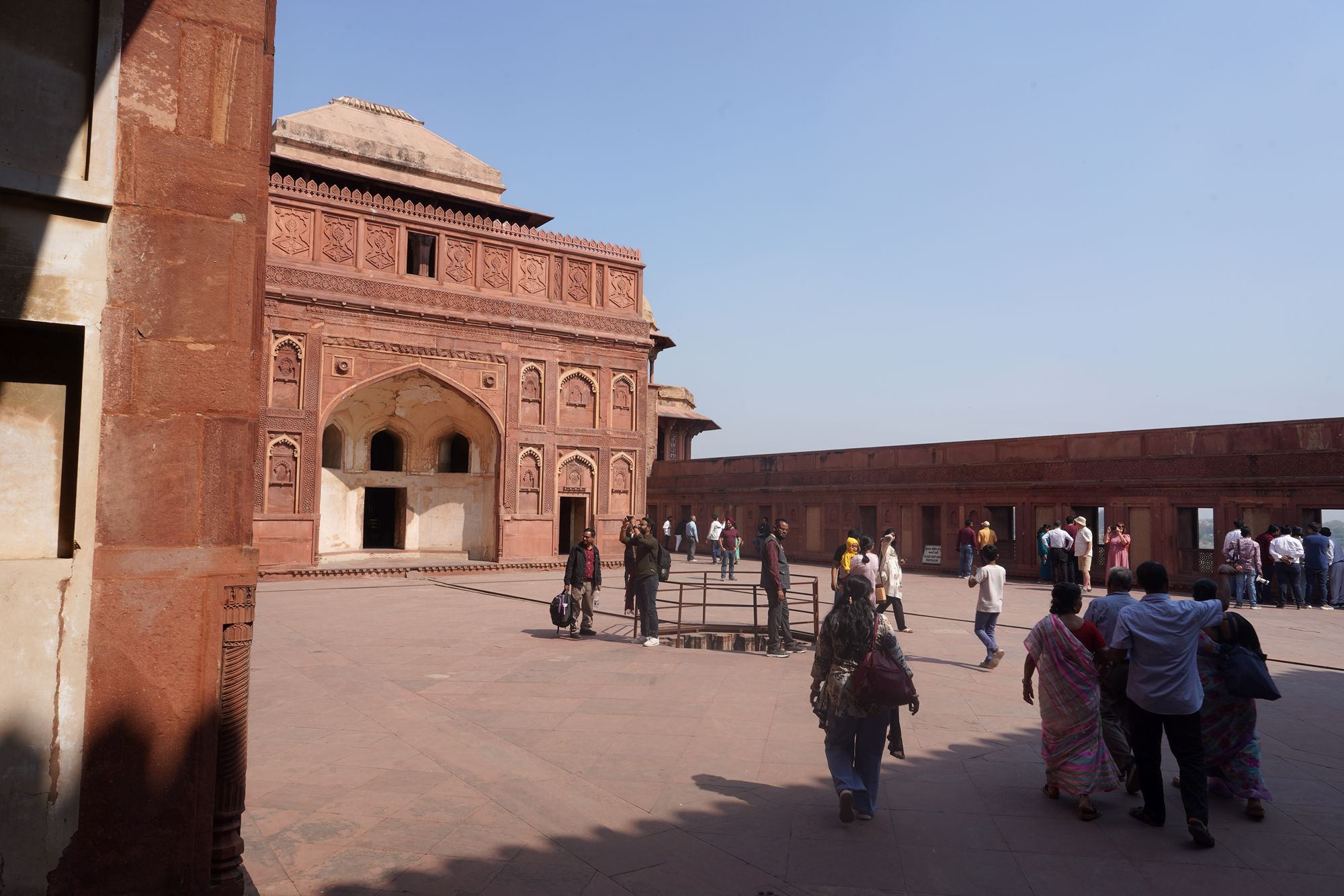
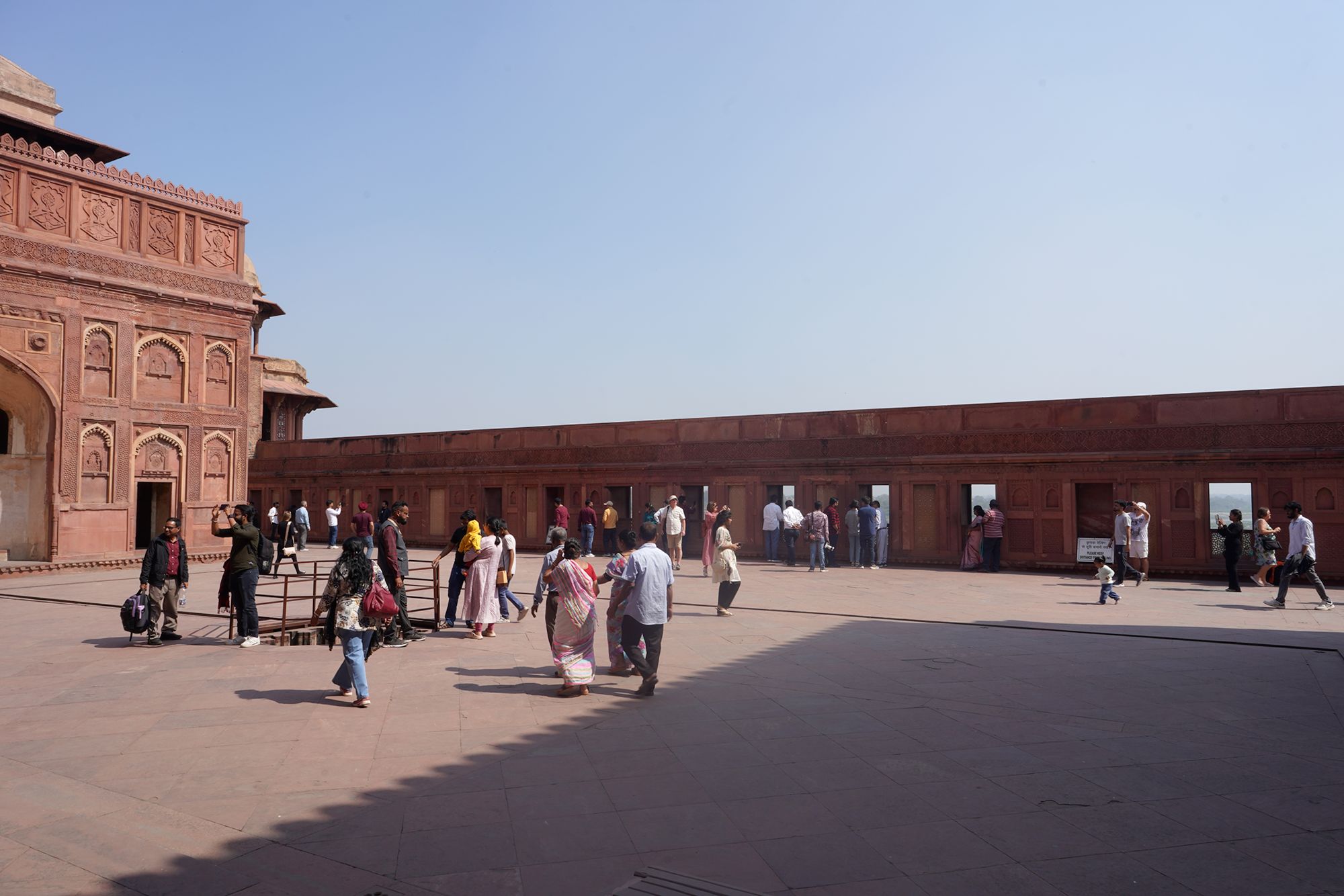
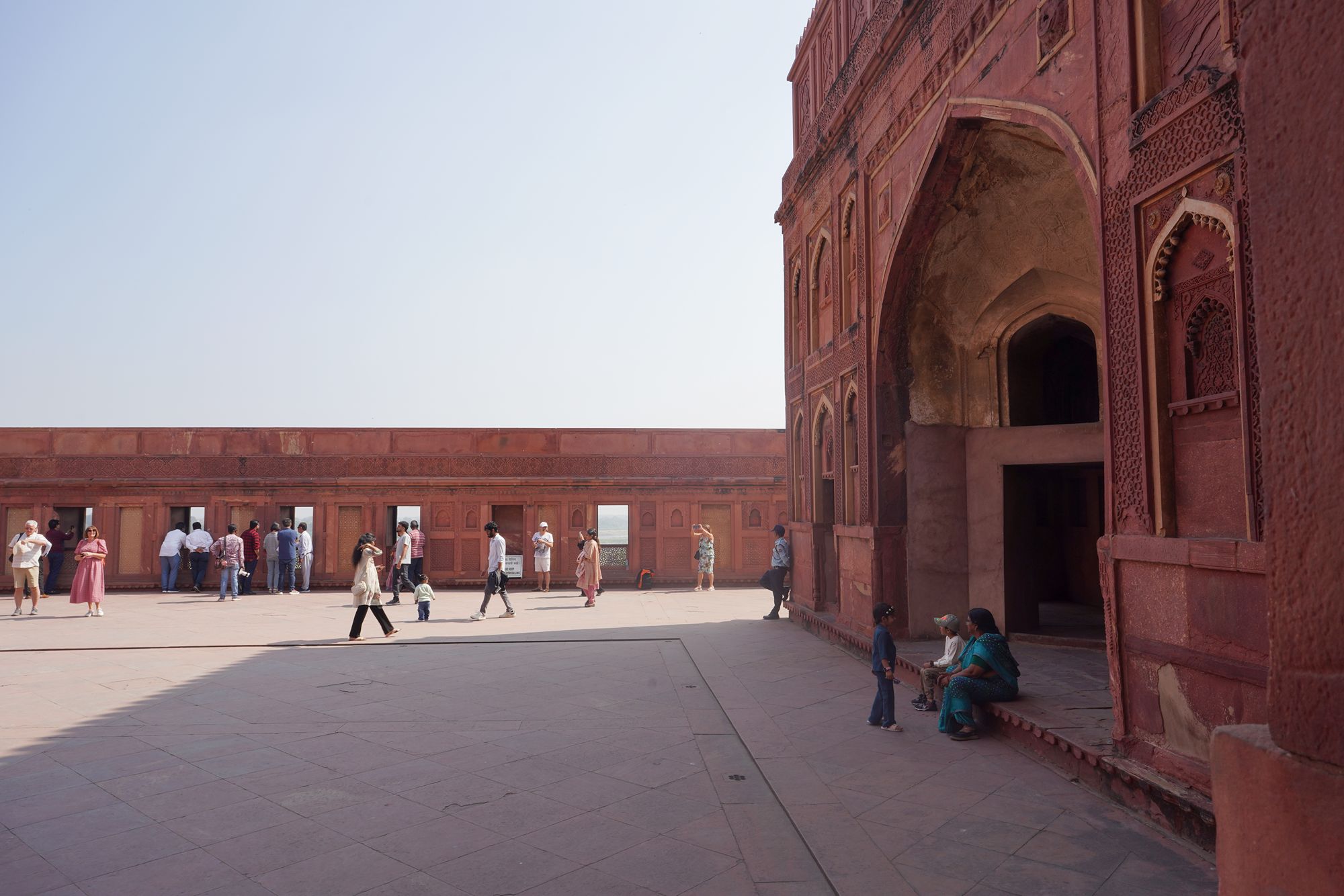
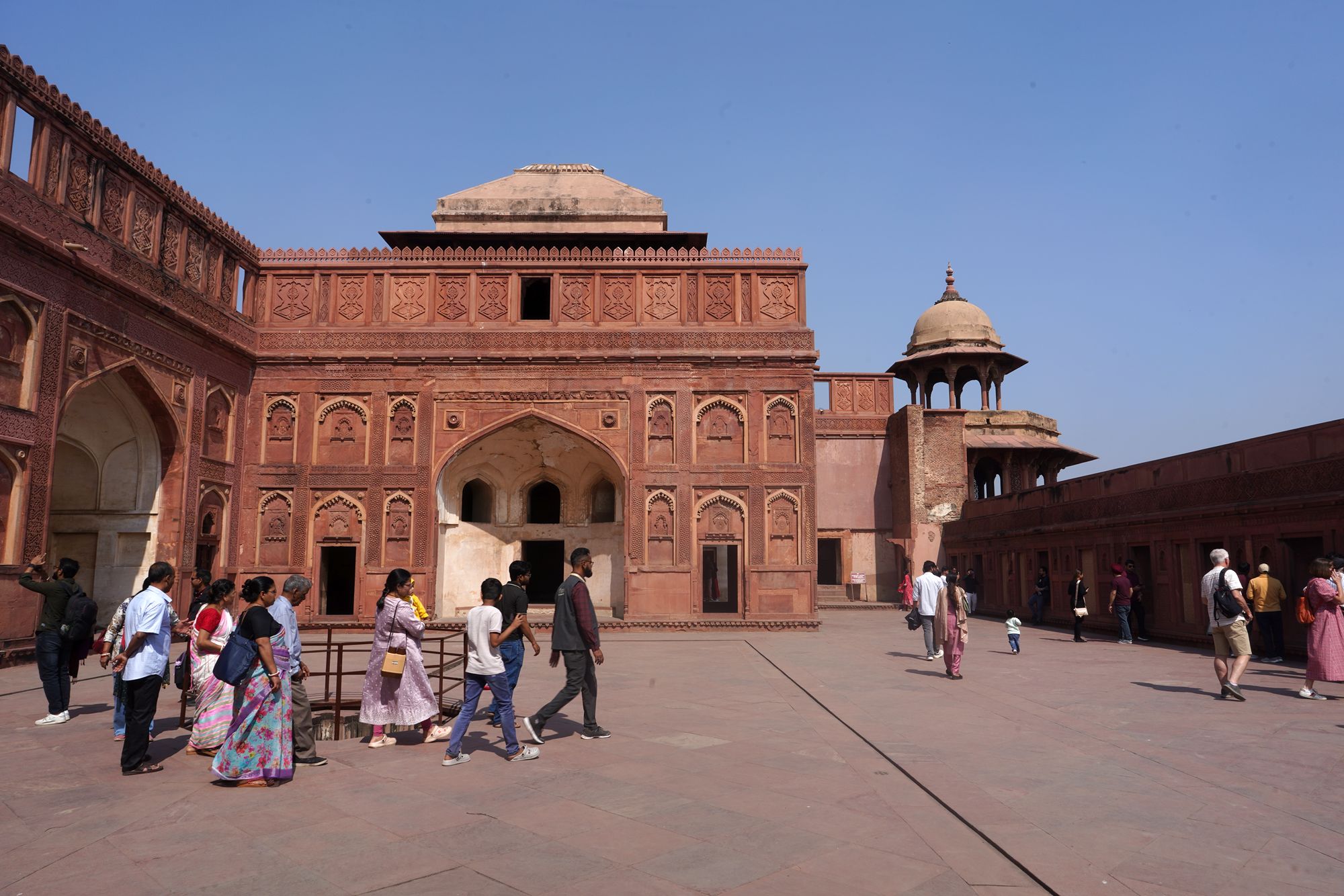
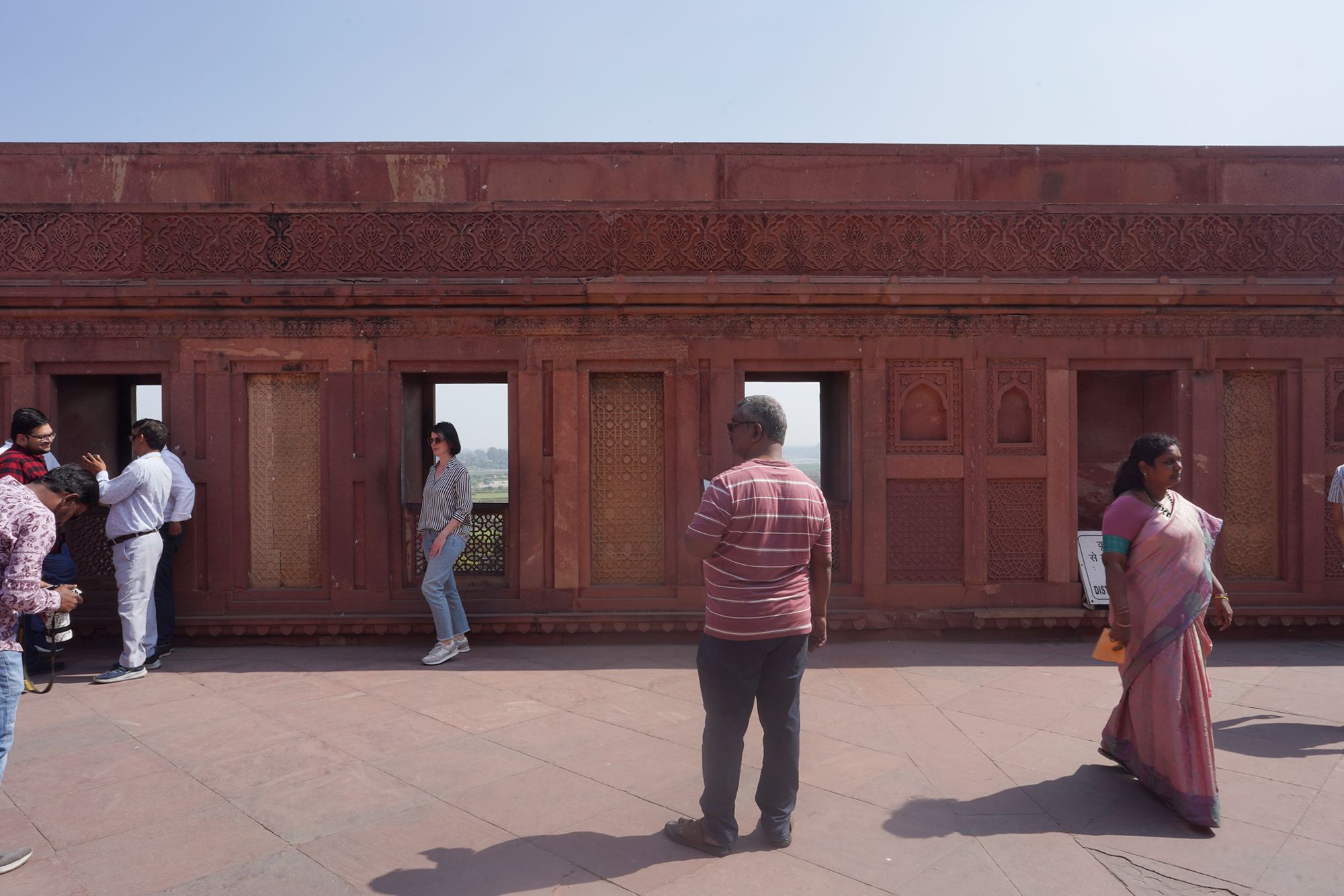
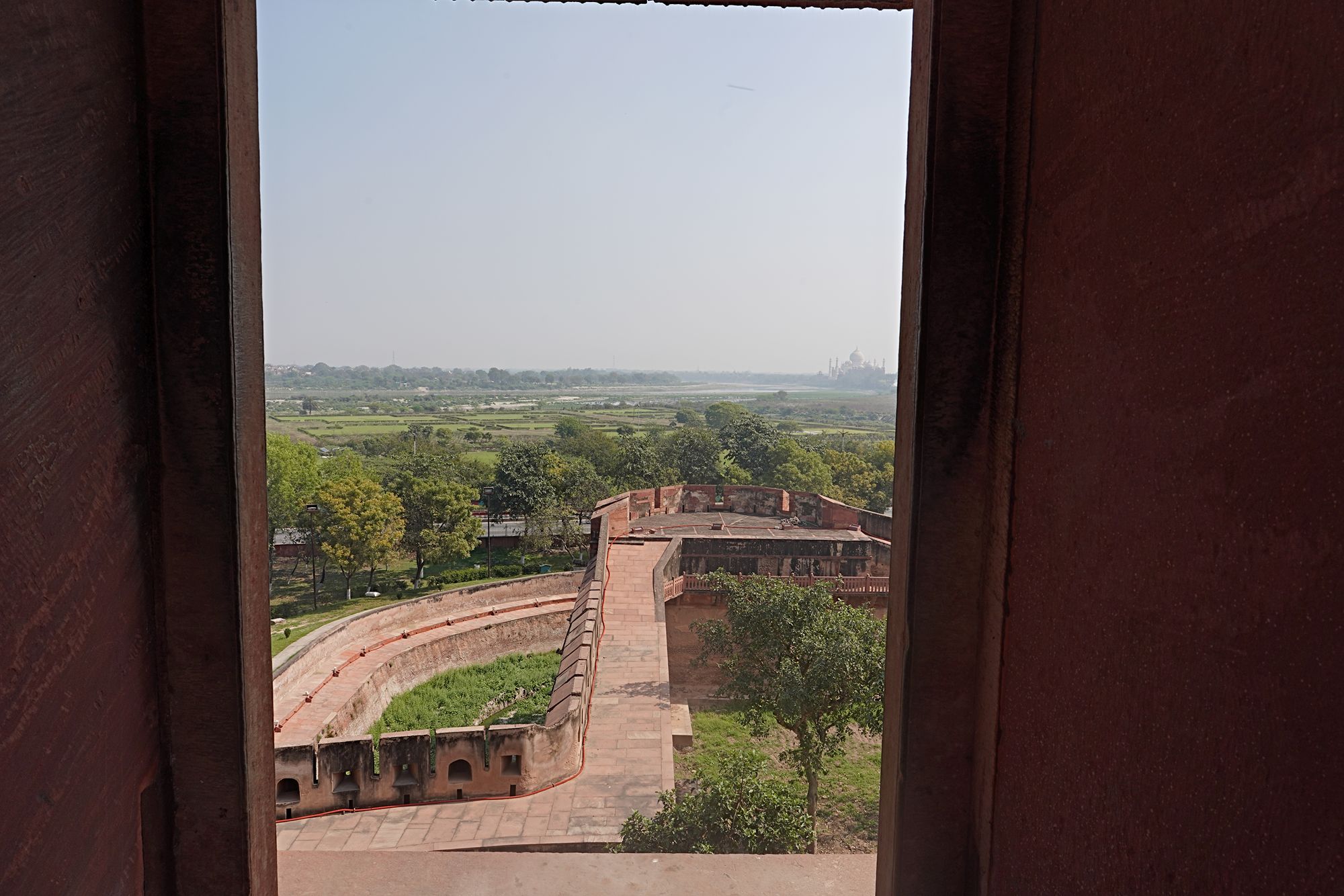
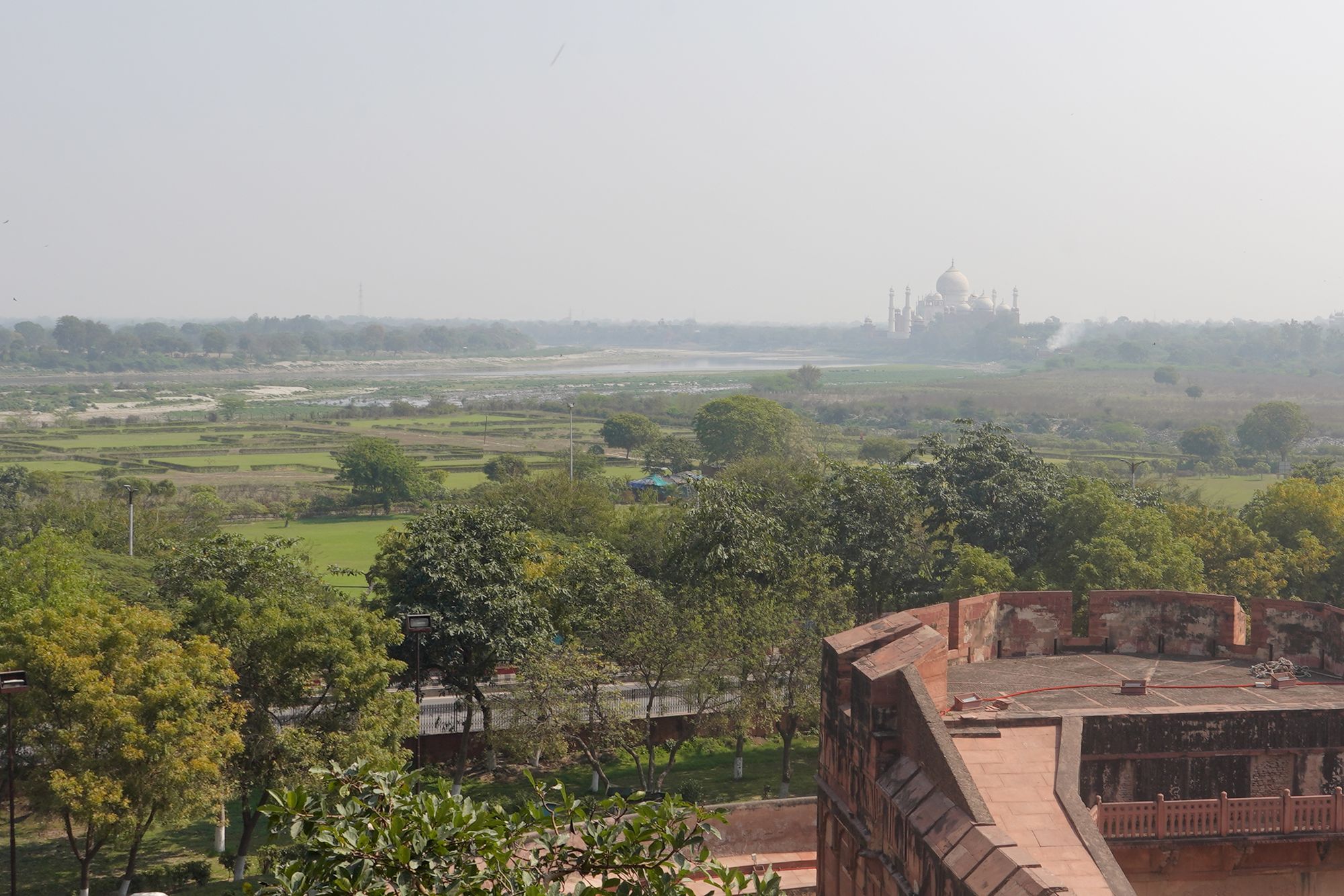
From the terrace, we could see the Taj Mahal in the distance. Shah Jahan, the emperor who built the Taj Mahal in memory of his beloved wife Mumtaz Mahal, spent the final years of his life confined in Agra Fort after being deposed by his son Aurangzeb. From the fort, he could look across the Yamuna River toward the Taj Mahal. I wondered what must have gone through his mind as he looked at the magnificent monument he had built for his wife, knowing that he could no longer freely visit it.
So, who built this fort?
The family sequence can be confusing:
- Akbar — Shah Jahan’s grandfather — began construction of the present Agra Fort in 1565.
- Jahangir — Shah Jahan’s father — lived there and made some additions.
- Shah Jahan — later added many of the fort’s elegant white-marble buildings. He also built the Taj Mahal.
- Aurangzeb — Shah Jahan’s son — overthrew his father and confined him at Agra Fort in 1658.
So there is a historical irony: Shah Jahan helped beautify the very fort in which his son later confined him.
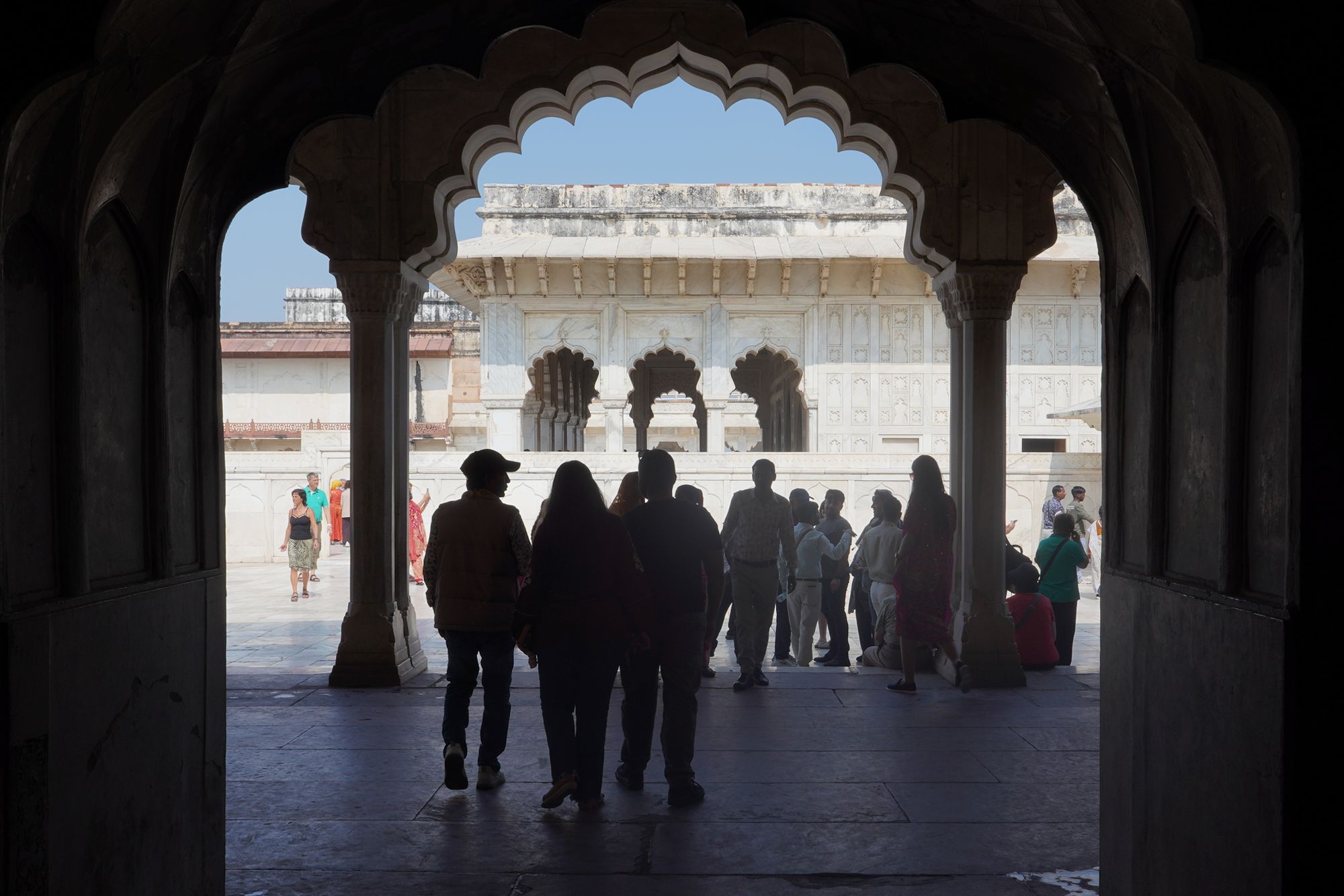
Roshanara Pavilion
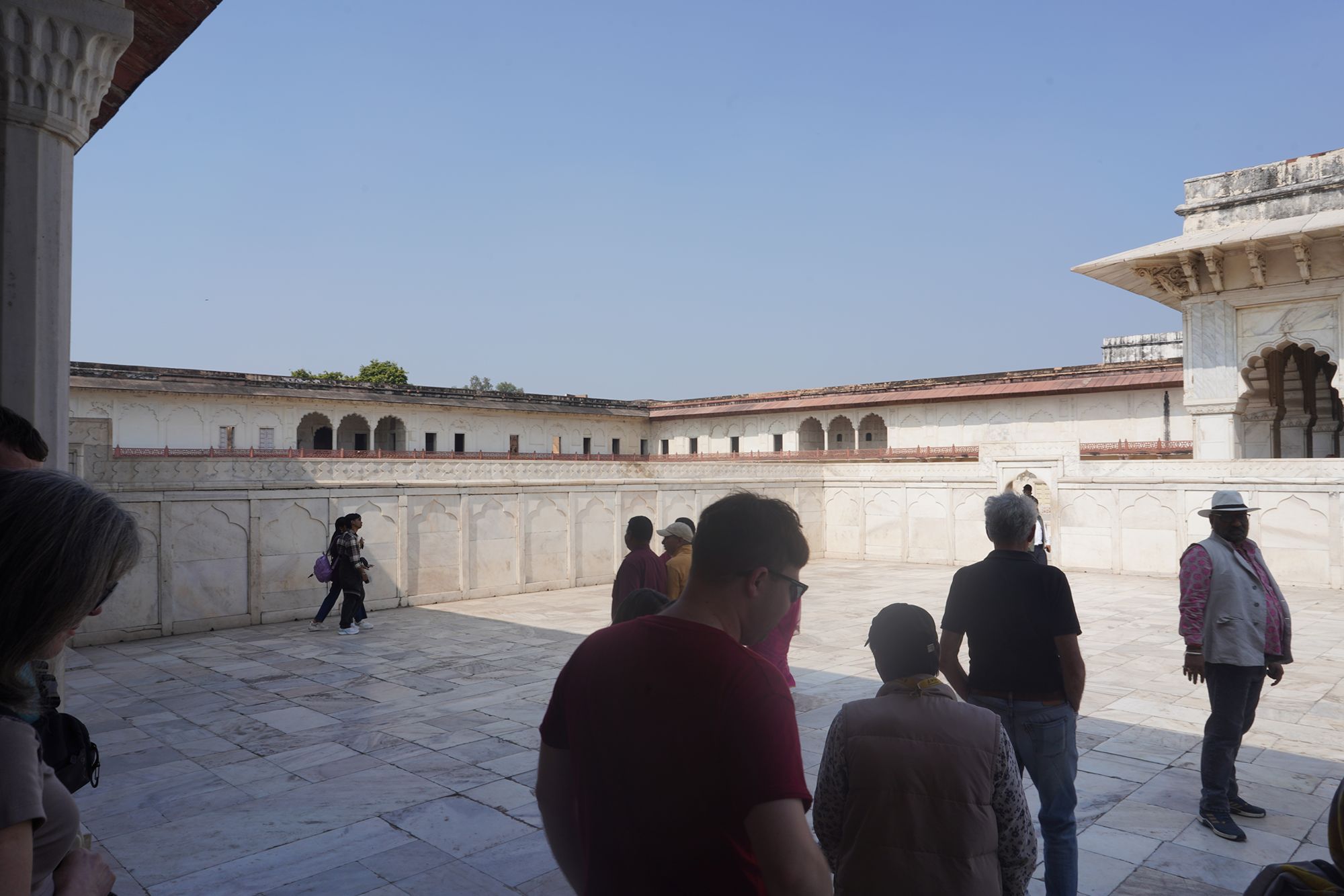
The Roshanara Pavilion is a pavilion within Agra Fort, associated with Roshanara Begum, a daughter of Emperor Shah Jahan and Mumtaz Mahal and a sister of Aurangzeb and Dara Shikoh.
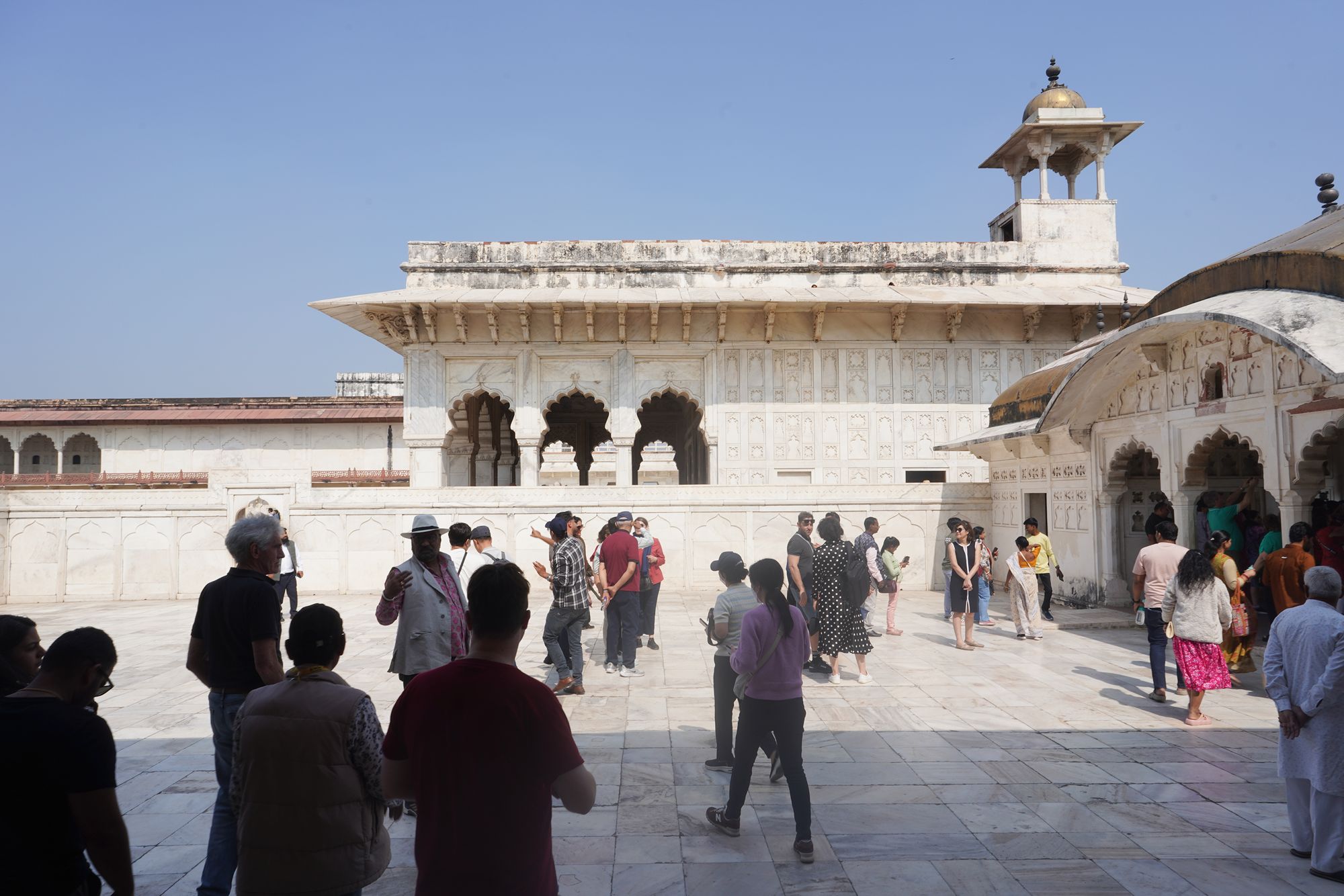
Roshanara was an influential Mughal princess. During the struggle for succession after Shah Jahan became ill in 1657, she supported Aurangzeb, who ultimately defeated his brothers, became emperor, and confined Shah Jahan in Agra Fort.
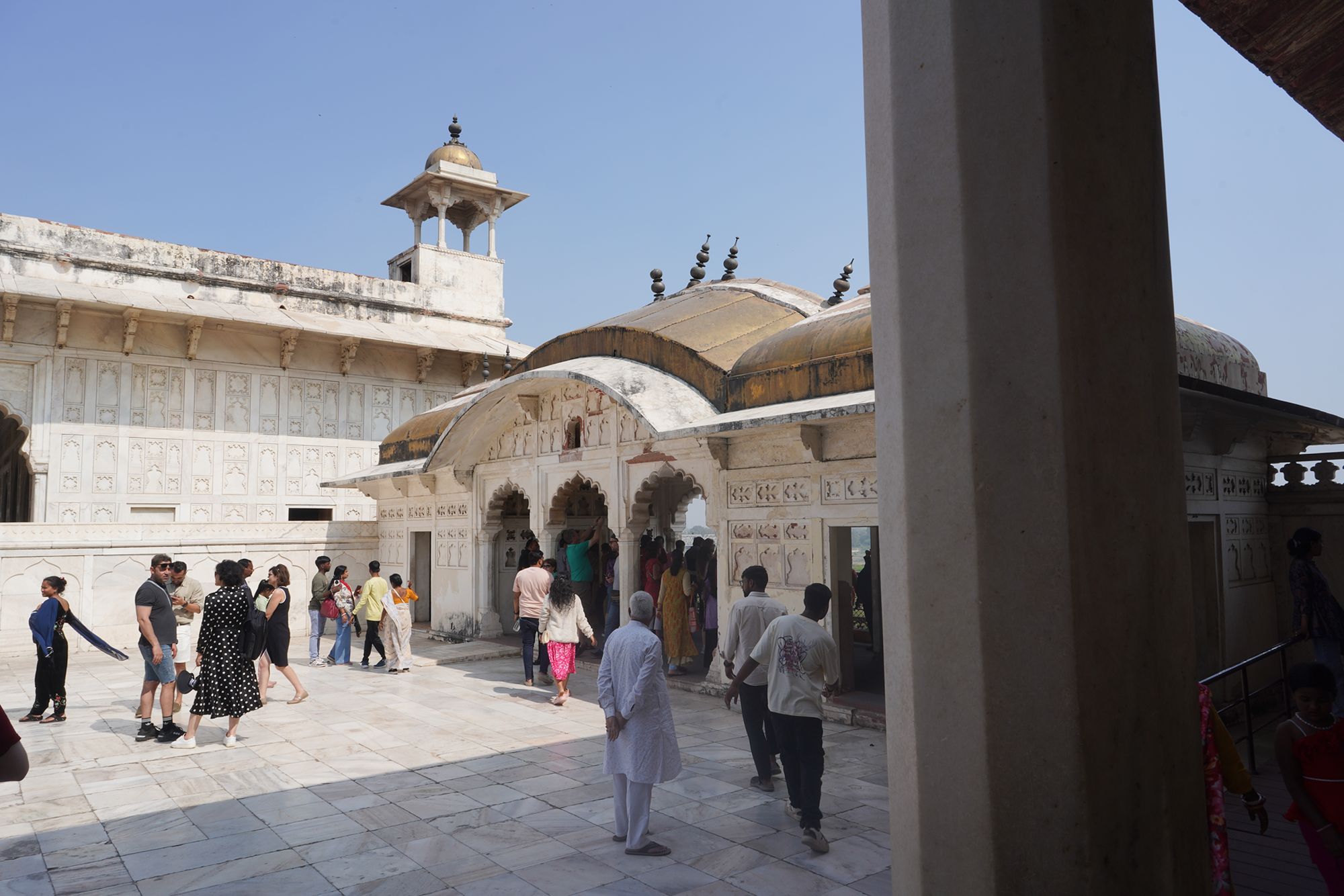
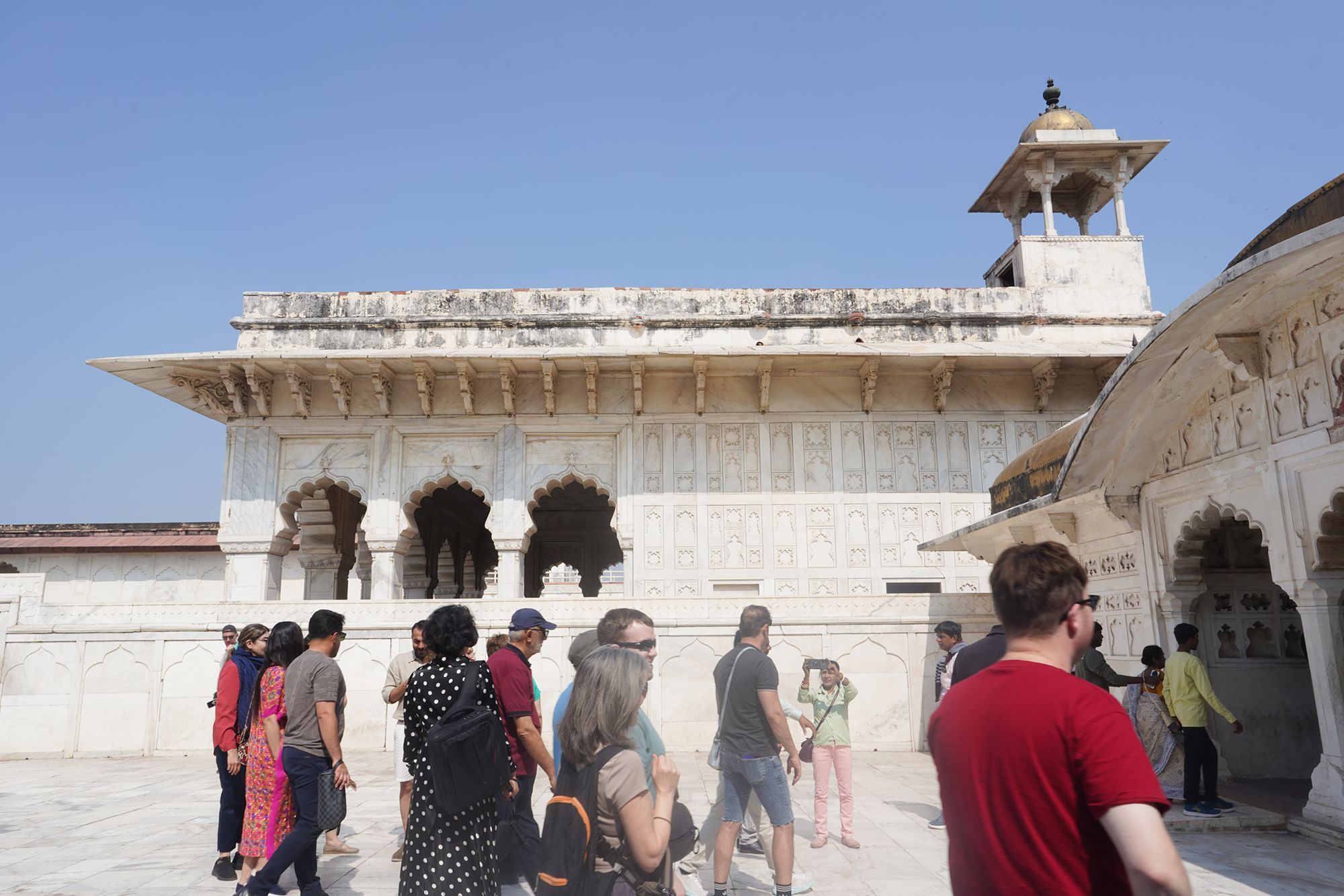
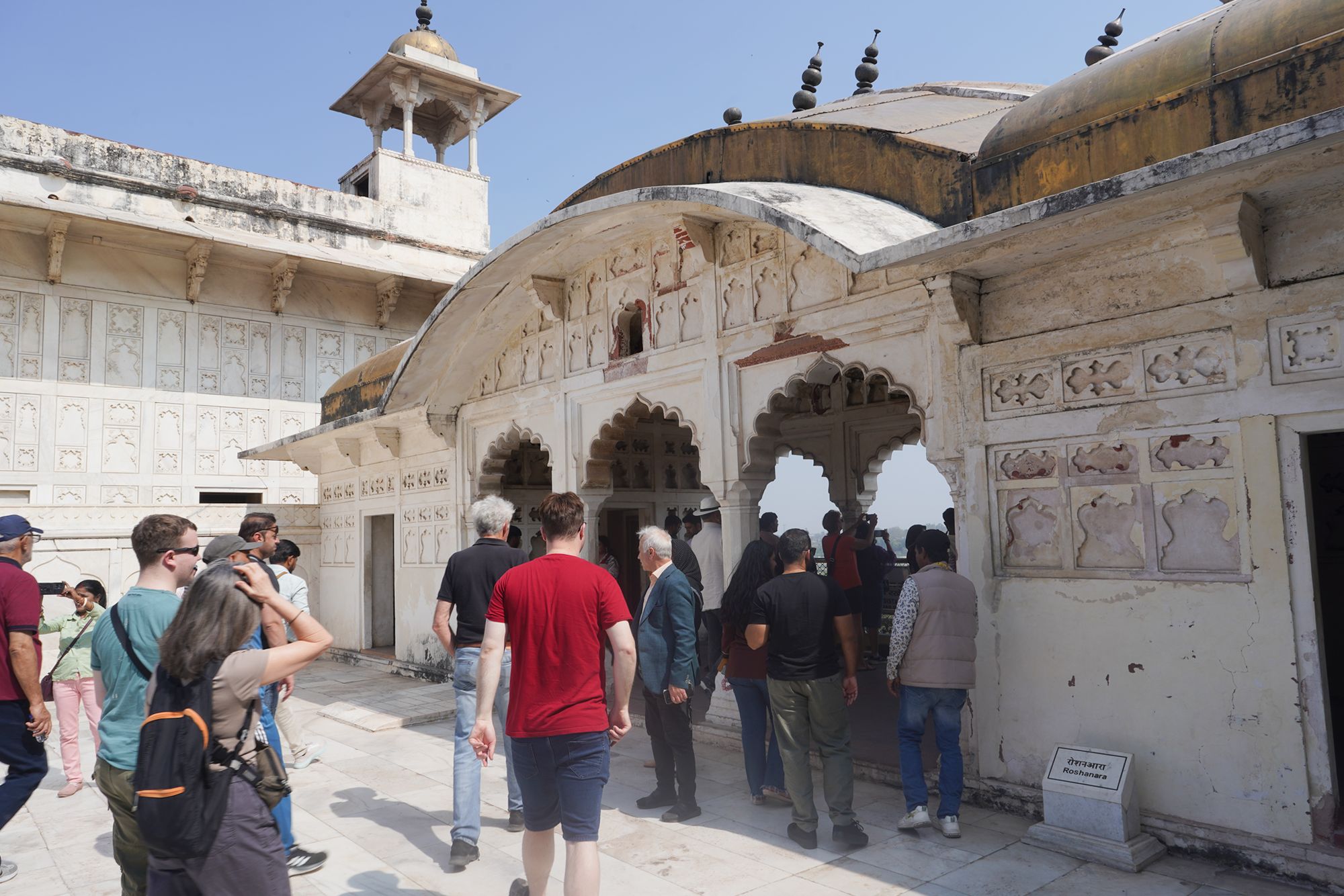
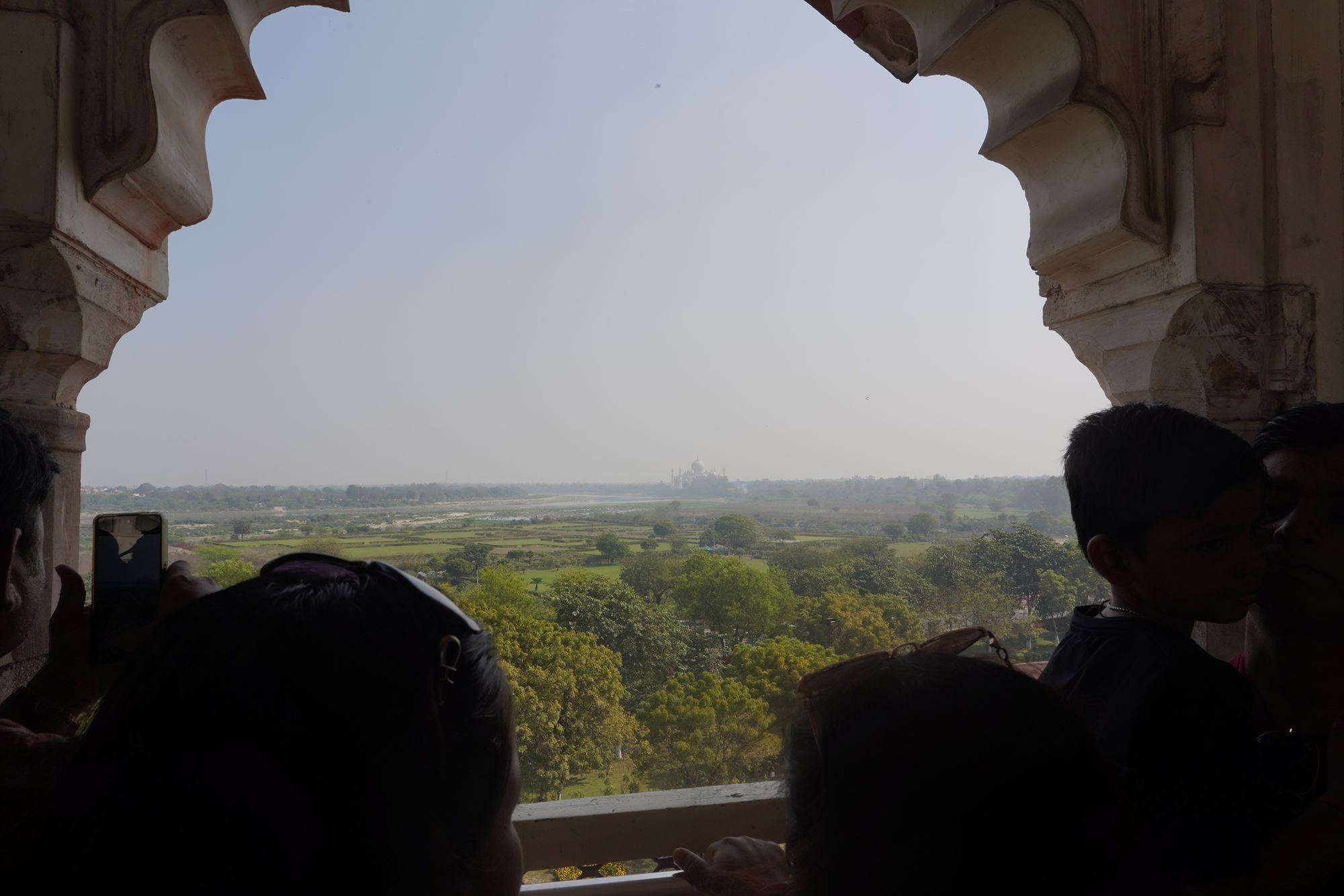
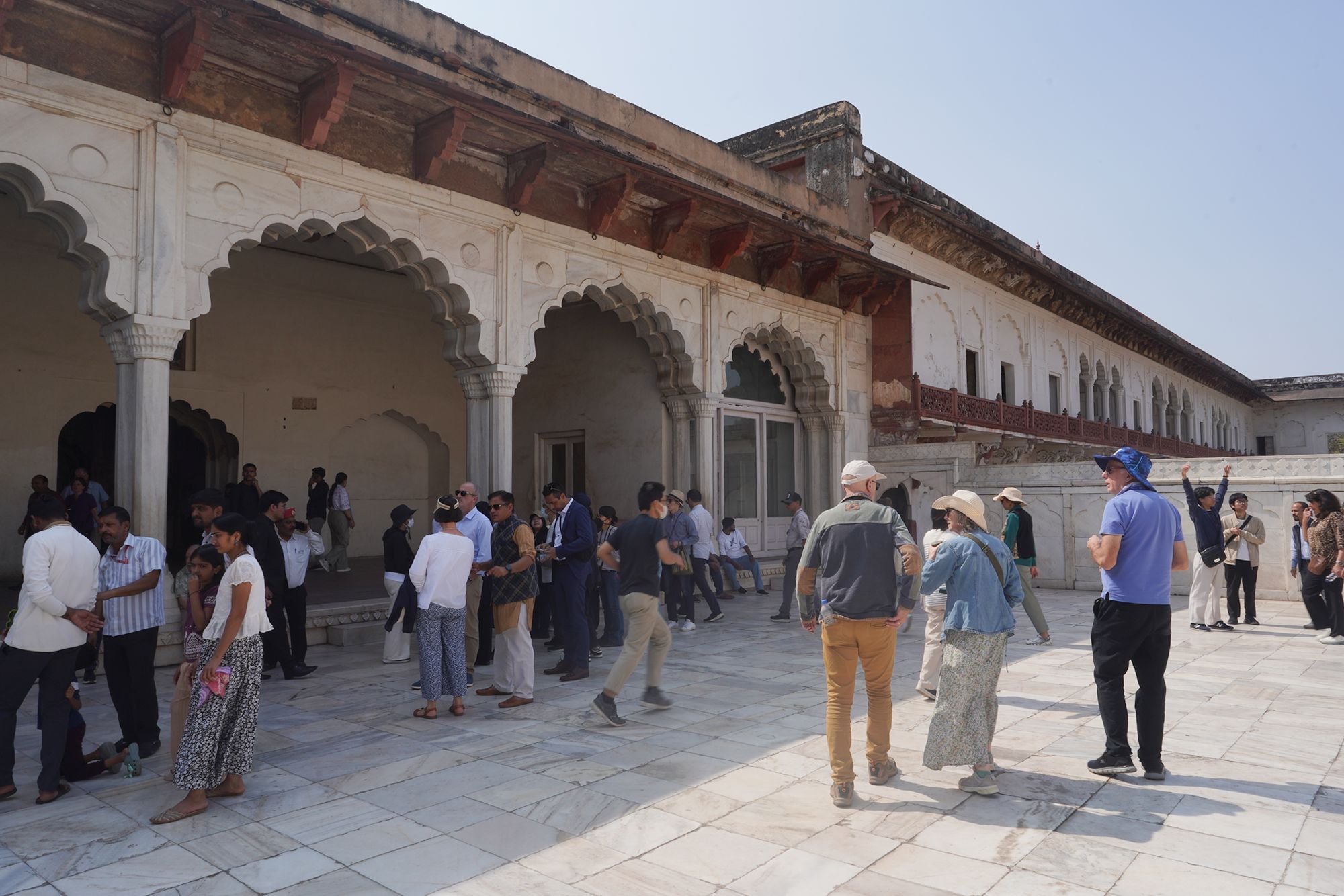
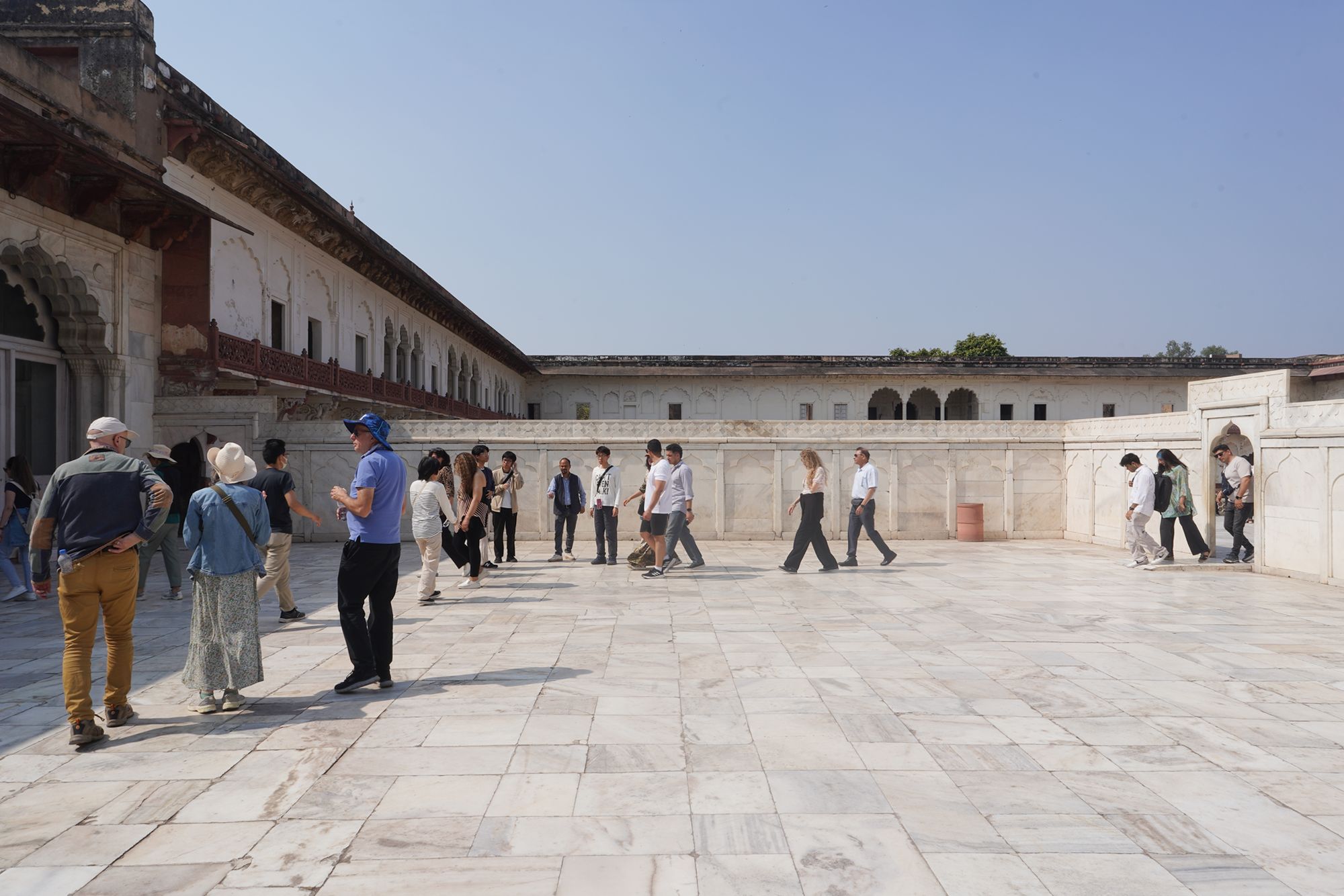
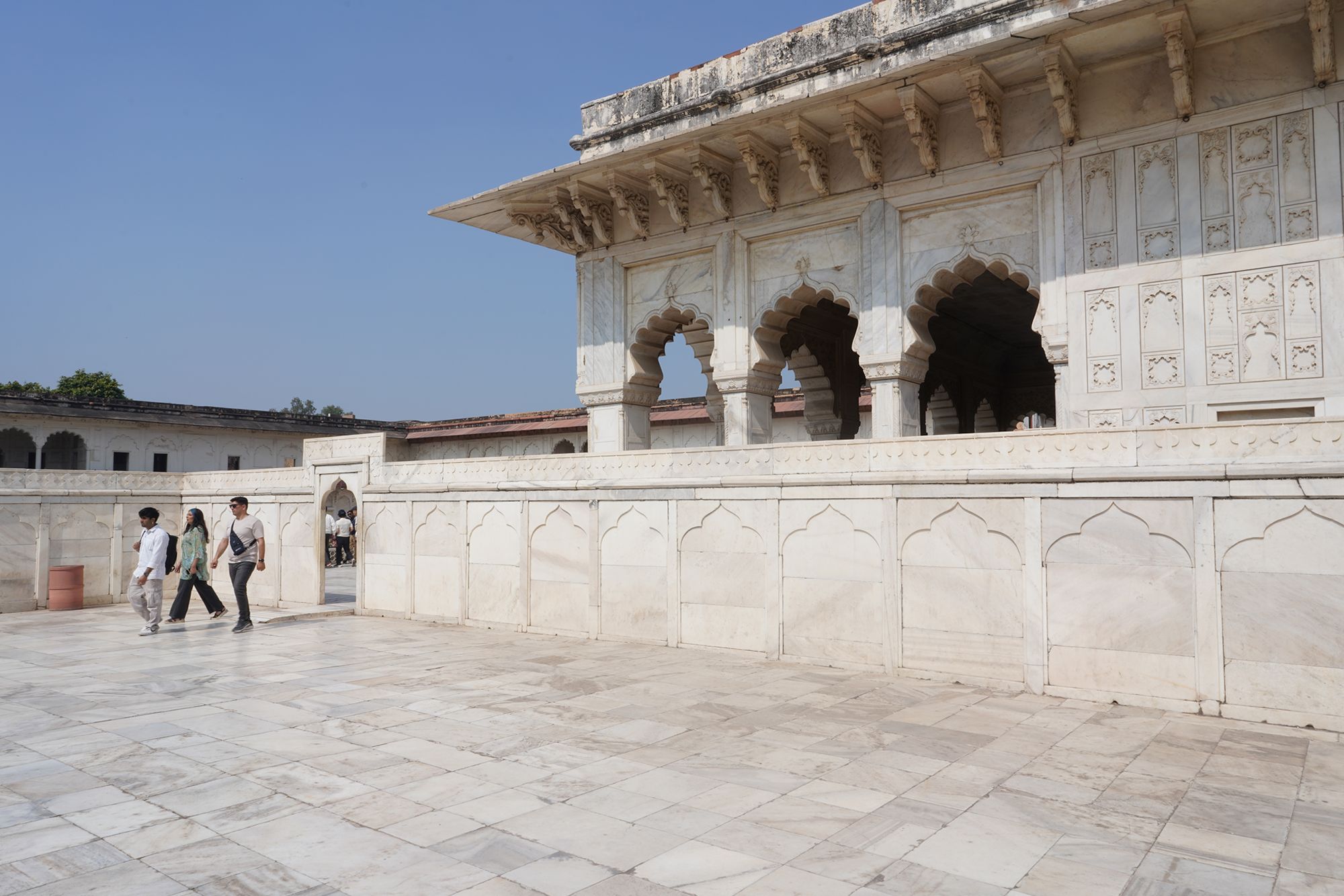
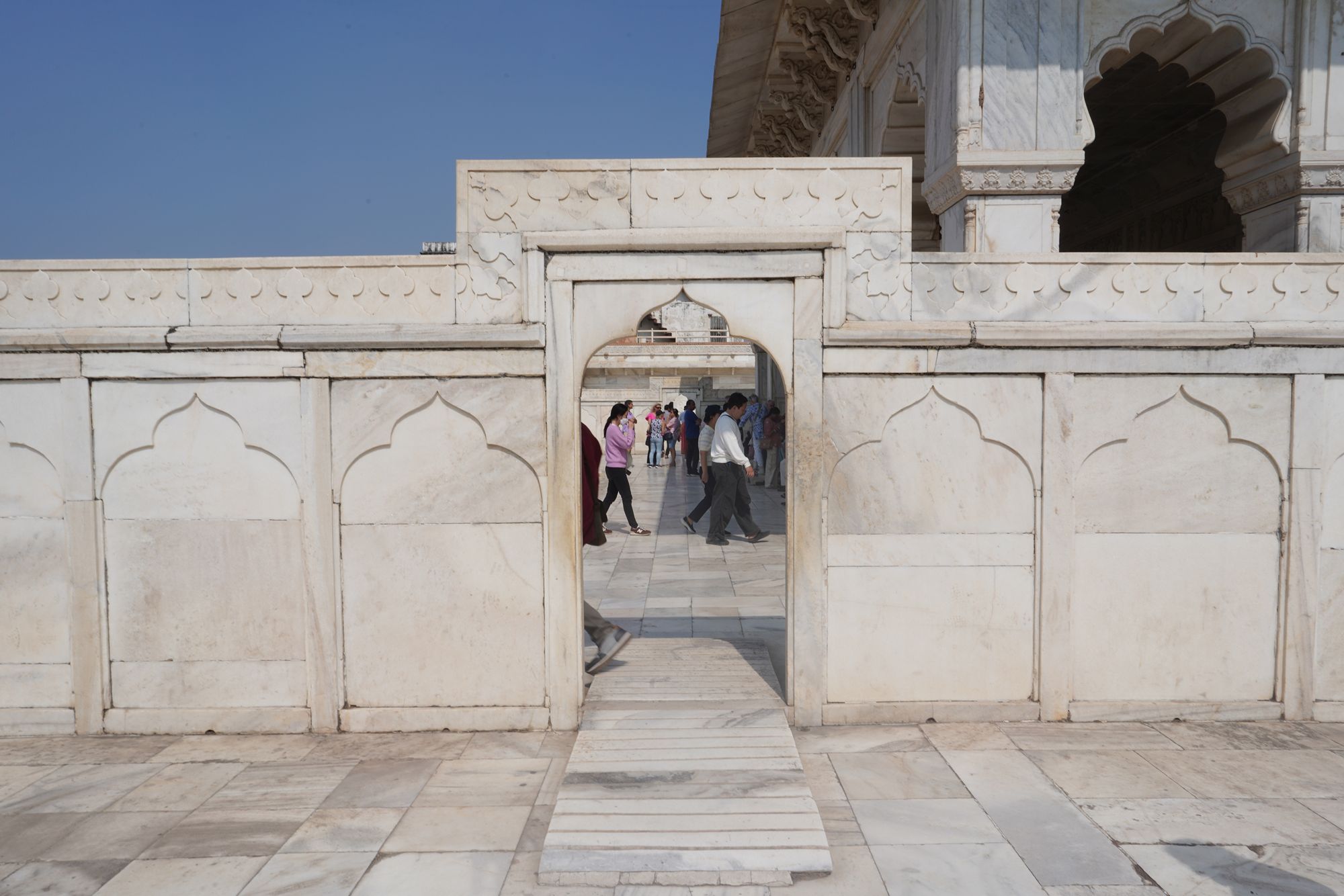
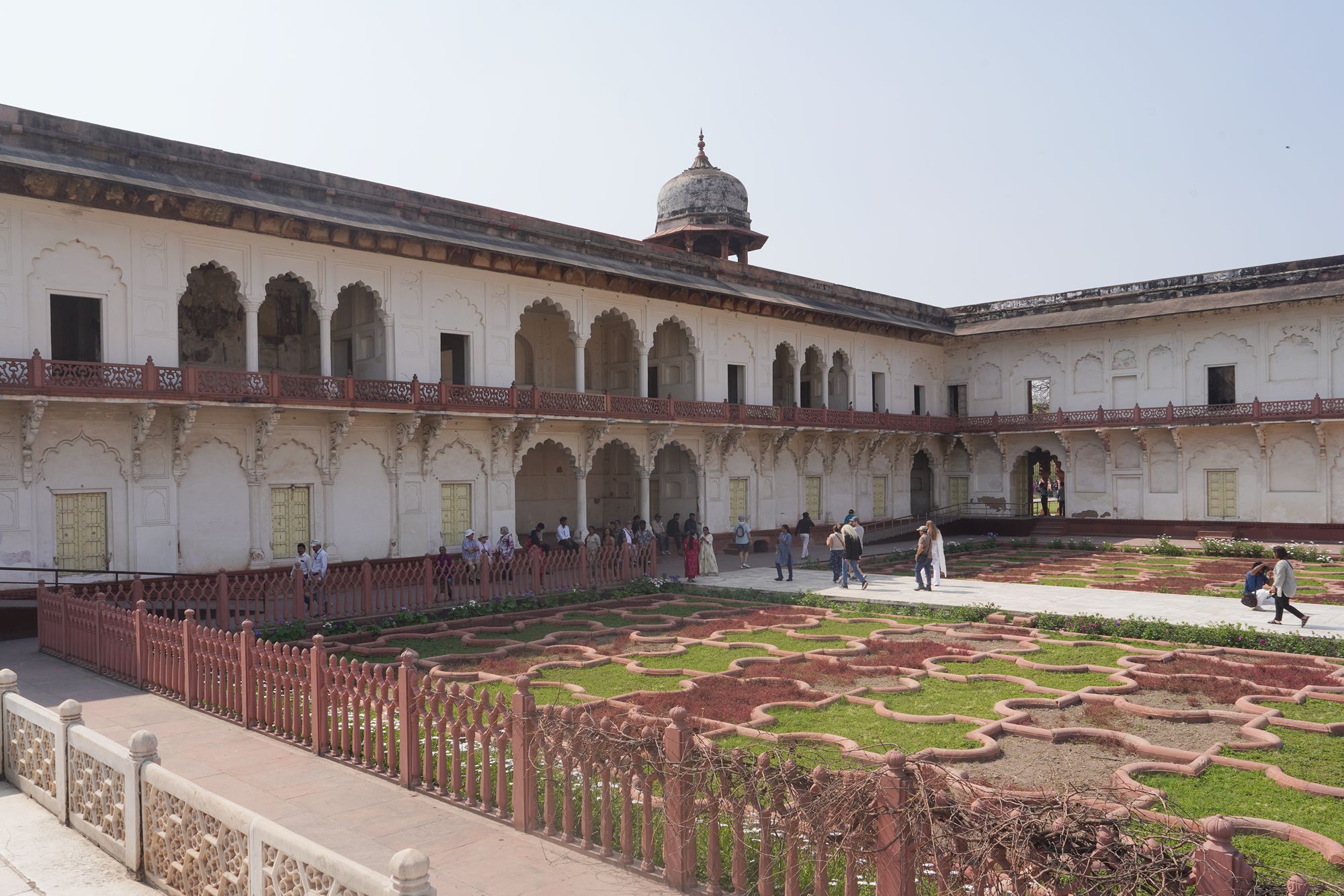
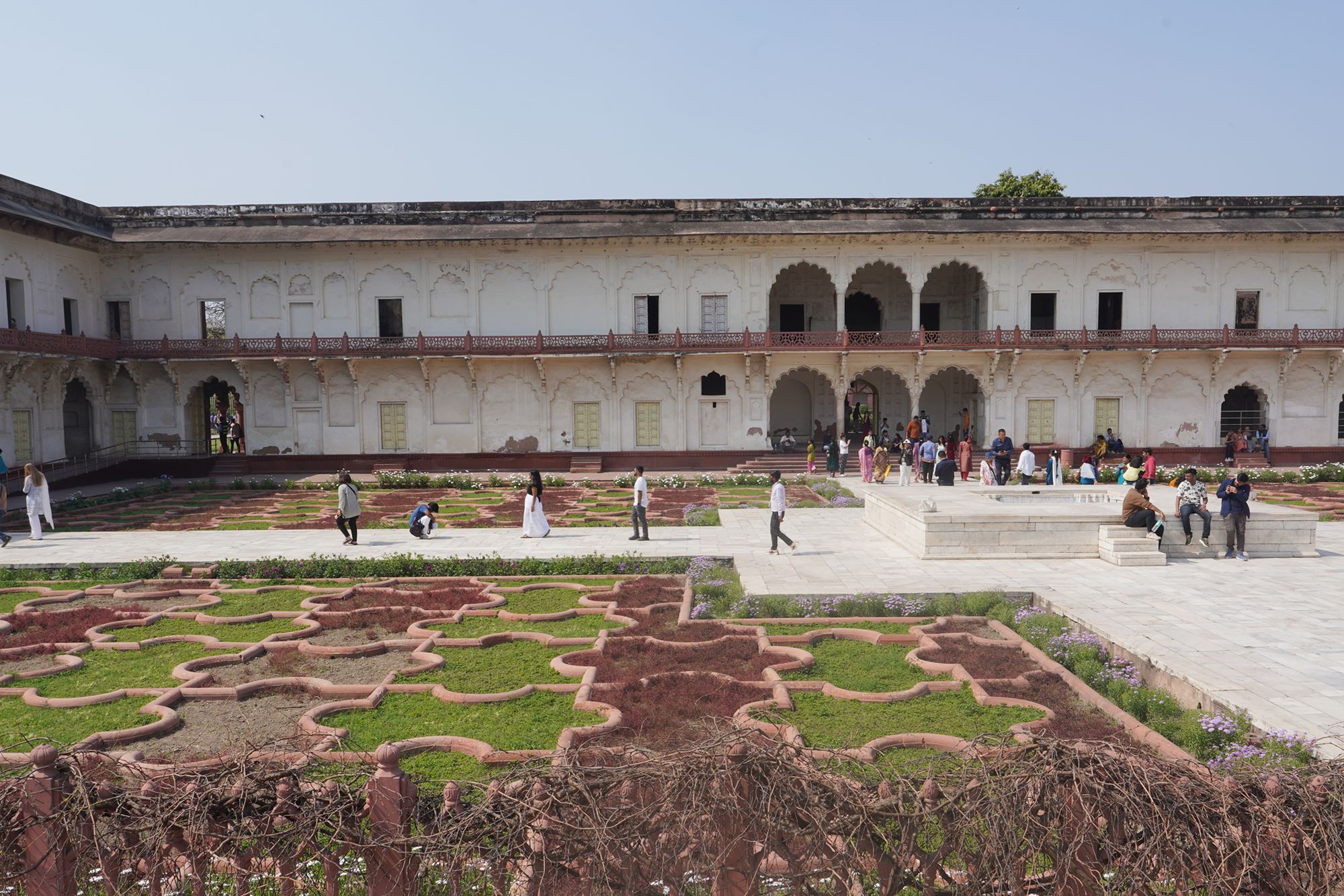
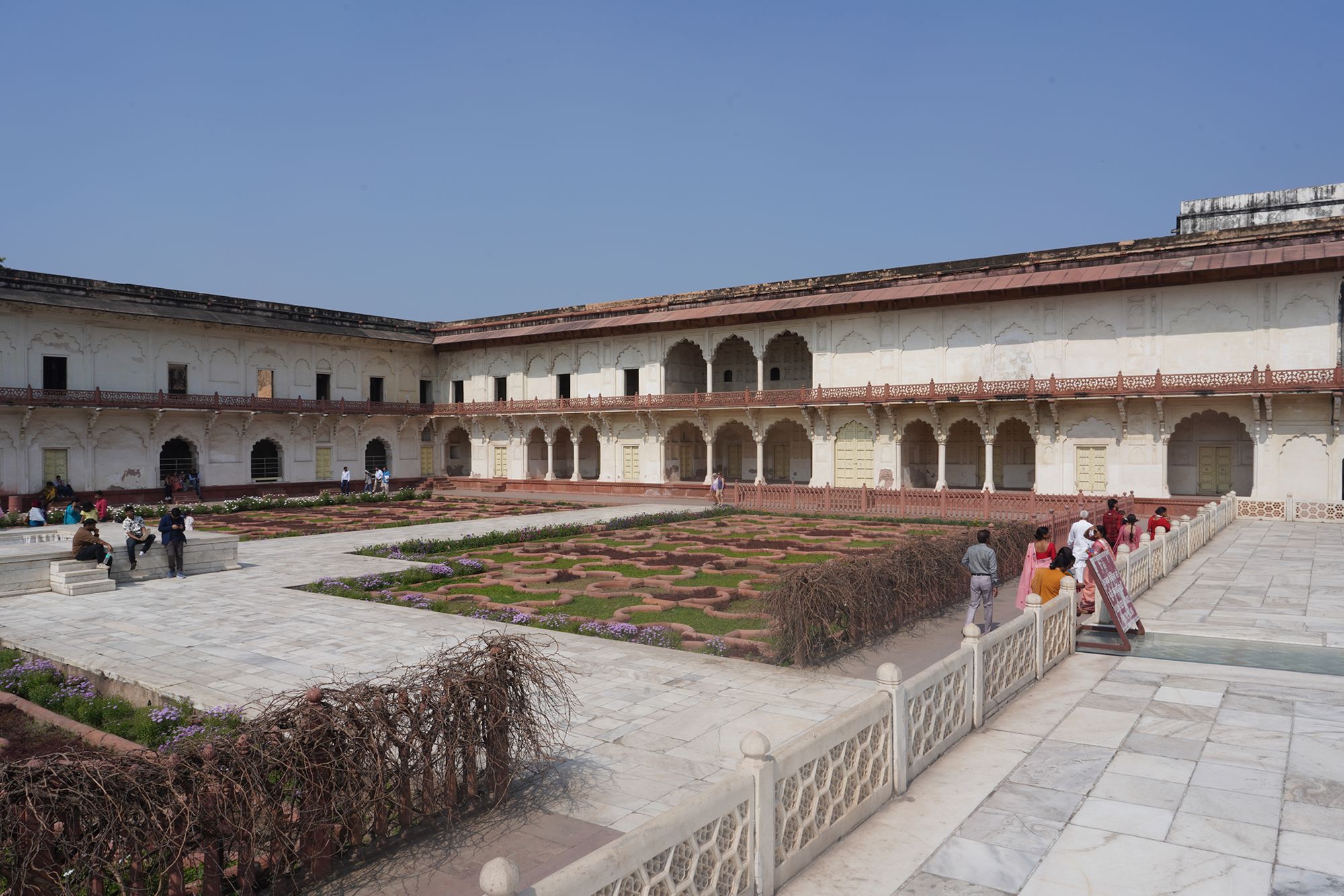
Near the Roshanara Pavilion there is a formal Mughal-style garden, which adds a very different feeling to this part of Agra Fort. The Mughals placed great importance on gardens, often arranging them geometrically with lawns, pathways, fountains, and water channels. Gardens were intended to provide a cool and peaceful retreat from the heat and were also inspired by the Islamic concept of a garden paradise.
The Shish Mahal (The Glass Palace)
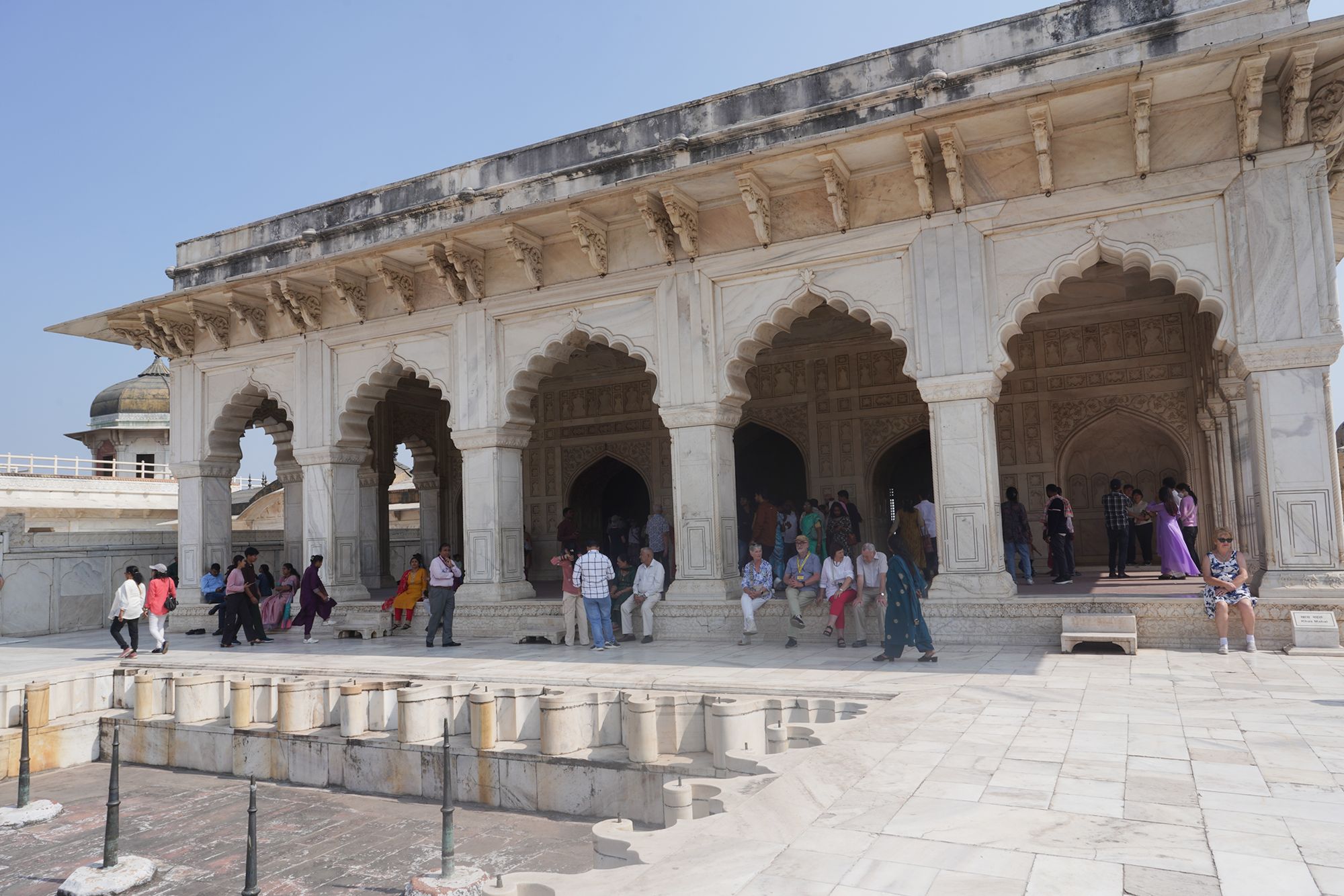
The Shish Mahal, or “Glass Palace,” is one of the most beautiful structures within Agra Fort. It was built during the reign of Shah Jahan, around 1631–1640, as part of the imperial palace complex.
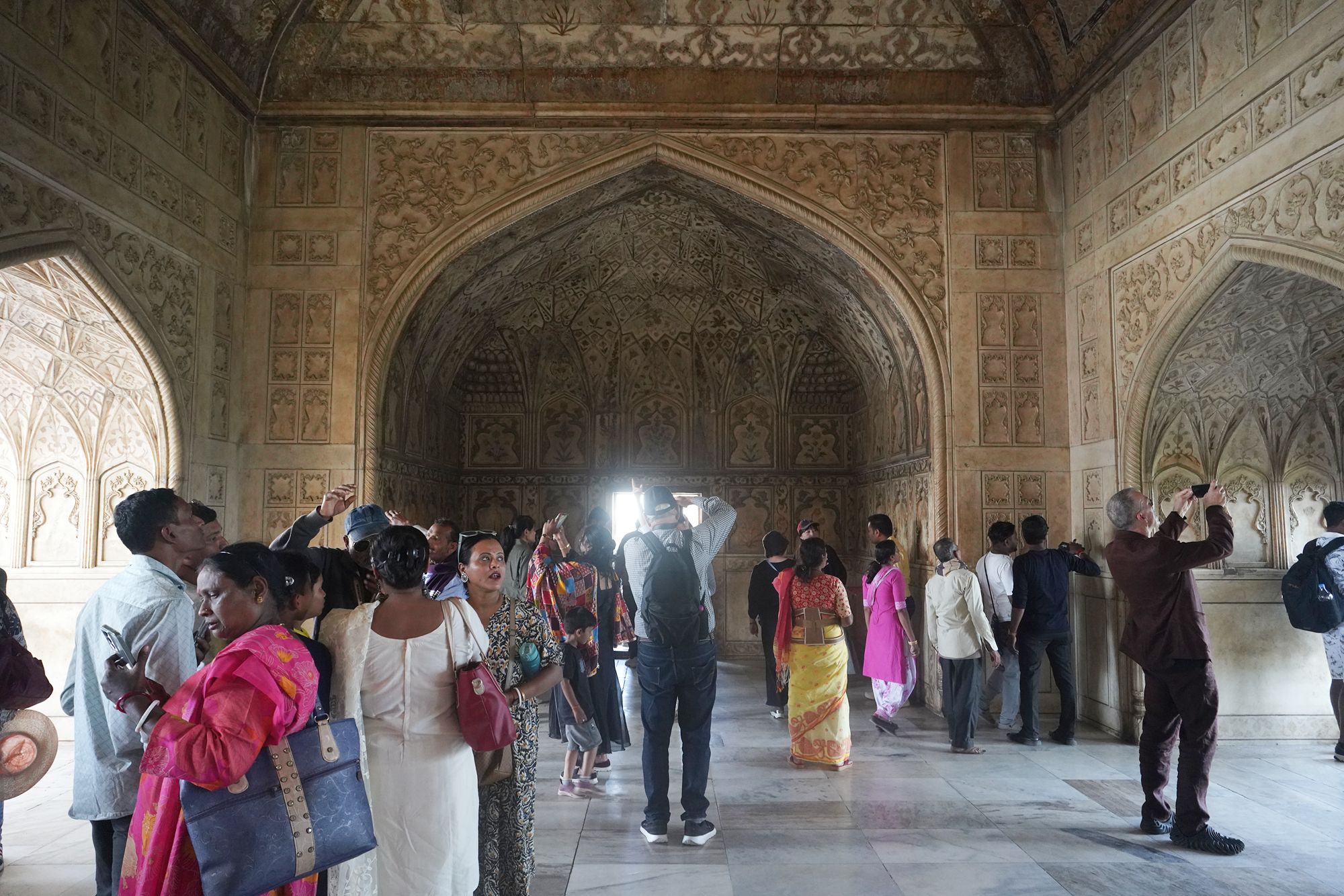
Its name comes from the extensive use of small pieces of mirror and colored glass embedded into the walls and ceilings. When lamps or candles were lit inside, their light would reflect from the countless pieces of glass, creating a glittering, almost jewel-like effect.
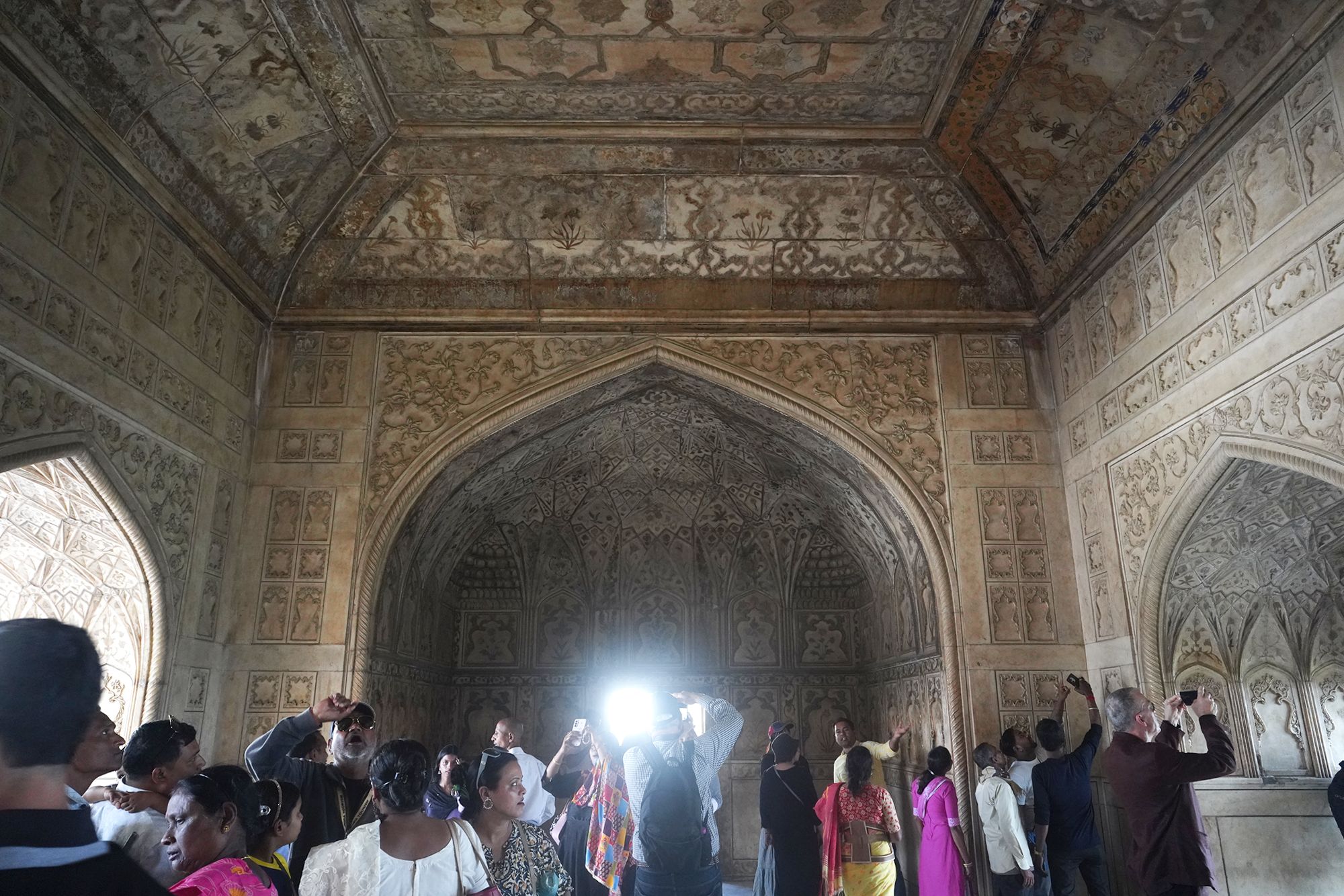
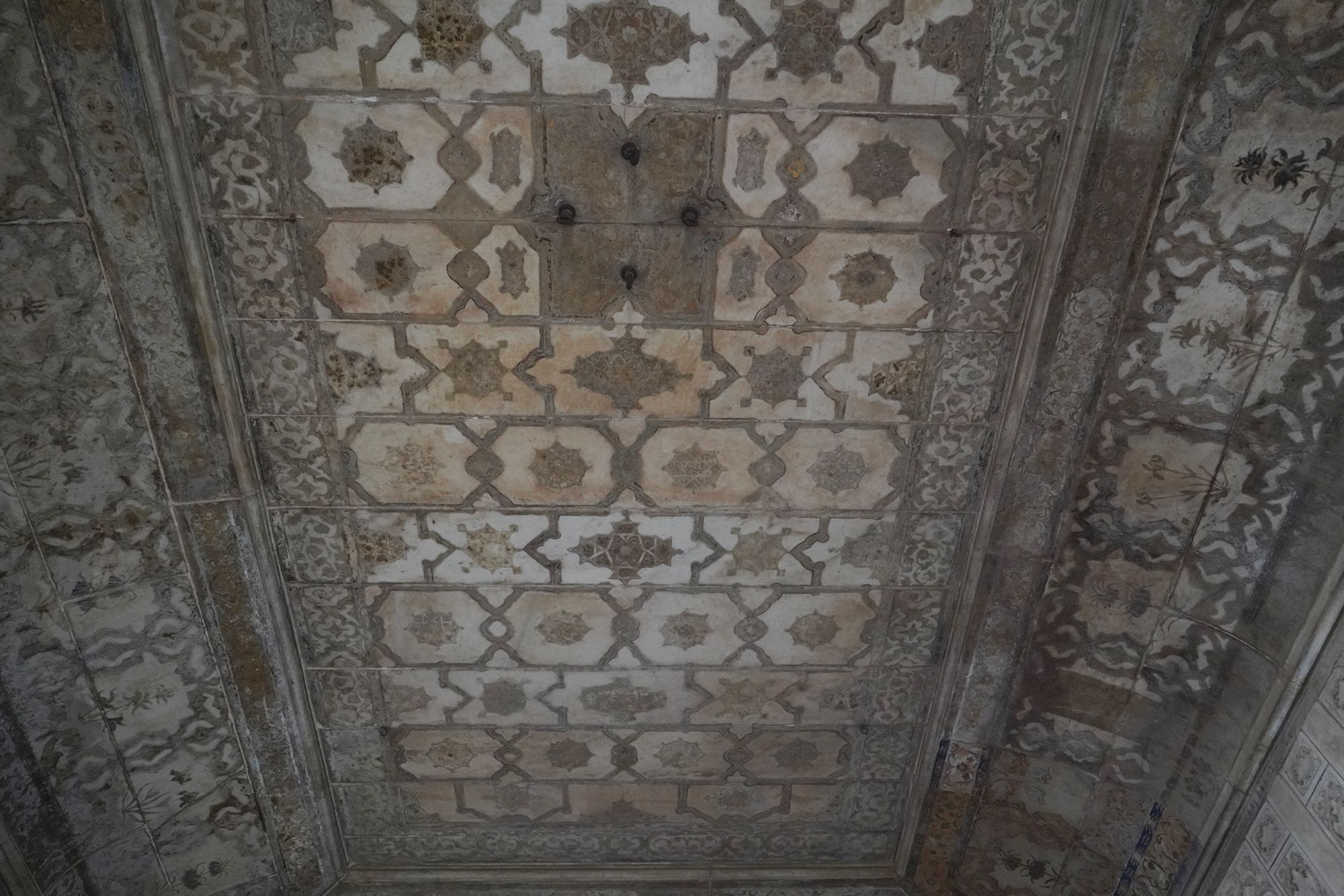
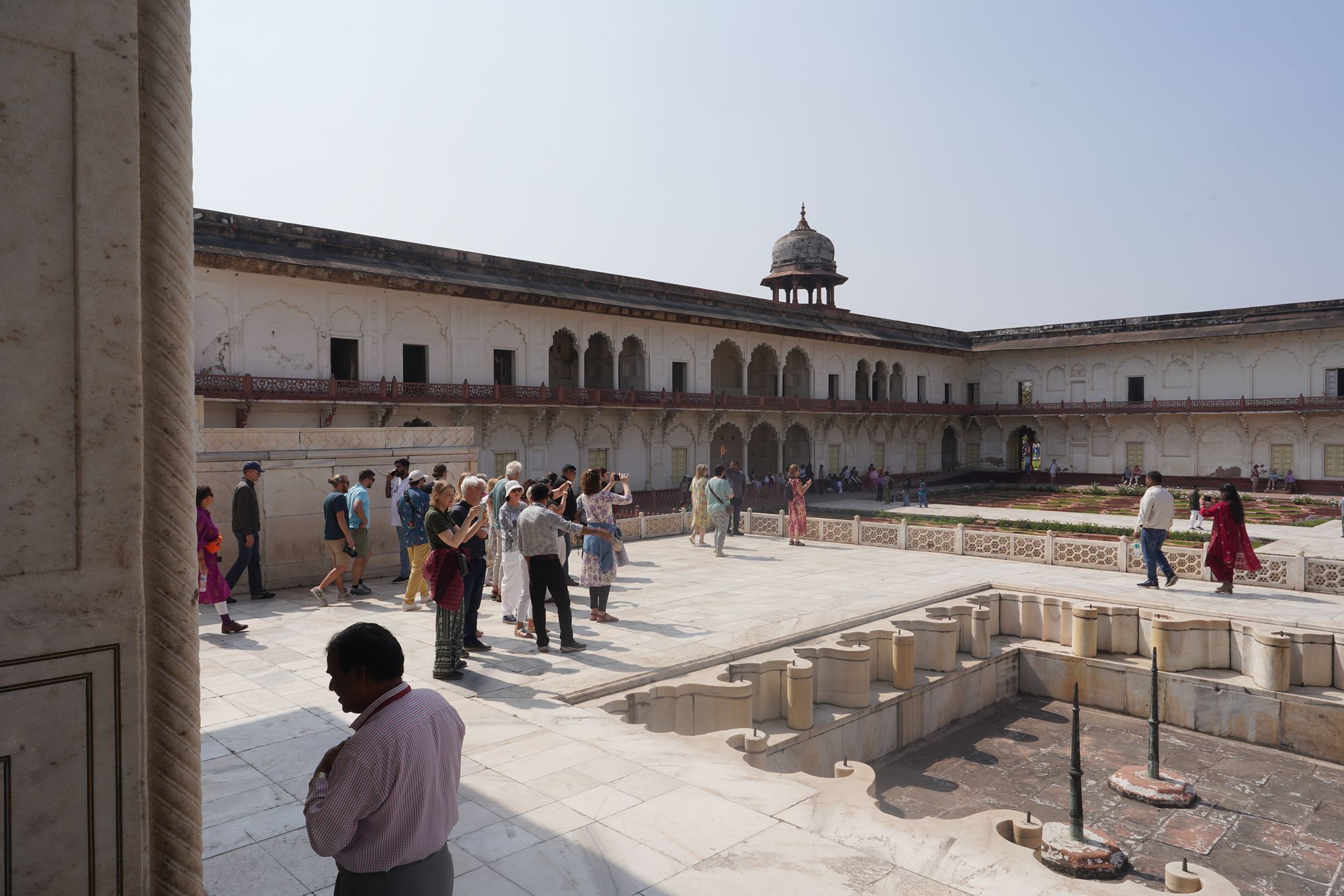
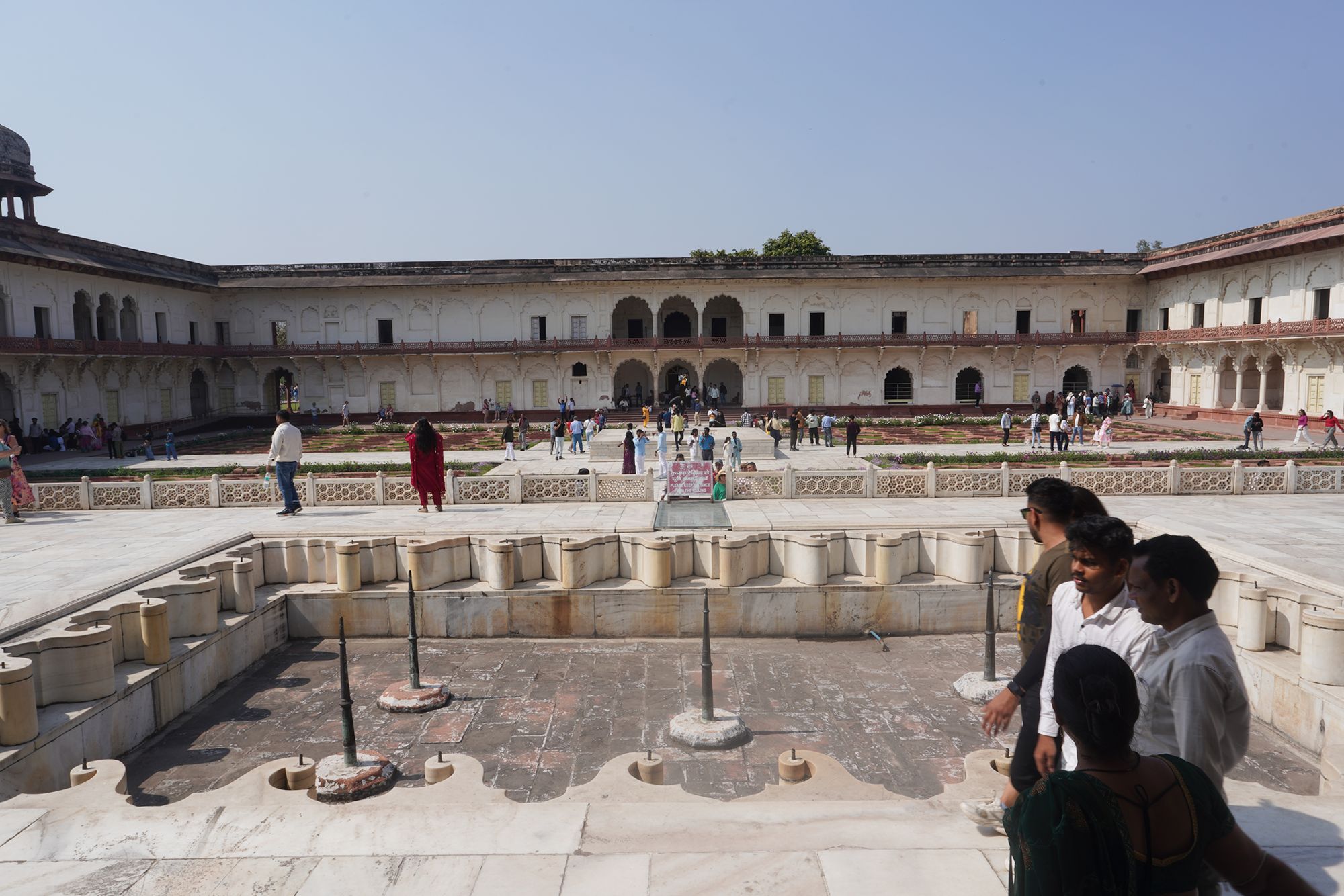
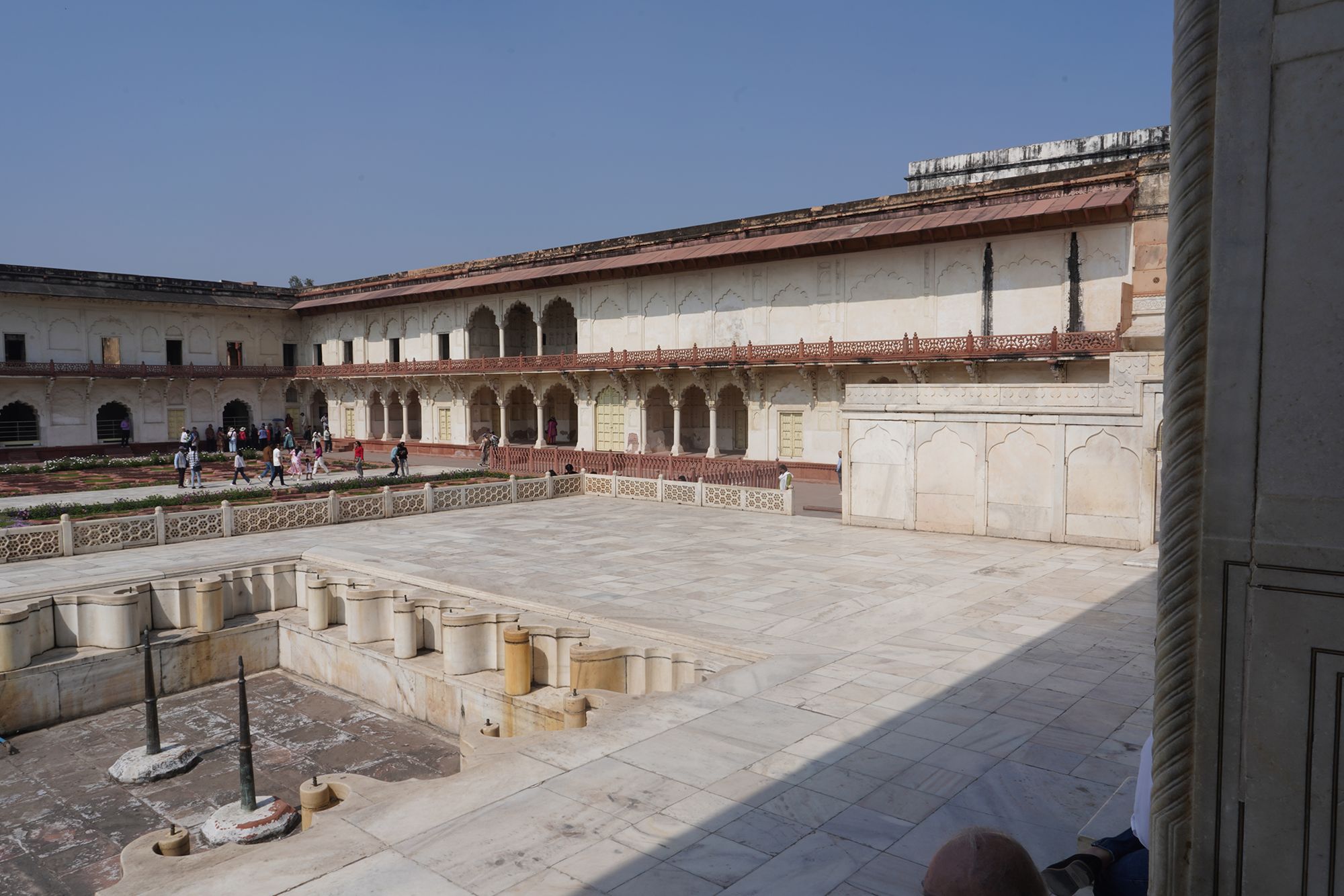
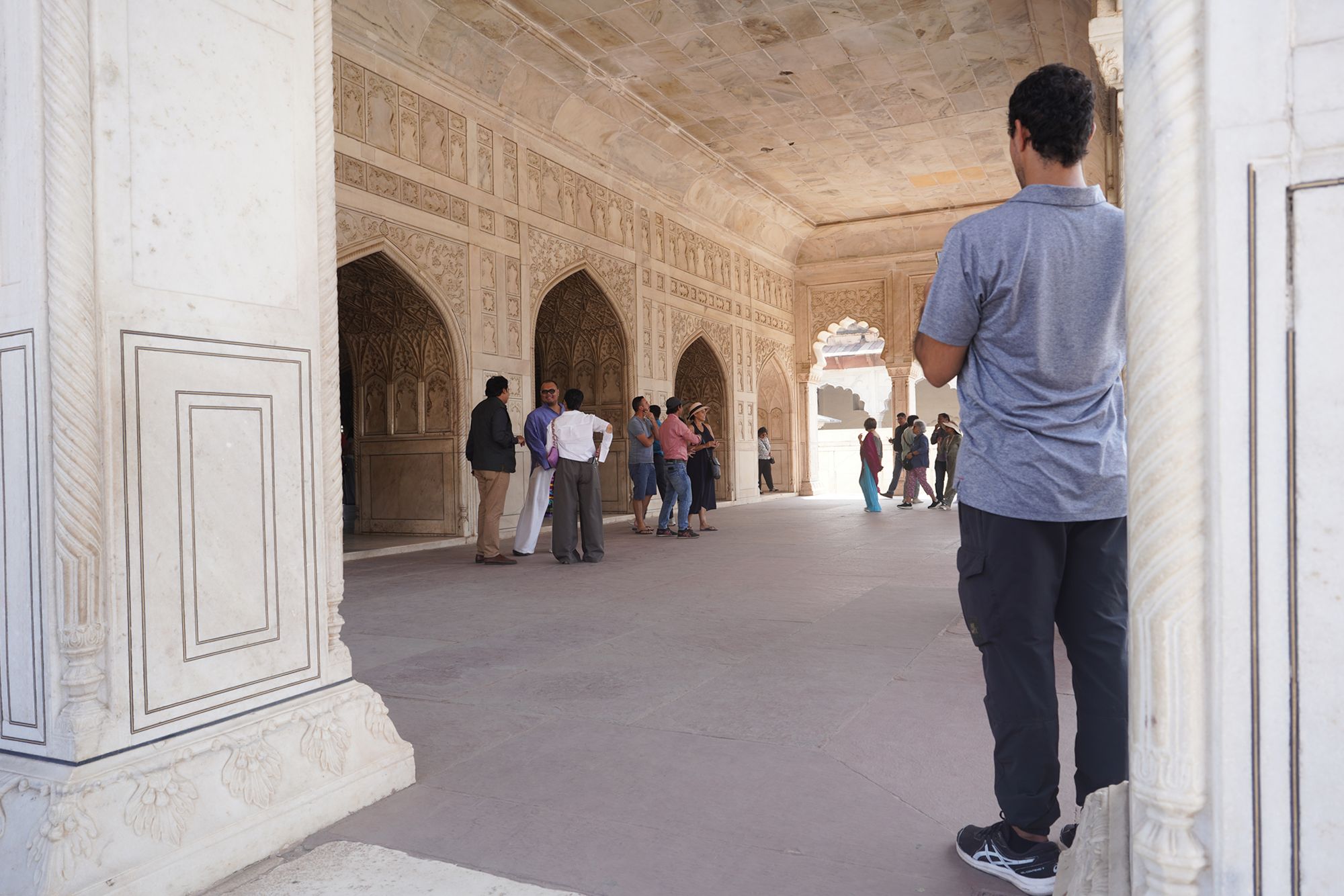
The Shish Mahal was associated with the royal baths and private quarters of the imperial family. Its thick walls, enclosed rooms, fountains, and water channels helped create a cooler environment during Agra's hot summers. The elaborate decoration reflects Shah Jahan's preference for refined, luxurious architecture—the same artistic taste that reached its greatest expression in the Taj Mahal.
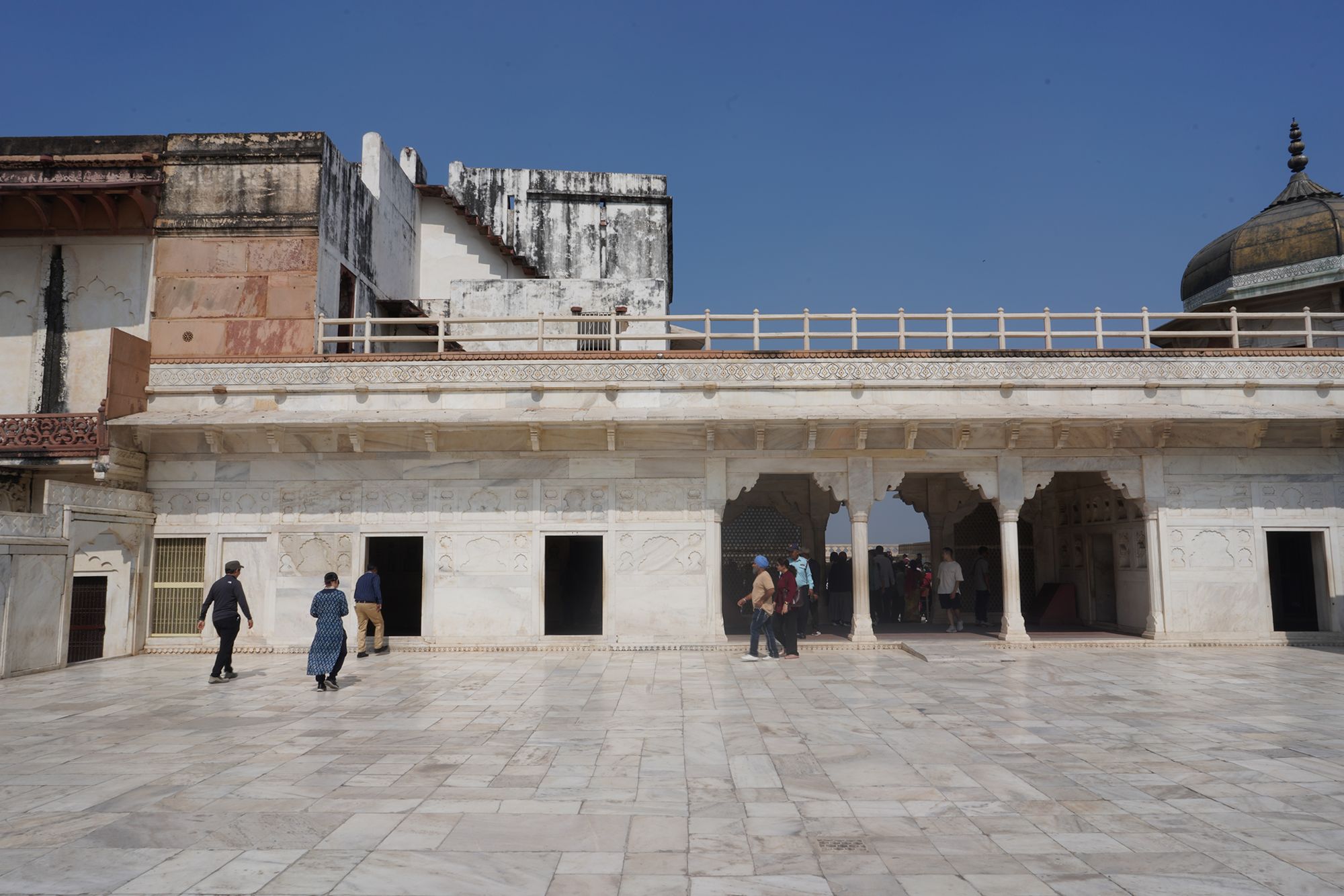
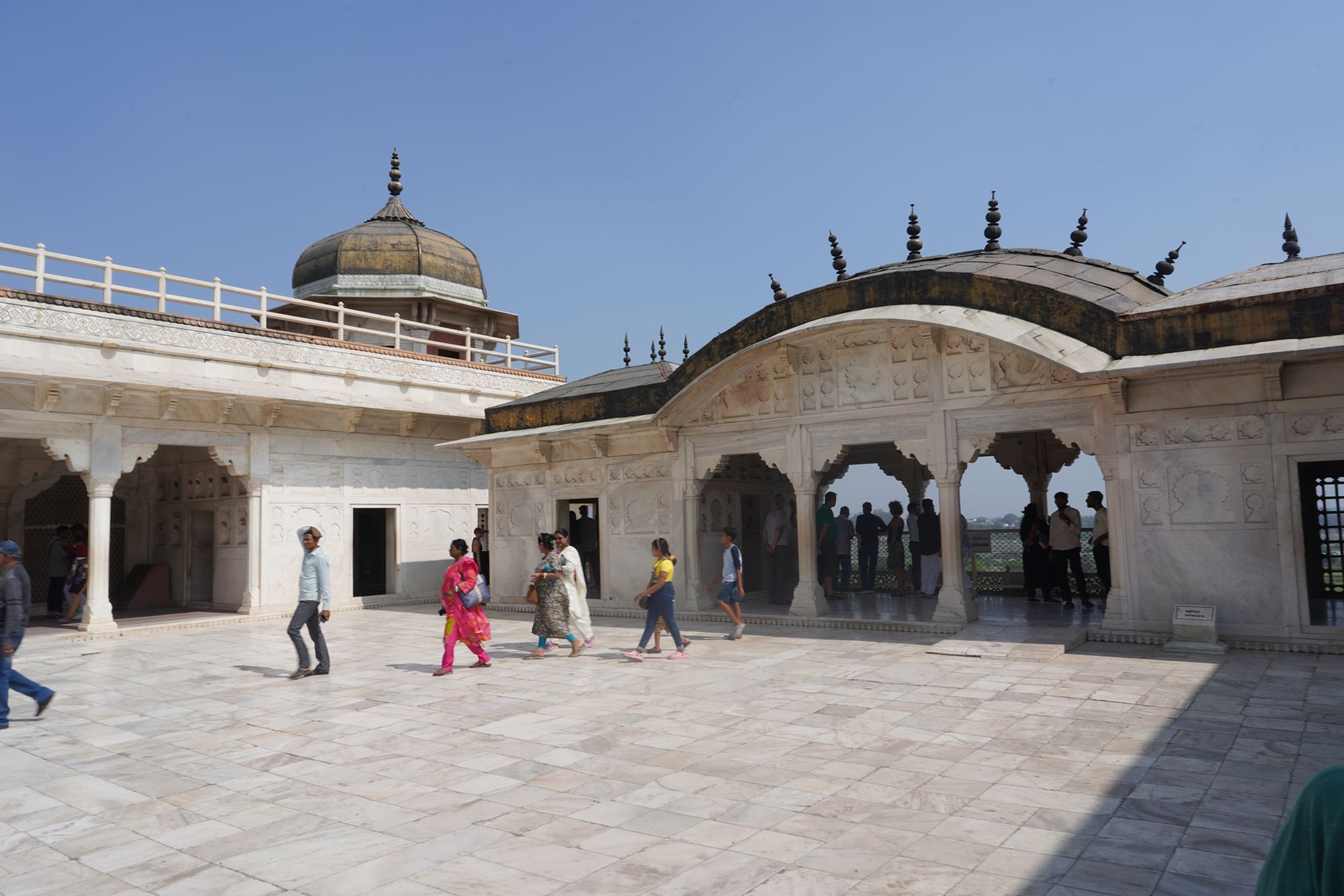
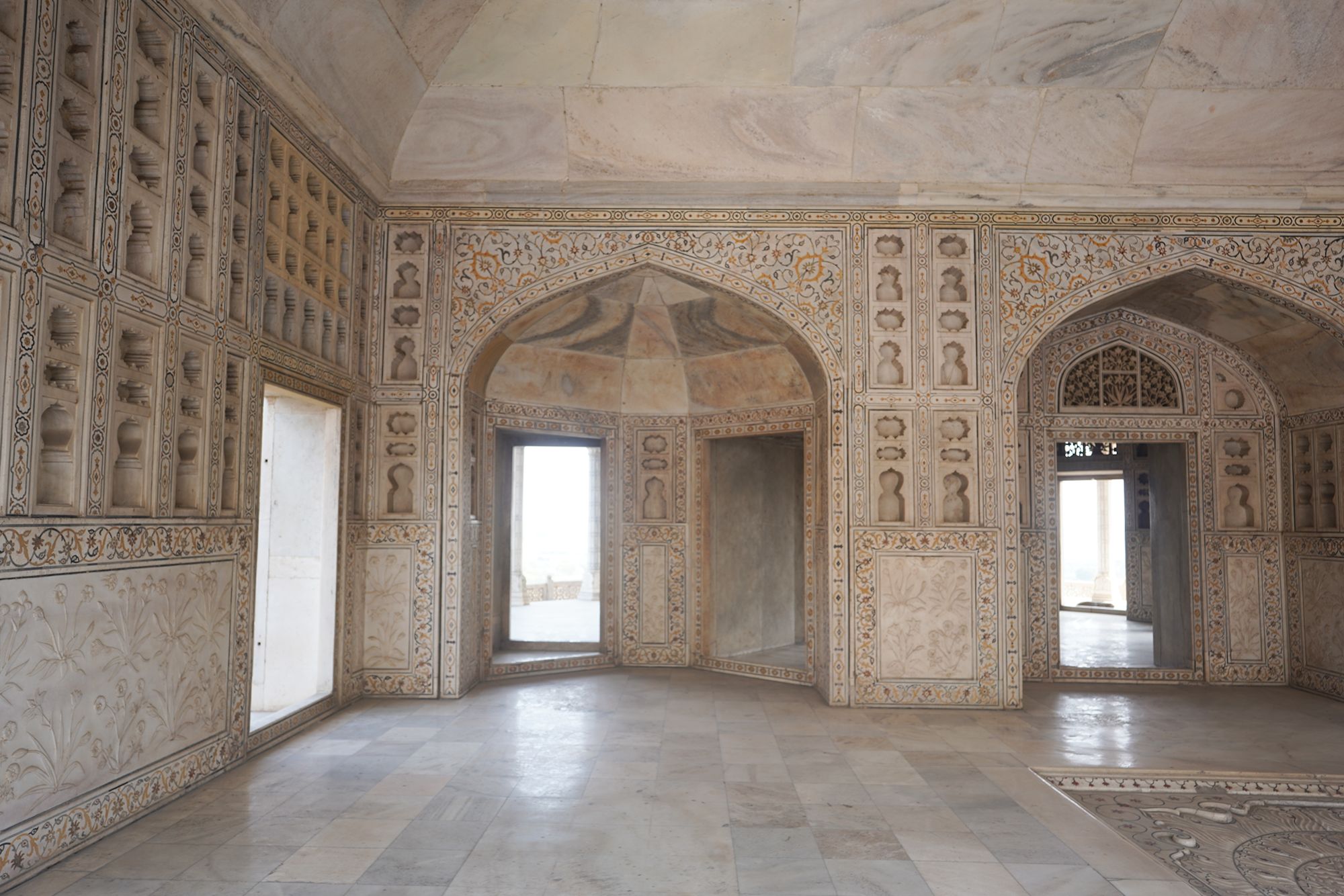
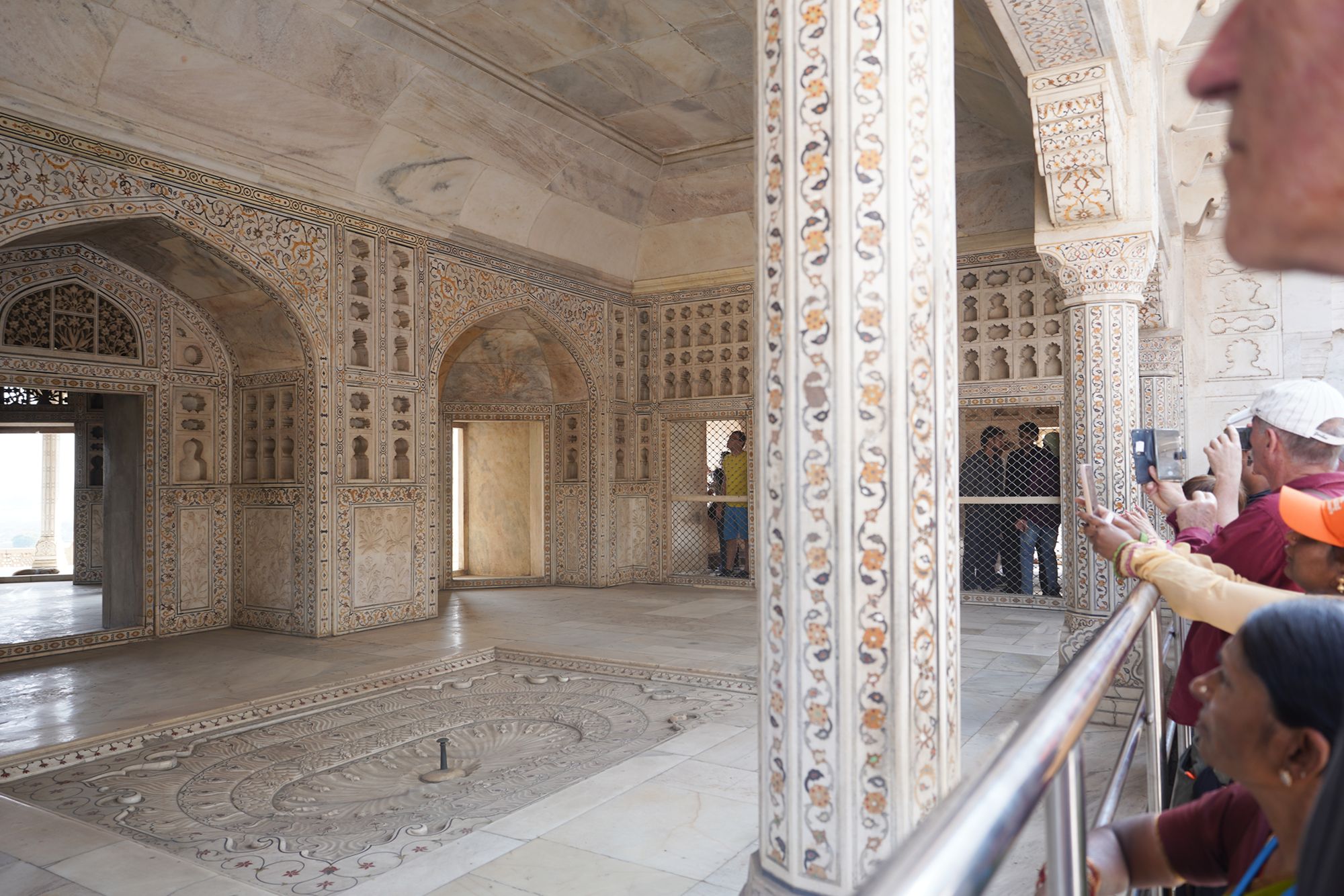
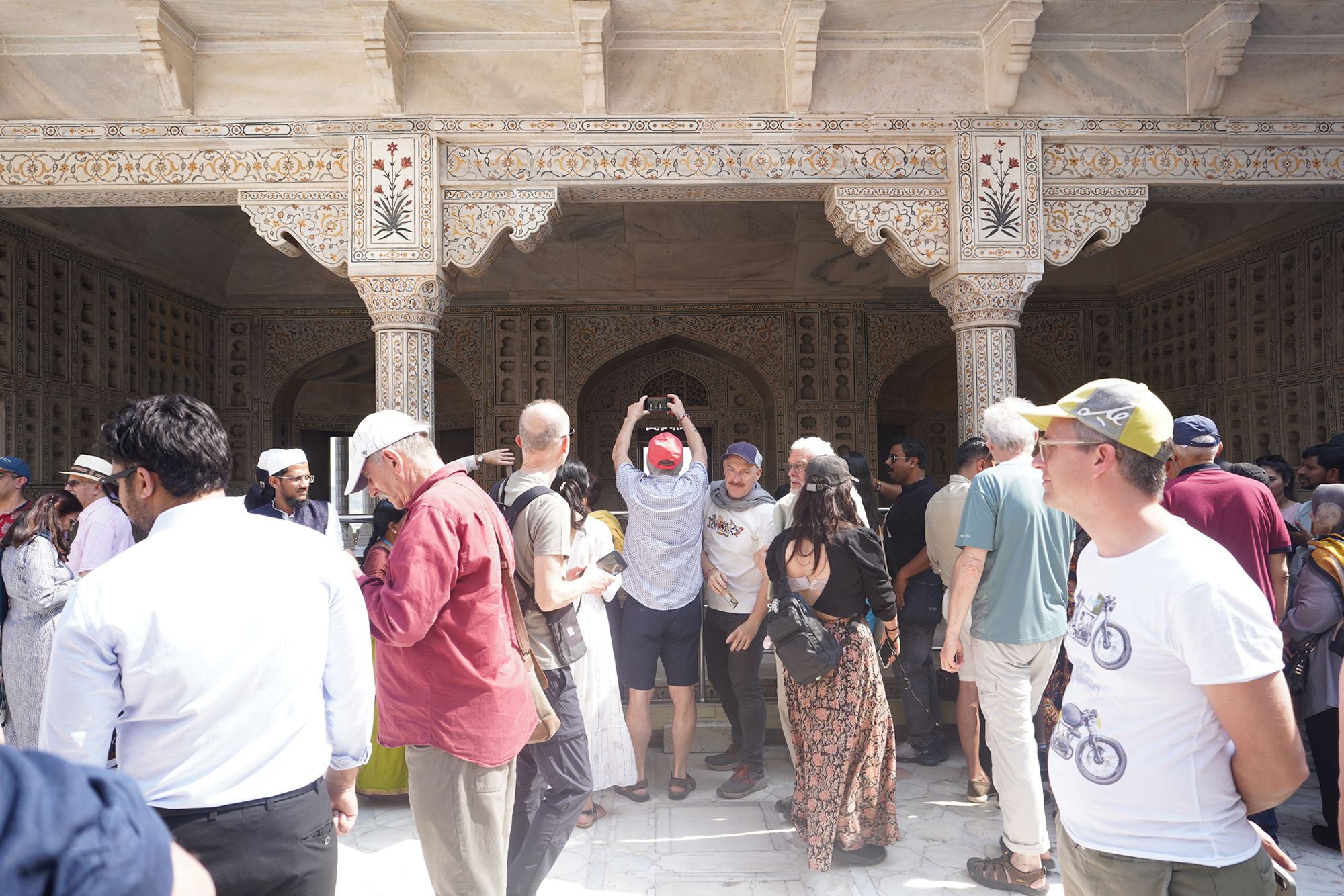
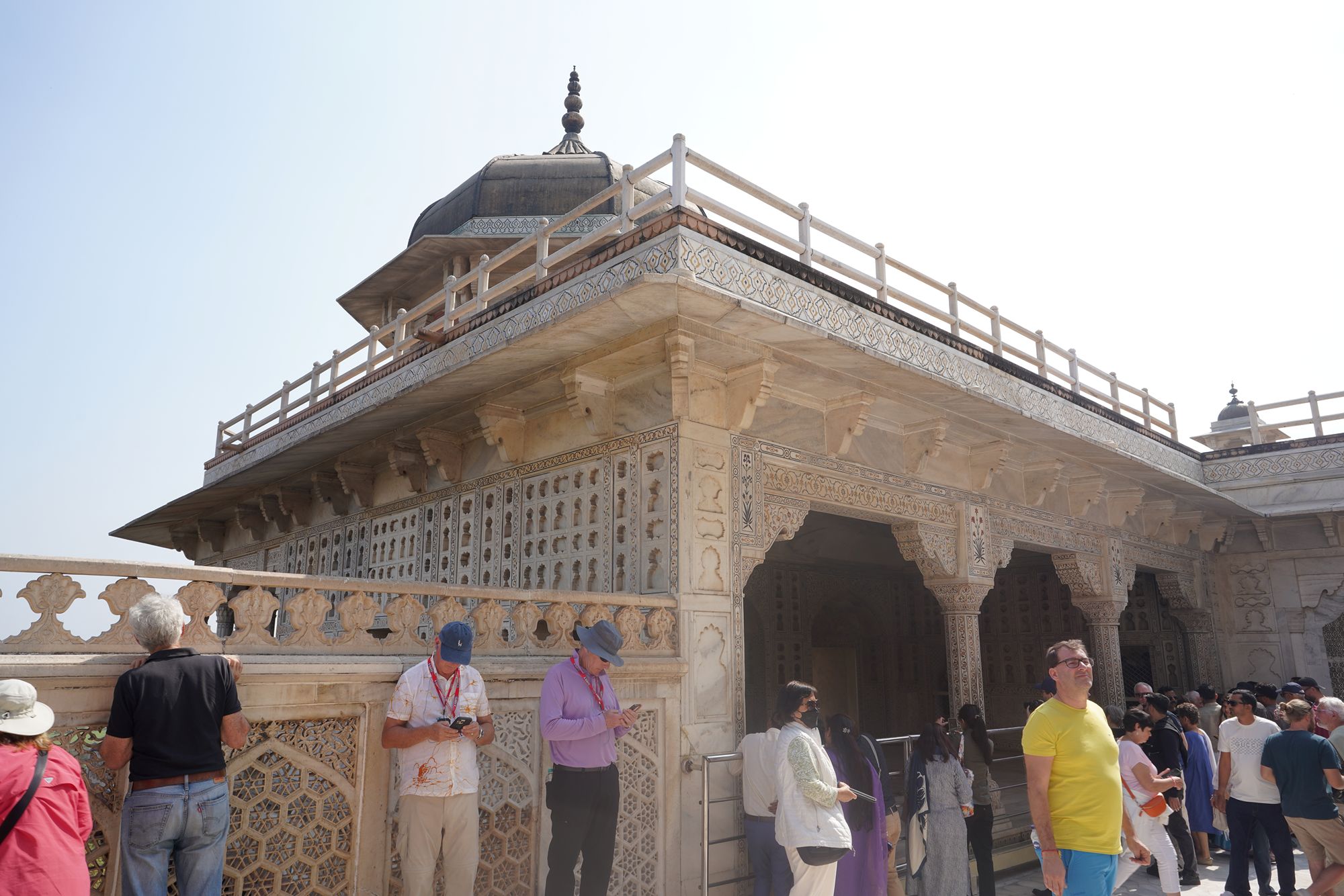
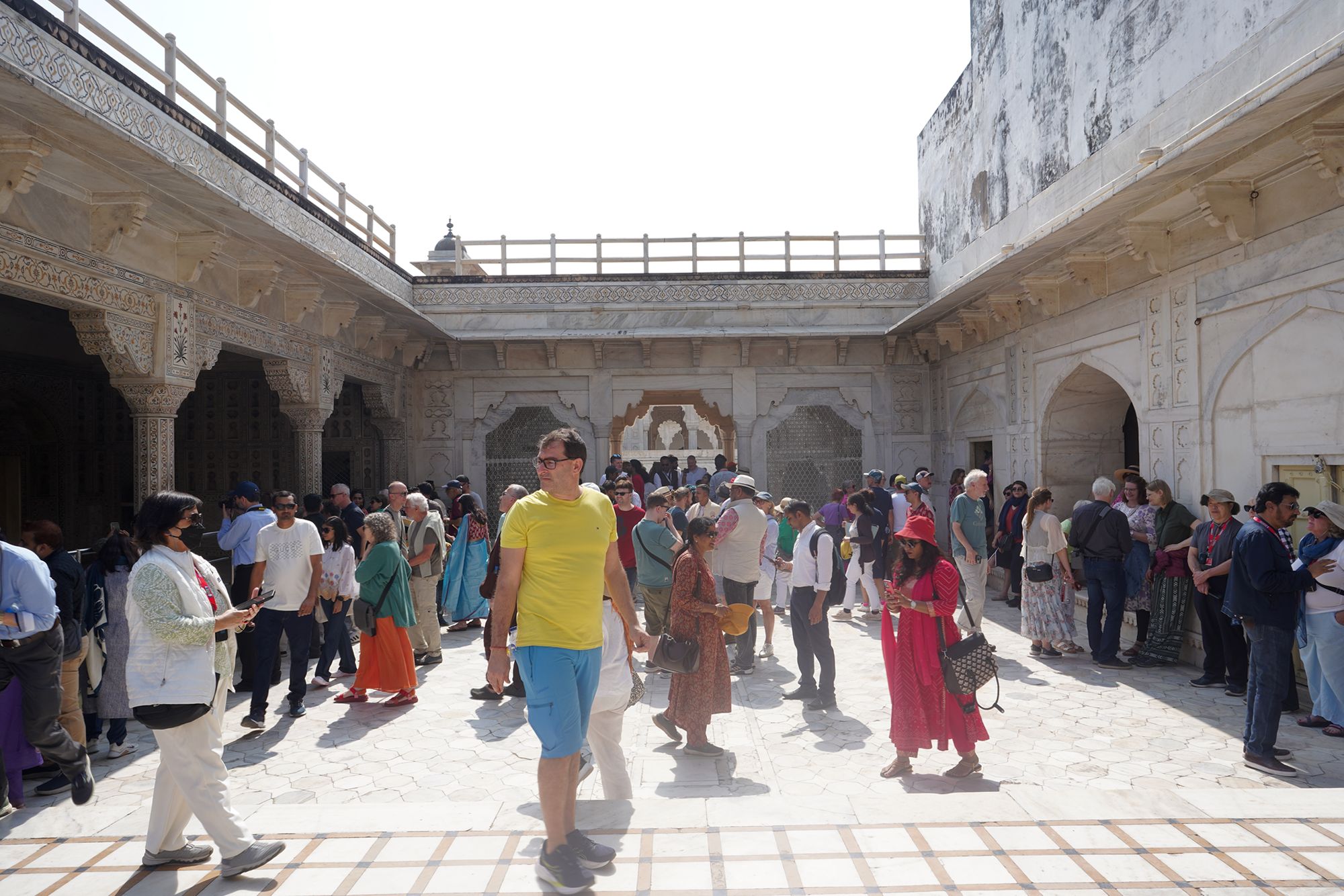
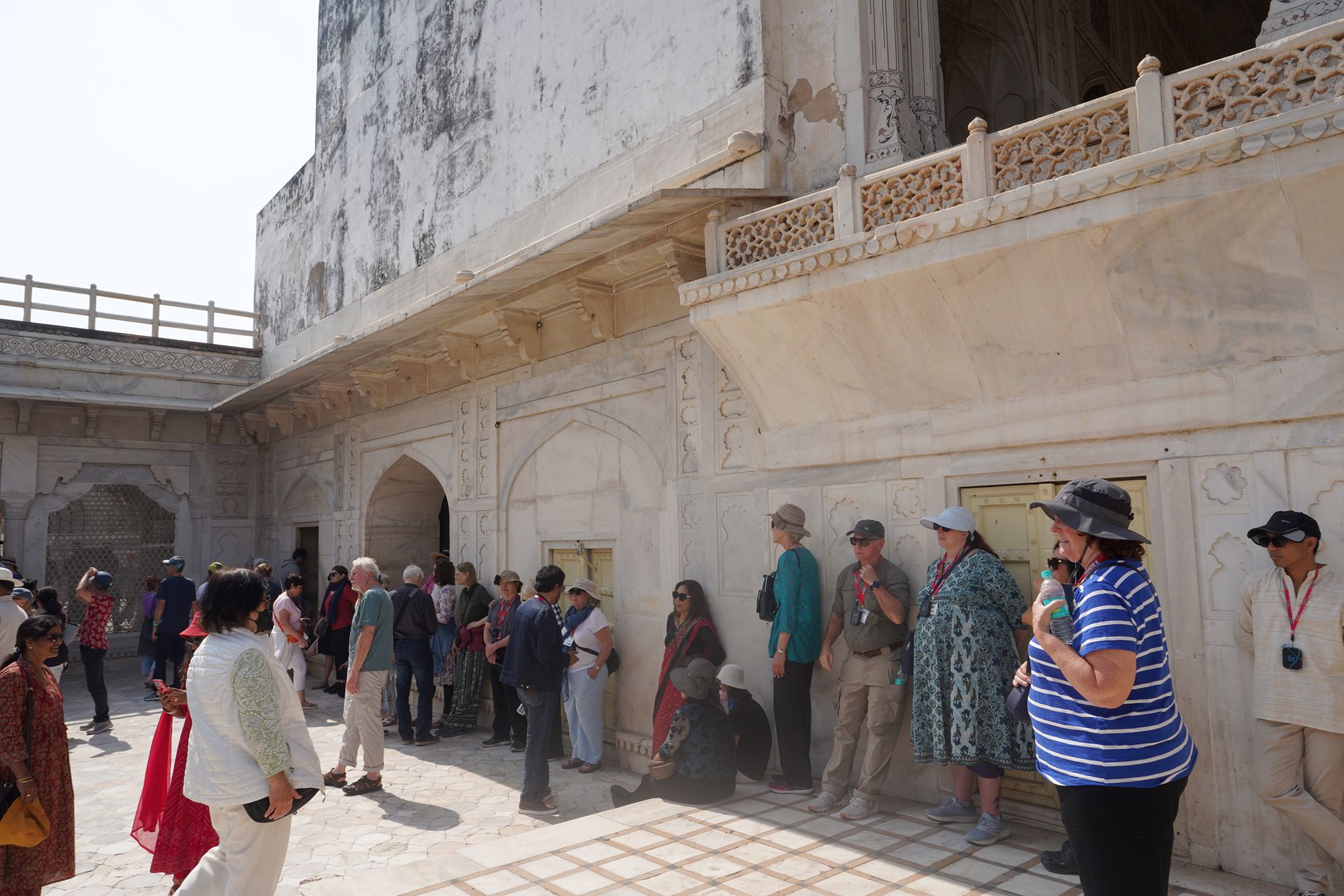
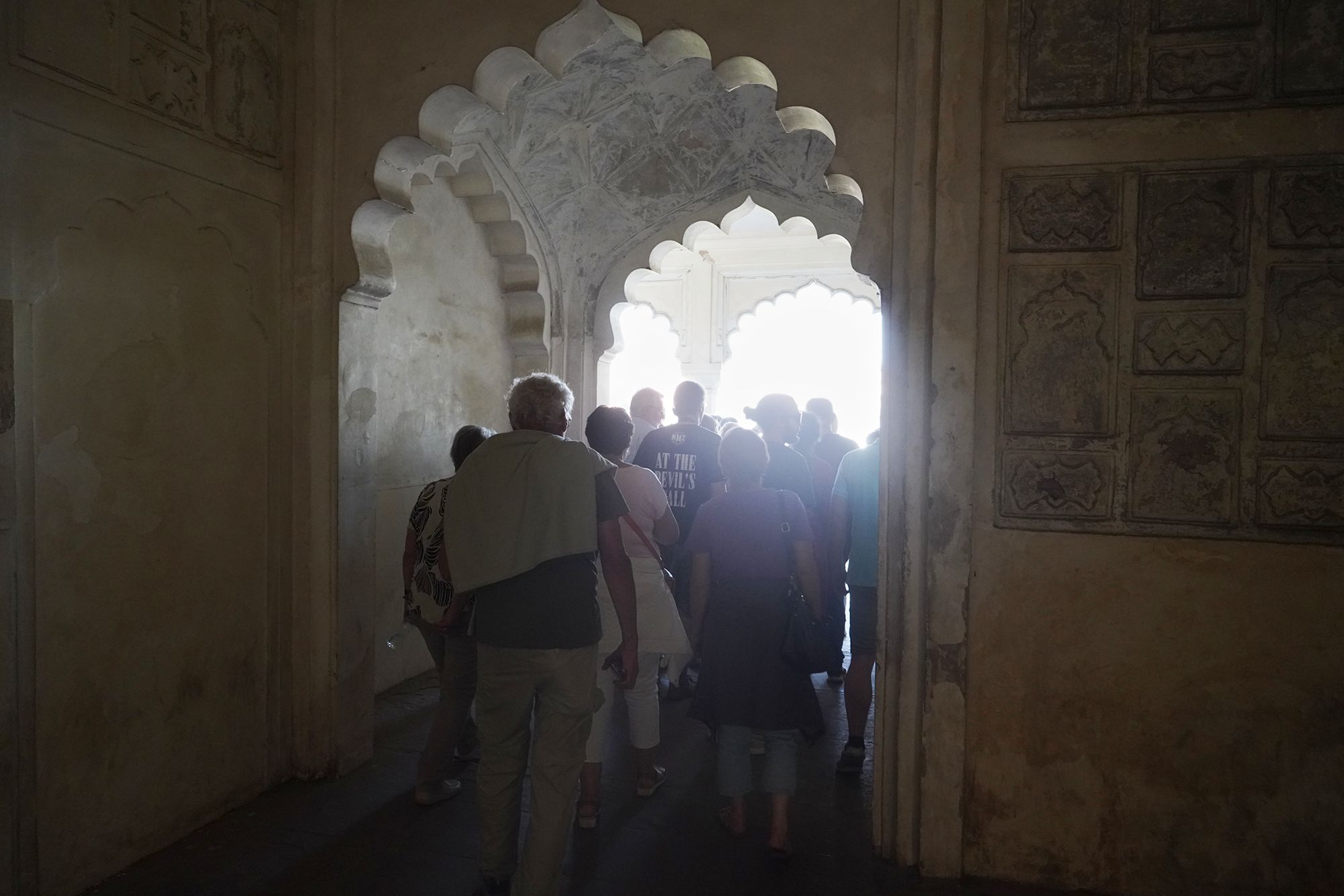
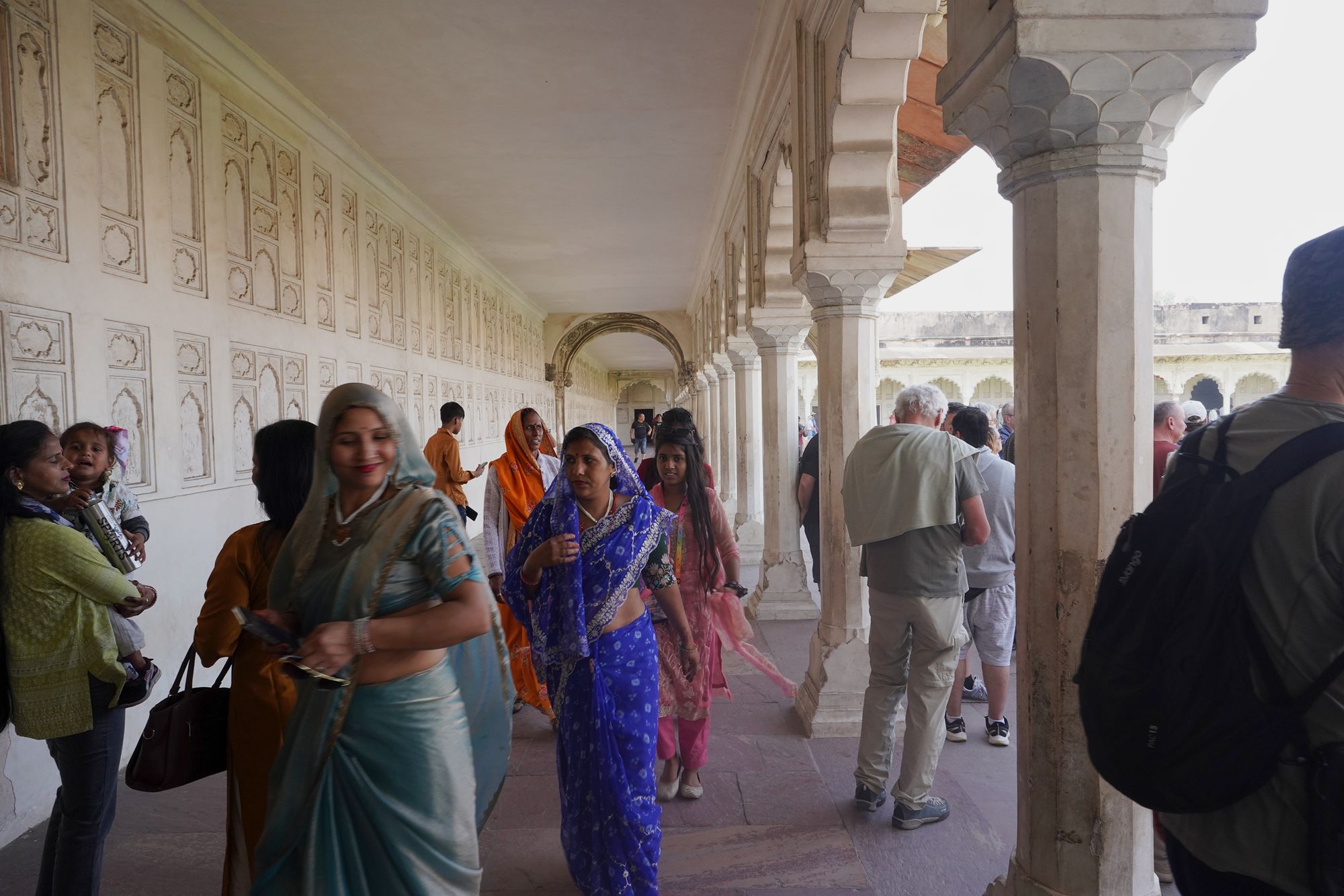
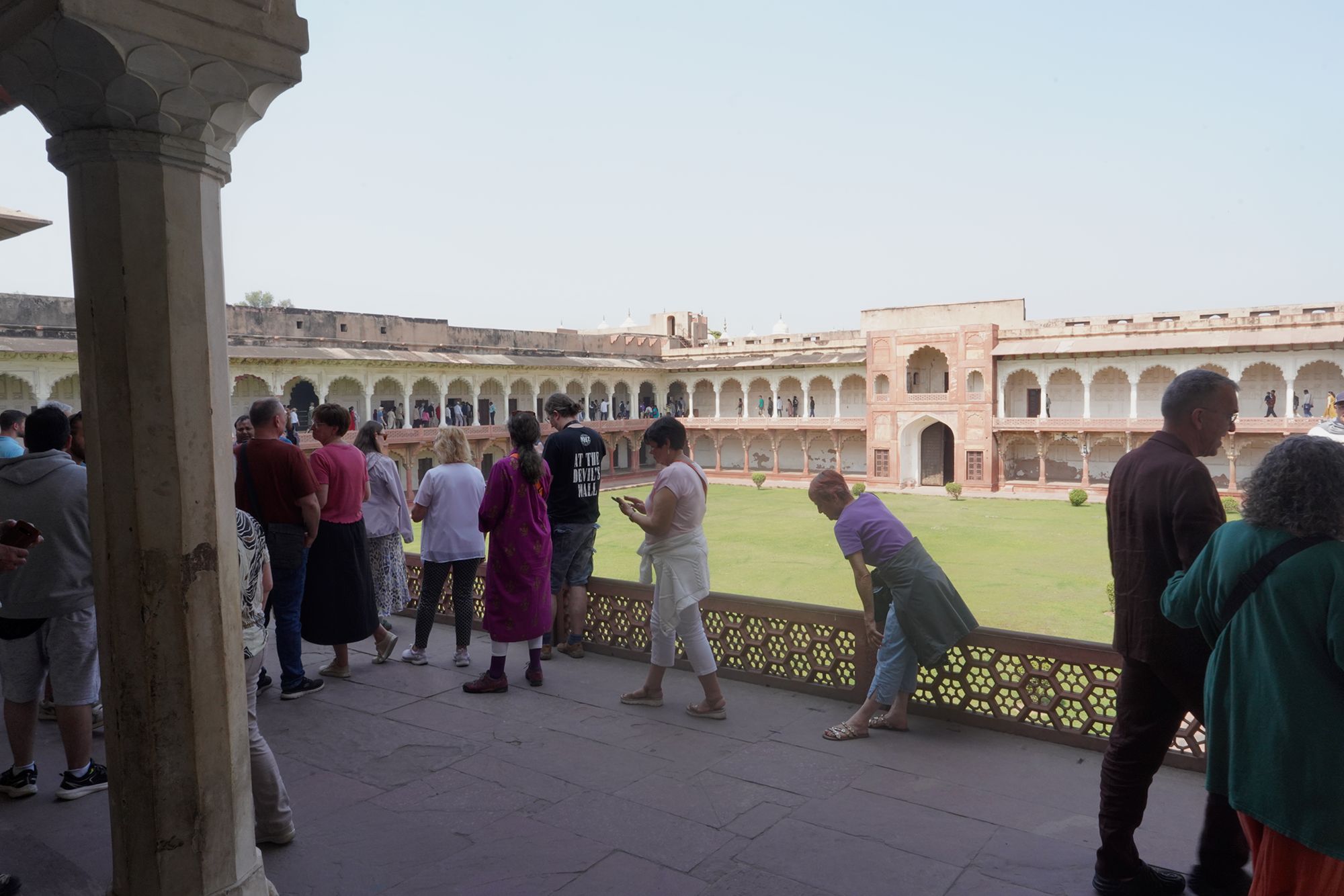
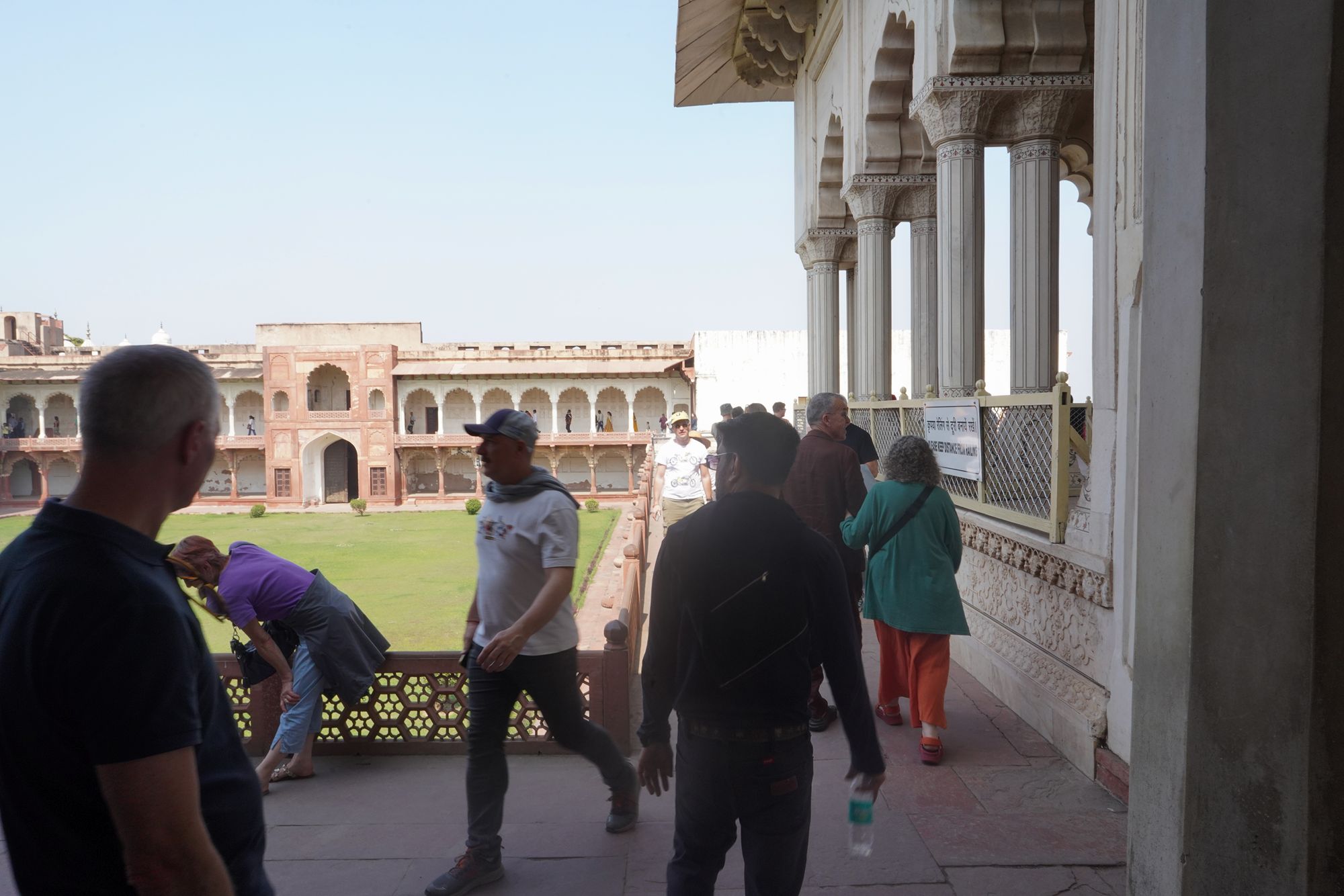
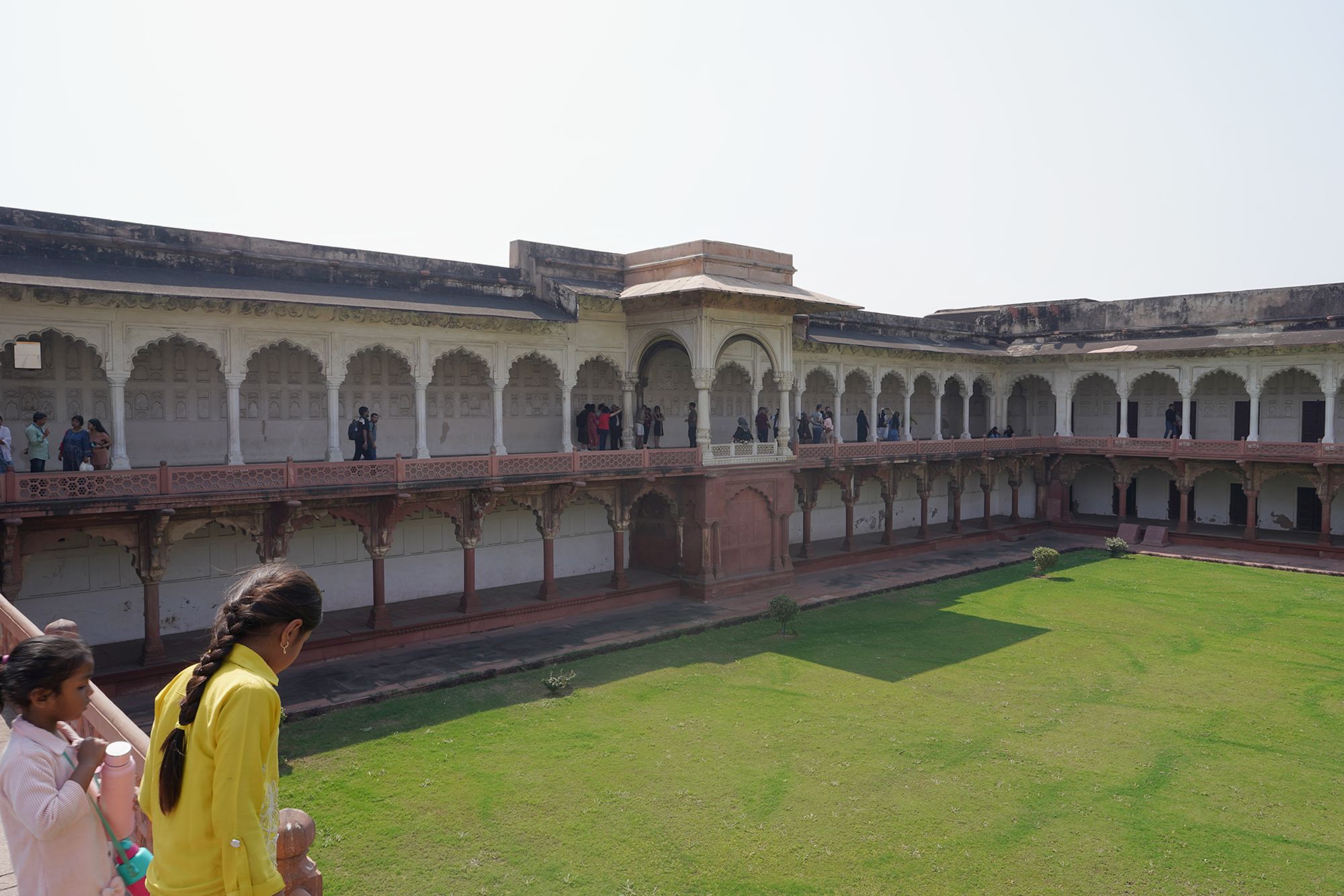
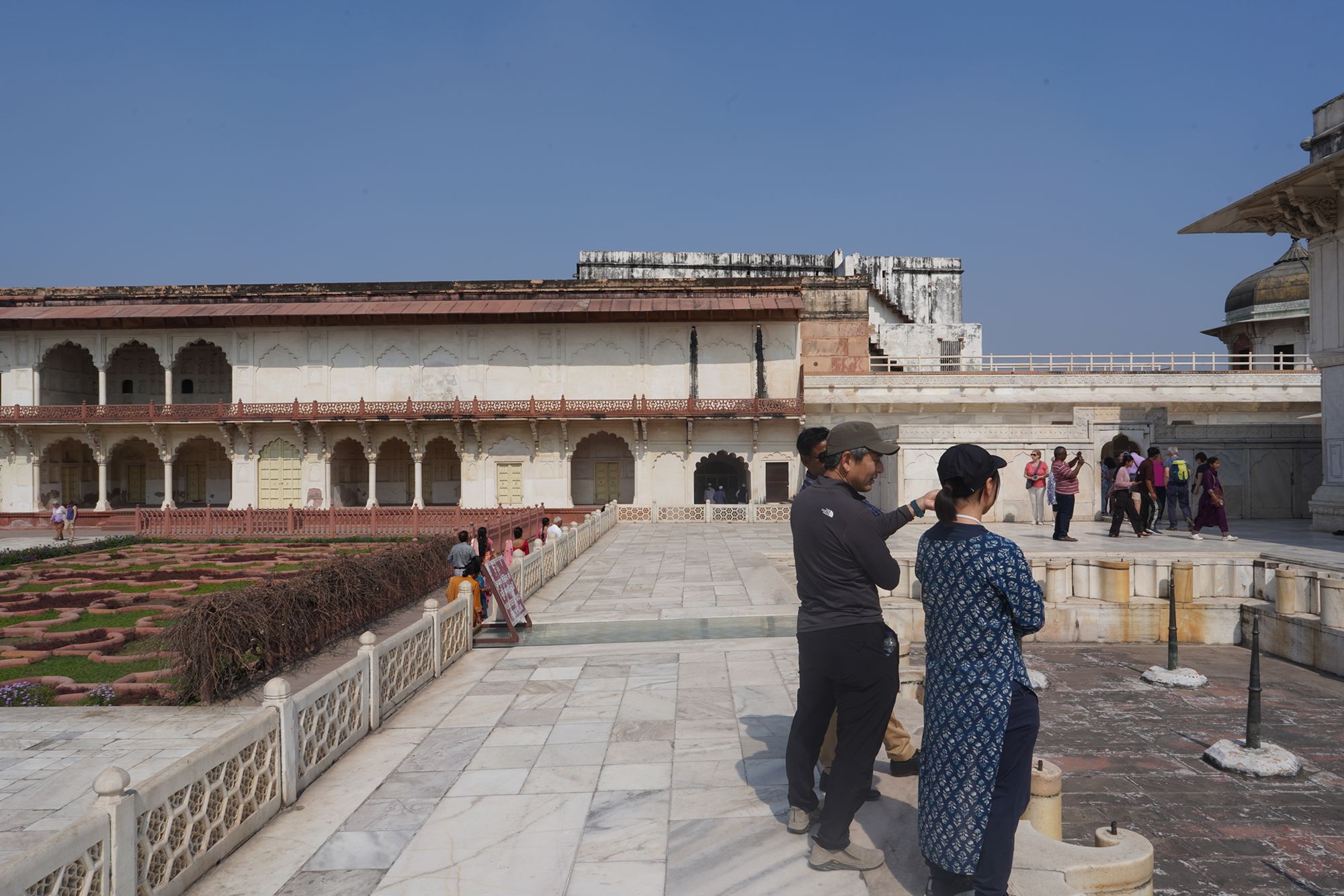
Machchi Bhawan, meaning “Fish House,” is a large courtyard complex within Agra Fort, located near the private palaces of the Mughal emperors. The present structure is largely associated with Shah Jahan, who rebuilt and remodeled this part of the fort during the 17th century.
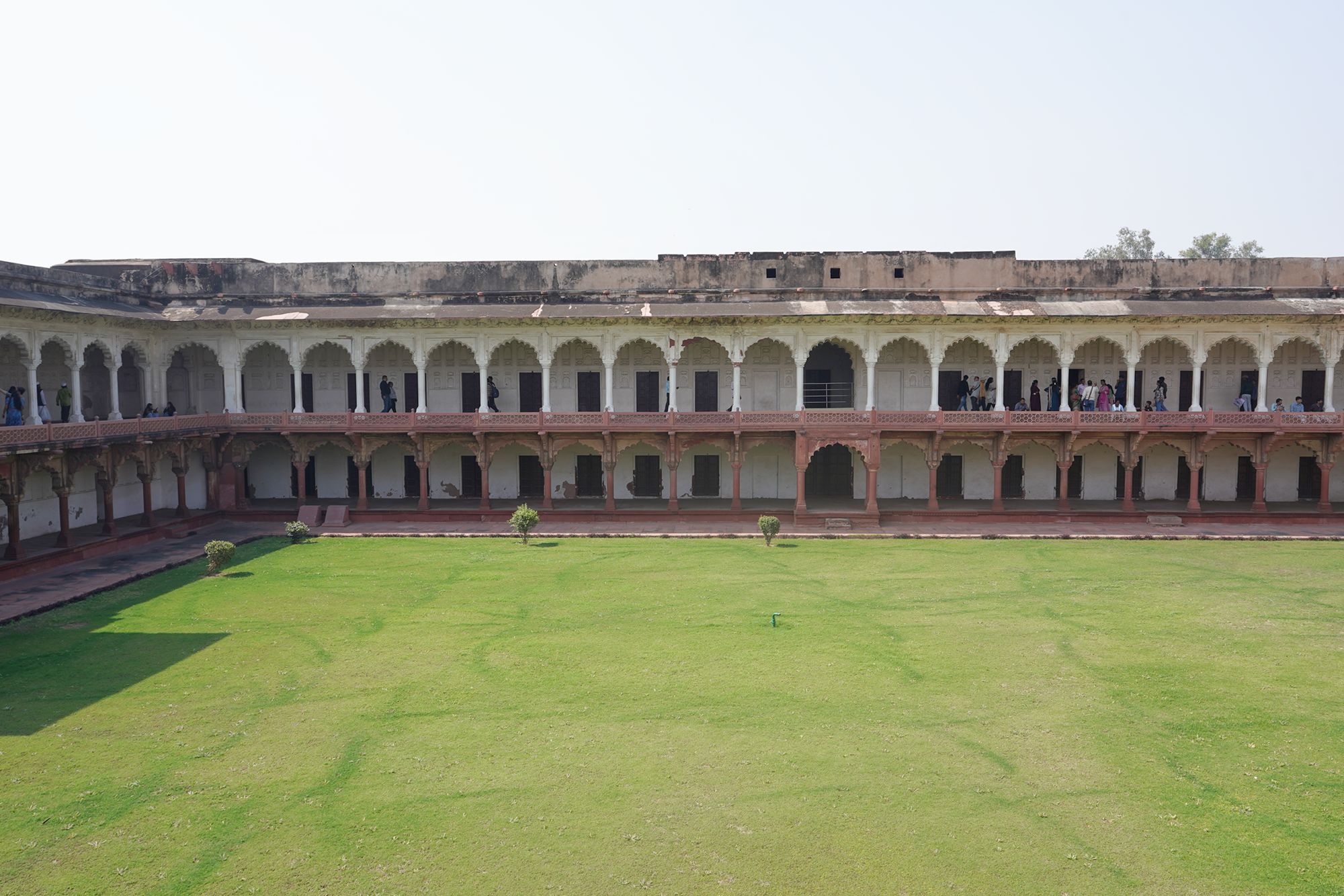
The courtyard is surrounded by two-story arcaded galleries, with a large open space in the center. It was part of the more private section of the palace complex and was closely connected with buildings such as the Diwan-i-Khas and other royal apartments.
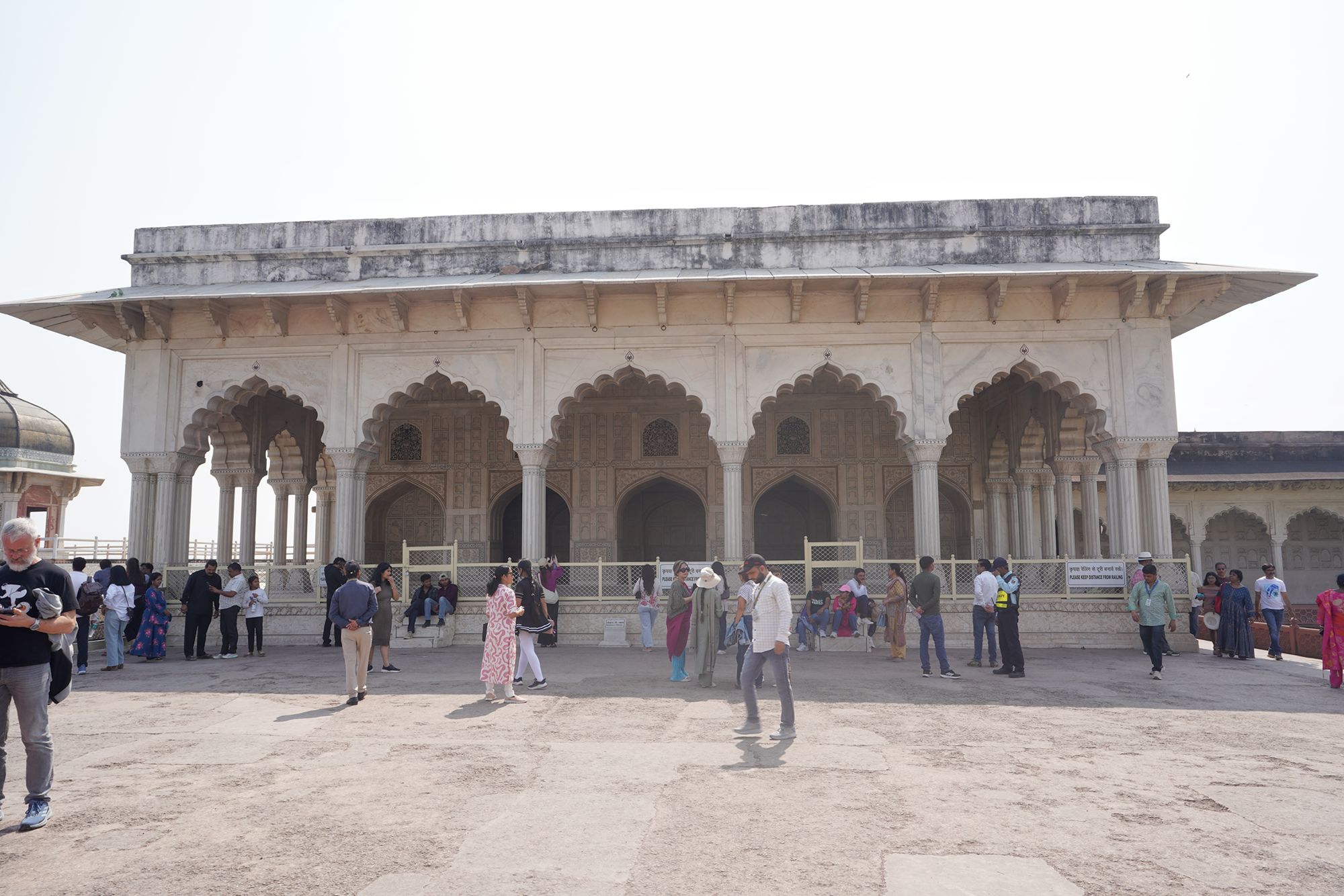
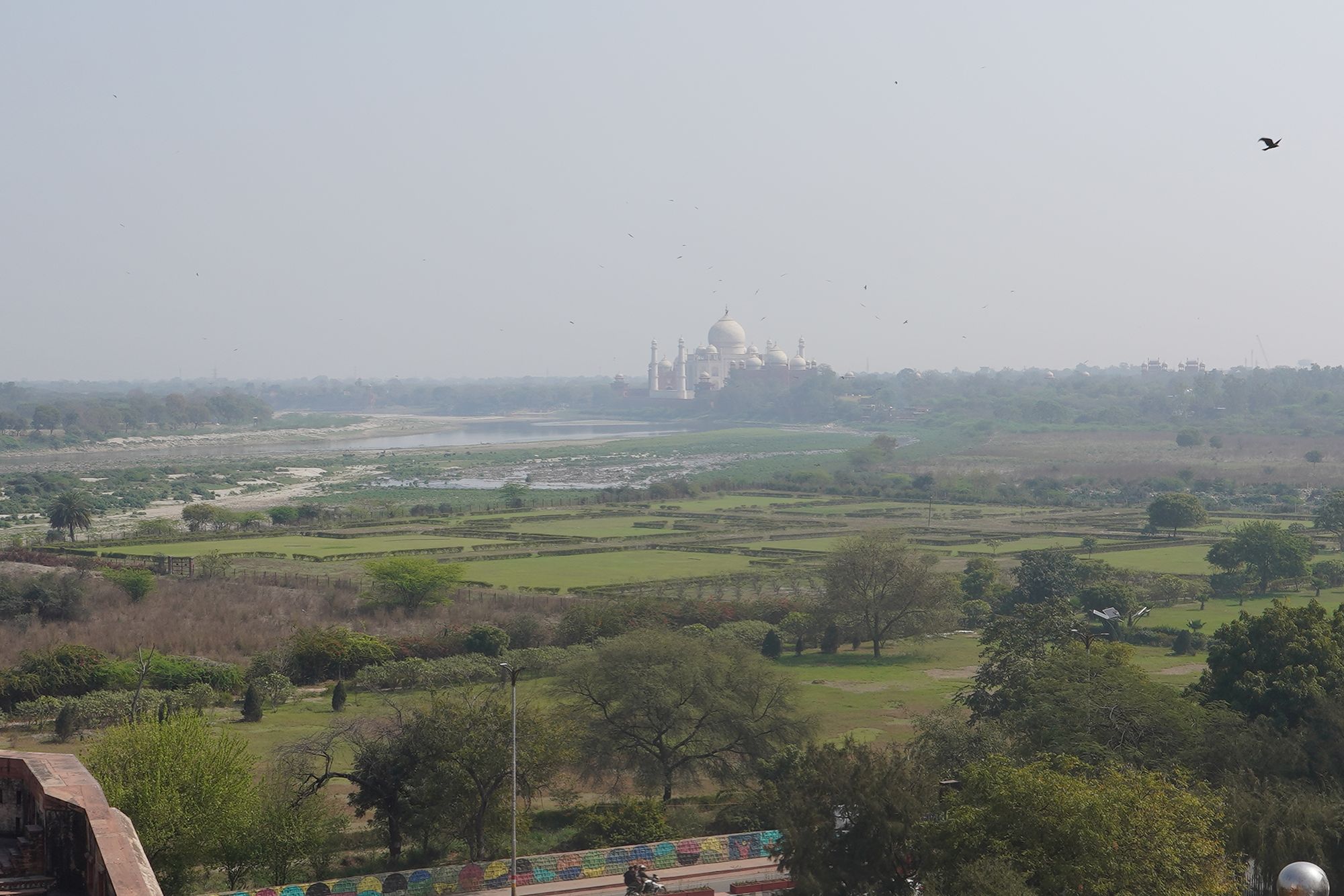
Diwan-E-Aam
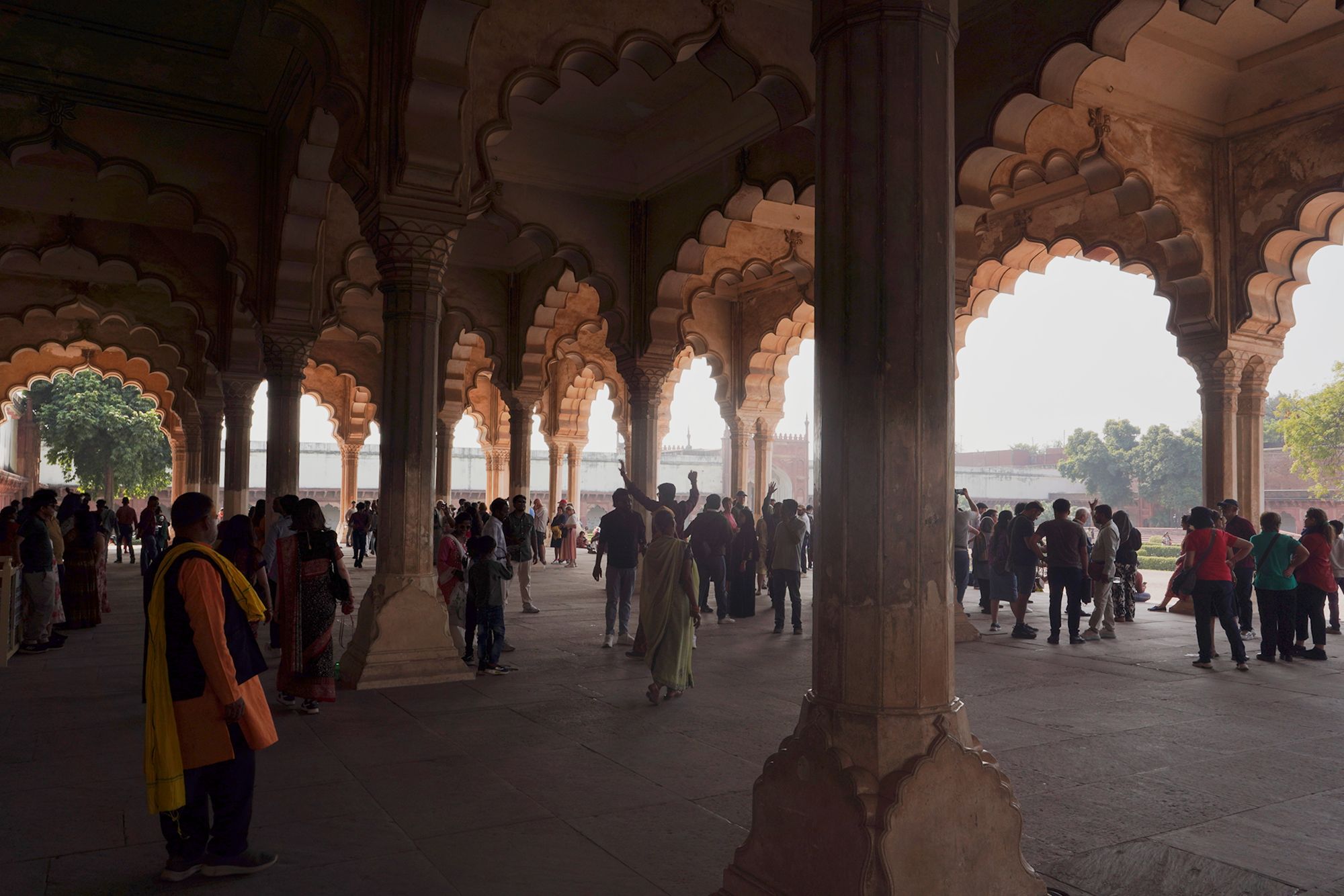
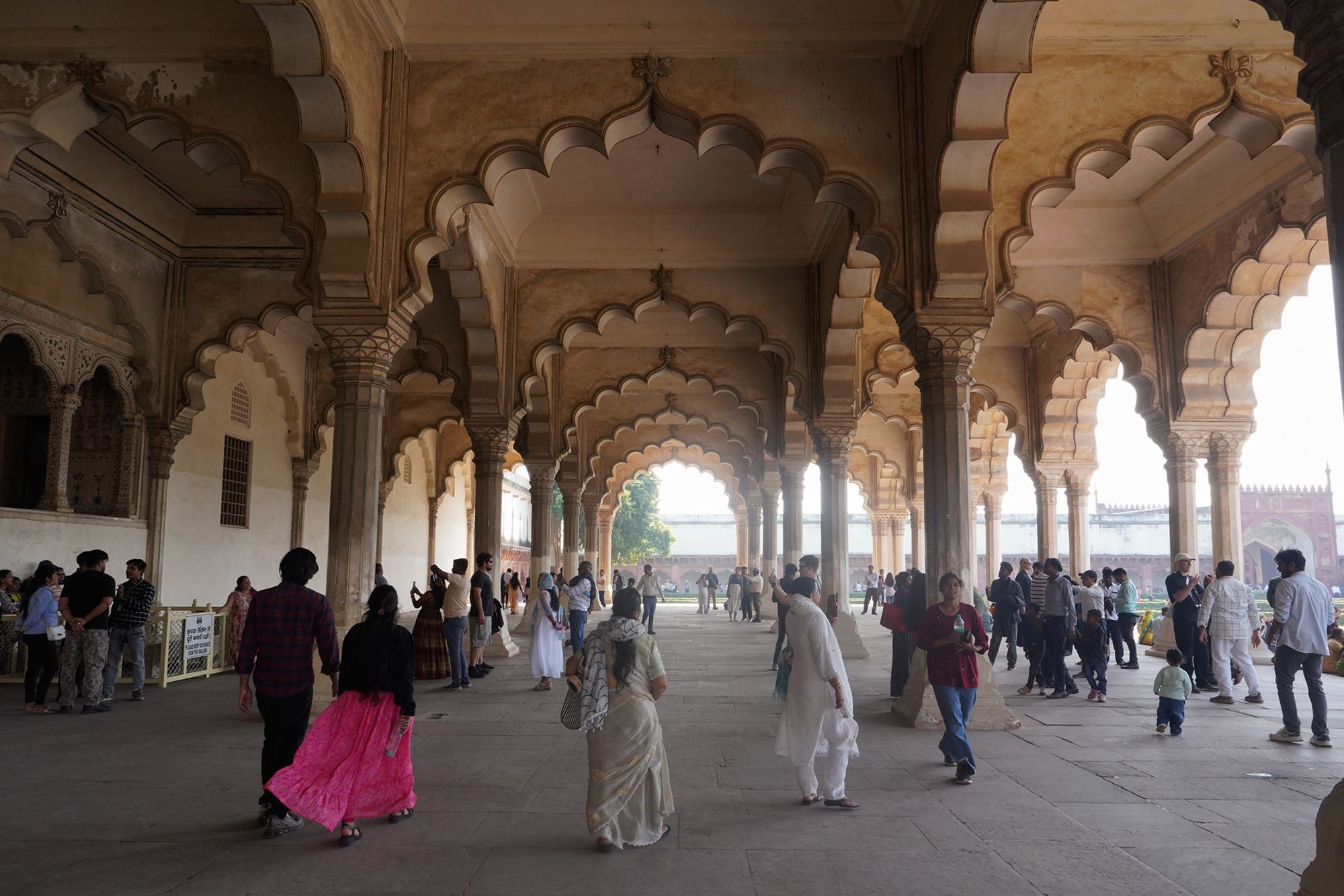
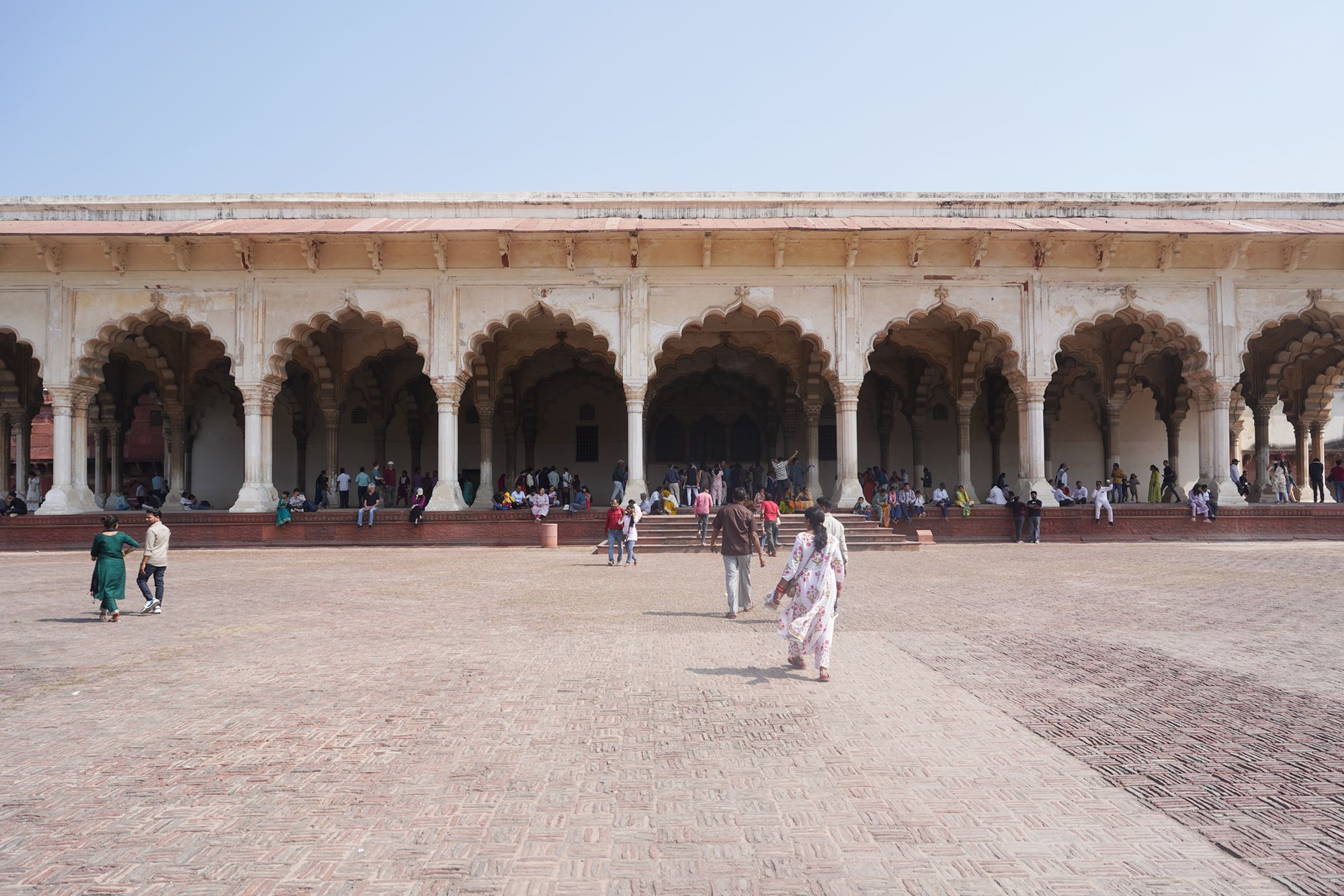
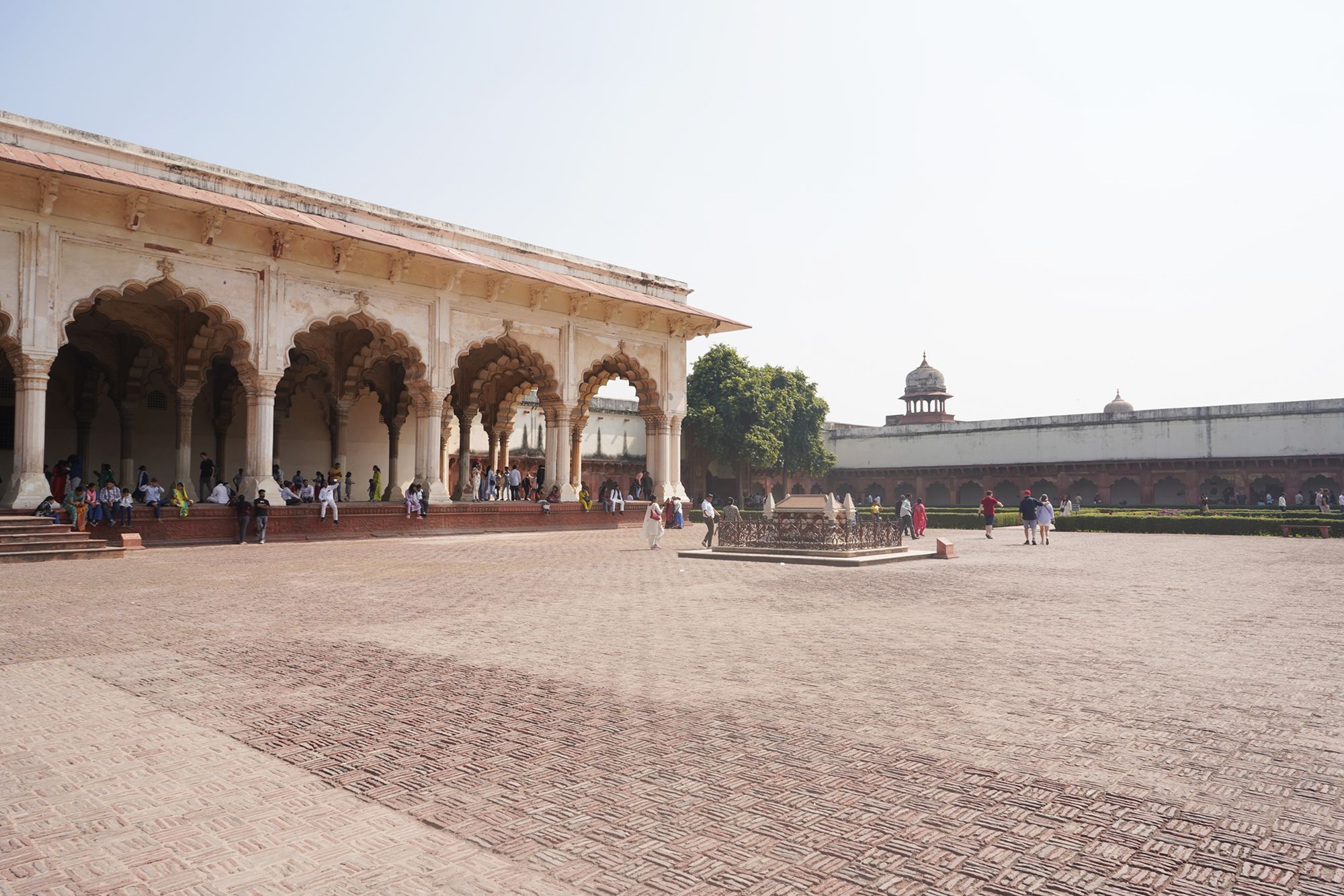
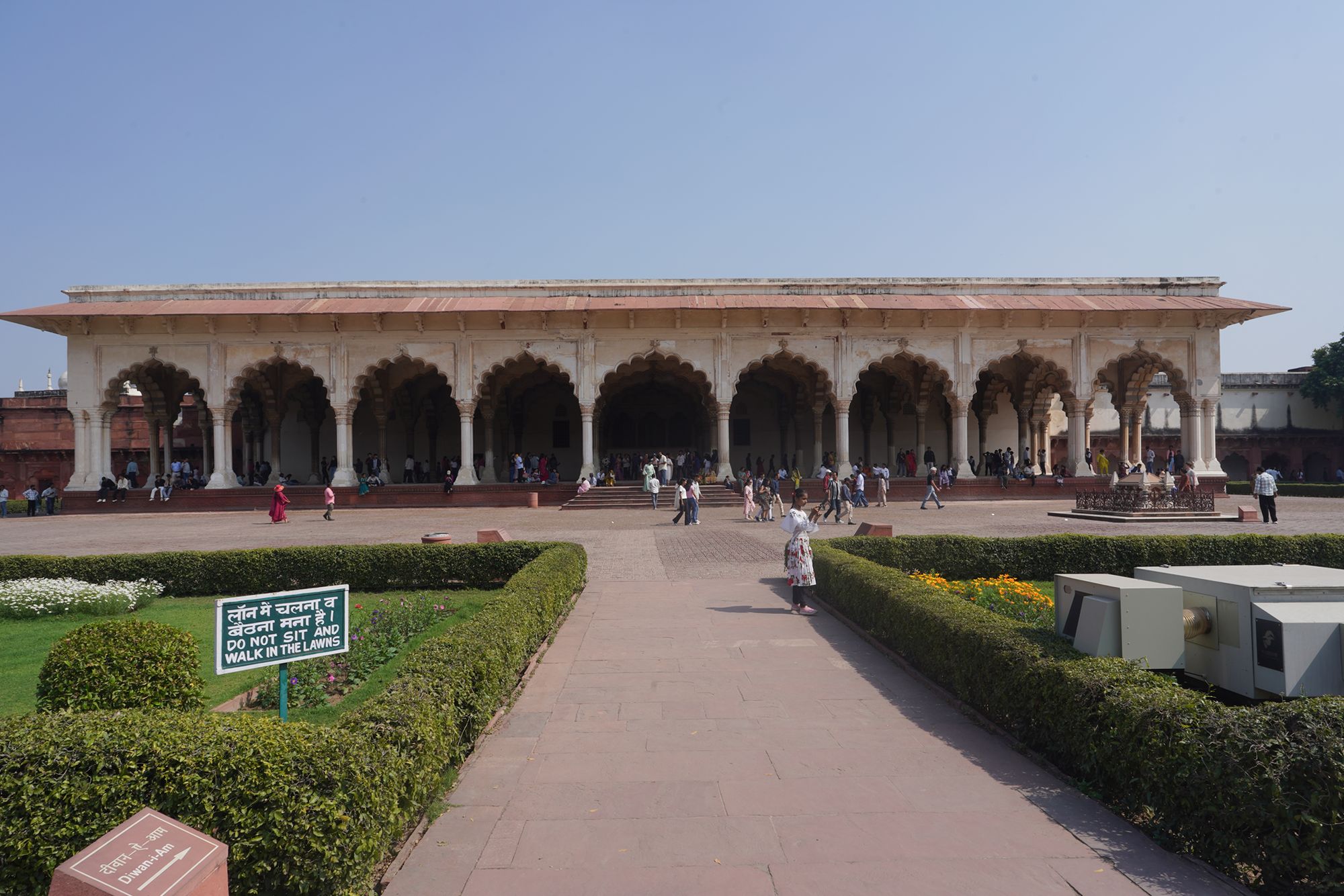
The Diwan-i-Aam, or “Hall of Public Audience,” was the place where the Mughal emperor Shah Jahan met with officials, nobles, and members of the public. Built during his reign in the 17th century, it was an important center for the everyday administration of the Mughal Empire.
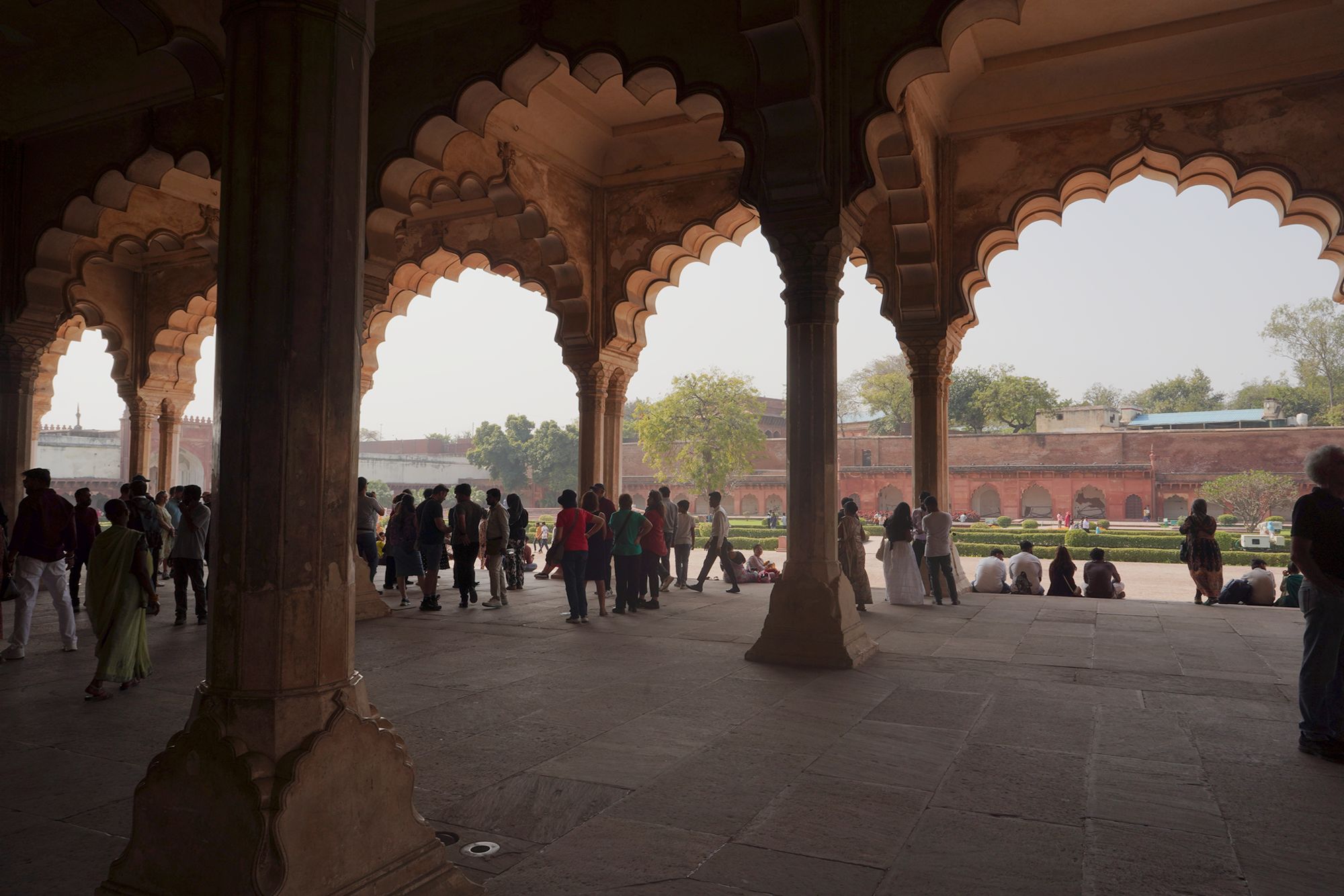
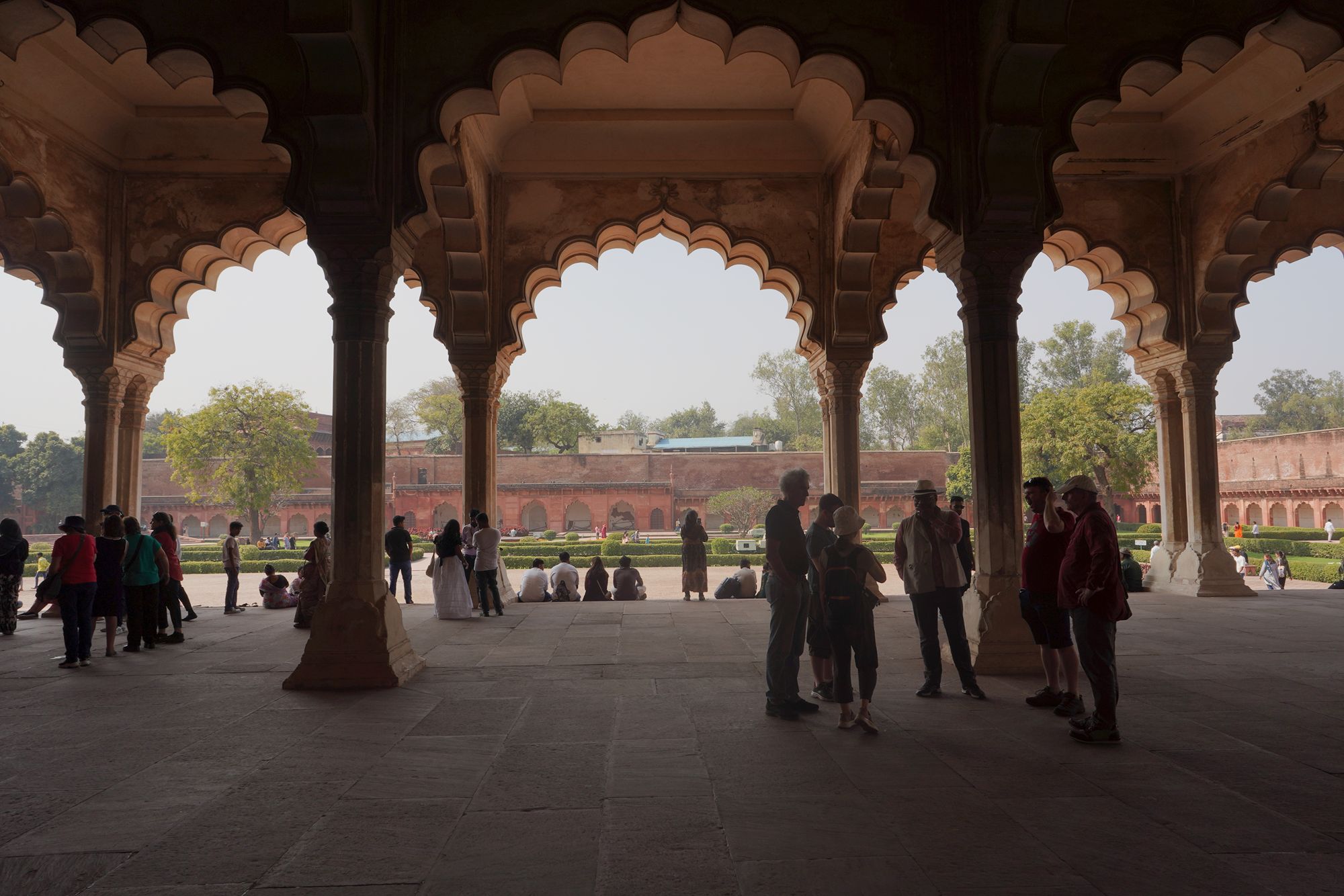
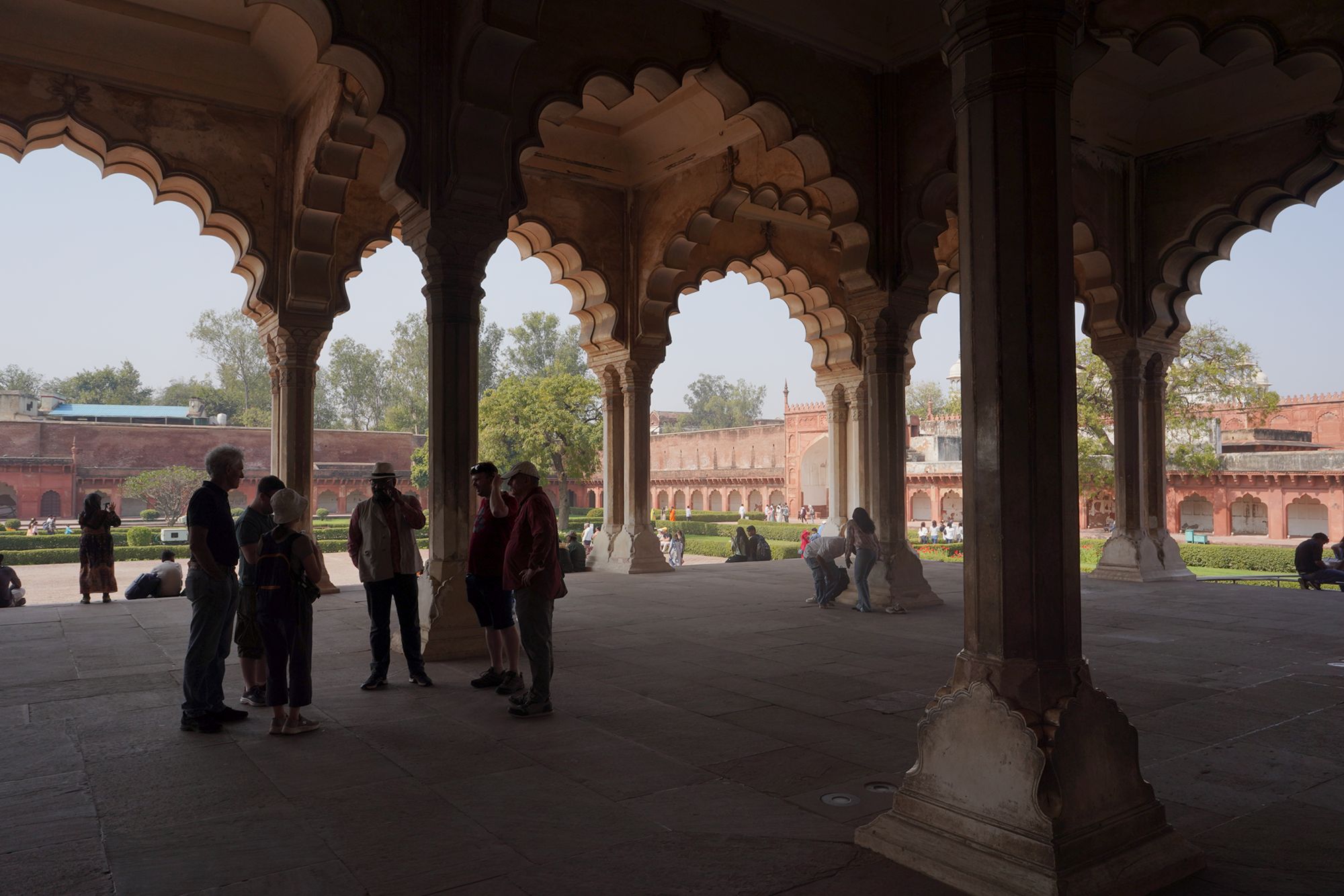
The Diwan-i-Aam illustrates an important distinction within Mughal palace life: this was the public audience hall, while the nearby Diwan-i-Khas was reserved for more private meetings with important nobles, ambassadors, and distinguished visitors.
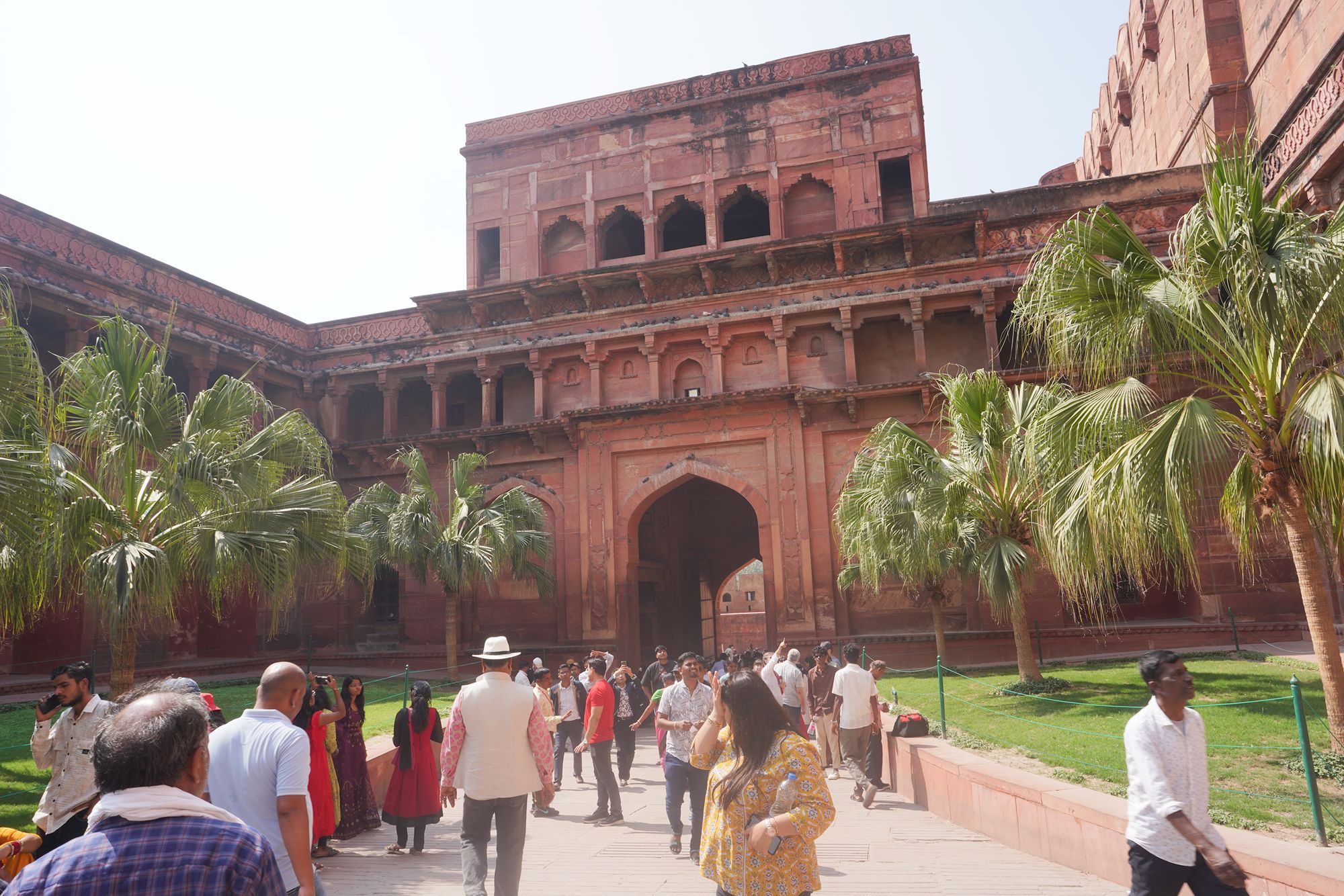
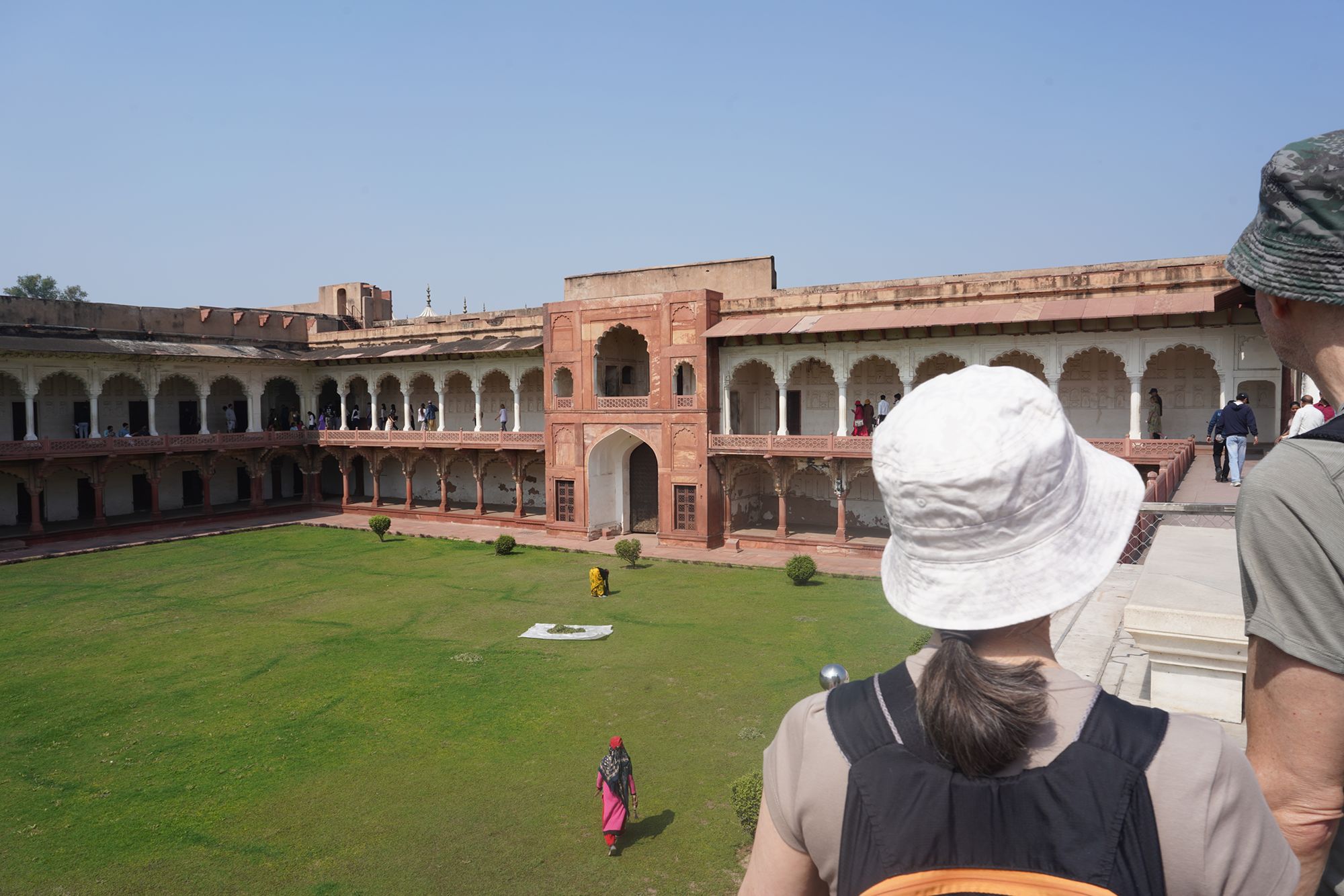
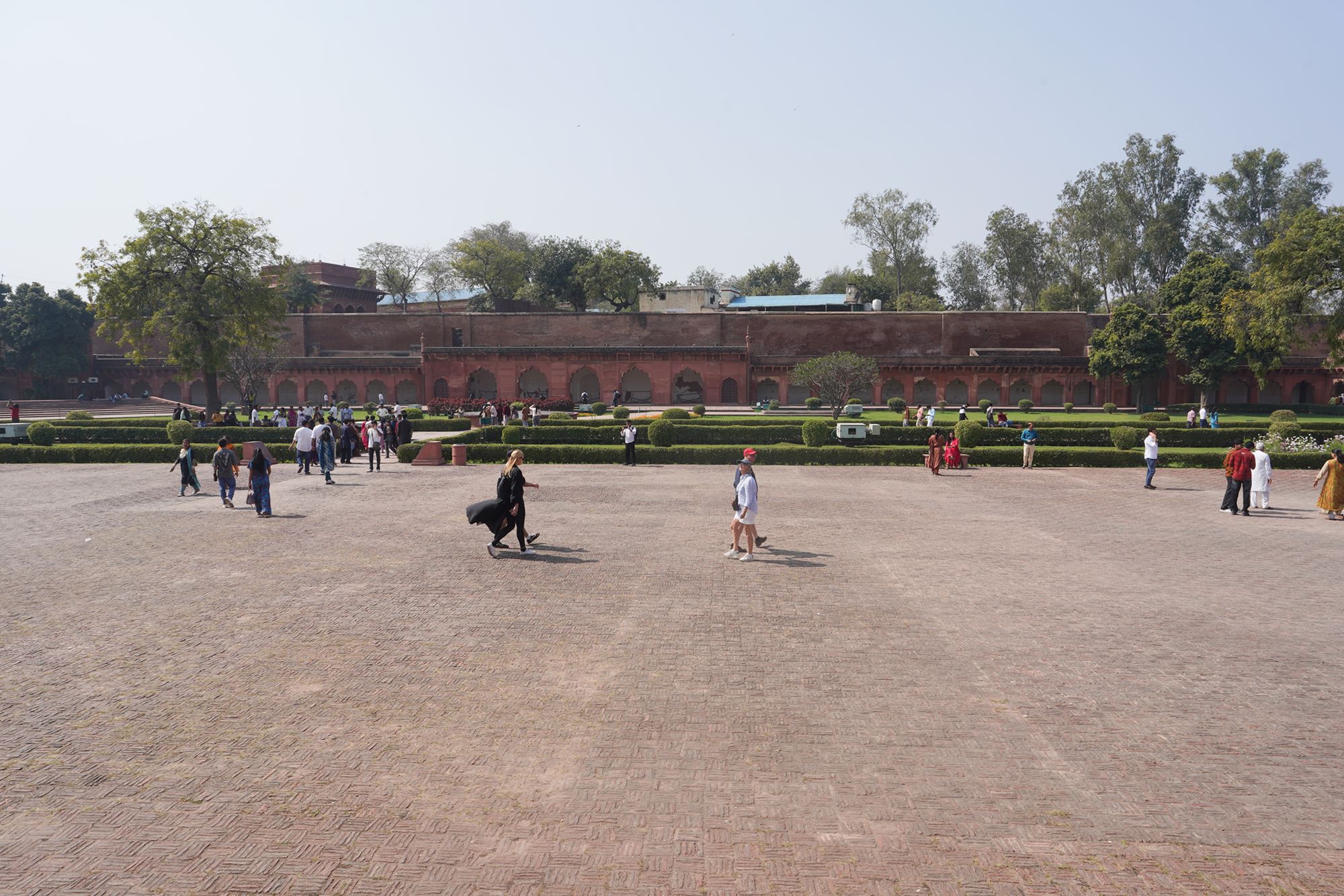
A courtyard in front of Diwan-i-Aam
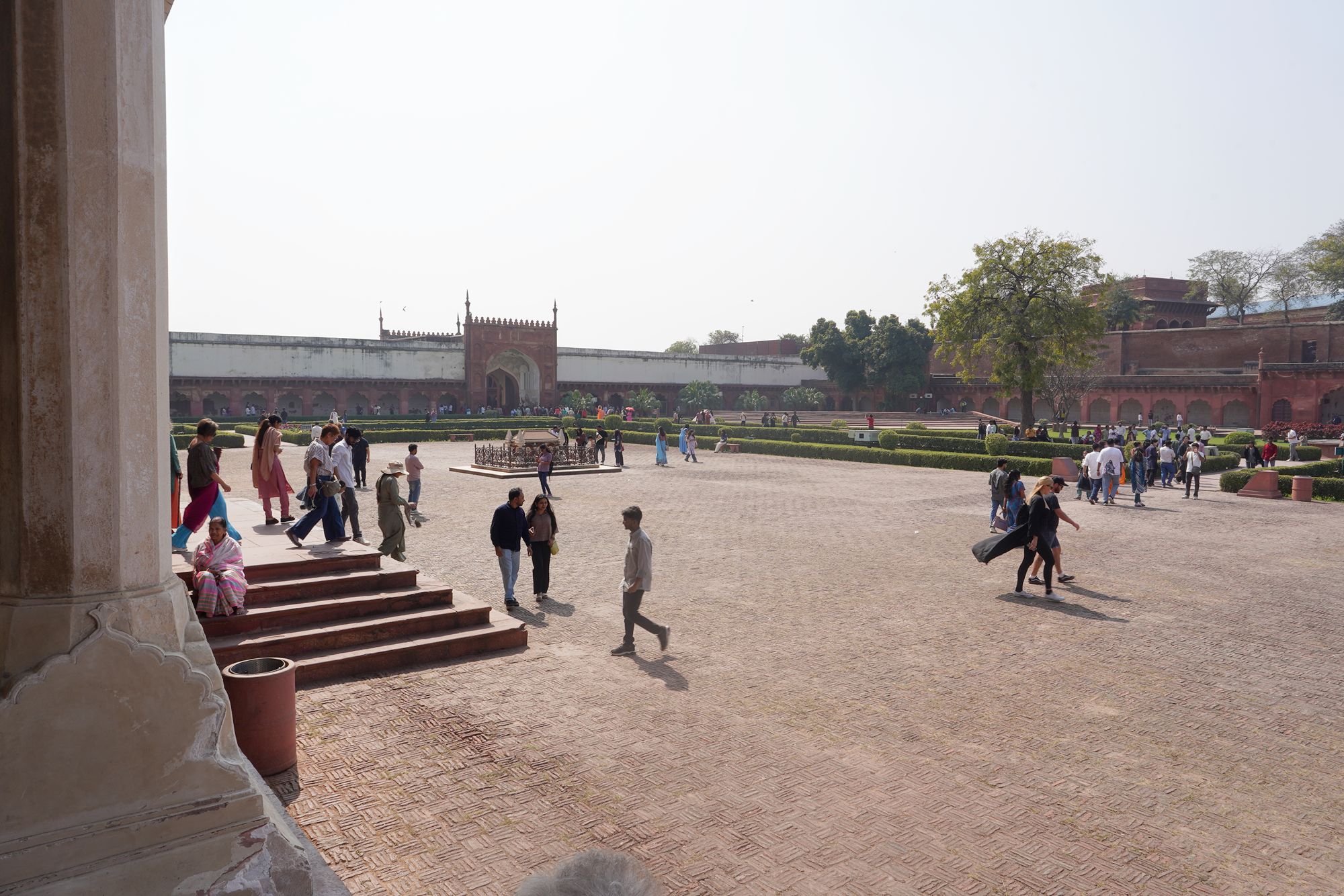
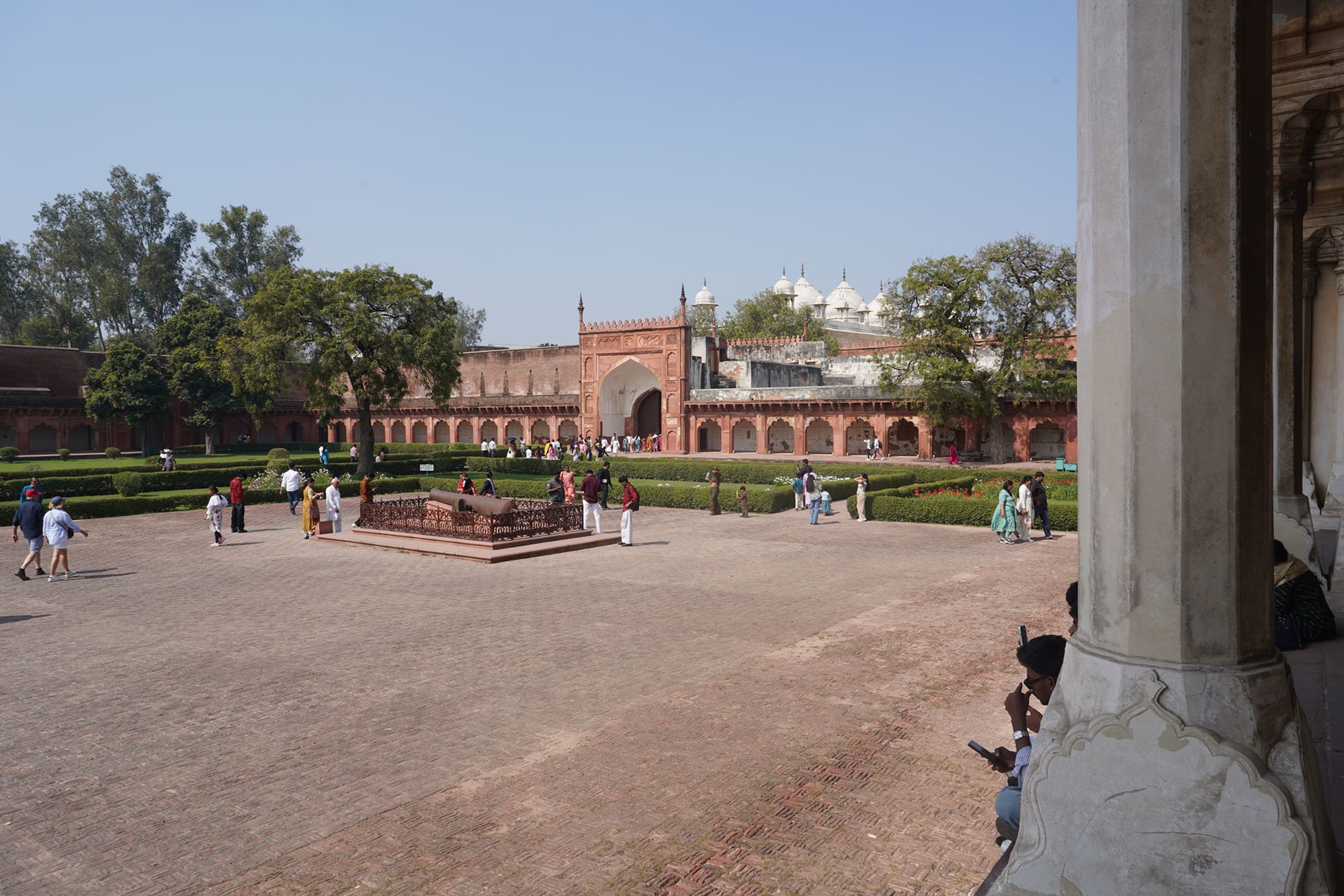
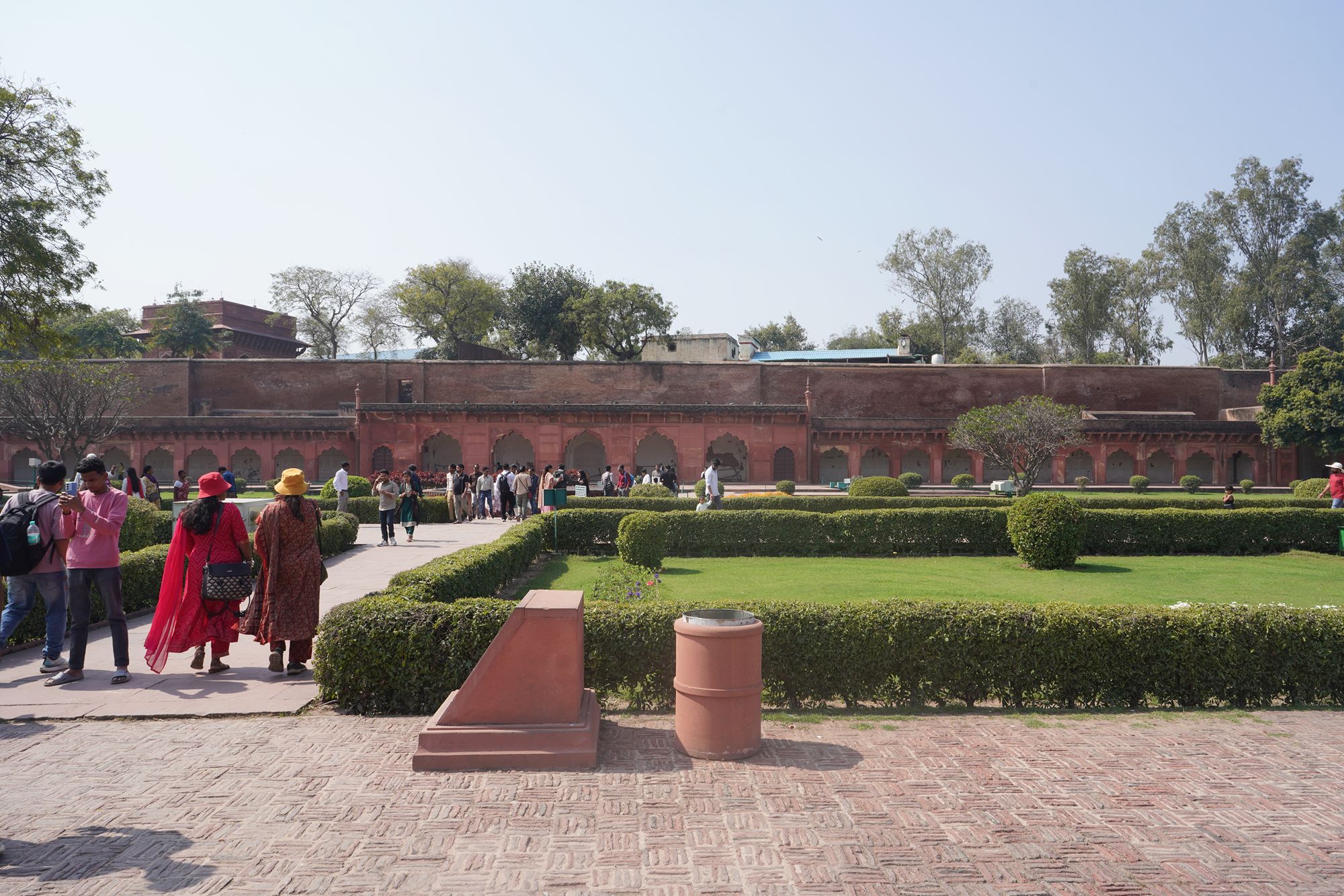
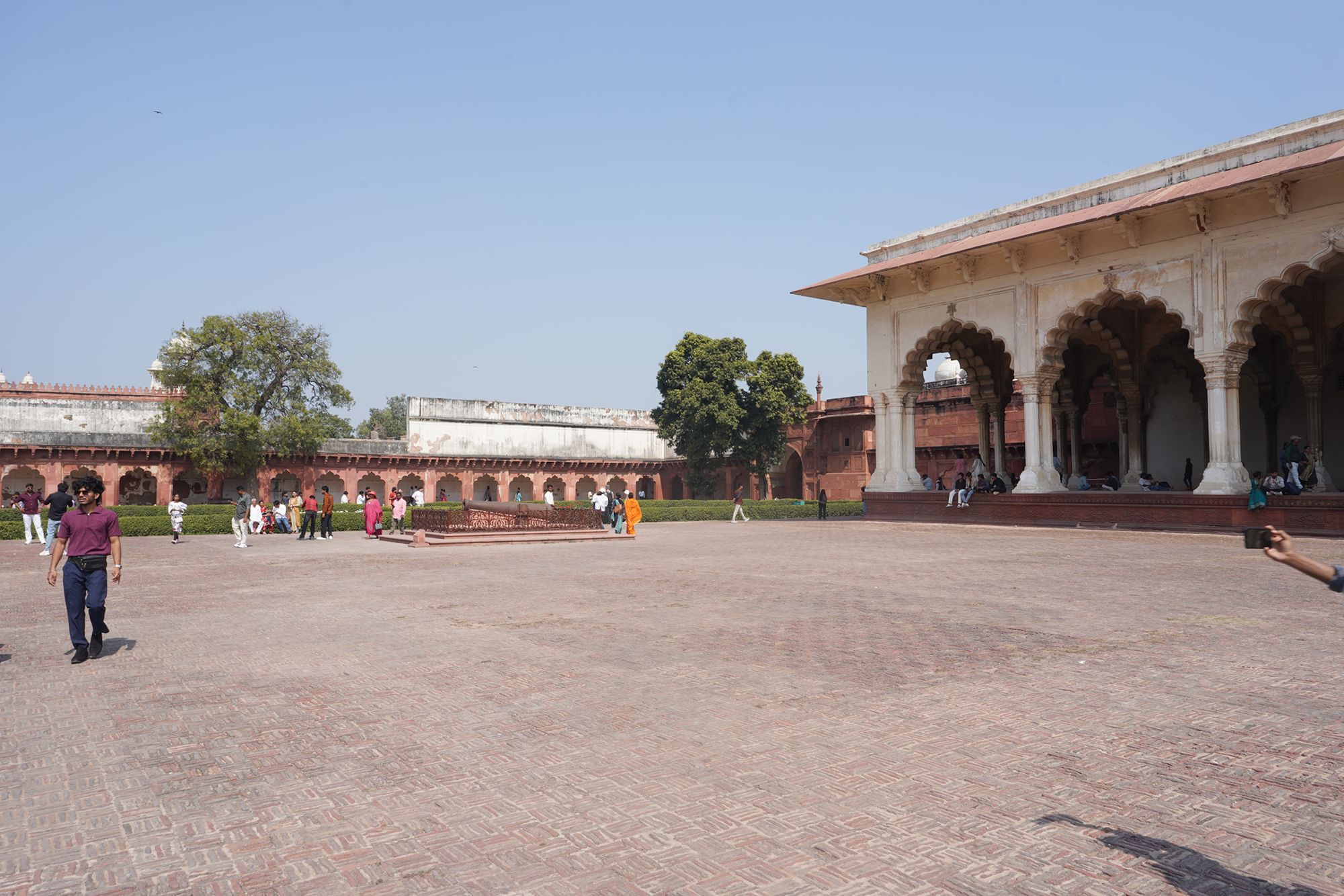
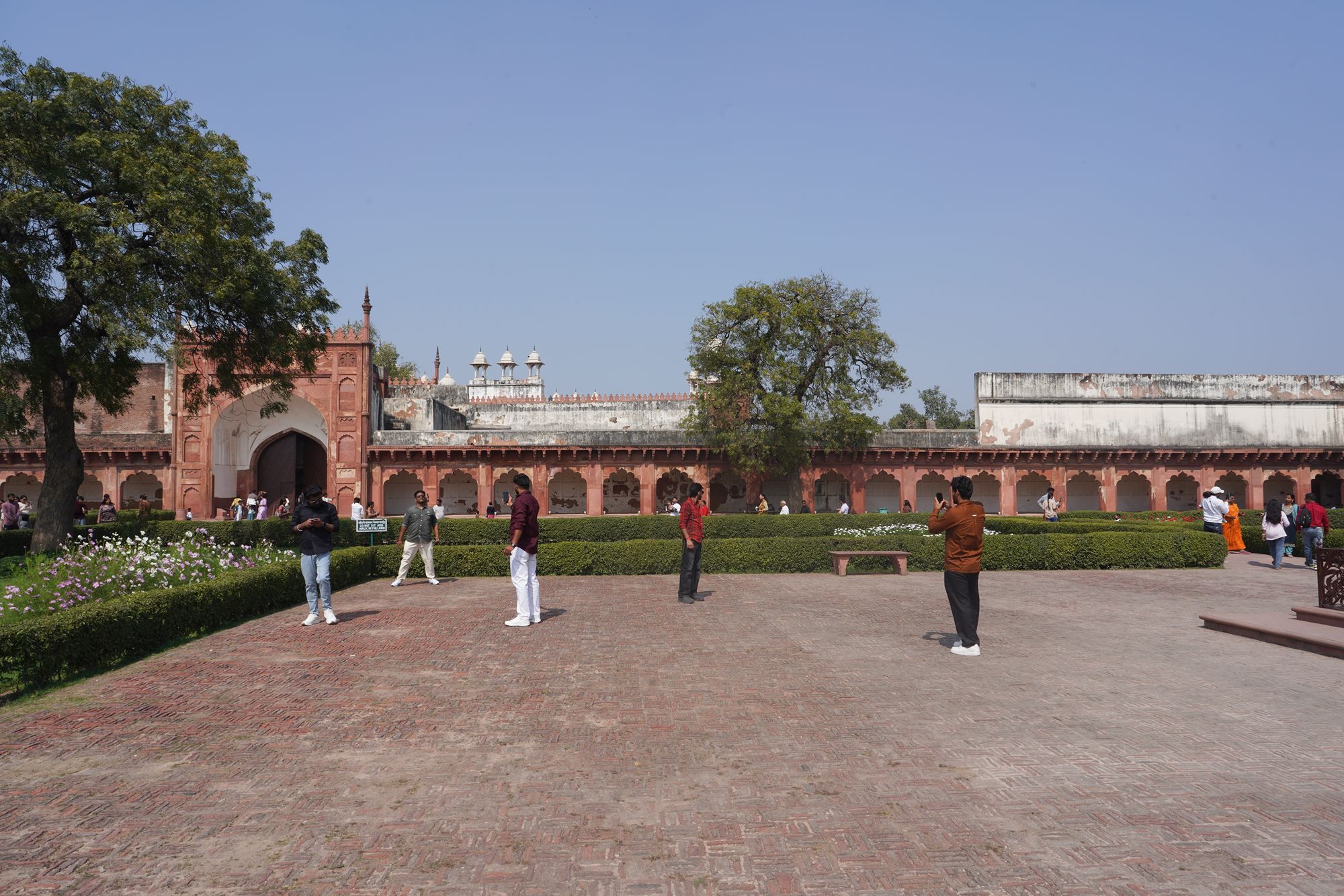
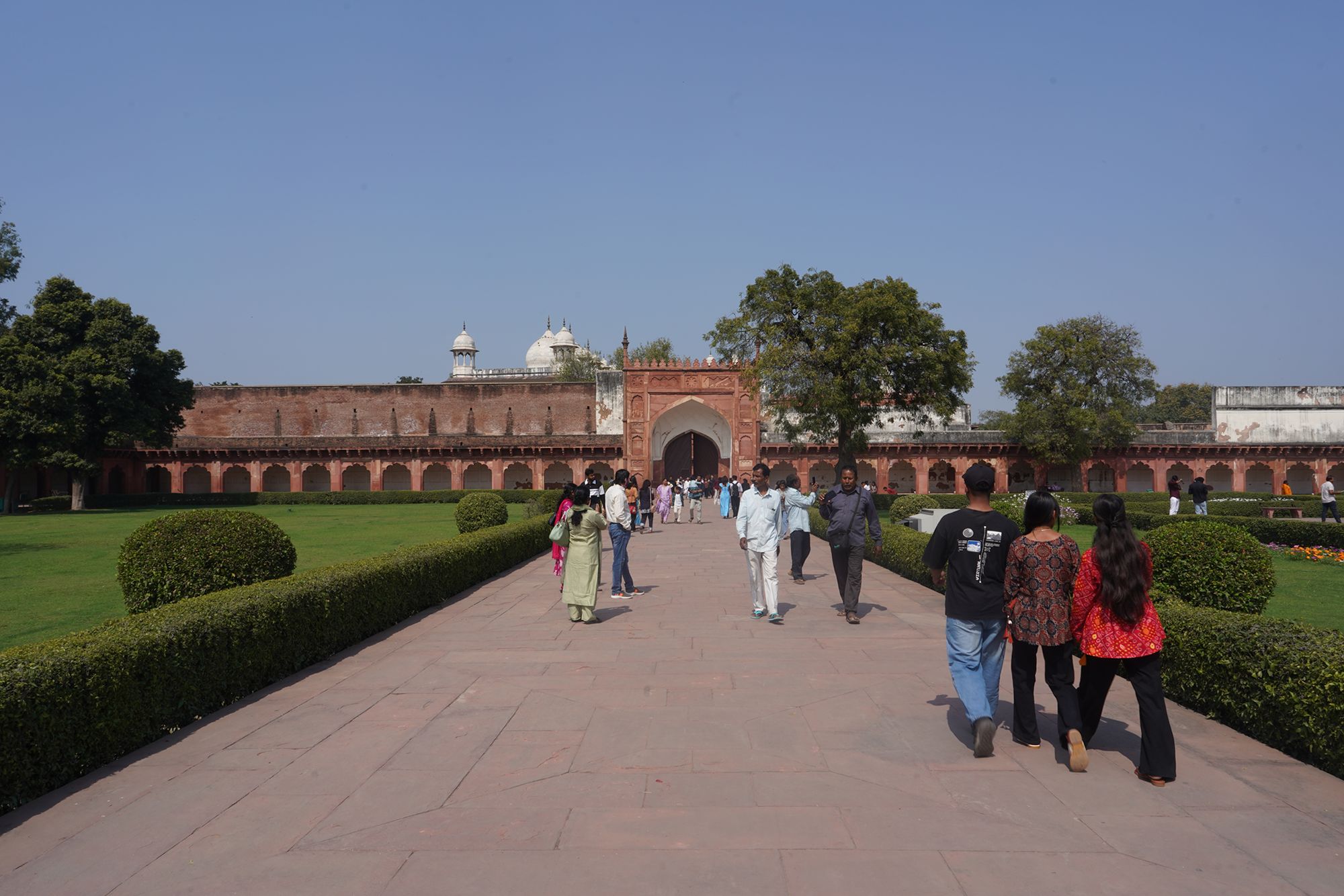
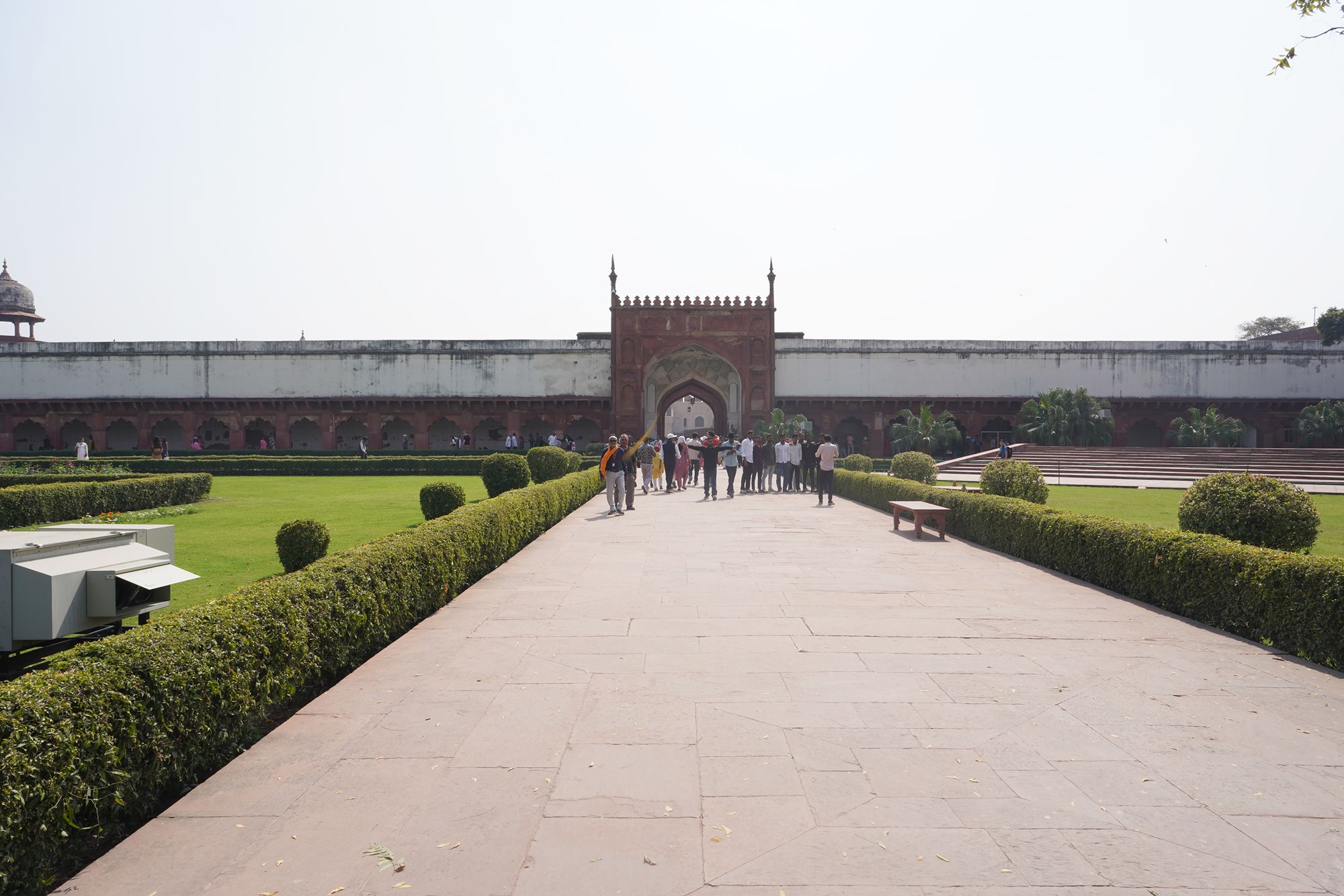
Leaving the courtyard through this gateway.
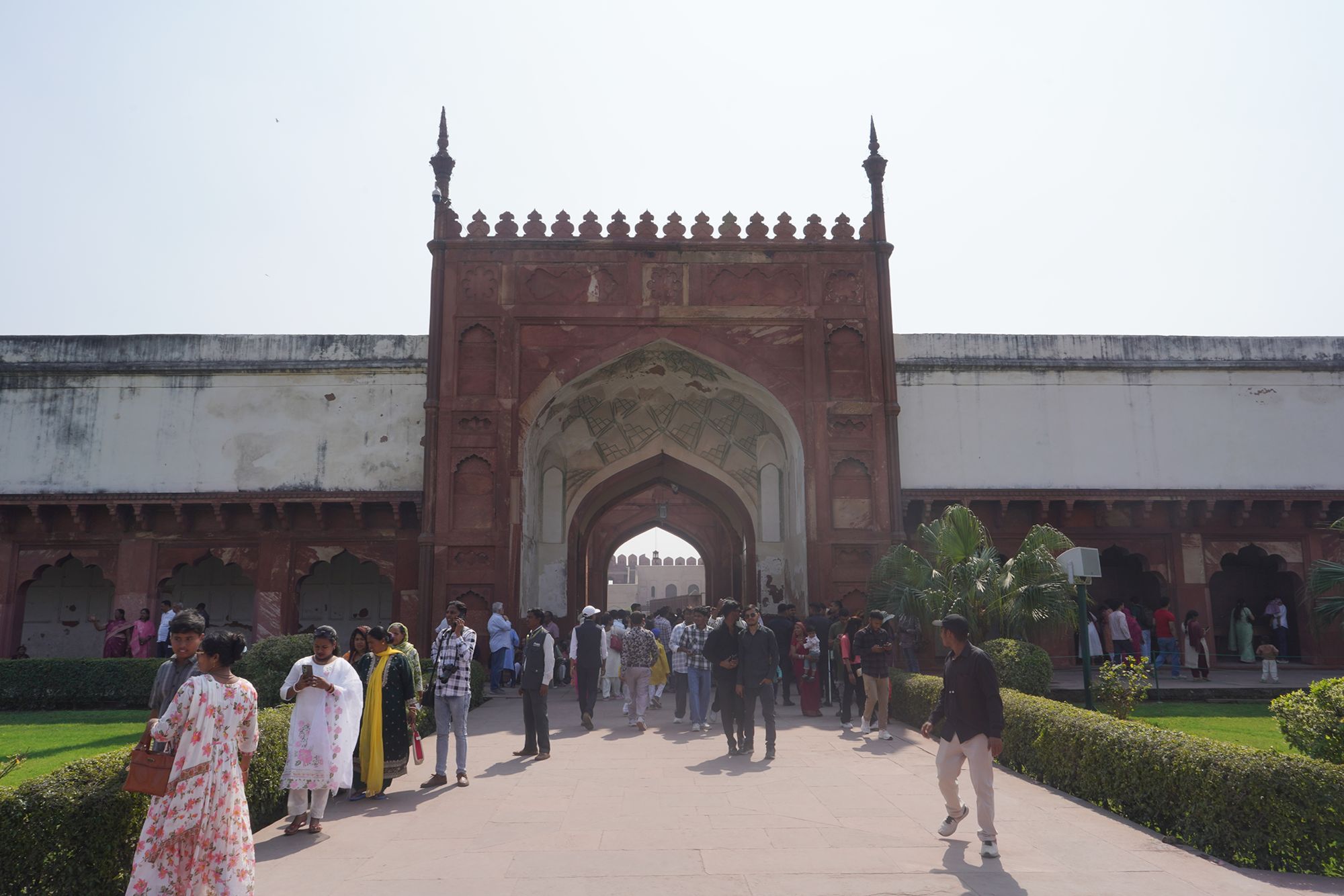
After making our way around the fort, we eventually circled back to this building, which we had visited first.