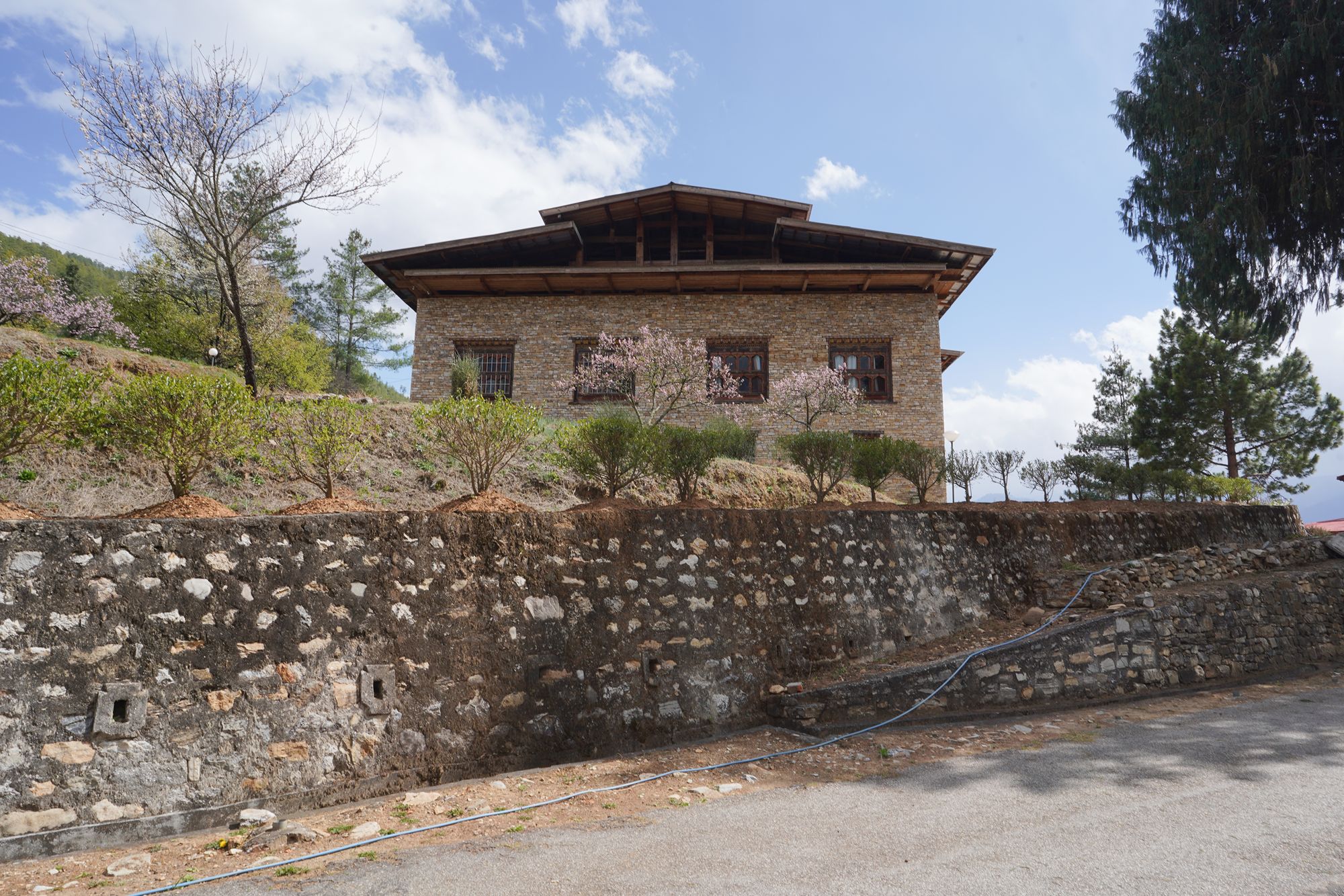
Punakha Dzong and Suspension Bridge, Paro Rinpung Dzong and Ta Dzong, Bhutan
From Punakha, I continued my private guided tour of Bhutan with my guide and driver. 1269
Punakha Dzong: HVR7+G62, Punakha, Bhutan
Punakha Suspension Bridge: HVQ9+HXR, Punakha, Bhutan
Paro Rinpung Dzong: CCGF+V6V, Paro, Bhutan
Ta Dzong: CCHG+F6R, Paro, Bhutan
Date Picture Taken: Mar, 2026
I had missed Tashichho Dzong in Thimphu because of my flight delay, but my guide told me, “Don’t worry—Punakha Dzong is even grander.” She was right. Punakha Dzong is one of the largest and most magnificent dzongs in Bhutan, and it was truly impressive.
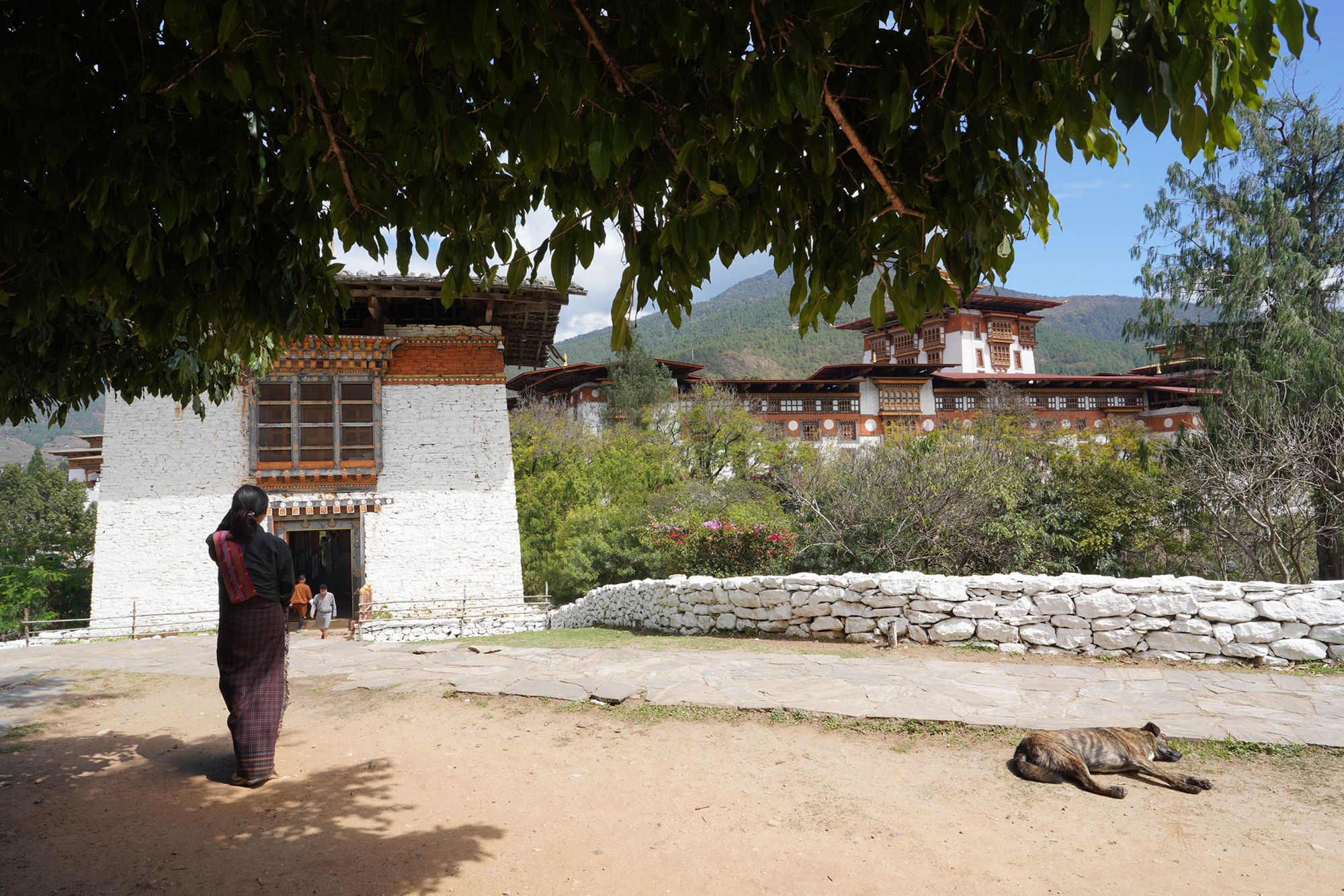
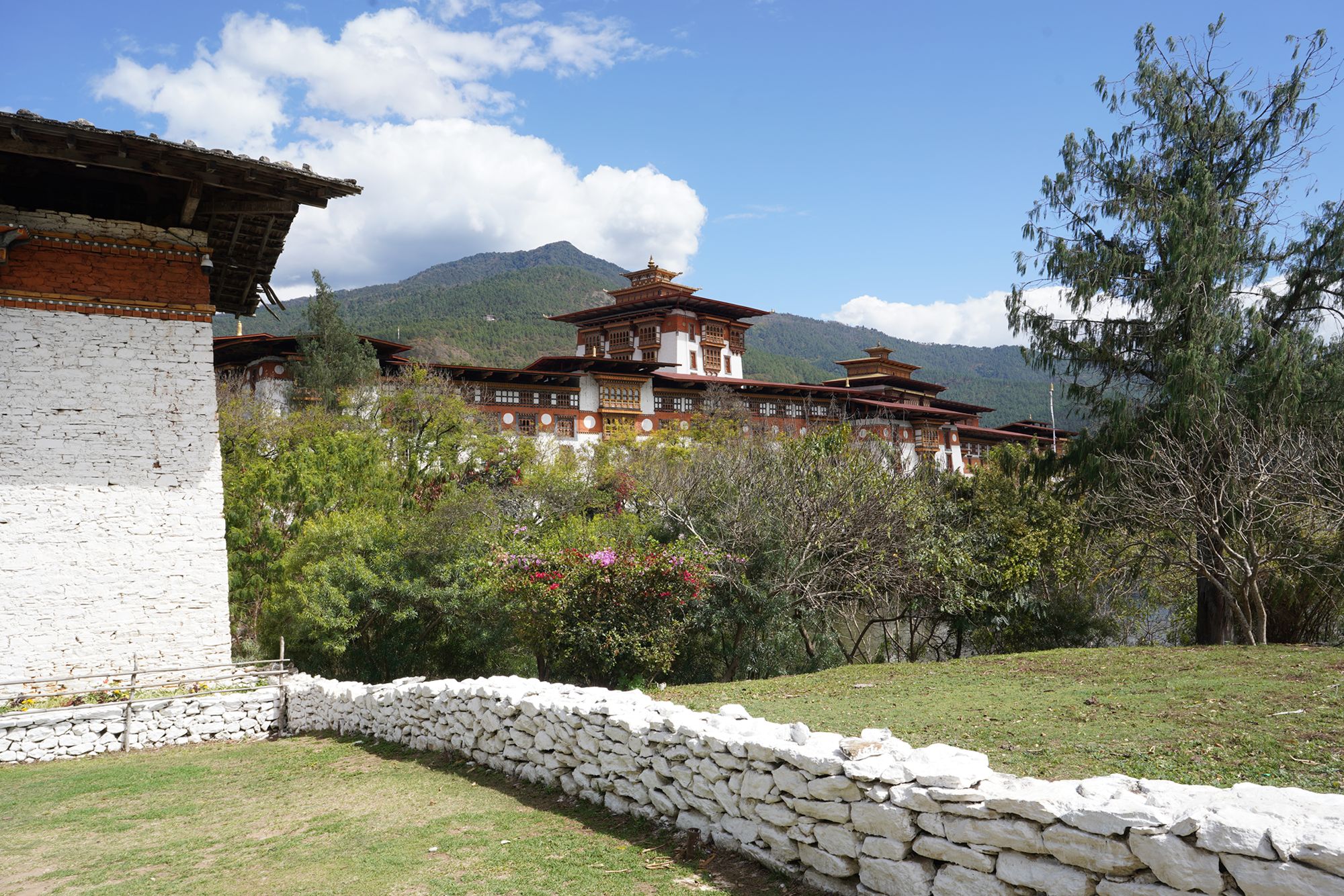
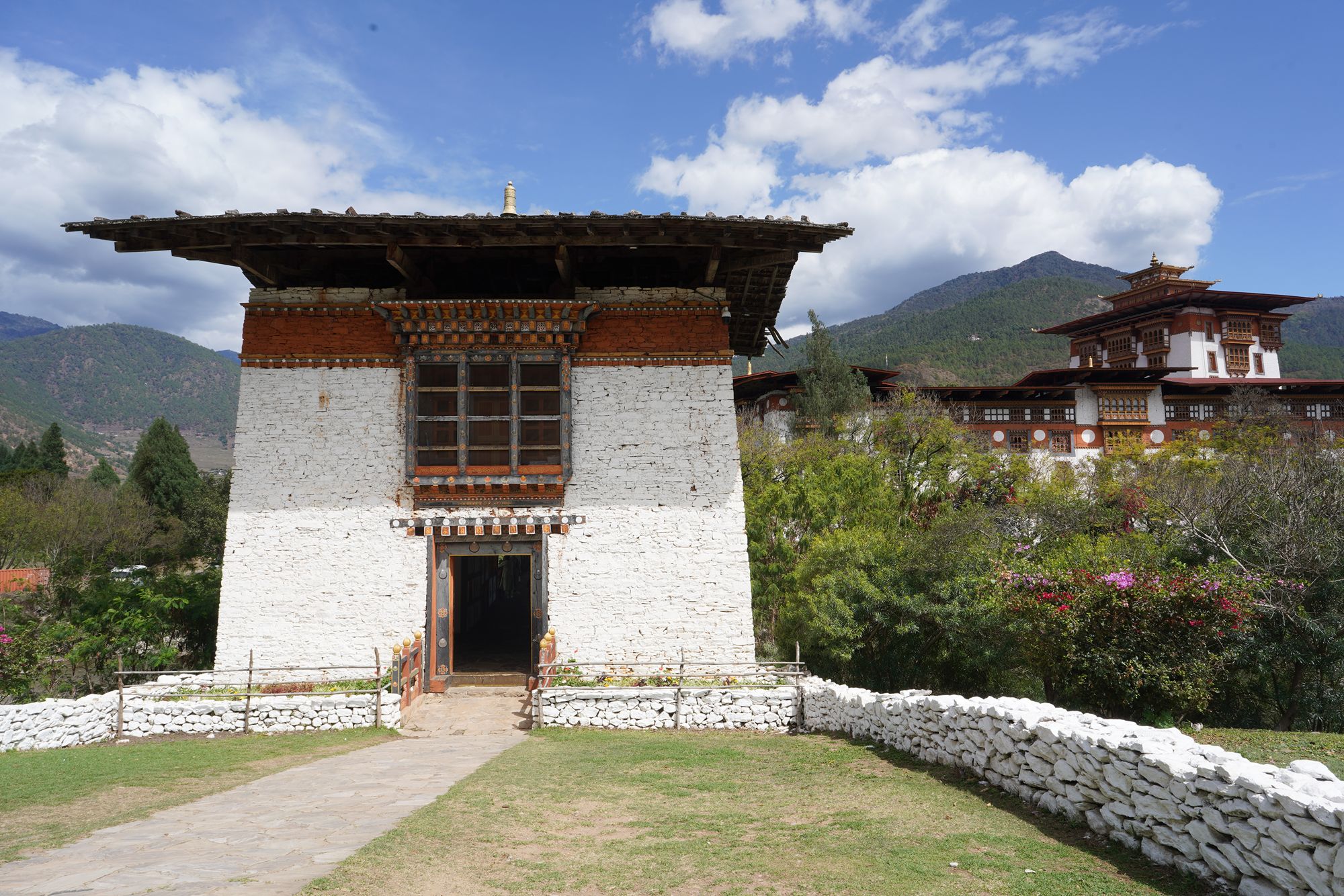
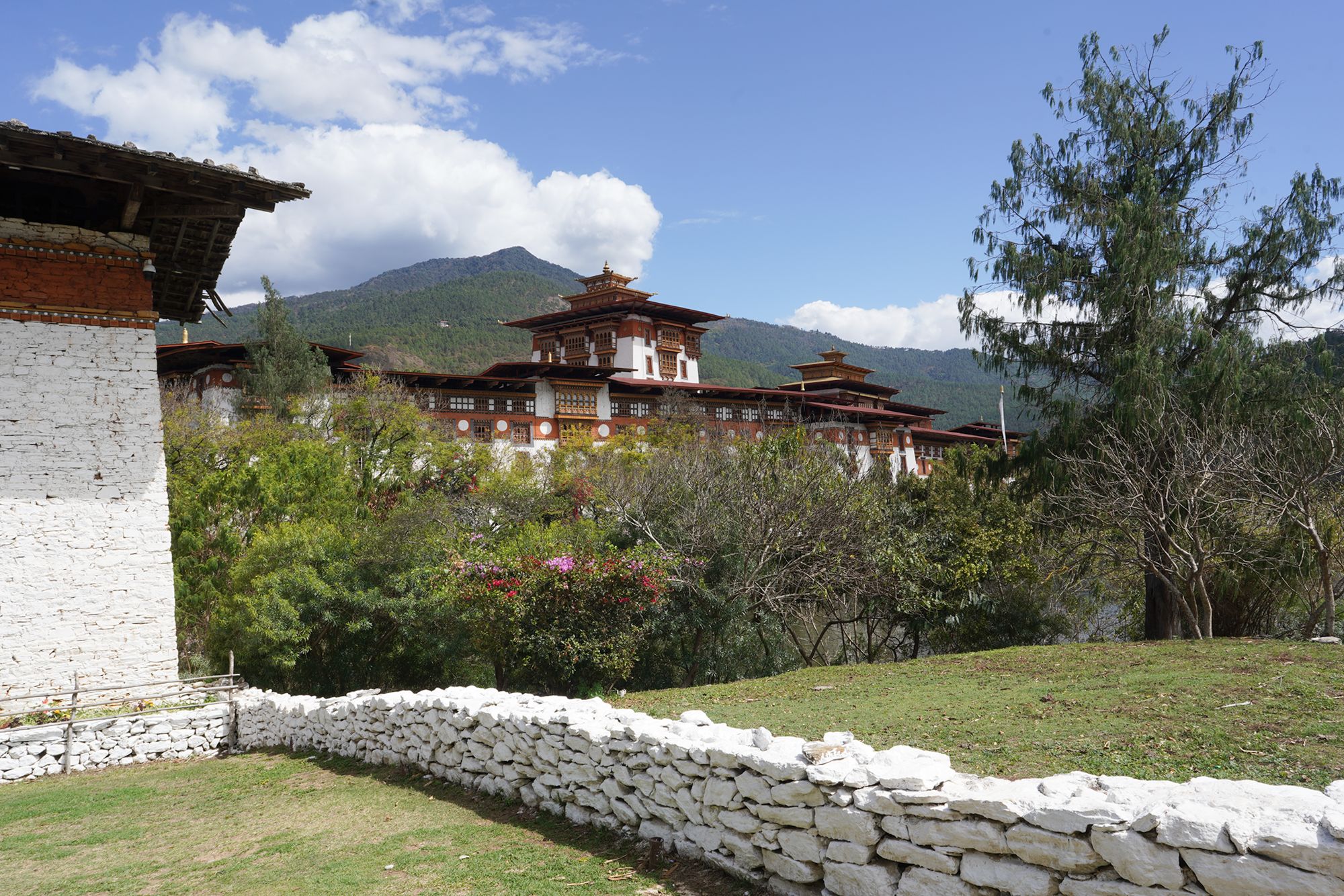
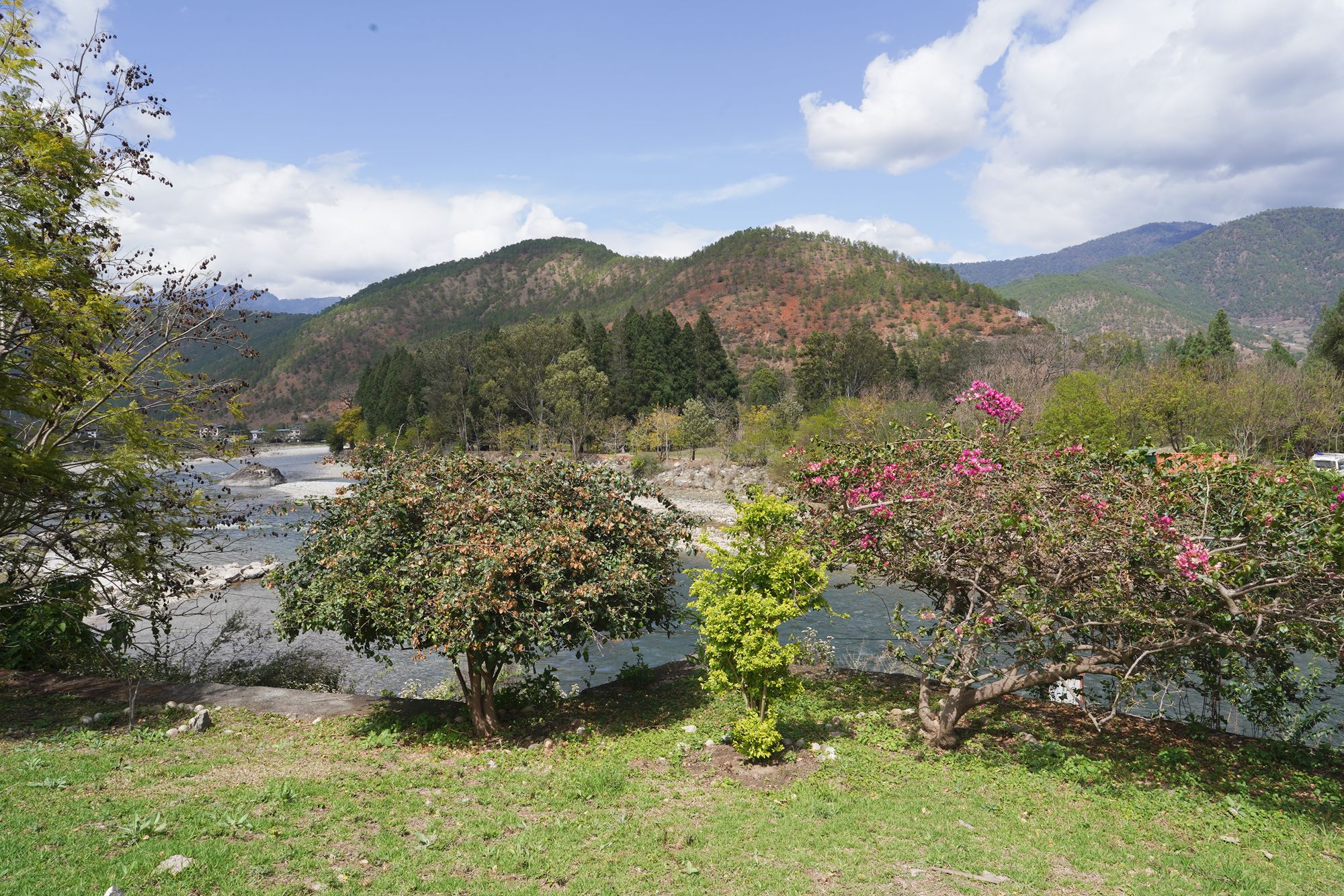
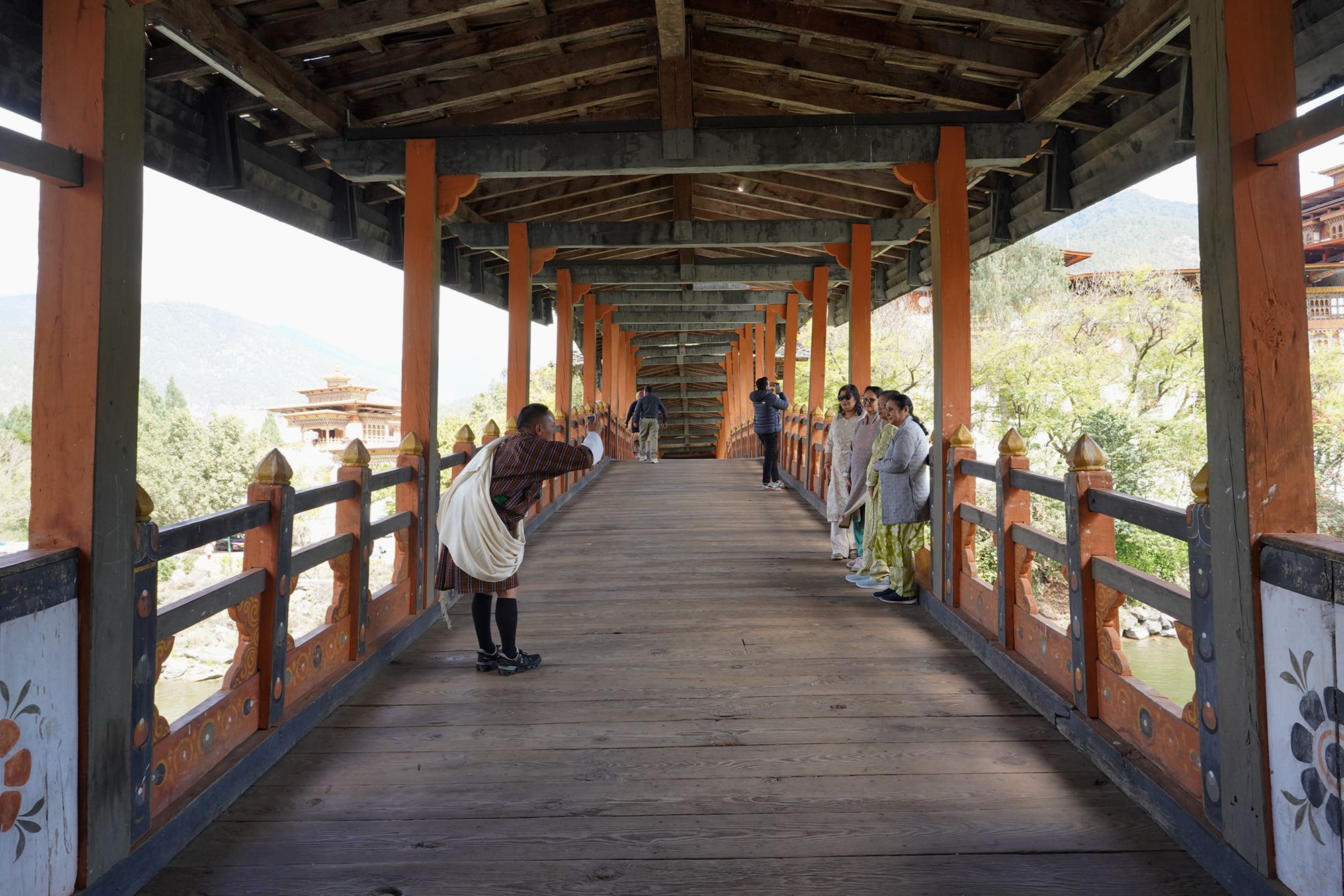
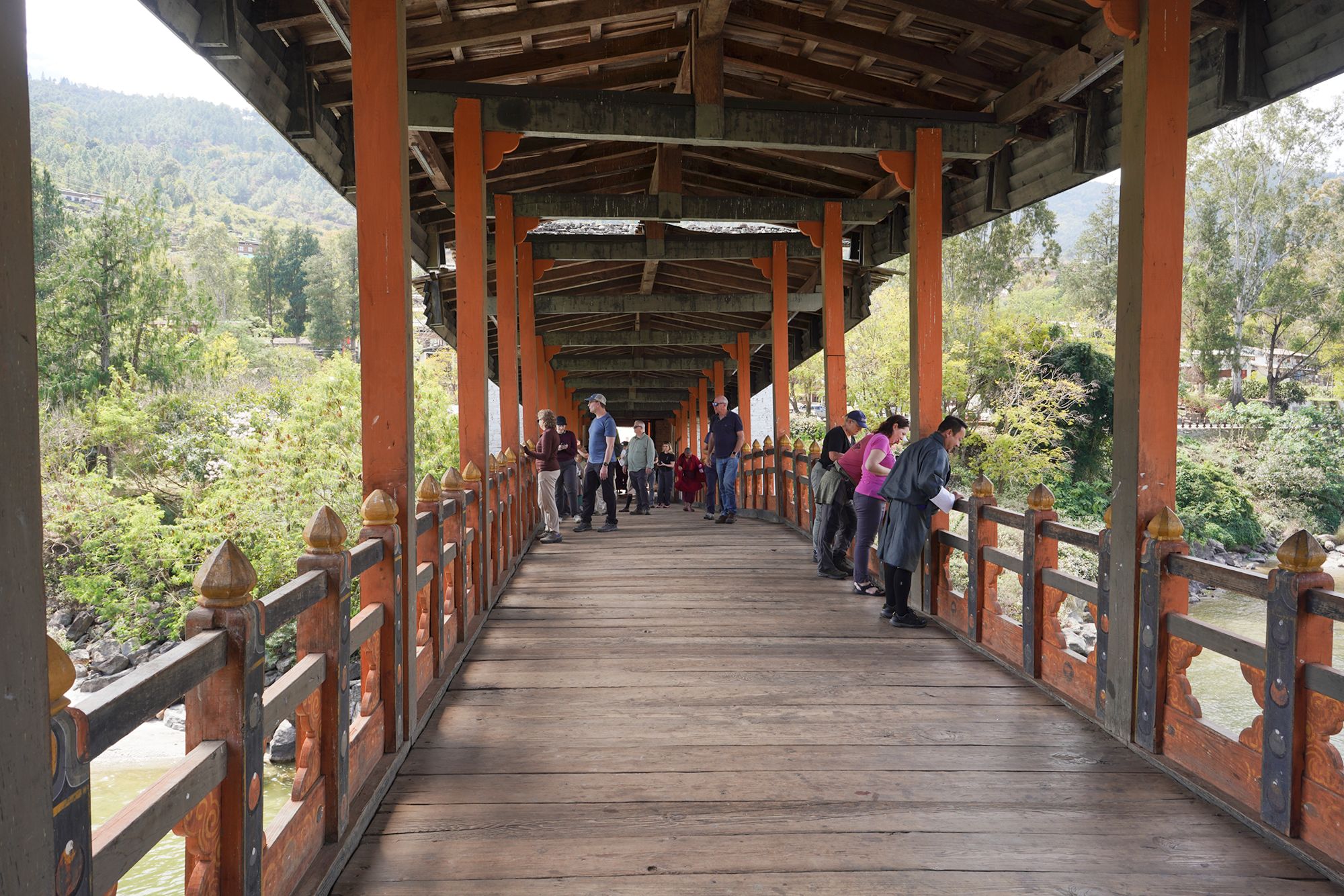
The traditional covered wooden bridge across the Mo Chhu River leads to the entrance of Punakha Dzong.
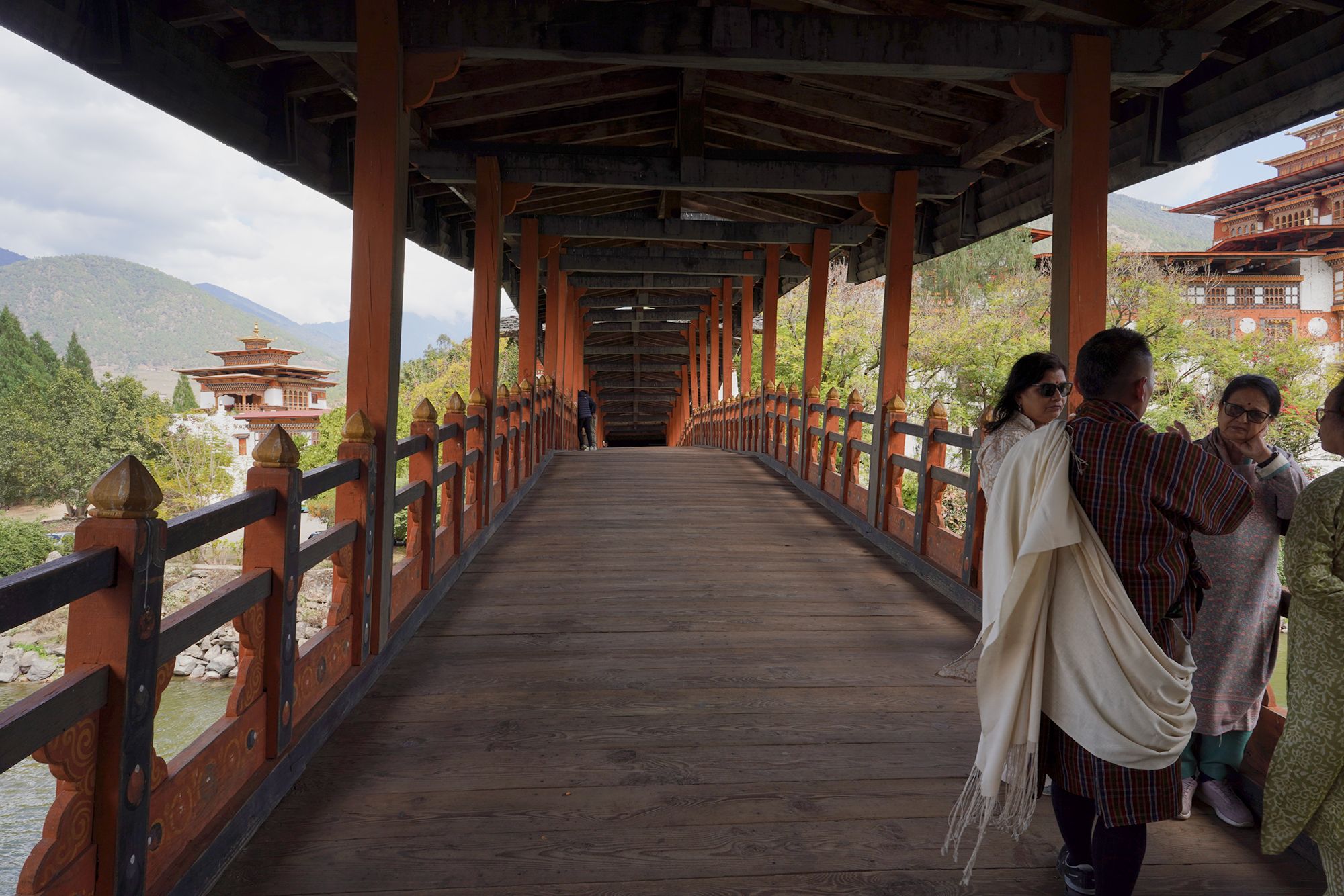
Punakha Dzong
Punakha Dzong, whose full name means “Palace of Great Happiness,” is one of the most important and spectacular dzongs in Bhutan. It was built in 1637–1638 by Zhabdrung Ngawang Namgyal, the leader who unified Bhutan as a nation.
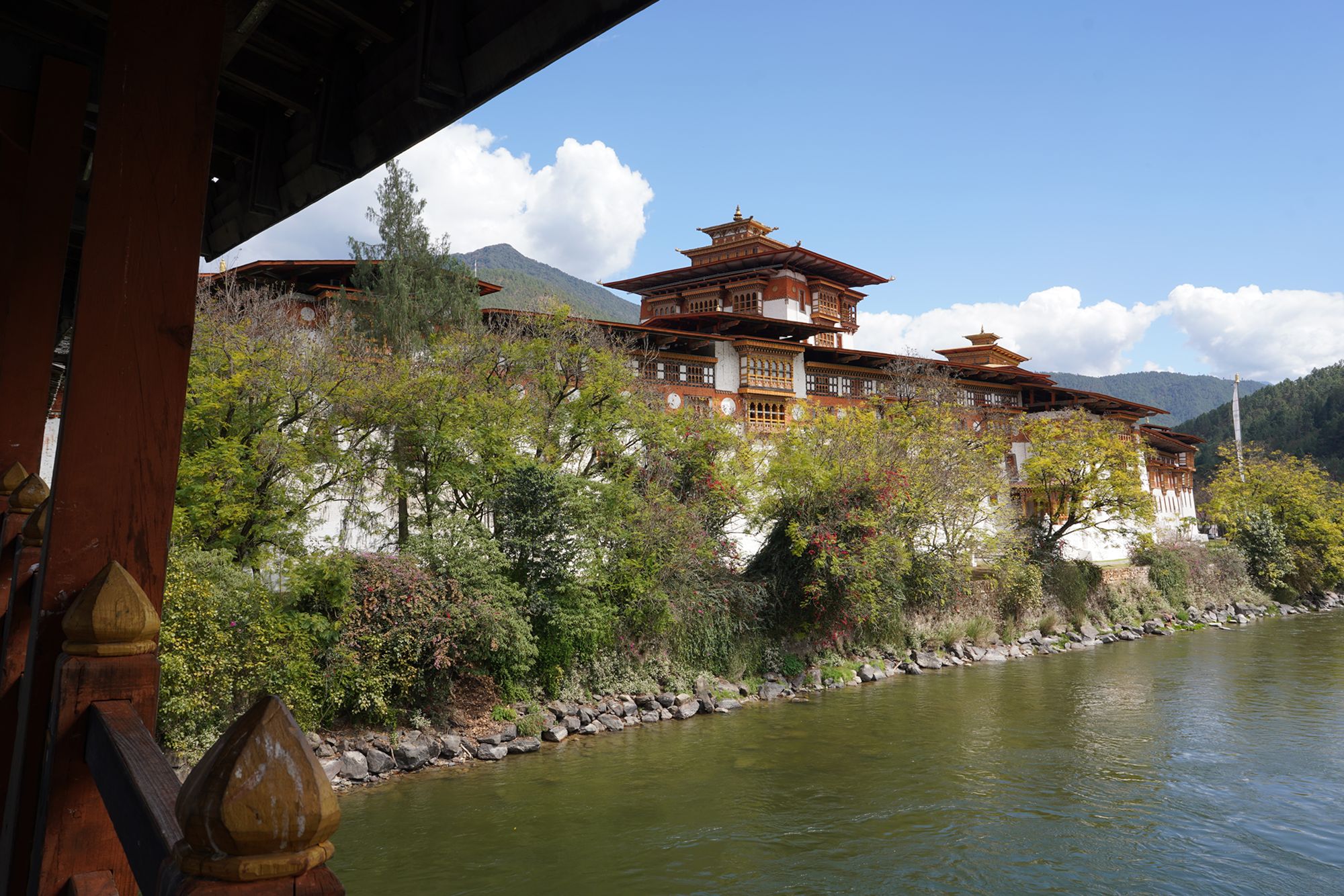
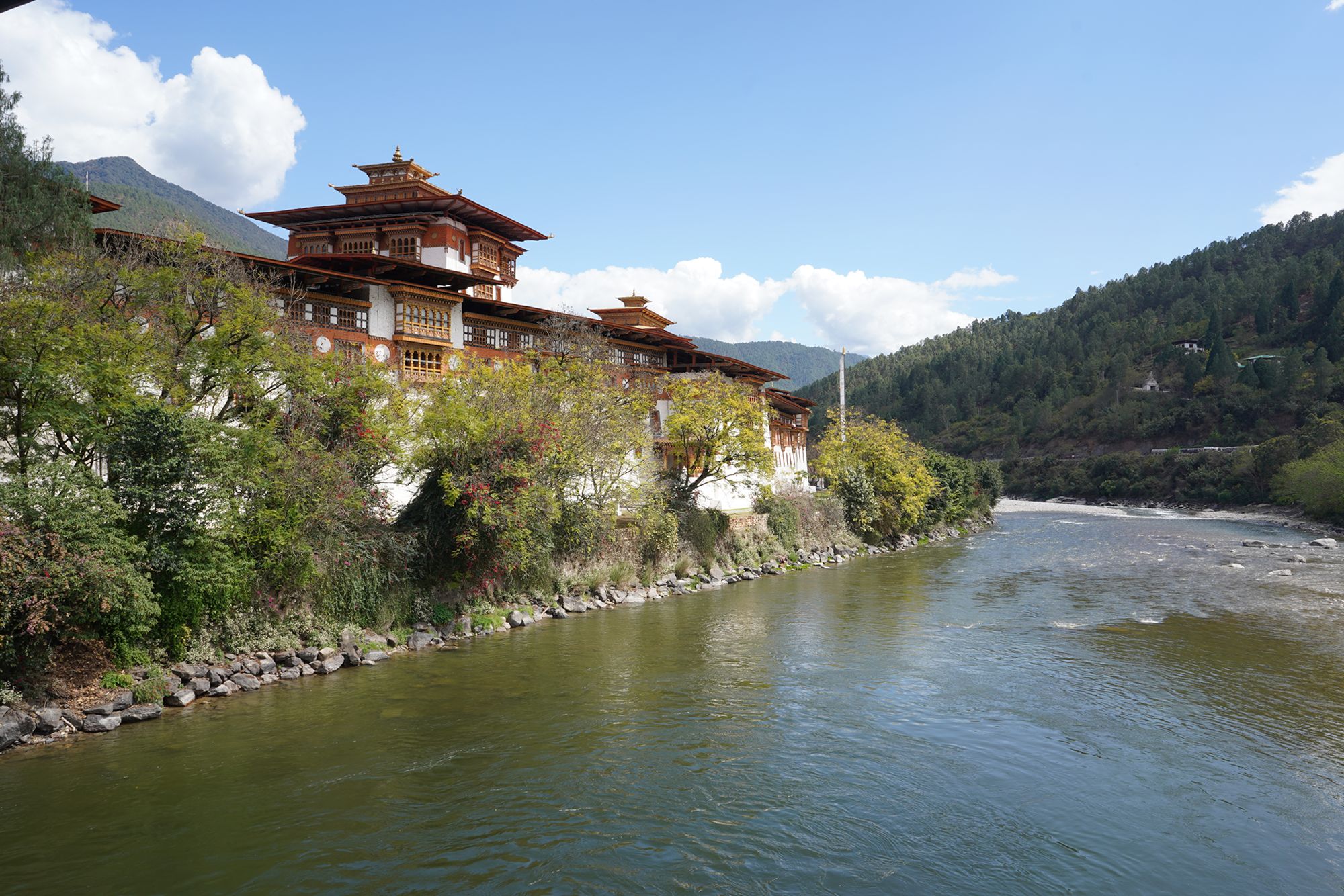
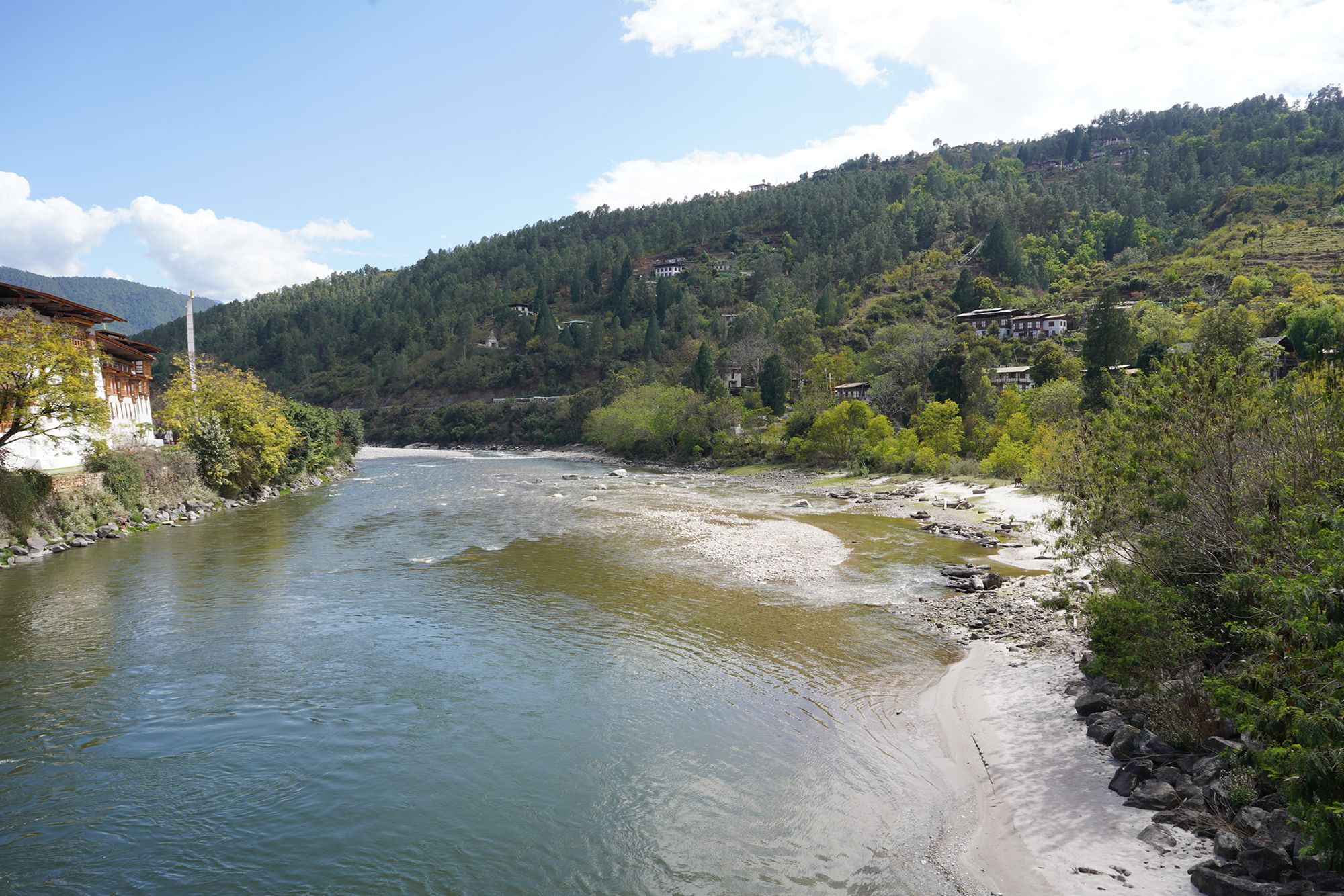
A group of fish
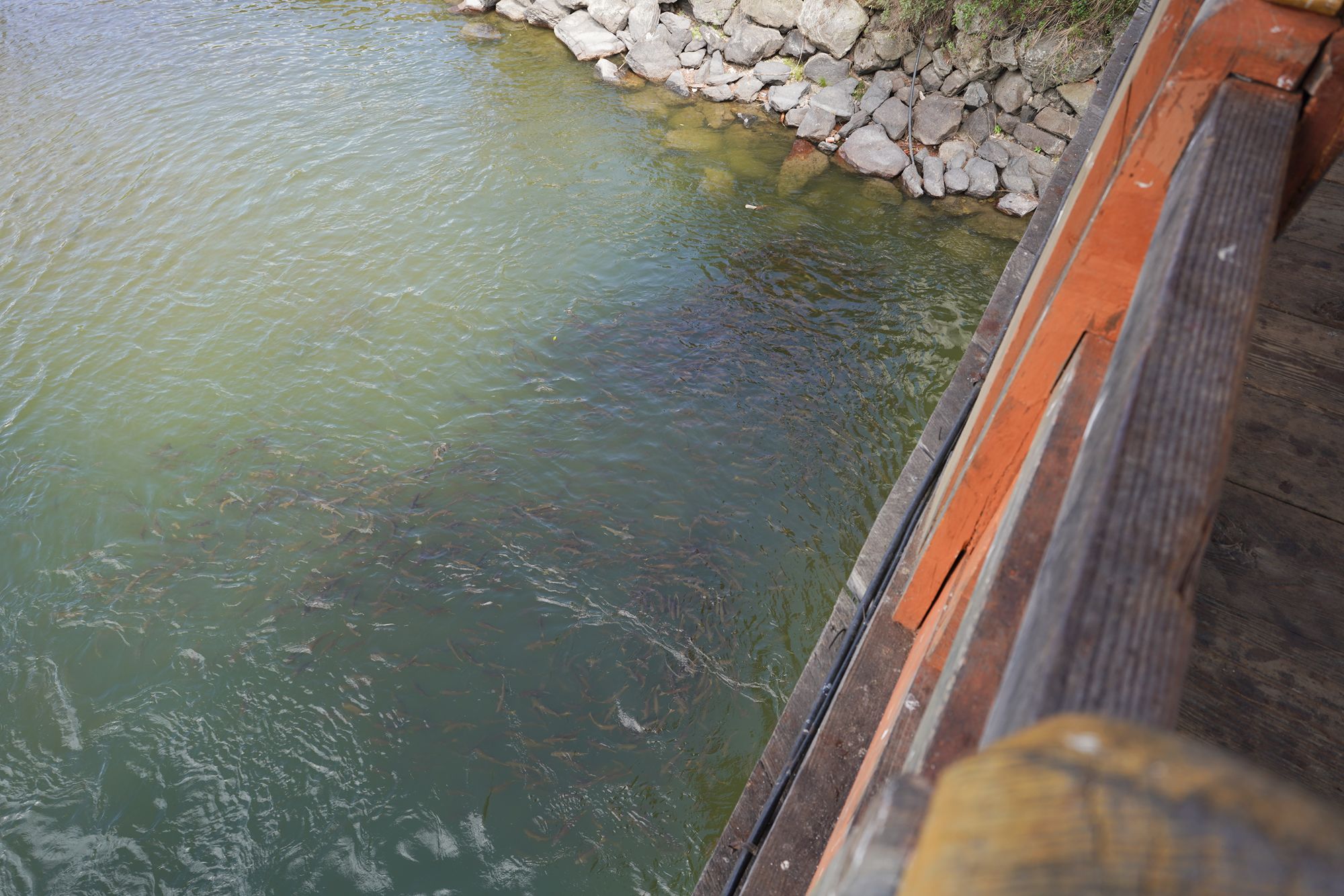
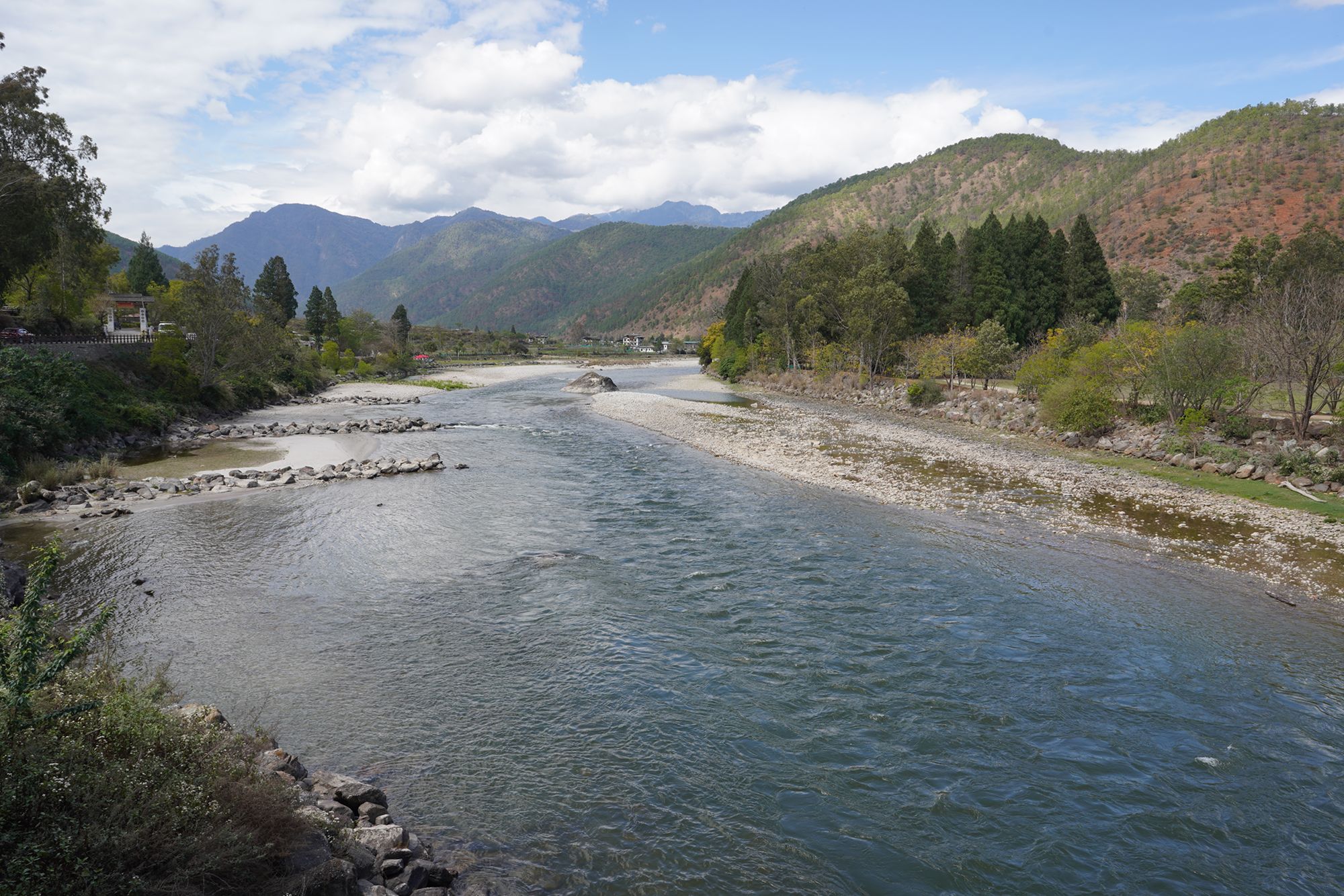
The location is especially beautiful. The dzong stands at the confluence of two rivers, the Pho Chhu (Male River) and Mo Chhu (Female River), with mountains rising behind it. Visitors approach the fortress across the traditional covered wooden bridge.
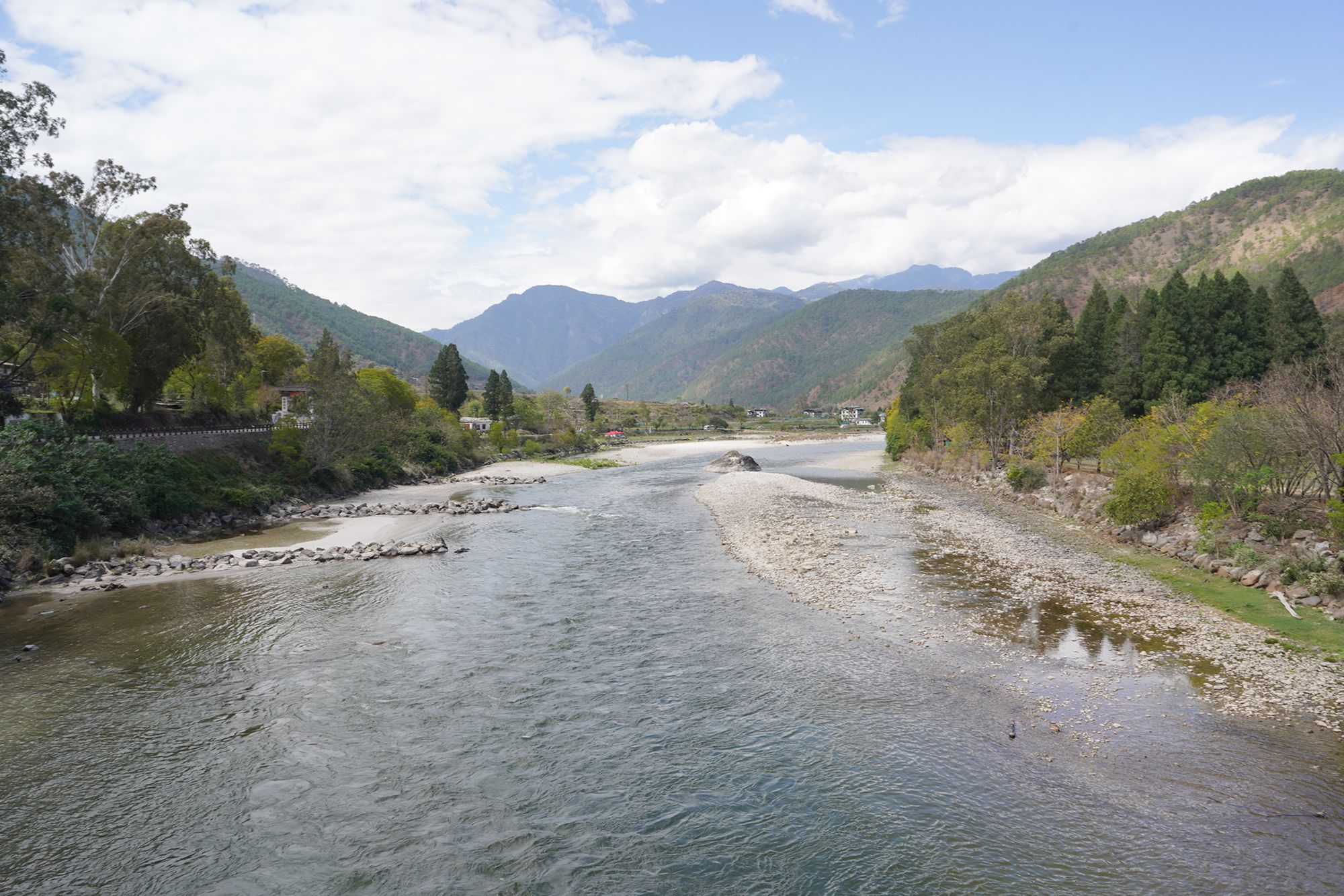
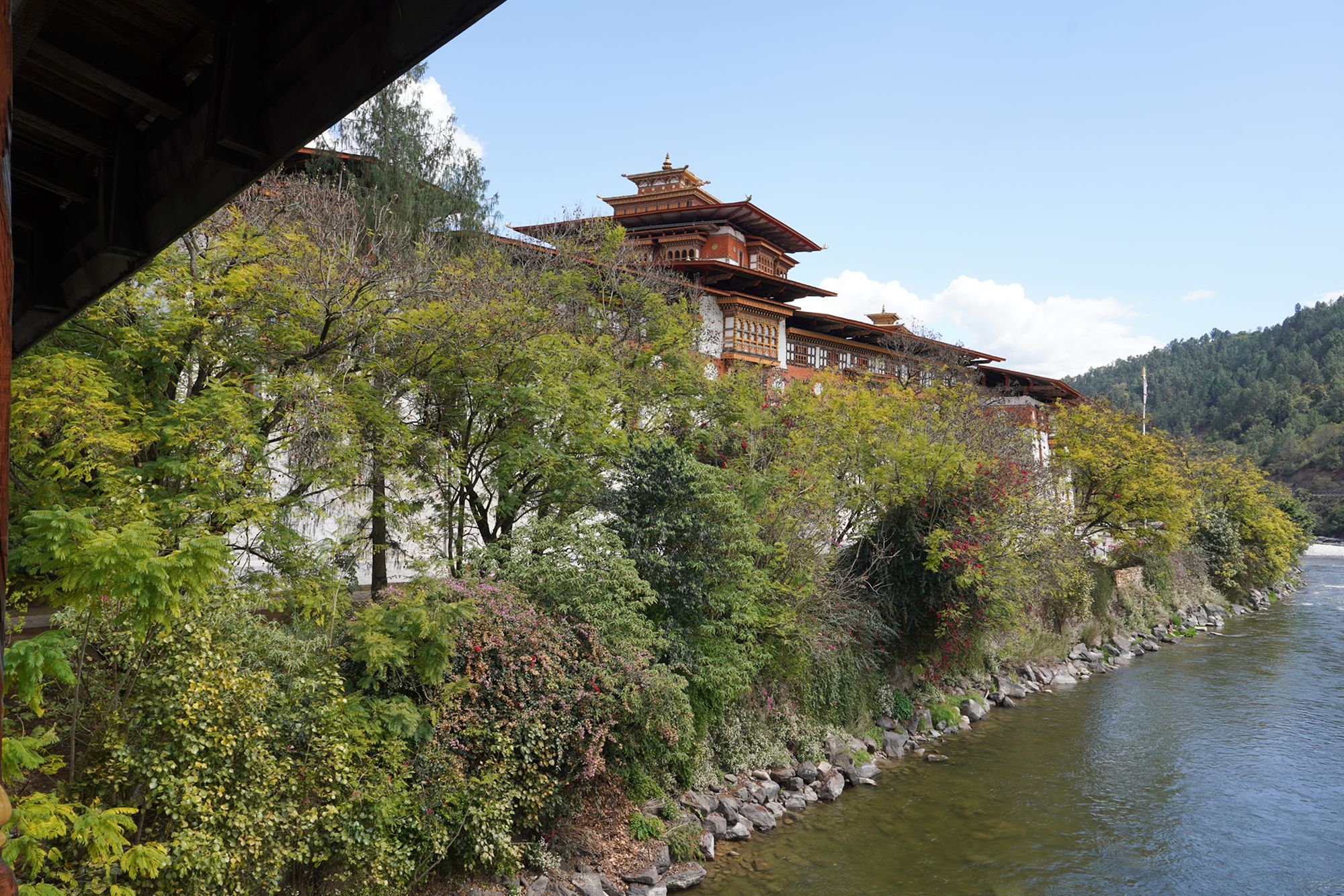
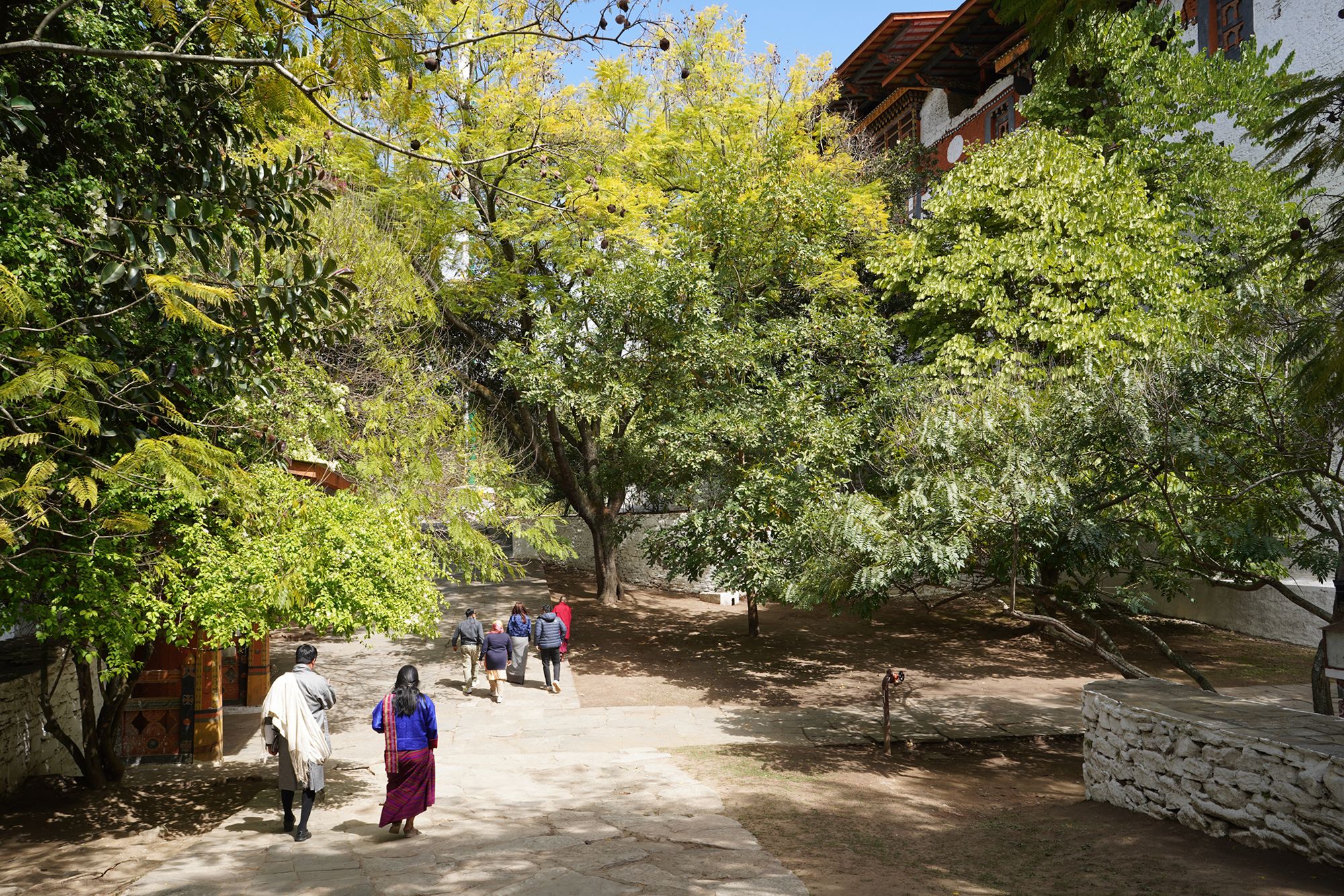
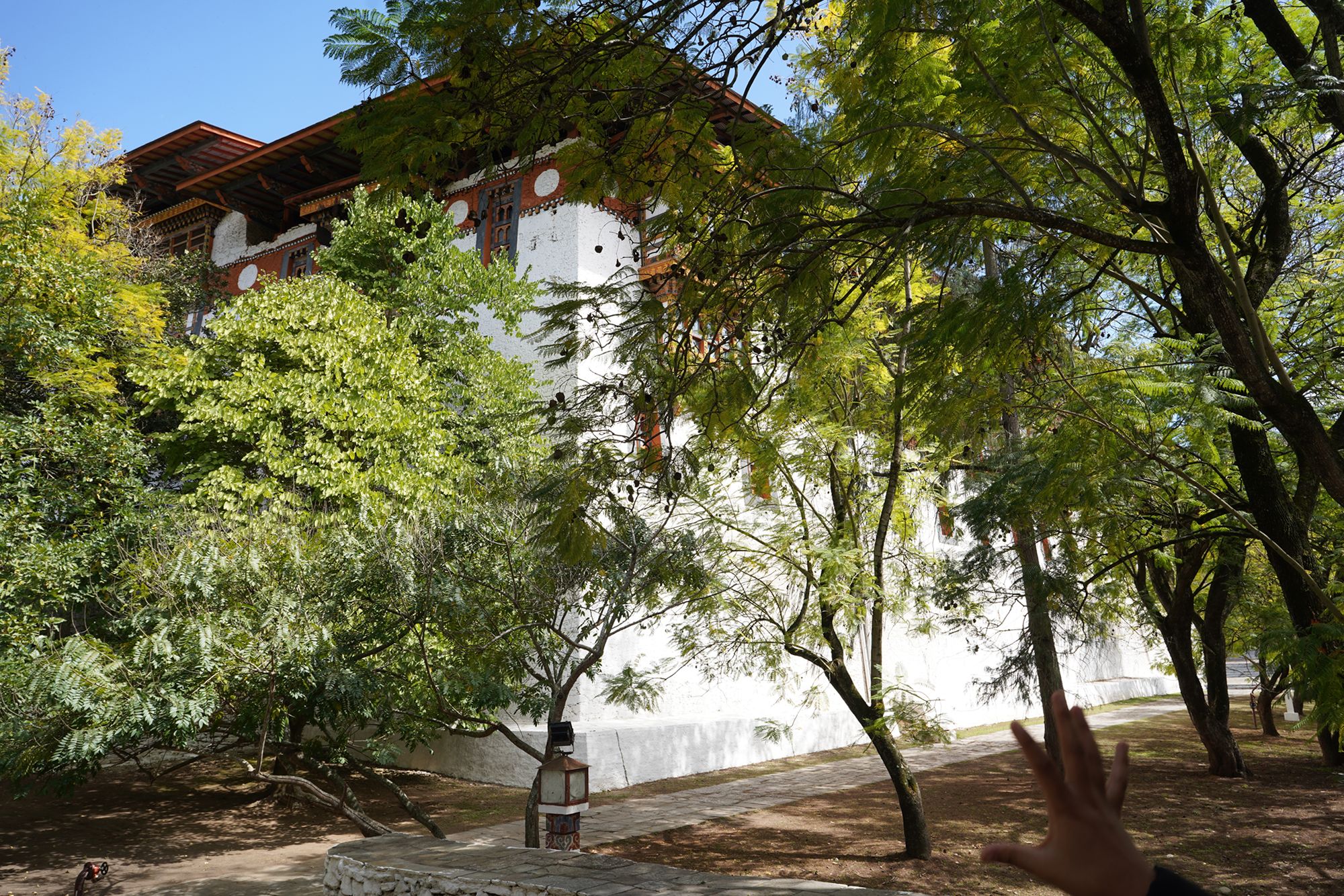
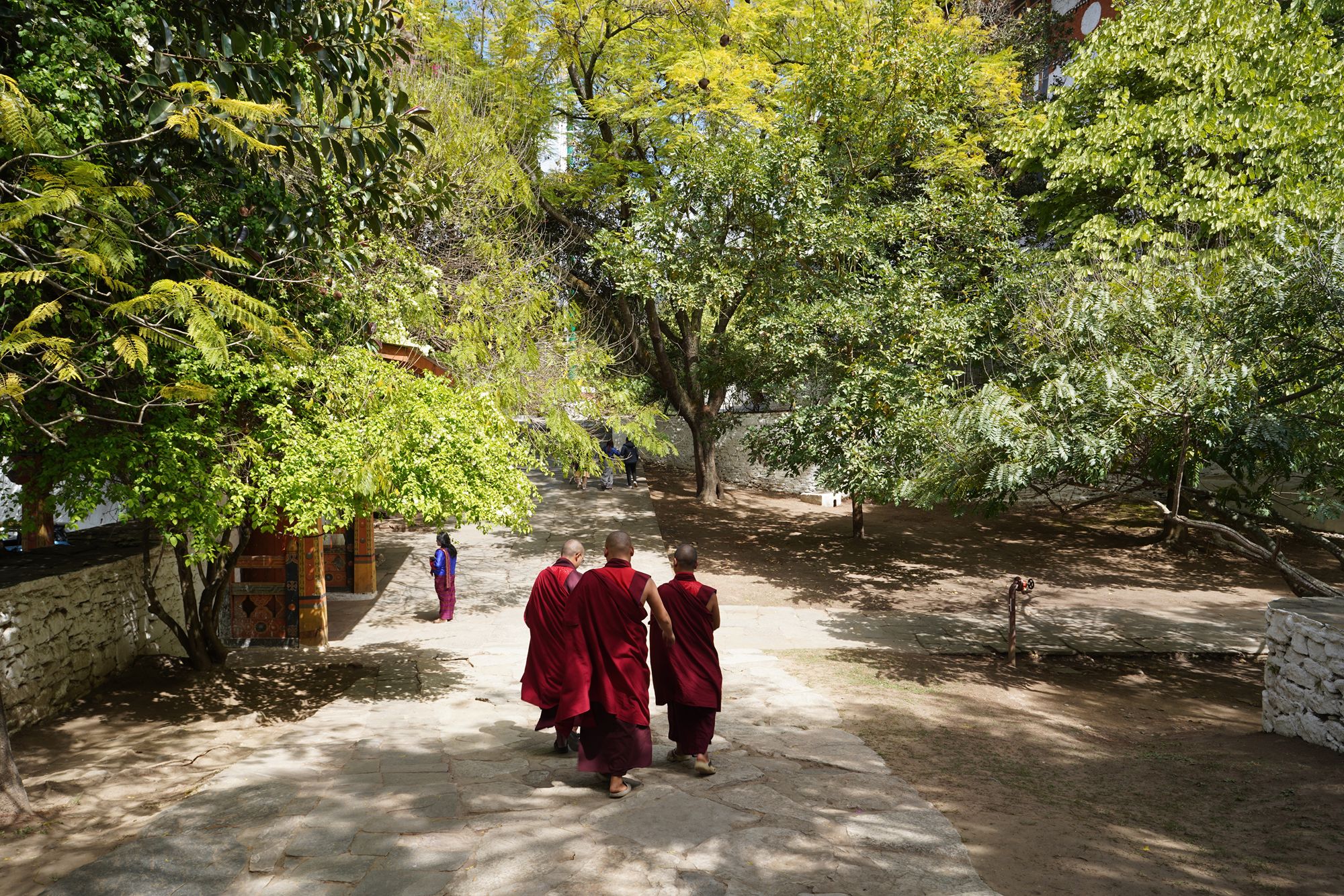
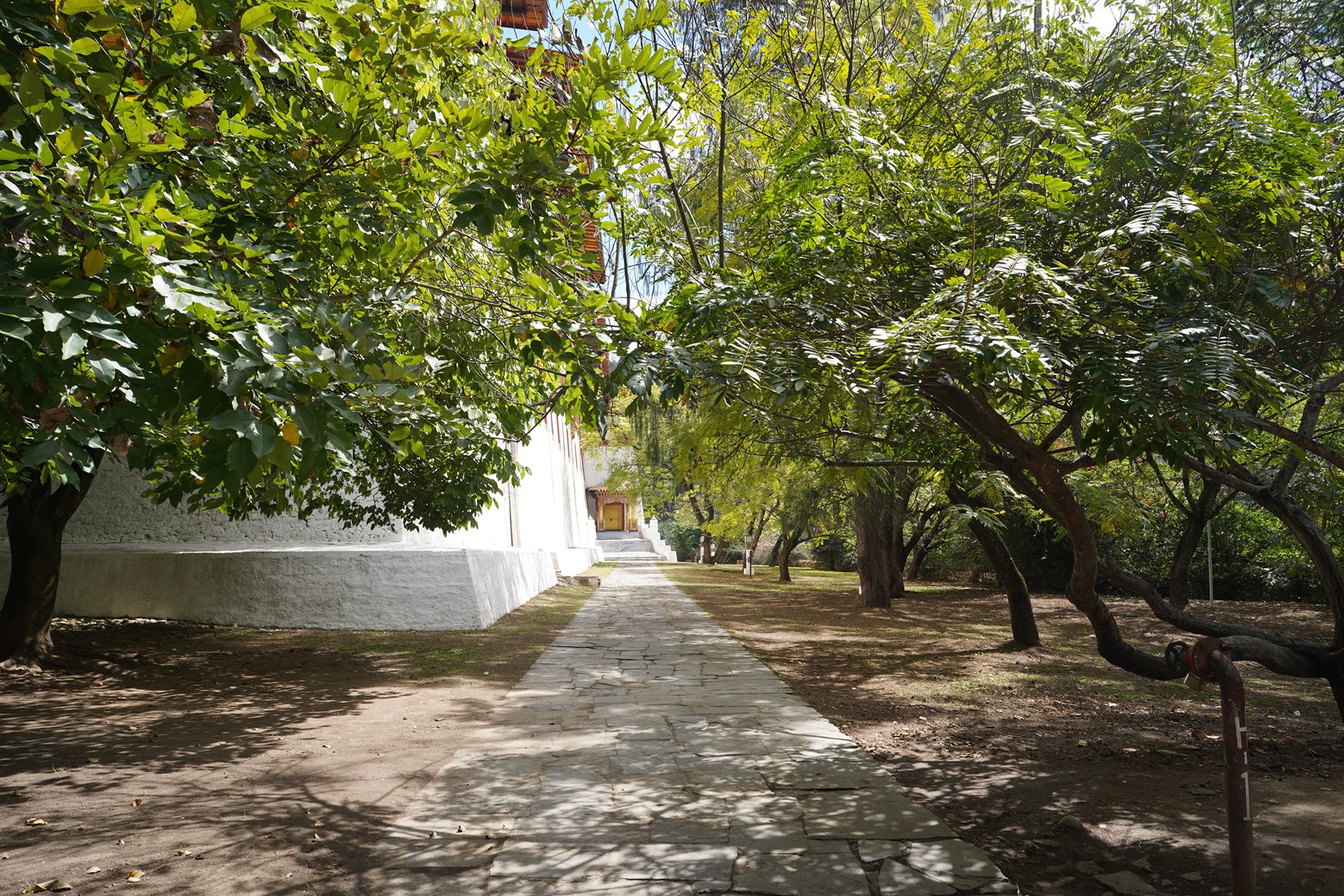
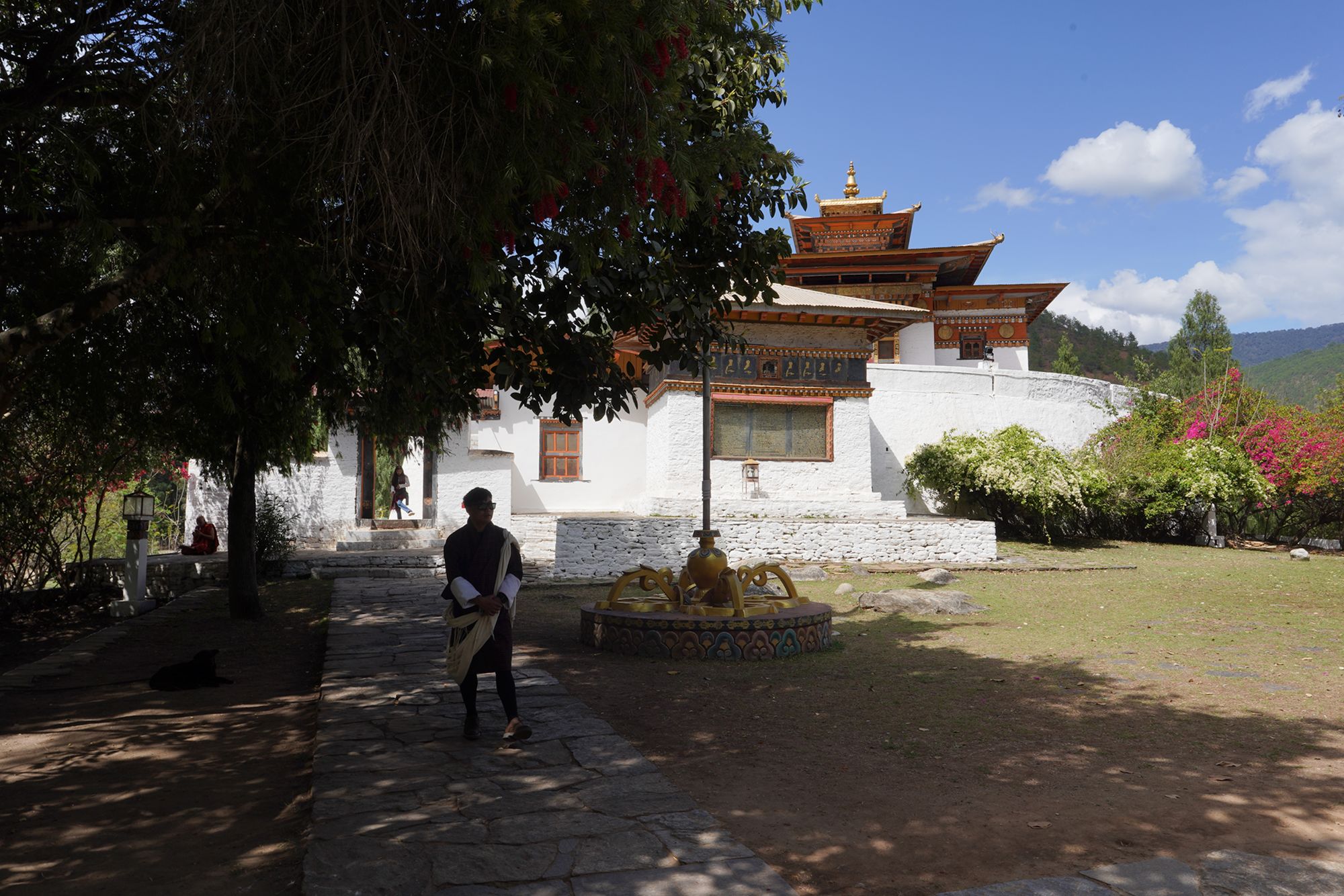
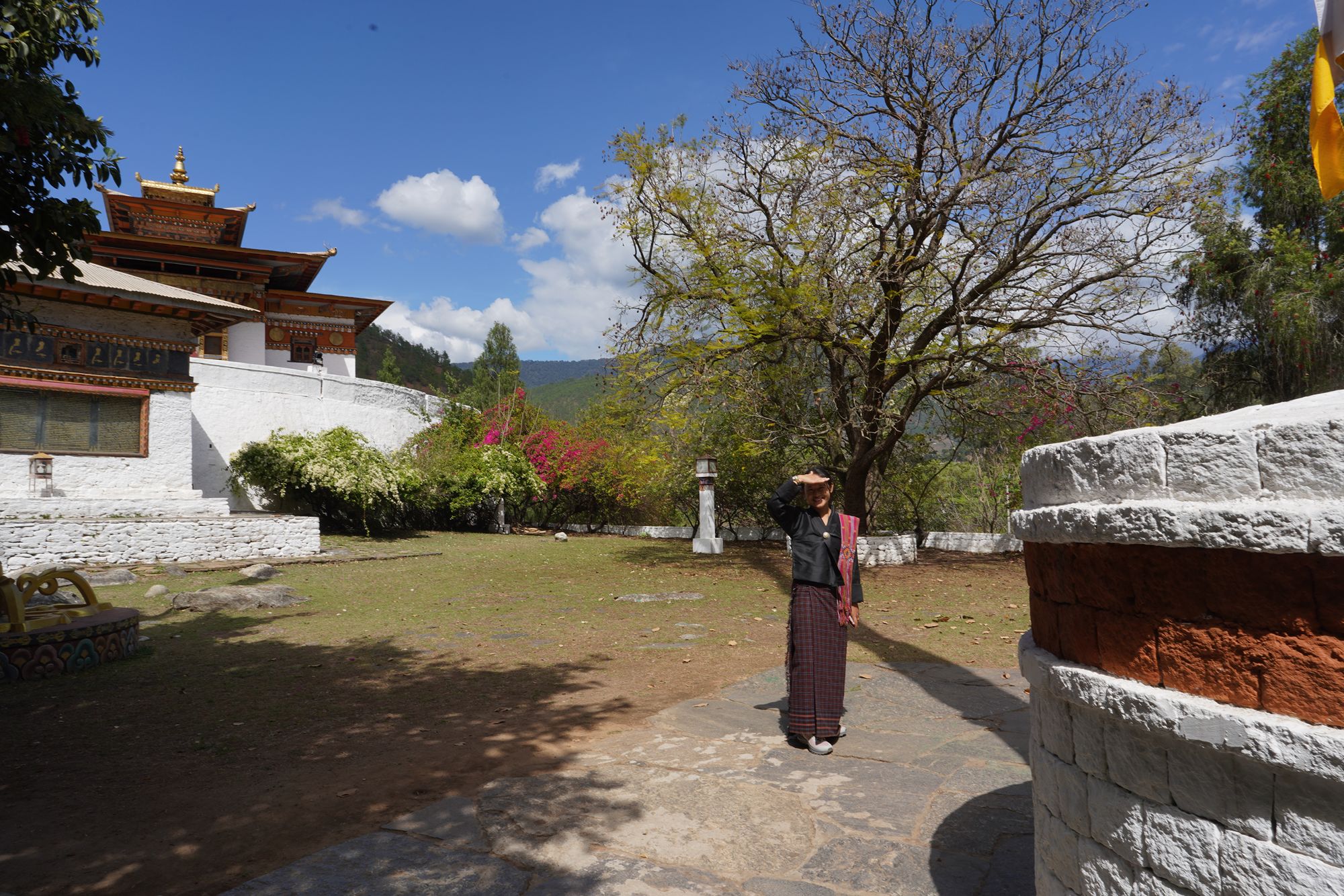
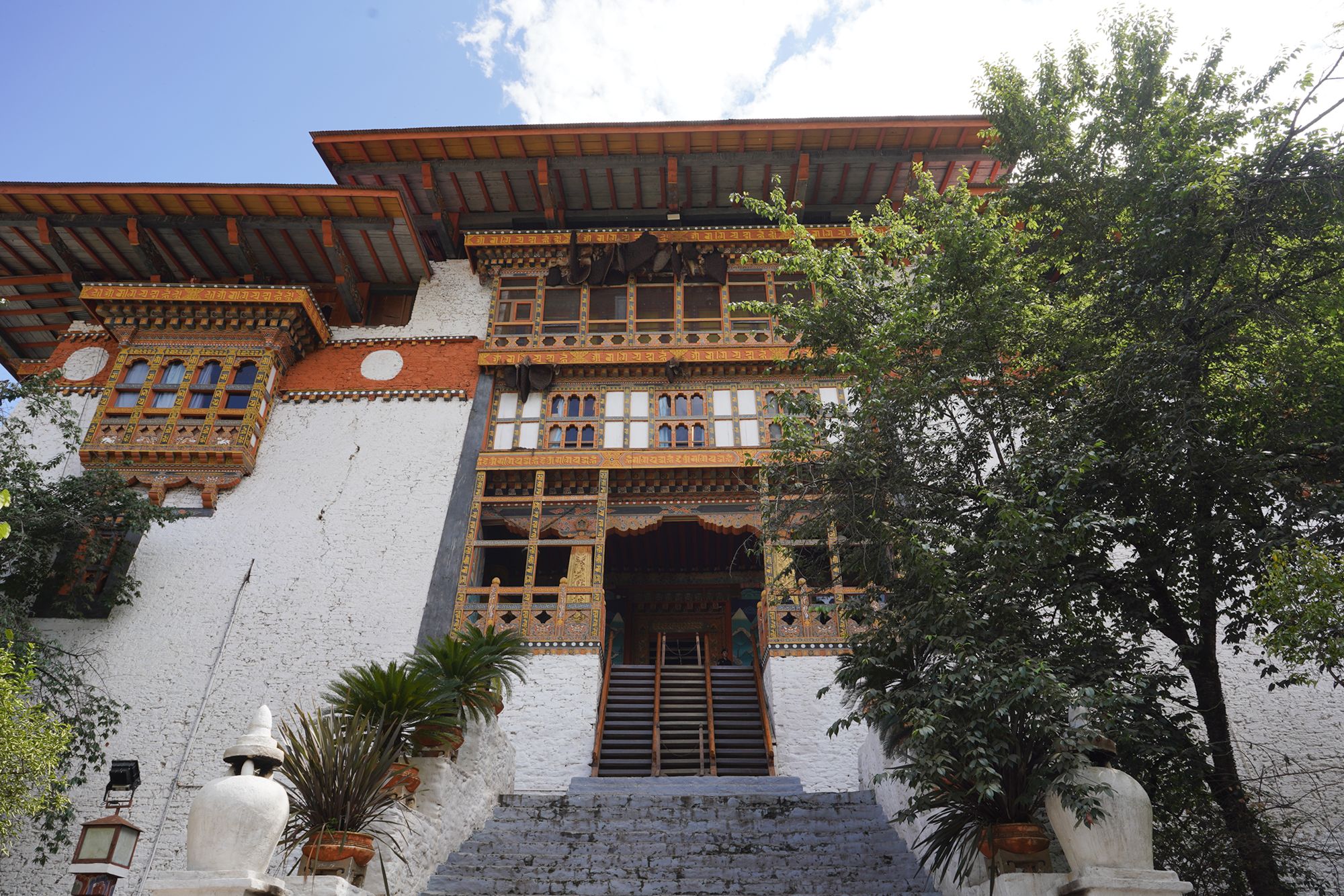
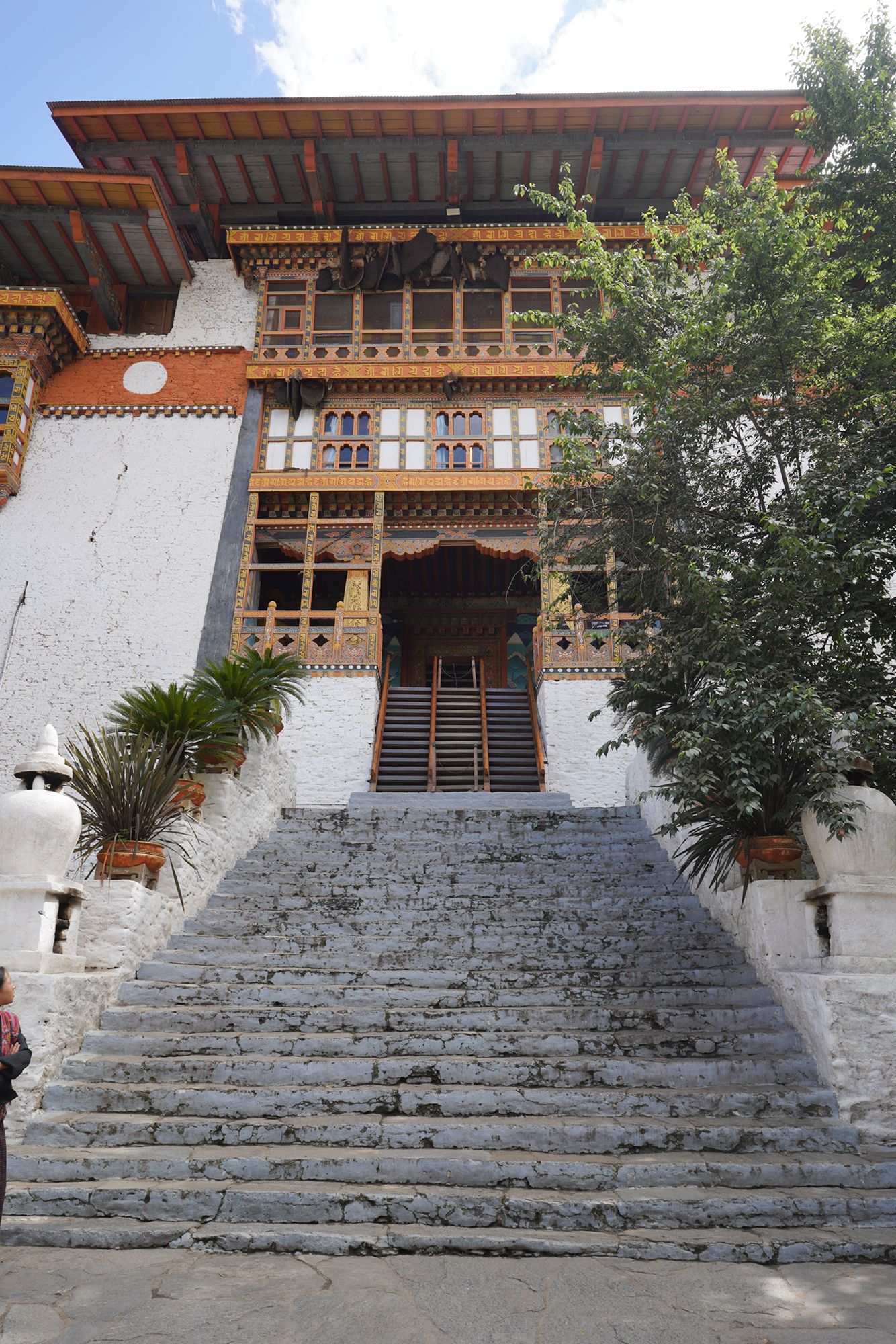
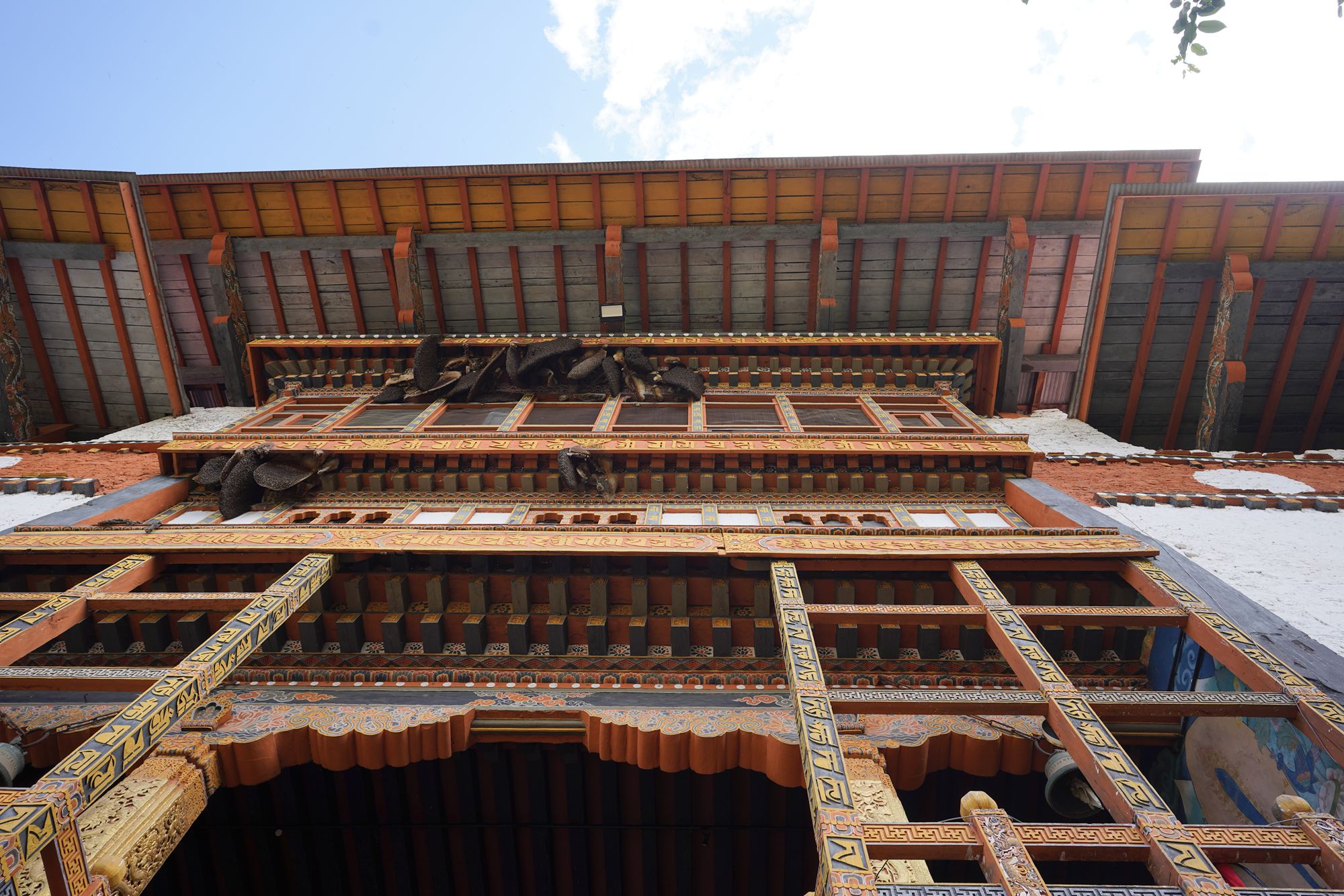
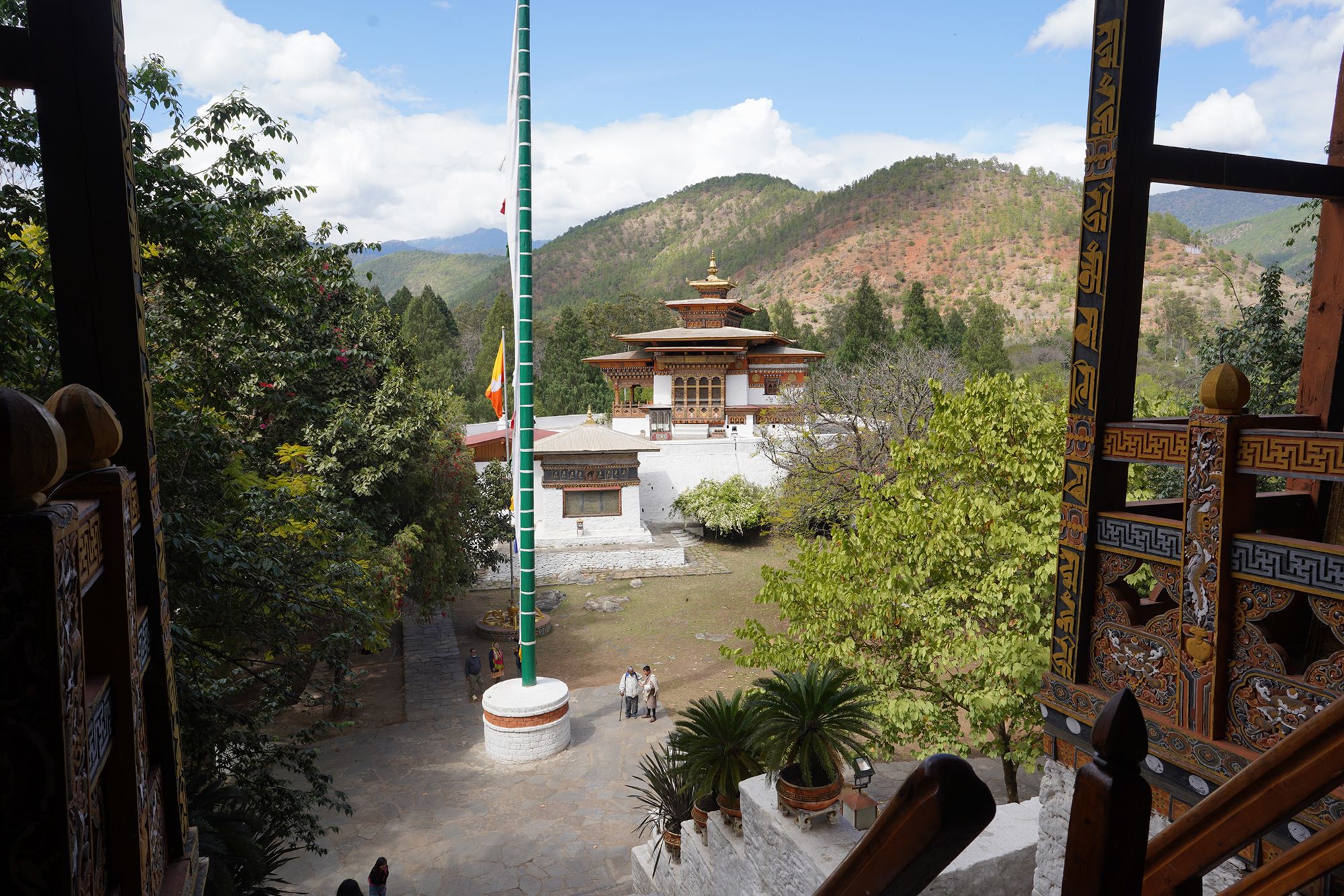
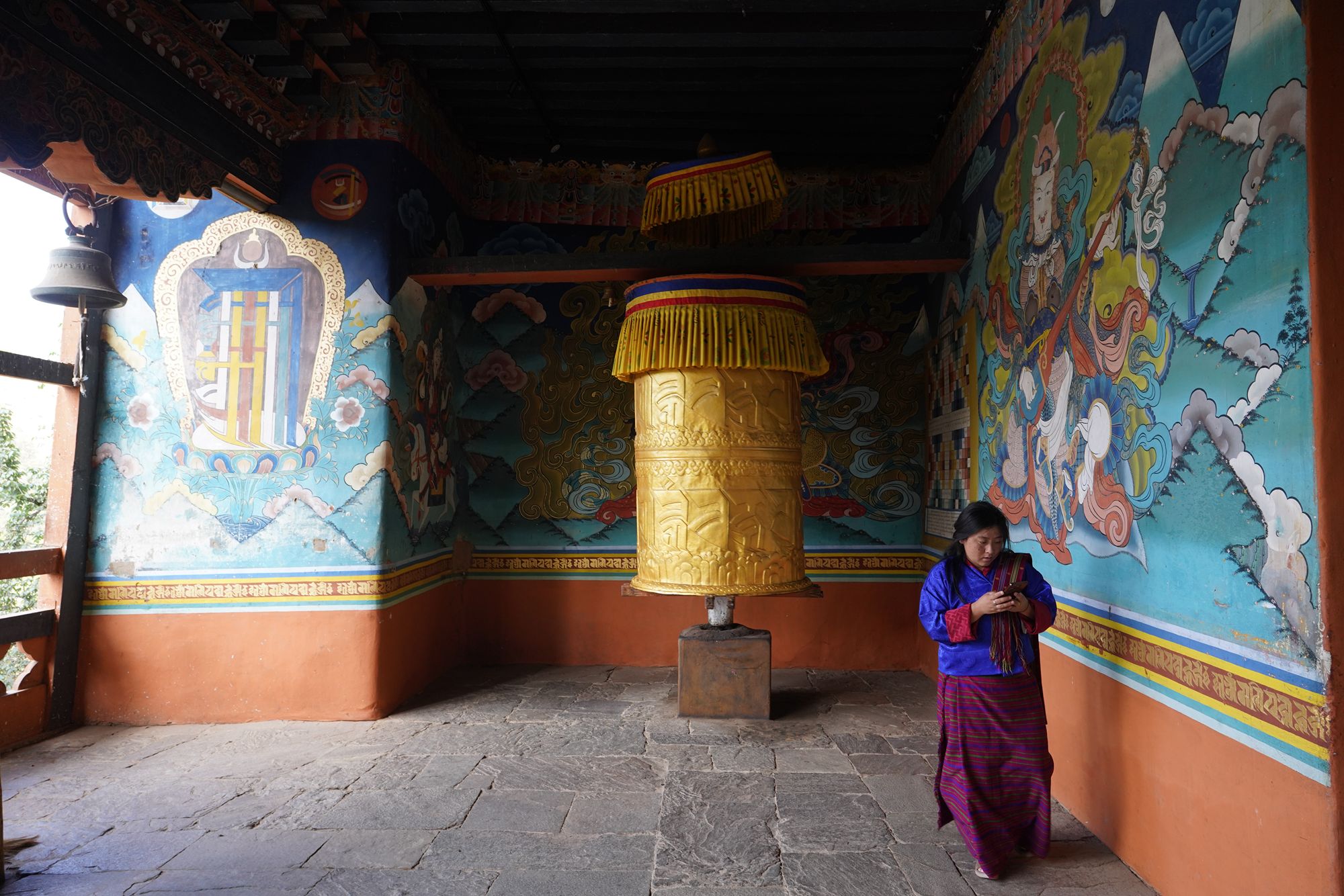
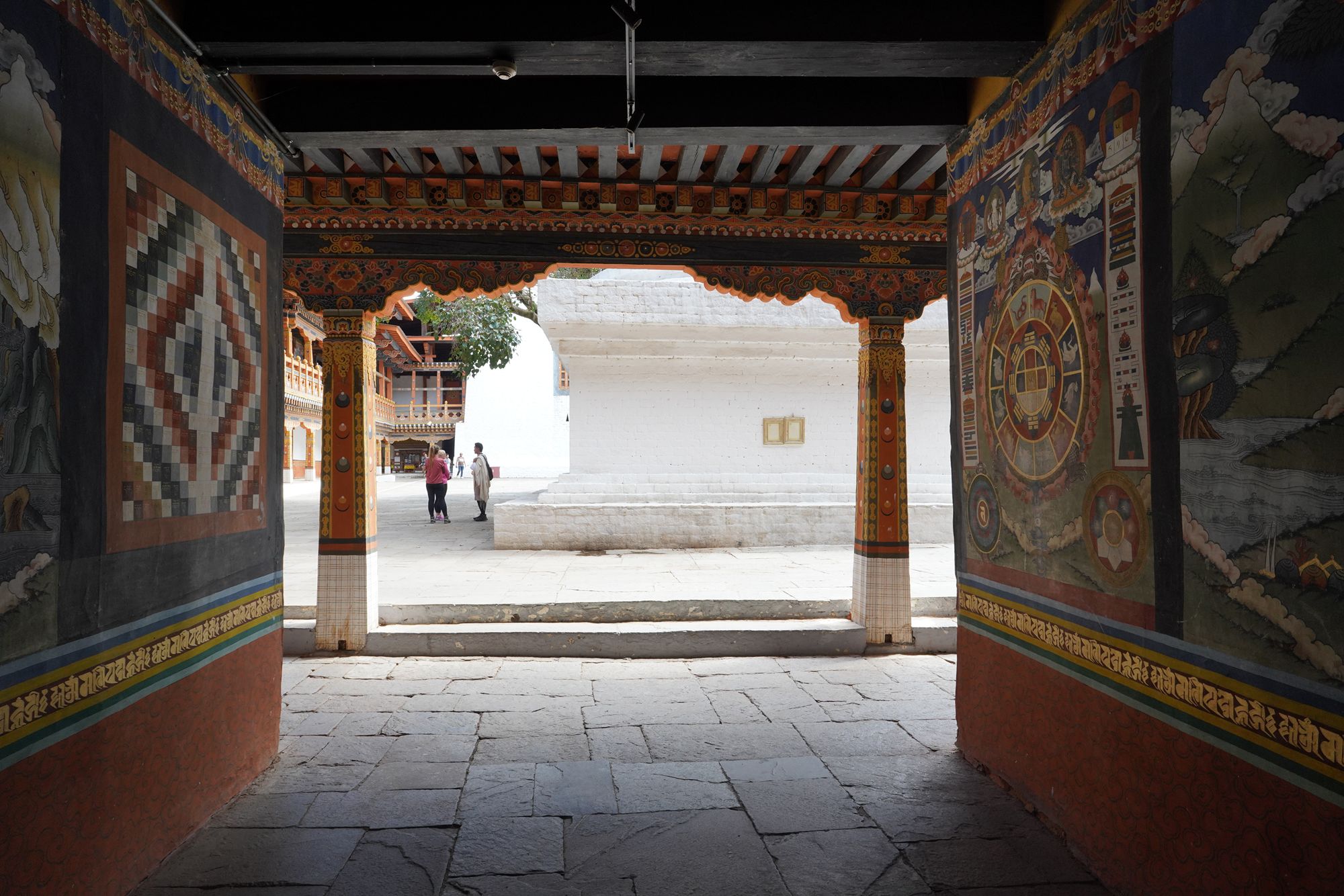
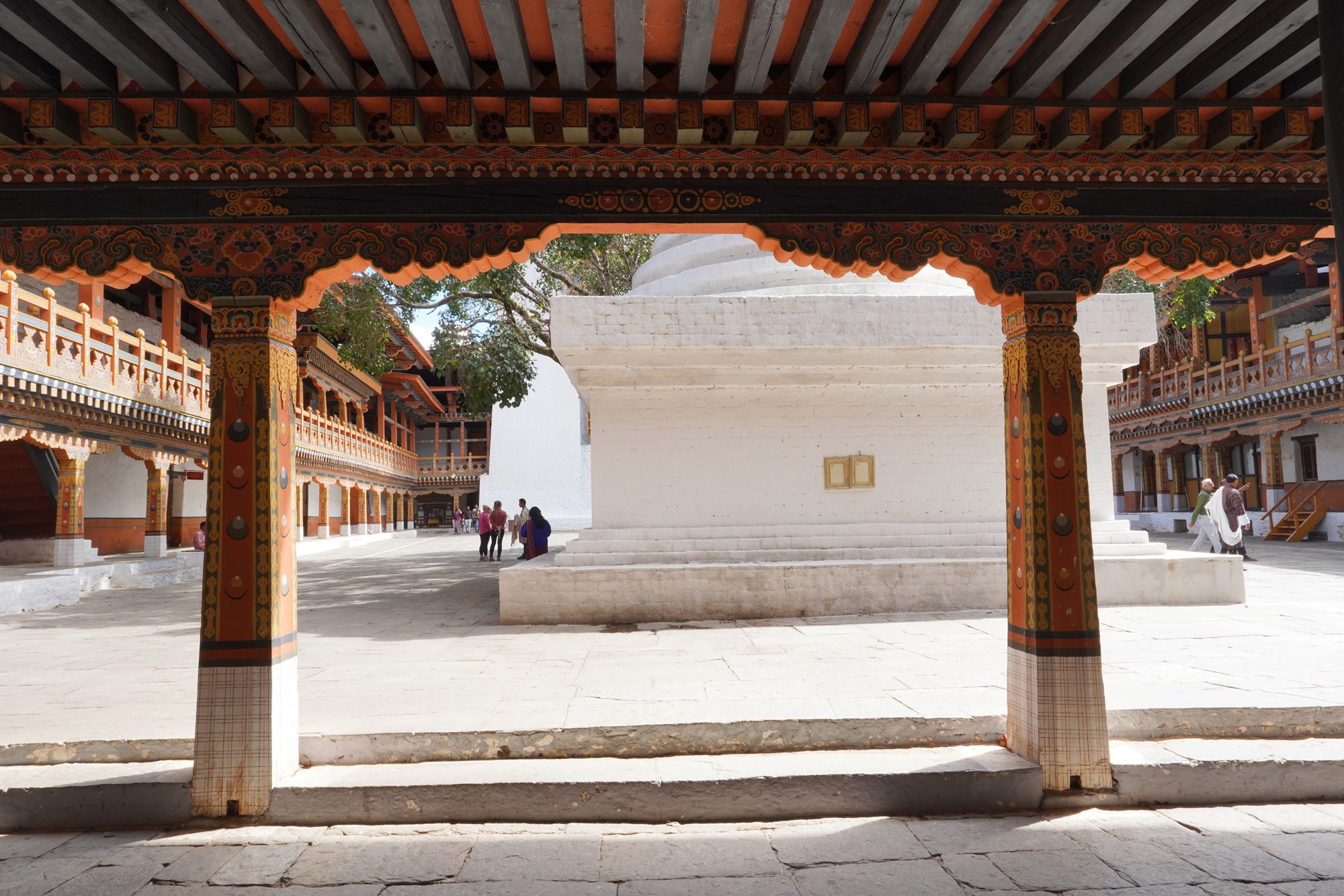
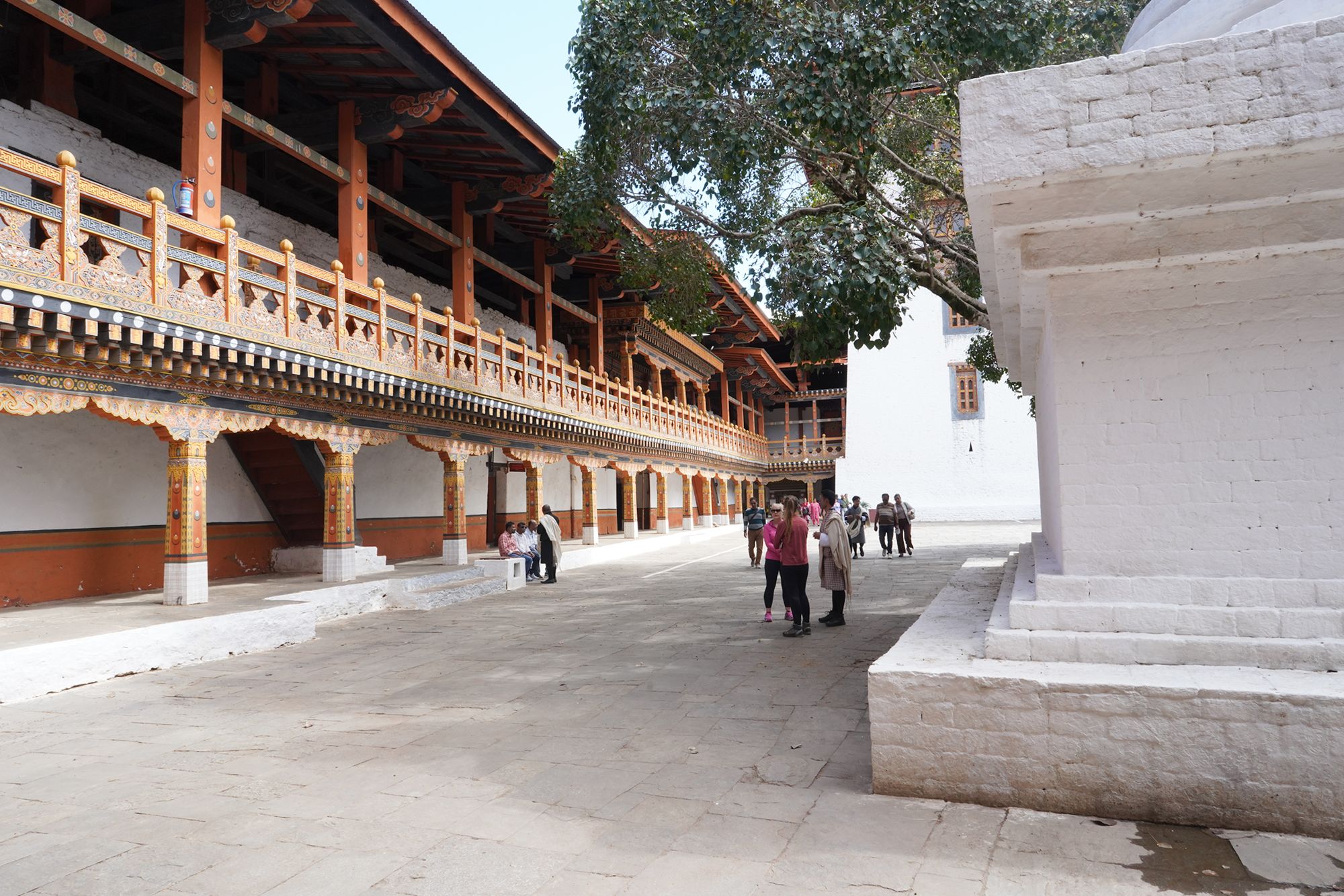
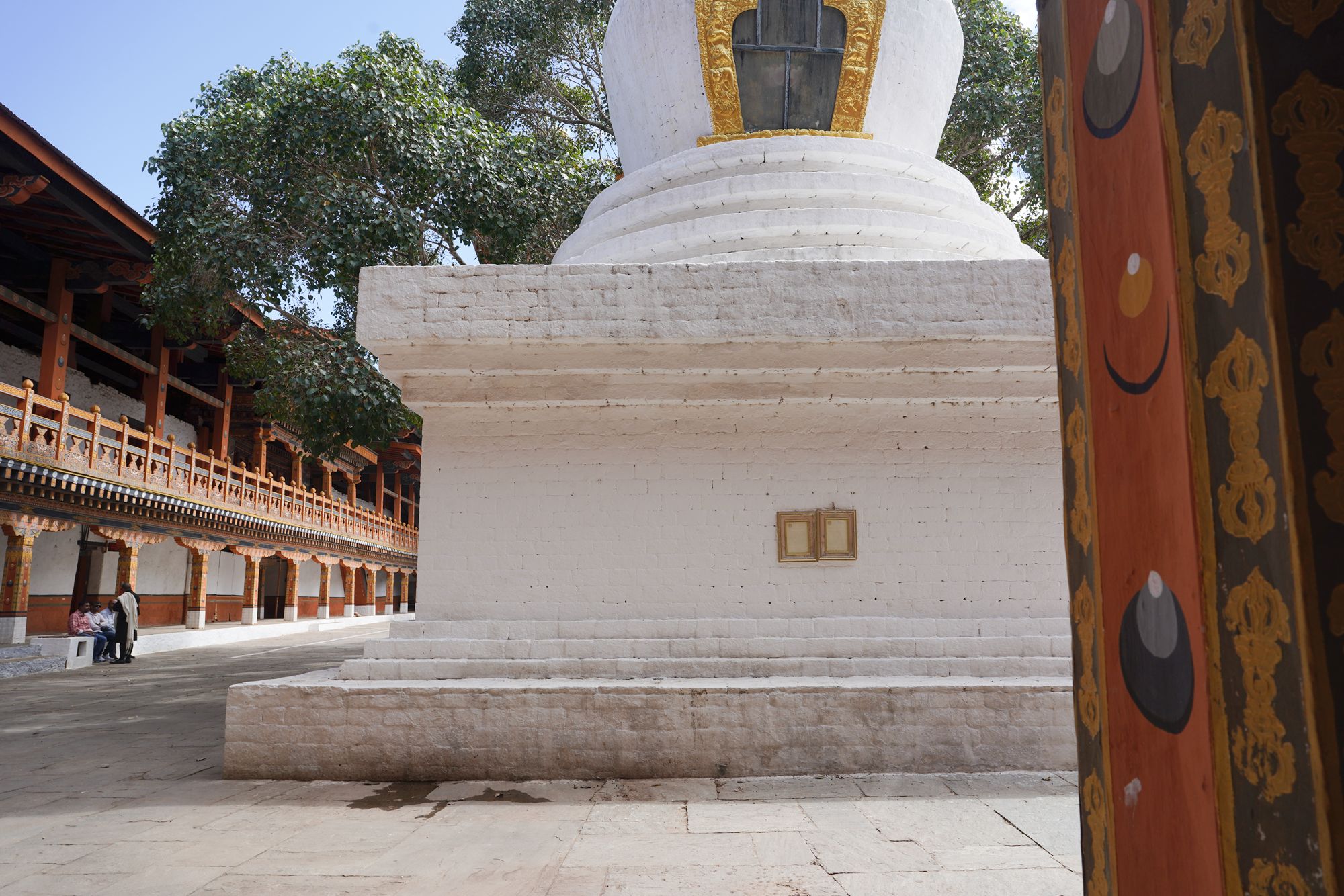
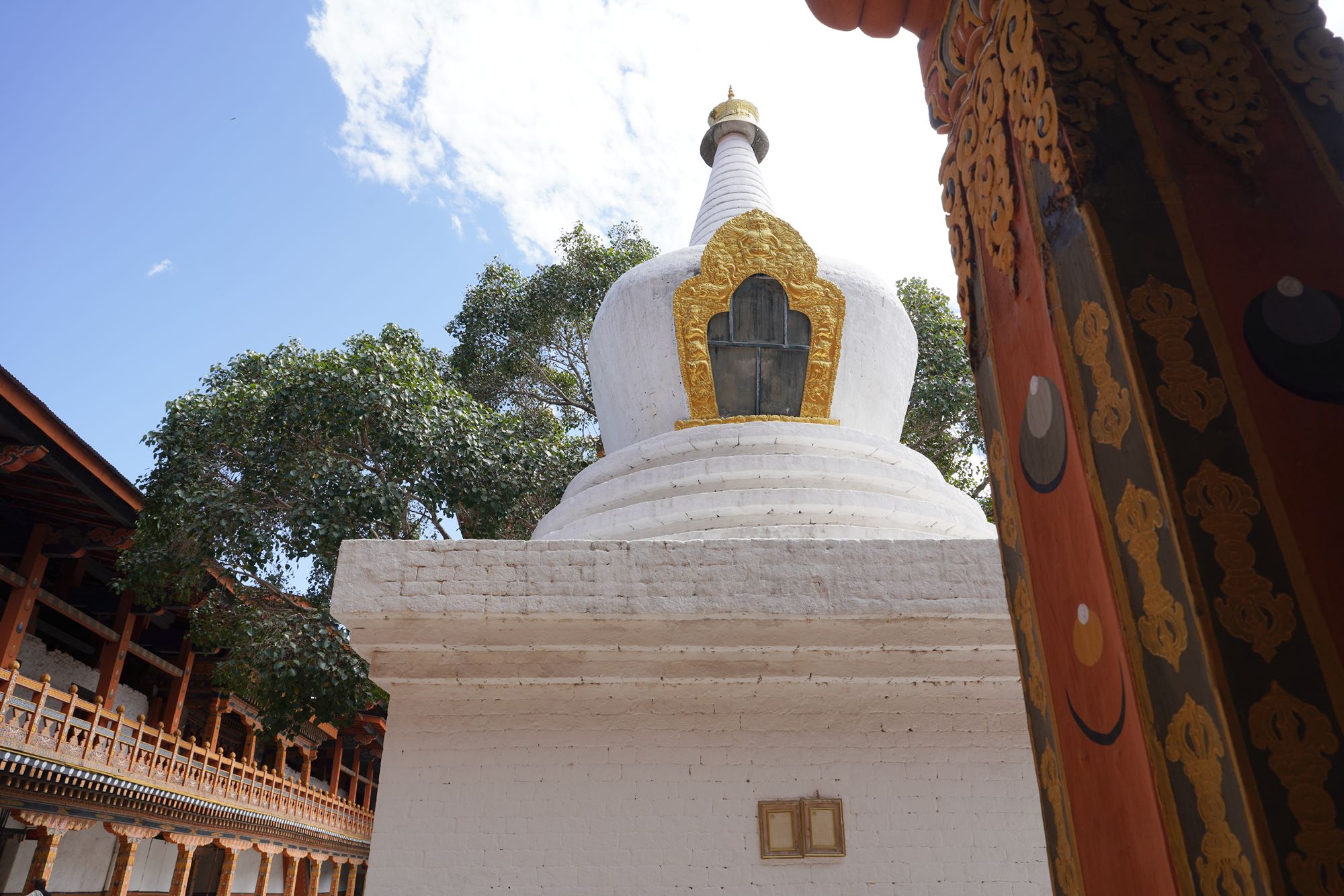
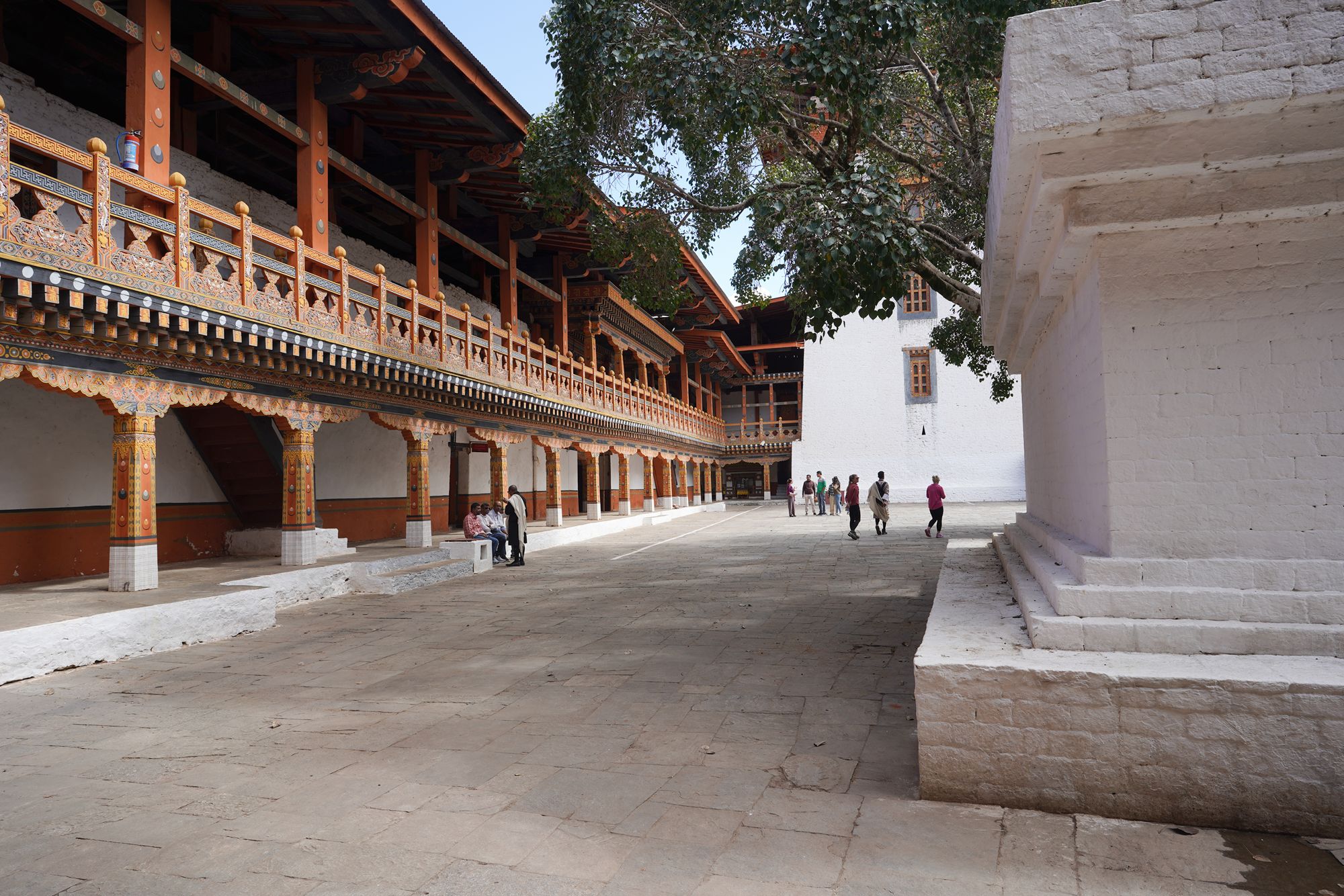
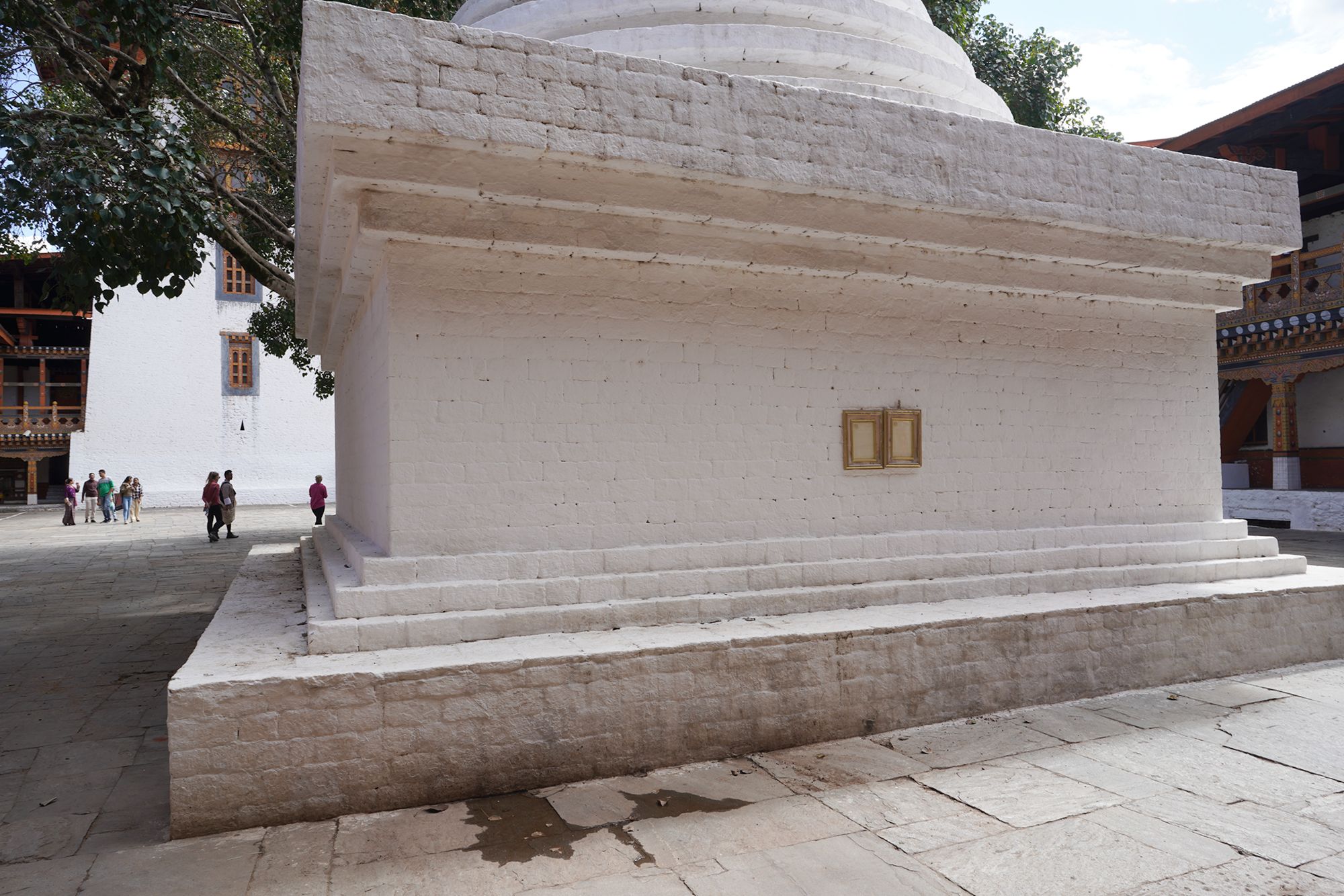
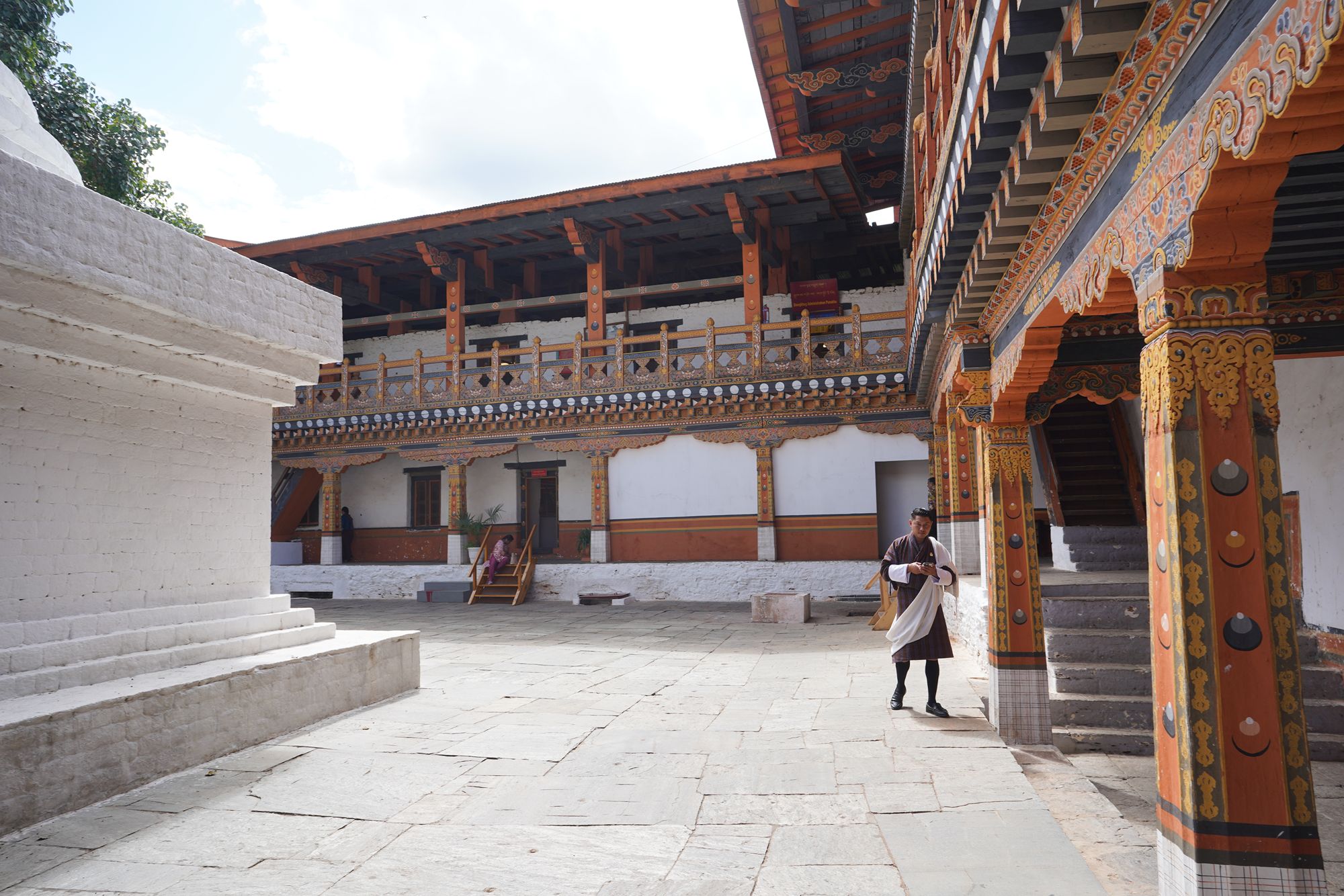
For centuries, Punakha was effectively Bhutan's political and religious center, before the capital was moved to Thimphu. The dzong remains important today as the winter residence of Bhutan's central monastic body and as a venue for major national and religious ceremonies.
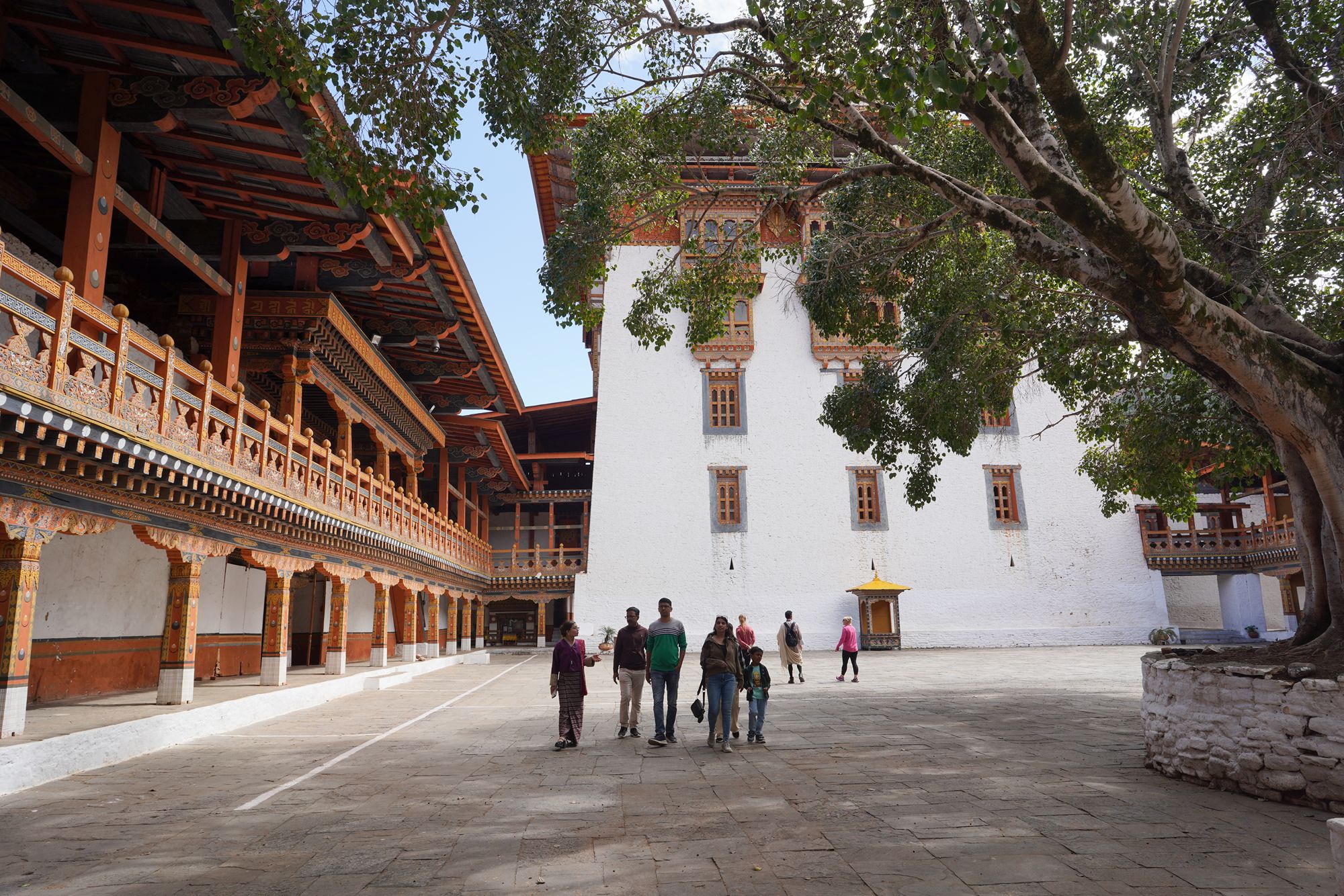
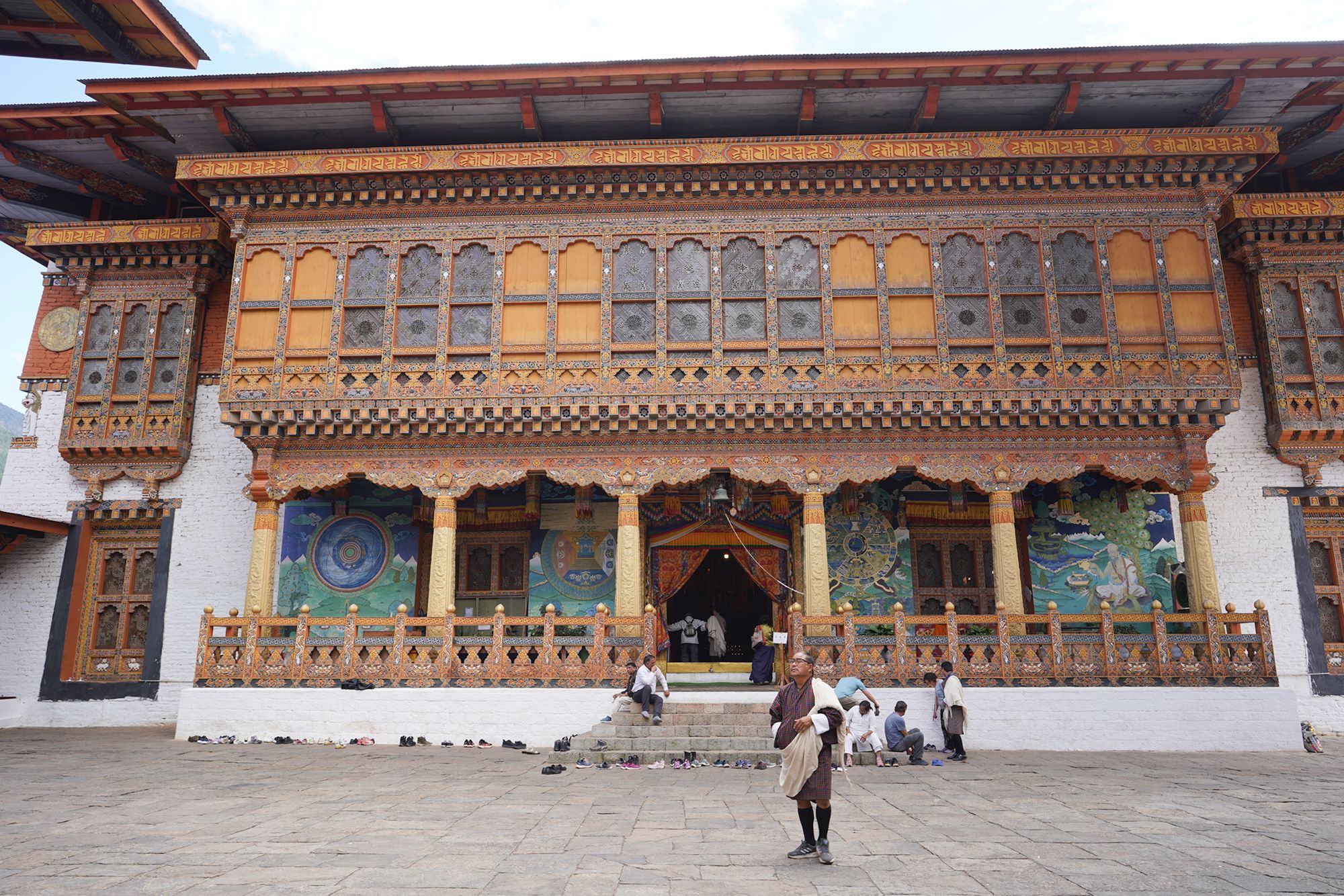
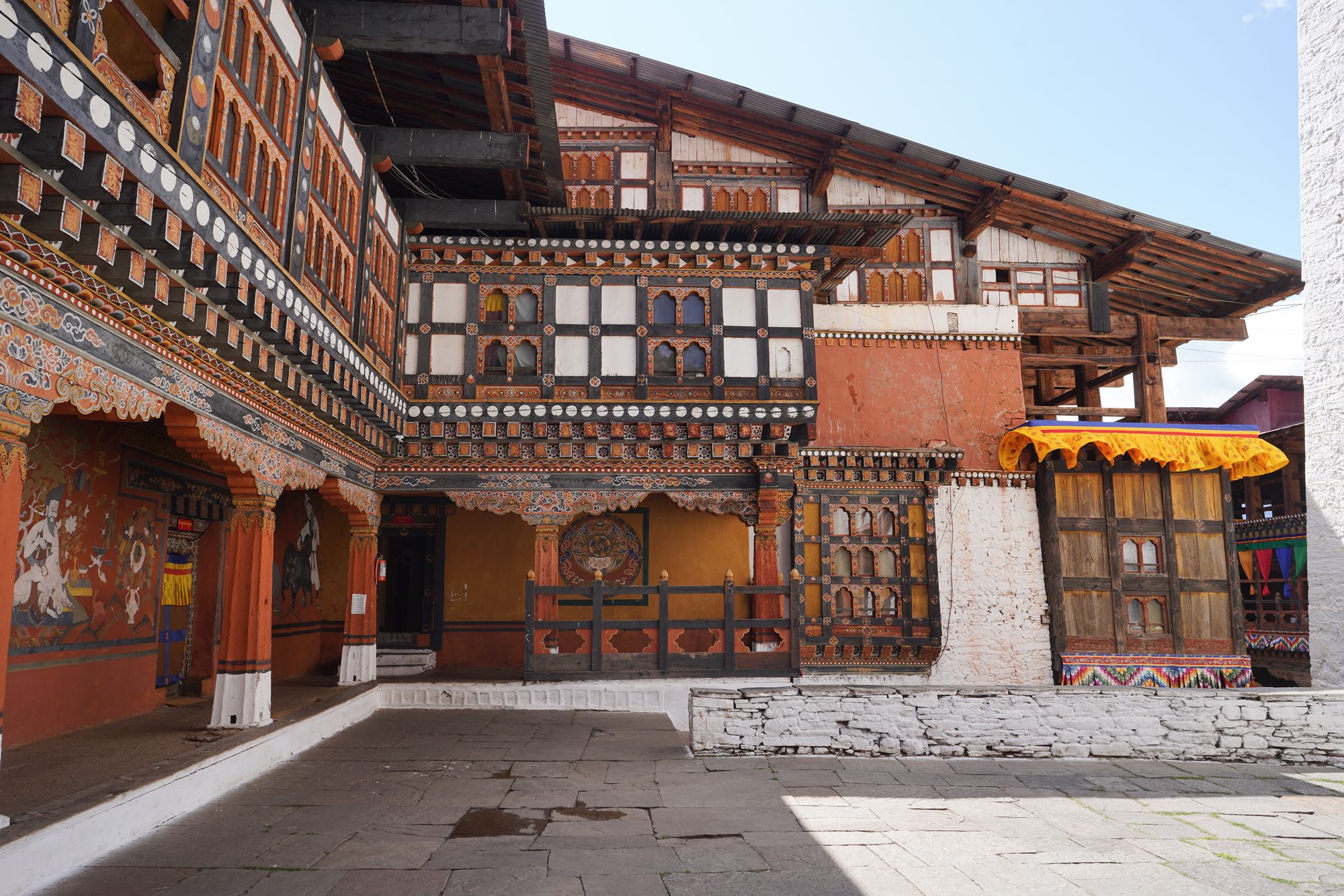
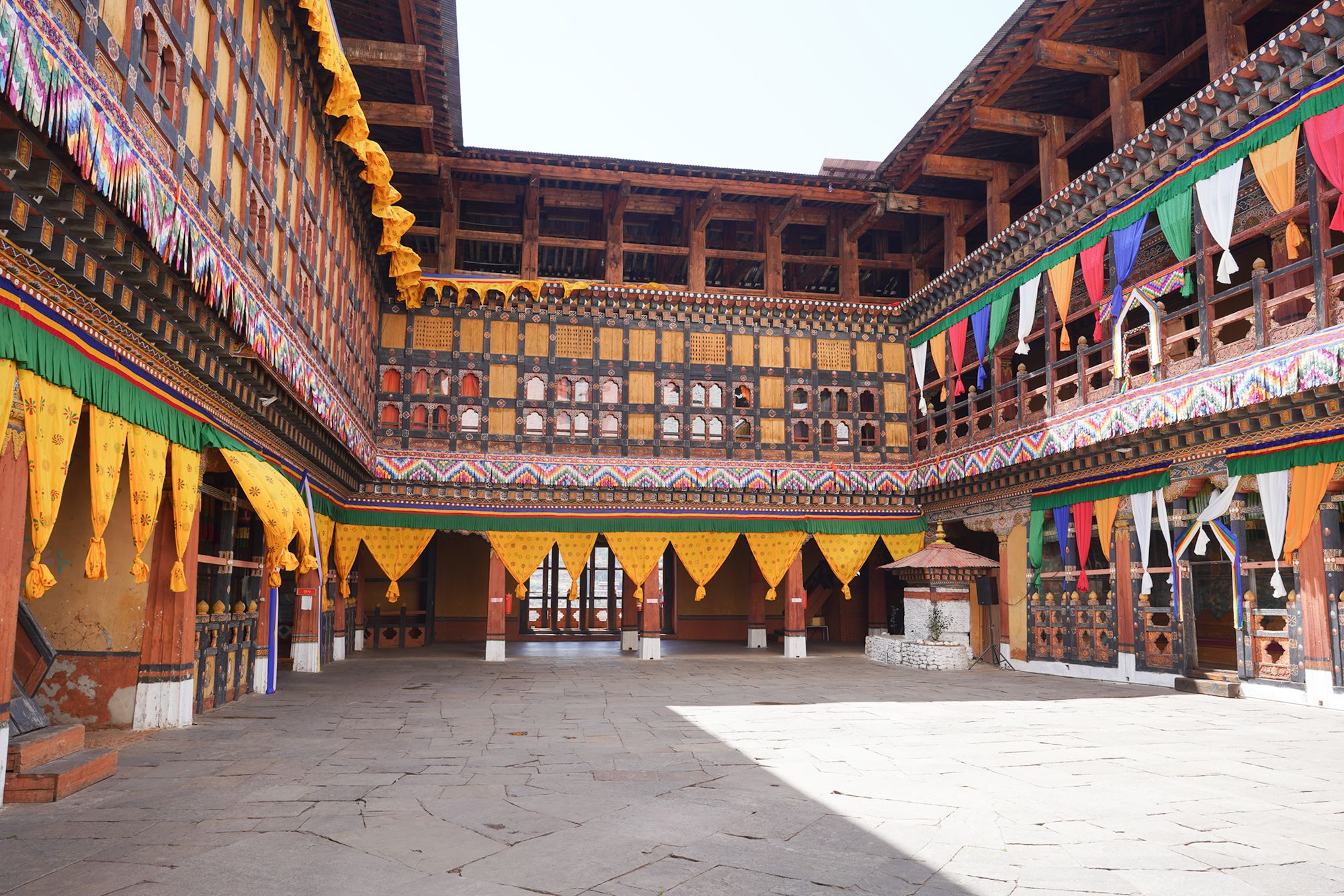
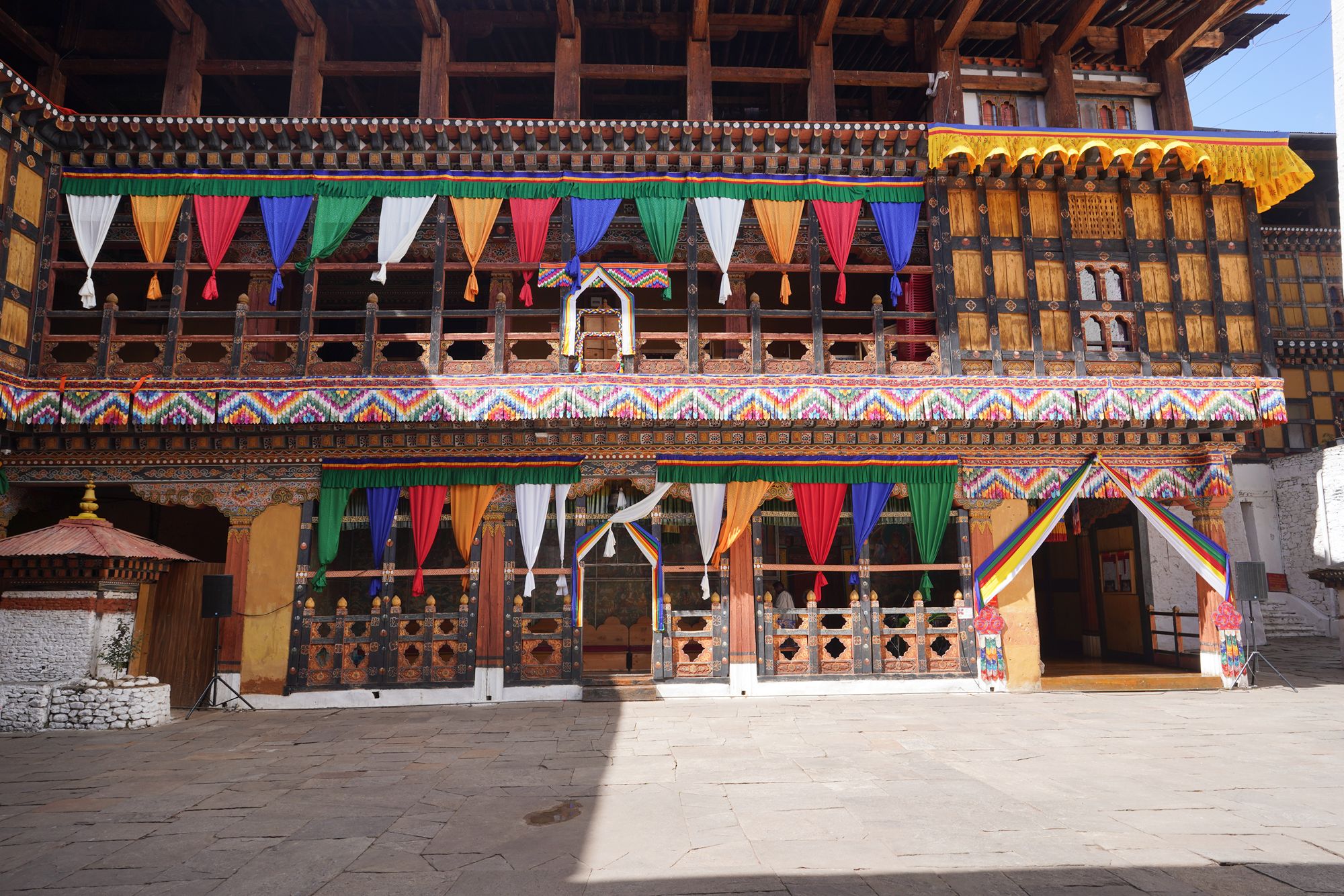
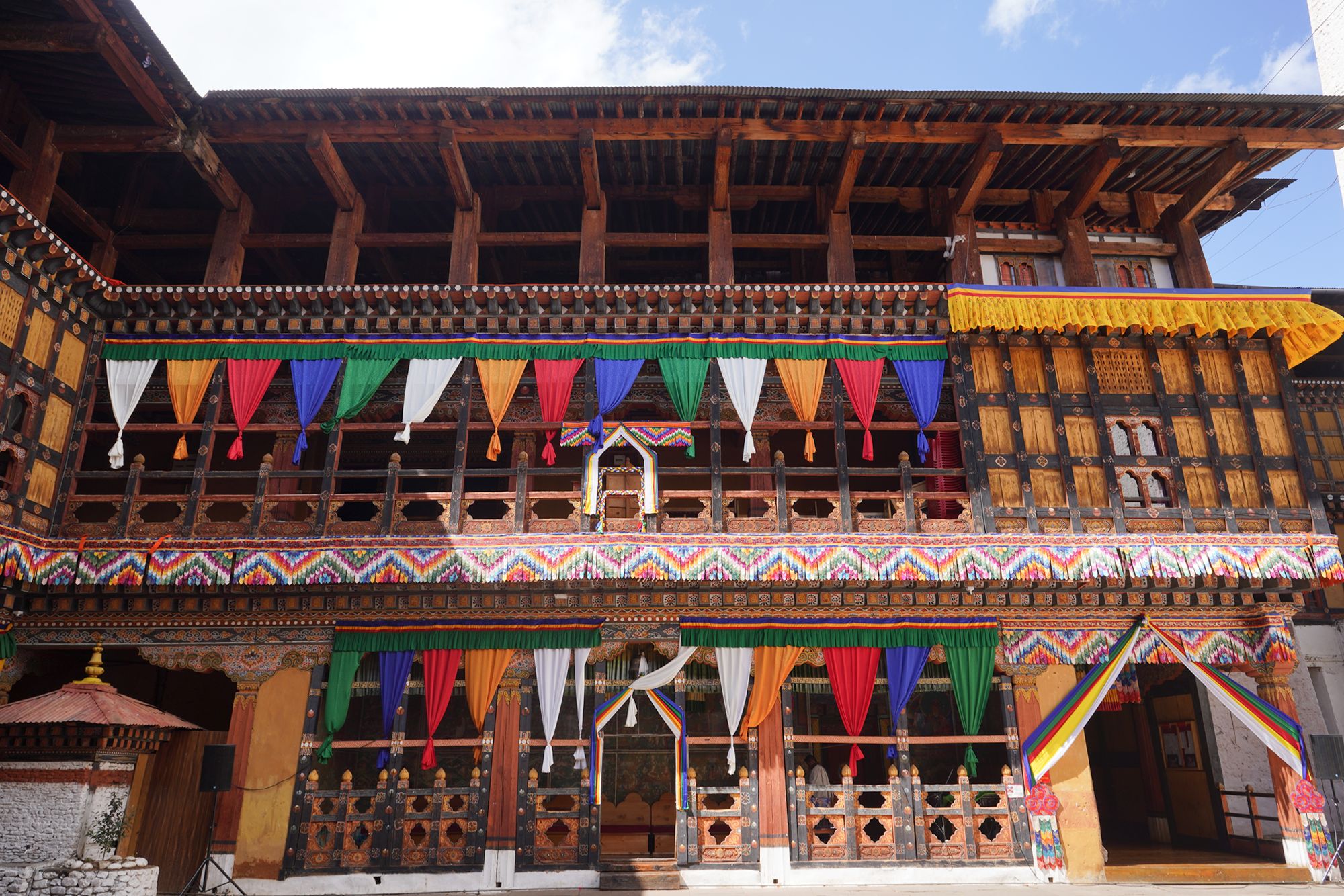
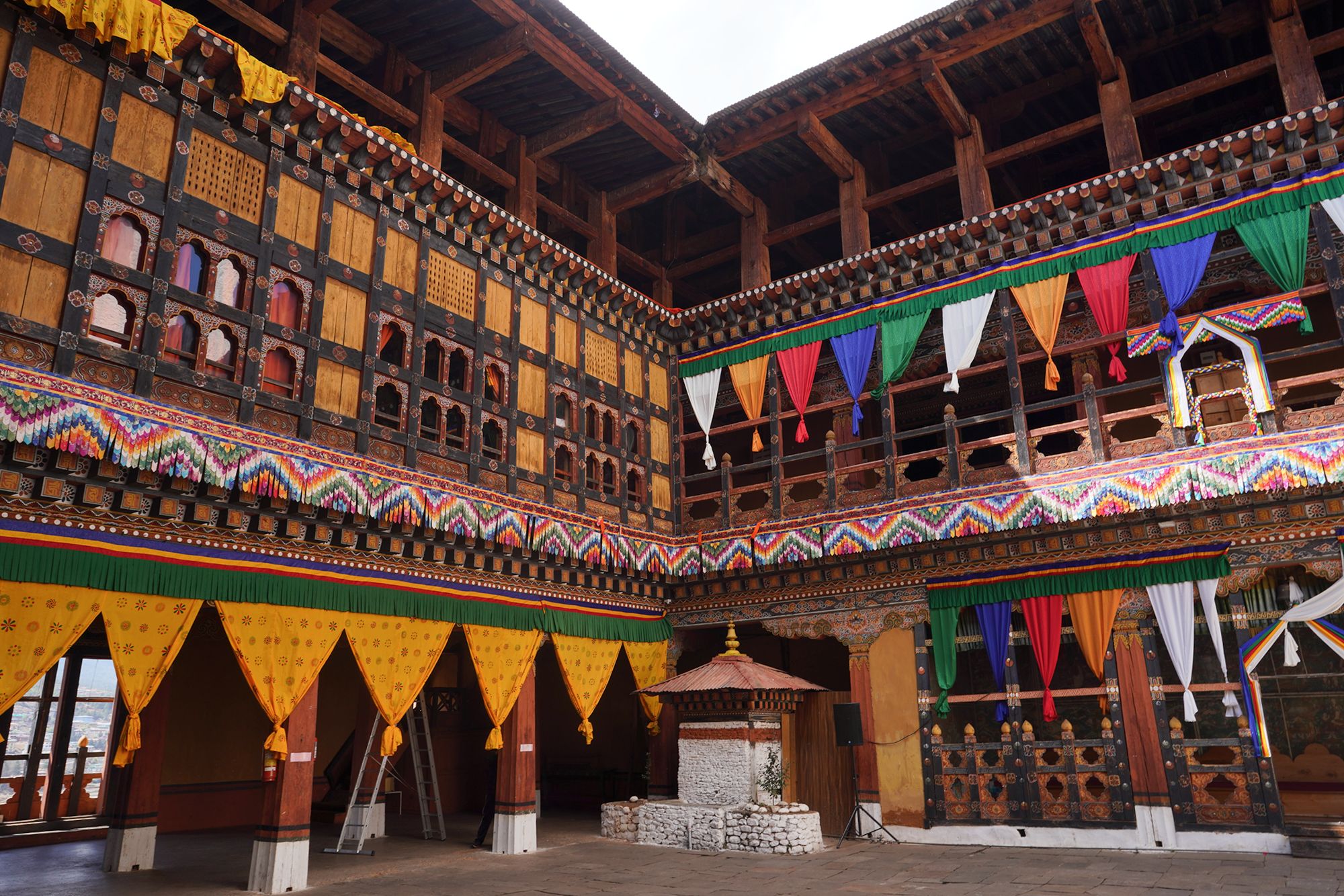
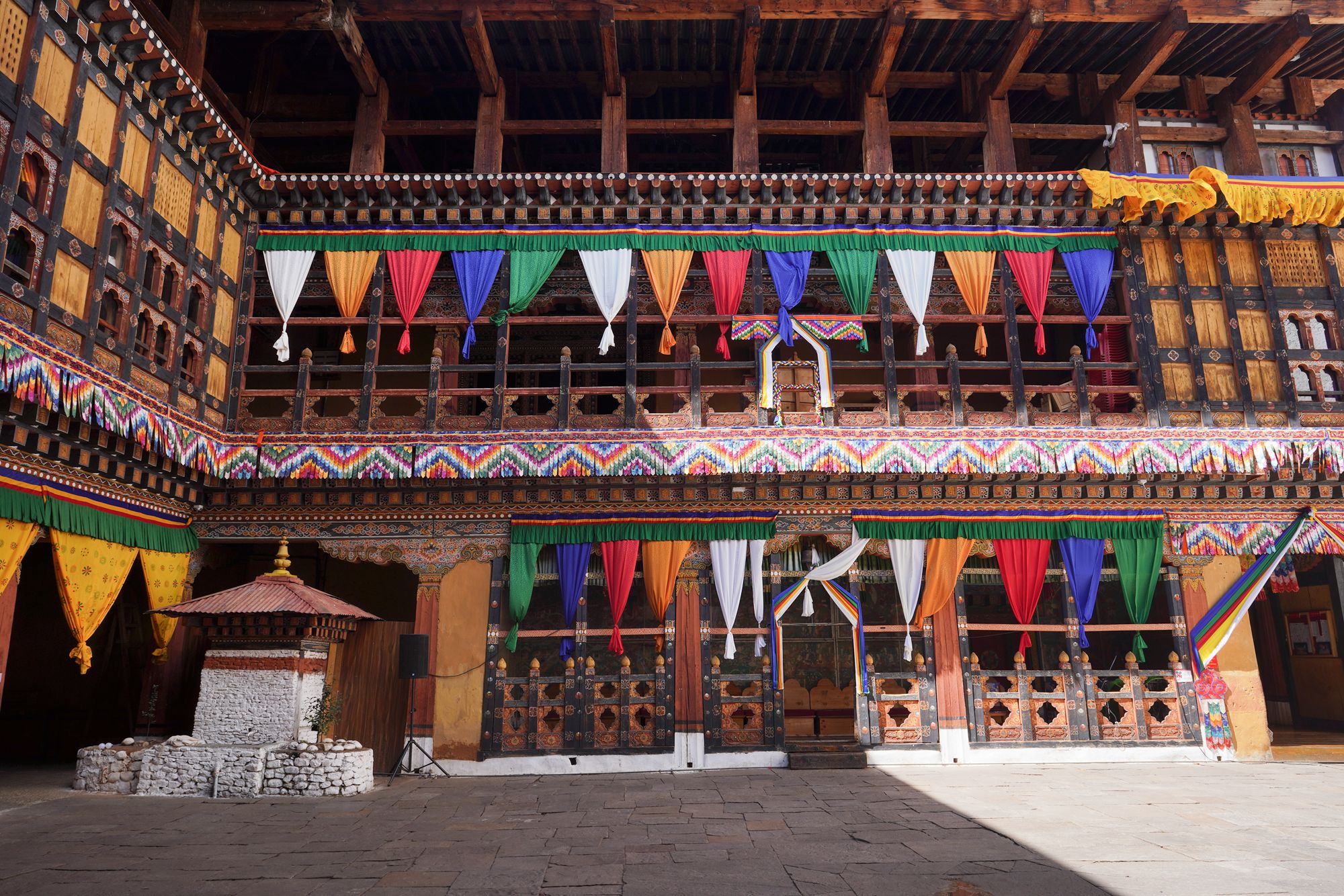
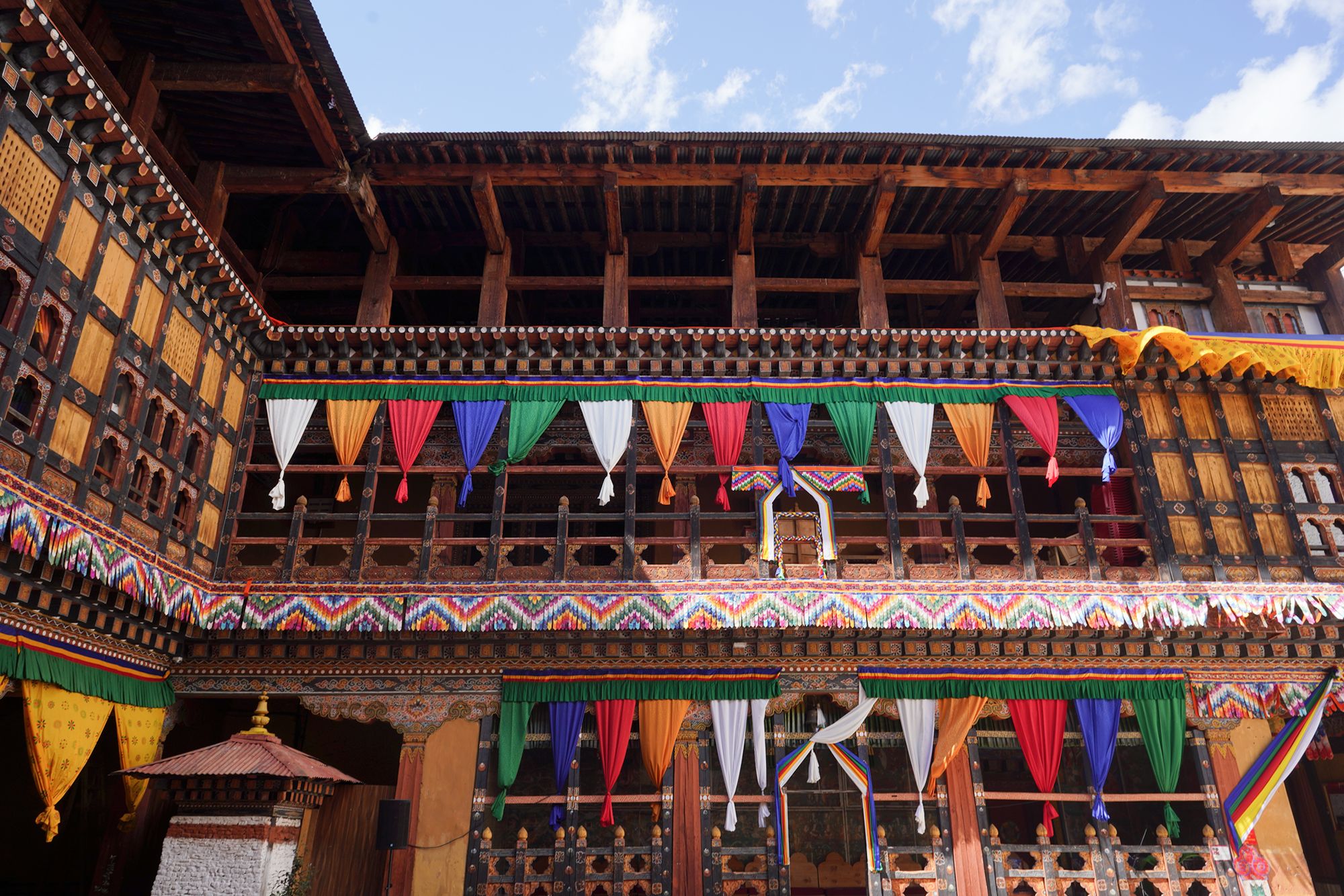
Inside, the enormous complex contains several courtyards, temples, administrative buildings, monks' quarters, elaborately painted walls, and beautifully carved wooden architecture. Its massive white walls and red-and-gold upper sections are characteristic of Bhutanese dzong architecture.
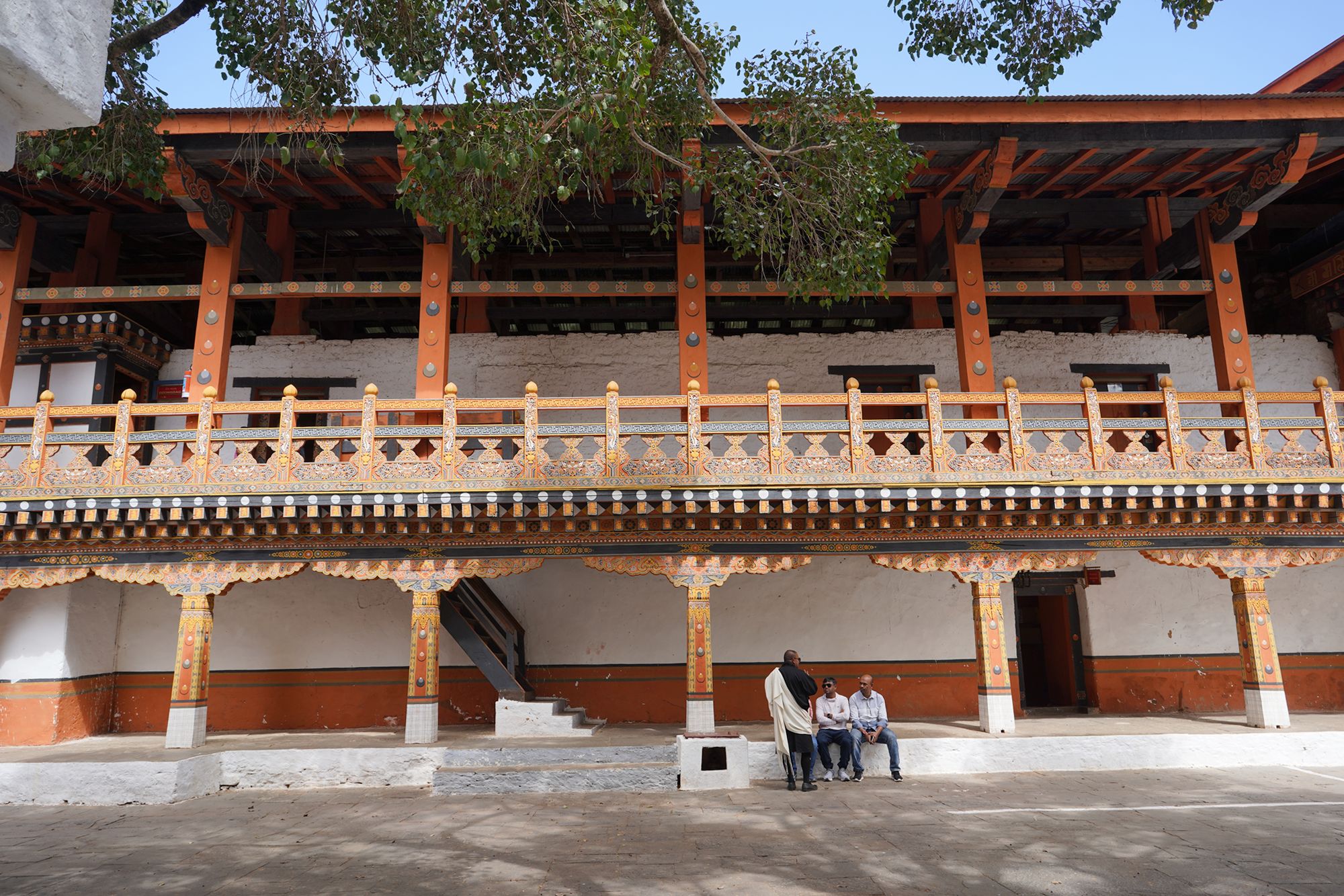
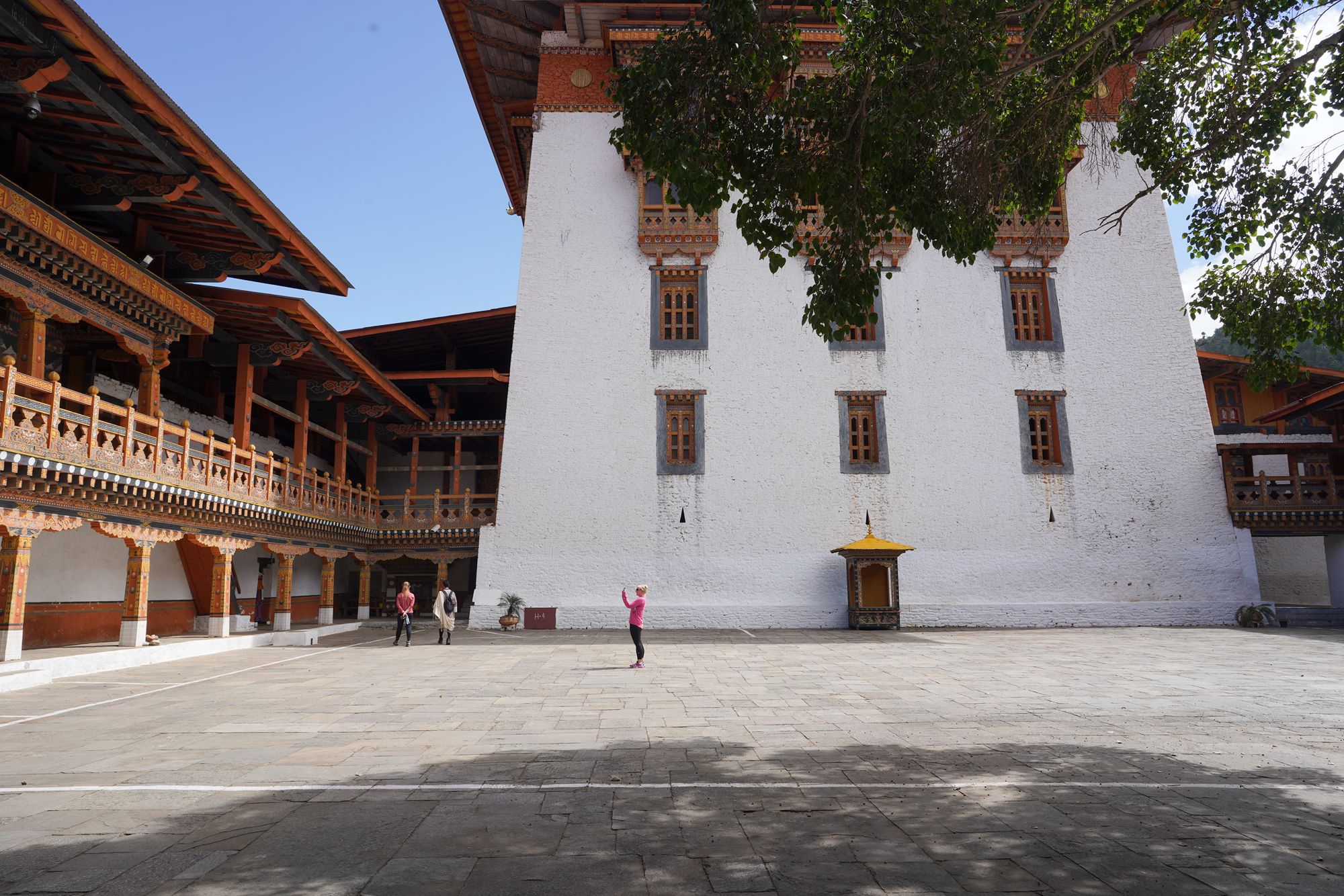
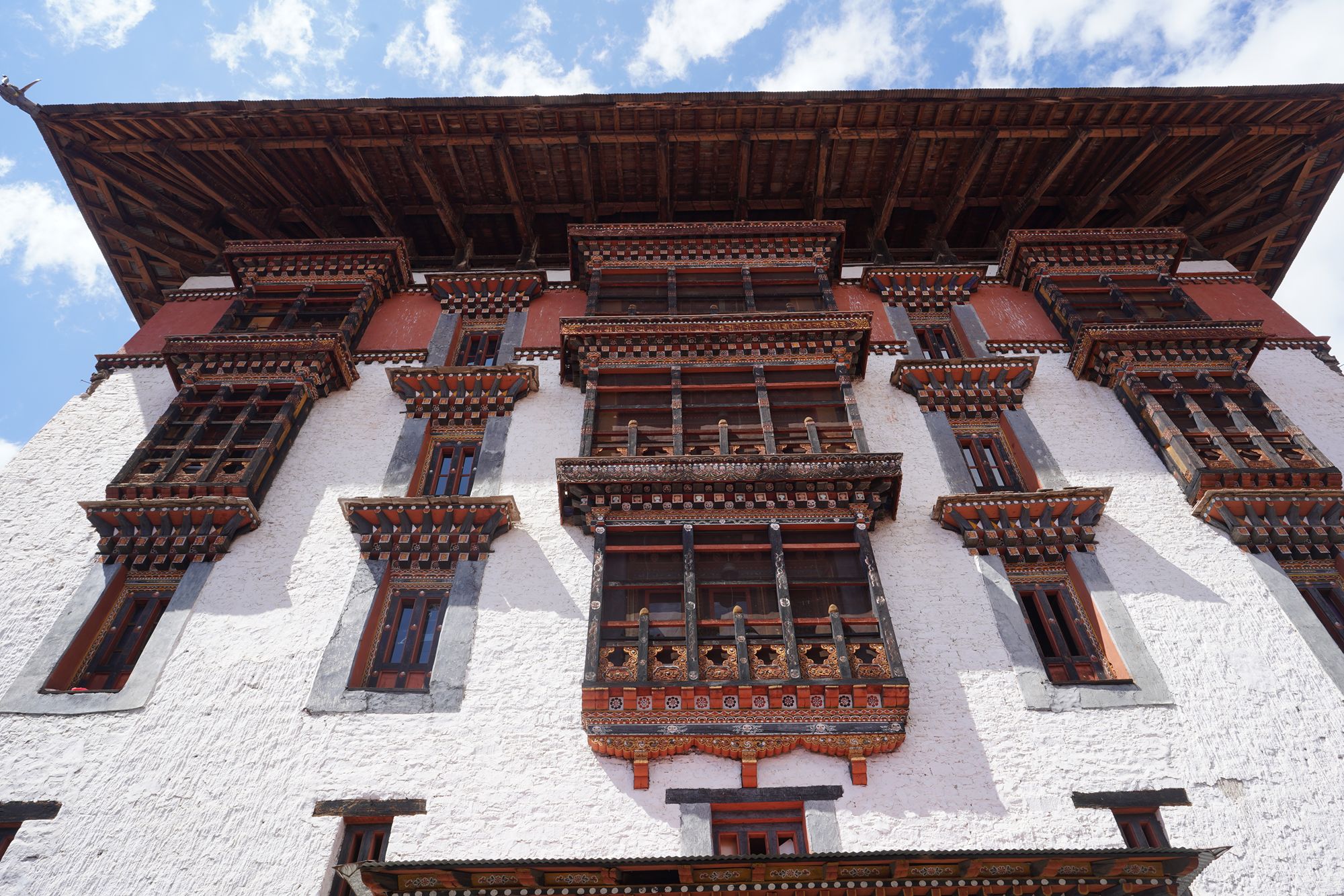
The tall central building inside a Bhutanese dzong is called the utse (also spelled utse/utsee), meaning the central tower
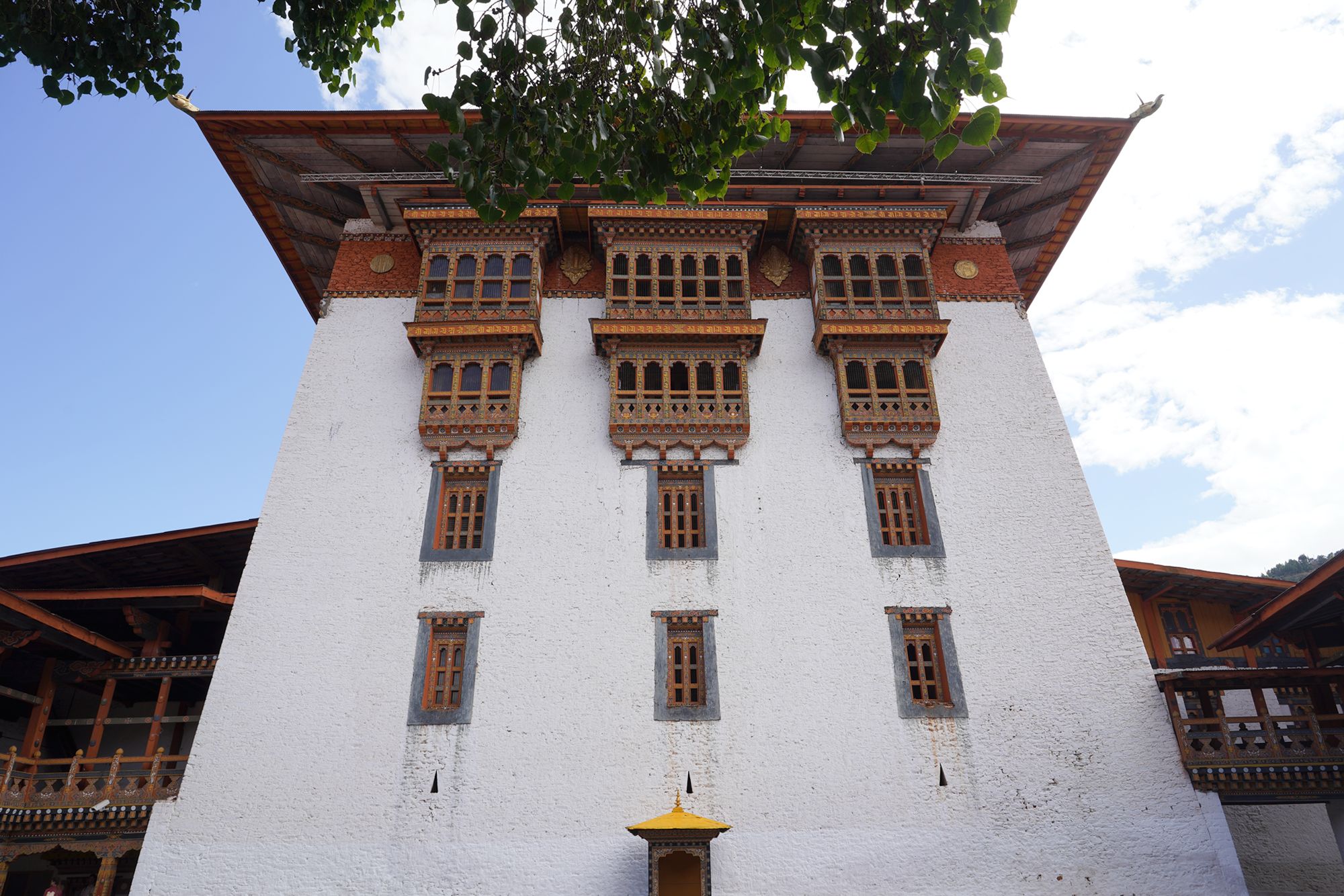
The utse is usually the tallest and most prominent structure in the complex. It traditionally contains important temples, shrines, and religious spaces, while the surrounding buildings contain monks' quarters and administrative offices.
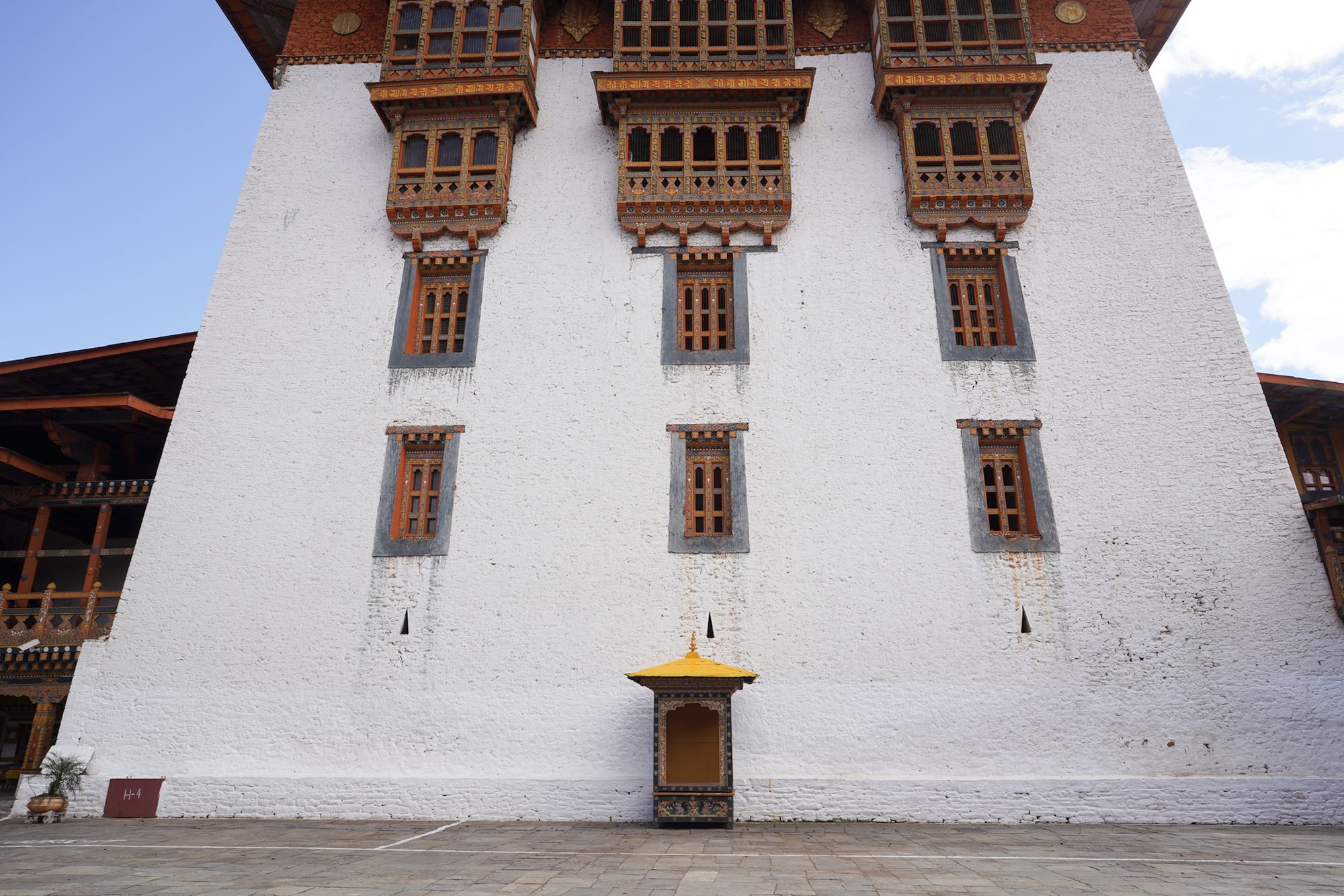
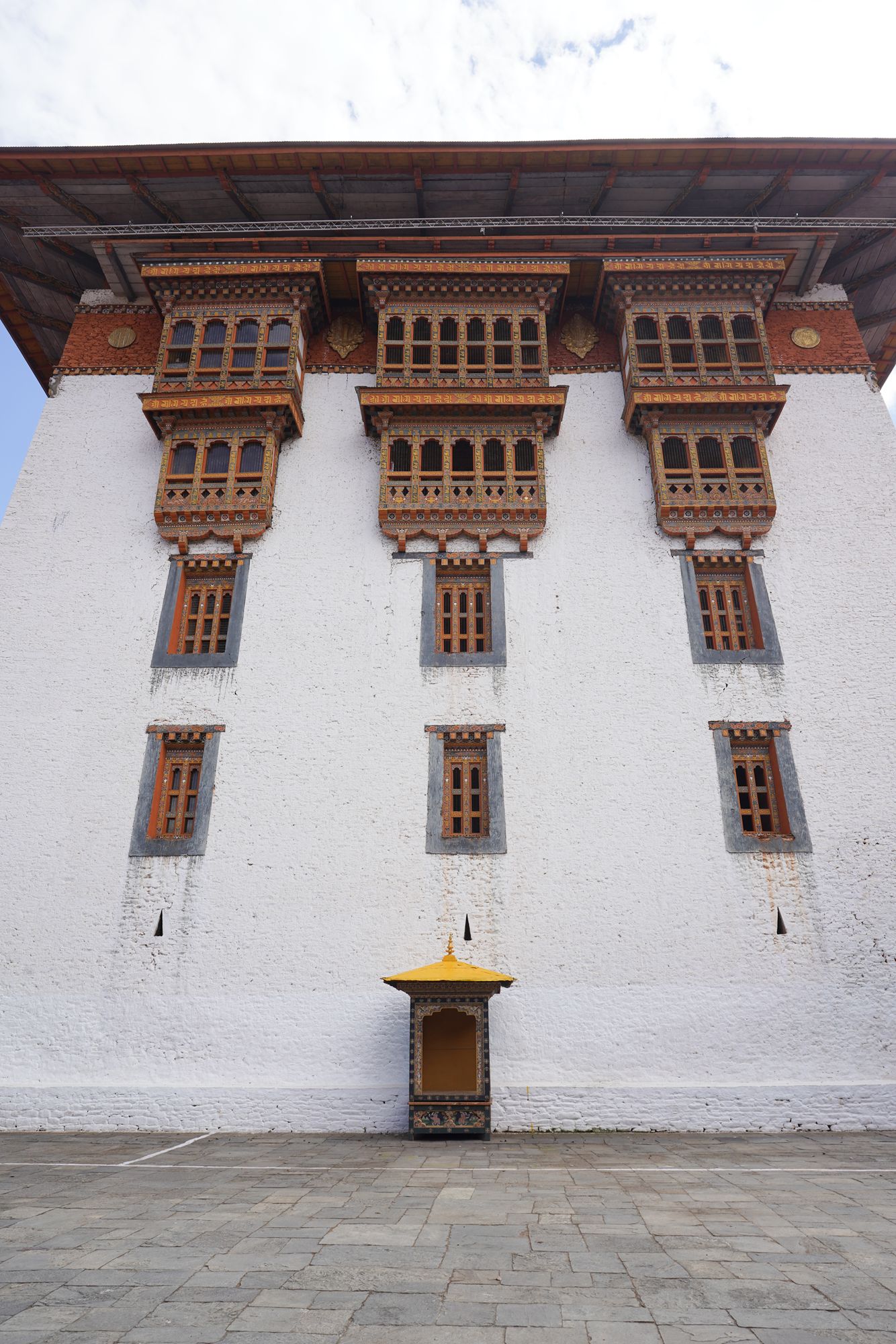
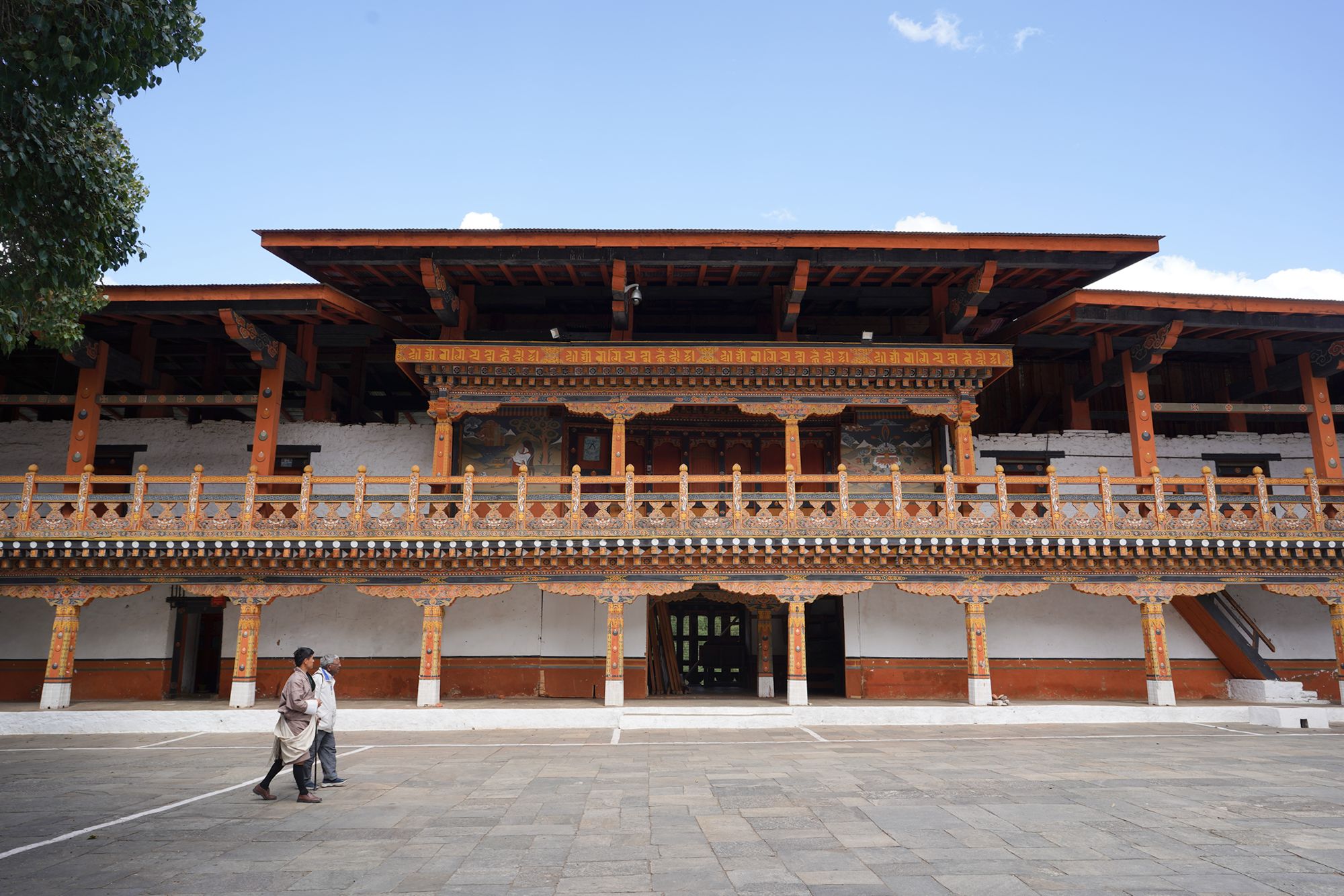
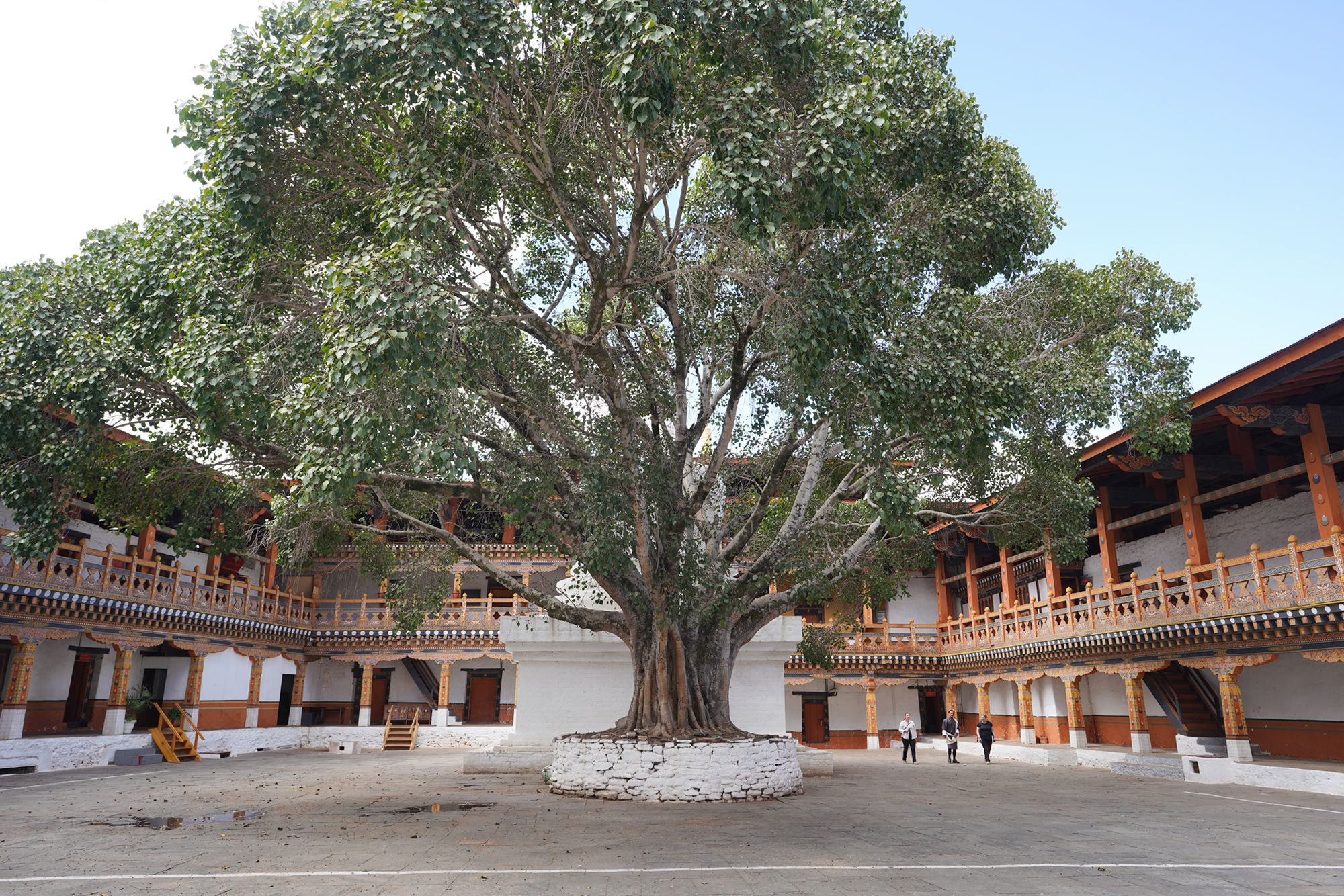
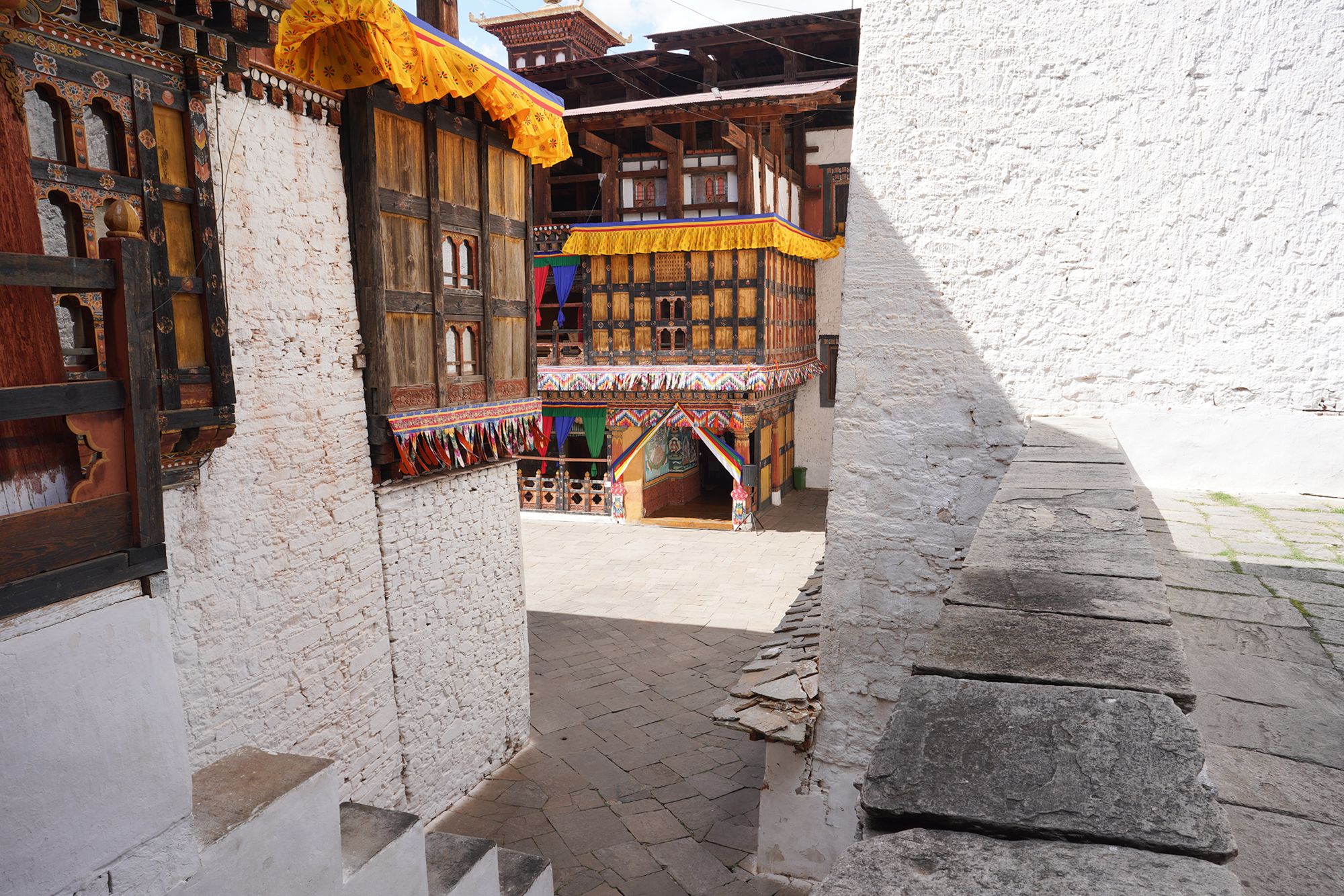
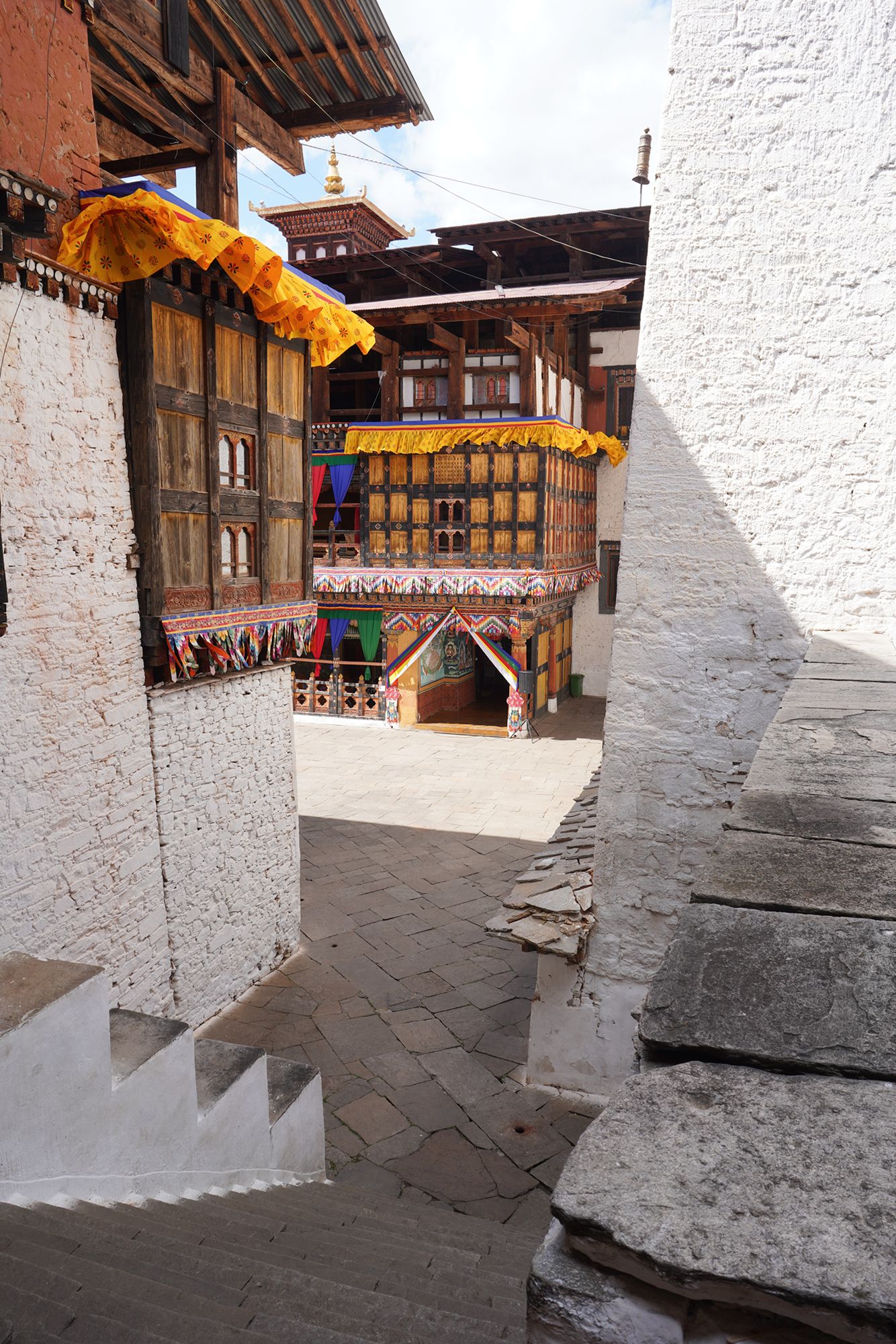
A way to the inner court
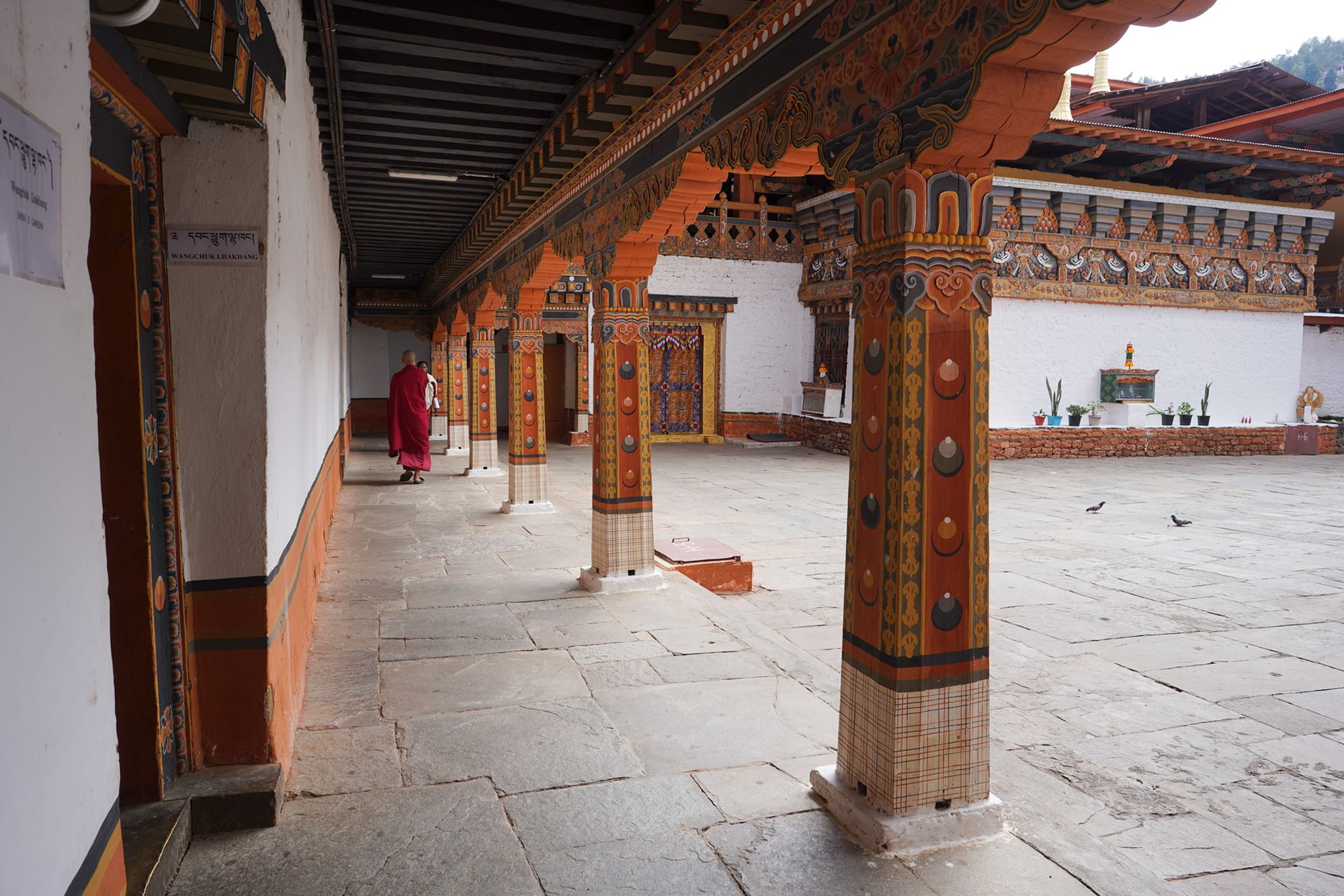
It also has an important connection to Bhutan's modern monarchy: King Jigme Khesar Namgyel Wangchuck and Queen Jetsun Pema were married at Punakha Dzong in 2011.
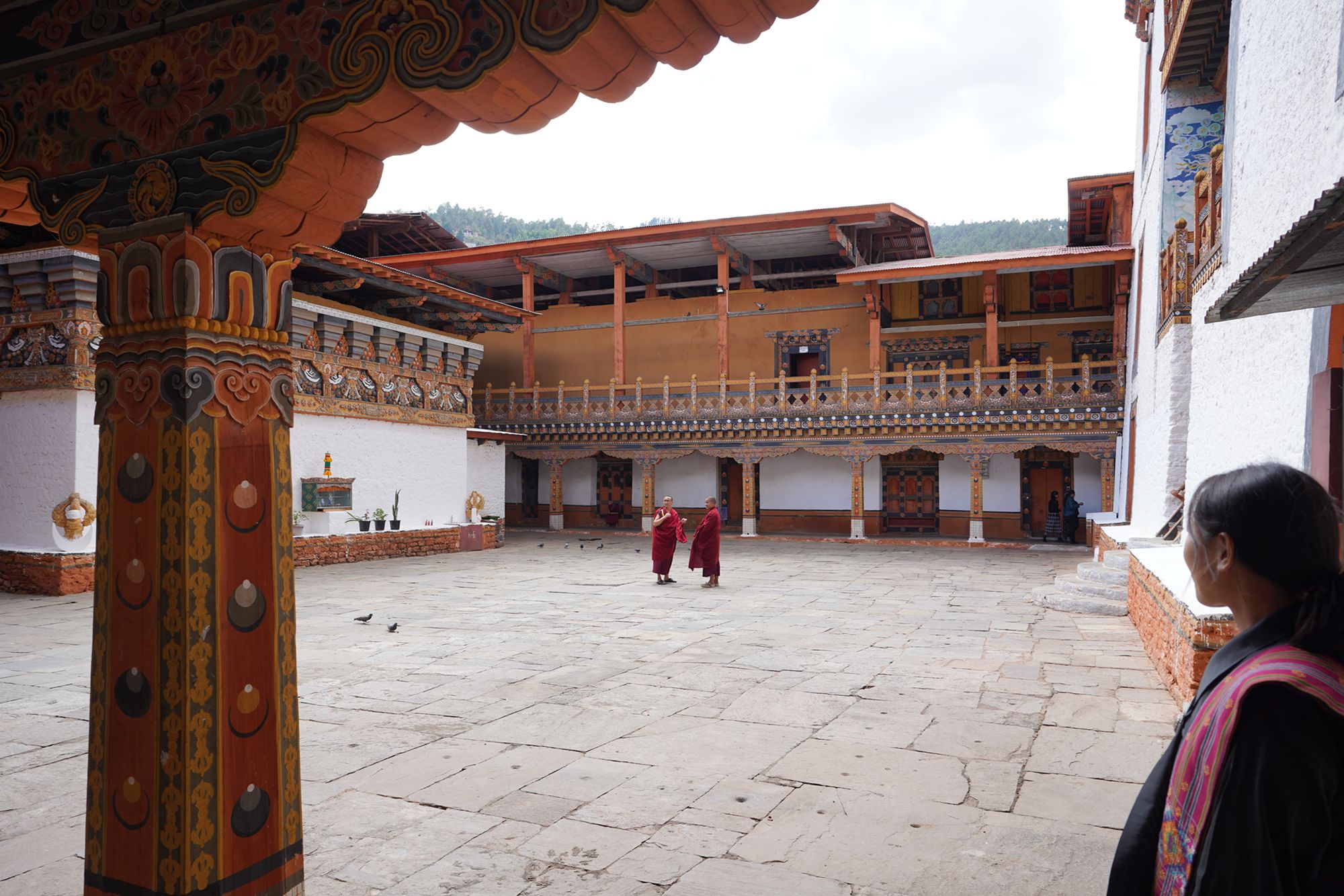
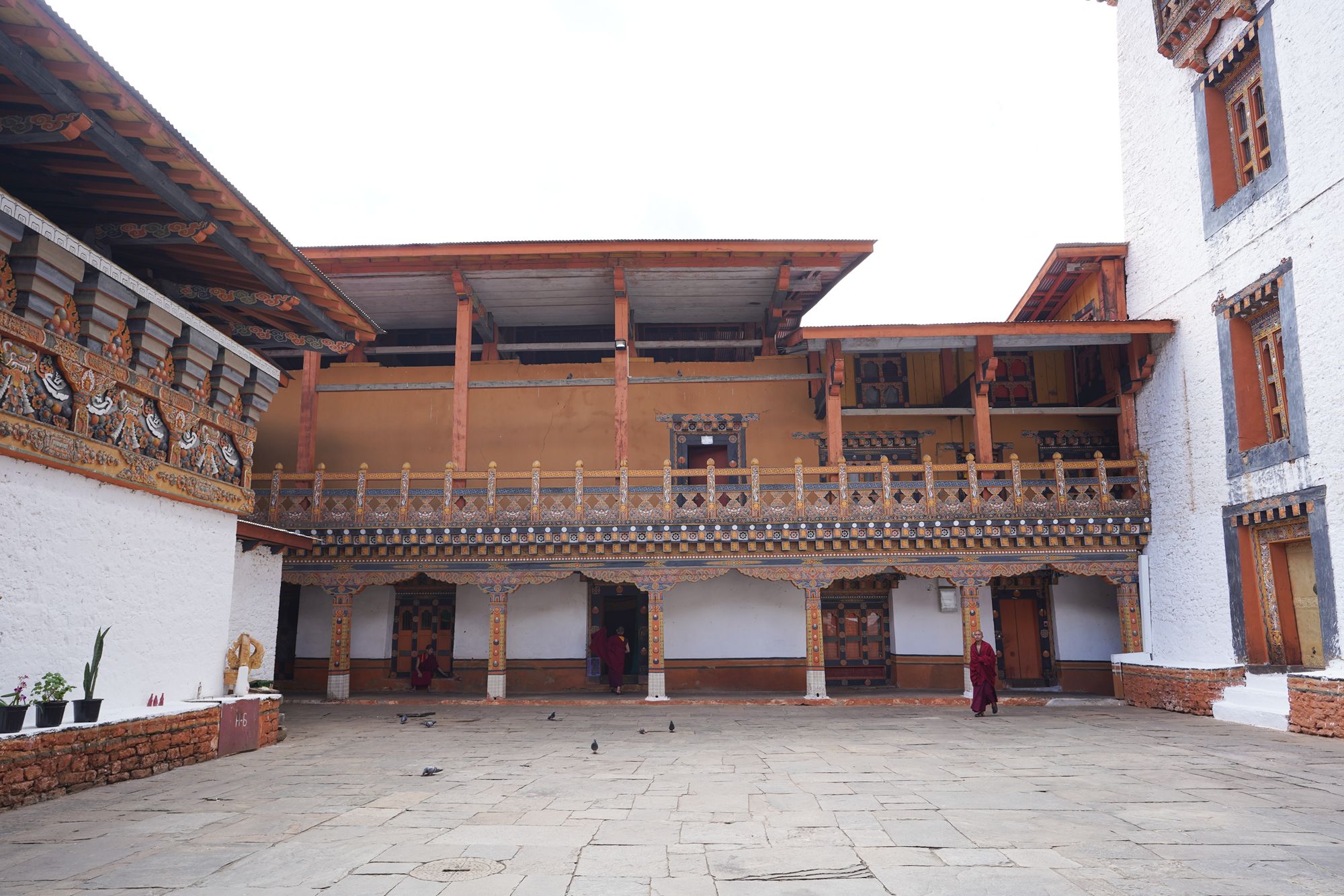
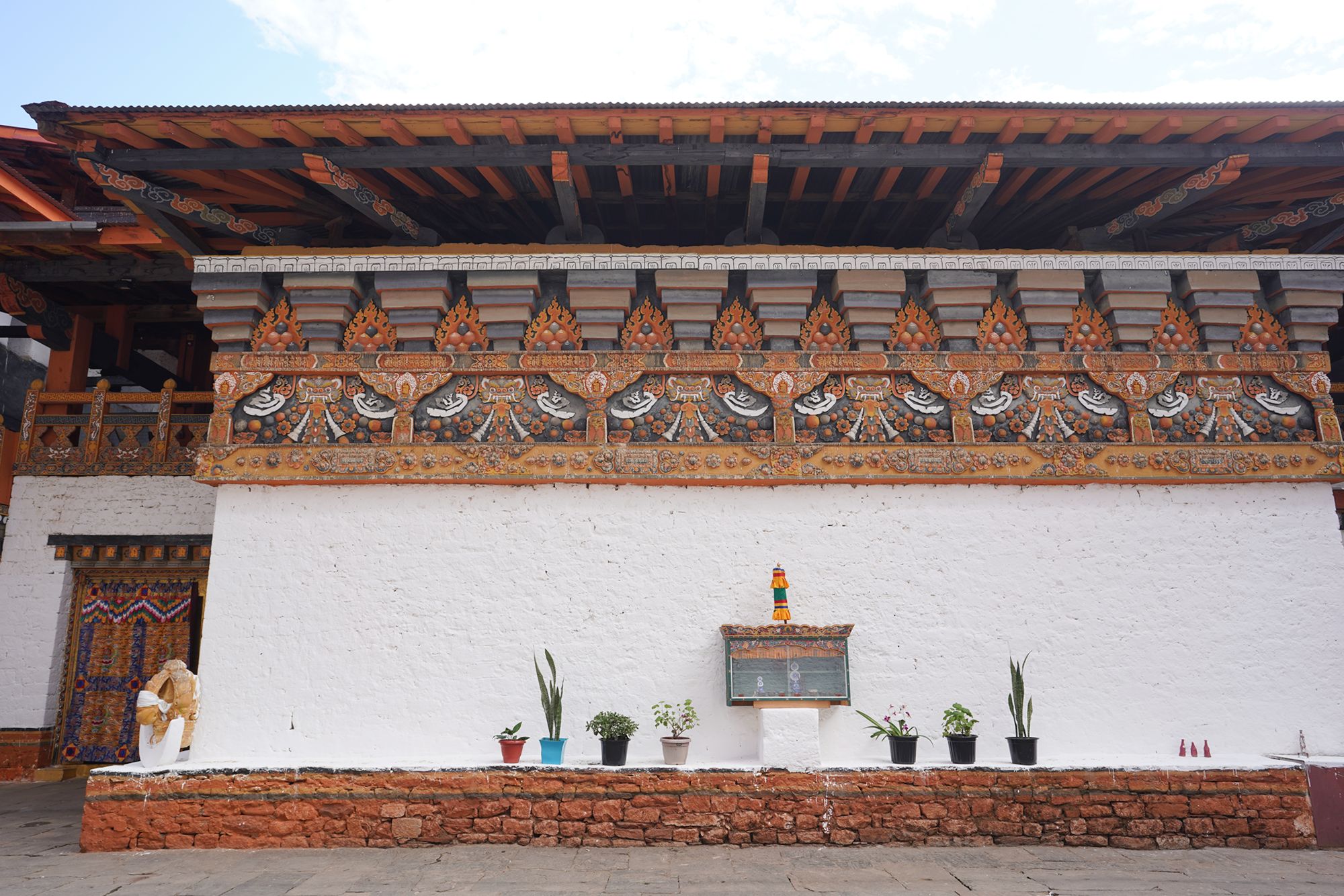
A view of the back side of the utse, the tall central tower of Rinpung Dzong.
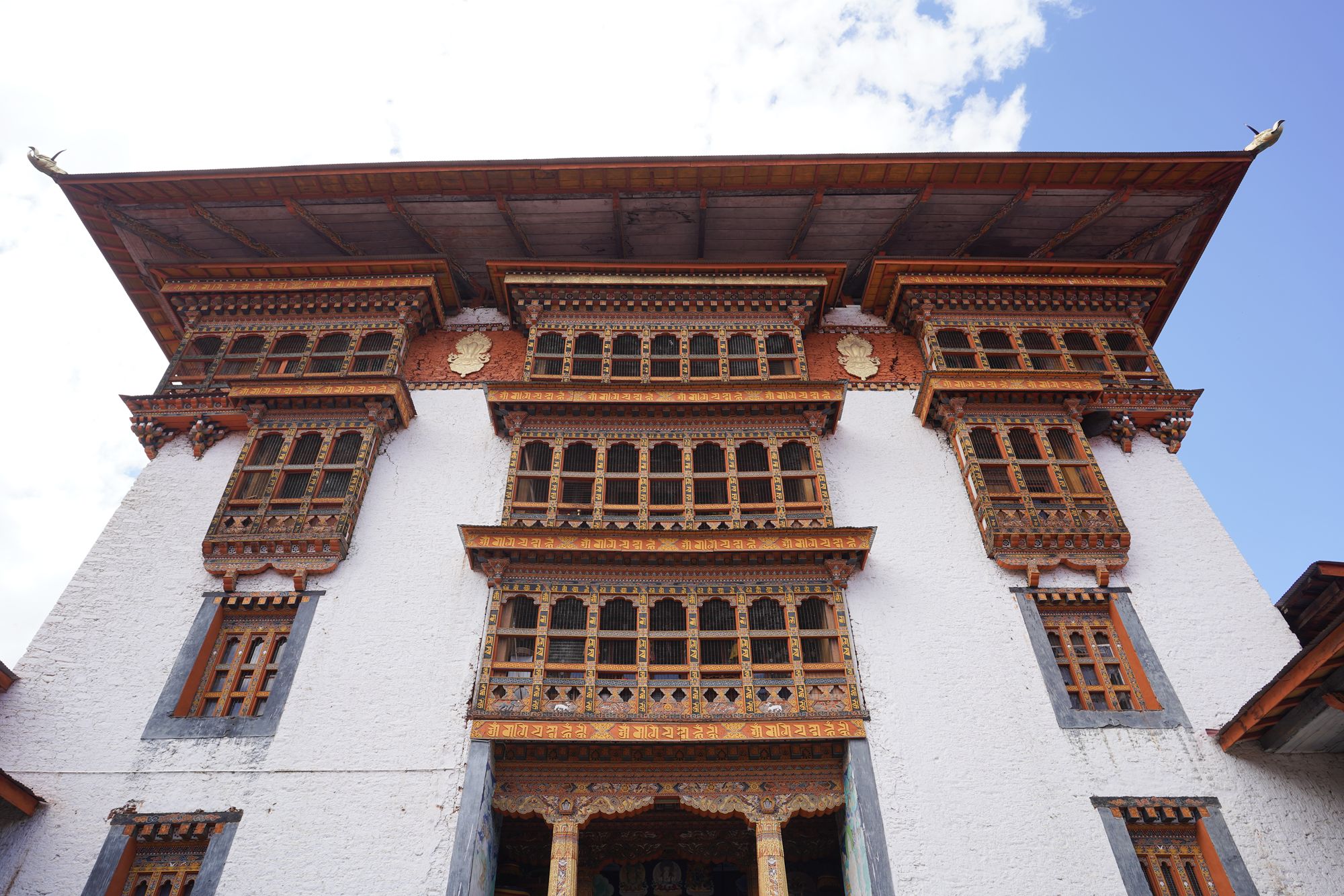
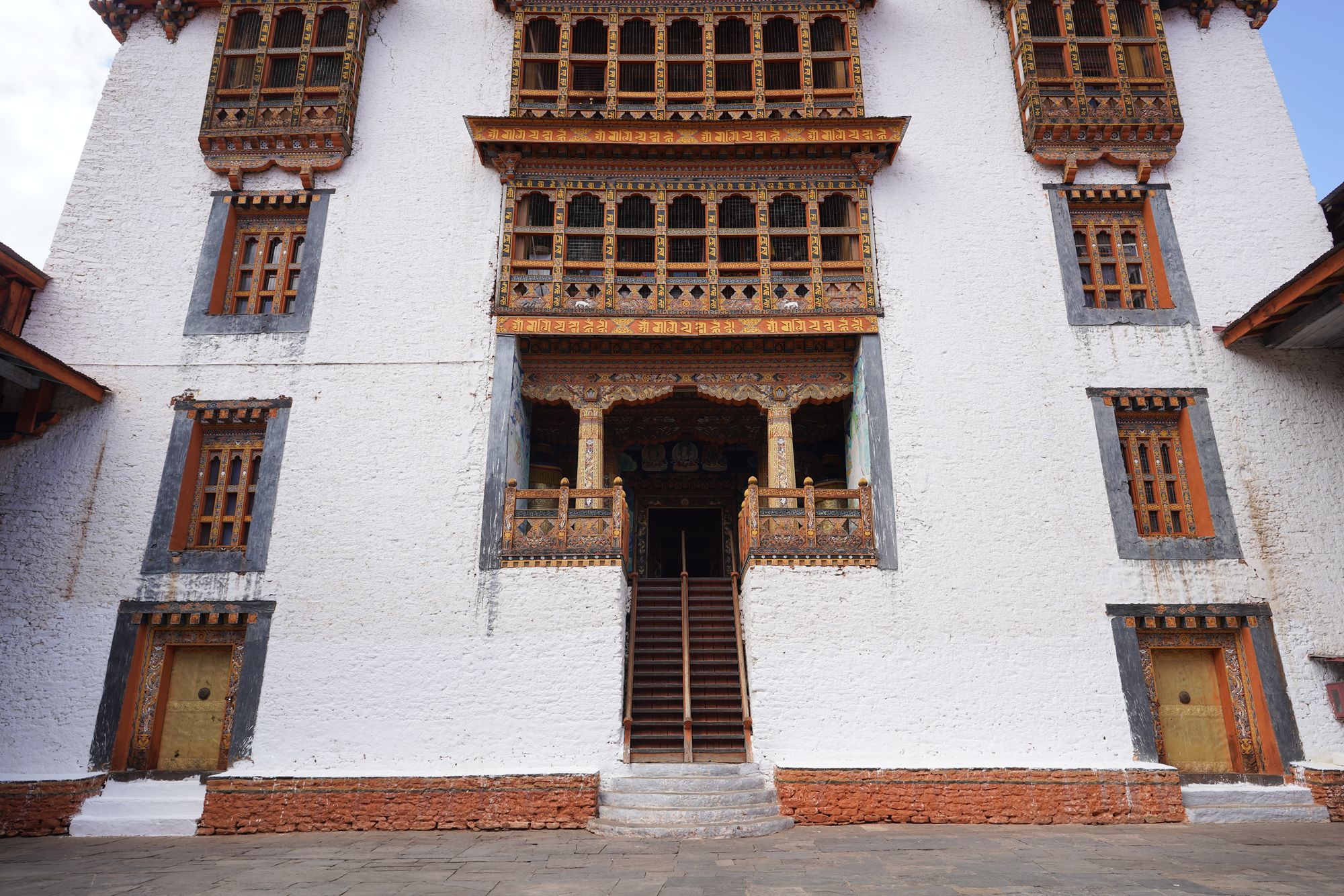
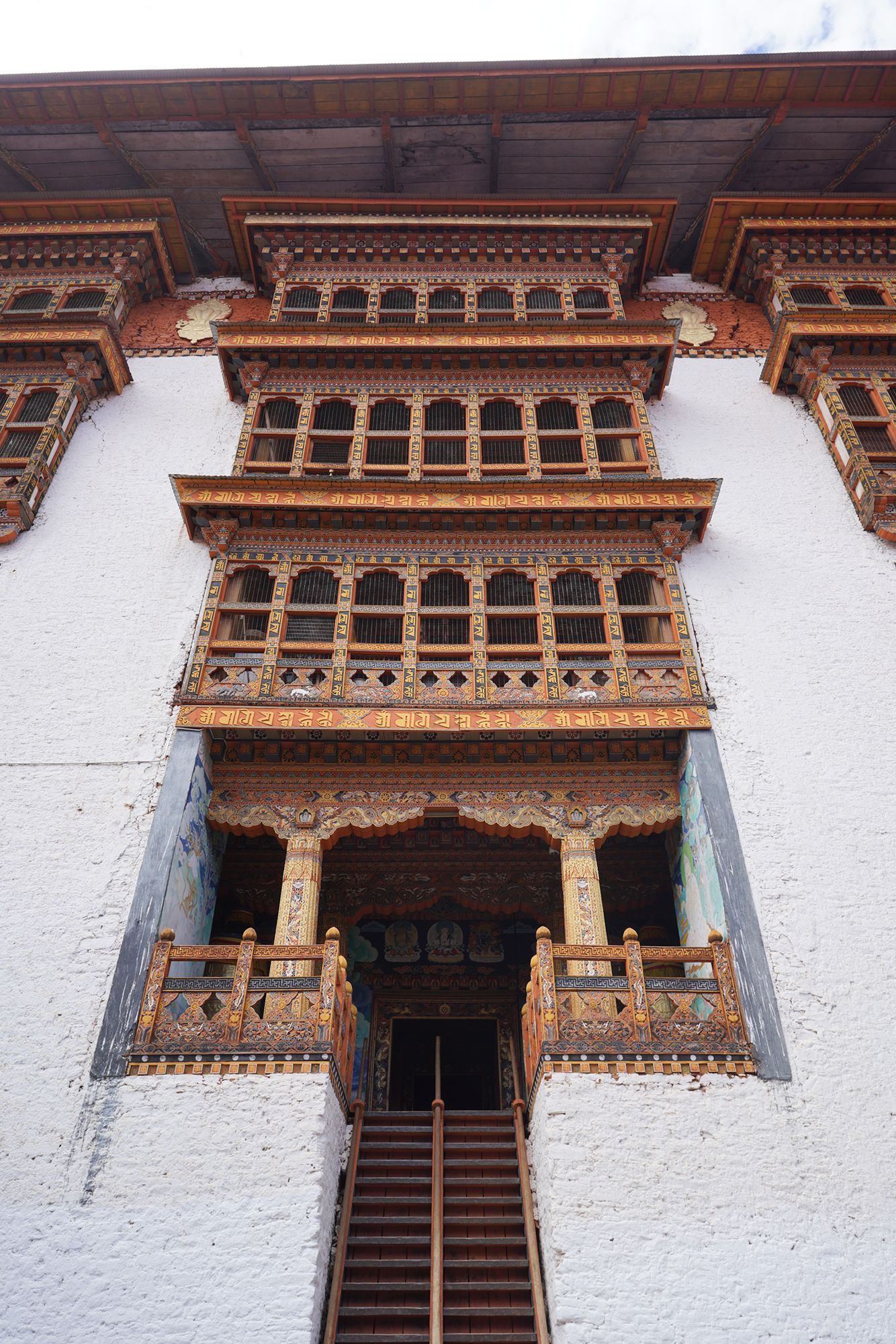
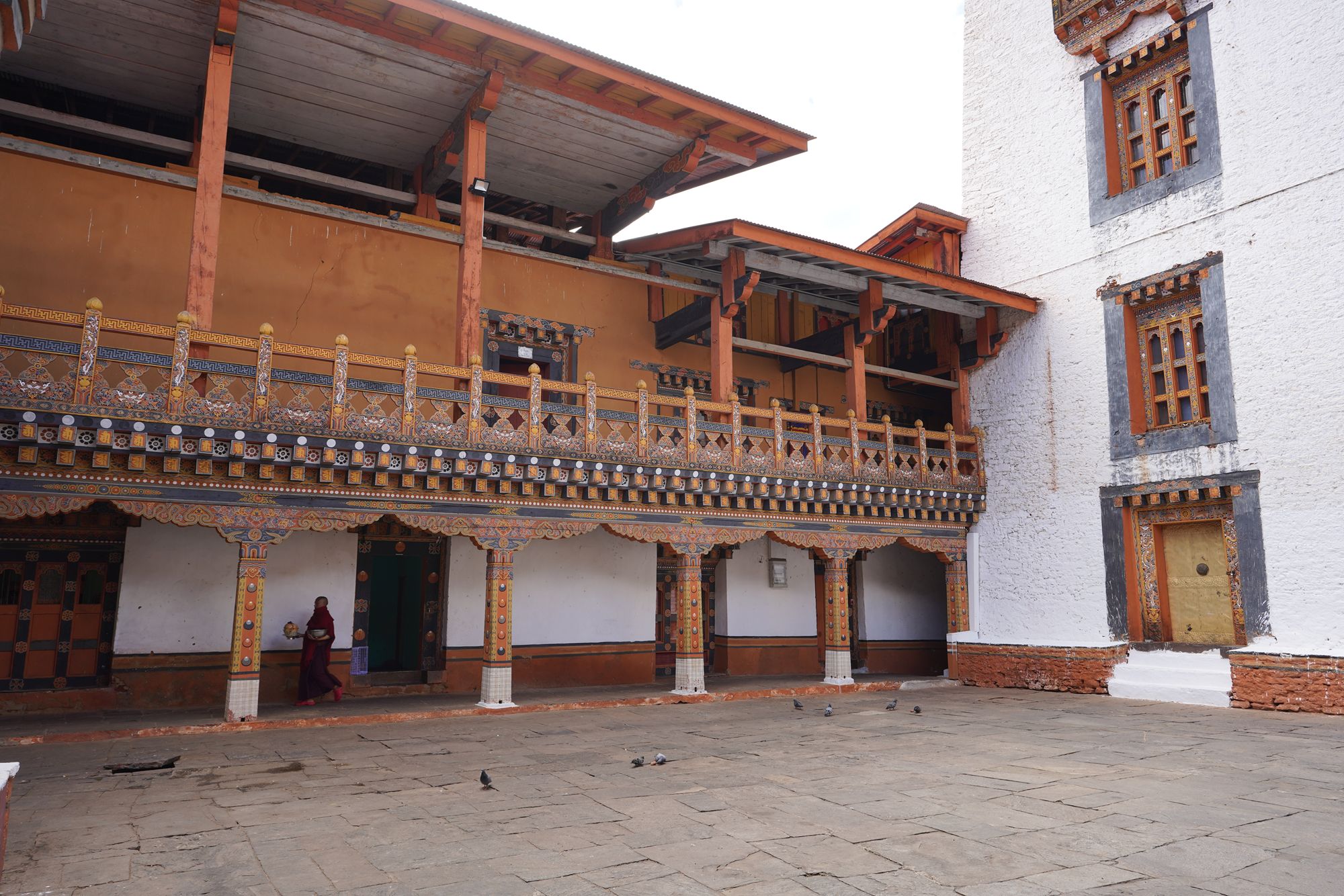
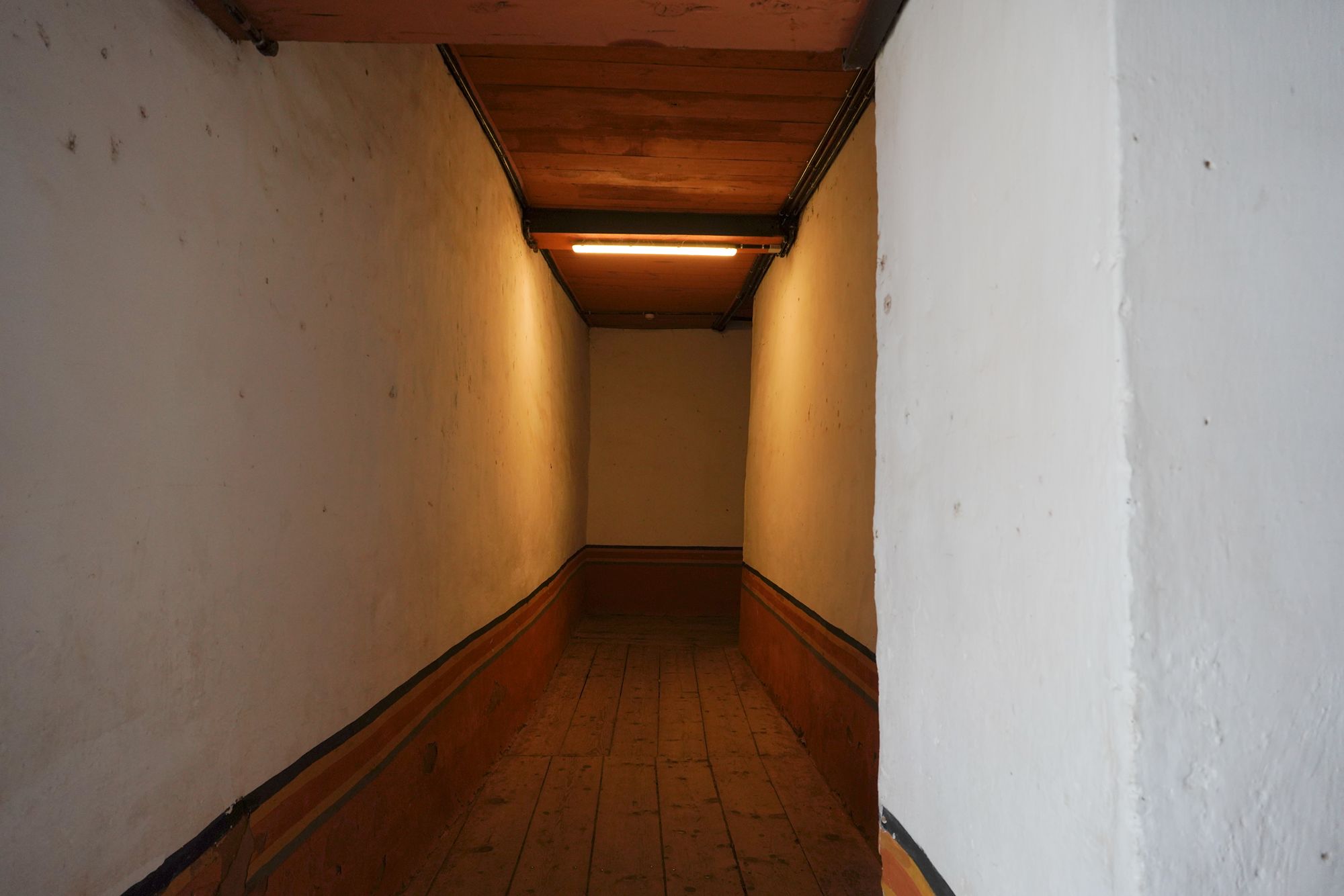
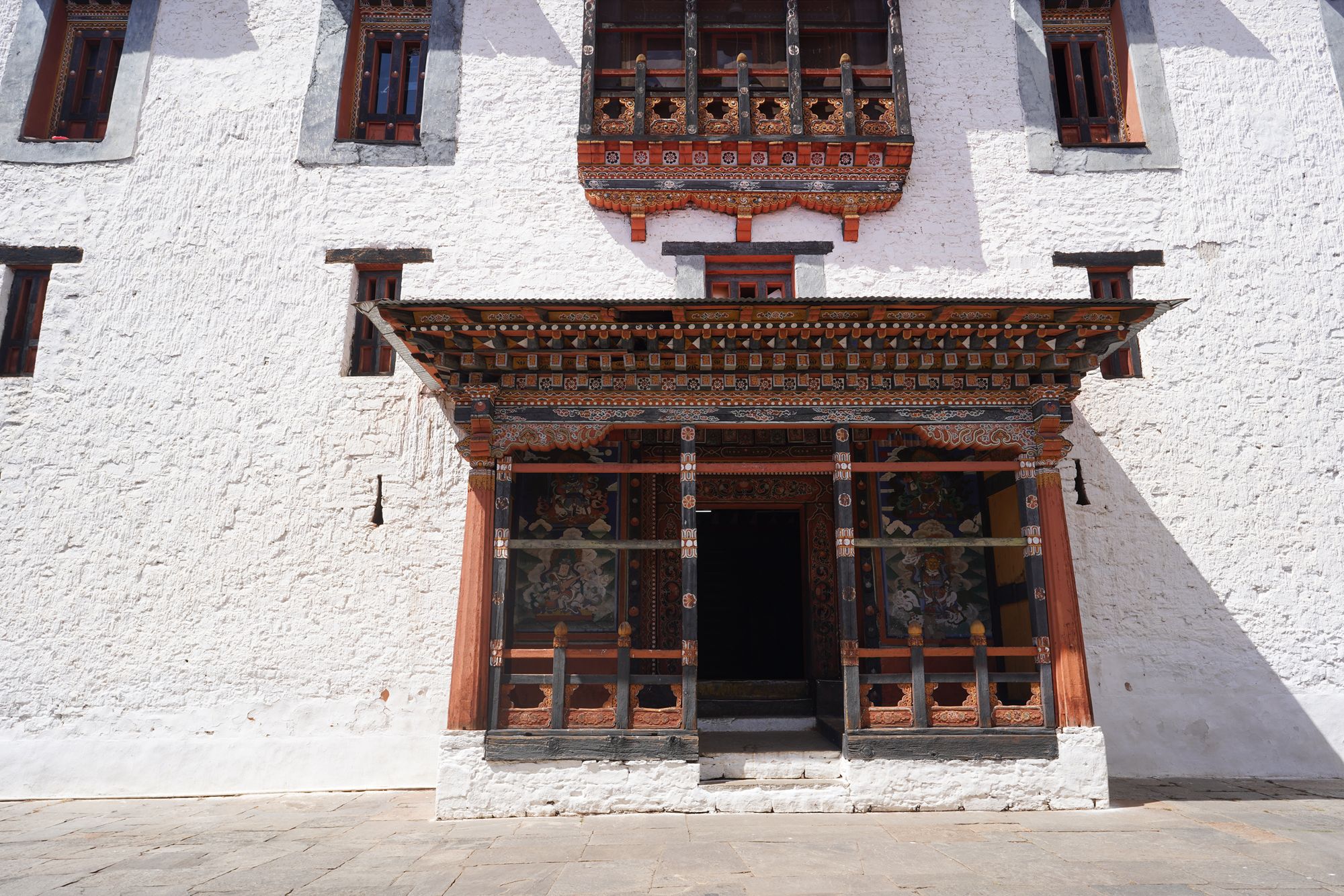
The hallway led deeper into the dzong, toward its more private areas.
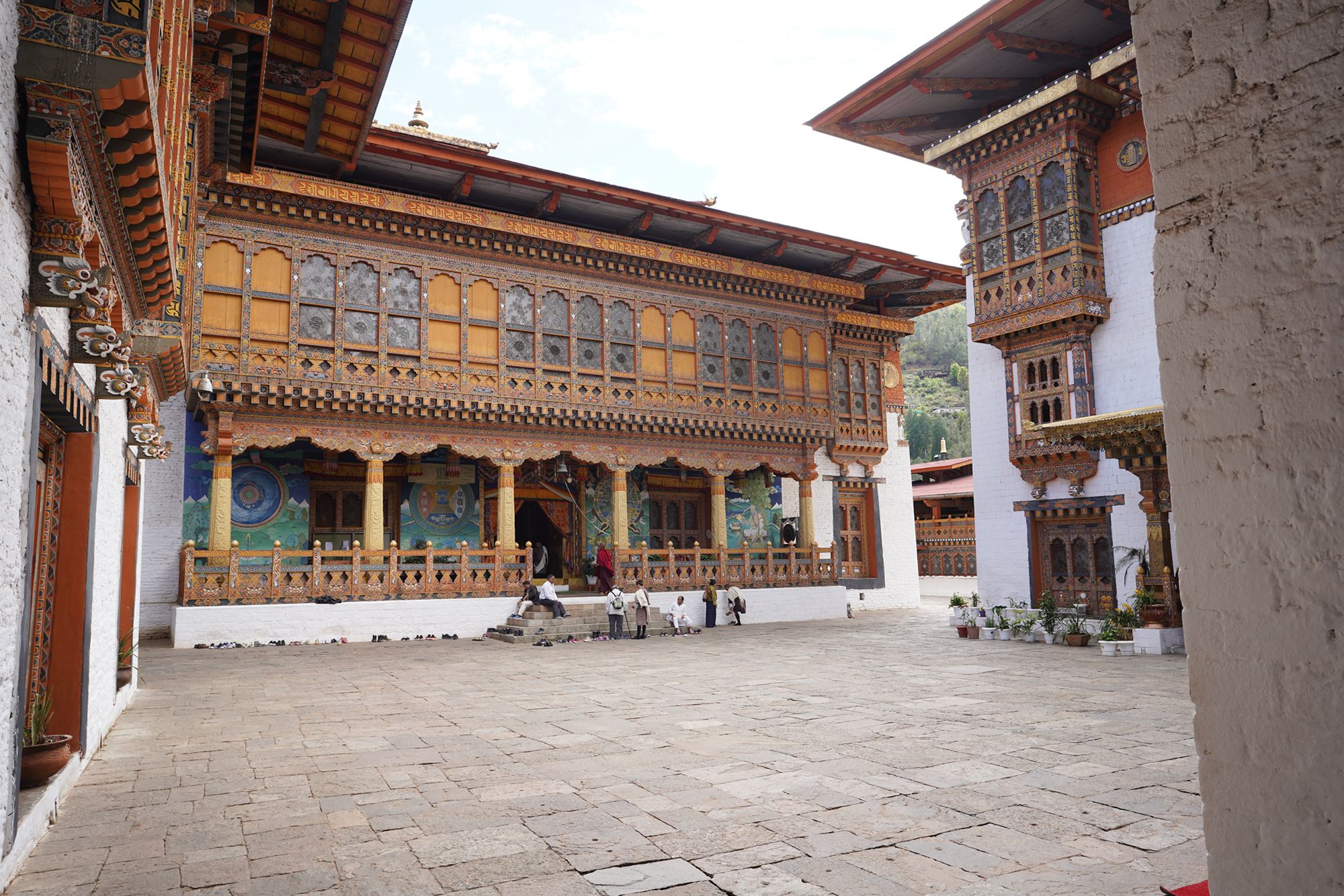
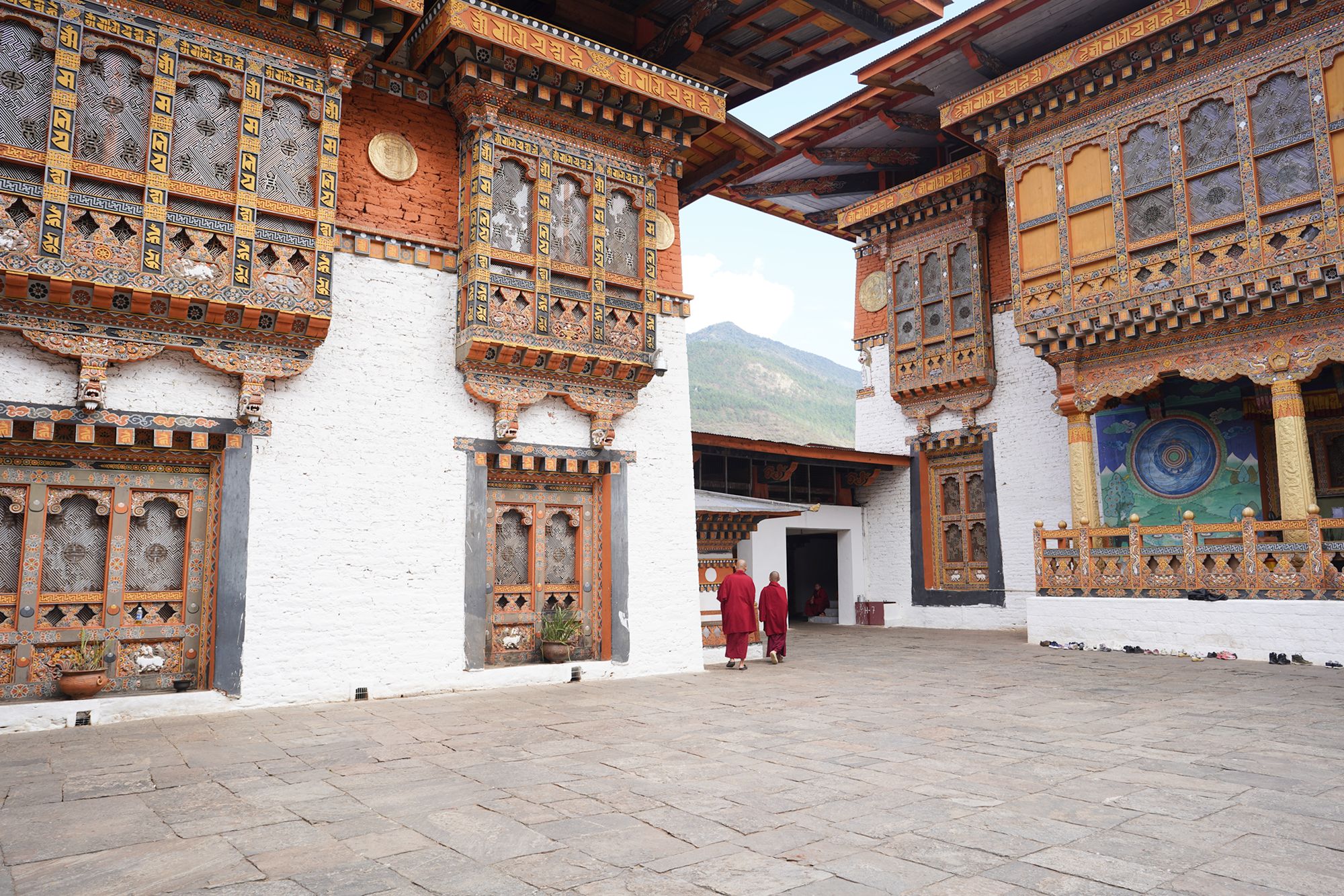
One of the temple buildings inside Punakha Dzong. A group of monks was chanting prayers inside the temple when I visited. Photography was not allowed inside, so I have no photos of them.
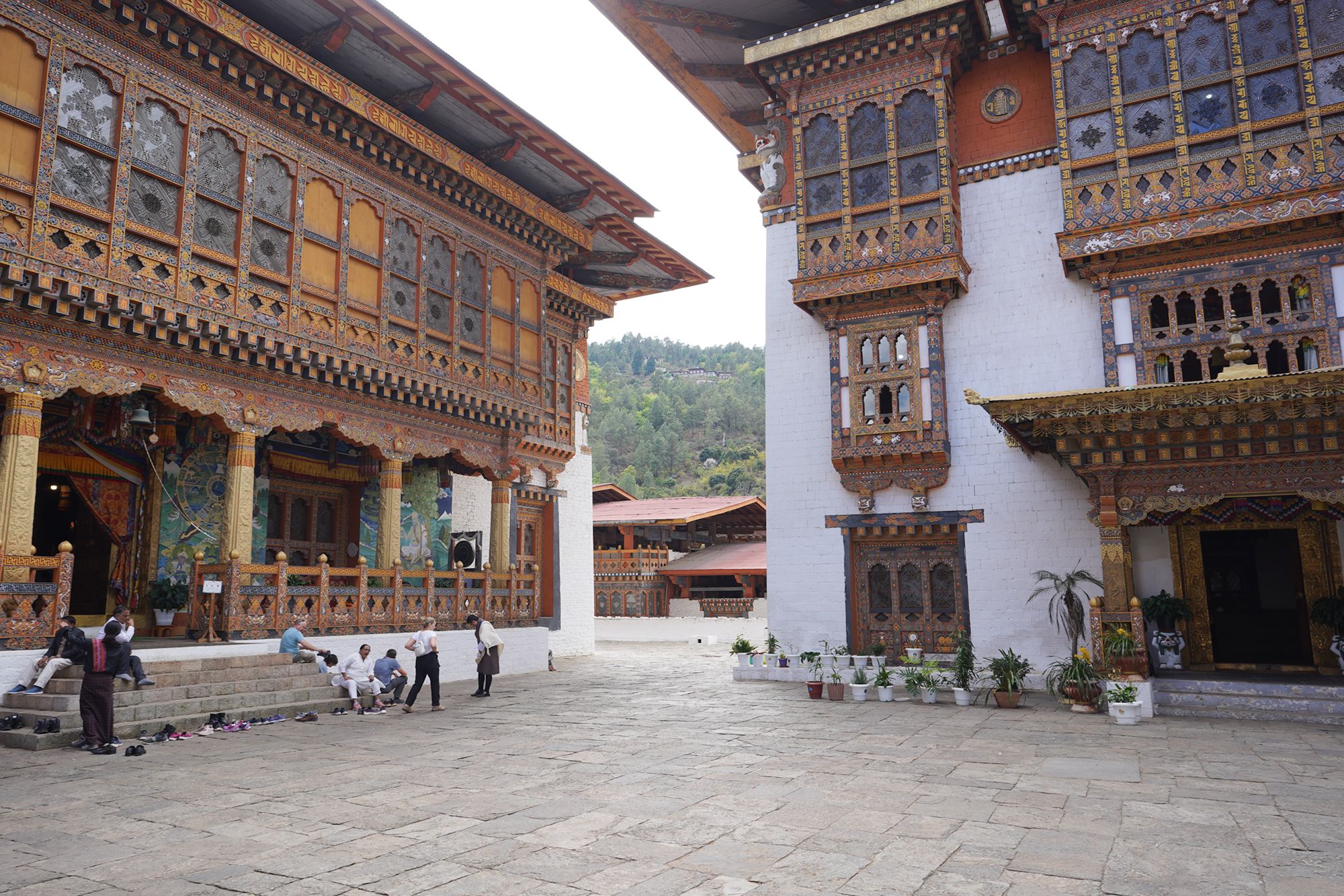
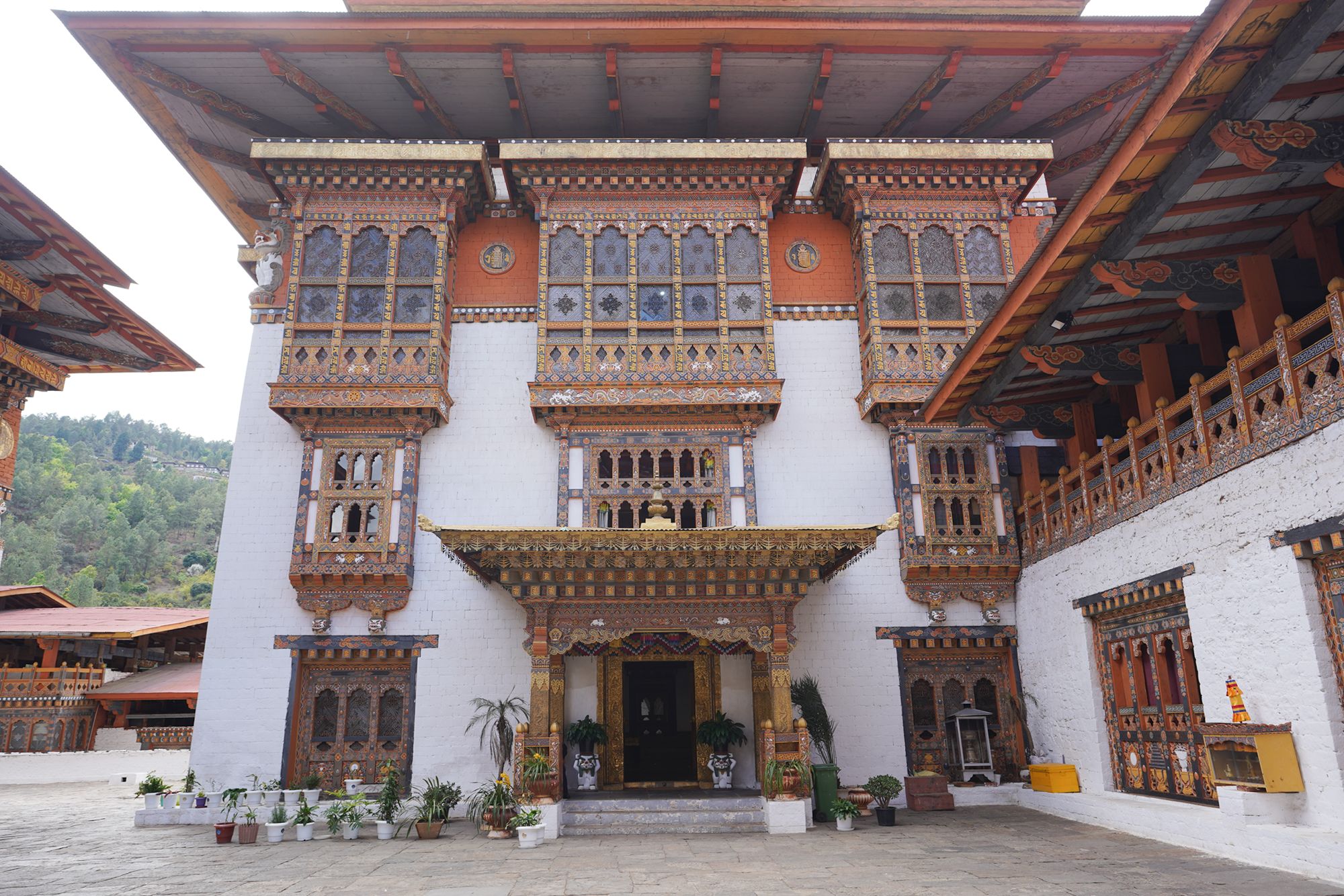
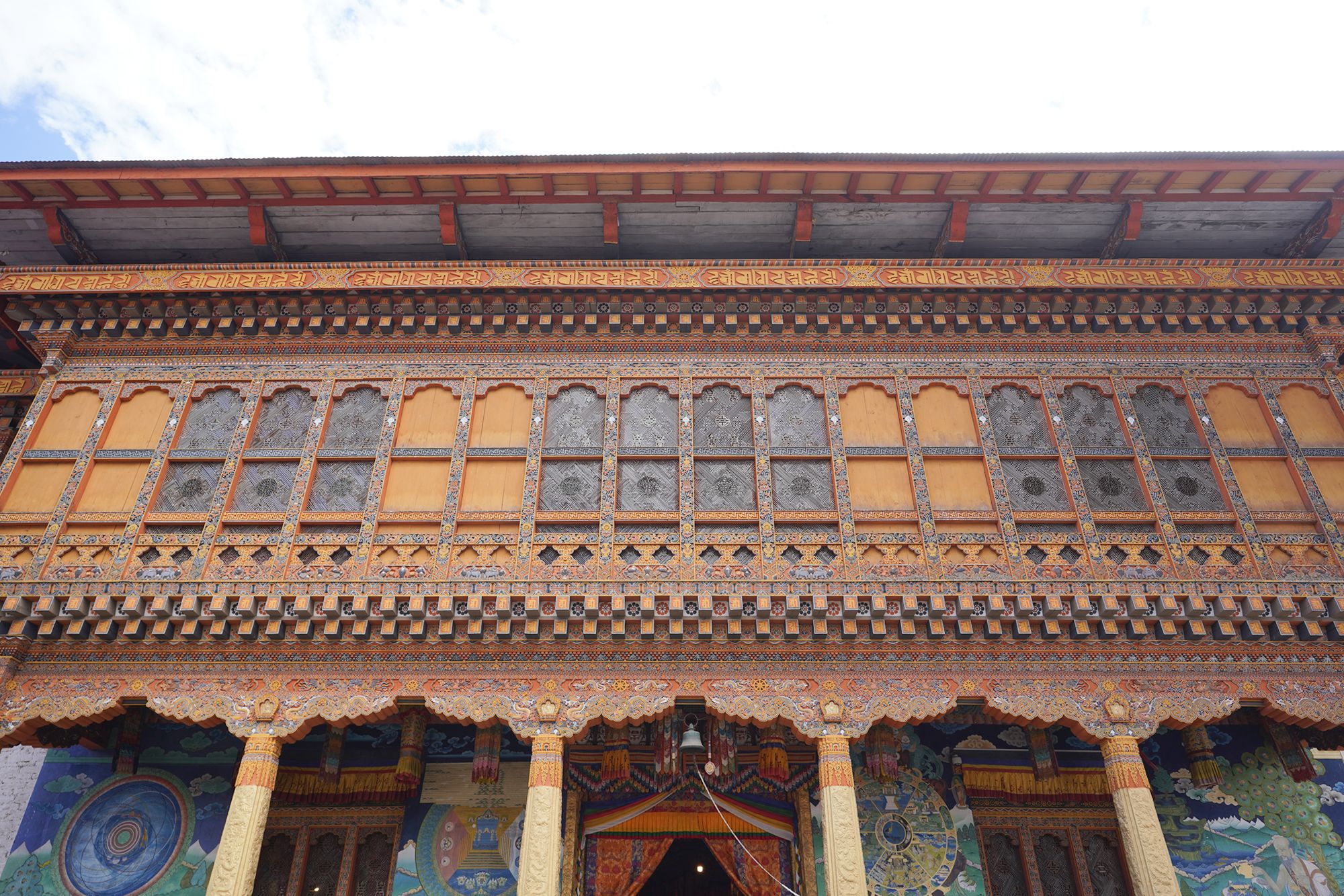
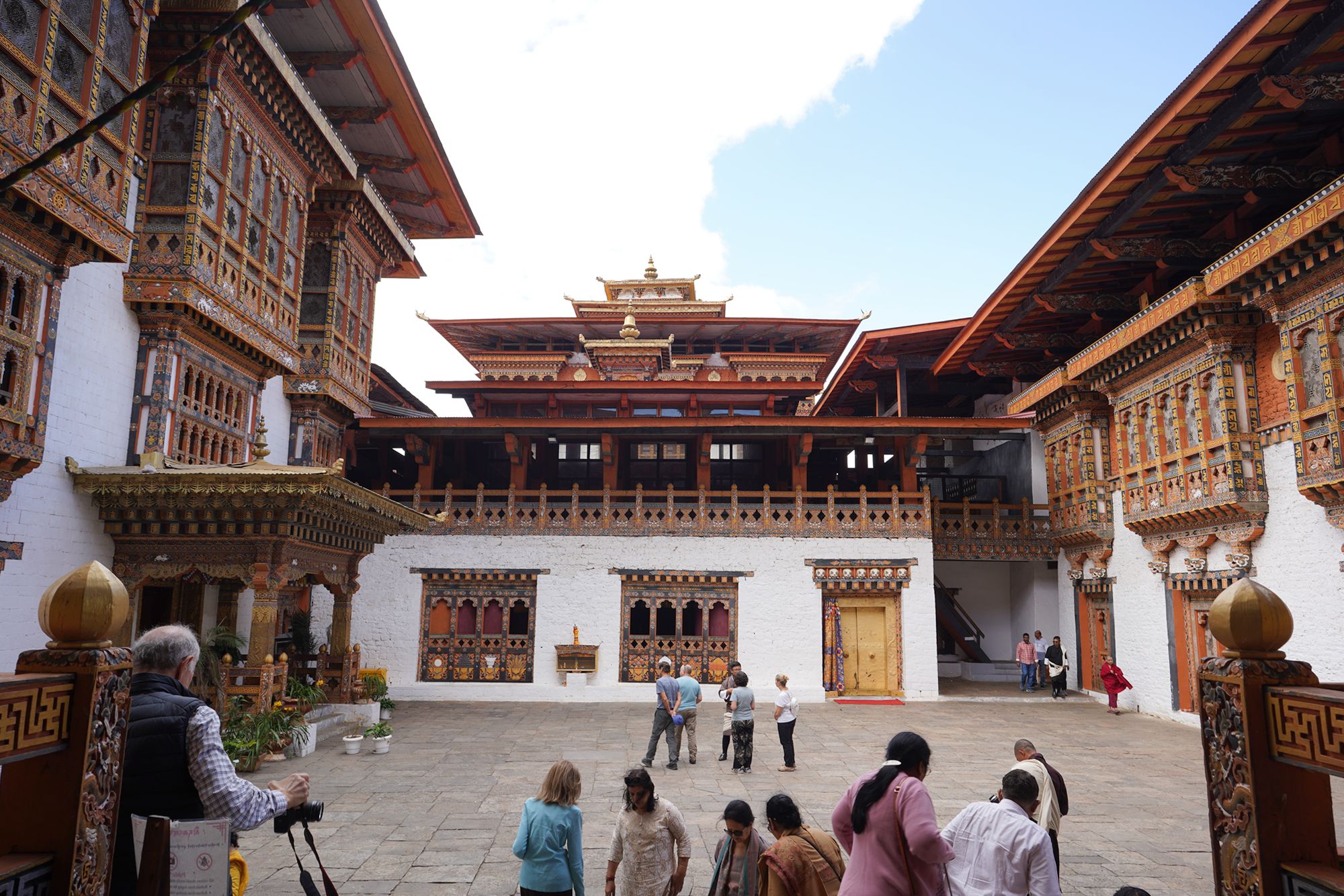
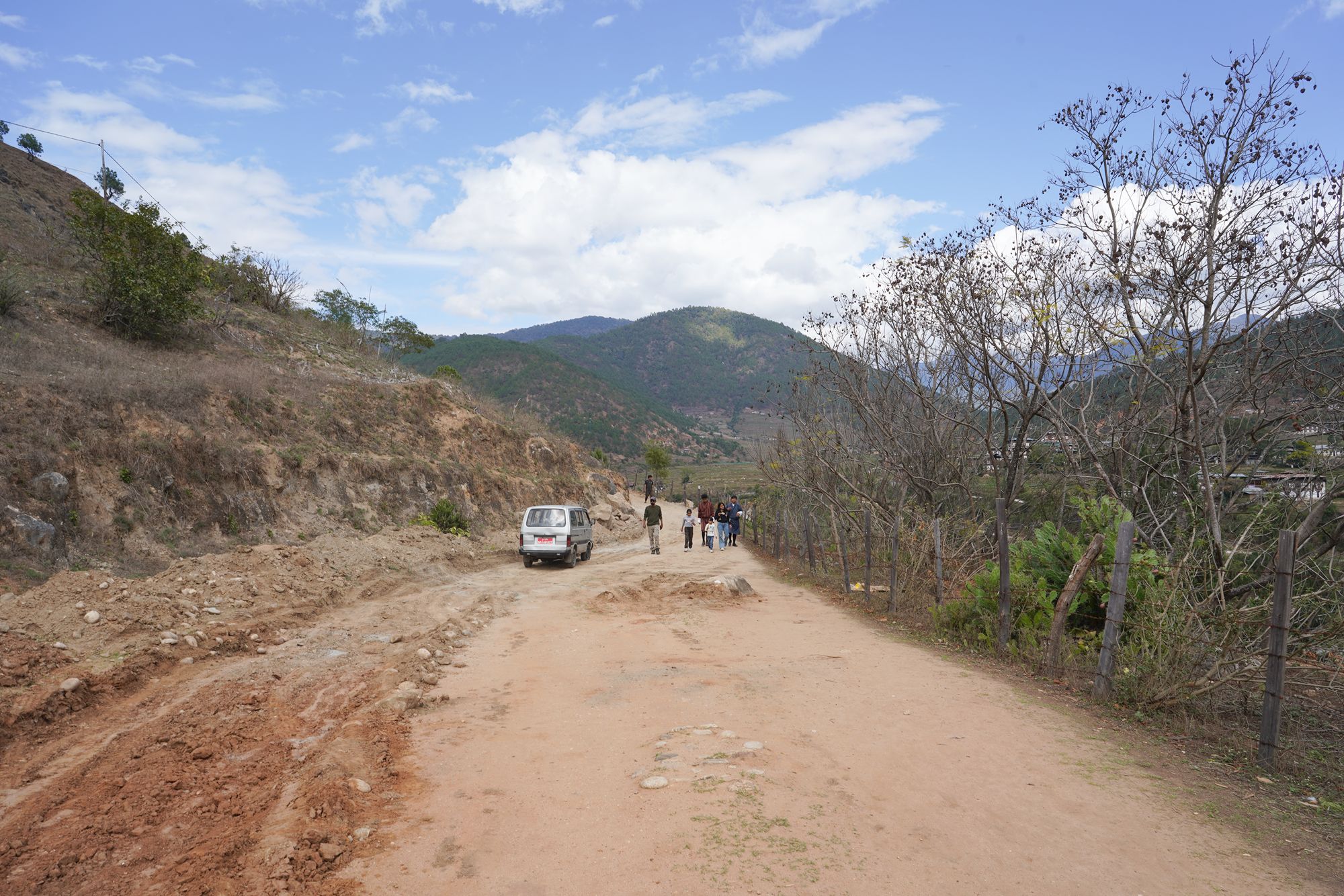
From Punakha Dzong, we drove a short distance to the nearby Punakha Suspension Bridge.
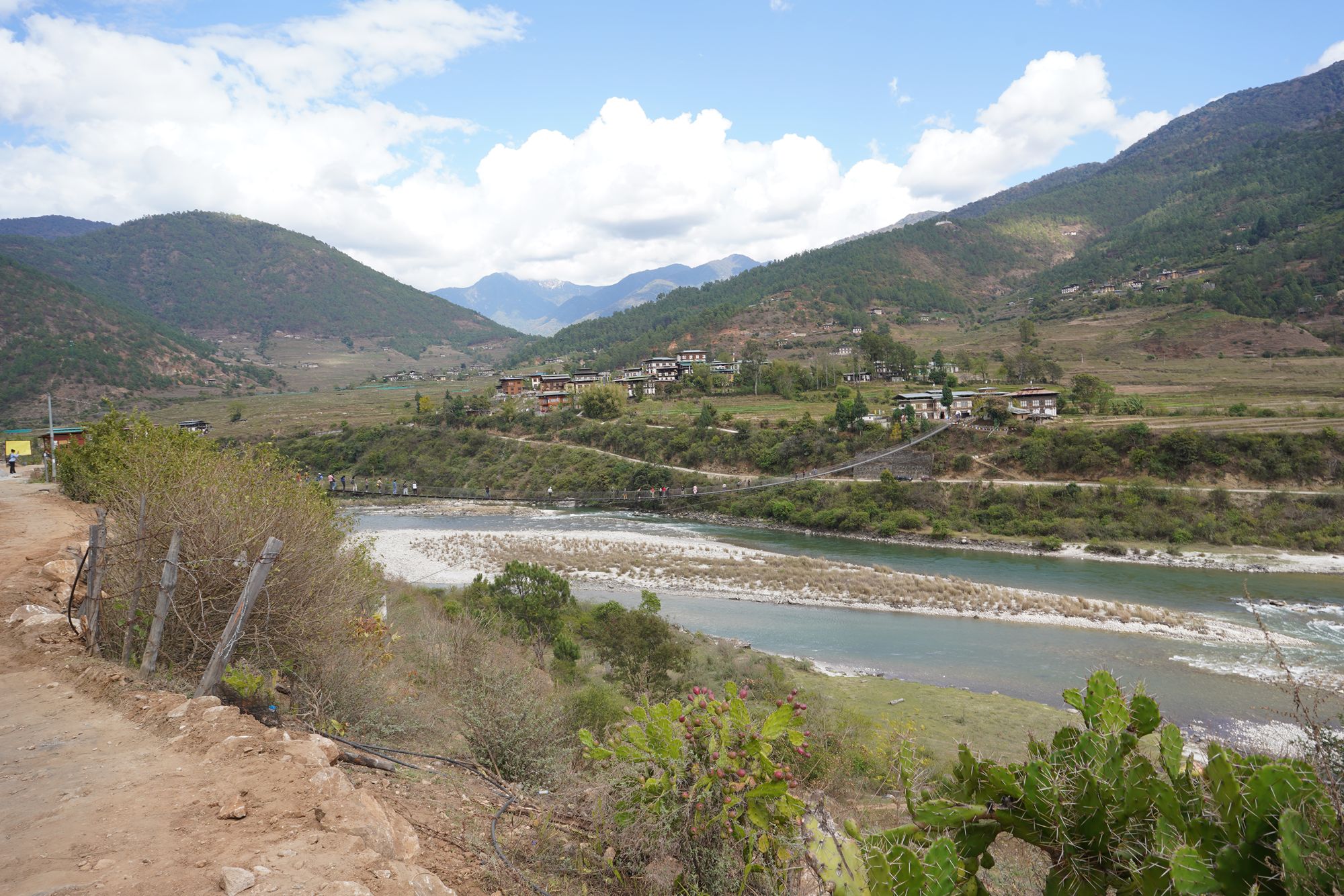
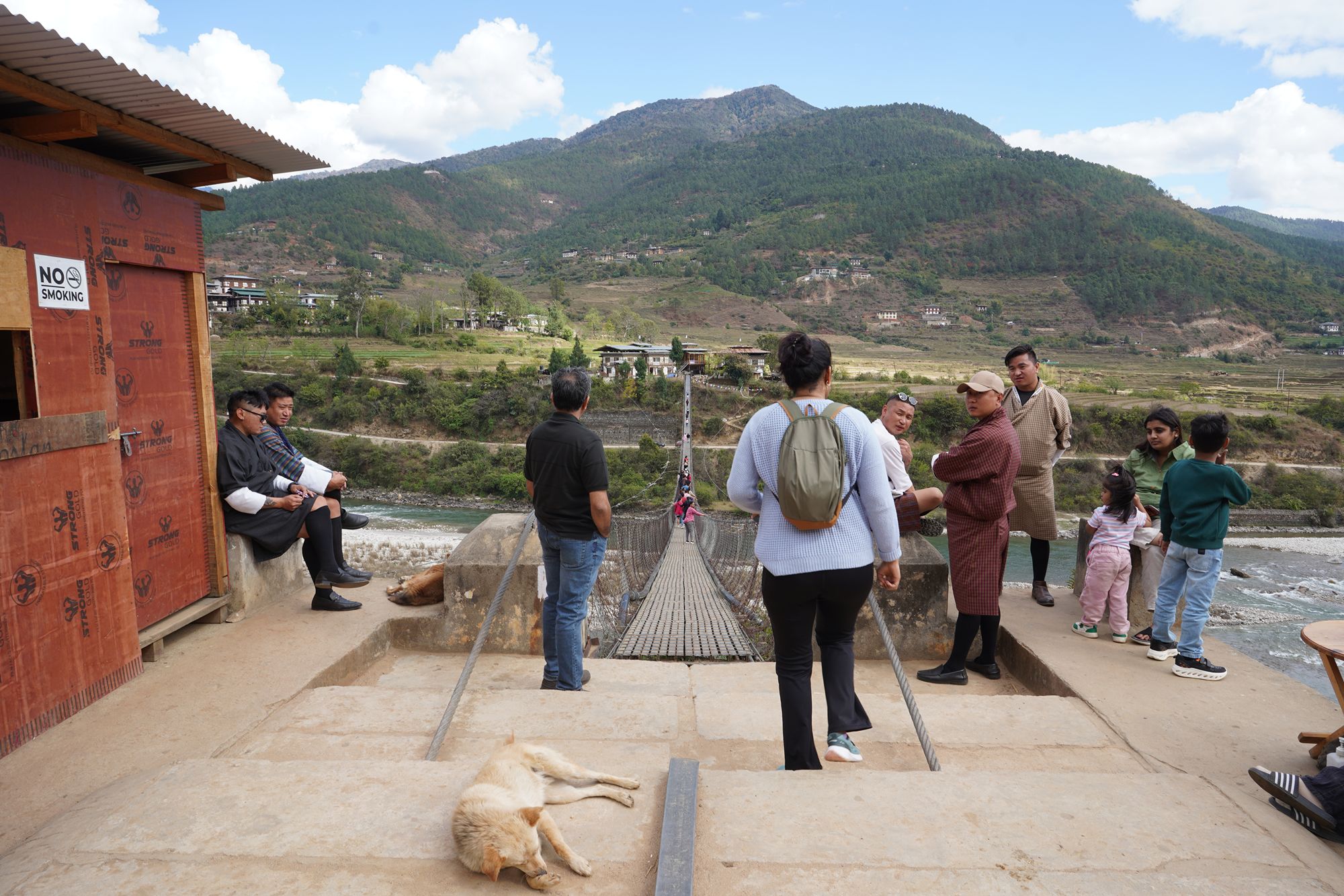
Punakha Suspension Bridge
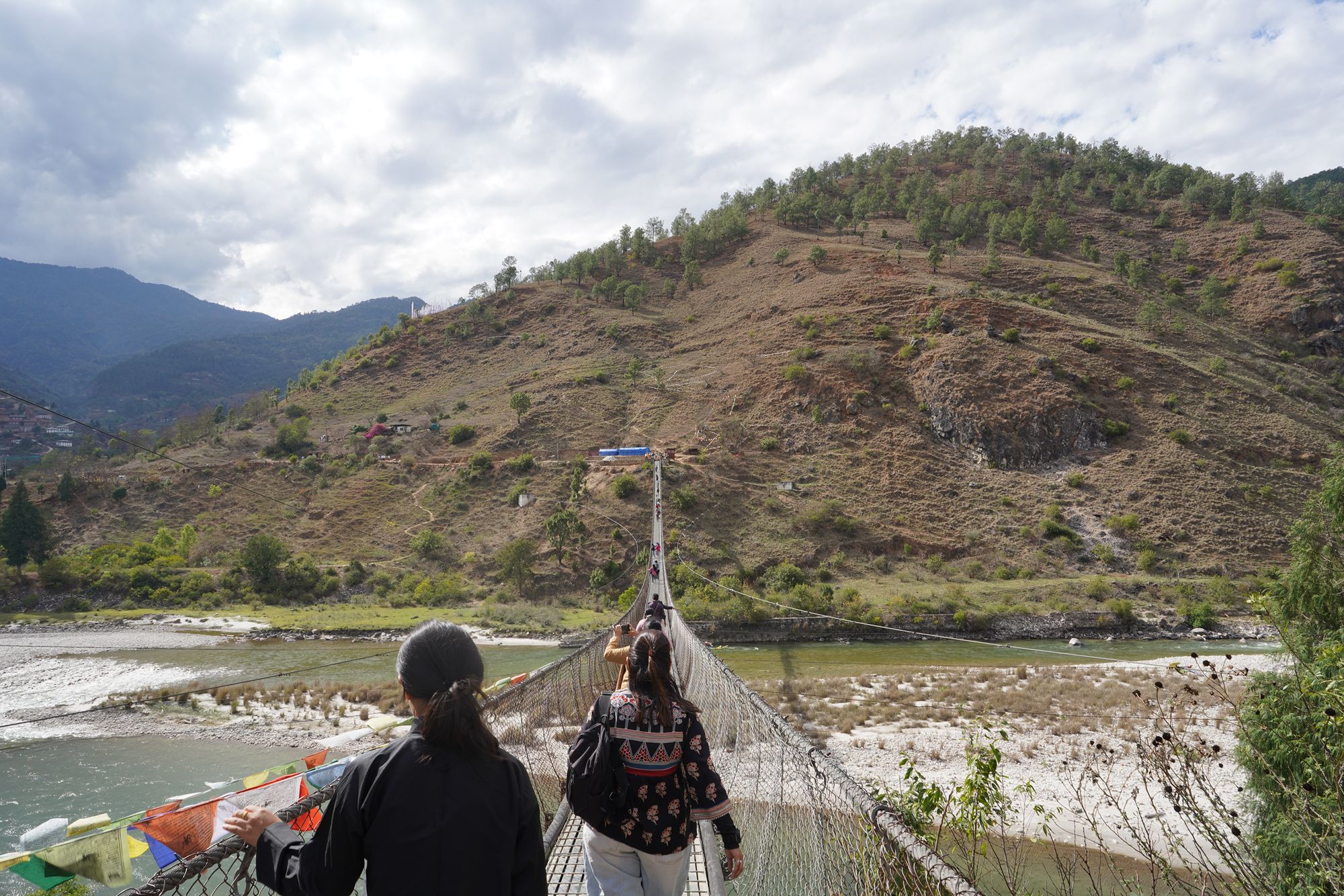
The Punakha Suspension Bridge is a long pedestrian bridge spanning the Pho Chhu River, not far from Punakha Dzong. At roughly 160–180 meters (525–590 feet) long, it is often described as one of Bhutan’s longest suspension bridges.
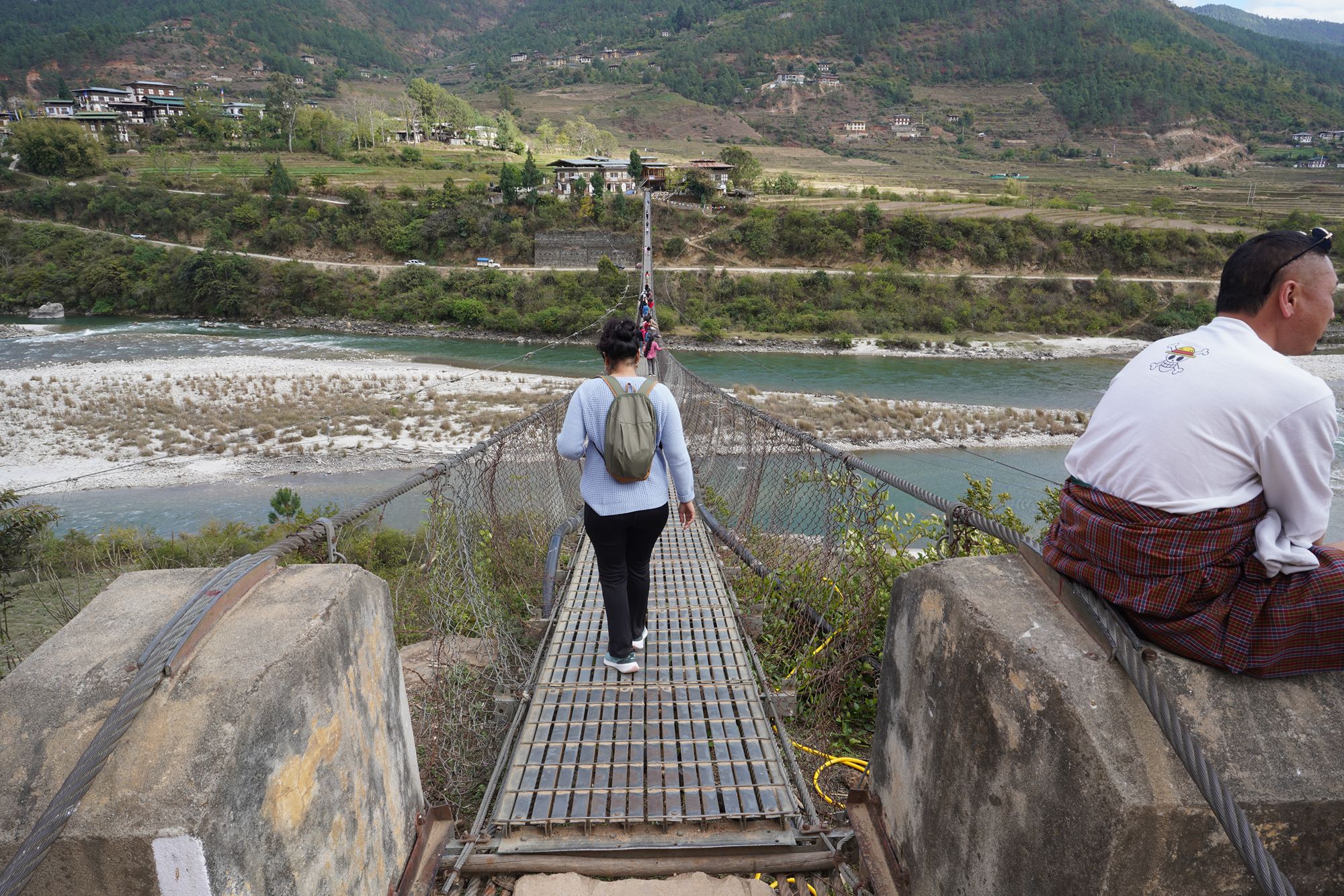
Unlike Punakha Dzong, the bridge is not primarily a historic monument for tourists. Suspension bridges have long provided important connections between villages and communities separated by Bhutan's steep valleys and rivers.
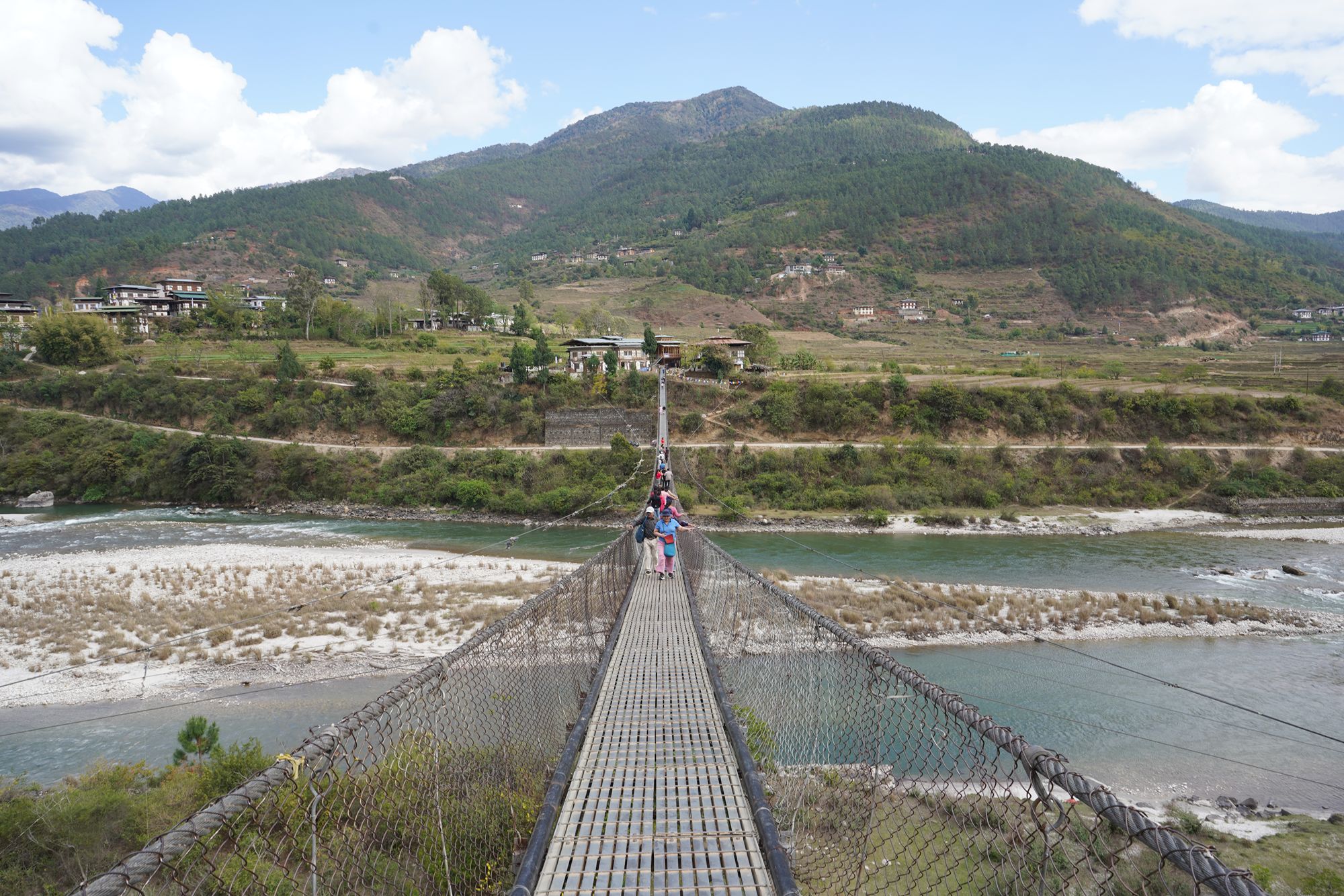
Walking across gives you beautiful views of the Pho Chhu River, surrounding mountains, farmland, and Punakha Valley—although the bridge can sway noticeably as people walk across it.
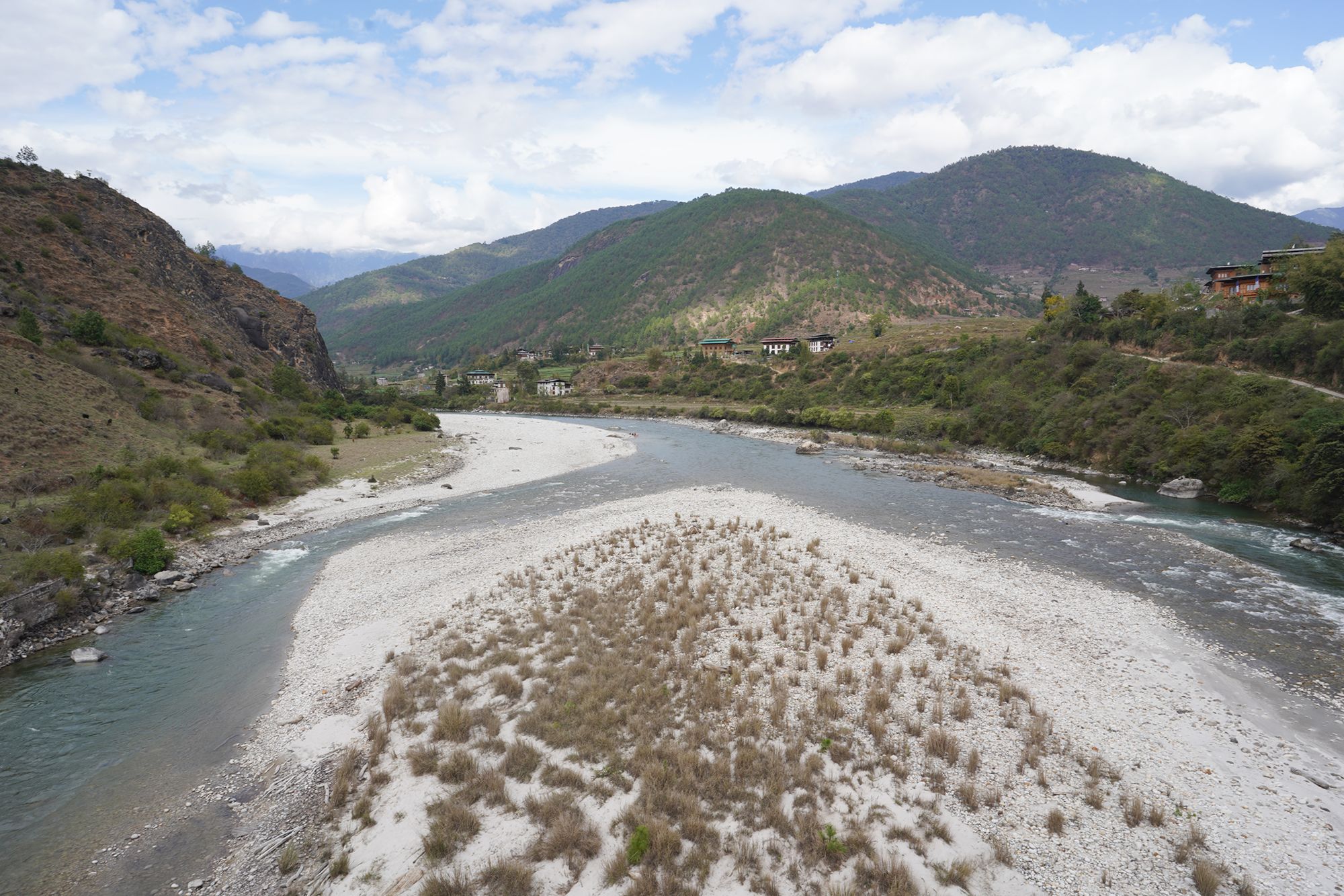
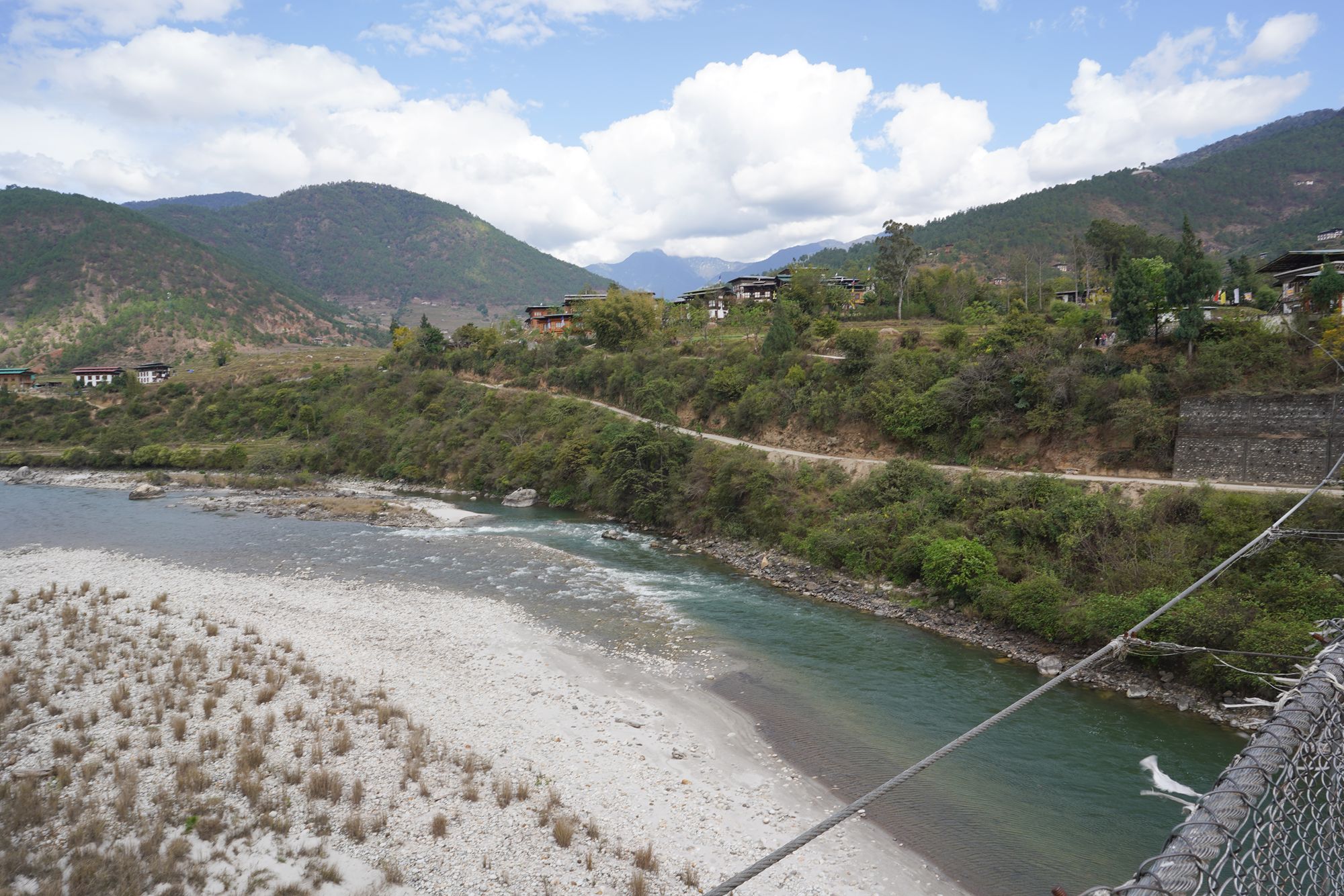
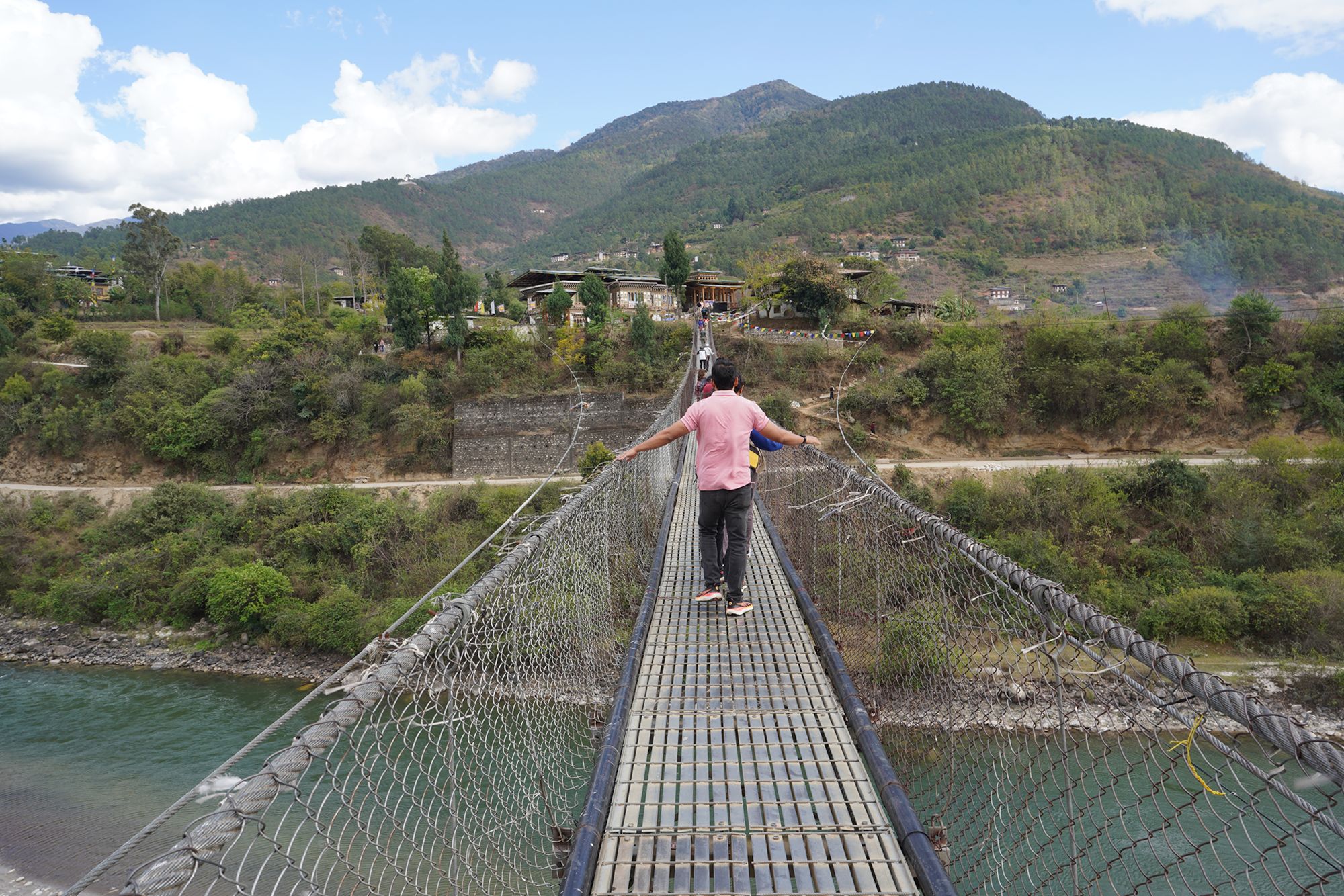
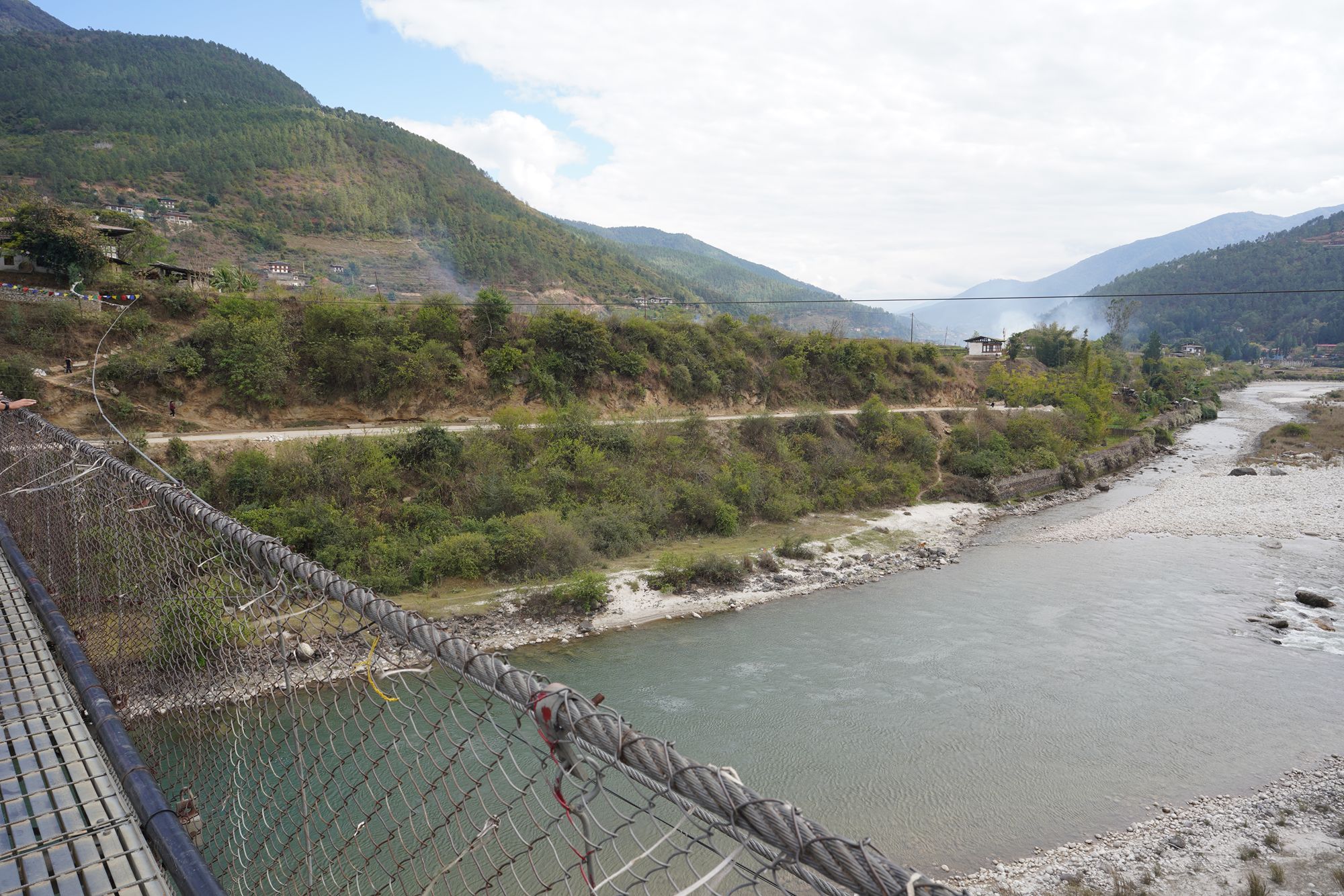
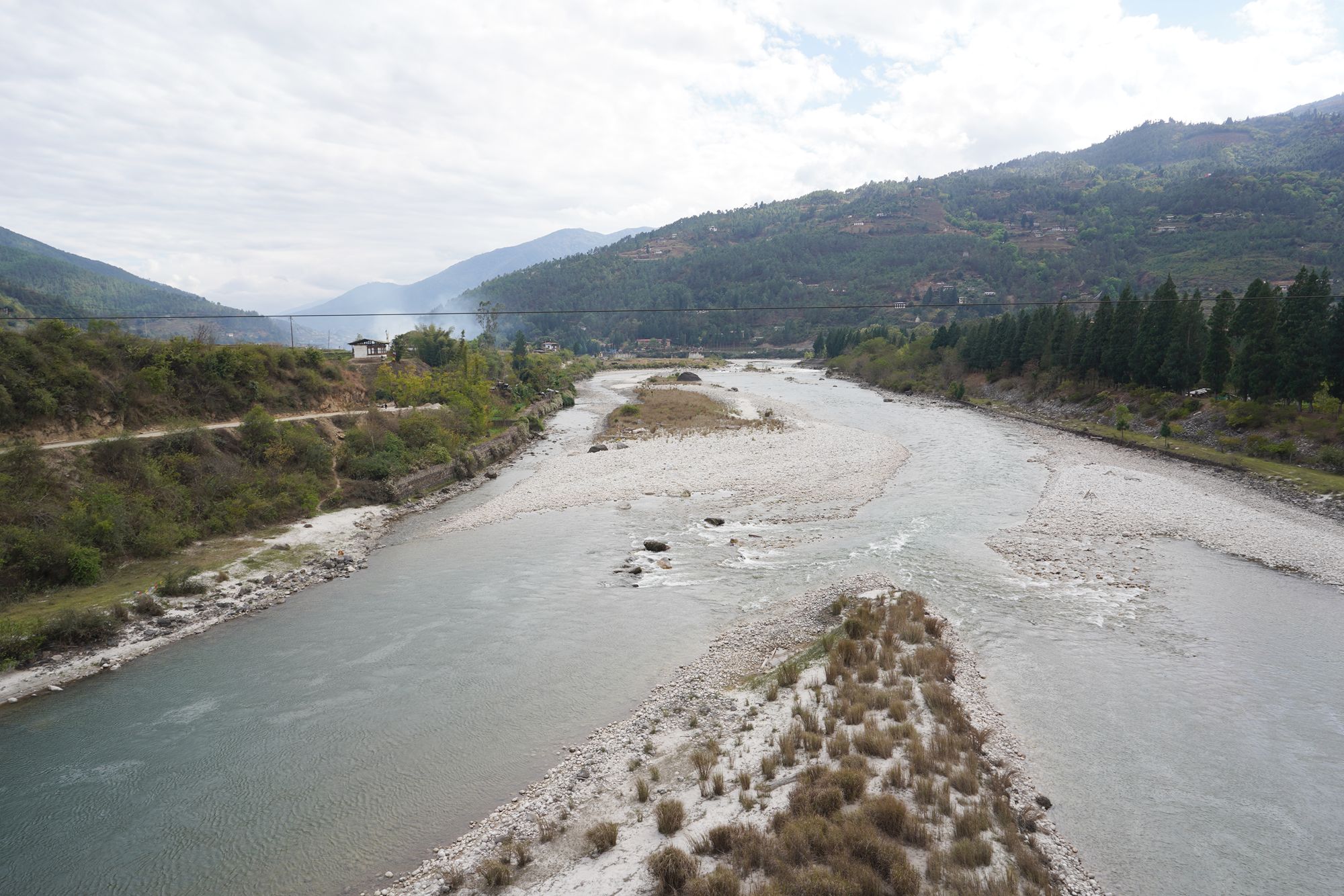
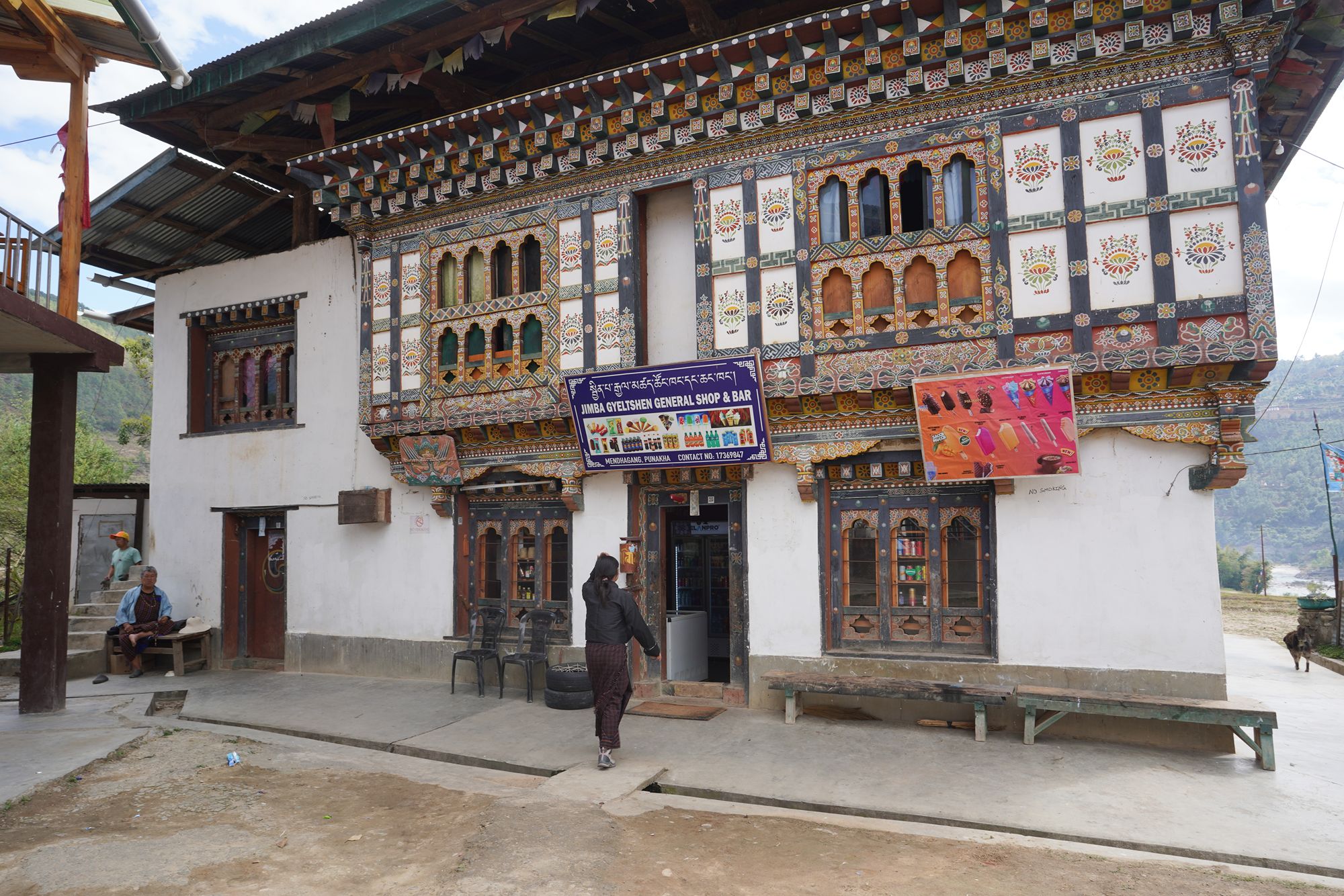
At the other end of the bridge, there was a hotel and a small market, where I stopped to get some ice cream.
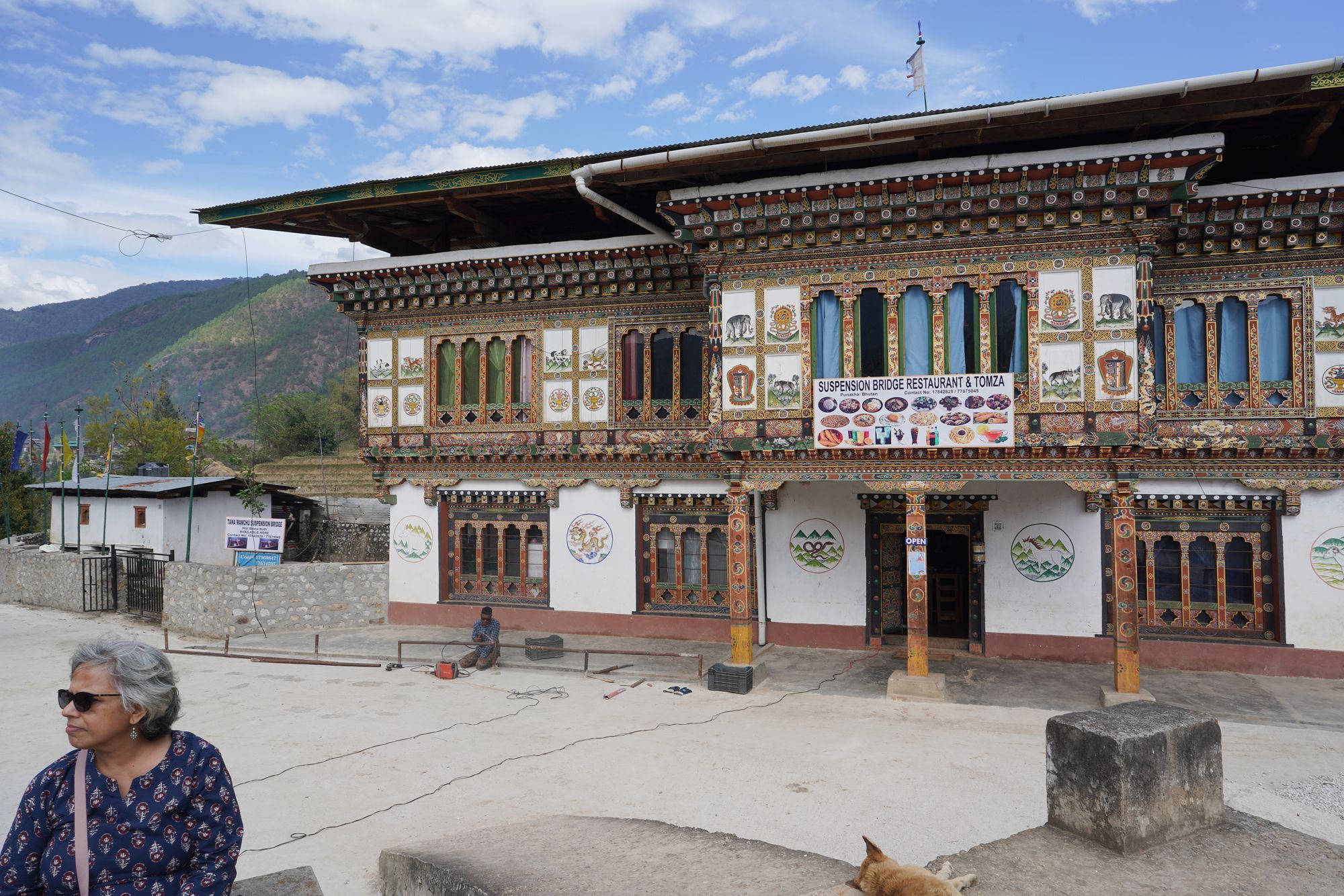
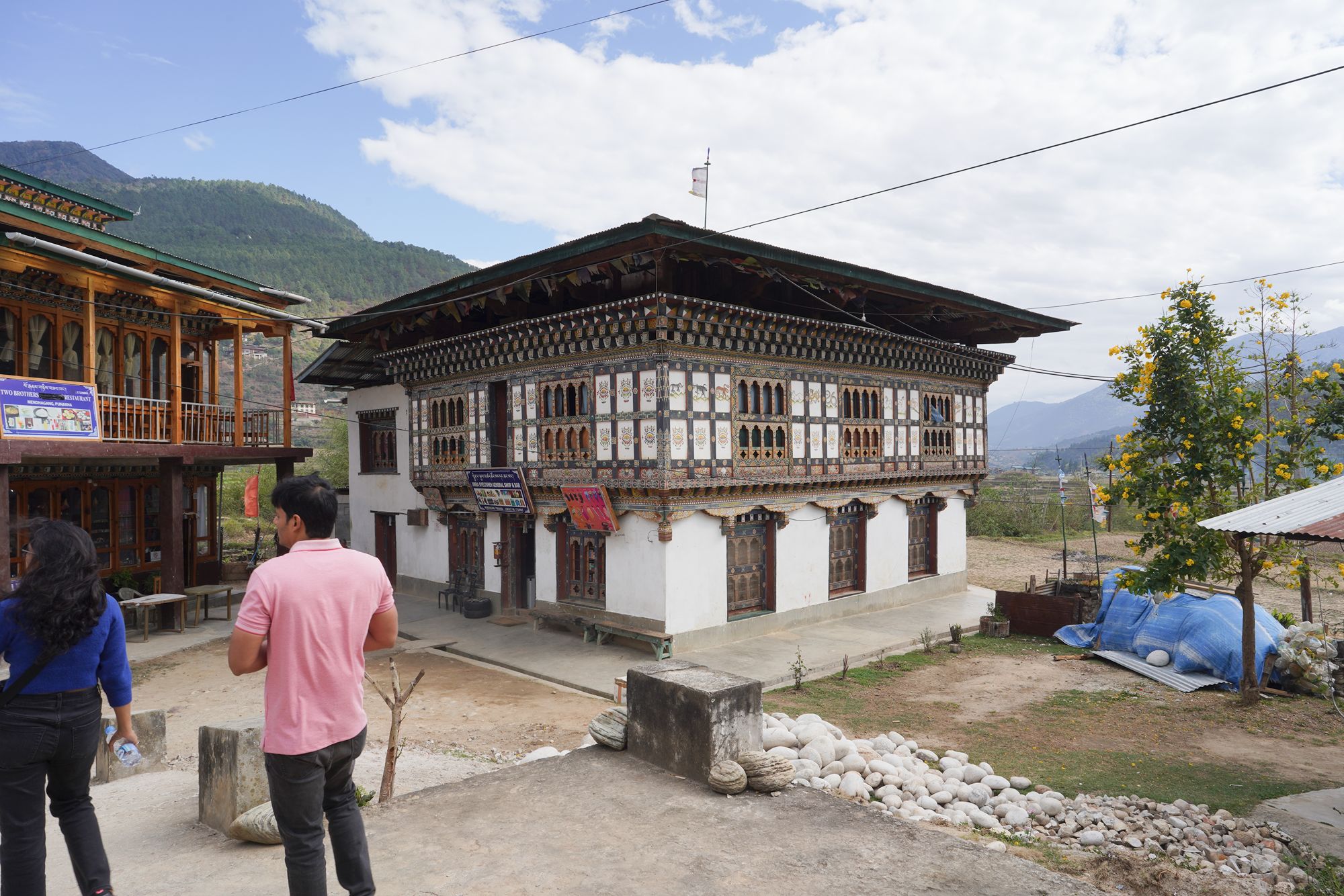
After enjoying my ice cream, I walked back across the suspension bridge to the other side.
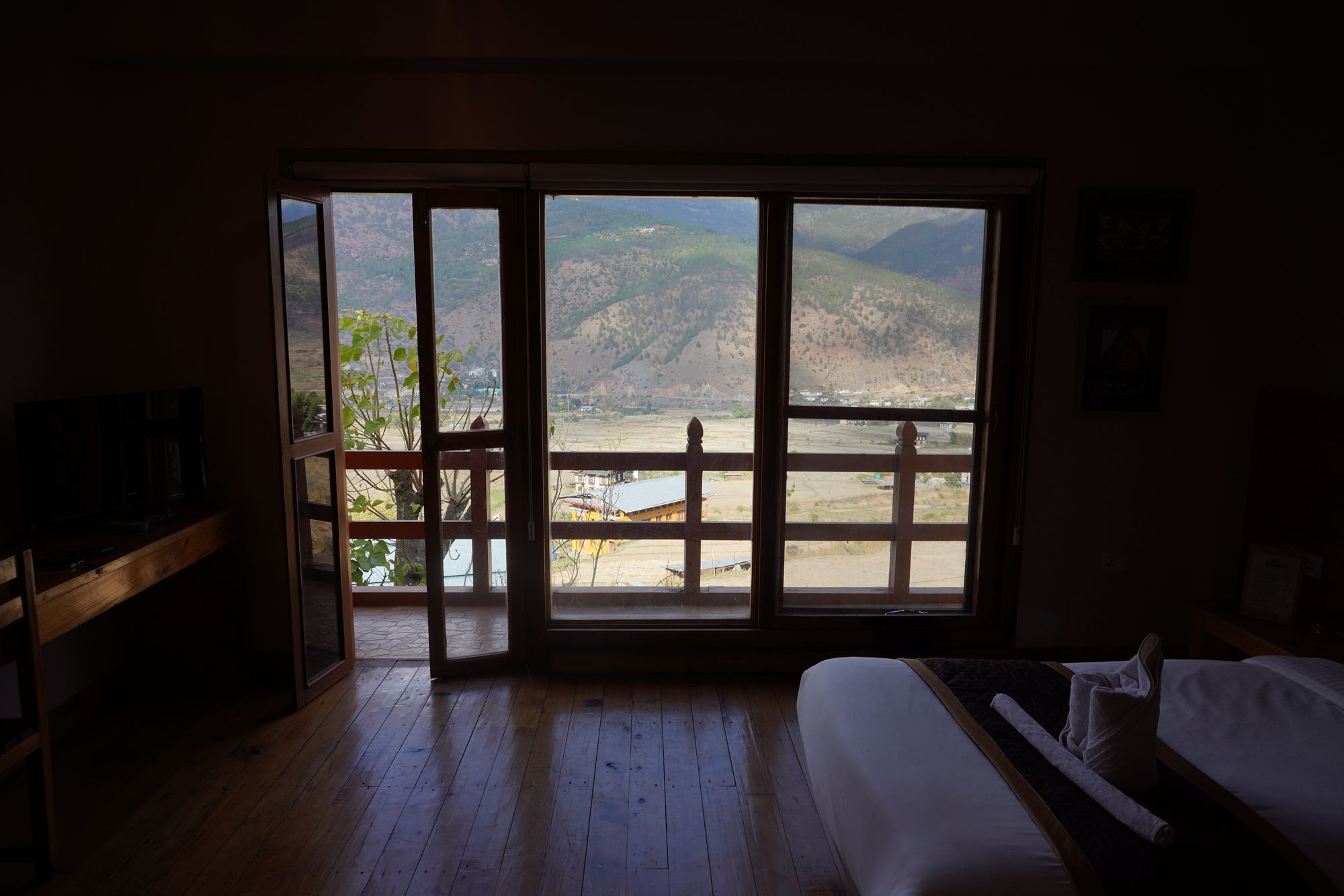
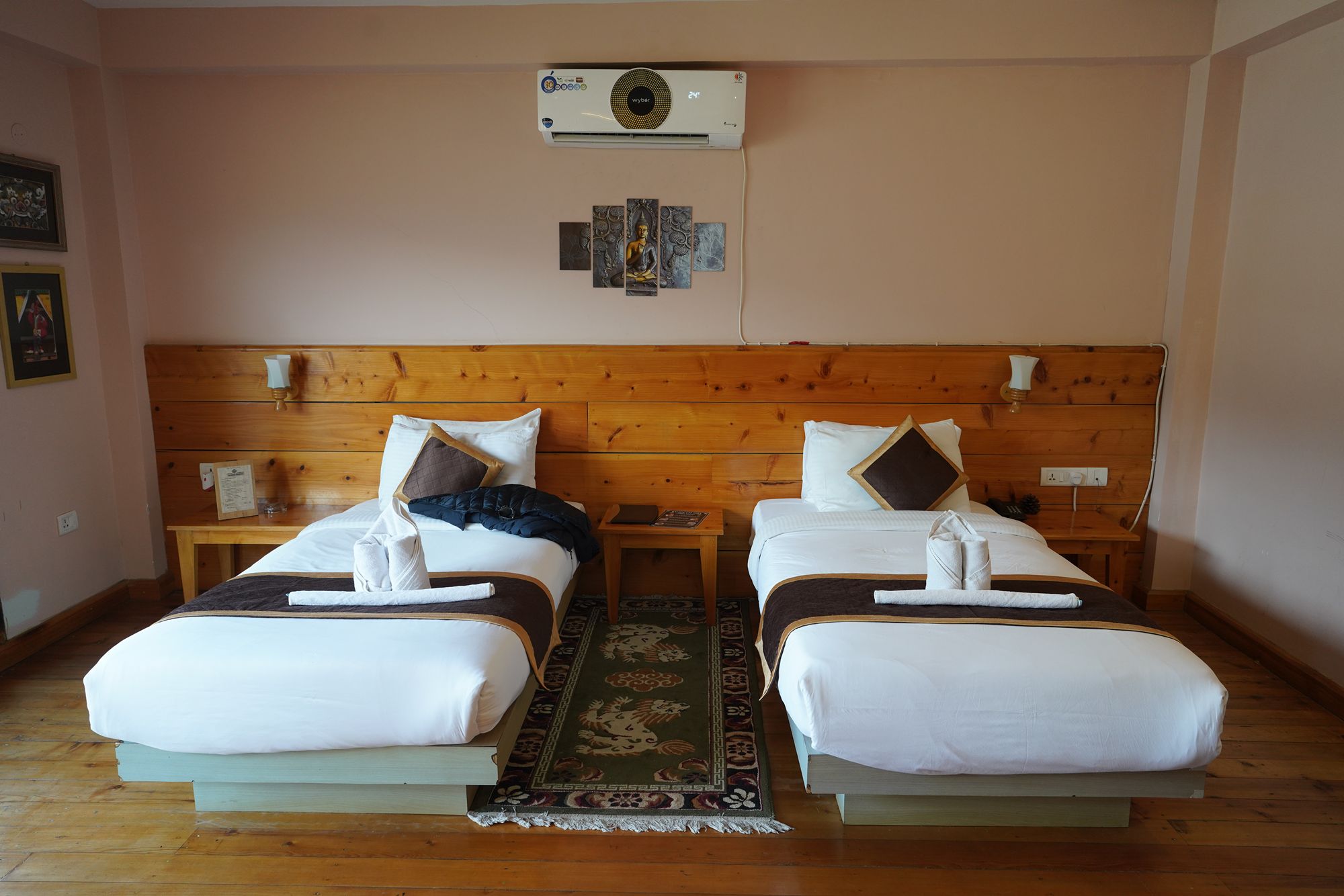
A hotel I stayed
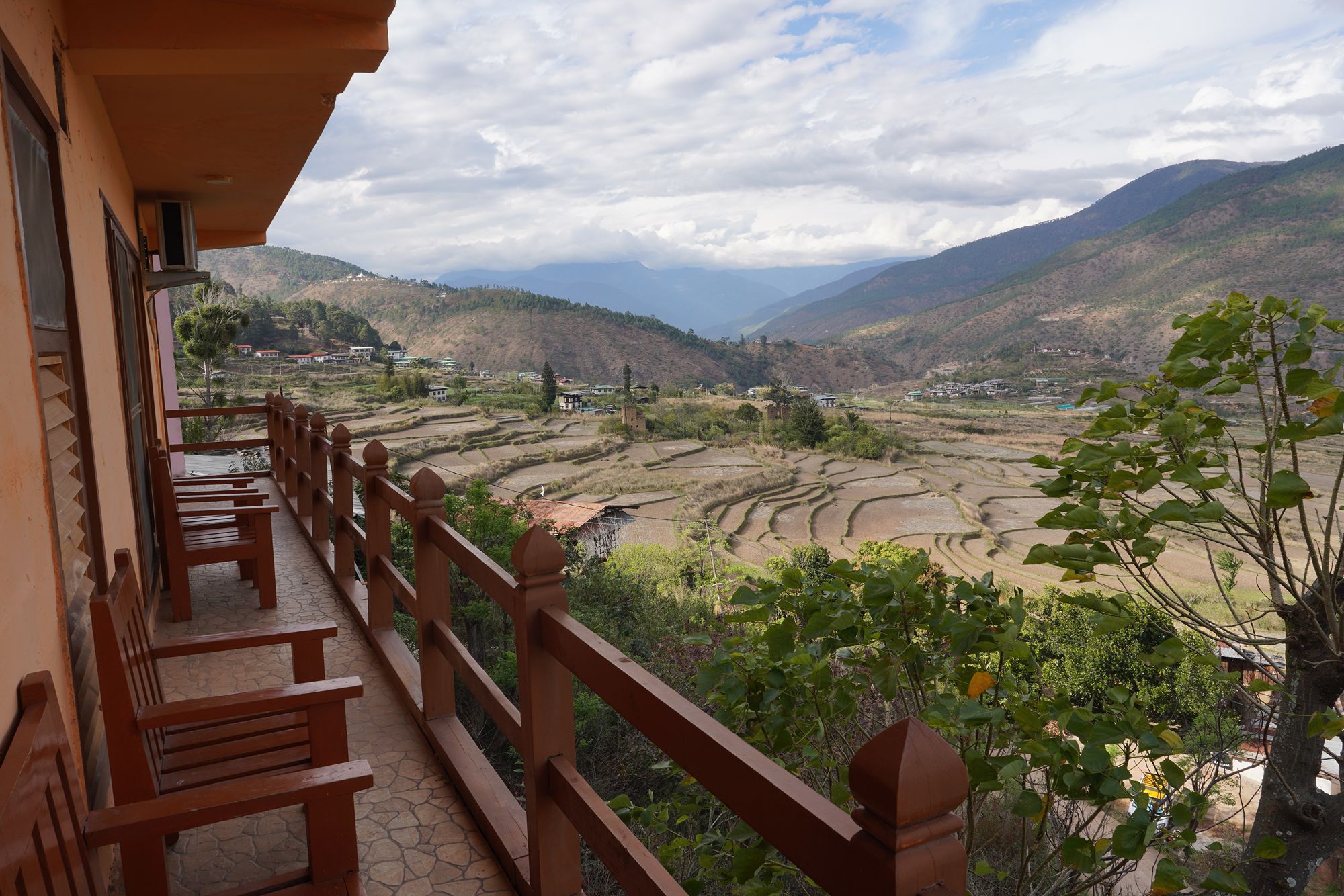
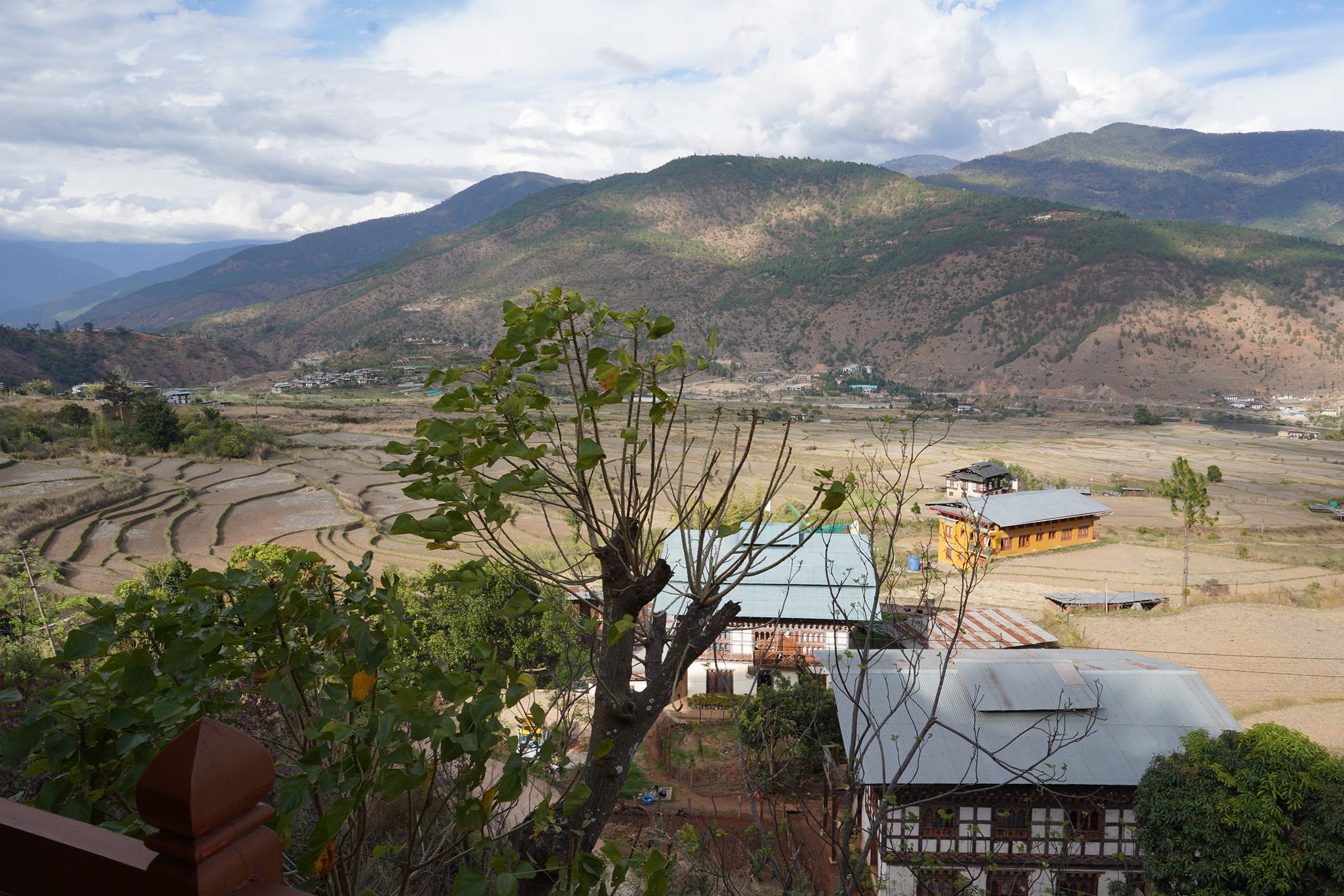
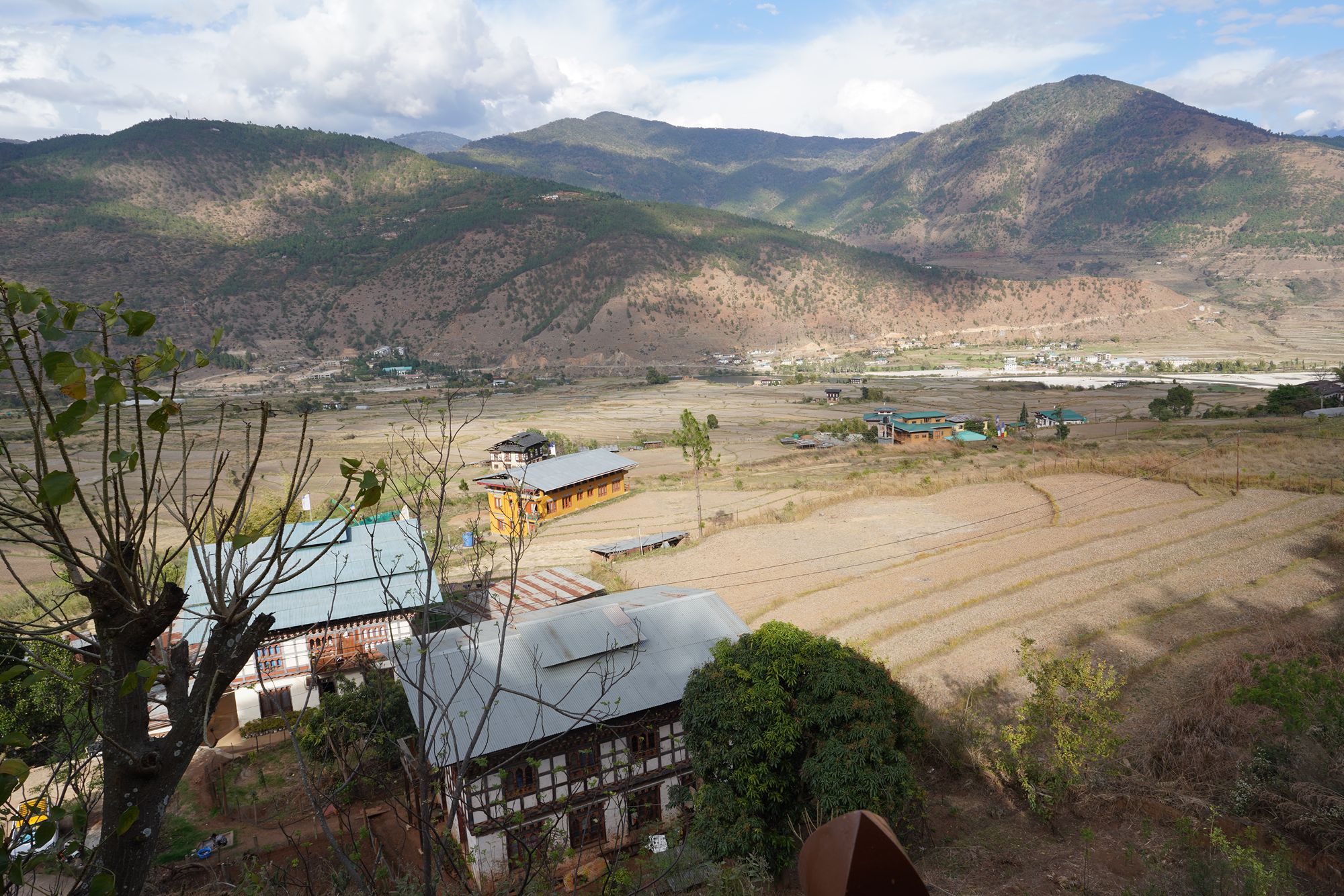
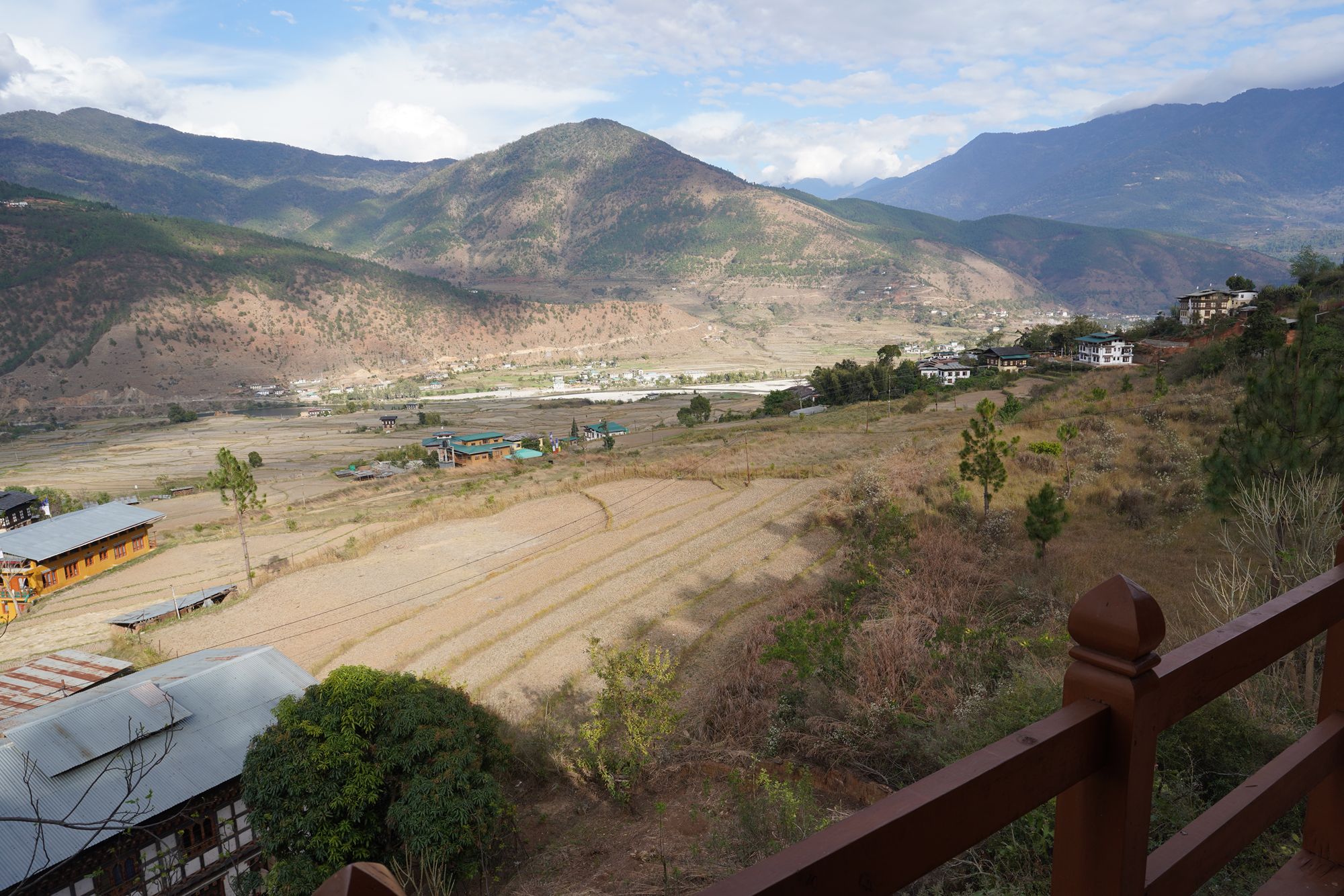
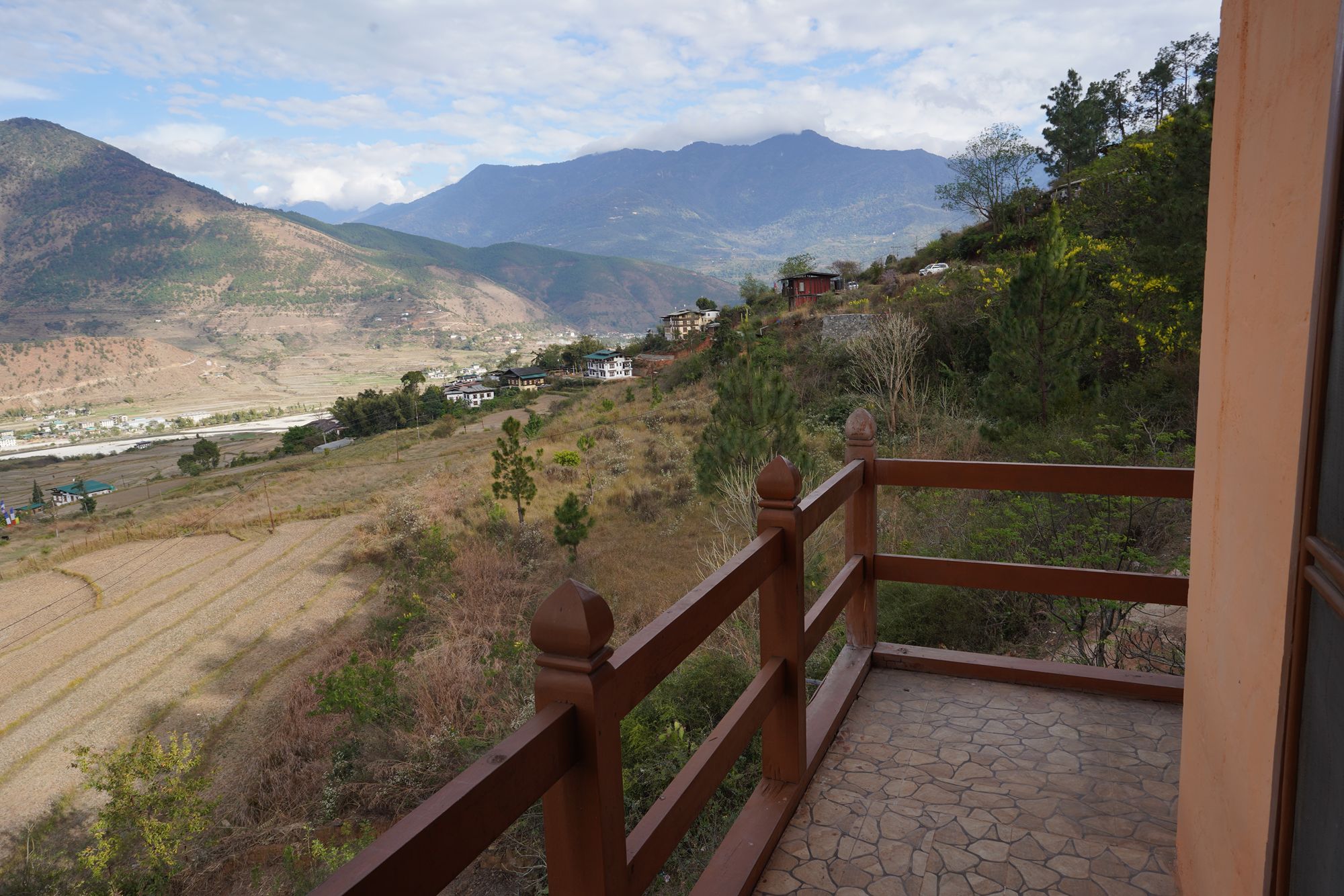
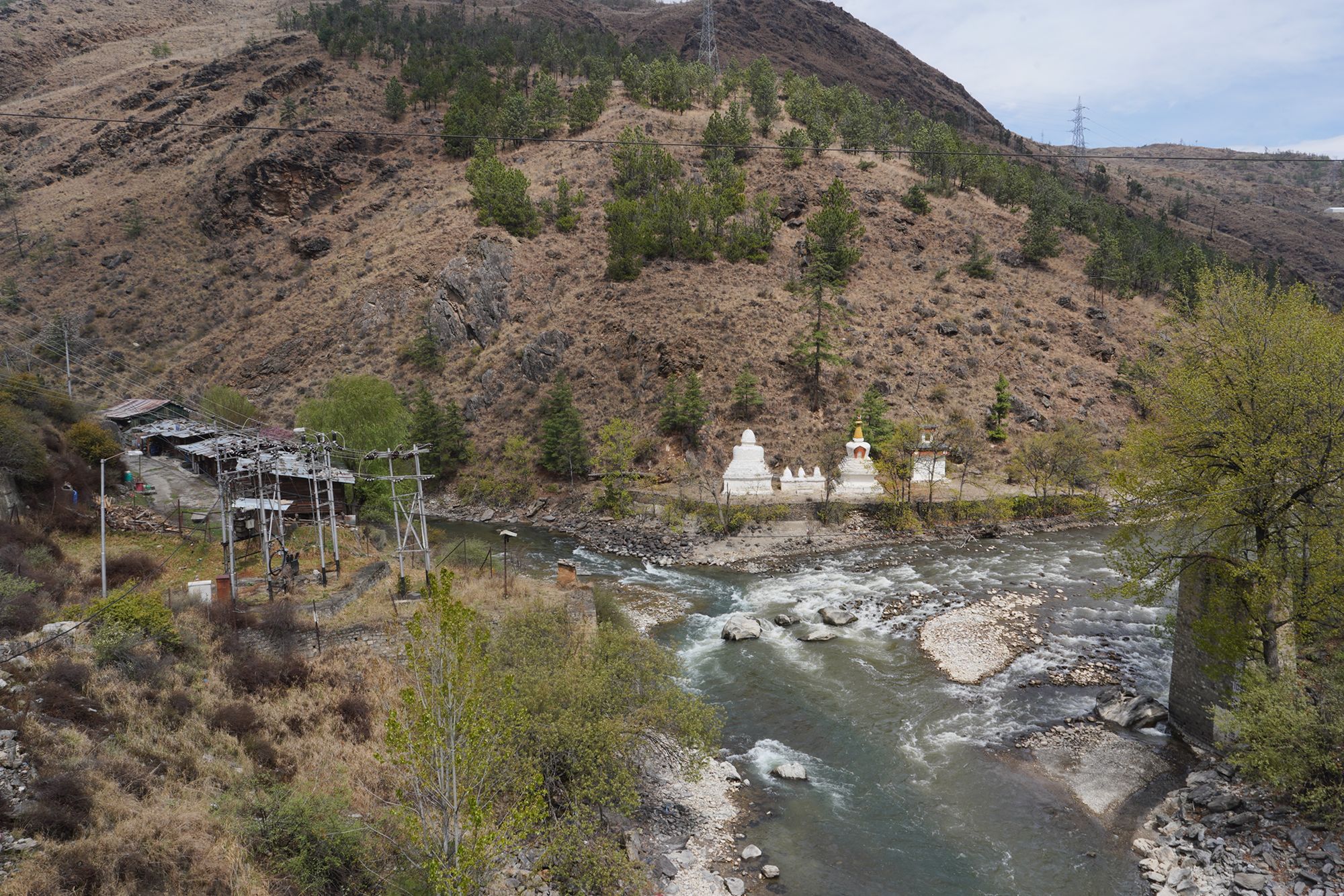
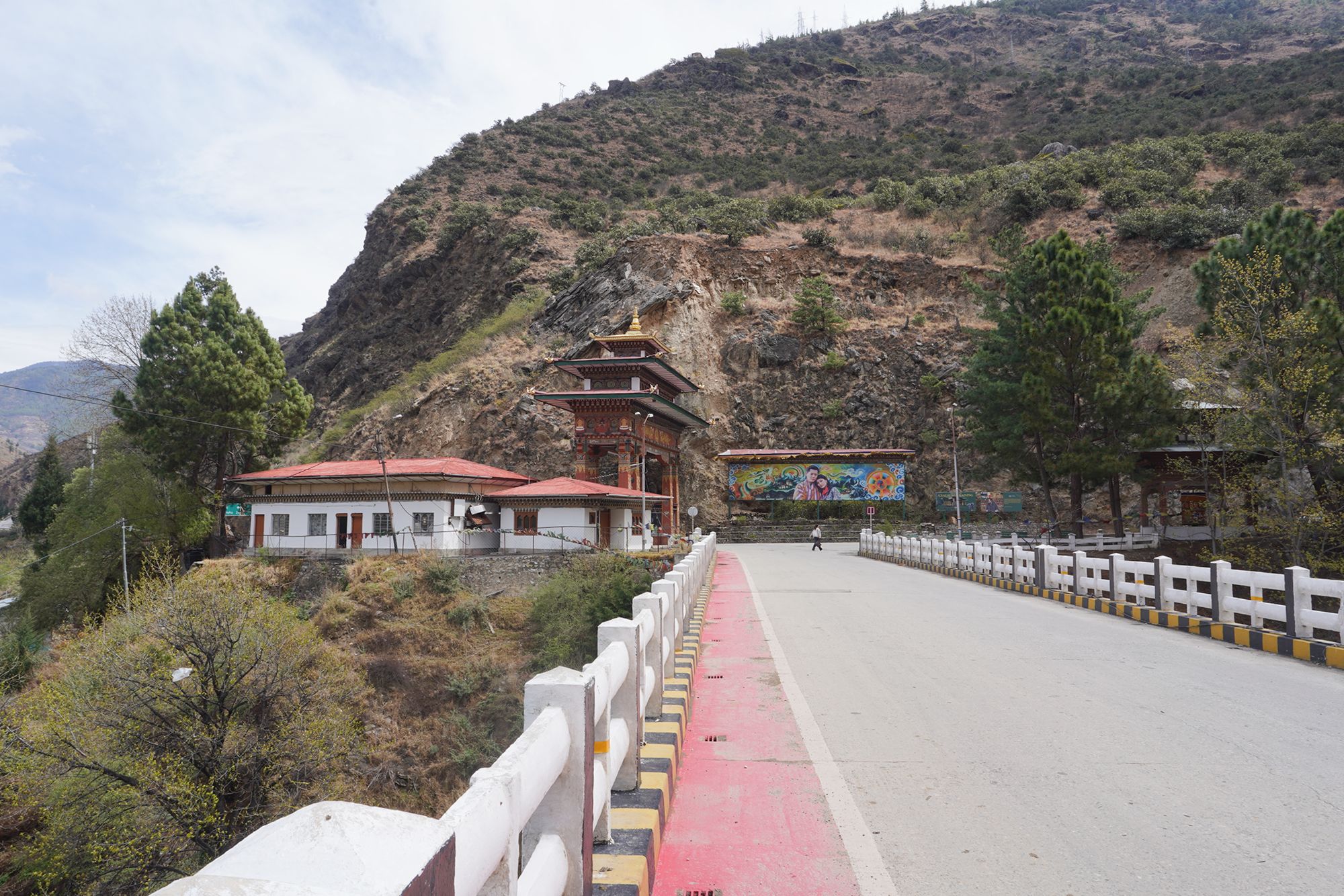
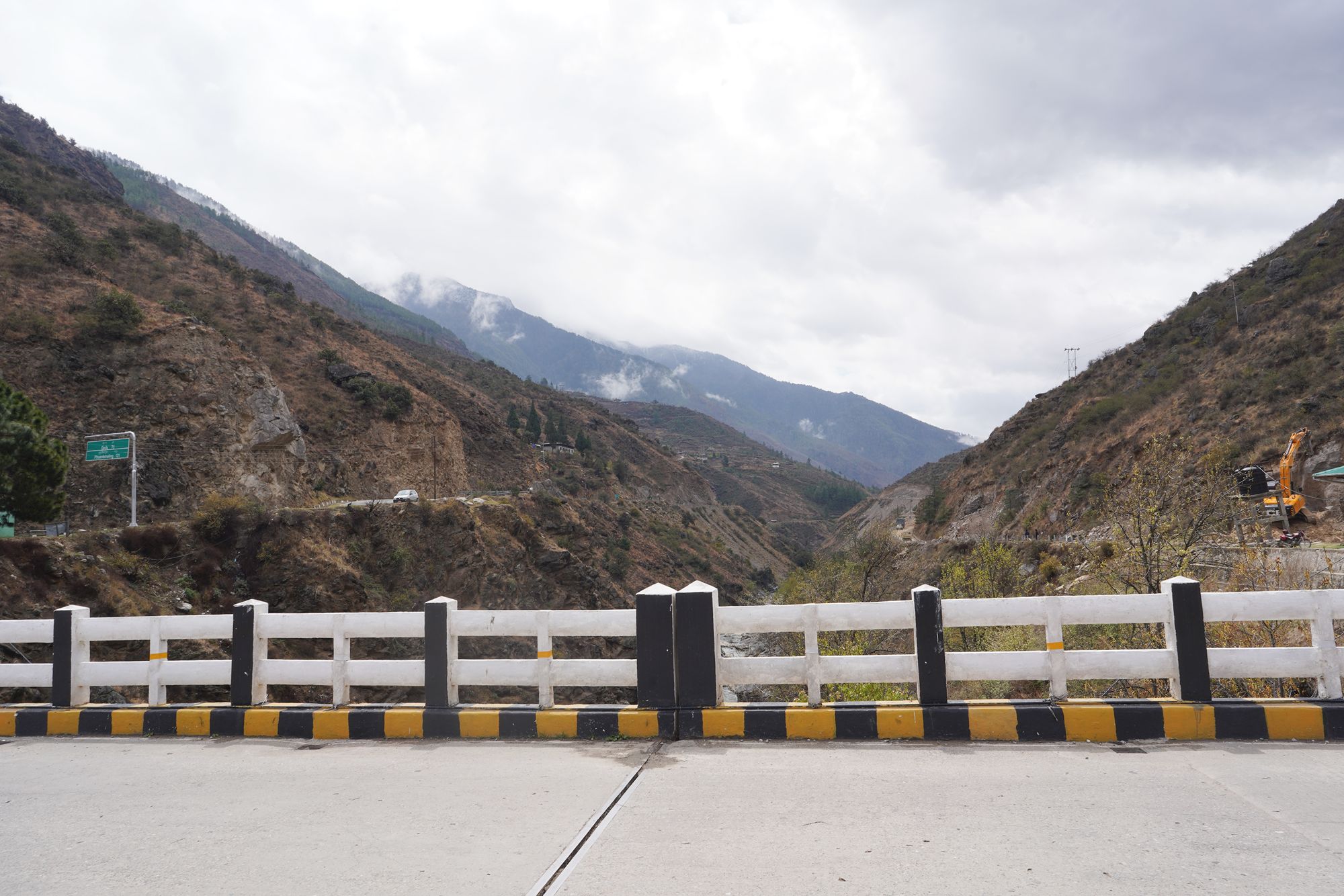
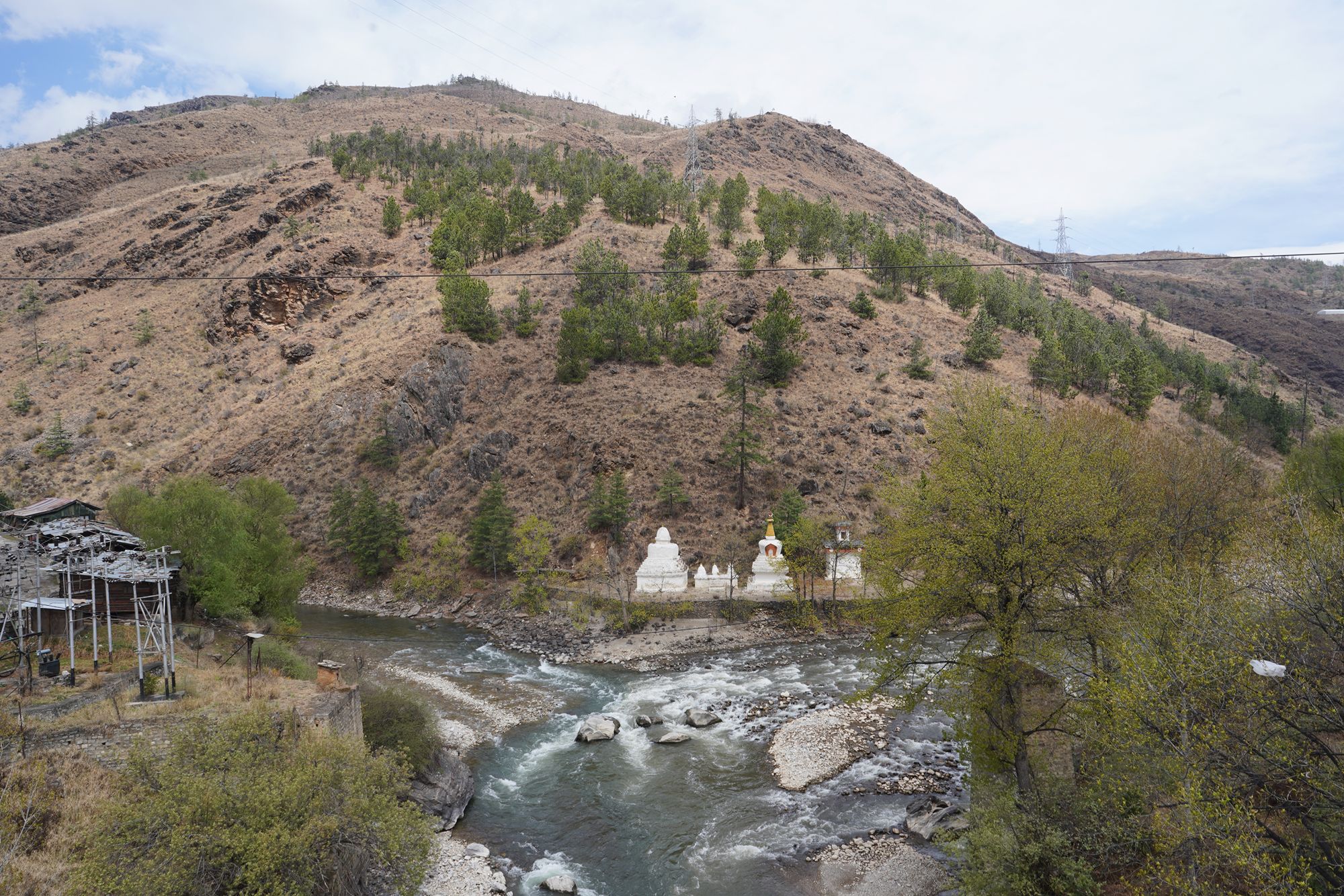
The next day, we drove back to Paro from Punakha. Along the way, we stopped at a viewpoint where we could see a shrine in the distance.
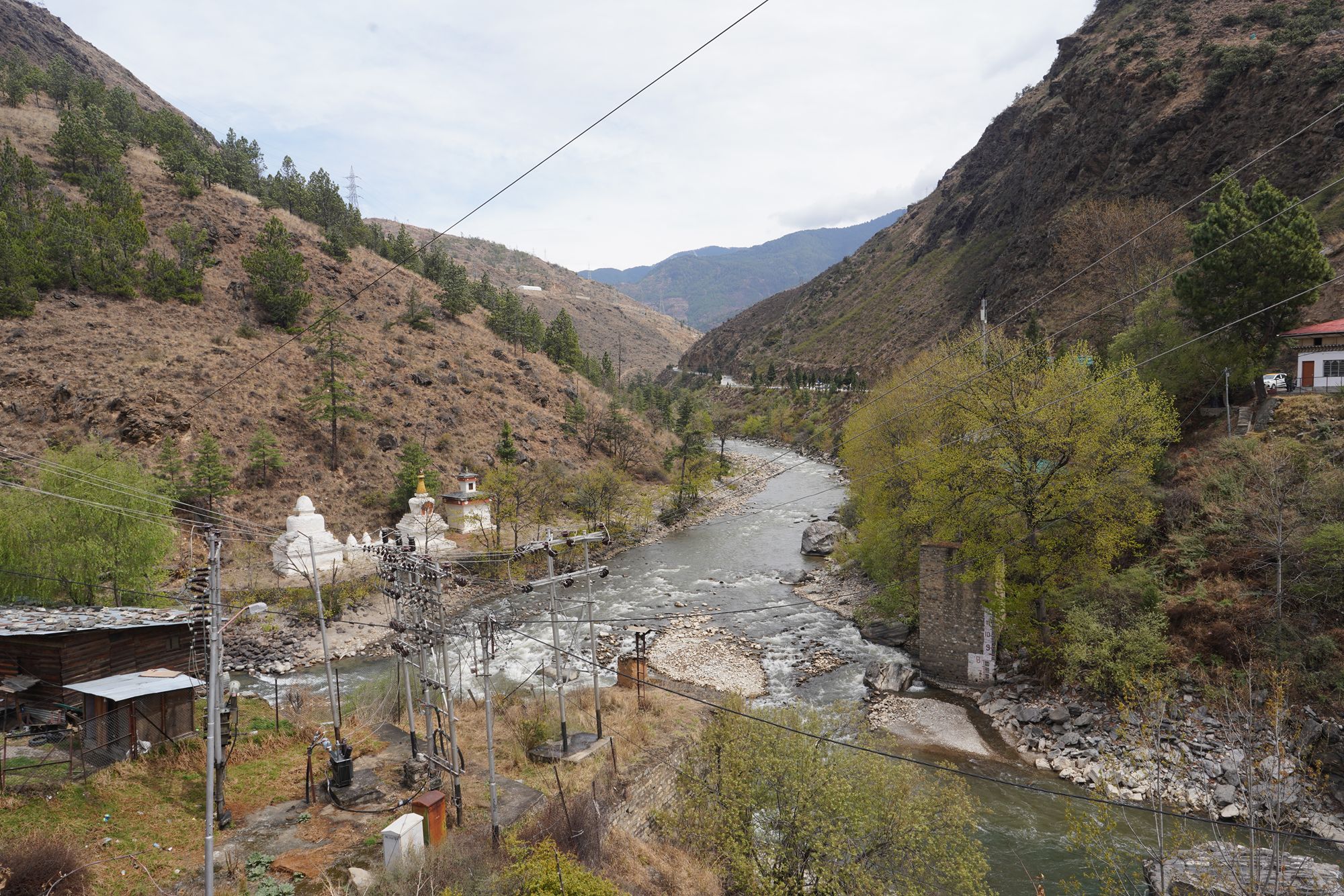
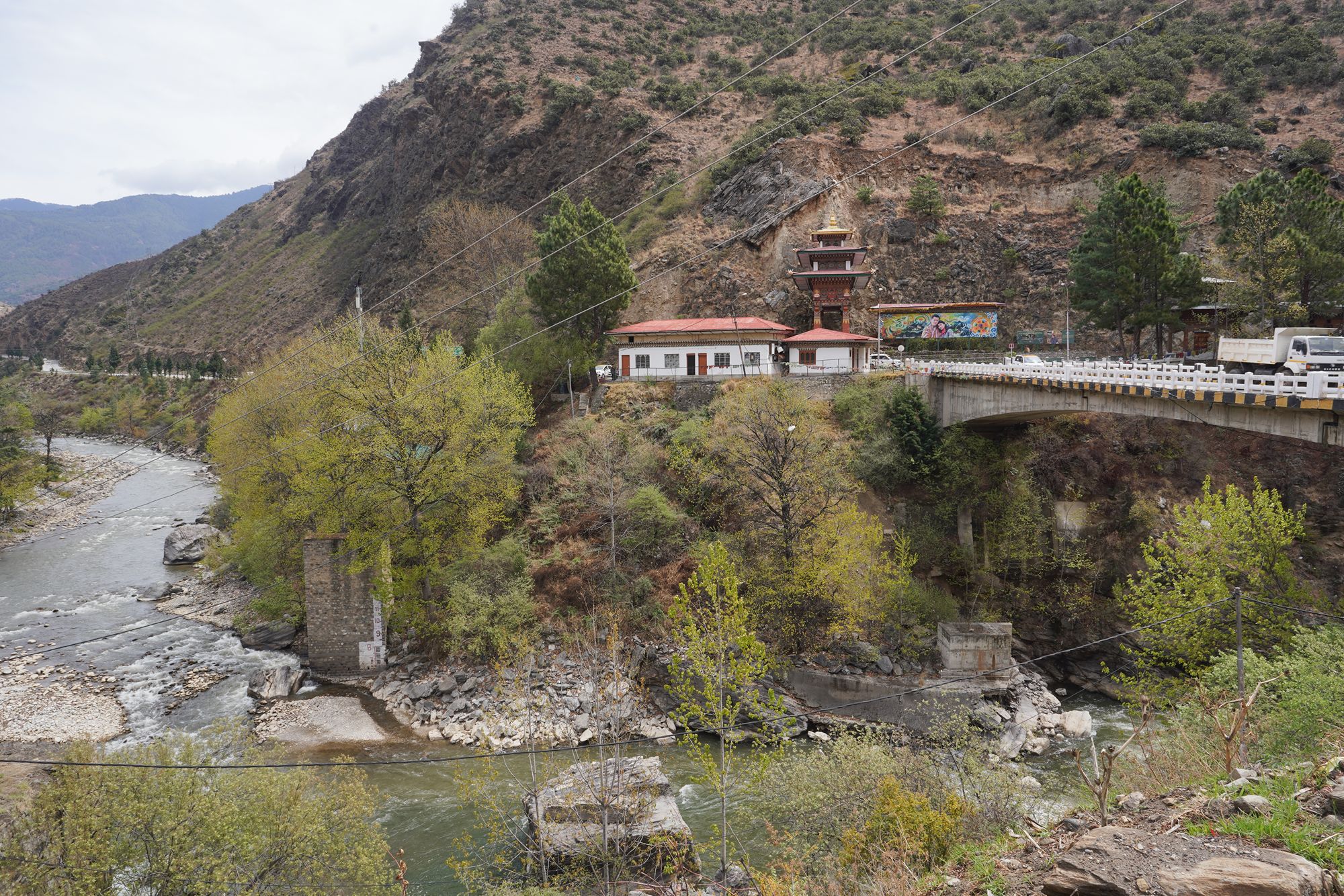
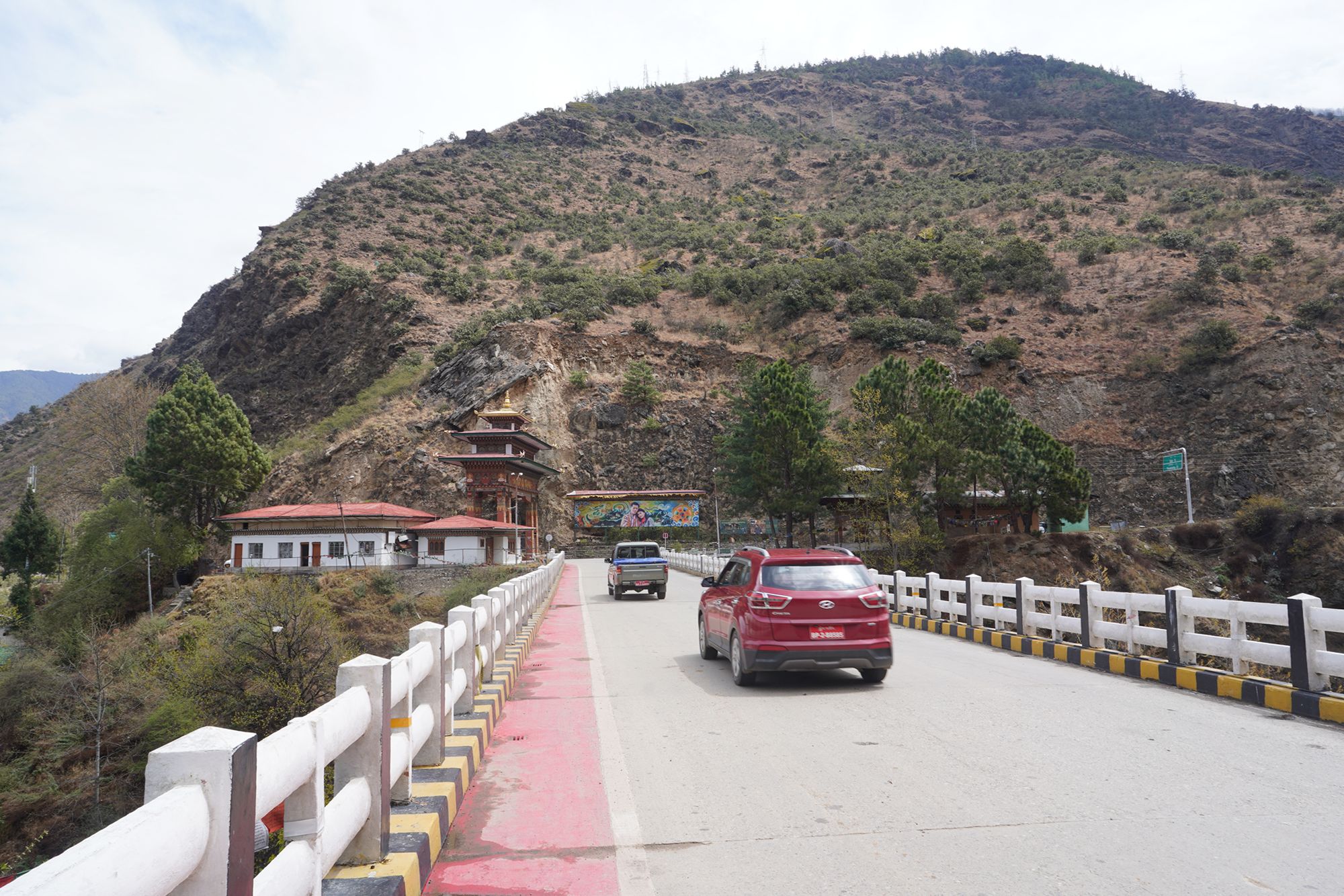
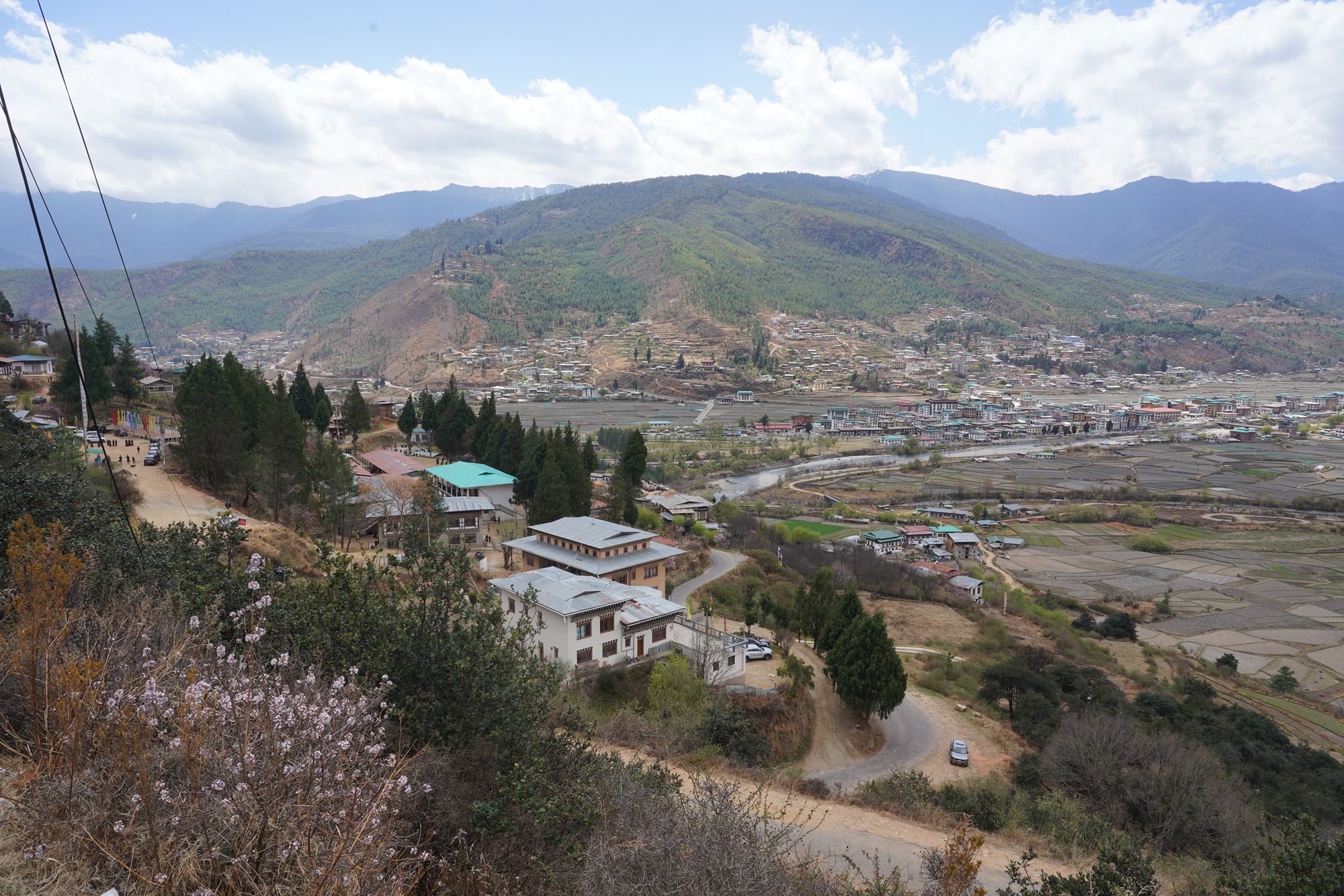
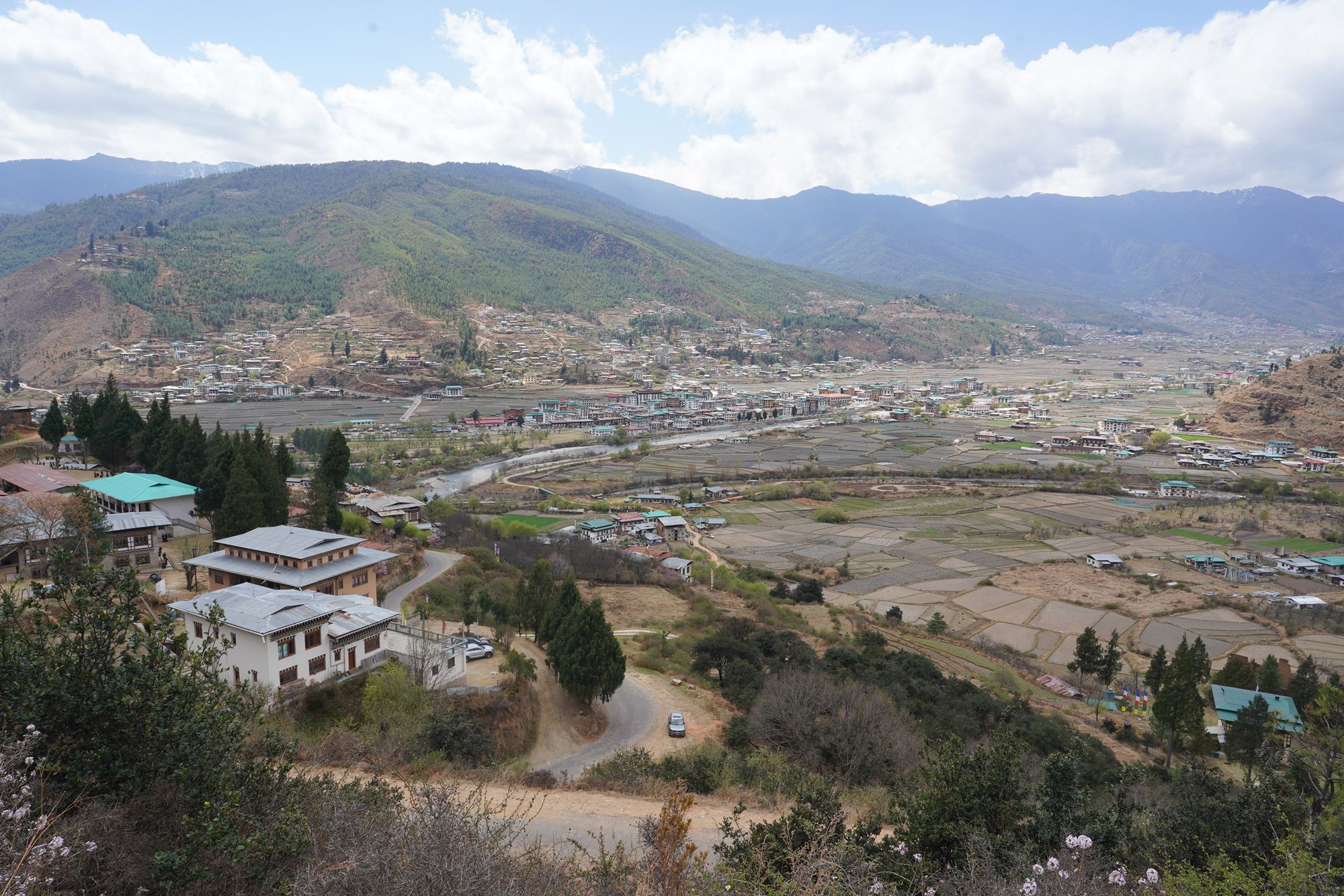
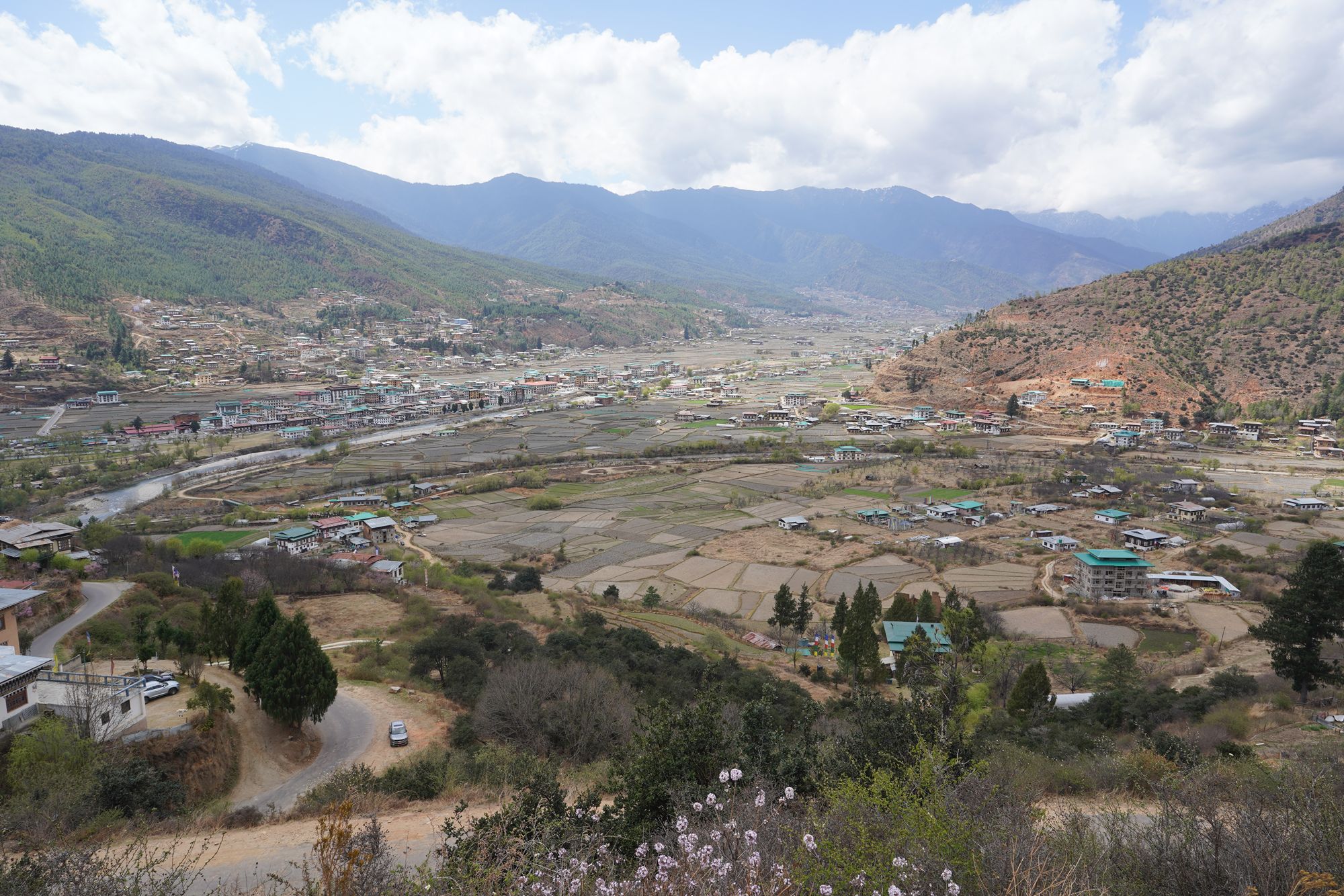
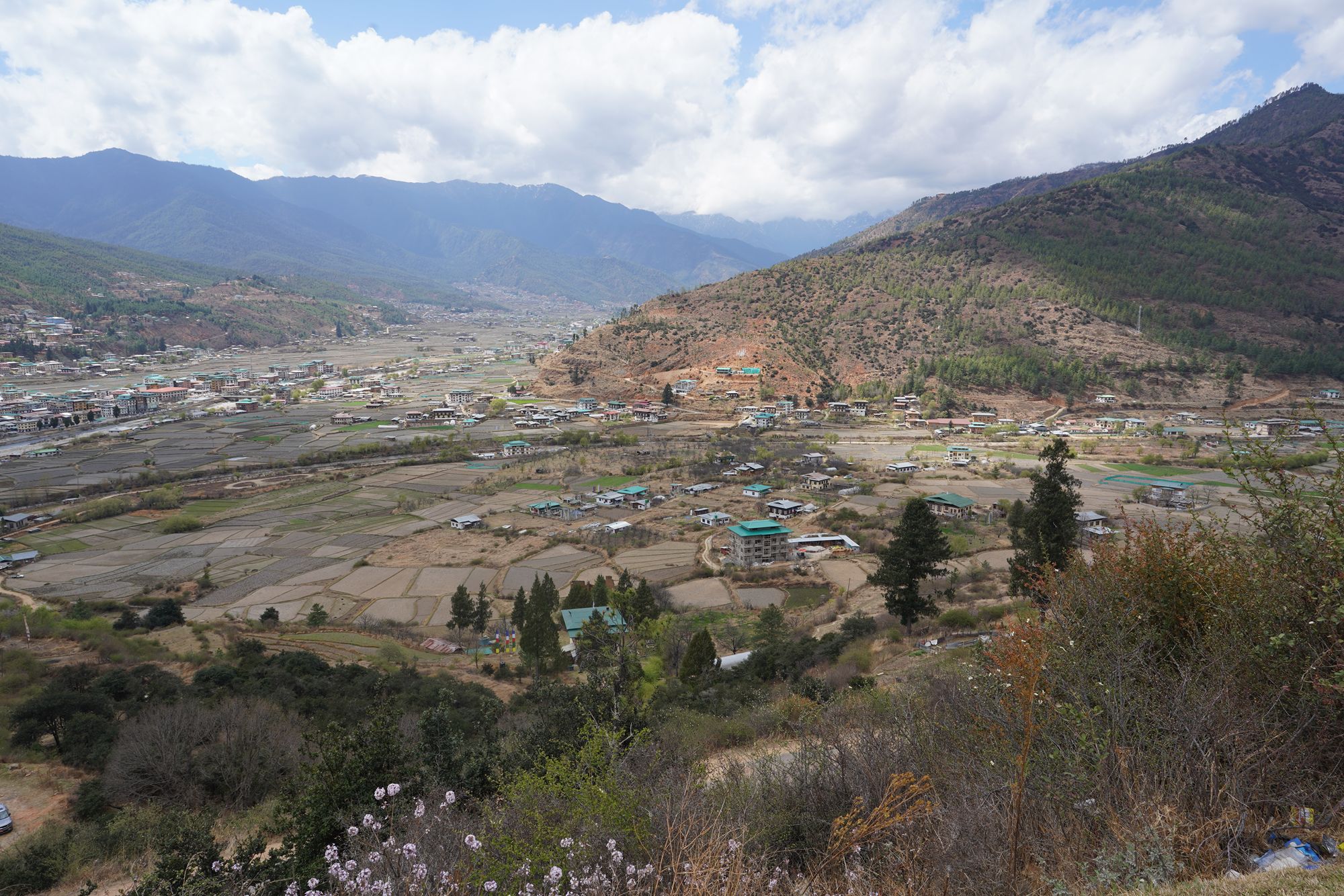
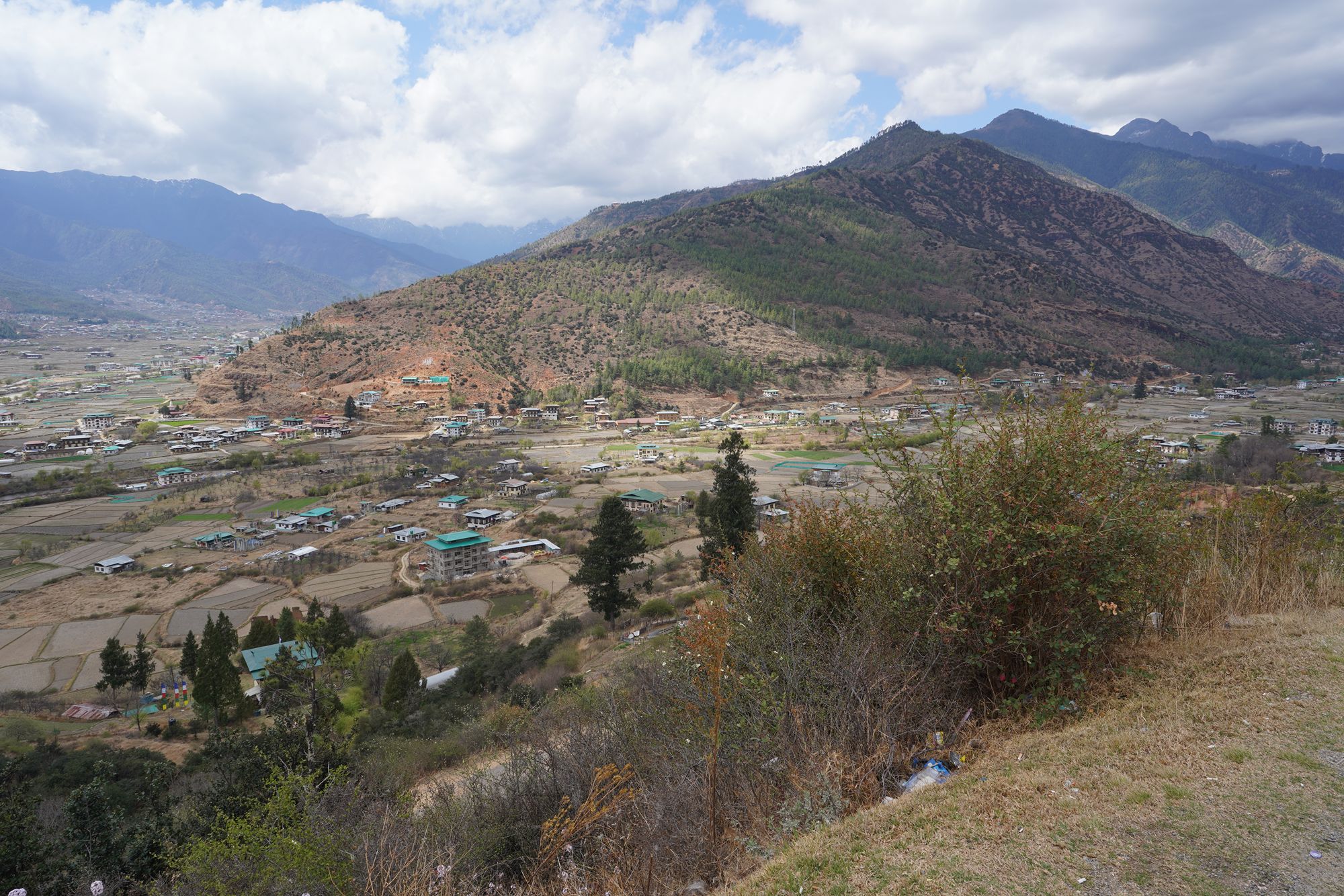
A panoramic view of Paro and the surrounding valley.
Rinpung Dzong, Paro
Rinpung Dzong, commonly called Paro Dzong, is the great fortress-monastery overlooking the Paro Valley. Its name means roughly “Fortress on a Heap of Jewels.”
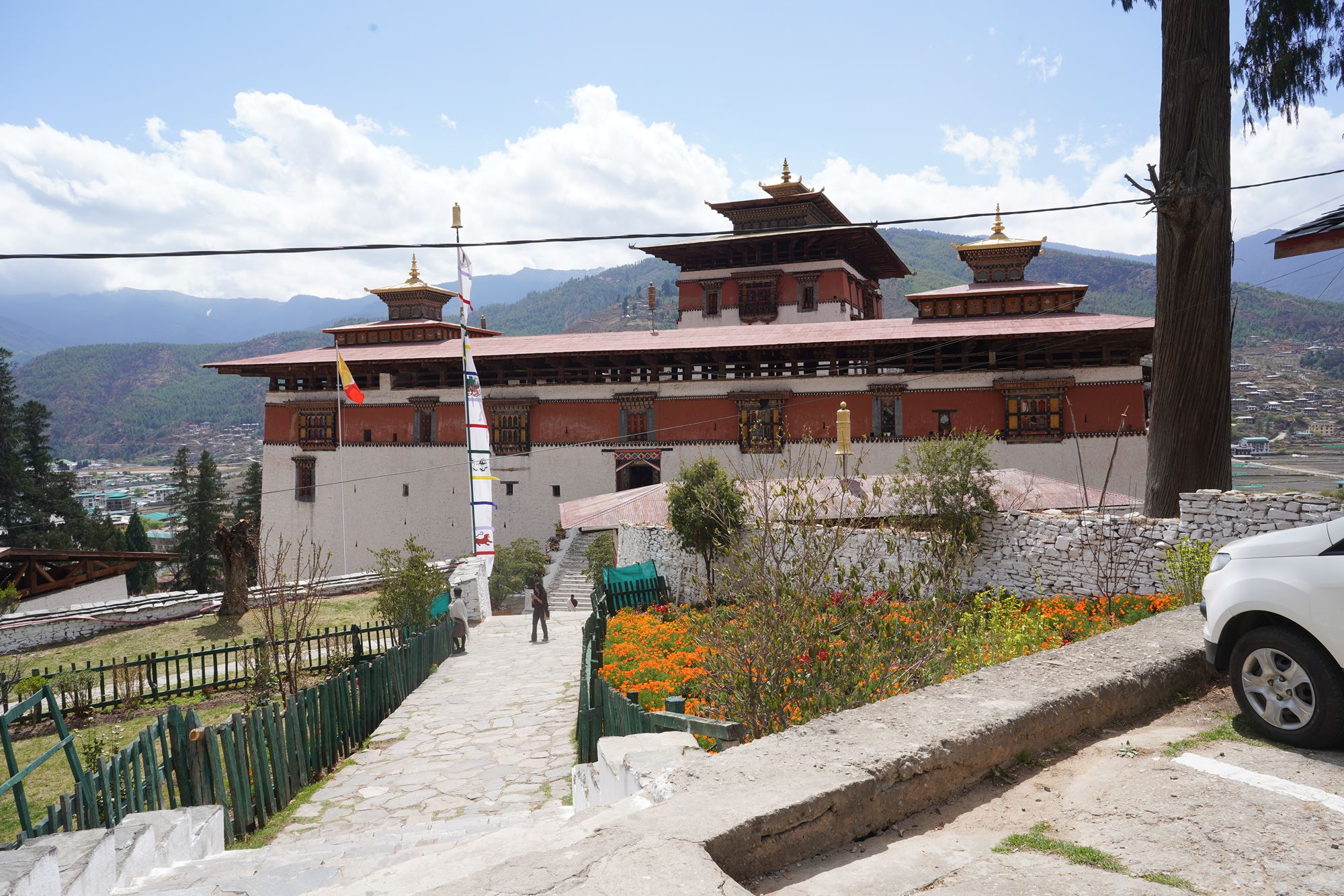
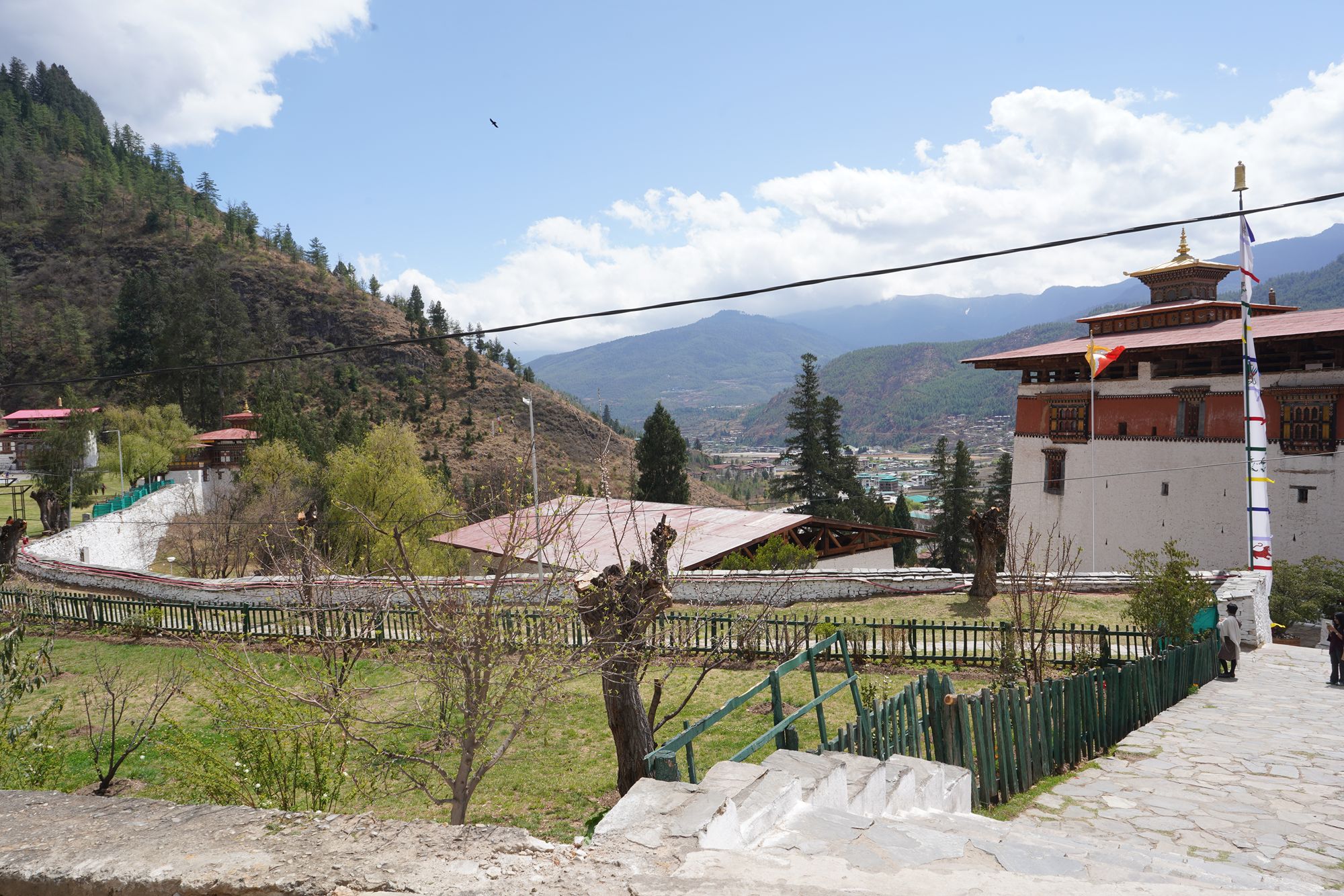
It seemed that every major town I visited in Bhutan had an impressive dzong. It is because dzongs traditionally served as both regional government centers and Buddhist monasteries.
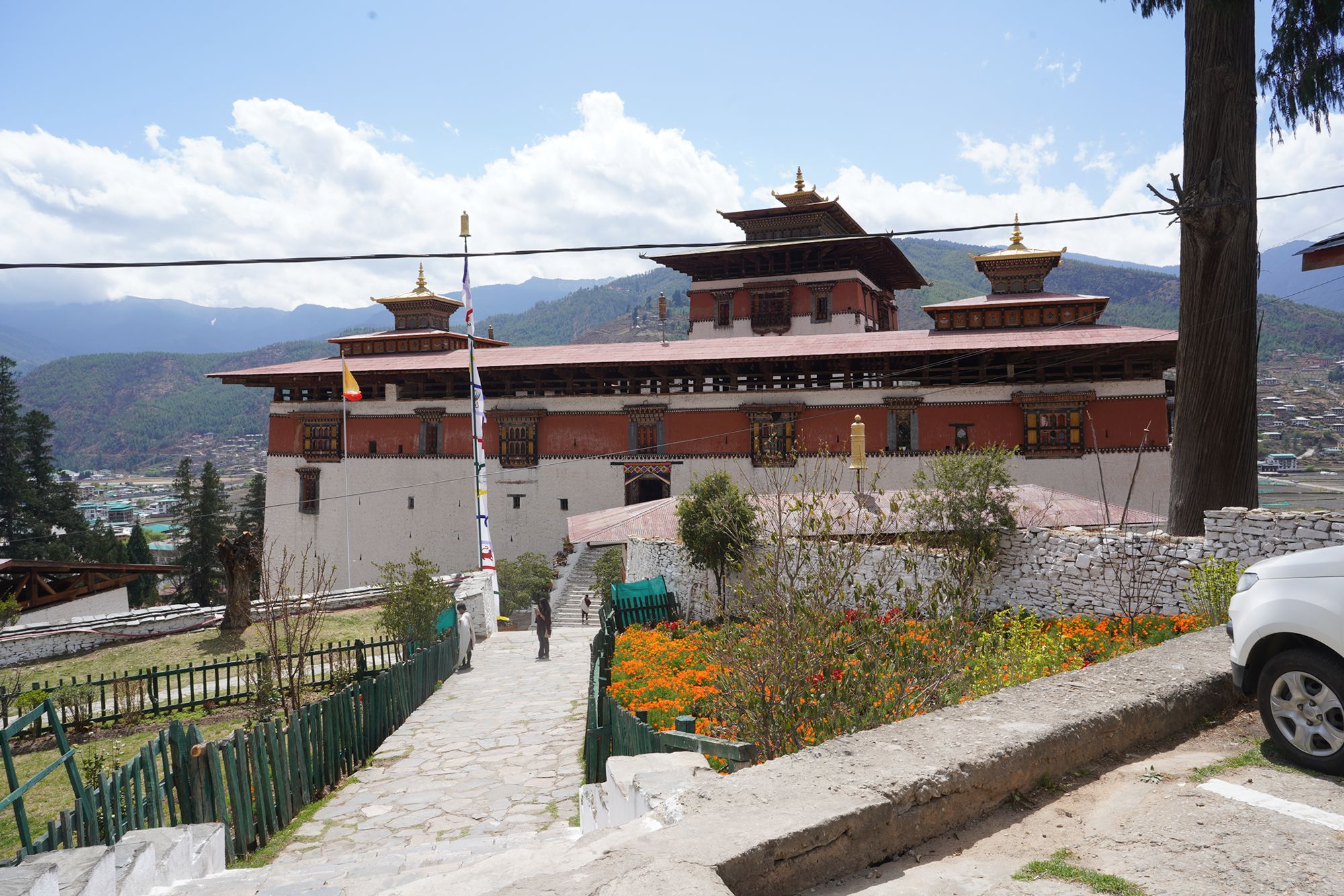
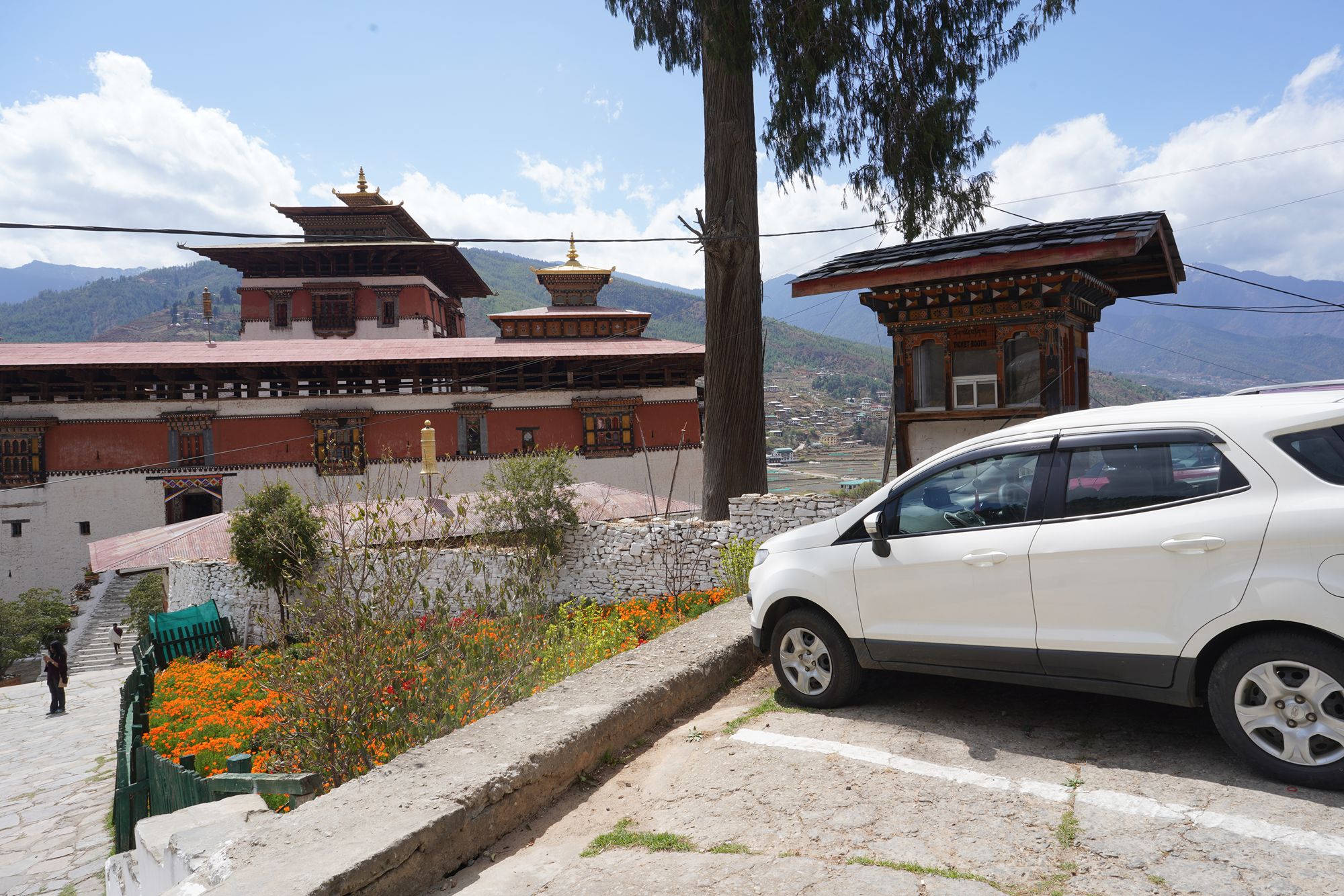
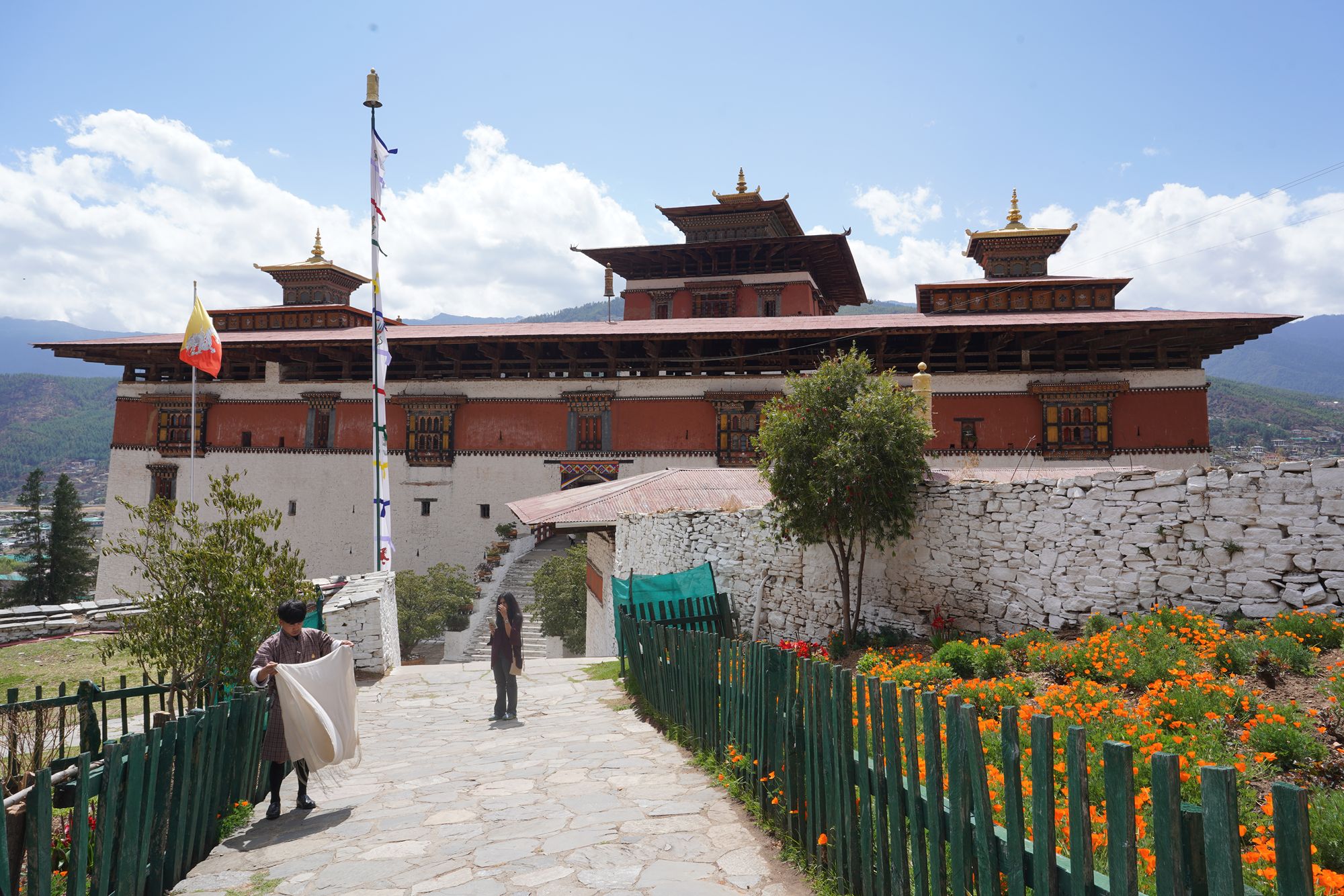
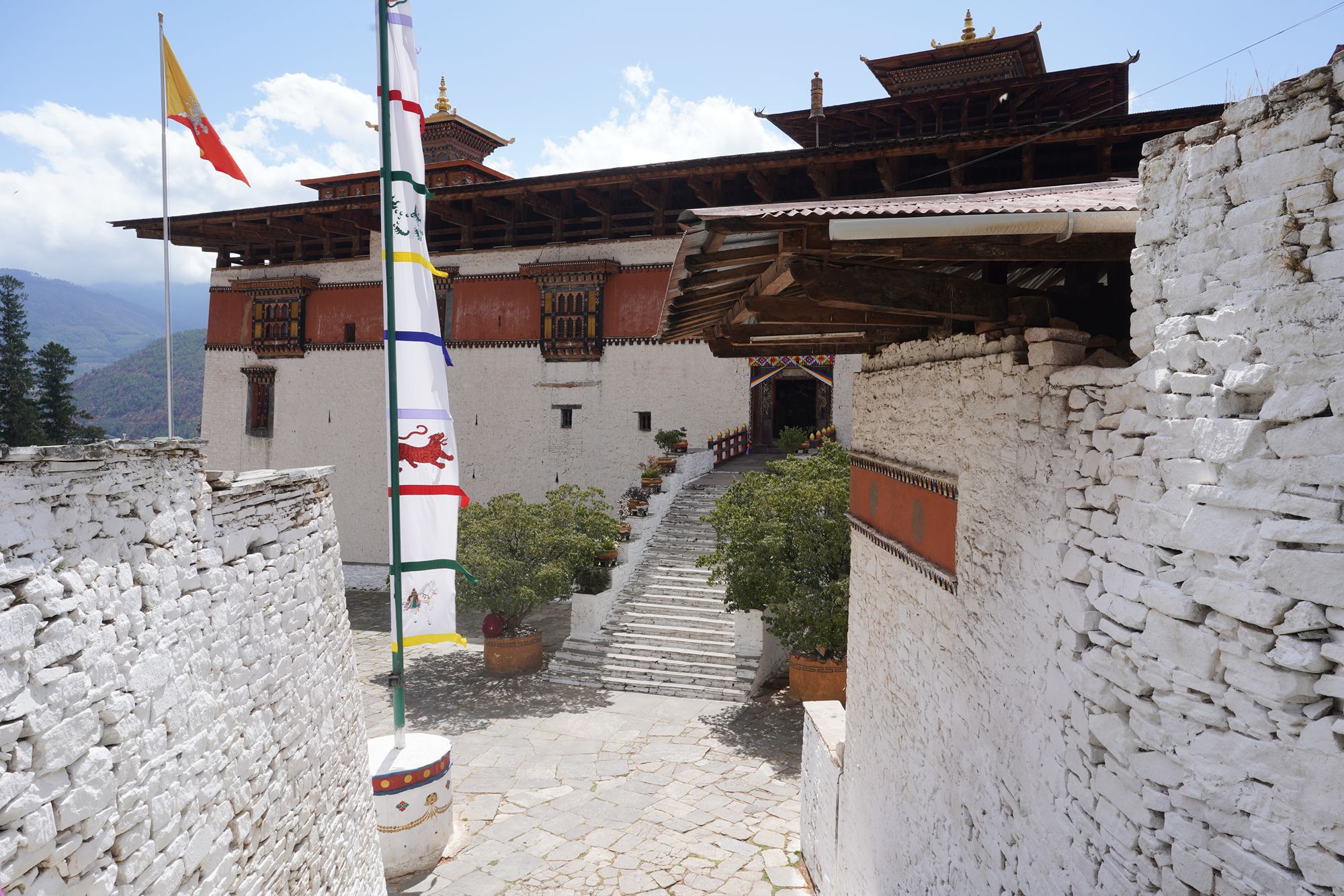
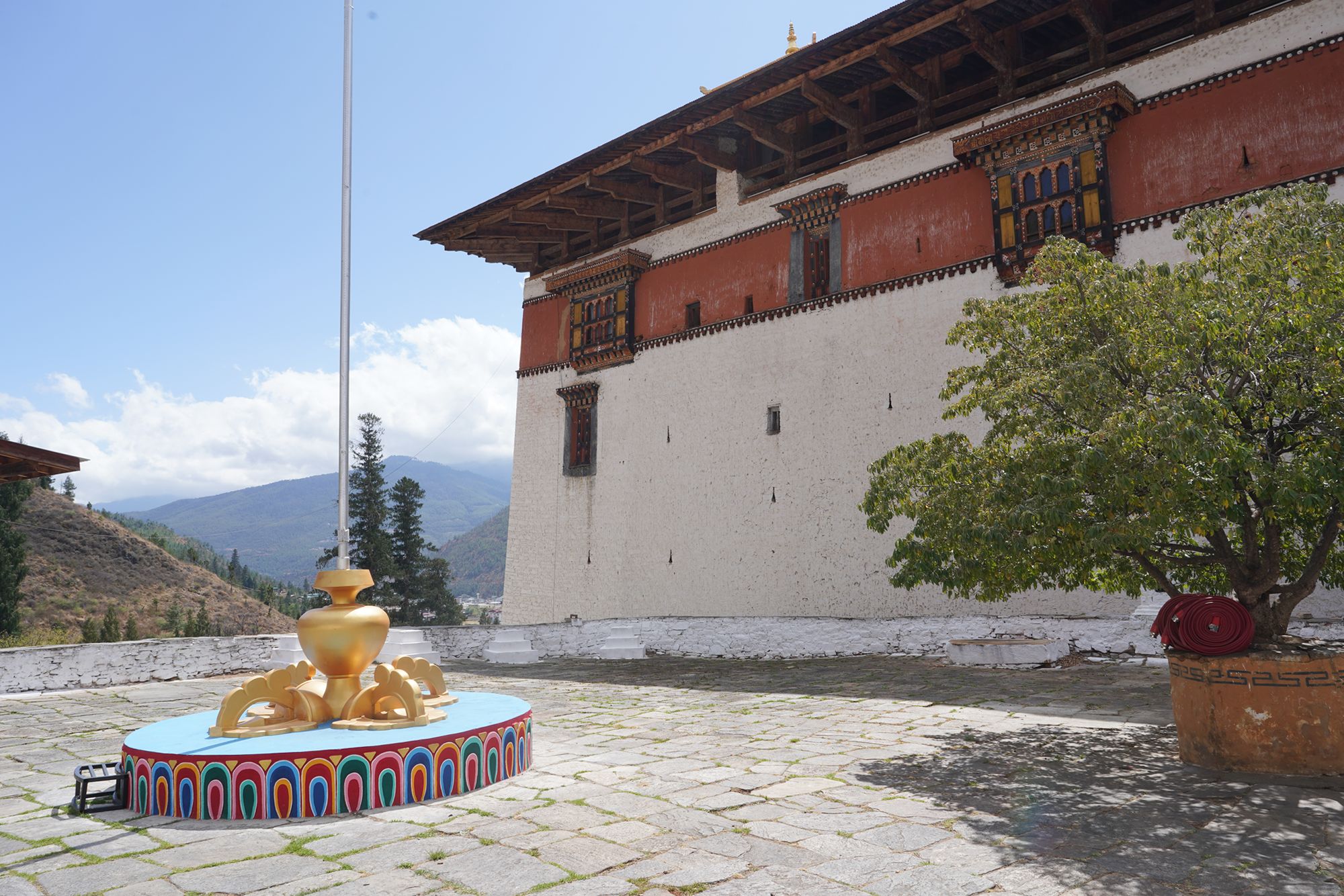
The present dzong was built in the 17th century under Zhabdrung Ngawang Namgyal, the leader who unified Bhutan. Like other major Bhutanese dzongs, it was designed to serve both religious and government functions and also helped defend the Paro Valley from Tibetan invasions.
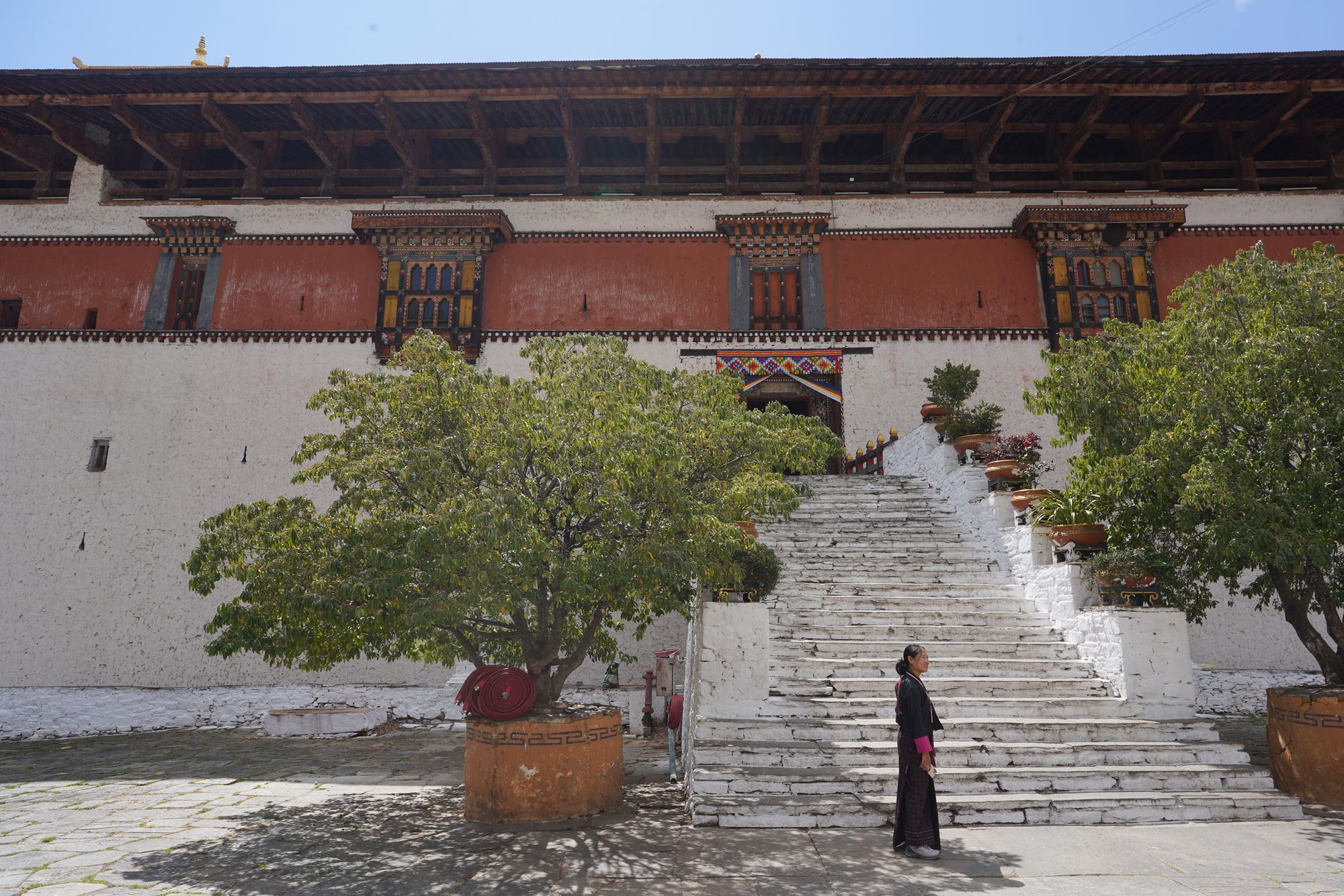
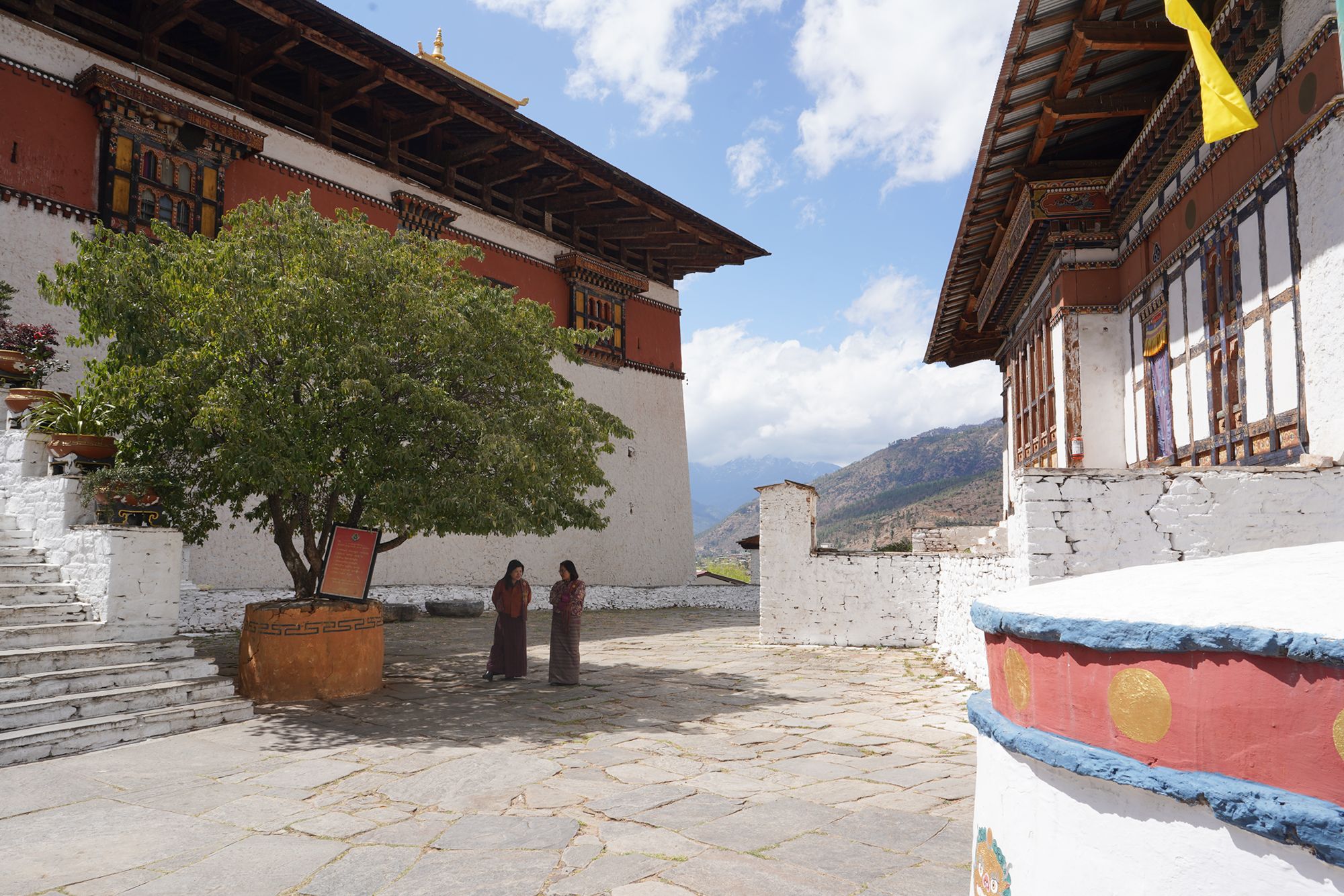
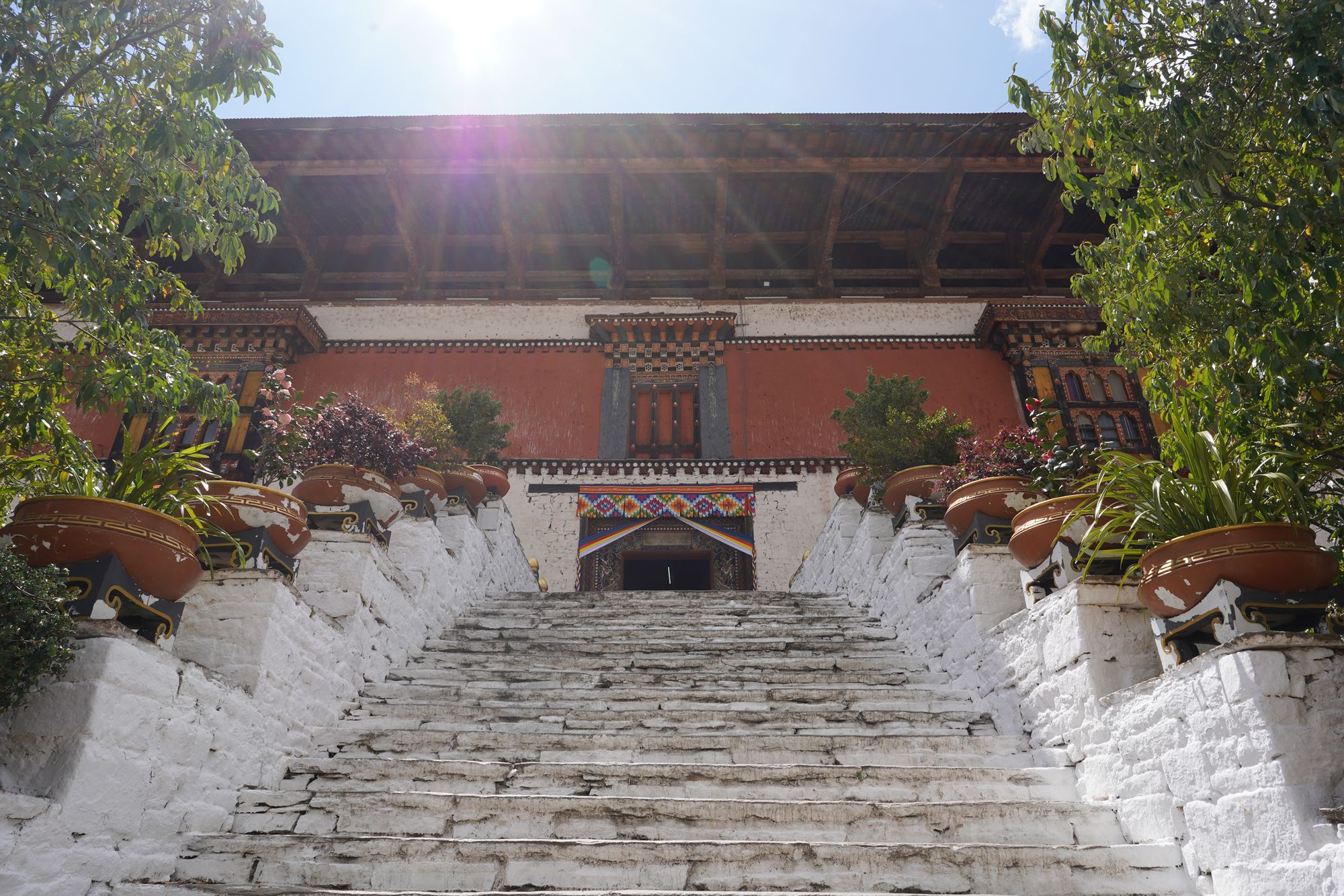
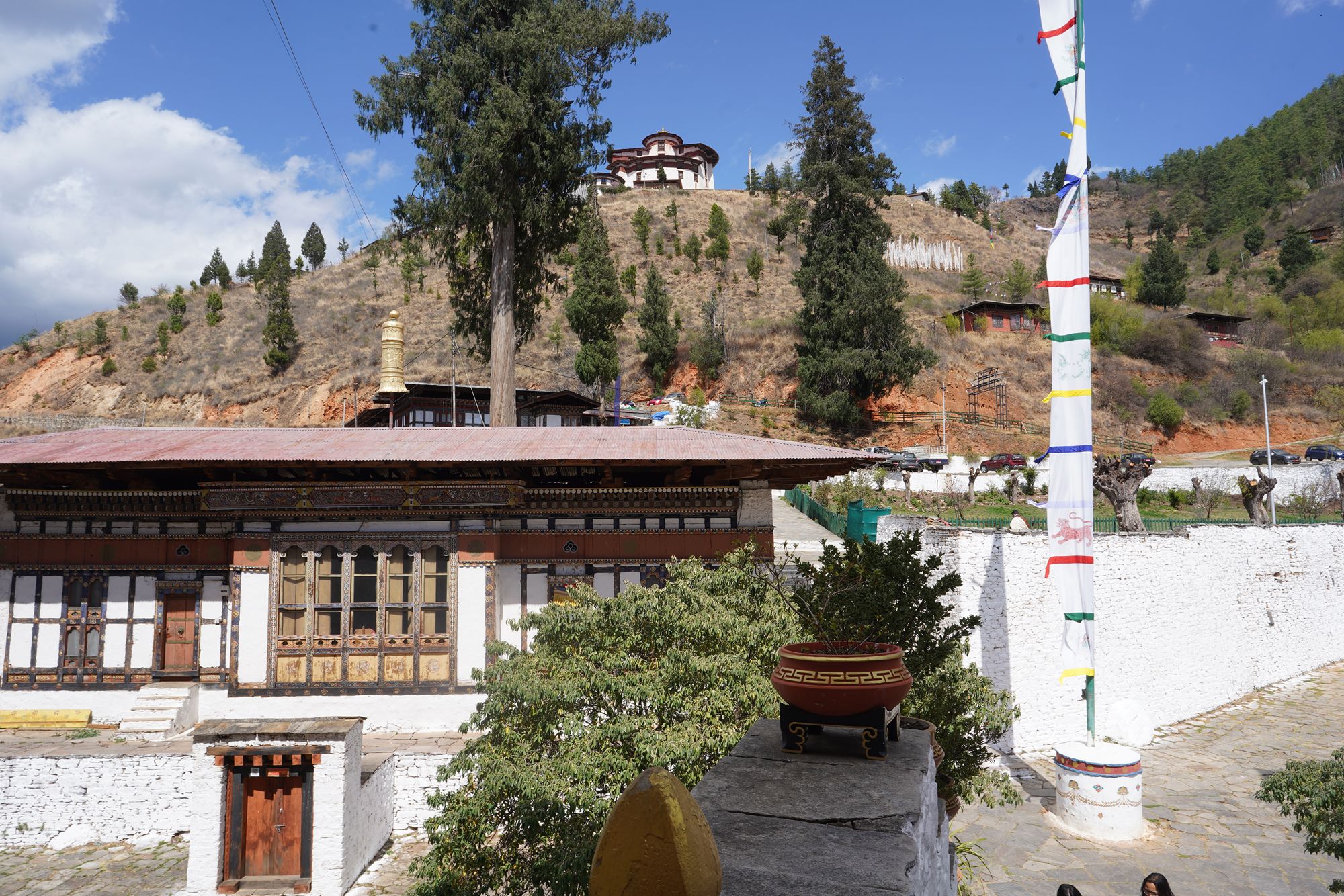
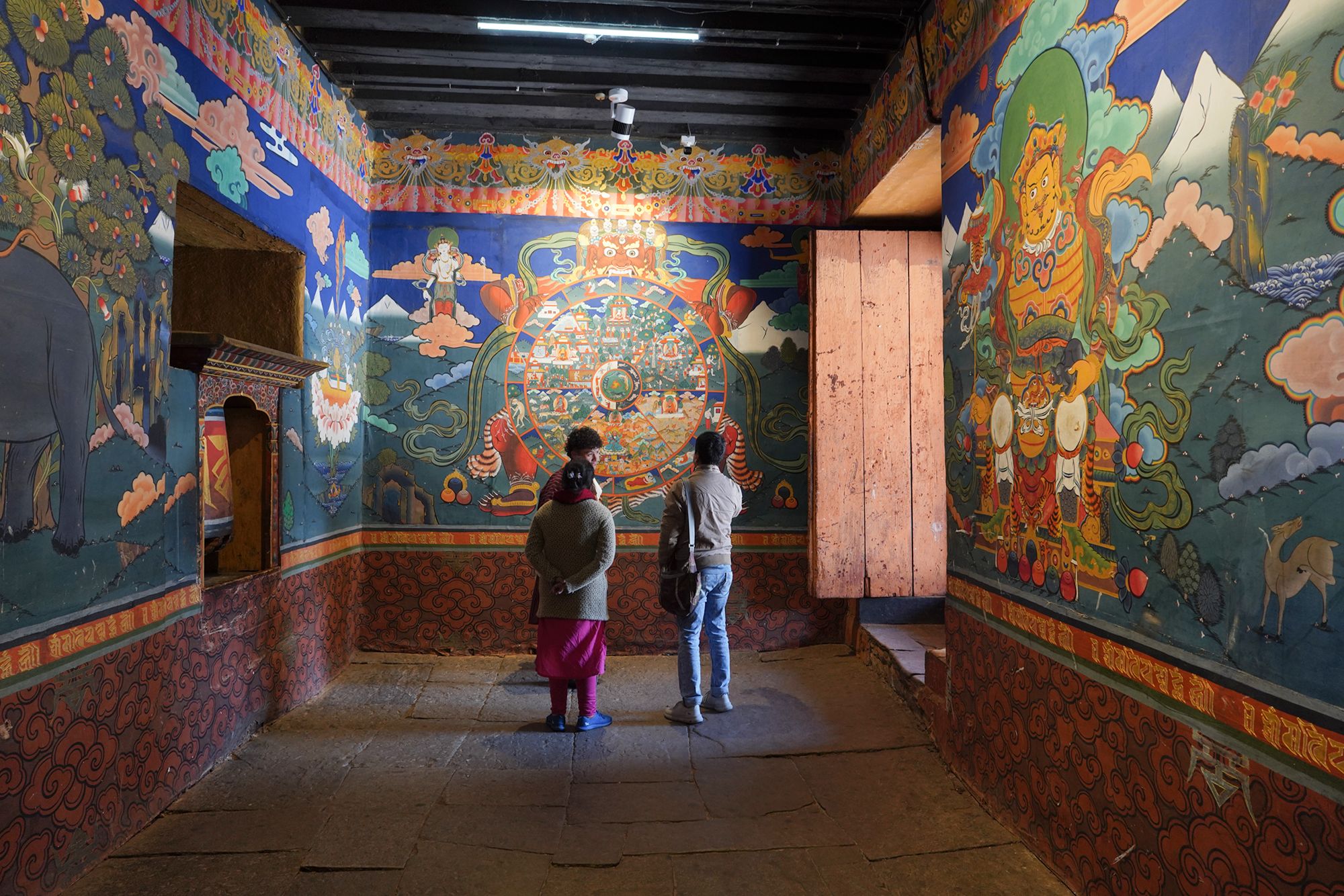
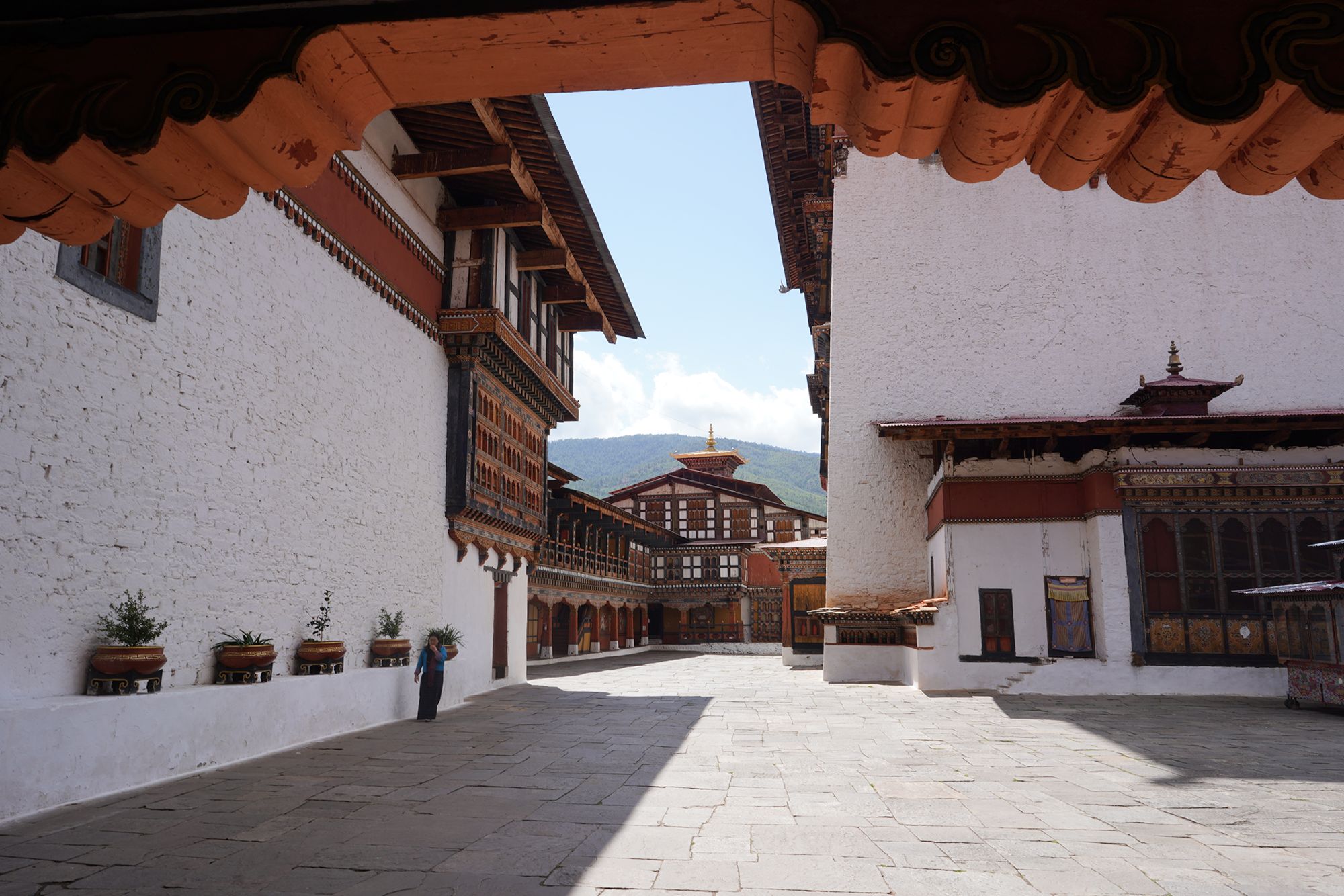
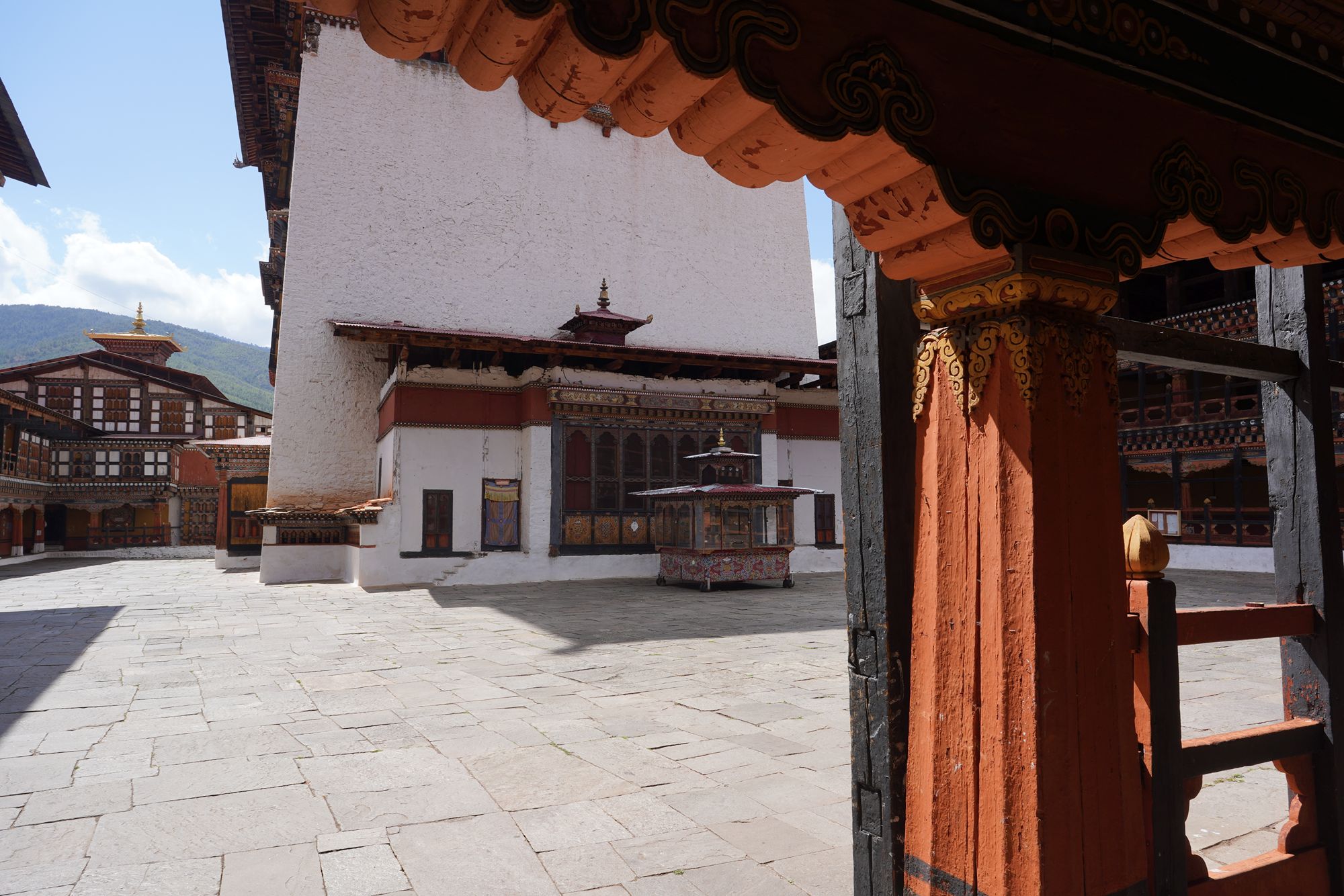
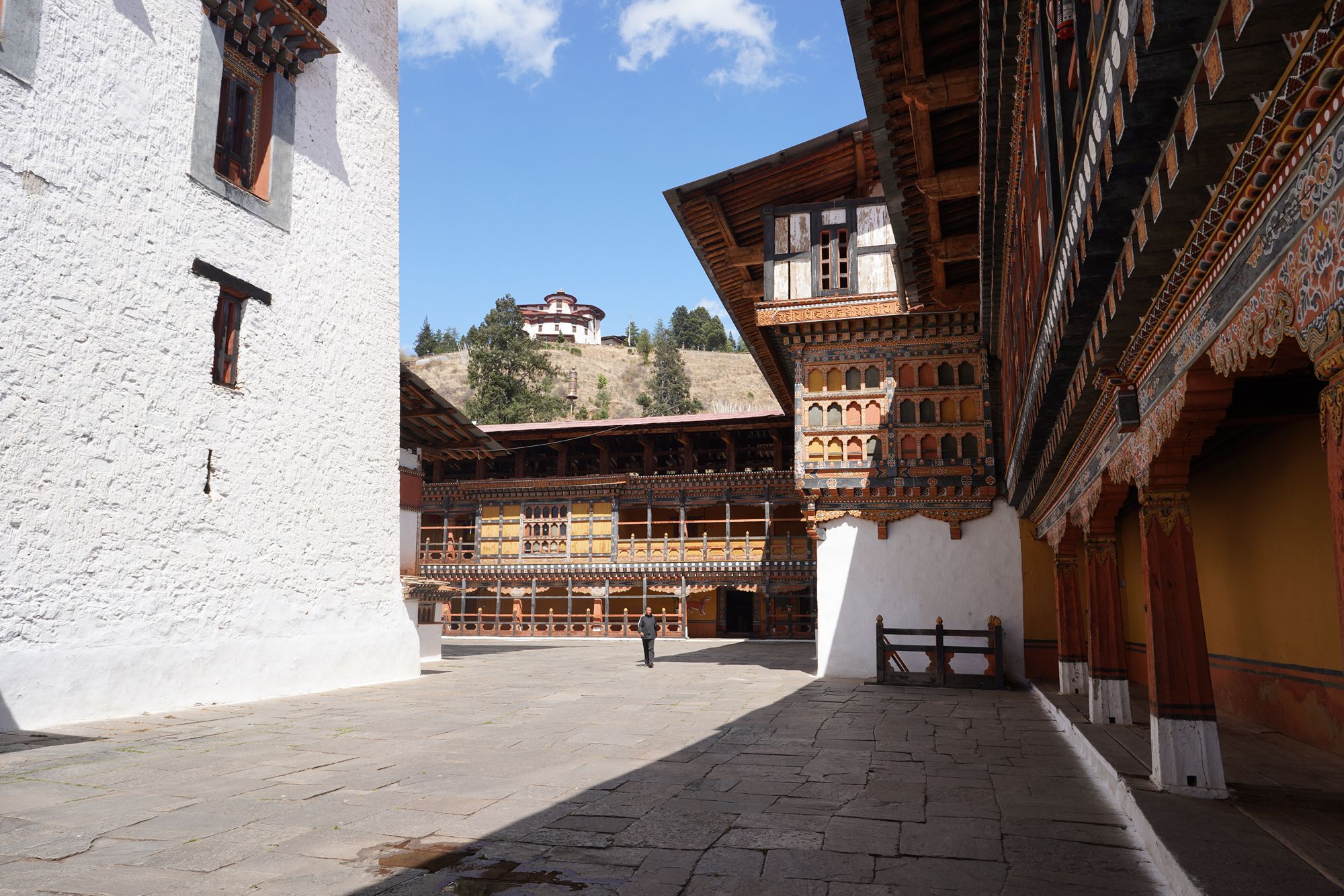
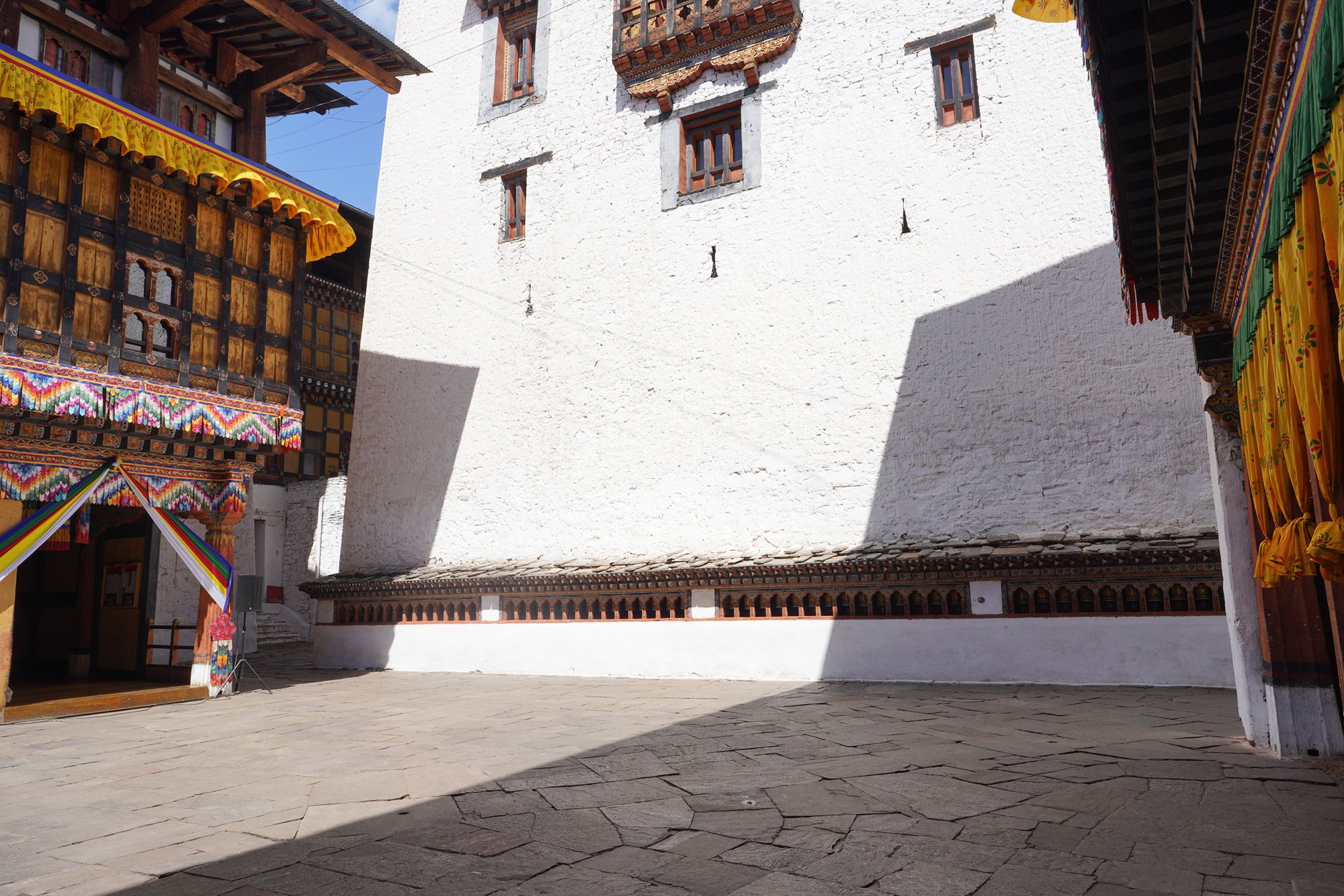
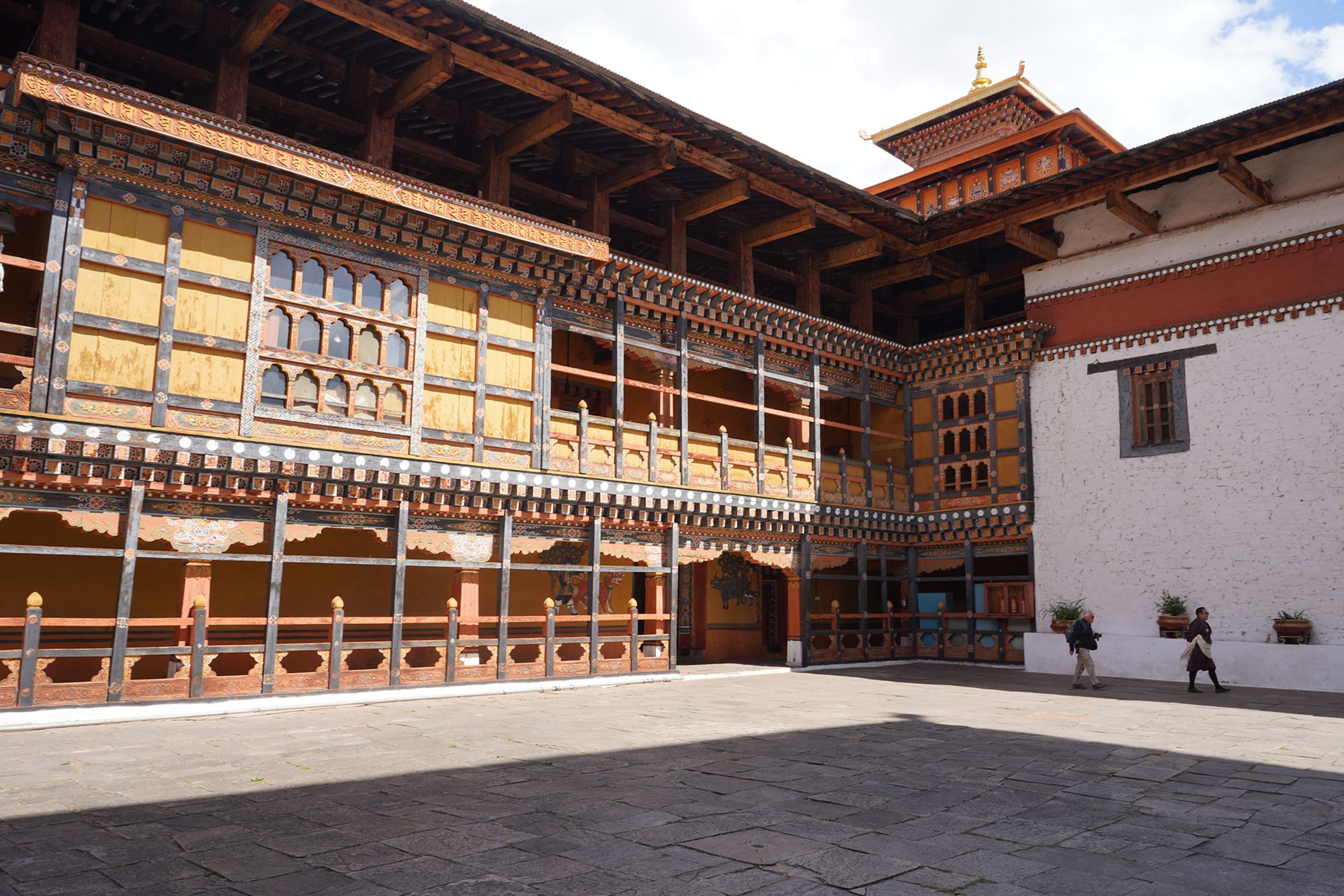
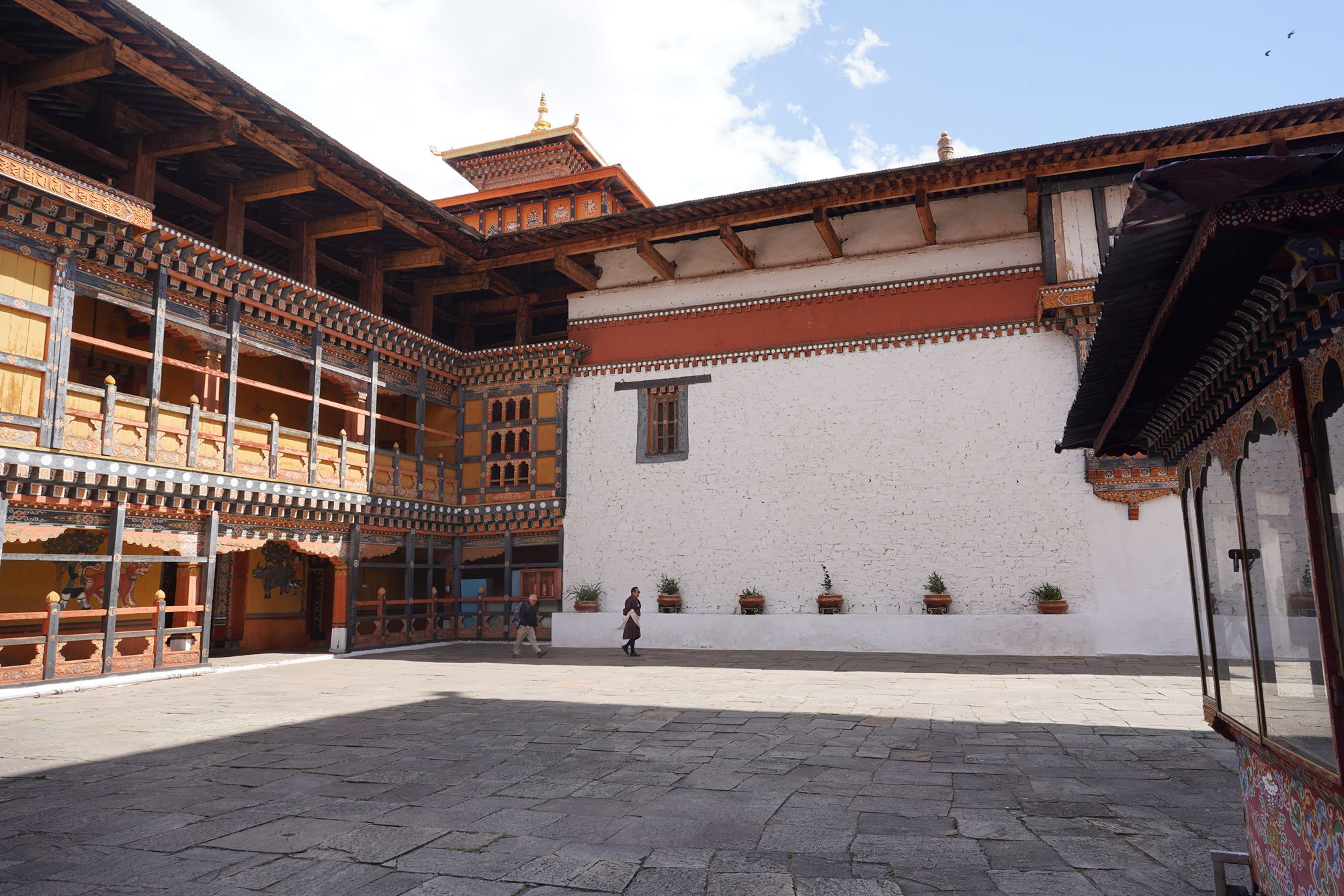
The massive complex has whitewashed stone walls, richly decorated wooden balconies, courtyards, temples, monks' quarters, and administrative offices. A traditional covered bridge called Nemi Zam crosses the Paro Chhu River below the dzong.
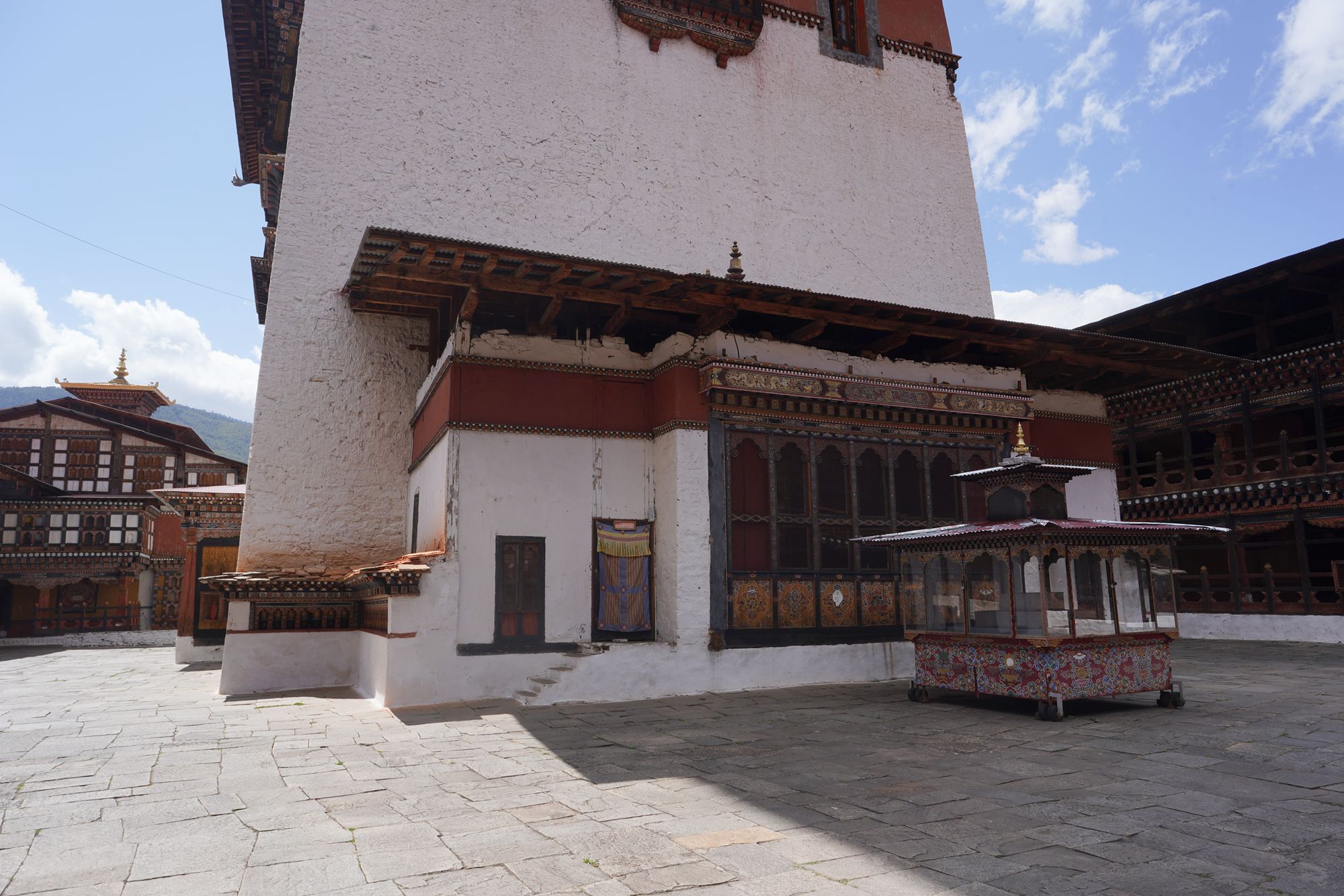
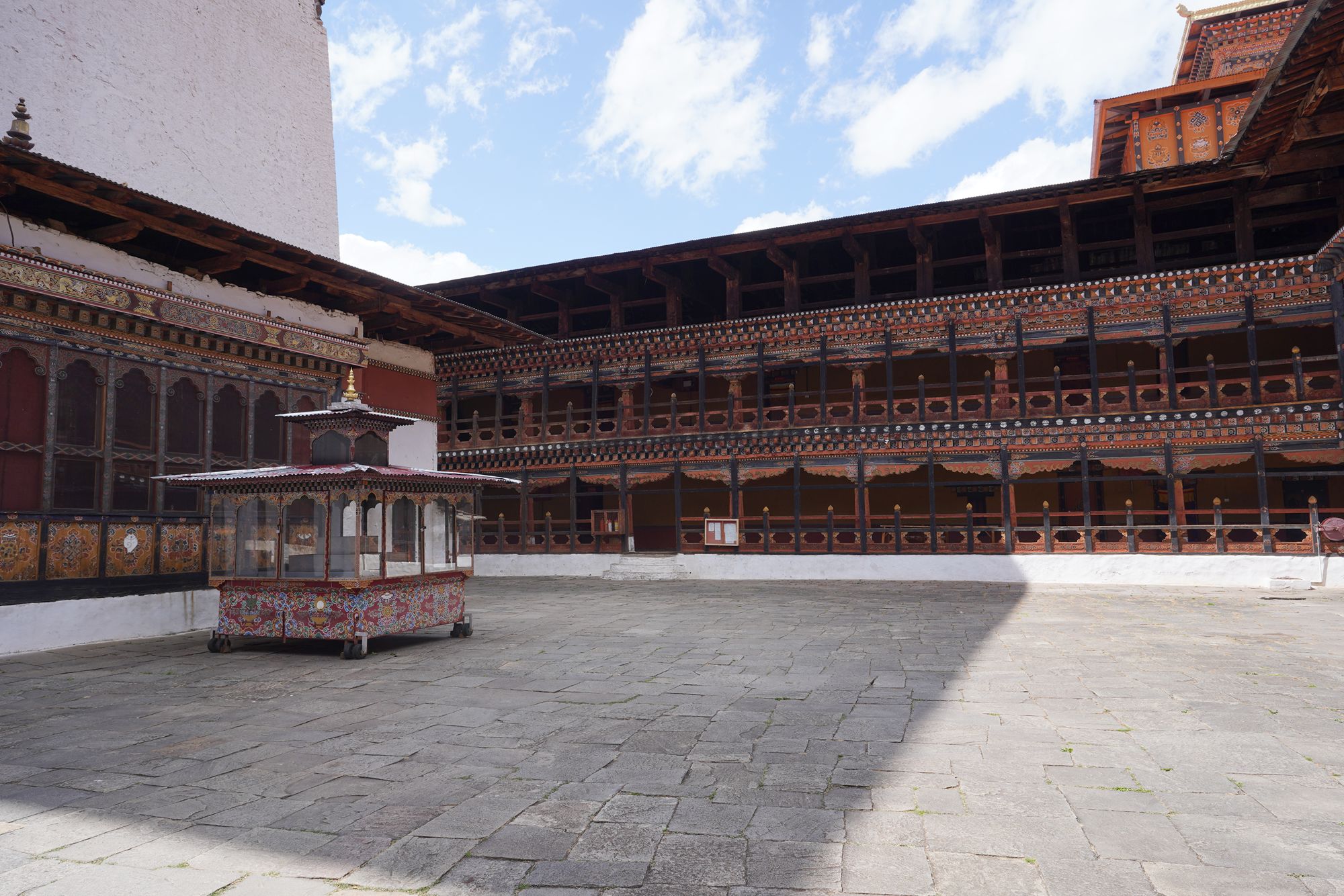
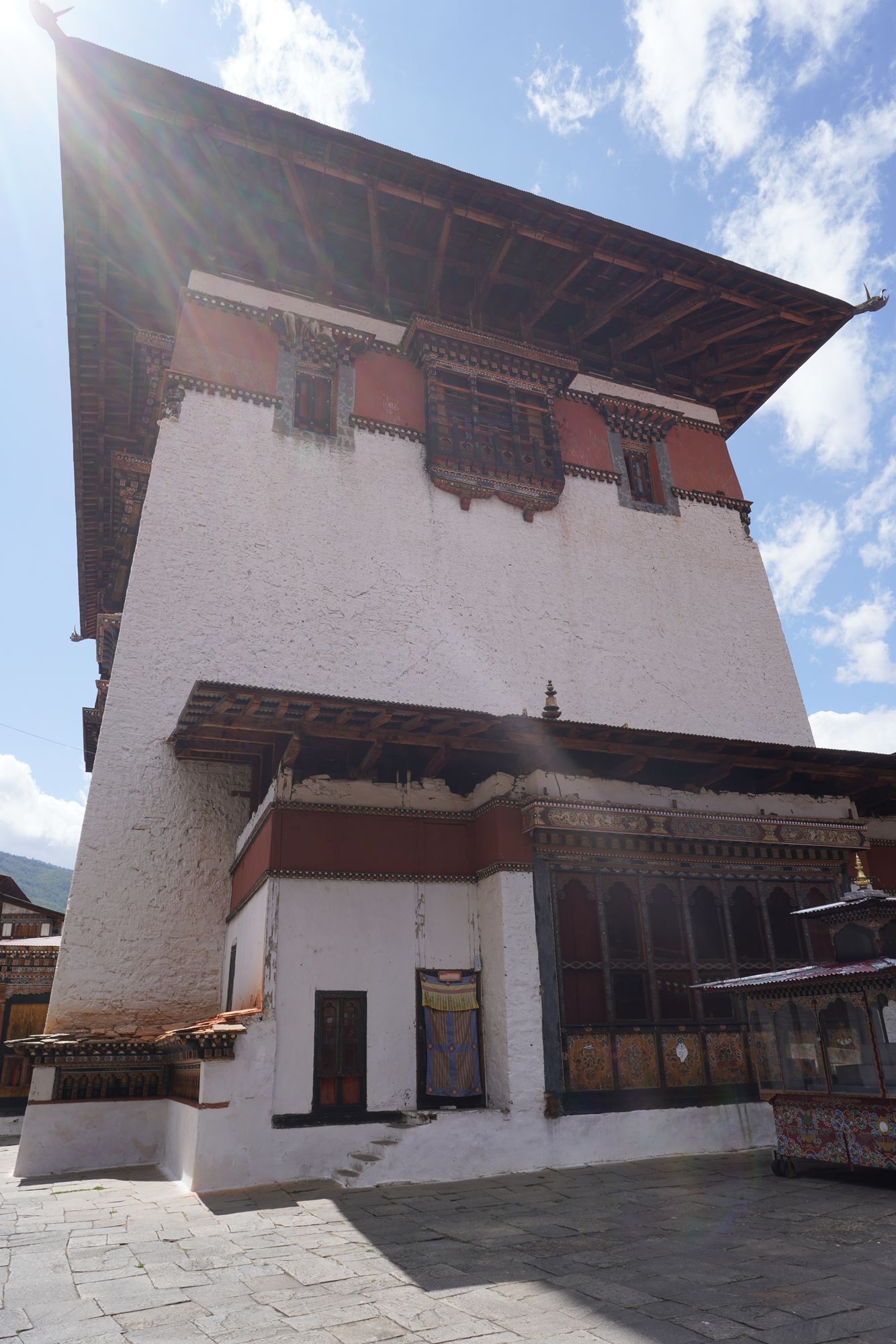
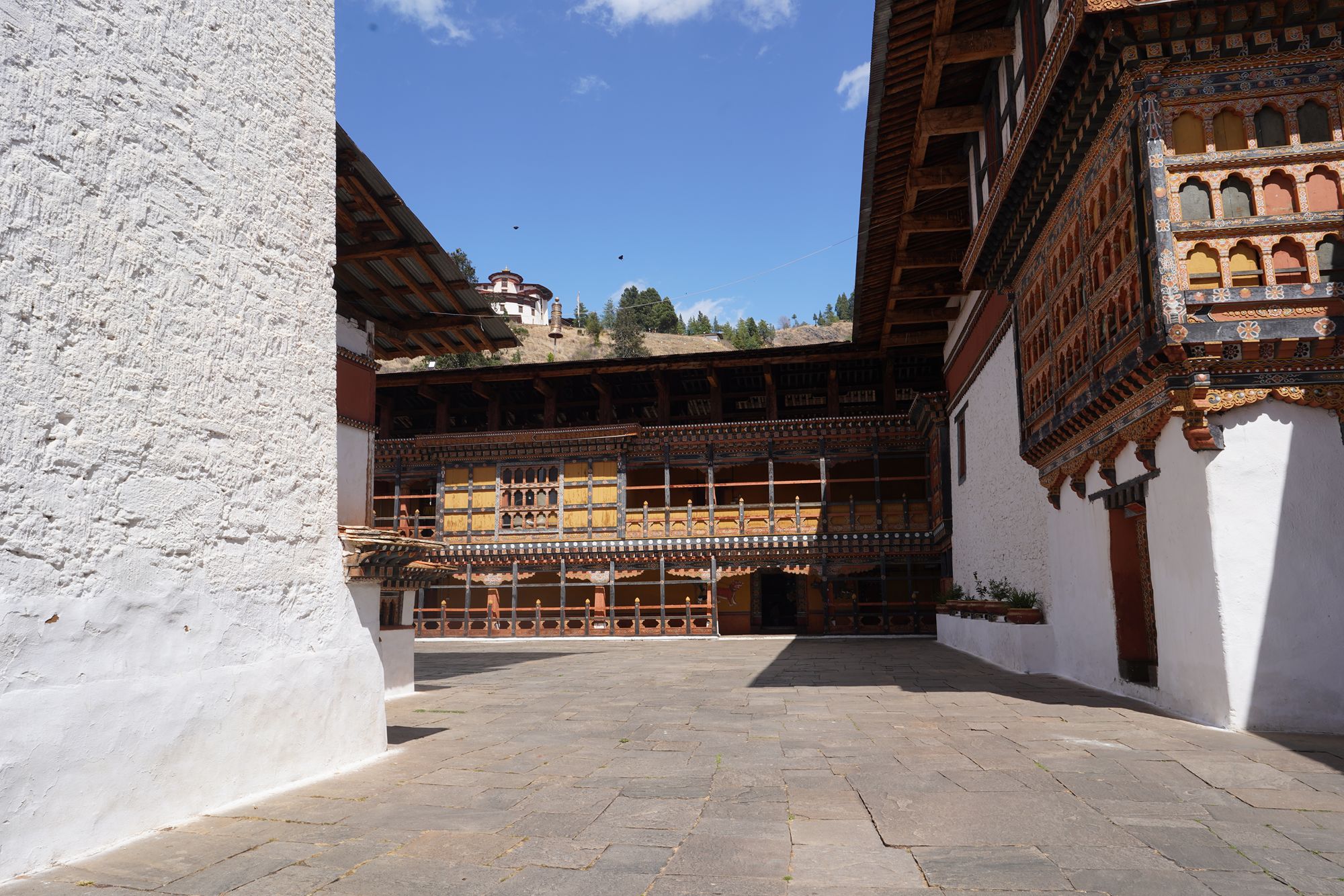
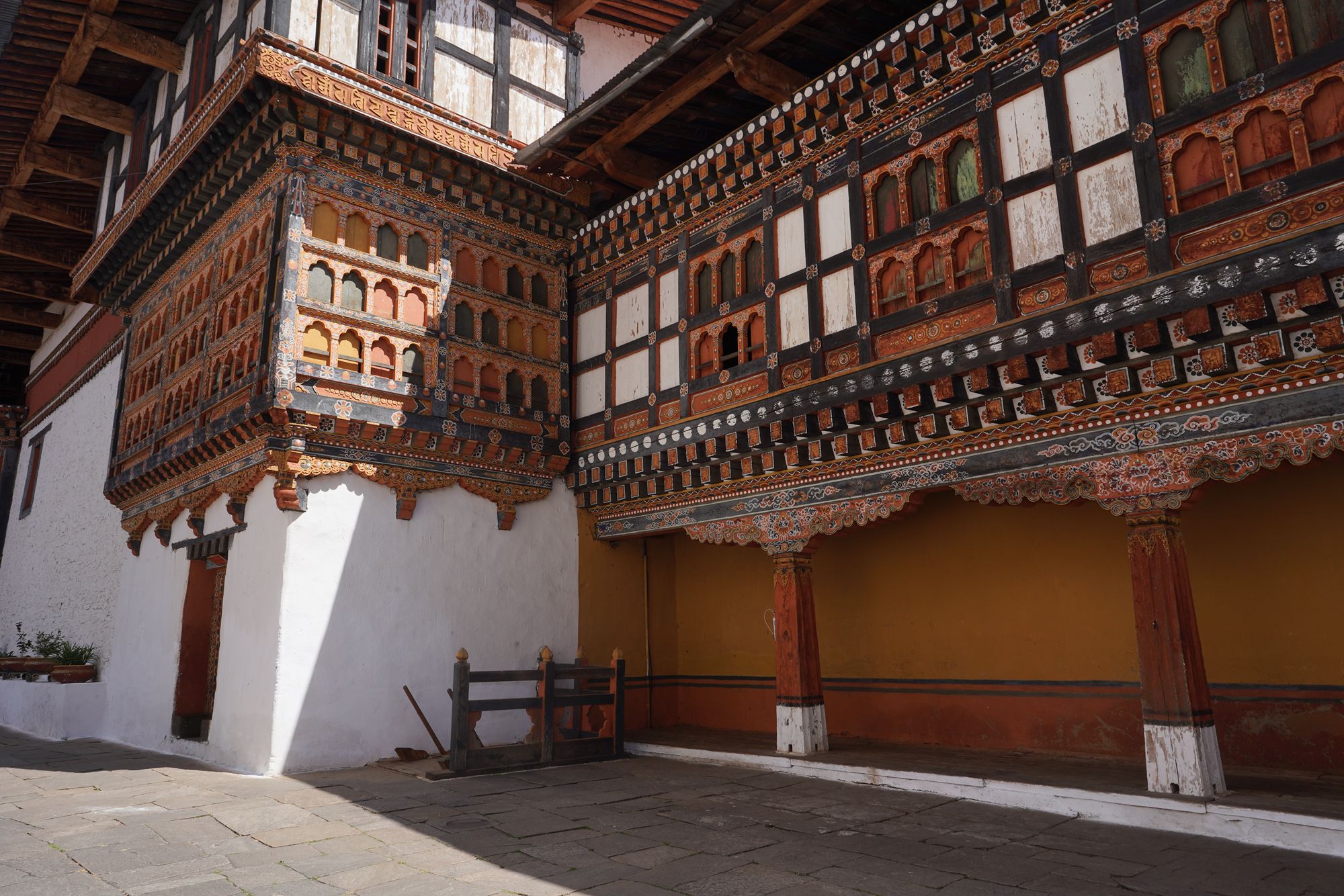
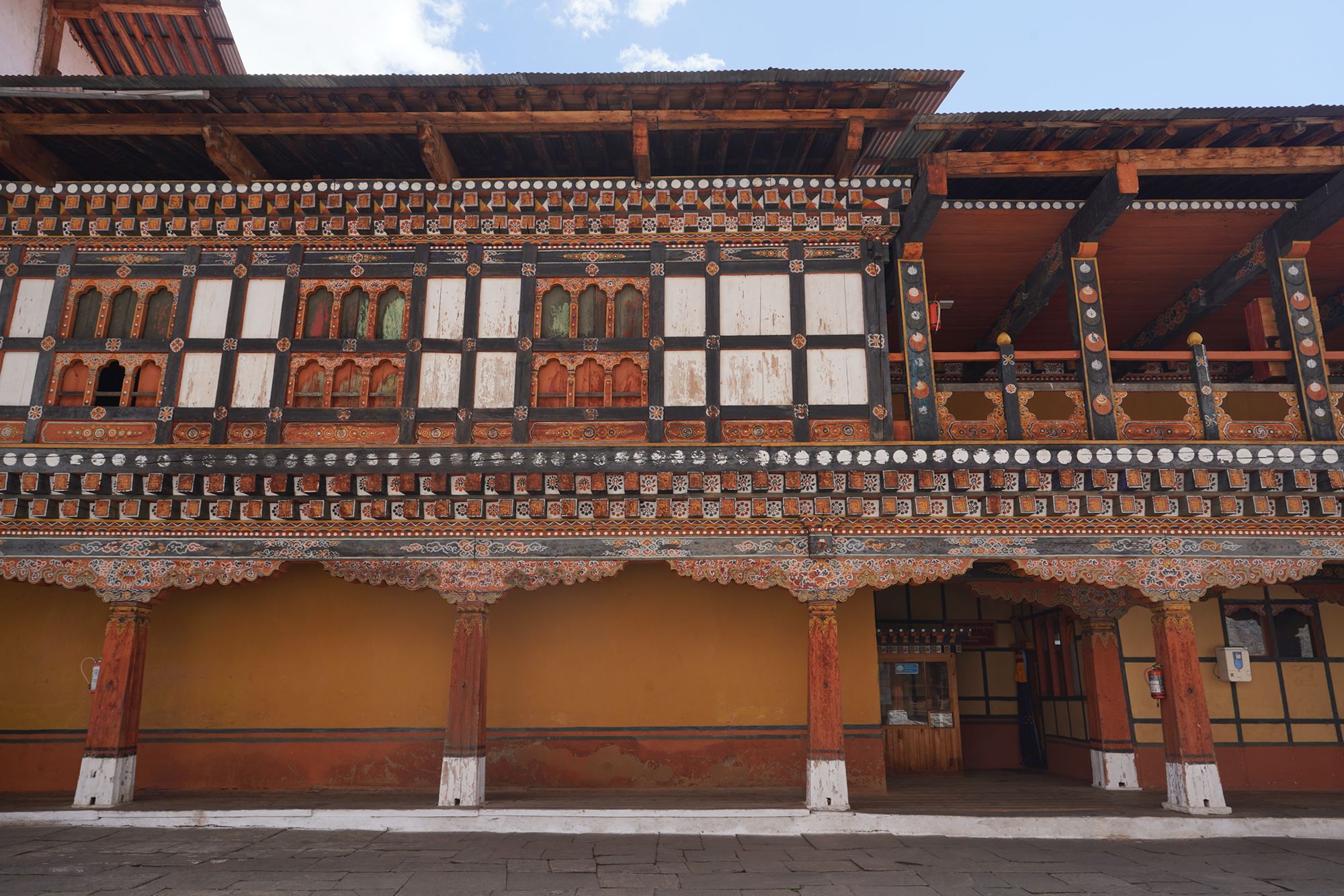
The utse
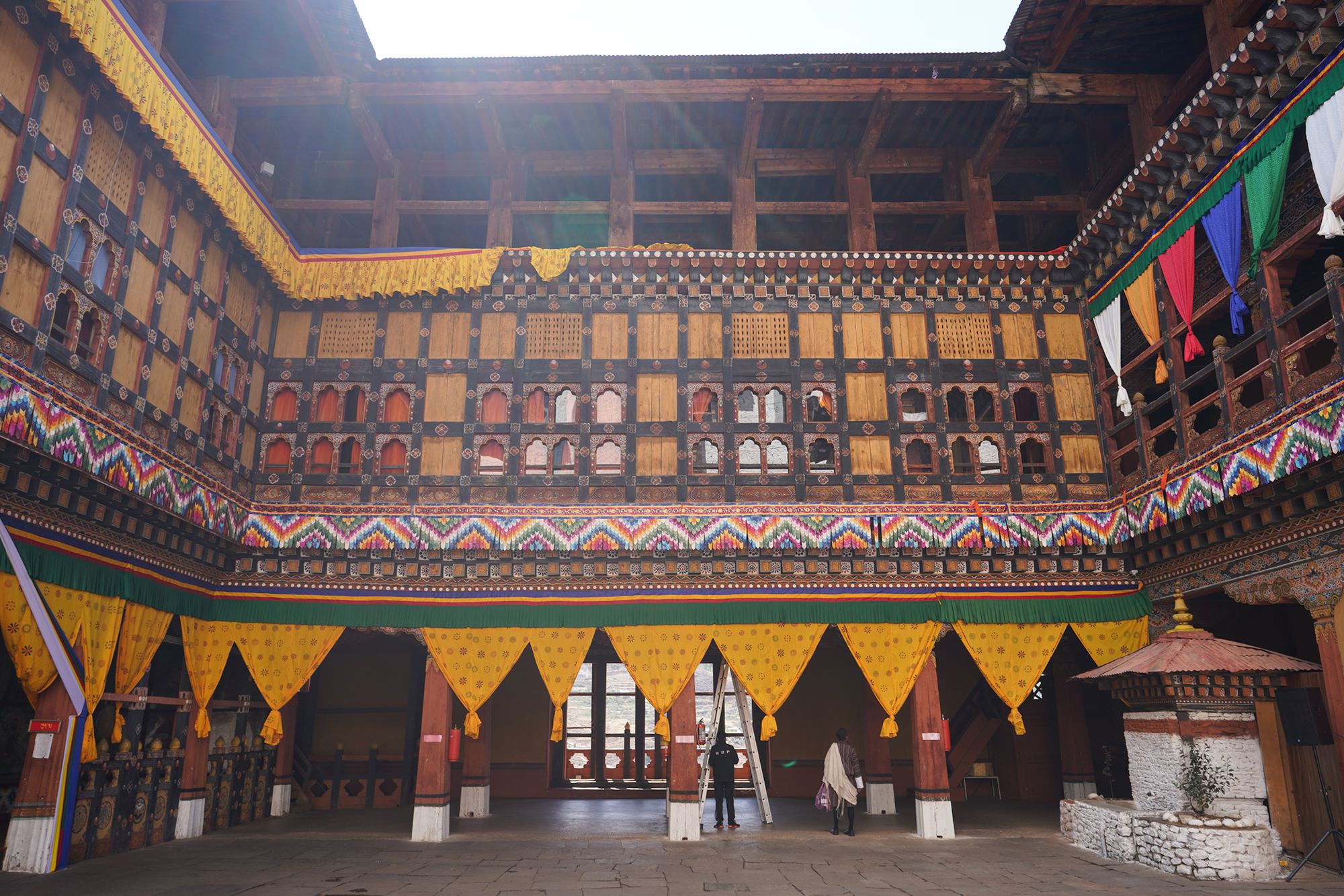
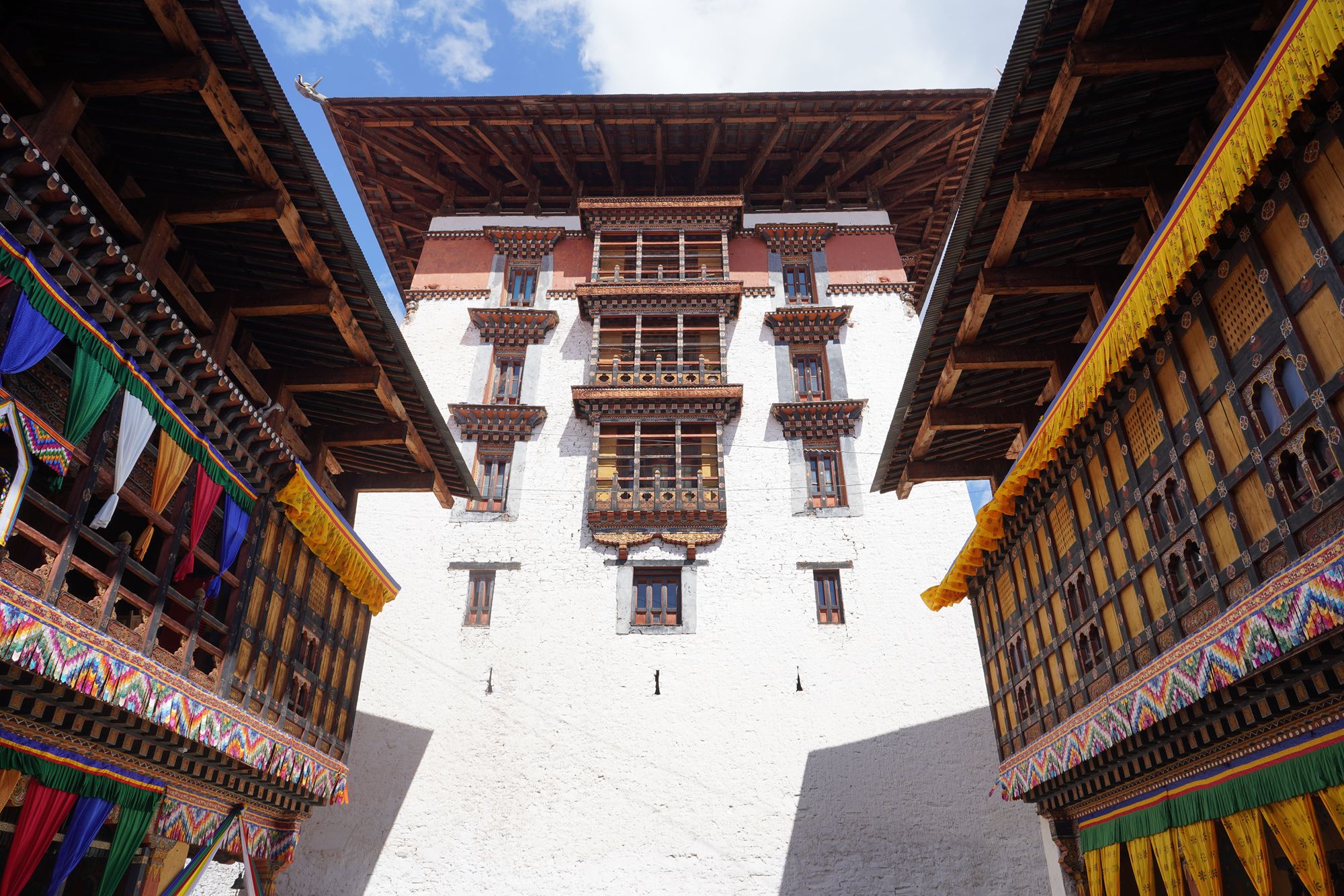
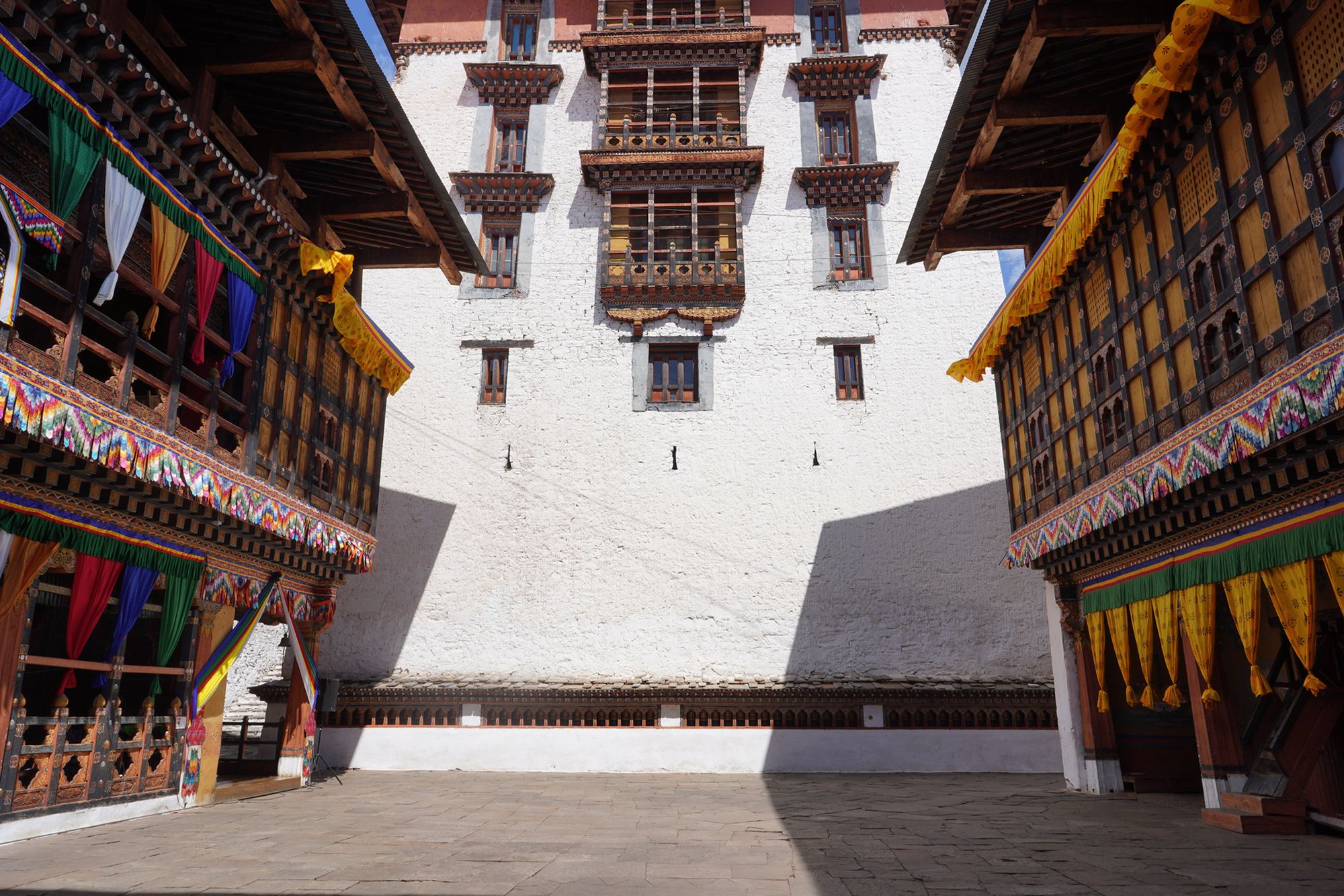
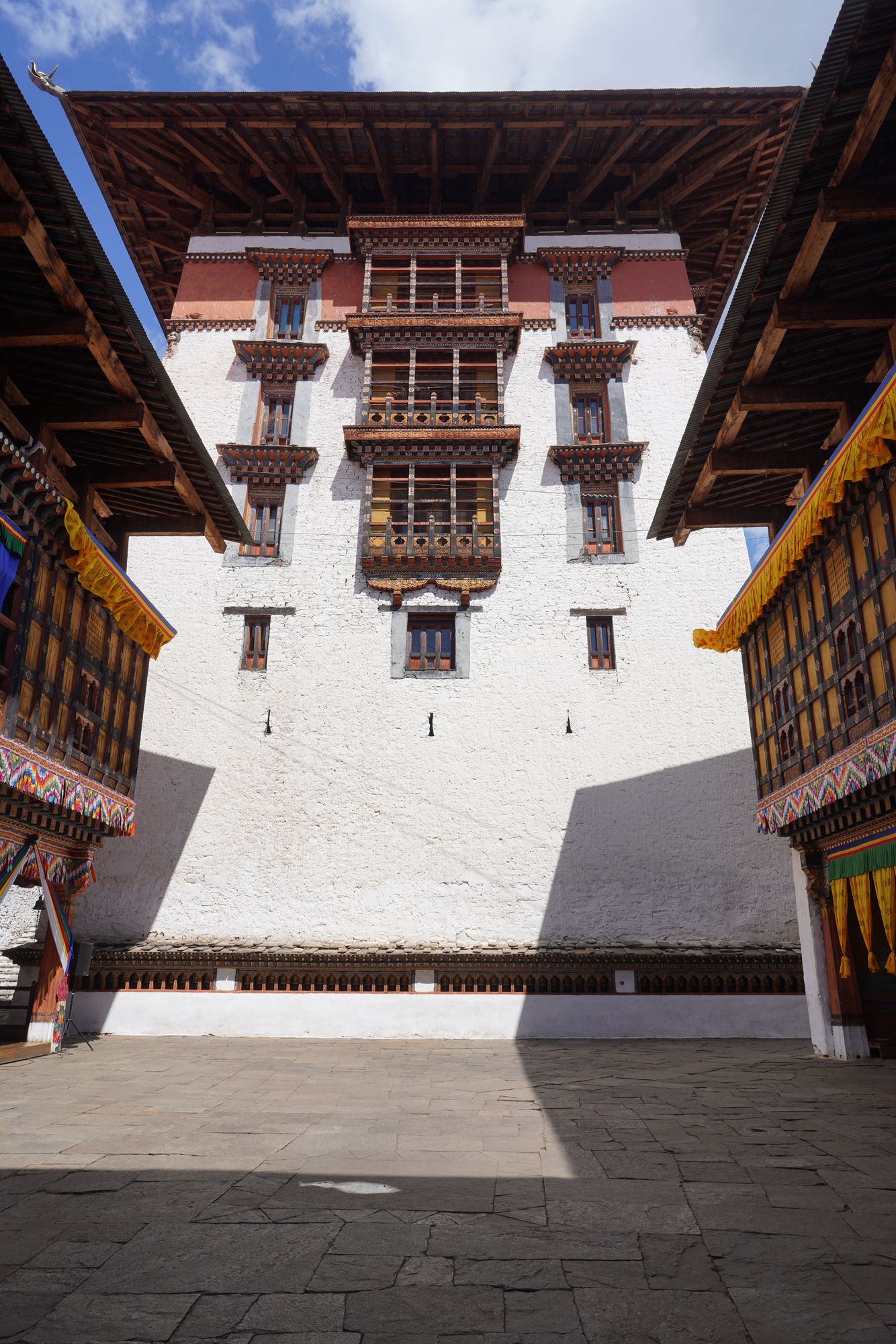
A panoramic view of Paro and the surrounding valley from Rinpung Dzong.
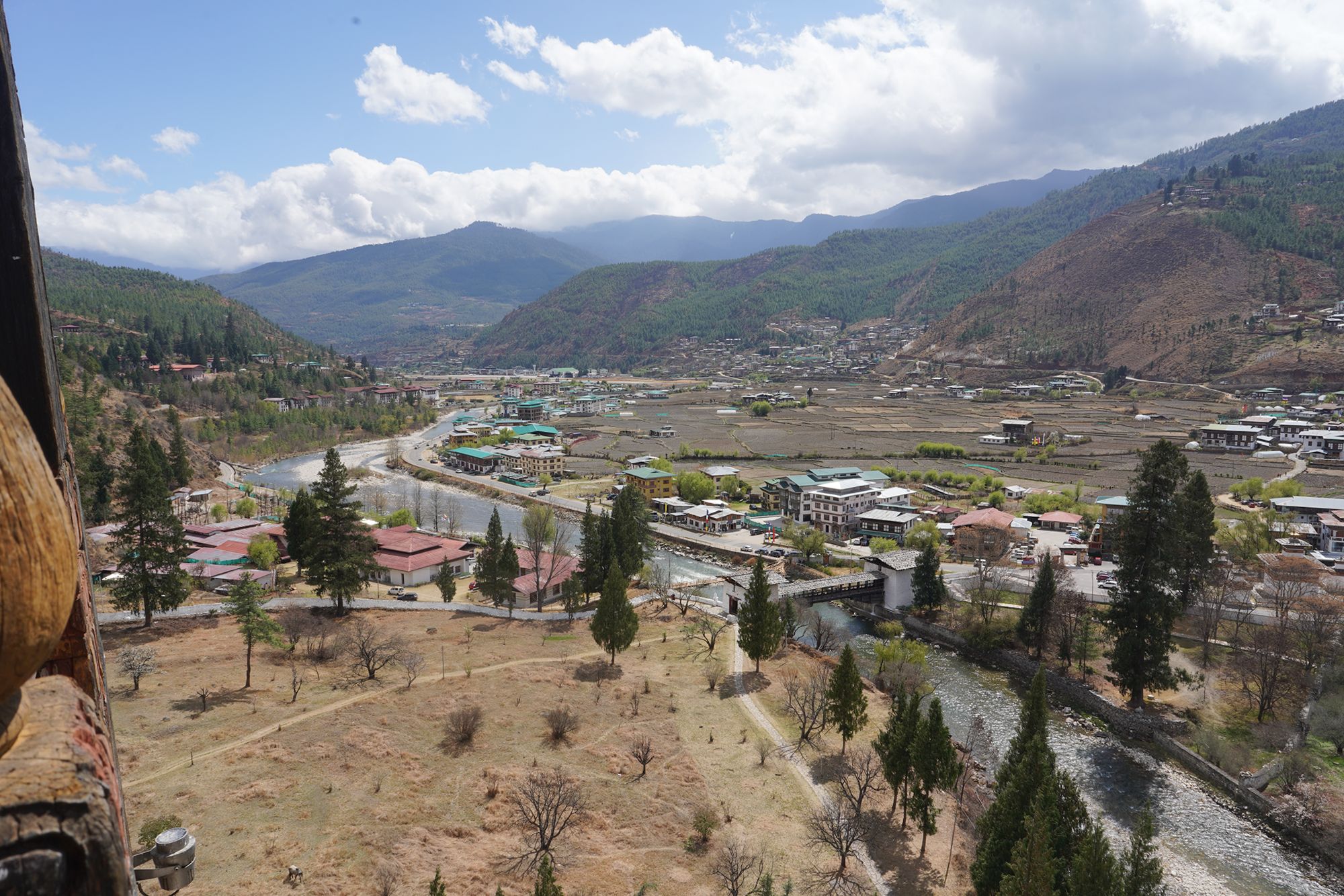
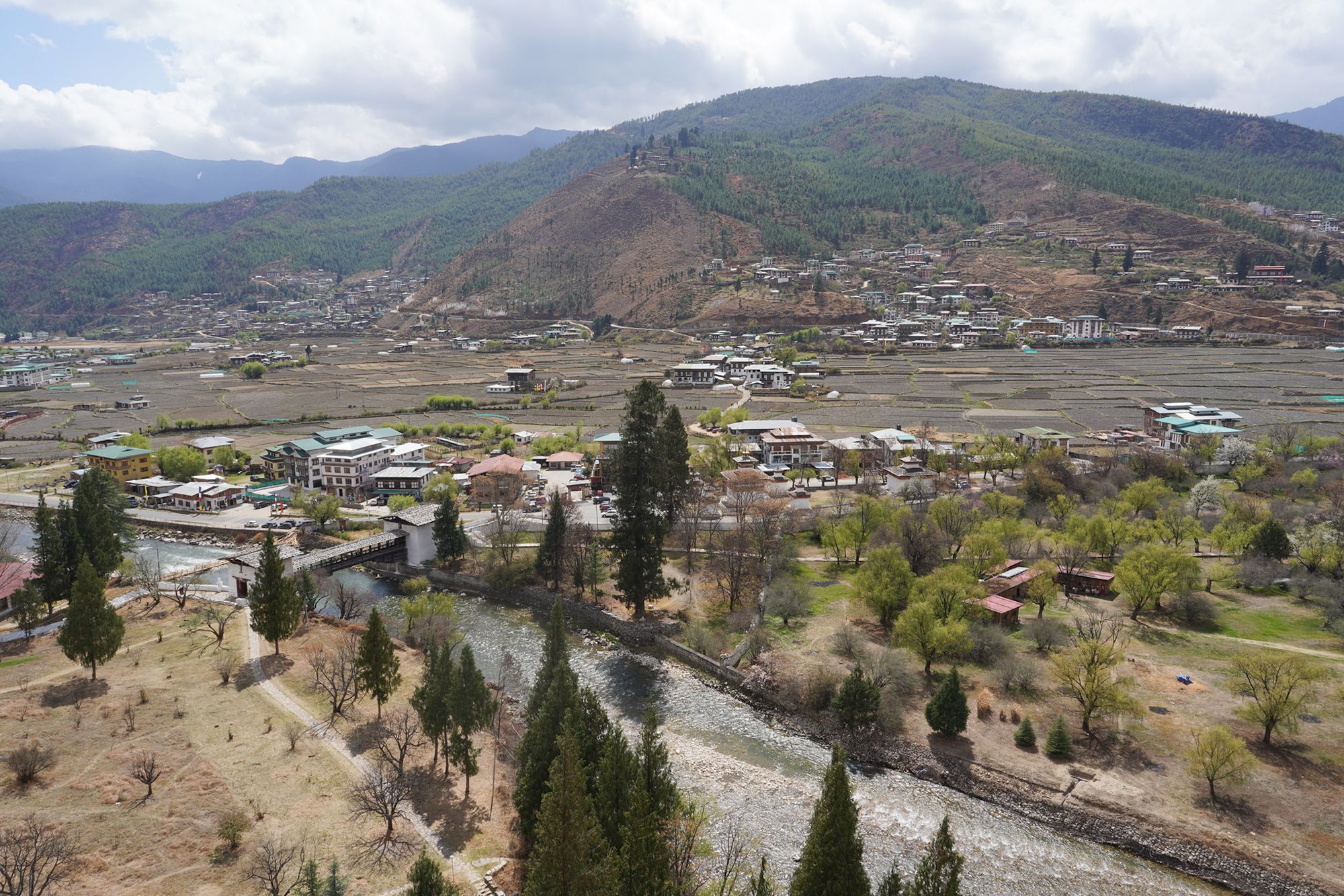
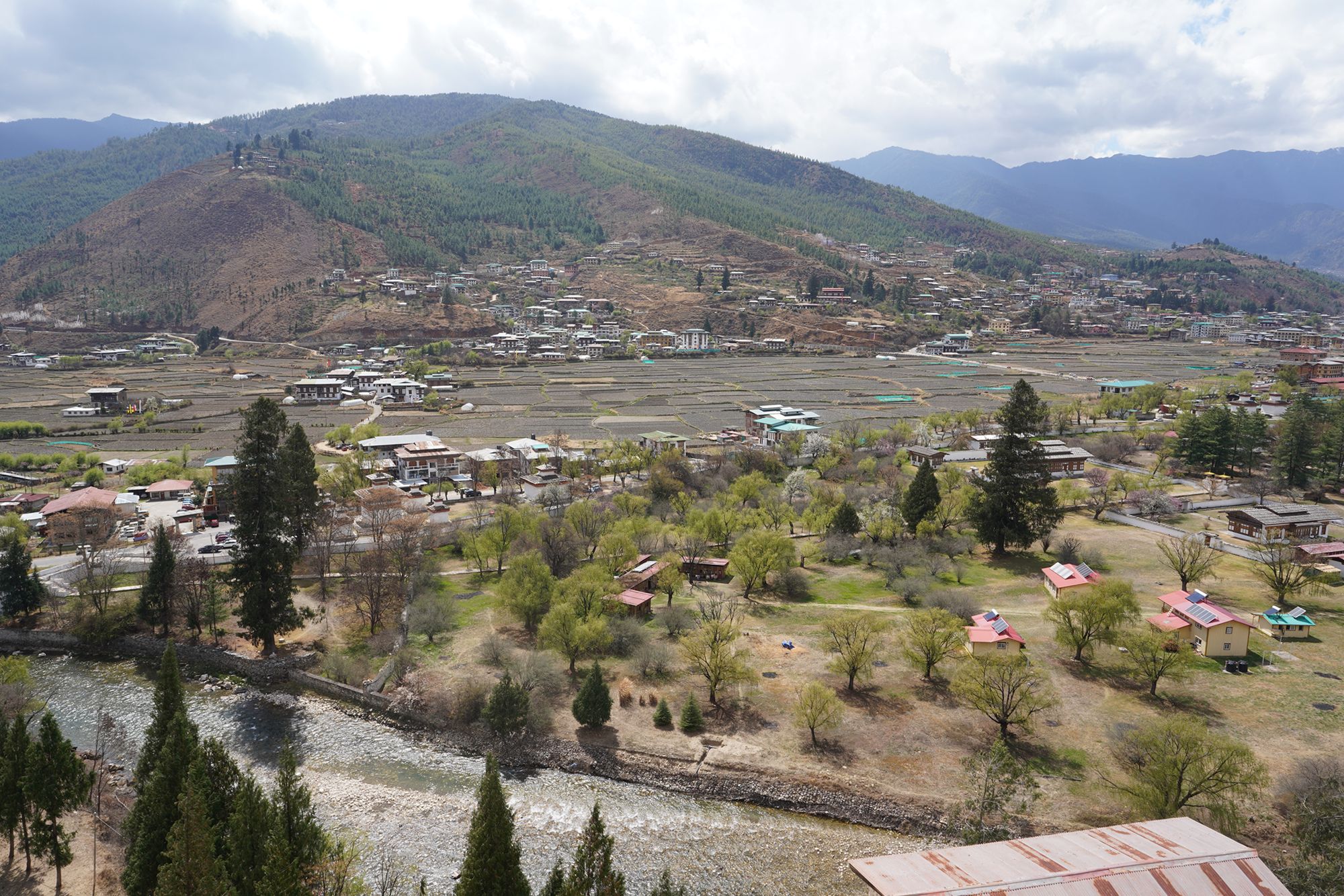
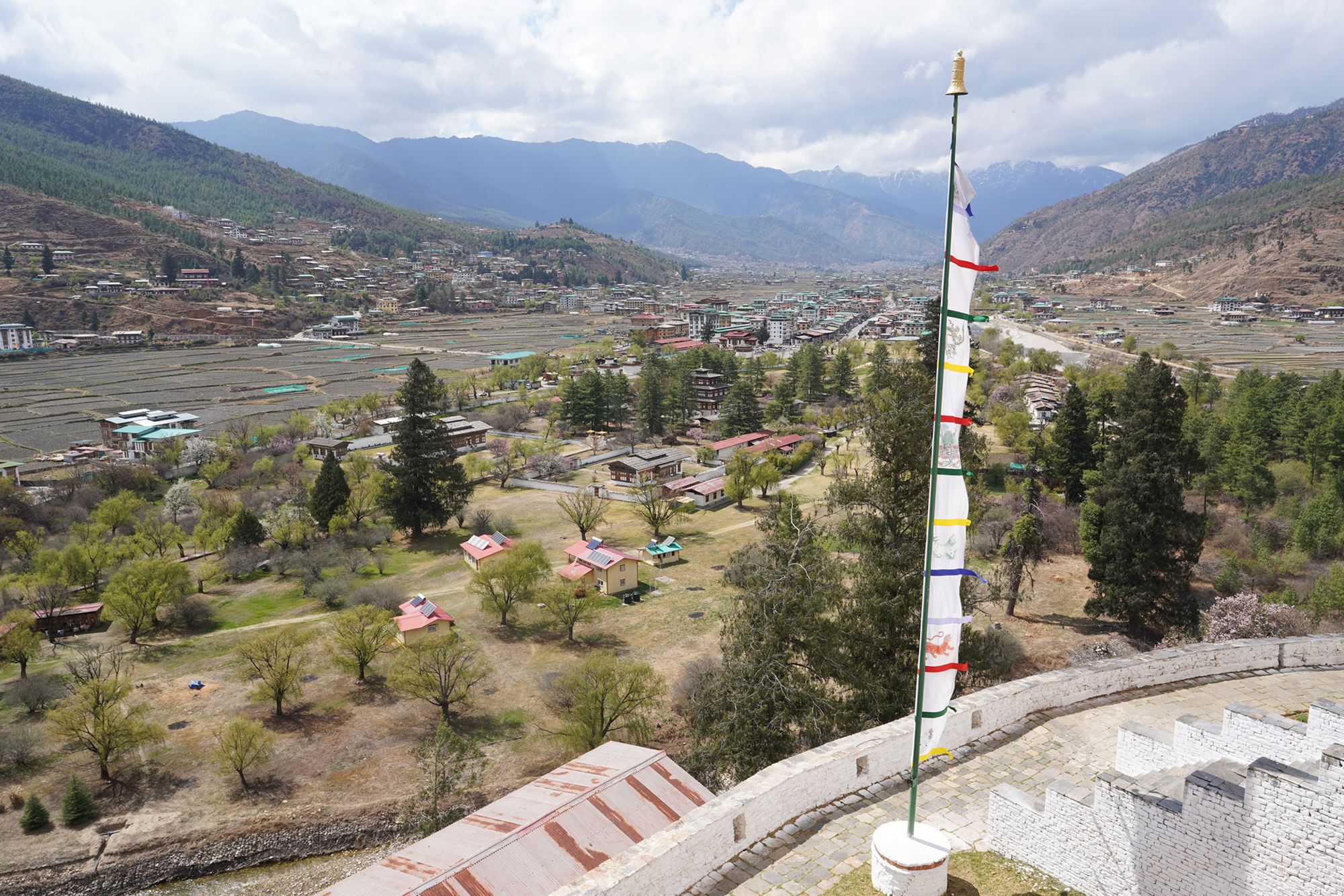
On the hill to the left is Ta Dzong, a former watchtower that once protected Rinpung Dzong and now houses the National Museum of Bhutan.
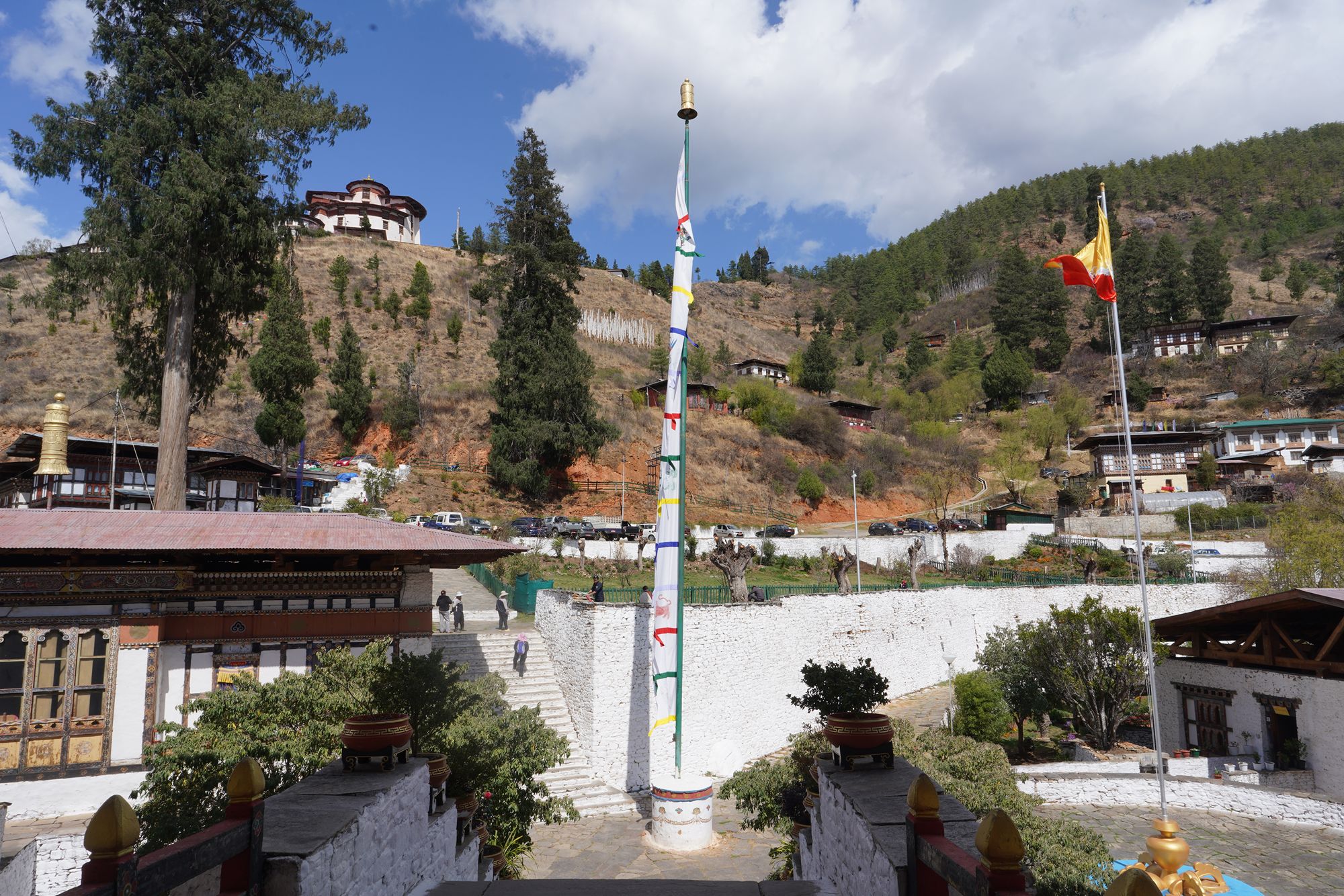
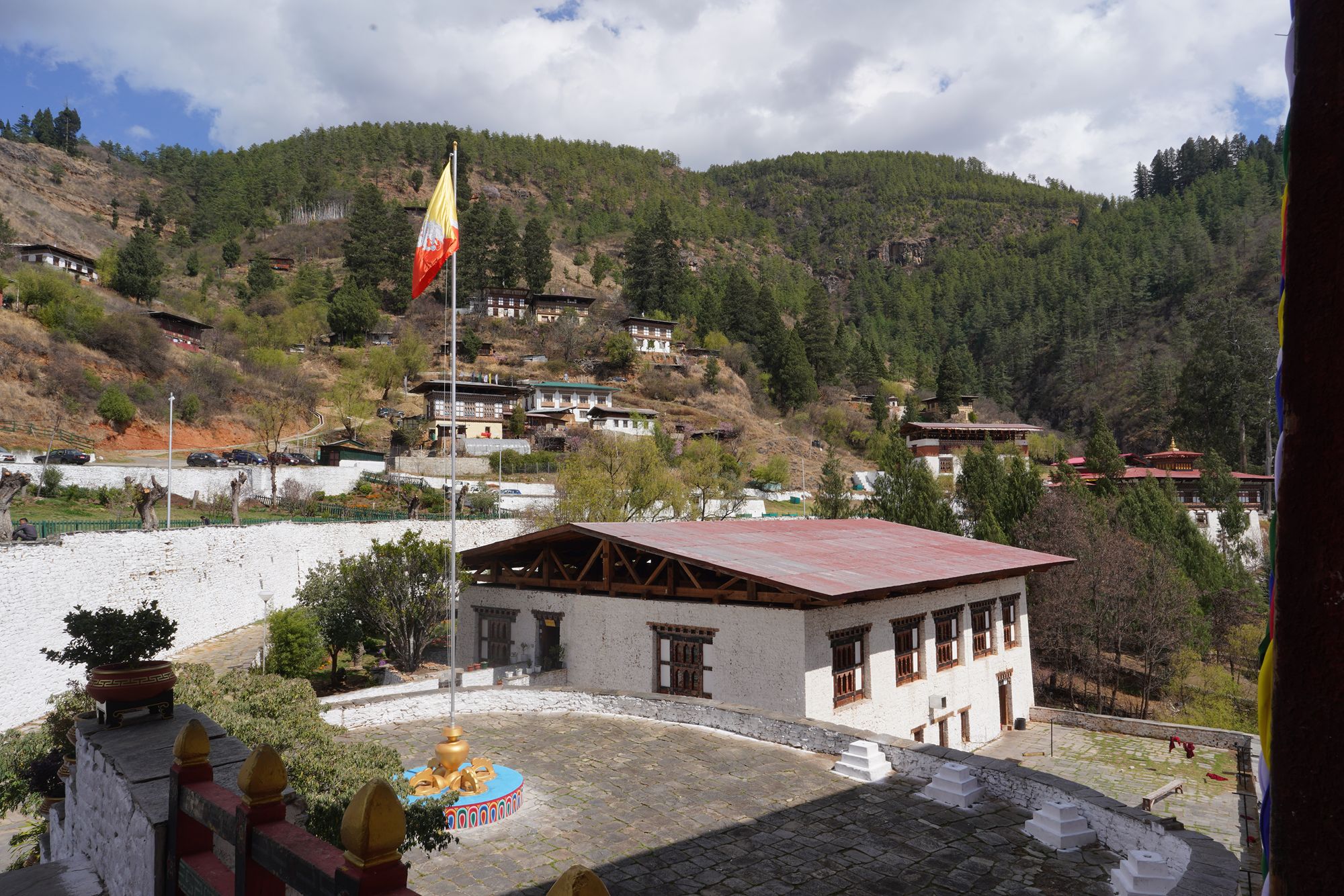
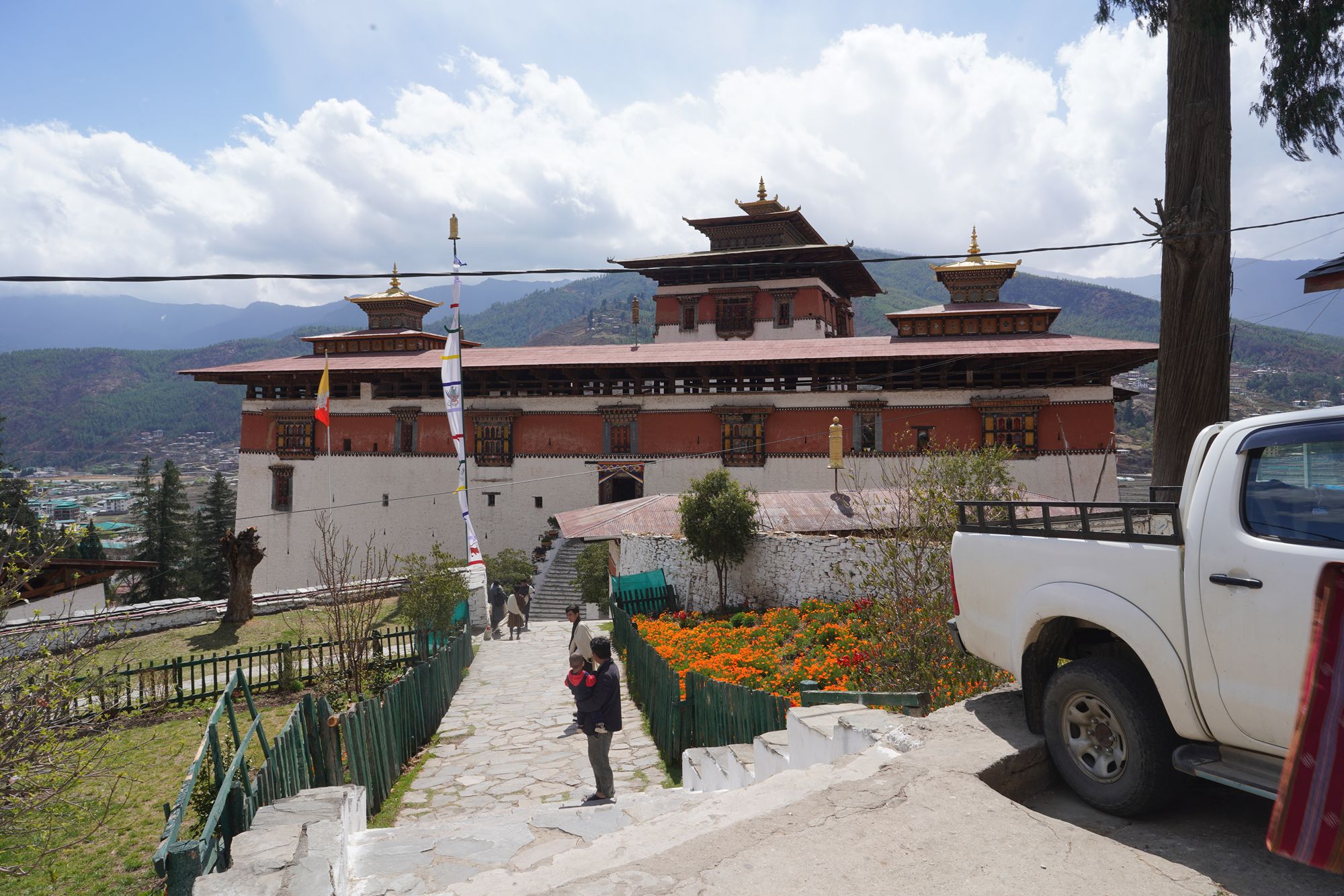
After visiting Rinpung Dzong, we drove up the hill to visit Ta Dzong, the former watchtower that now houses the National Museum of Bhutan.
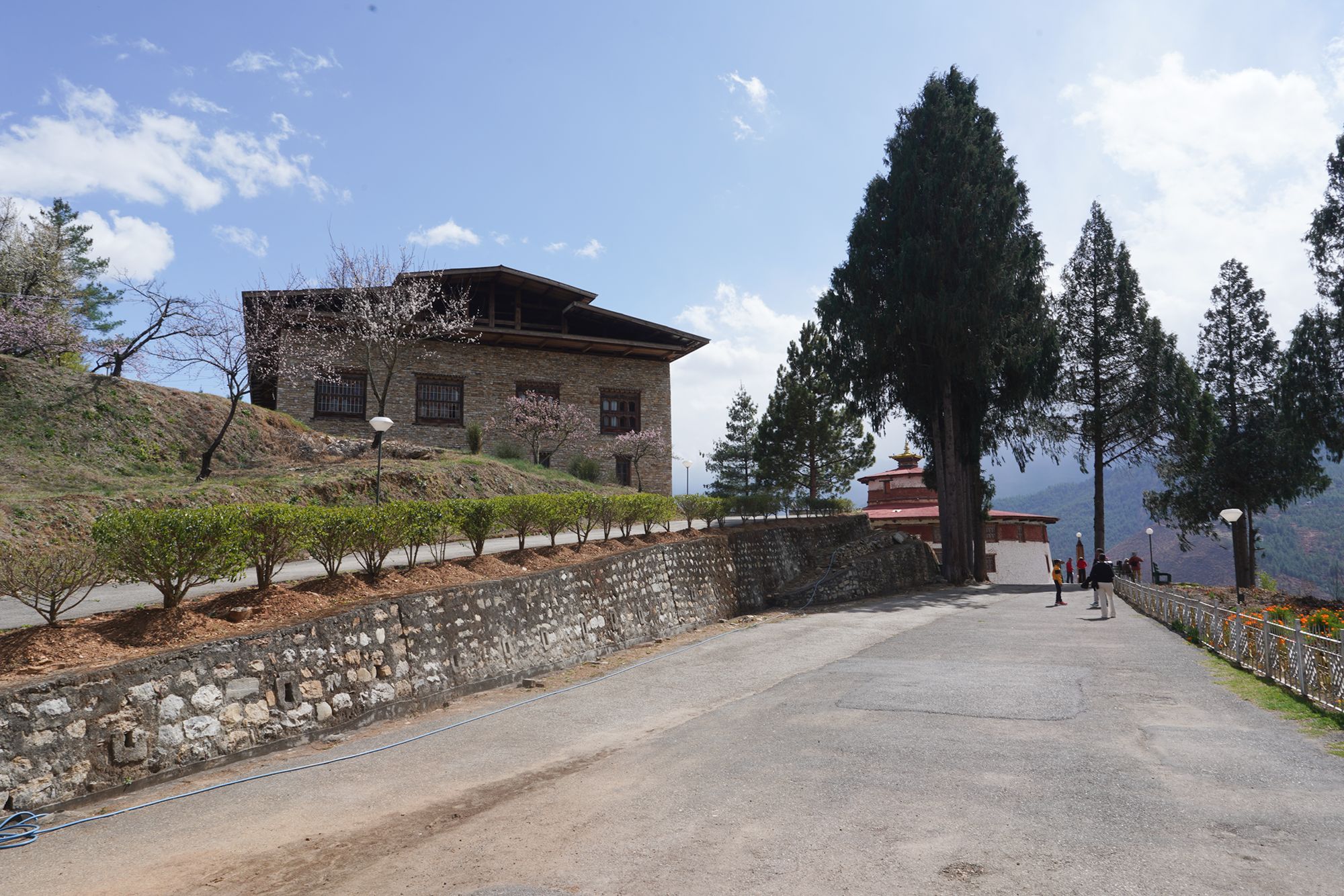
Ta Dzong
Ta Dzong is a distinctive circular watchtower on the hillside above Rinpung Dzong and the Paro Valley. It was built in 1649 to help defend Rinpung Dzong and the Paro Valley from possible attacks, particularly during conflicts with Tibet.
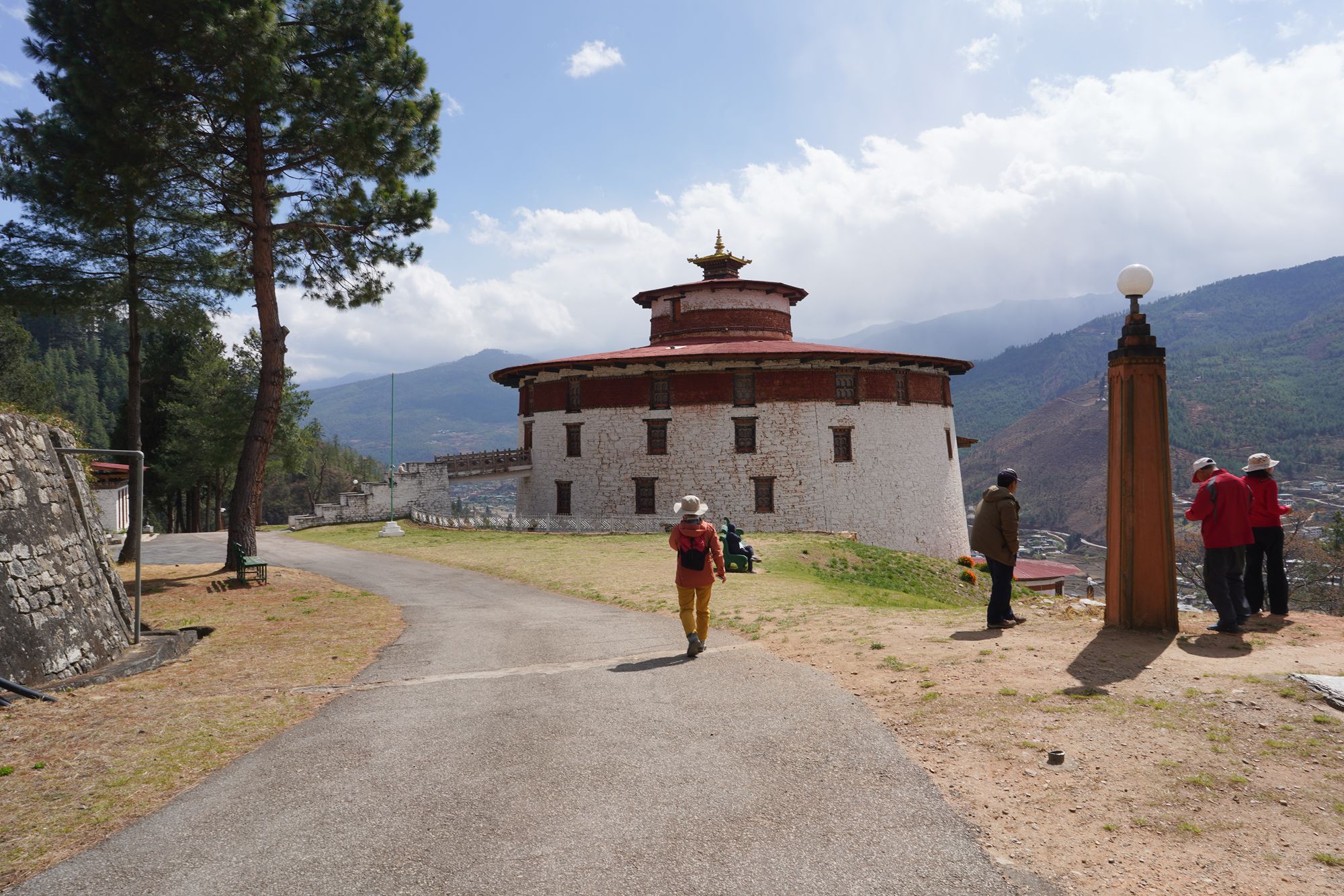
The location is also worth visiting for the panoramic views over Paro Valley.
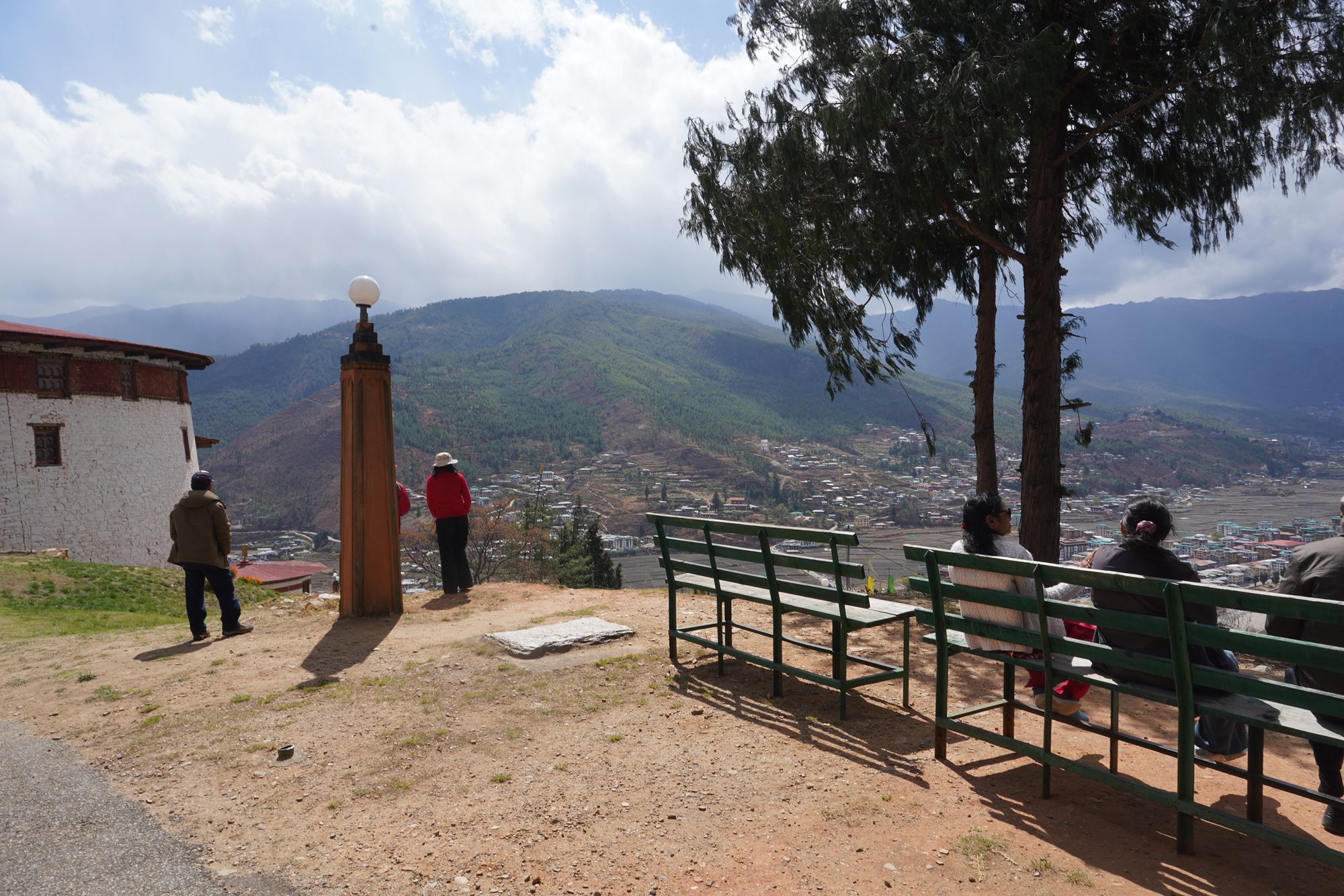
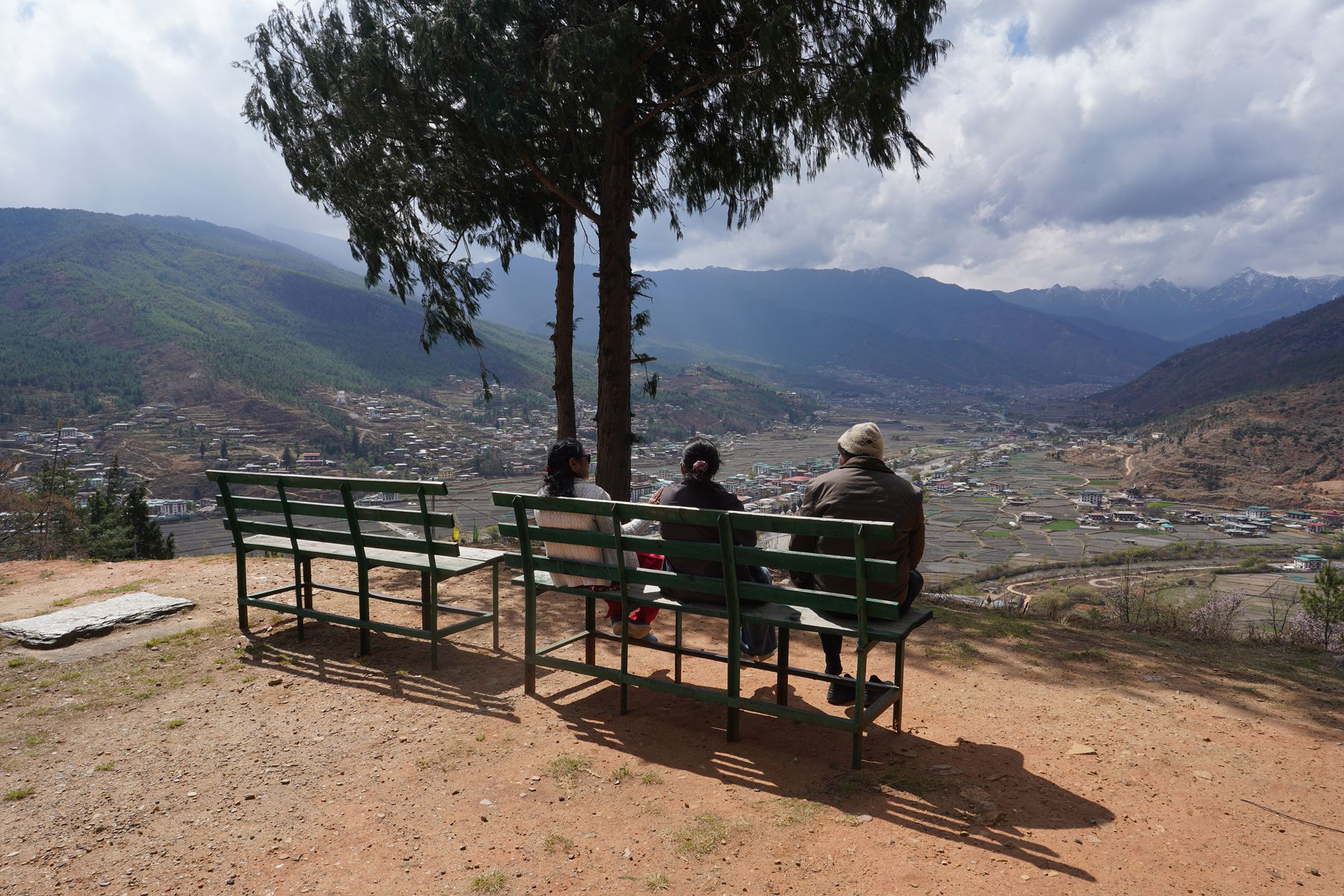
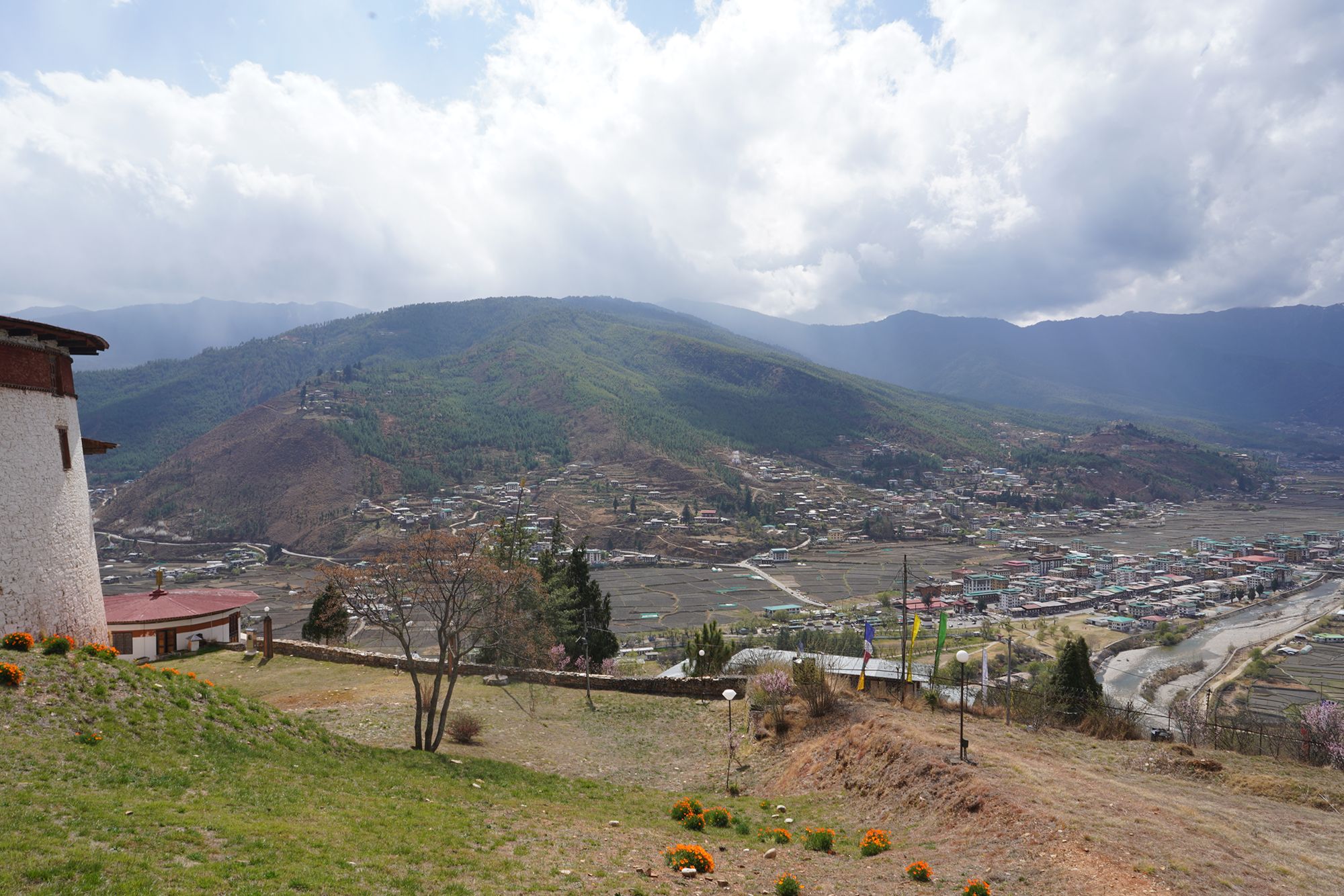
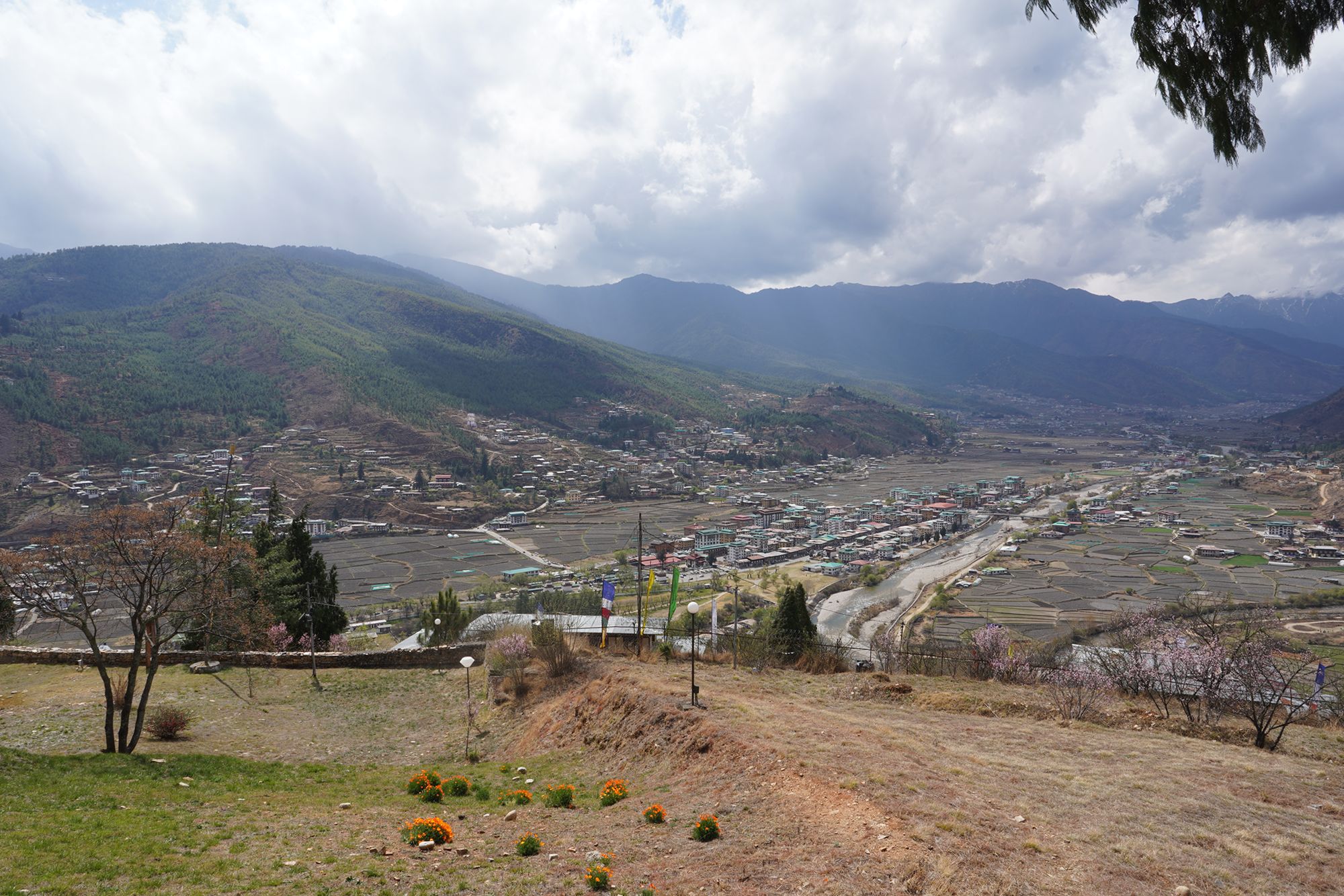
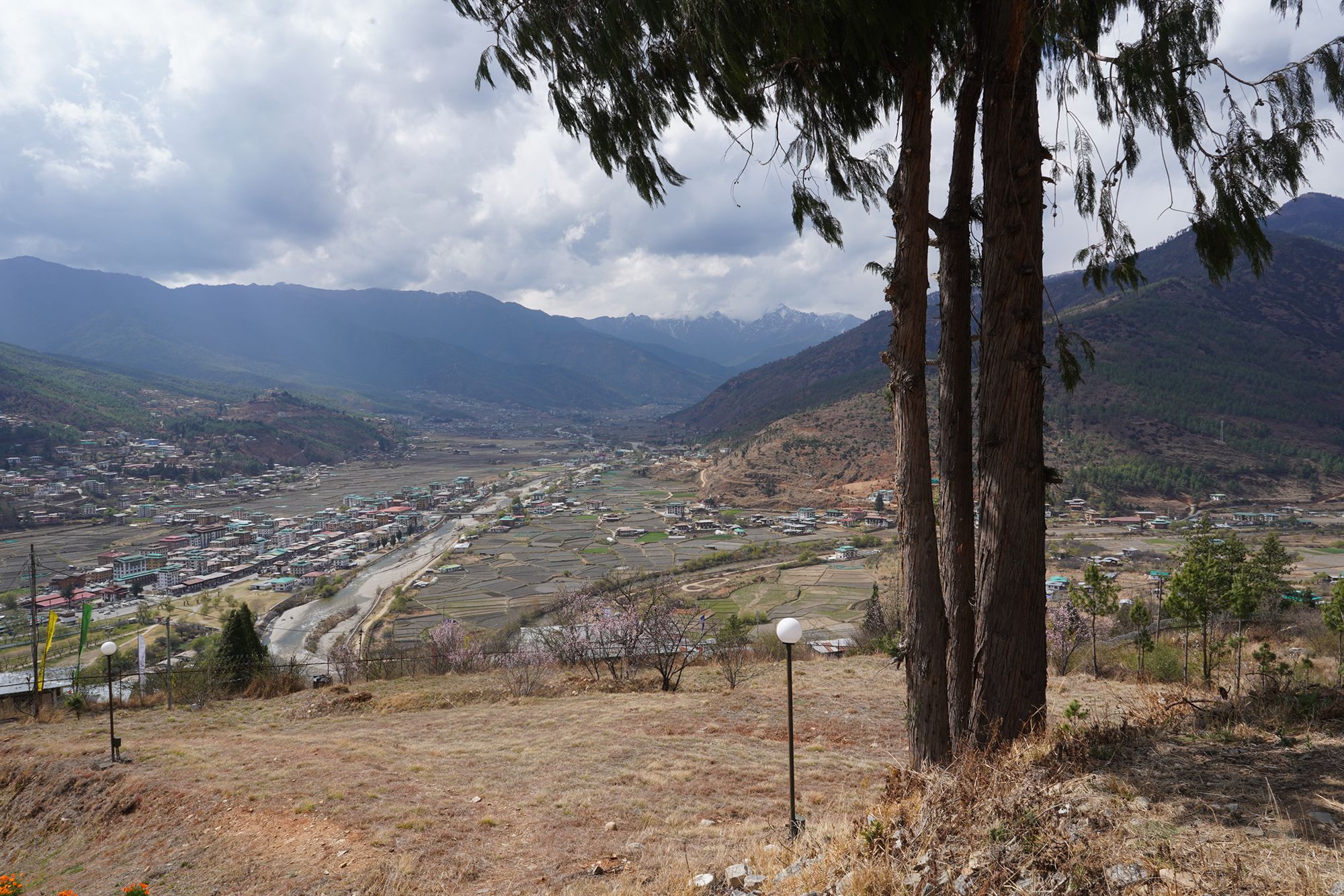
Its thick walls and strategic hilltop position made it an effective military watchtower. Unlike the large rectangular dzongs you visited elsewhere in Bhutan, Ta Dzong has an unusual round, fortress-like design.
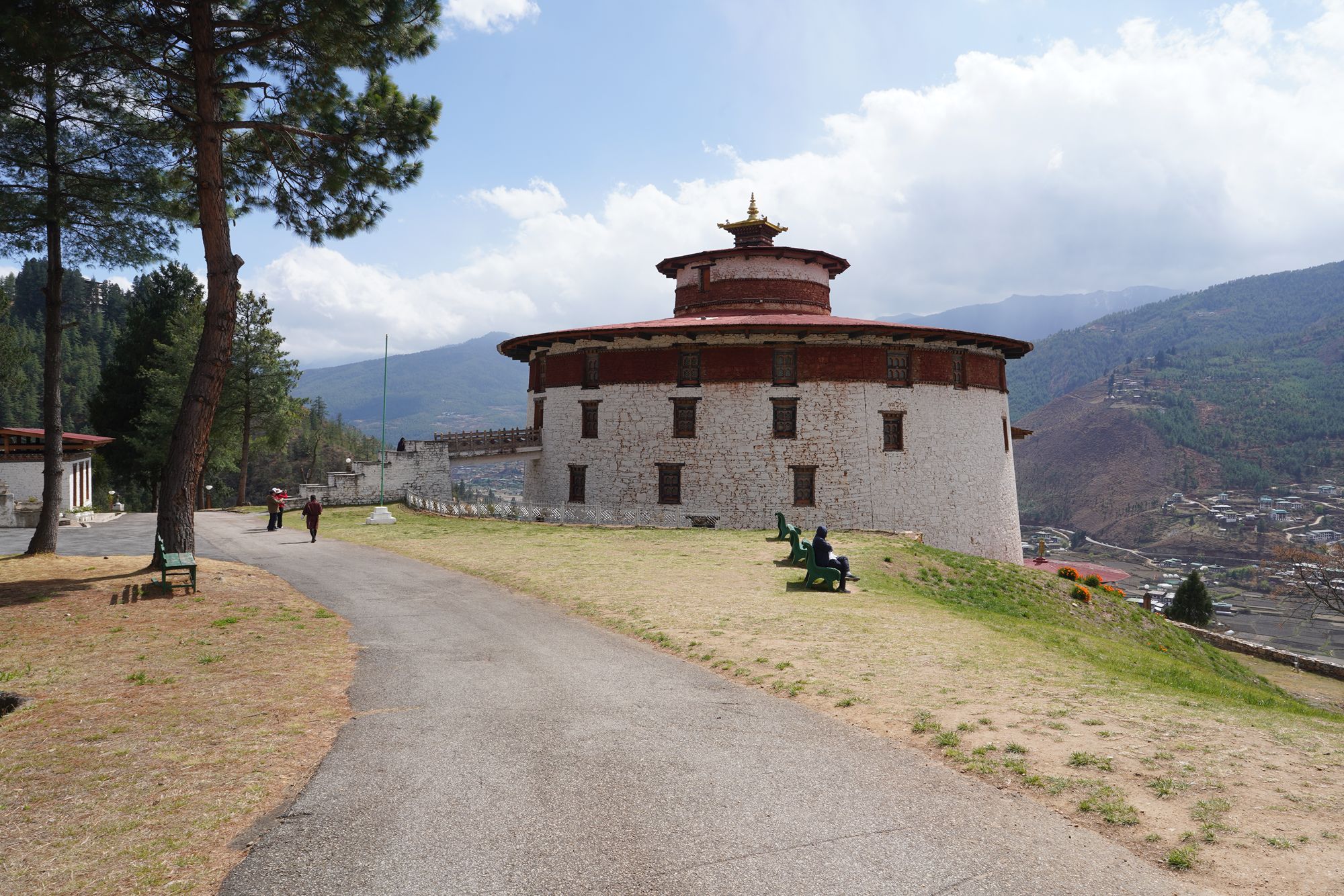
In 1968, the building was converted into the National Museum of Bhutan. Its collections cover Bhutanese history and culture, including Buddhist art, religious objects, traditional clothing, weapons, masks, manuscripts, and other historical artifacts.