Mahabalipuram, India
Touring Through Mahabalipura, India. 1236
Krishna's Butter Ball: E Raja St, Mahabalipuram, Tamil Nadu 603104, India
Krishna Mandapam: J58V+X32, W Raja St, Mahabalipuram, Tamil Nadu 603104, India
Five Rathas: 58, W Raja St, Mahabalipuram, Tamil Nadu 603104, India
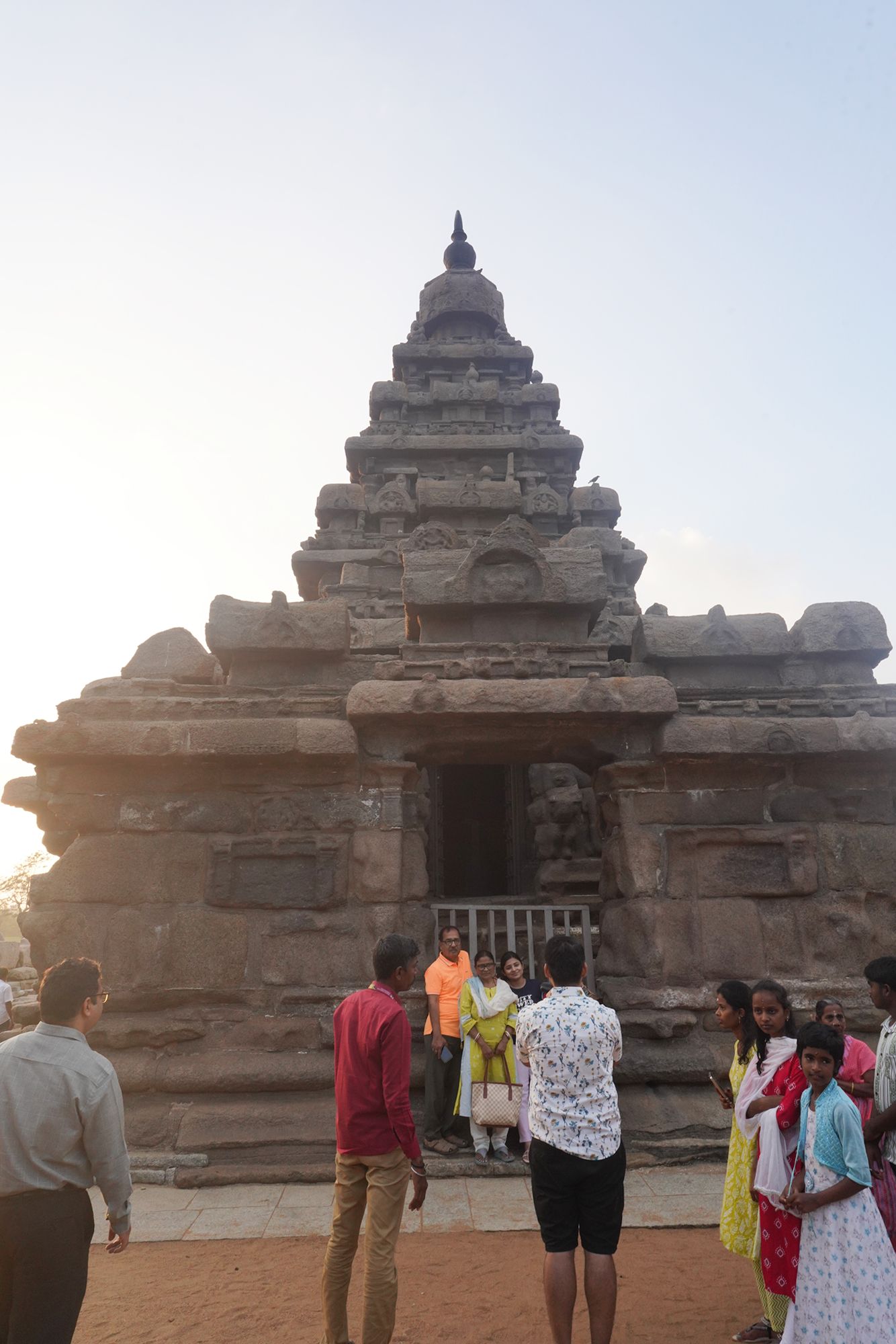
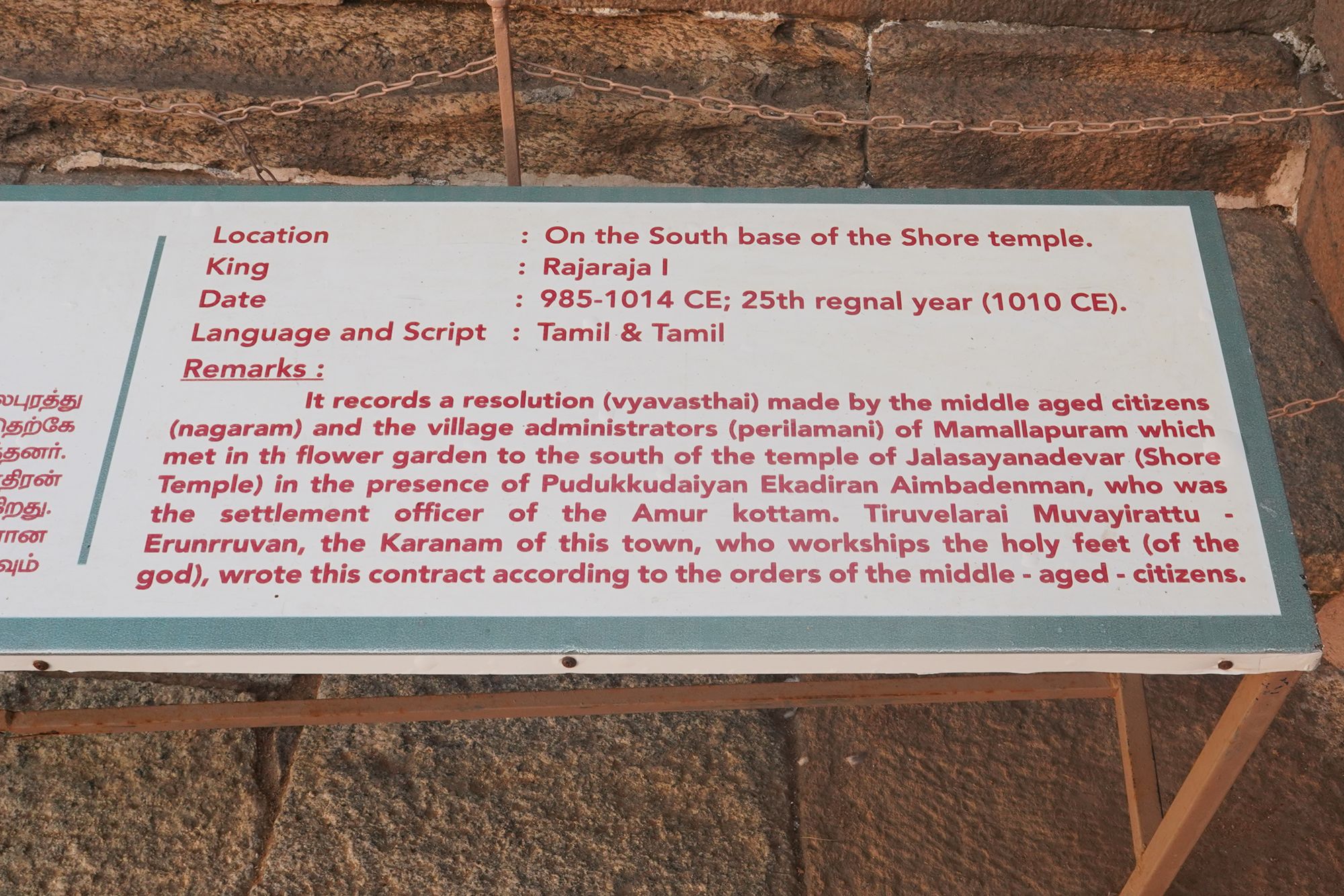
Mahabalipuram Shore Temple: Beach Rd, Mahabalipuram, Tamil Nadu 603104, India
Date Picture Taken: Feb, 2026
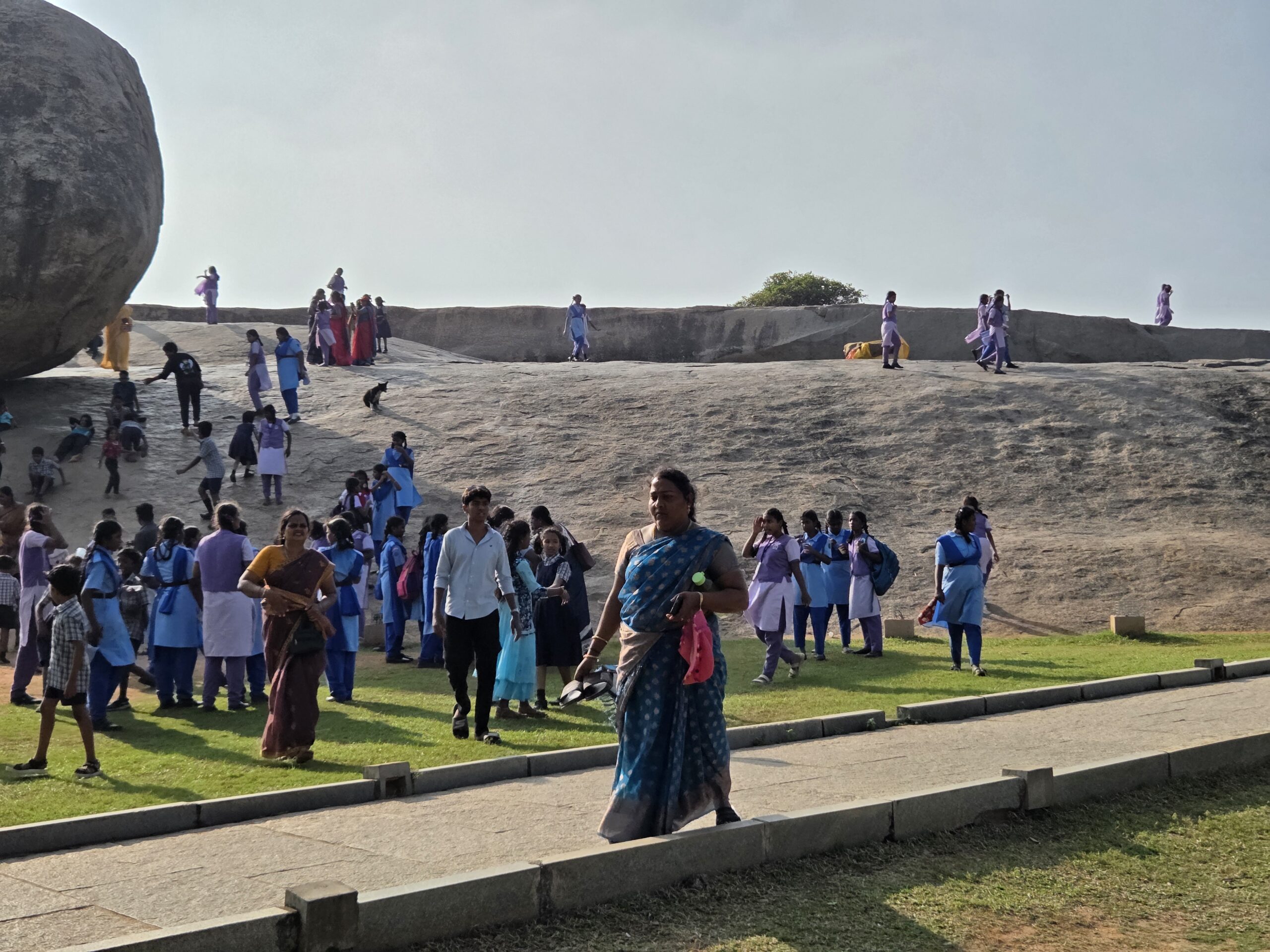
Our first stop was Krishna’s Butter Ball.
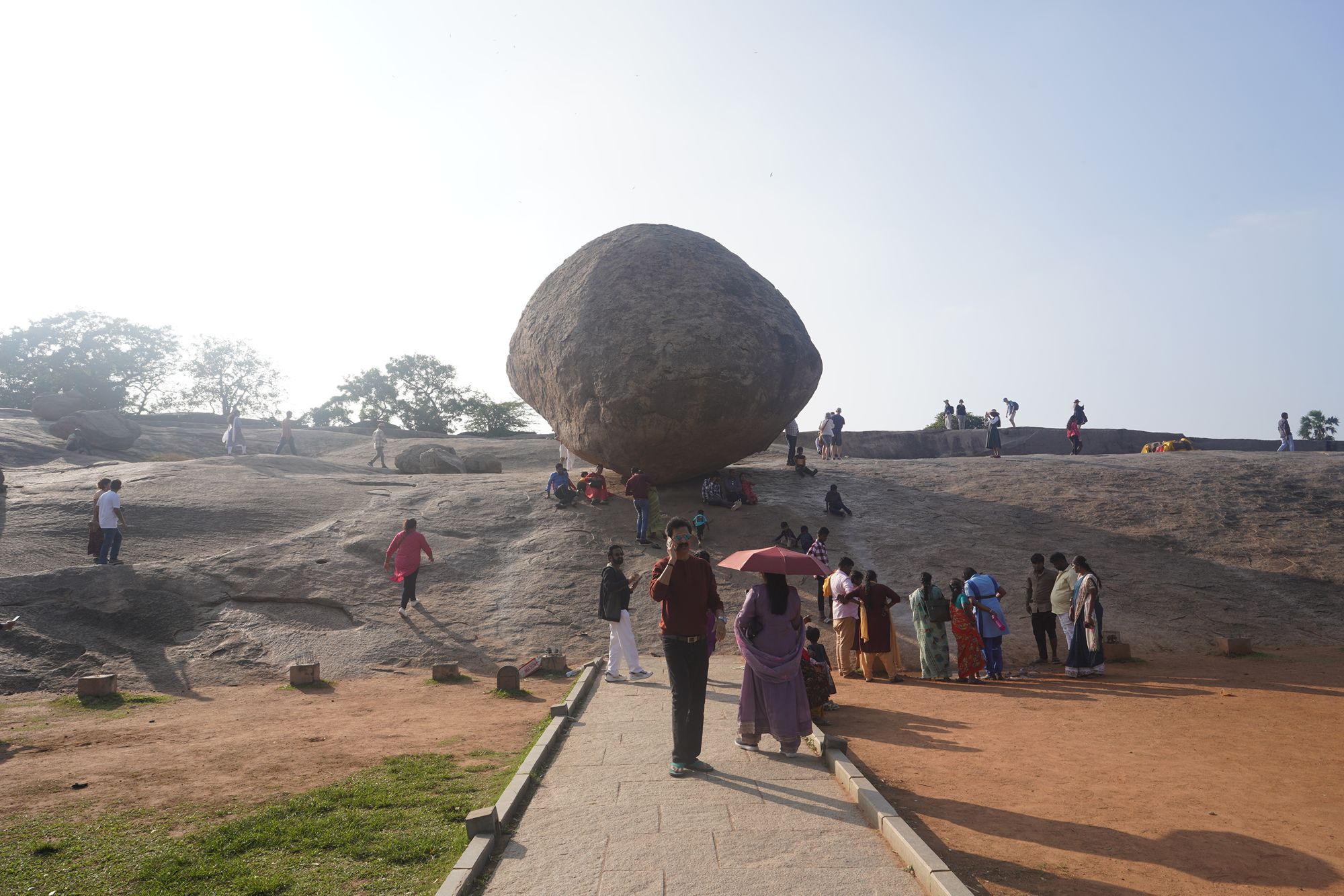
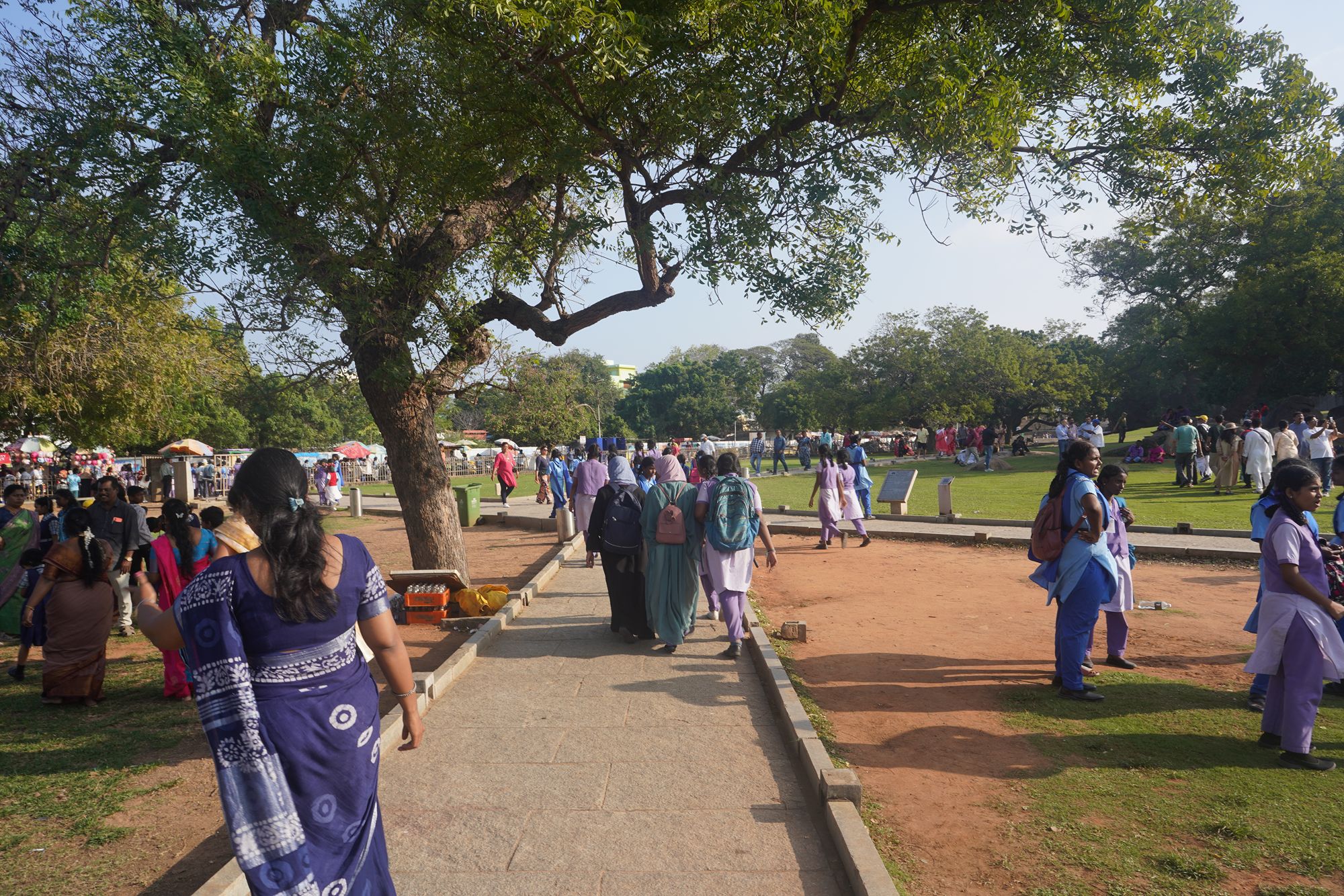
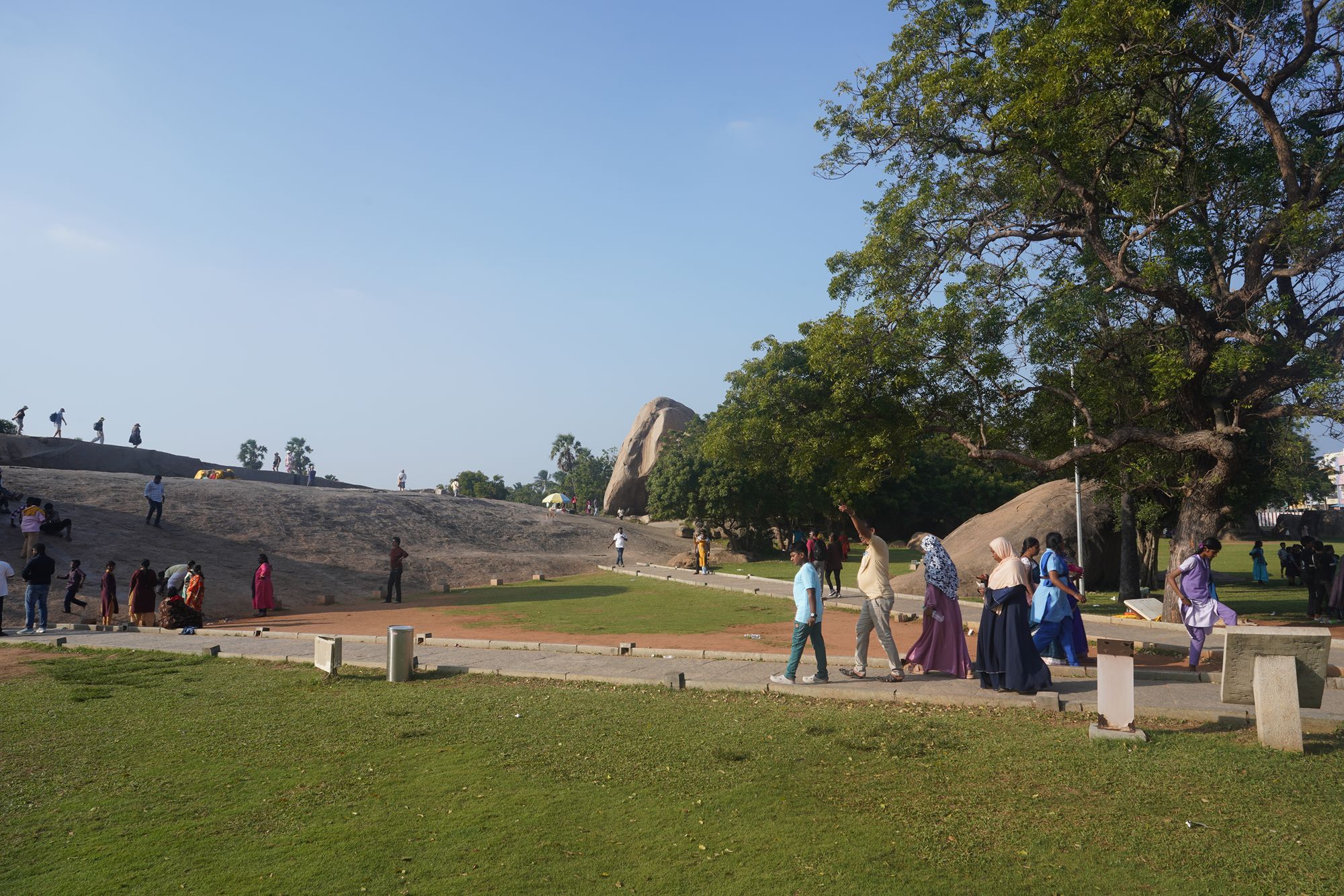
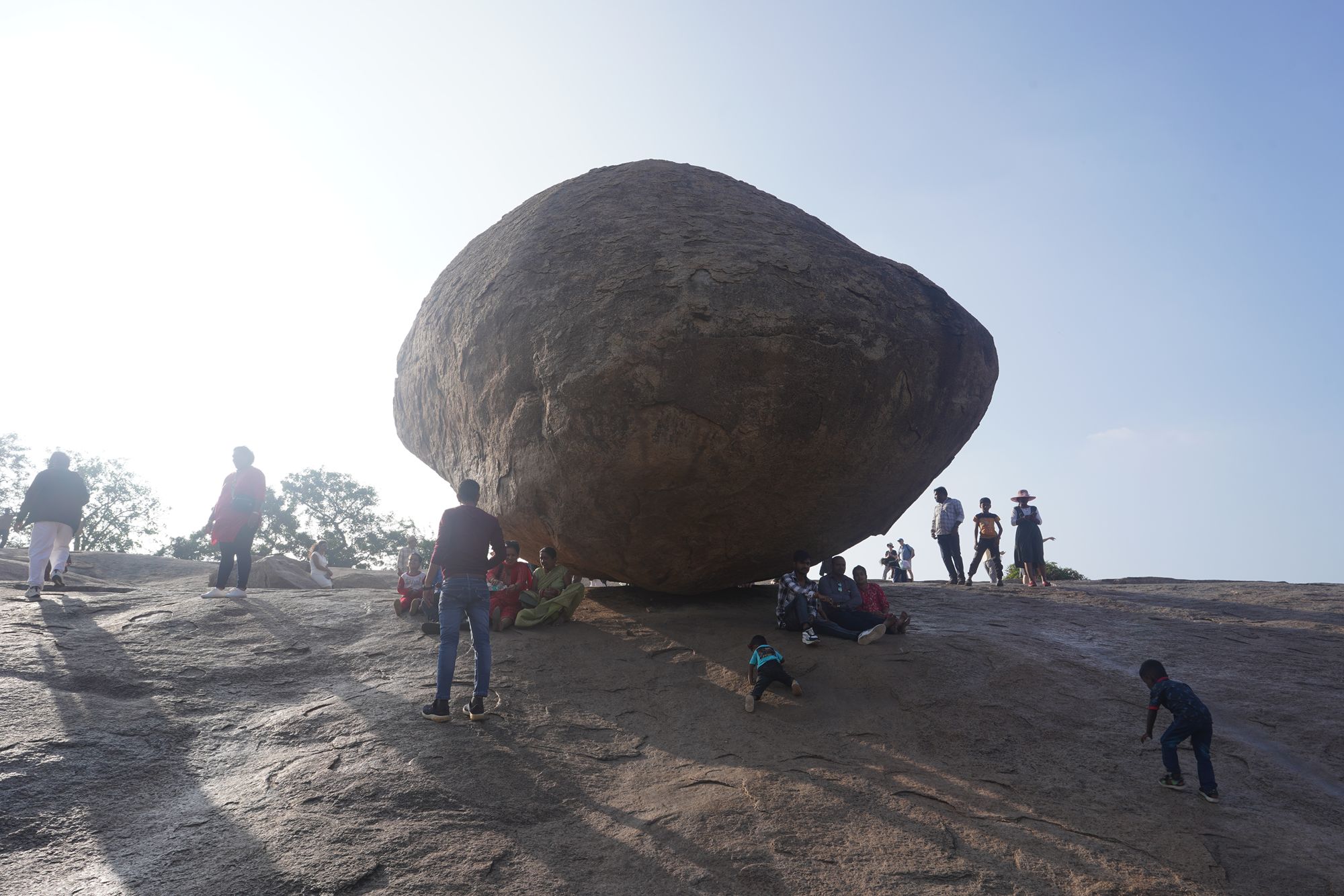
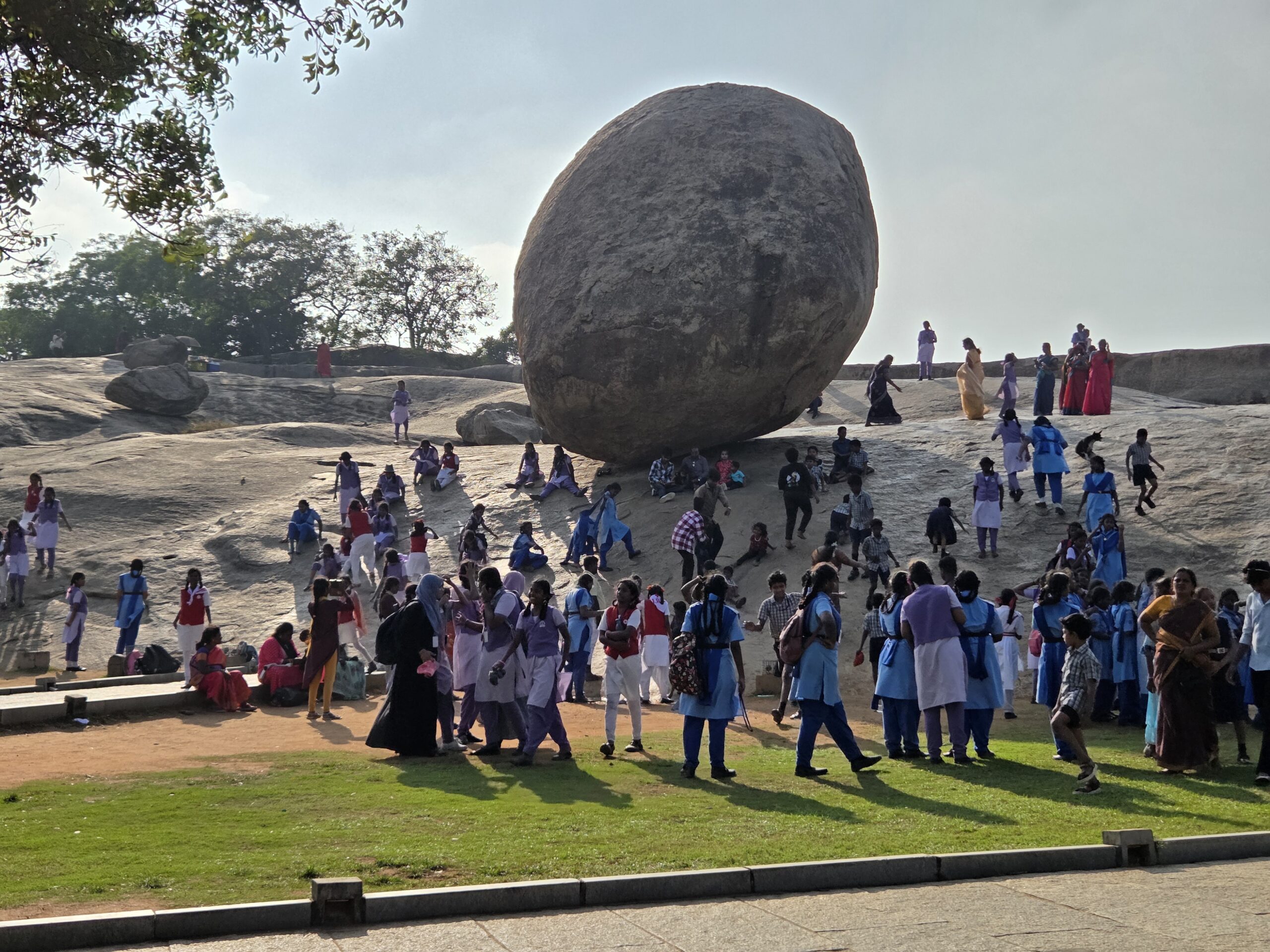
Krishna’s Butter Ball is a huge natural granite boulder in Mahabalipuram that appears to balance precariously on a sloping rock surface.
Its name comes from Hindu mythology. Krishna was famously fond of butter, and the enormous round boulder was humorously compared to a ball of butter dropped by Krishna. Despite its seemingly unstable position, the rock has remained in place for centuries.
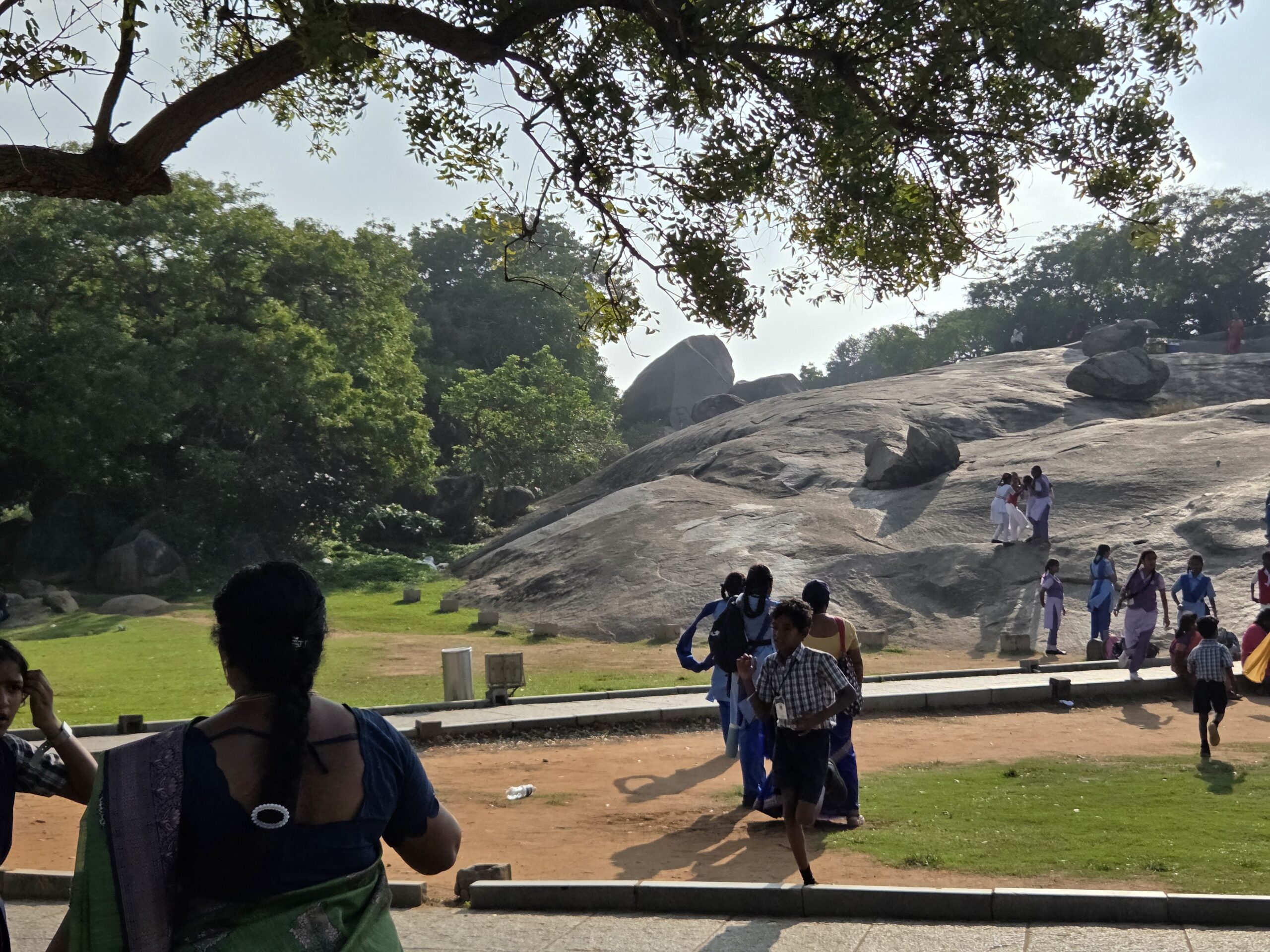
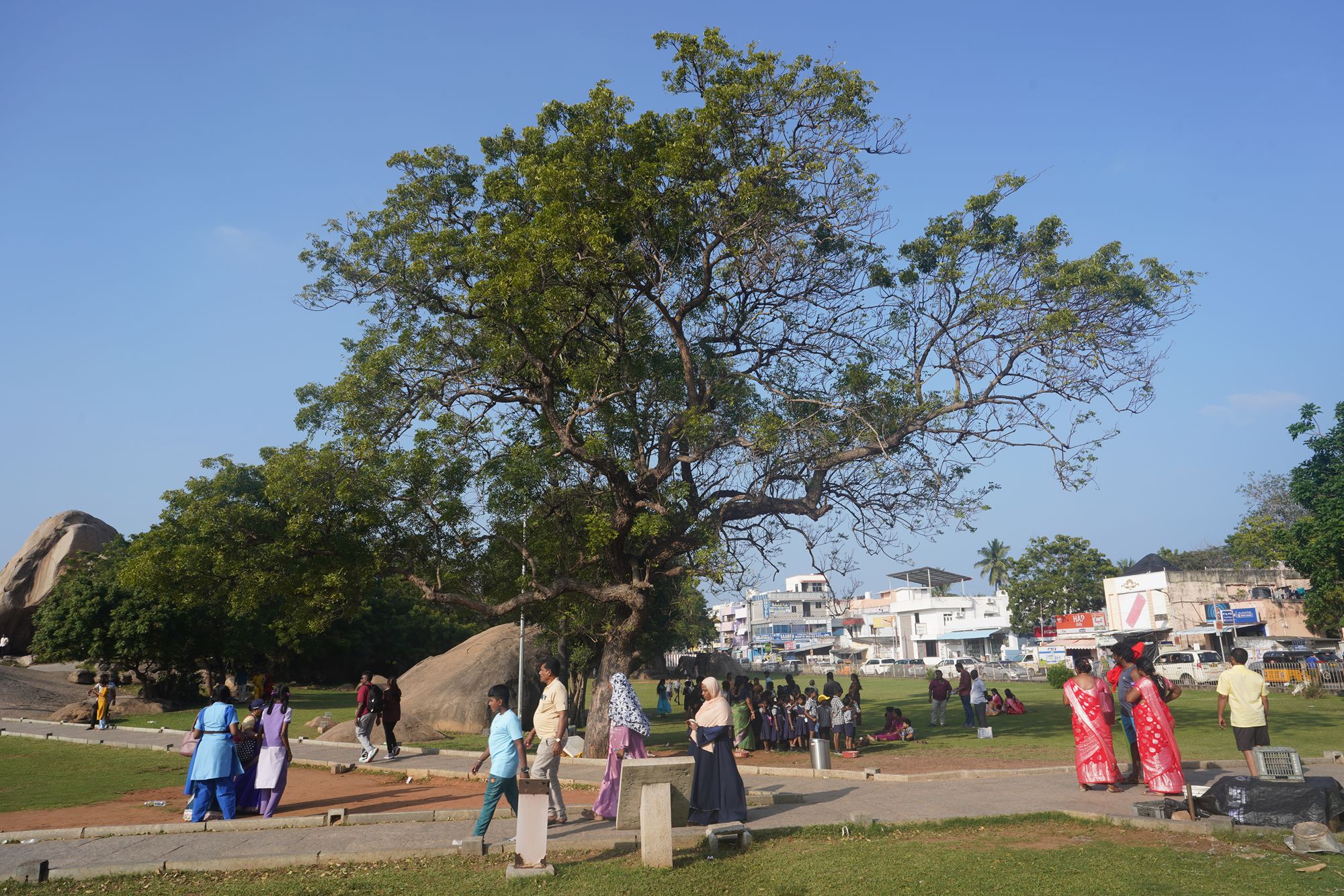
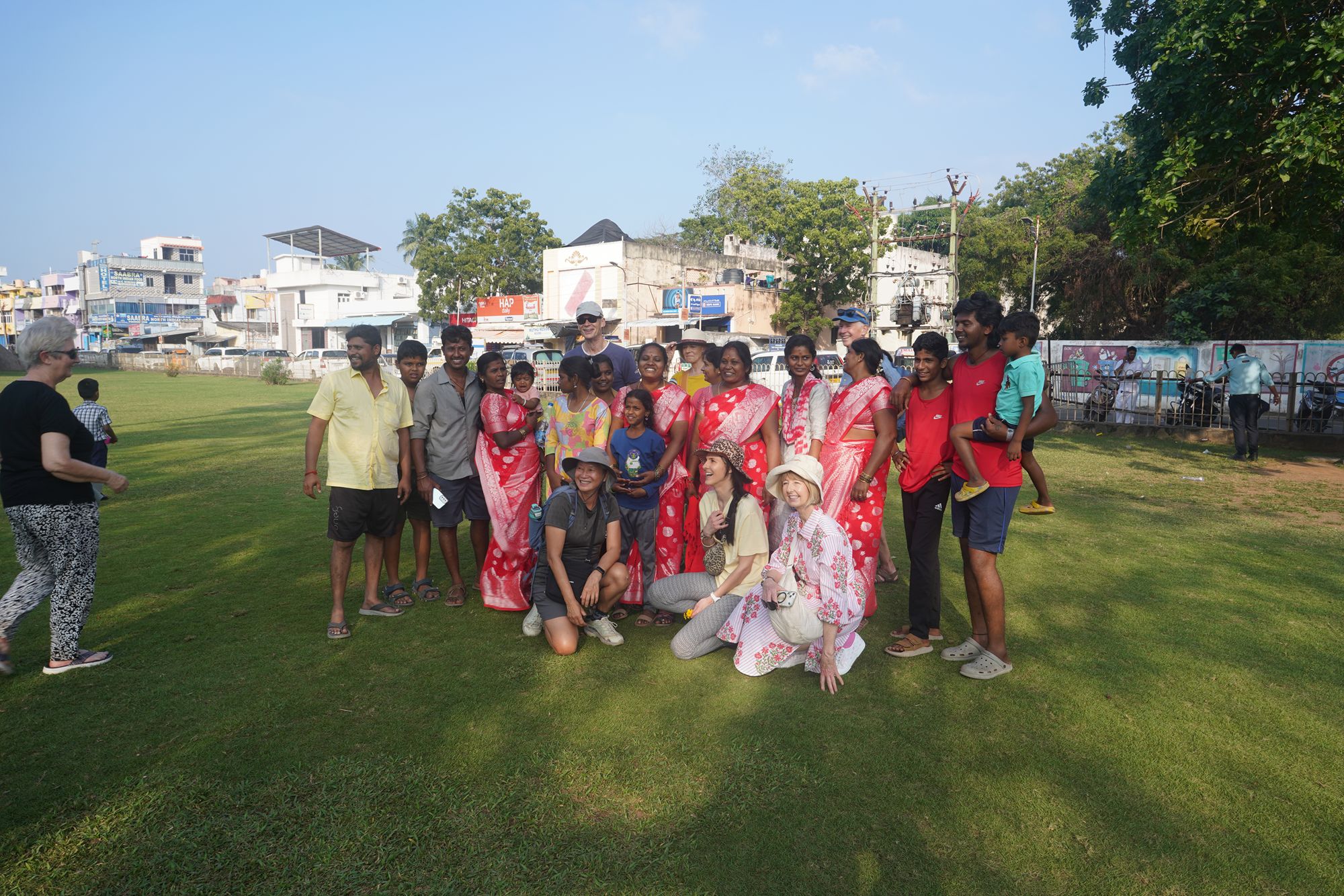
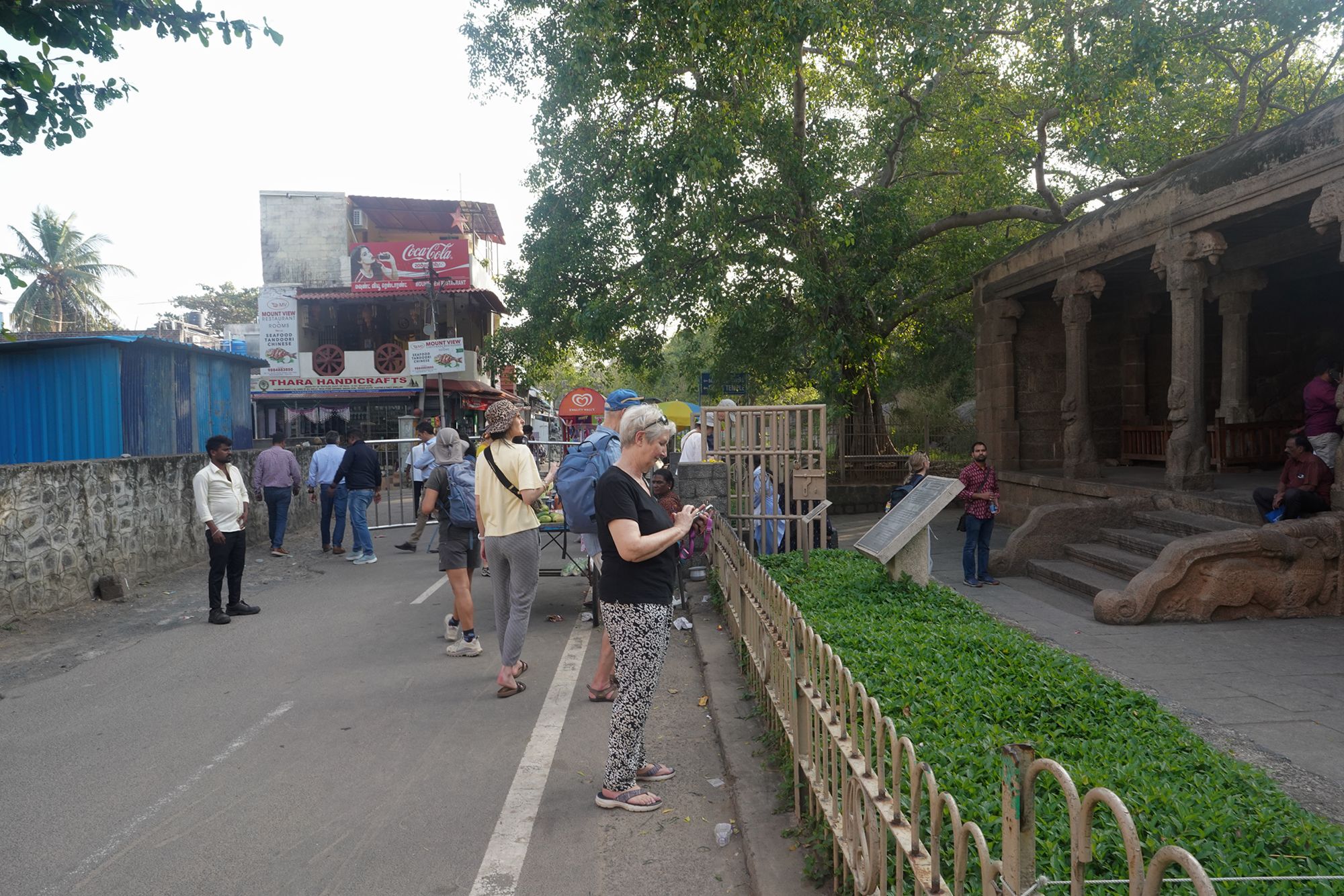
Then we walked to the nearby Krishna Mandapam.
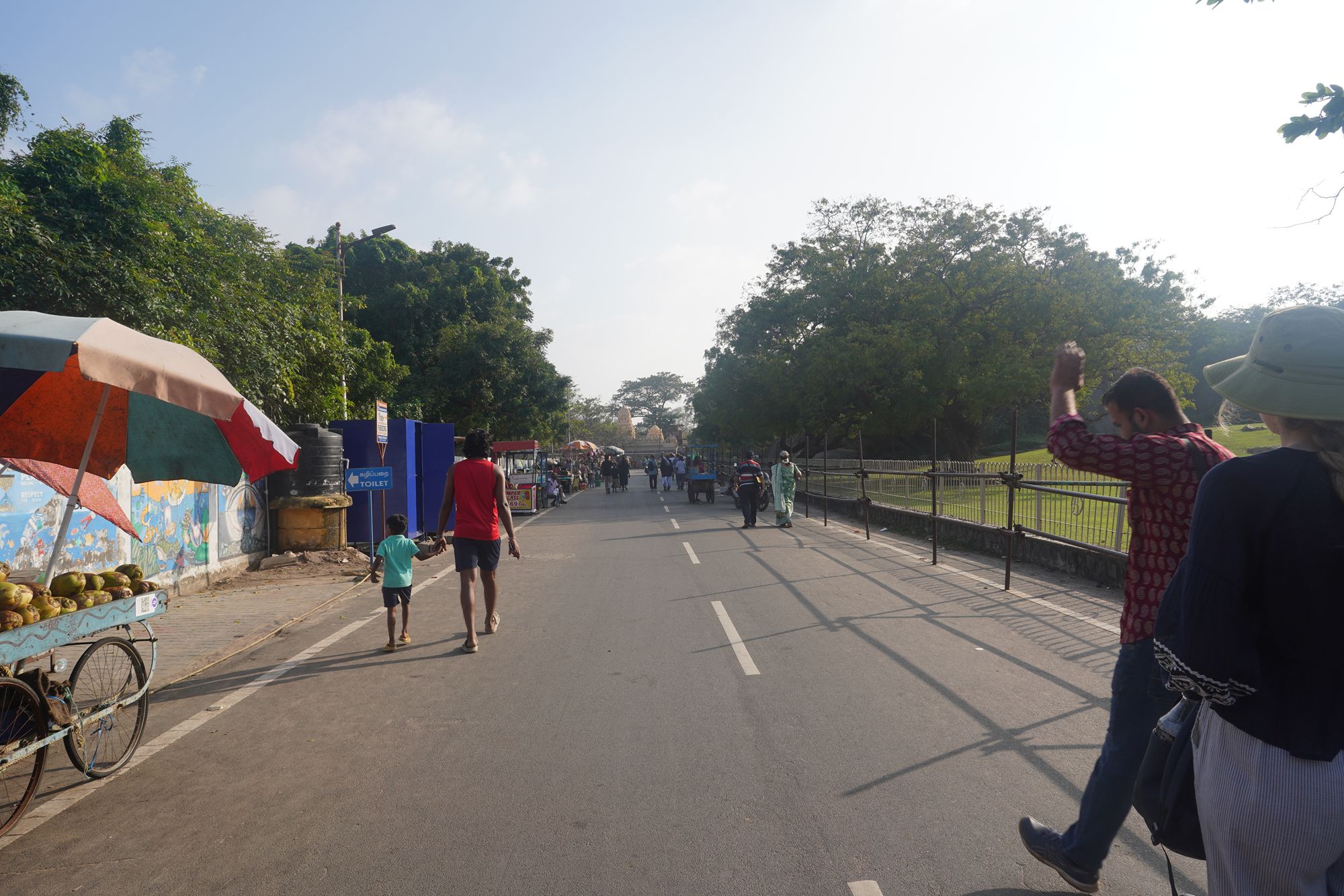
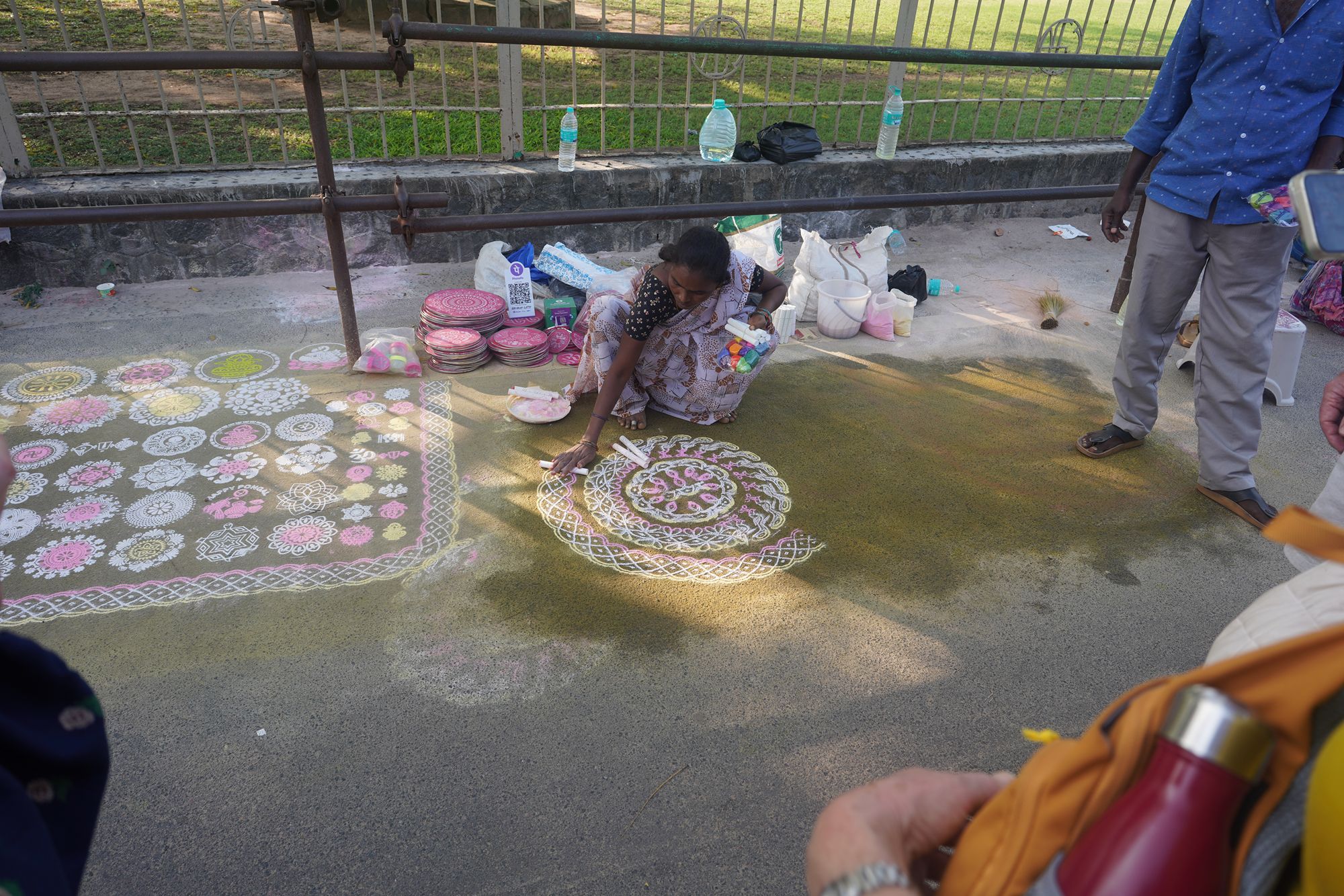
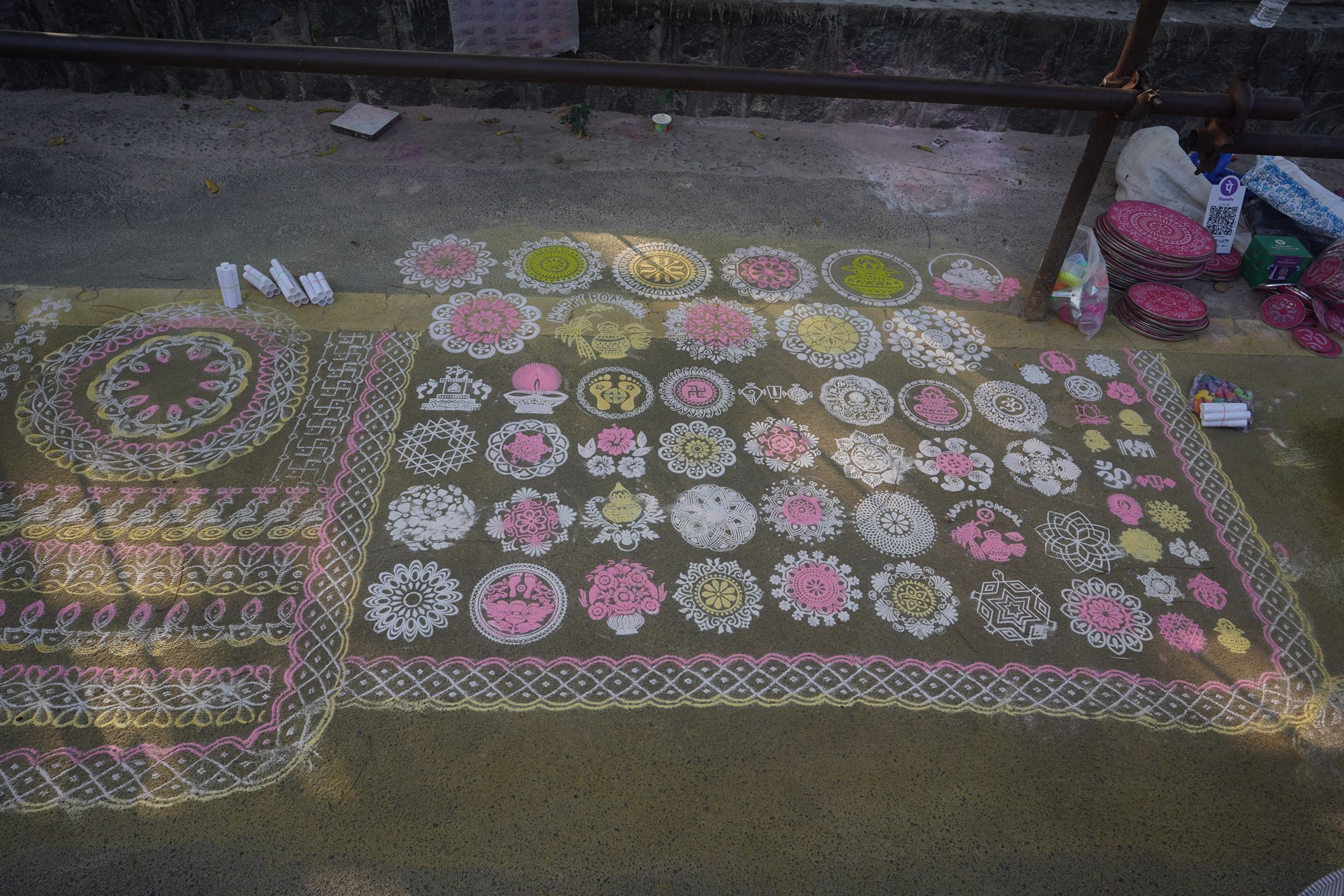
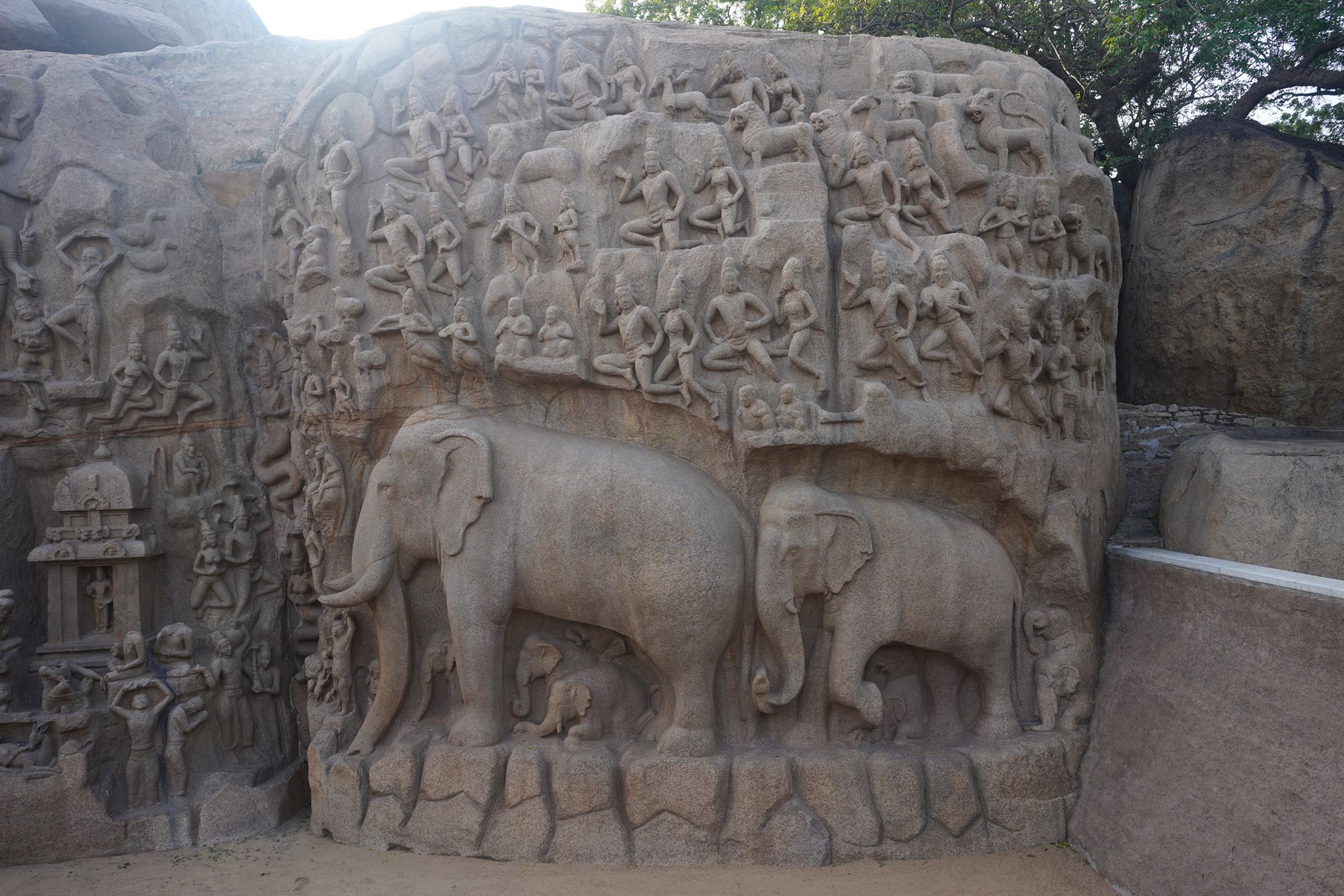
Just before reaching Krishna Mandapam, we came across Arjuna’s Penance.
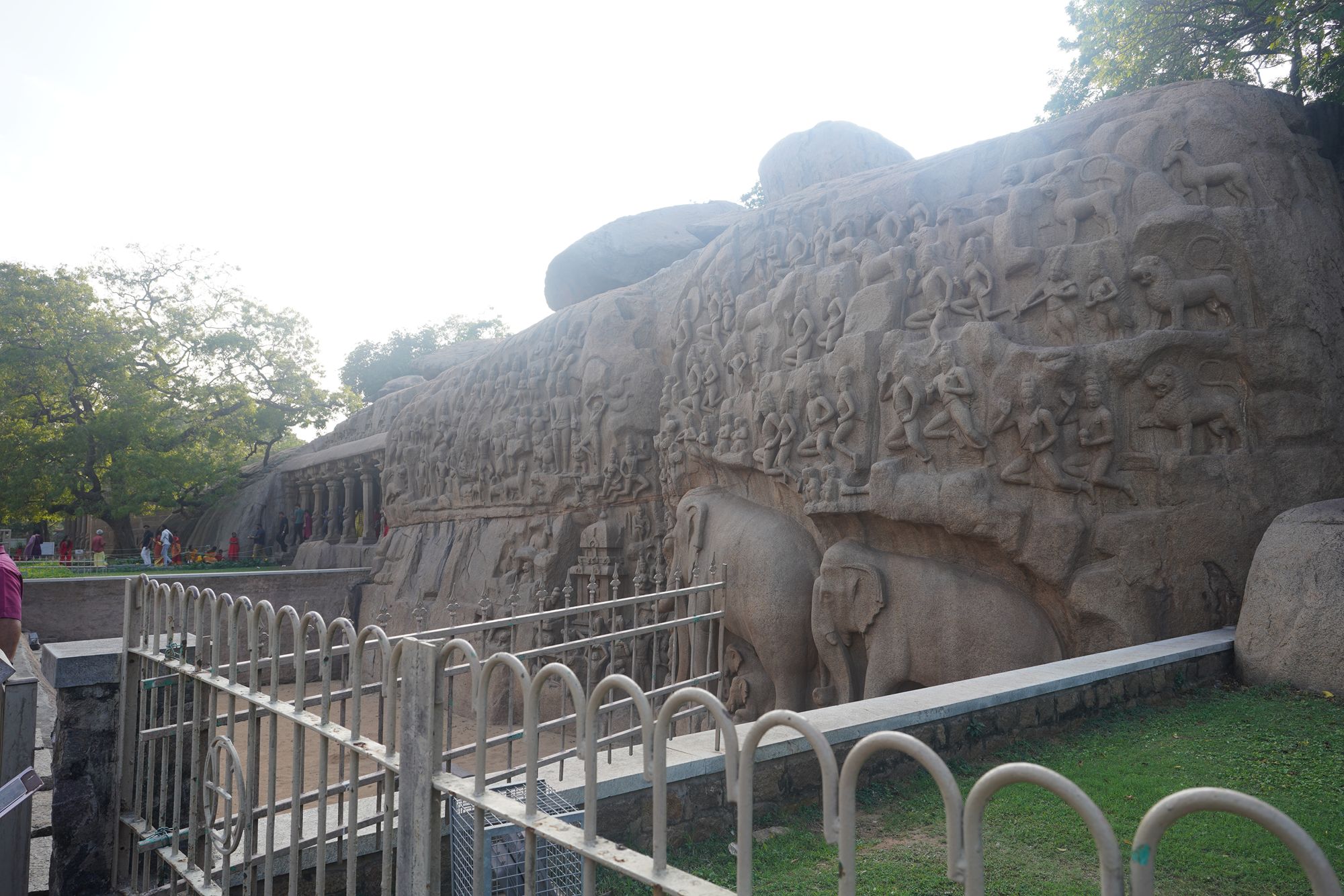
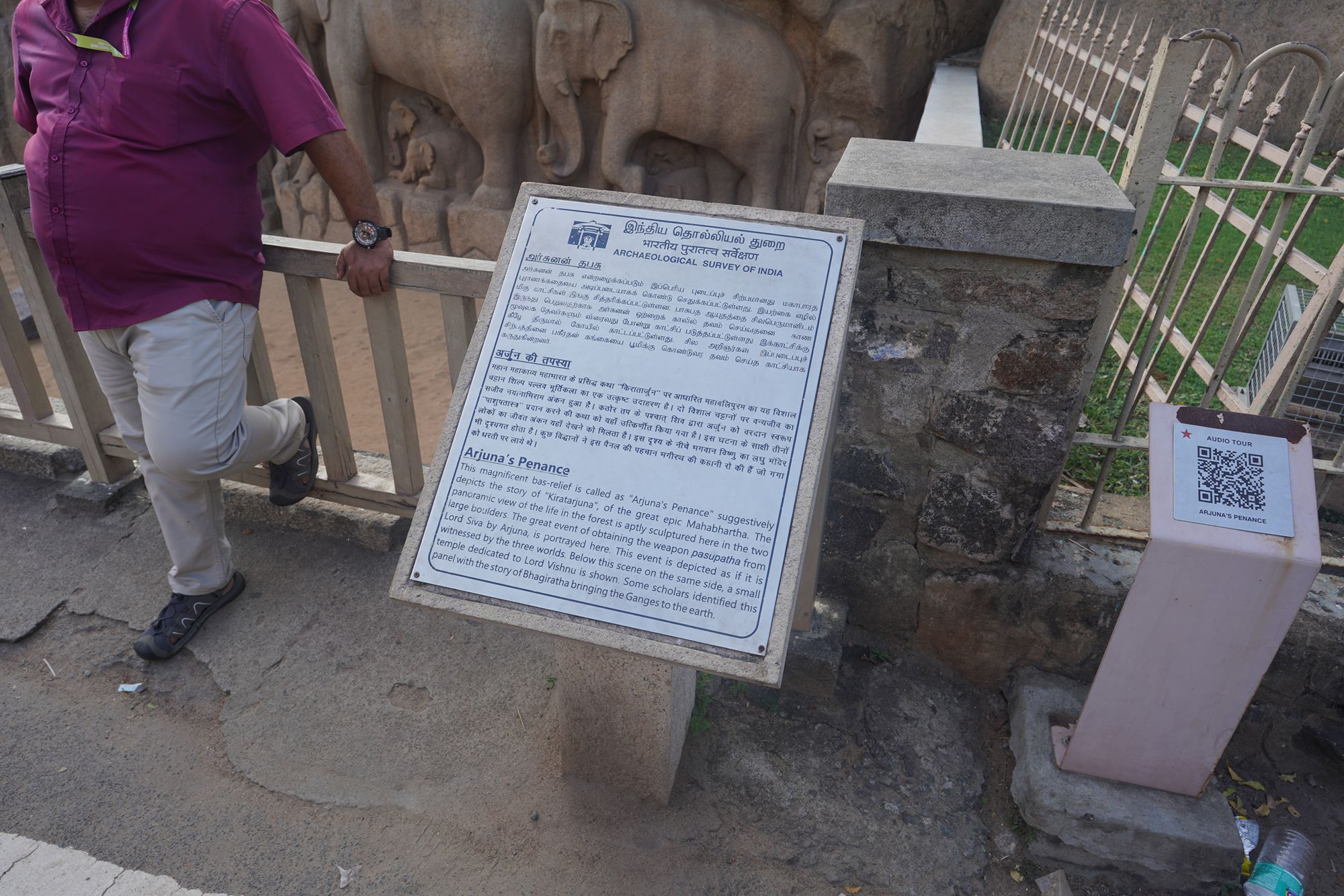
Arjuna’s Penance is a massive 7th-century rock relief in Mahabalipuram, carved into two large granite boulders. It is covered with detailed figures of gods, people, elephants, animals, and mythical beings.
The carving is traditionally associated with the story of Arjuna performing penance to receive a powerful weapon from Shiva, although some scholars interpret it as the Descent of the Ganges, depicting the sacred Ganges River coming down to Earth.
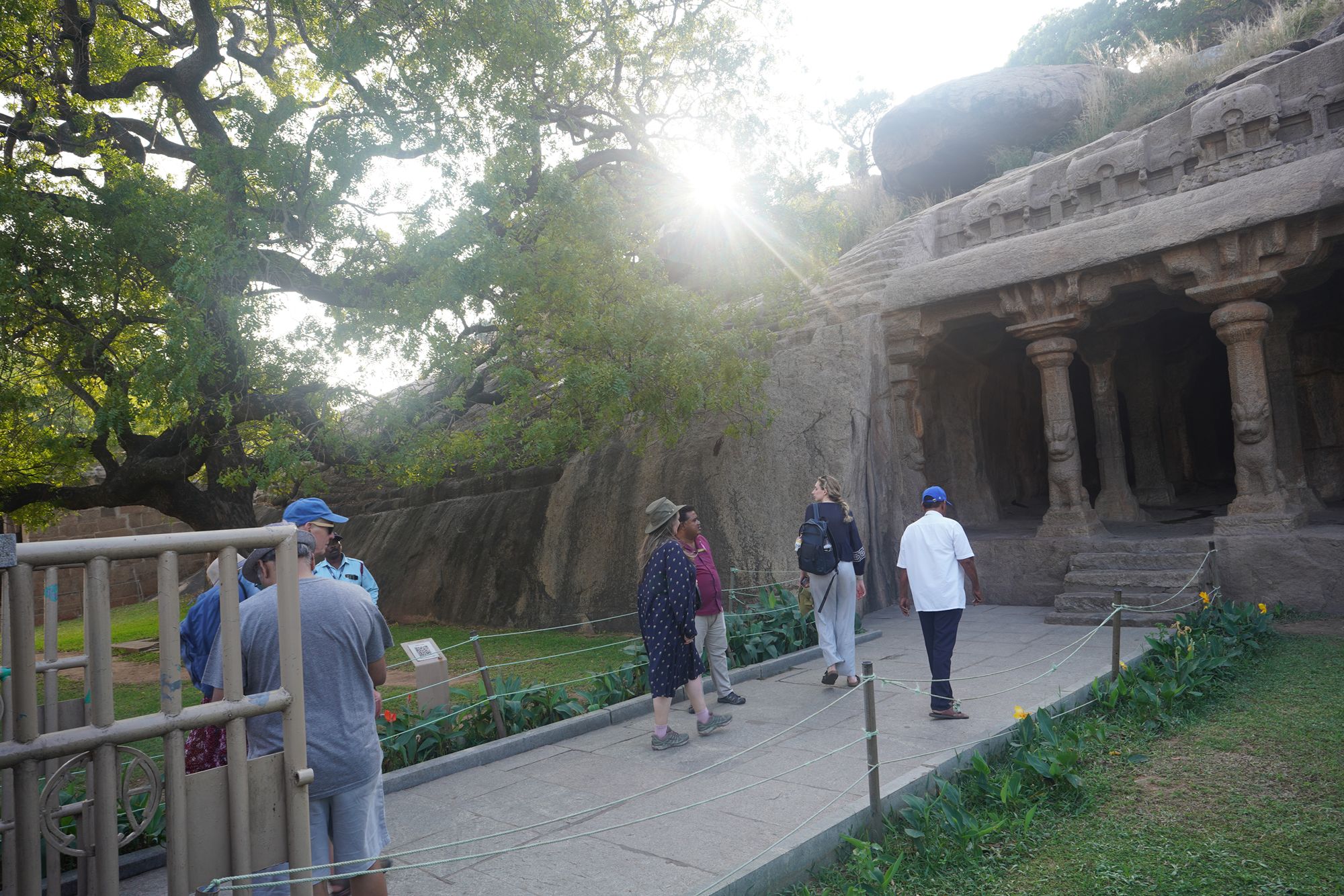
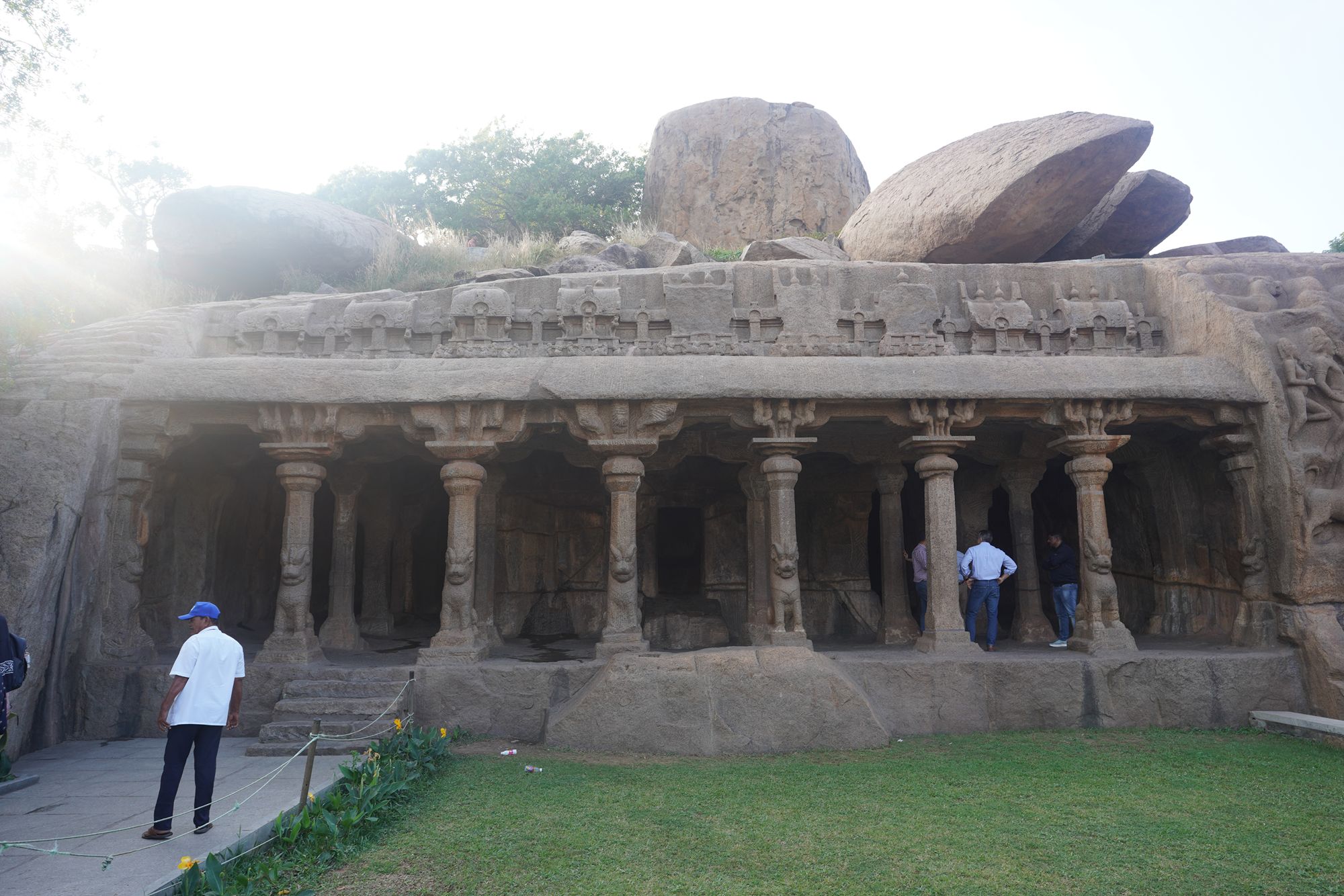
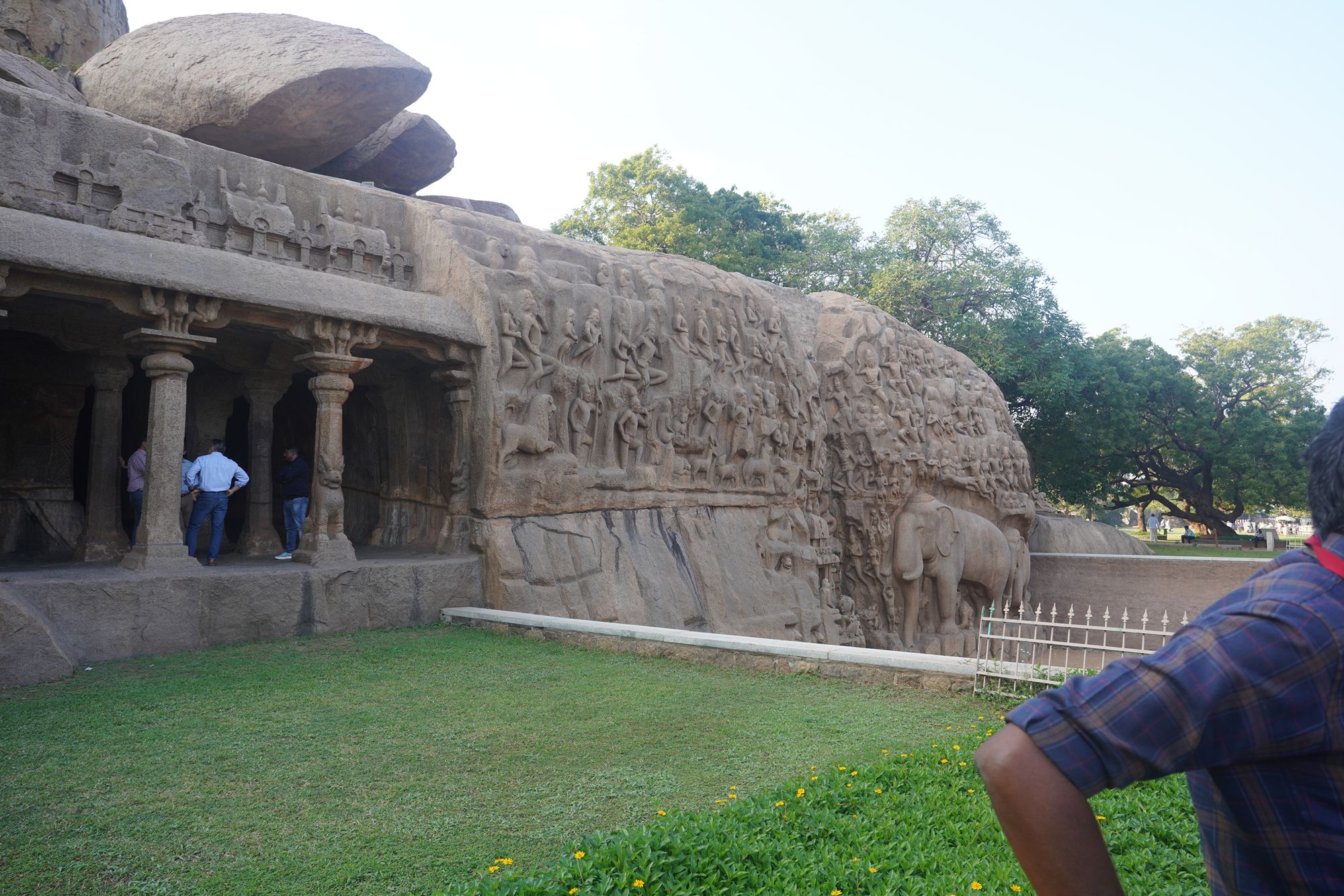
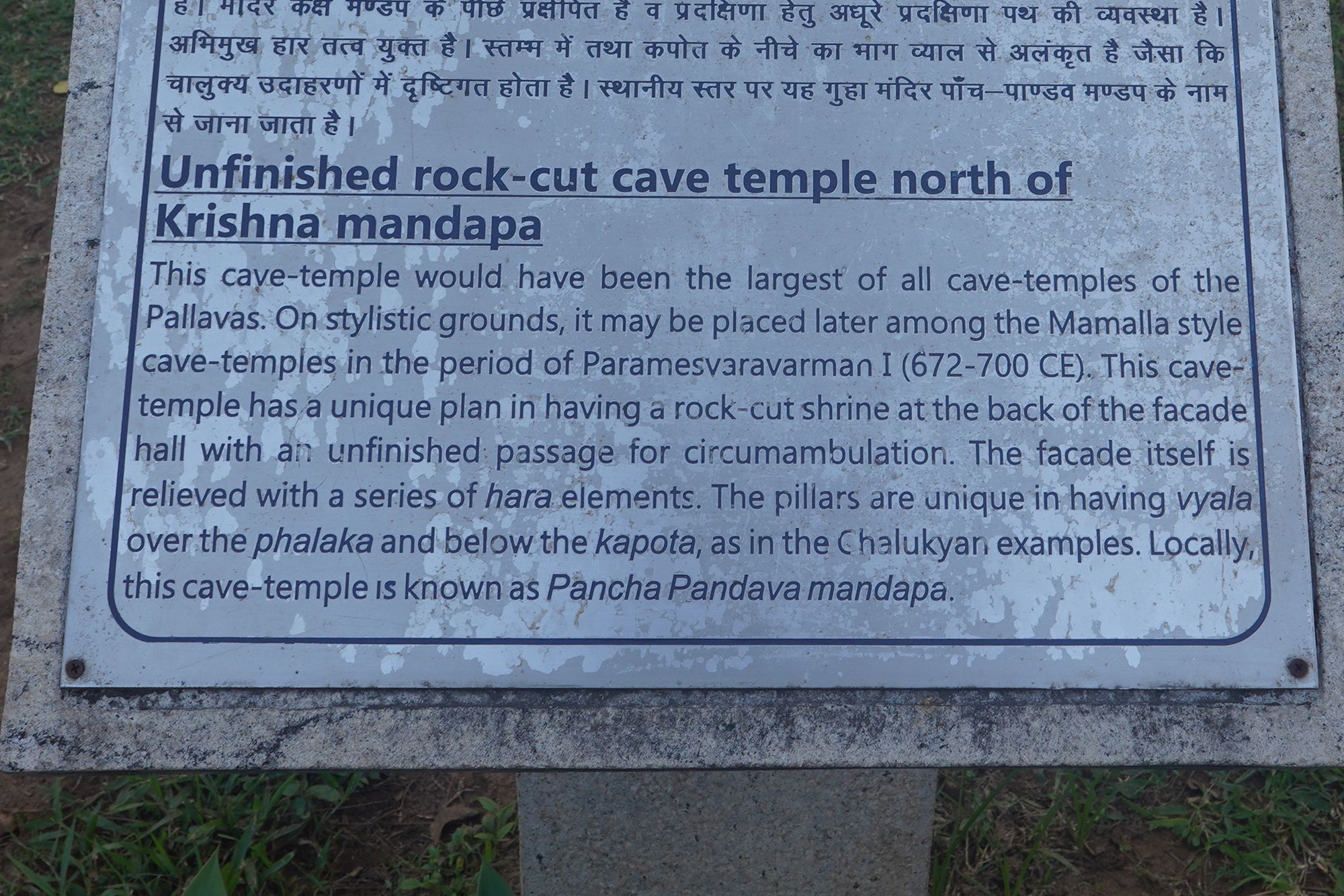
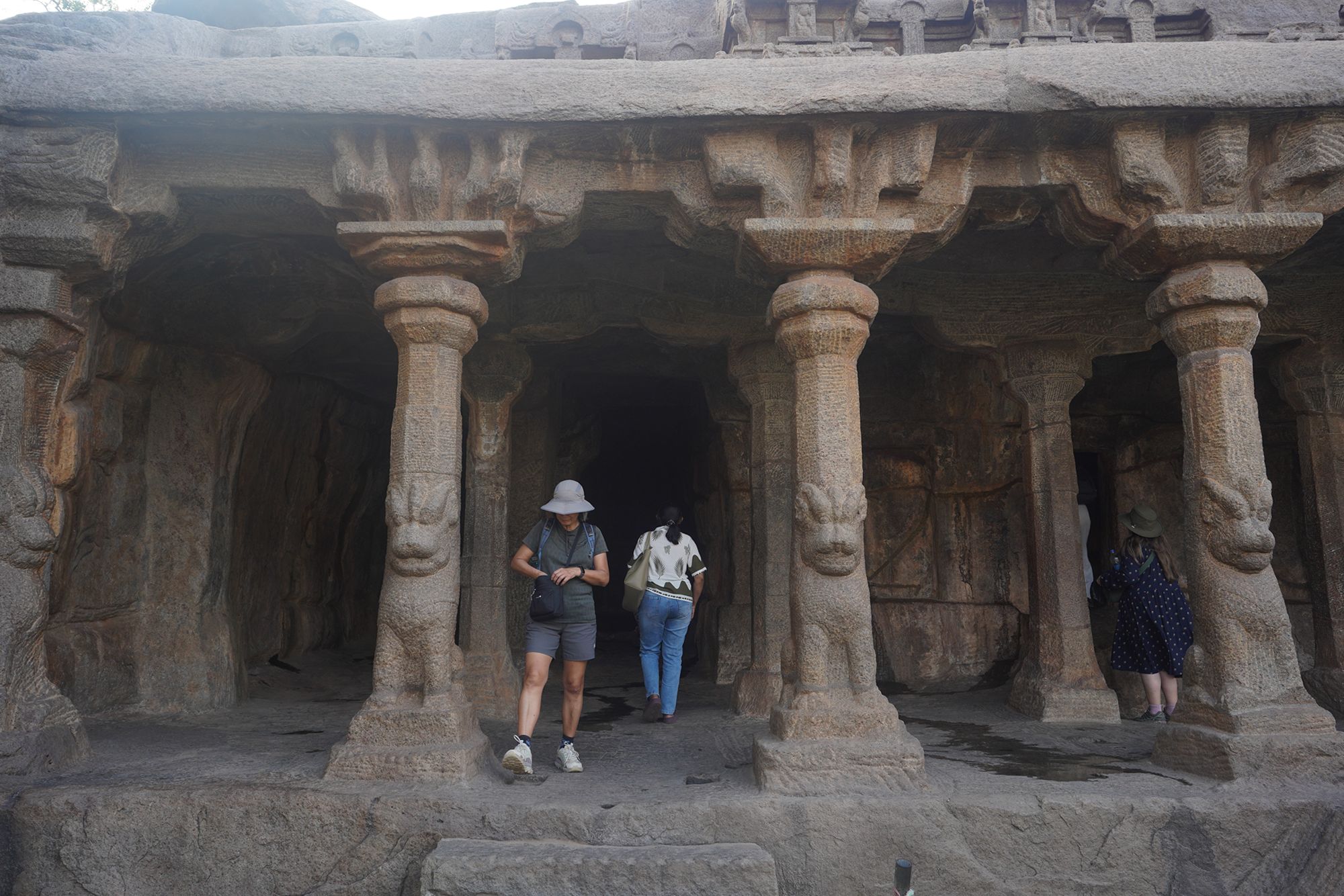
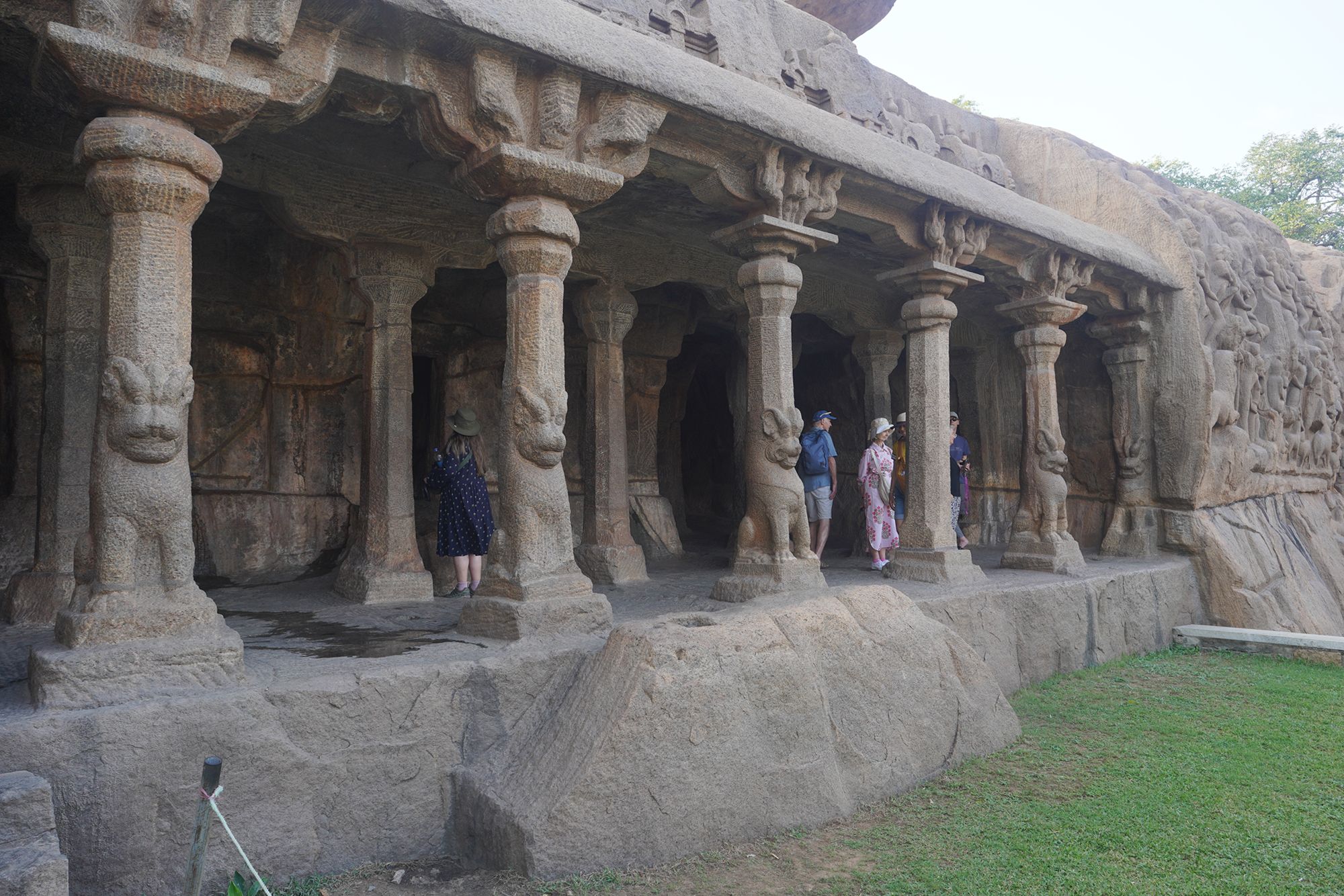
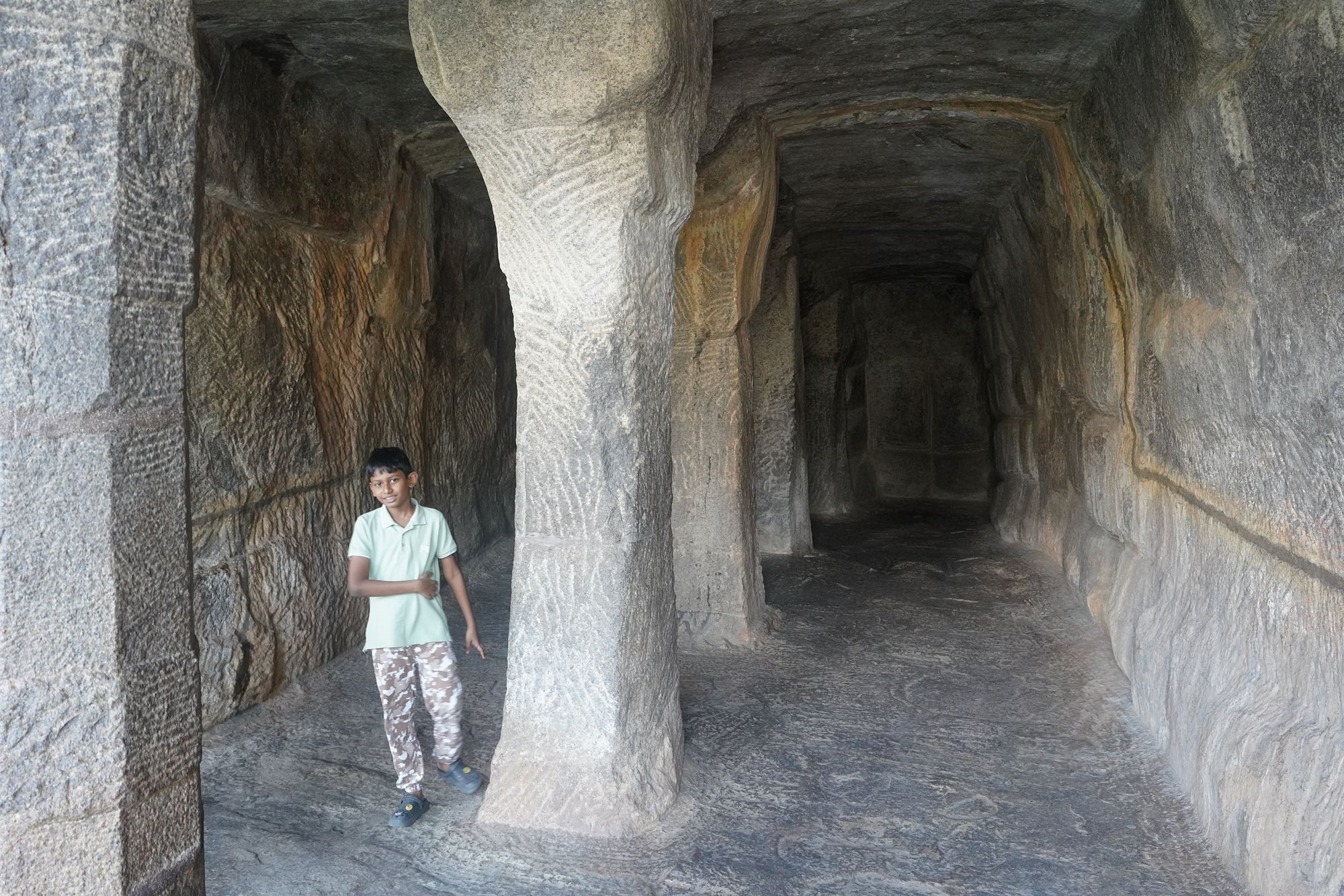
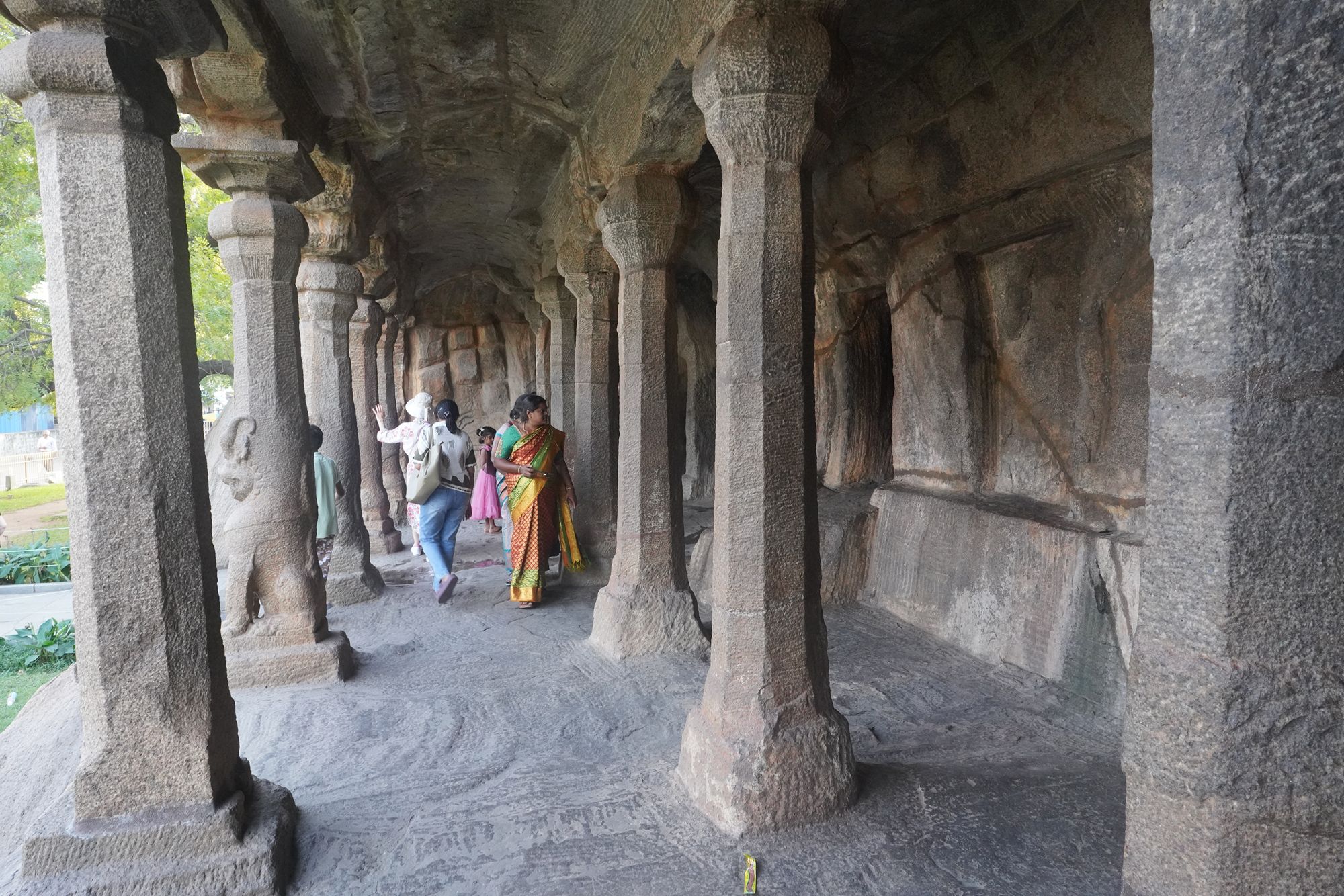
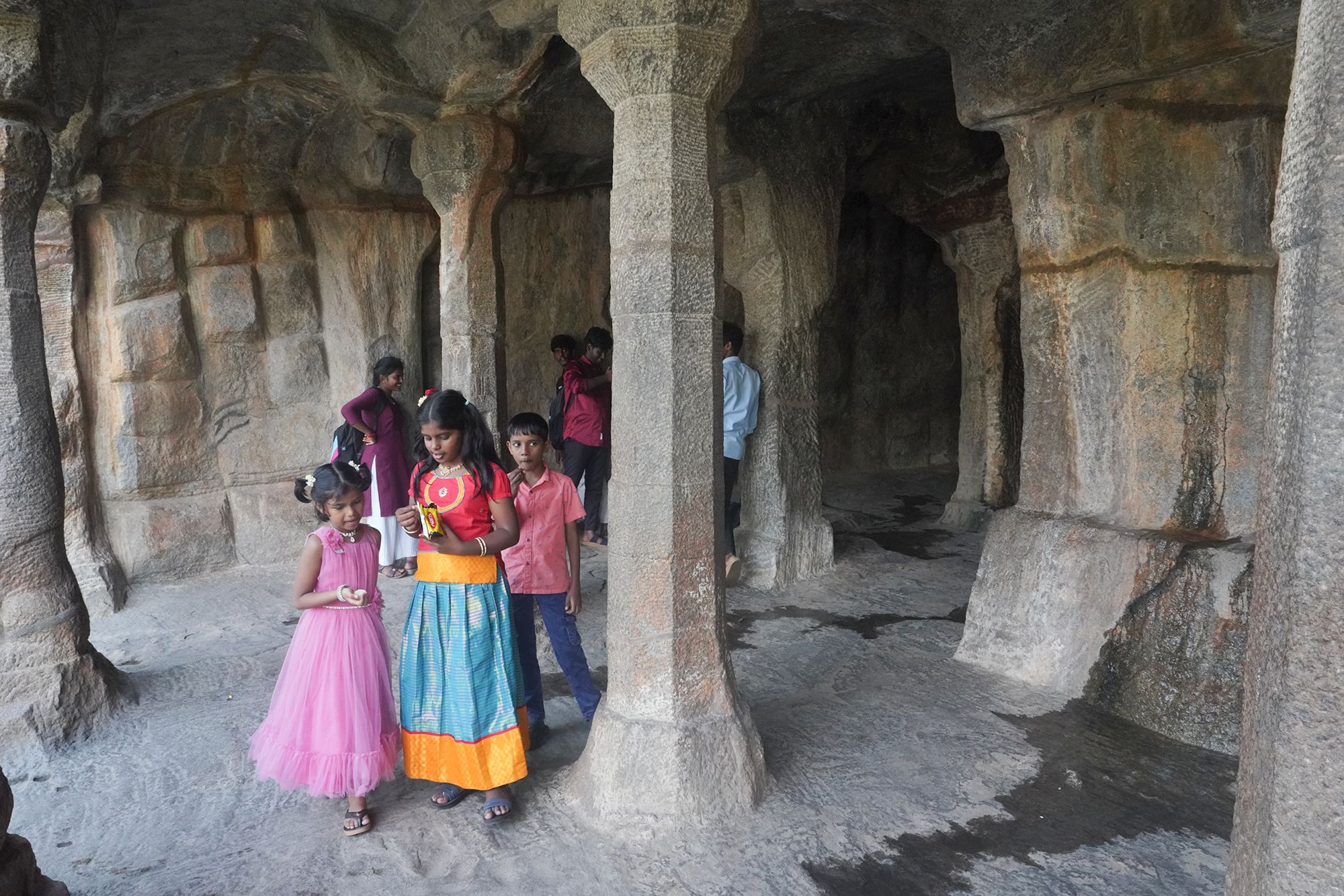
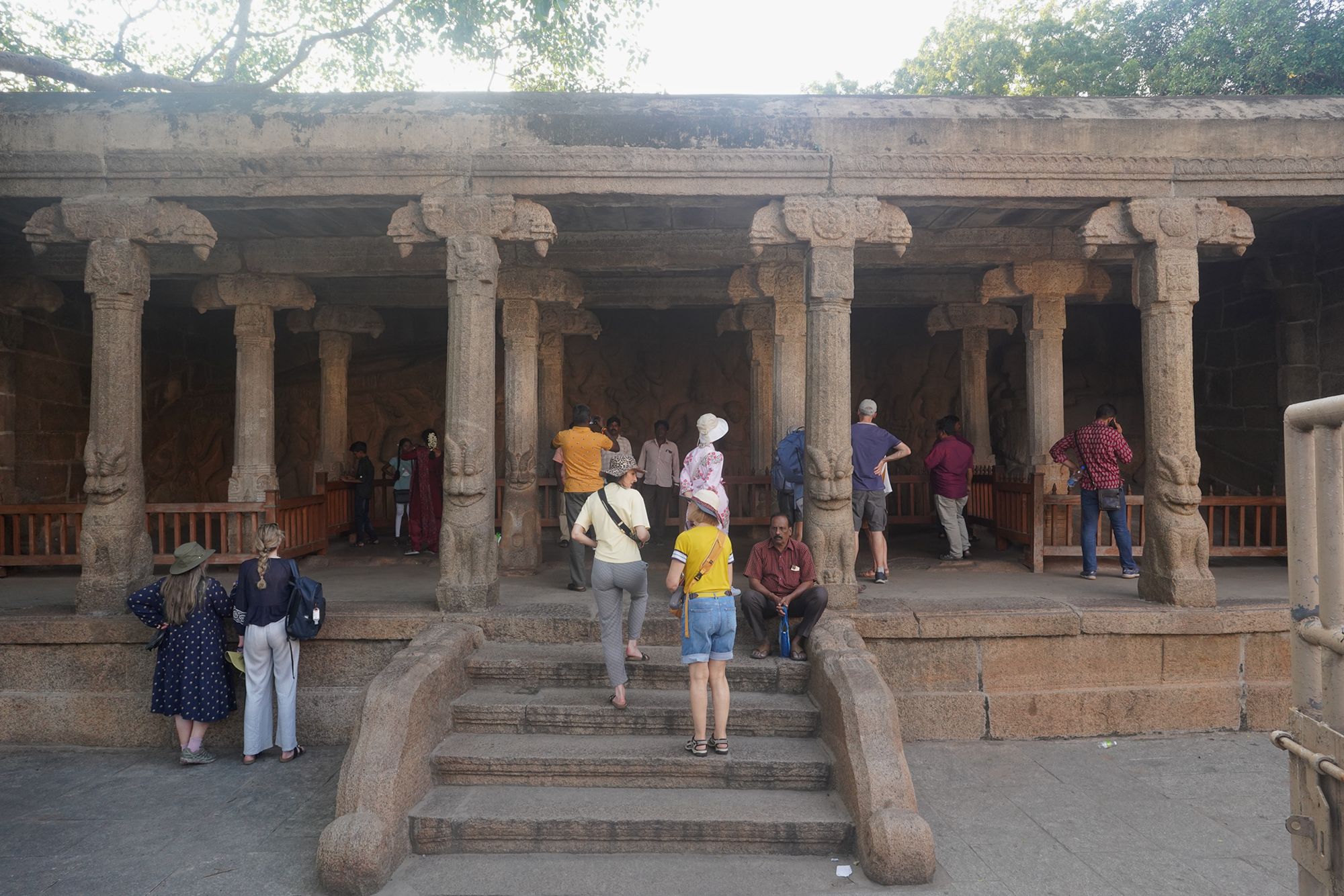
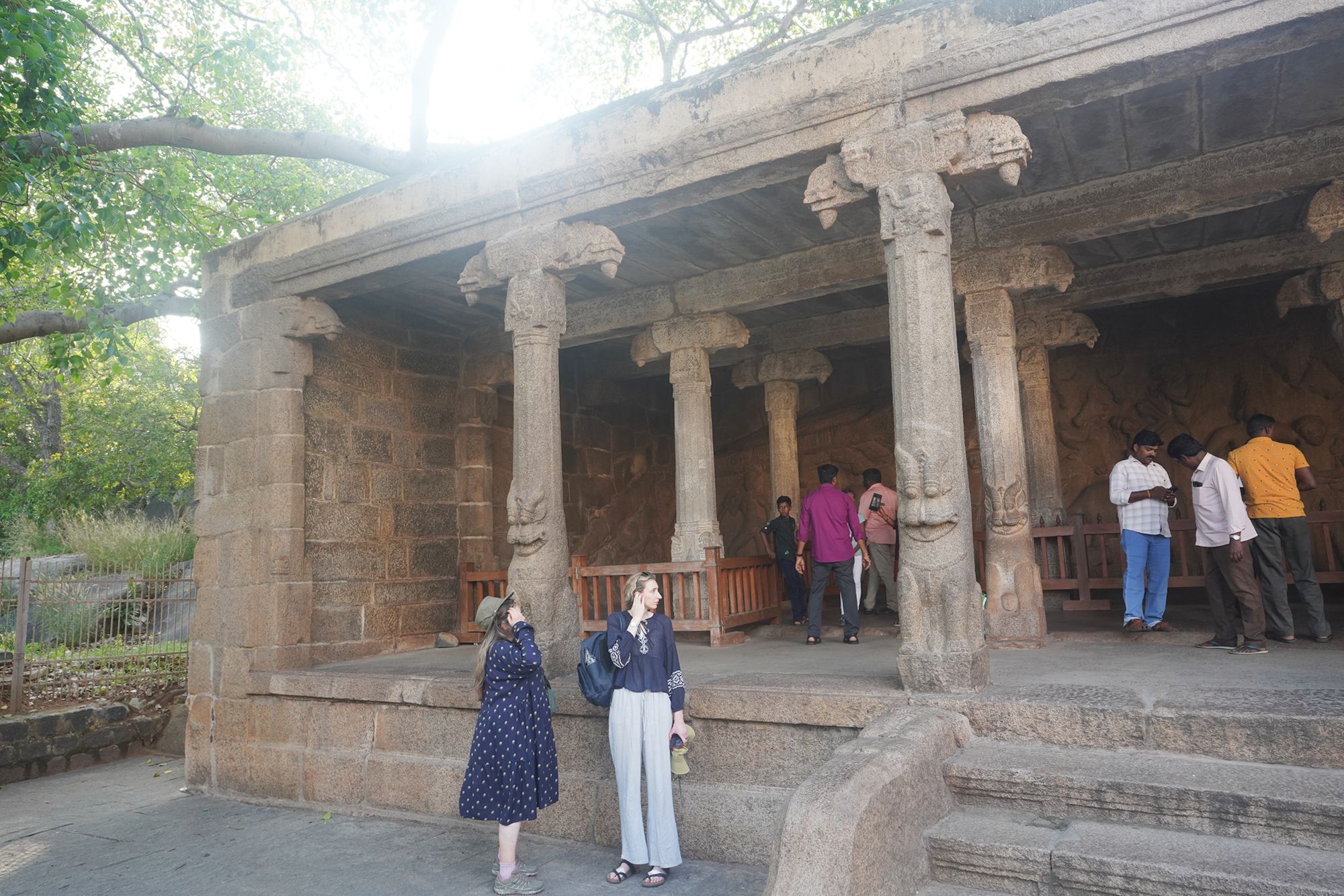
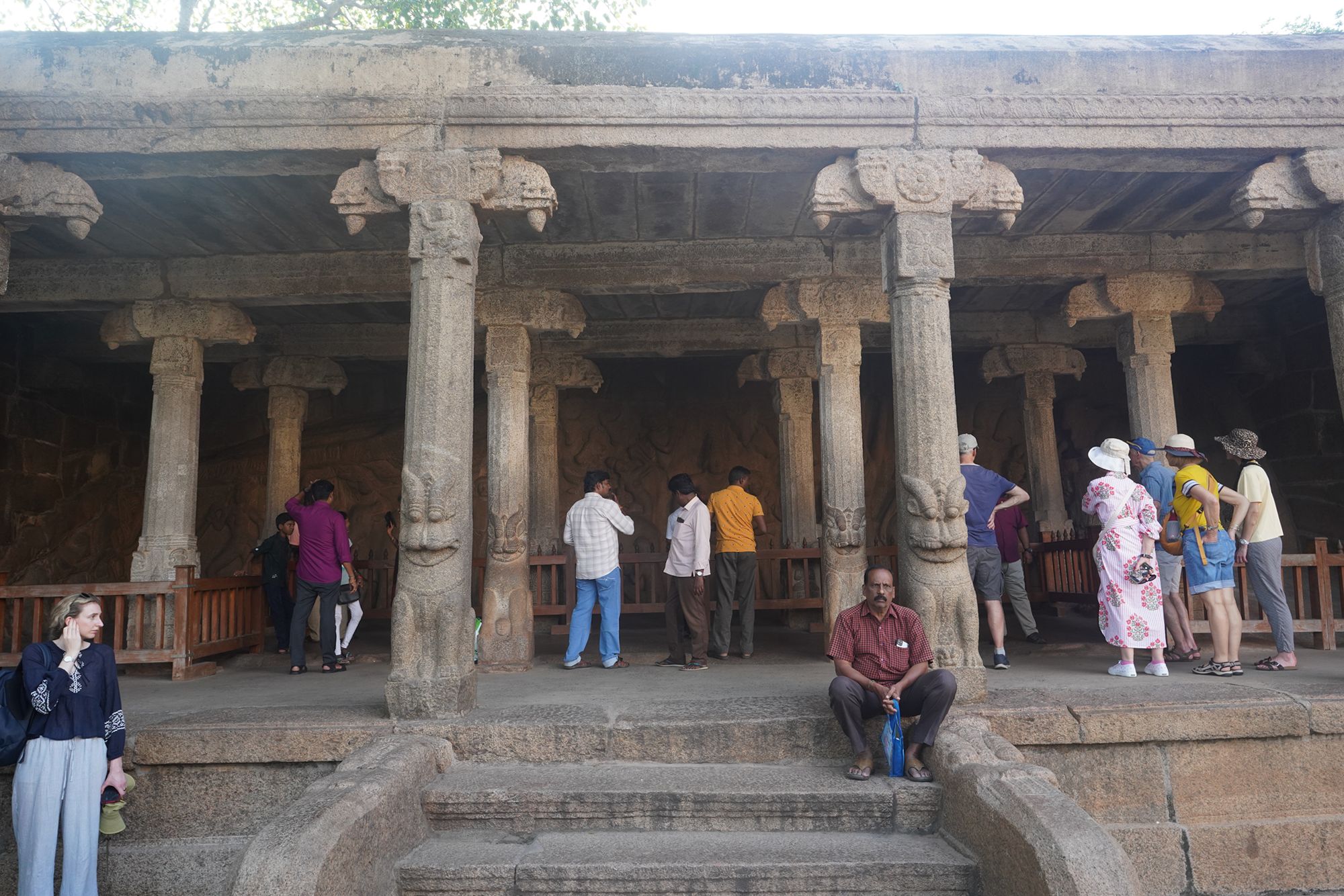
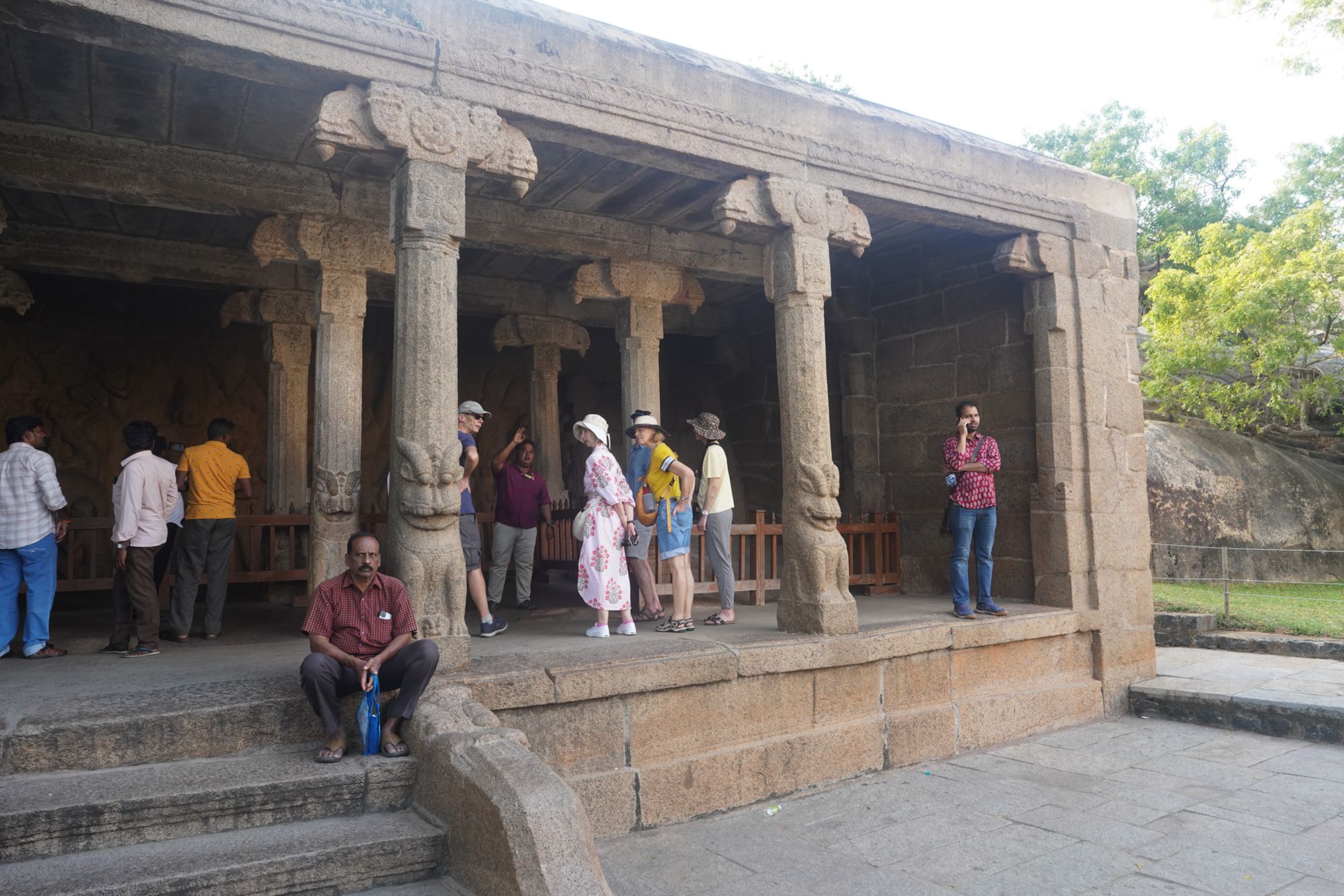
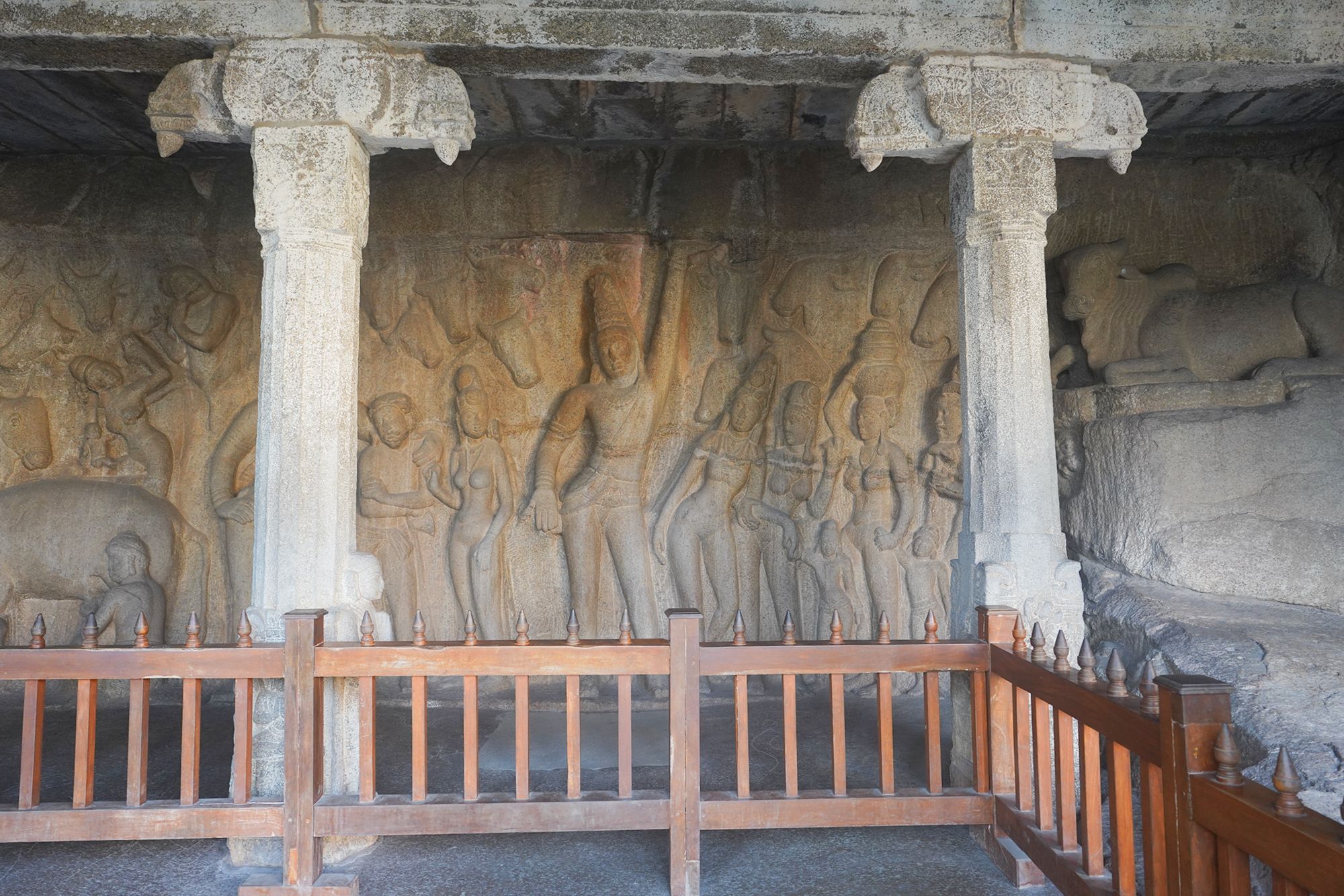
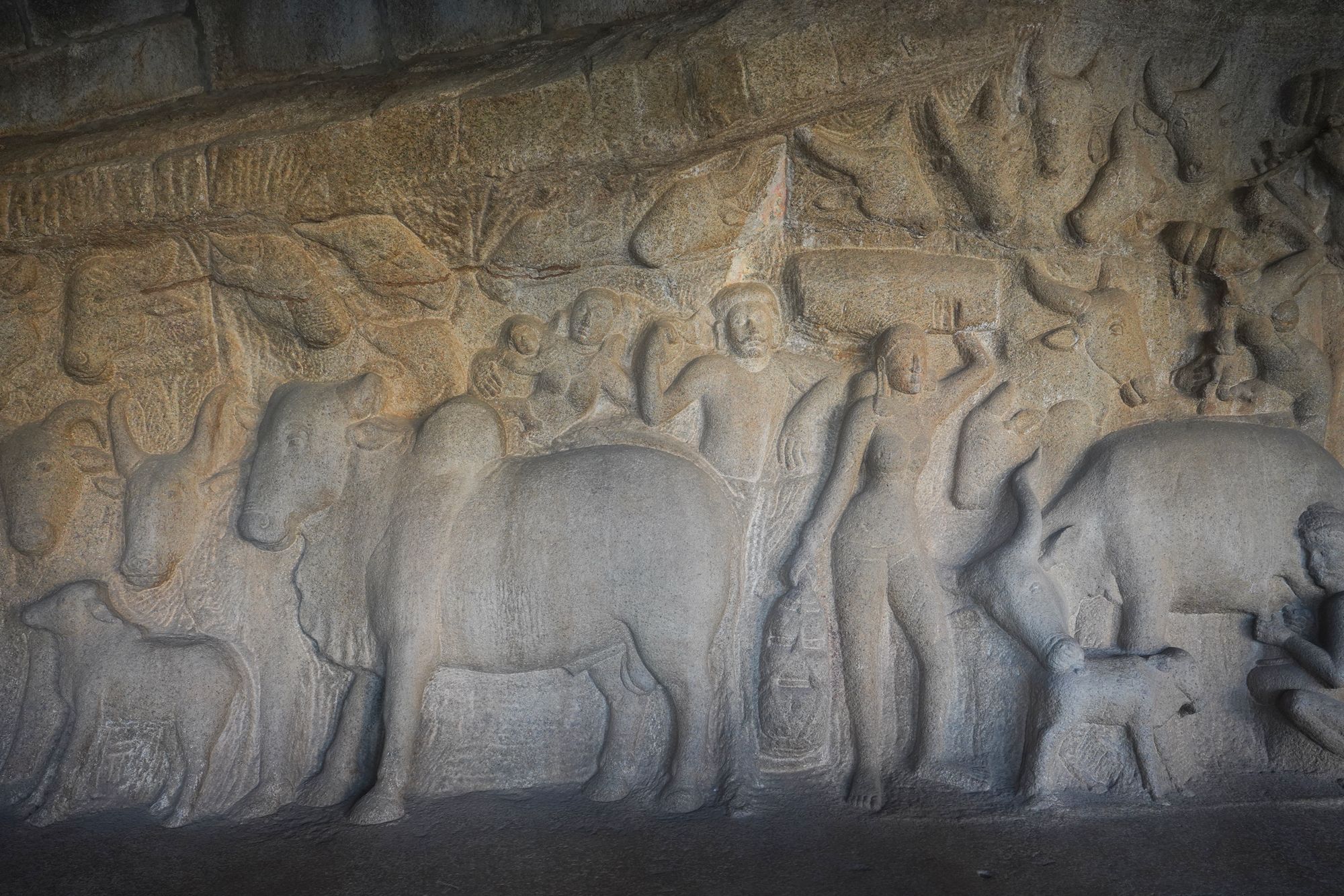
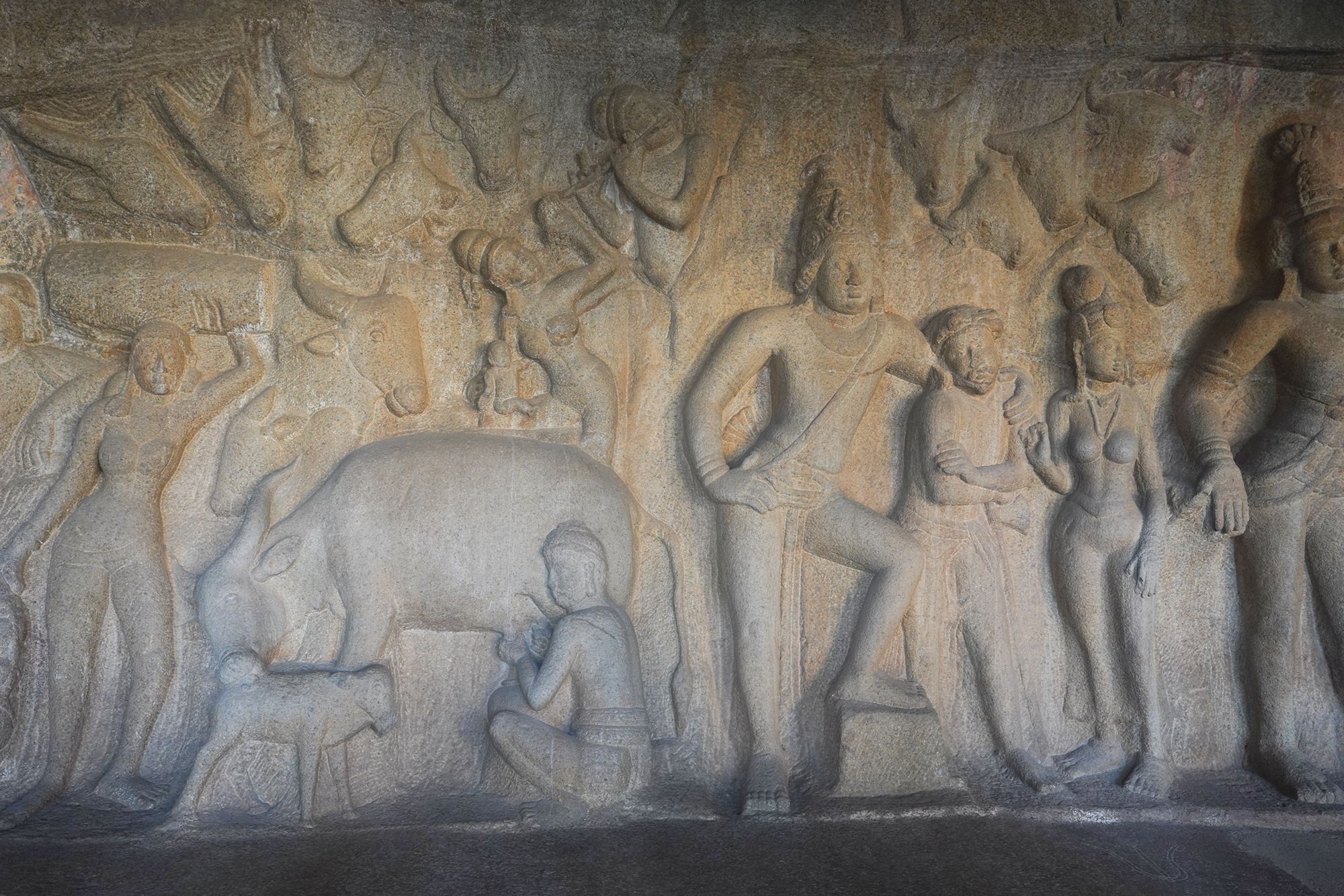
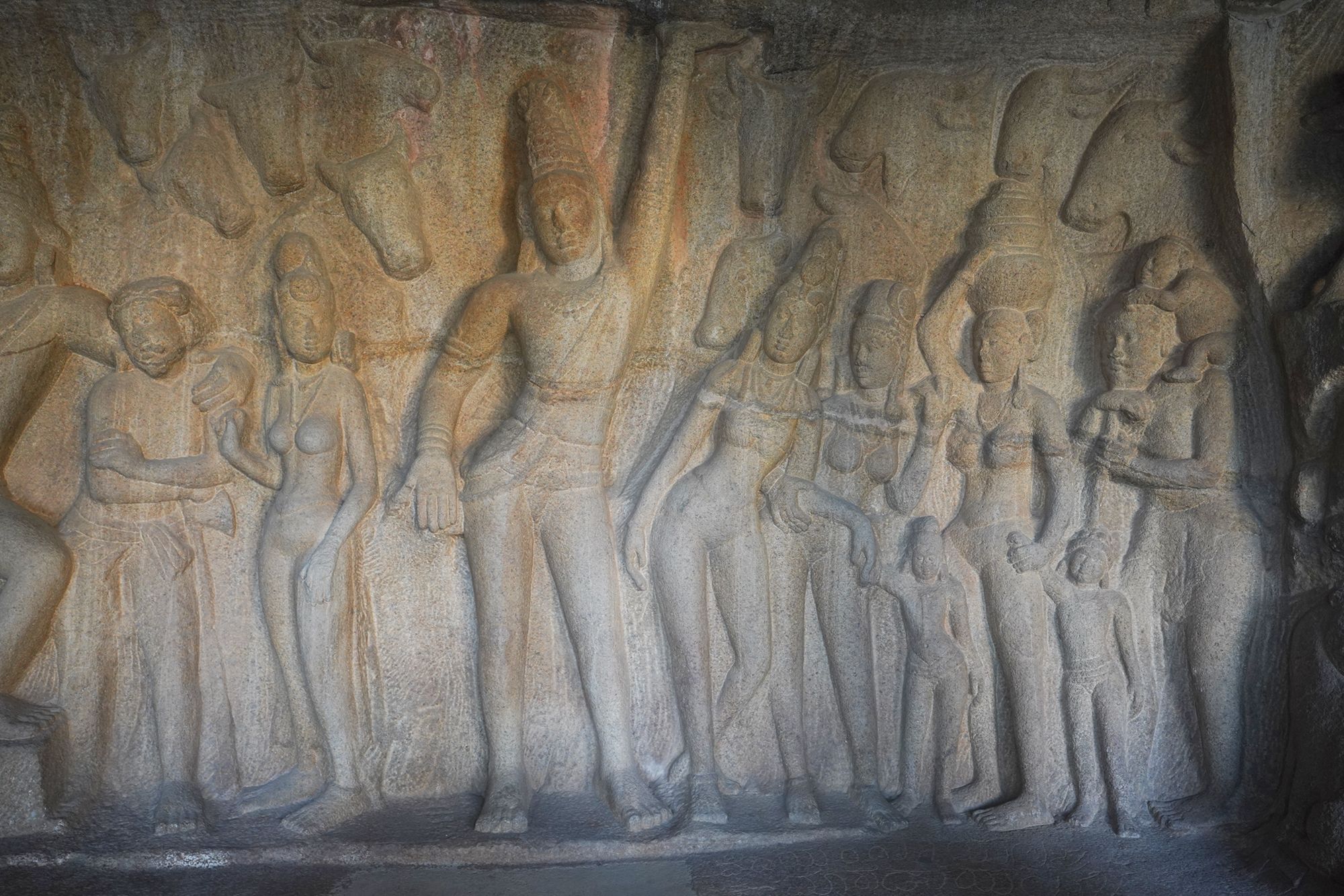
Krishna Mandapam. Krishna Mandapam is a large rock-cut cave temple in Mahabalipuram, created during the Pallava period in the 7th century. Its most famous carving shows Krishna lifting Mount Govardhan to protect villagers and their animals from a great storm.
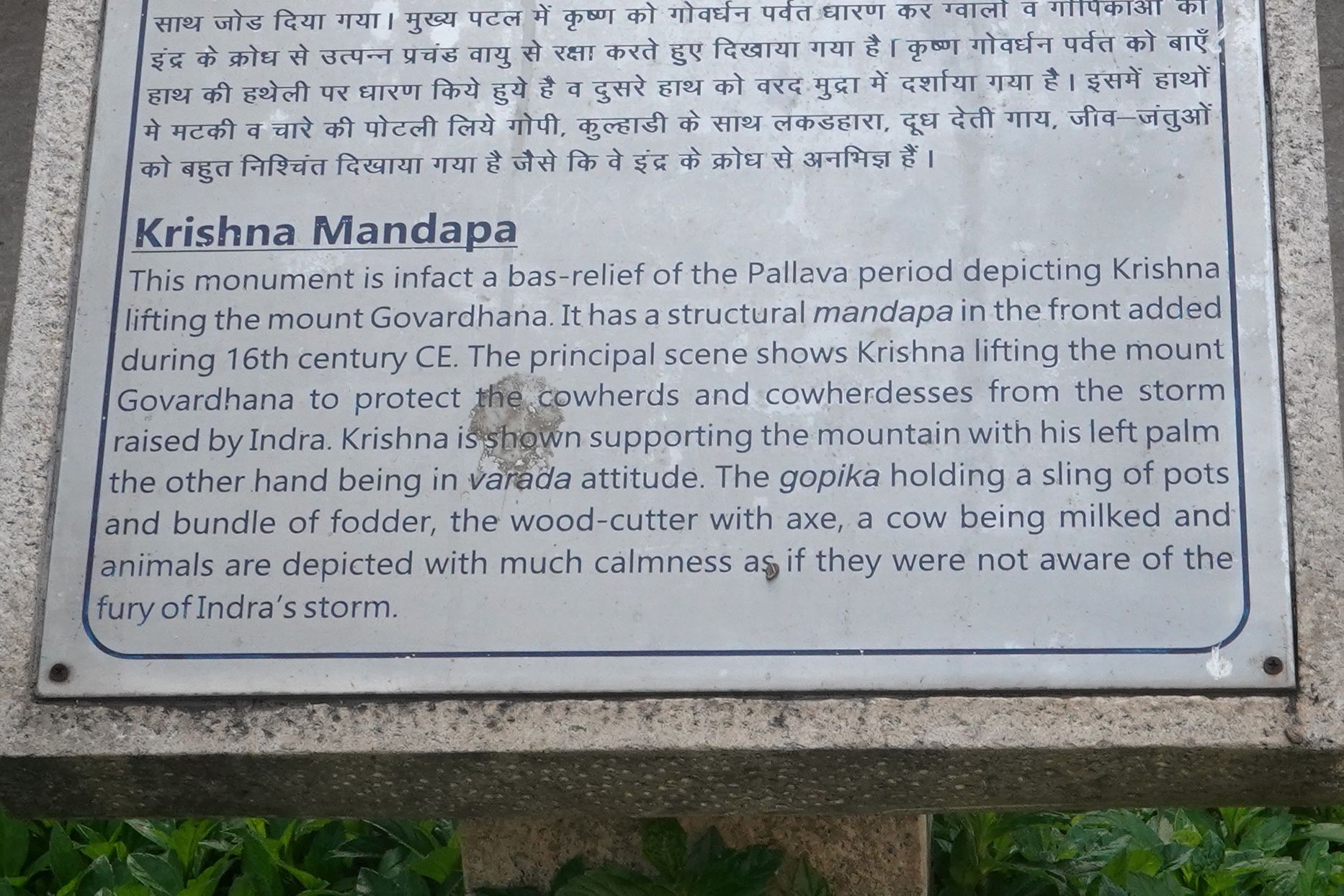
The walls also contain detailed carvings showing people, cattle, and scenes of everyday village life, making it both a religious monument and an interesting glimpse into life in ancient India.
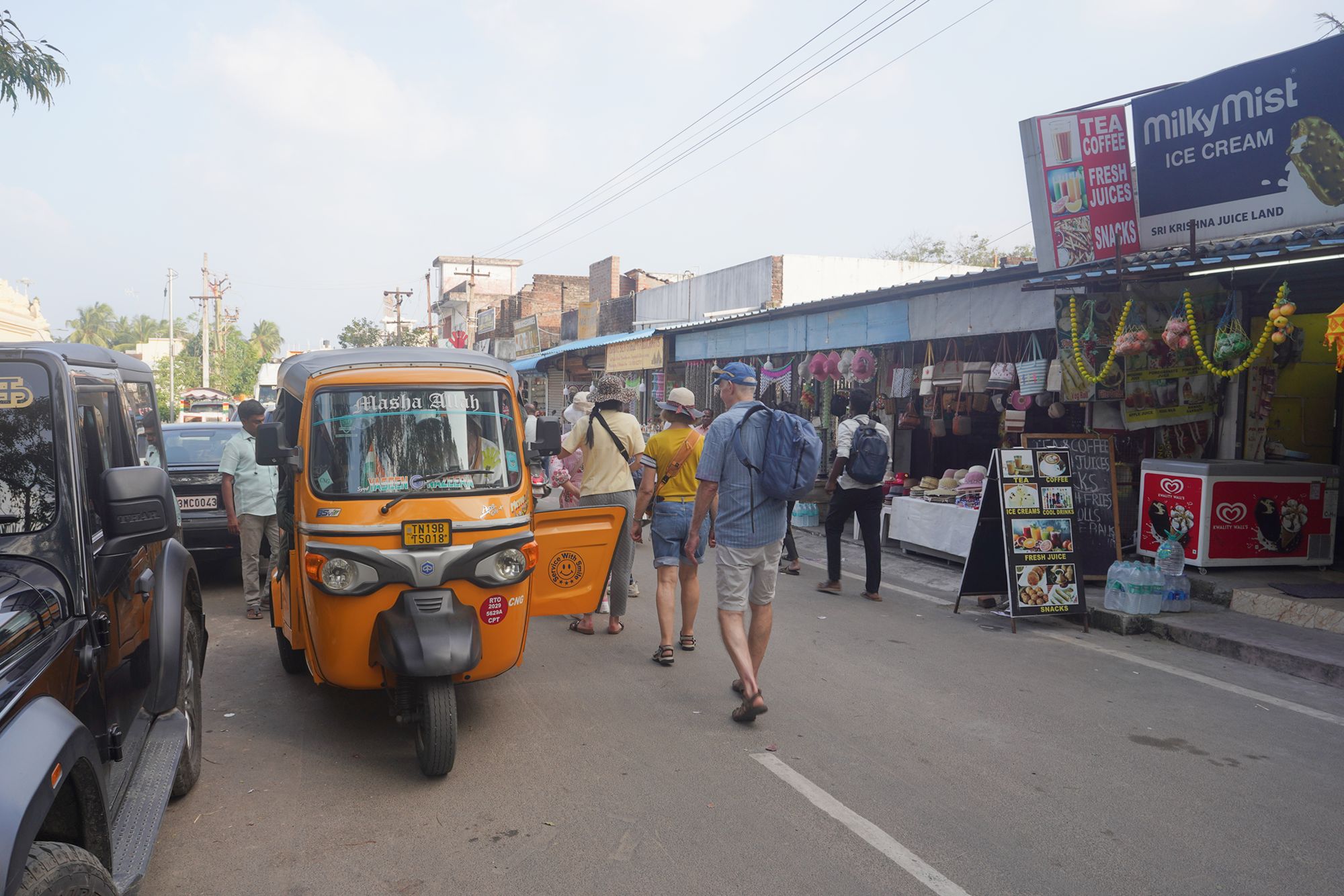
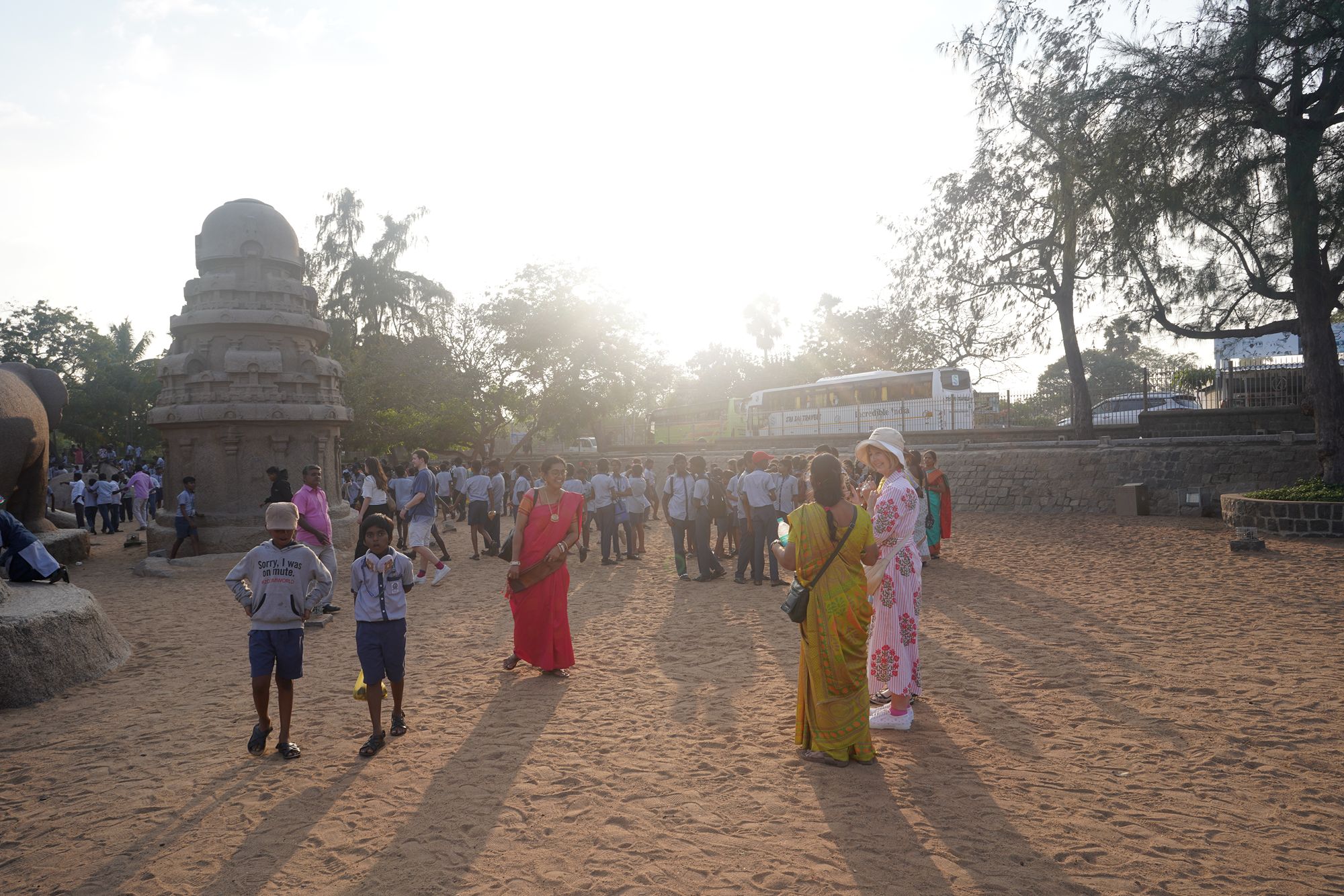
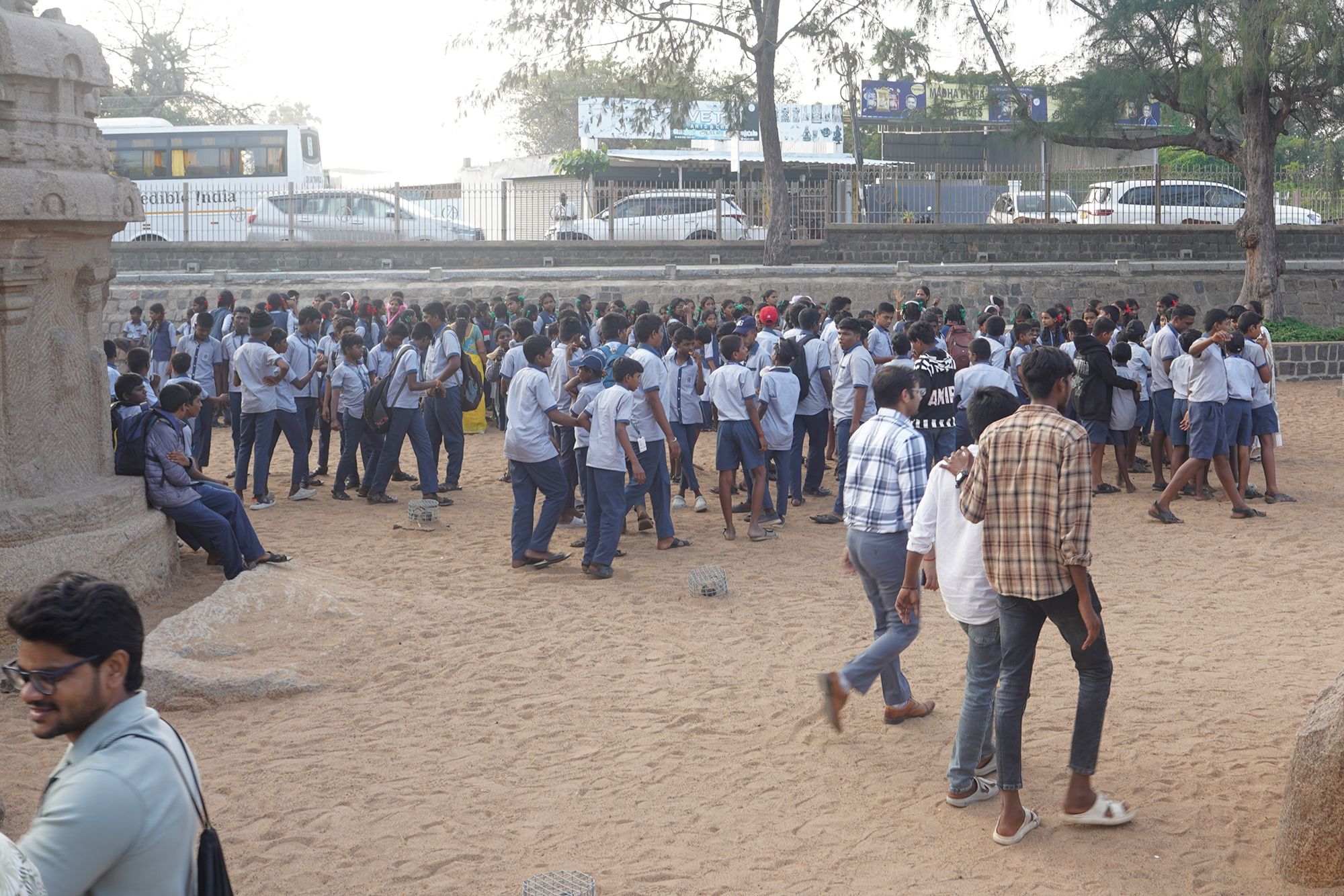
After visiting the monuments, we took tuk-tuks to the Five Rathas.
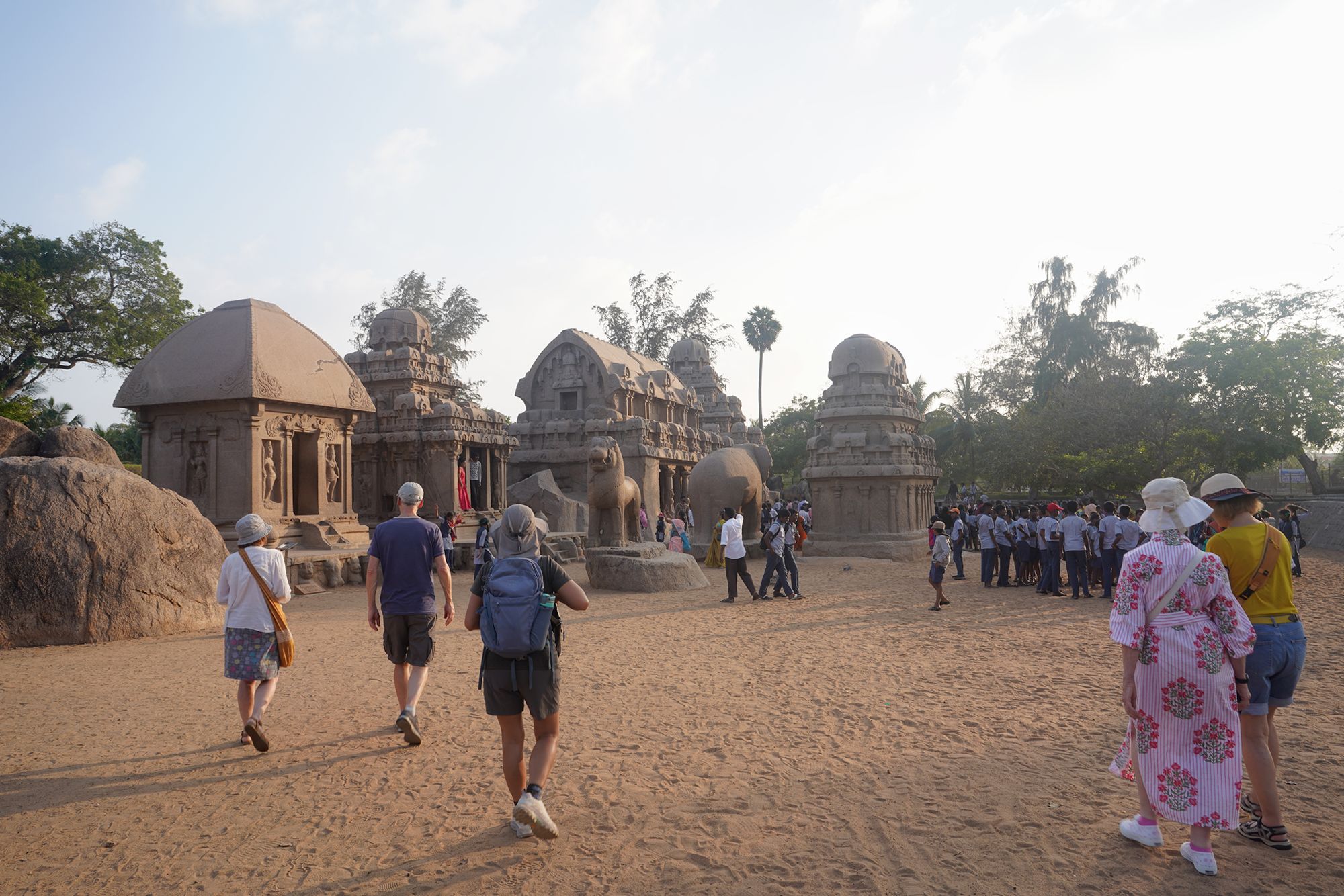
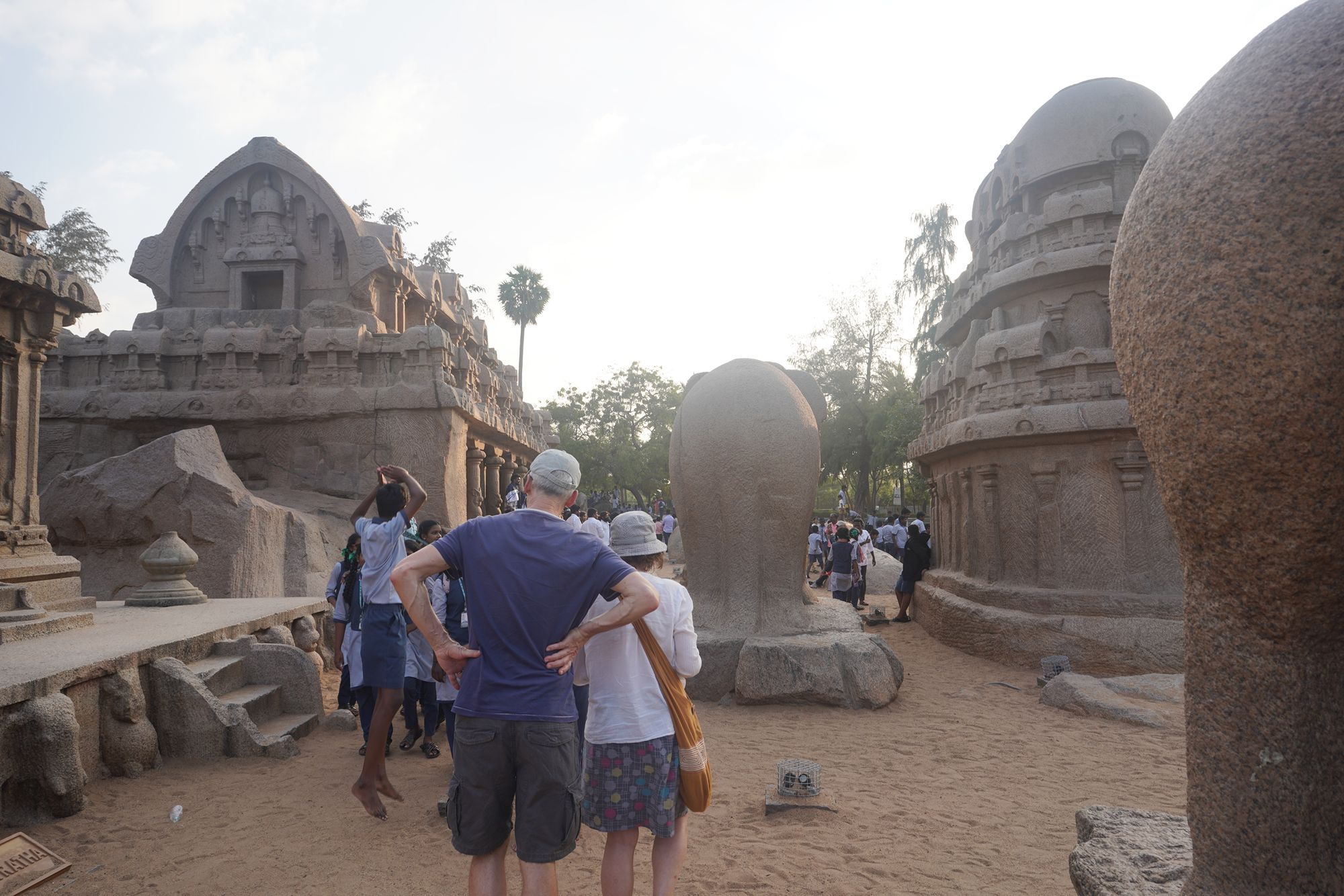
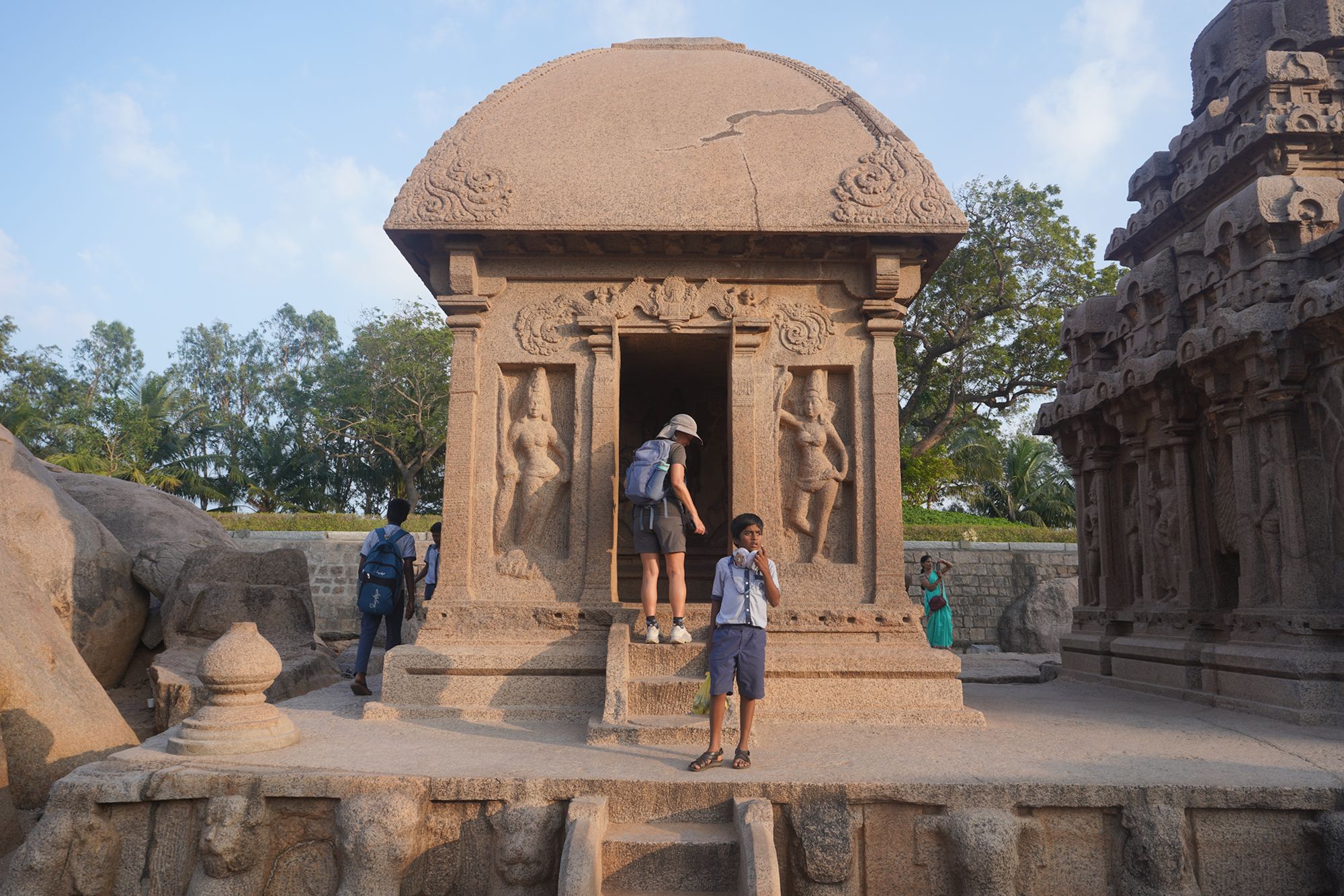
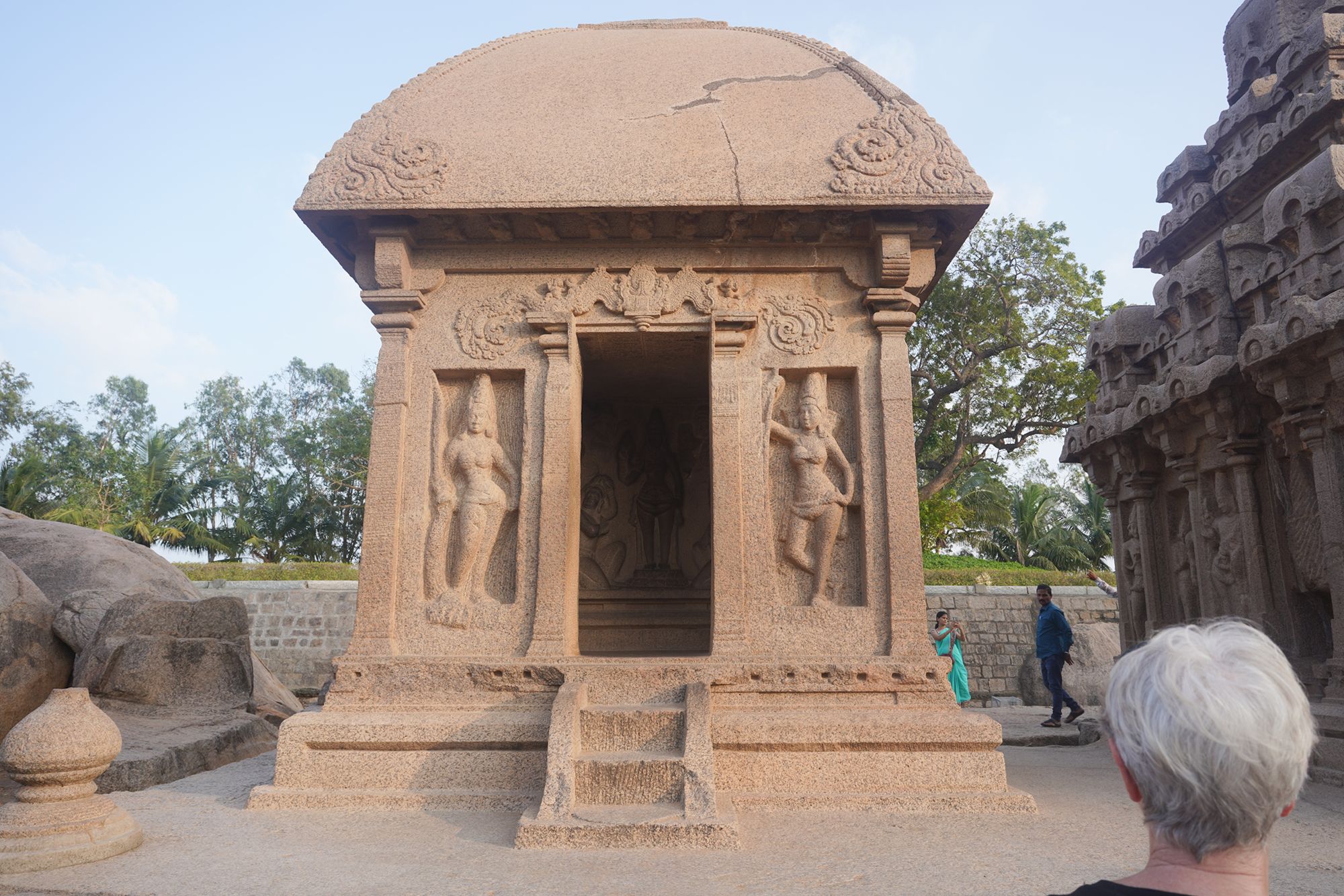
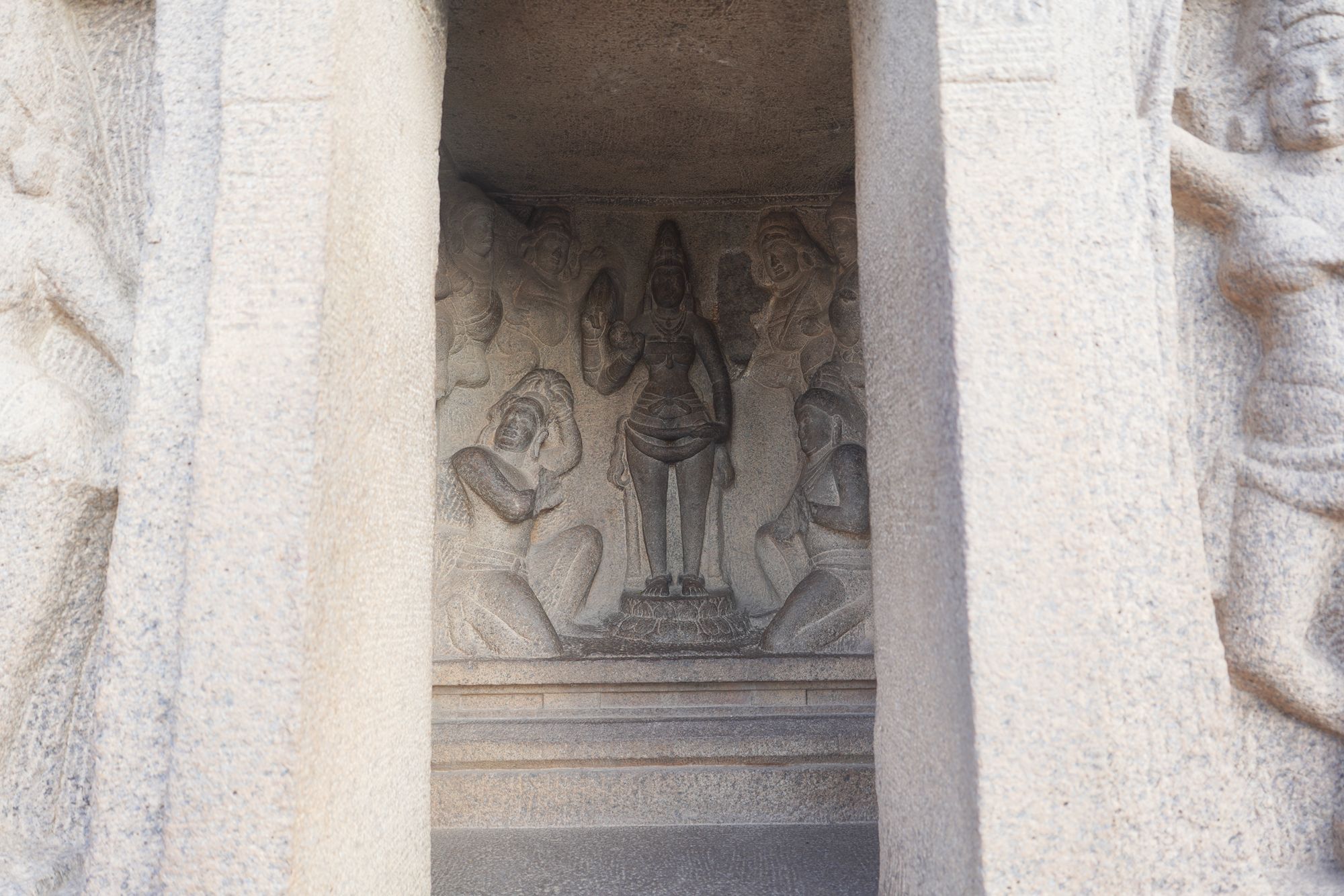
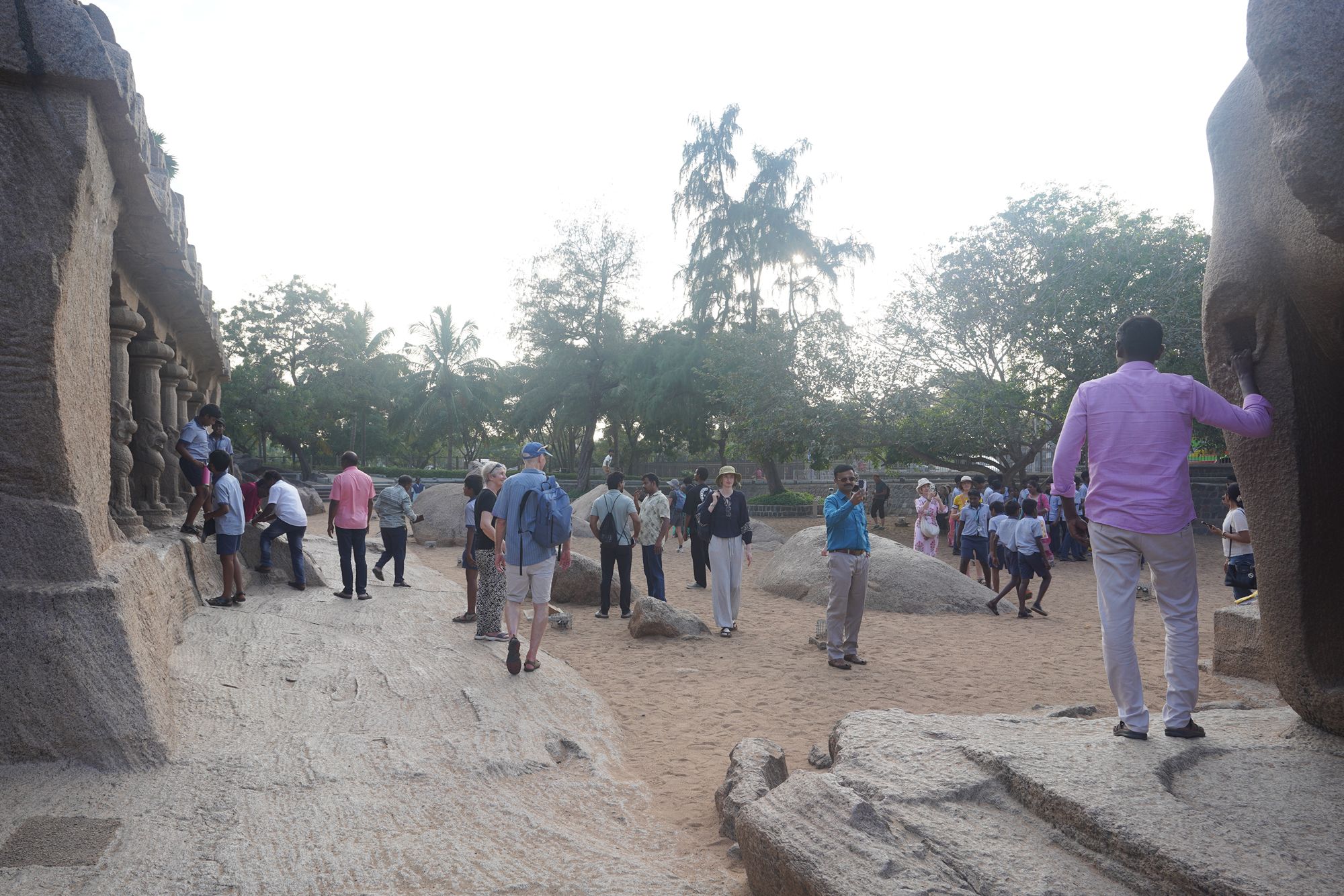
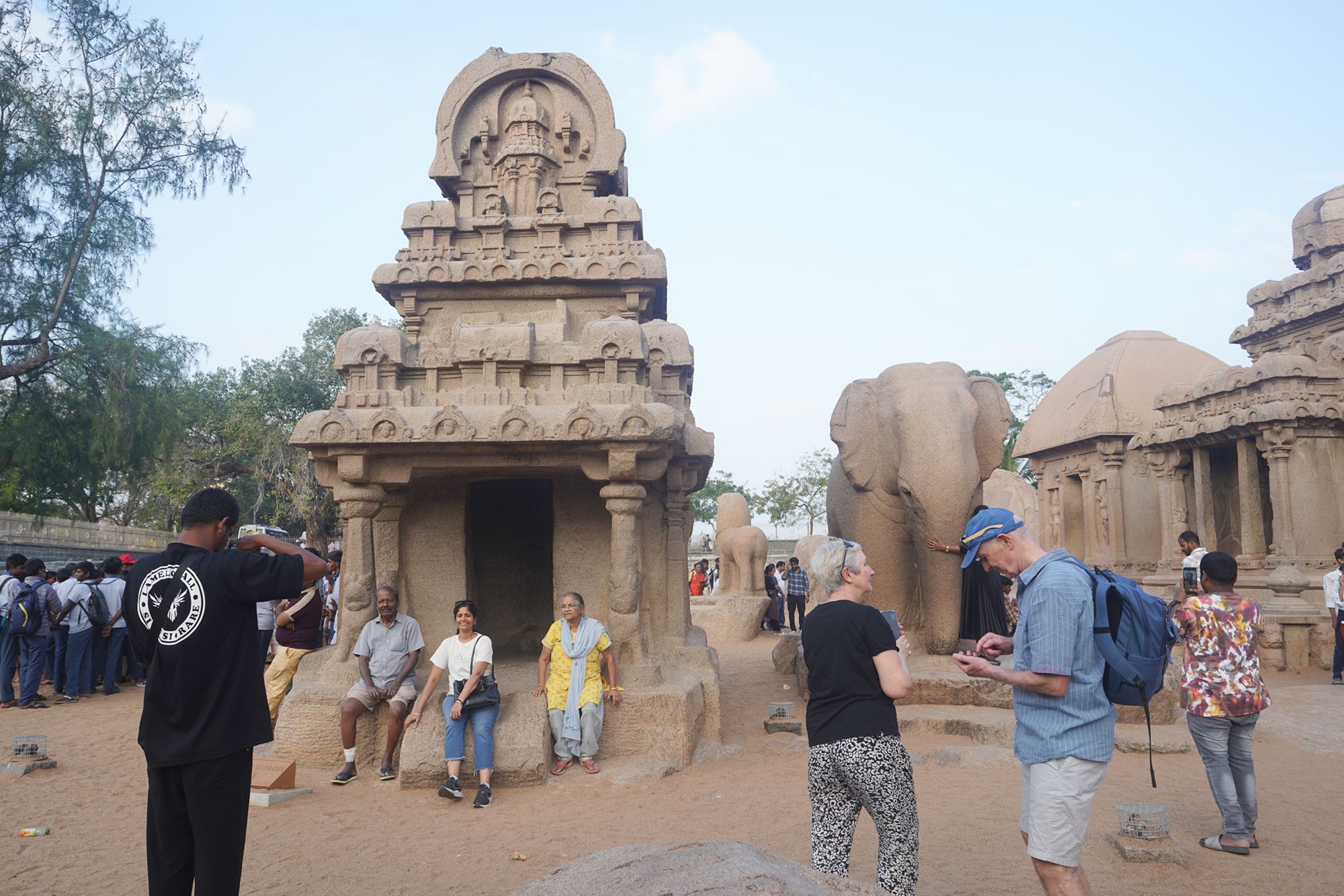
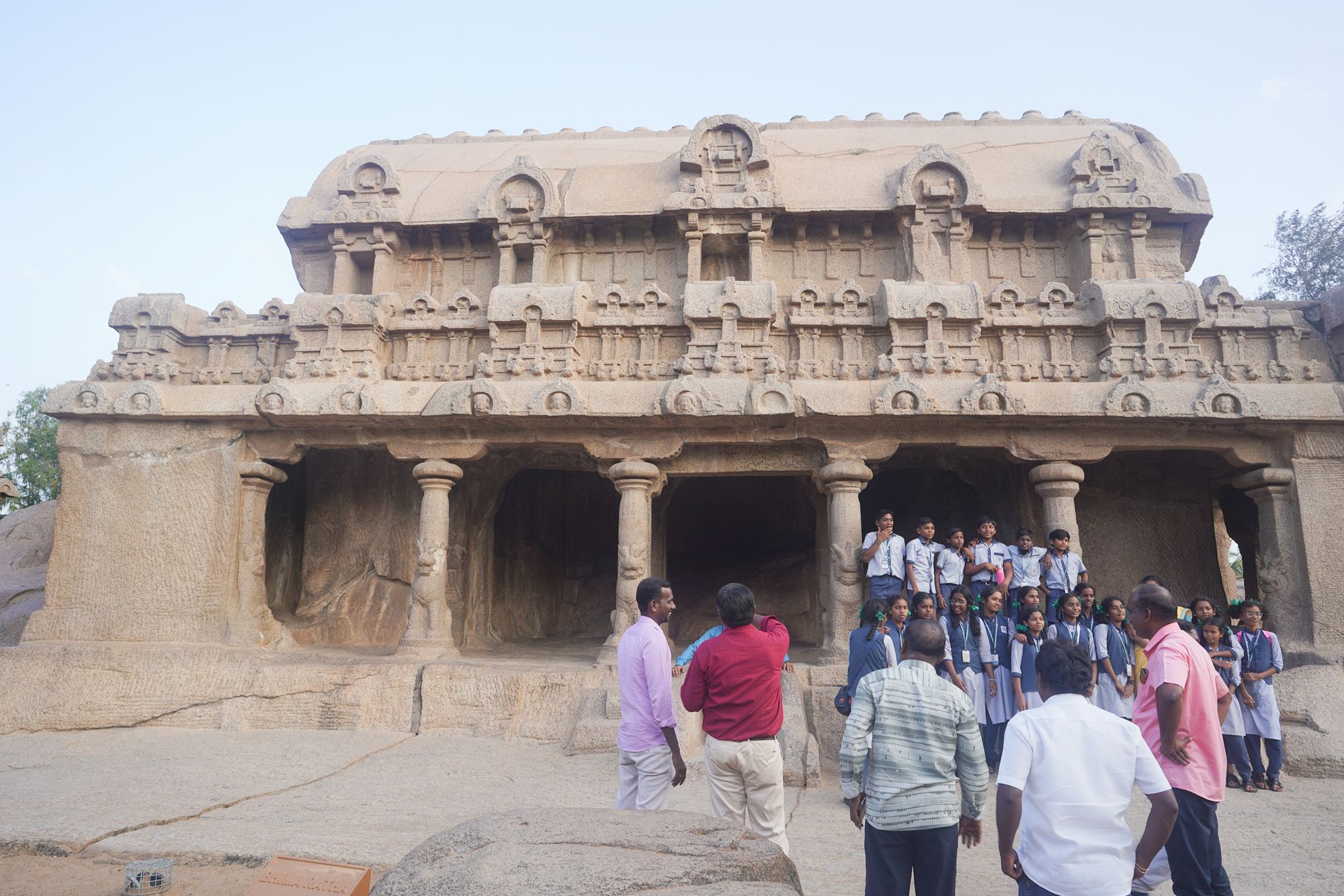
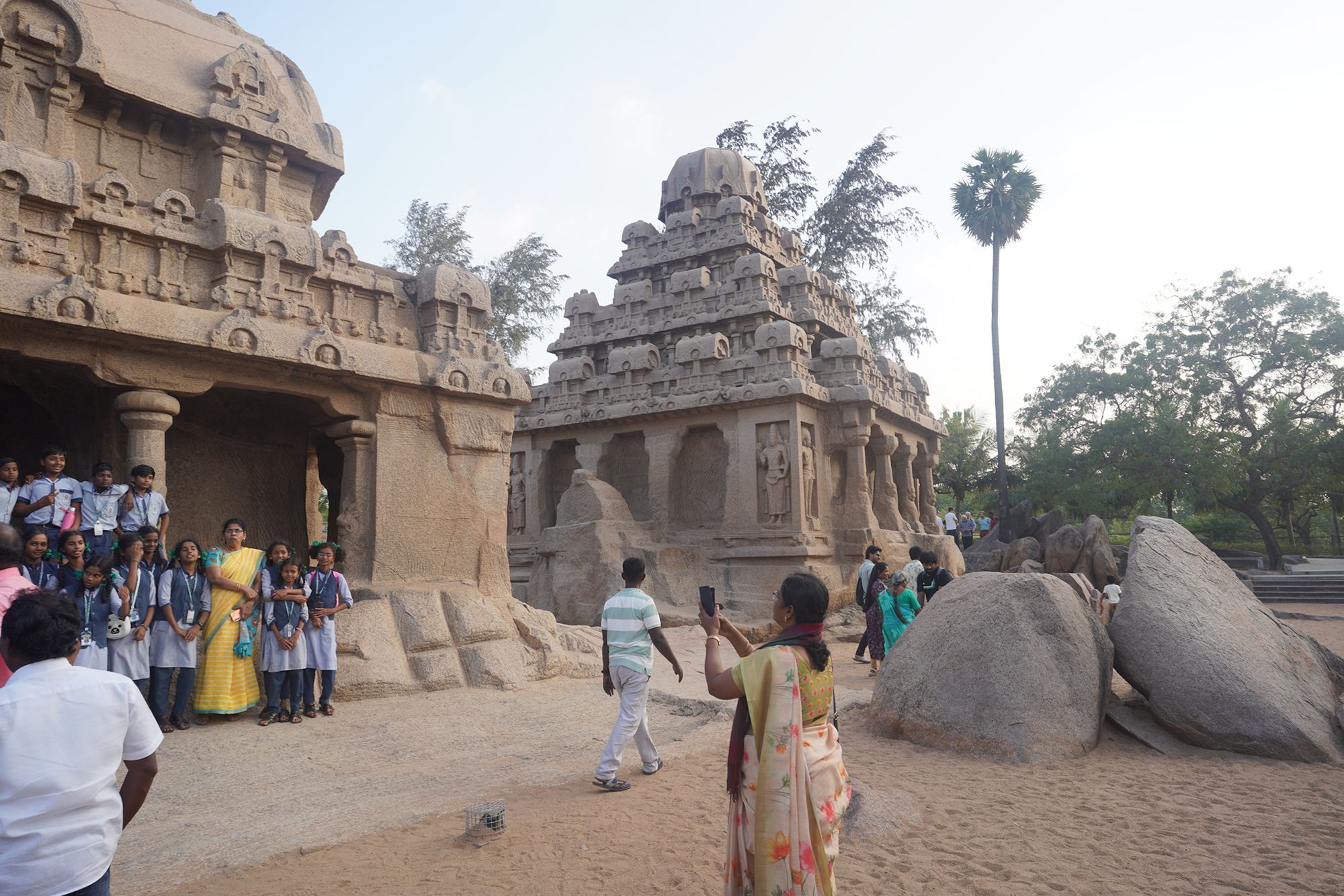
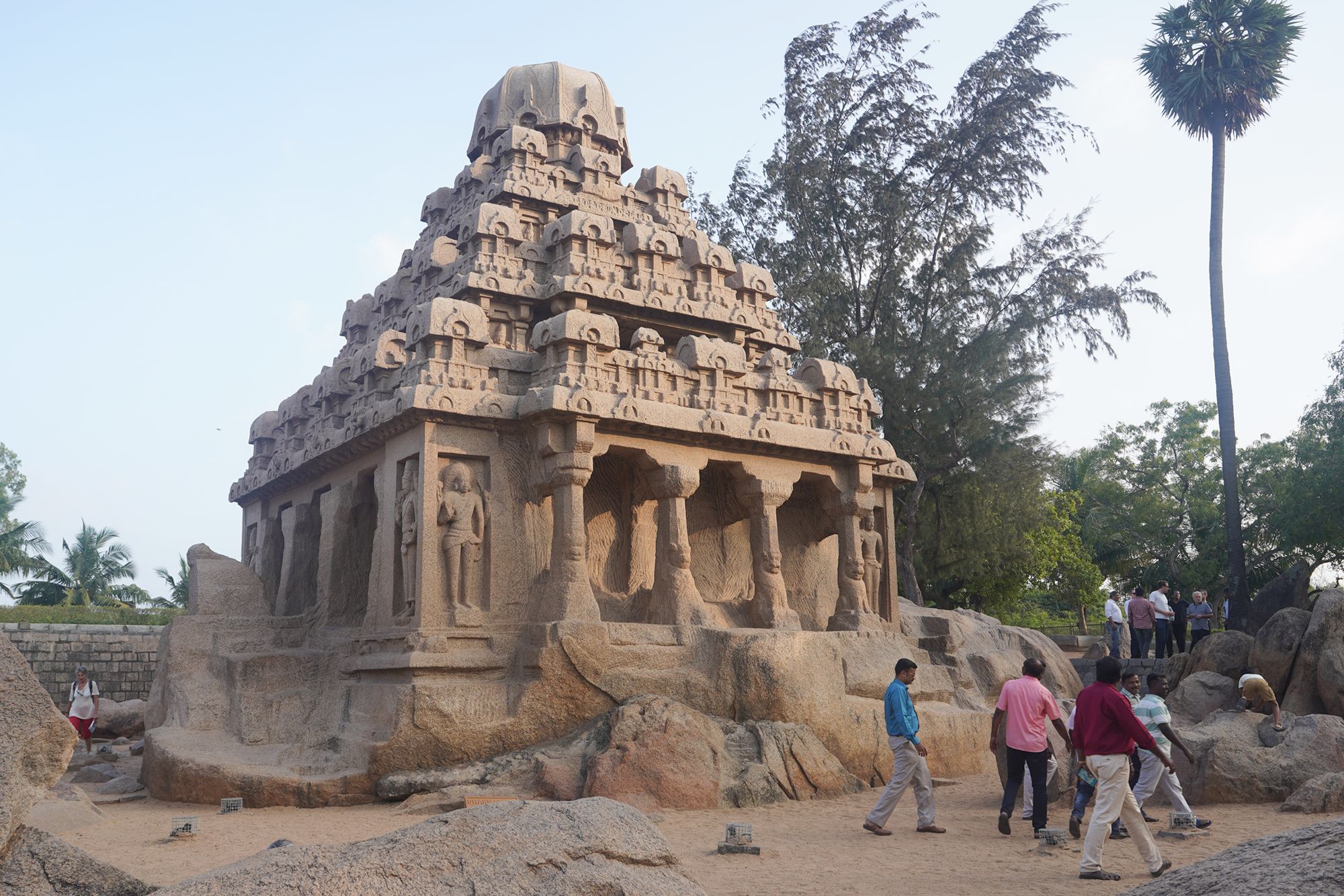
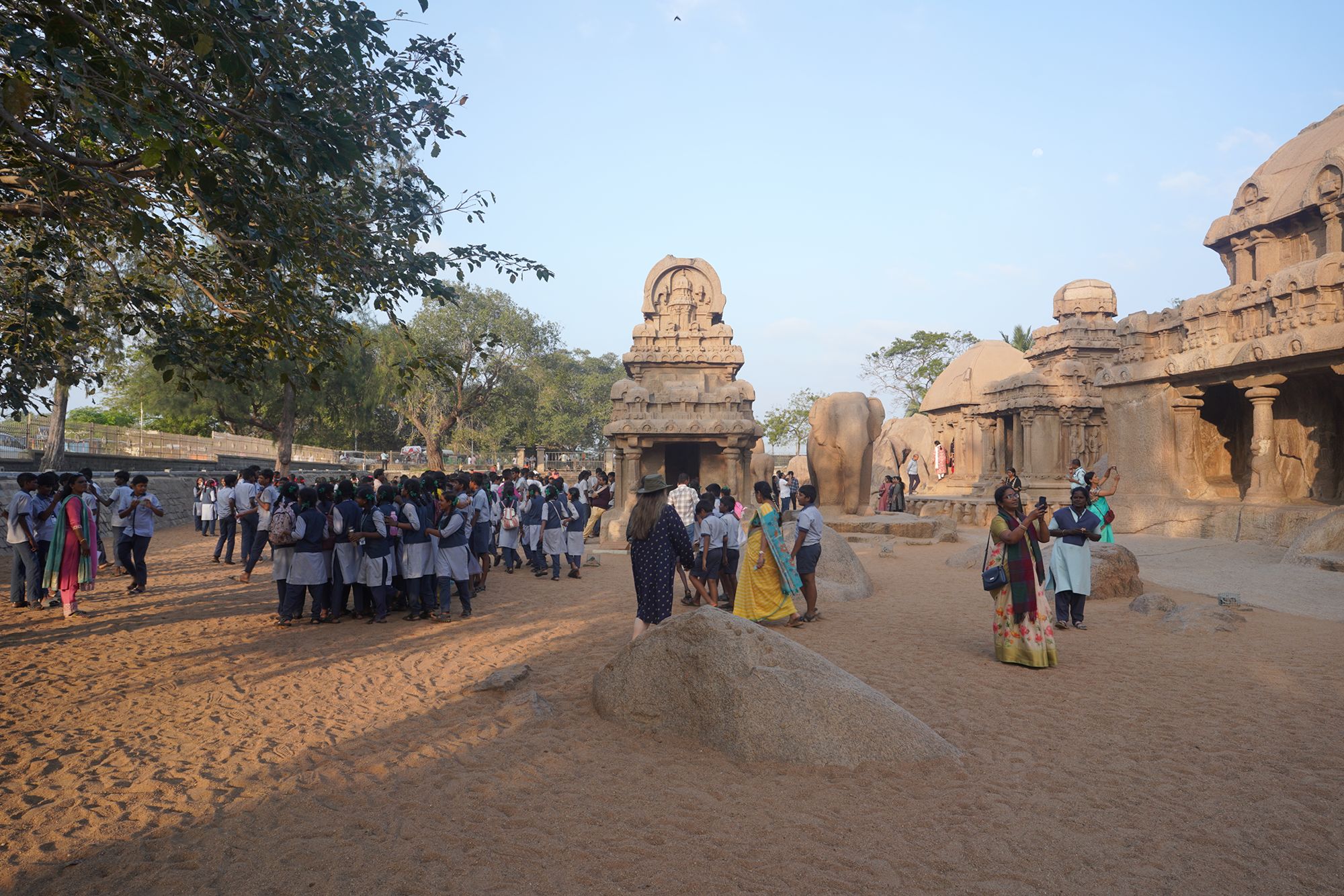
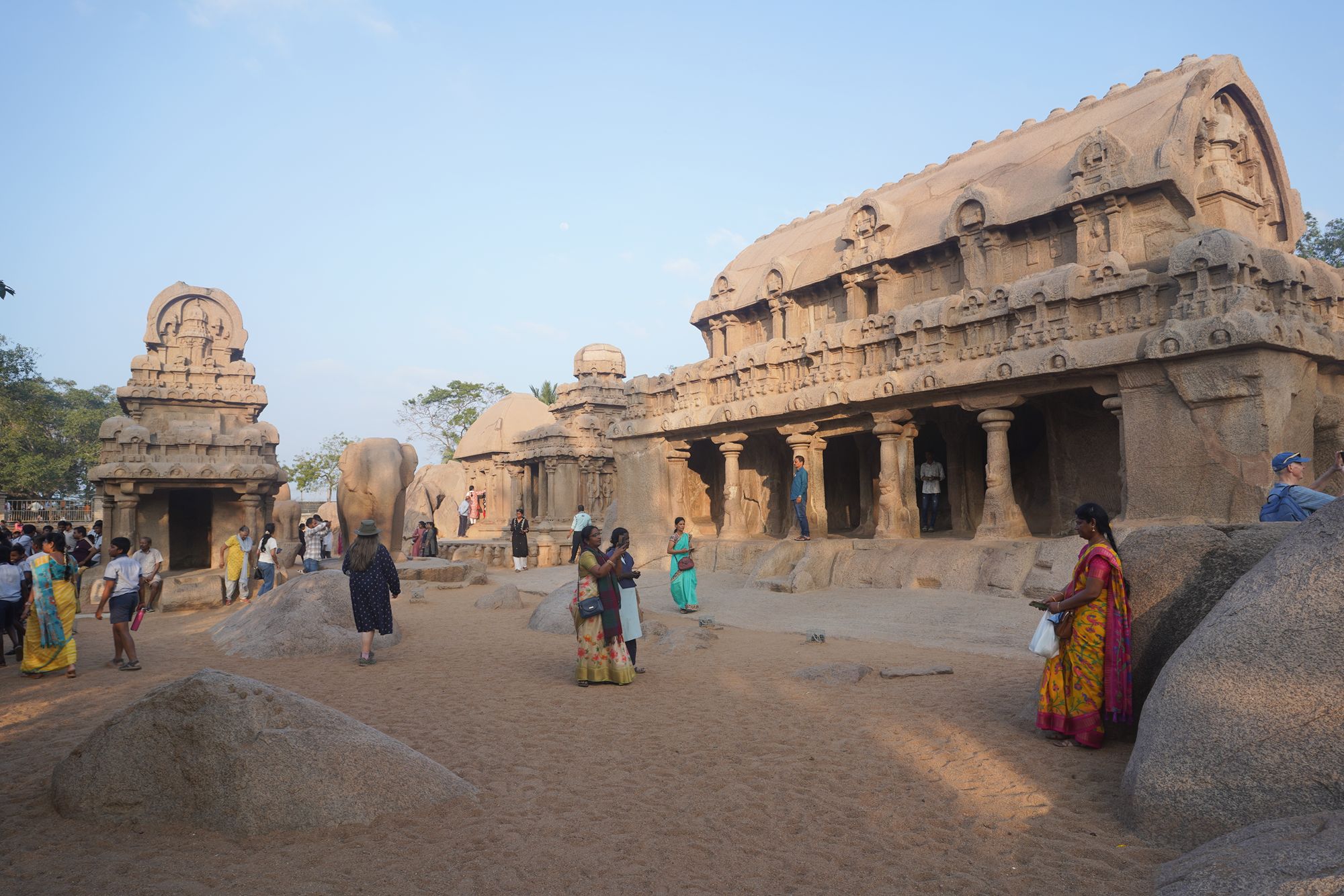
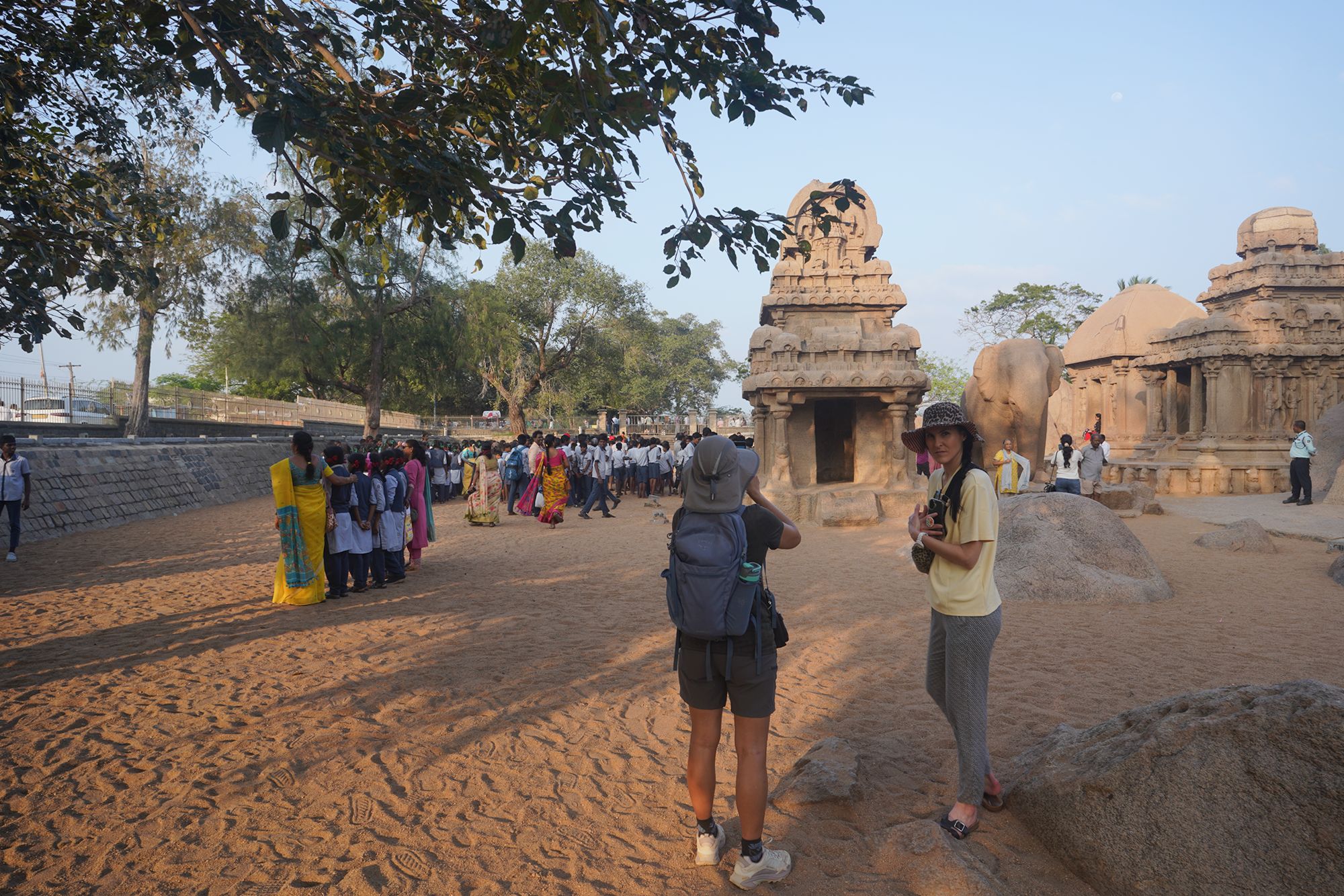
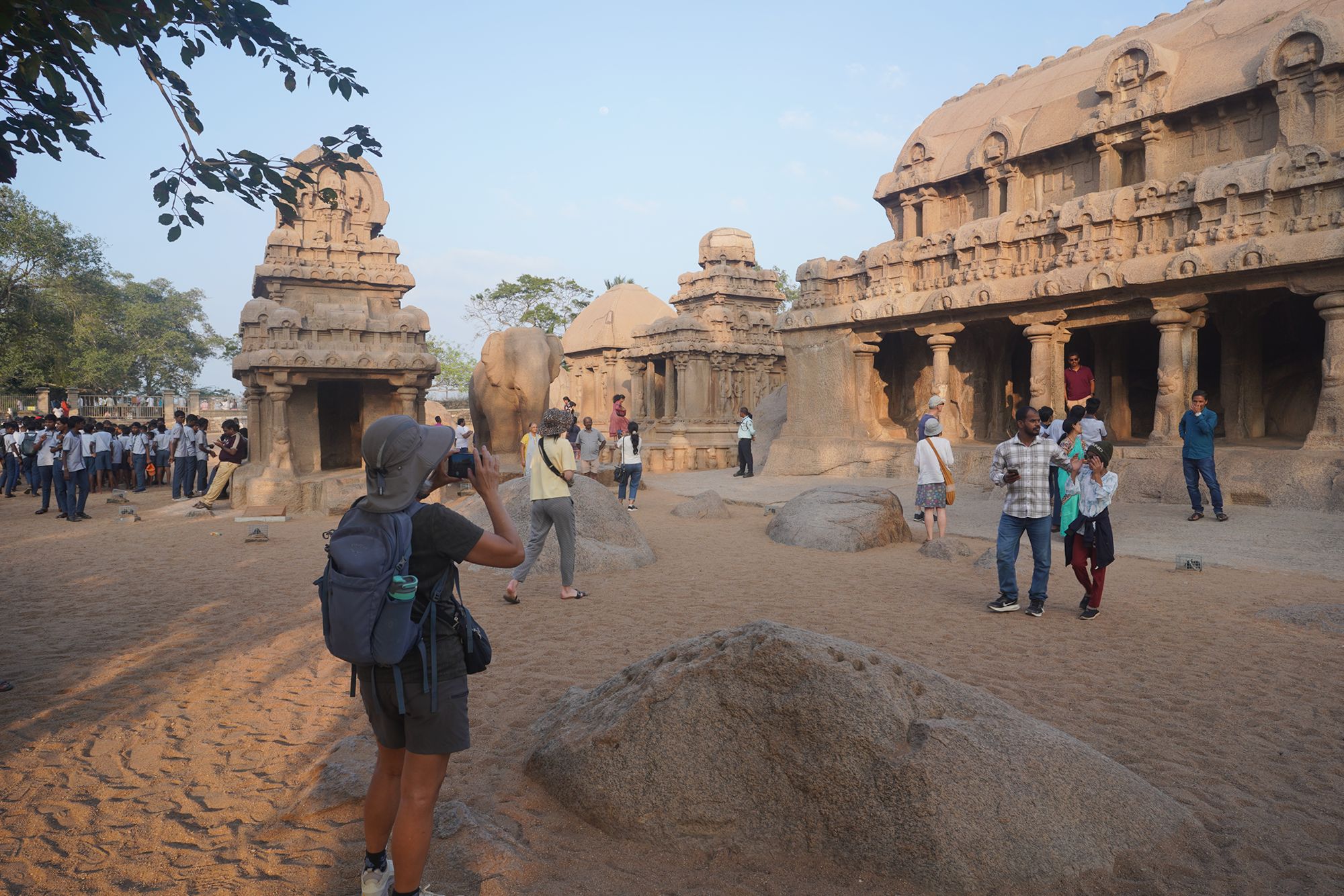
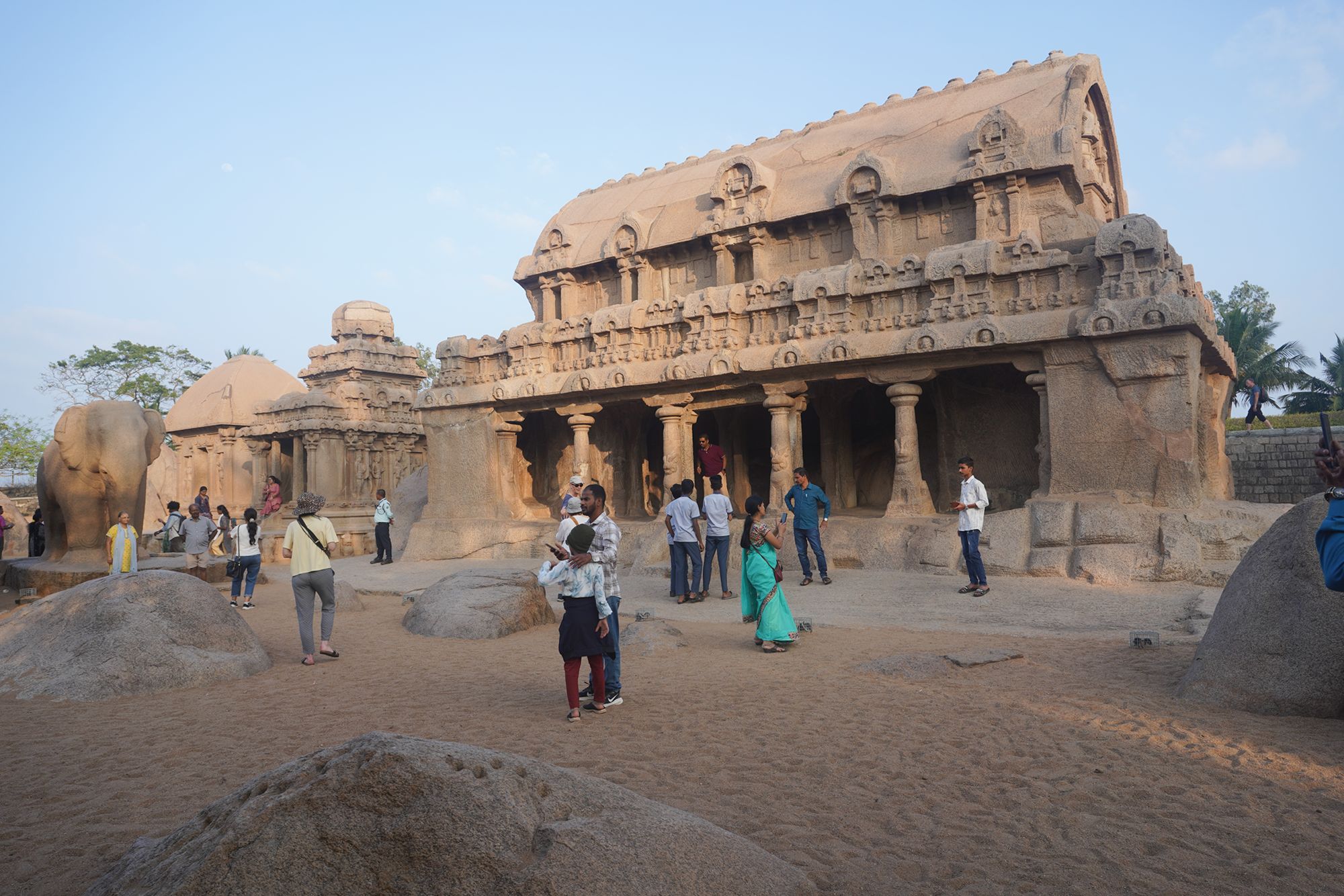
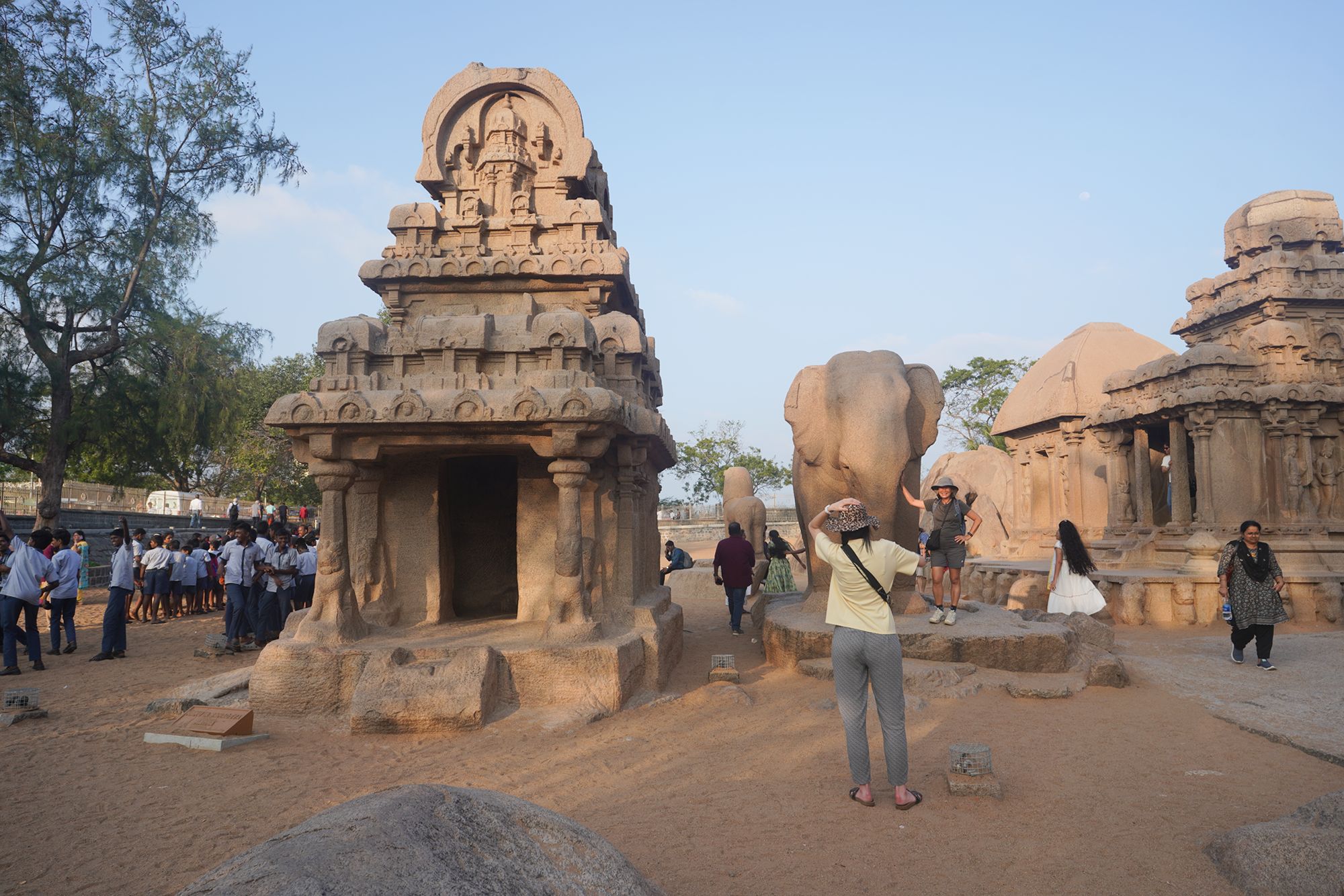
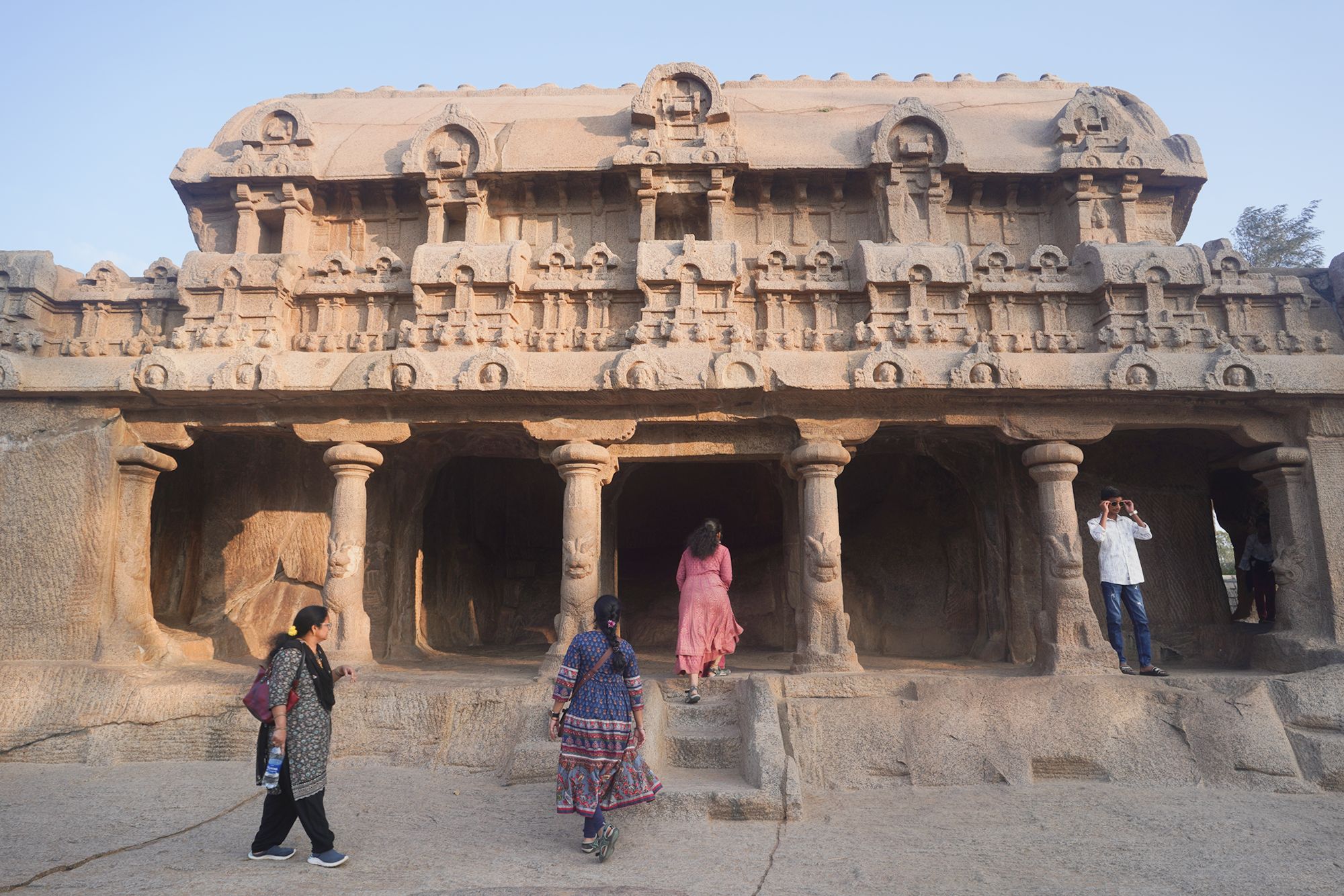
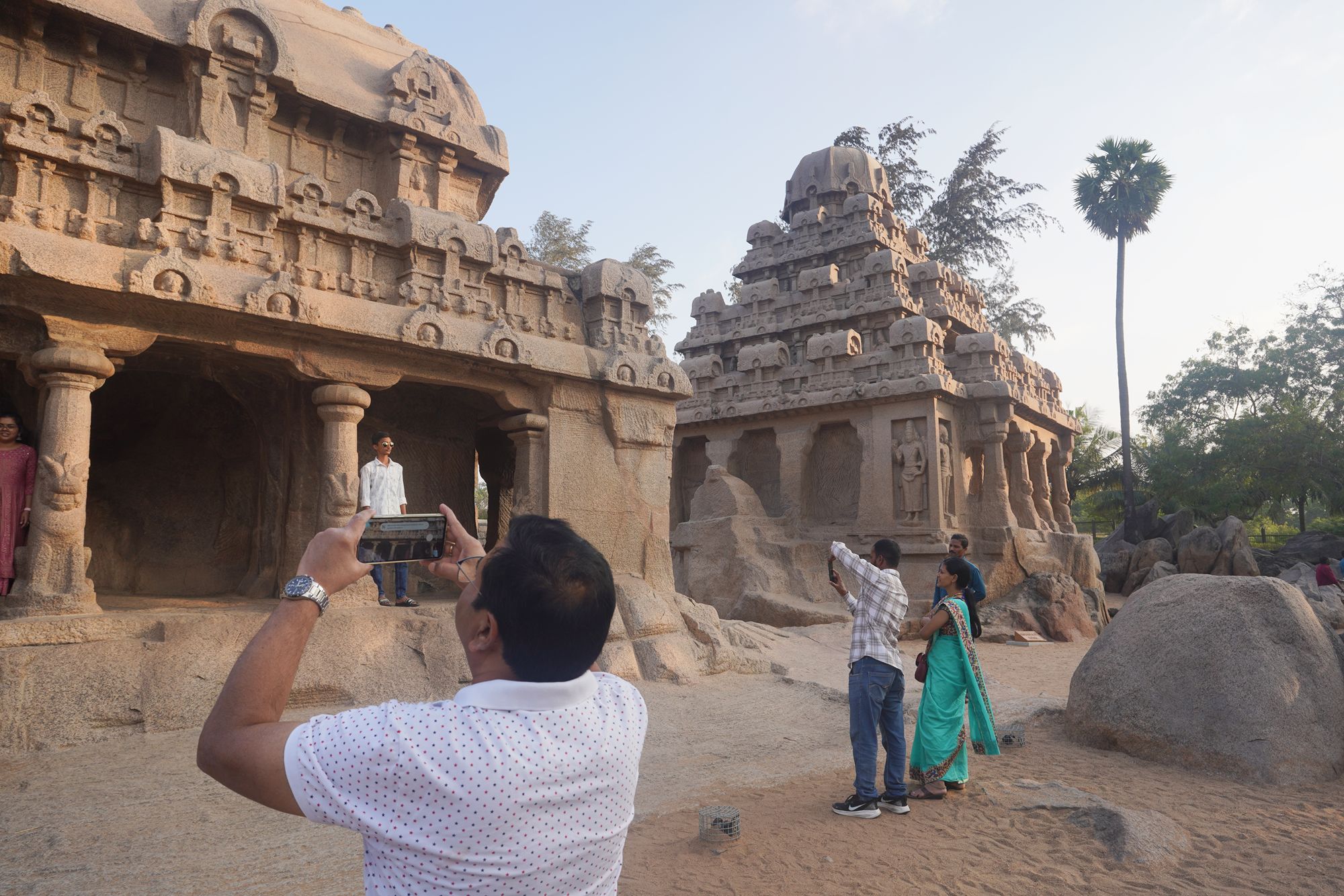
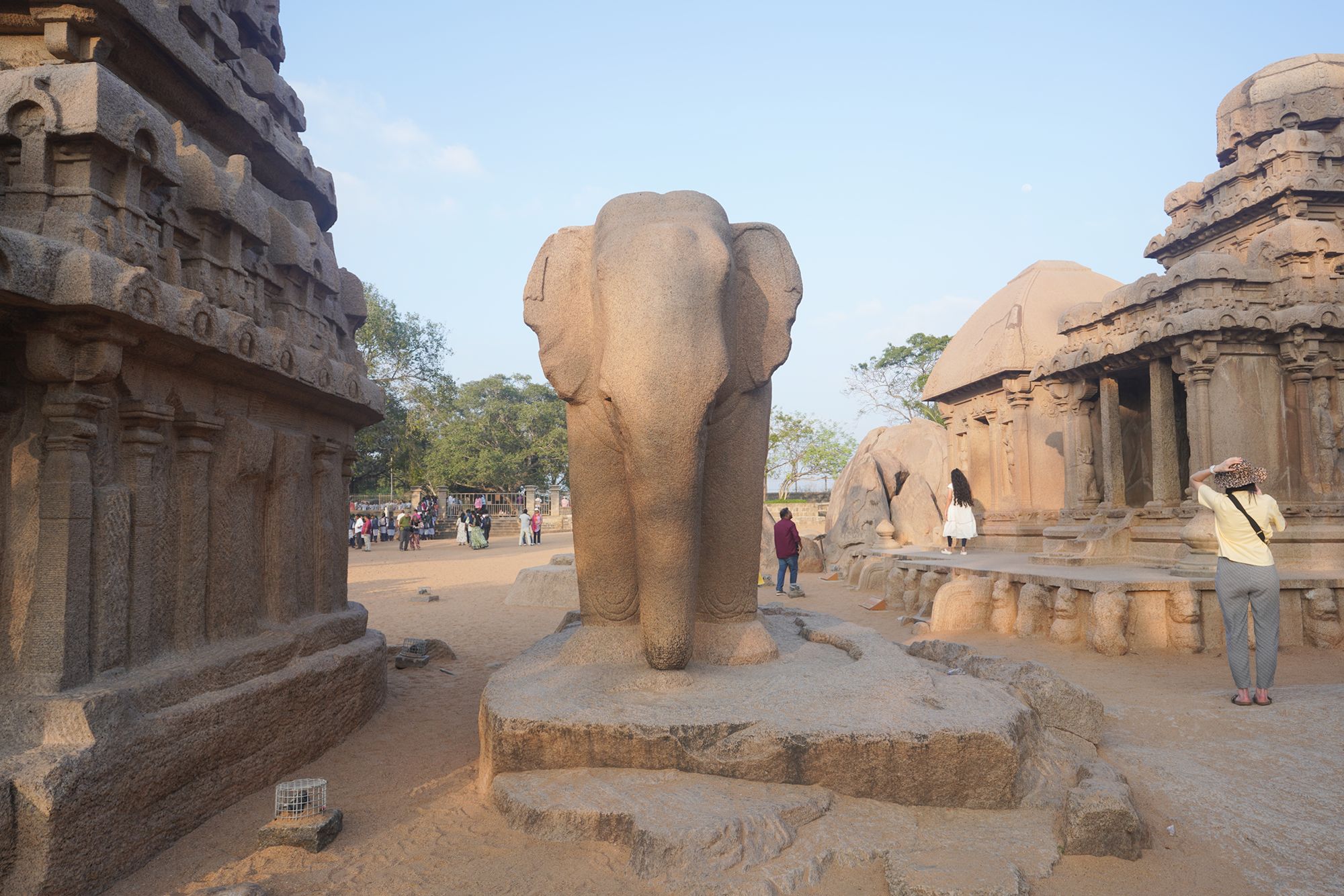
The Five Rathas (Pancha Rathas) are a group of five remarkable 7th-century rock-cut monuments in Mahabalipuram, built during the Pallava period. Each monument was carved from a single large piece of granite, rather than constructed from separate blocks.
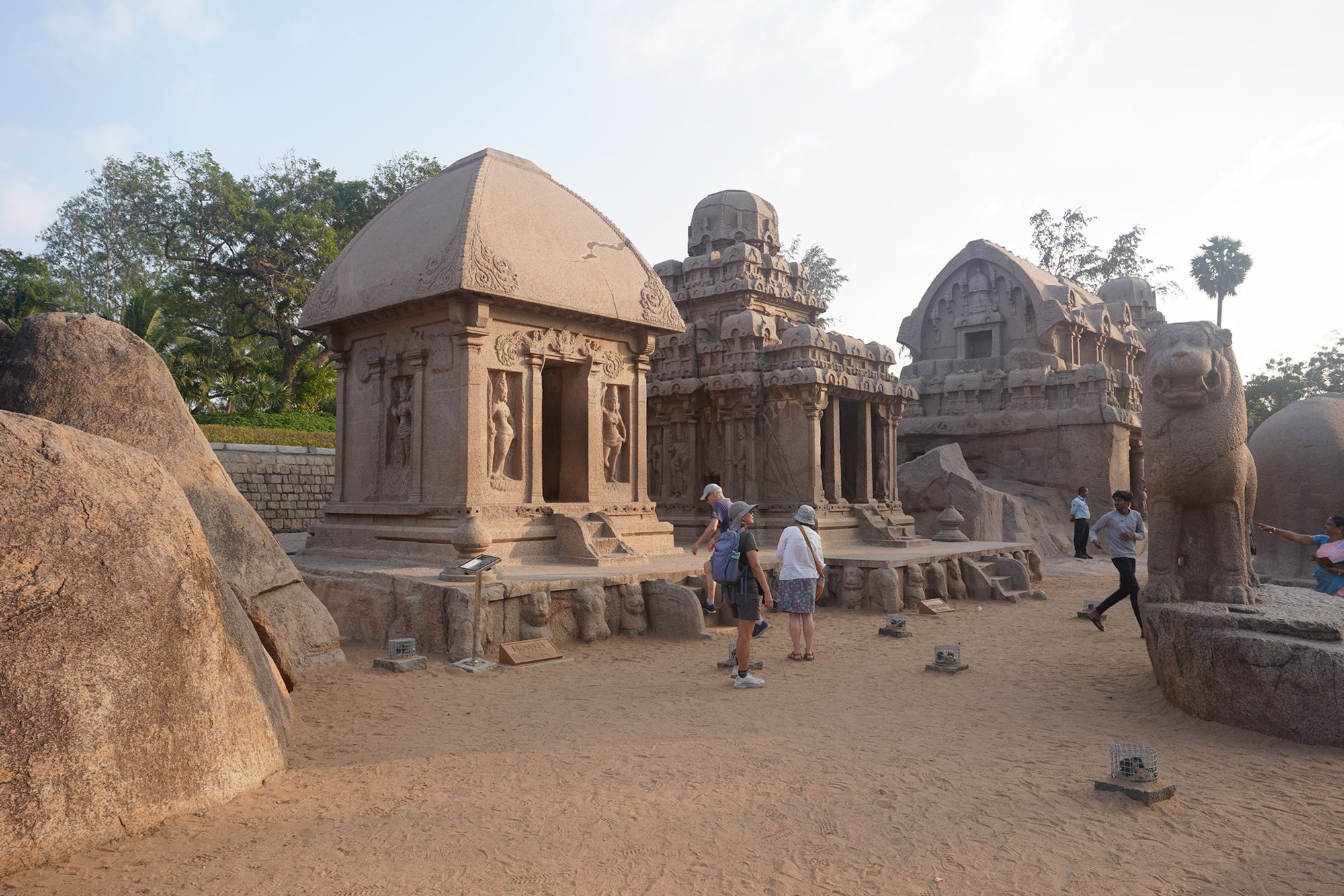
The five monuments are traditionally named after the Pandava brothers and Draupadi from the Hindu epic Mahabharata, although they were not actually built for them. Each ratha has a different design, showing experiments with architectural styles that later influenced South Indian temples.
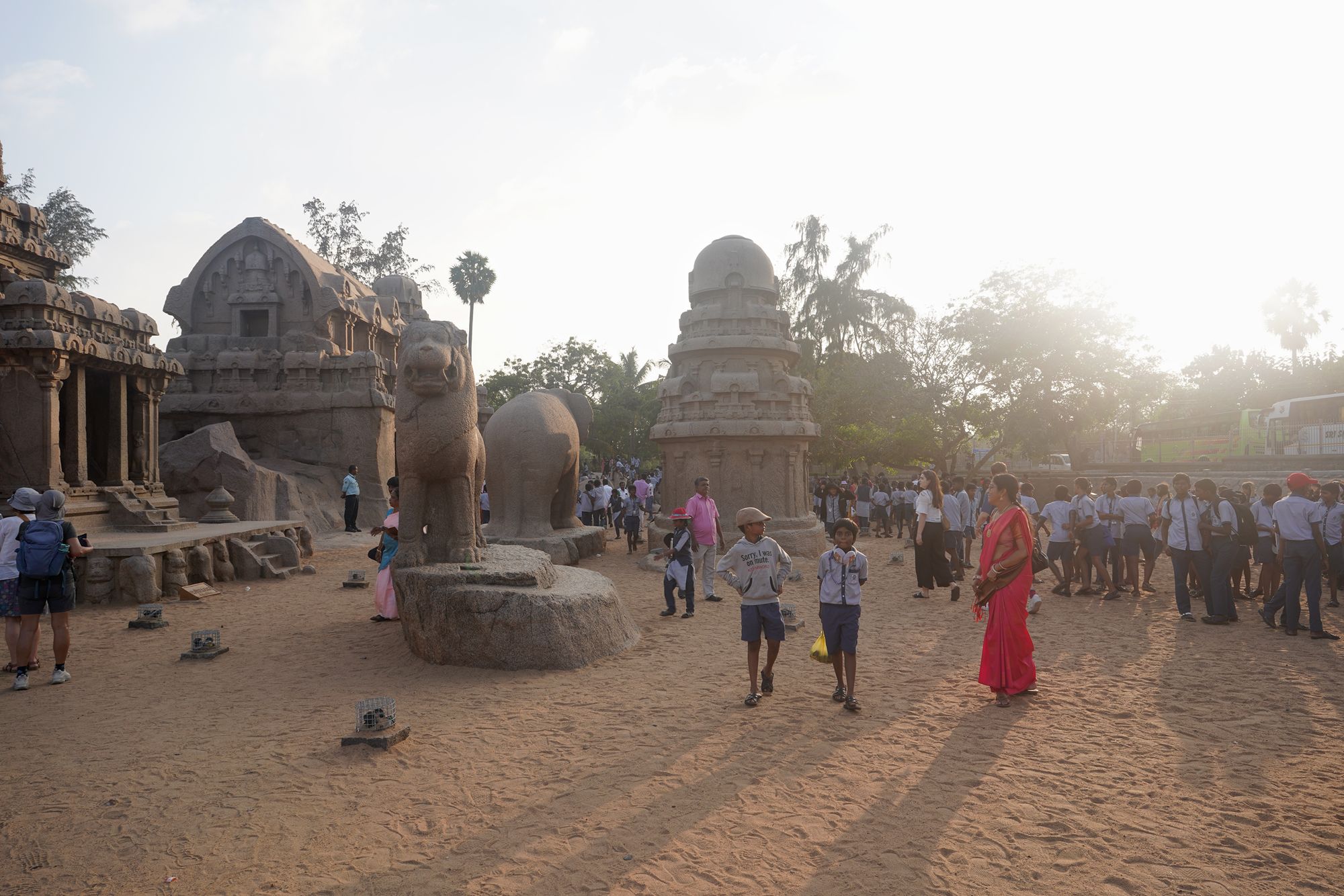
The site also contains impressive stone sculptures of animals, including a large elephant, lion, and Nandi bull. The Five Rathas are now part of the UNESCO-listed Group of Monuments at Mahabalipuram.
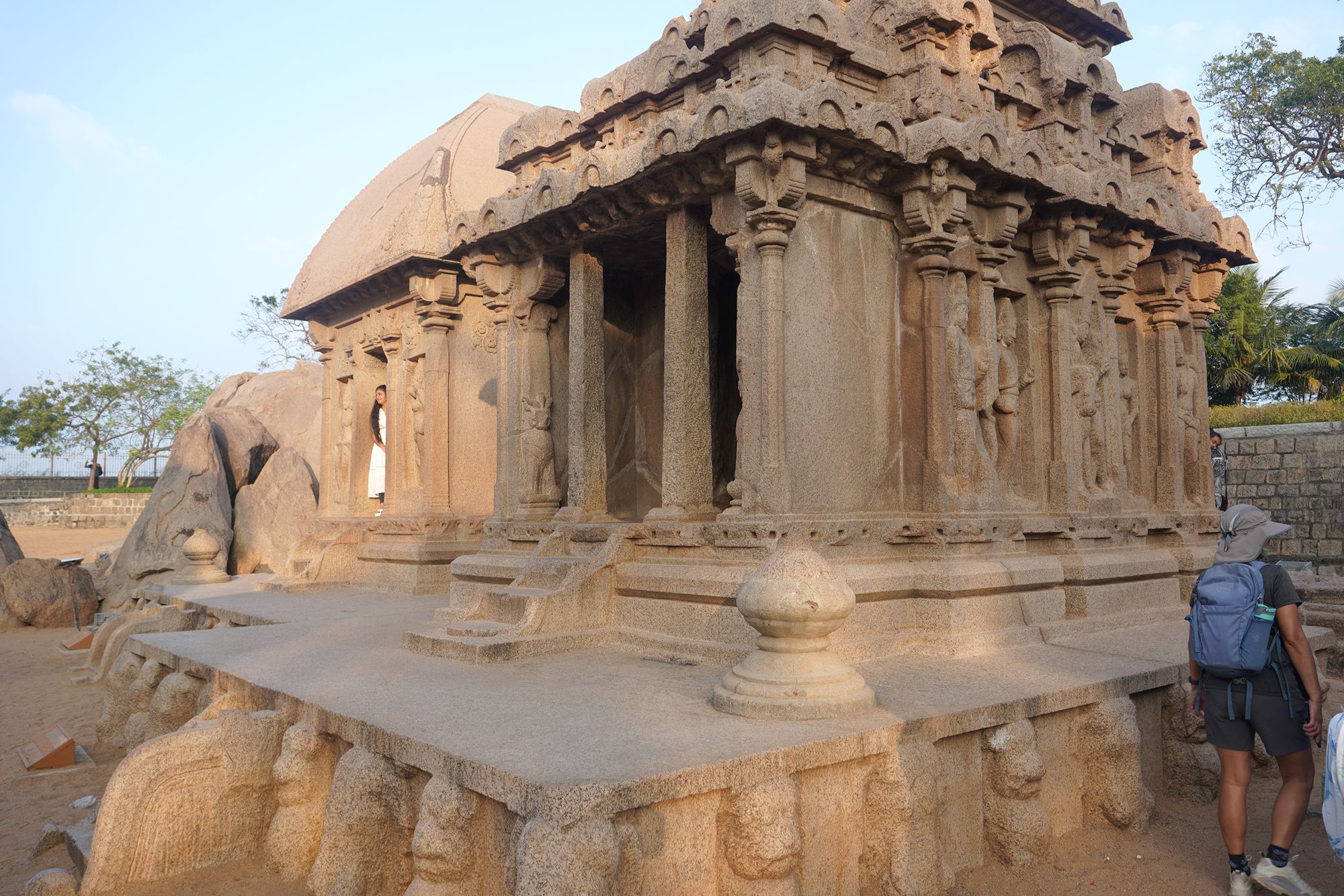
After visiting the Five Rathas, we boarded our tour bus and headed to the Shore Temple at Mahabalipuram.
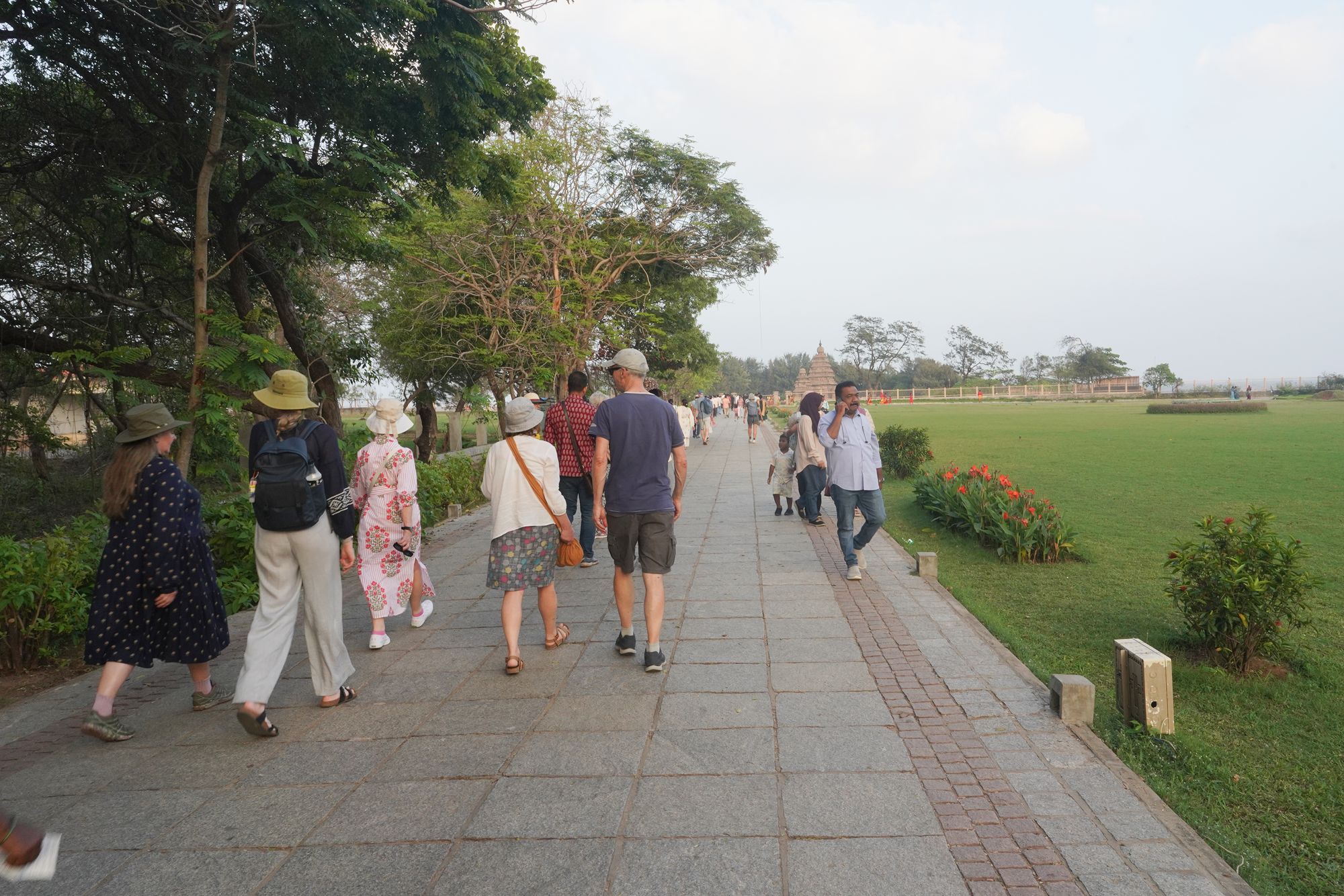
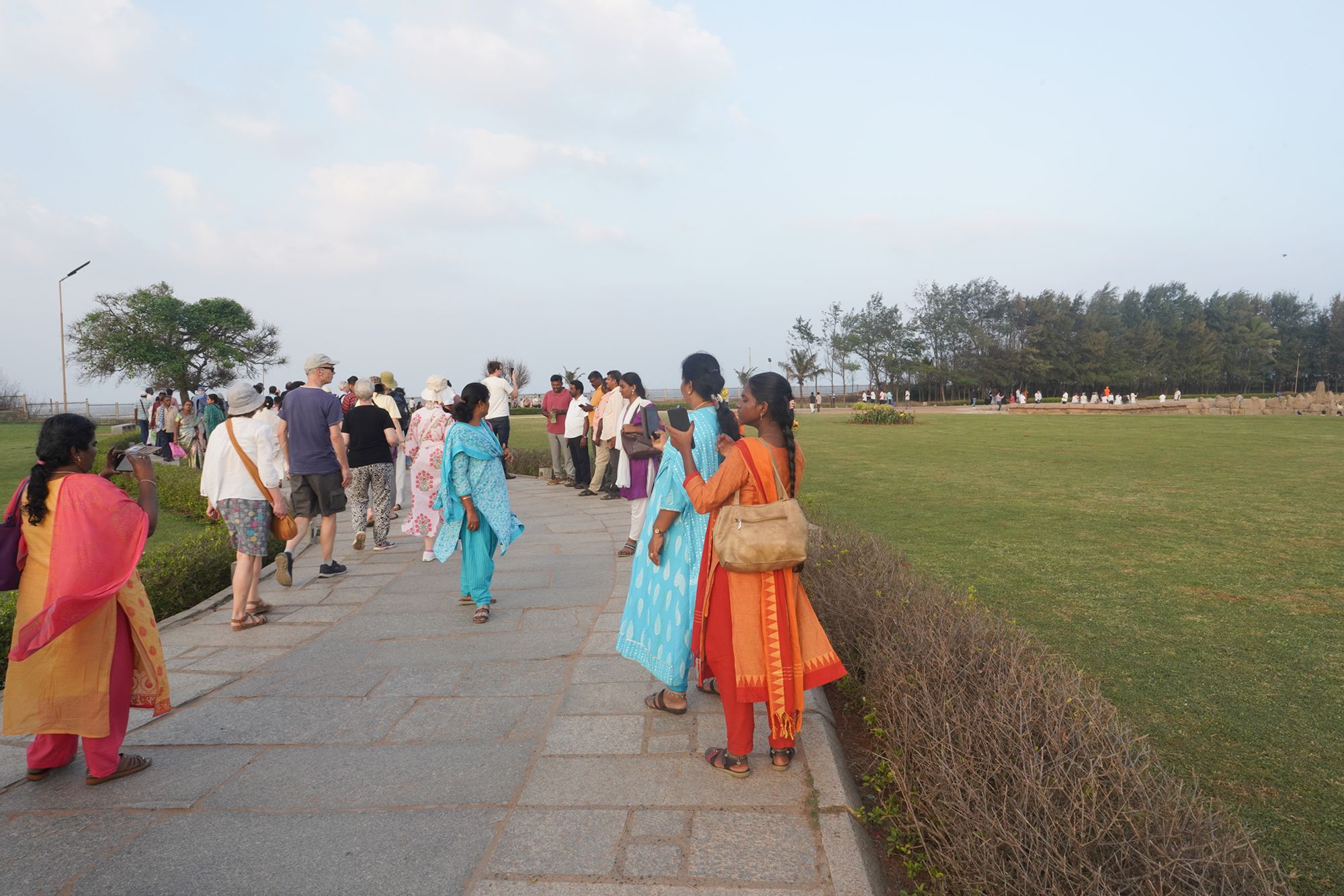
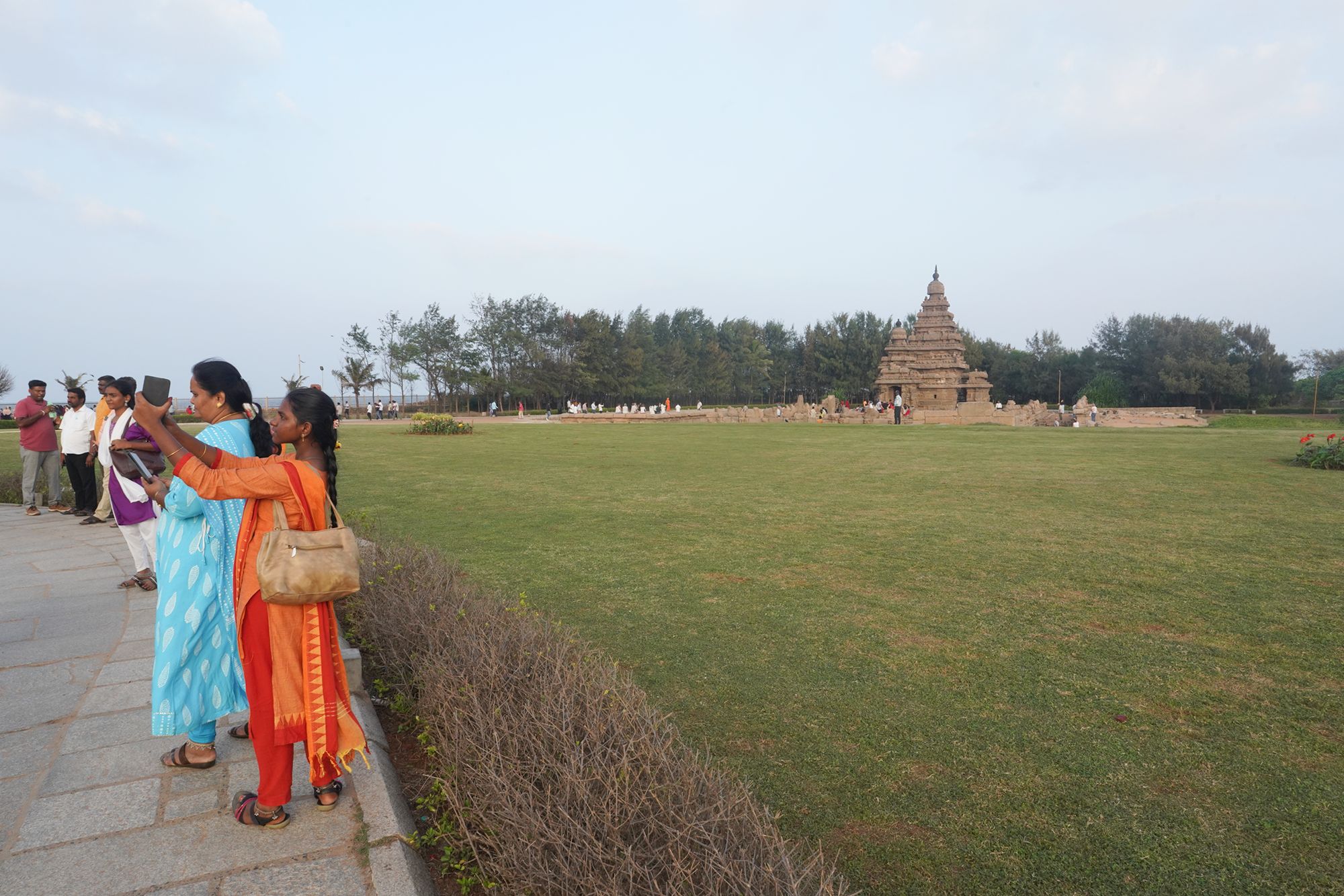
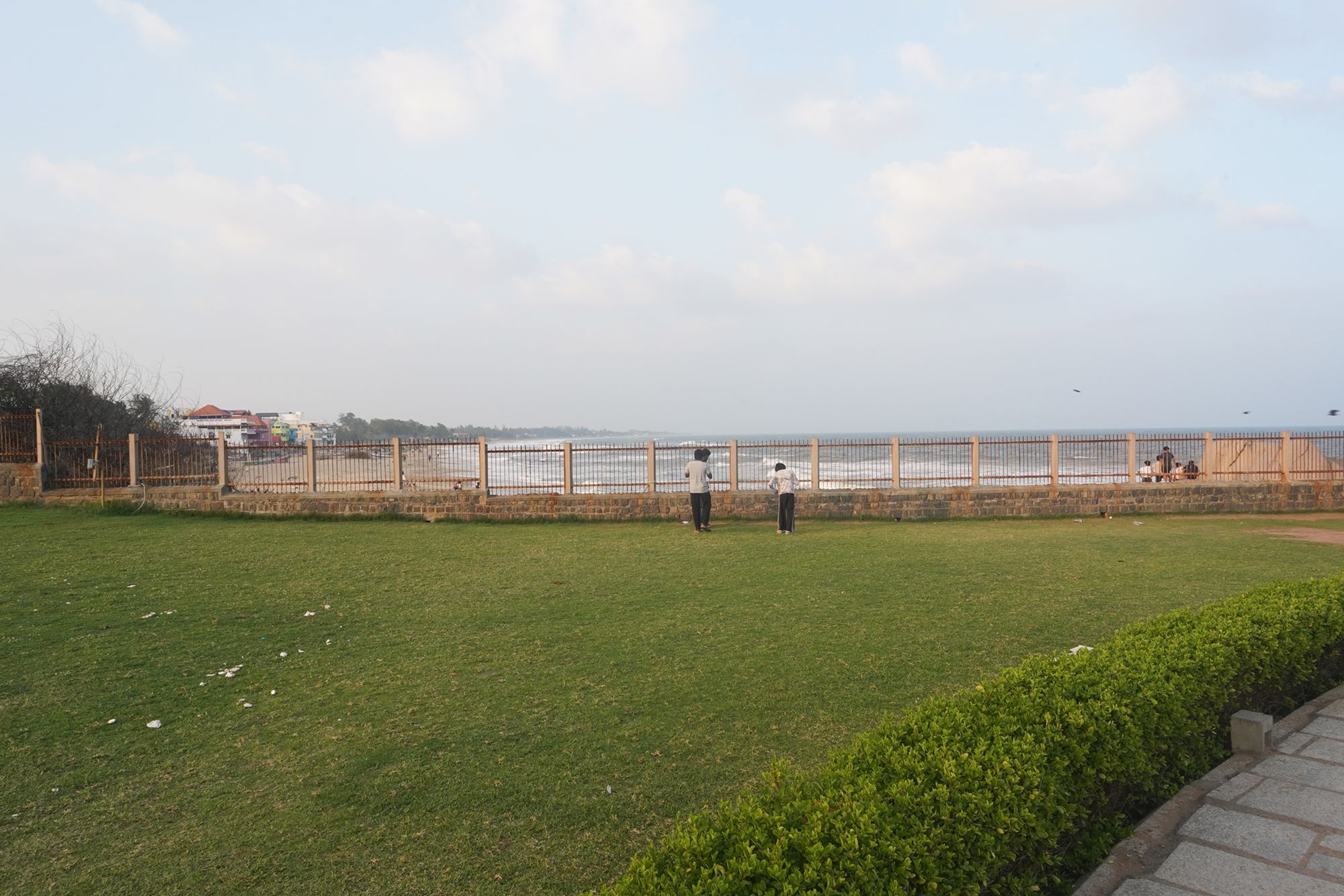
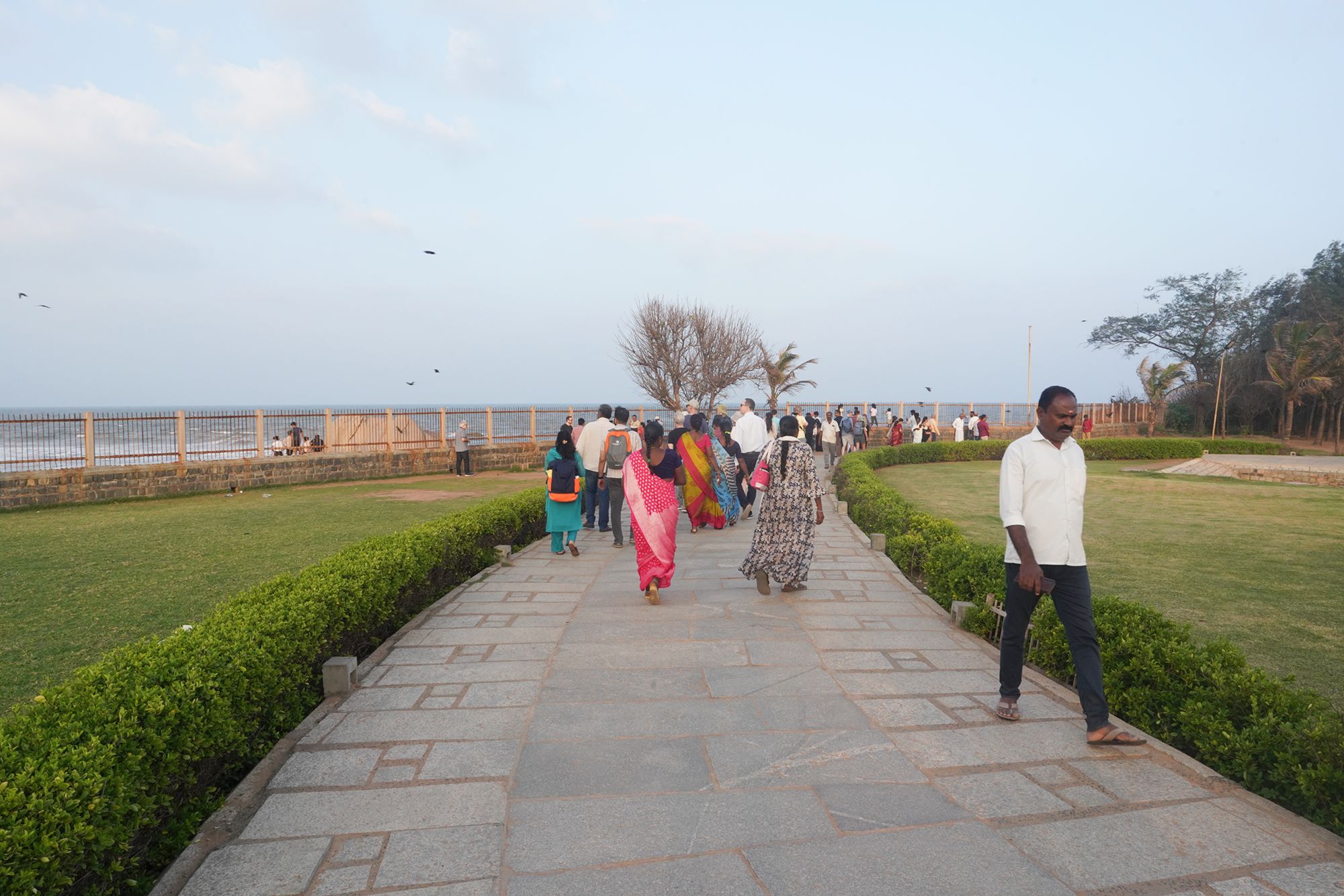
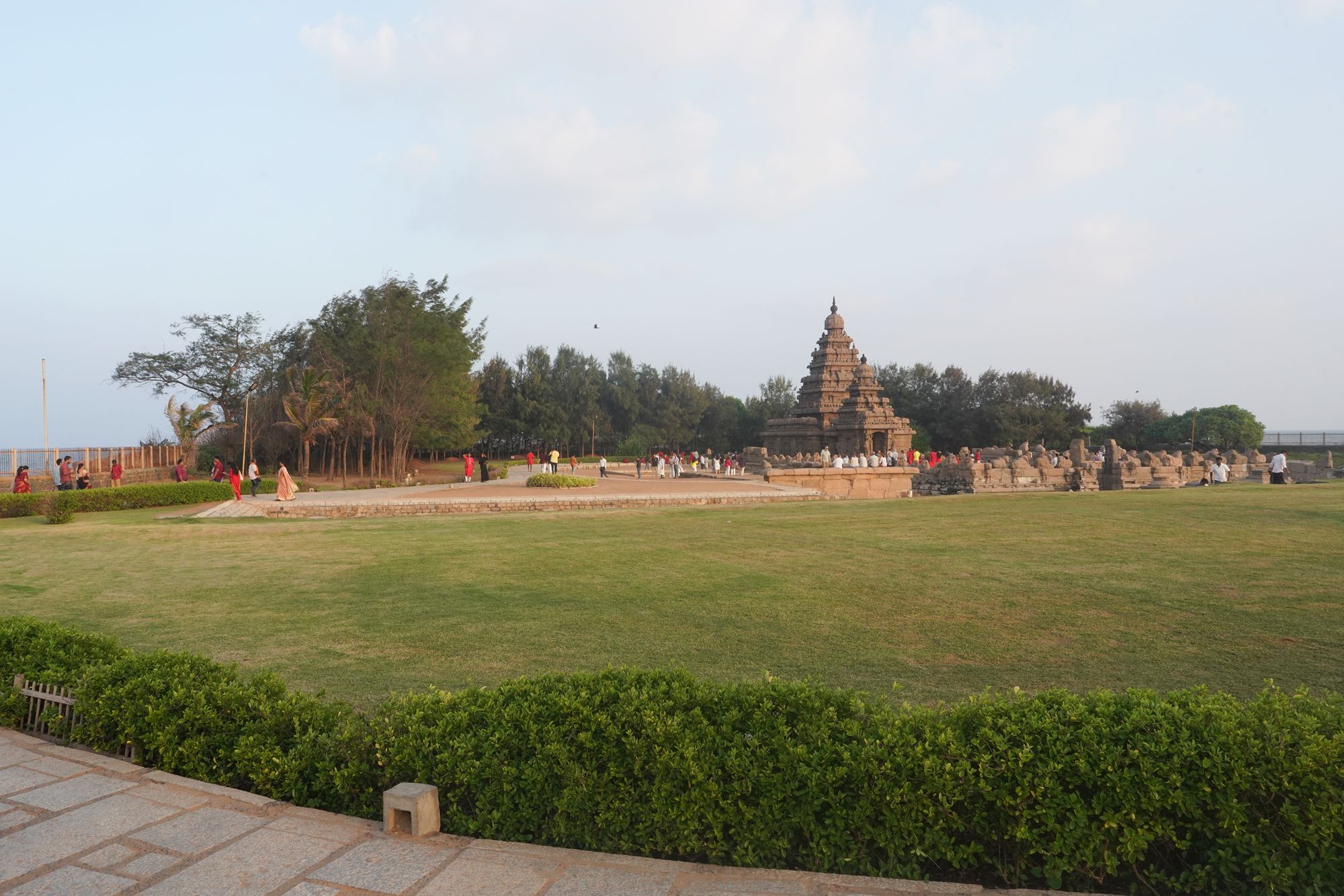
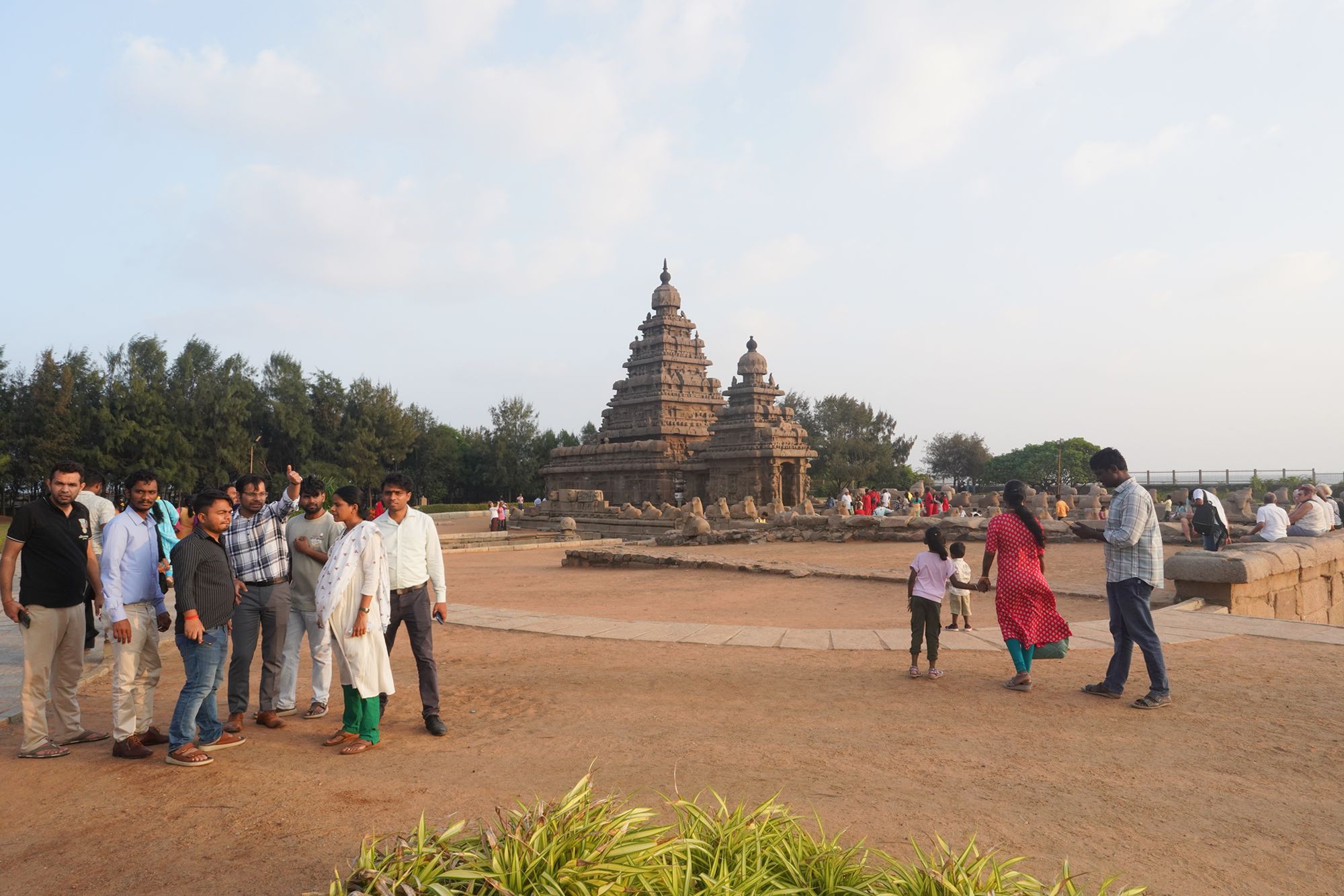
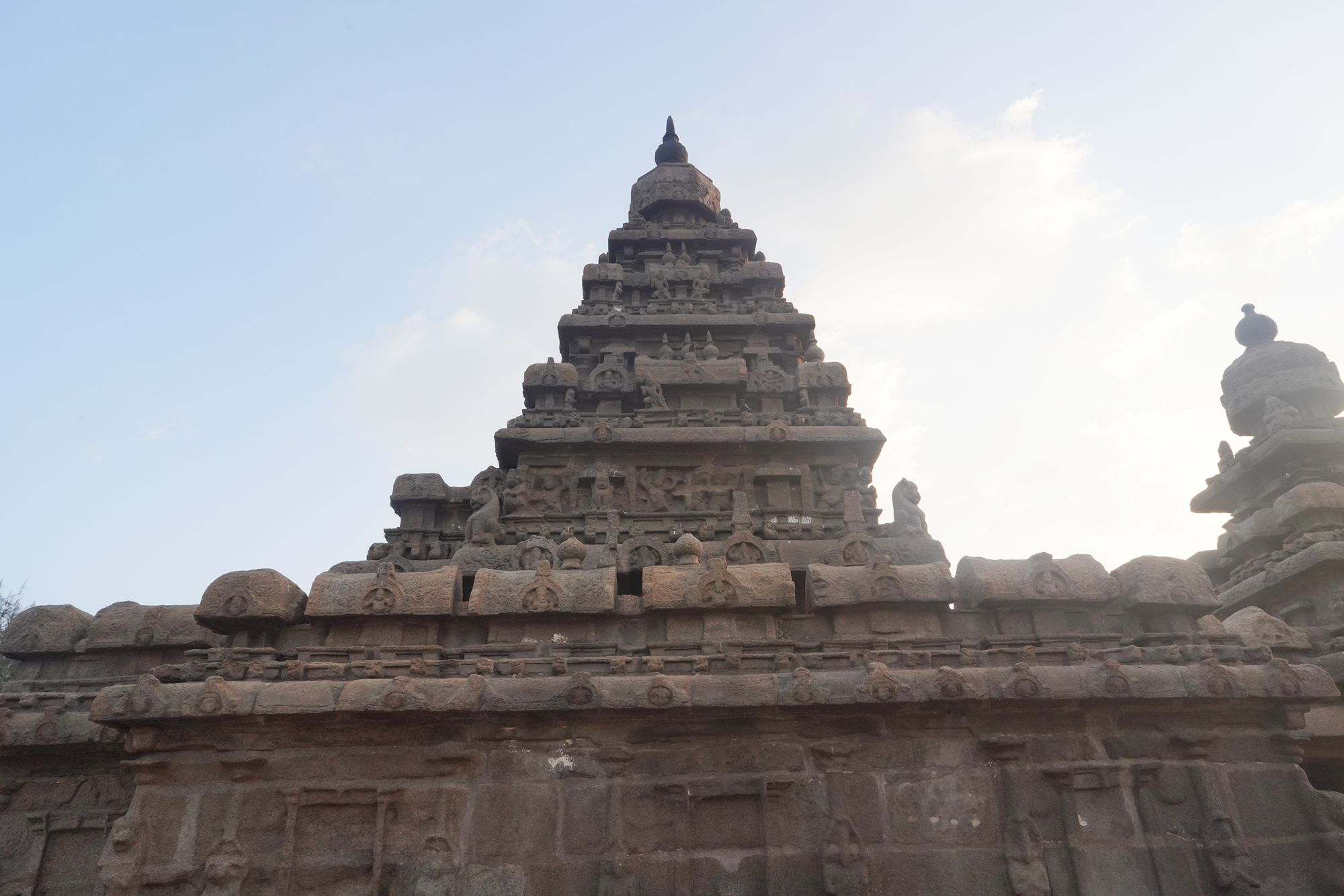
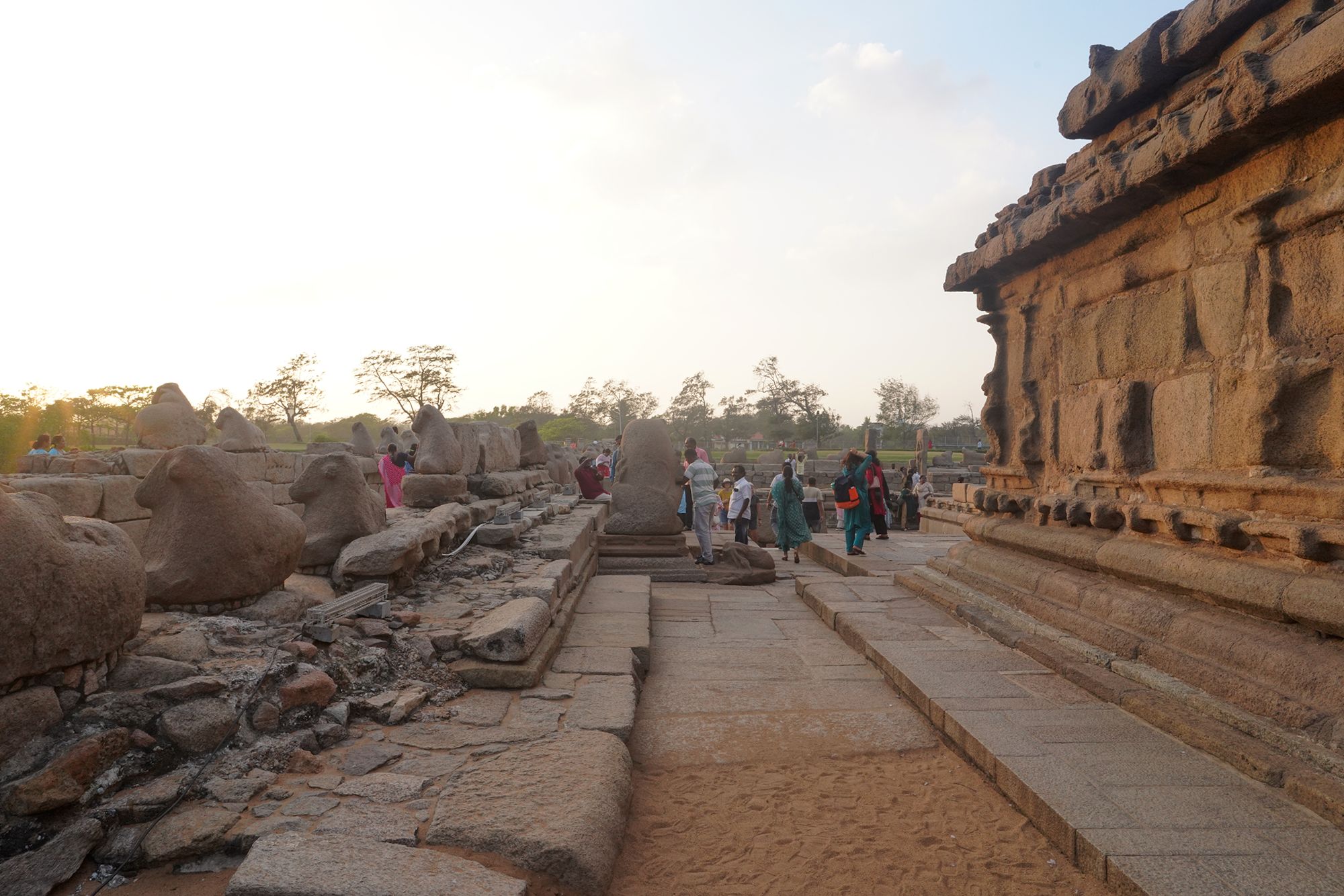
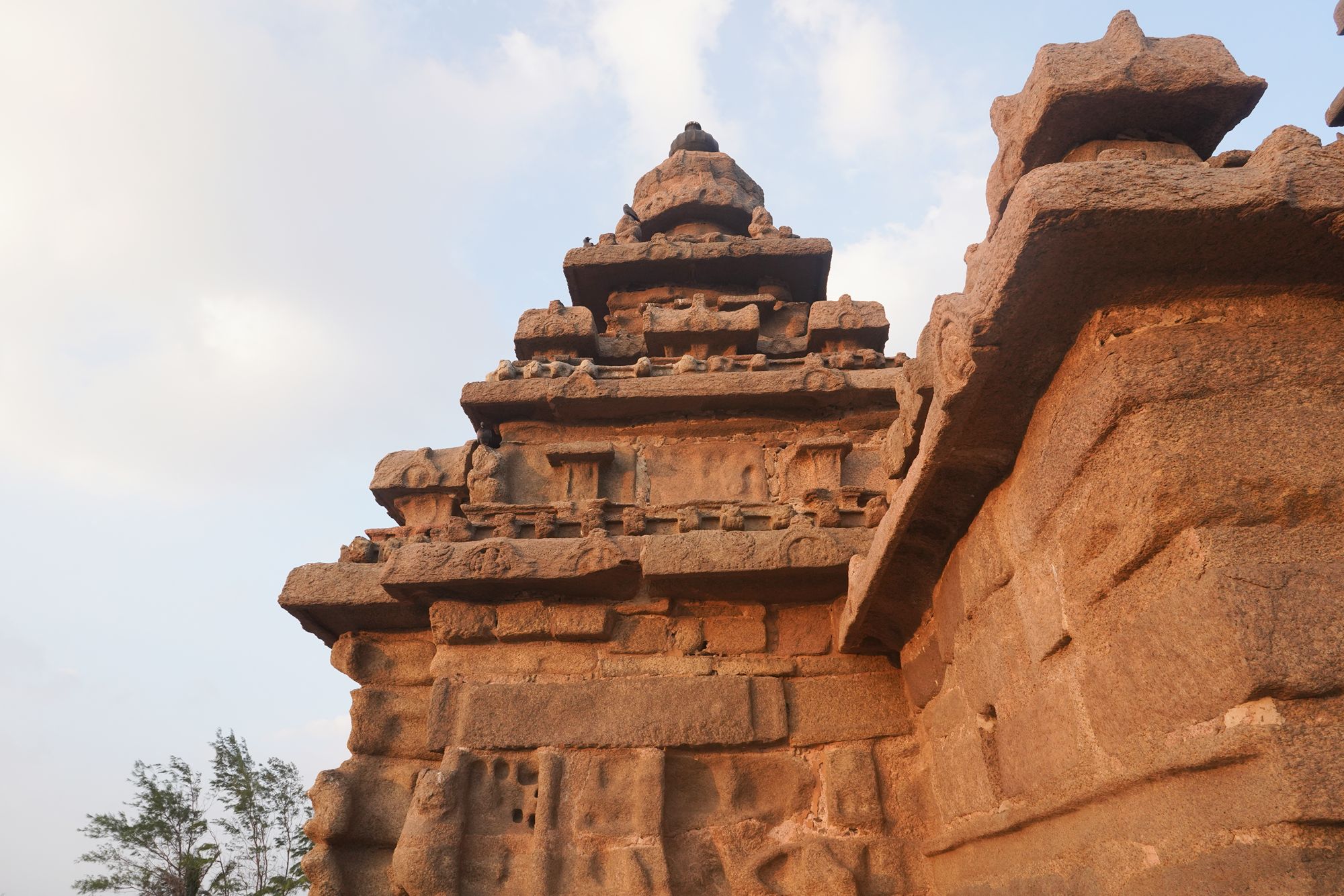
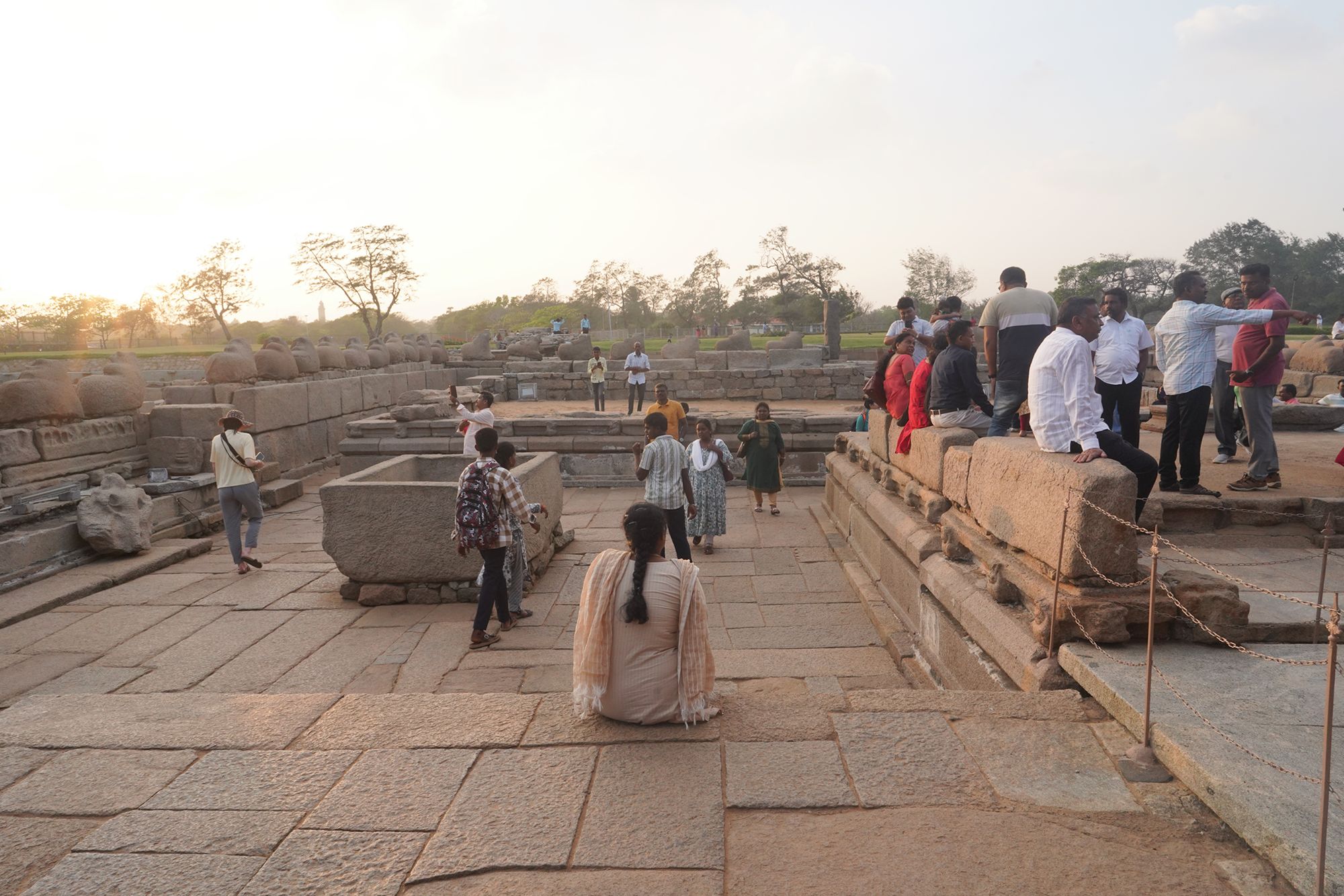
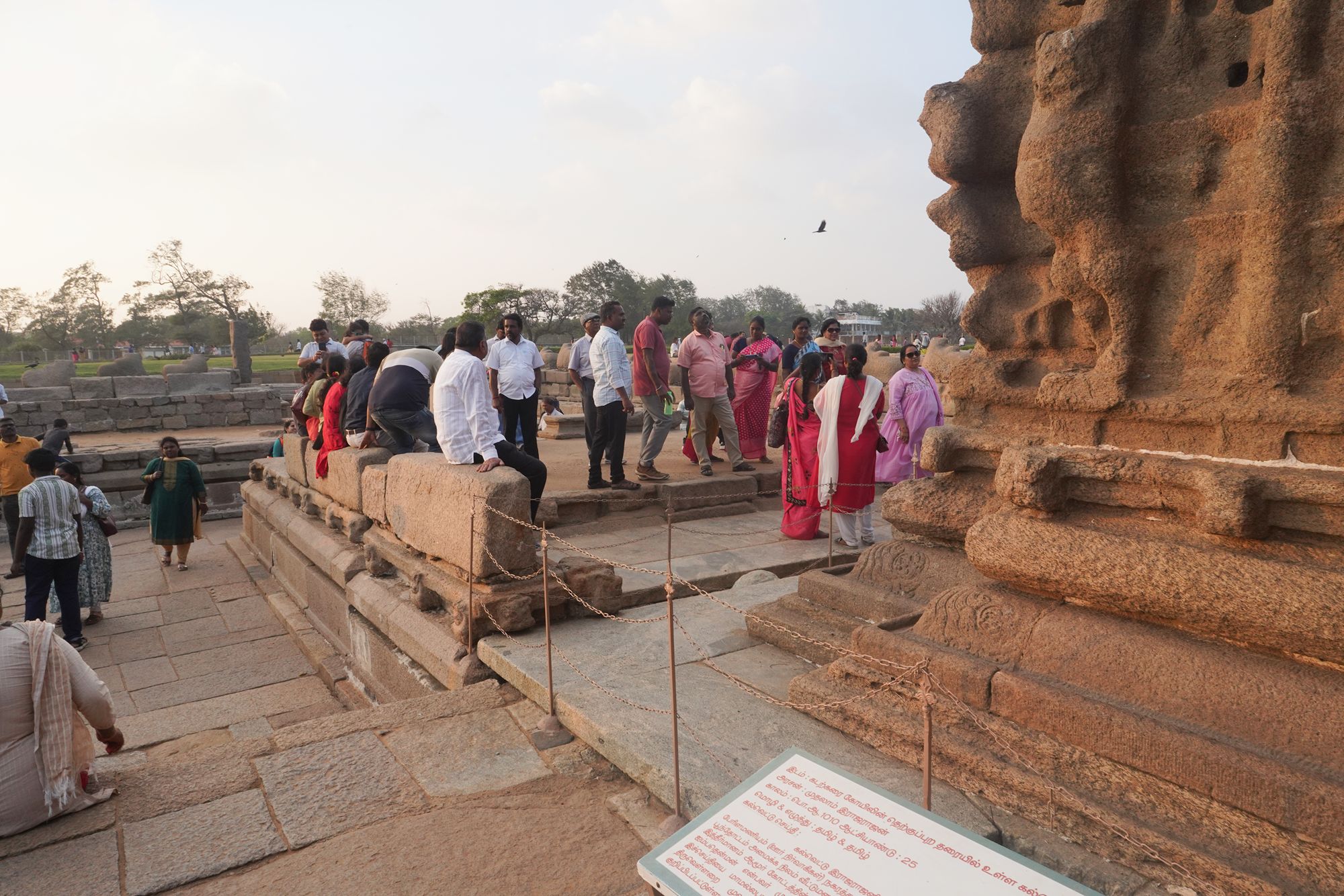
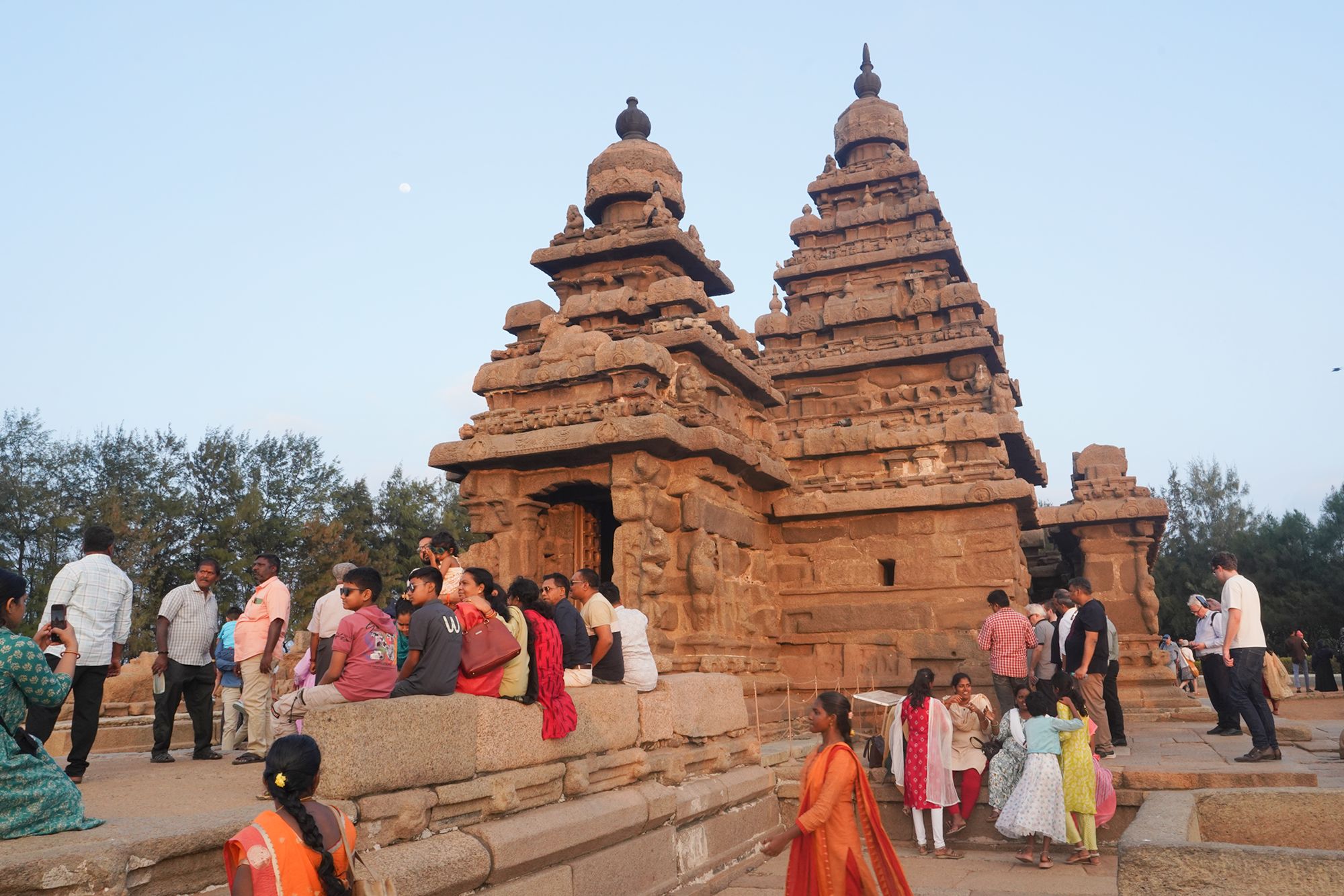
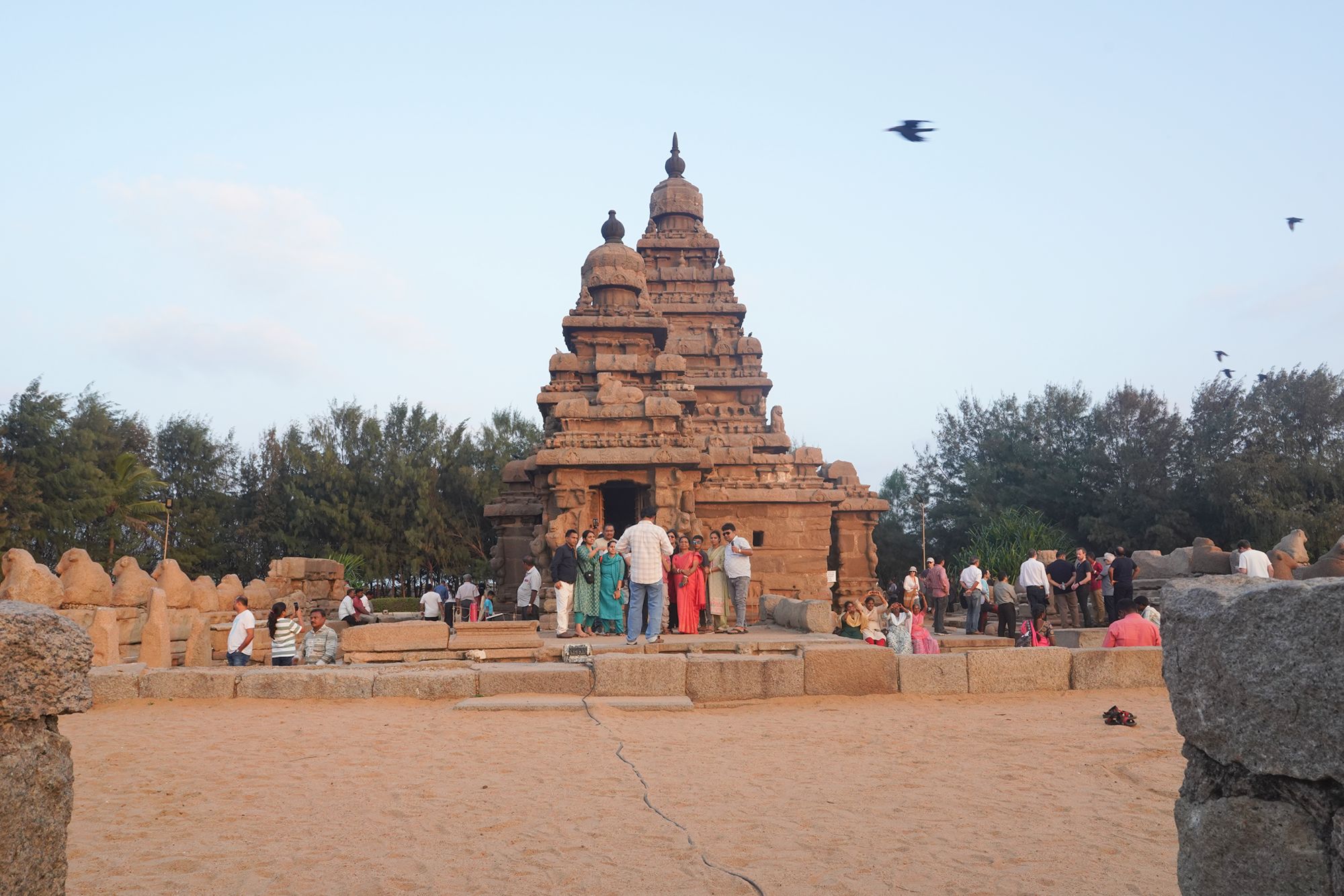
The Shore Temple is an ancient Hindu temple complex overlooking the Bay of Bengal at Mahabalipuram. Built in the early 8th century during the Pallava dynasty, it is one of the oldest surviving structural stone temples in southern India.
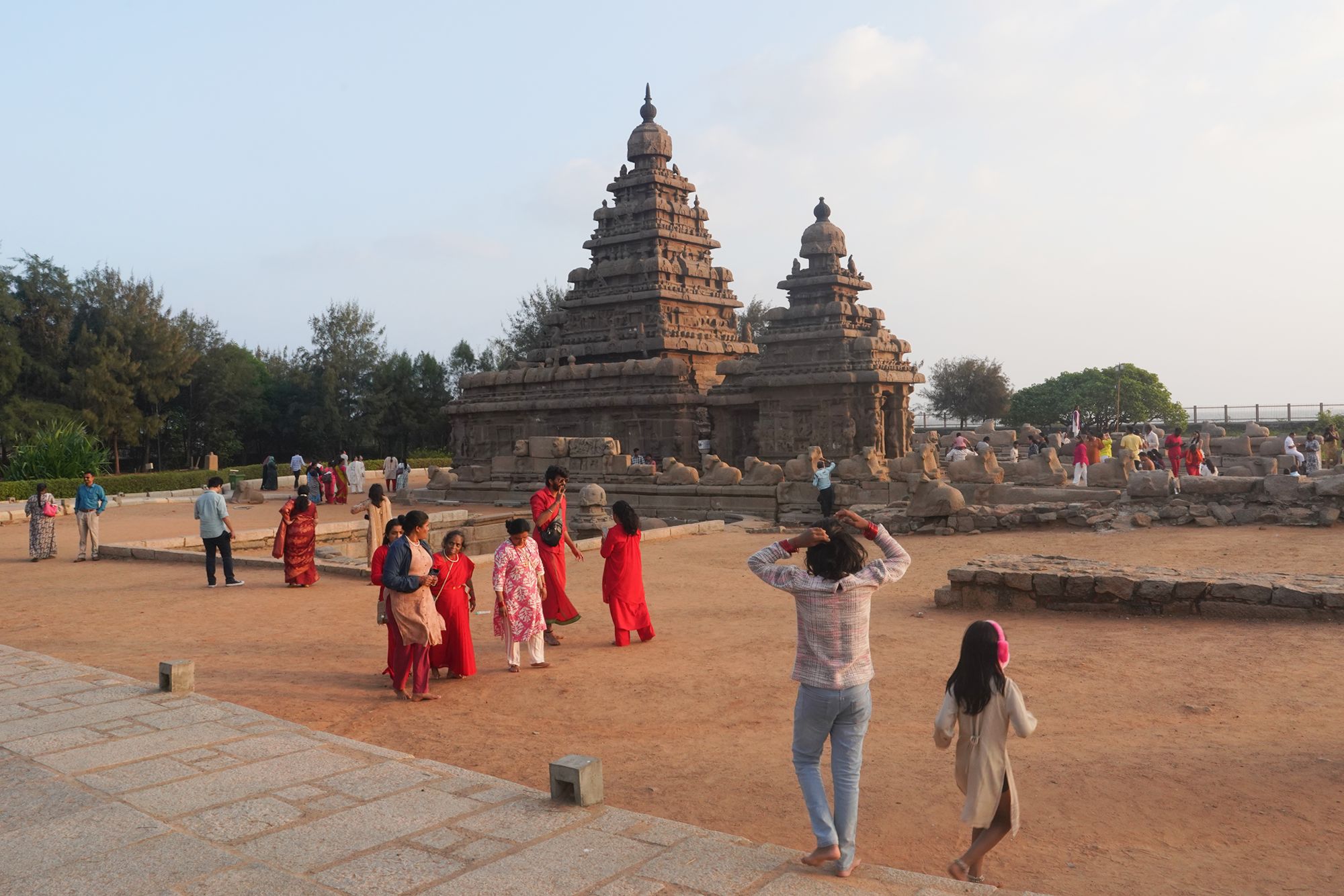
Unlike the Five Rathas, which were carved from solid rock, the Shore Temple was constructed from blocks of granite. It contains shrines primarily dedicated to Shiva, along with a shrine associated with Vishnu.
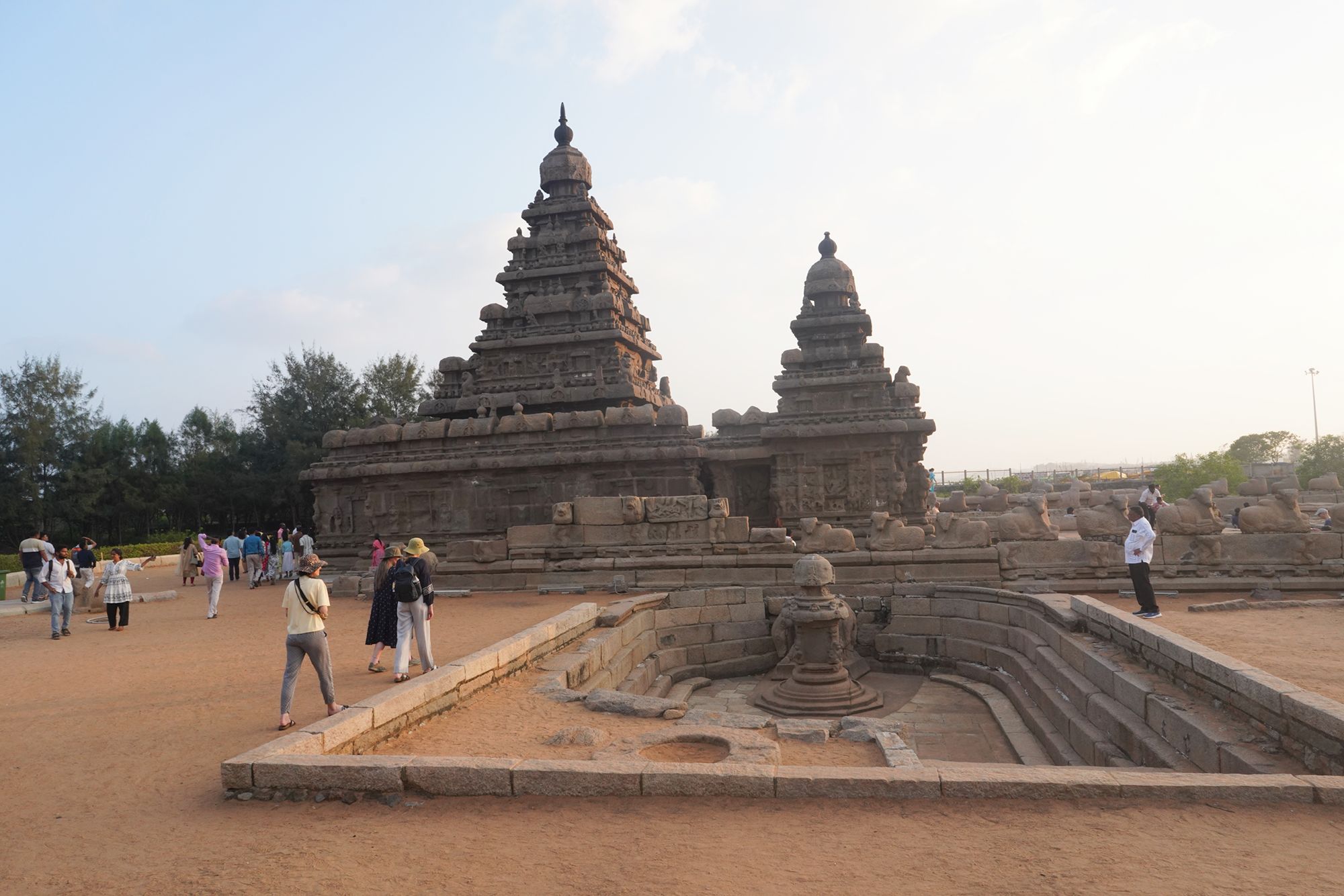
Its location beside the sea makes it particularly distinctive, although centuries of exposure to wind and saltwater have weathered many of its carvings. The temple is part of the UNESCO World Heritage-listed Group of Monuments at Mahabalipuram and is one of the best-known examples of early South Indian temple architecture.
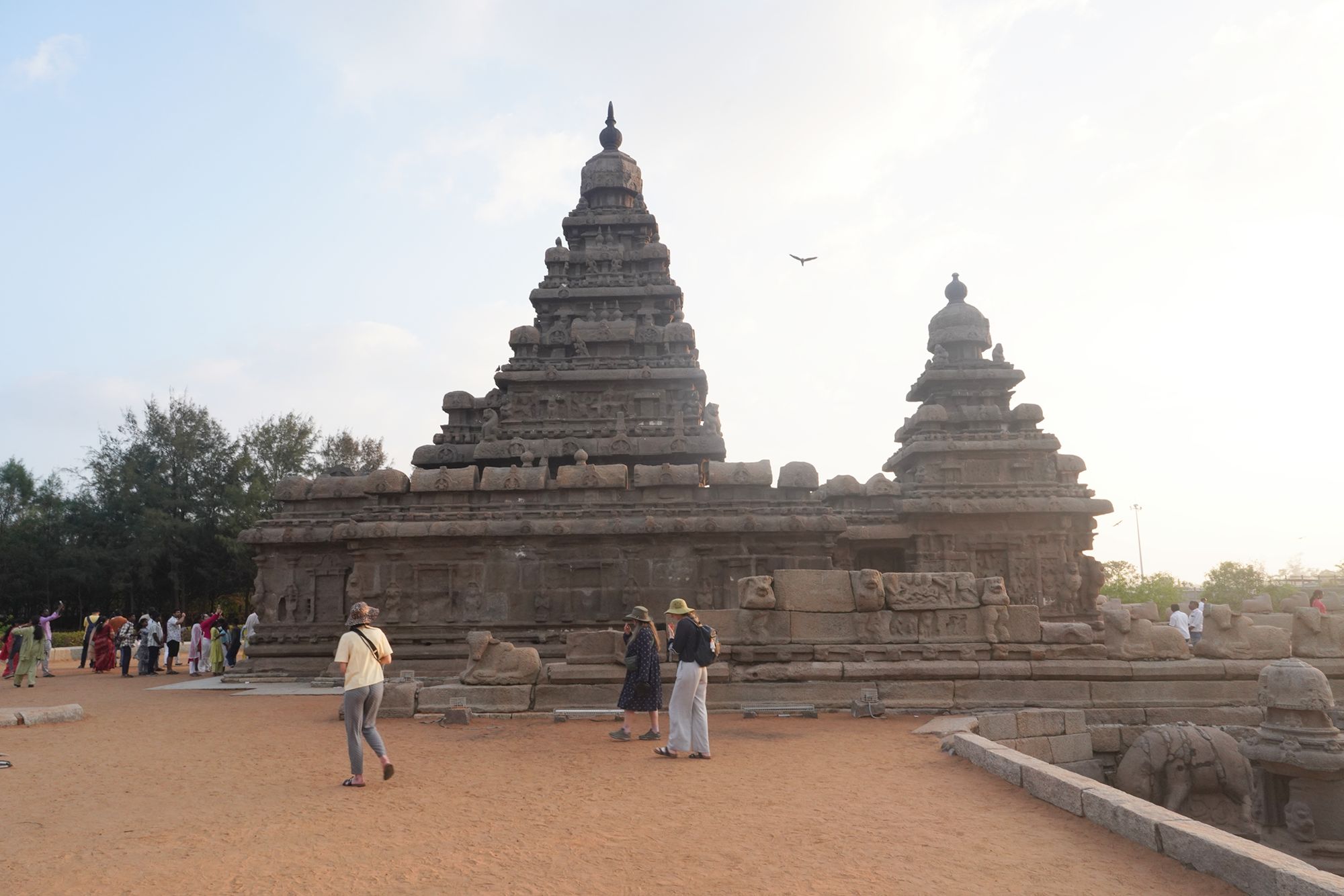
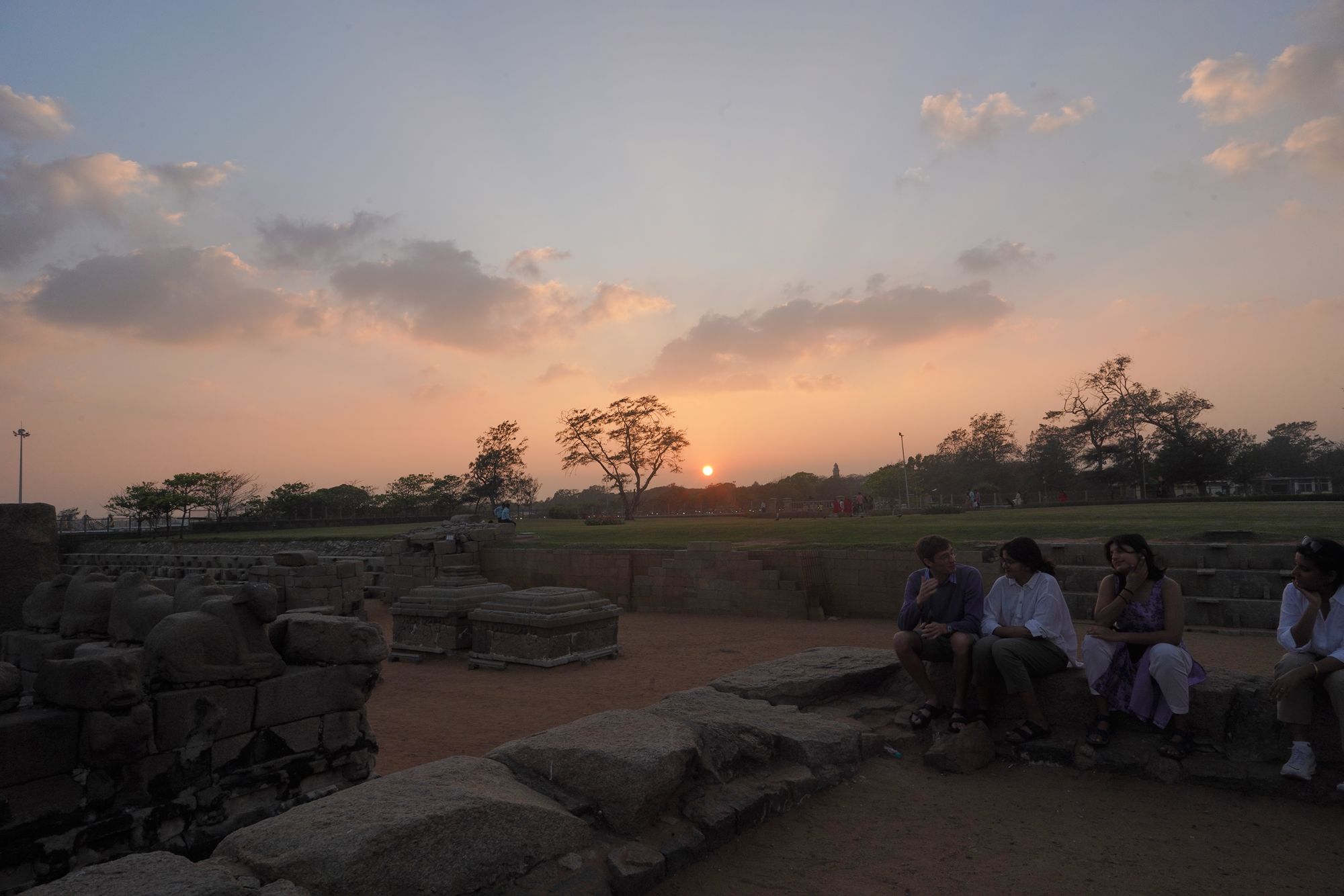
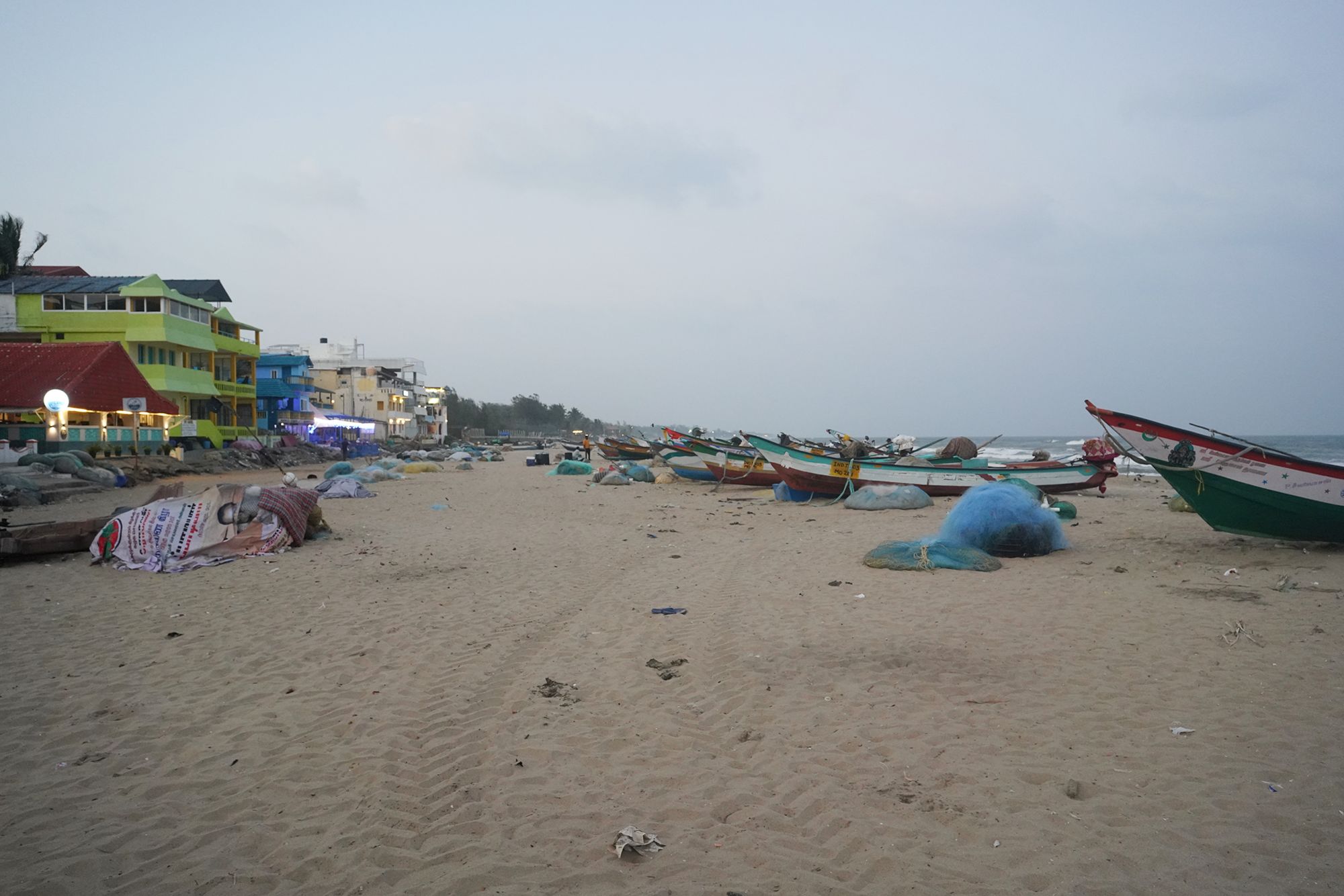
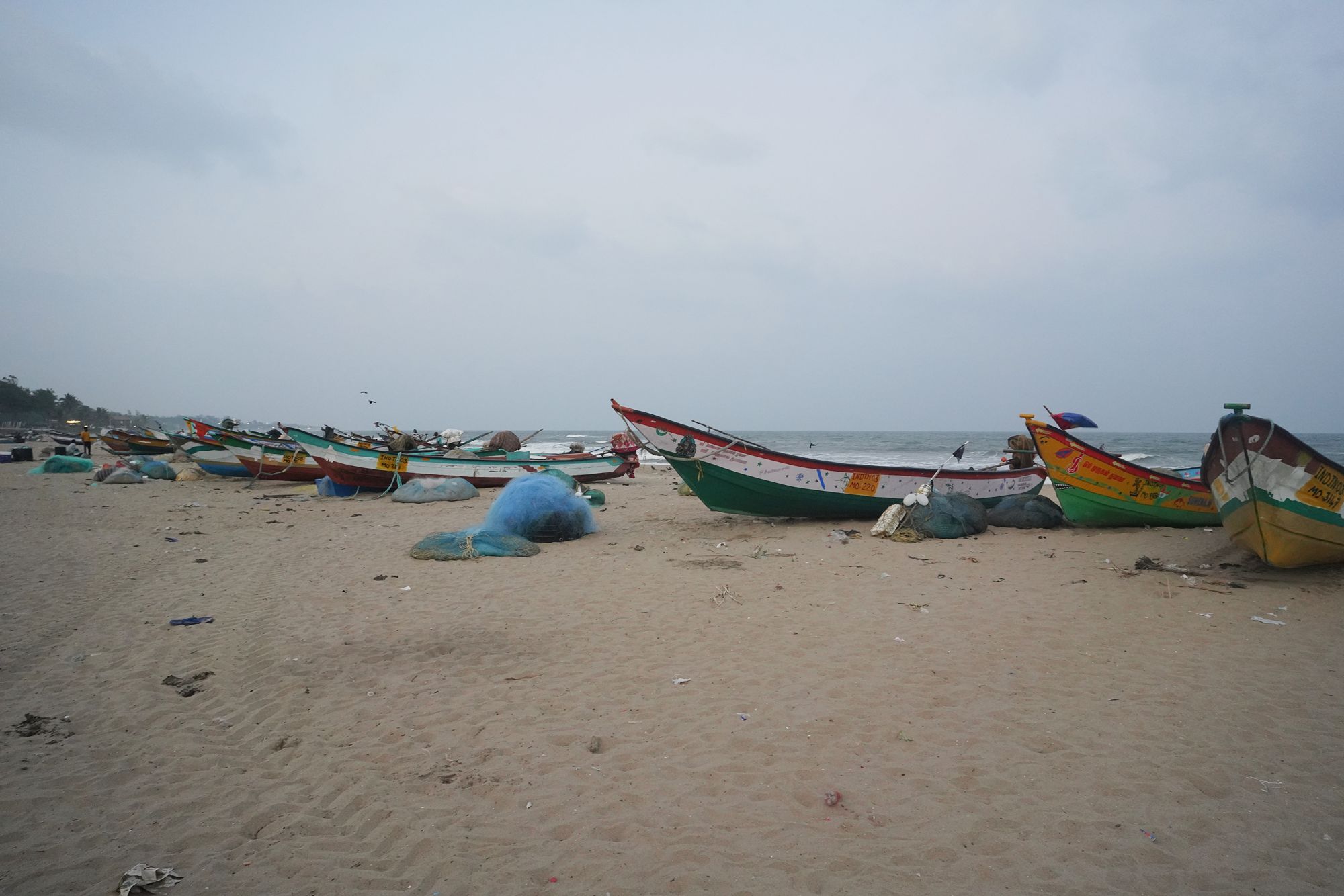
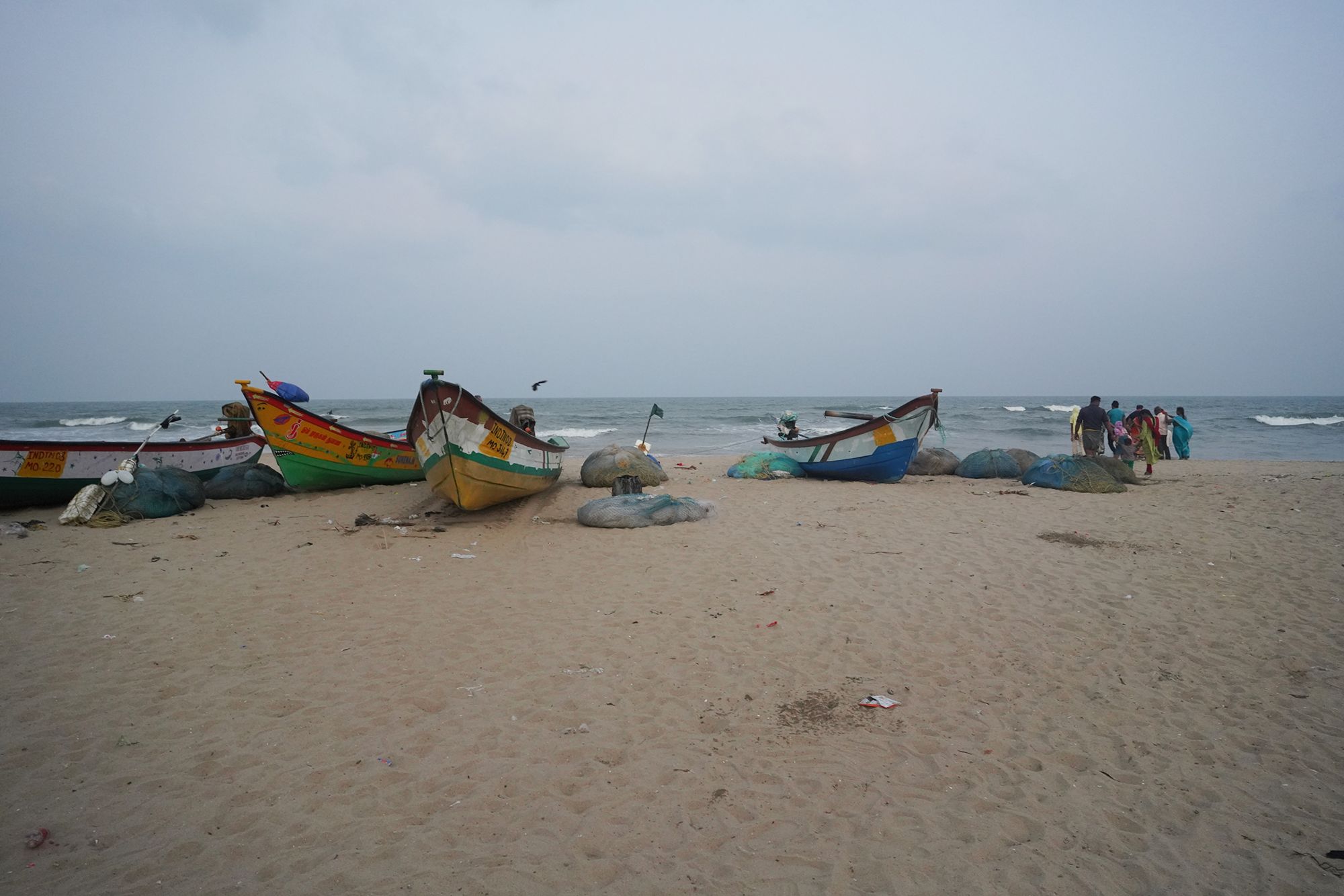
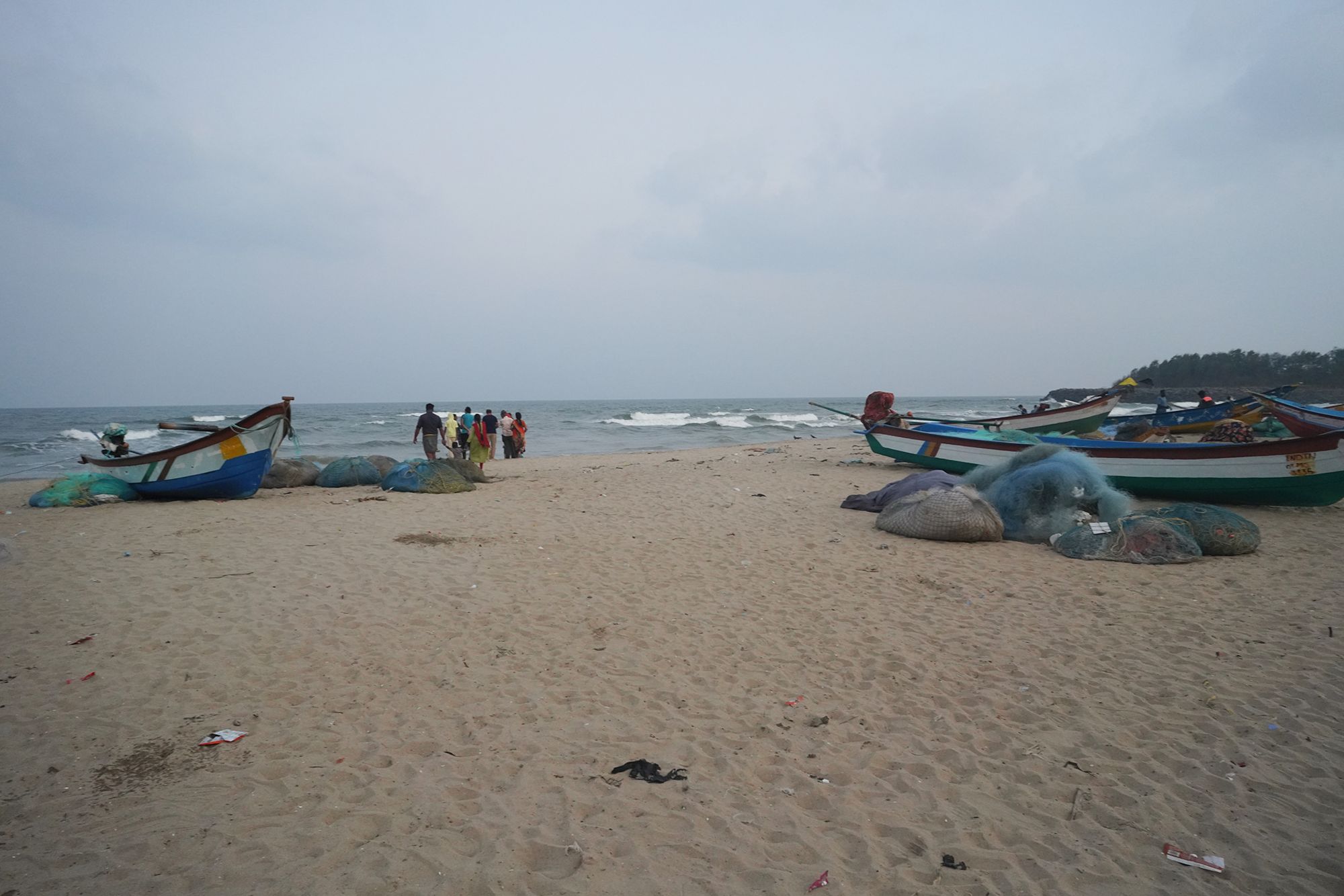
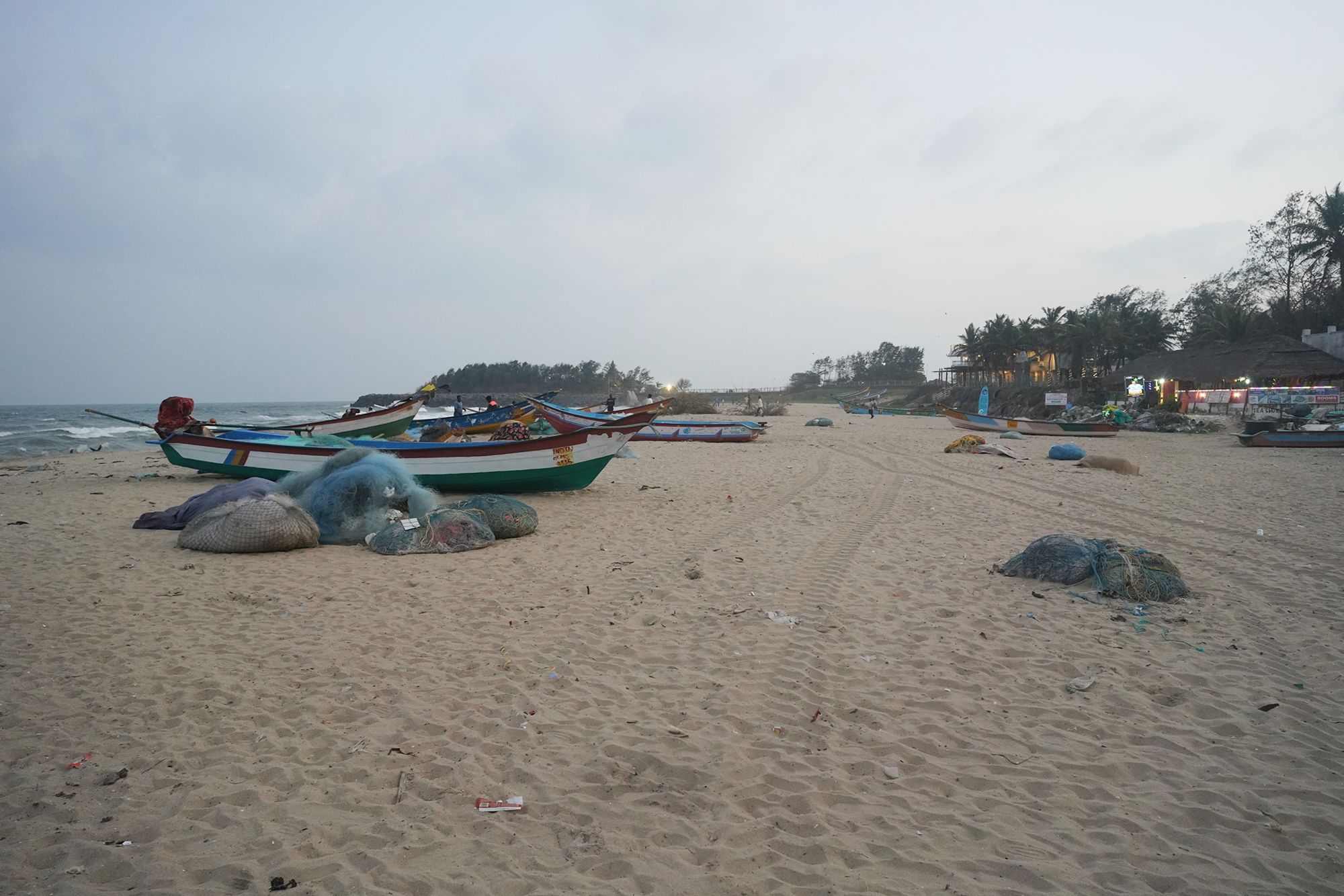
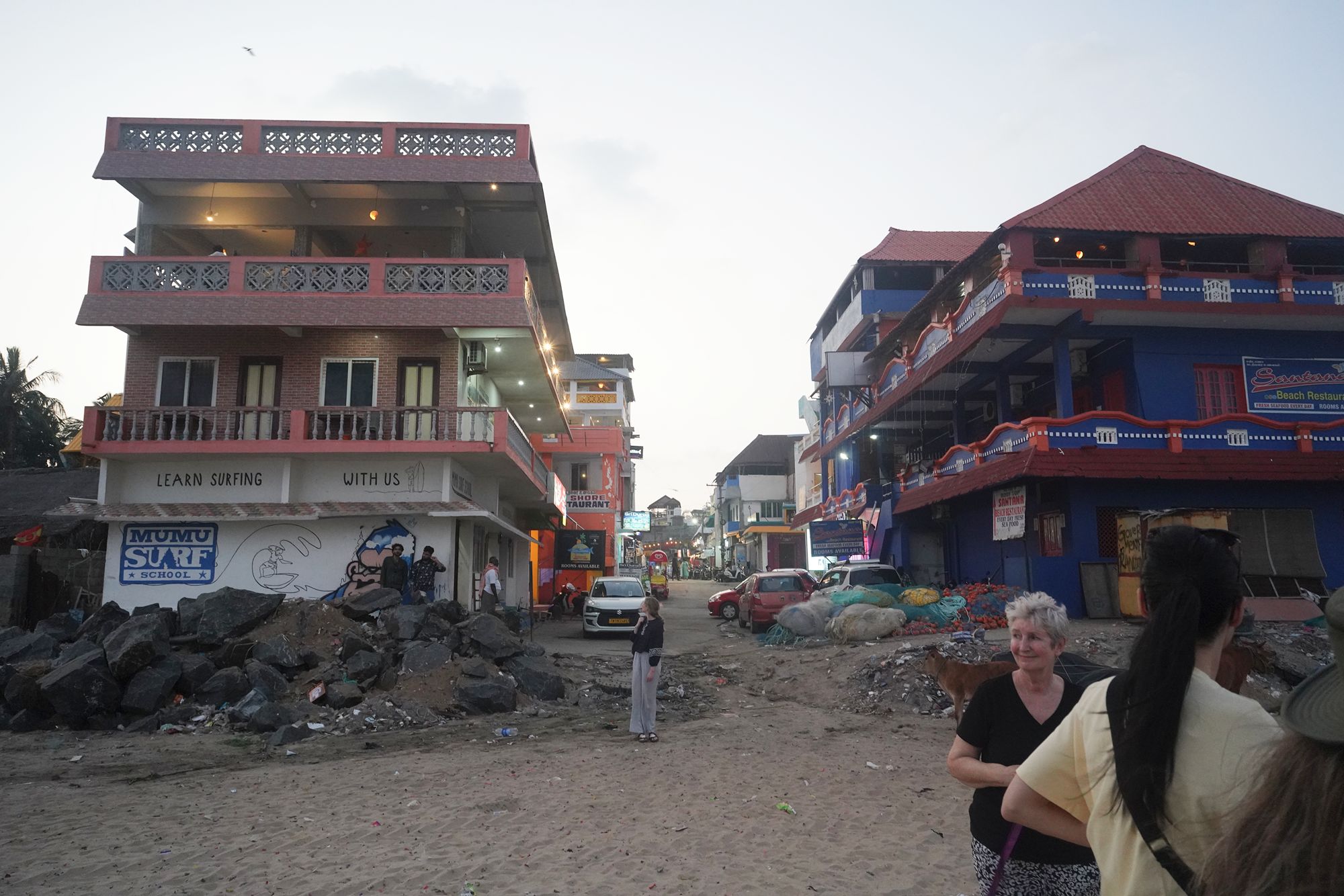
After visiting the monuments and temple, we came to the seaside for dinner.