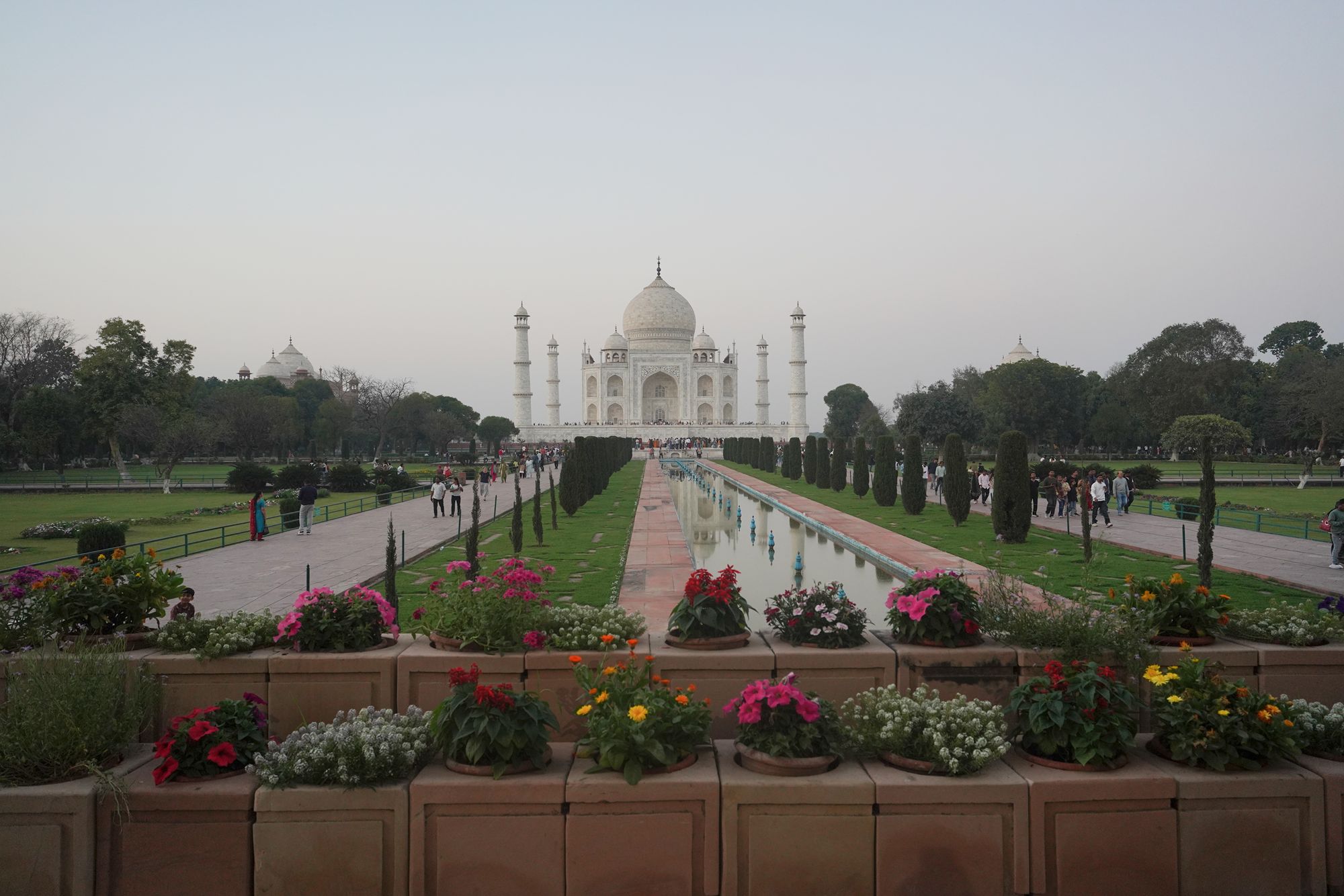
Taj Mahal, Agra, India
The Taj Mahal, built by Mughal Emperor Shah Jahan in memory of his wife Mumtaz Mahal, is one of the world's most famous monuments and a masterpiece of Mughal architecture. 1250
Taj Mahal: Dharmapuri, Forest Colony, Tajganj, Agra, Uttar Pradesh 282001, India
Date Picture Taken: Feb, 2026
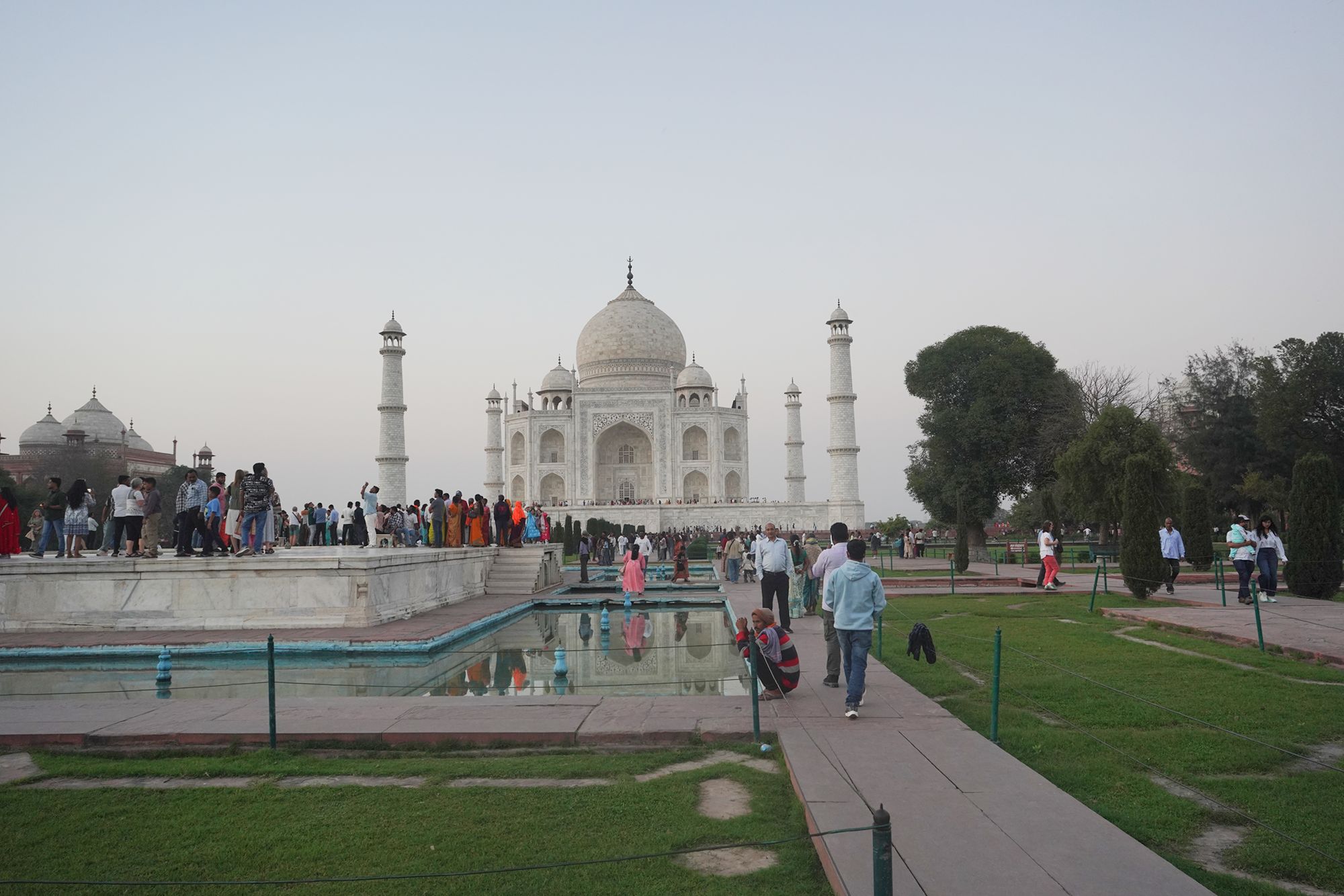
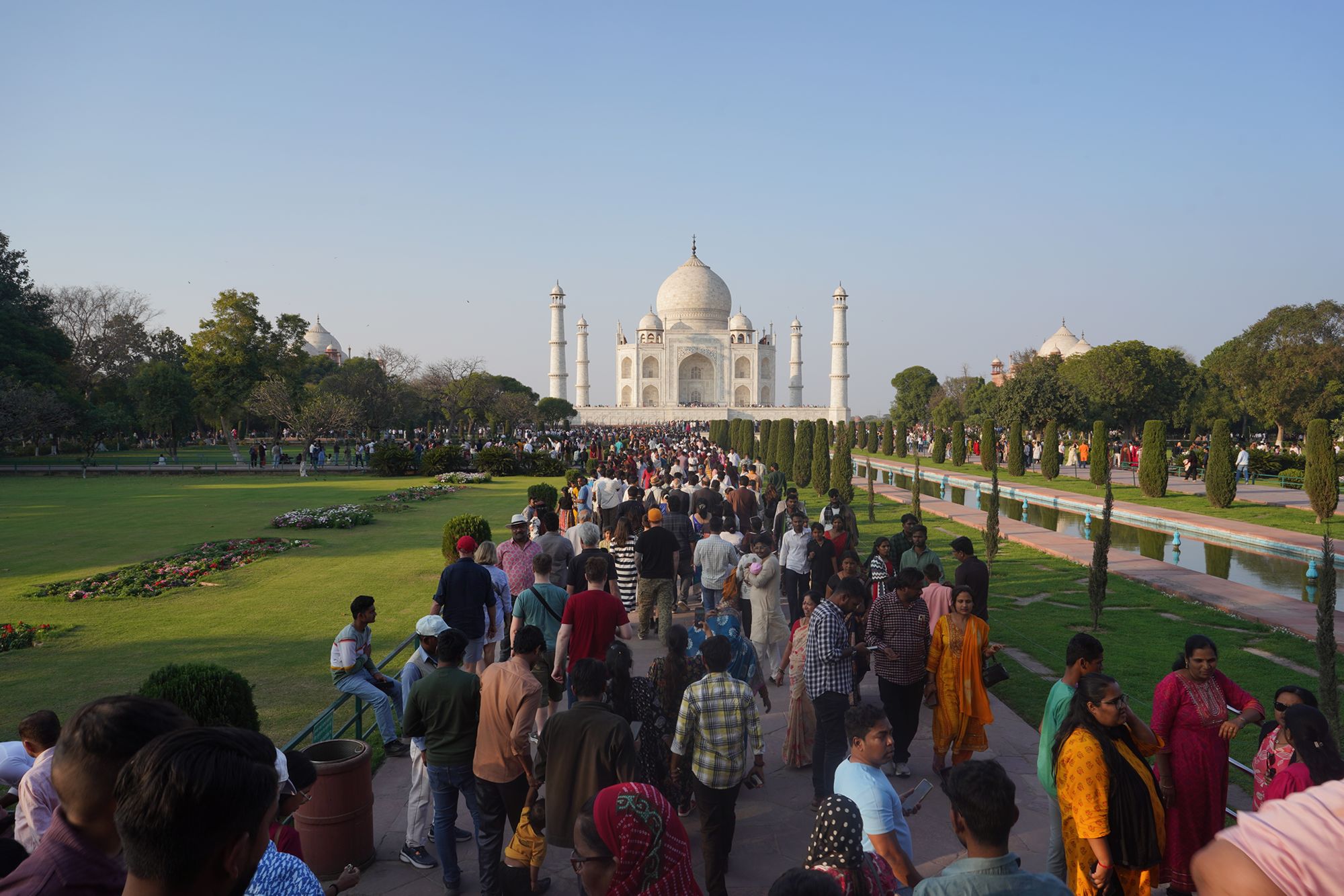
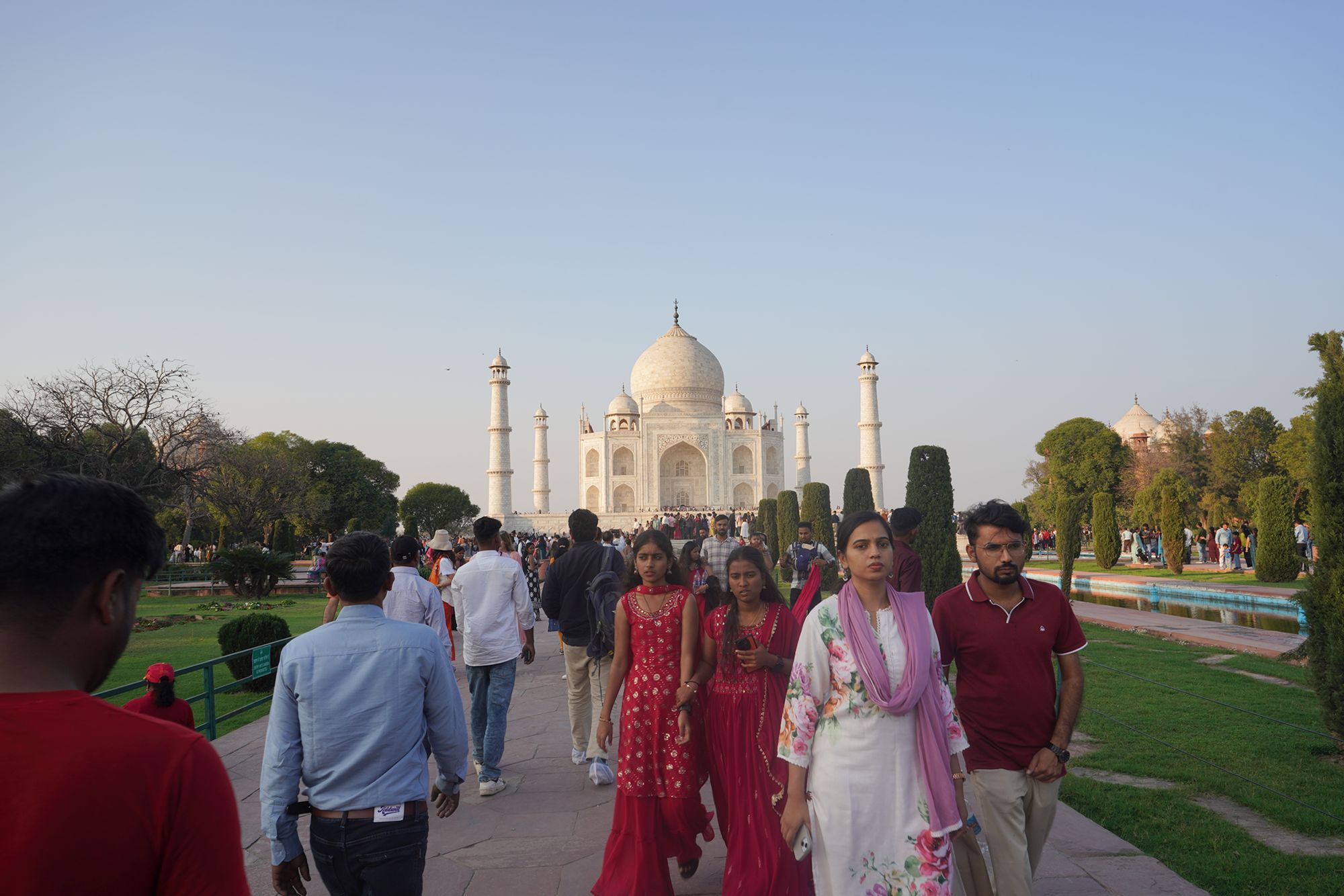
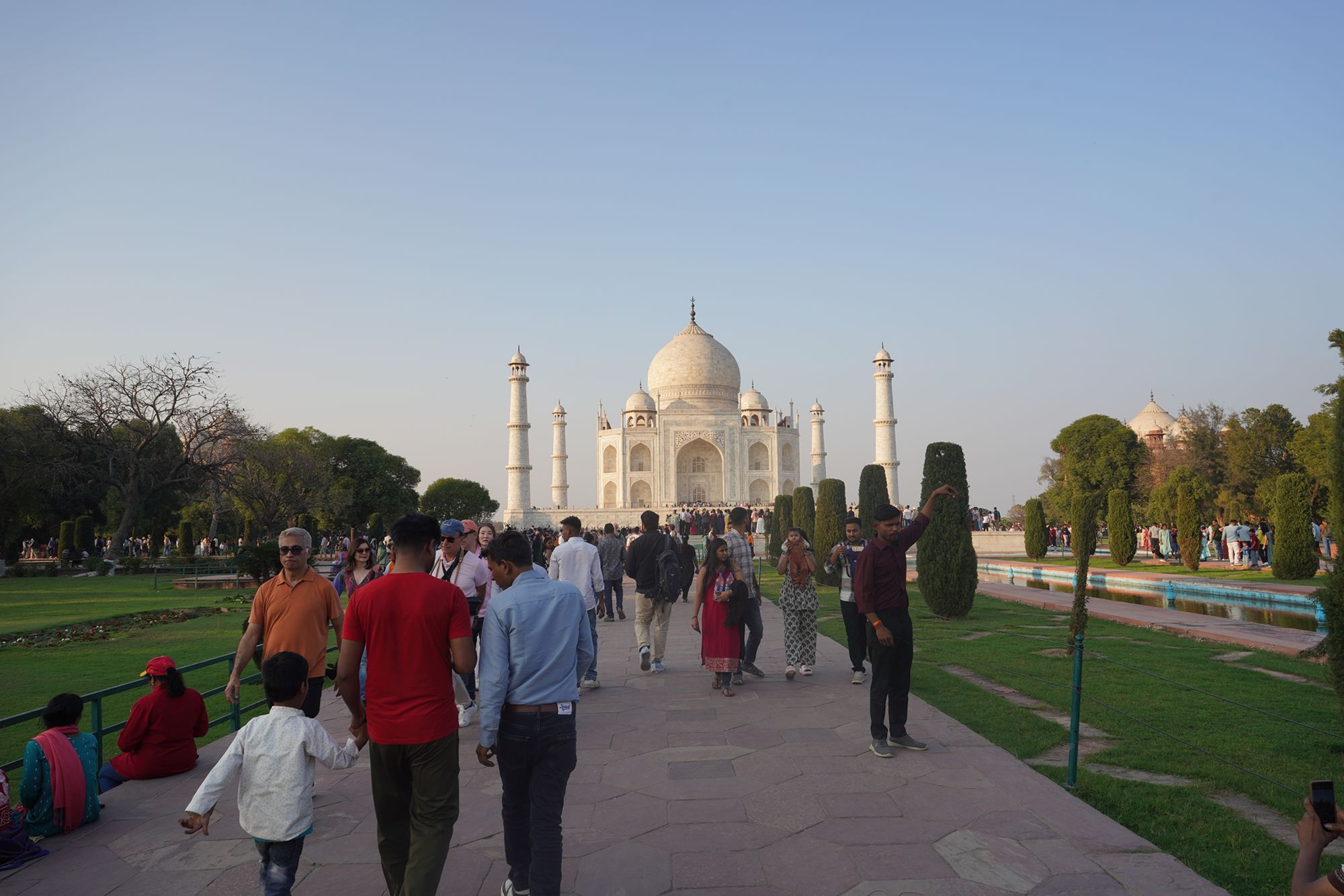
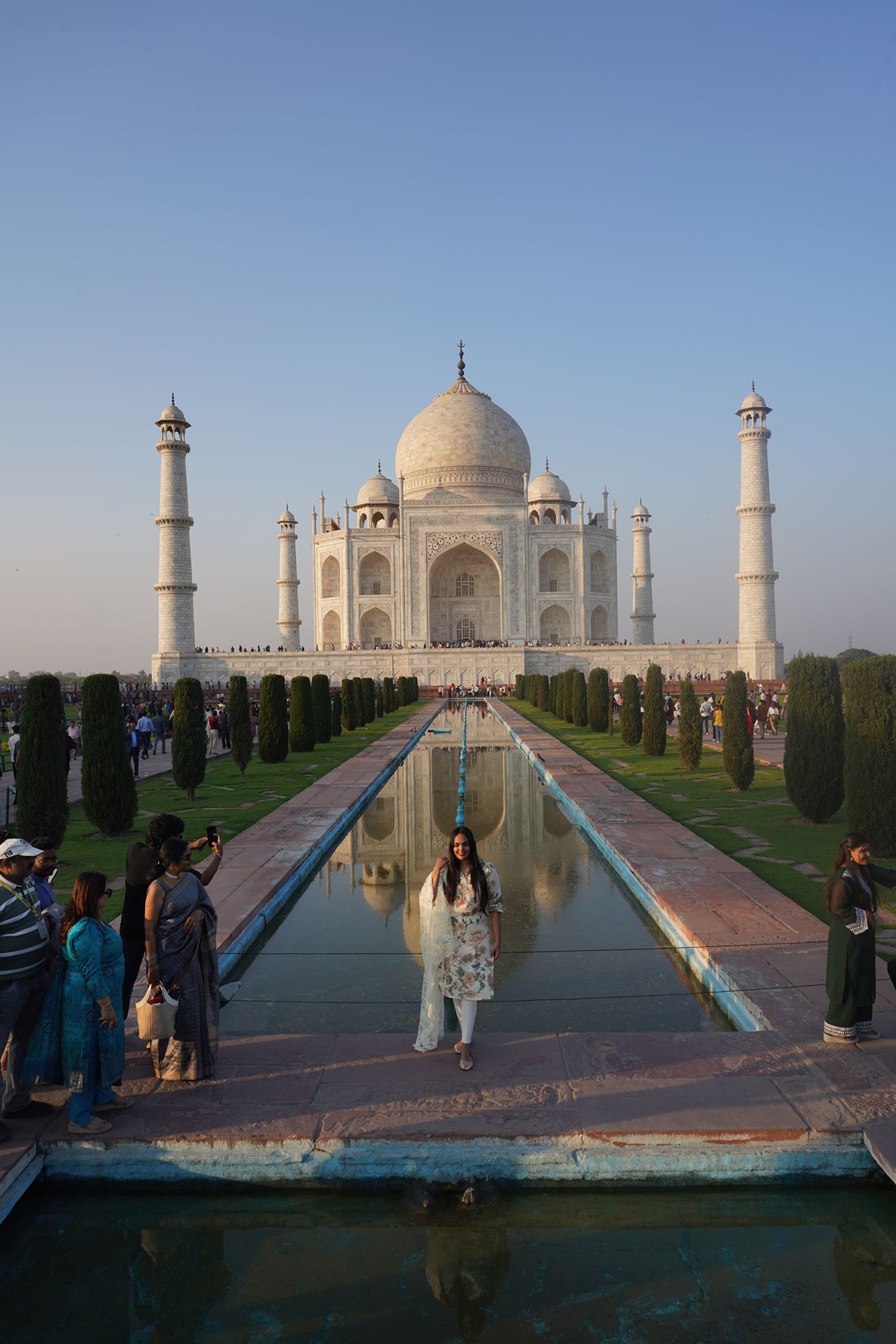
Finally, I was here—standing in front of the Taj Mahal, a place I had been looking forward to seeing for so long.
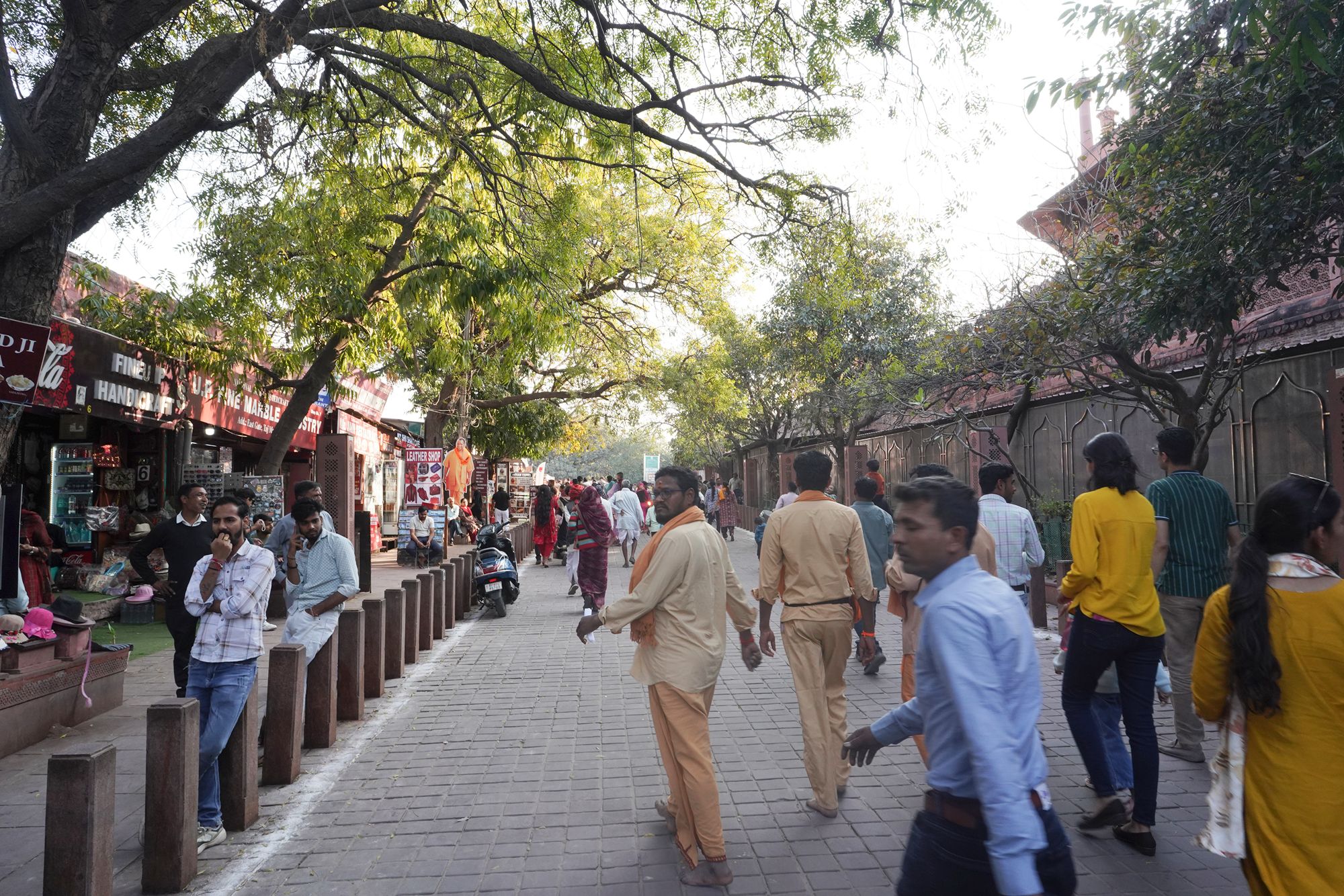
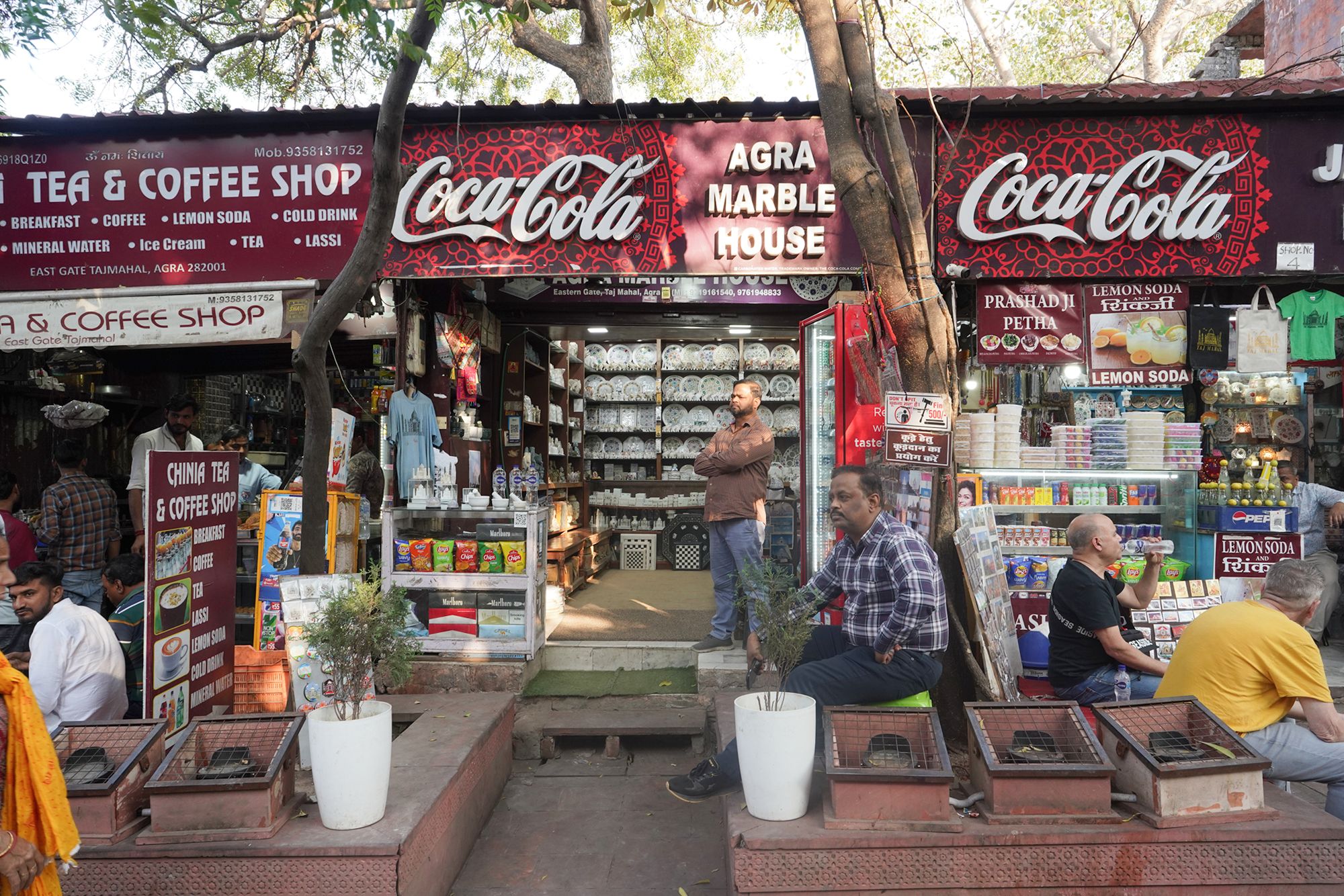
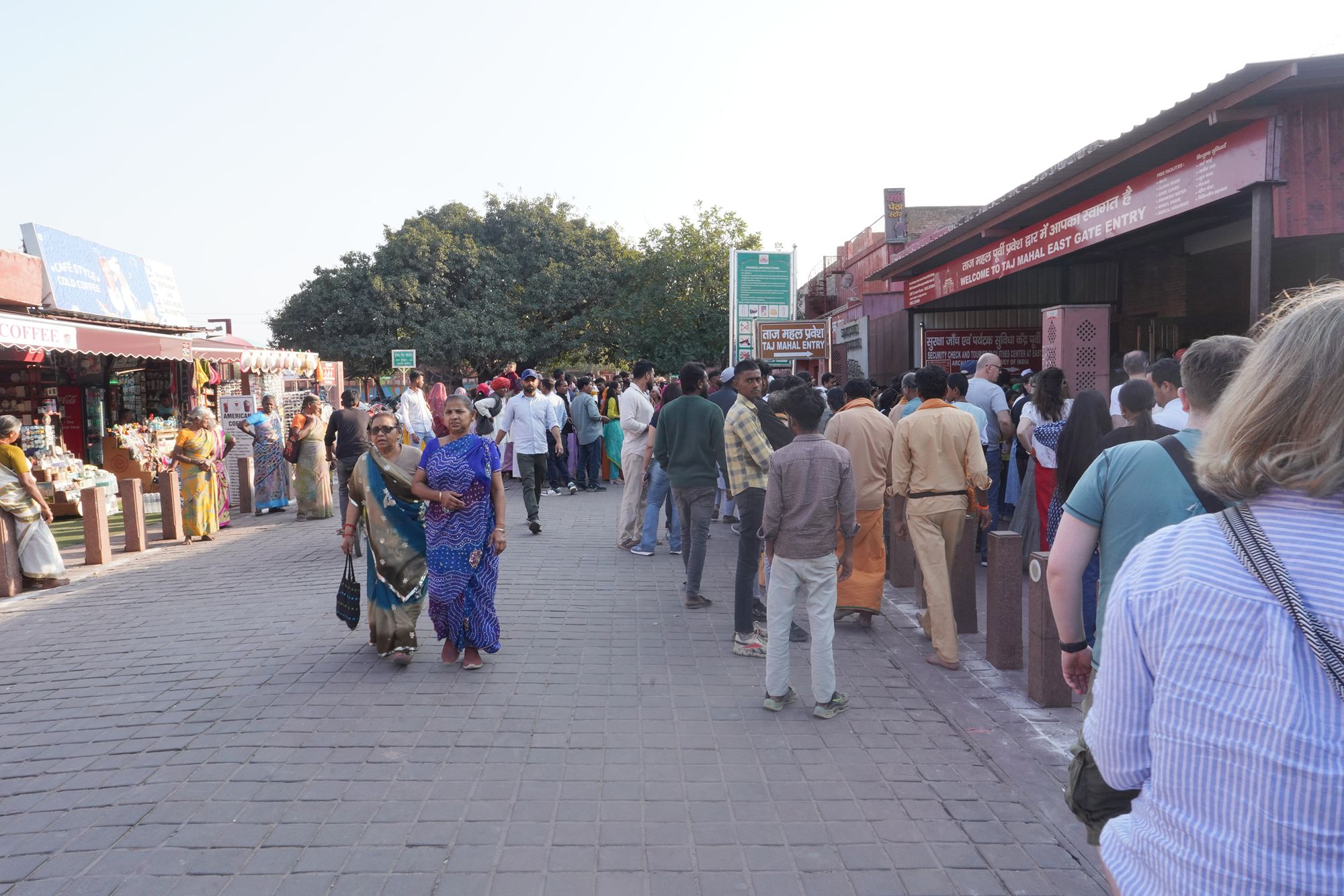
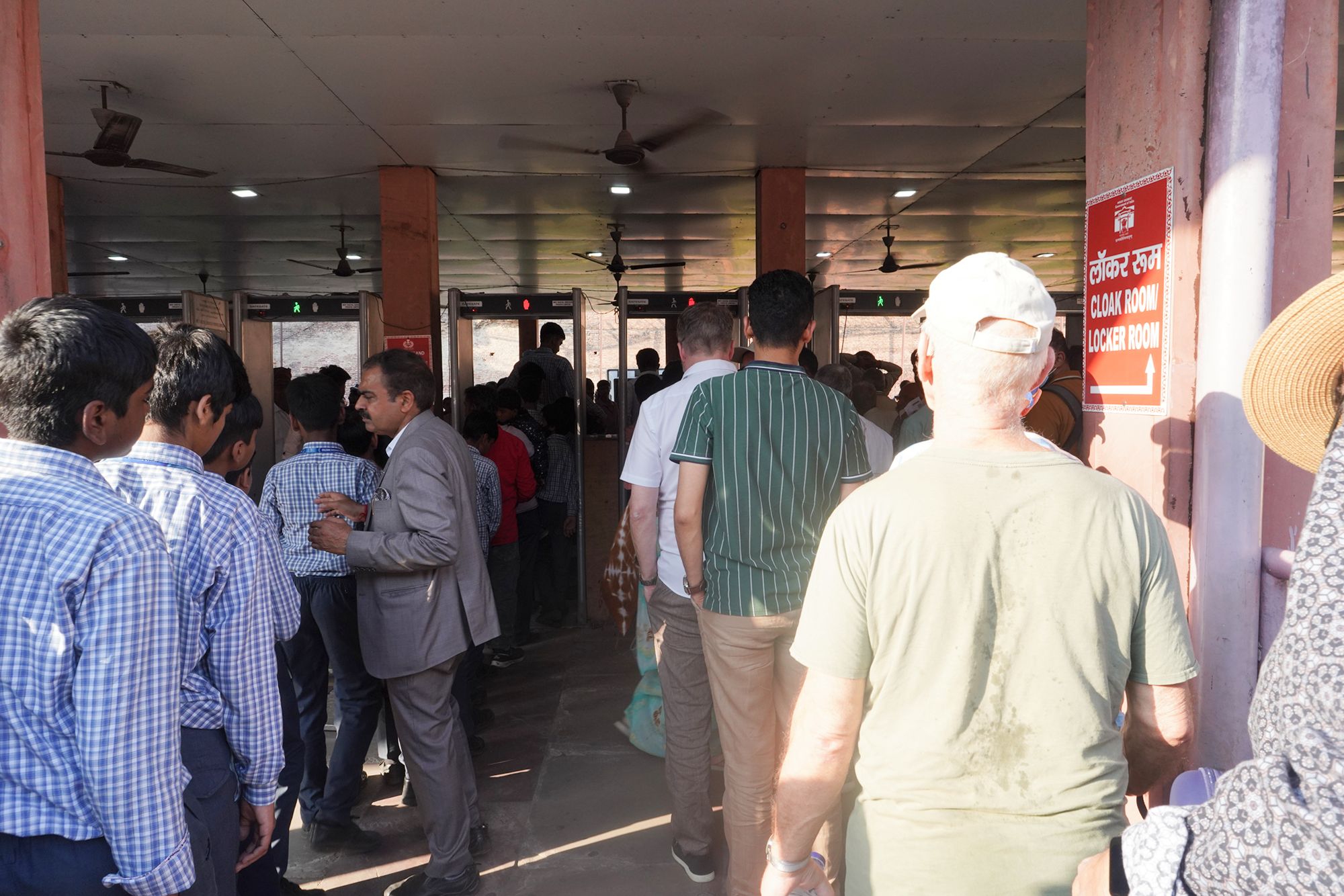
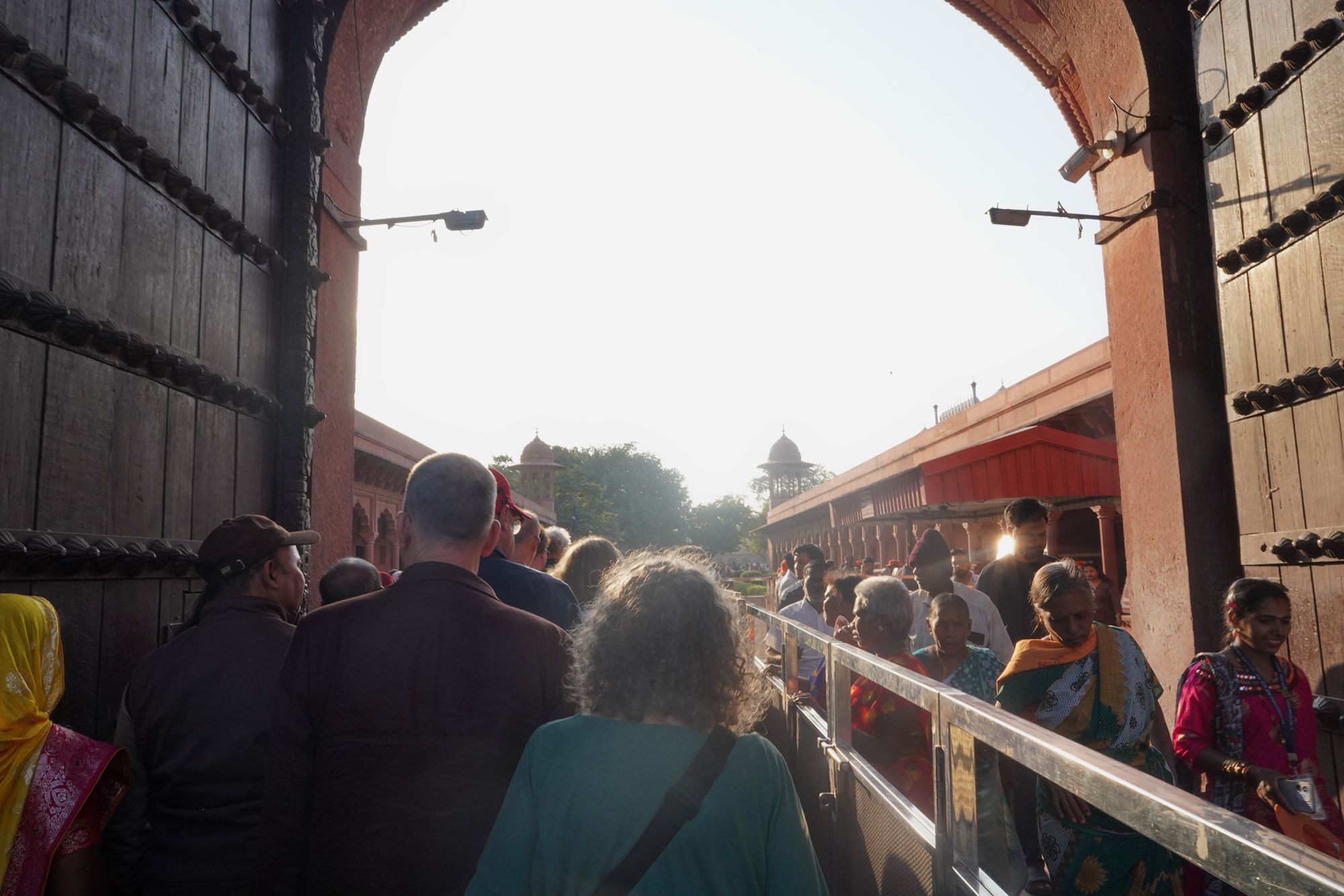
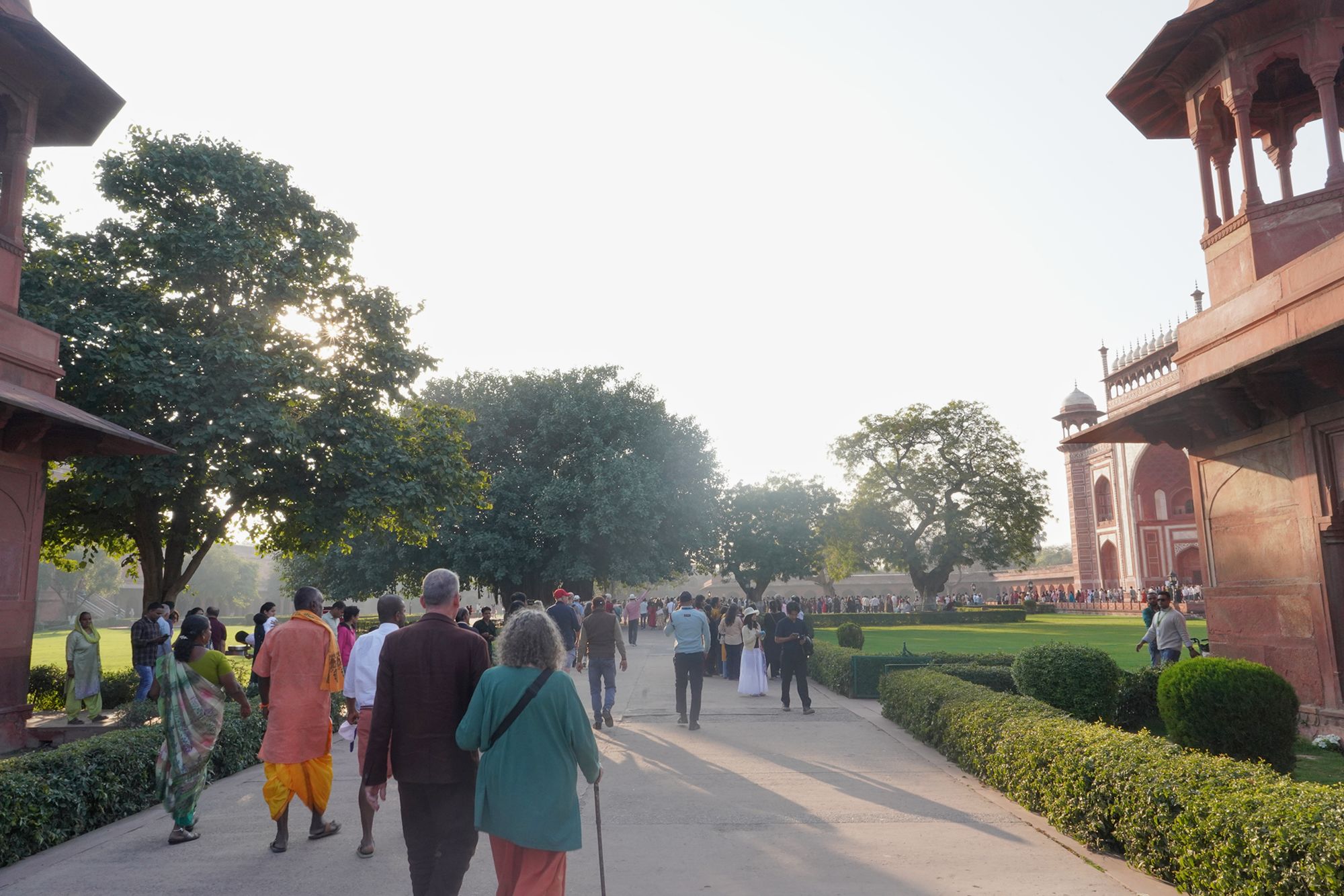
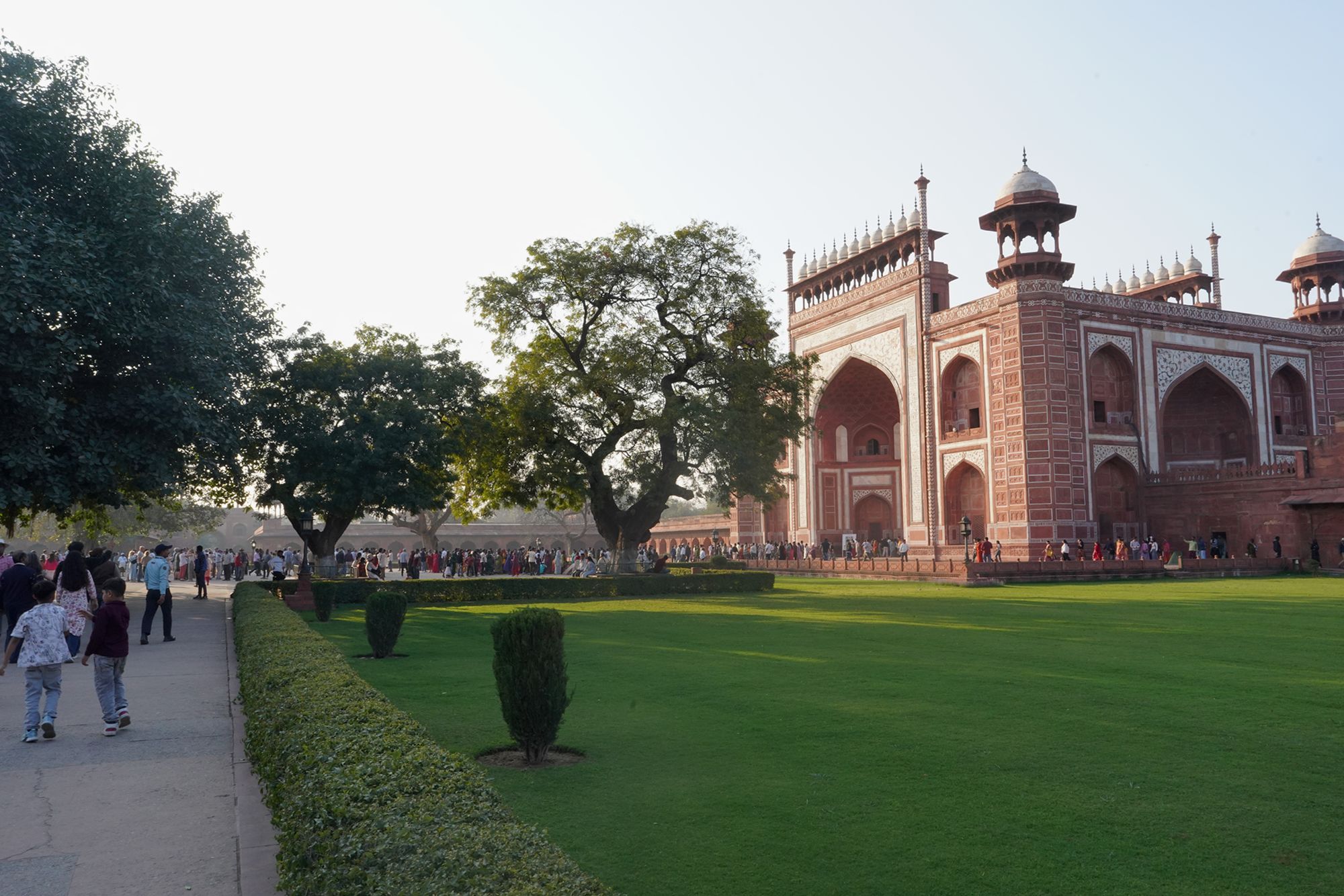
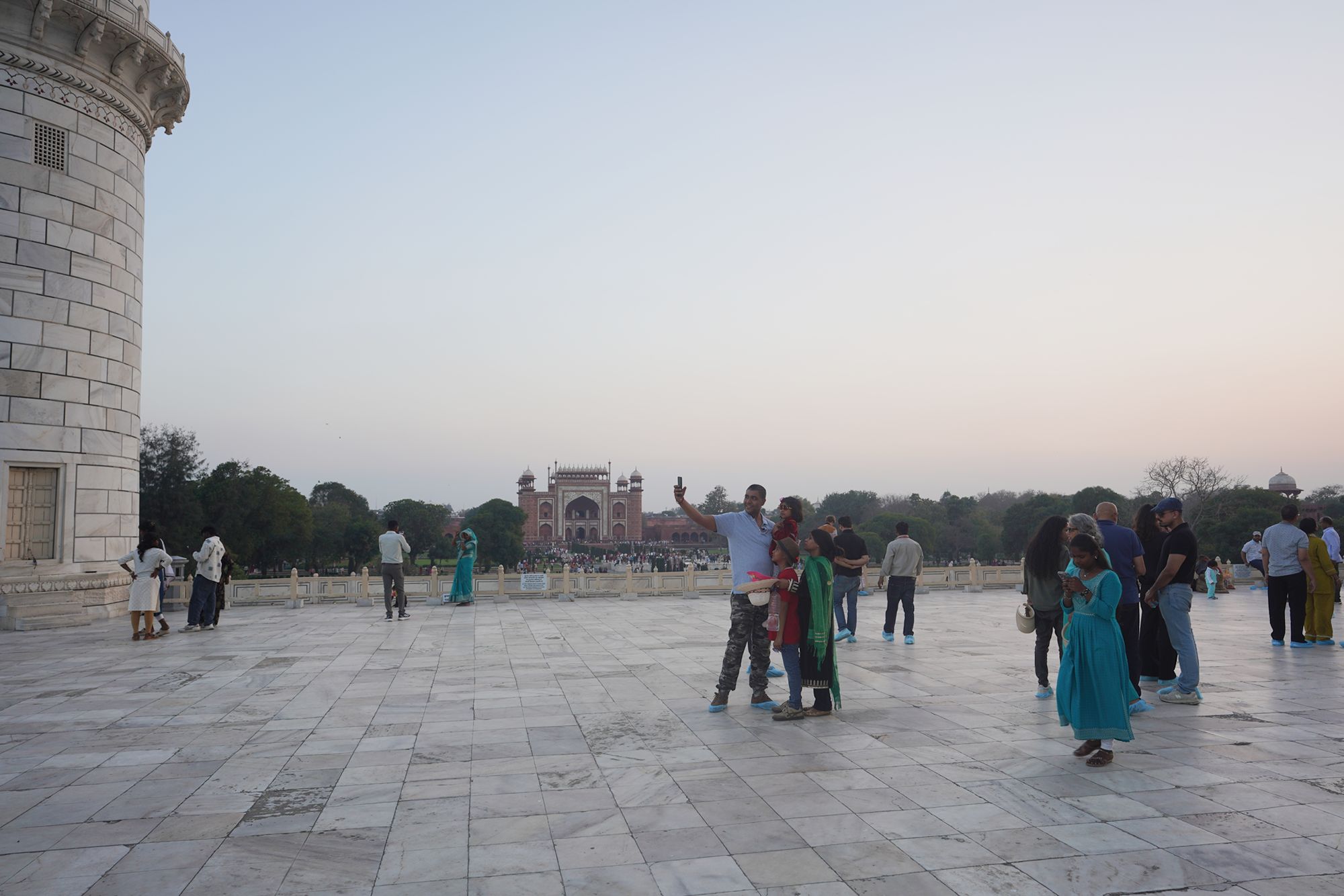
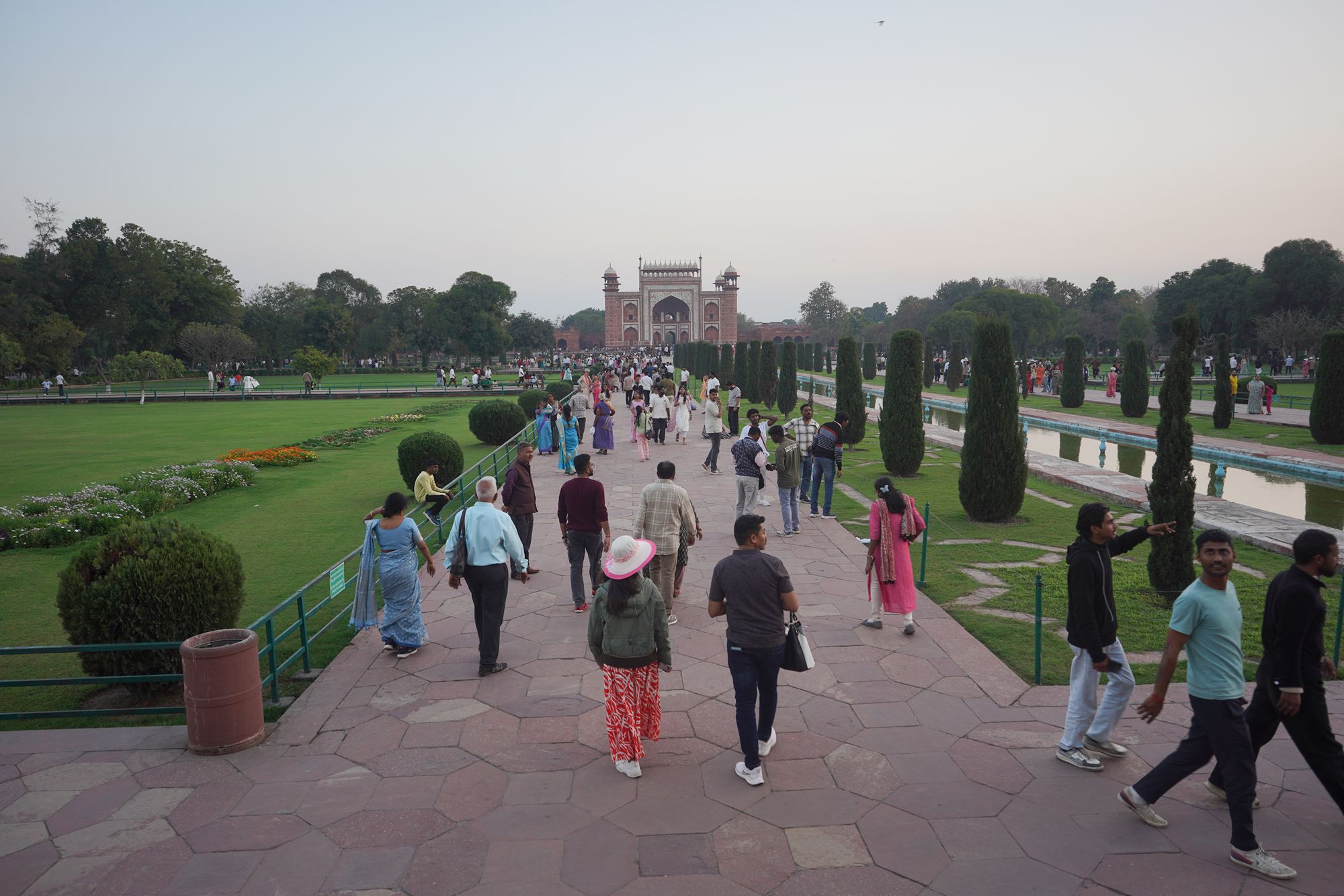
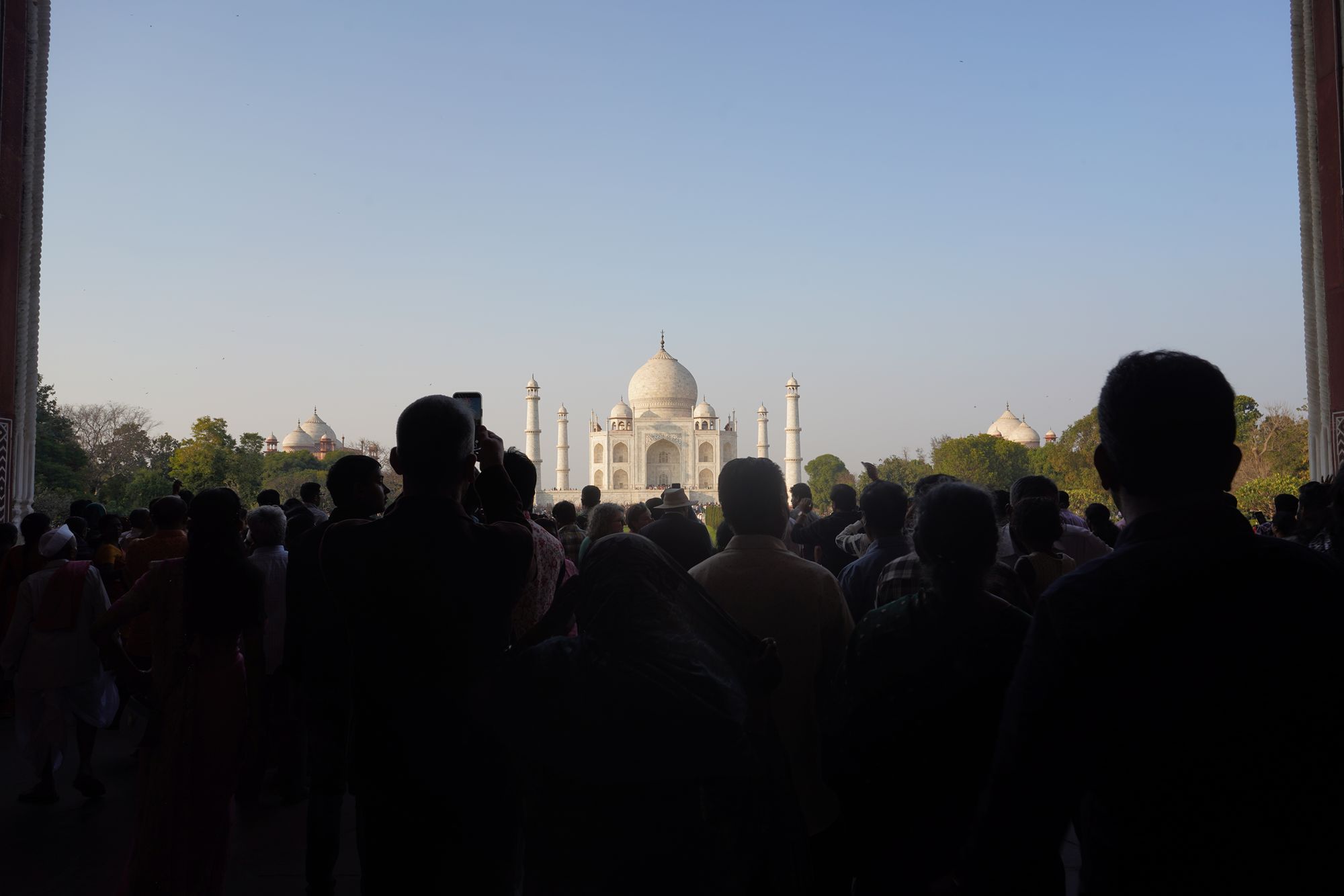
Beyond this building lies the Taj Mahal.
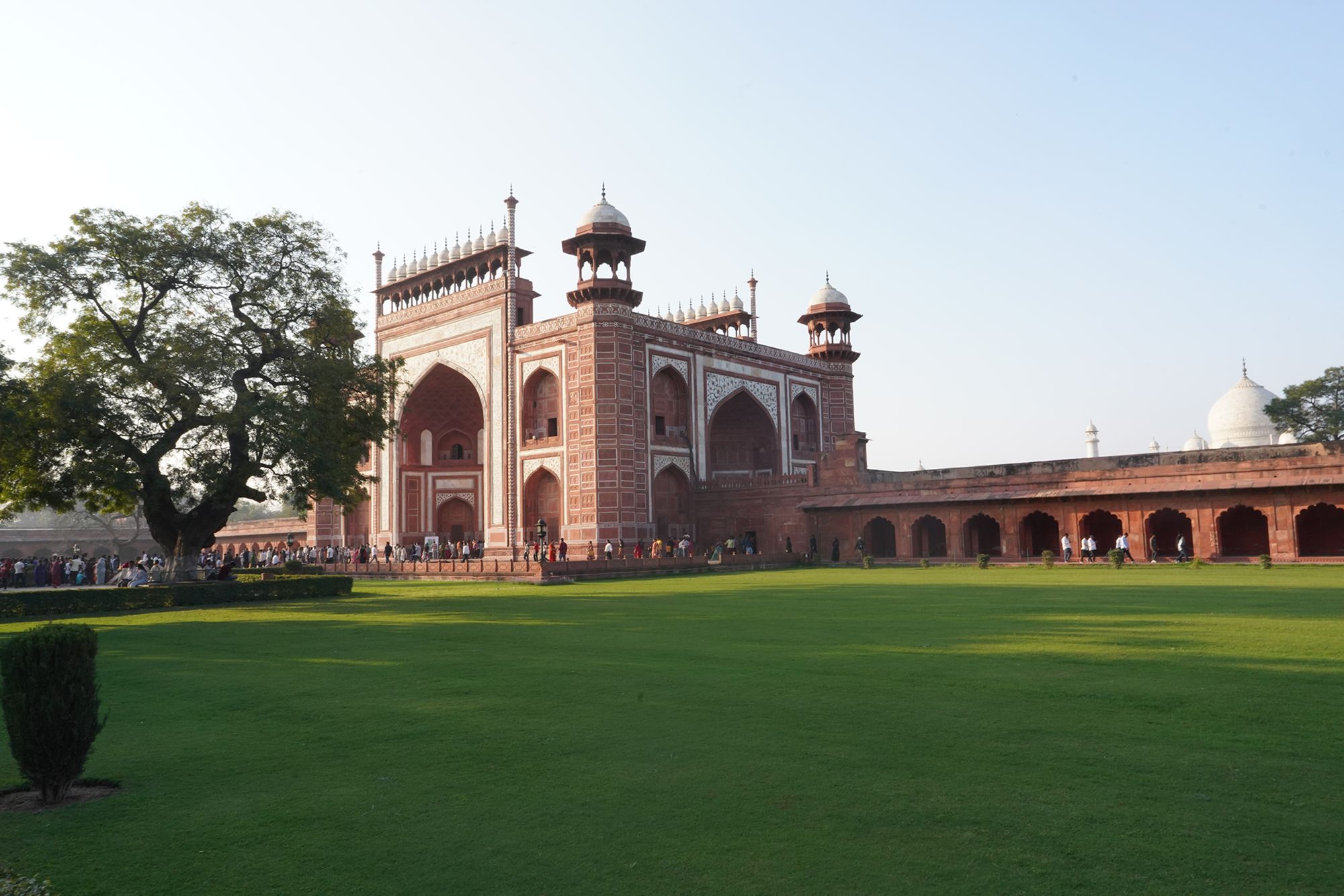
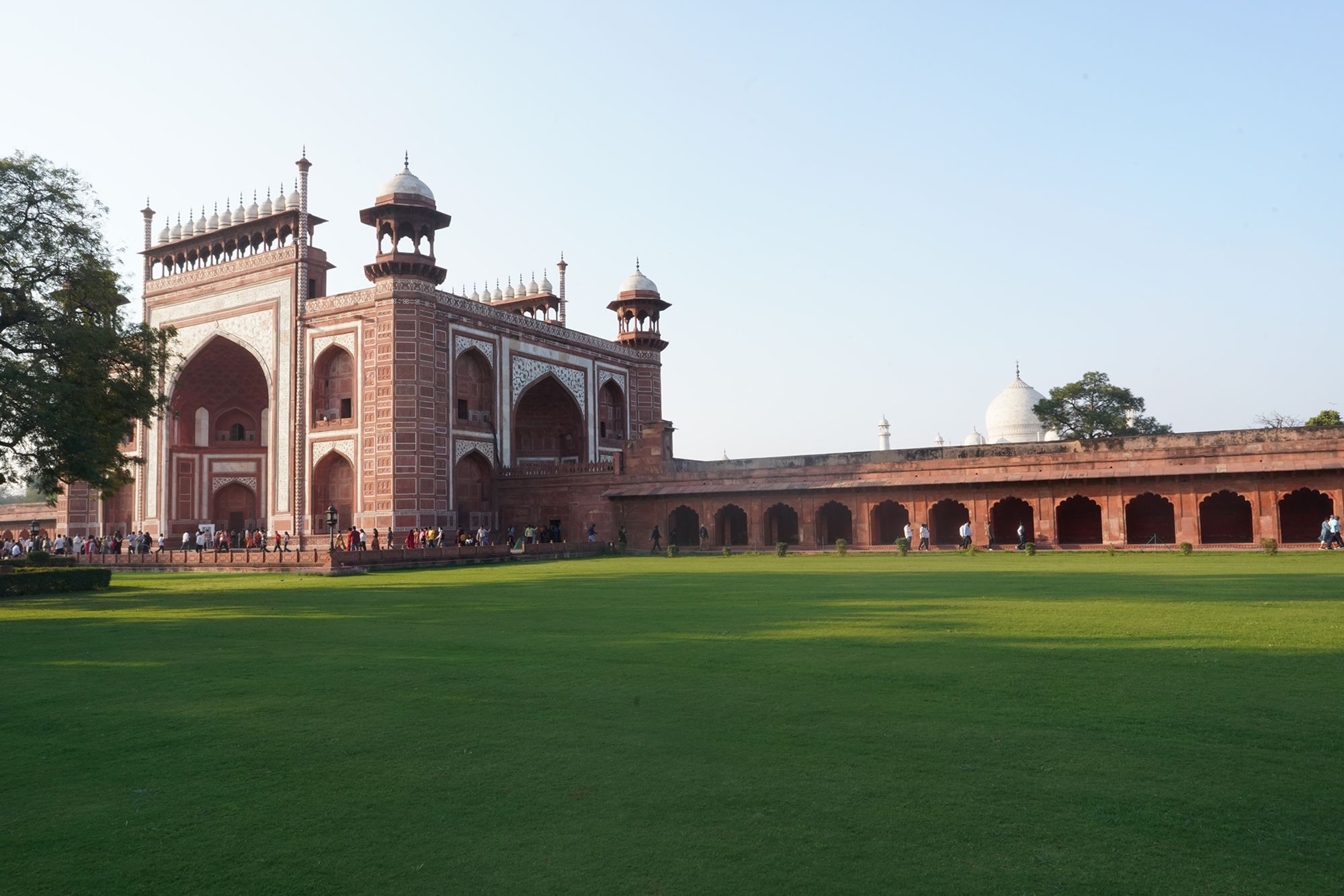
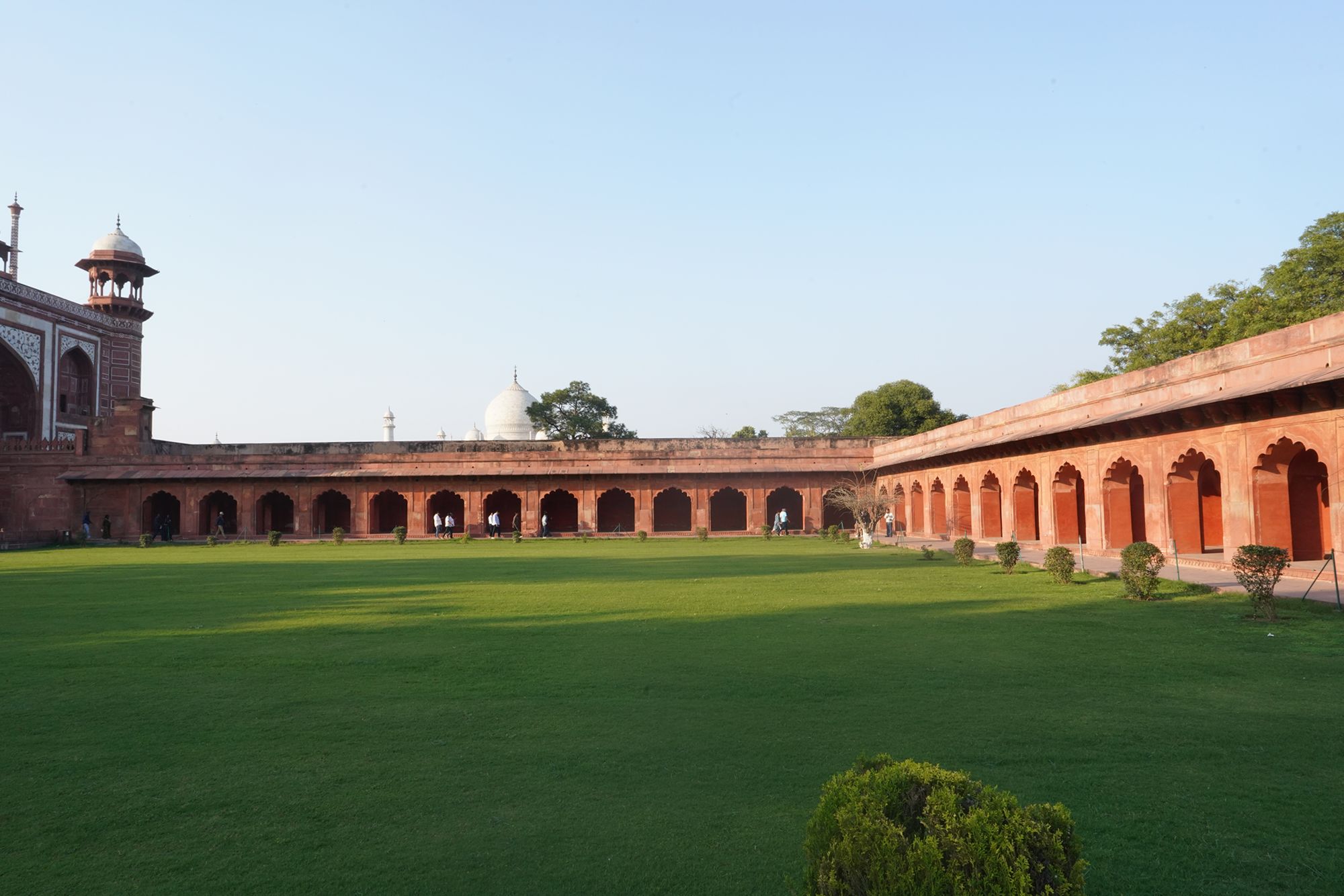
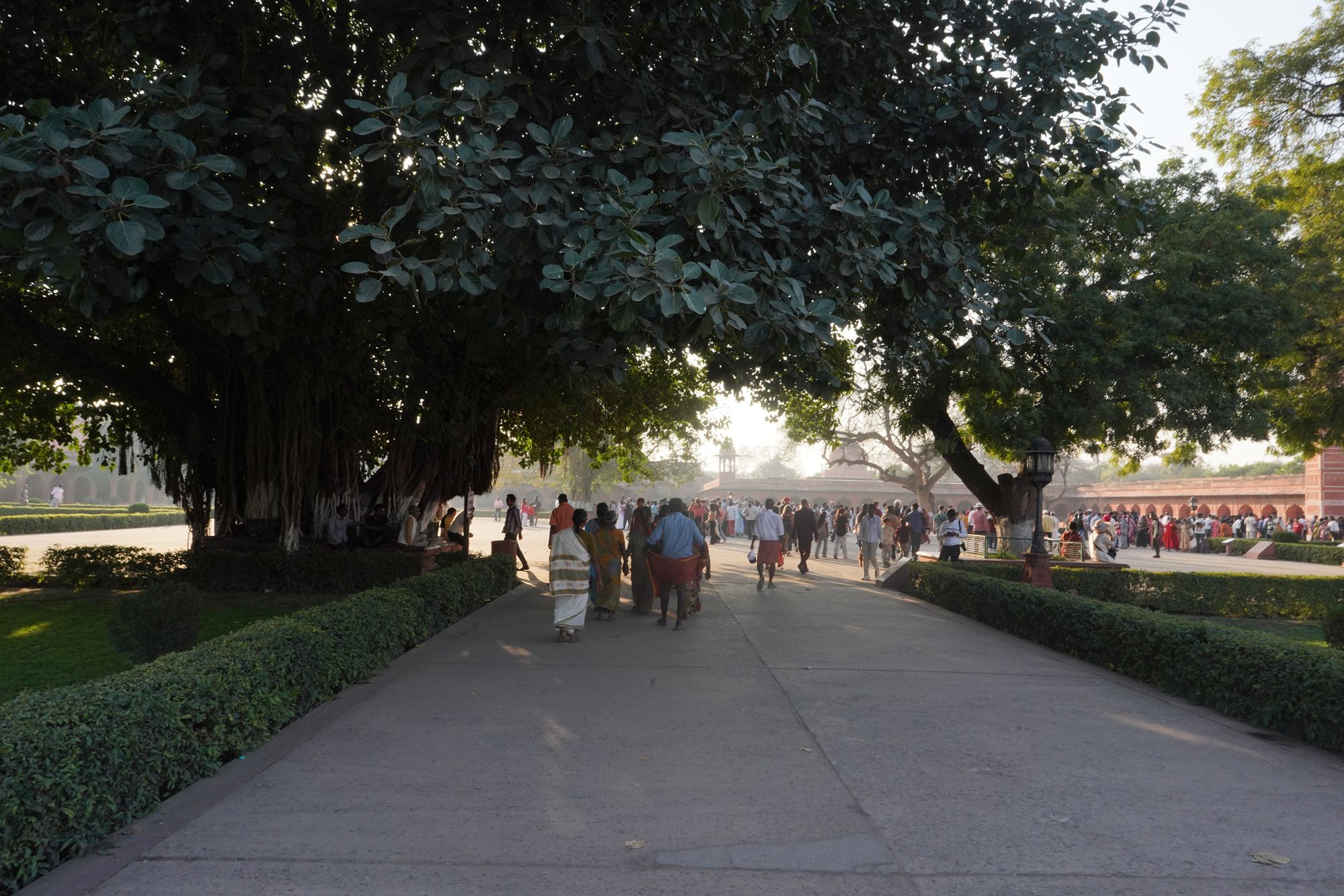
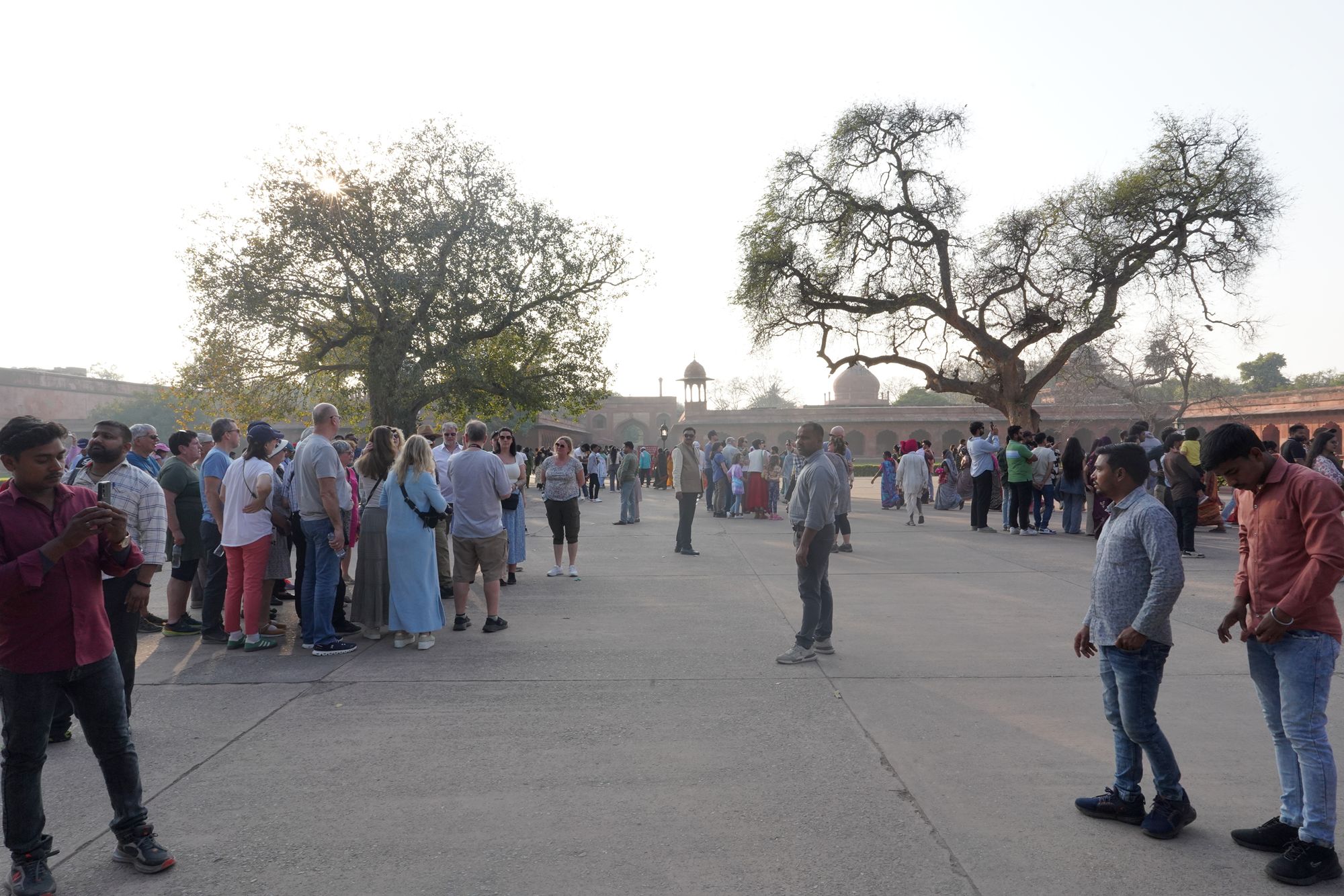
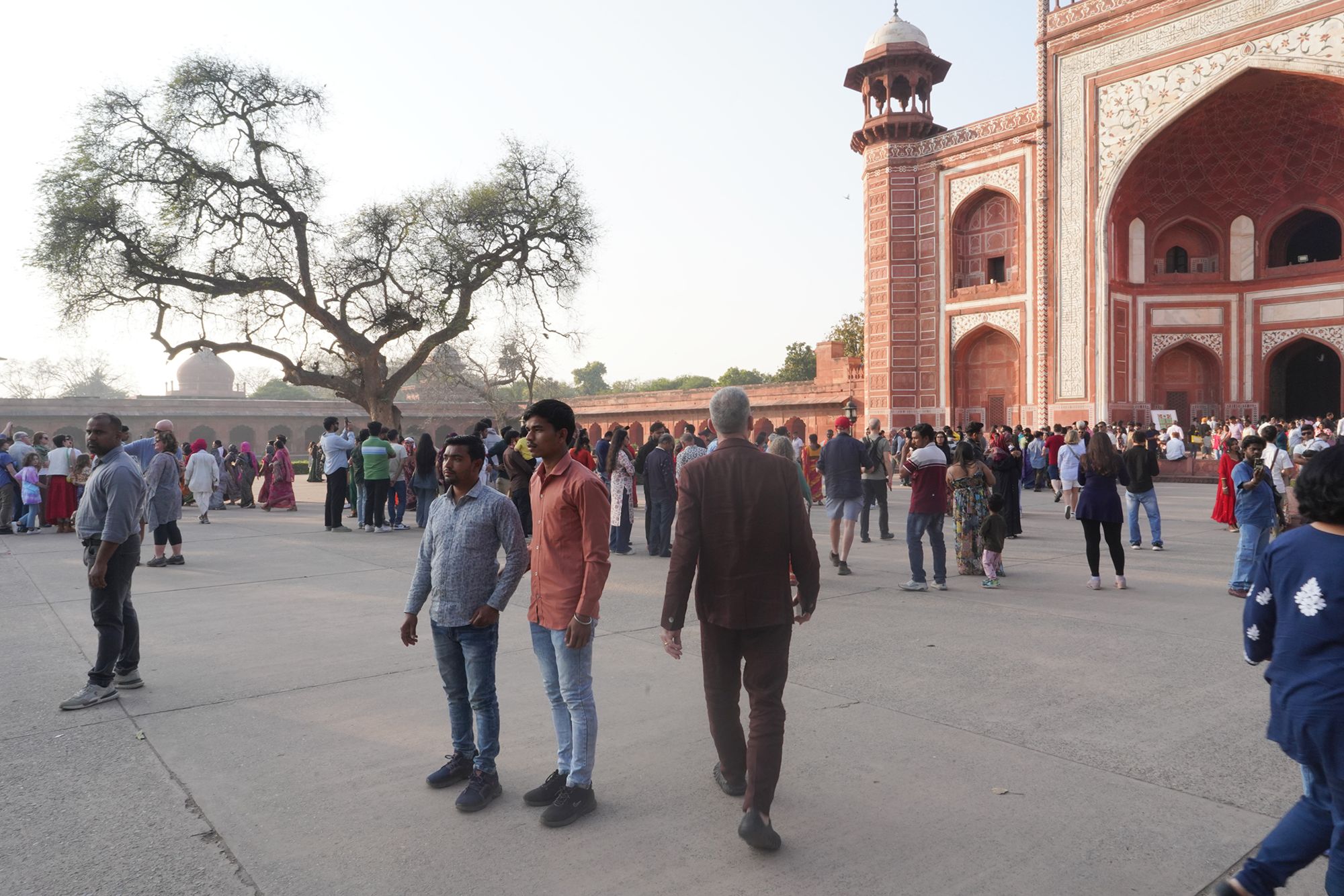
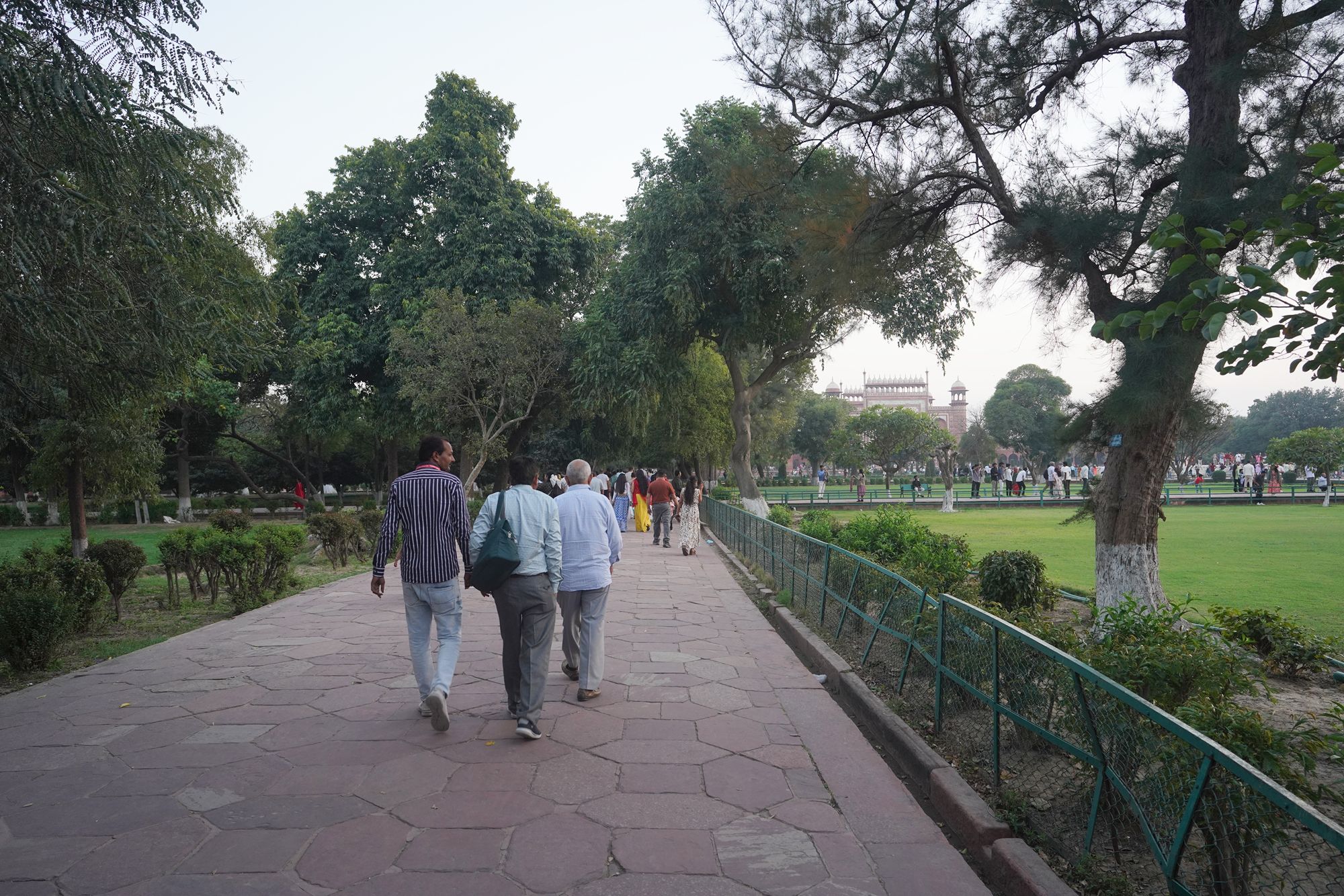
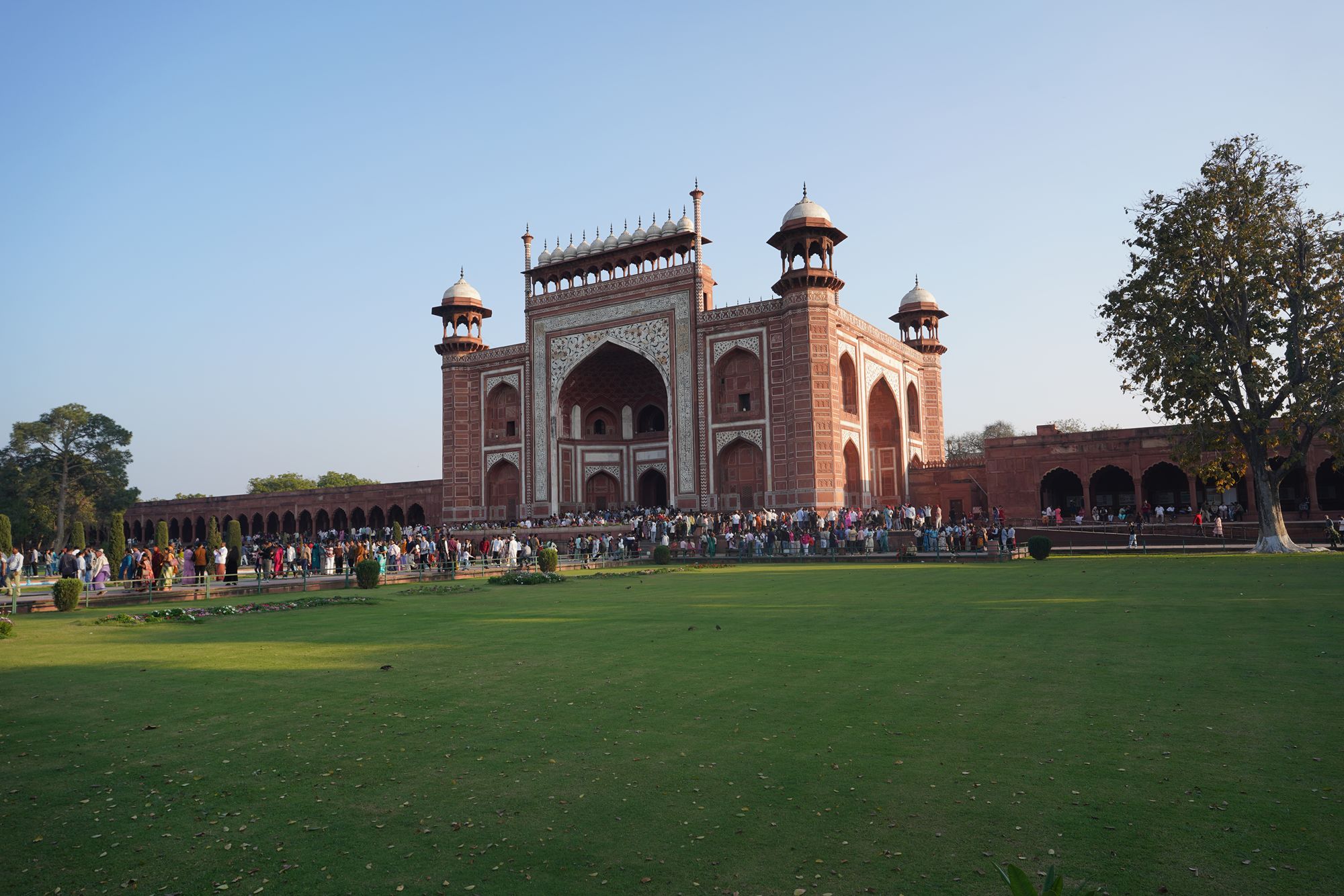
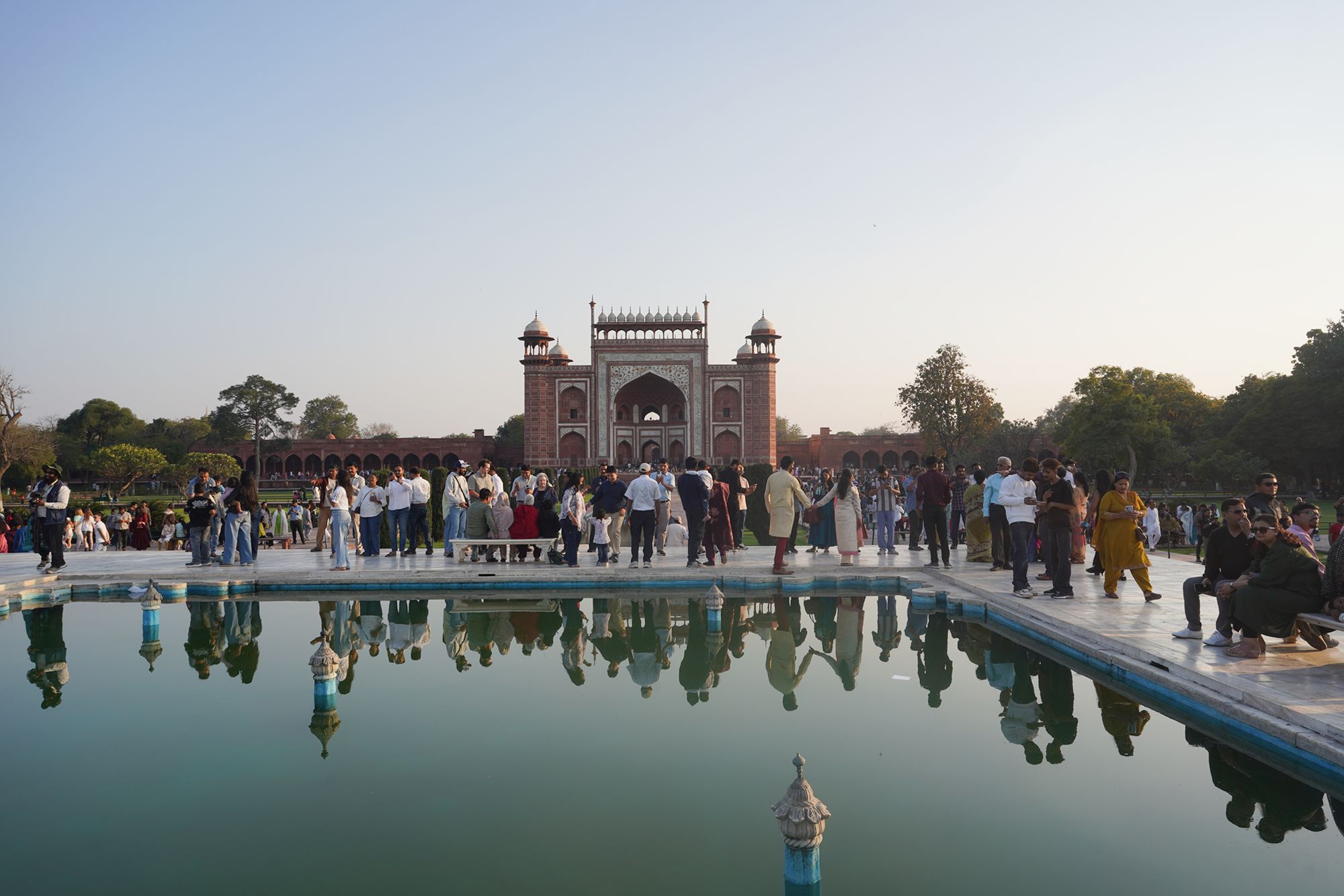
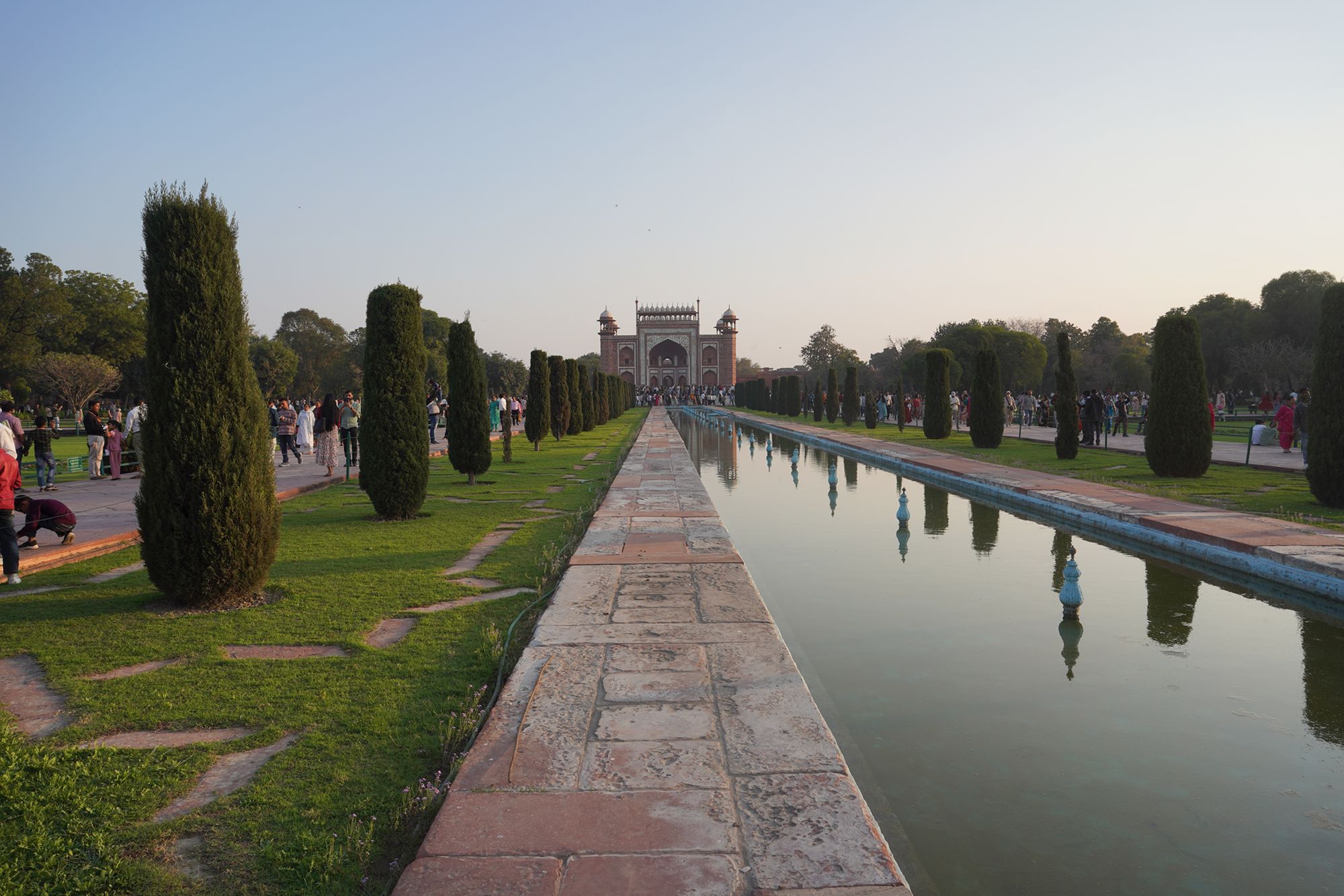
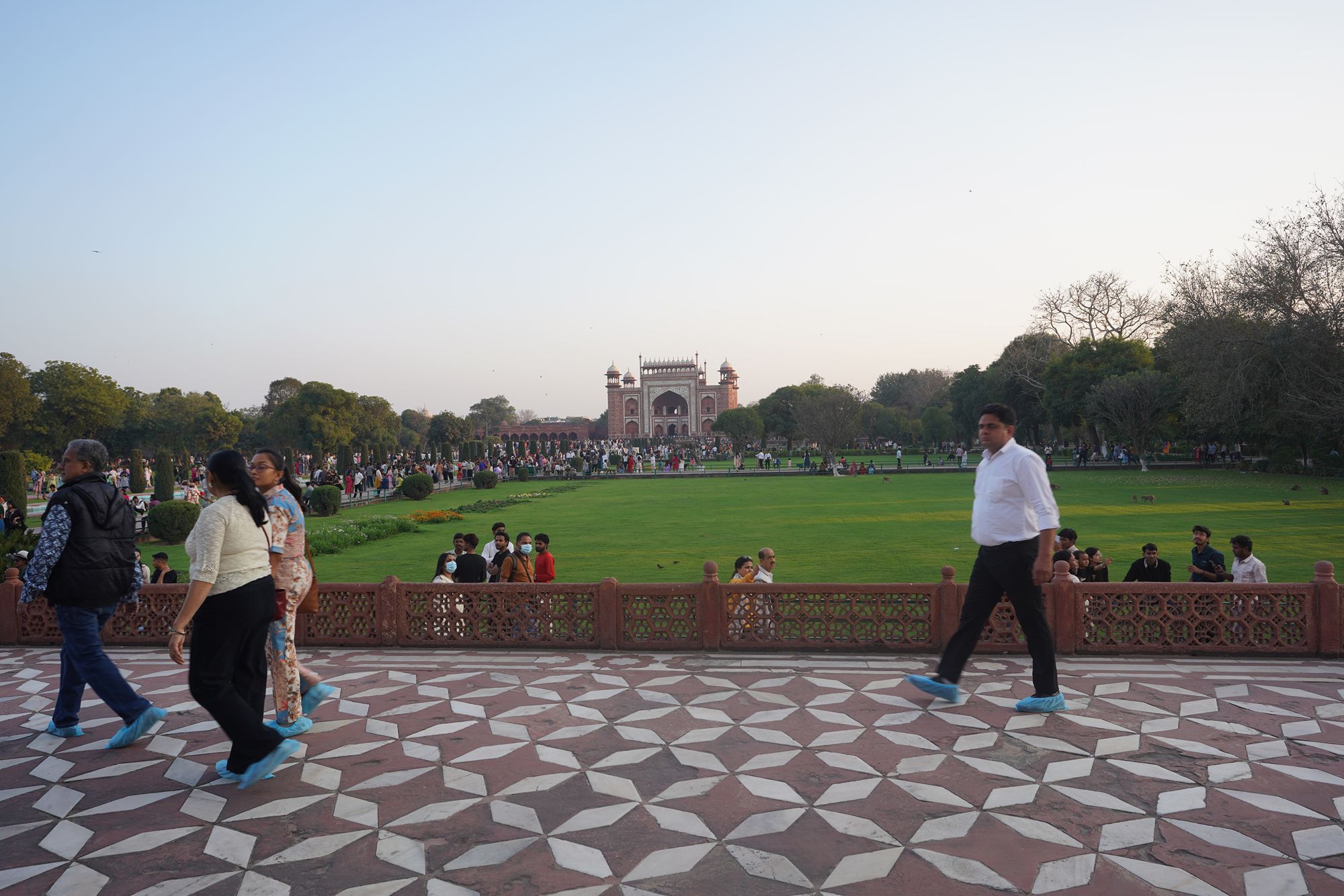
Great Gate
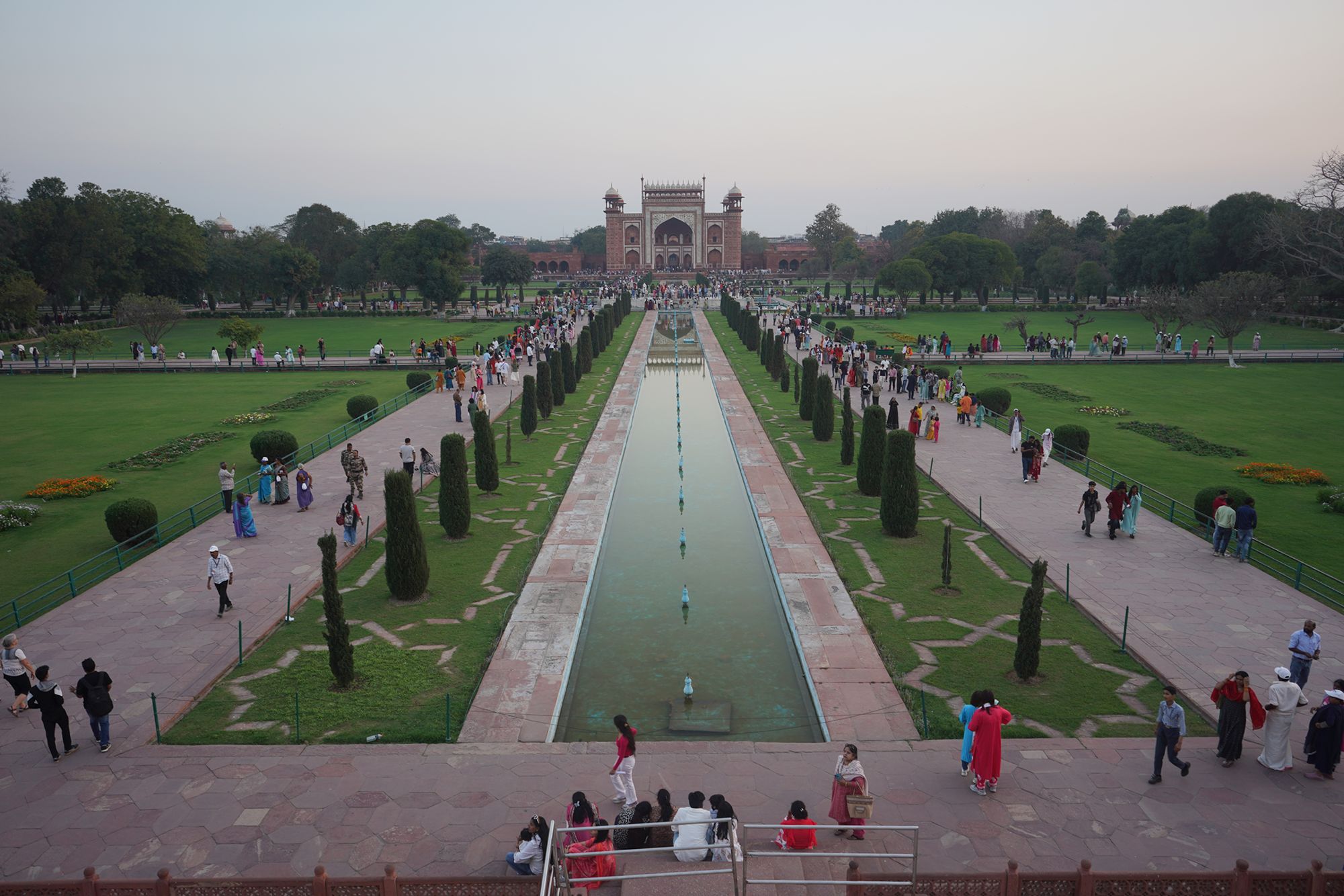
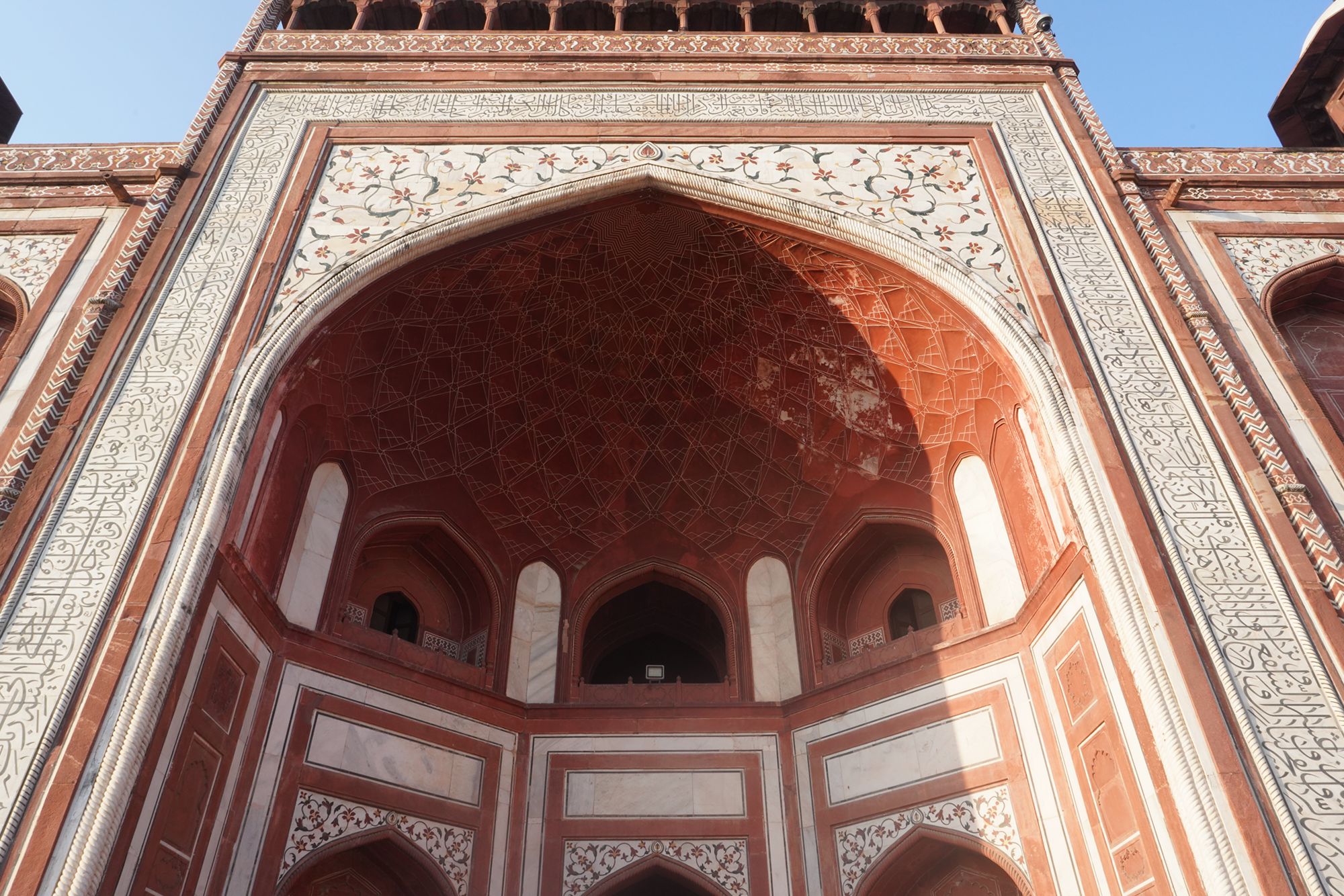
The Great Gate, known as Darwaza-i-Rauza, is the monumental entrance to the main Taj Mahal complex. Built primarily of red sandstone with white-marble decoration, it creates a dramatic transition between the outer courtyard and the gardens surrounding the Taj Mahal.
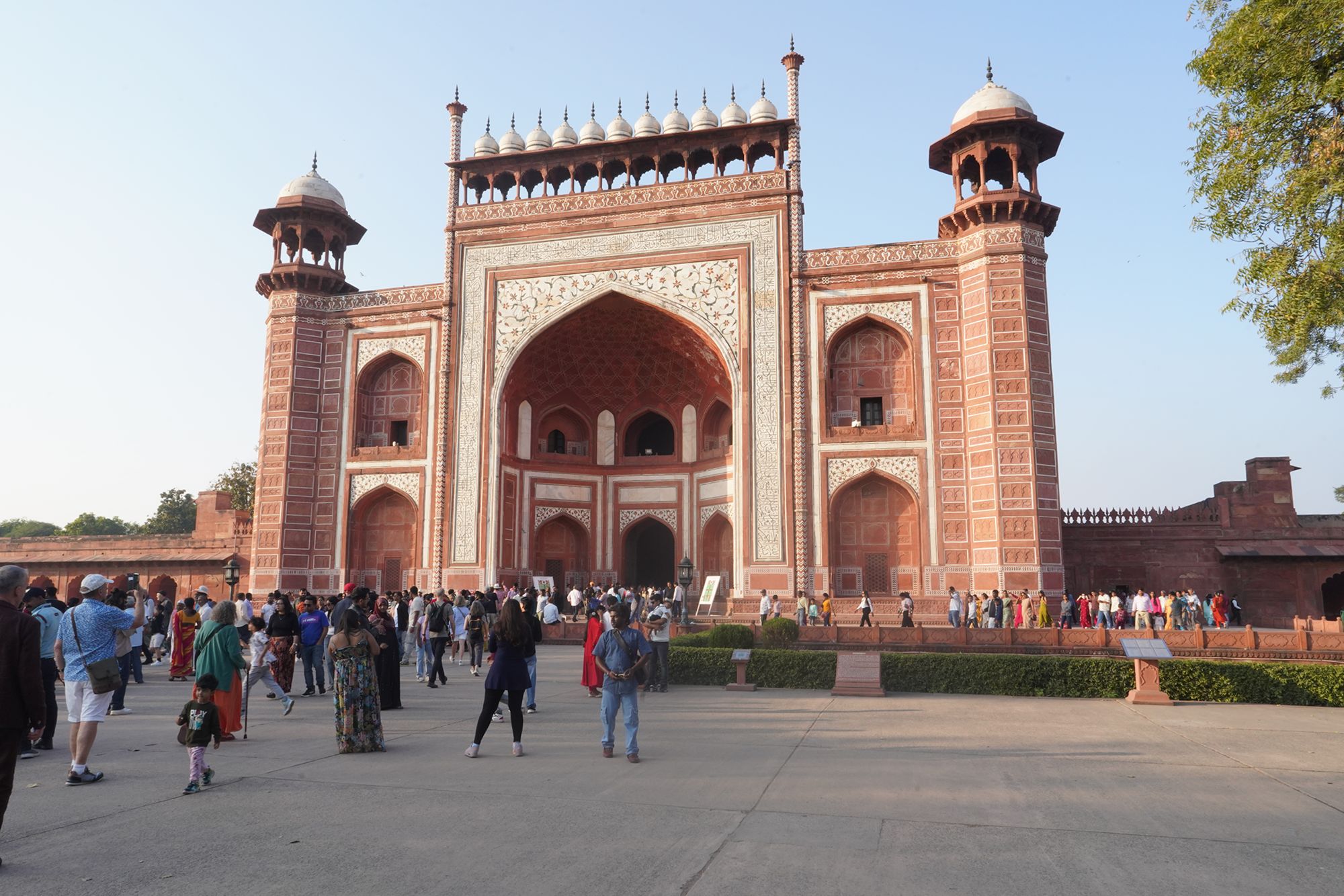
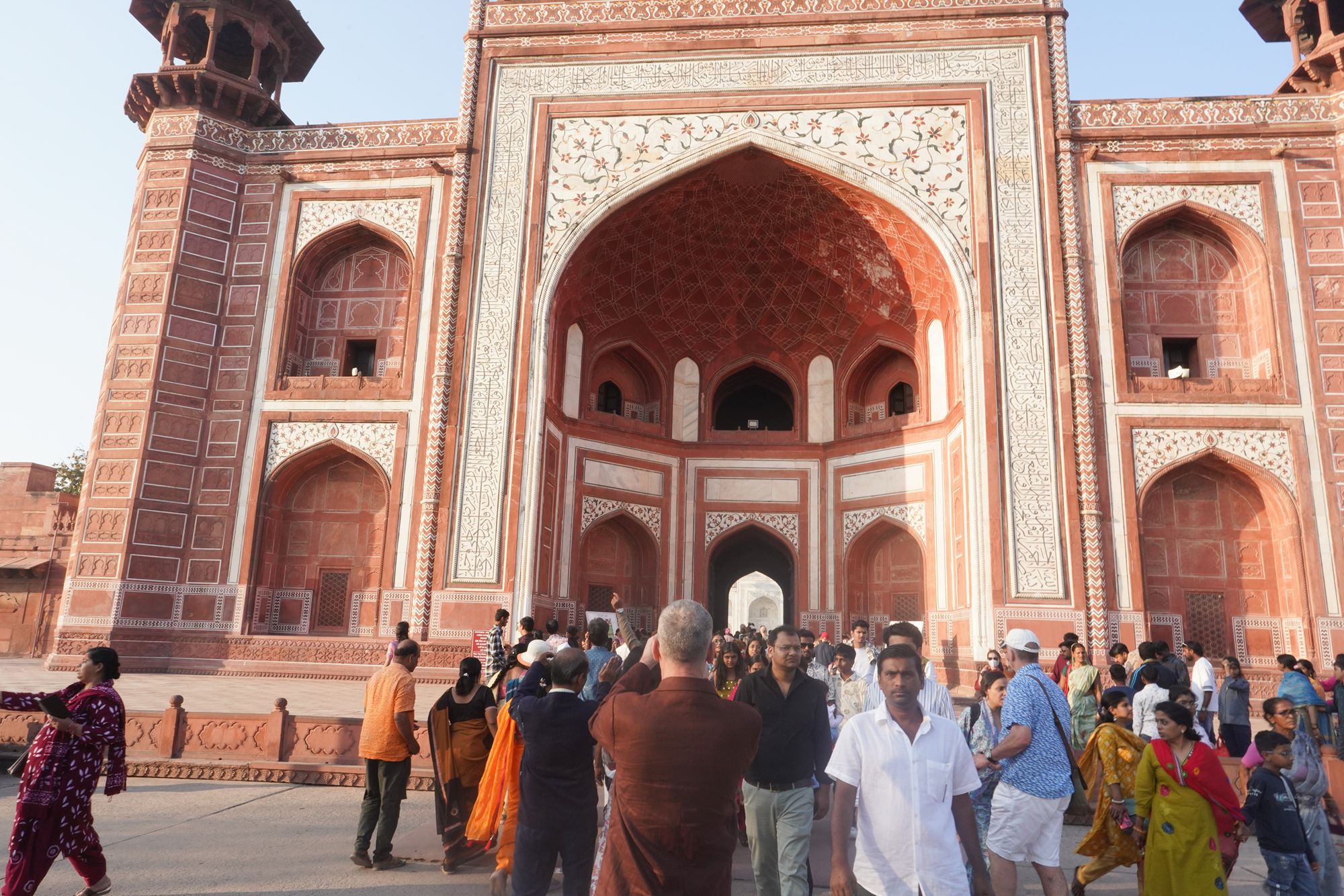
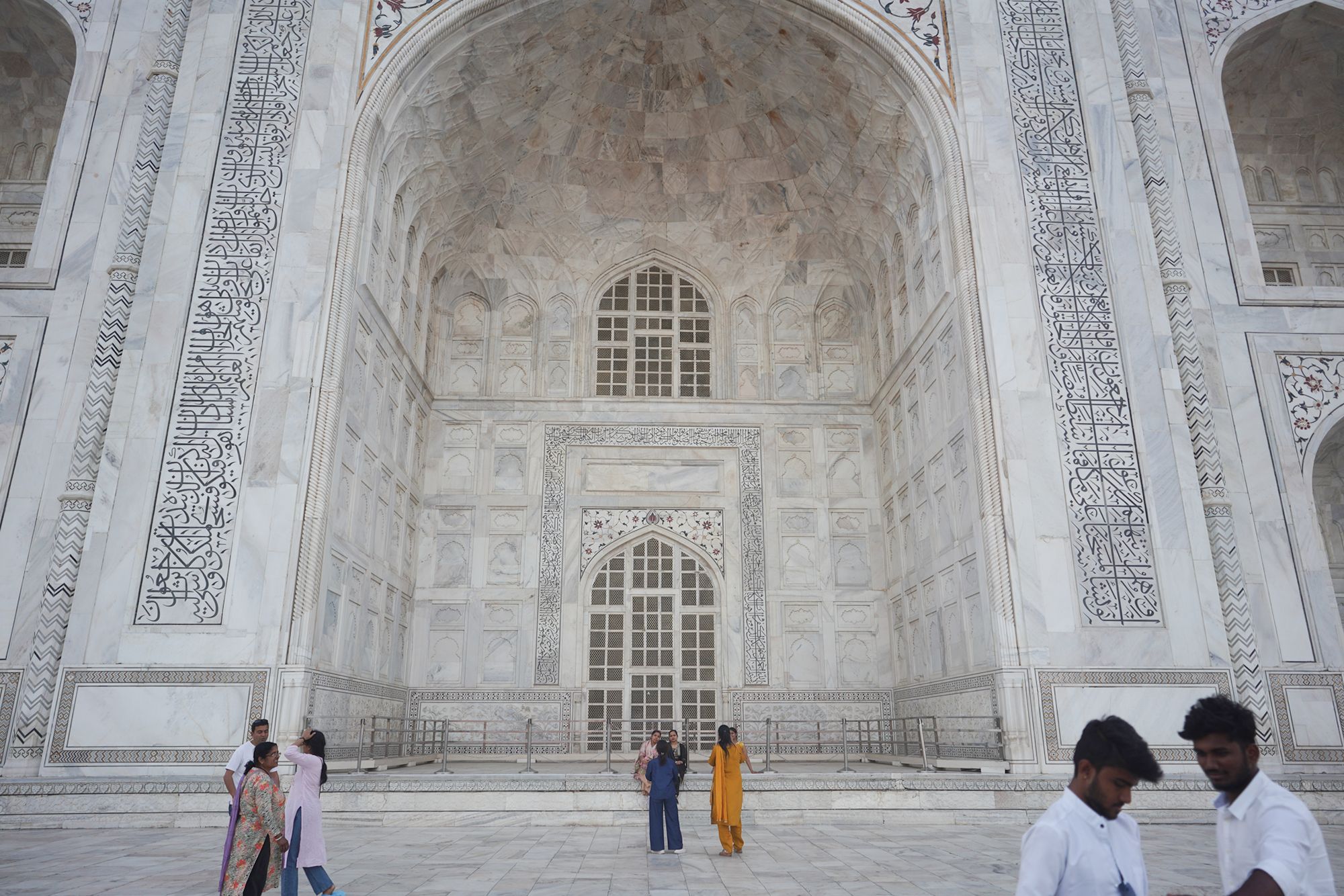
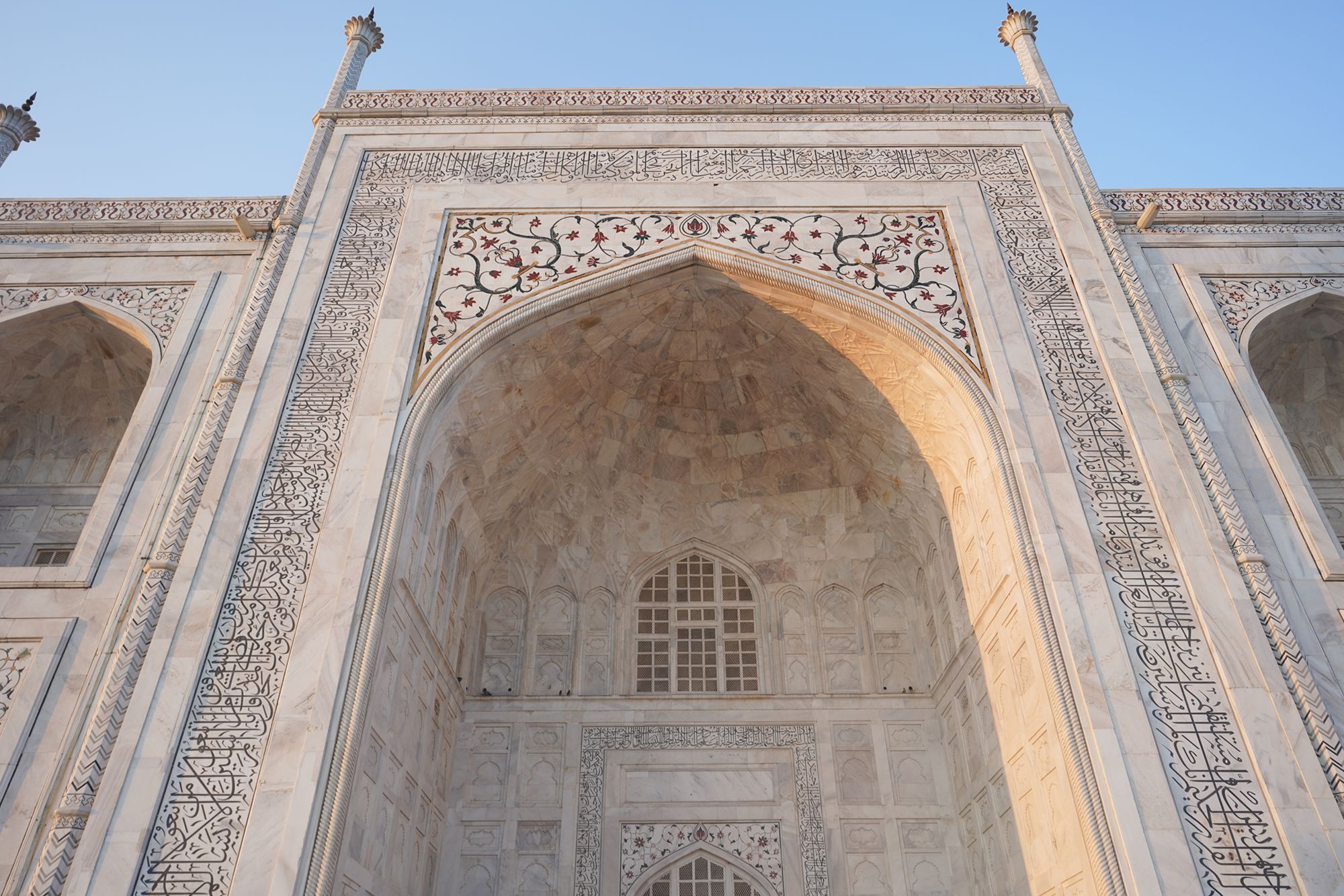
The gateway is decorated with elaborate calligraphy from the Quran, floral designs, and geometric patterns. An interesting feature of the calligraphy is that the letters become larger toward the top, creating an optical effect that makes them appear nearly the same size when viewed from below.
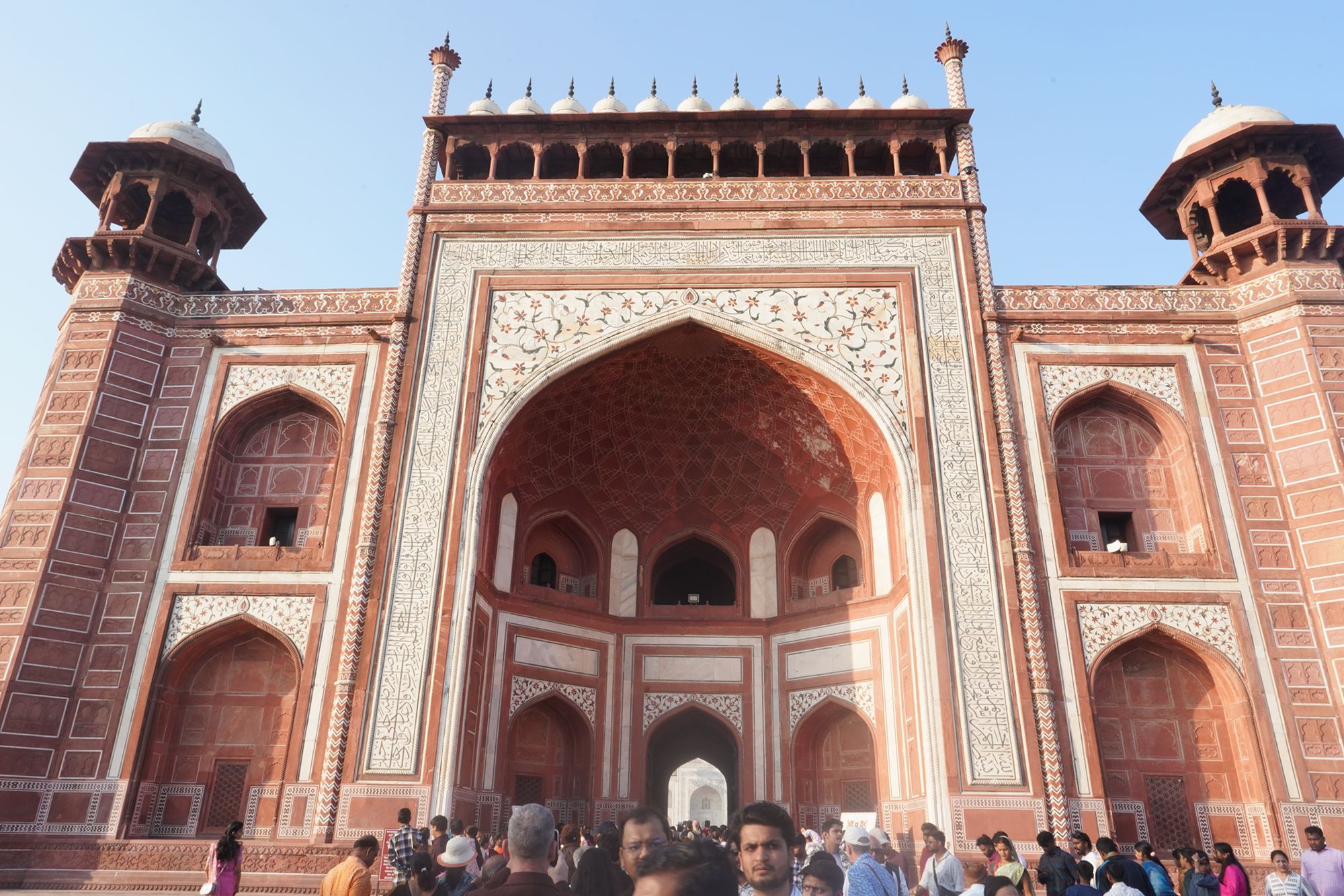
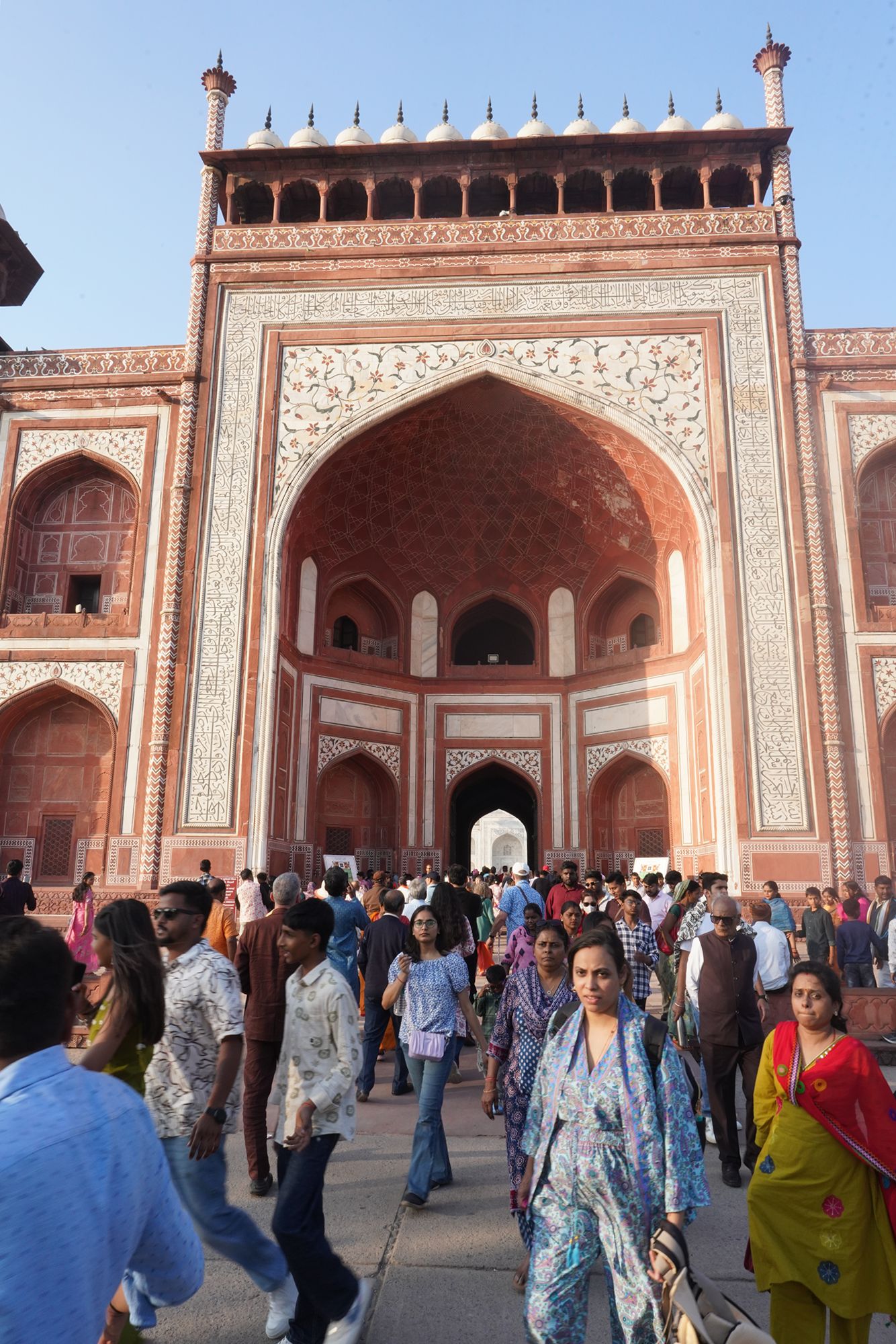
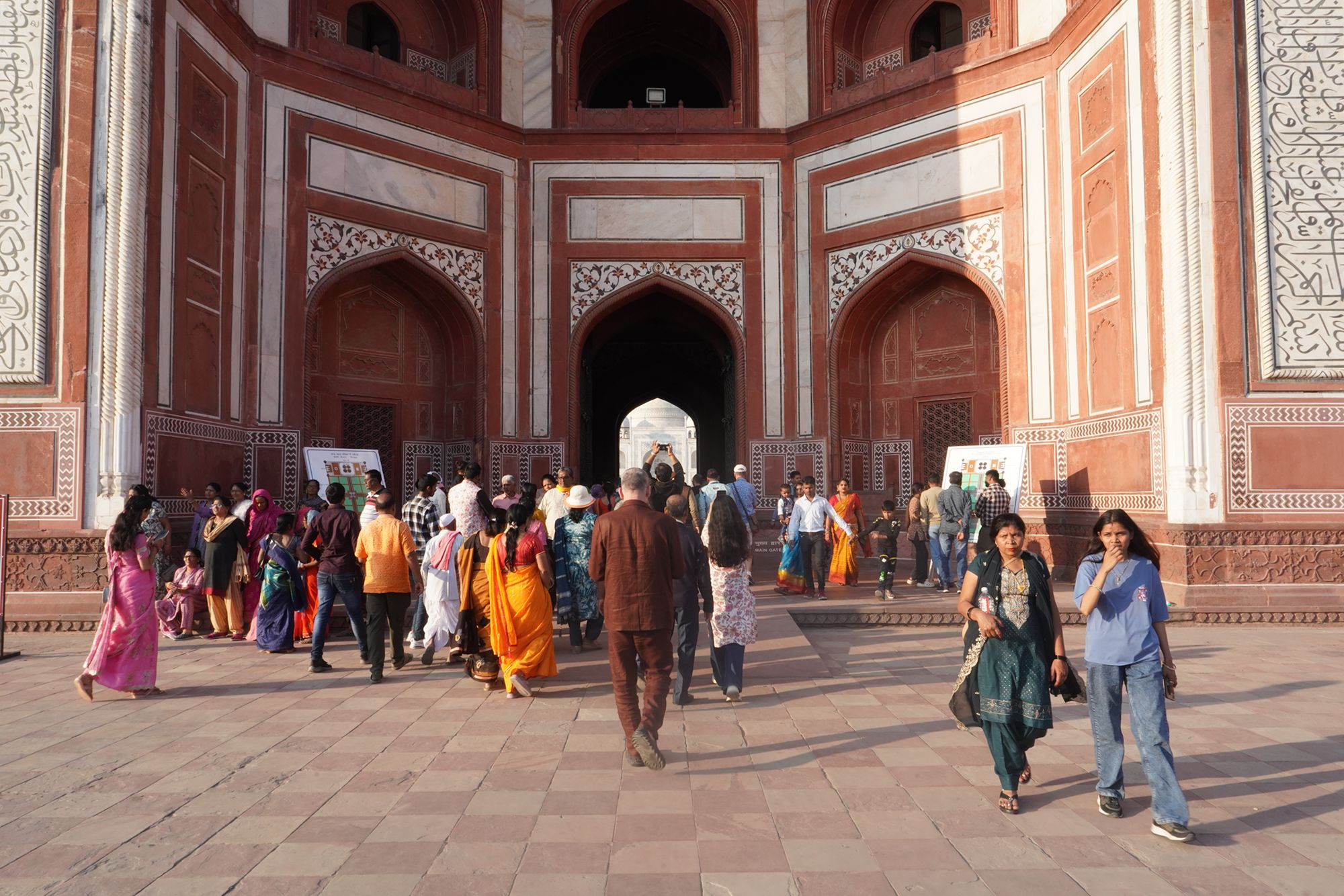
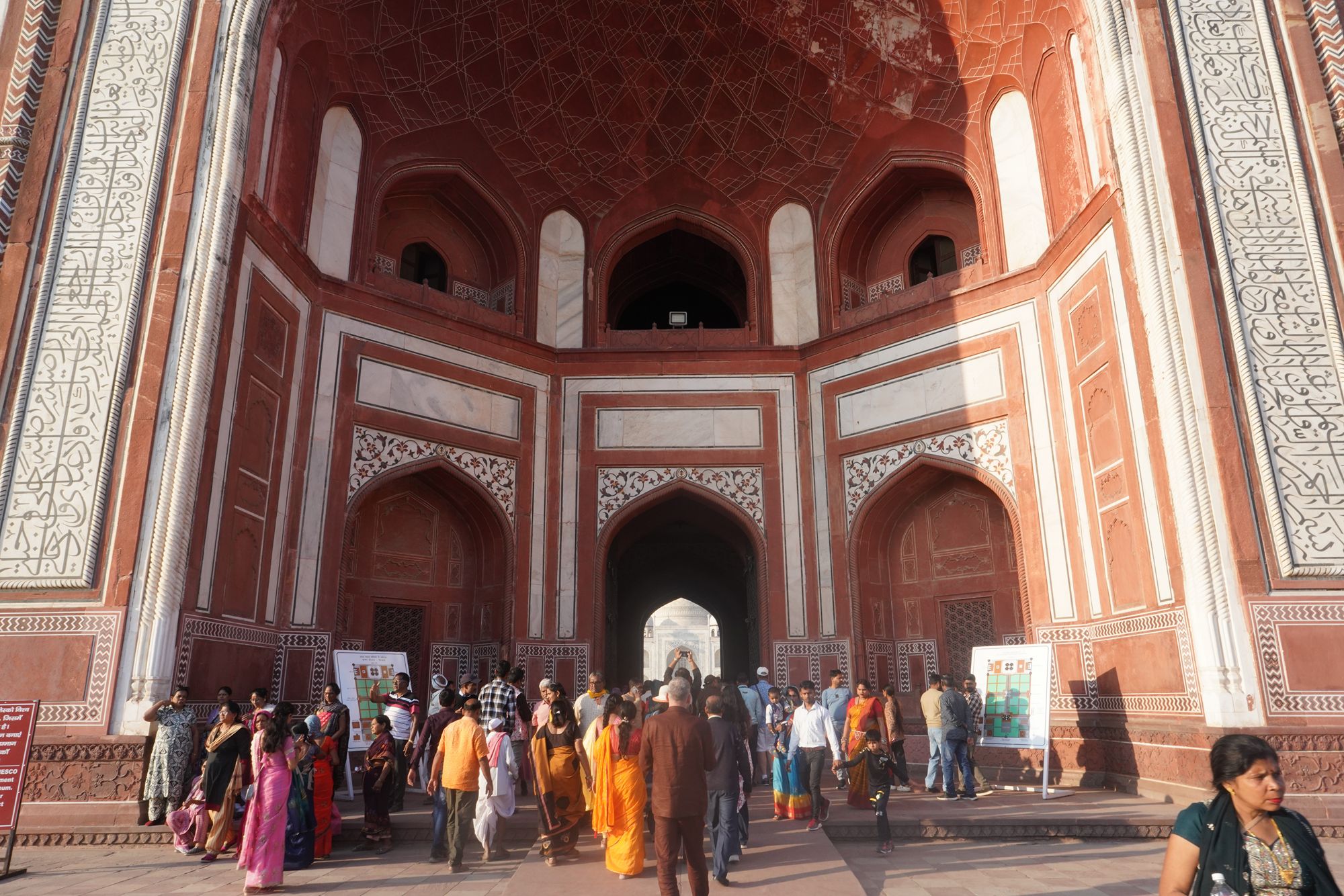
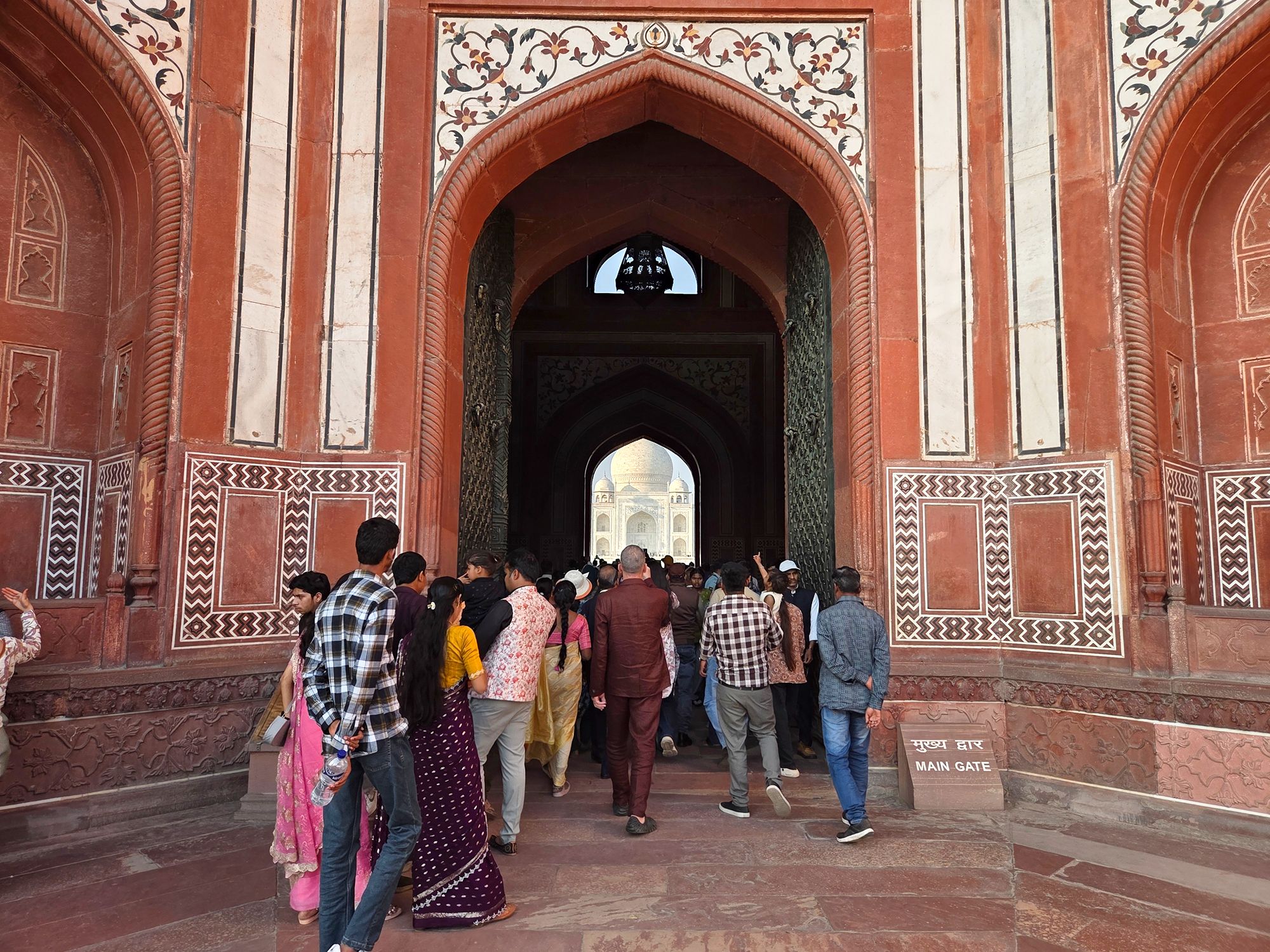
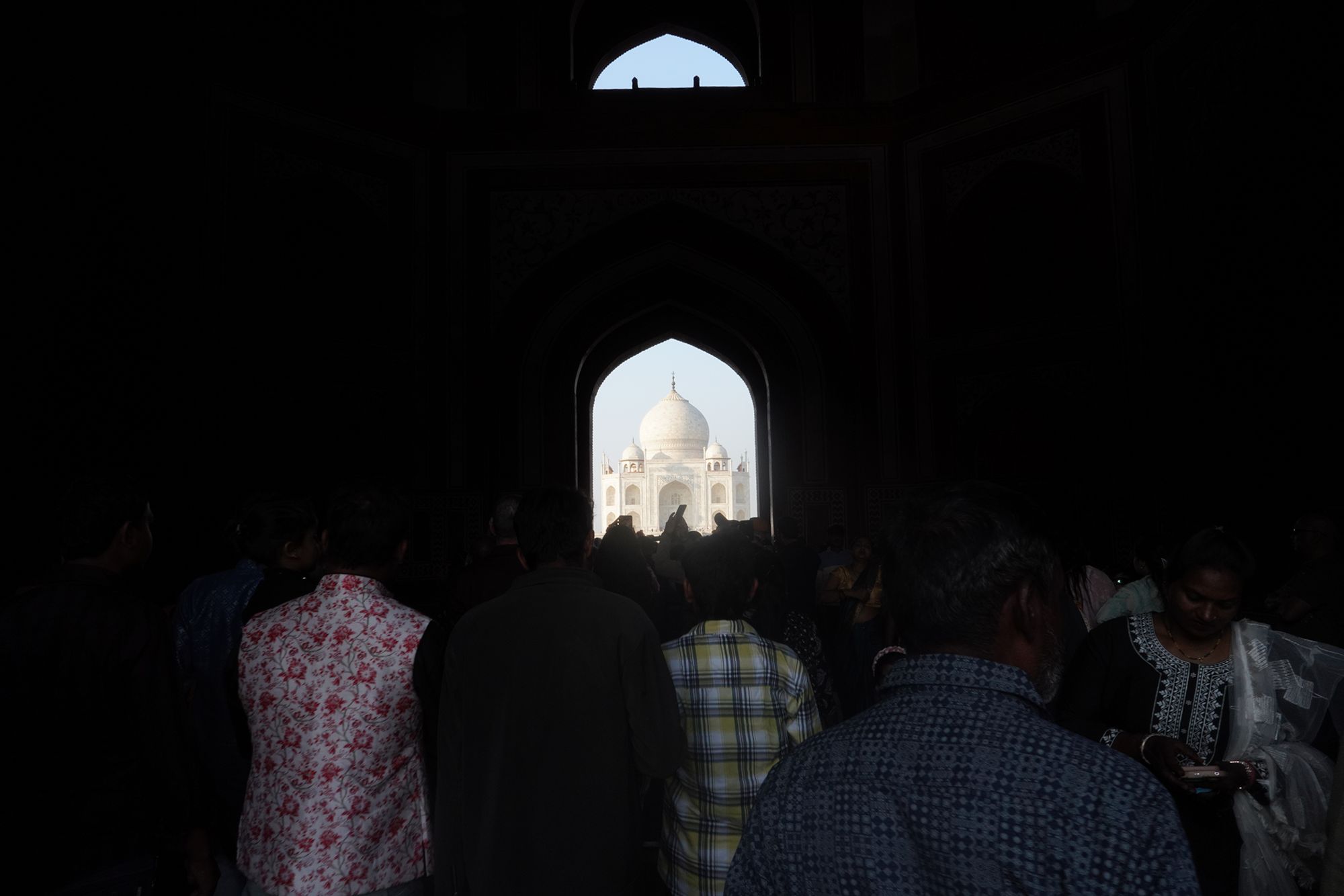
Passing through the dark interior of the Great Gate provides one of the most memorable moments of a visit: the white marble Taj Mahal gradually appears framed by the gateway's arch. The contrast between the dark passage, the red sandstone gate, and the brilliant white Taj Mahal beyond was deliberately designed to heighten the visual impact of the monument.
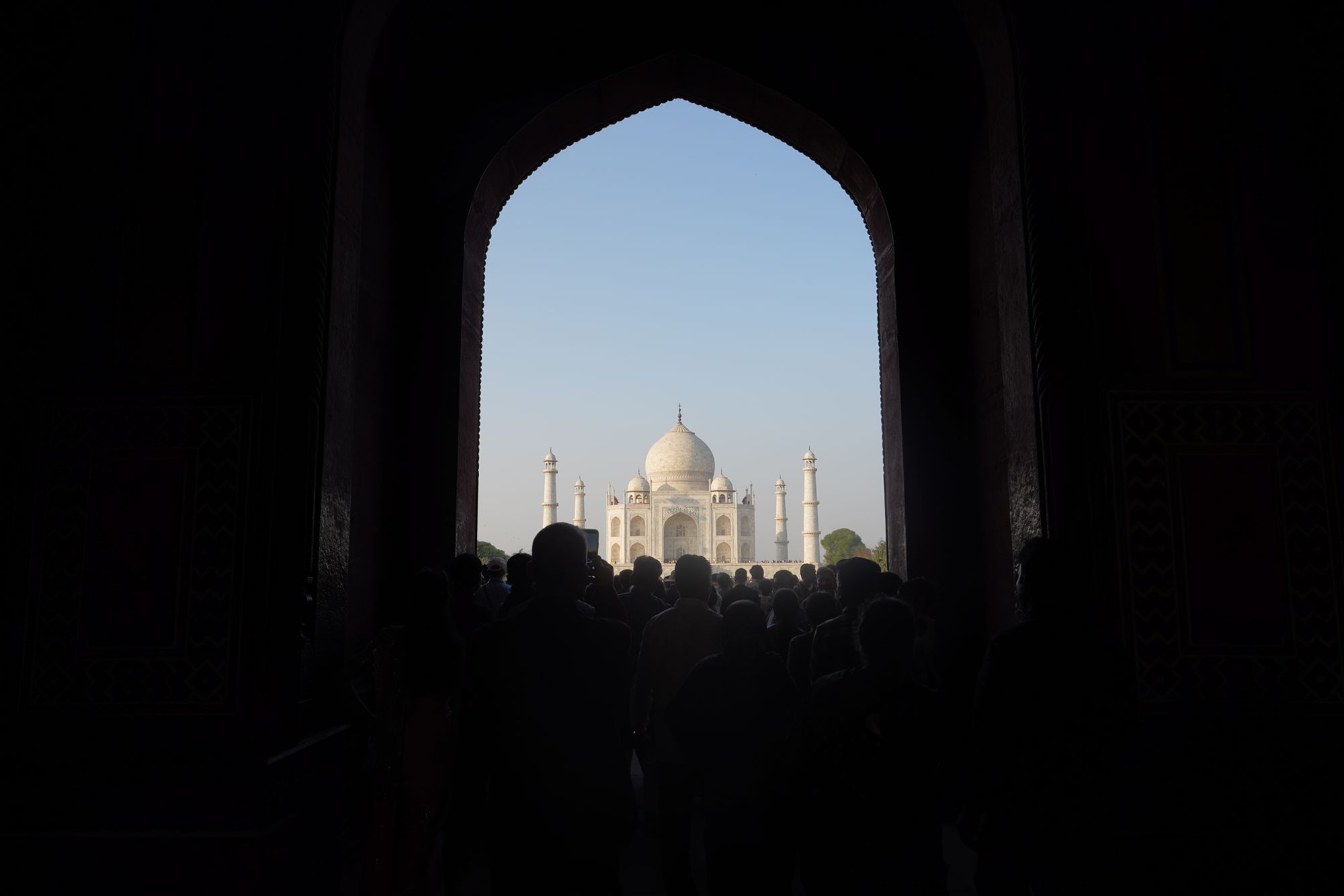
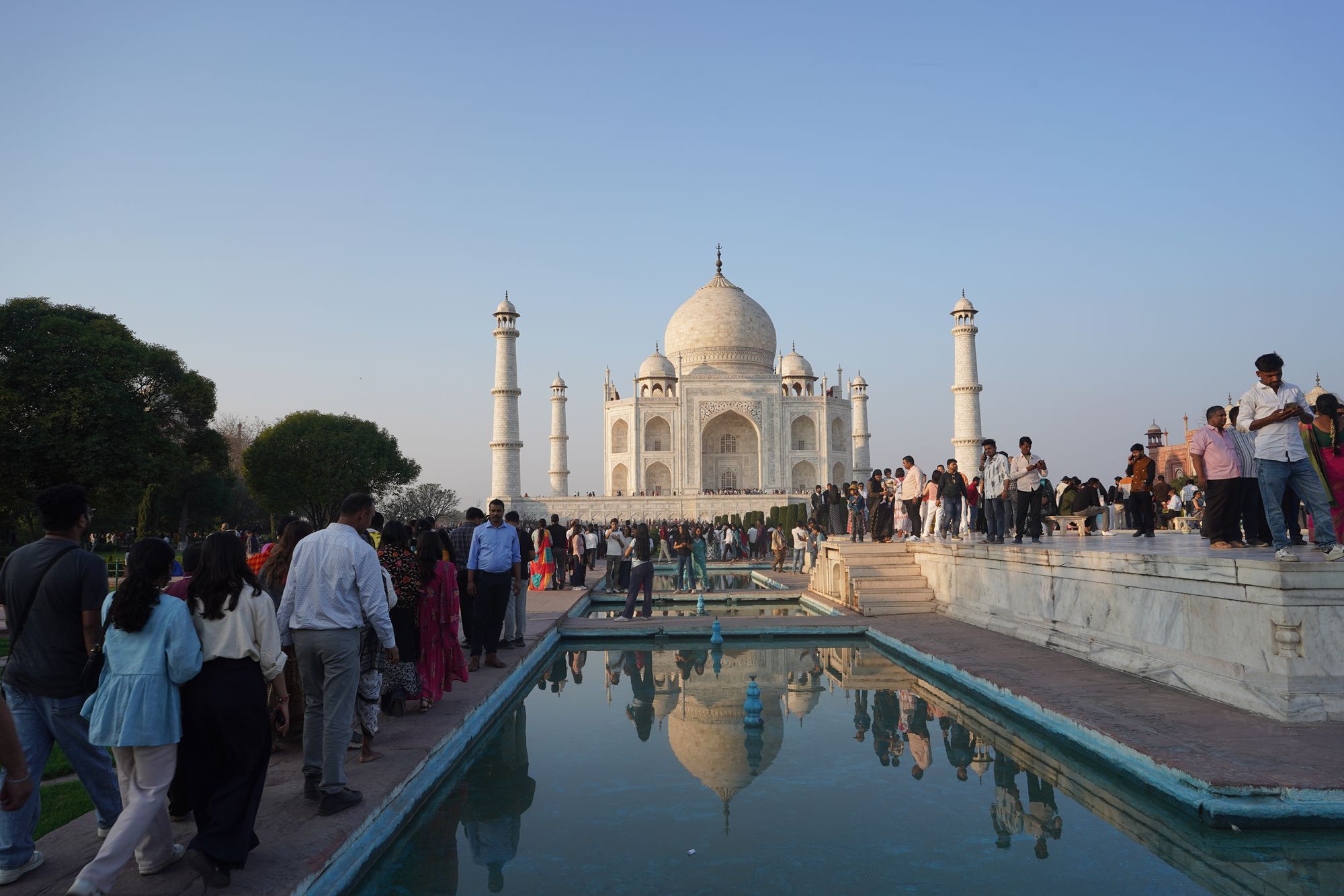
Taj Mahal
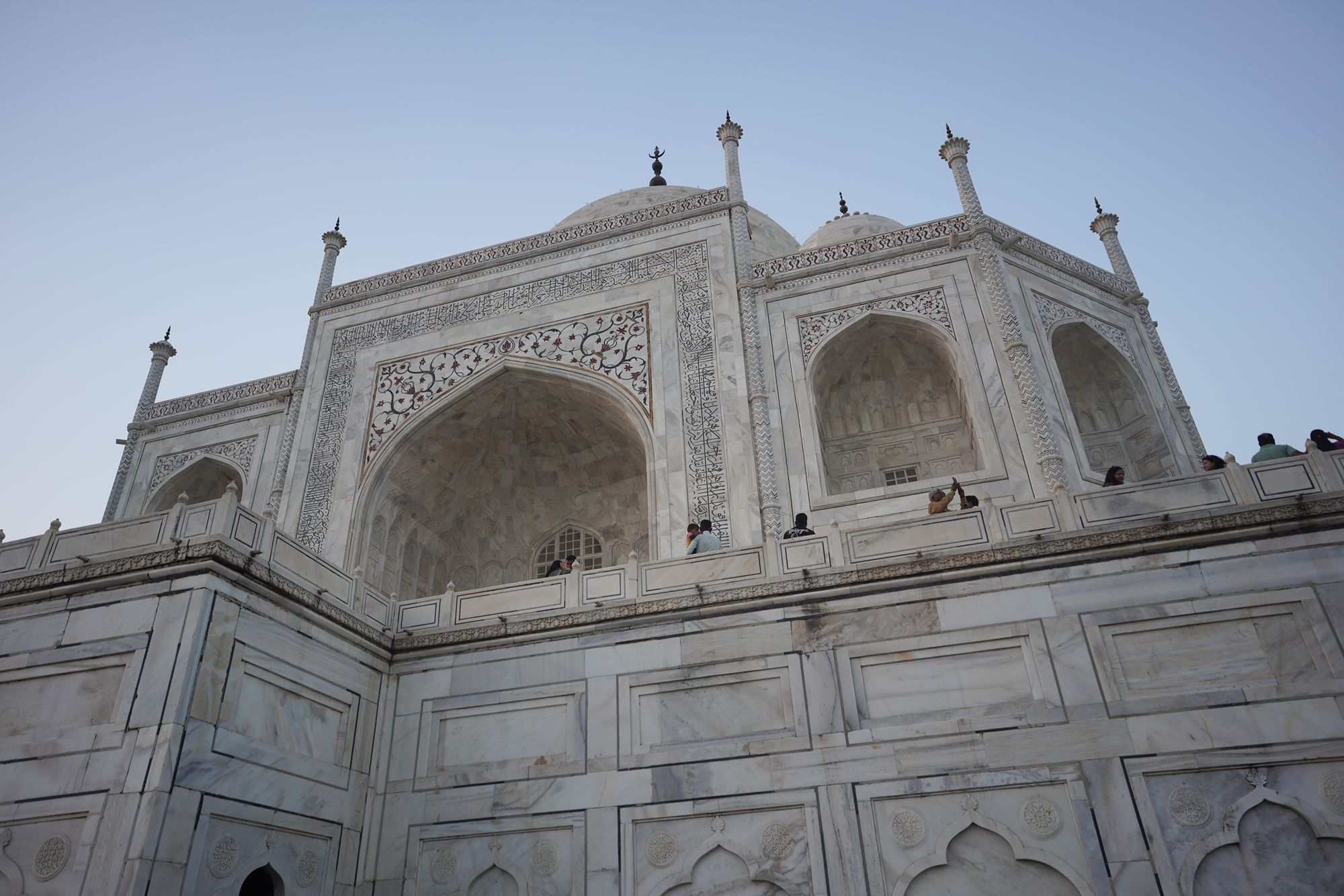
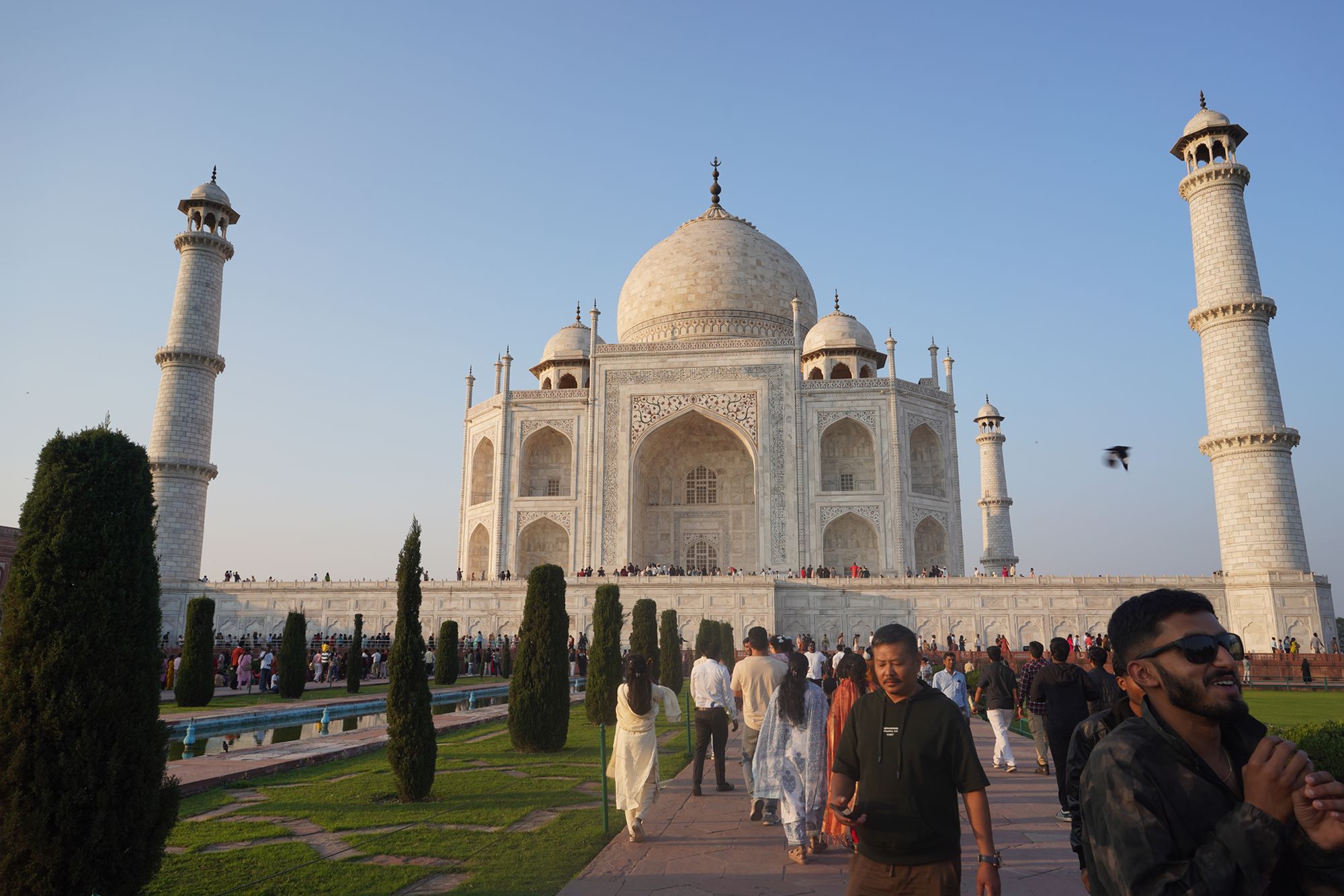
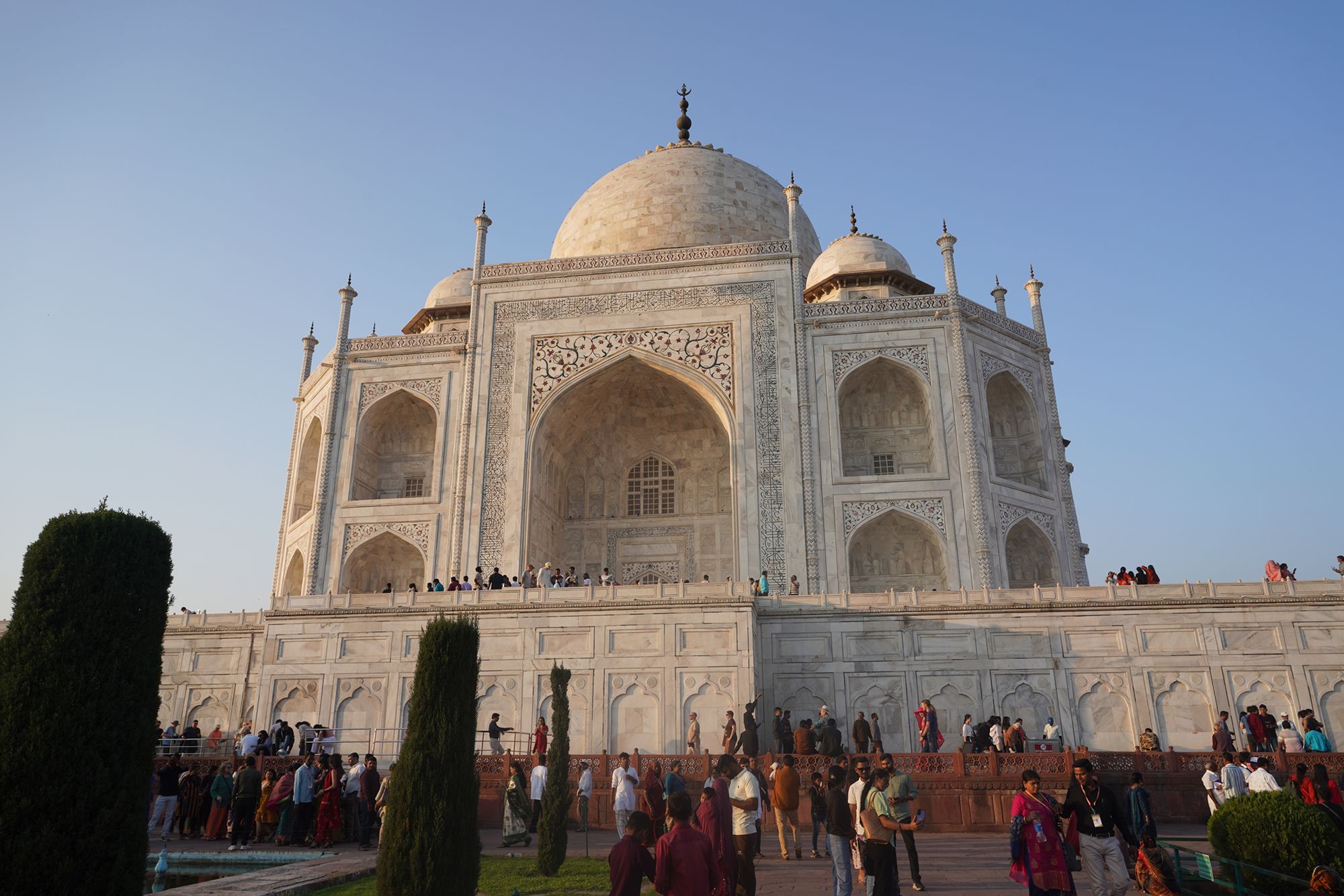
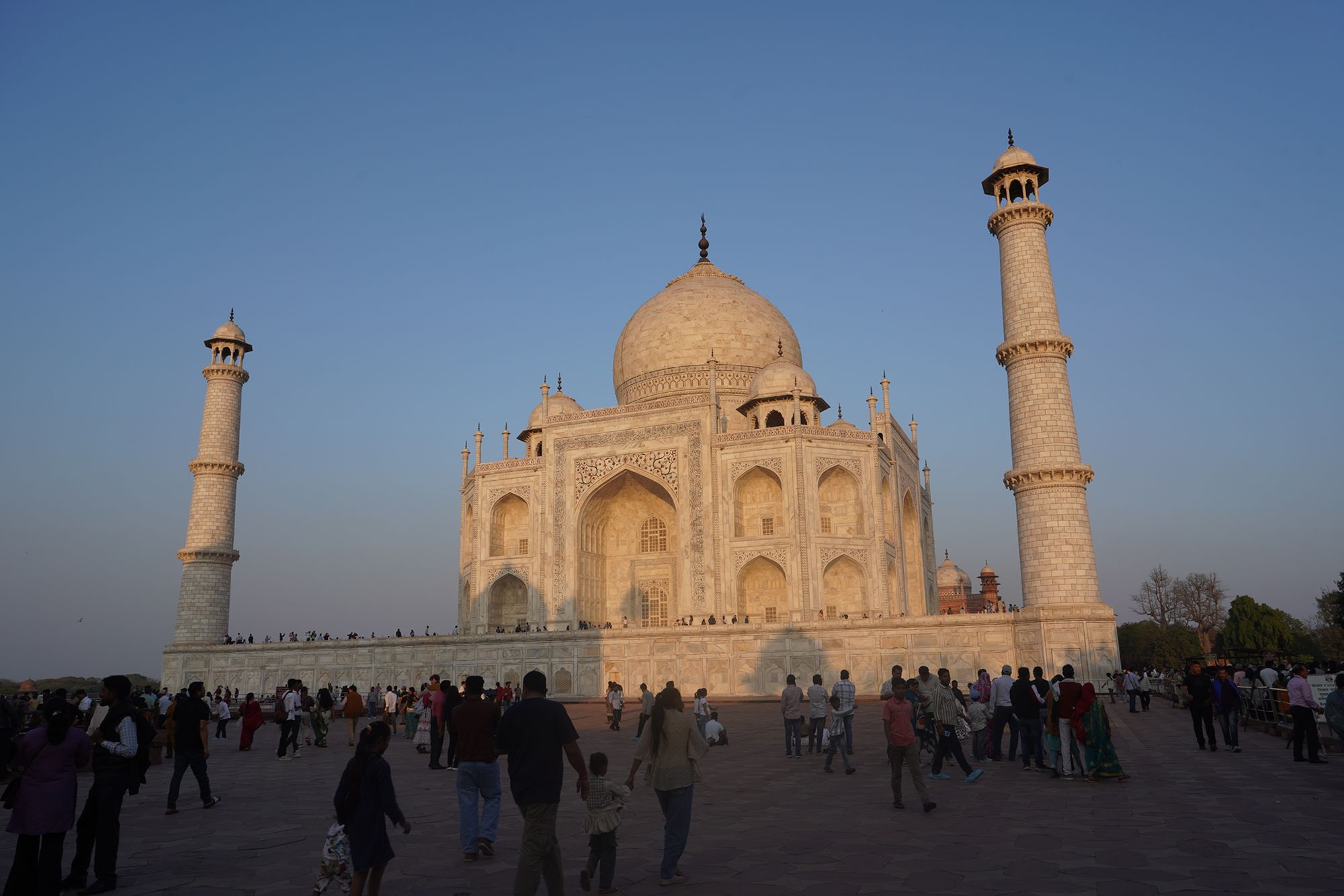
The Taj Mahal was built by Mughal Emperor Shah Jahan in memory of his beloved wife Mumtaz Mahal, who died in 1631. Construction began around 1632, and the main mausoleum was completed in the 1640s, with the entire complex taking roughly two decades to finish.
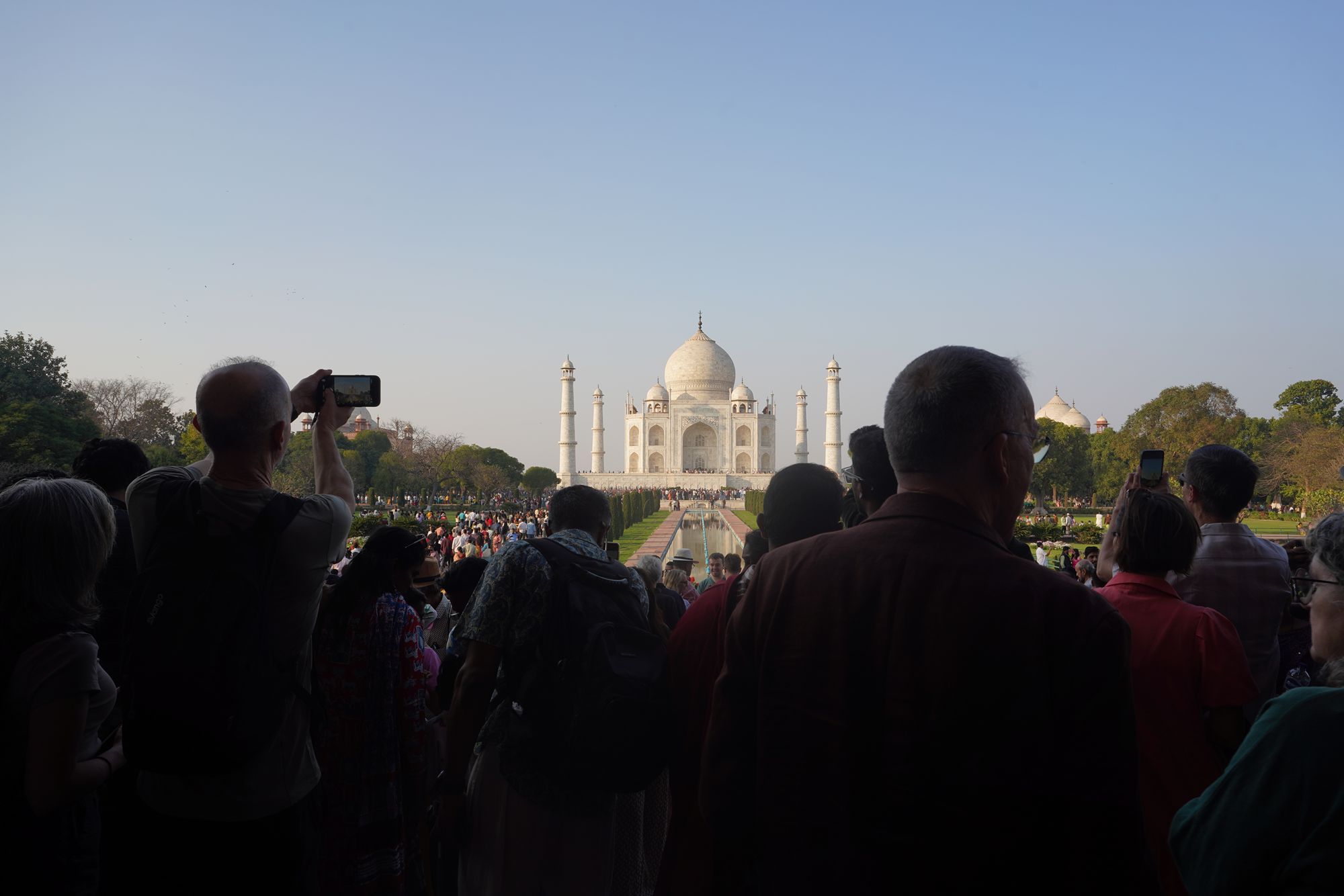
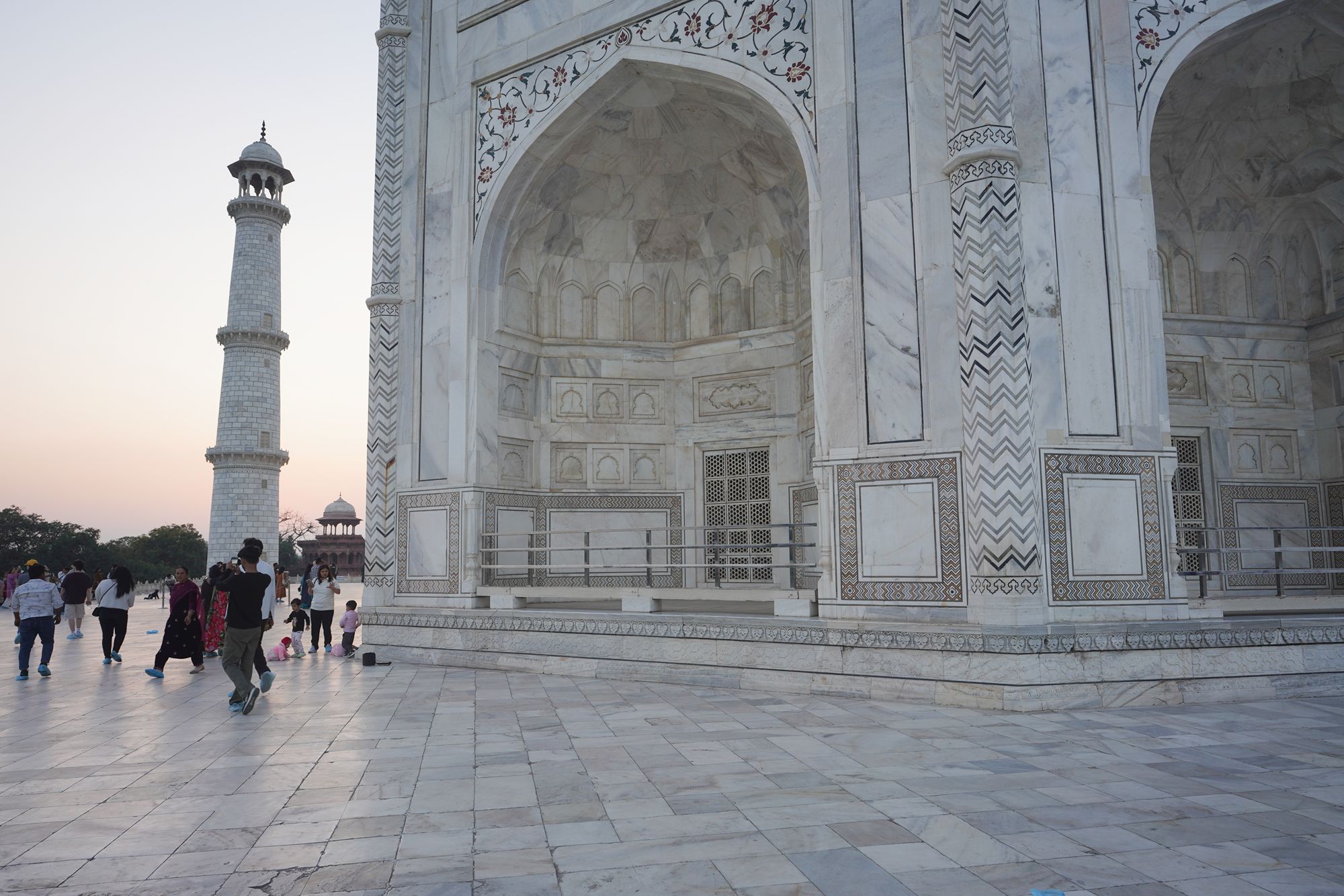
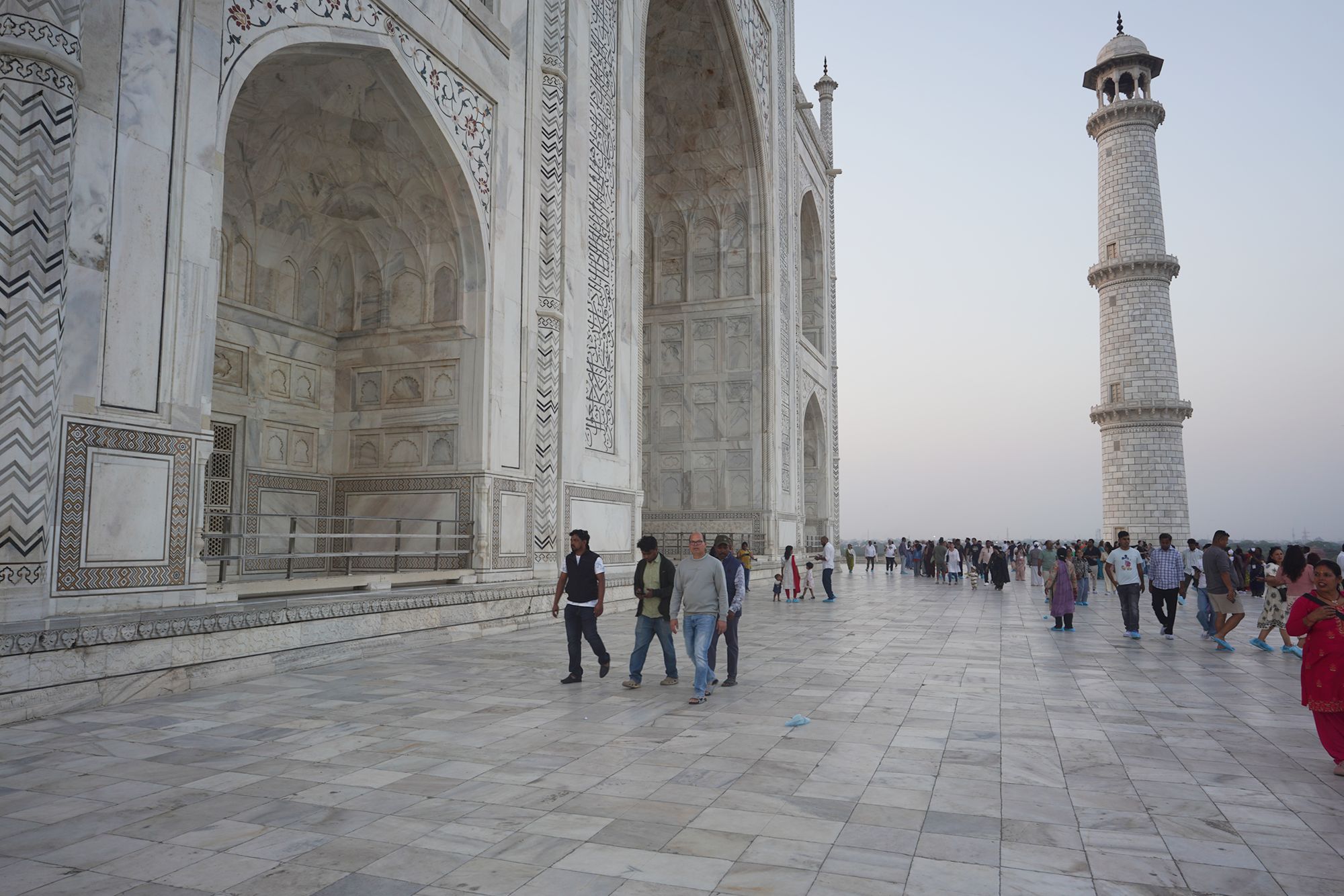
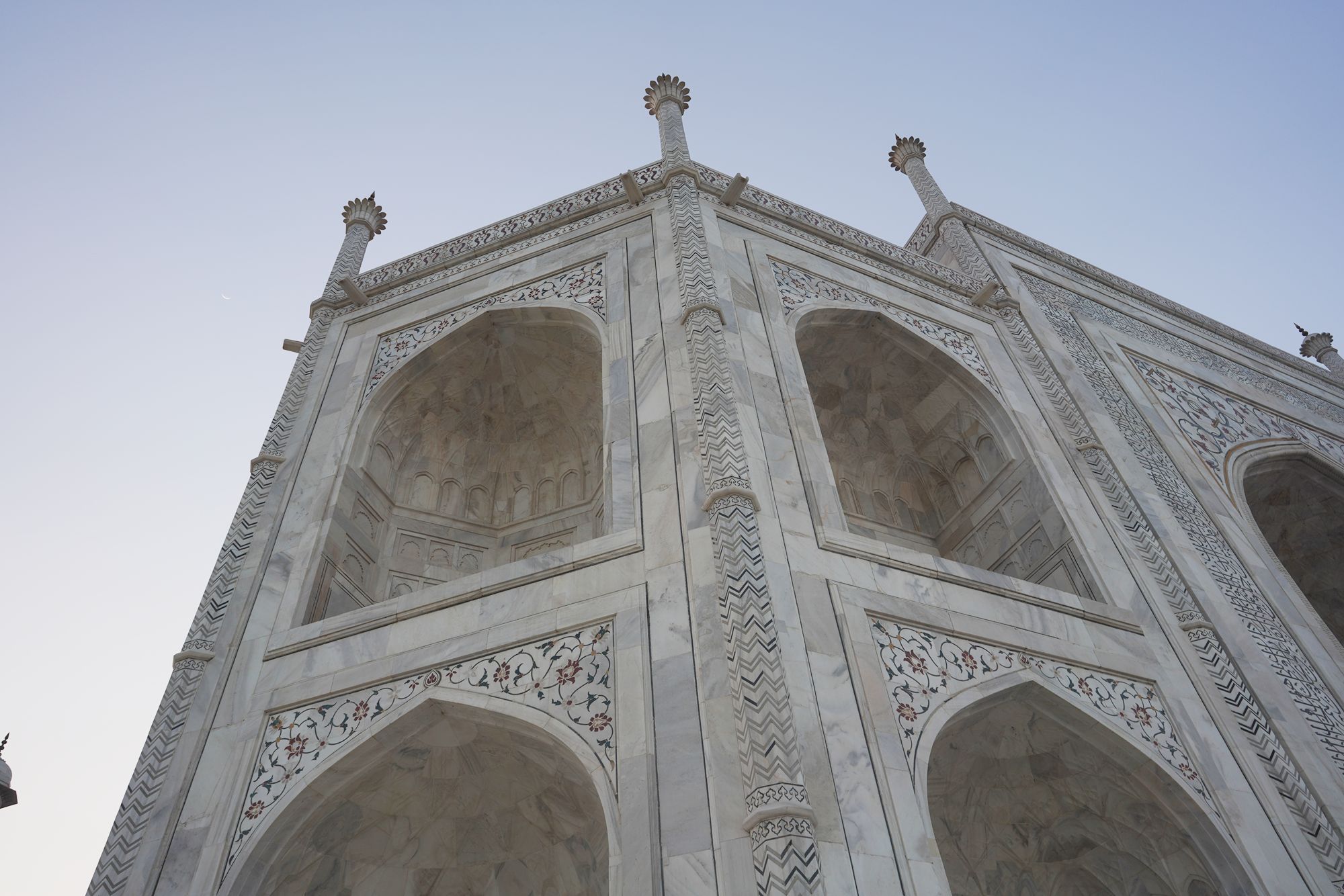
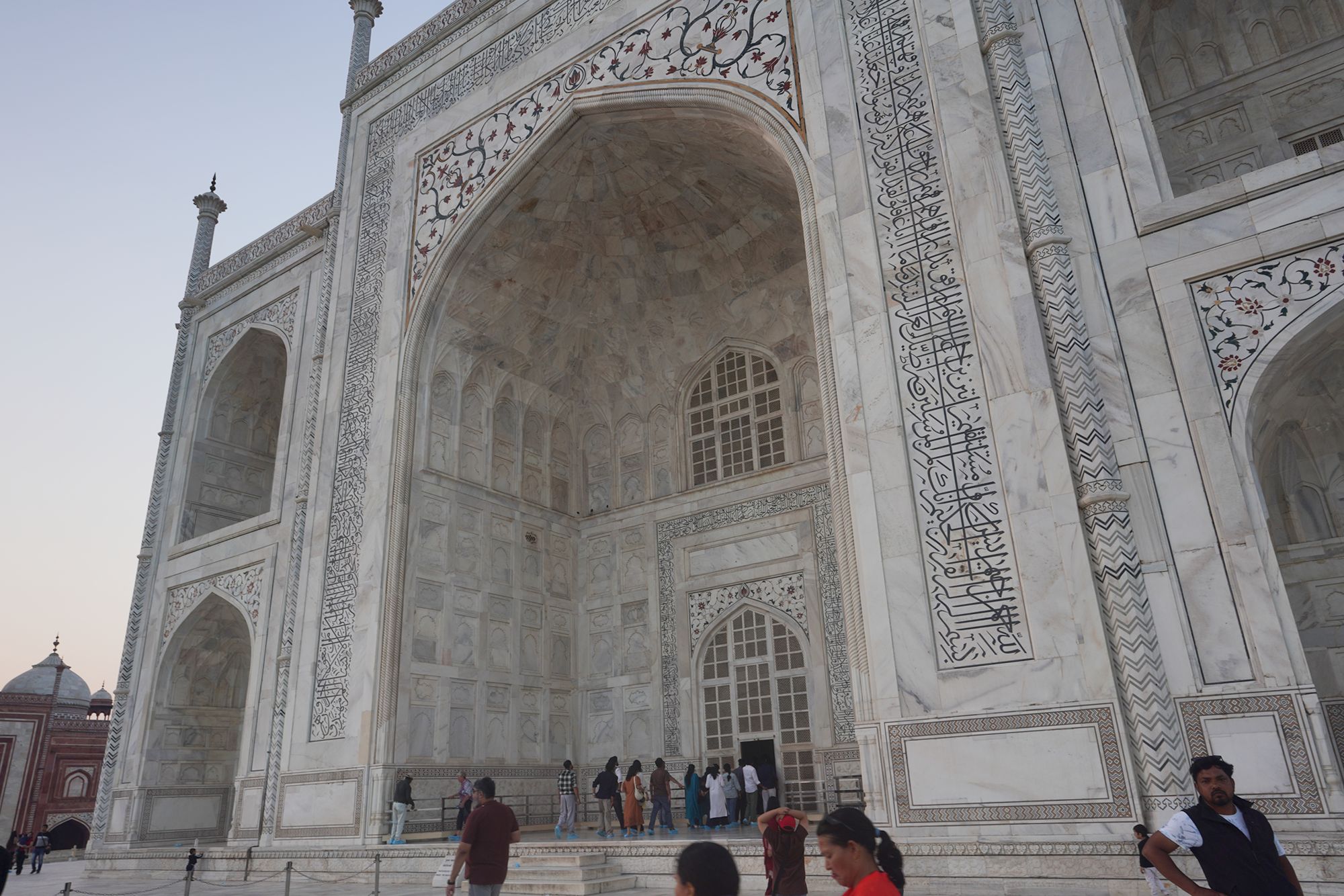
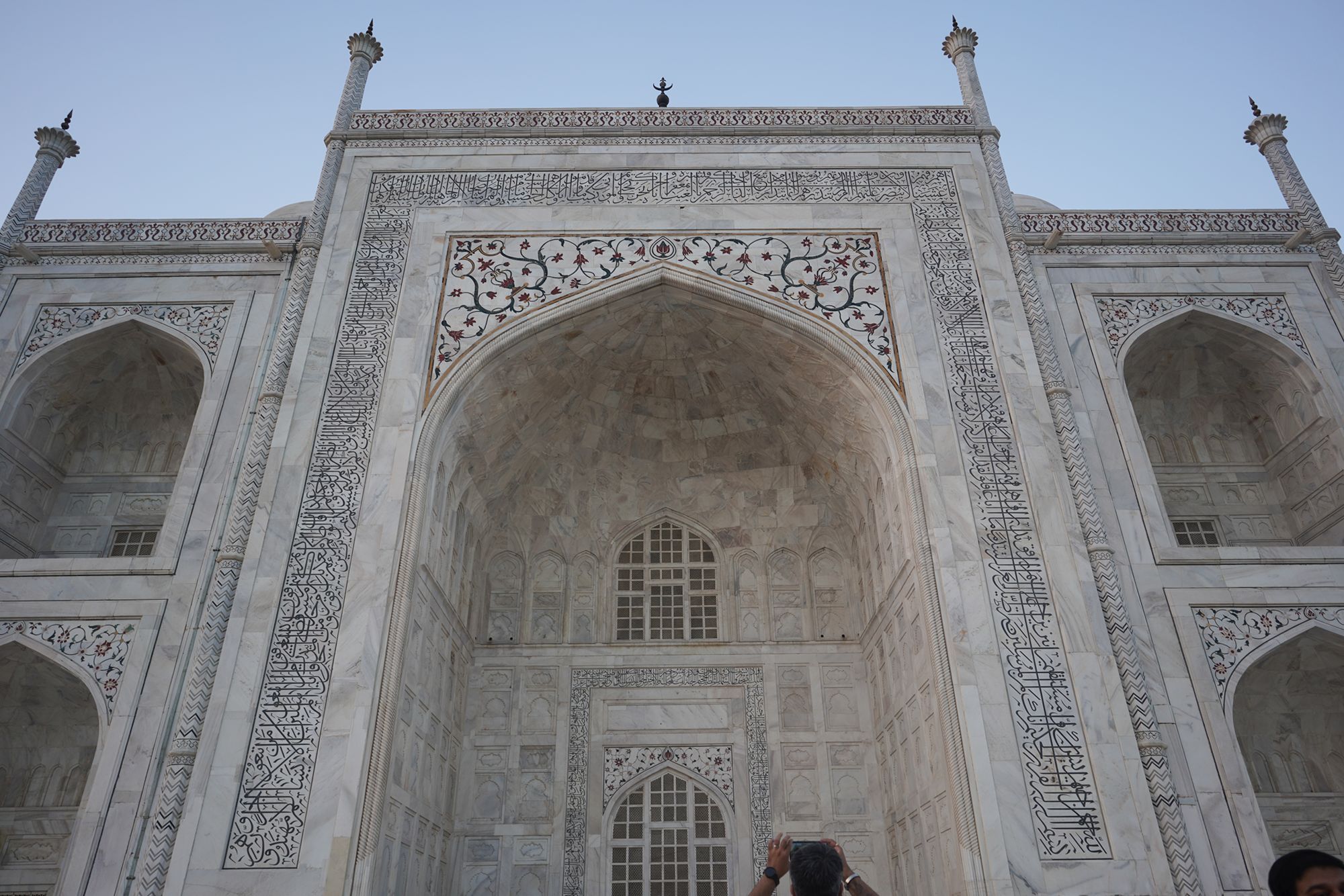
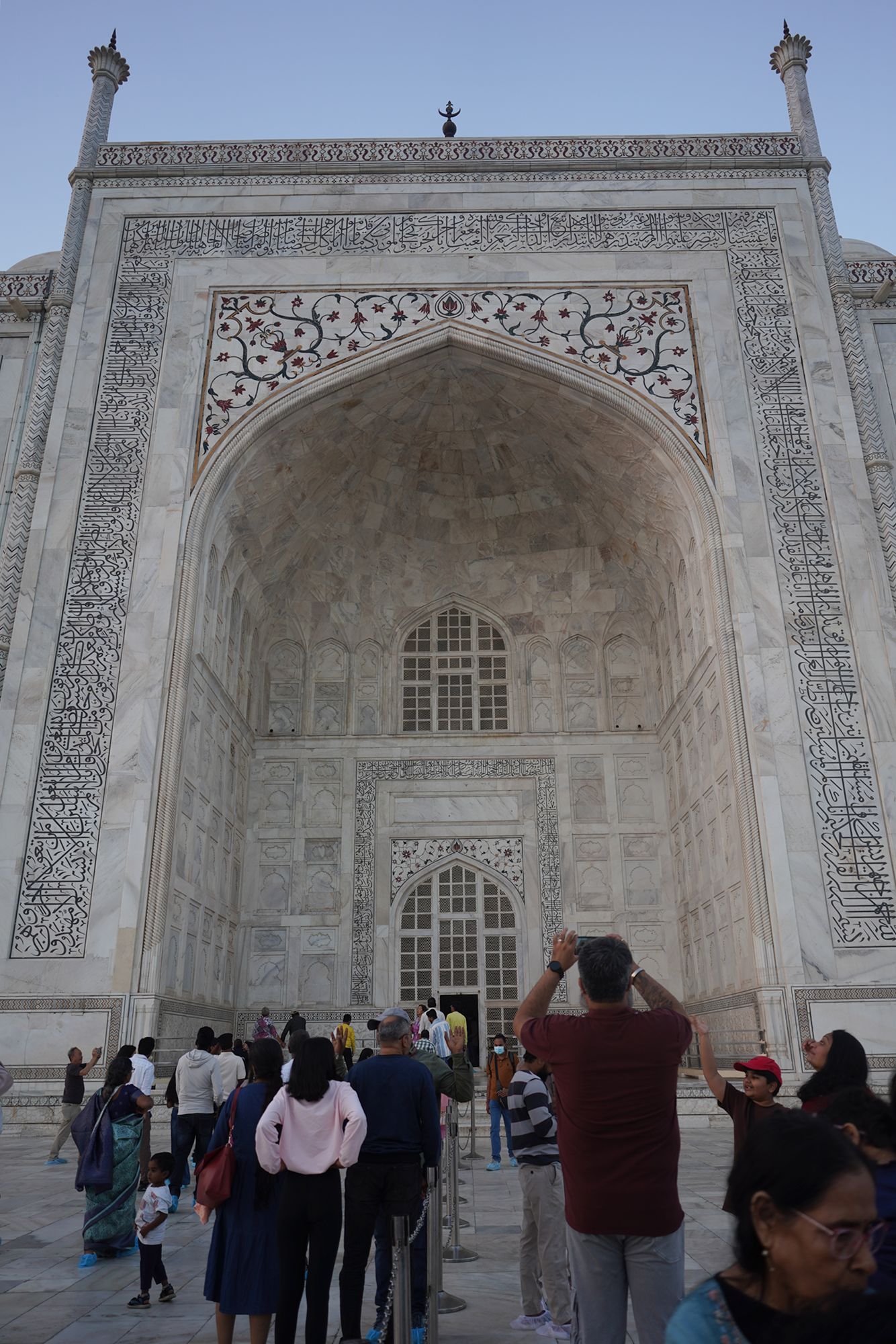
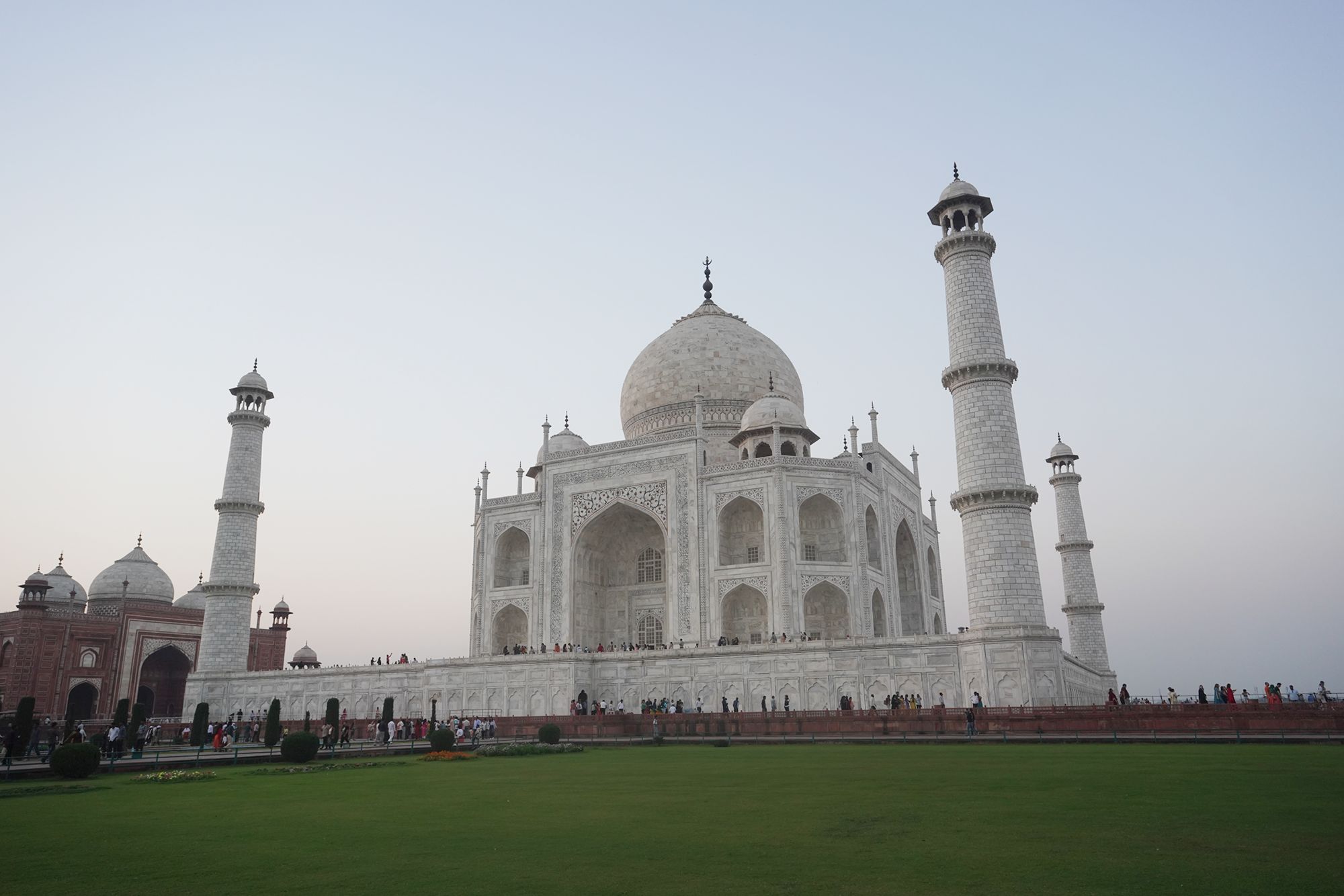
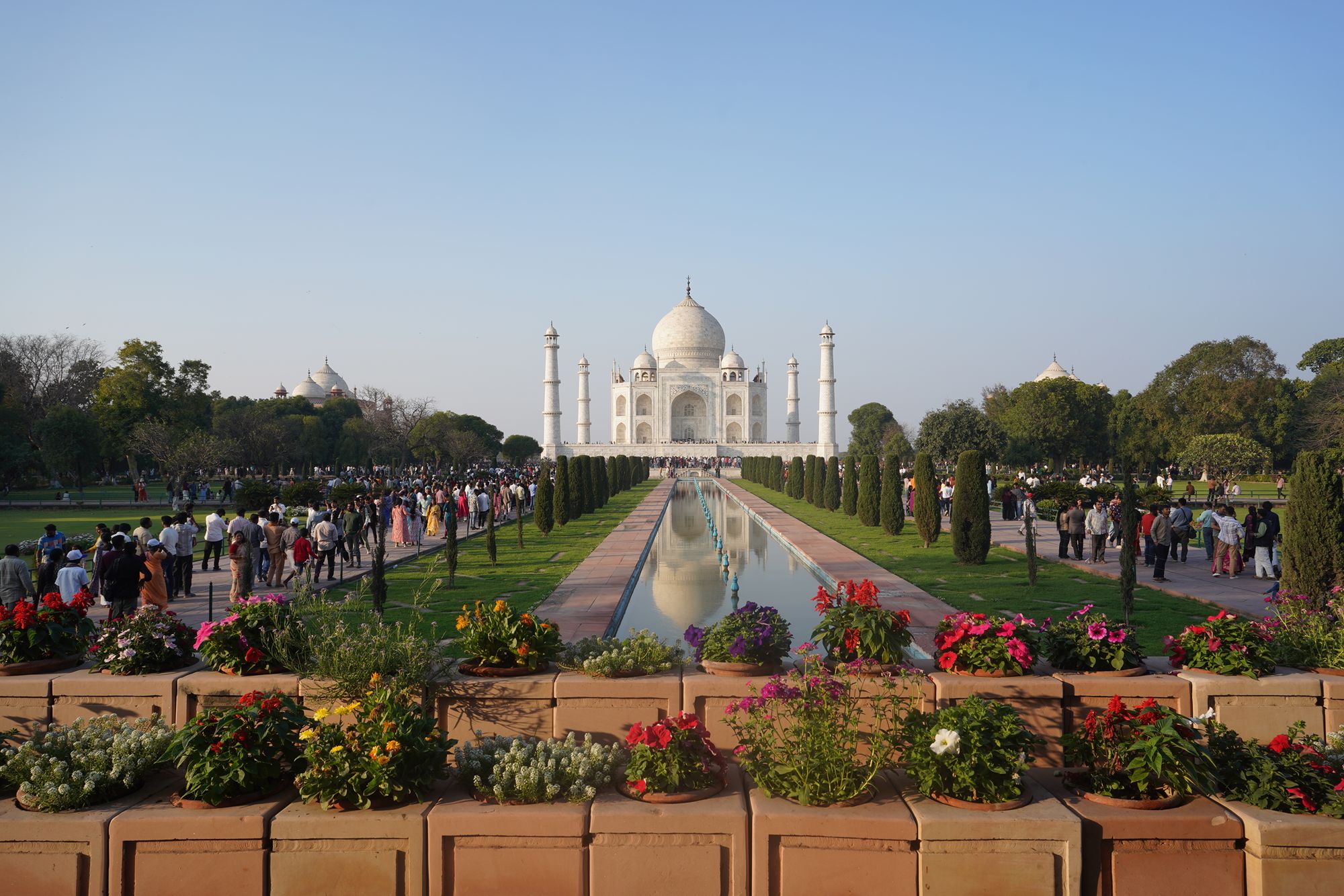
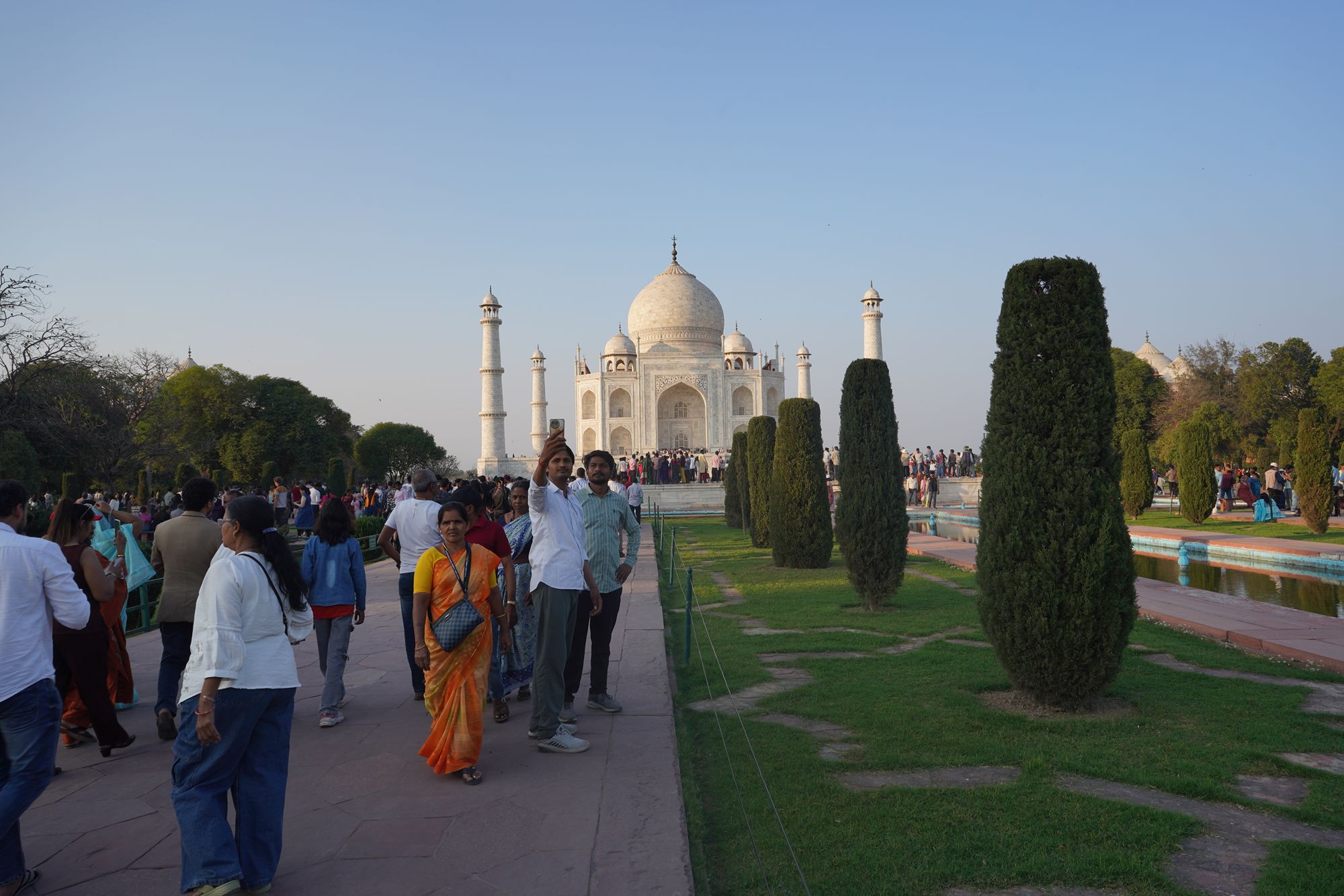
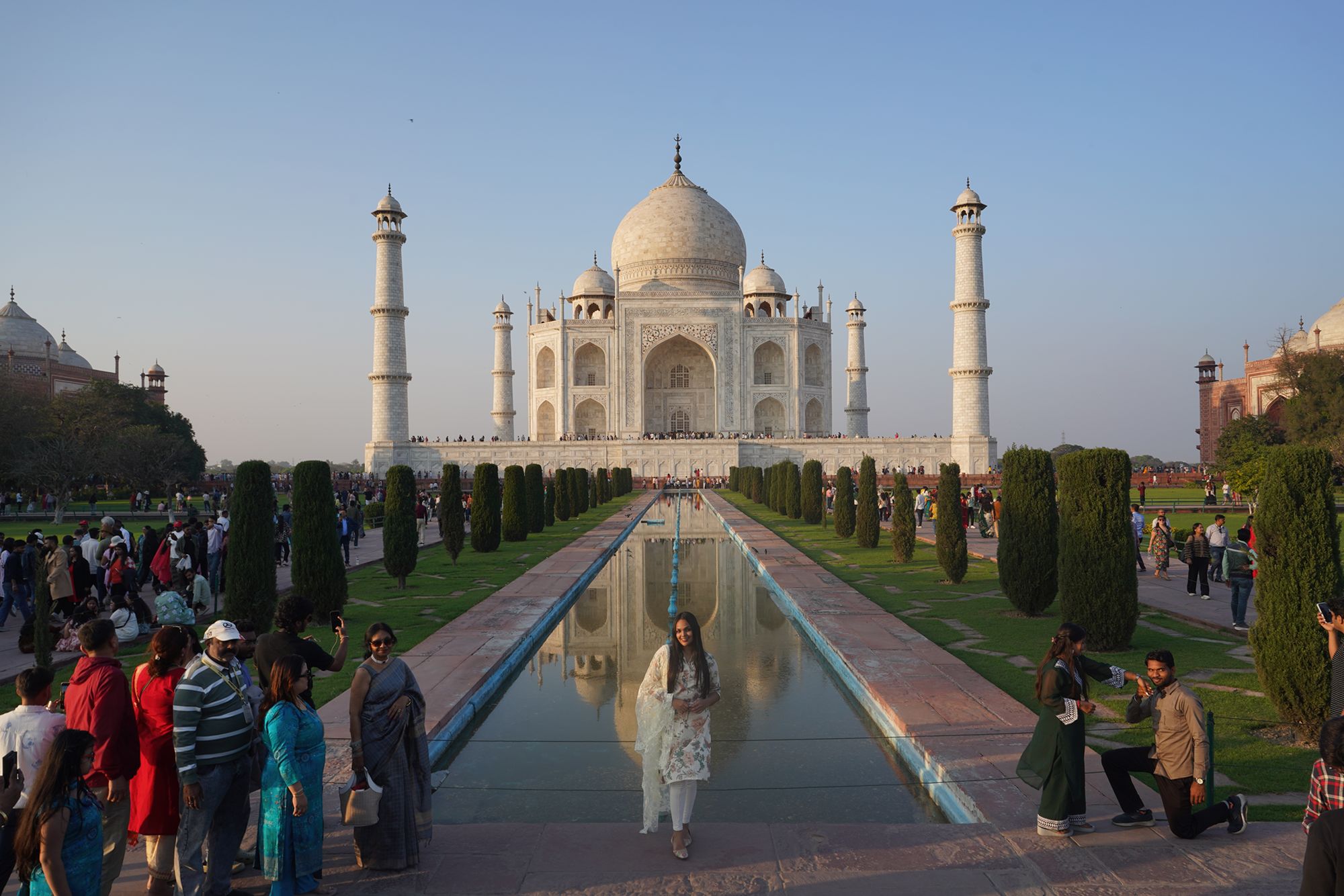
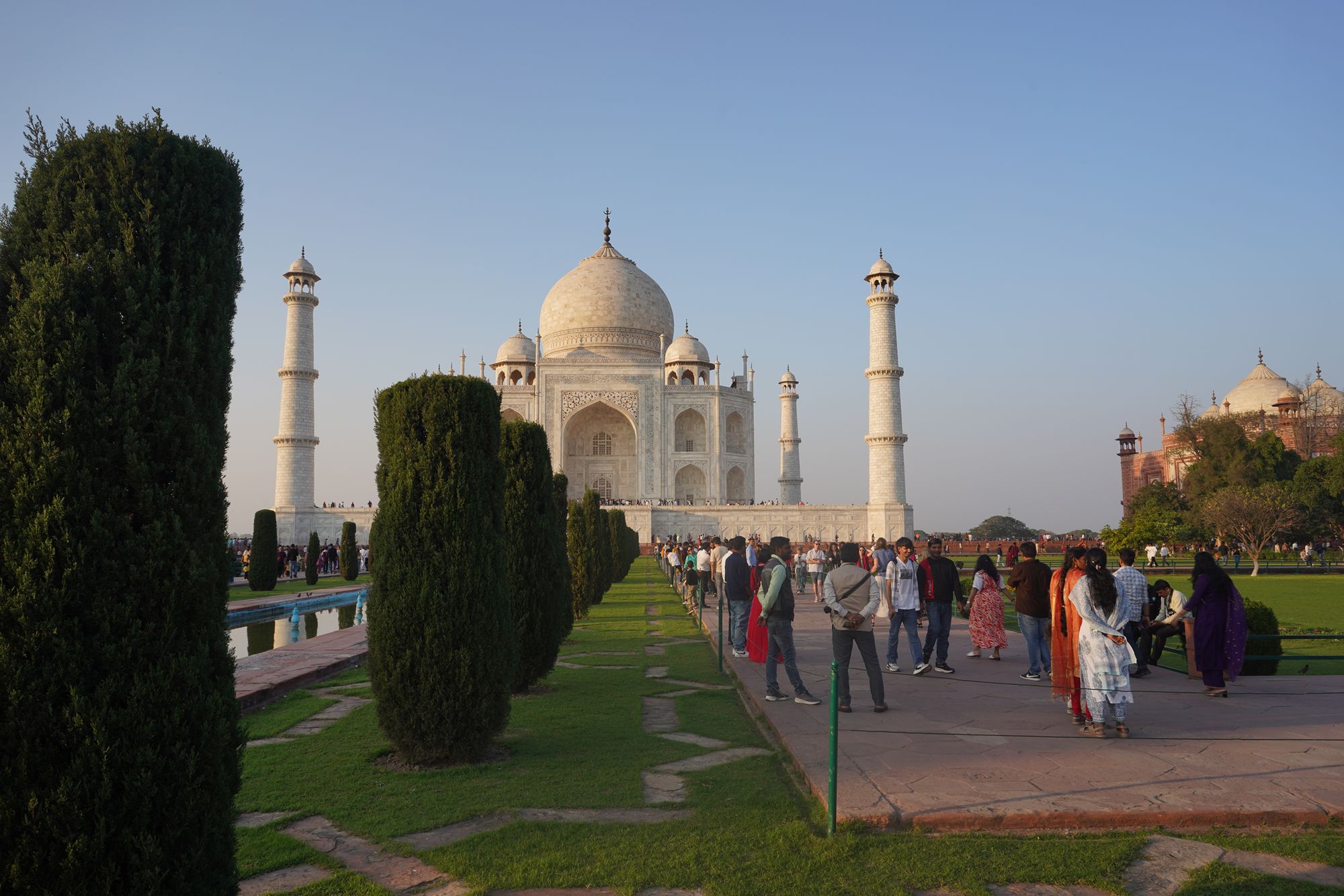
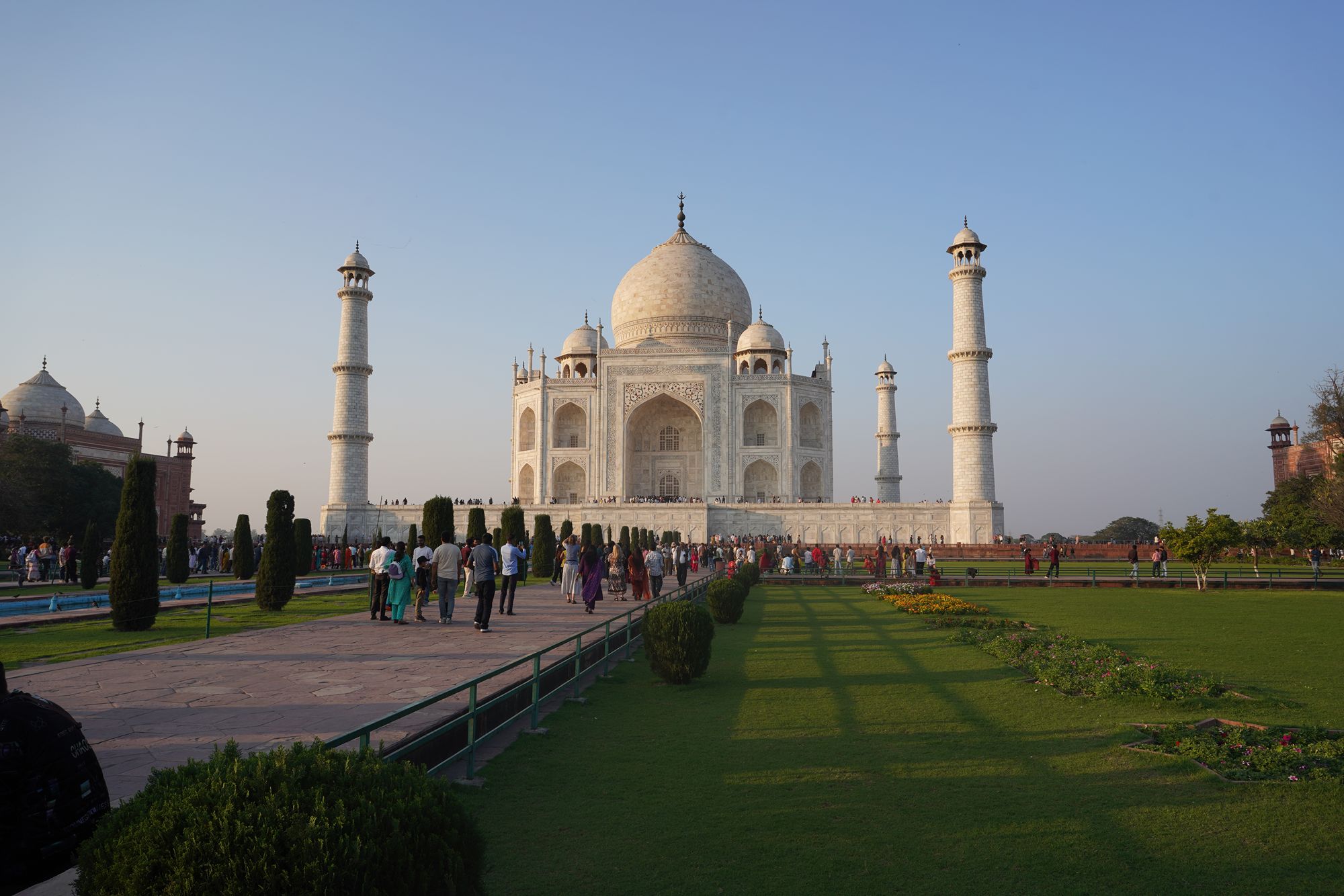
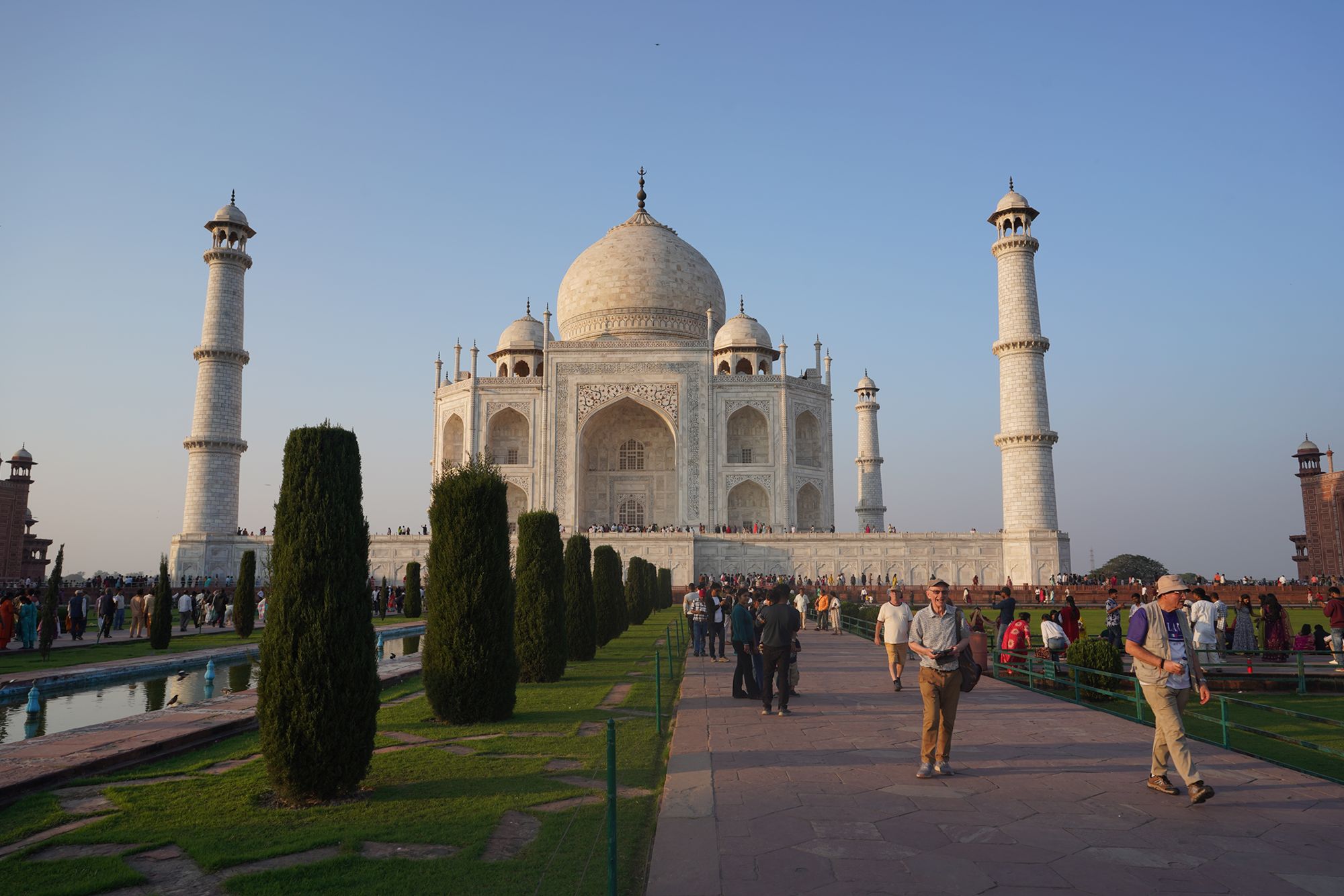
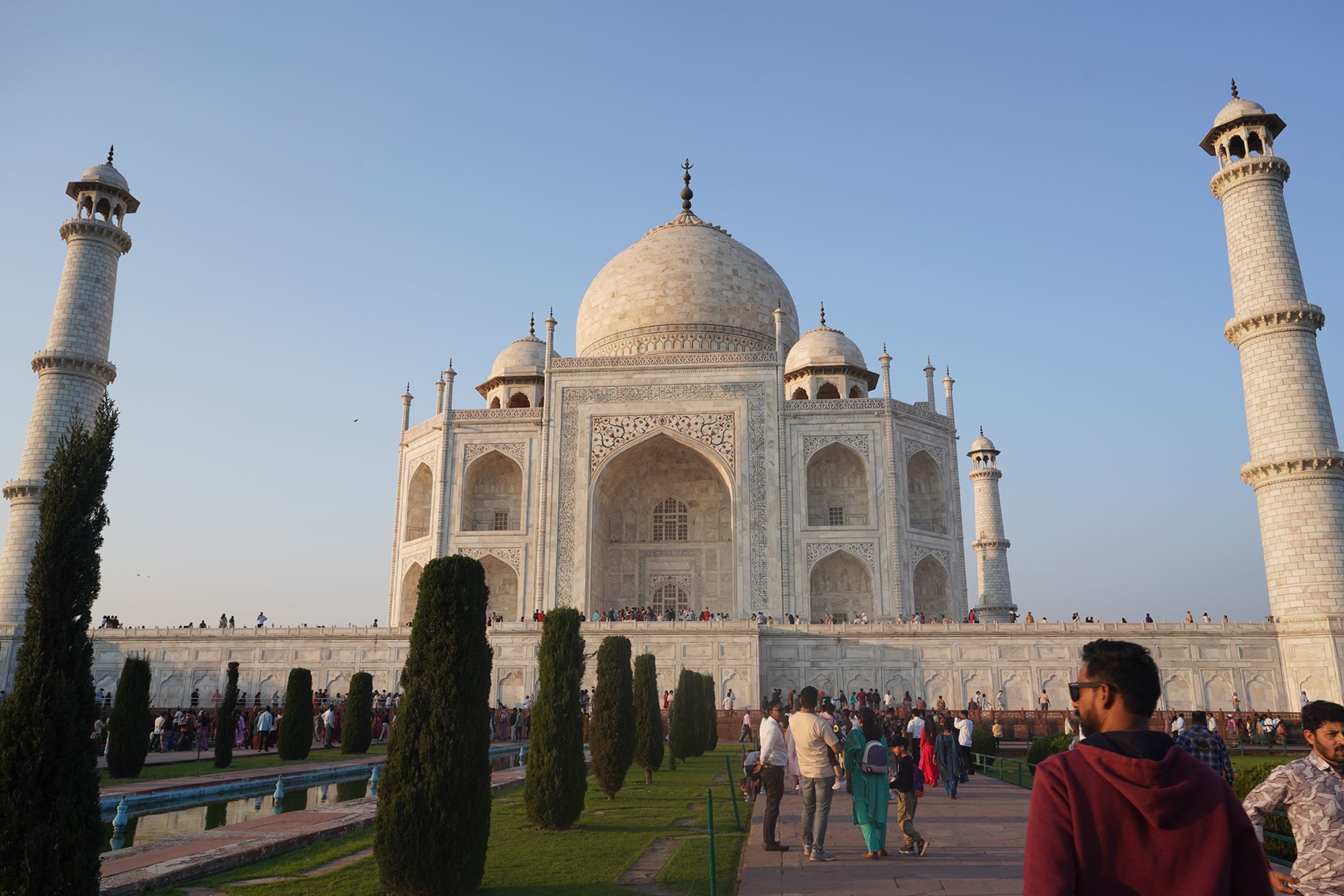
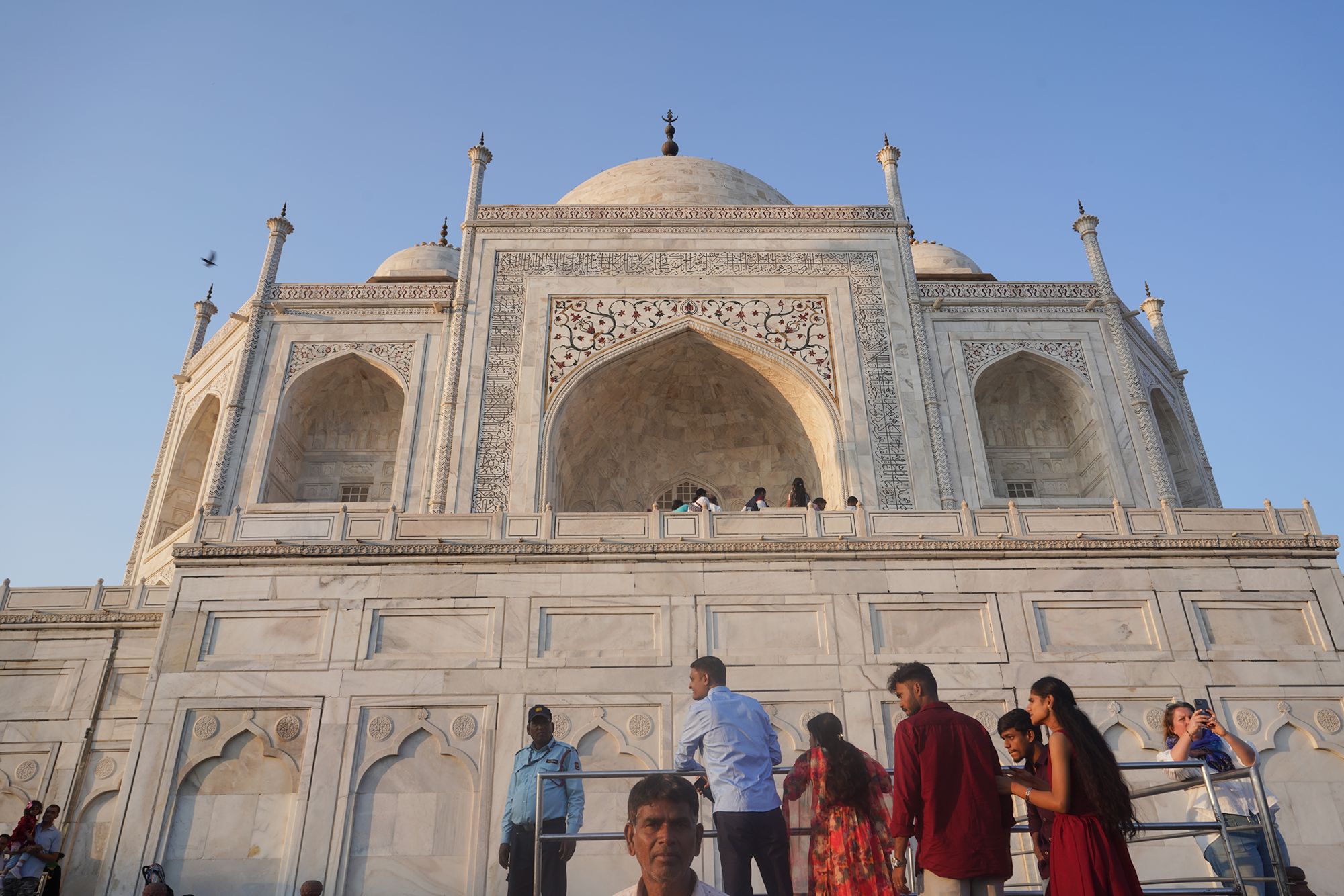
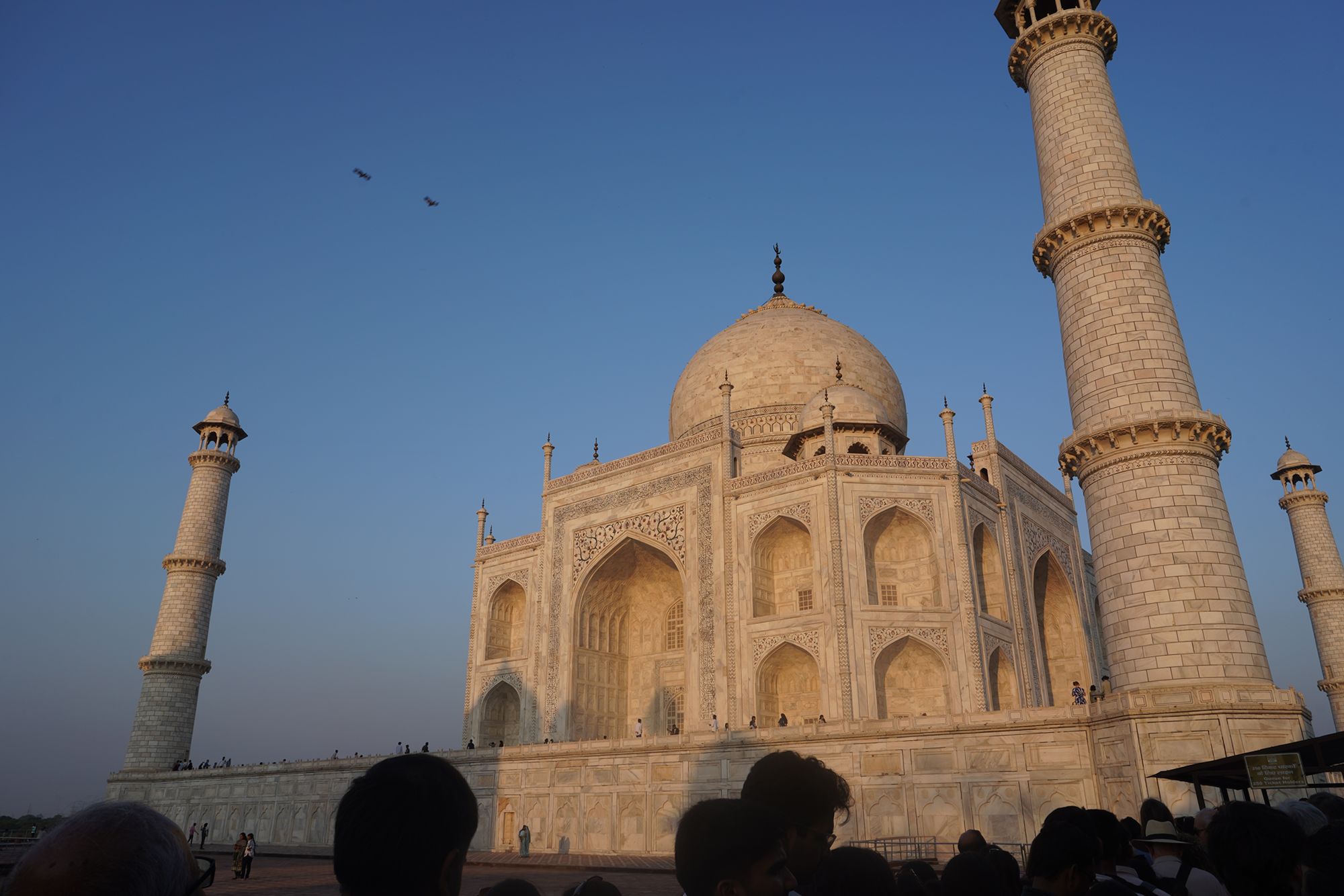
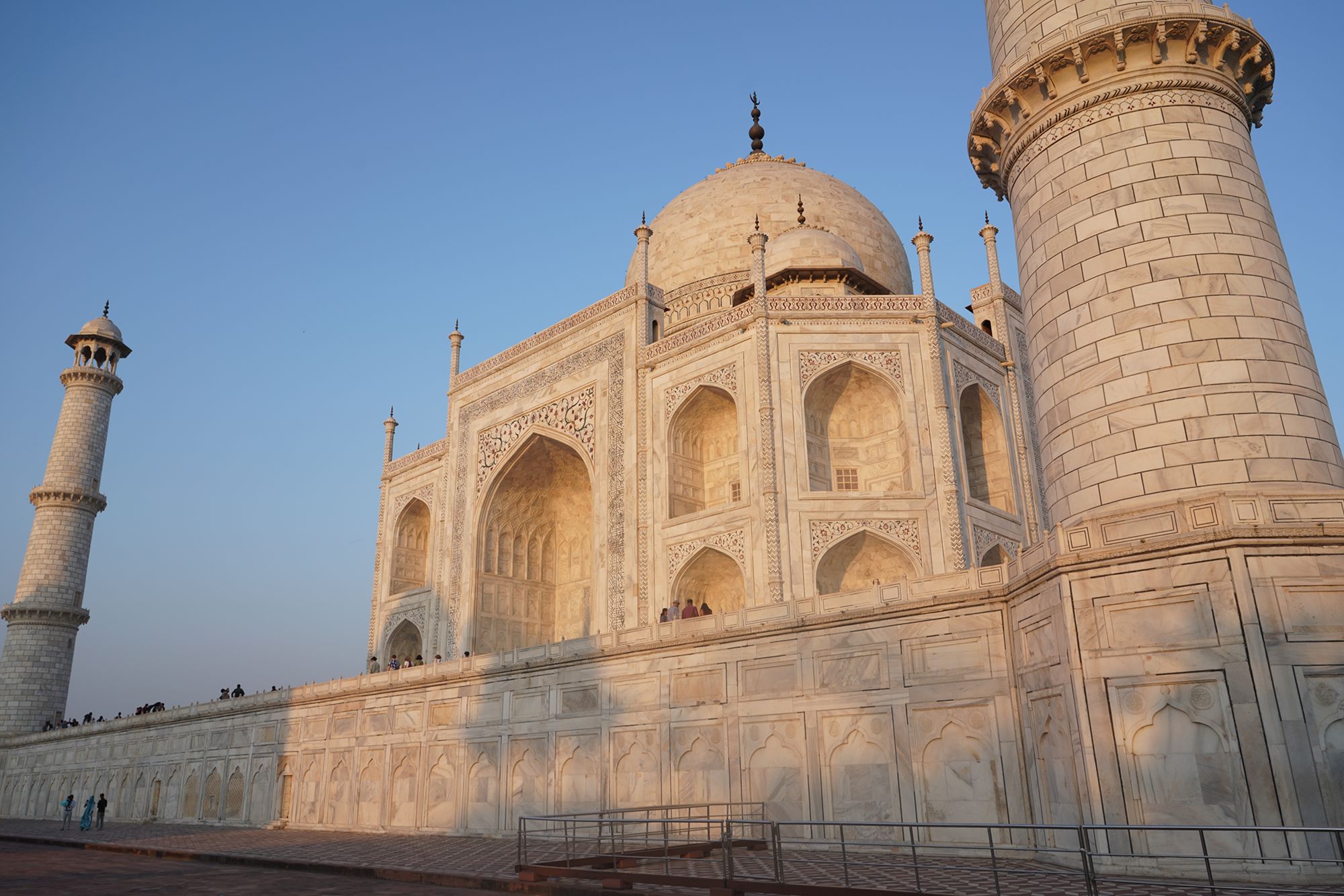
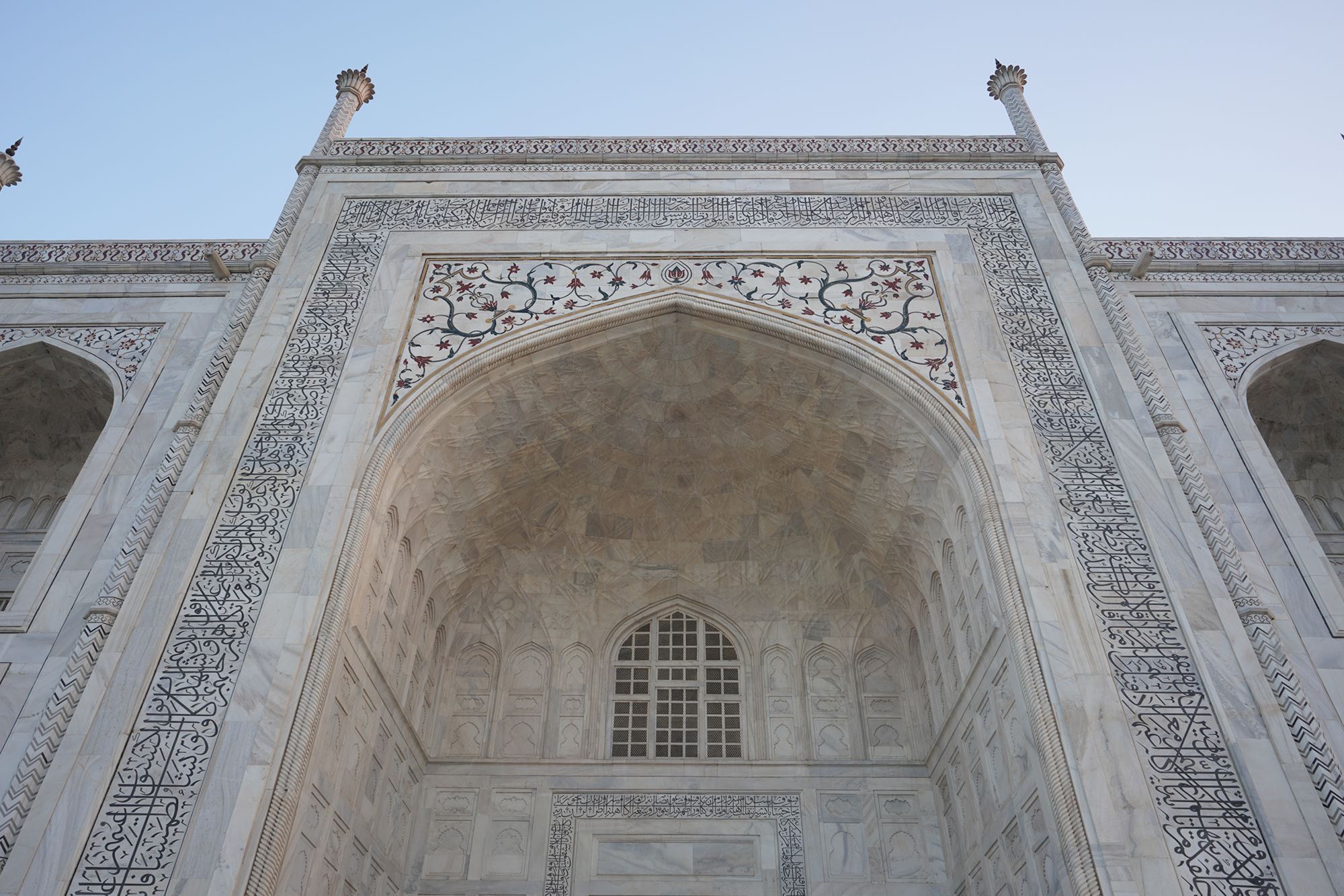
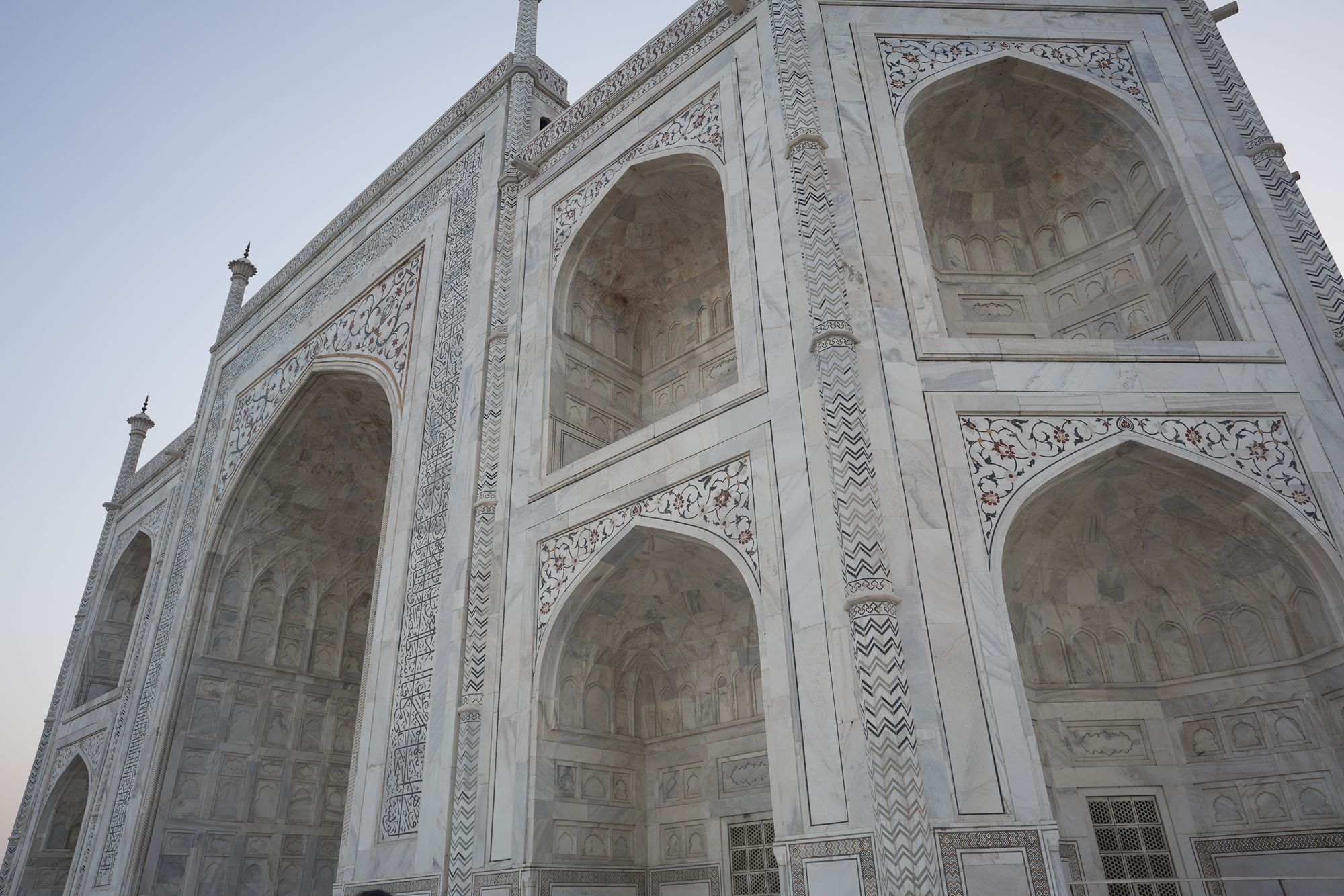
Built primarily of white marble, the Taj Mahal combines elements of Mughal, Persian, Islamic, and Indian architecture. Its most recognizable features are the enormous central dome, four slender minarets, intricate marble inlay work, Quranic calligraphy, and the remarkable symmetry of the entire complex.
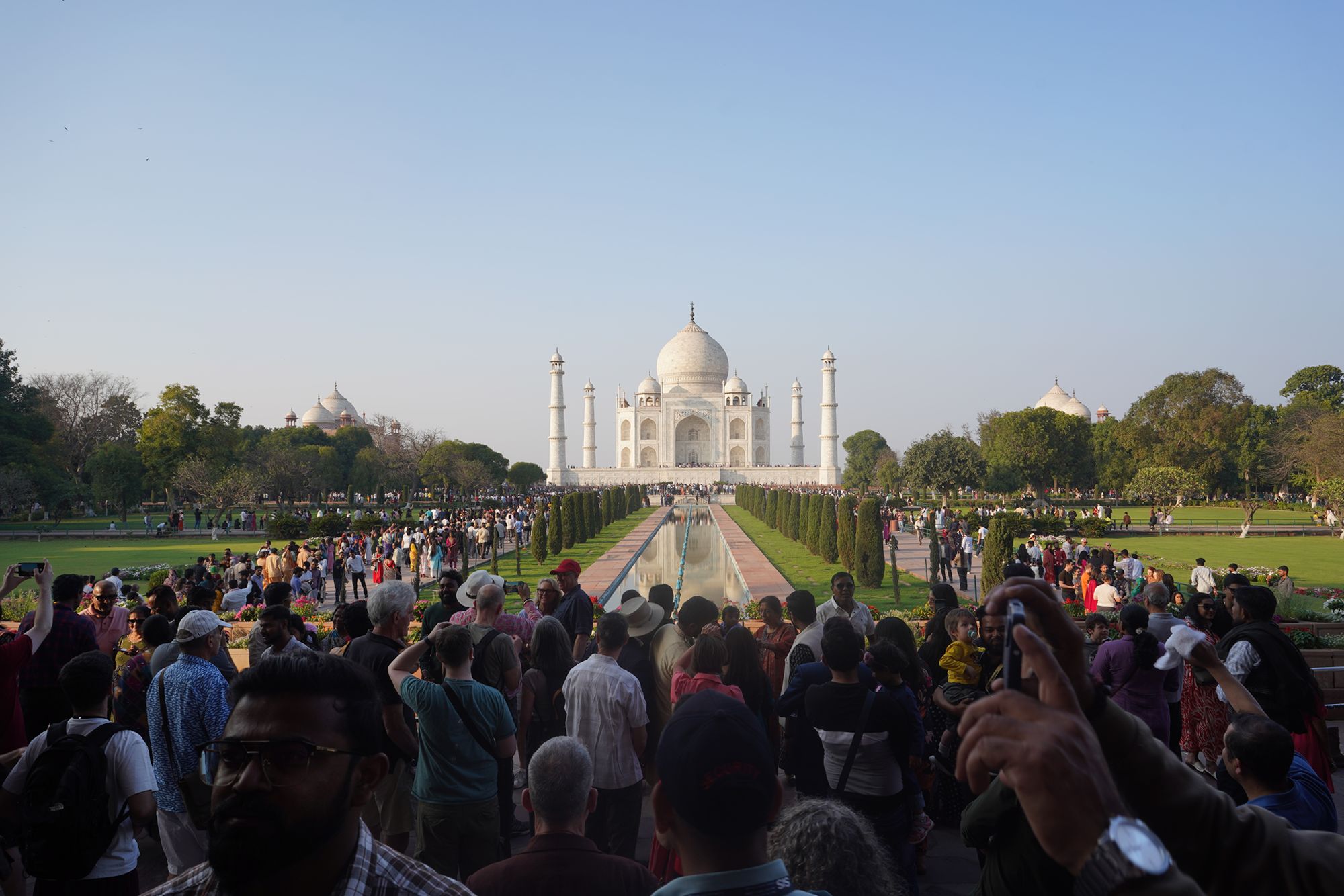
The Taj Mahal is more than an individual building. The complex includes a formal Mughal garden, reflecting pool, mosque, guest building, monumental gateway, and other structures, all carefully arranged around the mausoleum.
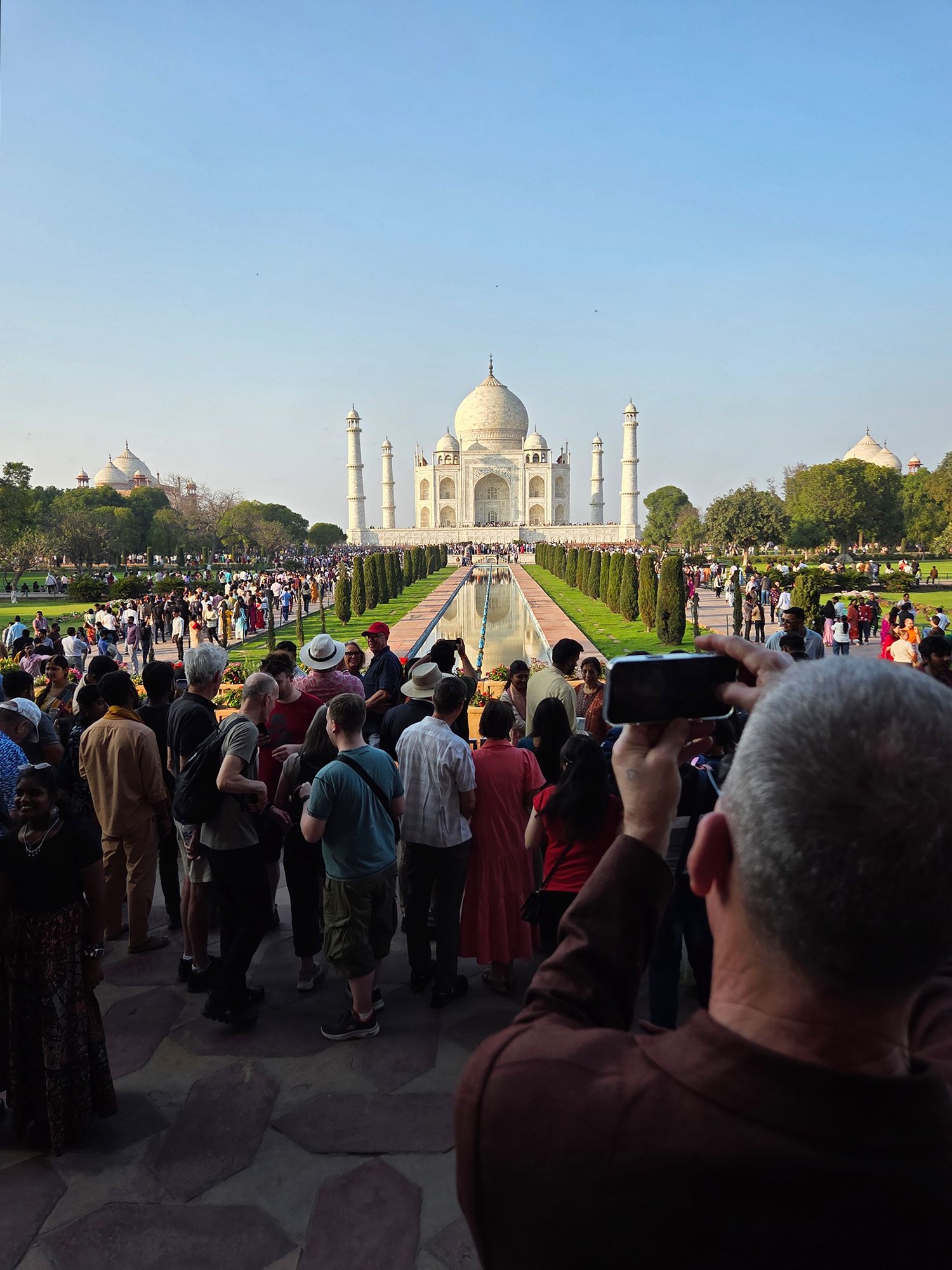
Today, the Taj Mahal is a UNESCO World Heritage Site and one of the most recognizable monuments in the world. Although often described simply as a monument to love, it is also one of the greatest surviving examples of Mughal architecture and craftsmanship at the height of the Mughal Empire.
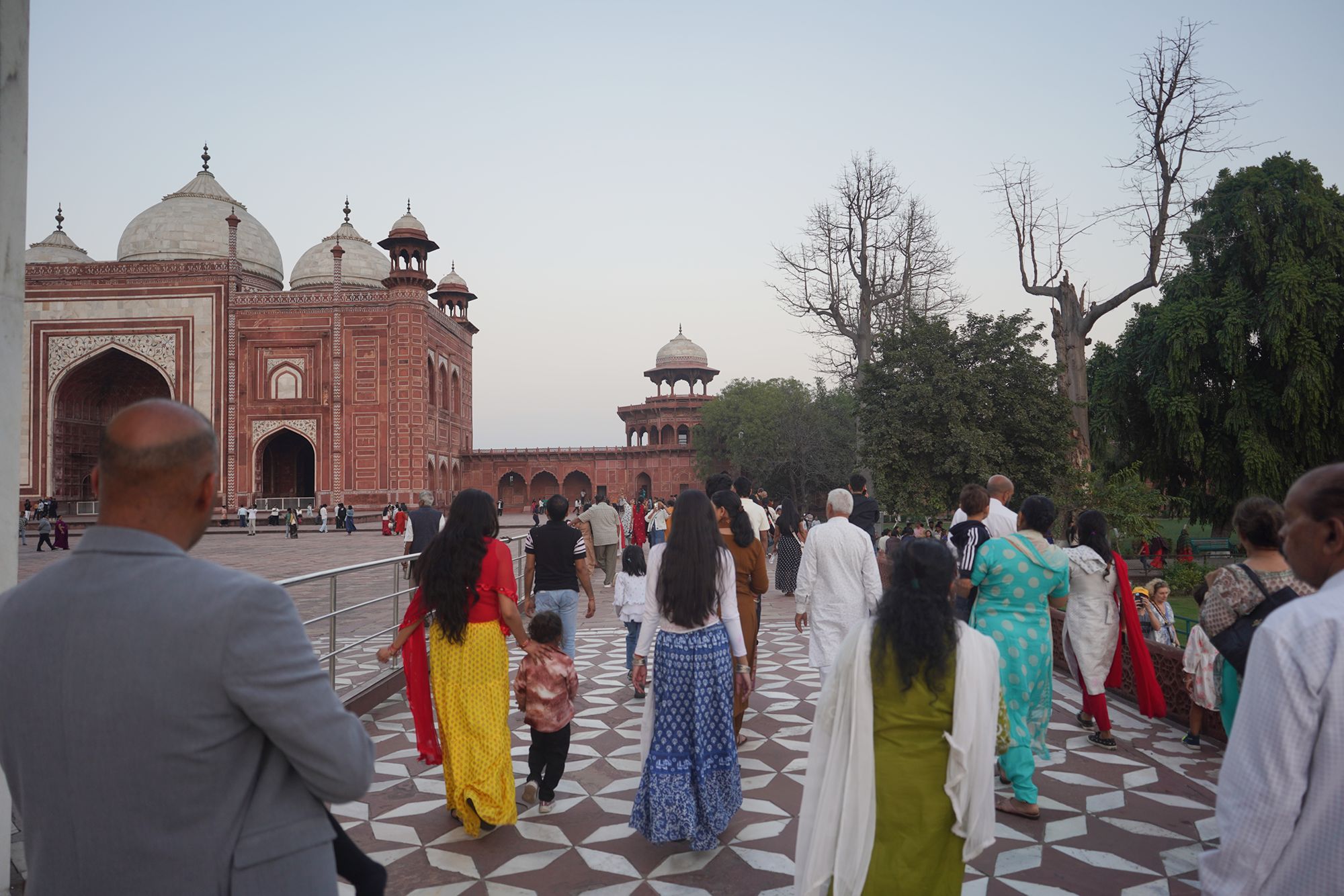
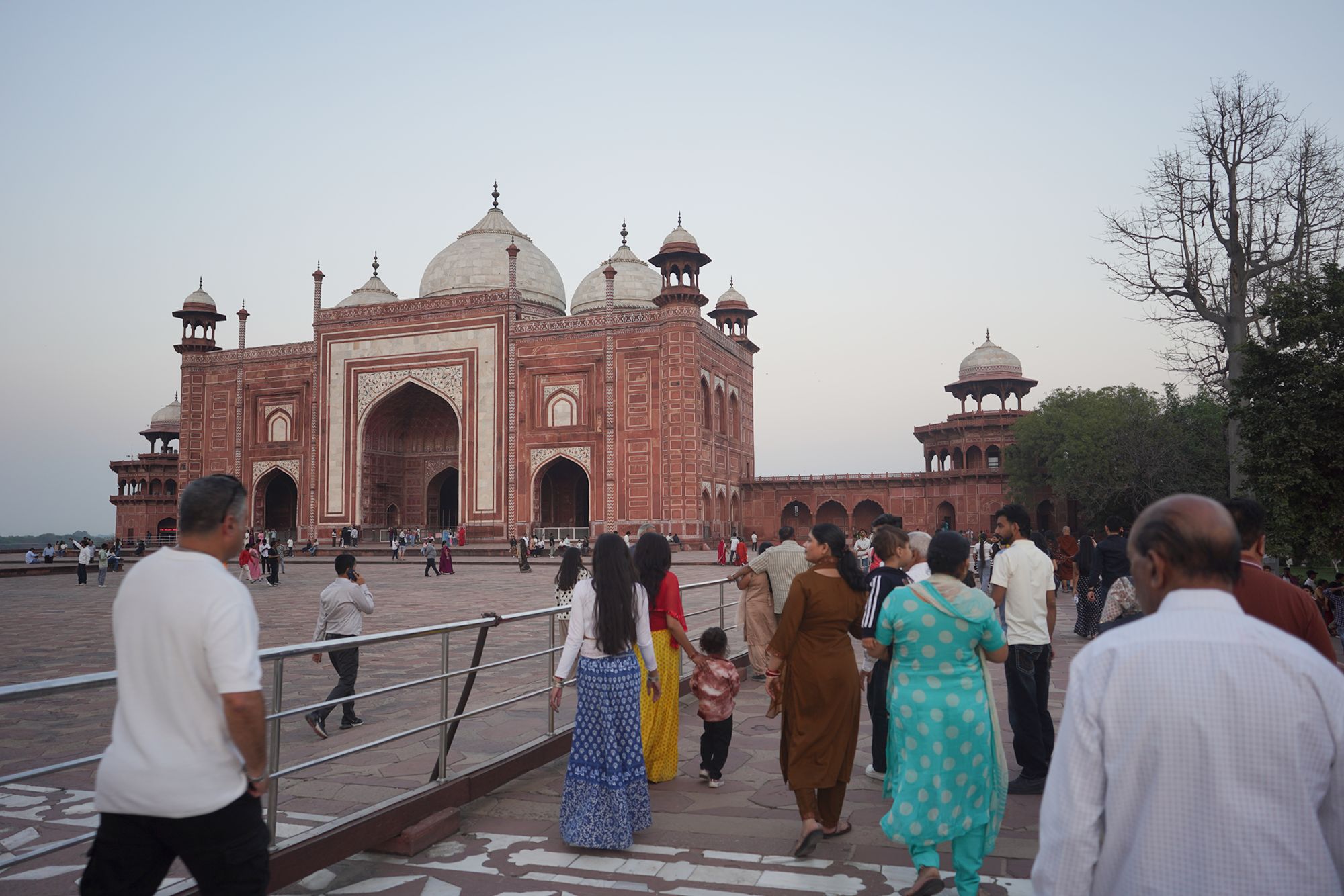
Taj Mahal Mosque
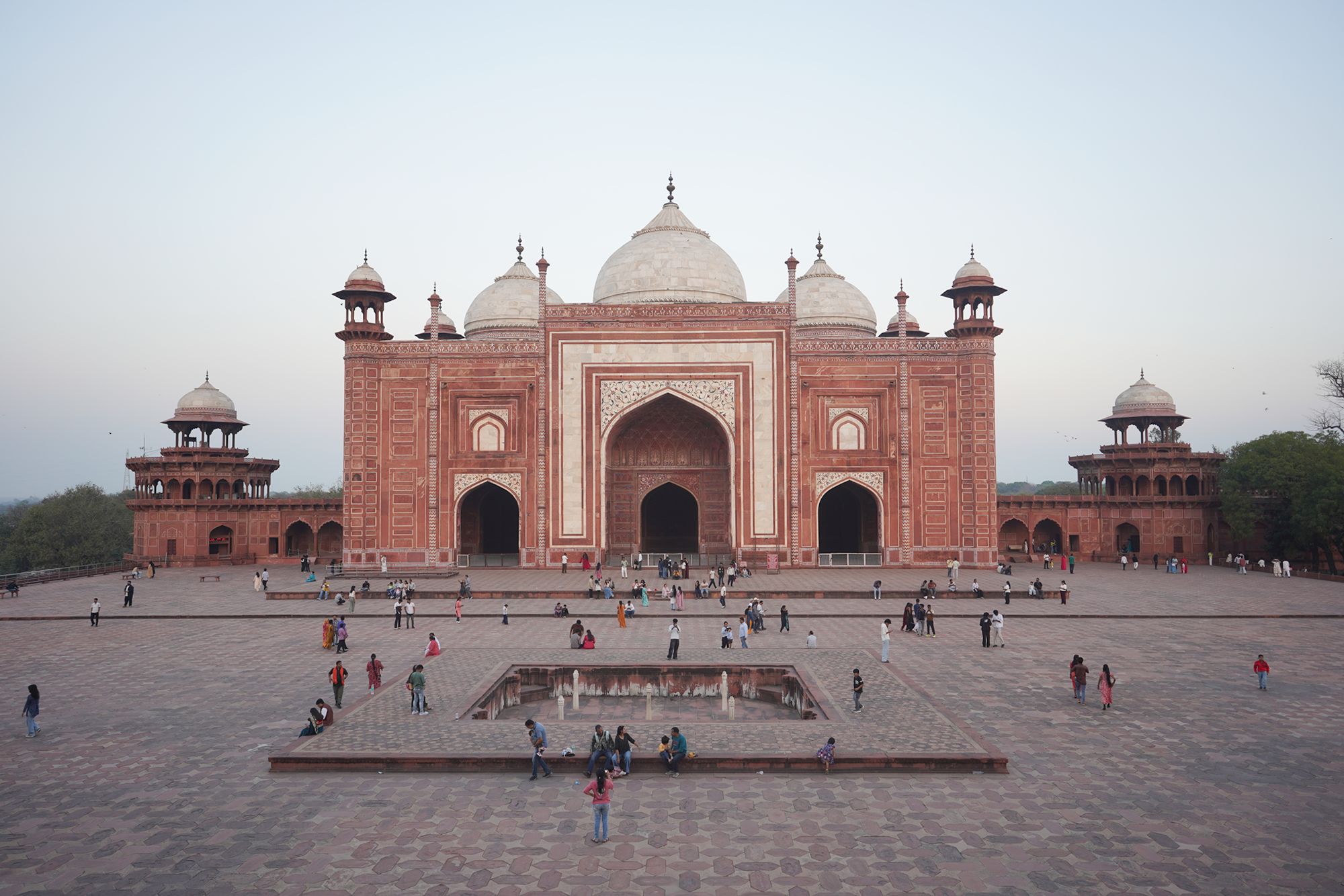
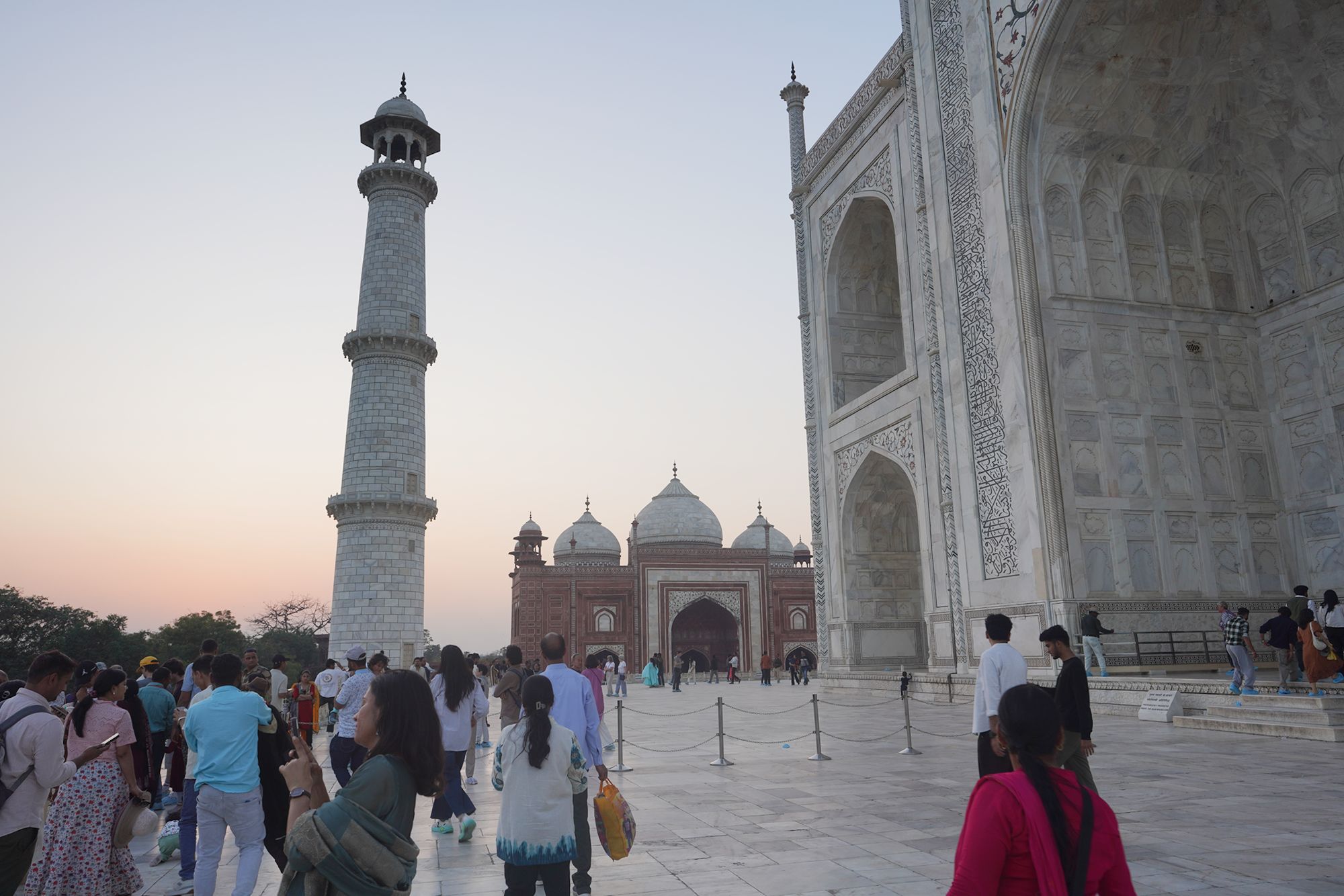
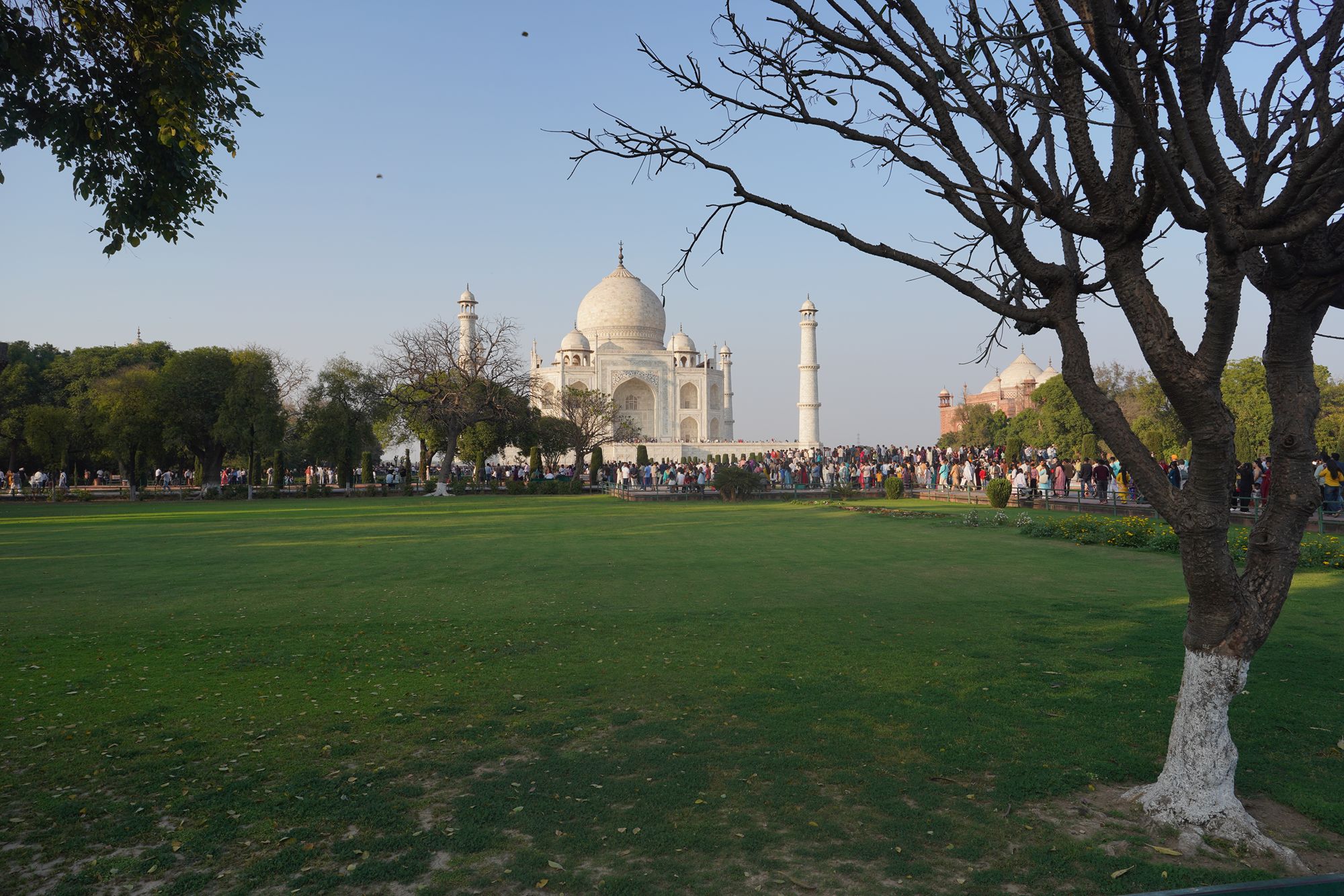
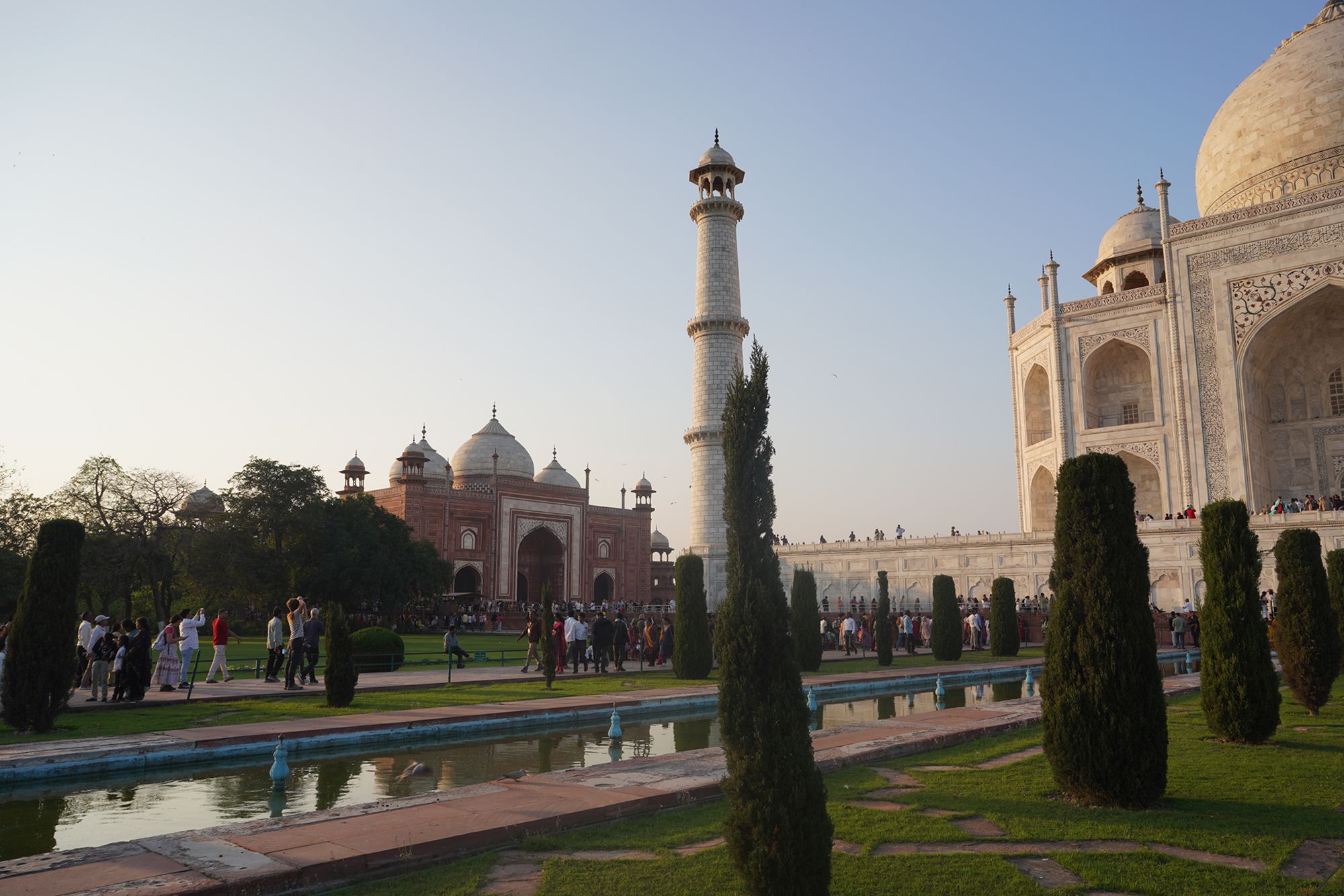
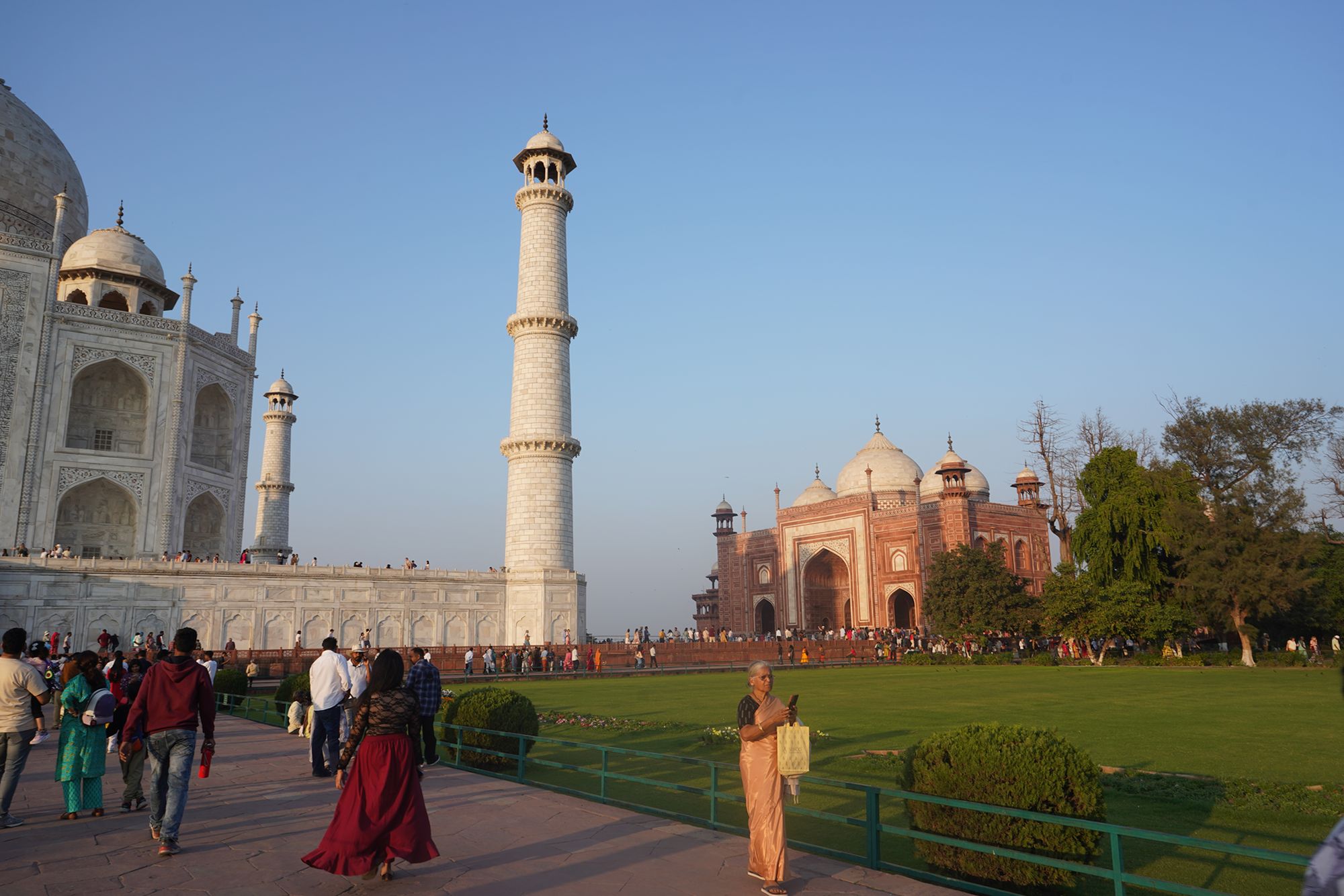
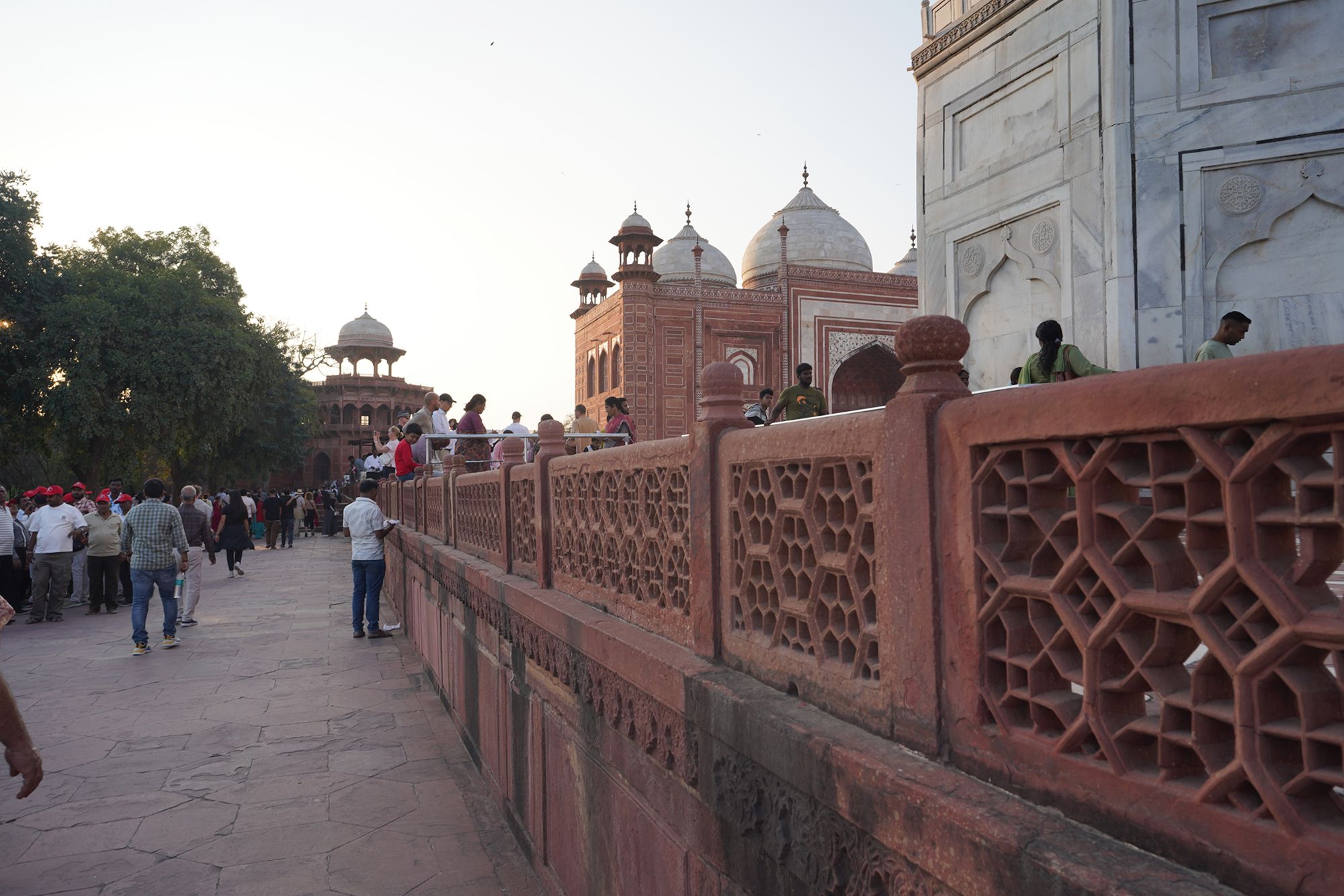
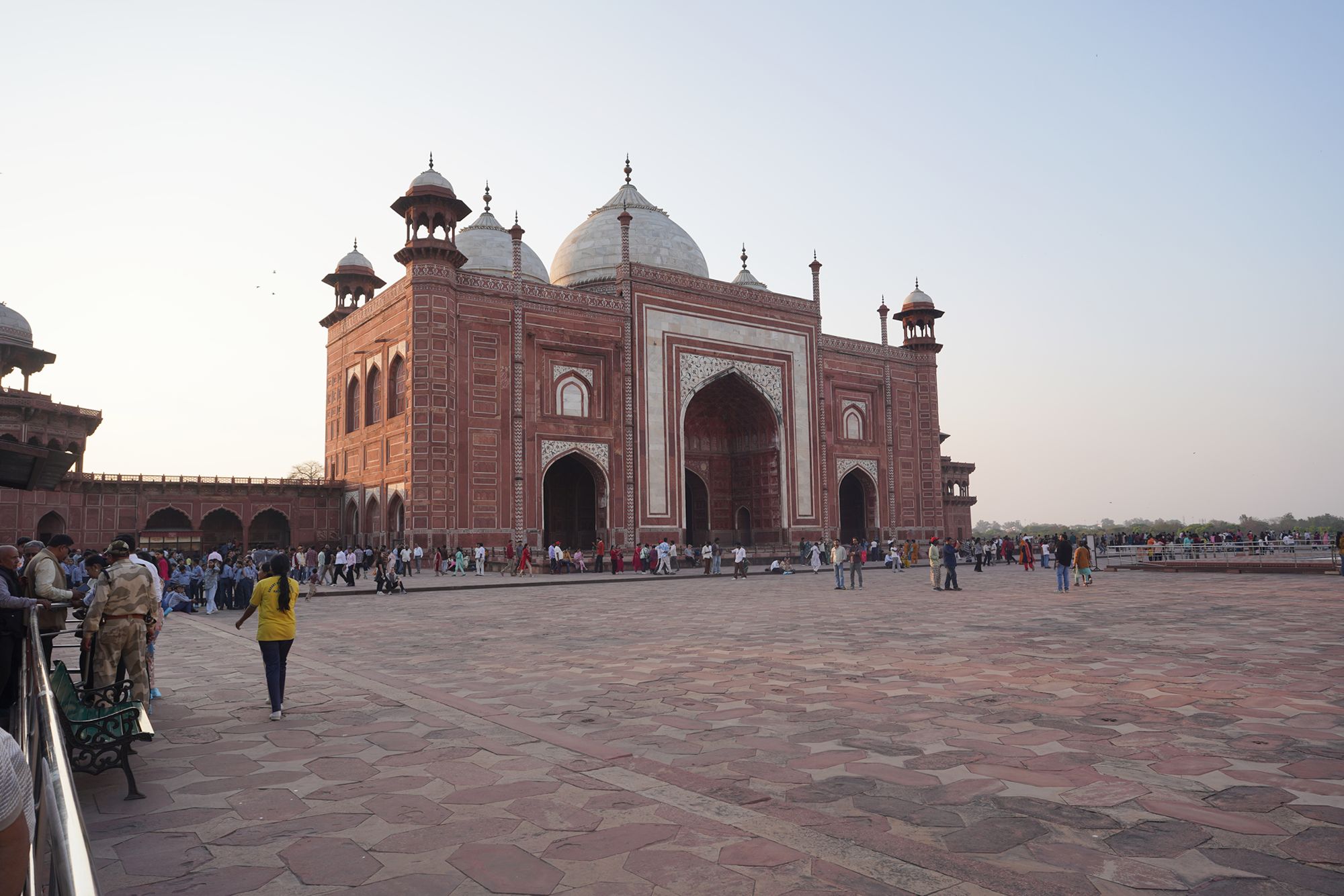
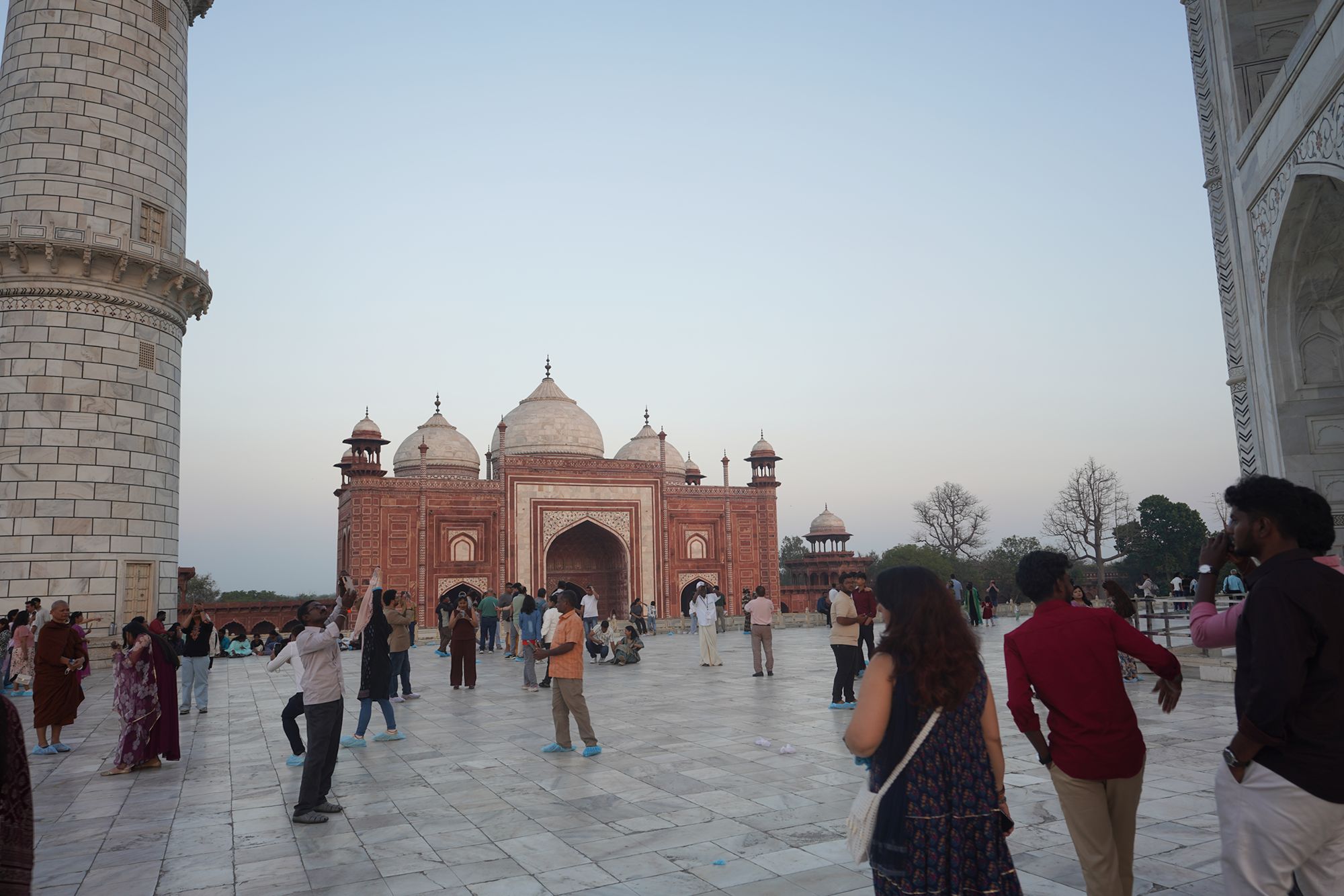
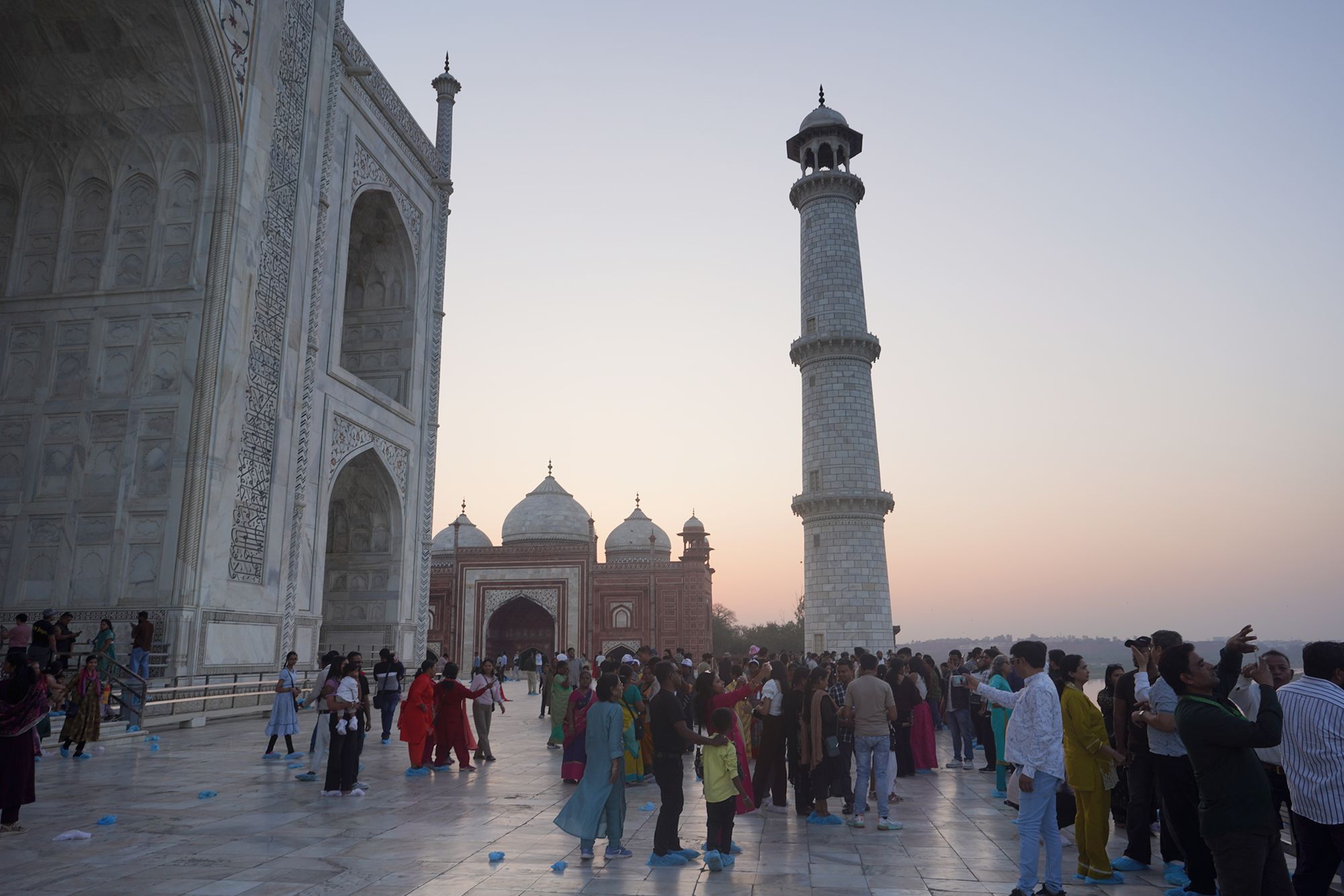
The Taj Mahal Mosque is the red sandstone building located on the western side of the Taj Mahal, facing the mausoleum. It was constructed as part of Shah Jahan's original Taj Mahal complex in the 17th century and is still an active mosque.
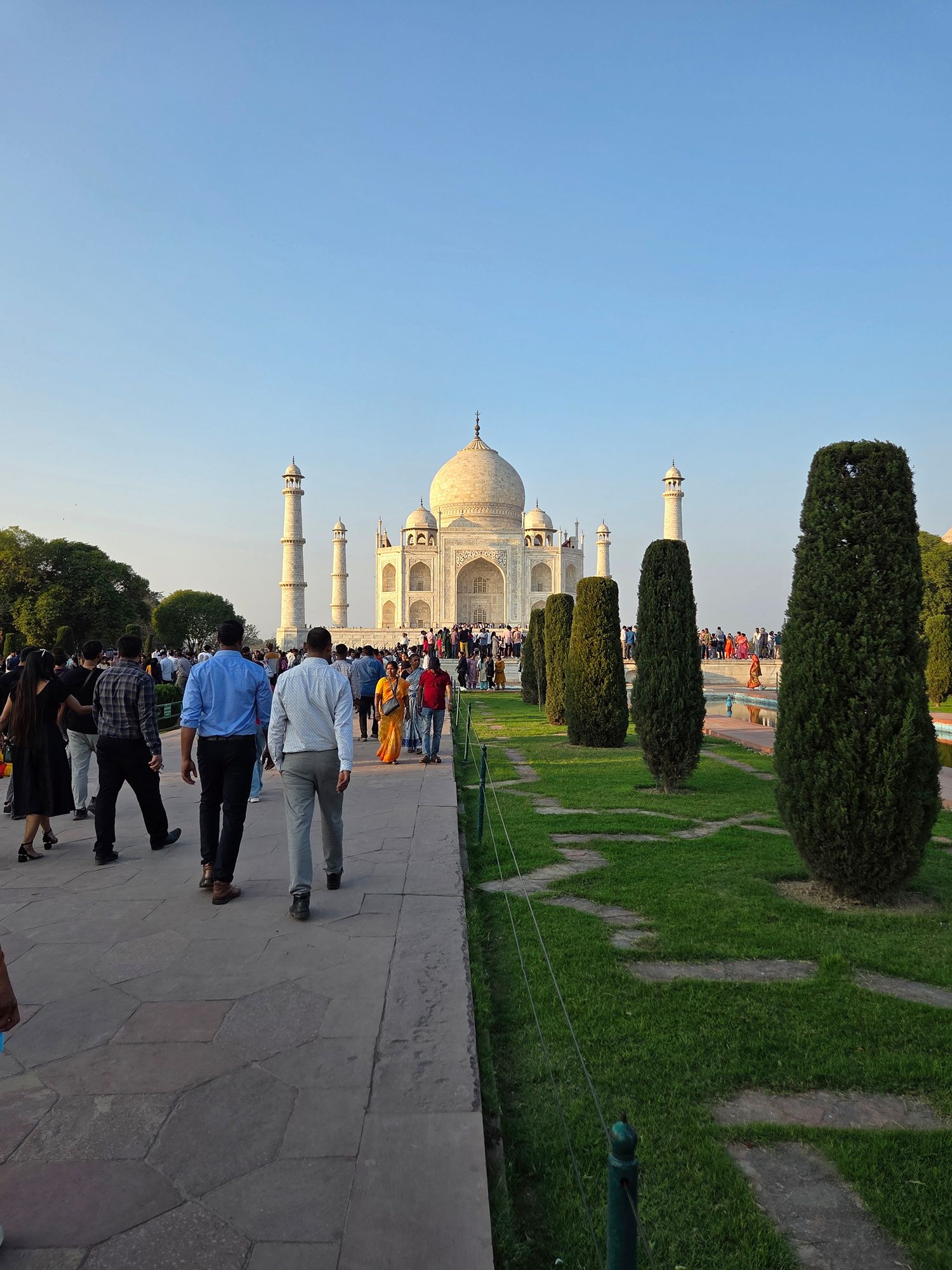
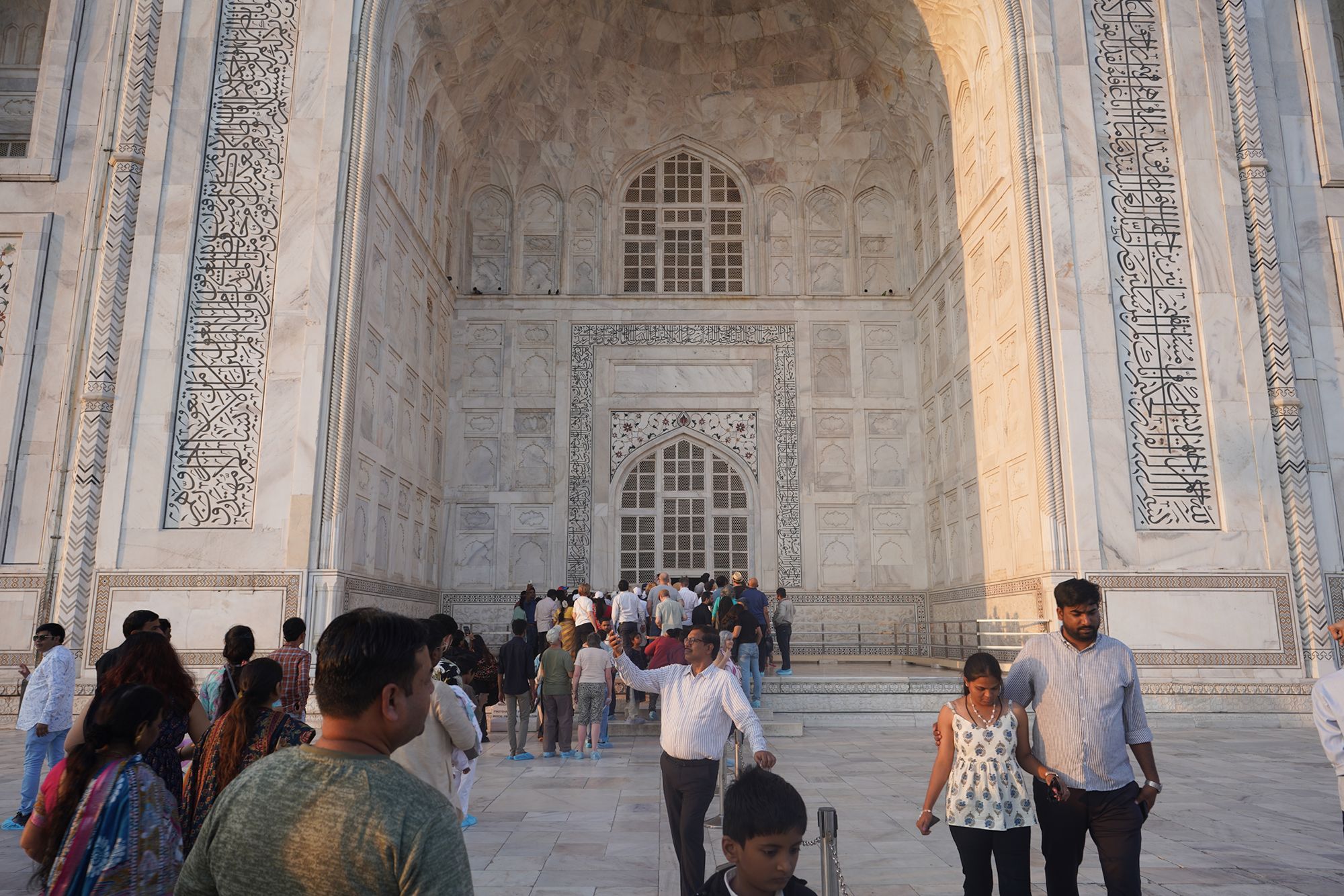
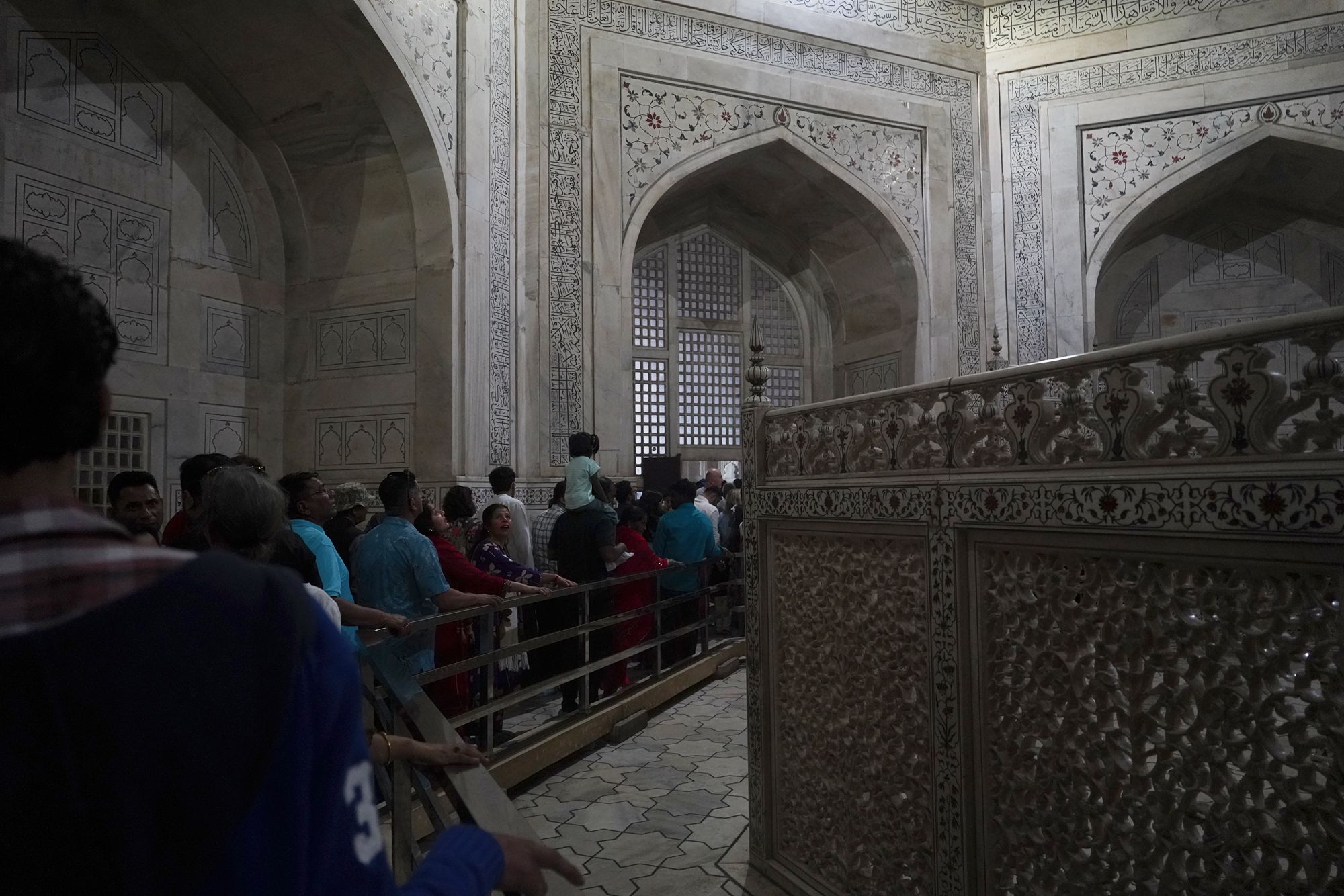
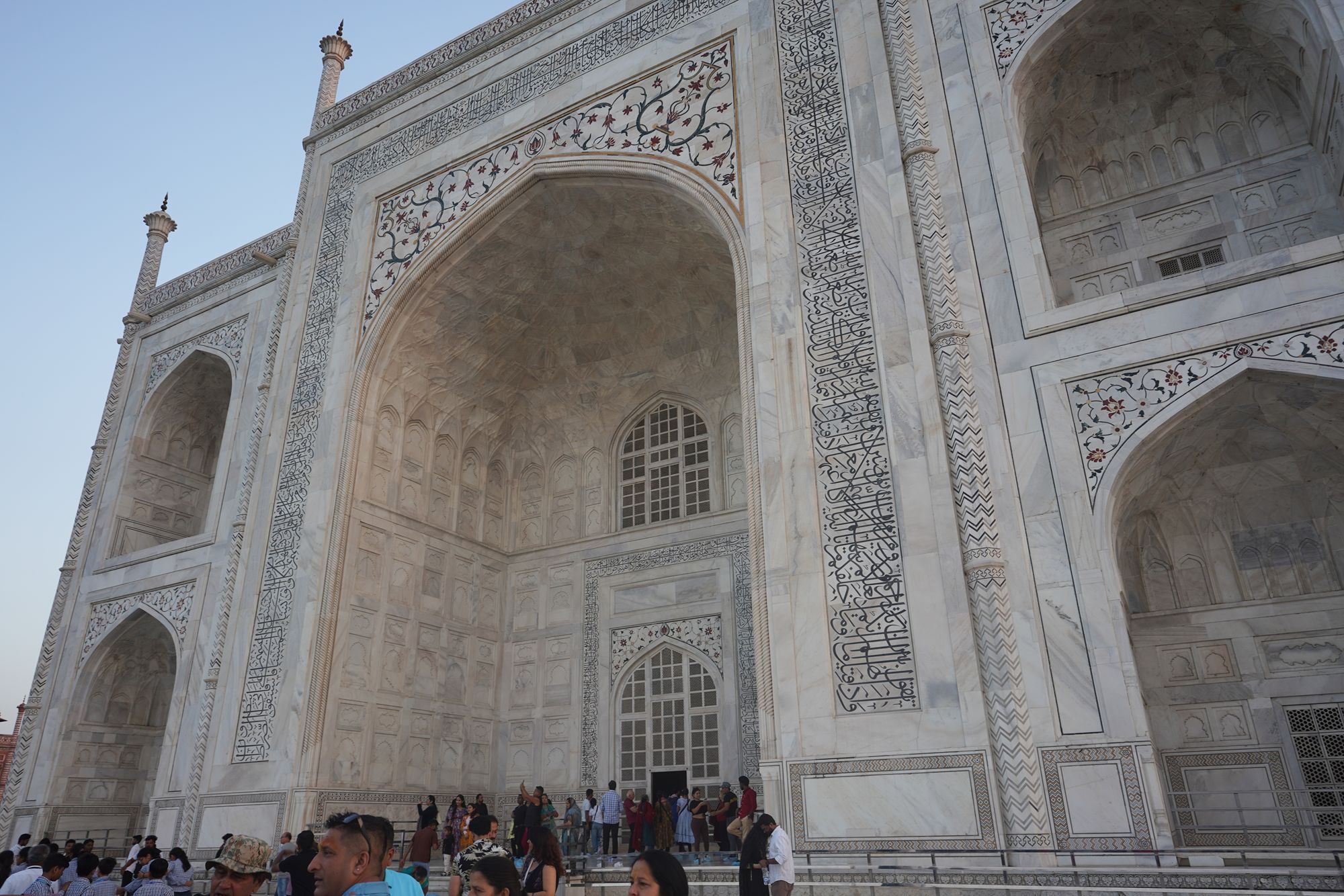
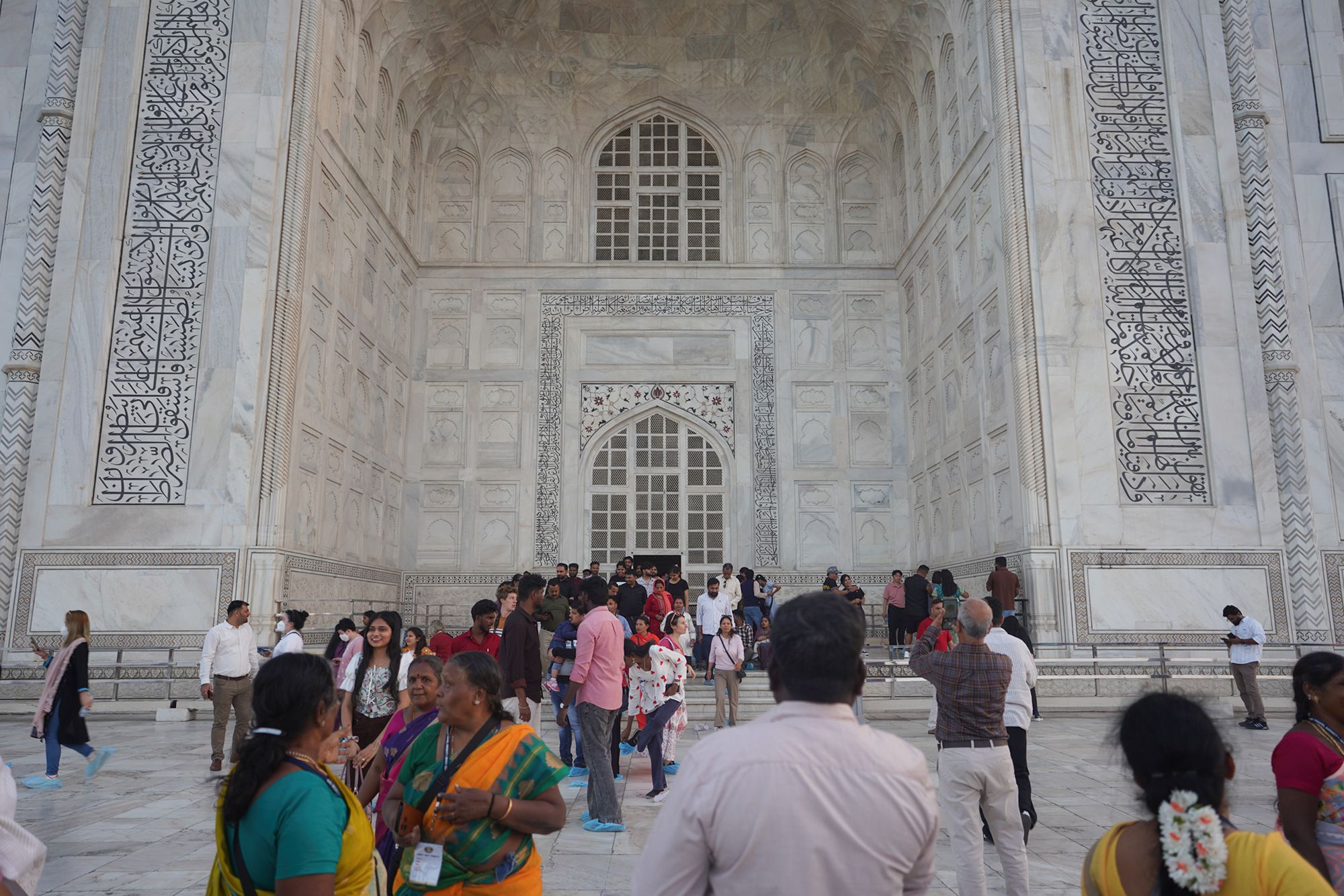
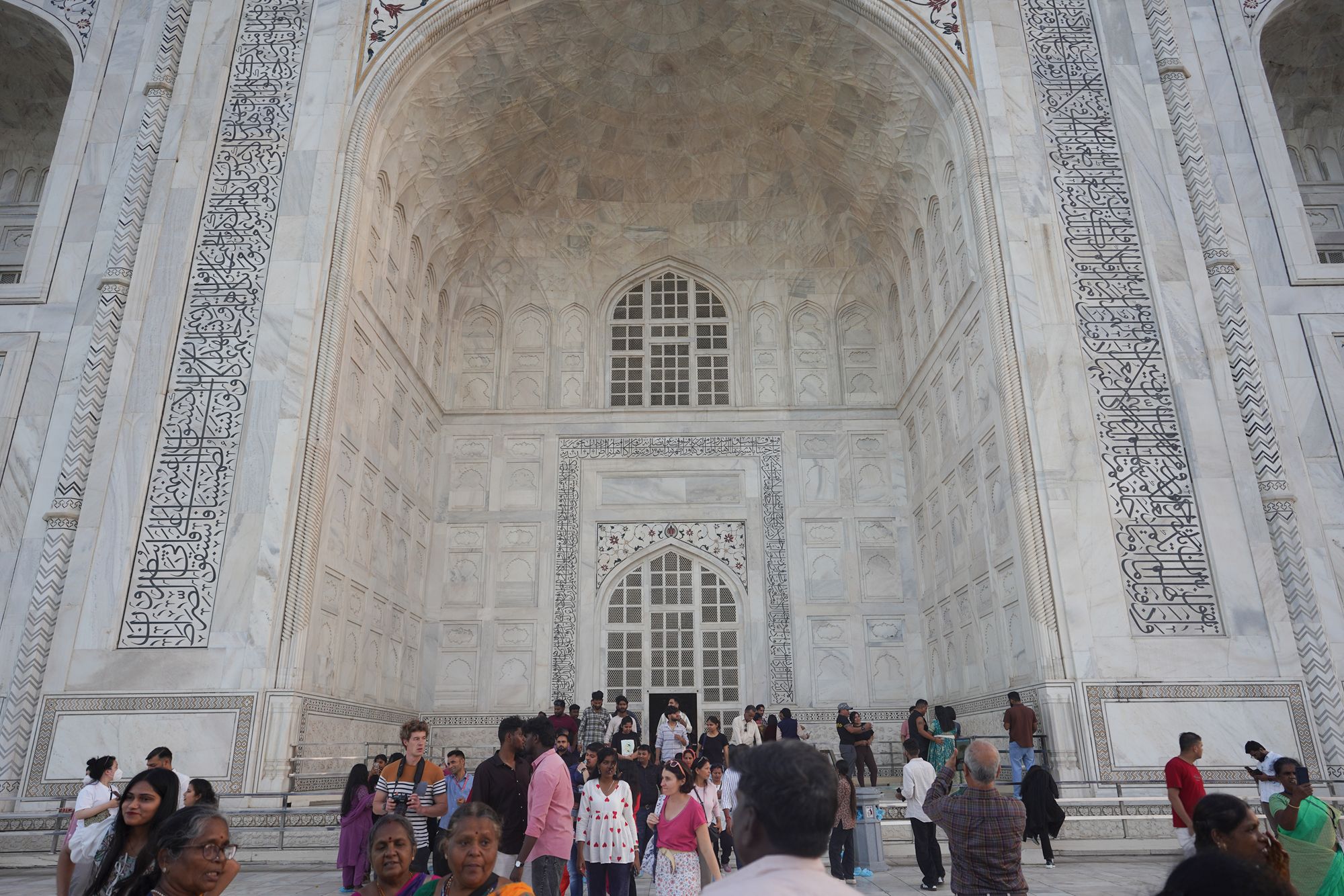
The entrance to the Taj Mahal mausoleum, where the tombs of Mumtaz Mahal and Shah Jahan are located.
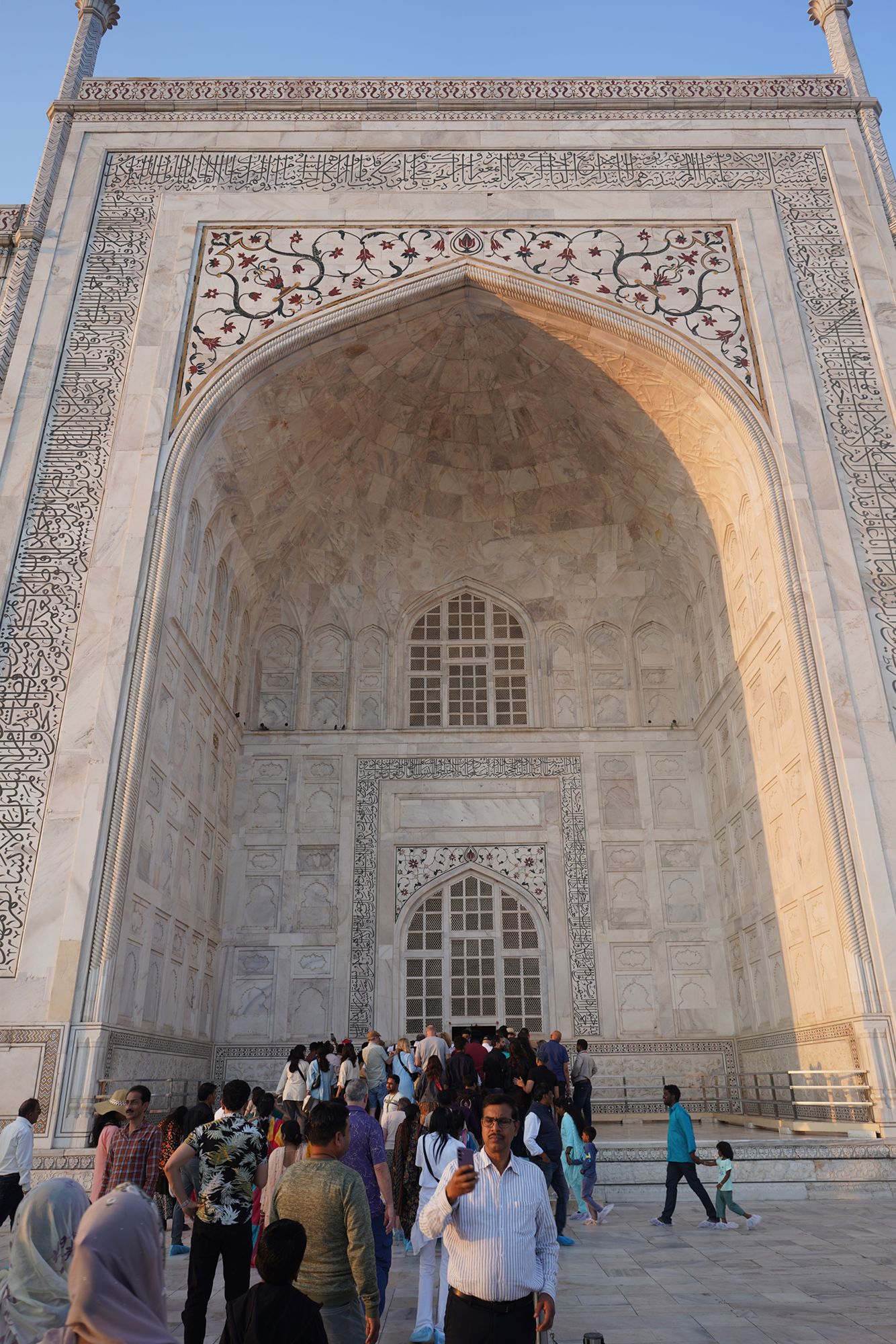
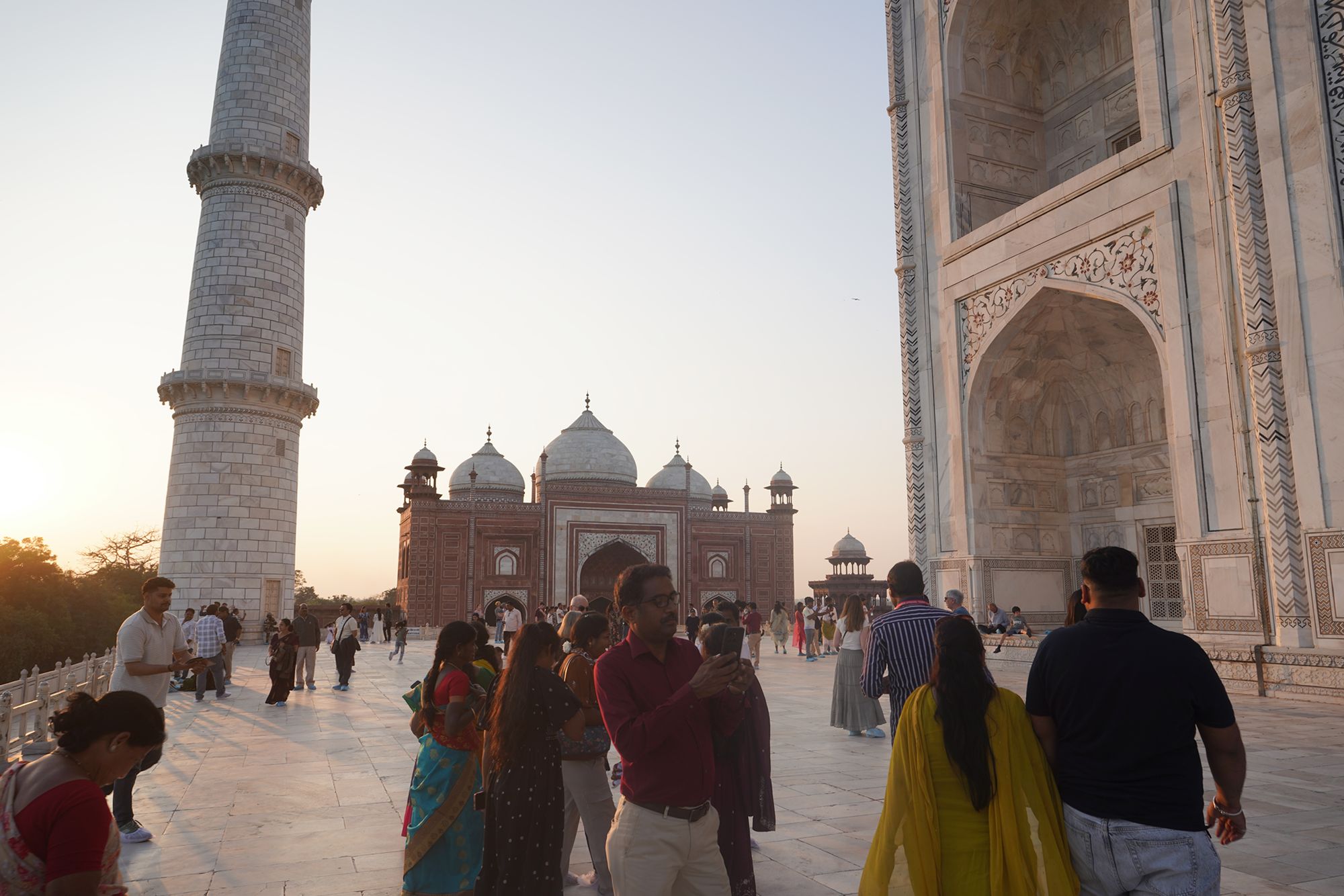
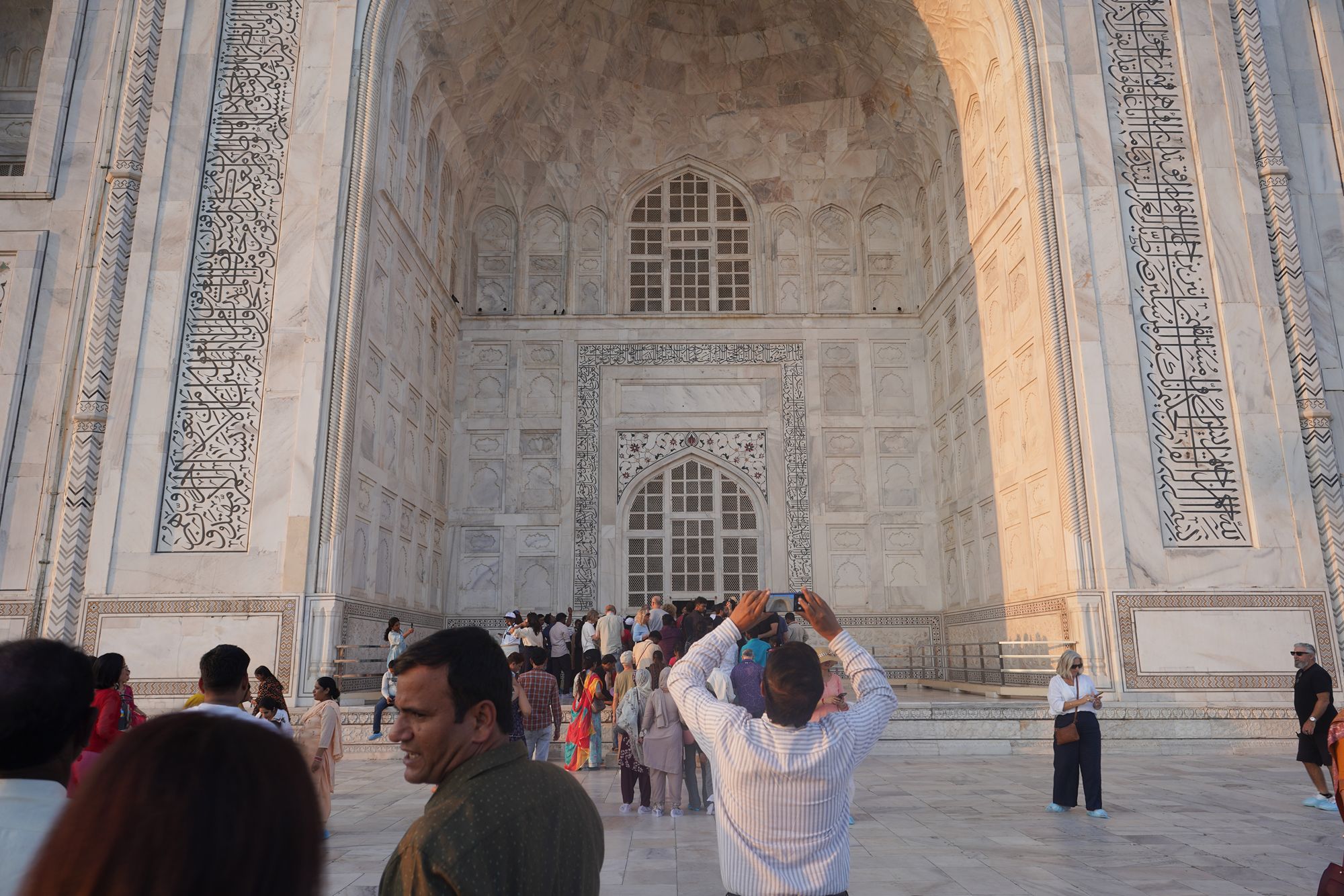
On the eastern side of the Taj Mahal is an almost identical-looking building as the Taj Mahal Mosque called the Jawab, meaning “answer.” It was built largely to maintain the perfect symmetry of the complex and was not used as a mosque because it faces the wrong direction for Islamic prayer.
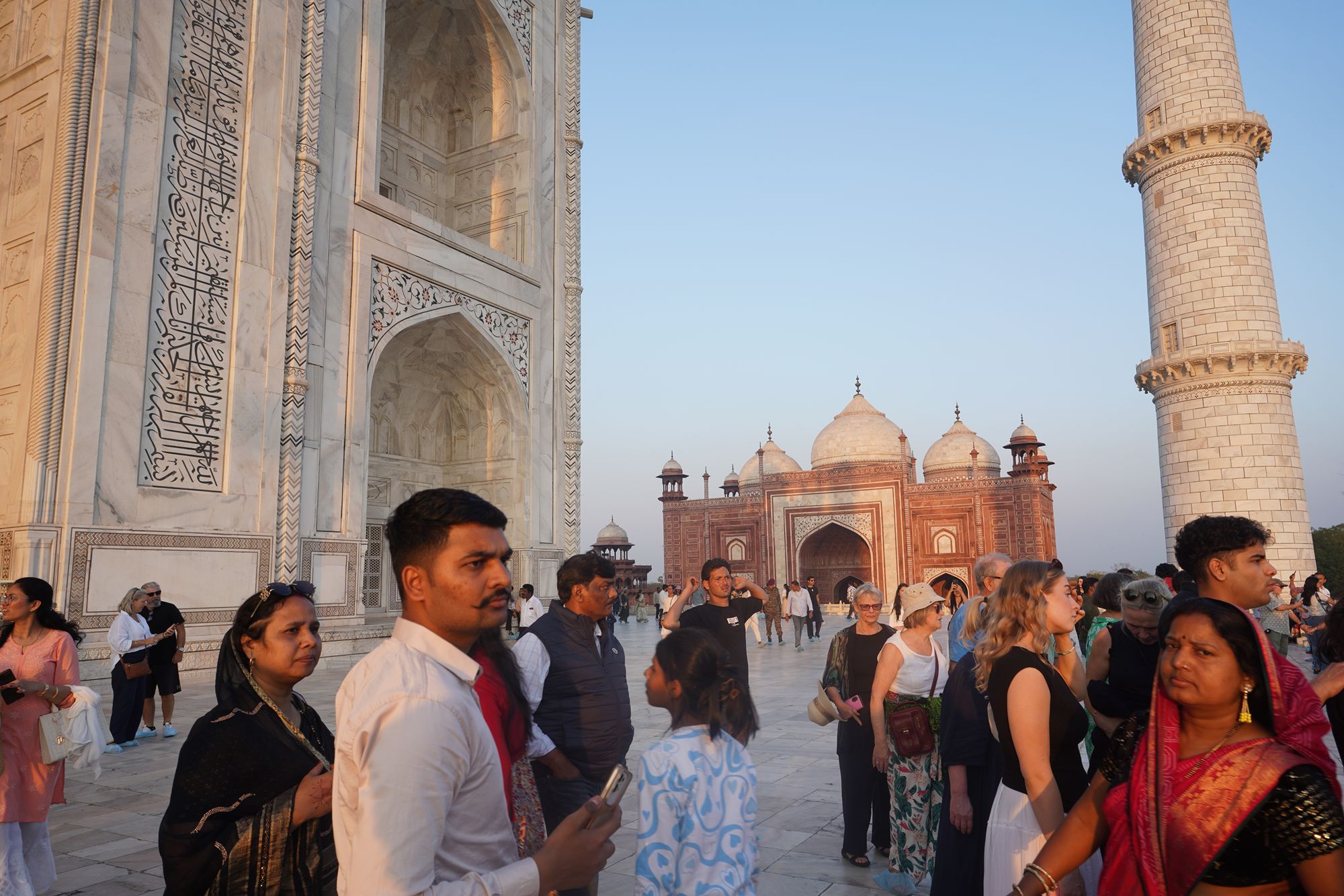
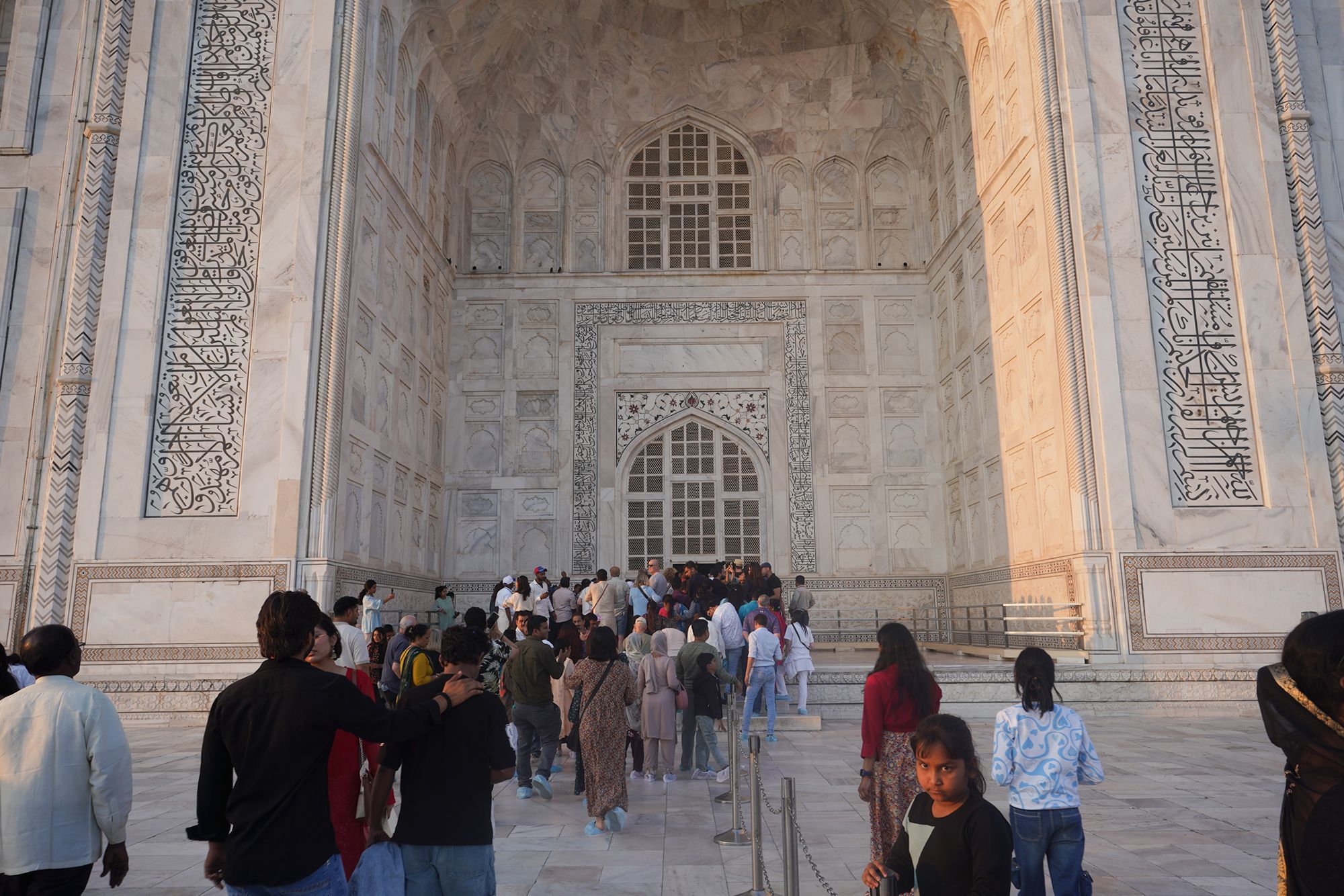
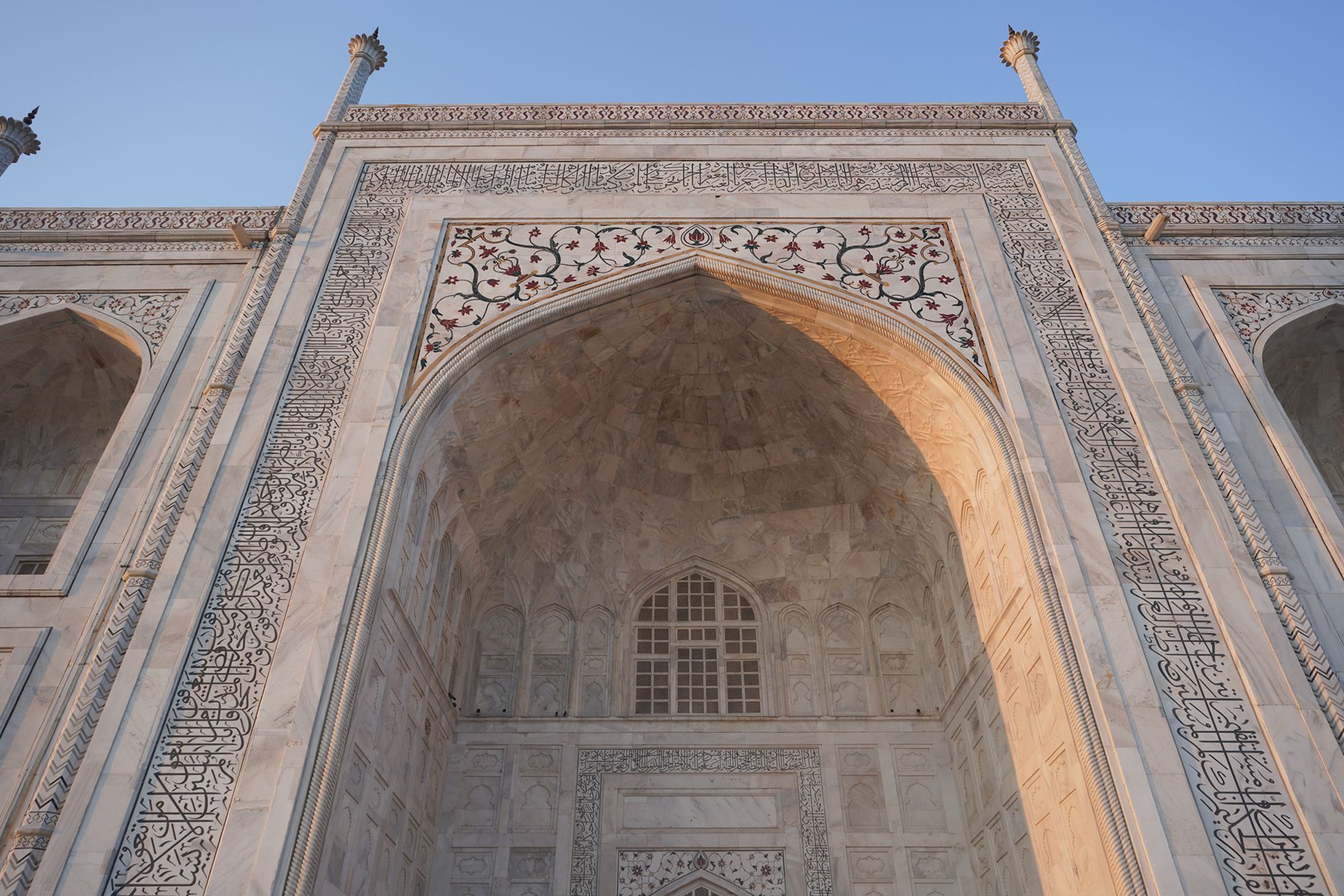
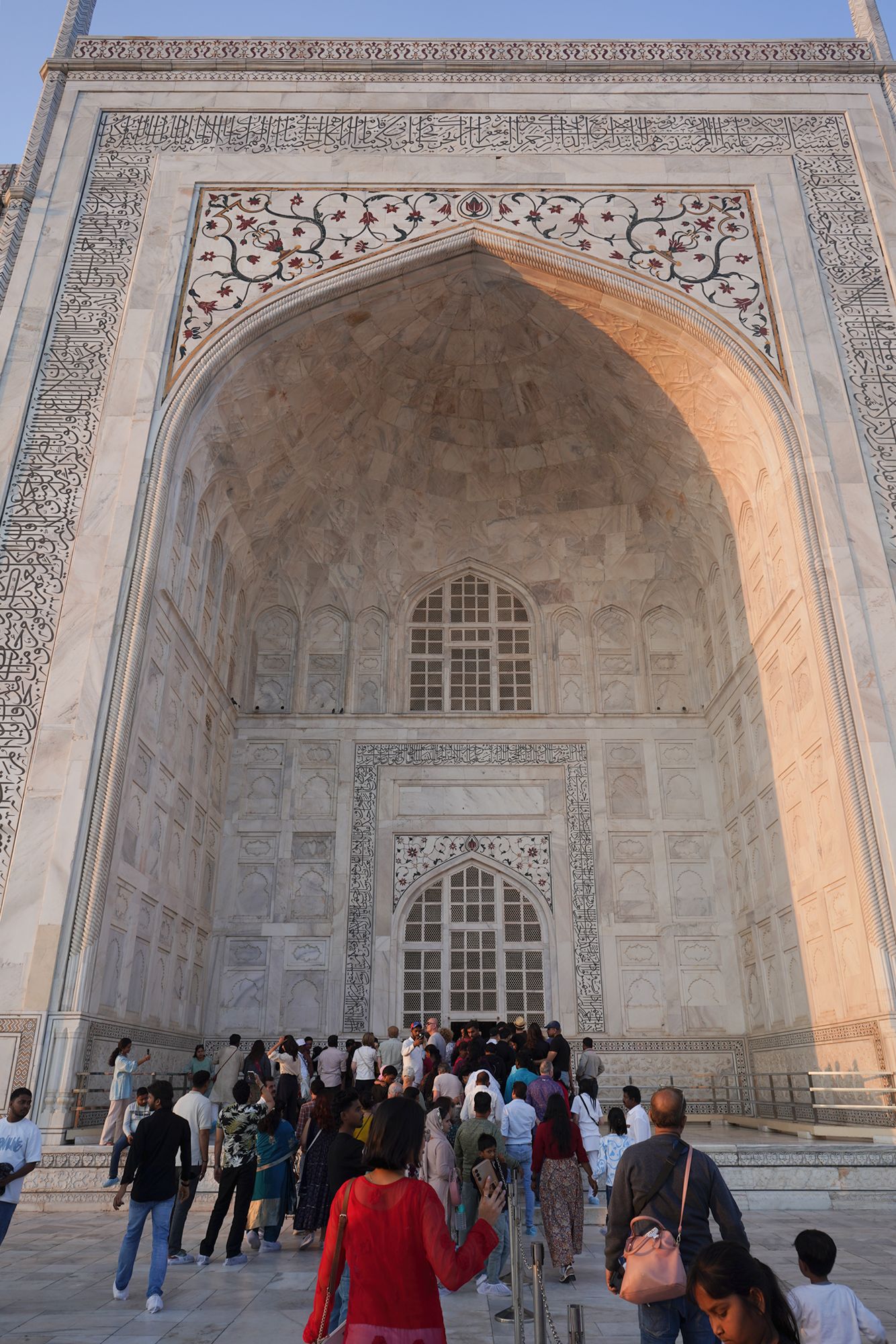
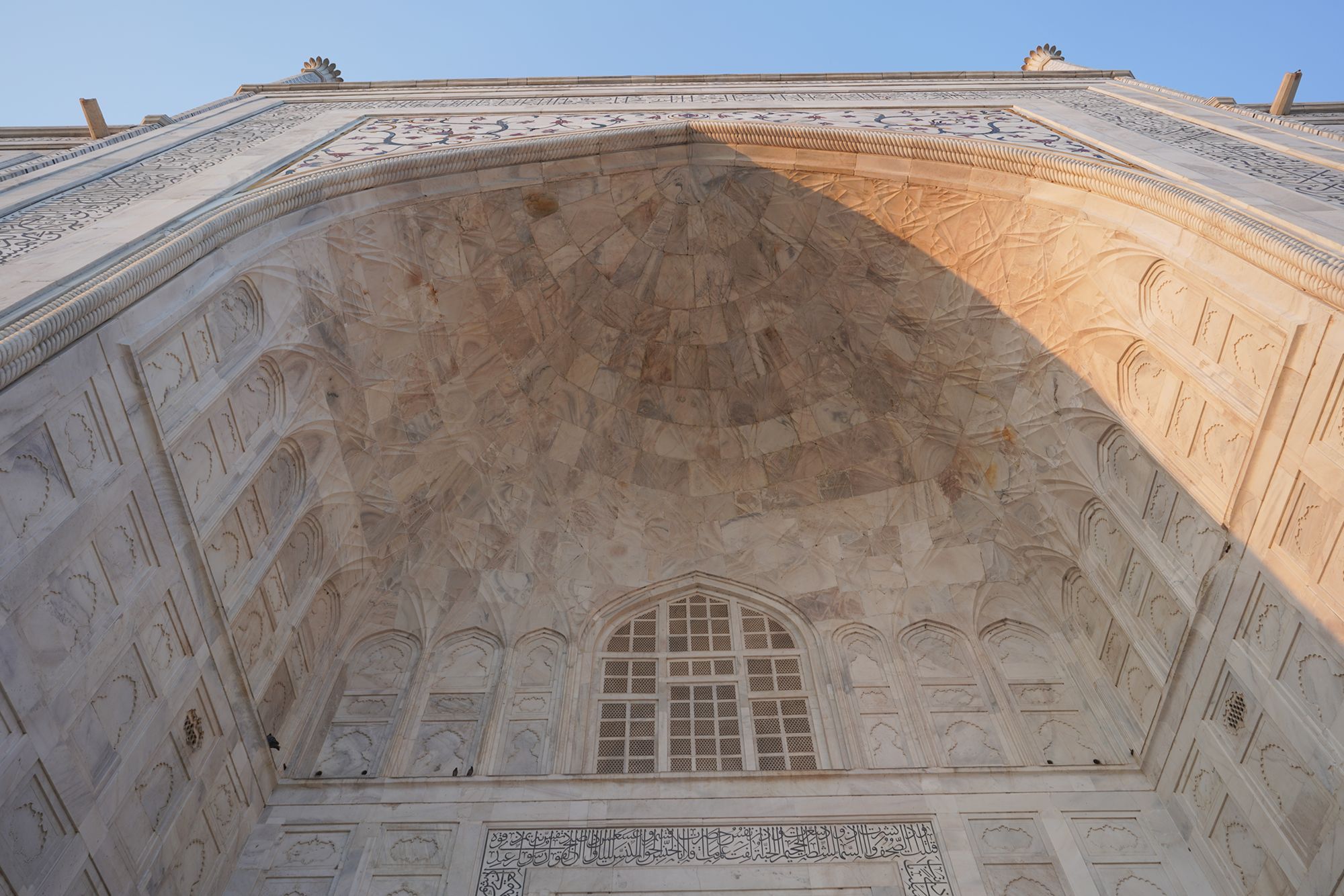
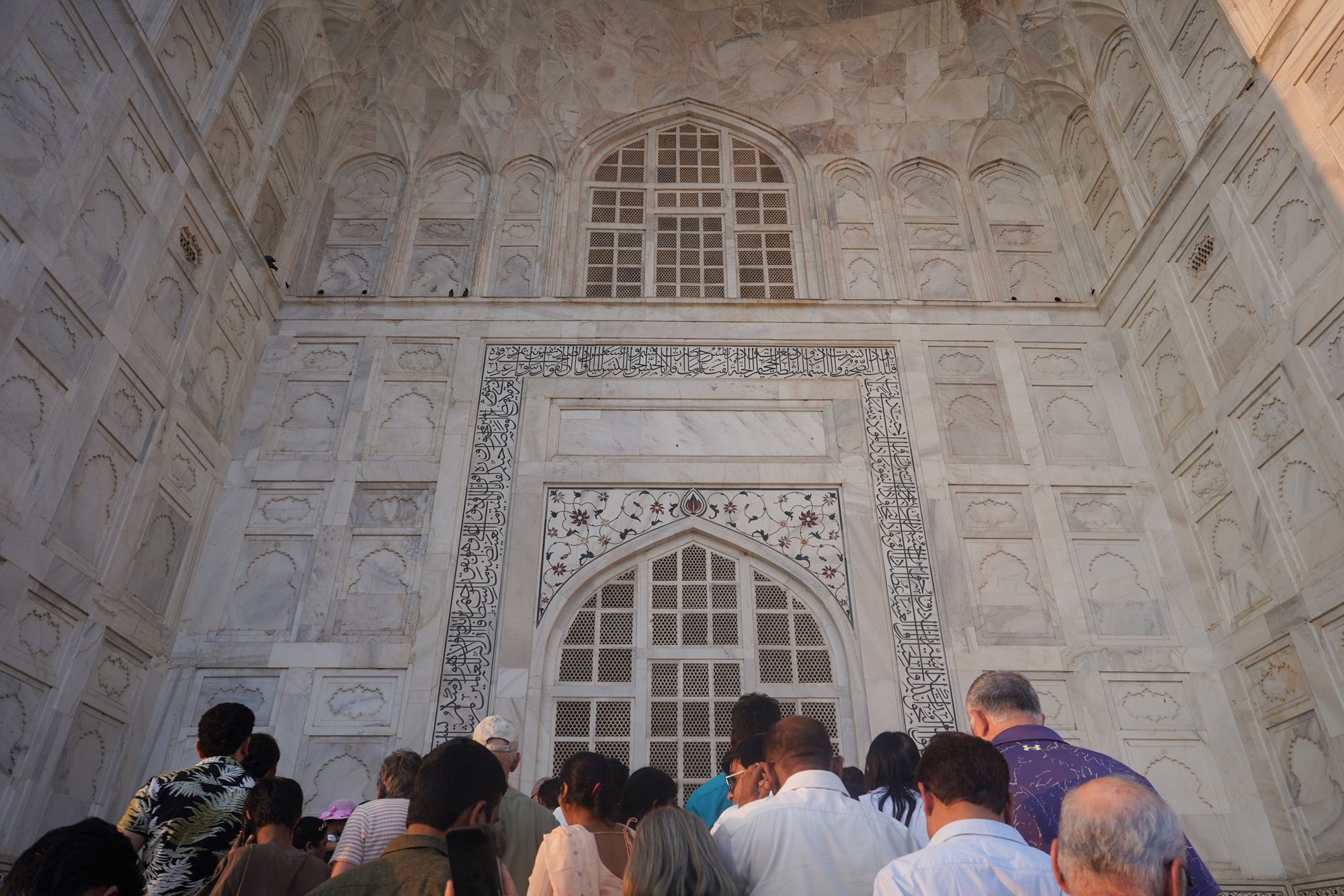
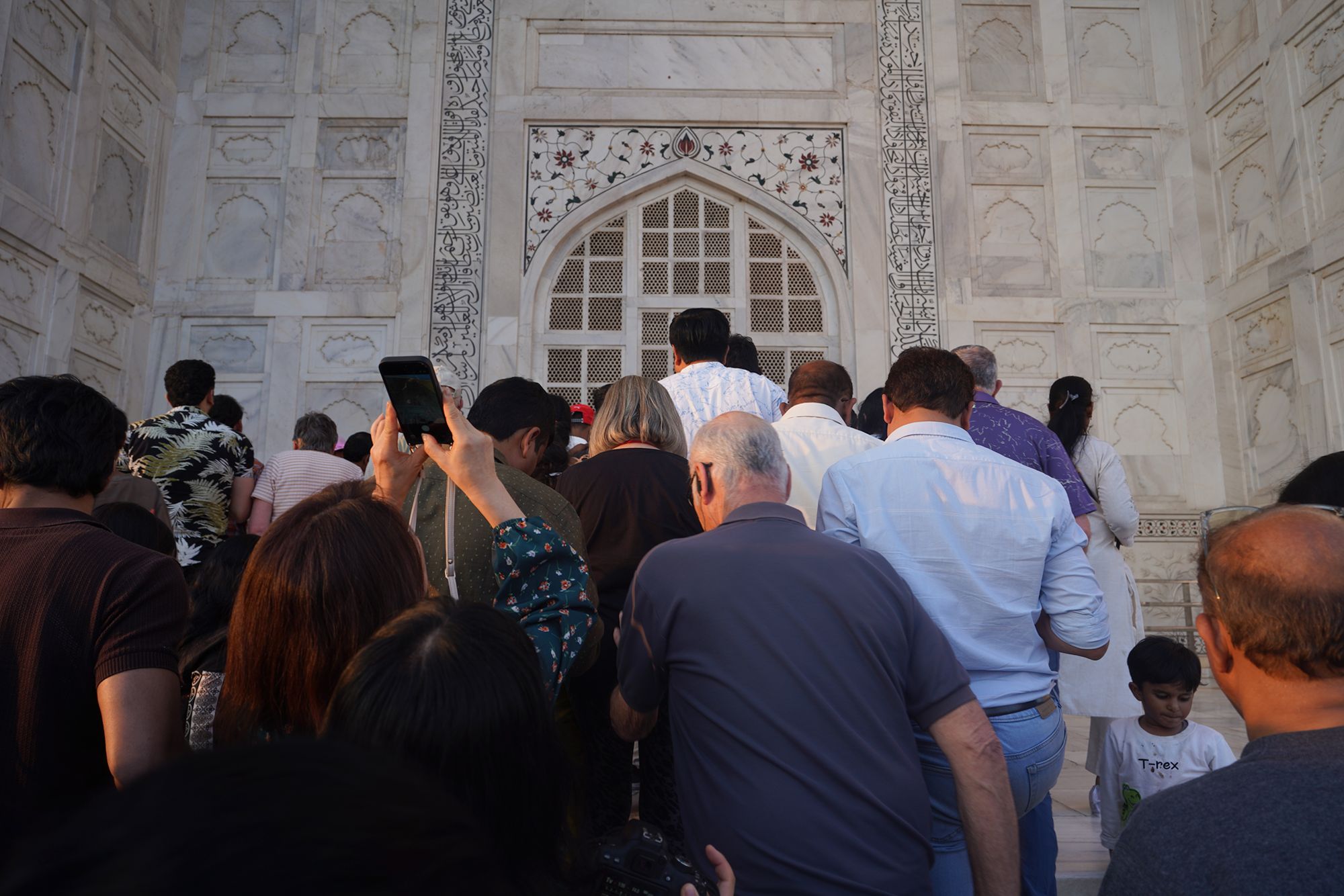
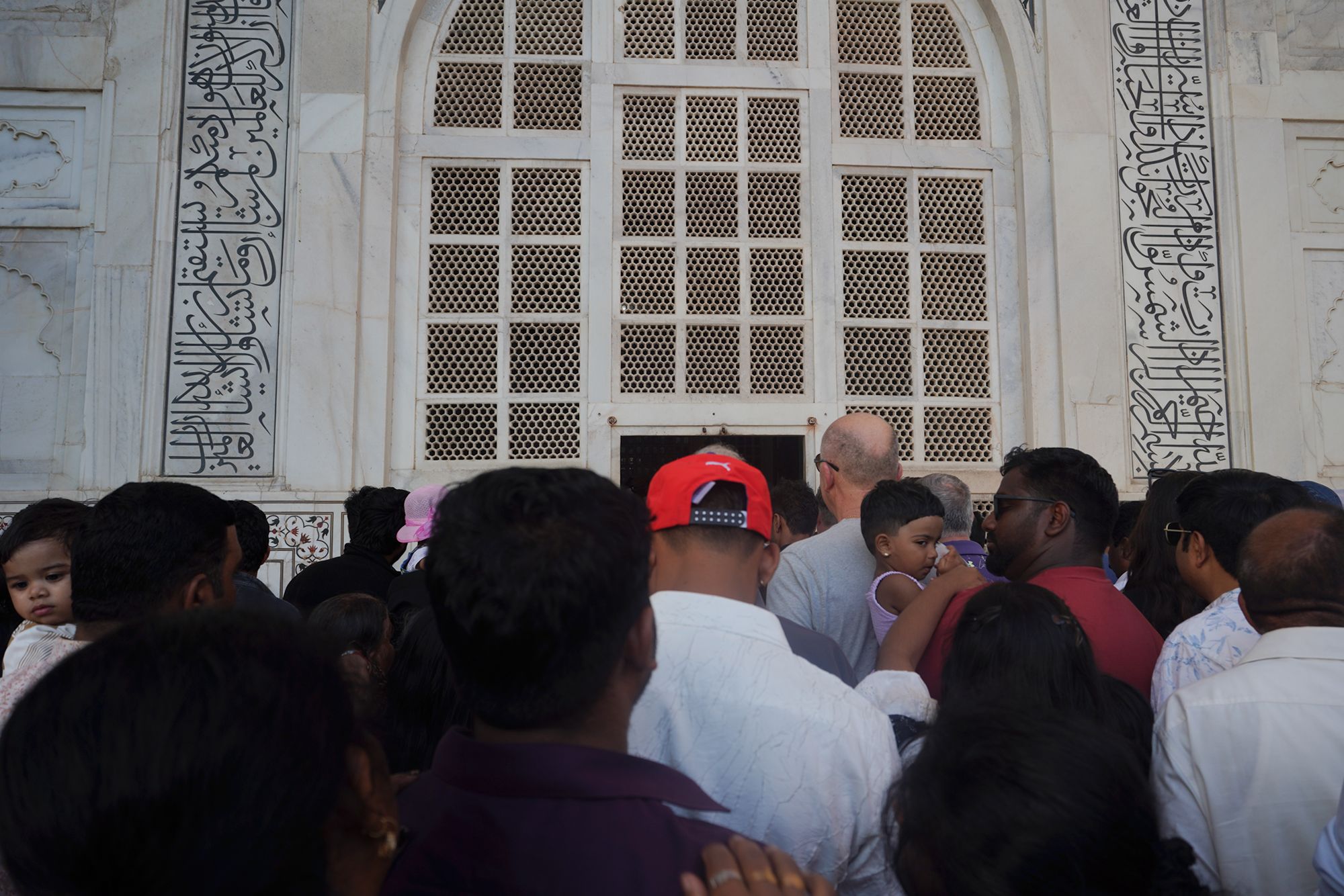
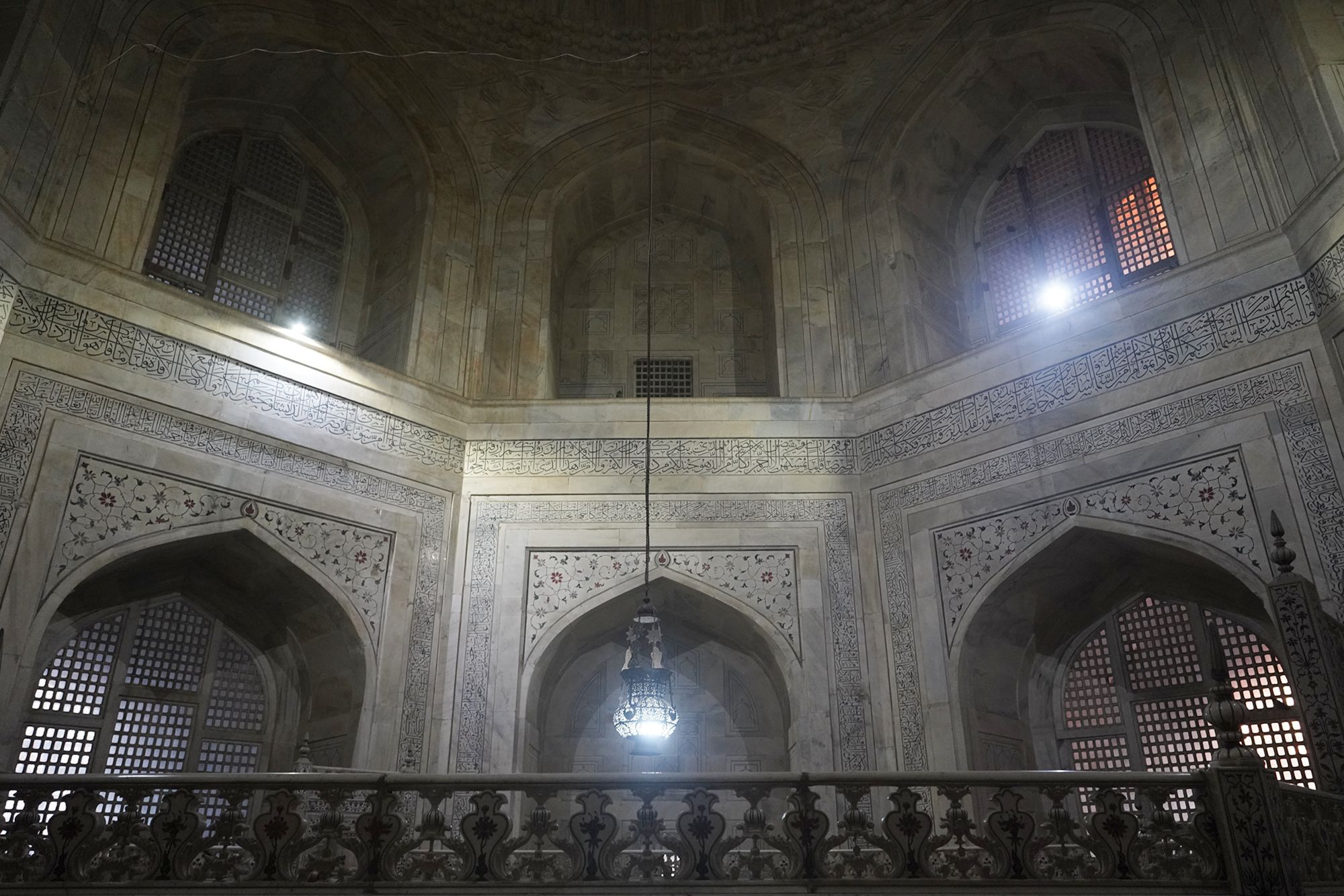
Inside the mausoleum is the tomb area, but the actual graves of Mumtaz Mahal and Shah Jahan are located in a chamber directly below.
Minarets of the Taj Mahal
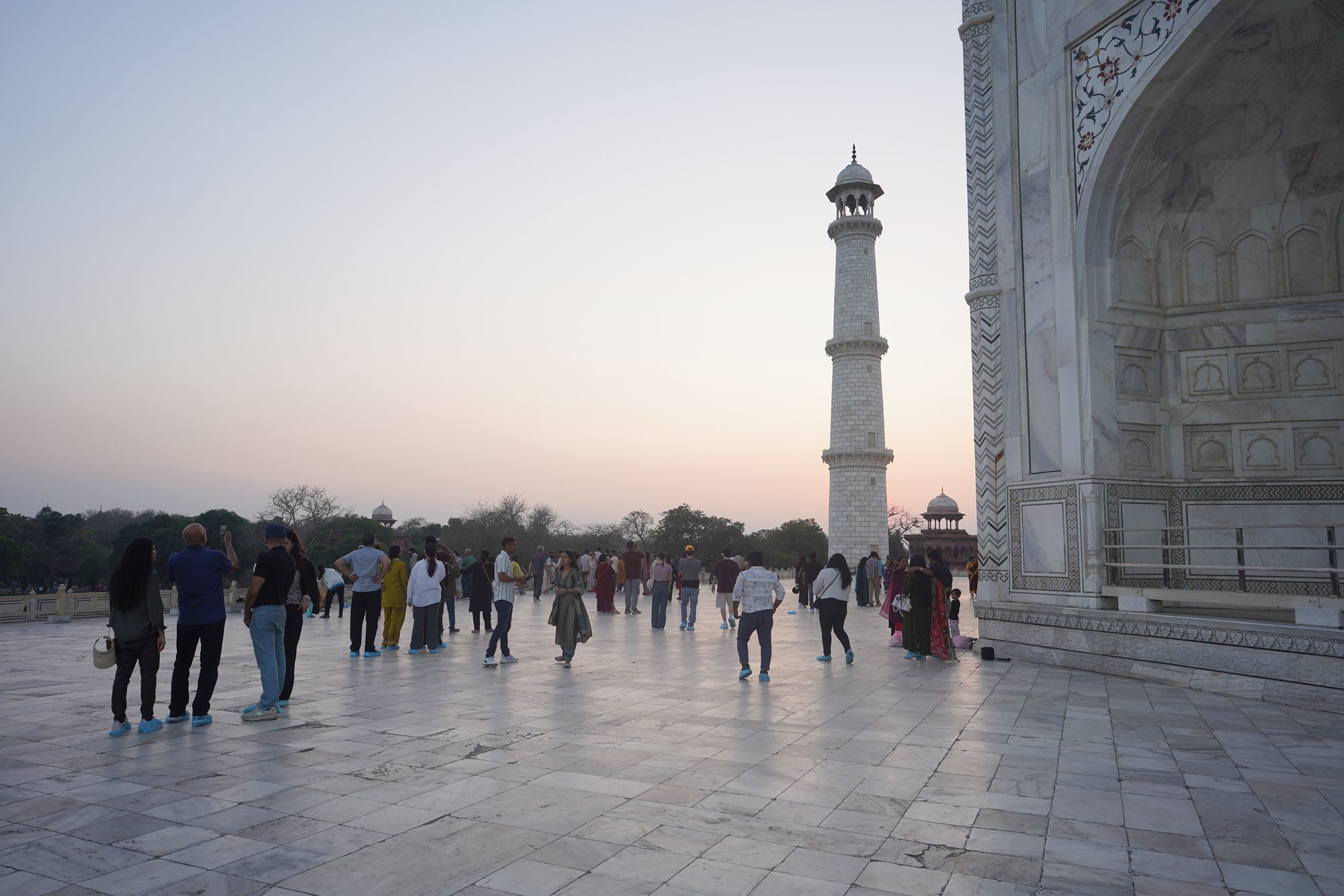
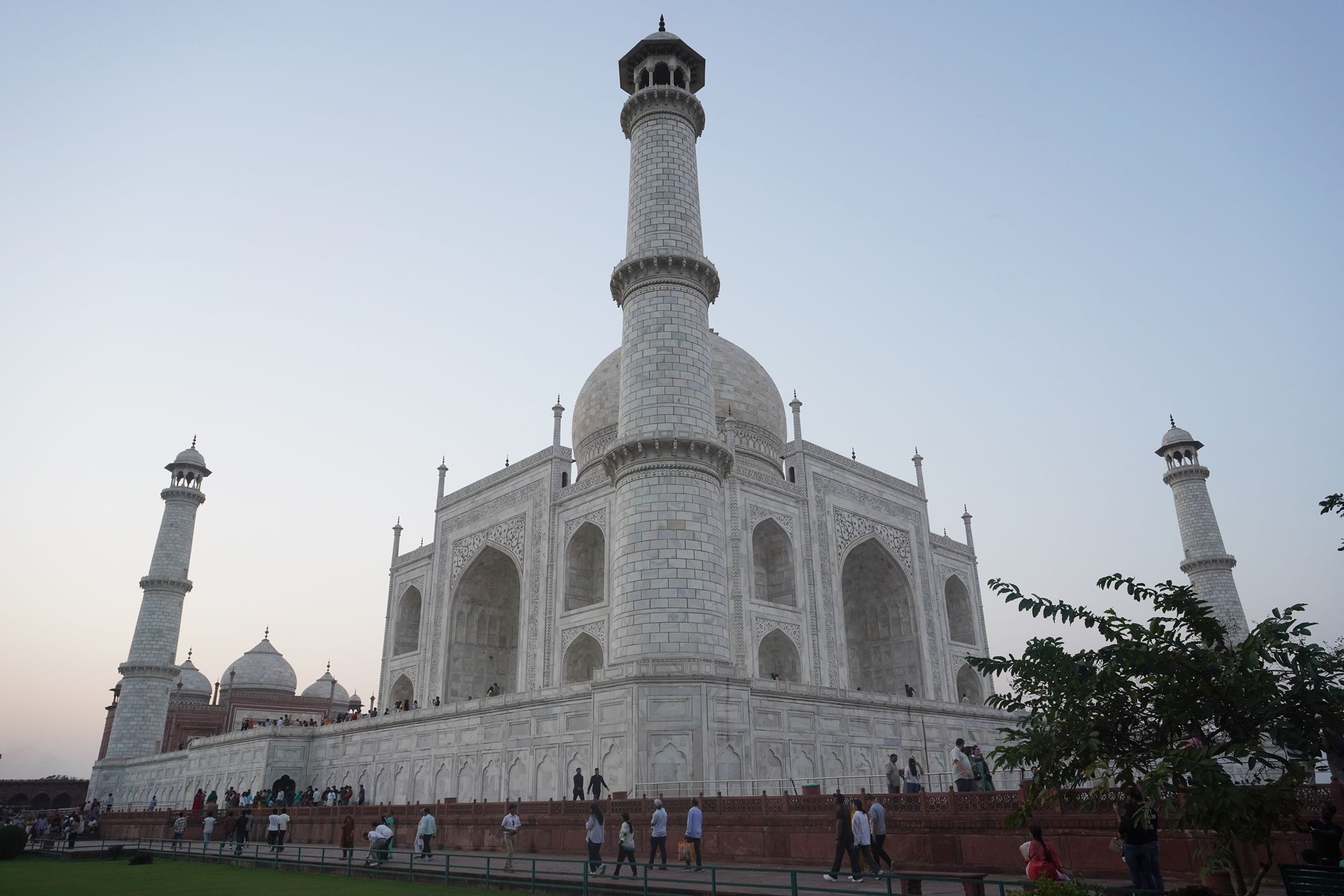
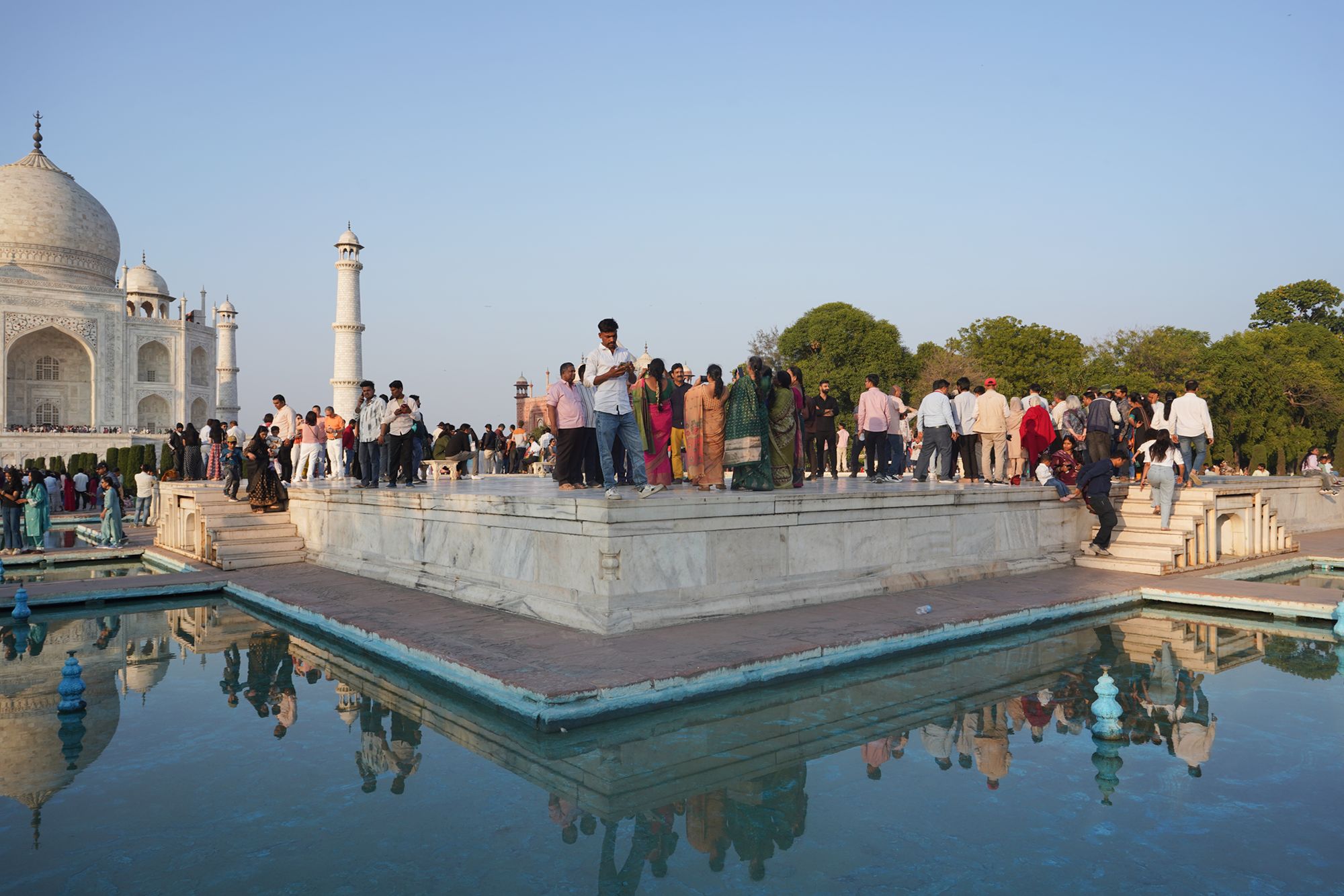
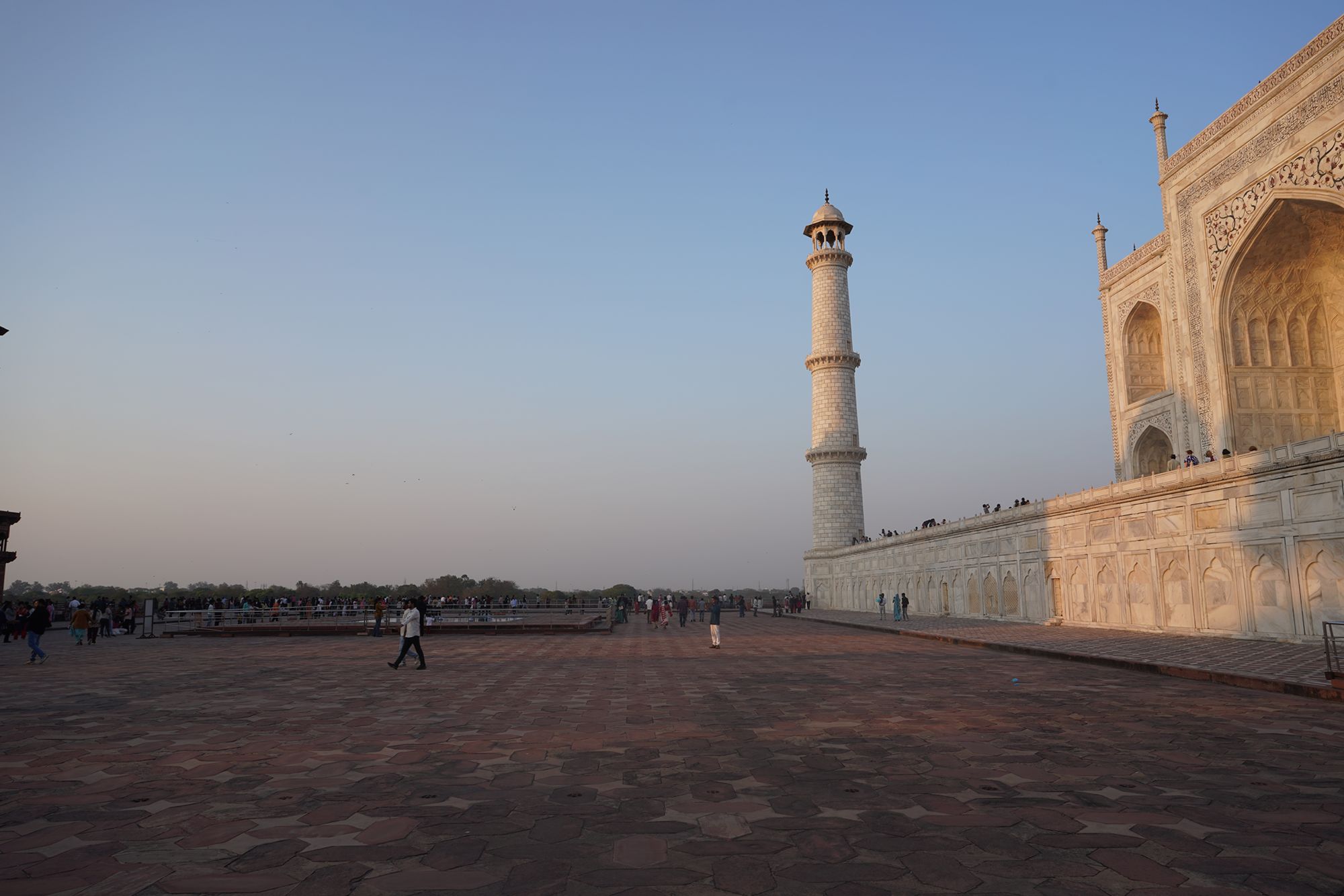
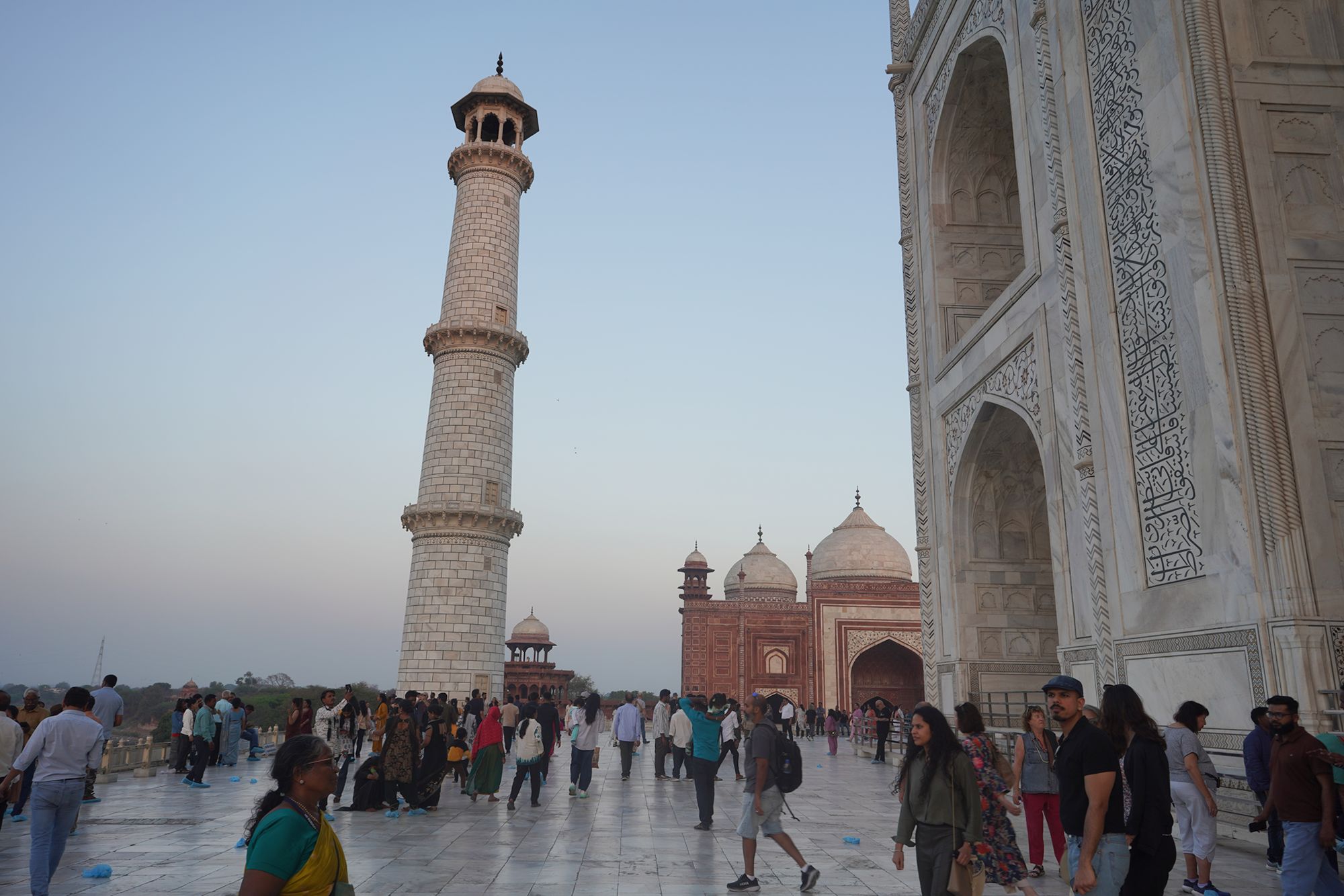
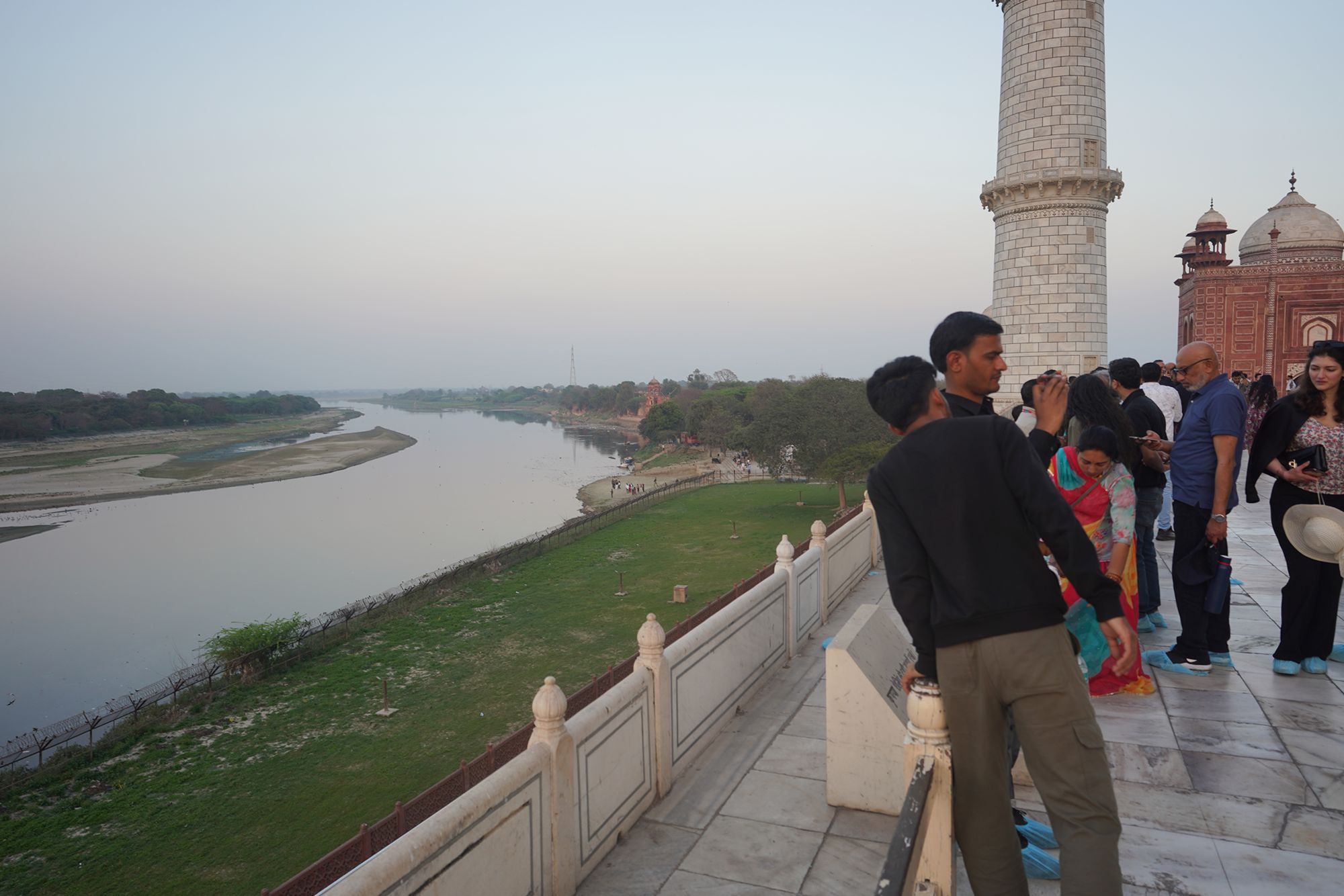
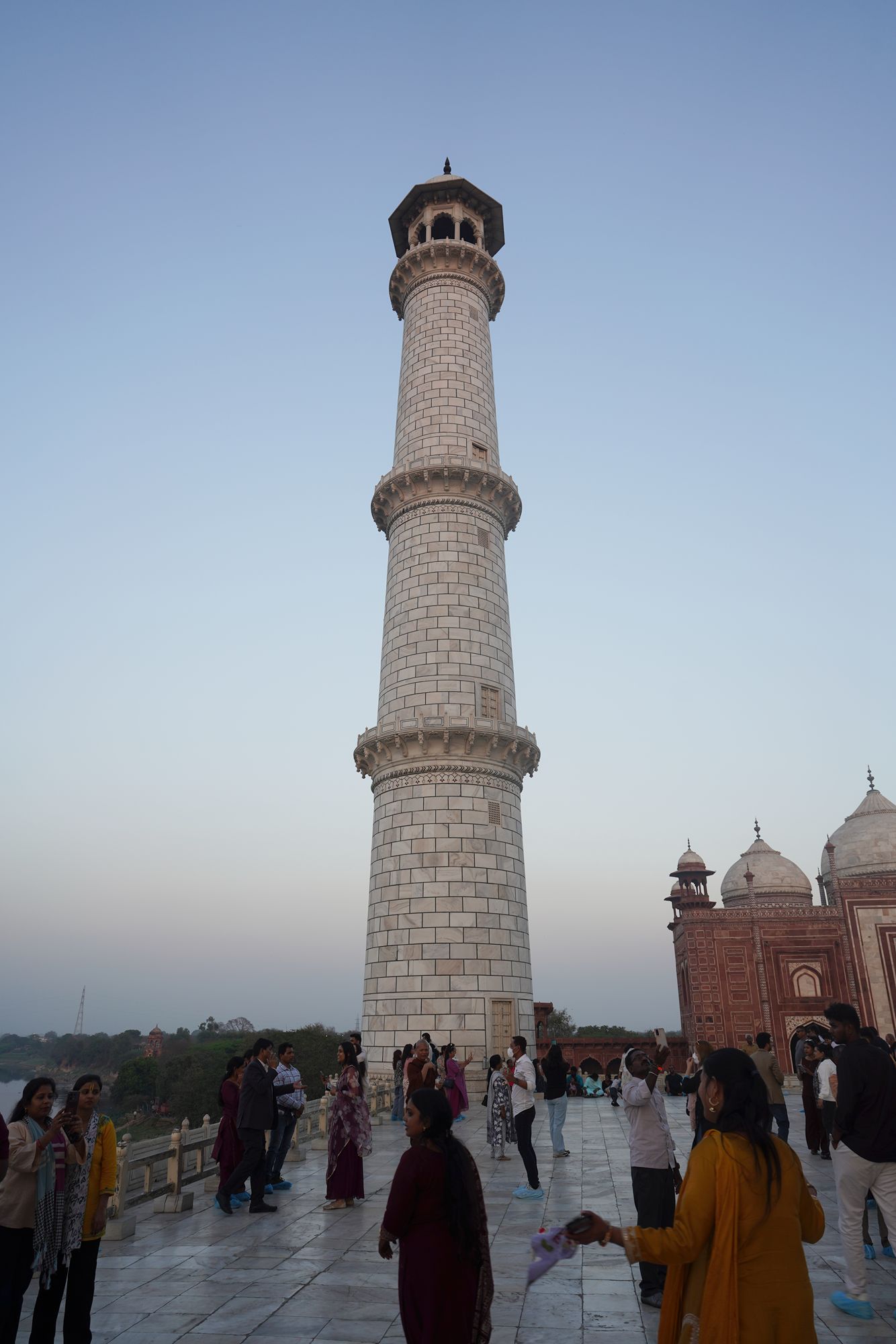
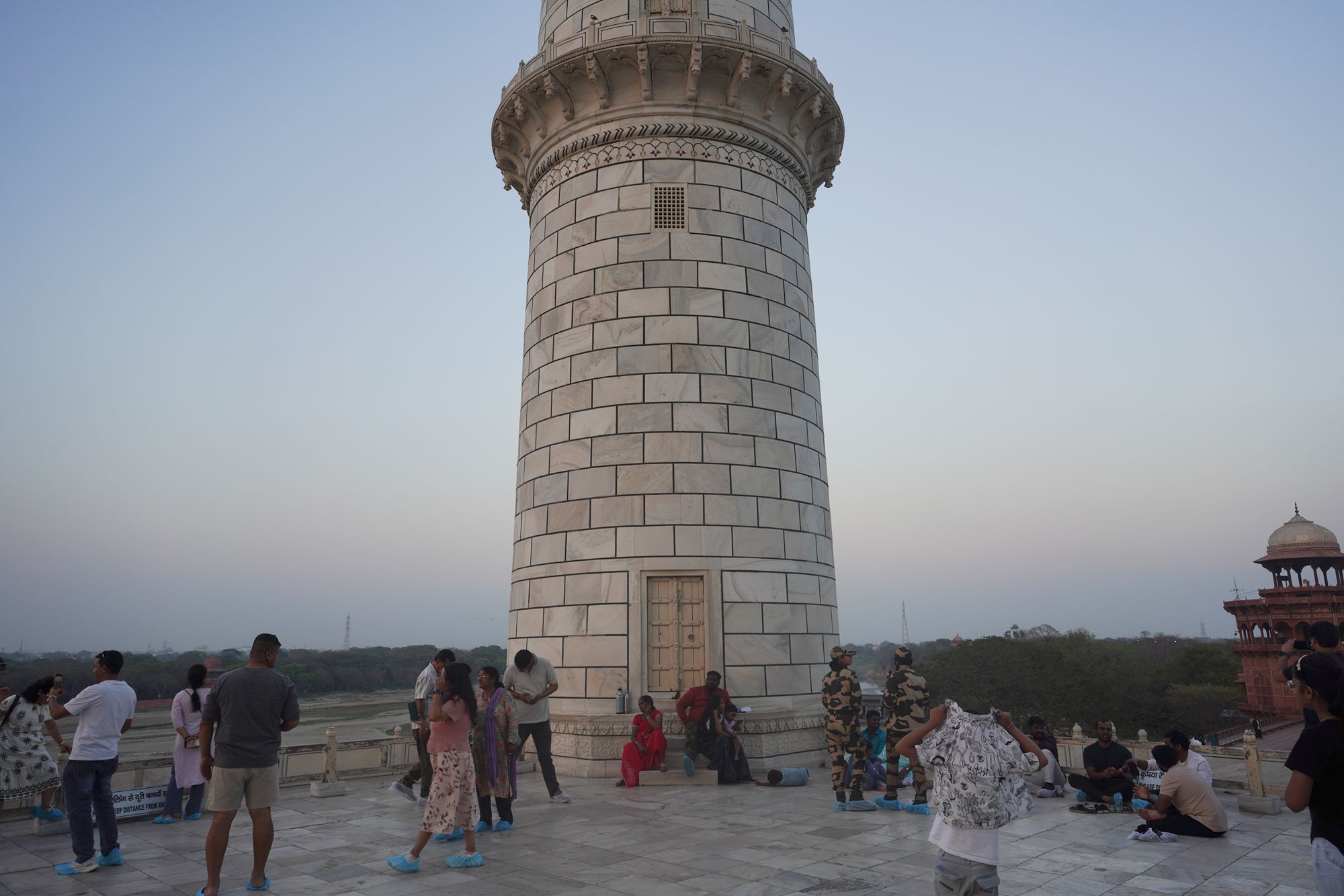
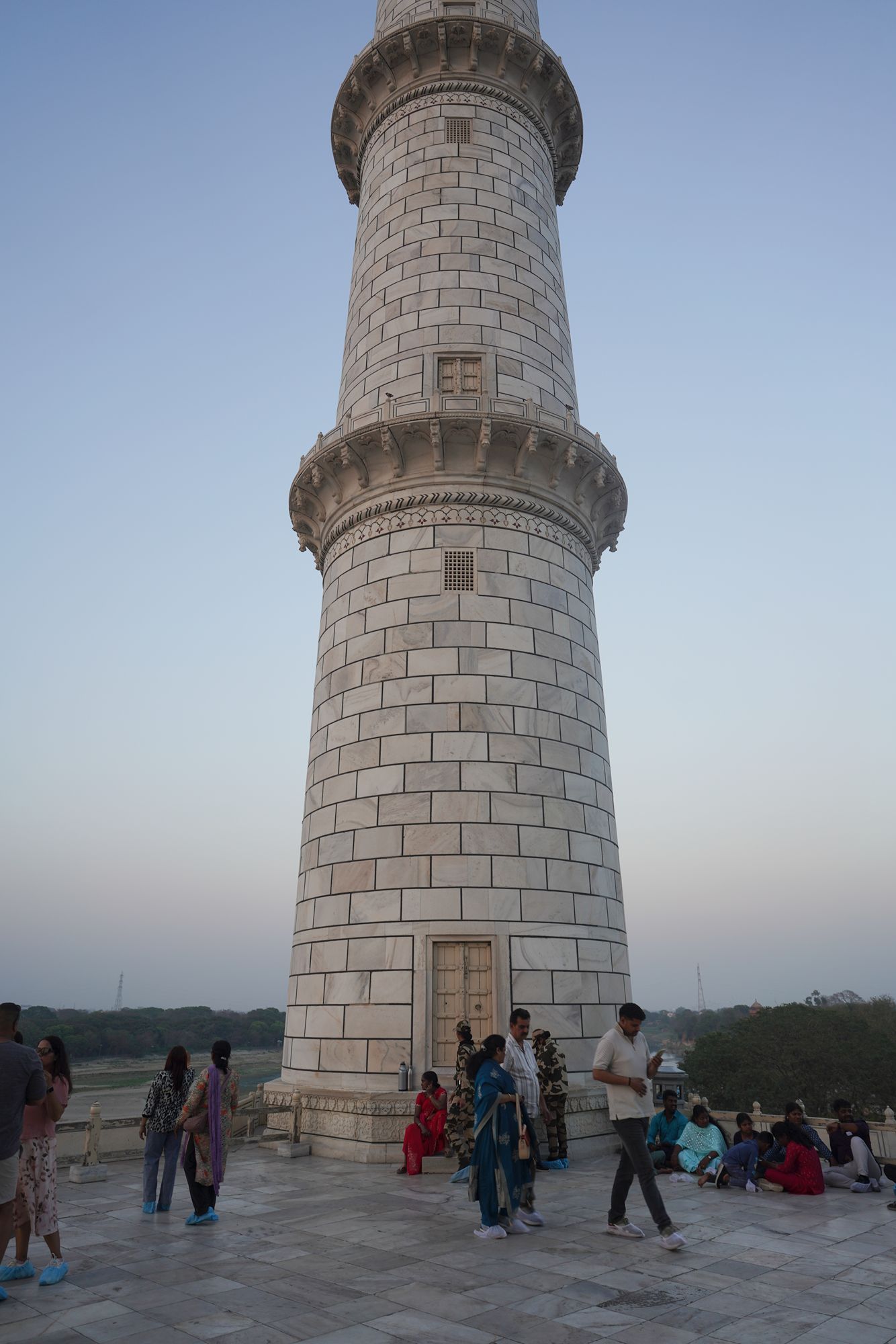
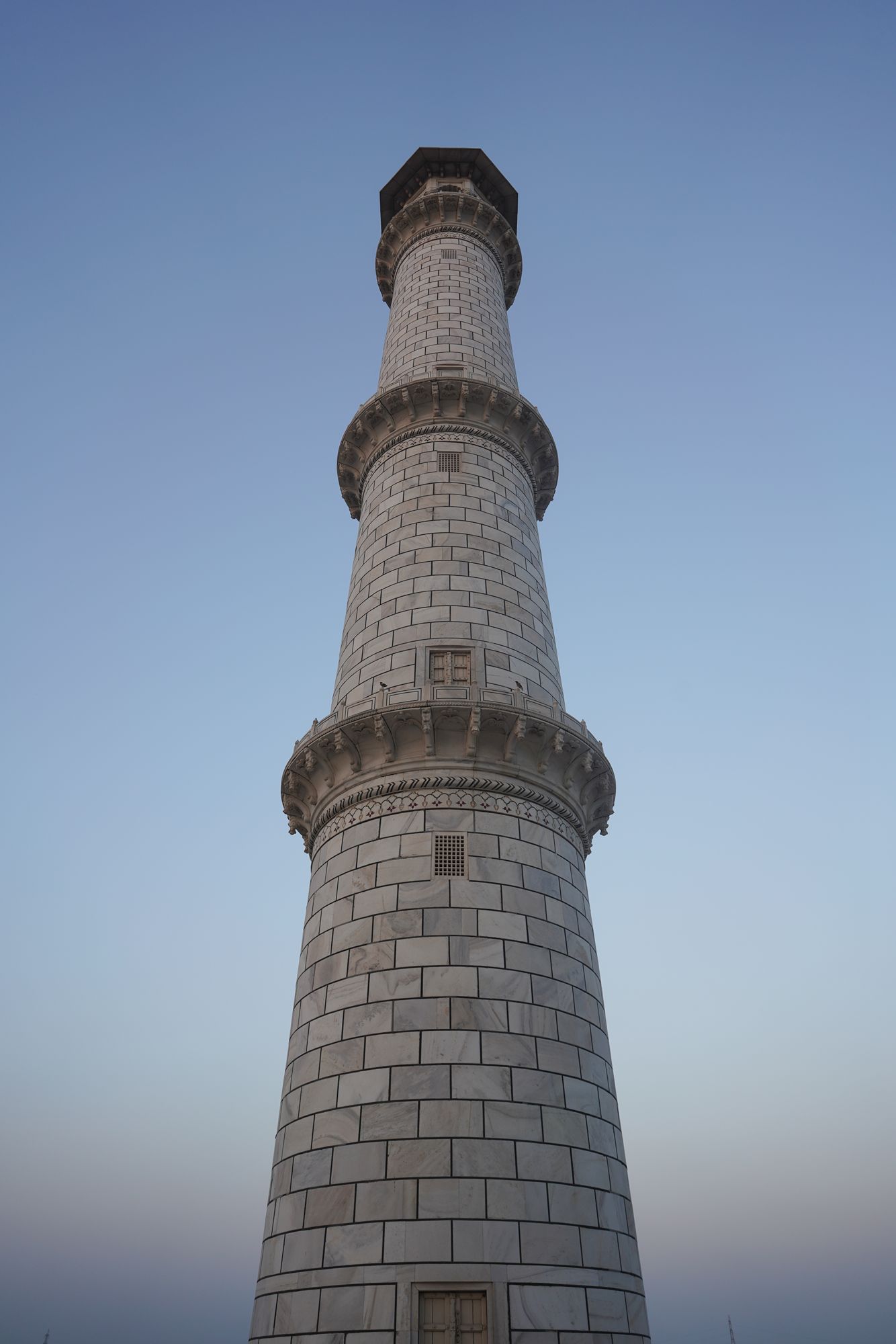
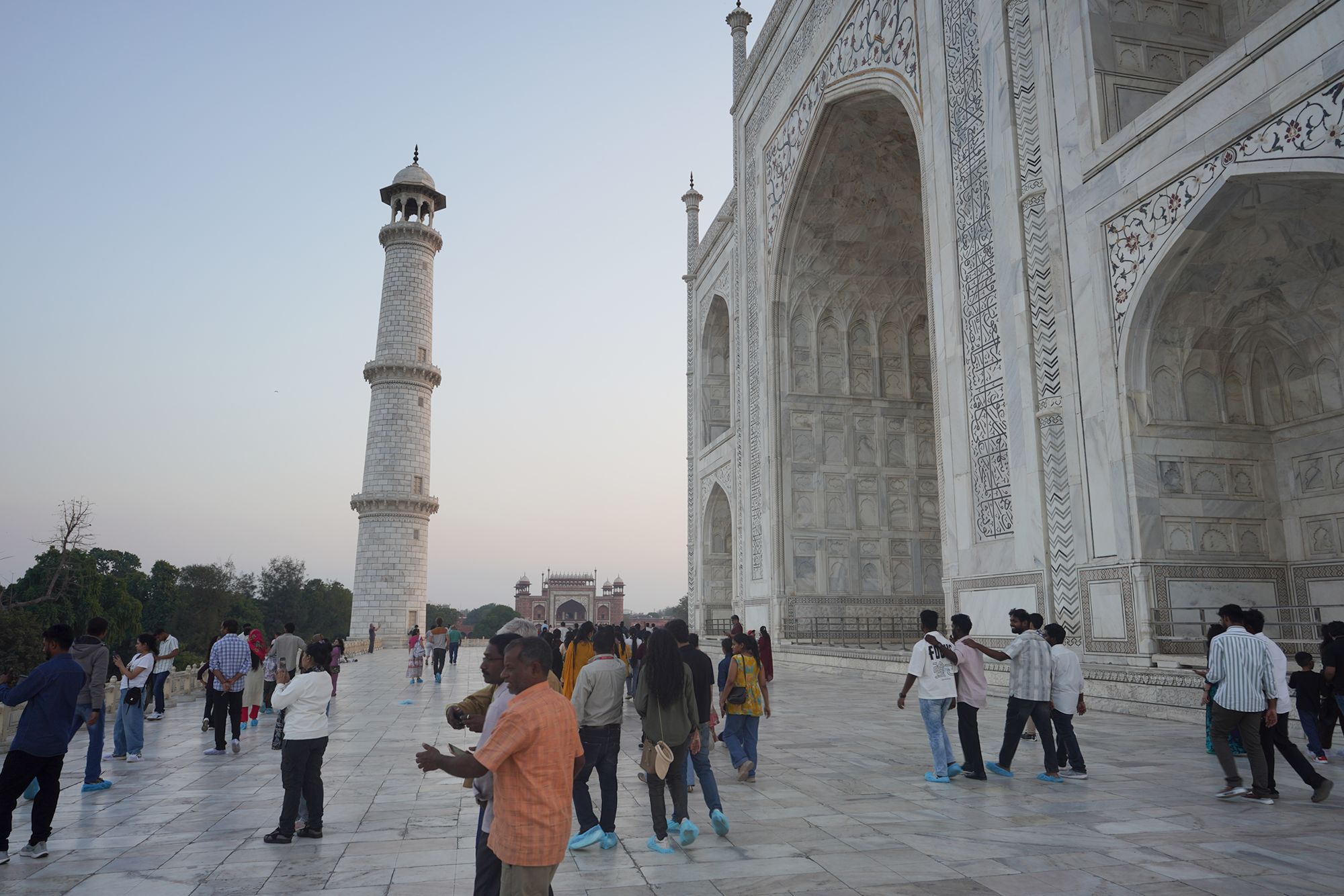
The Taj Mahal is surrounded by four tall minarets, one at each corner of the raised marble platform. Each is about 40 meters (130 feet) high and is divided into sections by projecting balconies.
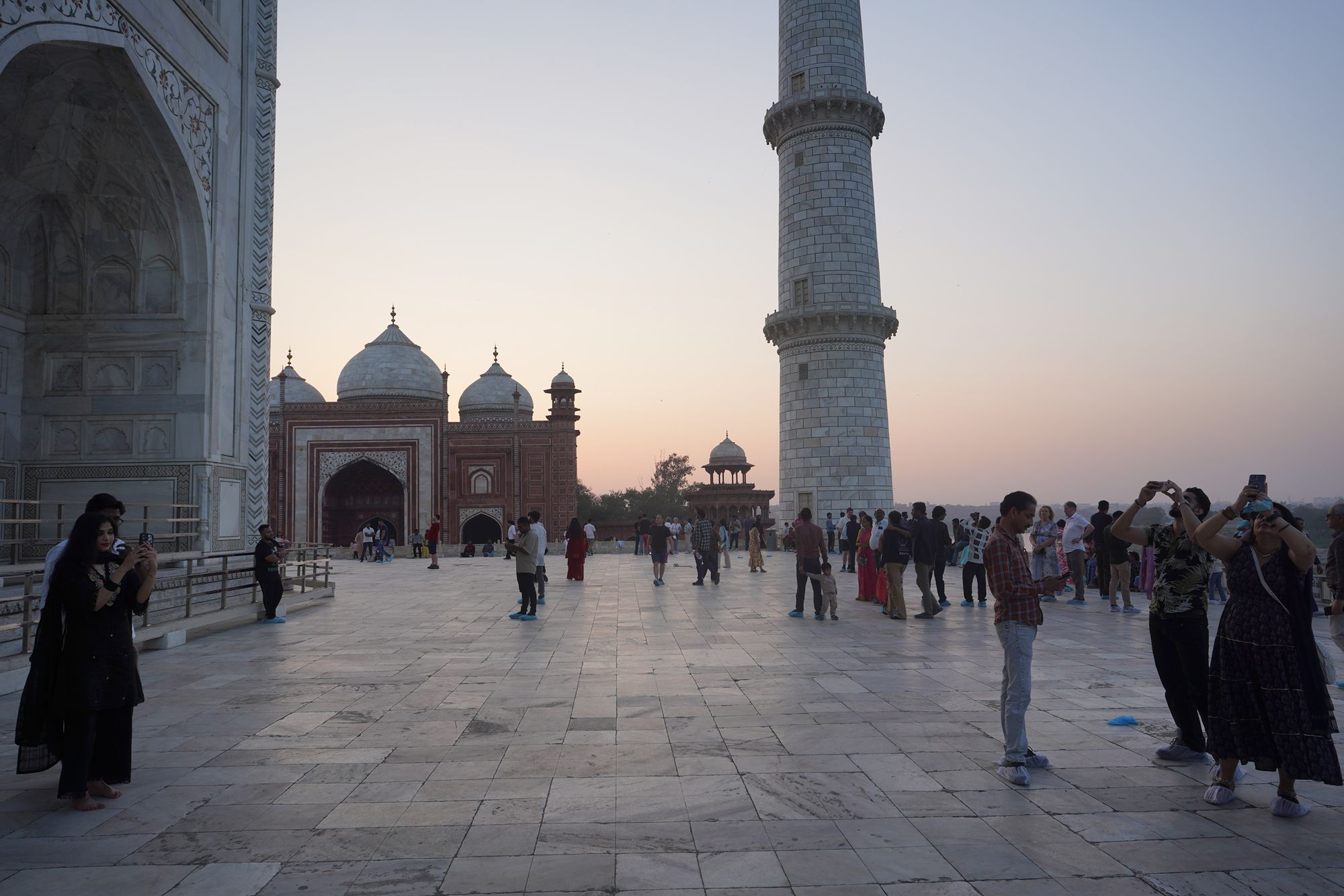
Minarets traditionally accompany mosques and are associated with the call to prayer, but here they also play an important architectural role. Their placement frames the central mausoleum and contributes to the remarkable symmetry and balance of the entire Taj Mahal complex.
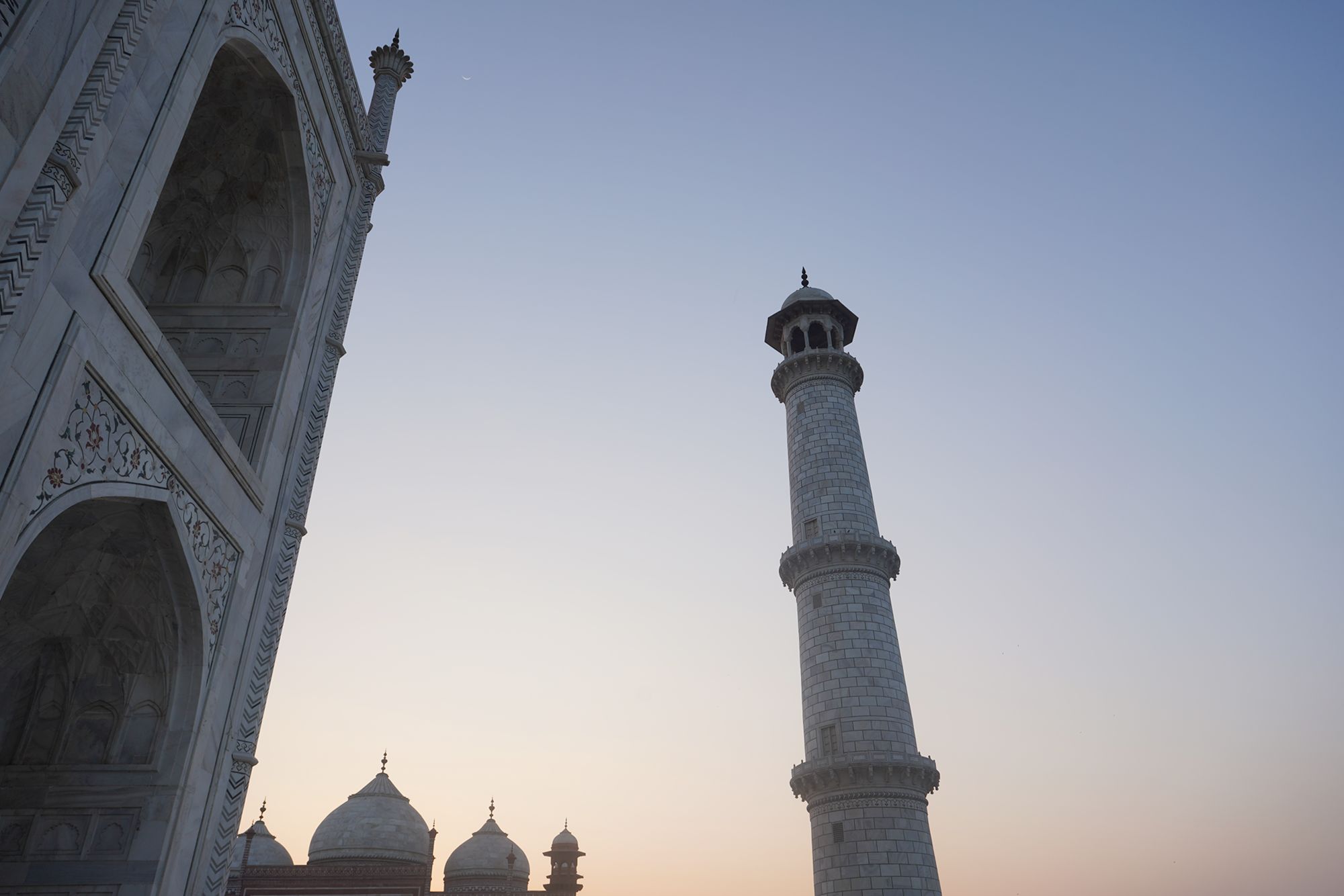
One particularly interesting feature is that the minarets were constructed with a slight outward inclination, away from the central mausoleum. This also helps visually frame the Taj Mahal and has traditionally been explained as helping reduce the danger to the mausoleum if a minaret were to collapse.
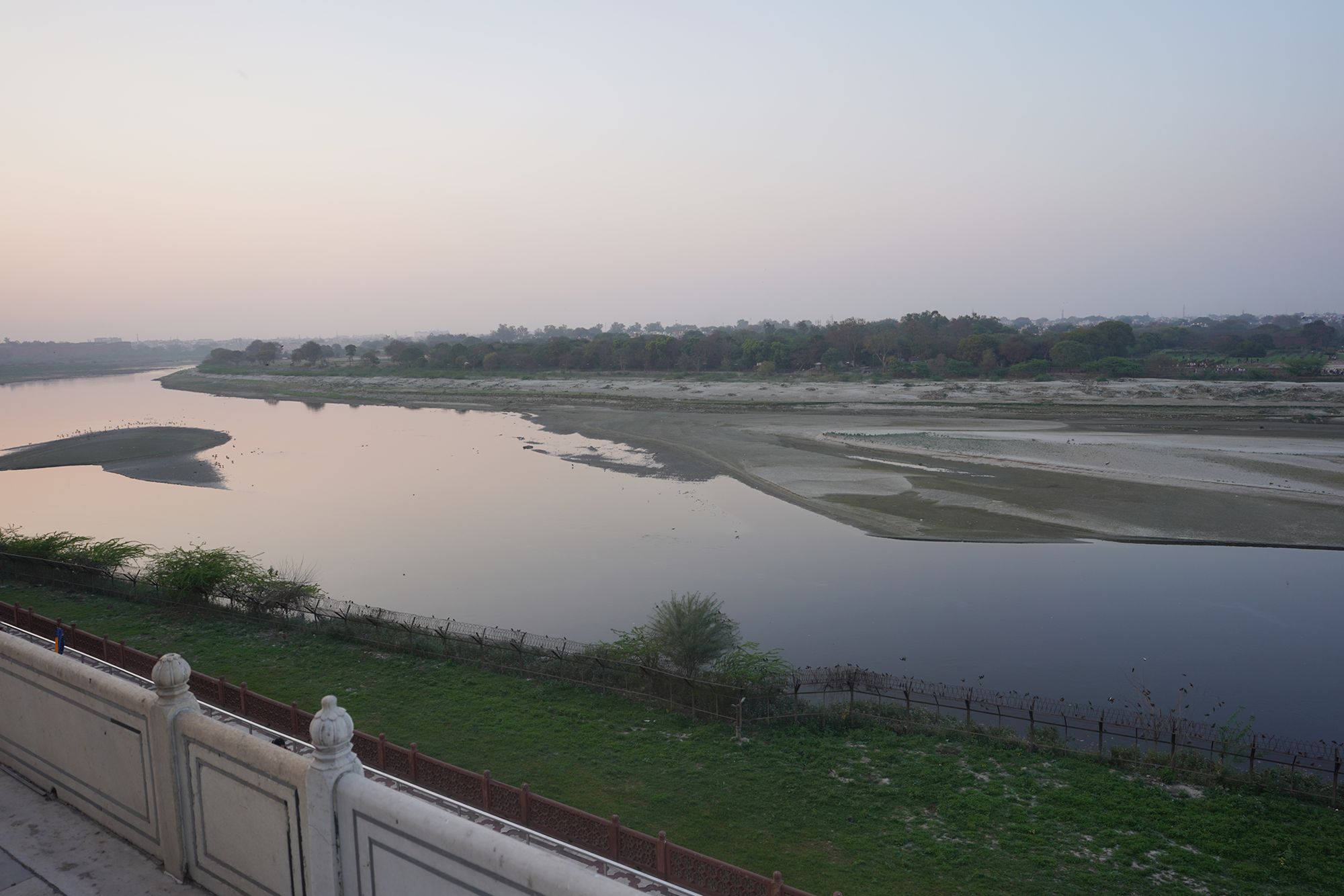
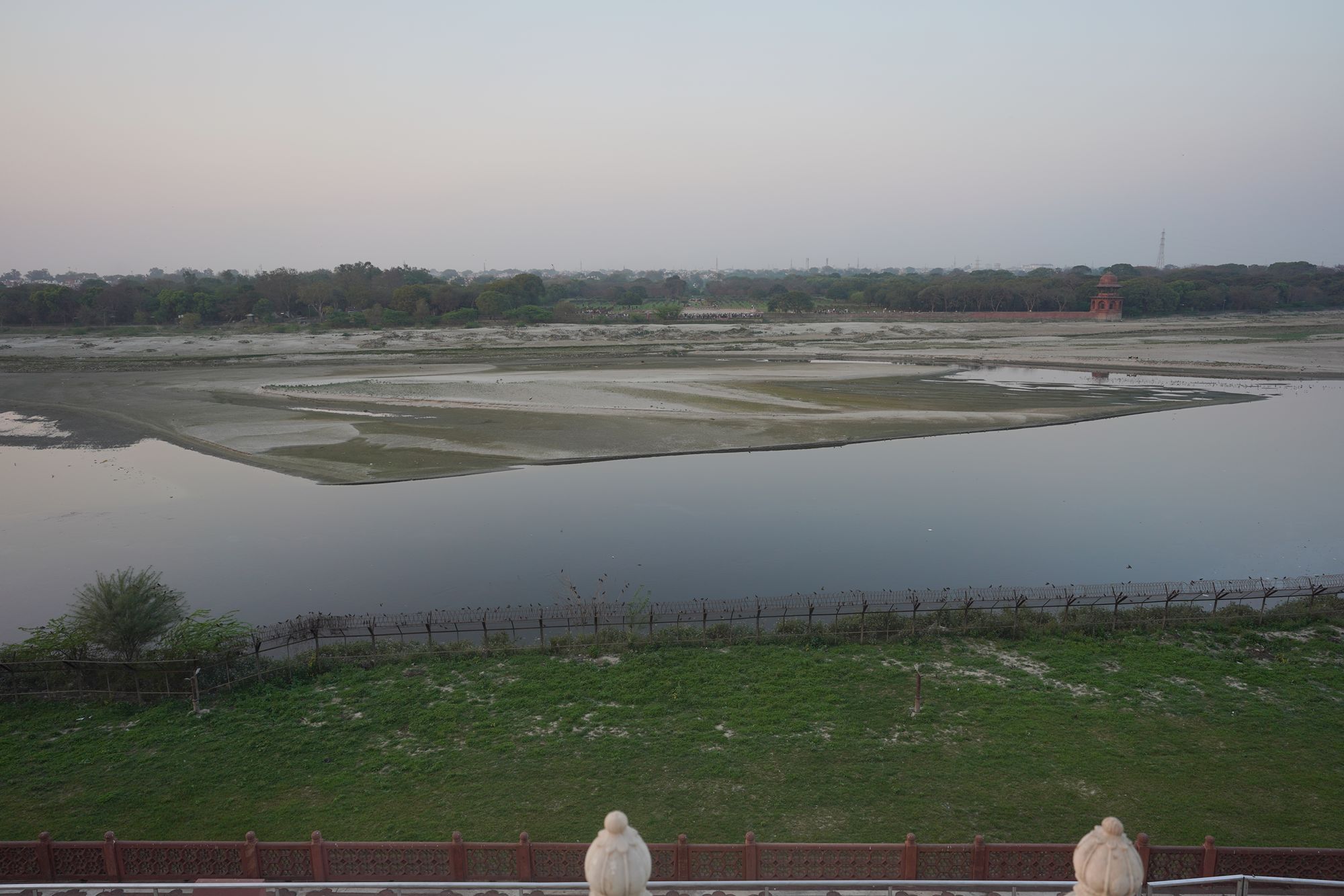
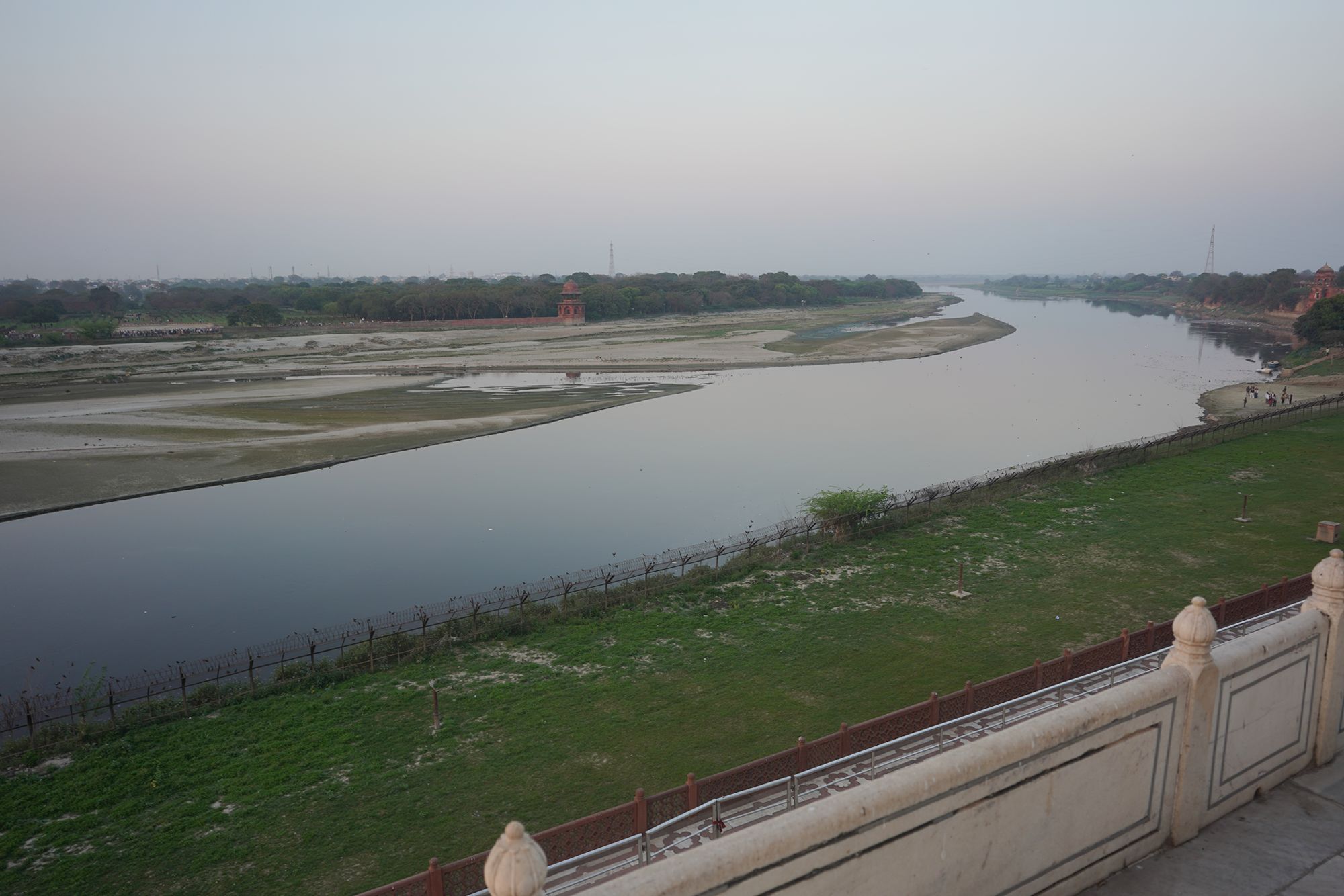
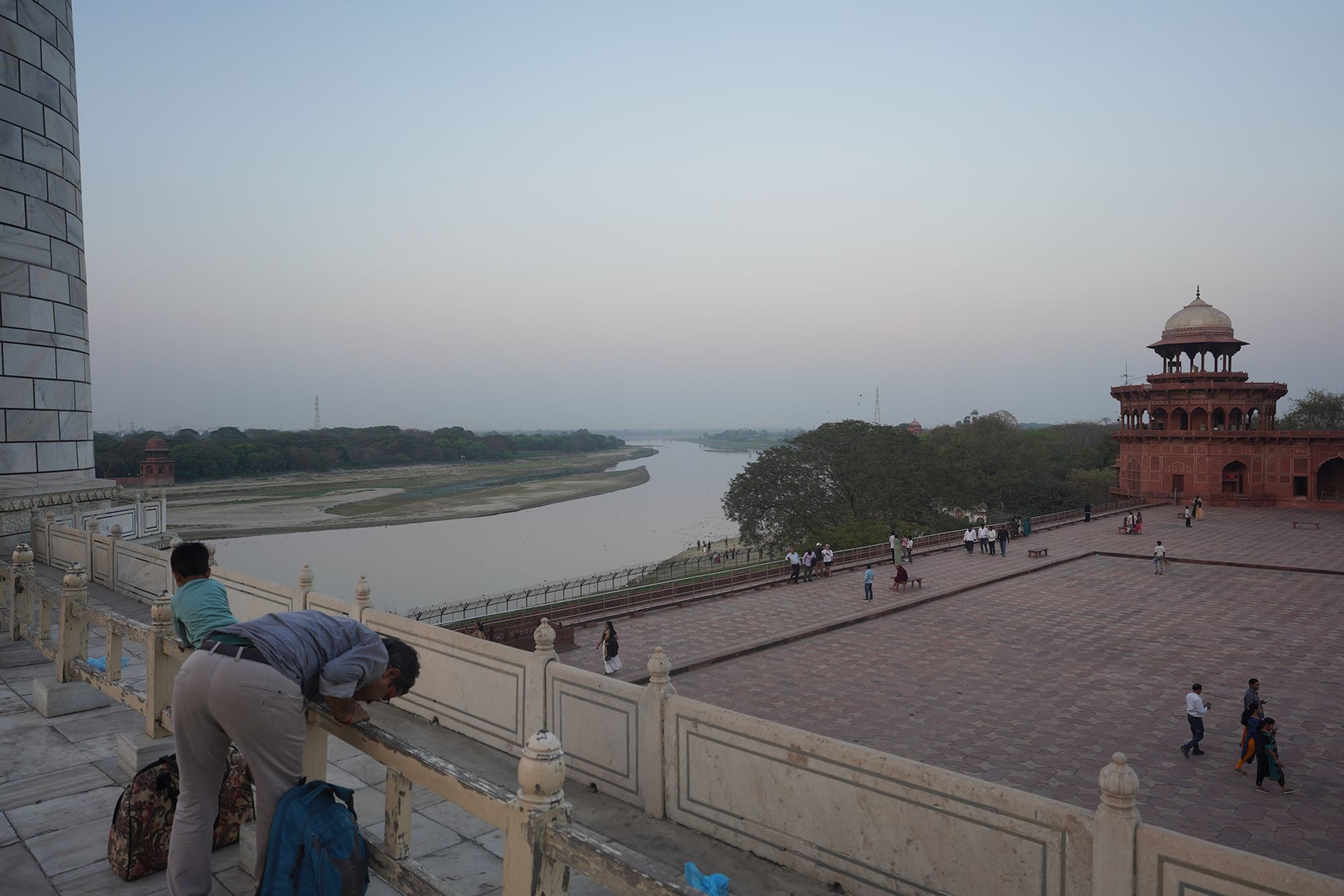
Directly behind the Taj Mahal flows the Yamuna River, one of the major rivers of northern India.
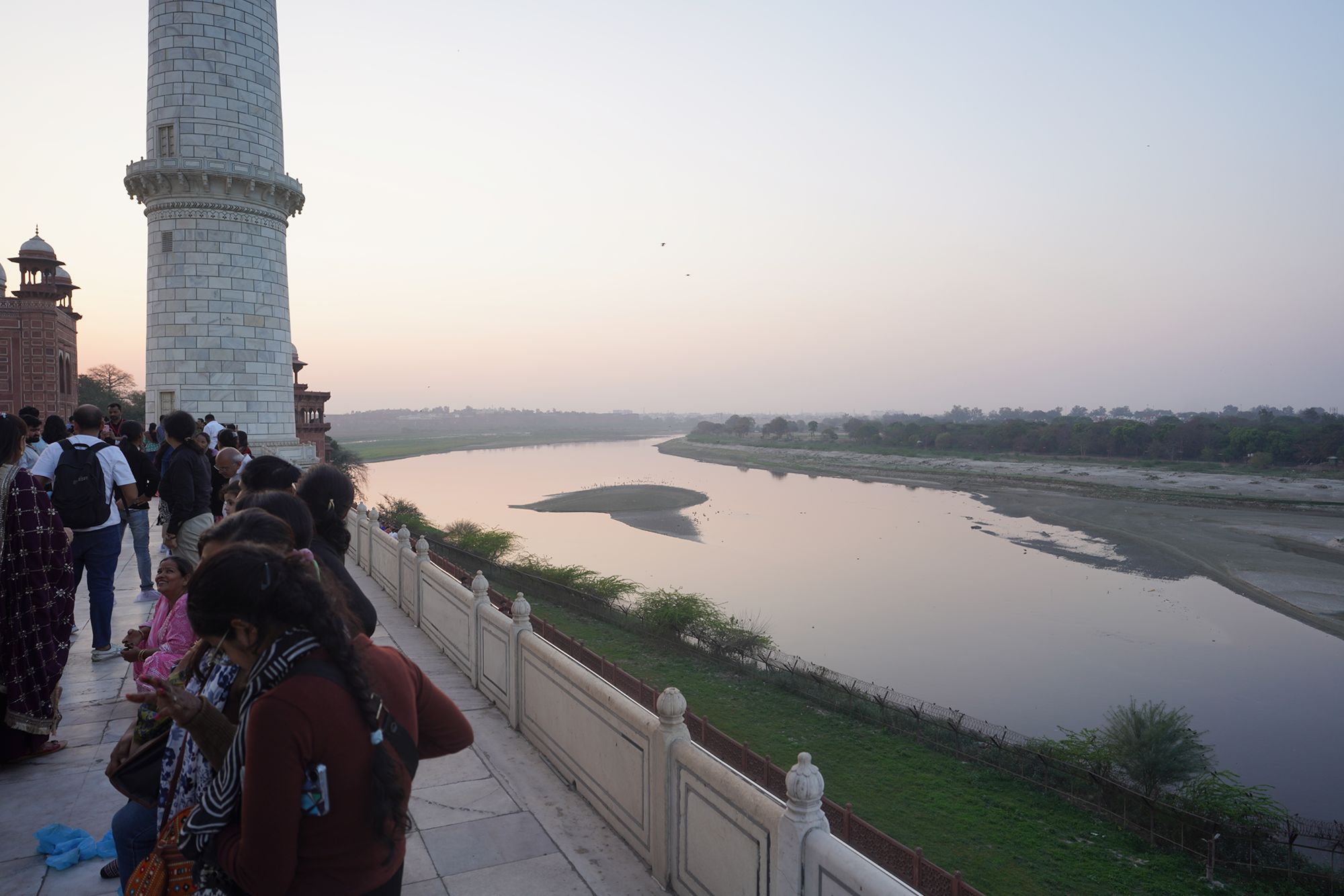
The Taj Mahal was deliberately built along the riverbank, and the river forms an important part of the monument's setting. Across the Yamuna is Mehtab Bagh, a Mughal garden that offers a famous view of the Taj Mahal from the opposite bank.
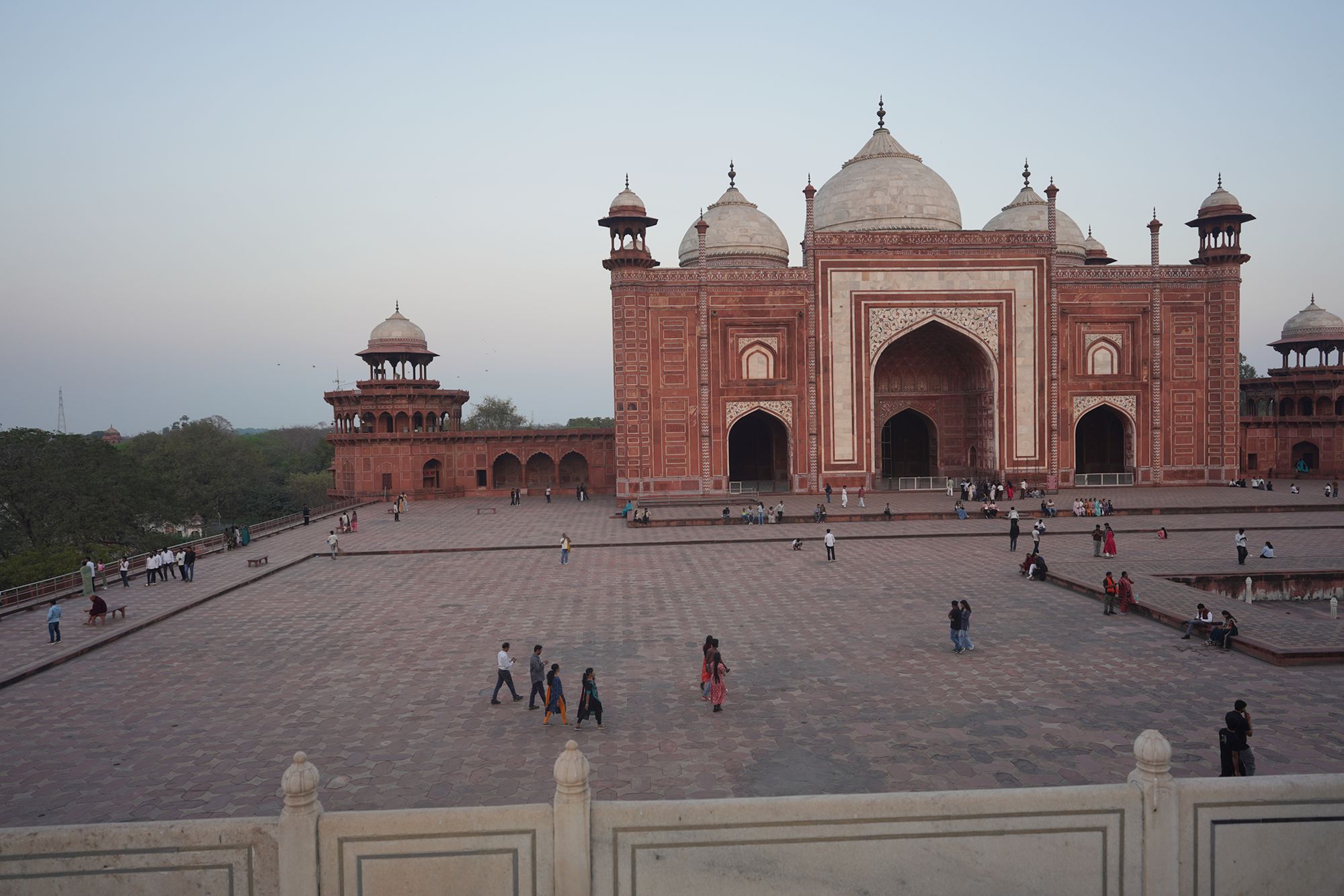
Jawab Building
The Jawab is the red sandstone building located on the eastern side of the Taj Mahal, directly opposite the mosque. The word jawab means “answer” or “response,” referring to the way the building visually “answers” the mosque on the other side.
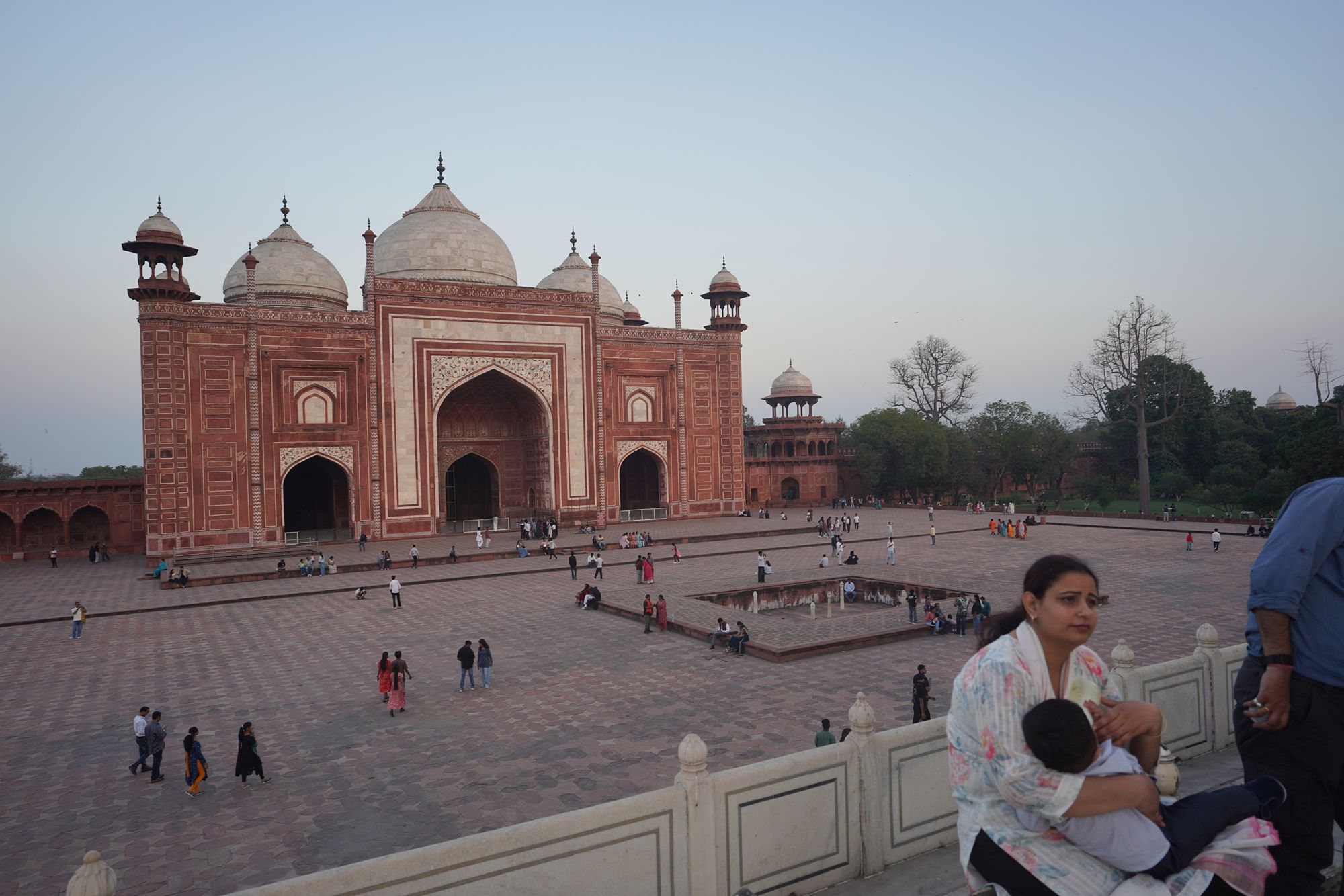
The Jawab was built primarily to maintain the perfect symmetry of the Taj Mahal complex. From the main garden, the arrangement is beautifully balanced: the mosque on the west, the Taj Mahal in the center, and the Jawab on the east.