Ranakpur Shwetambar Jain Temple in Ranakpur, Mandore Garden and City Market in Jodhpur, India
Ranakpur is known for its beautiful Jain temple, while Jodhpur features the historic Mandore Garden and lively City Market. 1255
Rankpur Shwetambar Jain Temple: Ranakpur Rd, Desuri, Sadri, Ranakpur, Rajasthan 306702, India
Mandore Garden: Mandore, Jodhpur, Rajasthan 342304, India
Jodhpur City Market: 2nd St, Mahamandir, Laxmi Nagar, Jodhpur, Rajasthan 342006, India
Date Picture Taken: Feb, 2026
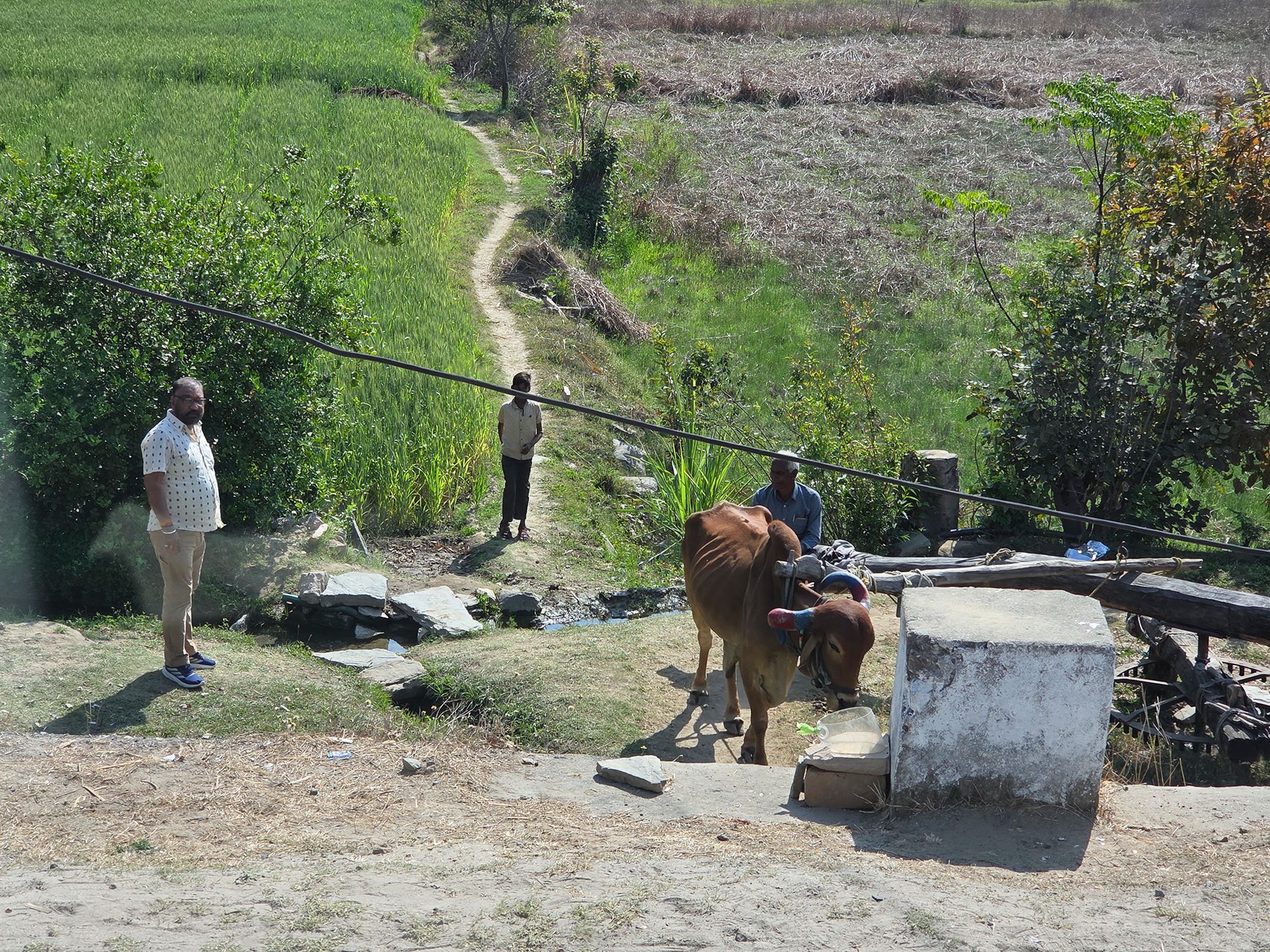
On the way from Udaipur to Jodhpur, we stopped at a small village where we watched local people use a cow to turn a traditional wooden mechanism.
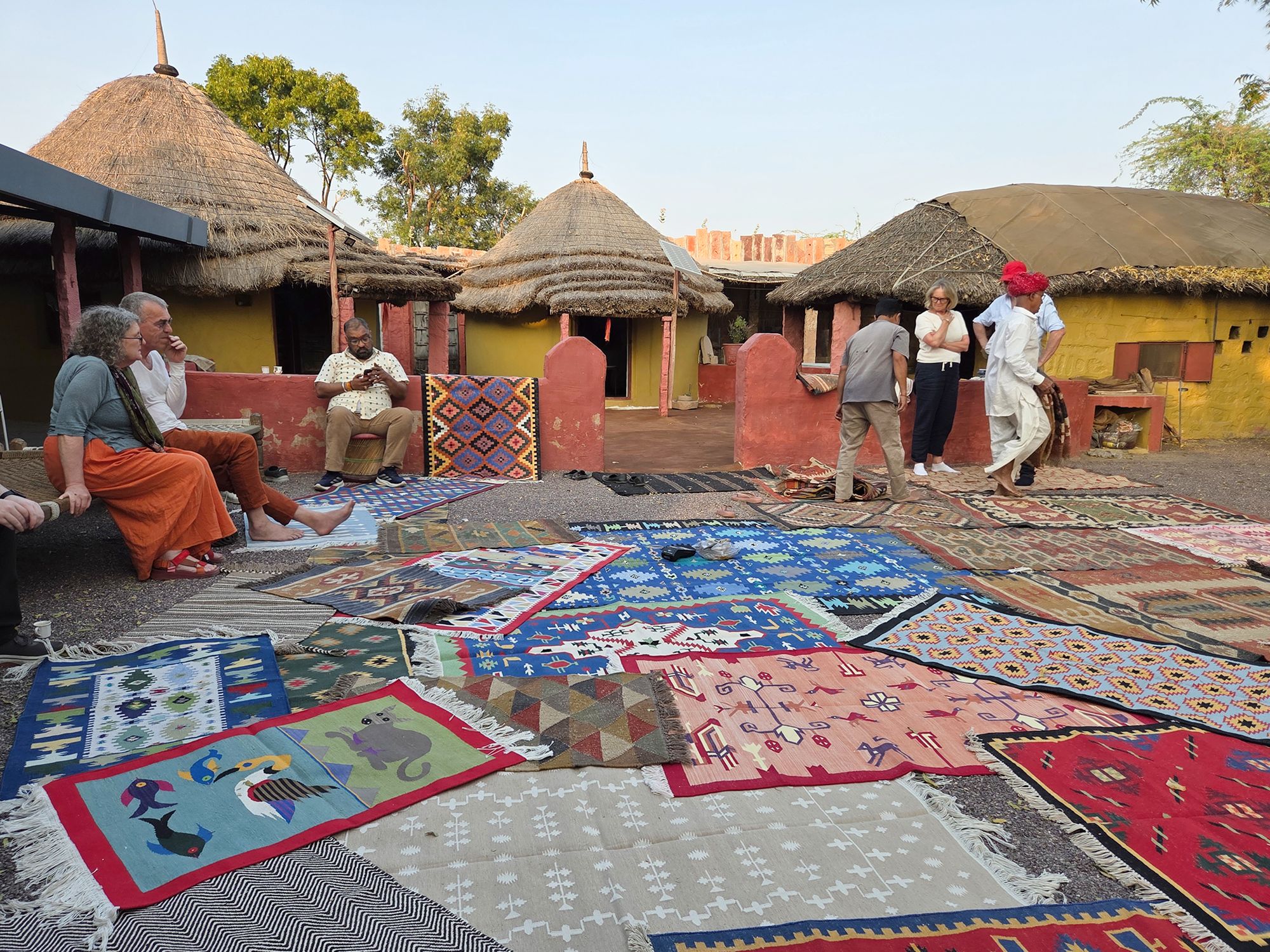
Then we stopped at a local weaver’s workshop, where we watched handmade blankets being made and had an opportunity to buy them.
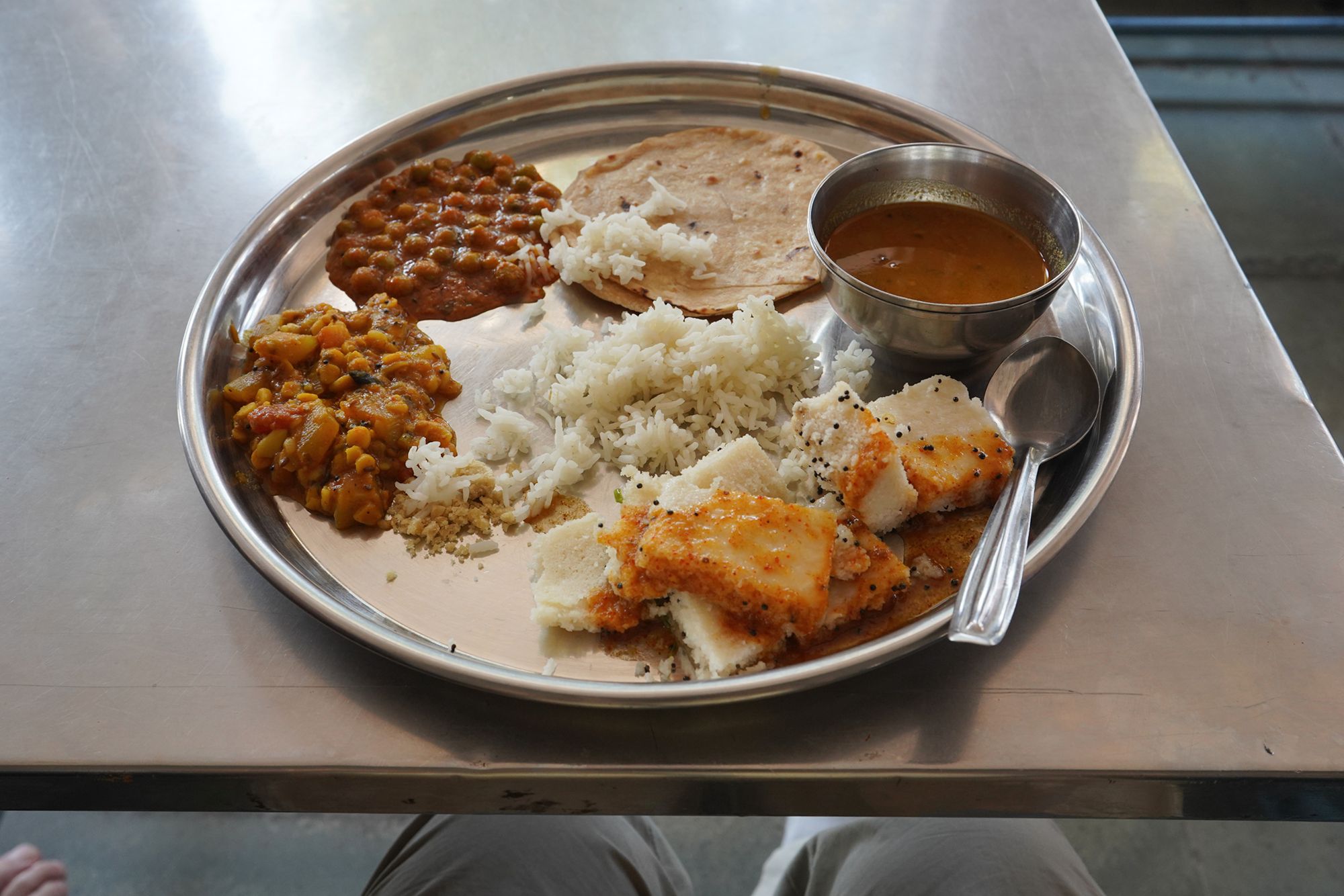
We also stopped at a local family’s home, where they welcomed us for a traditional home-cooked lunch.
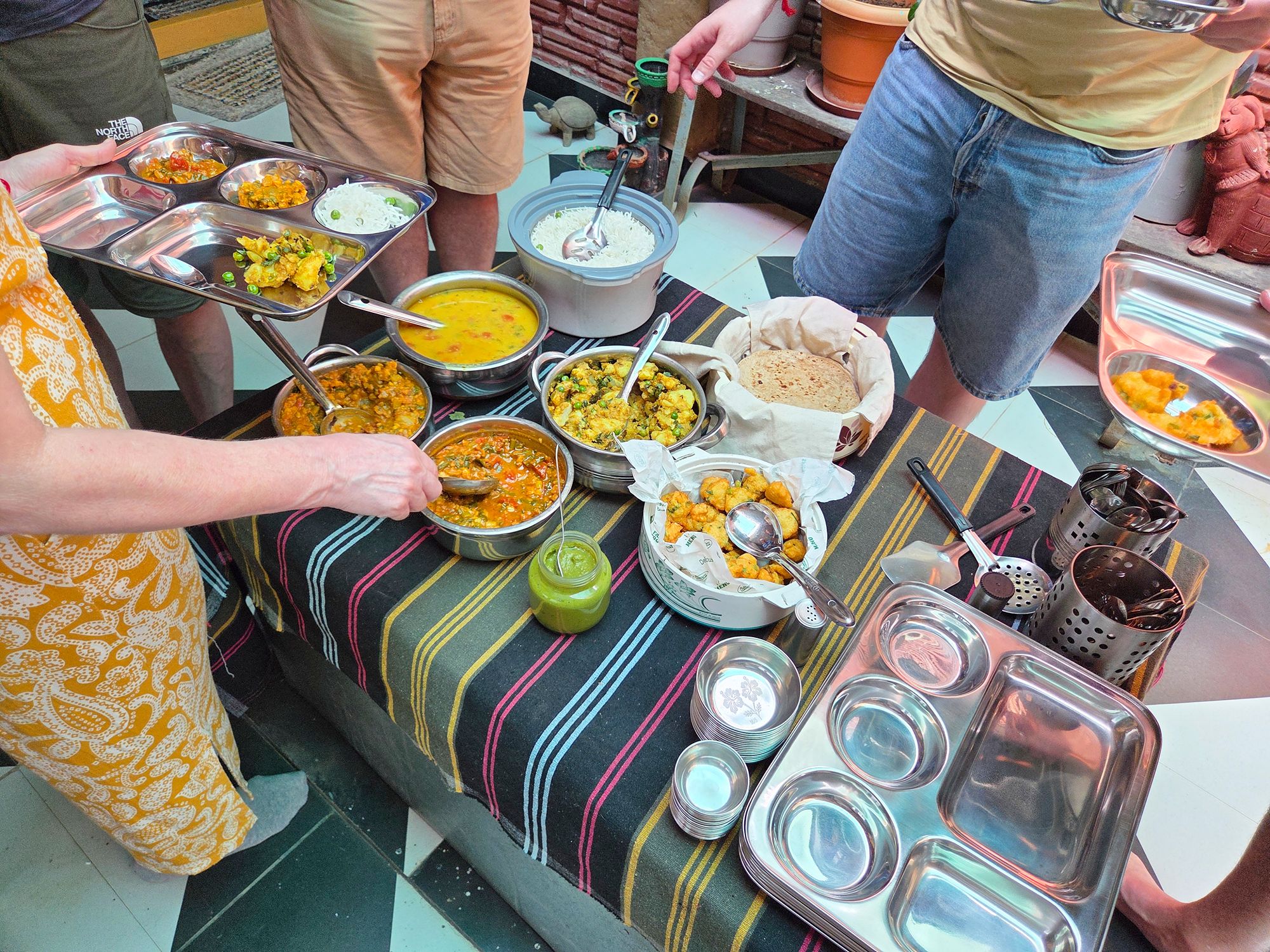
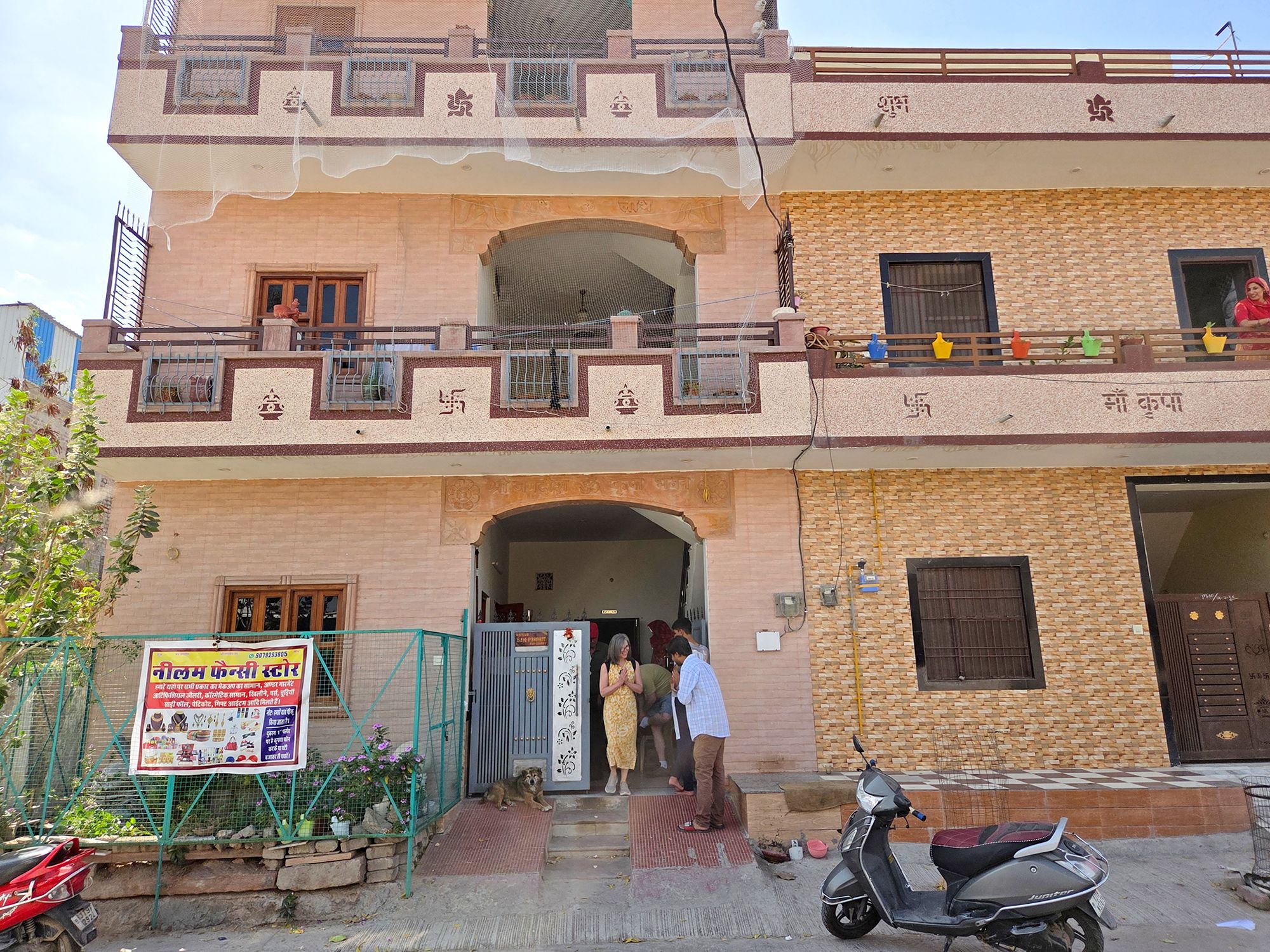
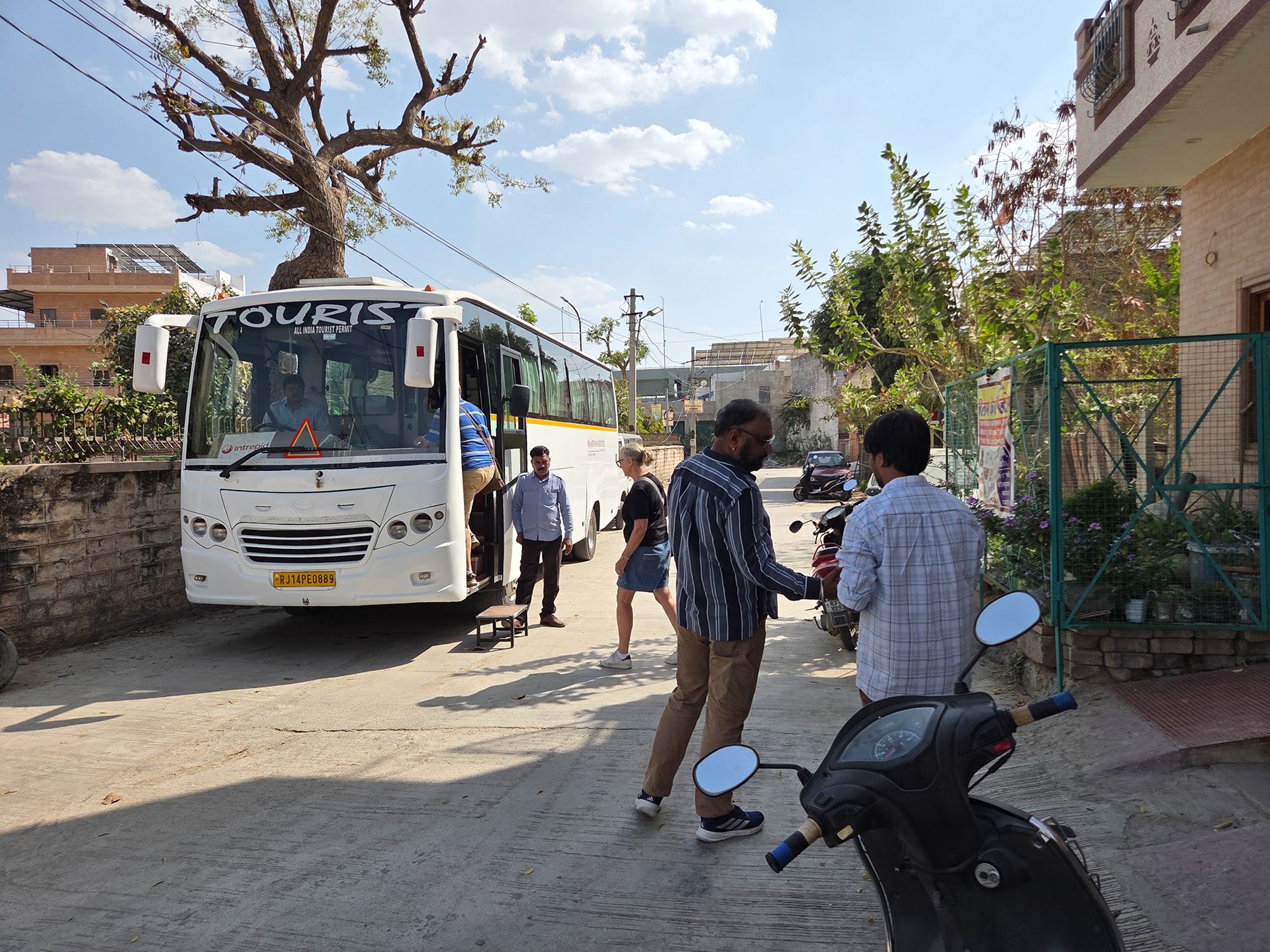
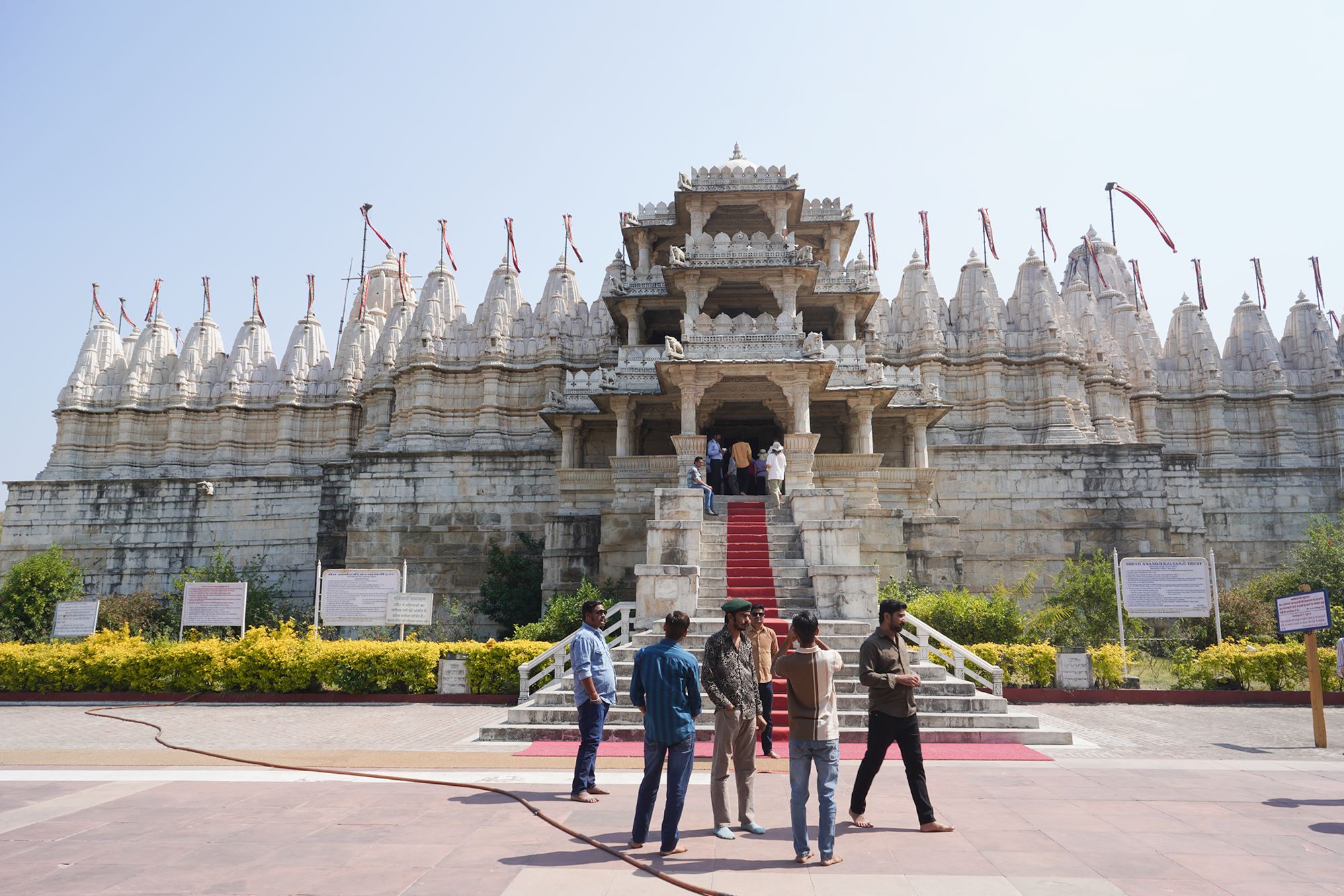
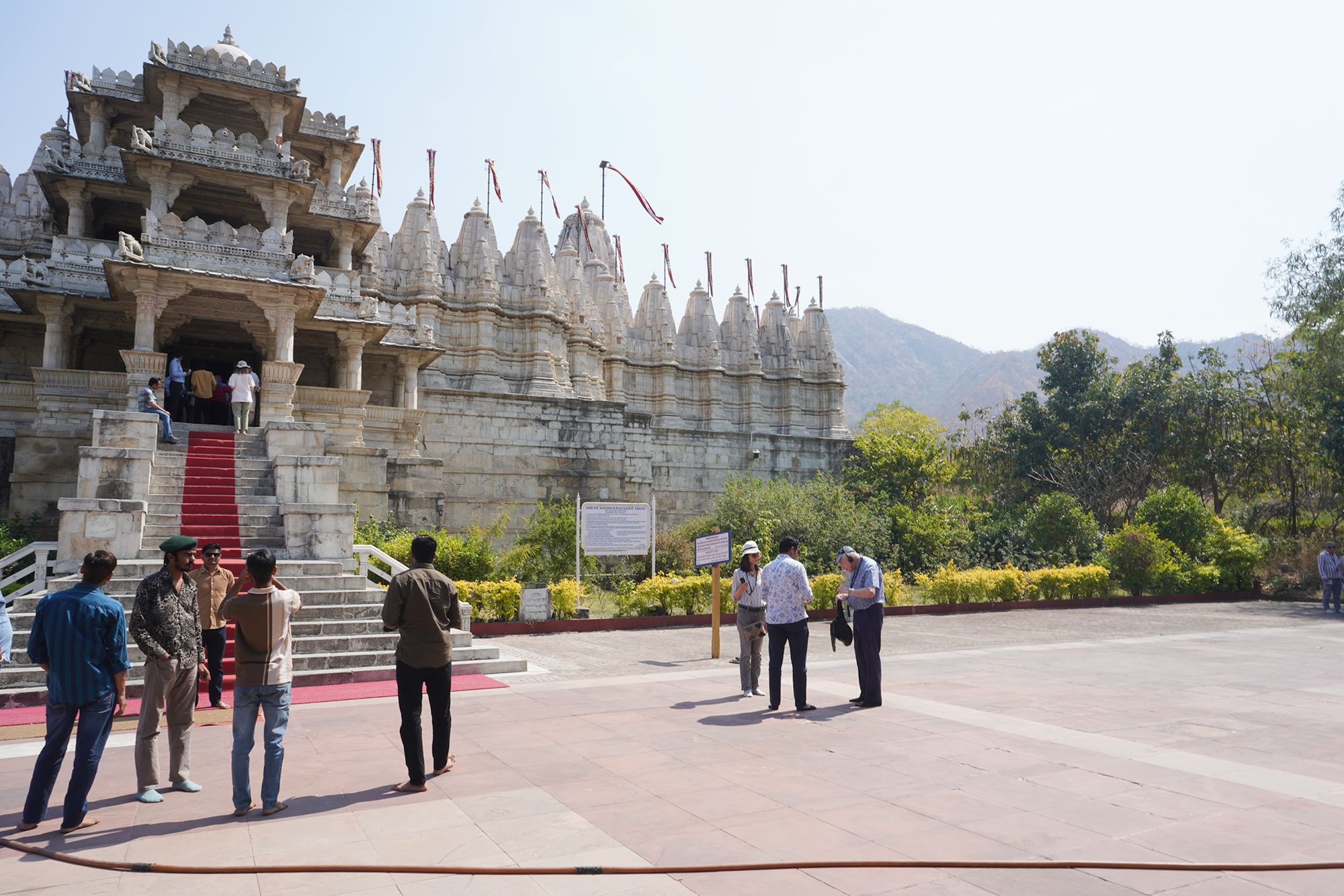
Then we stopped at the Ranakpur Shwetambar Jain Temple in Ranakpur, Rajasthan.
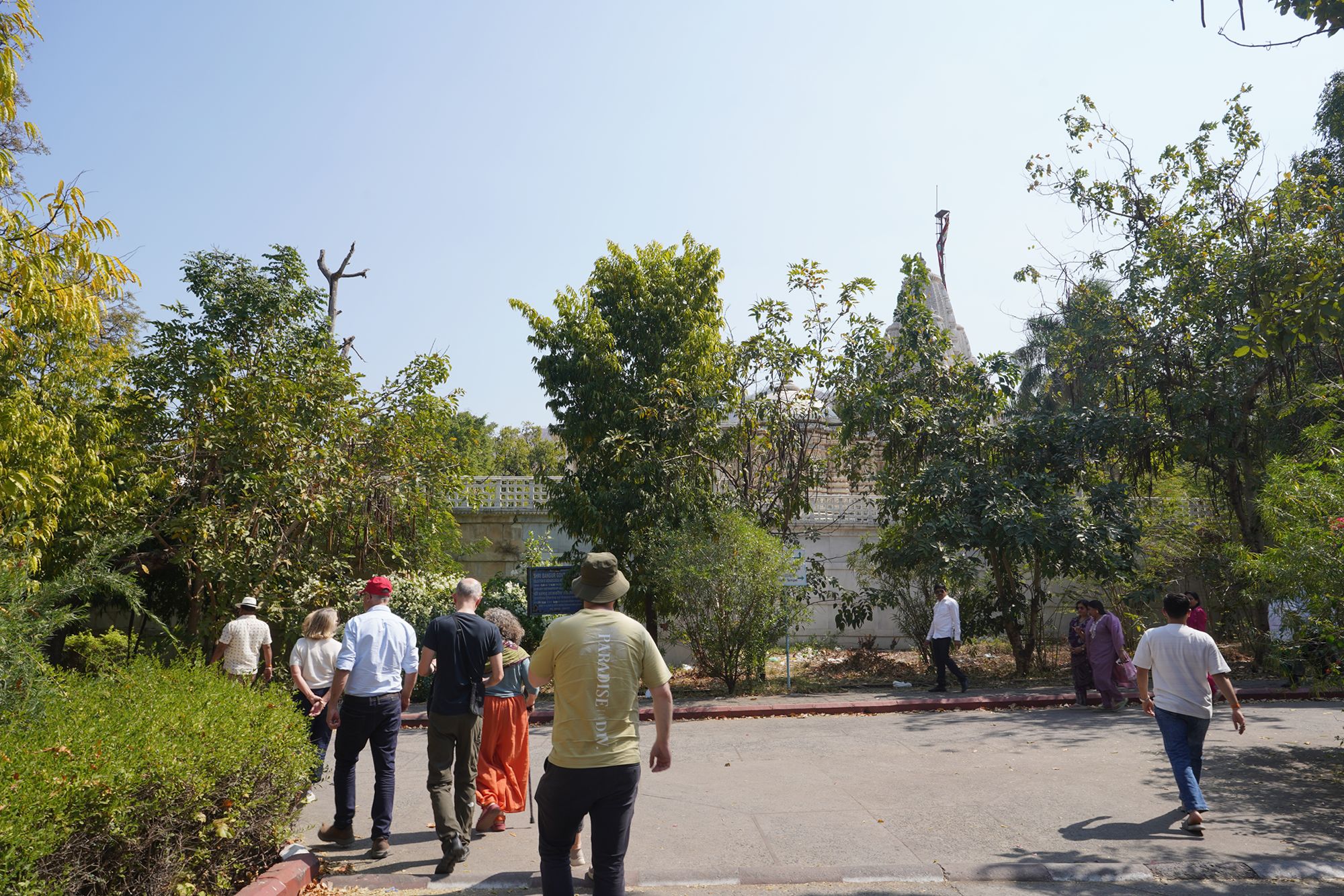
The Ranakpur Shwetambar Jain Temple, built in the 15th century, is one of India’s most important Jain temples. Made almost entirely of white marble, it is famous for its elaborate carvings and 1,444 intricately carved pillars, each said to have a unique design.
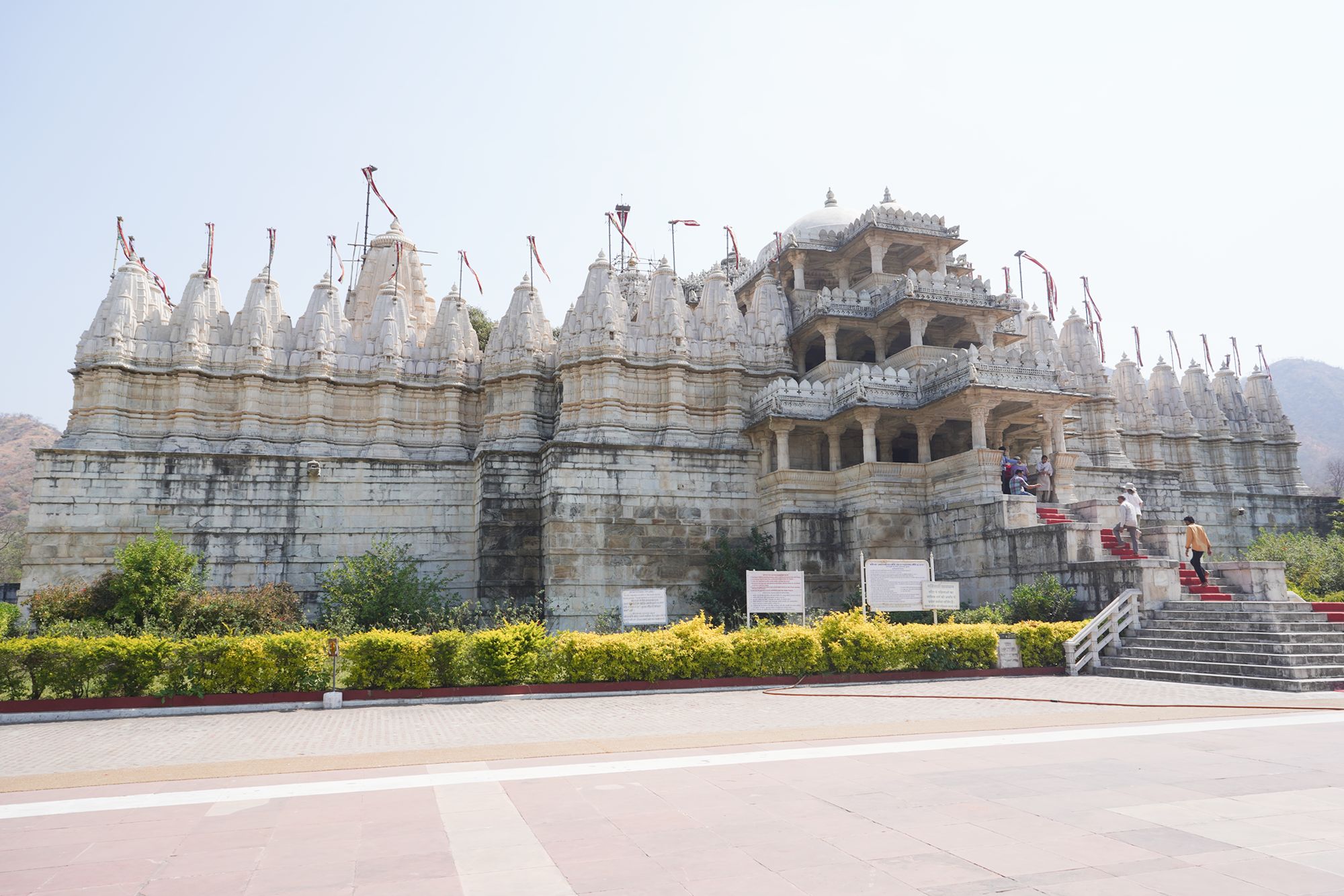
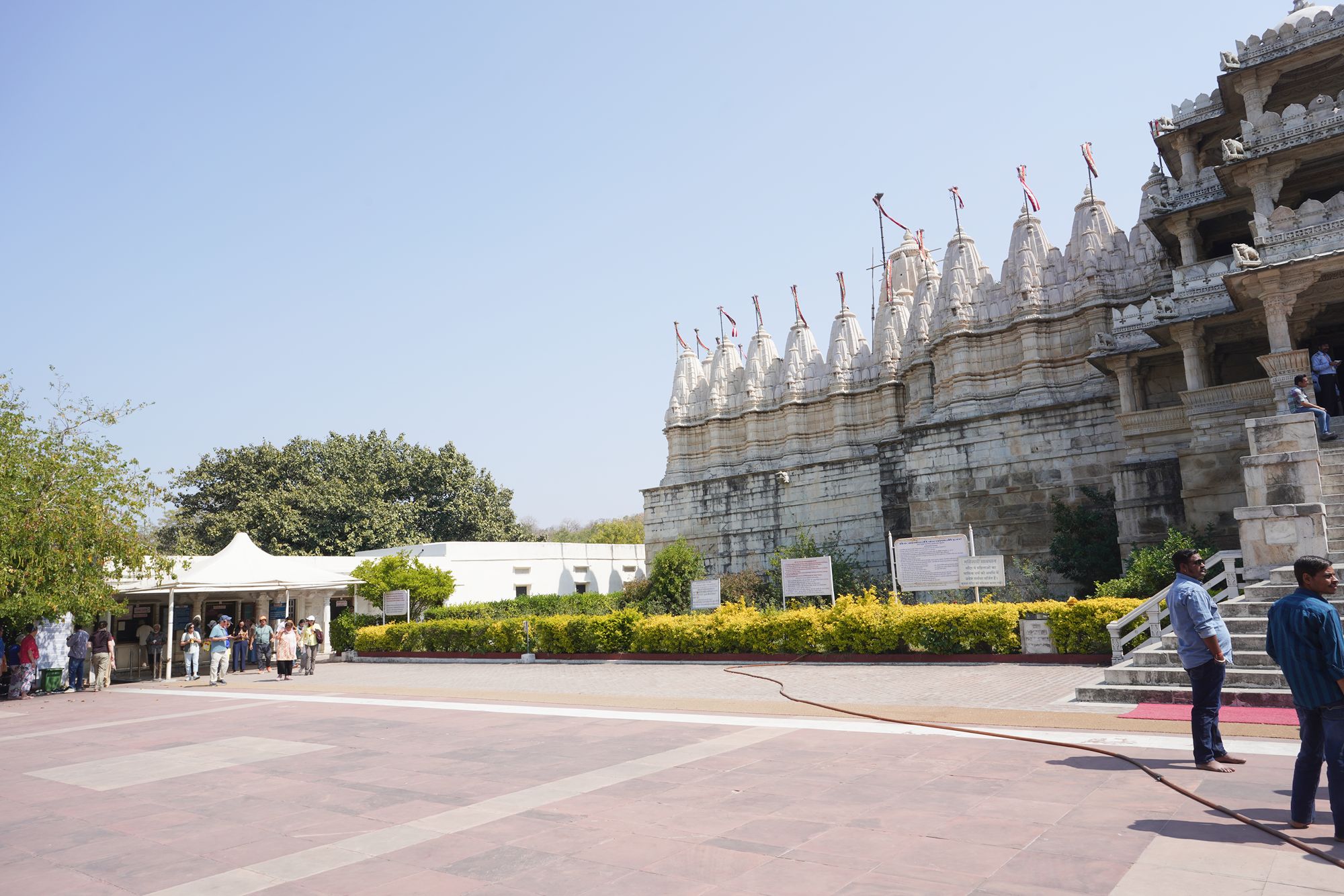
The temple remains an active place of worship and is one of the finest examples of Jain architecture in Rajasthan.
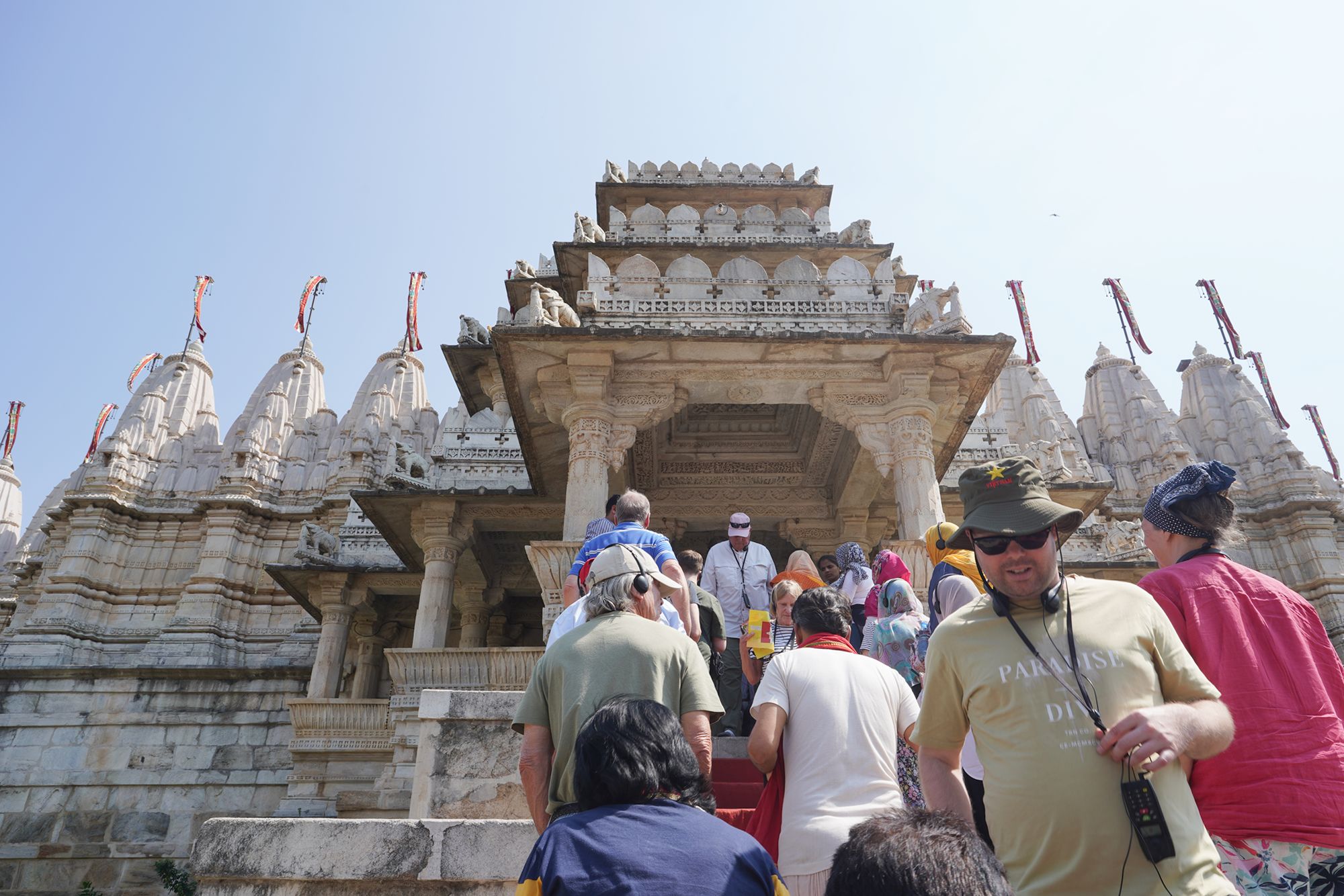
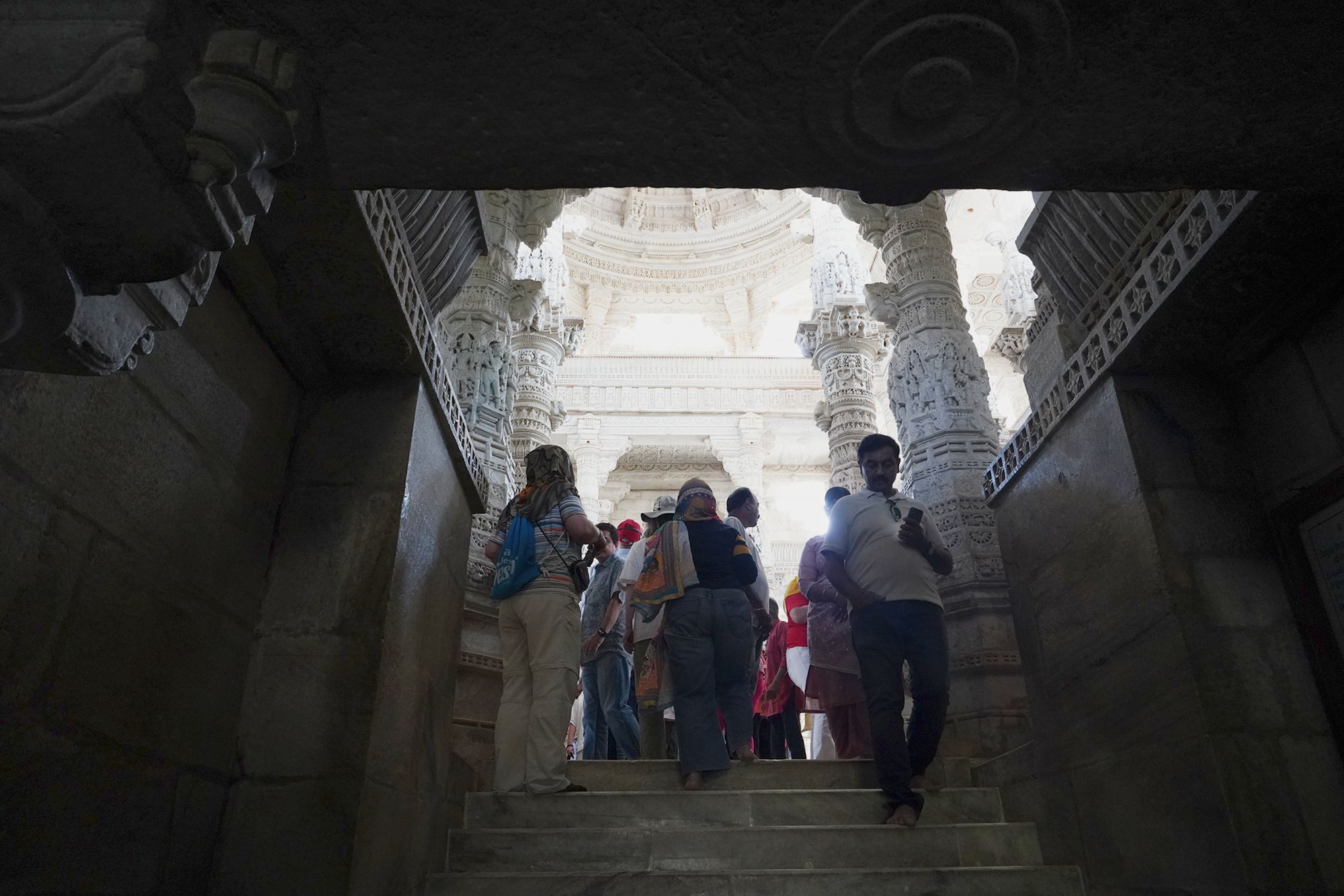
Jainism and Hinduism are distinct religions, although both originated in ancient India and share some concepts, such as karma, reincarnation, and liberation from the cycle of rebirth.
The main differences are:
- Hinduism includes many traditions and deities, such as Vishnu, Shiva, and Devi, and generally accepts the authority of the ancient Vedas.
- Jainism does not believe in a creator god. It follows the teachings of 24 Tirthankaras, spiritual teachers who attained liberation.
- Jainism places an especially strong emphasis on ahimsa (nonviolence) toward all living beings. This is why strict Jains follow a very careful vegetarian diet and try to avoid harming even small forms of life.
The Ranakpur temple is dedicated to Adinatha, the first of the 24 Jain Tirthankaras.
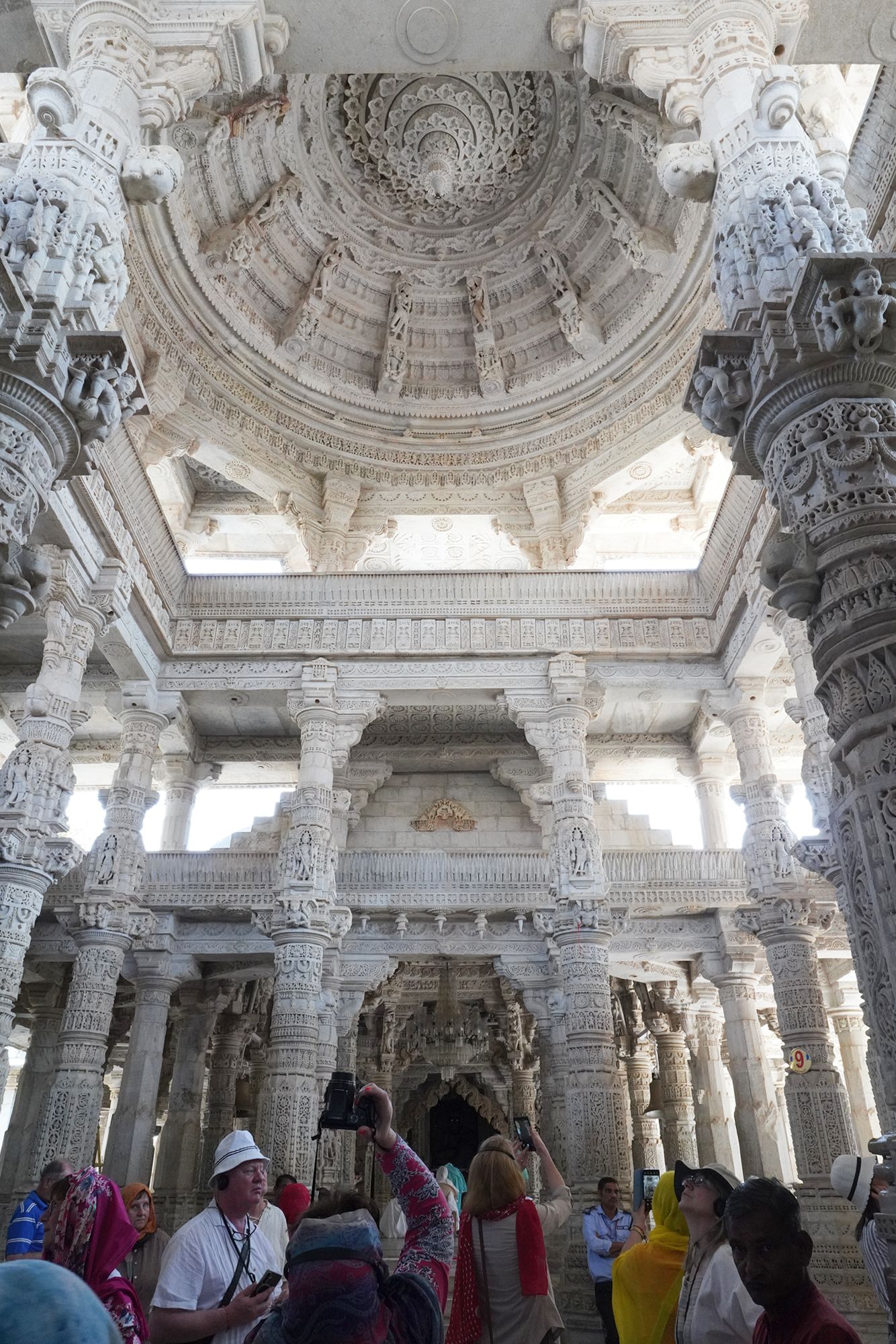
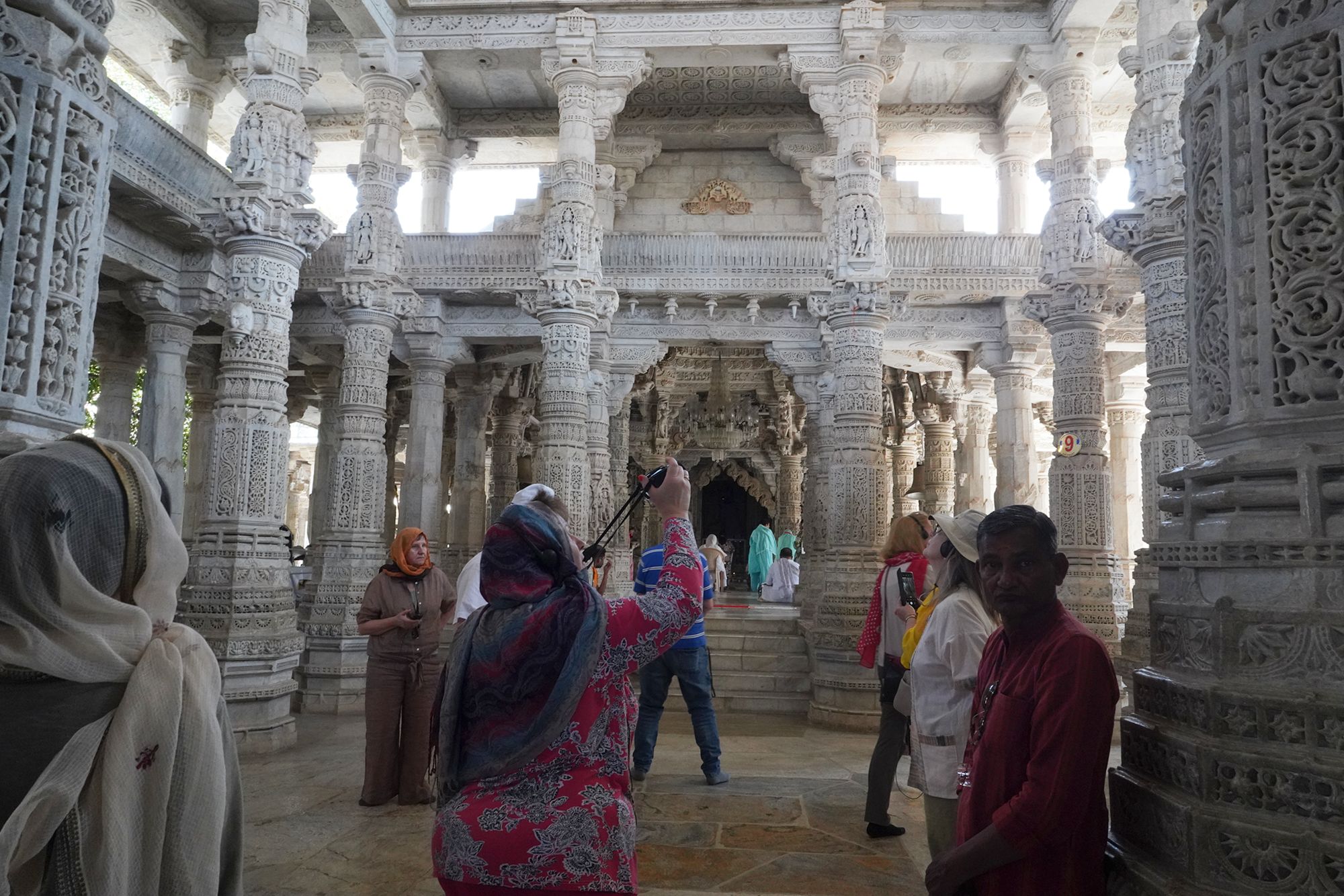
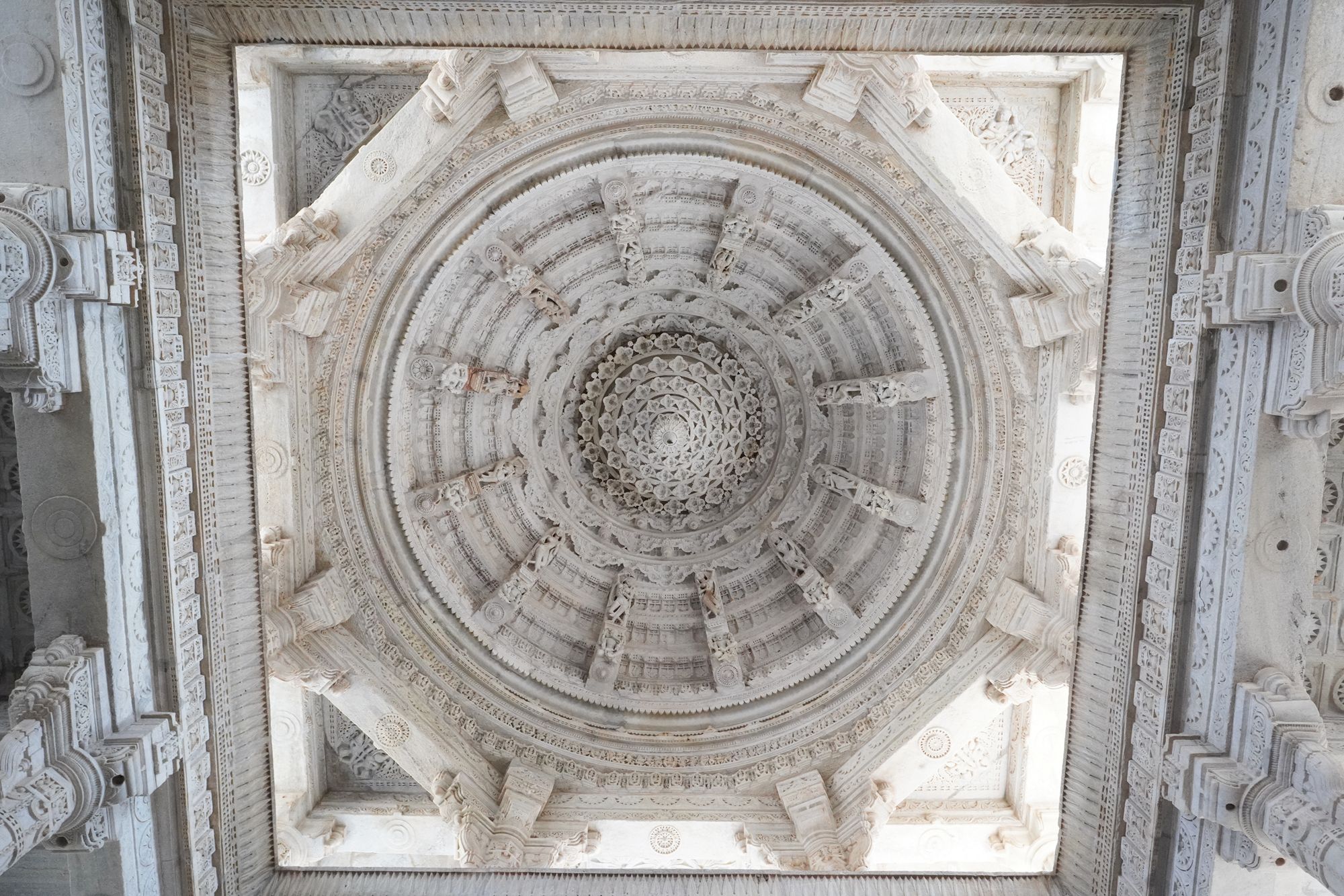
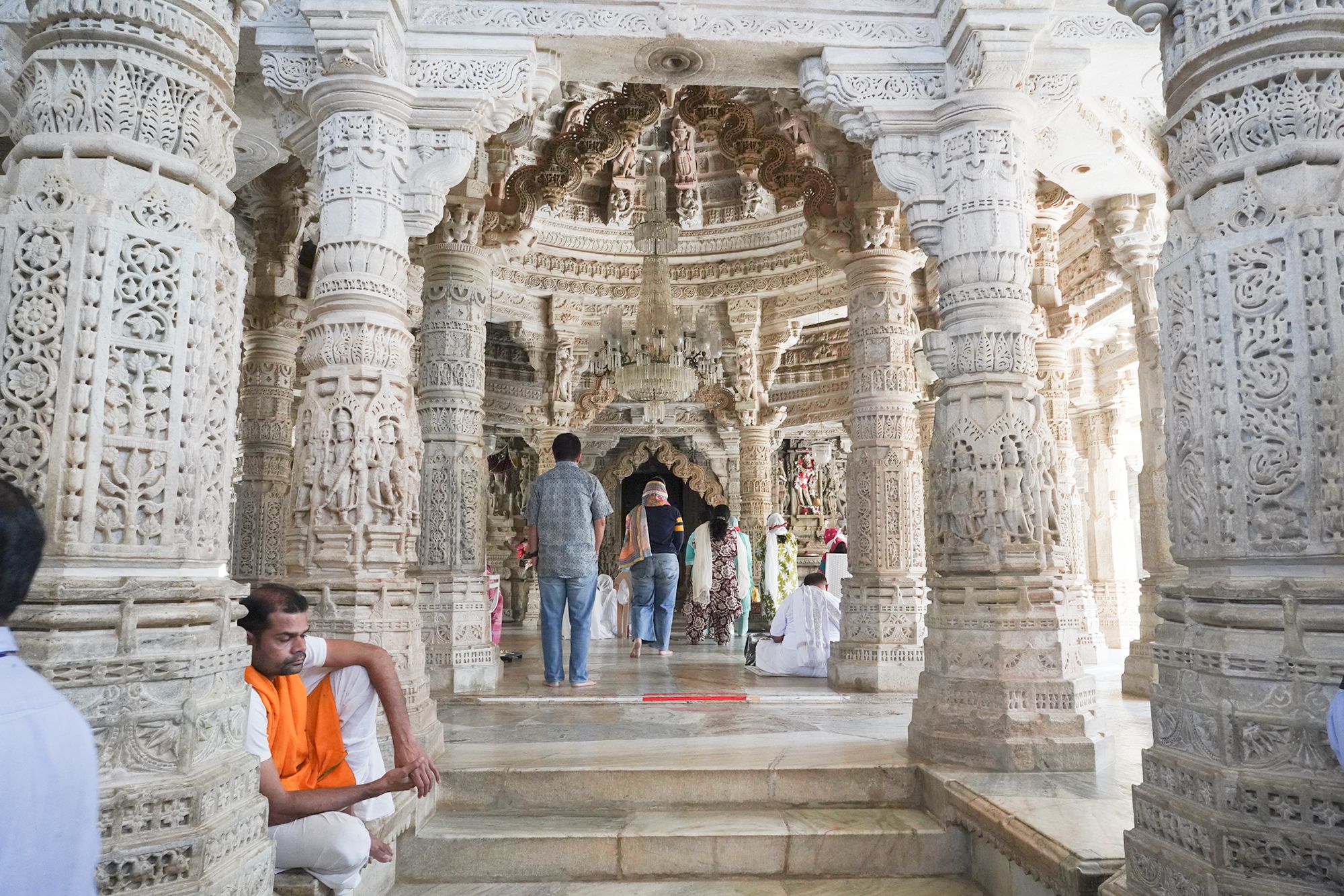
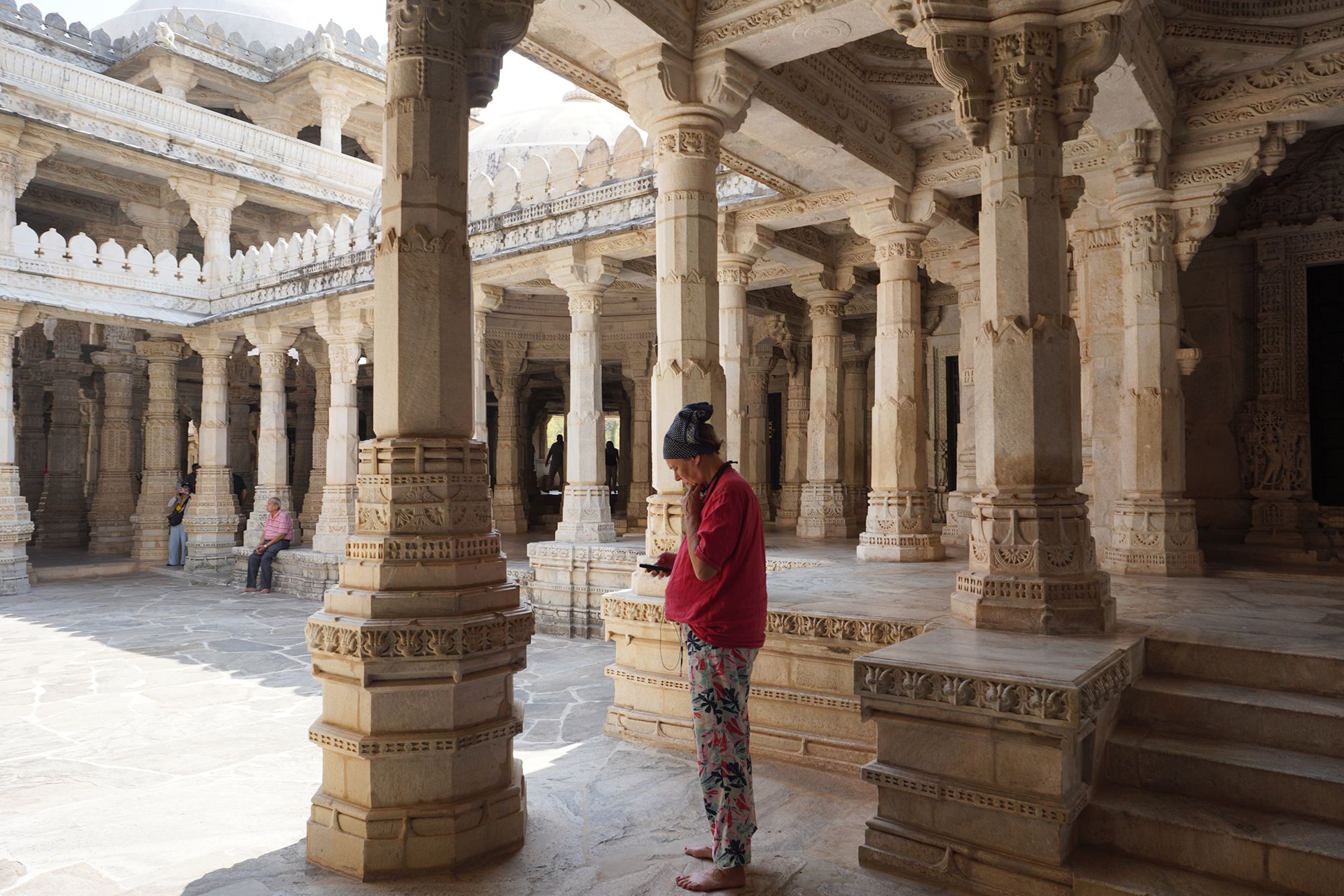
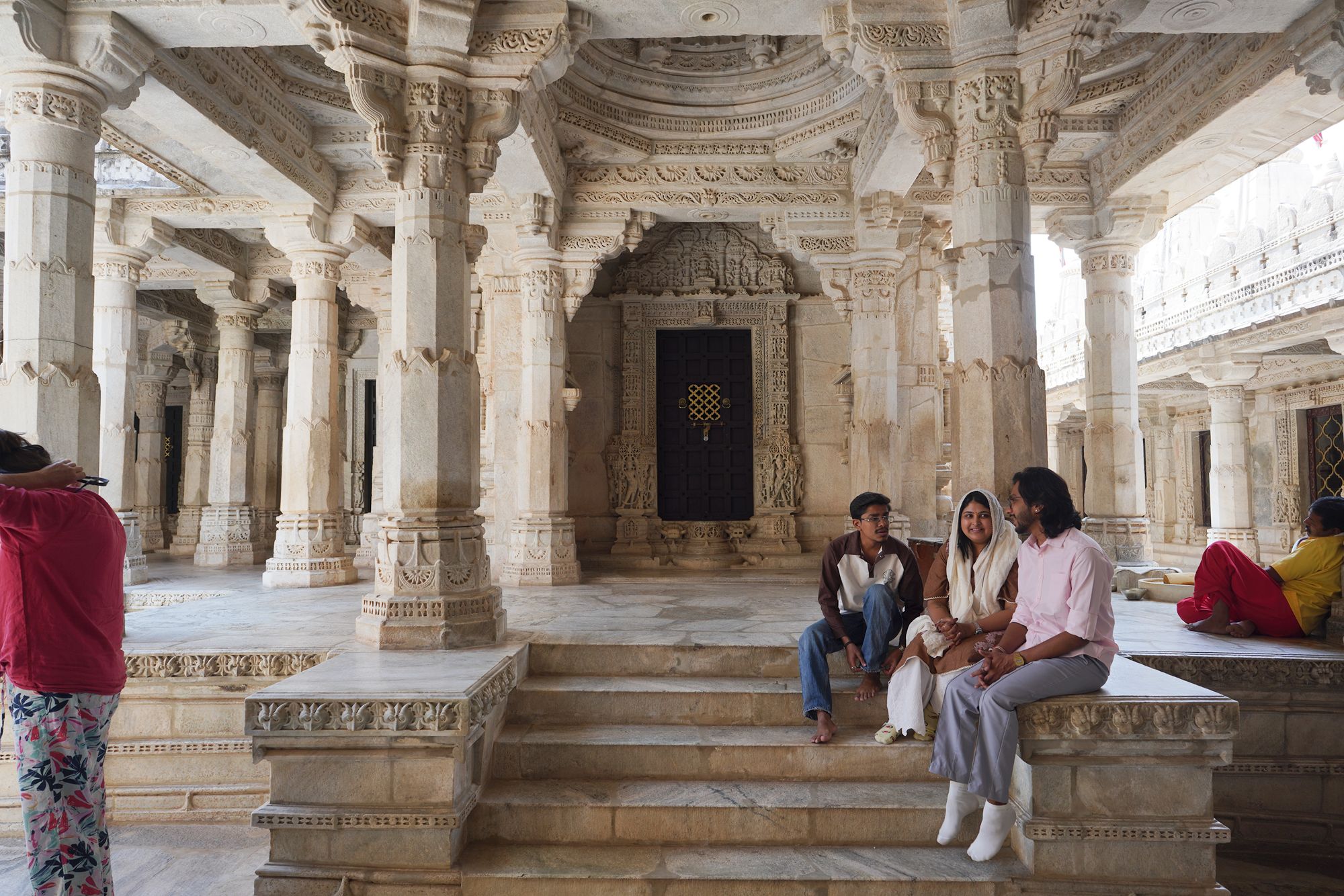
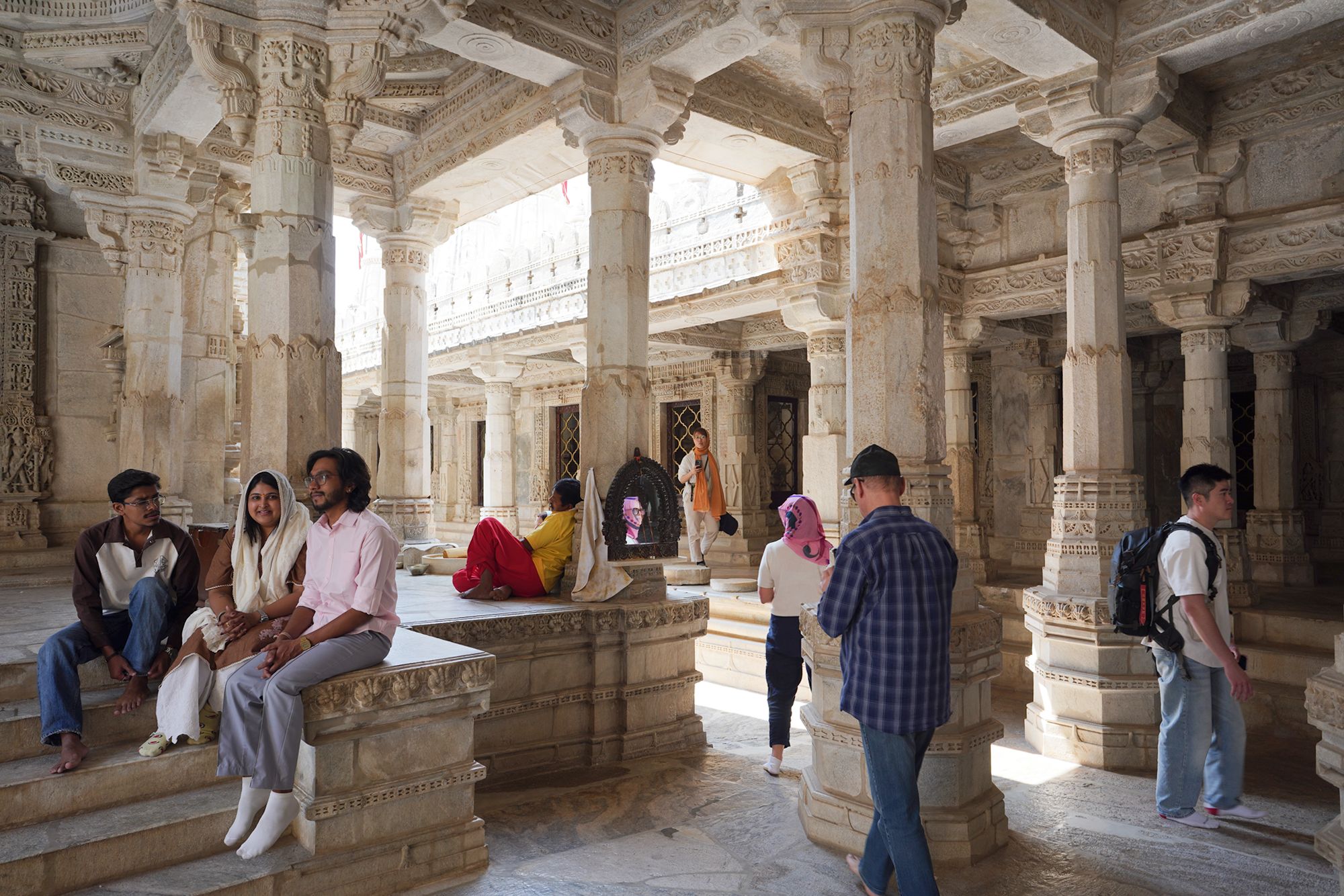
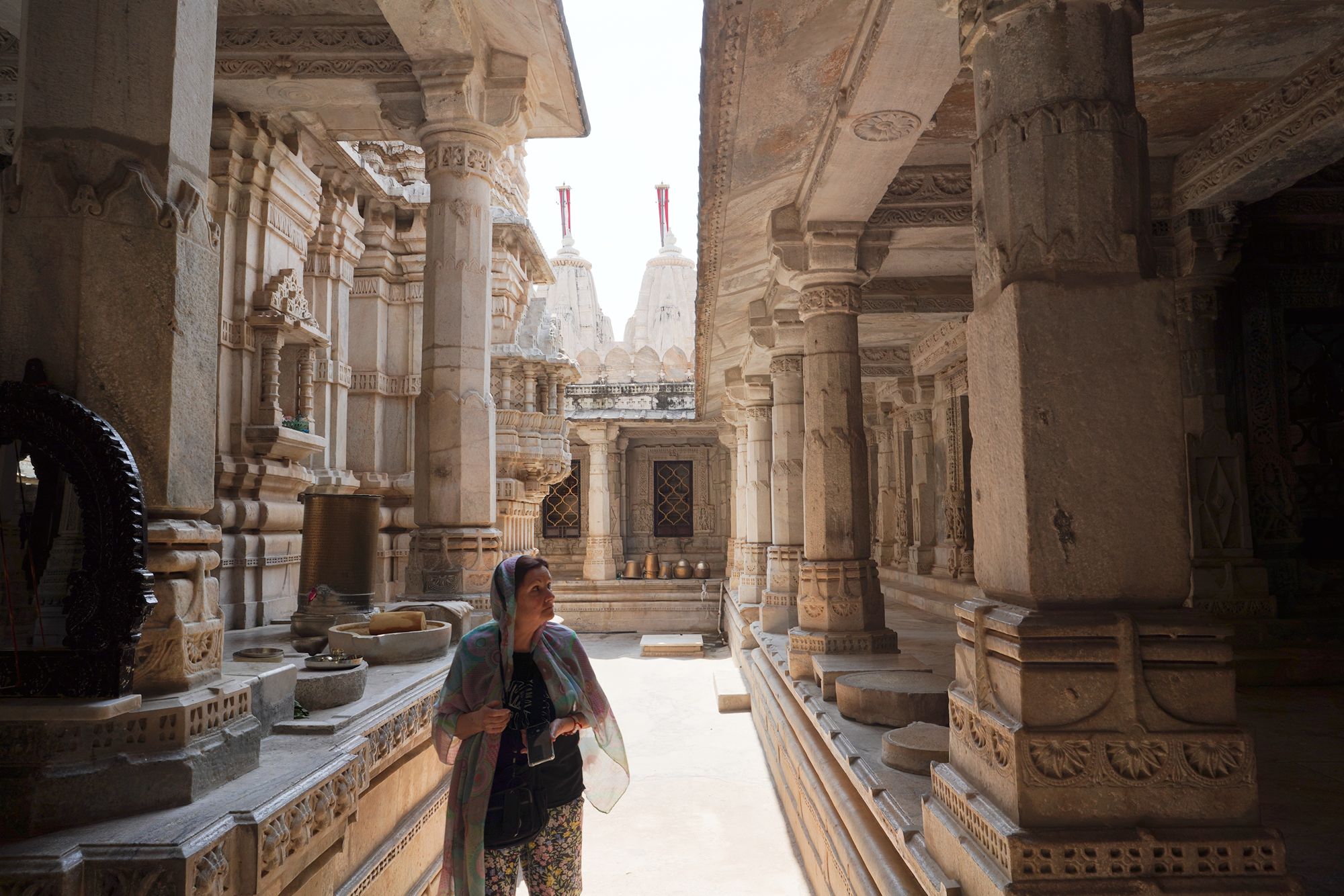
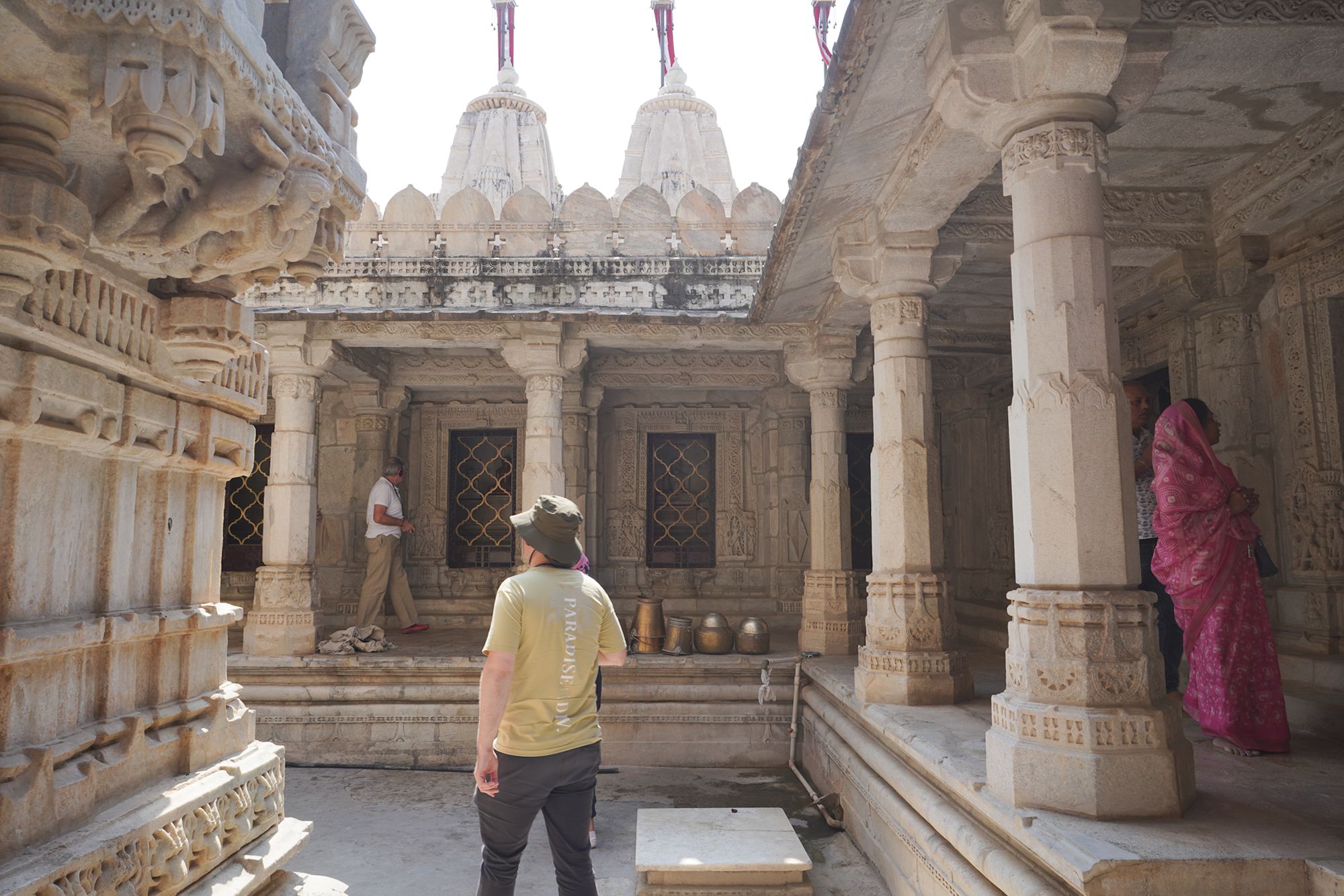
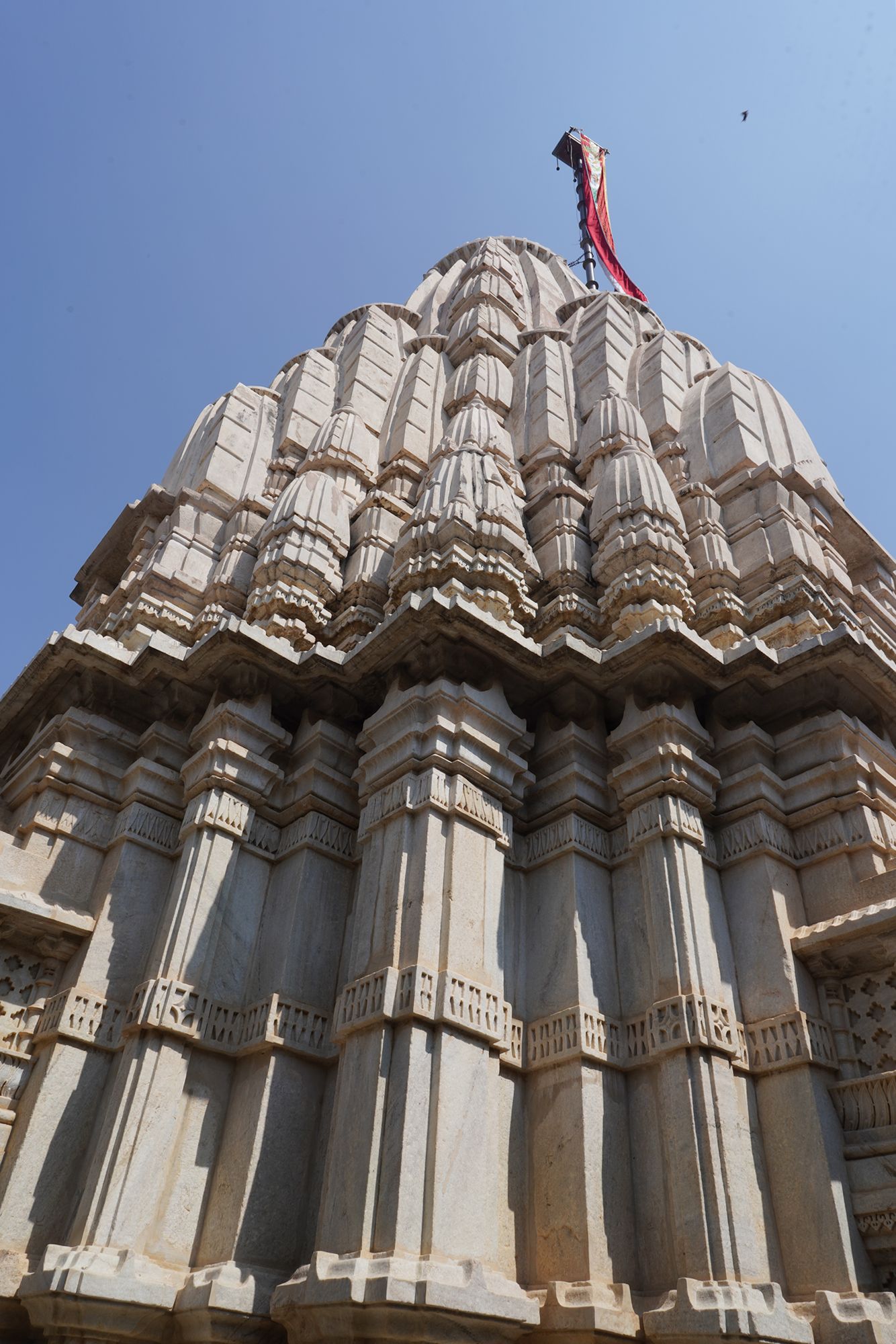
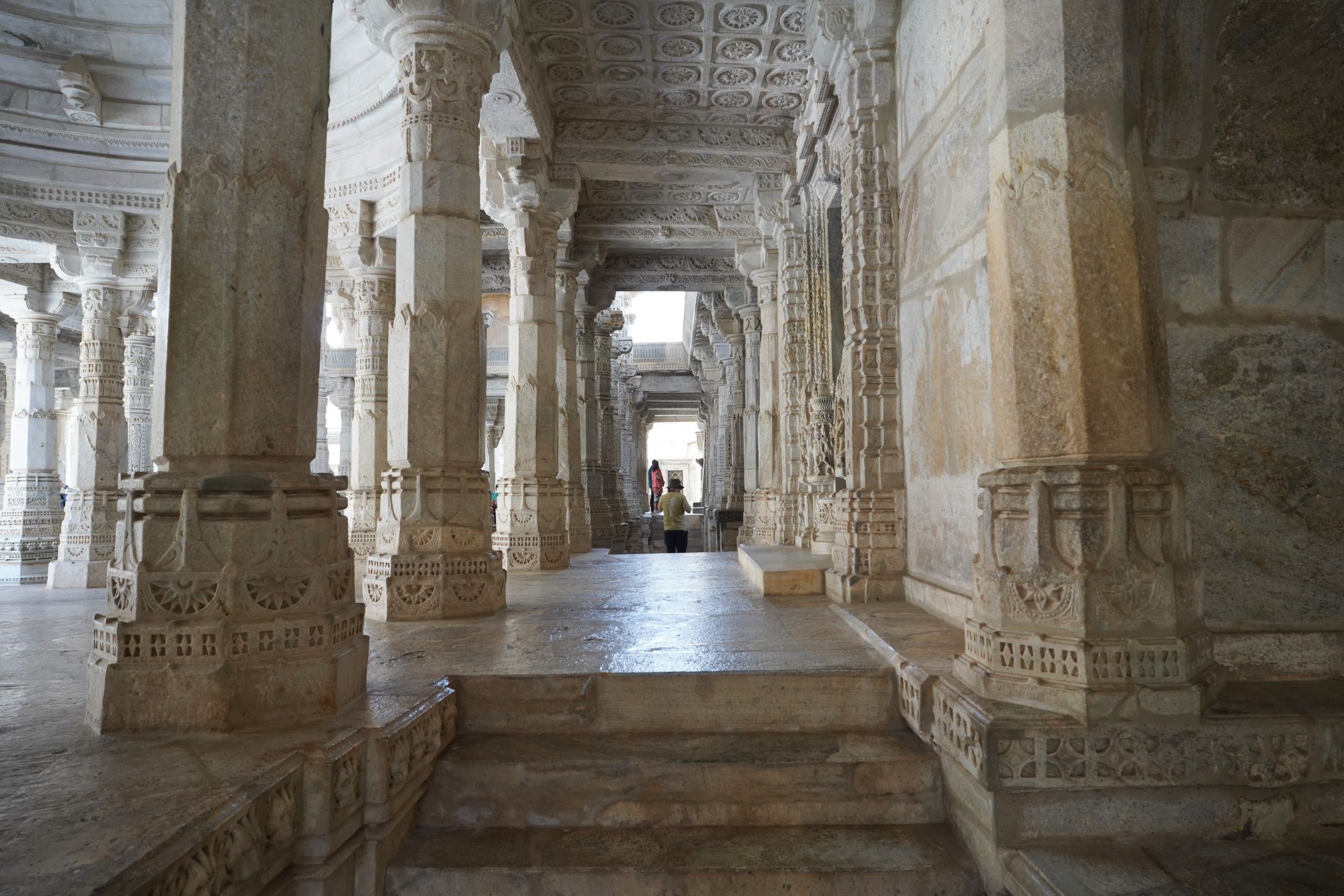
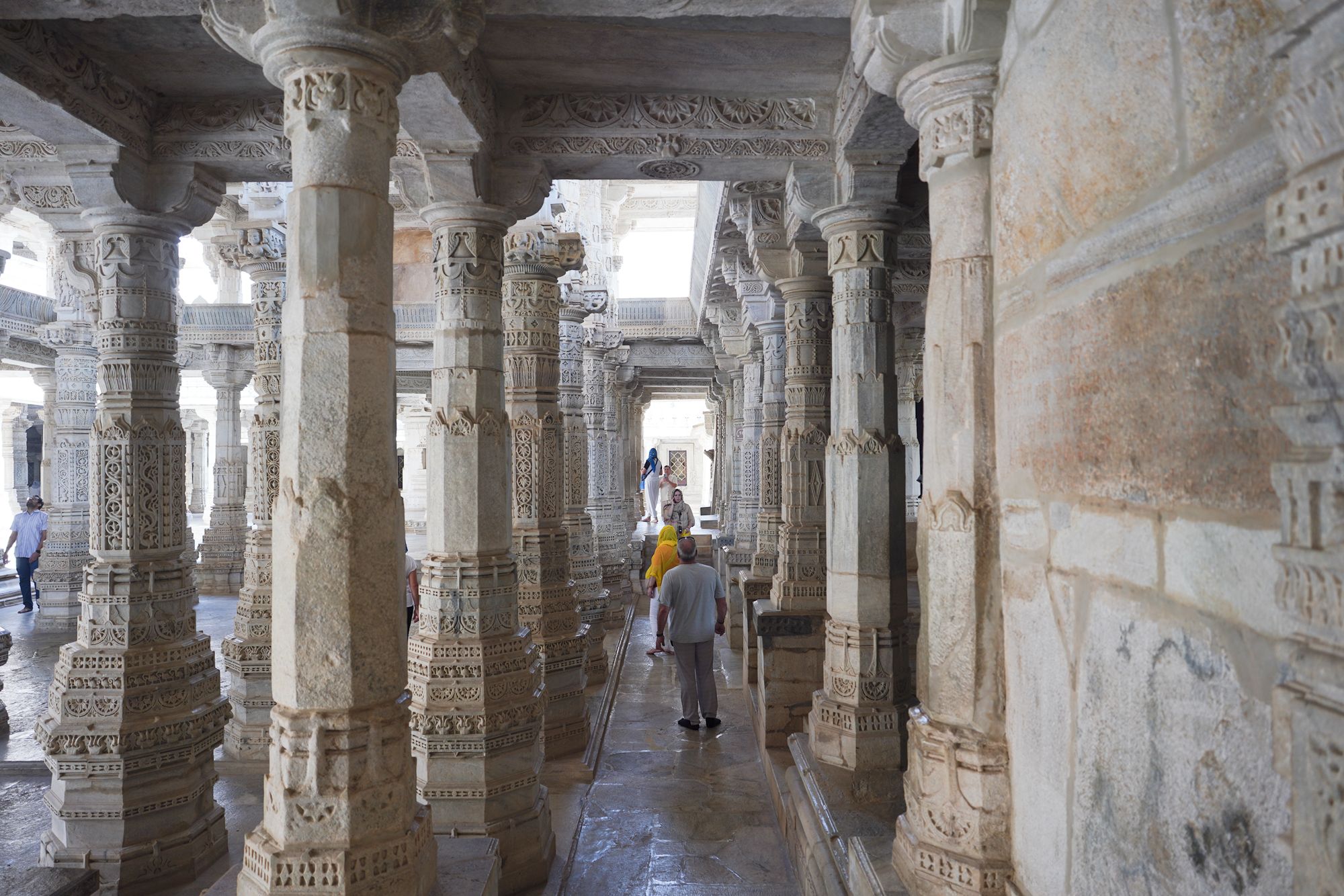
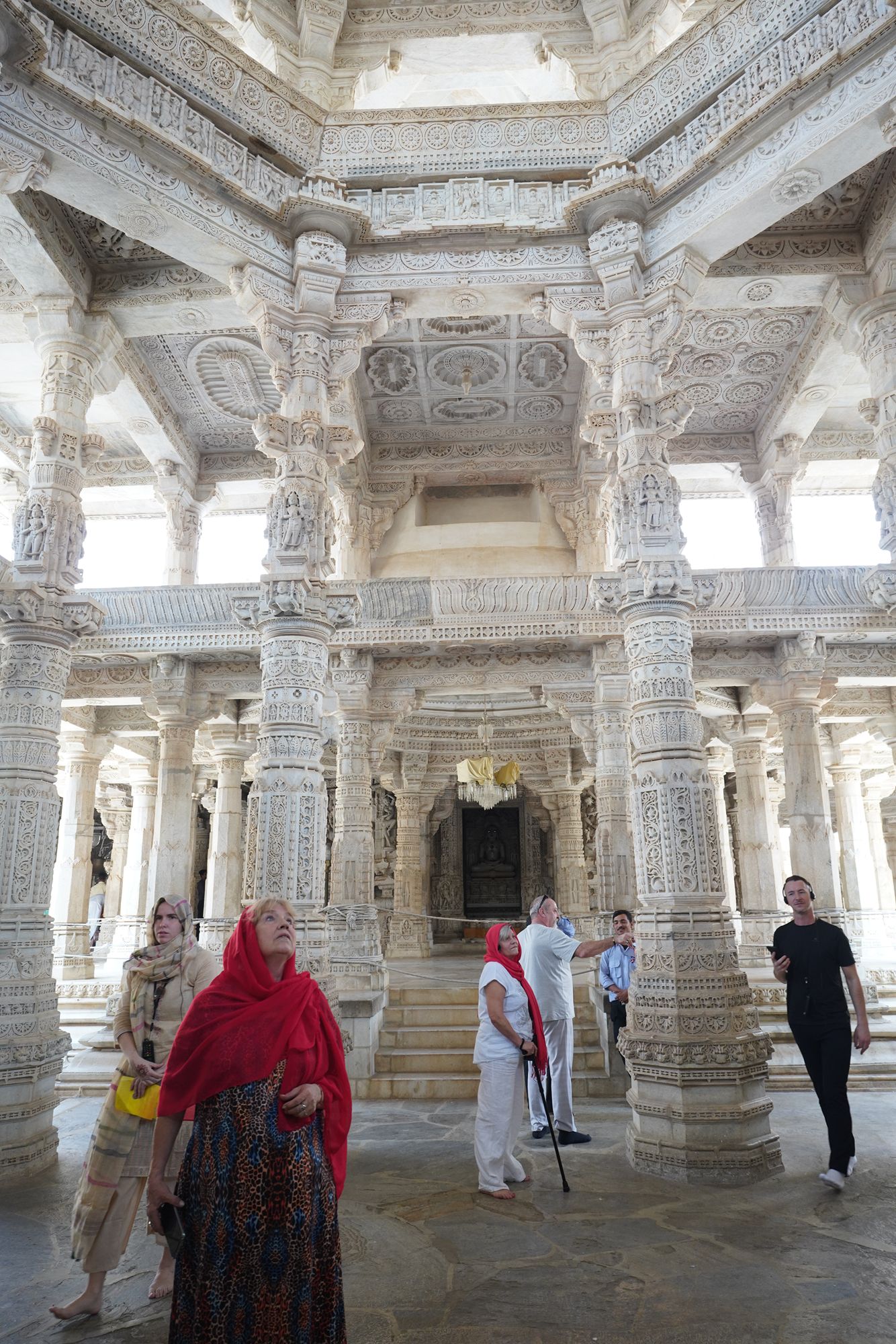
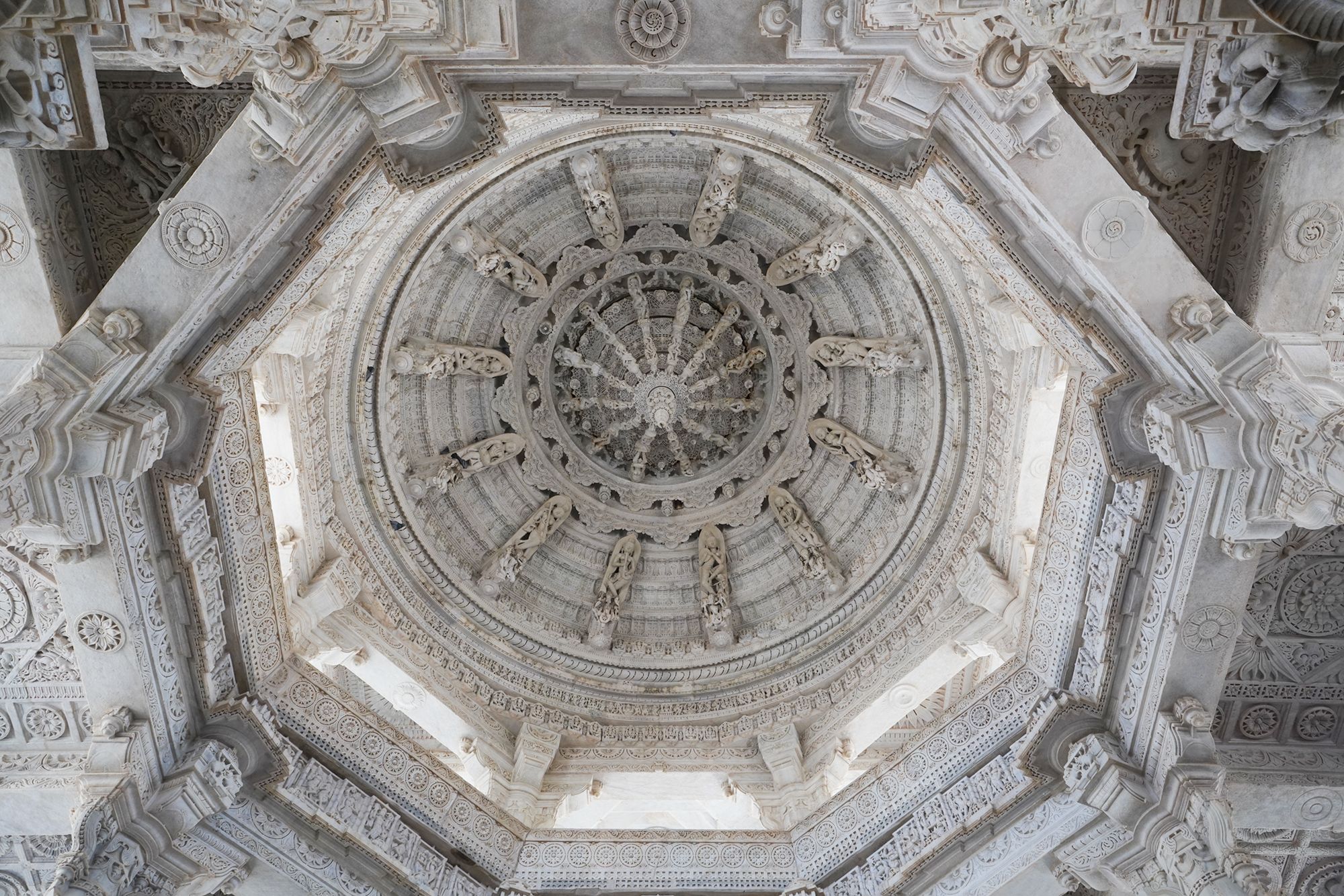
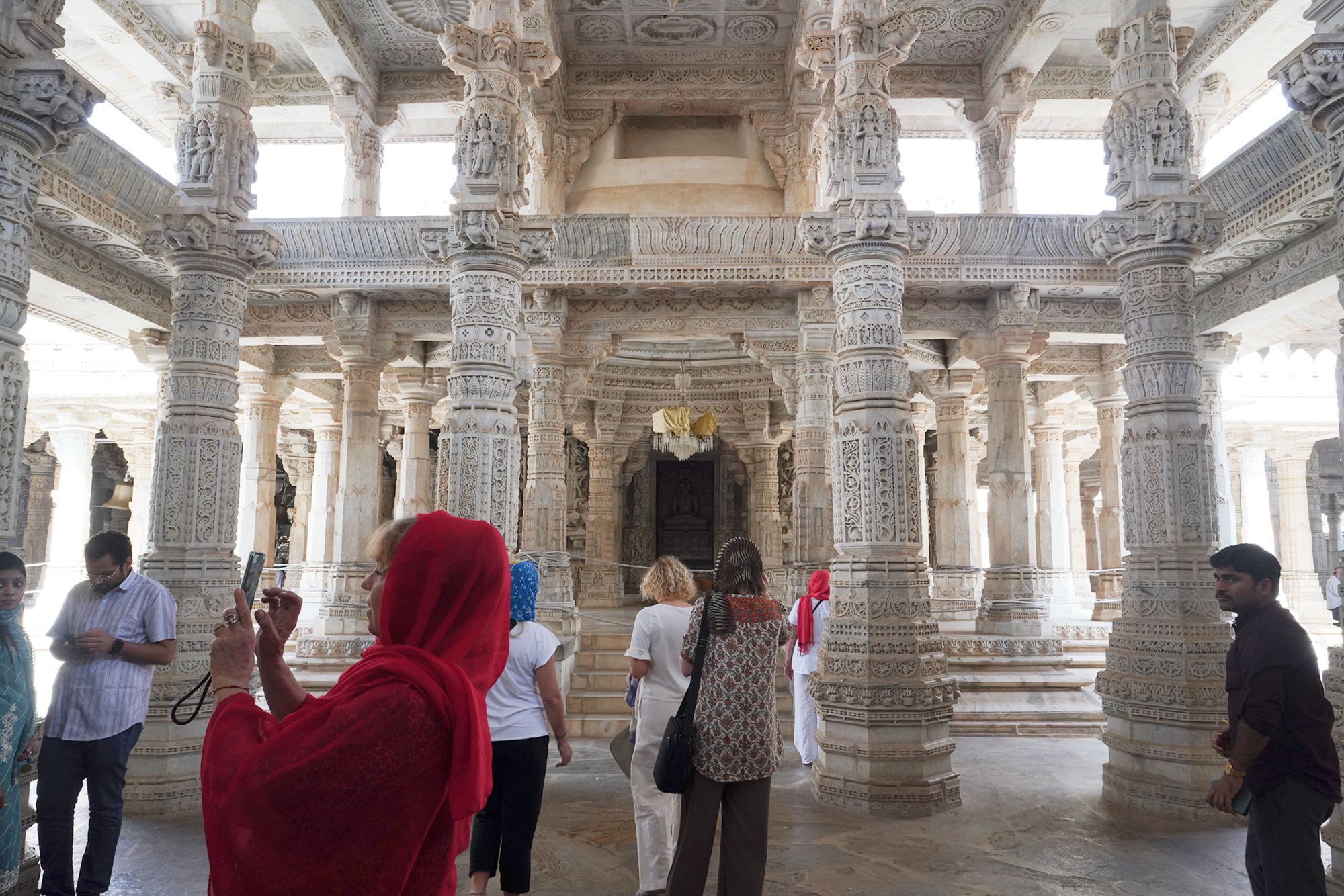
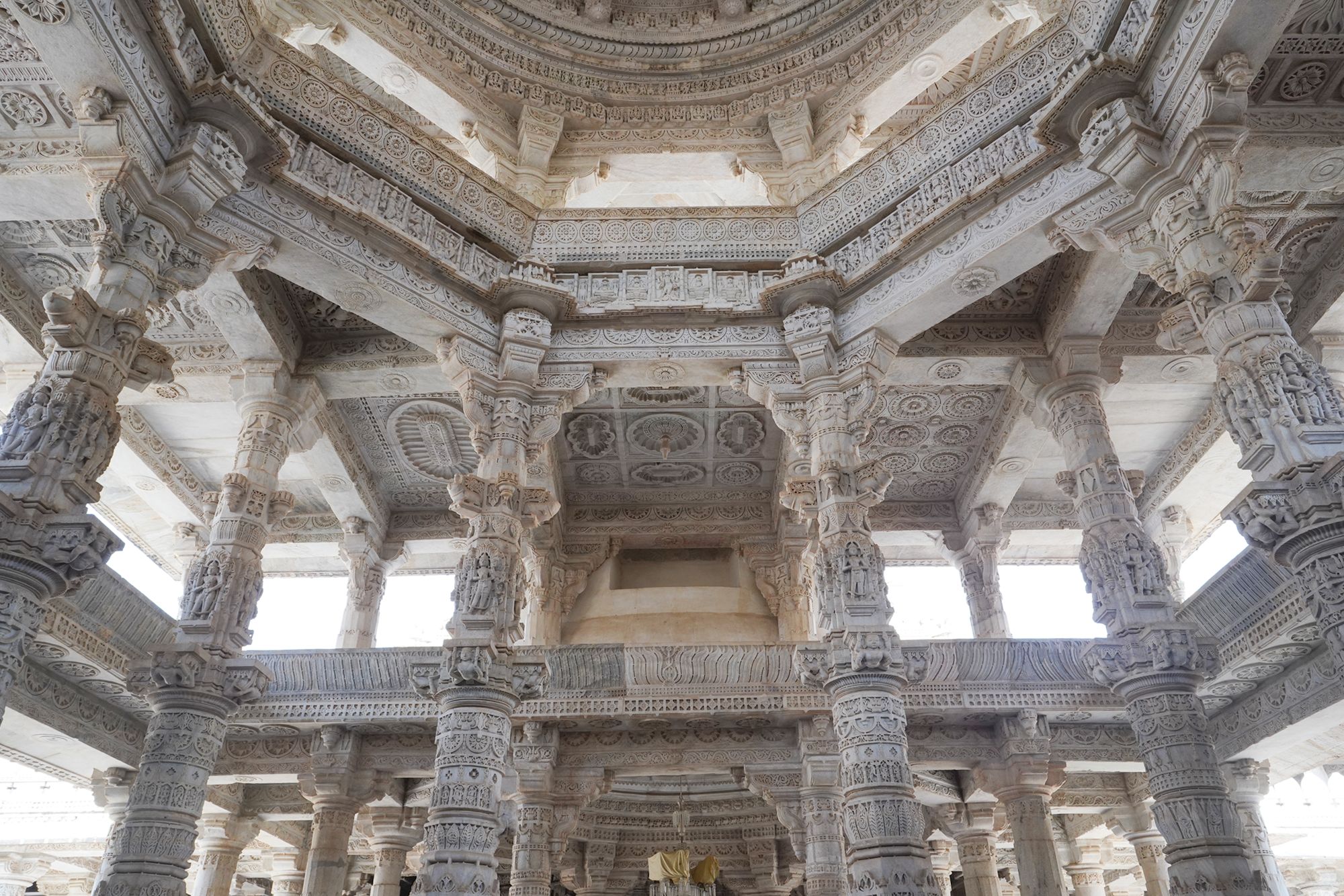
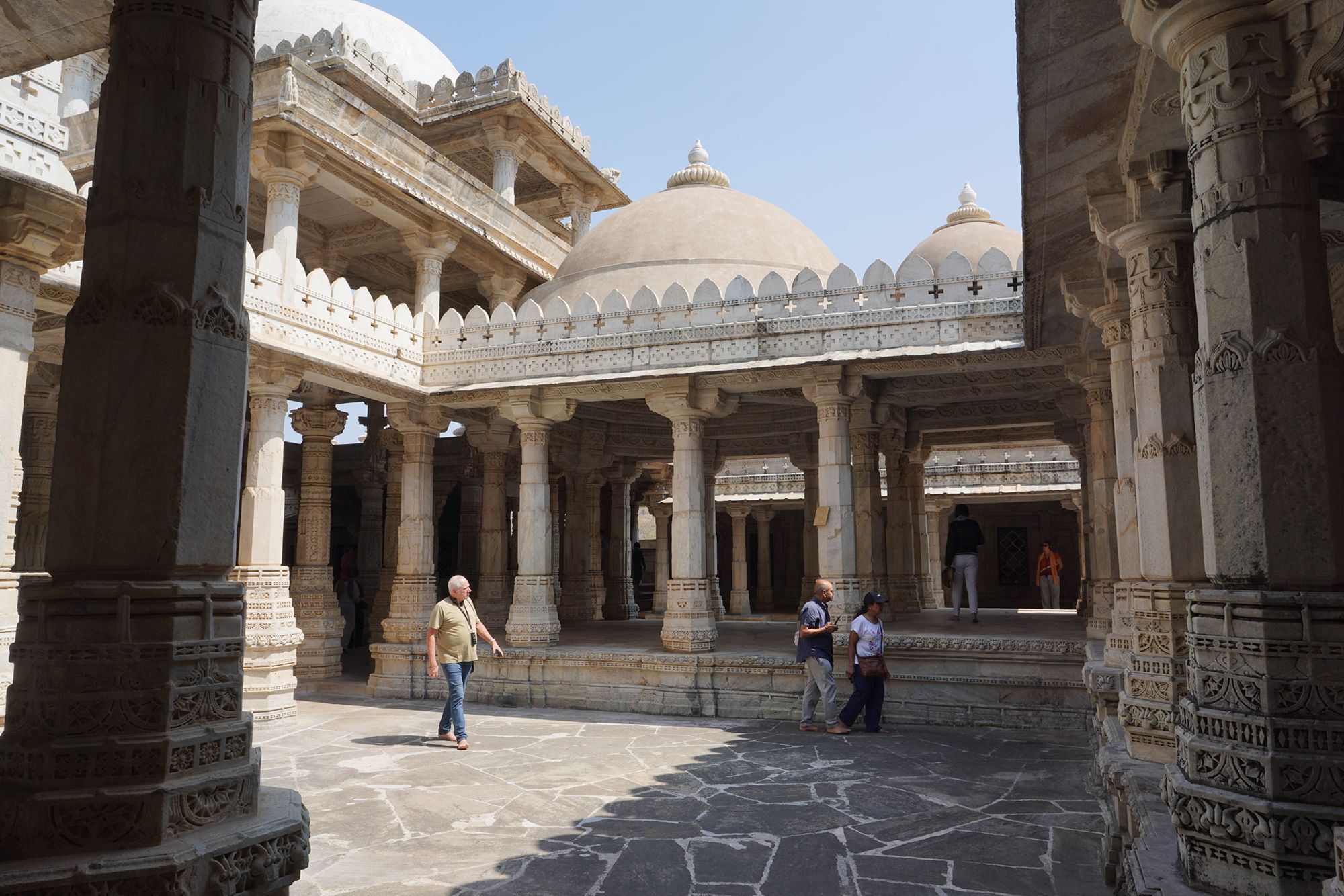
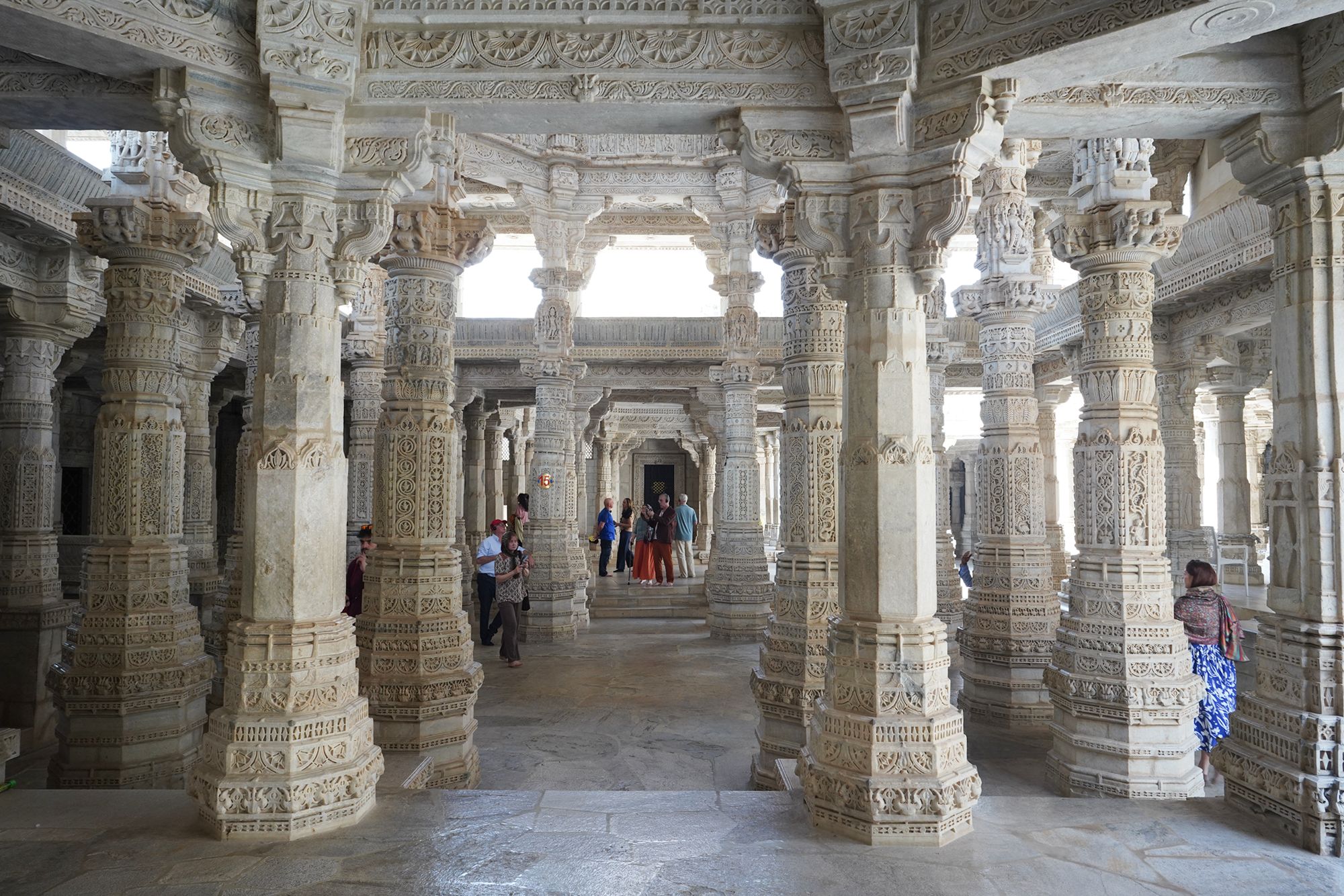
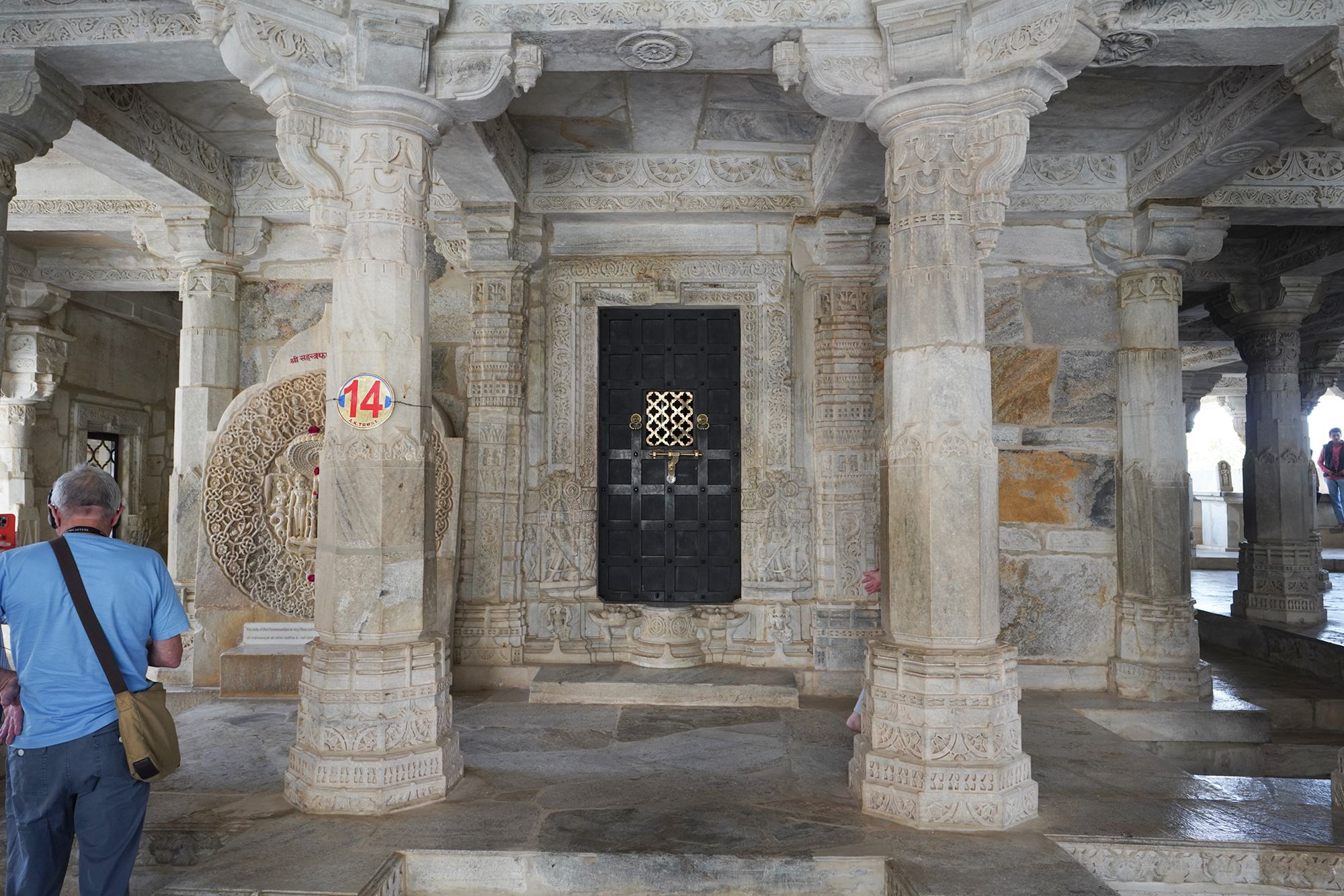
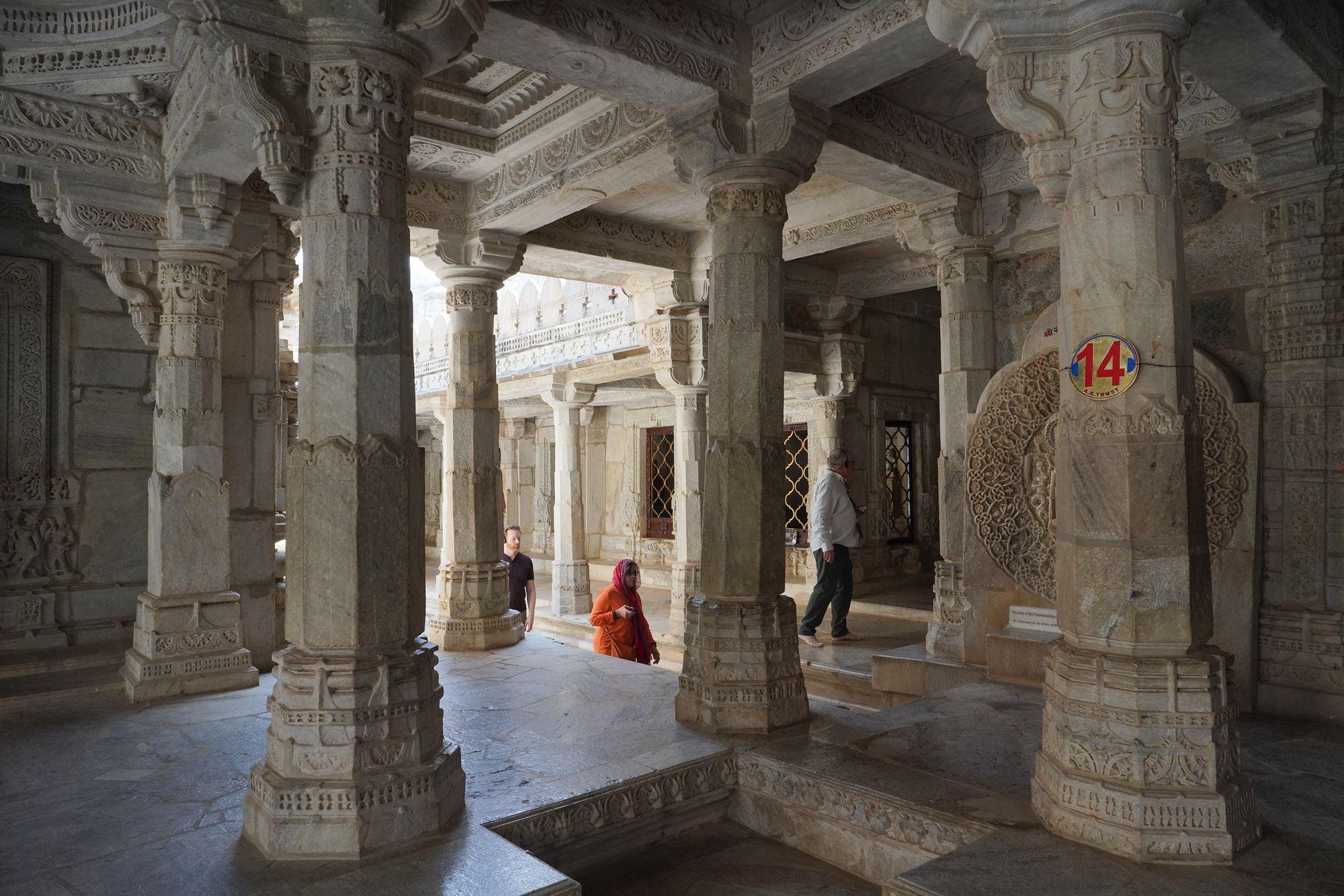
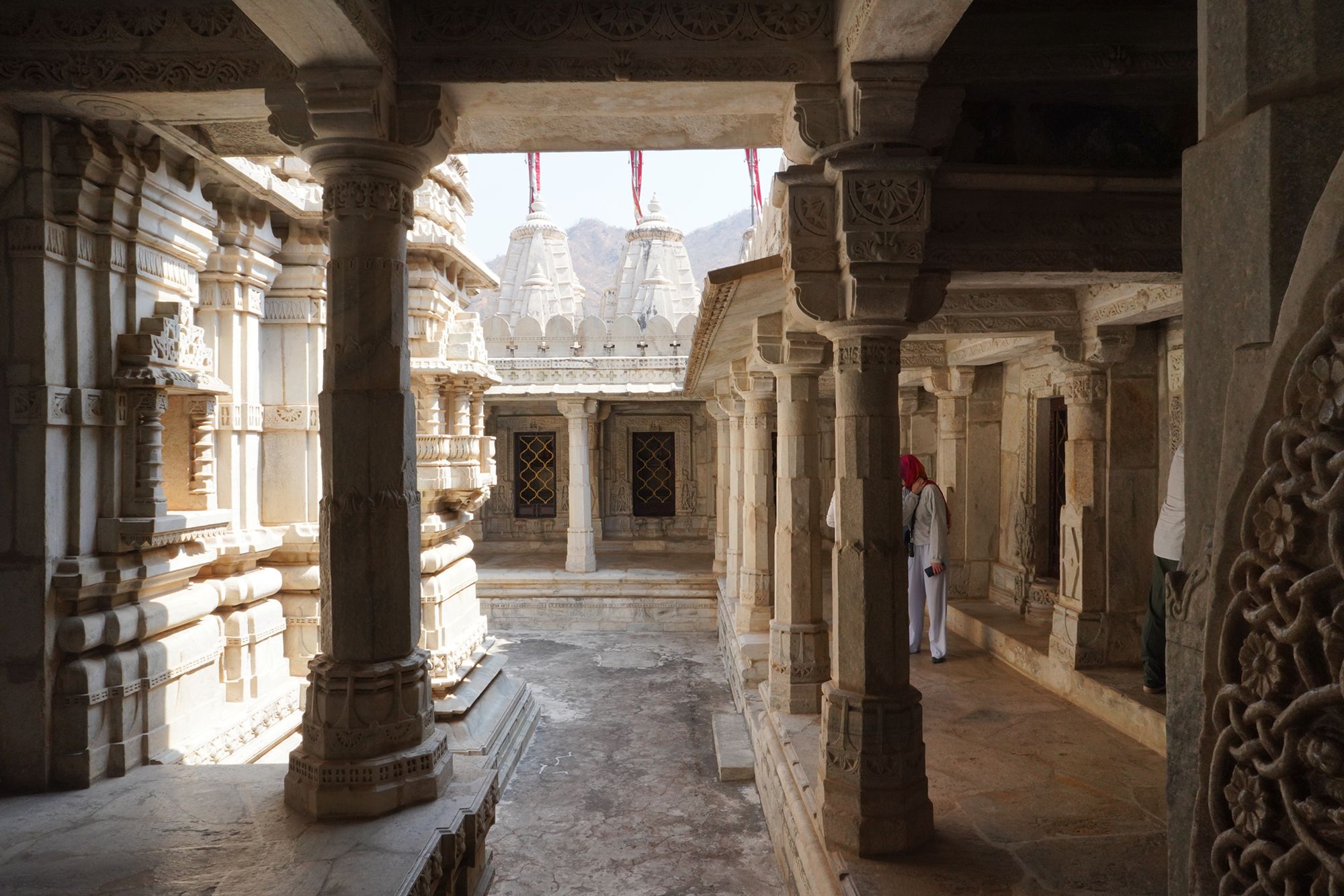
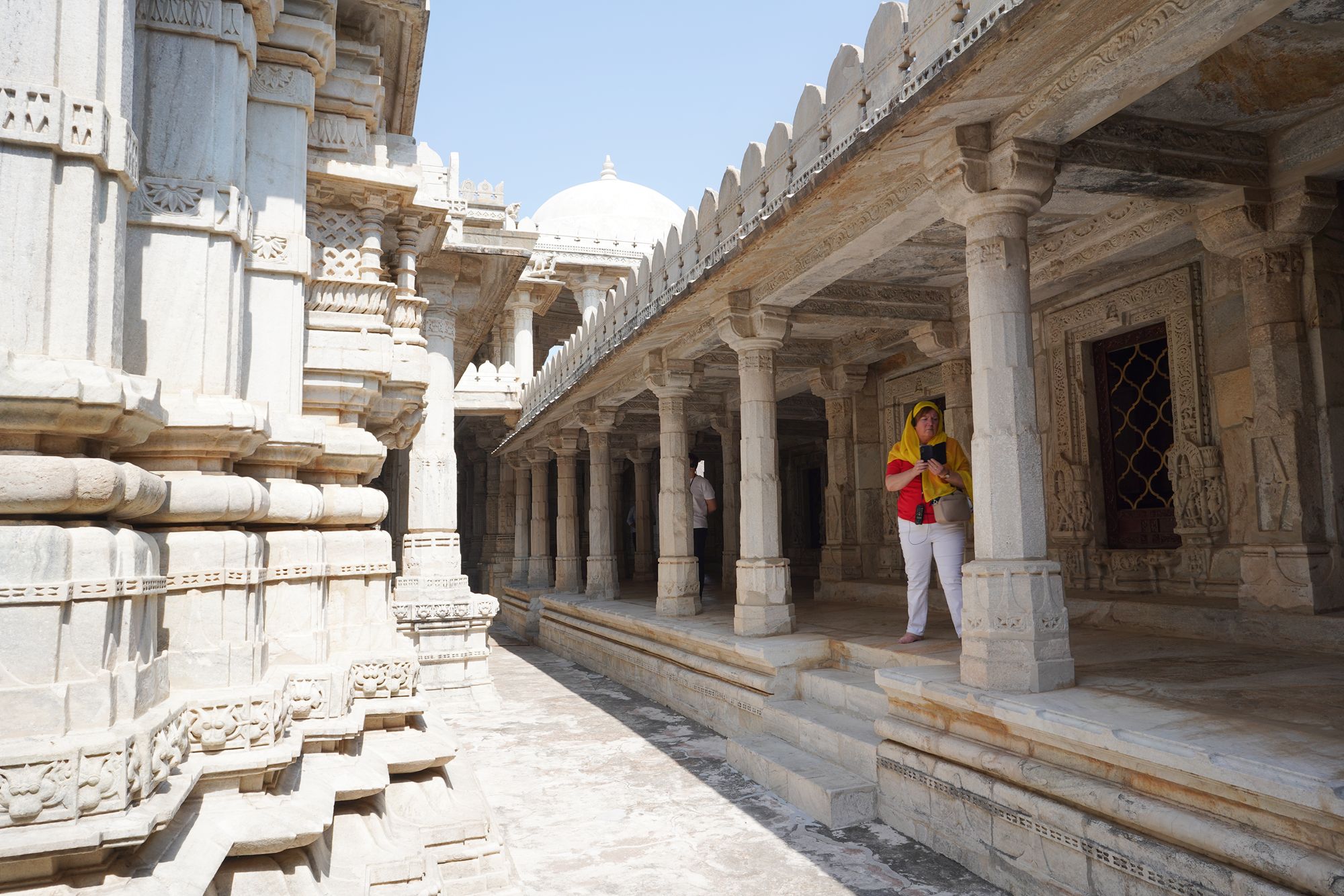
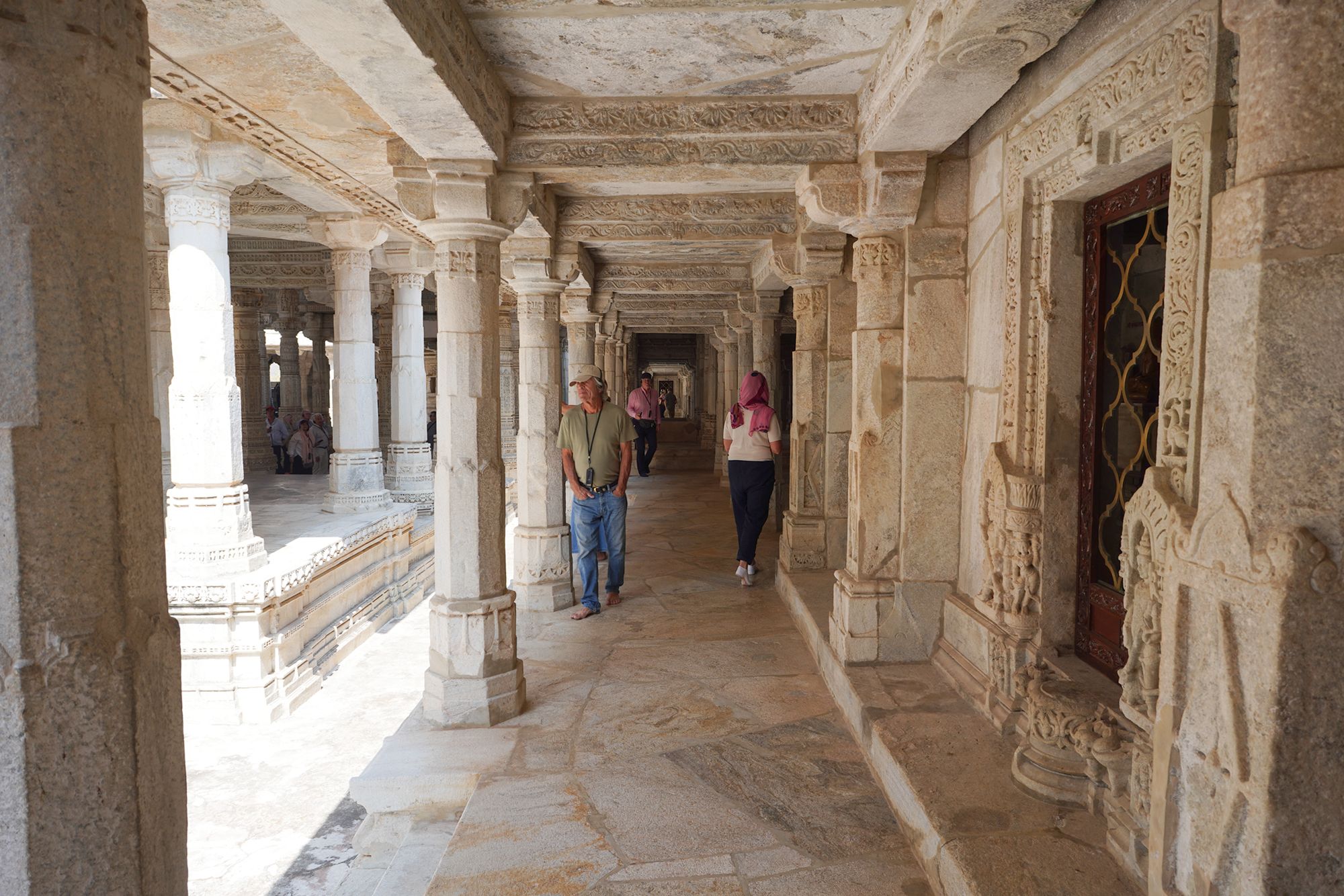
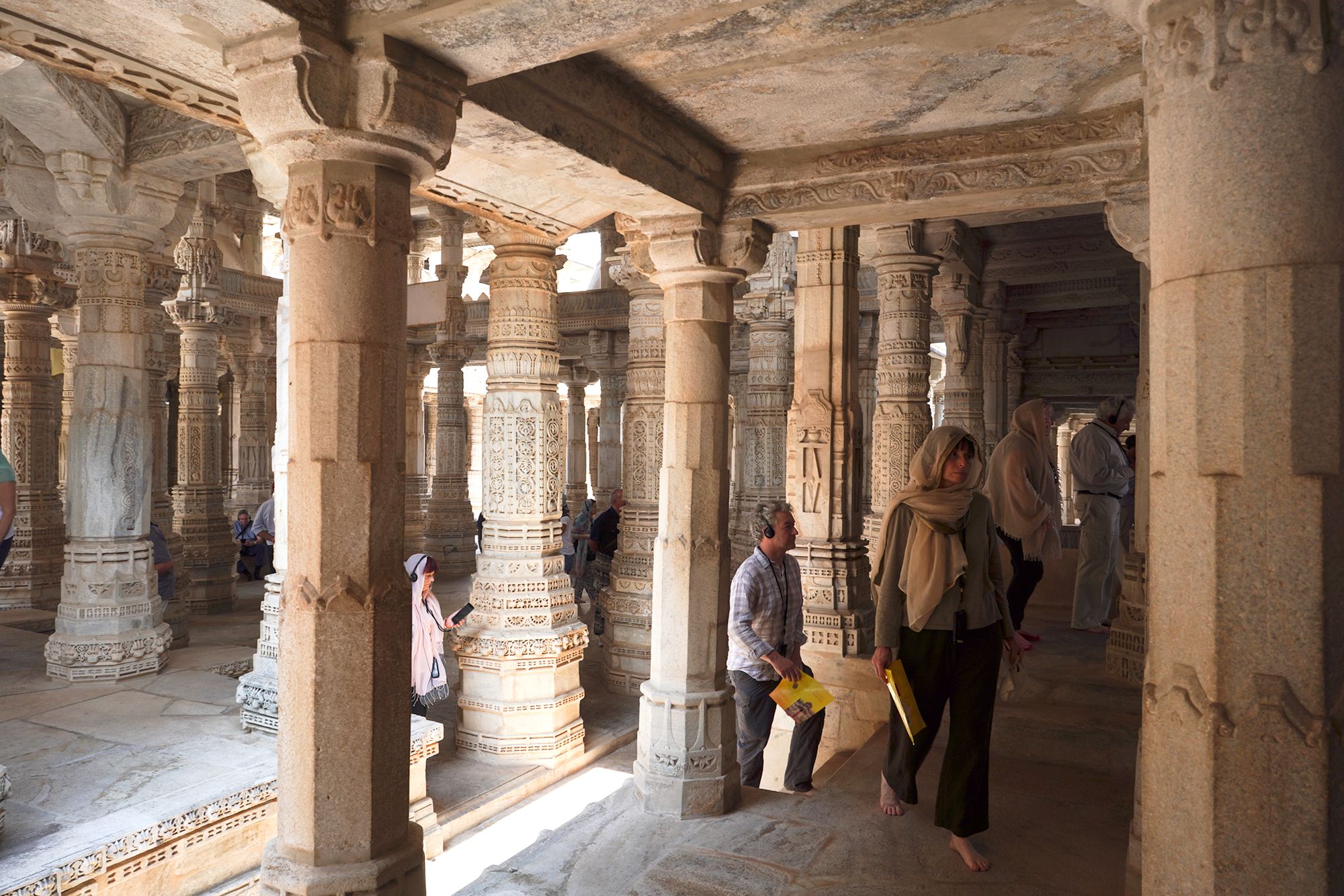
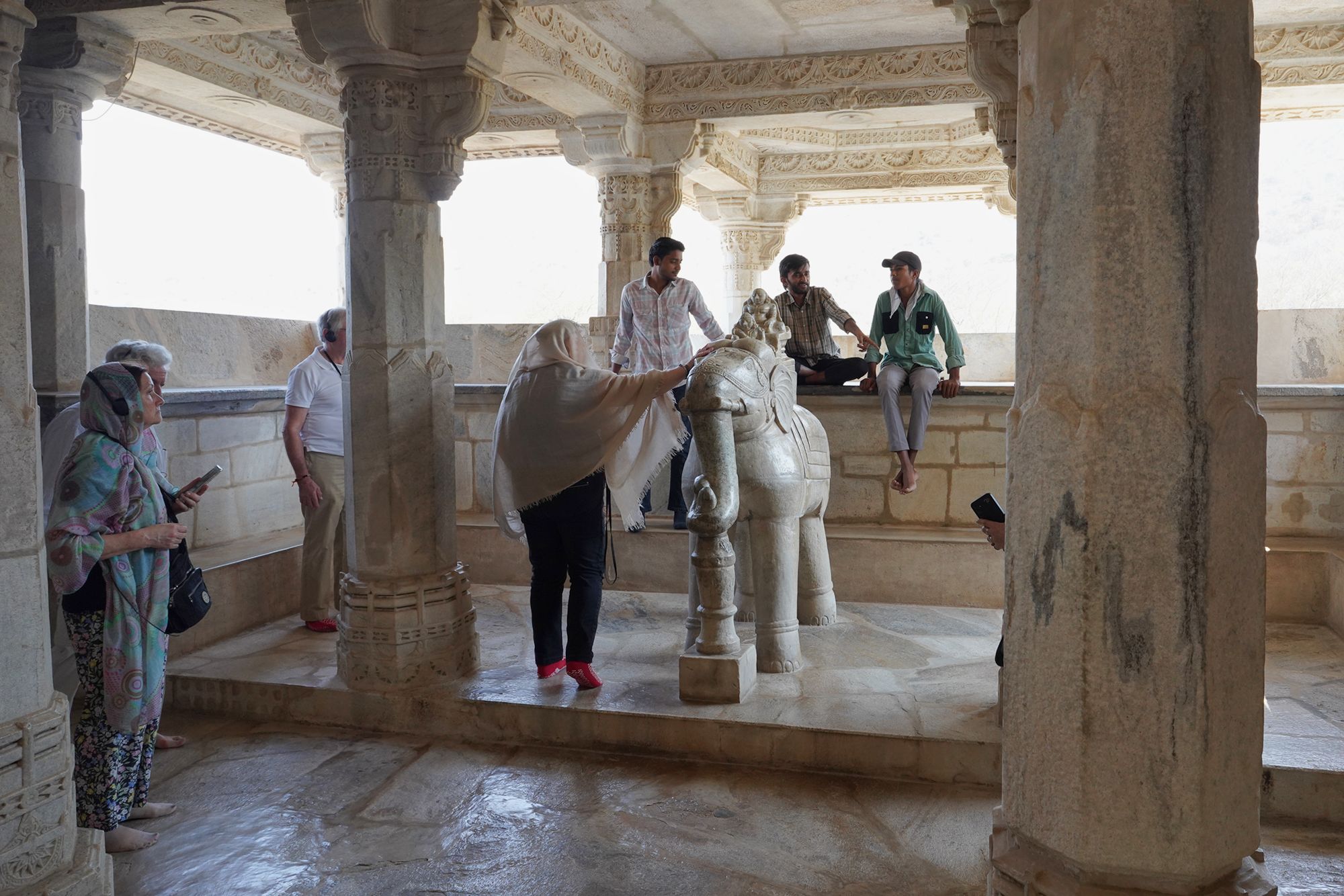
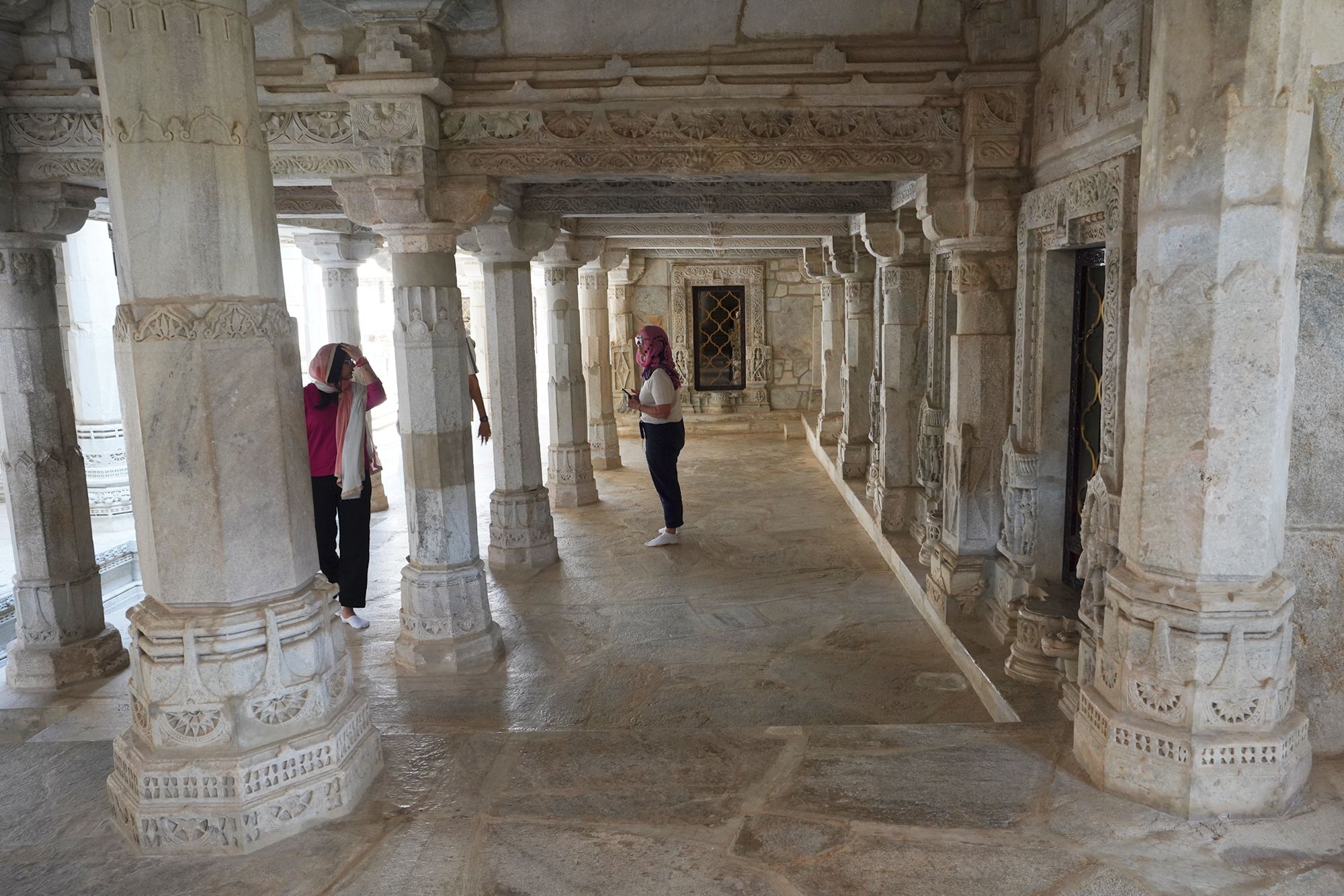
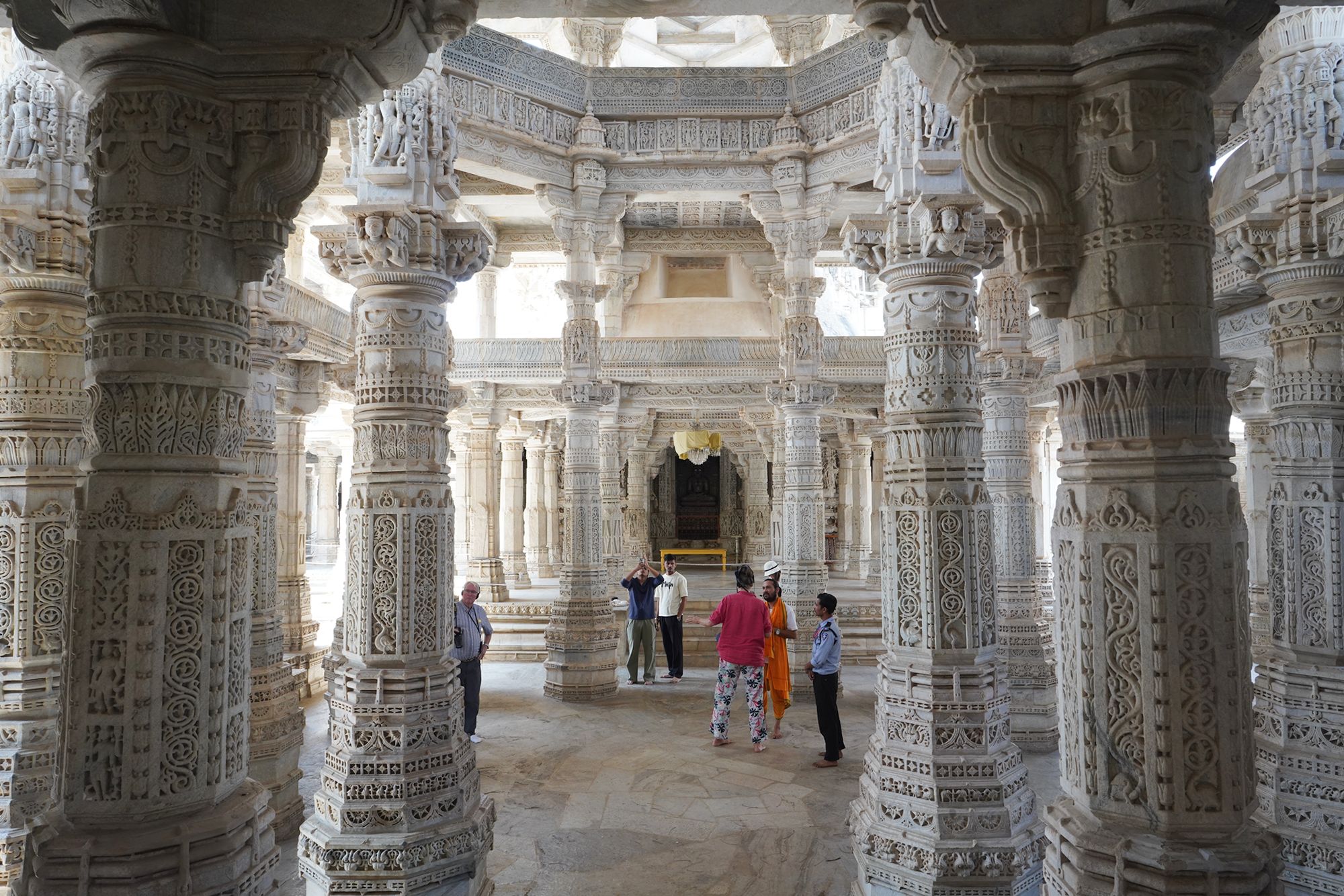
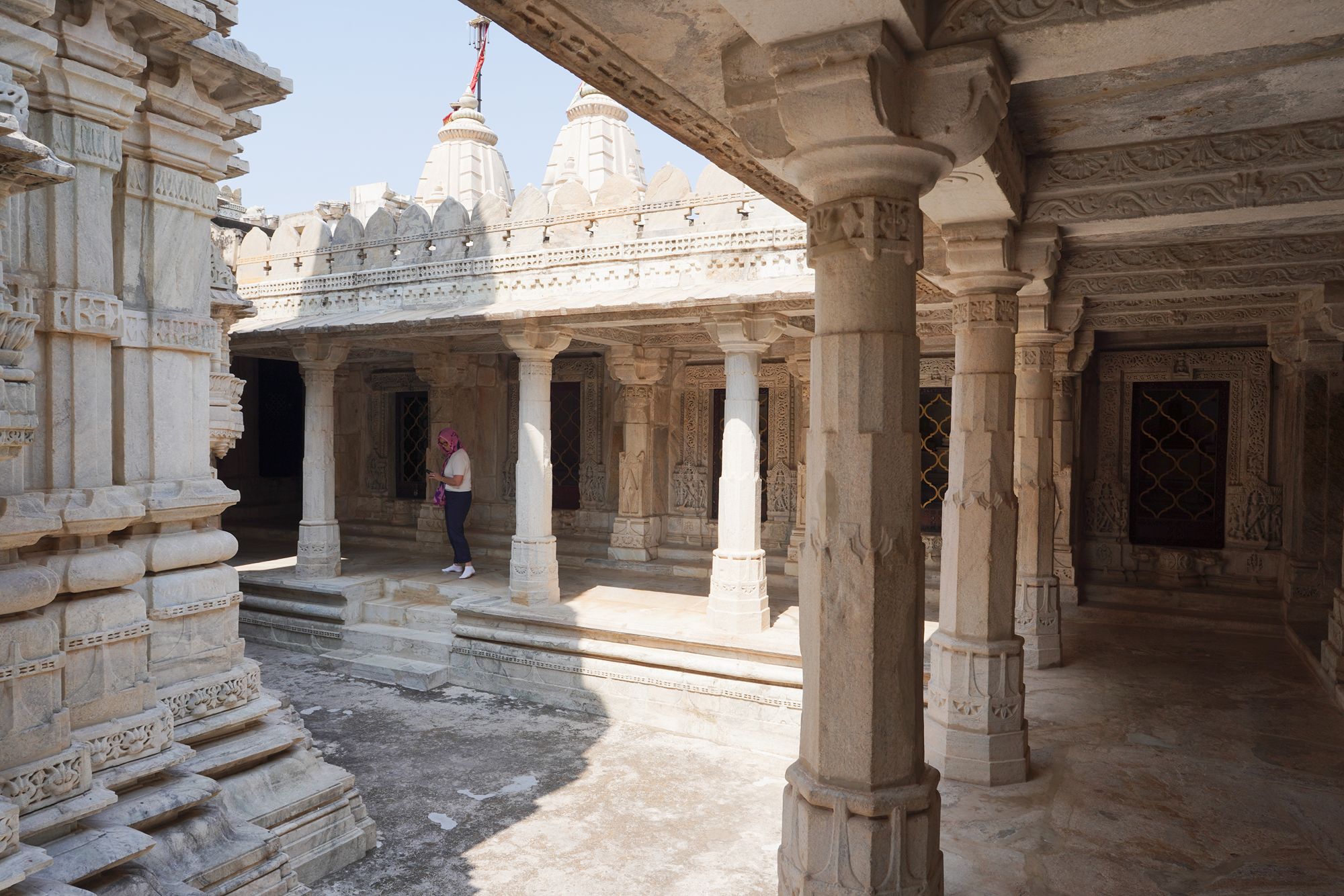
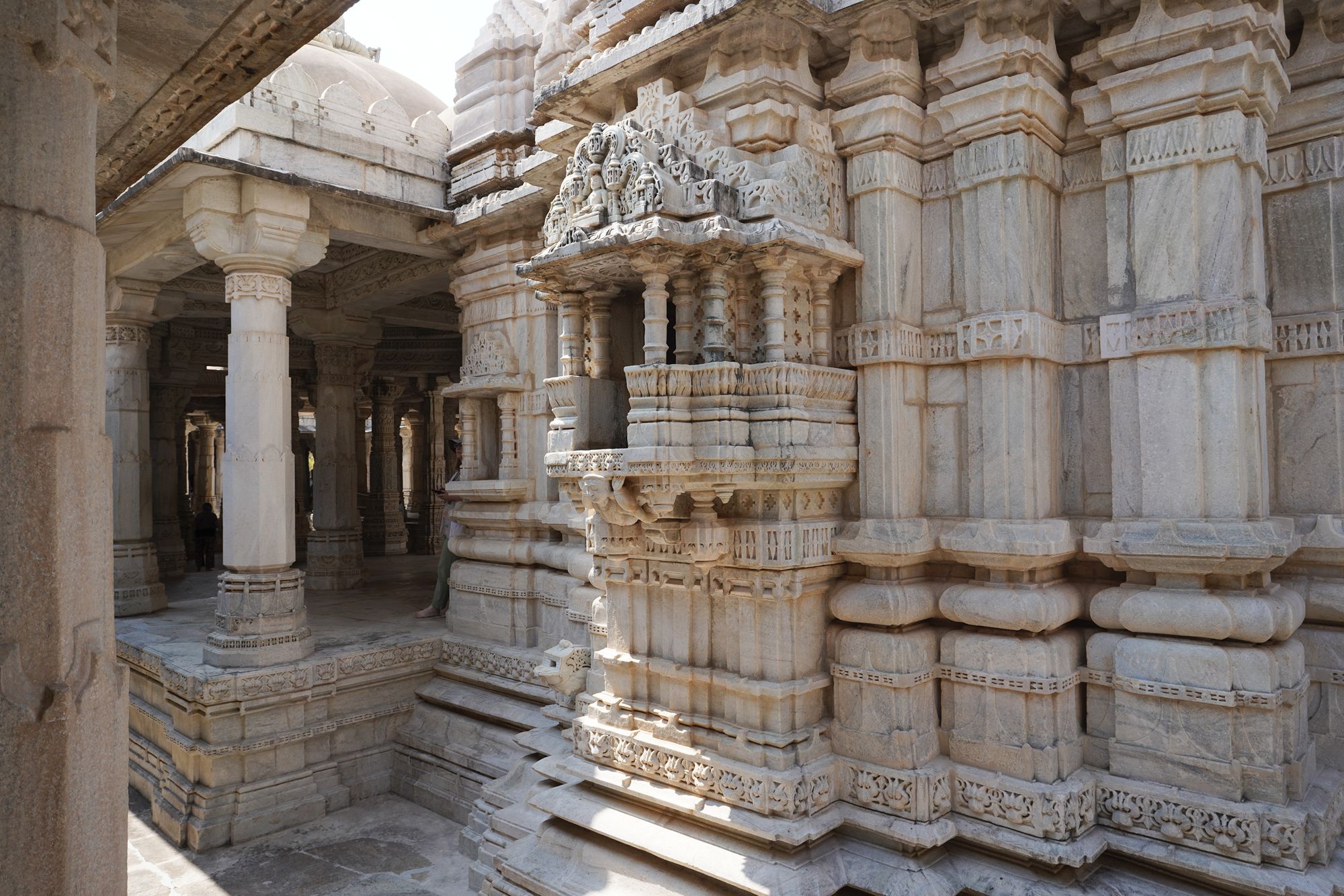
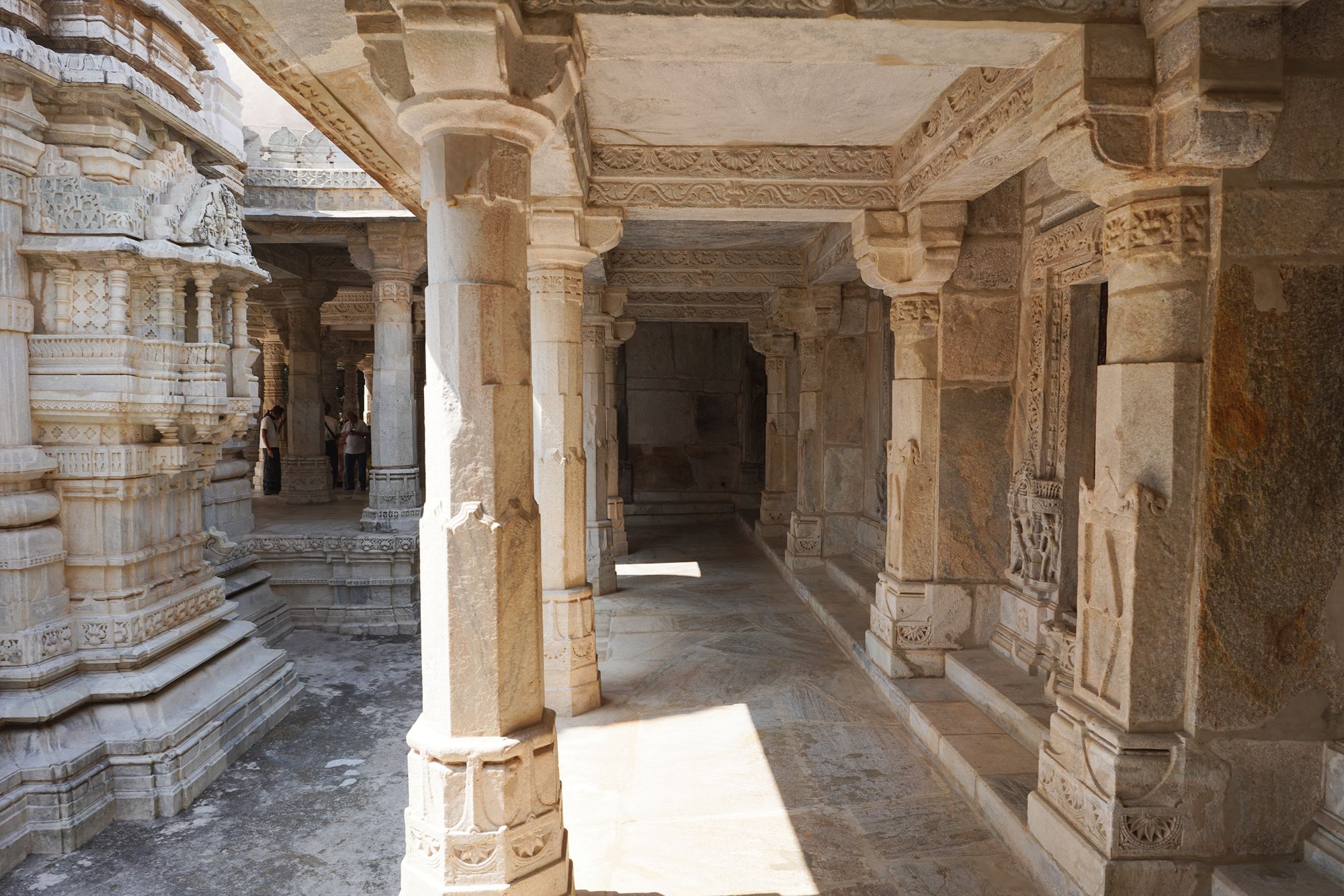
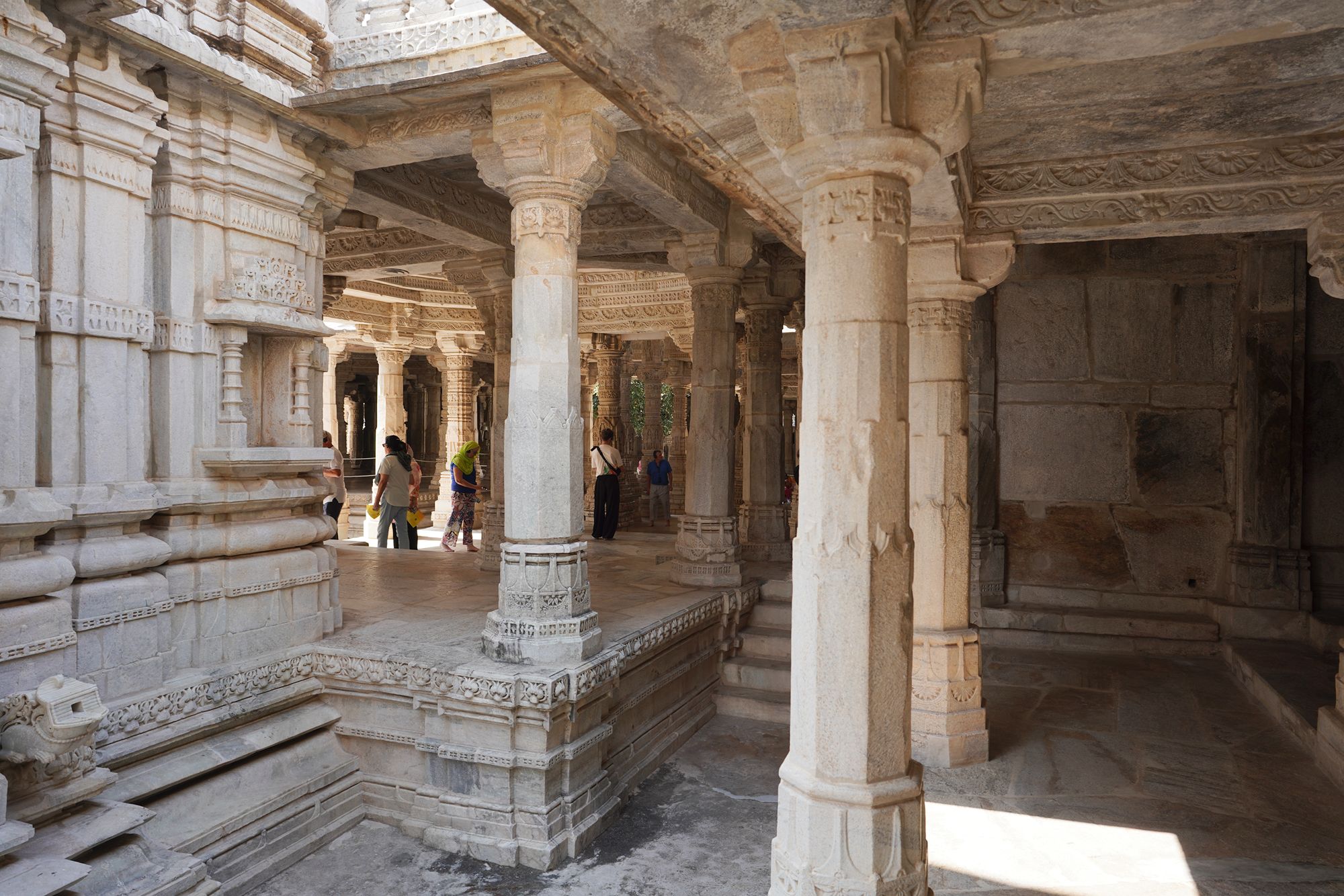
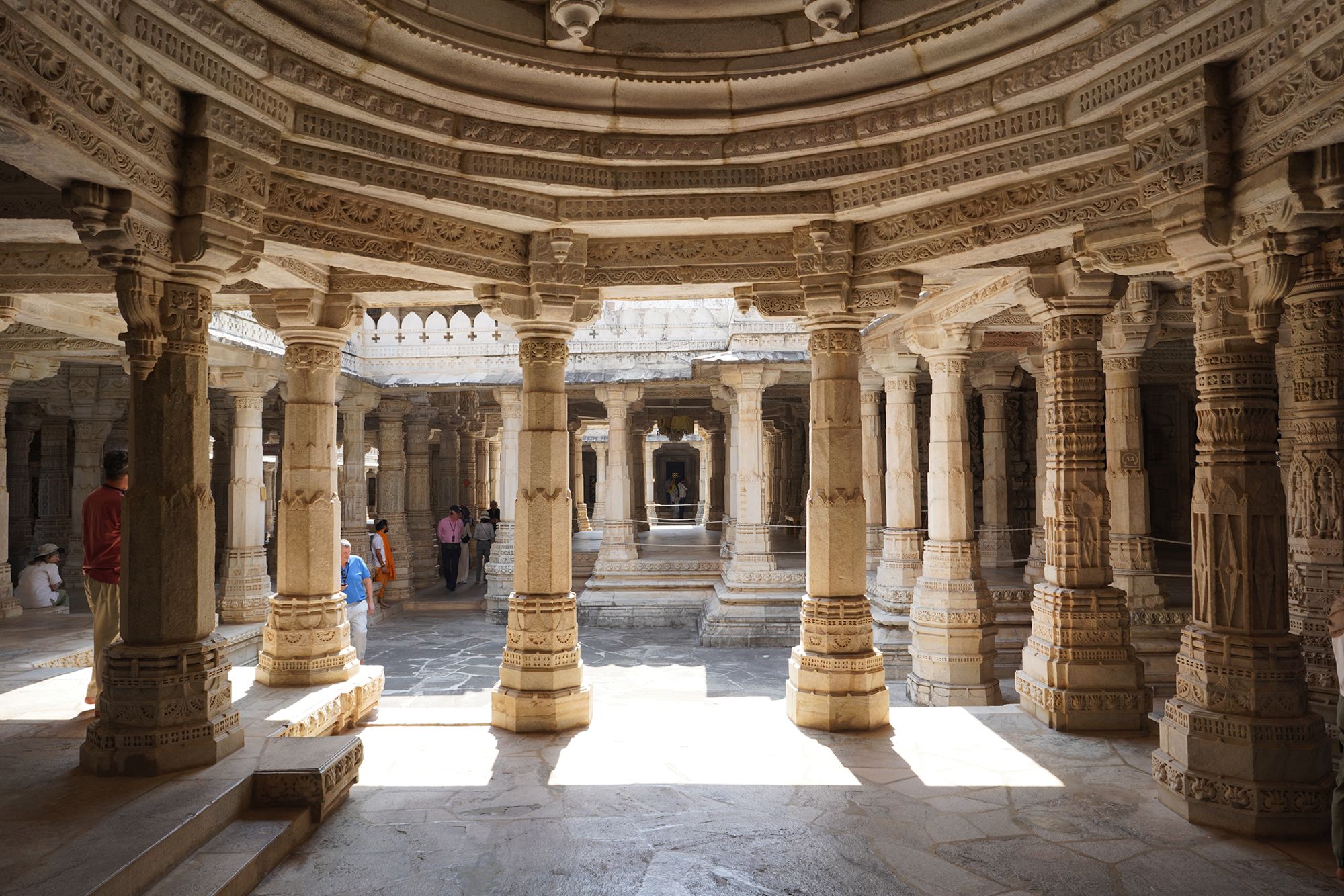
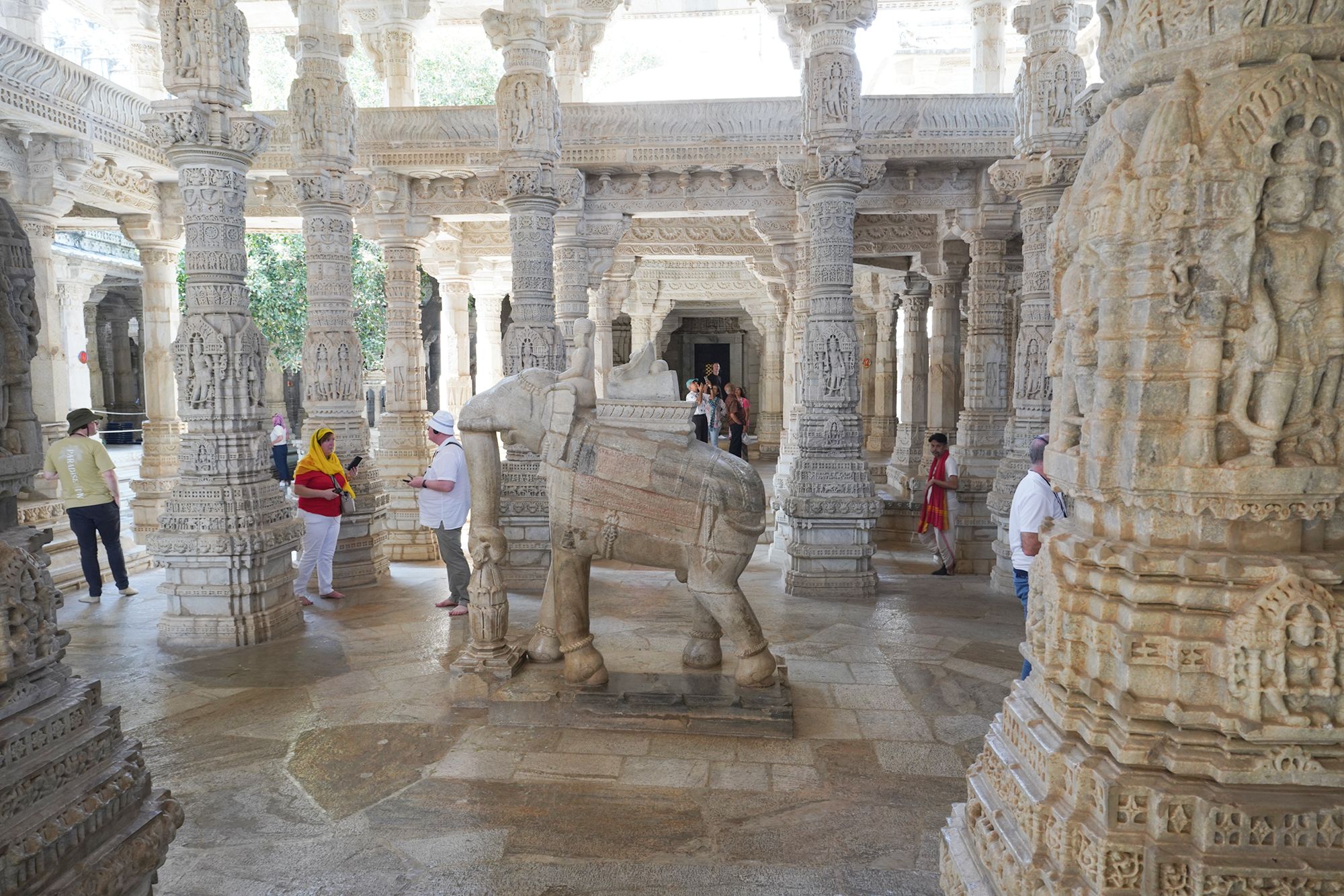
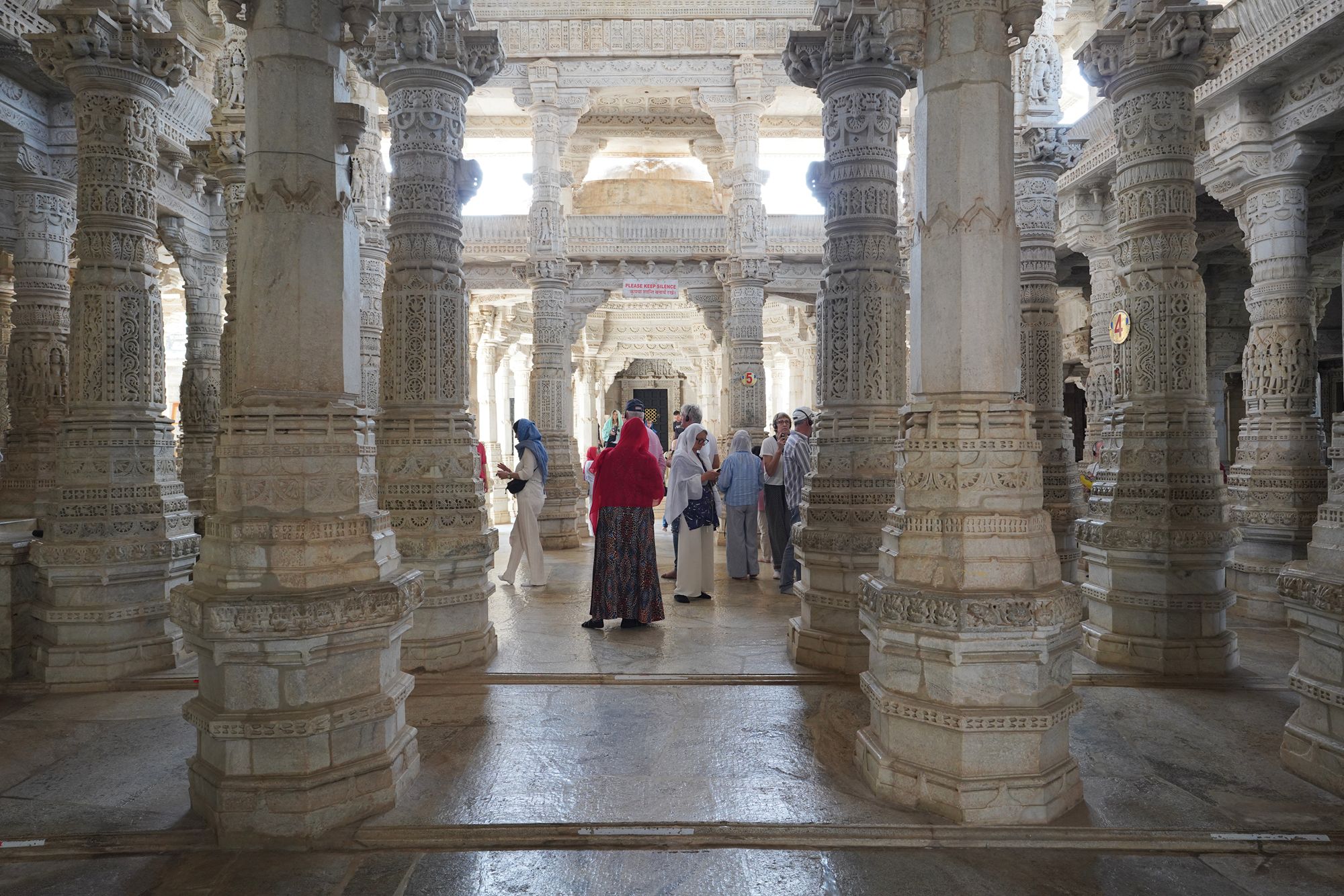
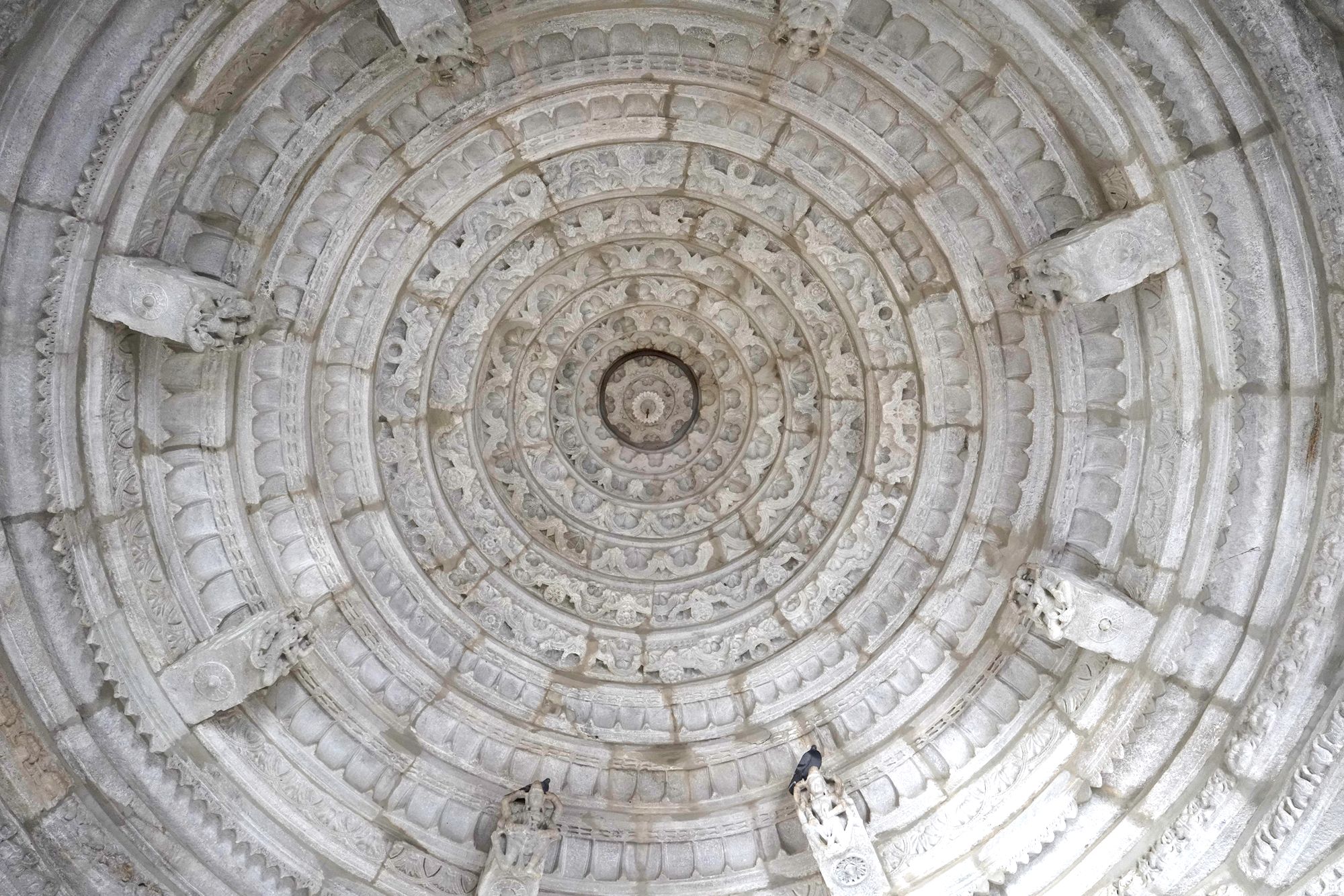
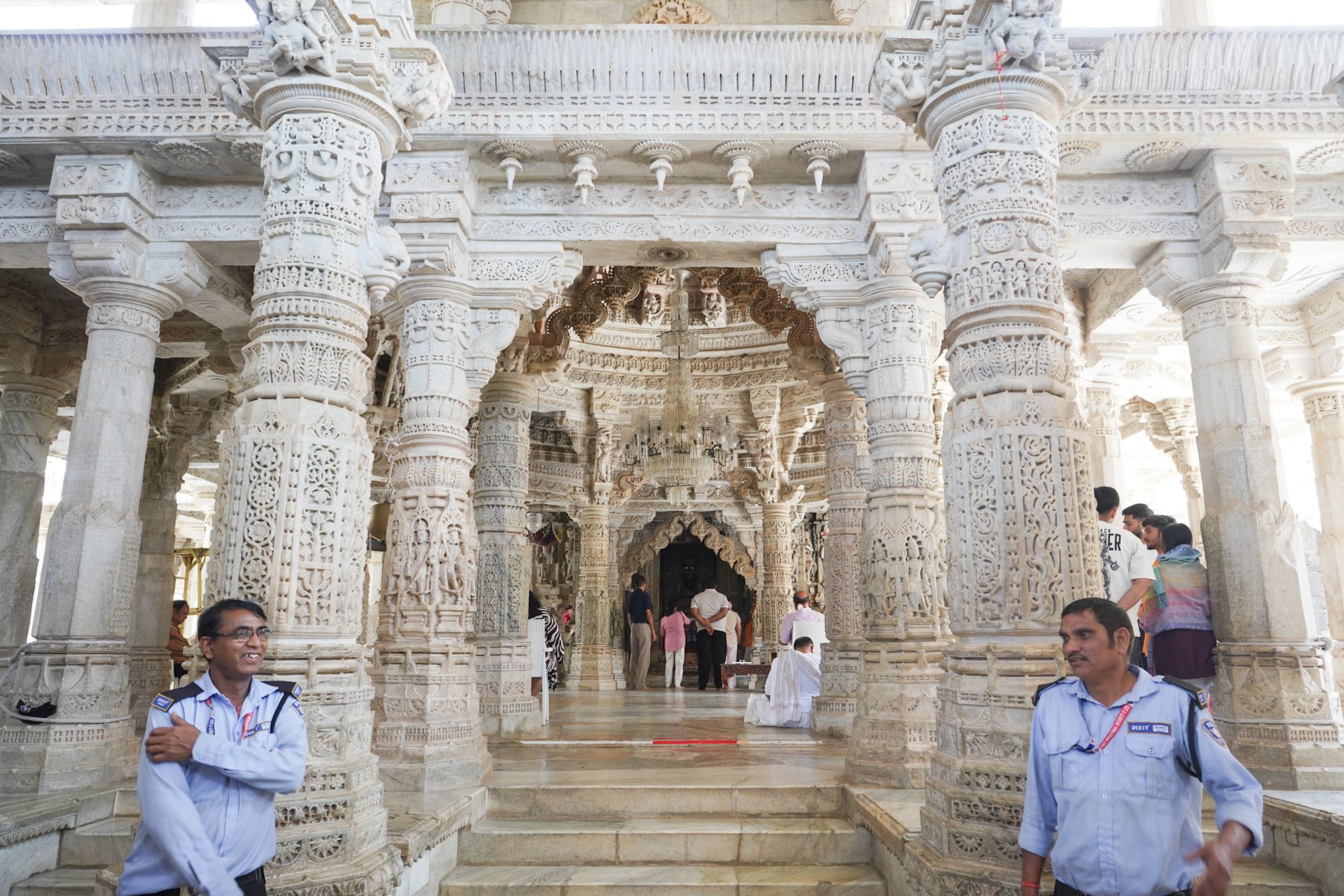
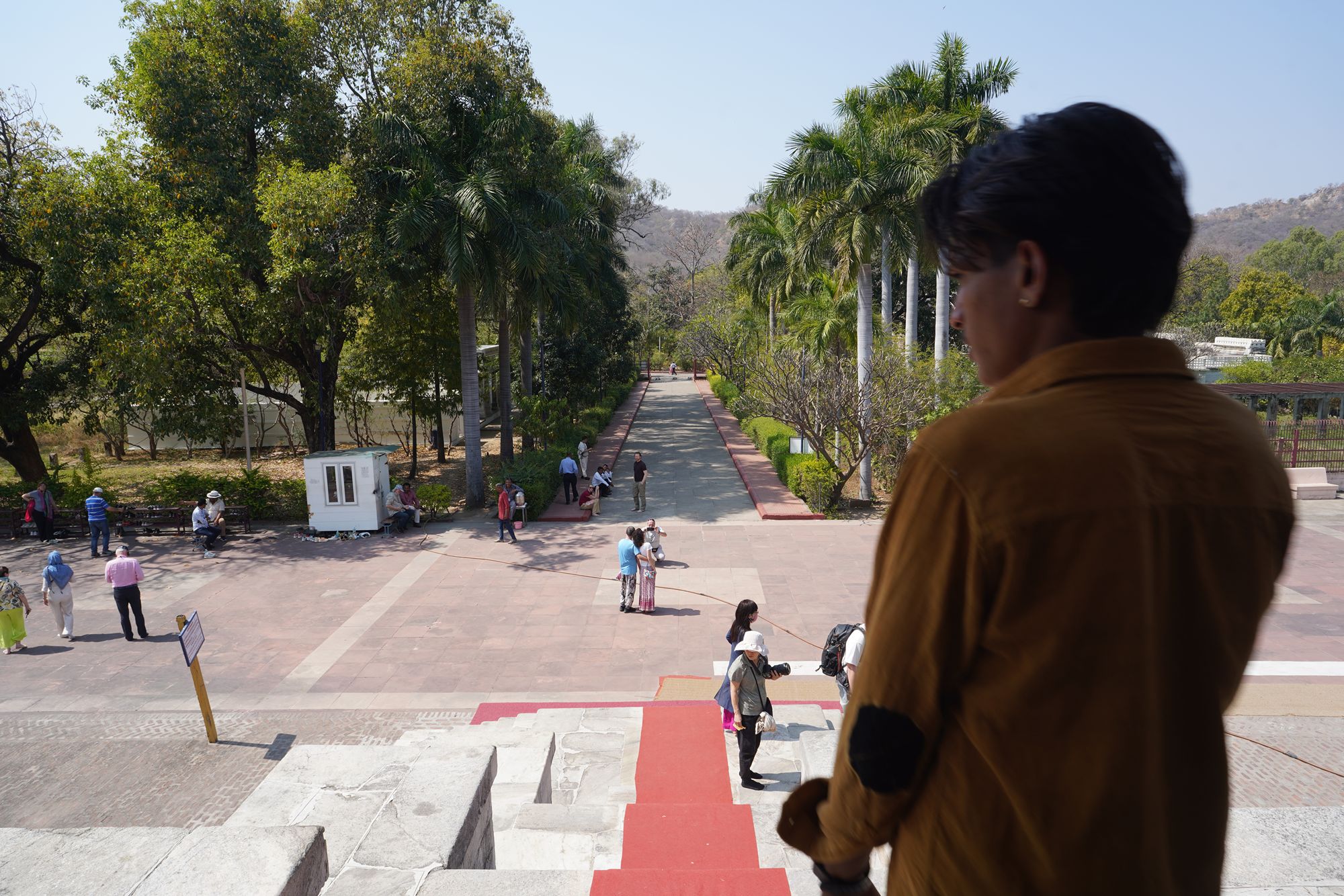
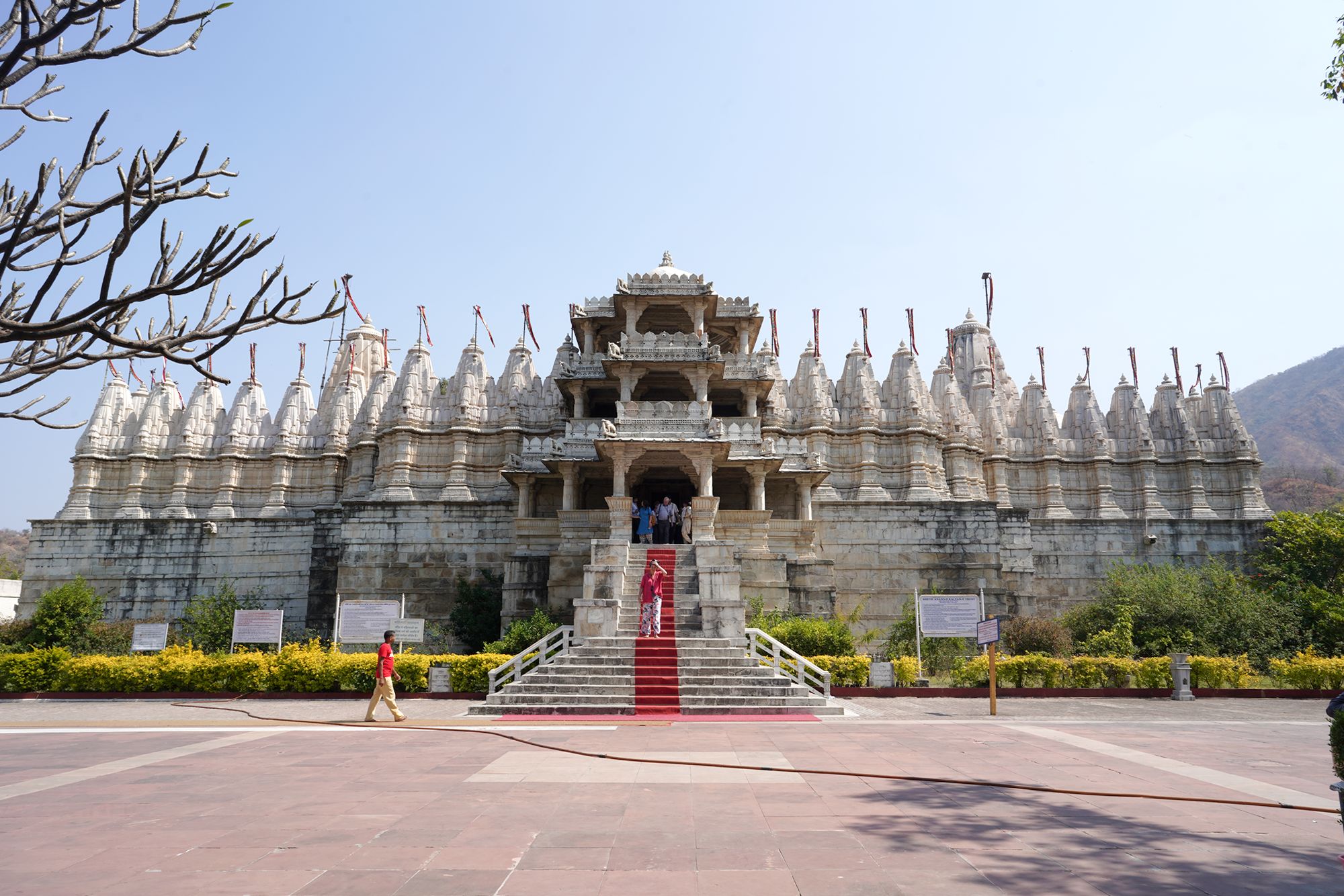
We had a quick lunch at the temple before continuing our journey to Jodhpur.
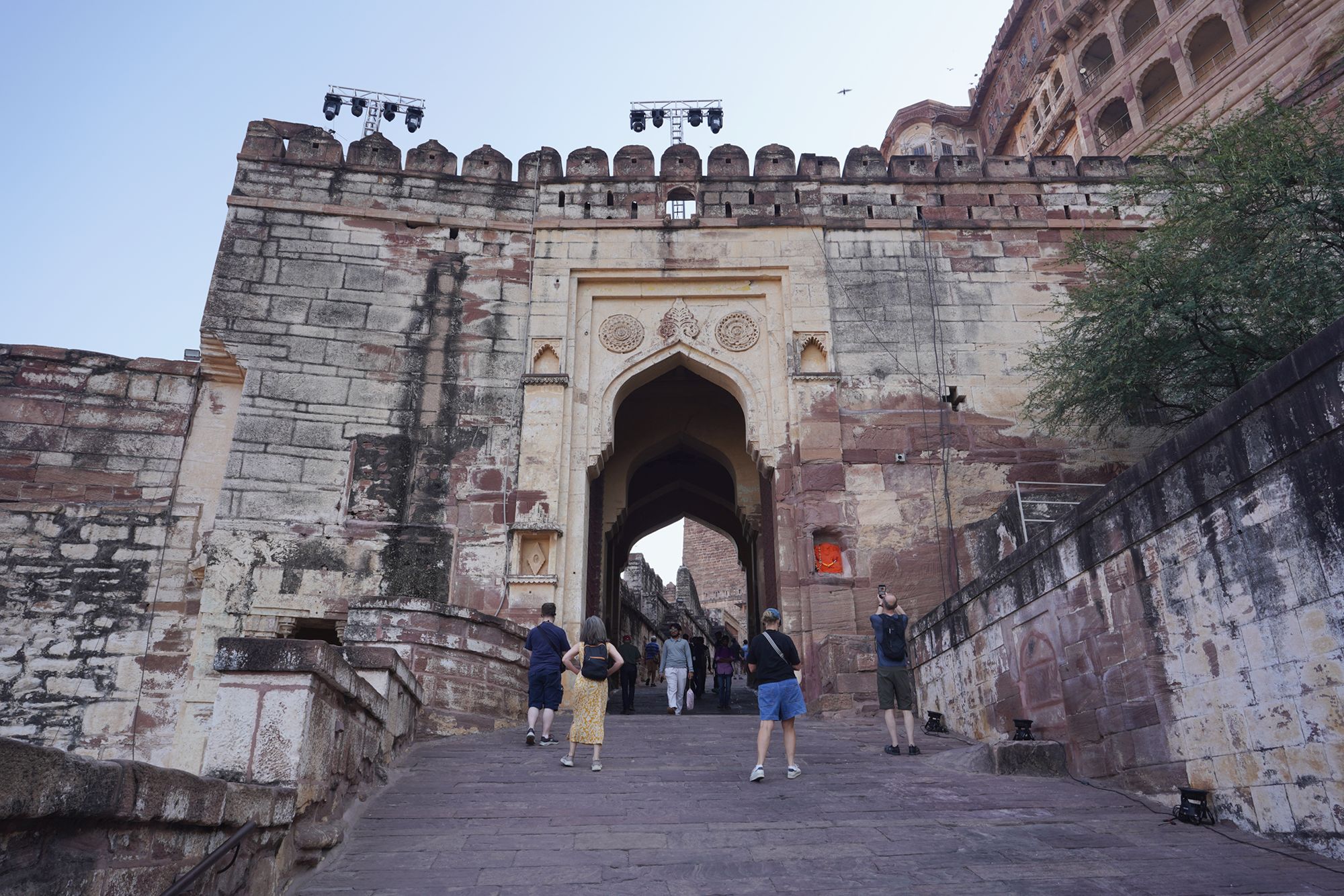
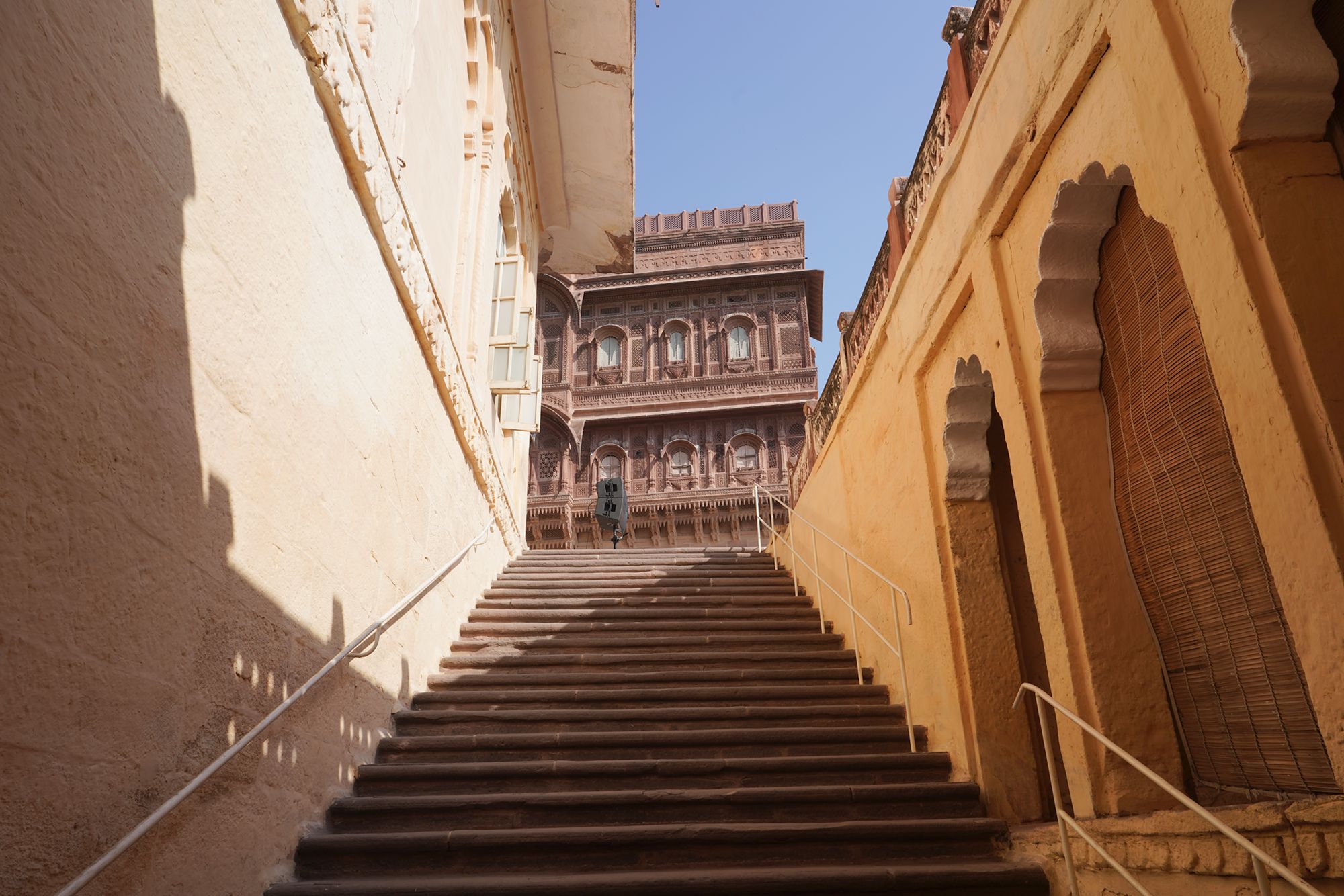
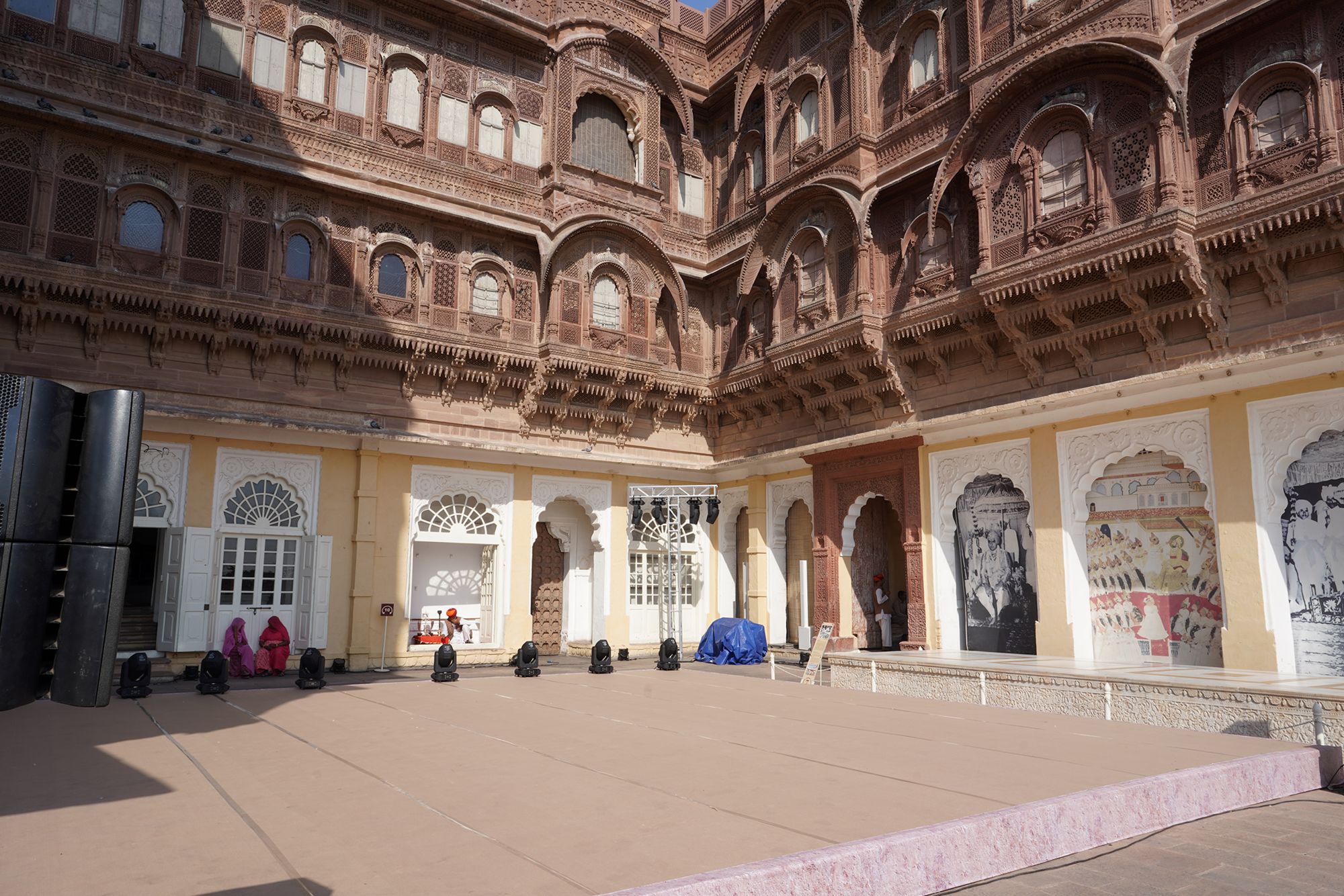
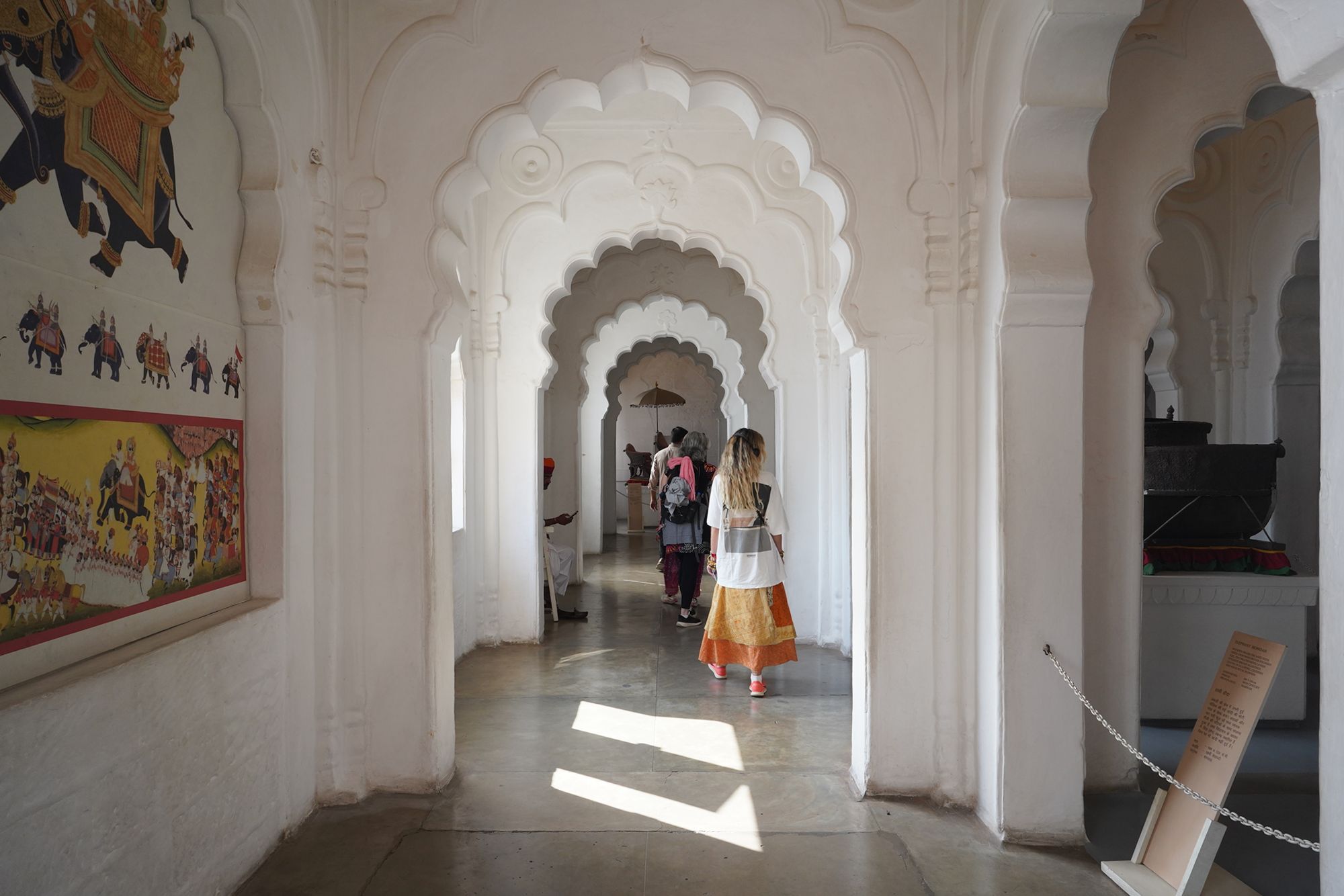
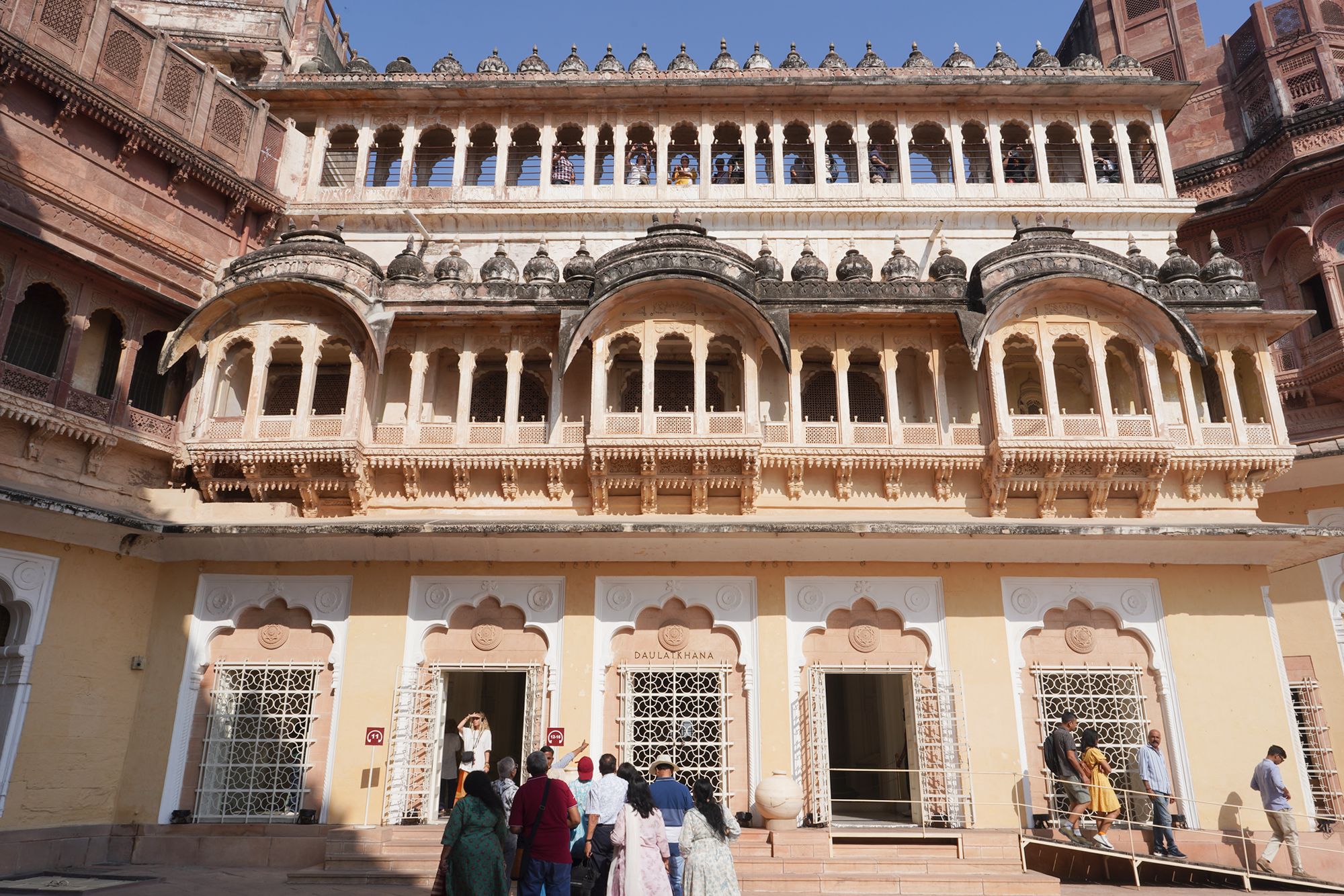
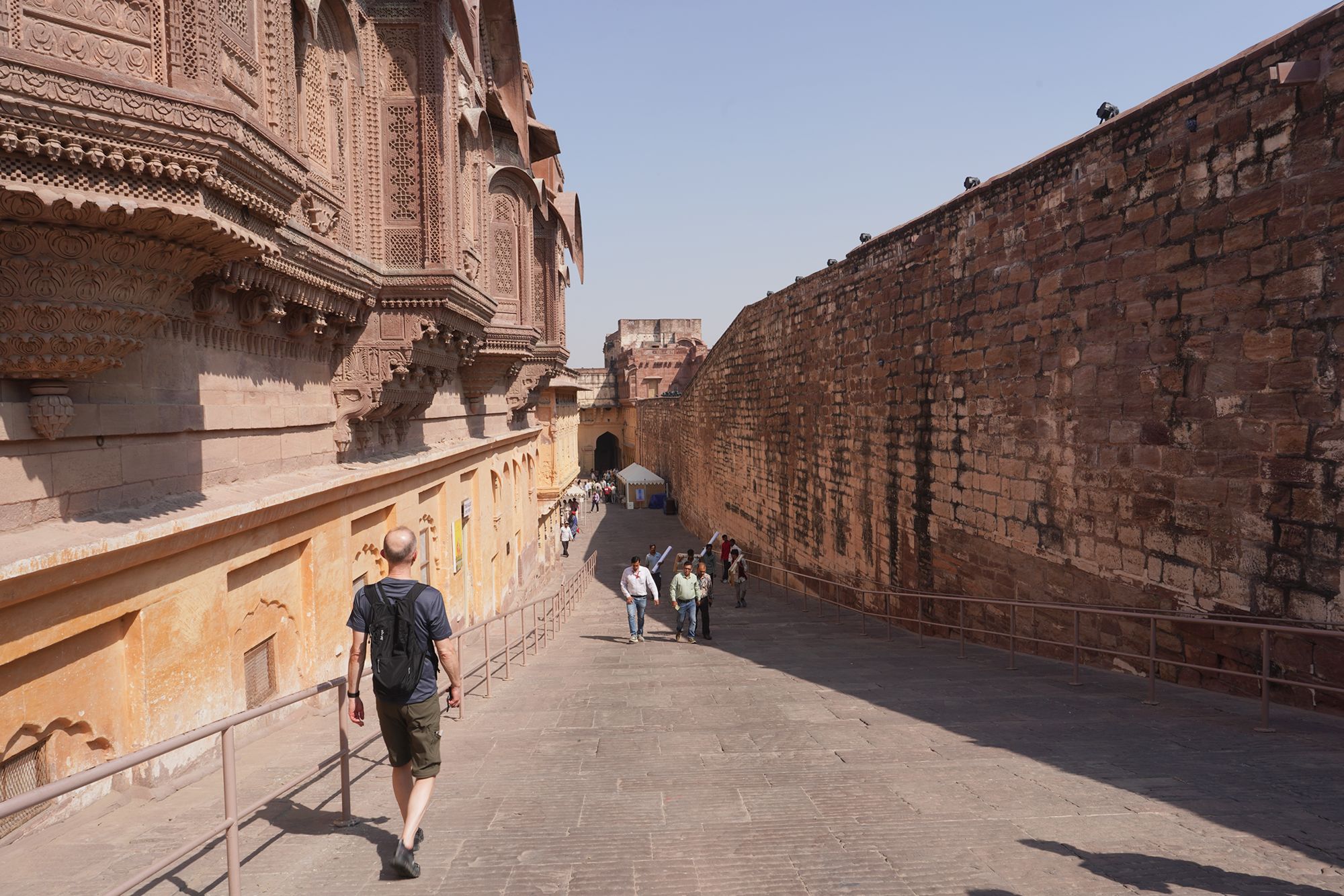
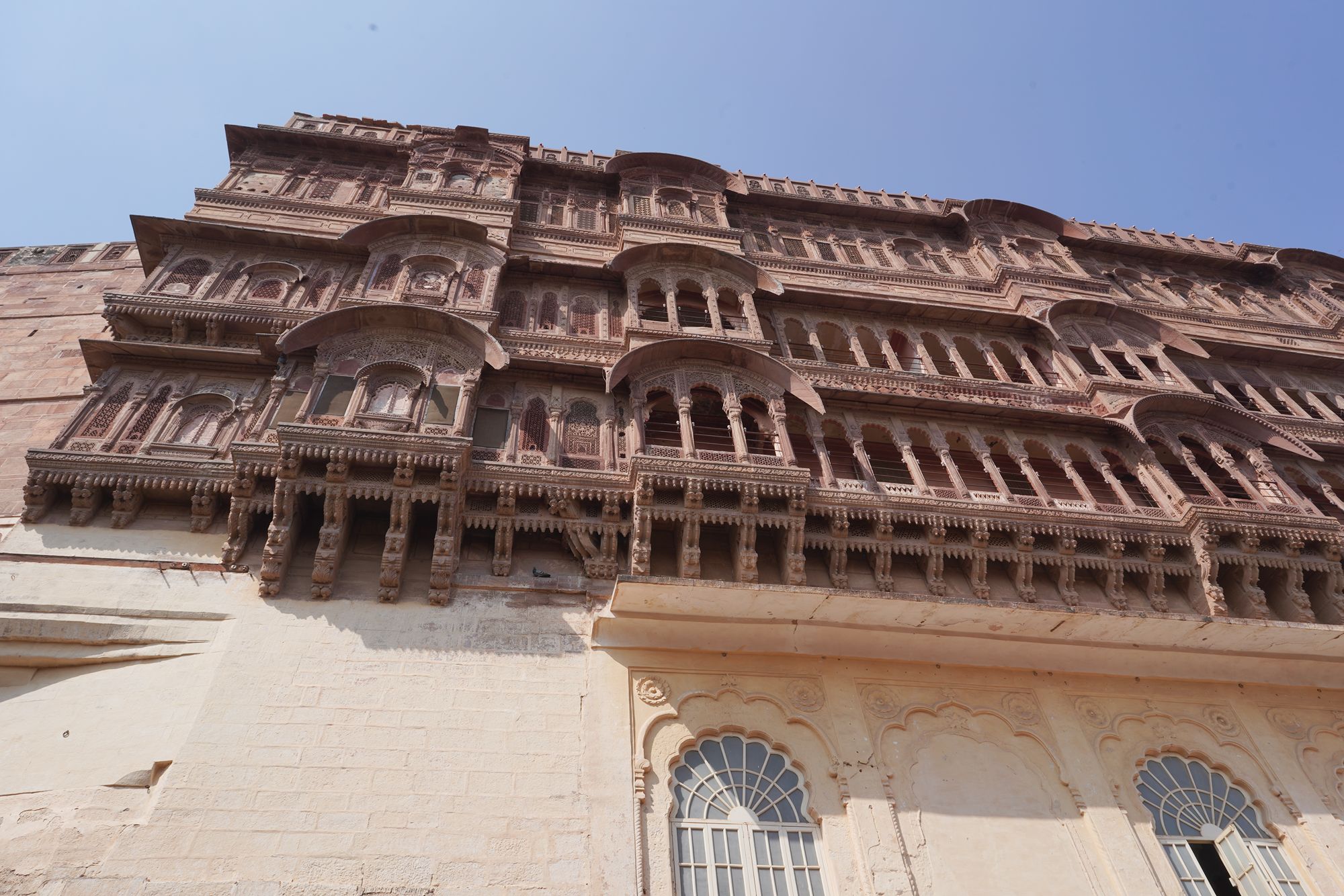
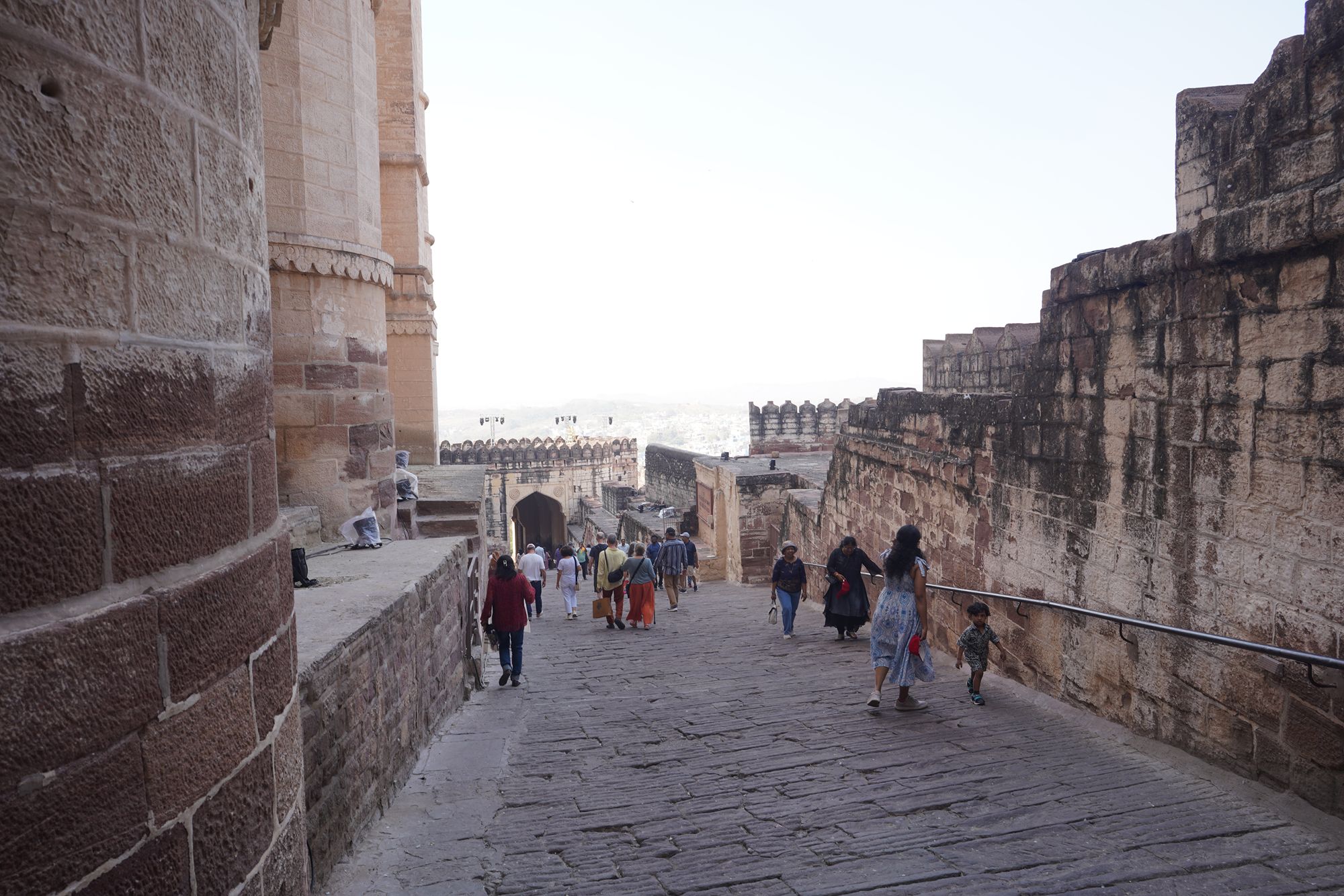
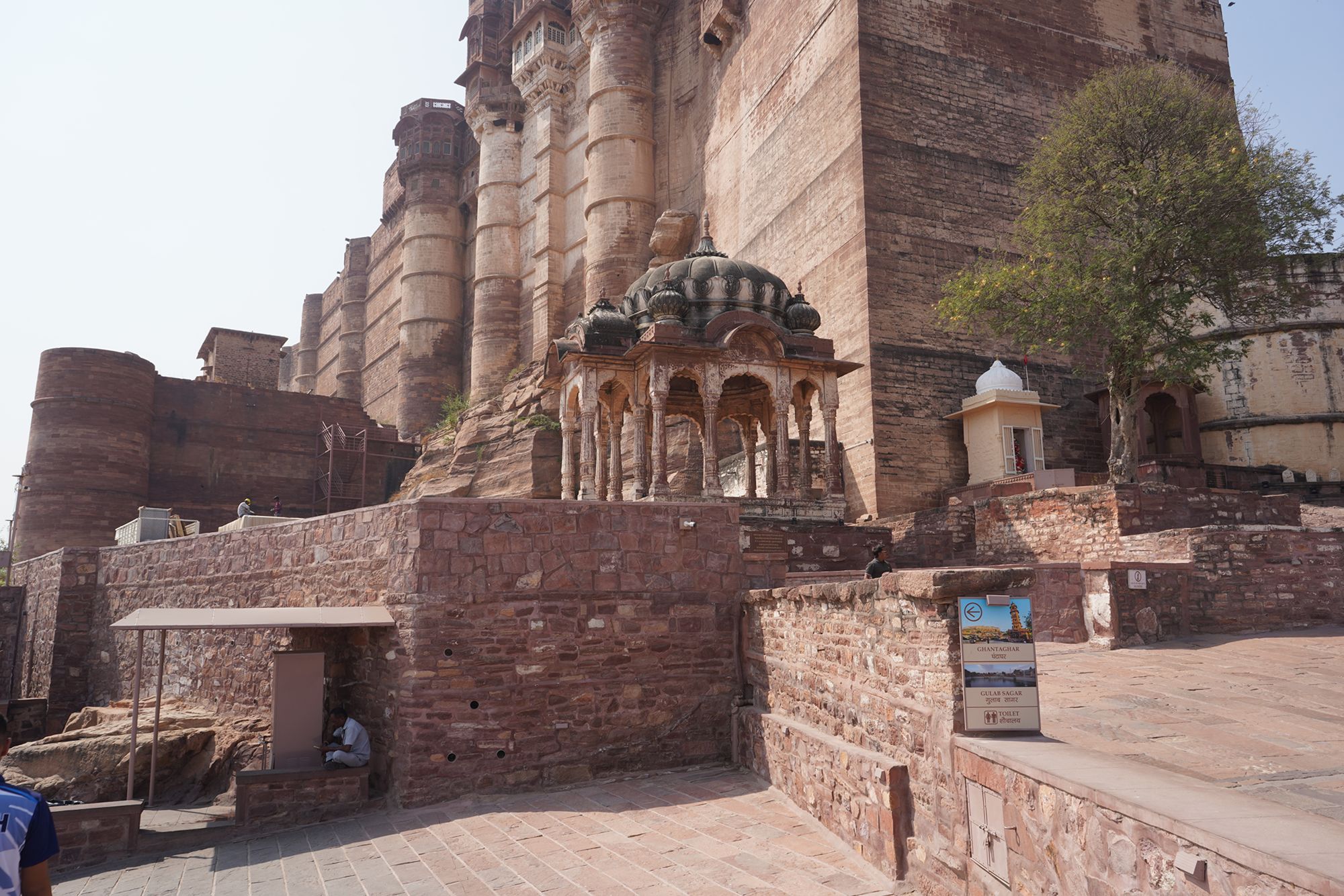
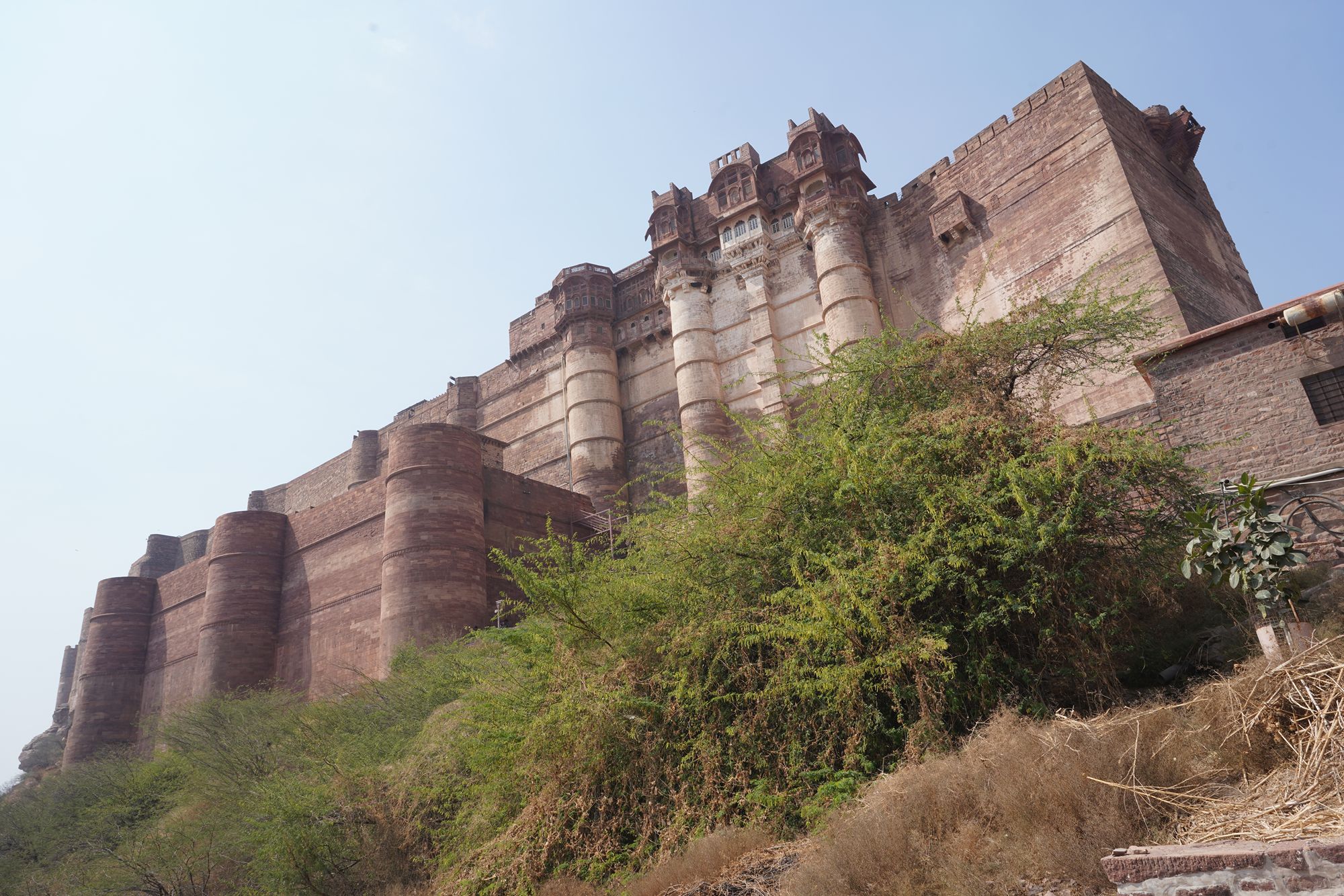
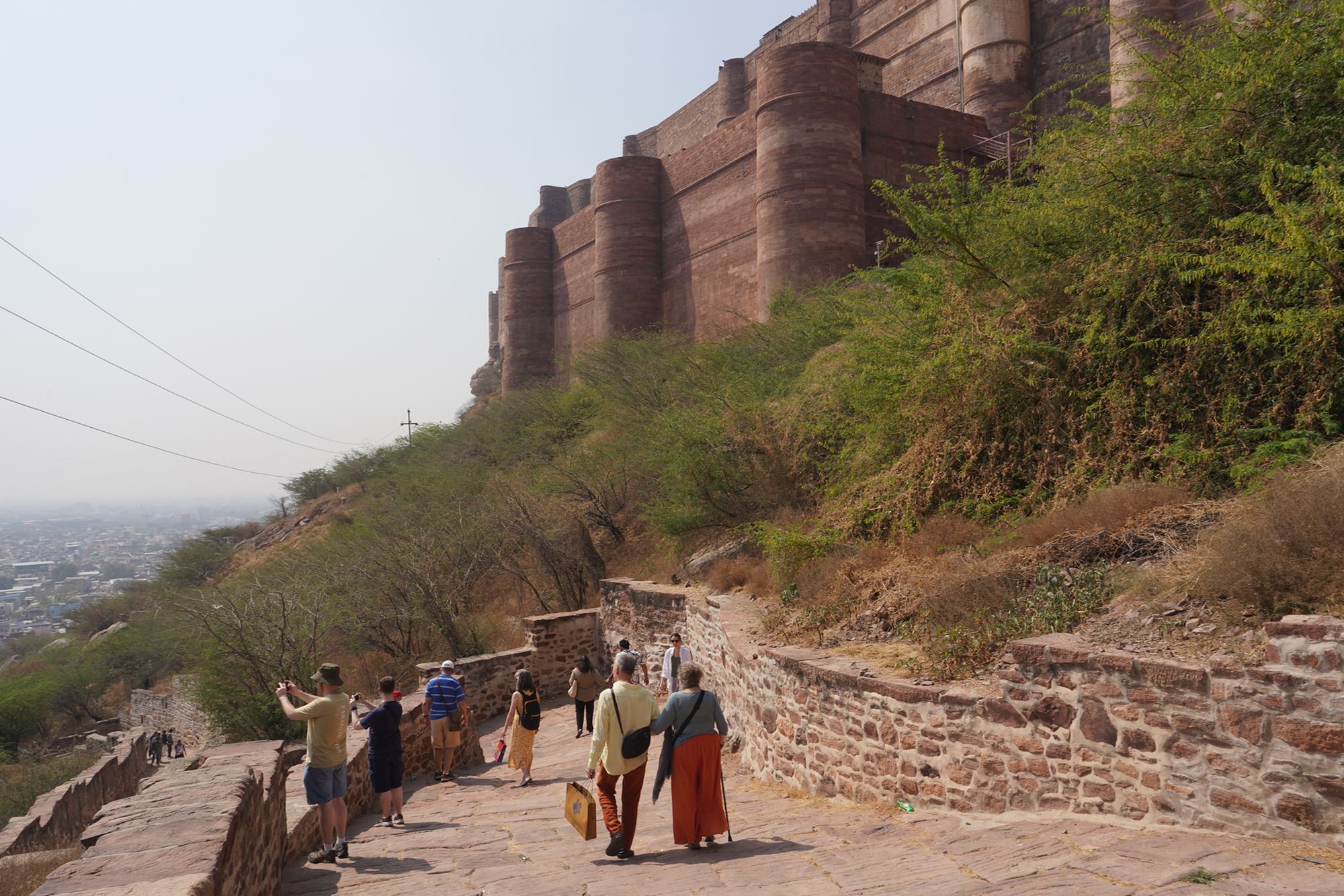
After arriving in Jodhpur, we visited the impressive Mehrangarh Fort, which towers above the city from a rocky hill.
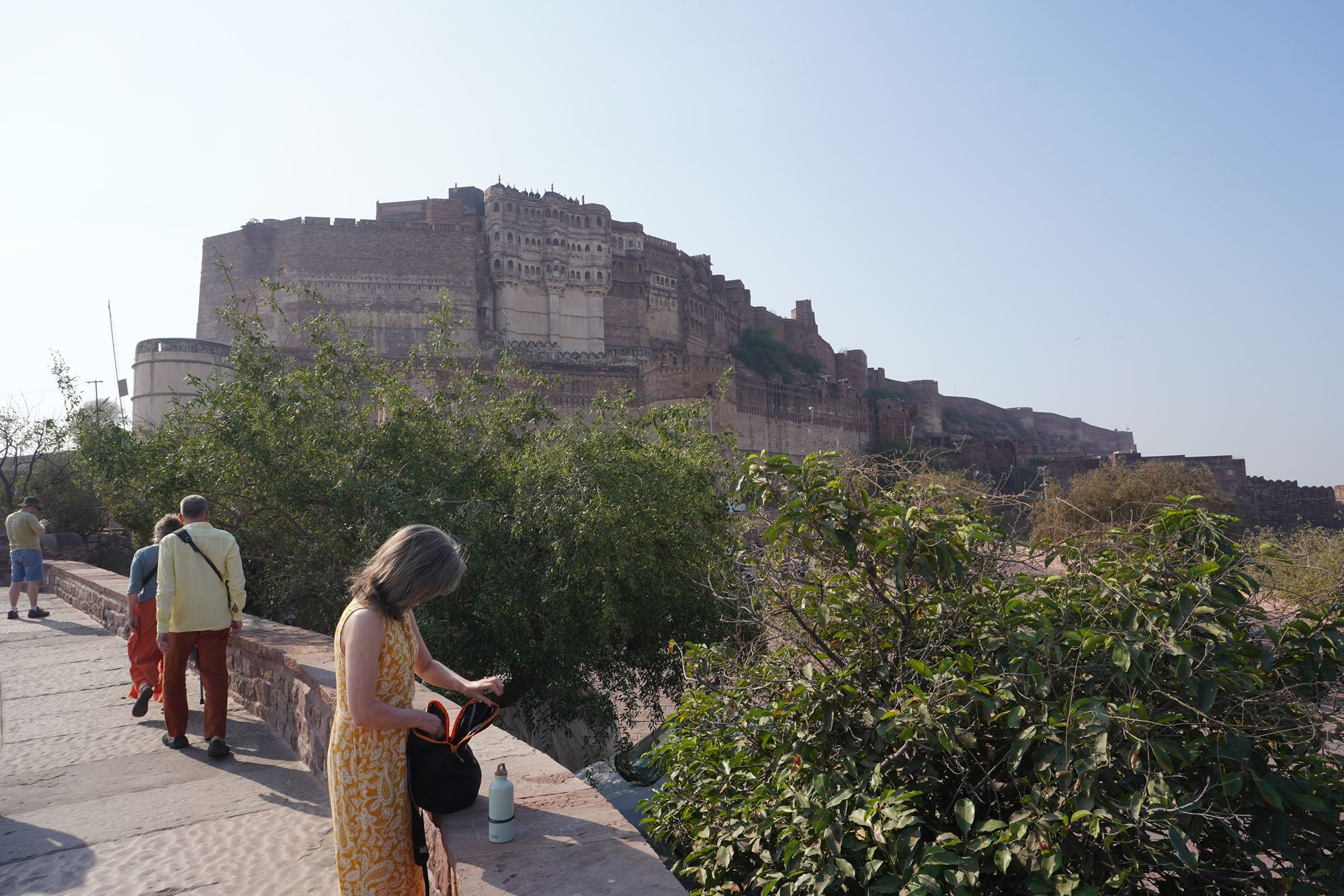
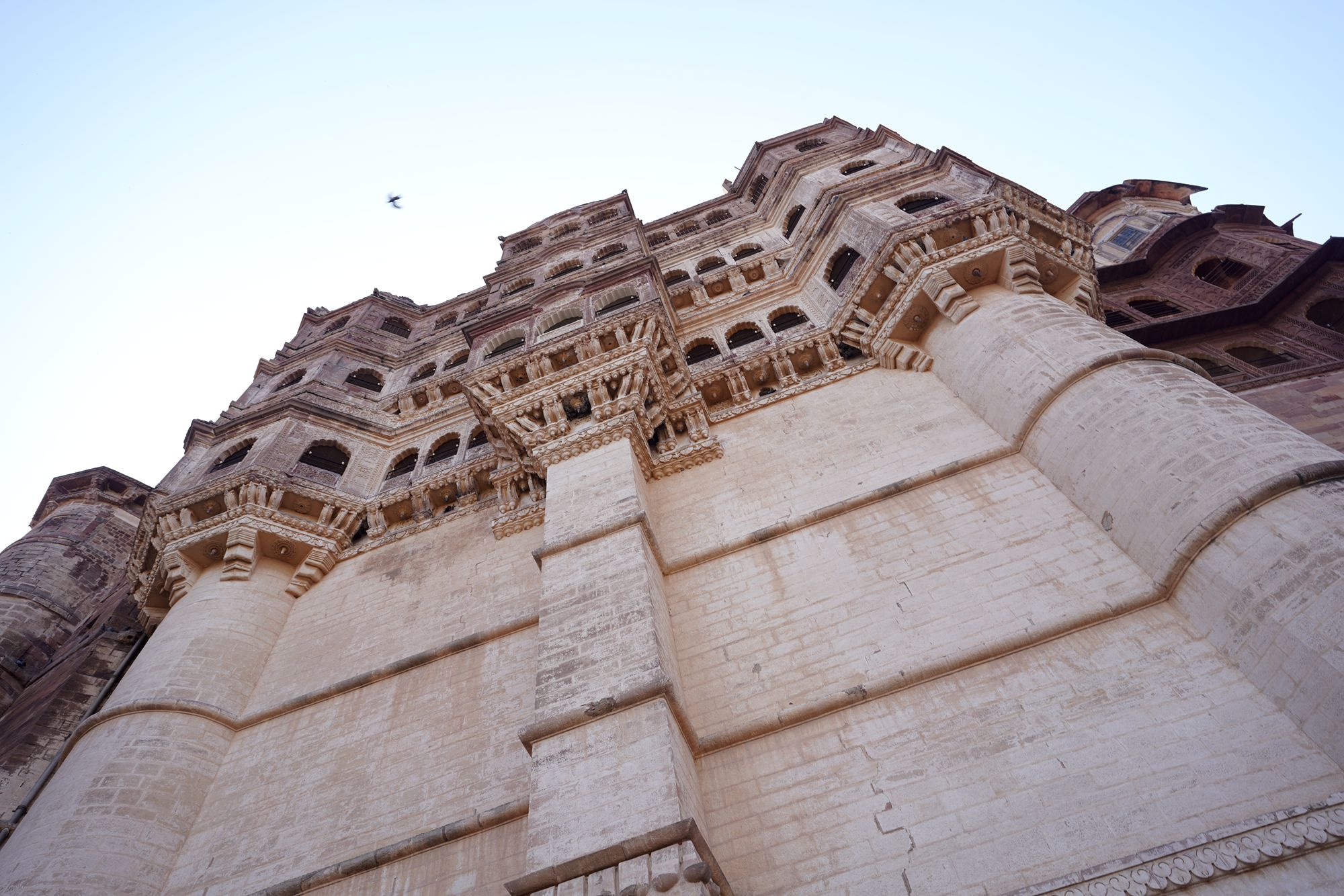
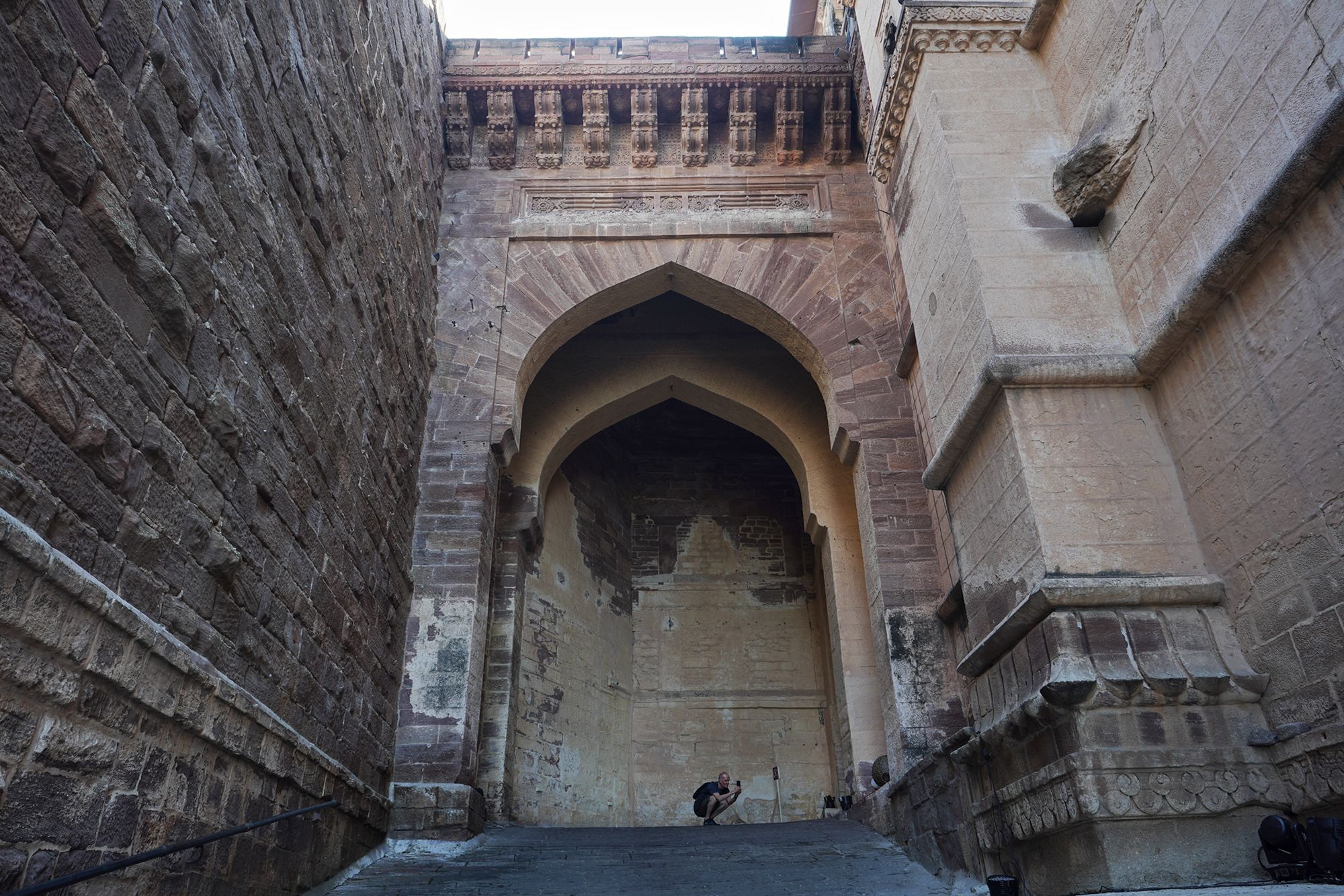
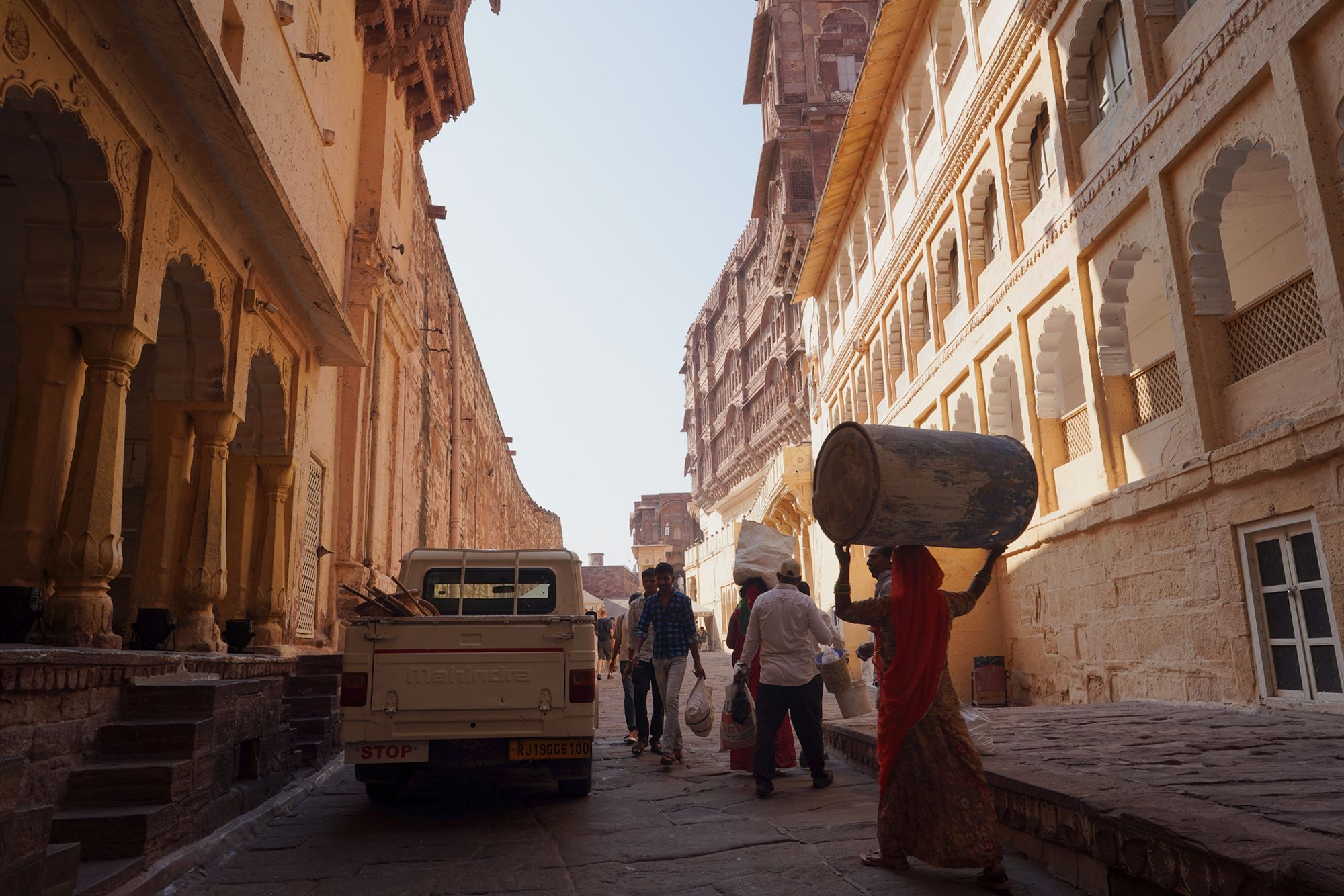
Mehrangarh Fort is one of the largest and most impressive forts in Rajasthan. It was founded in 1459 by Rao Jodha, the ruler who established Jodhpur, and stands on a rocky hill about 400 feet above the city.
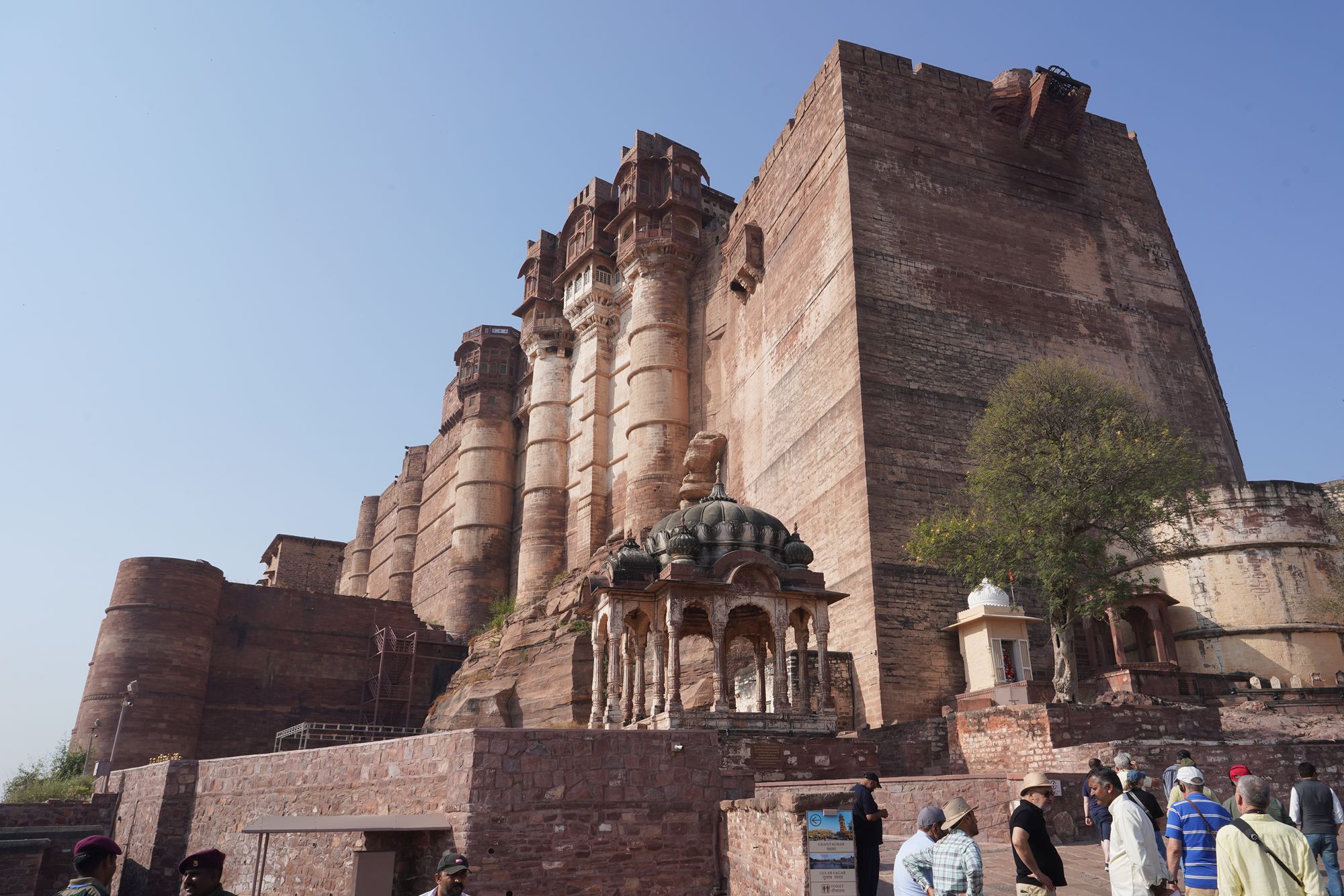
The massive stone walls protected the royal residence and contain palaces, courtyards, temples, and elaborate halls built by generations of rulers. Today, much of the fort is a museum displaying royal artifacts, weapons, paintings, costumes, and furnishings.
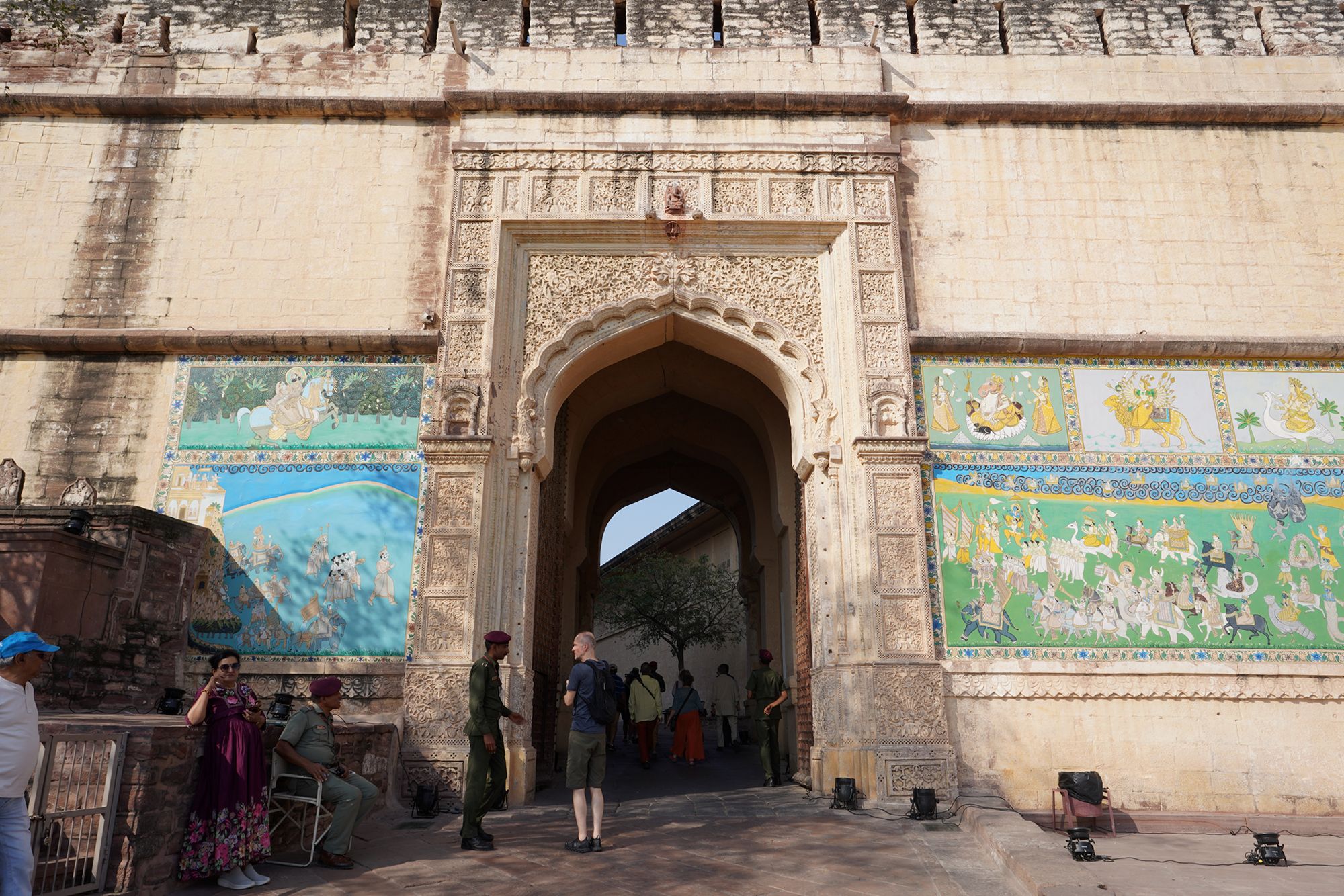
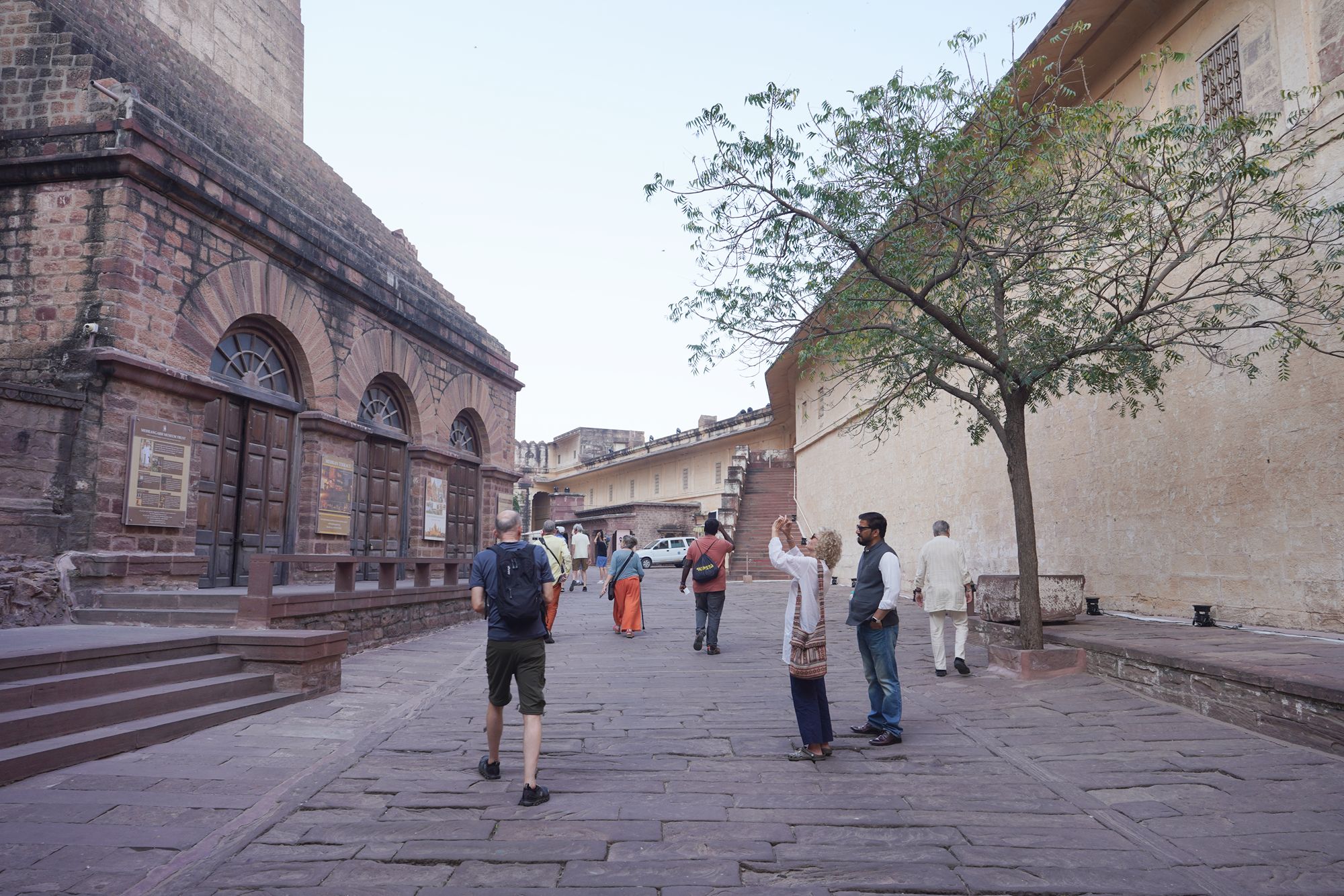
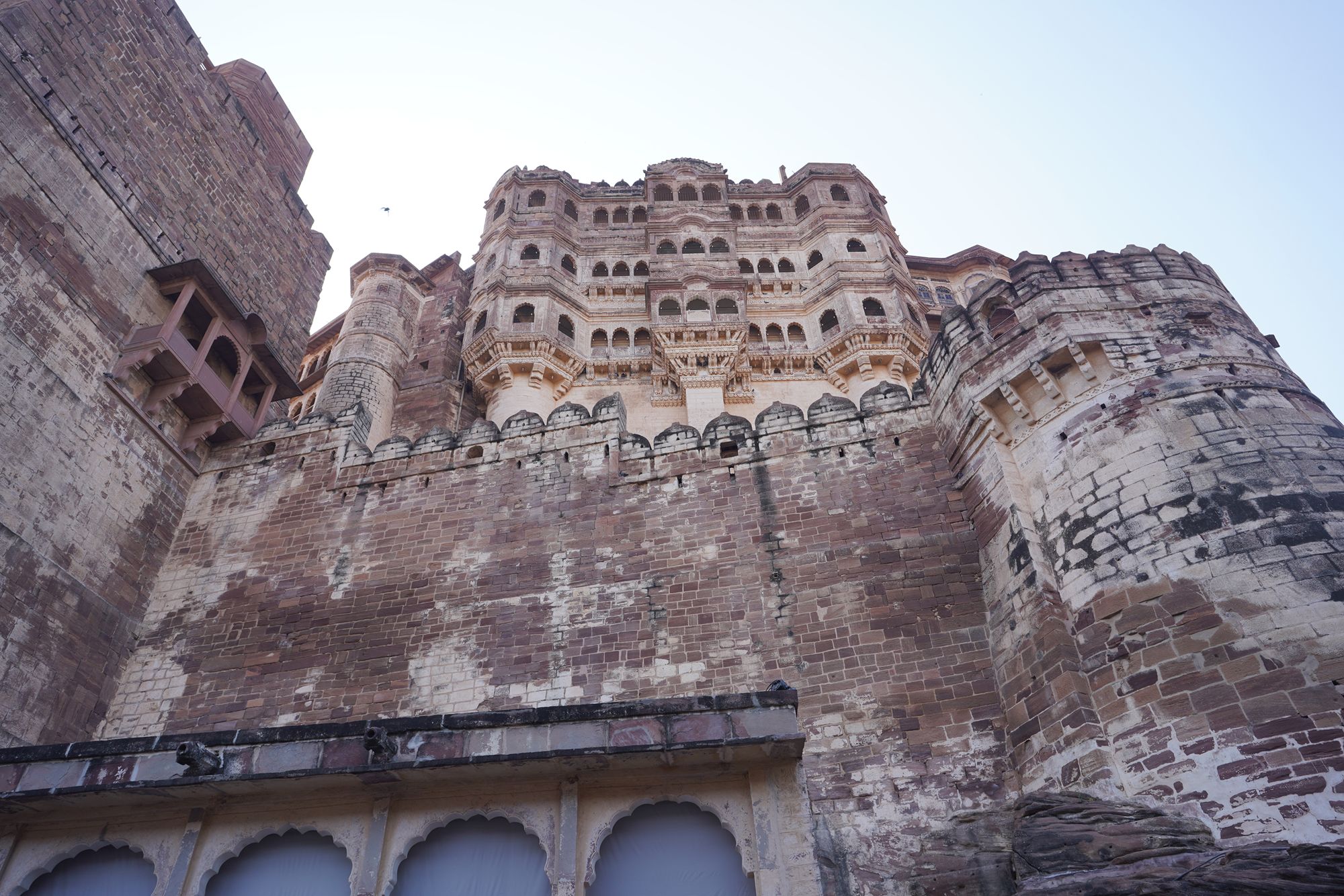
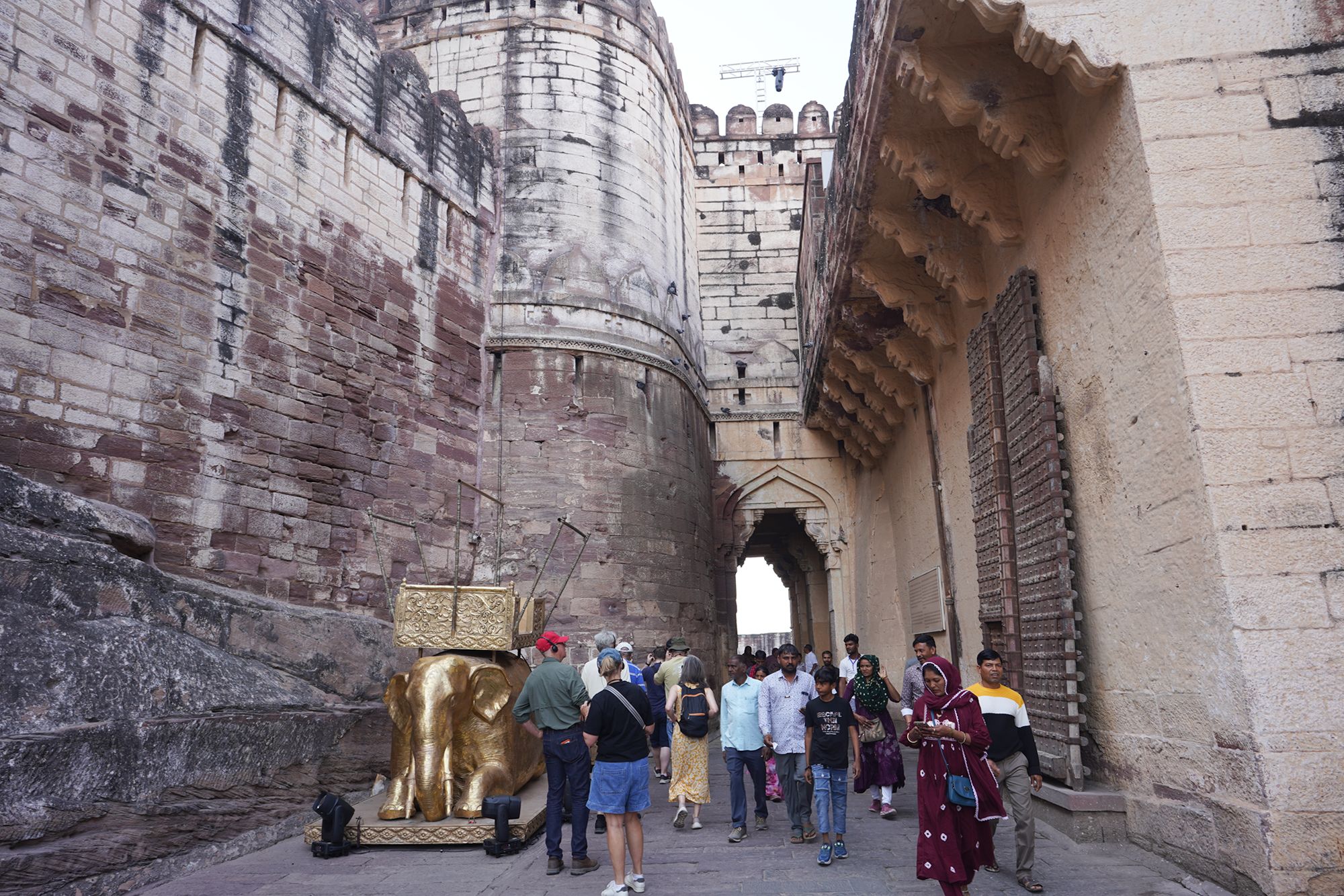
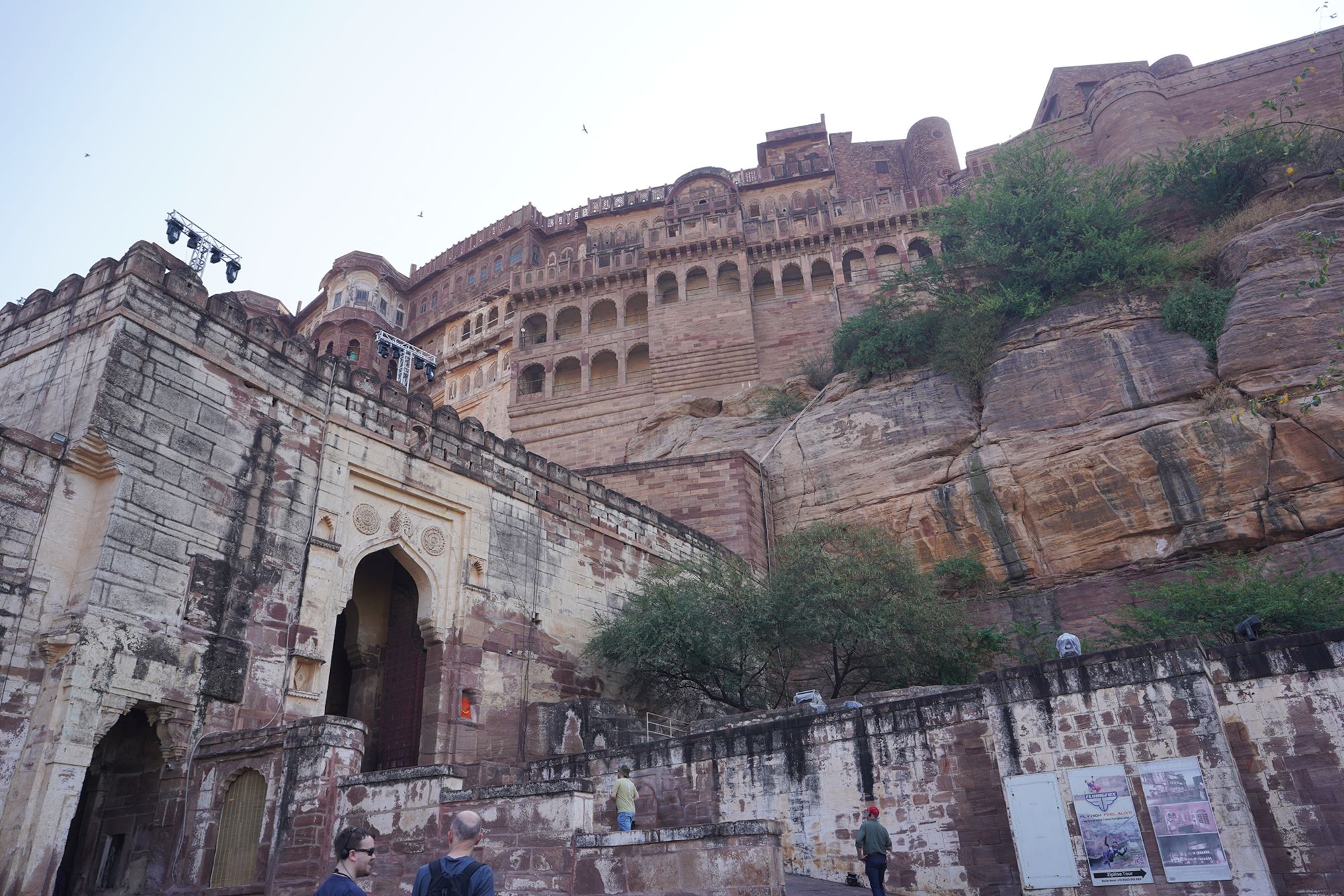
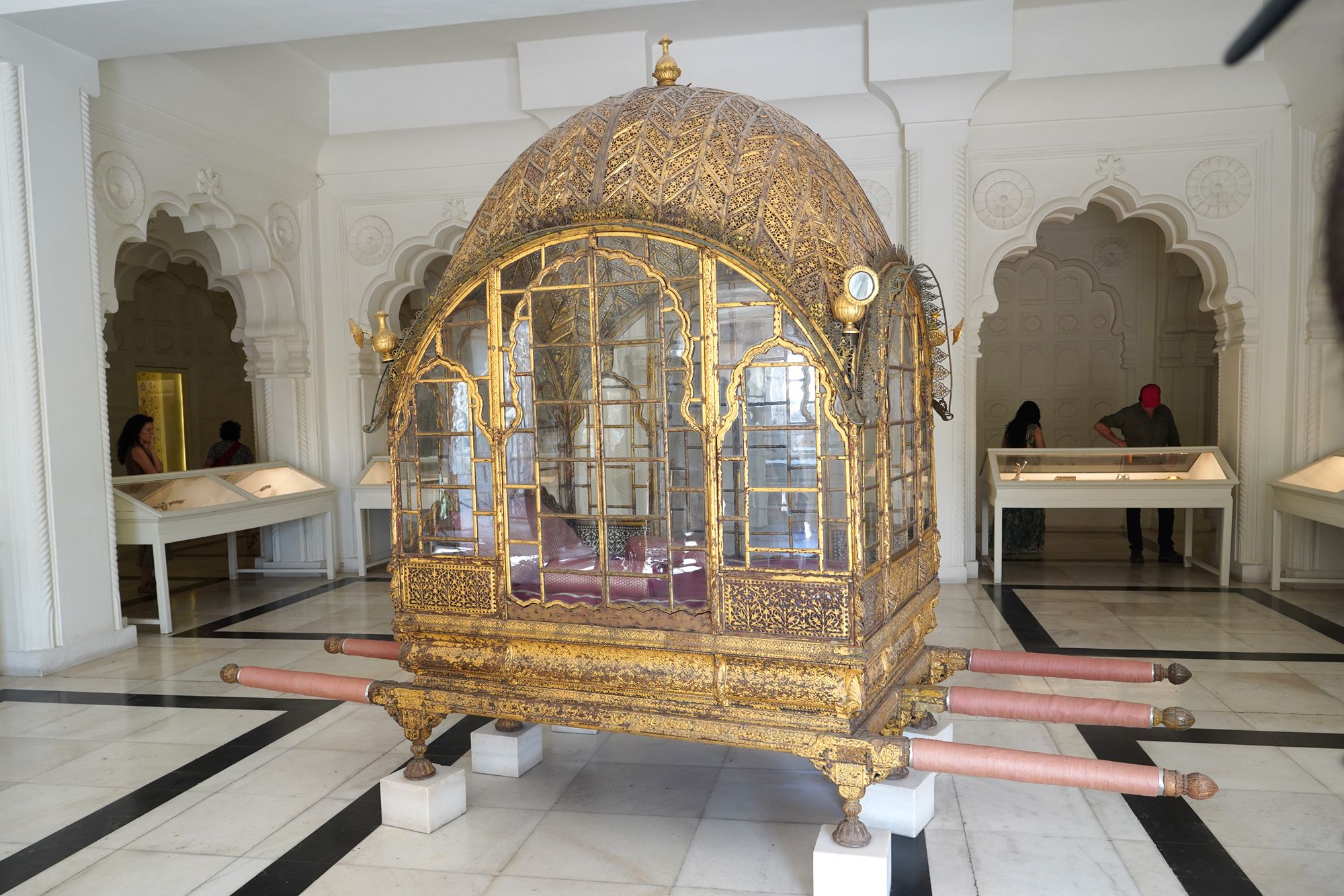
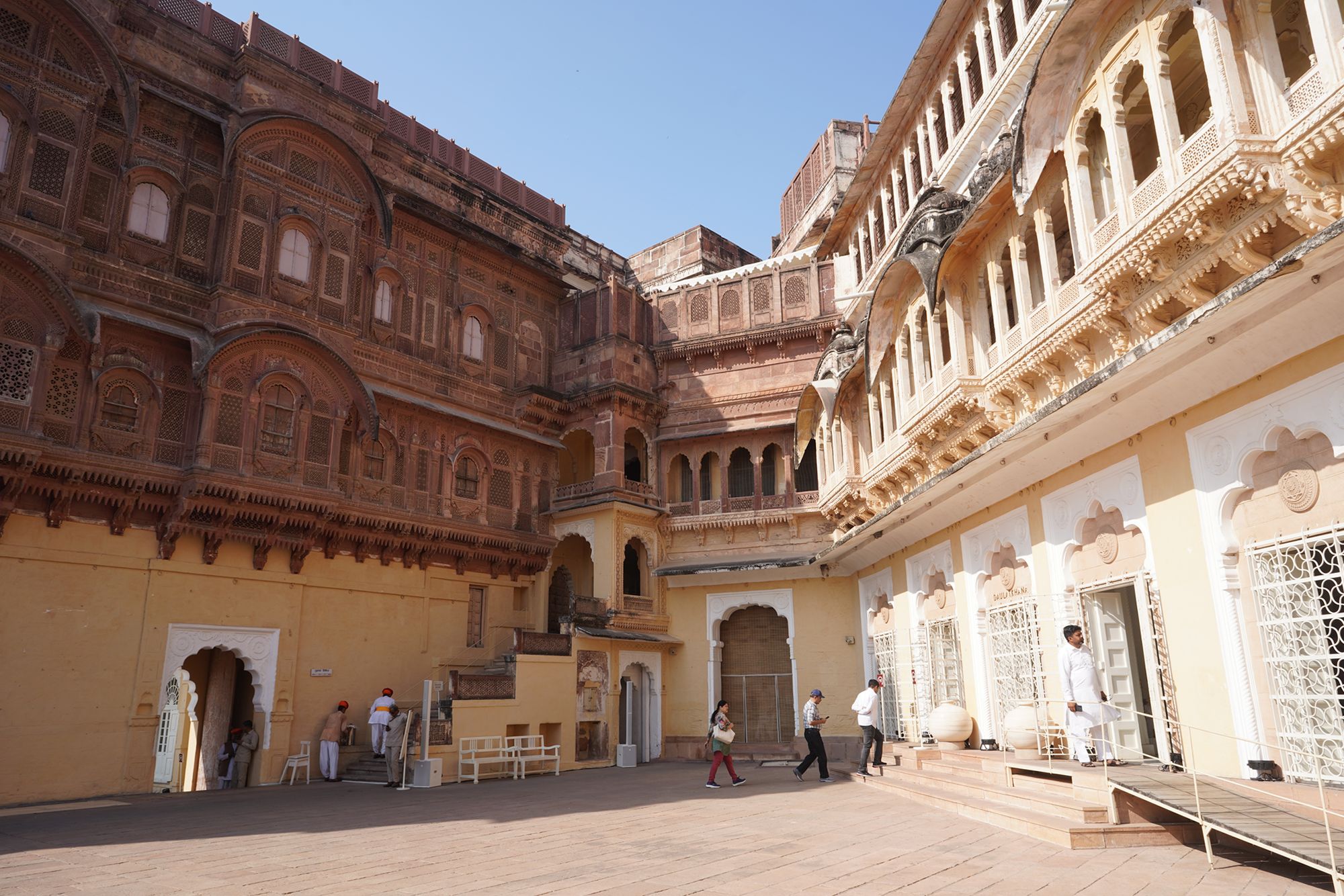
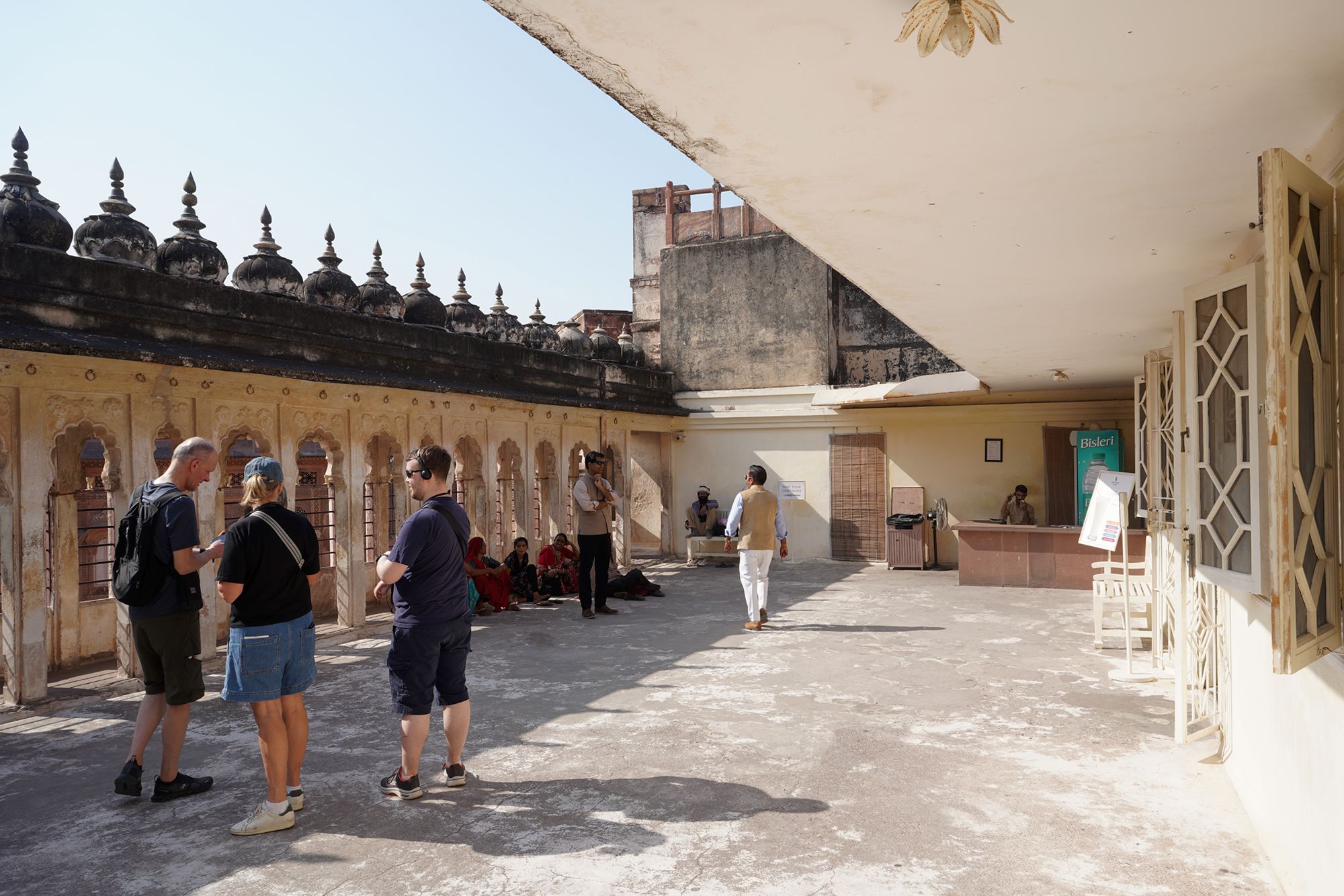
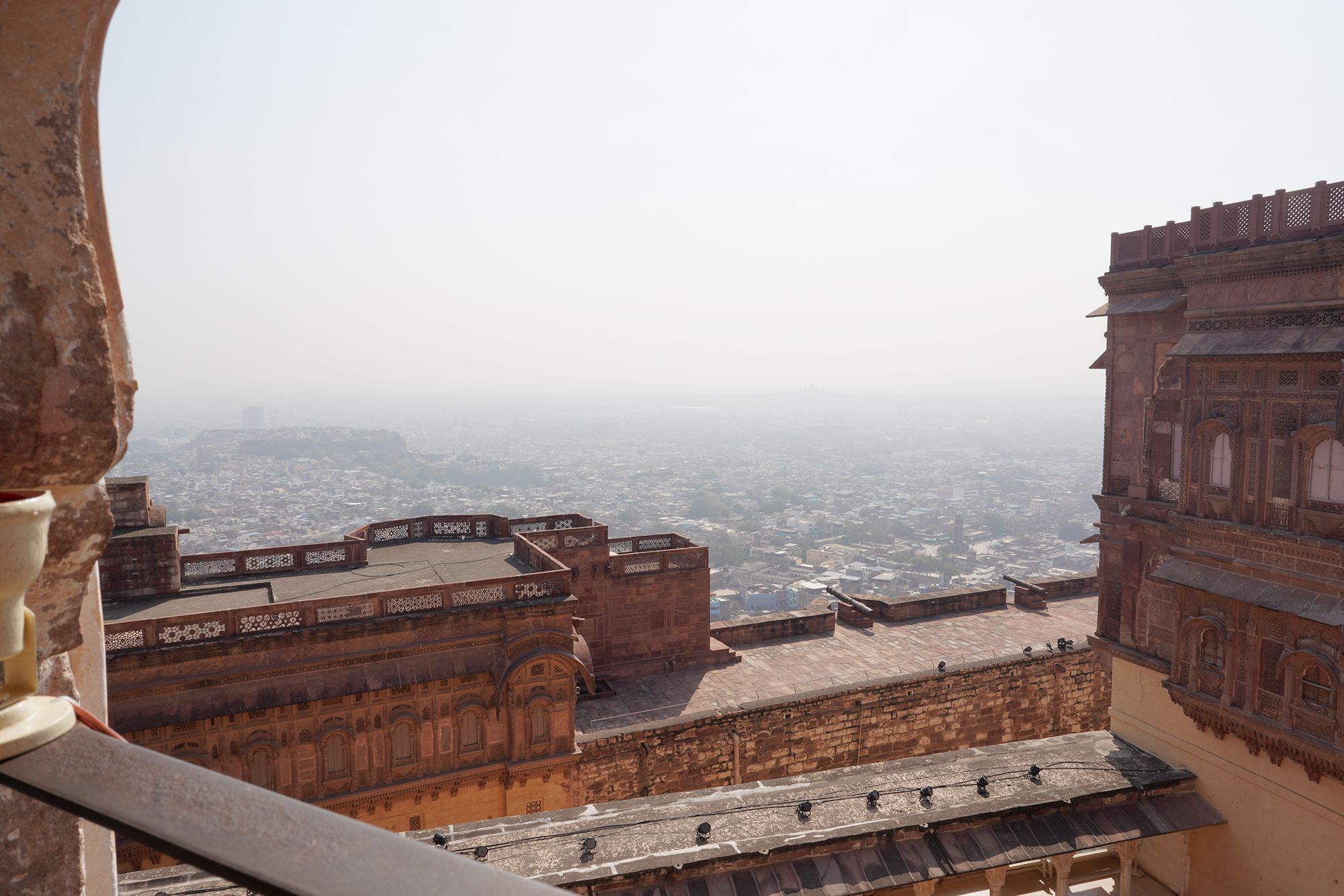
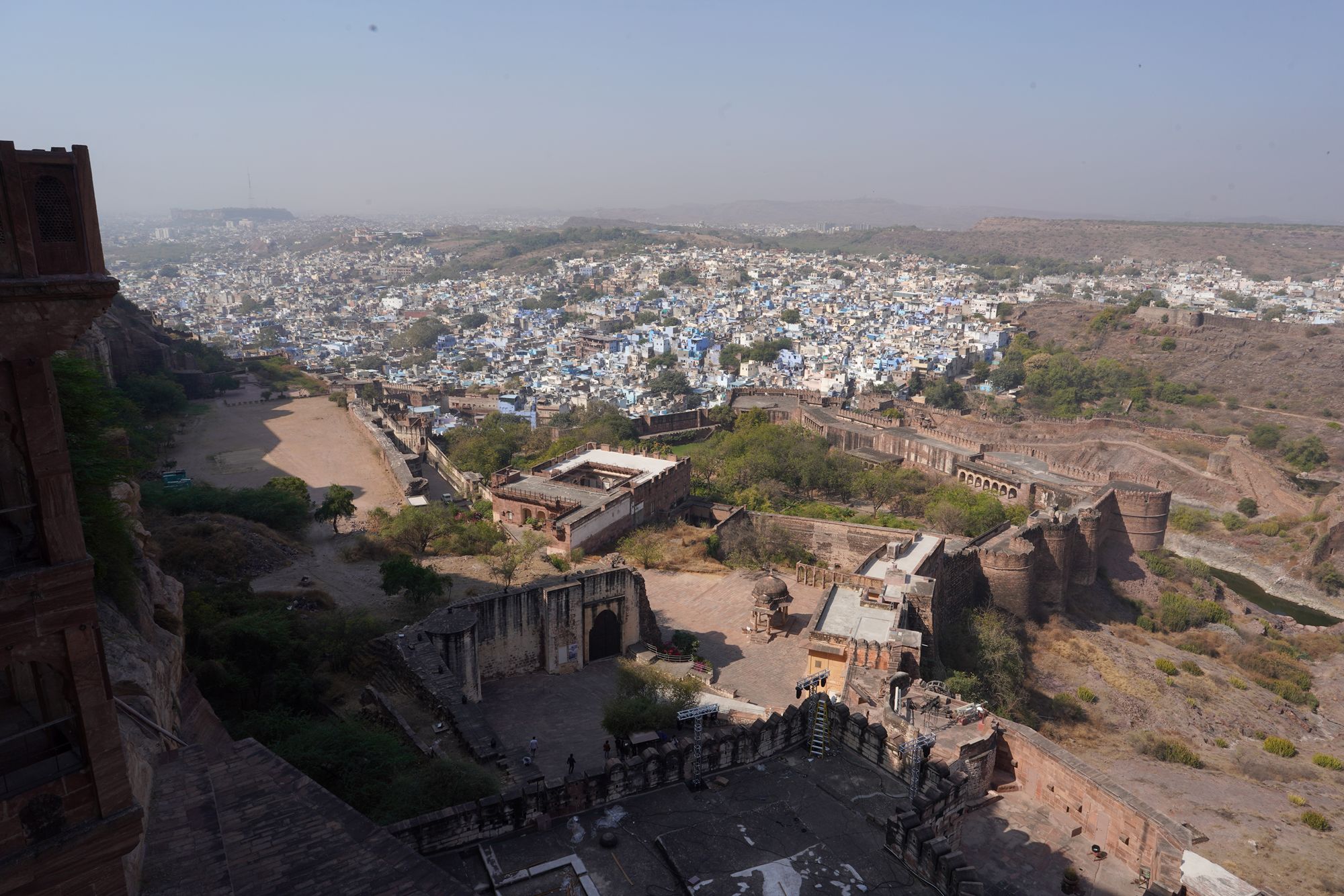
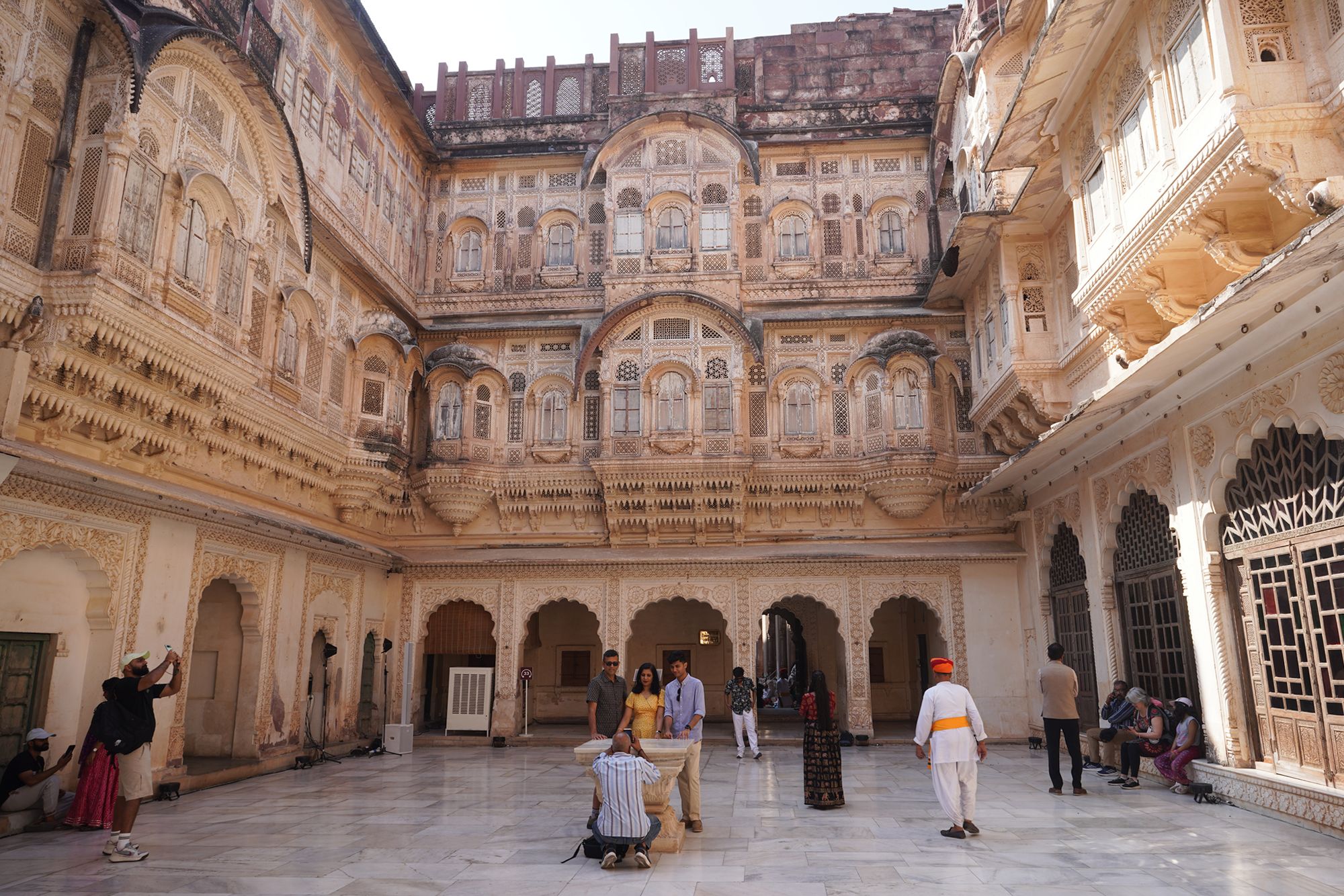
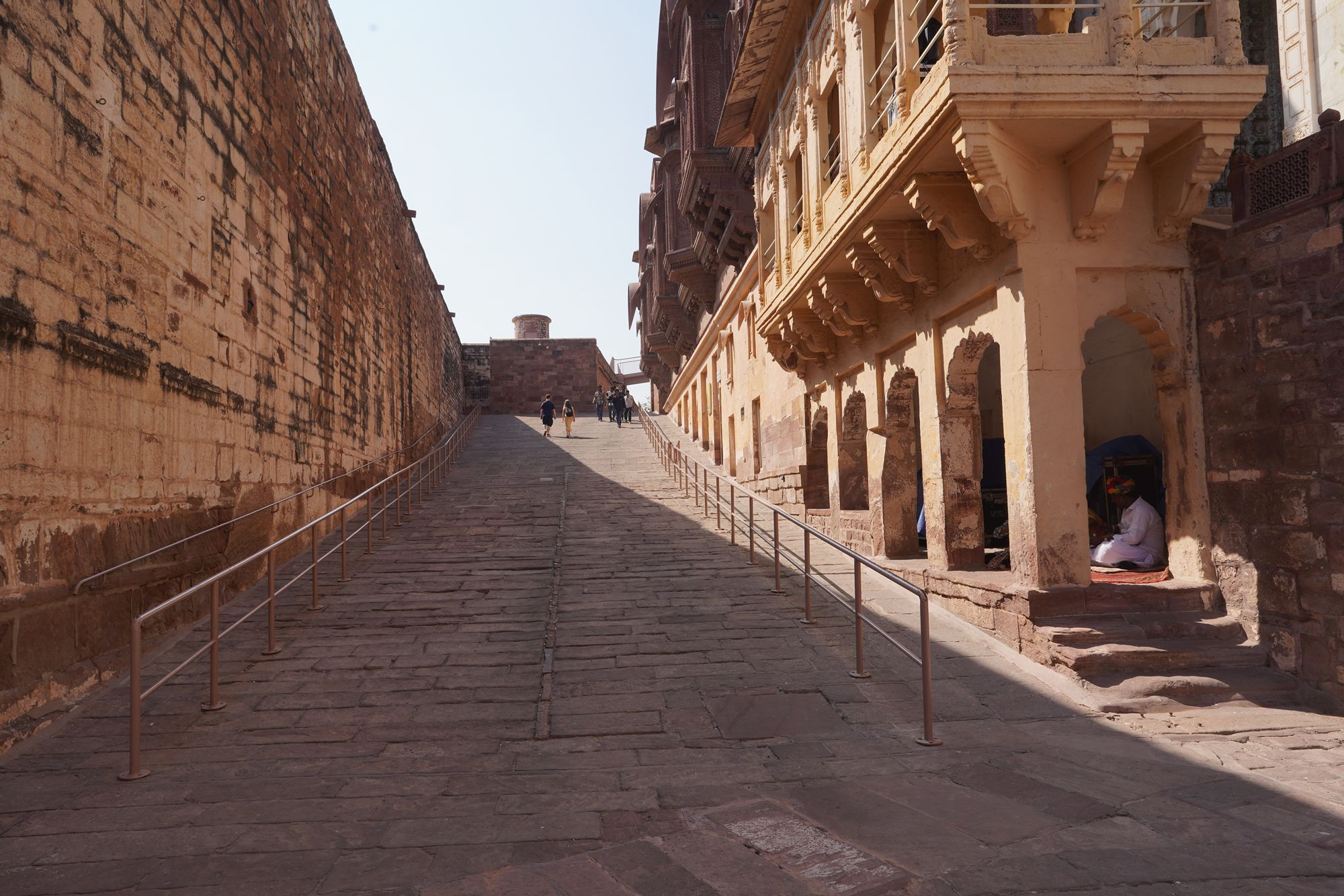
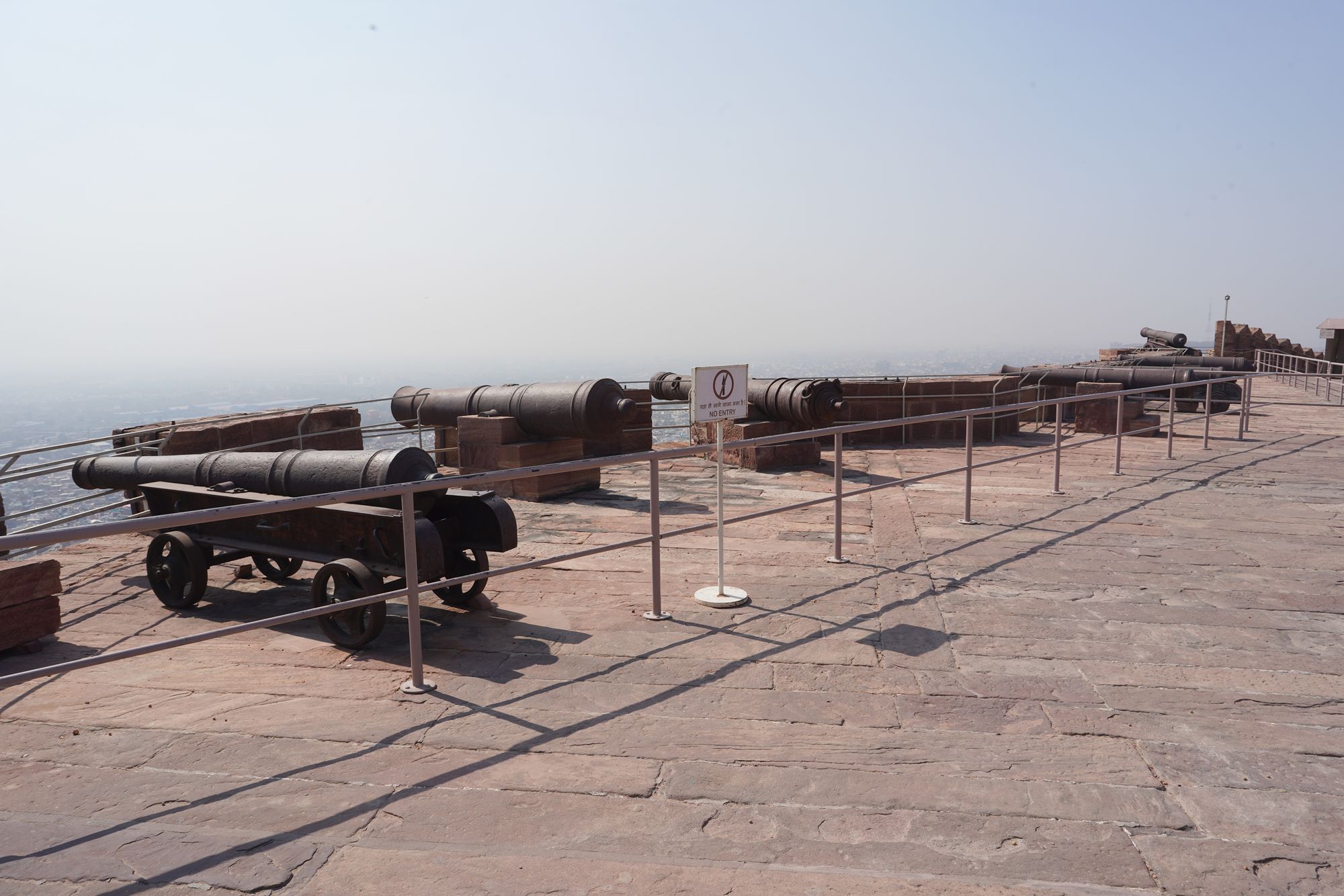
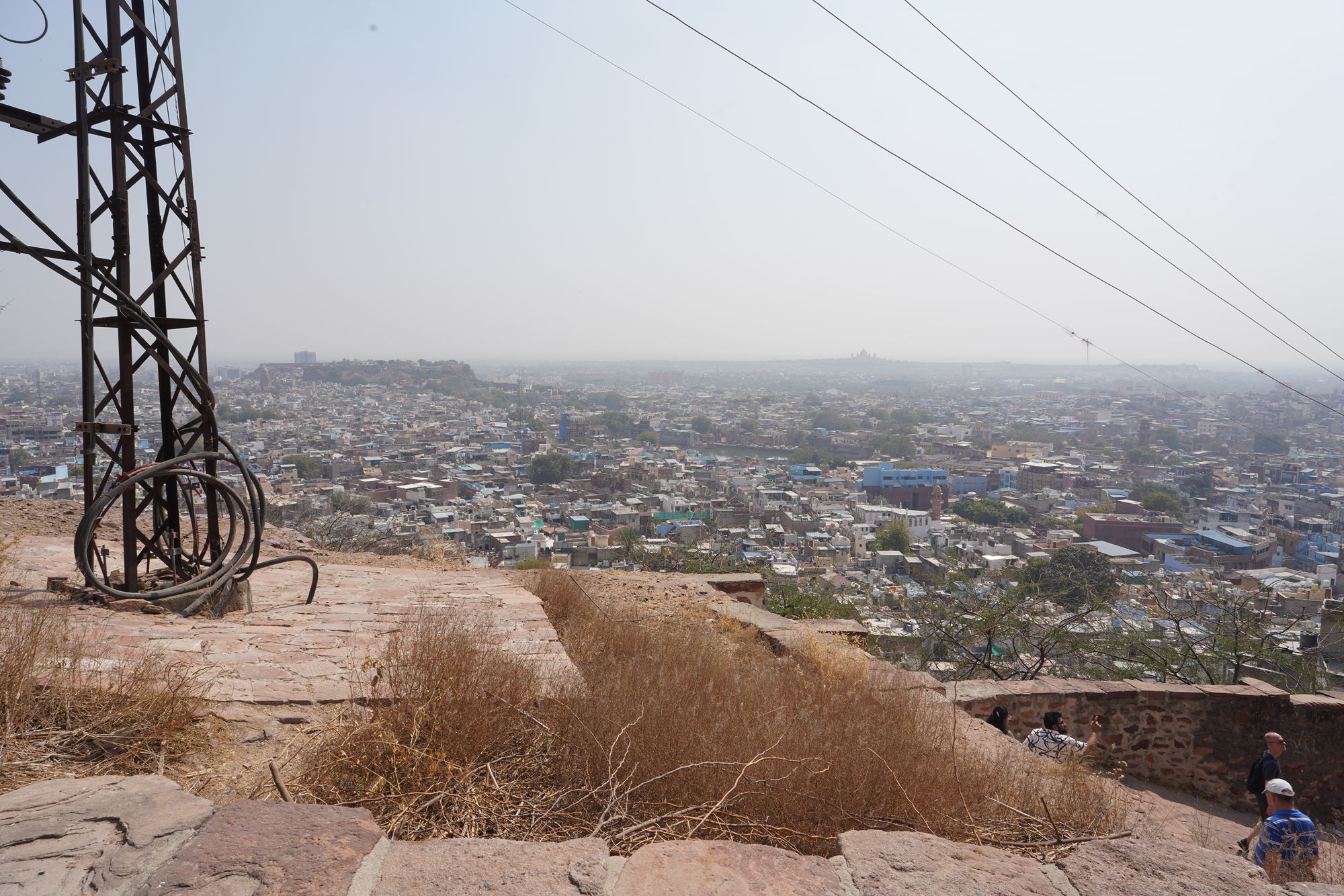
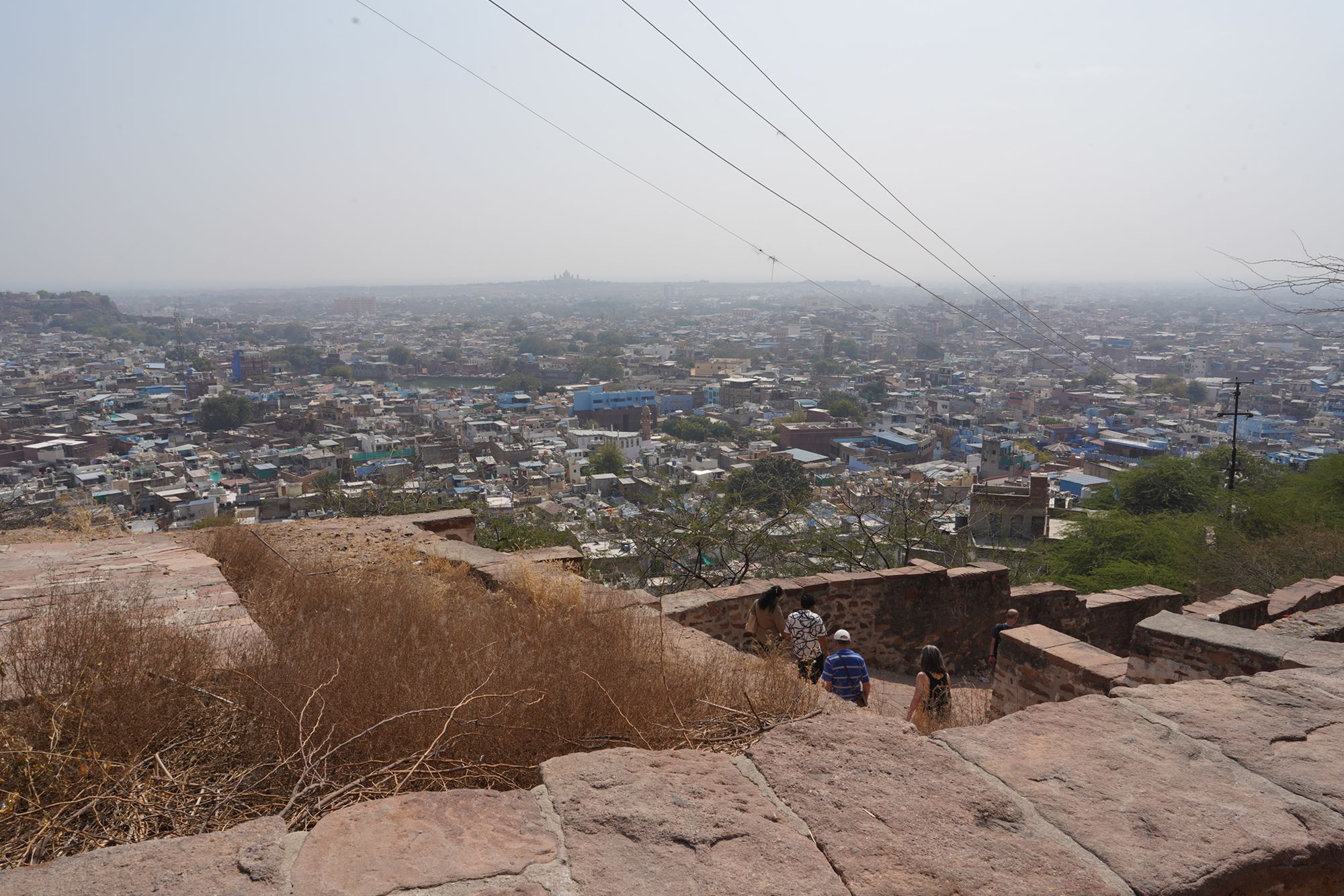
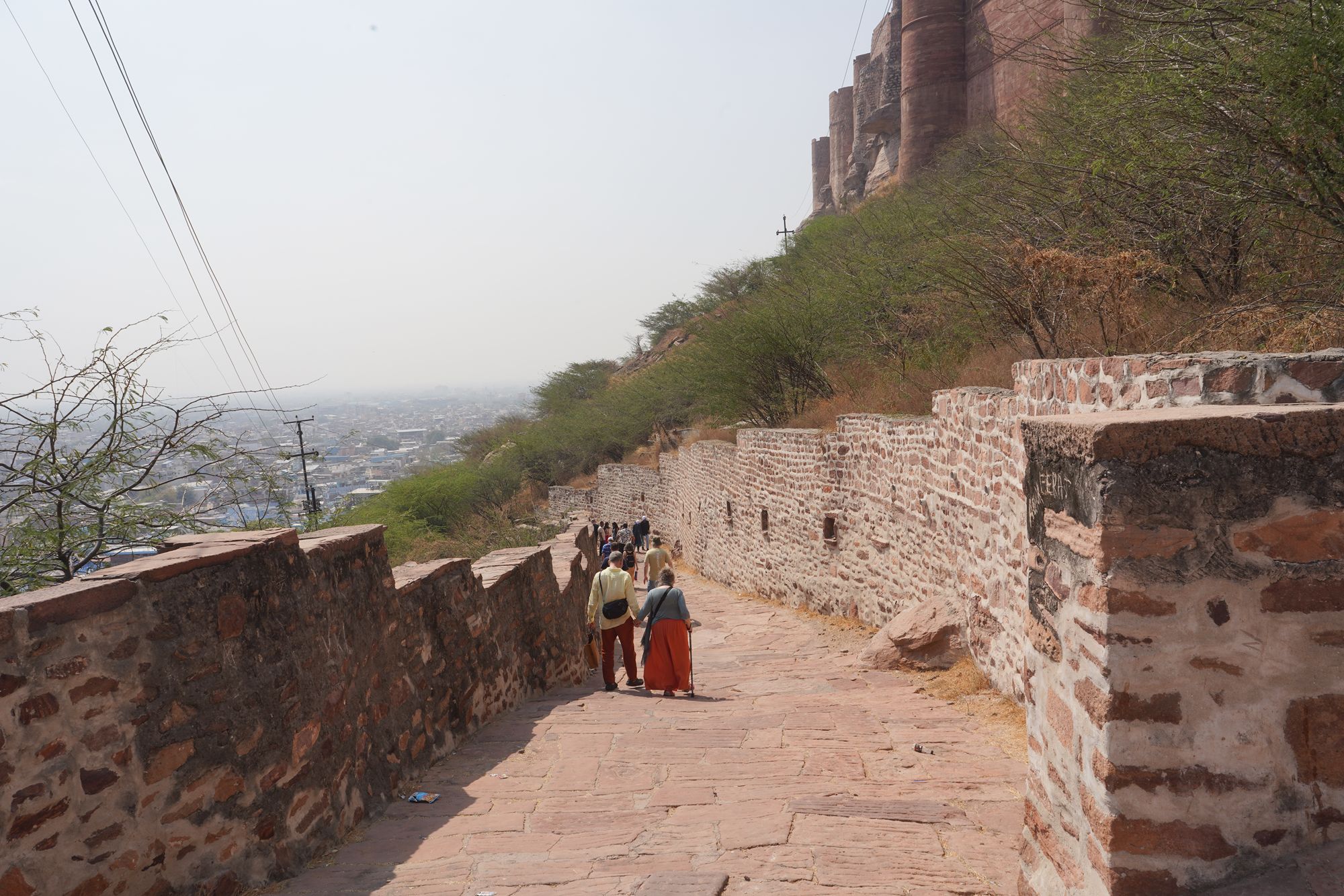
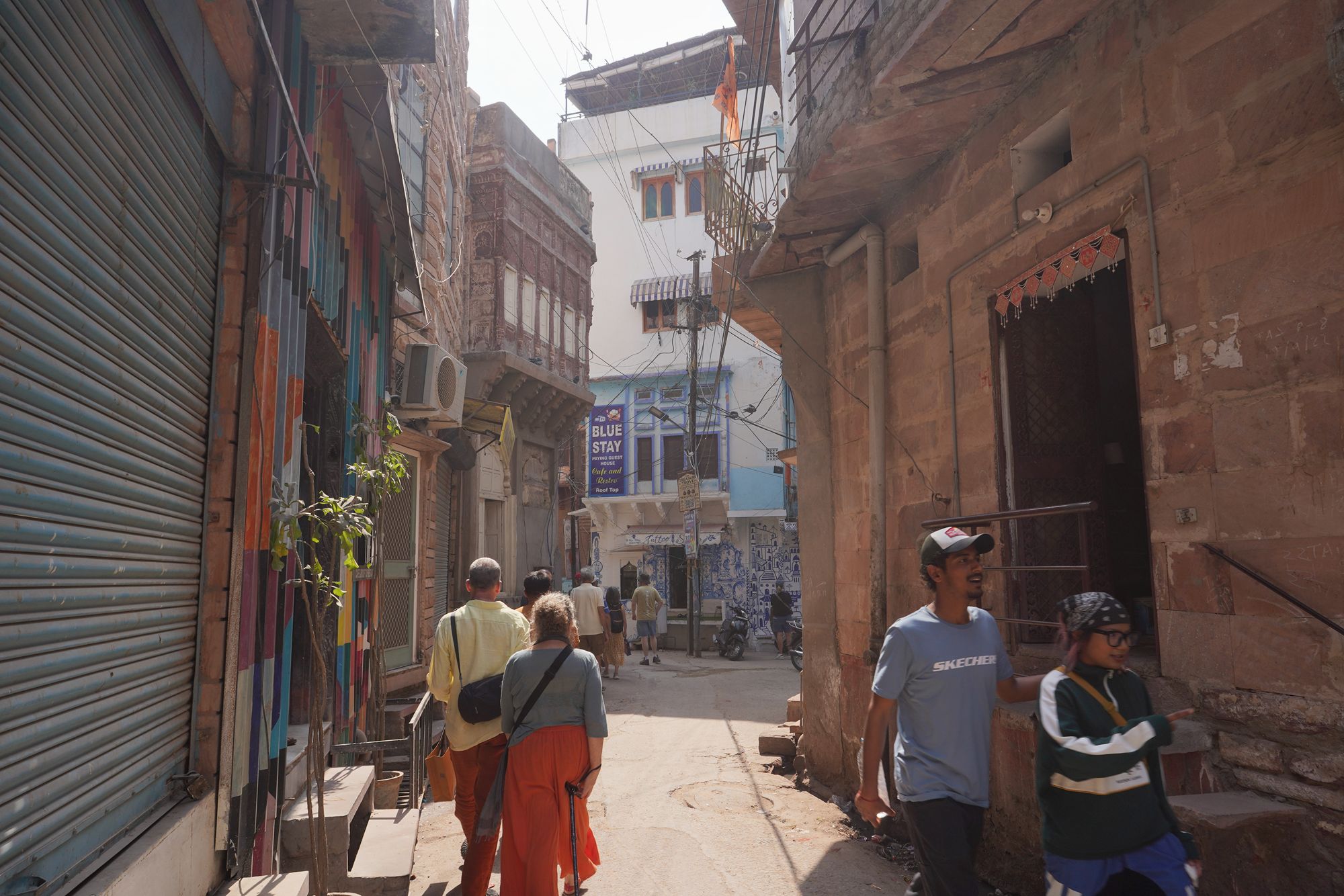
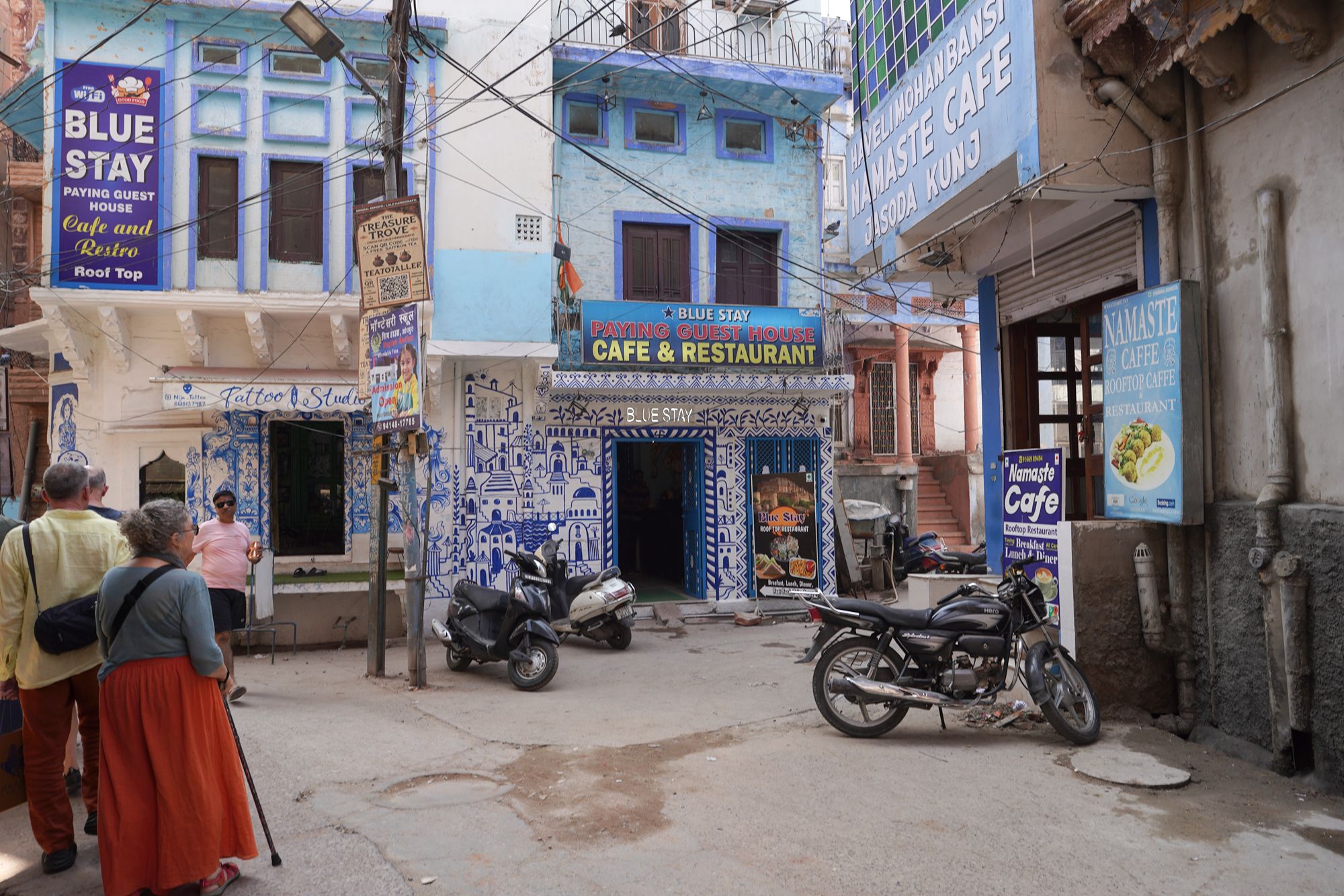
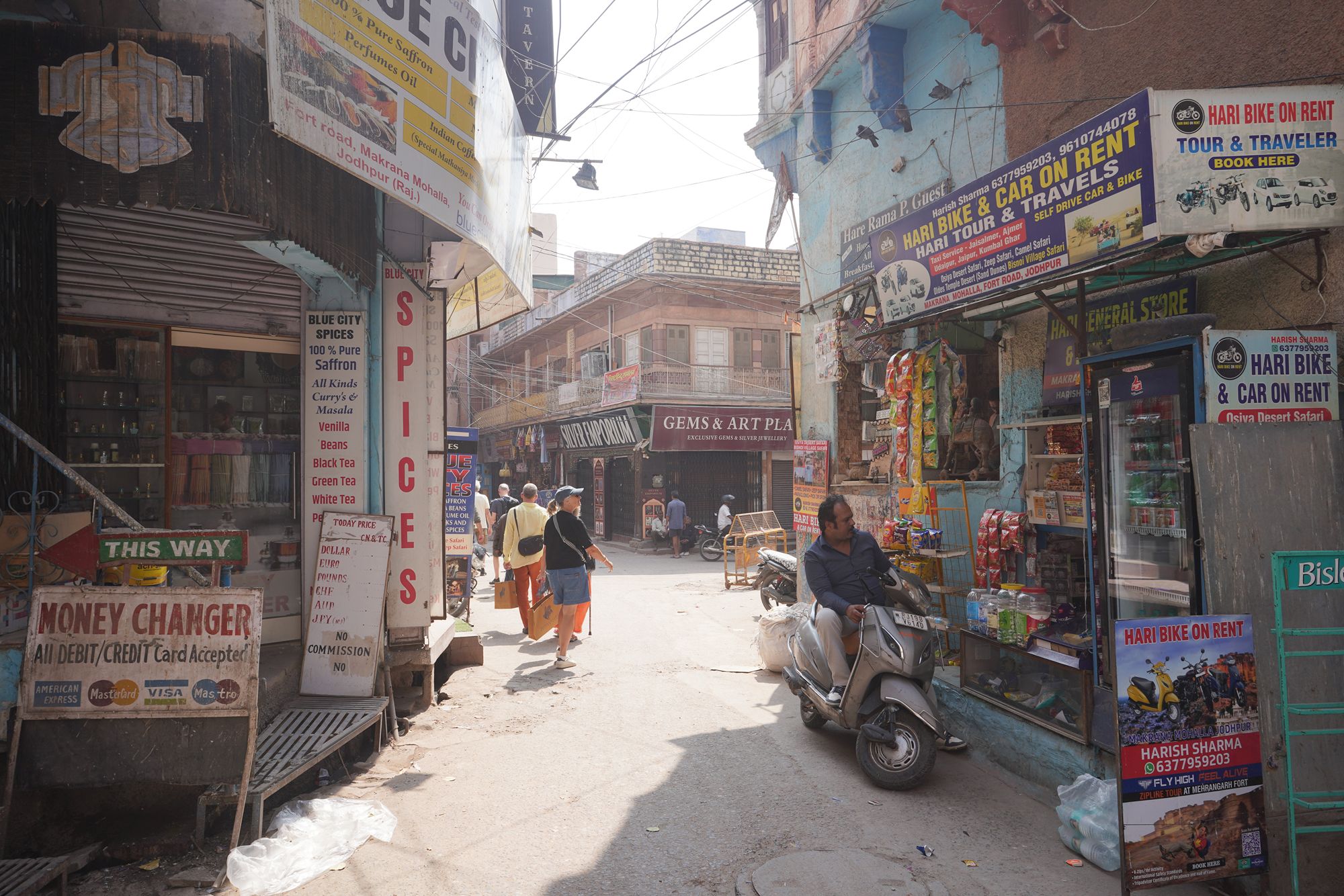
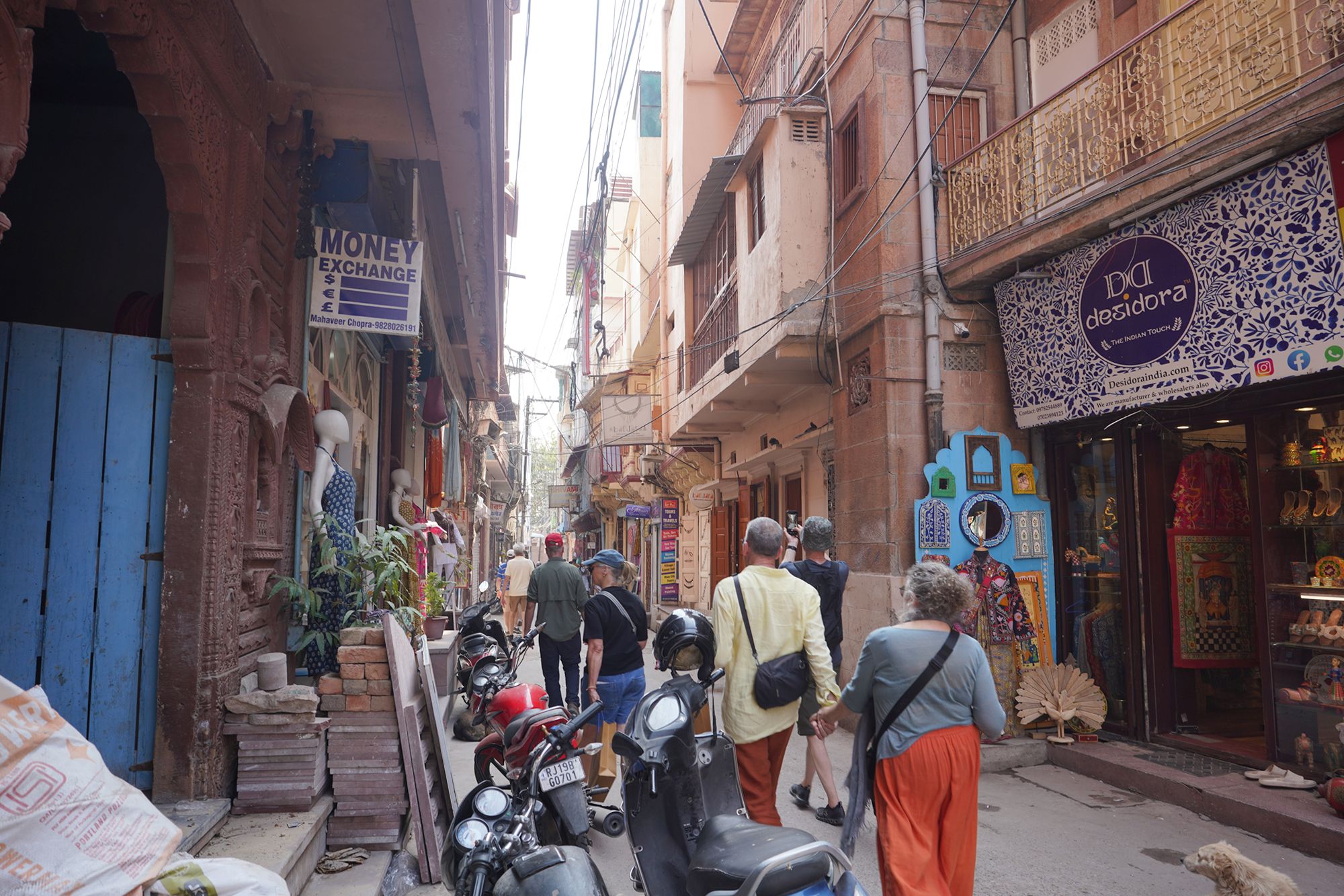
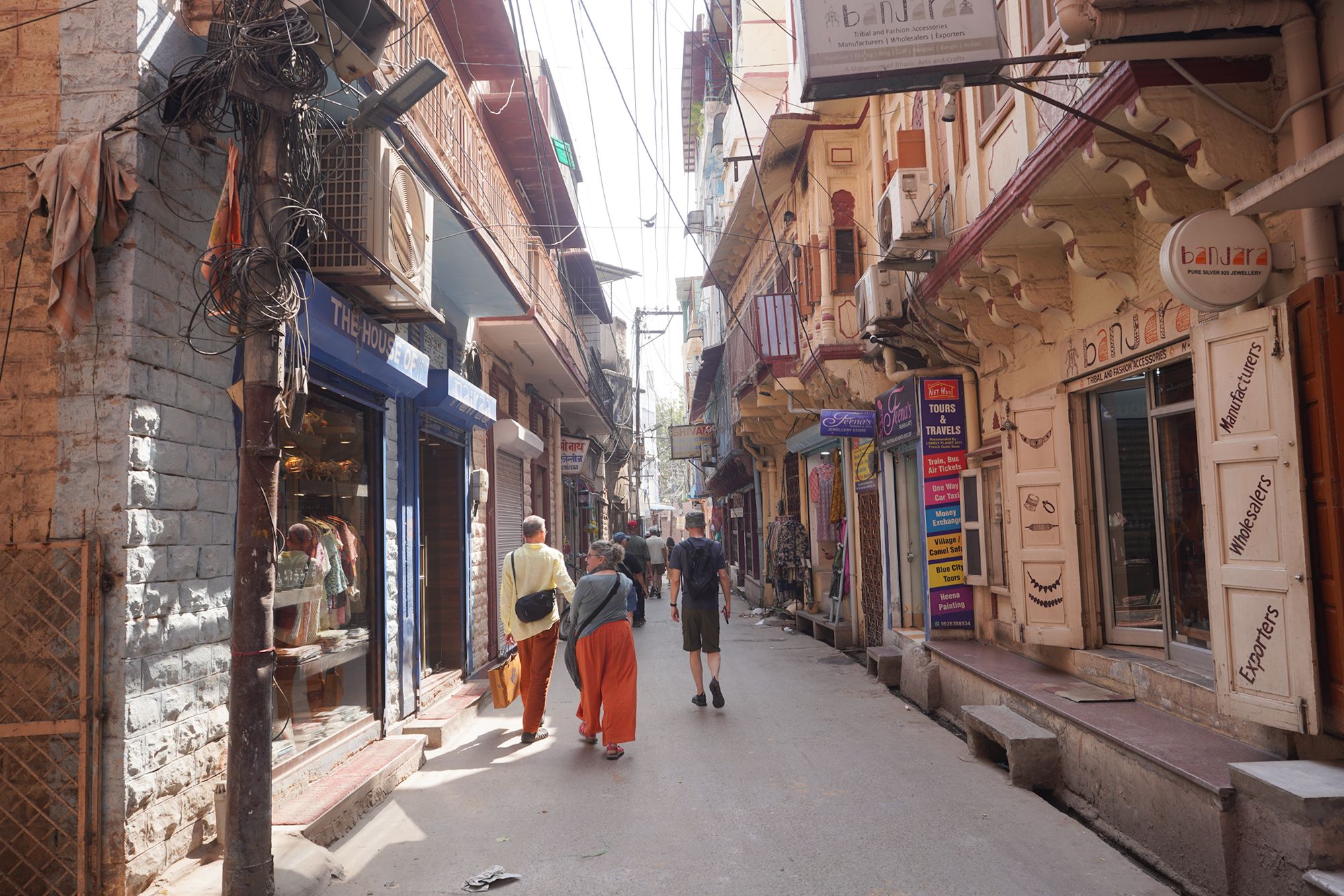
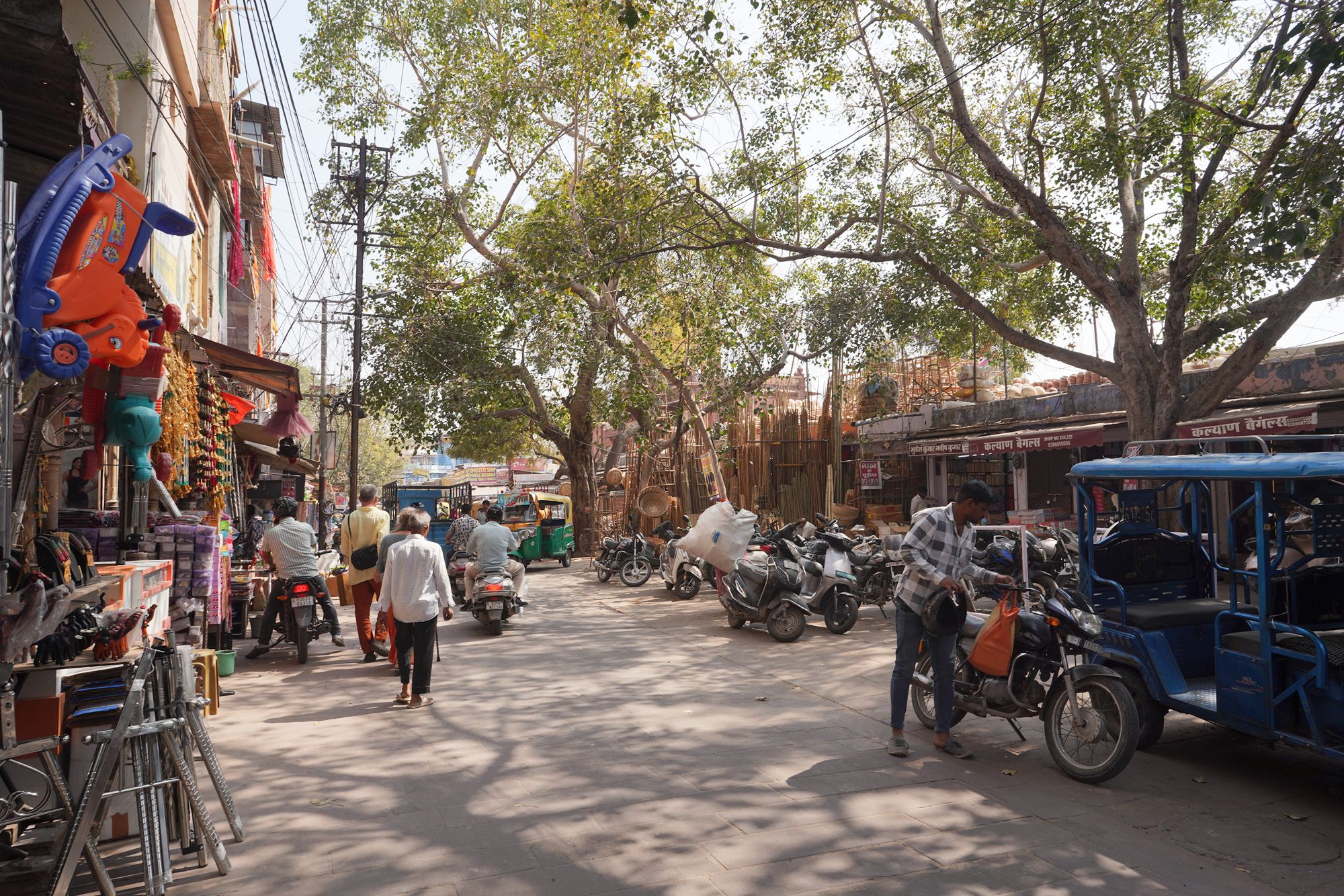
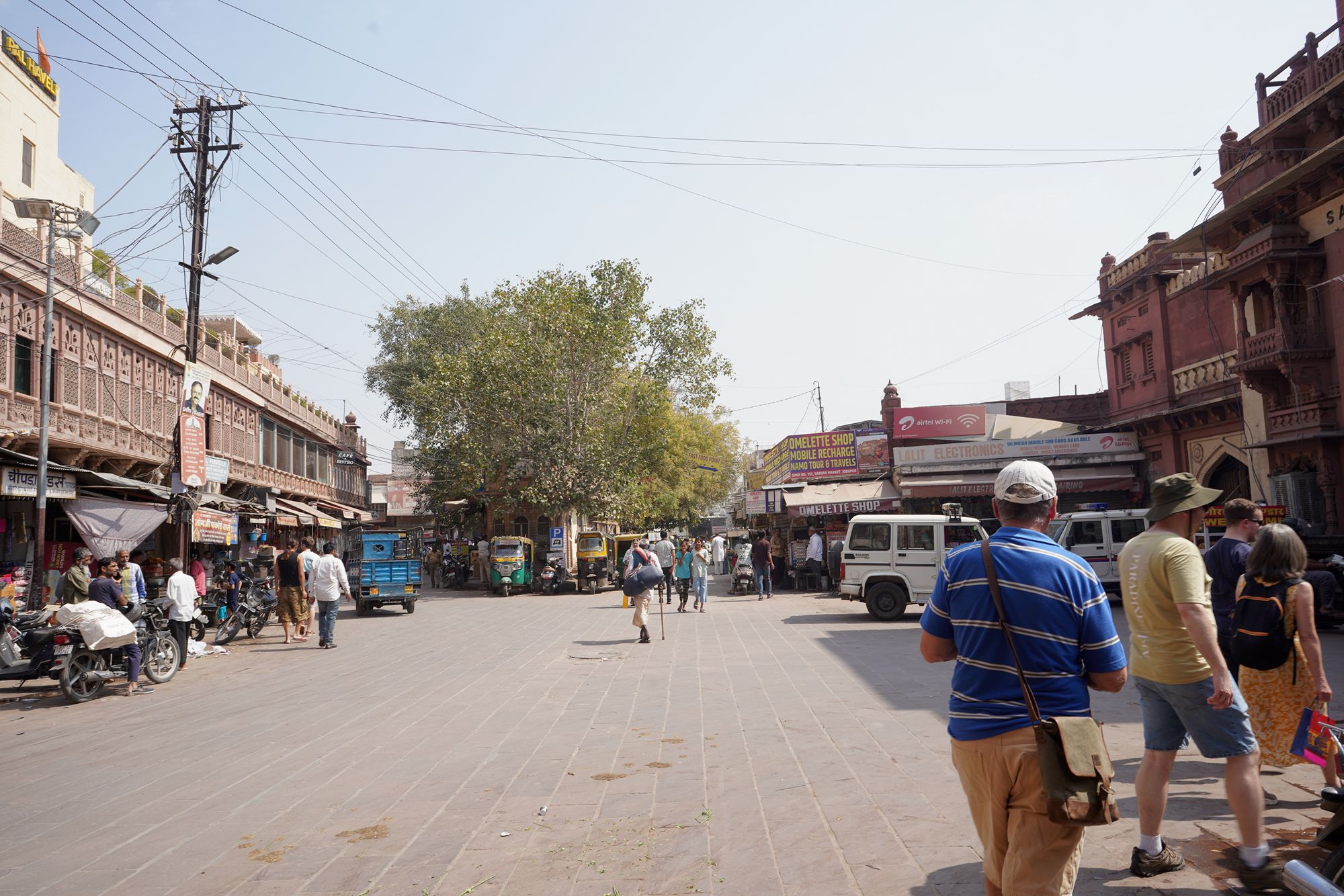
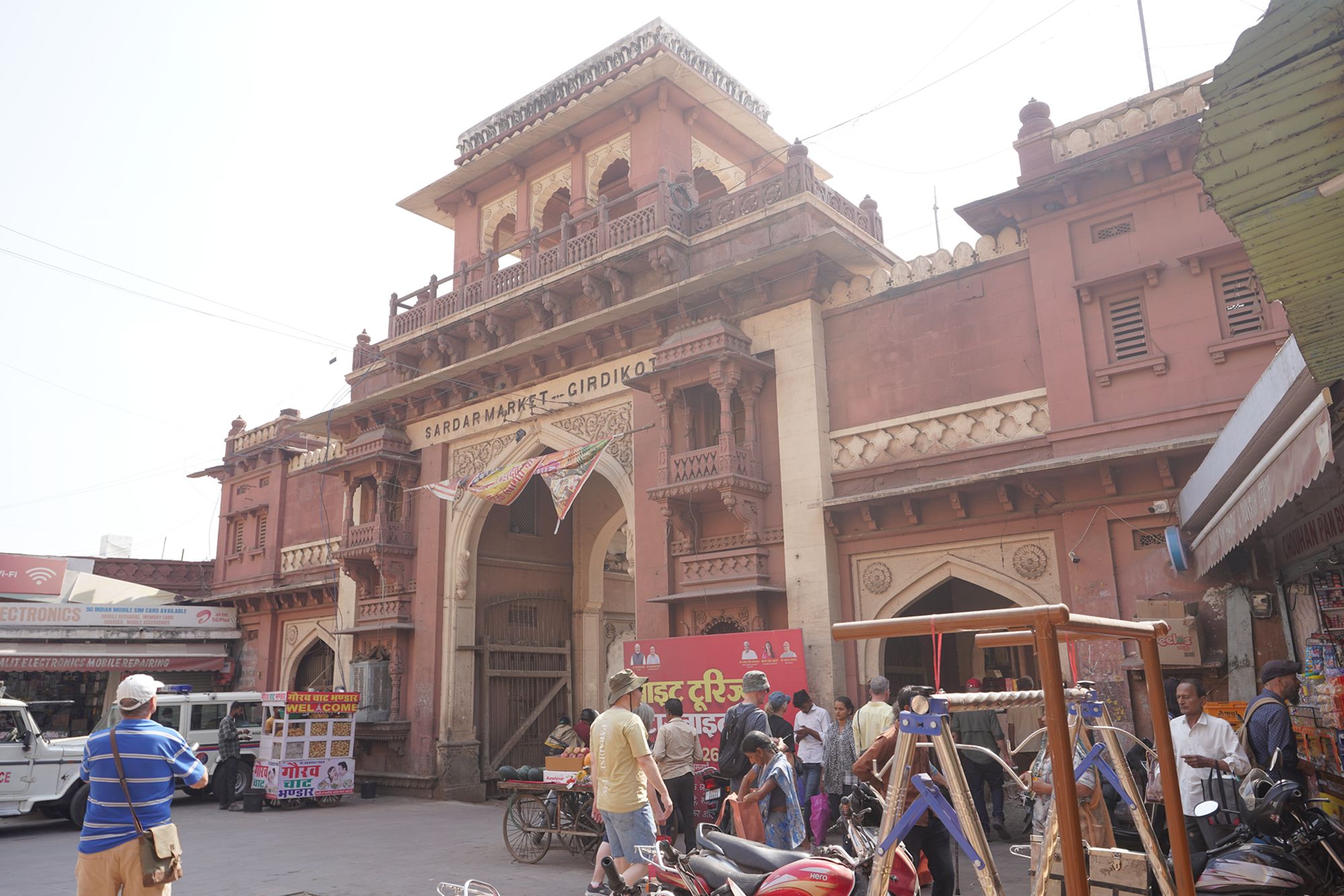
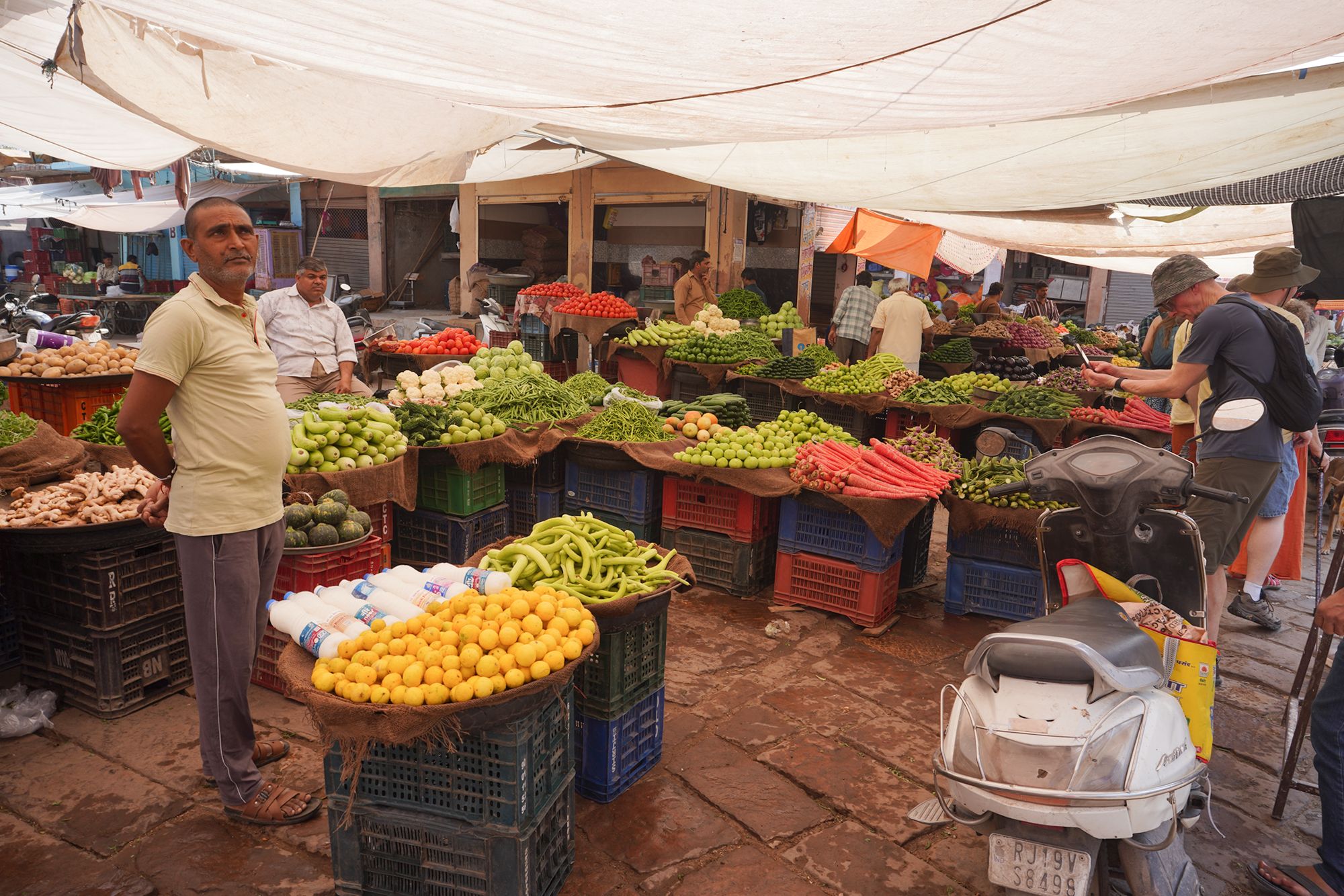
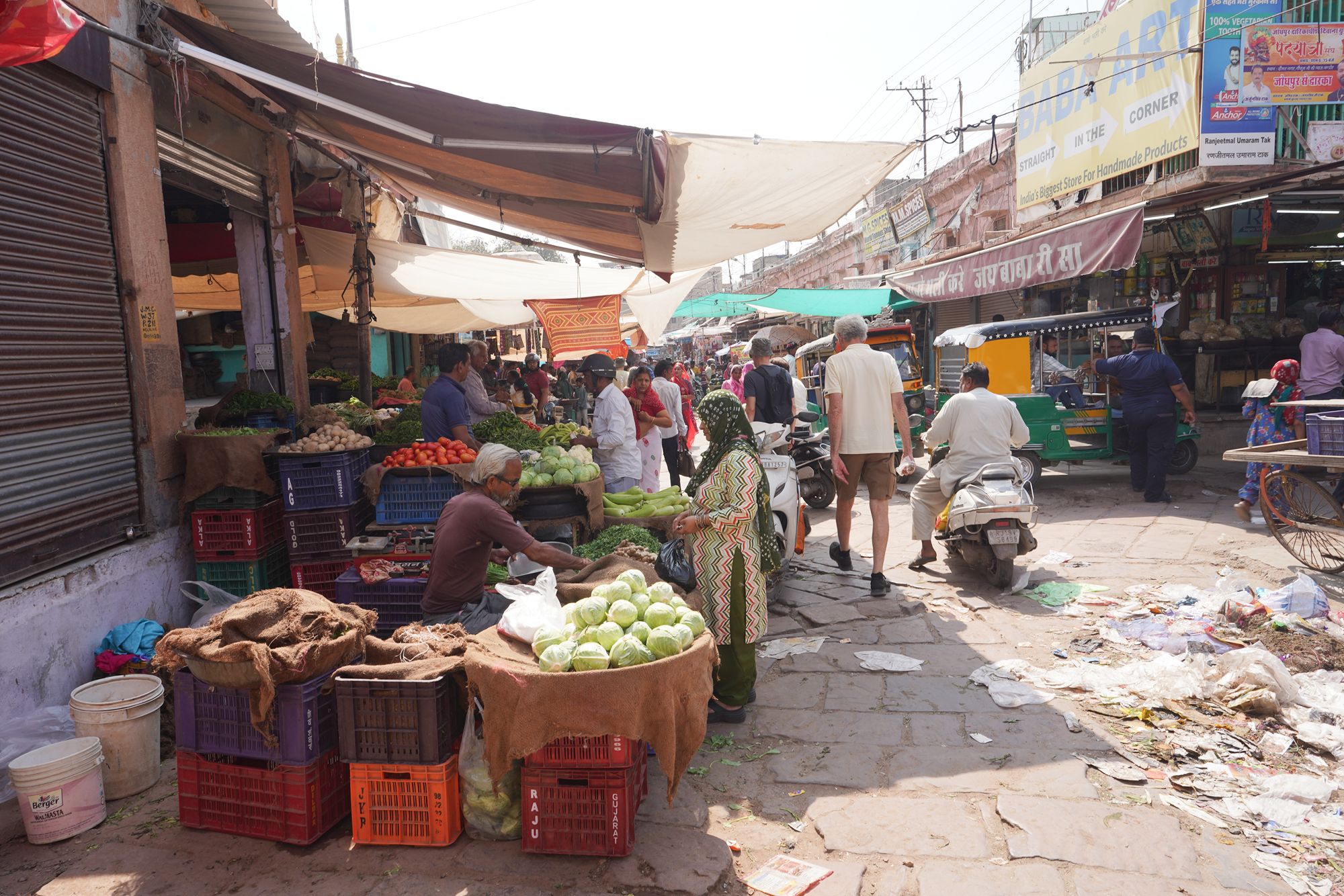
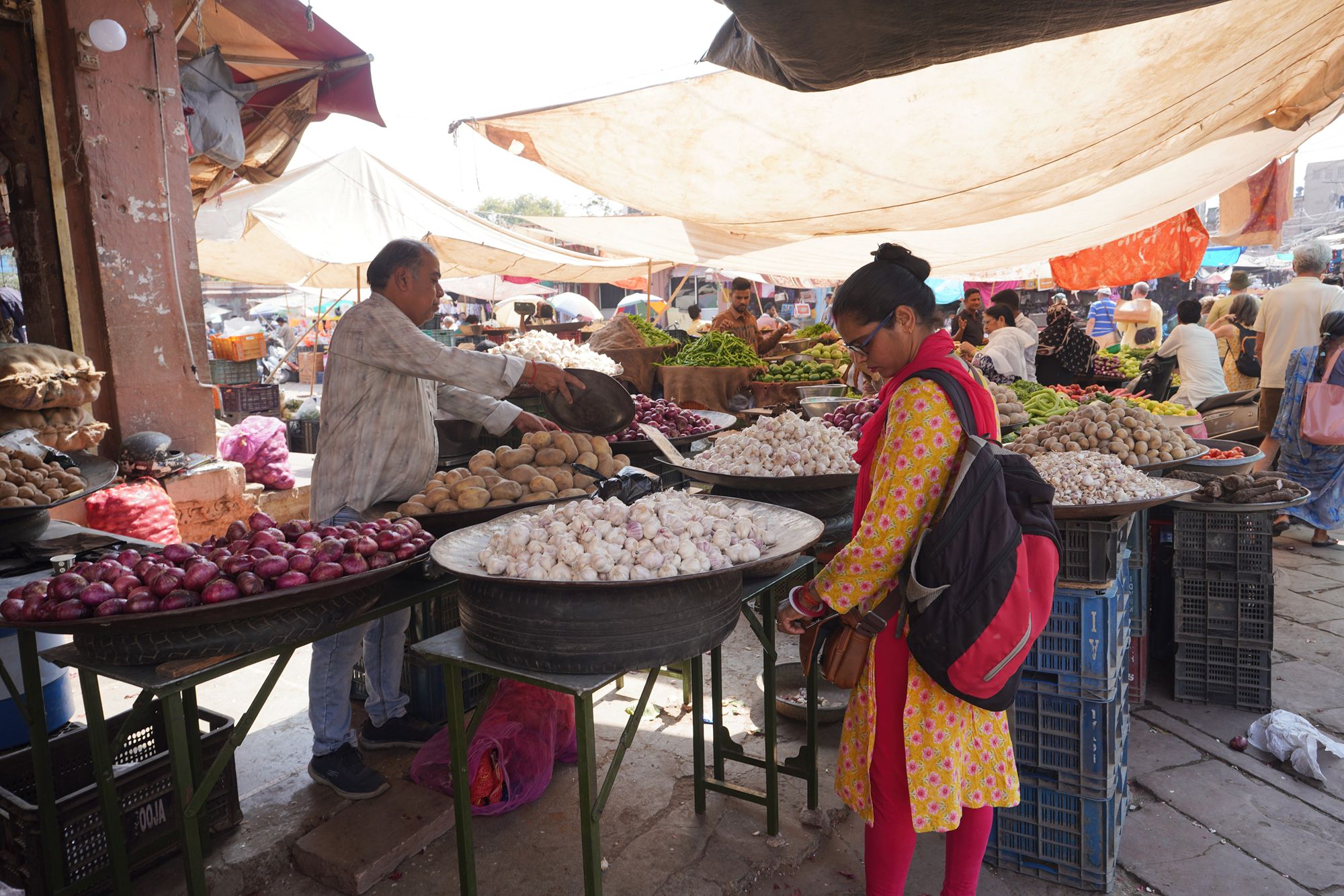
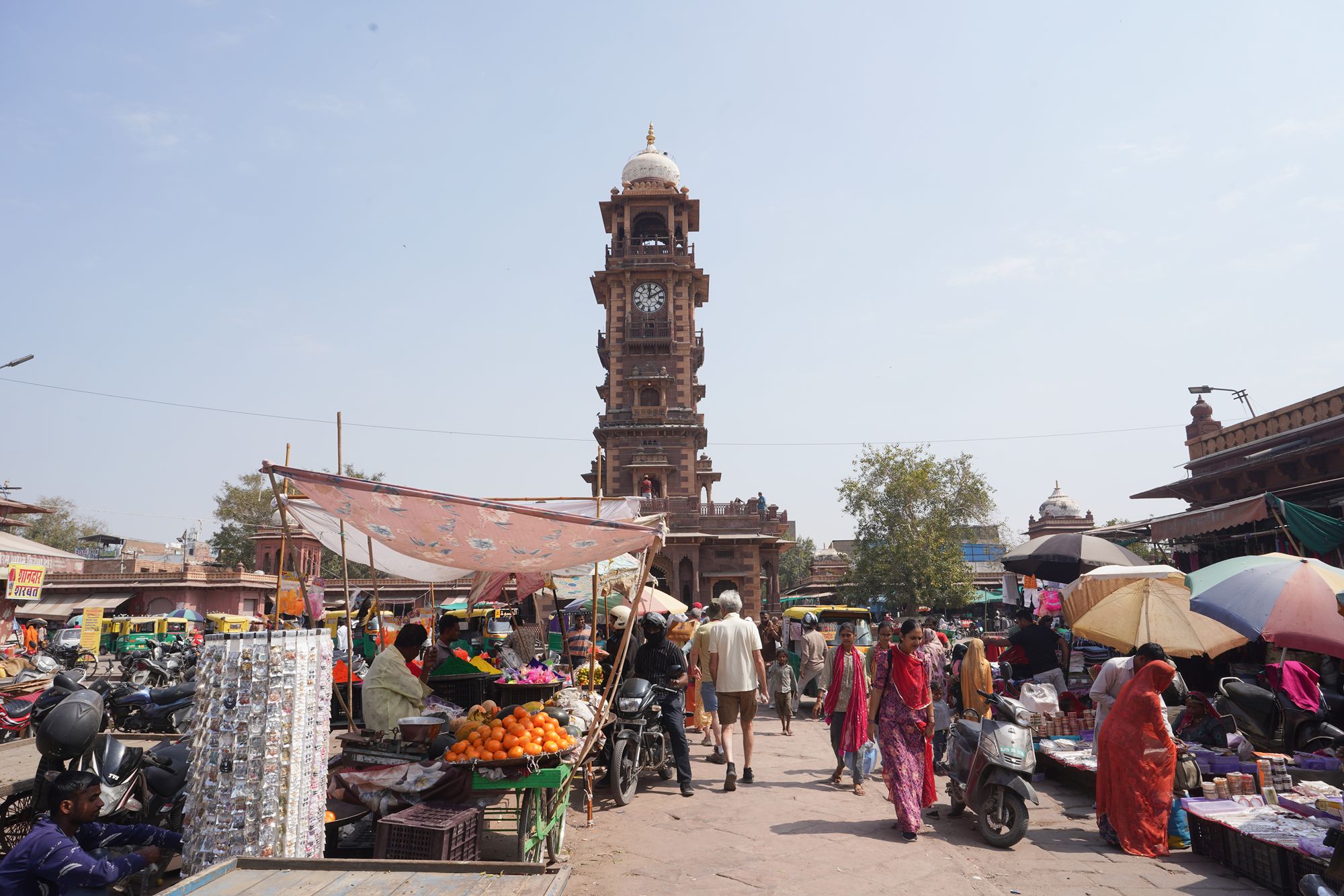
After visiting Mehrangarh Fort, we walked down into Jodhpur and explored the lively City Market.
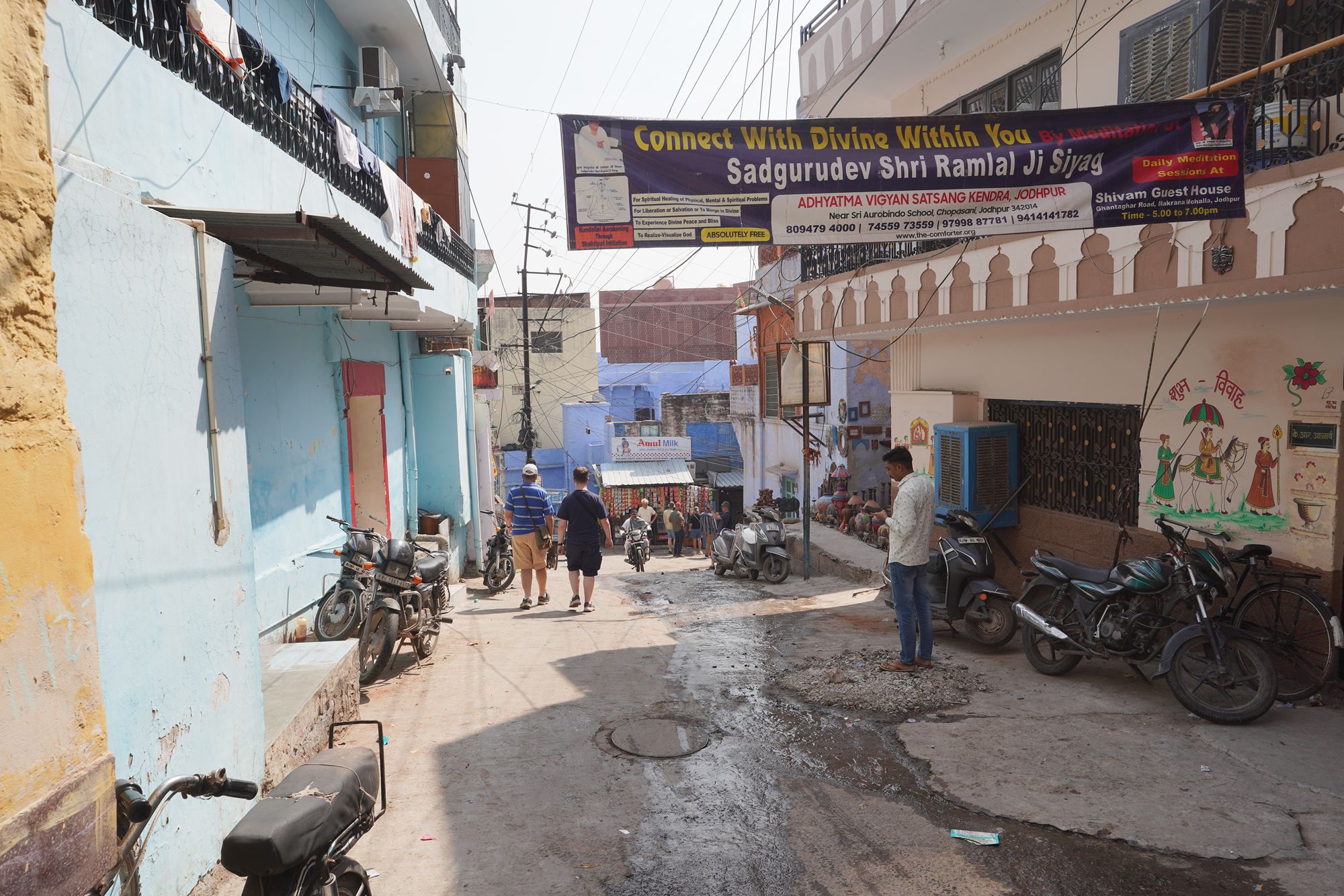
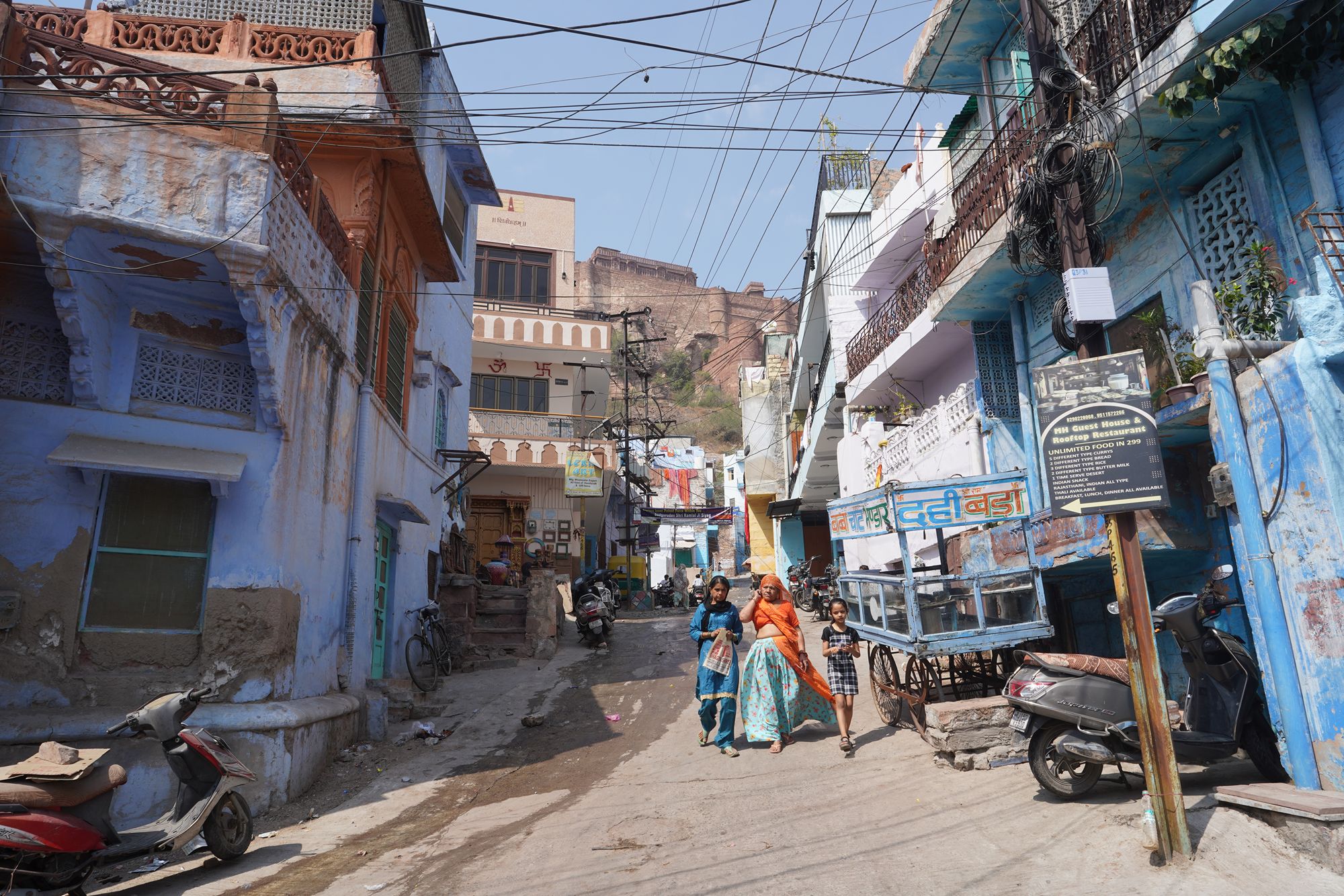
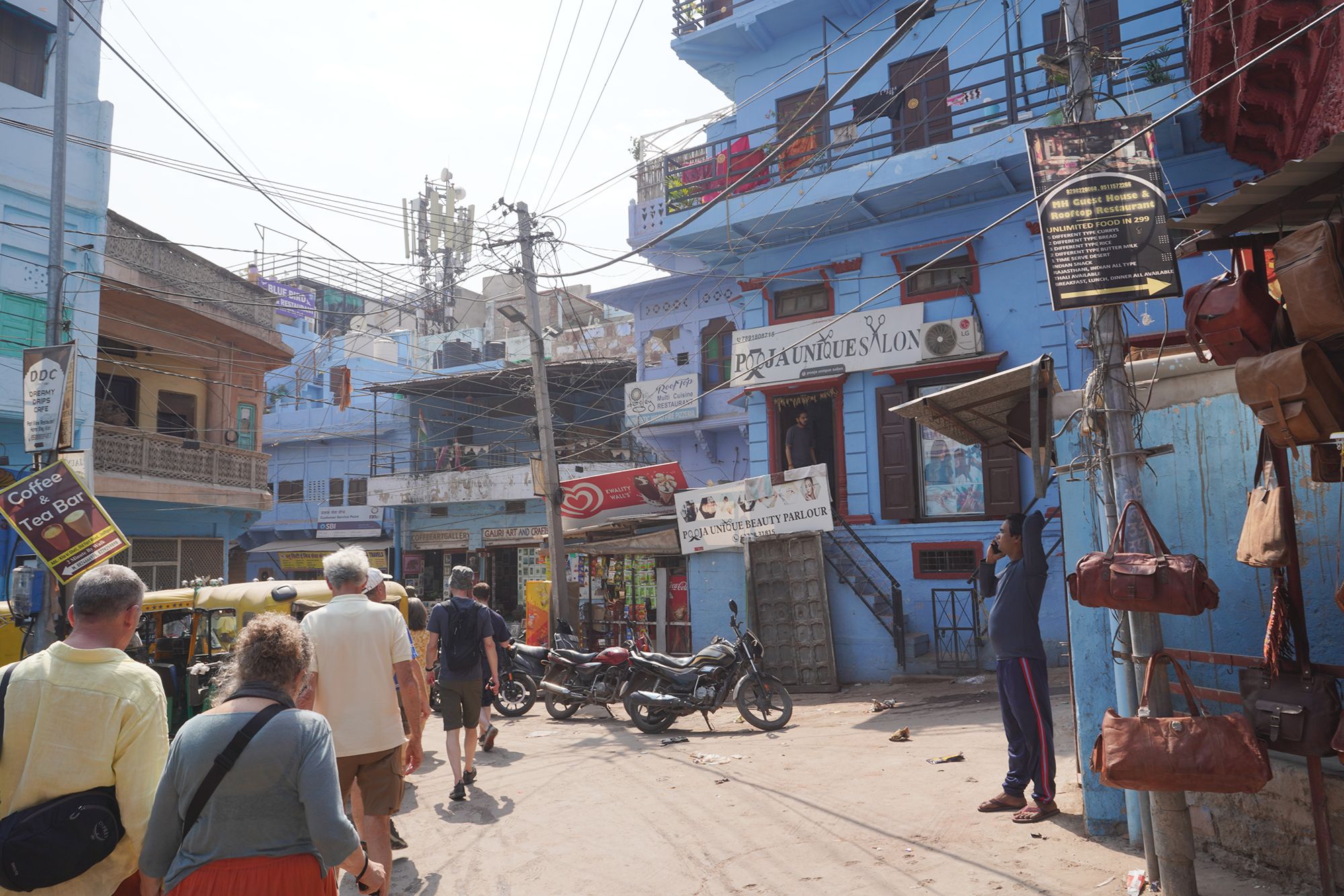
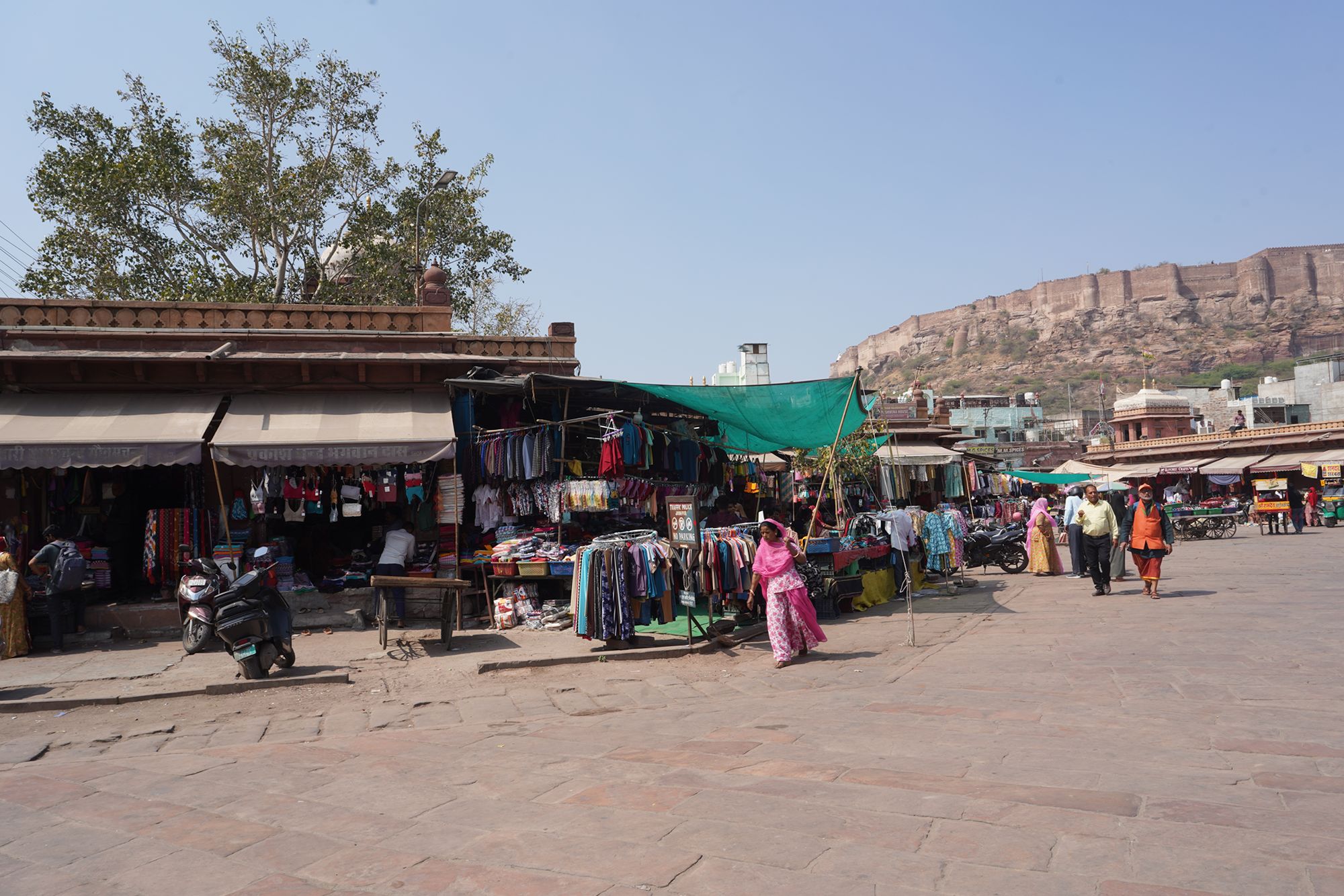
The Mehrangarh Fort
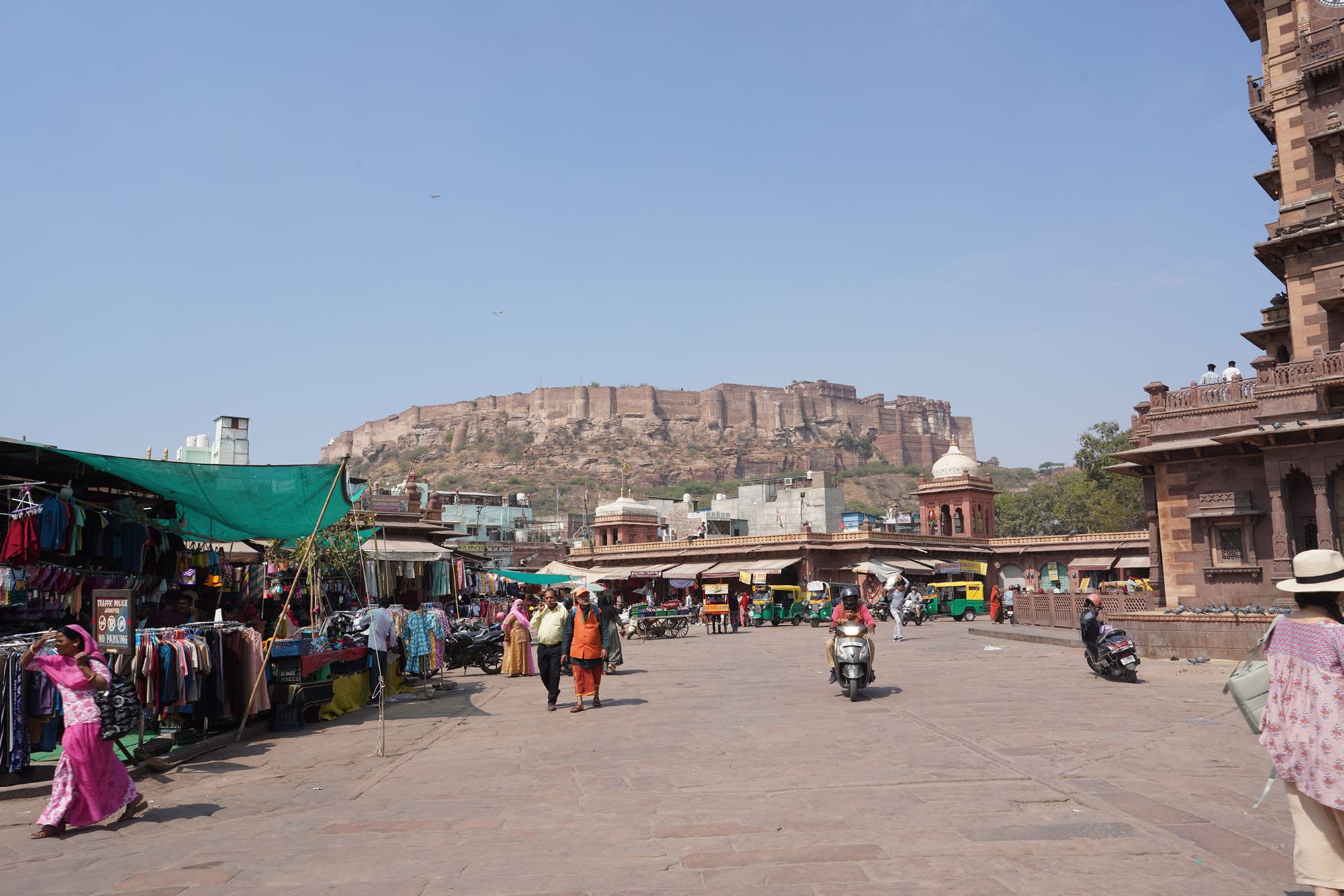
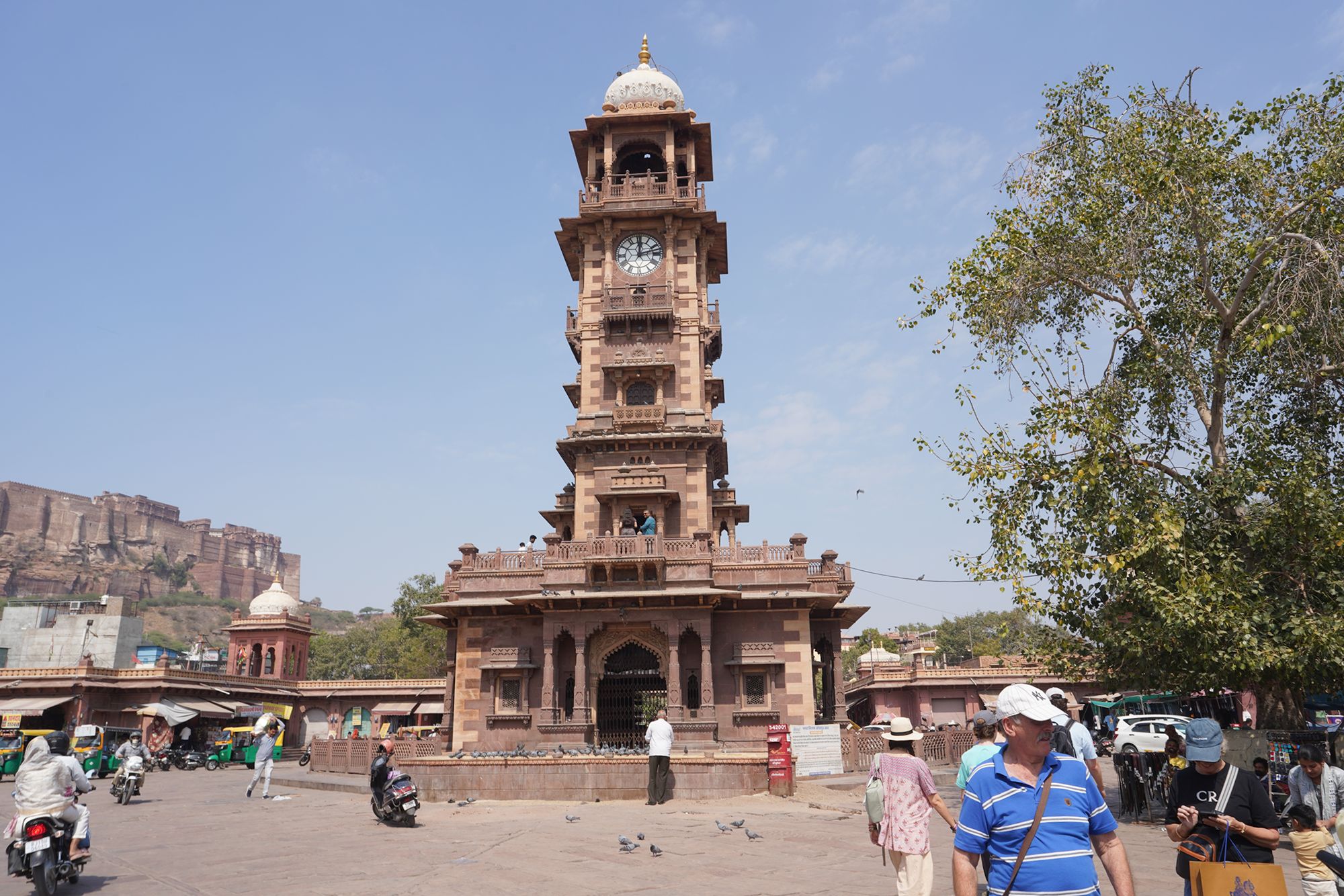
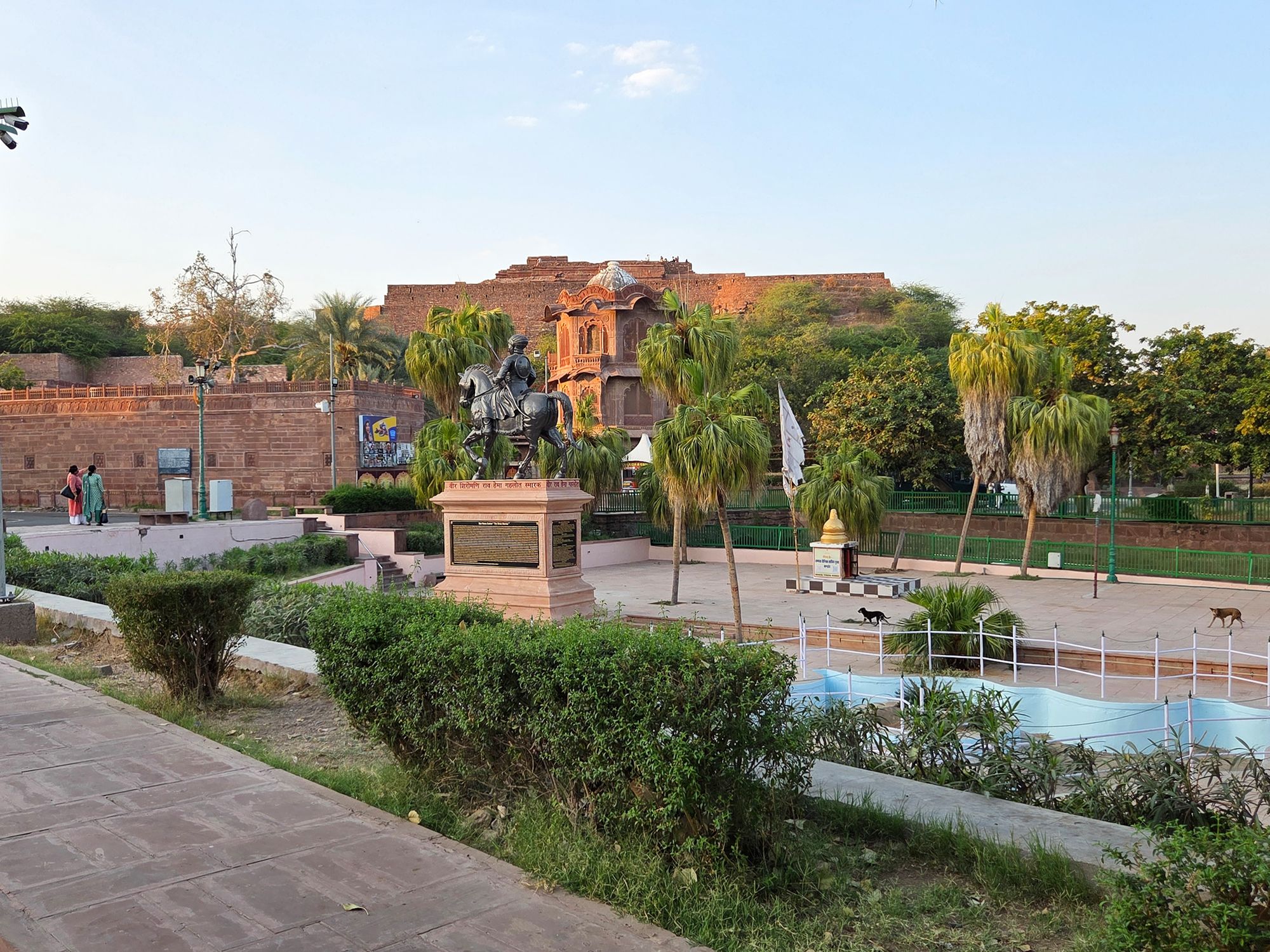
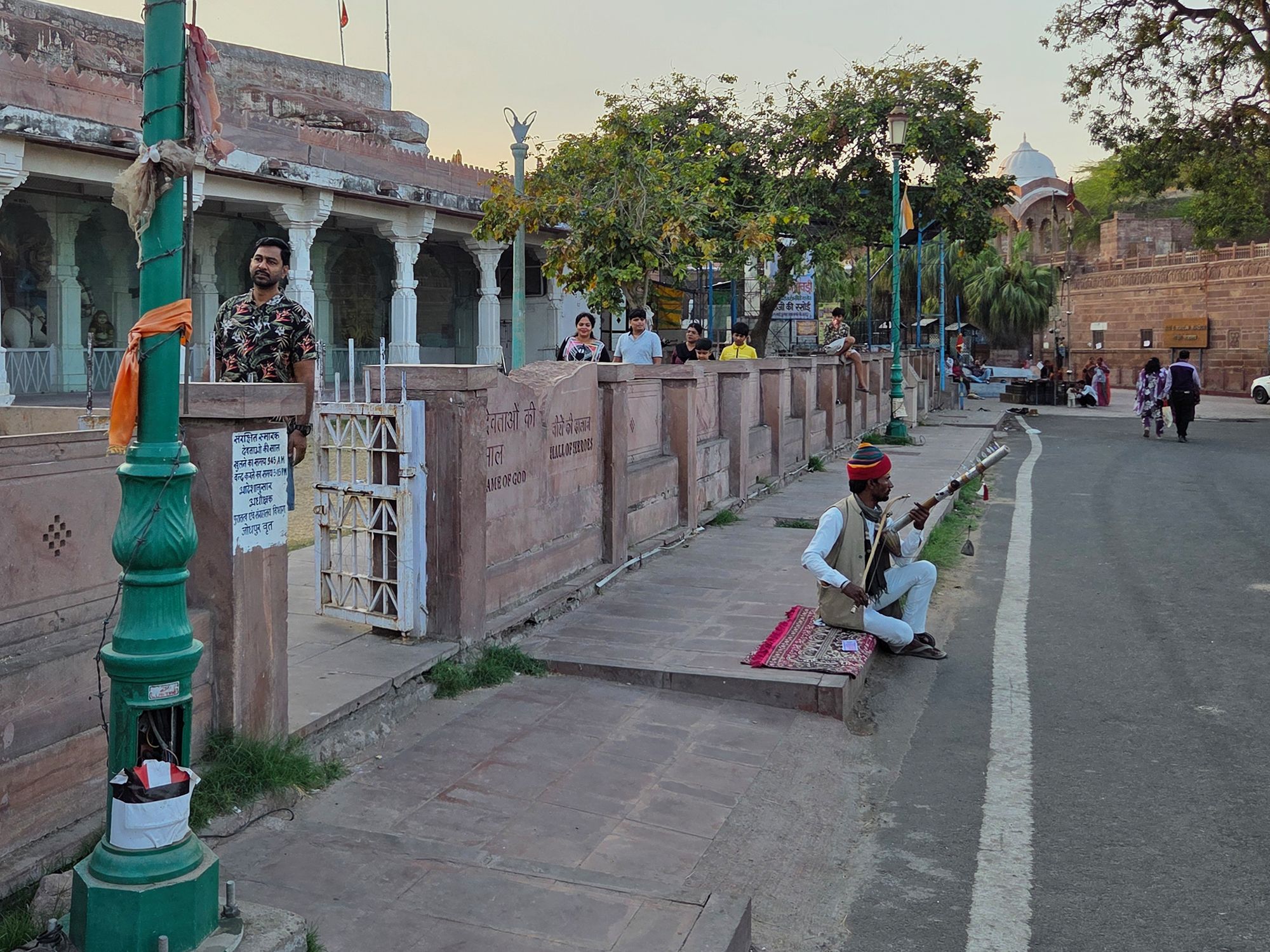
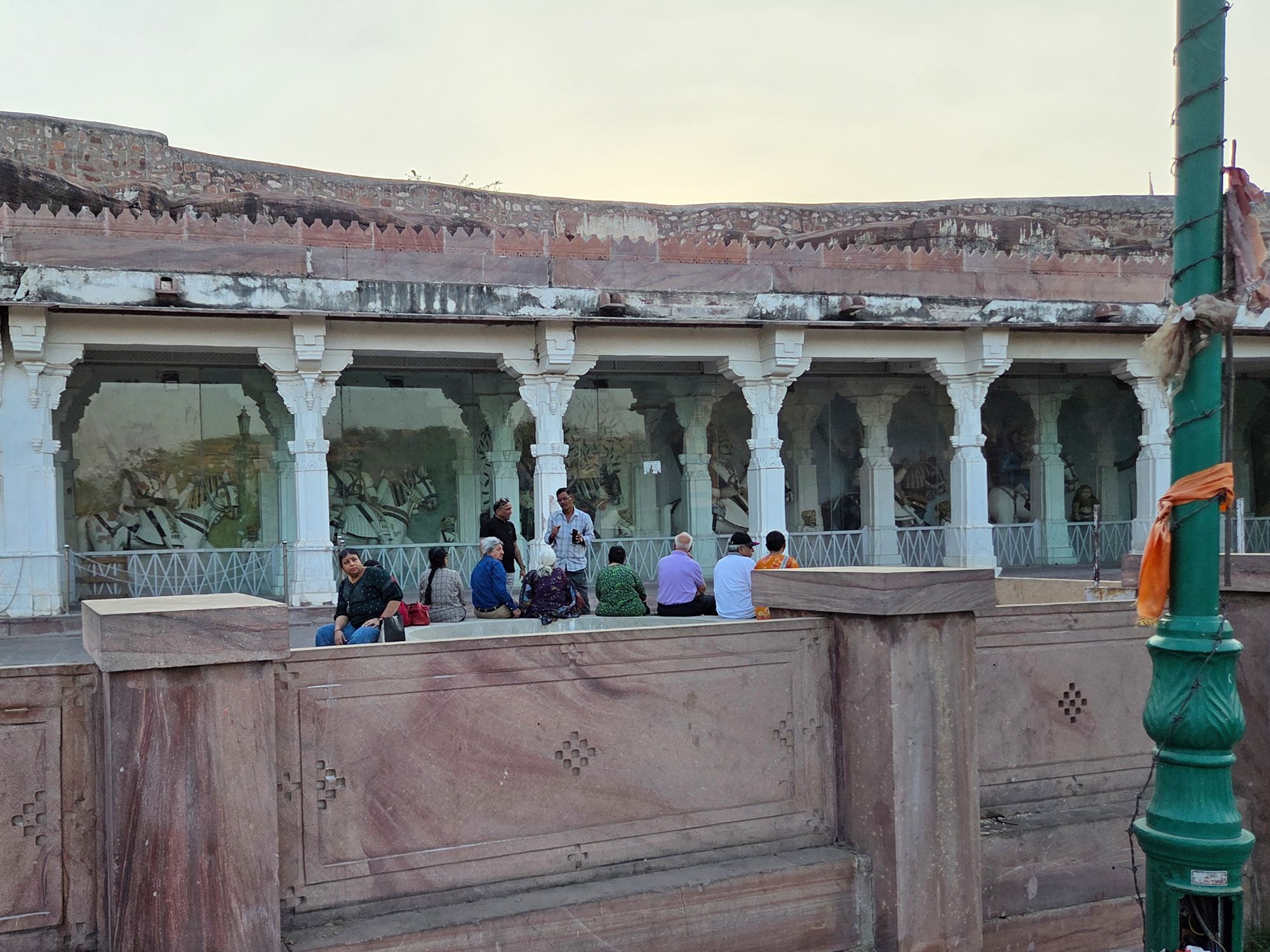
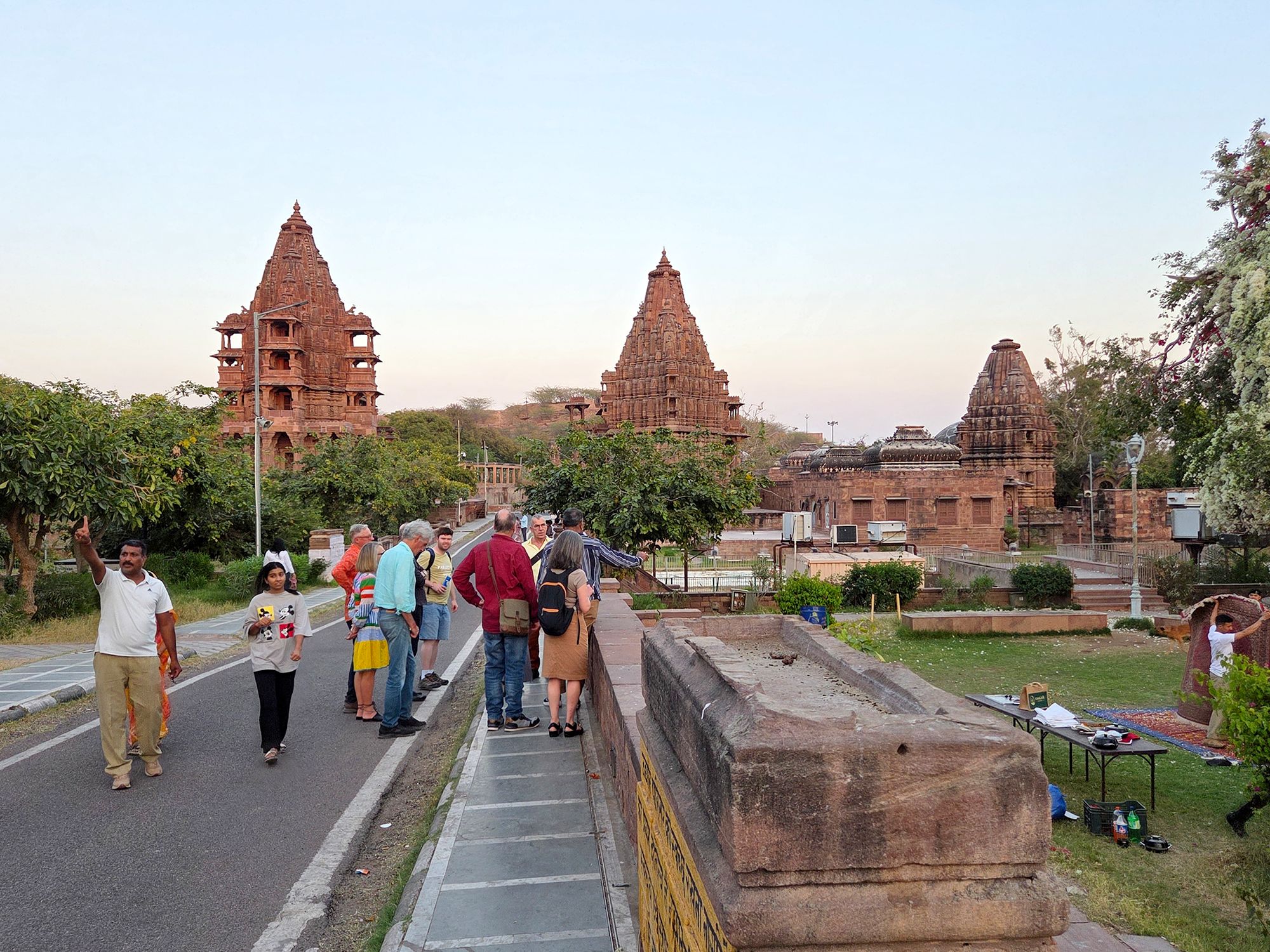
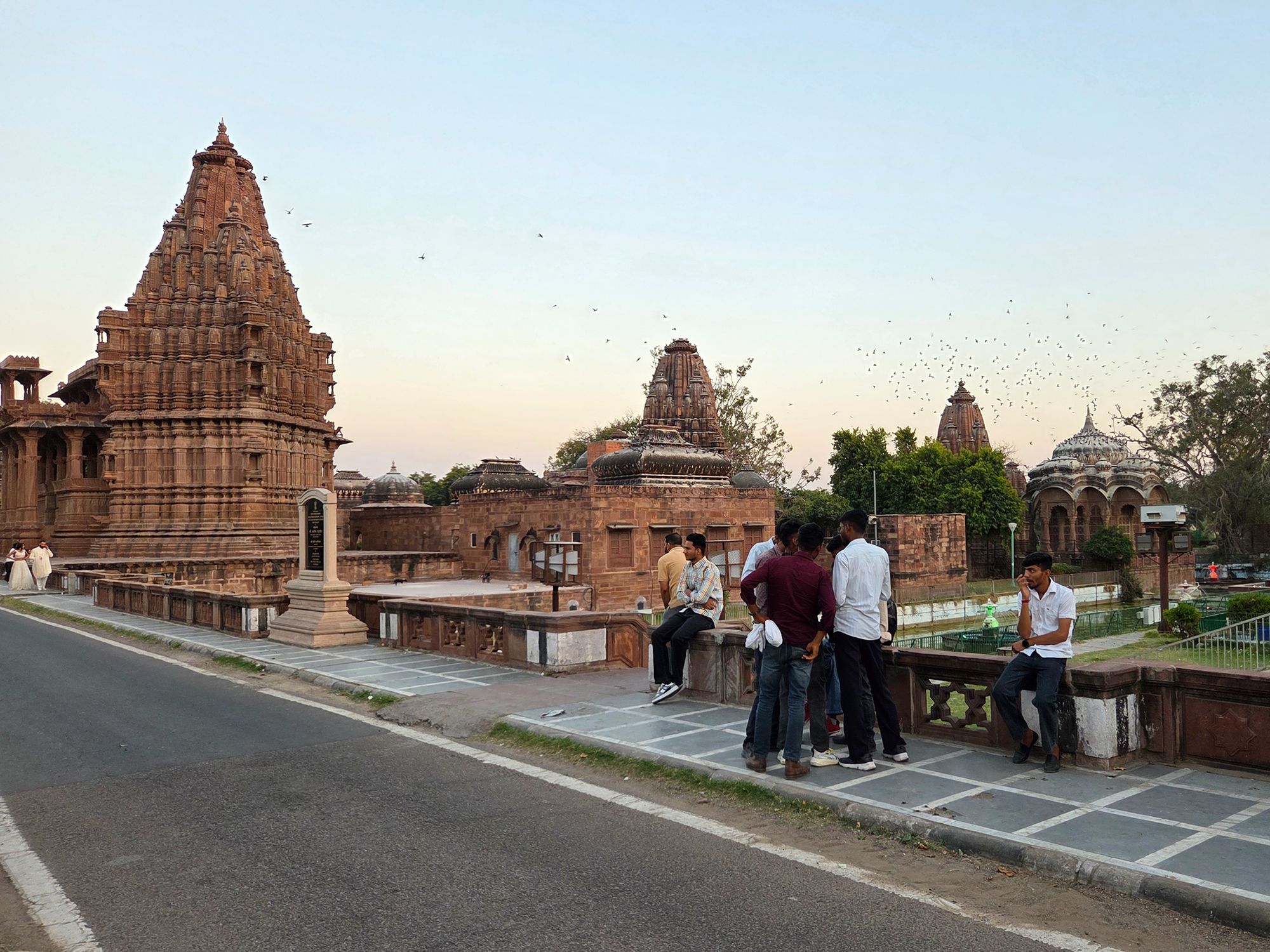
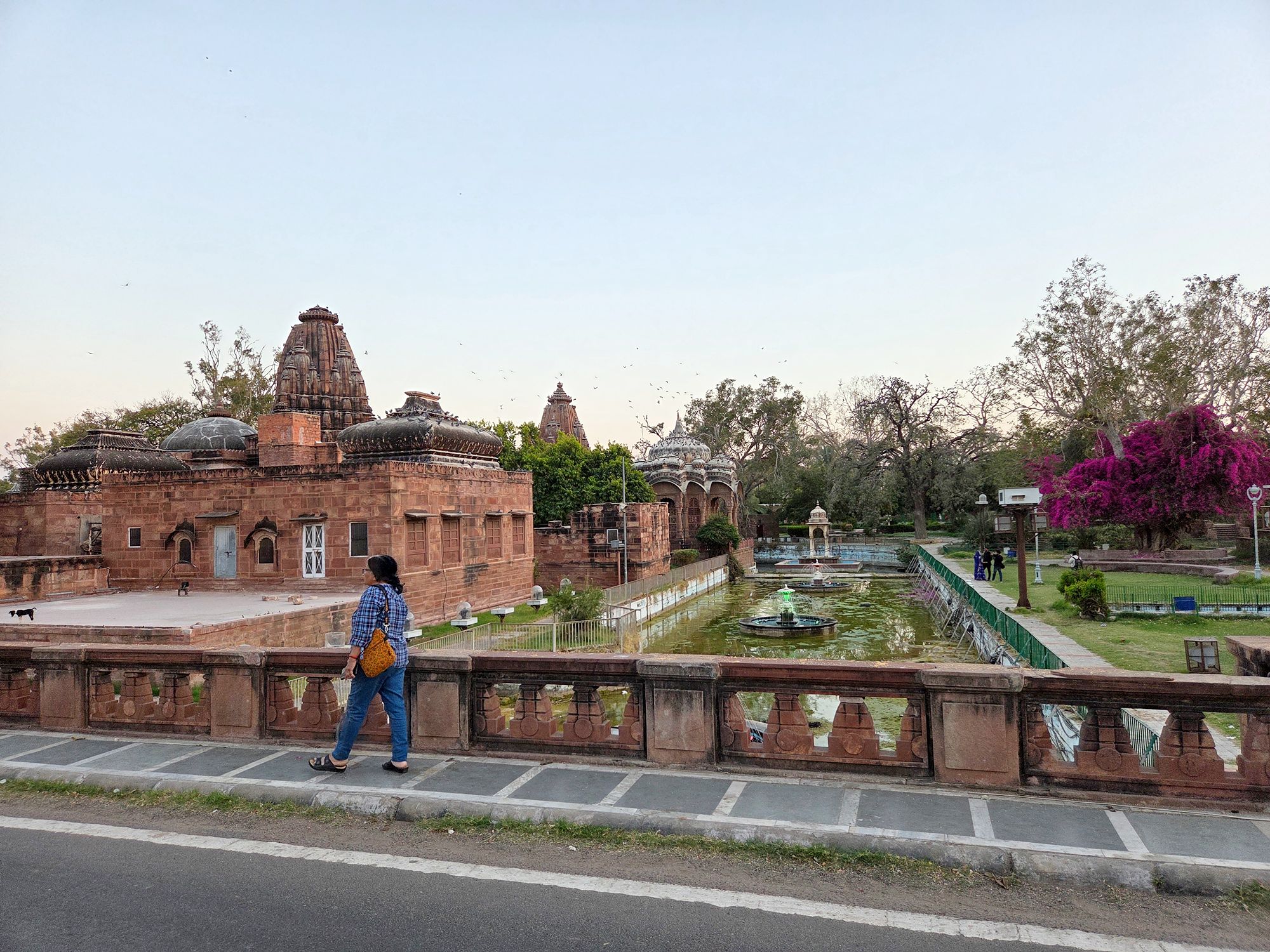
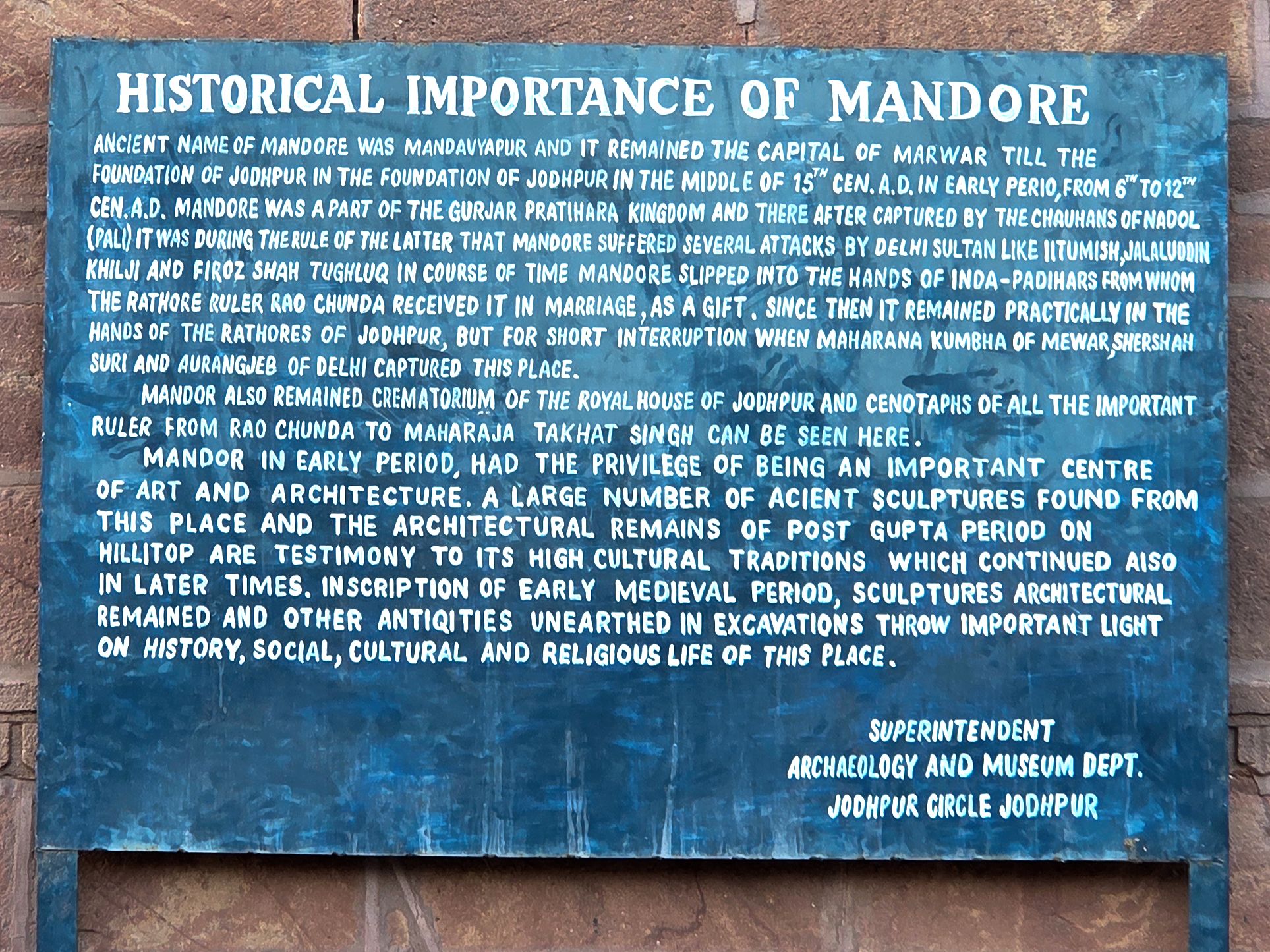
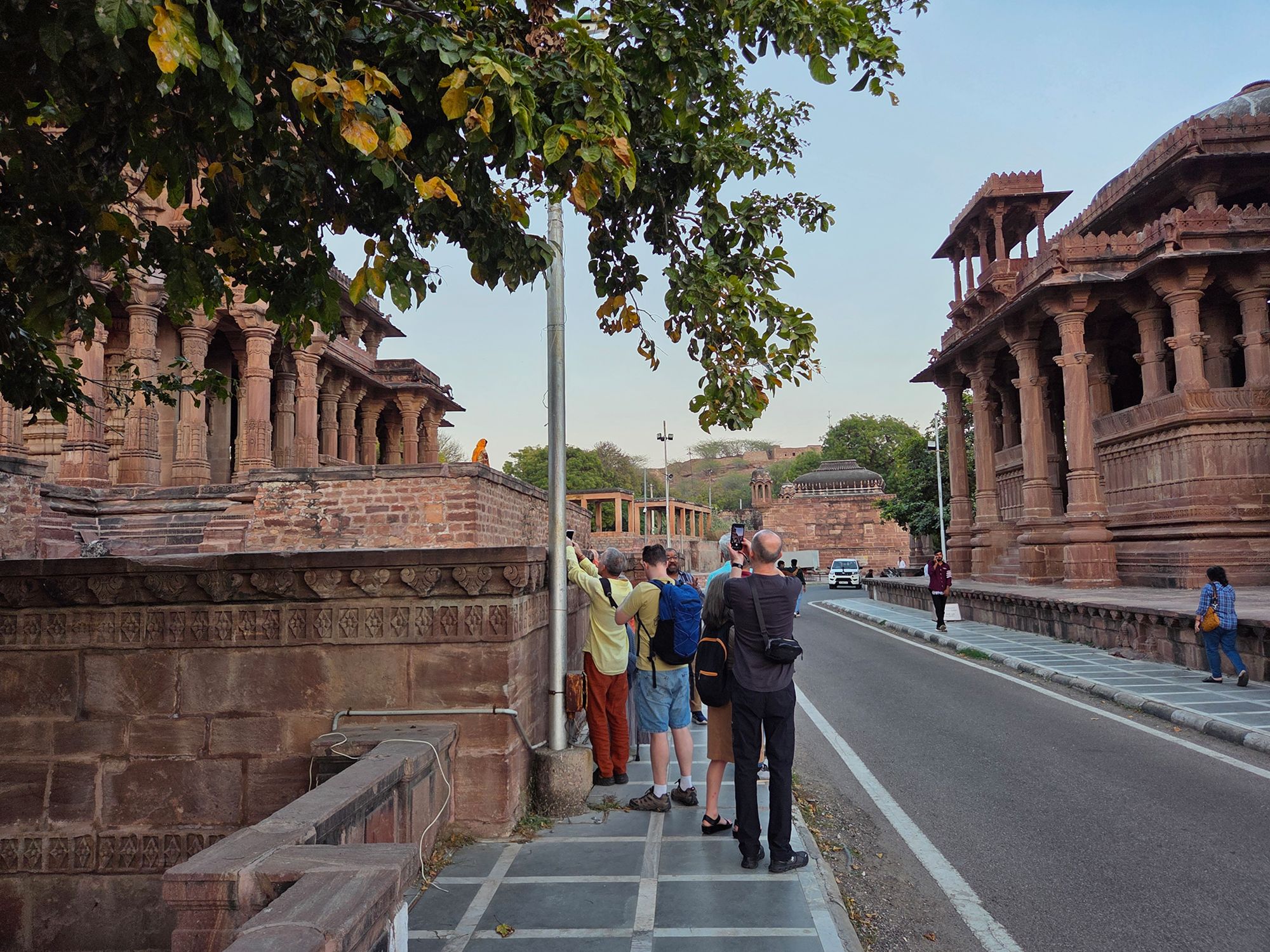
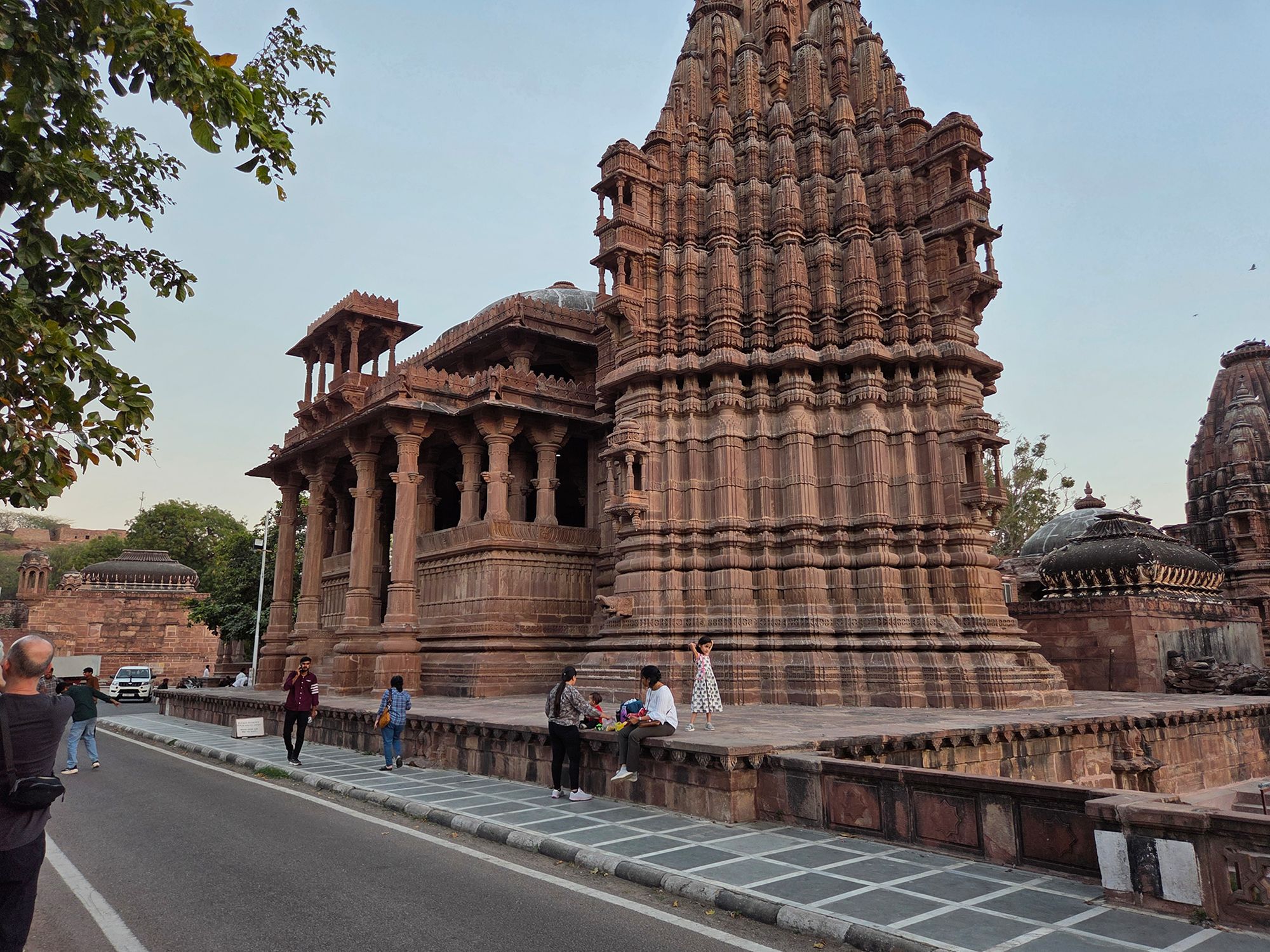
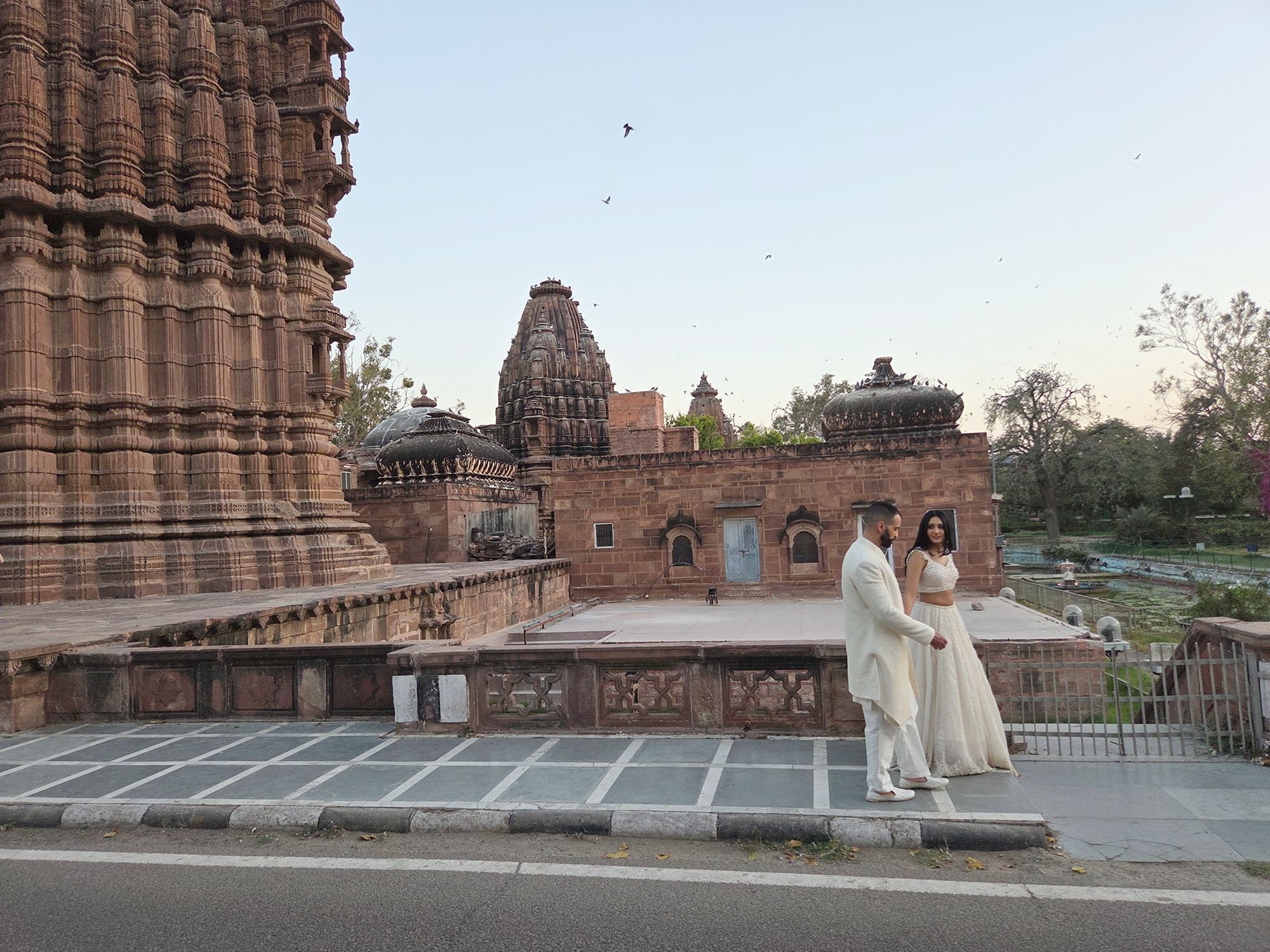
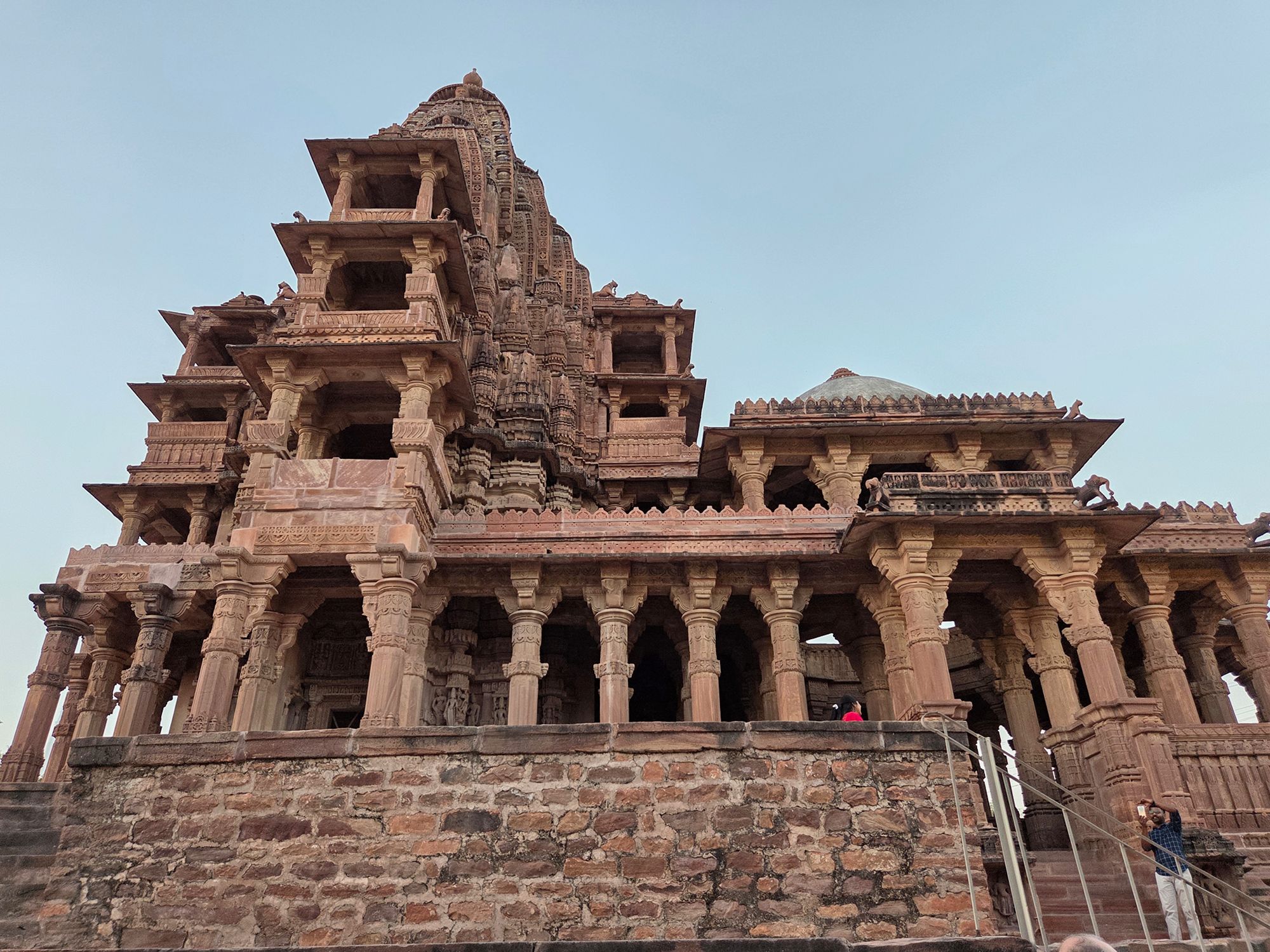
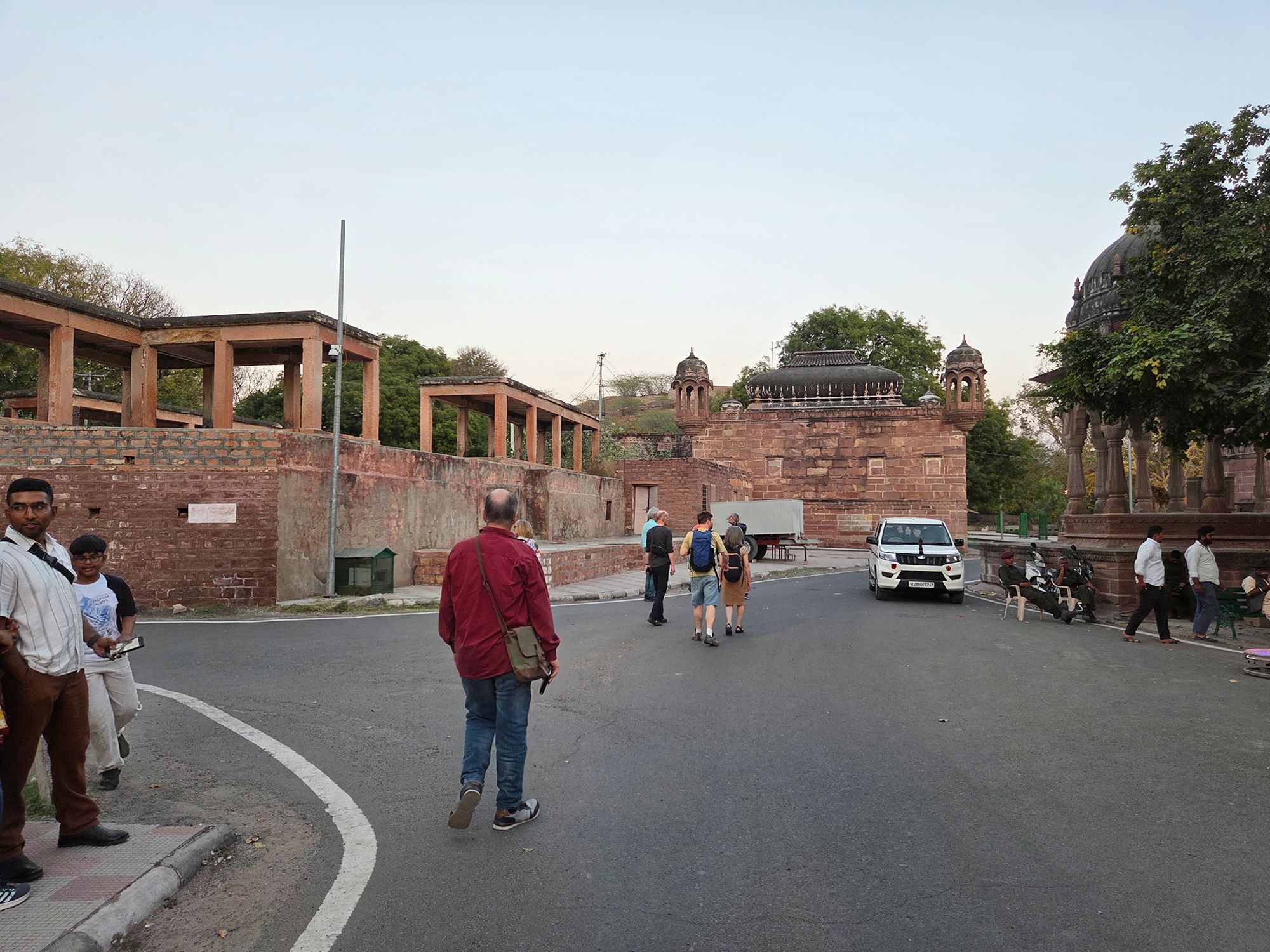
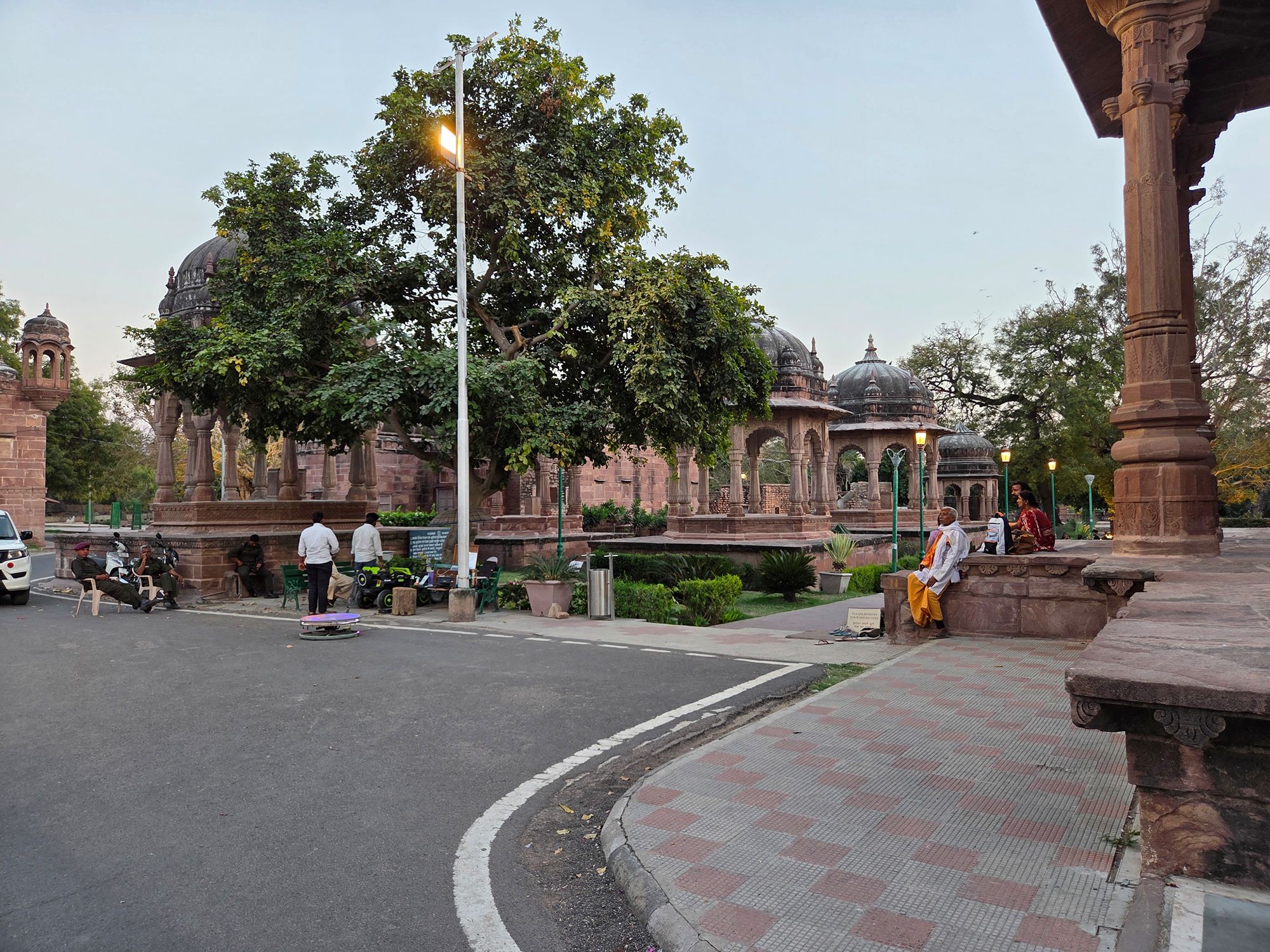
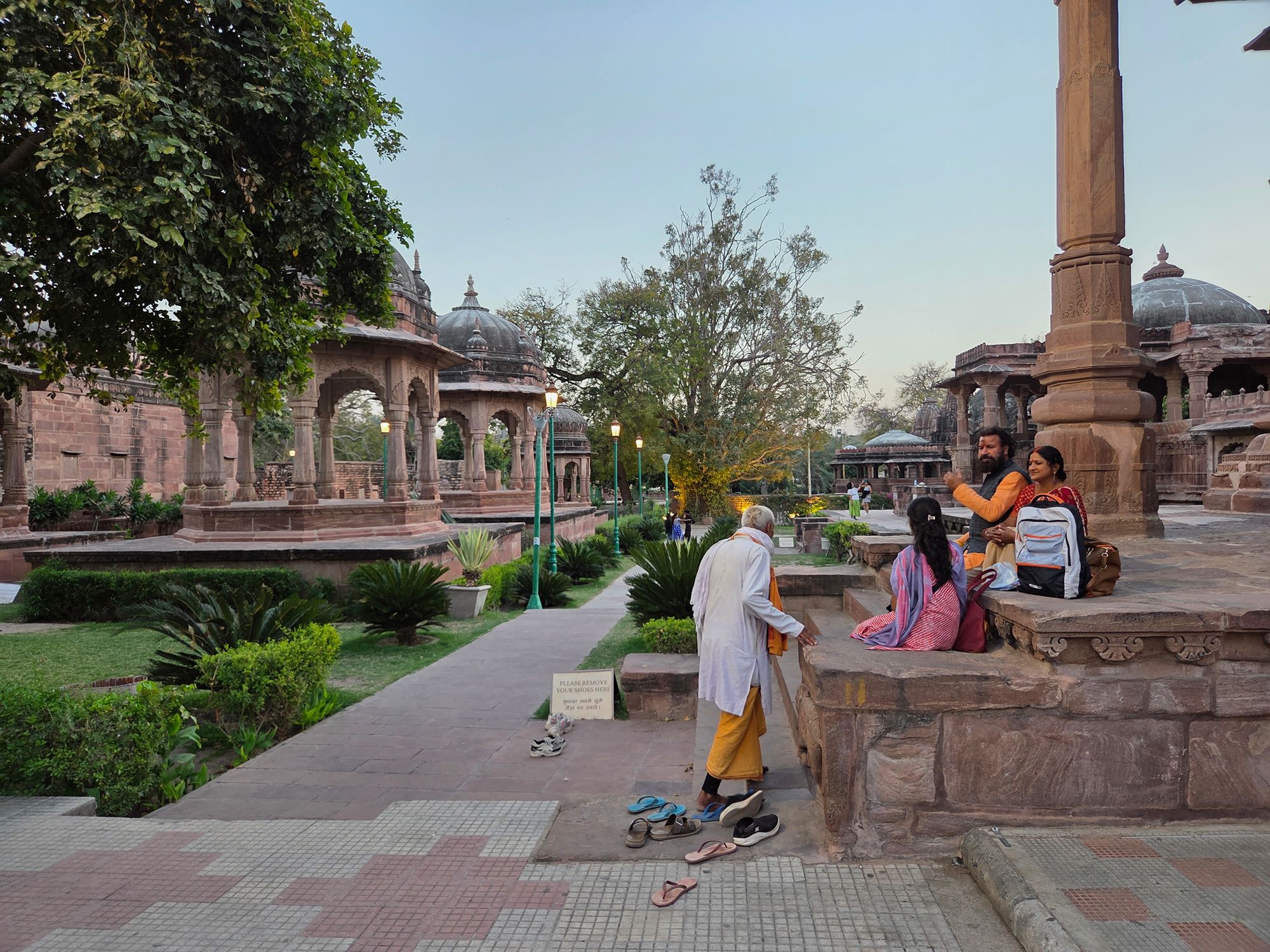
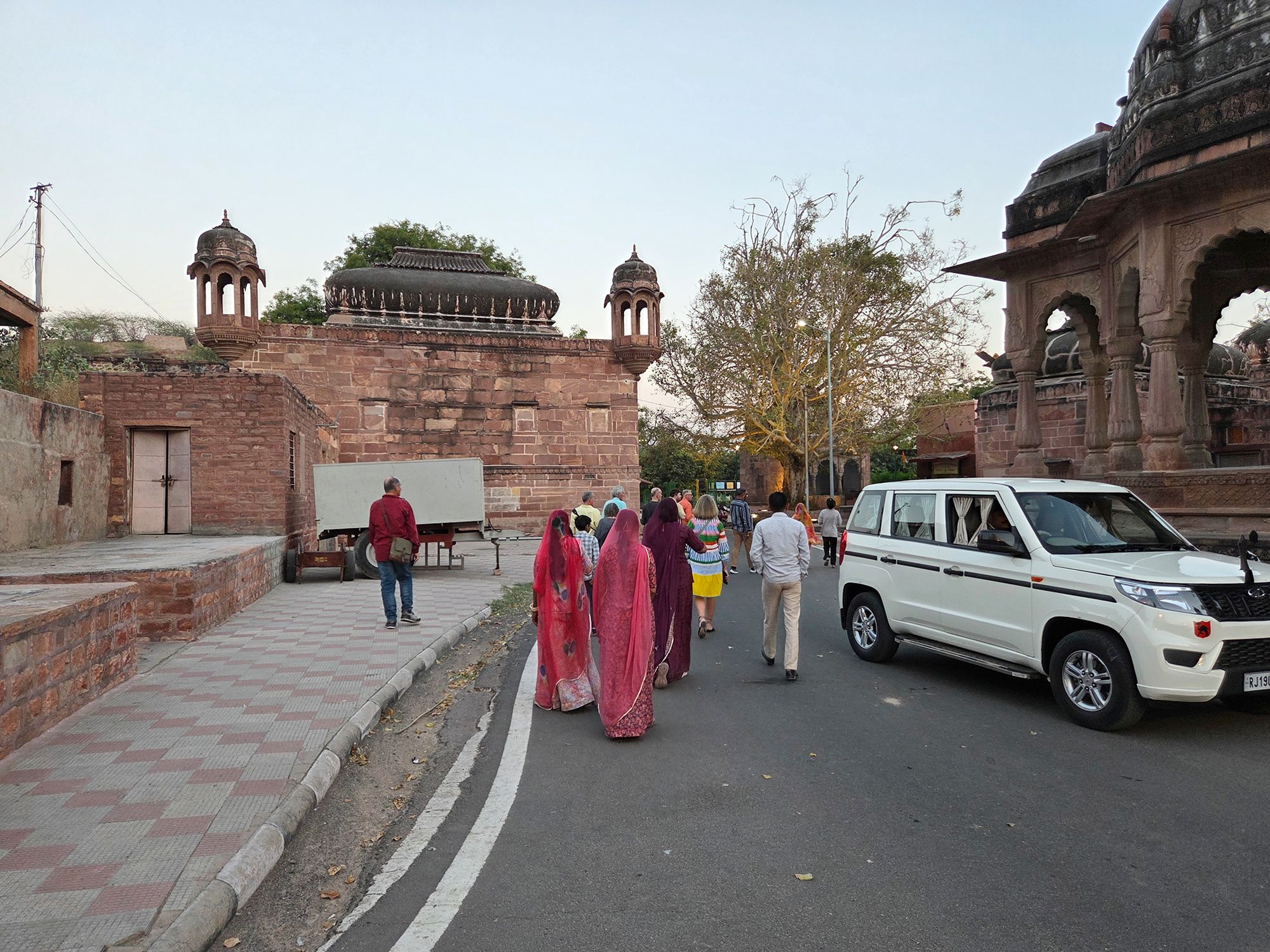
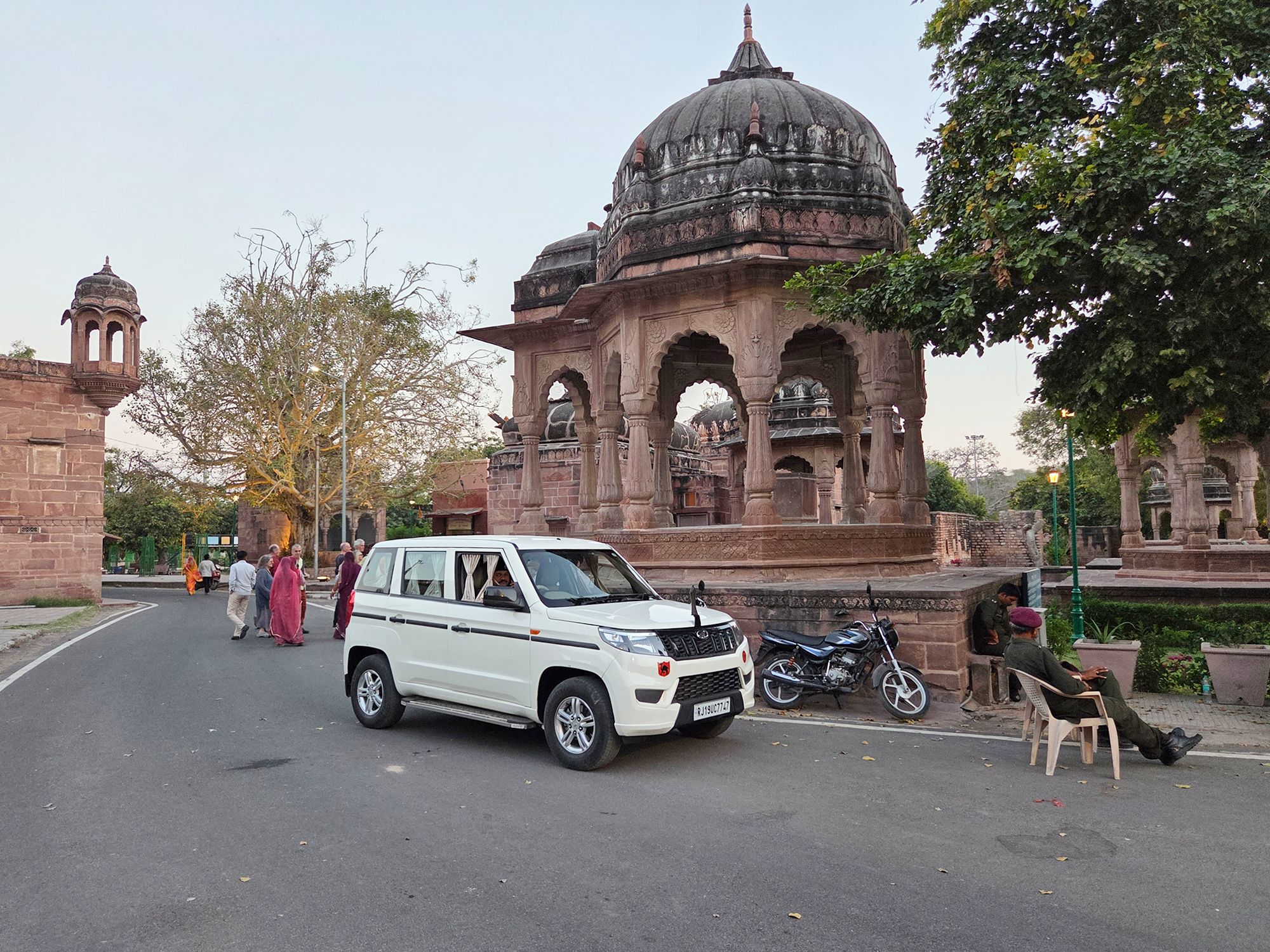
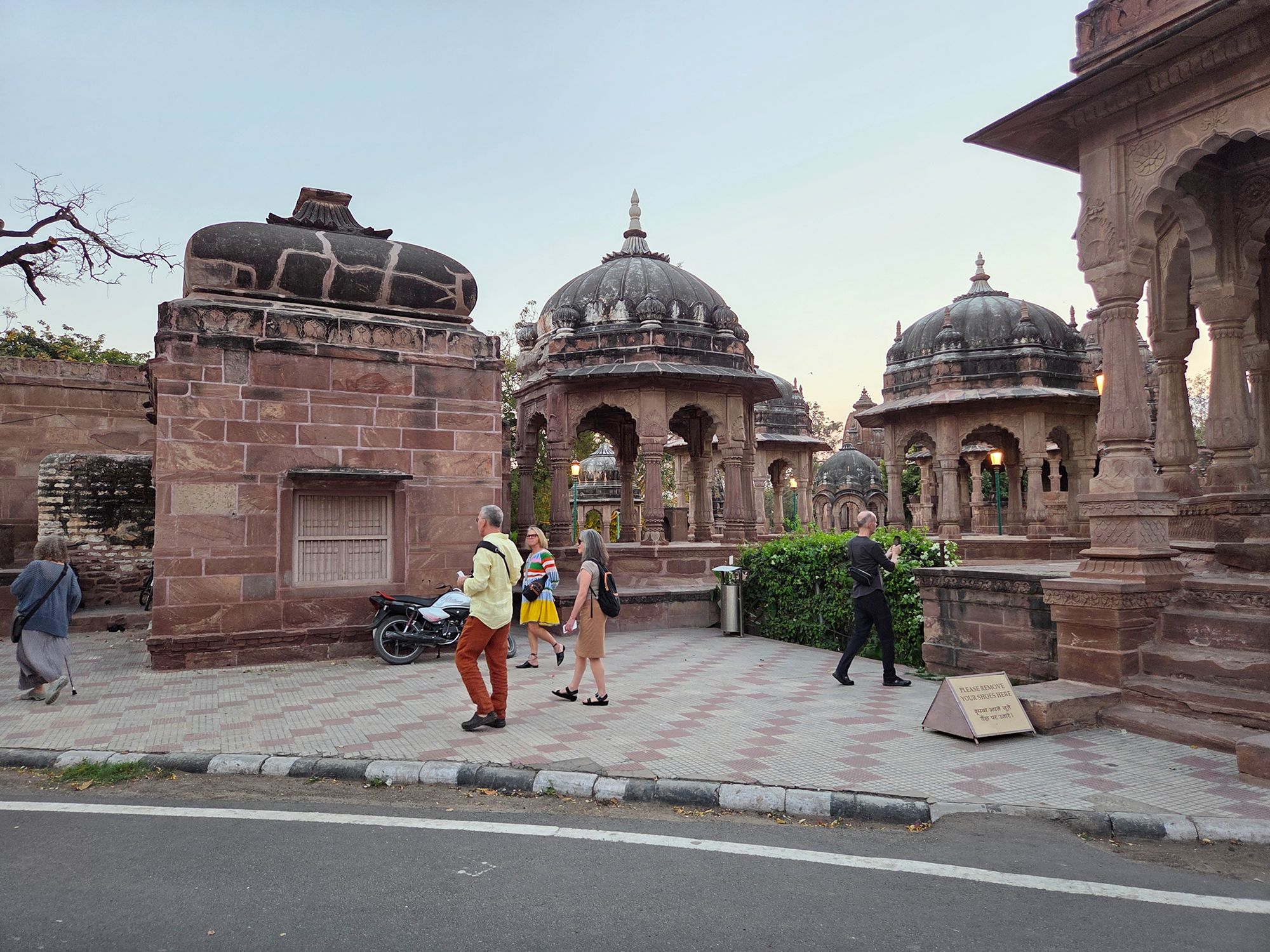
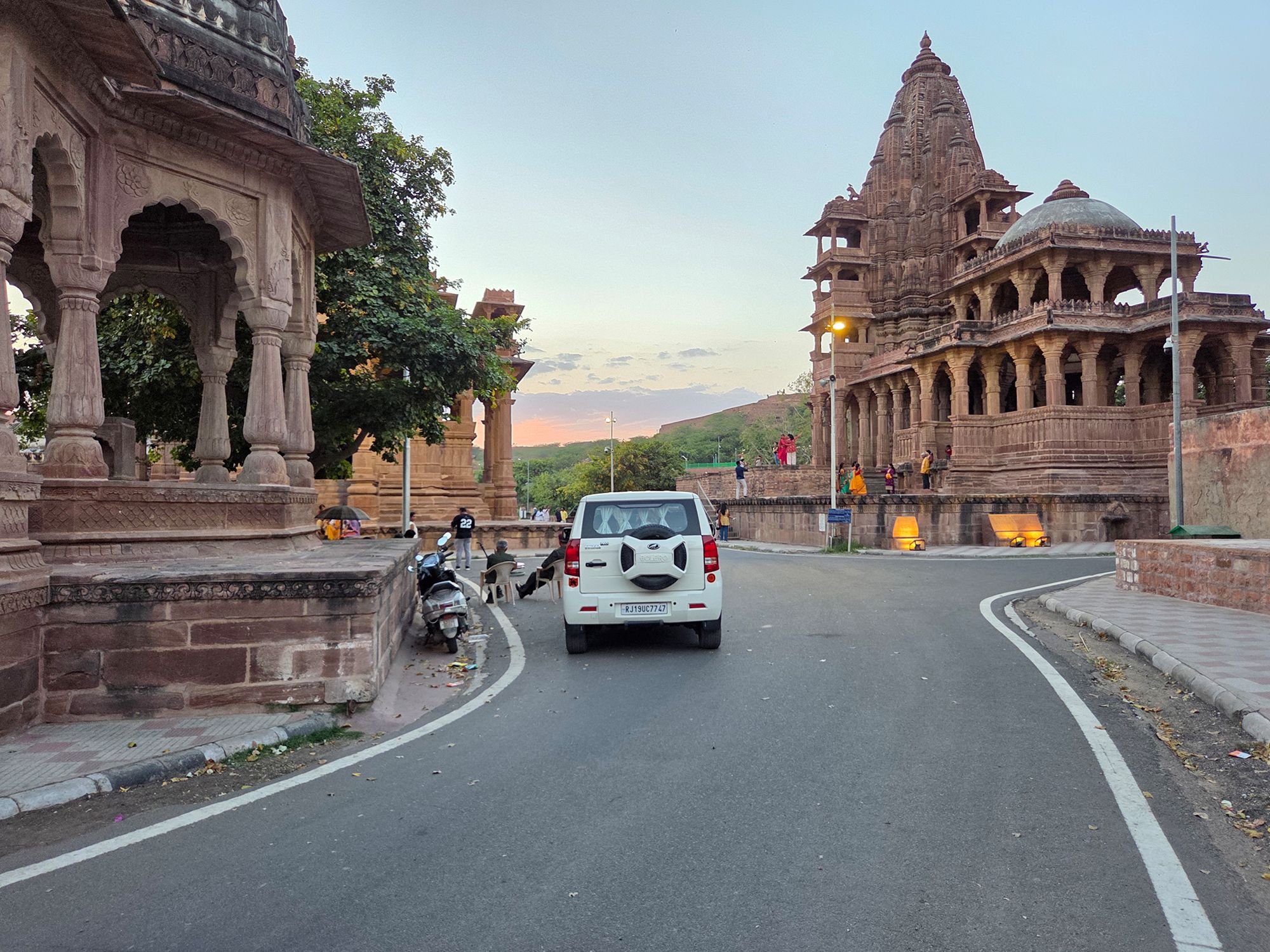
After visiting Mehrangarh Fort, we went to Mandore Garden, a historic garden complex just outside Jodhpur.
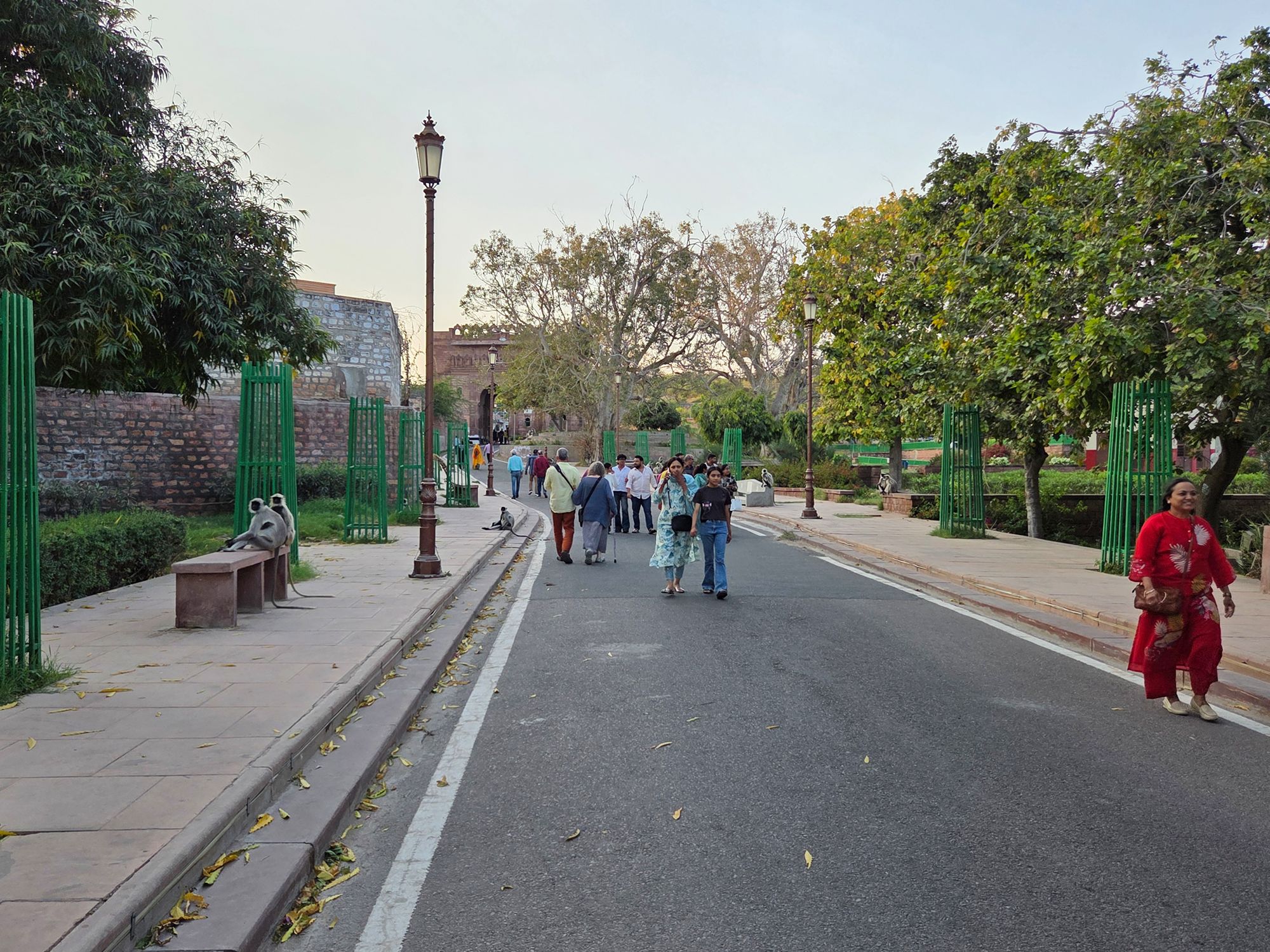
Mandore Garden was also home to many monkeys, which we saw throughout the grounds.
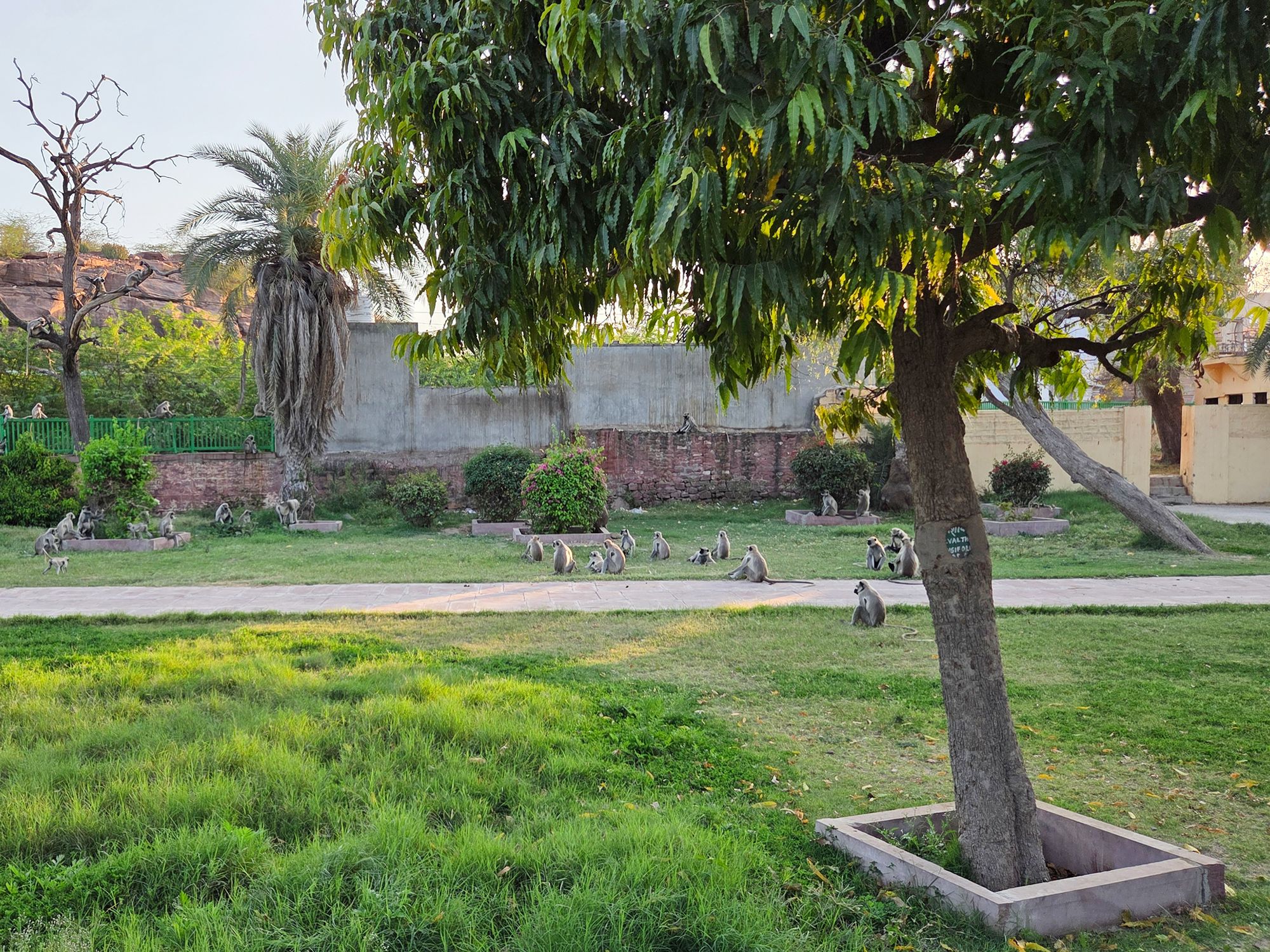
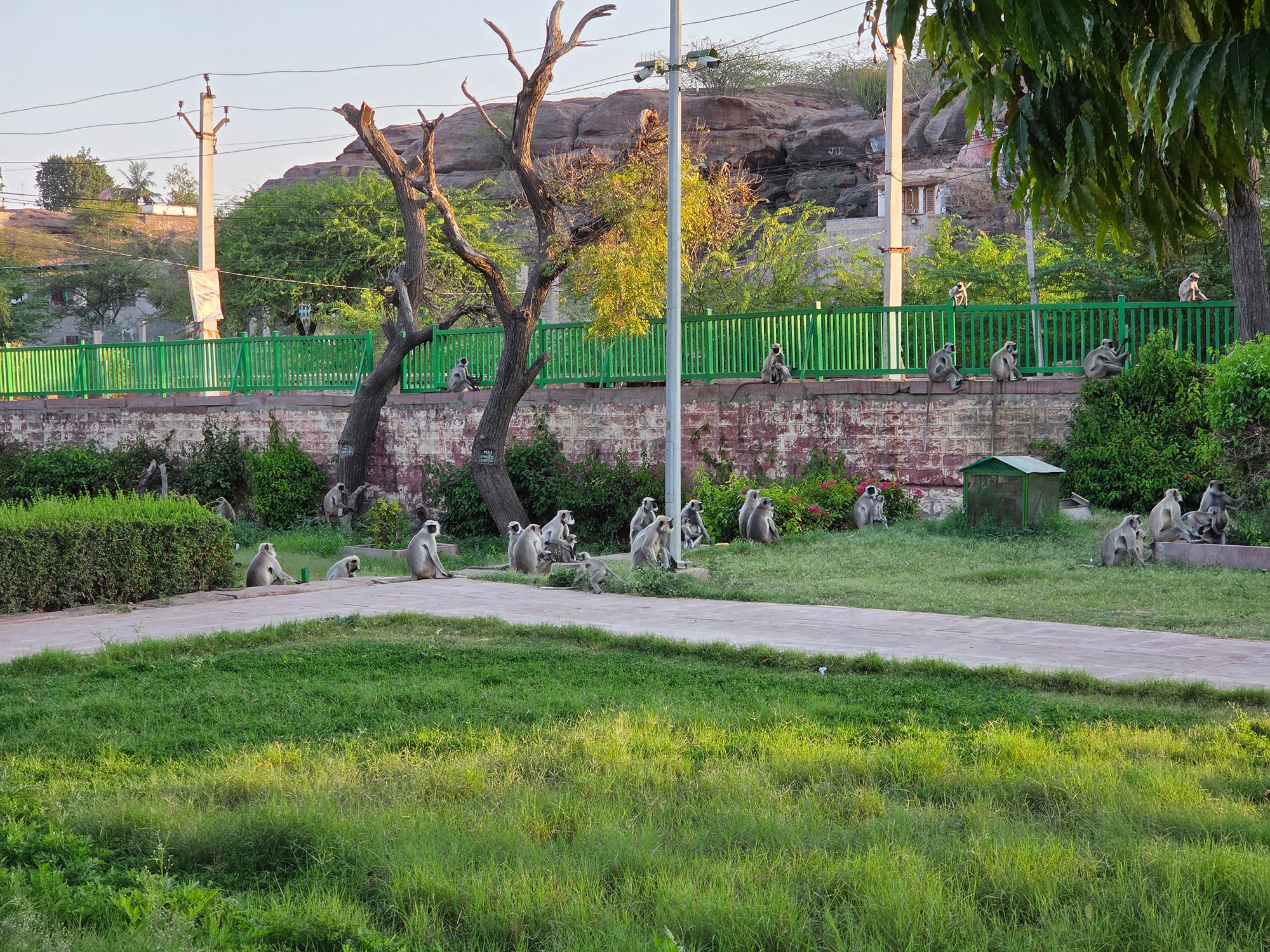
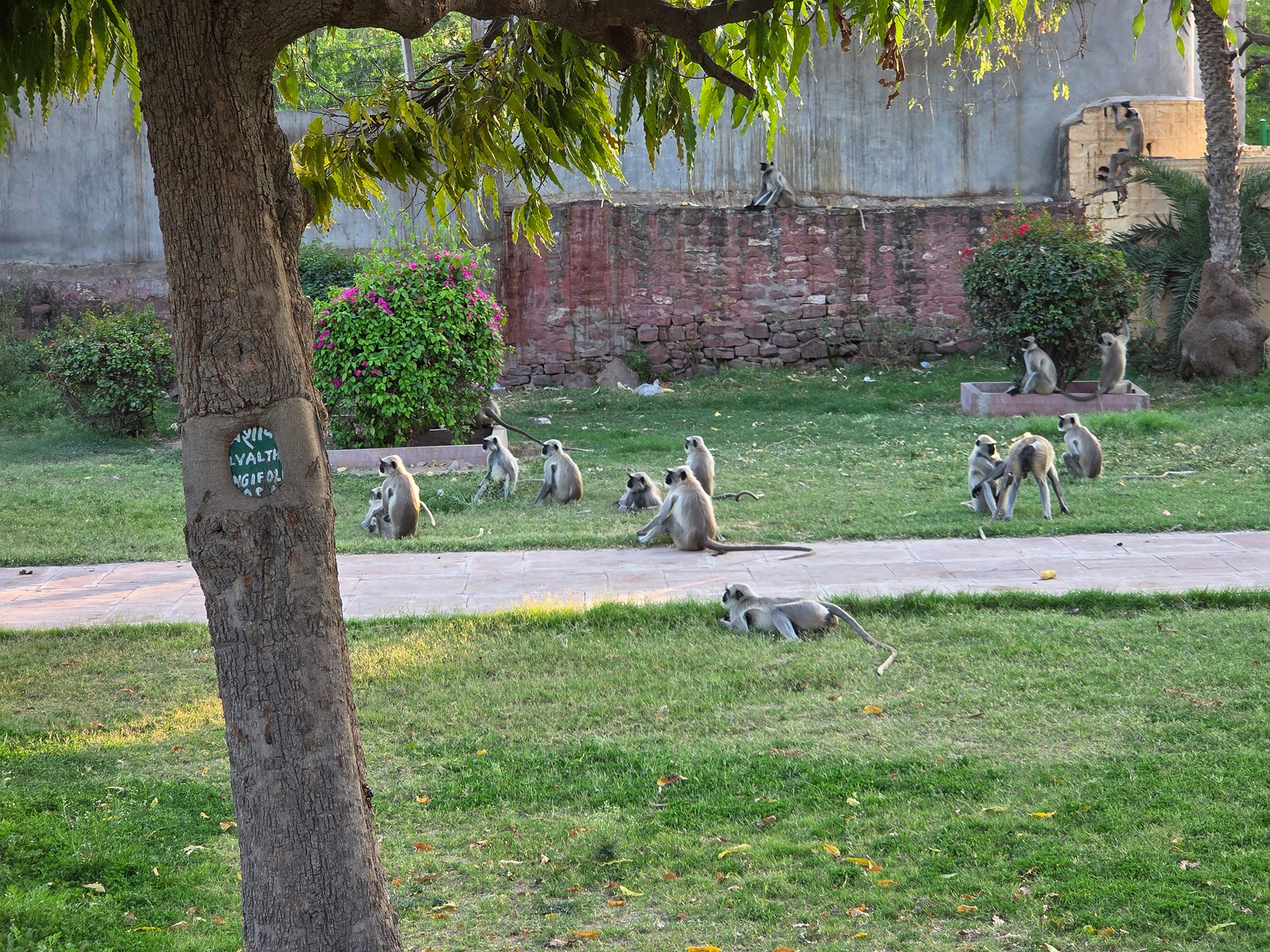
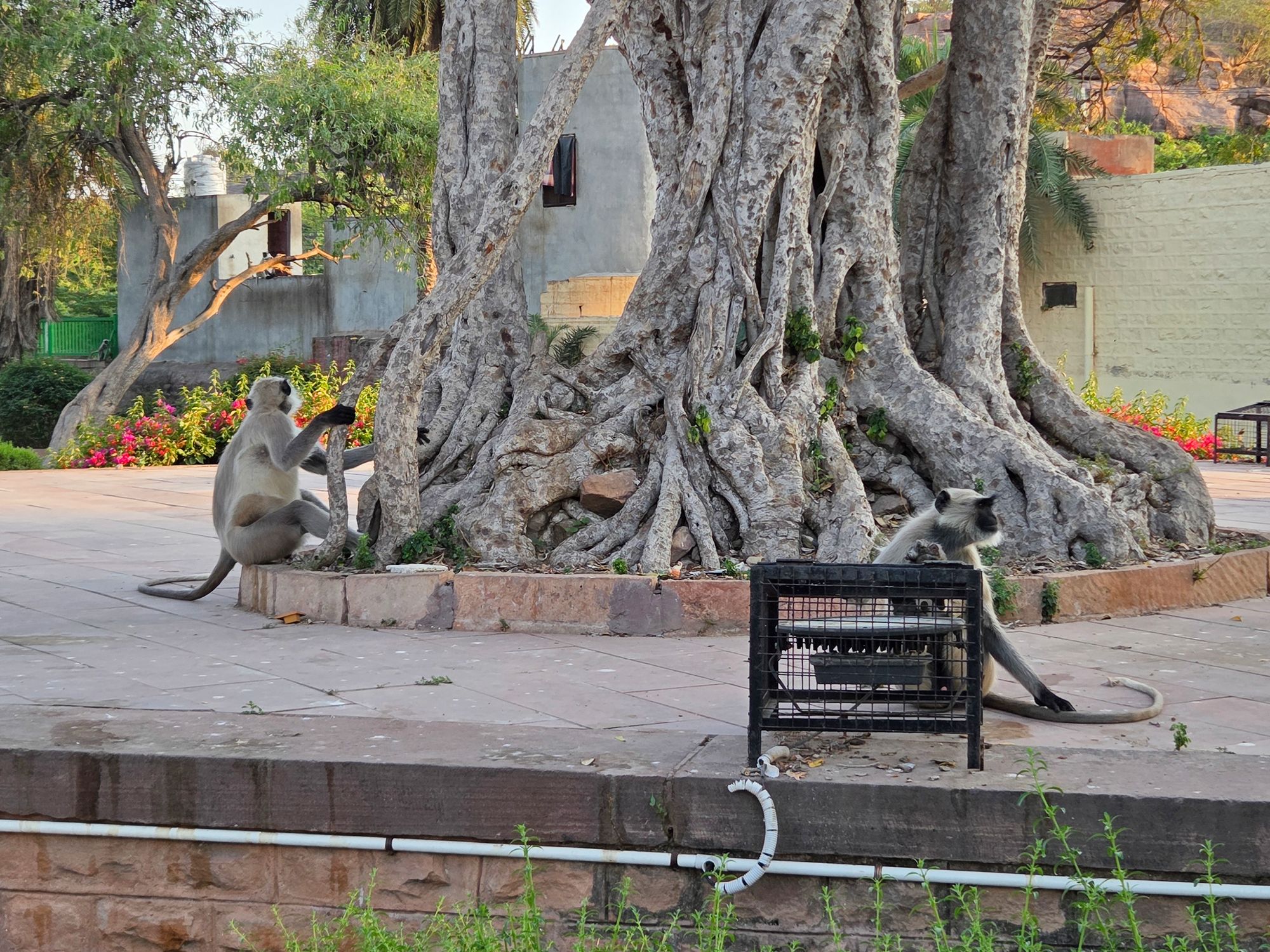
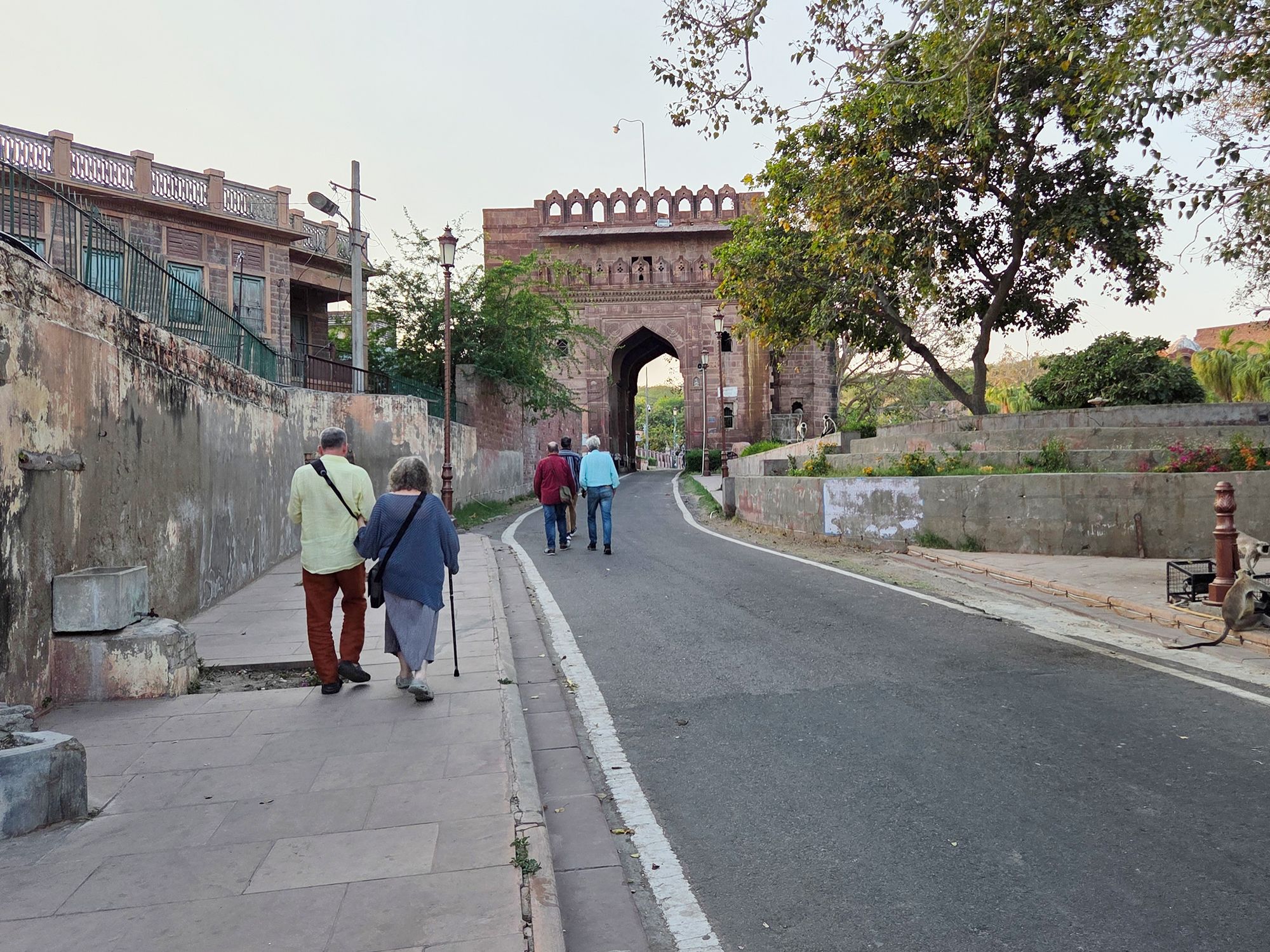
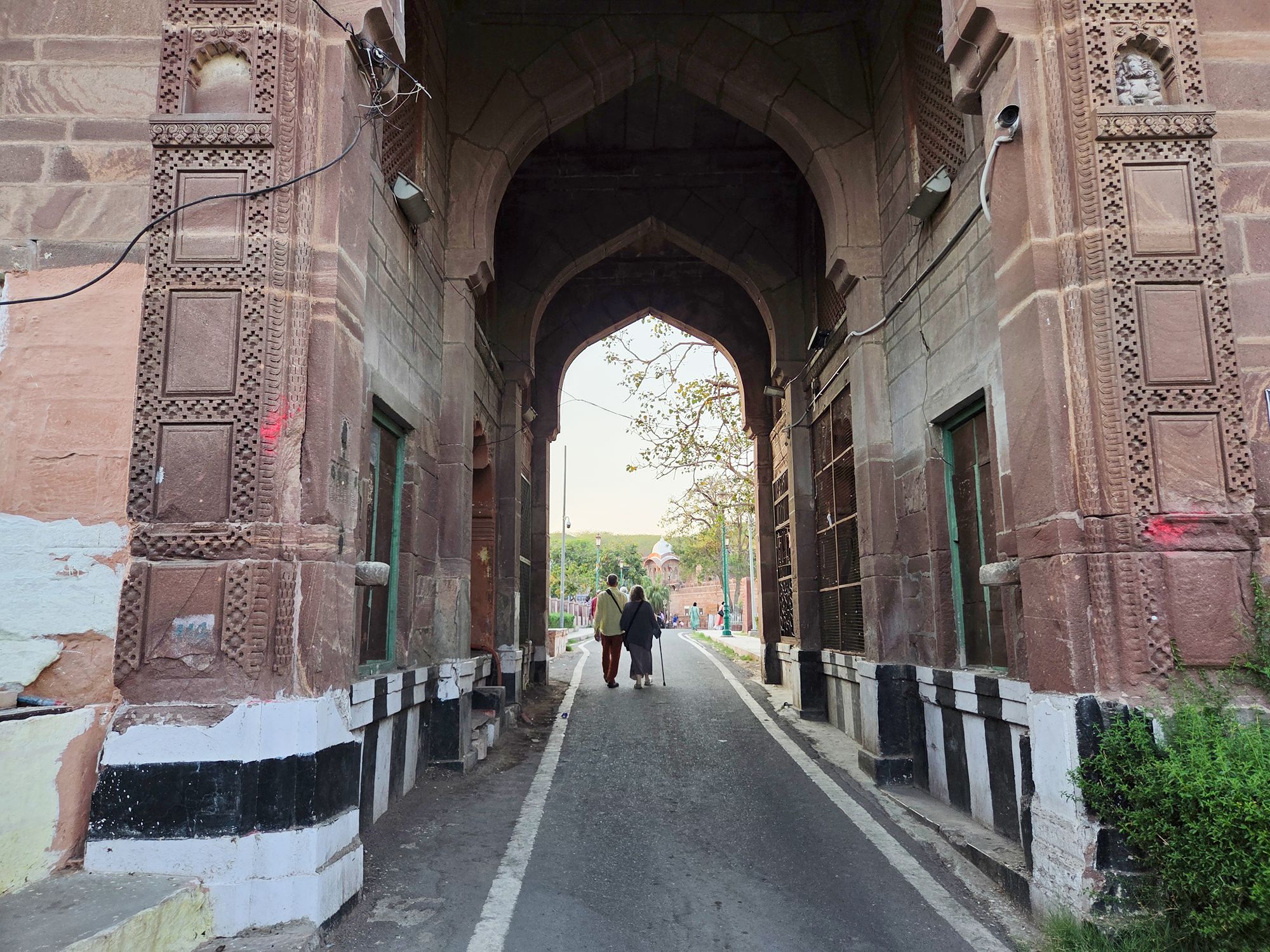
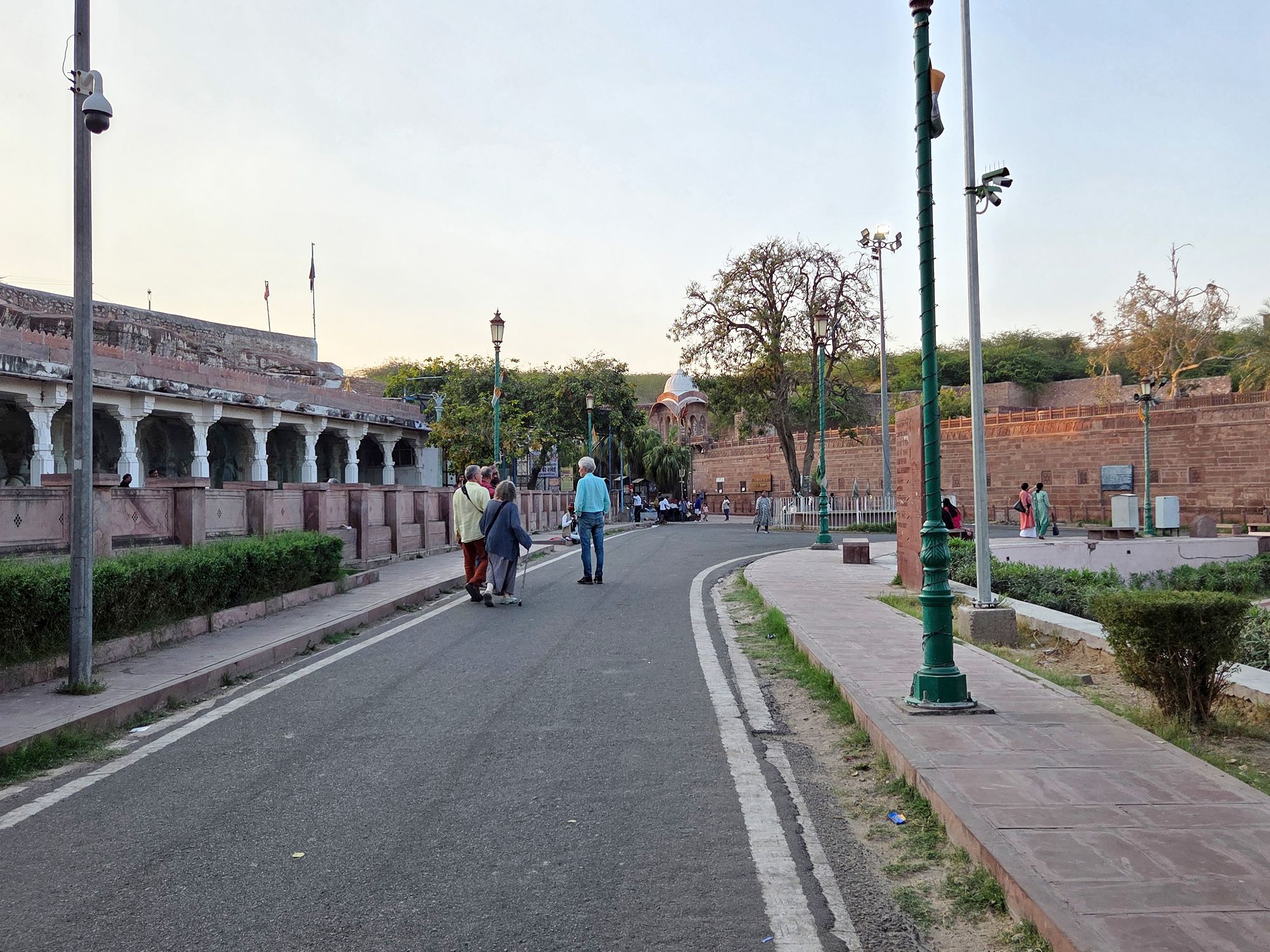
Mandore Garden is a historic complex that once served as the capital of the Marwar kingdom before Jodhpur was founded in 1459. The grounds contain impressive royal cenotaphs, temples, monuments, gardens, and ruins associated with the former rulers of Marwar. Today, it is a peaceful park and historic site, also known for the many monkeys that roam the grounds.
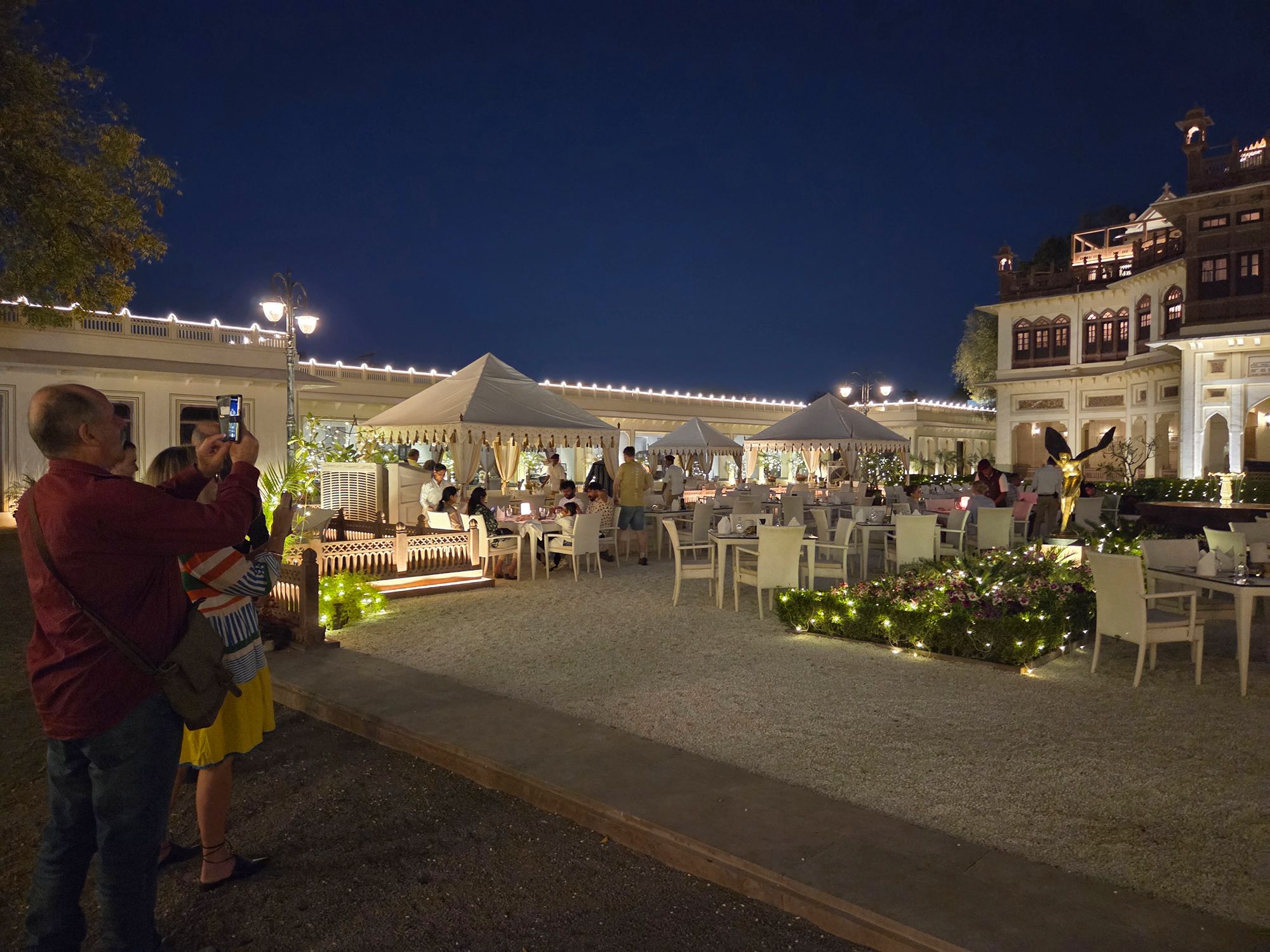
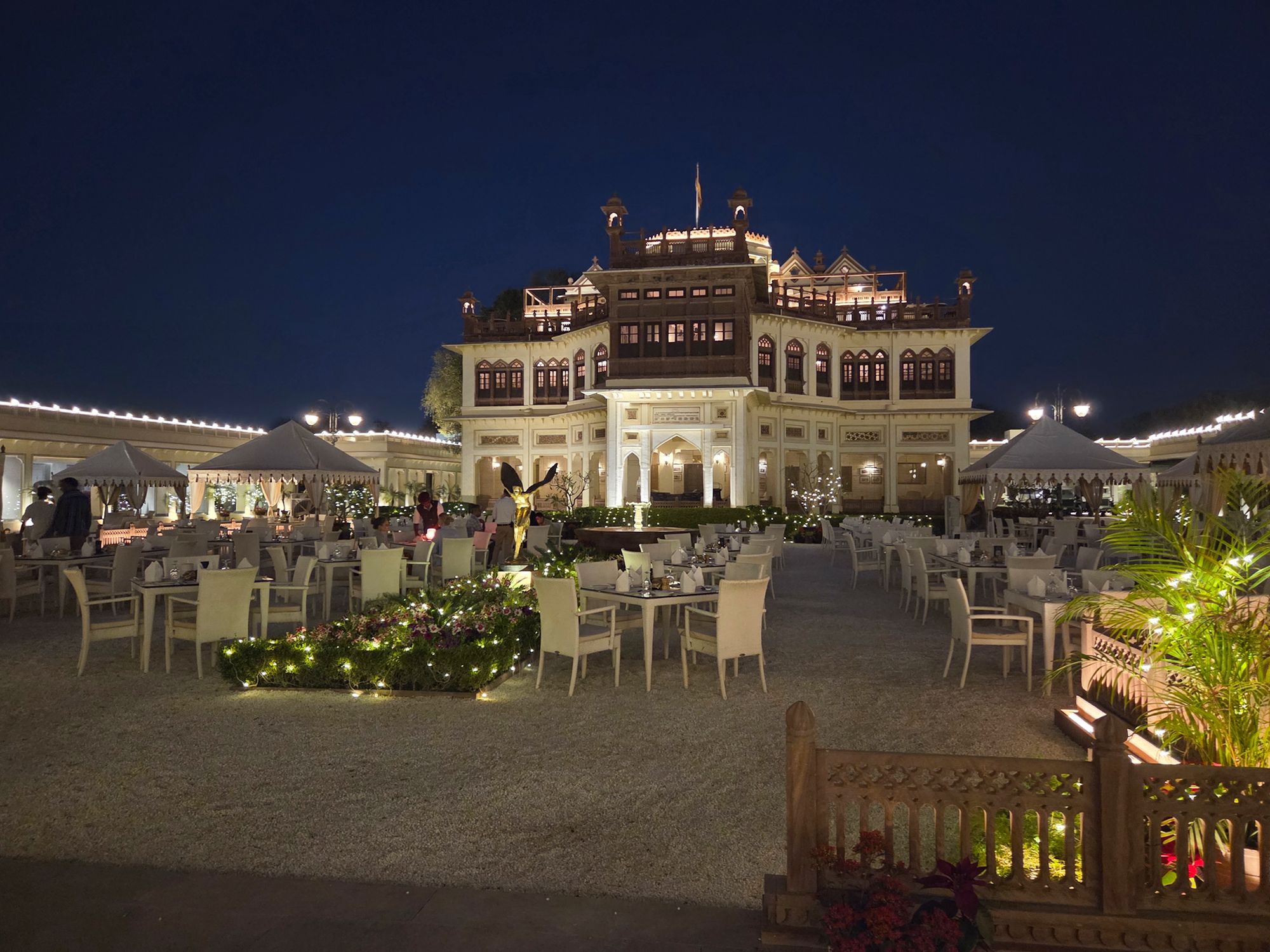
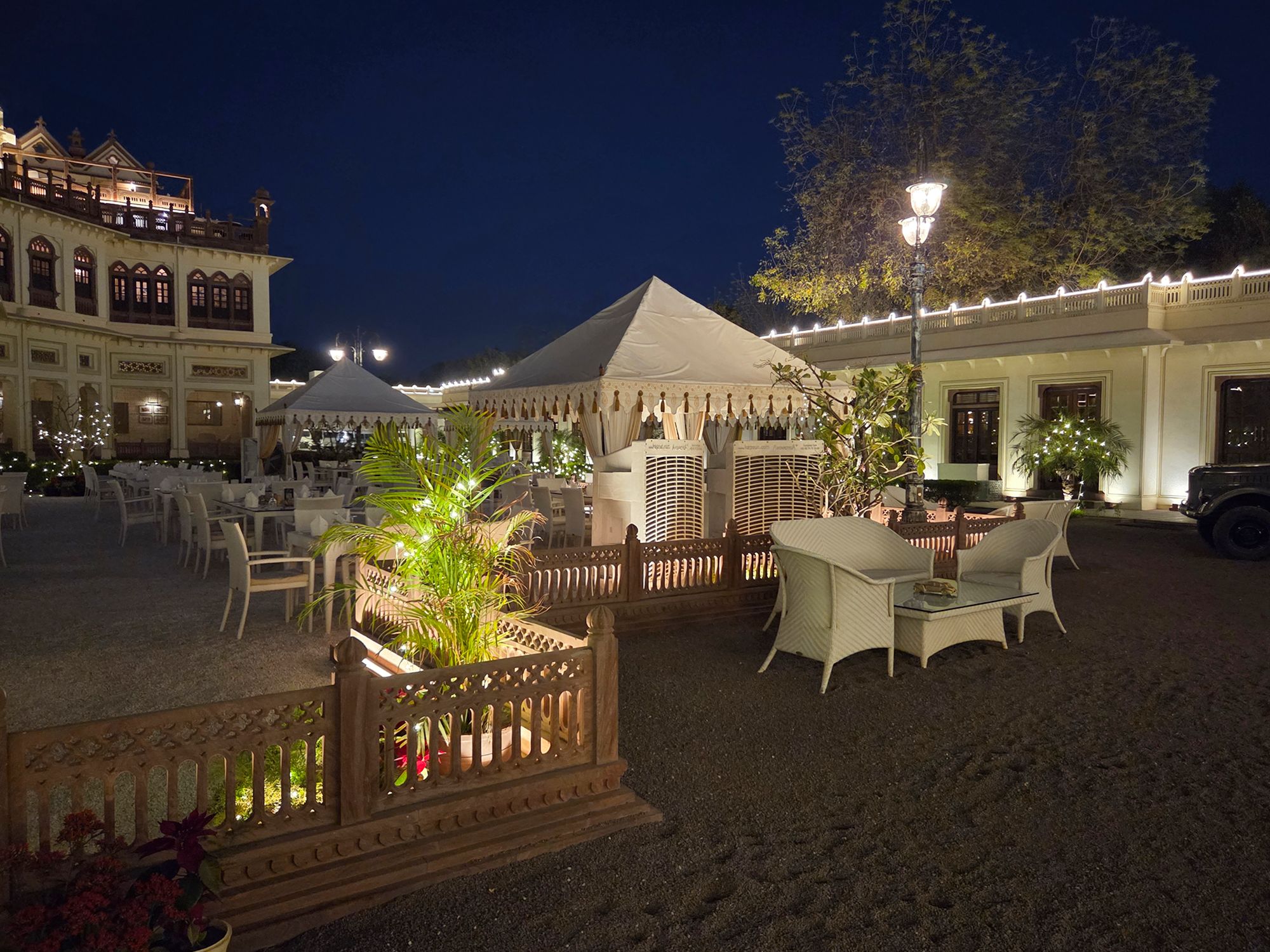
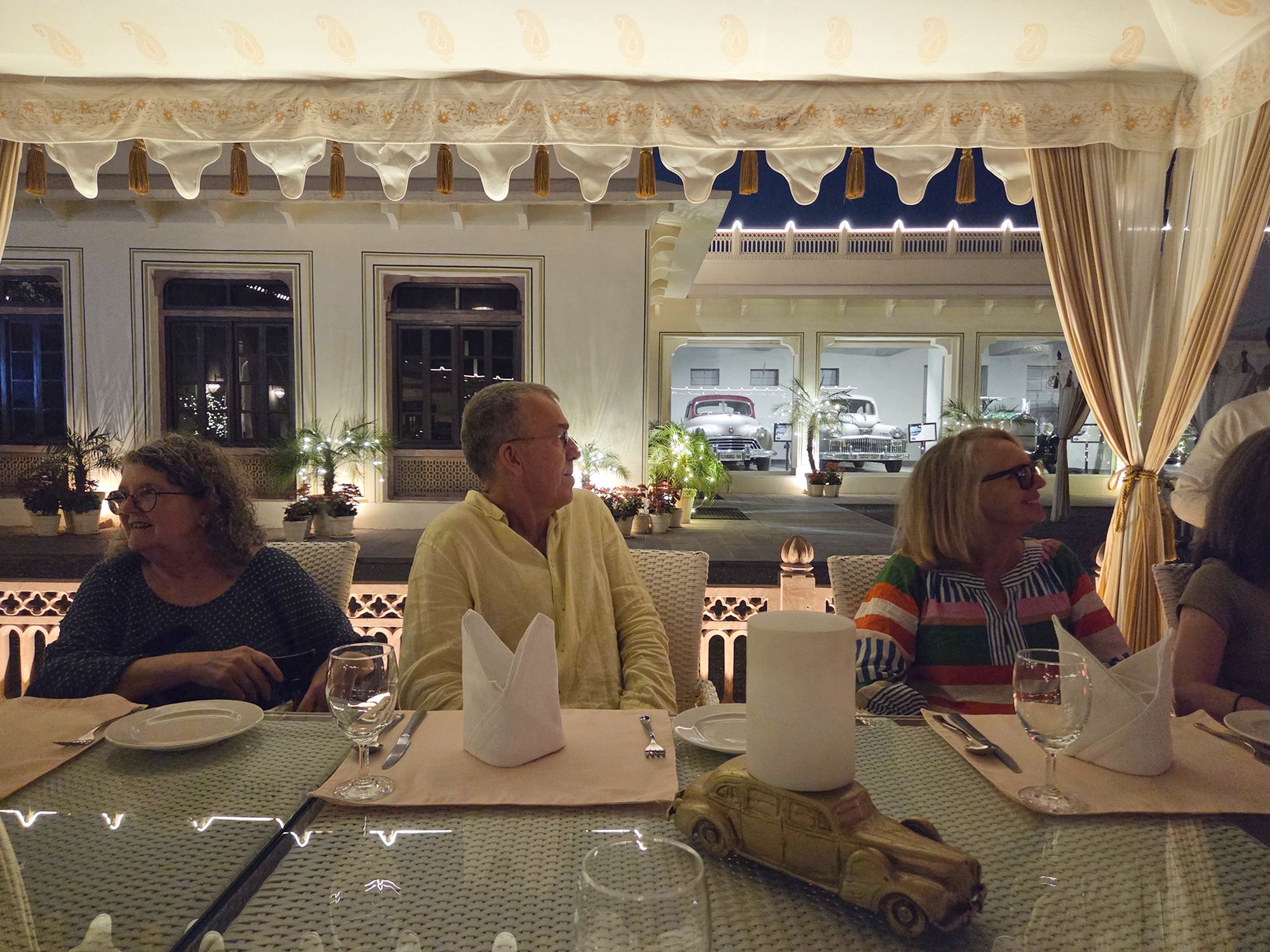
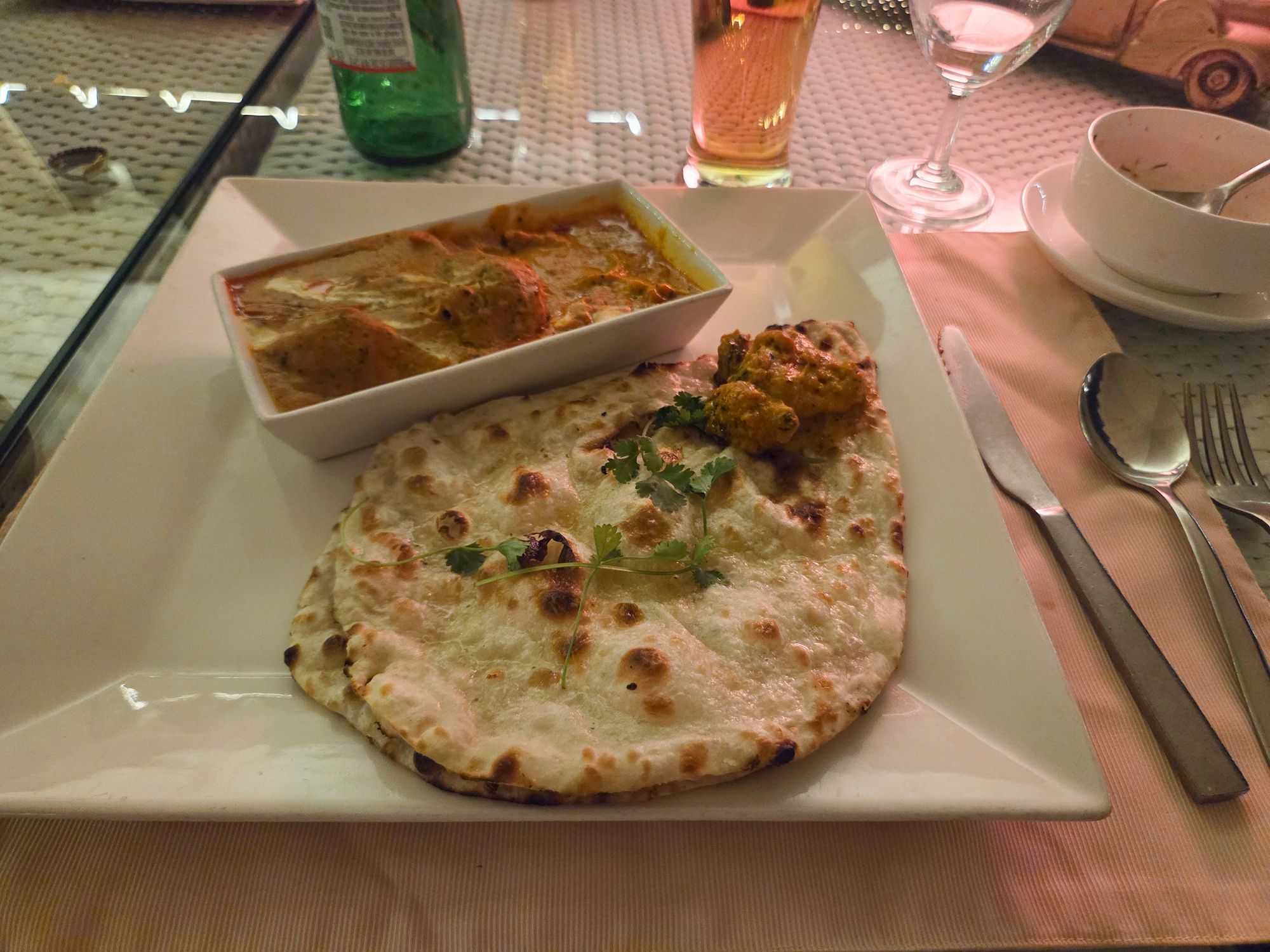
After a full day of sightseeing, we enjoyed dinner at a fine local restaurant.