Buddha Dordenma in Thimphu, Dochula Pass, Chimi Lhakhang in Punakha, Bhutan
After Nepal, I began a four-day guided tour of Bhutan. 1268
Buddha Dordenma: Kuenselphodrang Rd, Thimphu, Bhutan
Dochula Pass: Dochula, Bhutan
Chimi Lhakhang: GVGH+R7G, Teoprongchu, Bhutan
Date Picture Taken: Mar, 2026
Travel in Bhutan is generally arranged through a licensed tour operator, so I booked a private guided tour. These tours are often small, with just one or a few travelers, accompanied by a guide and a driver. My itinerary was planned in advance, and we followed the arranged route throughout the tour.
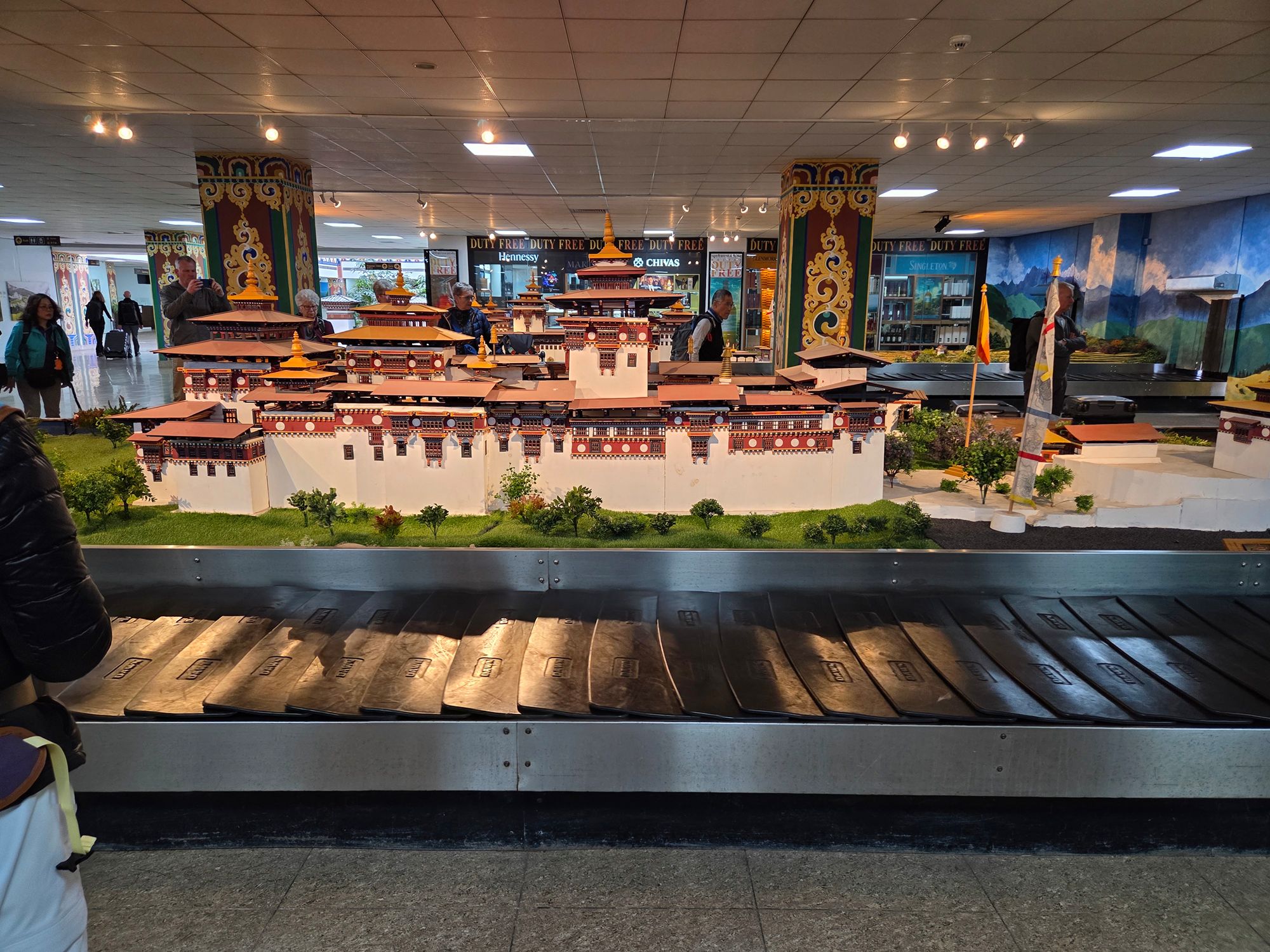
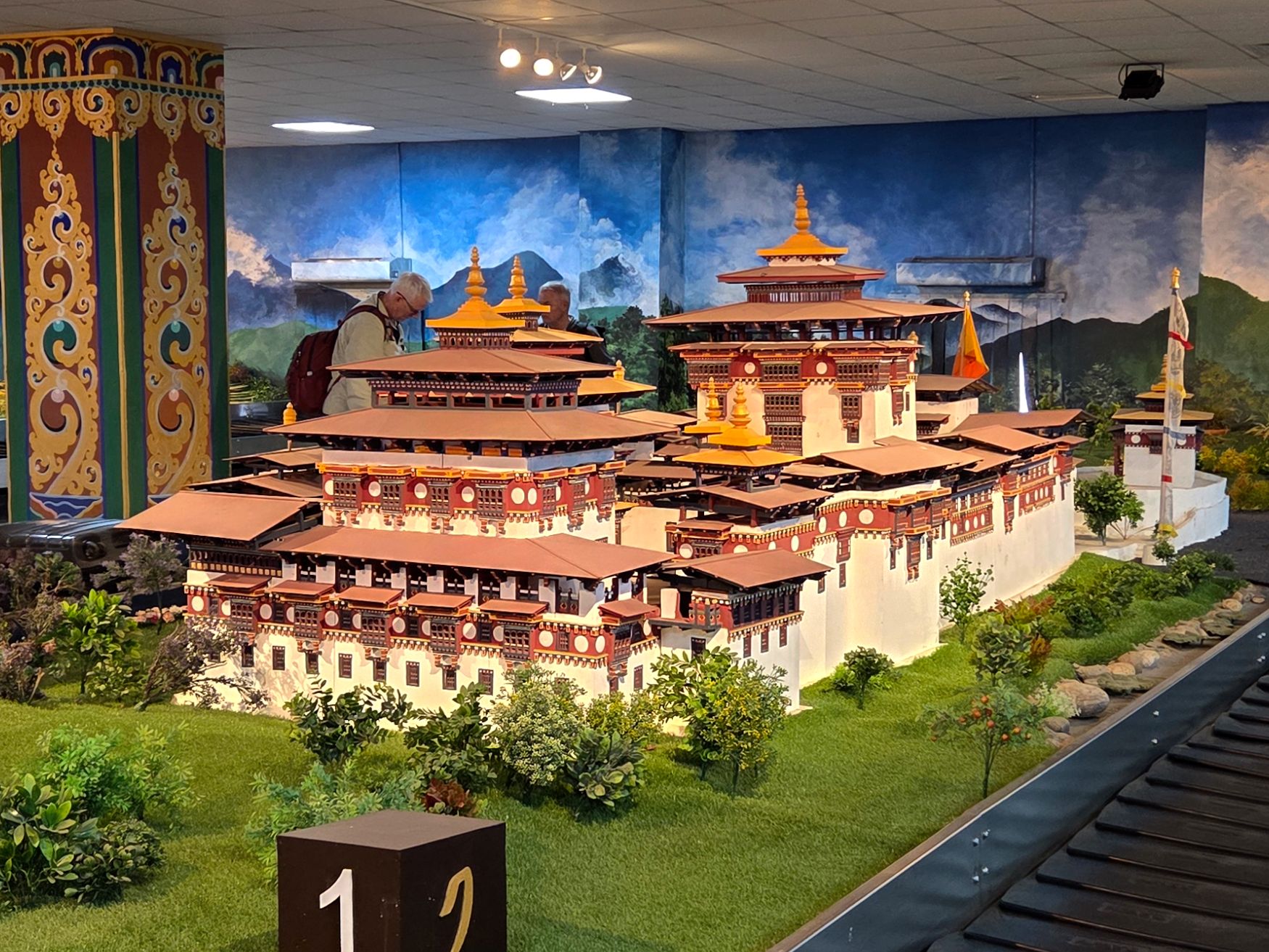
I arrived at Paro International Airport, Bhutan’s international airport, where a large model of Punakha Dzong was displayed inside the terminal.
My flight was delayed for about four to five hours because of fog at Paro Airport, but when I finally came out of the terminal, my guide was still waiting for me outside.
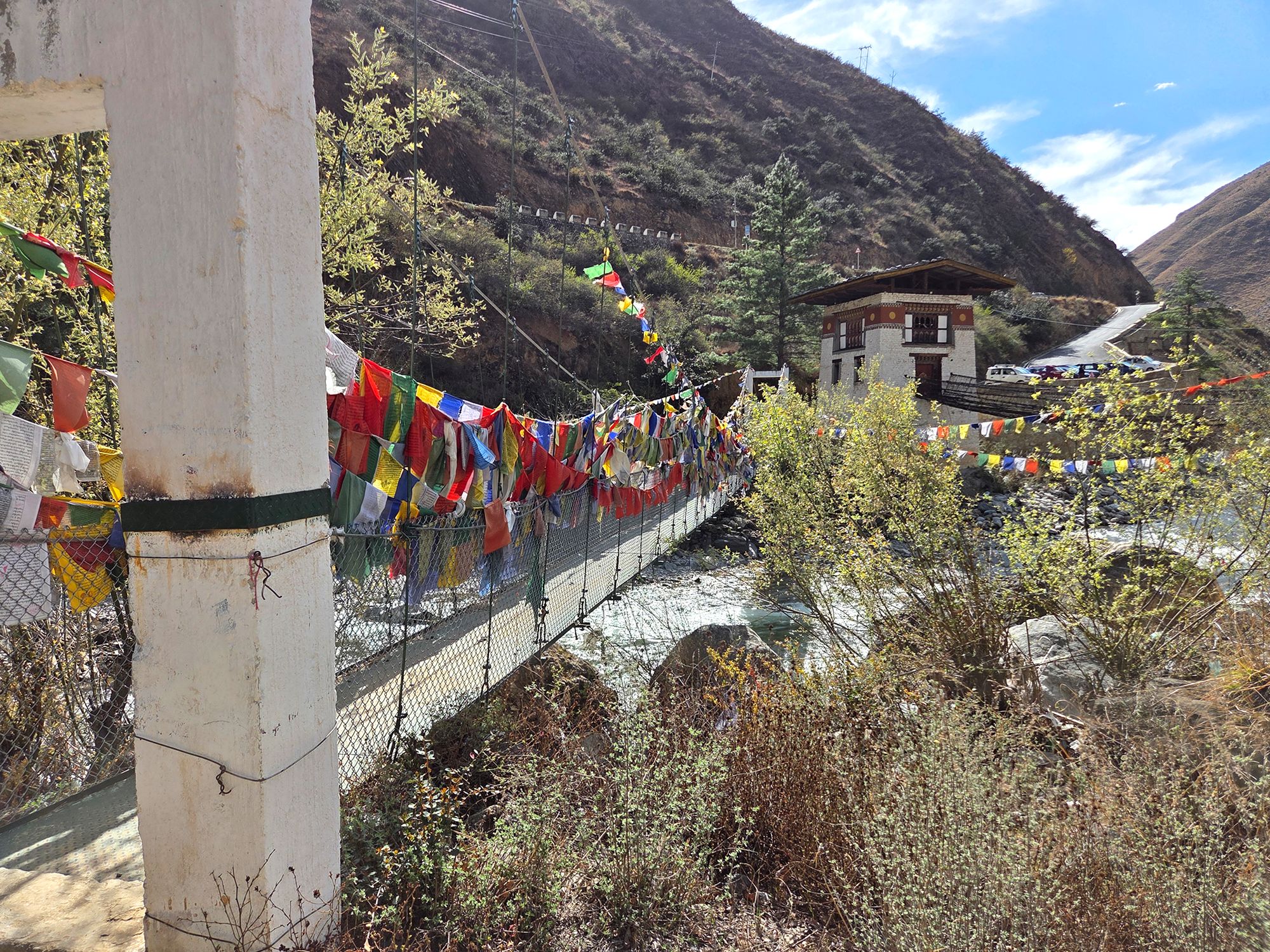
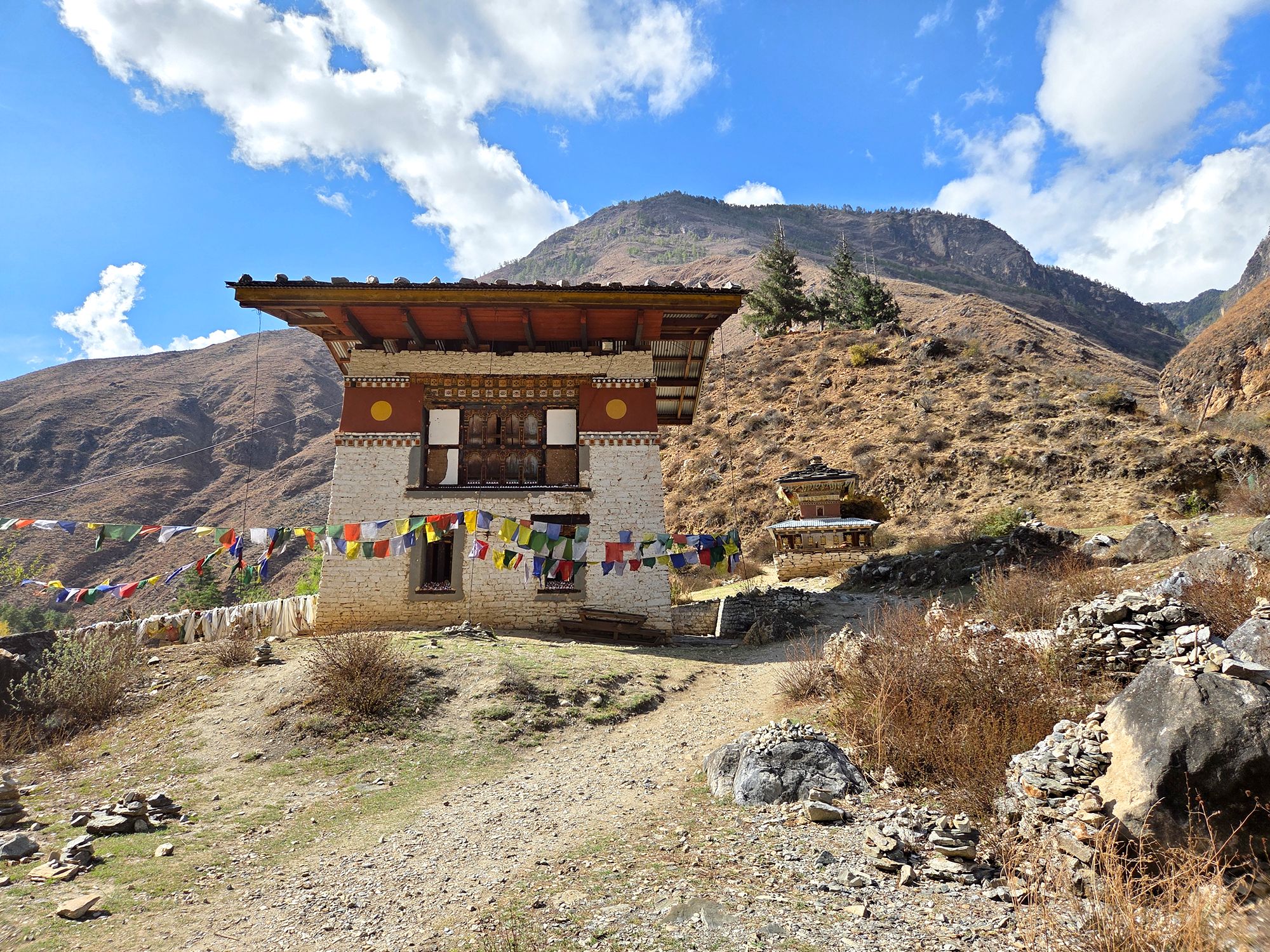
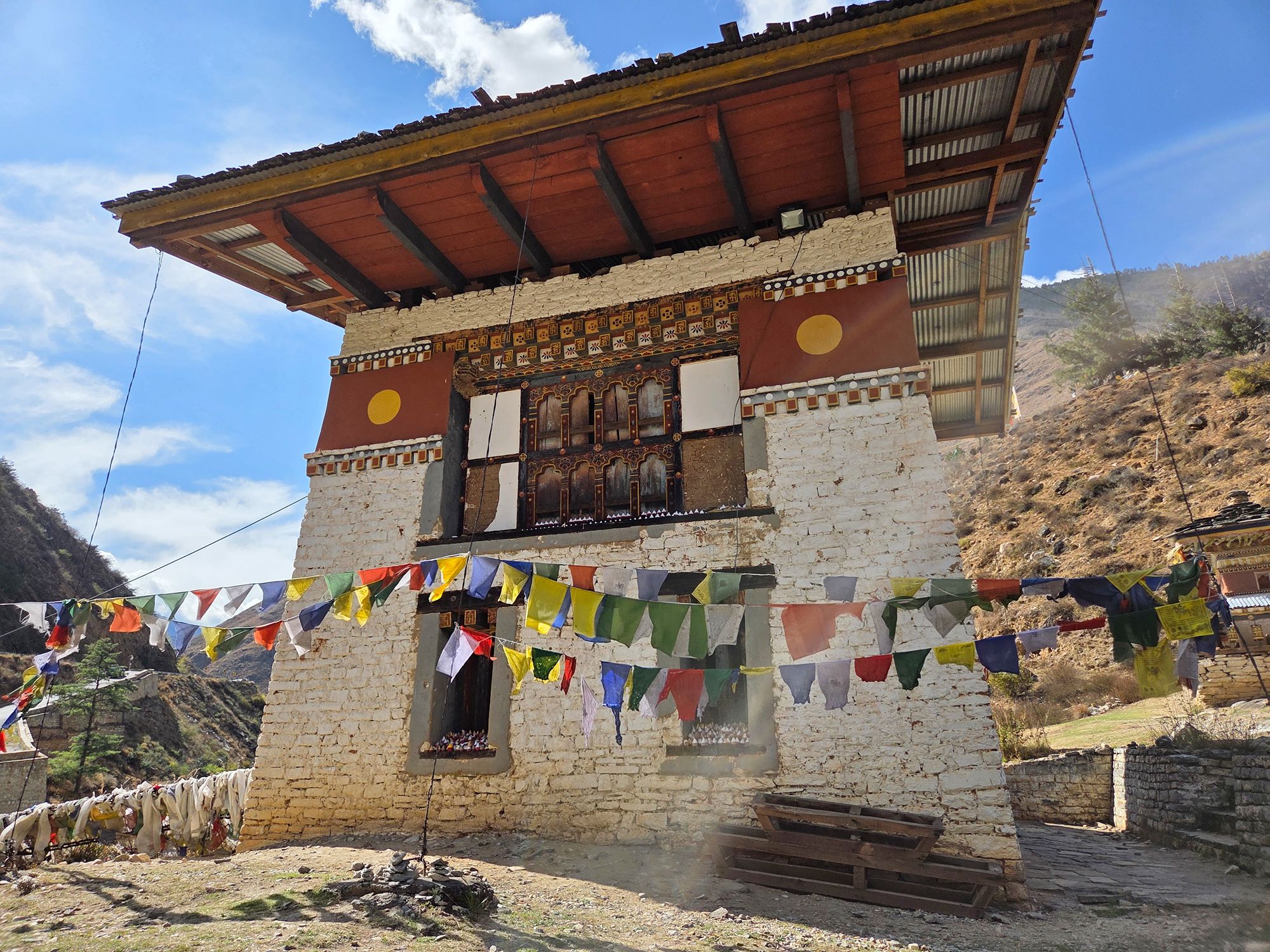
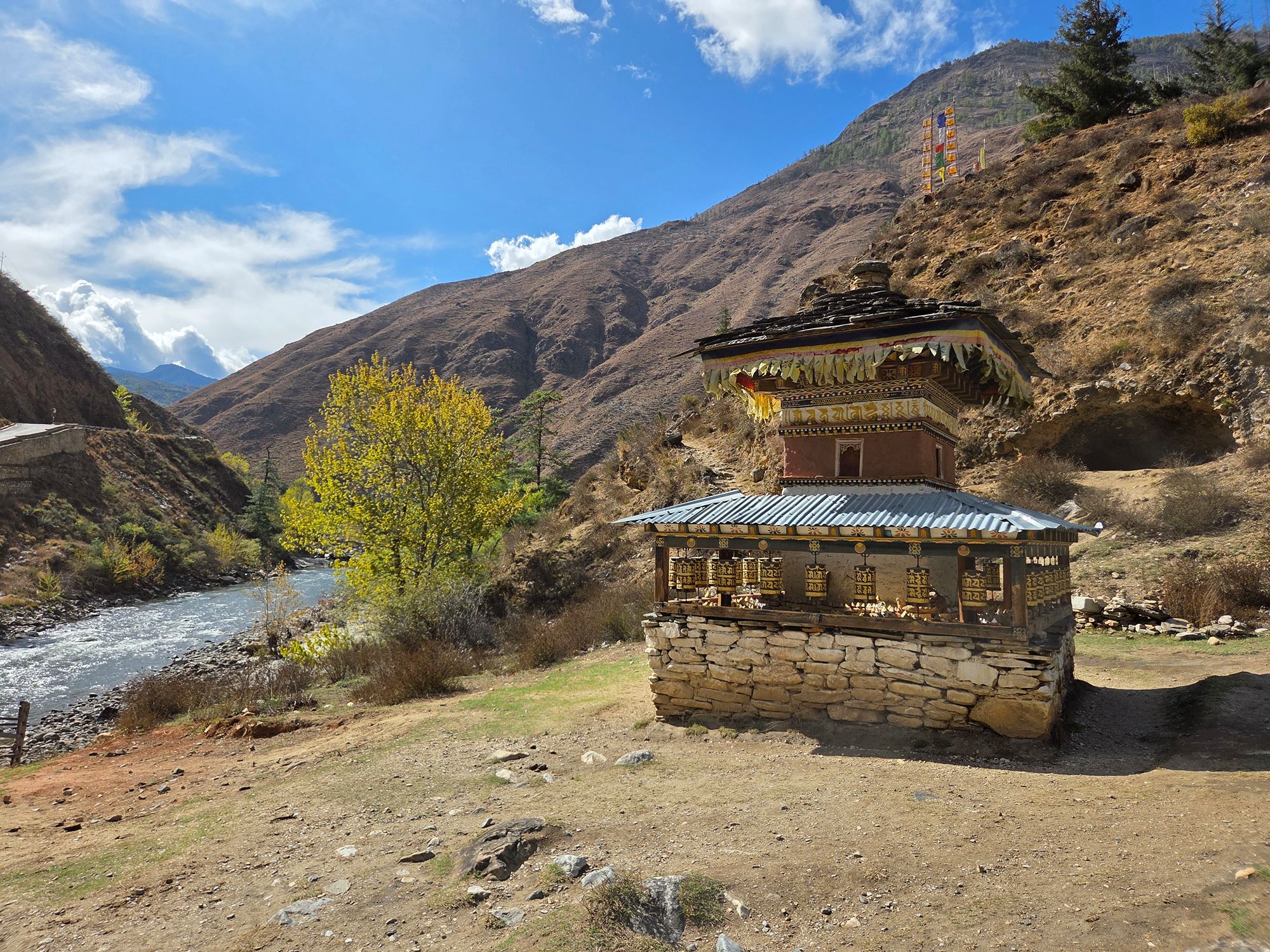
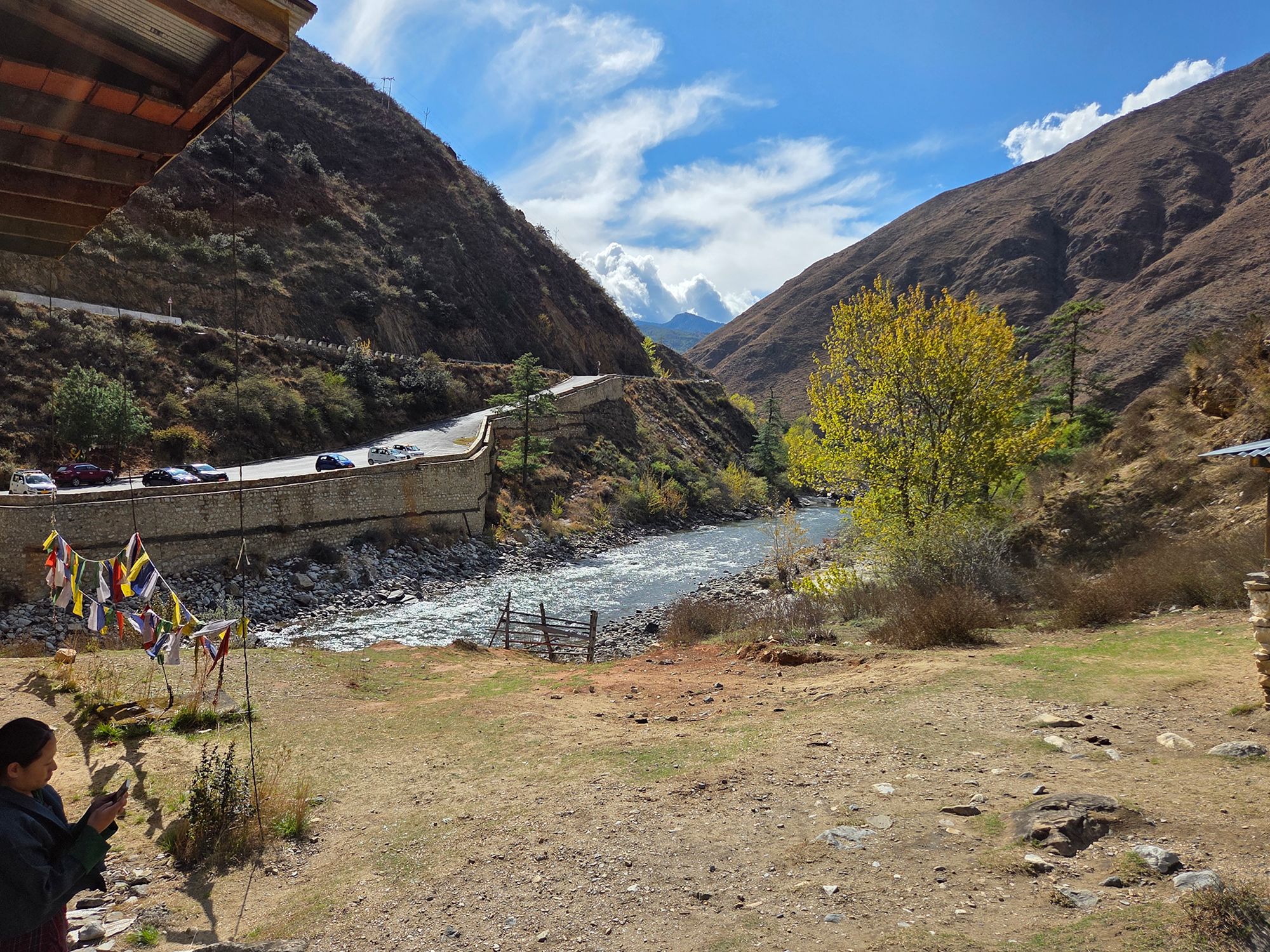
On the way from Paro to Thimphu, we stopped at a small roadside shrine where local people could stop to pray.
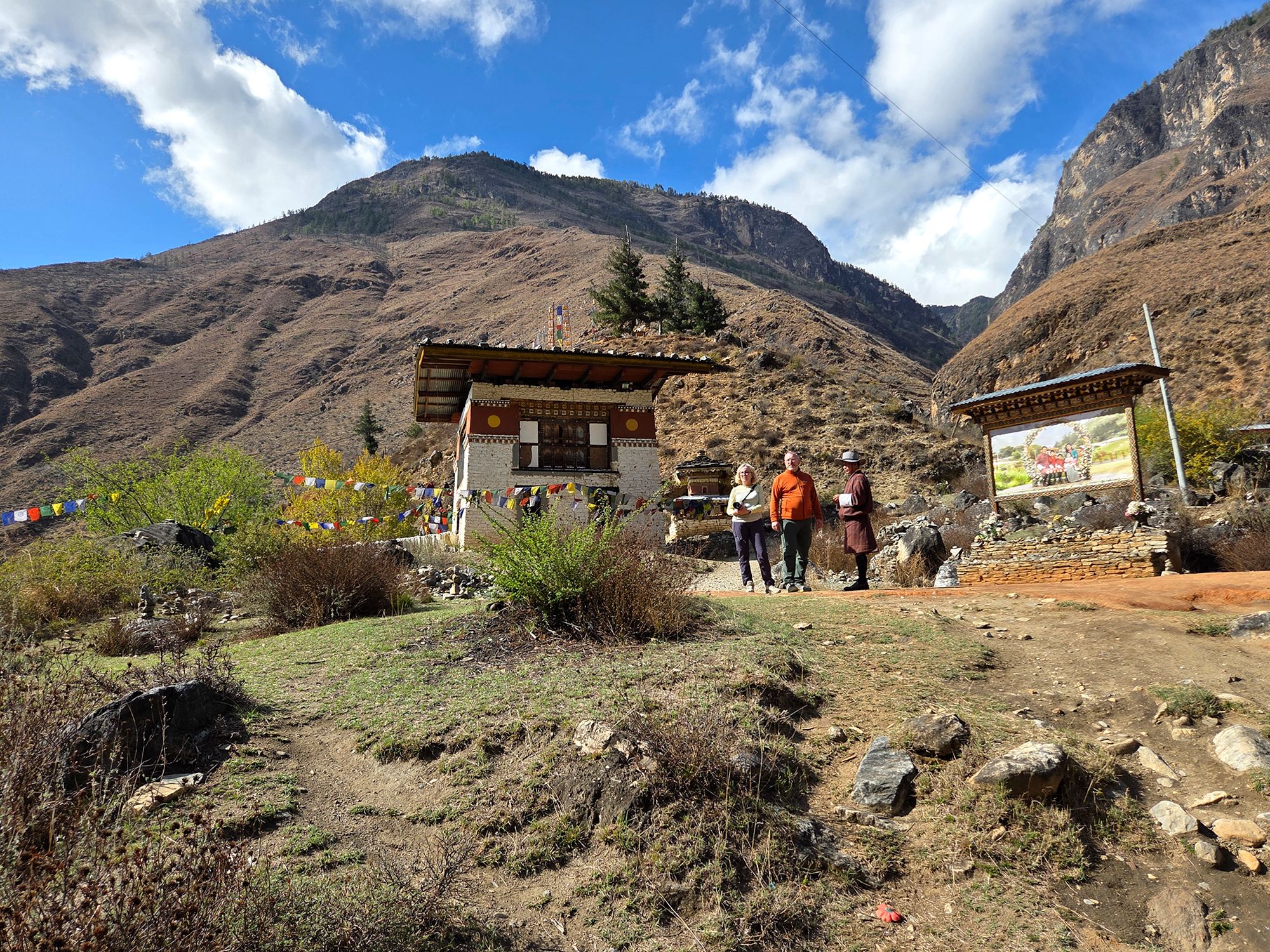
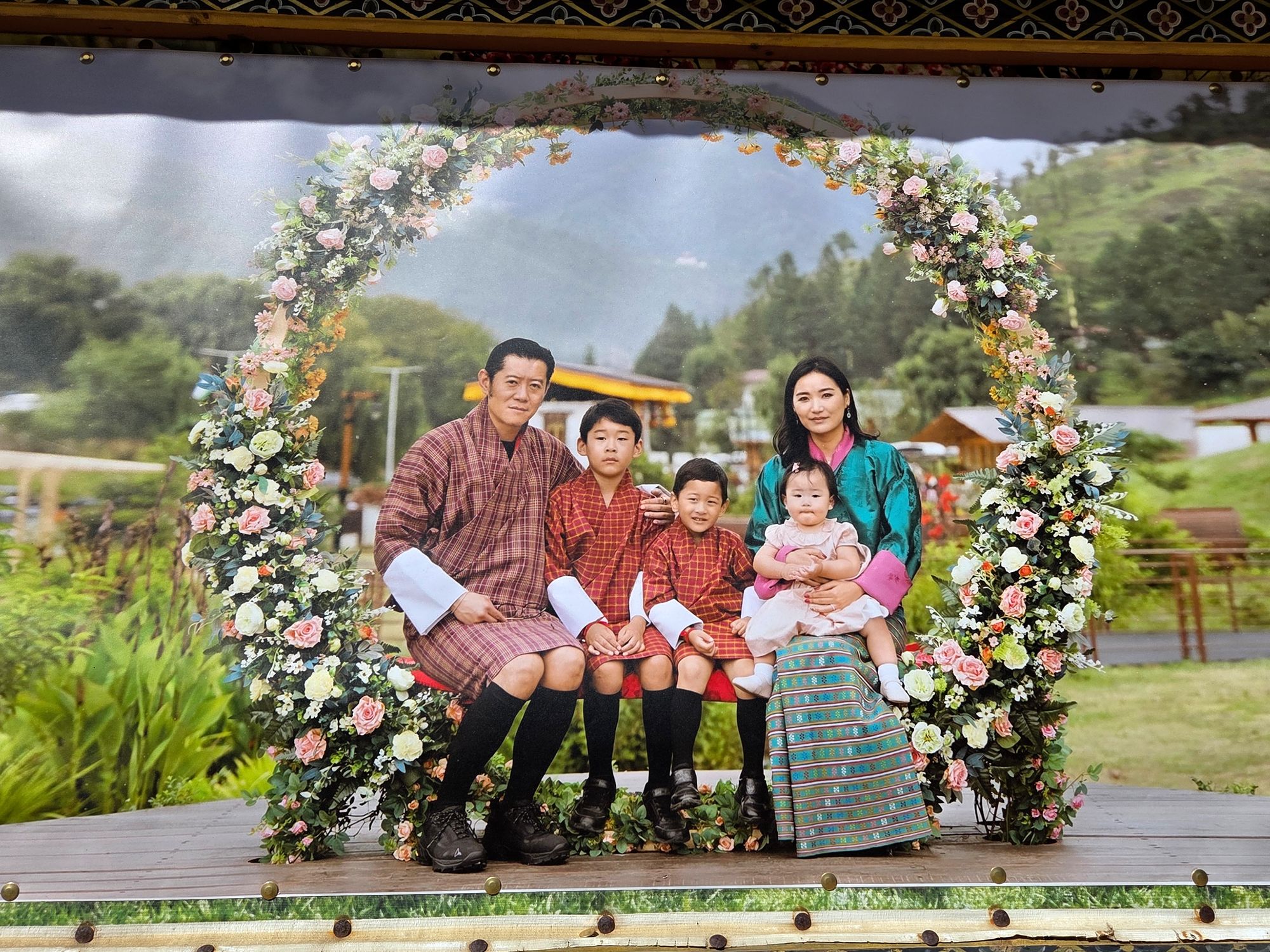
A photograph of Bhutan’s King and the royal family.
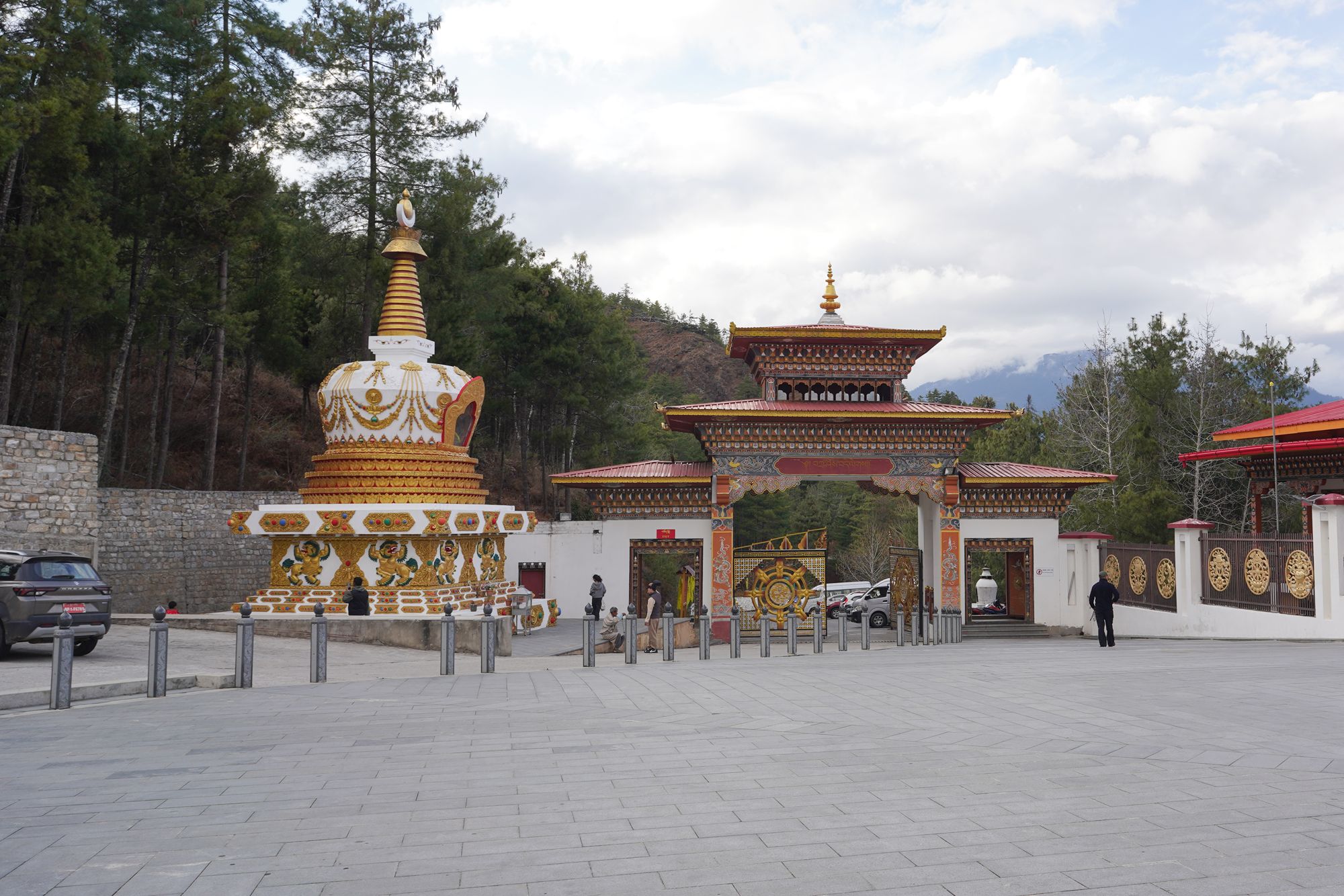
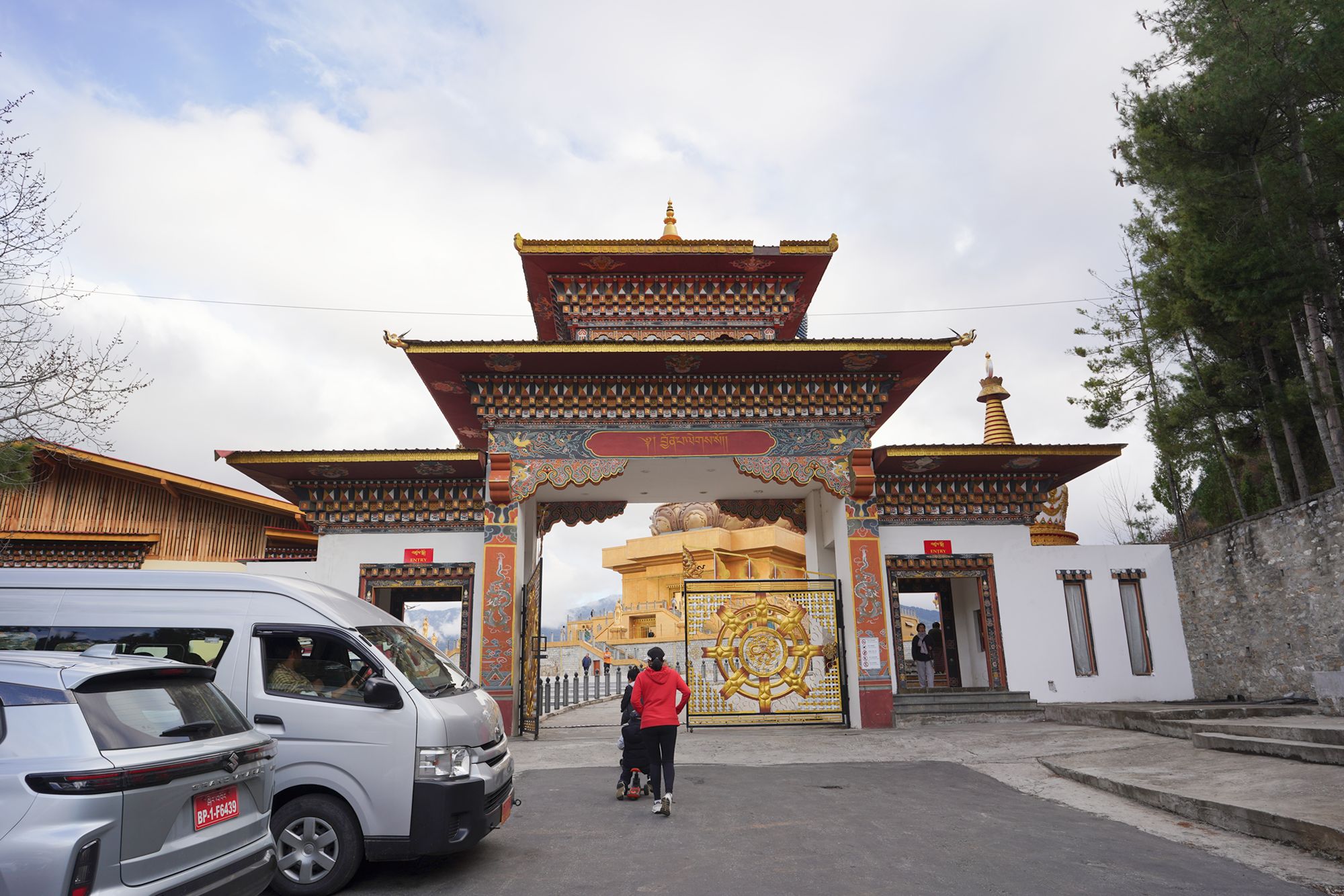
Then we stopped at Buddha Dordenma, the massive Buddha statue overlooking Thimphu.
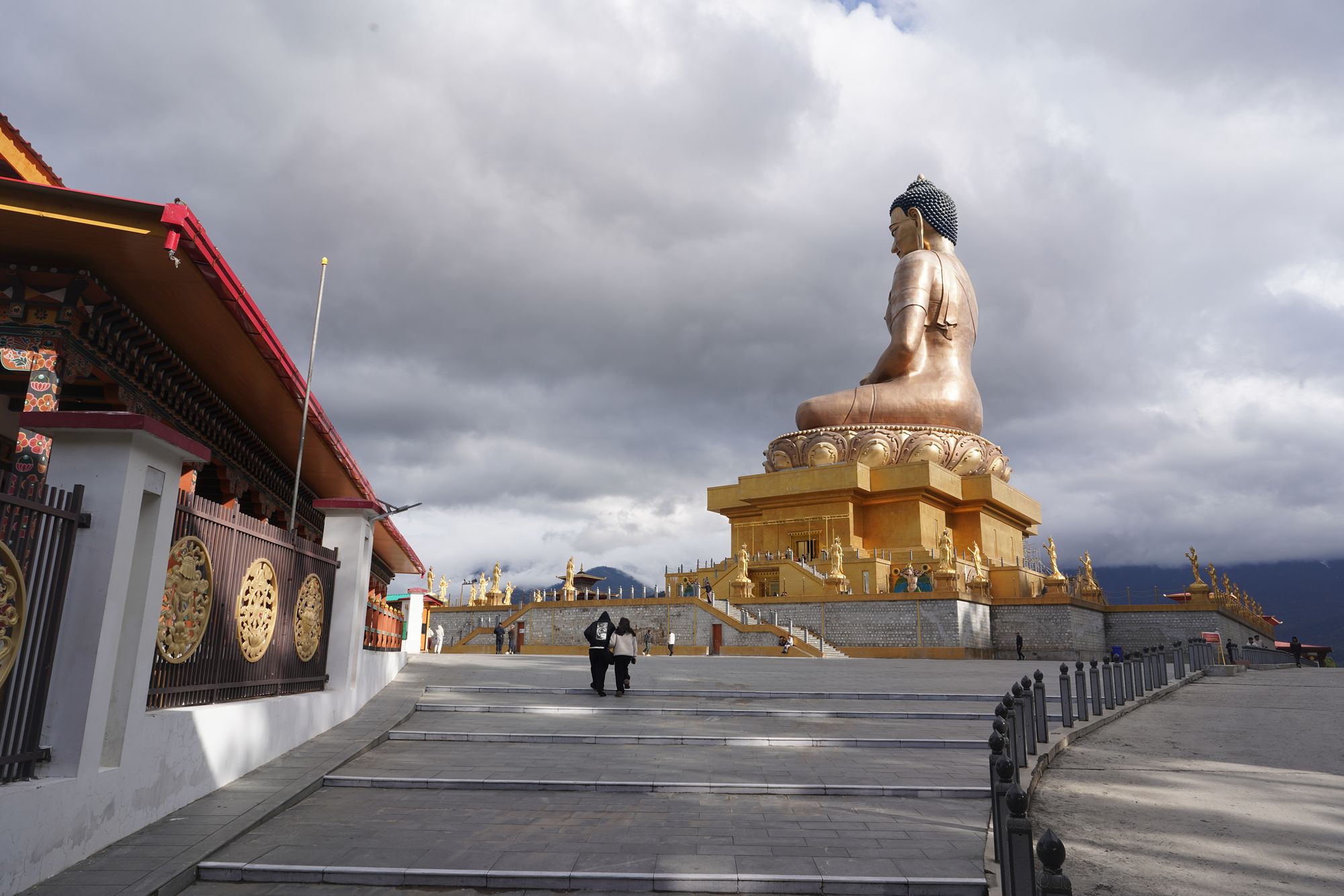
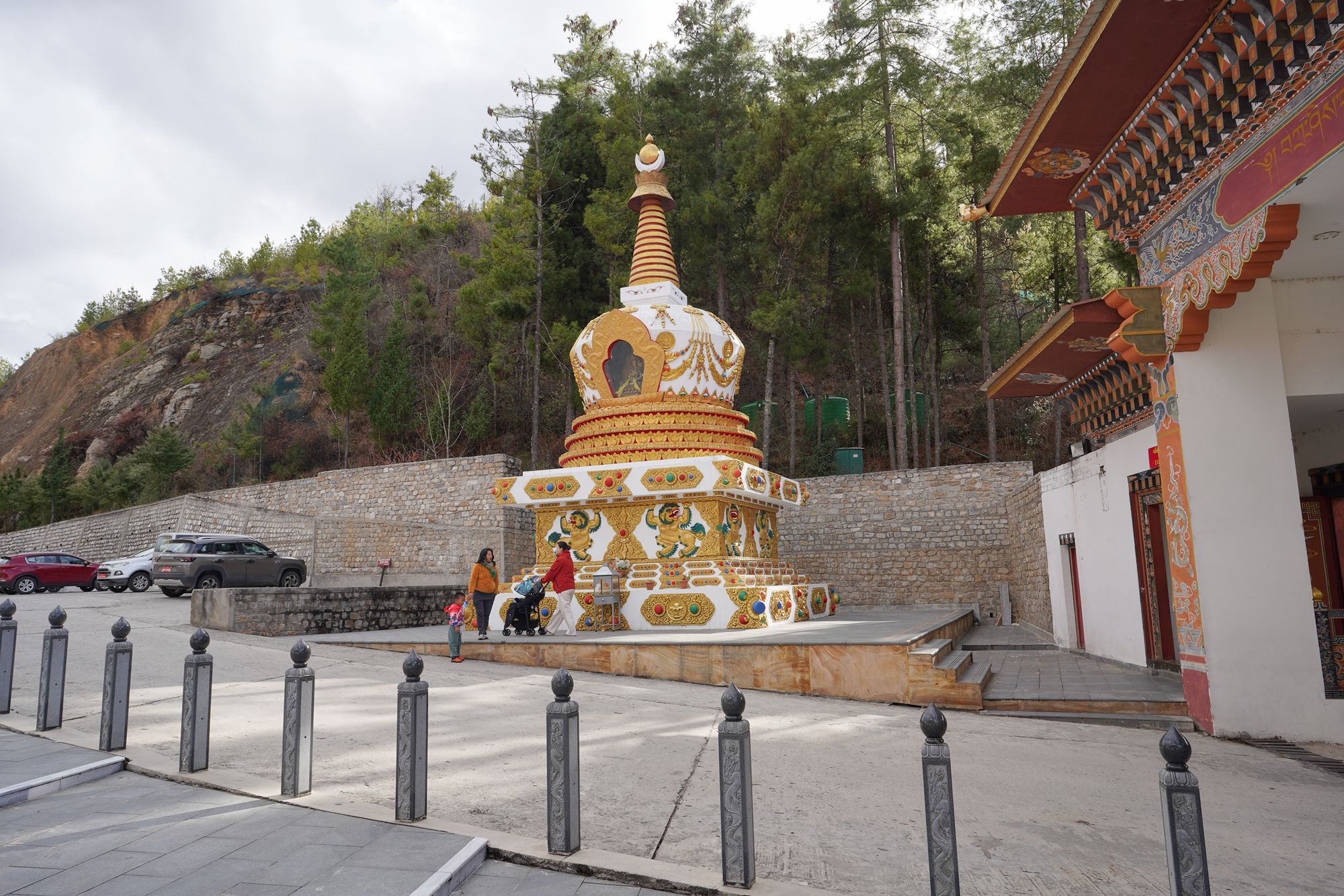
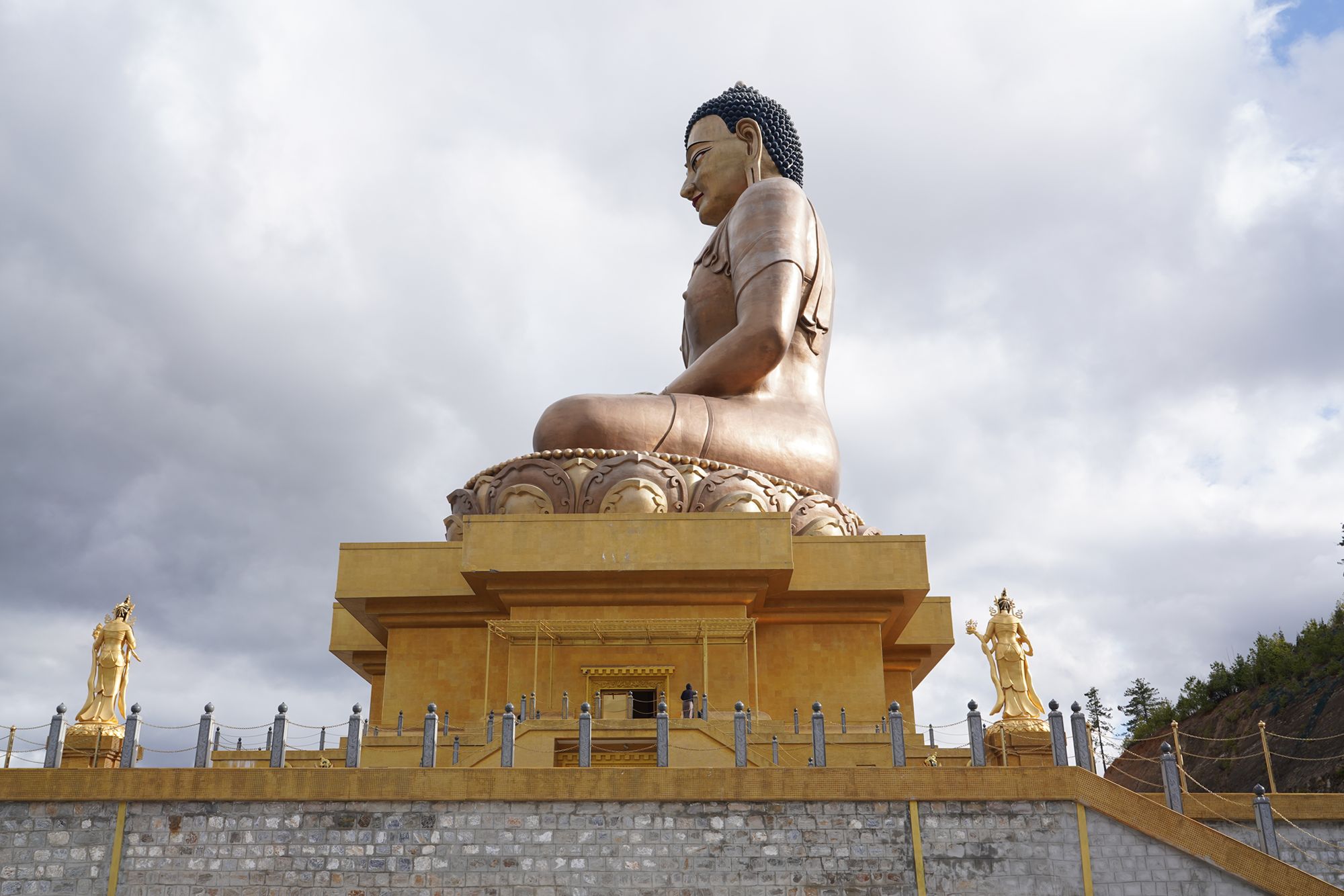
Buddha Dordenma is a huge gilded bronze statue of Shakyamuni Buddha overlooking Thimphu from a hill in Kuenselphodrang Nature Park. The statue is about 51.5 meters (169 feet) tall, making it one of Bhutan's most recognizable landmarks.
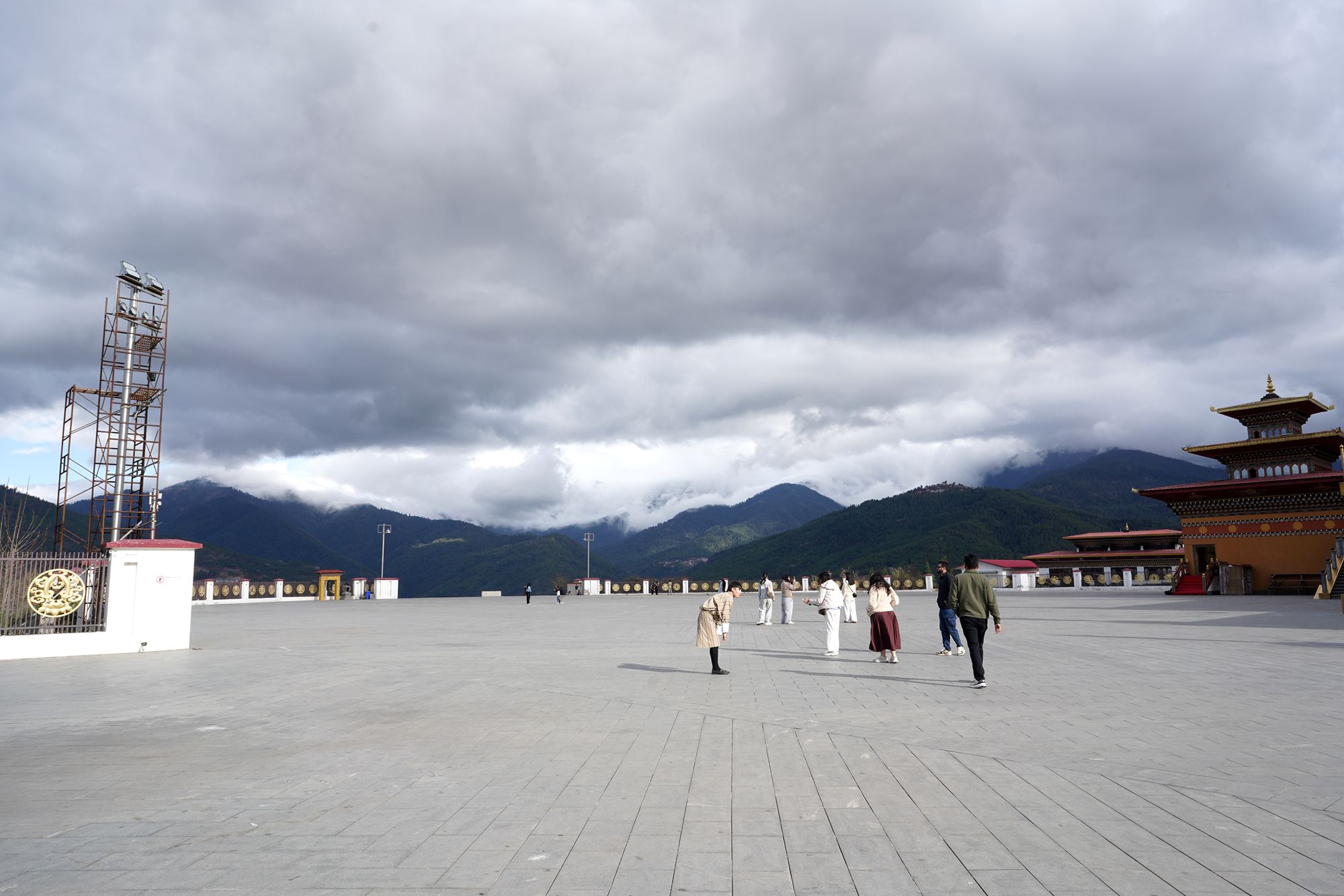
Construction began in the 2000s, and the monument was completed in 2015, commemorating the 60th birth anniversary of Bhutan's fourth king, Jigme Singye Wangchuck.
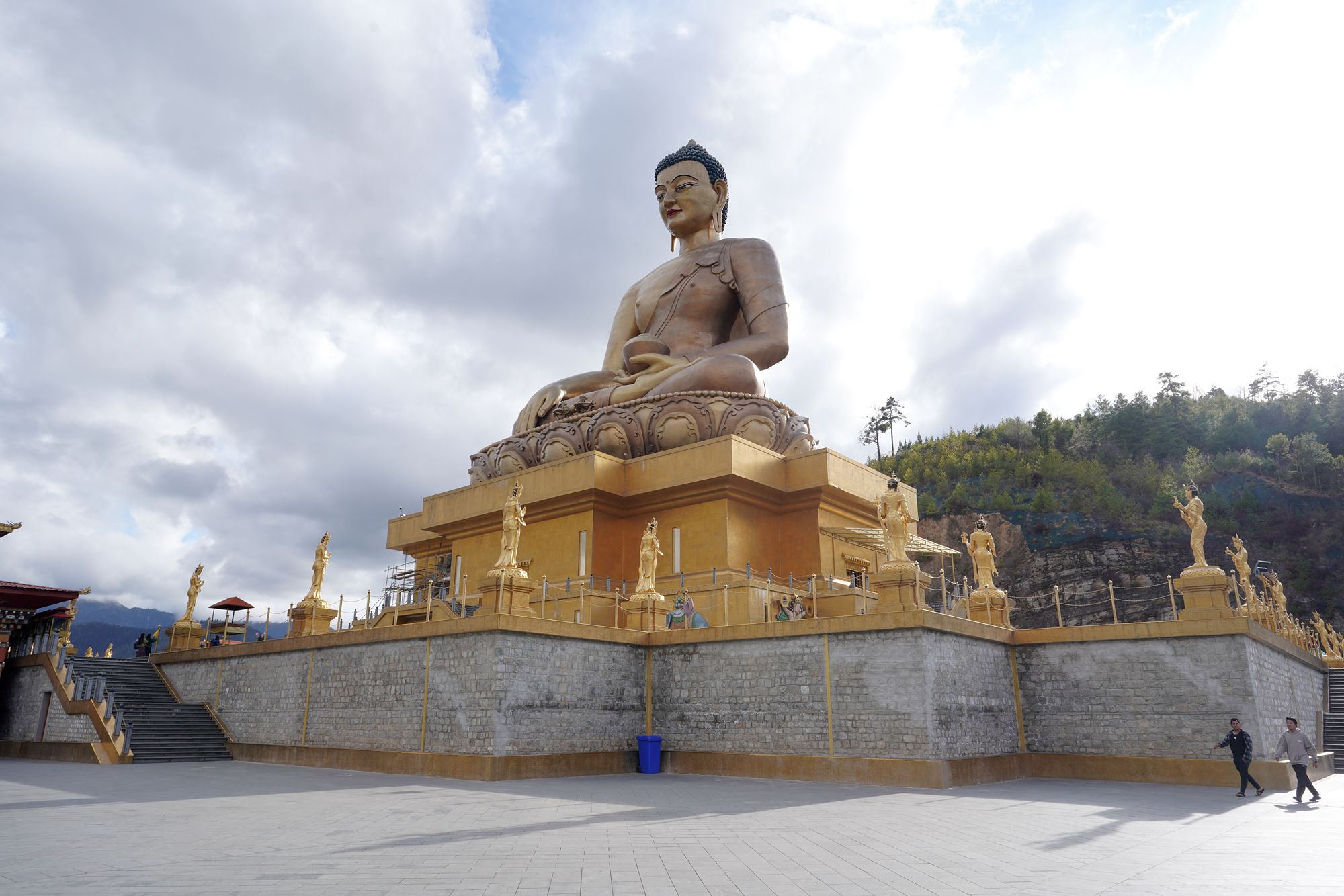
One of its most interesting features is that the enormous statue contains more than 100,000 smaller Buddha statues inside, also made of bronze and gilded.
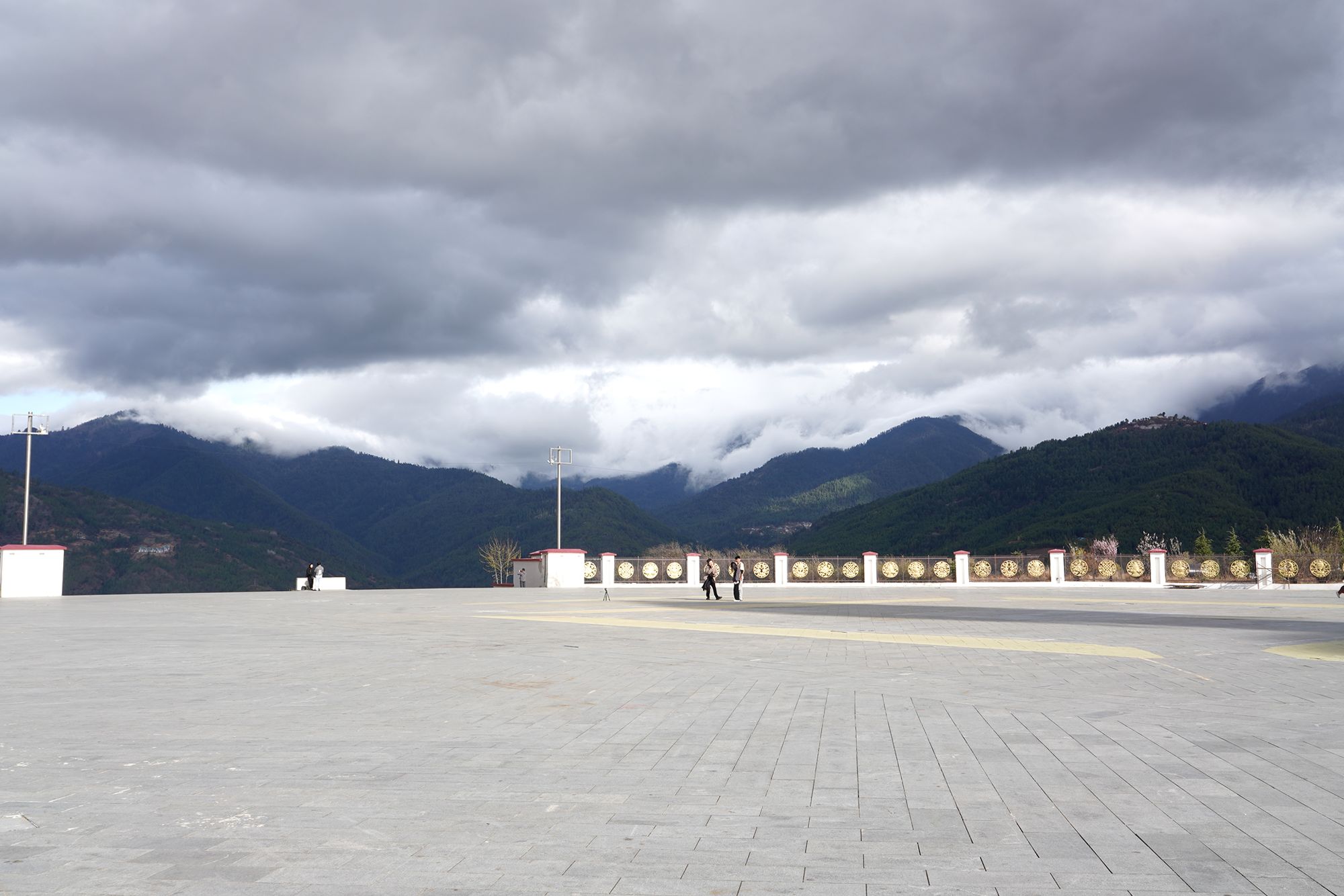
The site is commonly known as Buddha Point. Its hilltop location also provides sweeping views over Thimphu Valley, making the setting almost as impressive as the statue itself.
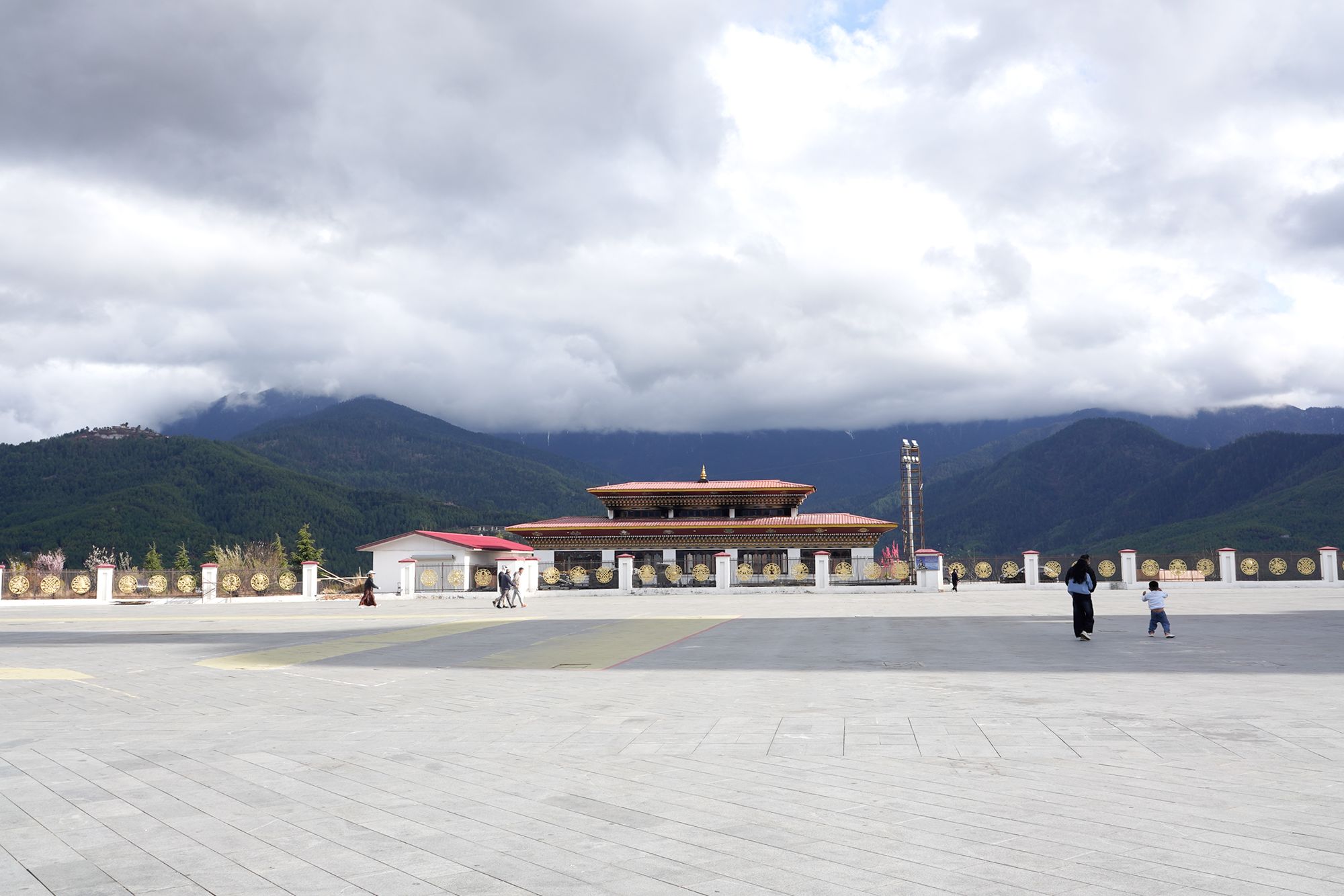
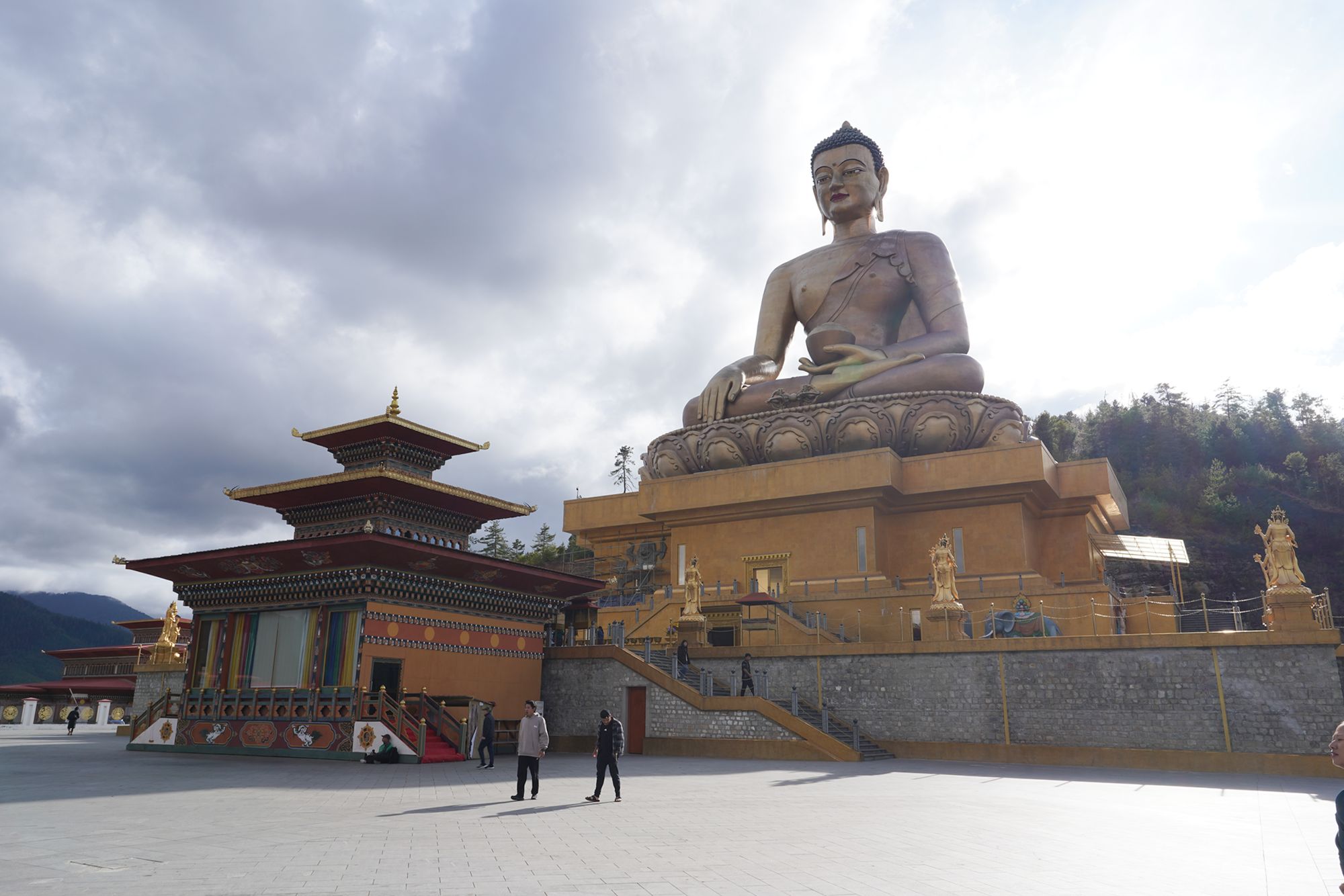
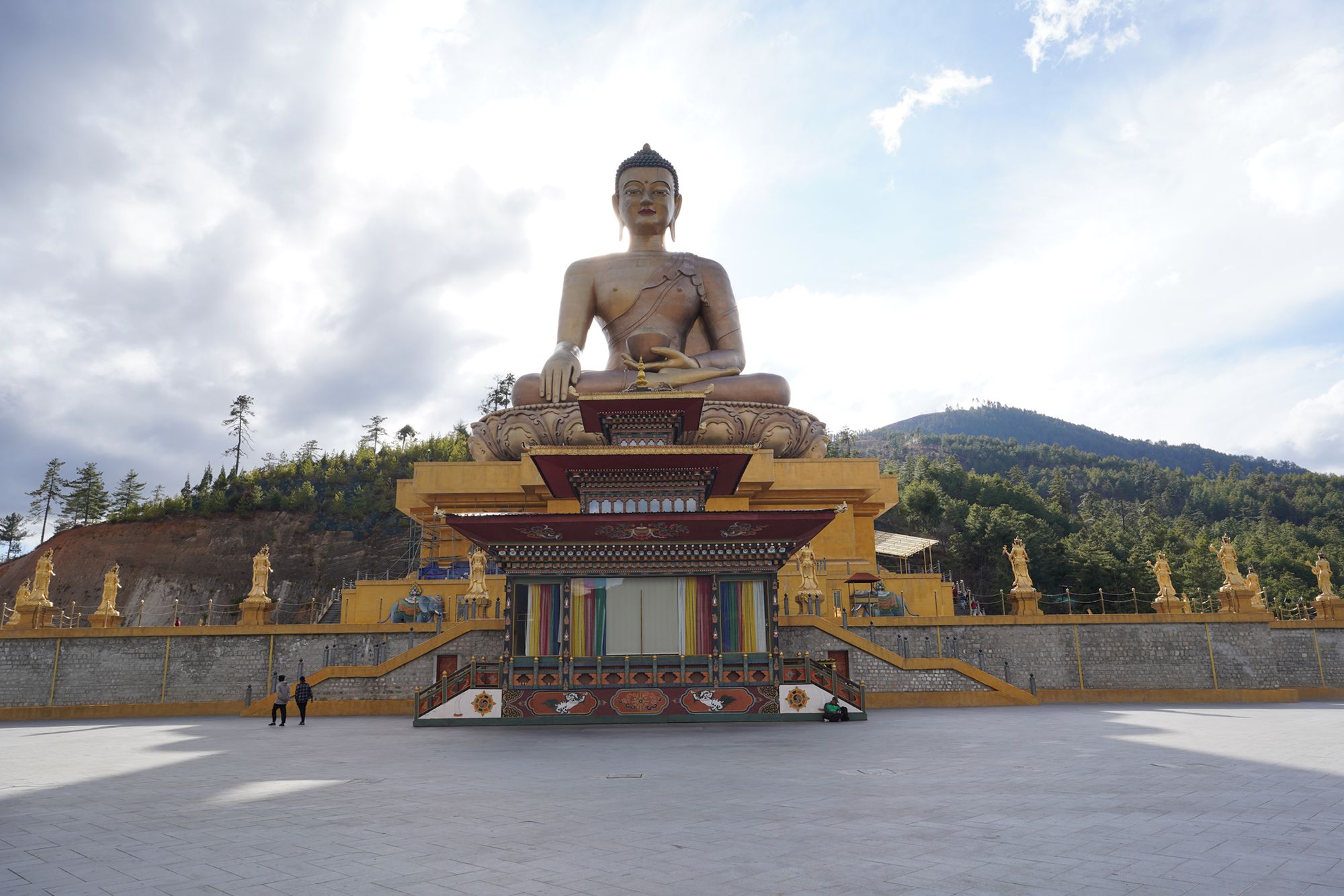
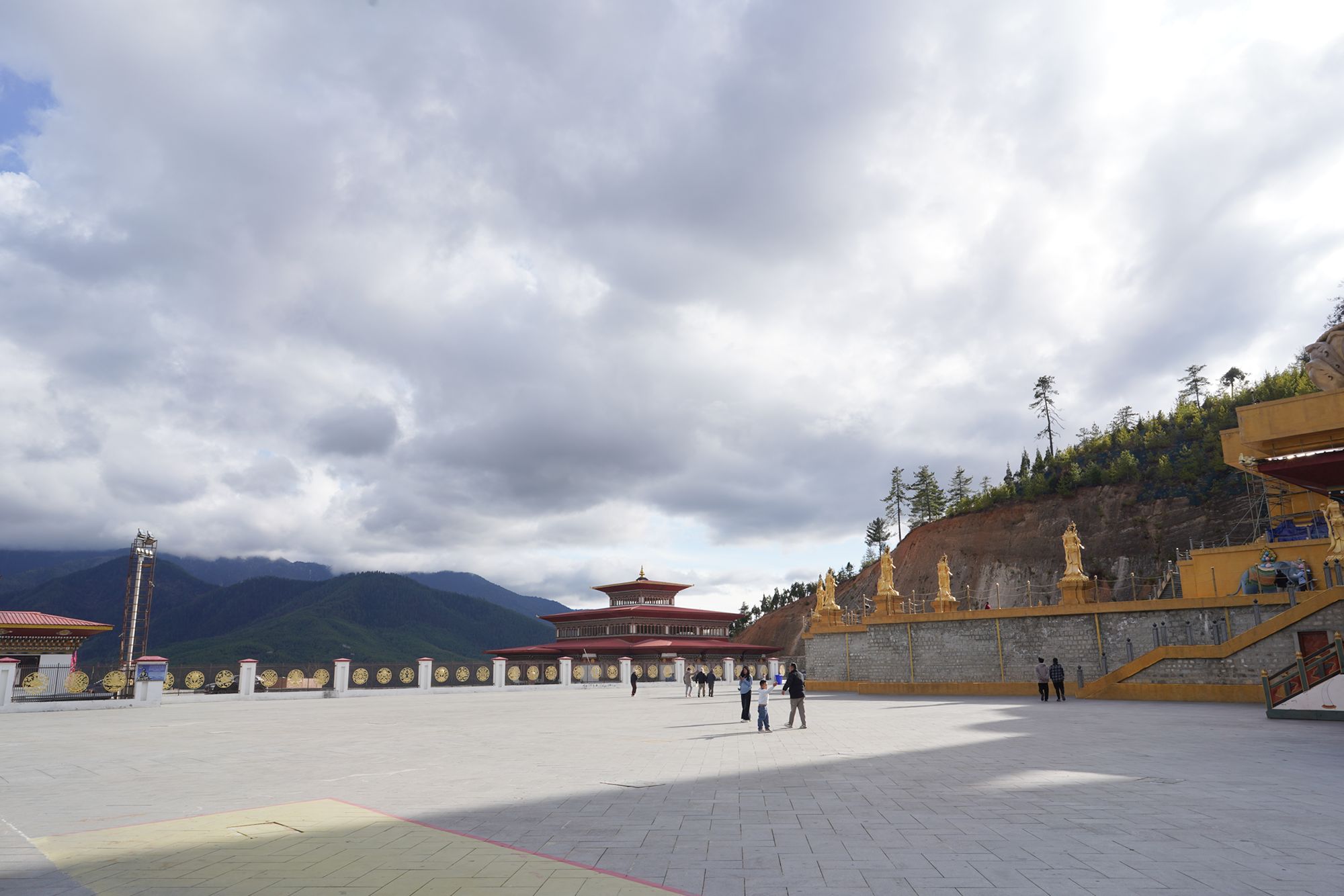
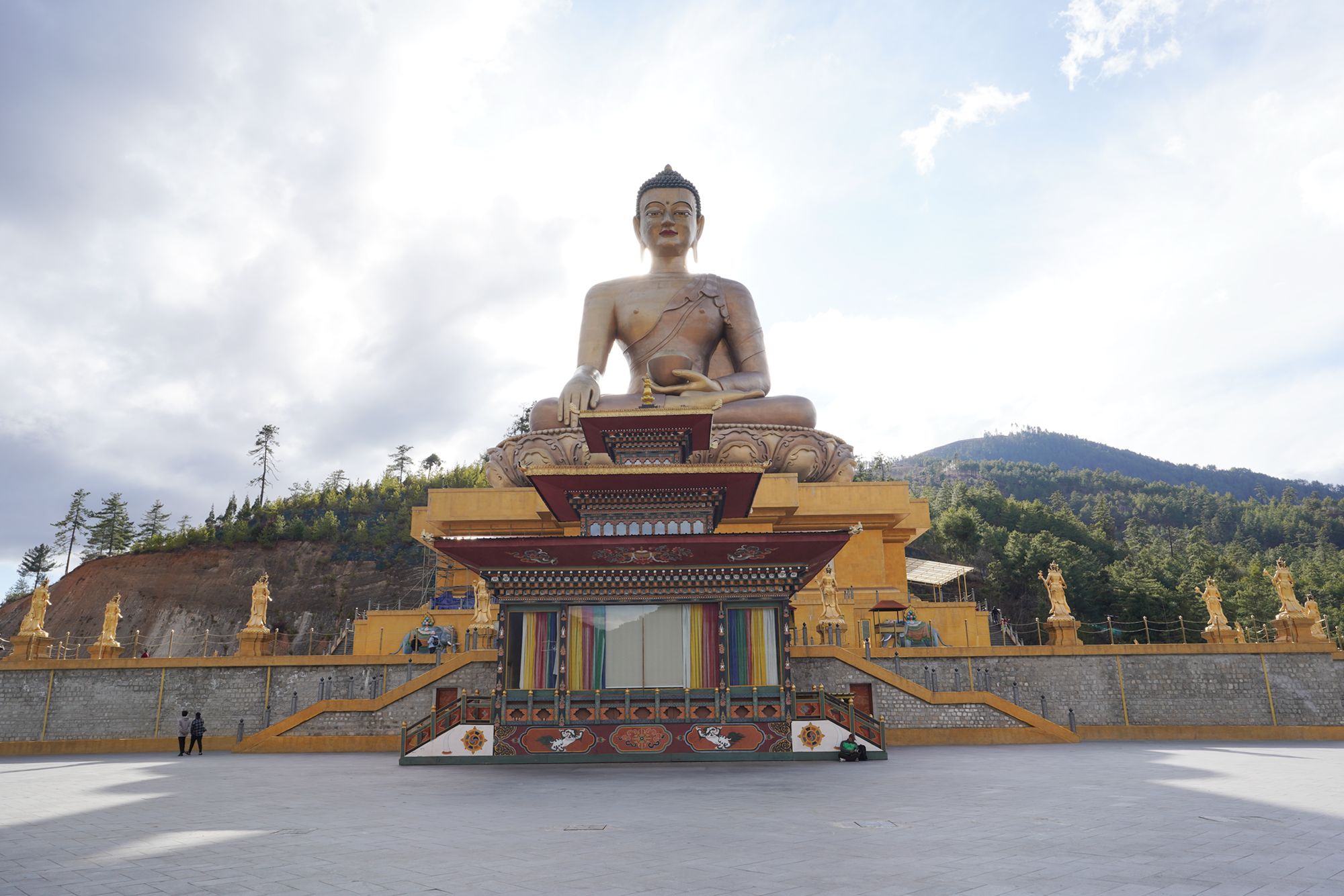
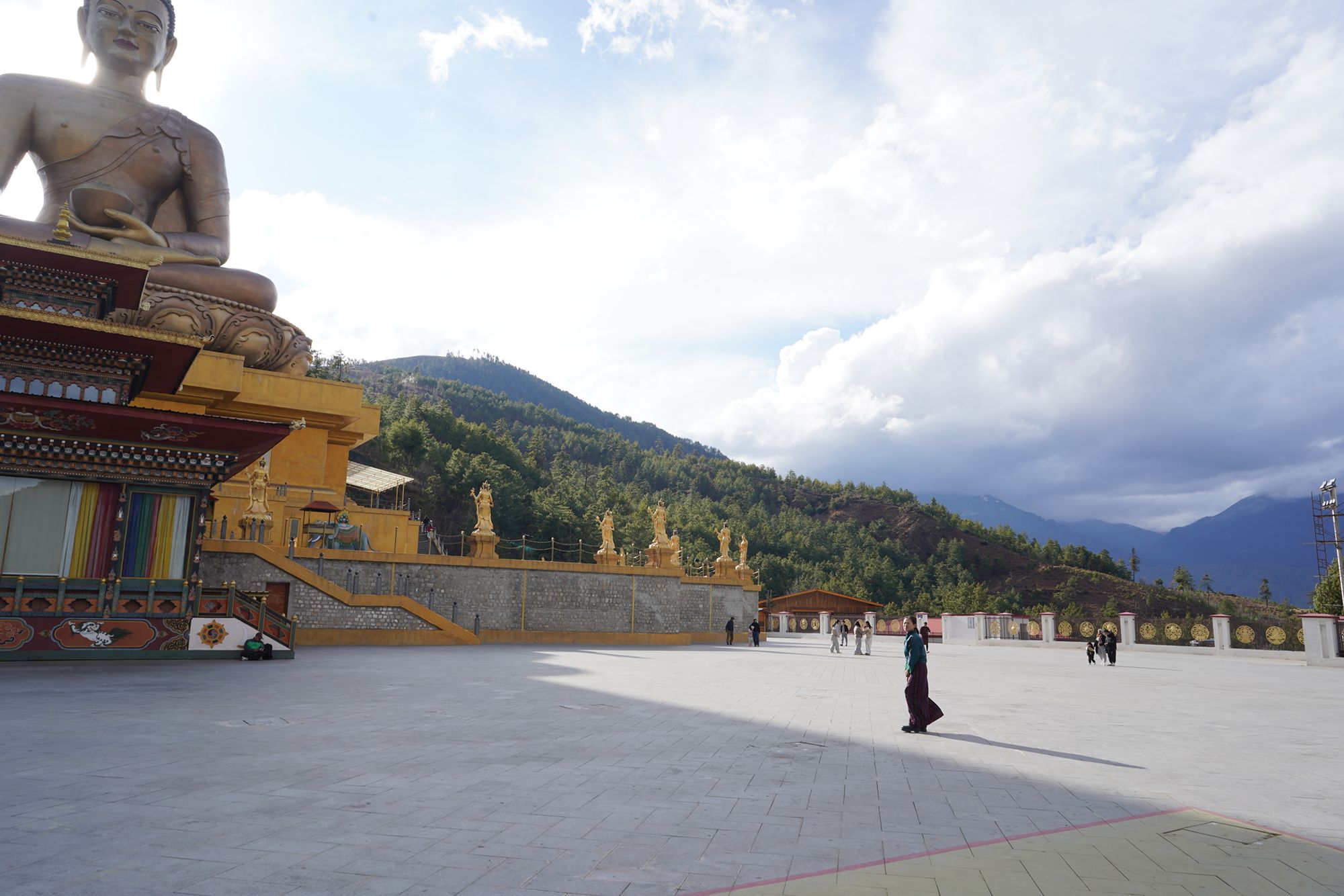
Unfortunately, photography was not allowed inside, so I have no photos of the interior.
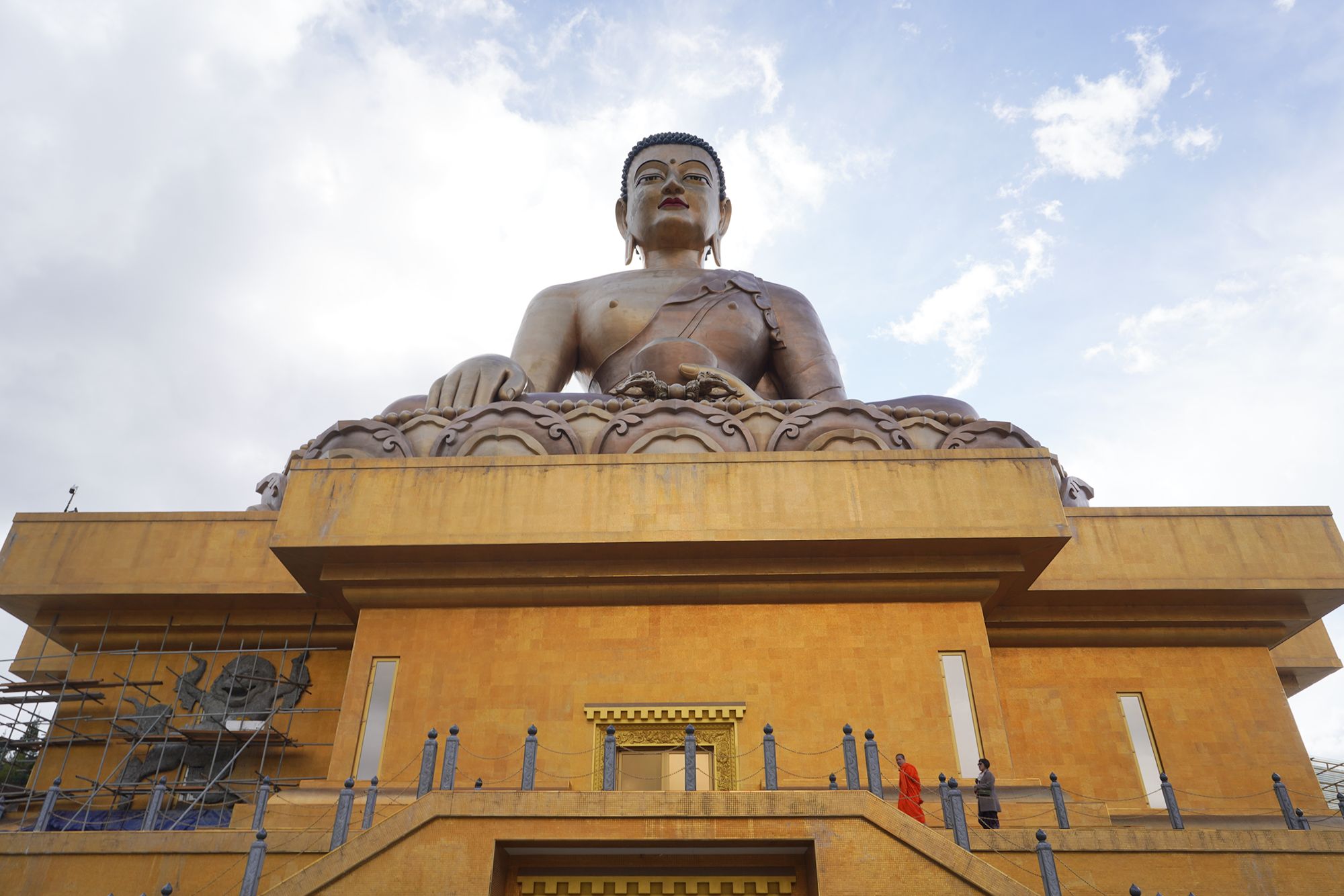
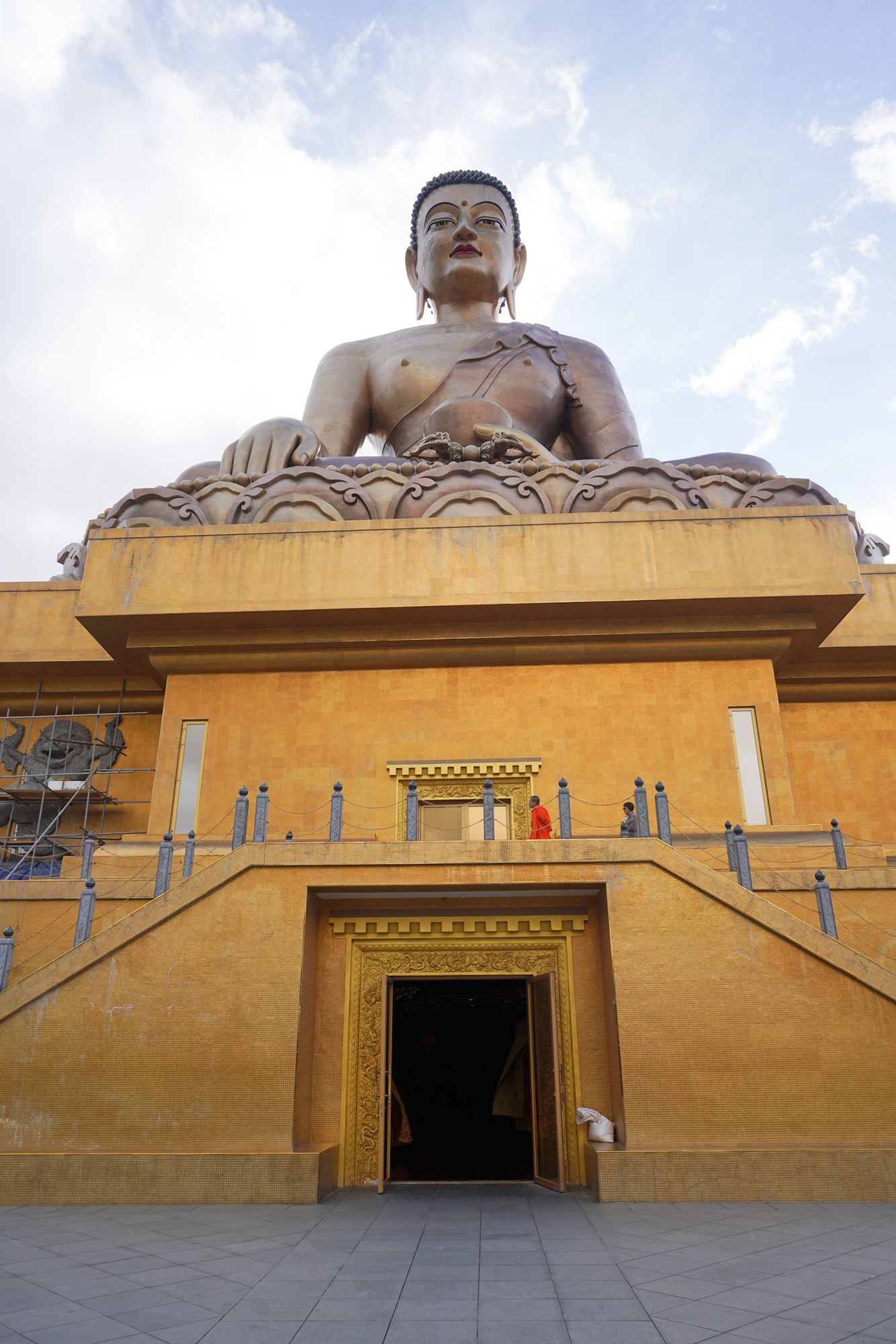
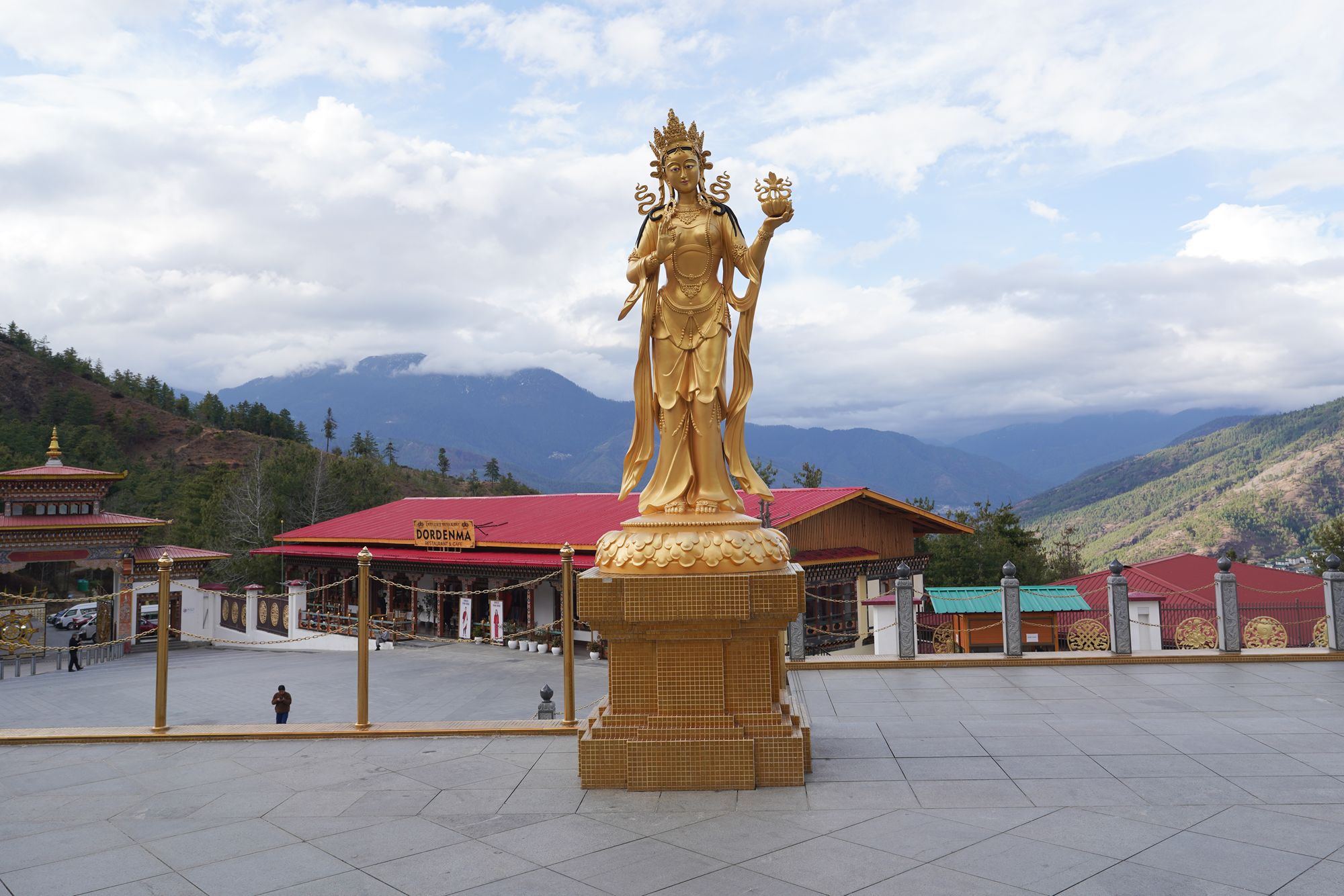
Leaving Buddha Dordenma after exploring the impressive hilltop complex.
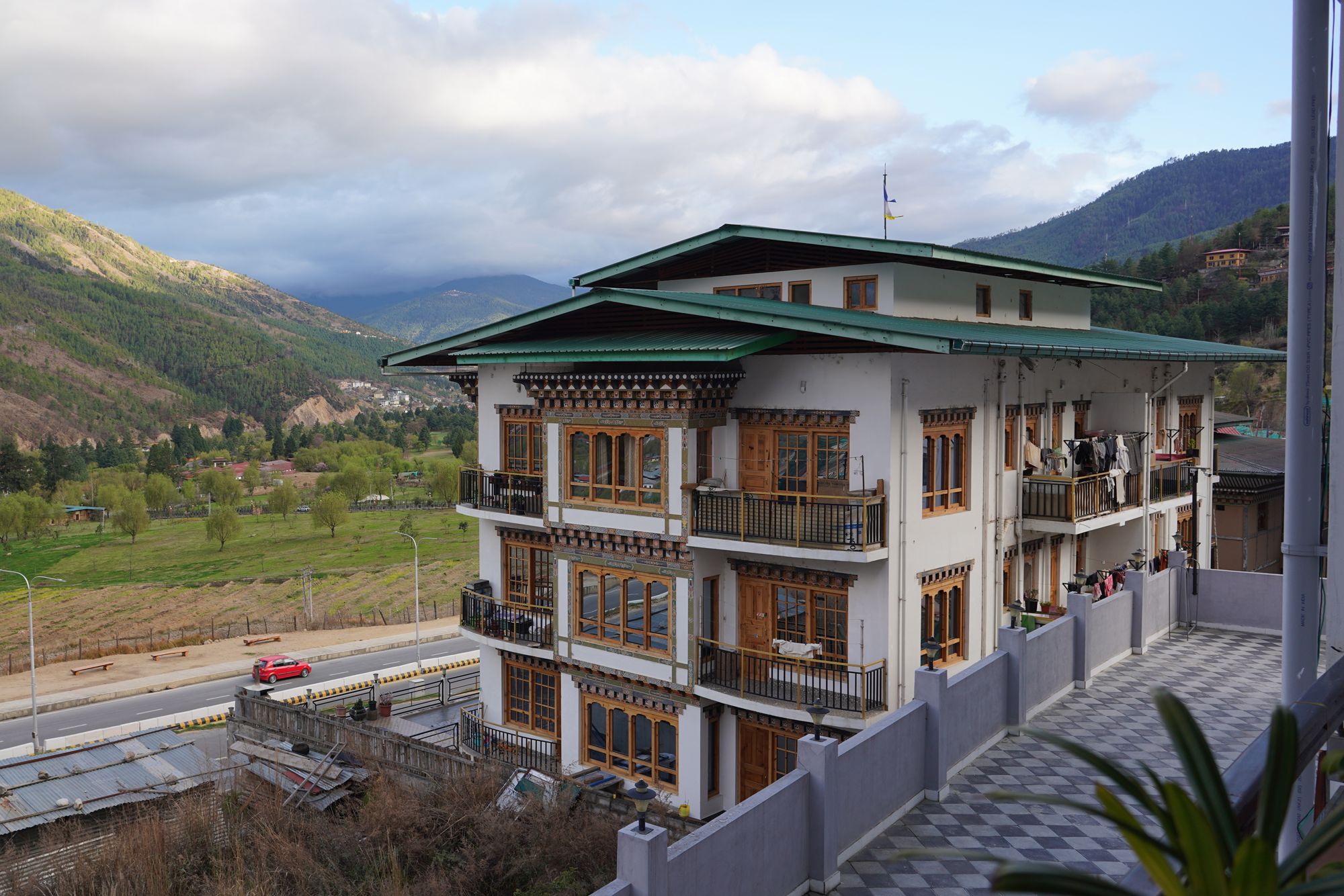
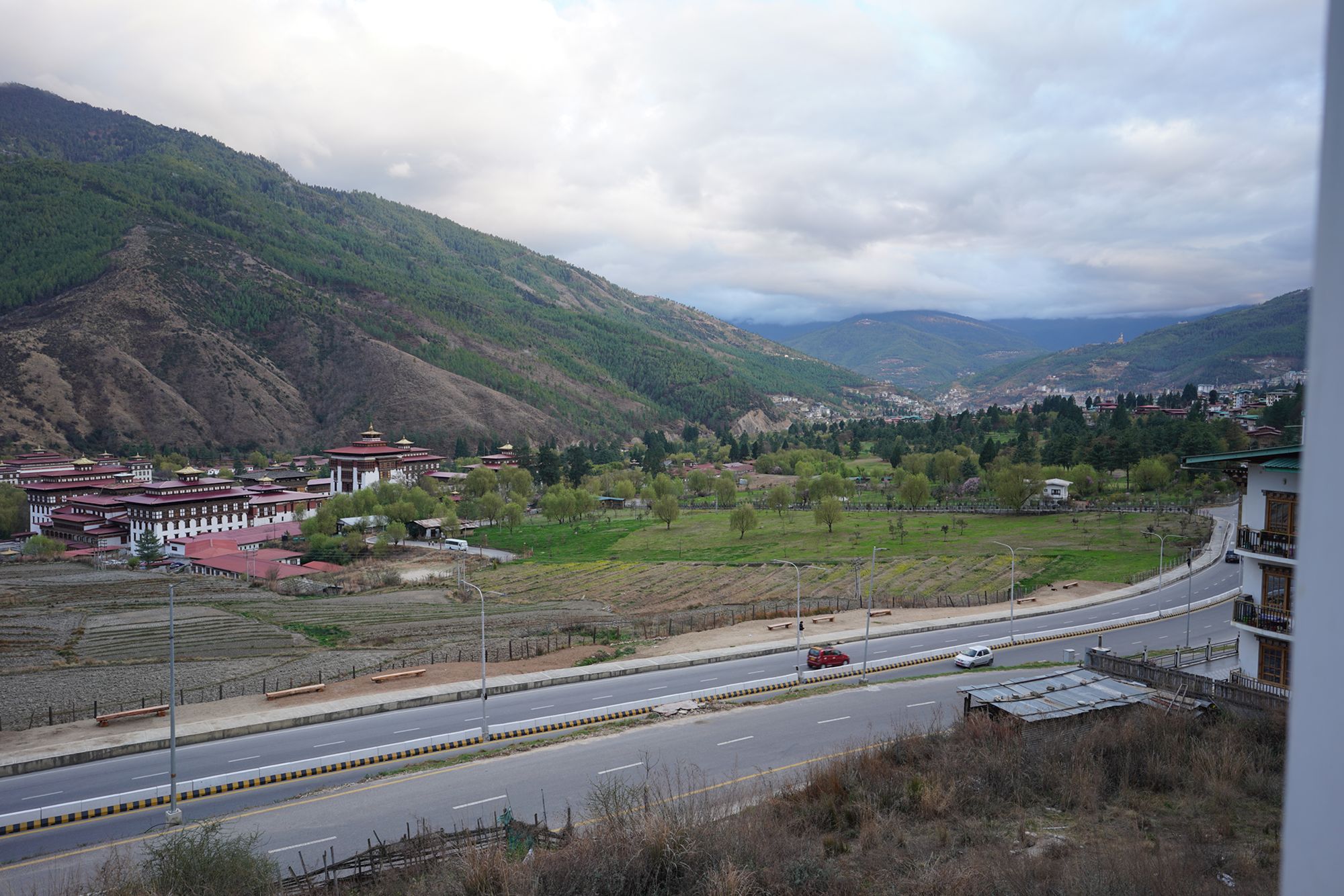
Because my flight was delayed by four to five hours, we arrived too late to visit Tashichho Dzong in Thimphu before it closed. Instead, I had this view of the dzong from my hotel balcony.
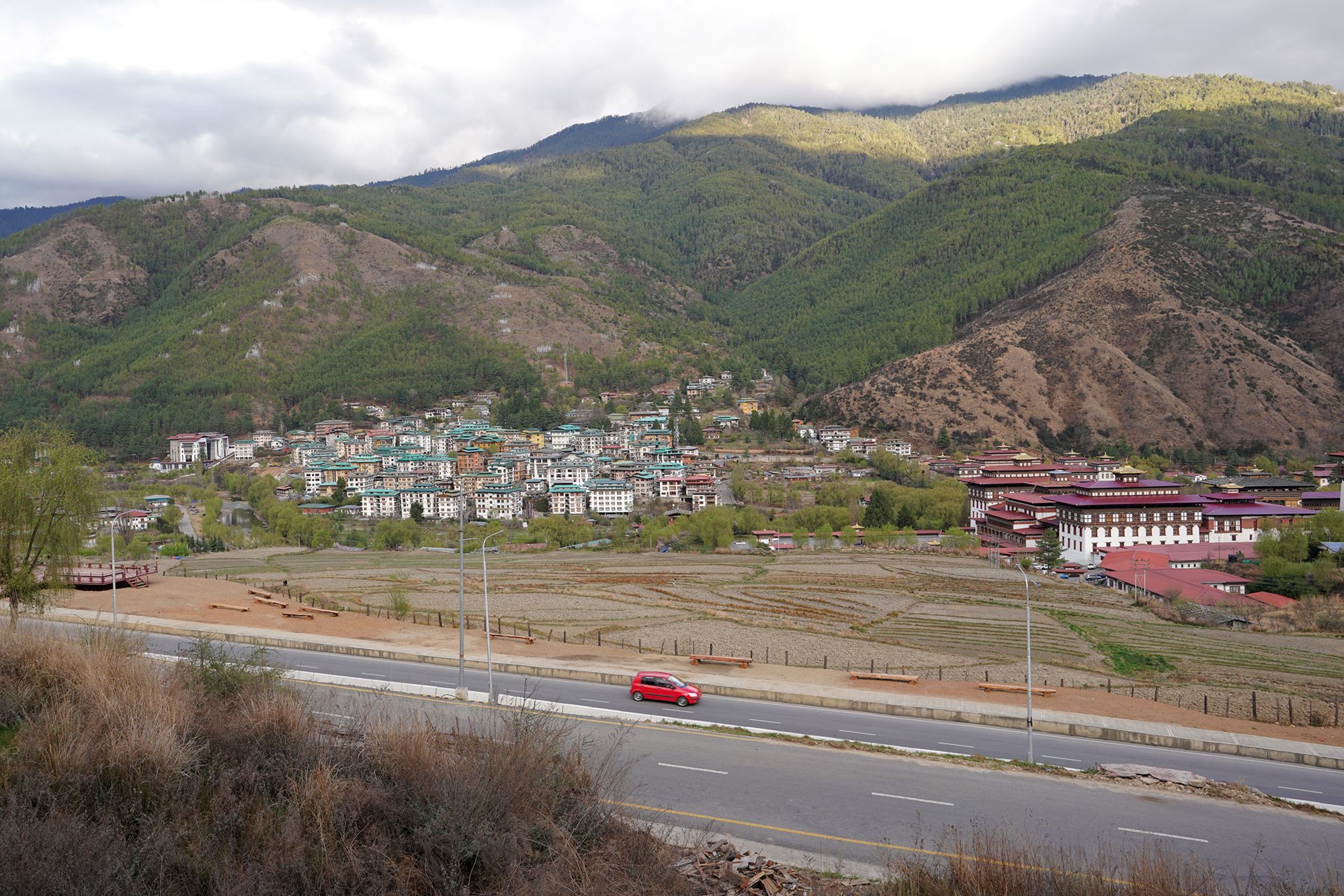
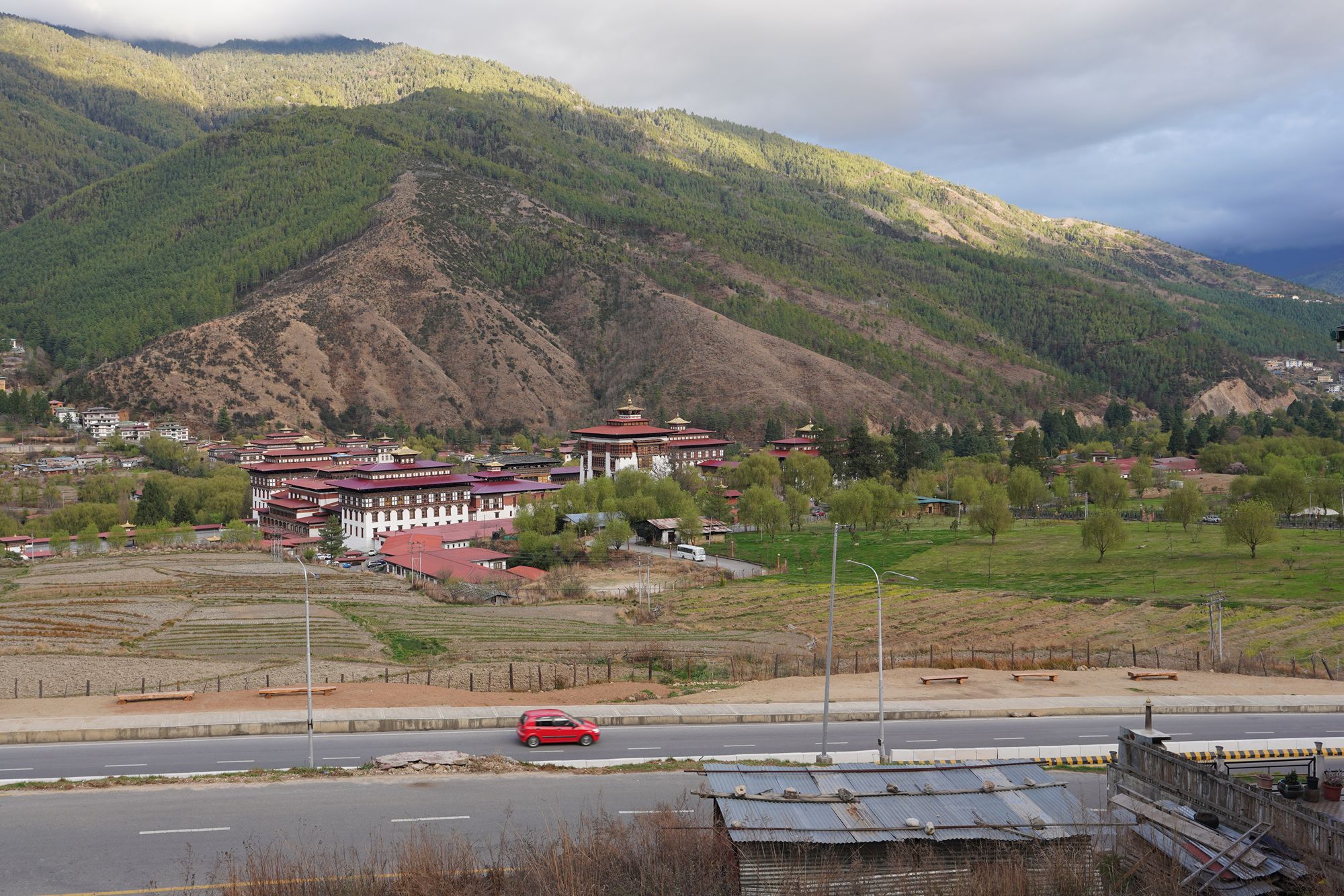
Tashichho Dzong
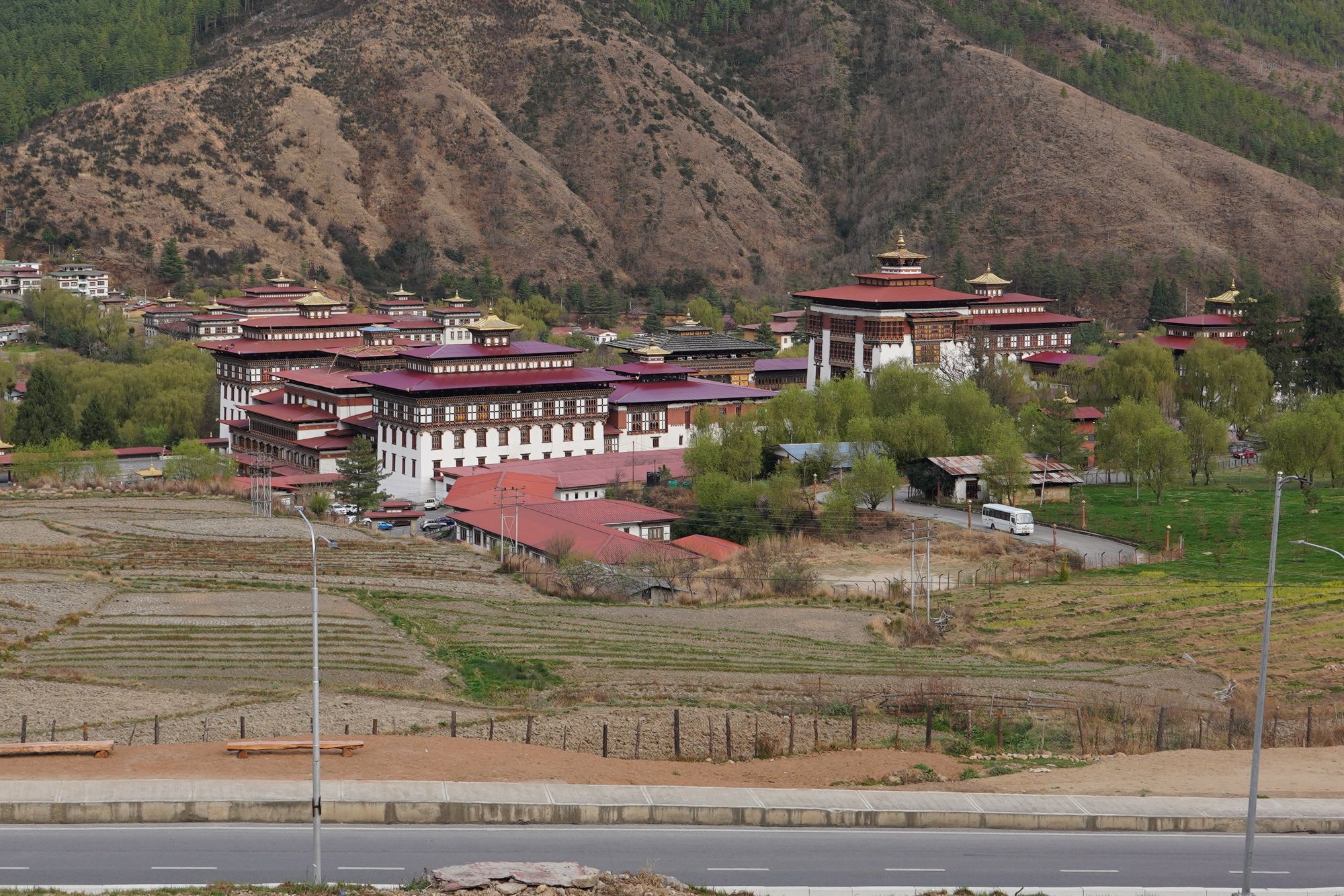
What is dzong? A dzong is a distinctive type of fortified monastery and administrative center found mainly in Bhutan and Tibet.
In Bhutan, dzongs are usually massive fortress-like complexes with high whitewashed walls, courtyards, temples, monks' quarters, and government offices. Historically, they served several purposes at once: defense, government administration, and Buddhist religious life.
So Tashichho Dzong in Thimphu is not simply a temple. It is both an important Buddhist monastic complex and a center of Bhutan's government, including the throne room and offices of the king.
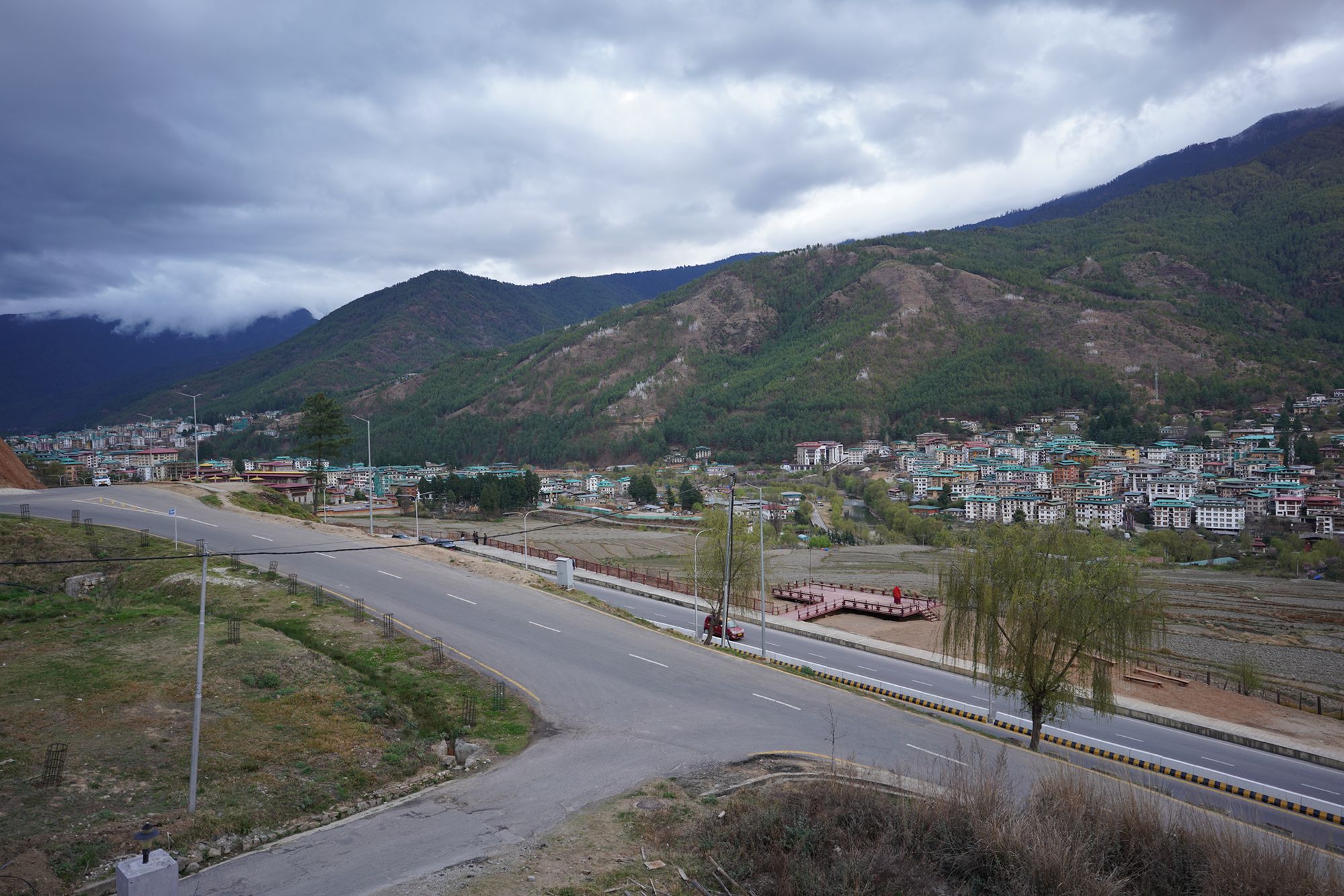
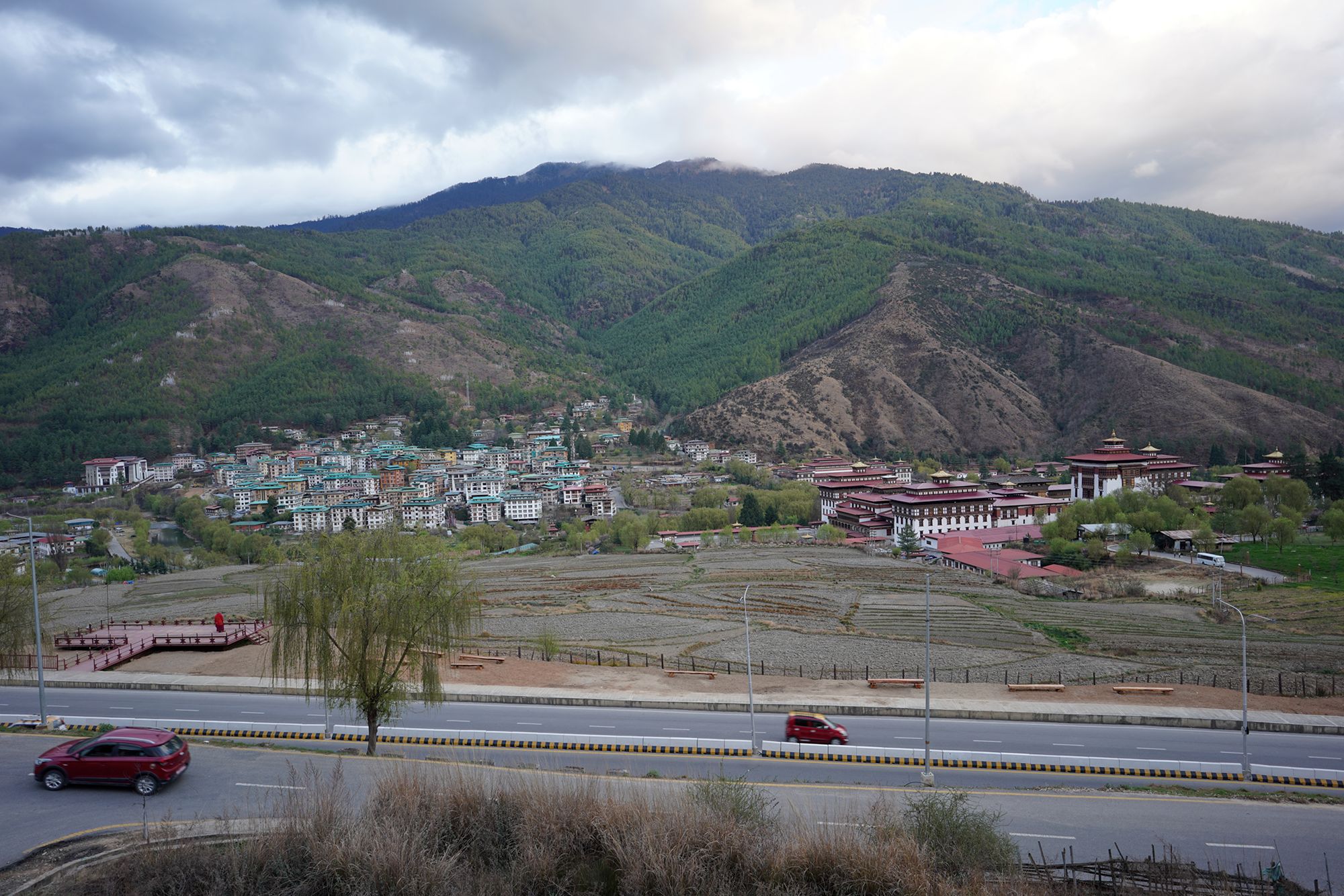
The next morning, we drove up a nearby hill for a panoramic view overlooking Thimphu and the surrounding valley.
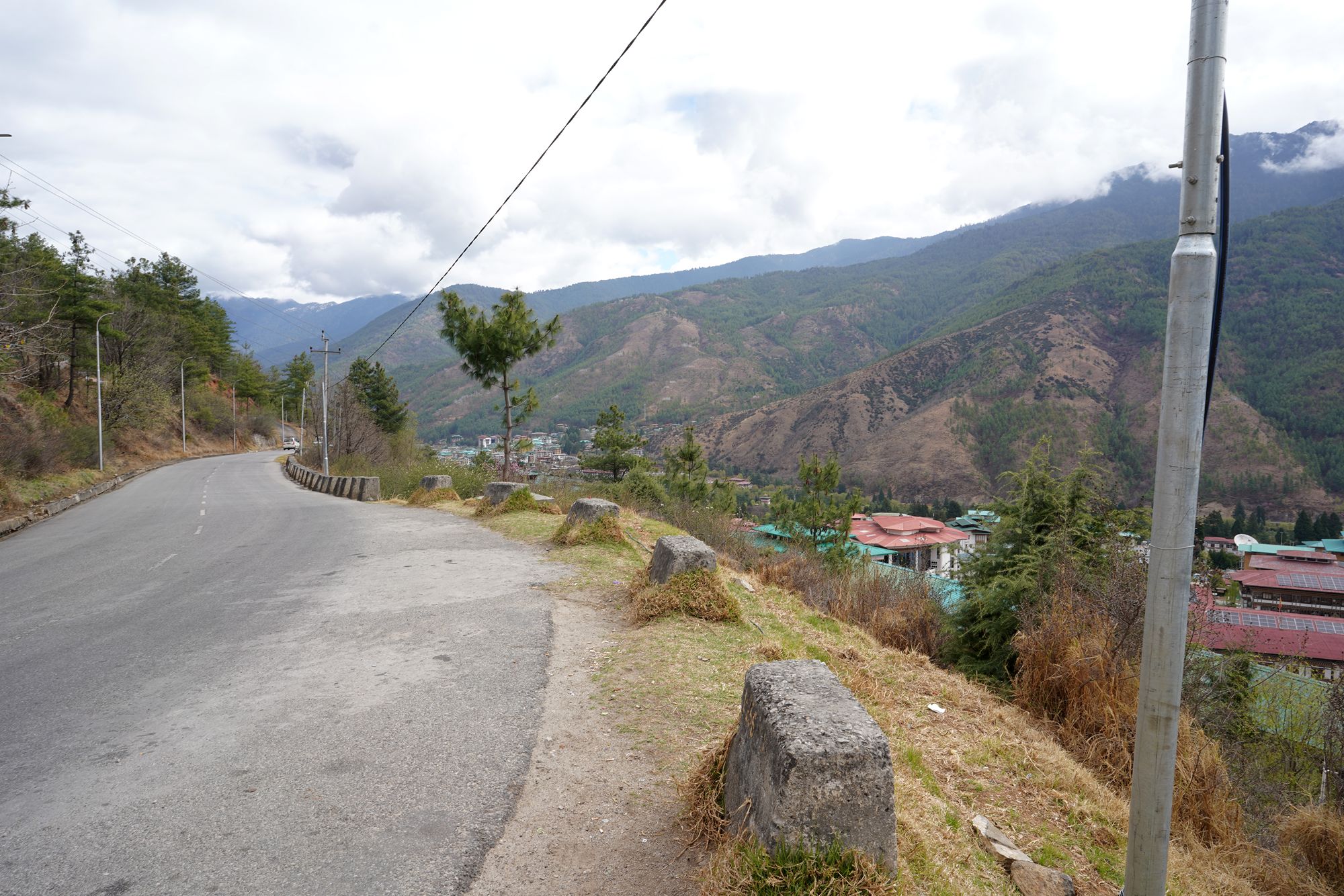
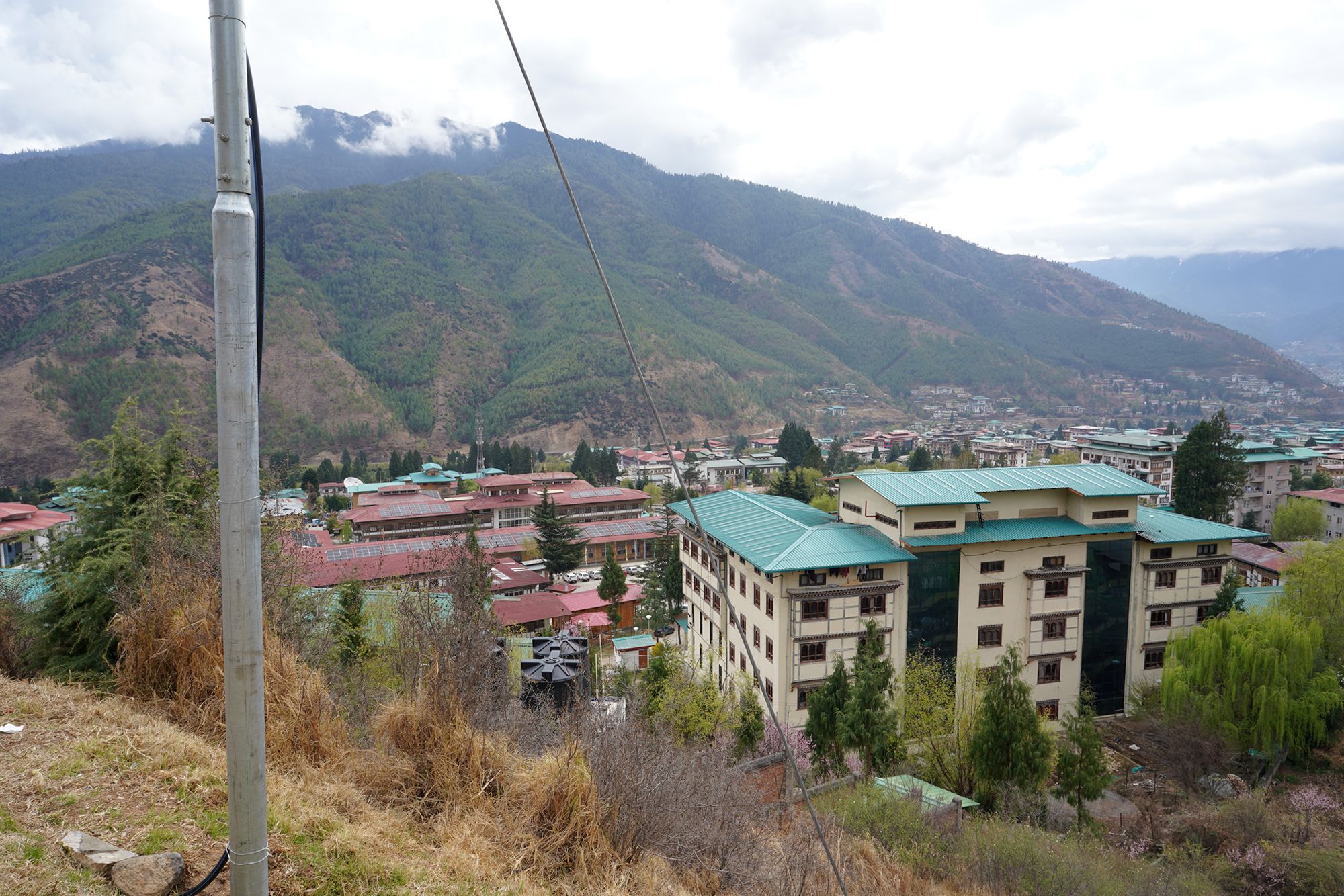
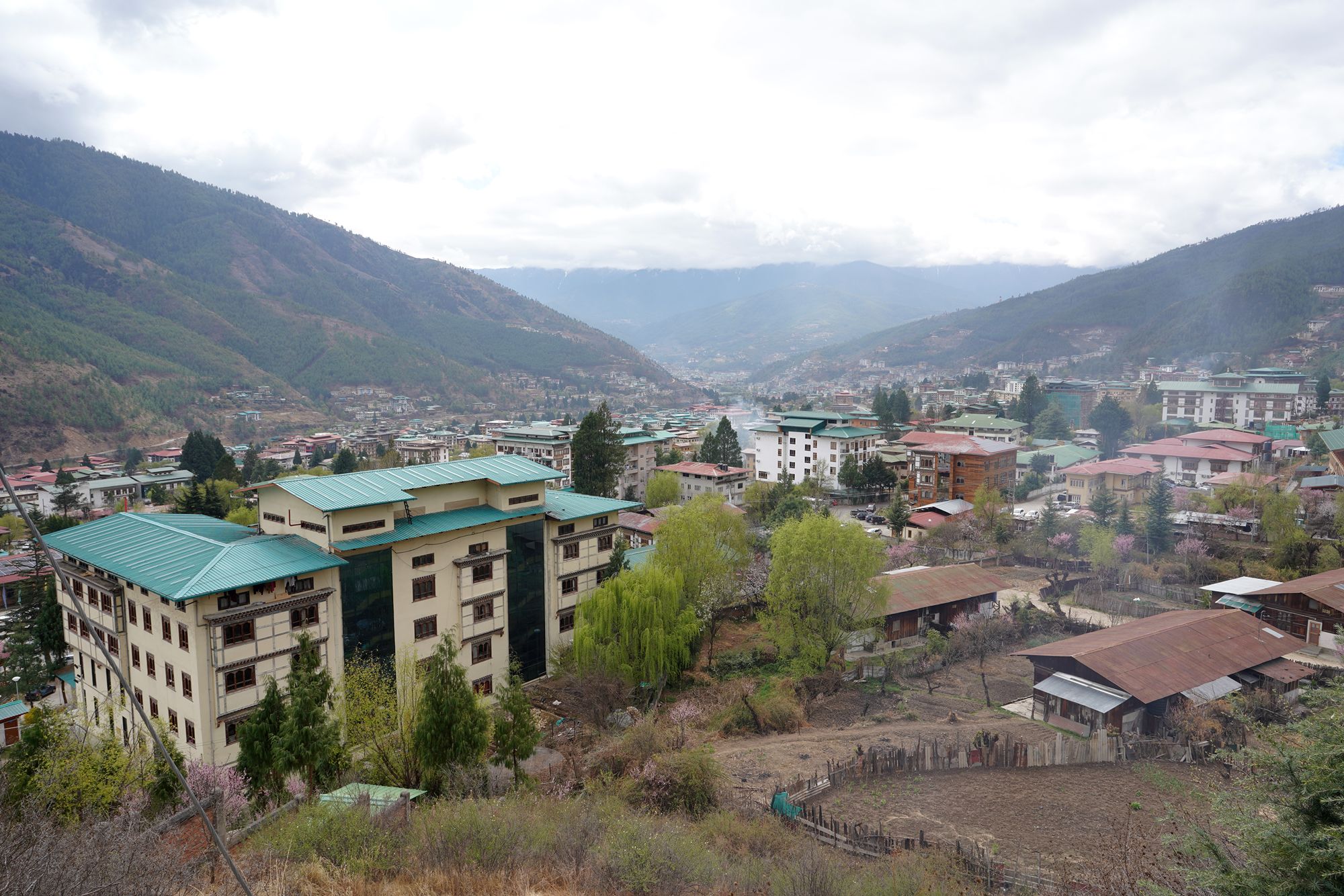
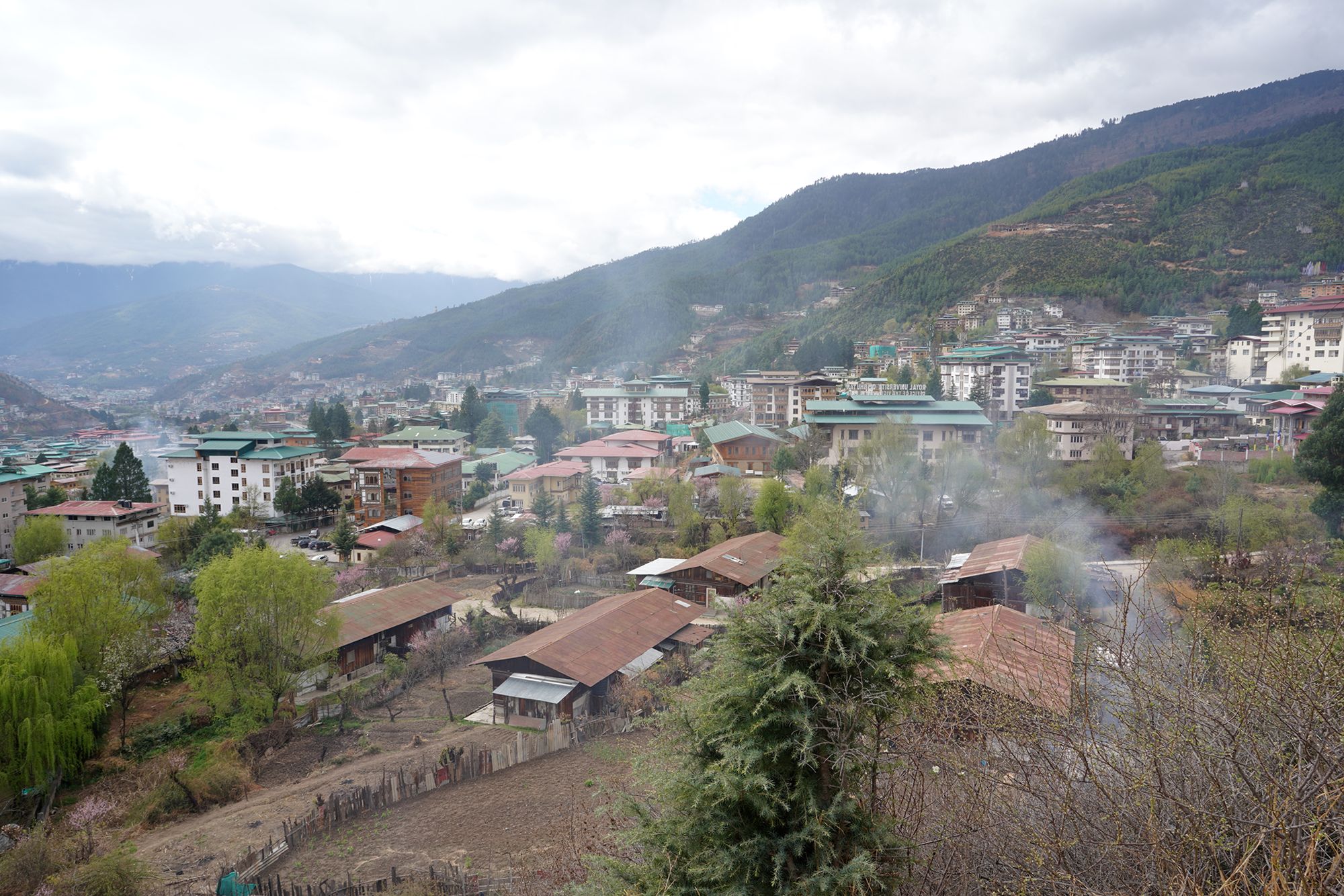
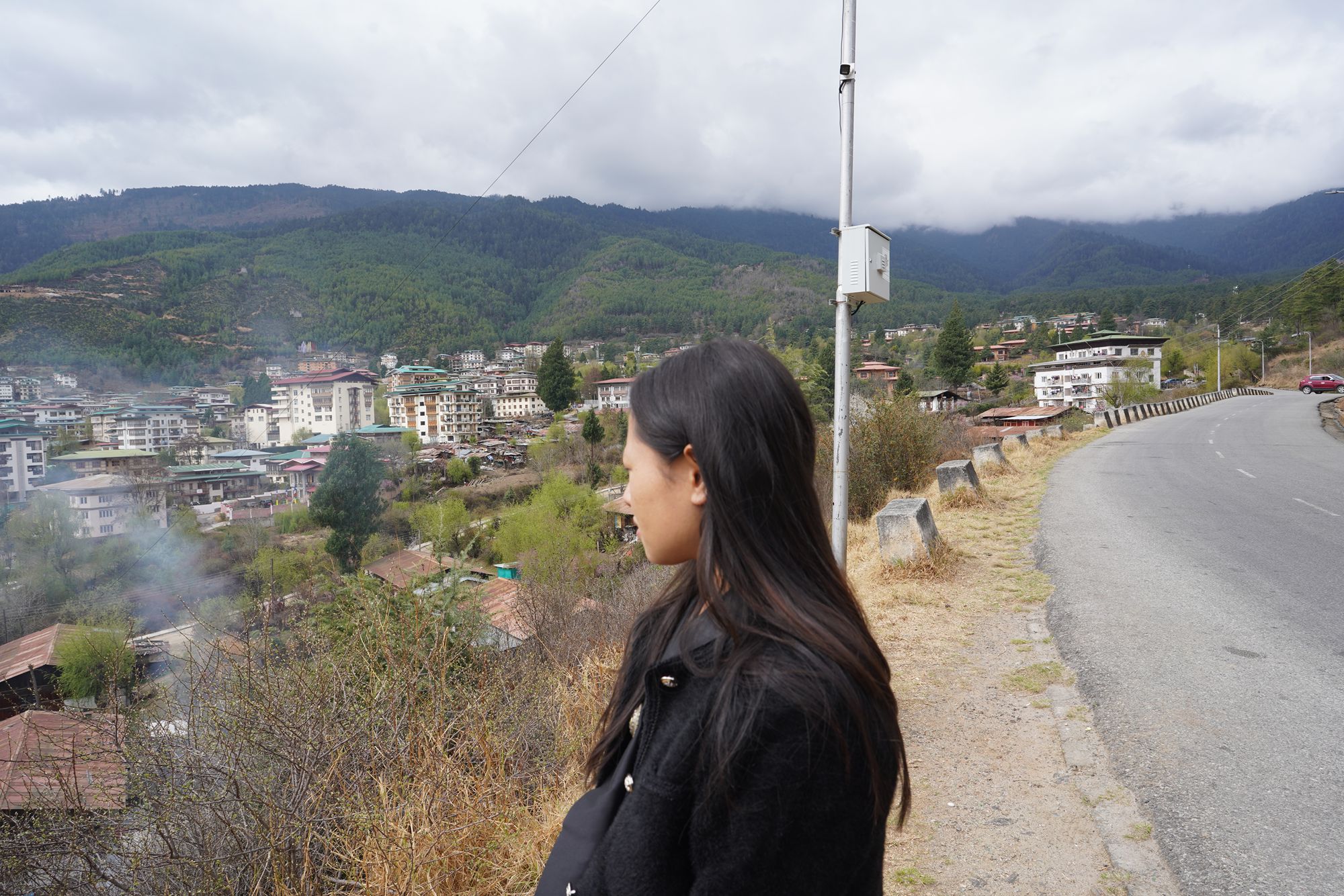
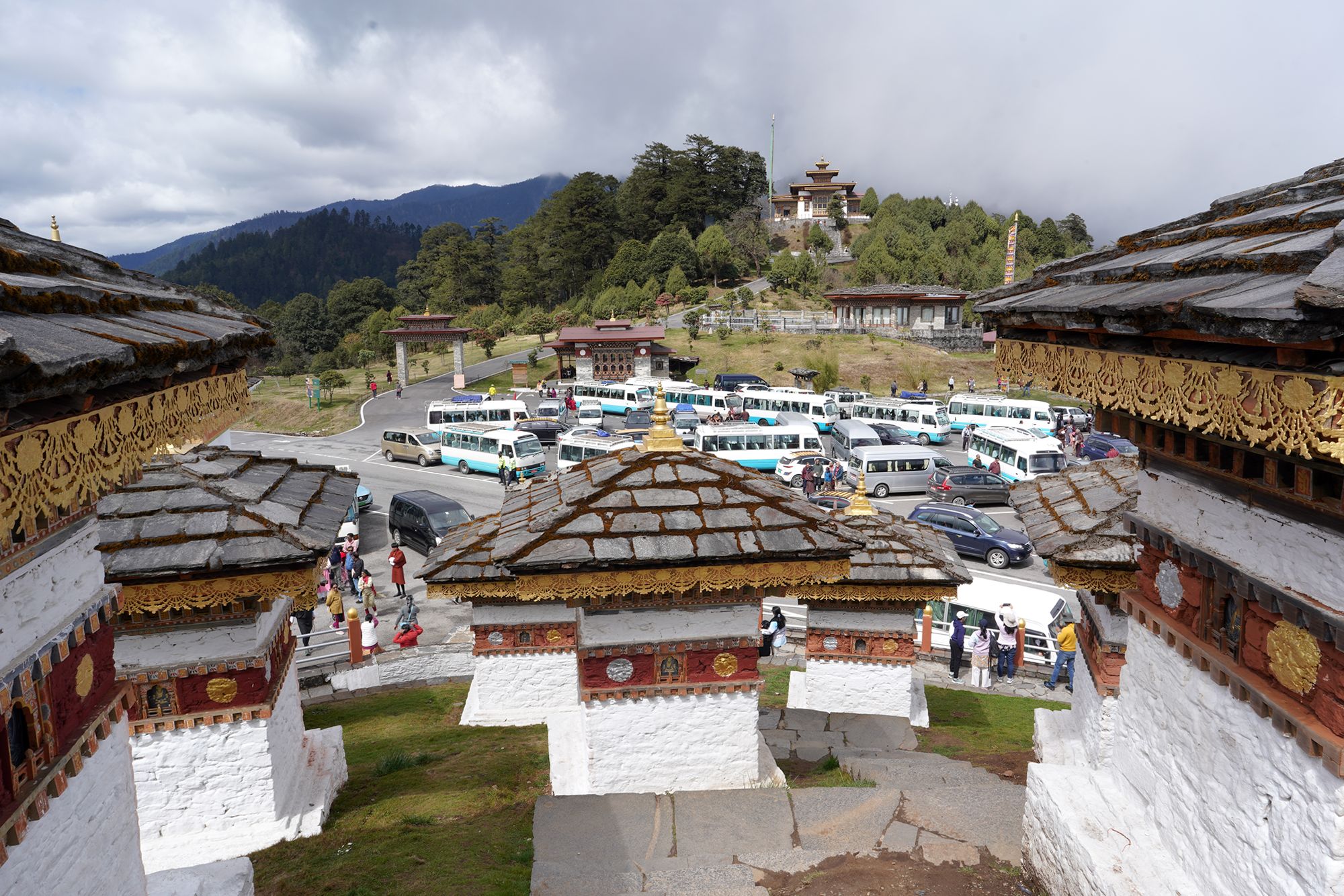
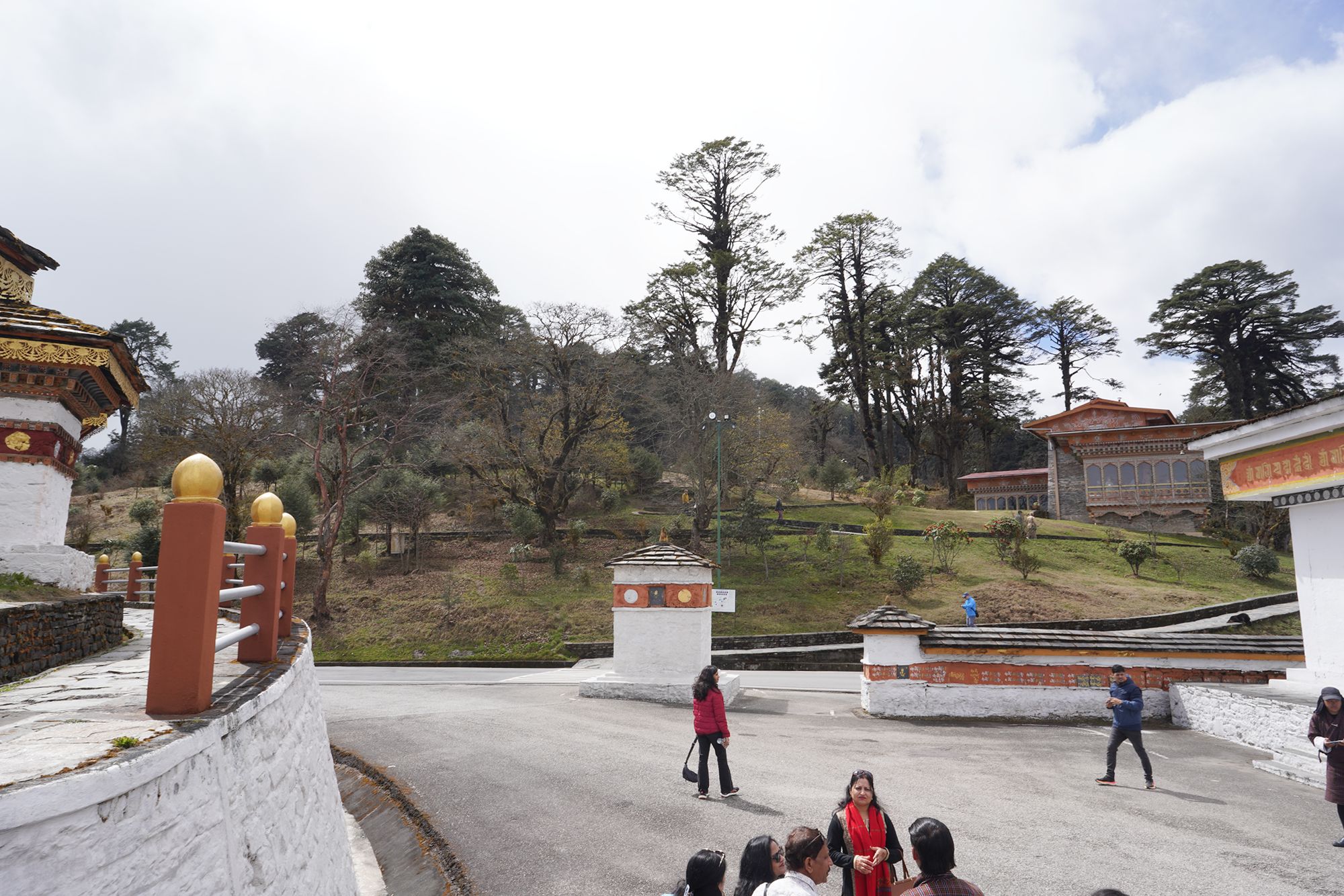
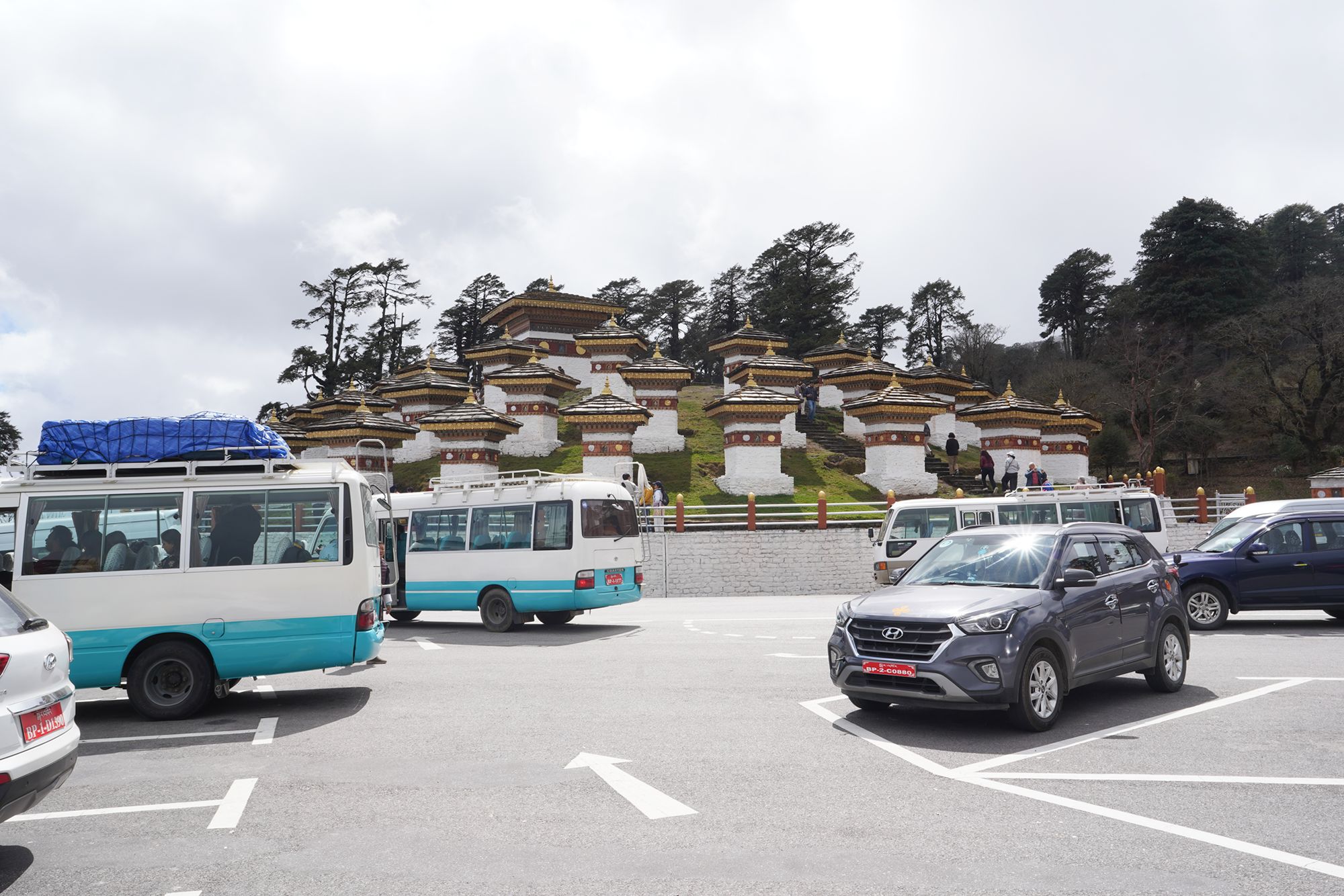
On the way from Thimphu, we stopped at Dochula Pass, one of Bhutan’s most scenic mountain passes.
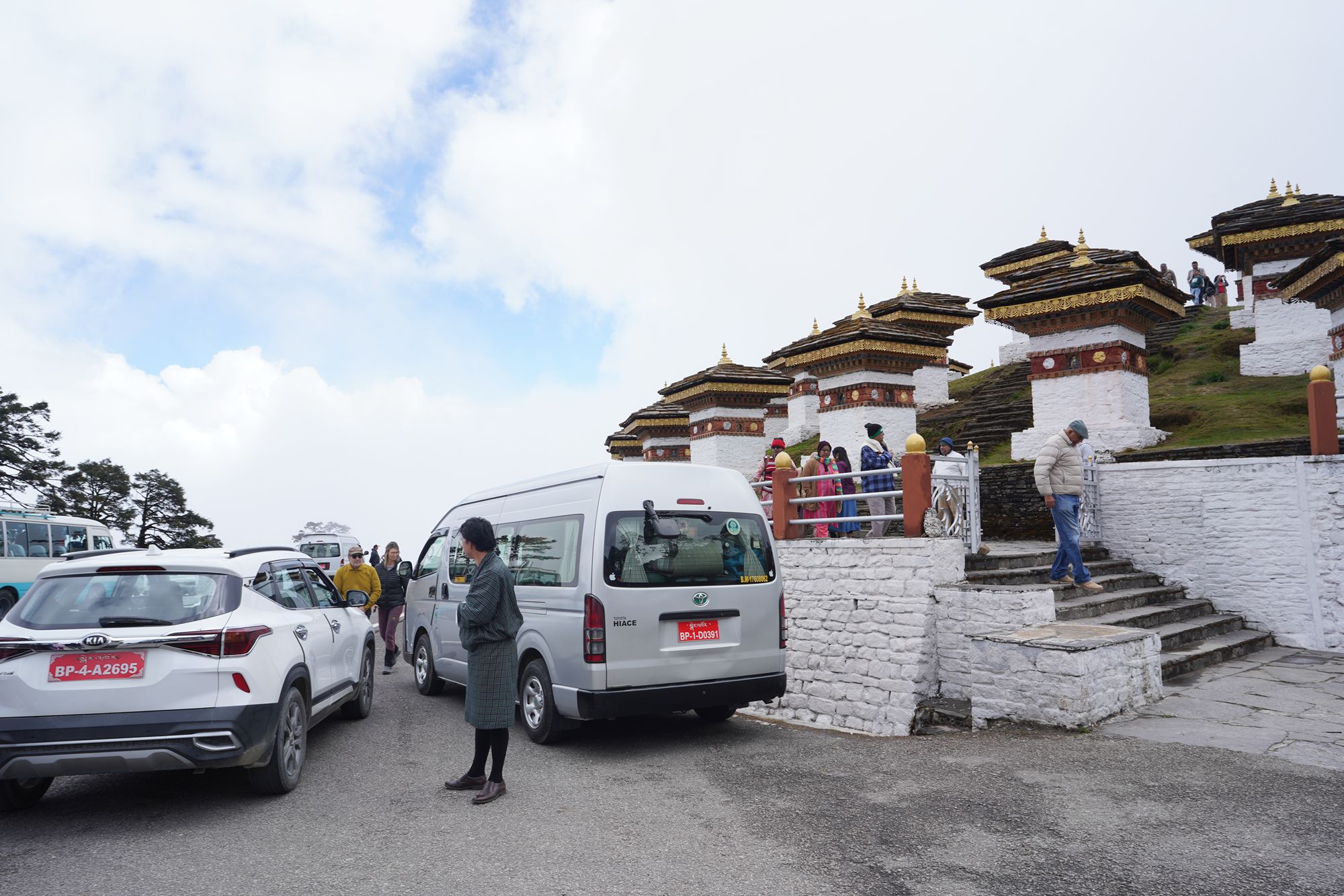
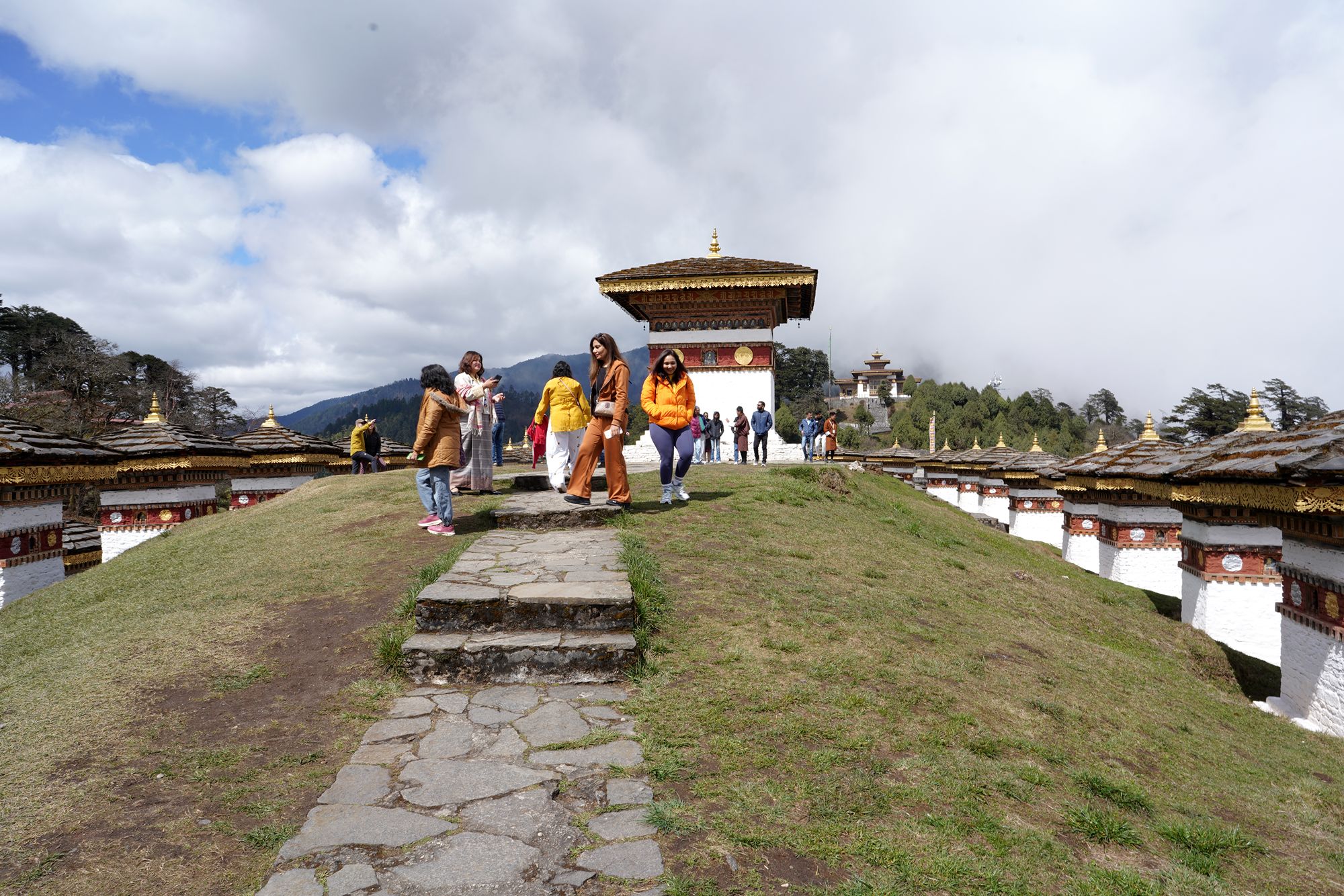
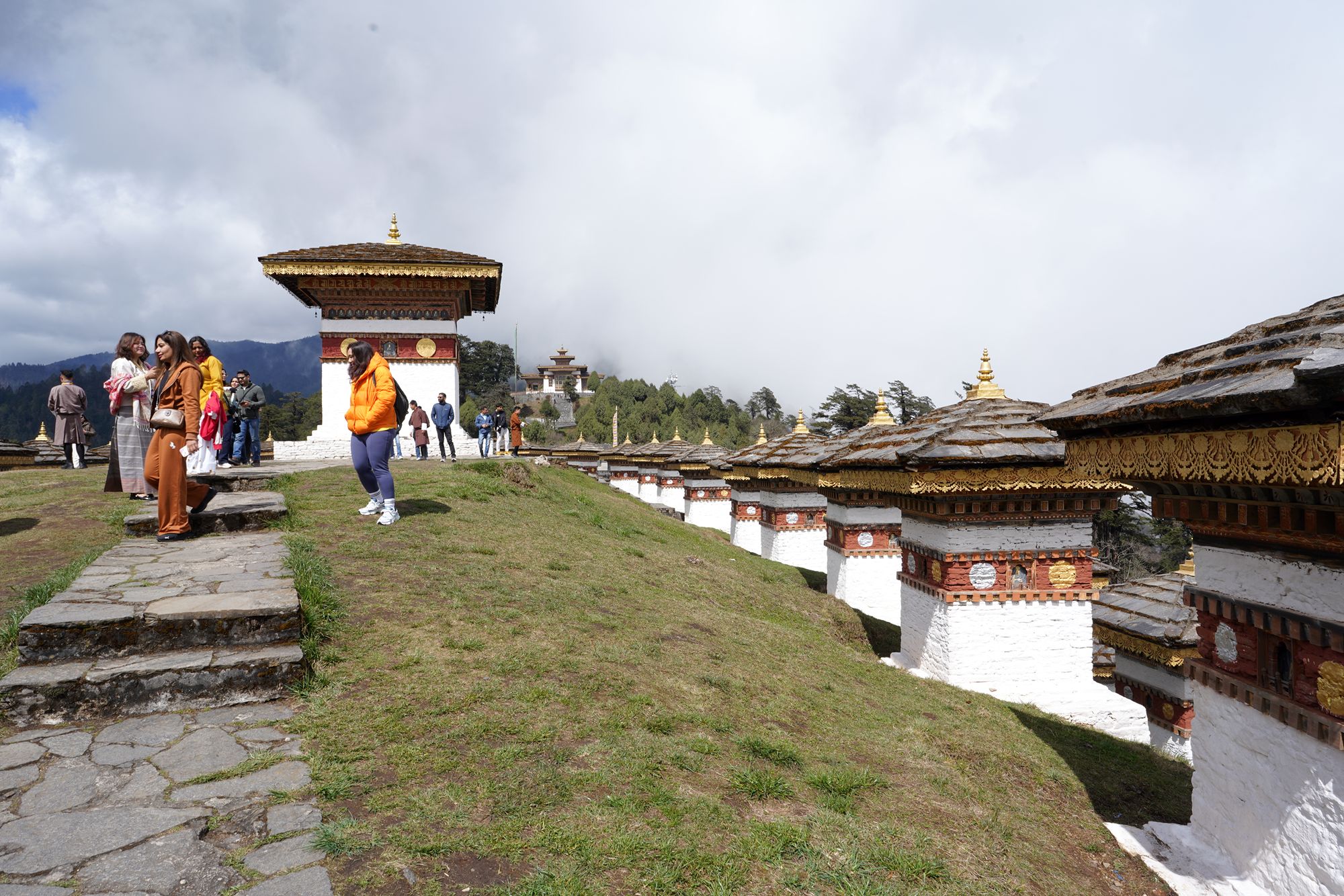
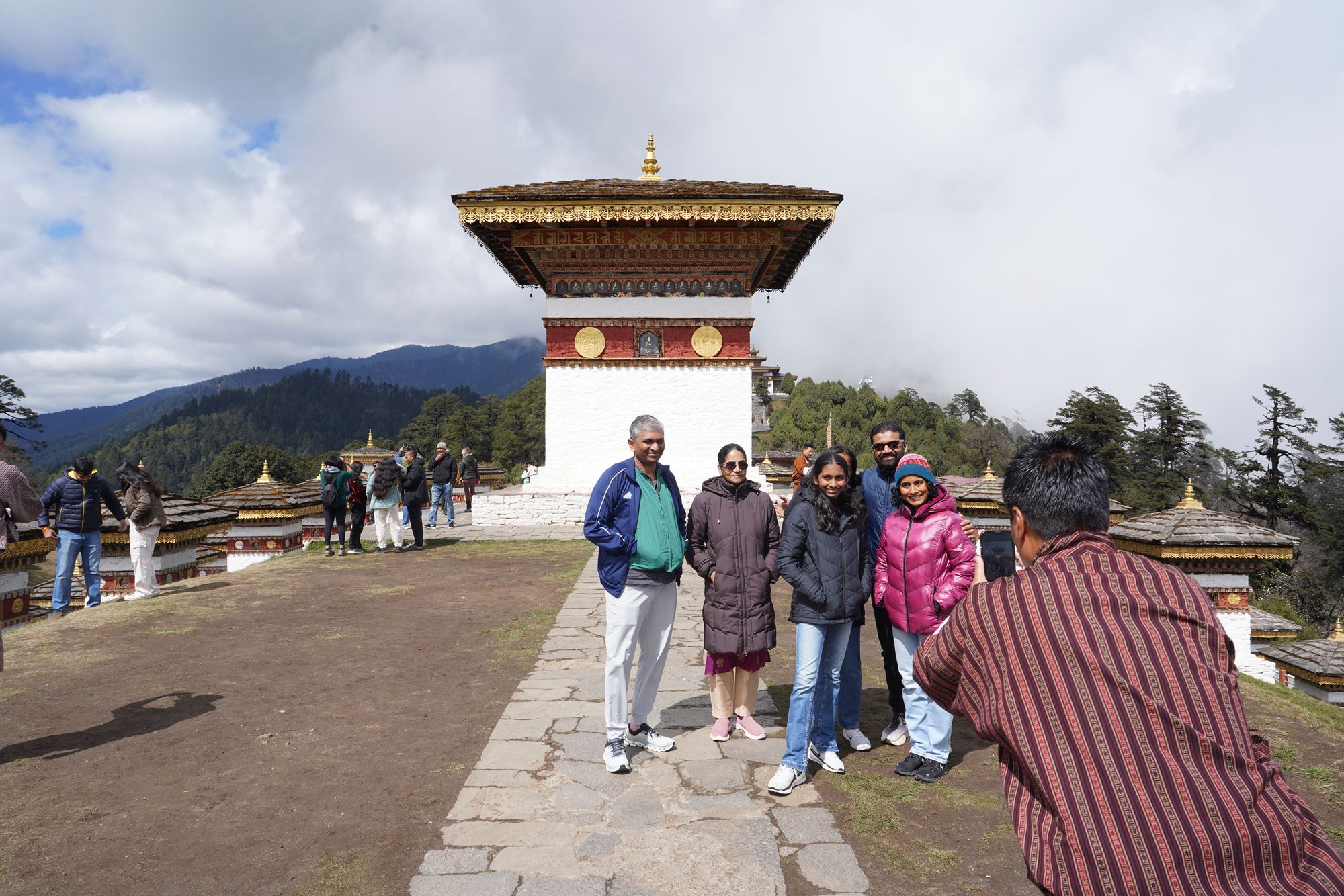
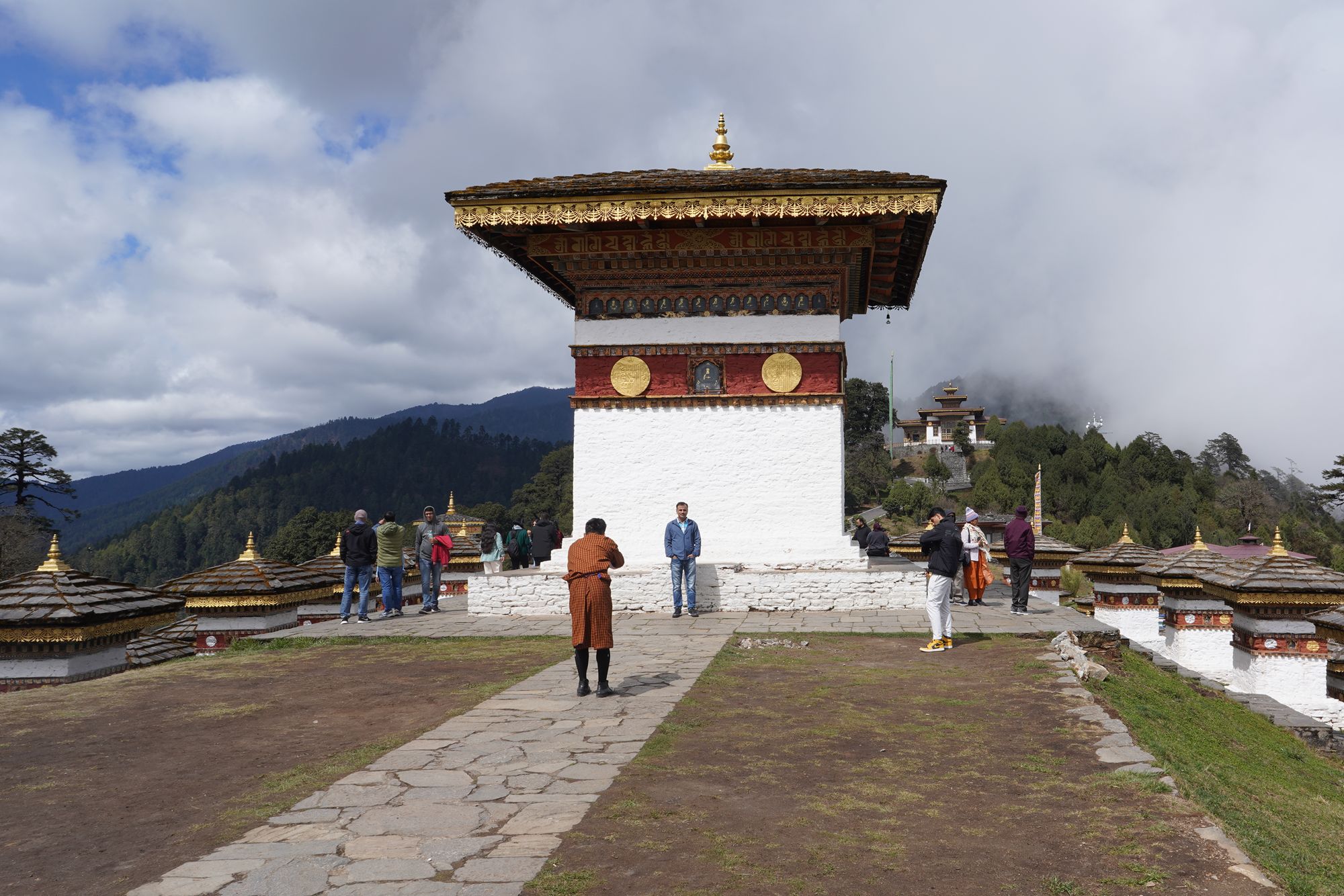
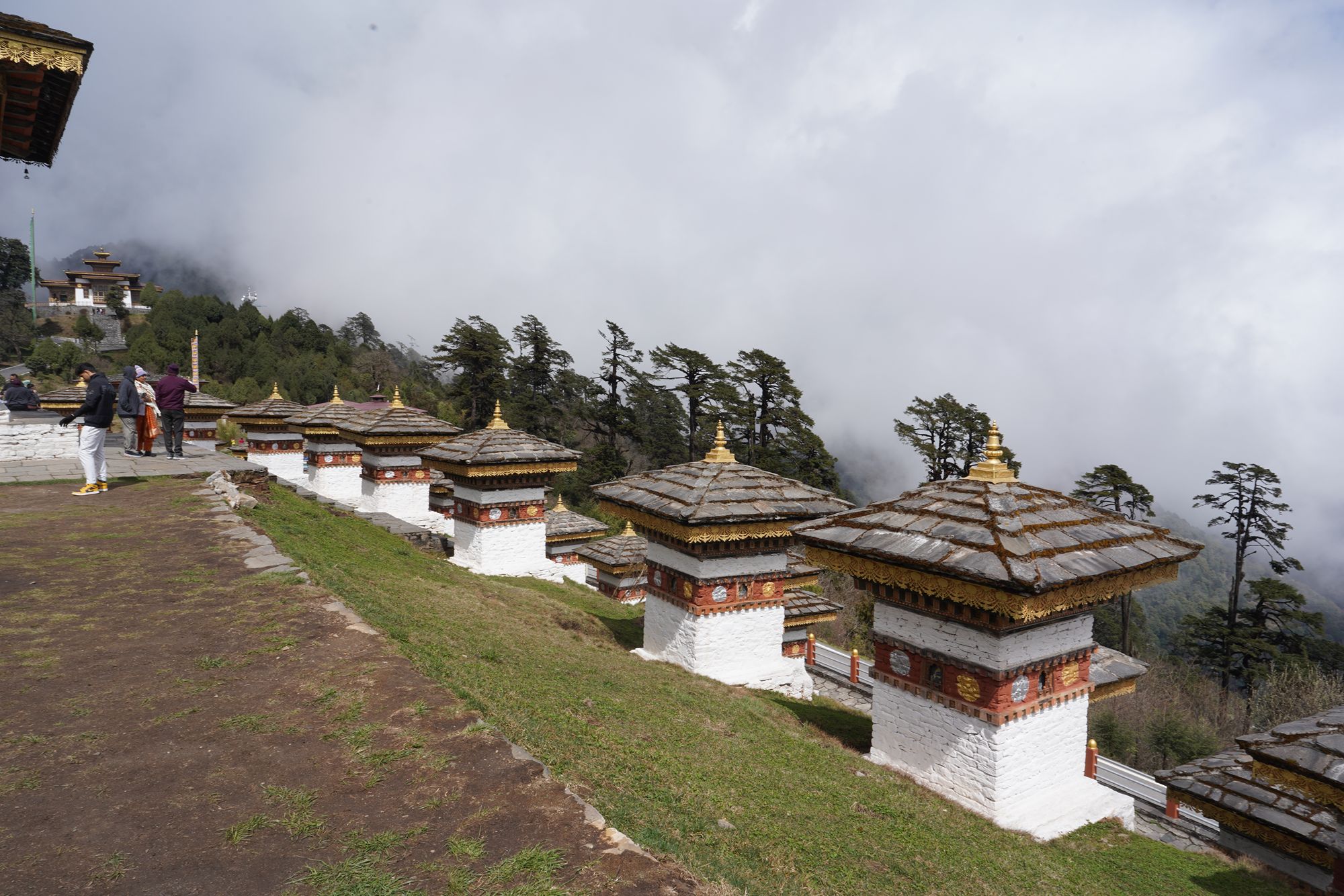
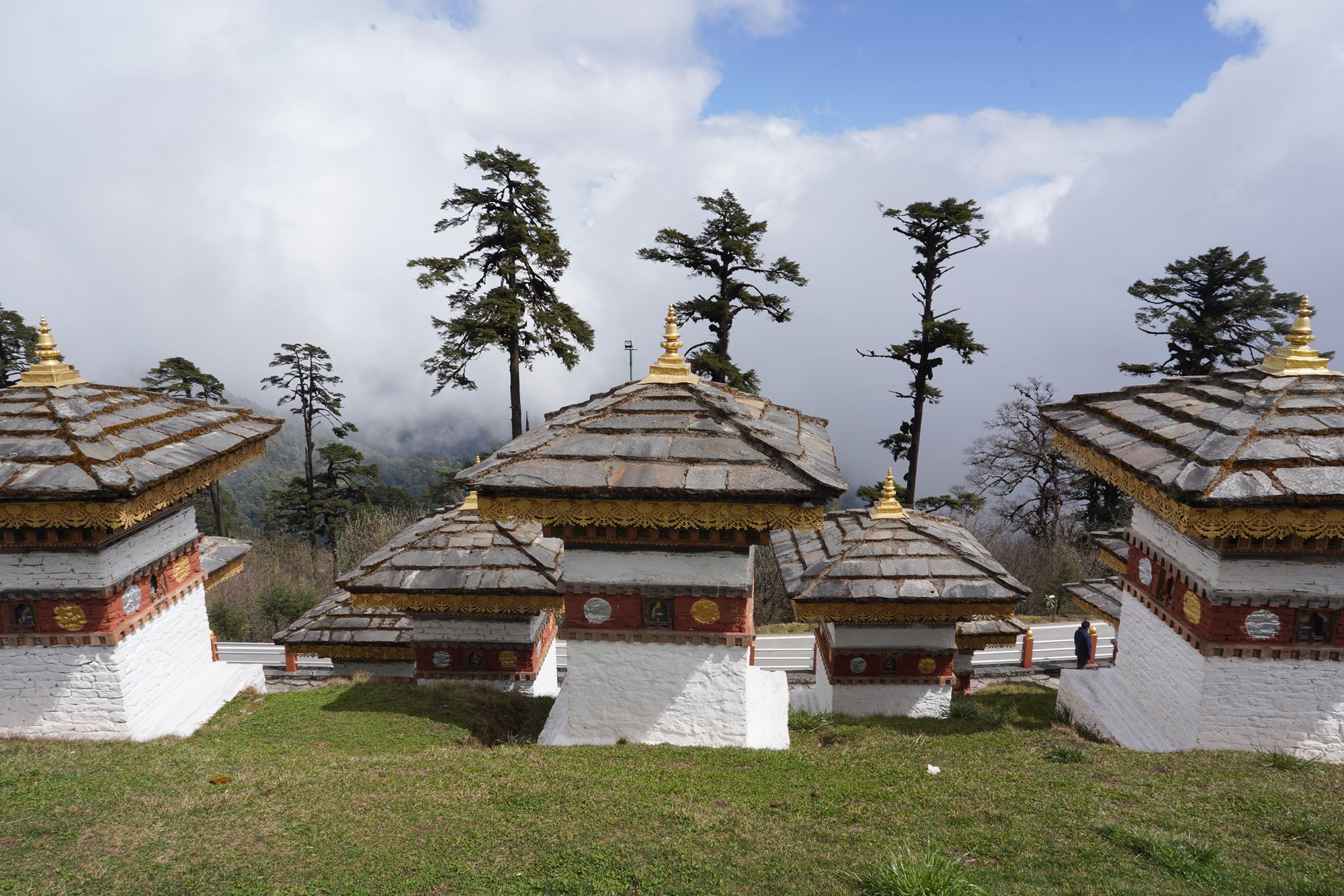
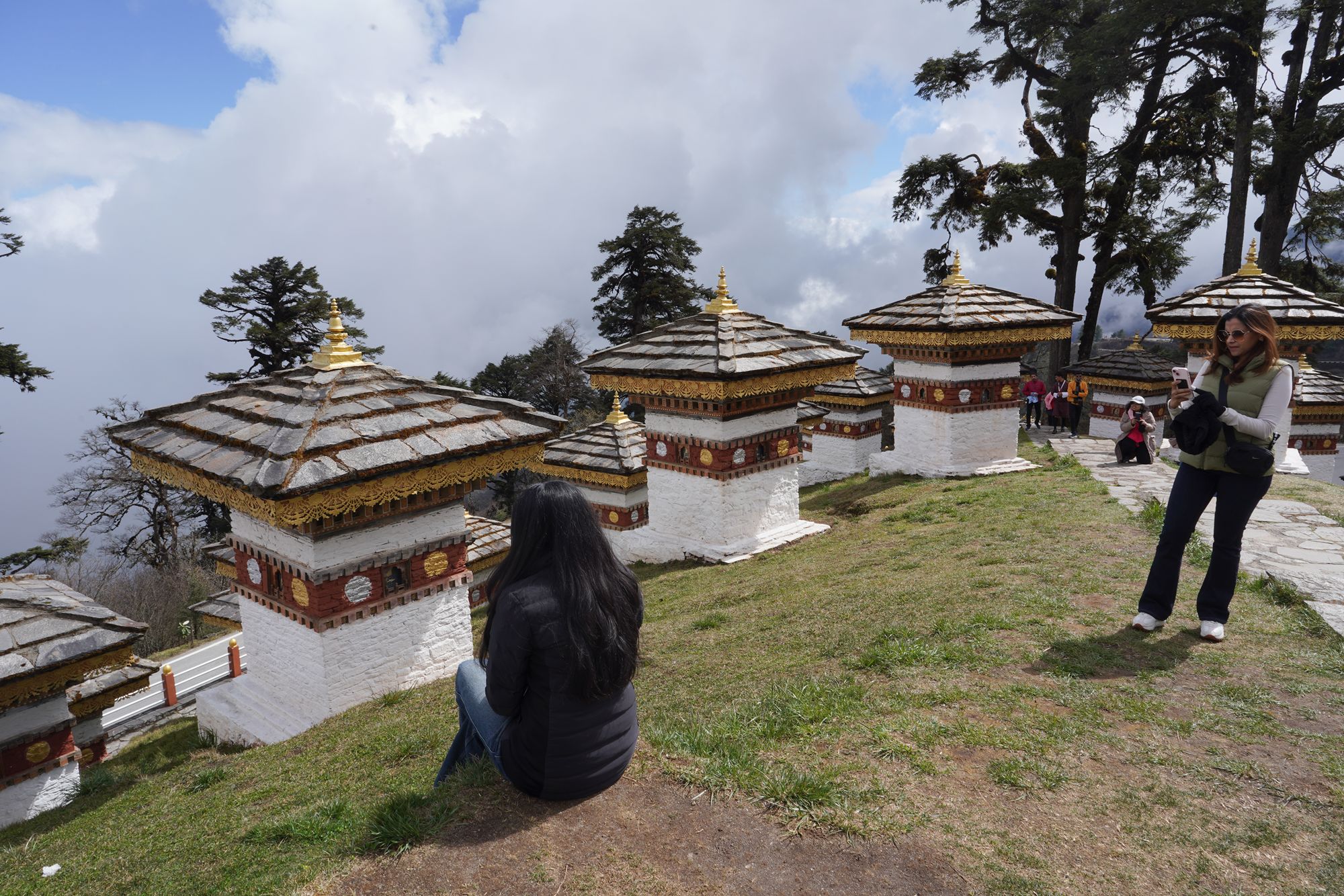
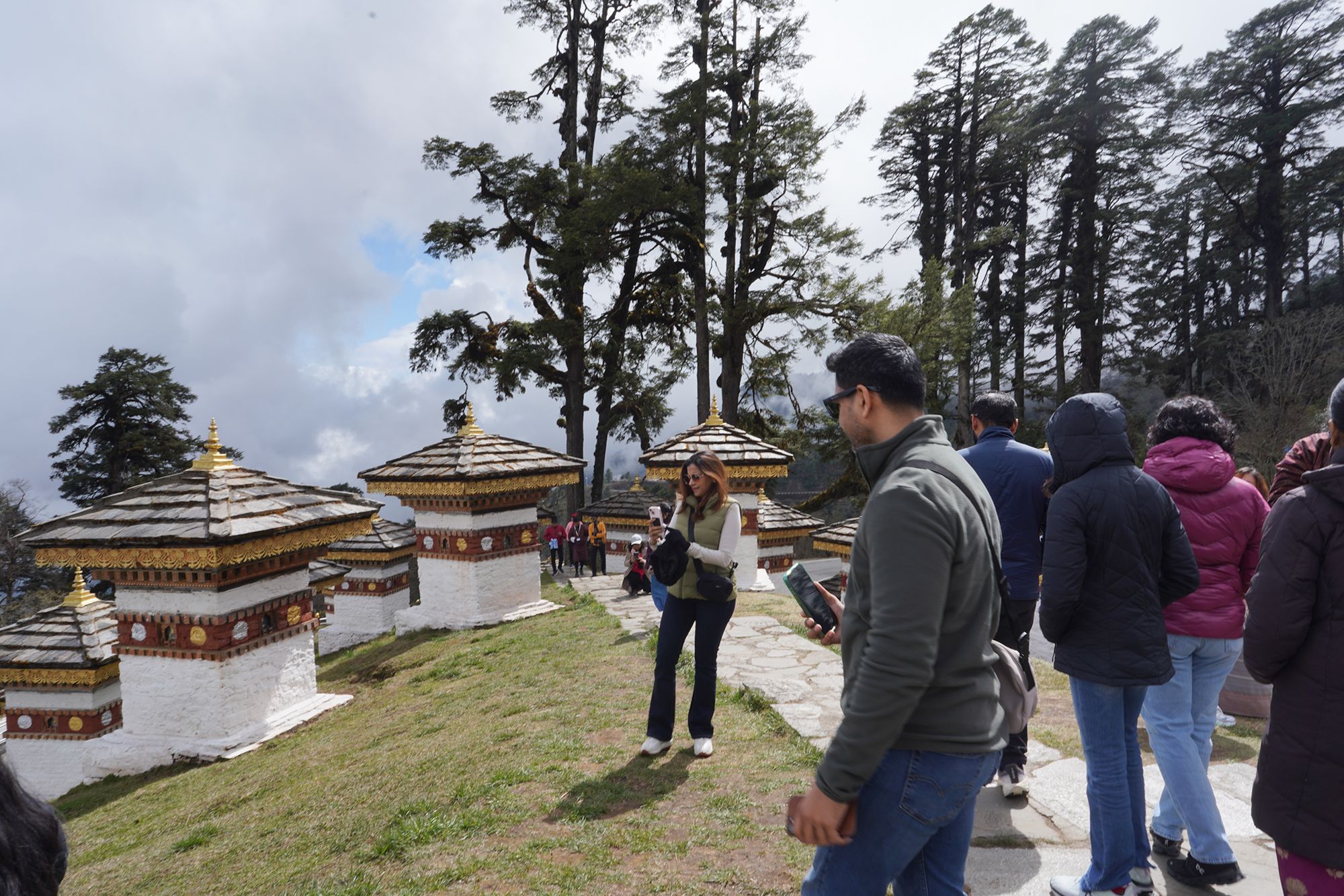
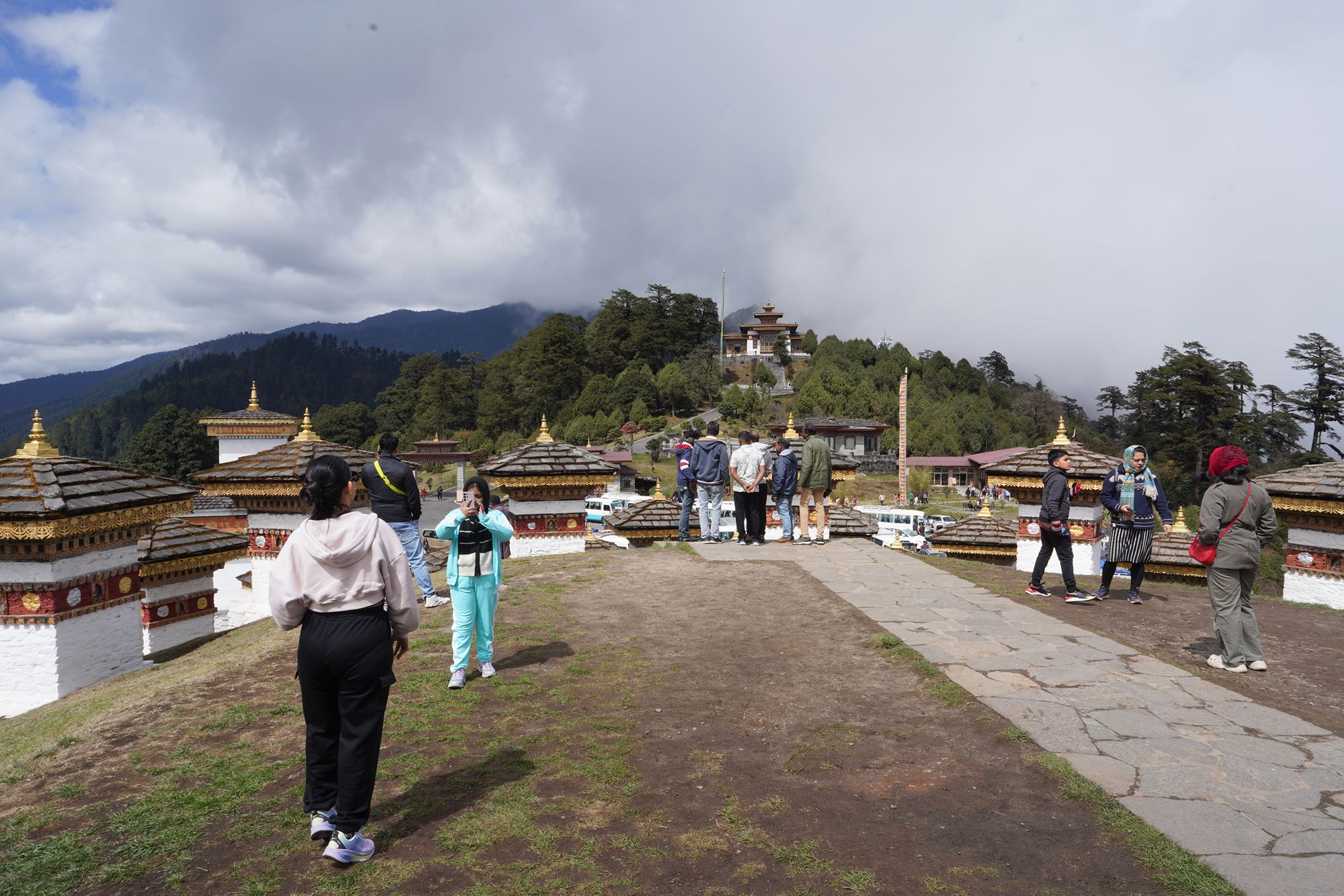
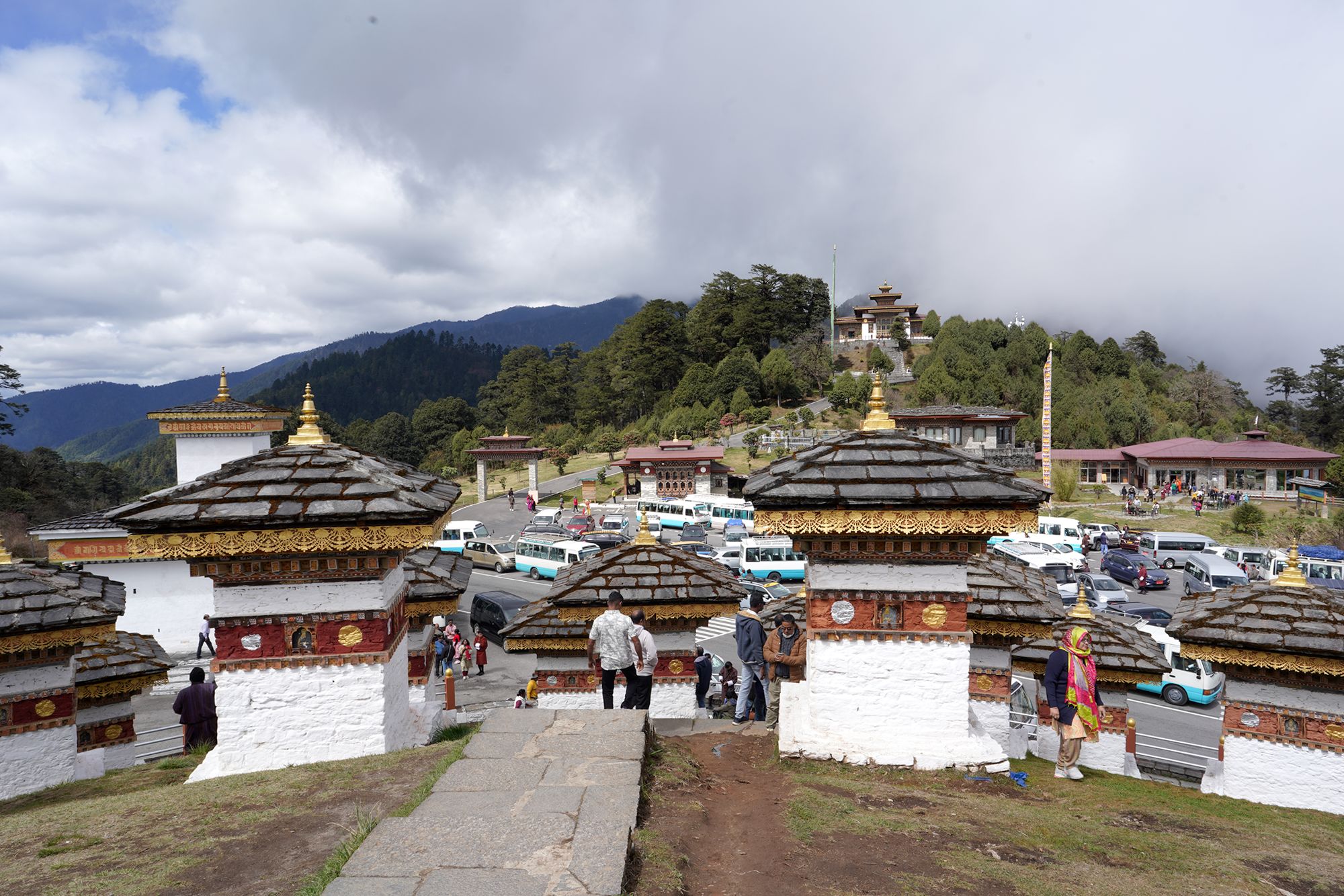
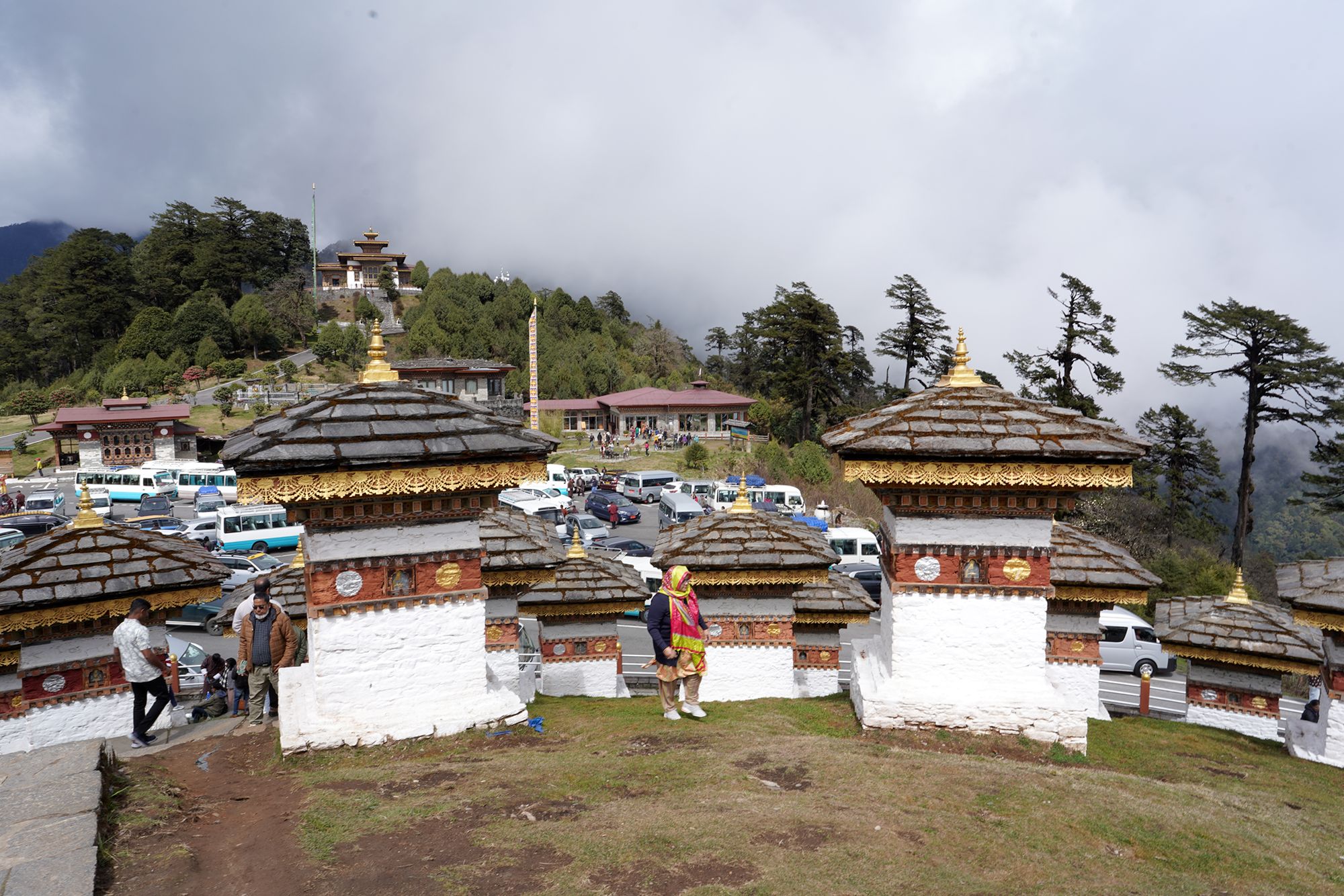
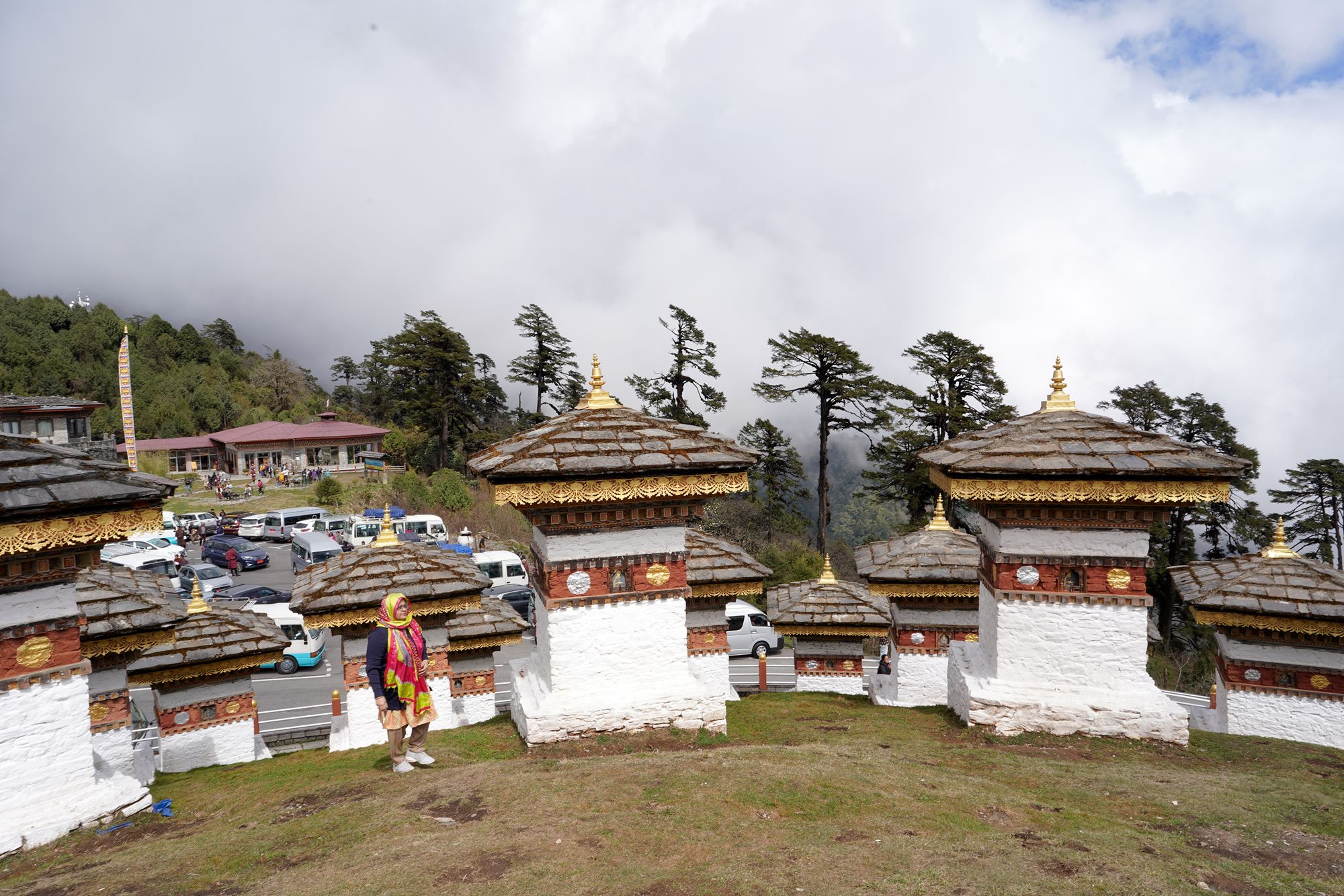
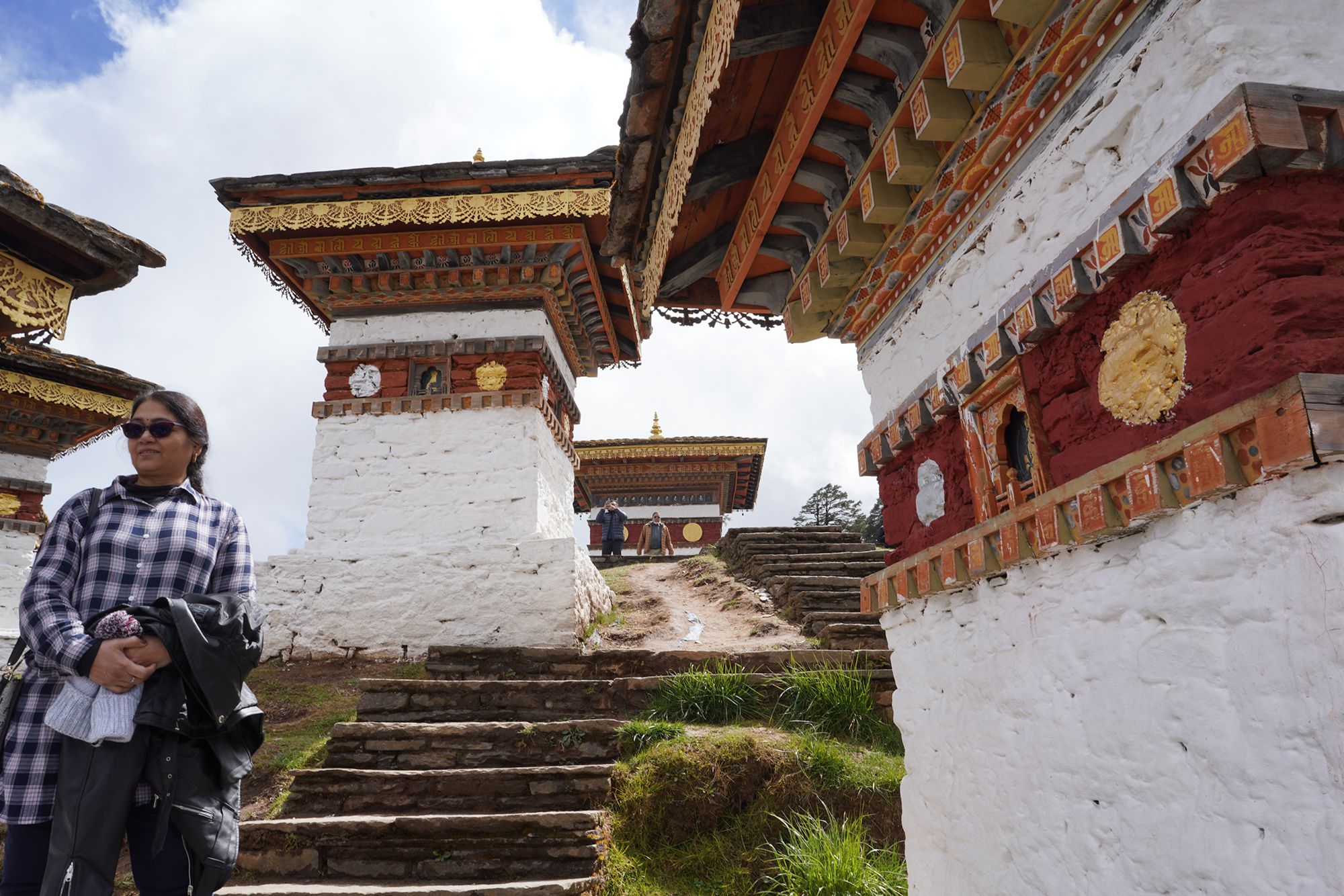
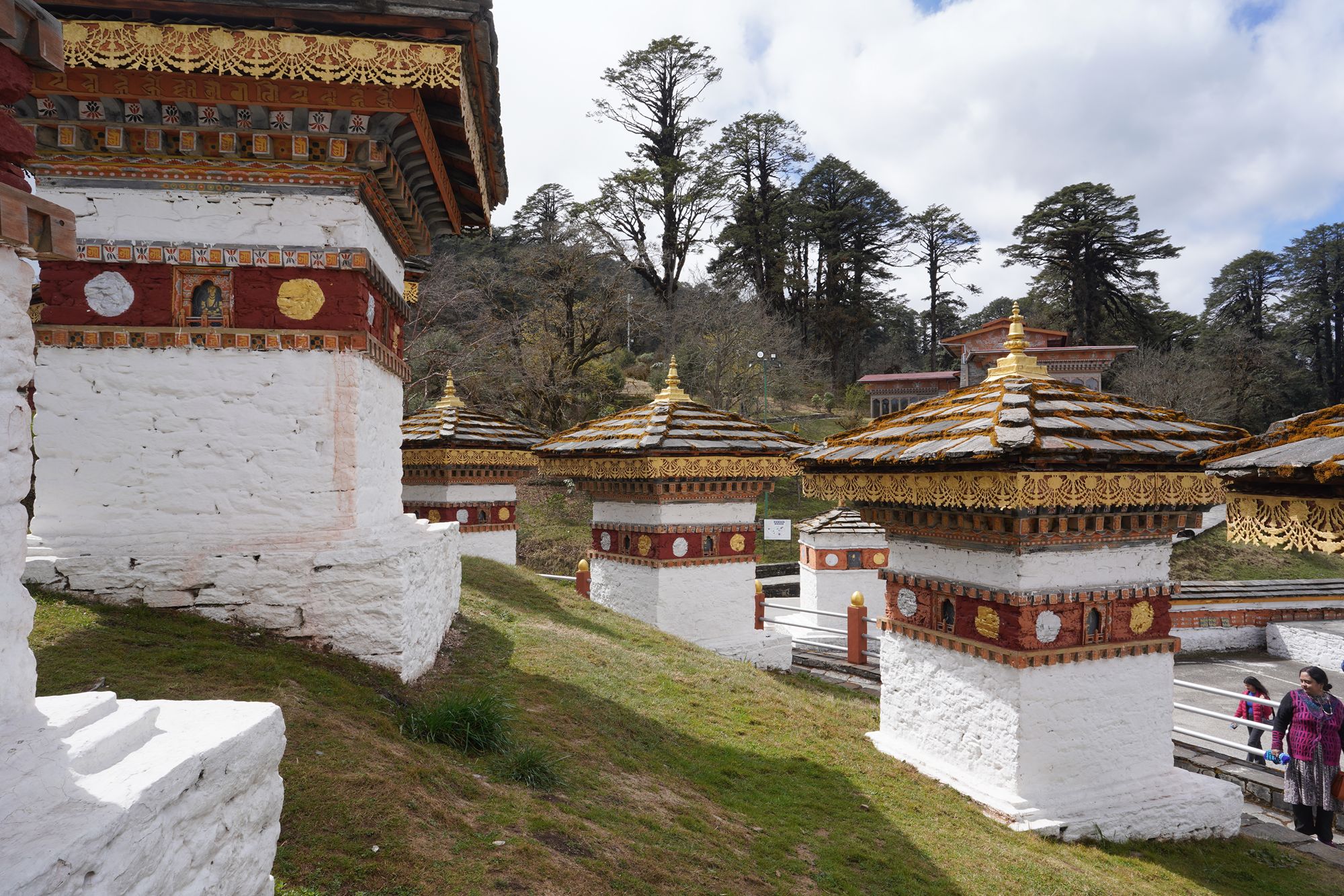
There is a famous group of shrines at Dochula Pass called the Druk Wangyal Chortens.
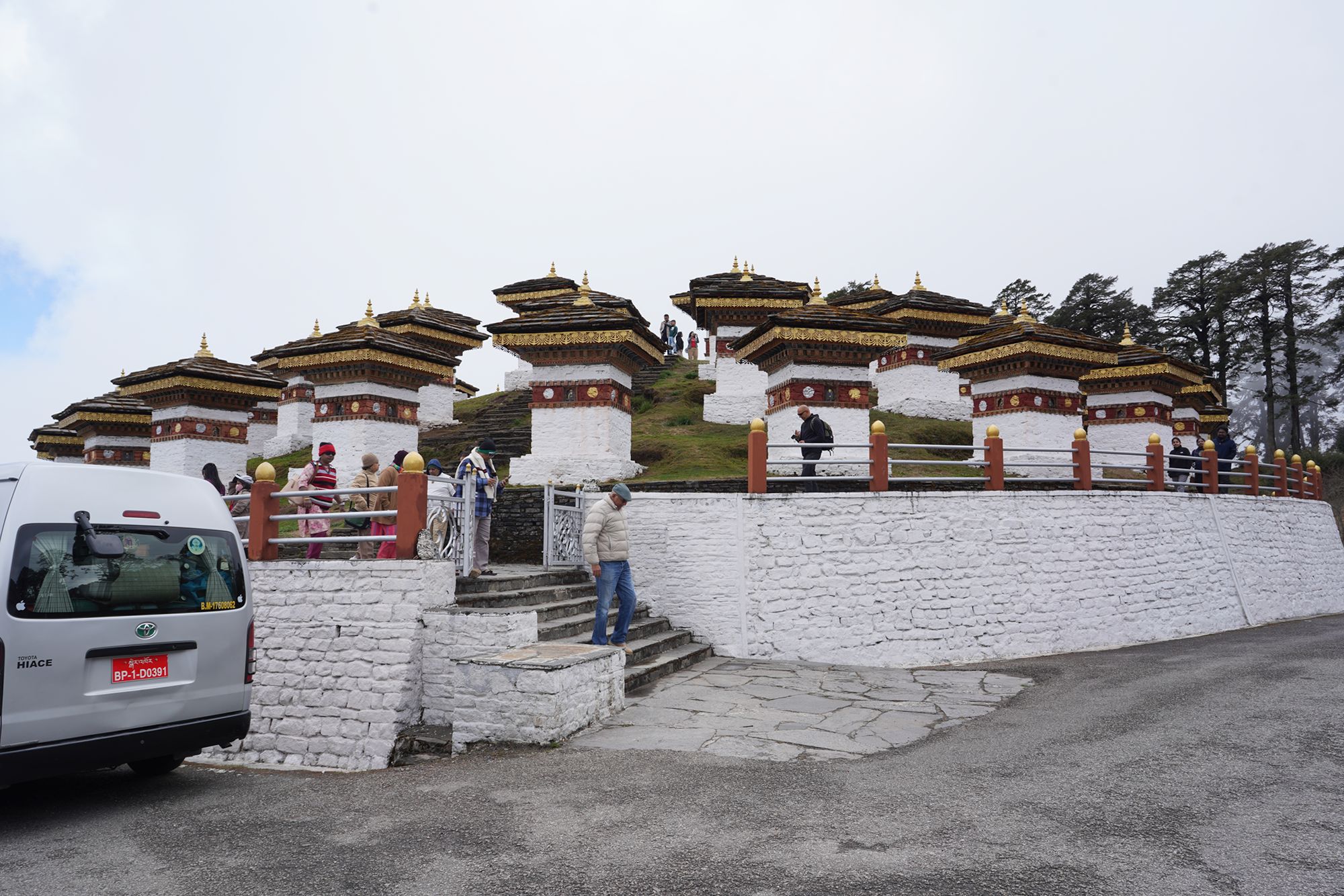
It consists of 108 small chortens (Buddhist stupas) arranged in several circular tiers on a hill. They were commissioned by Queen Mother Ashi Dorji Wangmo Wangchuck and built in 2004 to honor Bhutanese soldiers who died during the 2003 military operation against insurgent groups based in southern Bhutan.
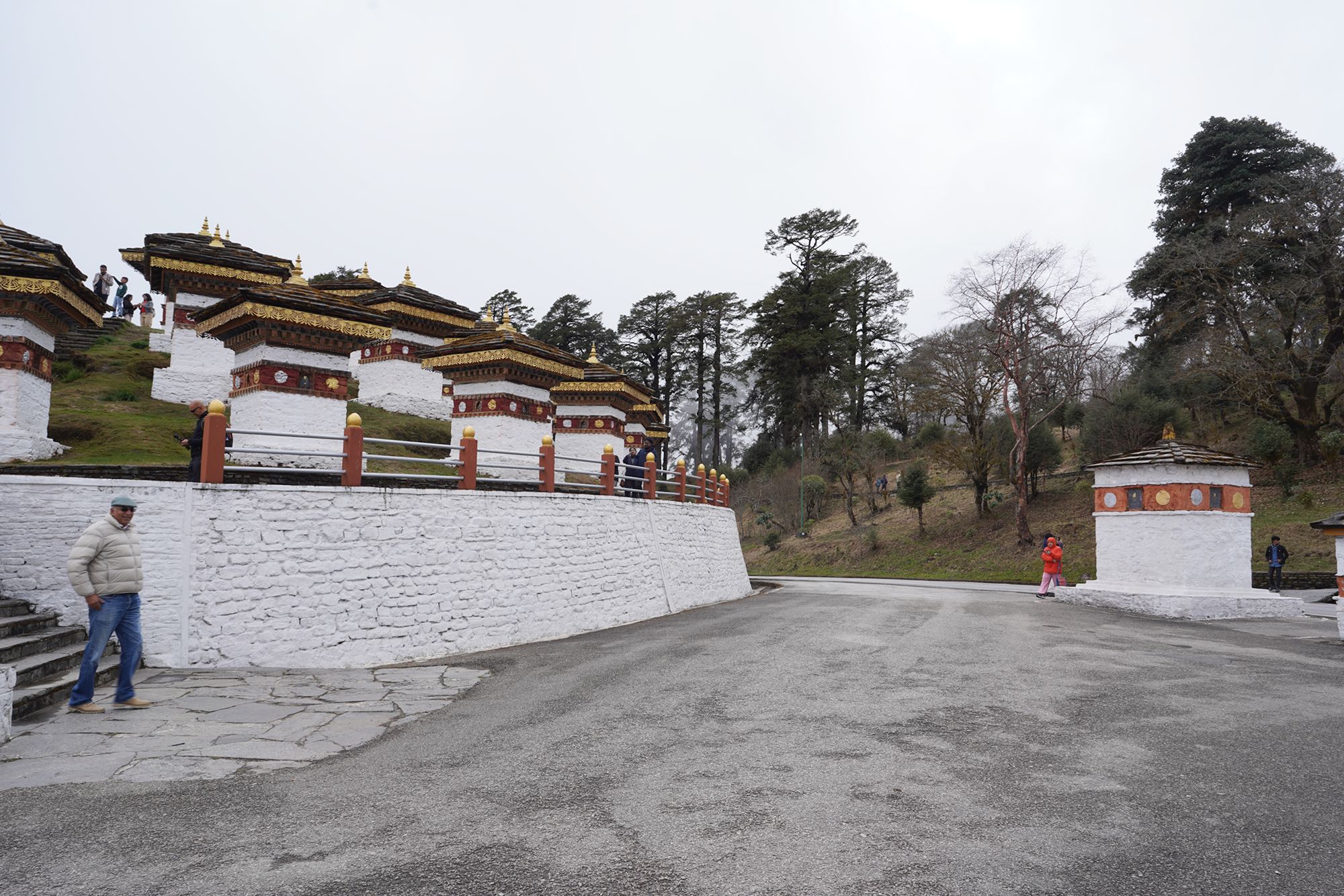
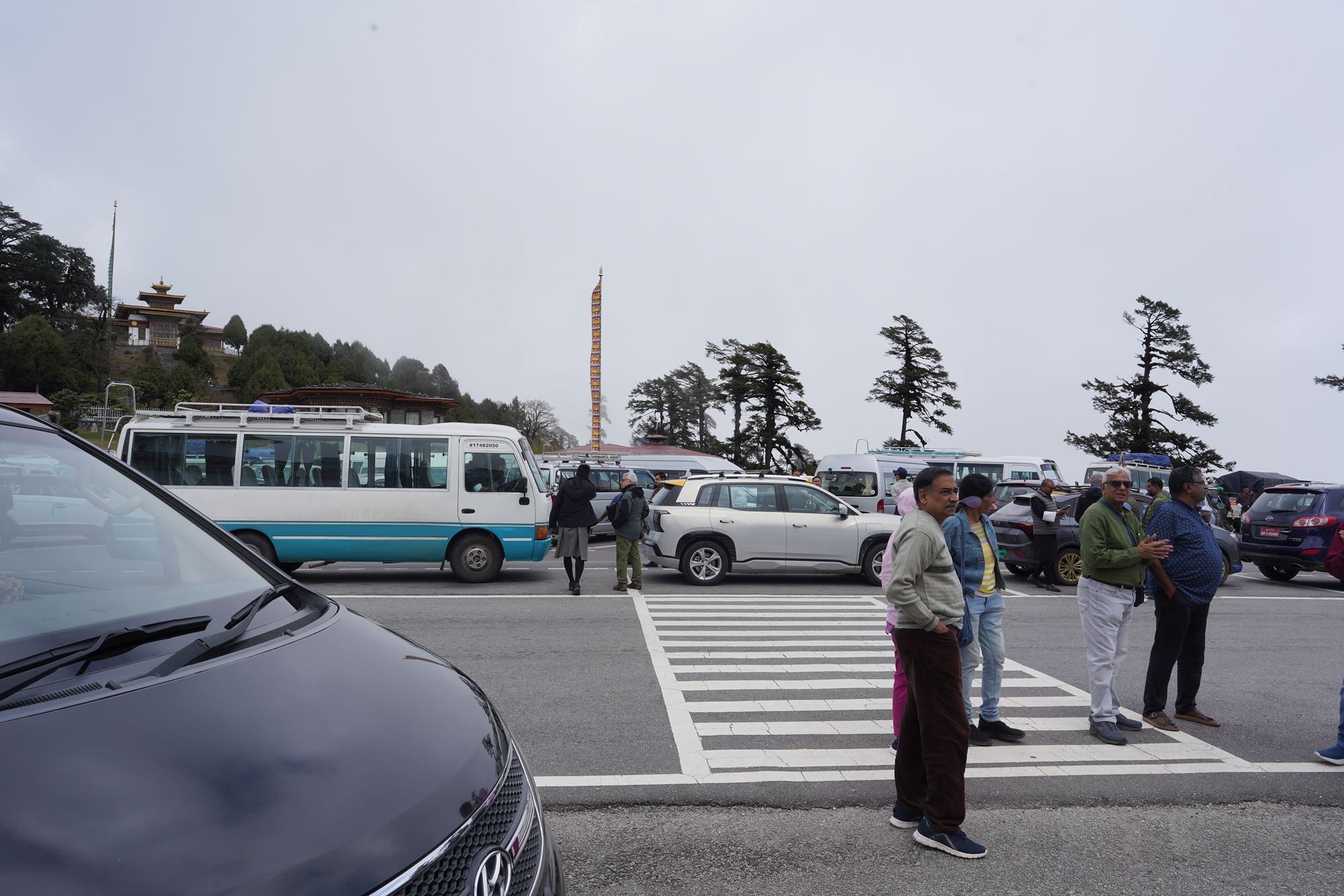
The site is one of the most recognizable landmarks in Bhutan, and on clear days there are spectacular views of the Himalayan mountains from the pass.
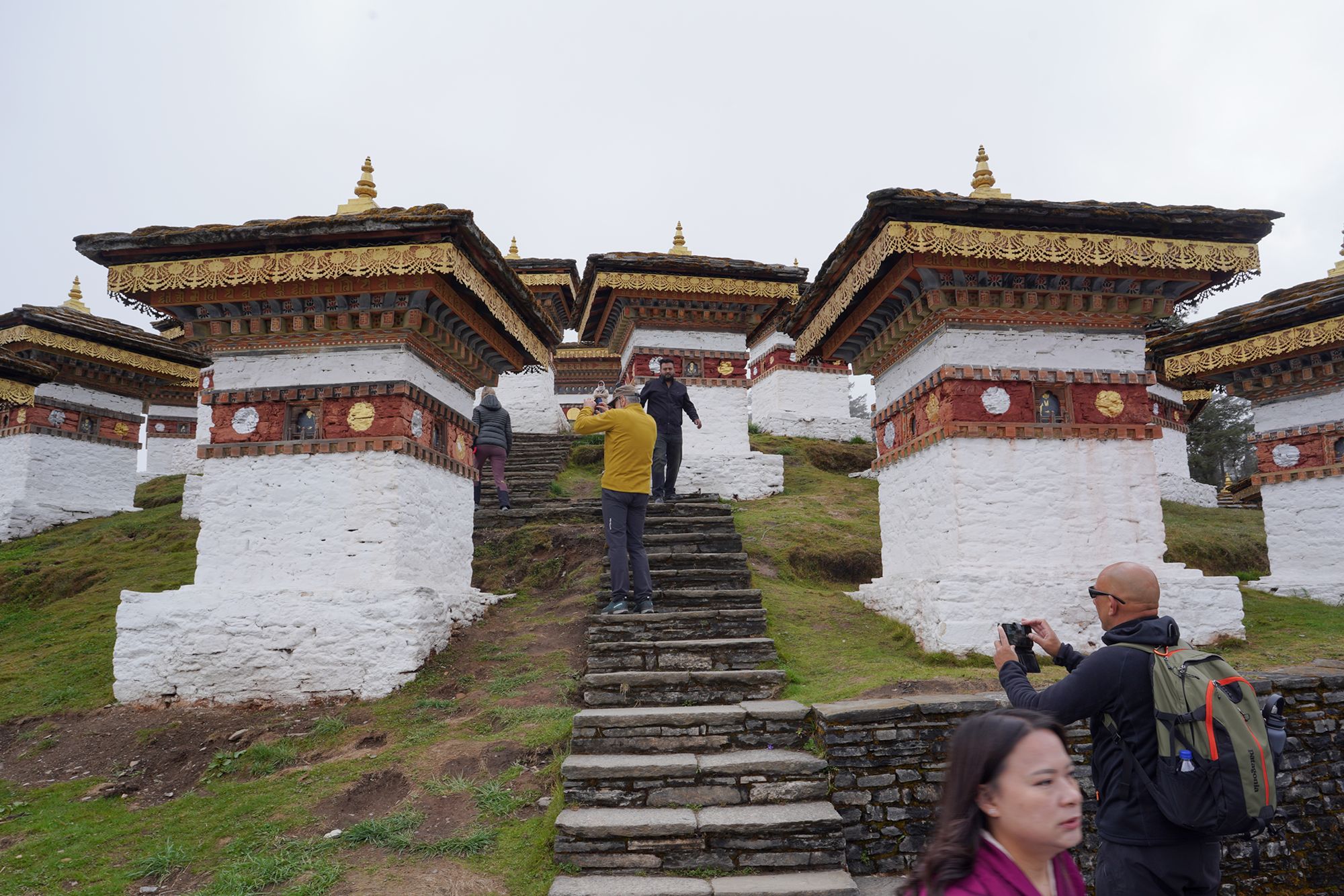
Unfortunately, it was very foggy that day, so I couldn't see the distant Himalayan mountains from Dochula Pass.
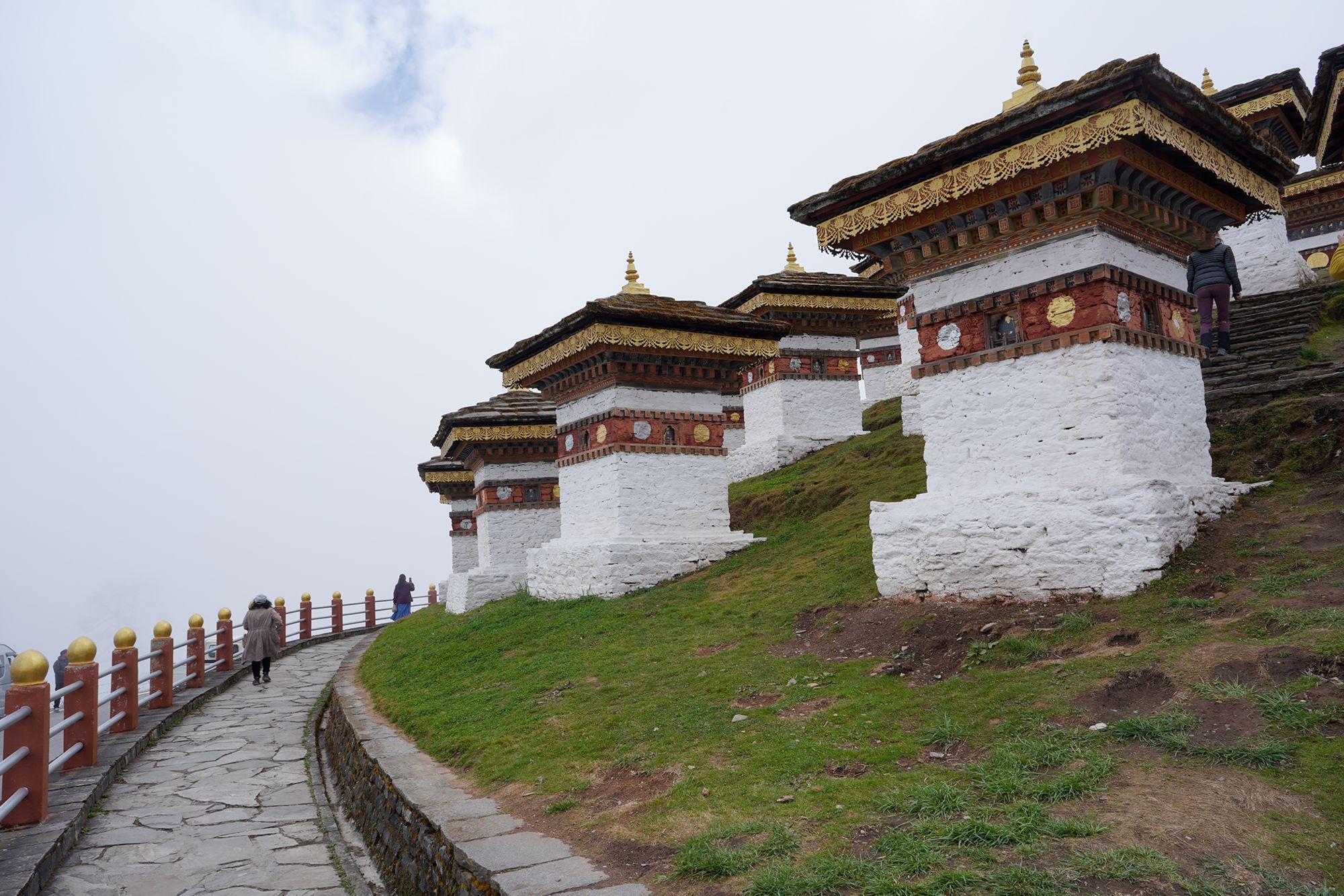
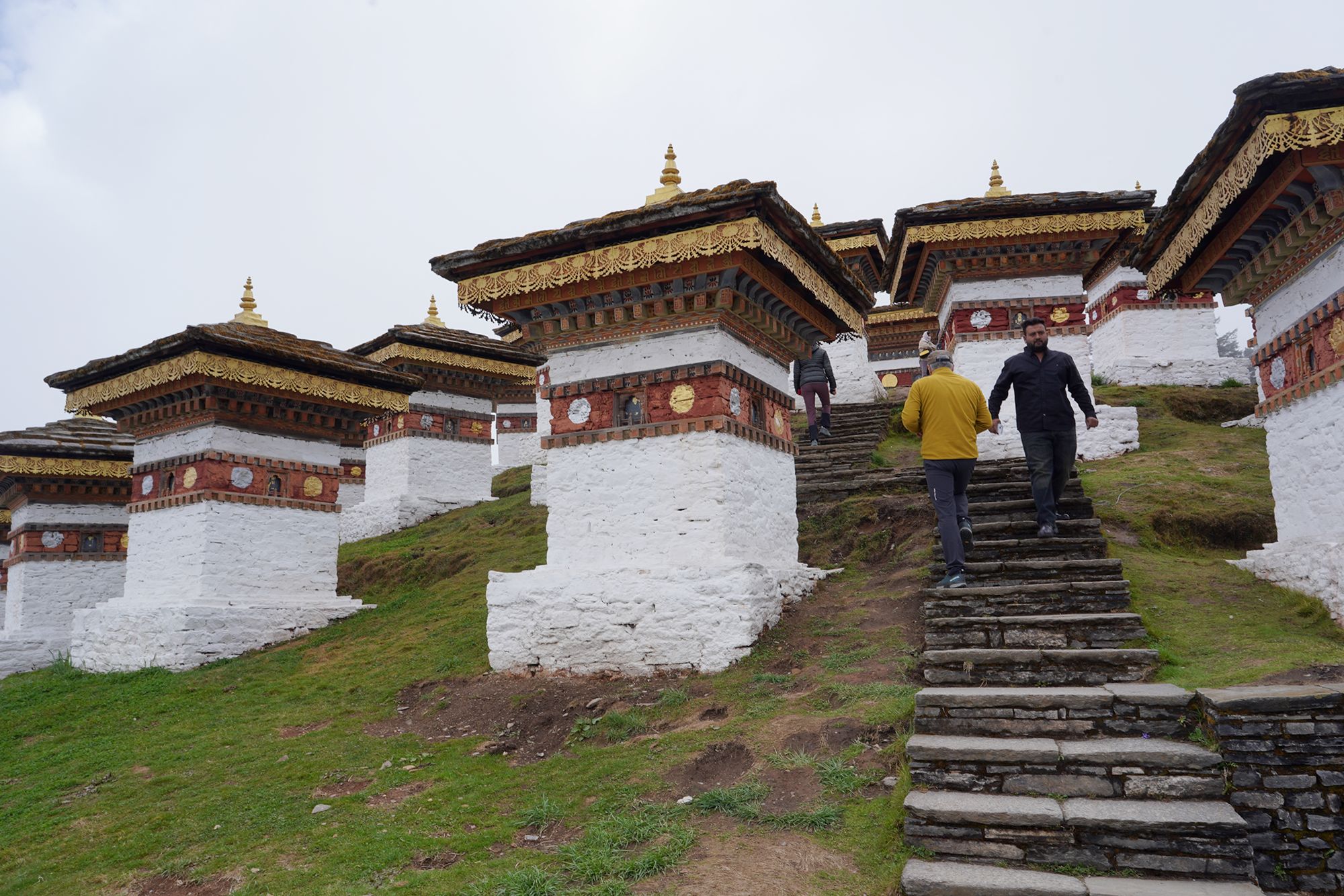
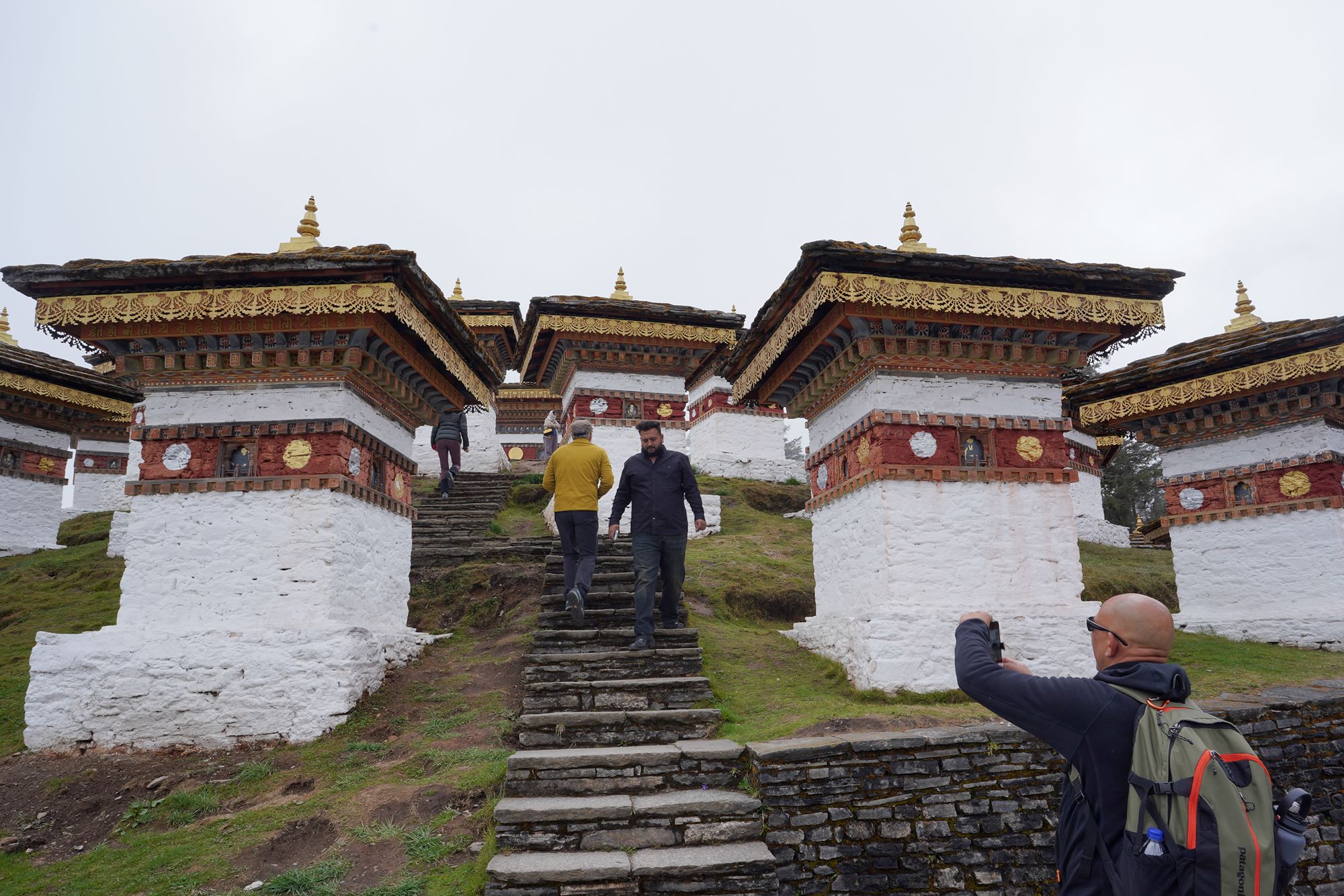
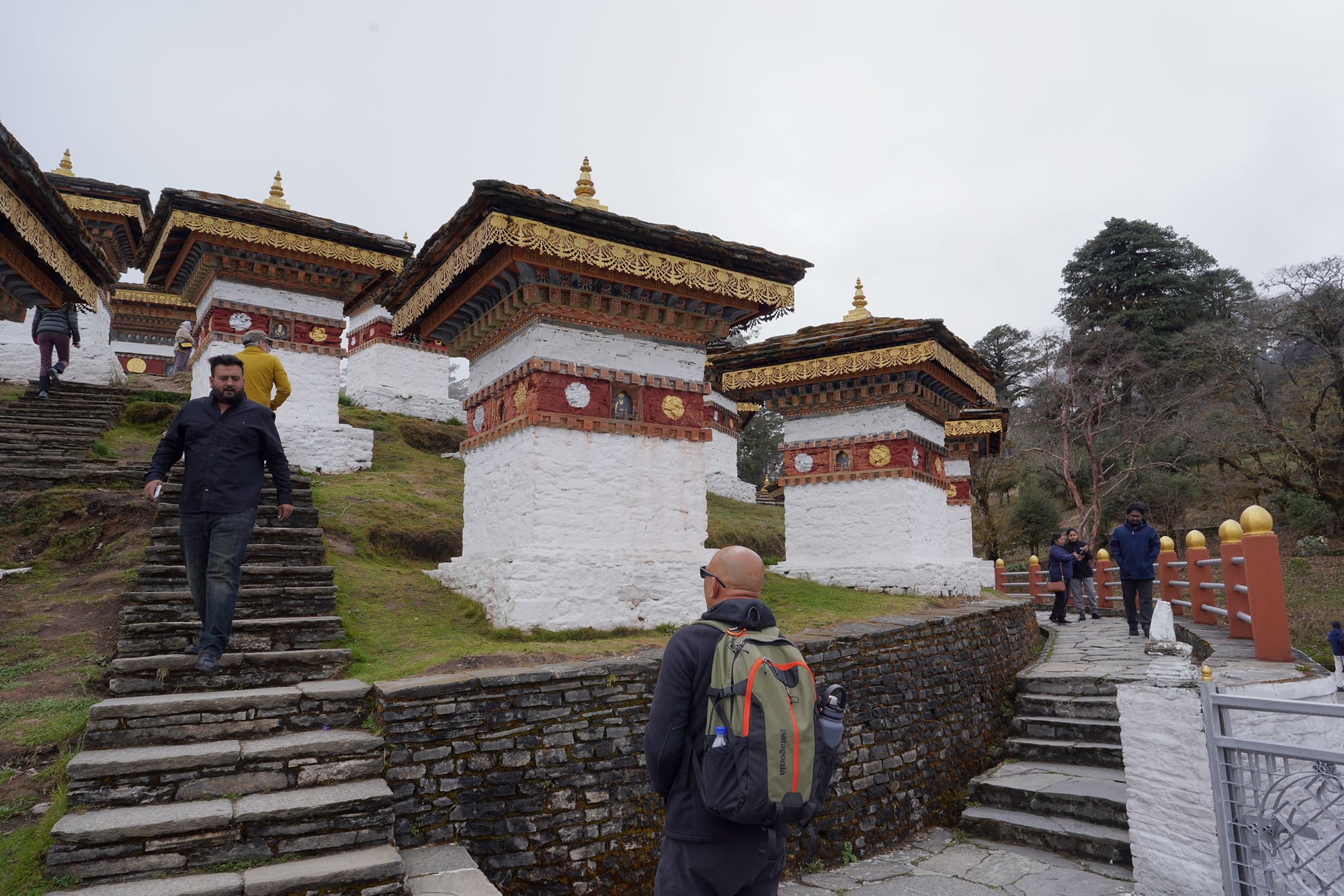
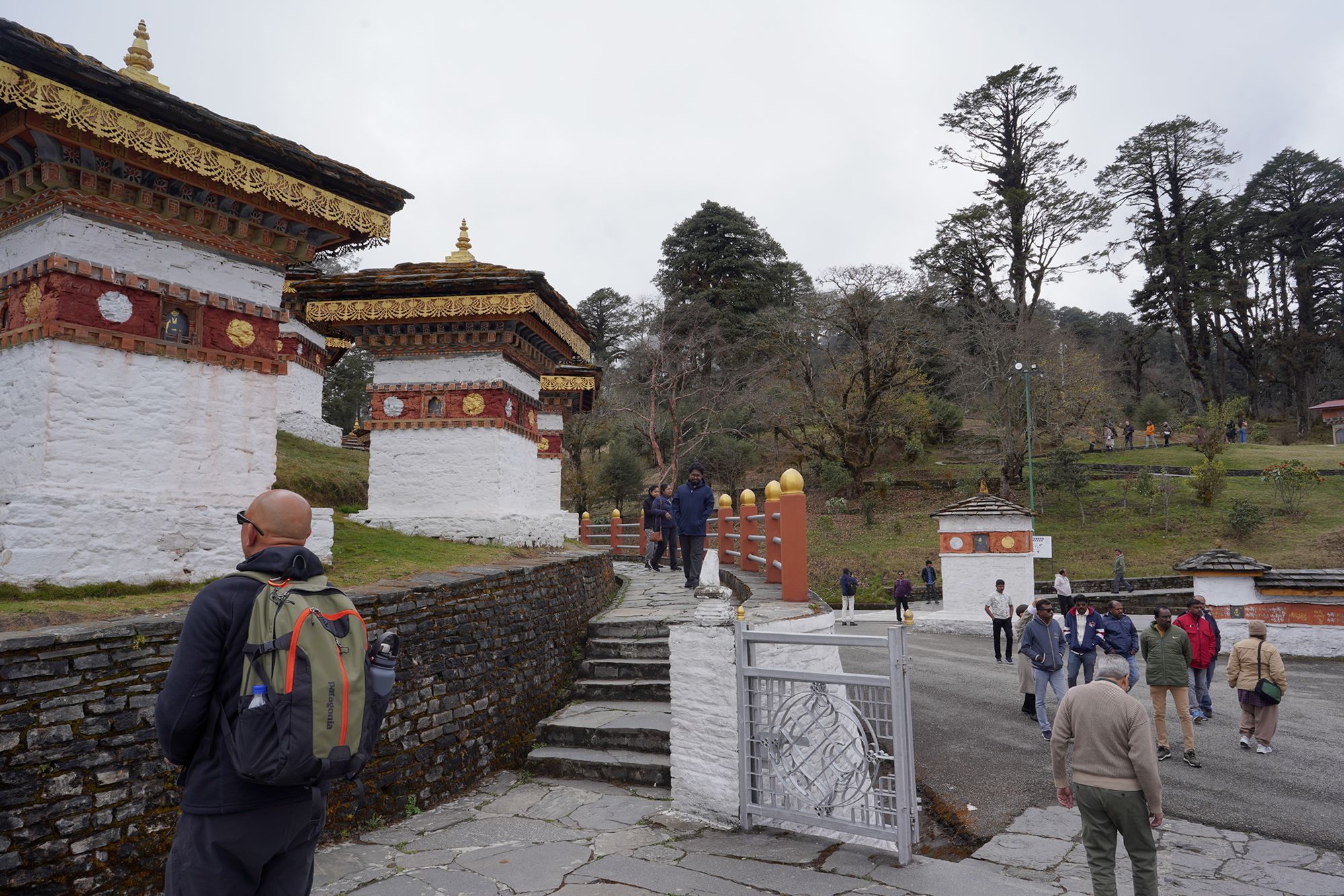
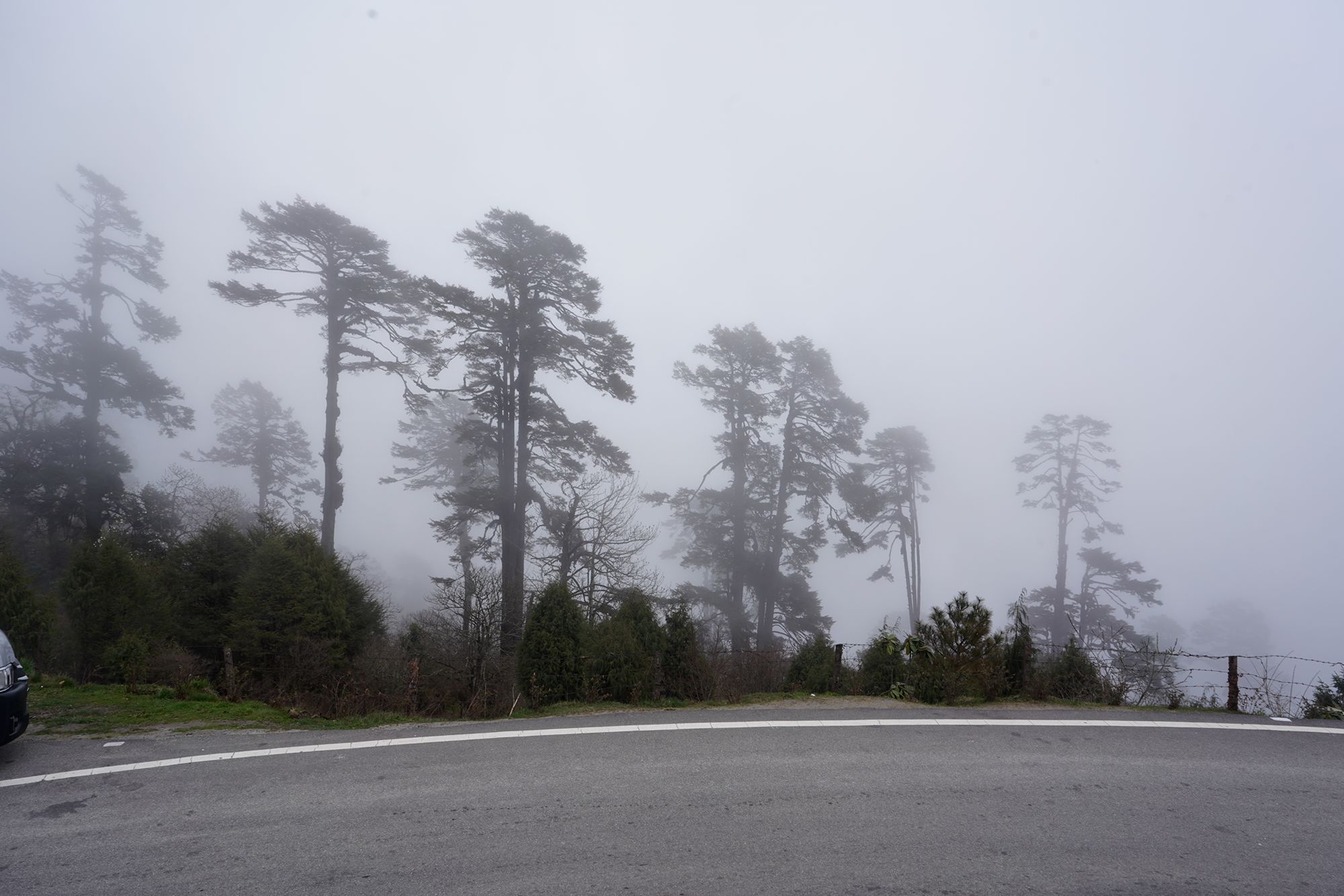
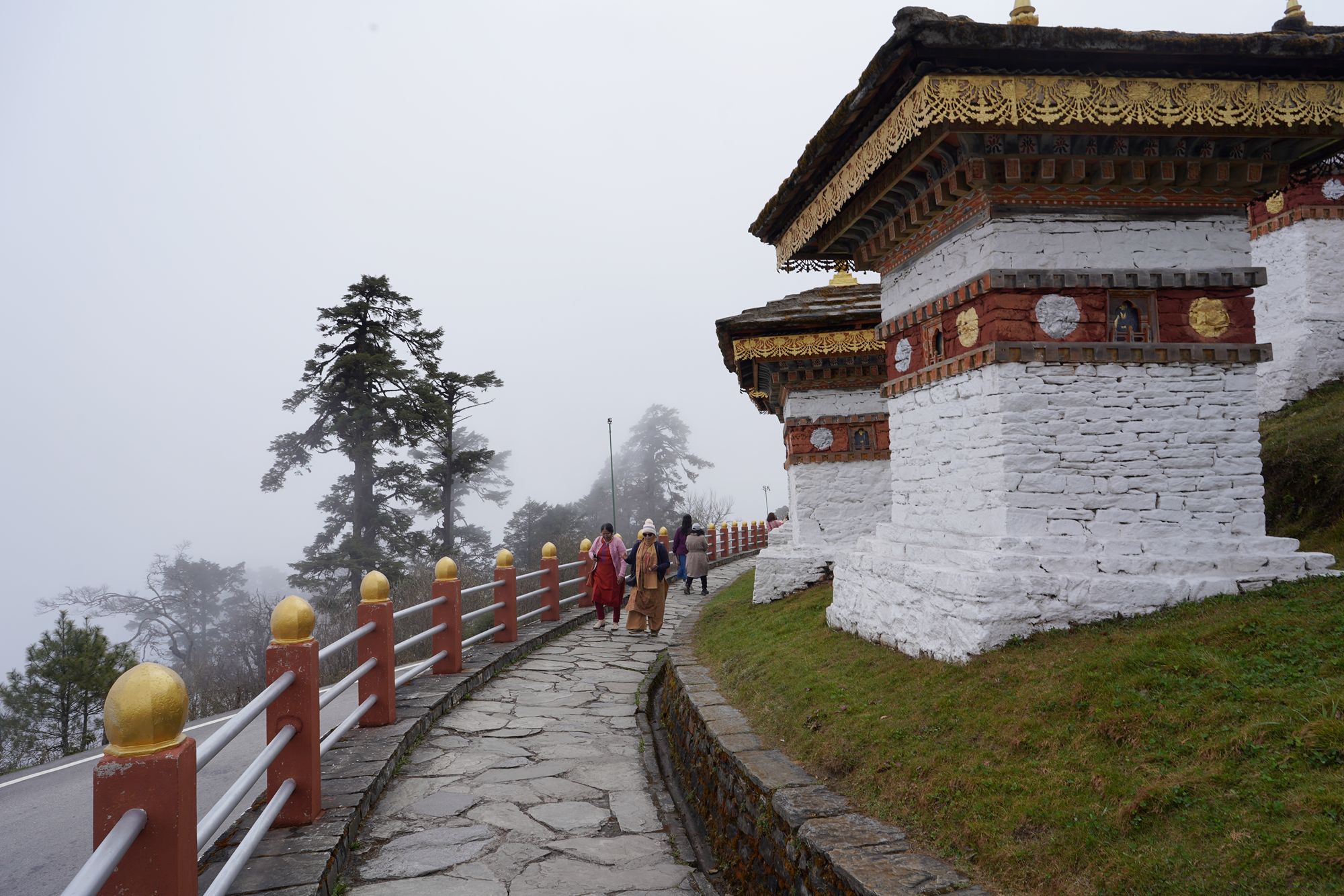
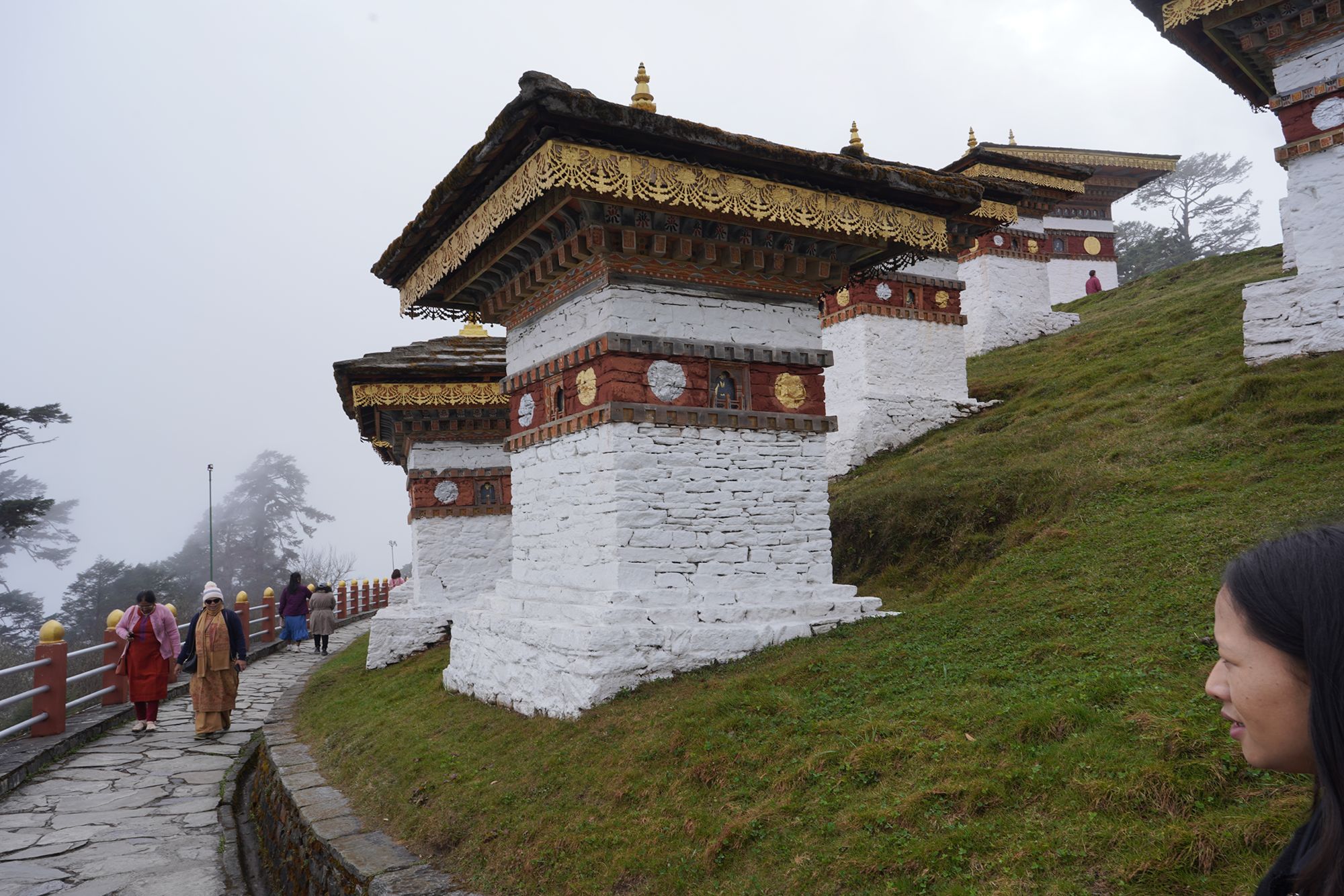
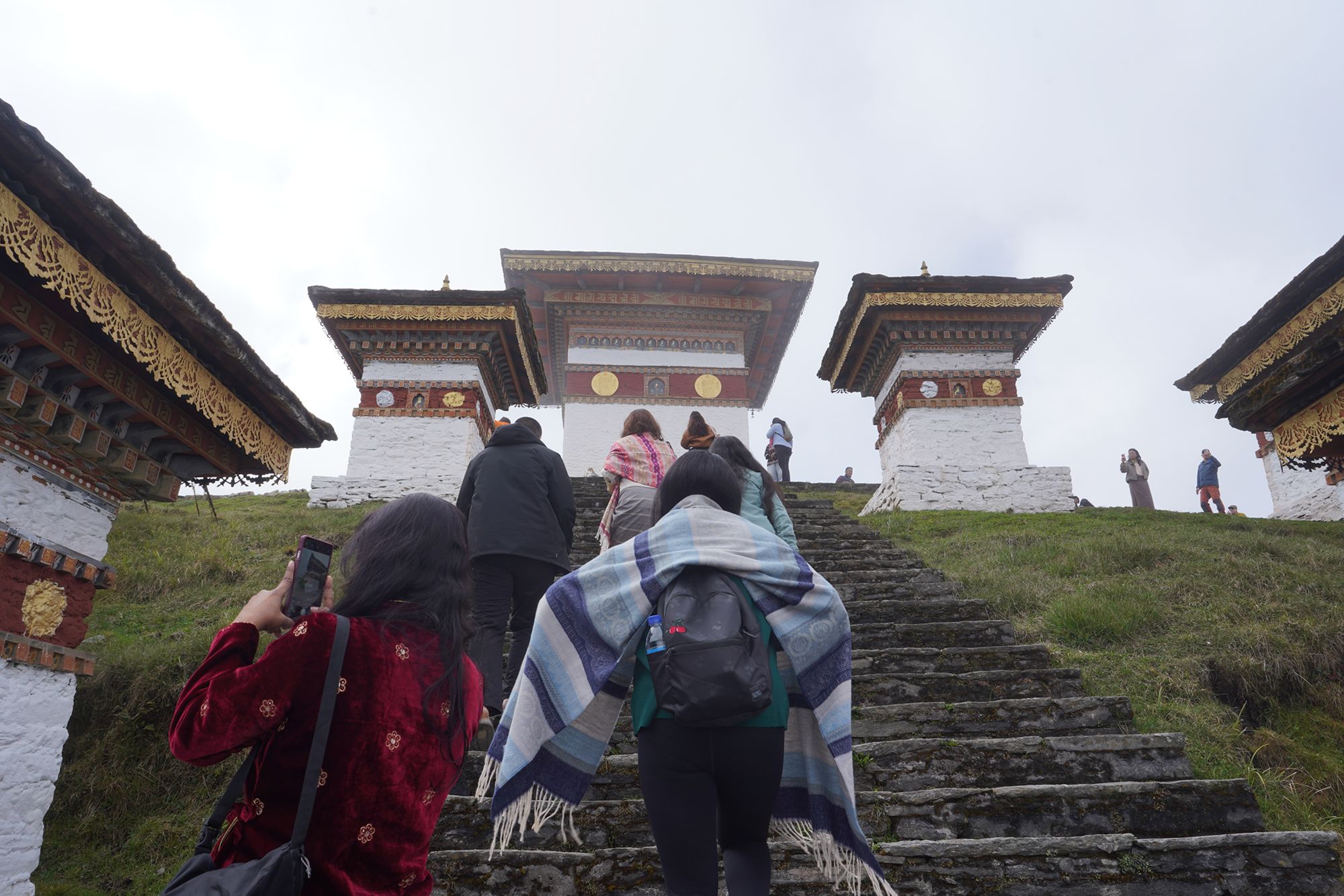
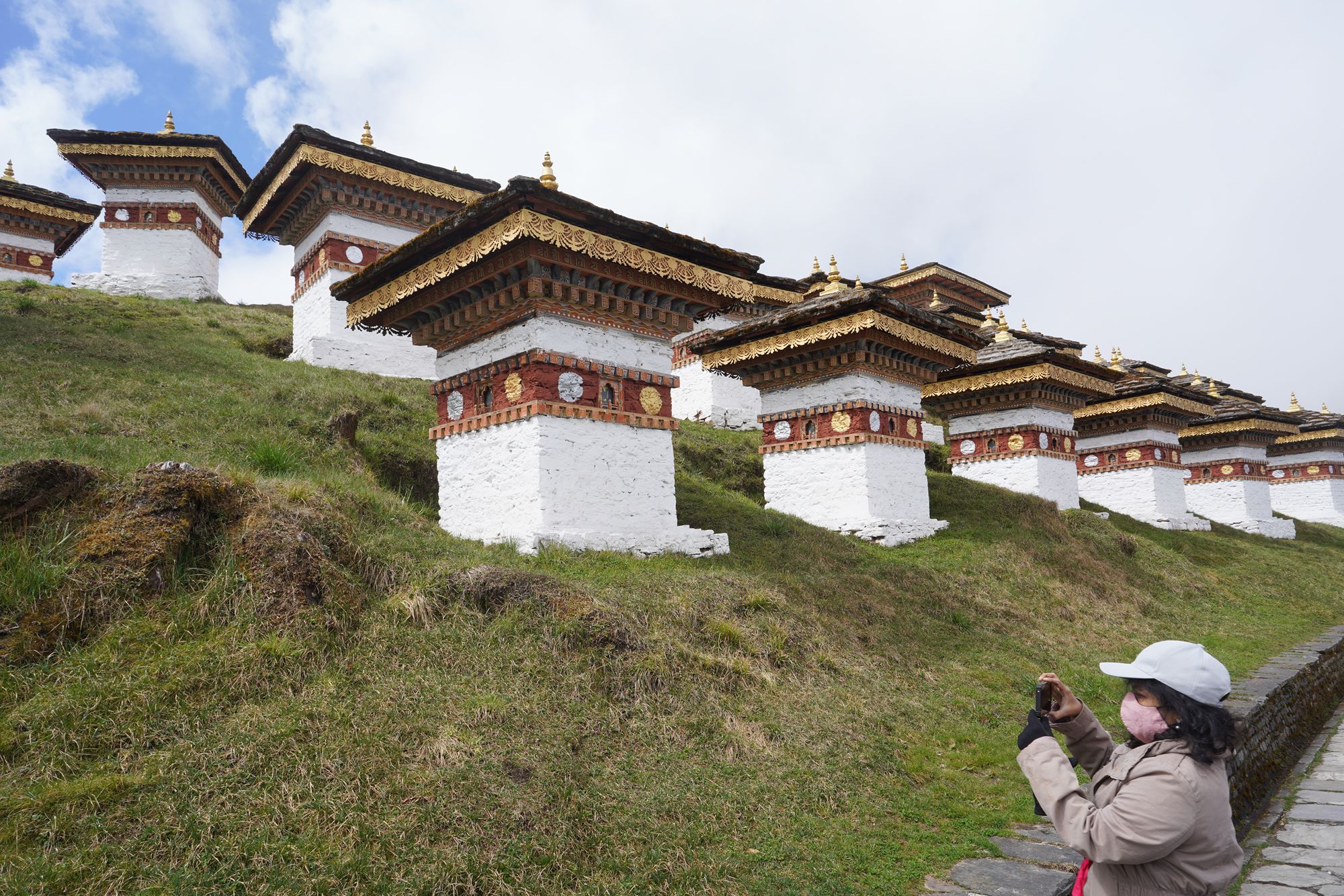
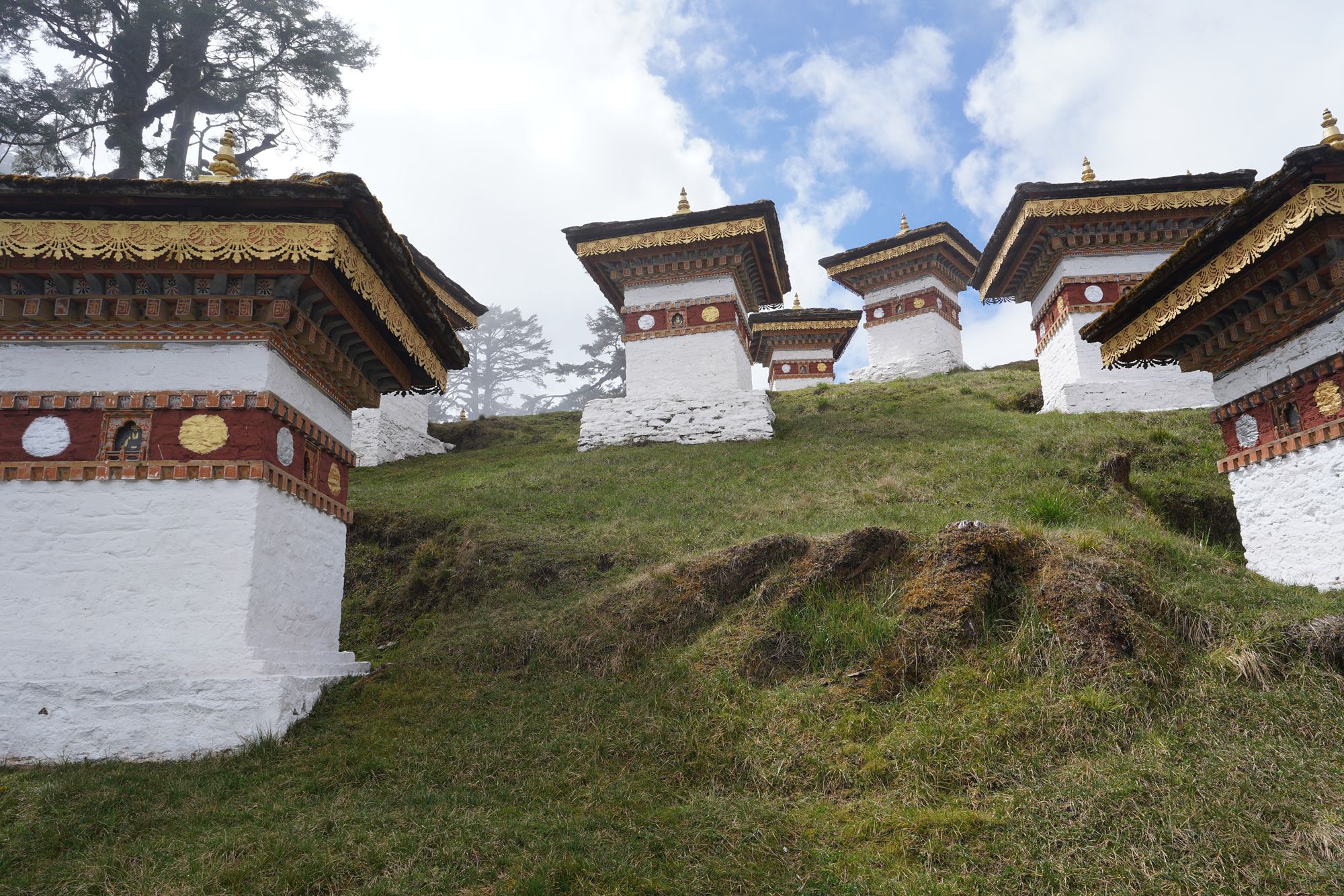
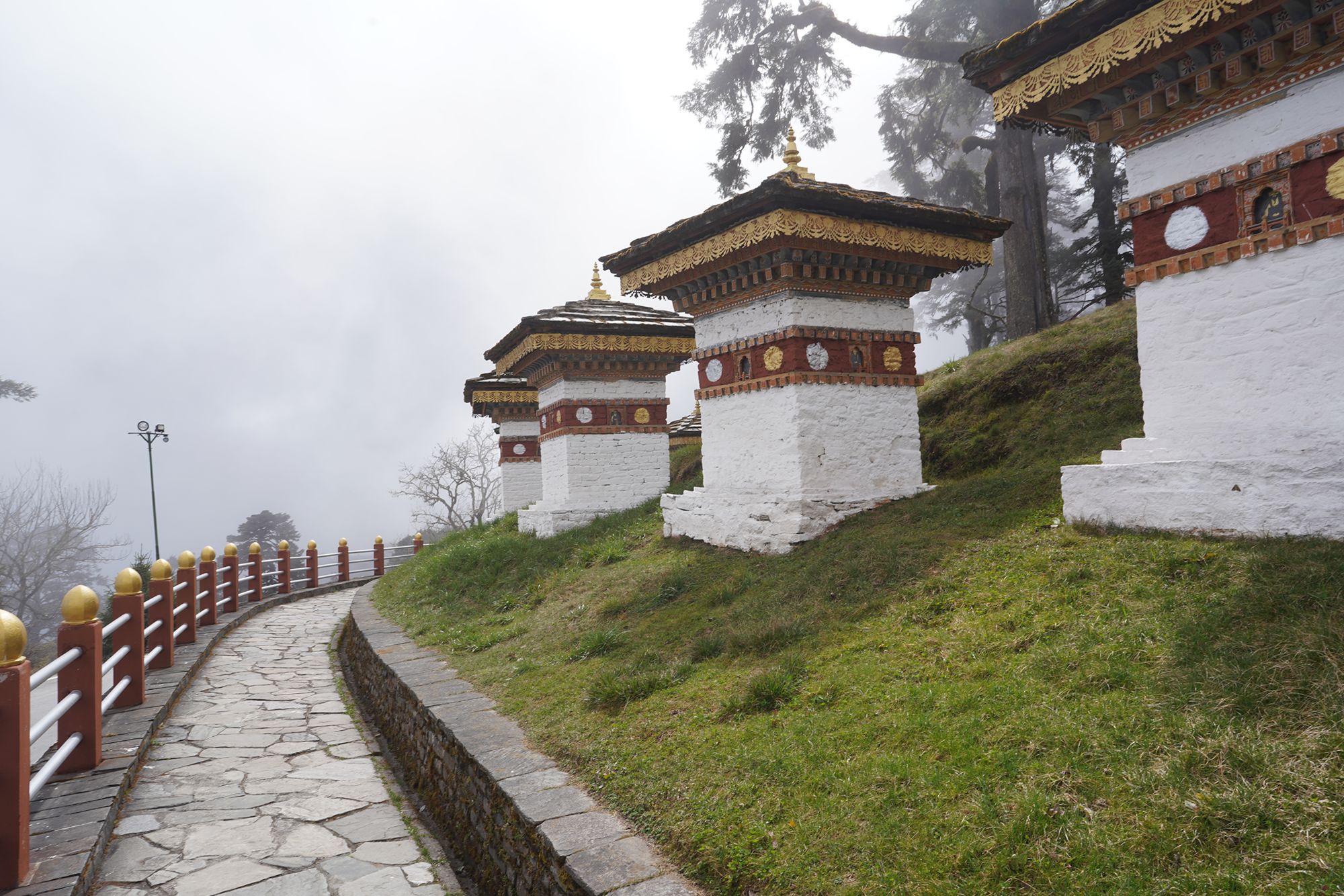
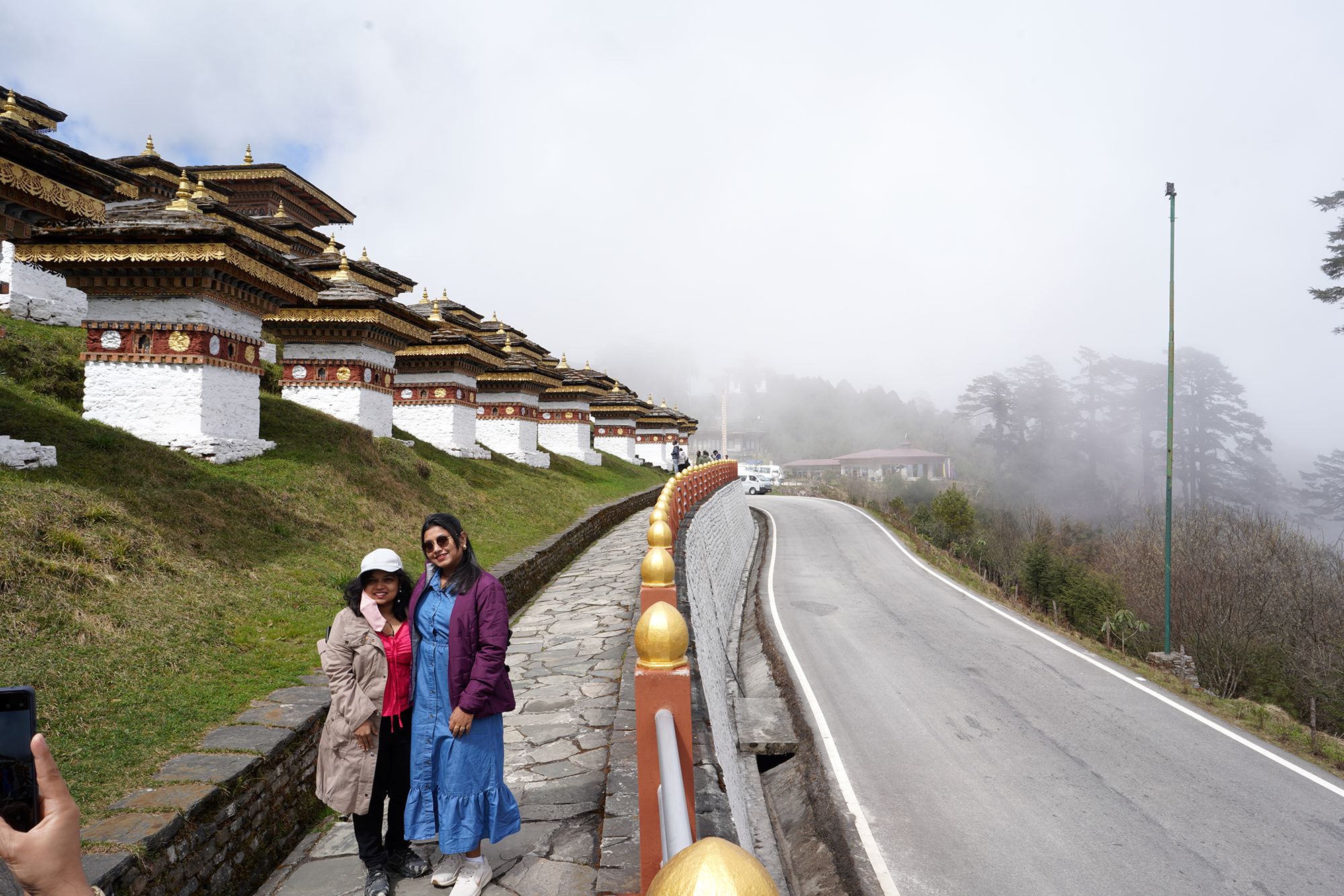
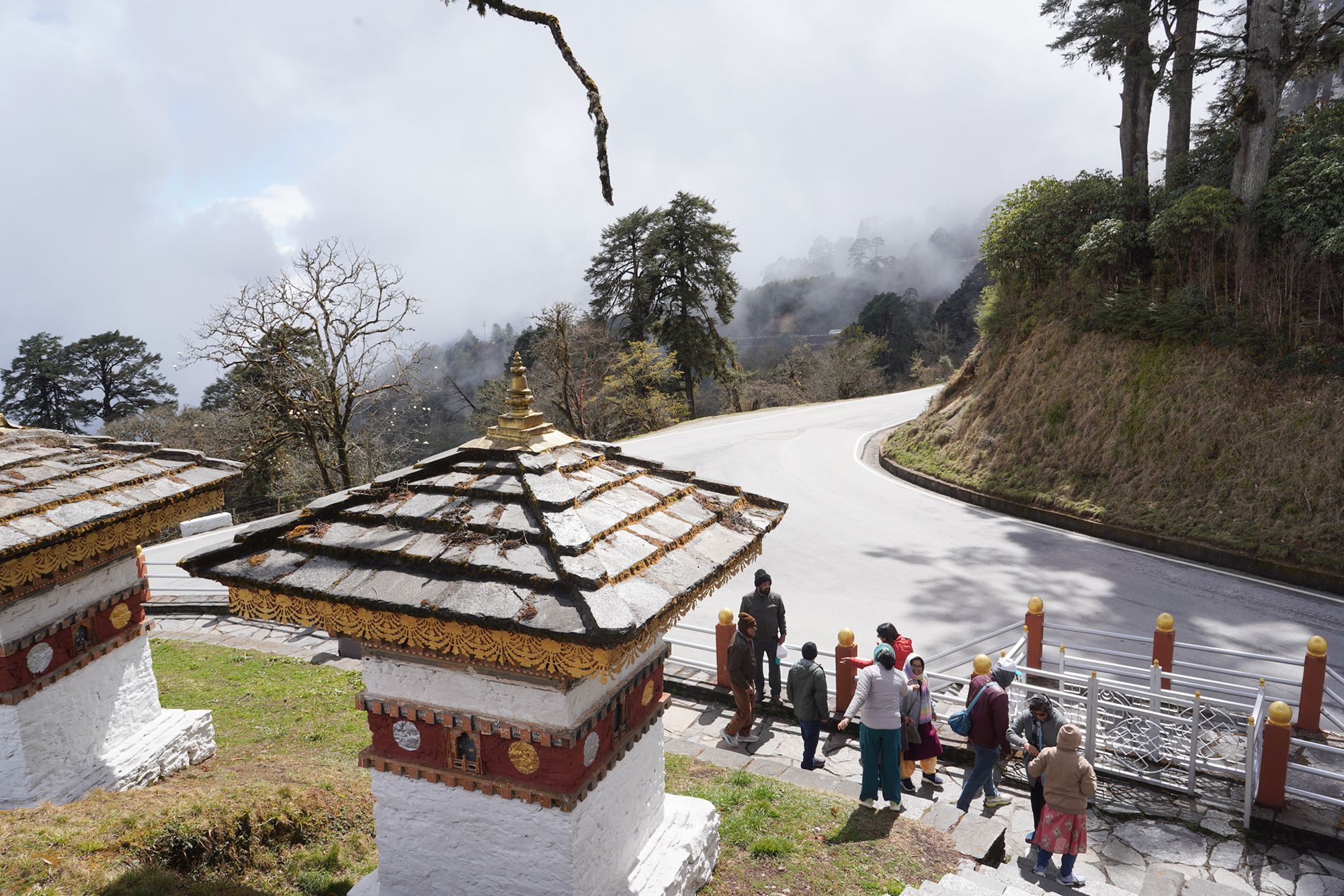
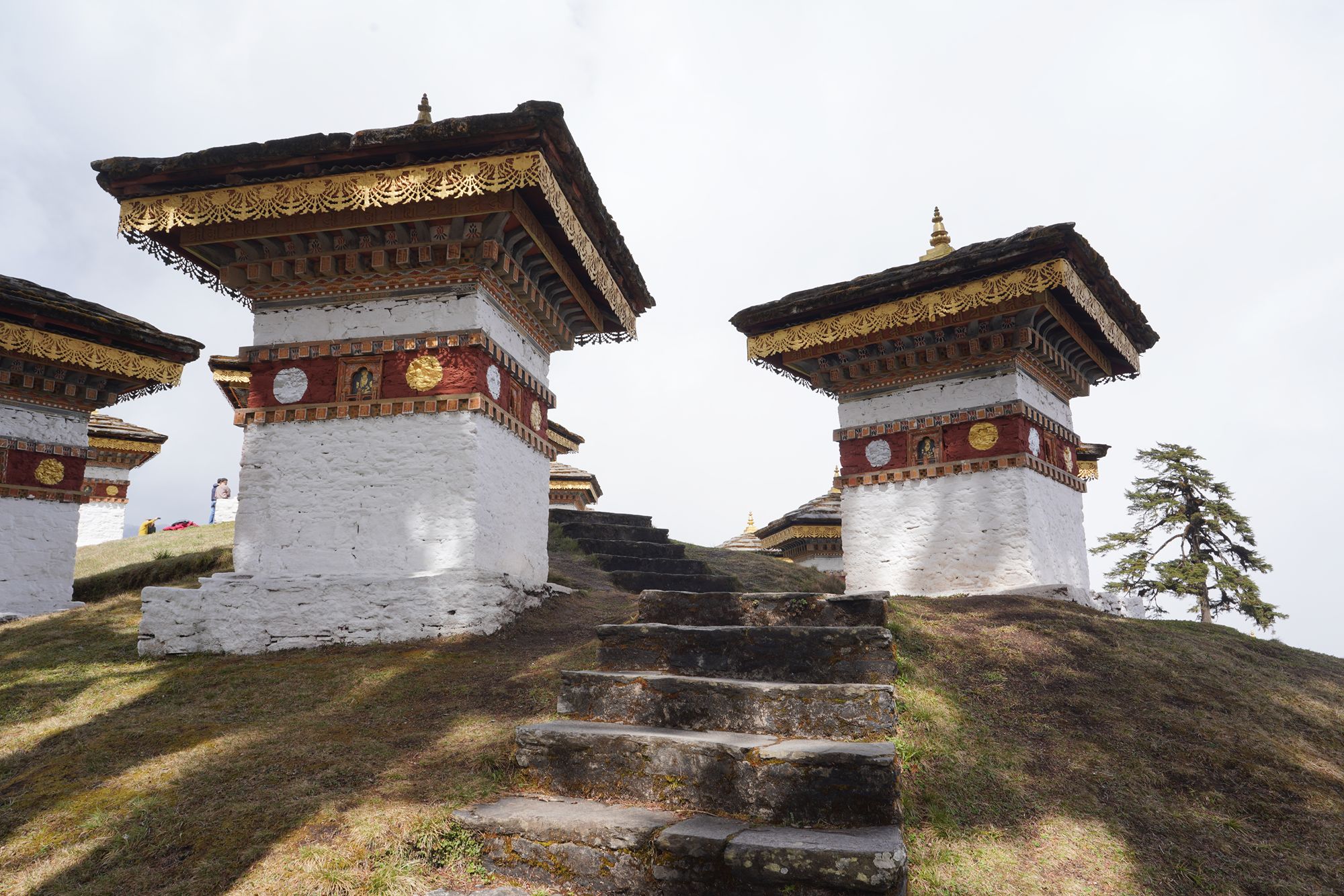

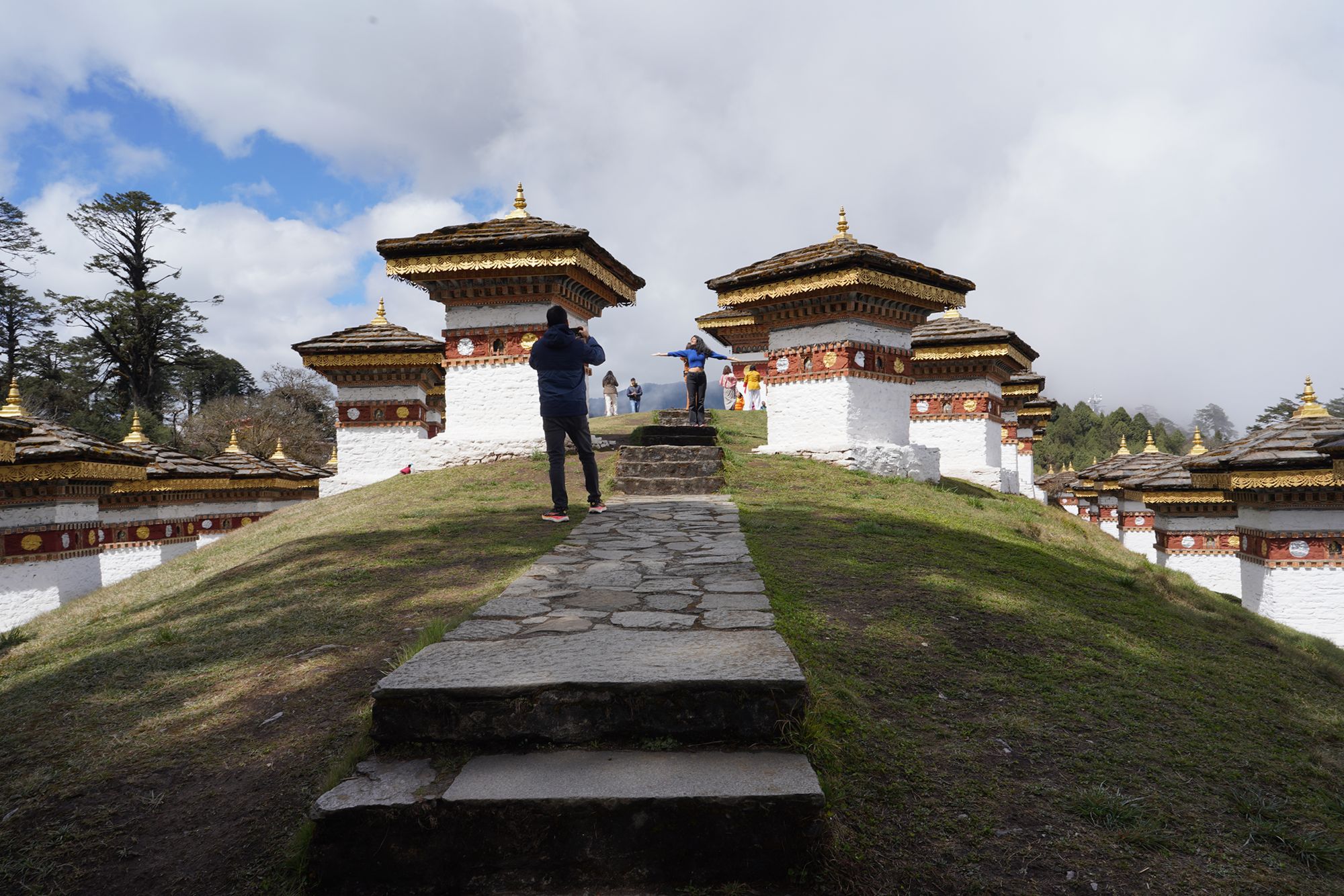
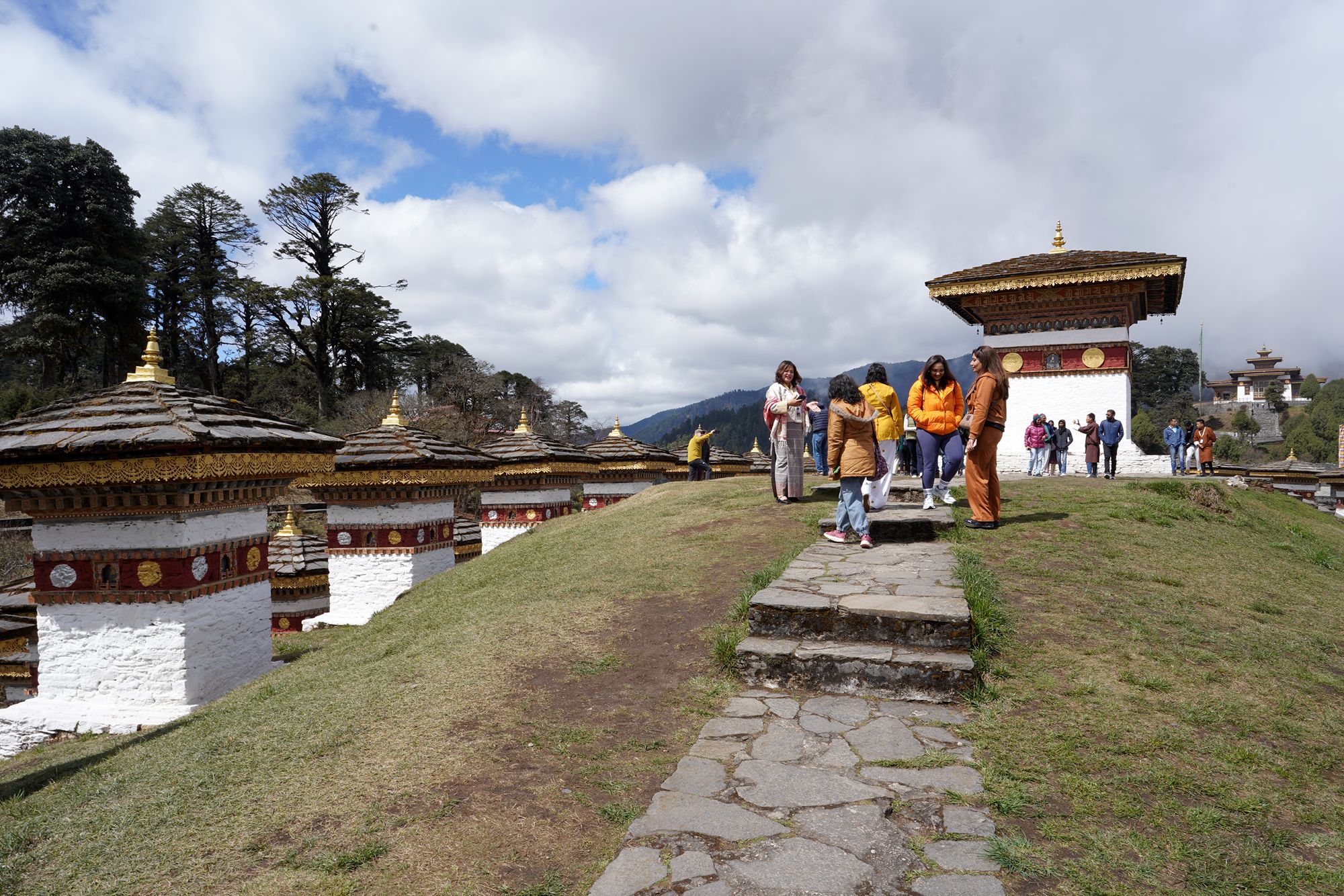
At the top of the hill, surrounded by the 108 Druk Wangyal Chortens at Dochula Pass.
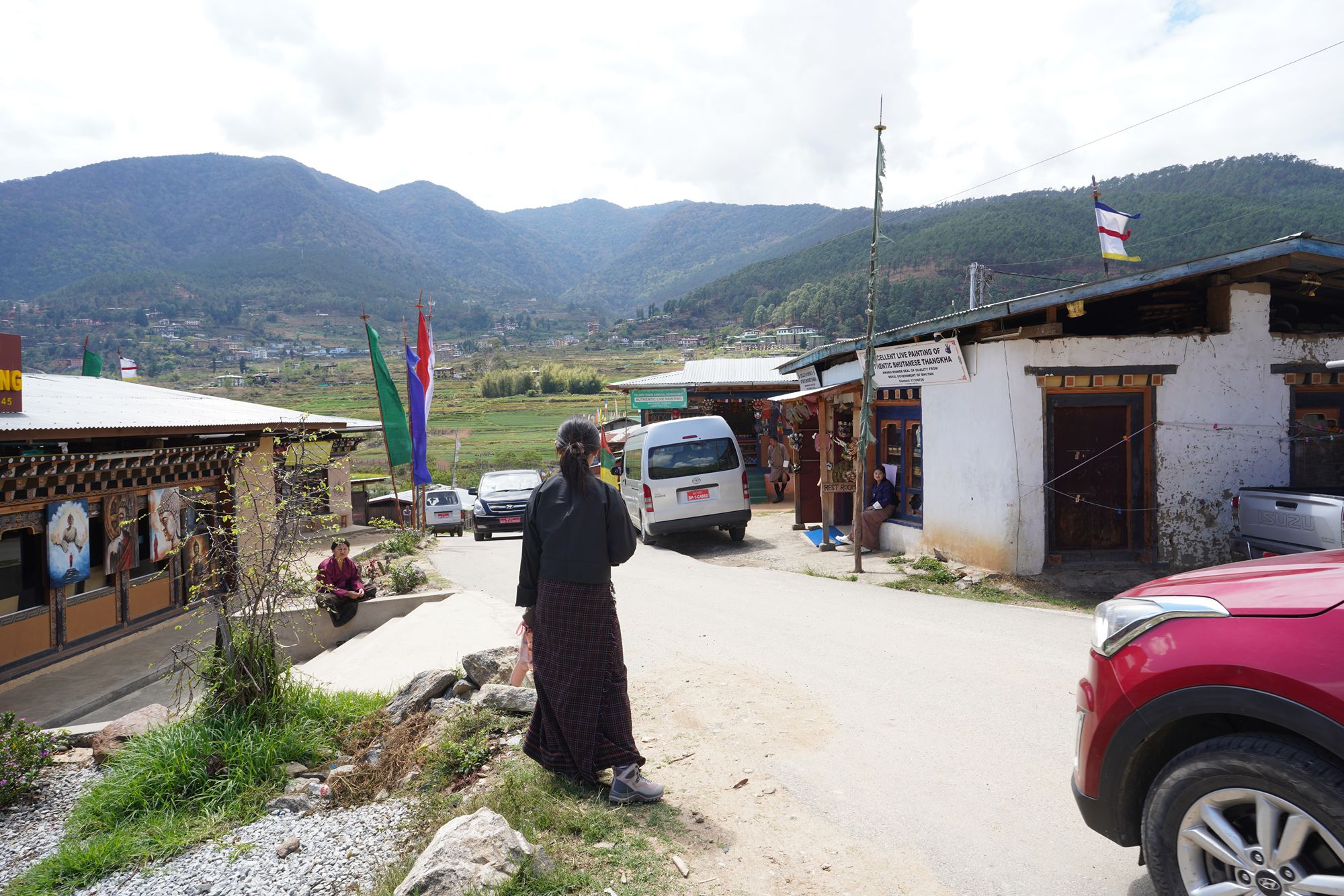
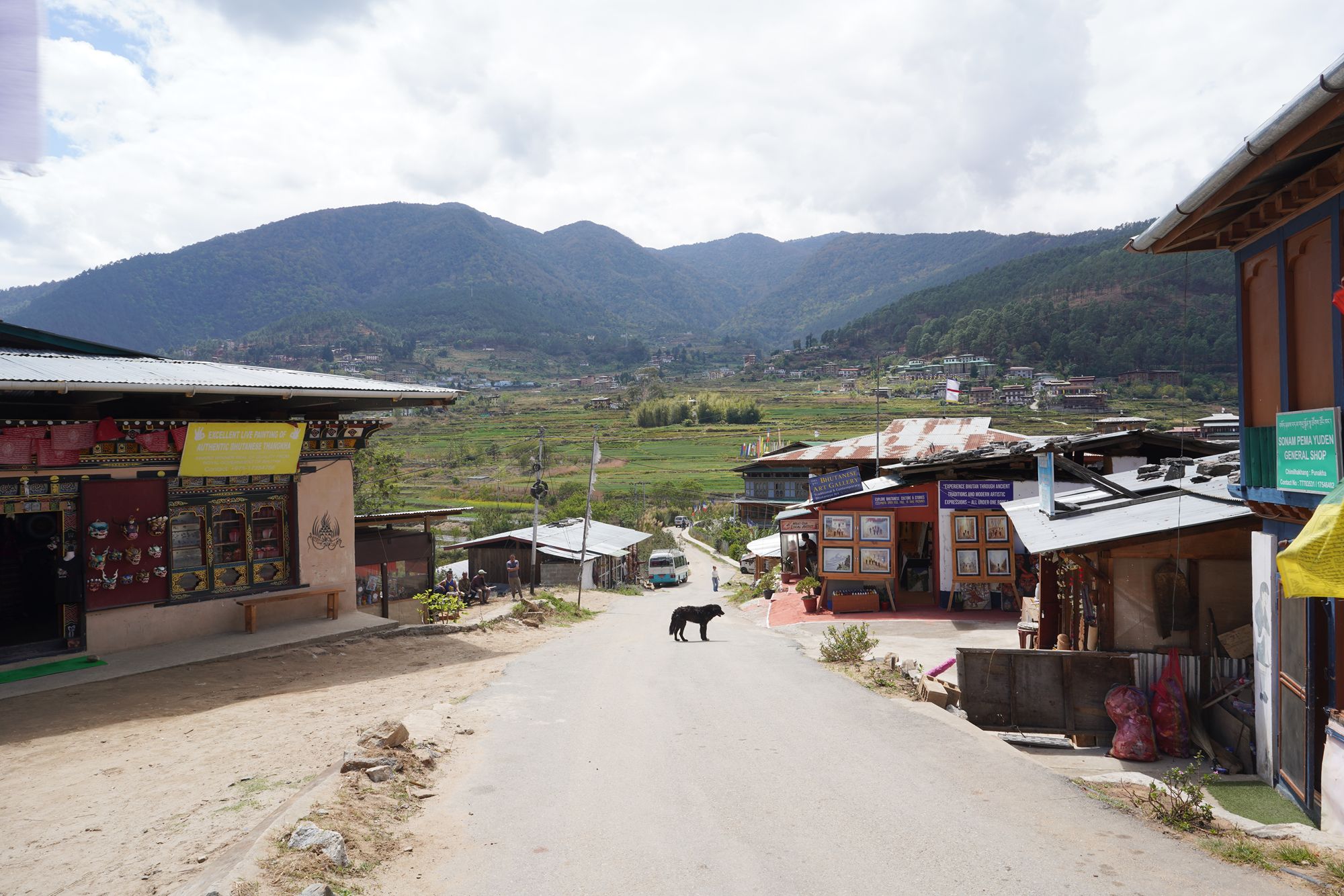
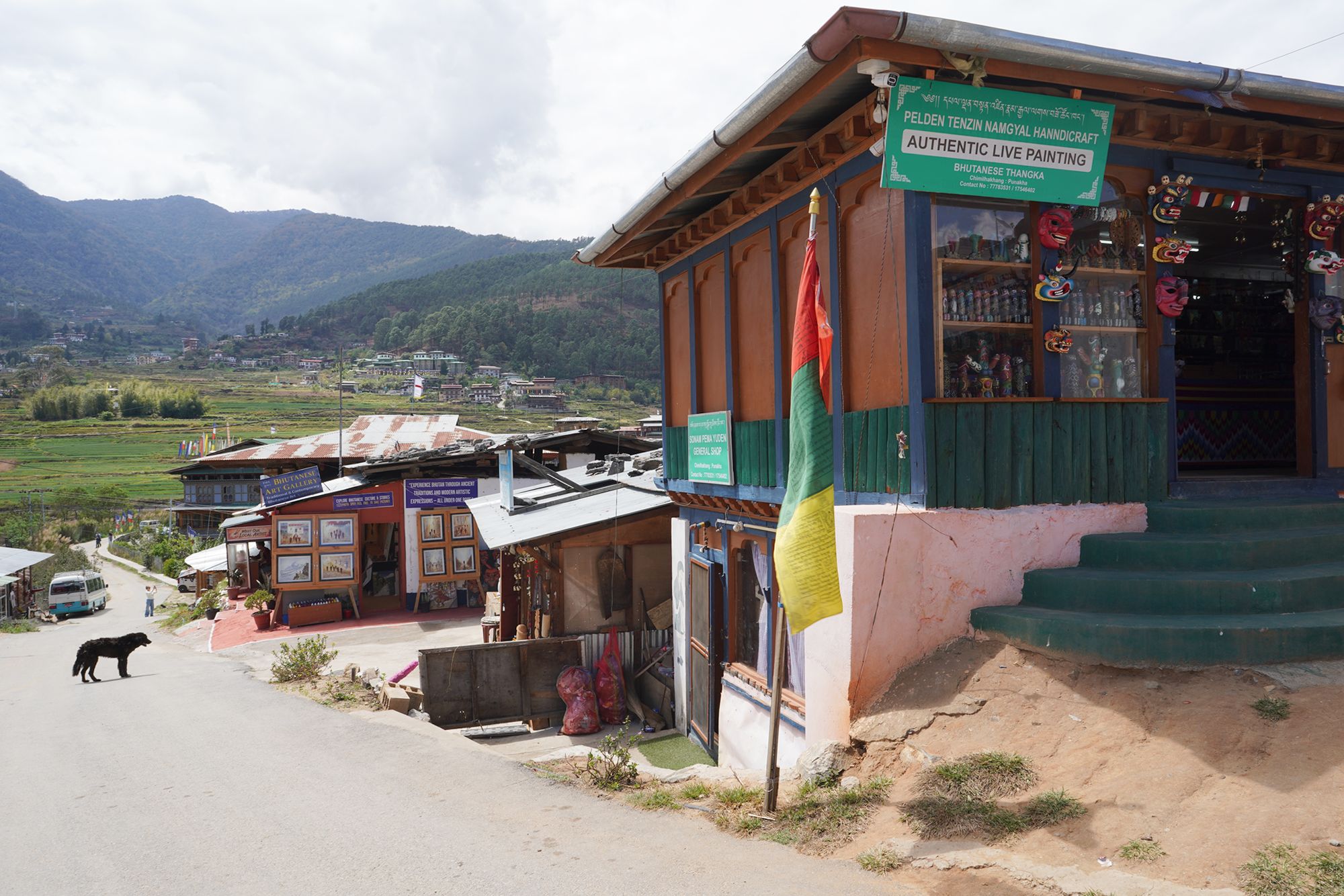
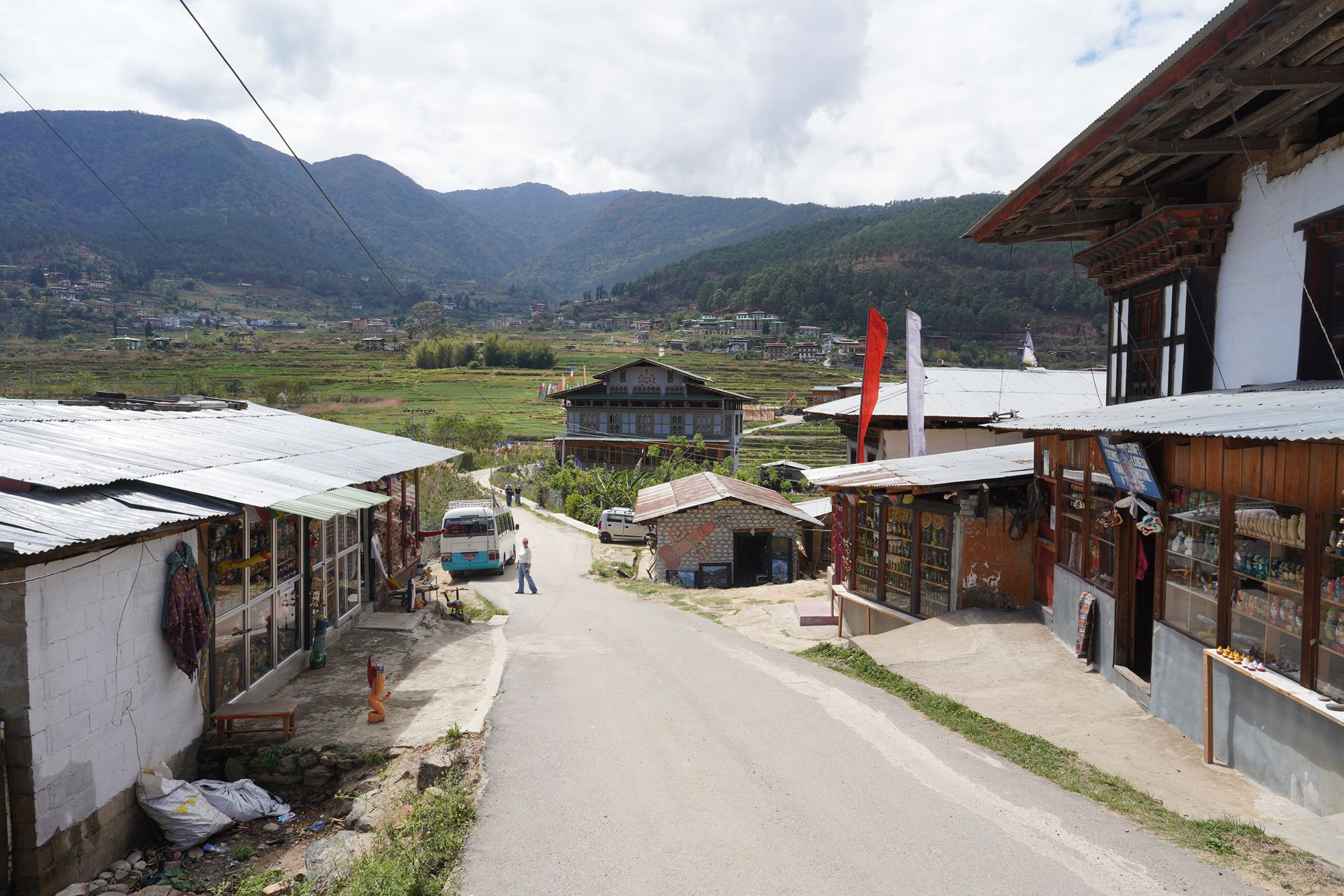
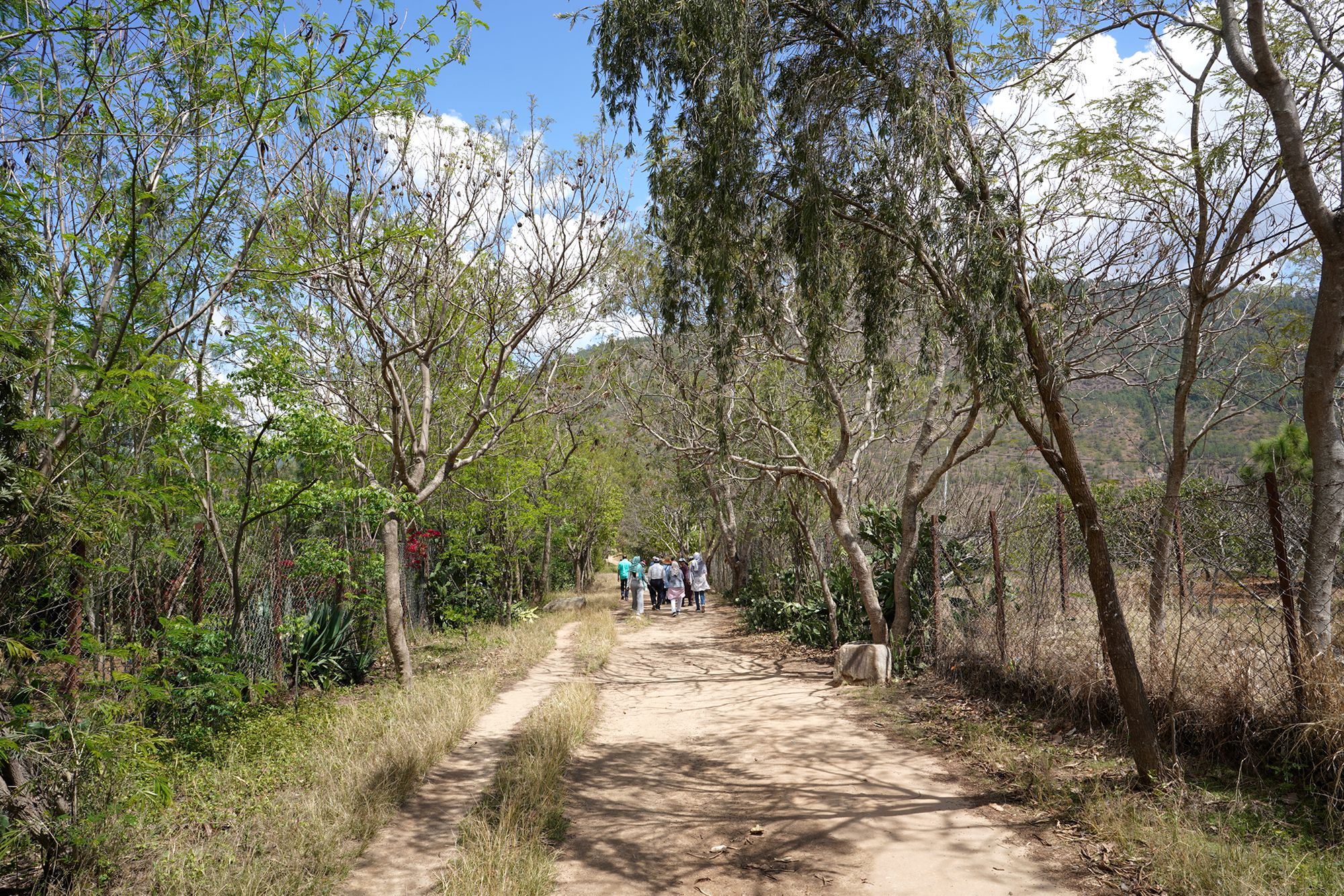
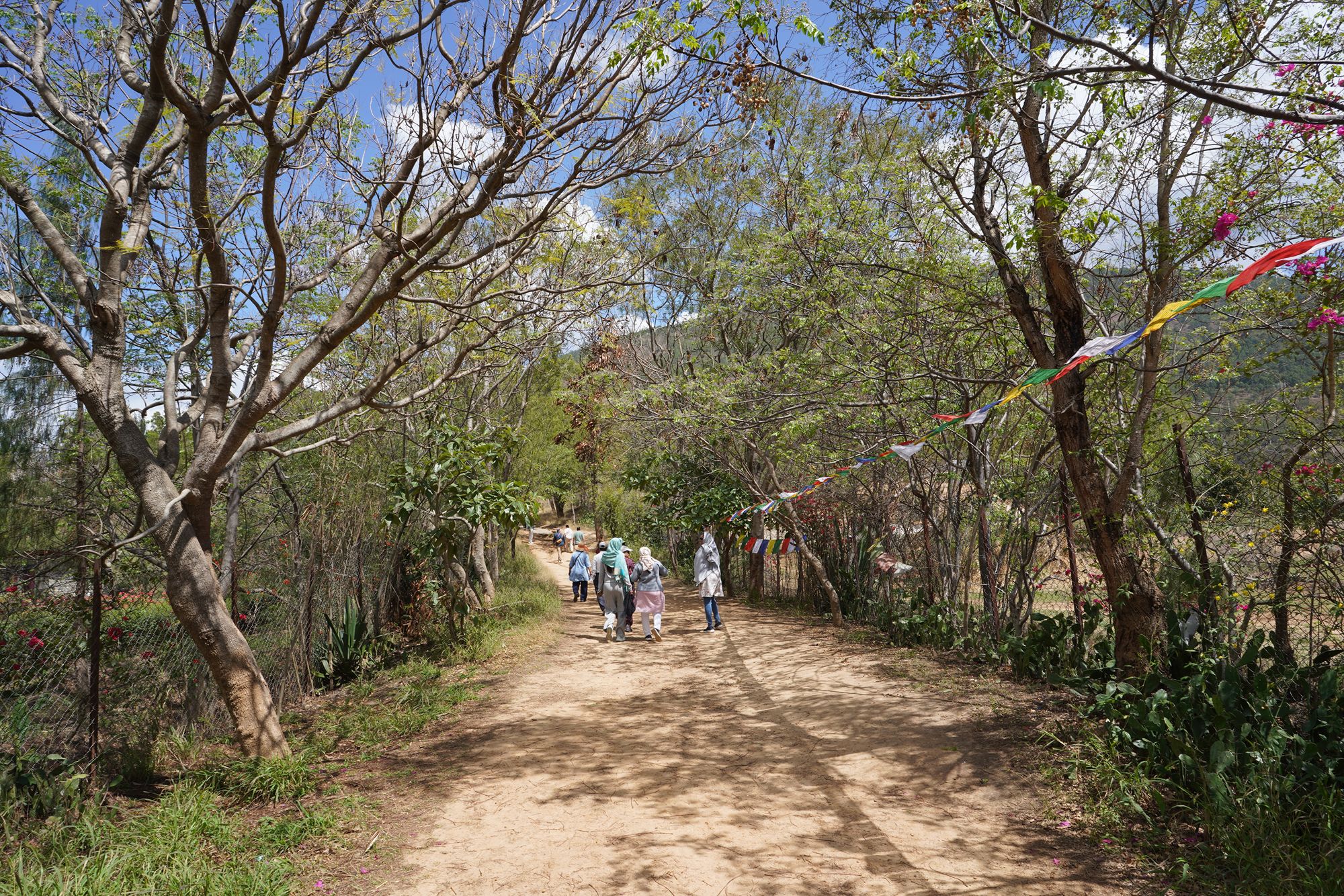
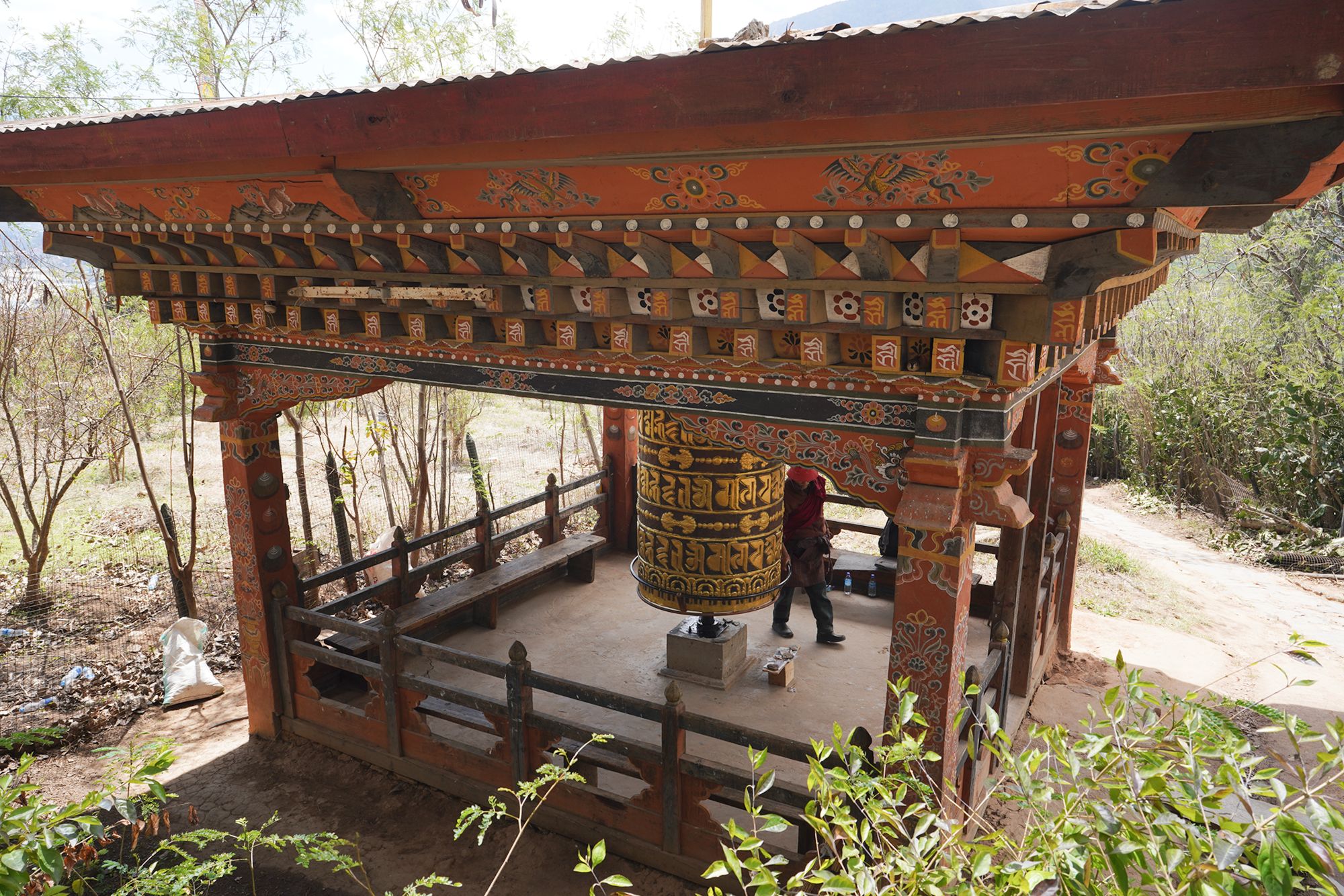
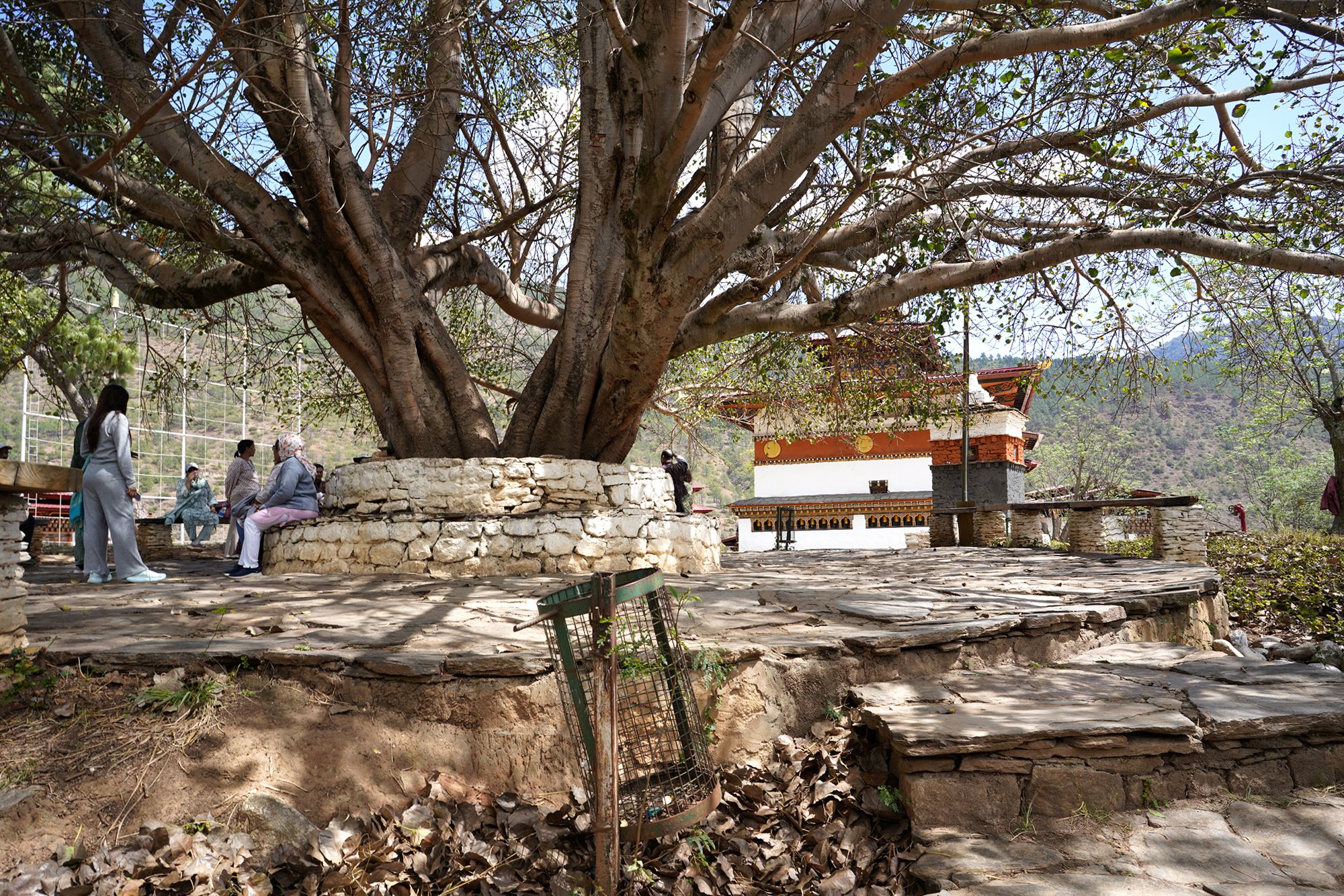
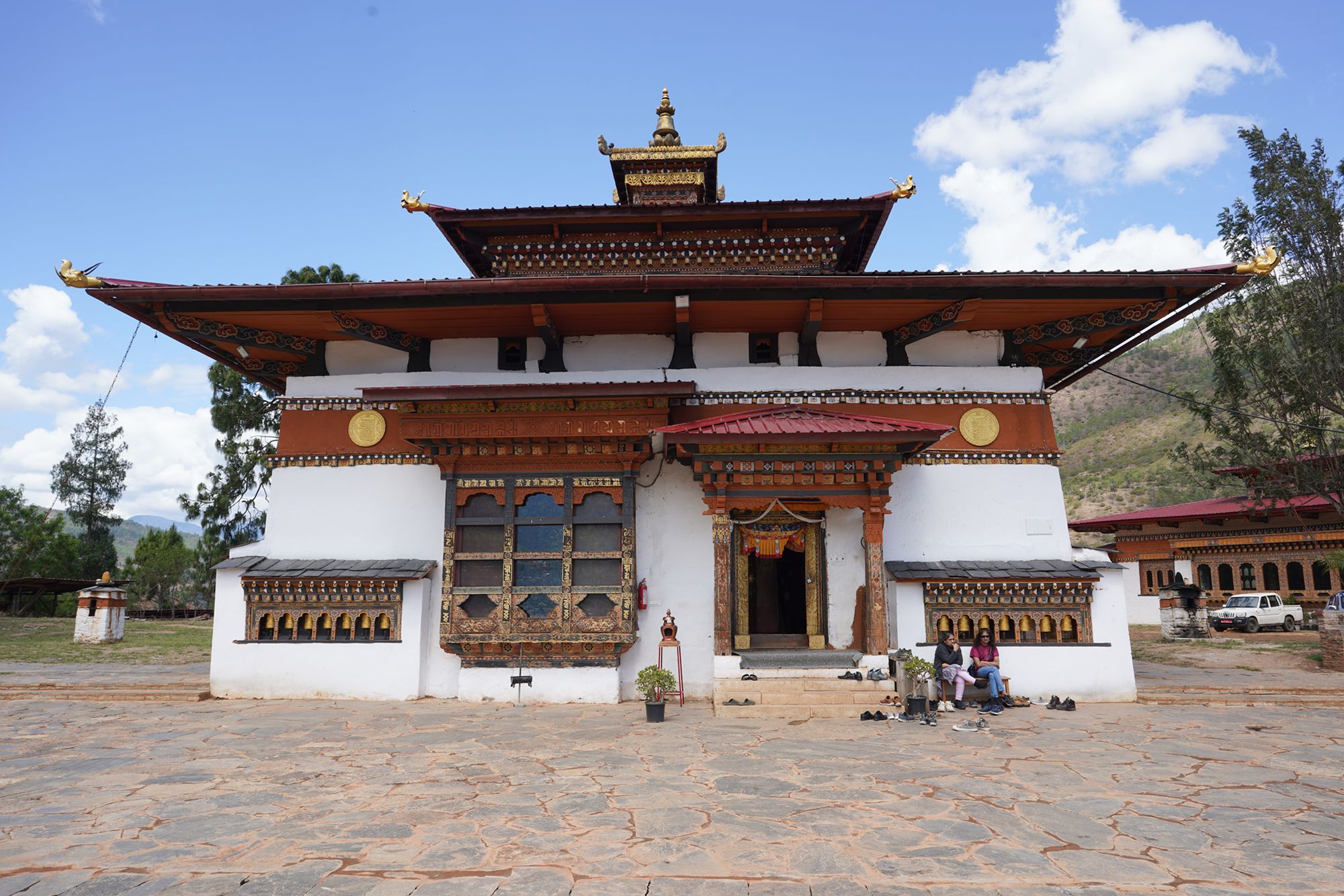
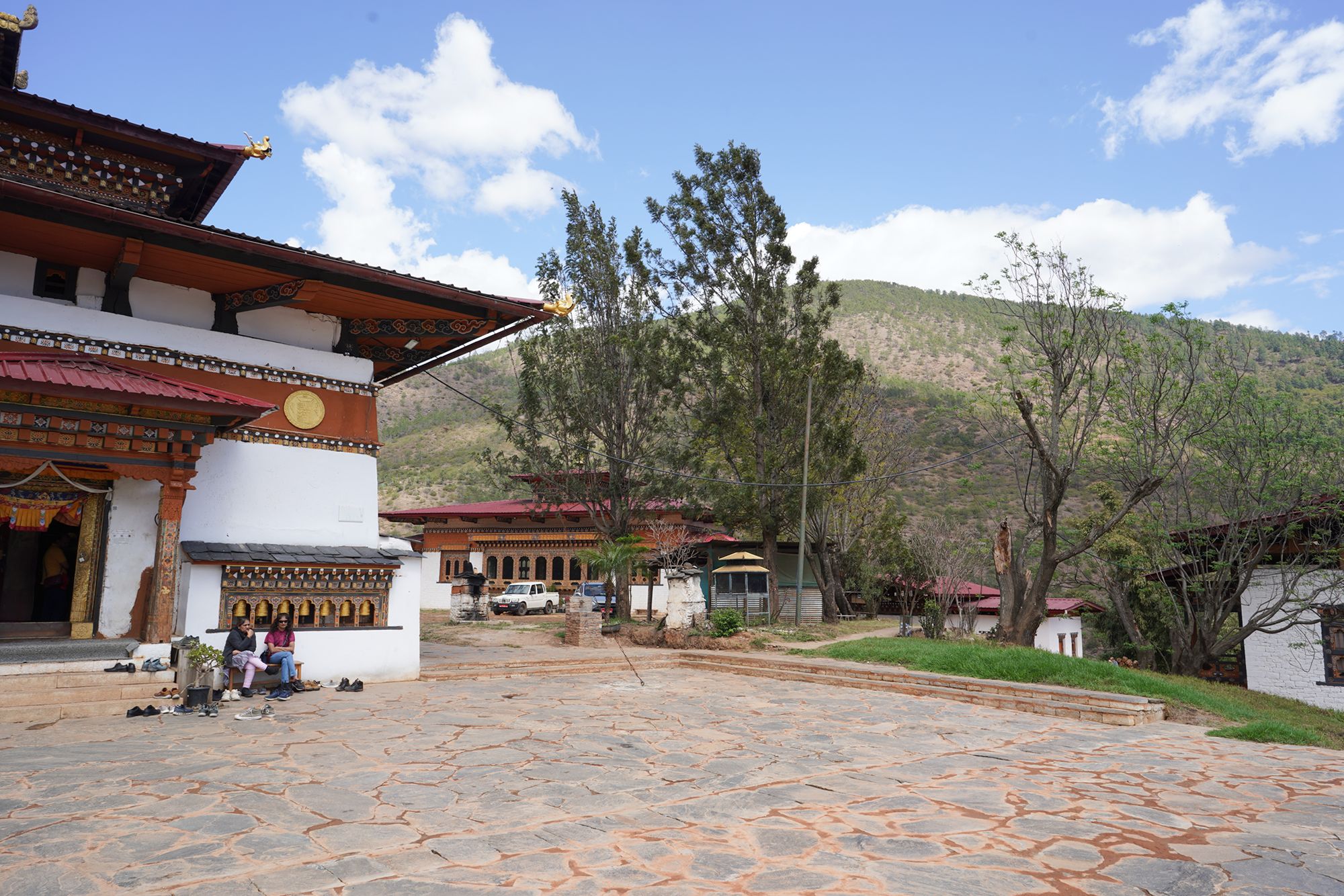
After crossing Dochula Pass, we continued to Punakha and arrived at Chimi Lhakhang, a famous Buddhist temple in the countryside.
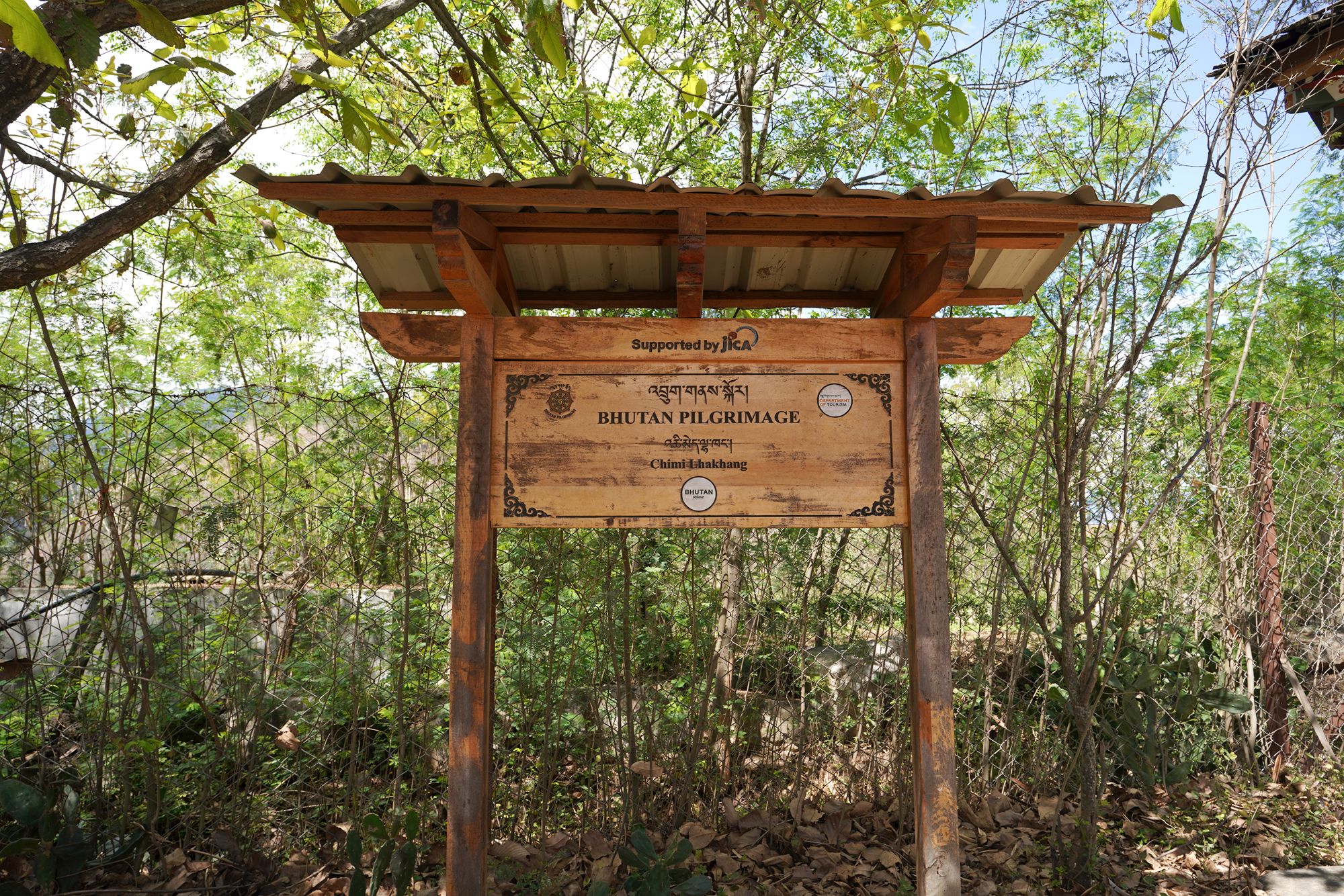
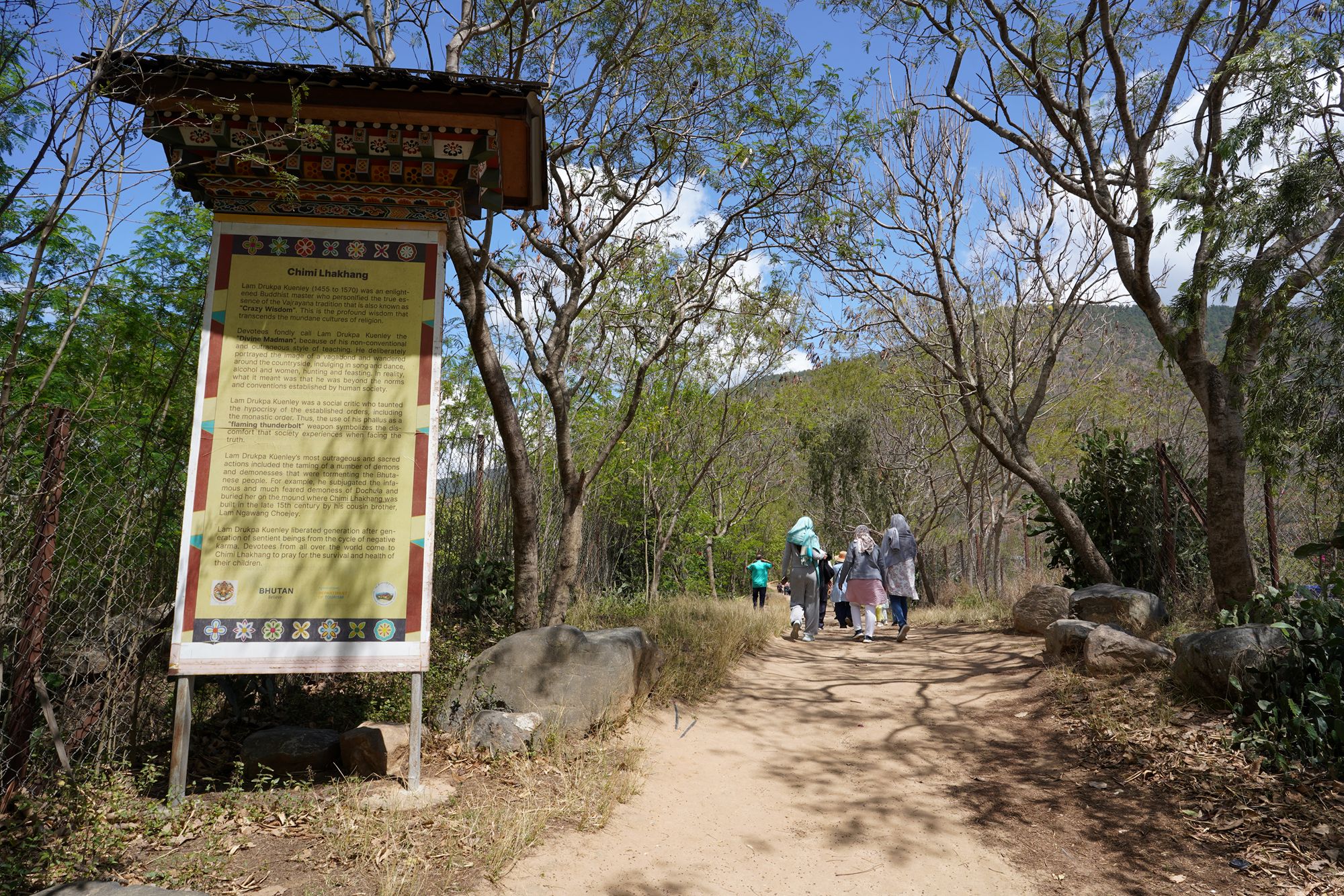
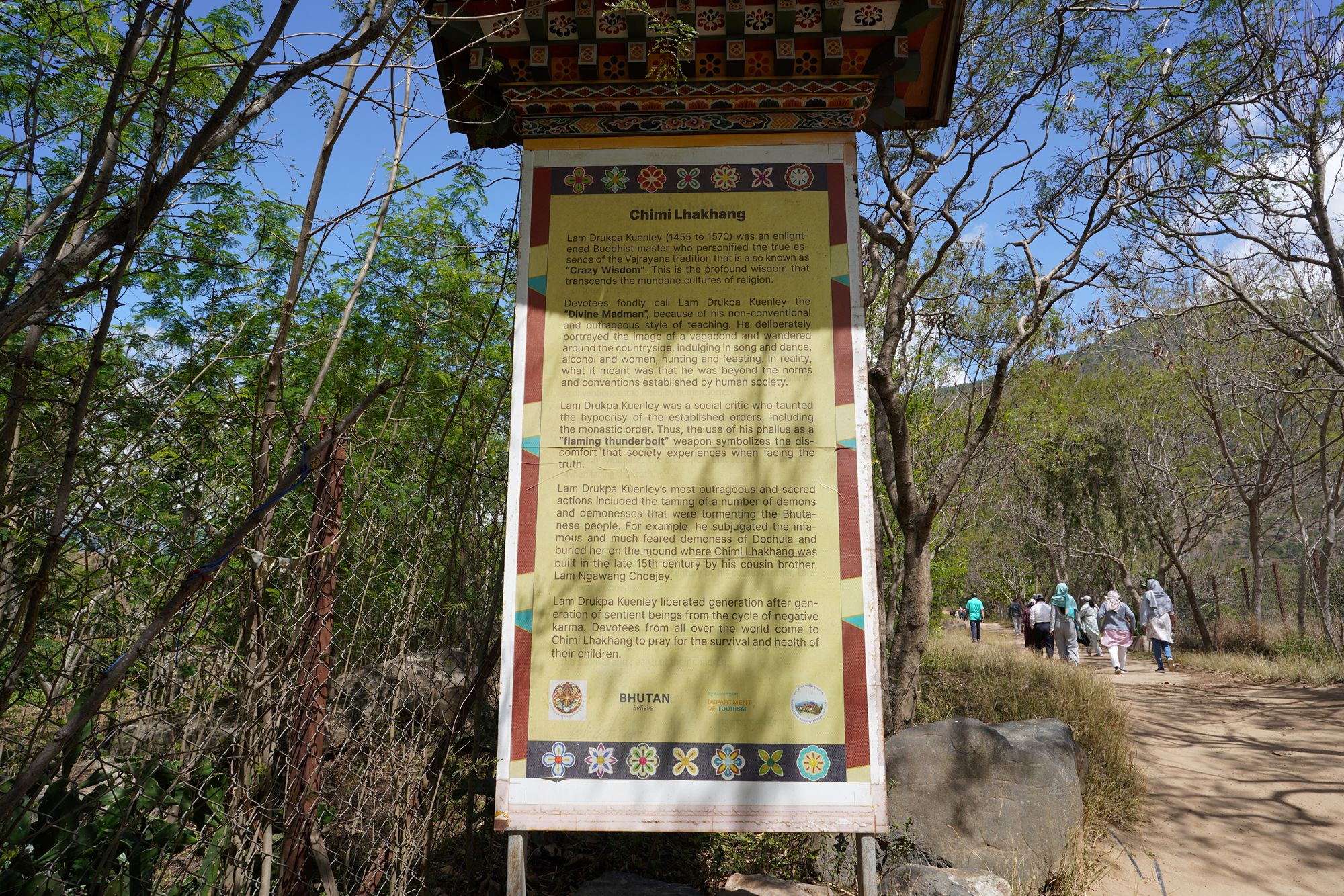
Chimi Lhakhang
Chimi Lhakhang, often called the Fertility Temple, is a small Buddhist temple near Punakha. It was built in 1499 and is associated with Drukpa Kunley, a 15th–16th-century Buddhist teacher popularly known as the “Divine Madman.”
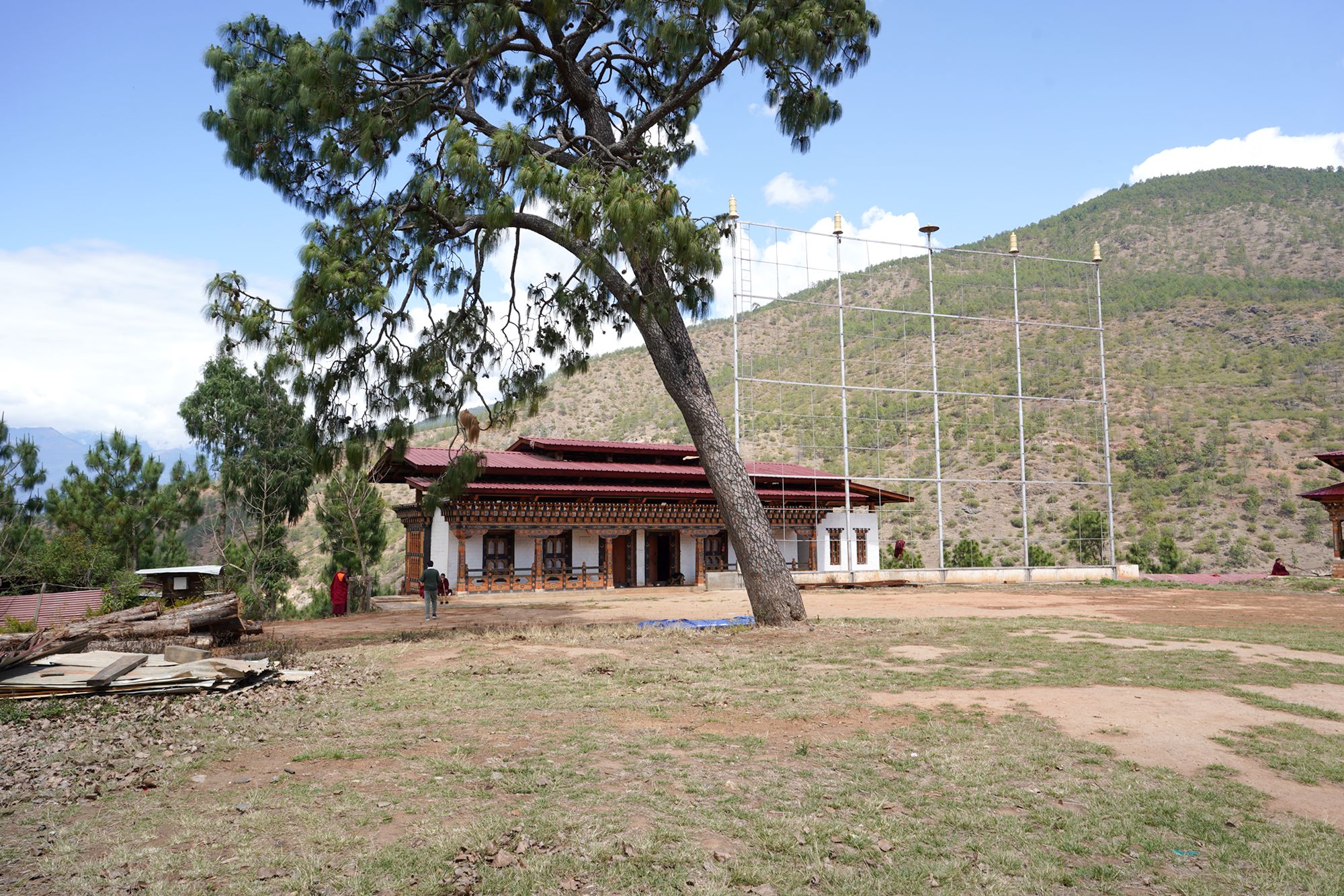
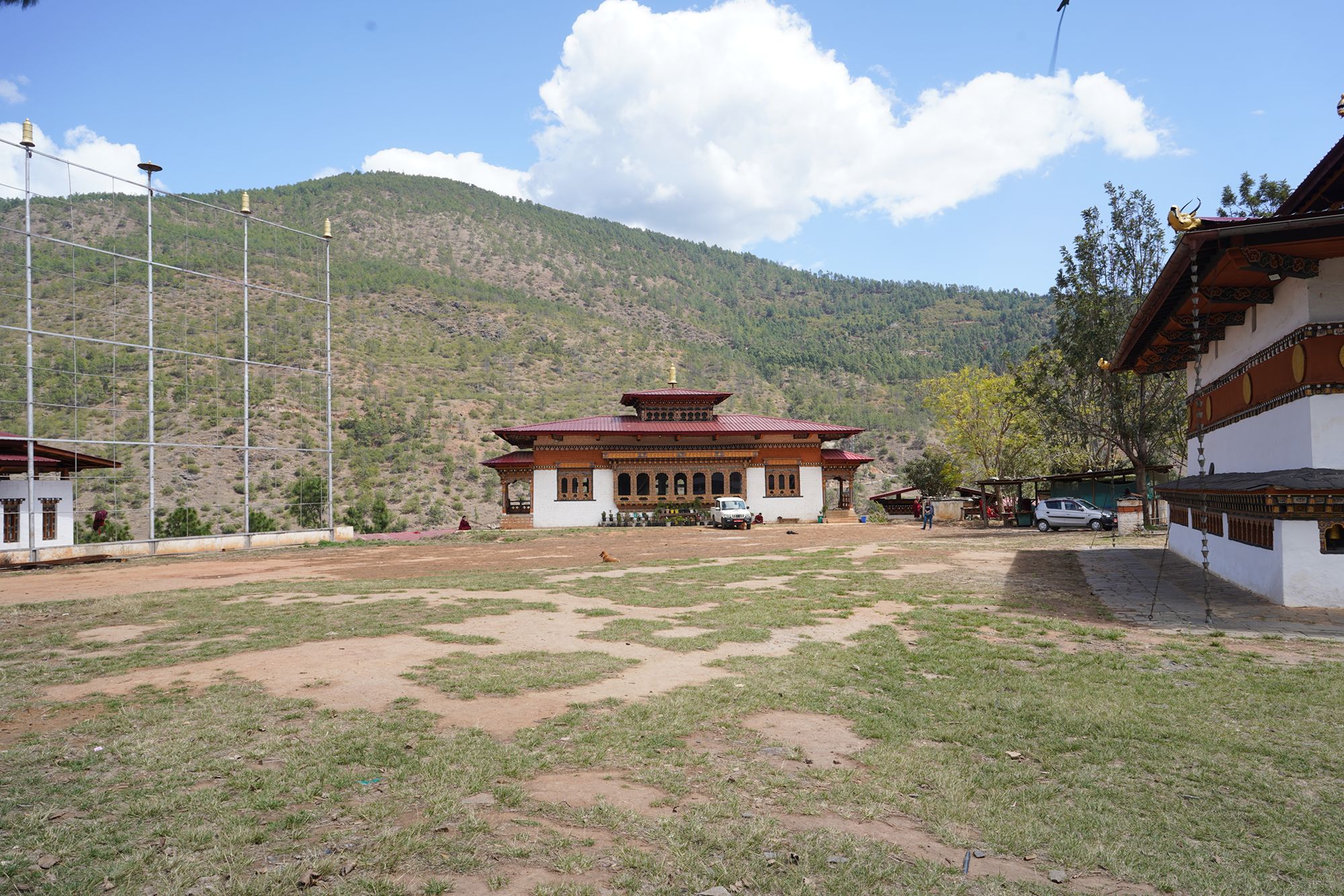
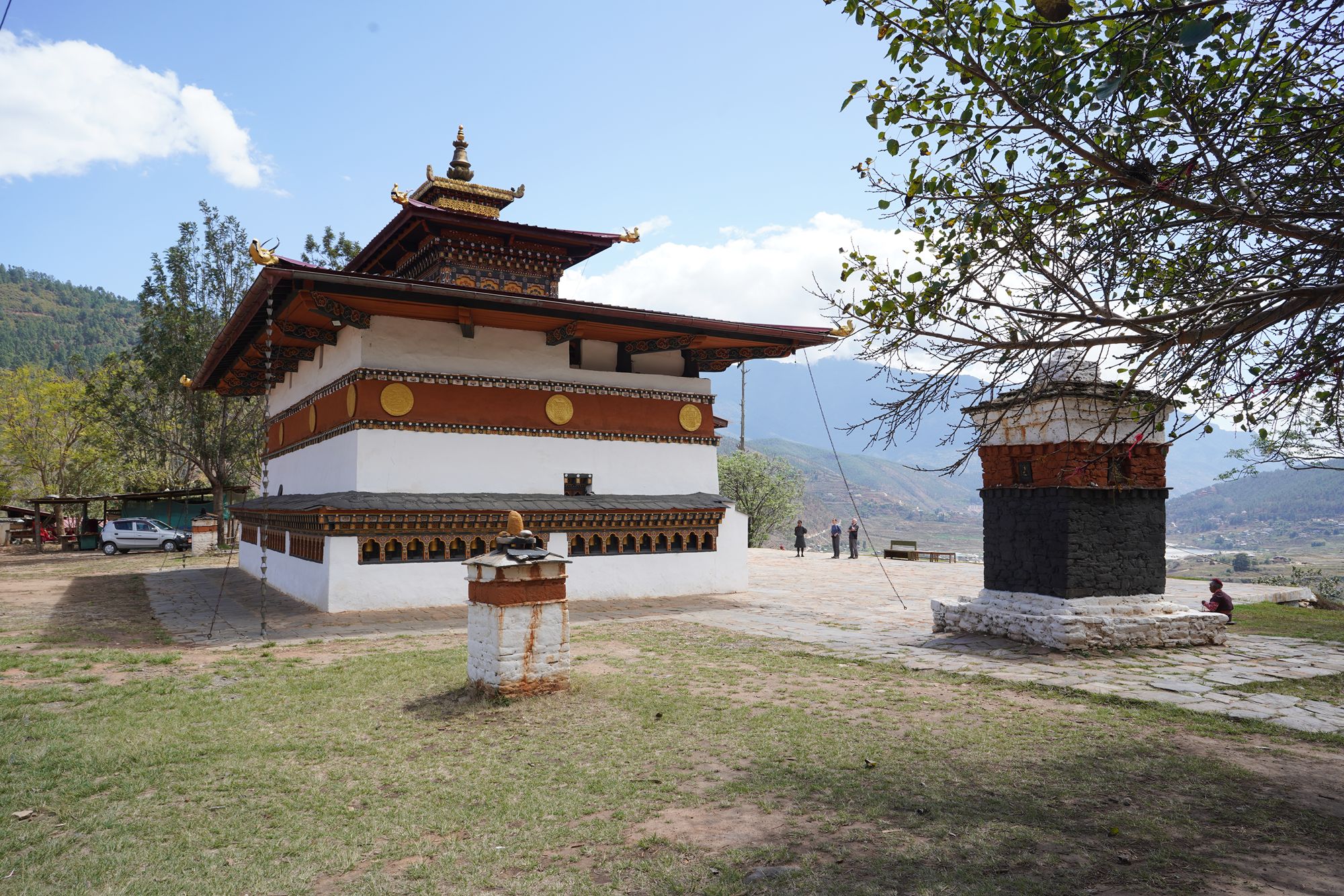
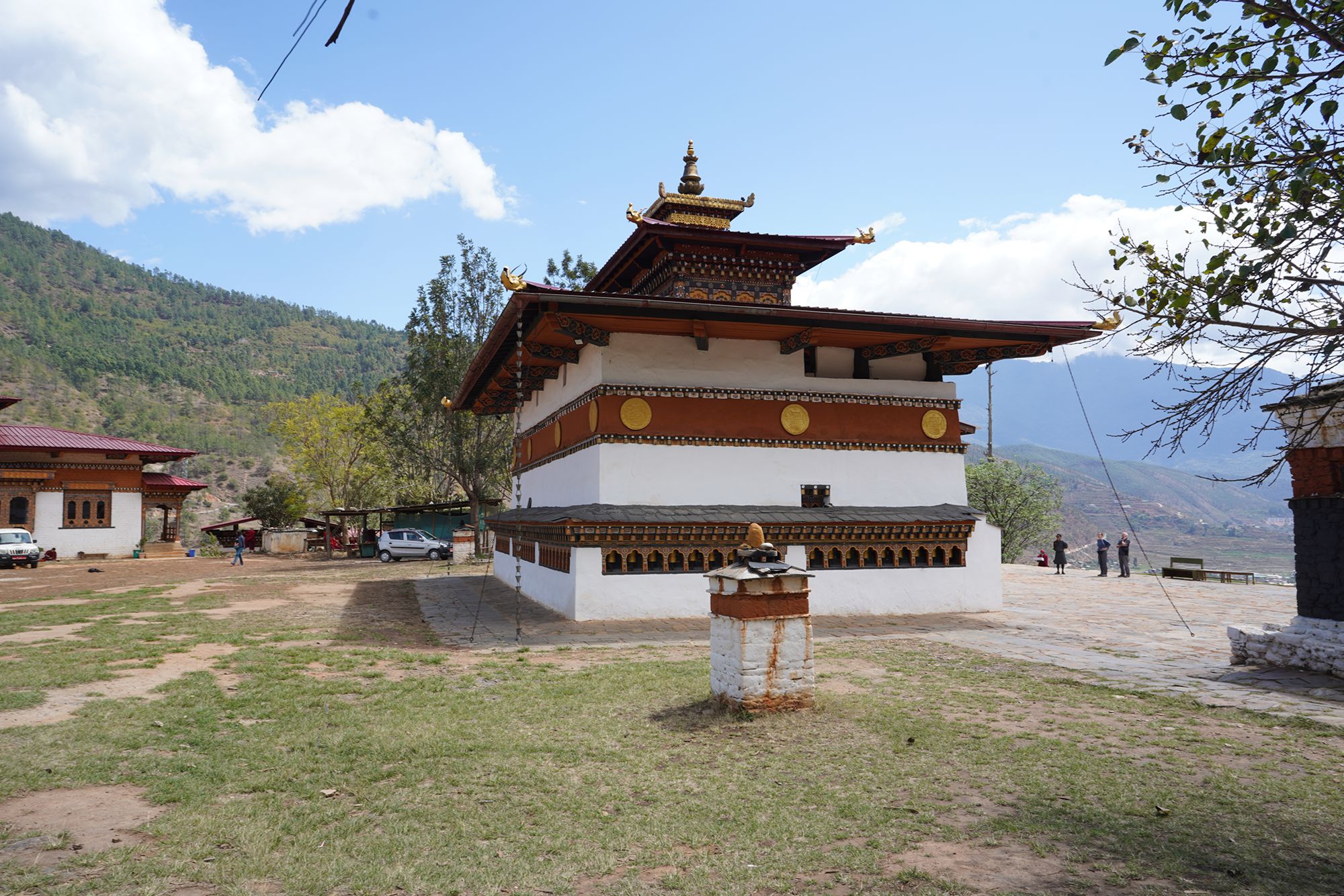
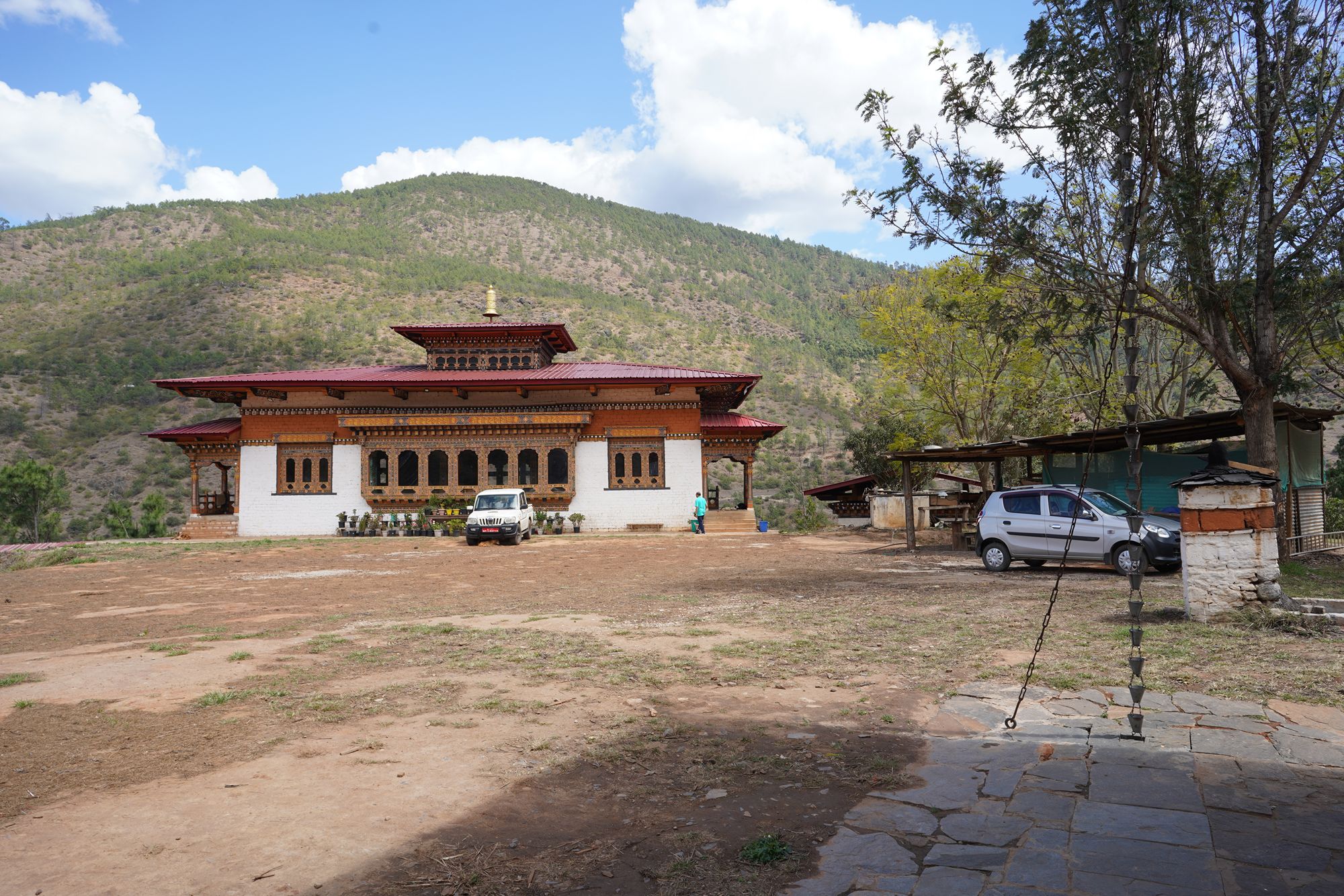
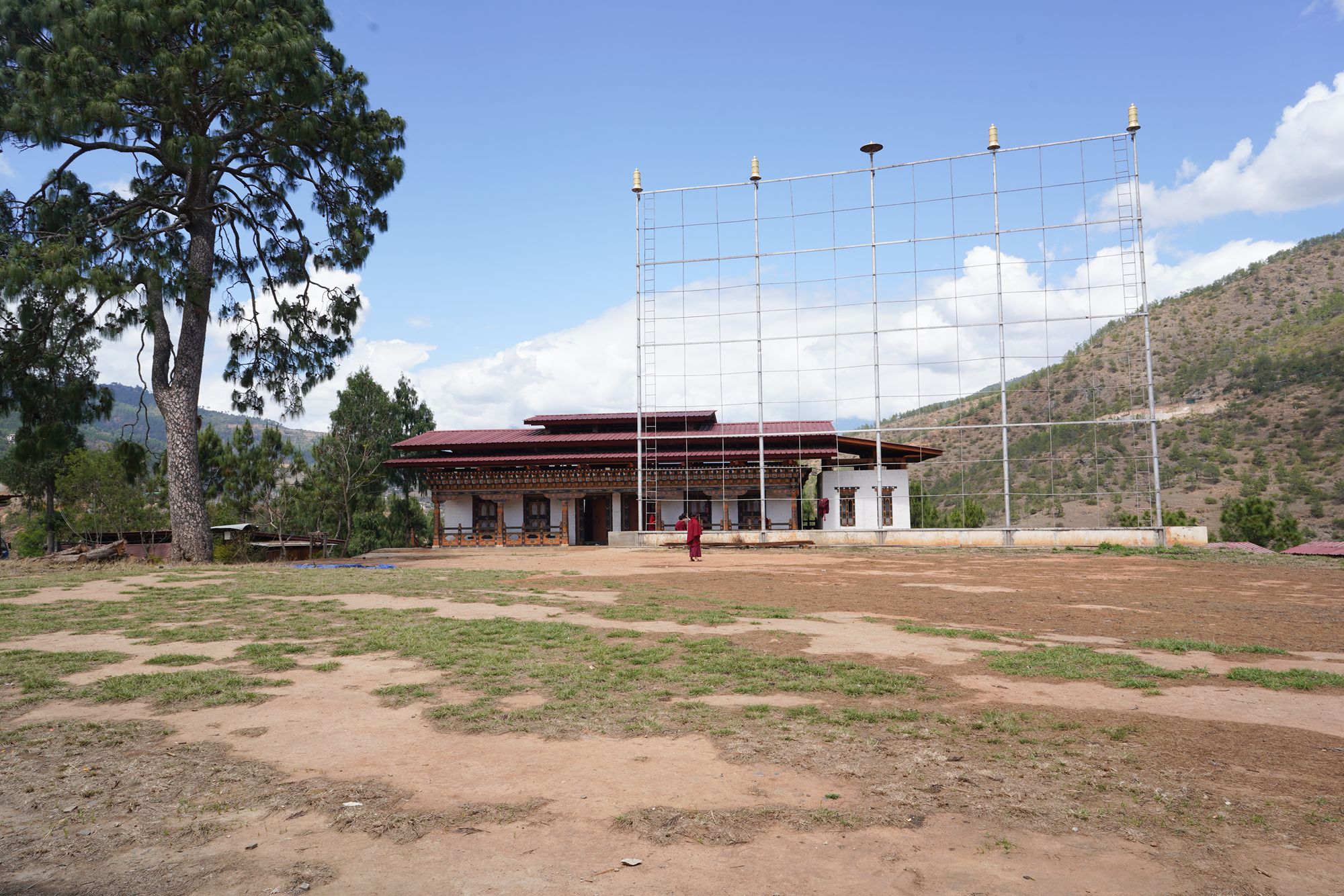
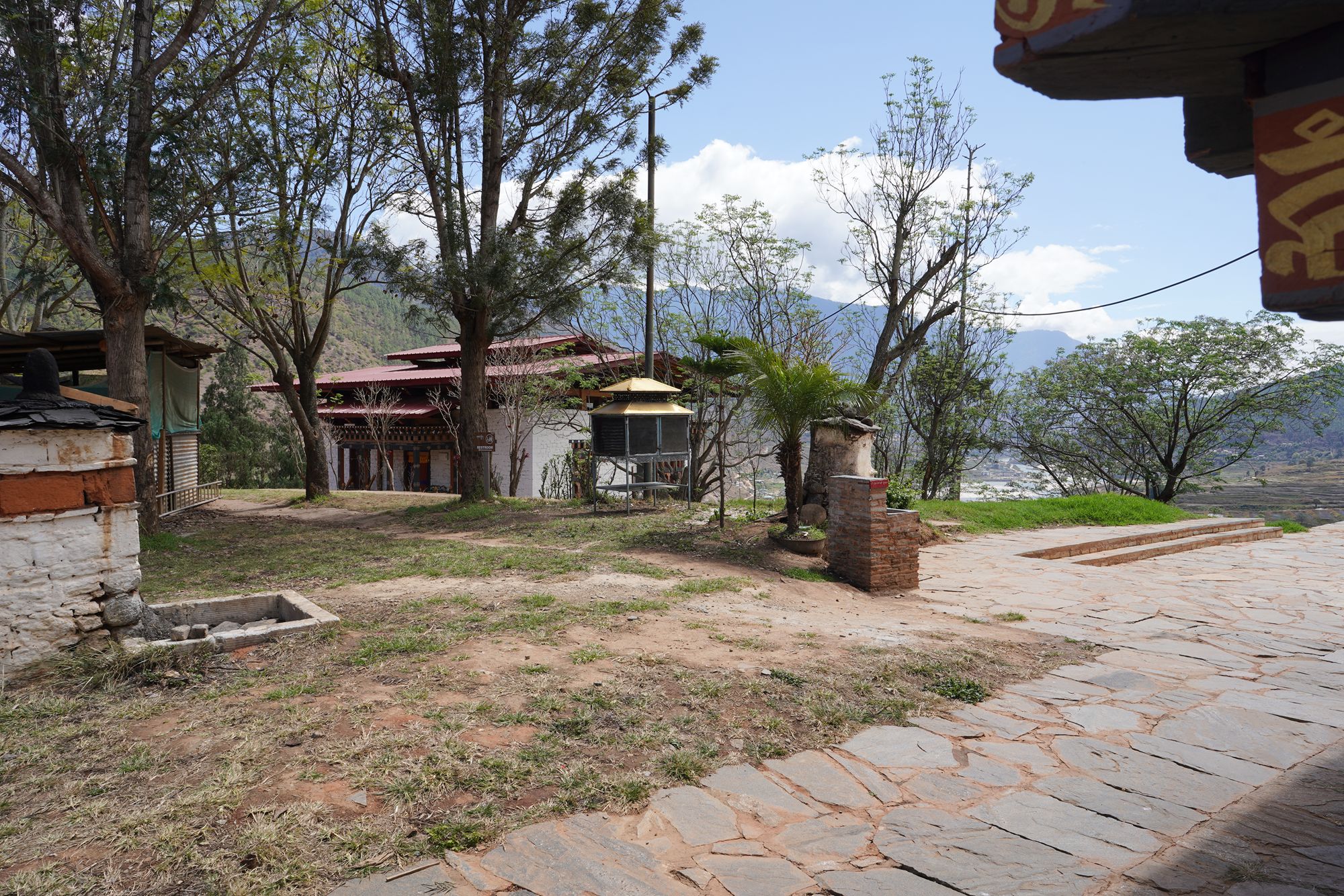
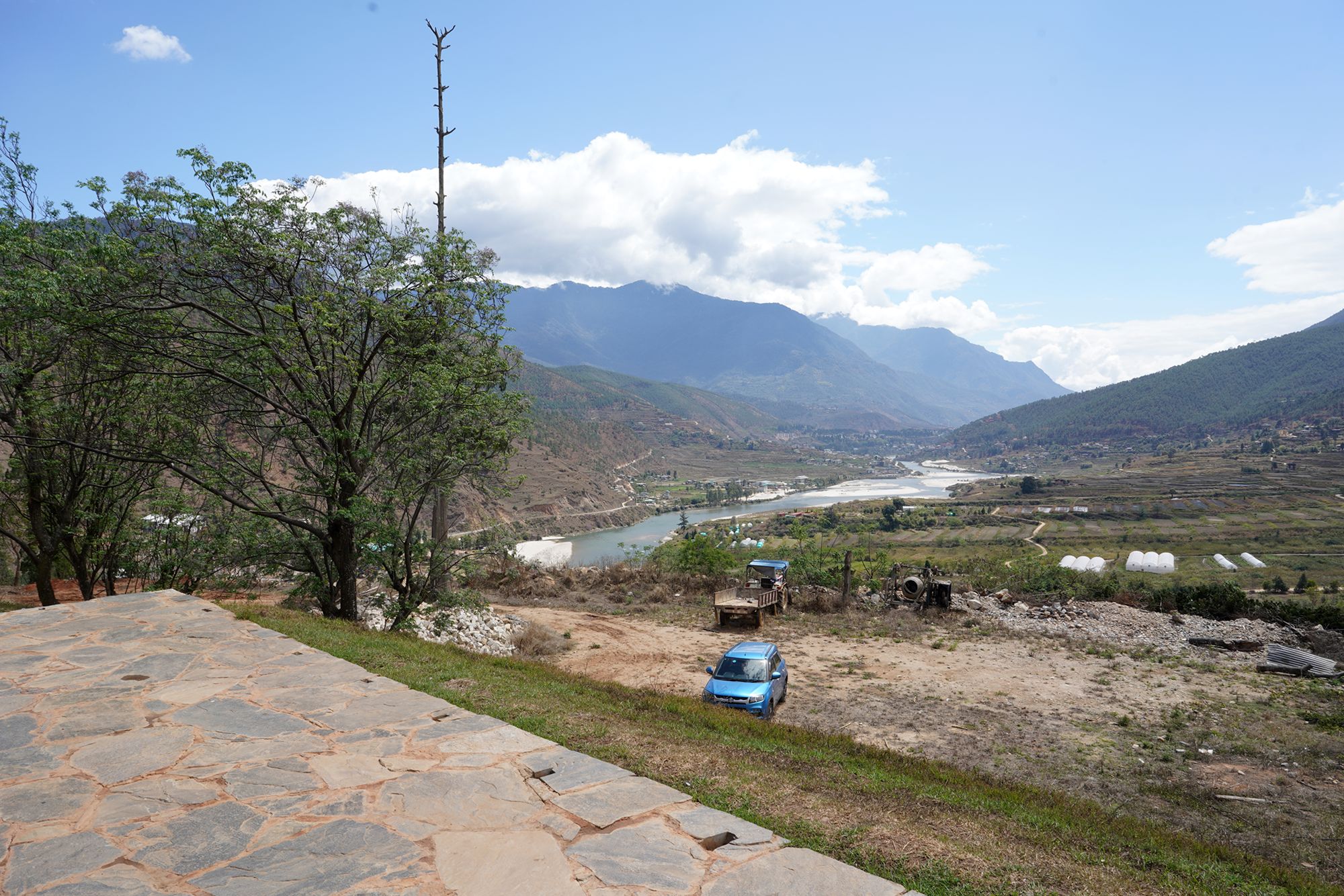
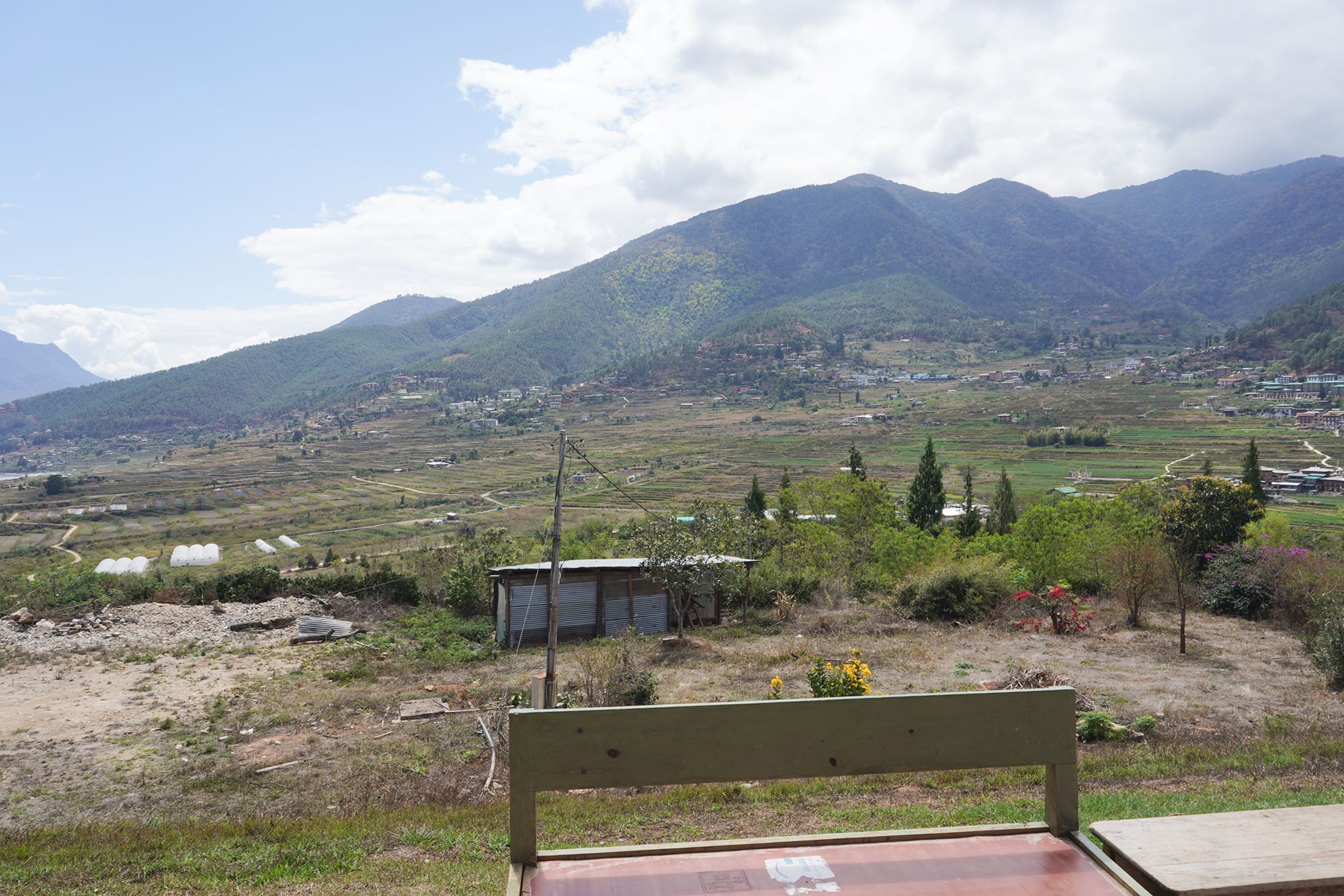
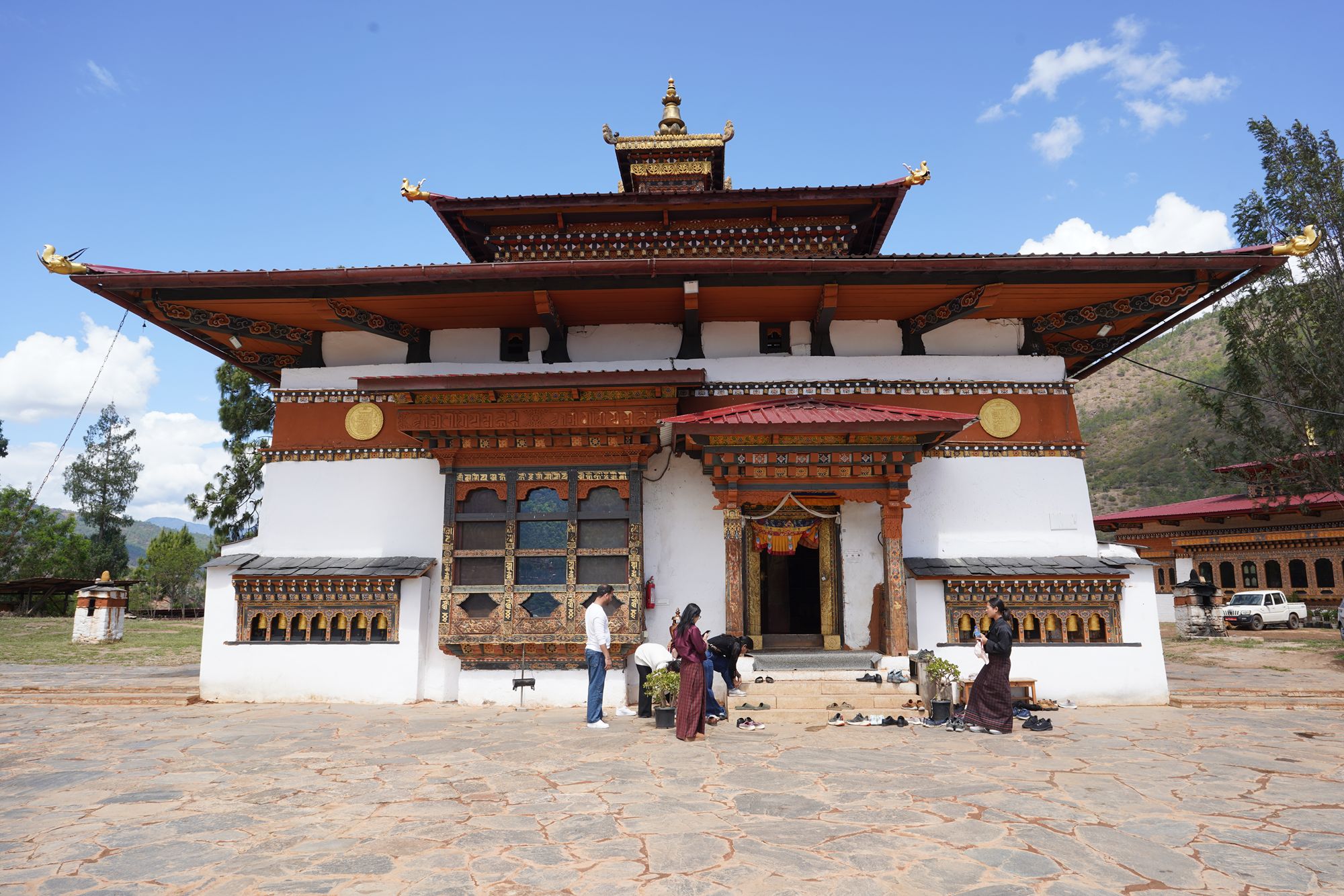
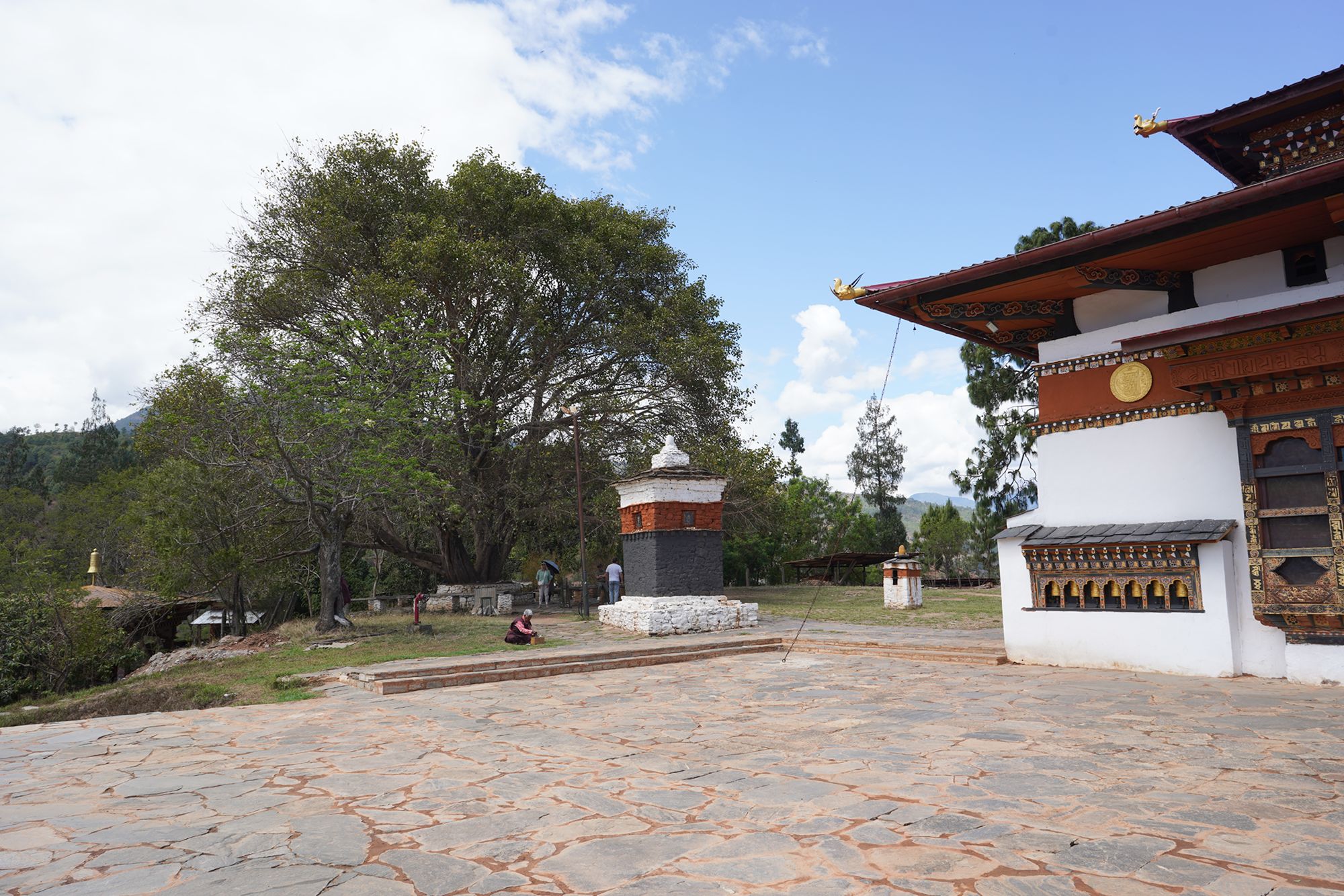
As at many other temples in Bhutan, photography was not allowed inside Chimi Lhakhang, so I have no photos of the interior.
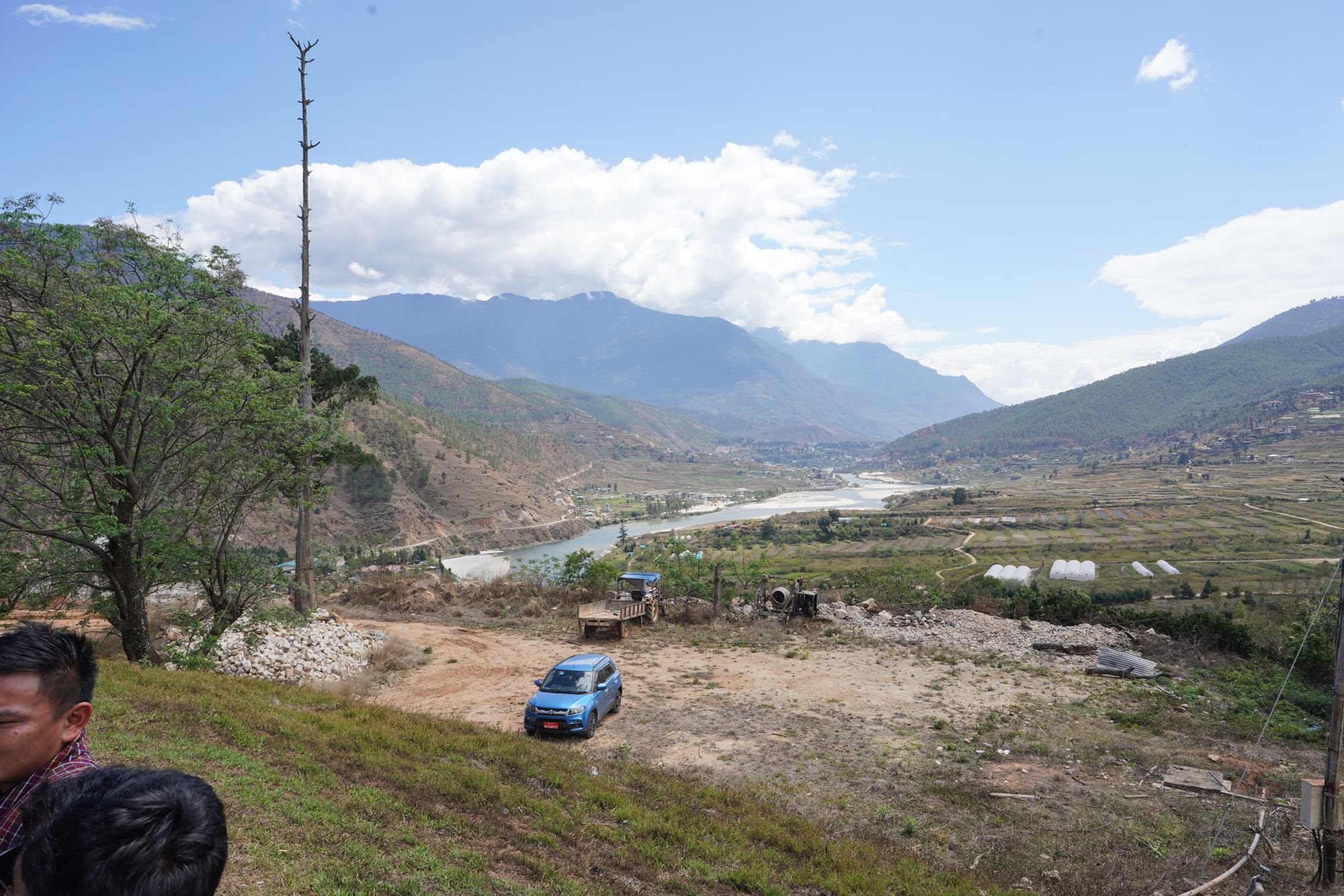
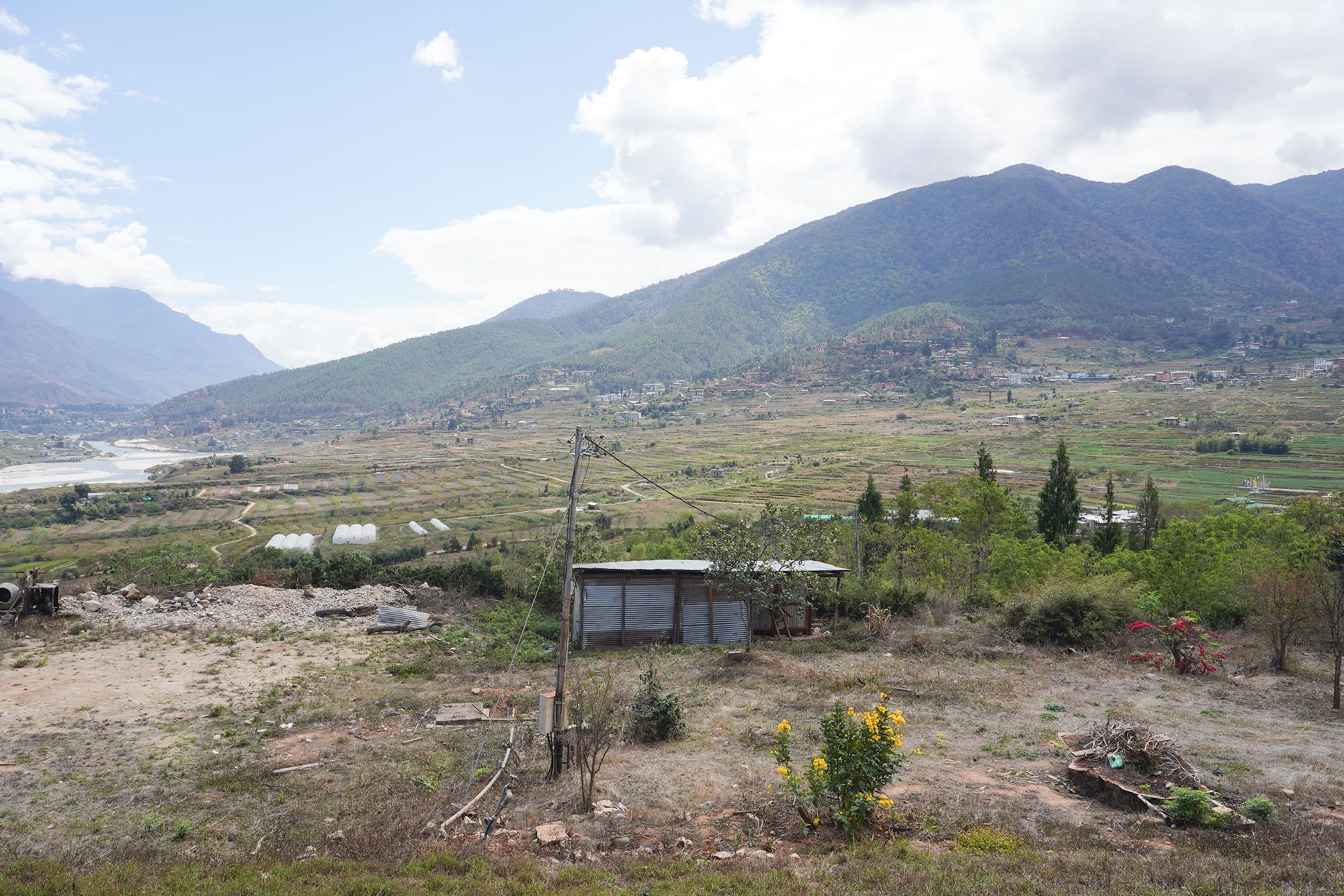
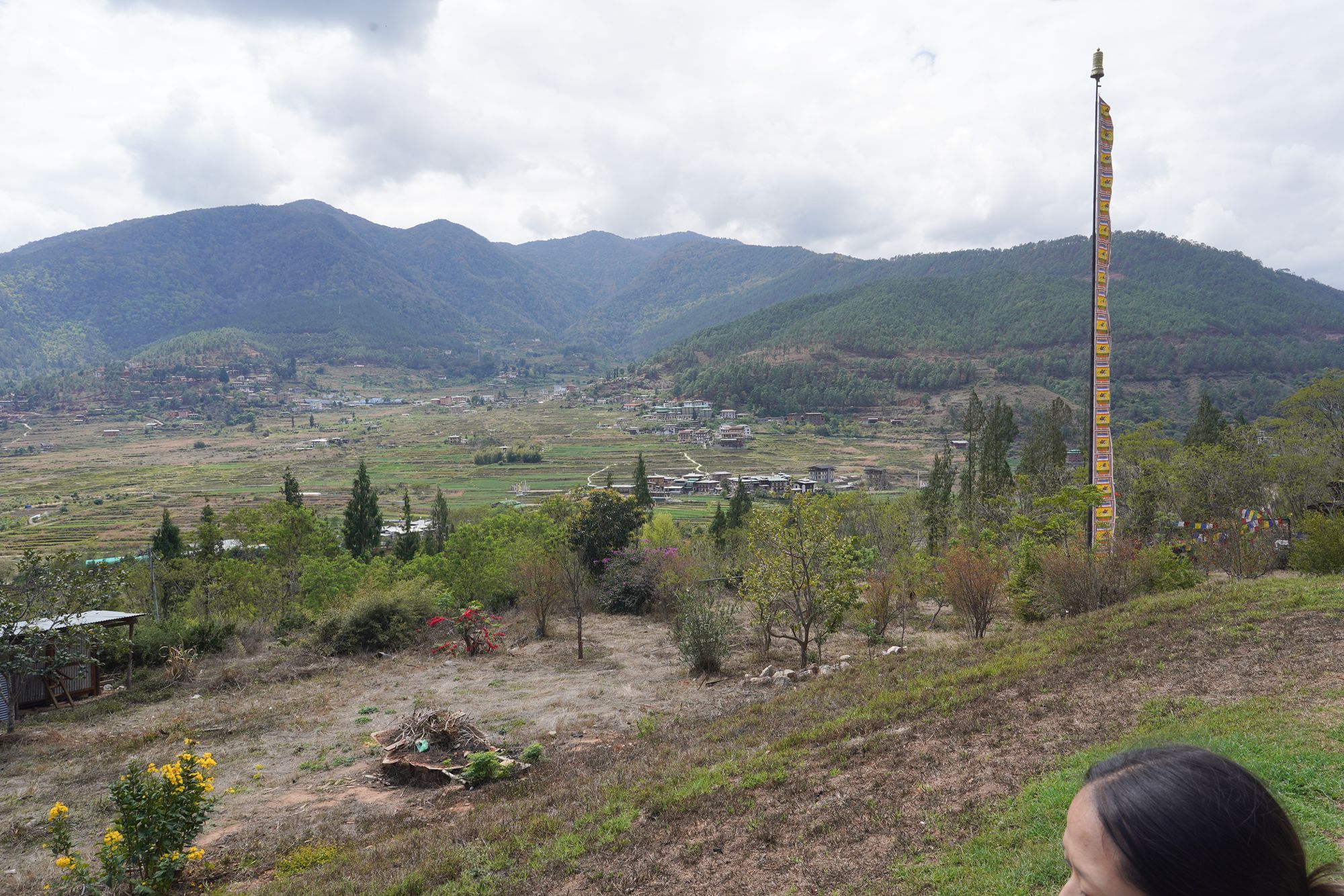
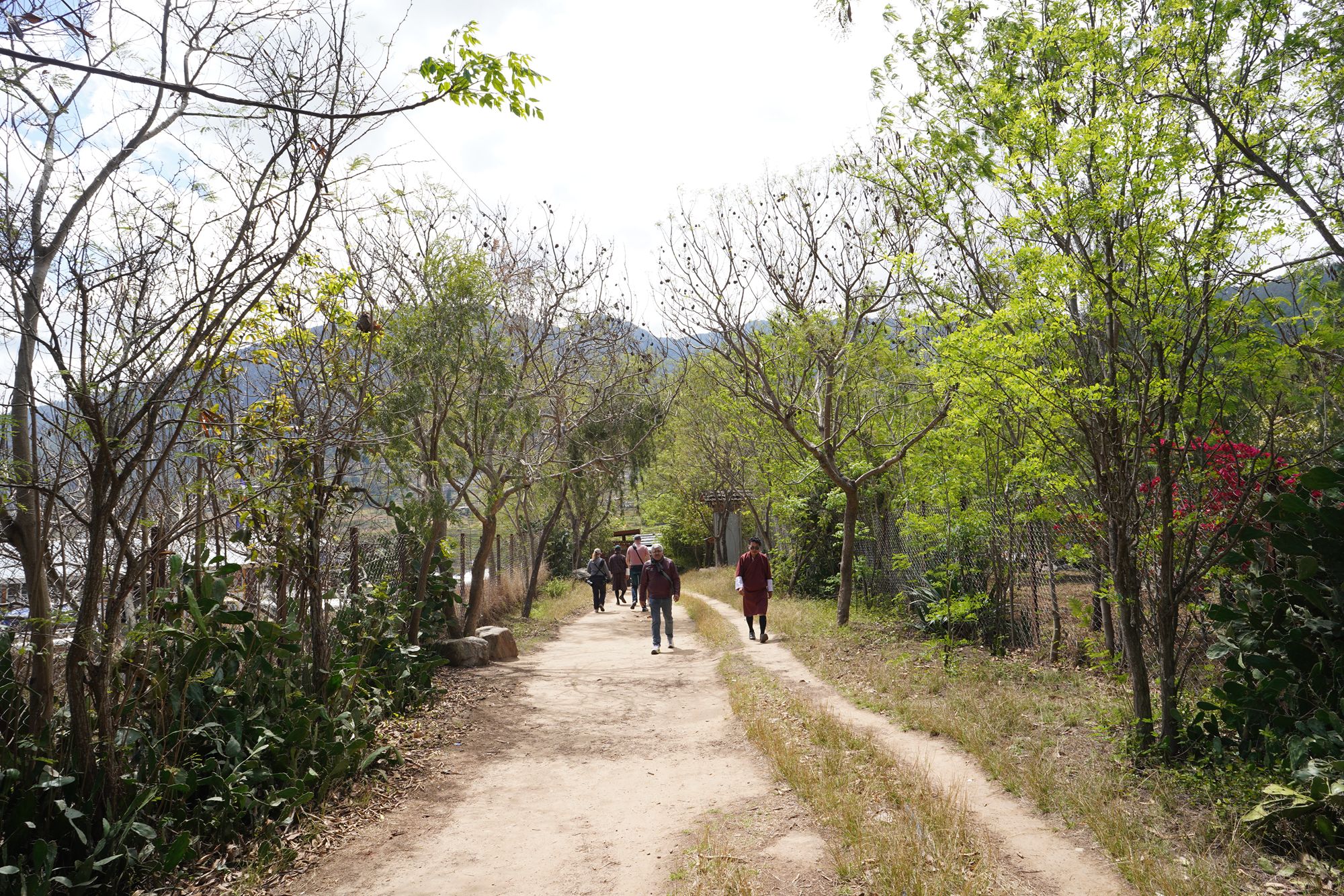
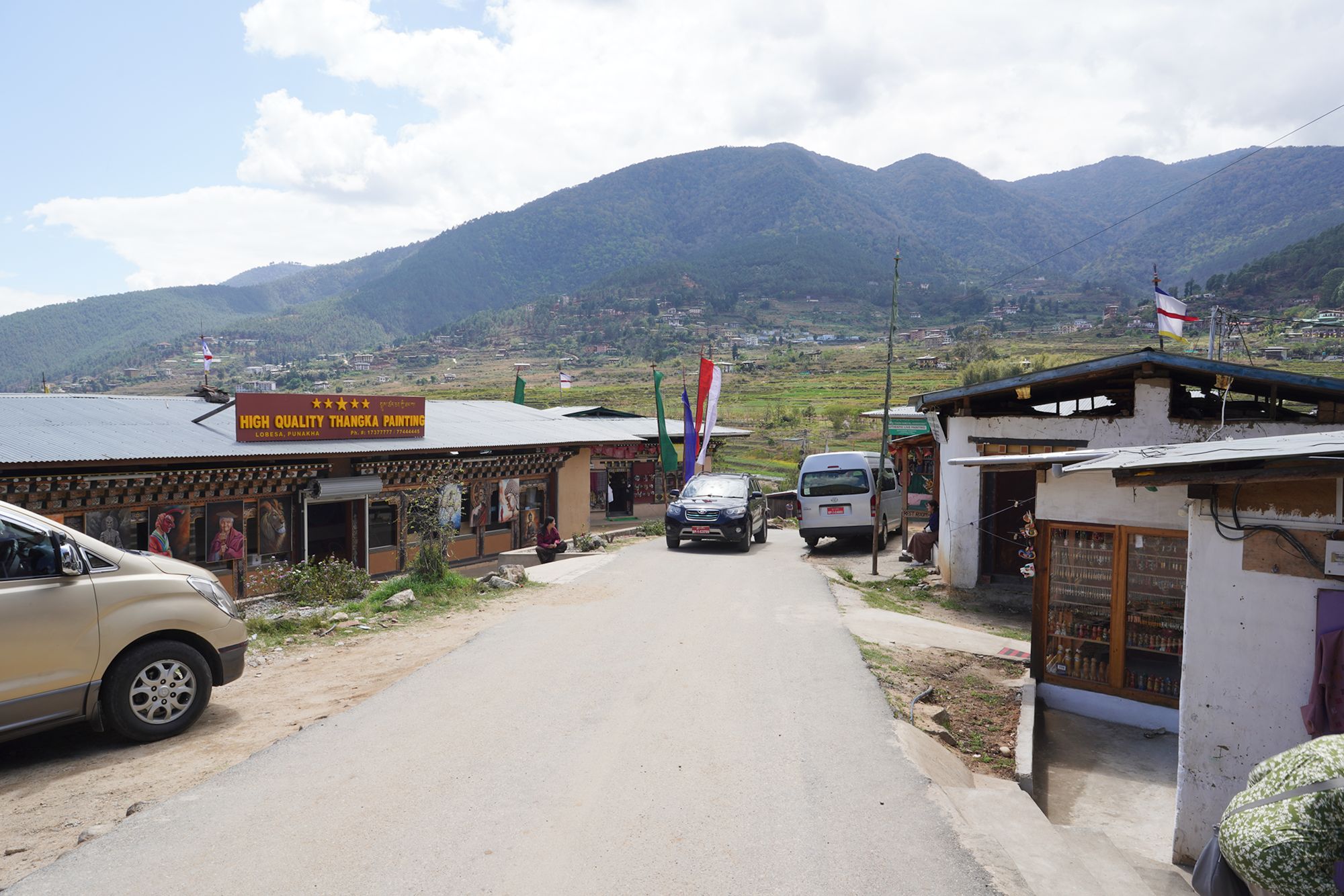
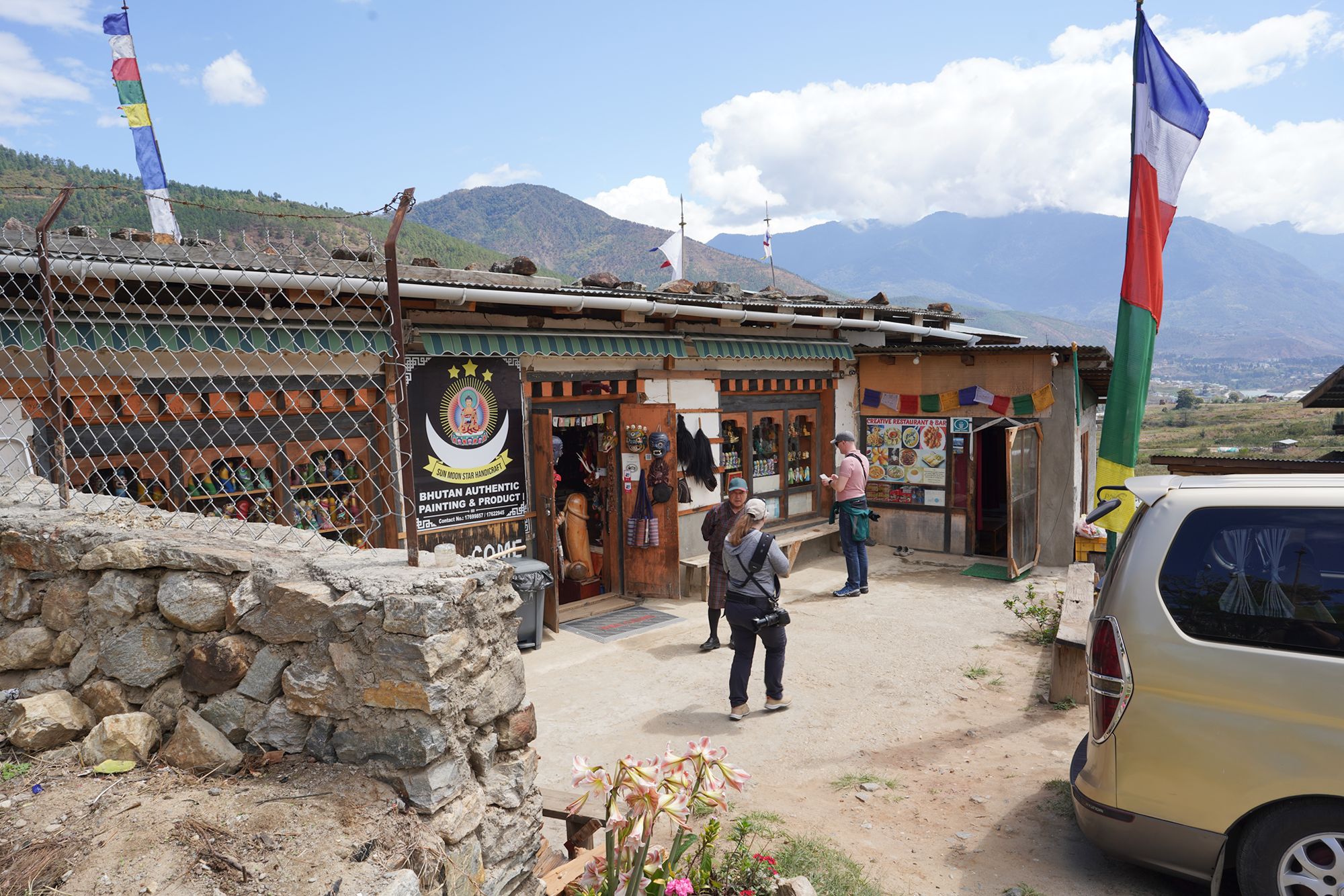
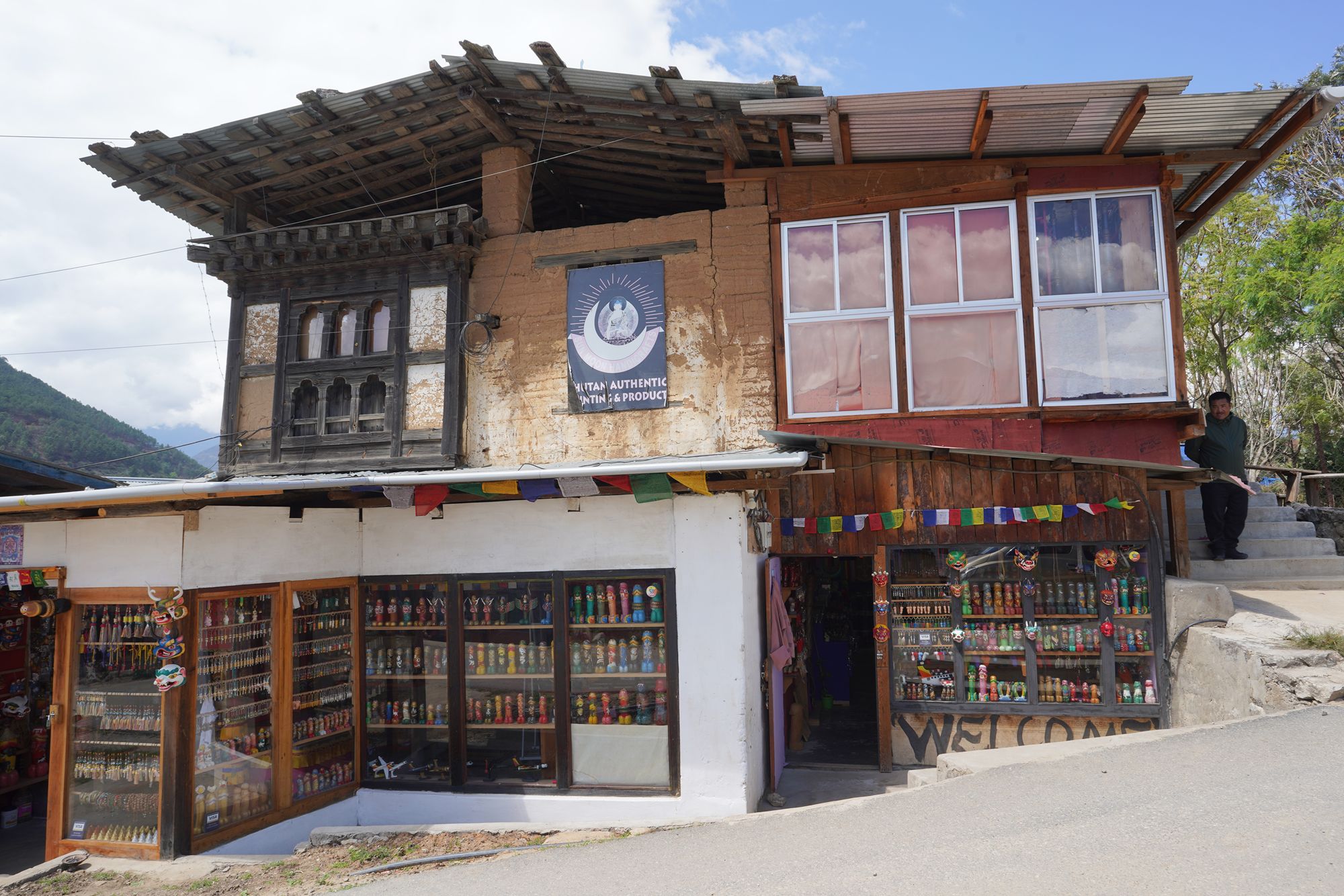
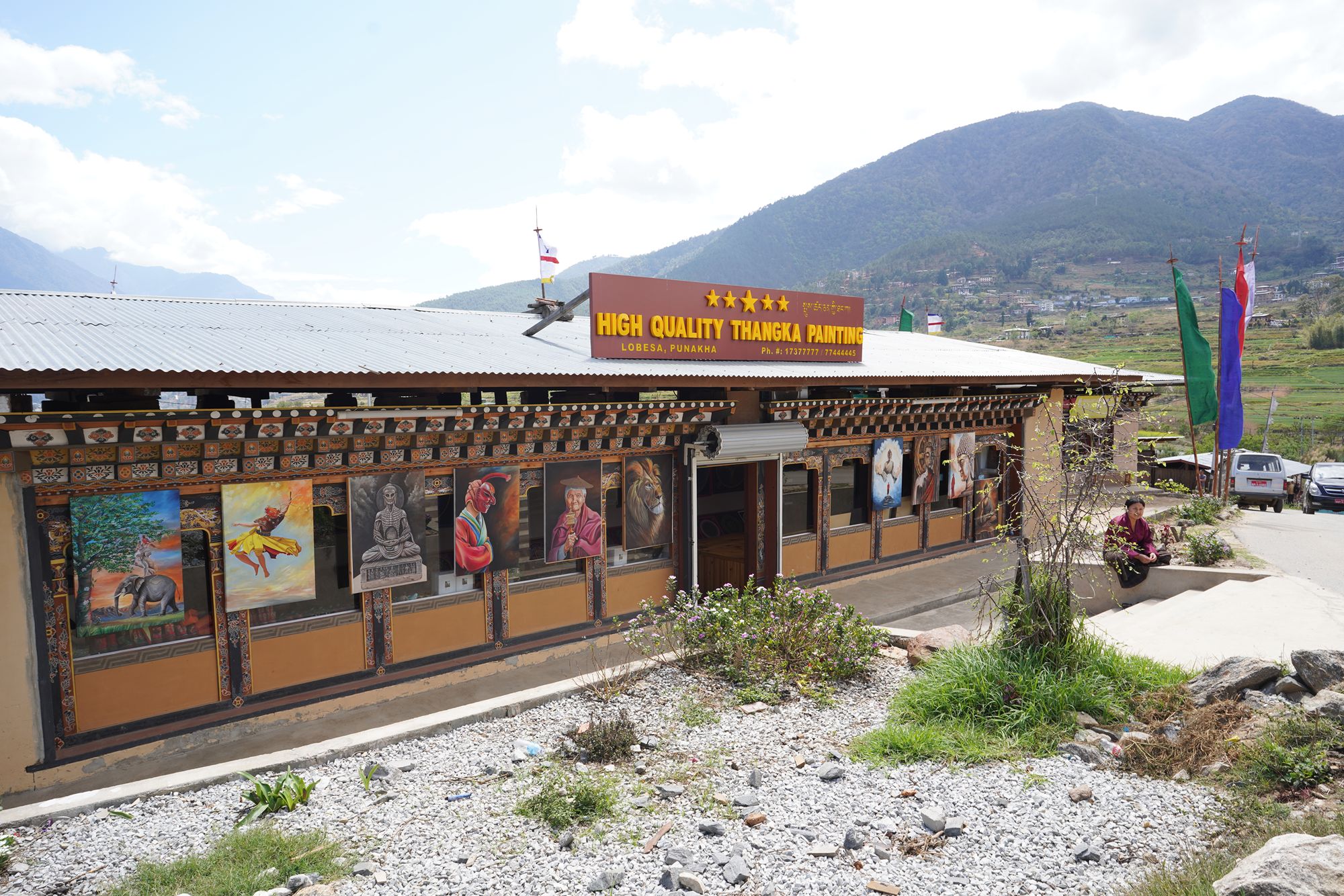
Then we stopped here for a meal and spent some time shopping for souvenirs.