Bhutan National Museum, Paro, Bhutan
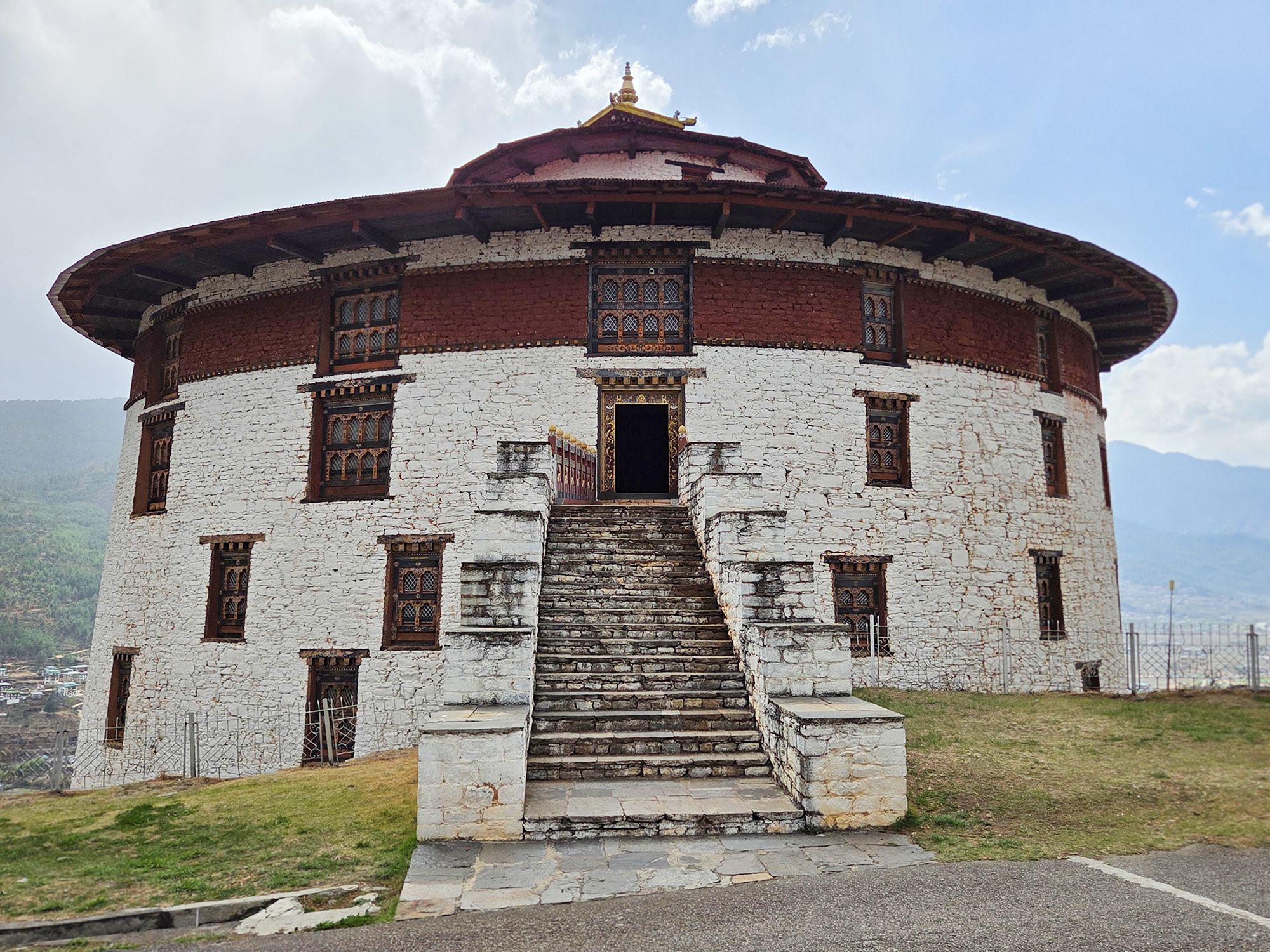
The National Museum of Bhutan, housed in the historic Ta Dzong above Paro, showcases Bhutan’s rich history, culture, art, and religious traditions. 1270
The National museum of Bhutan: CCHG+F6R, Paro, Bhutan
Date Picture Taken: March, 2026
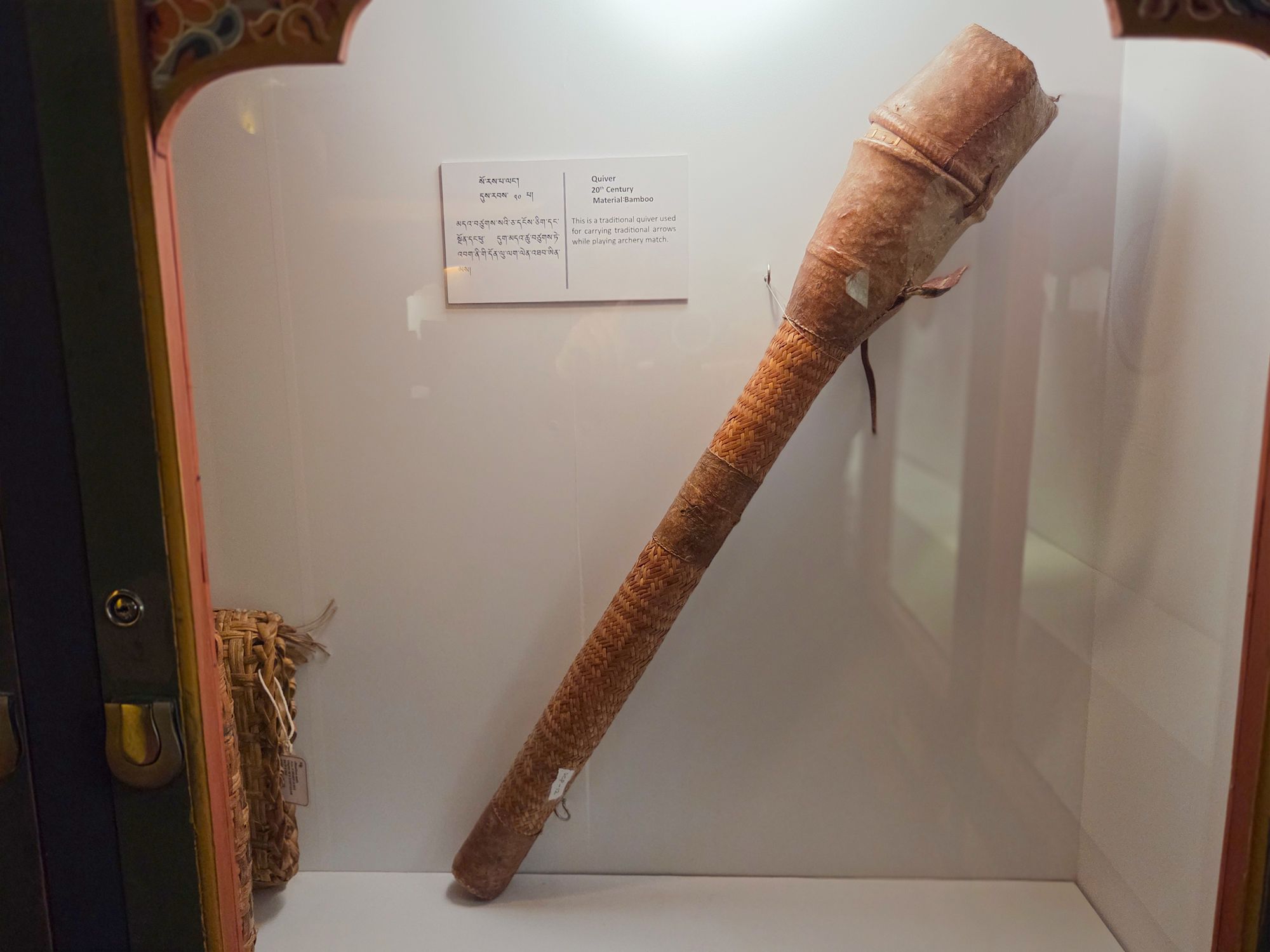
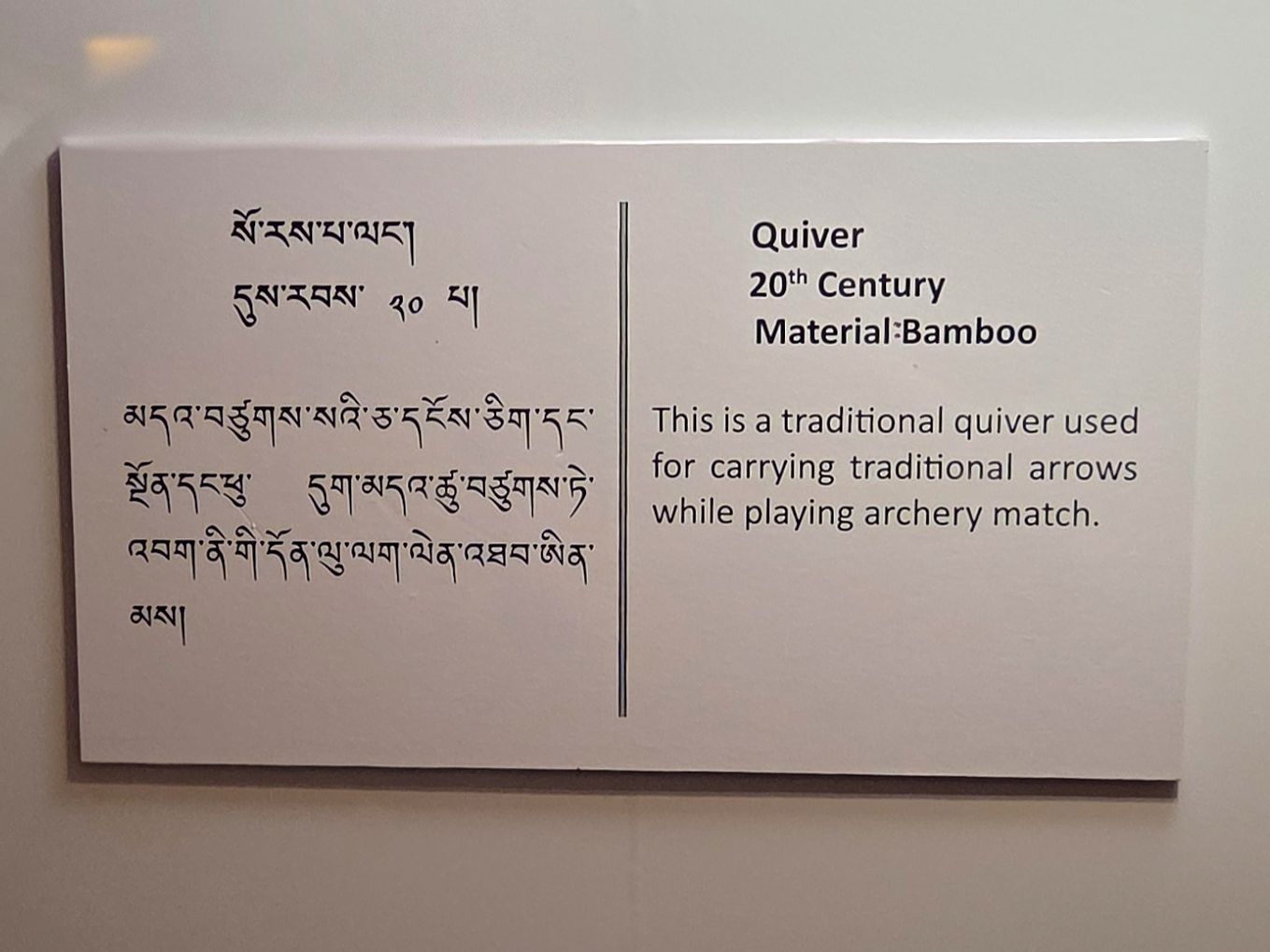
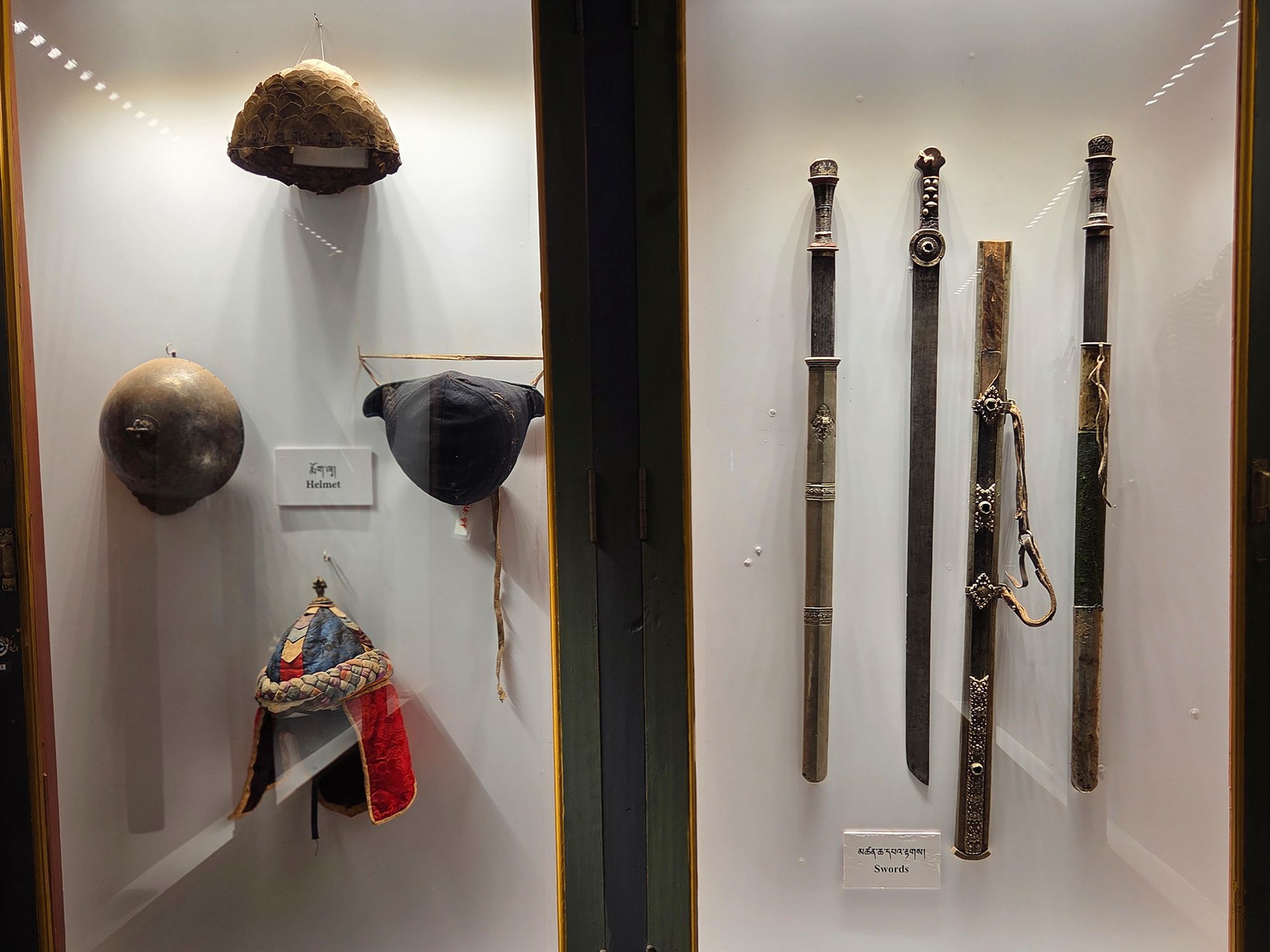
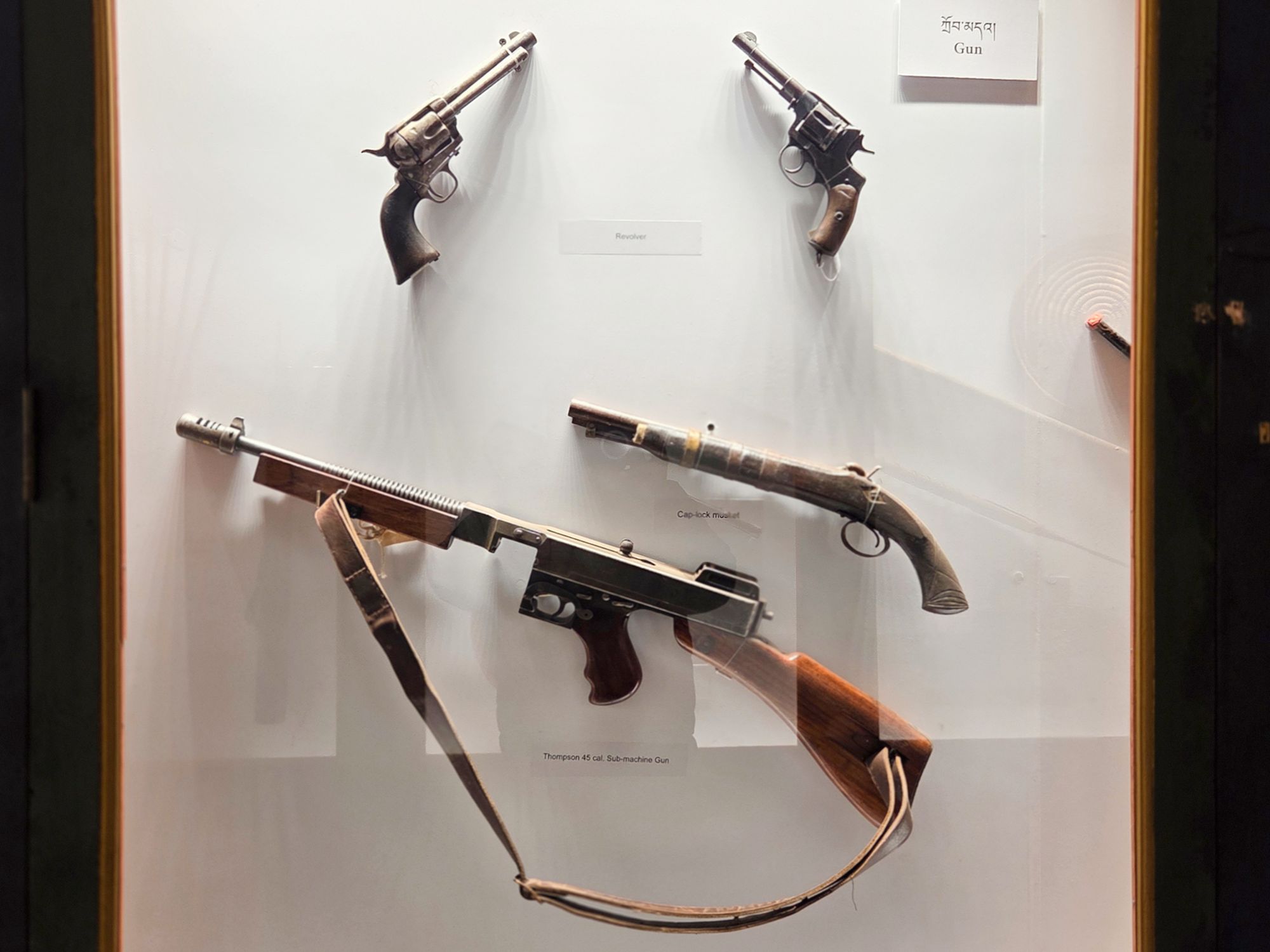
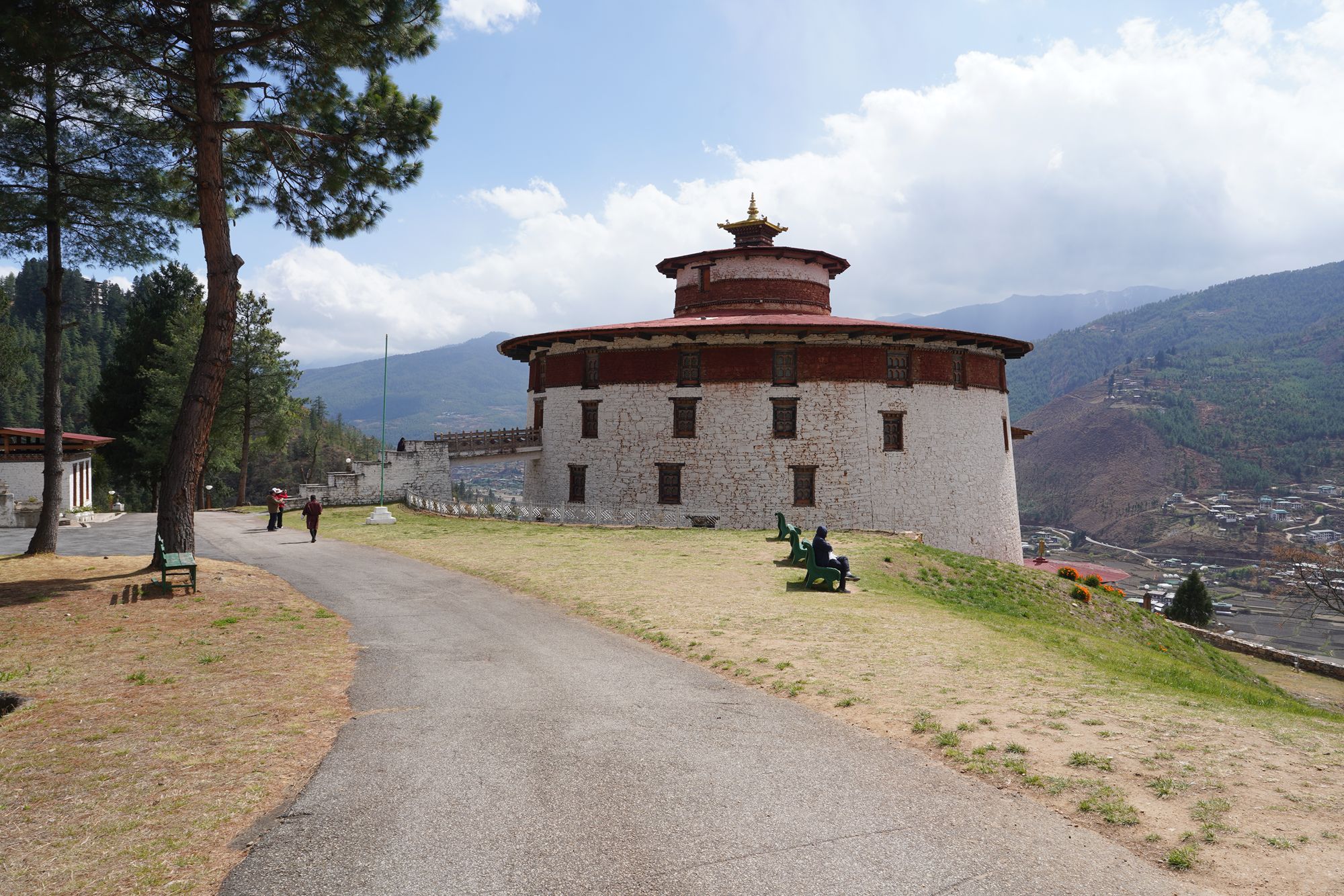
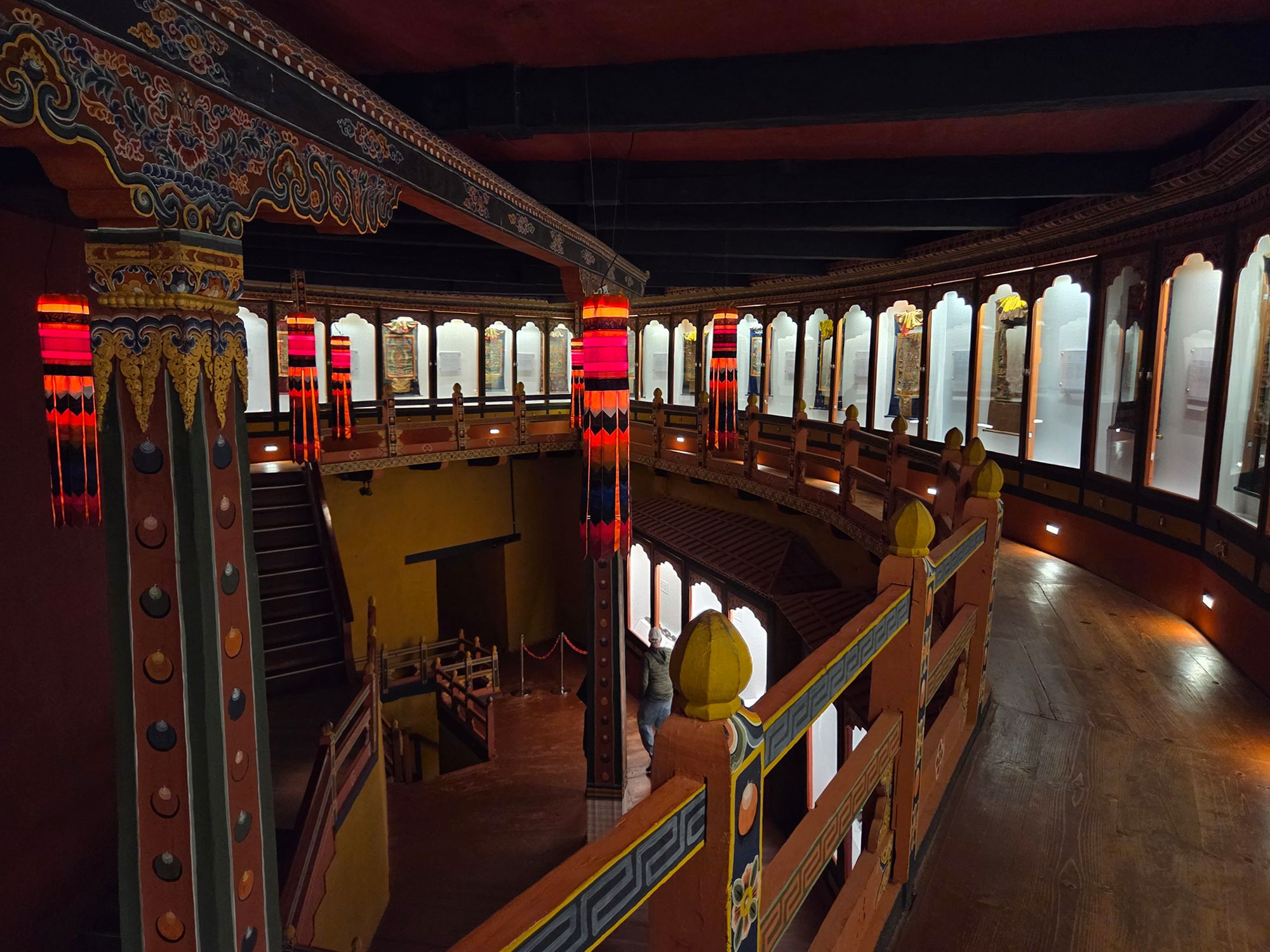
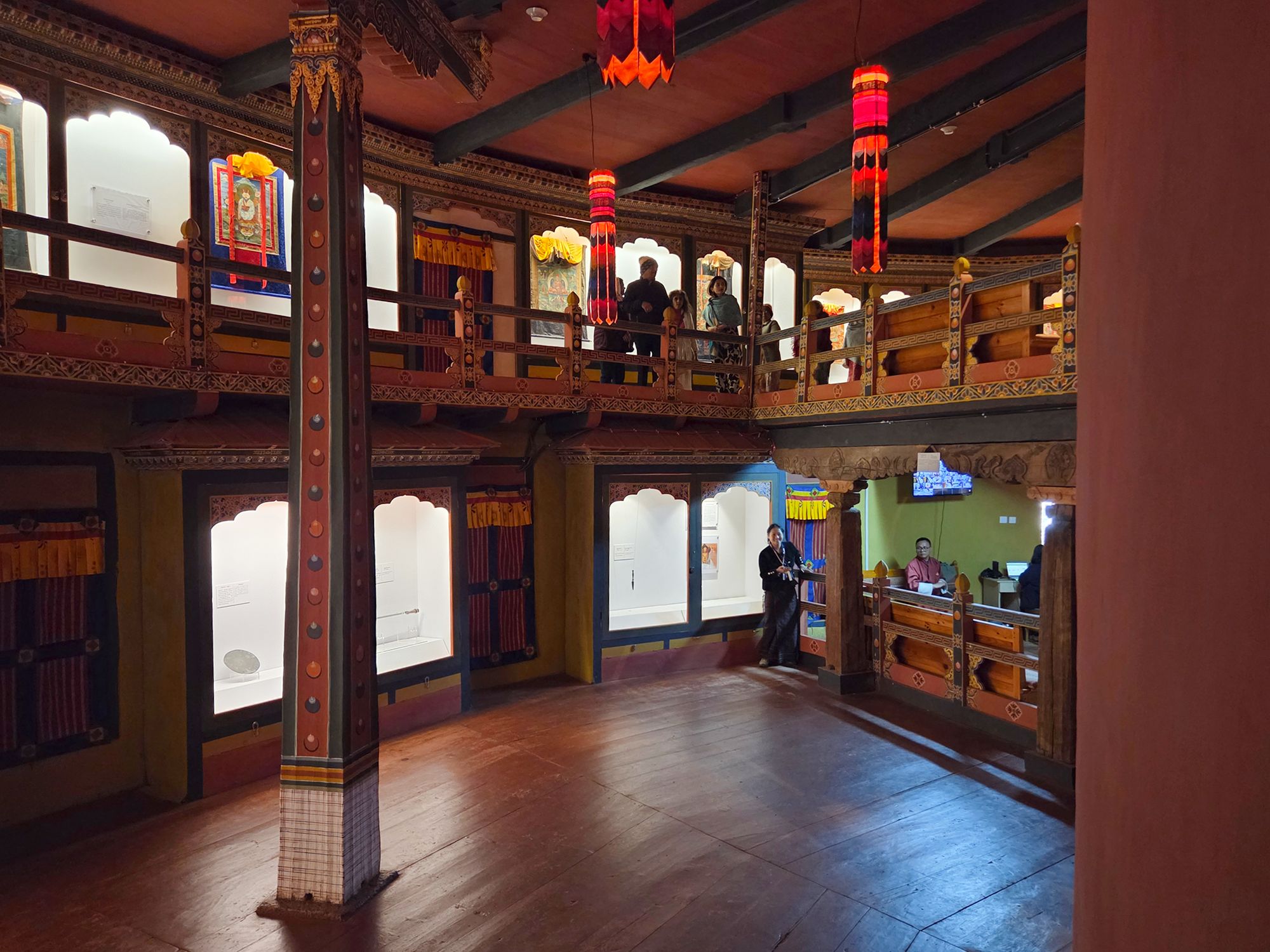
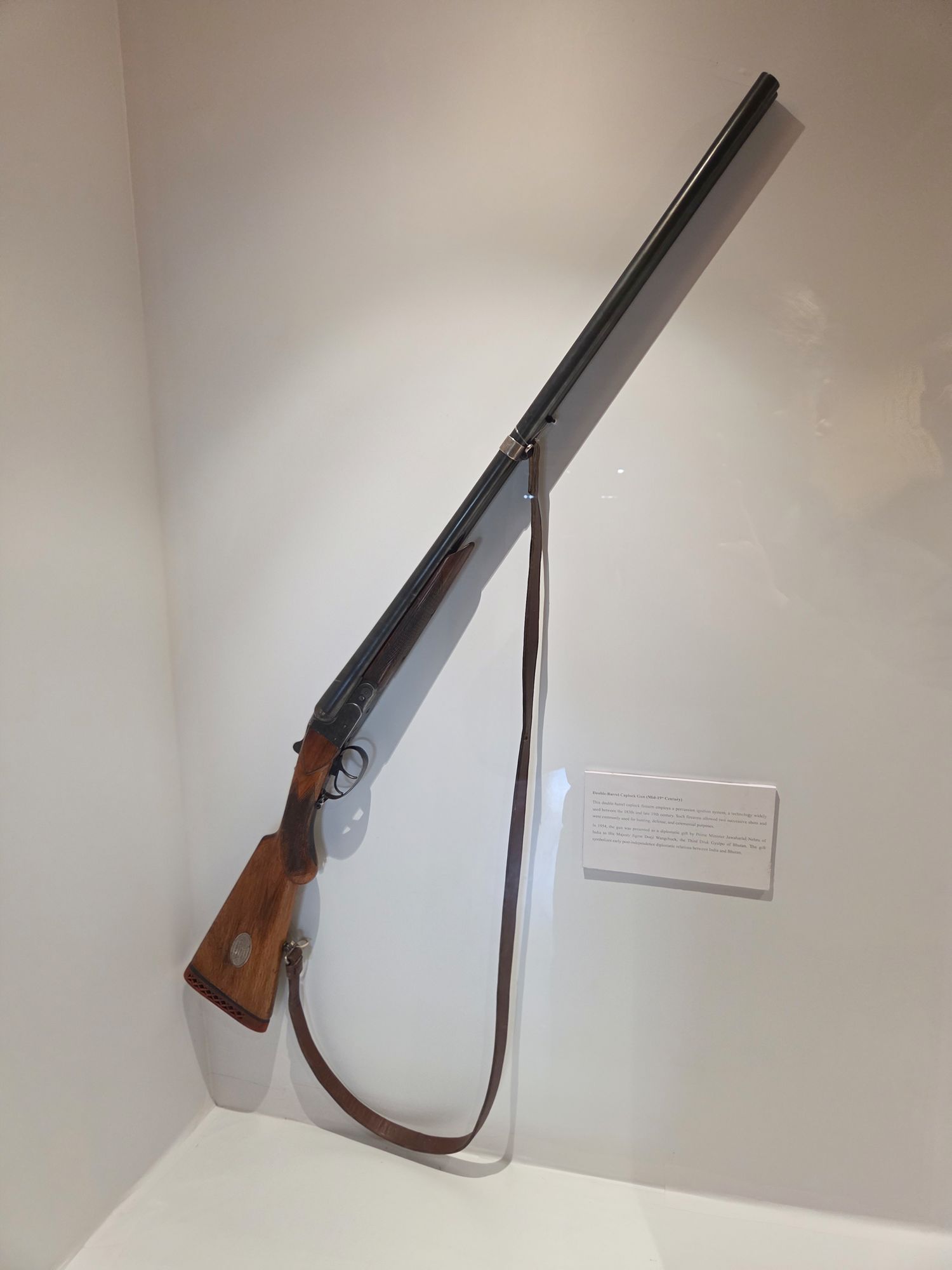
The National Museum of Bhutan is housed in Ta Dzong, a historic circular watchtower built in 1649 on a hill overlooking Paro and Rinpung Dzong. Originally constructed to help defend the valley, Ta Dzong was converted into the National Museum in 1968. Its collections include traditional paintings, Buddhist religious objects, sculptures, weapons, textiles, masks, natural-history displays, and other artifacts that illustrate Bhutan’s history, culture, religion, and artistic traditions.
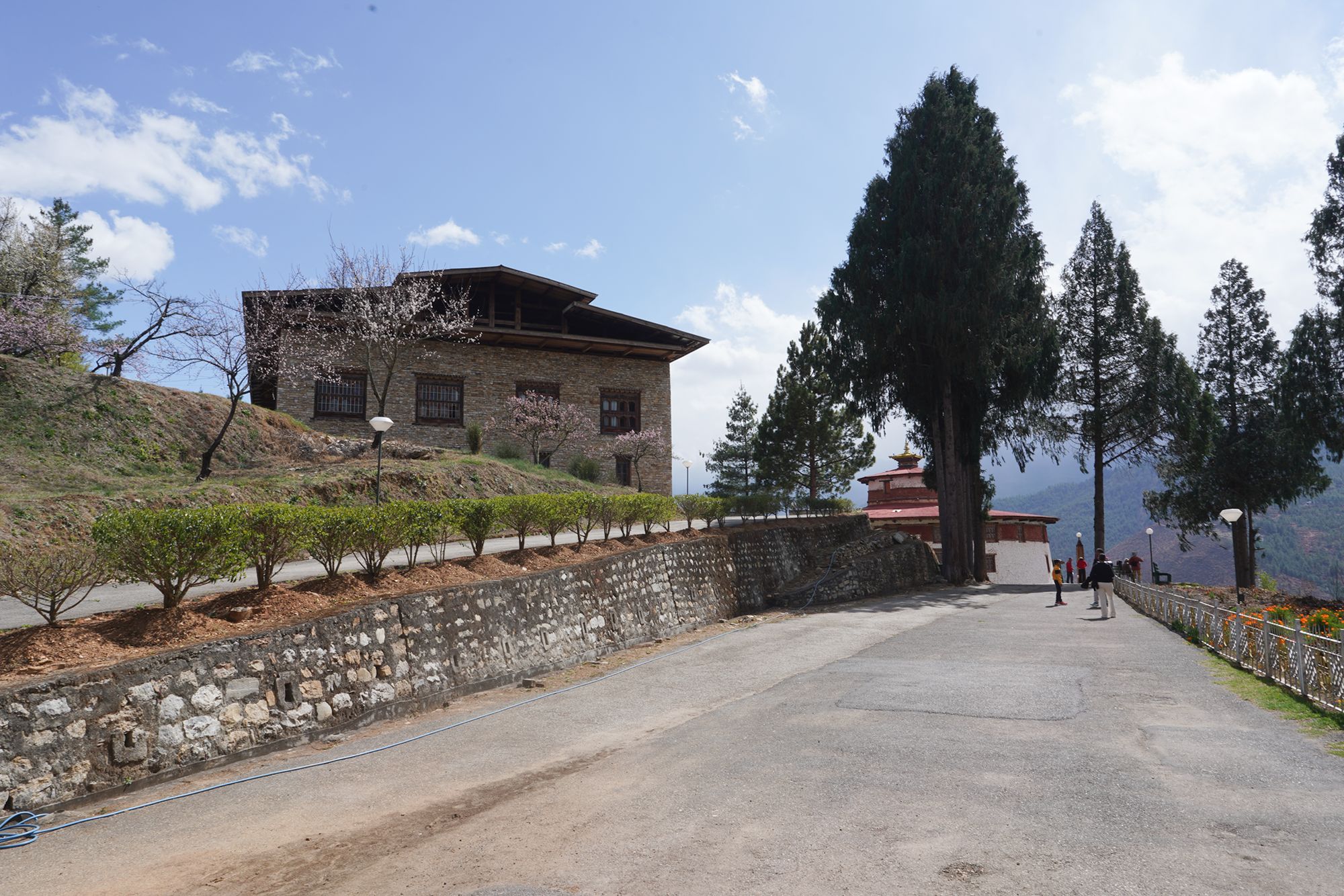
The National Museum of Bhutan
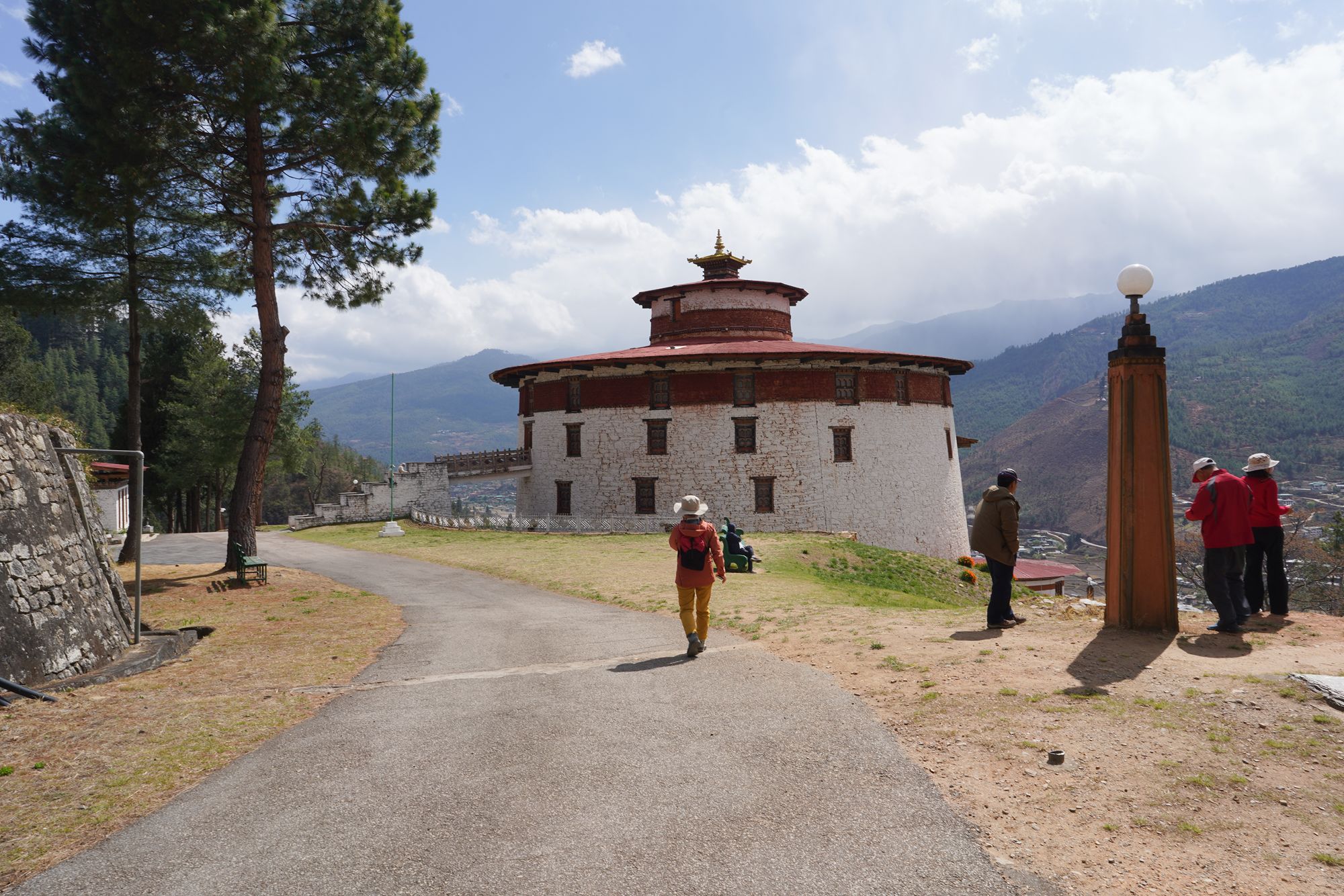
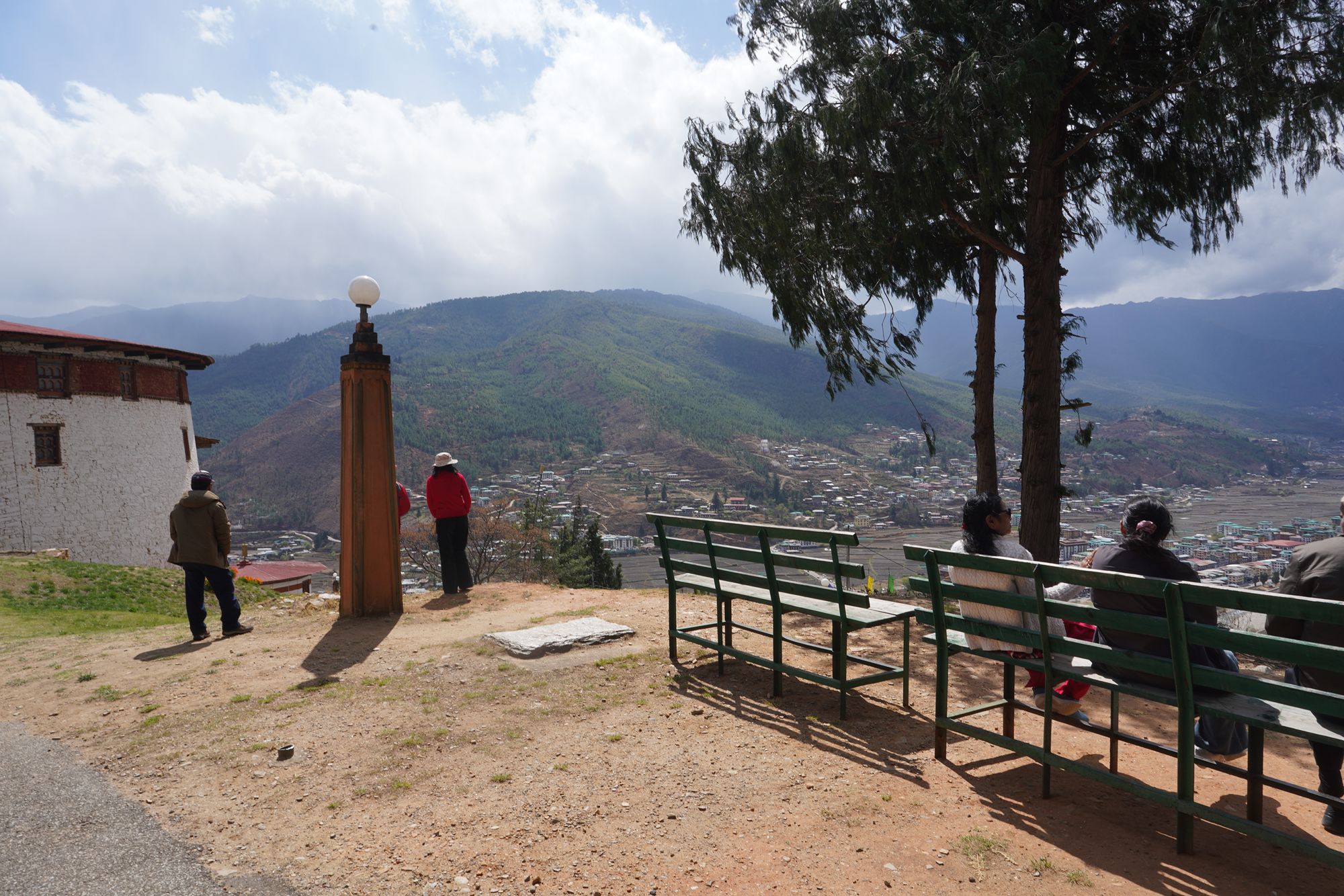
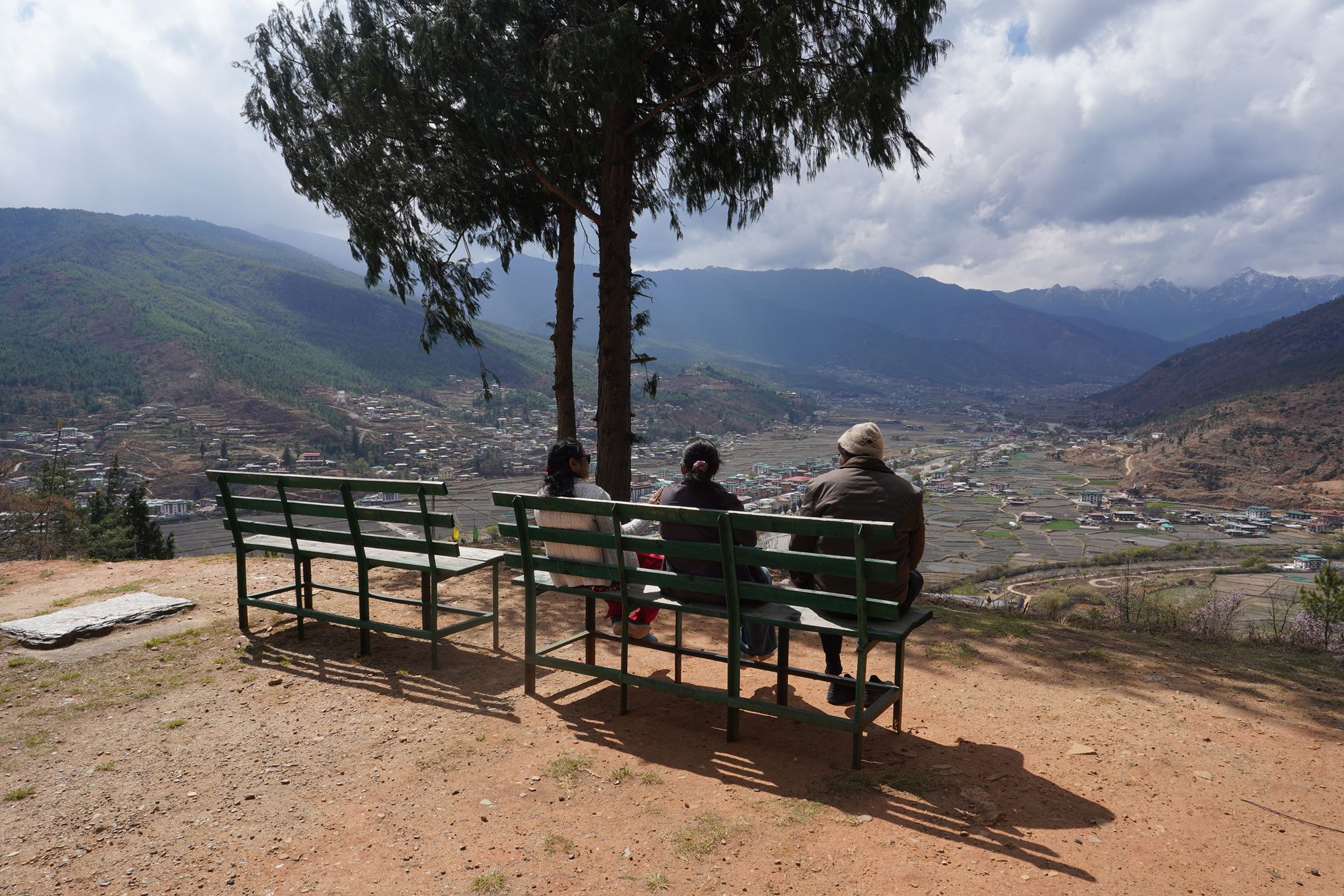
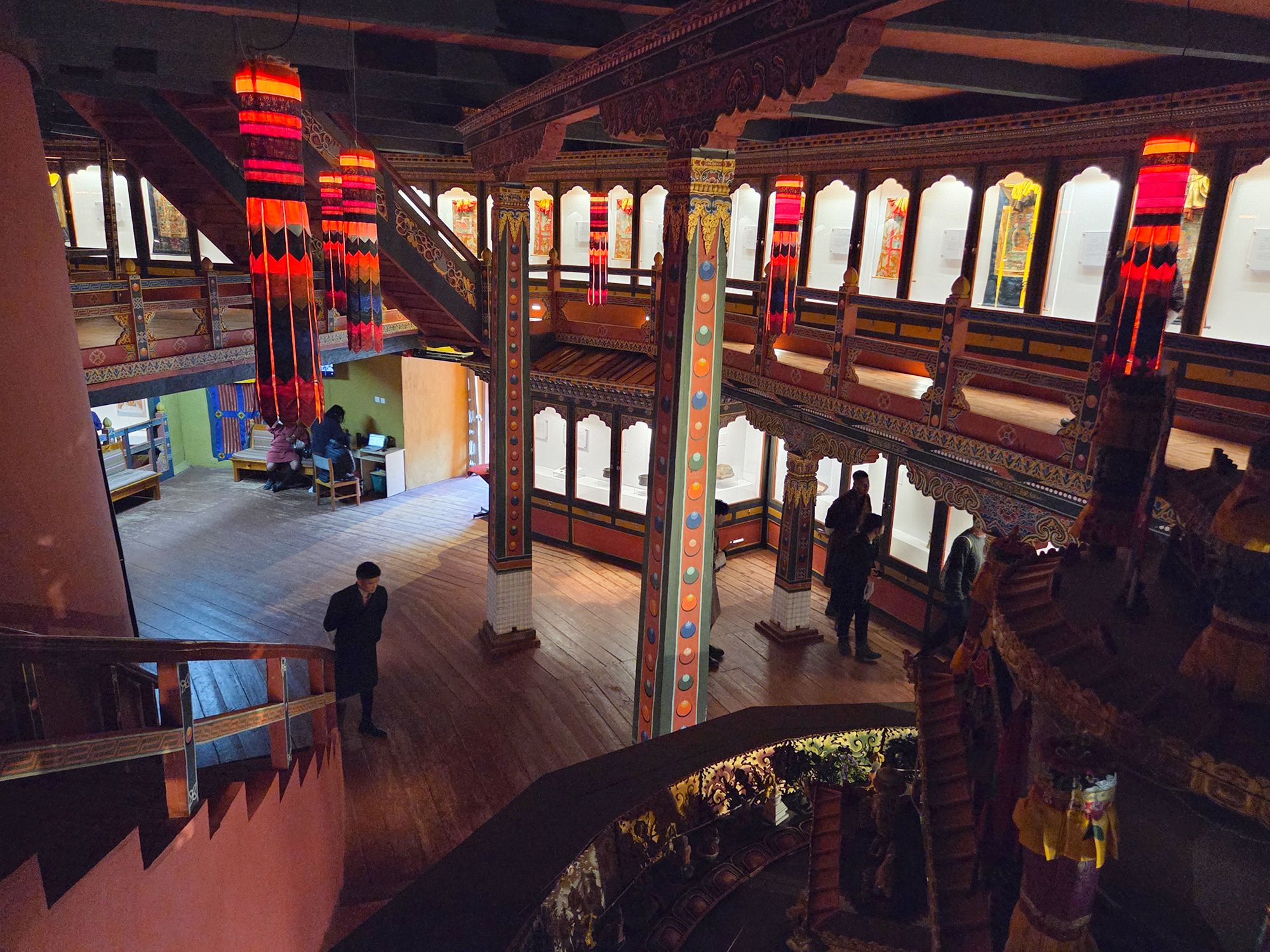
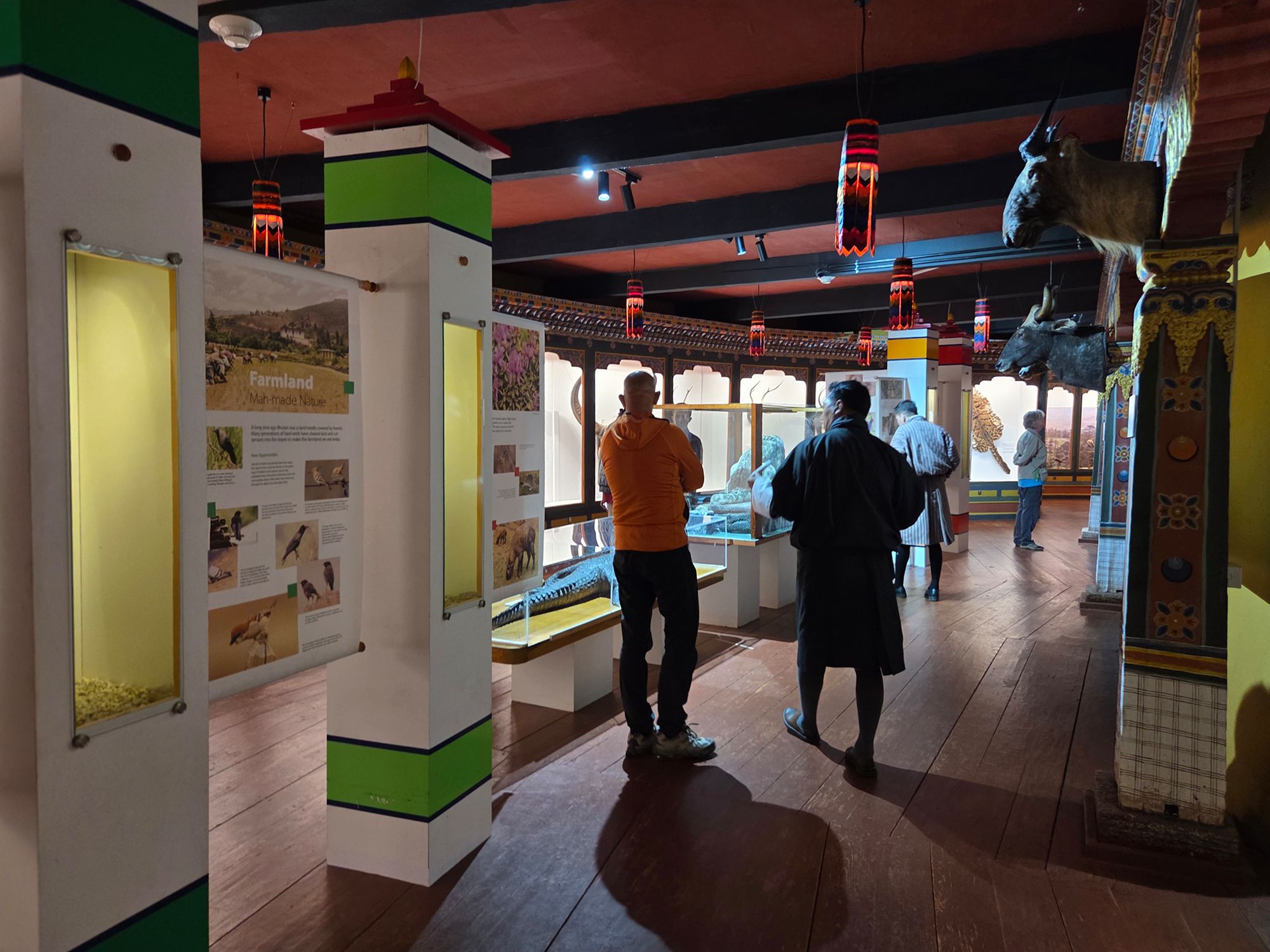
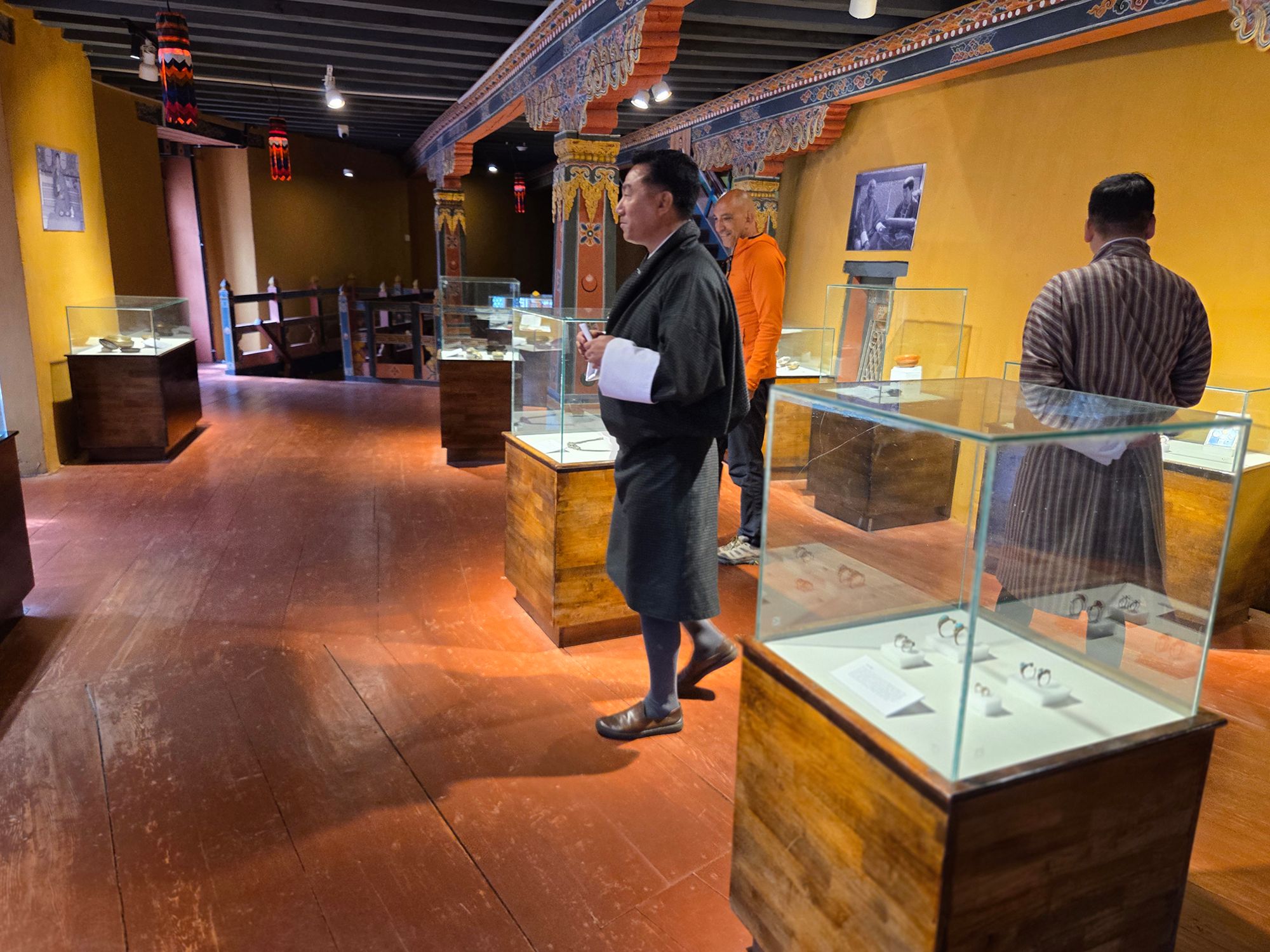
Inside the National Museum of Bhutan
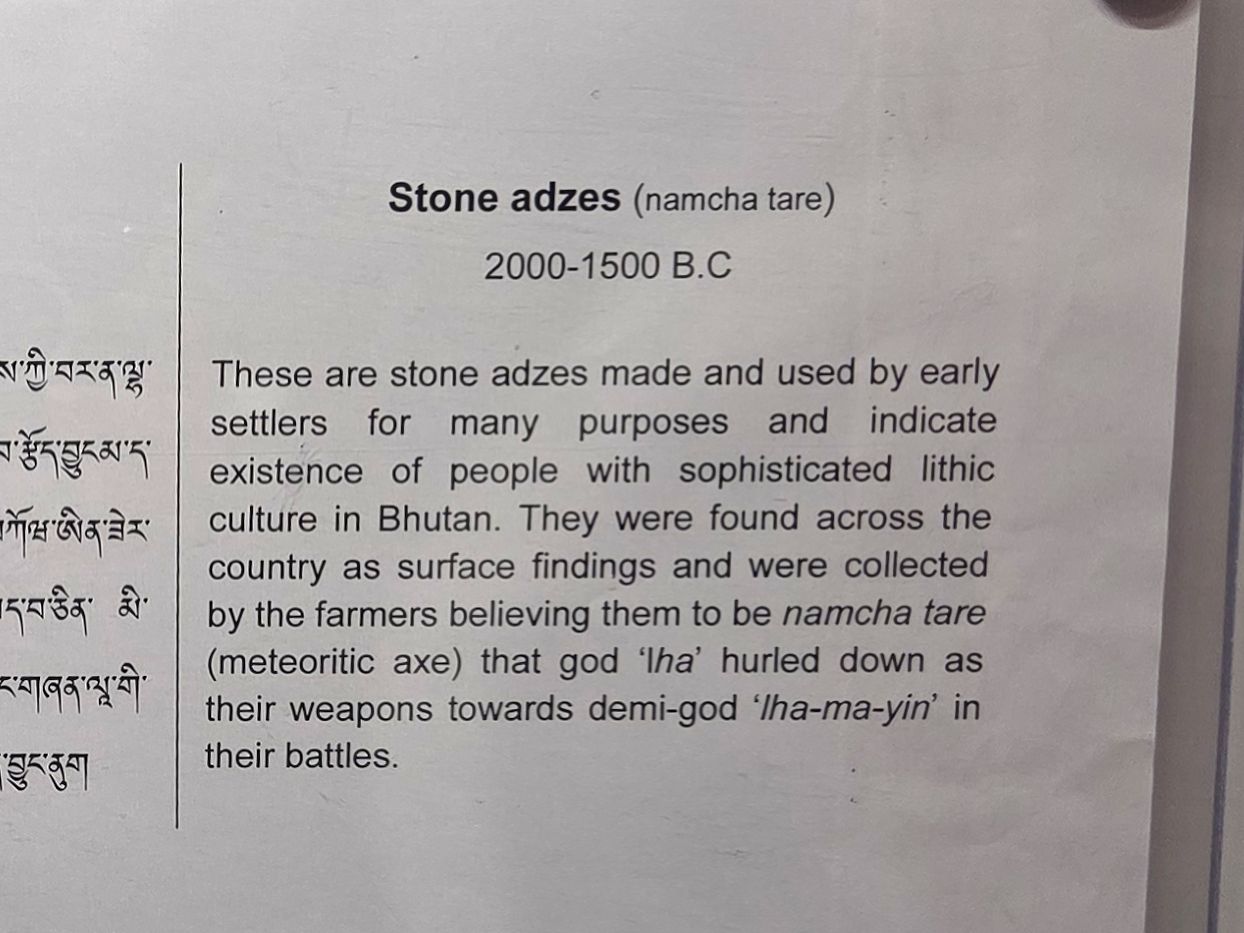
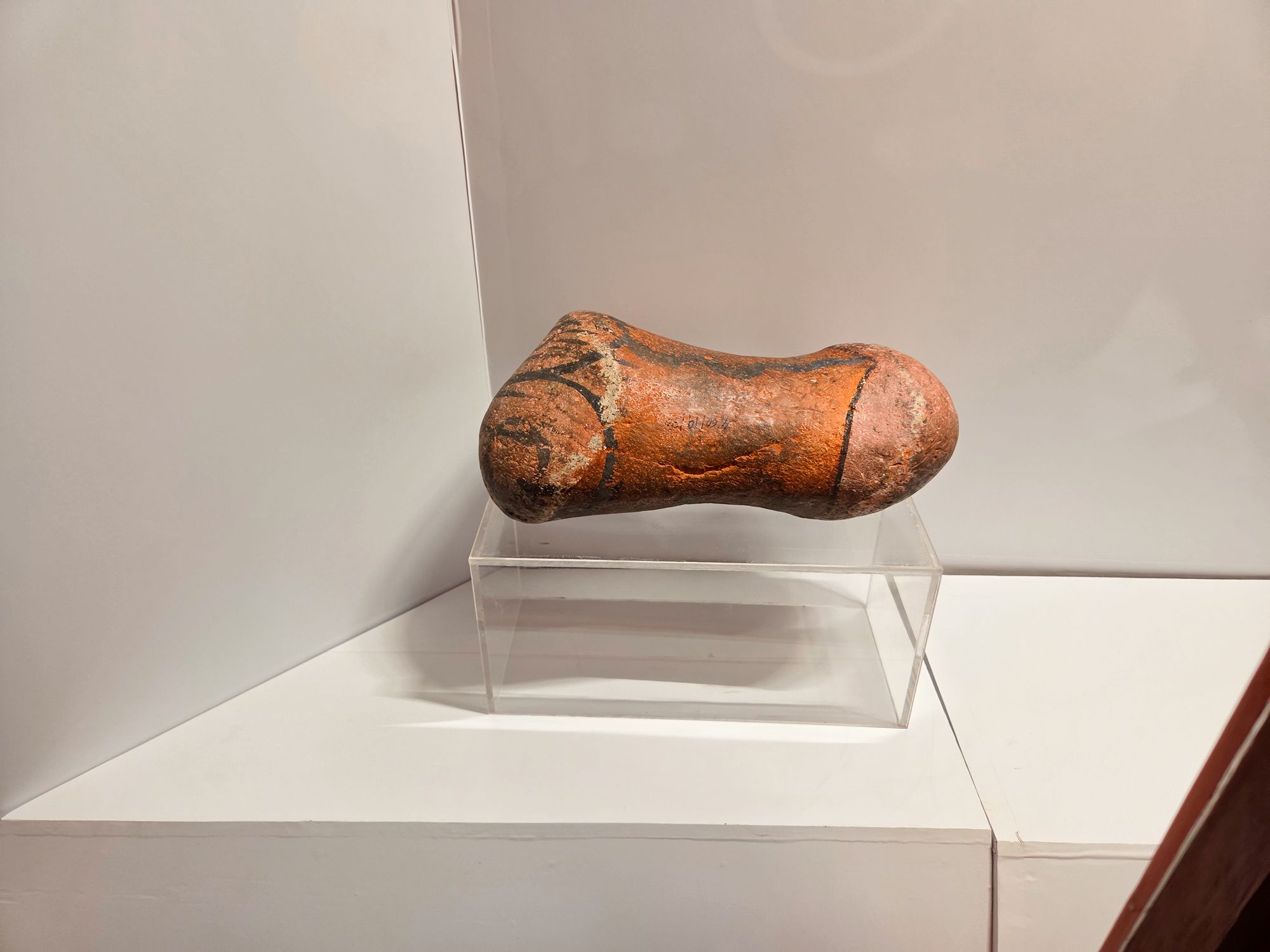
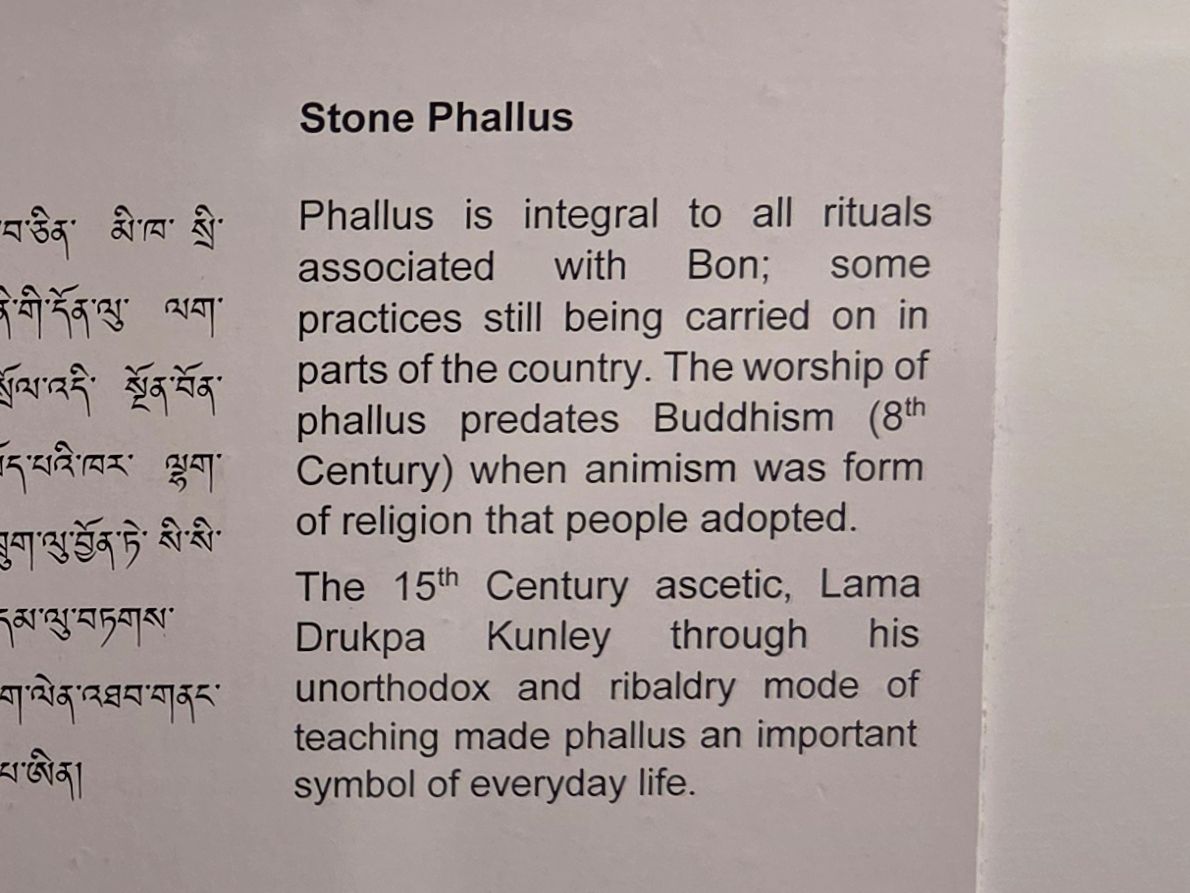
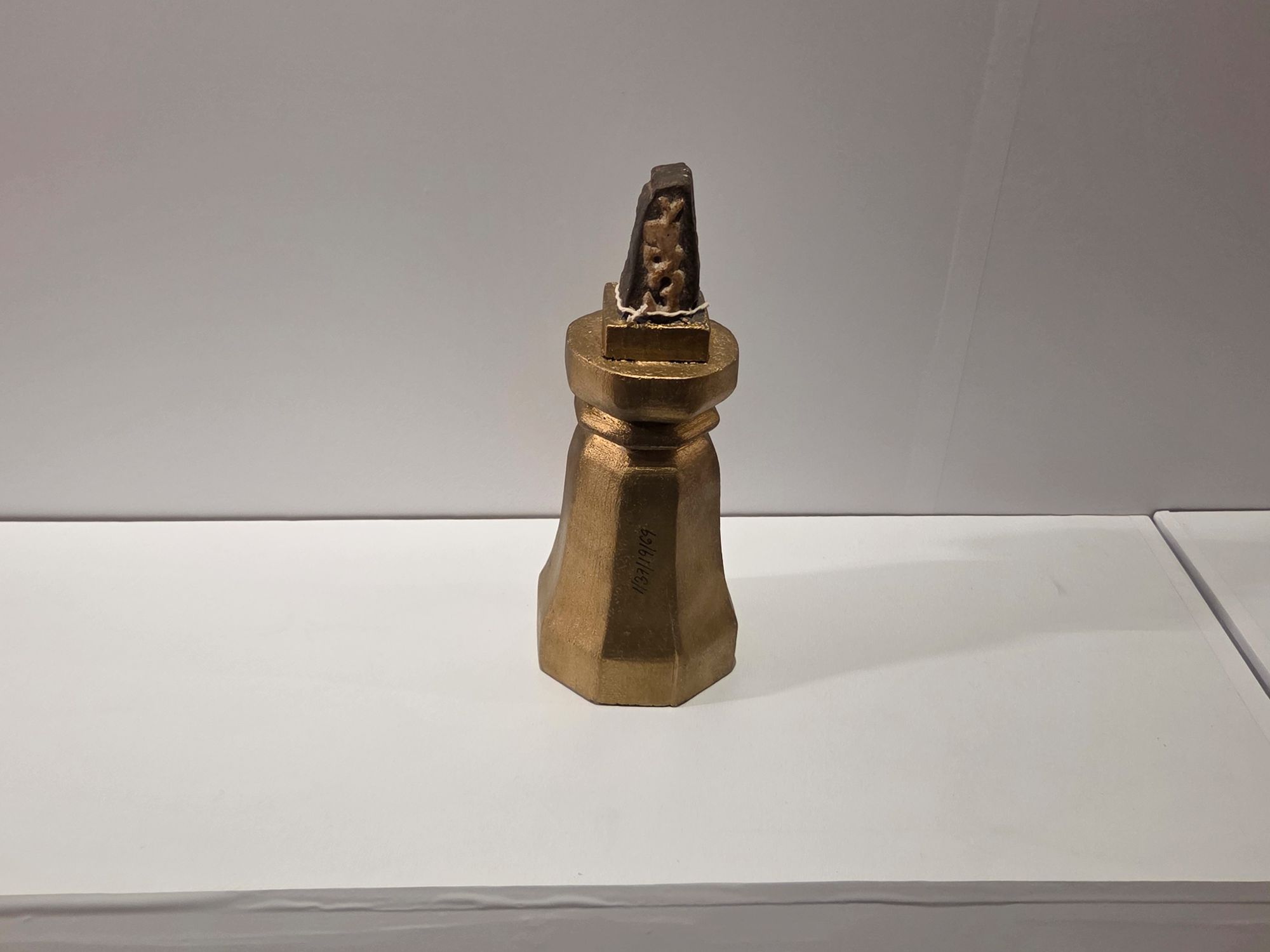
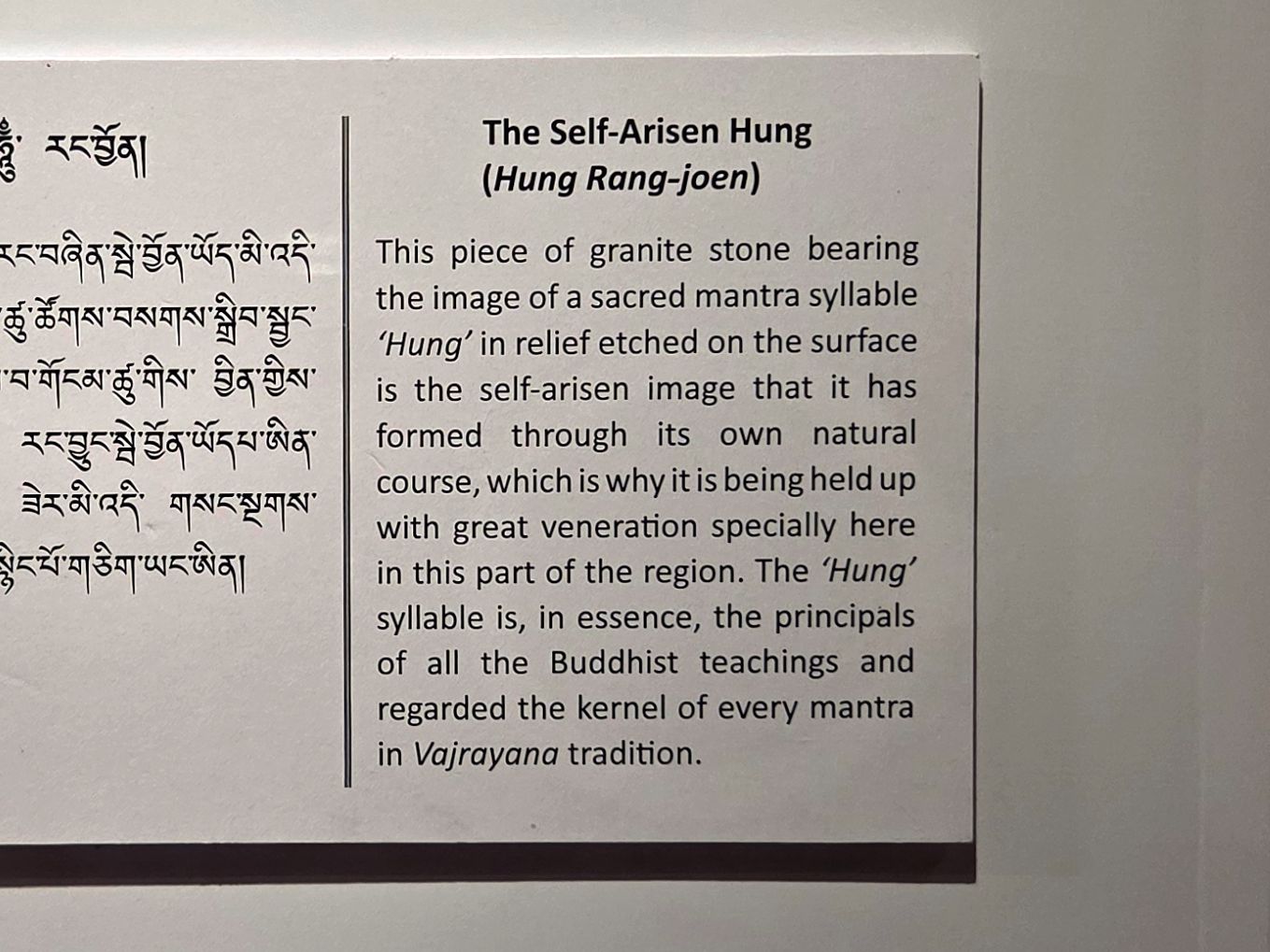
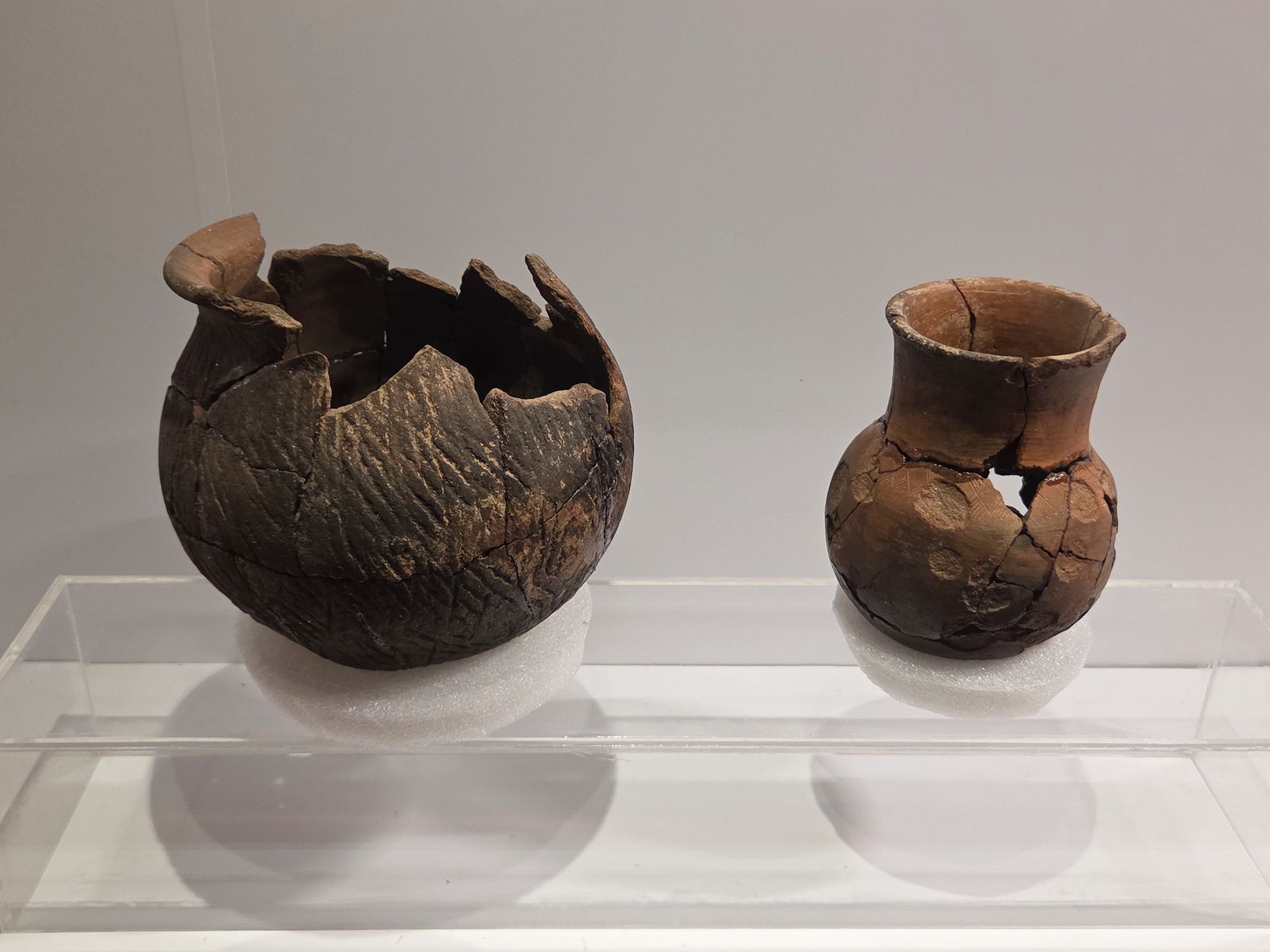
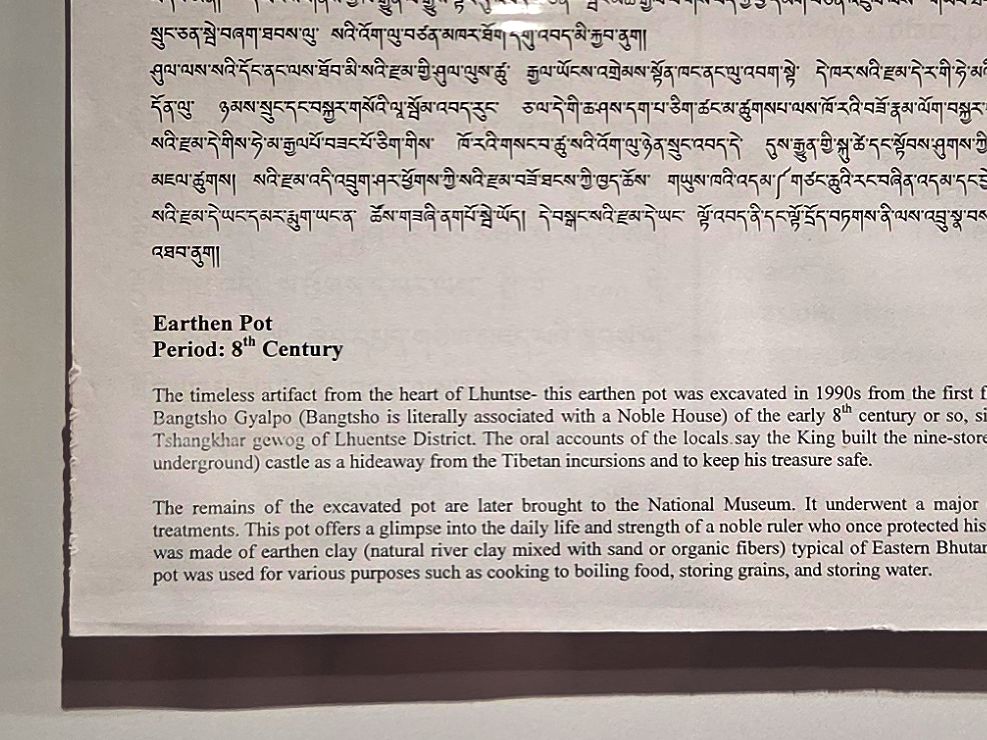
Prehistoric artifacts including ancient stone tools, weapons, pottery, and other objects that provide a glimpse into life in Bhutan before written historical records.
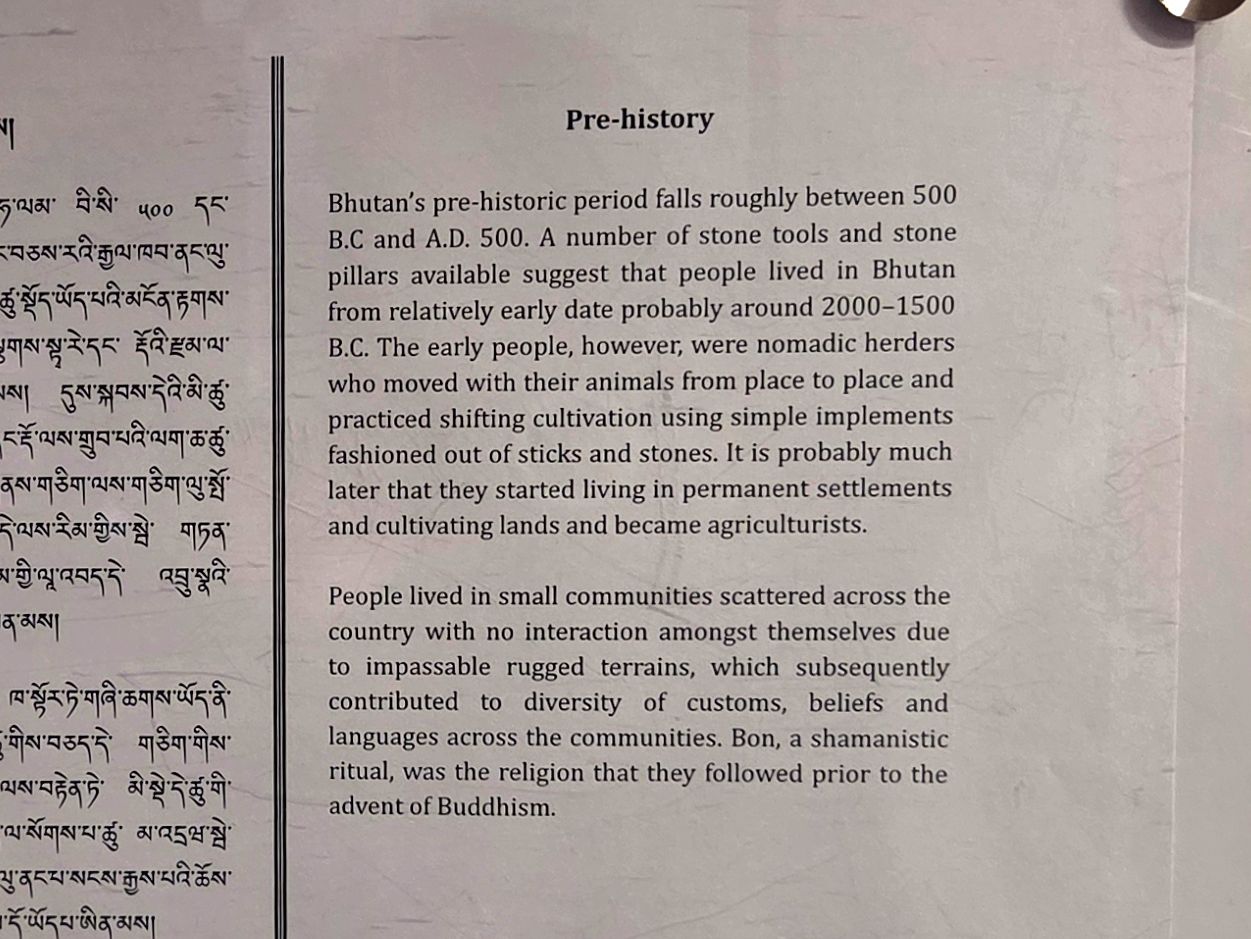
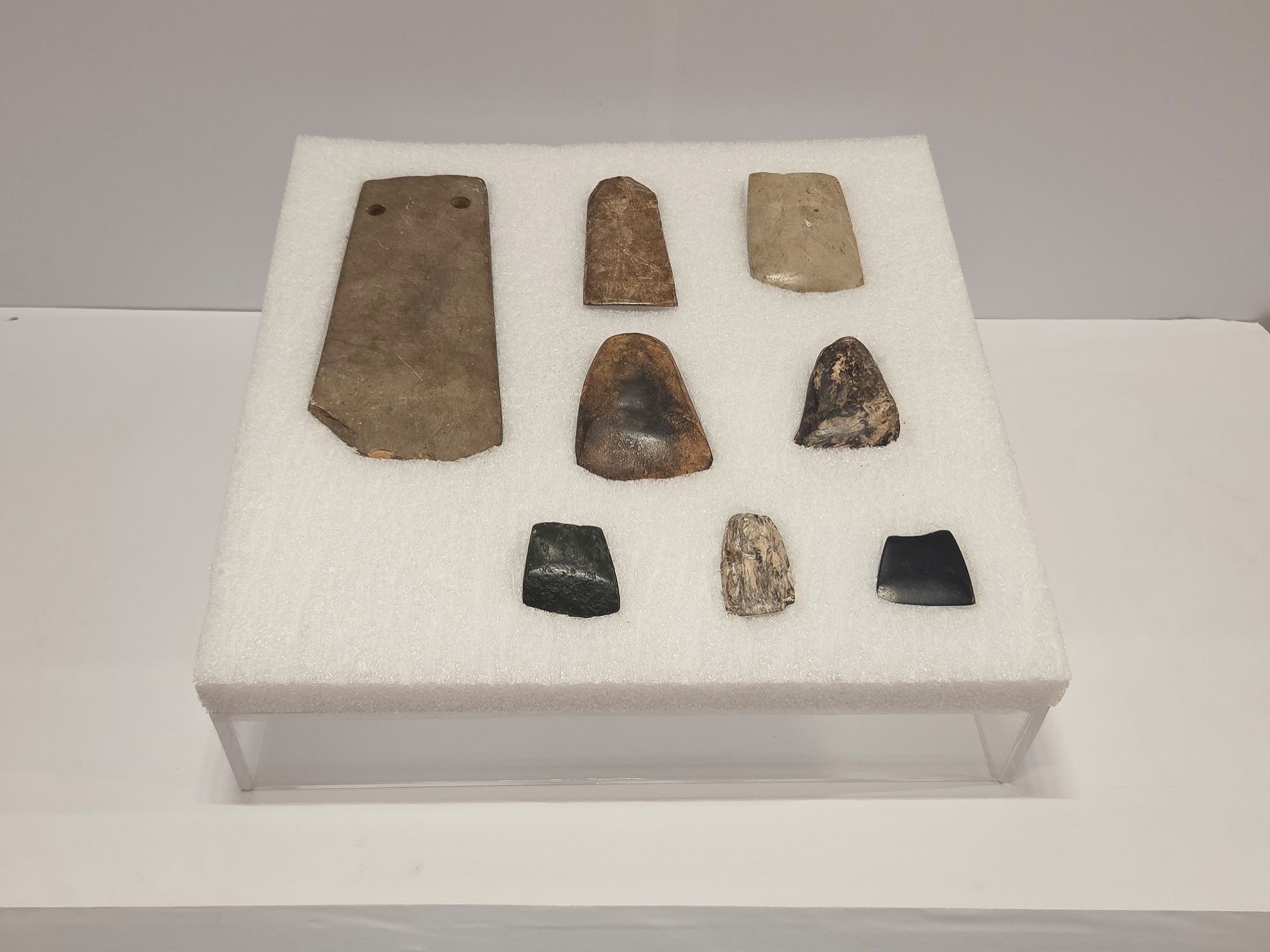
Stone Age
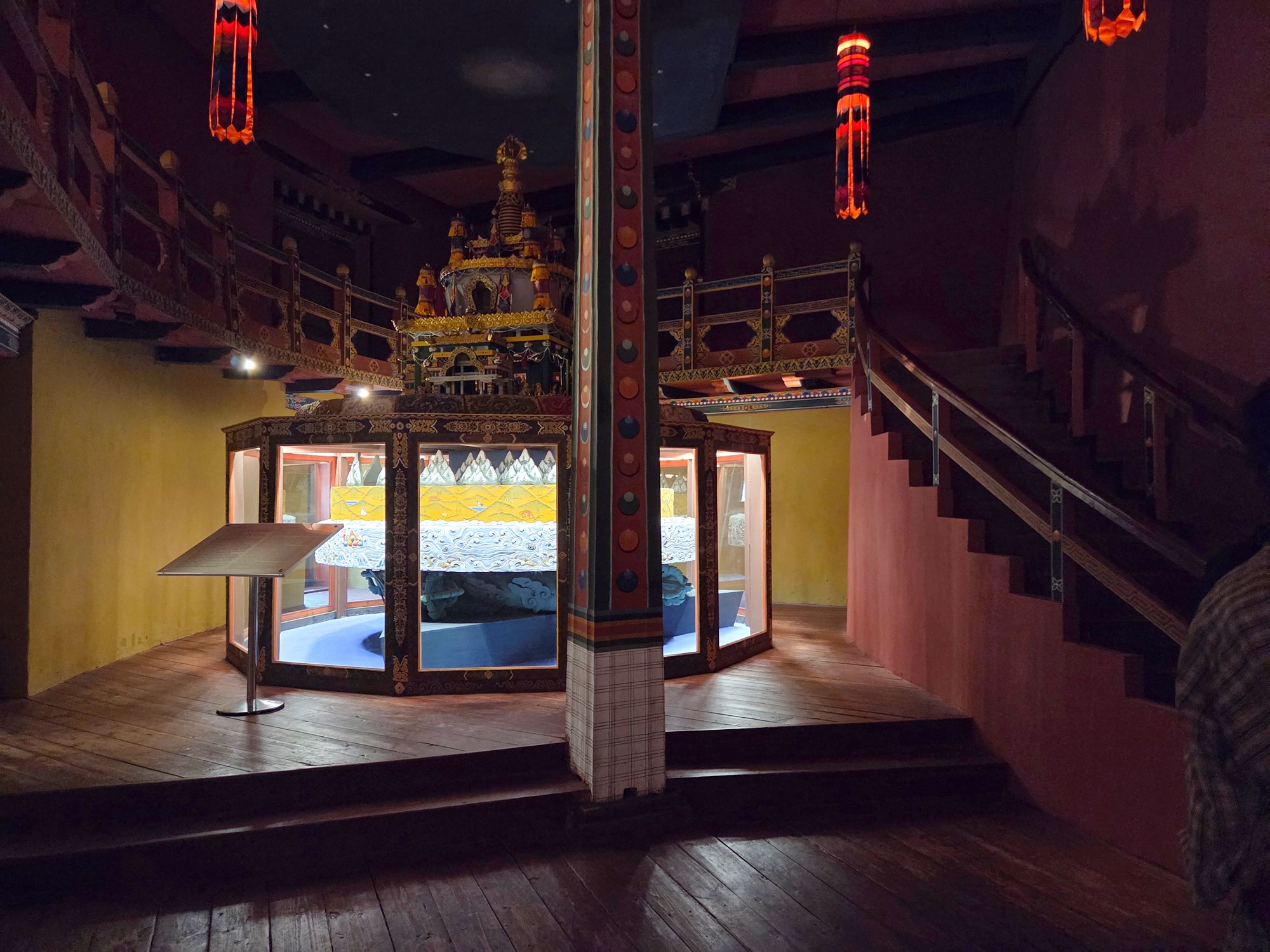
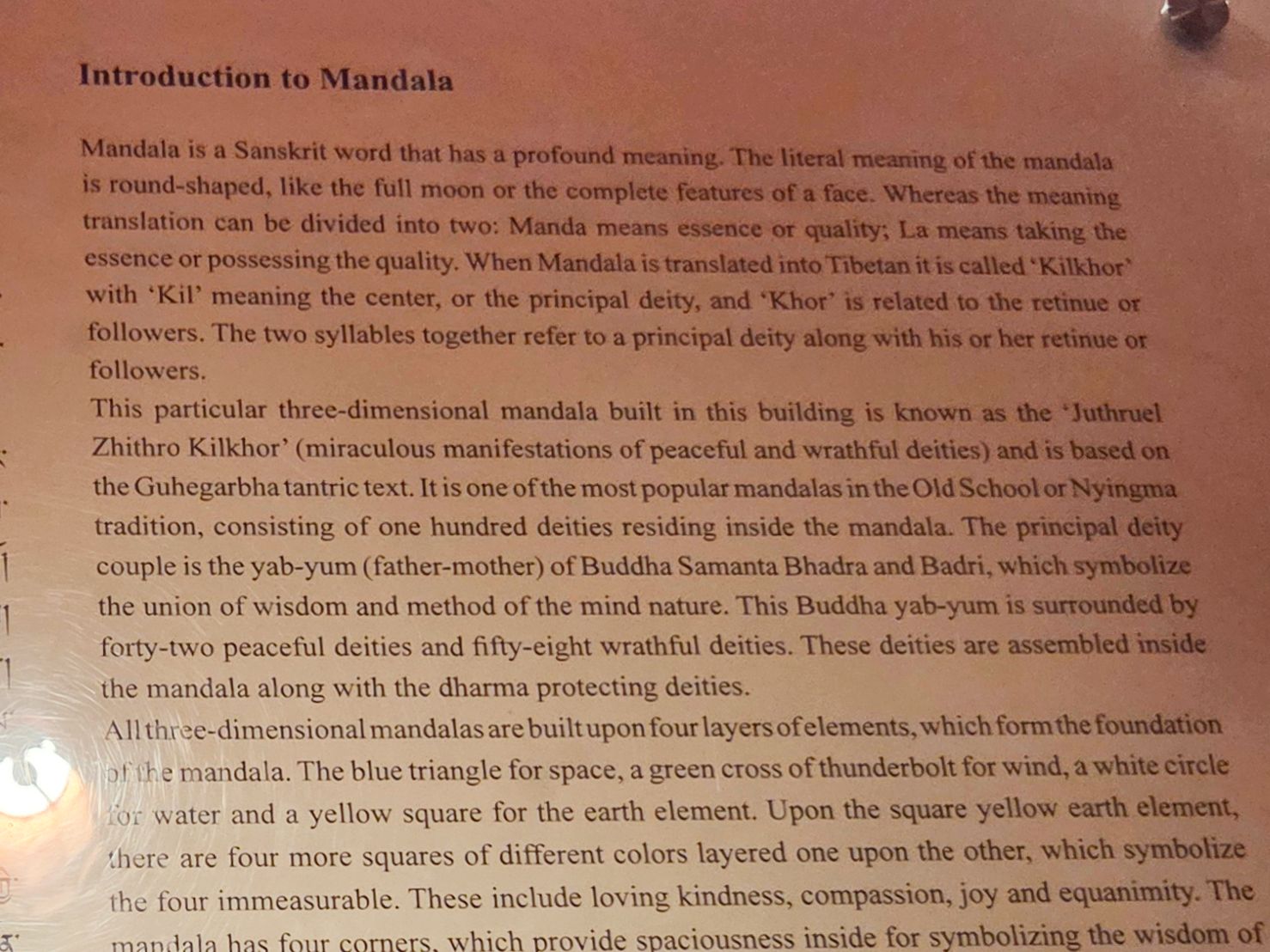
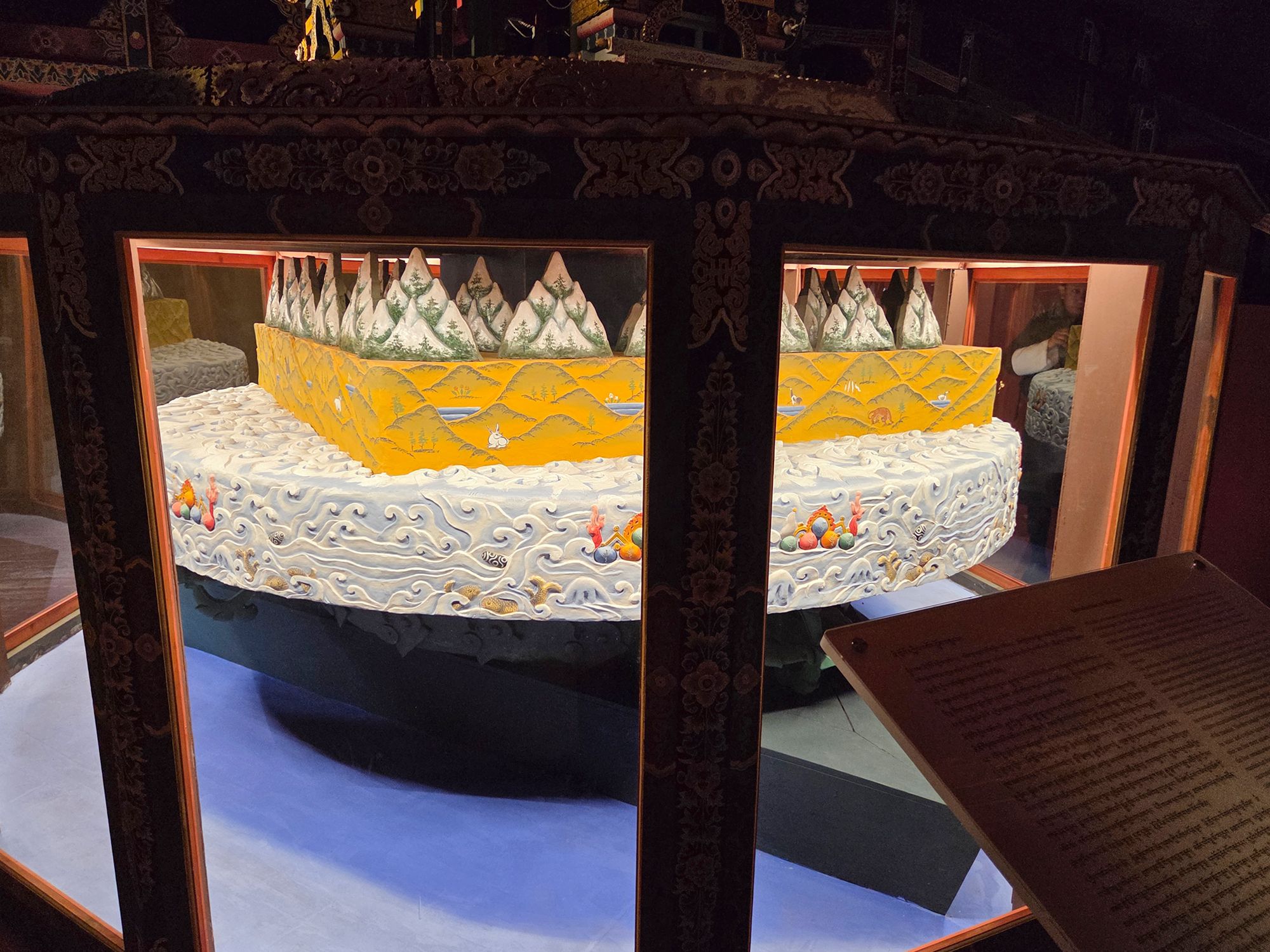
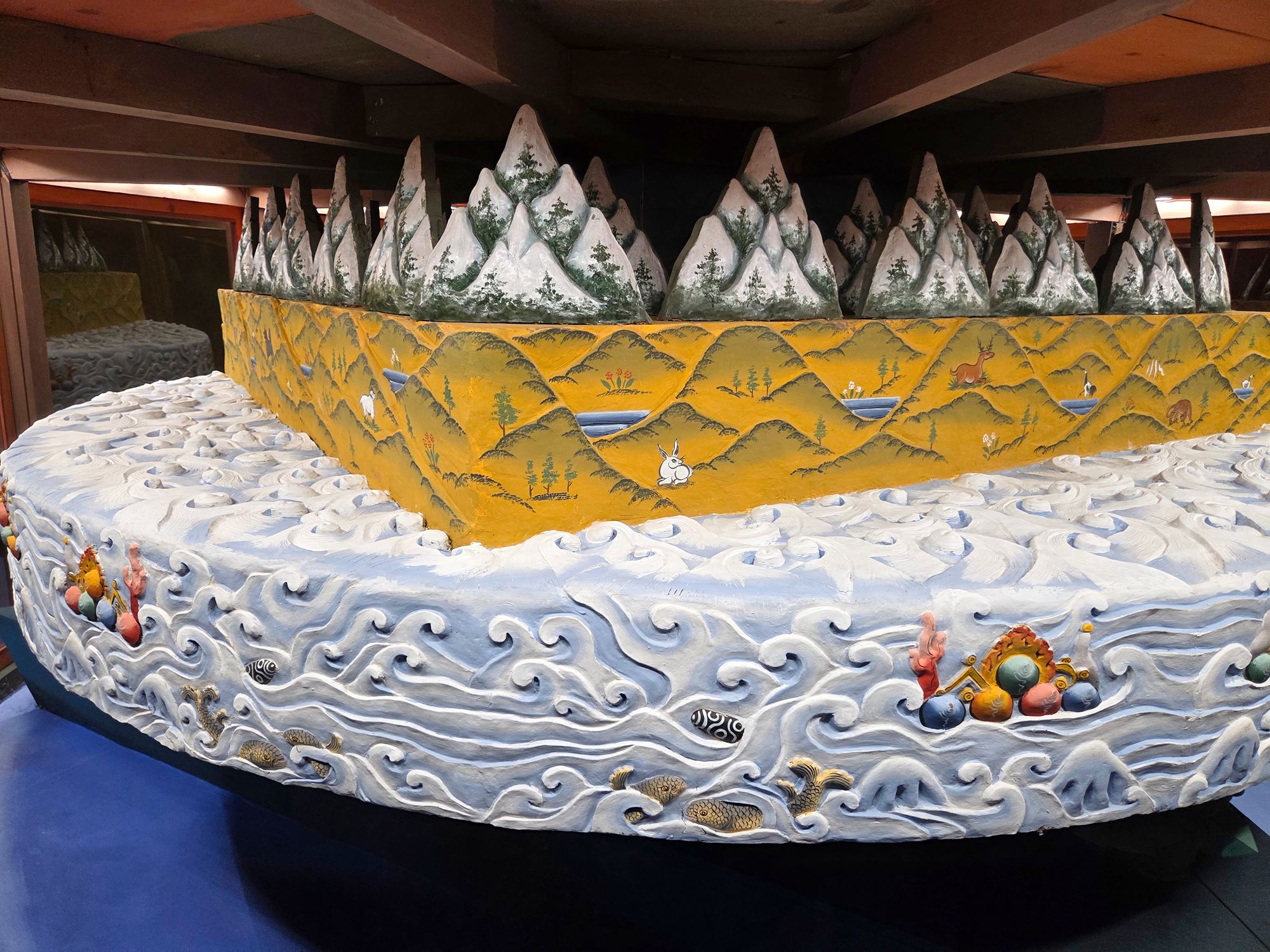
Introduction to Mandala - the word mandala comes from Sanskrit and roughly means “circle.” A Buddhist mandala usually depicts a carefully organized spiritual universe, often with a Buddha or deity at the center surrounded by other figures, symbols, palaces, and geometric patterns.
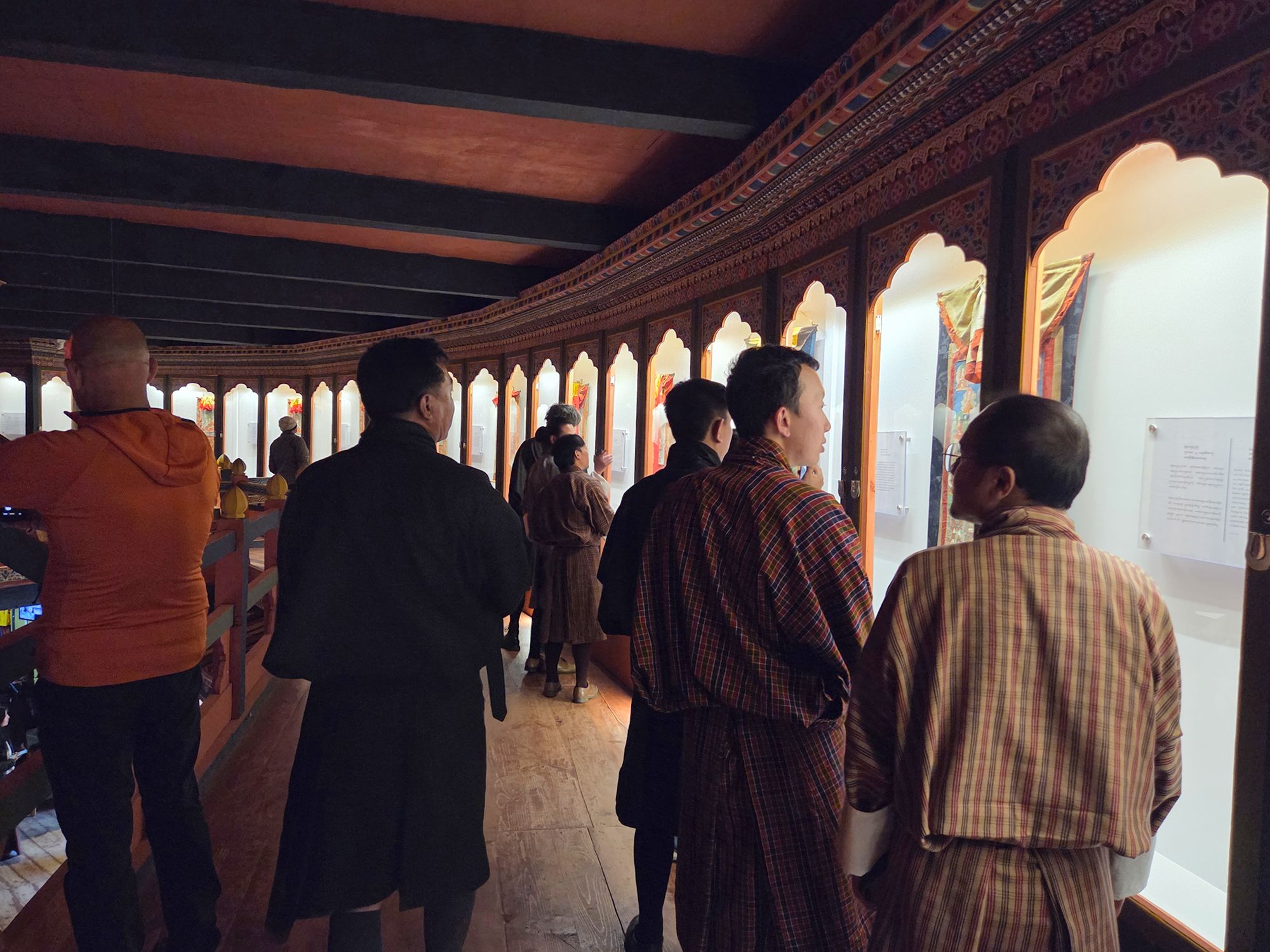
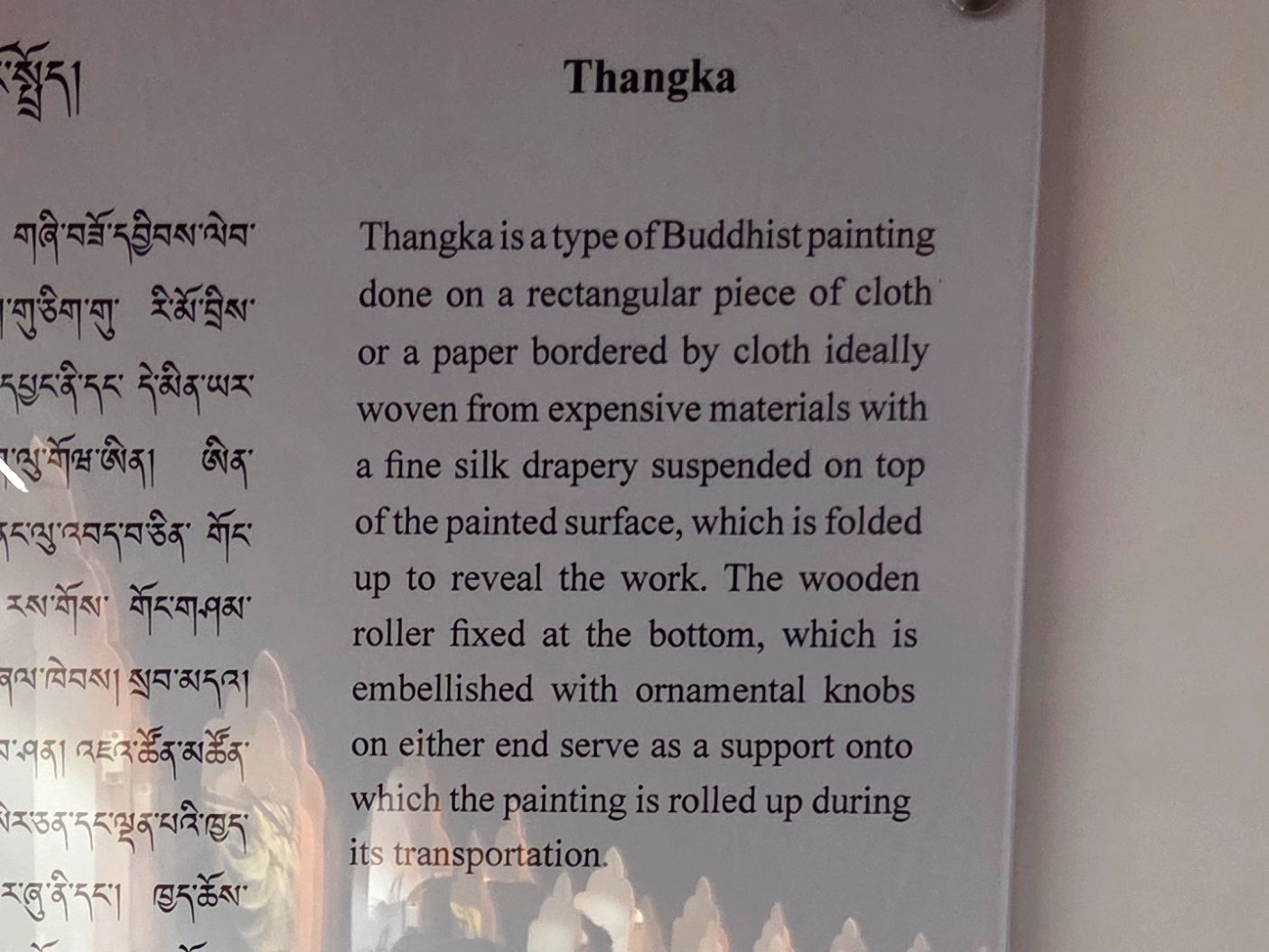
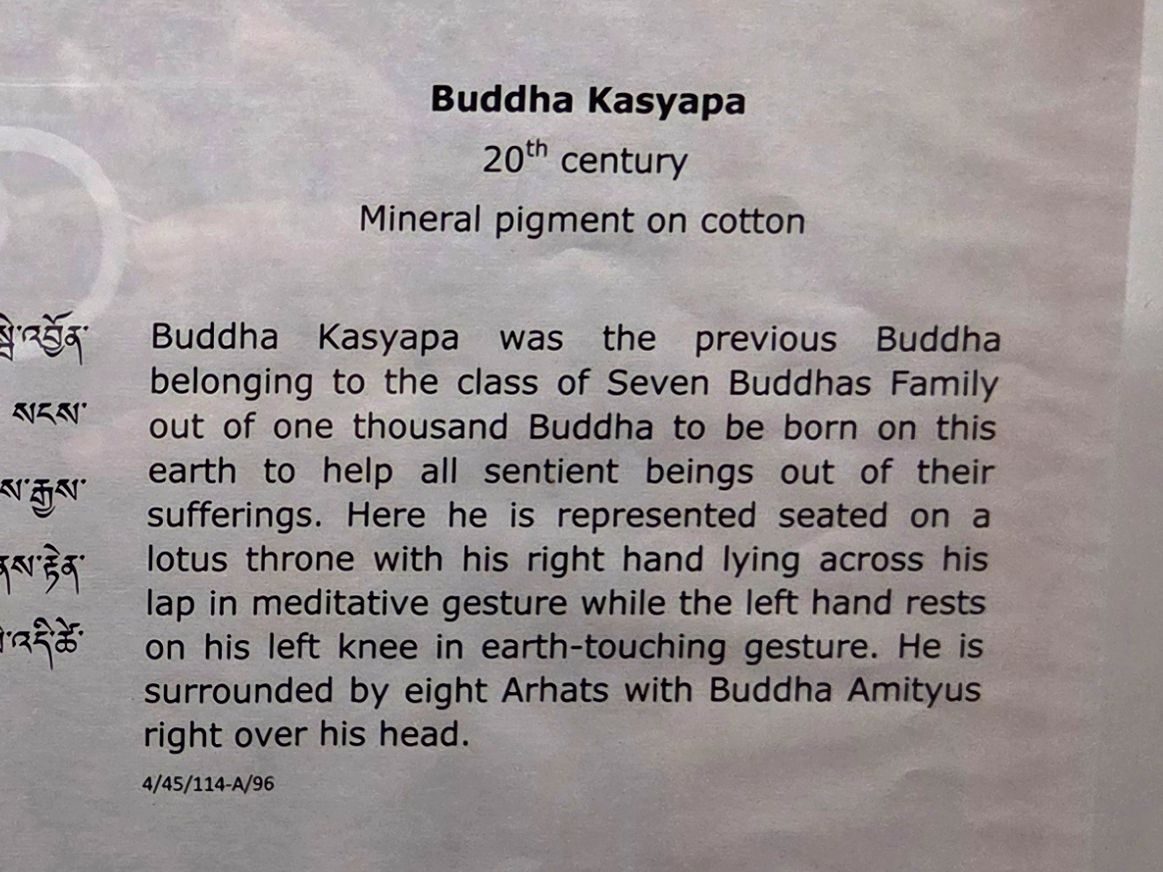
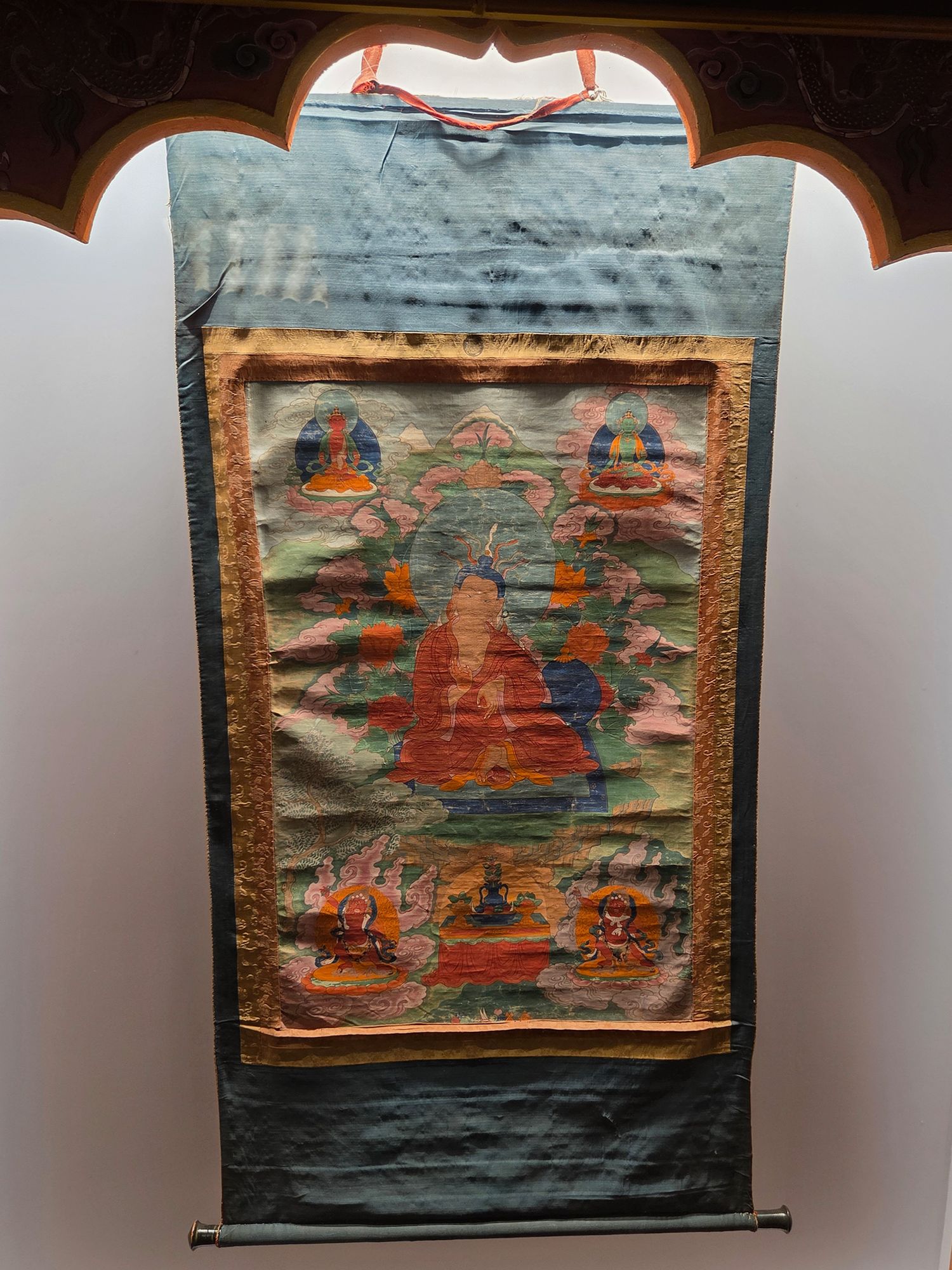
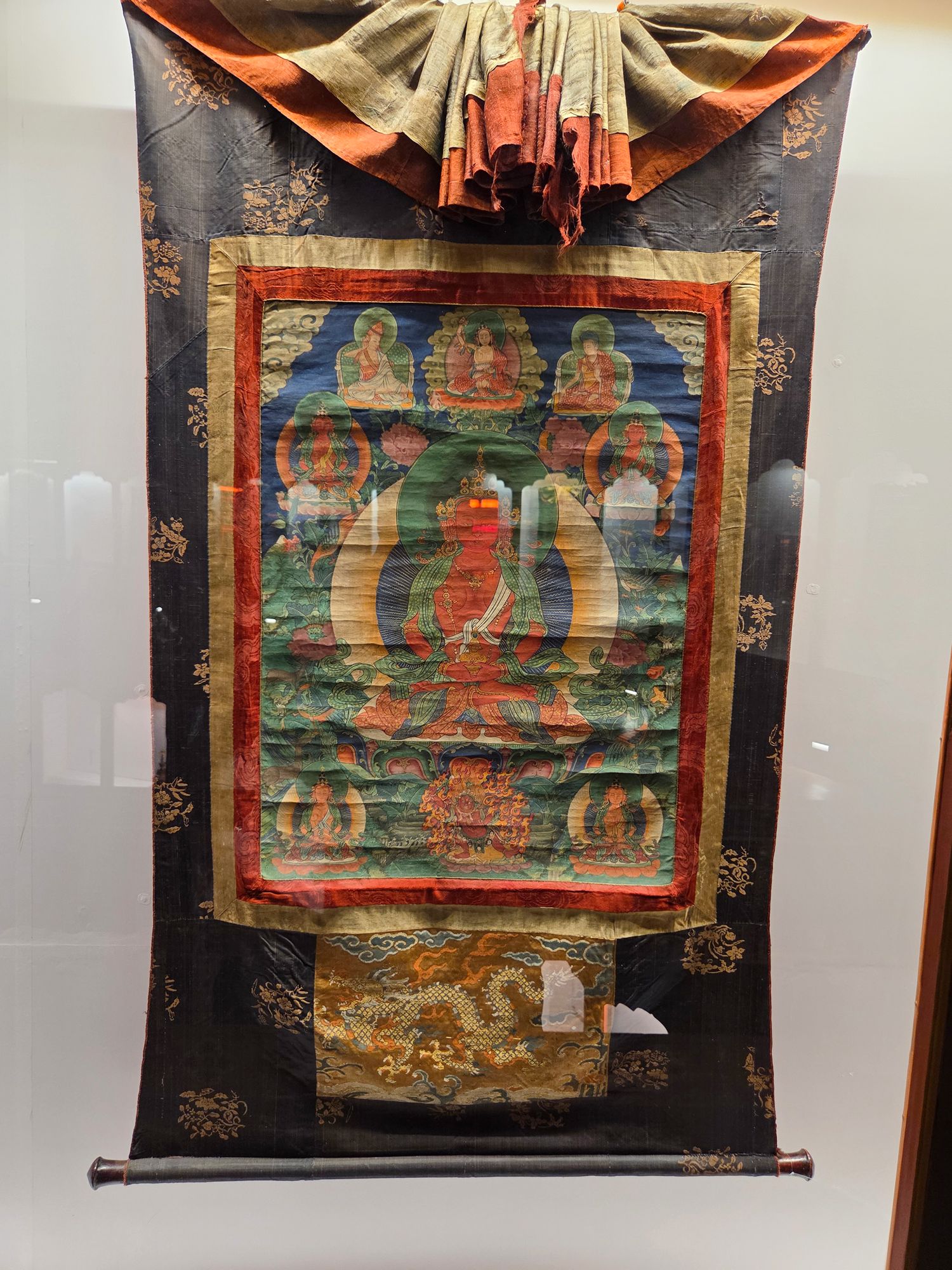
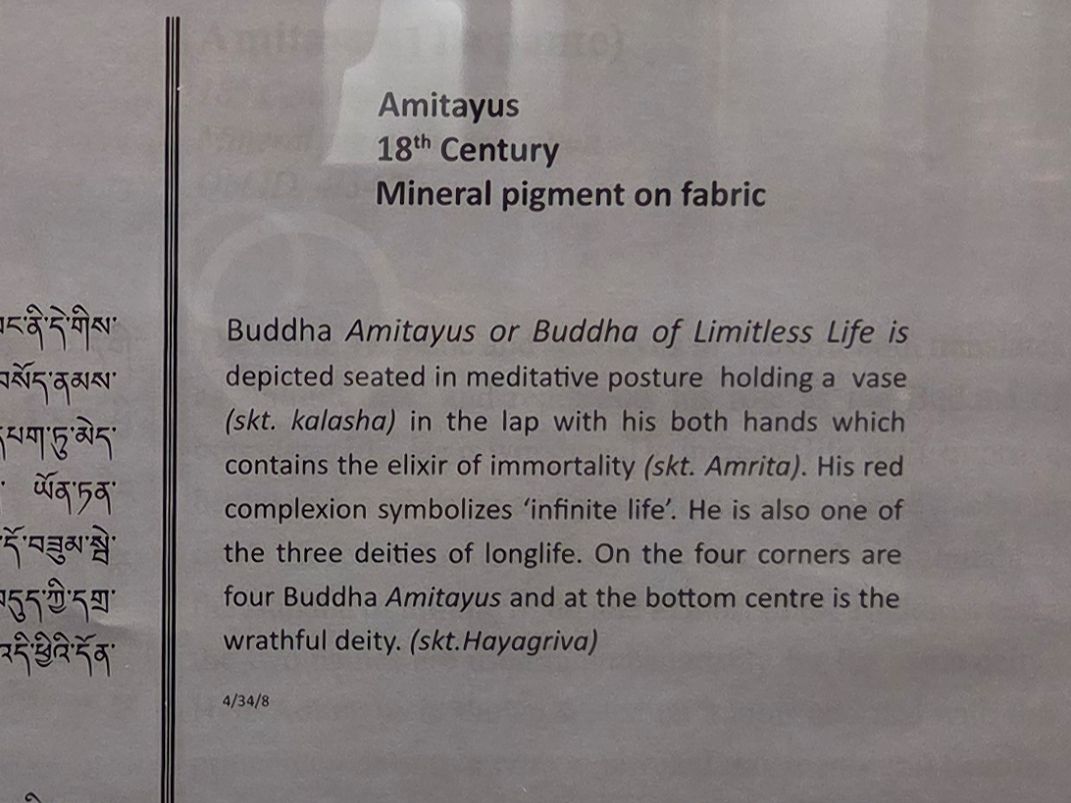
A thangka is a traditional Buddhist religious painting, usually created on cloth and depicting Buddhas, deities, mandalas, or important spiritual teachers. Thangkas are used in Bhutan for religious teaching, meditation, and ceremonies and are an important part of Bhutanese Buddhist art.
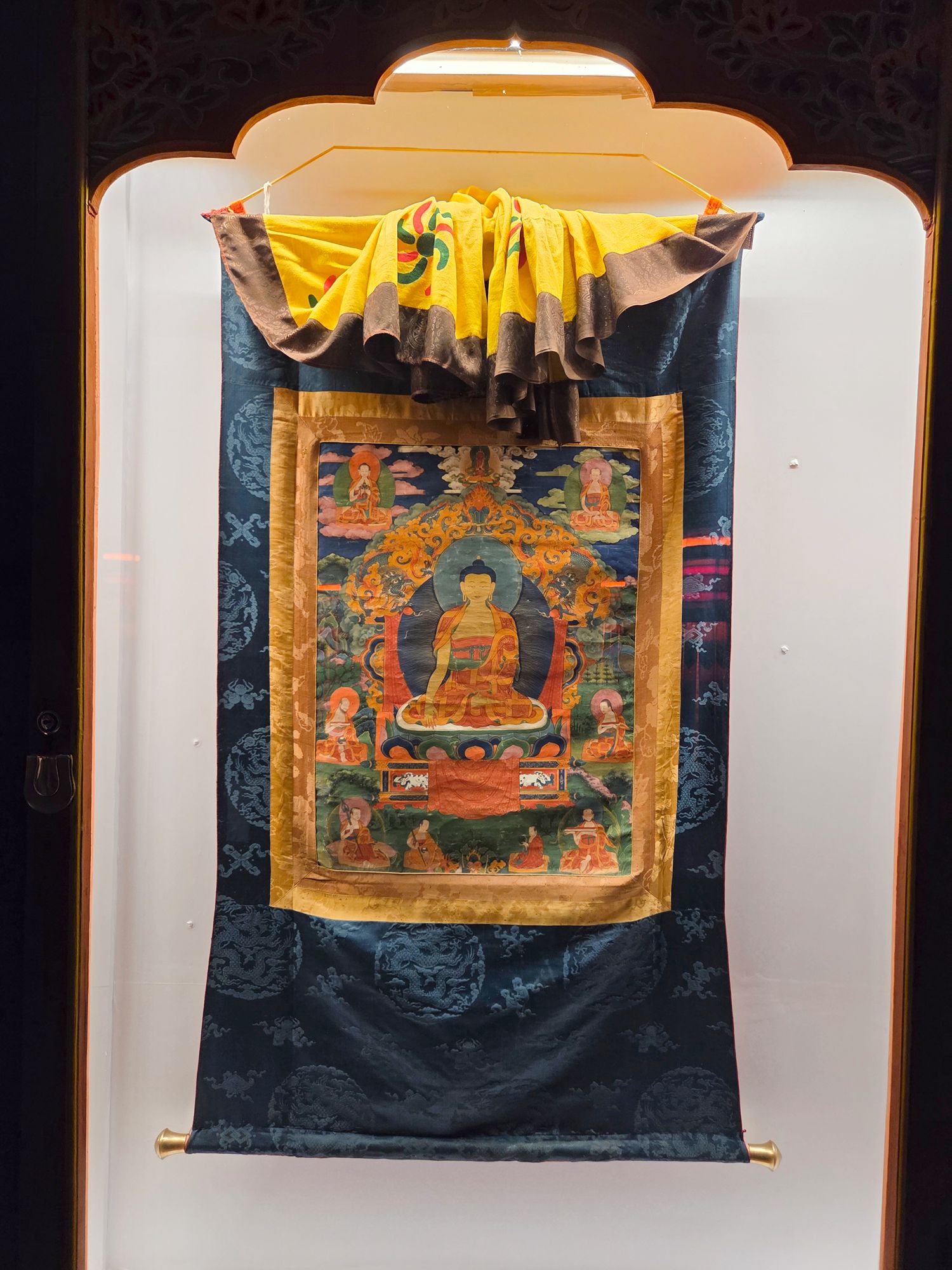
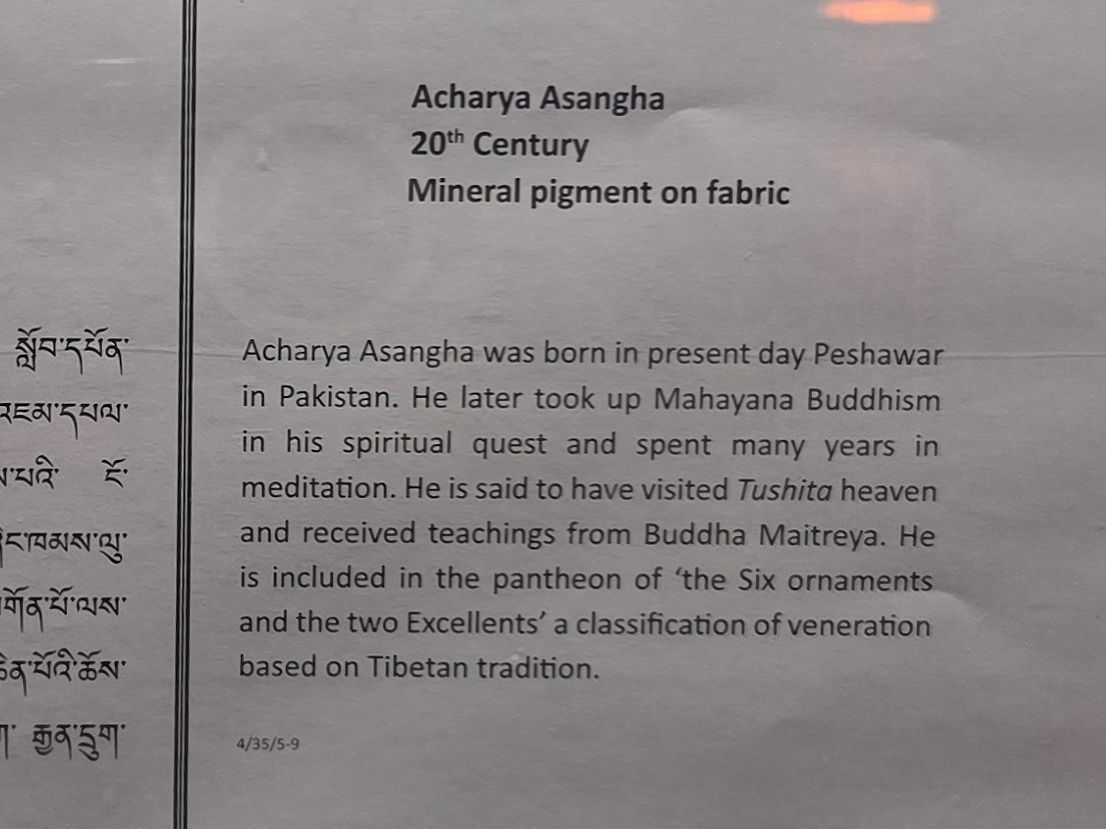
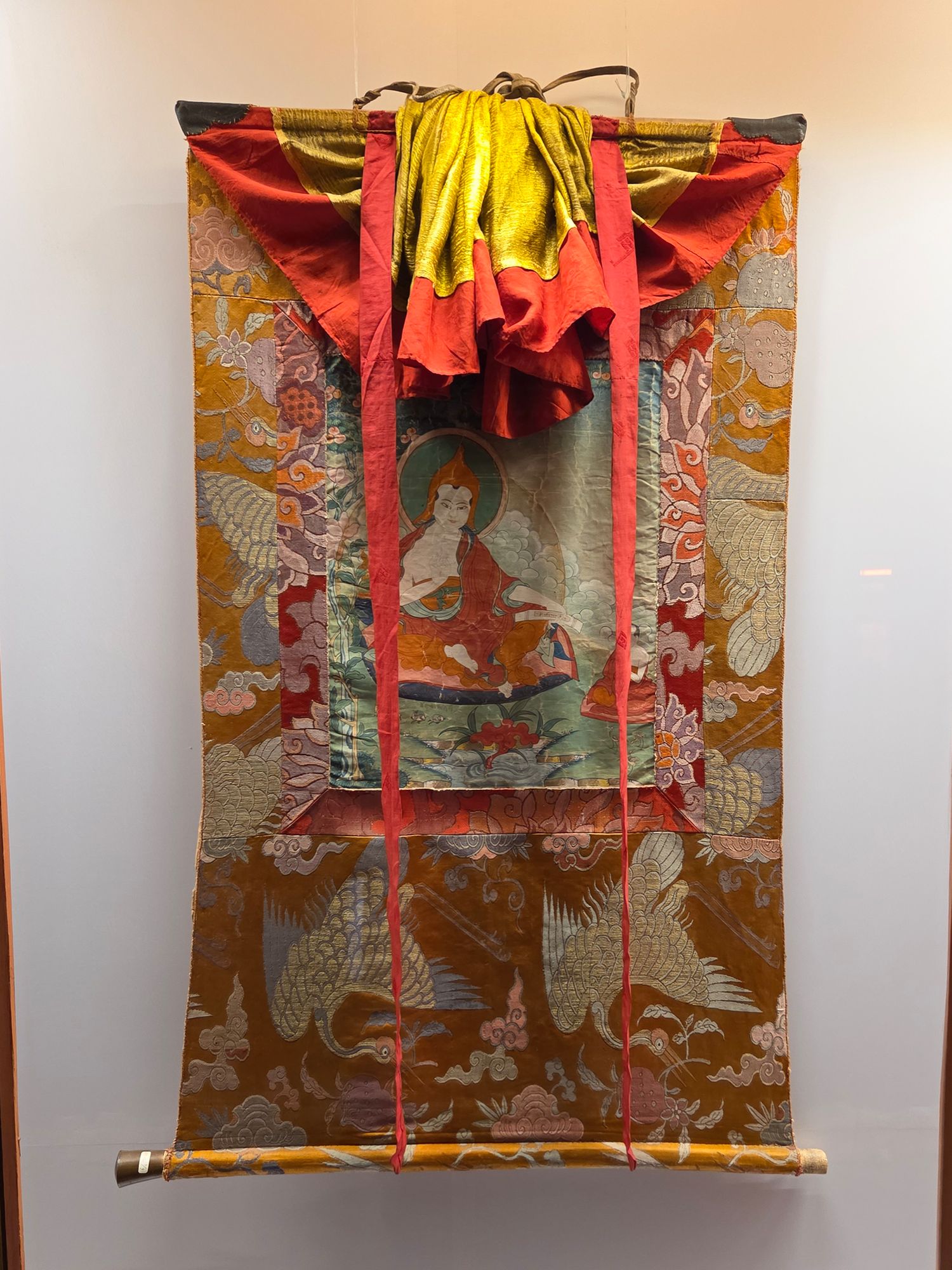
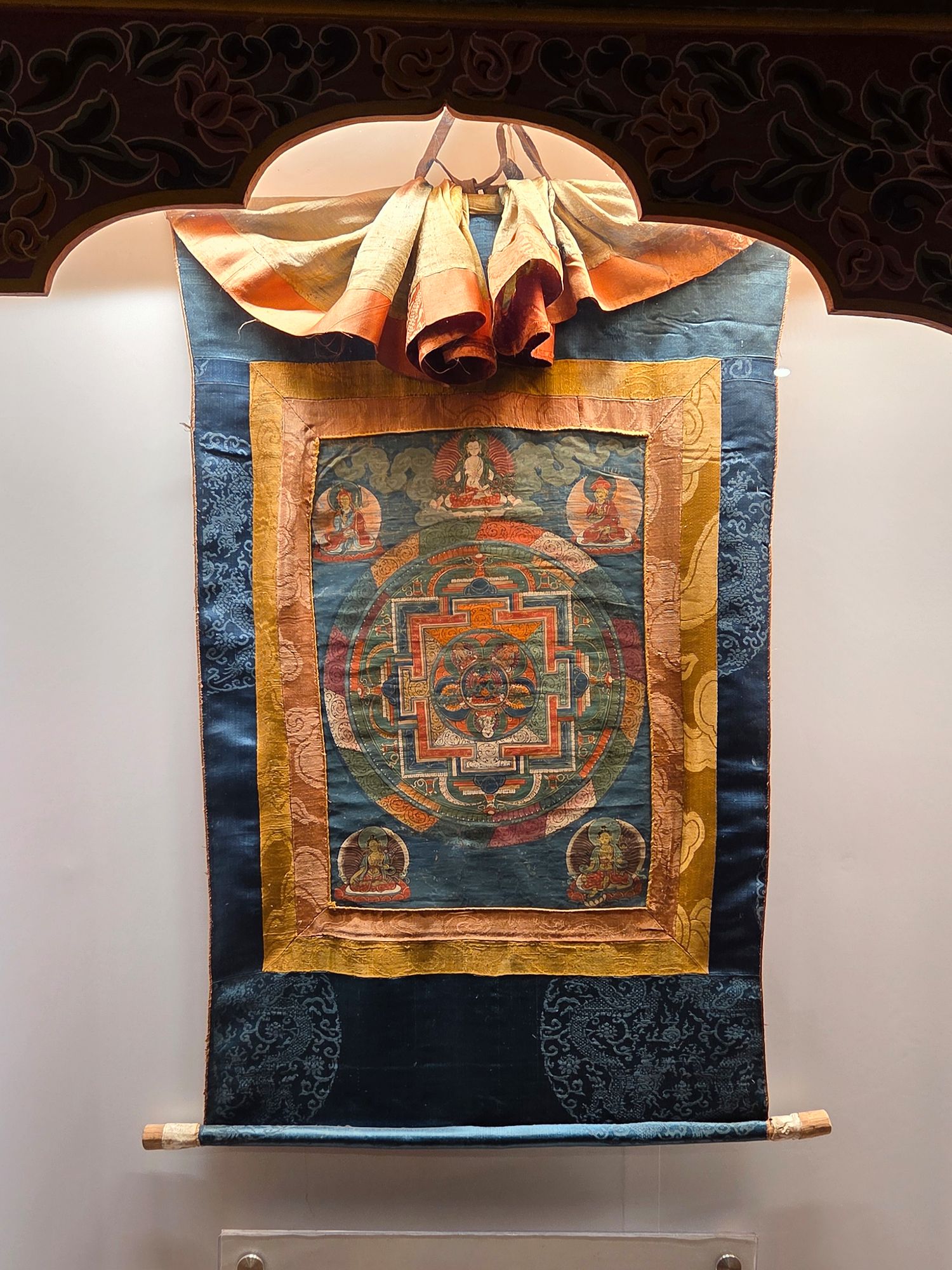
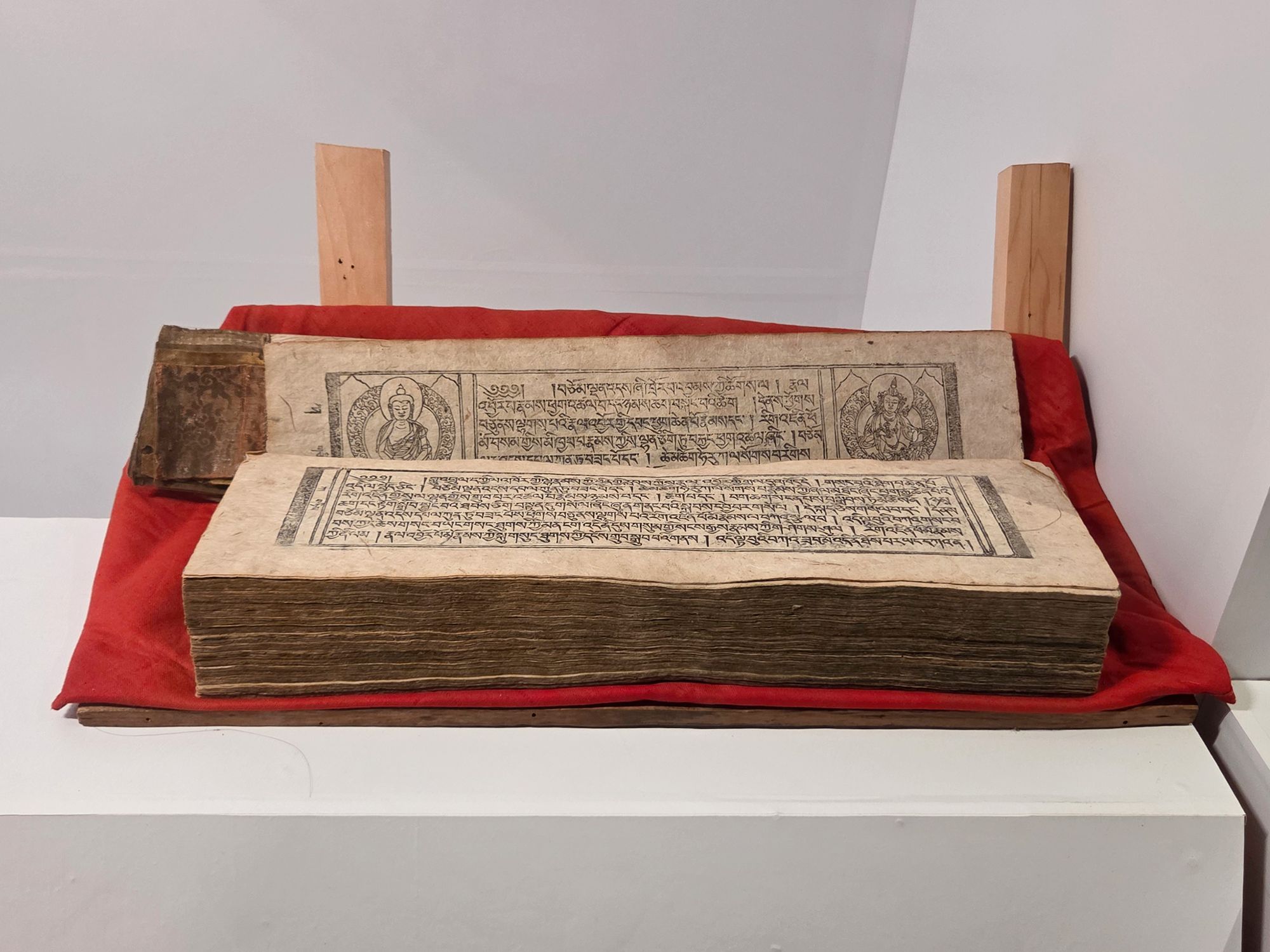
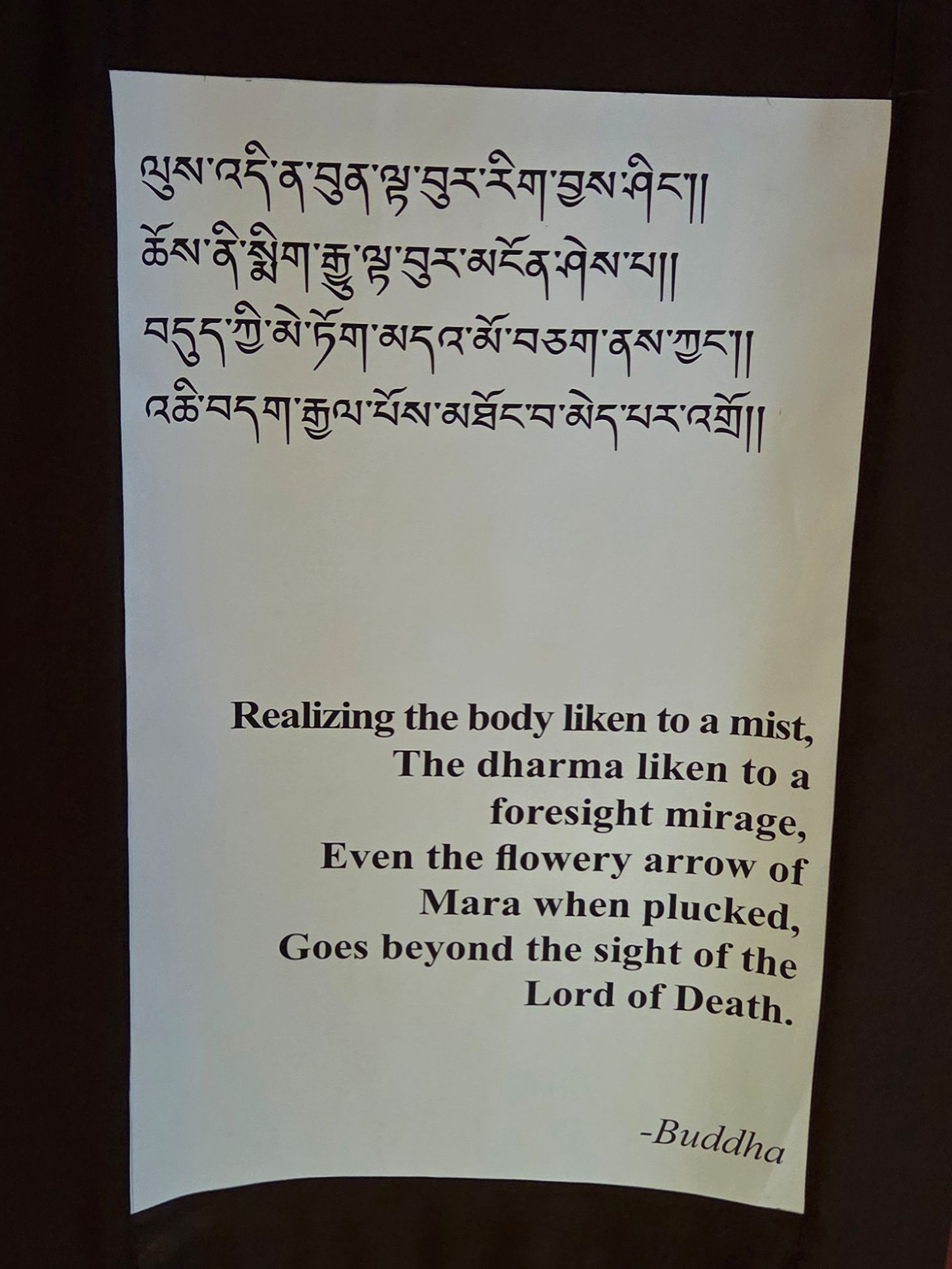
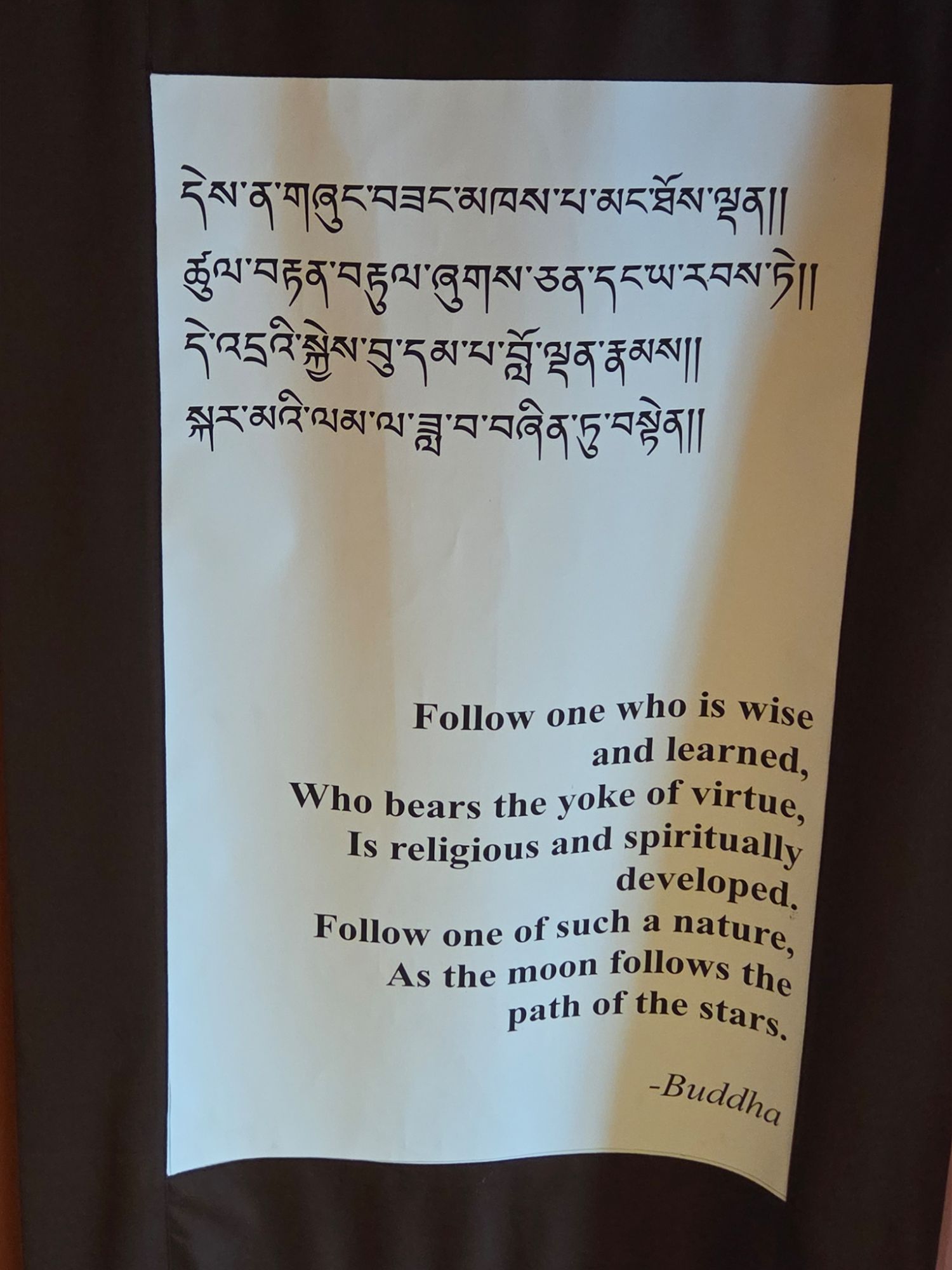
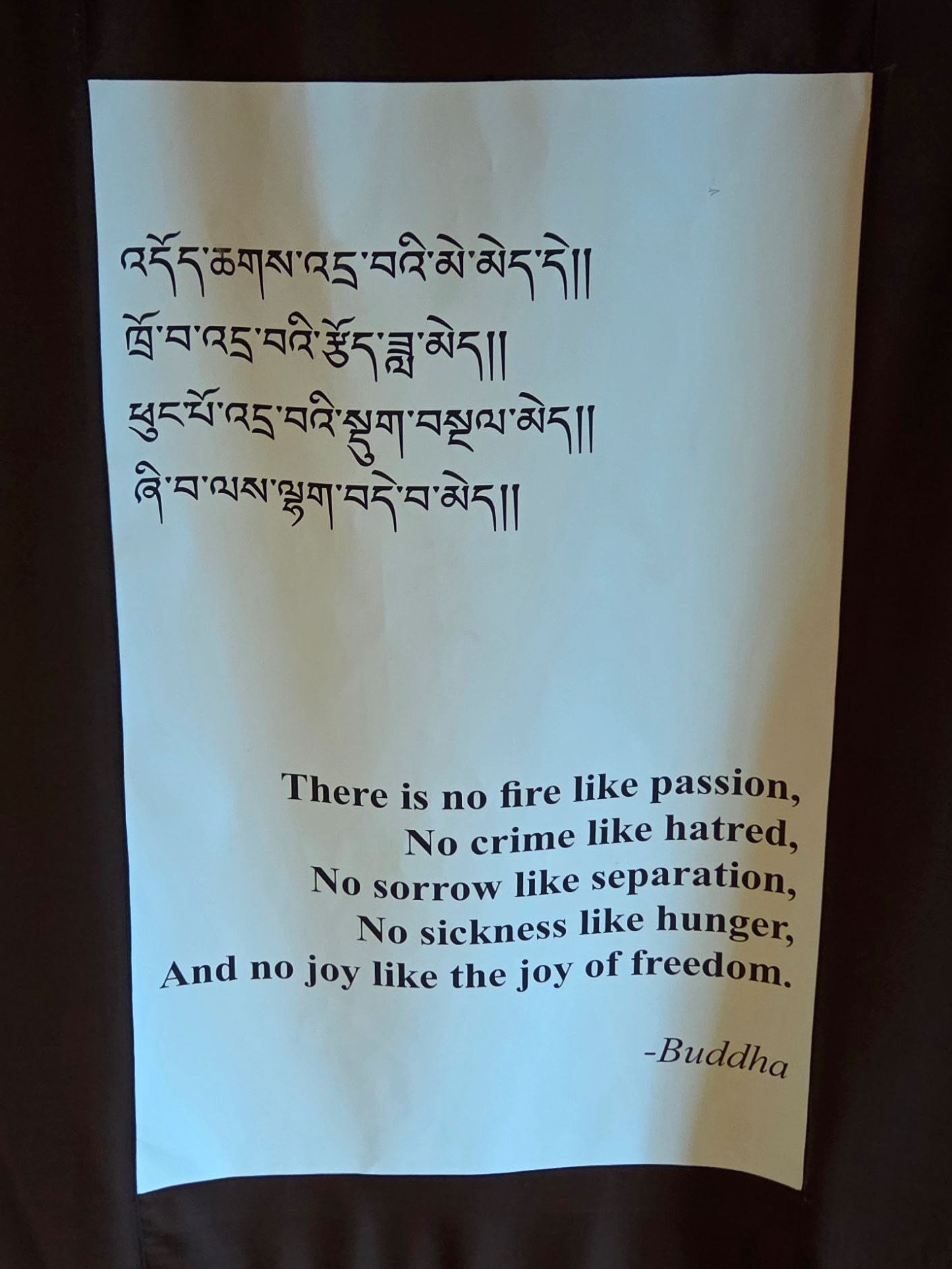
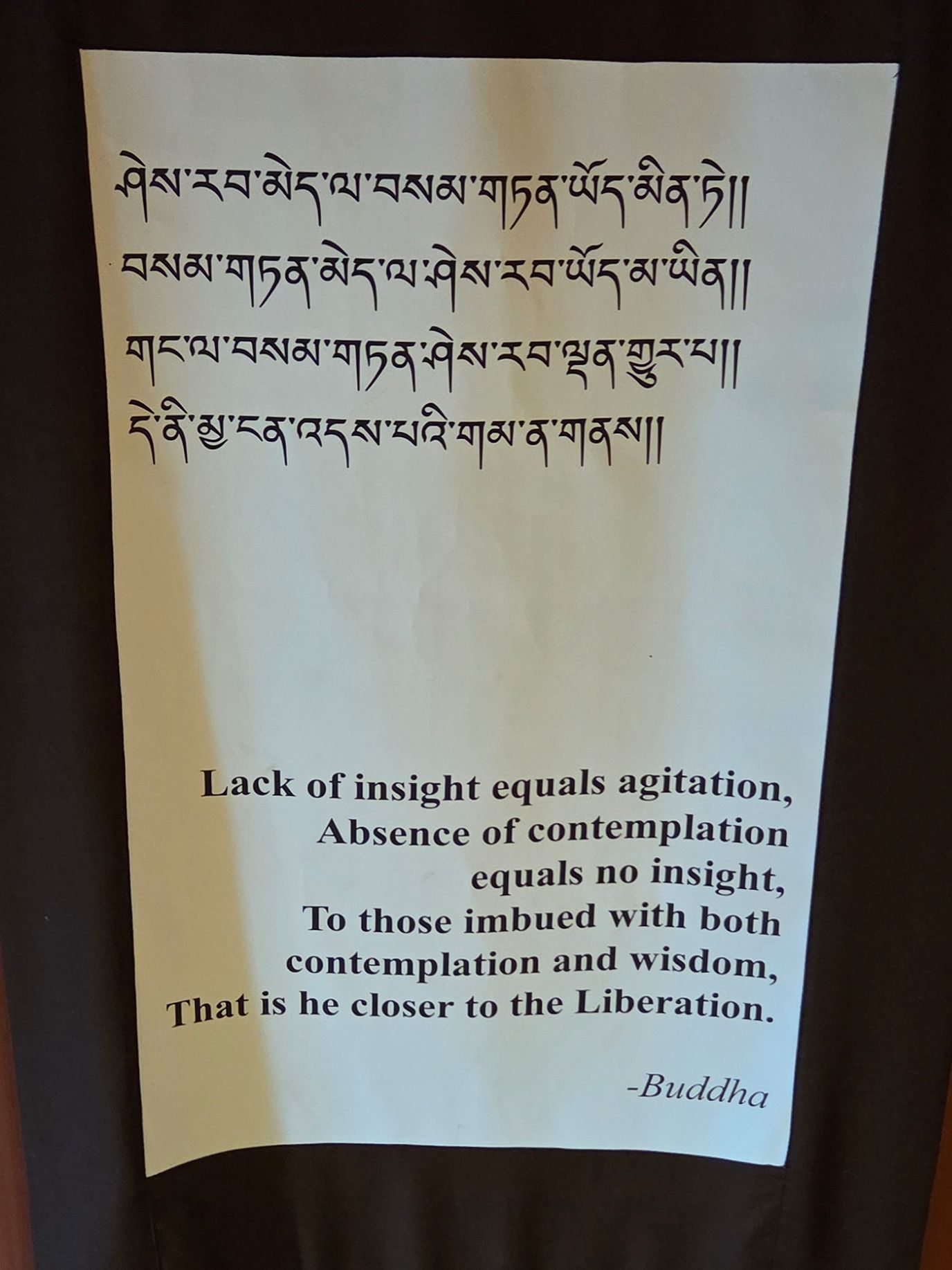
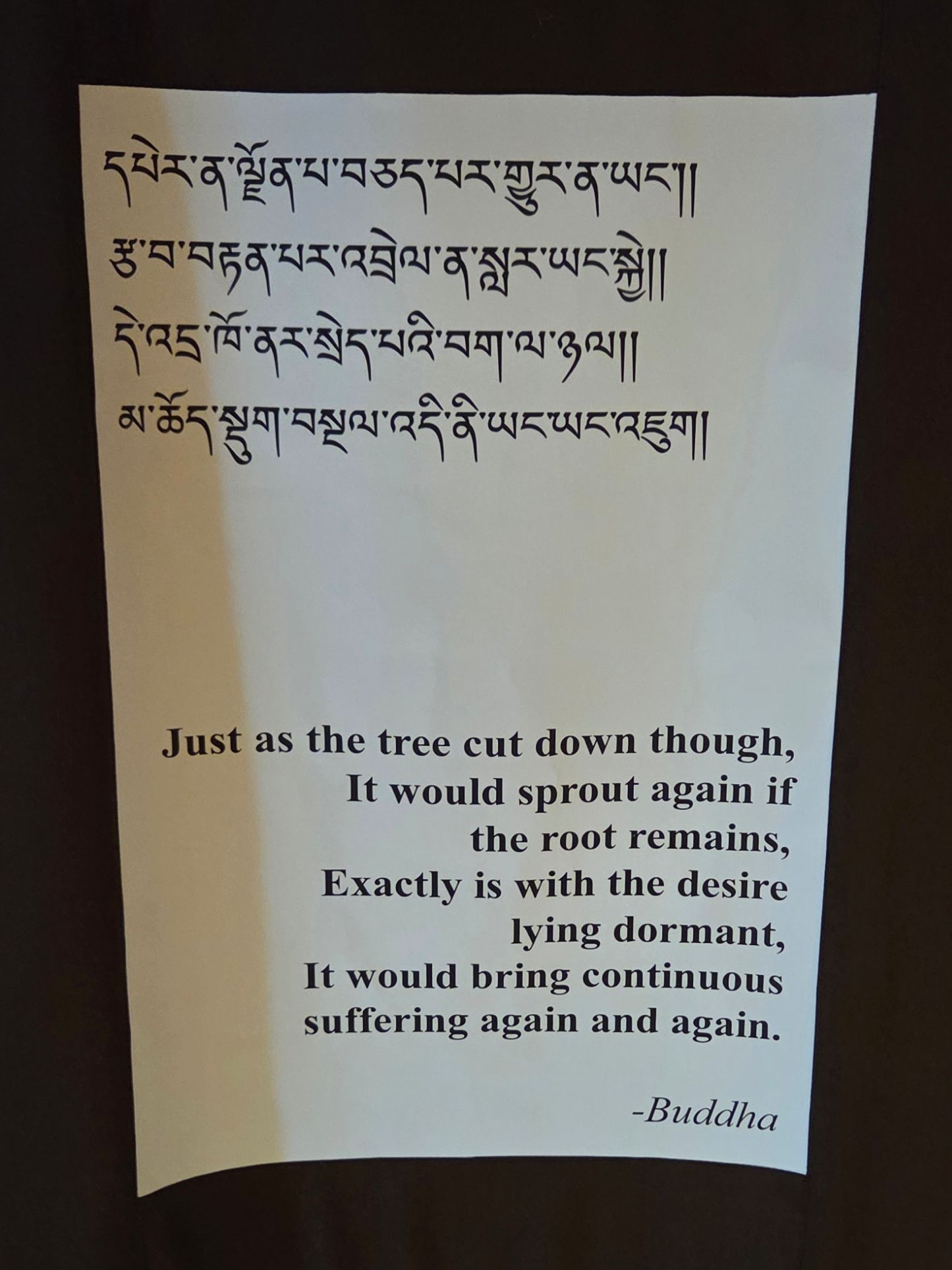
A saying of the Buddha, expressing the wisdom and spiritual teachings at the heart of Buddhism.
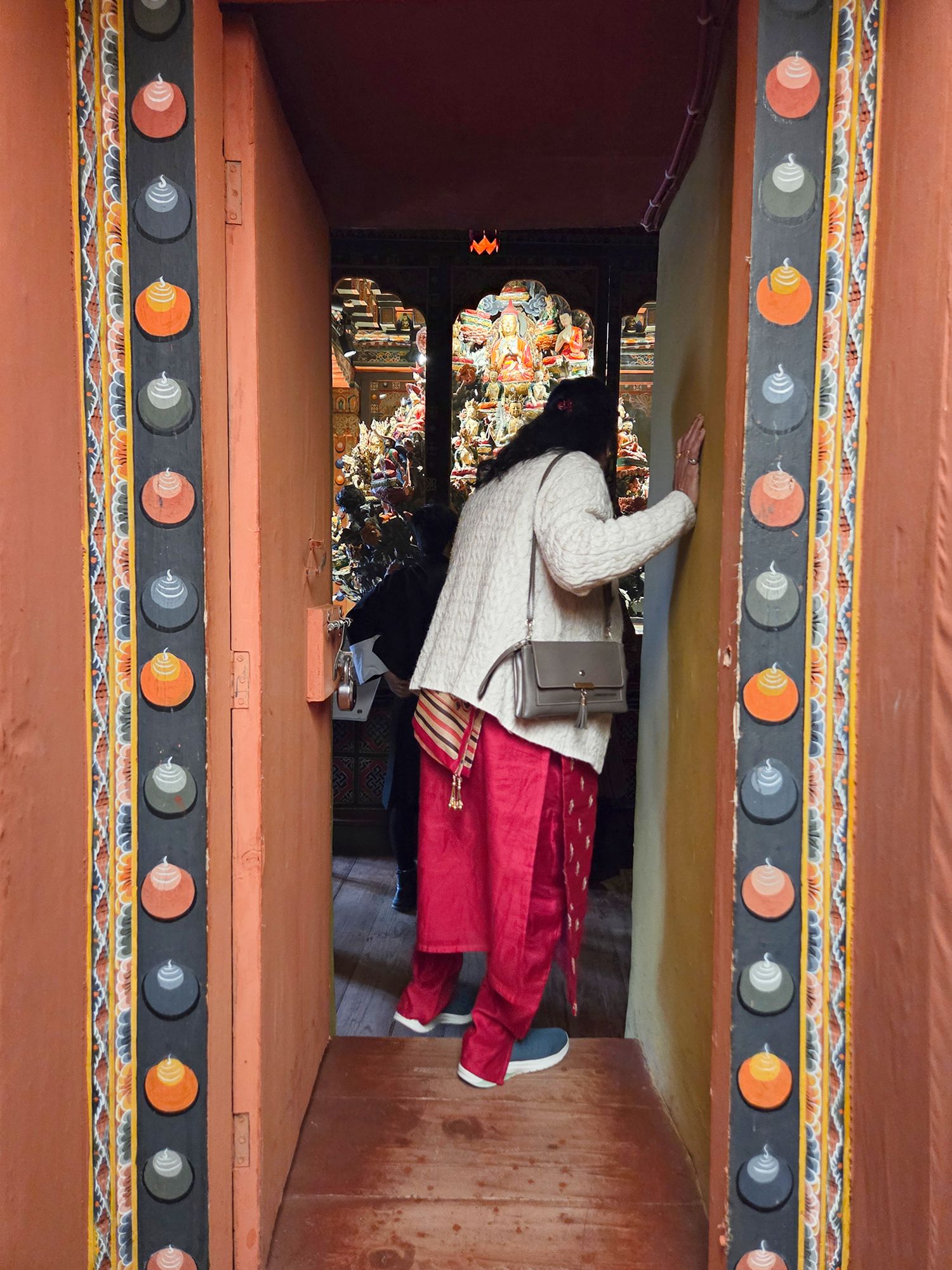
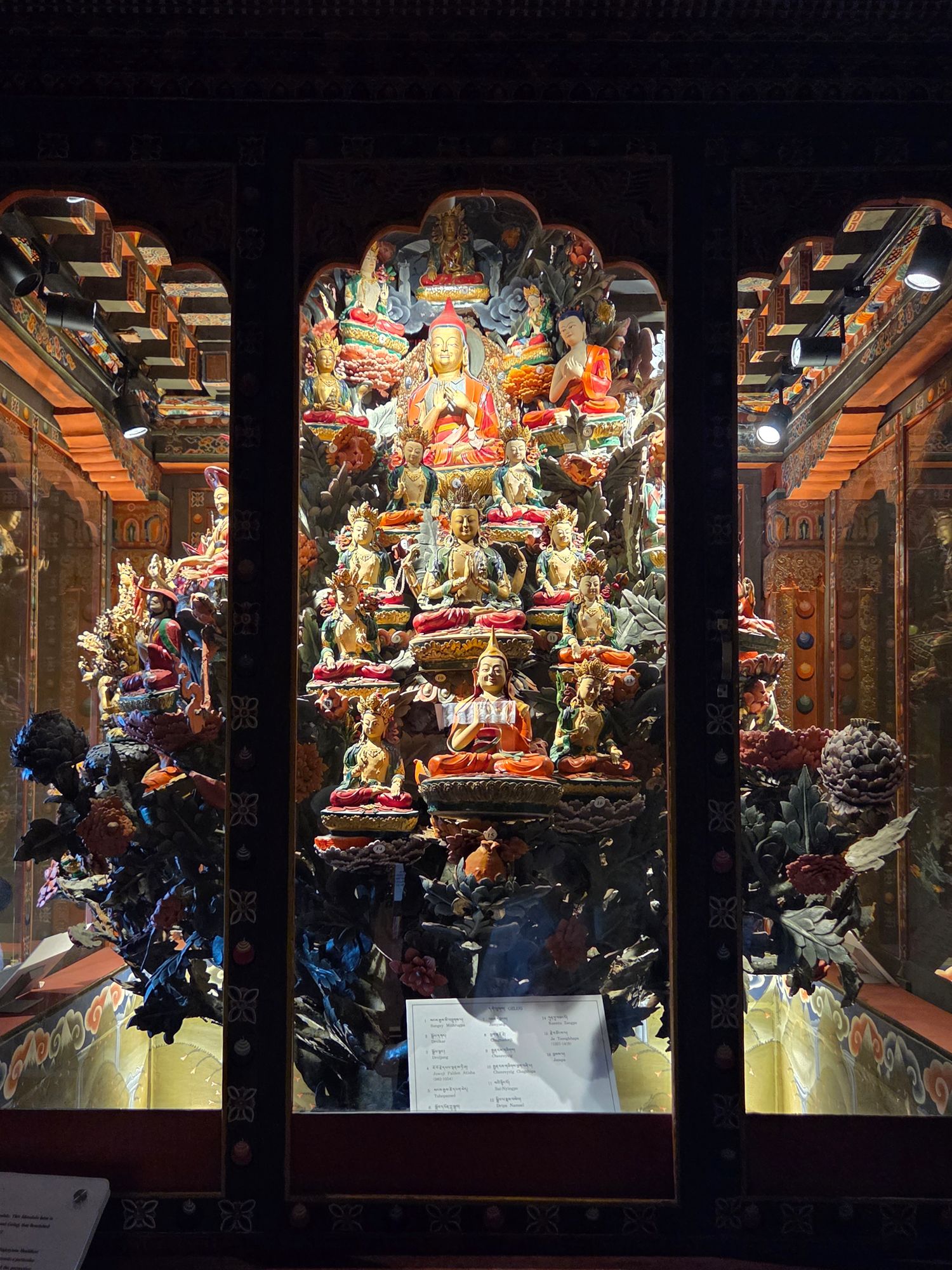
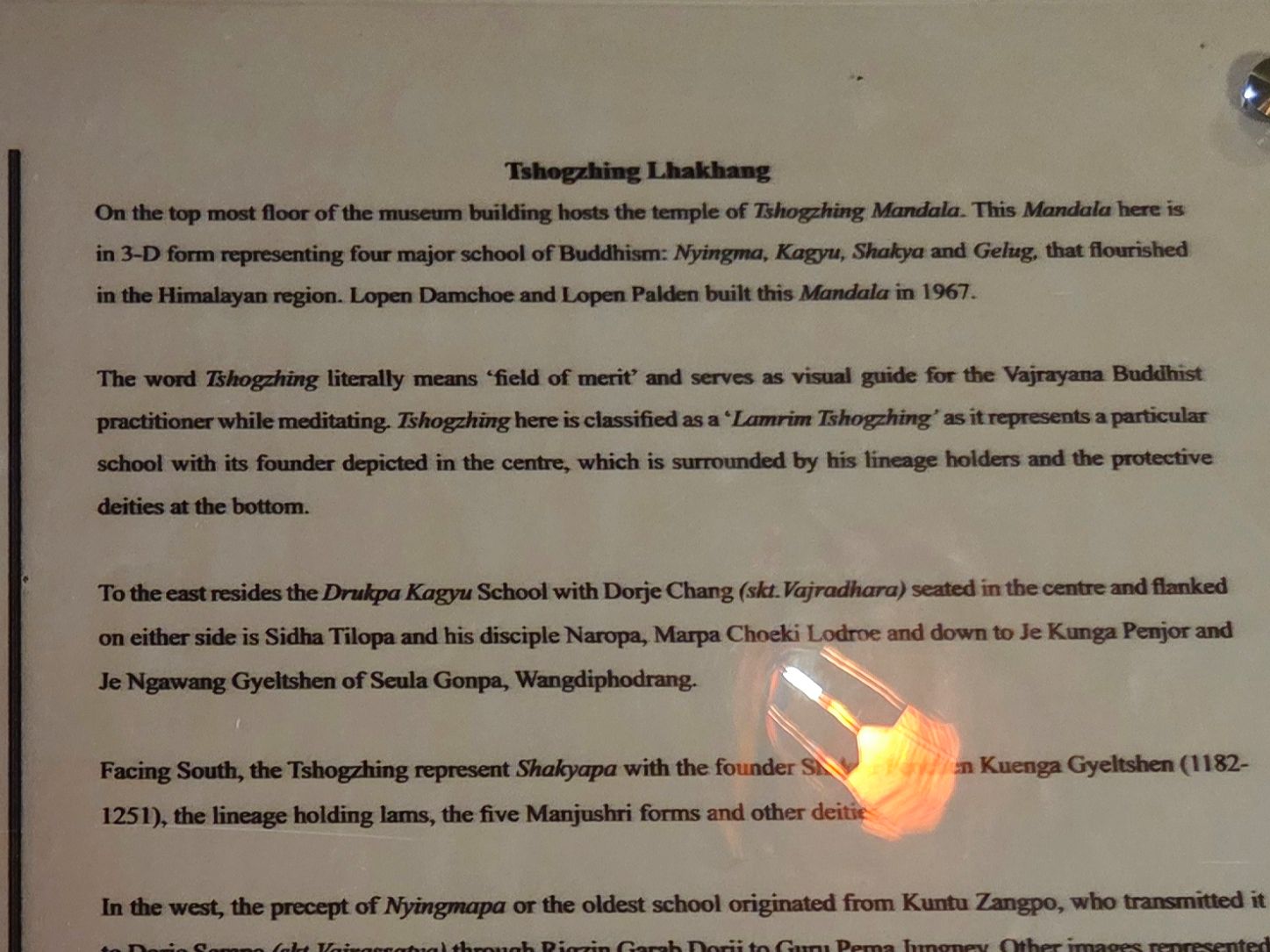
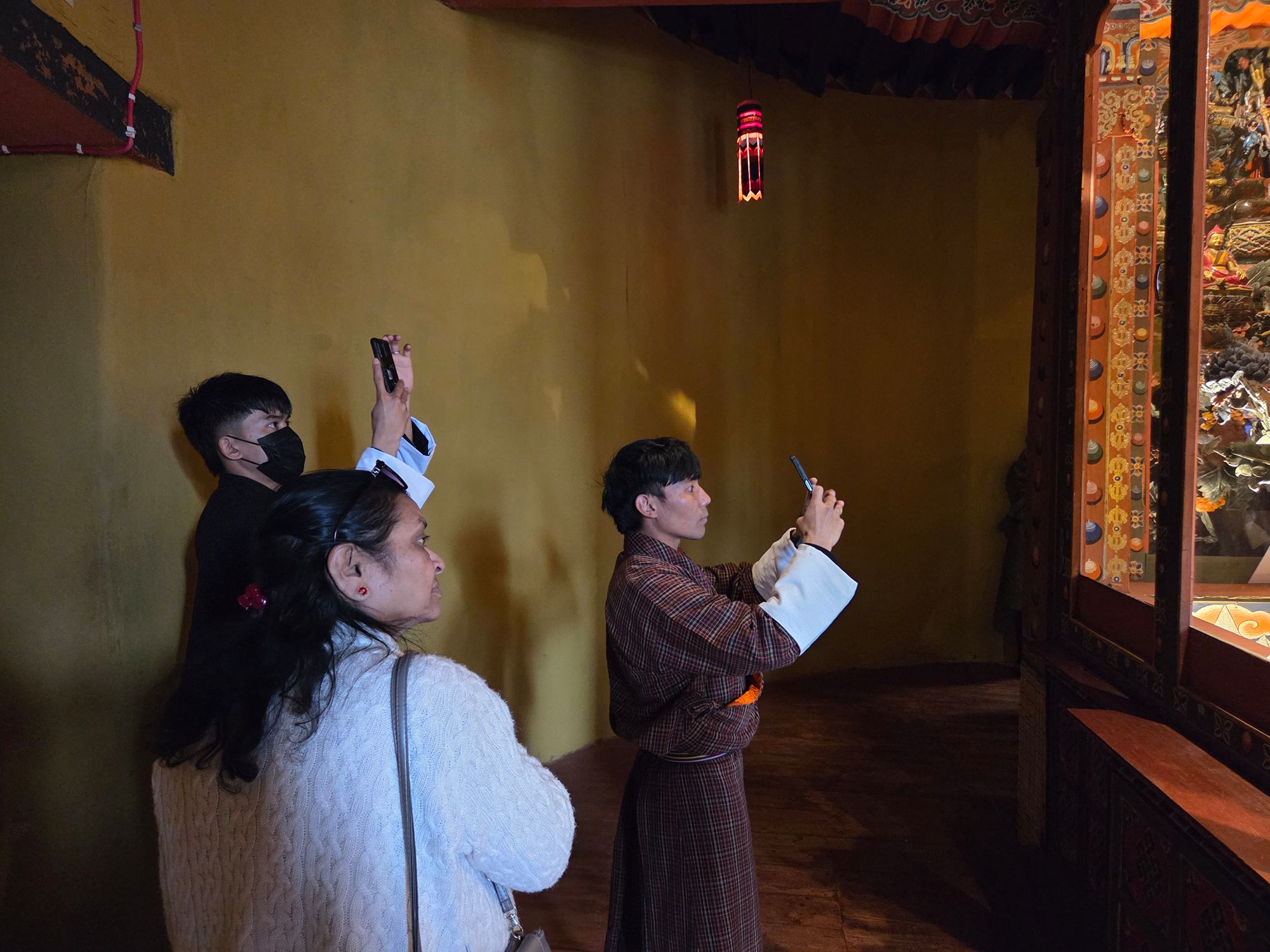
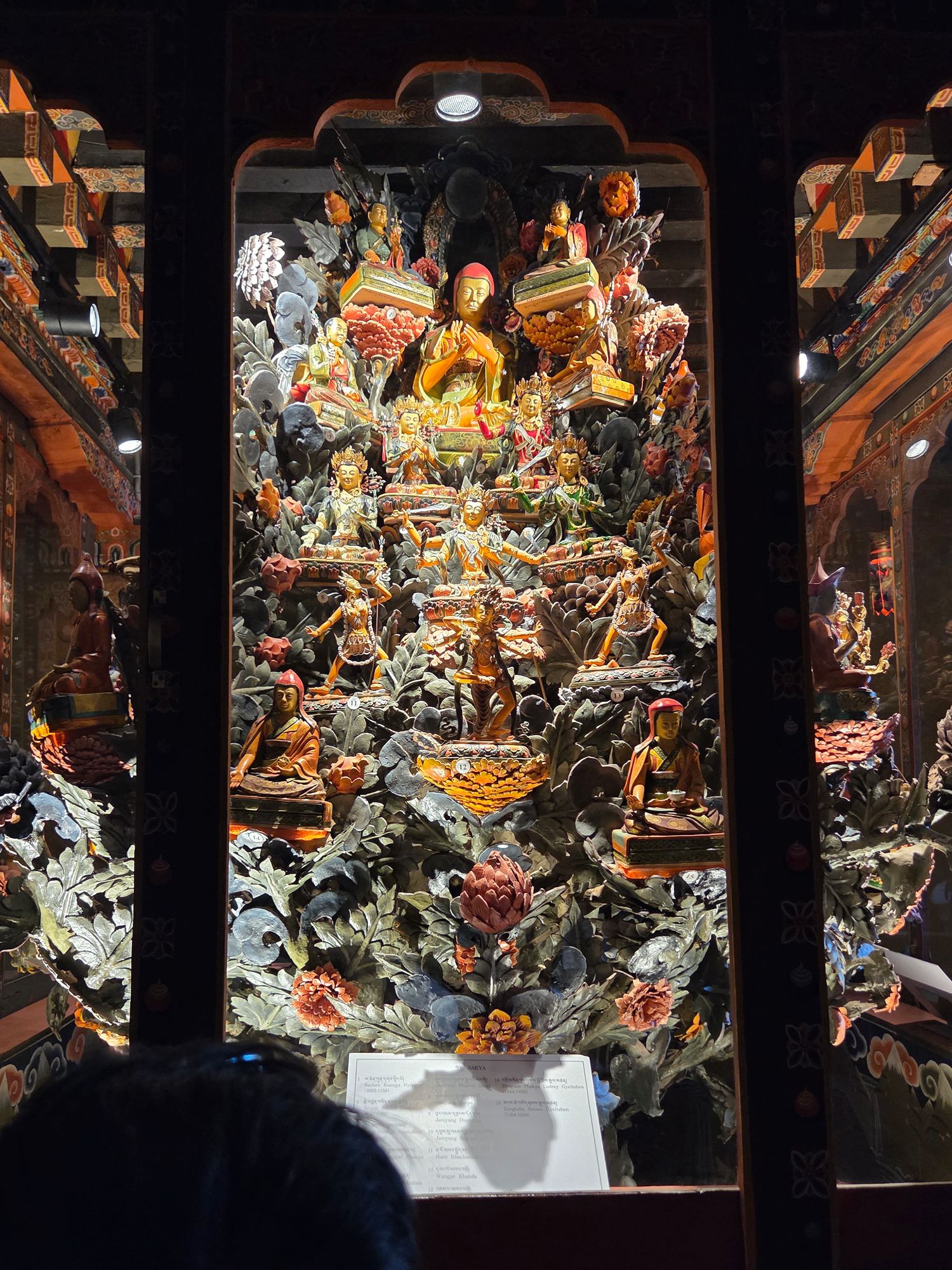
Tshogzing Lhakhang is a gallery devoted to Buddhist religious art and imagery. The term “Tshogzing” refers to a field of spiritual accumulation or merit, often represented as an elaborate composition showing important Buddhist teachers, deities, bodhisattvas, and lineage figures arranged around a central figure.
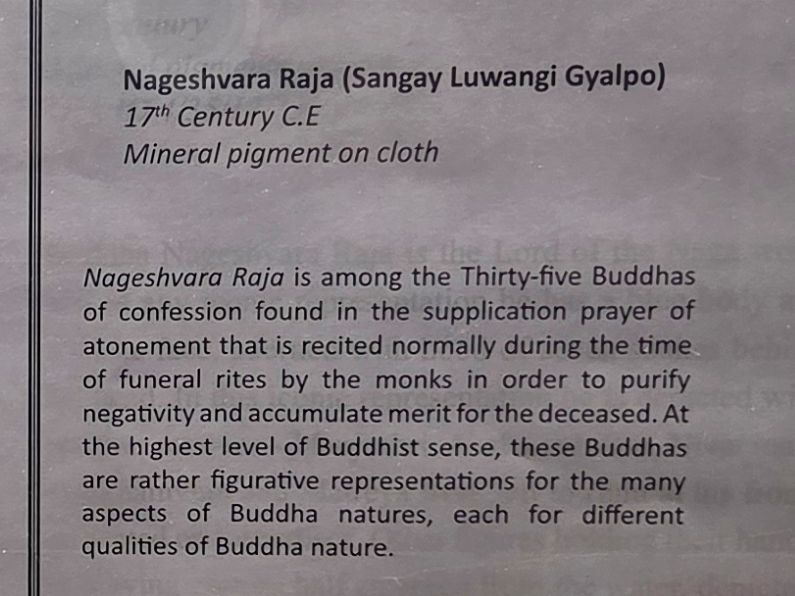
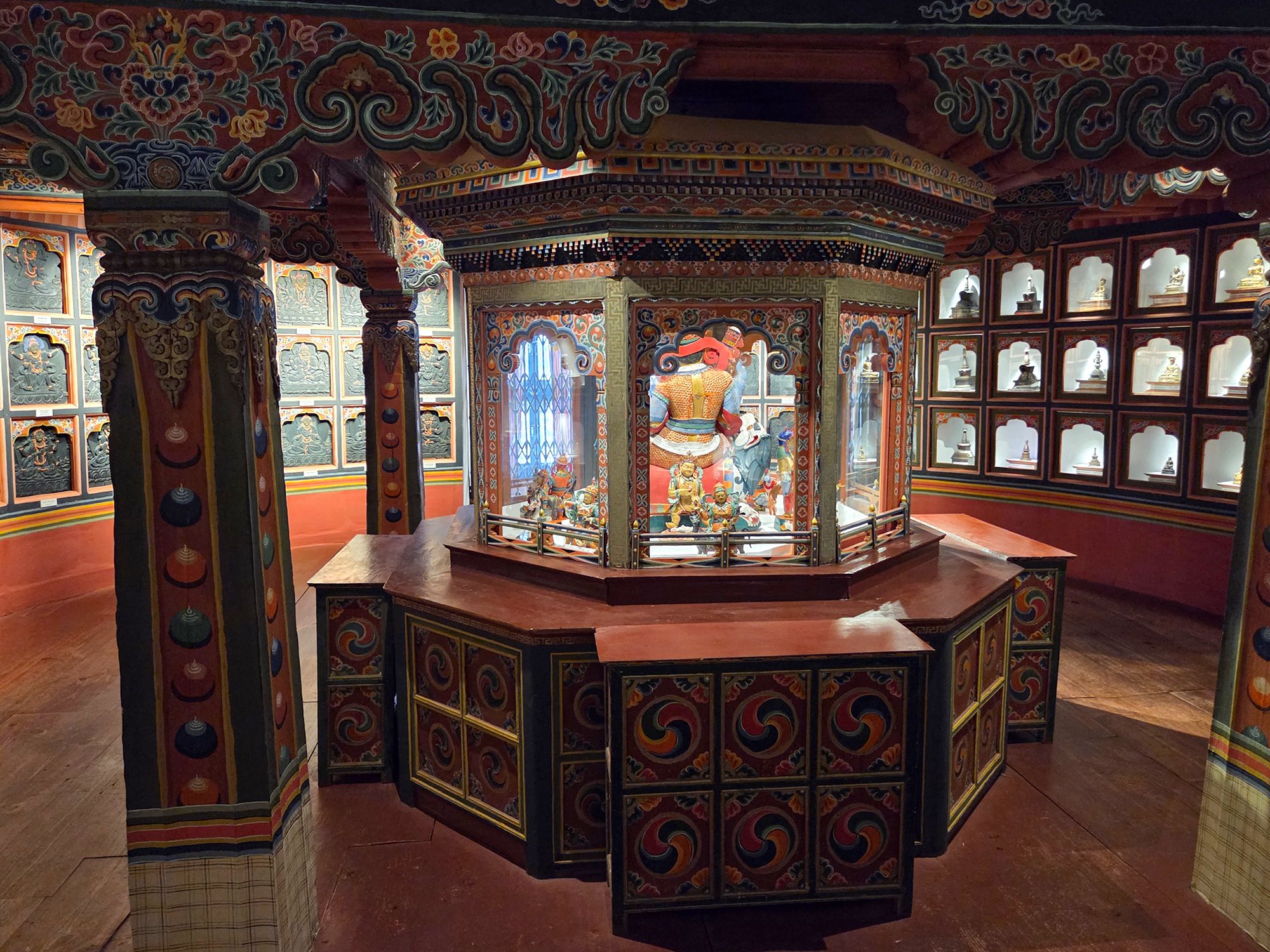
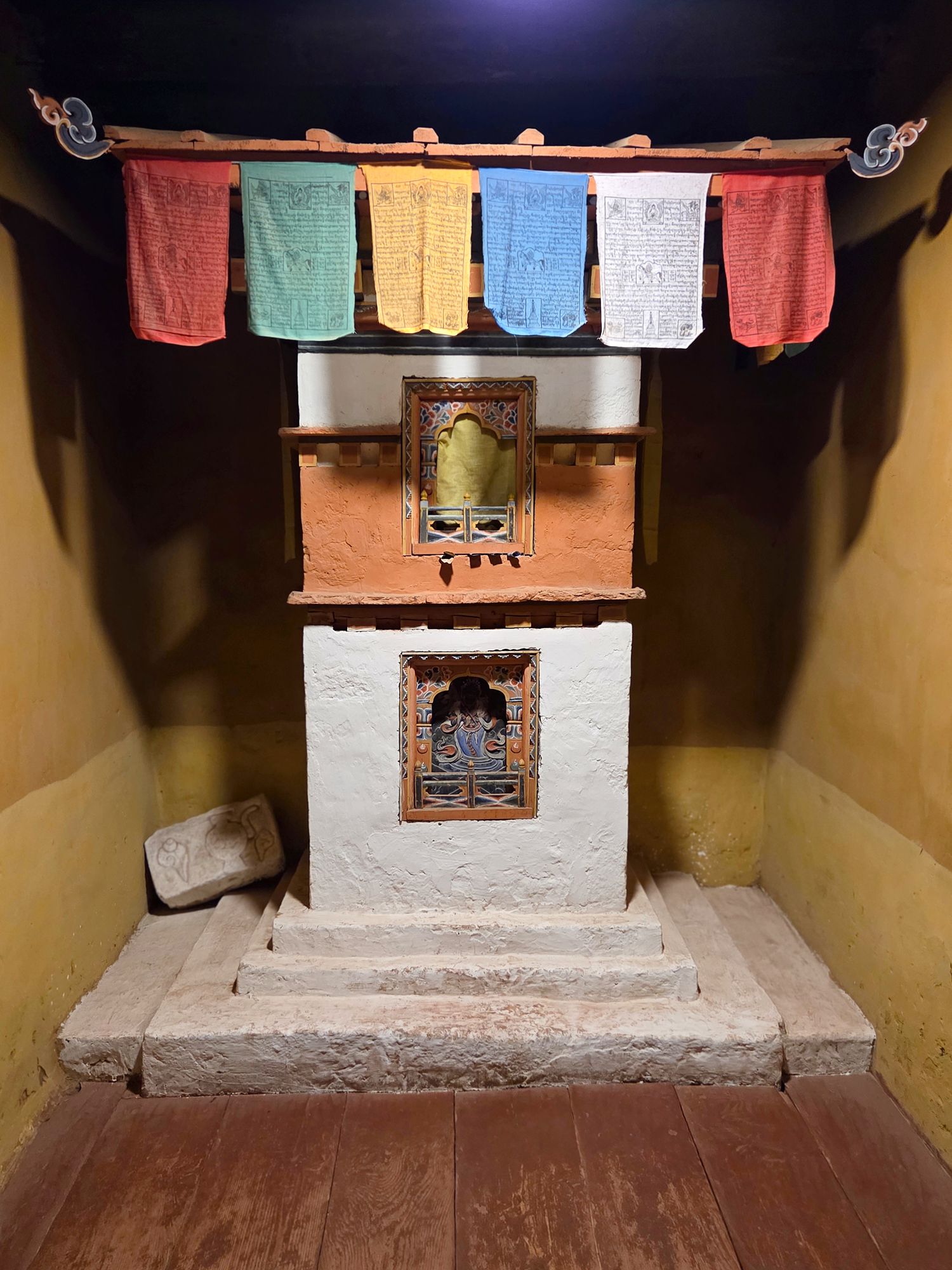
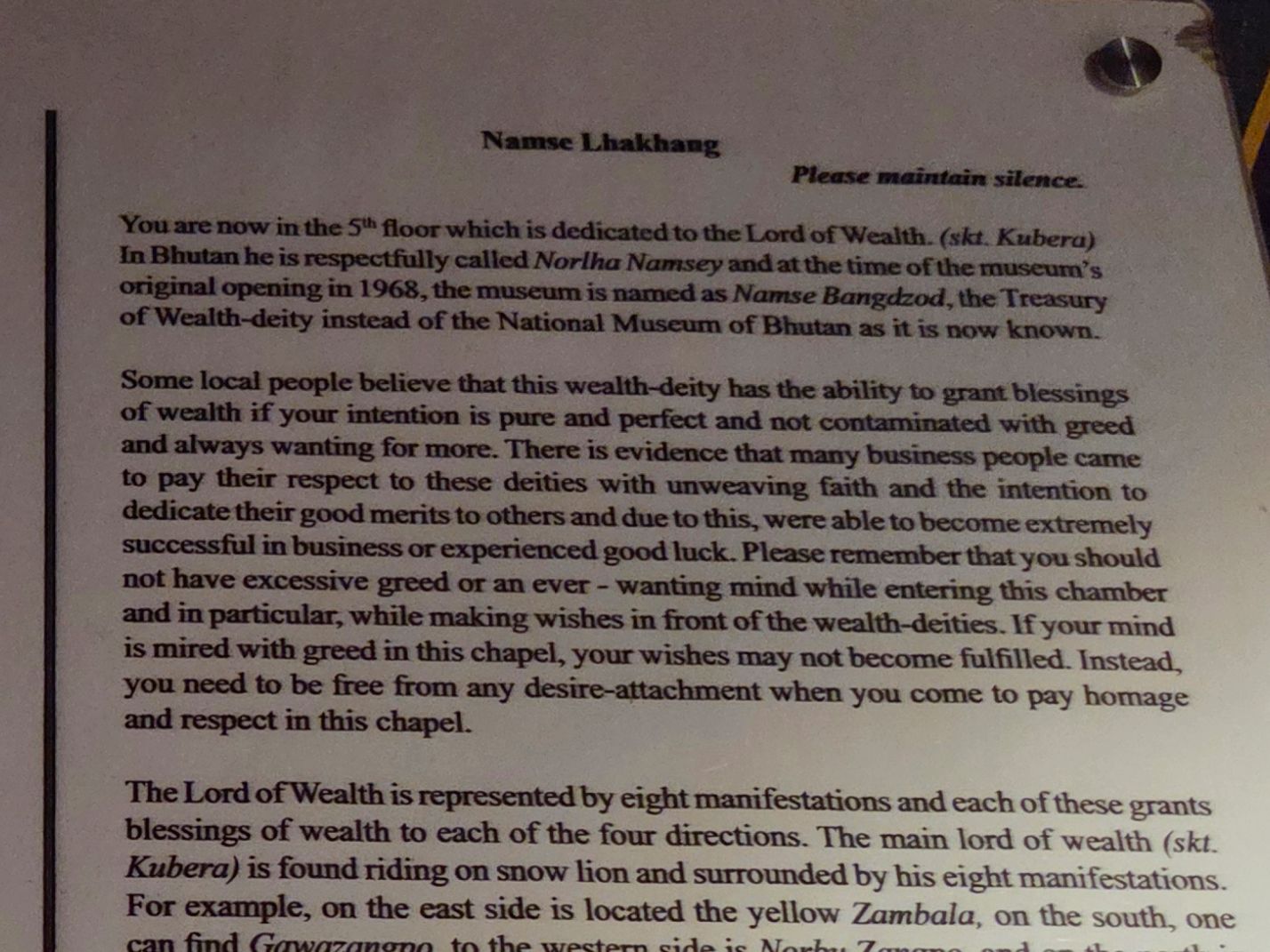
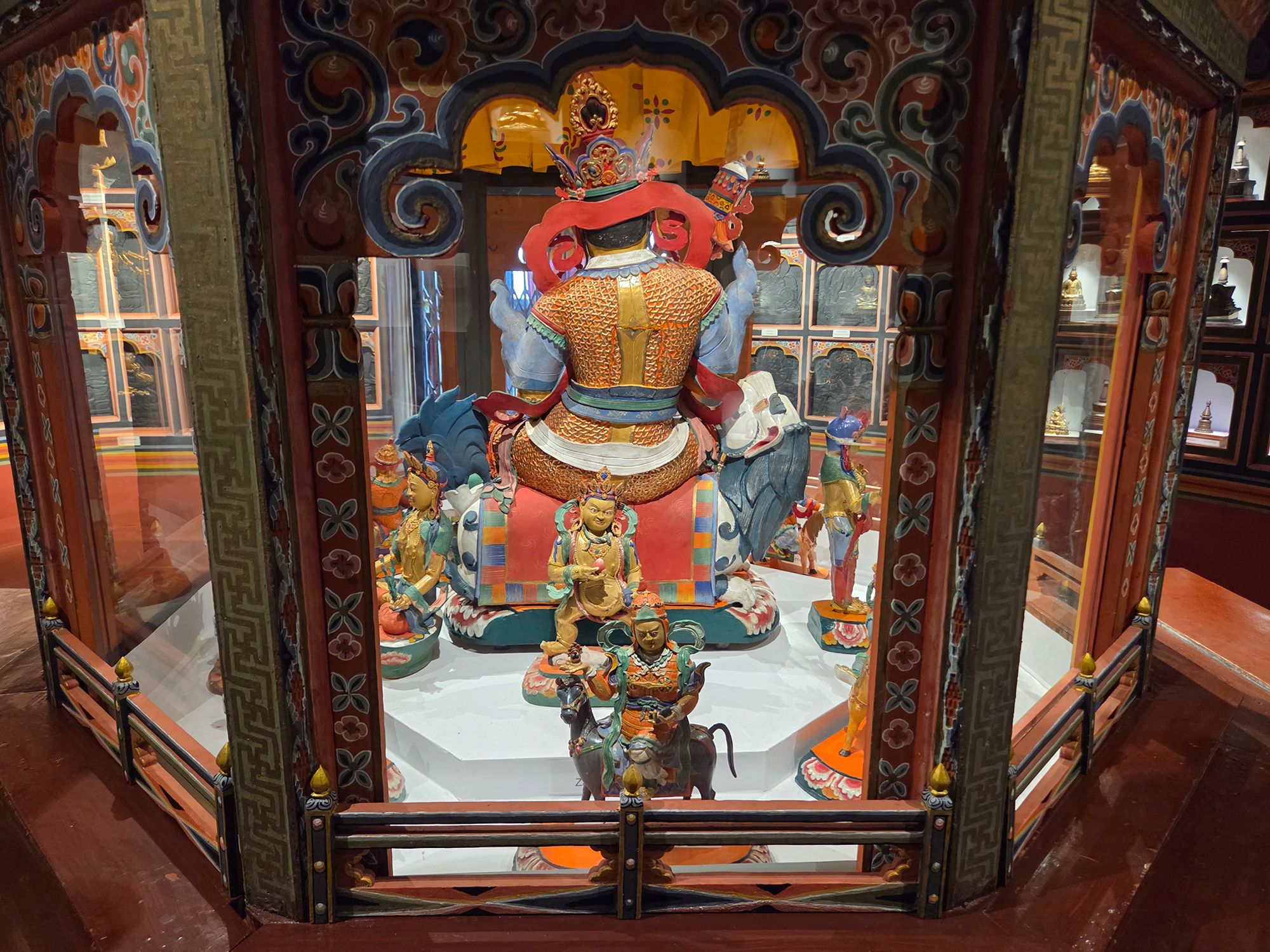
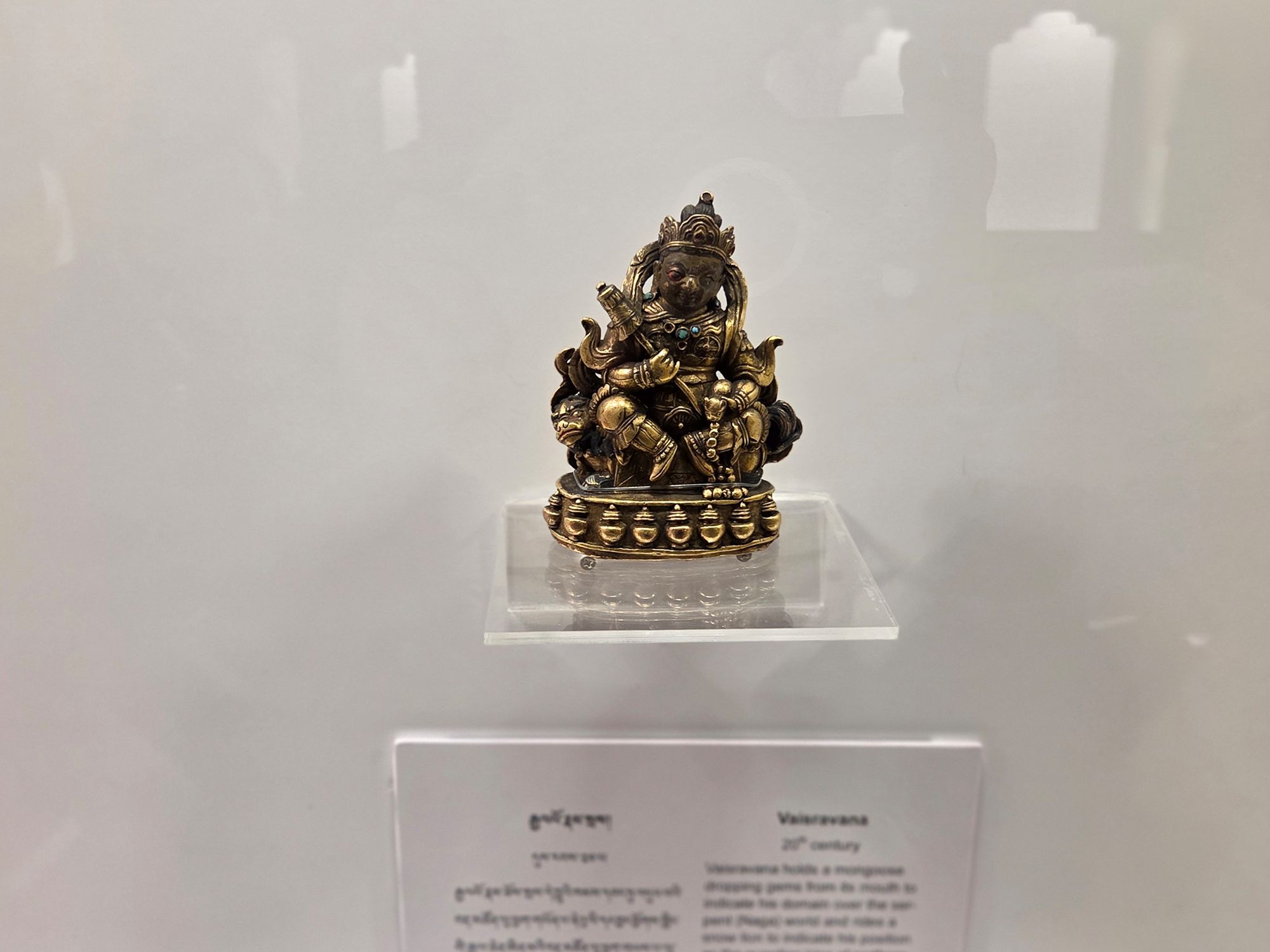
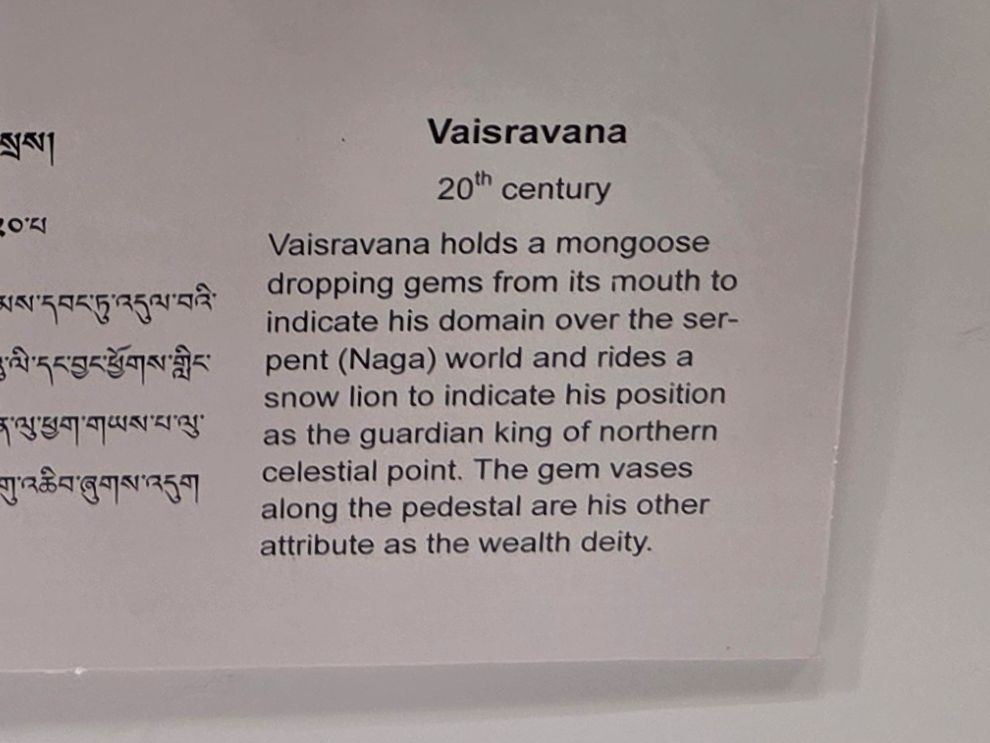
Namse Lhakhang is a shrine or gallery dedicated to Namse (Vaishravana), the Buddhist guardian deity of wealth and prosperity. In Bhutanese Buddhism, Namse is also regarded as a protector of the Buddhist teachings and is often depicted as a powerful, richly adorned figure carrying symbols of abundance.
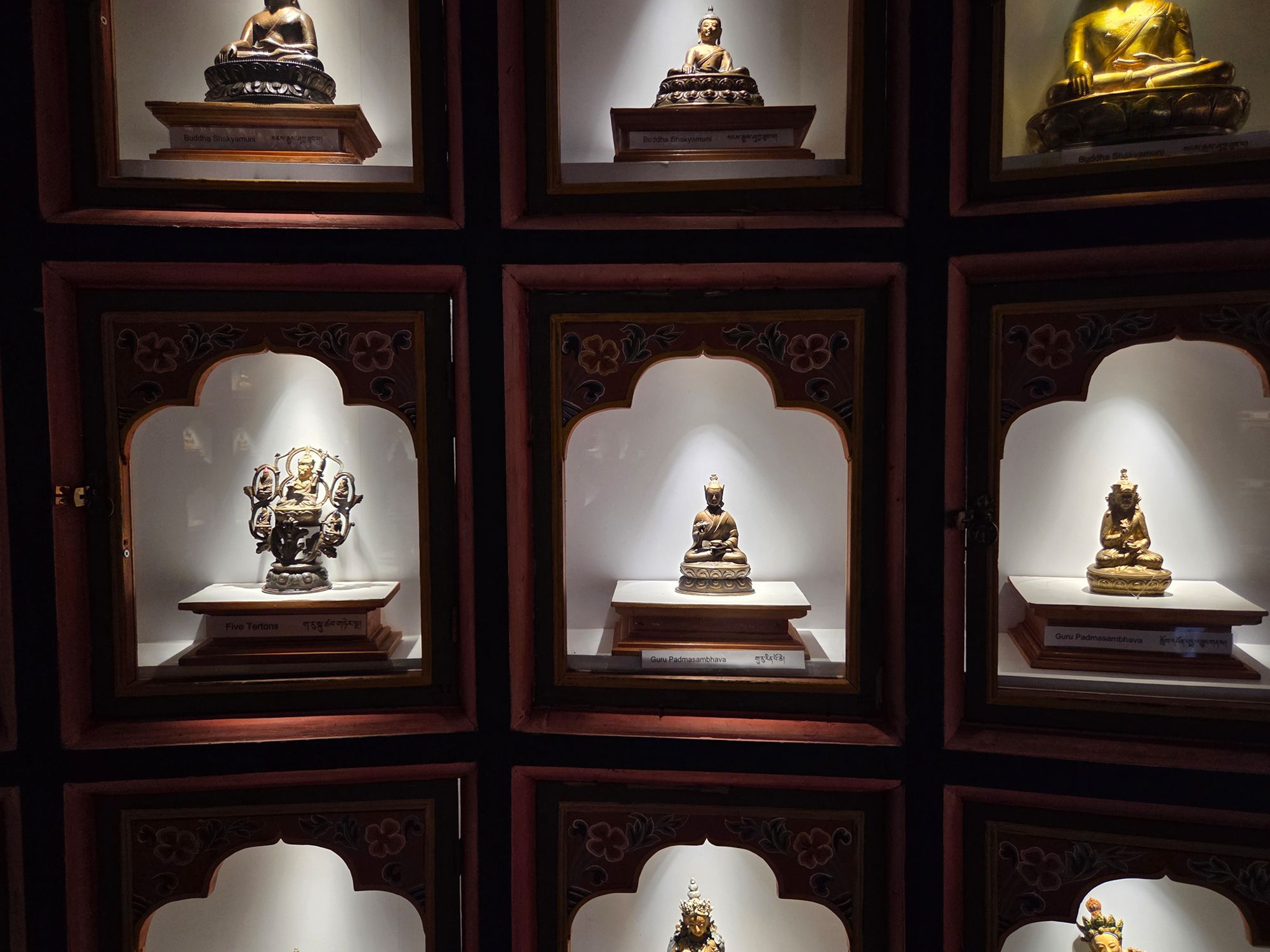
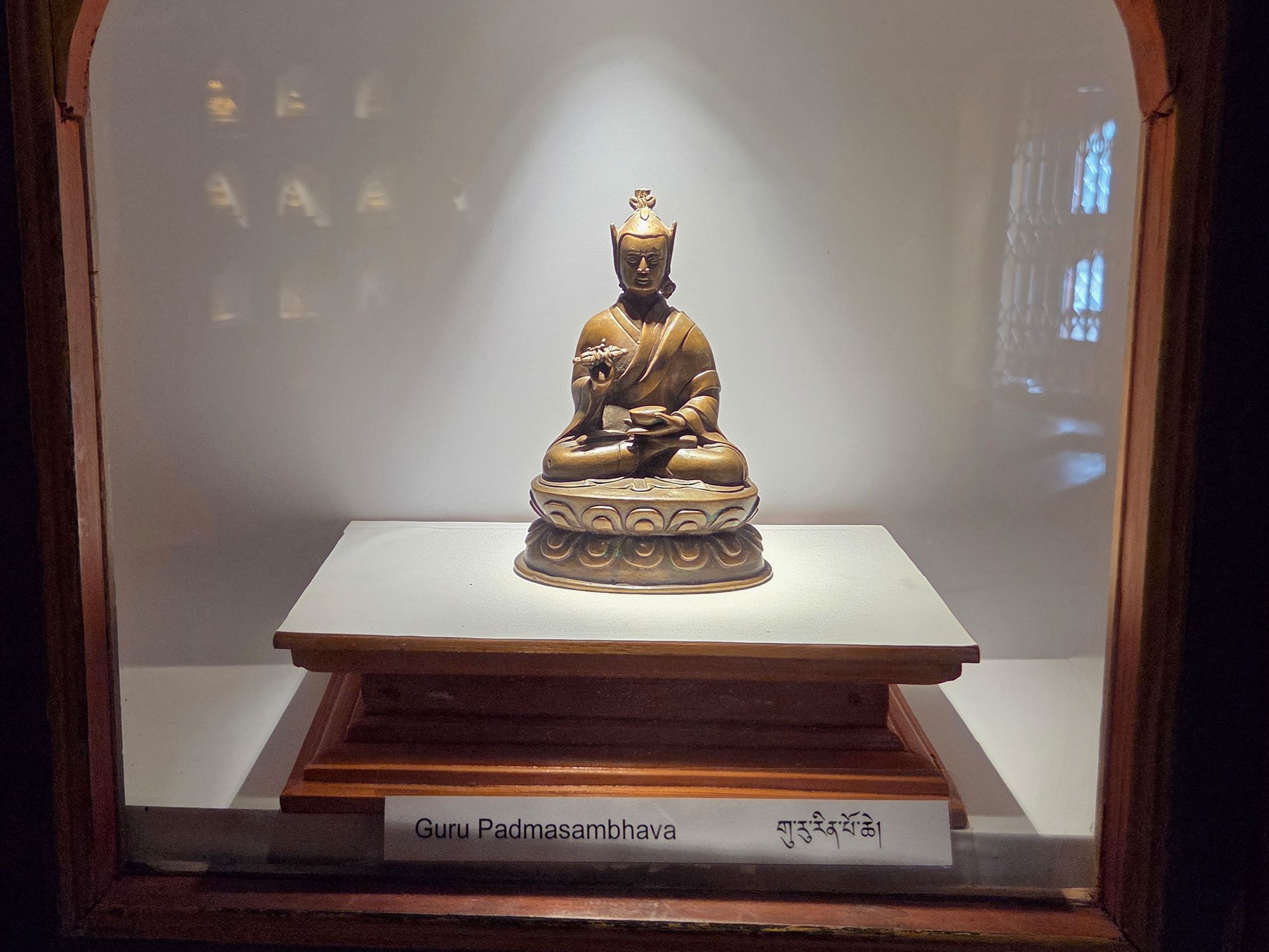
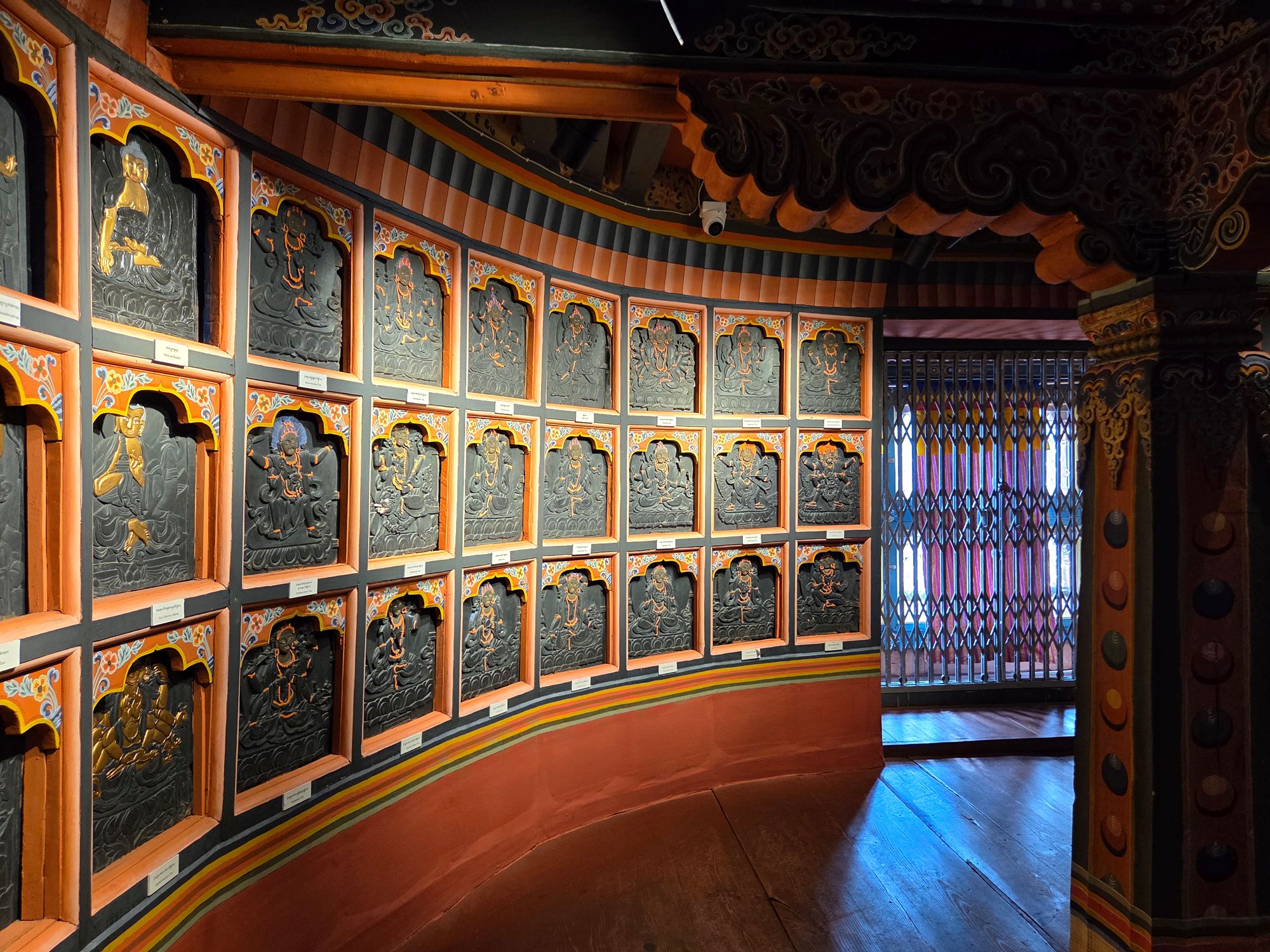
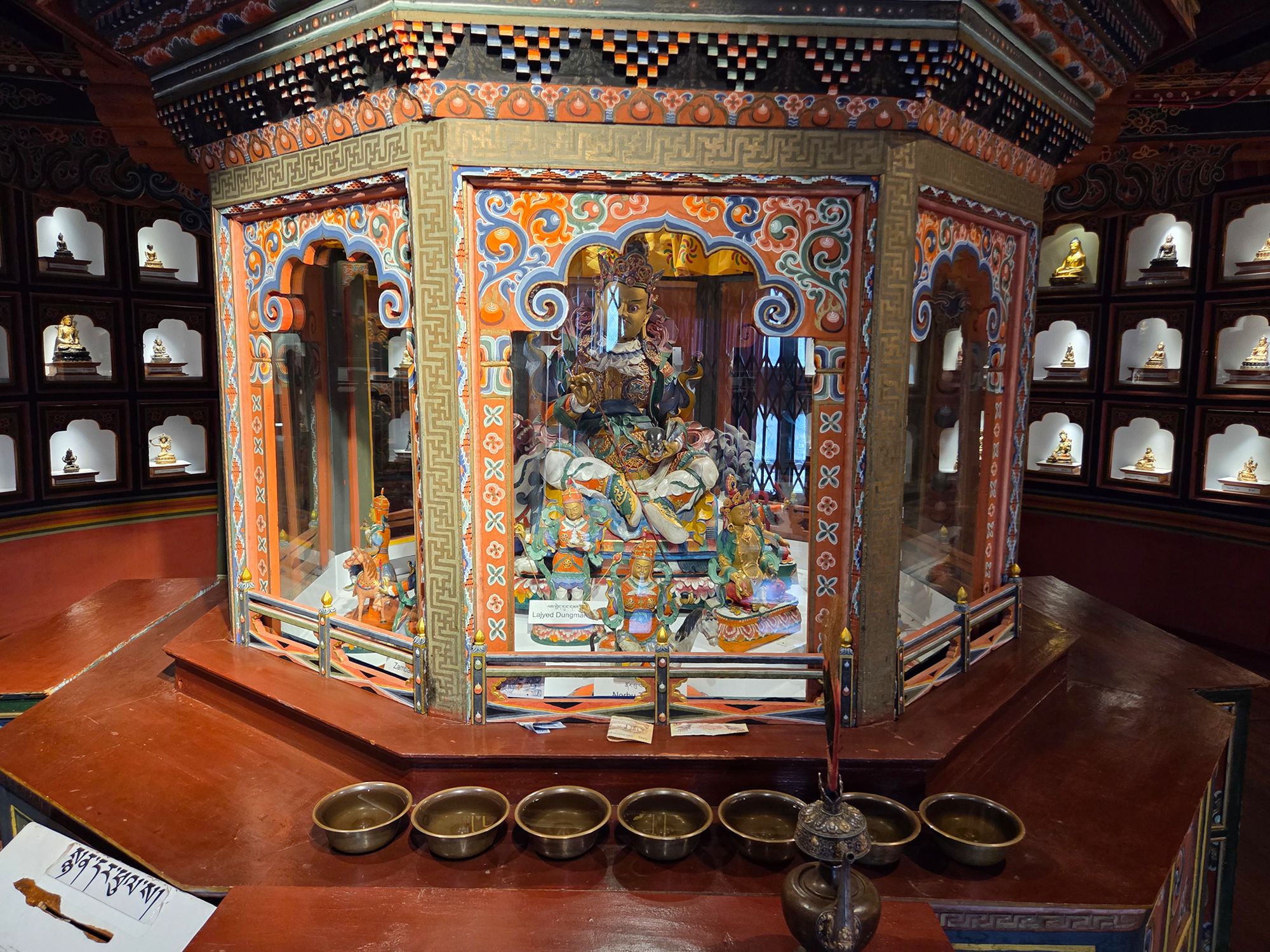
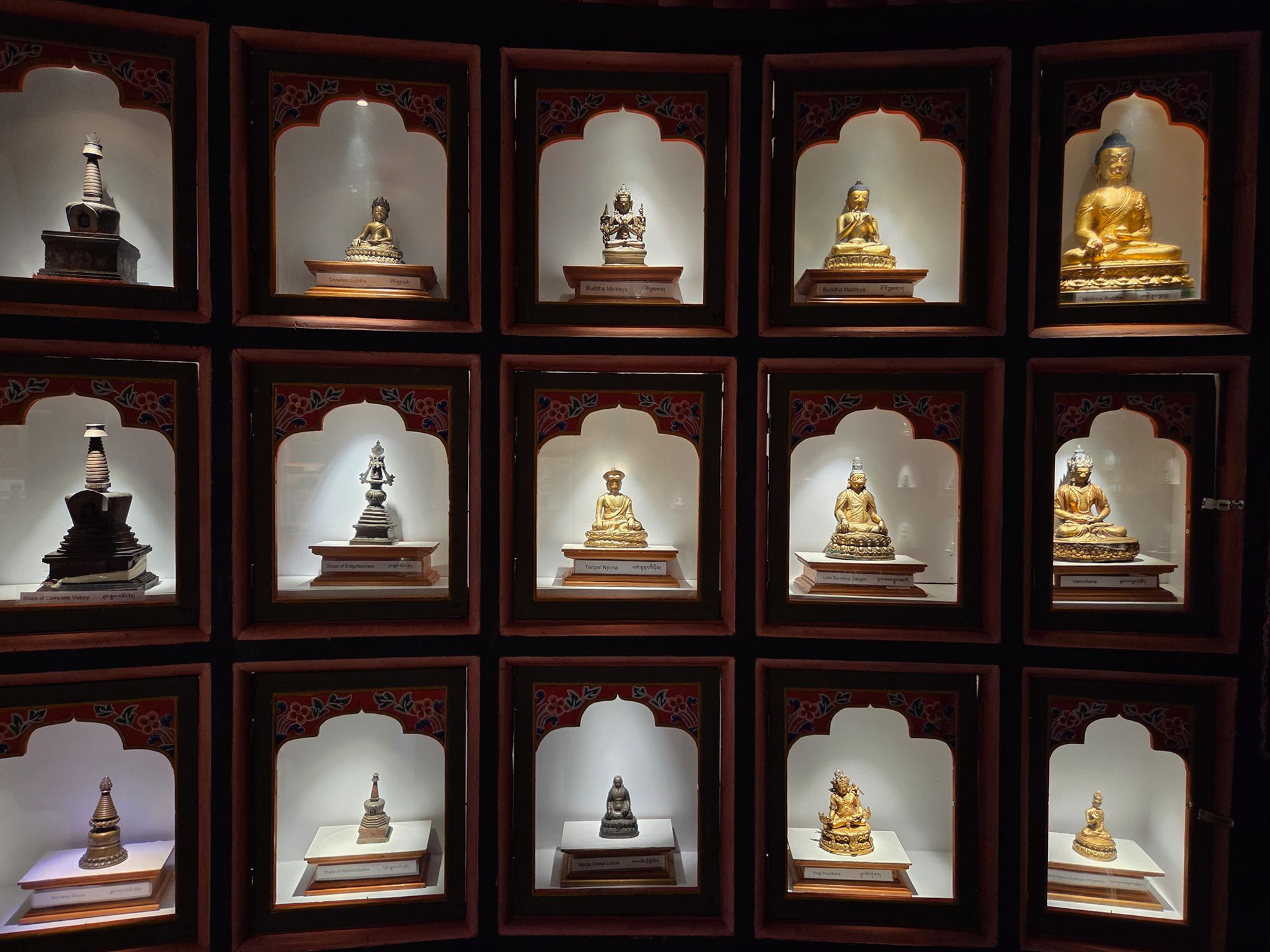
Paintings
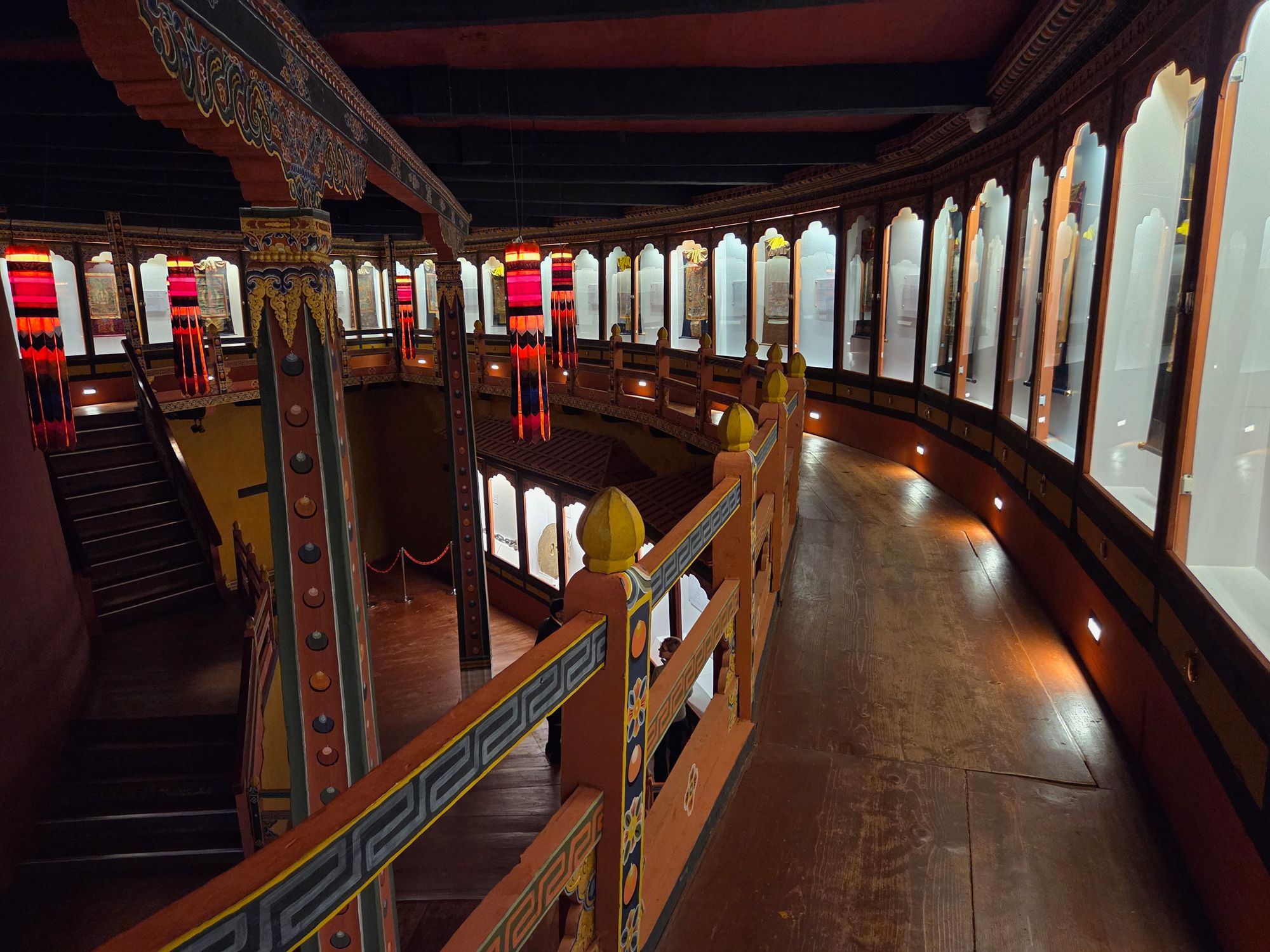
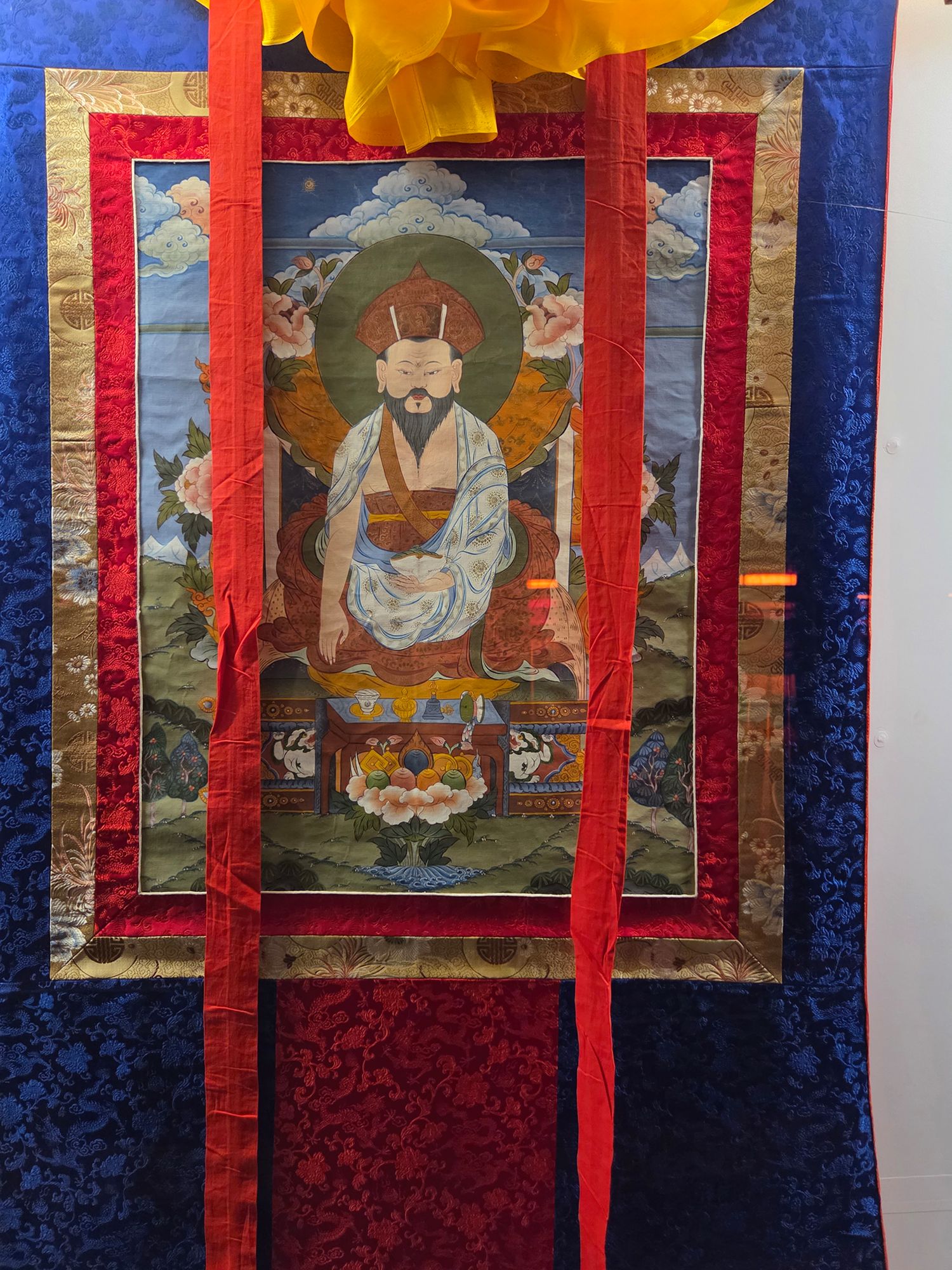
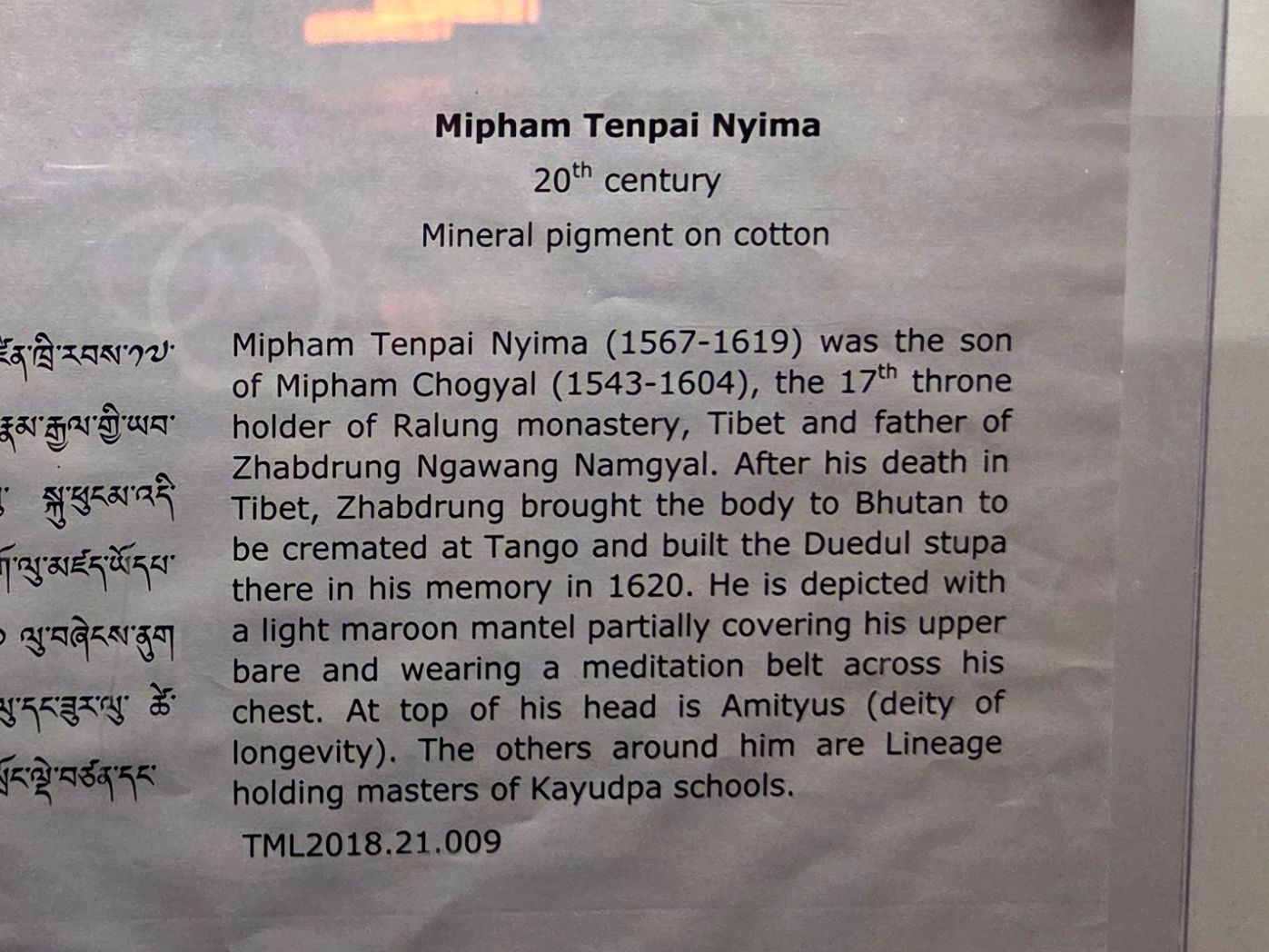
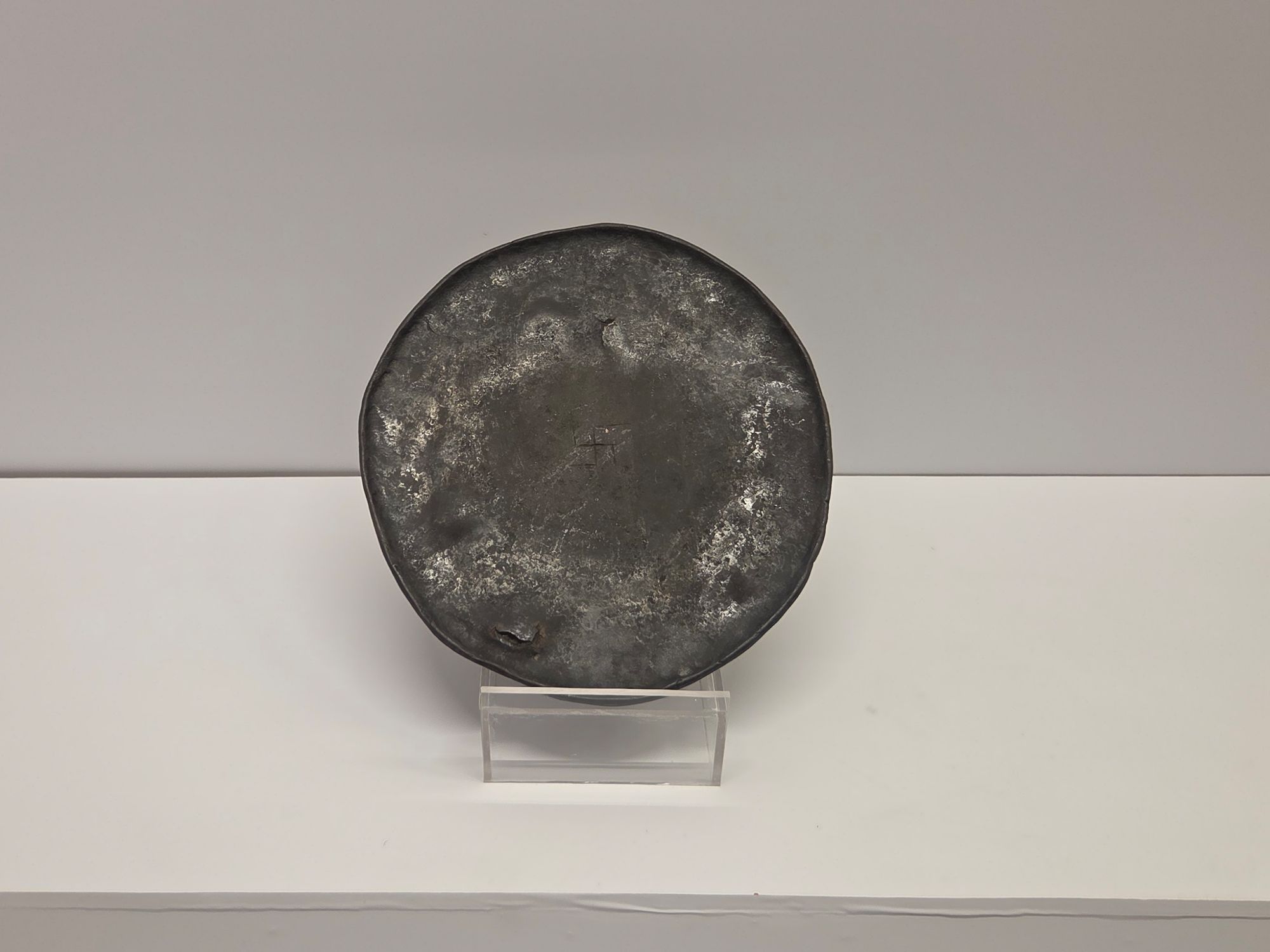
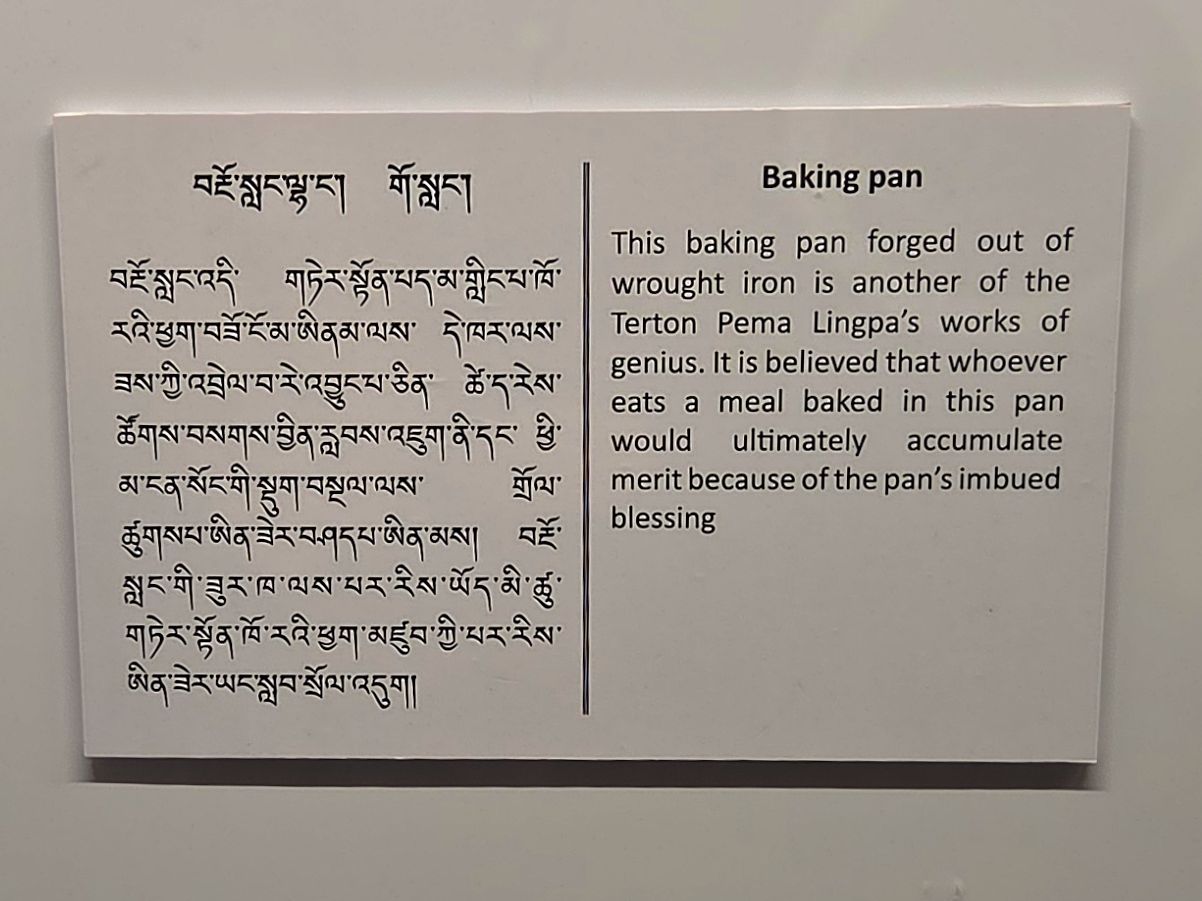
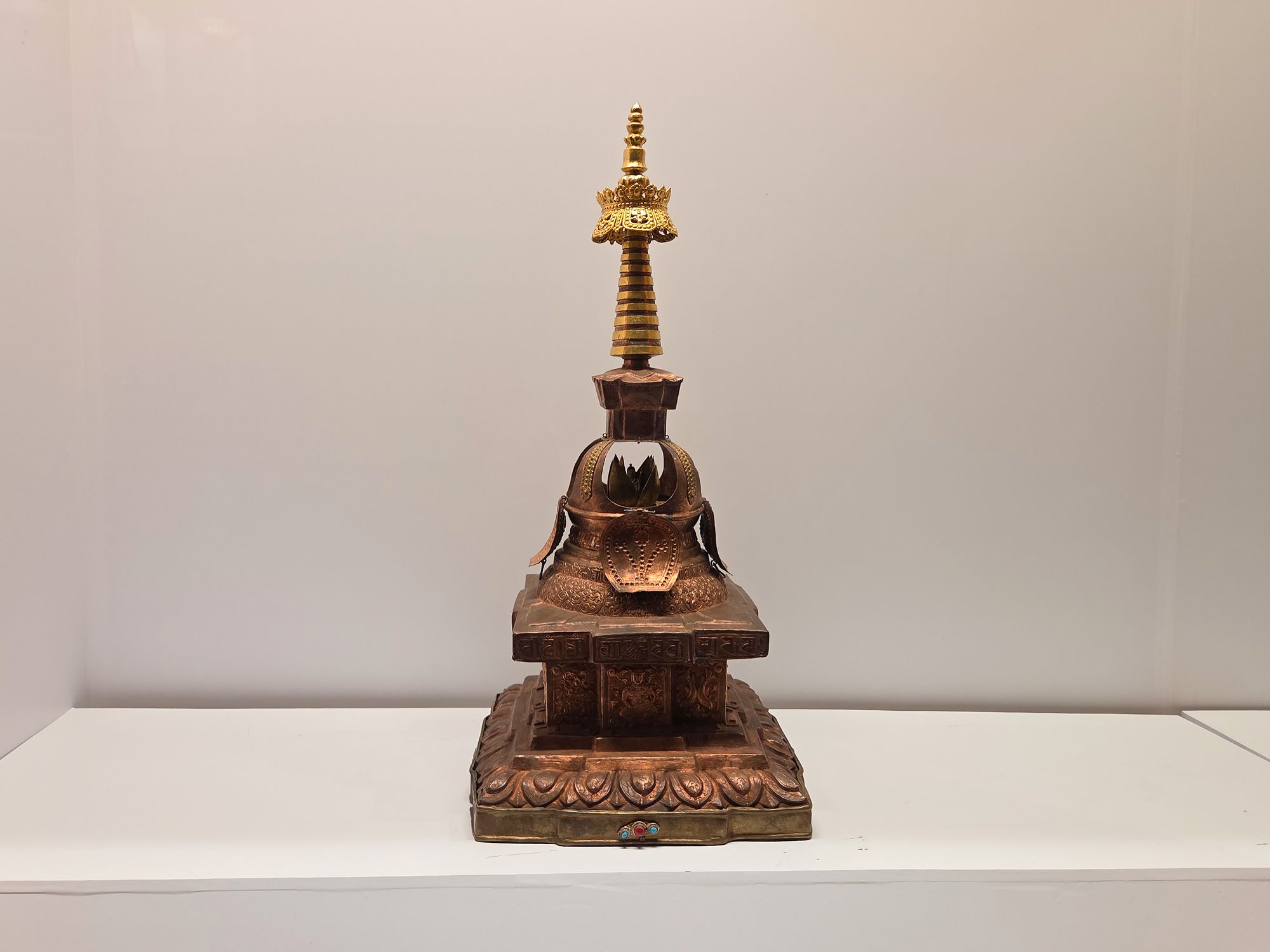
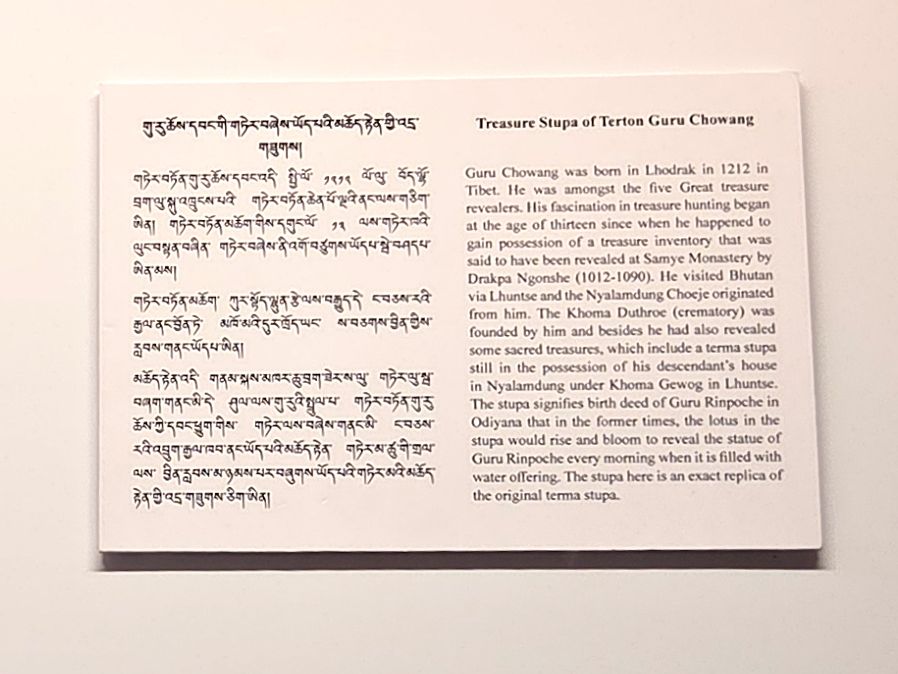
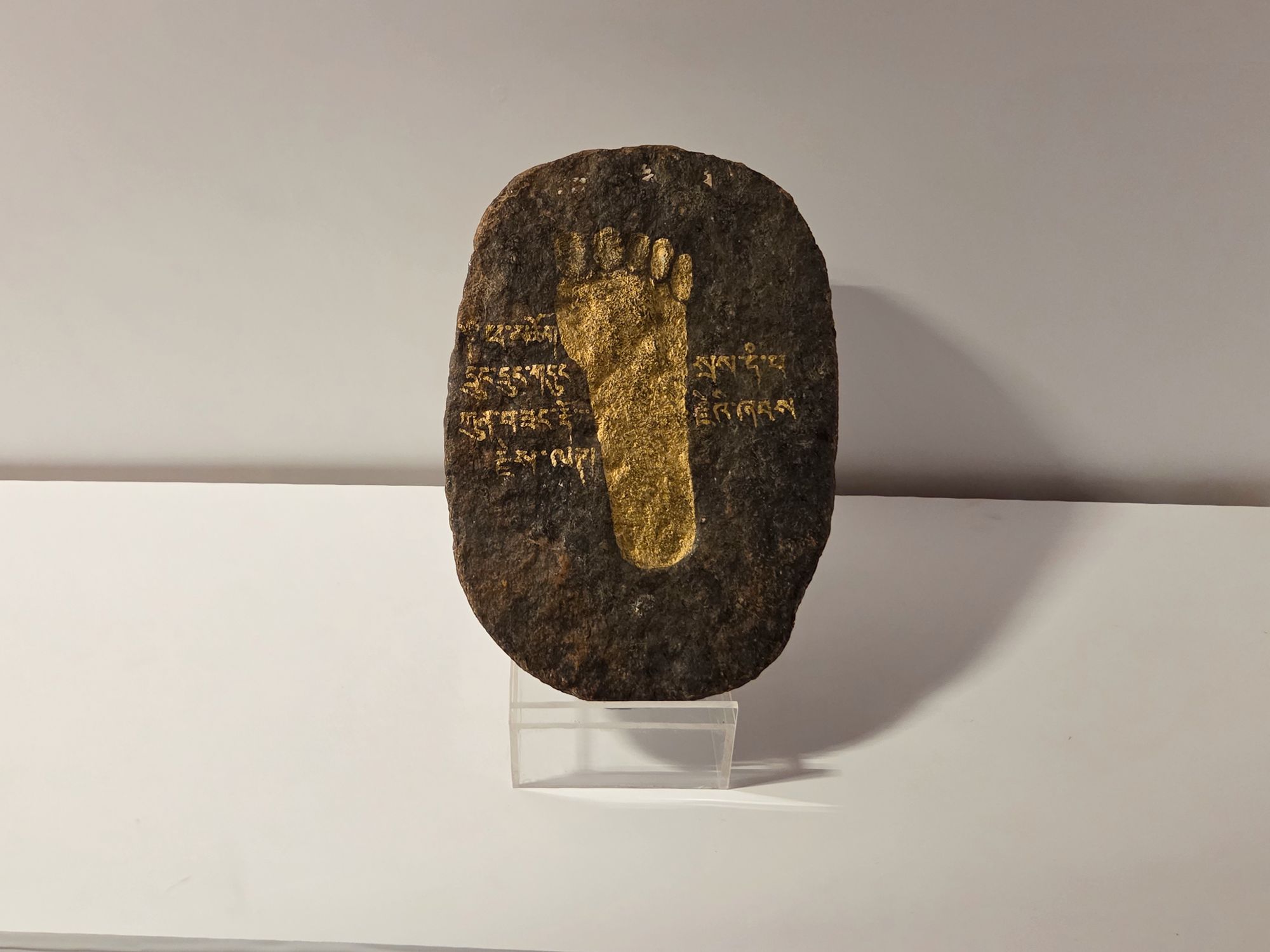
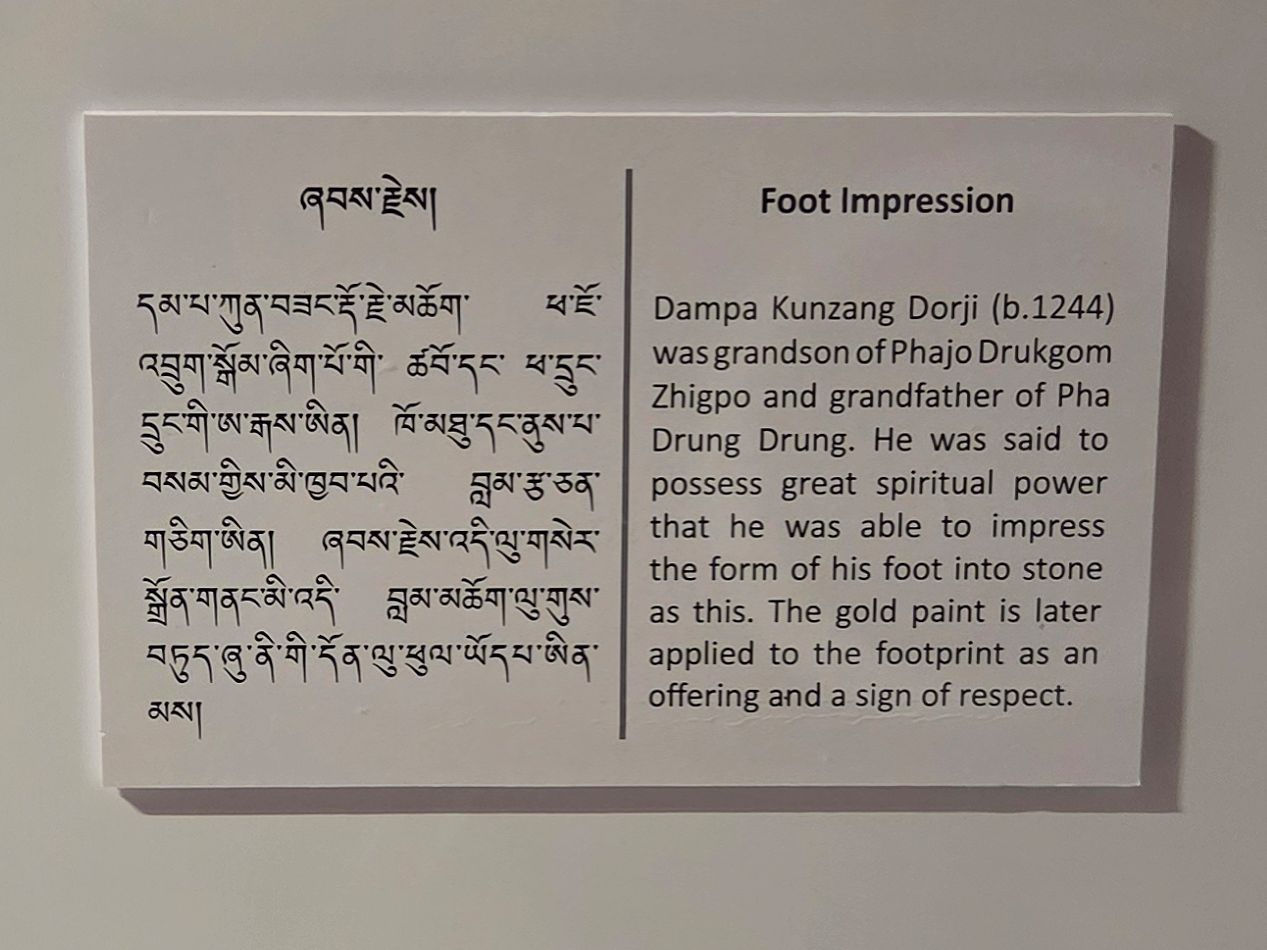
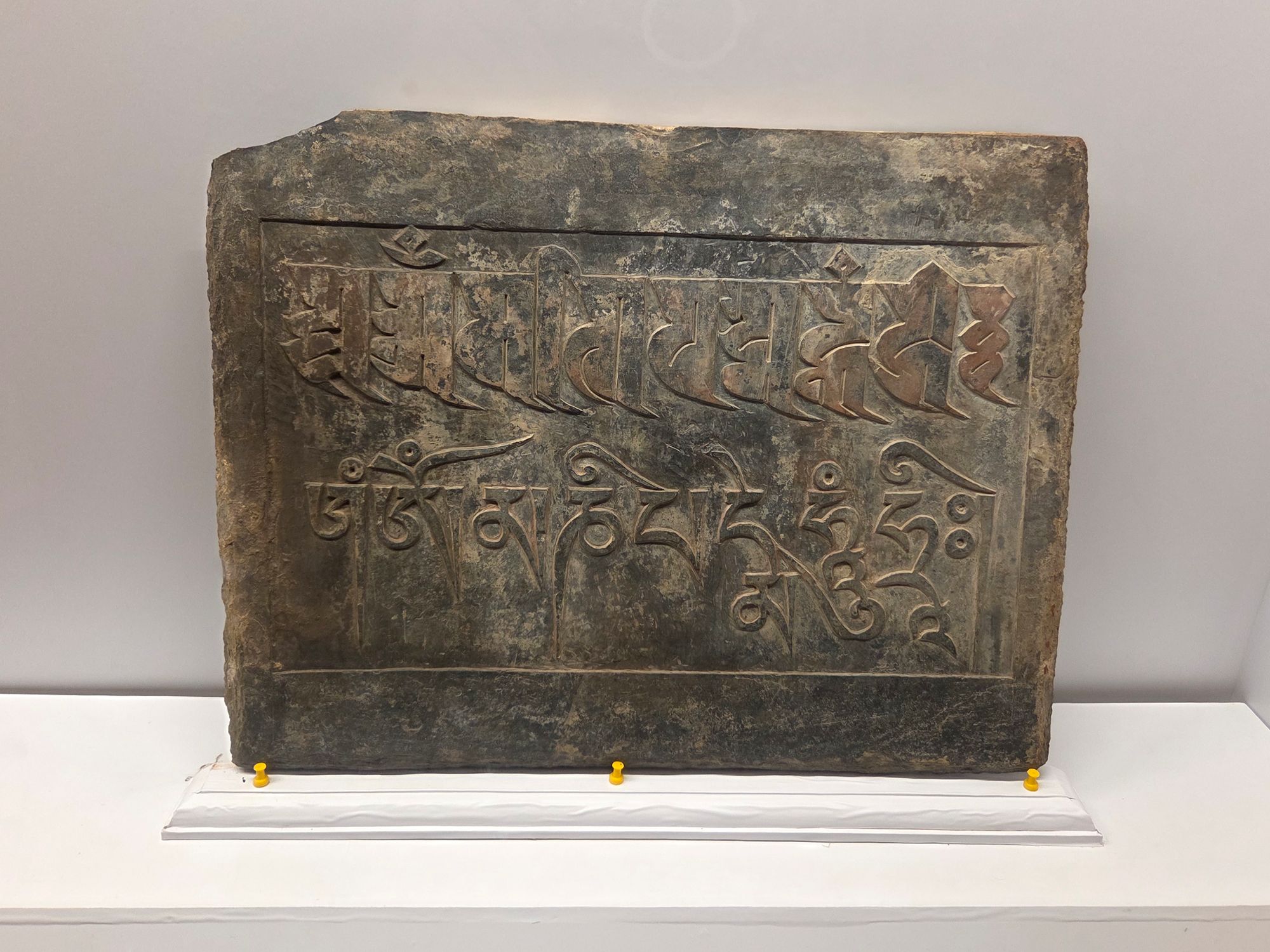
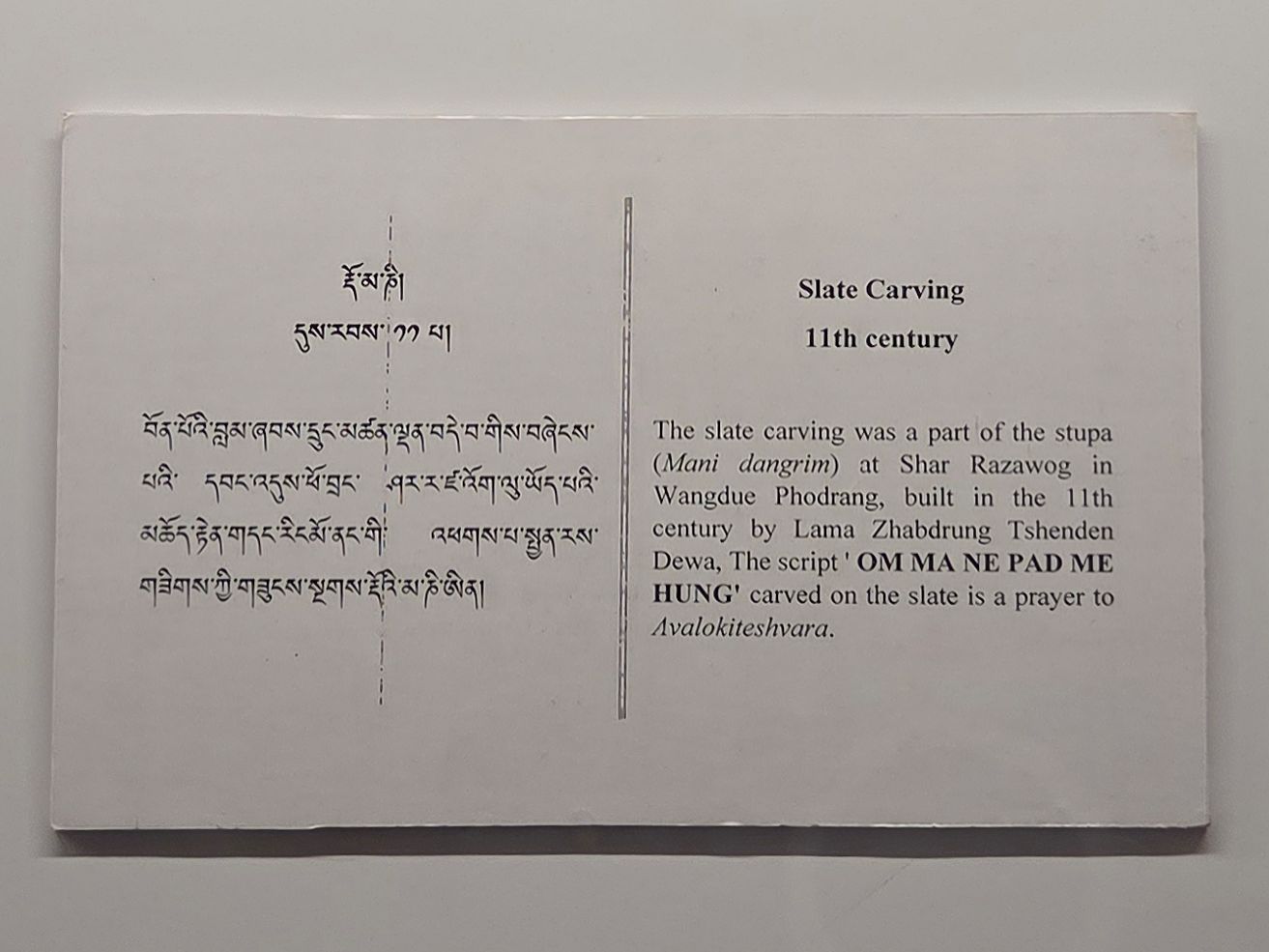
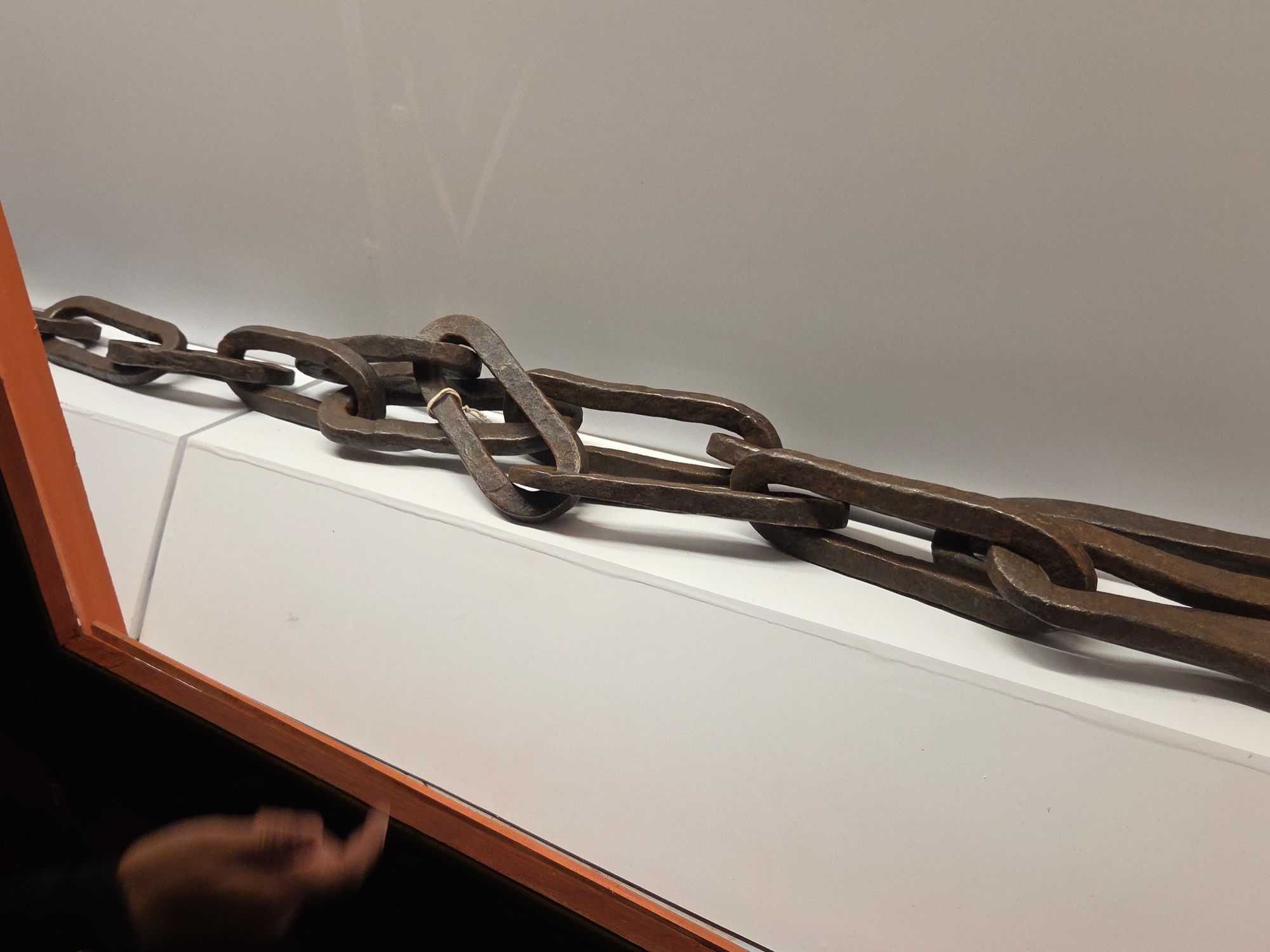
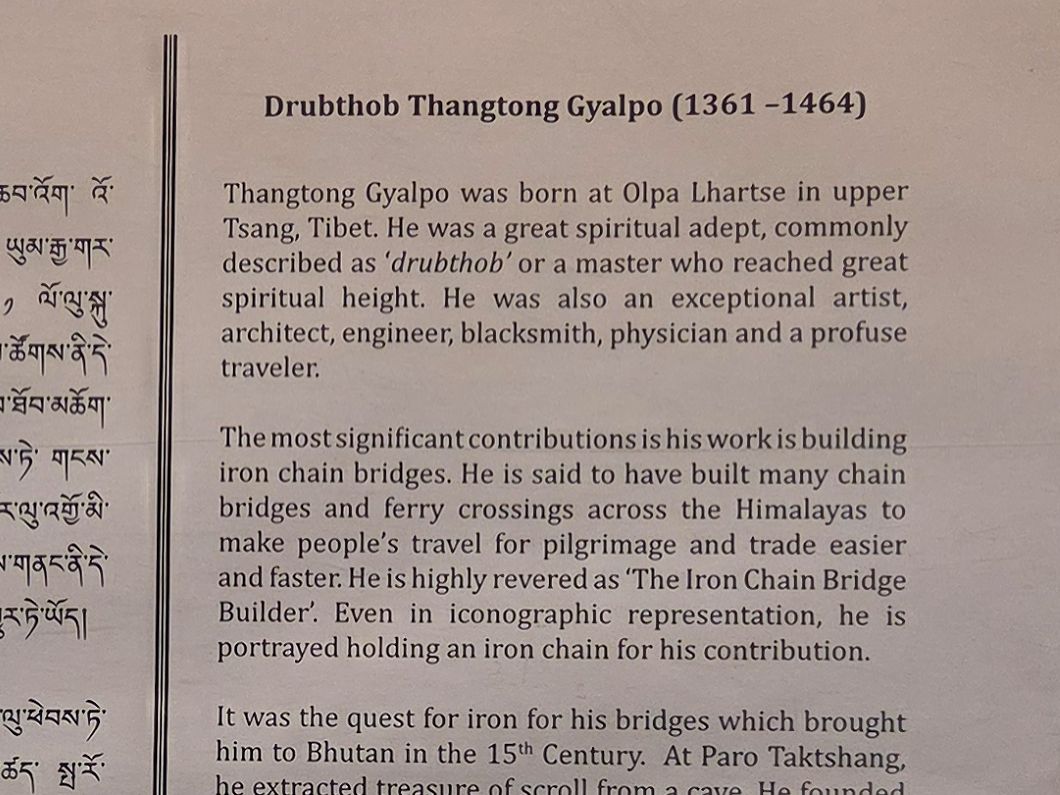
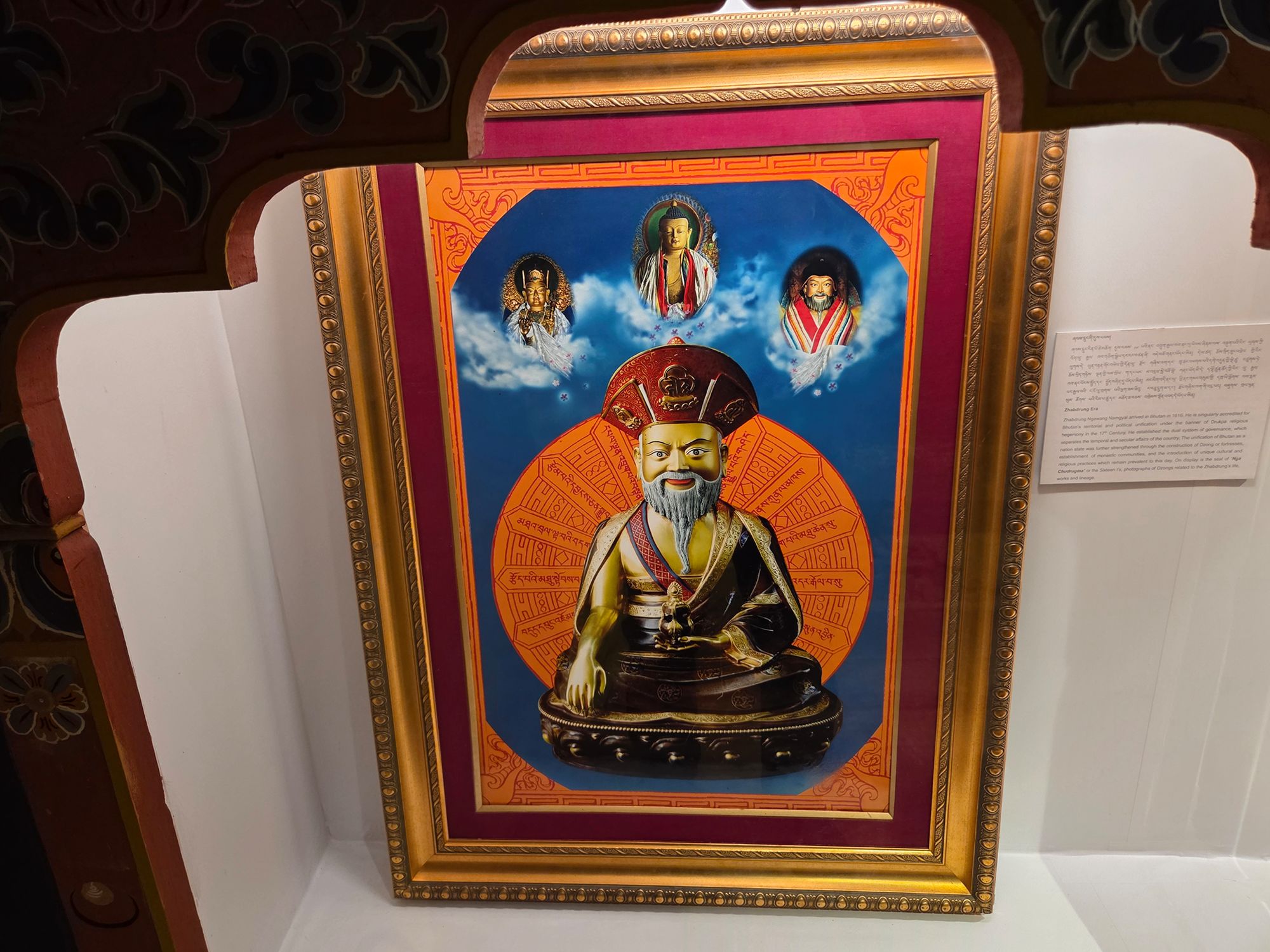
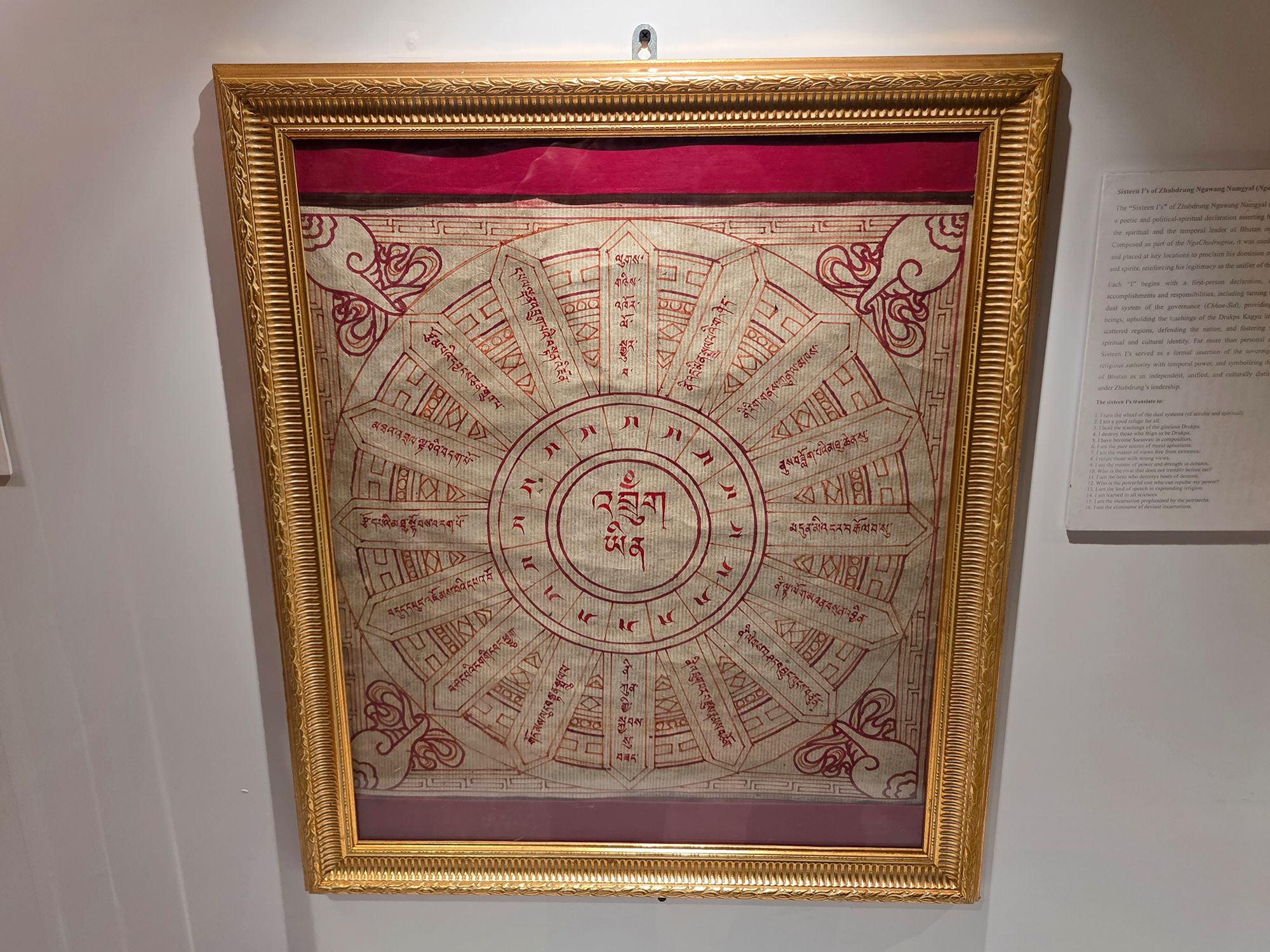
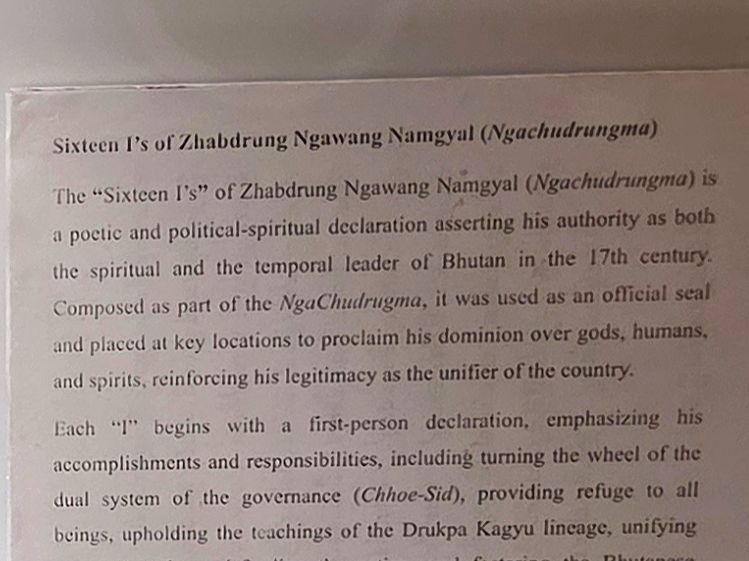
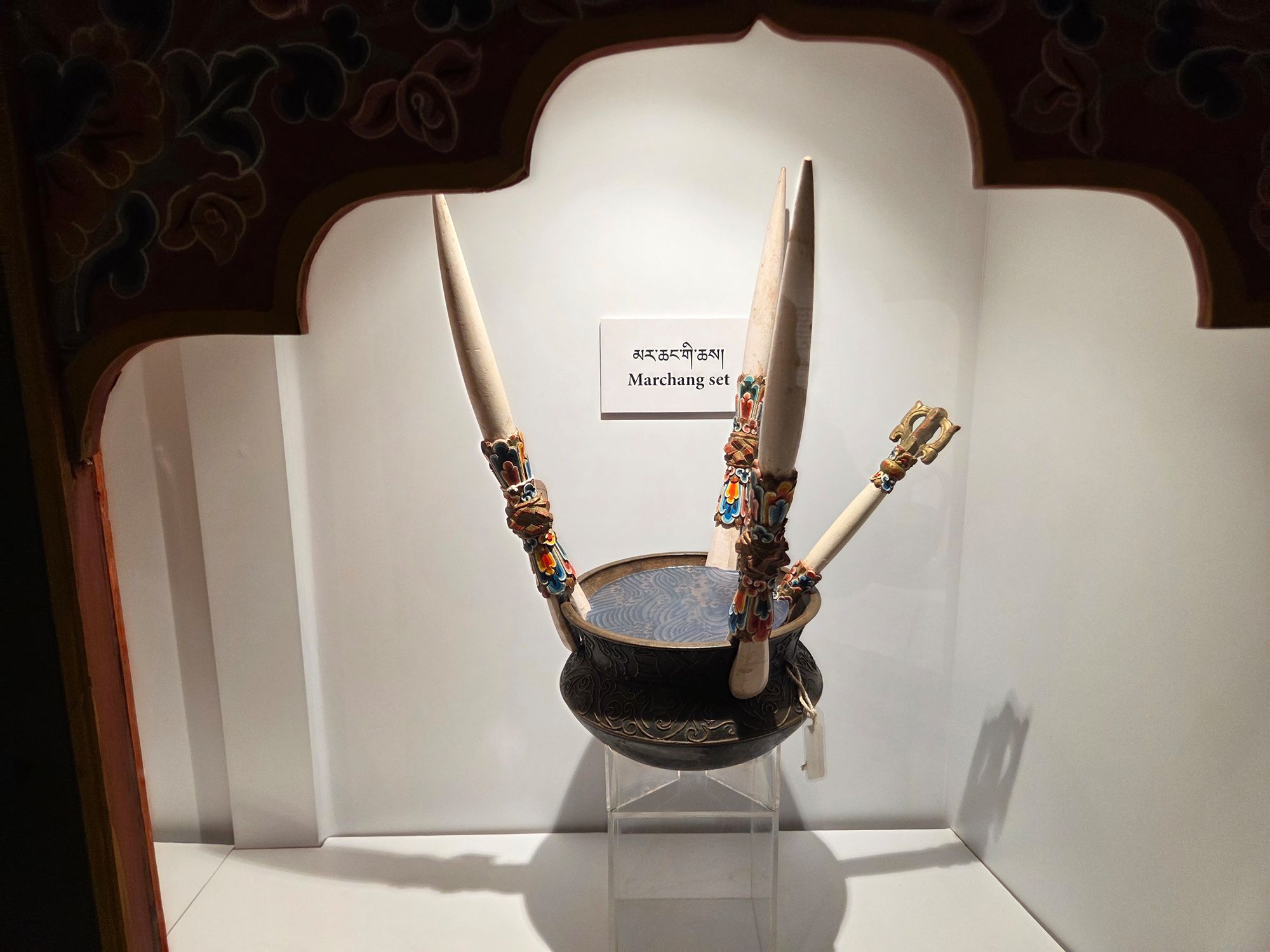
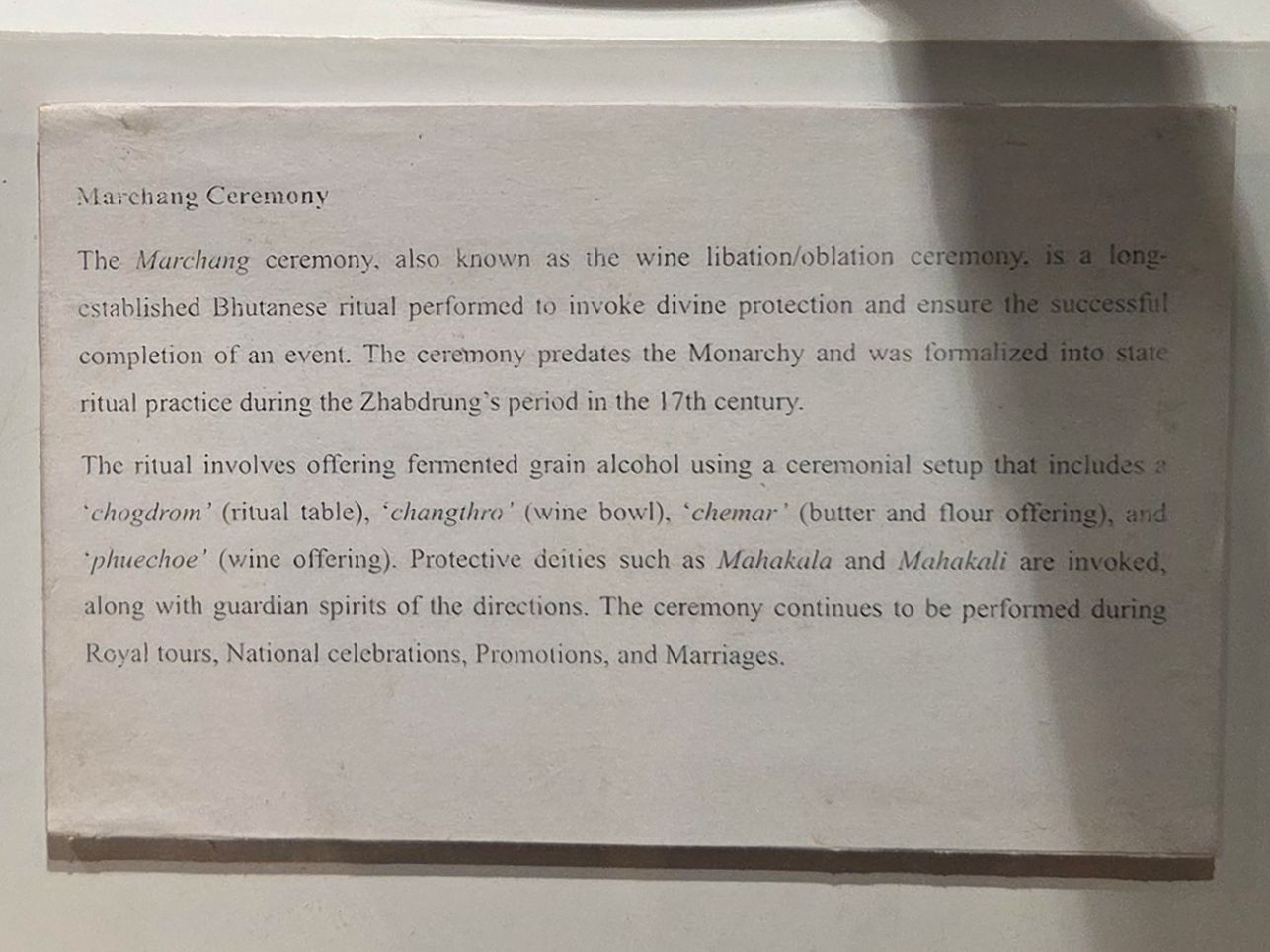
Zhabdrung Era
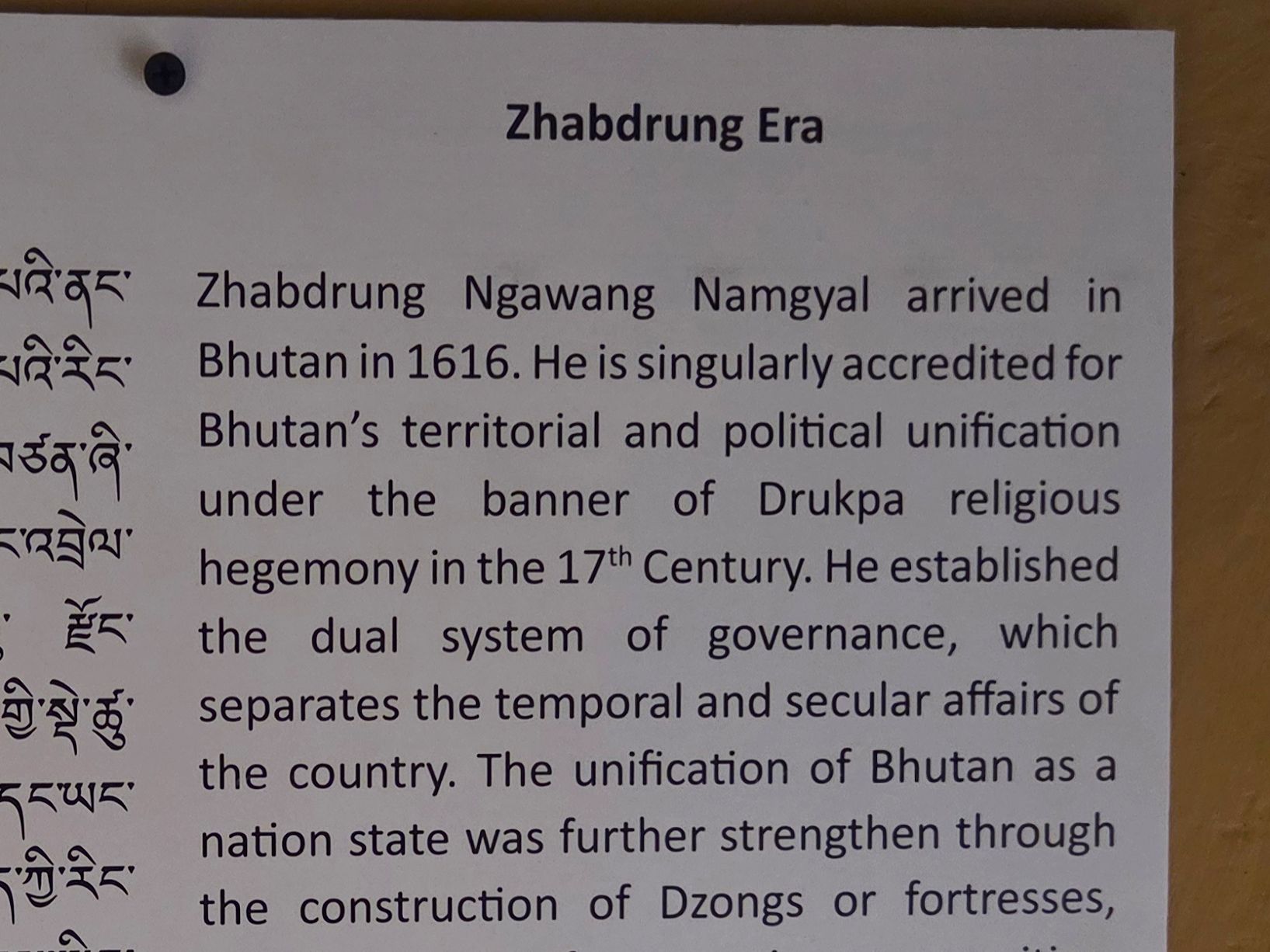
A photograph of the King of Bhutan, Jigme Khesar Namgyel Wangchuck, when he was younger.
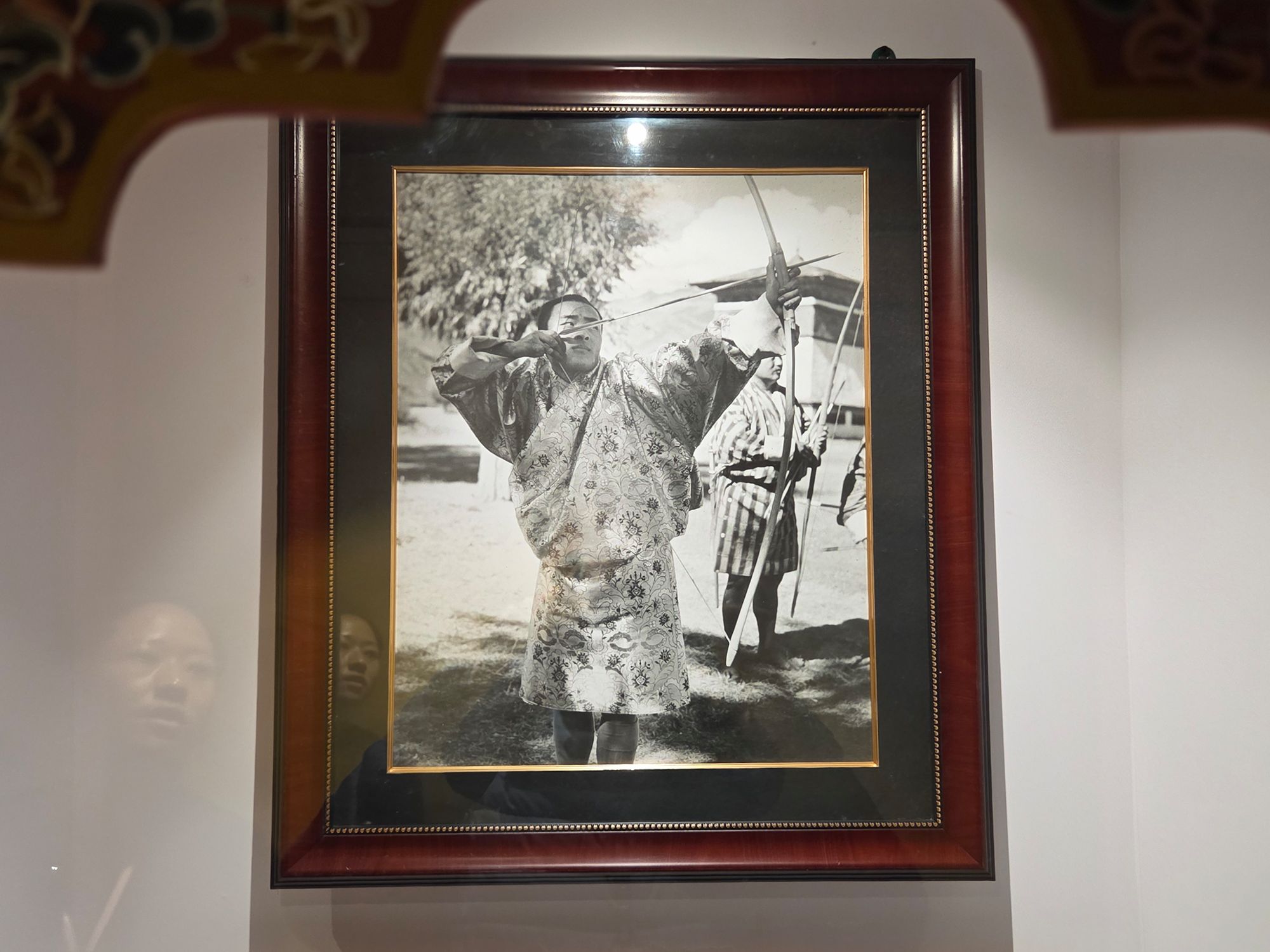
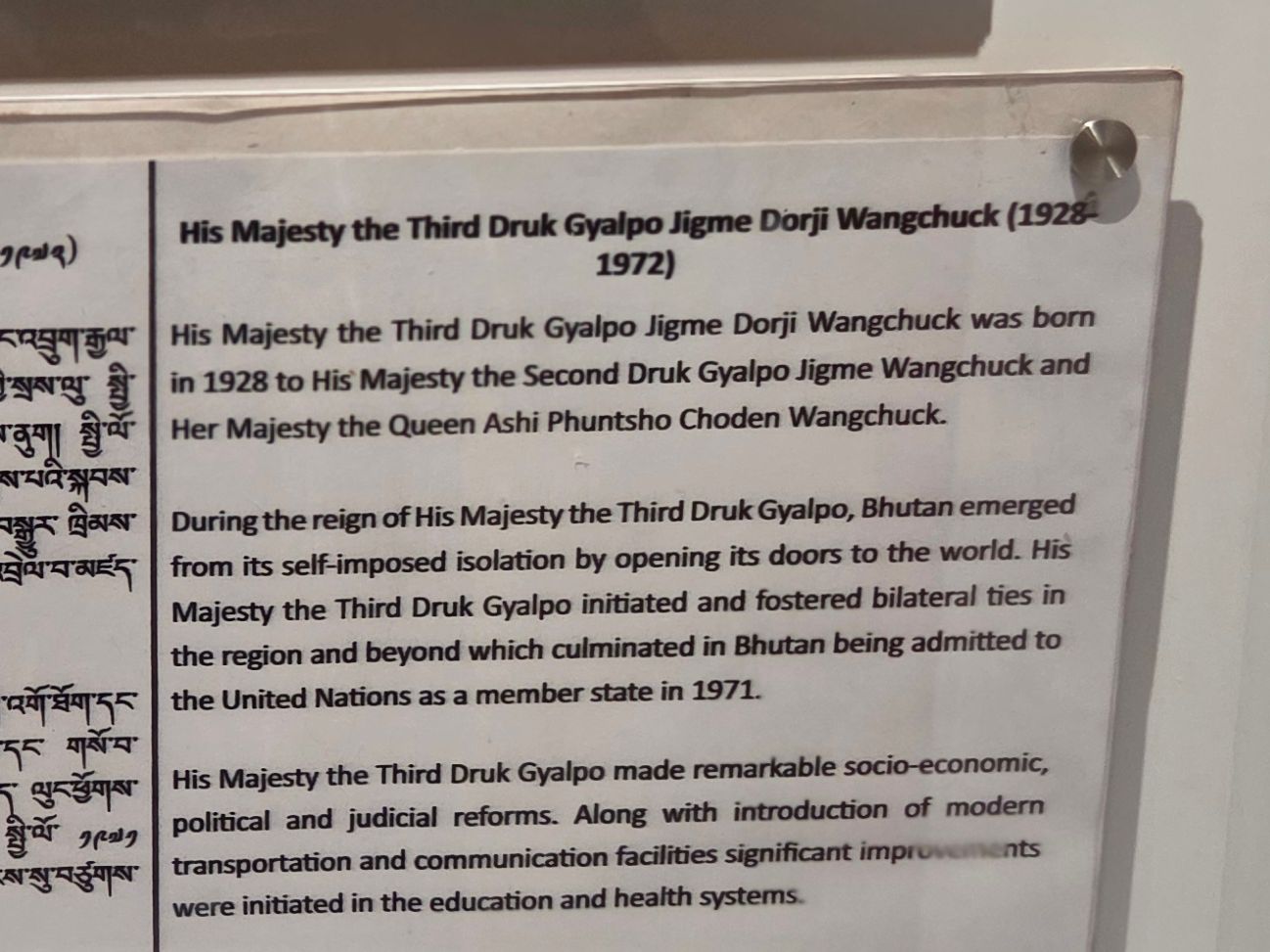
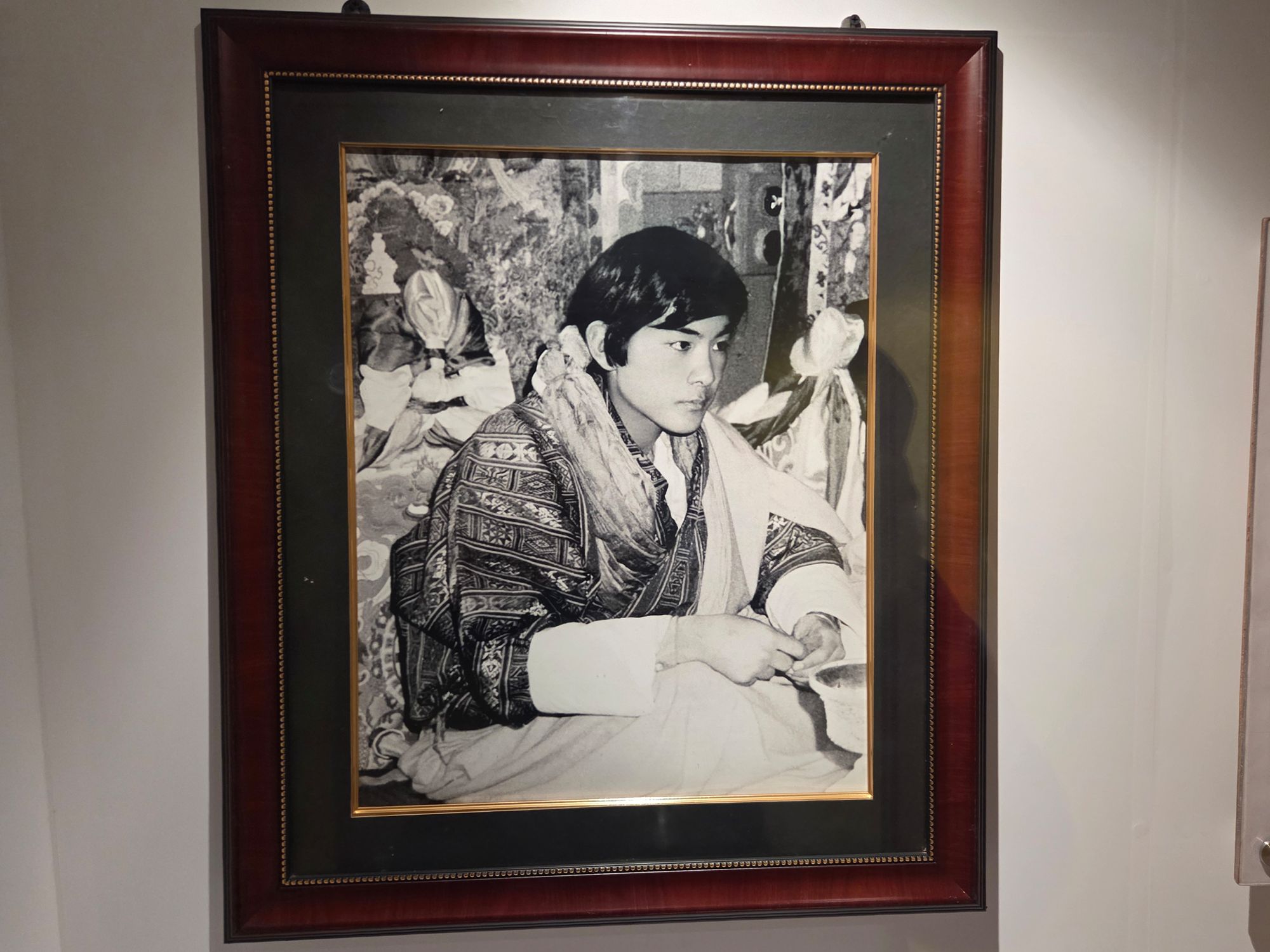
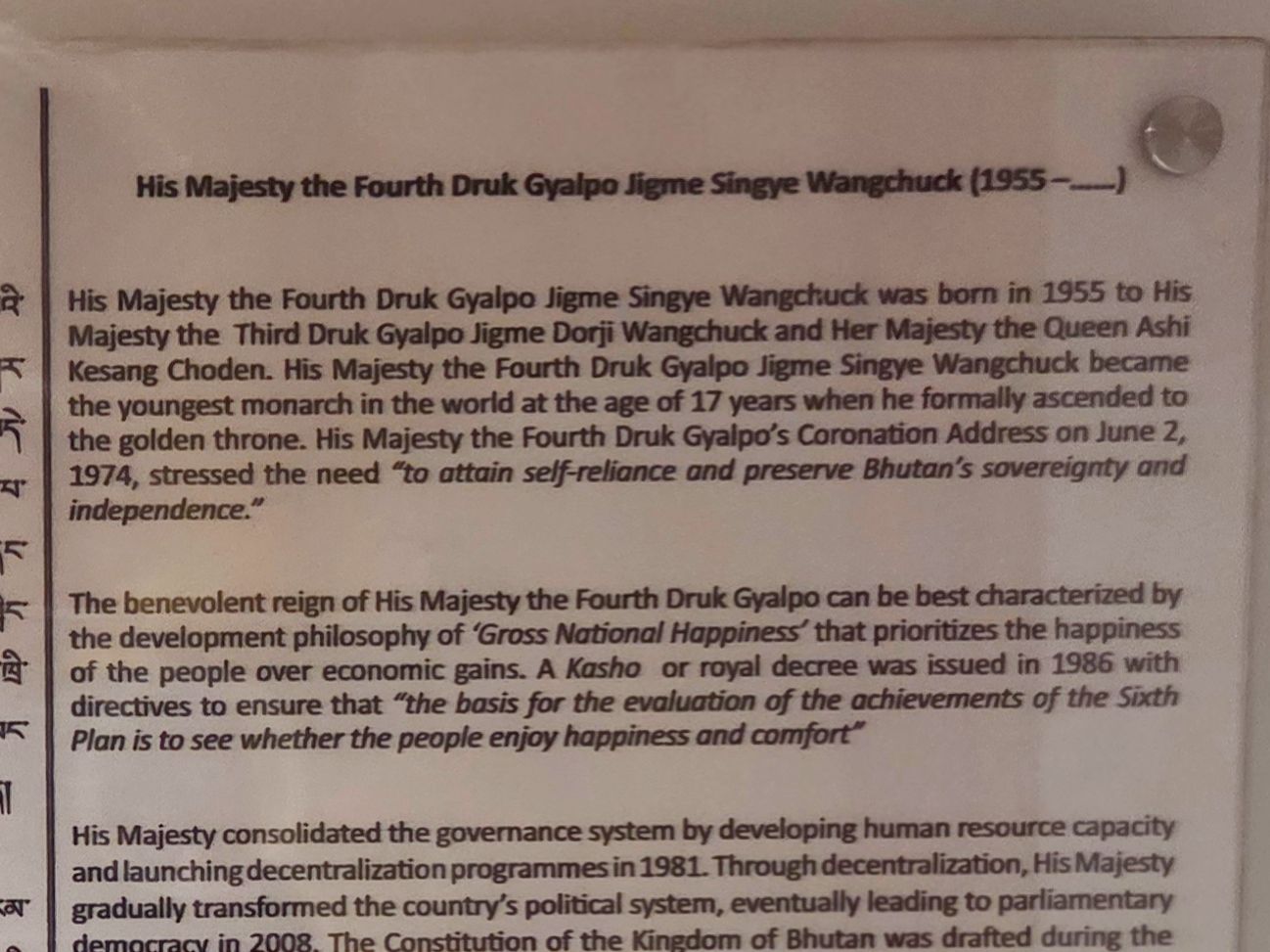
Jigme Khesar Namgyel Wangchuck, the Fifth King of Bhutan, in the present day.
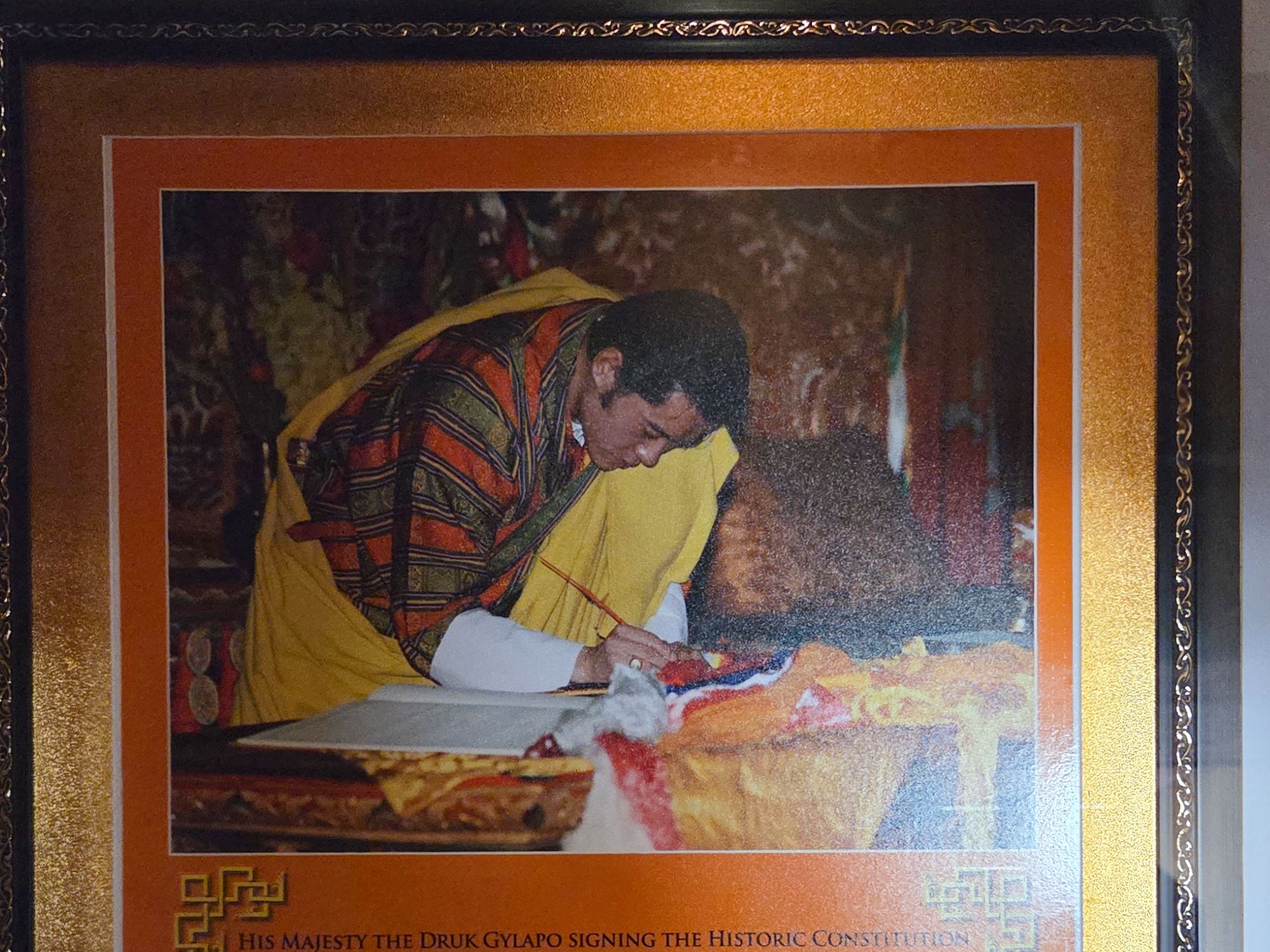
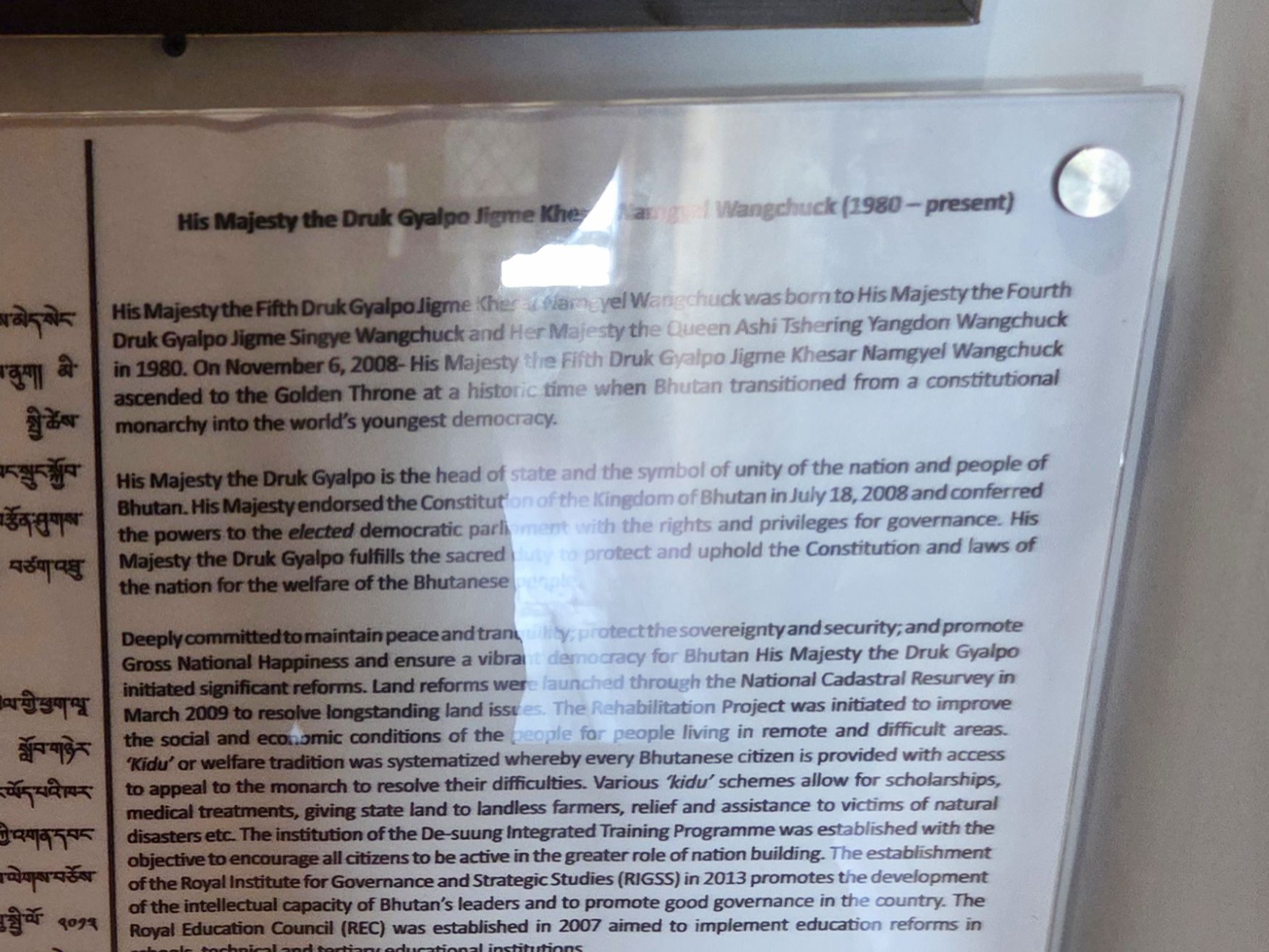
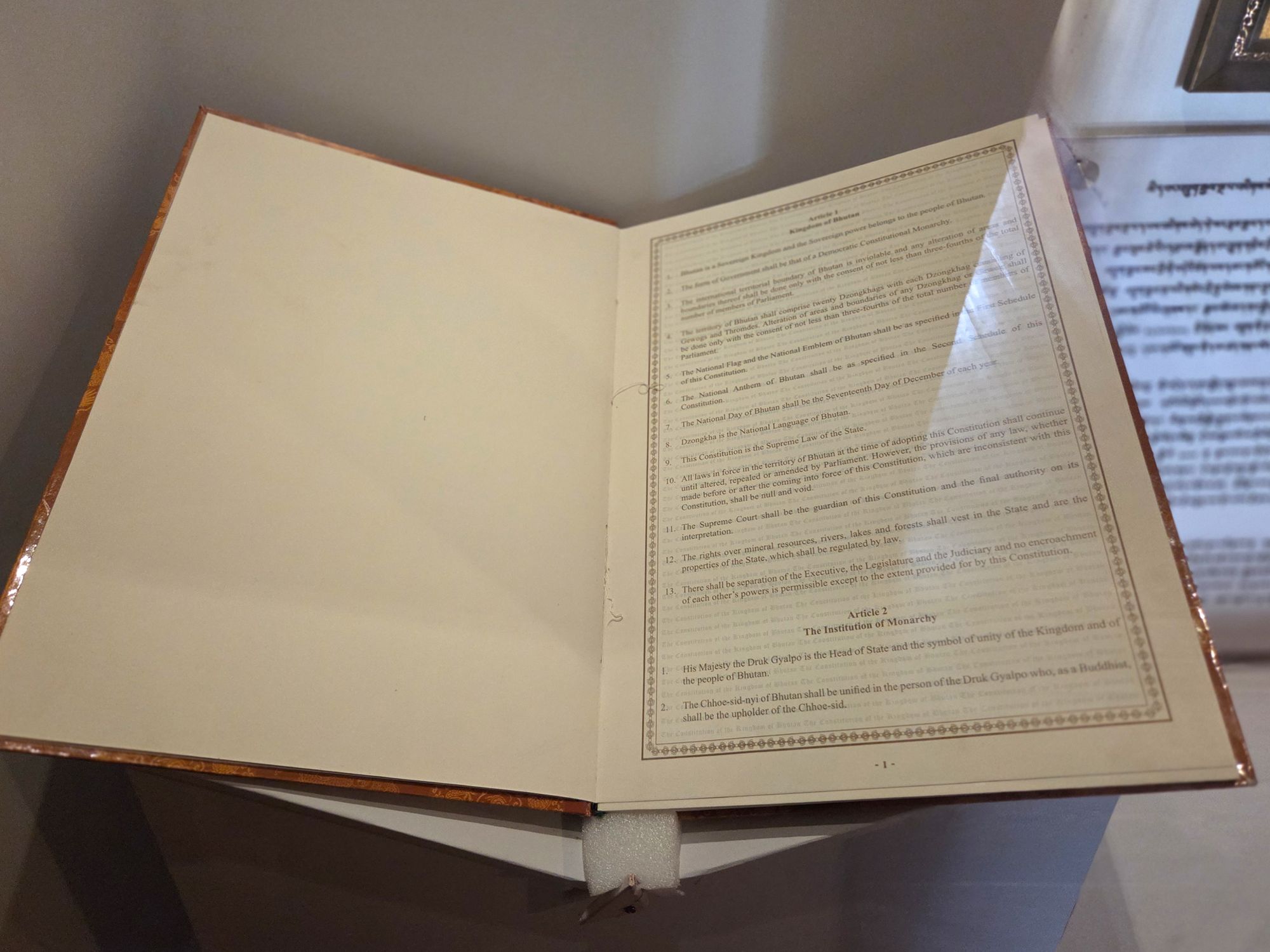
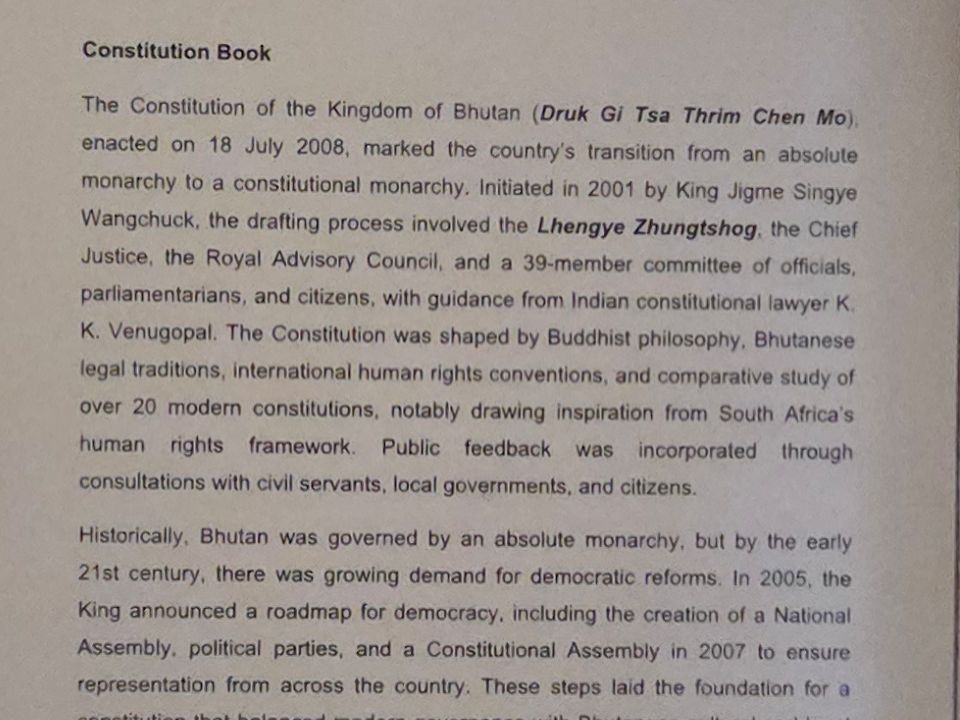
Constitution Book
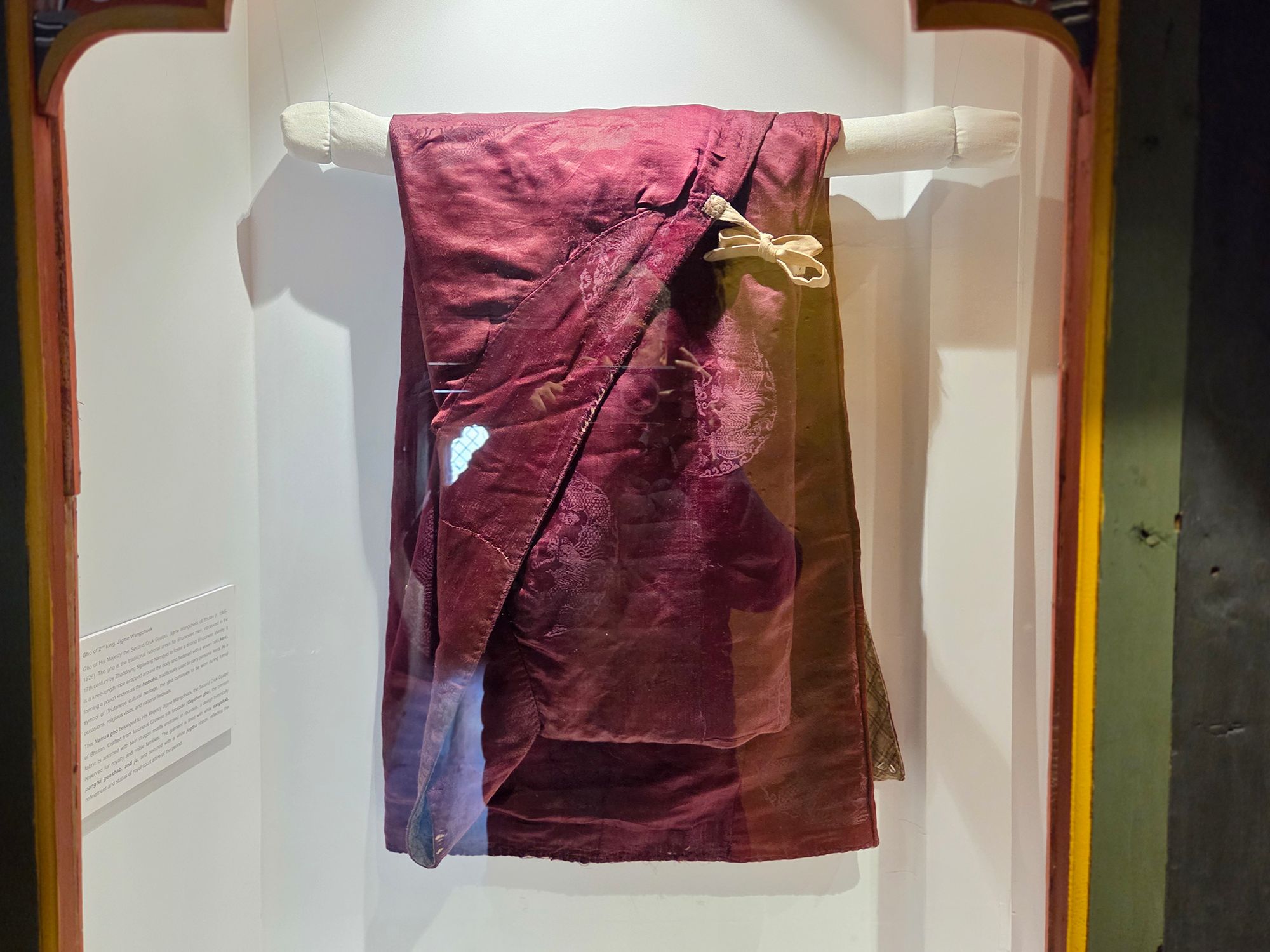
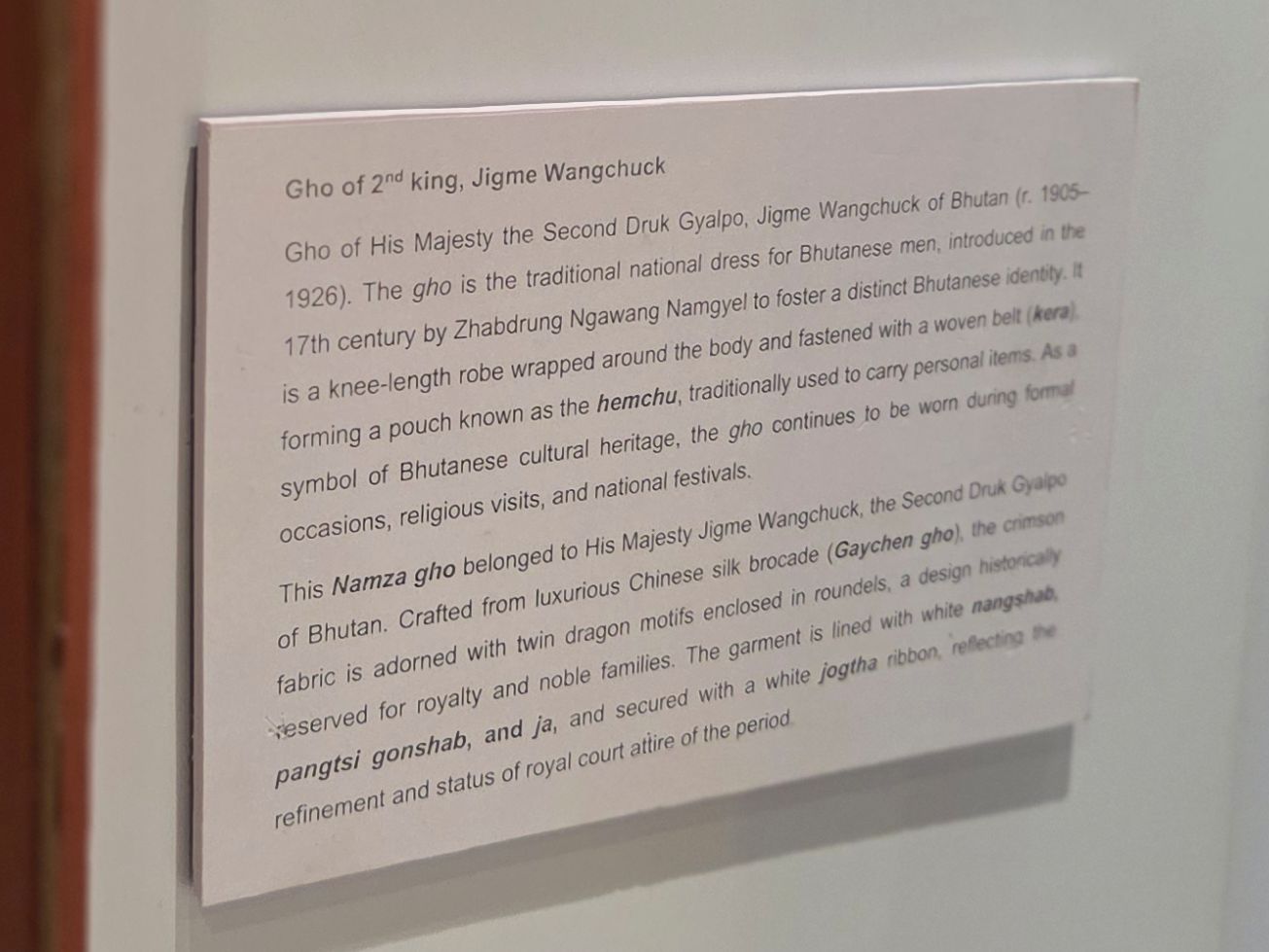
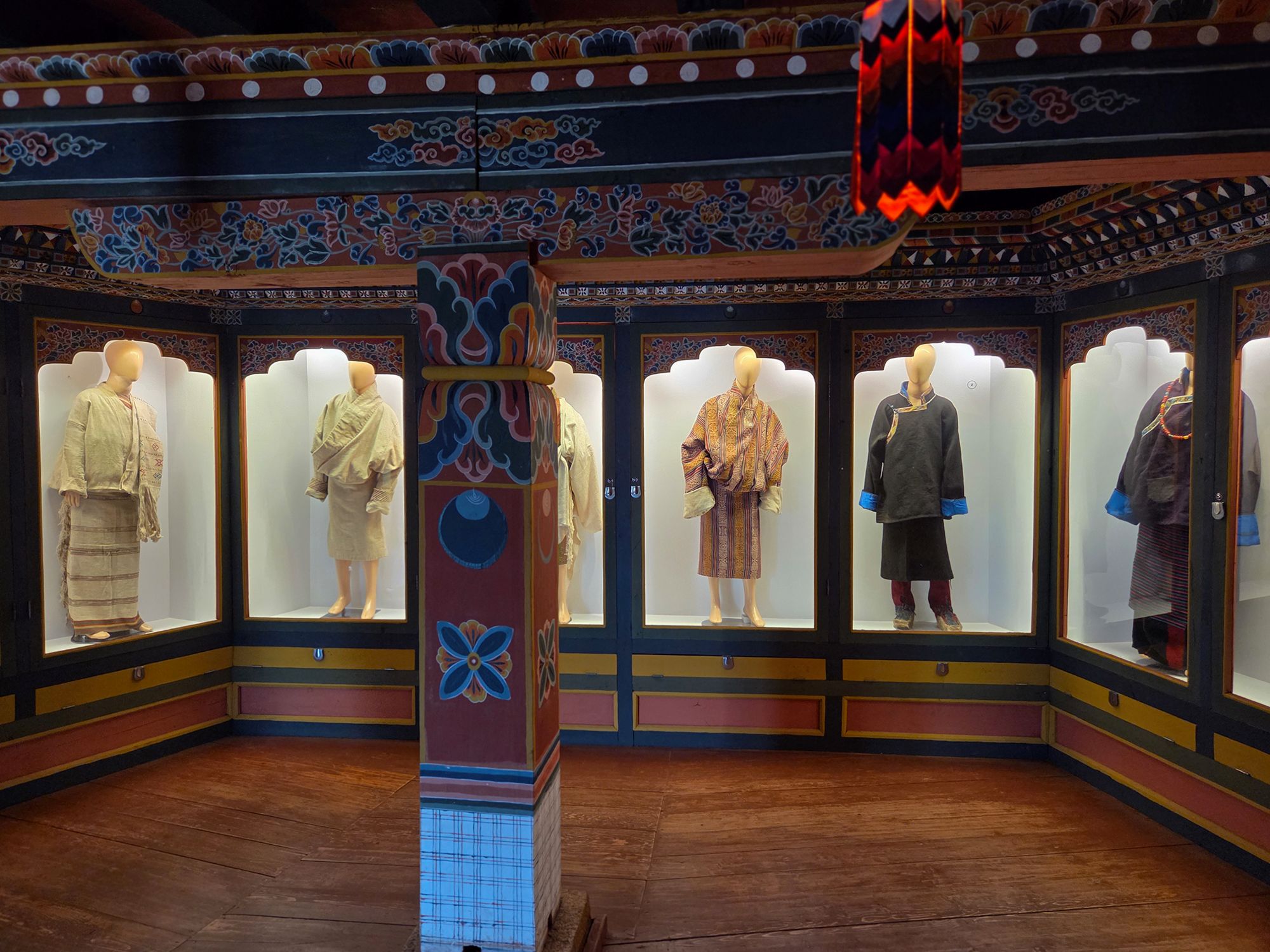
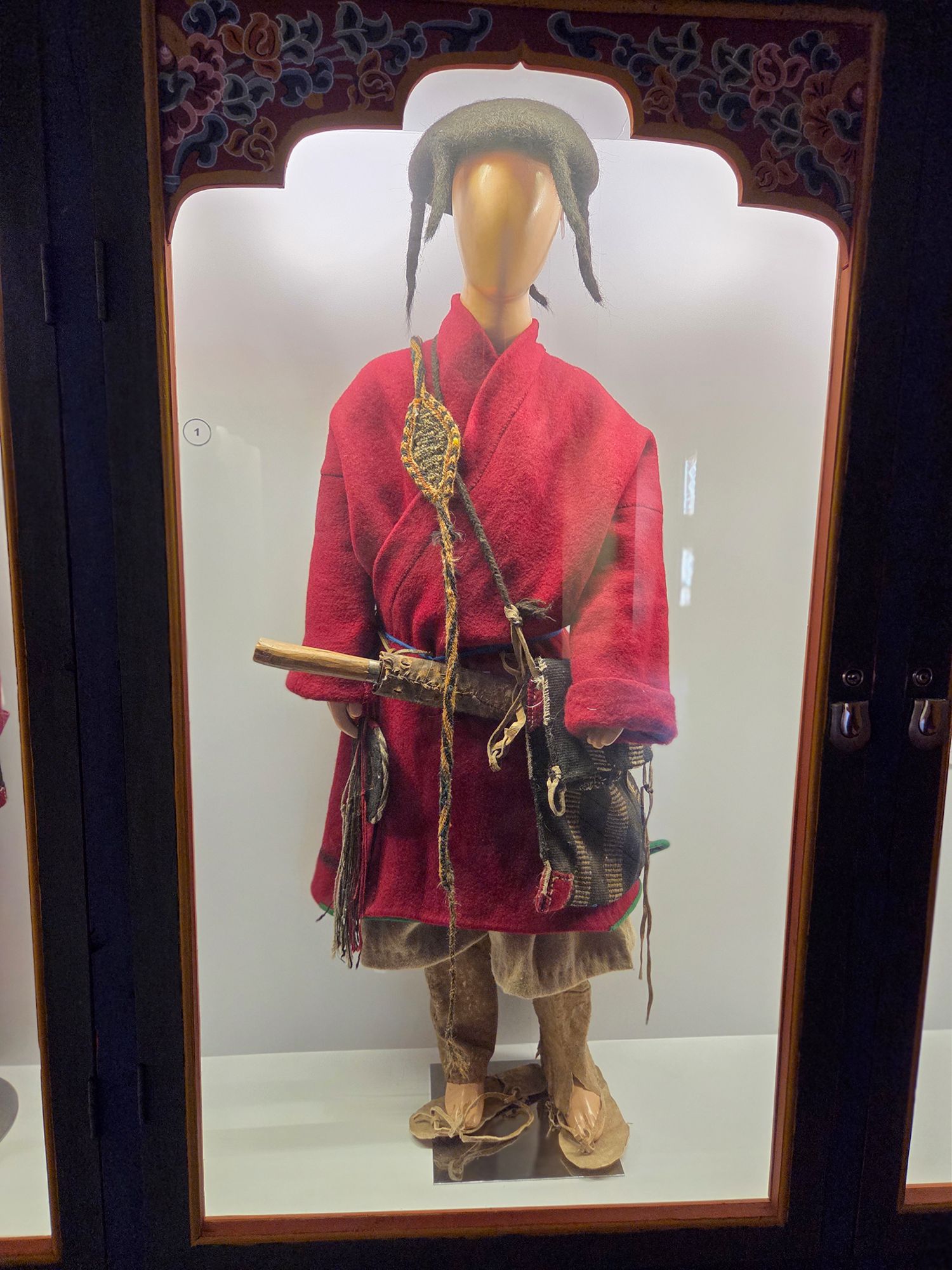
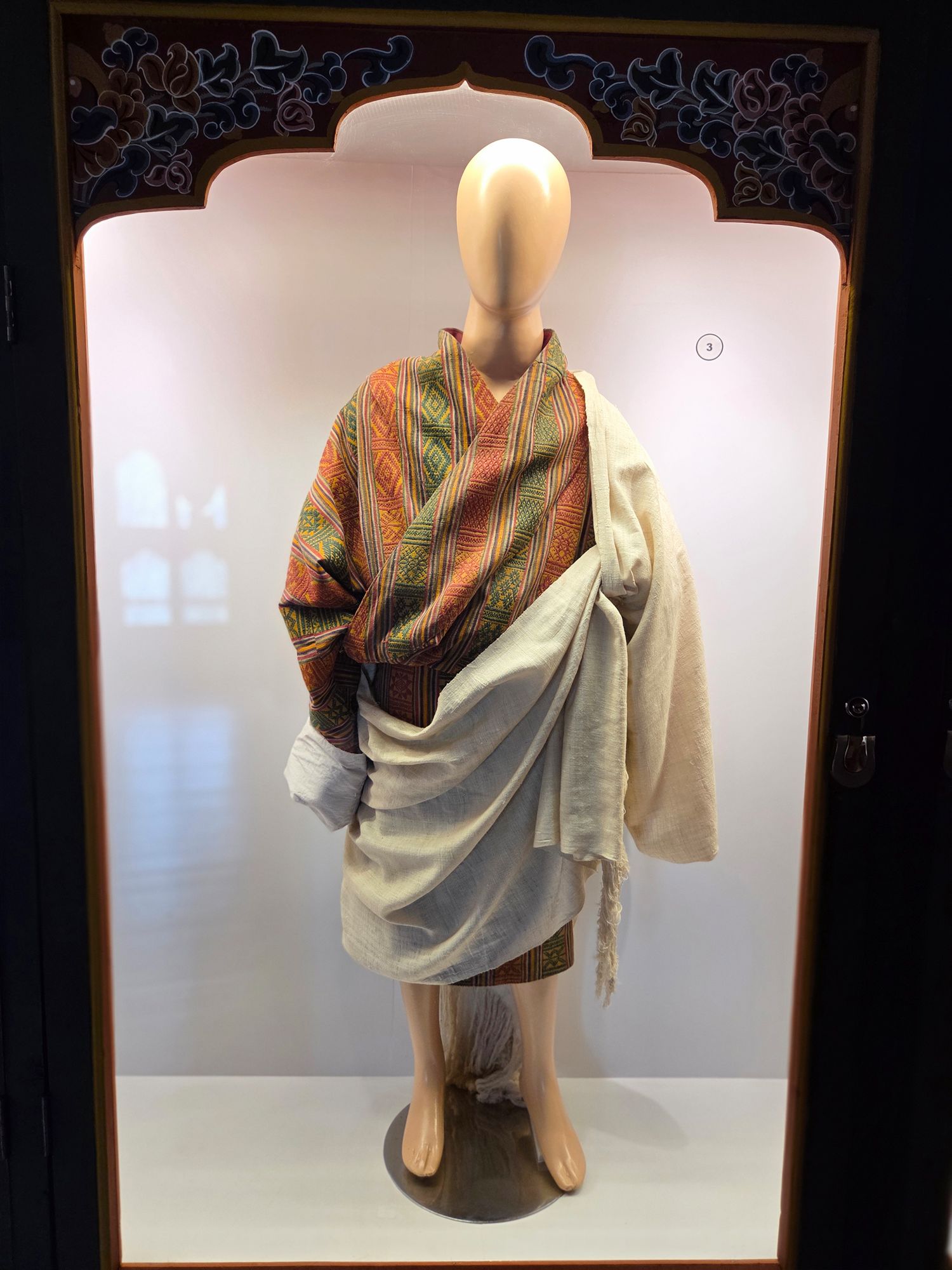
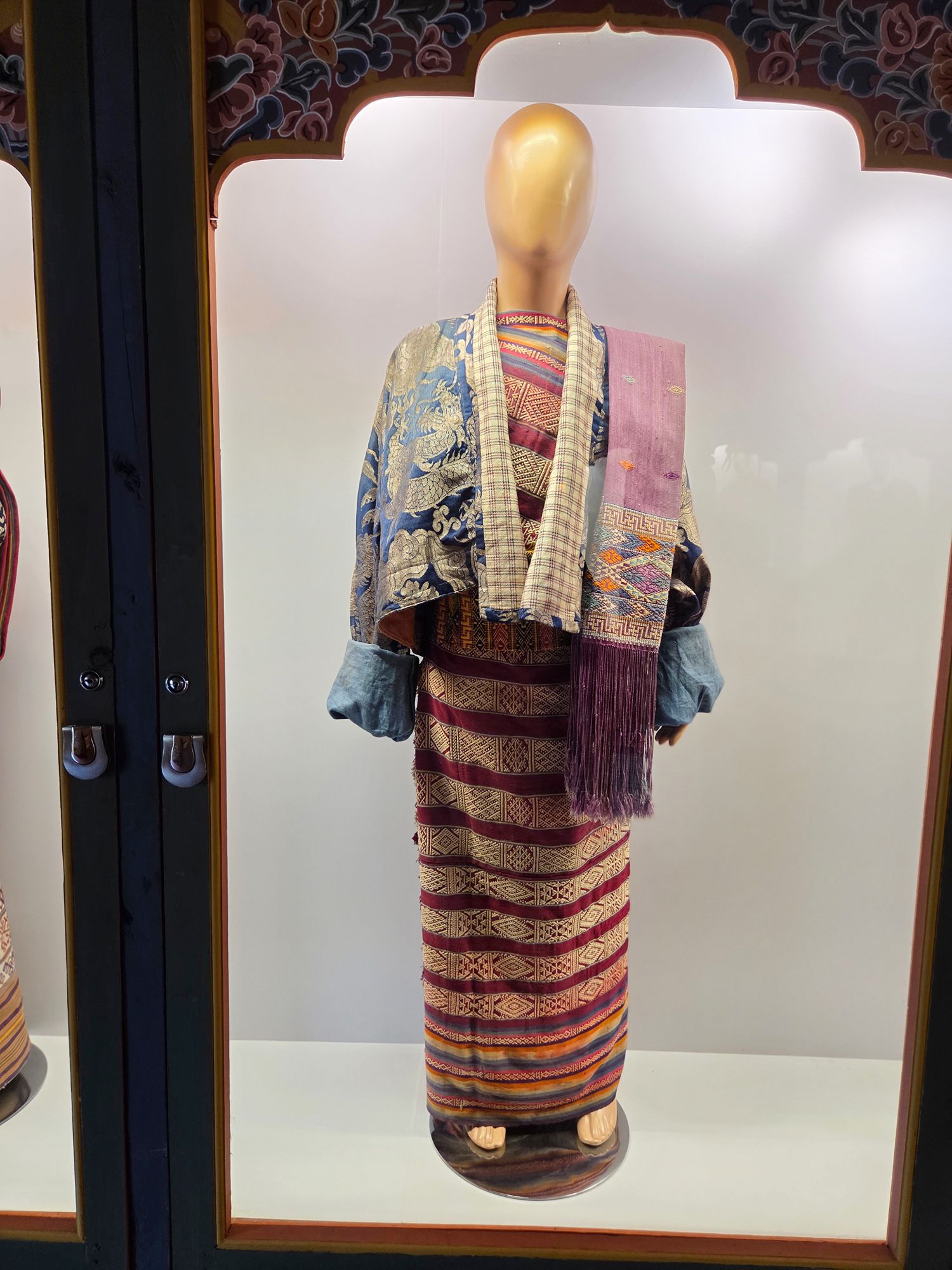
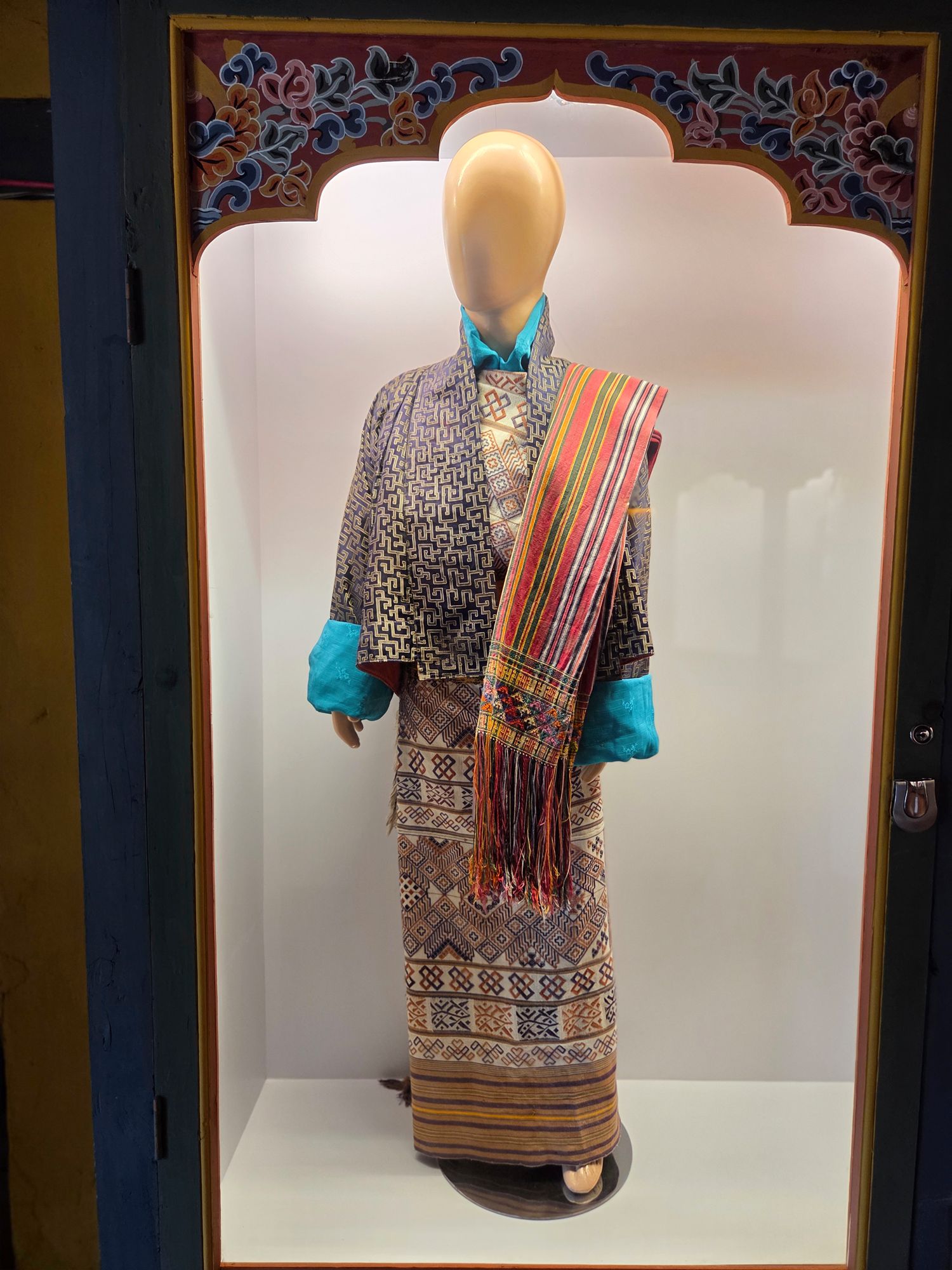
Traditional Bhutanese clothing on display at the National Museum, including the gho, worn by men, and the kira, worn by women, reflecting Bhutan’s distinctive cultural heritage.
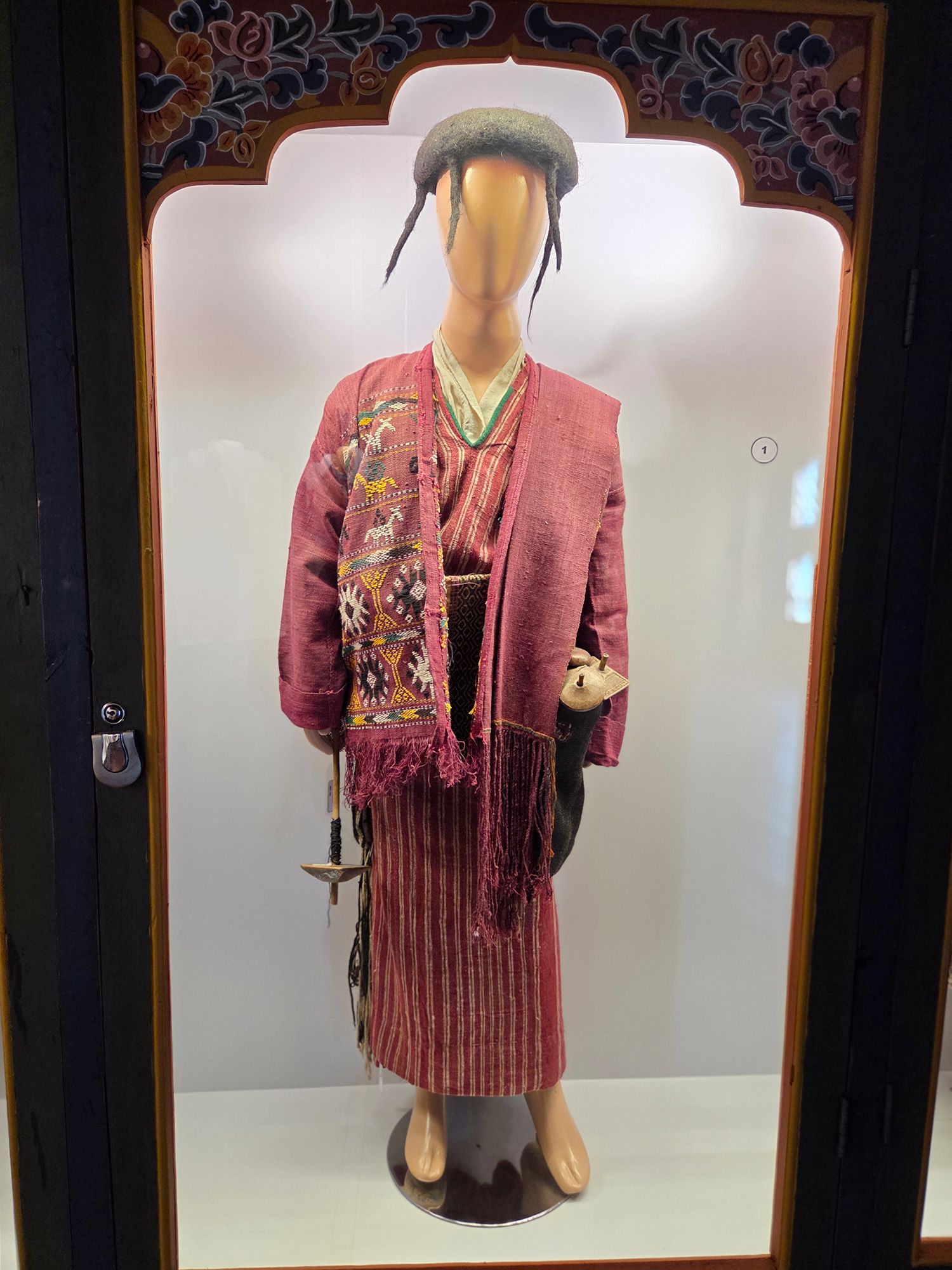
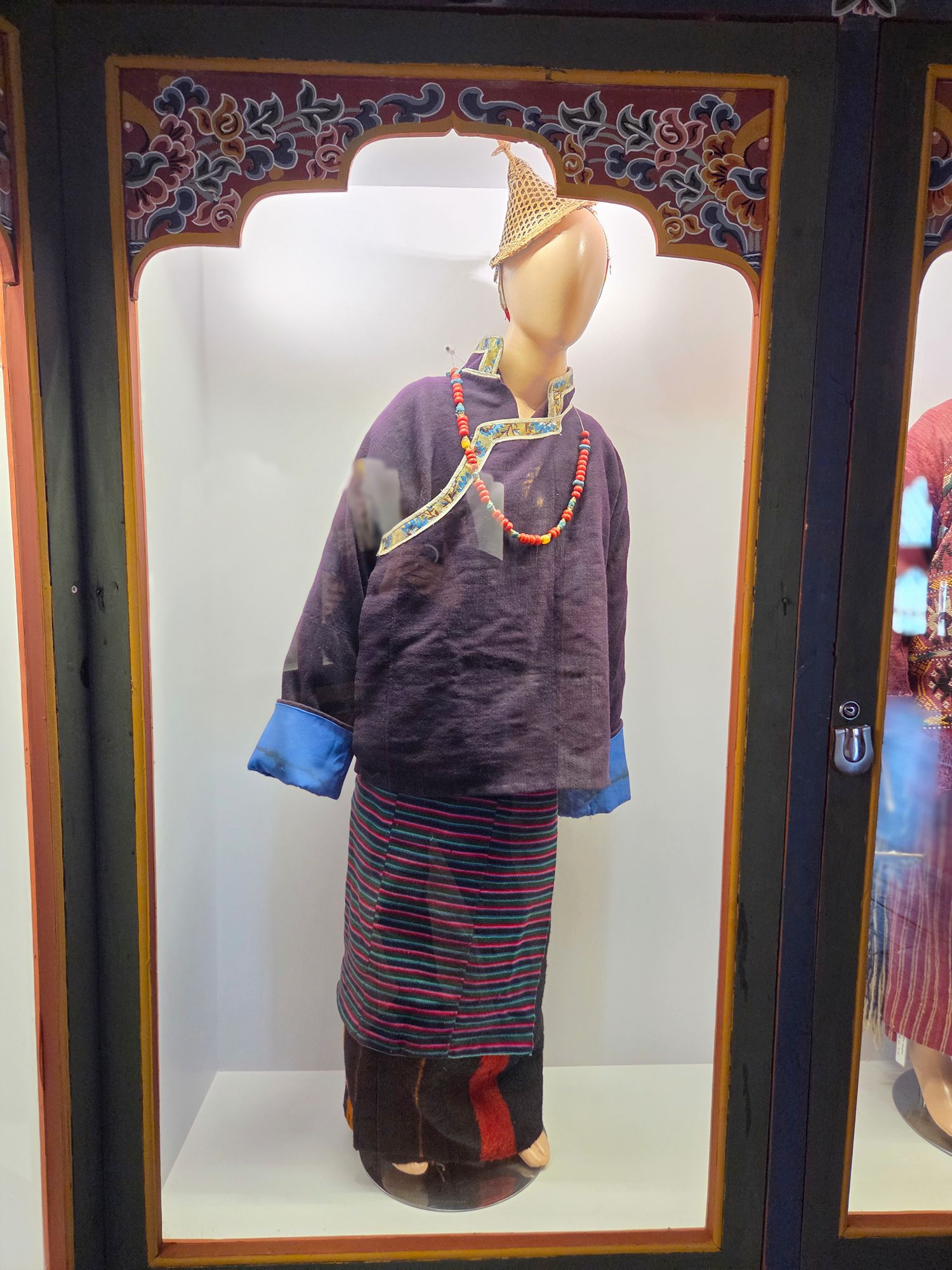
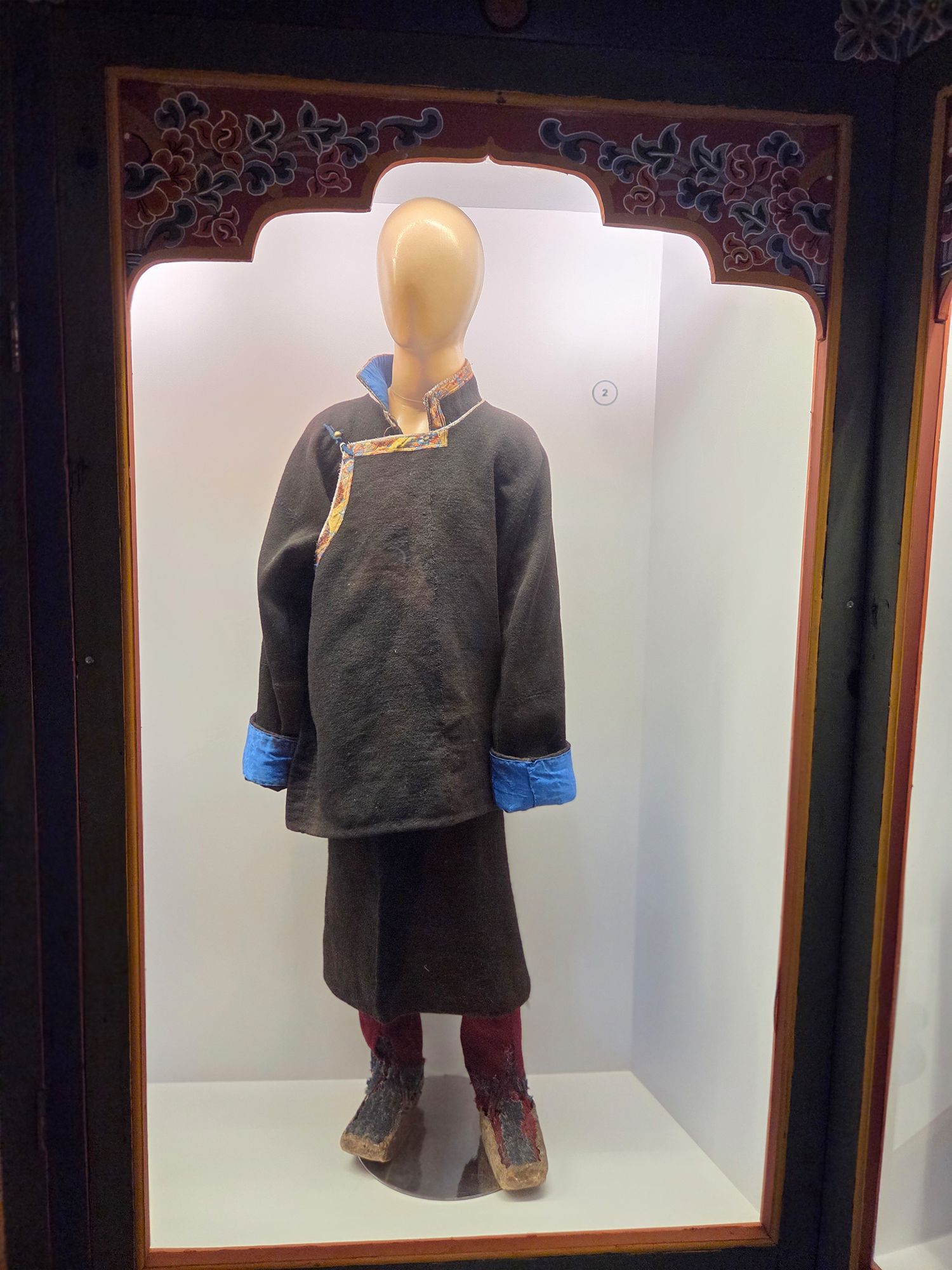
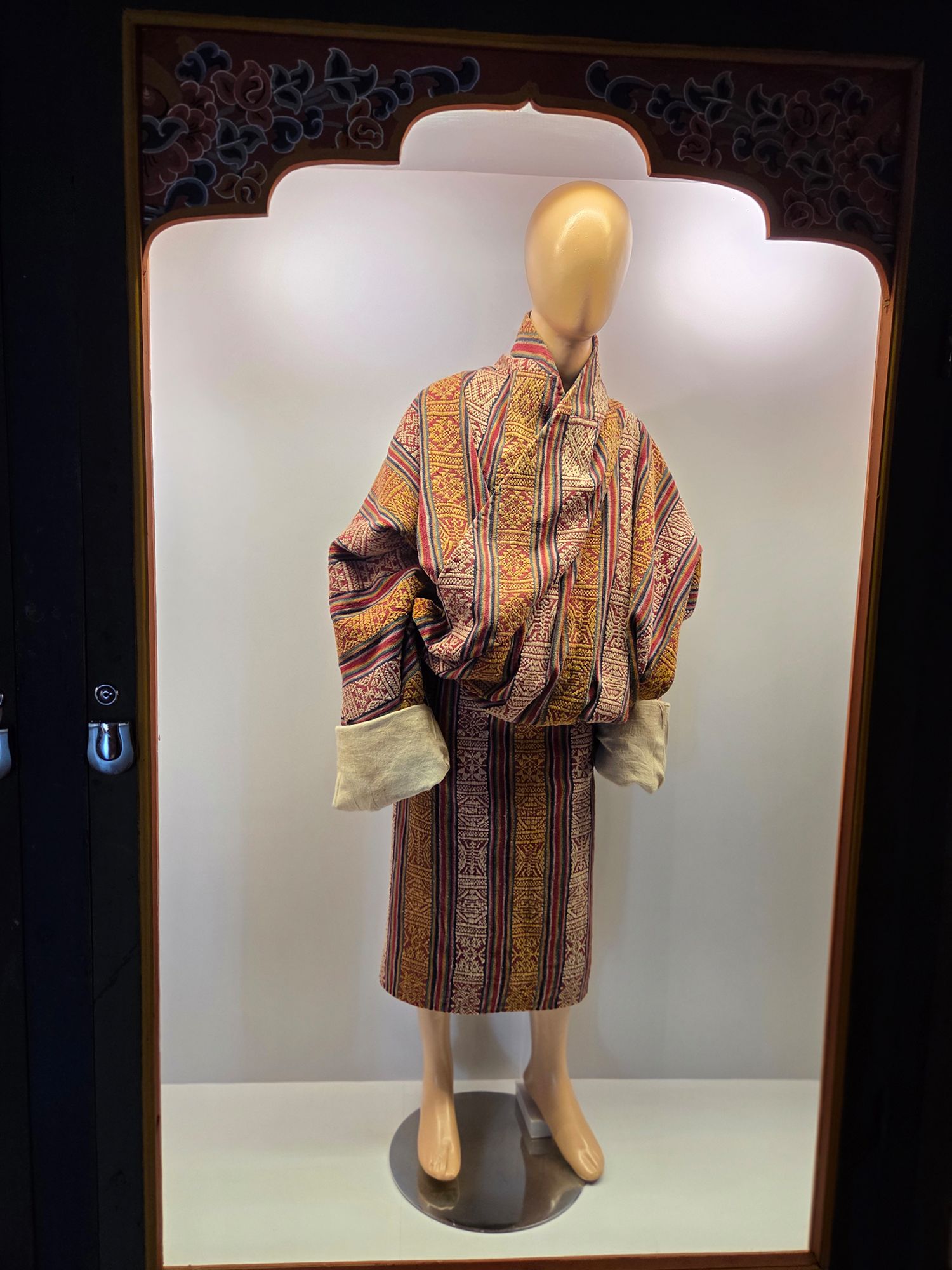
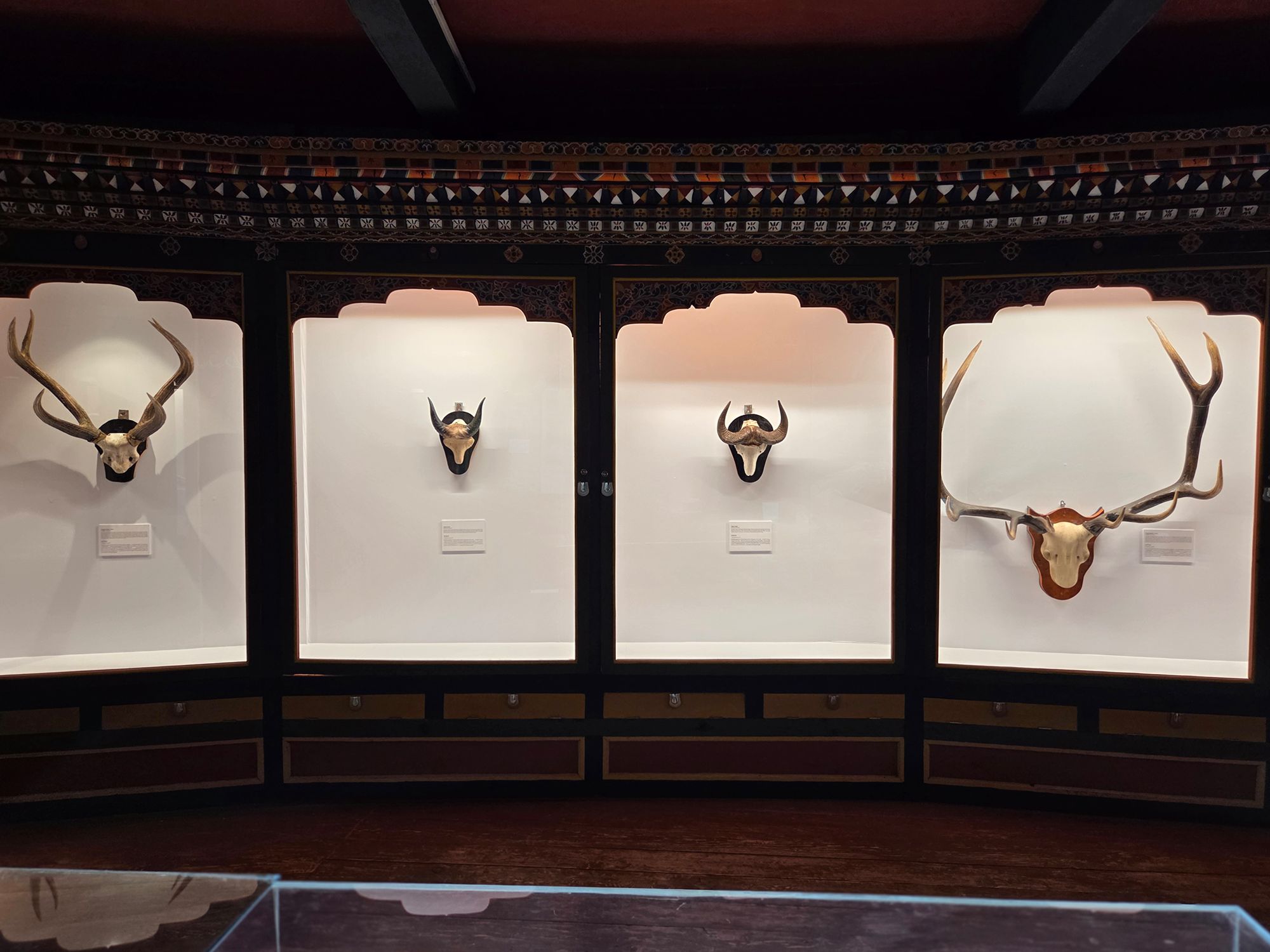
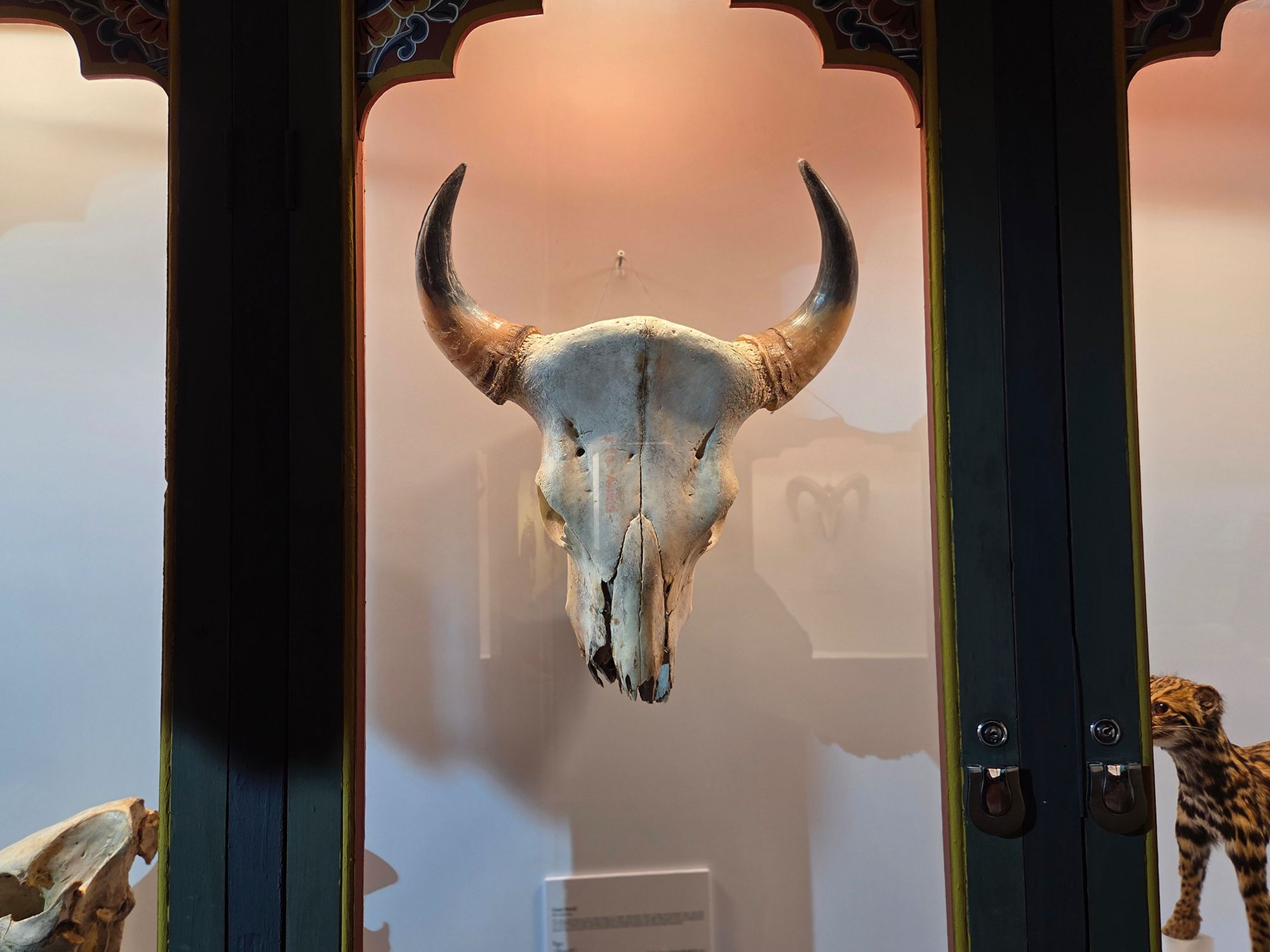
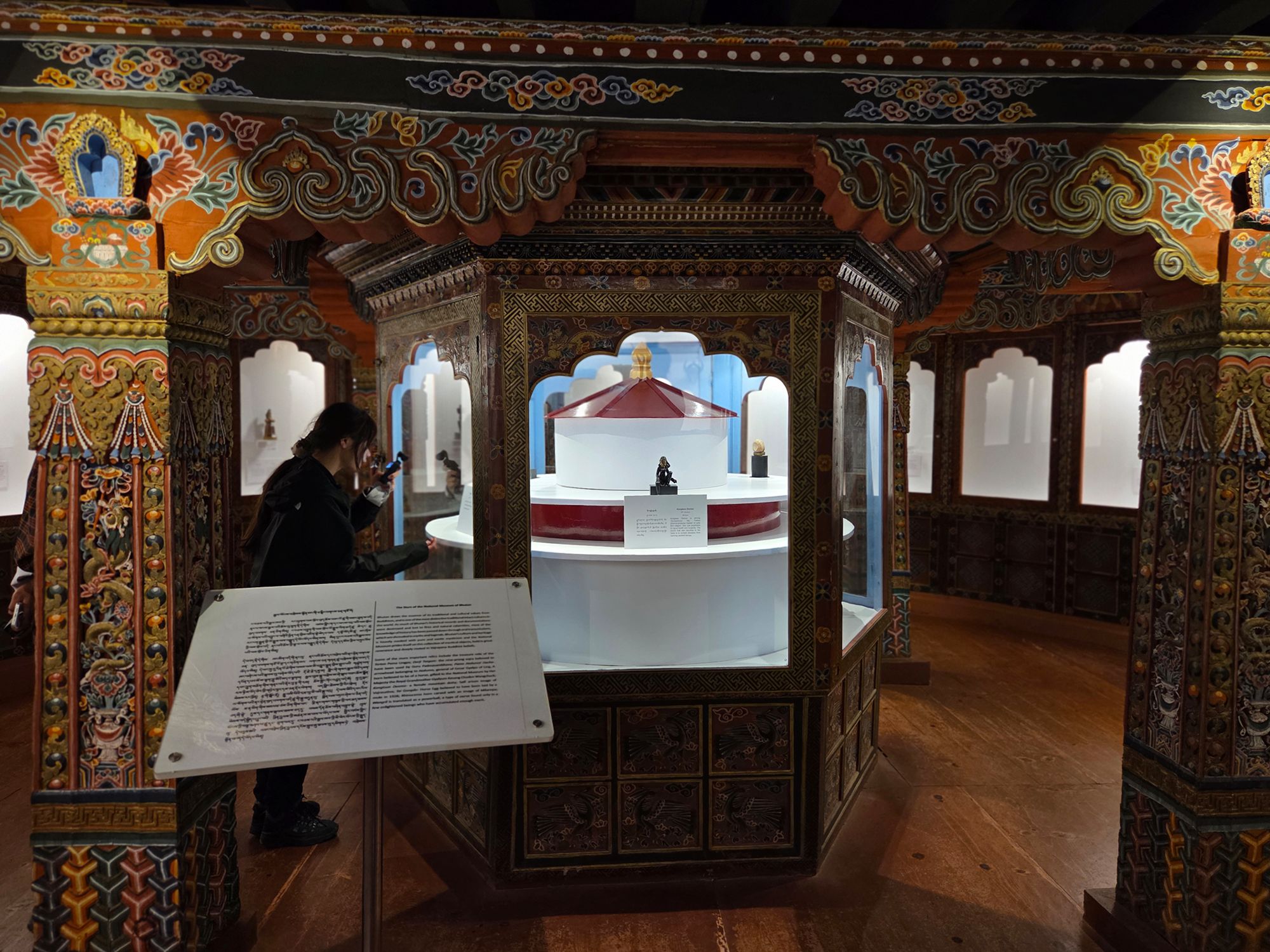
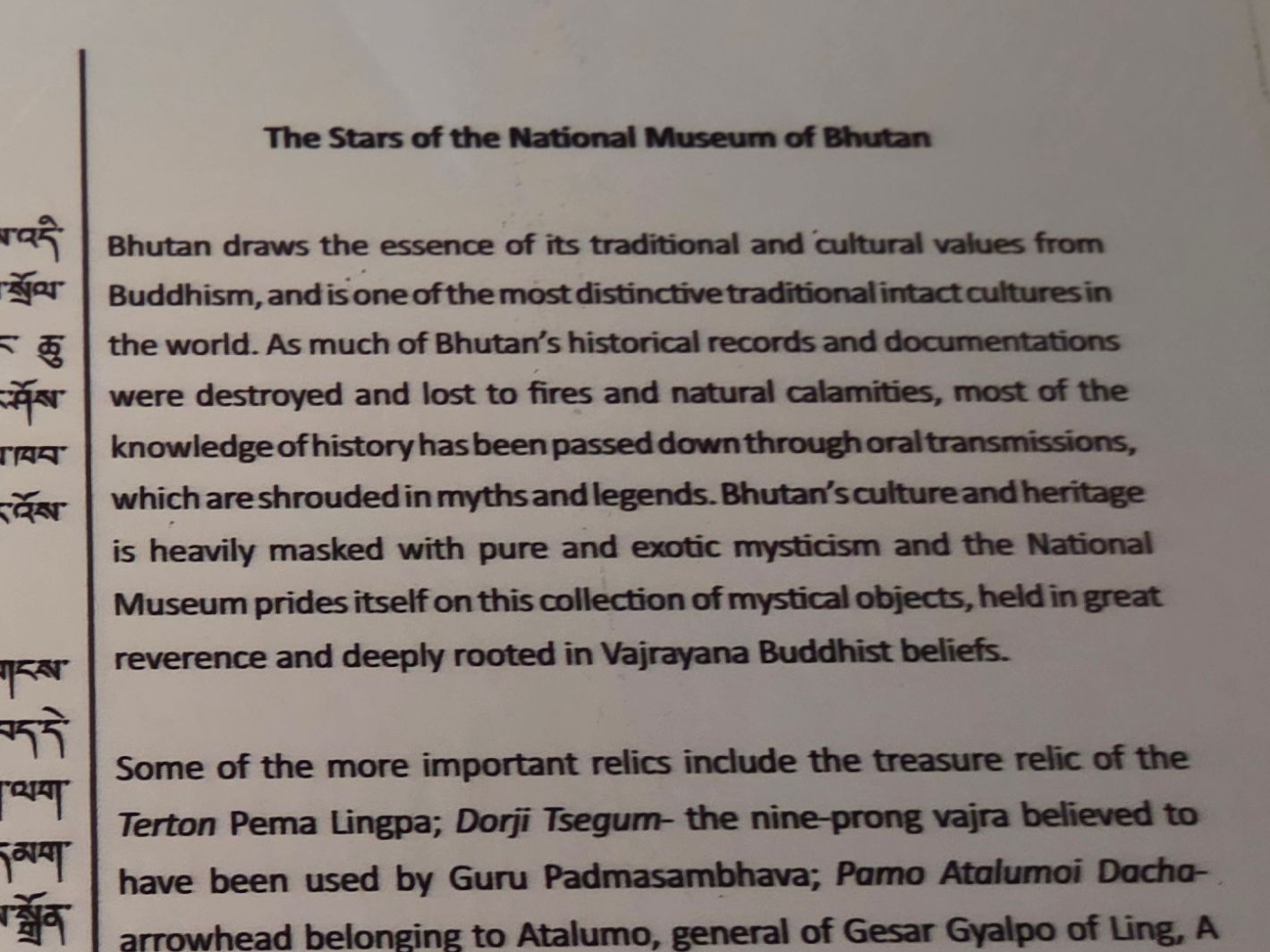
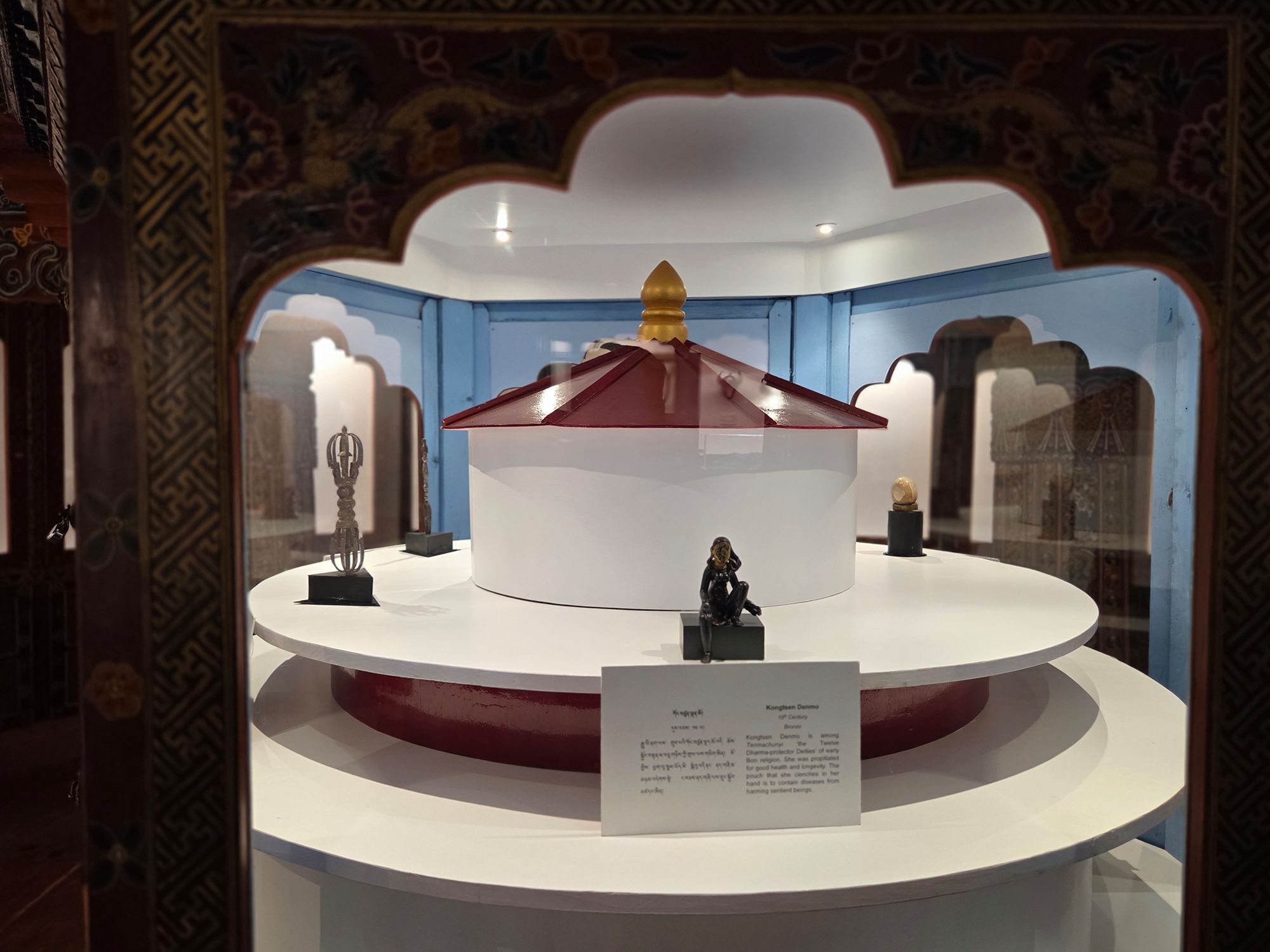
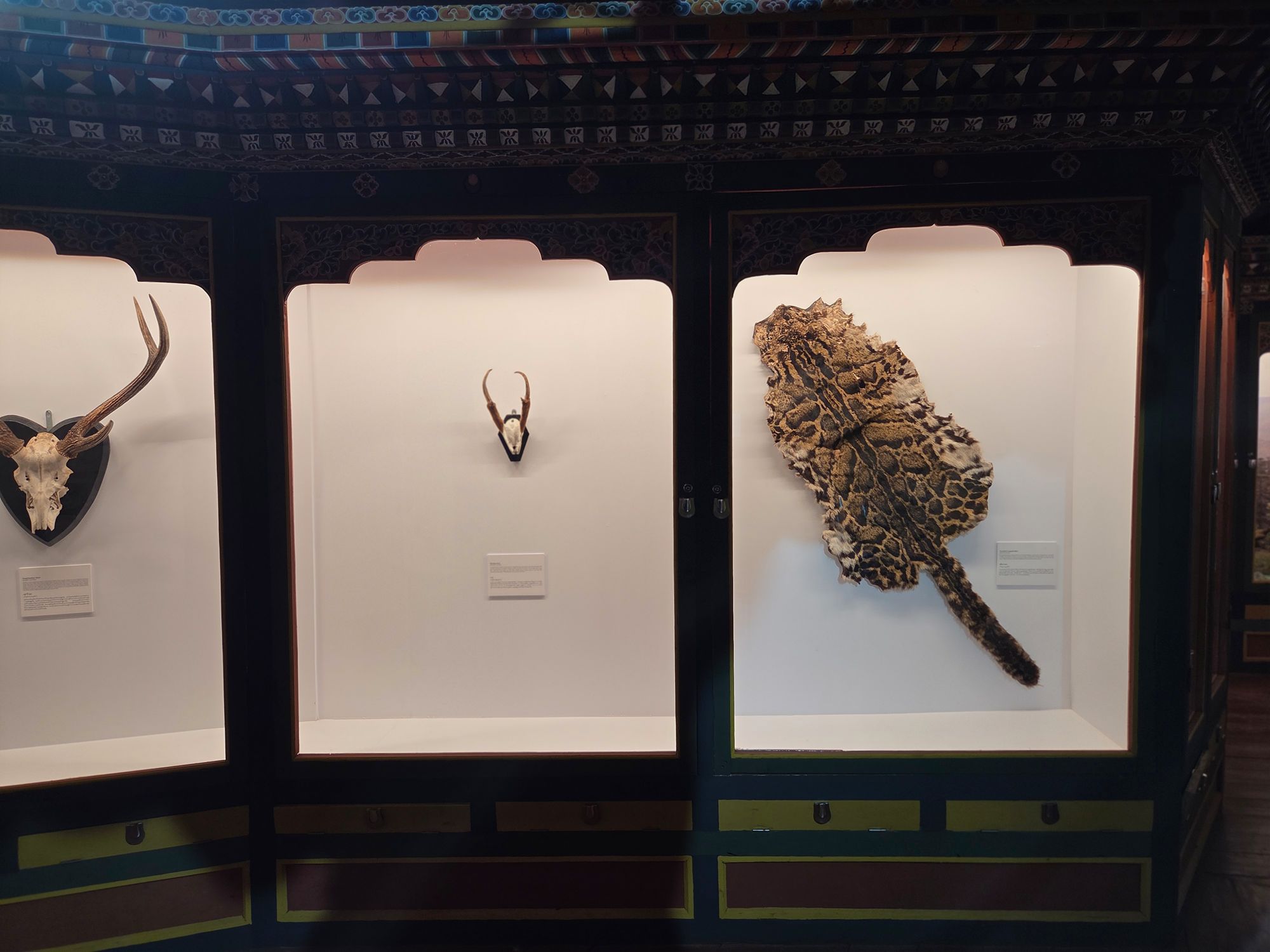
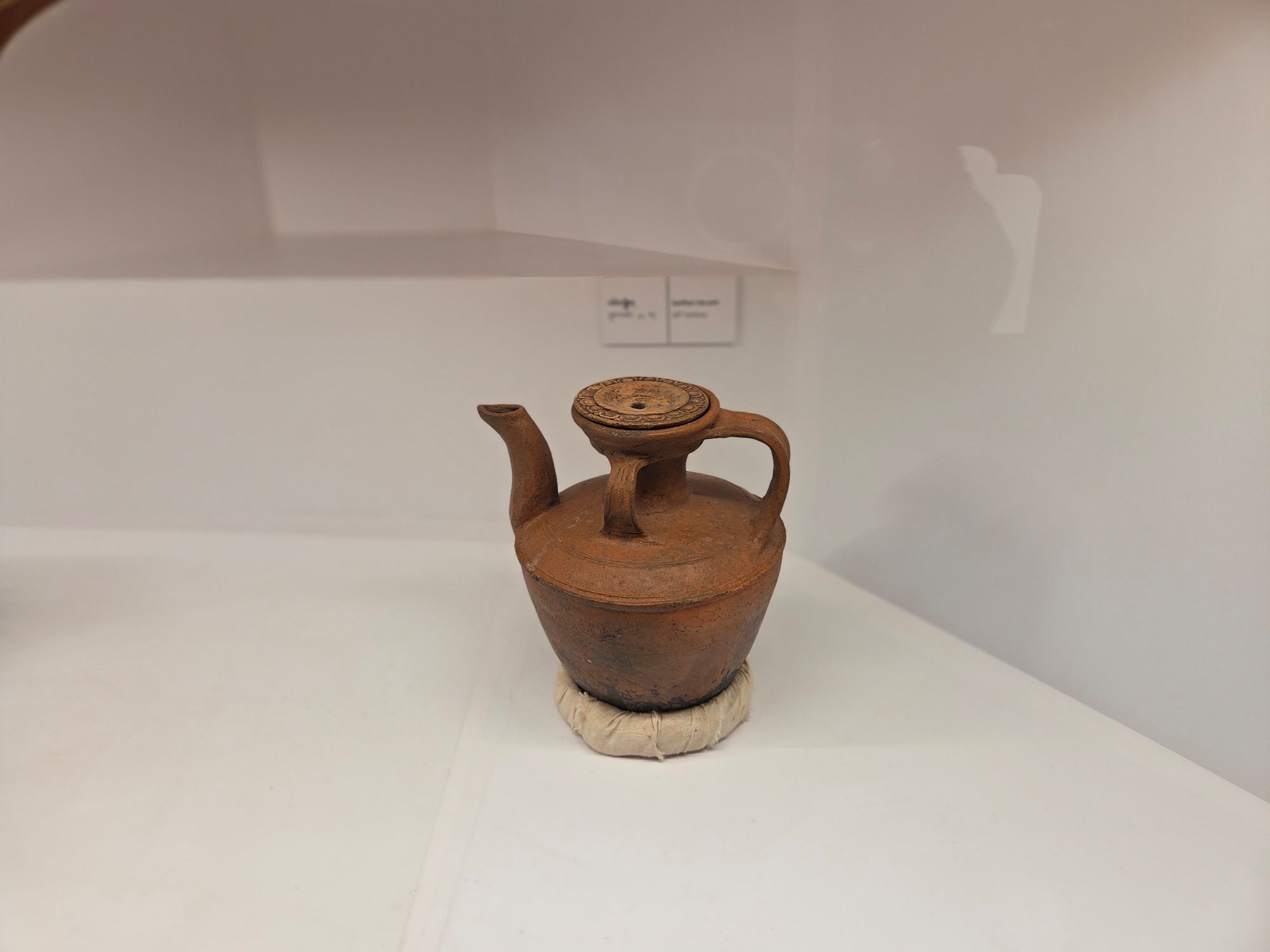
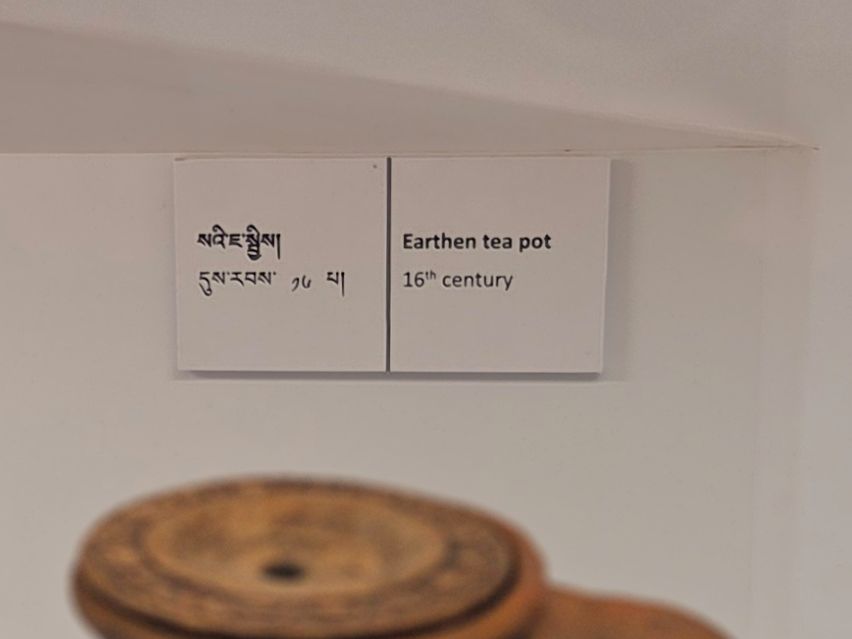
The Stars of the Museum
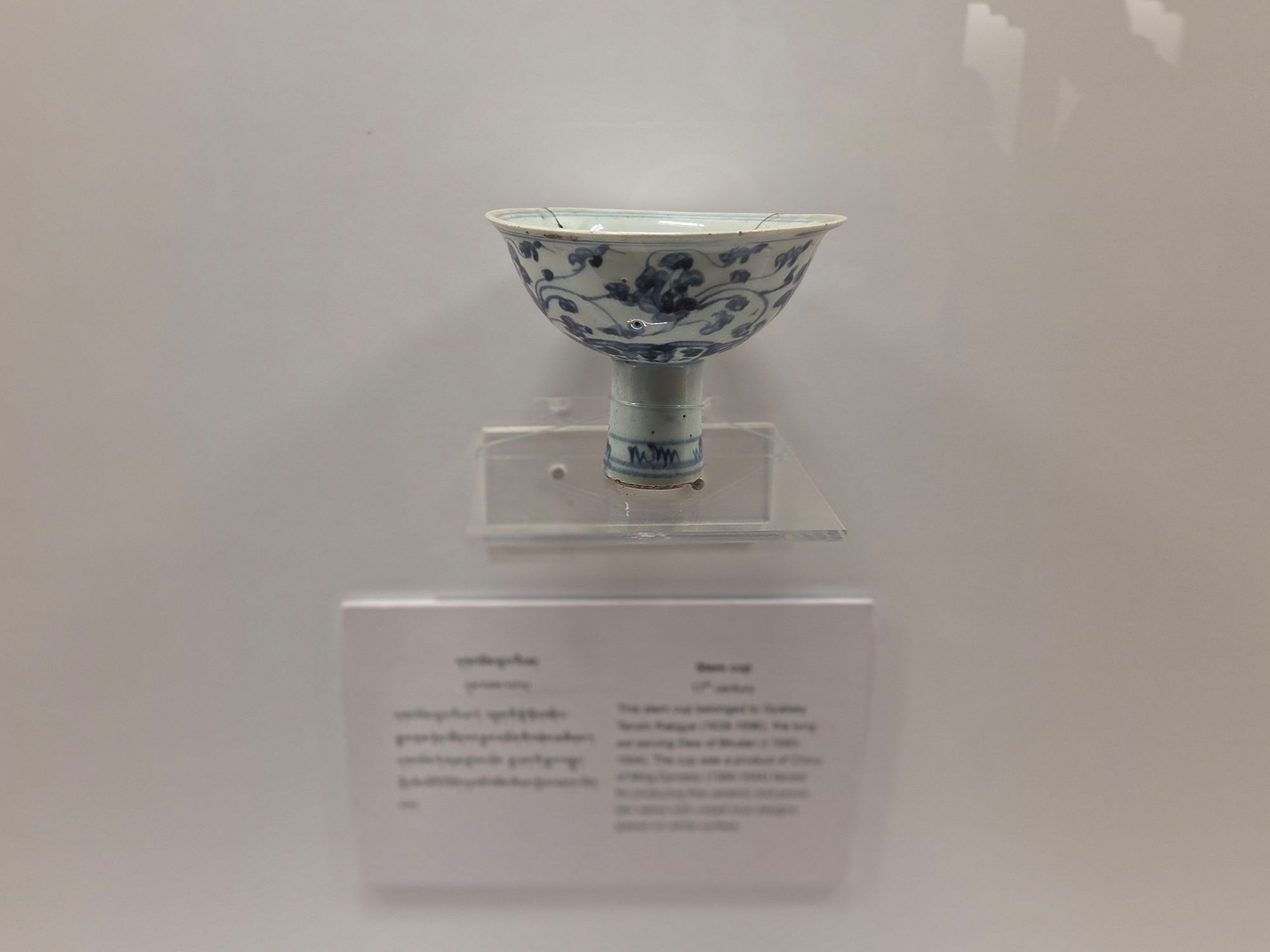
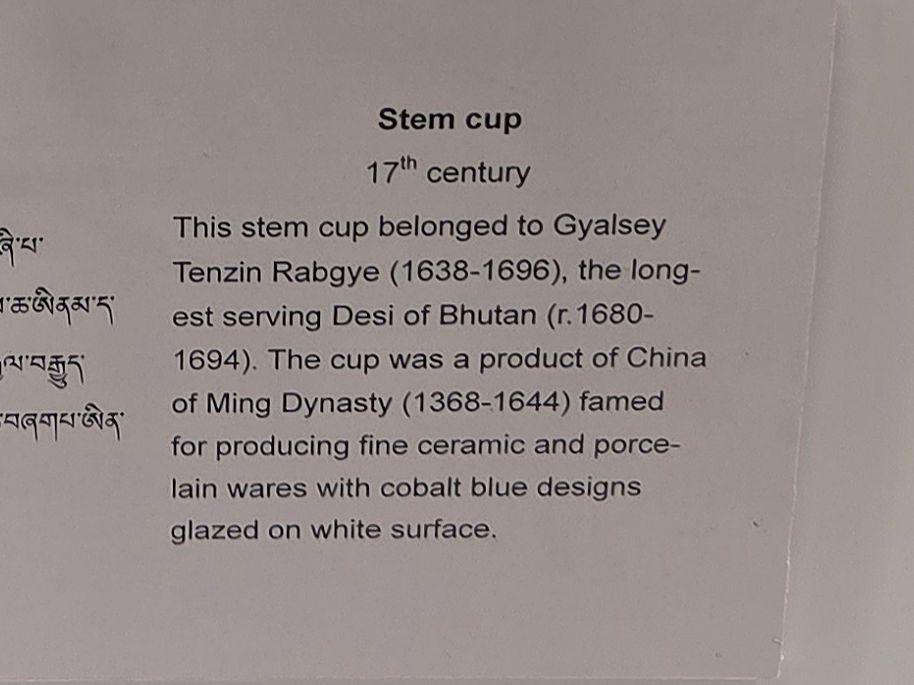
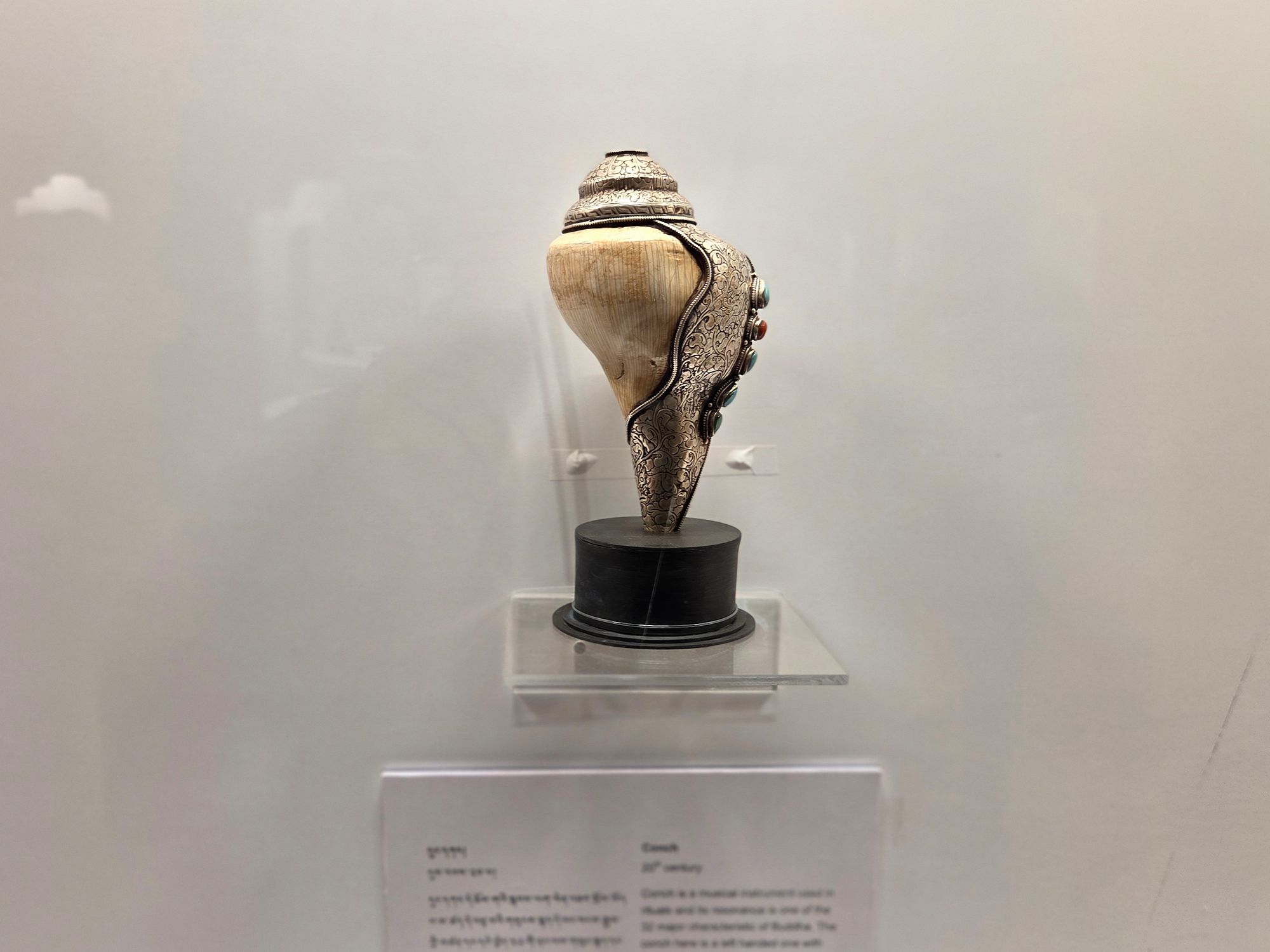
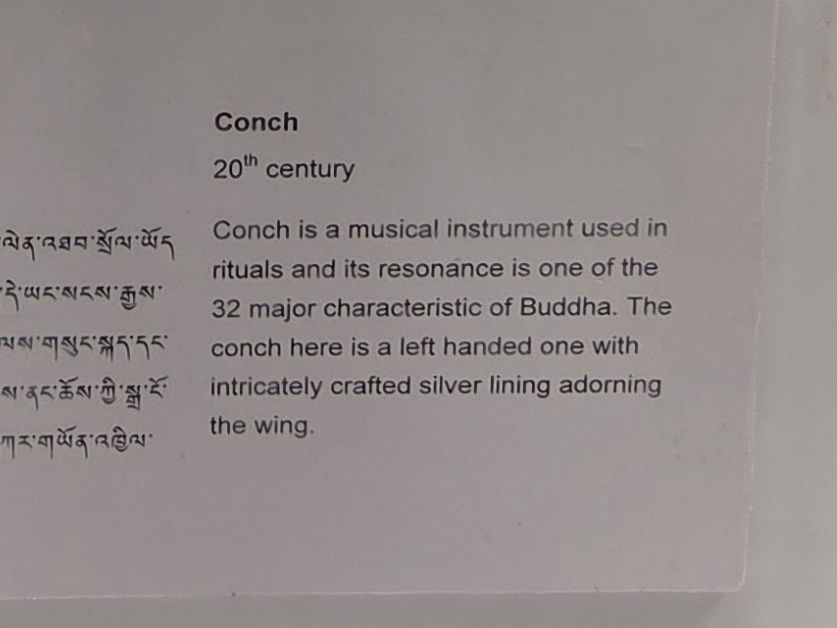
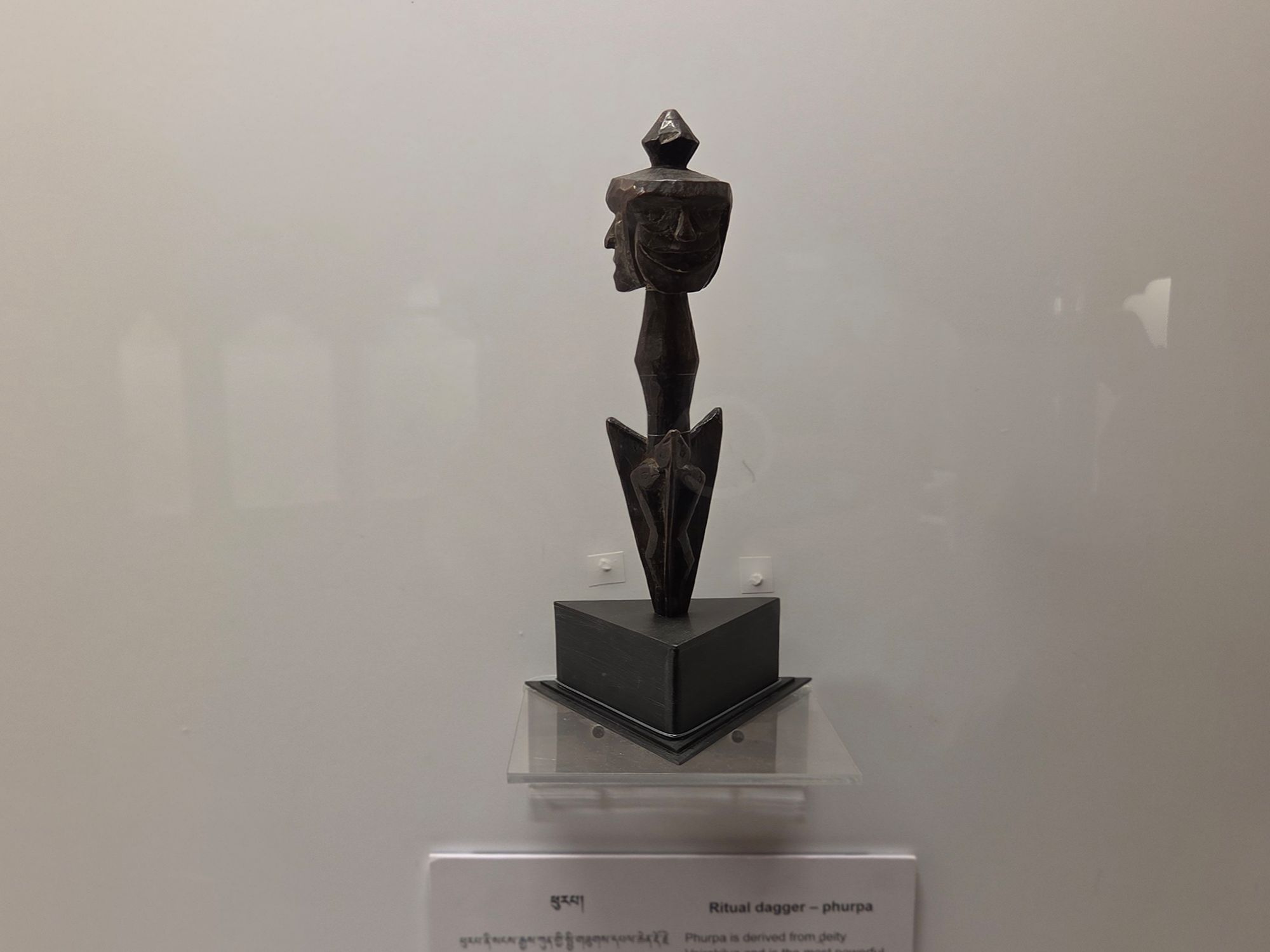
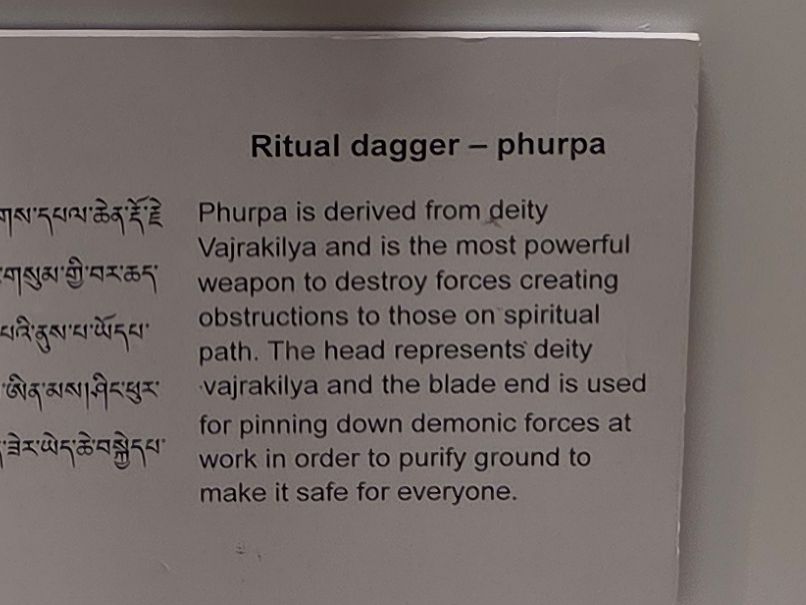
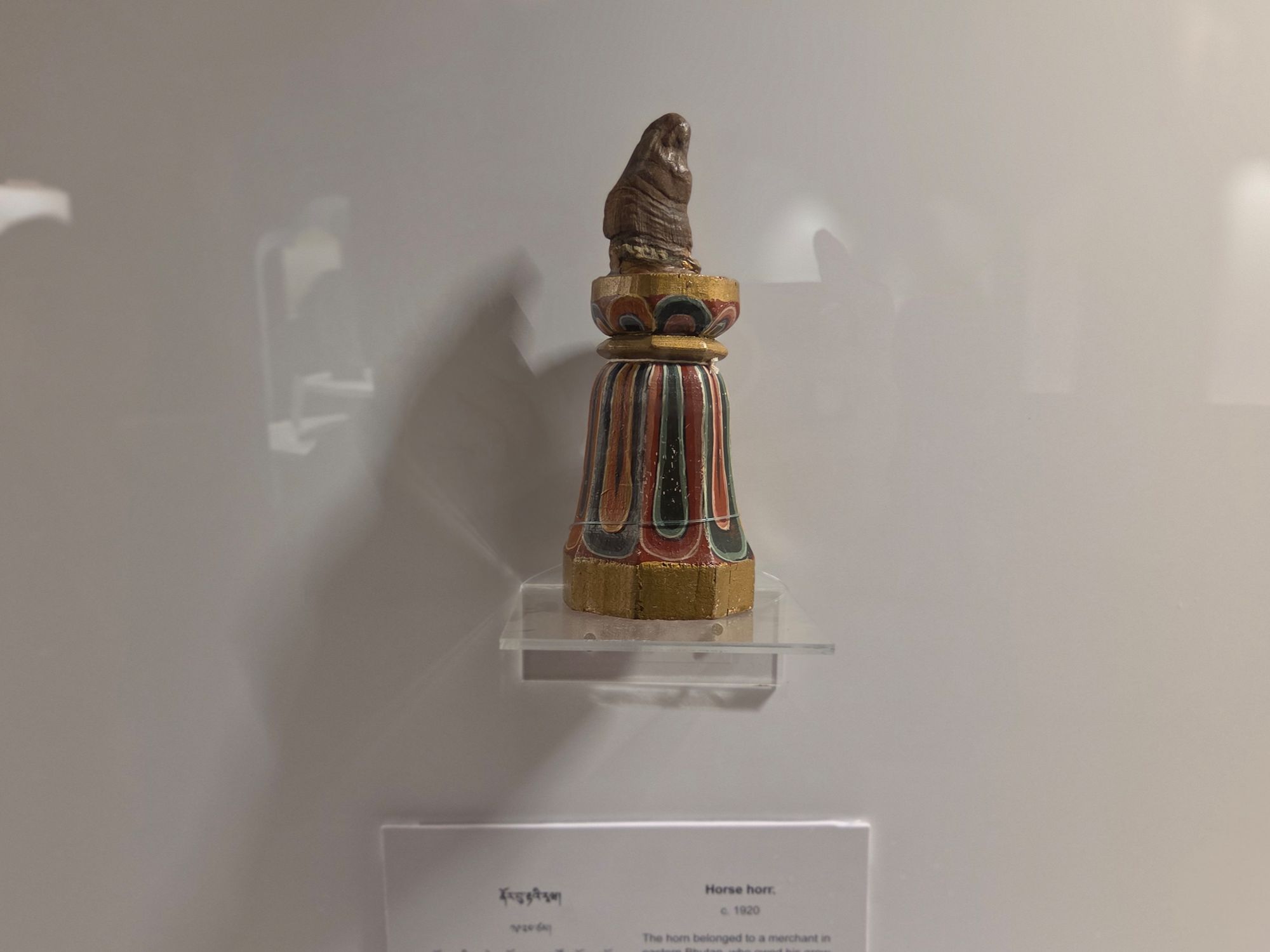
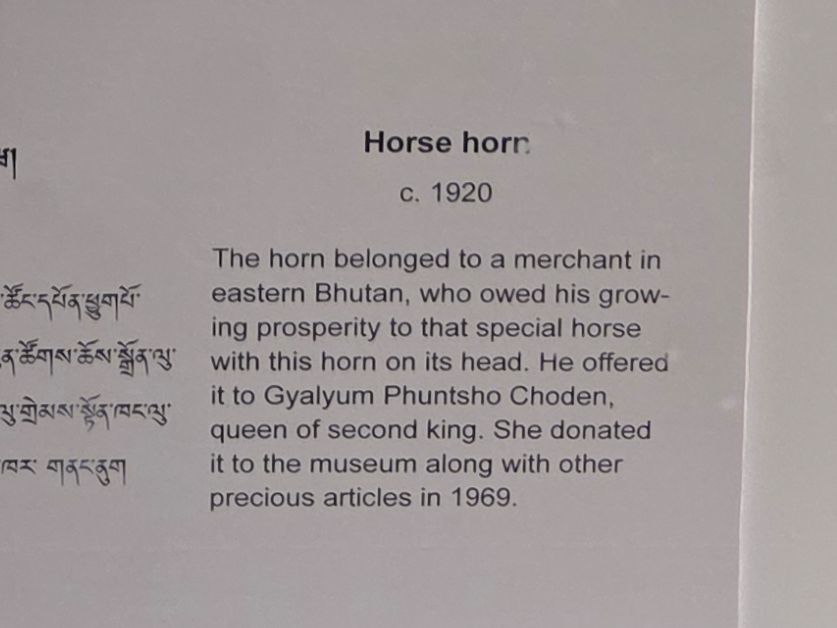
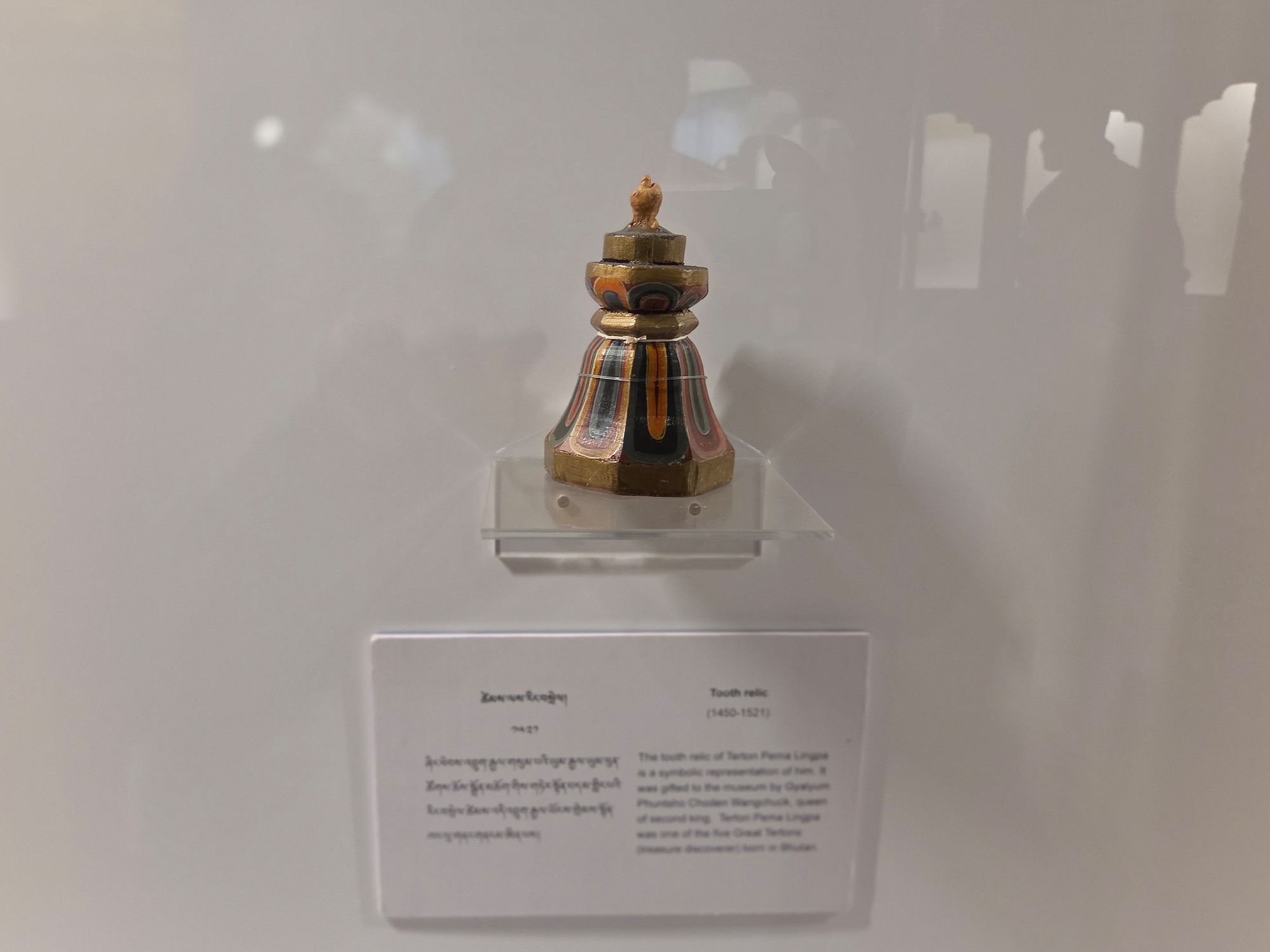
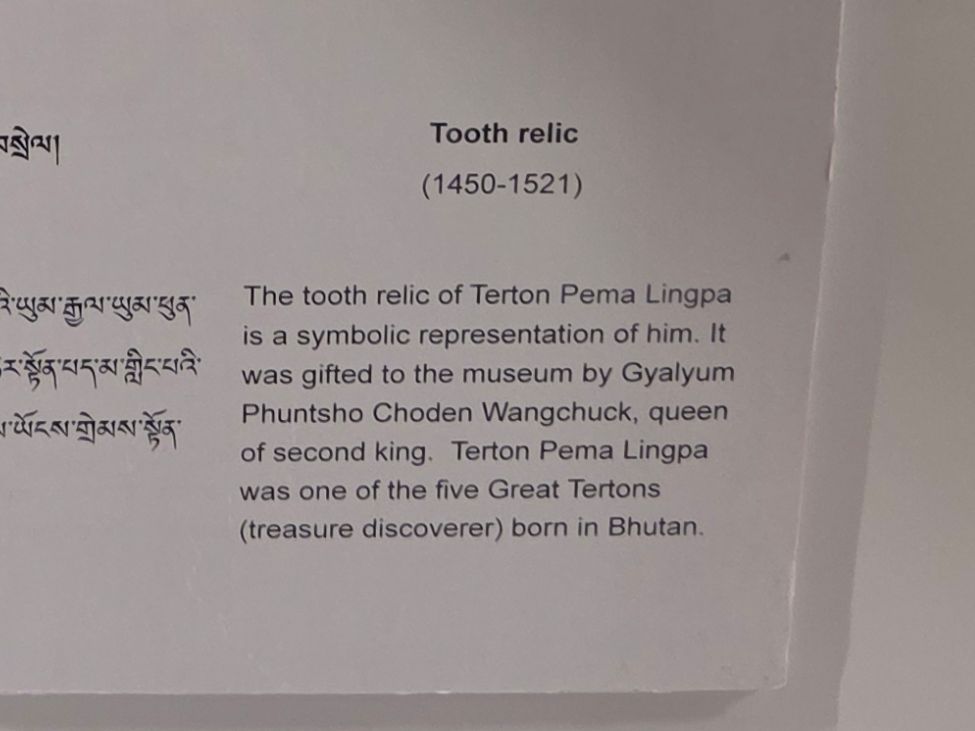
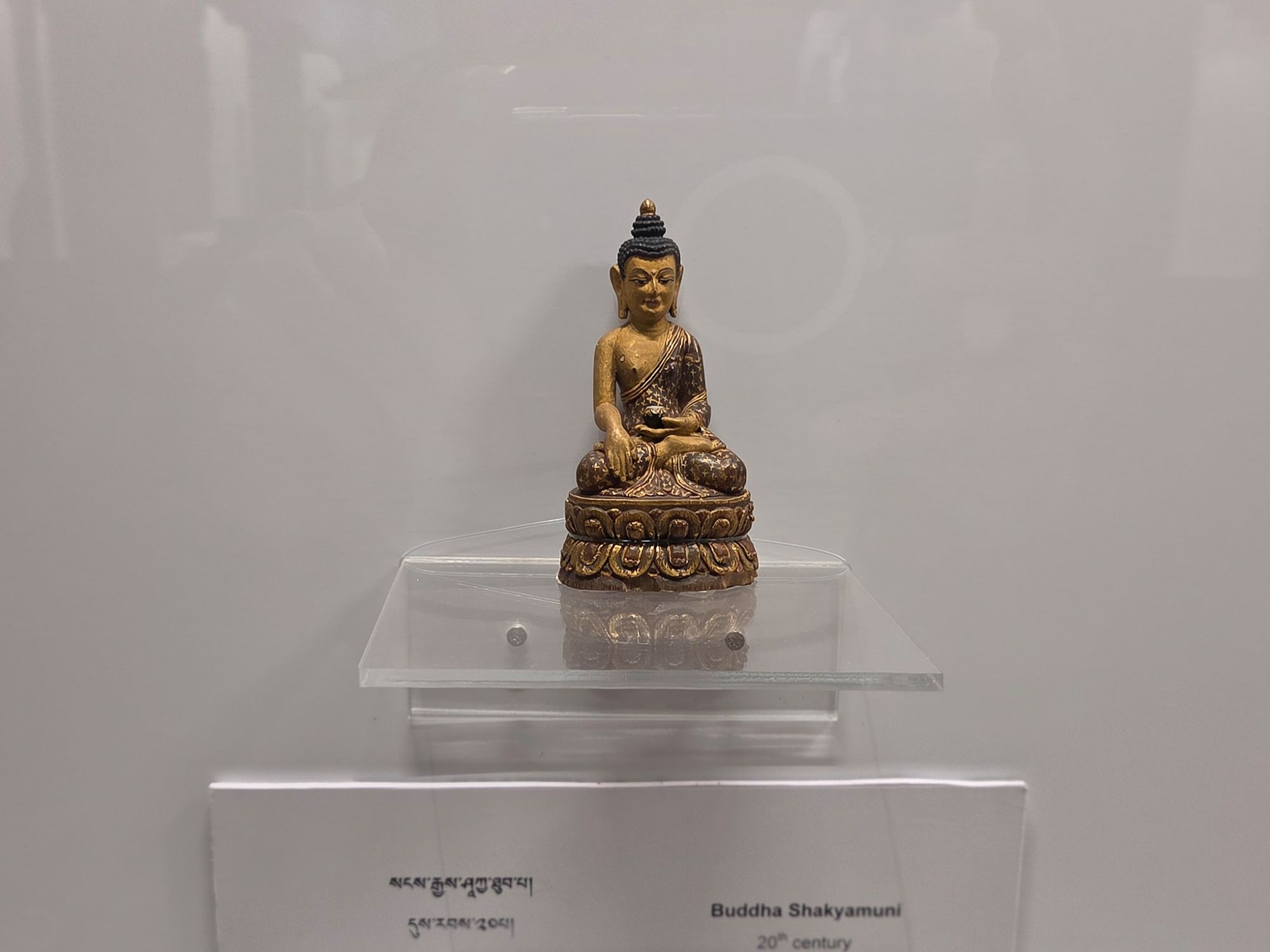
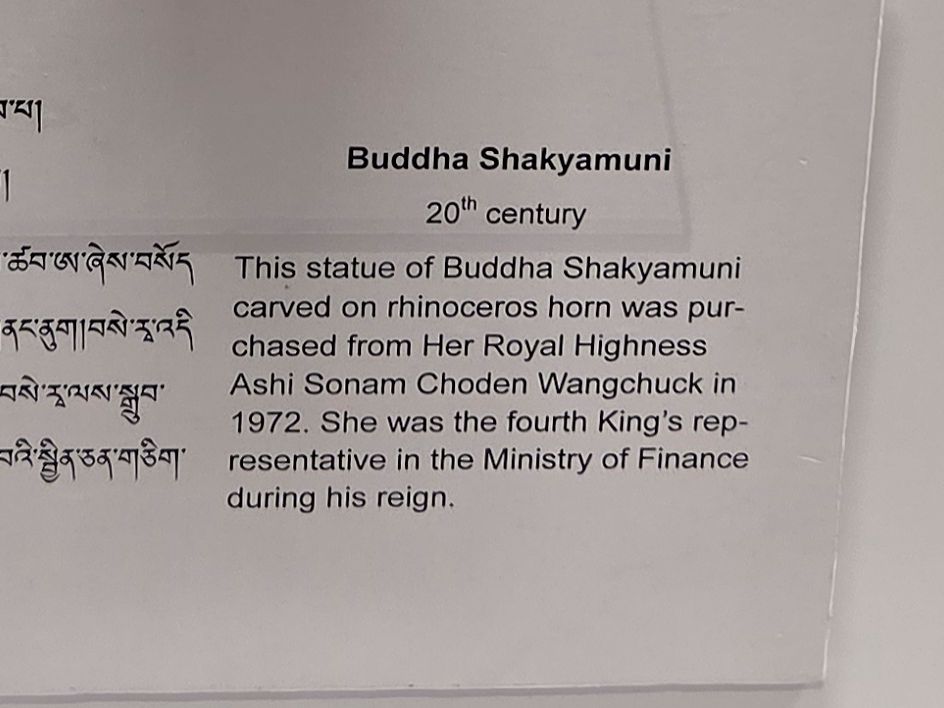
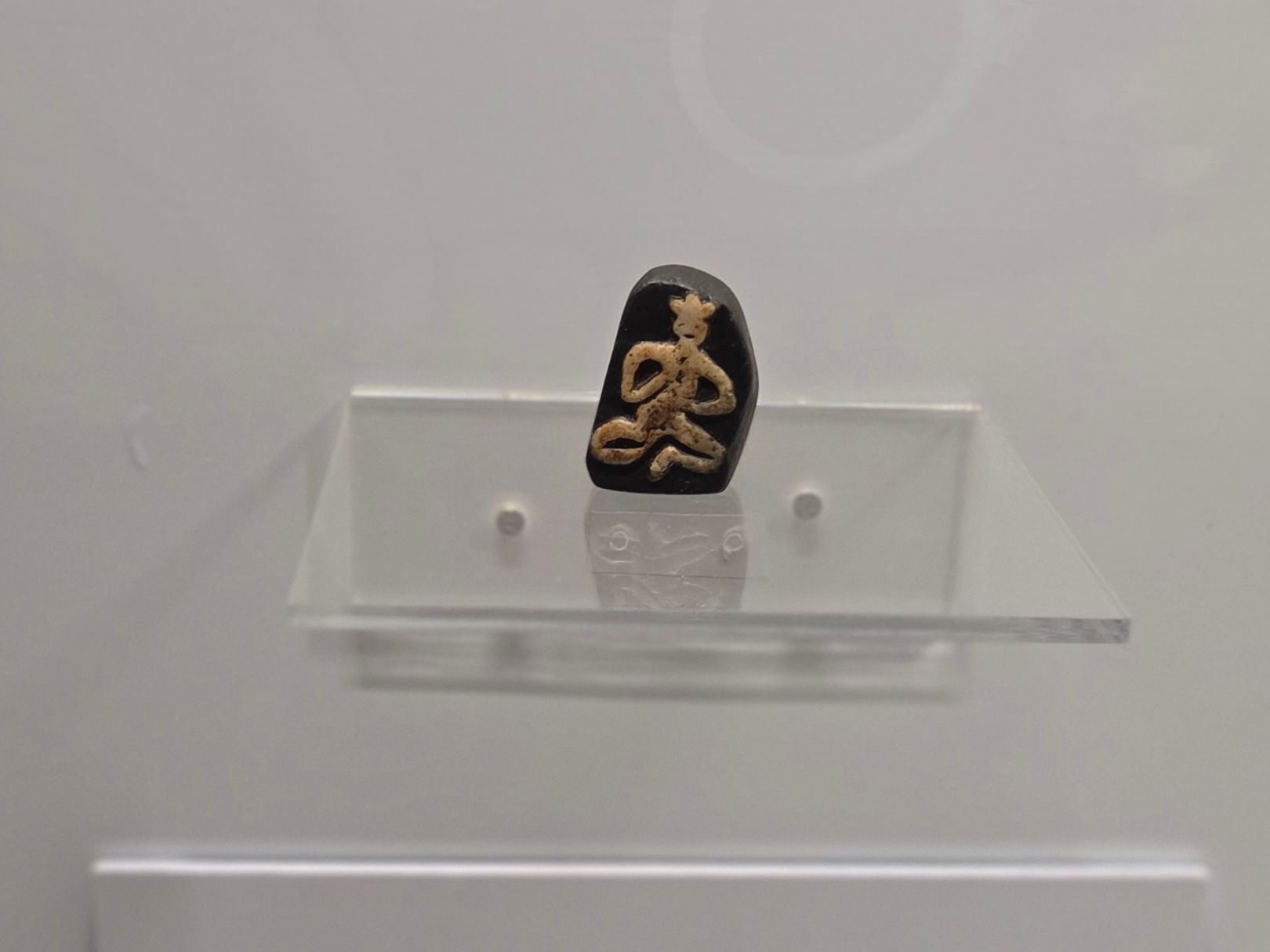
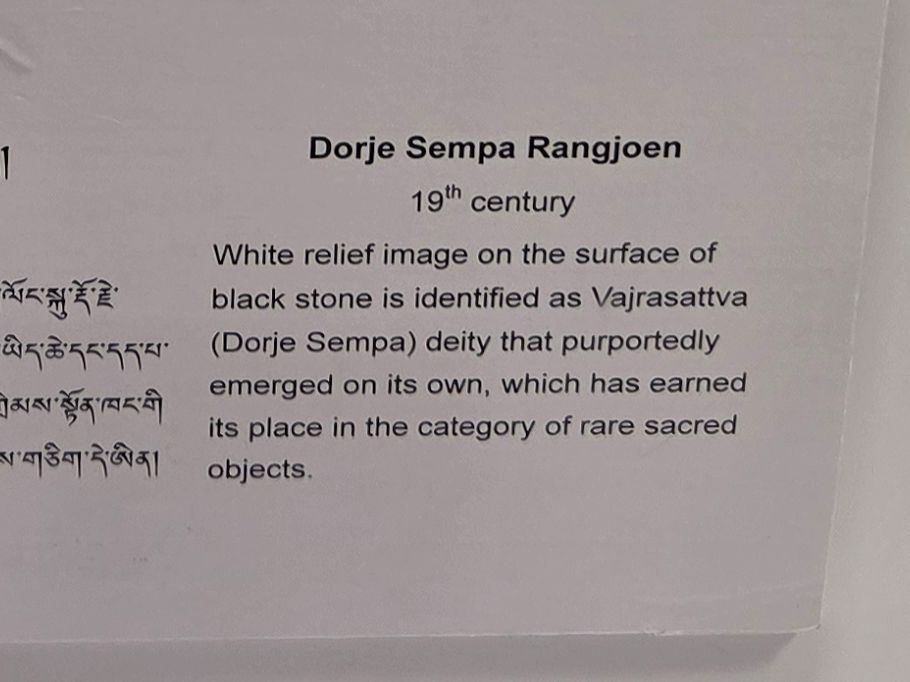
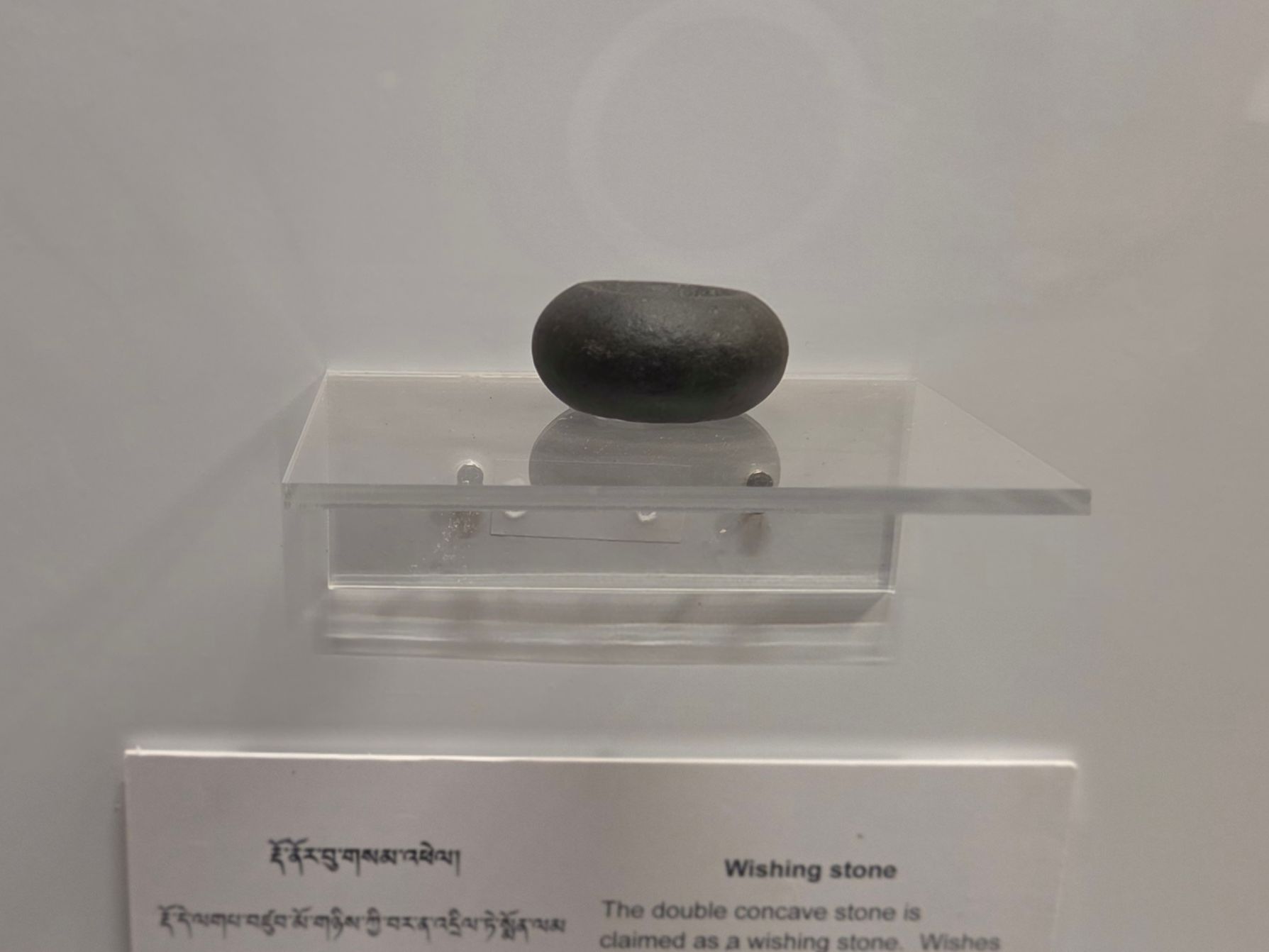
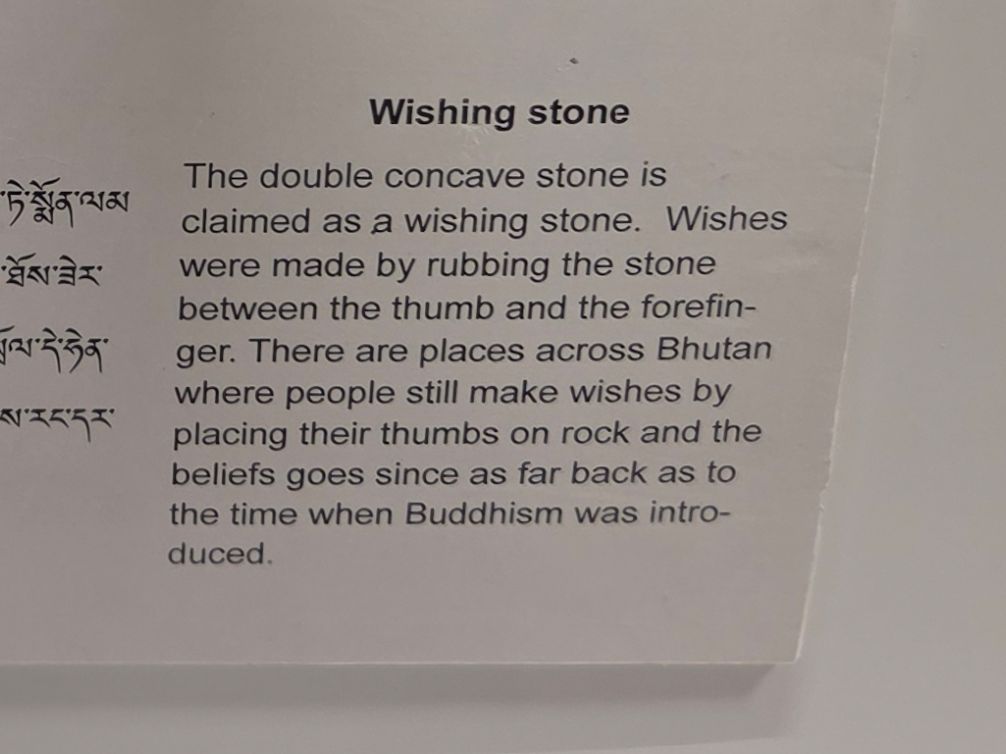
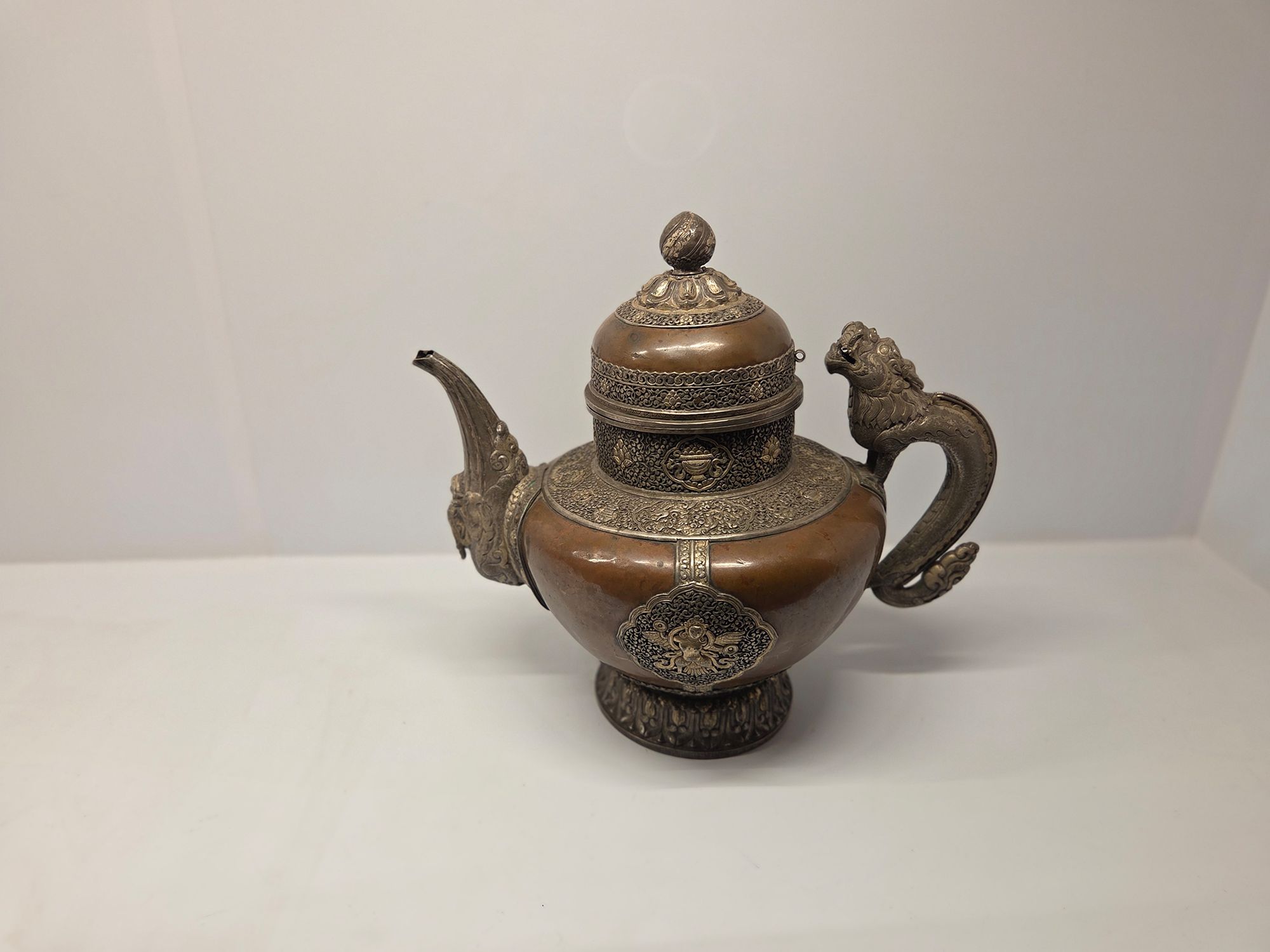
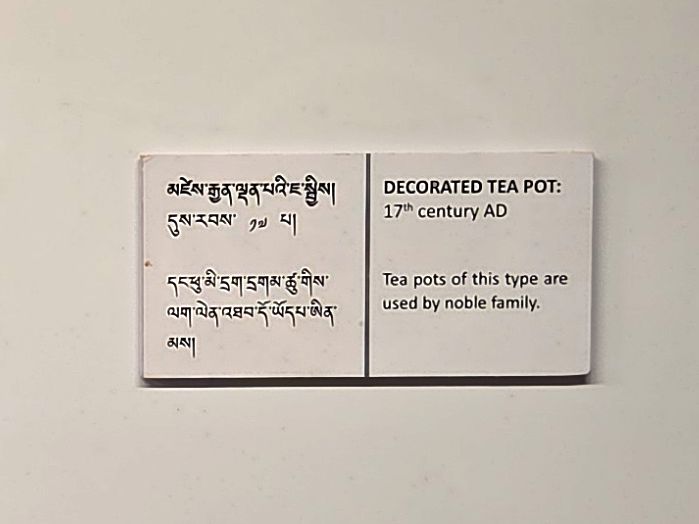
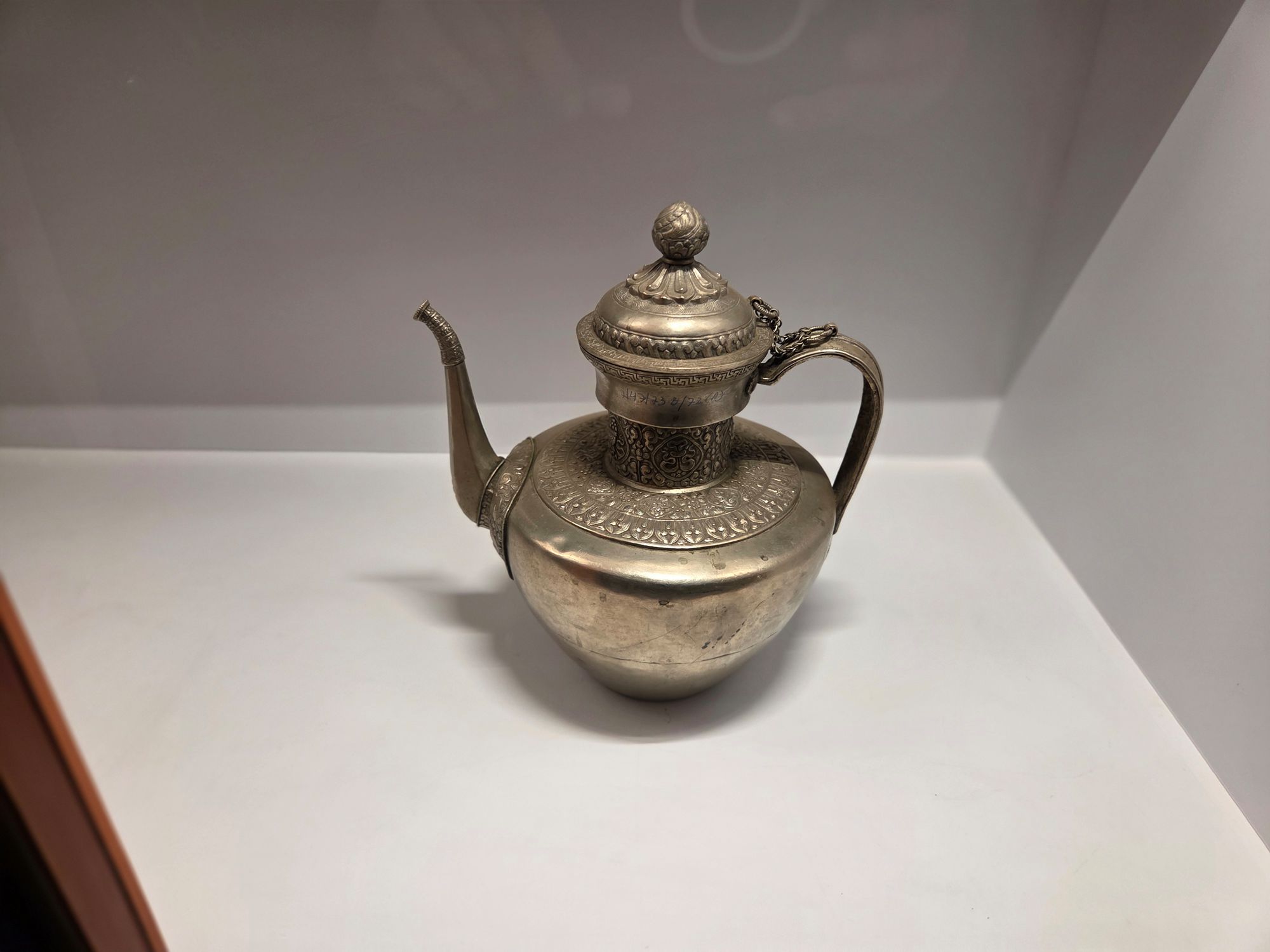
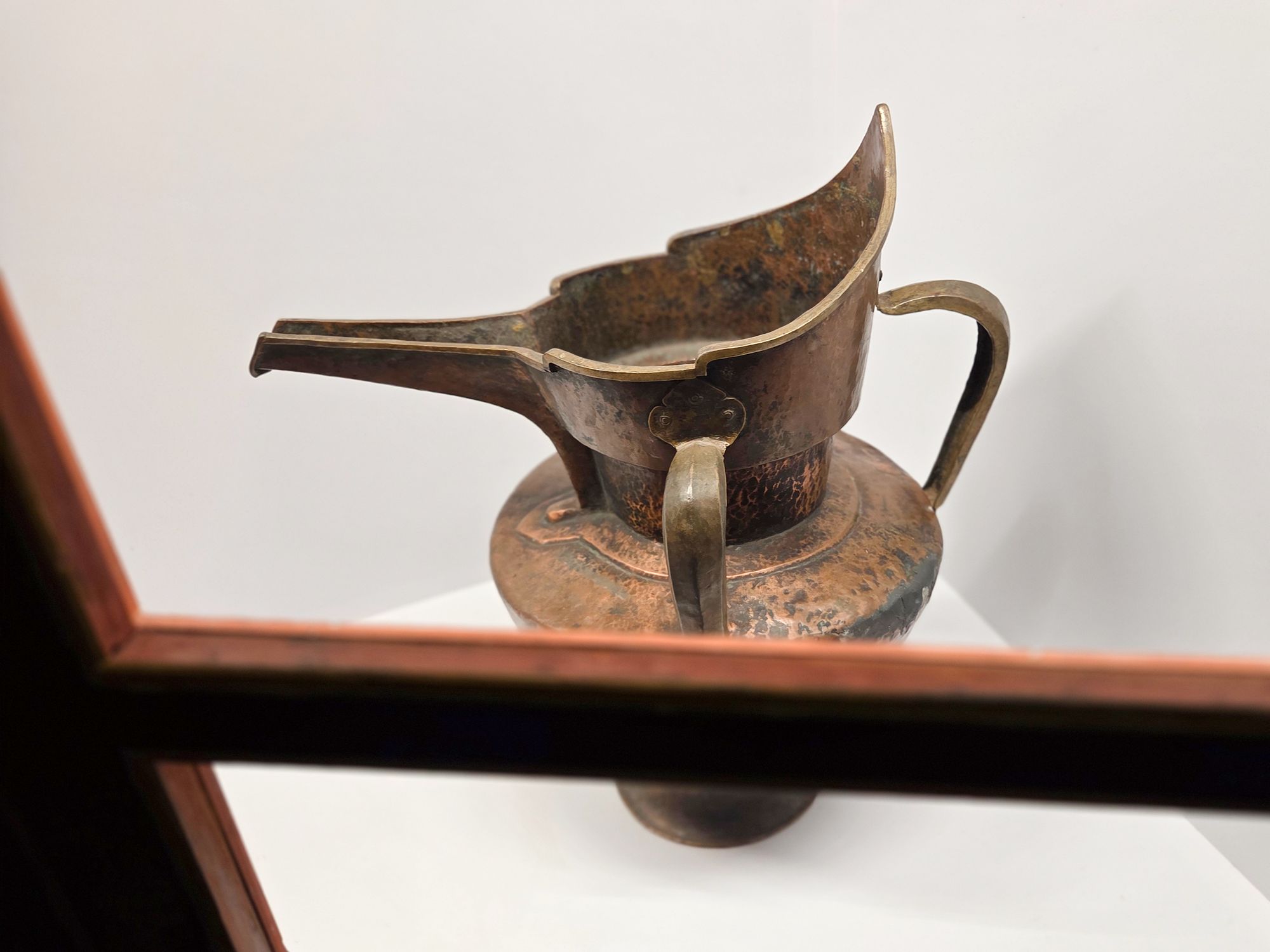
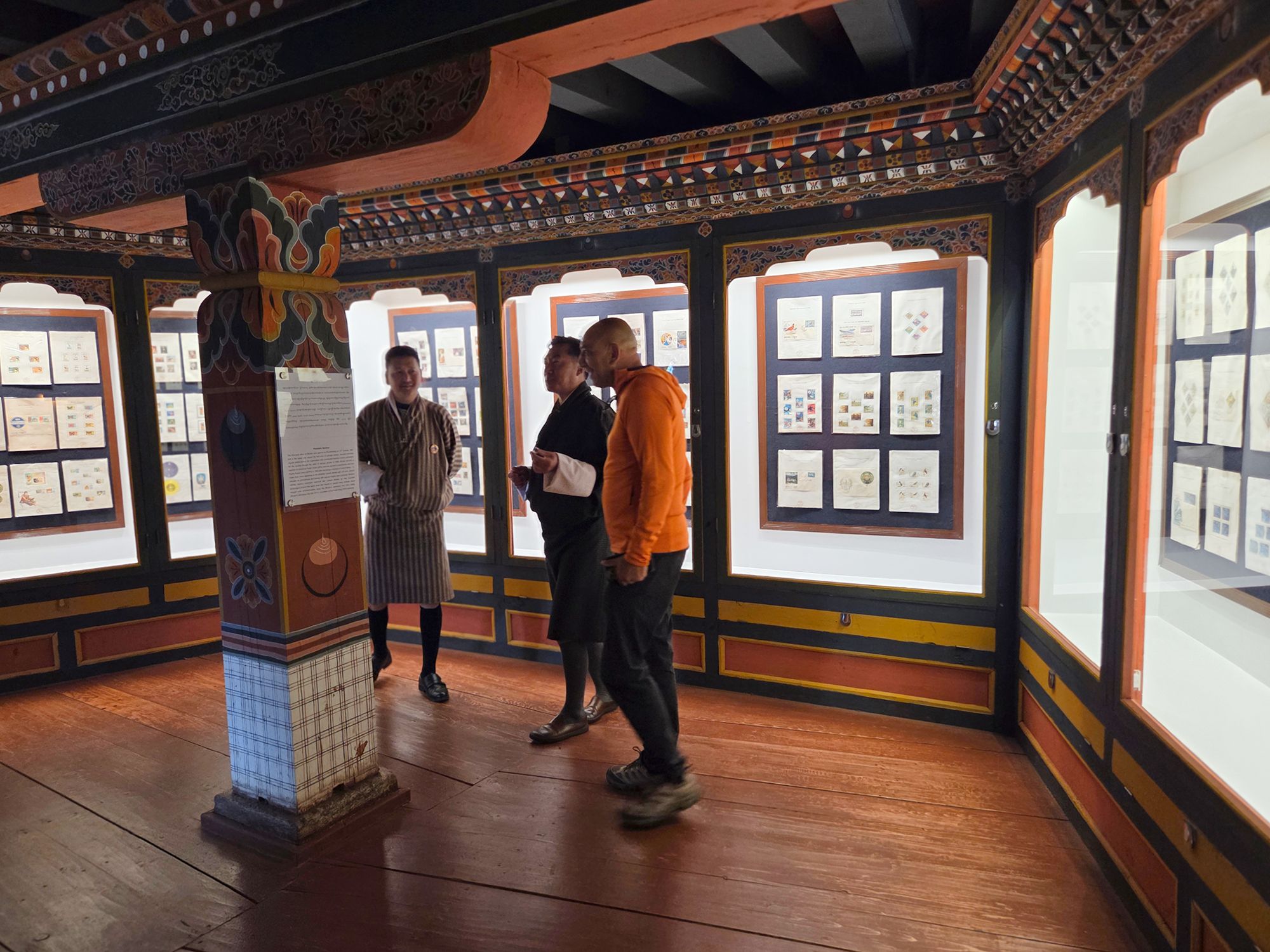
Stamps
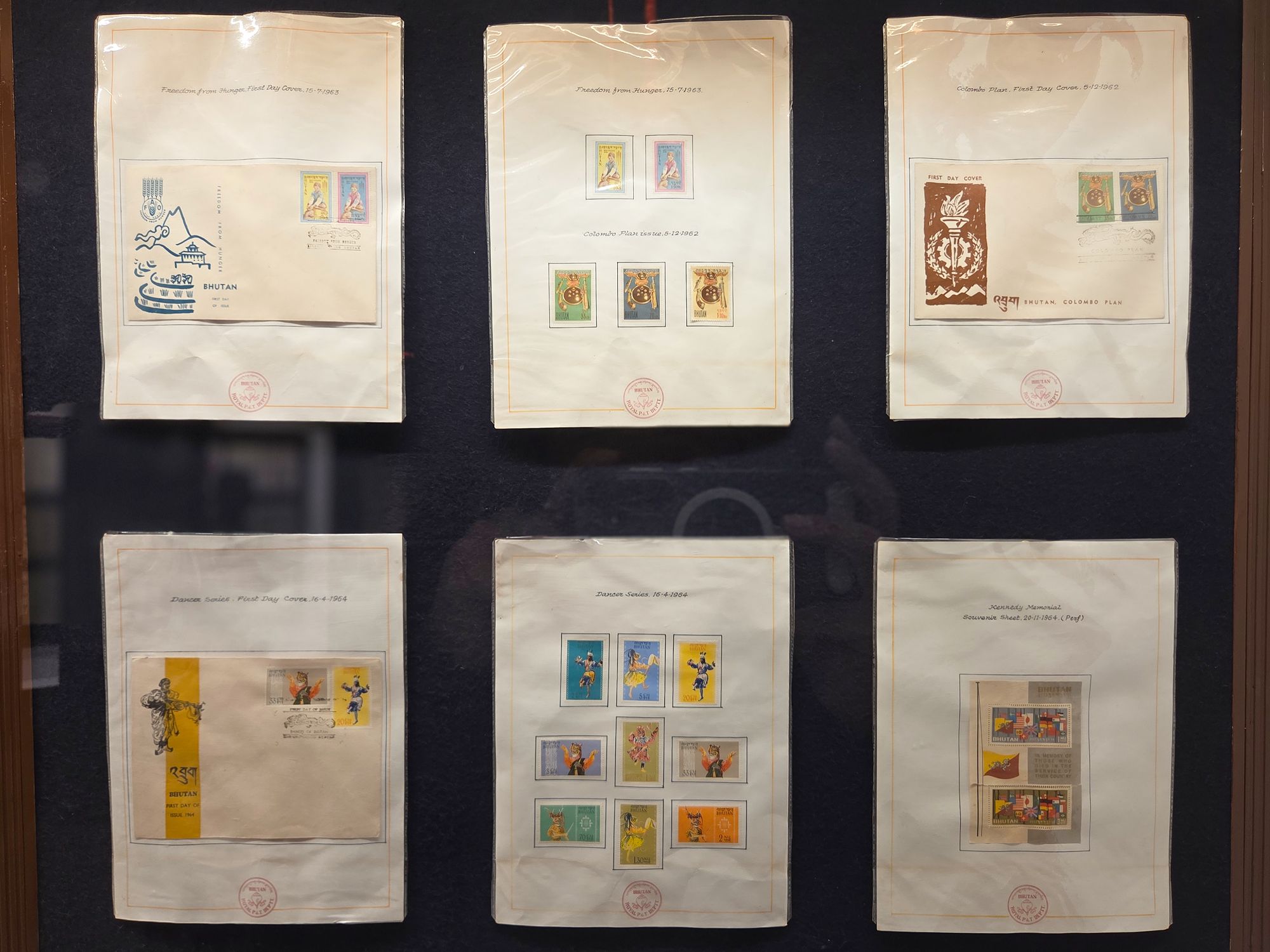
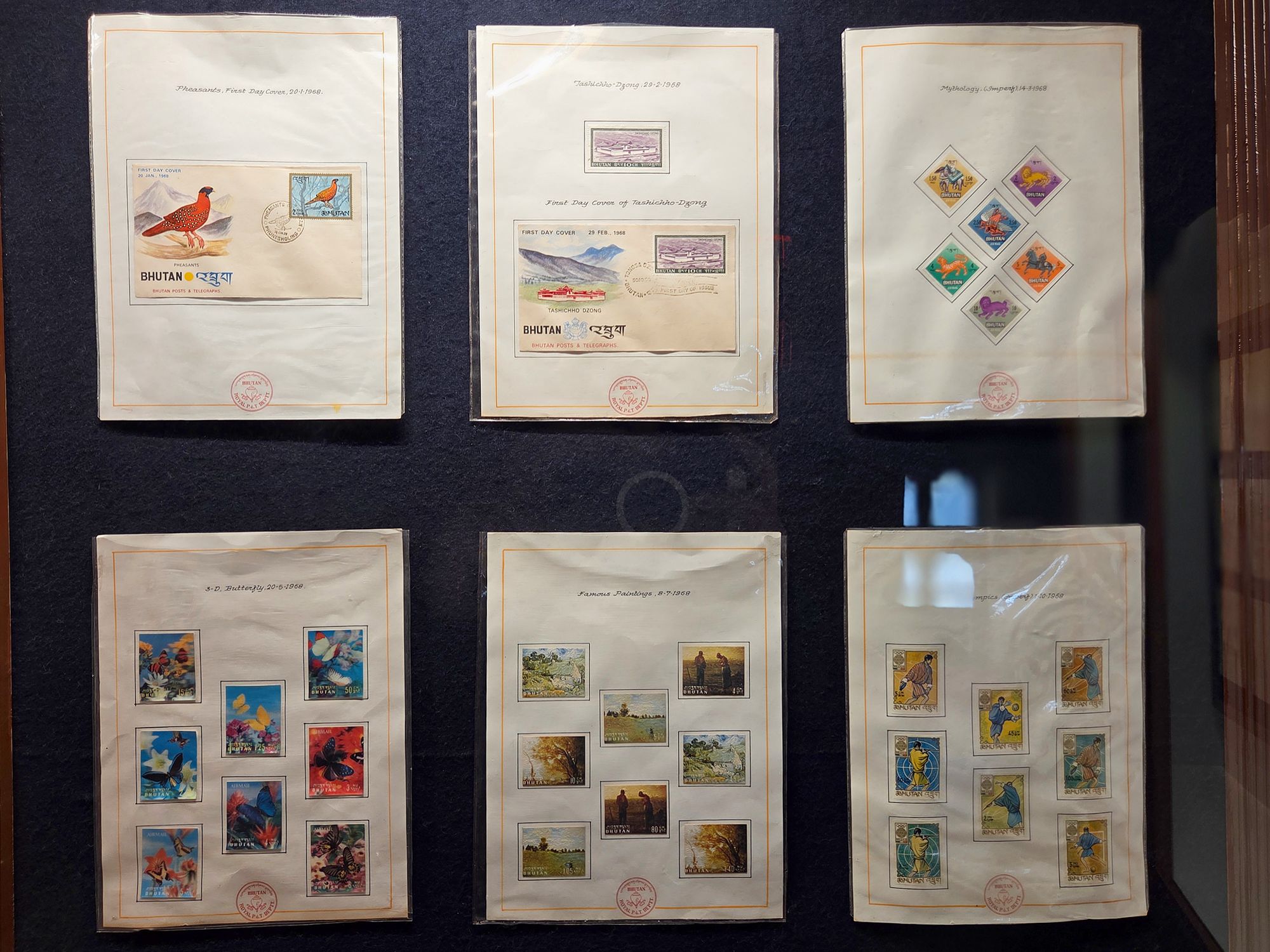
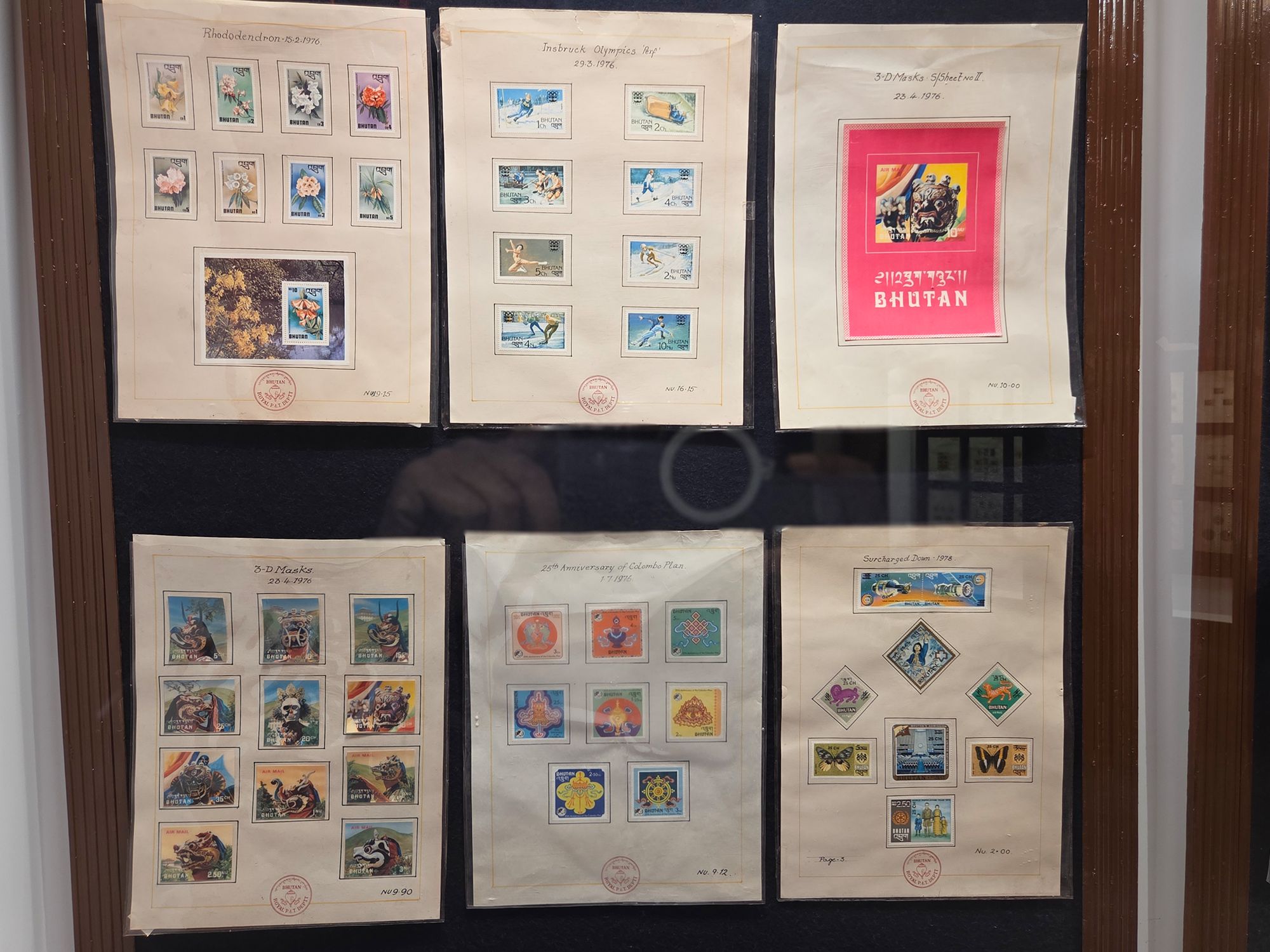
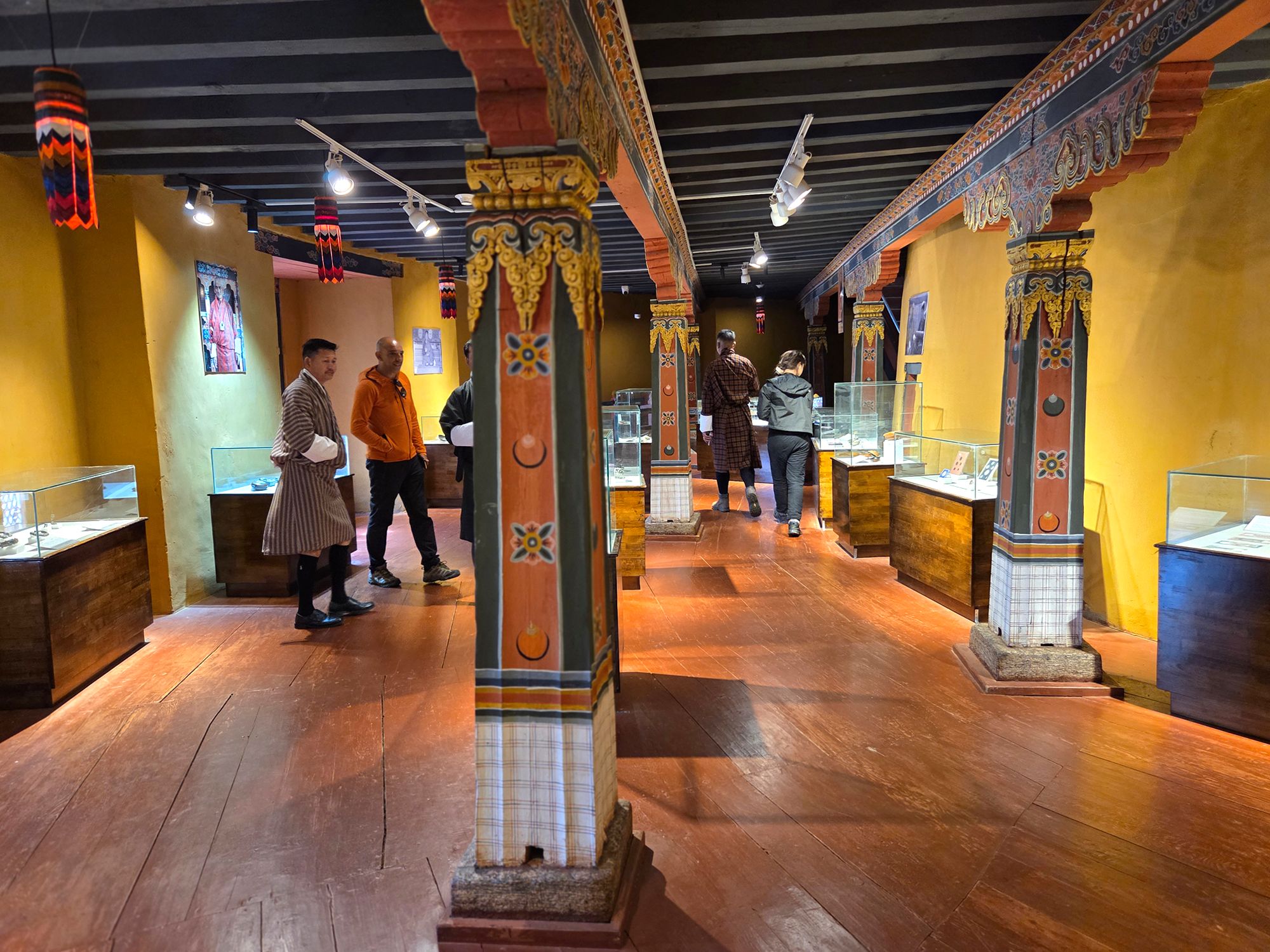
Traditional Bhutanese jewelry on display at the National Museum
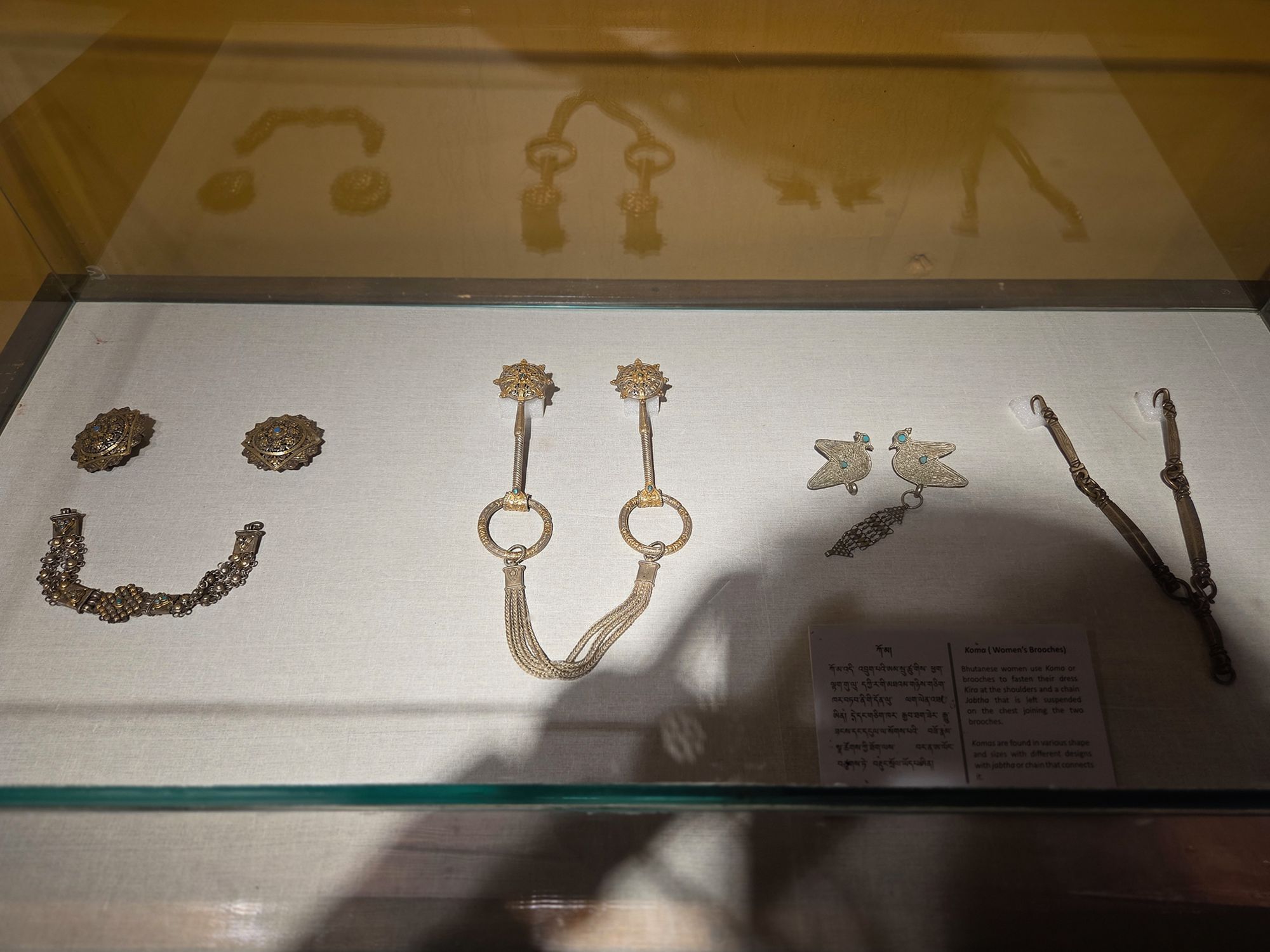
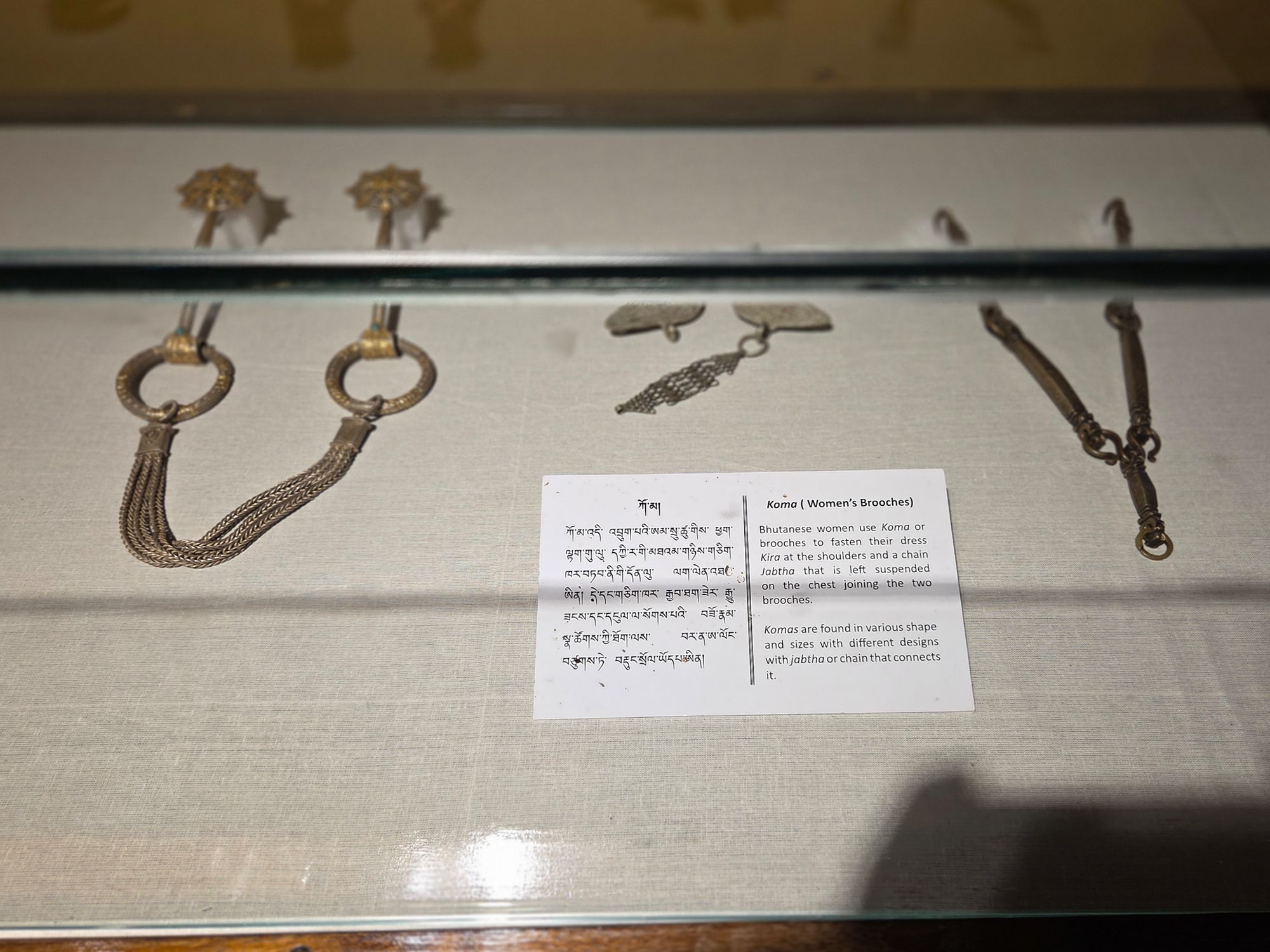
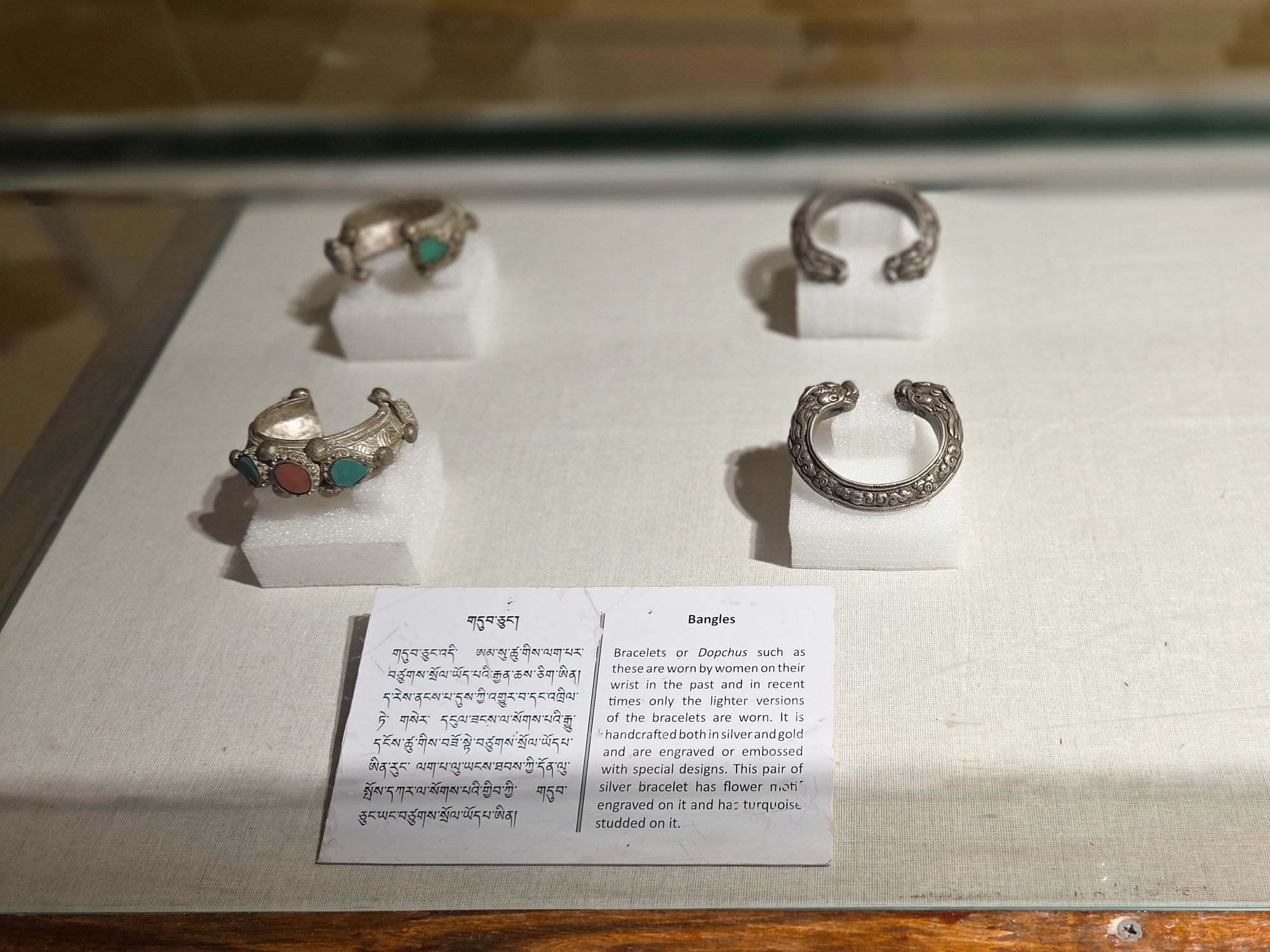
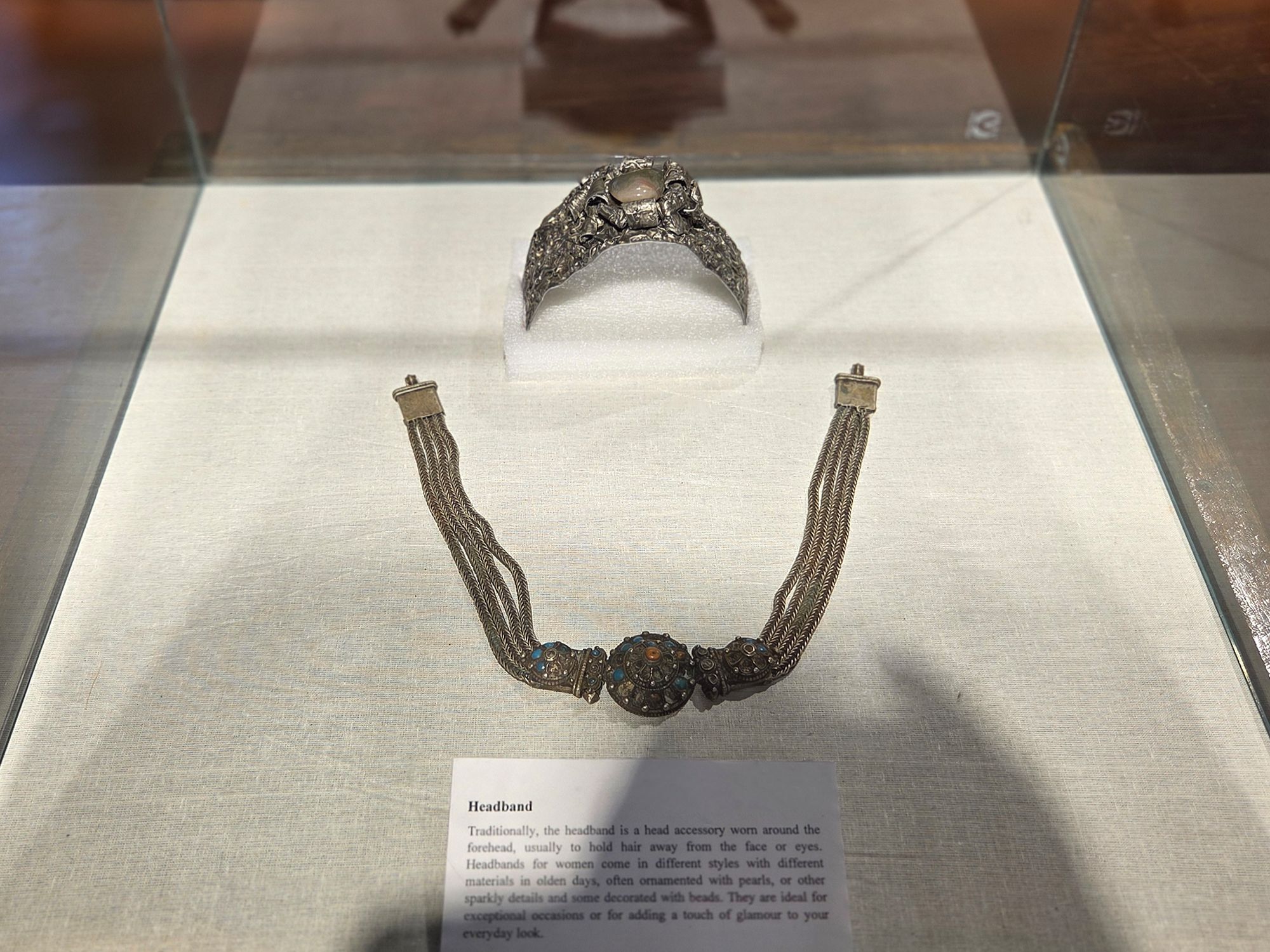
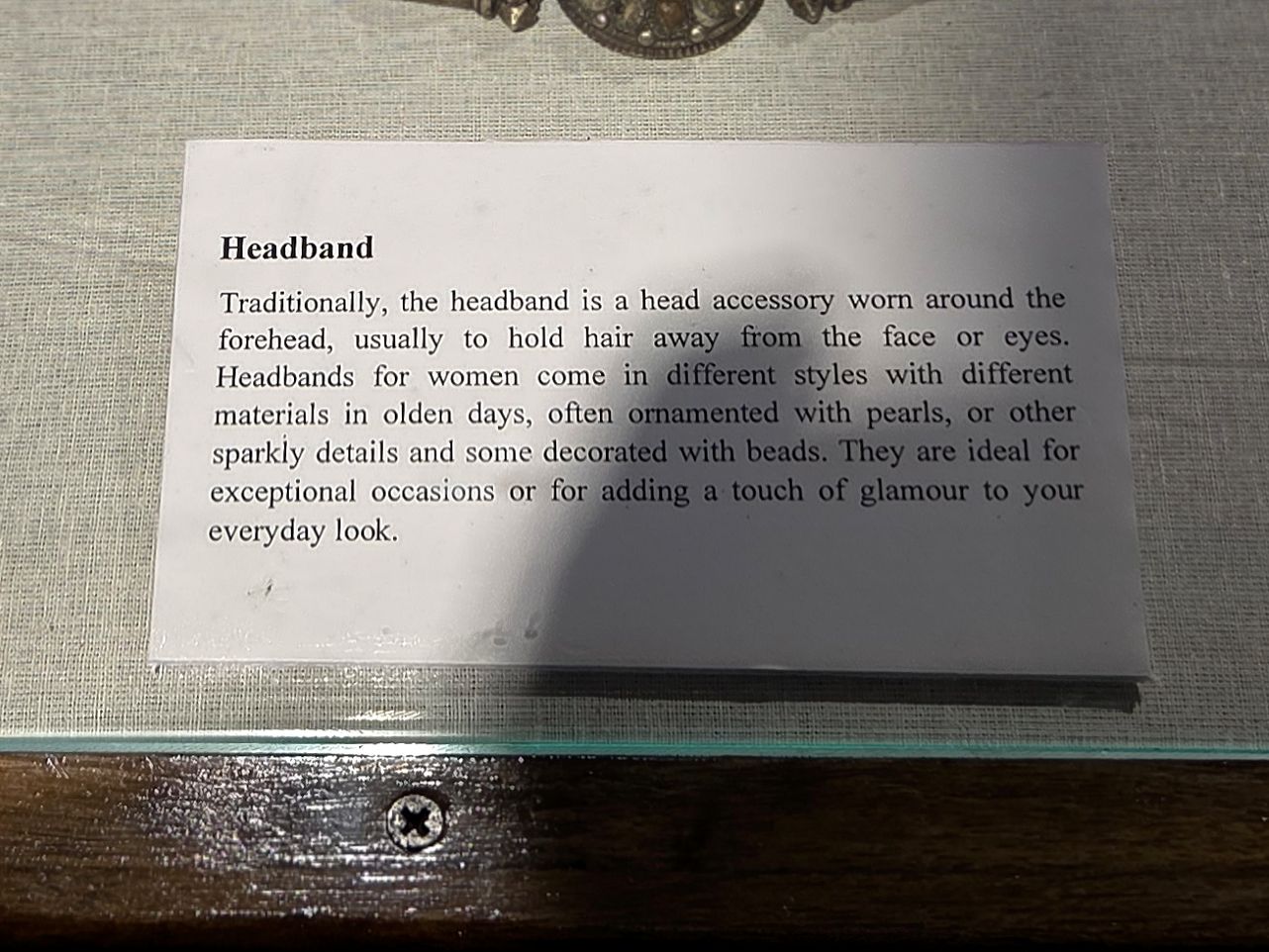
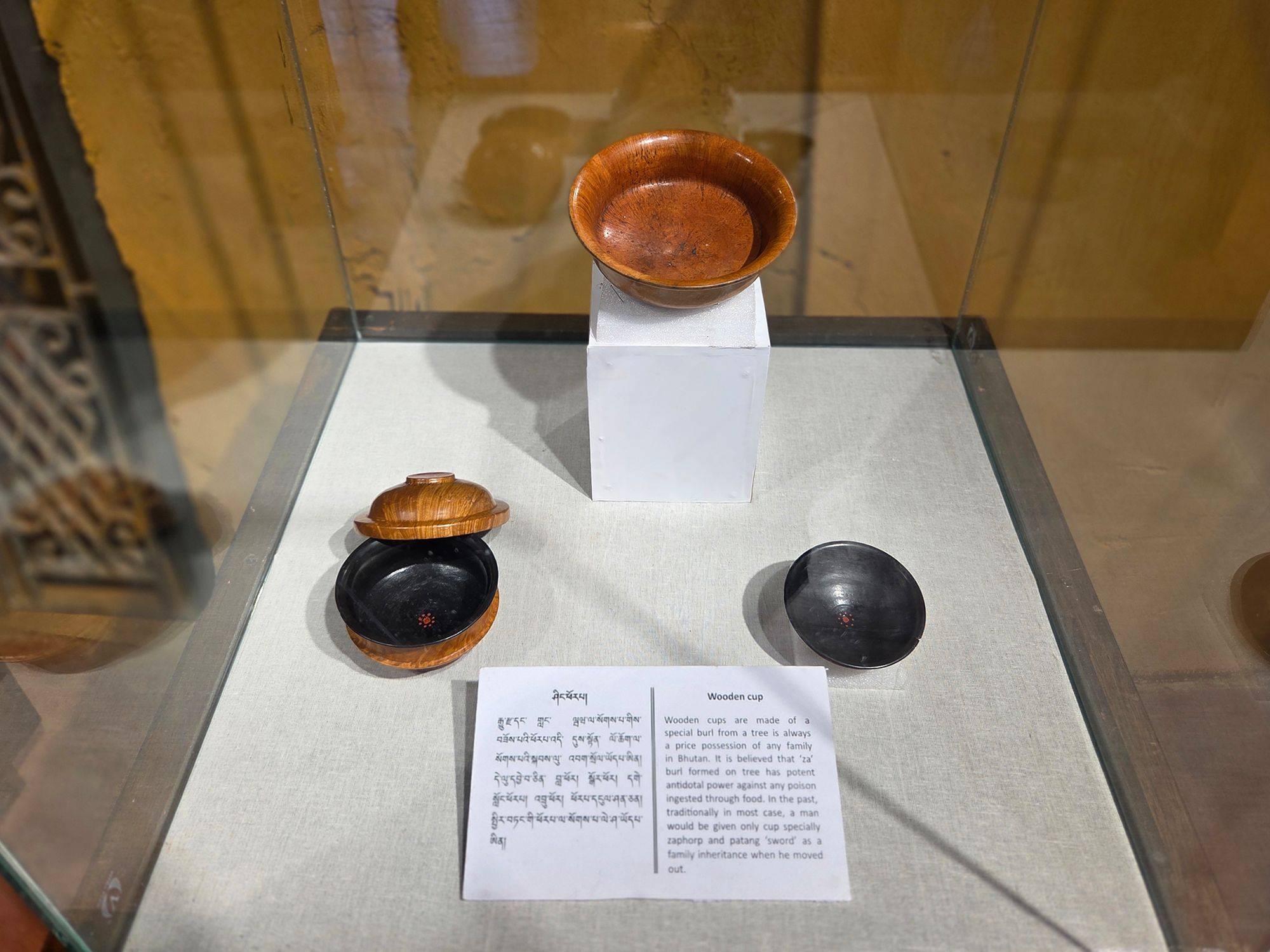
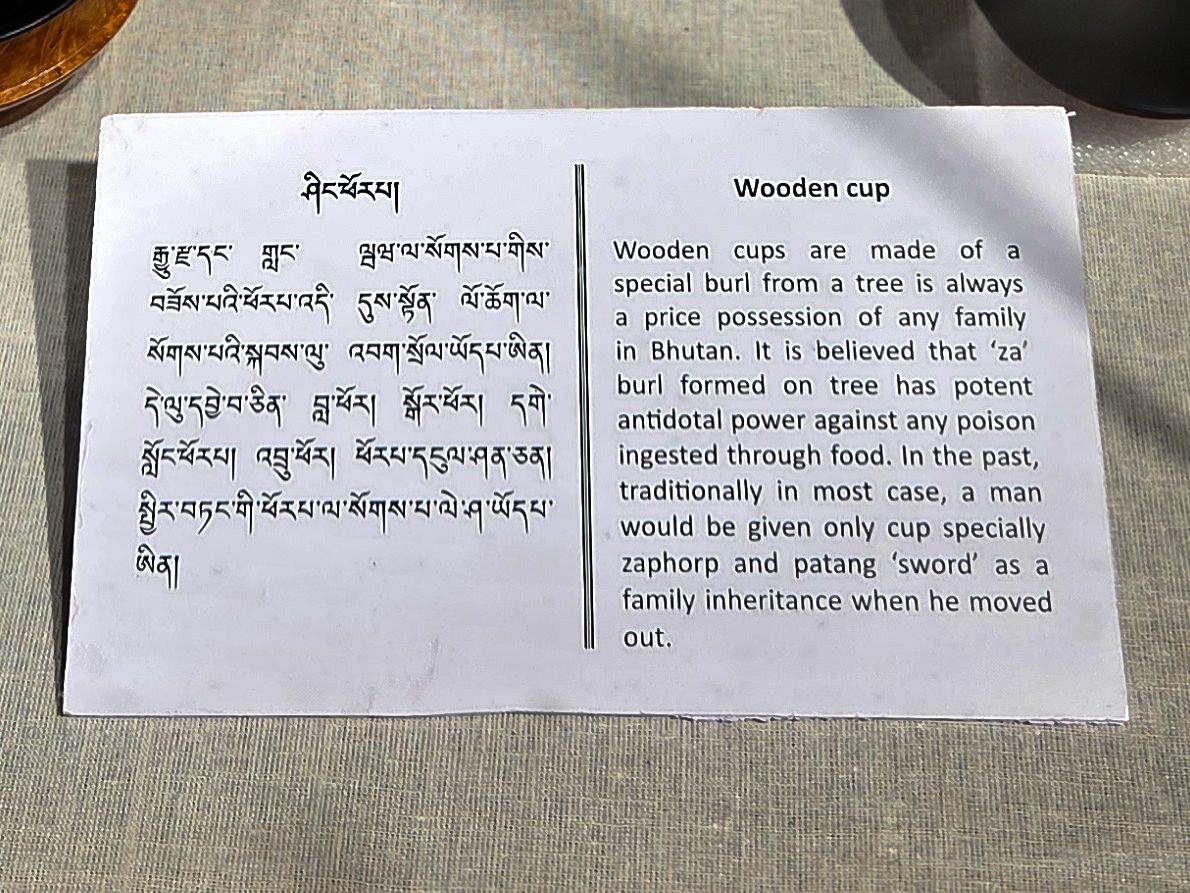
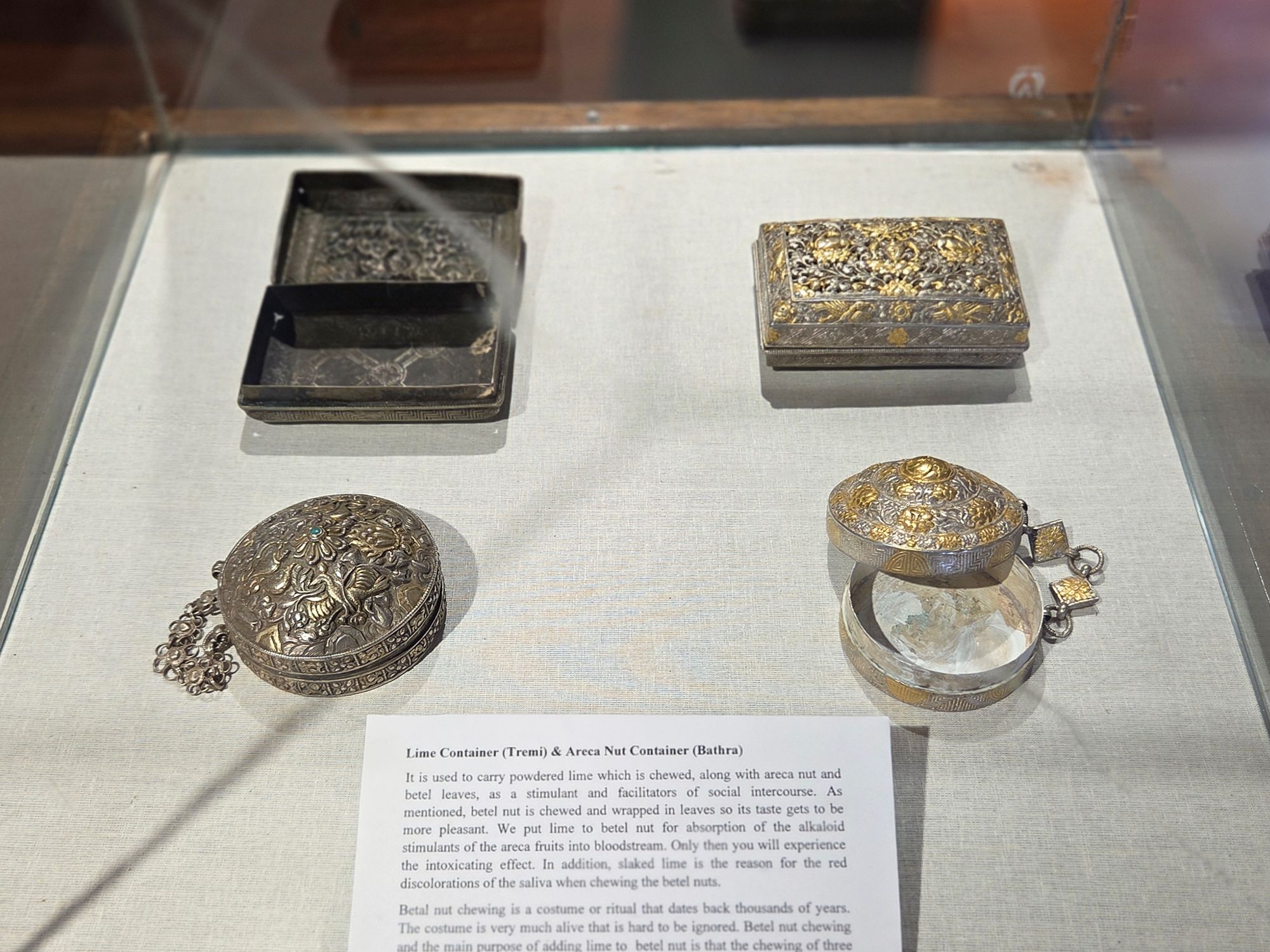
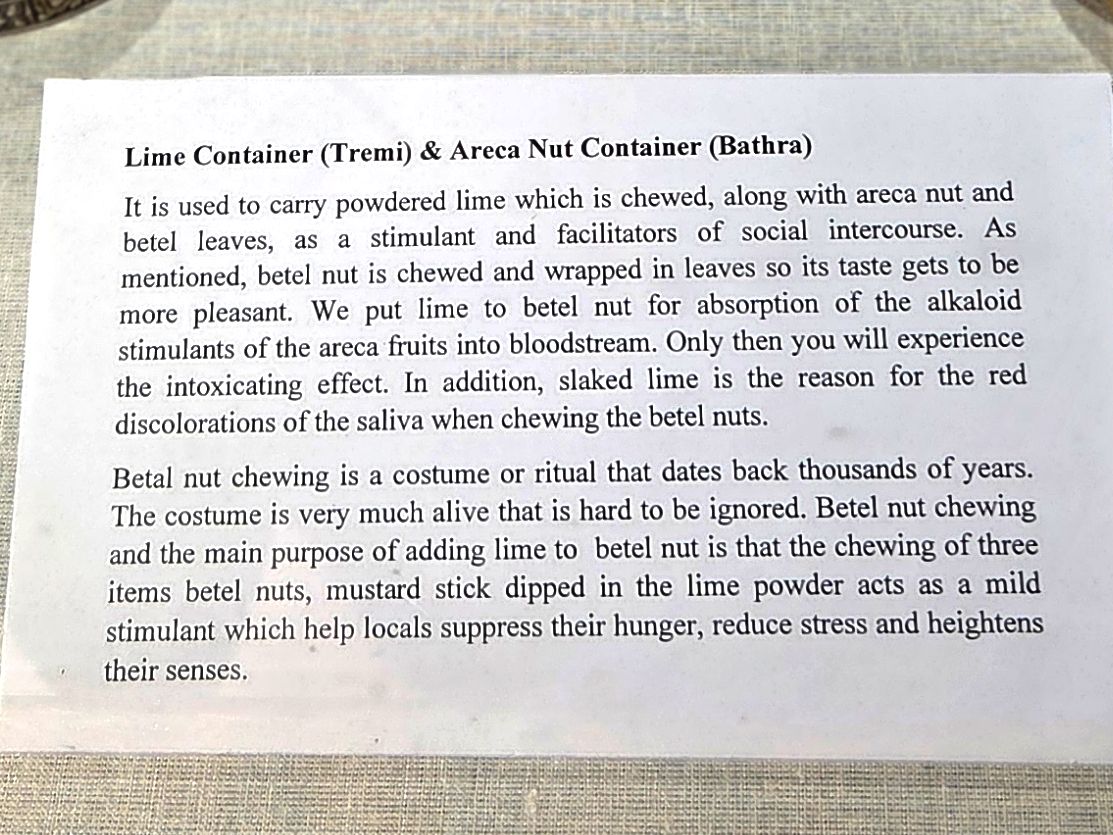
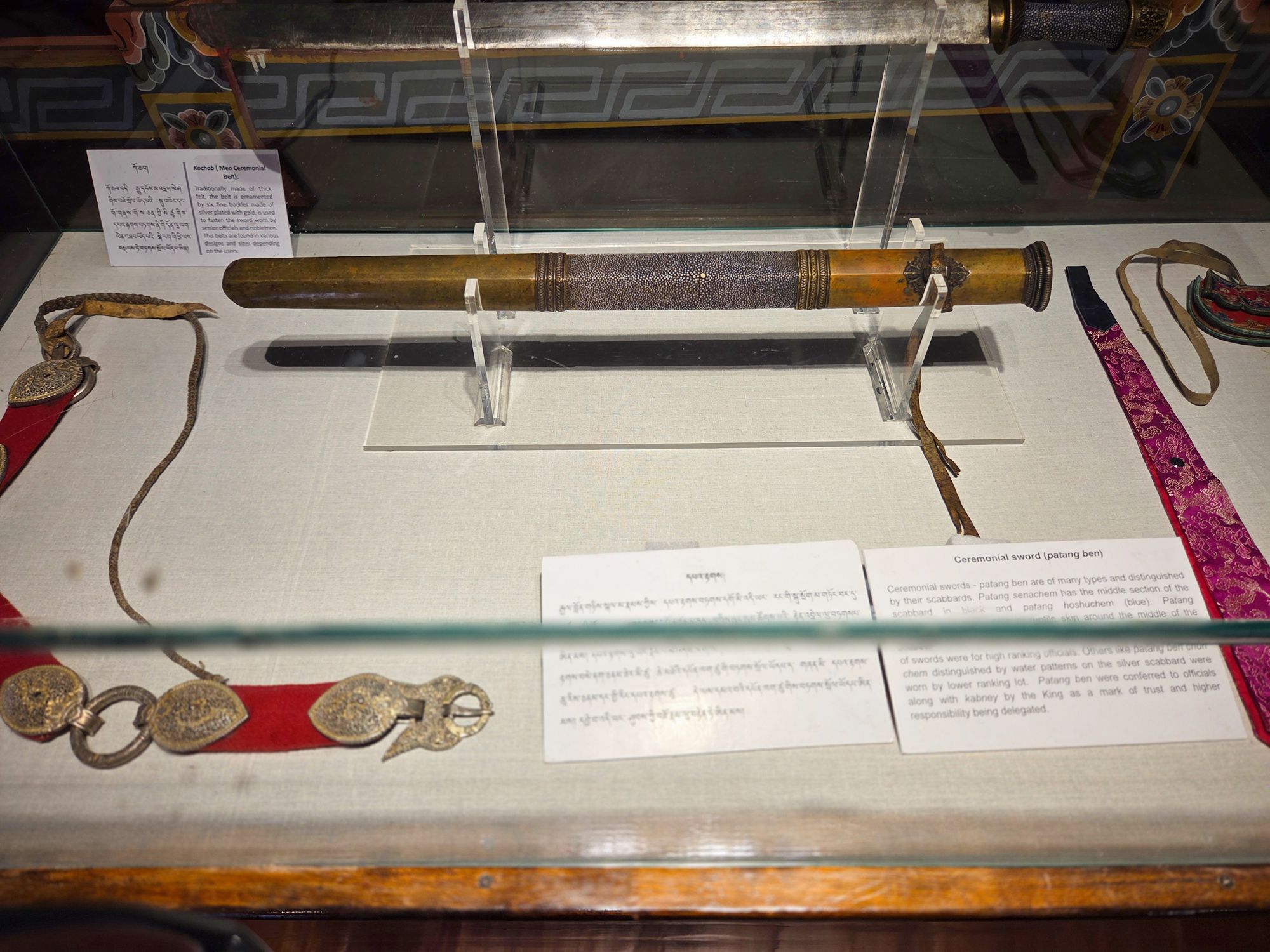
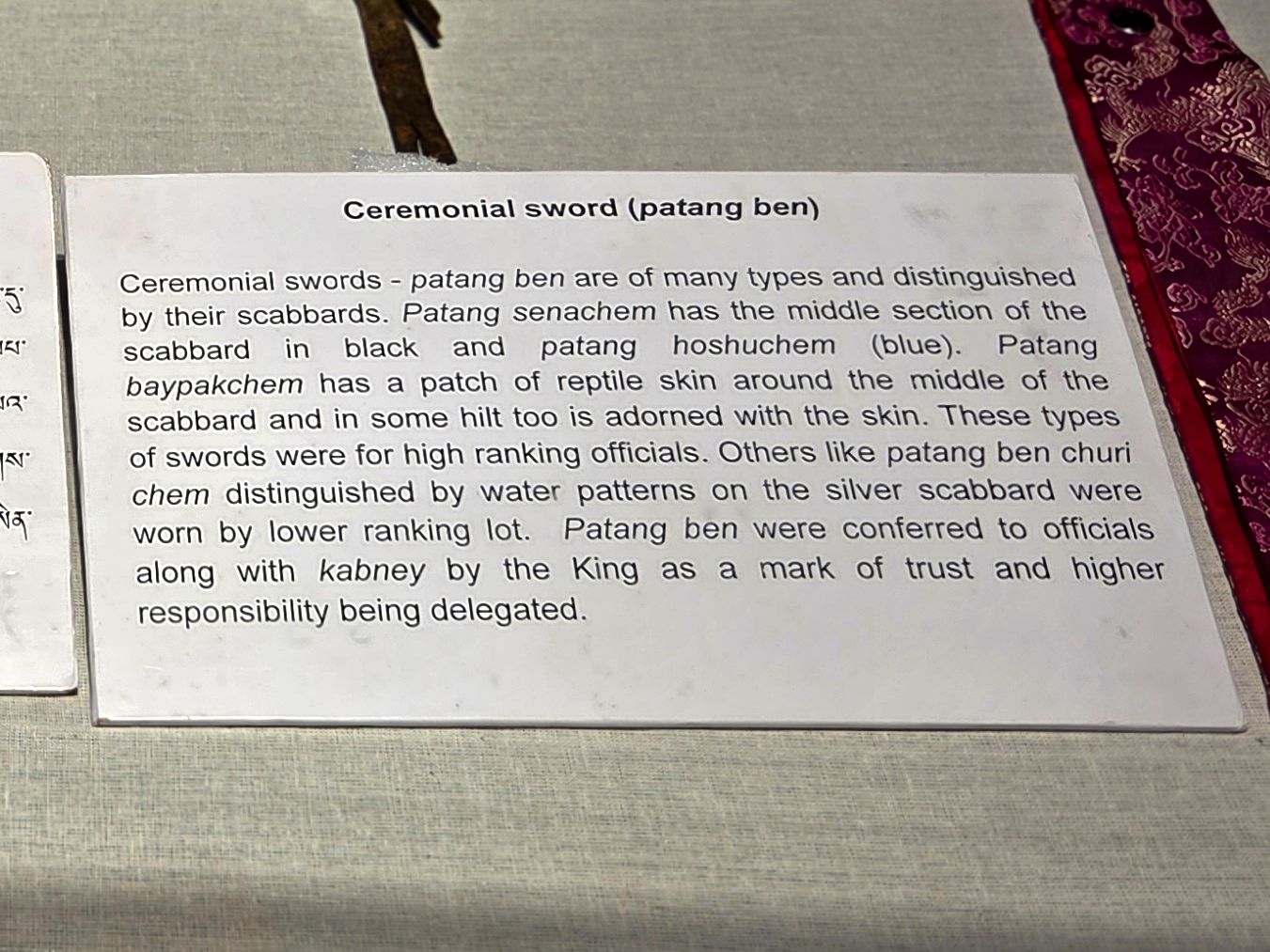
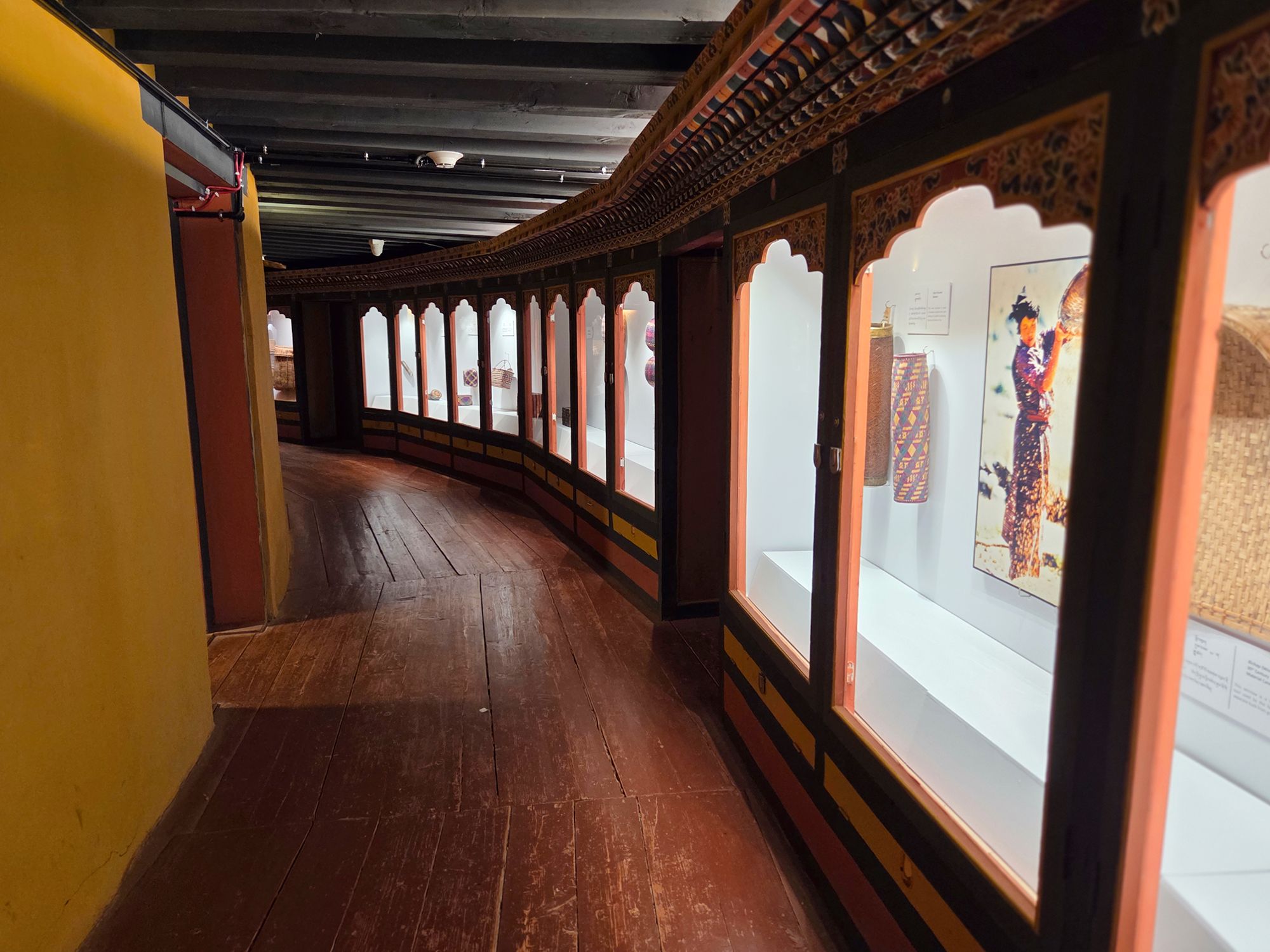
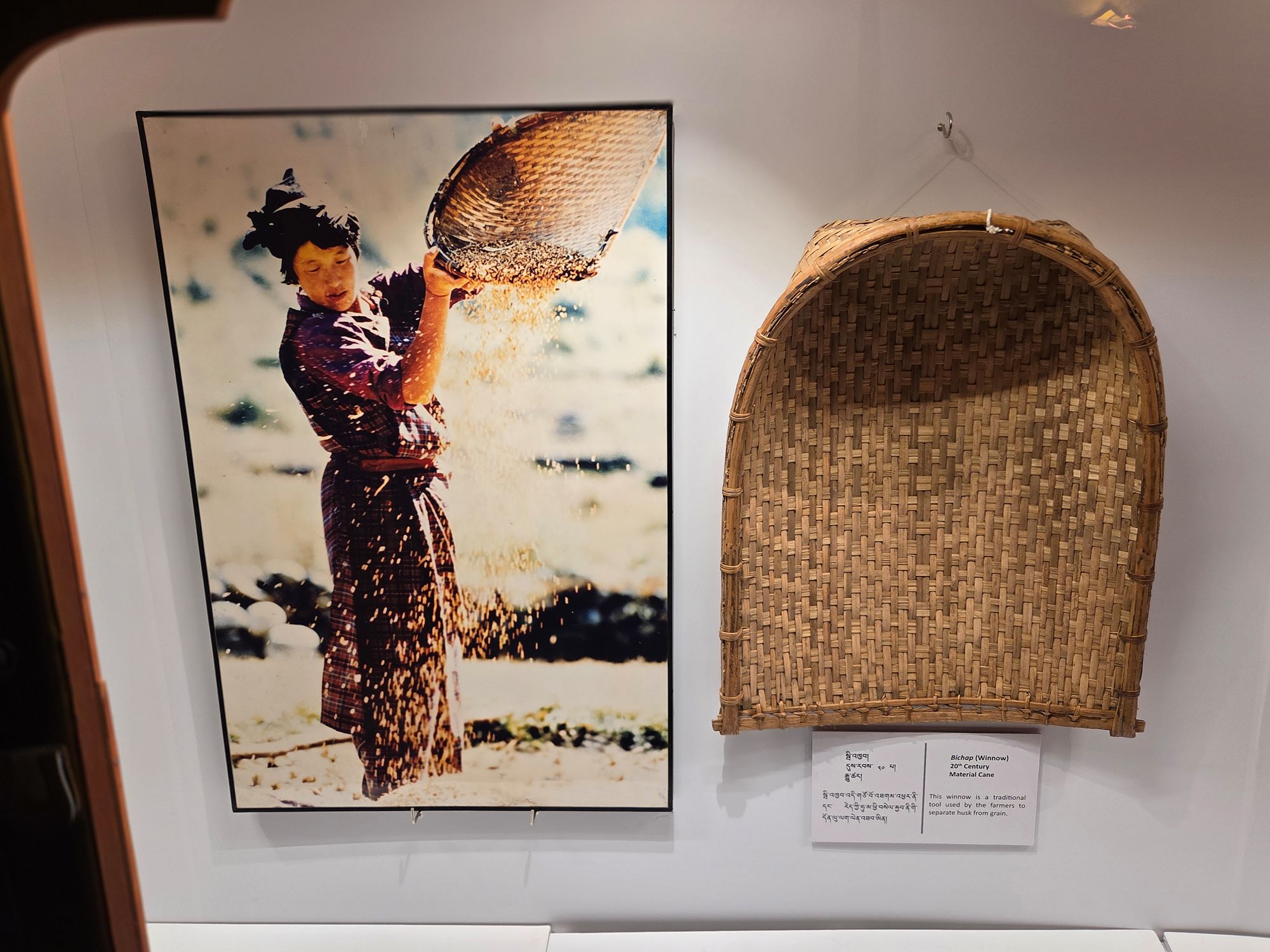
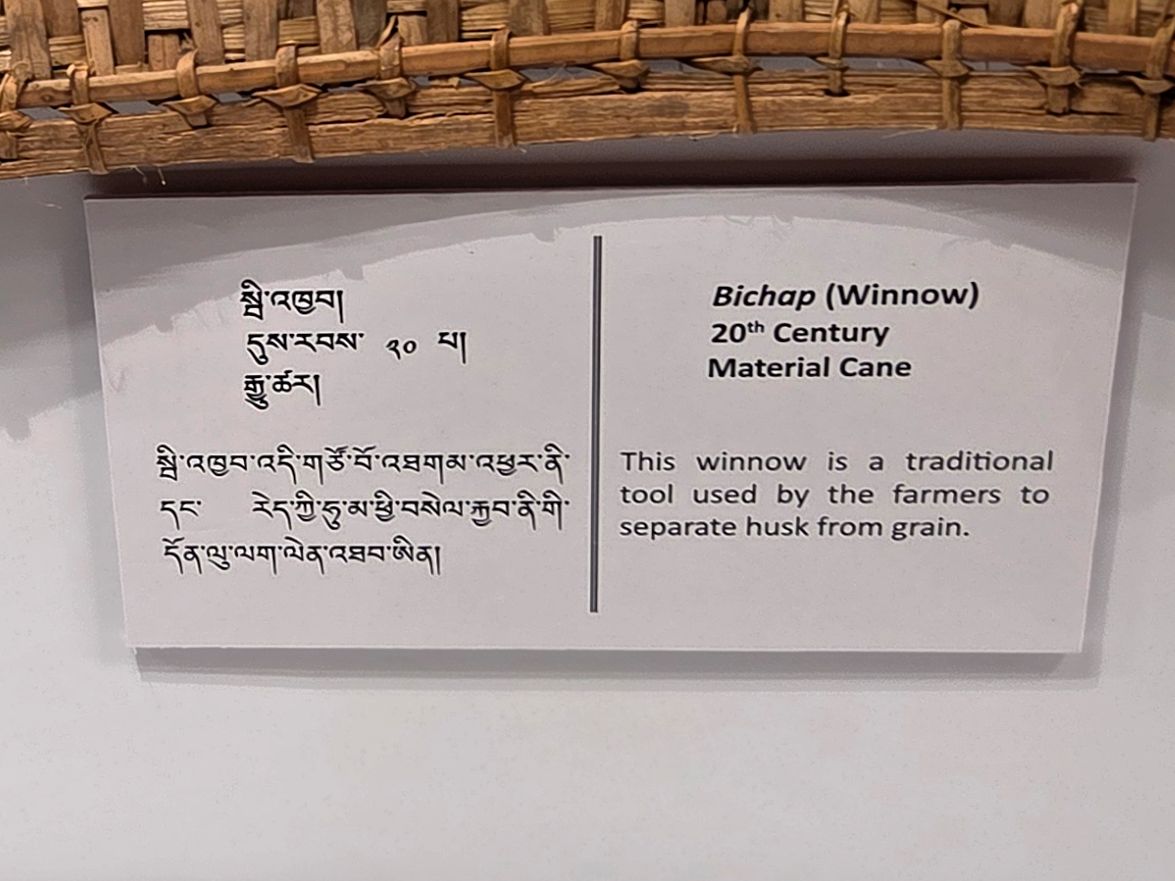
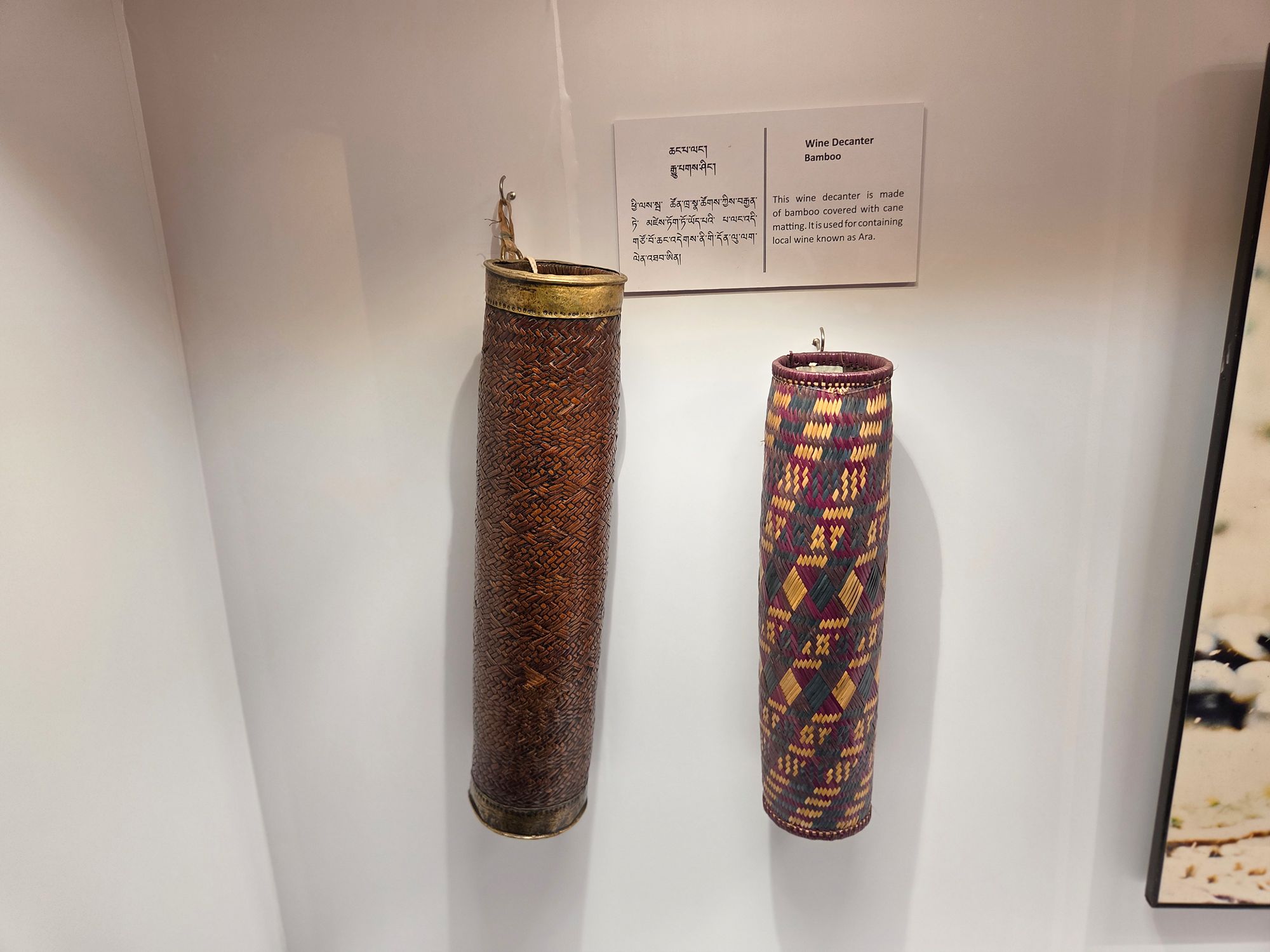
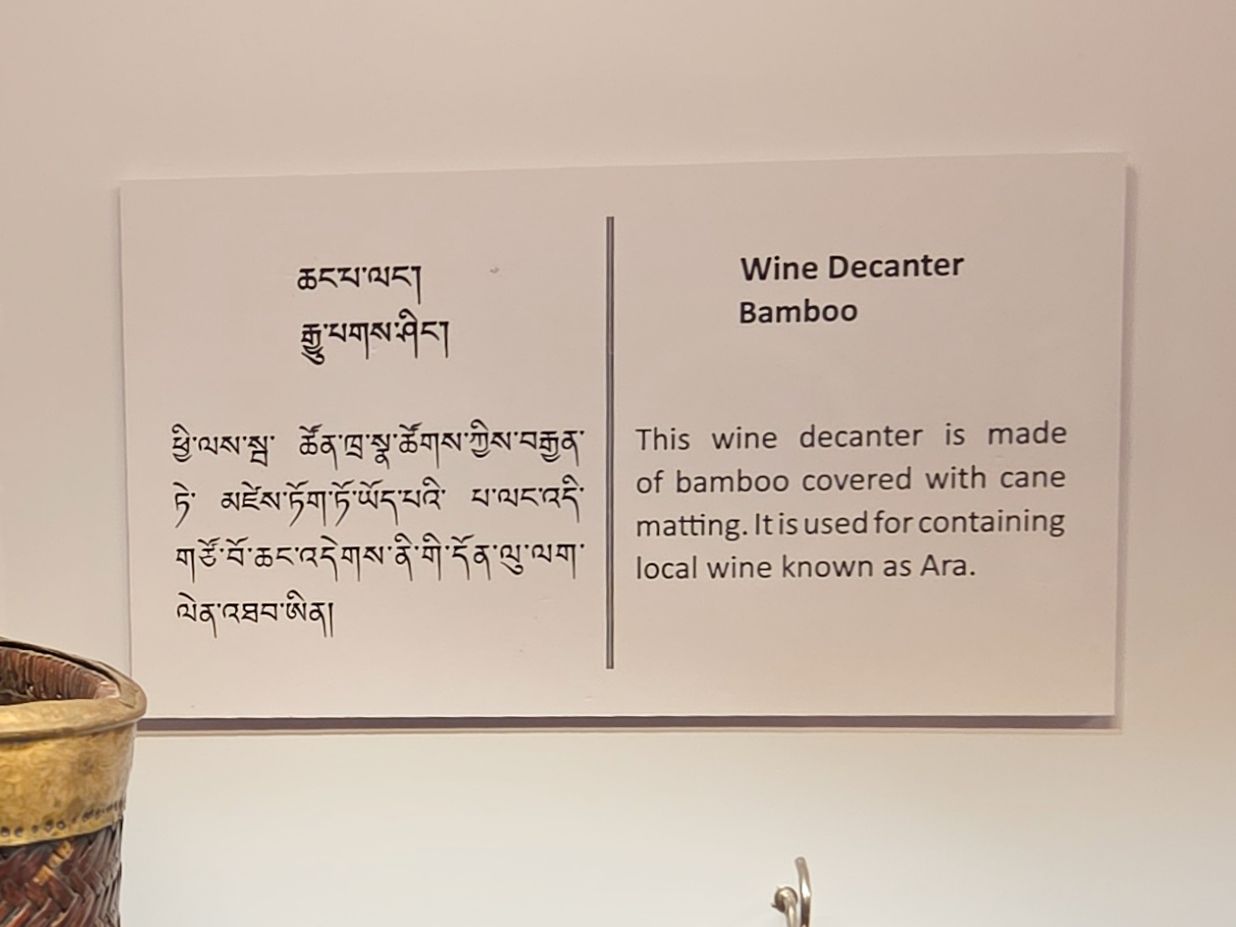
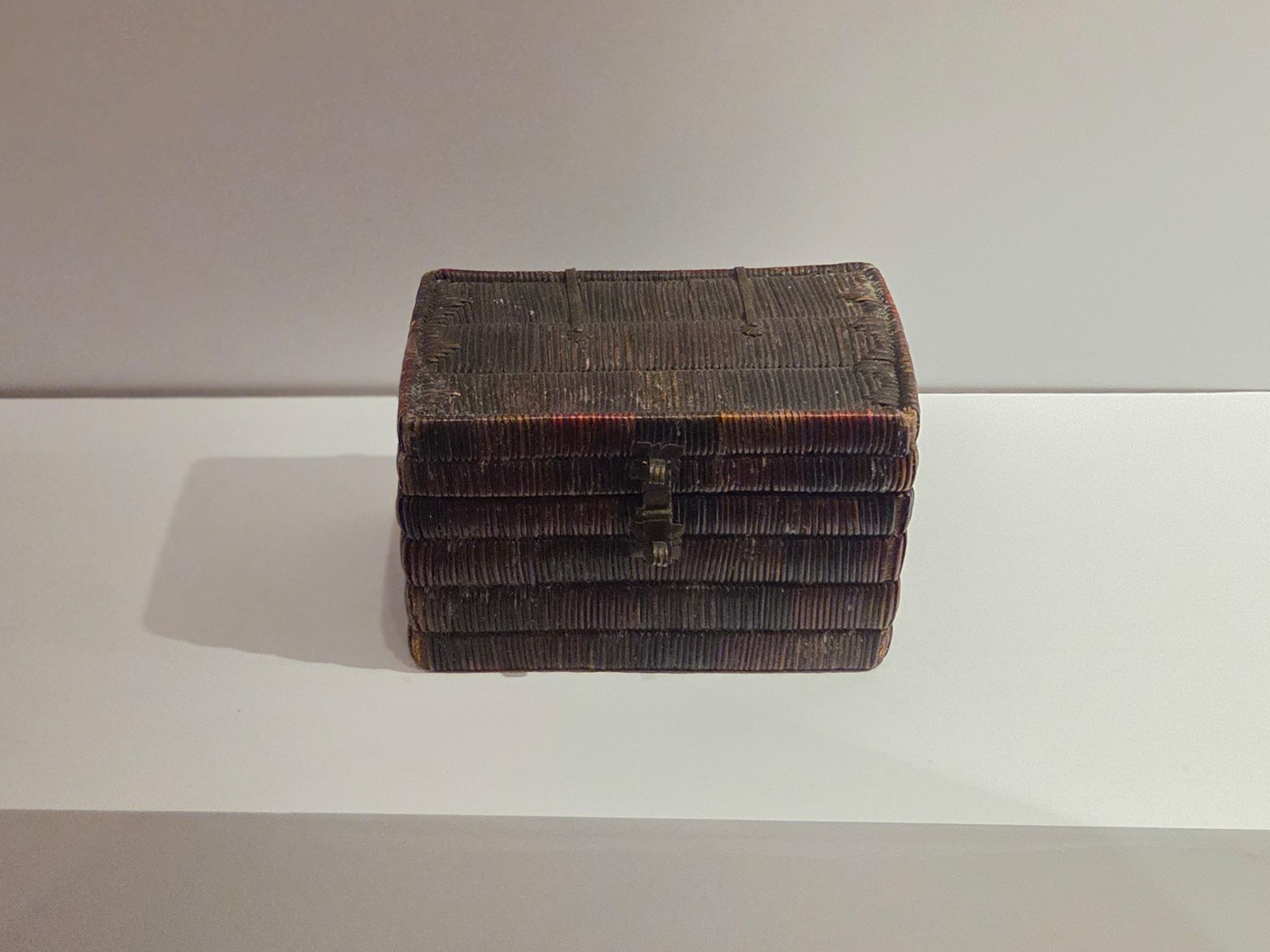
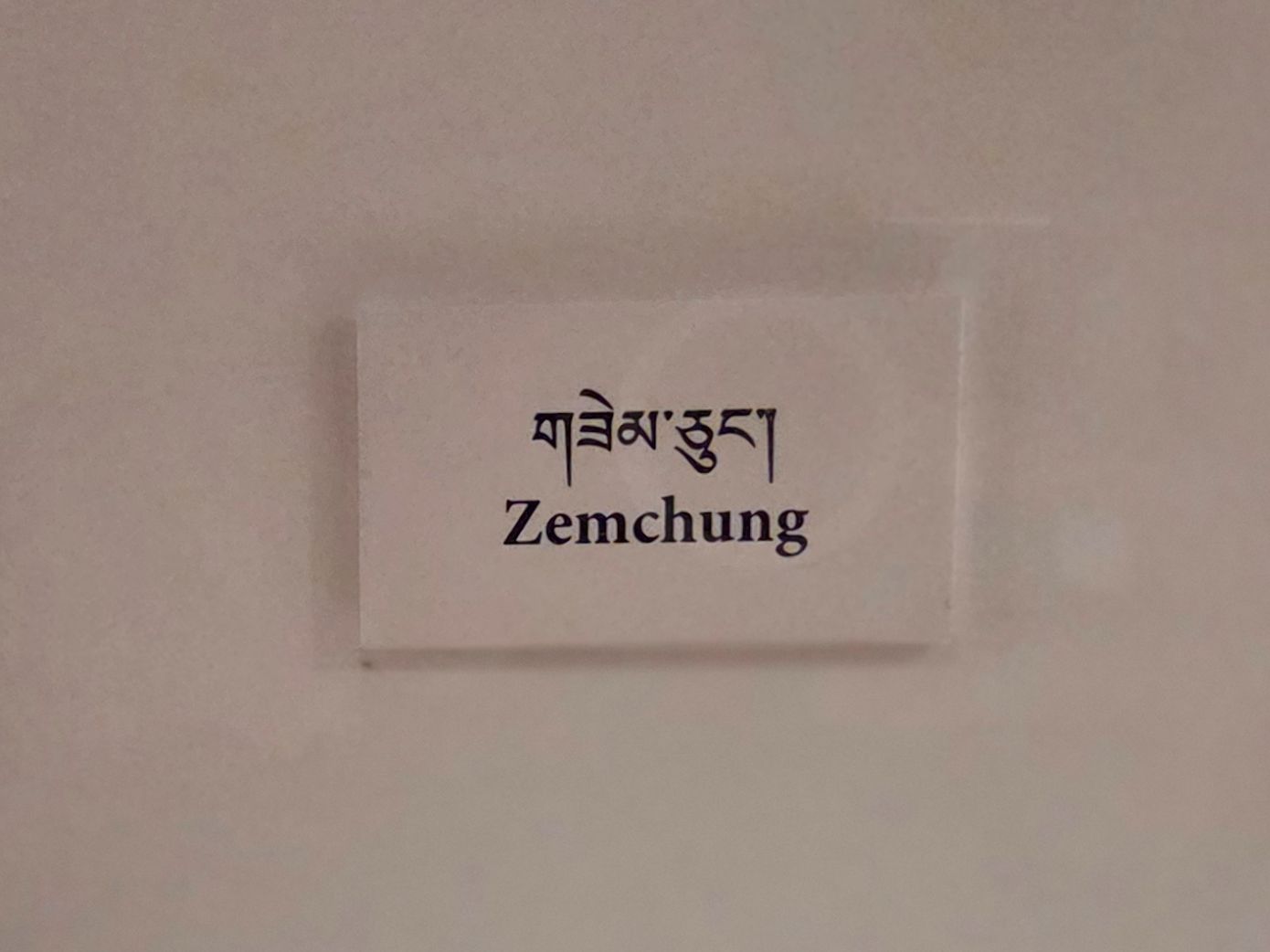
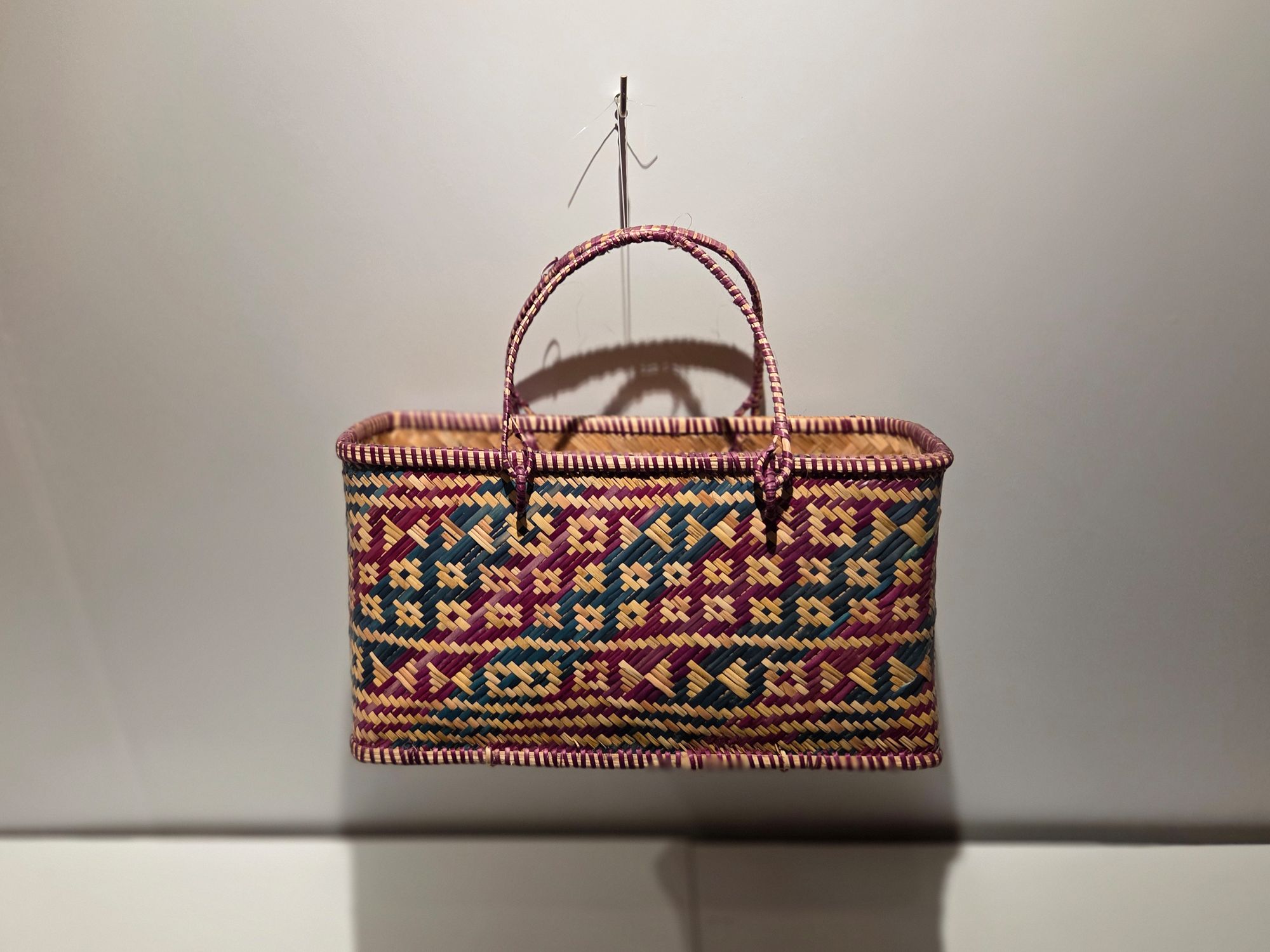
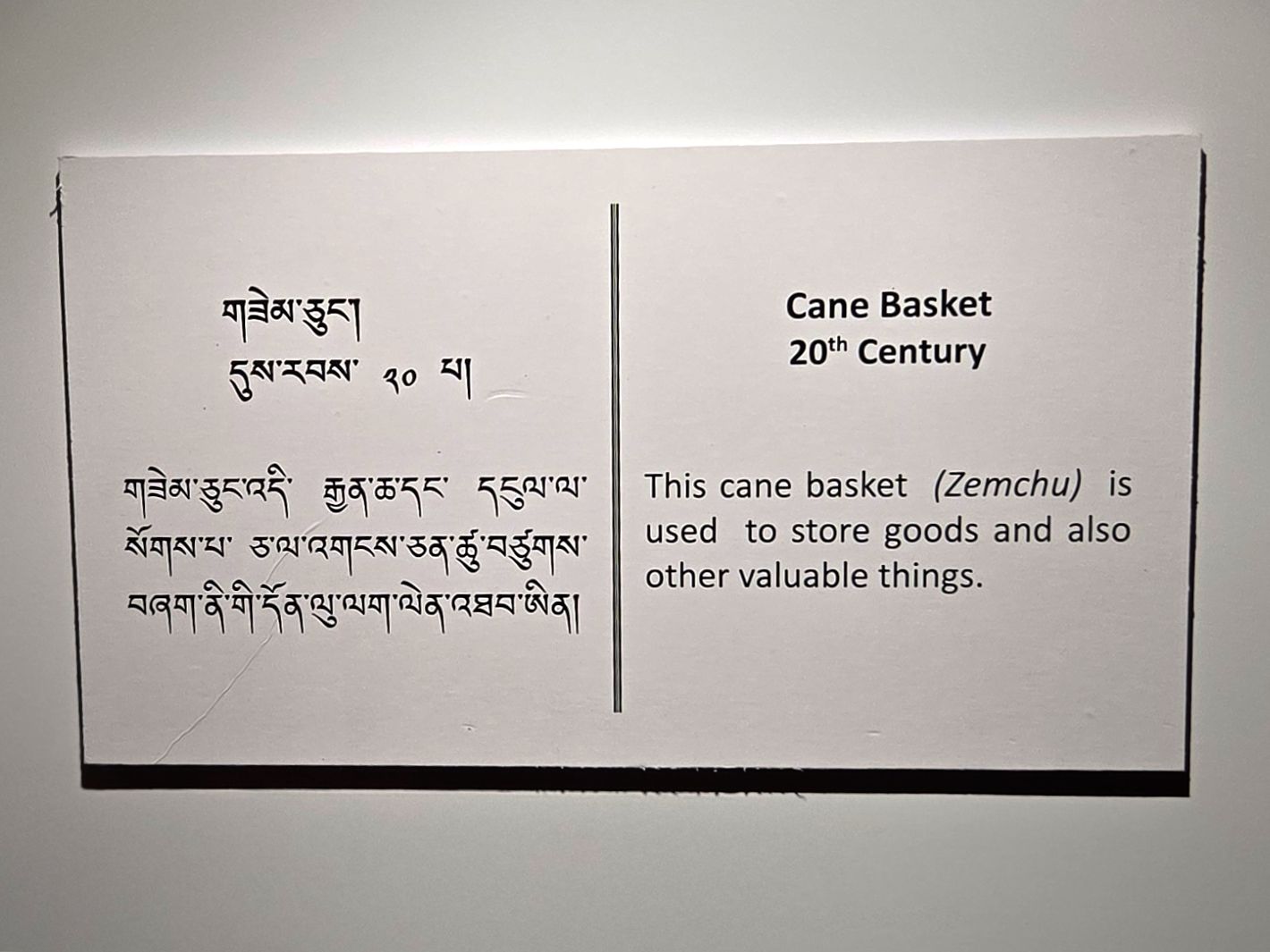
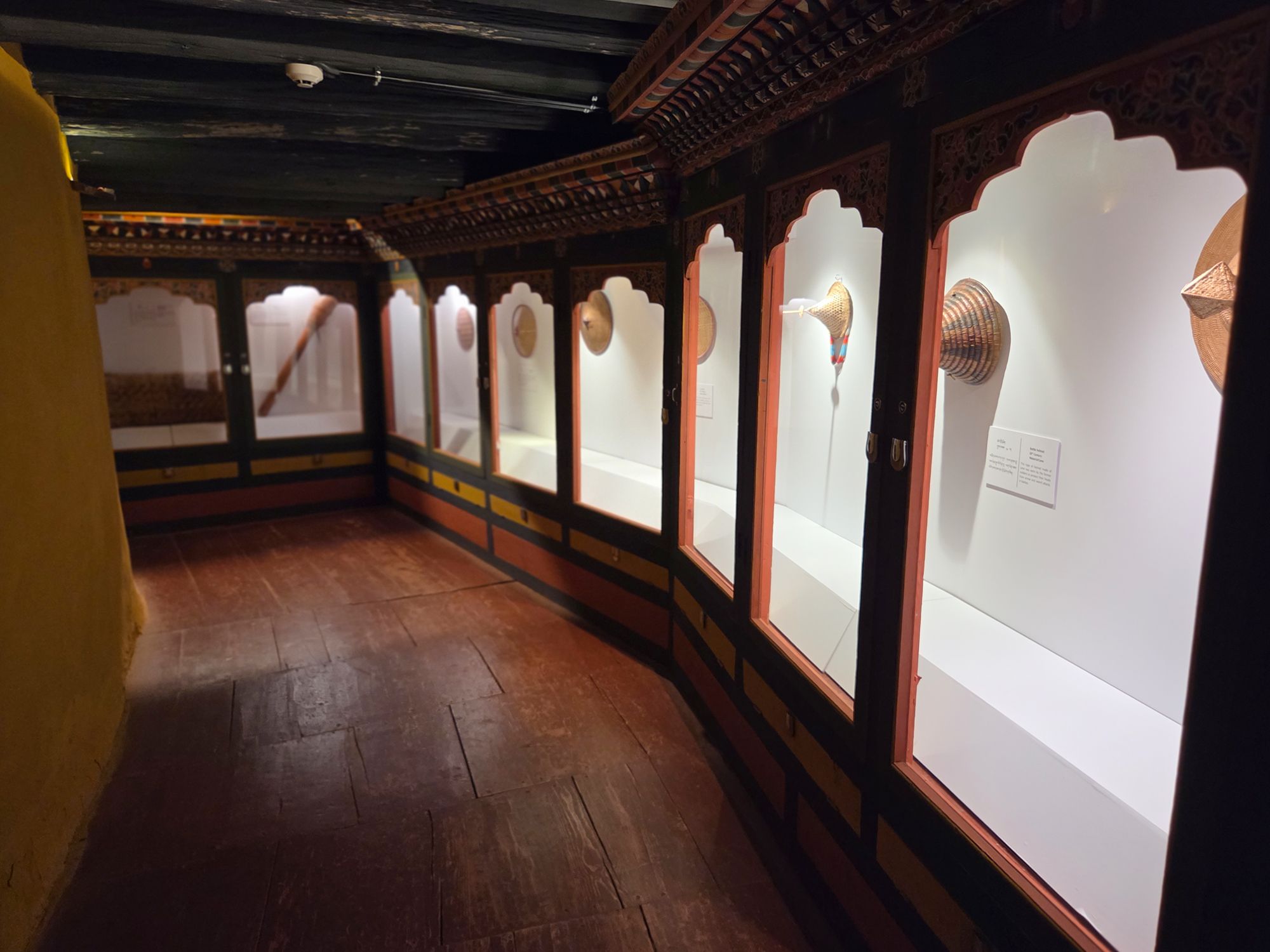
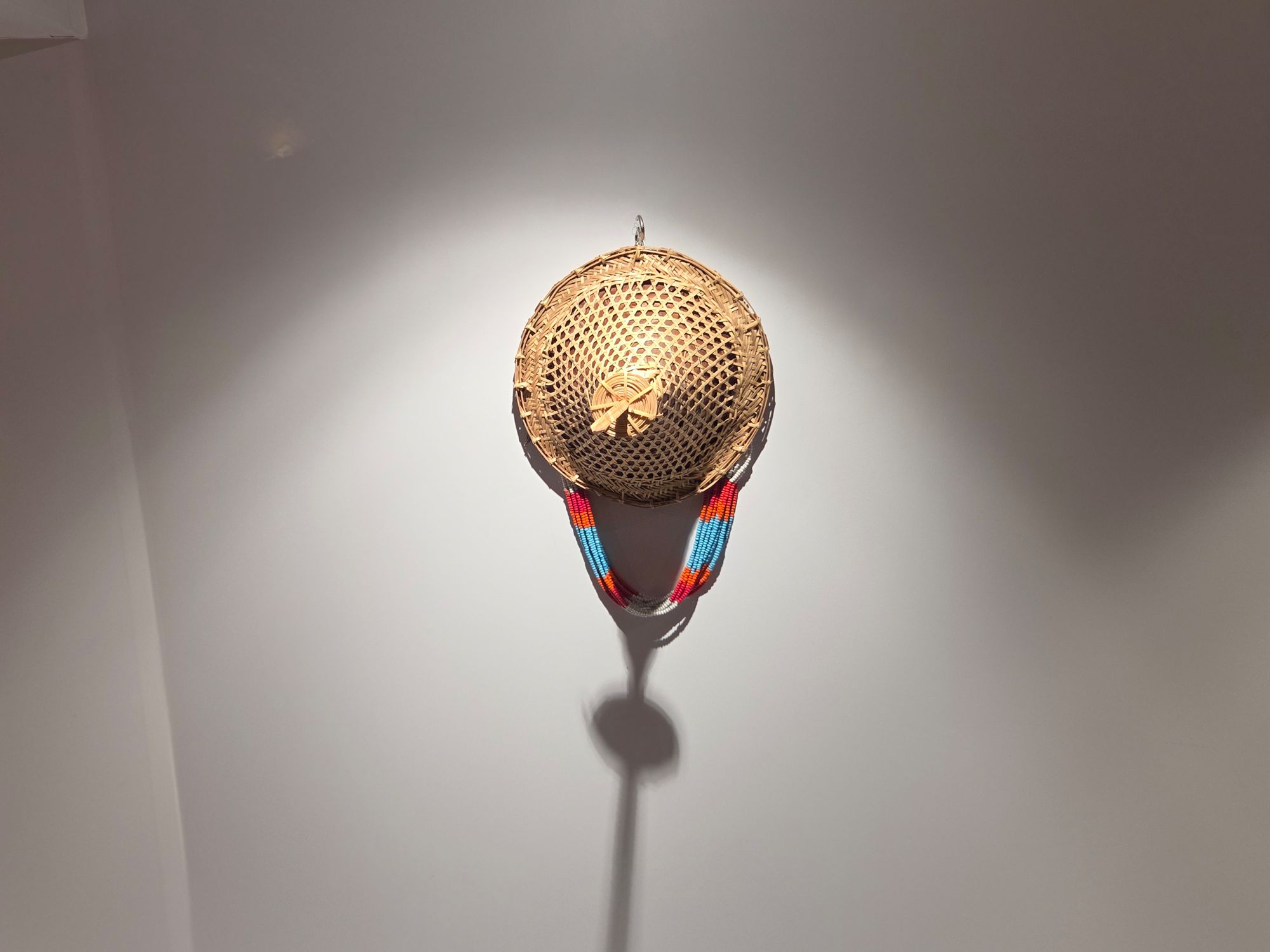
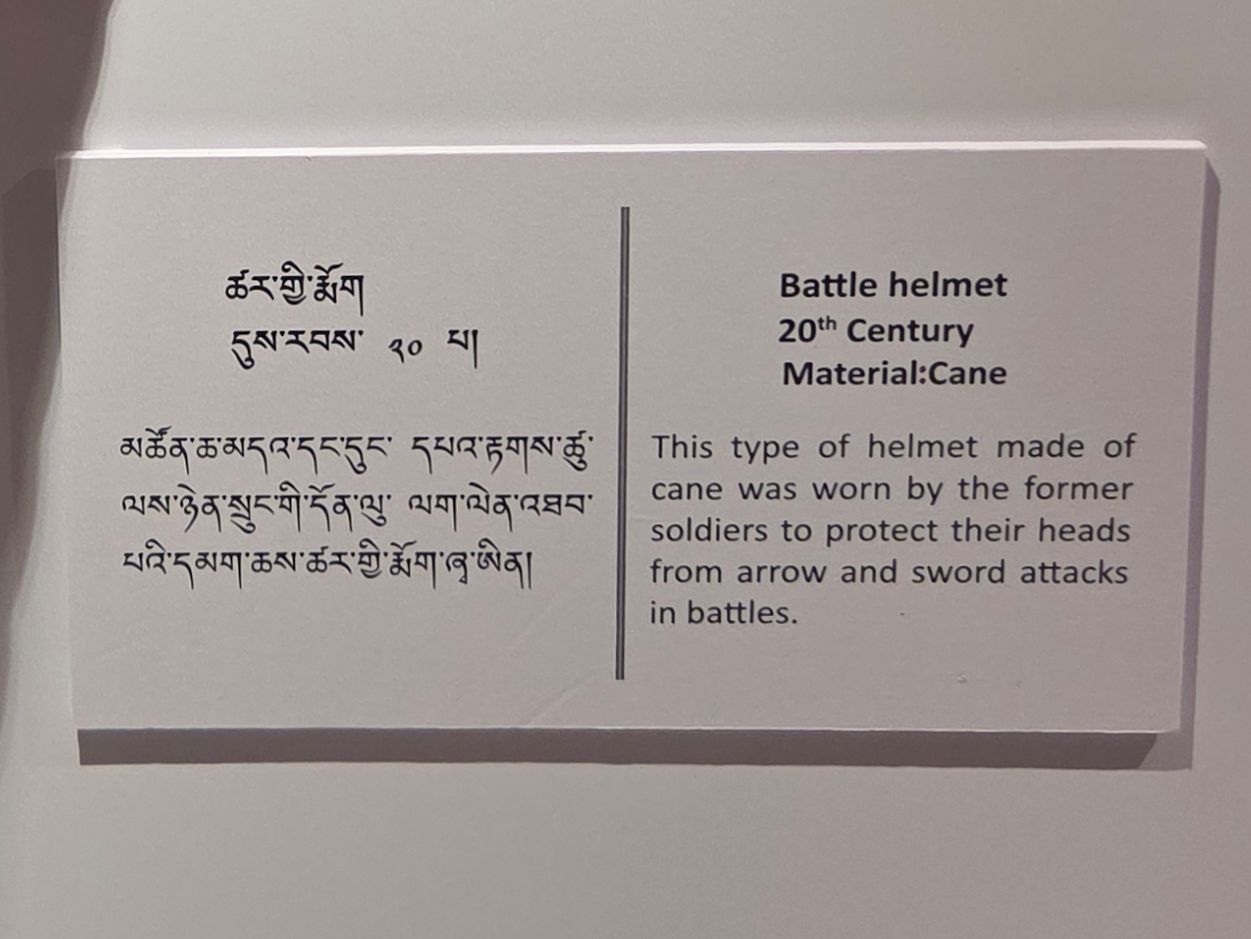
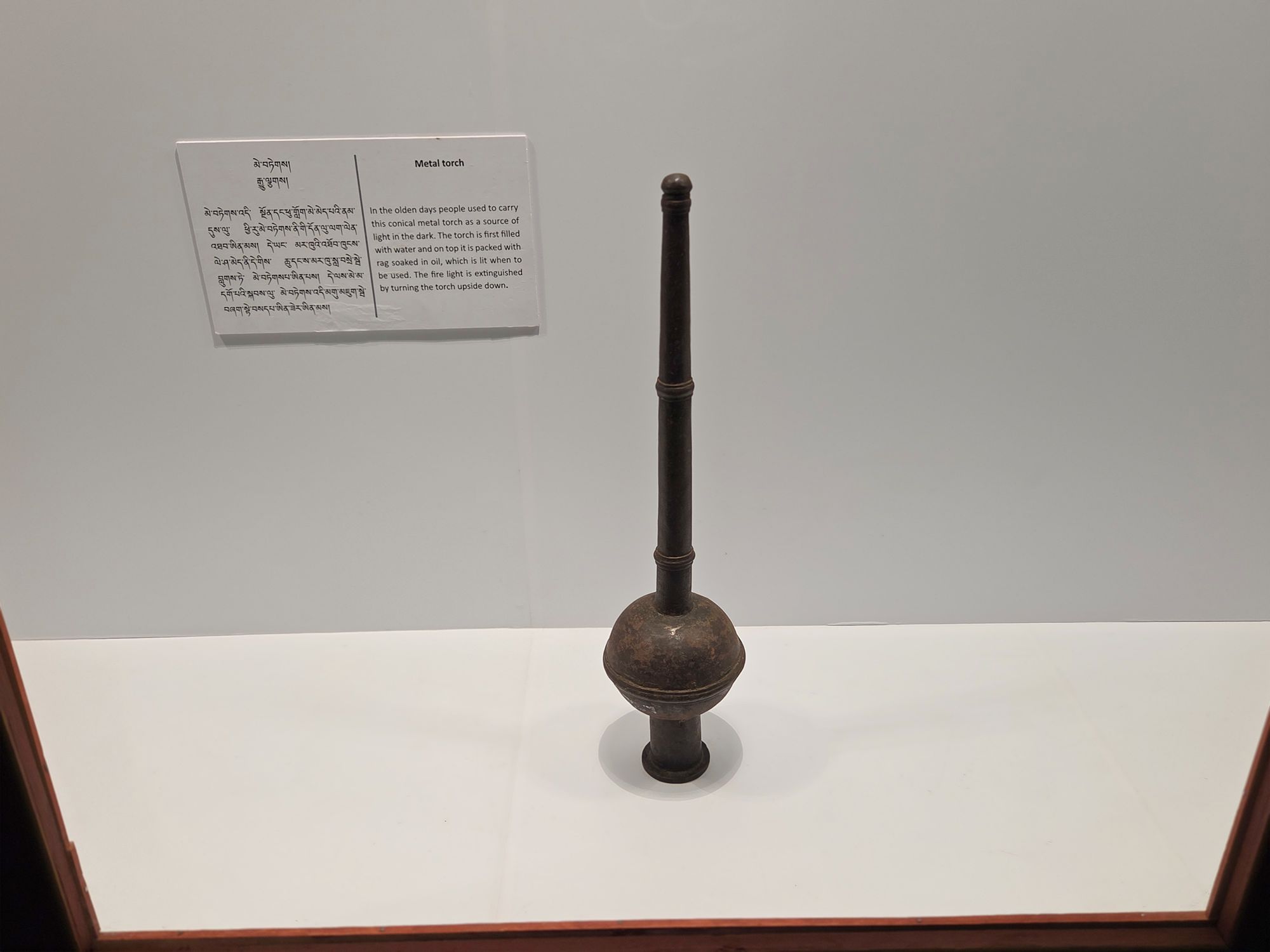
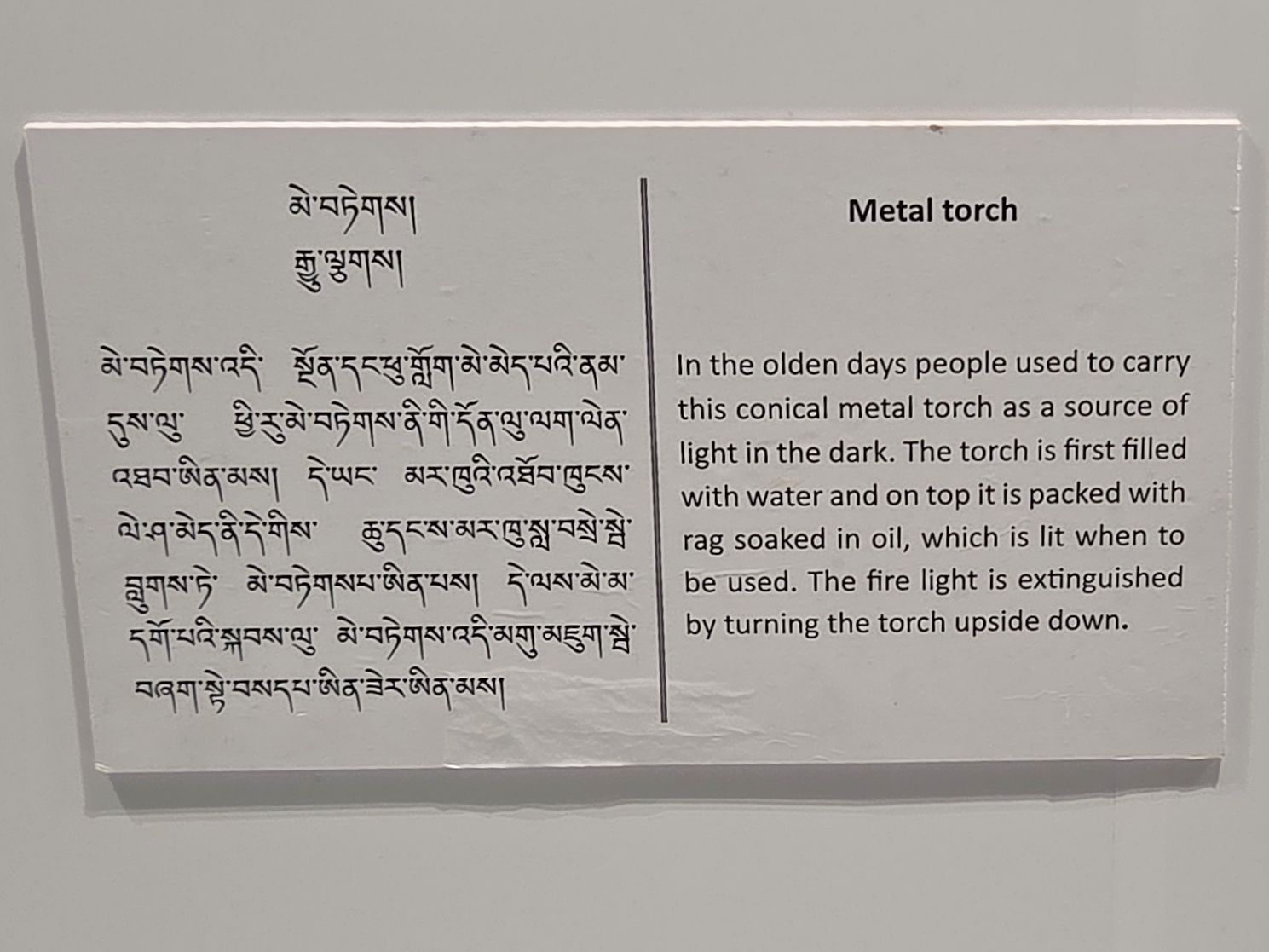
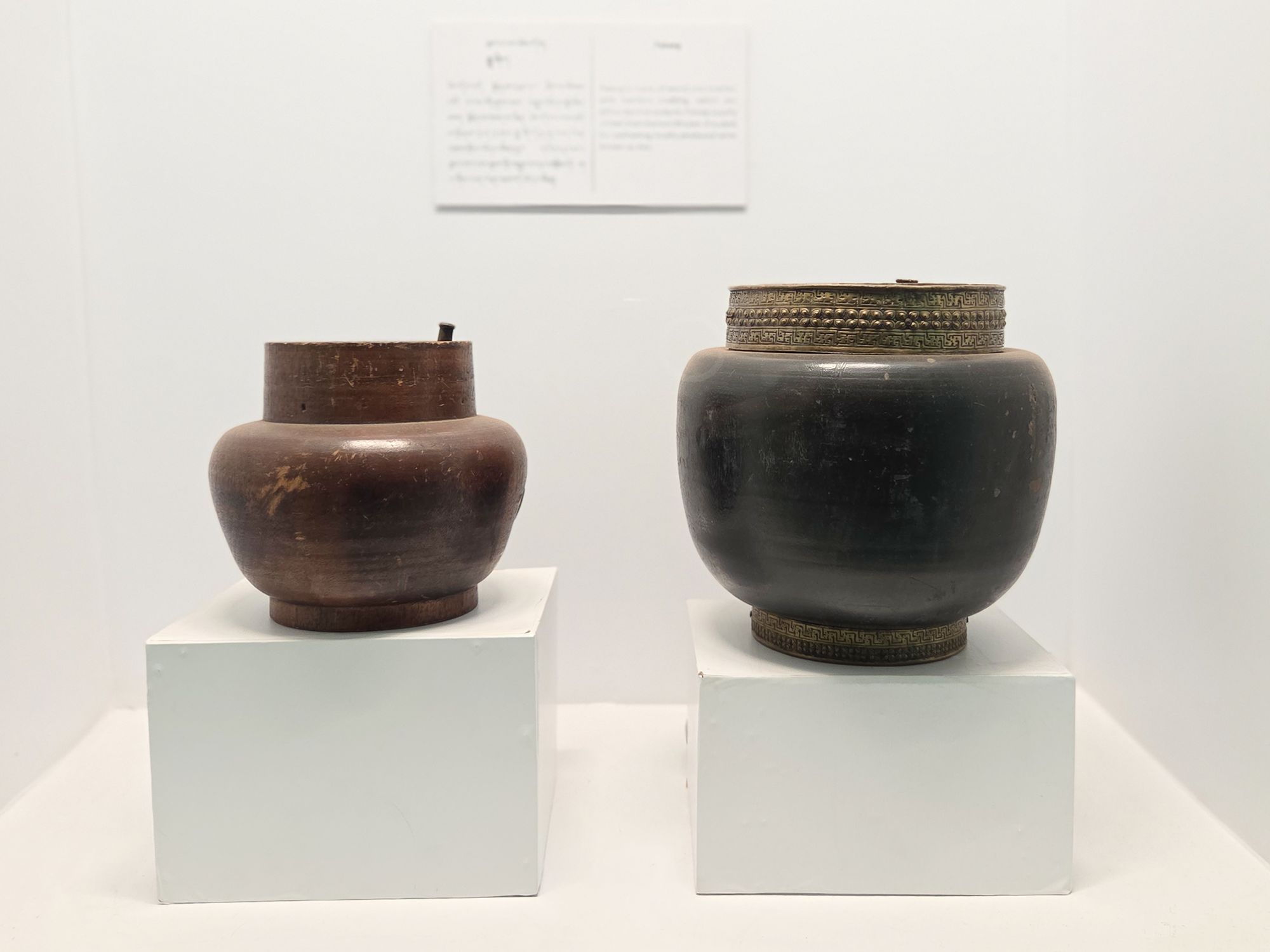
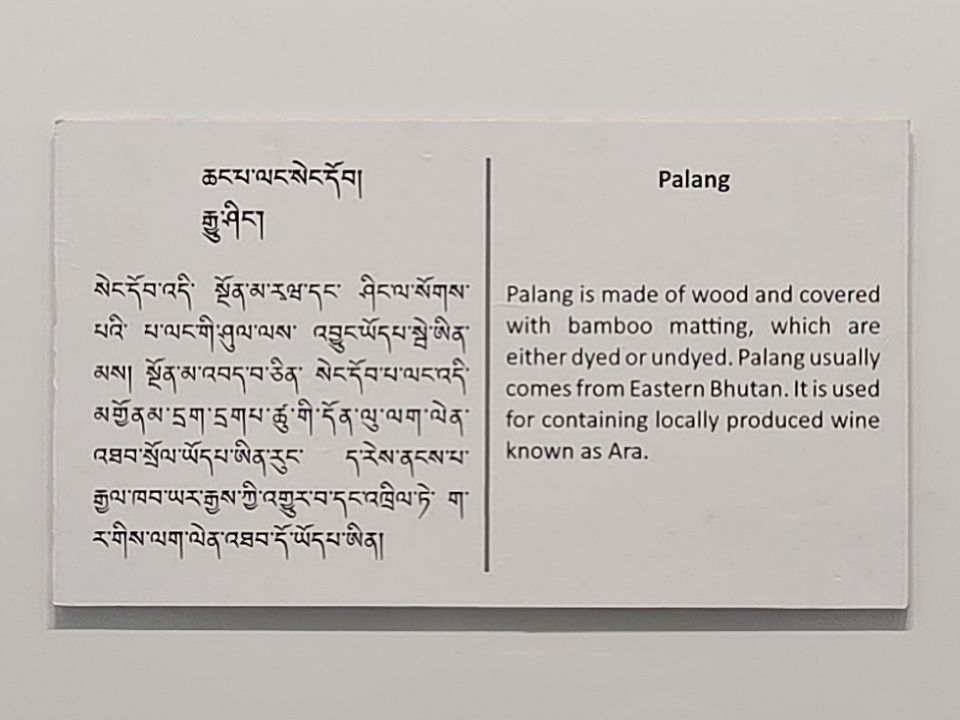
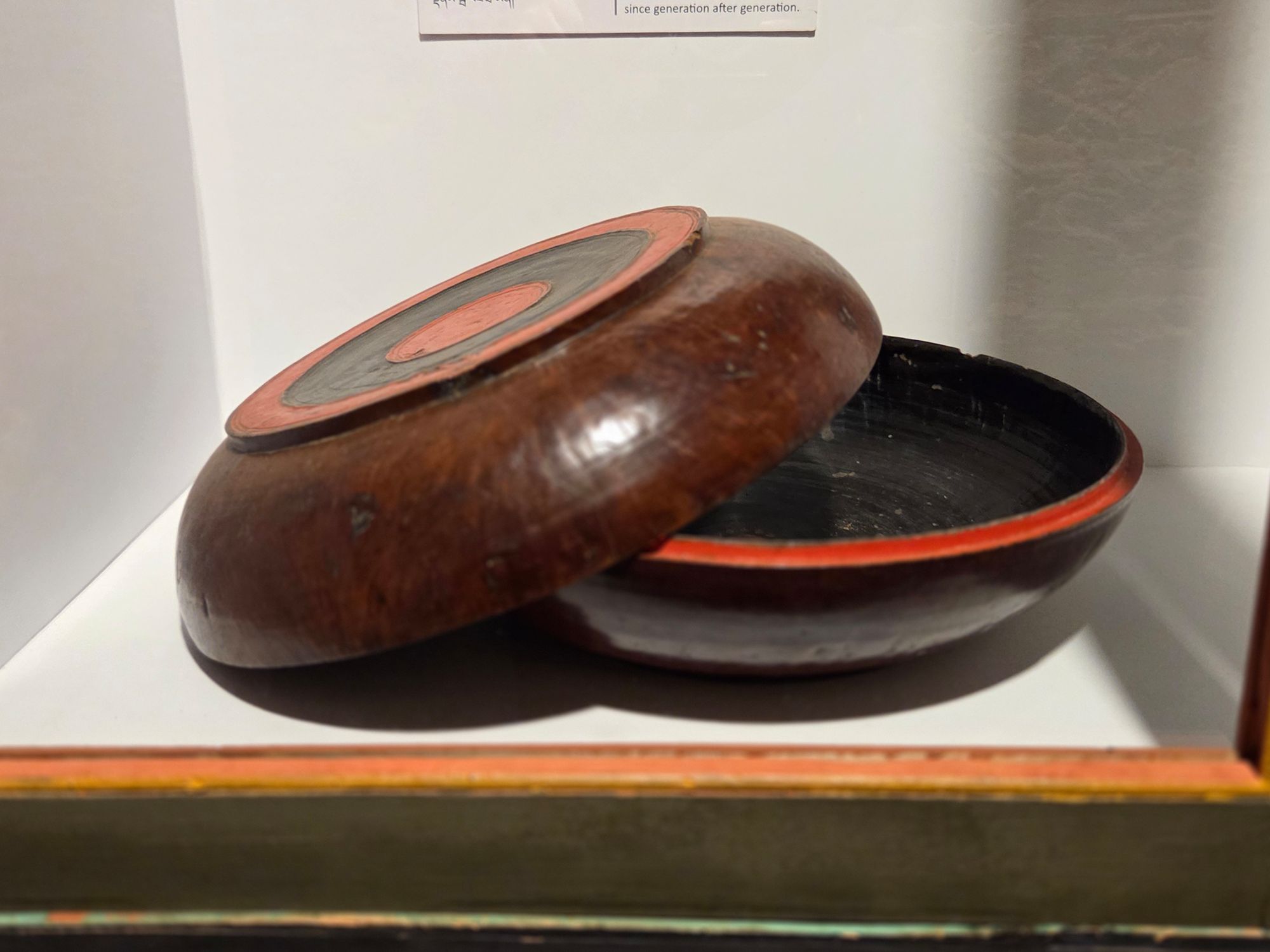
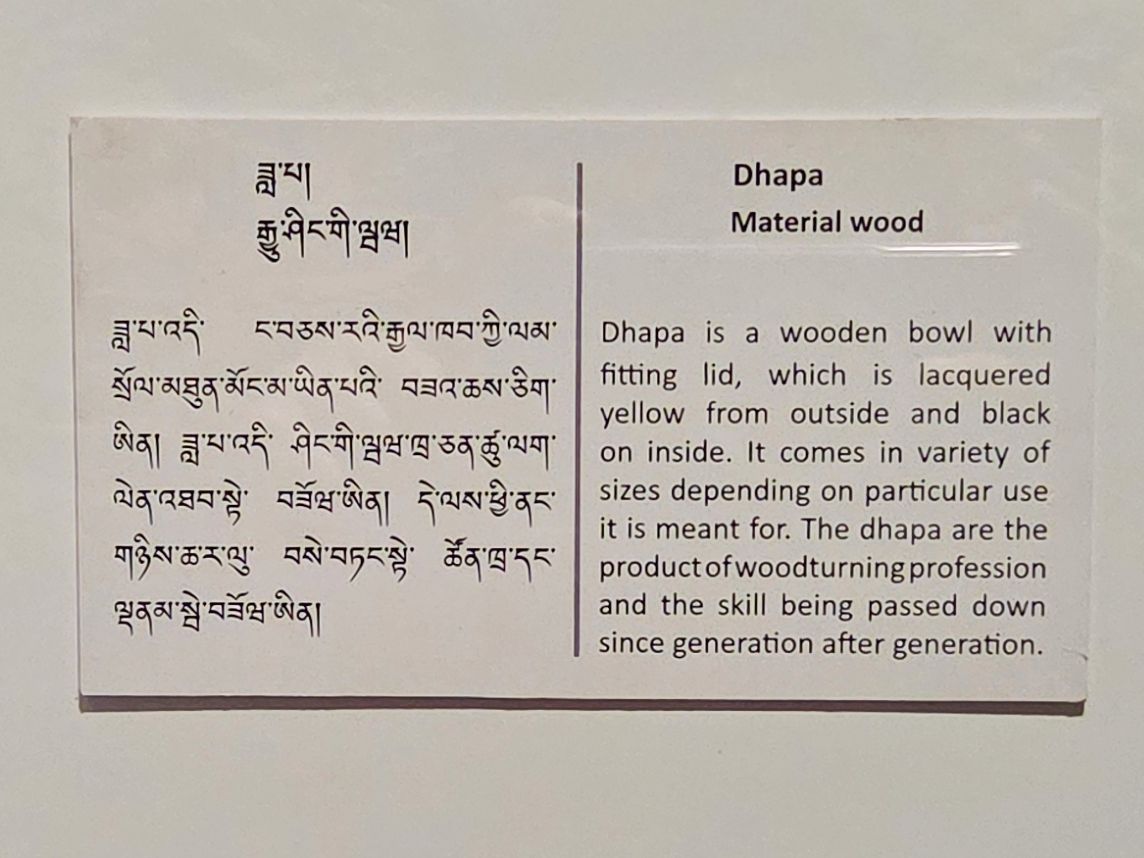
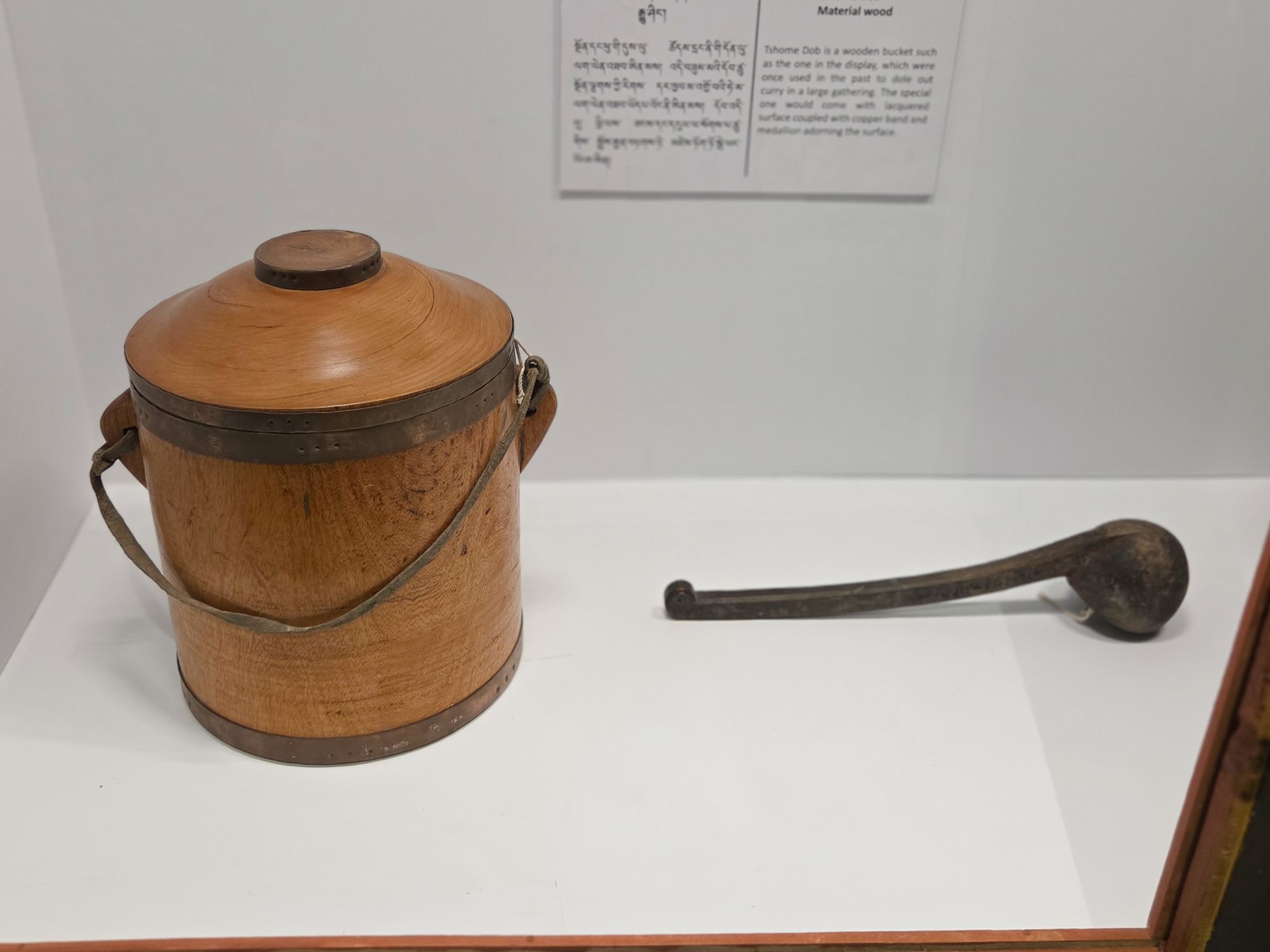
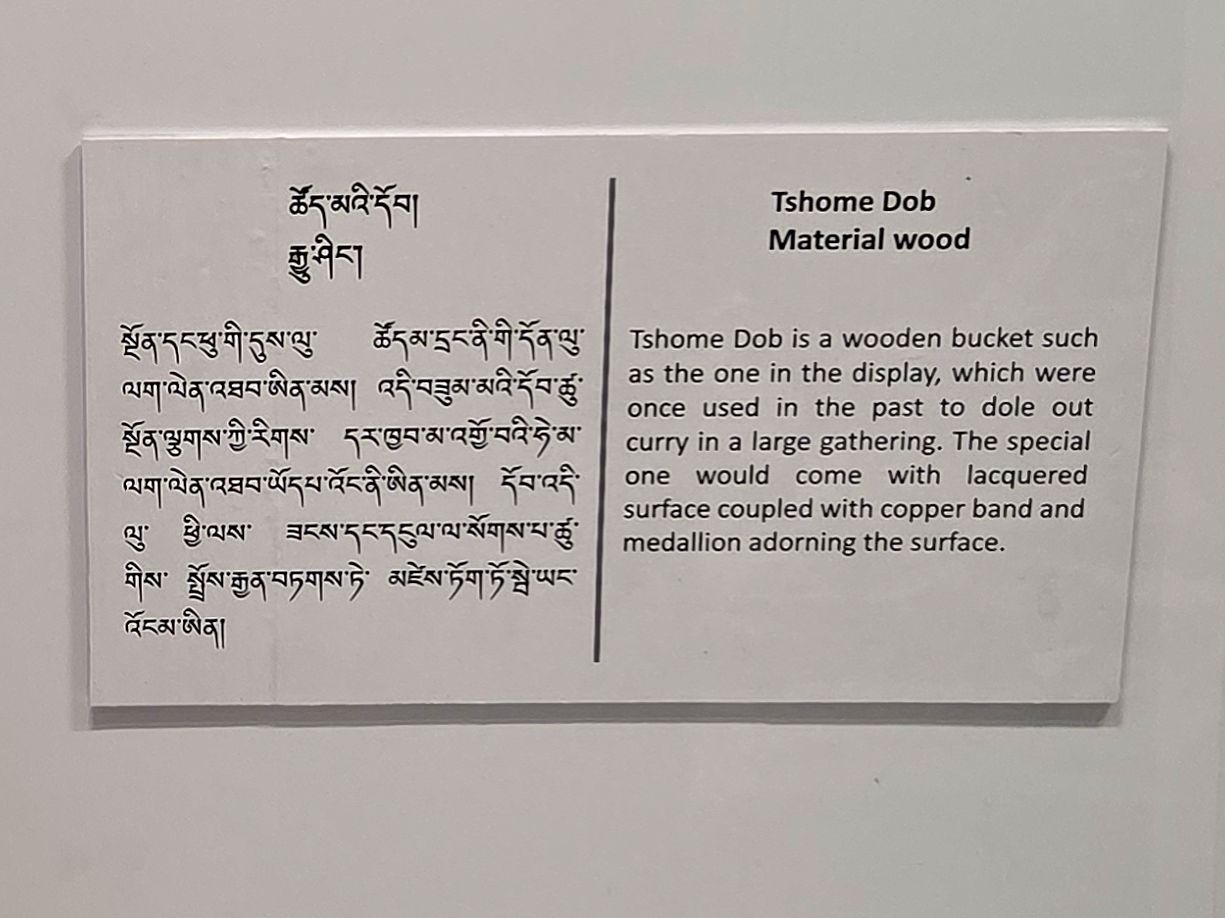
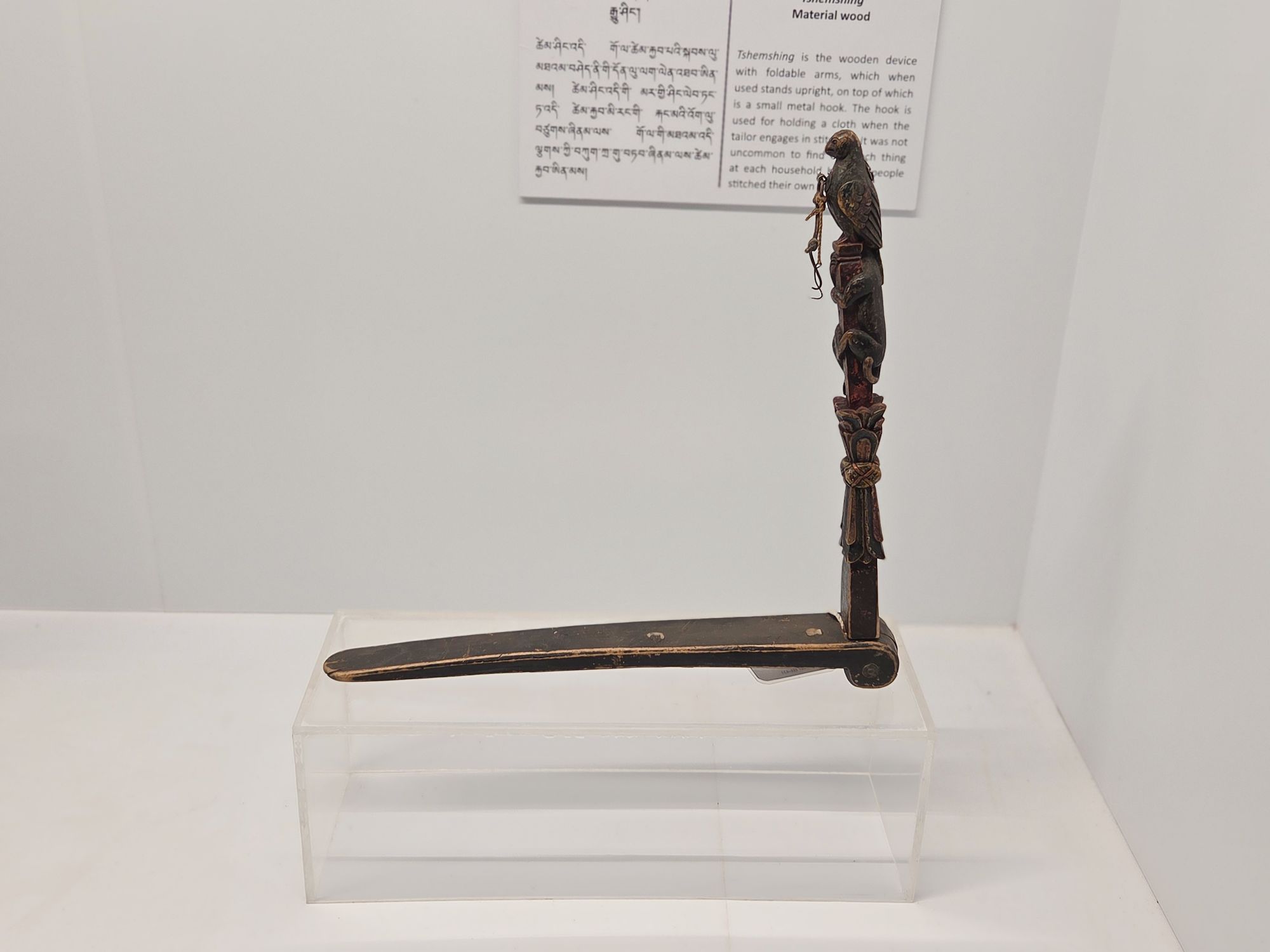
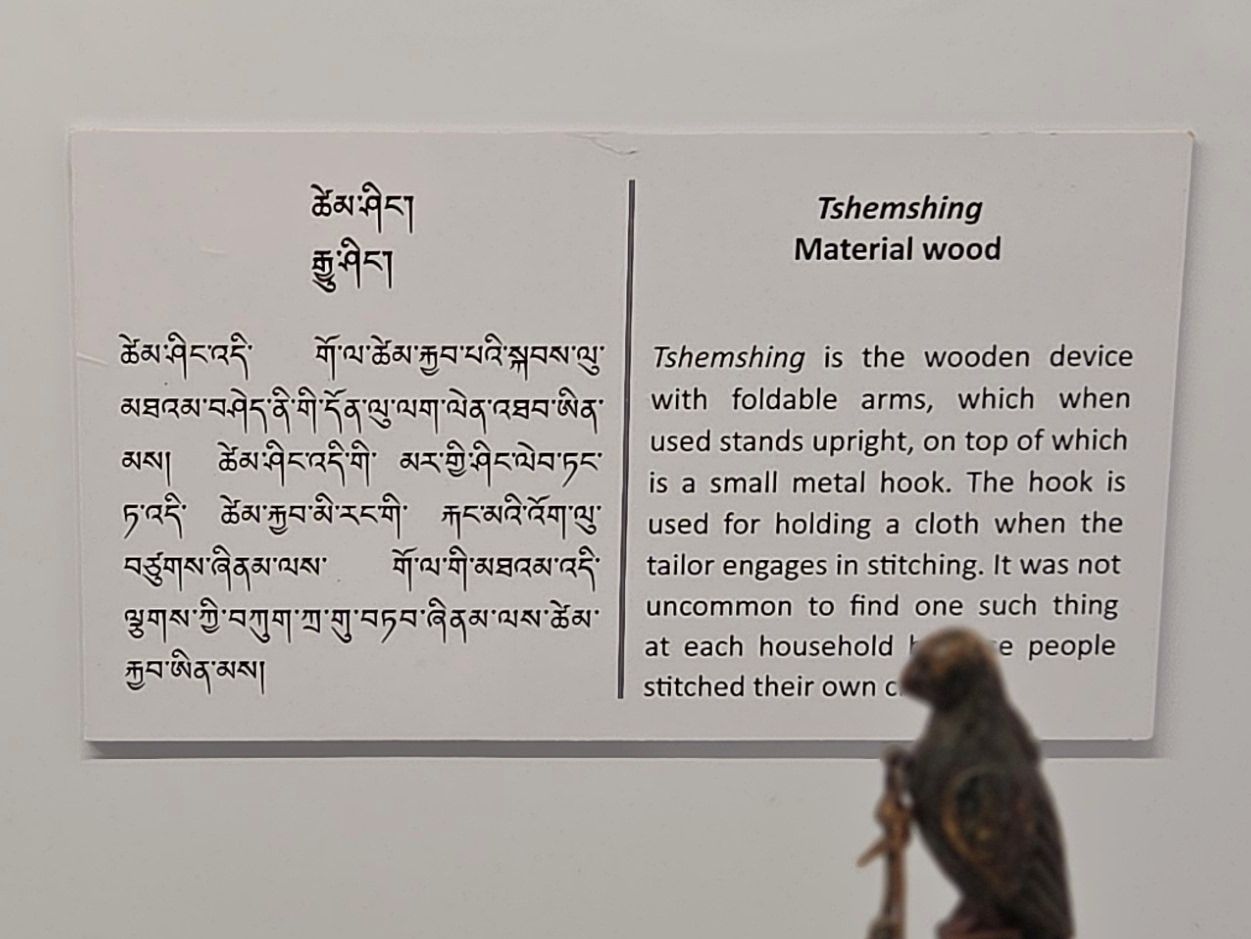
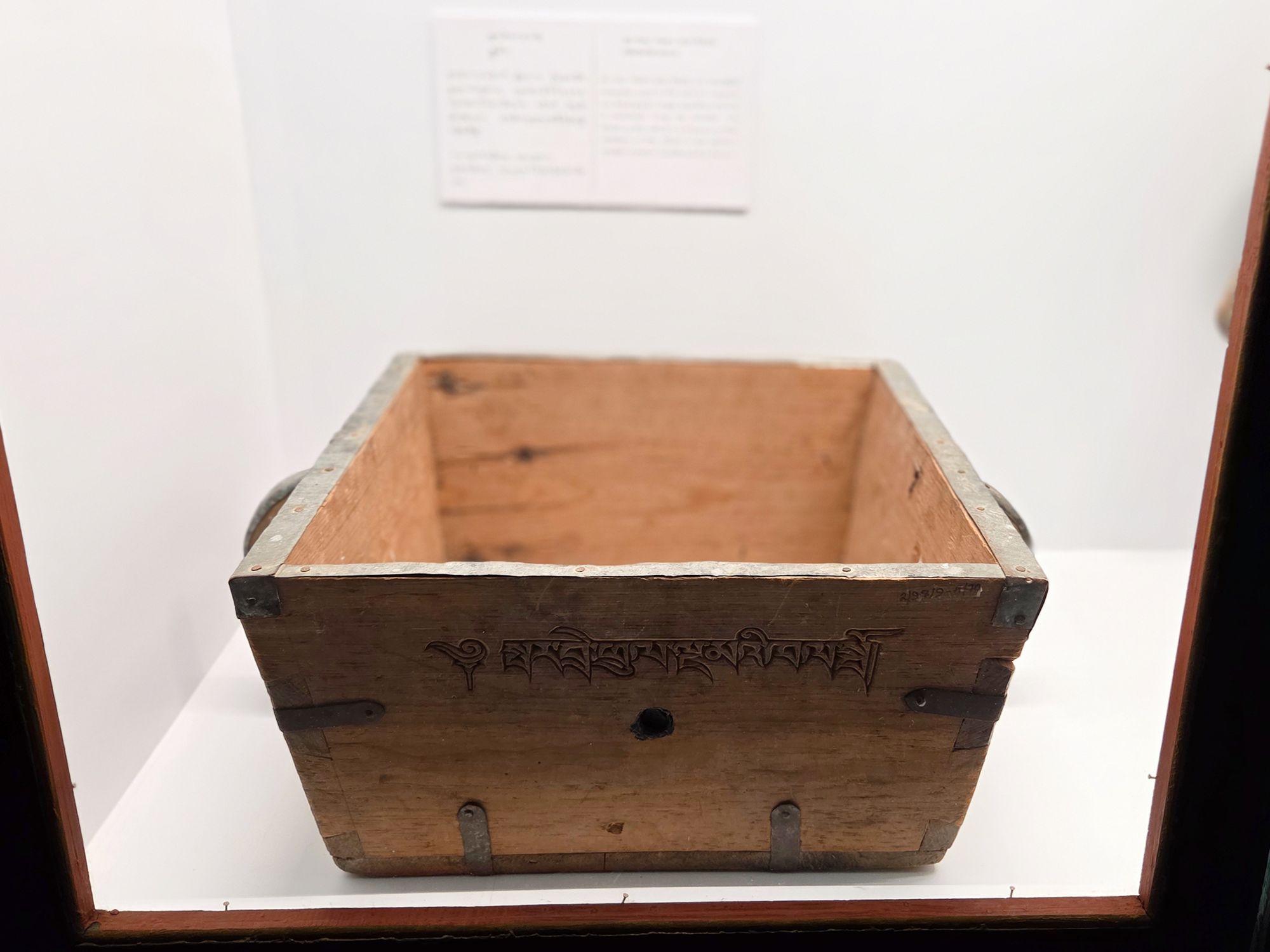
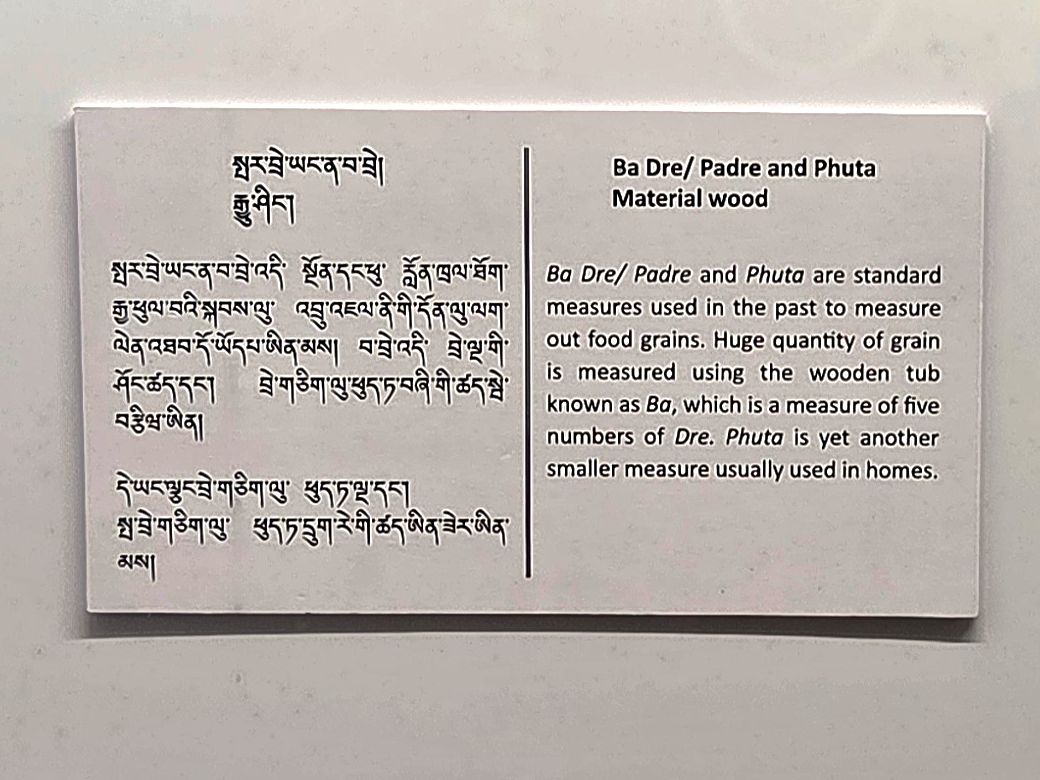
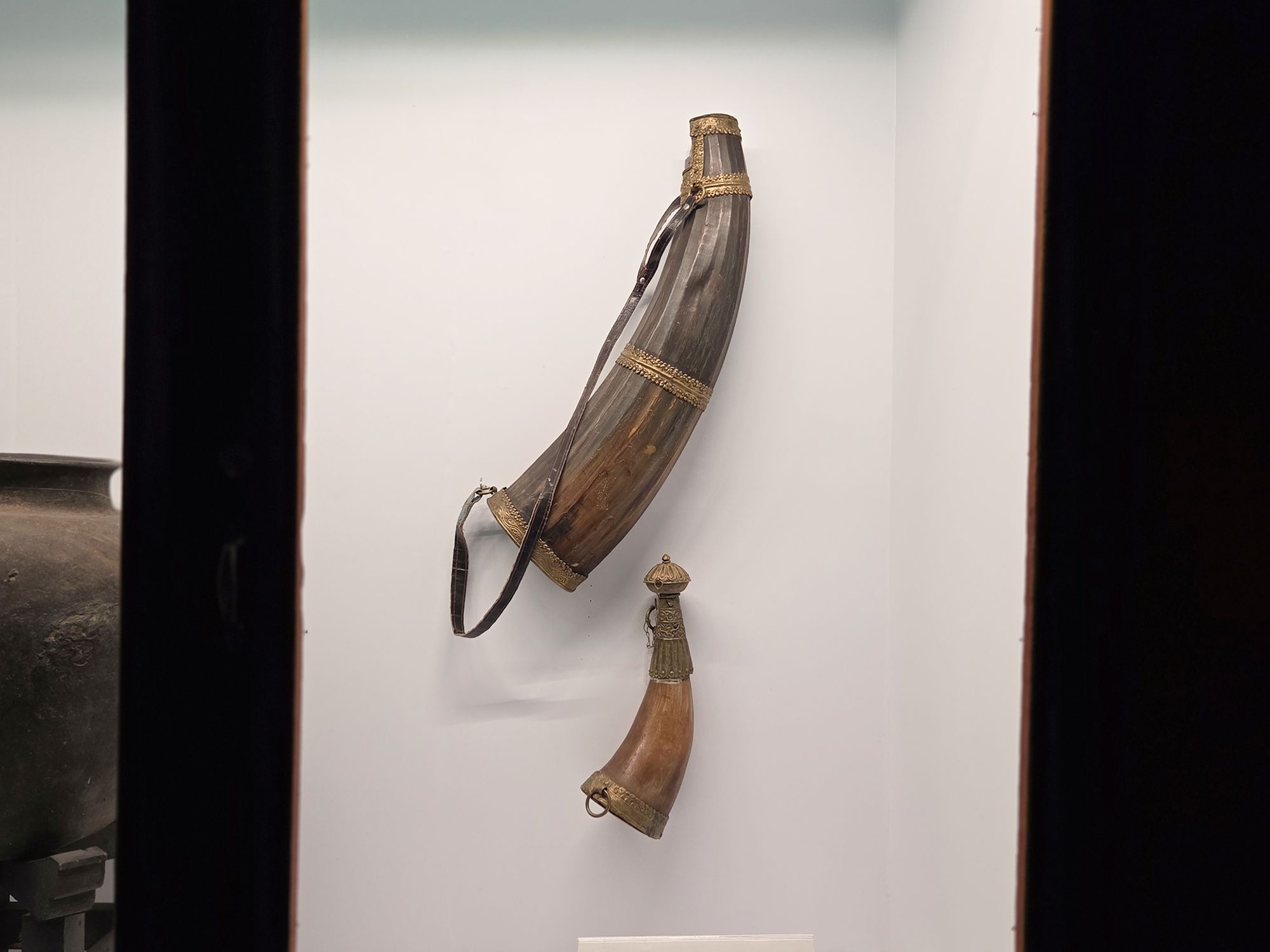
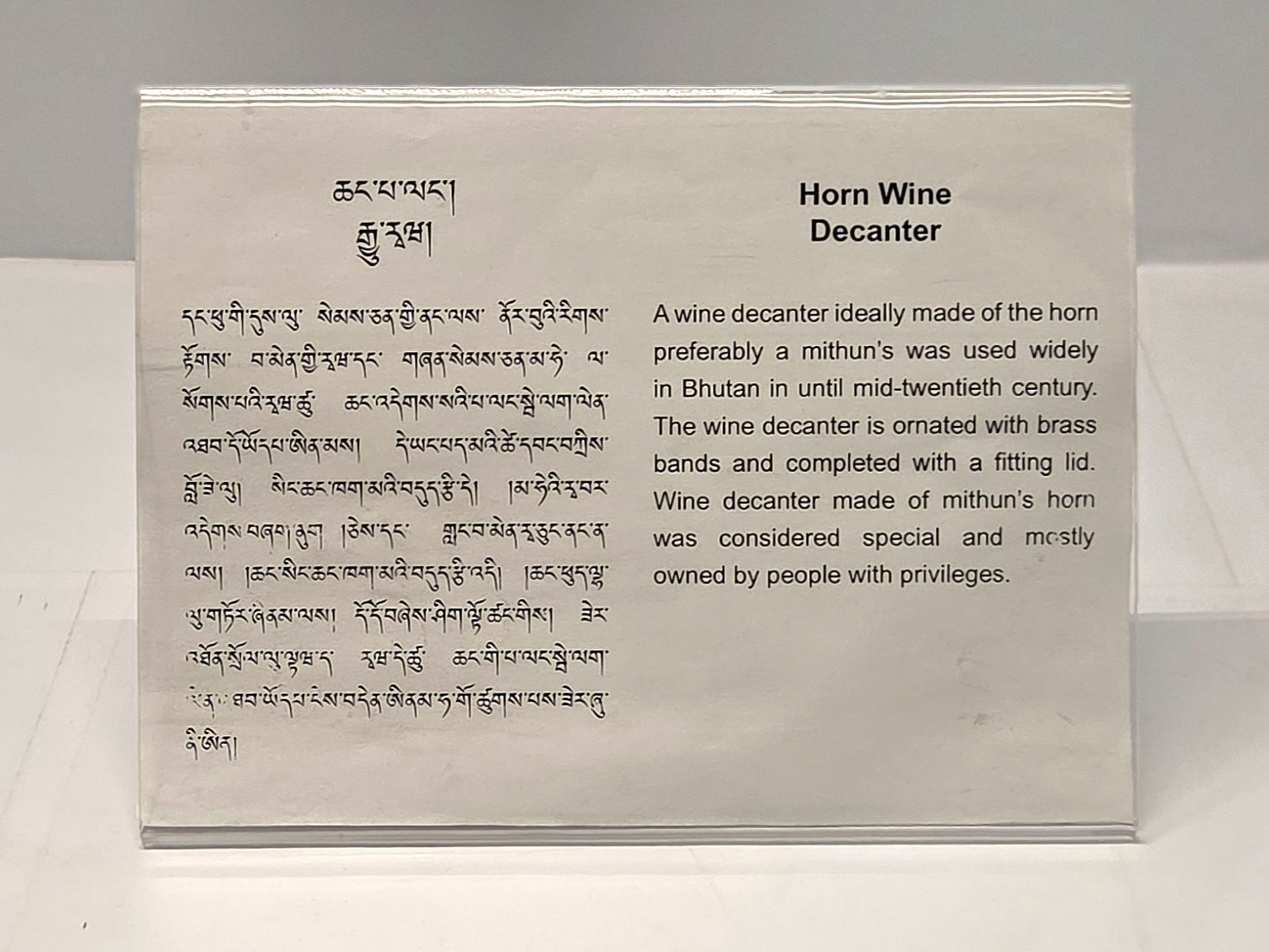
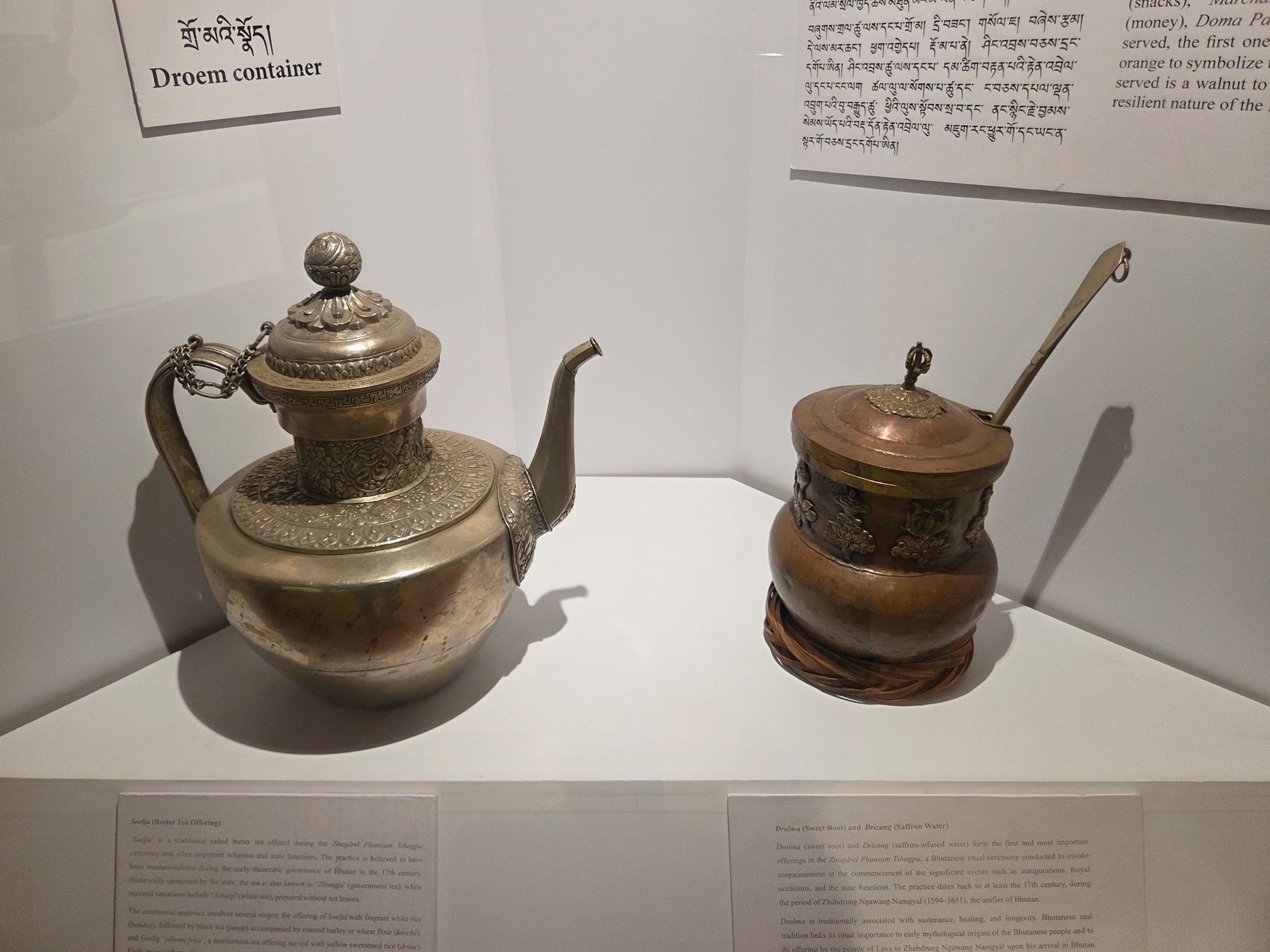
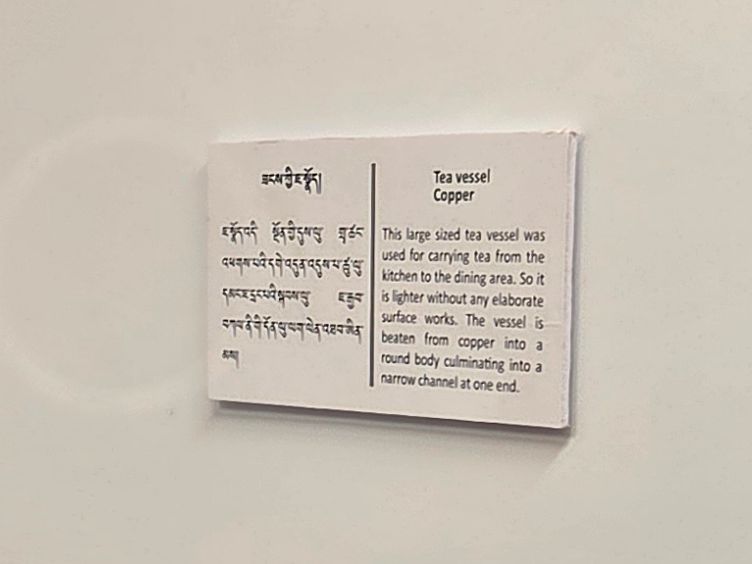
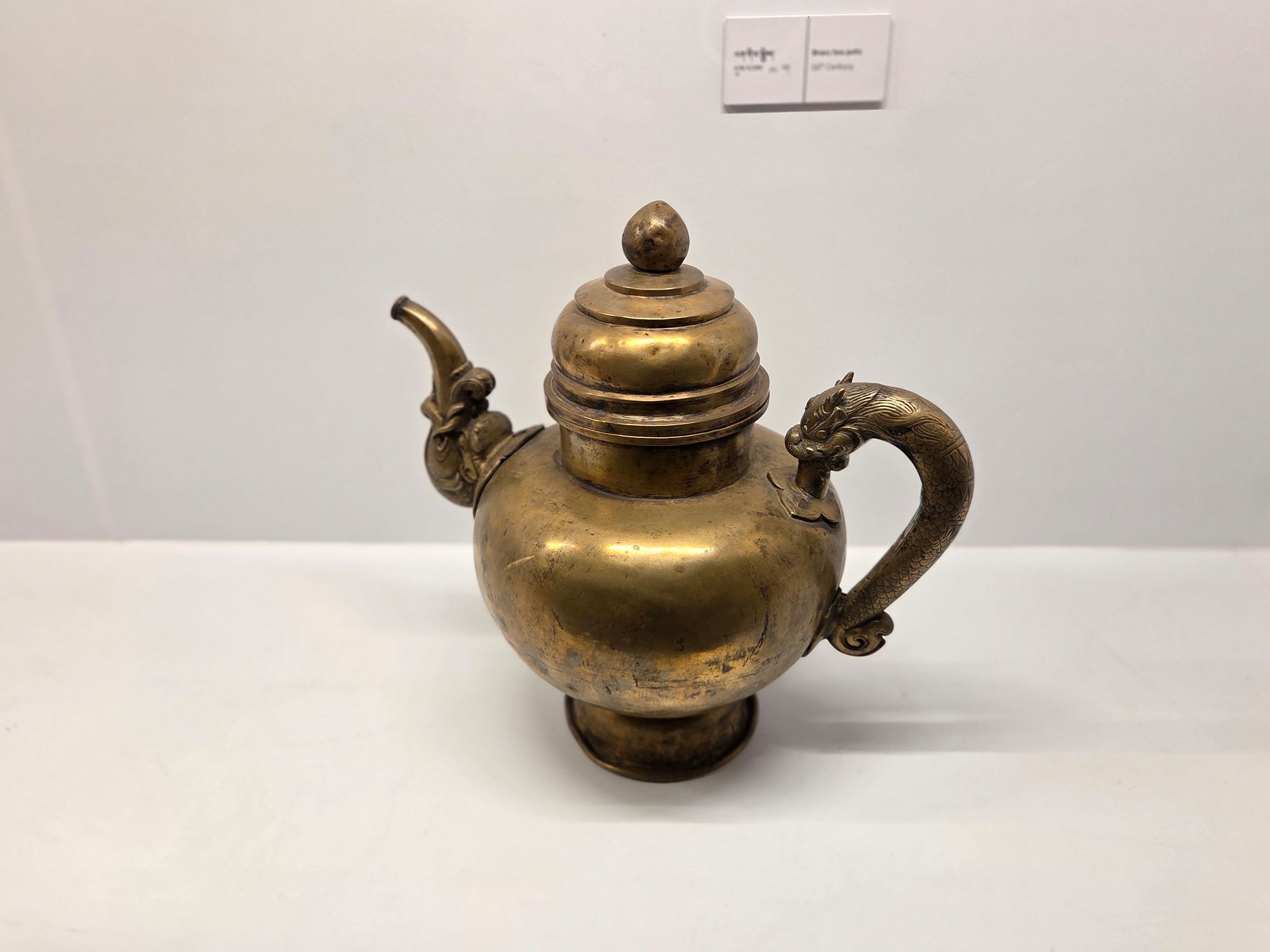
Traditional items used in everyday Bhutanese life, including household utensils, tools, containers, clothing, and other objects that offer a glimpse into how people lived and worked in the past.