Van Gogh Museum, Part 1, Amsterdam, Netherland
The Van Gogh Museum in Amsterdam houses the world’s largest collection of works by Vincent van Gogh, tracing his life and development as an artist. 1298
Van Gogh Museum: Museumplein 6, 1071 DJ Amsterdam, Netherlands
Date Picture Taken: May, 2026
Because there were so many Van Gogh paintings and photographs from my visit, I divided the museum into two separate blogs to better show the collection.
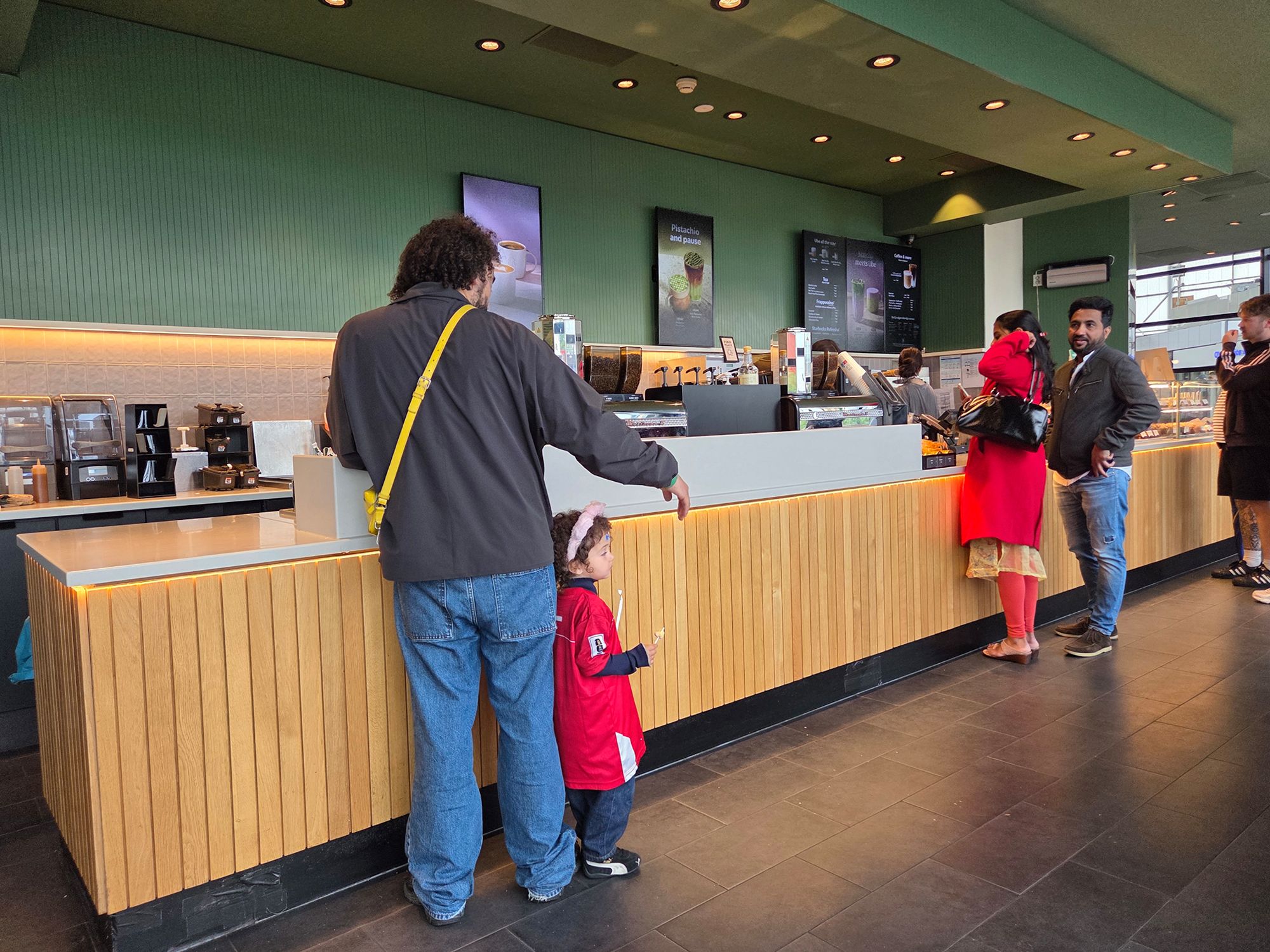
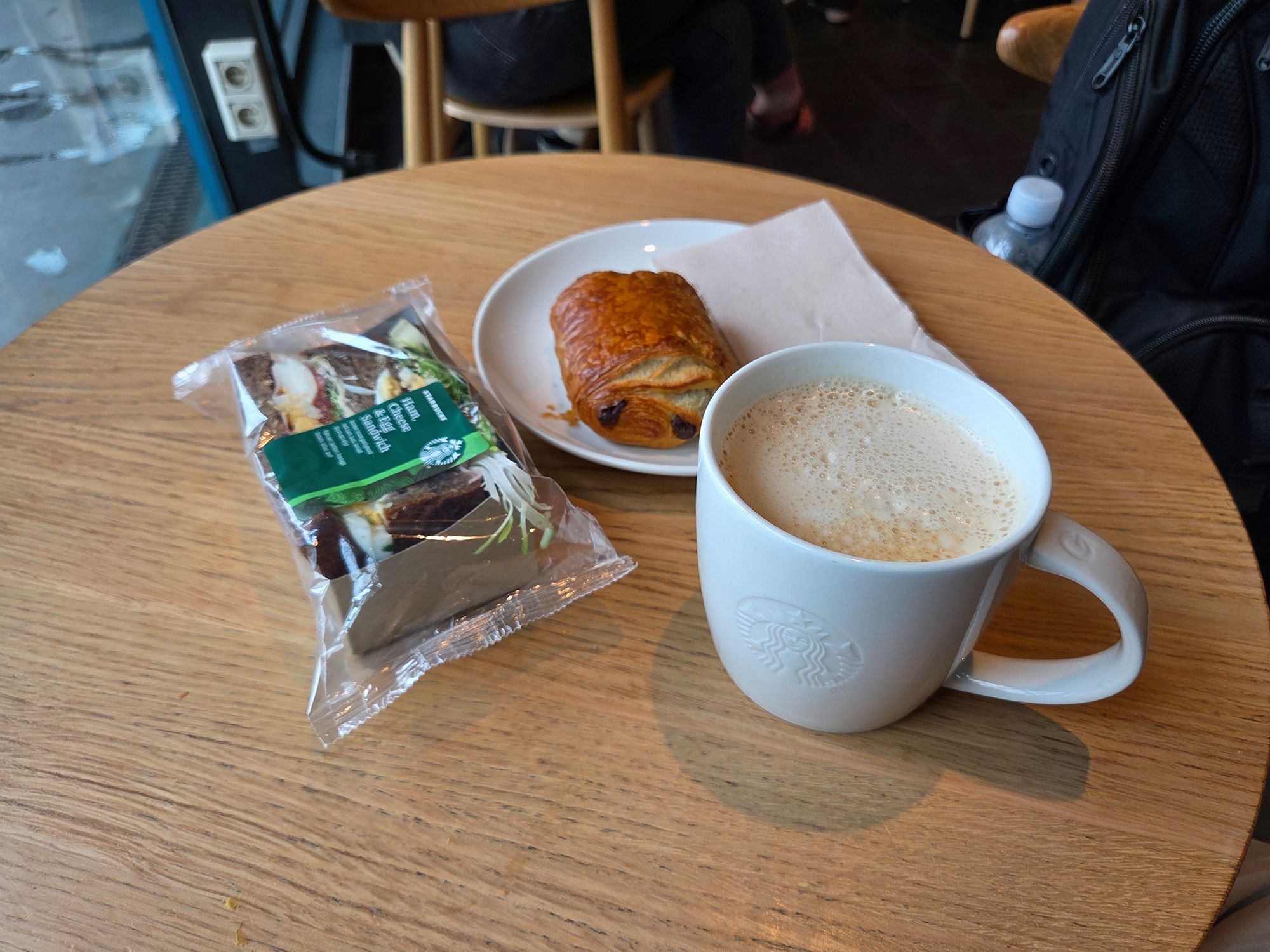
Before visiting the Van Gogh Museum, I stopped at a nearby café for a cup of coffee.
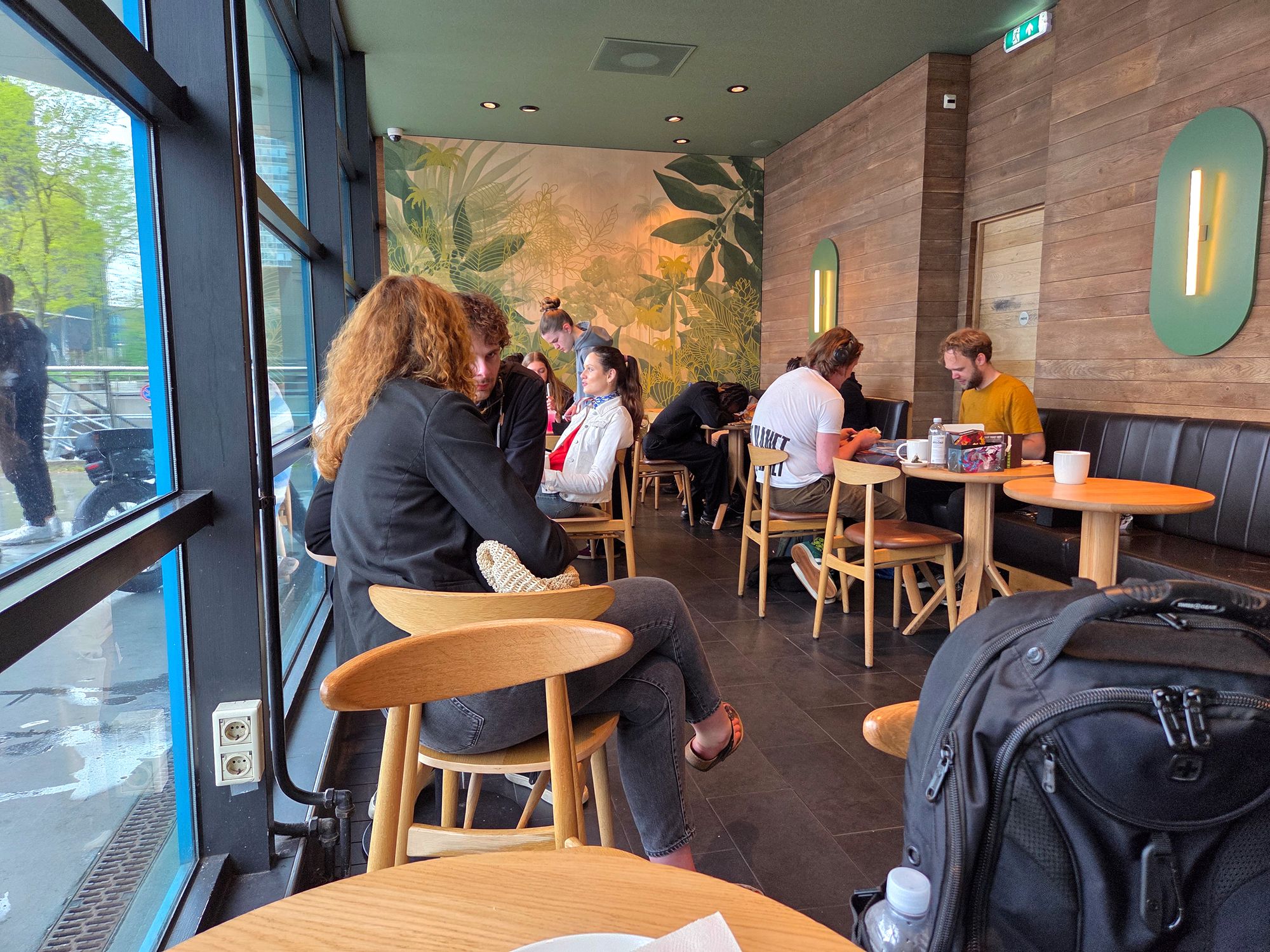
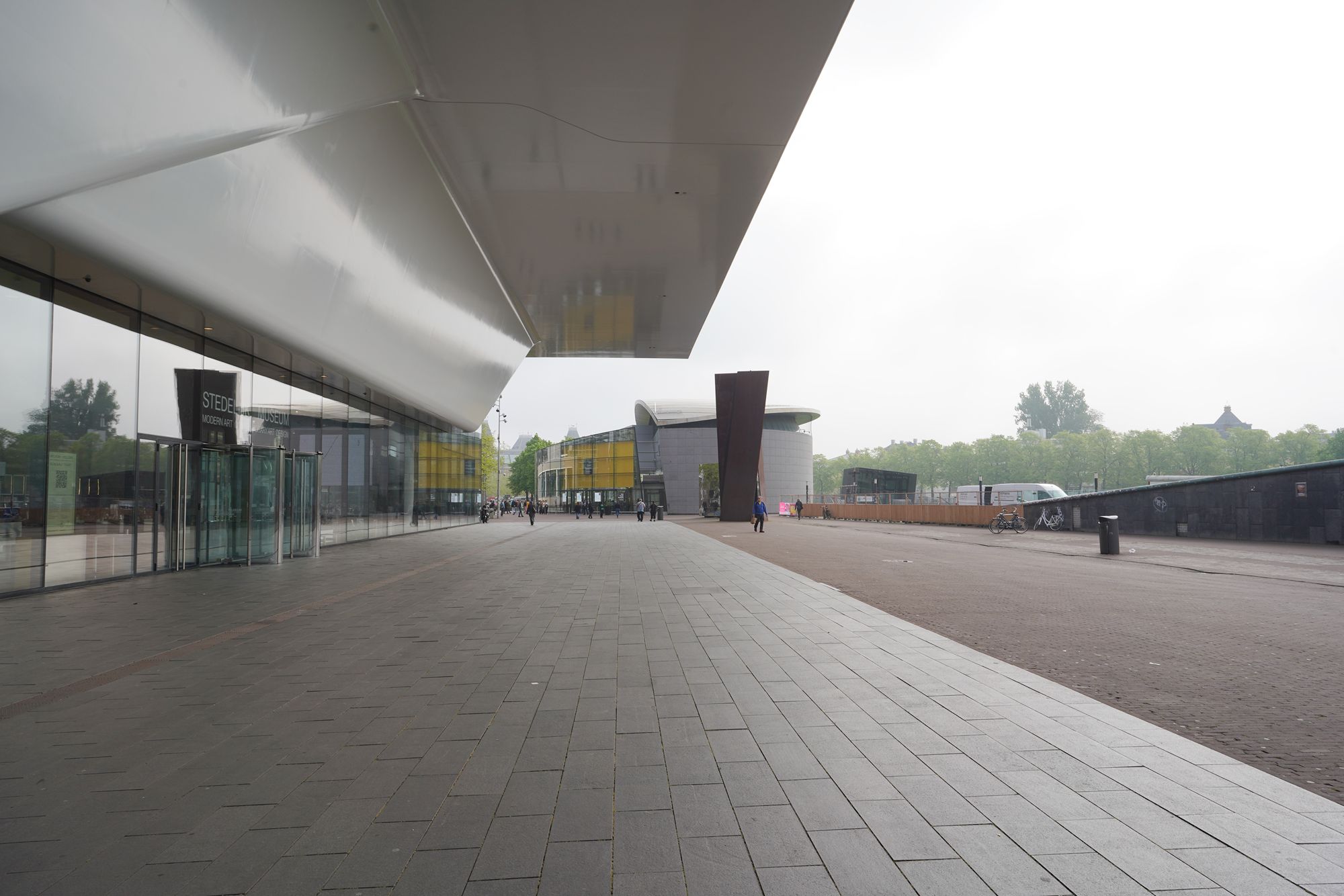
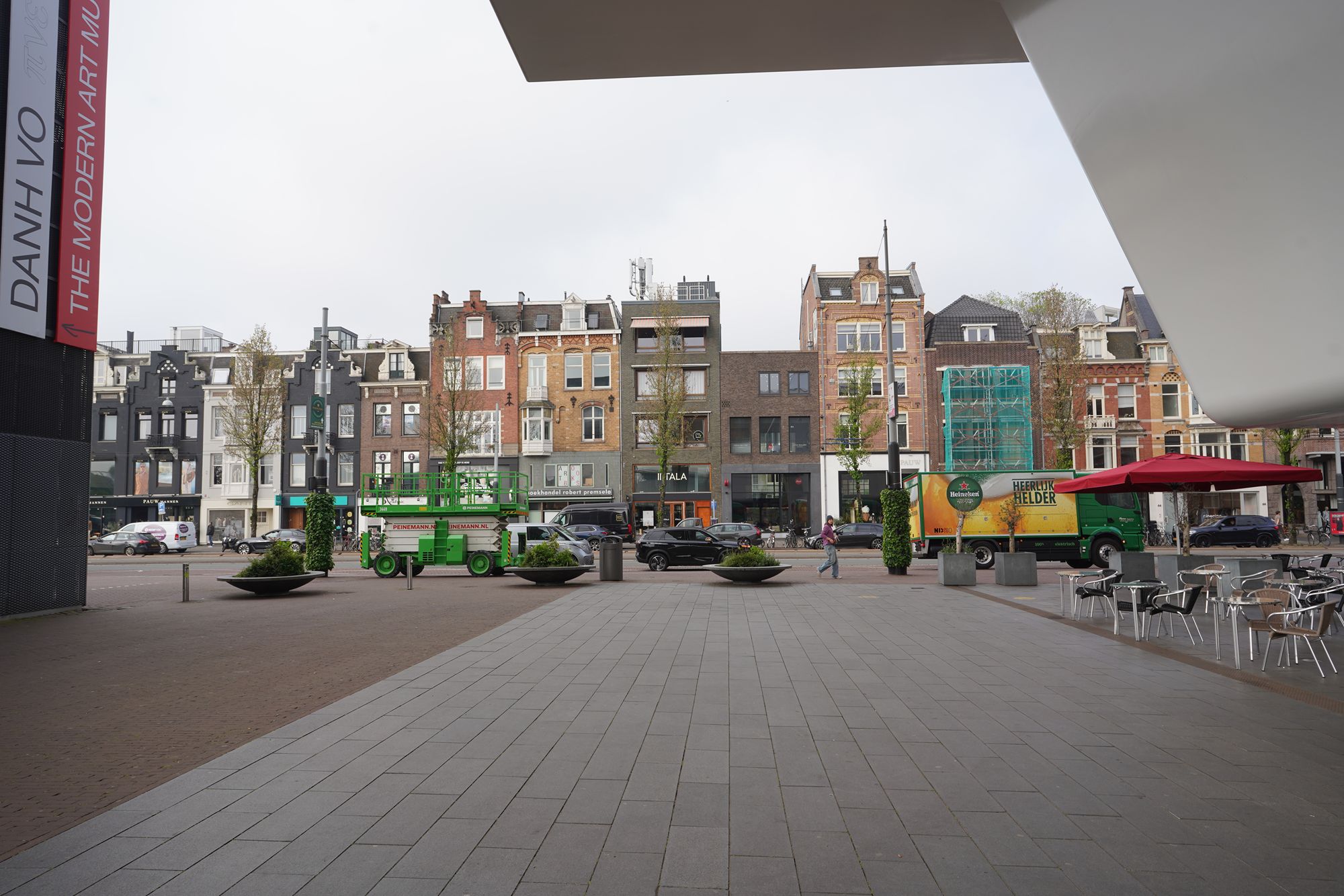
A view behind me
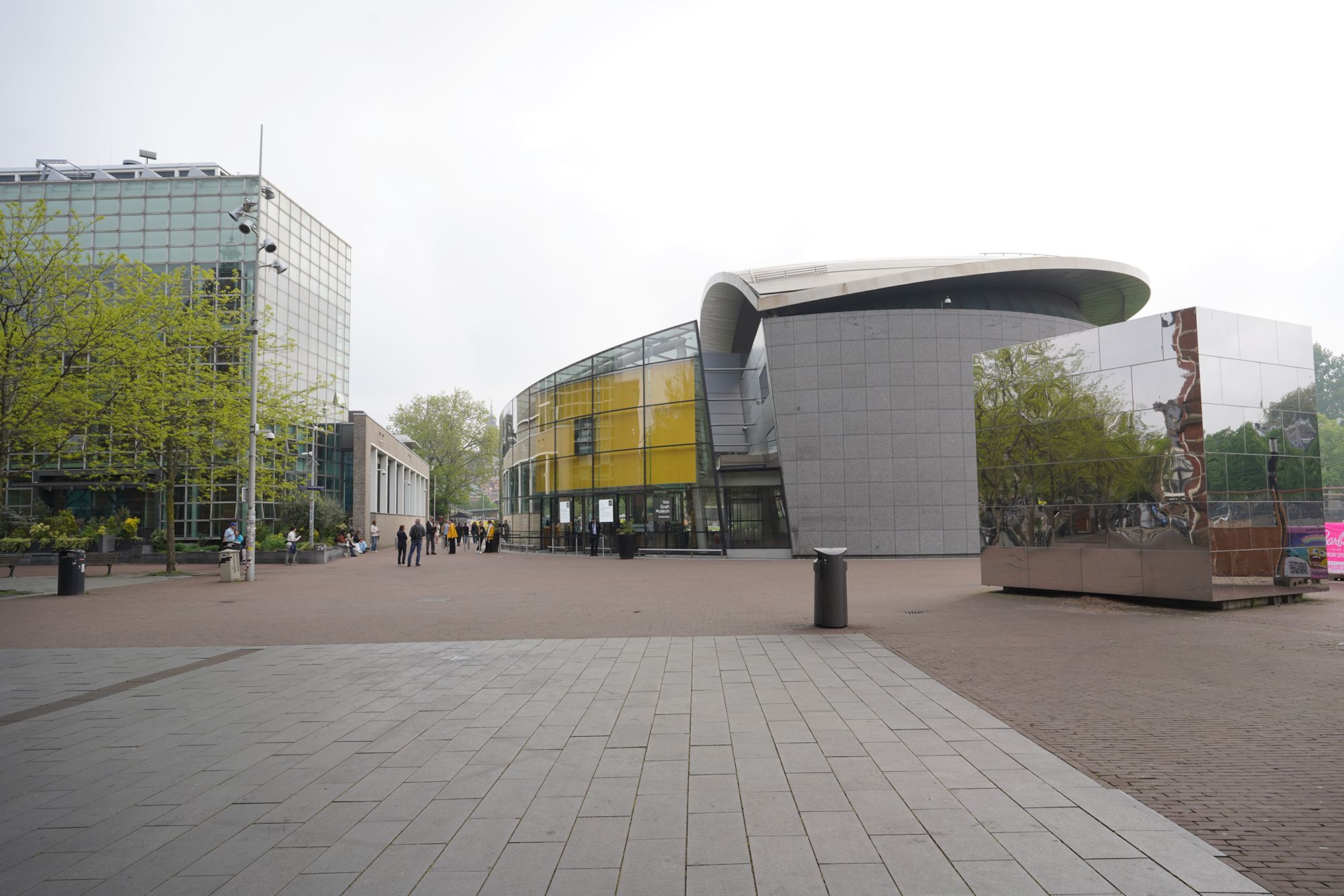
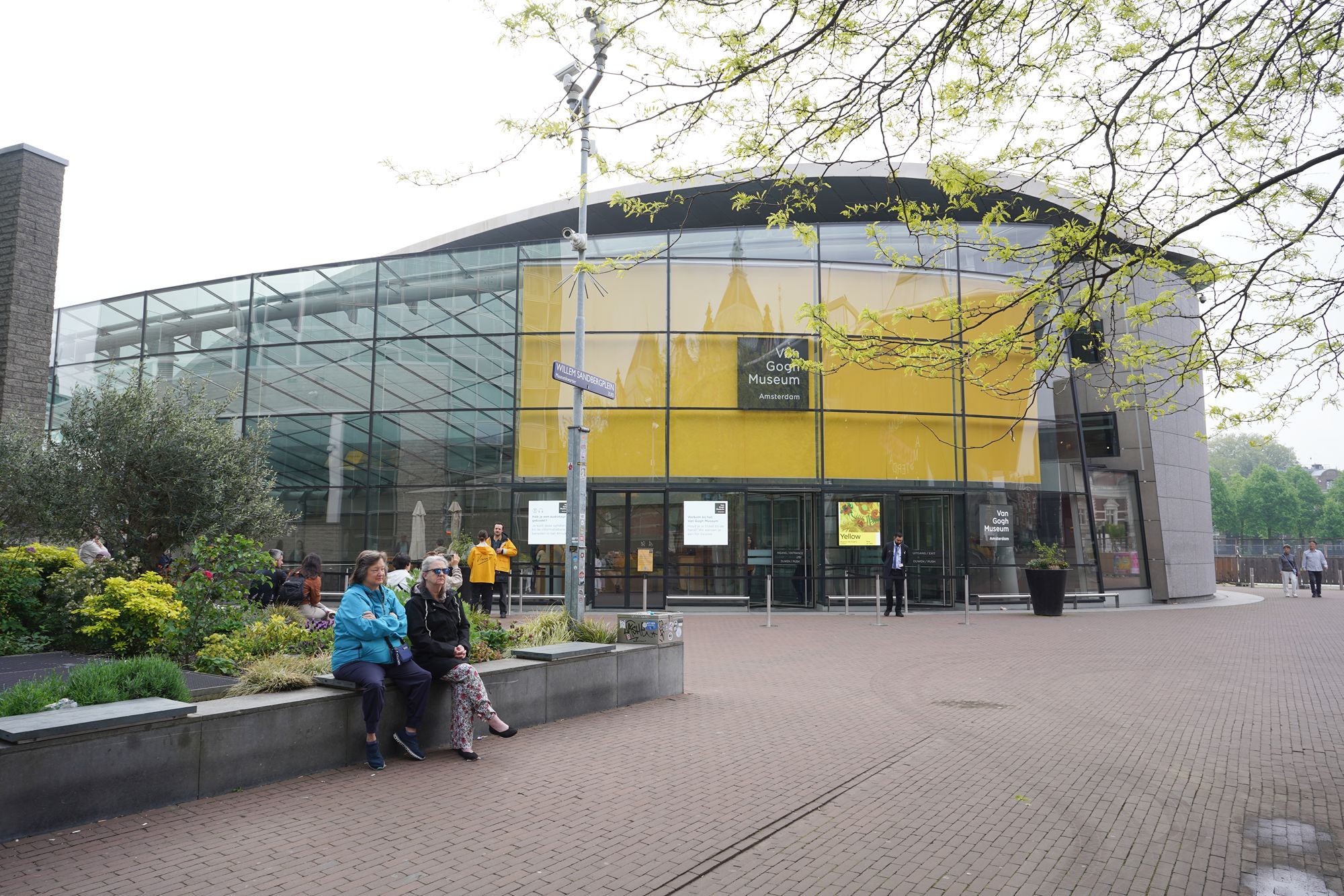
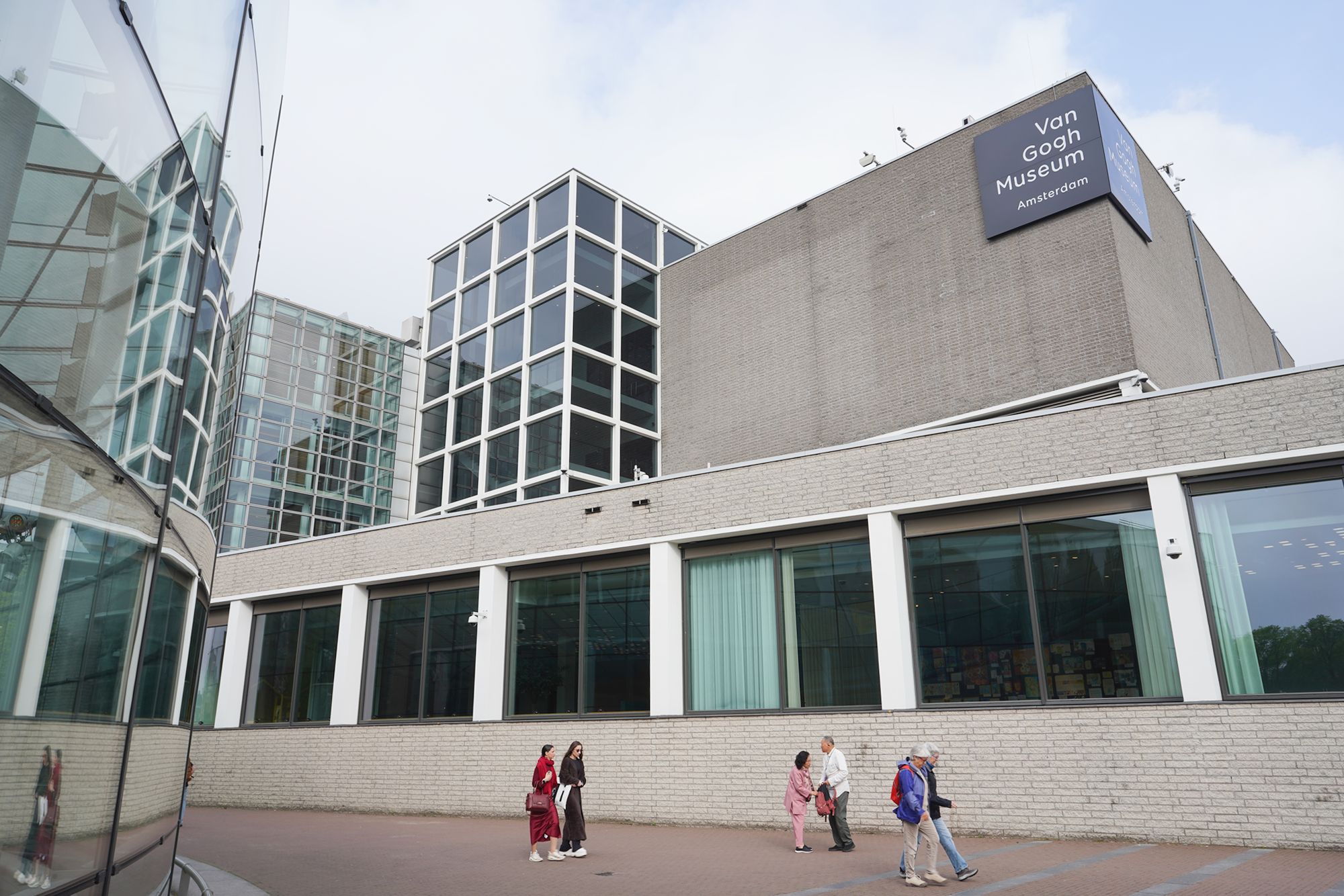
The large building on the left houses the Van Gogh Museum’s main collection, where most of Van Gogh’s paintings are displayed.
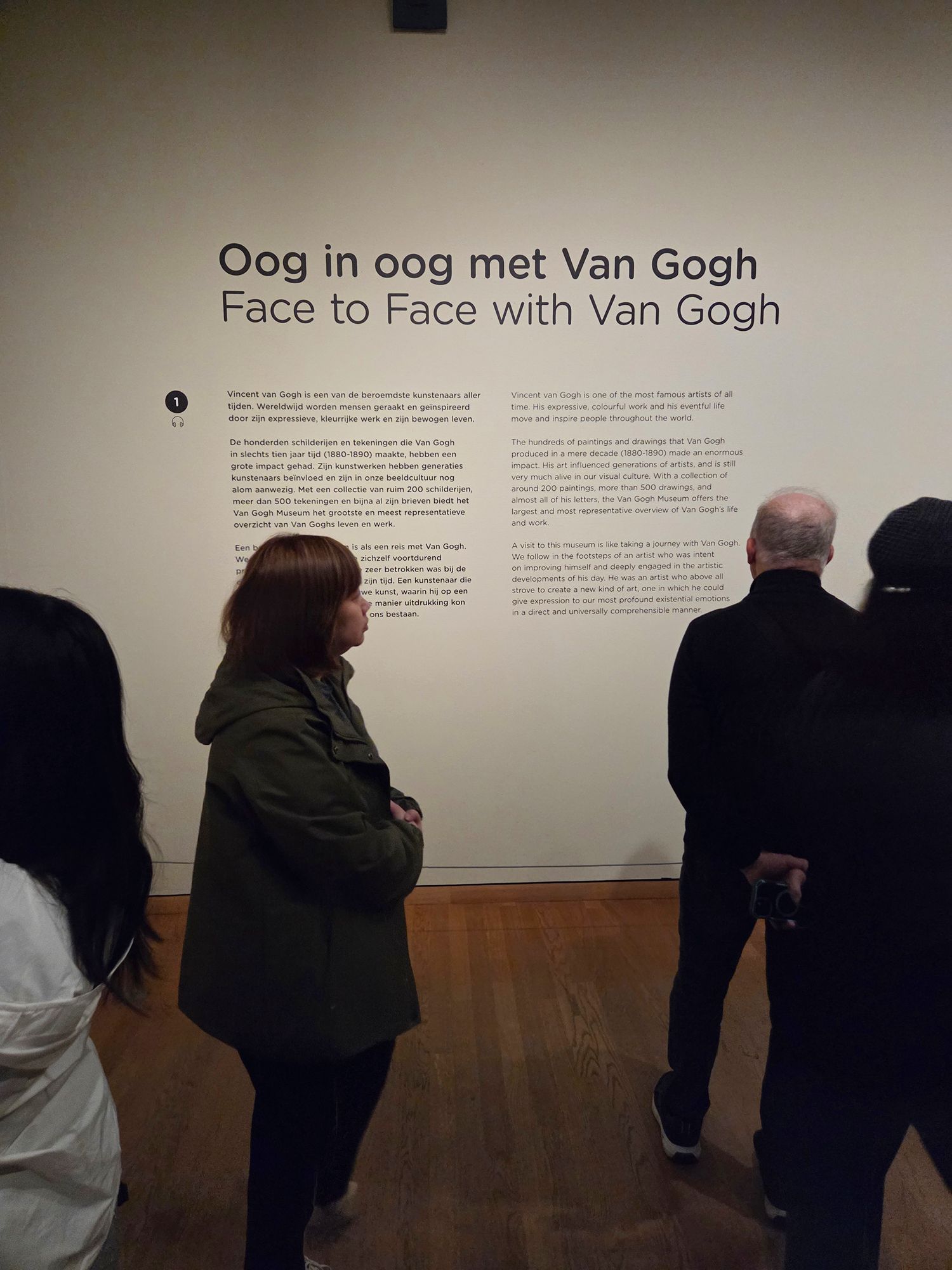
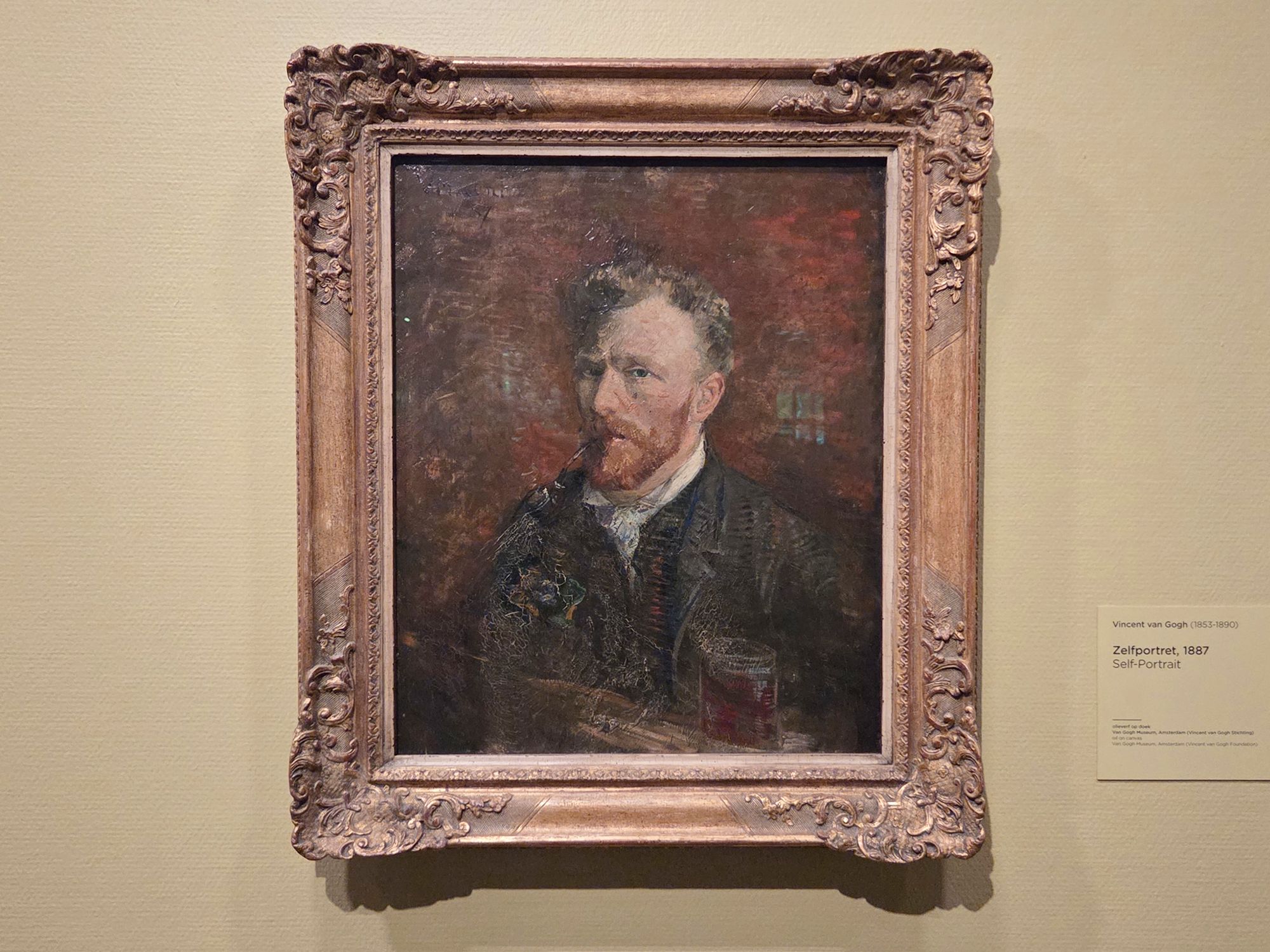
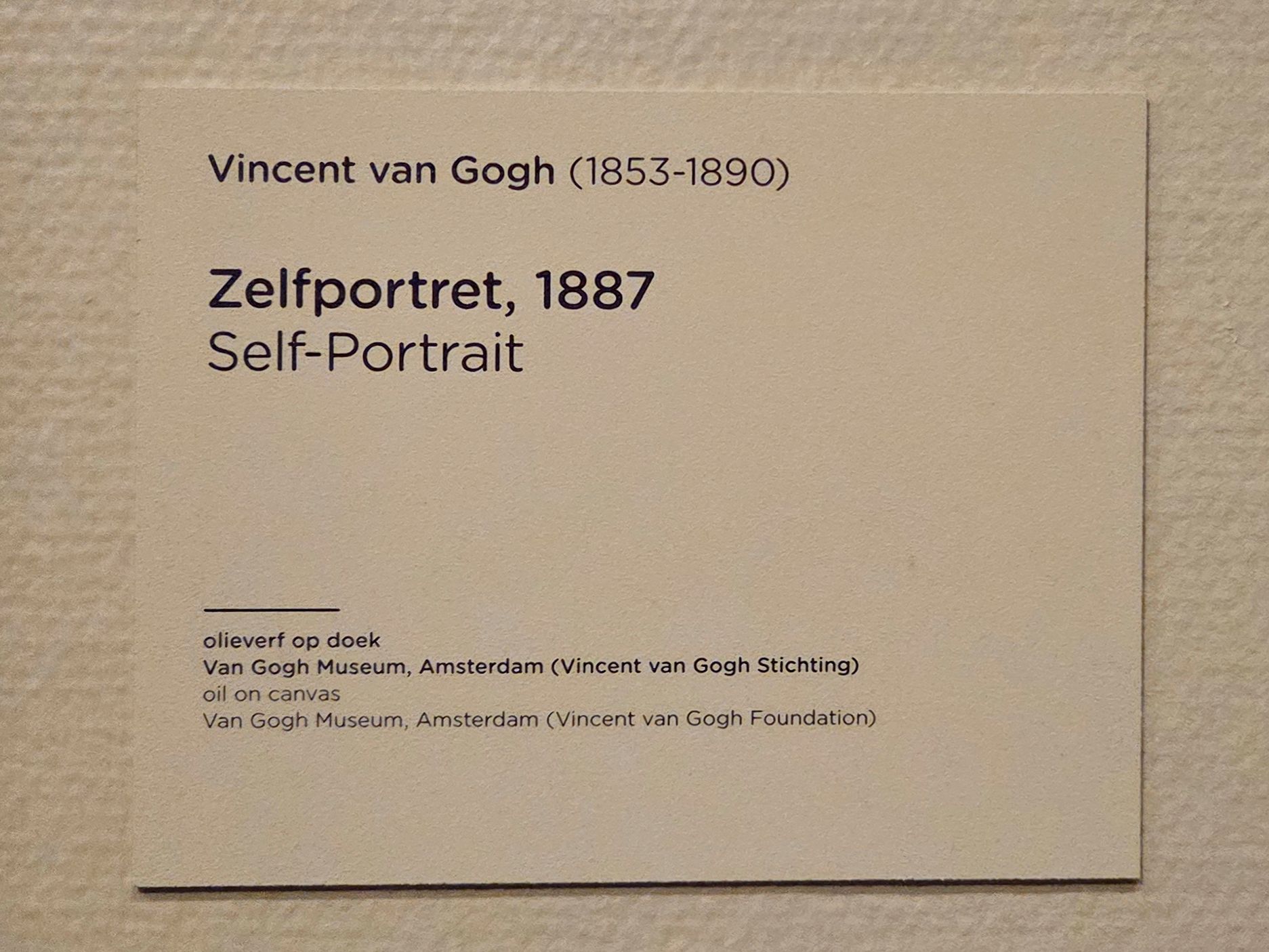
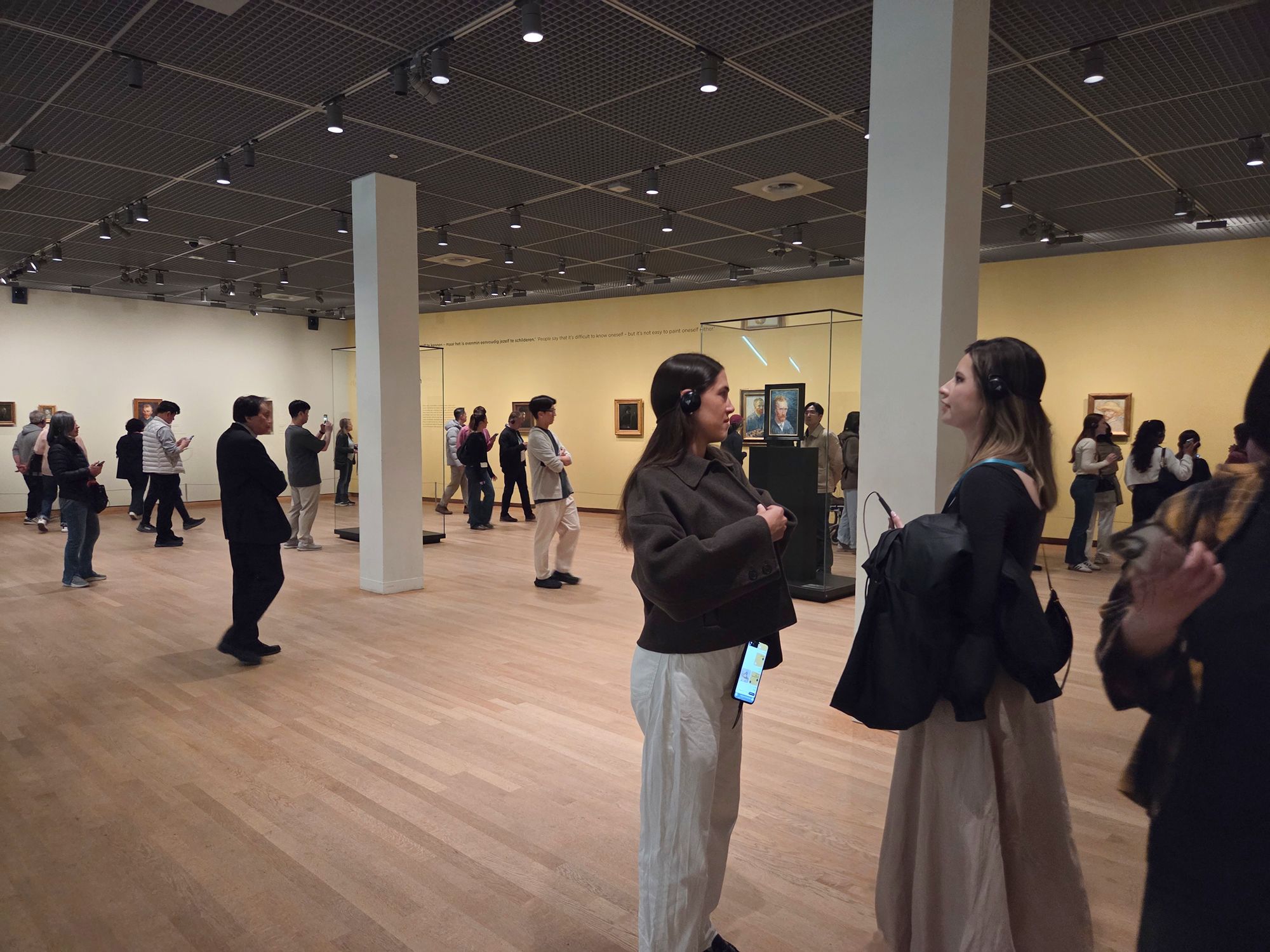
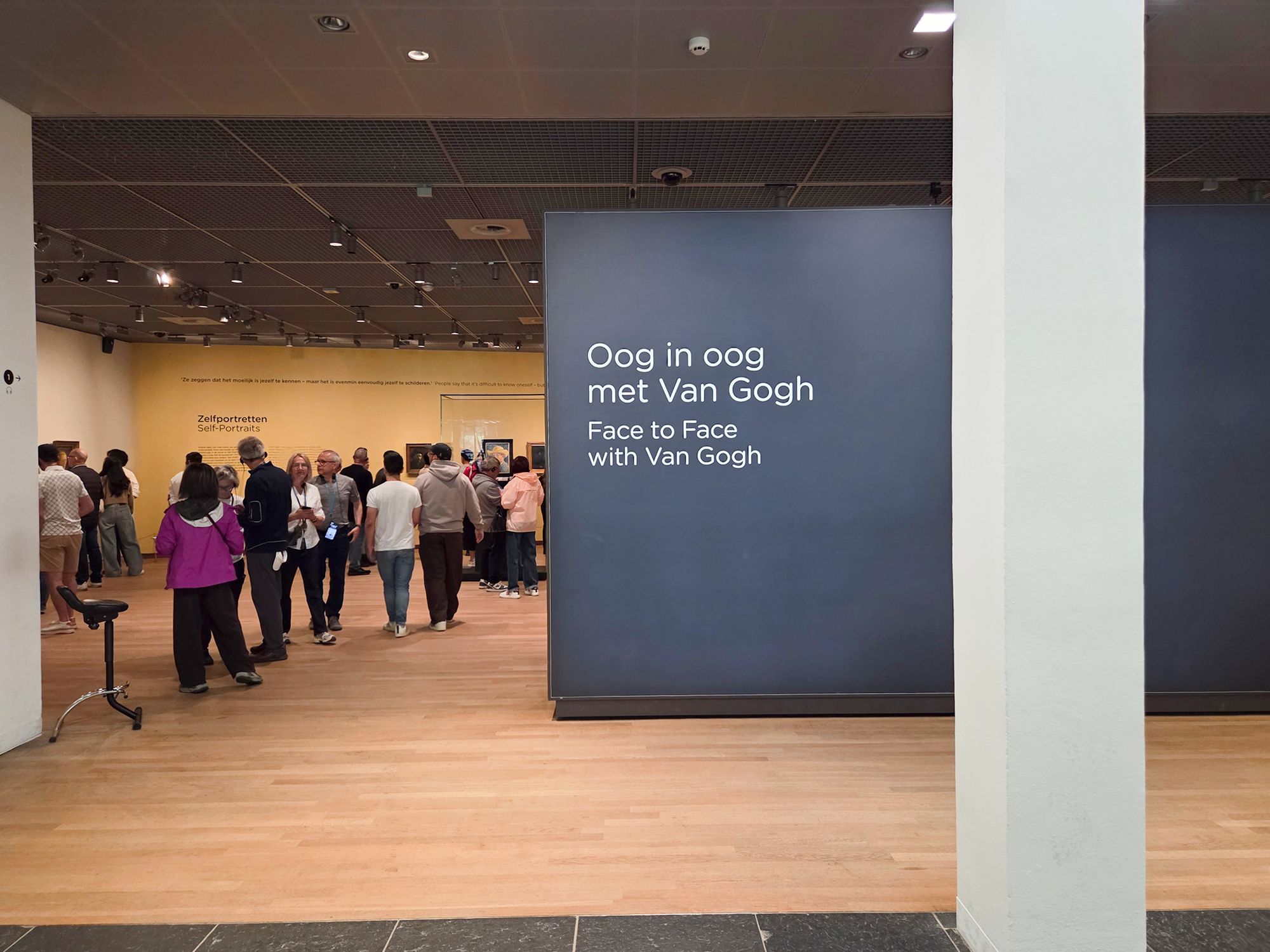
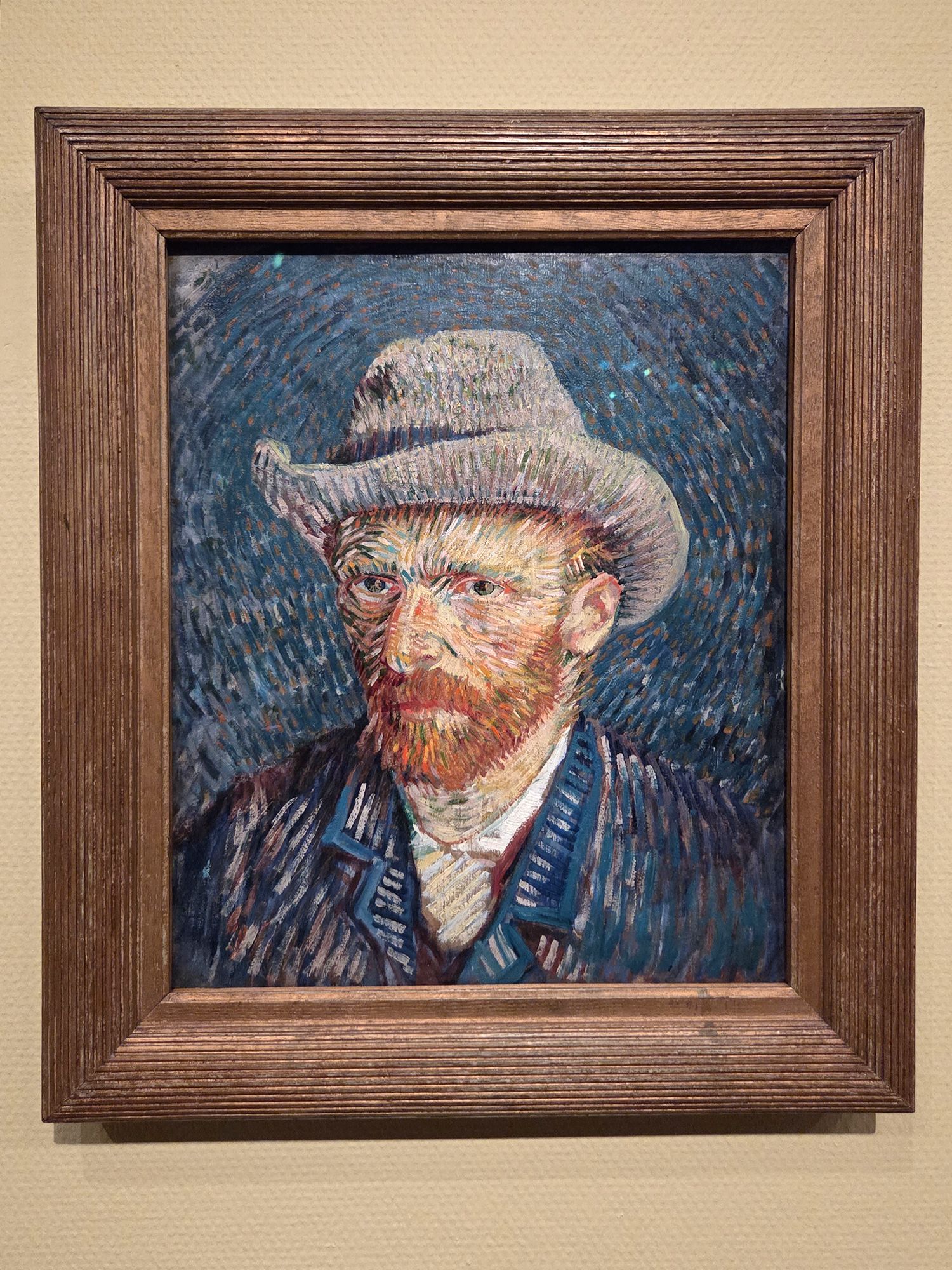
This area of the museum displays Van Gogh’s self-portraits, showing how he portrayed himself at different stages of his life and artistic development.
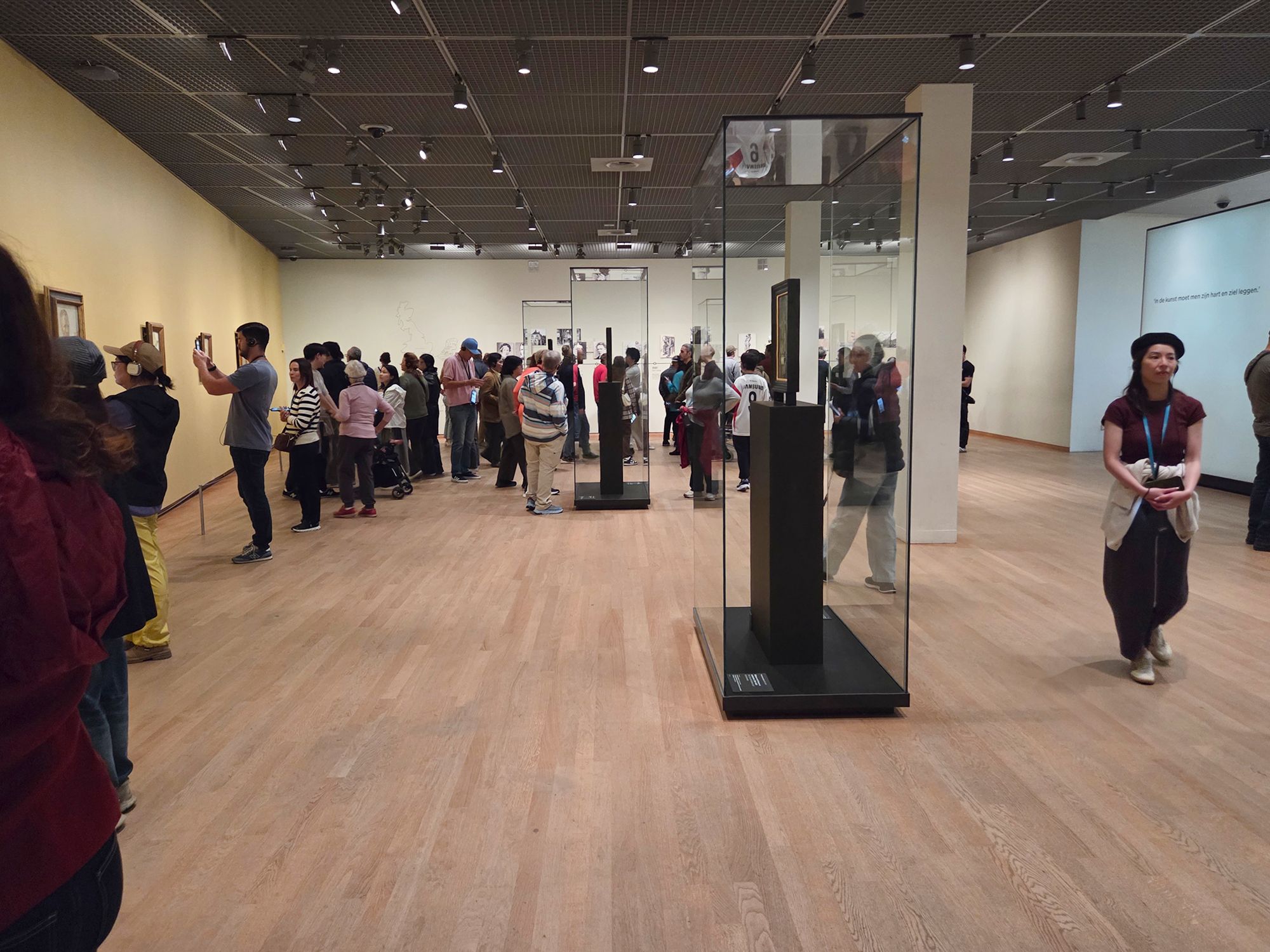
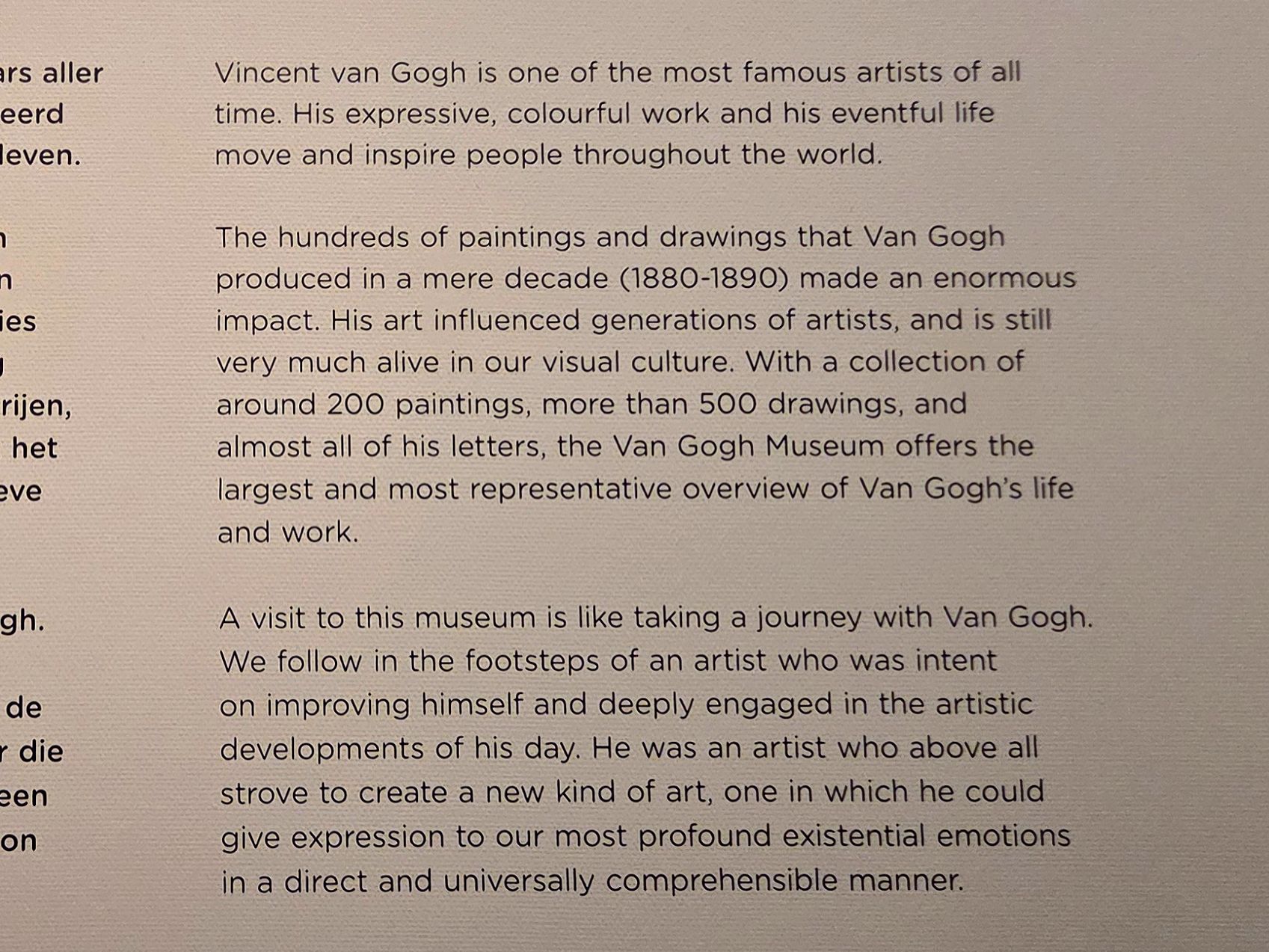
The Van Gogh Museum holds the world’s largest collection of Van Gogh’s work, including around 200 paintings, more than 500 drawings, and almost all of his surviving letters. The collection follows his remarkable development during his short artistic career from 1880 to 1890, showing how his expressive use of color and brushwork evolved and ultimately influenced generations of artists.
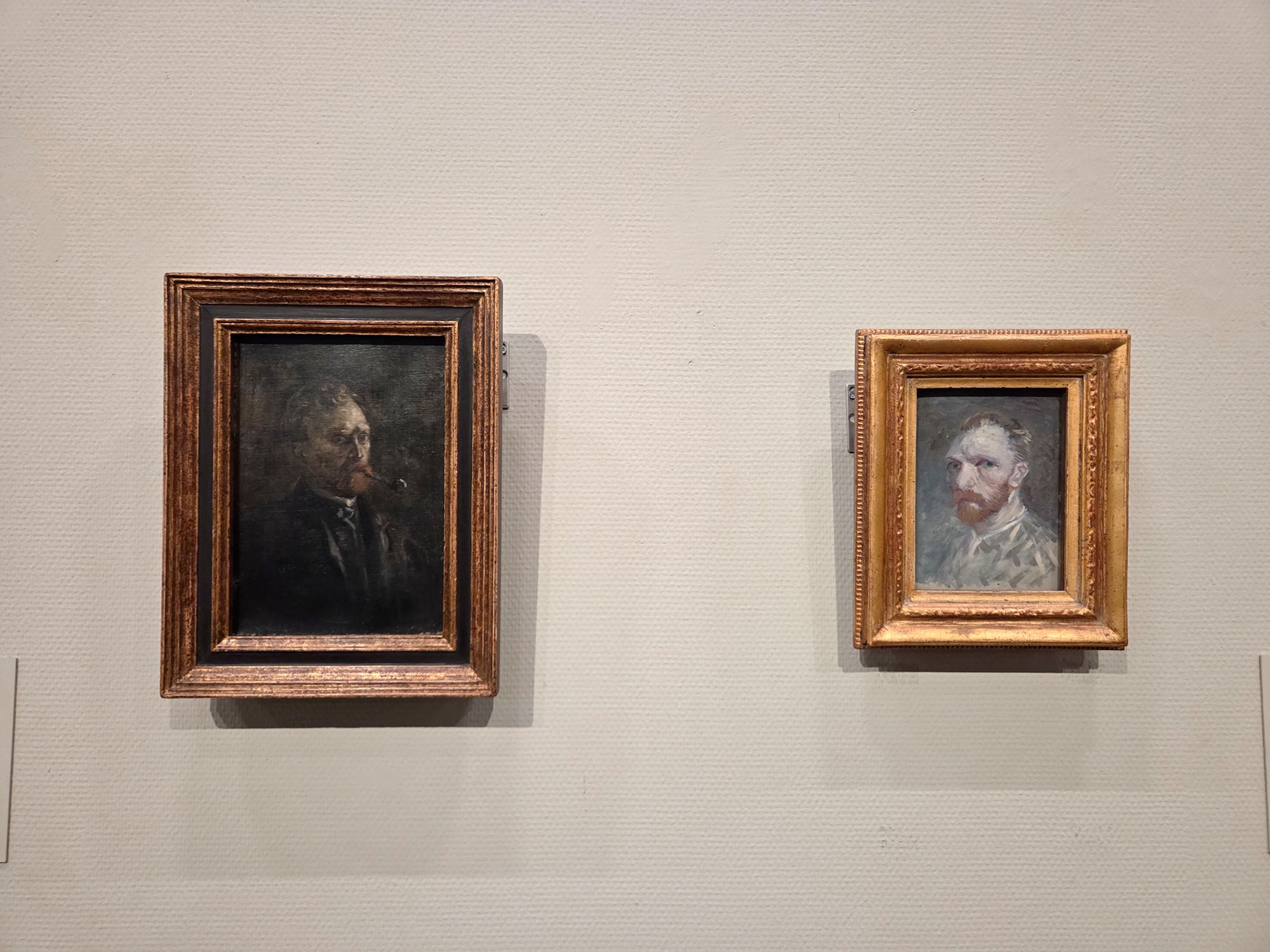
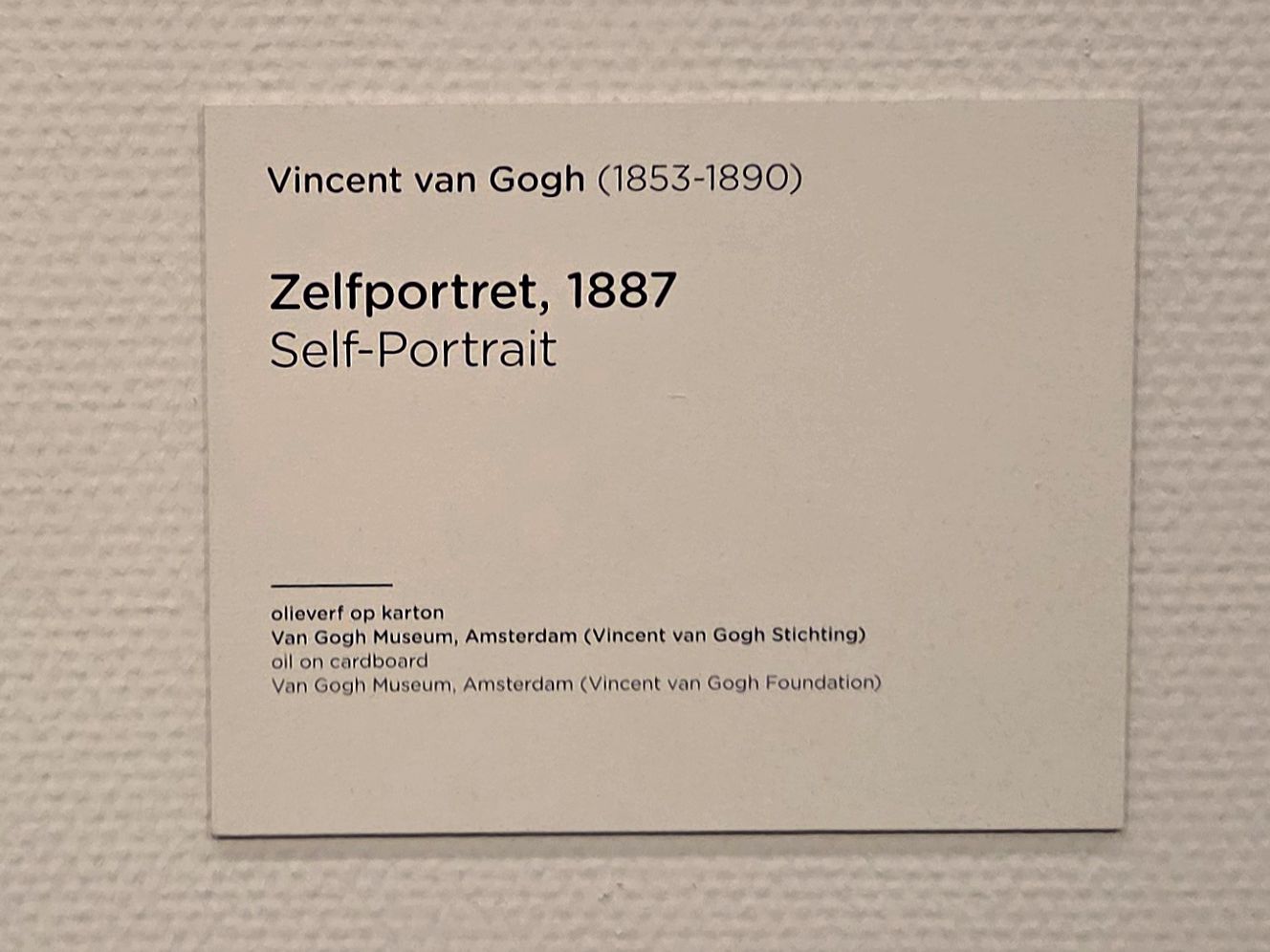
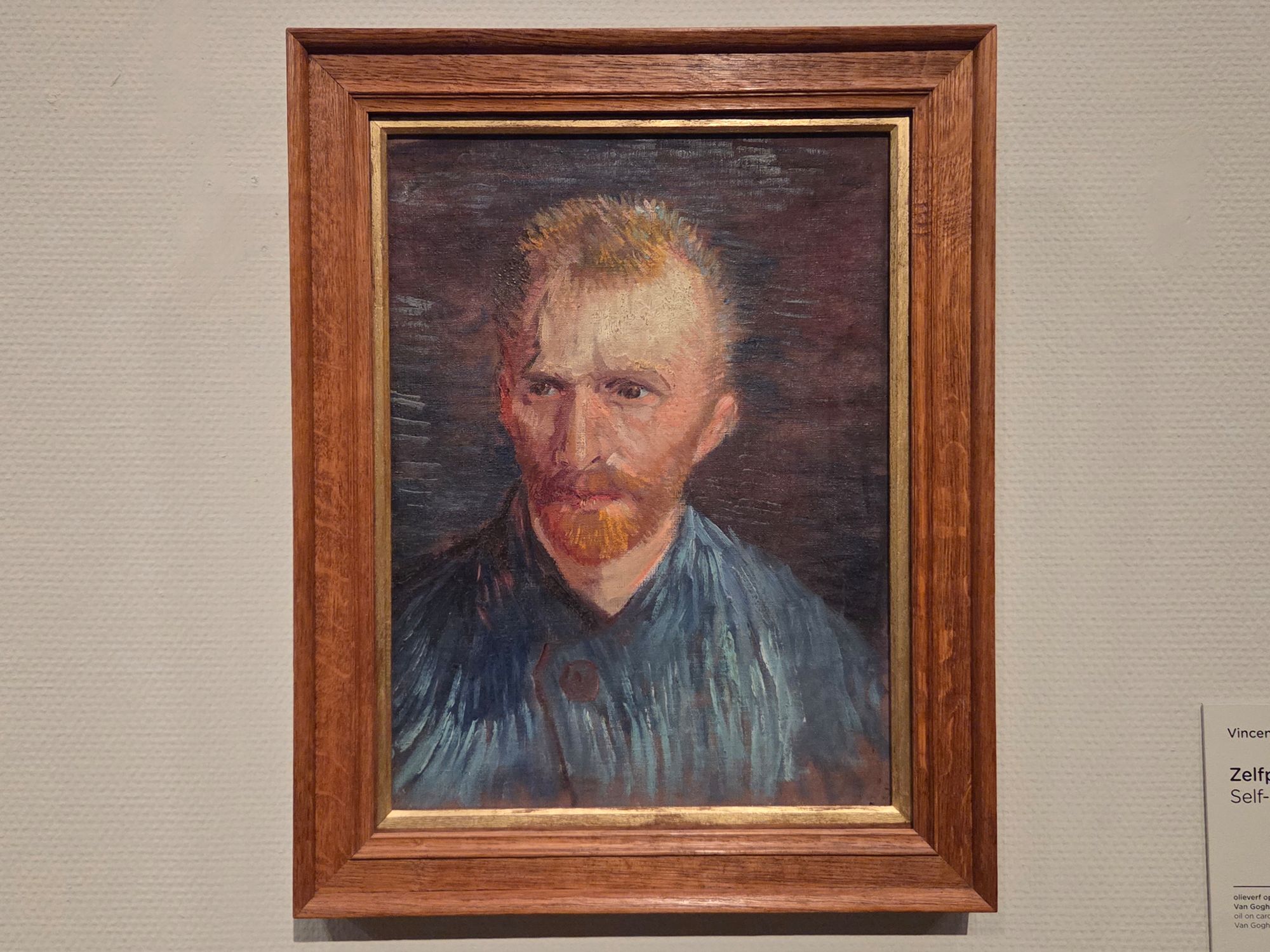
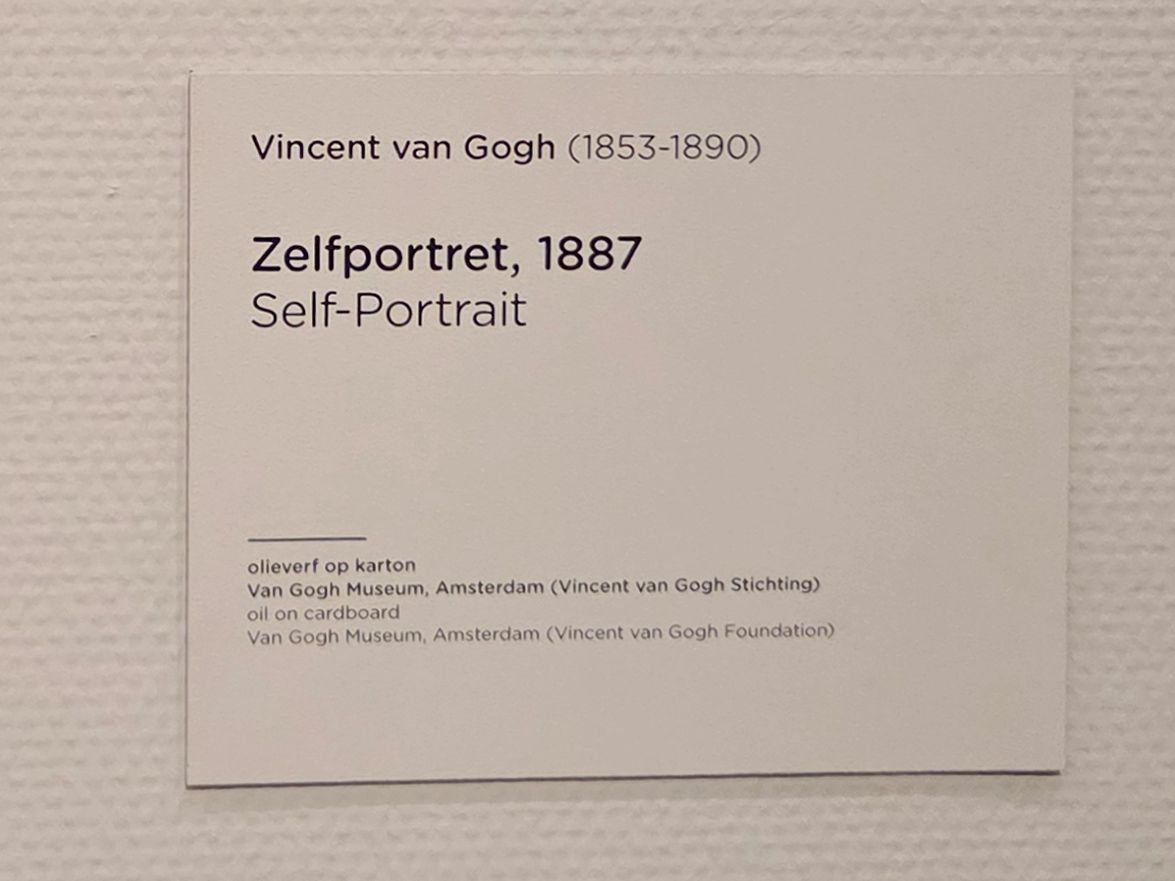
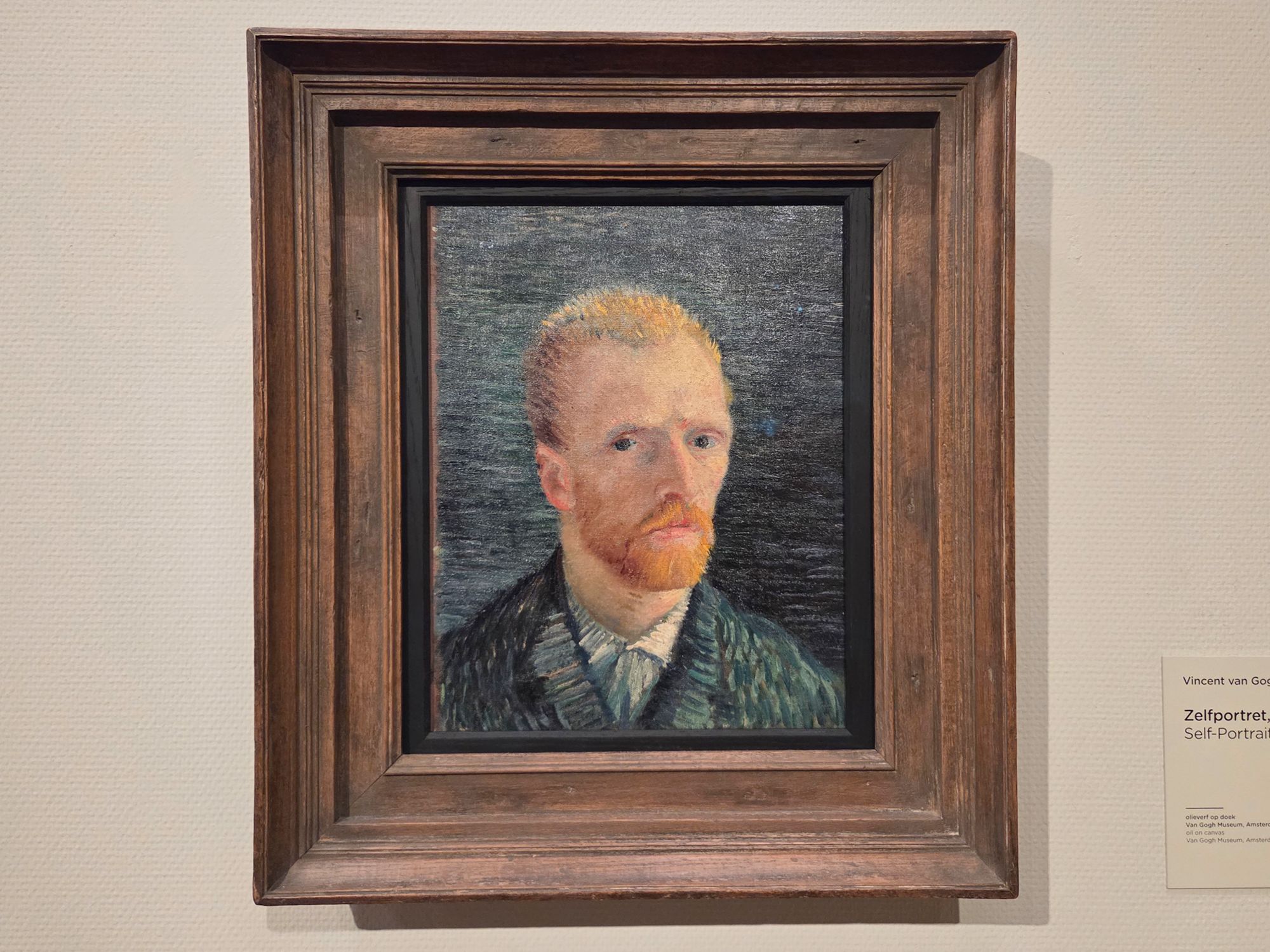
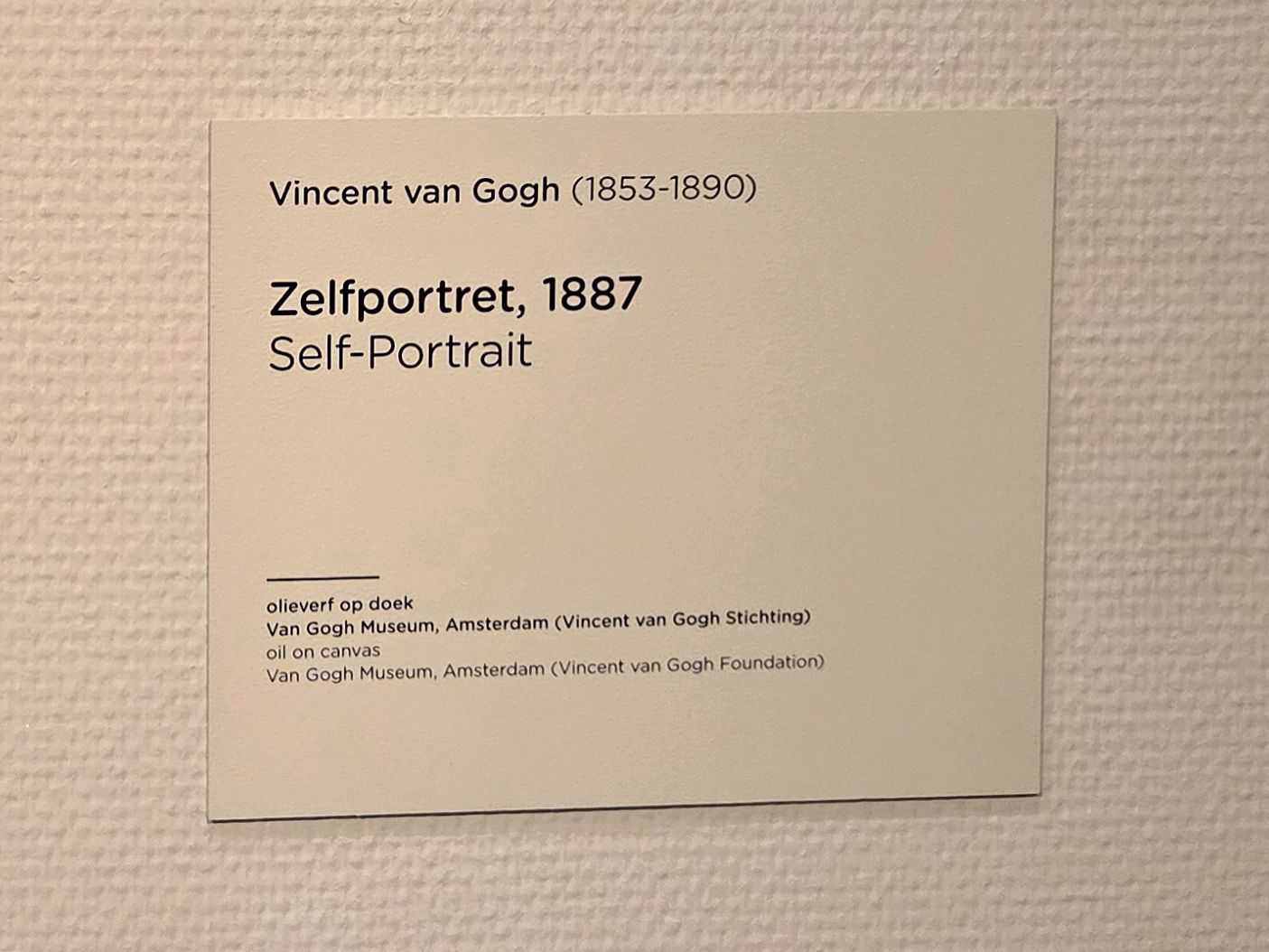
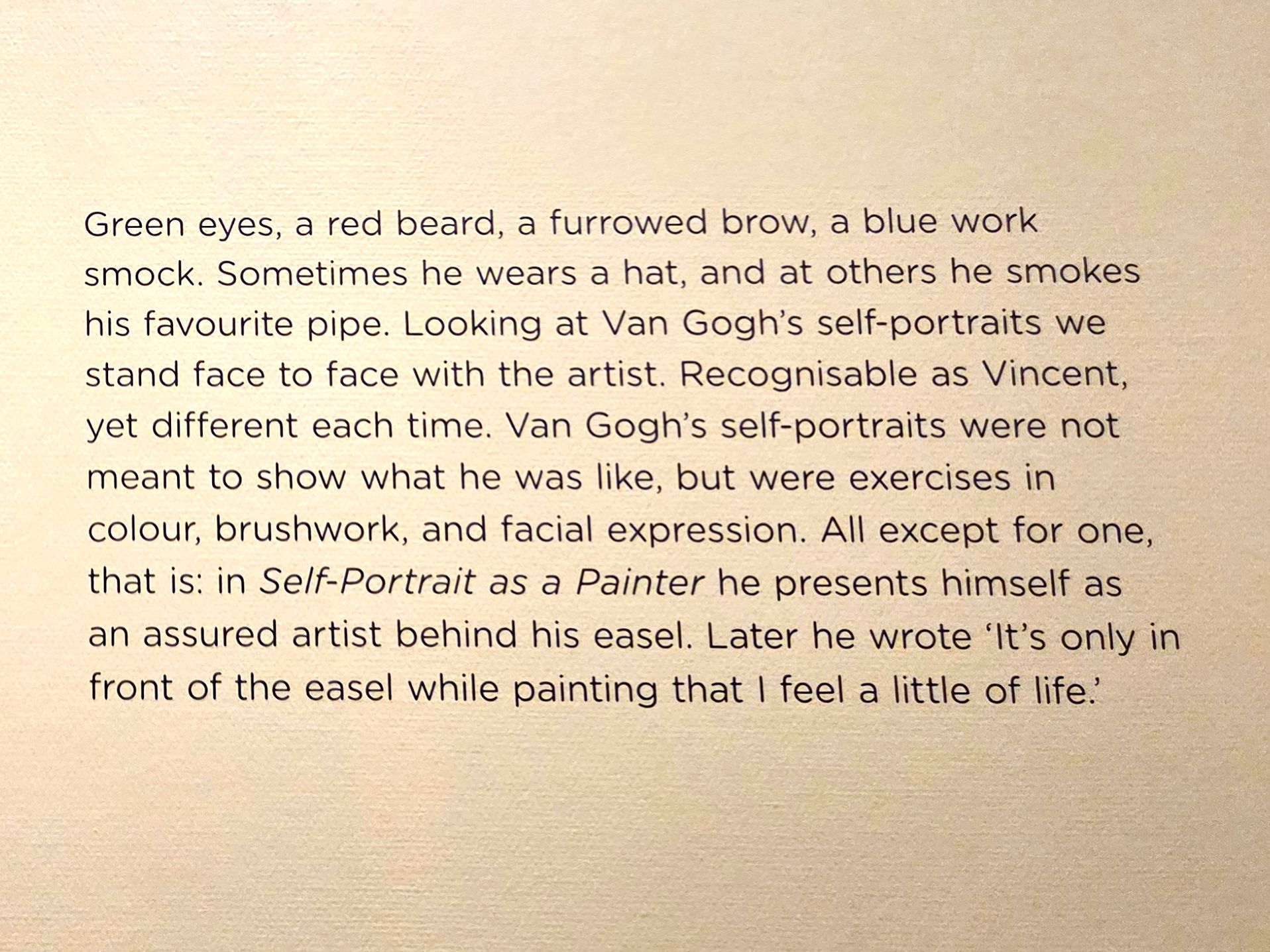
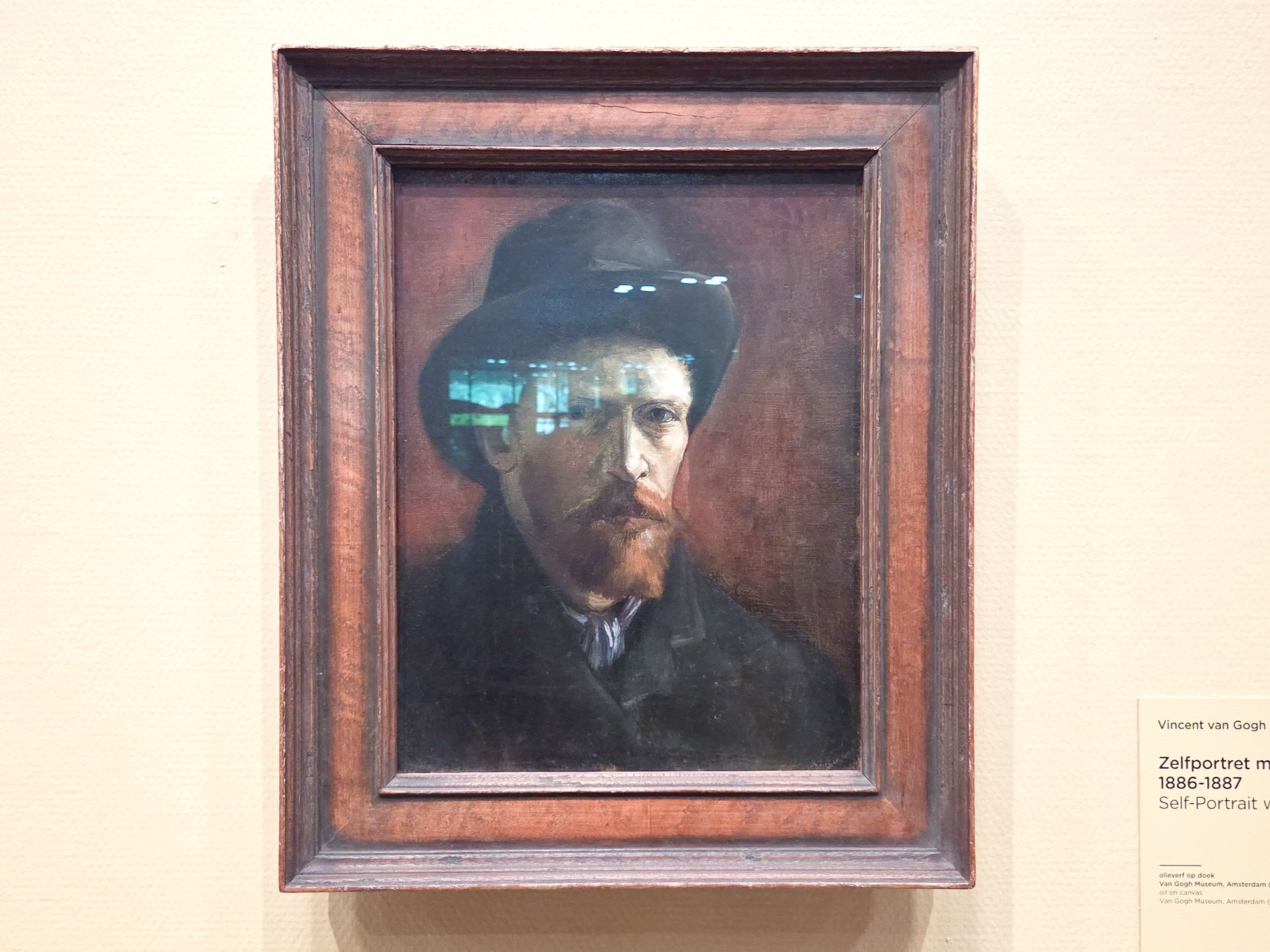
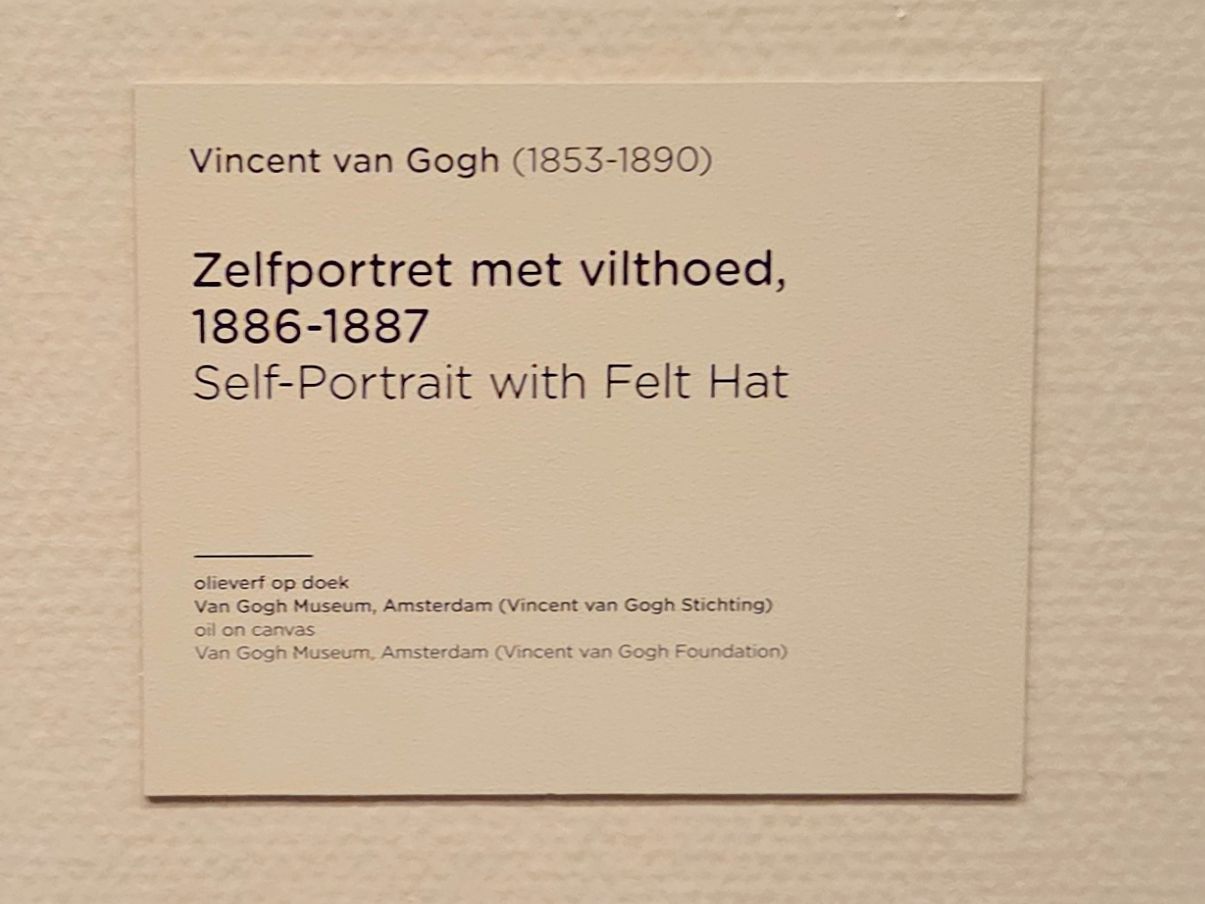
Van Gogh painted many self-portraits, using himself as a model to experiment with color, brushwork, and facial expression. Rather than simply recording his appearance, these paintings allowed him to explore different artistic techniques and ways of expressing his personality and emotions.
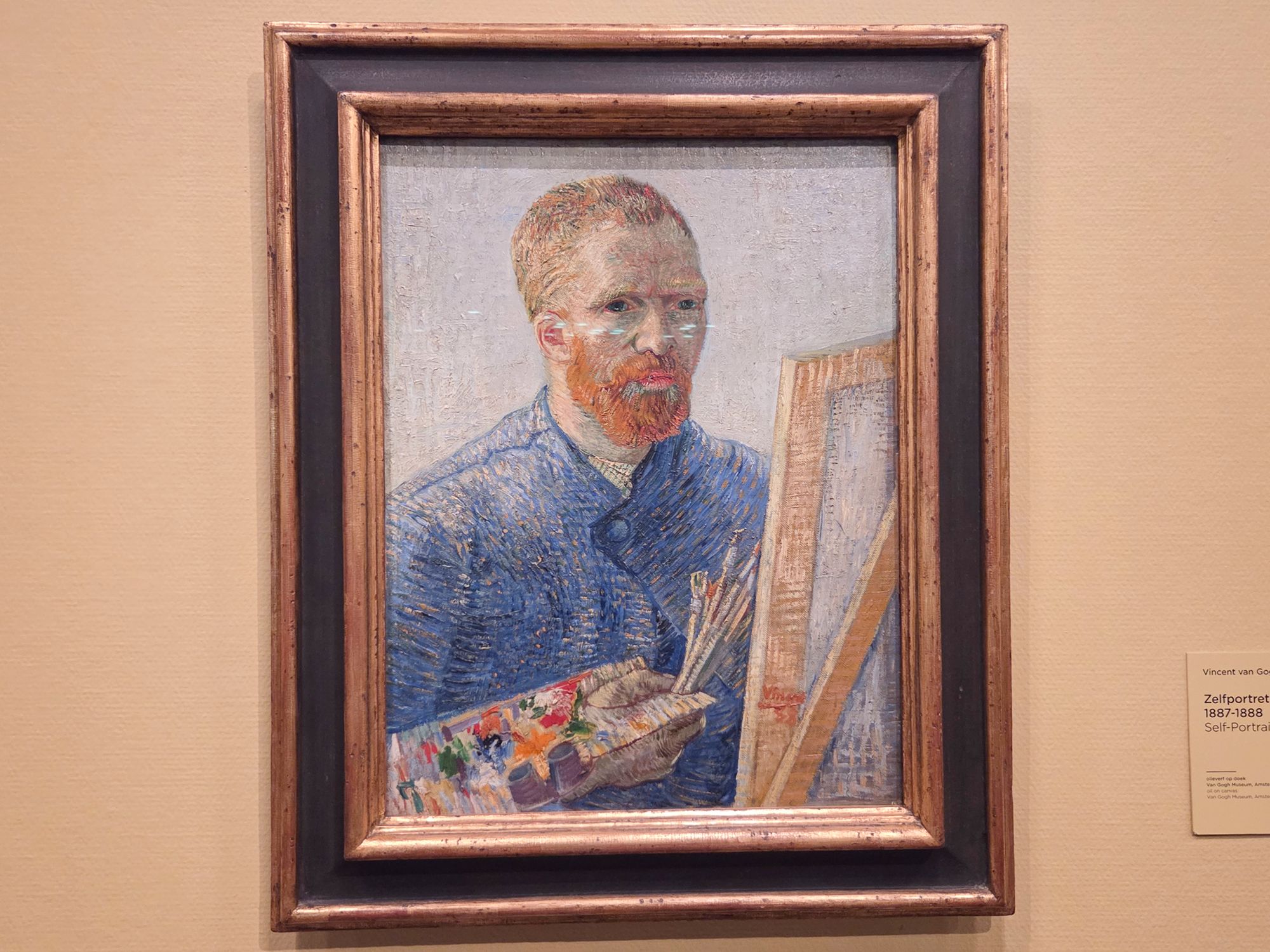
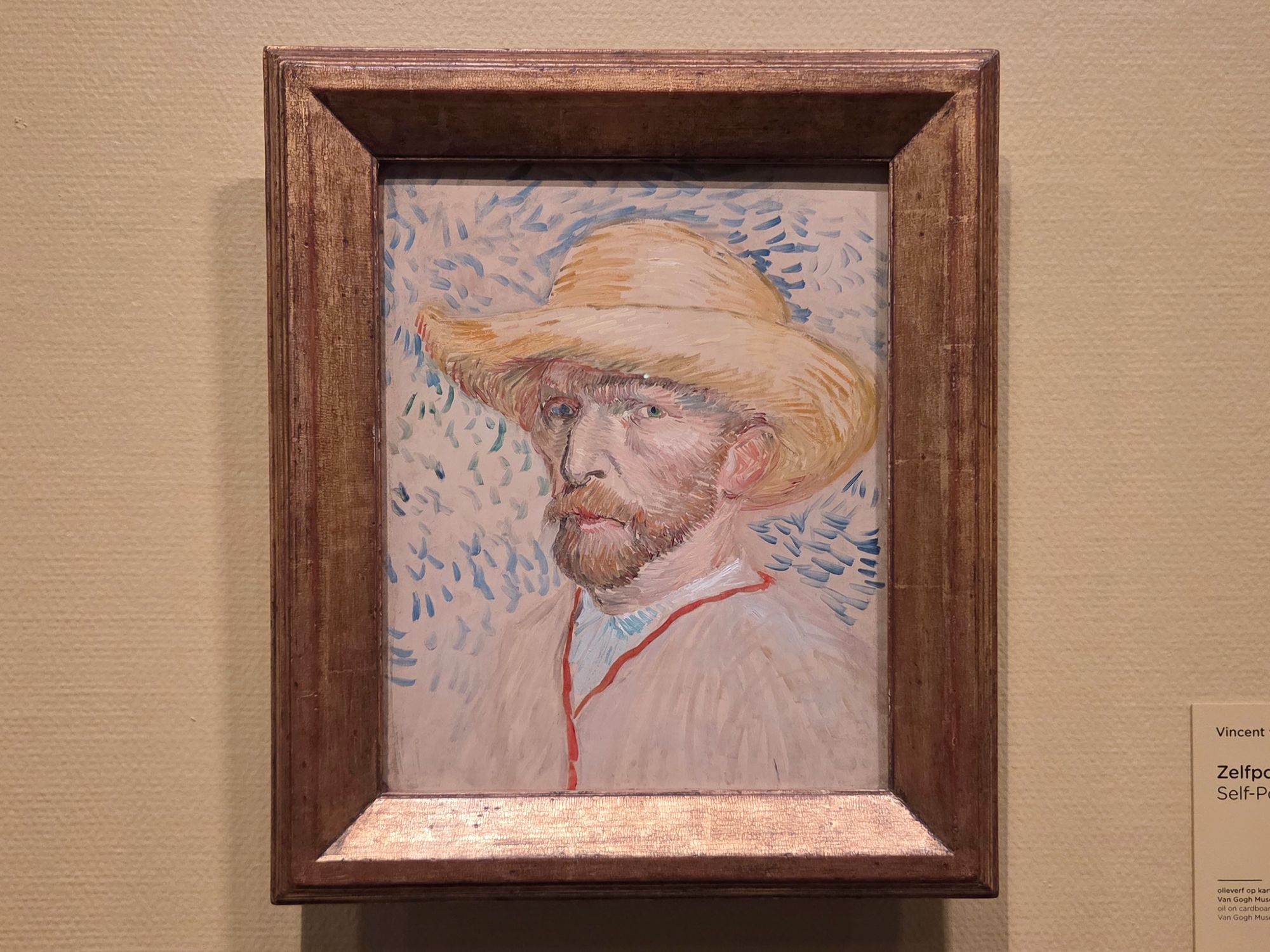
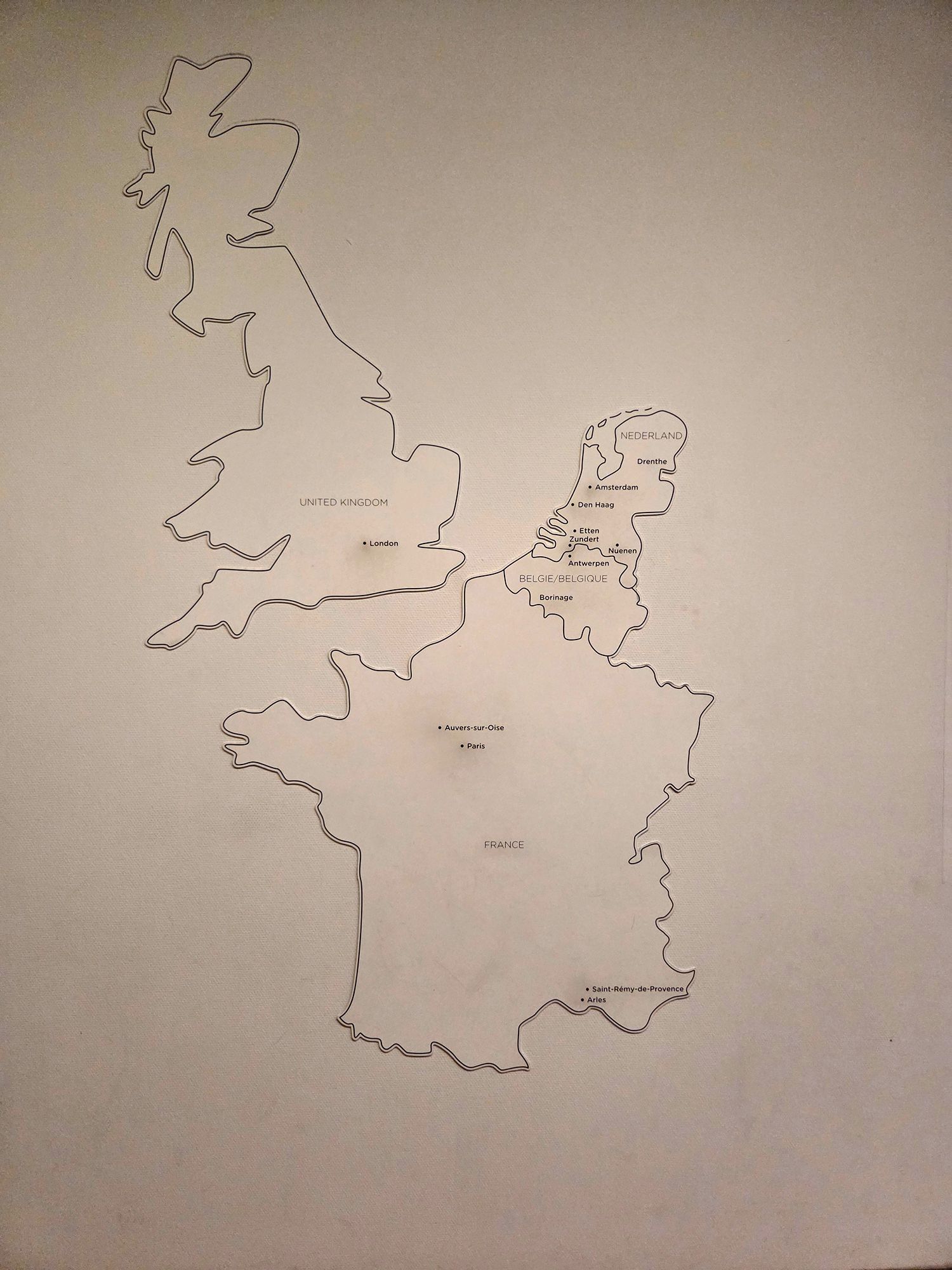
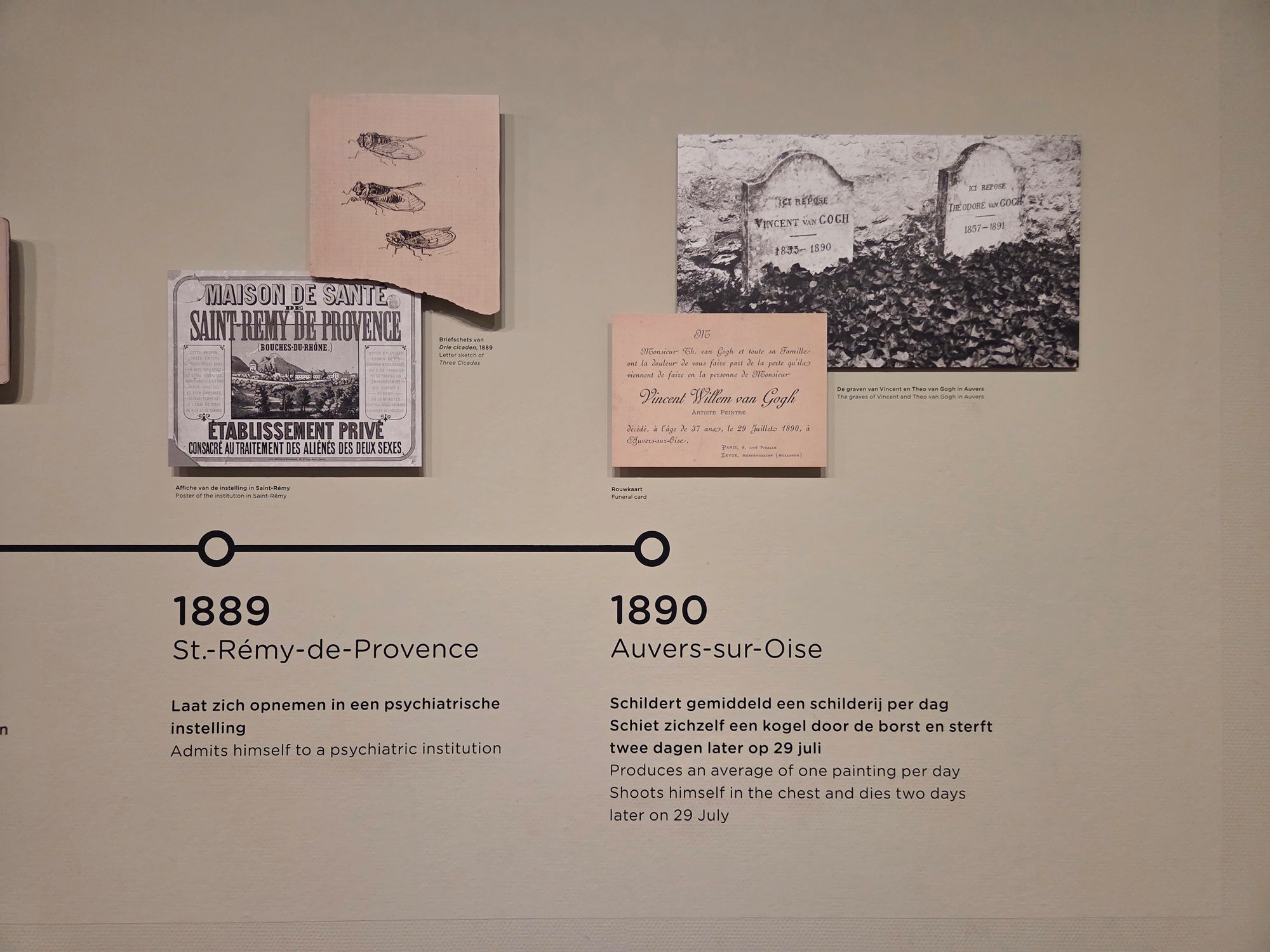
During his life, Van Gogh lived and worked in several places across Europe, including the Netherlands, Belgium, England, and France.
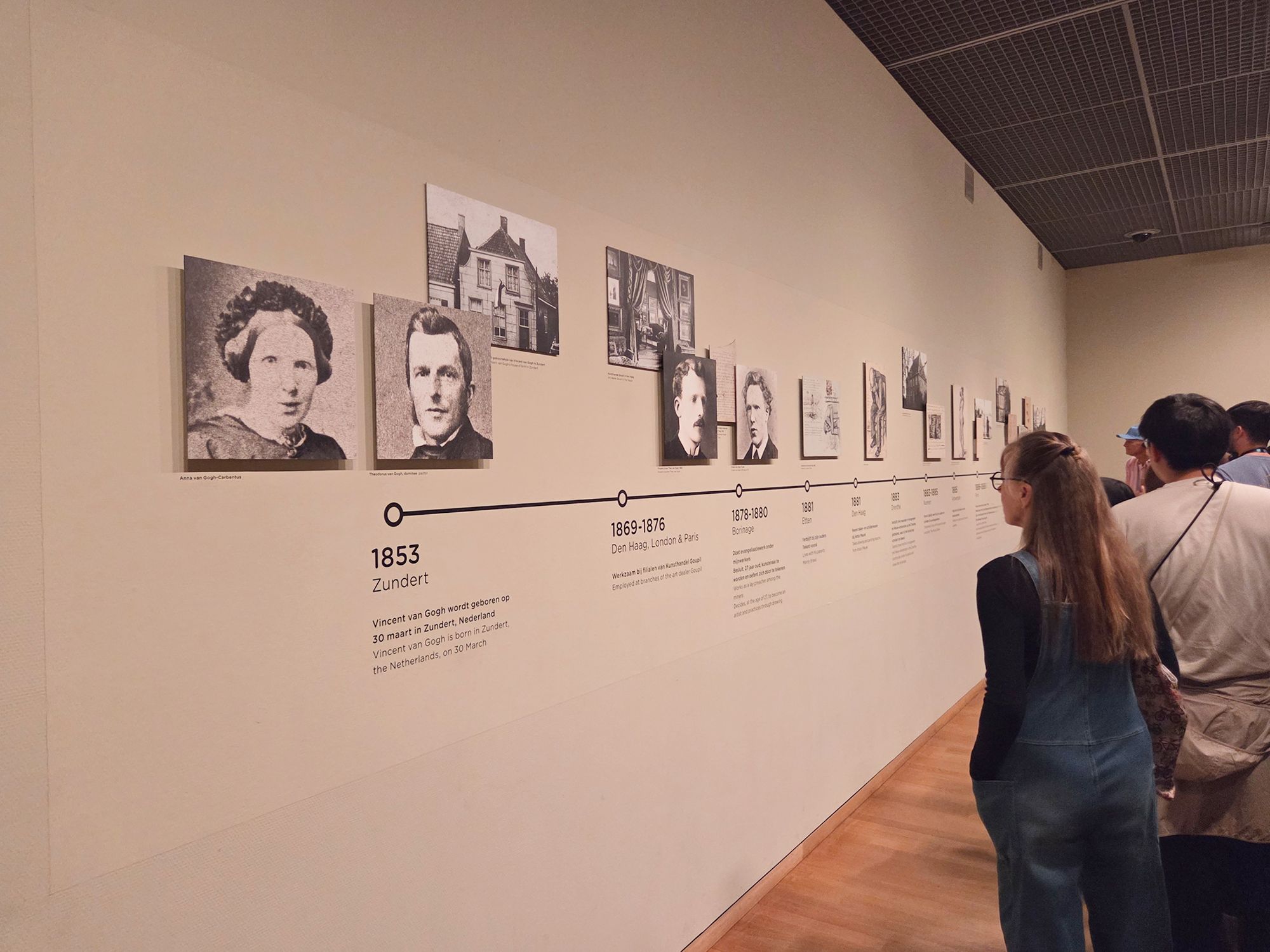
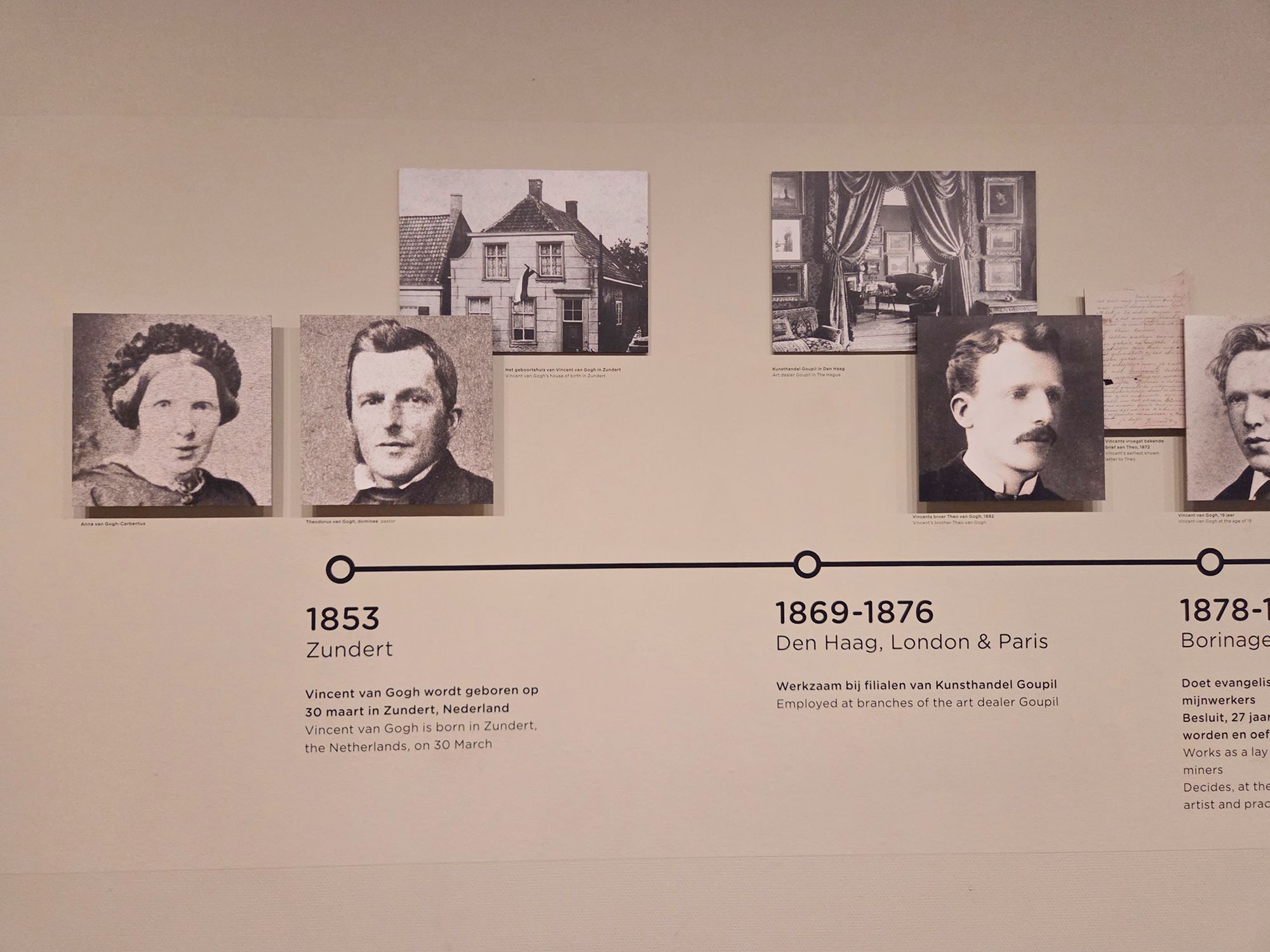
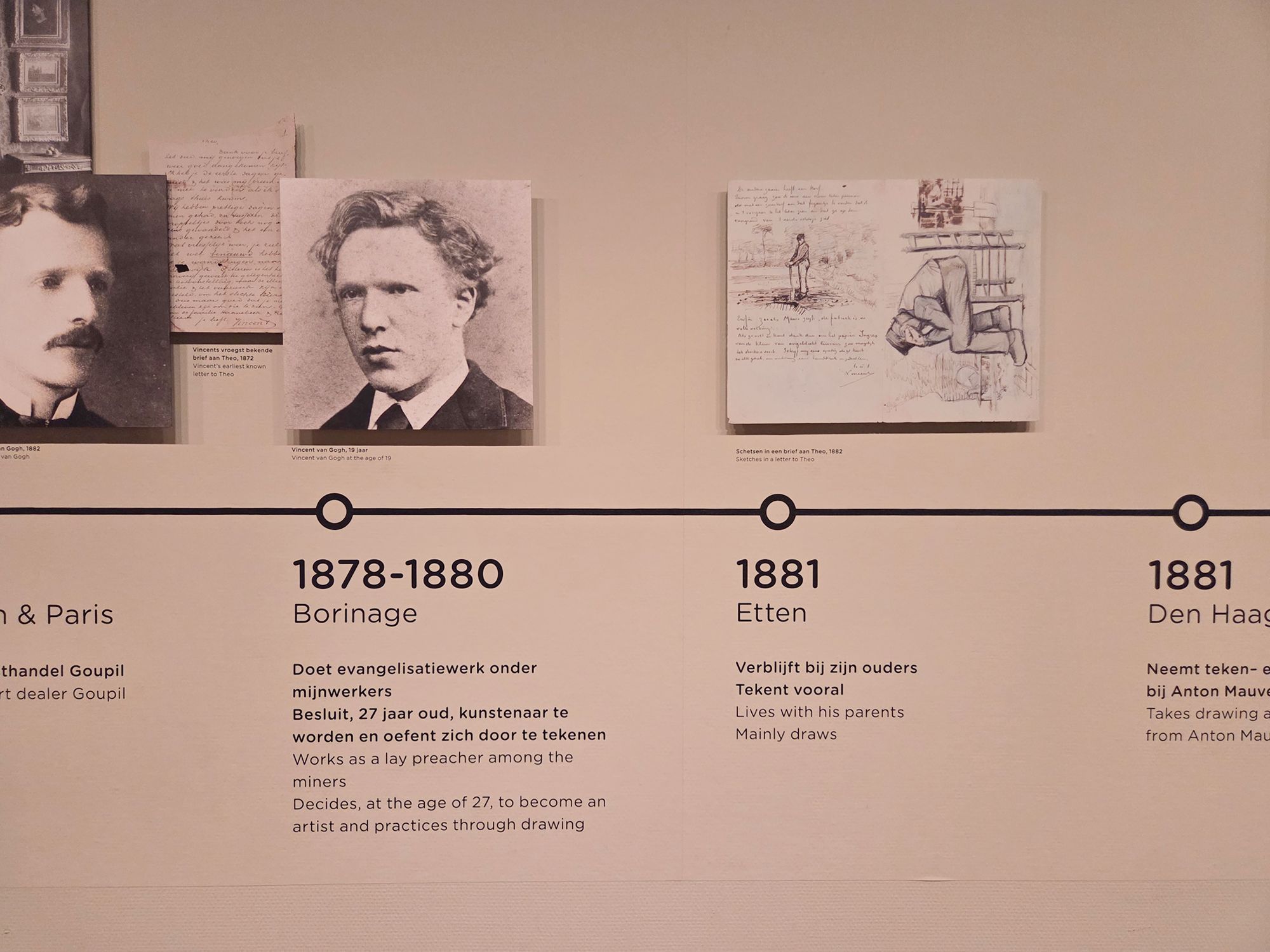
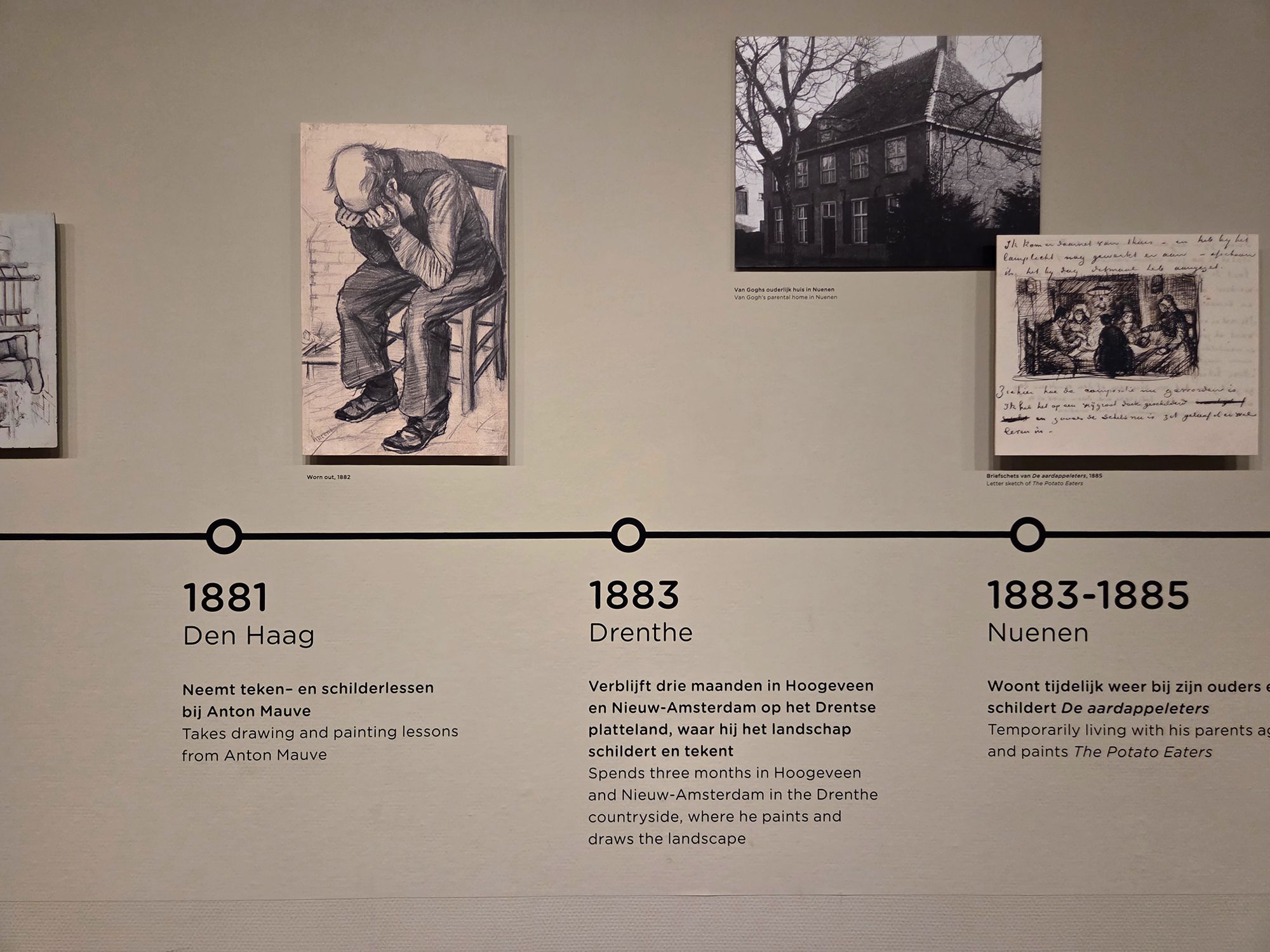
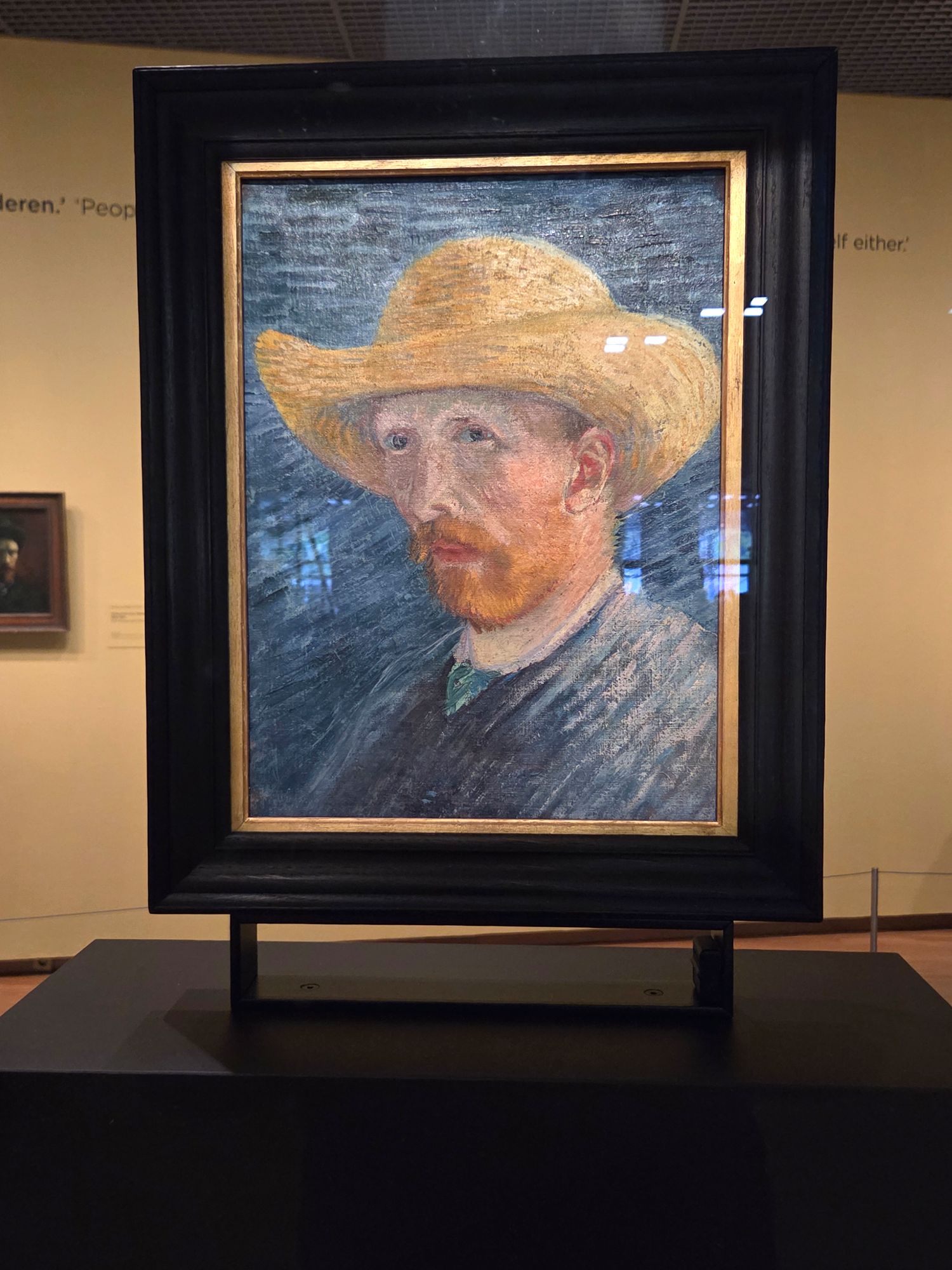
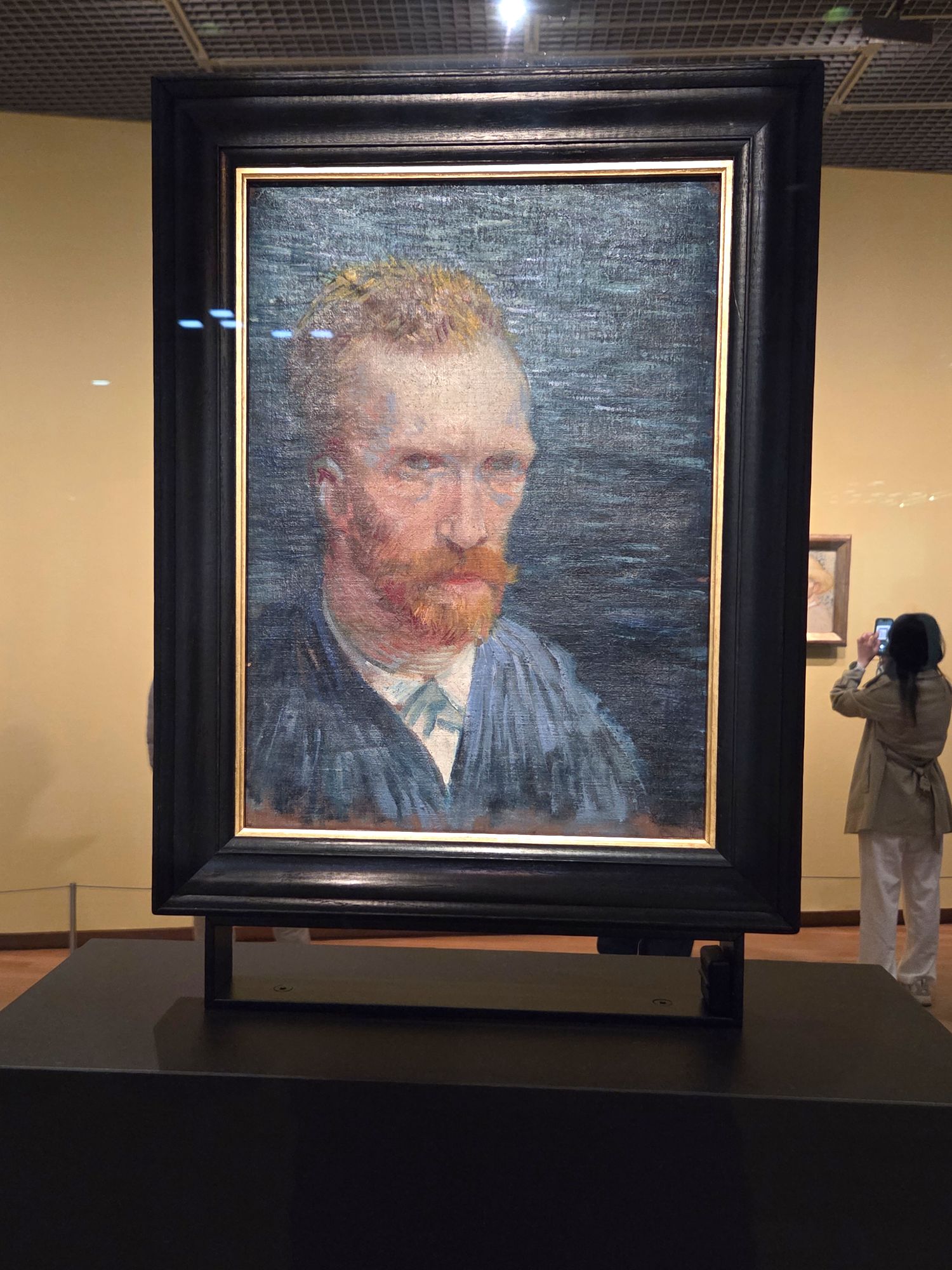
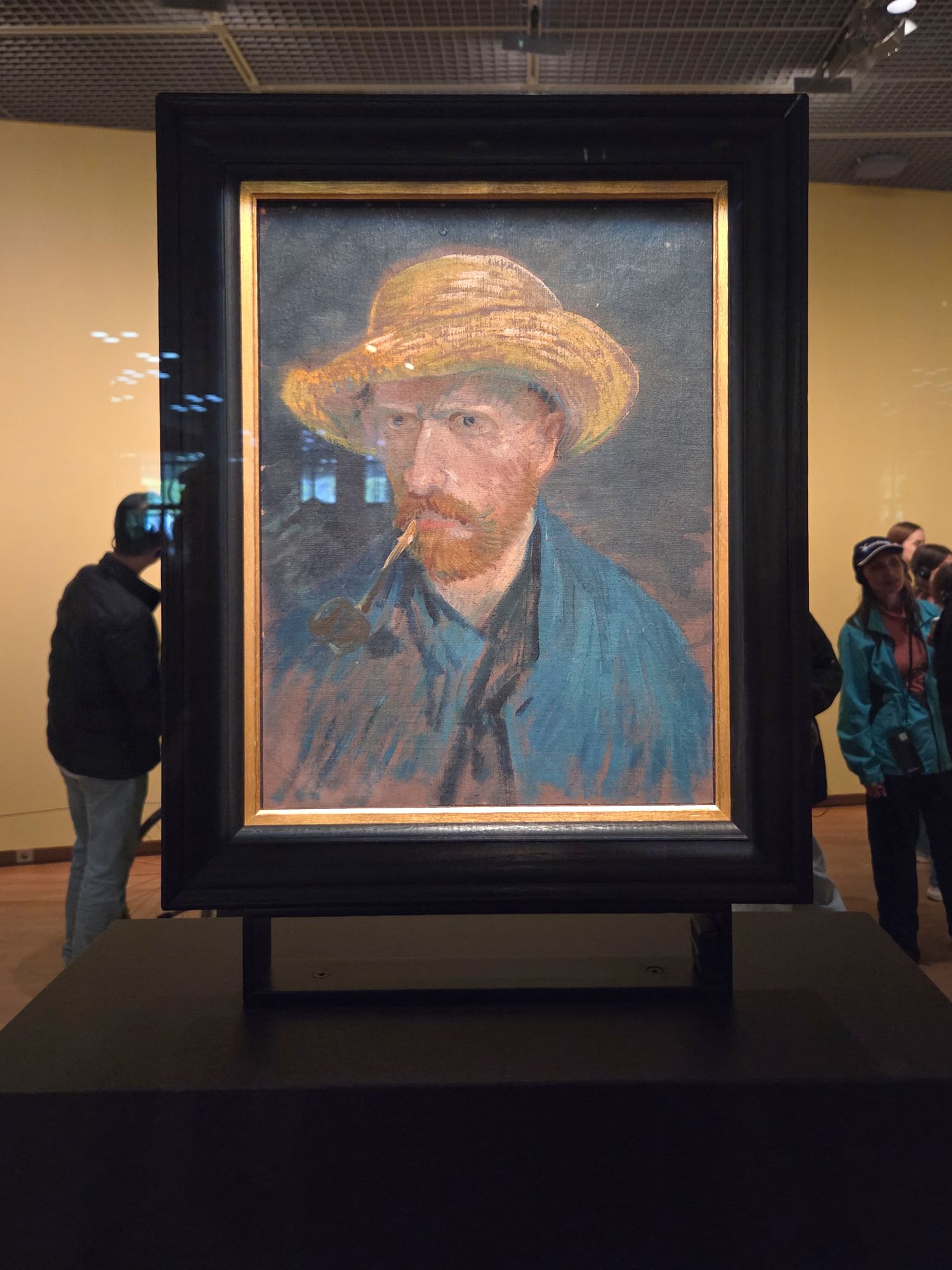
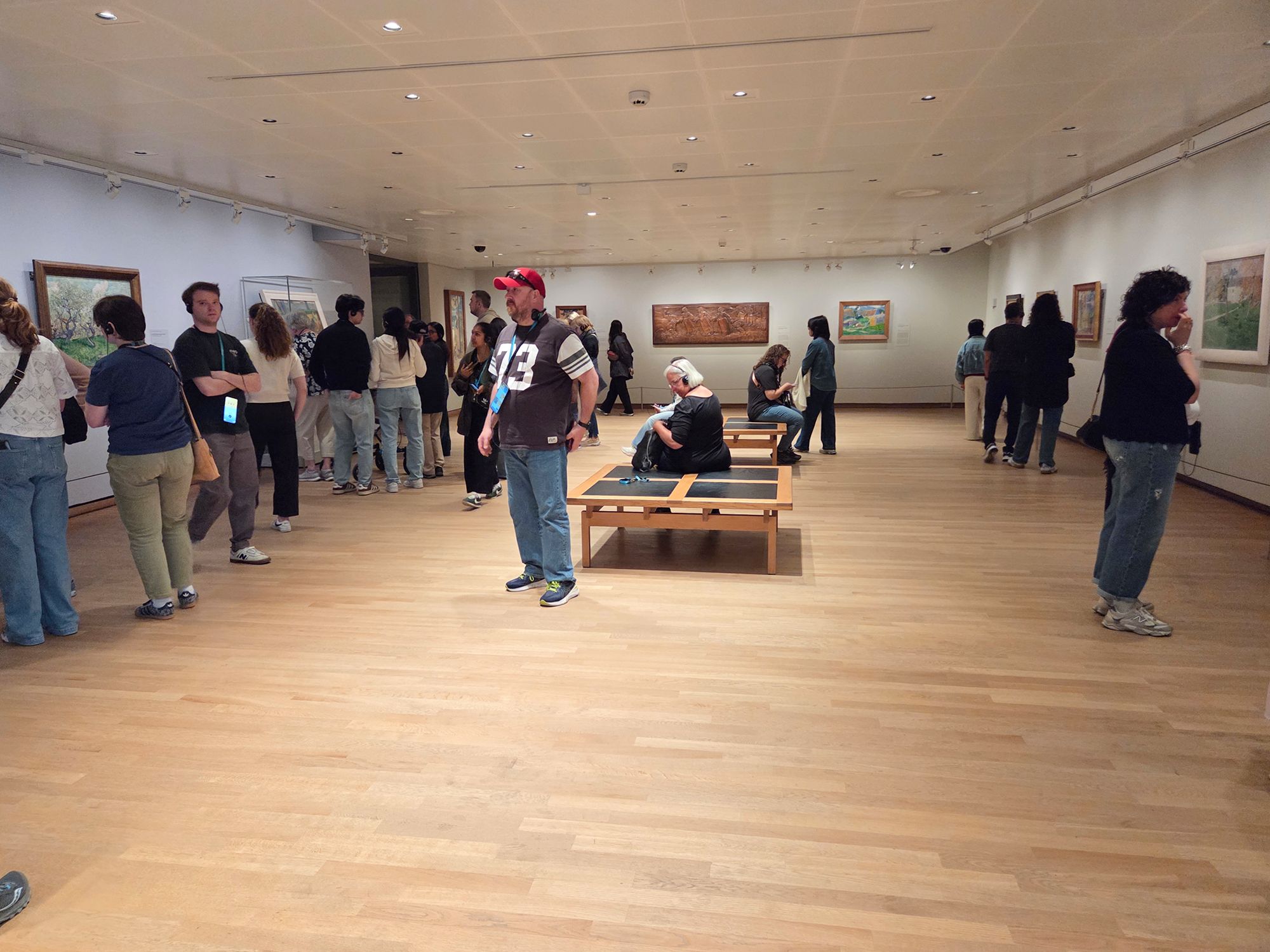
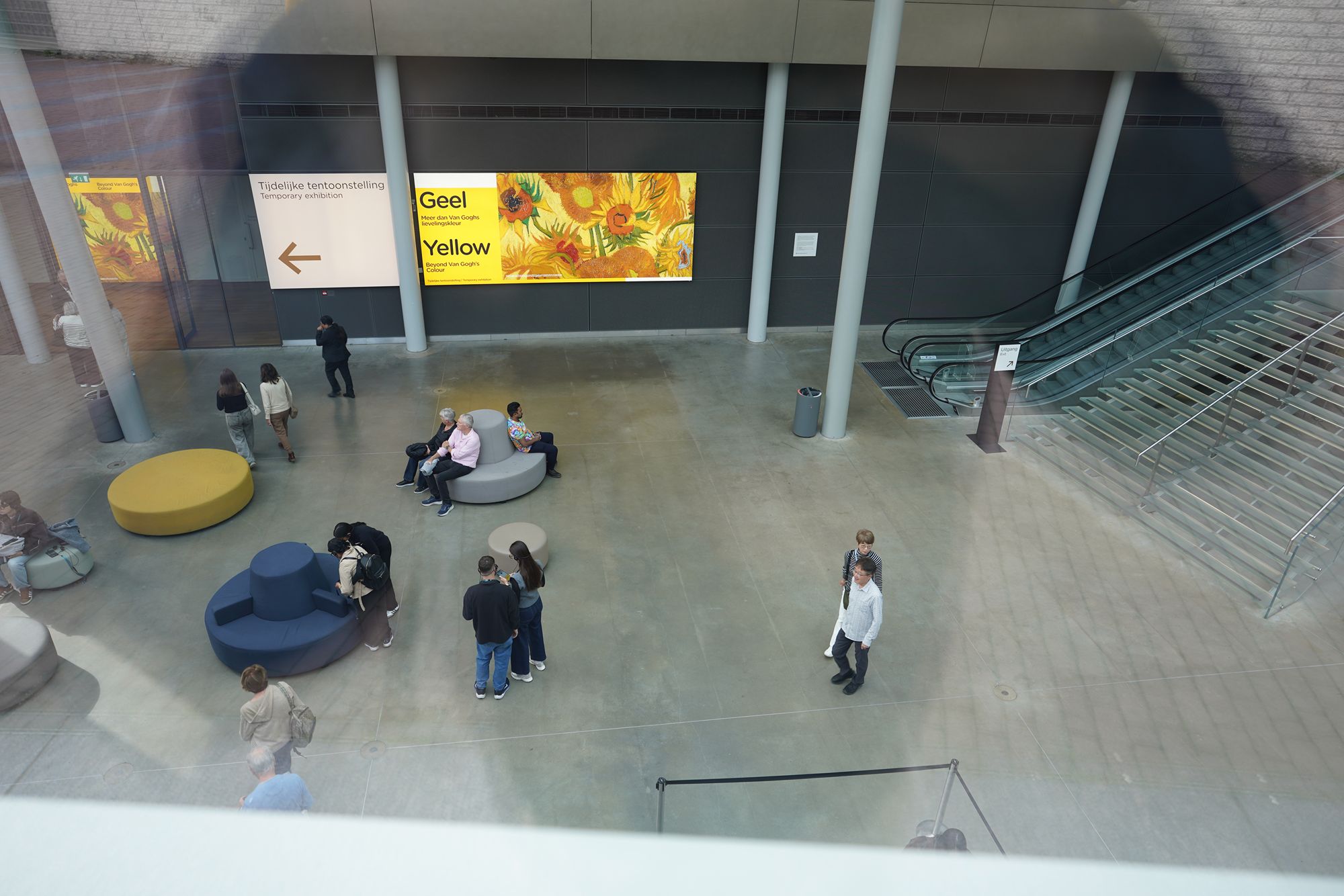
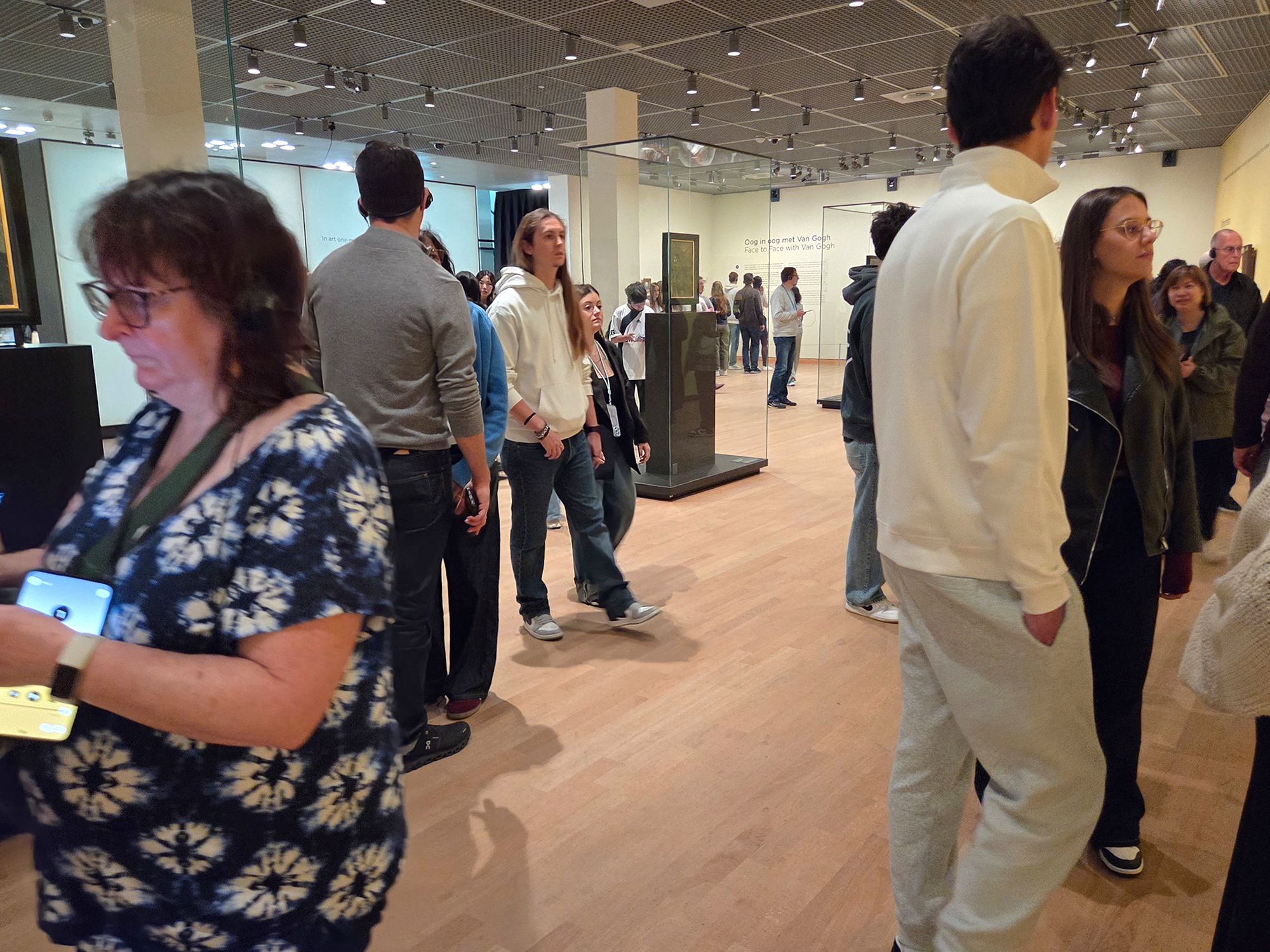
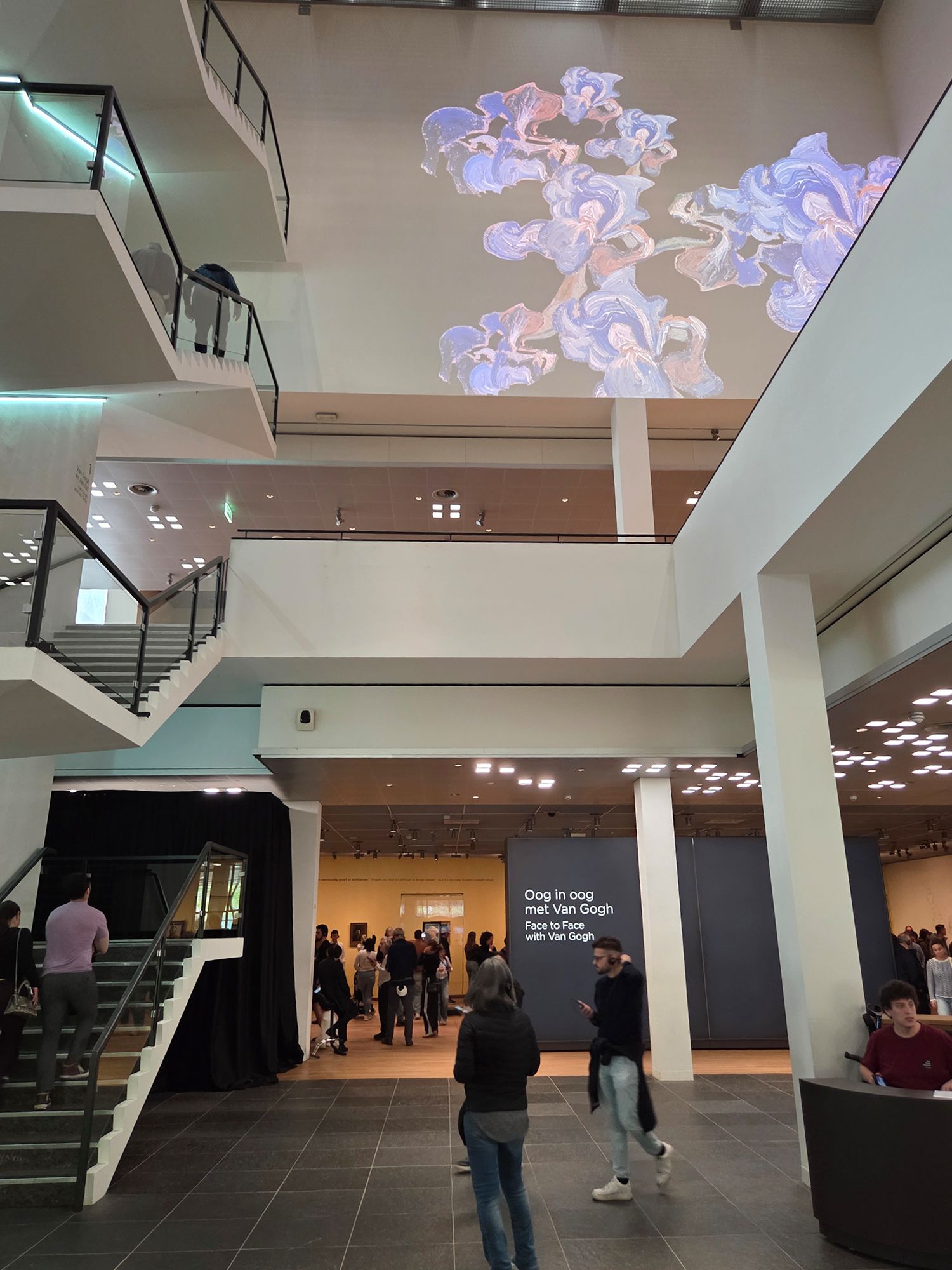
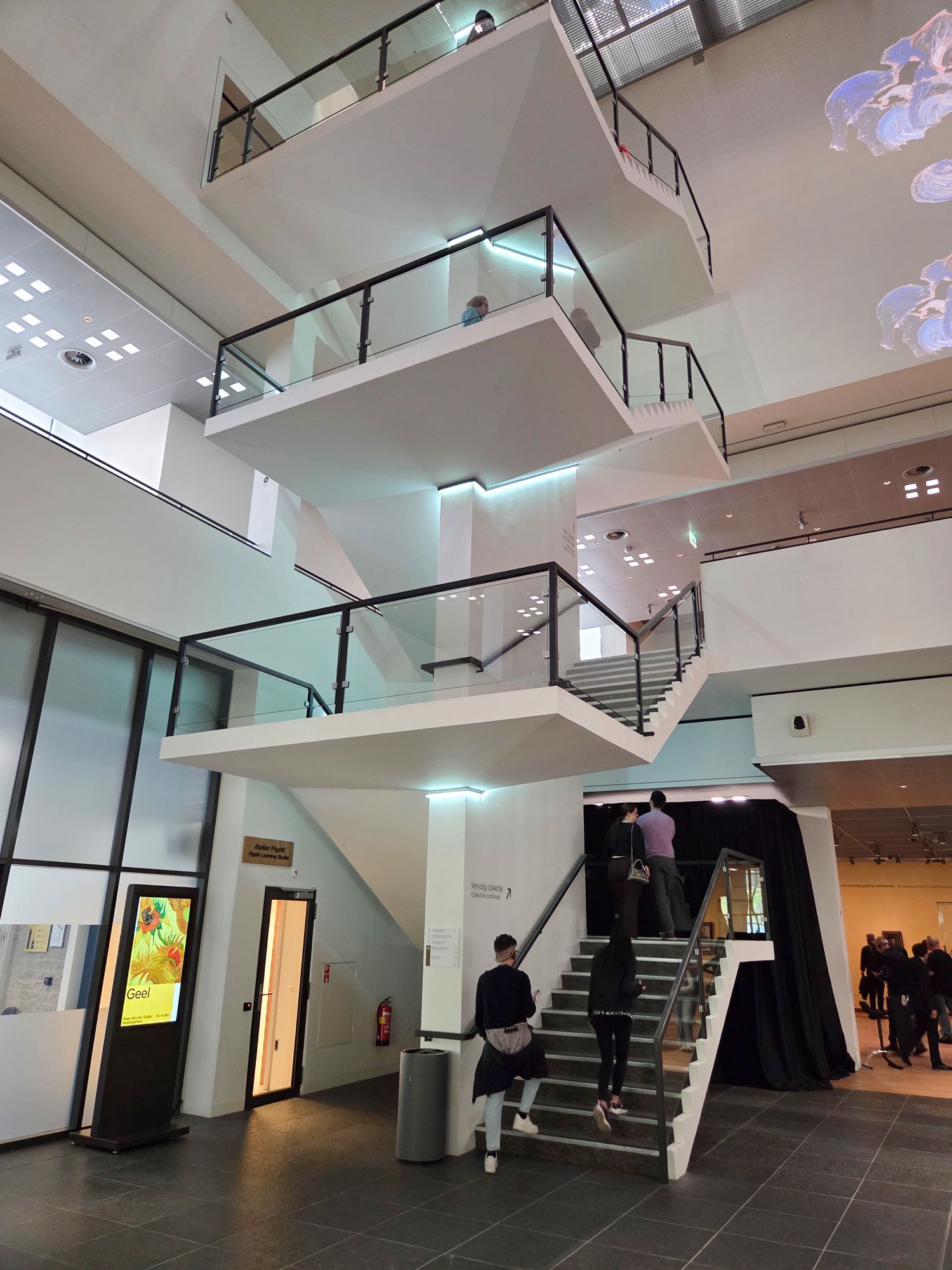
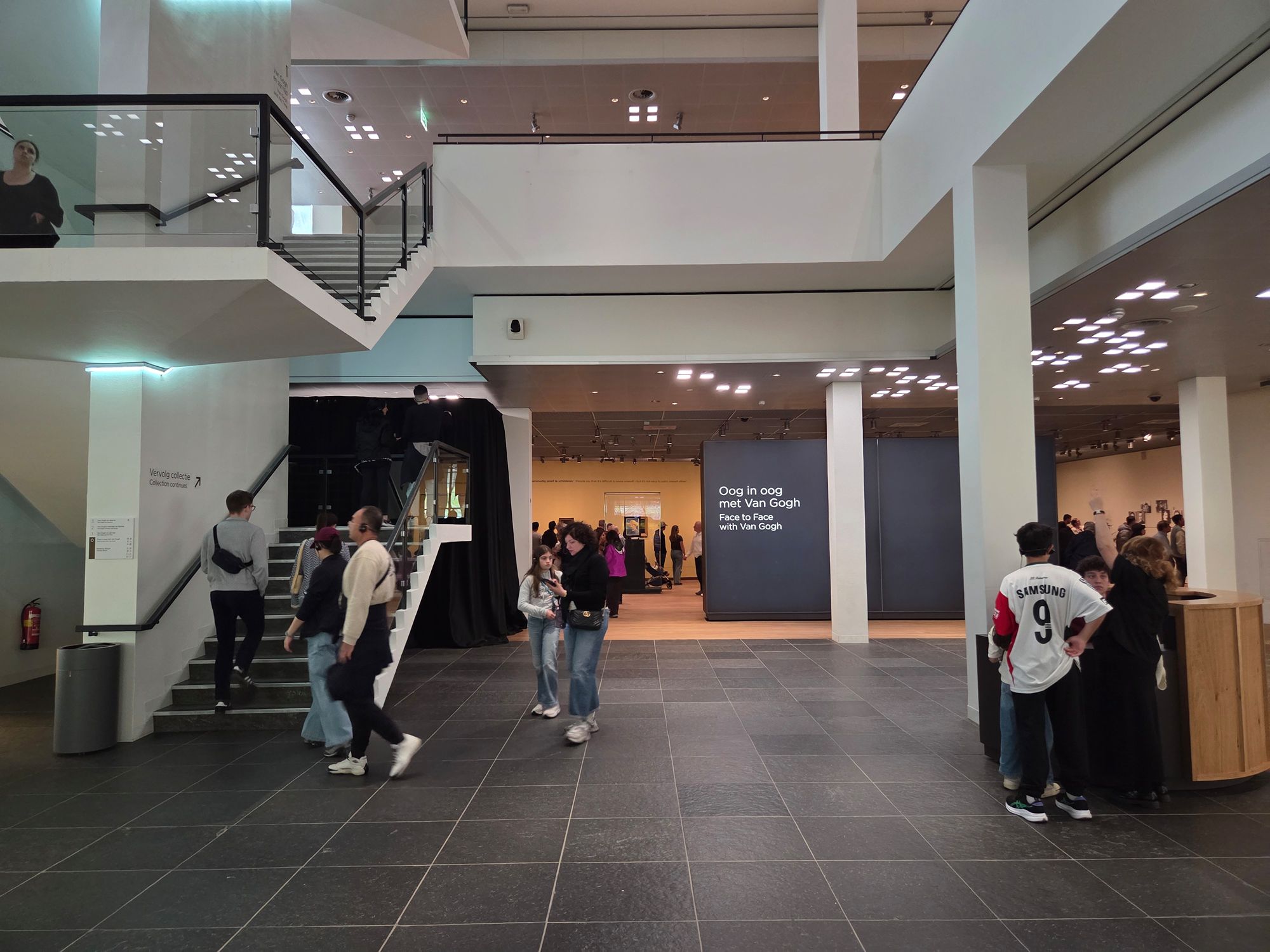
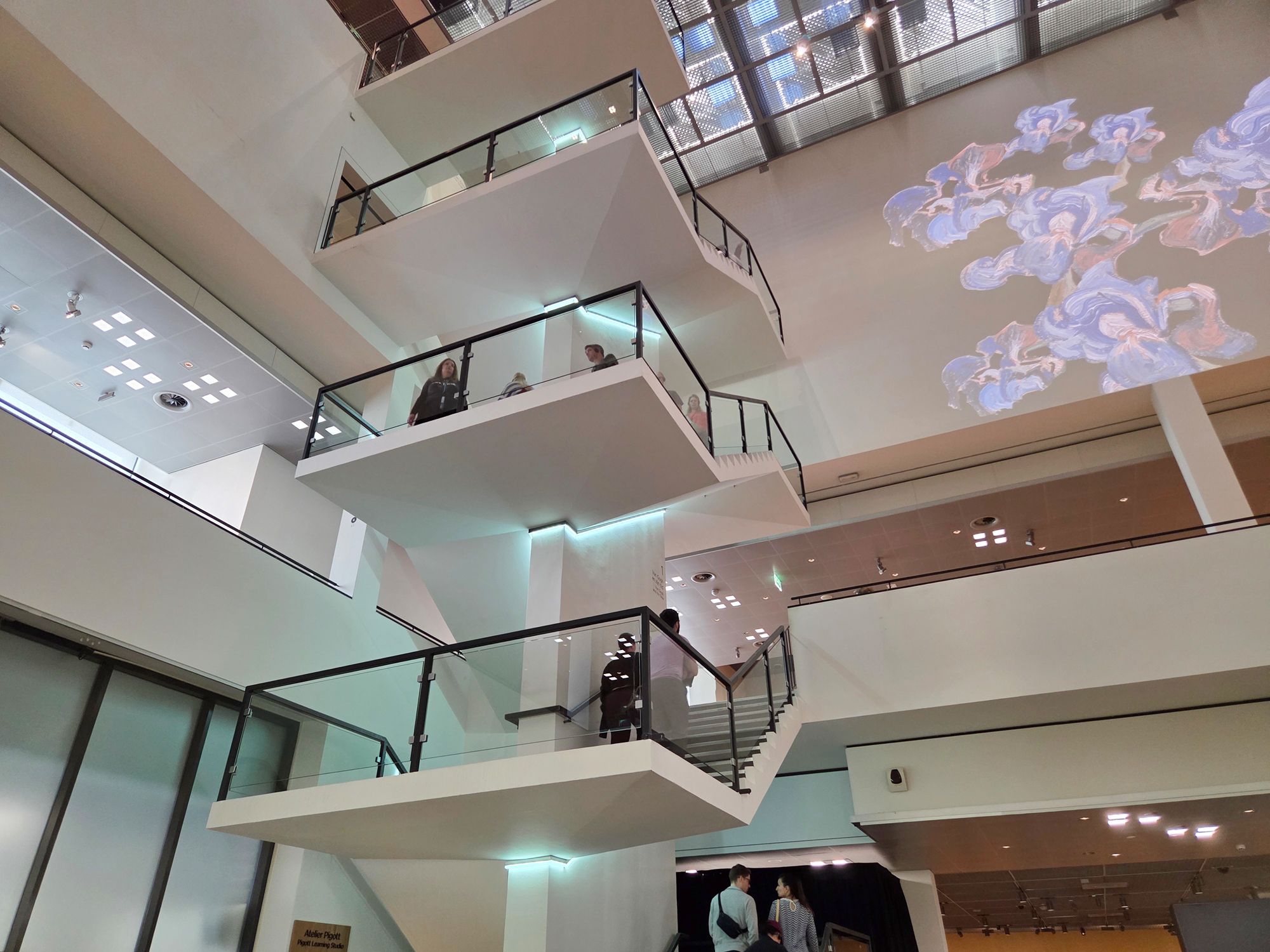
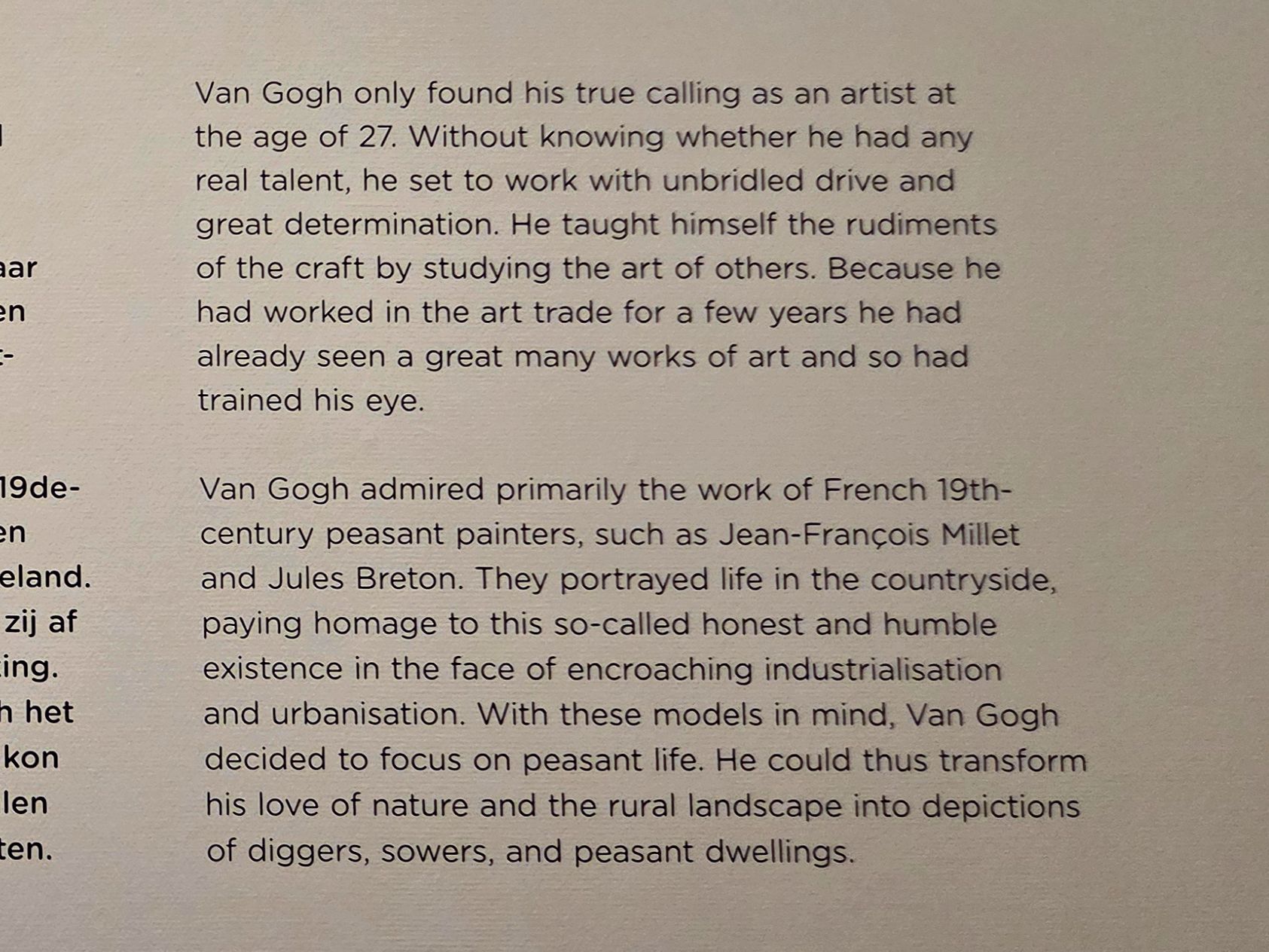
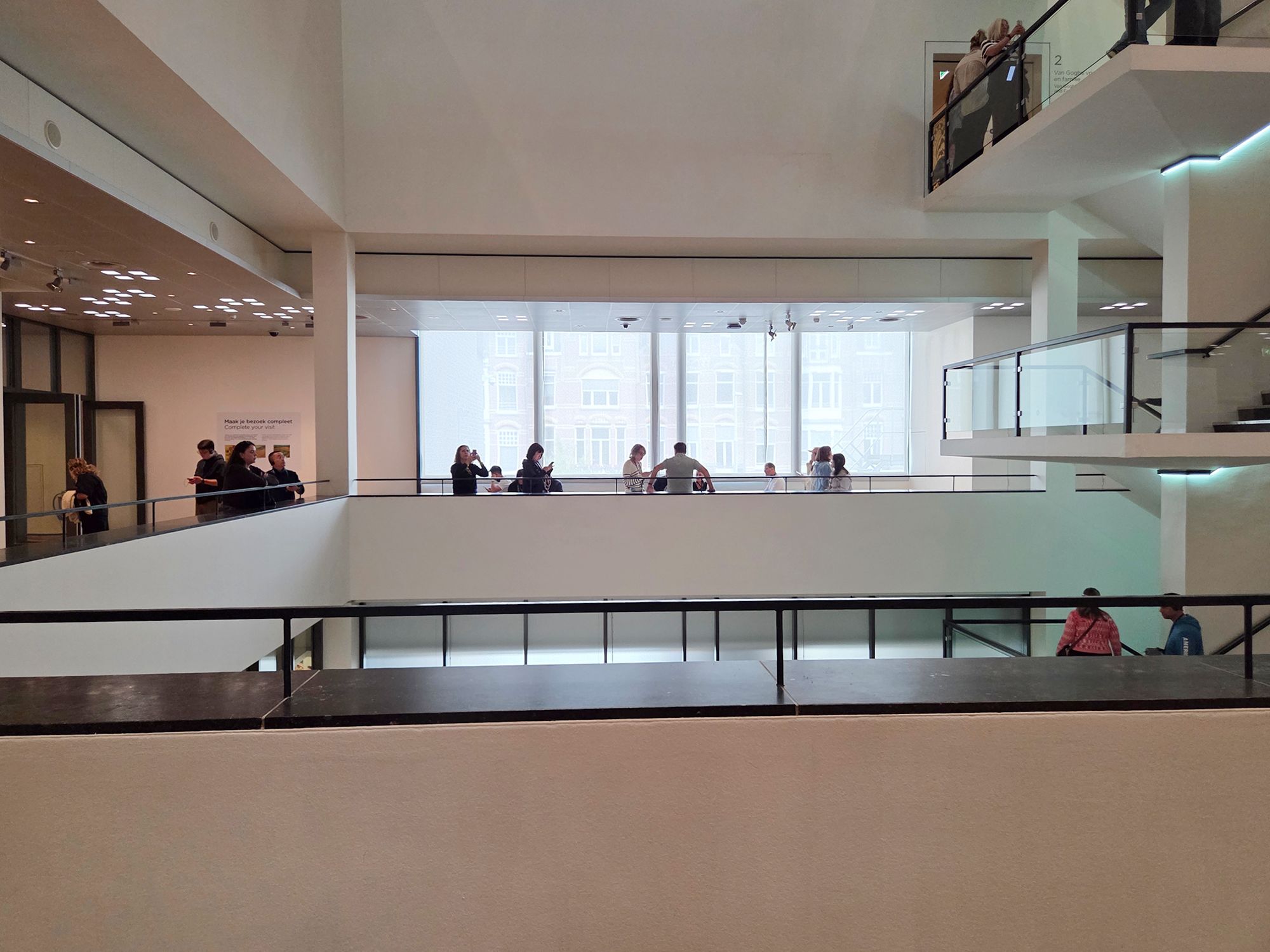
The interior of the Van Gogh Museum has a modern, open design, with spacious galleries connected around a large central atrium.
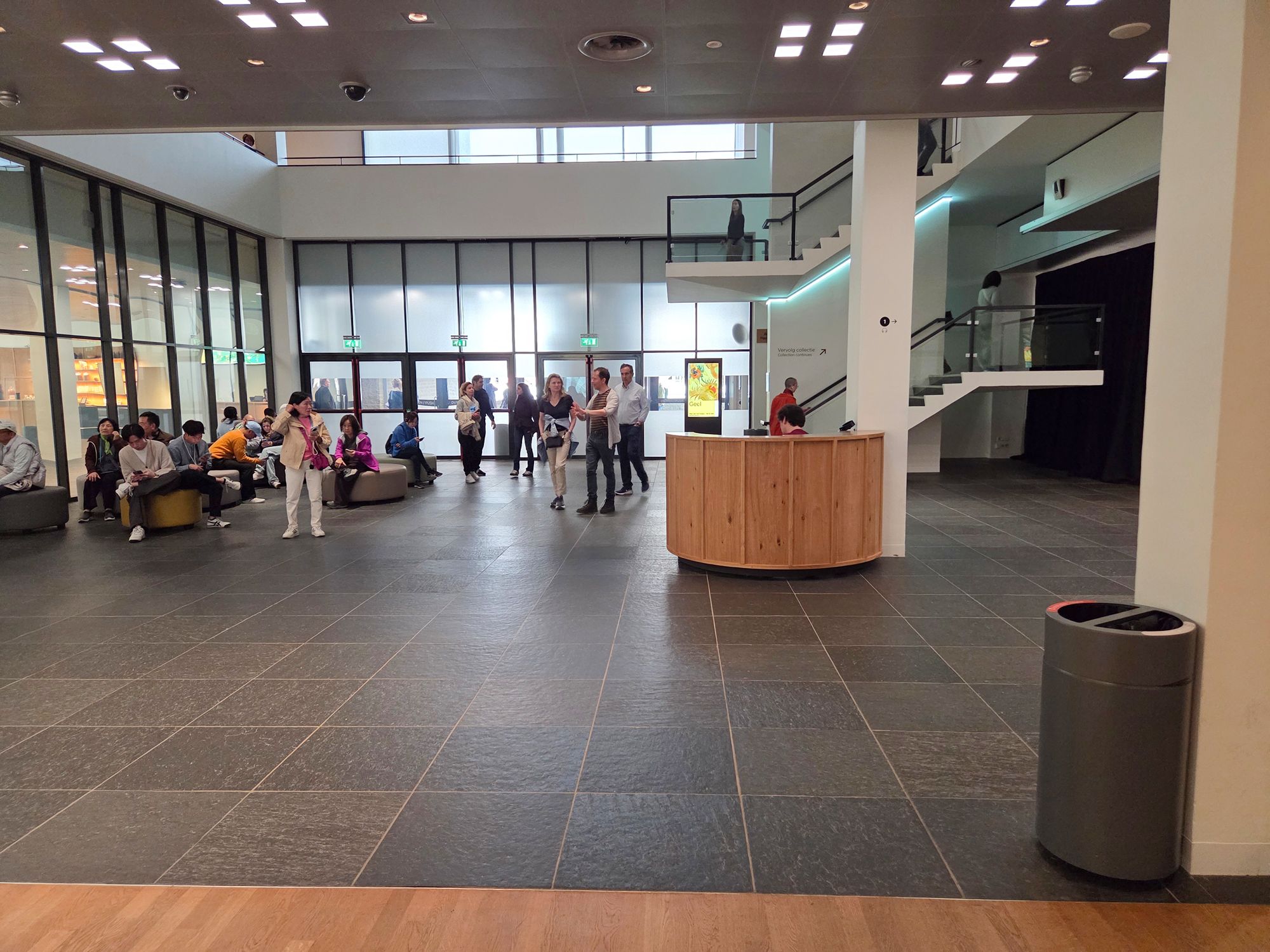
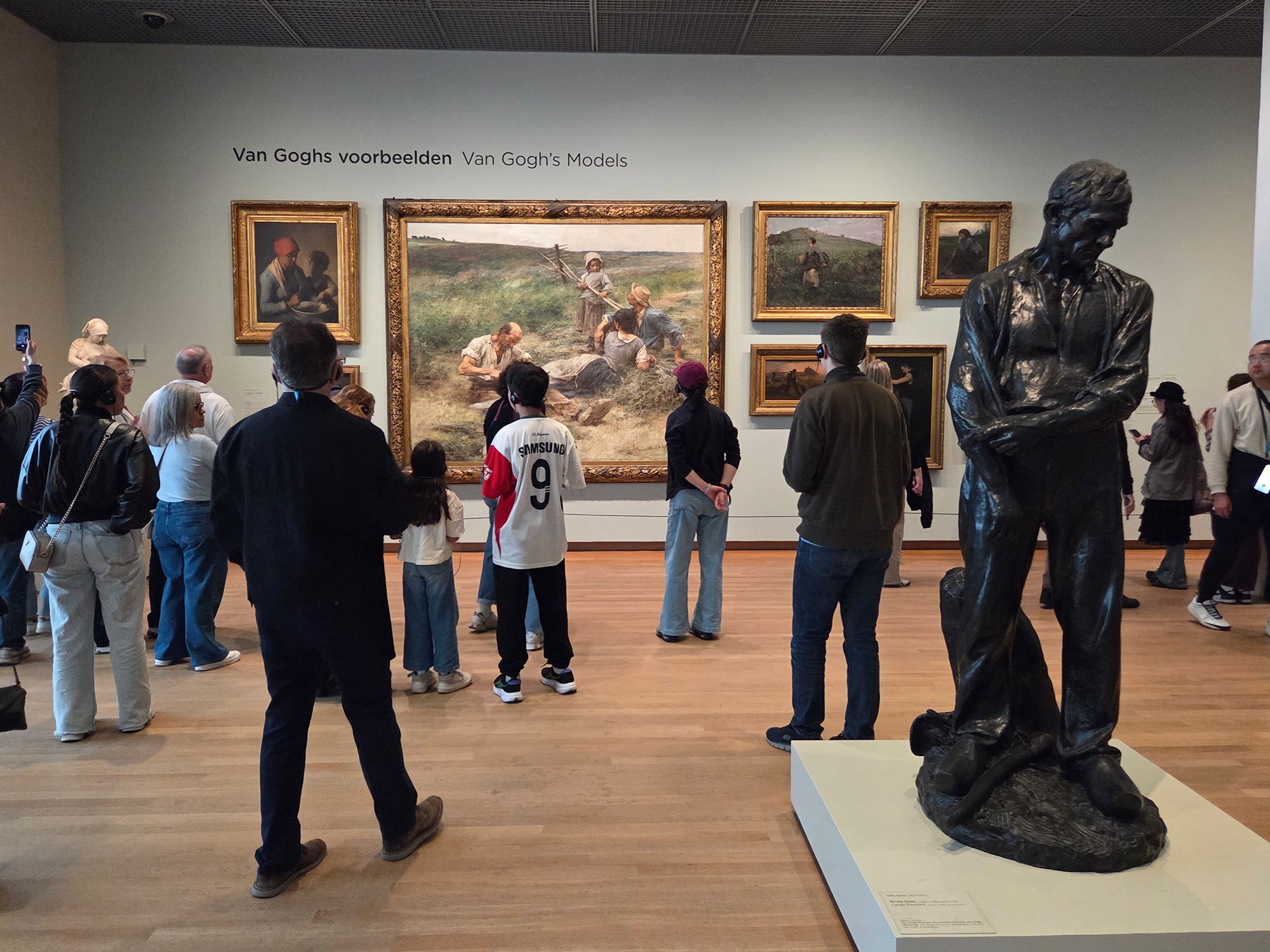
Van Gogh's Models
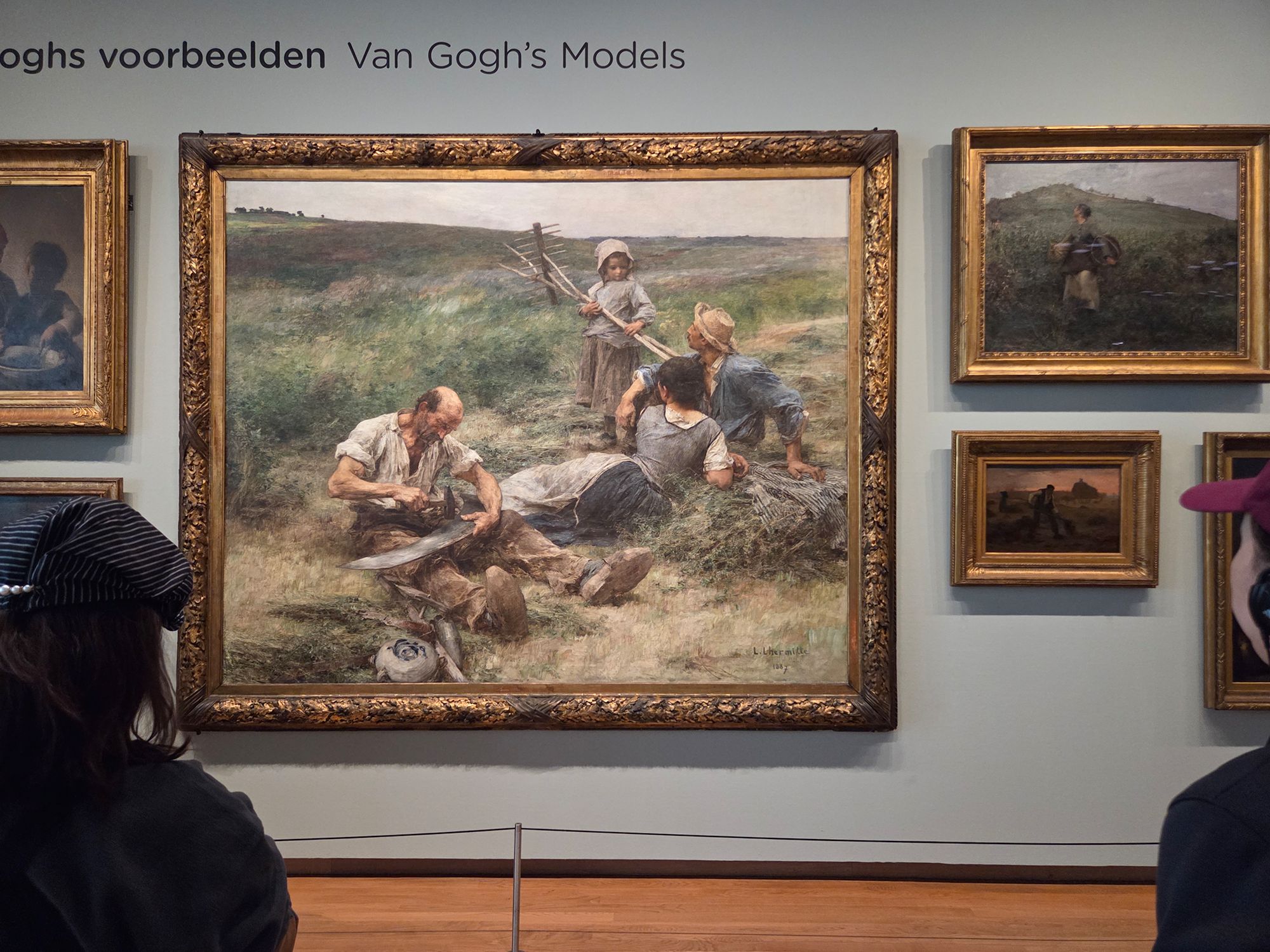
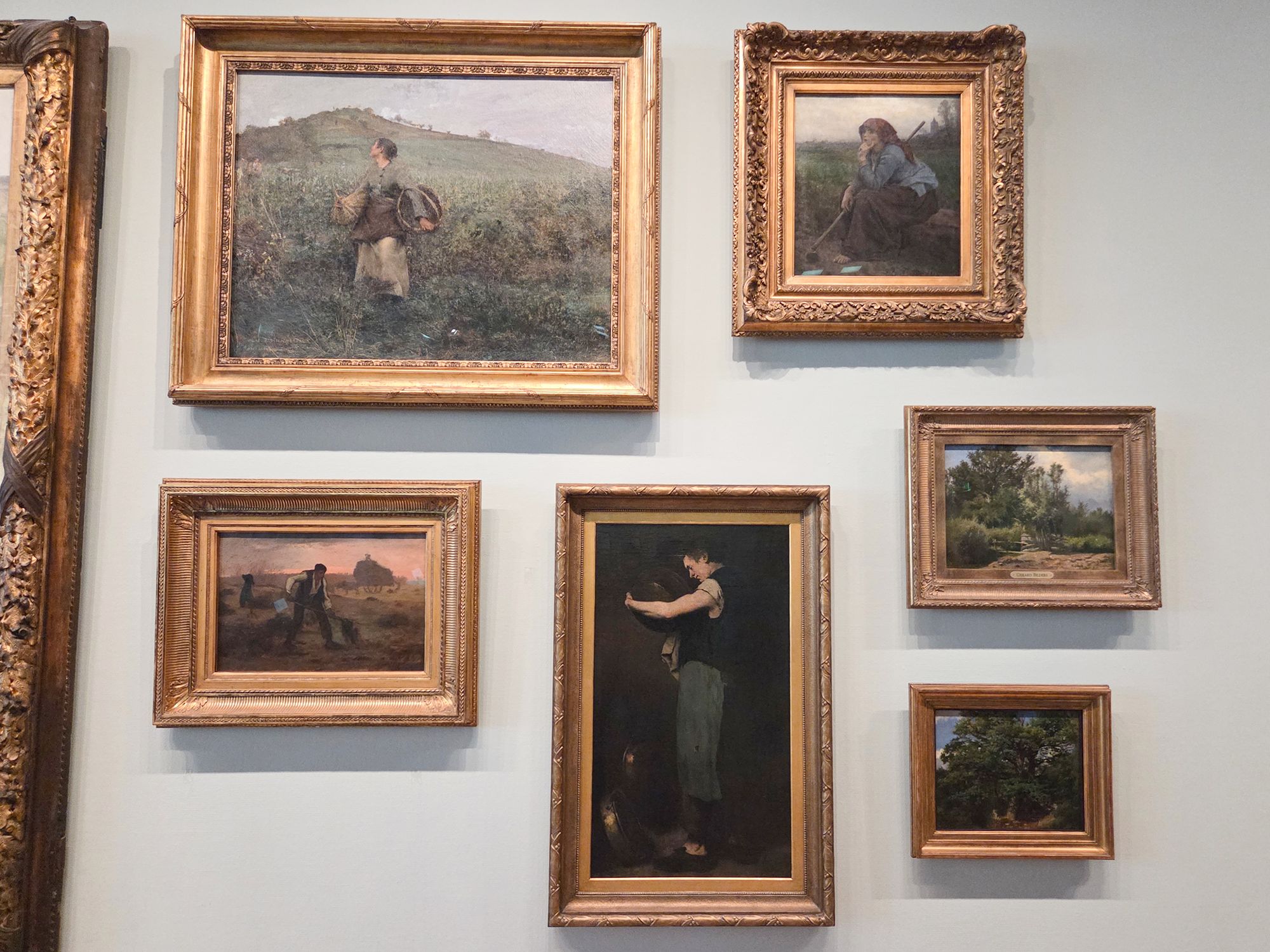
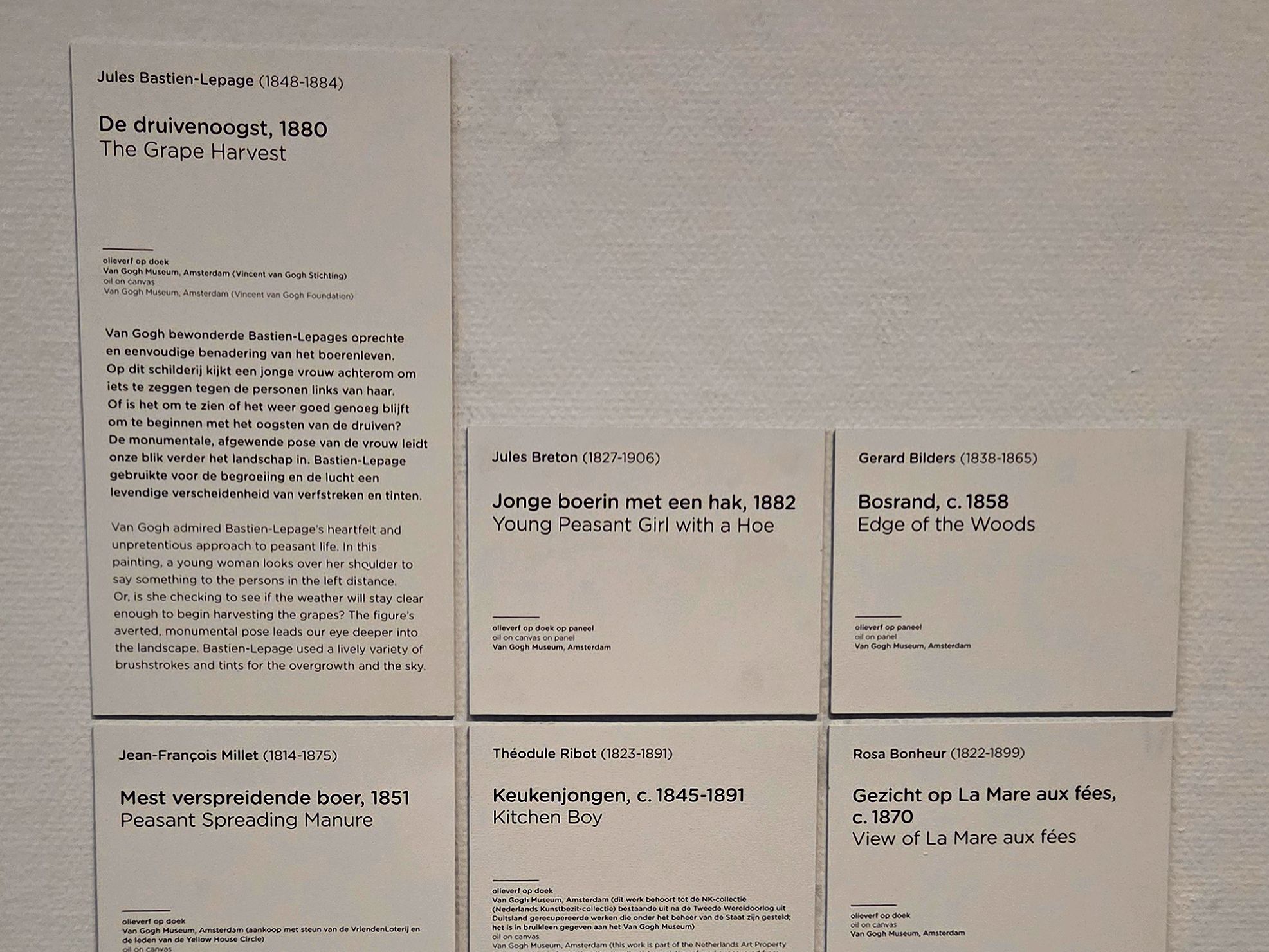
Van Gogh did not decide to become an artist until he was 27 years old. Largely self-taught, he learned by studying other artists and was especially inspired by French painters who depicted peasants and rural life, which became important subjects in his early work.
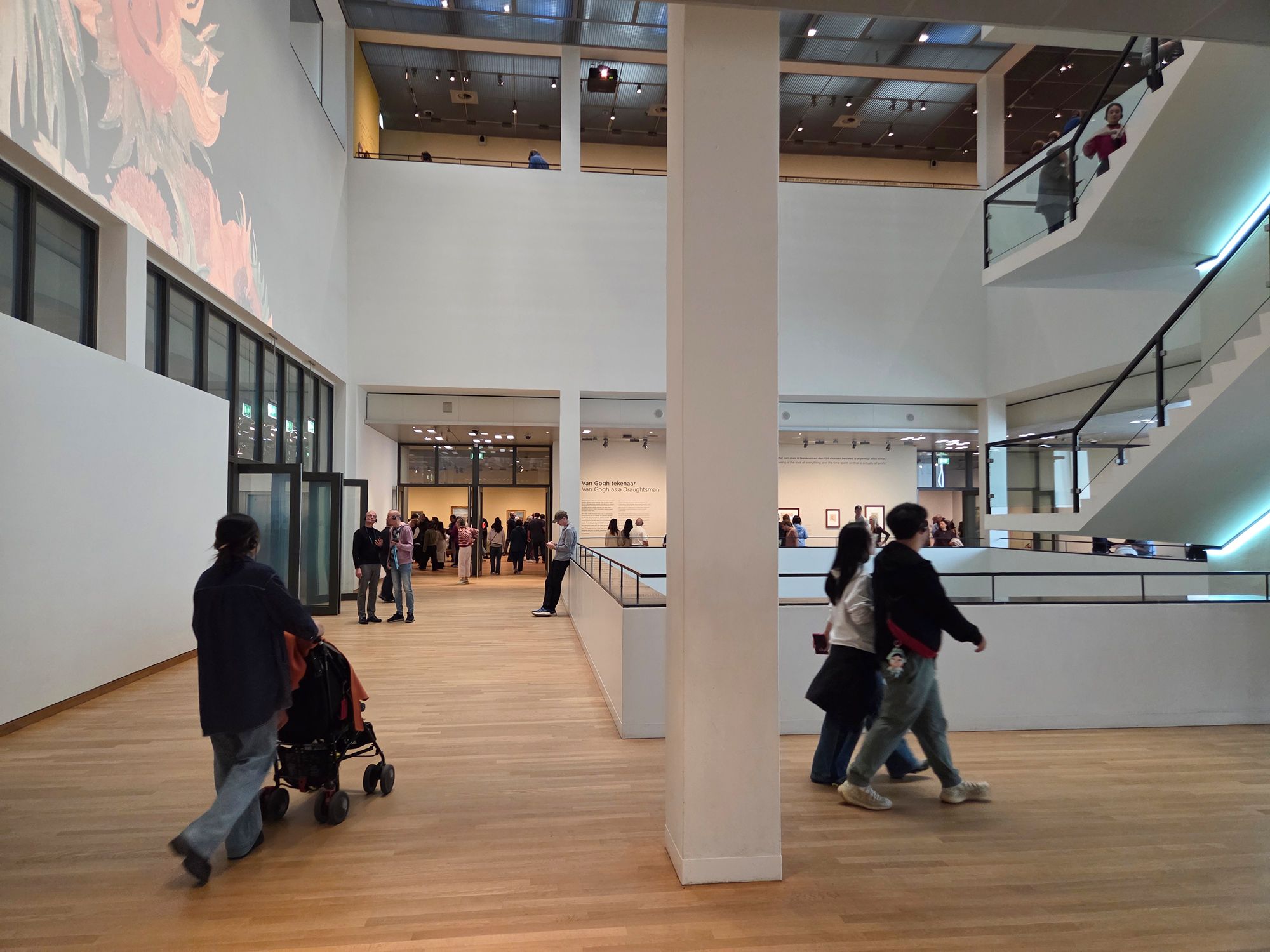
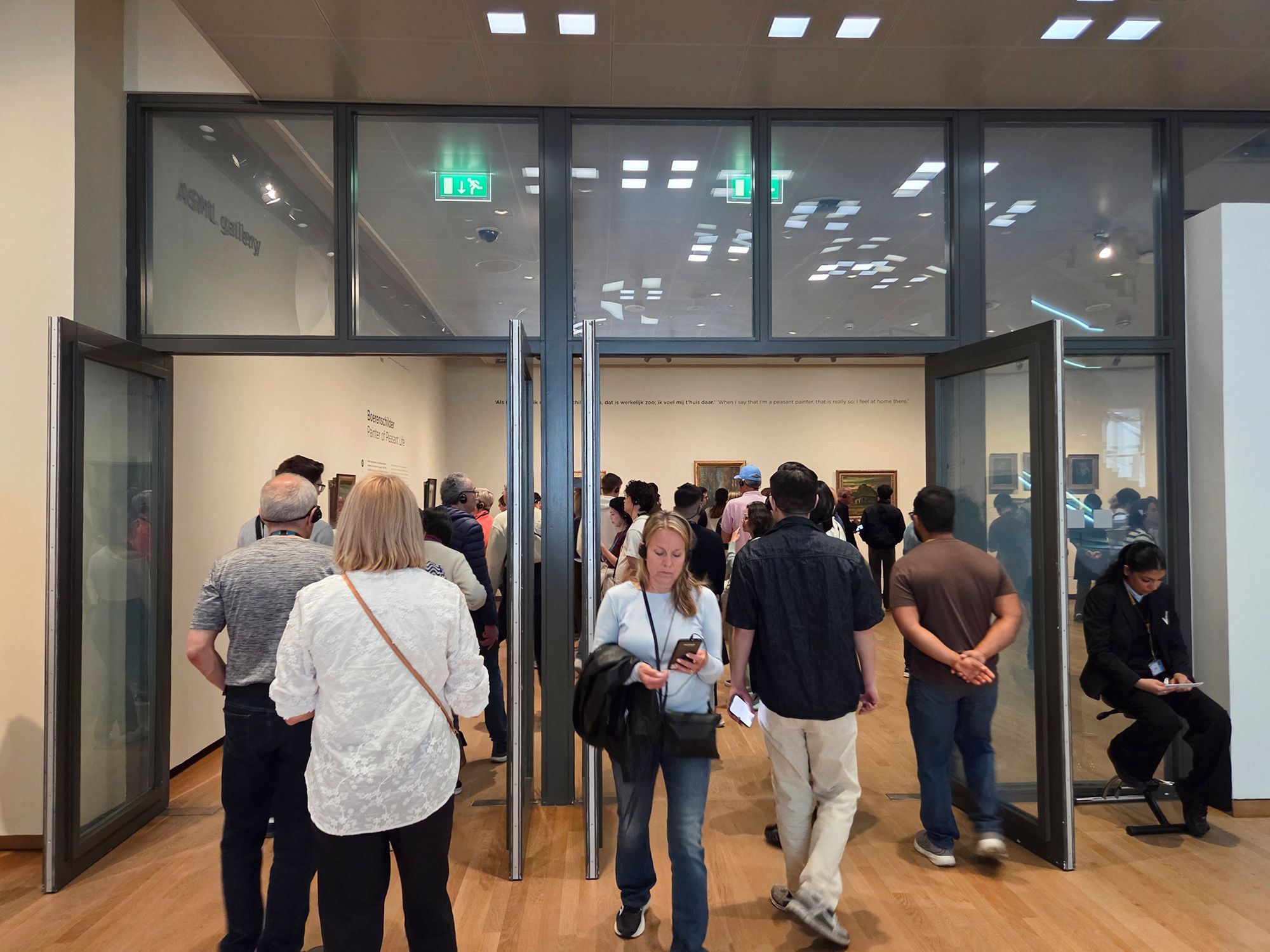
Painter of Peasant Life
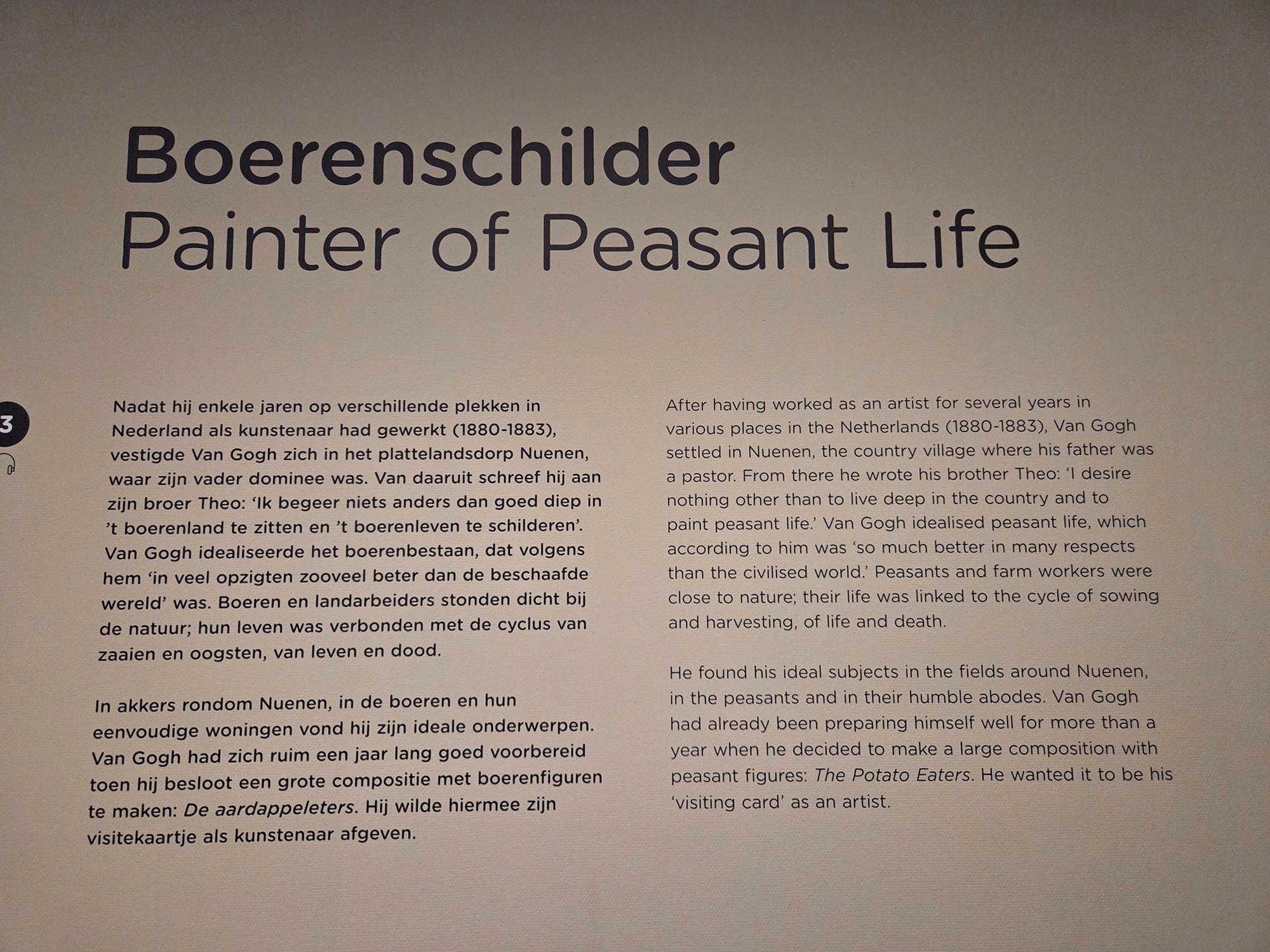
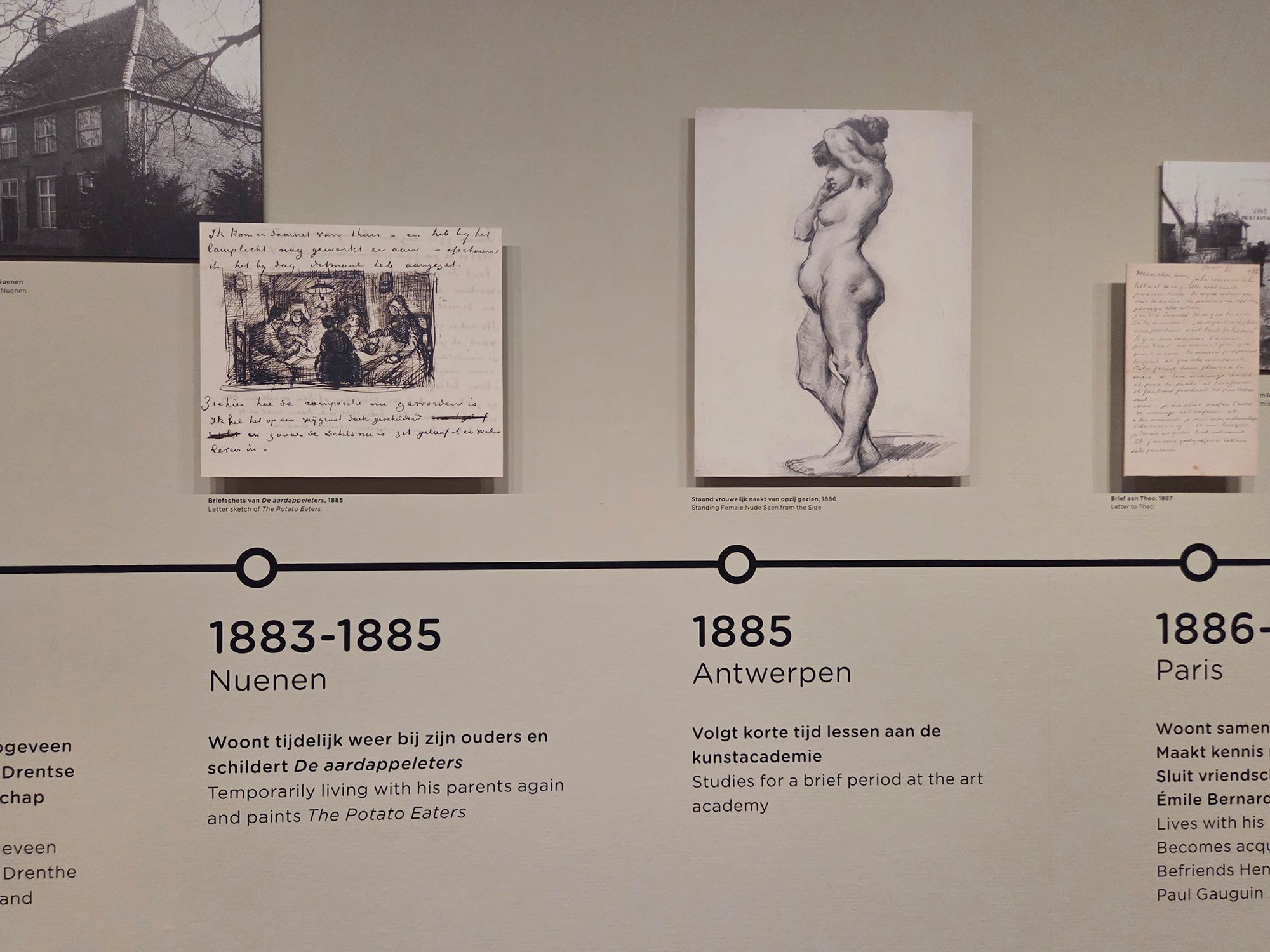
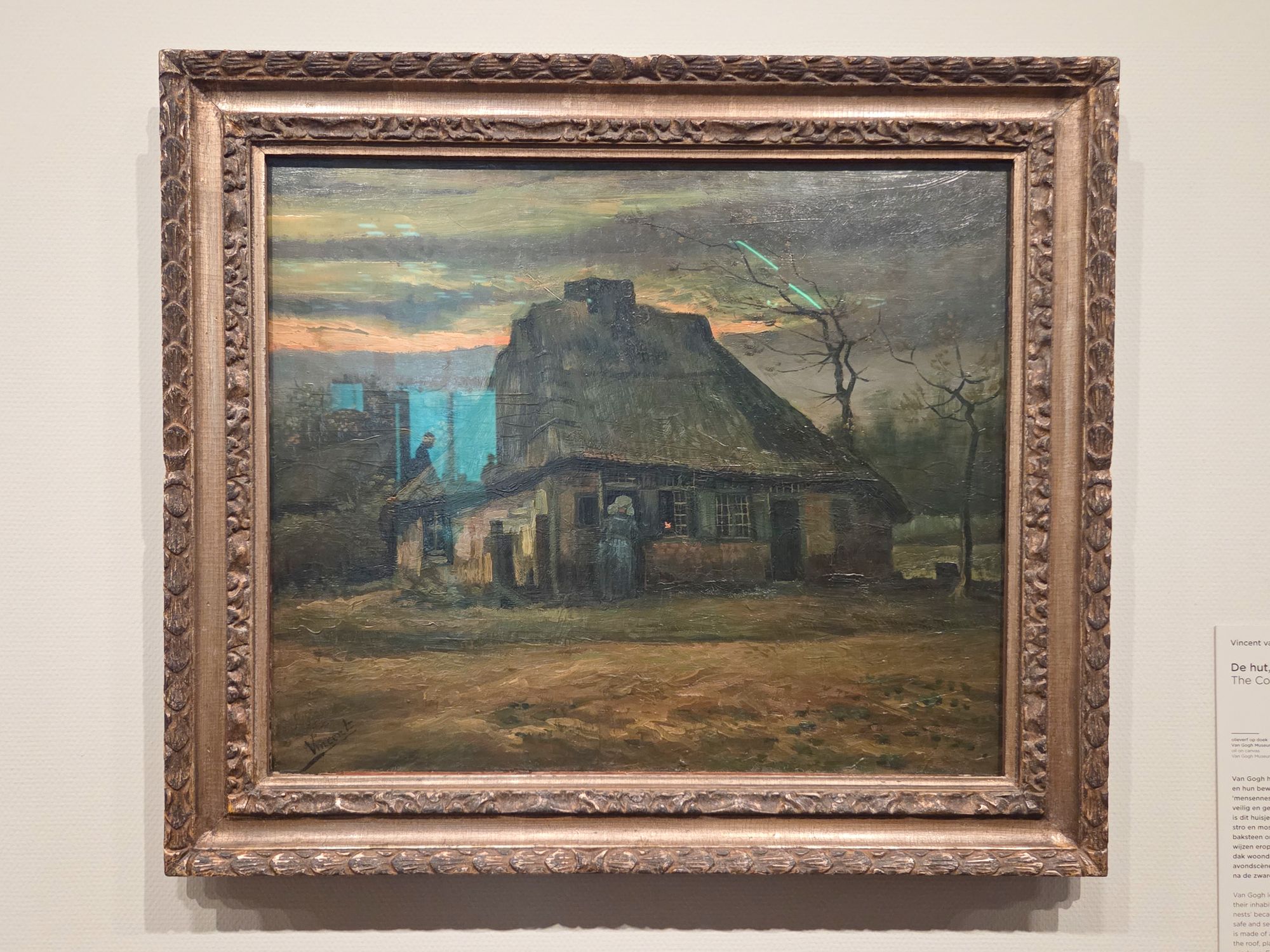
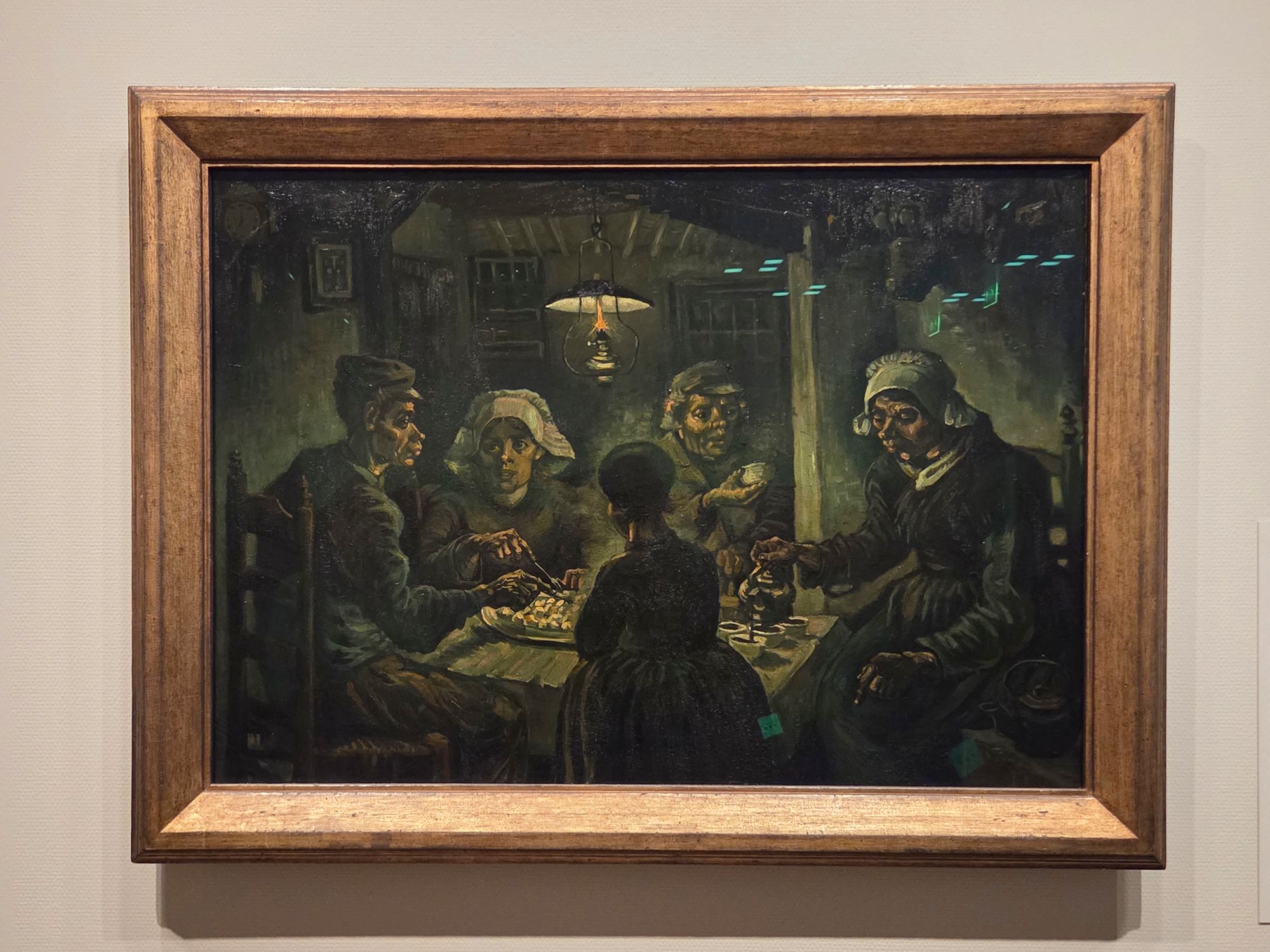
Van Gogh settled in Nuenen in 1883, where his father was a pastor. Surrounded by farms and rural workers, he became deeply interested in peasant life, painting farmers, laborers, and their modest homes. This period eventually led to The Potato Eaters, which Van Gogh hoped would establish his reputation as a serious artist.
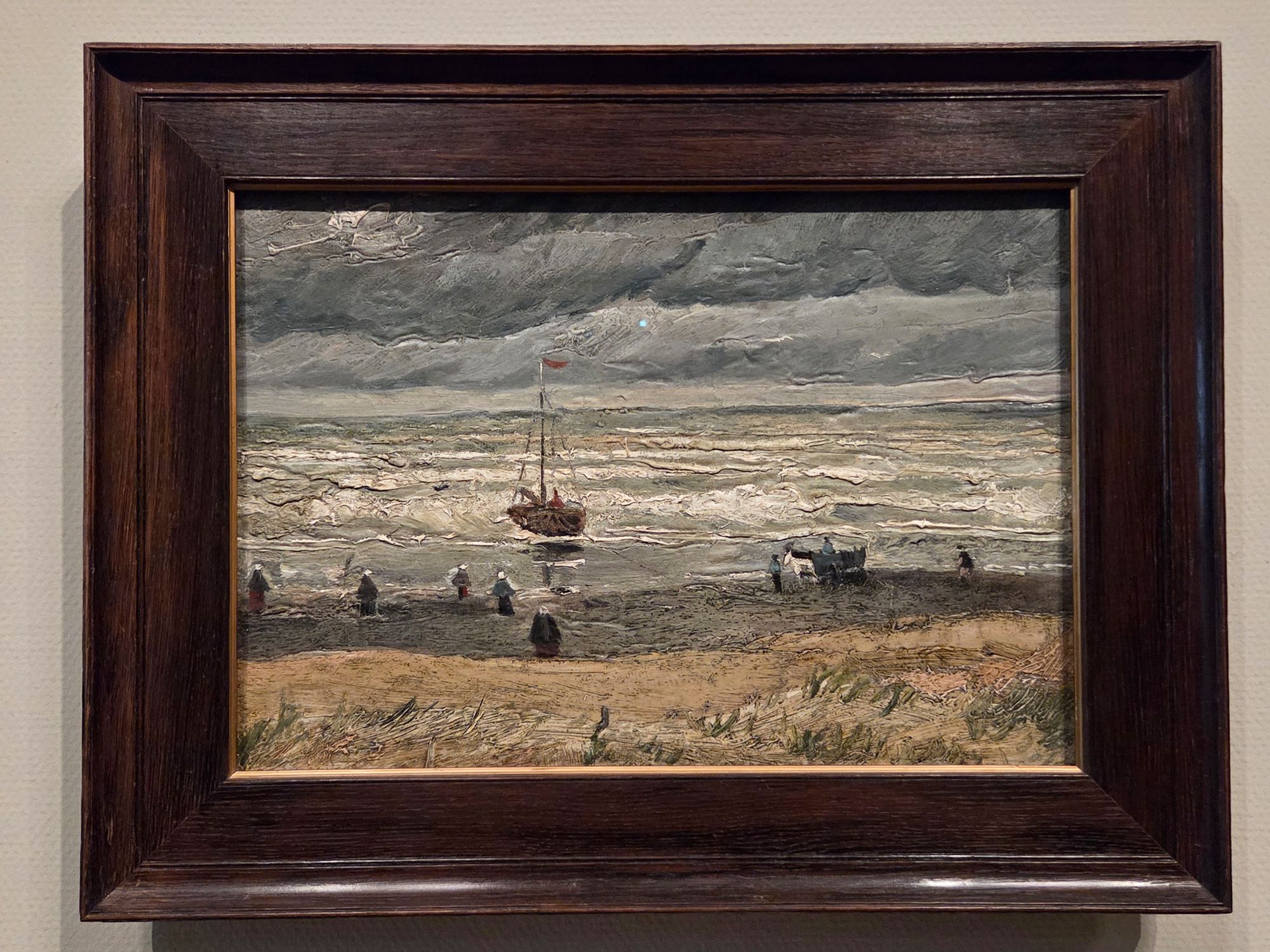
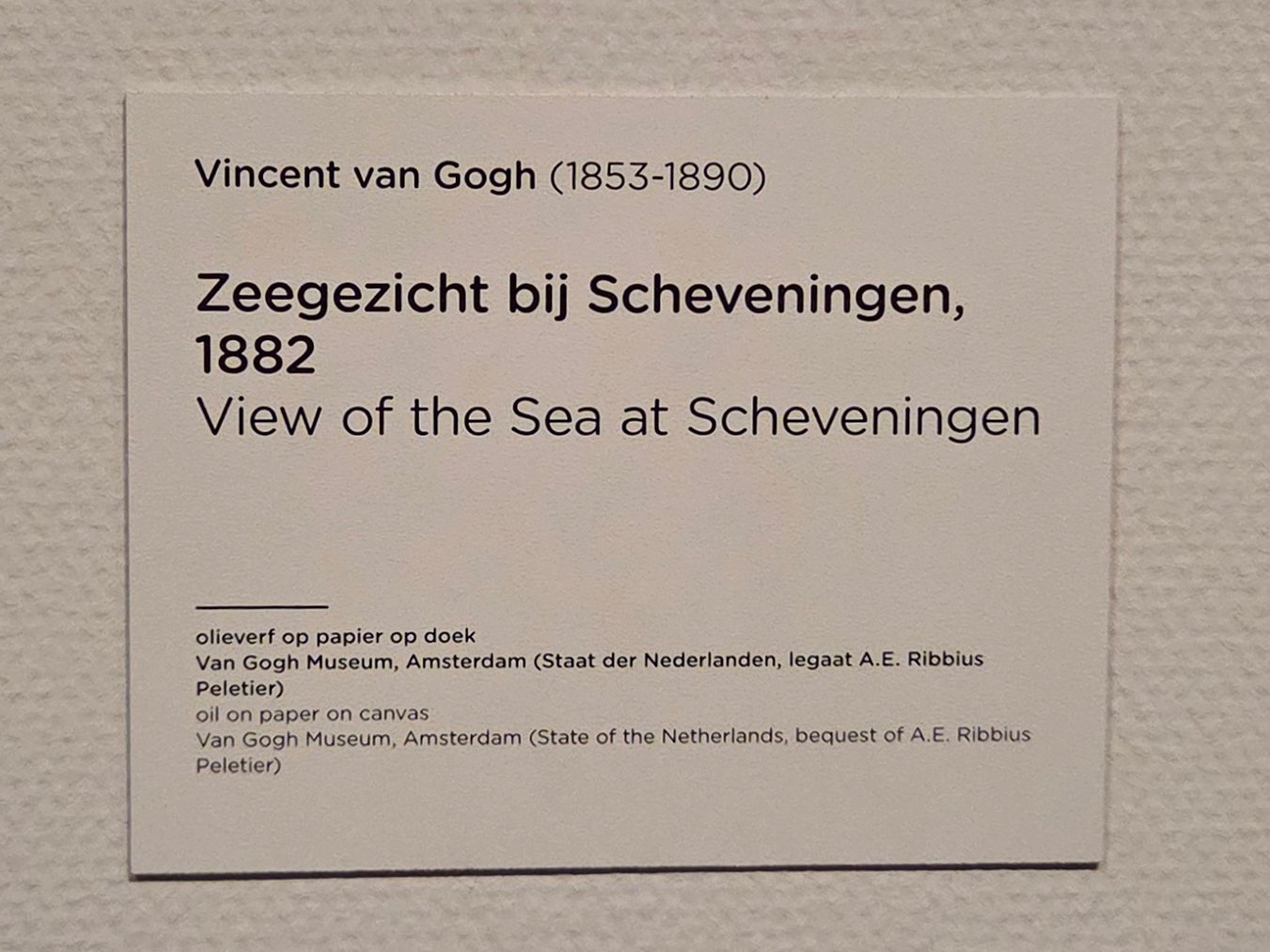
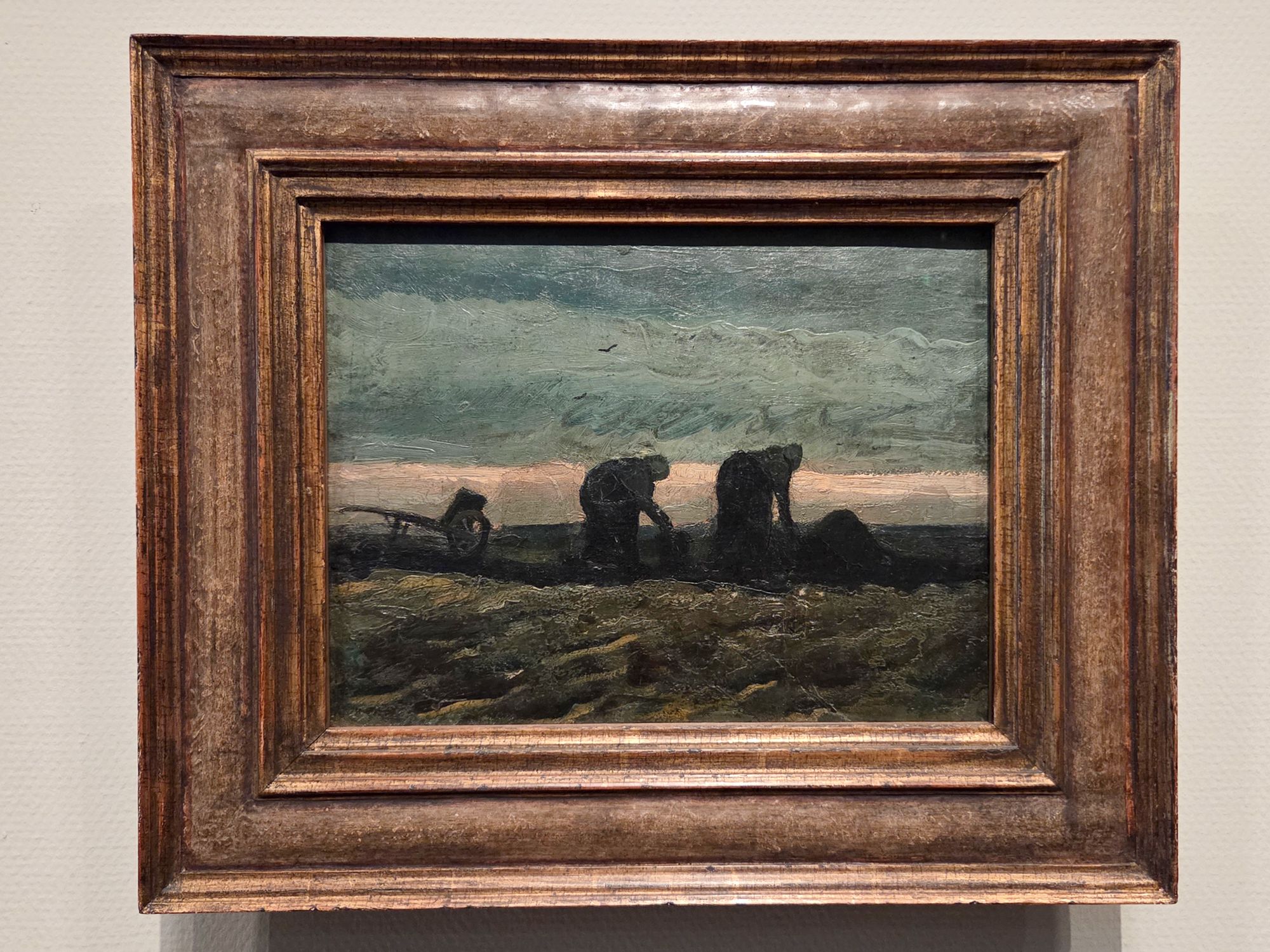
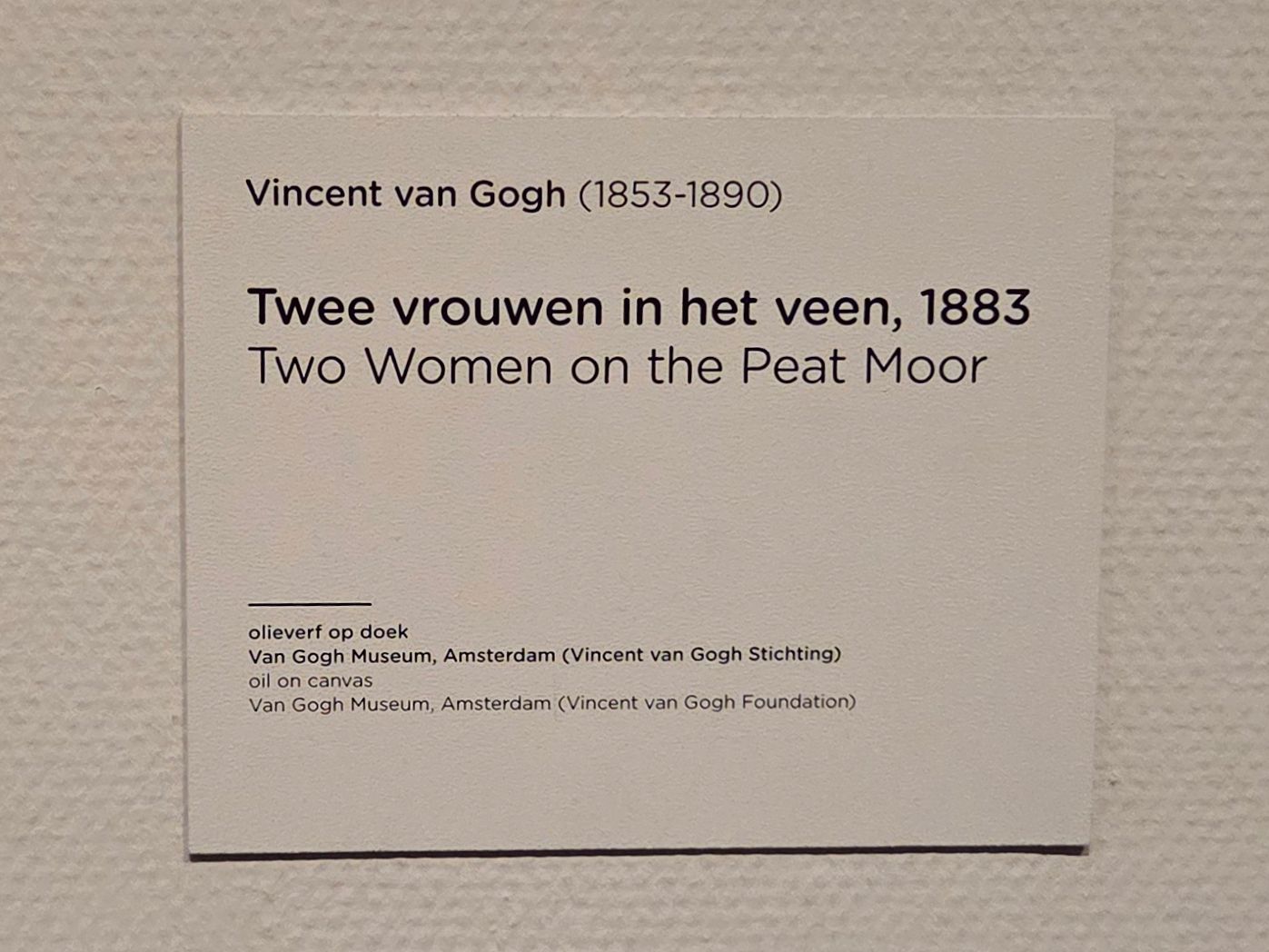
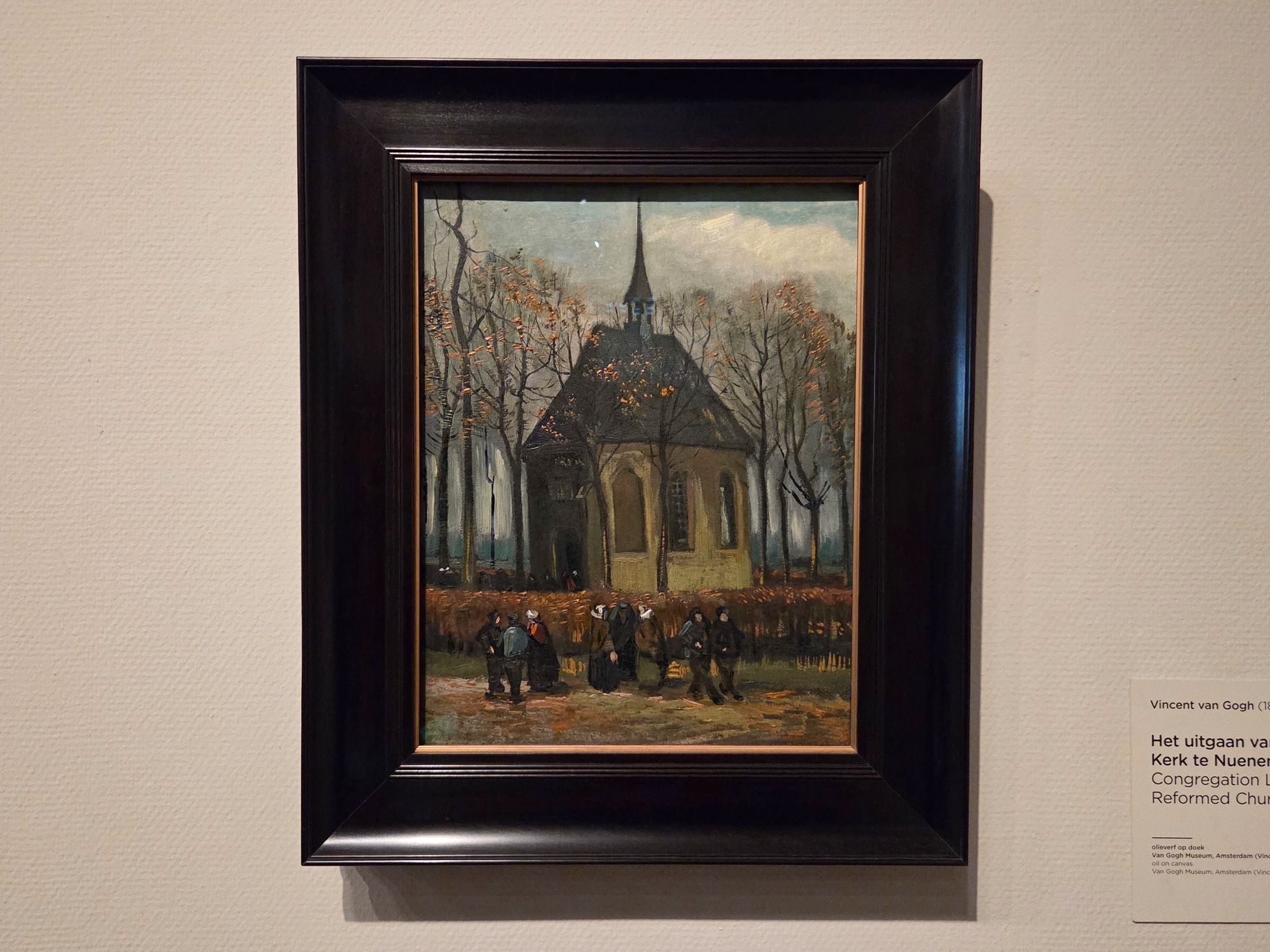
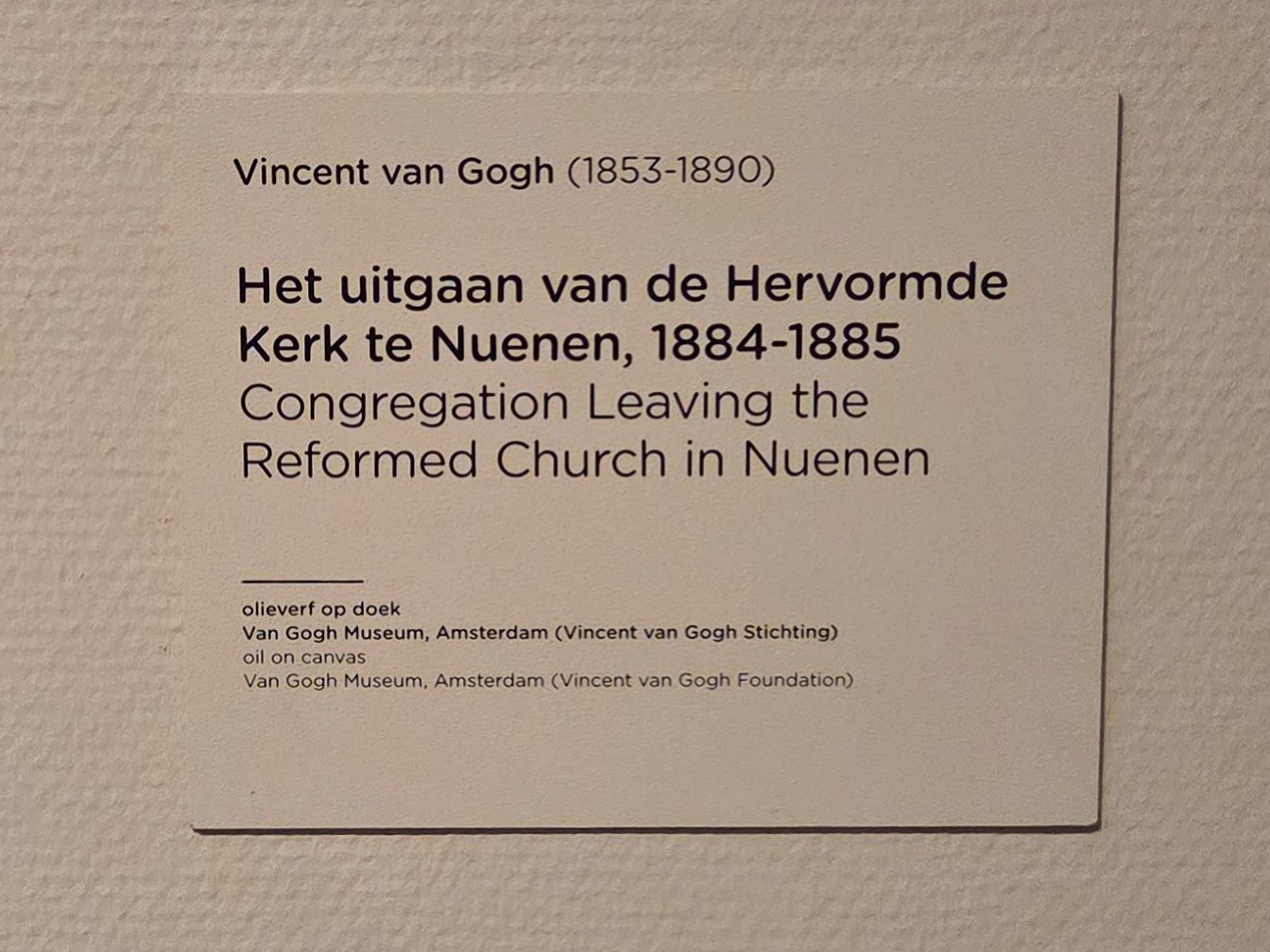
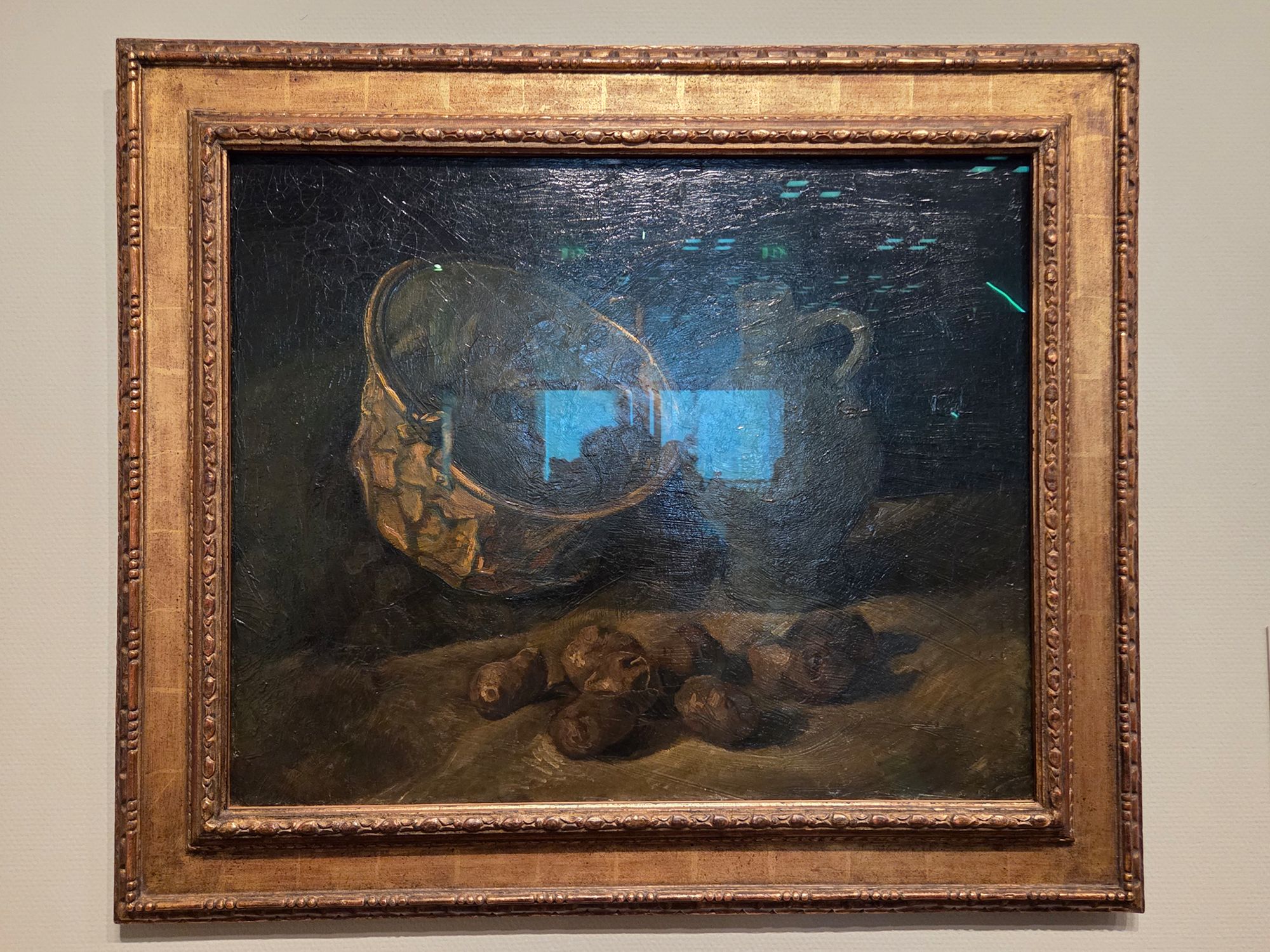
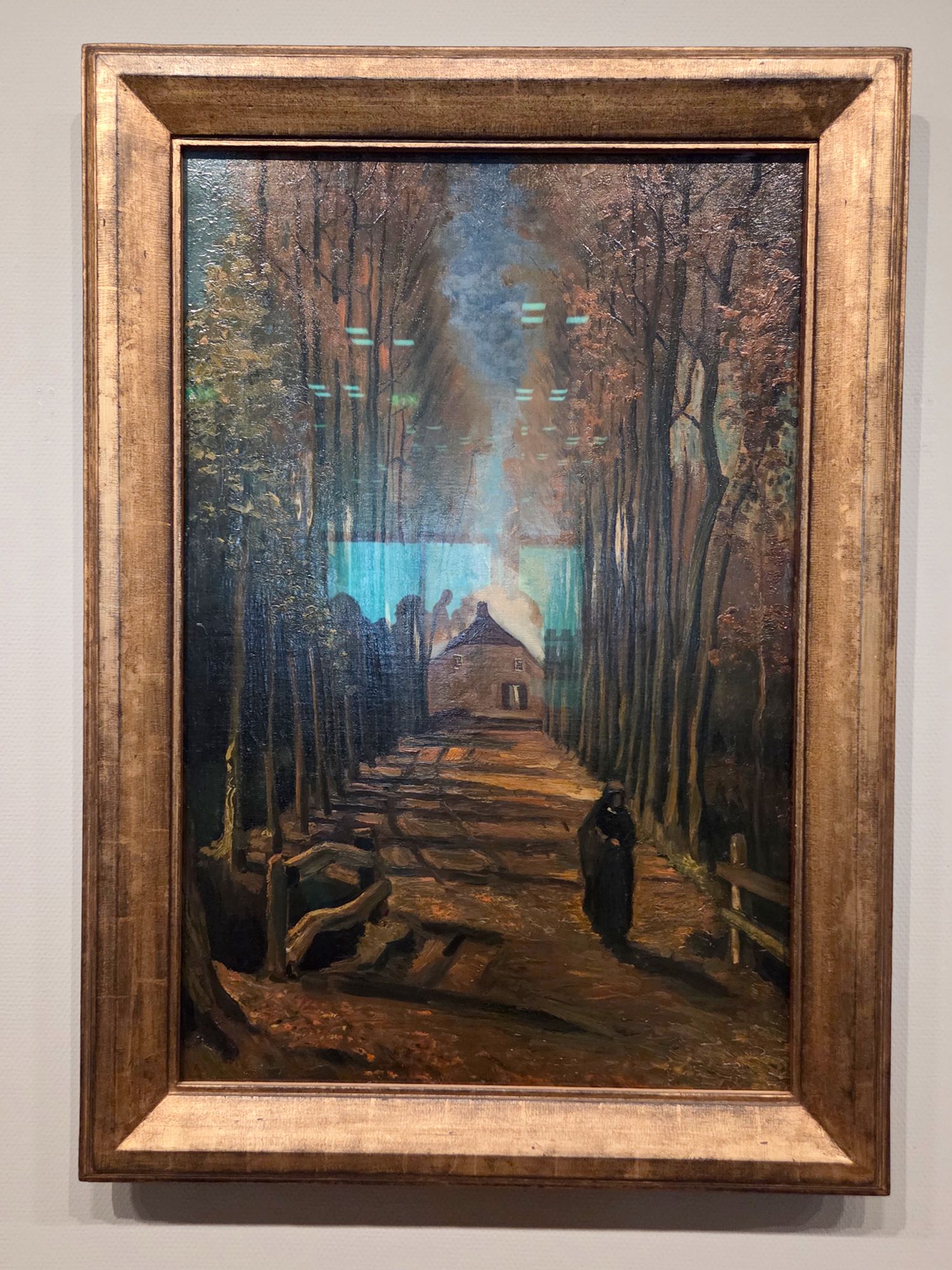
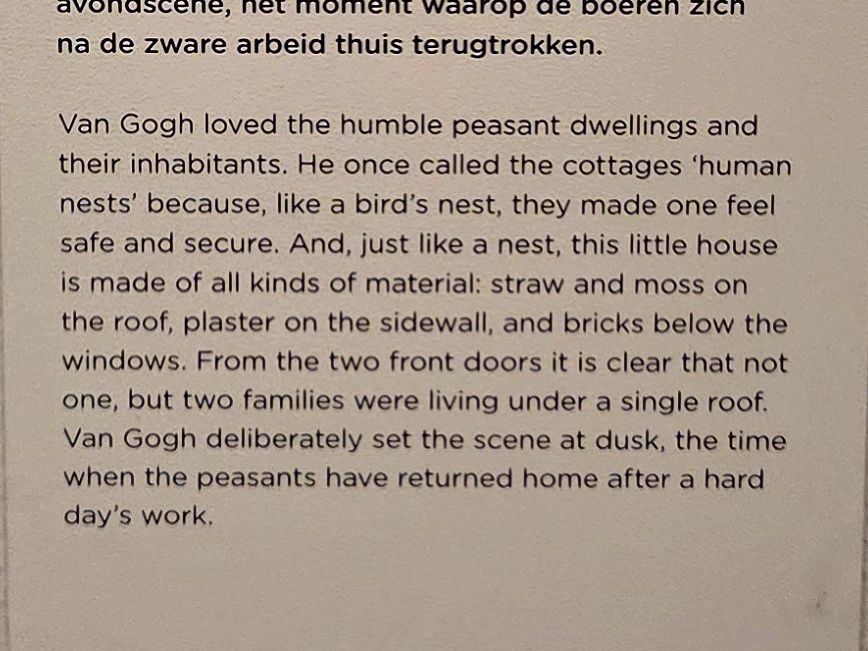
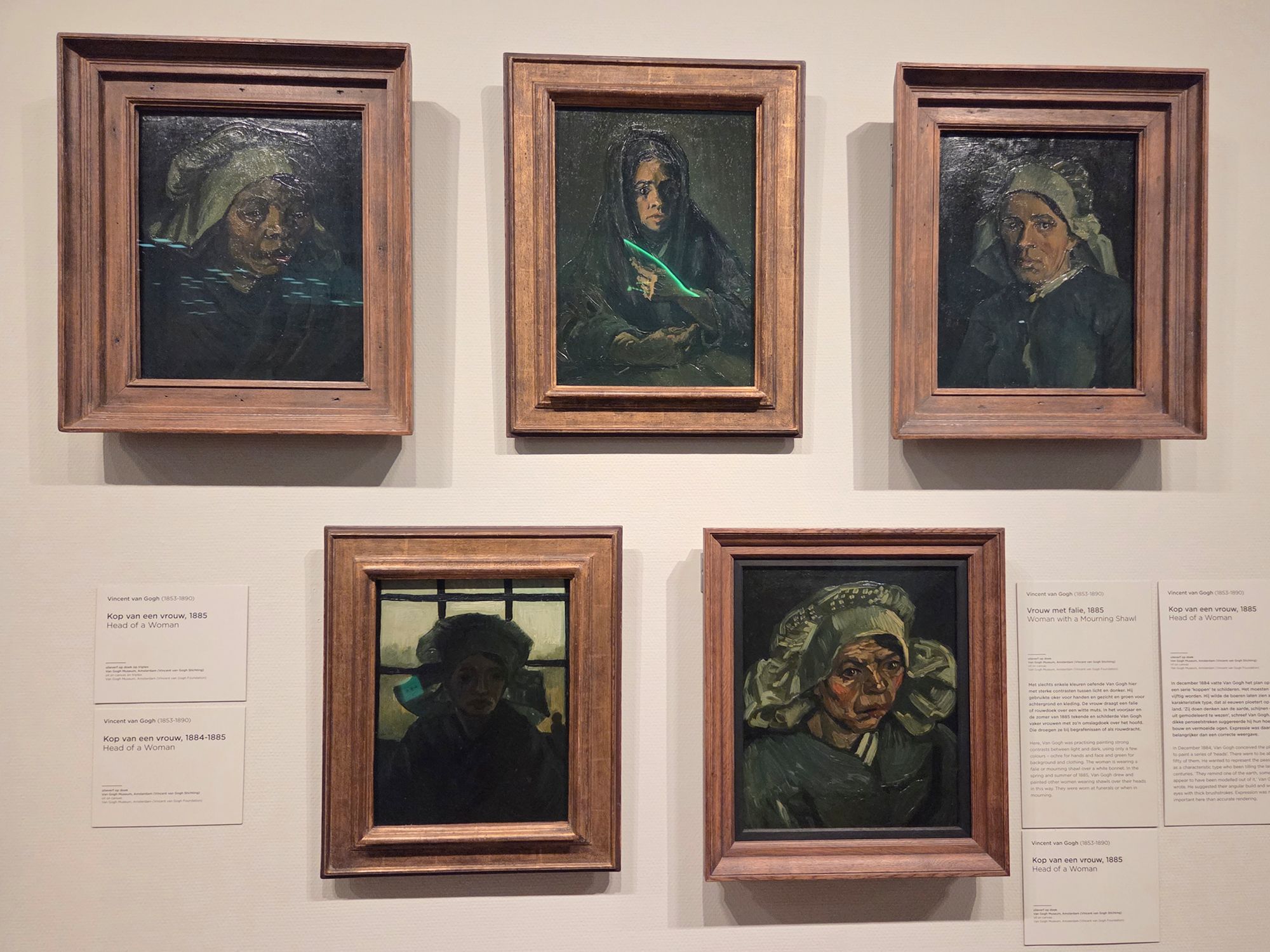
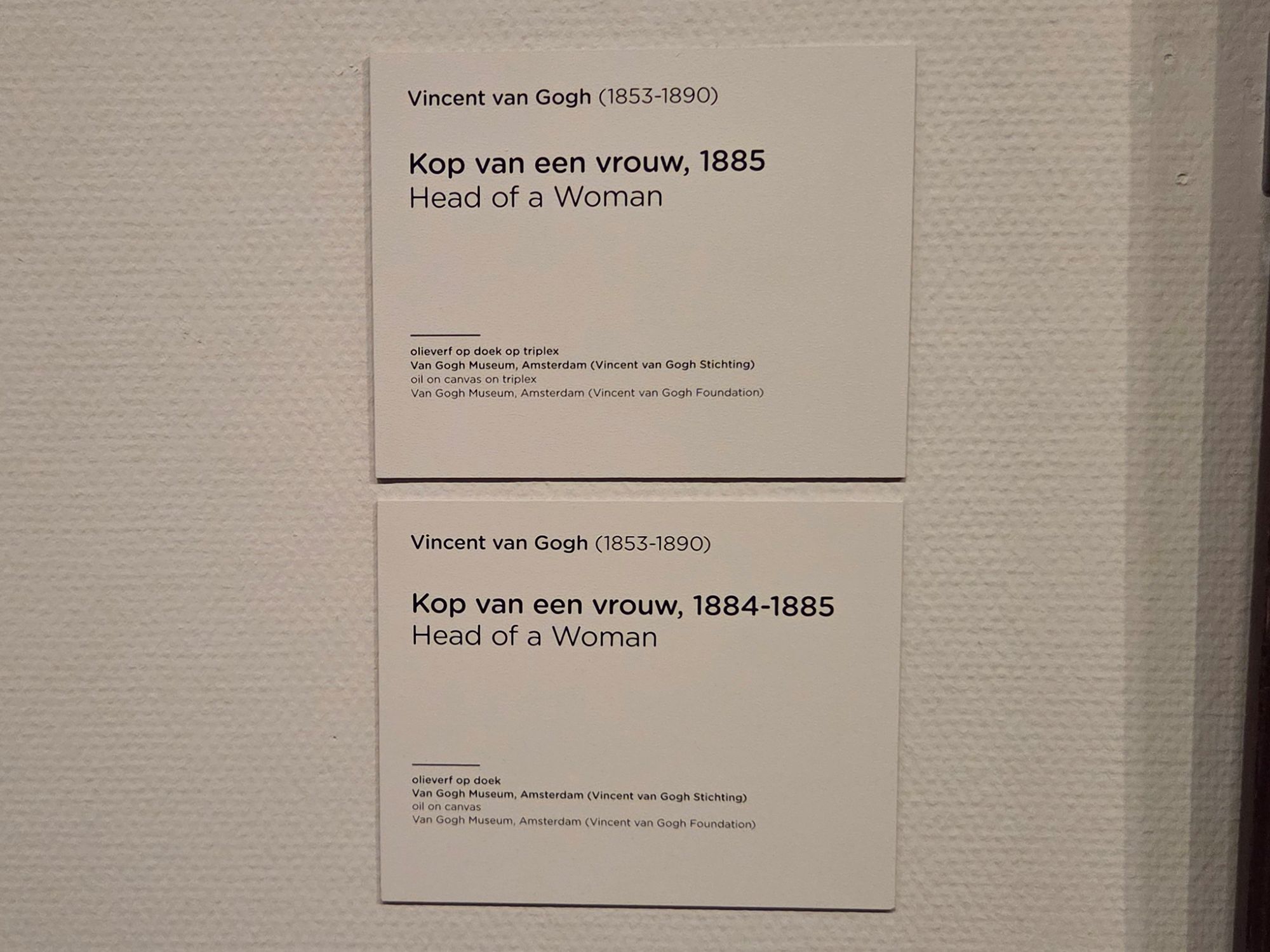
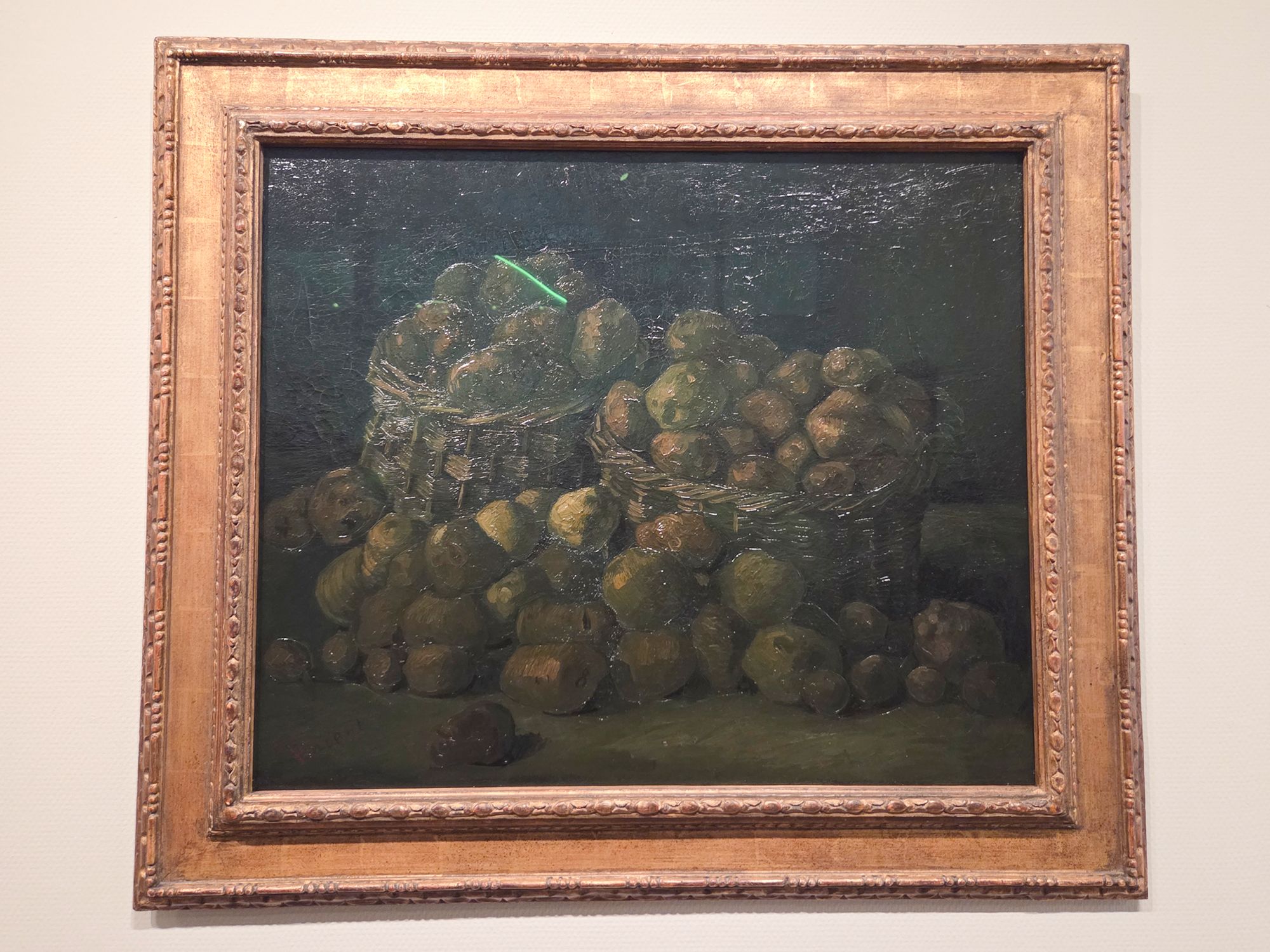
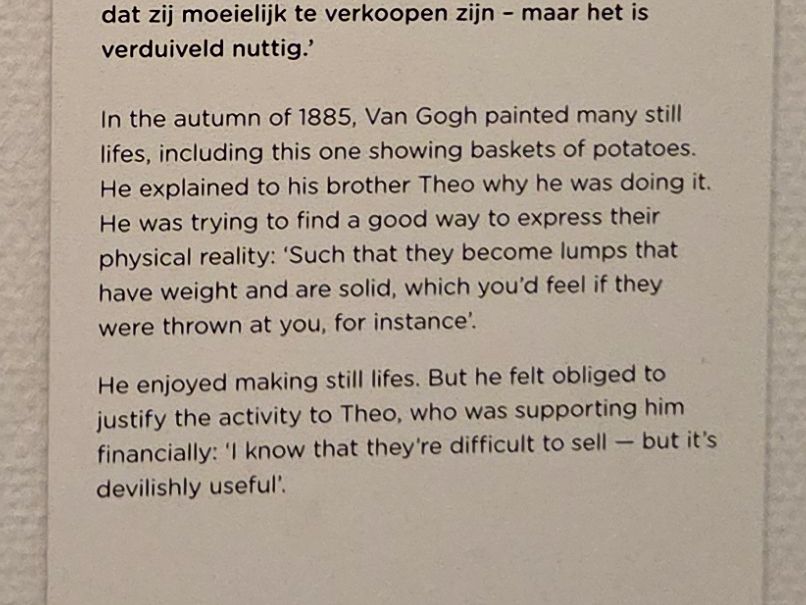
In 1885, Van Gogh painted many still lifes, including baskets of potatoes. He used these simple subjects to practice giving objects a convincing sense of weight, solidity, and physical presence, even though he knew such paintings were difficult to sell.
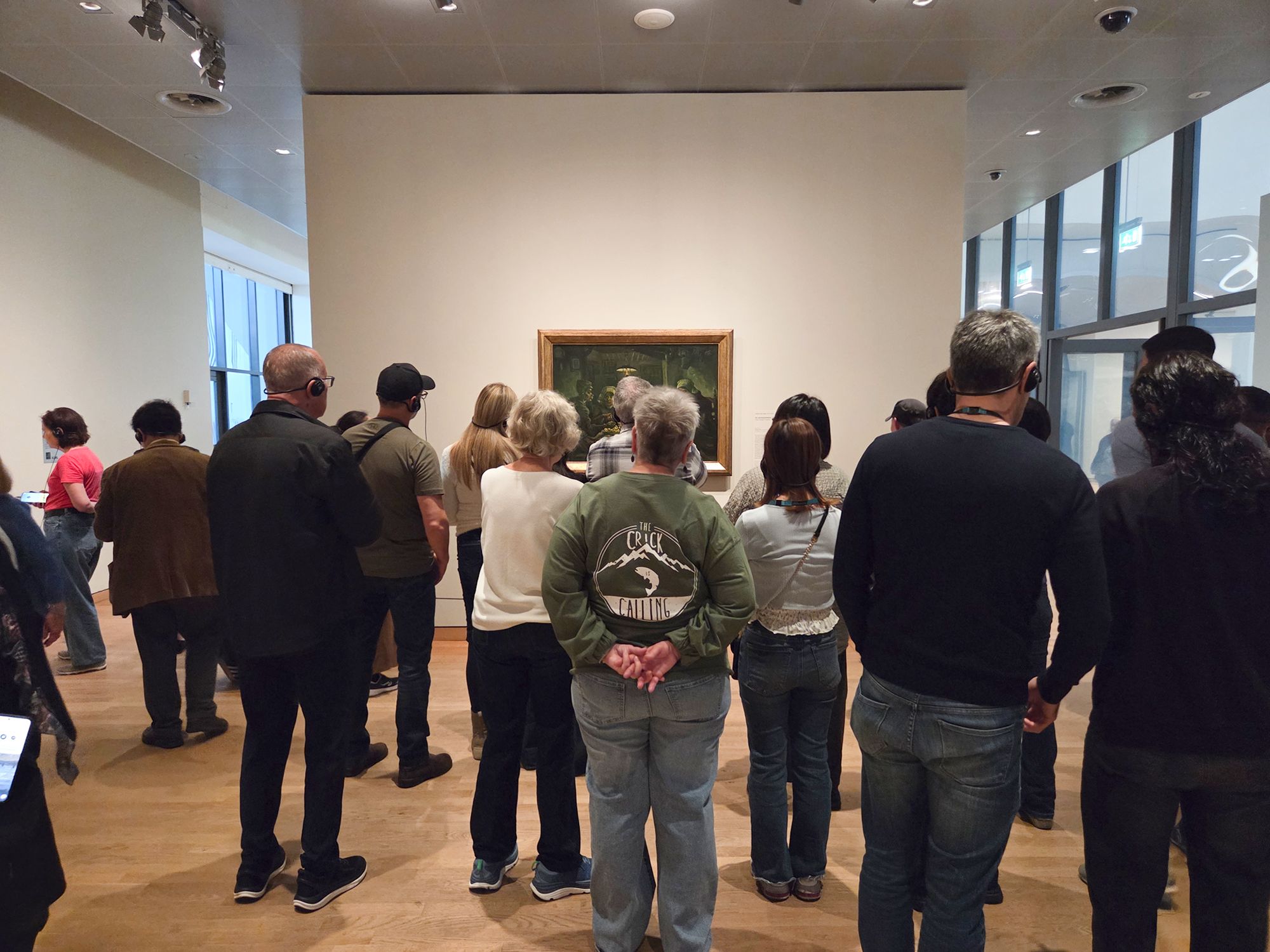
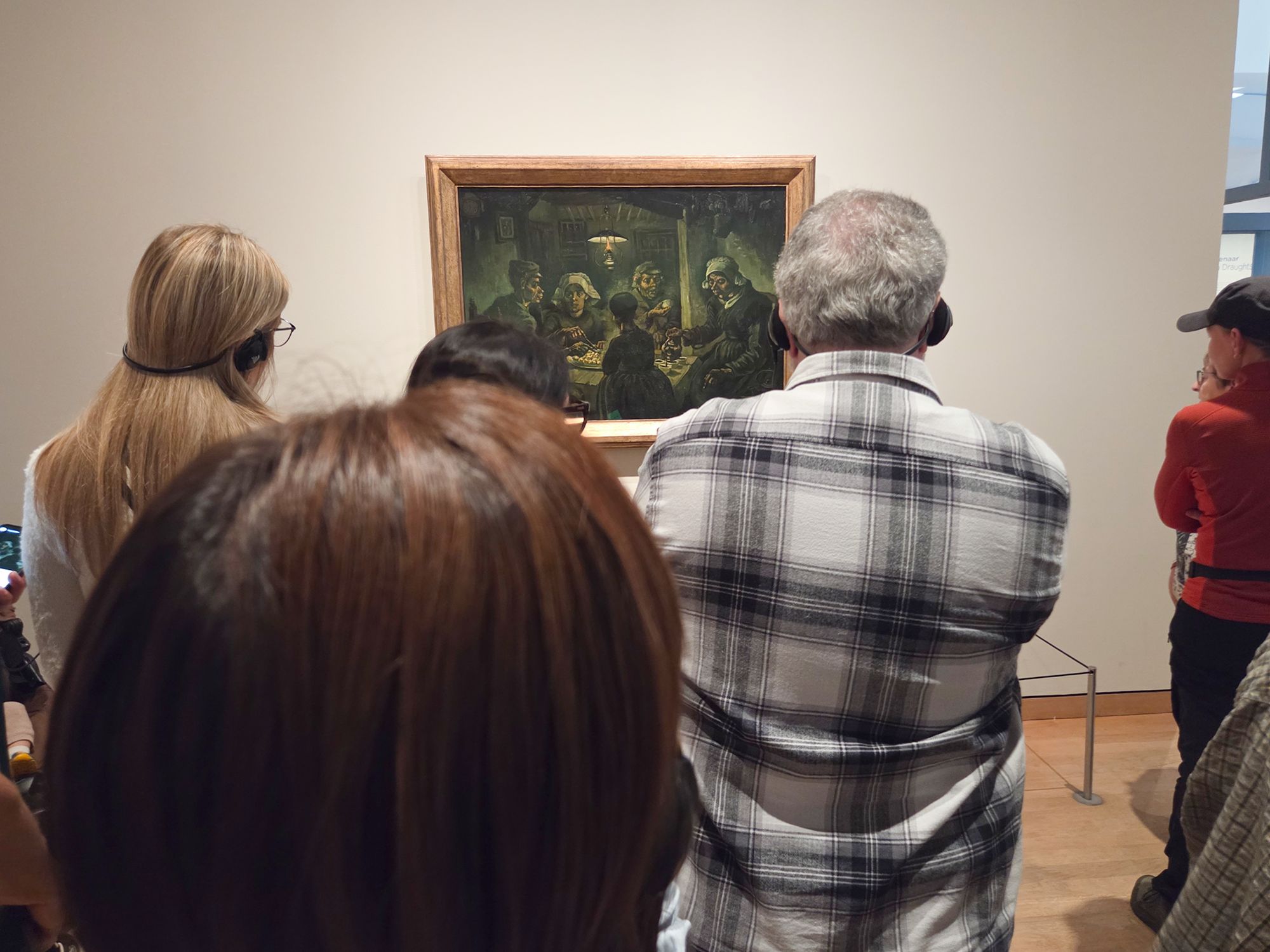
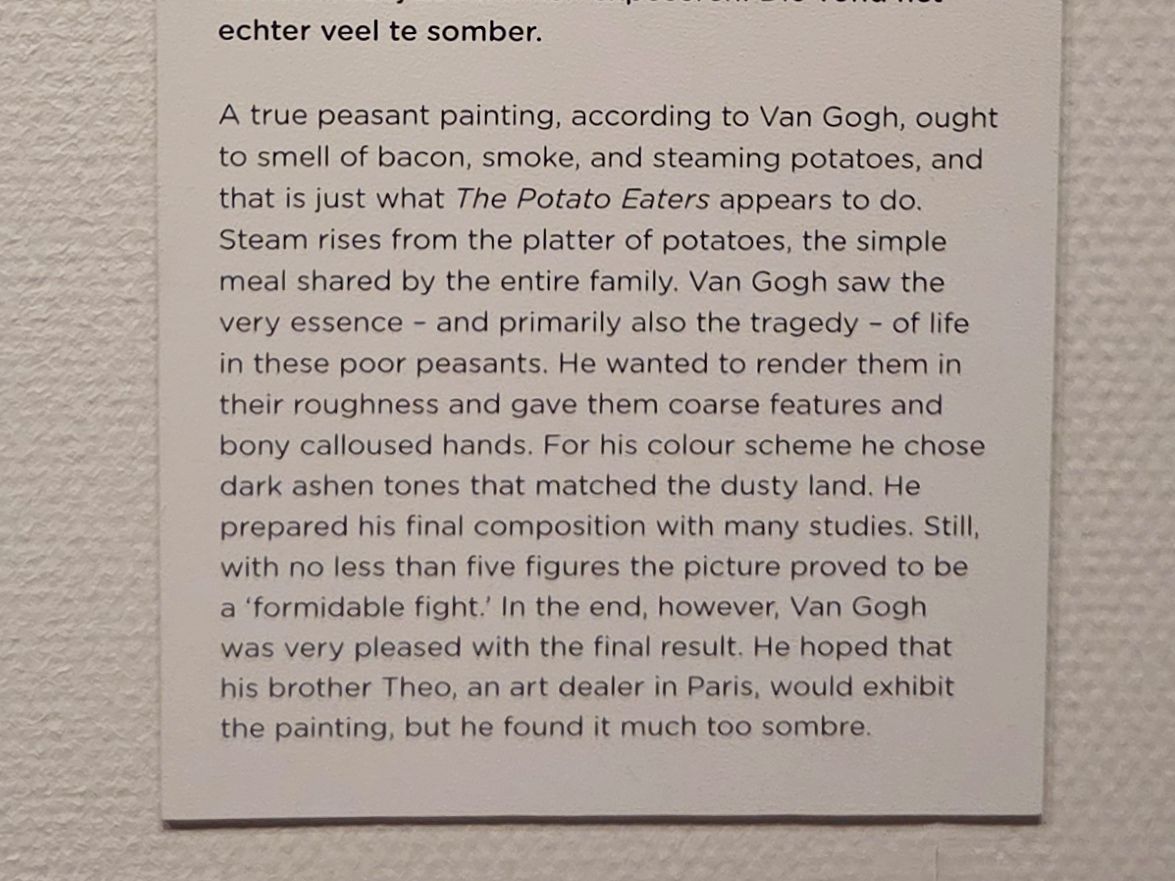
The Potato Eaters was one of Van Gogh’s most important early paintings. He deliberately used dark, earthy colors and rough-looking figures to portray the difficult lives of peasants and the simple meal they shared.
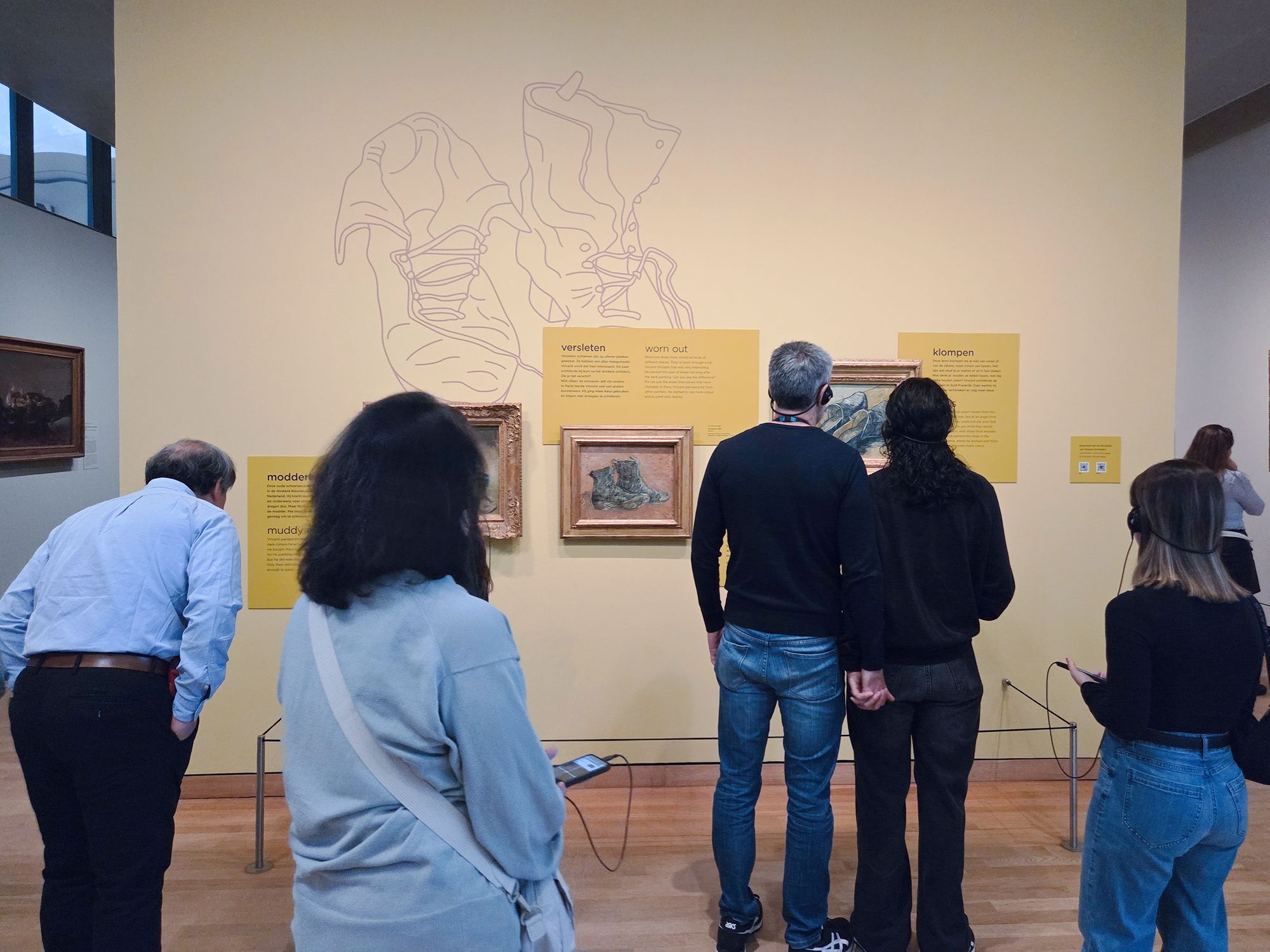
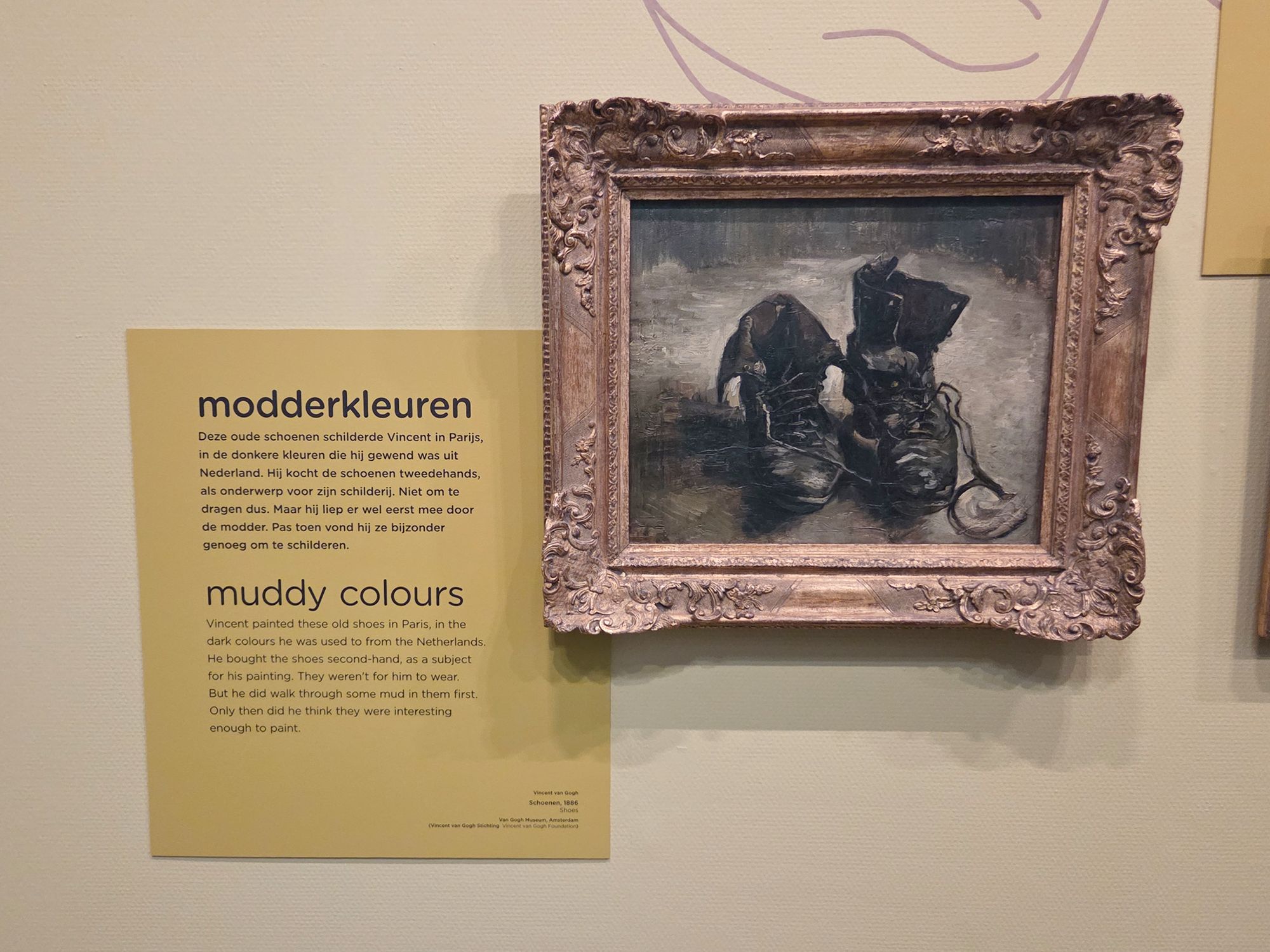
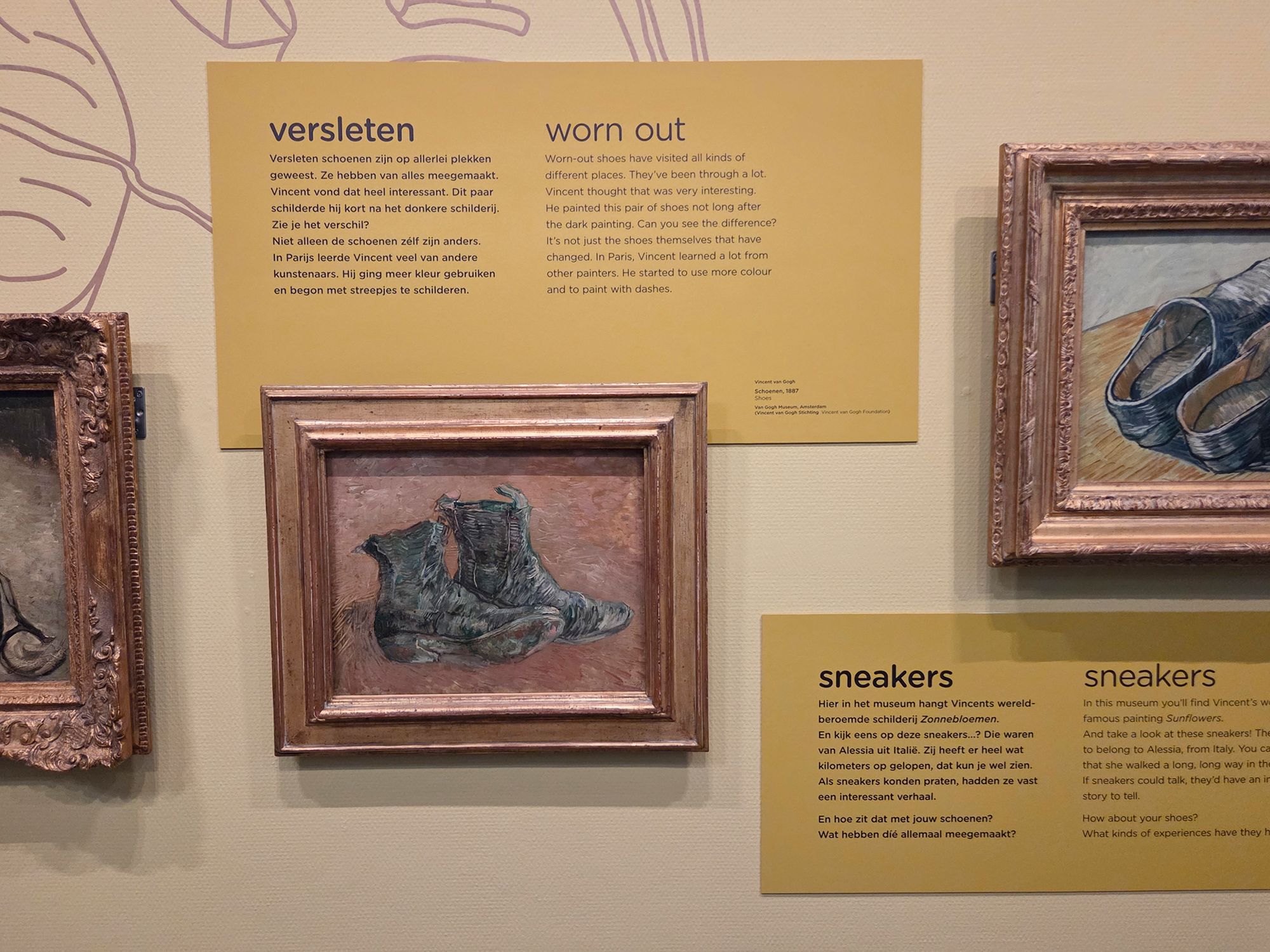
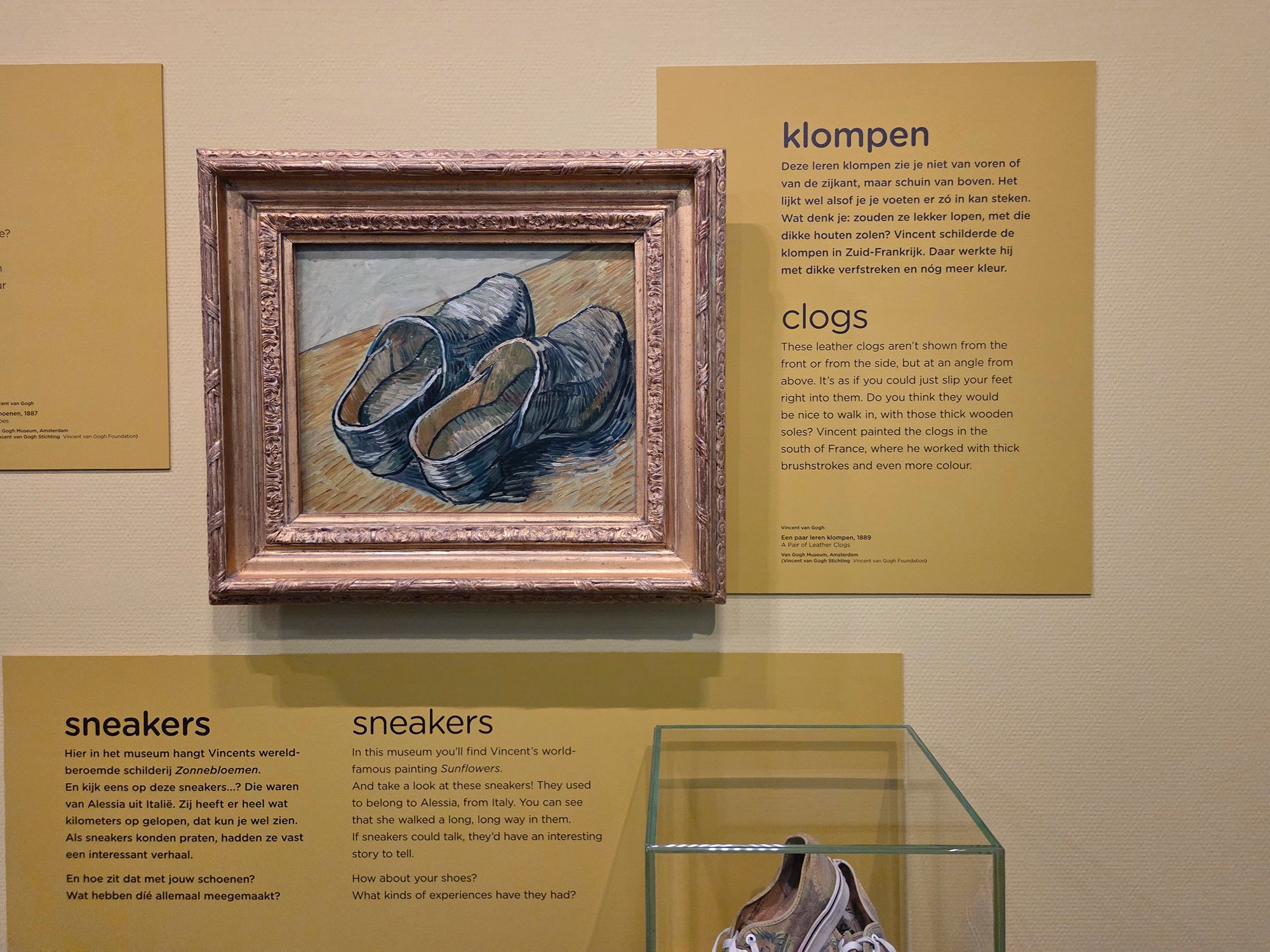
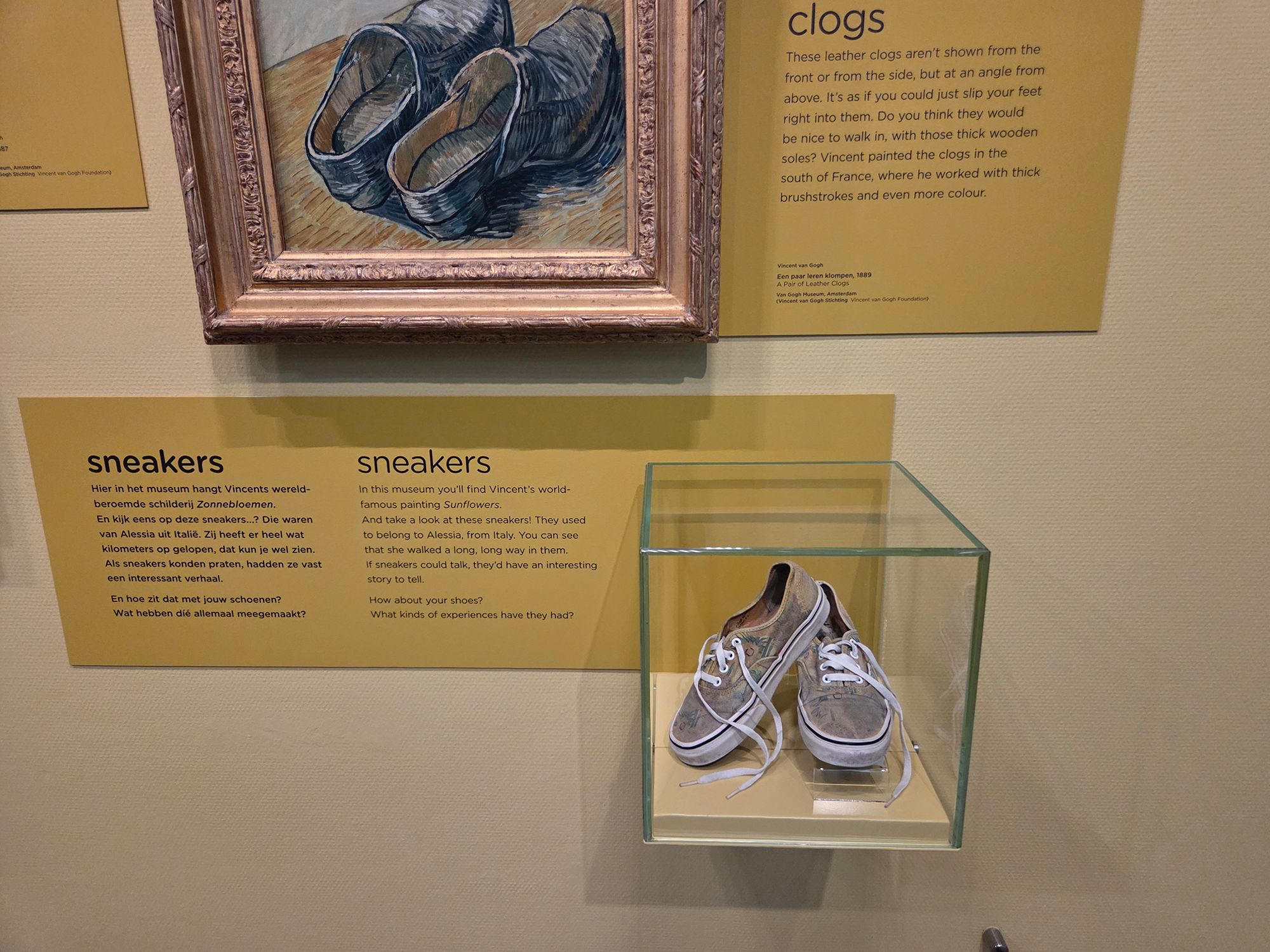
These paintings of worn pairs of shoes show Van Gogh’s interest in ordinary objects, using dark colors and expressive brushwork to give them a strong sense of character and everyday life.
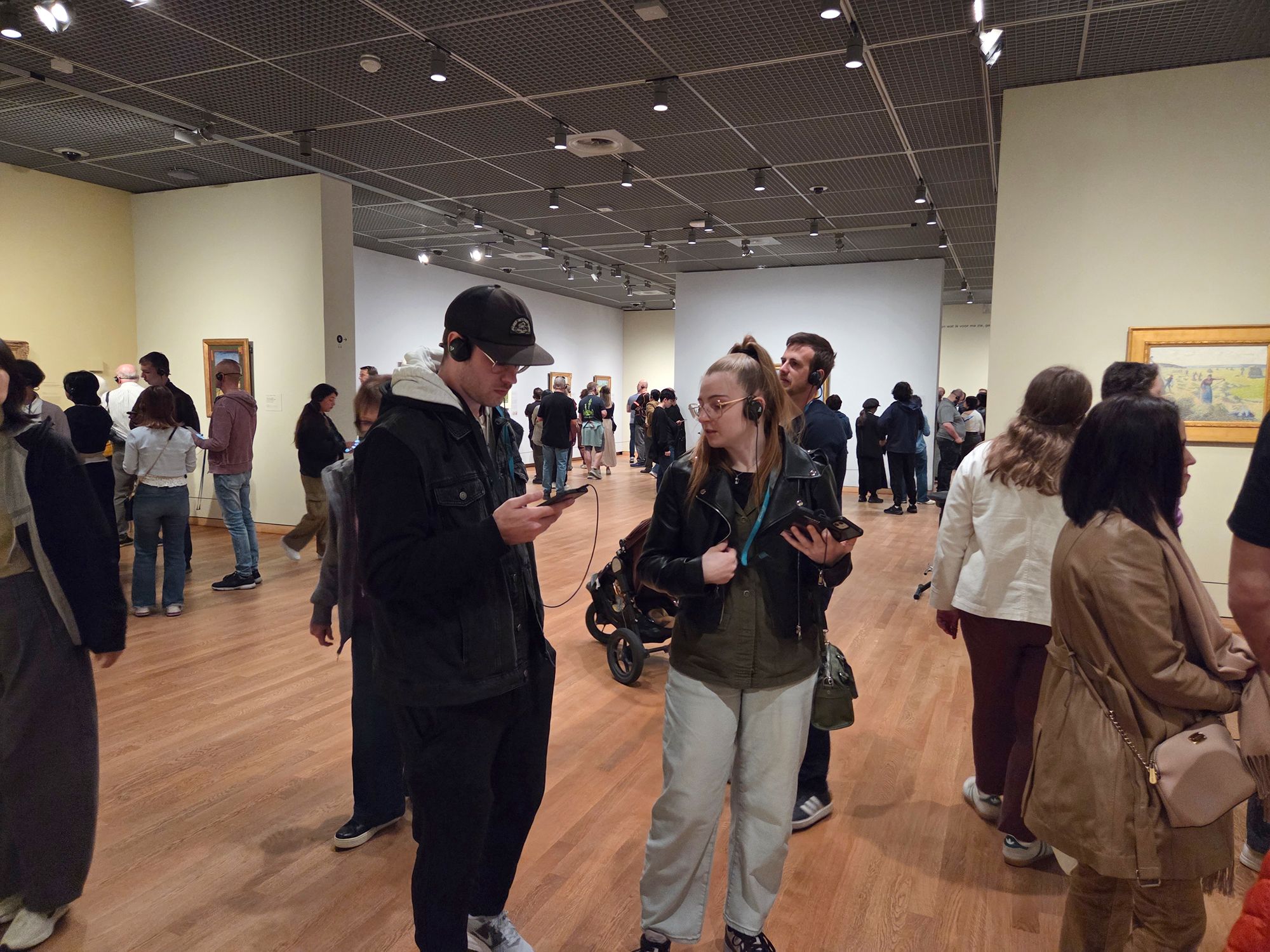
On the second floor, I continued exploring the museum and Van Gogh’s development as an artist.
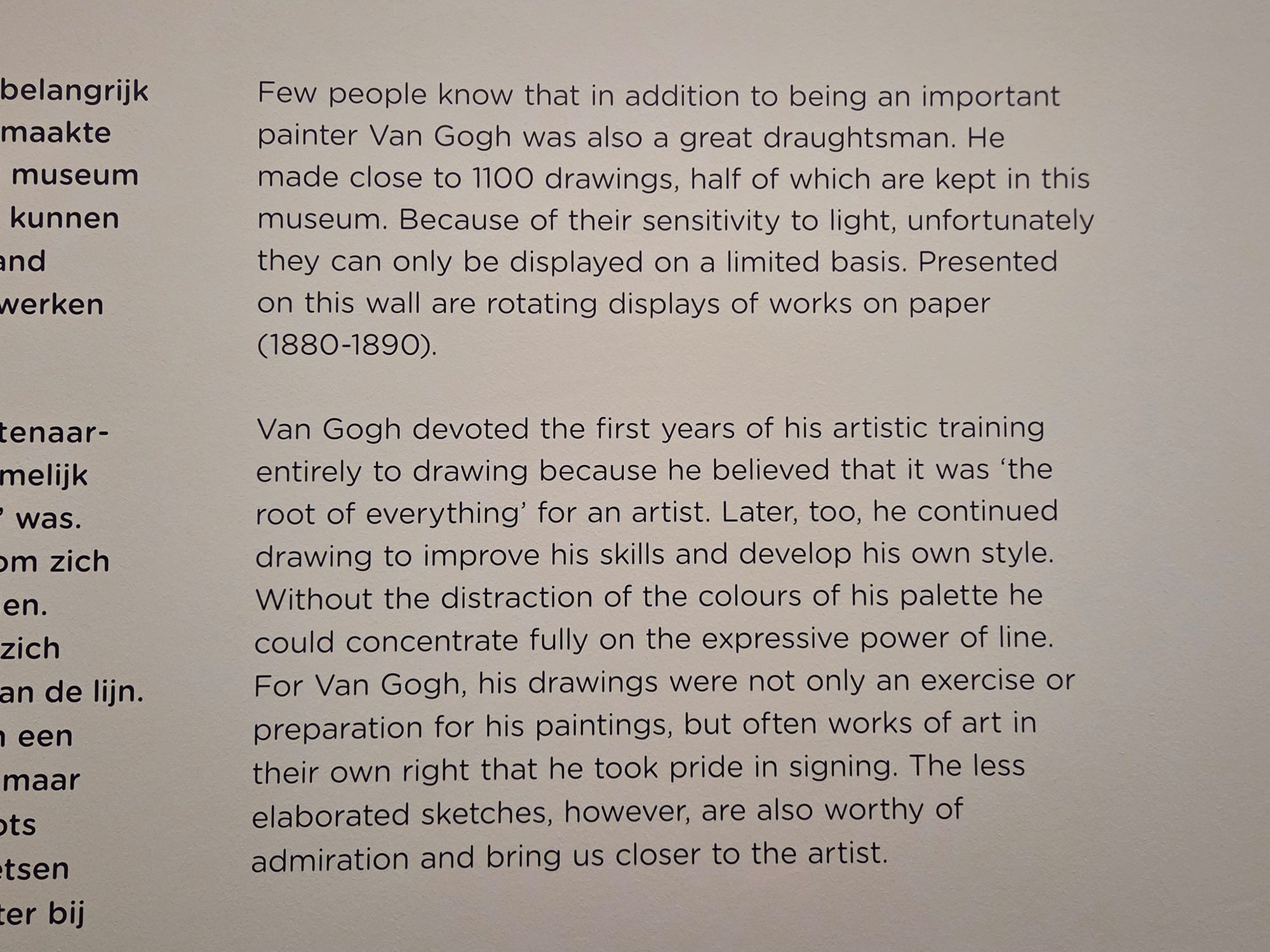
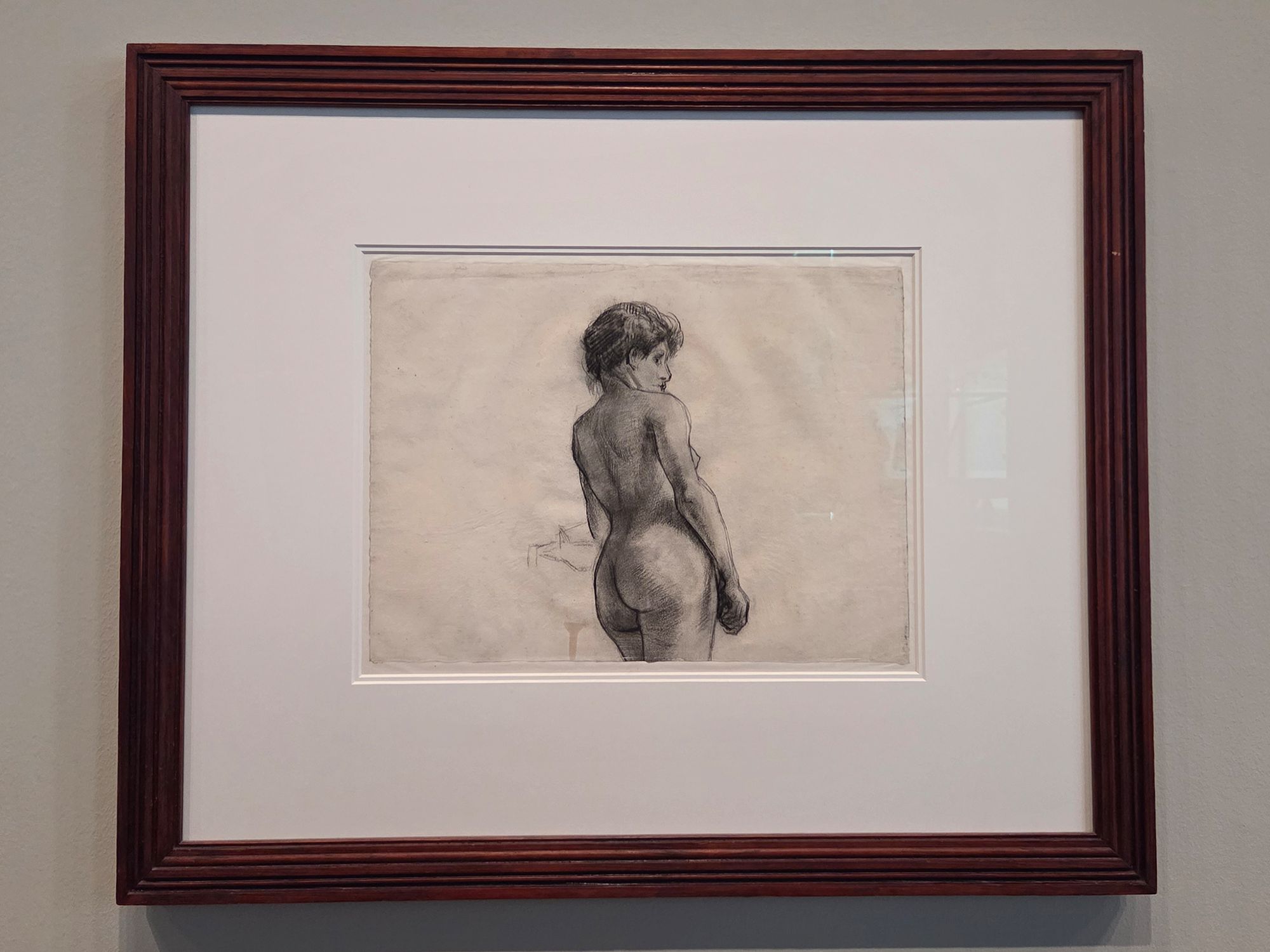
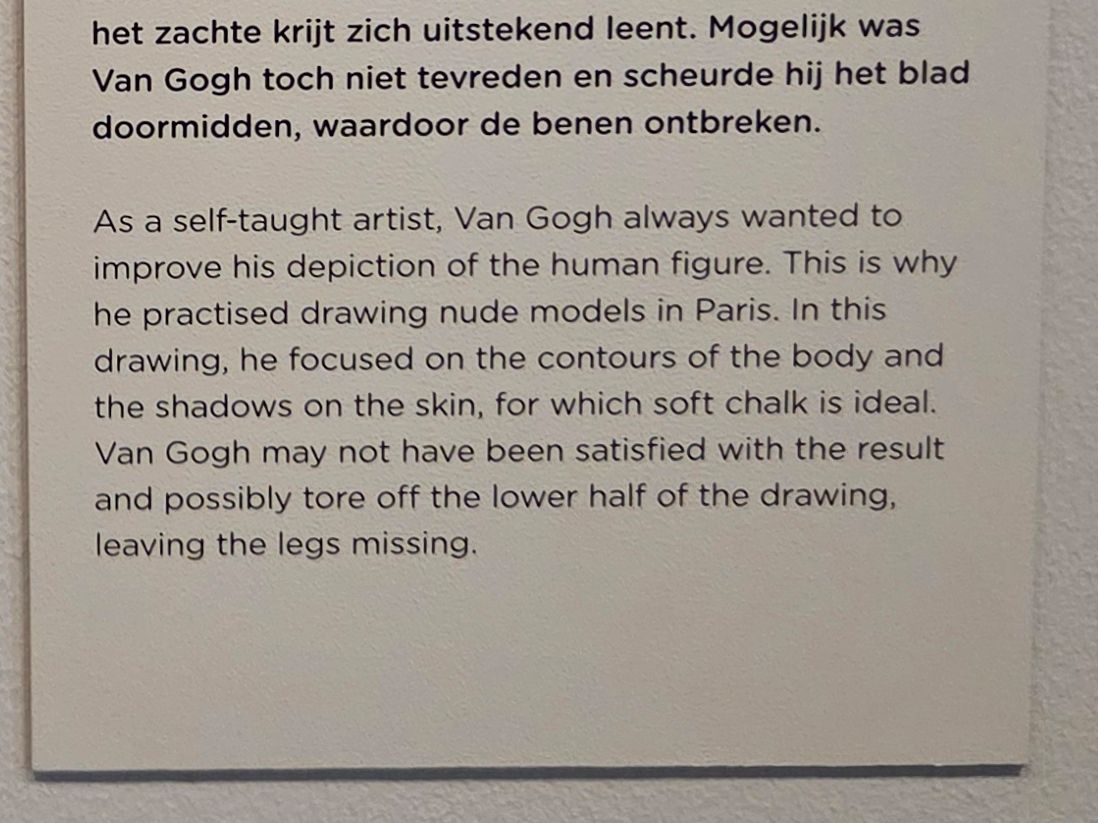
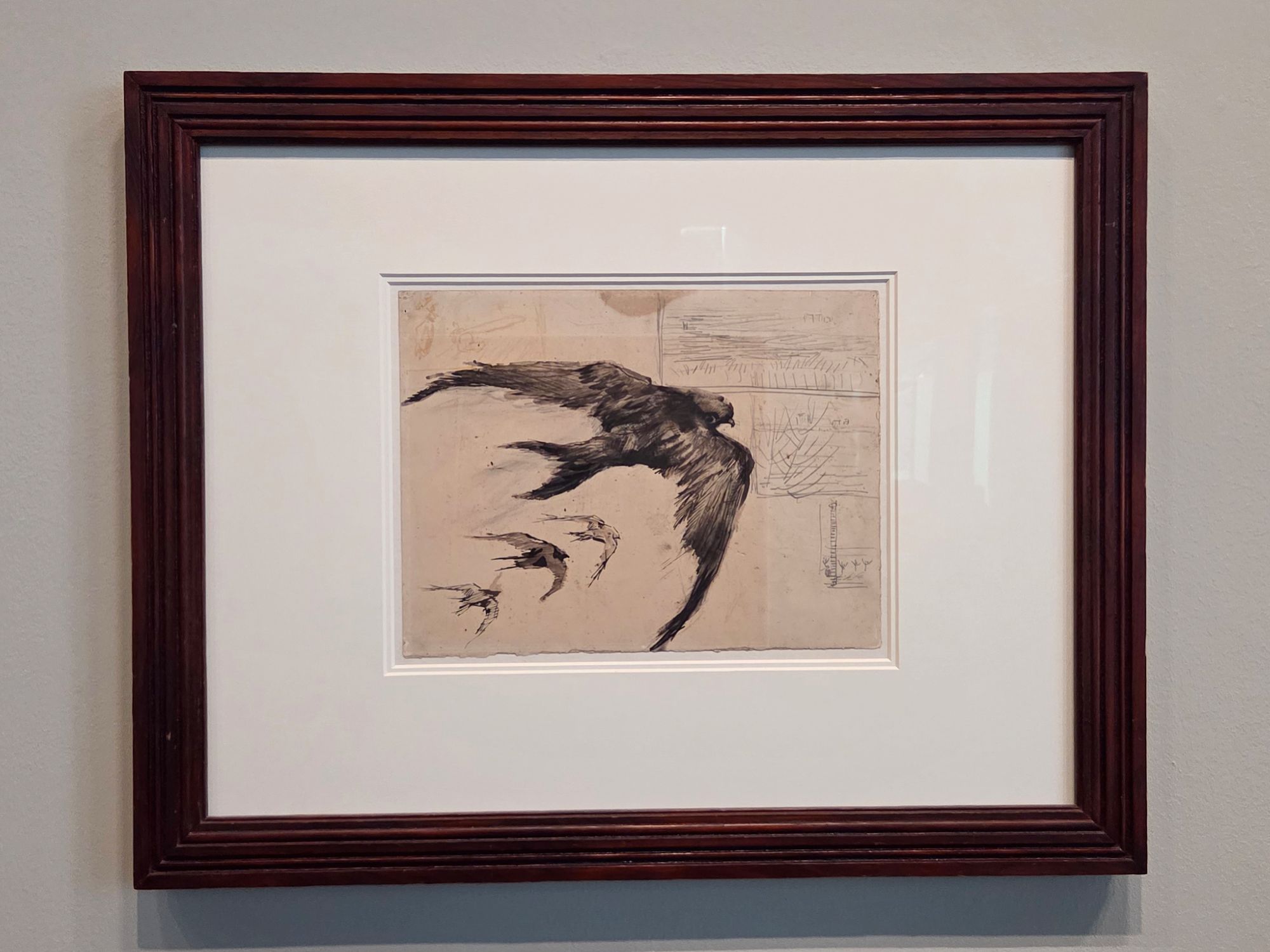
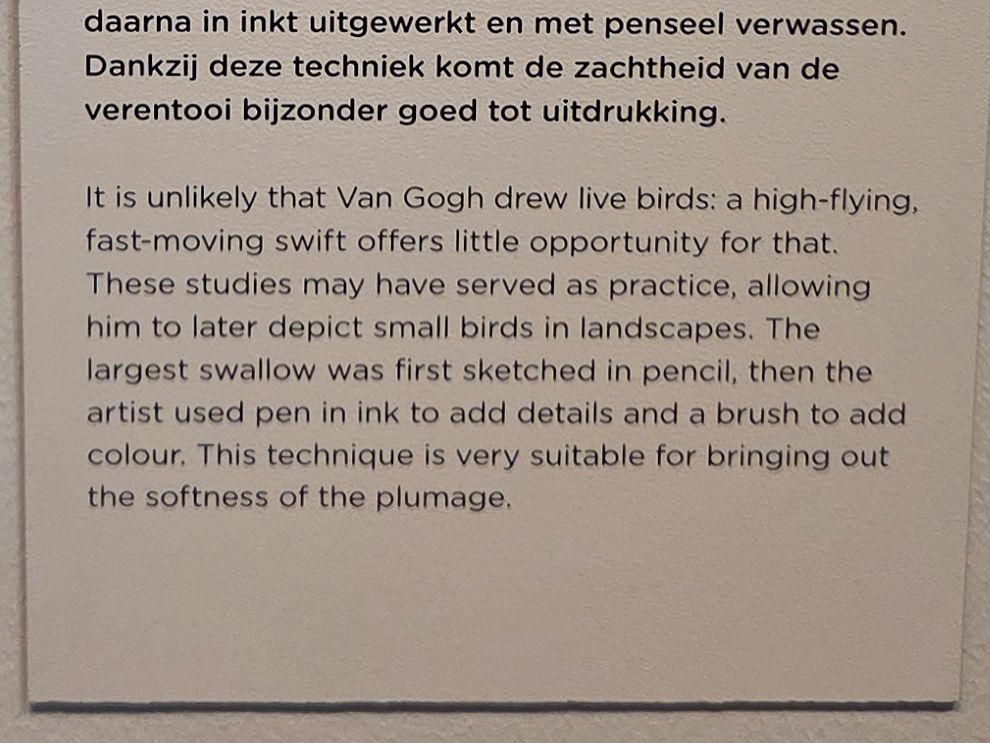
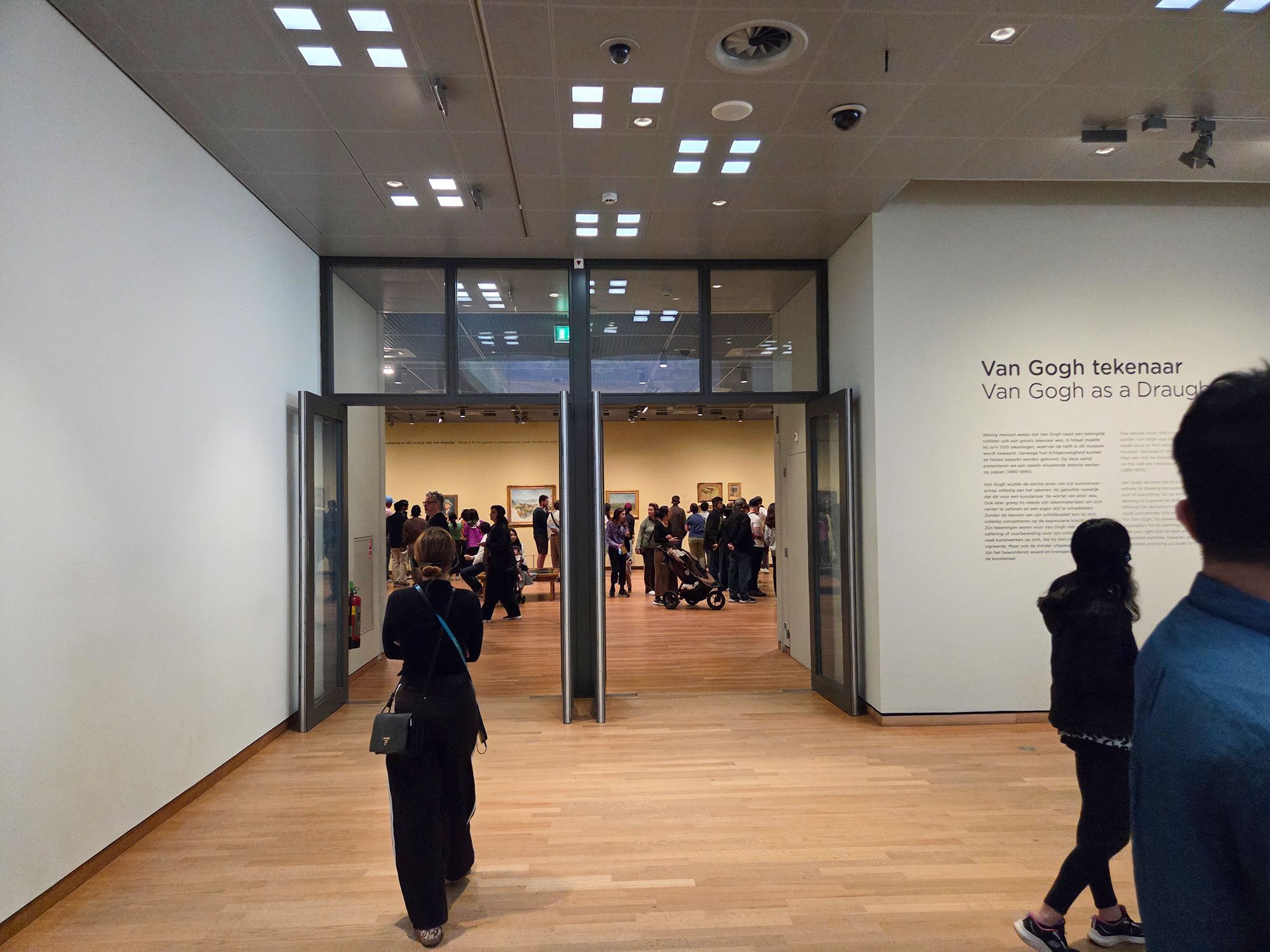
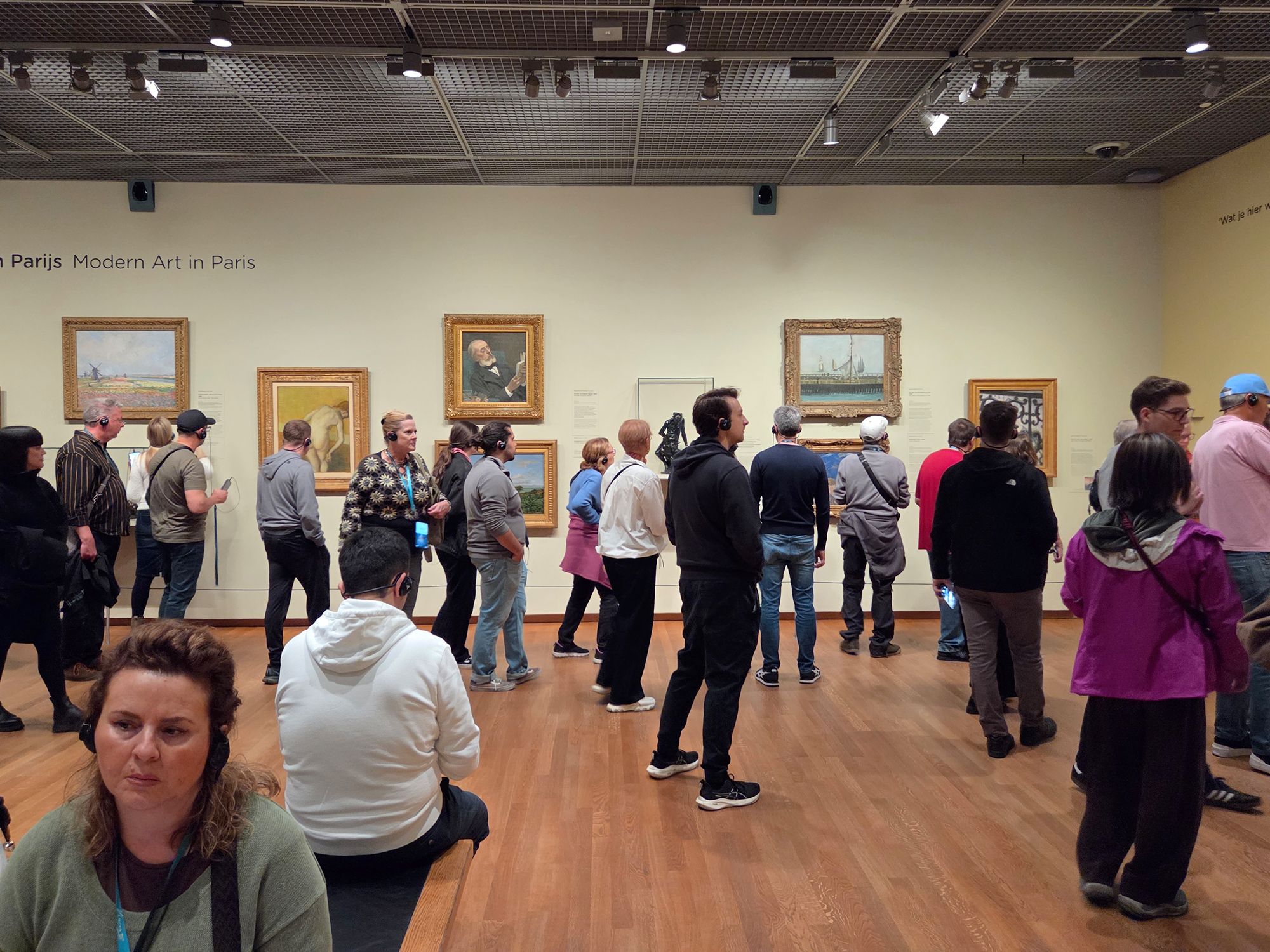
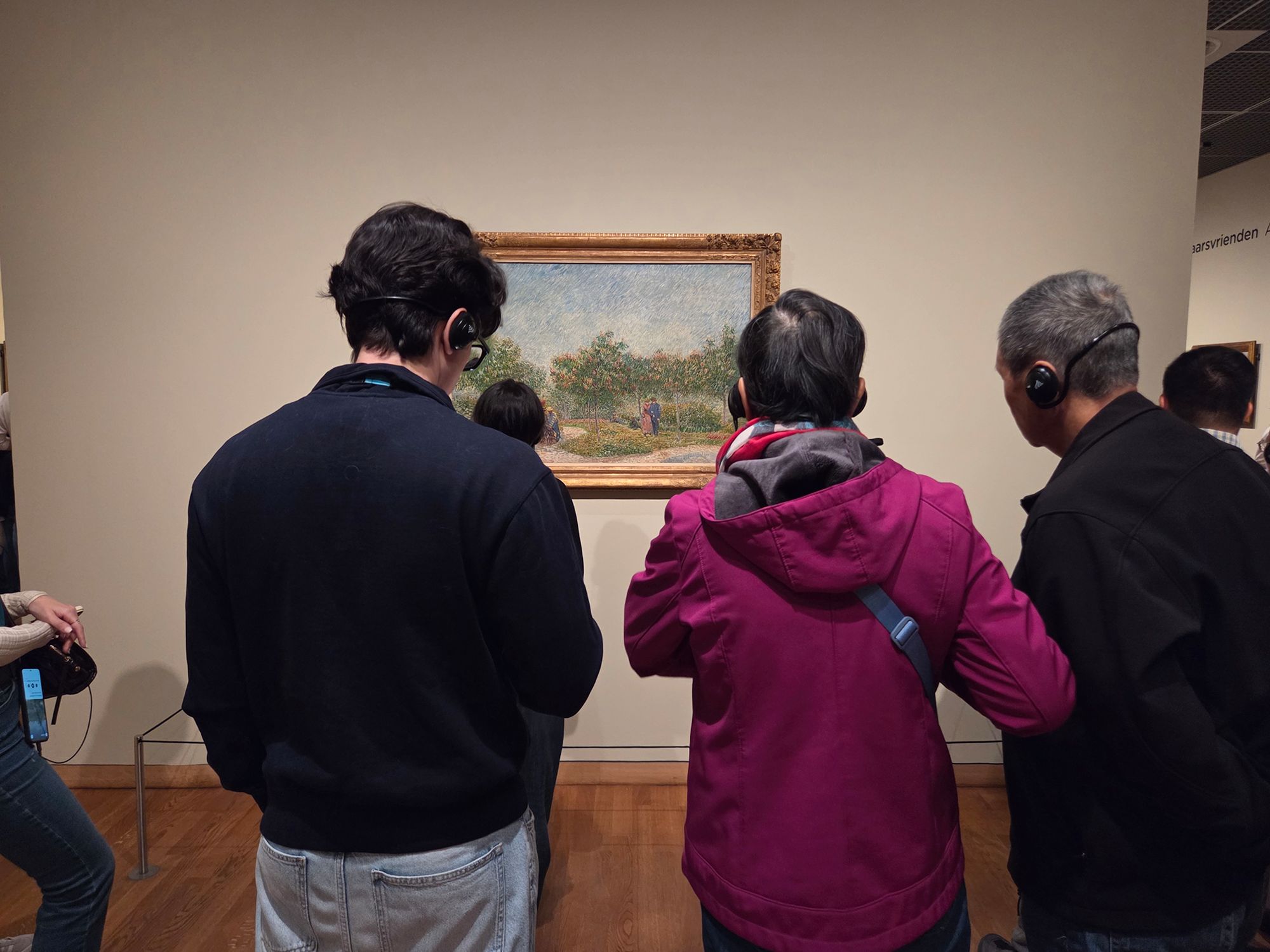
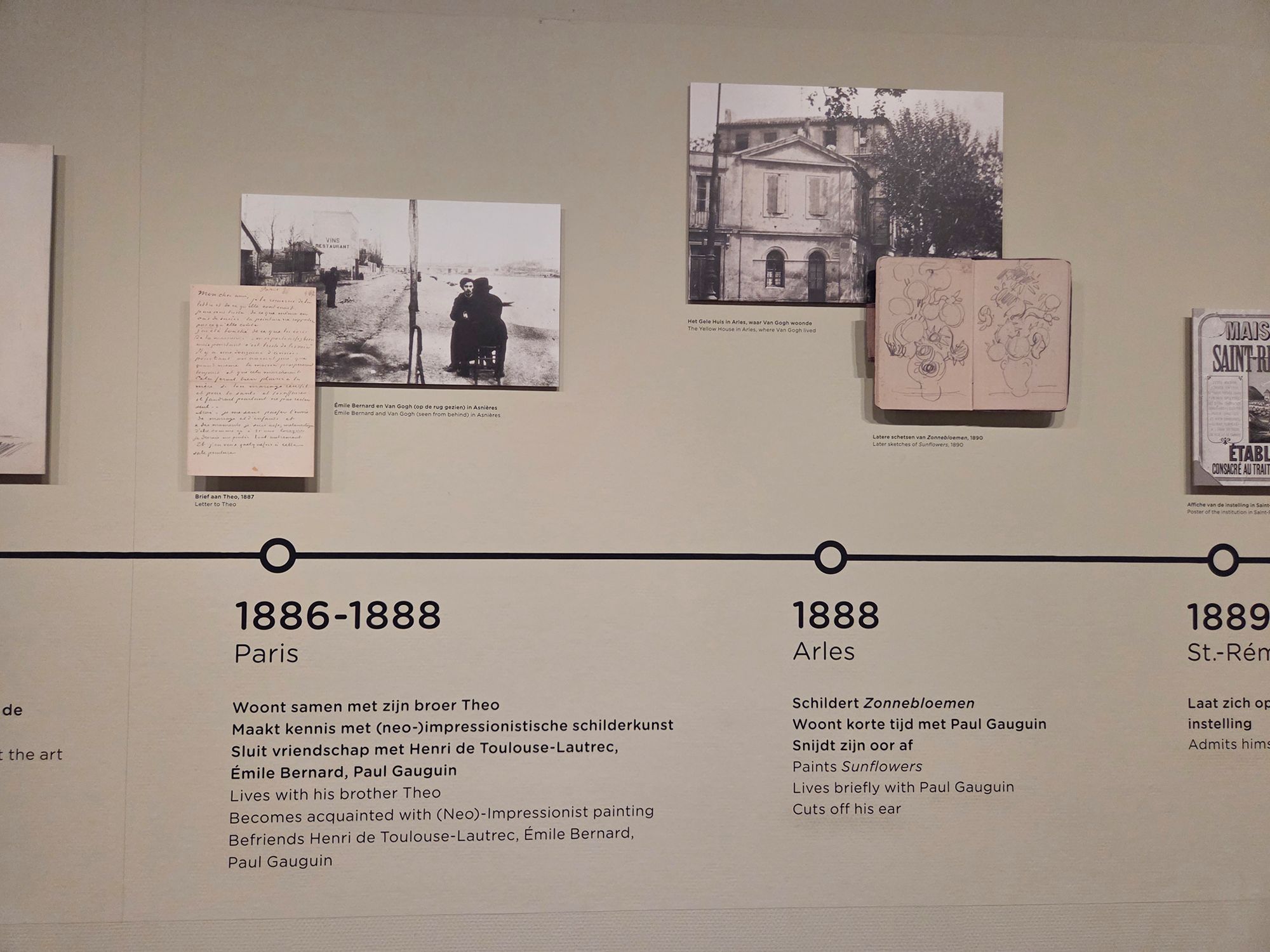
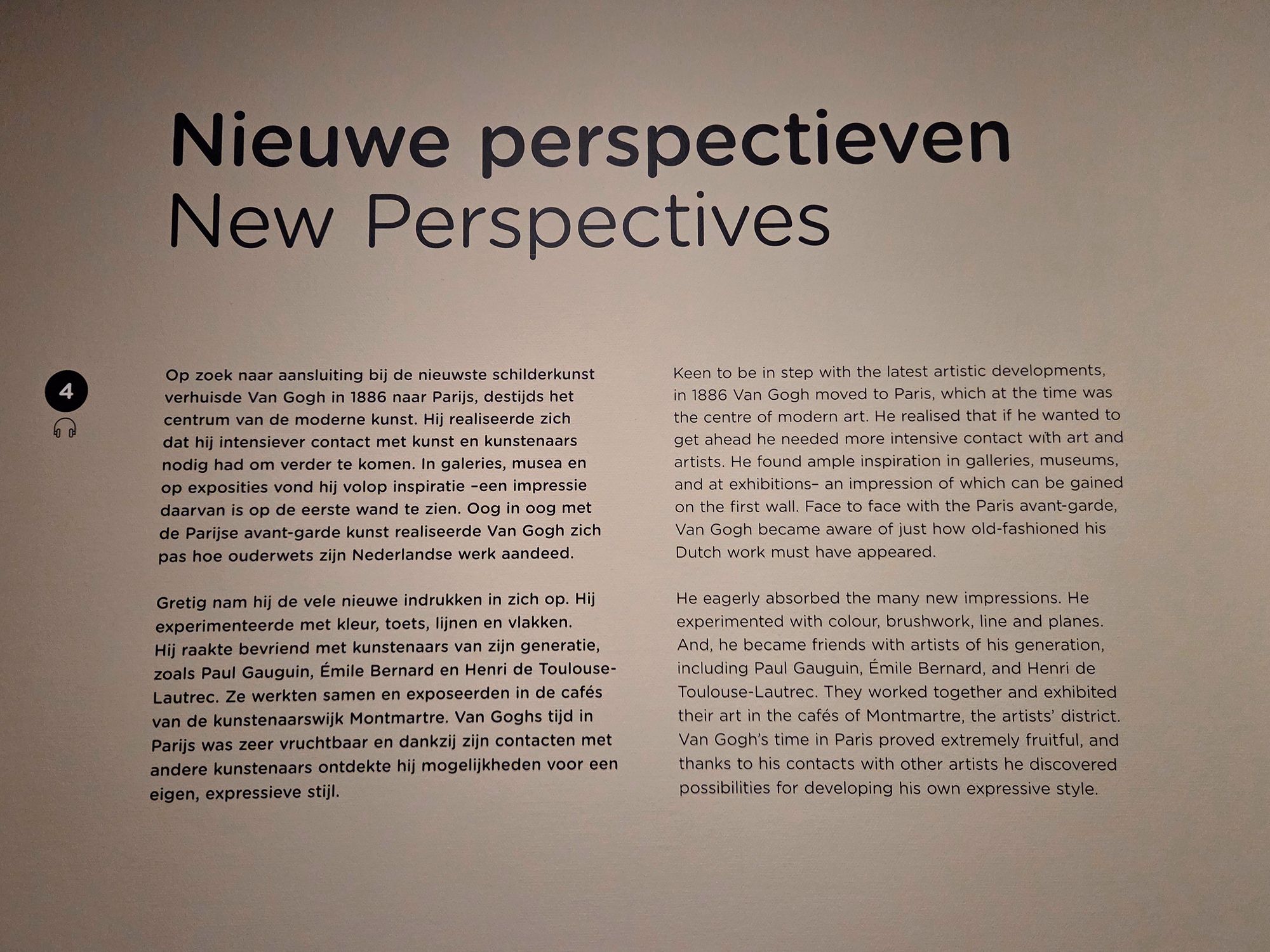
When Van Gogh moved to Paris in 1886, he encountered the latest avant-garde art and began experimenting with brighter colors, new brushwork, and different techniques. His contact with artists such as Paul Gauguin, Émile Bernard, and Henri de Toulouse-Lautrec helped him move away from his darker Dutch paintings and develop his own expressive style.
Modern Art in Paris
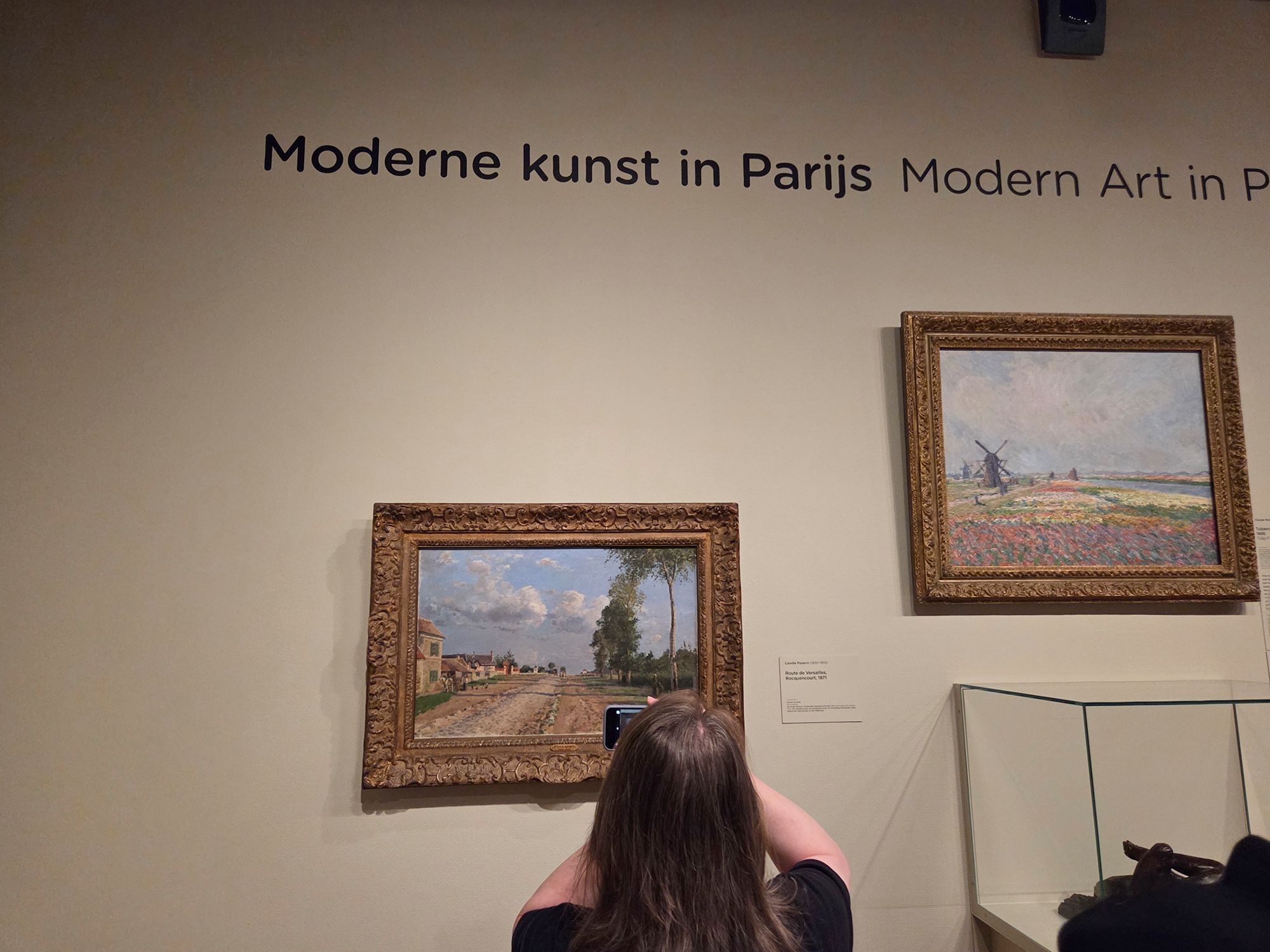
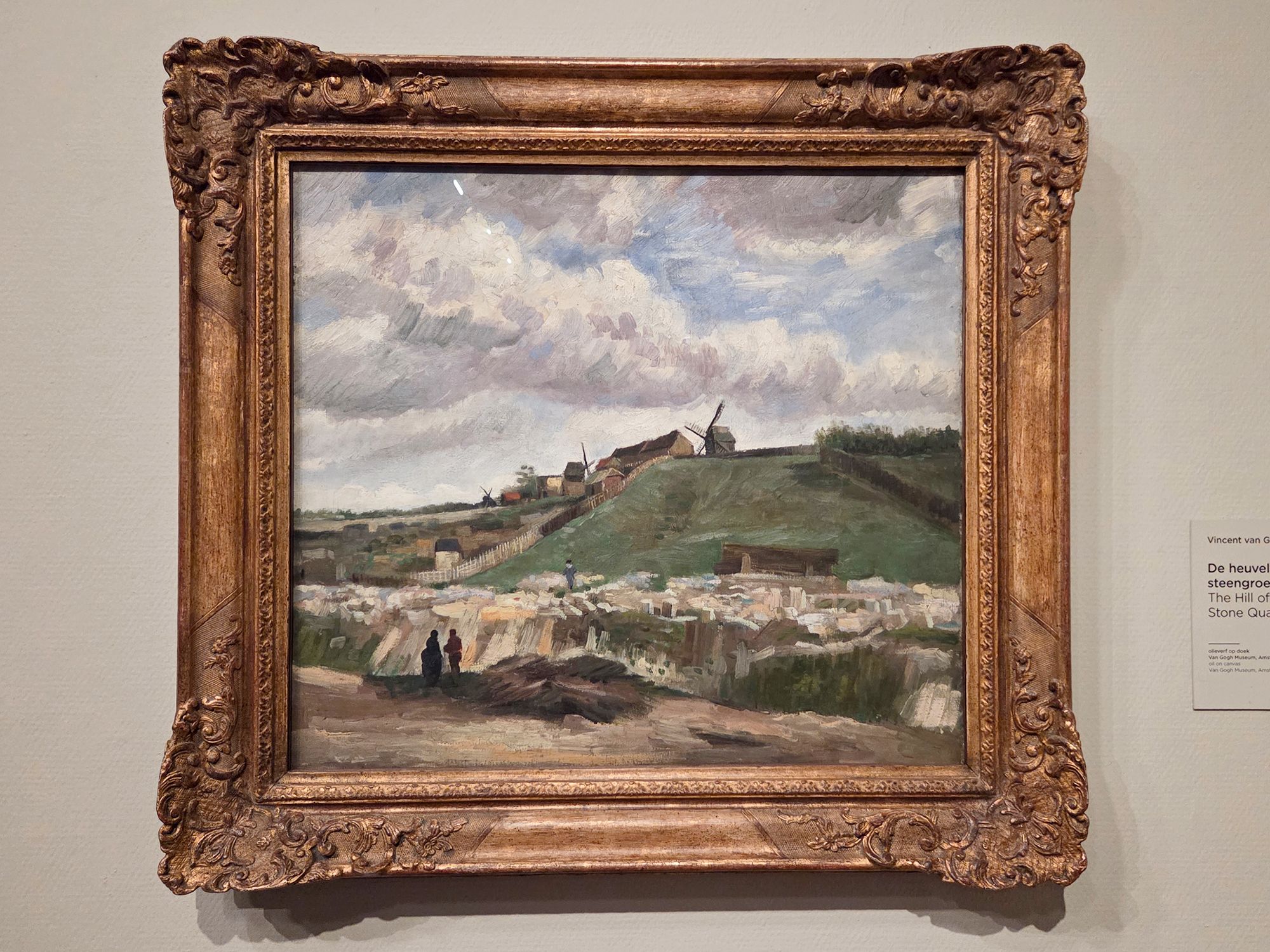
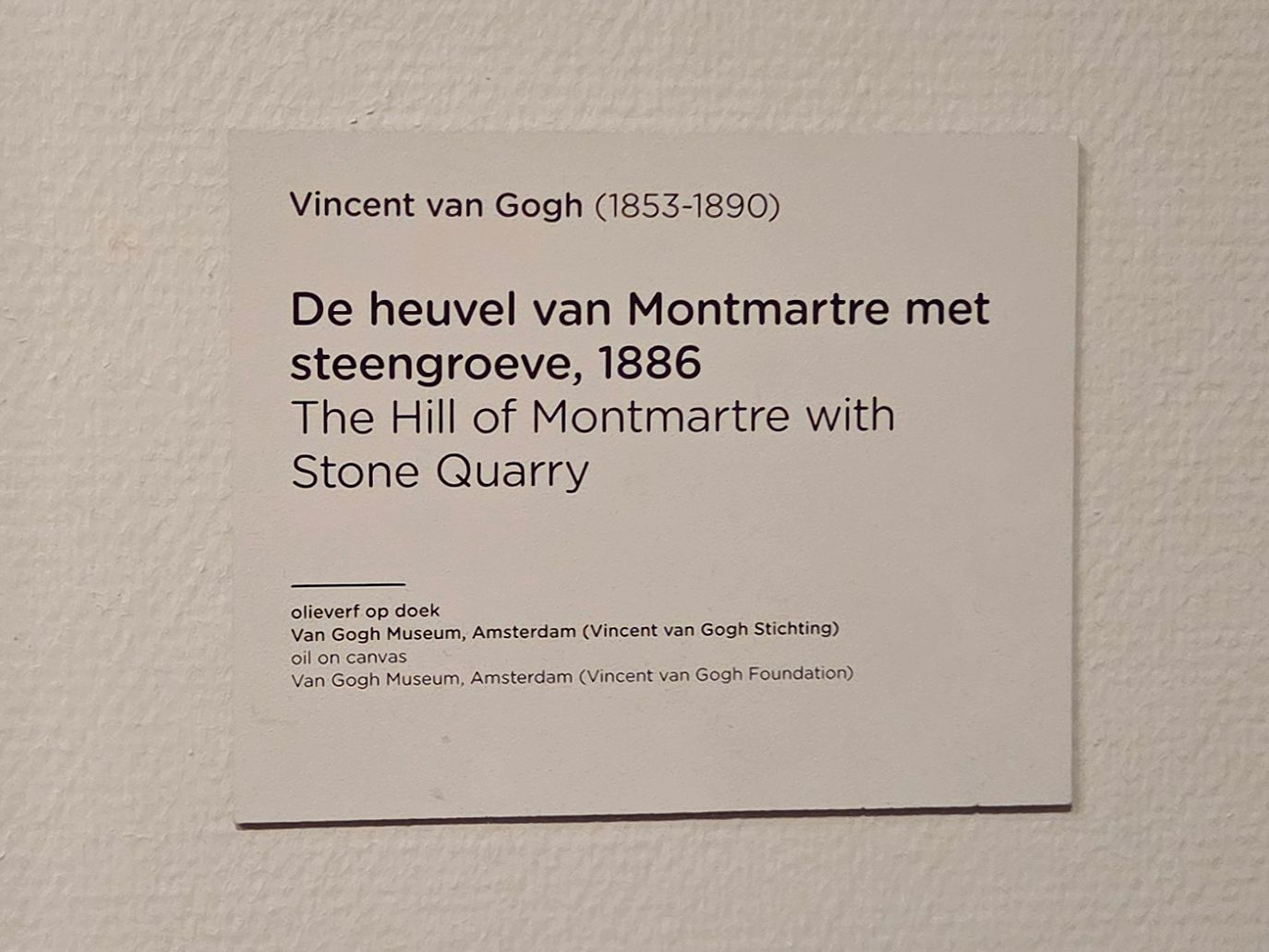
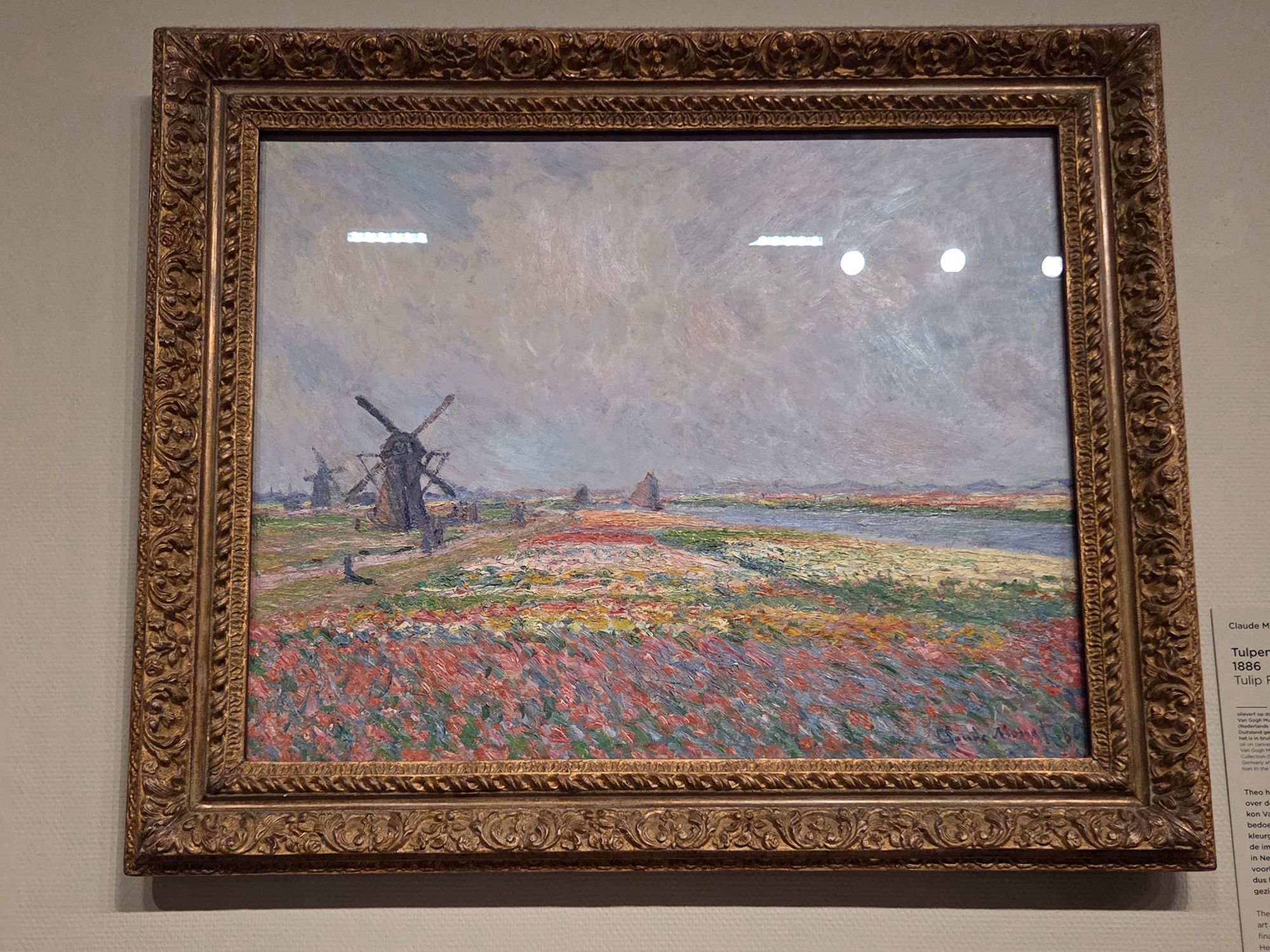
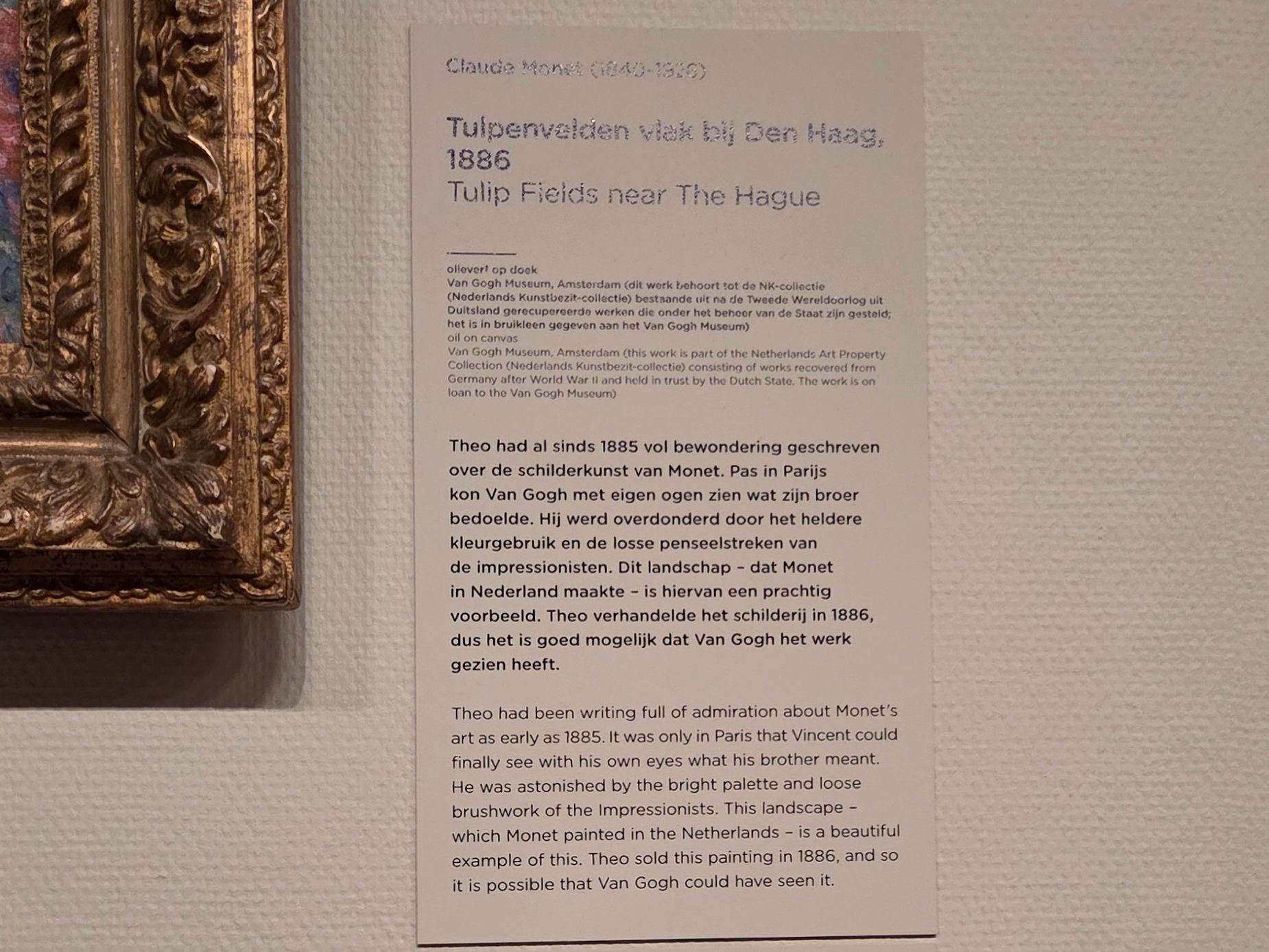
Van Gogh’s brother Theo had long admired Claude Monet and introduced Vincent to the Impressionists. When Van Gogh saw their work in Paris, he was struck by their bright colors and loose brushwork, which helped inspire the dramatic change from the dark tones of his early paintings to the much brighter style of his later work.
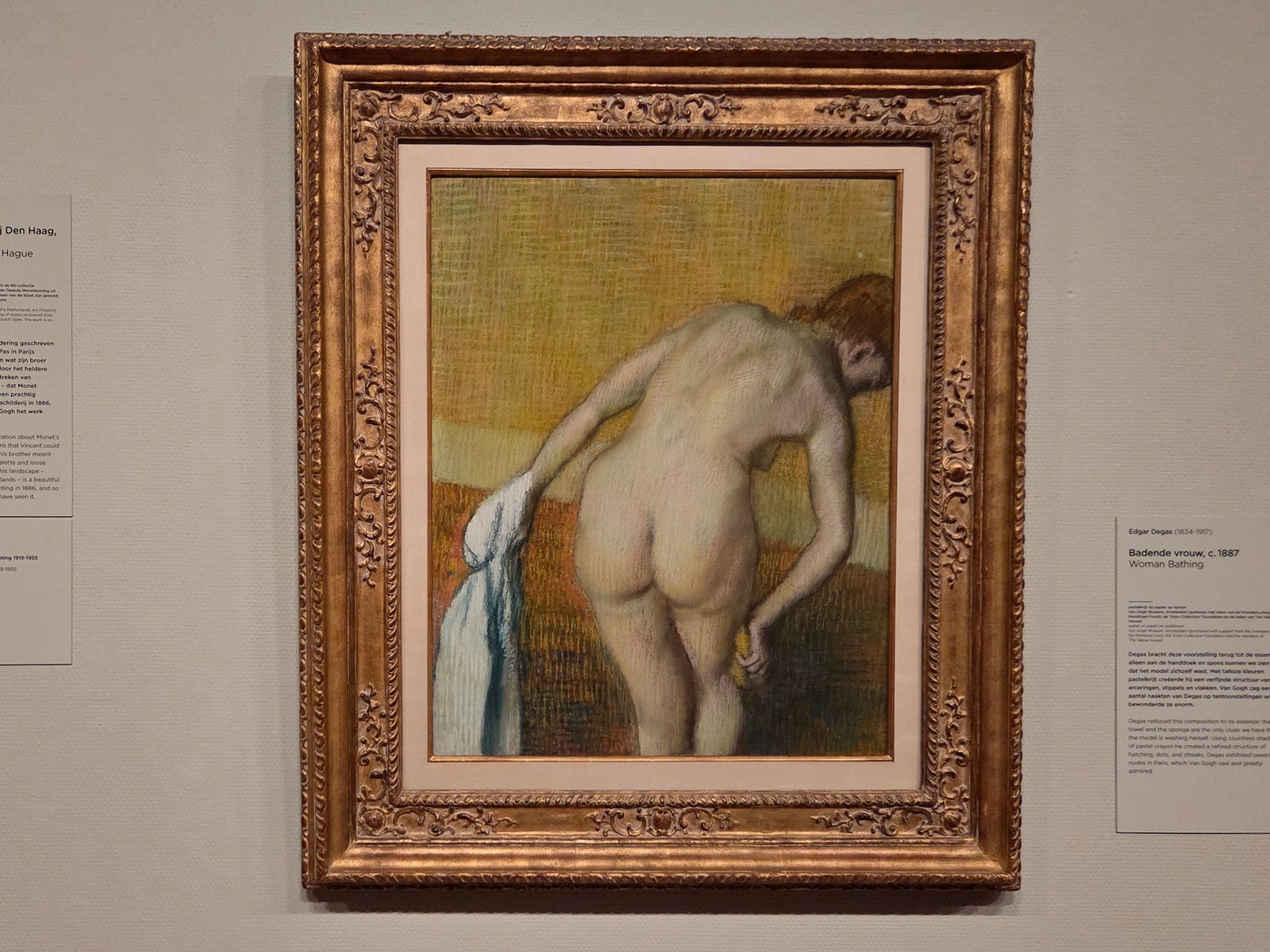
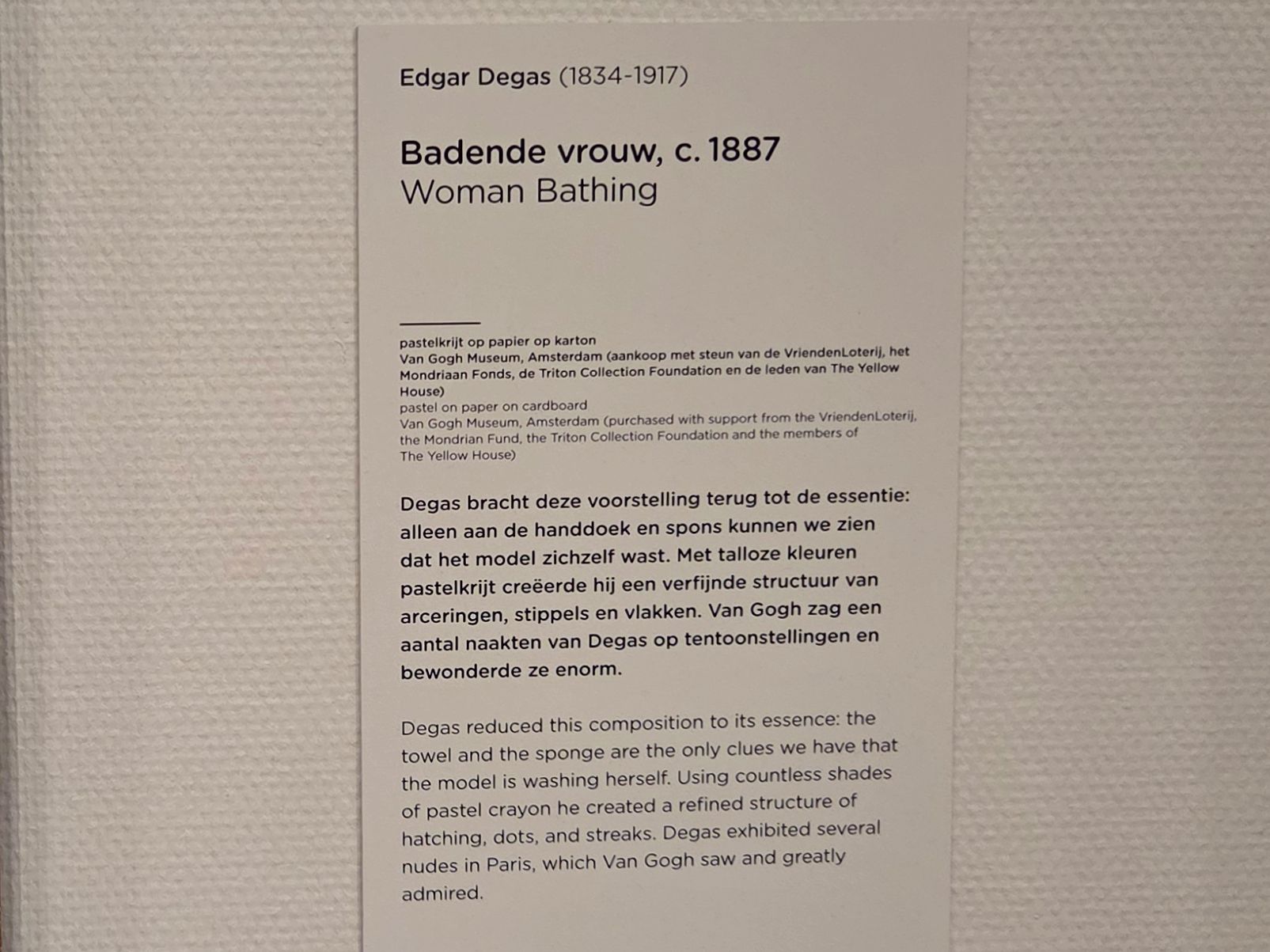
Van Gogh greatly admired the work of Edgar Degas, especially his drawings and pastels. Degas used layers of hatching, dots, streaks, and subtle colors to create his figures, and Van Gogh saw several of these works while living in Paris.
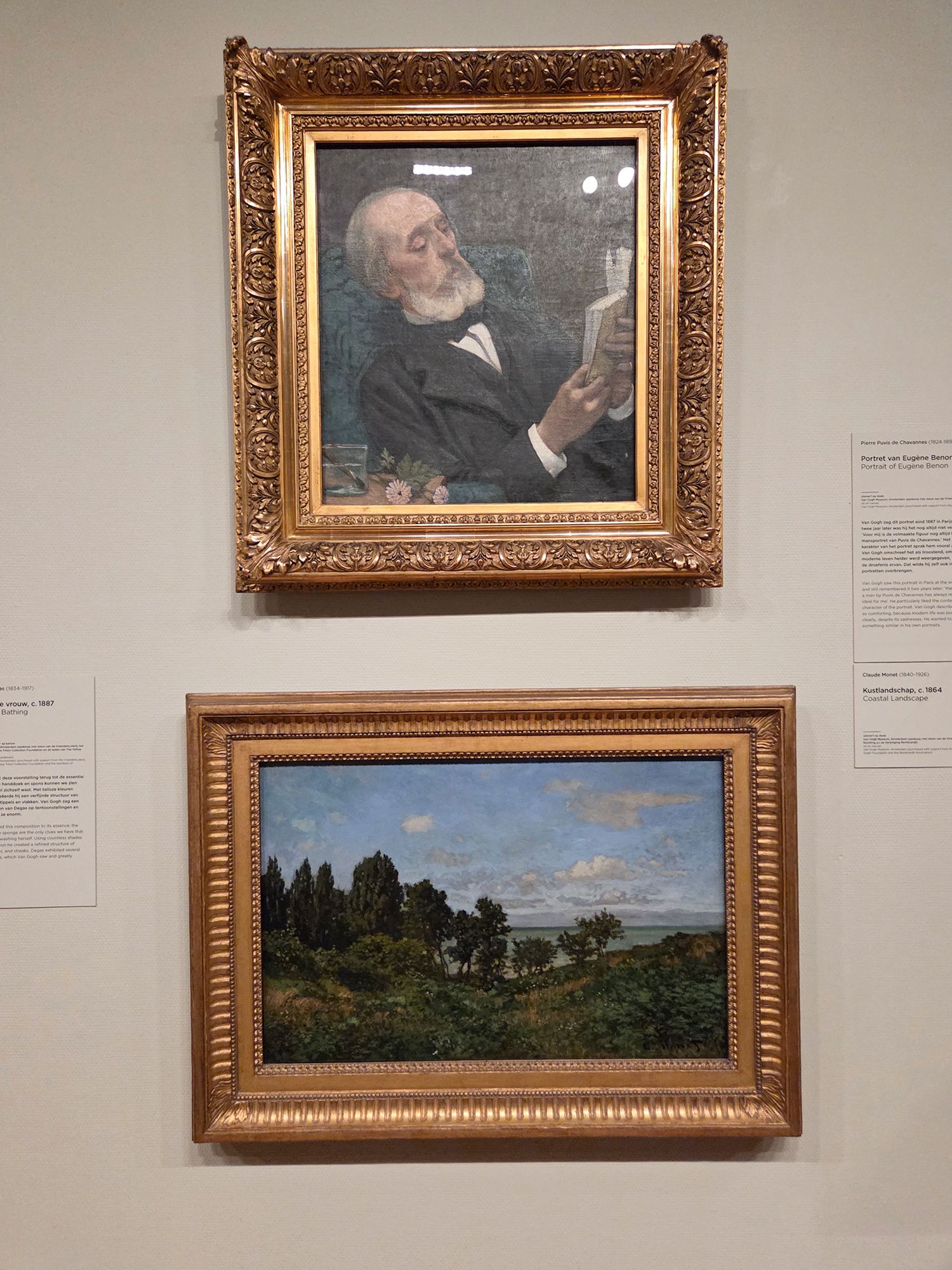
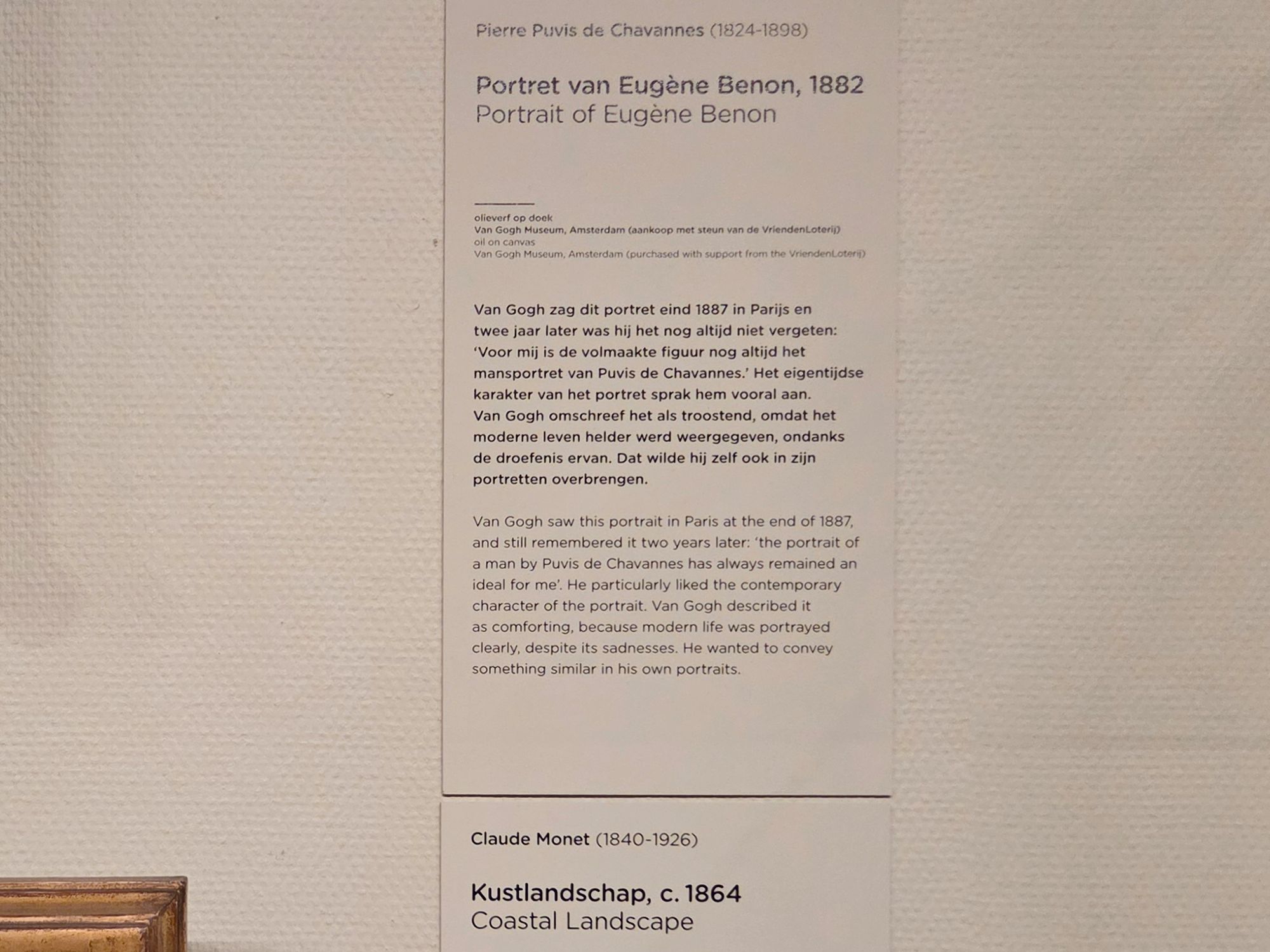
Van Gogh admired this portrait by Pierre Puvis de Chavannes, which he saw in Paris in 1887. He was especially impressed by its modern yet somewhat melancholy character, and it influenced the way he thought about creating his own portraits.
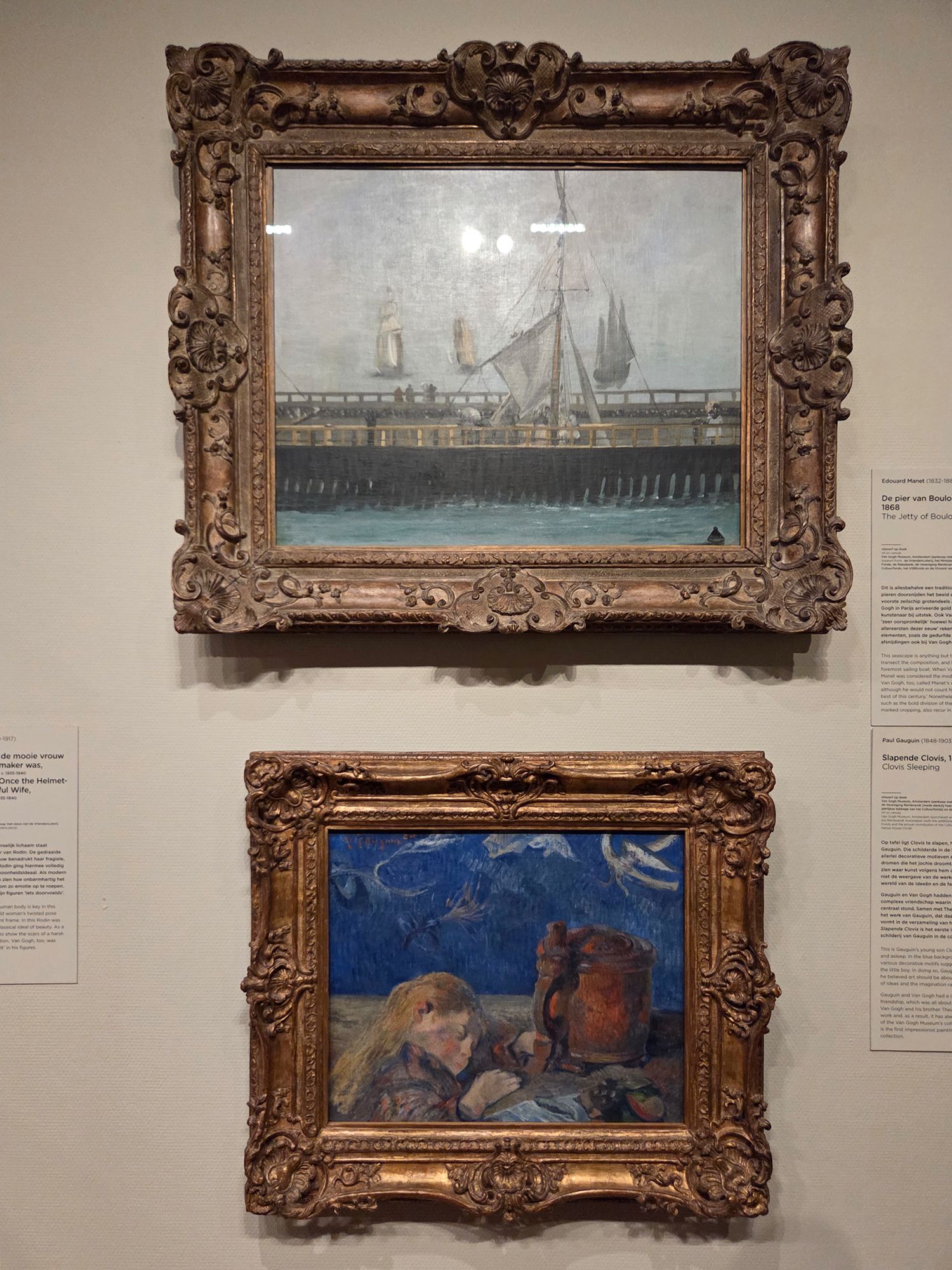
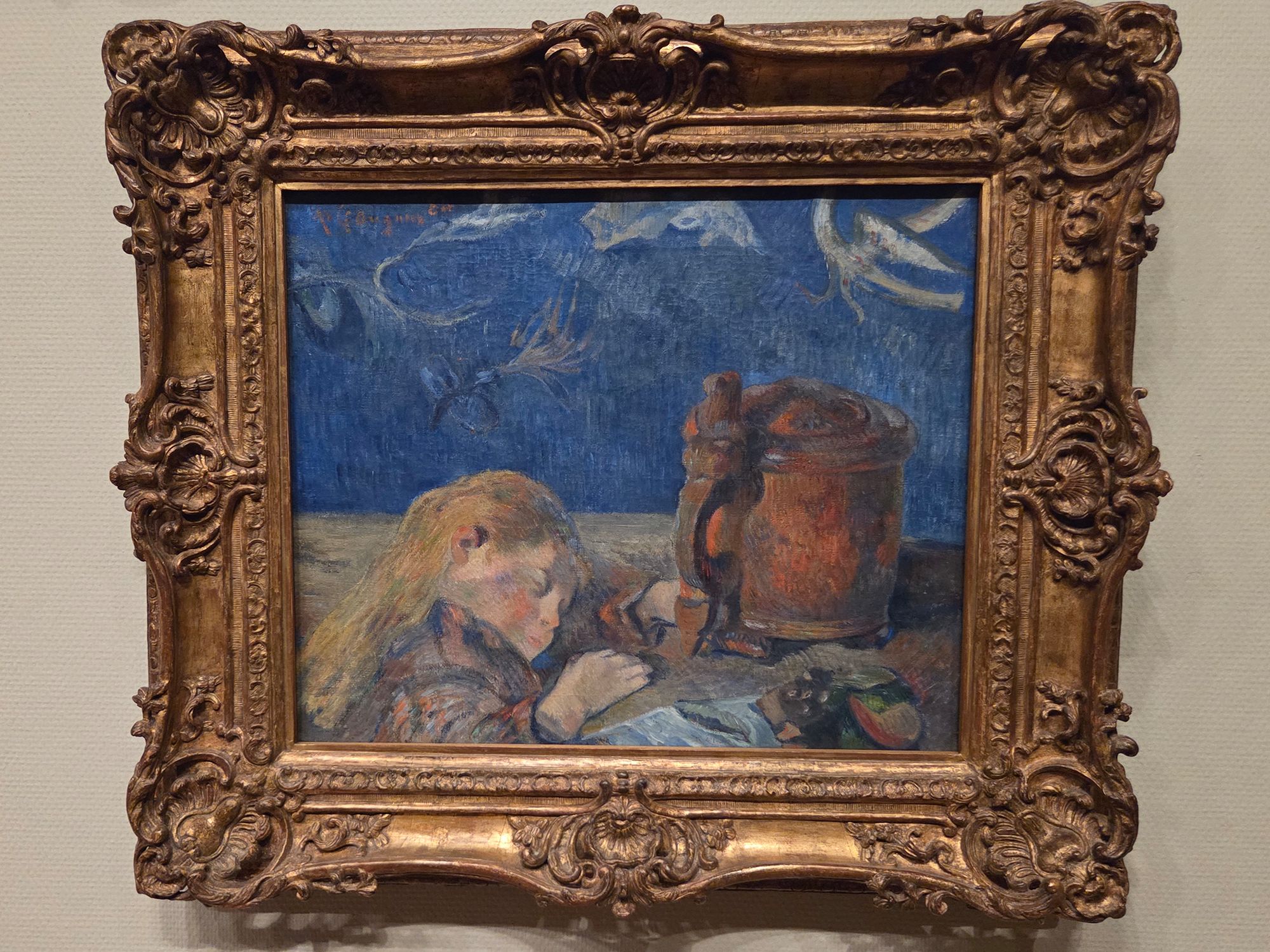
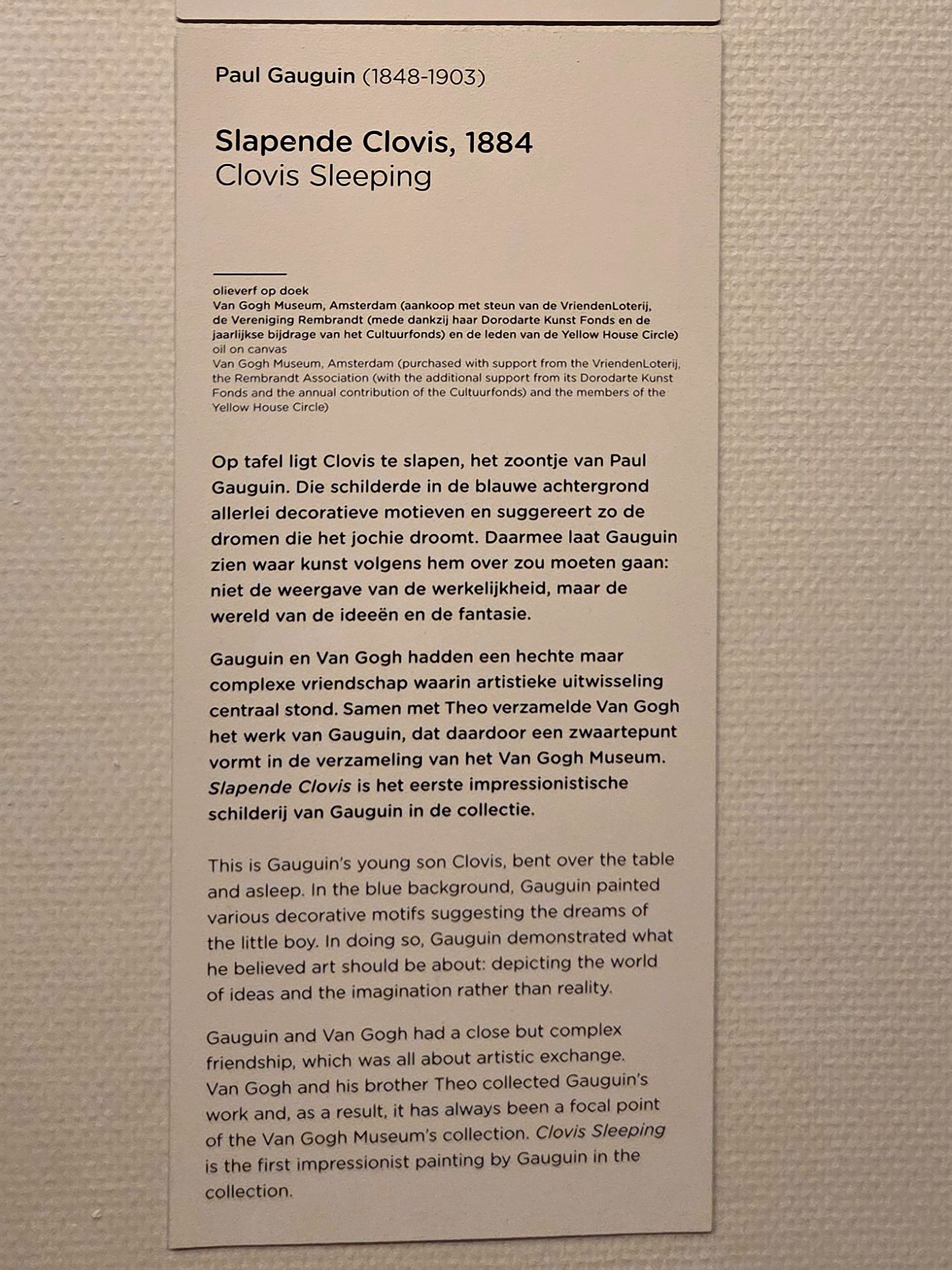
Van Gogh had a close but complicated friendship with Paul Gauguin, and the two artists strongly influenced each other. This painting, Clovis Sleeping, shows Gauguin’s young son asleep at a table, with decorative forms in the background suggesting his dreams and Gauguin’s growing interest in depicting imagination rather than simply reality.
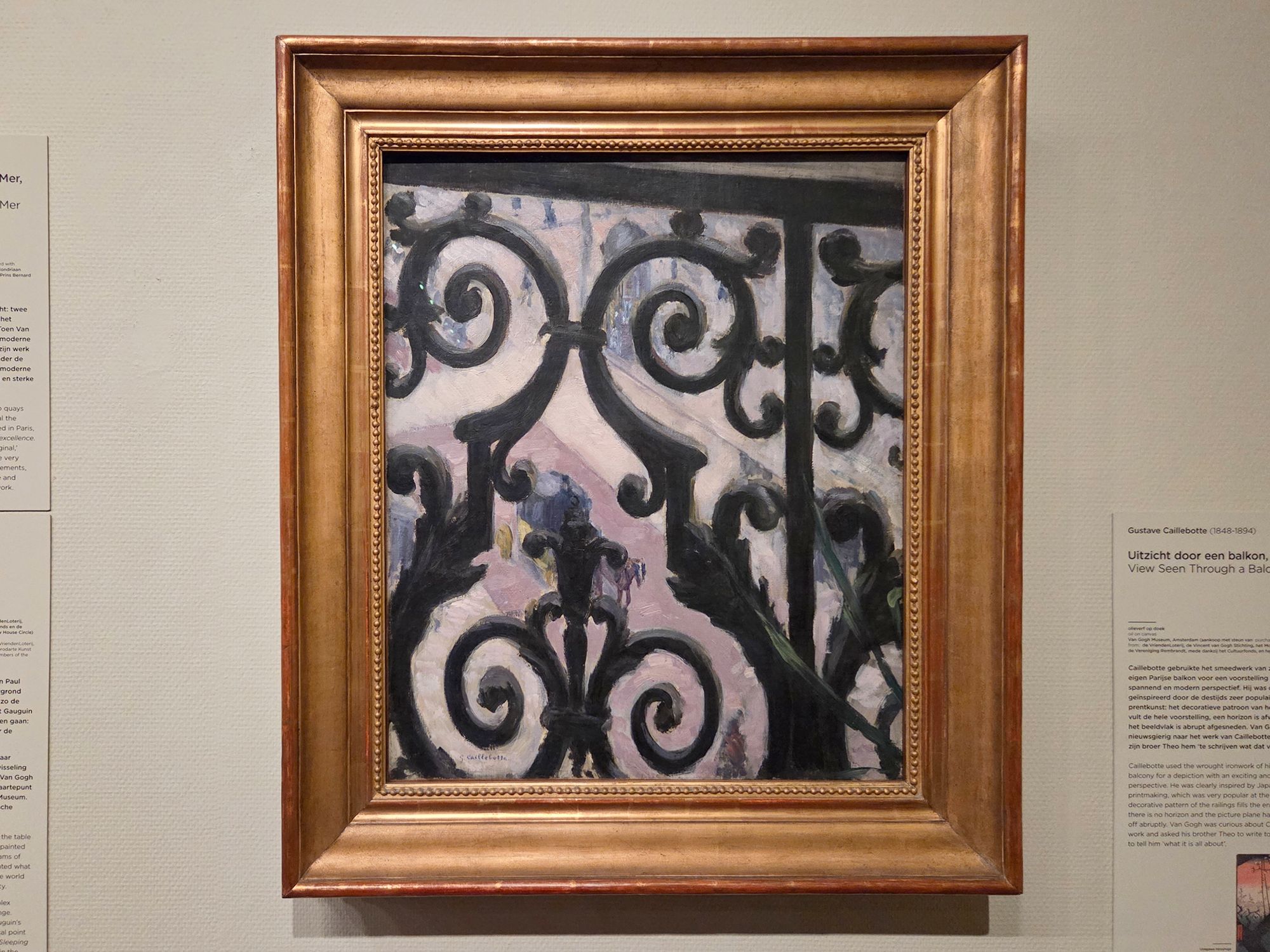
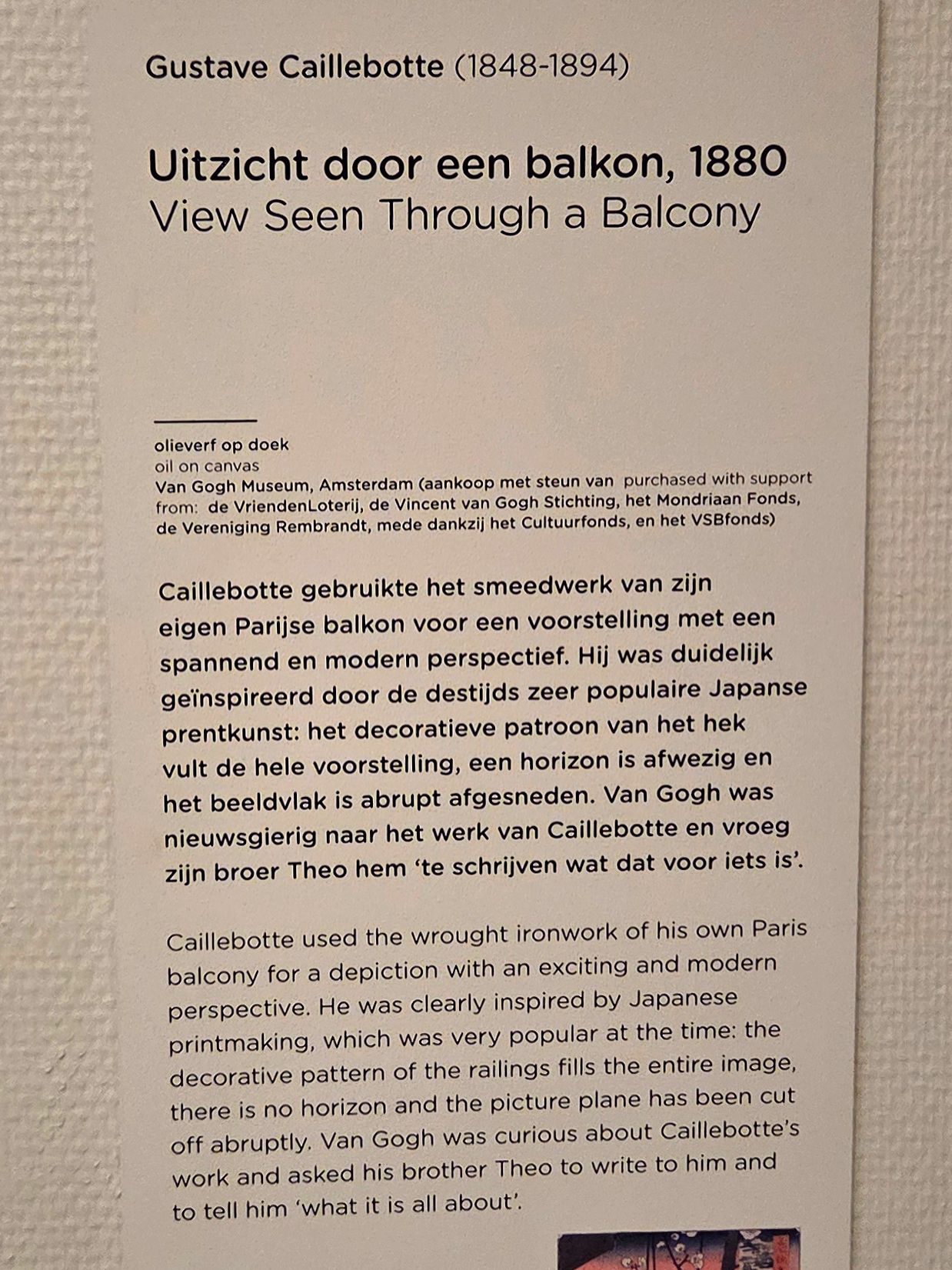
Van Gogh was also interested in the work of Gustave Caillebotte. This unusual view from Caillebotte’s Paris balcony shows the influence of Japanese prints, with the decorative iron railing dominating the composition, no visible horizon, and the scene abruptly cropped at the edges.
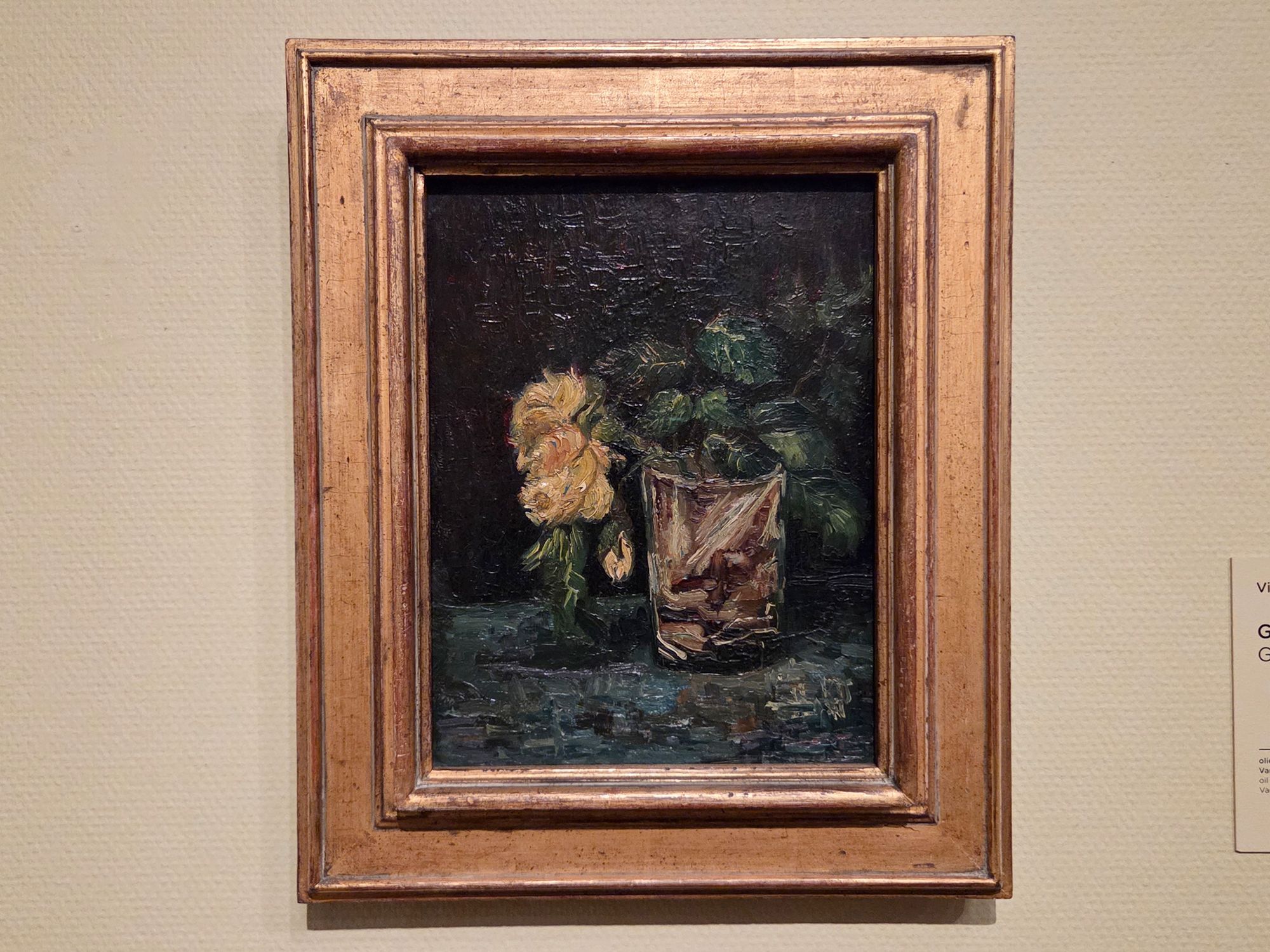
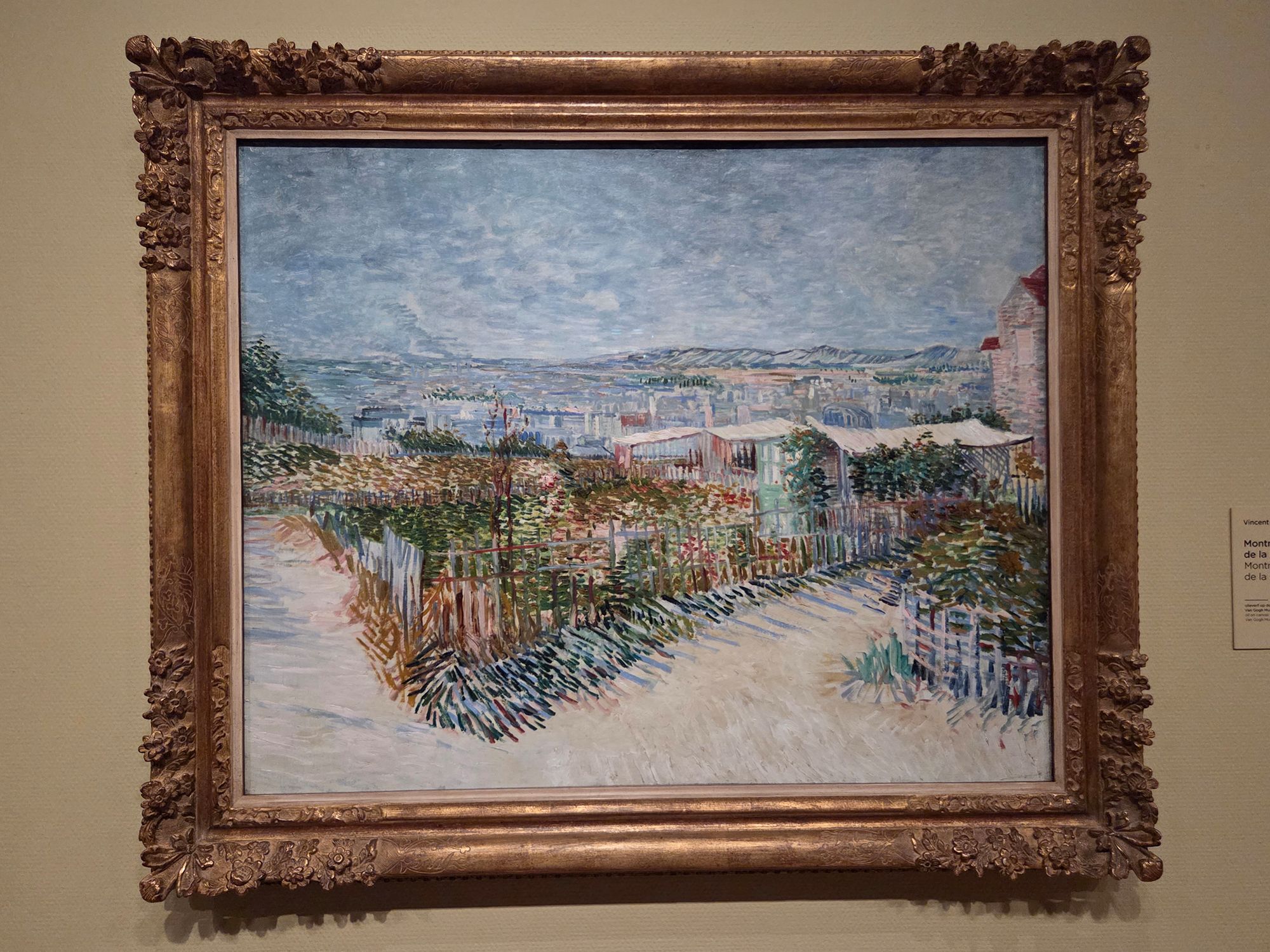
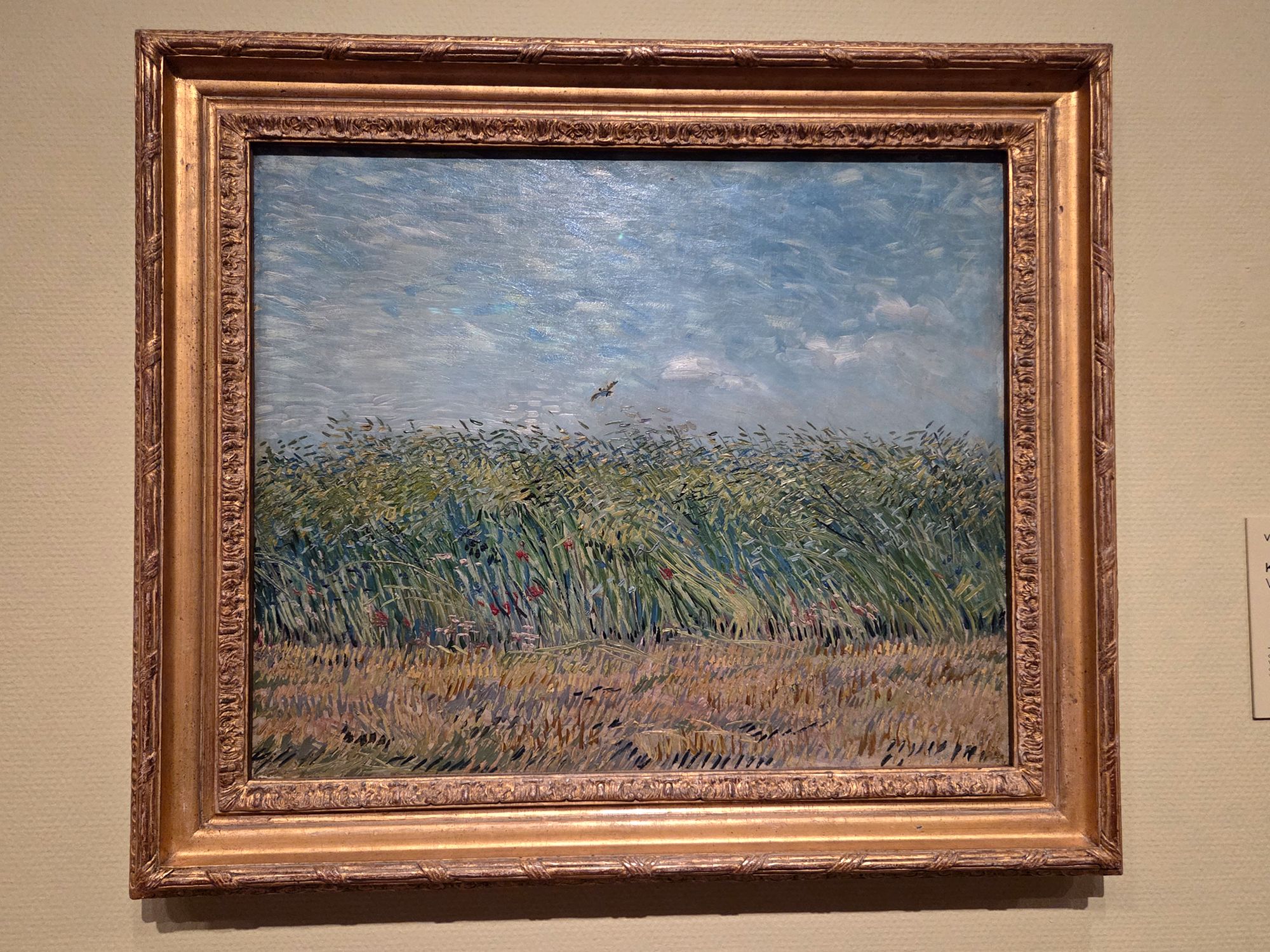
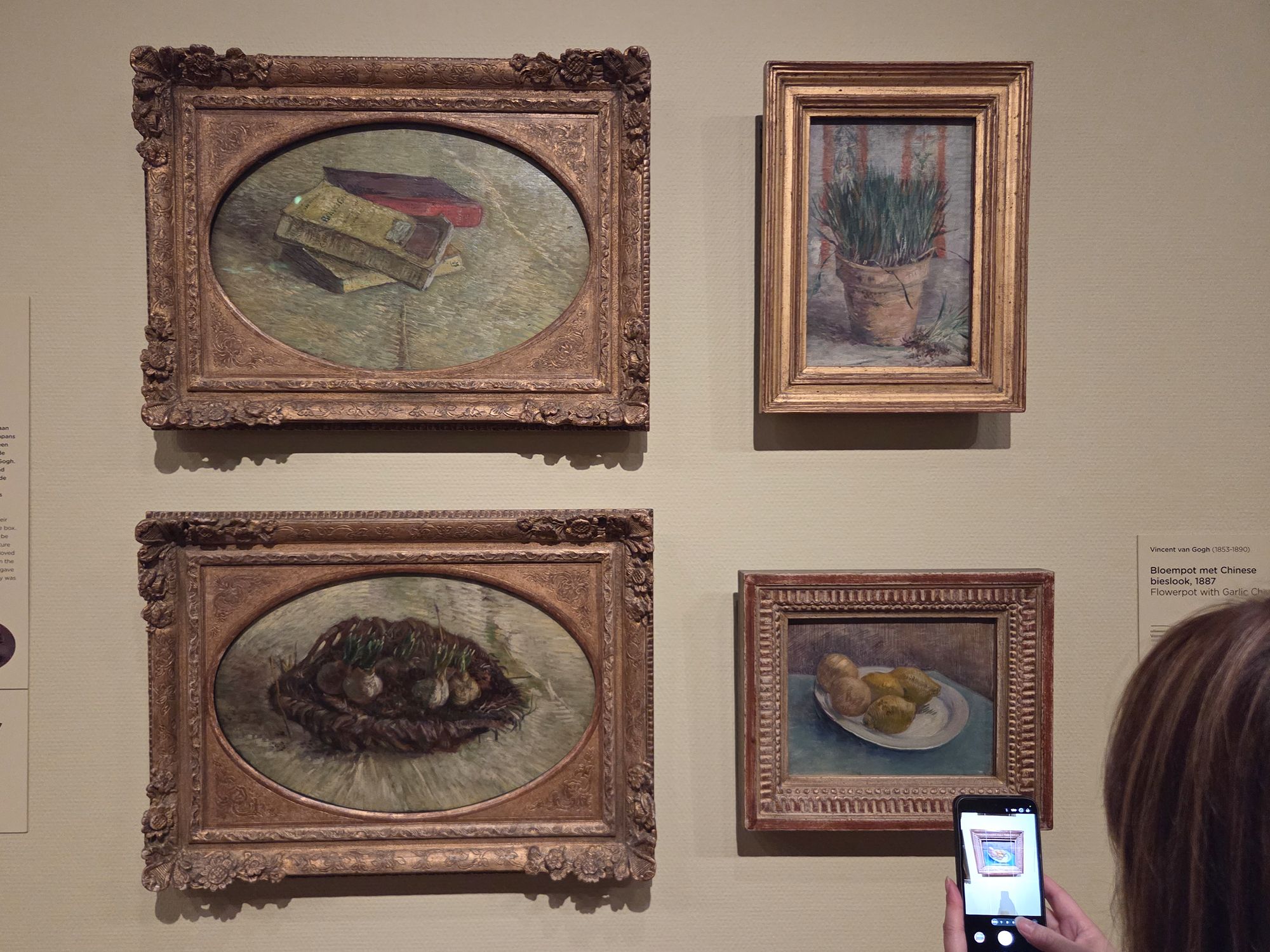
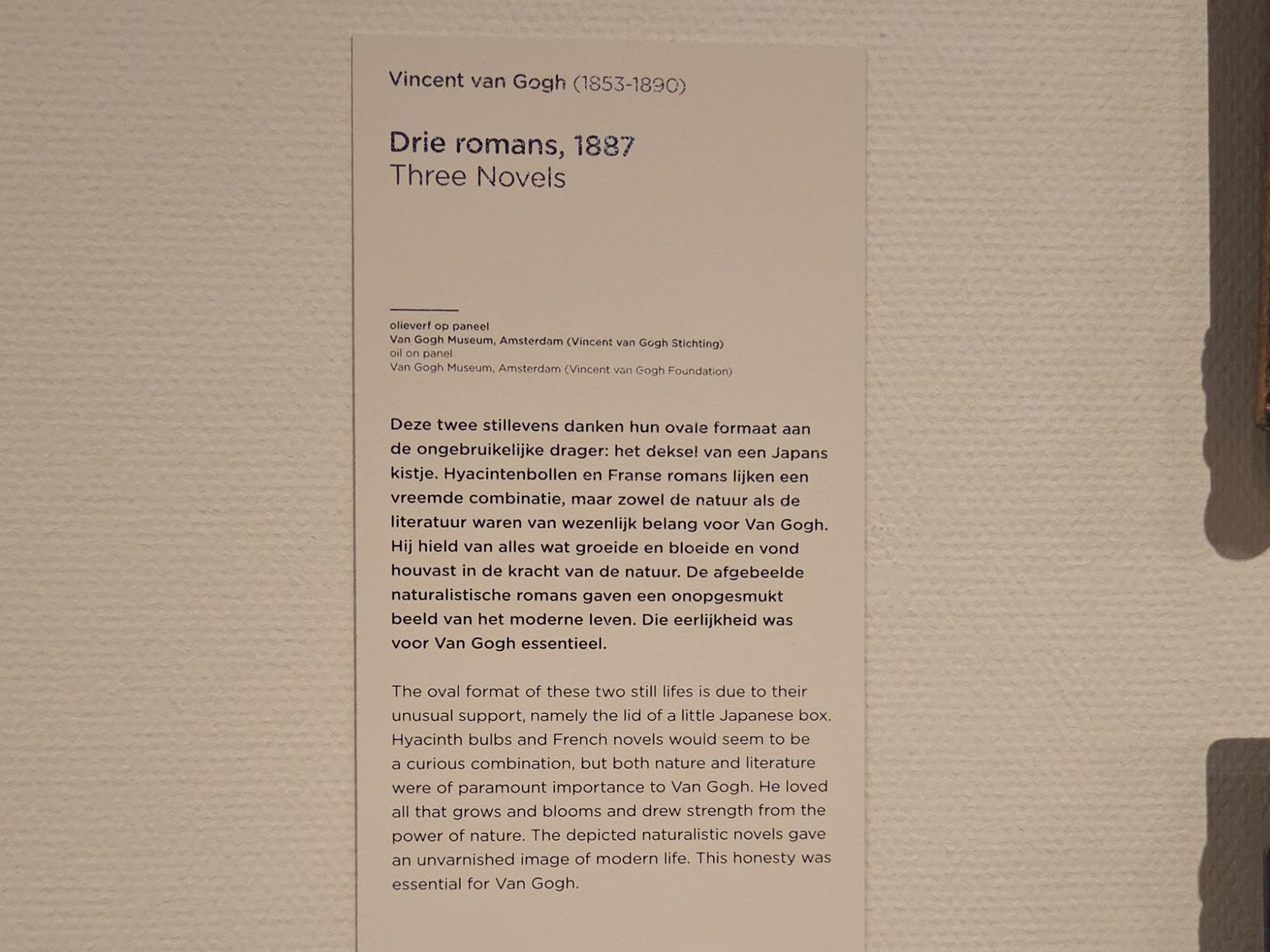
Van Gogh sometimes painted on unusual surfaces. These two oval still lifes were painted on the lid of a small Japanese box and combine hyacinth bulbs with French novels, reflecting two things that were especially important to him—nature and literature.
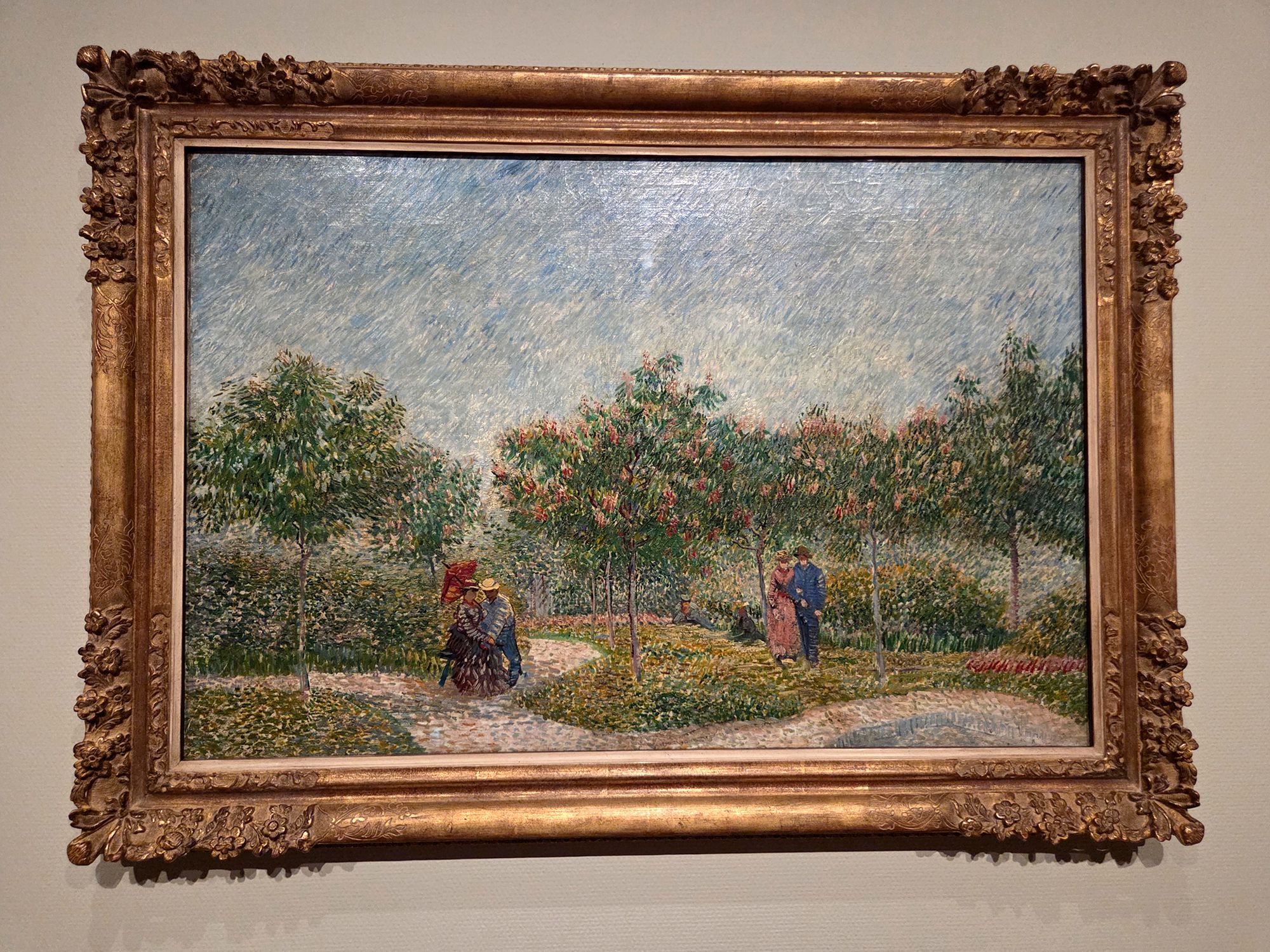
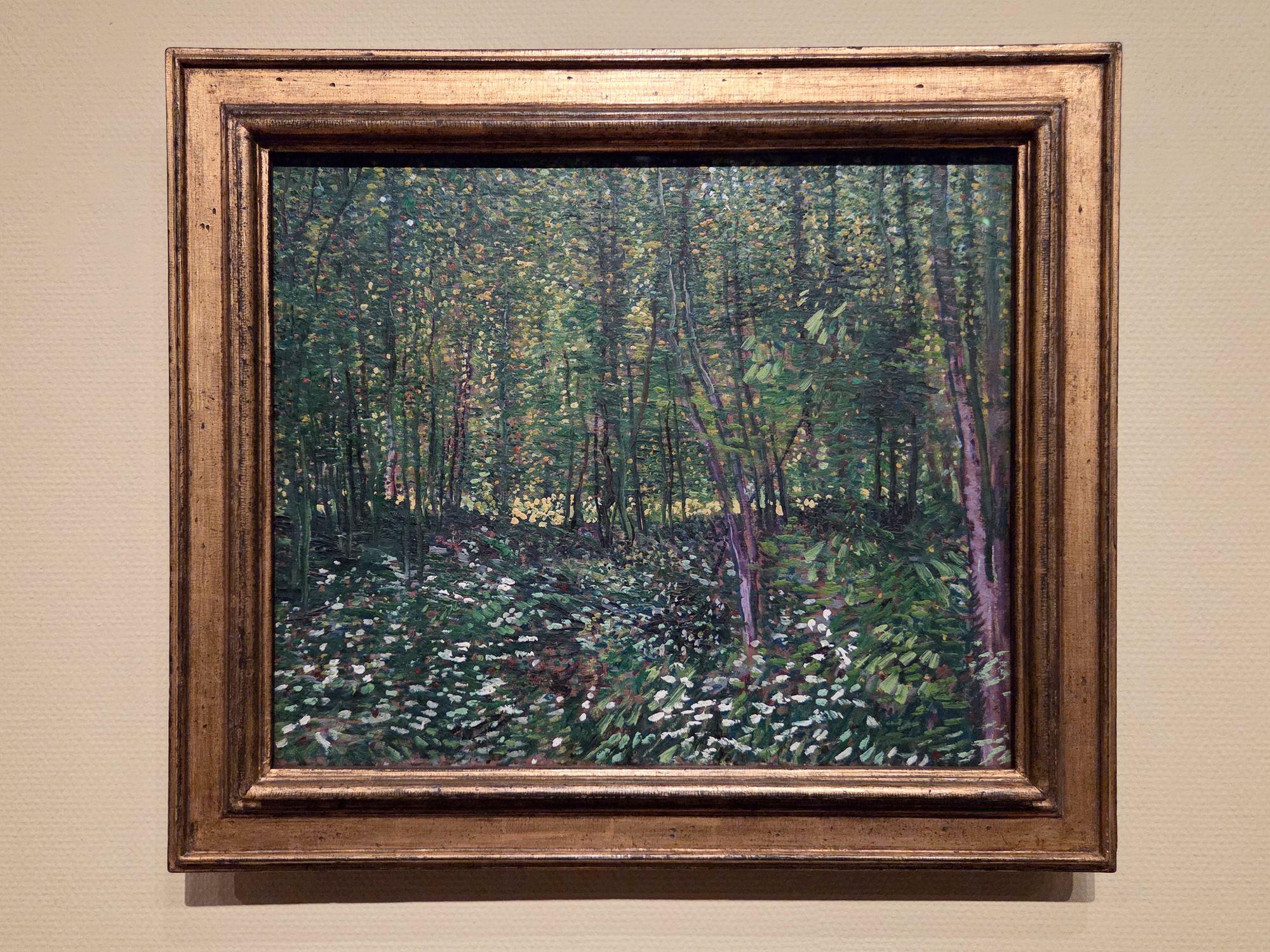
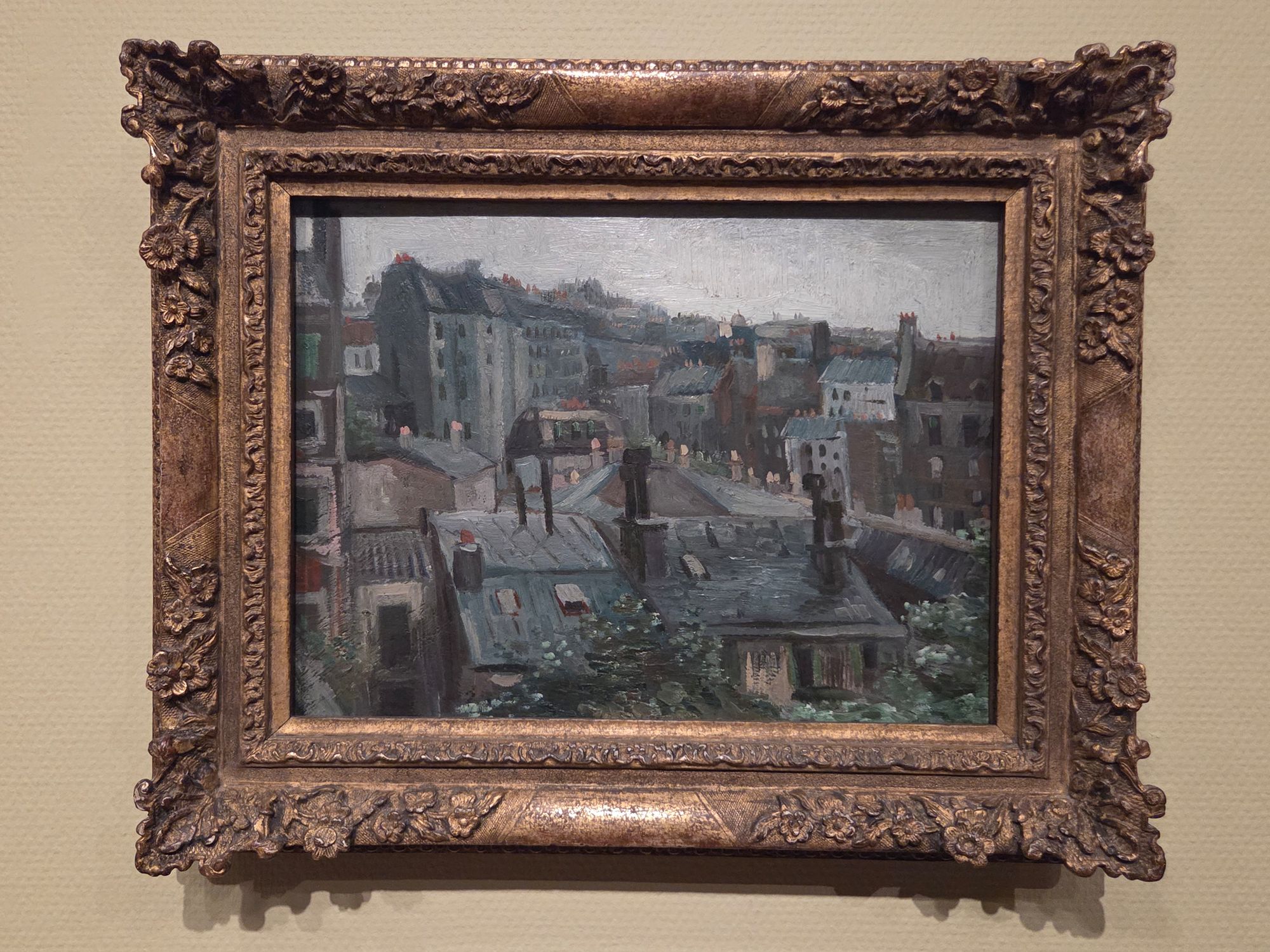
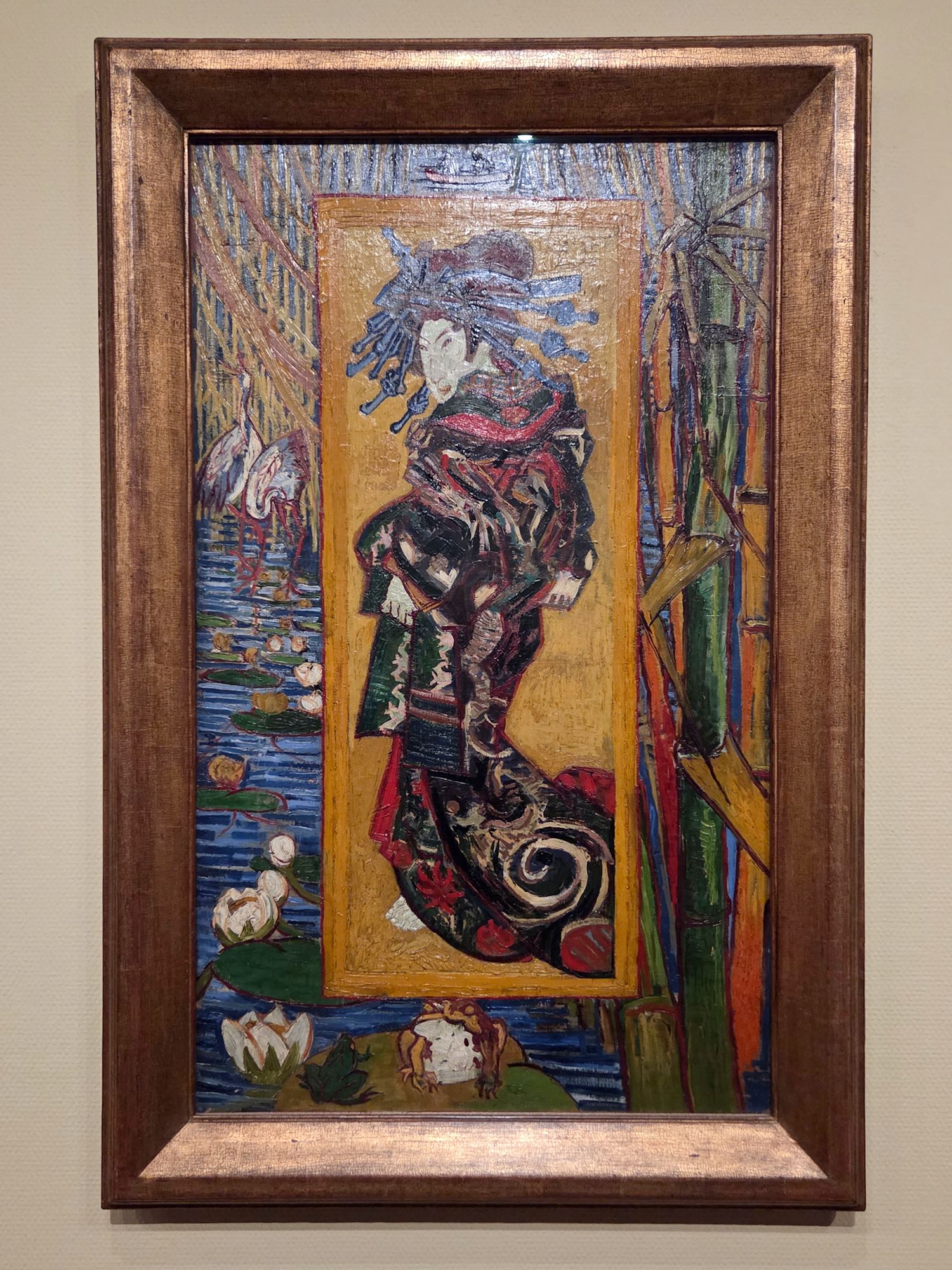
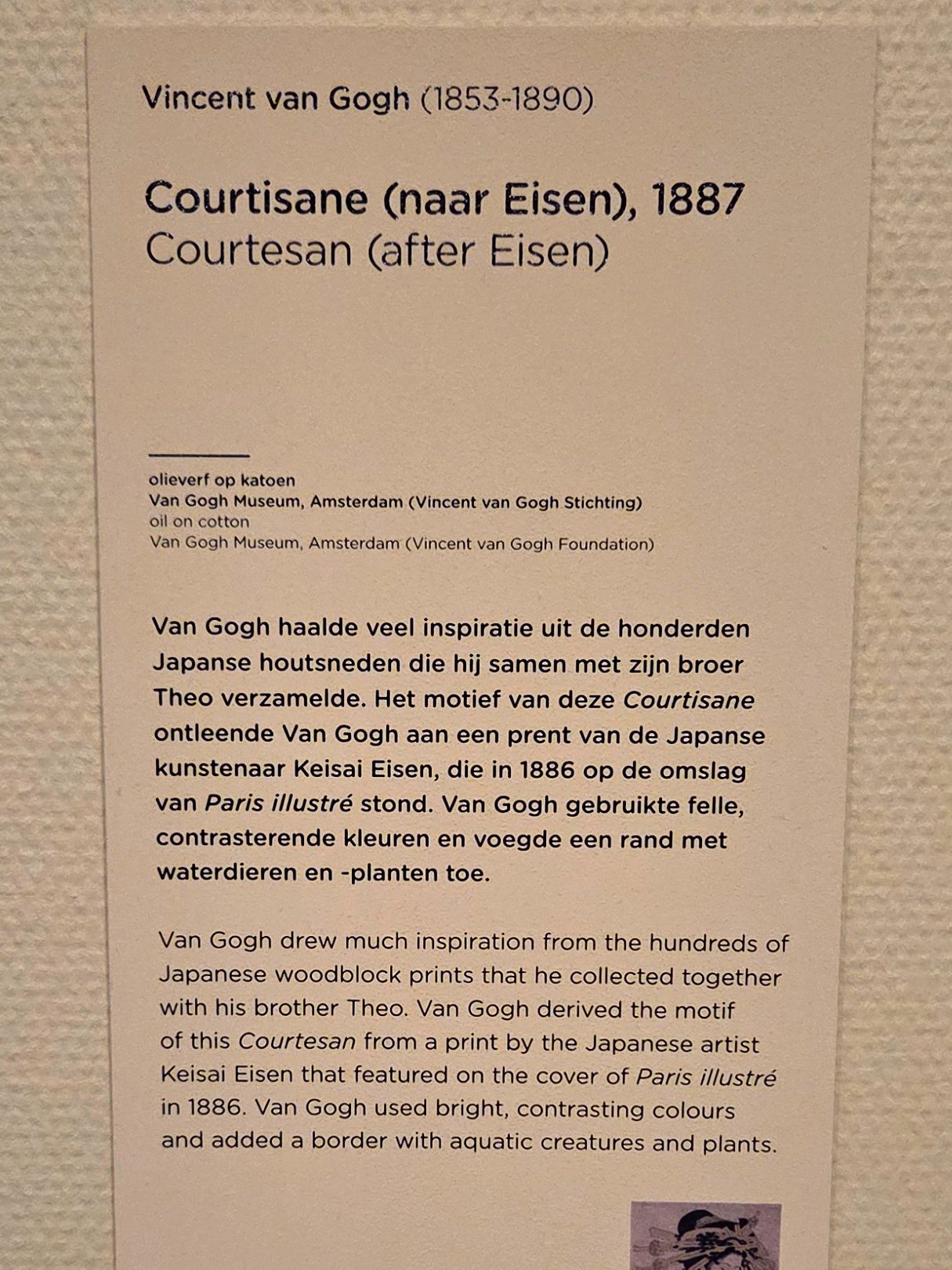
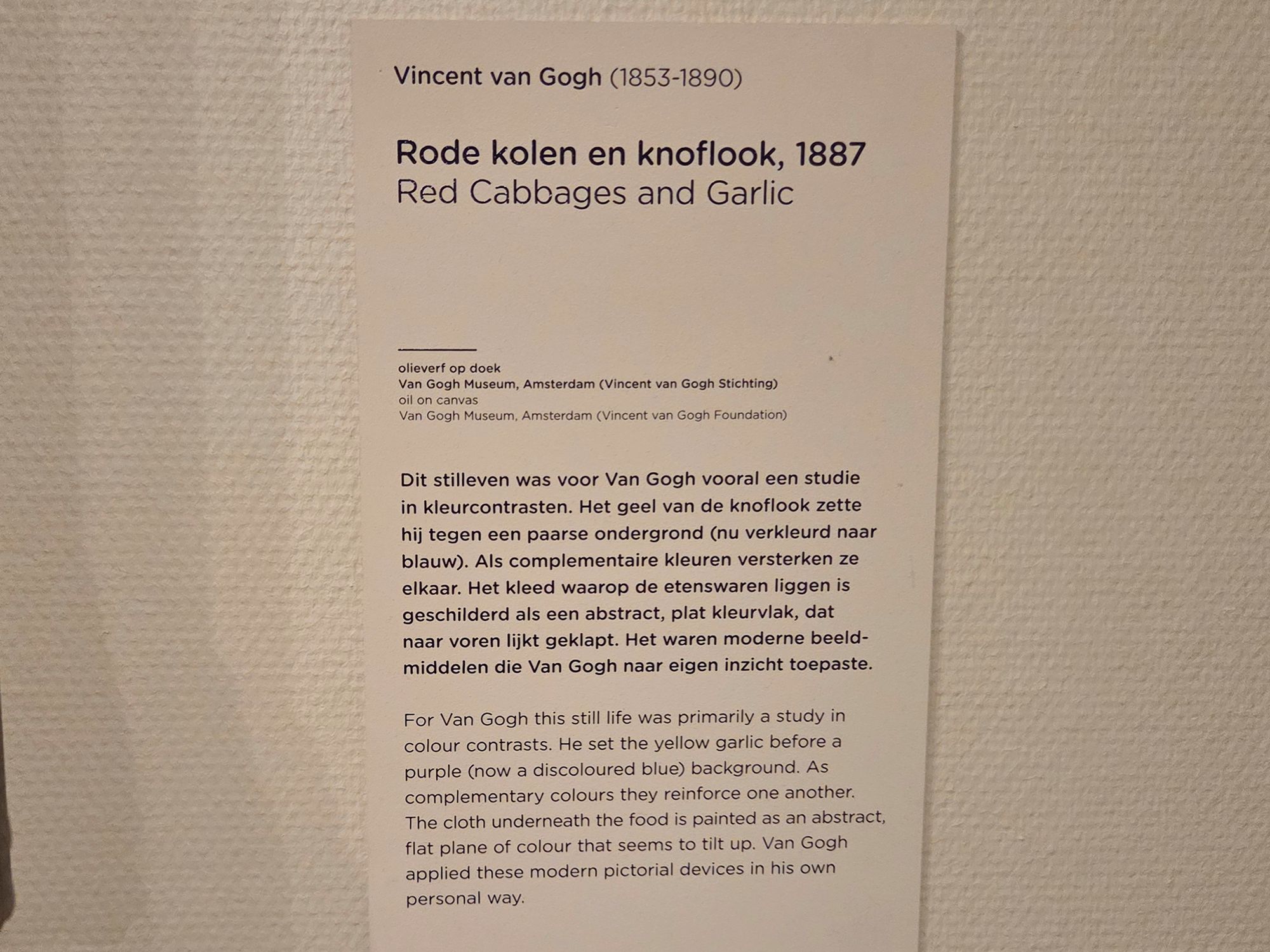
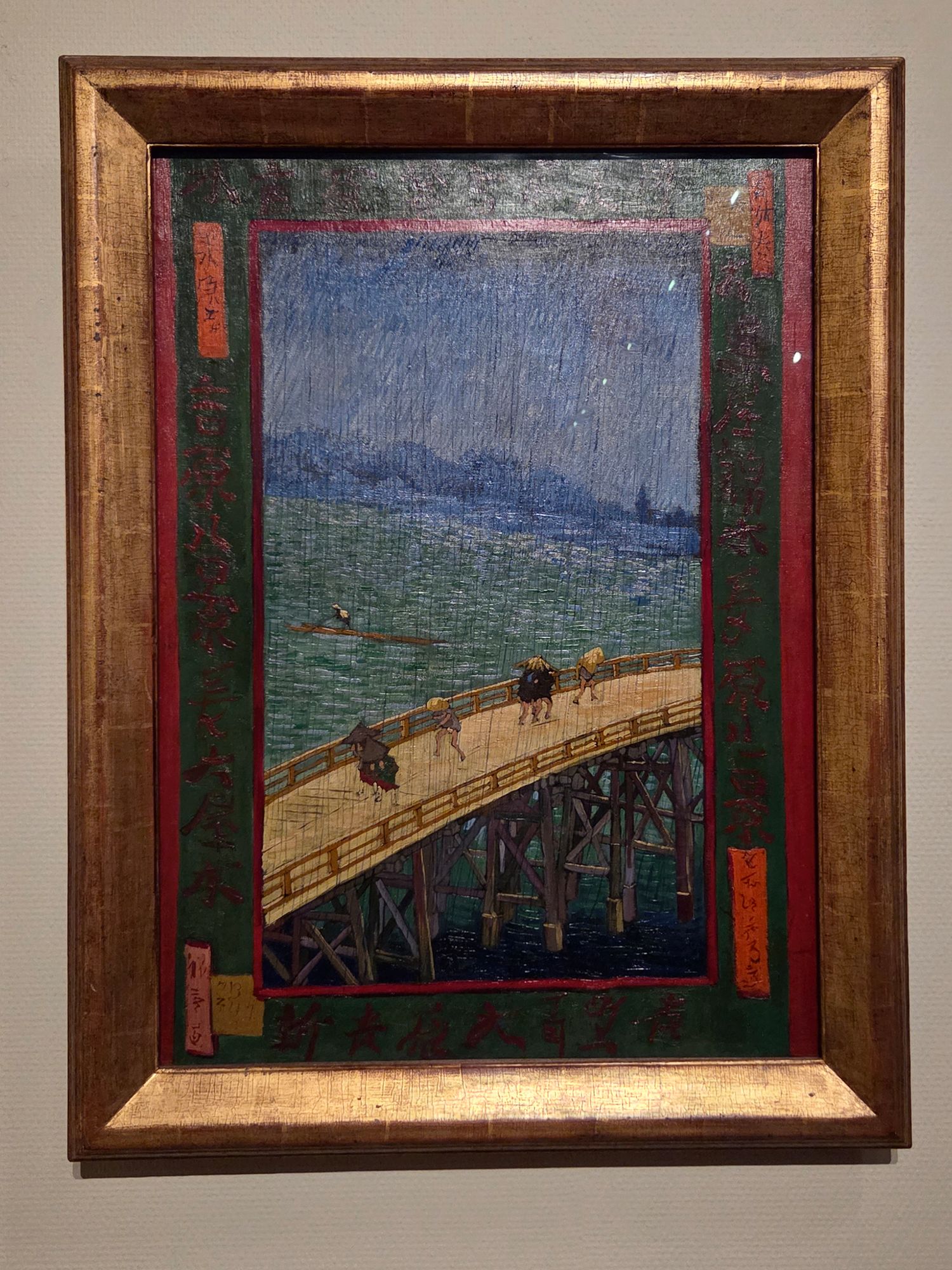
Van Gogh was deeply influenced by Japanese woodblock prints, hundreds of which he collected with his brother Theo. For his painting Courtesan, he adapted a figure from a print by Japanese artist Keisai Eisen, using bright contrasting colors and surrounding her with a decorative border of plants and aquatic creatures.
Artistic Flourishing
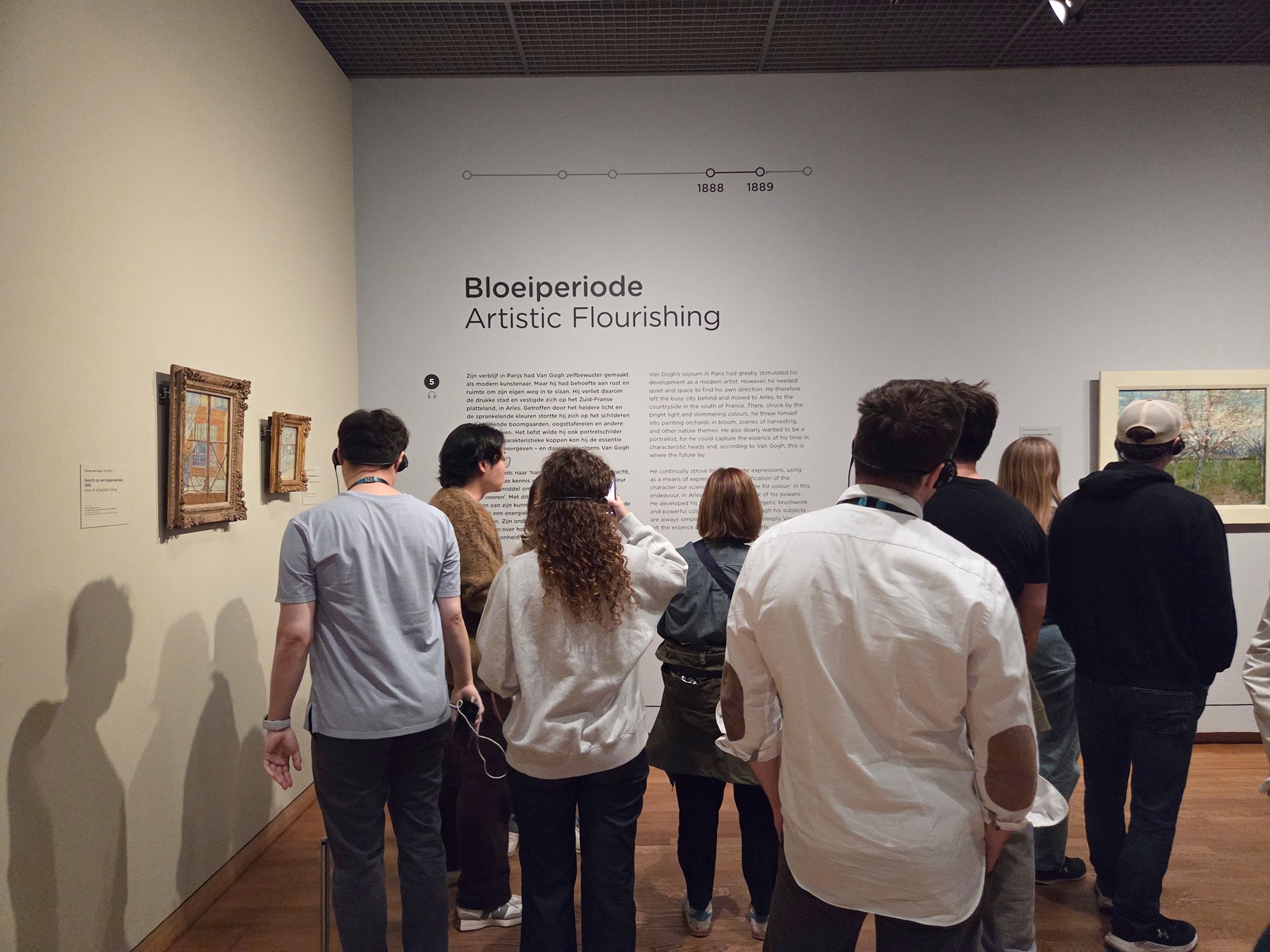
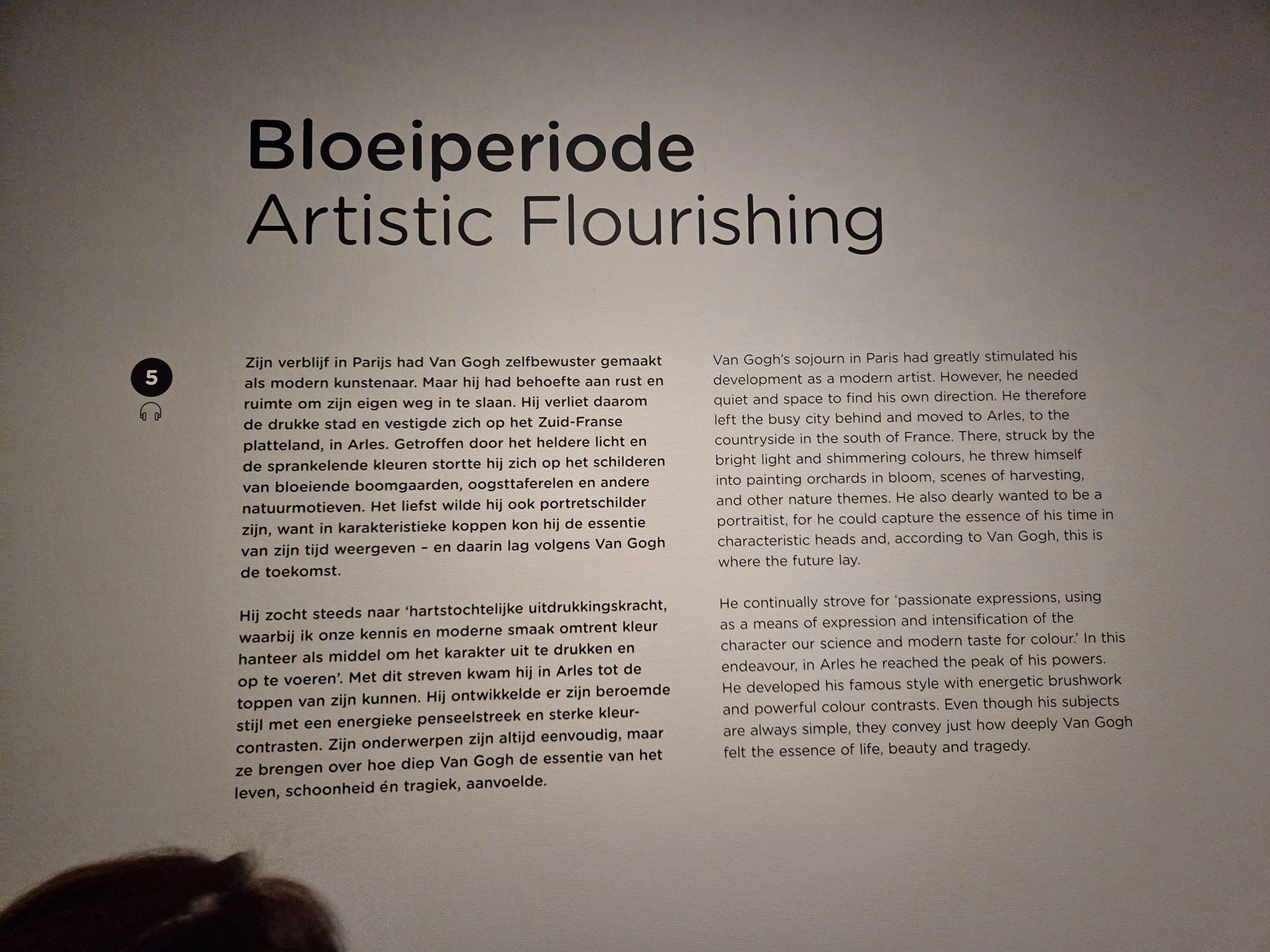
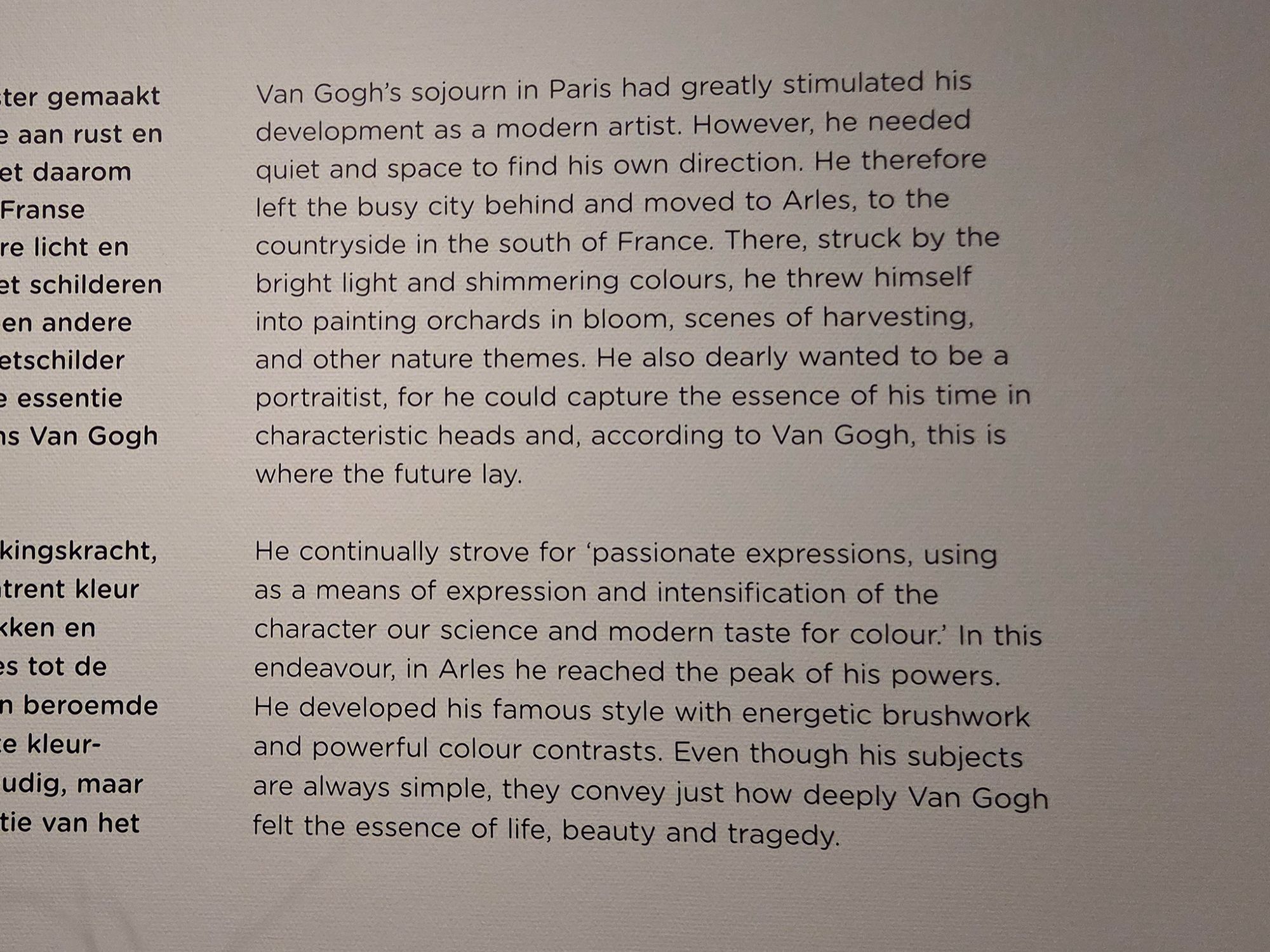
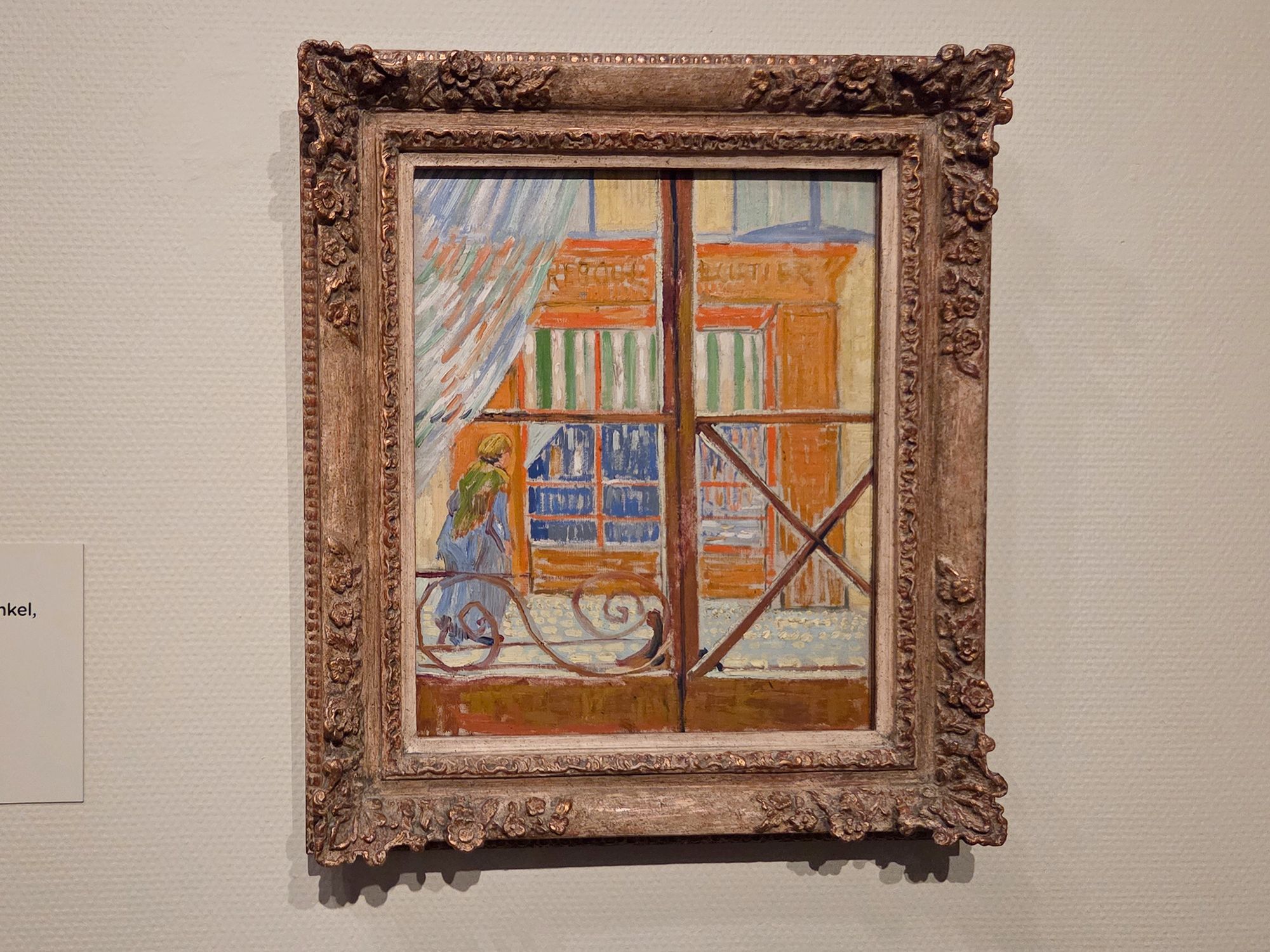
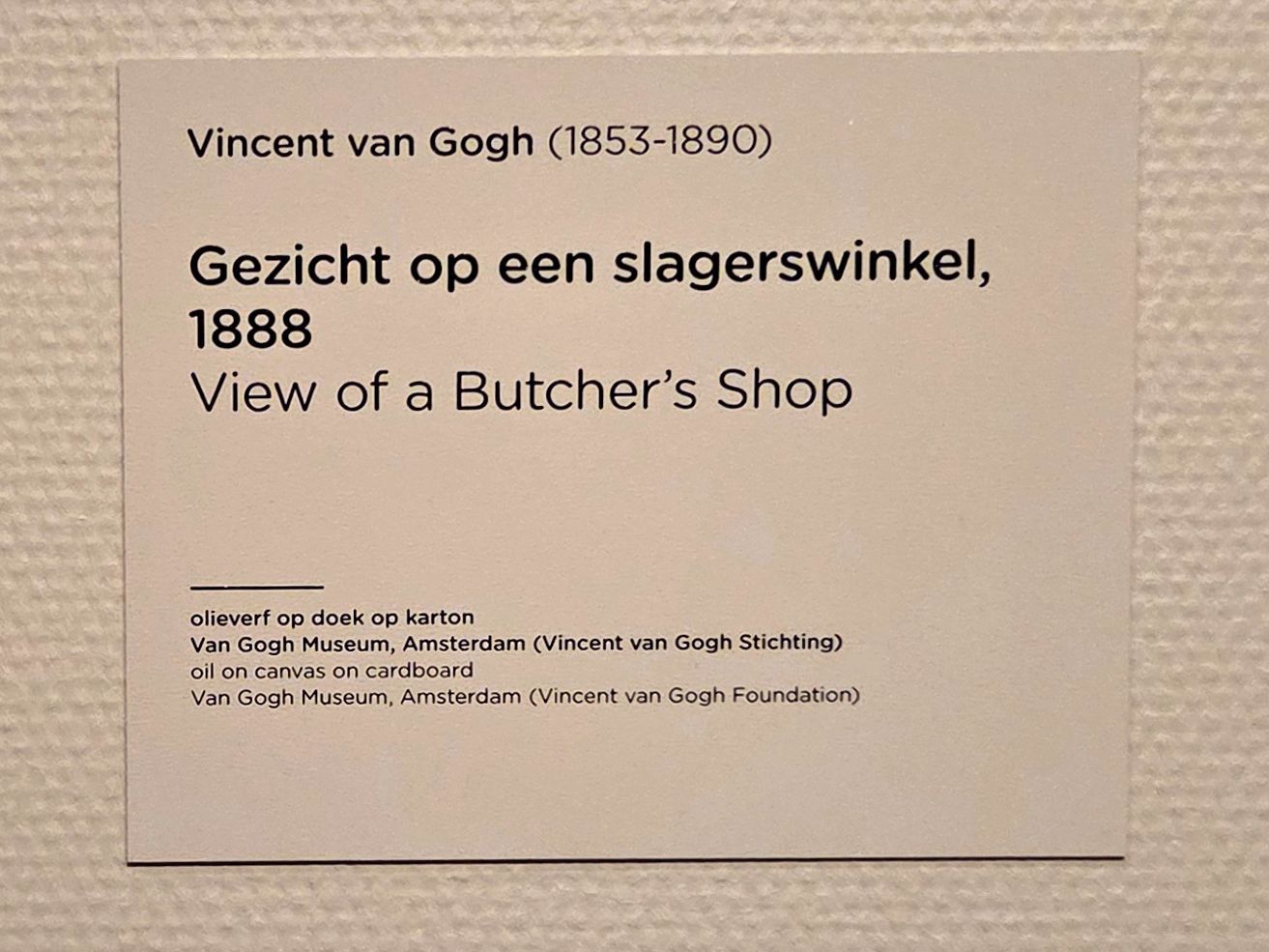
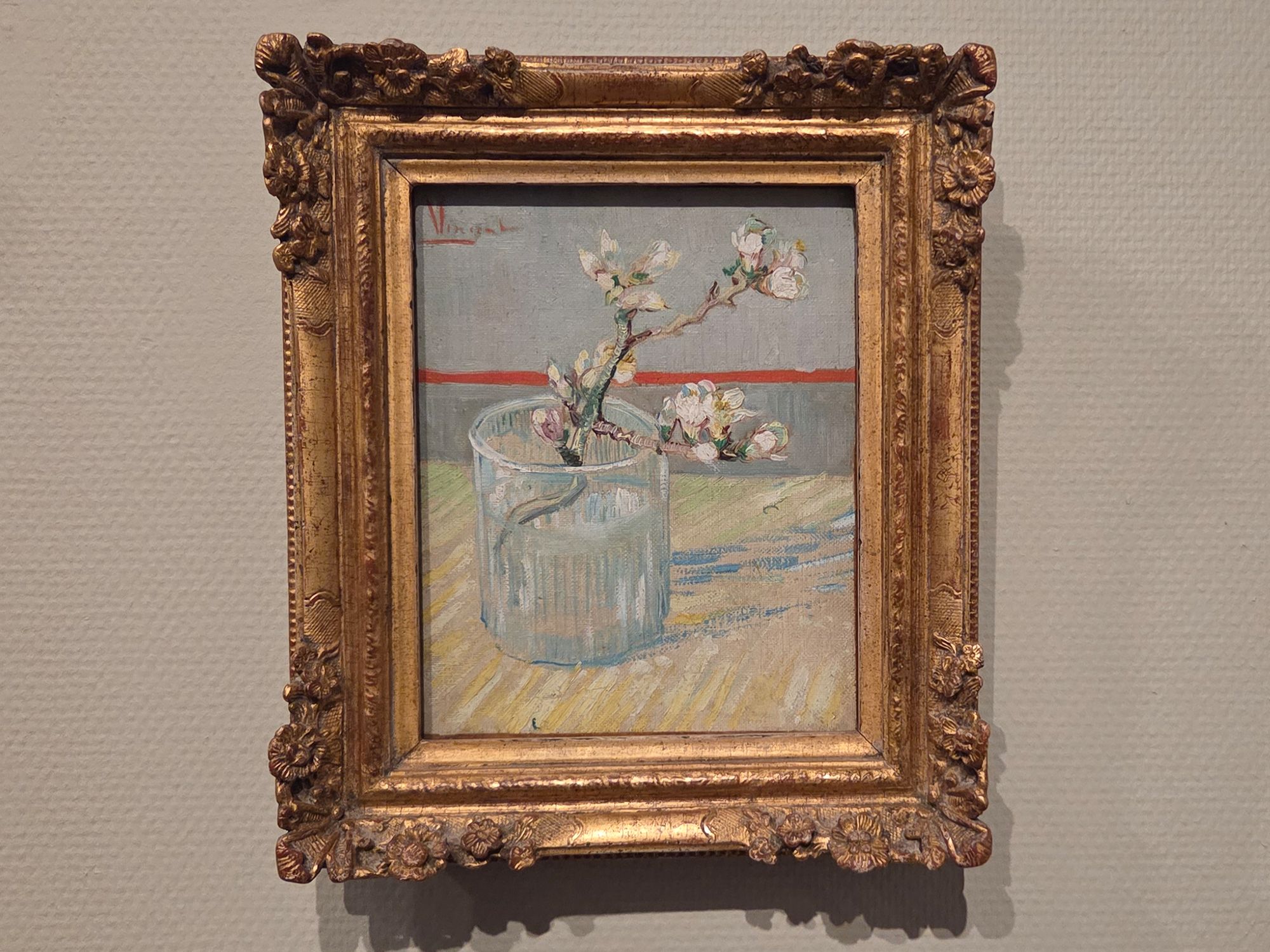
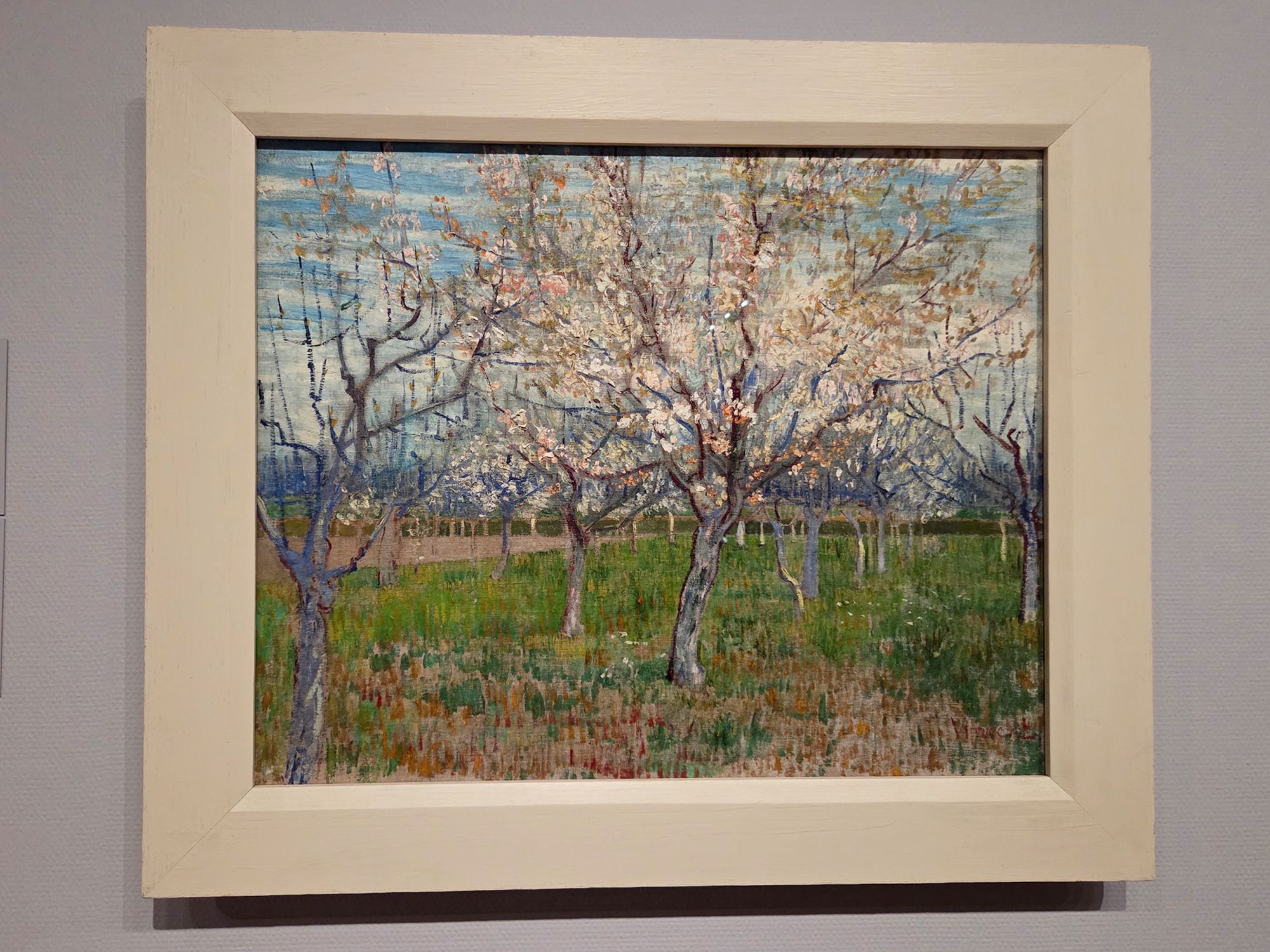
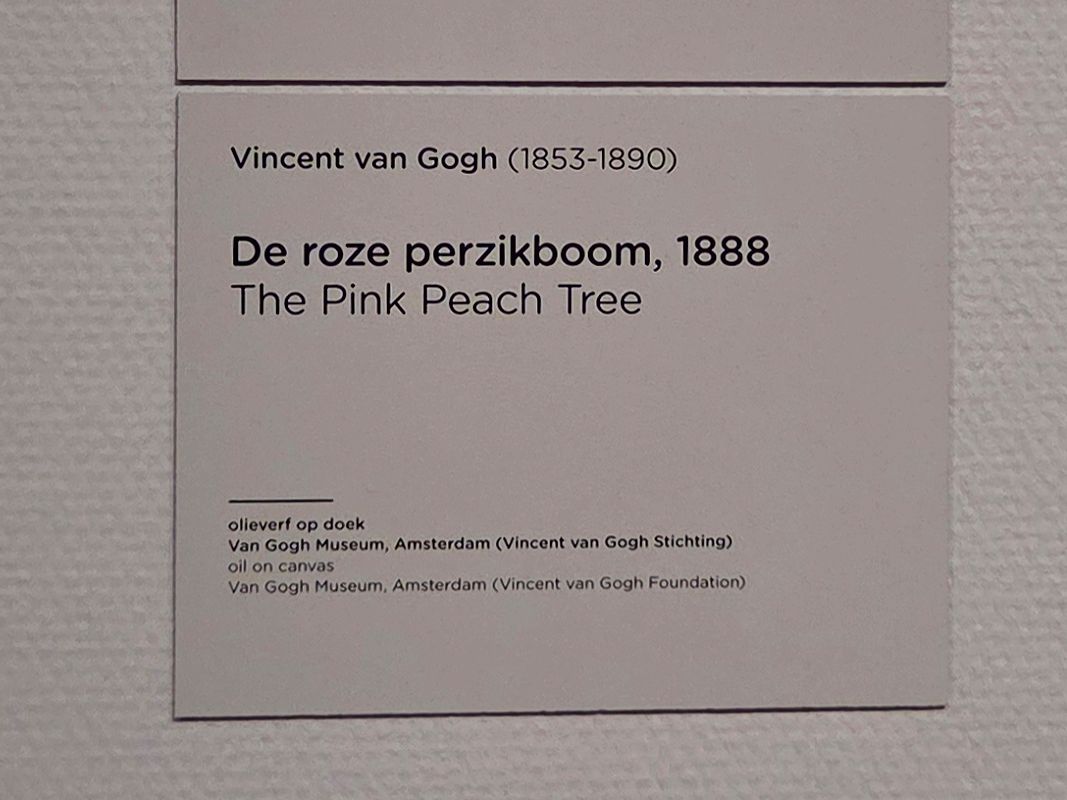
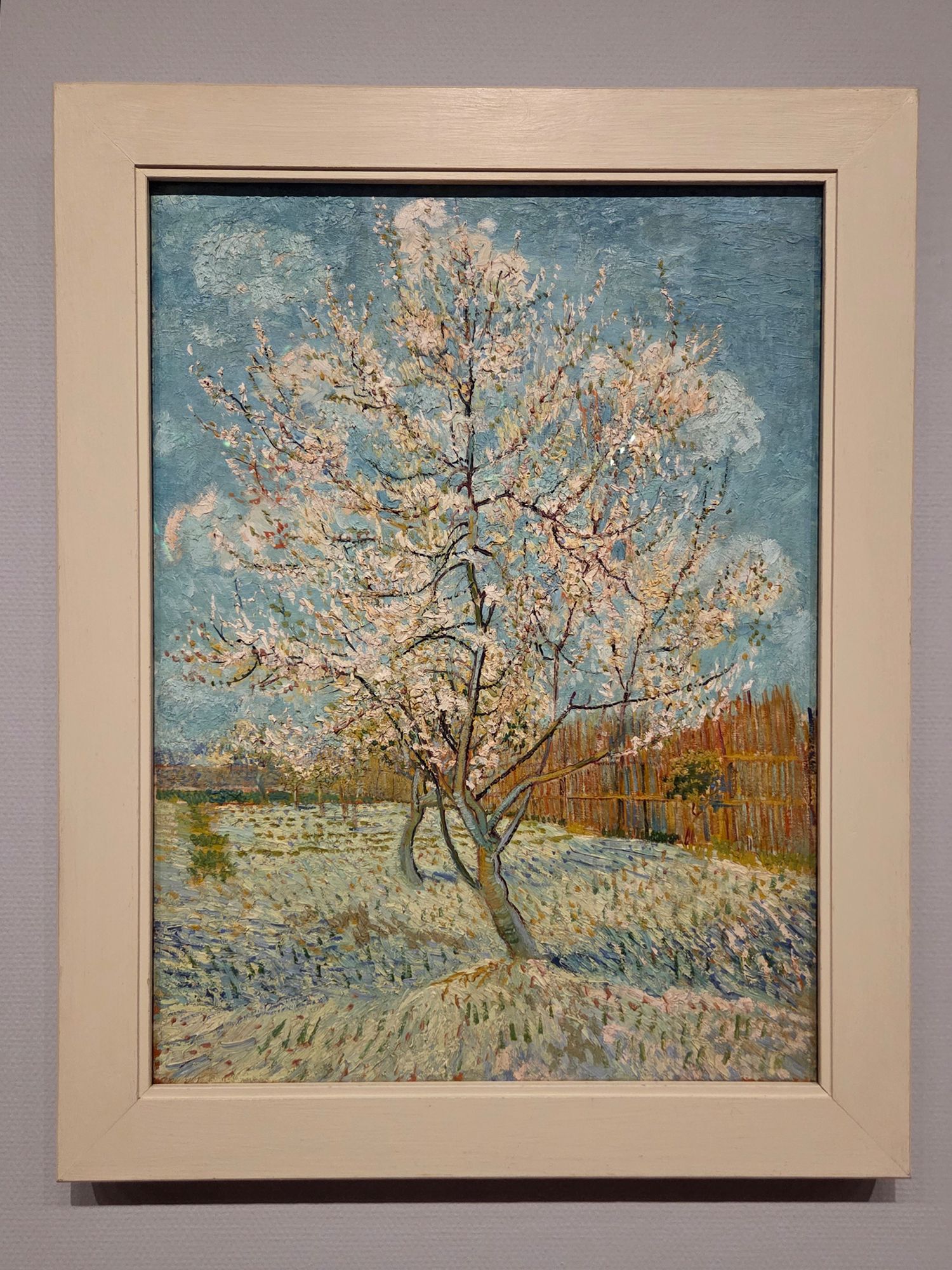
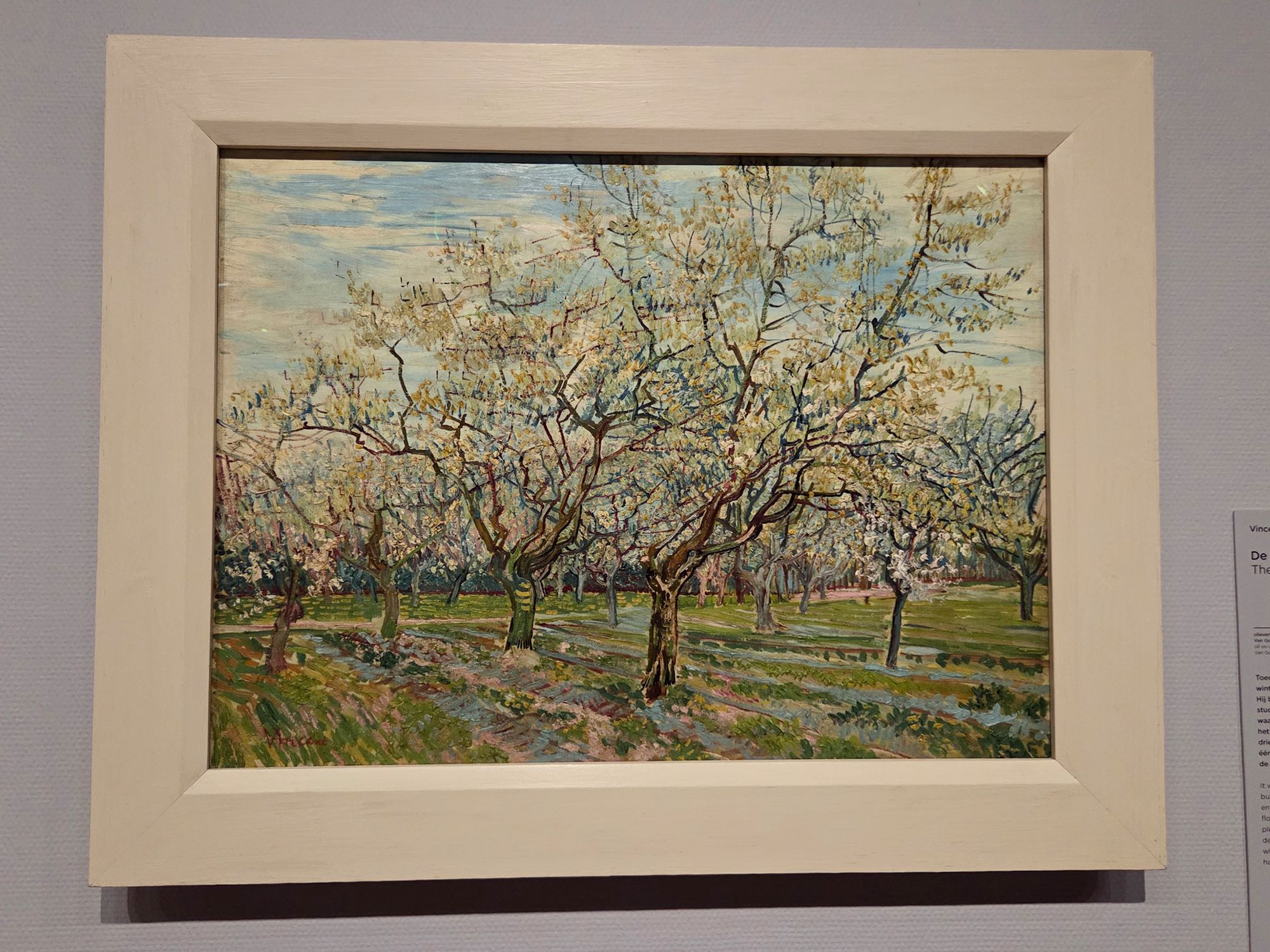
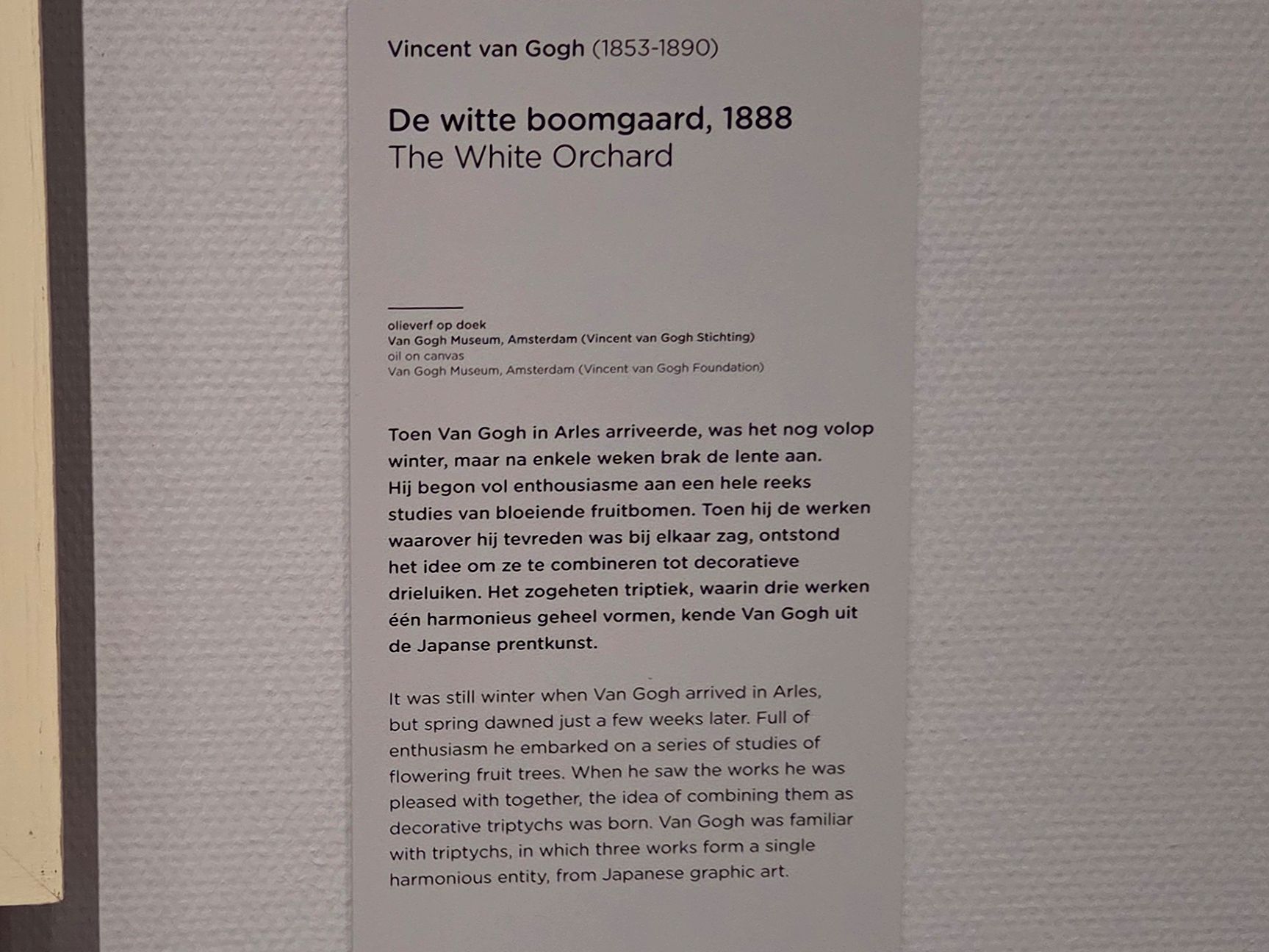
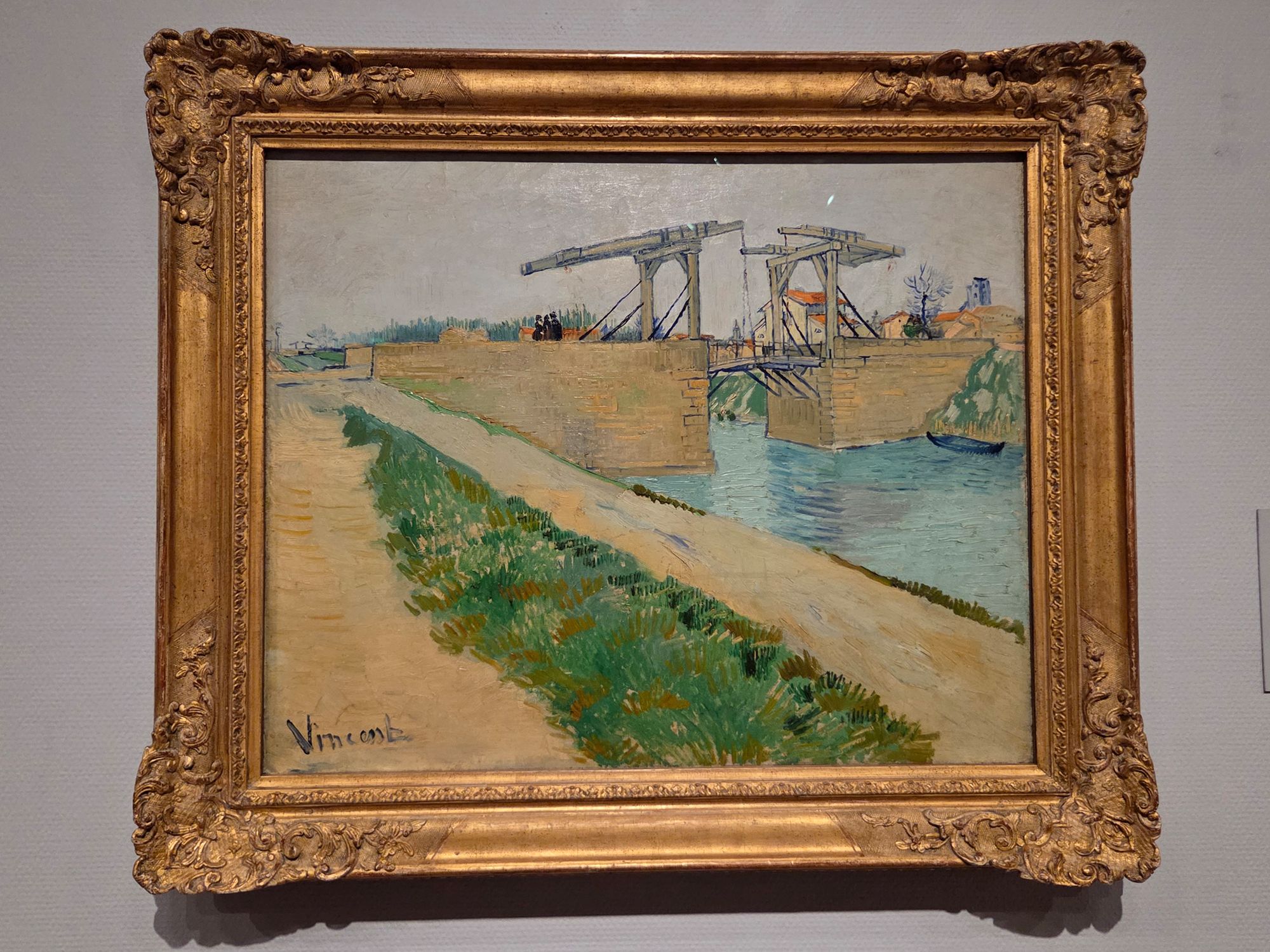
When Van Gogh arrived in Arles, spring soon transformed the countryside with flowering fruit trees. Inspired by their beauty and by Japanese art, he painted a series of blossoming orchards and envisioned some of the paintings grouped together as decorative triptychs.
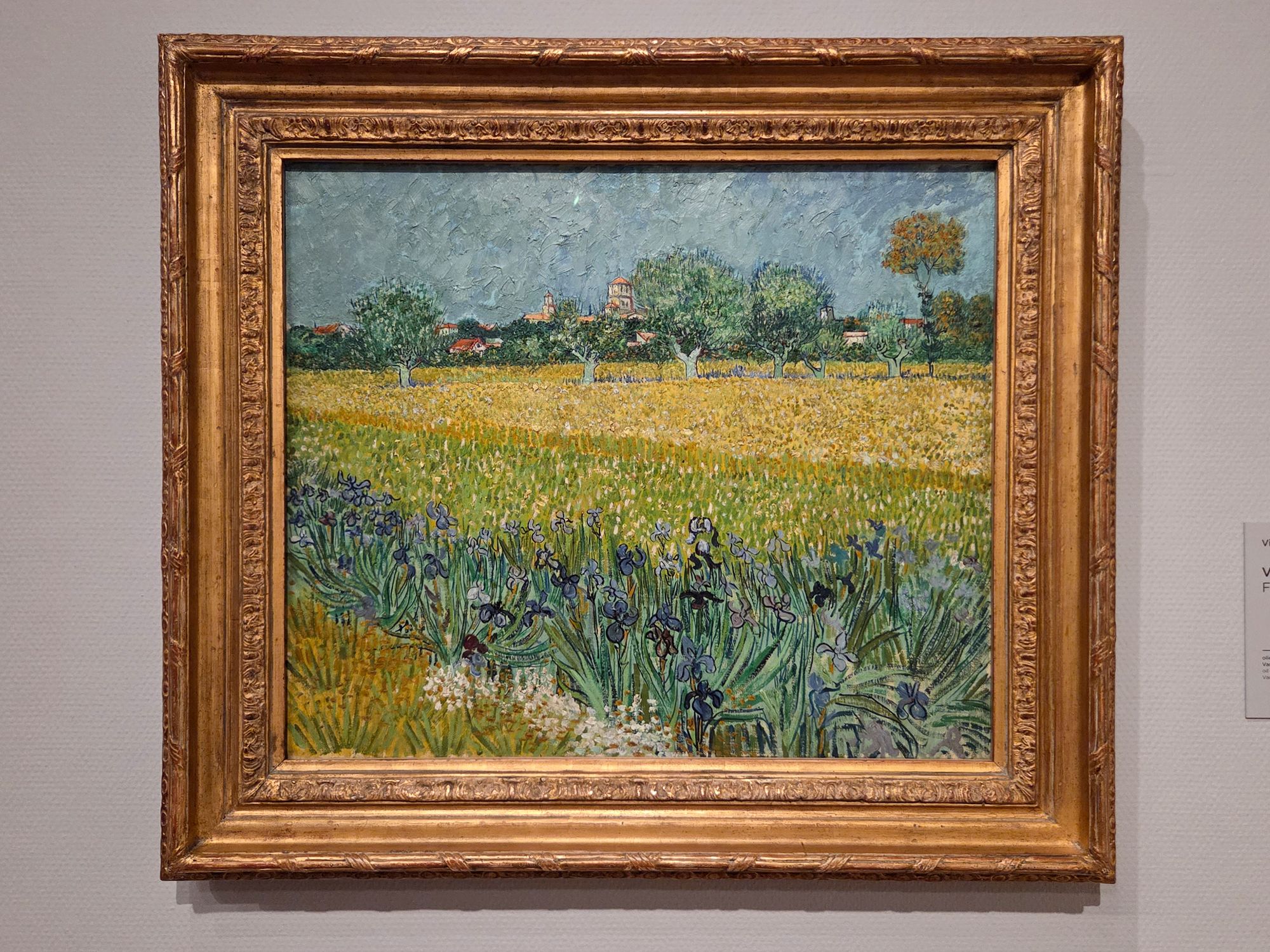
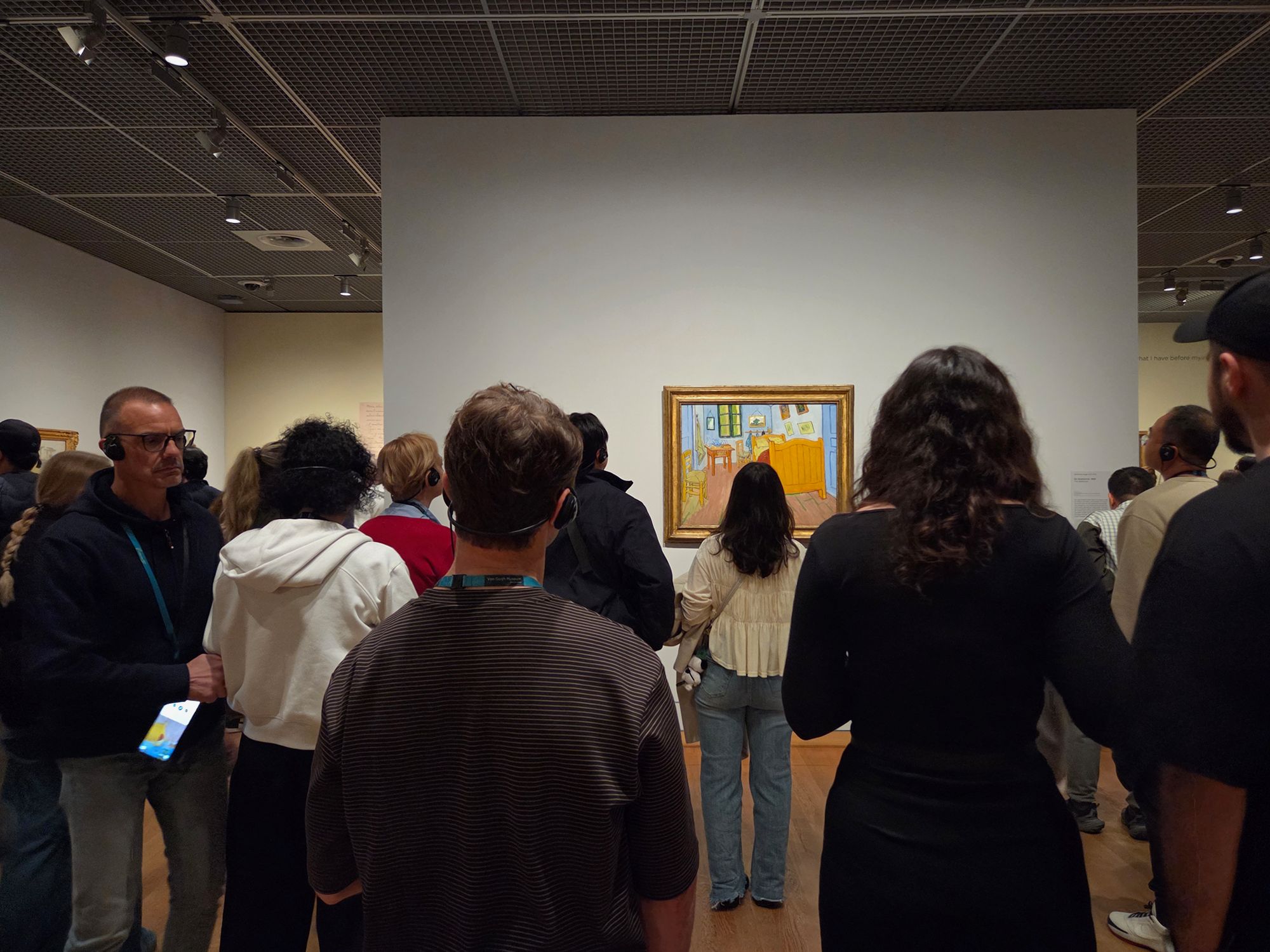
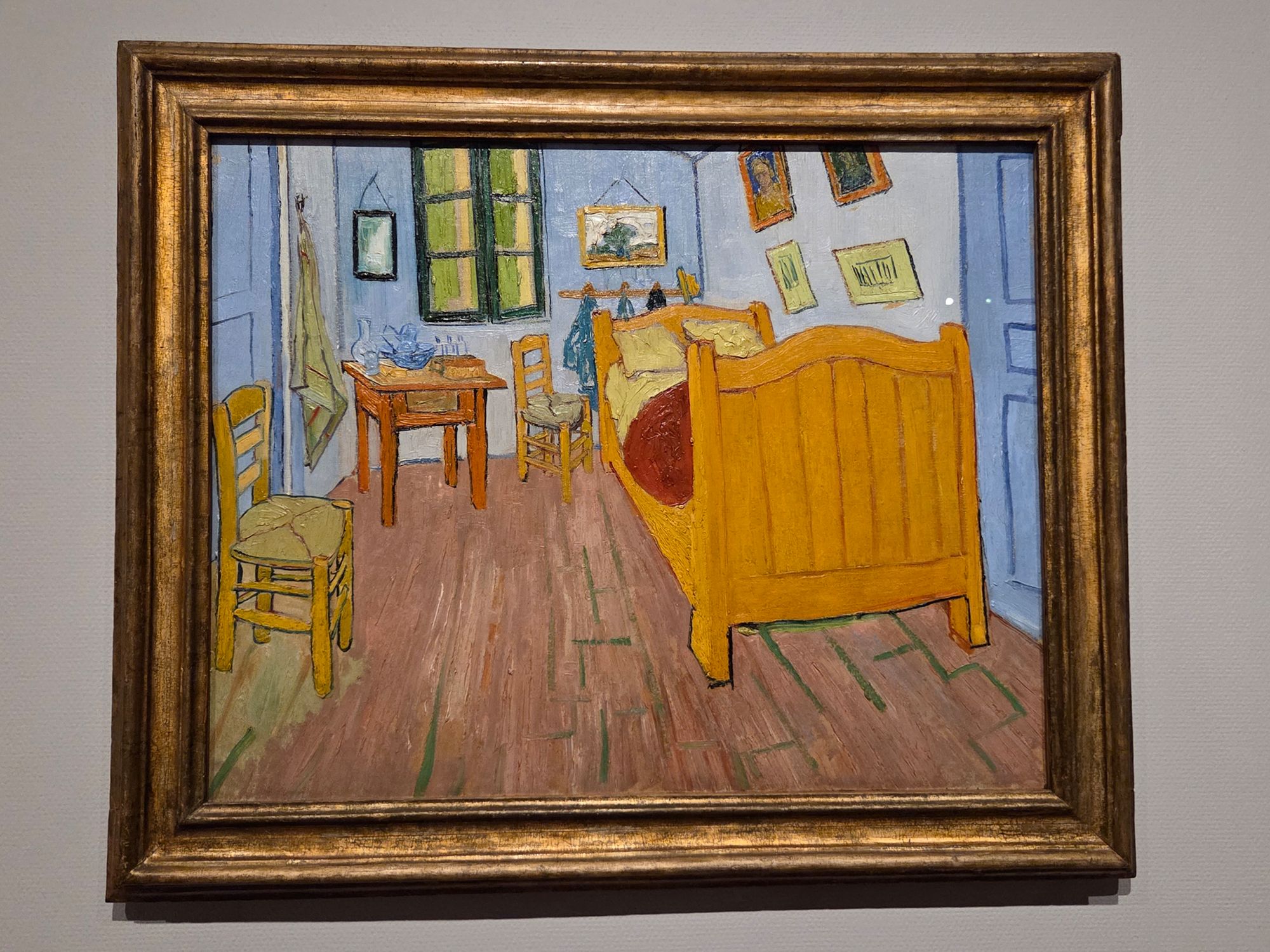
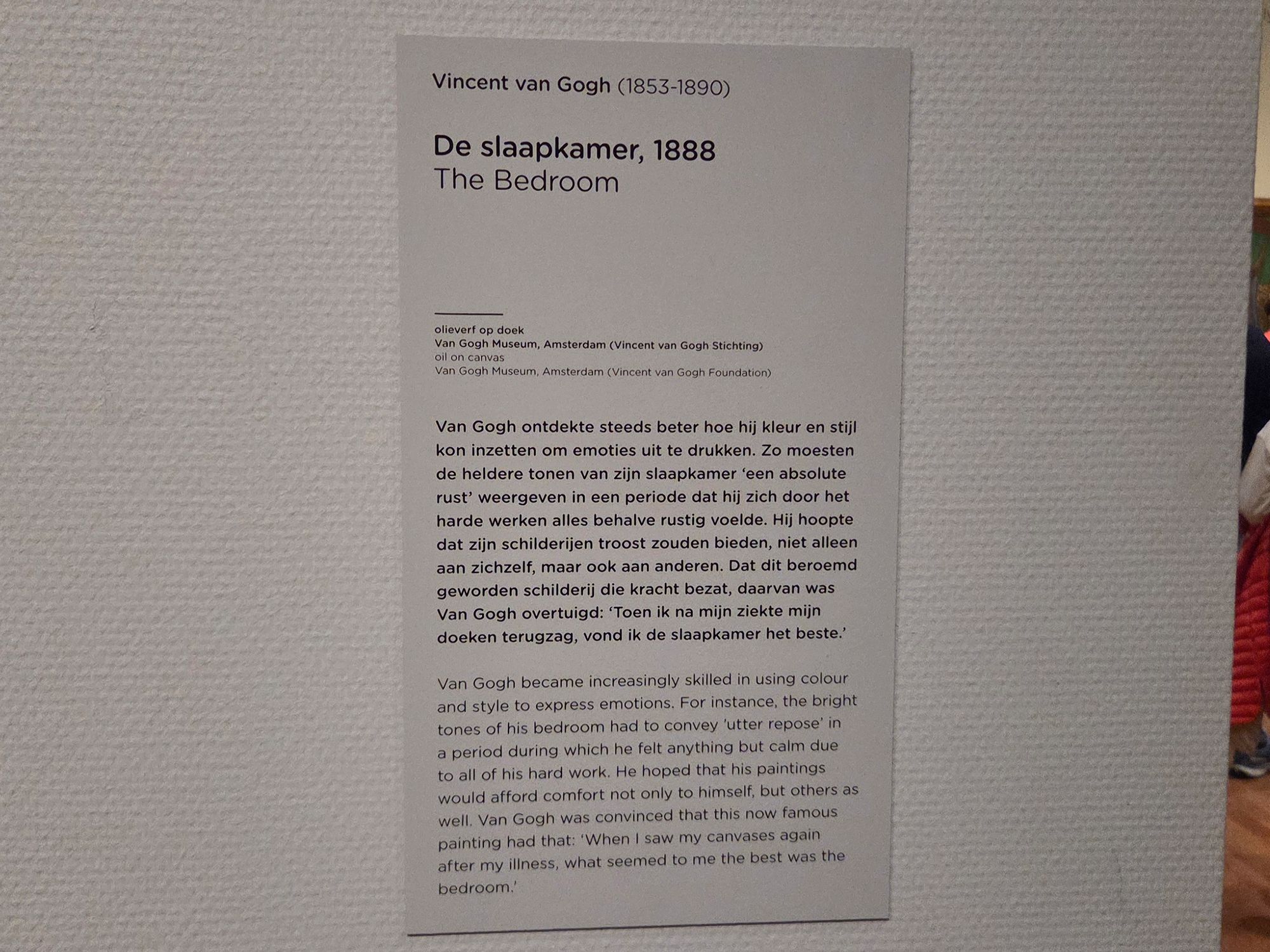
The Bedroom is one of Van Gogh’s best-known paintings, showing his simple room in the Yellow House in Arles with bright colors, bold outlines, and an intentionally flattened perspective.
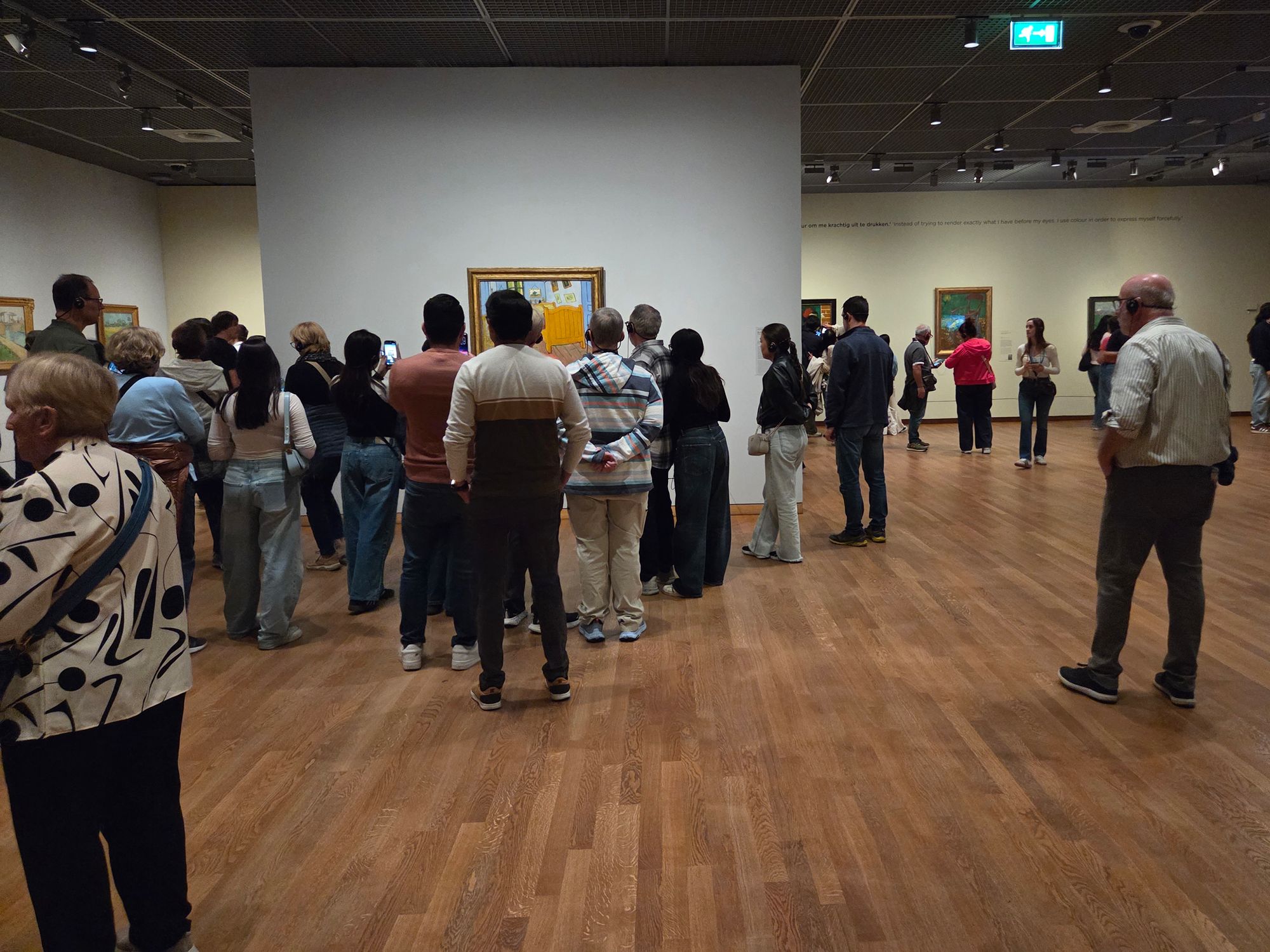
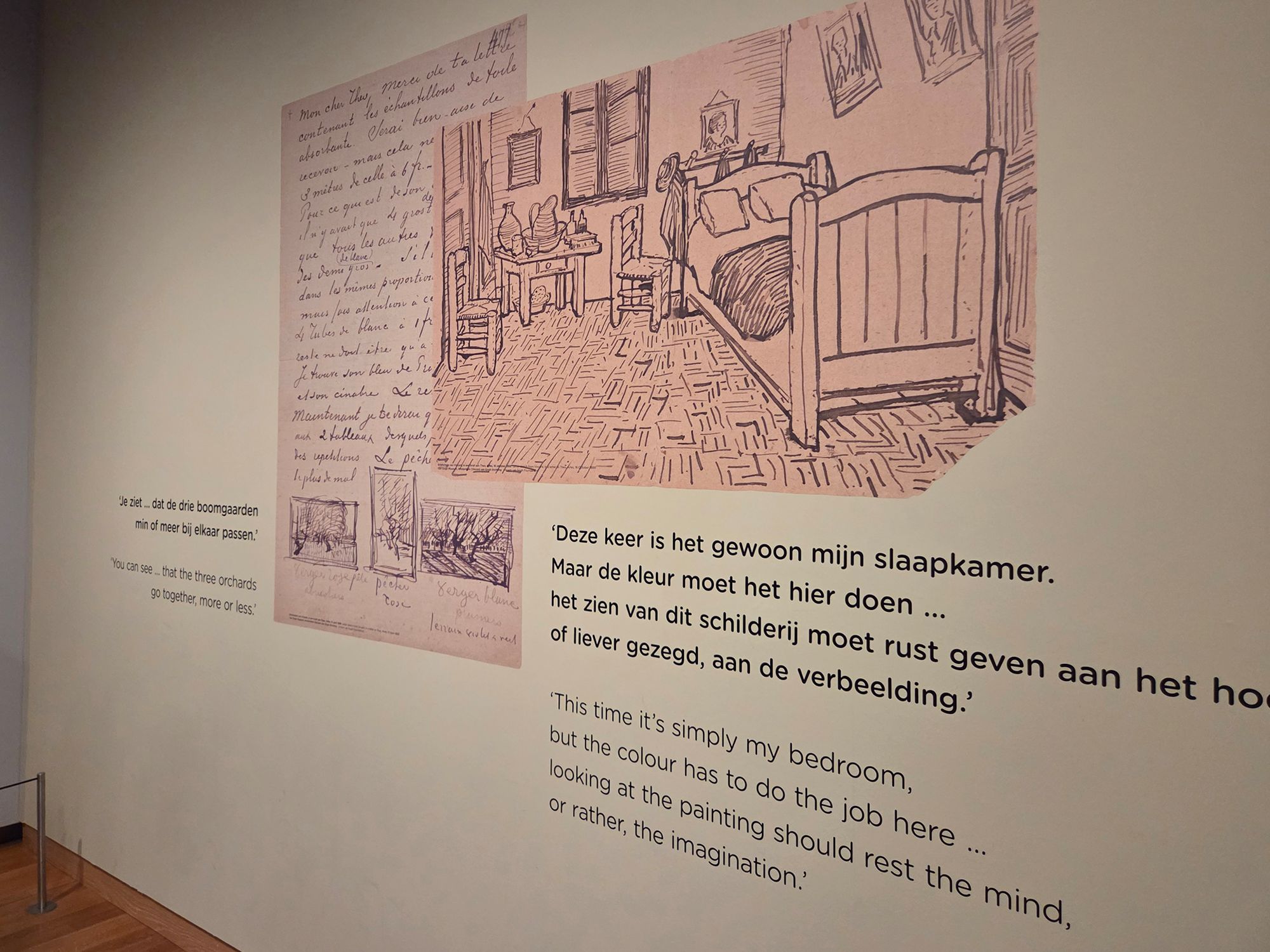
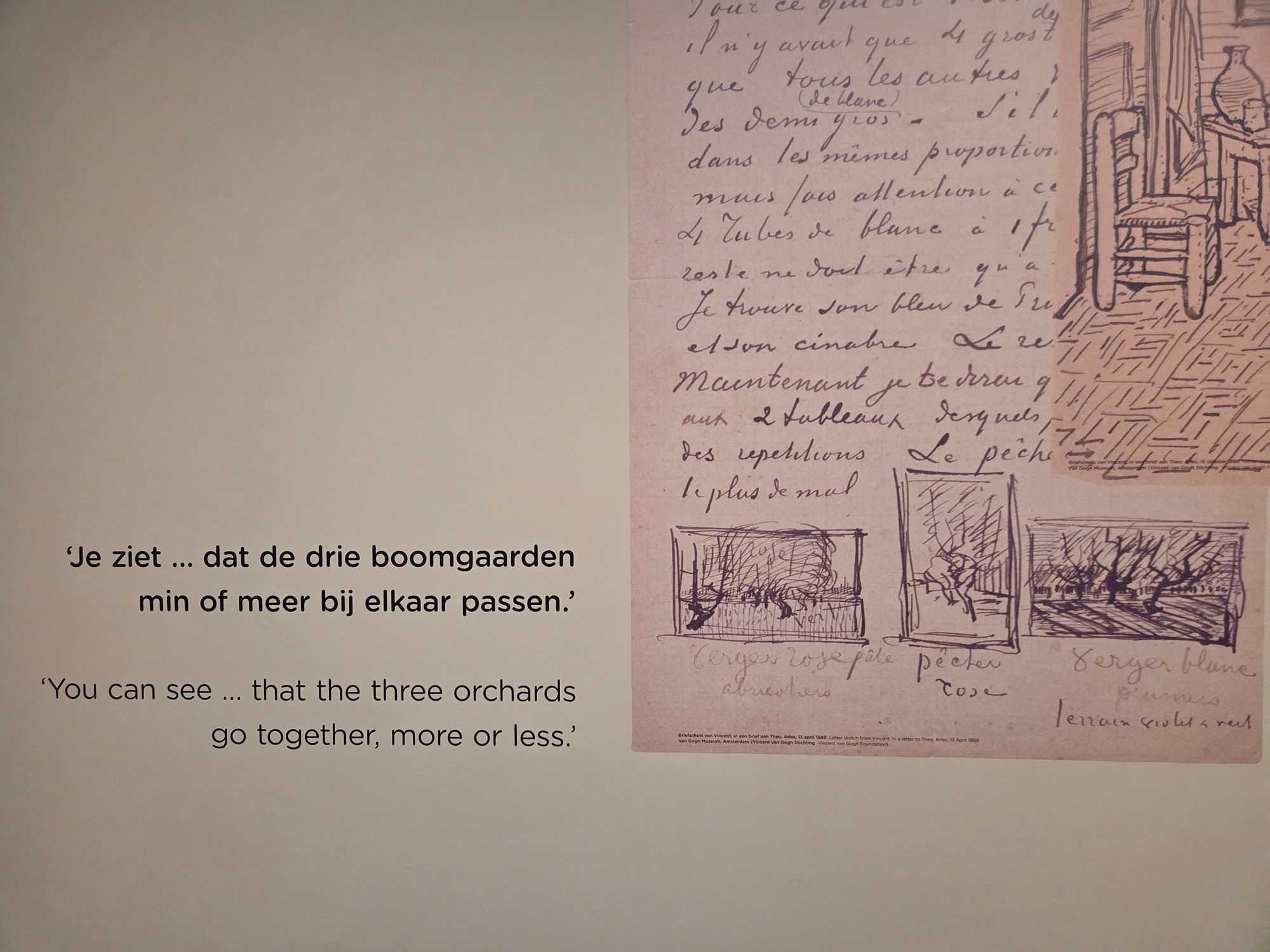
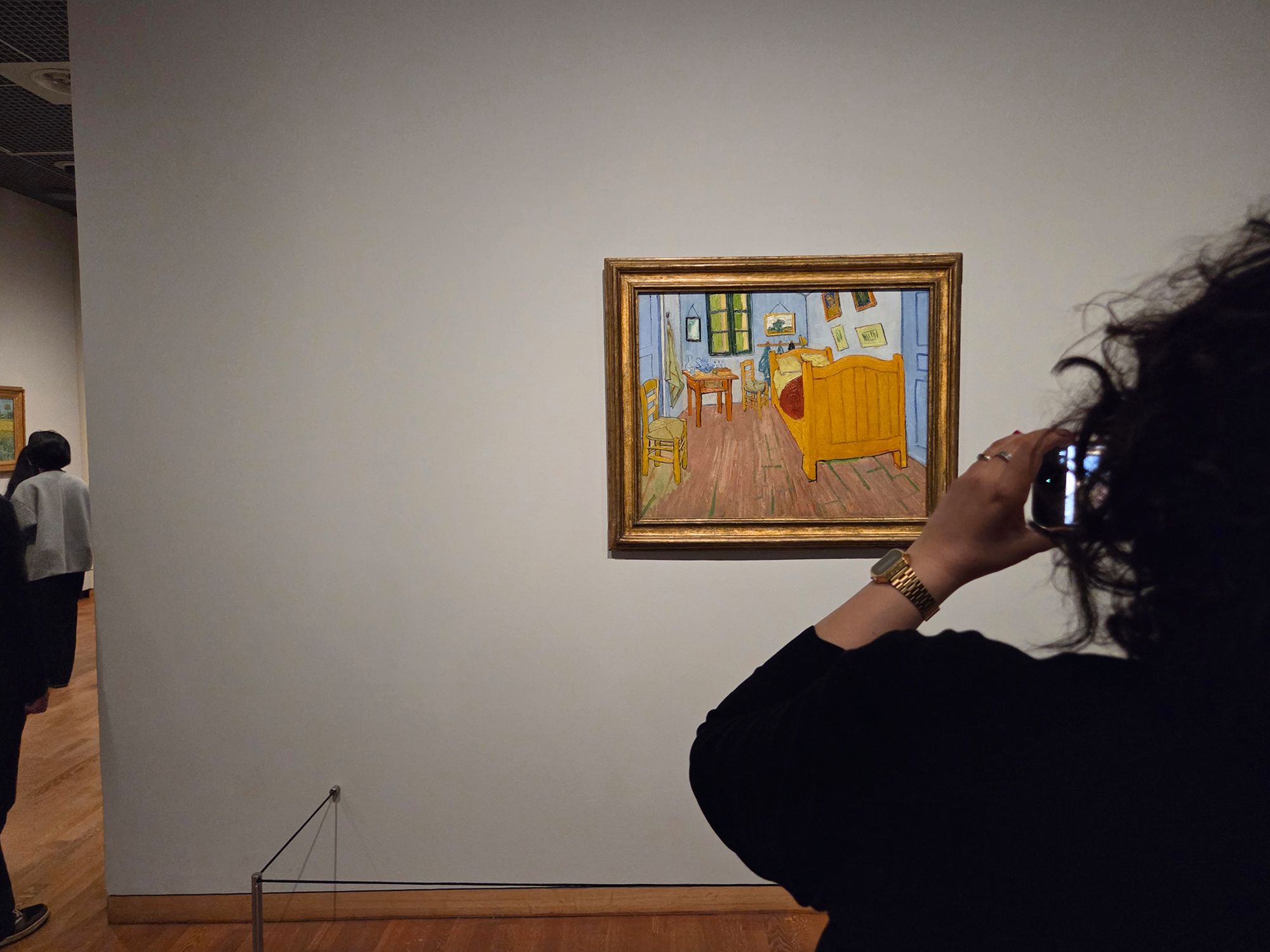
Van Gogh used color to express emotion. In The Bedroom, he chose bright but harmonious colors to convey a feeling of peace, rest, and comfort, creating a calm refuge from the difficulties he was experiencing.
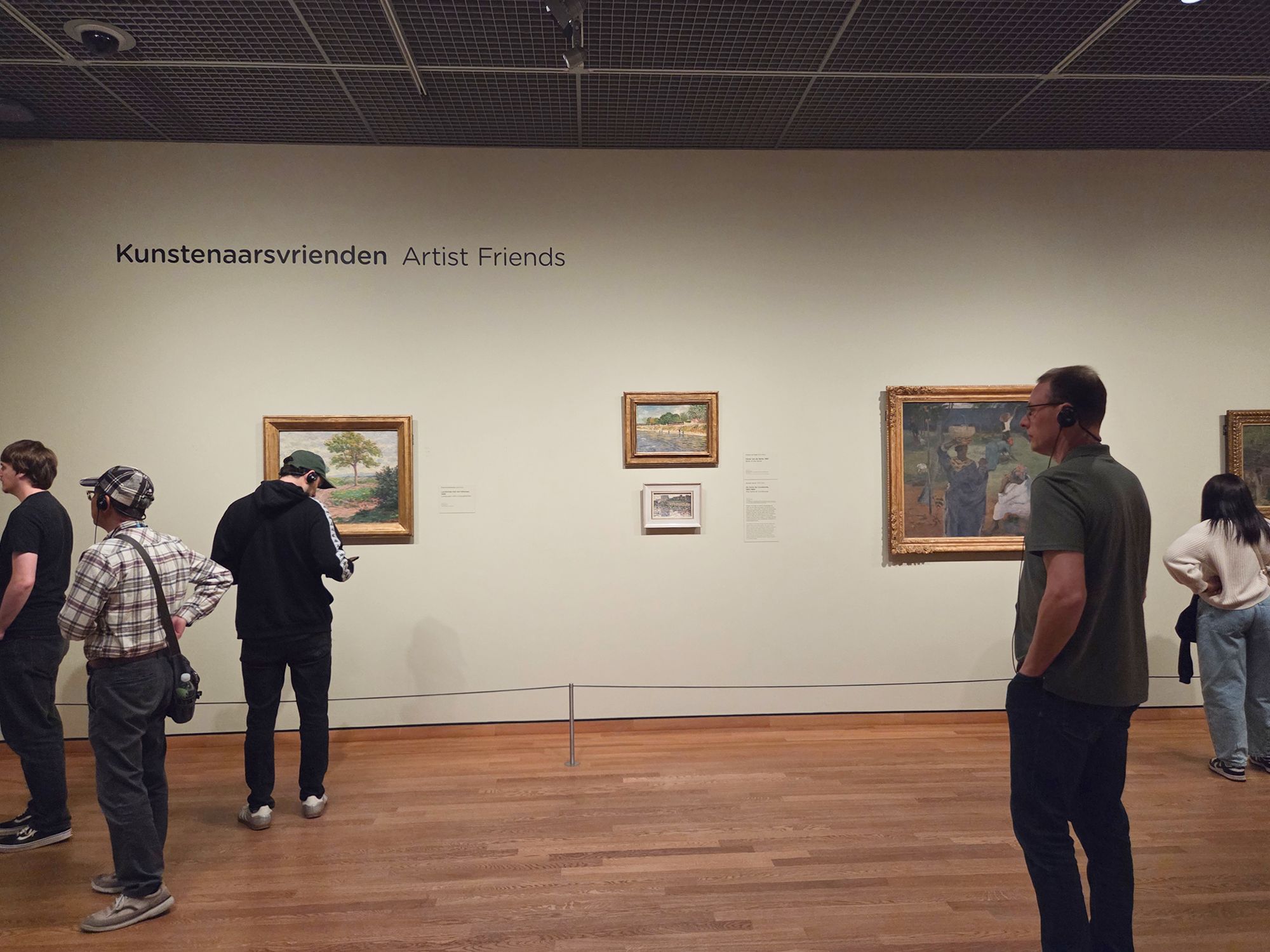
Artist Friends
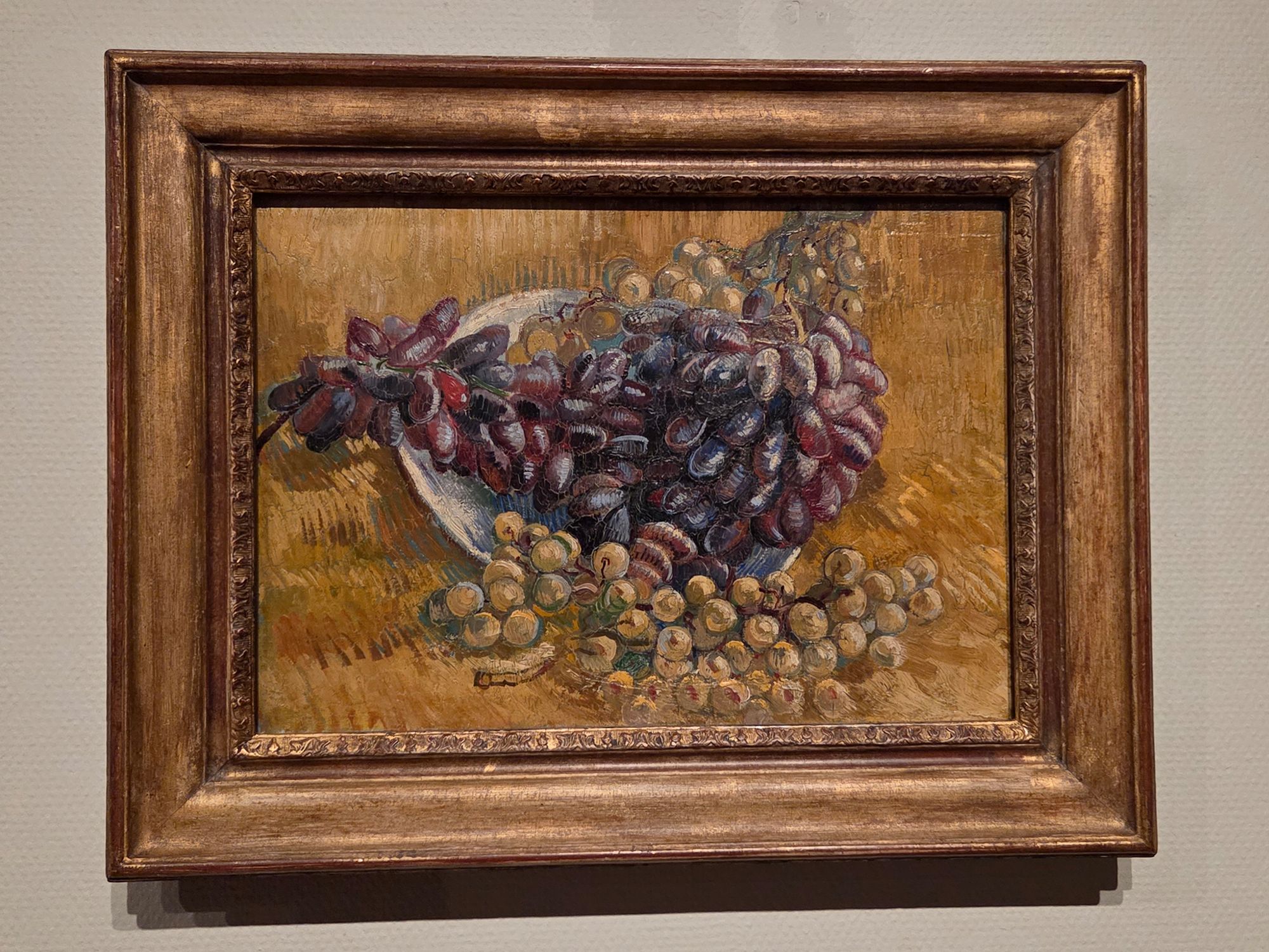
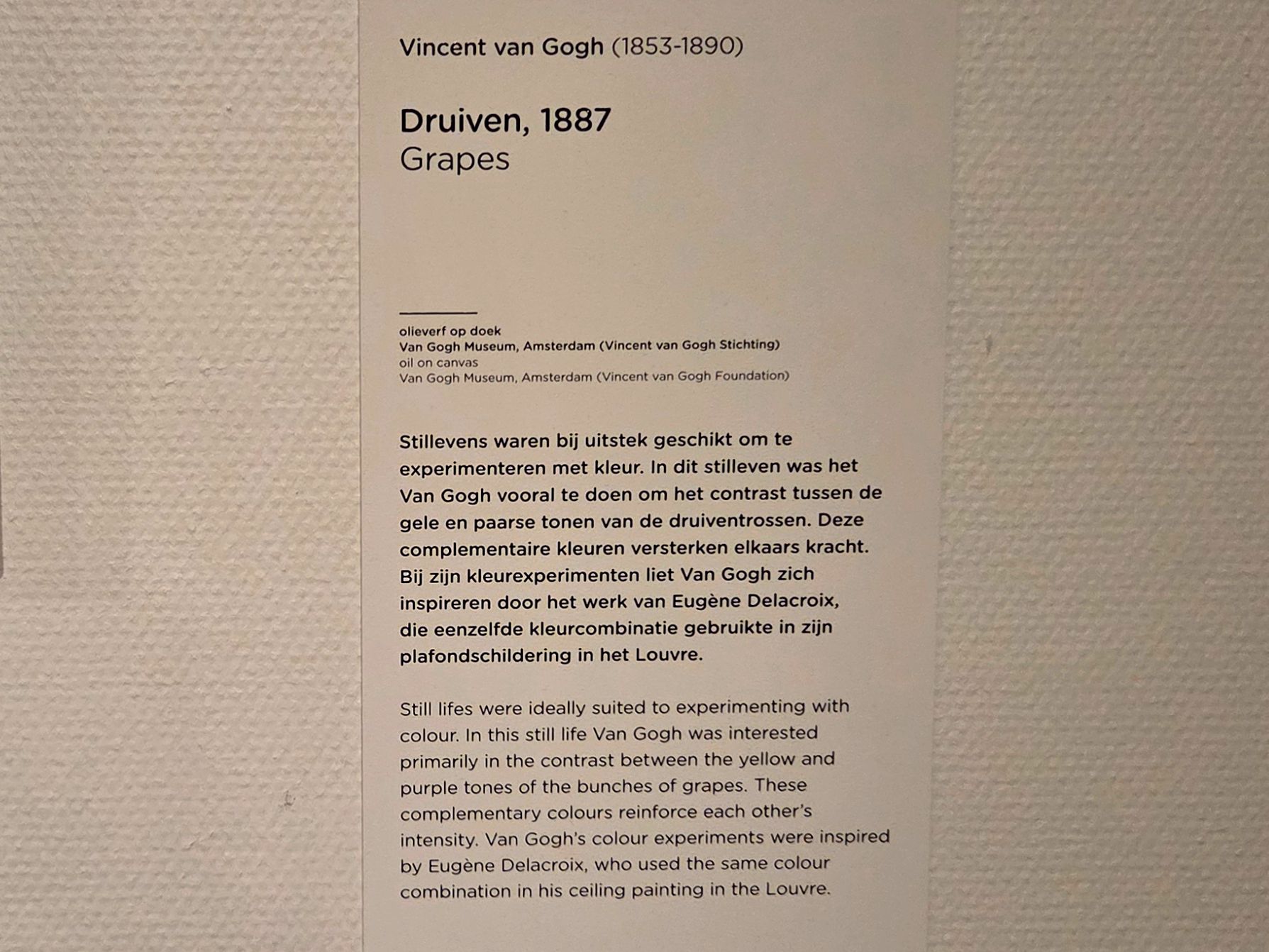
Van Gogh used still lifes to experiment with color, especially complementary colors that make each other appear more intense. In this painting, he explored the contrast between yellow and purple grapes, an approach influenced by the French artist Eugène Delacroix.
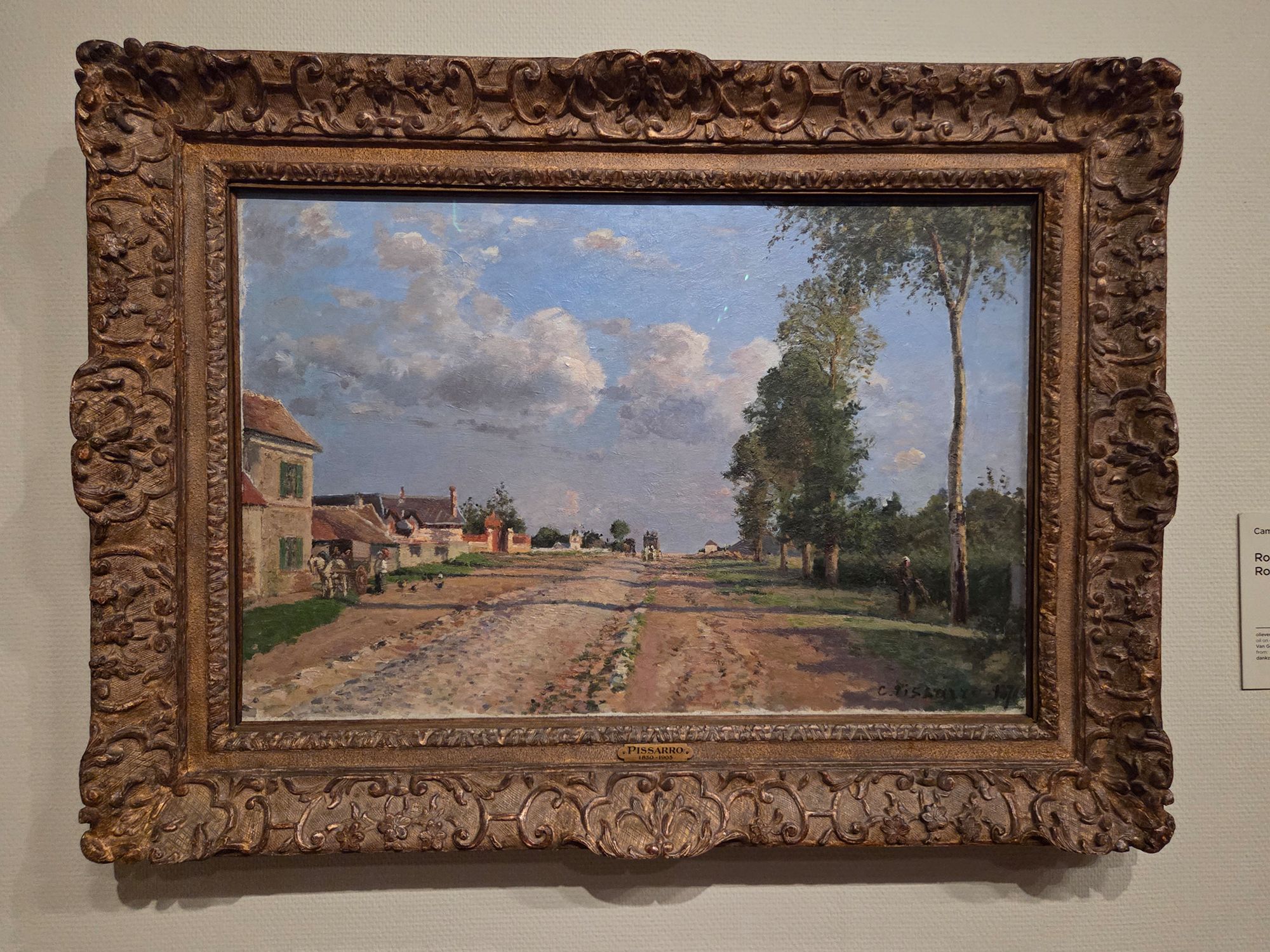
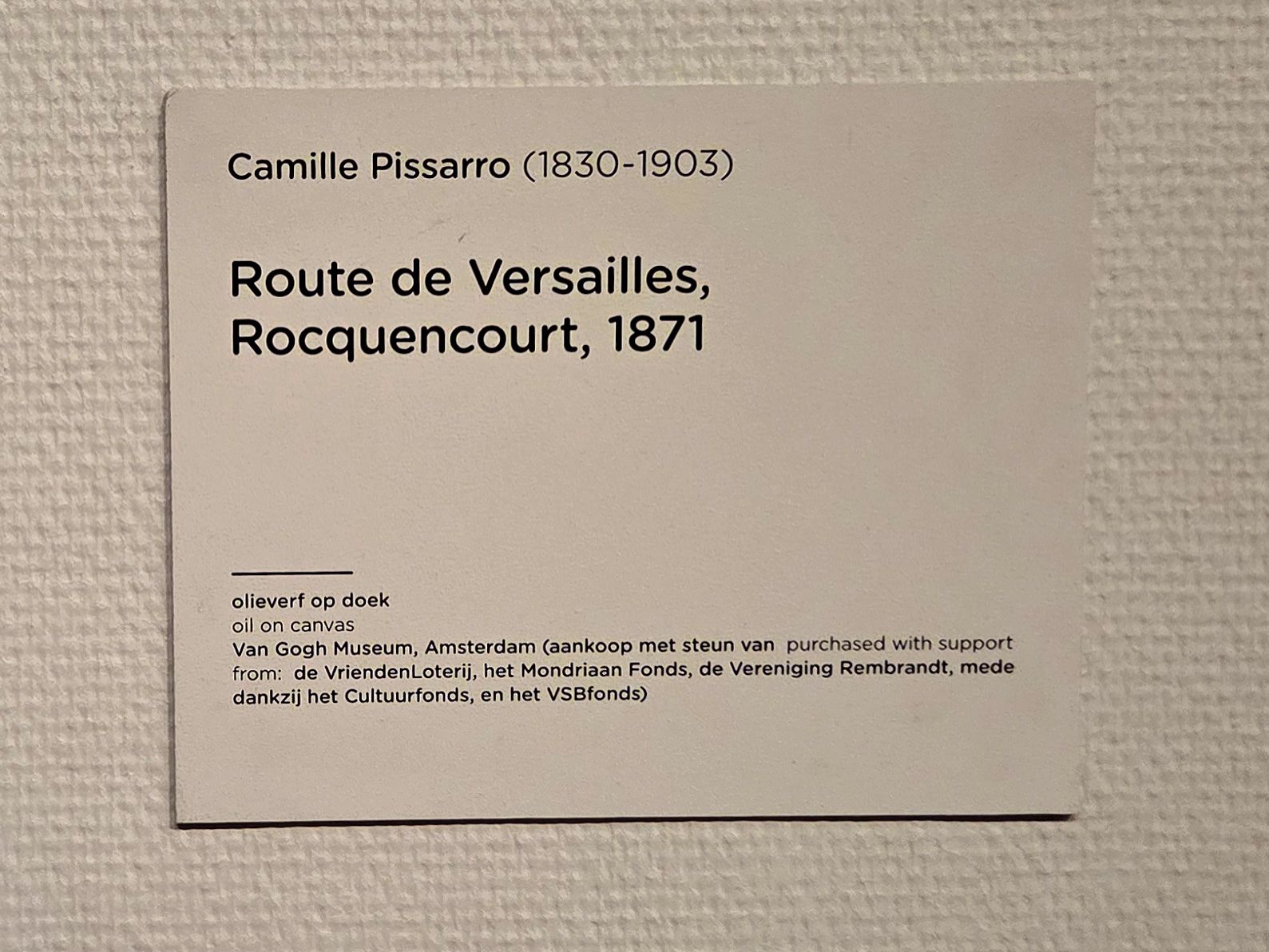
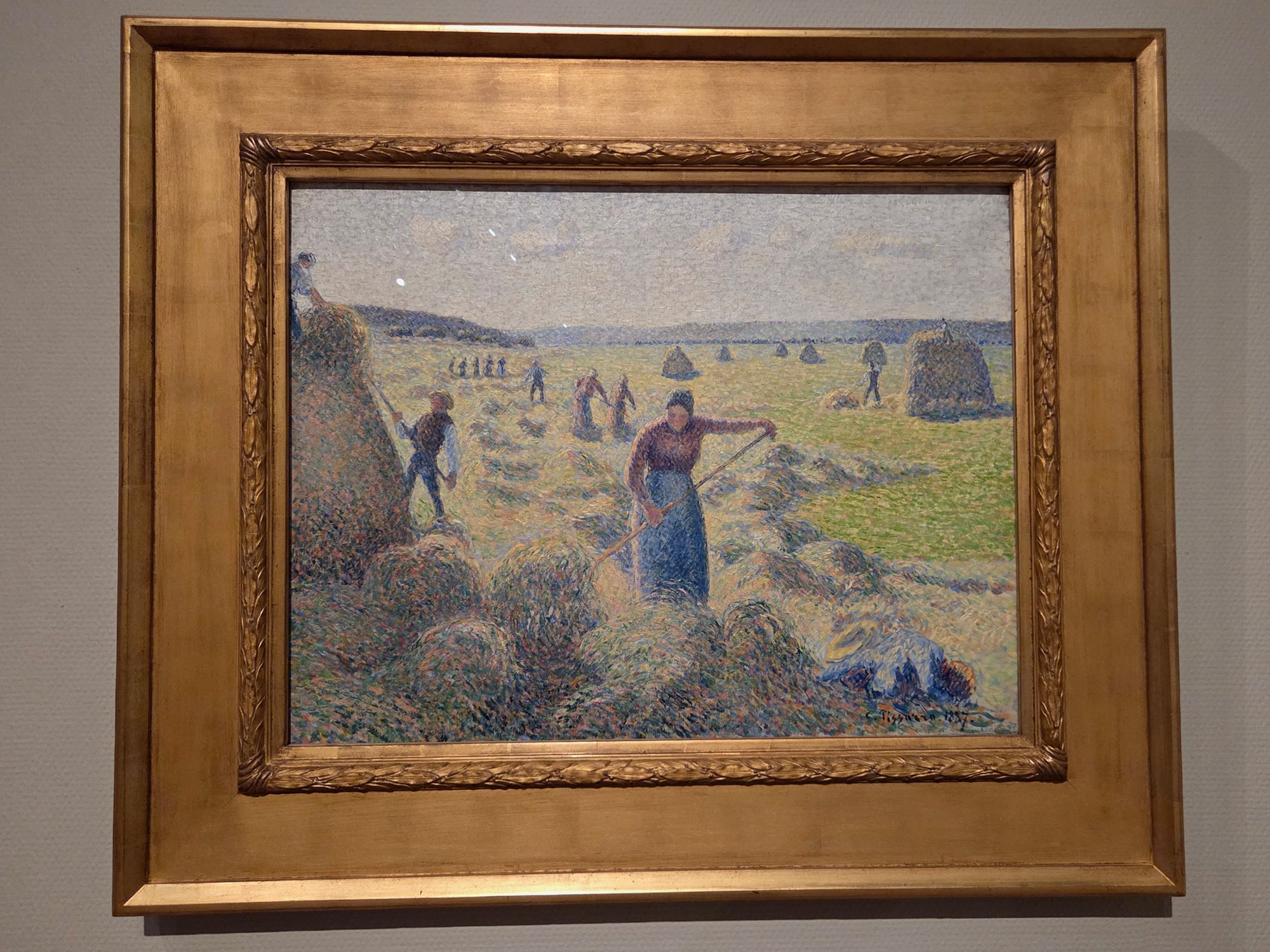
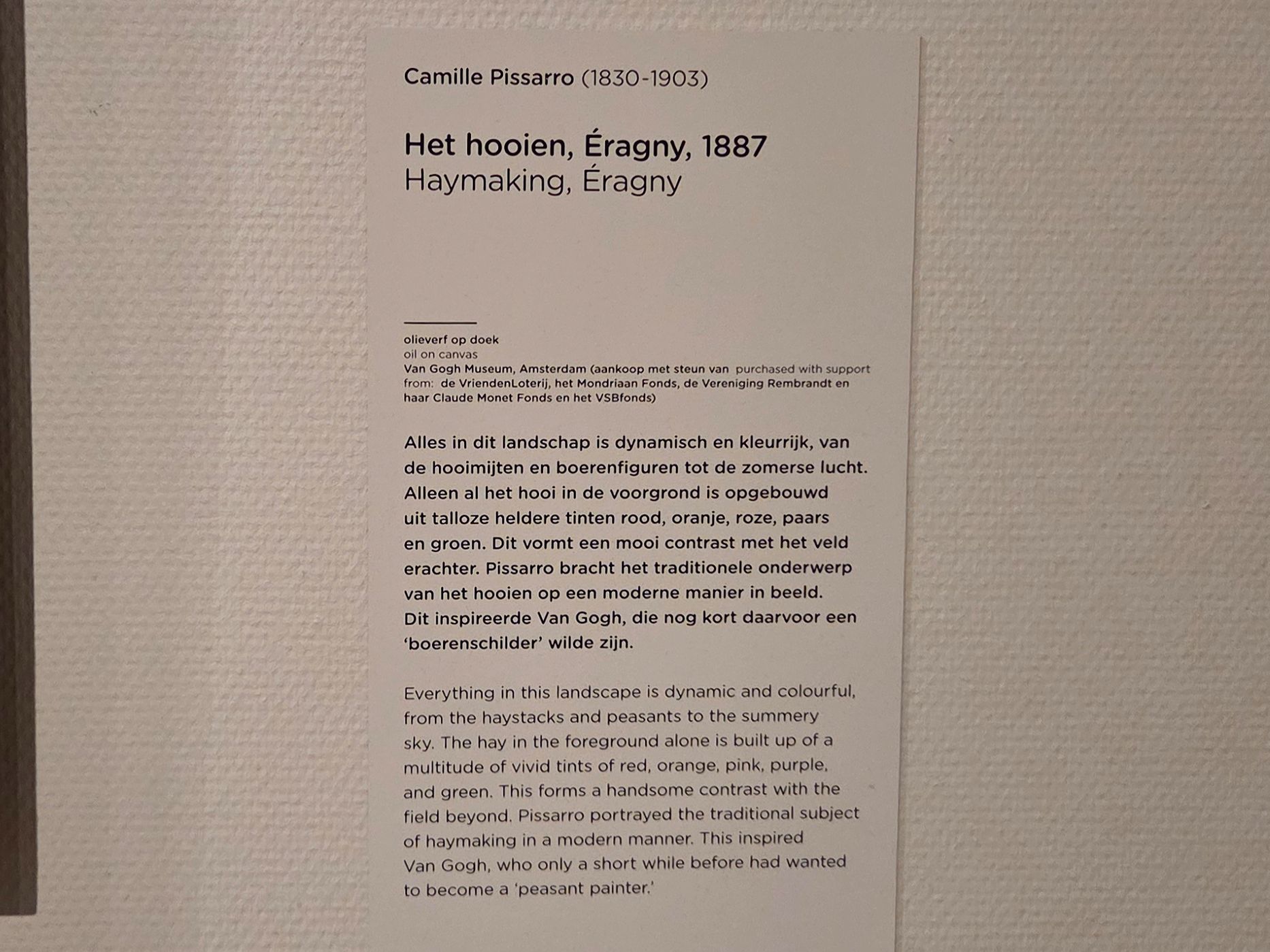
This colorful landscape by Camille Pissarro showed Van Gogh how traditional rural subjects could be painted in a modern way. The vivid reds, oranges, pinks, purples, and greens helped inspire Van Gogh as he moved away from the dark colors of his earlier peasant paintings.
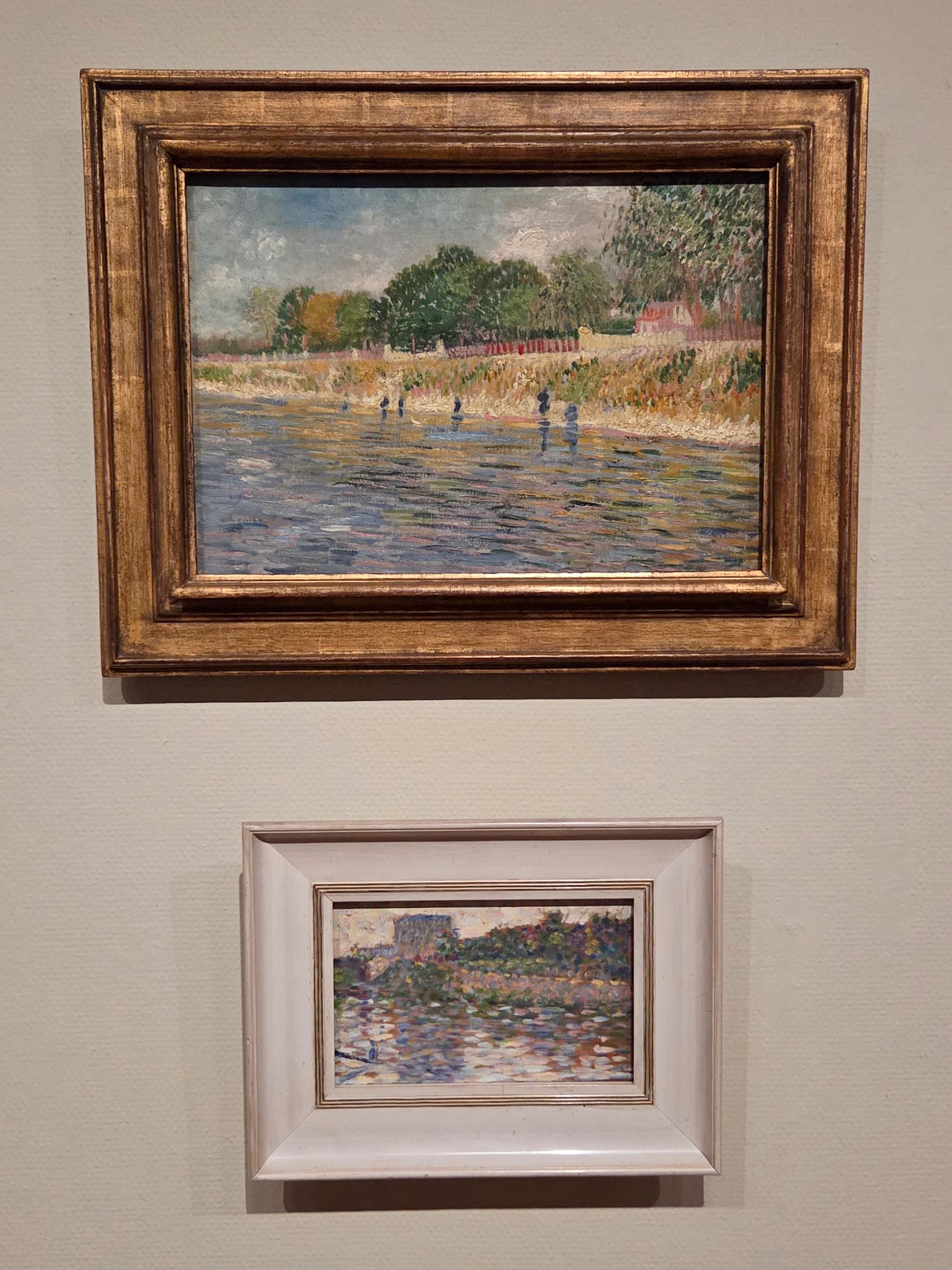
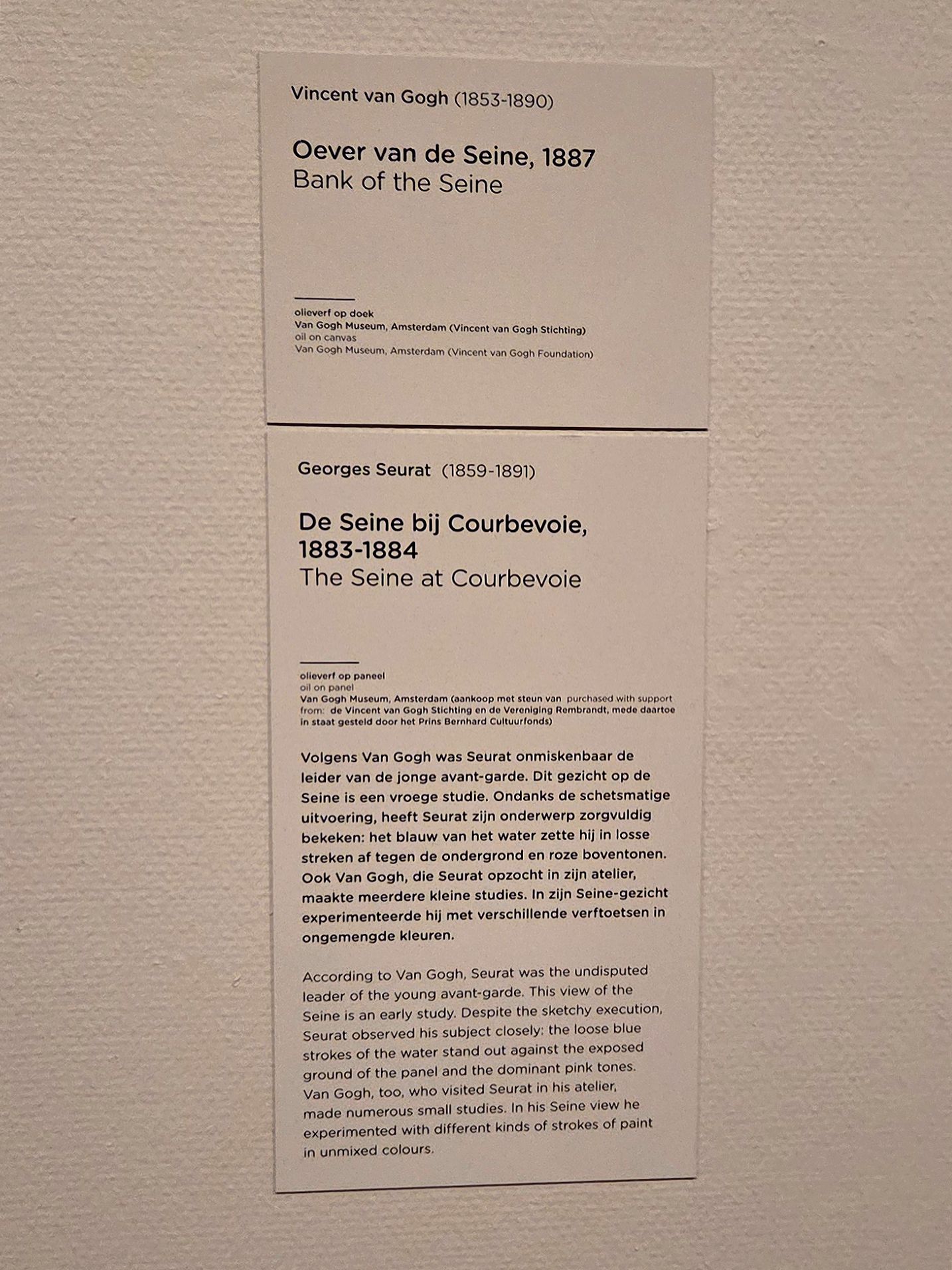
Van Gogh greatly admired Georges Seurat, whom he considered a leader of the young avant-garde. Inspired by Seurat’s experiments with color, Van Gogh began using separate strokes of unmixed colors, helping him develop the brighter and more expressive style of his later paintings.
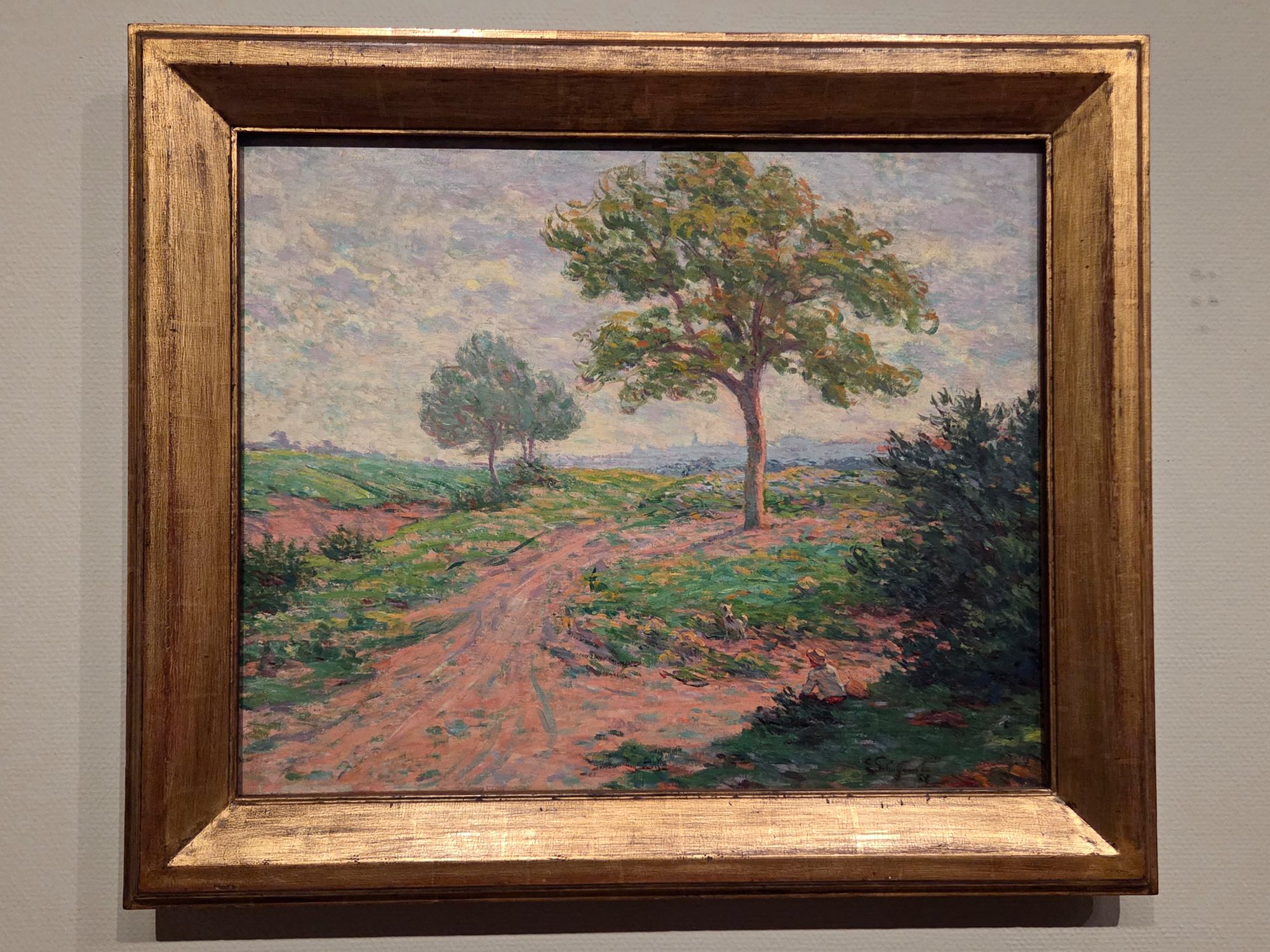
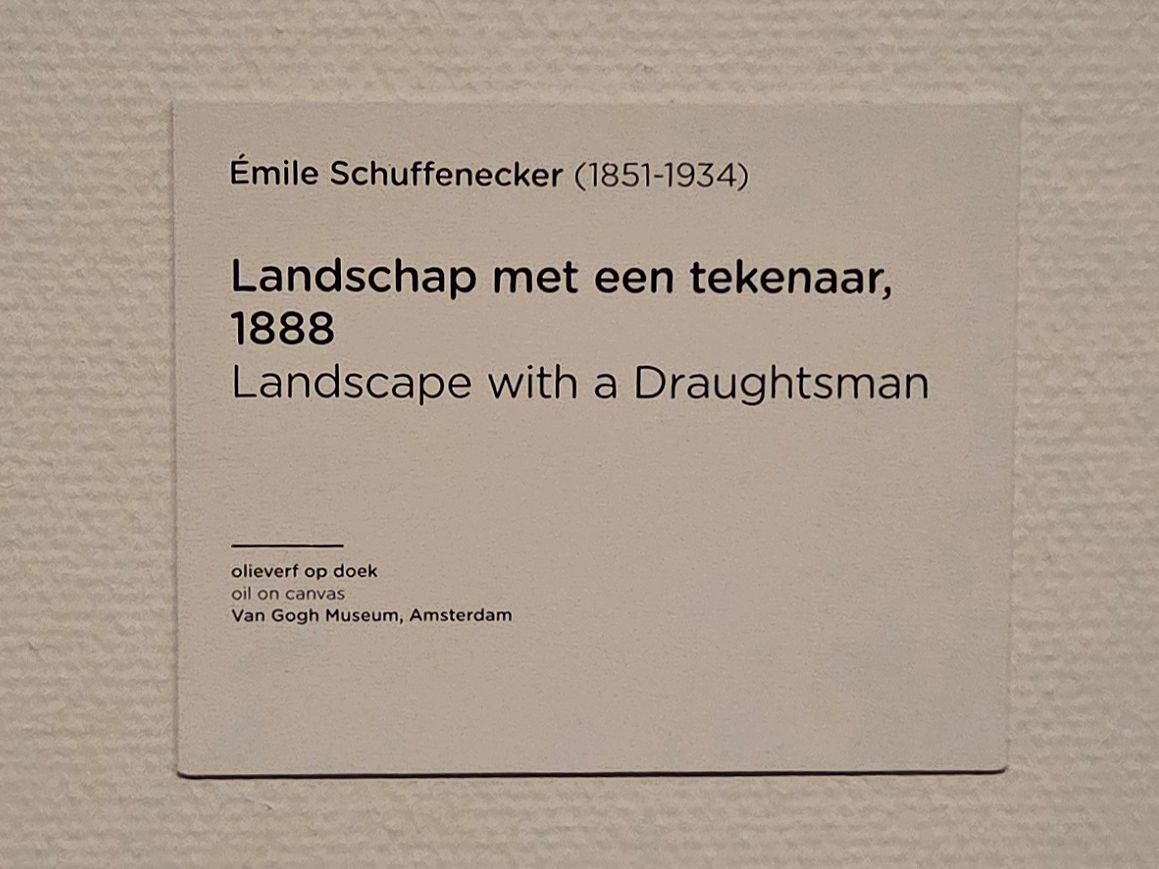
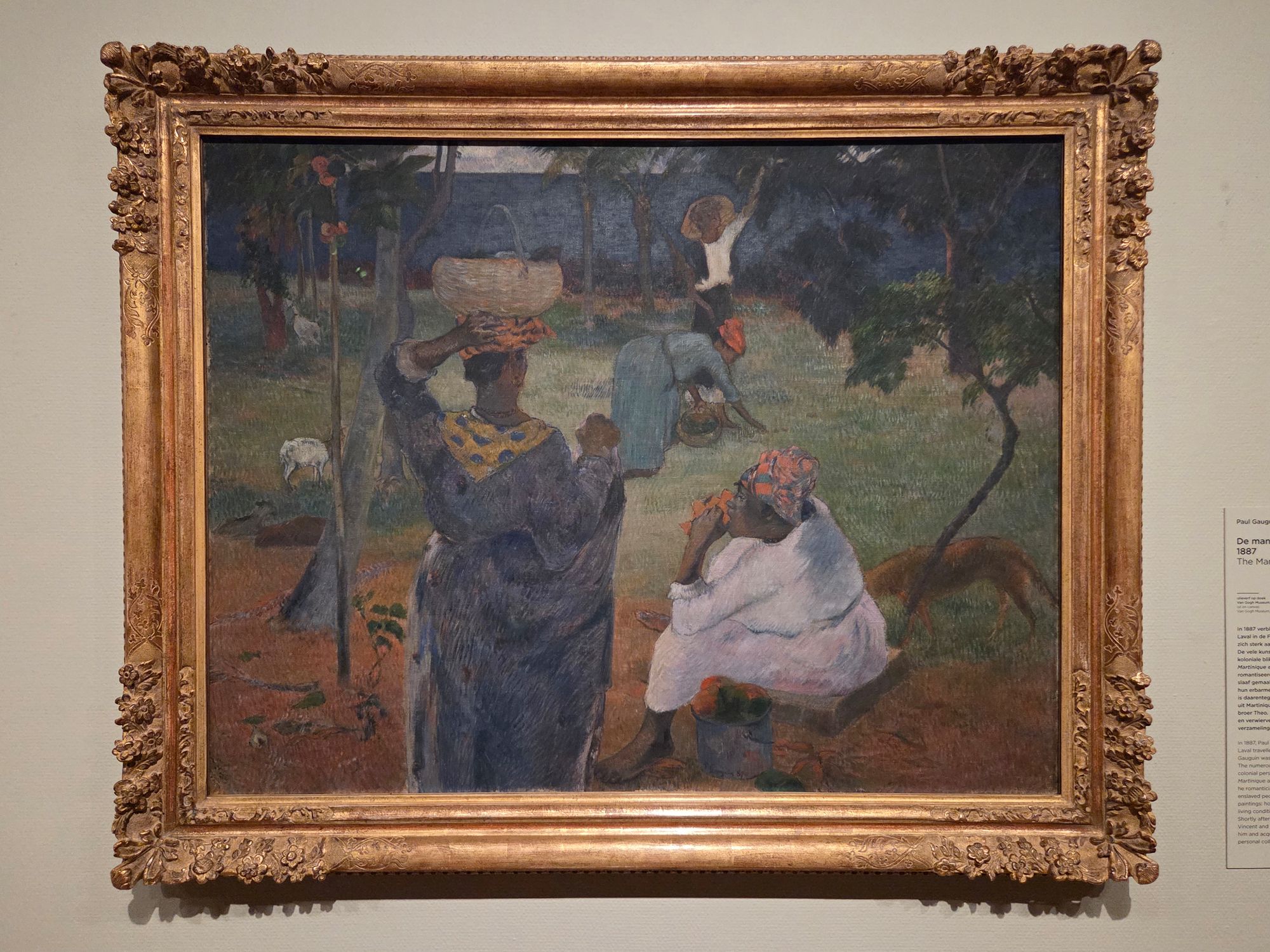
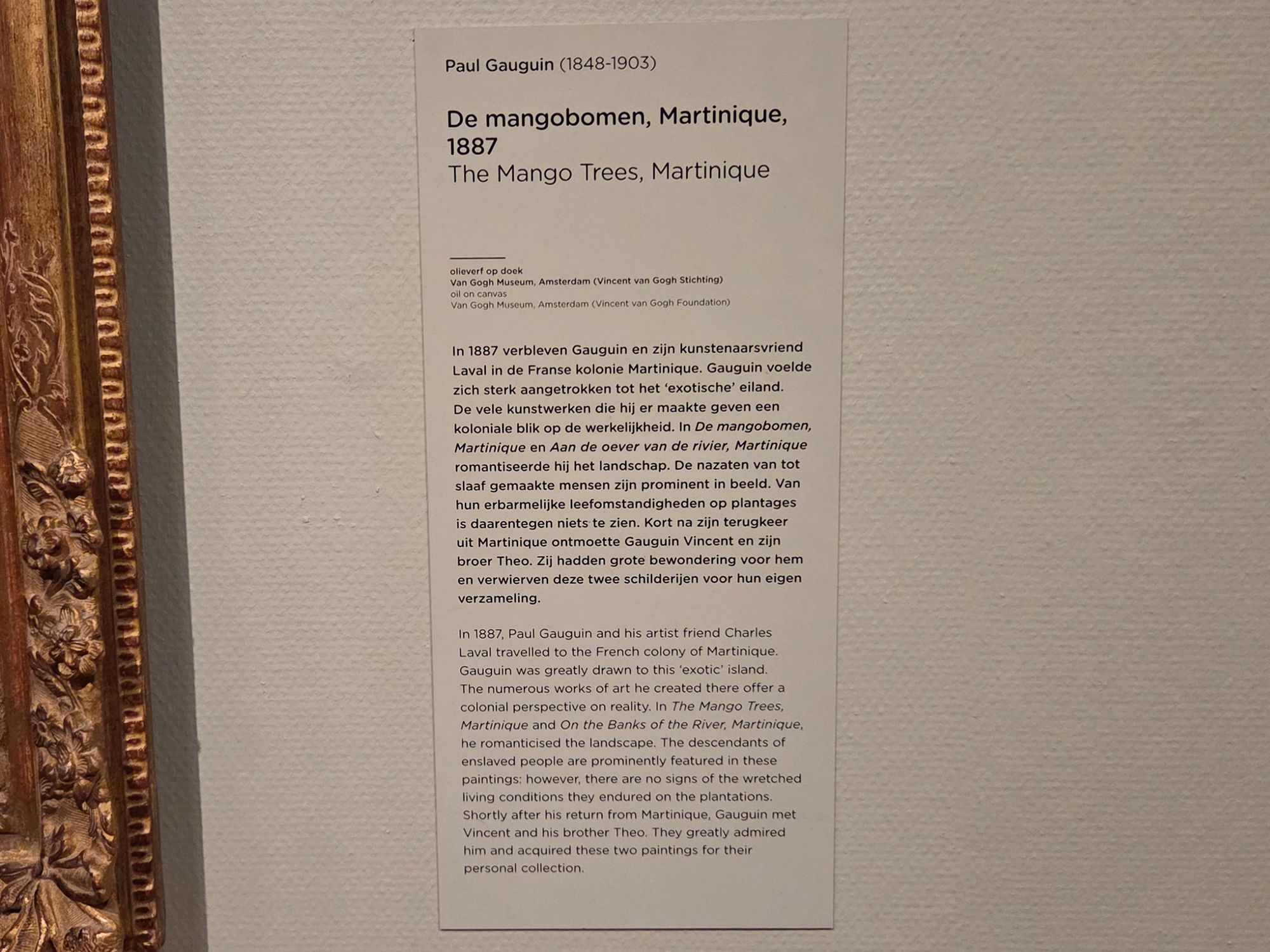
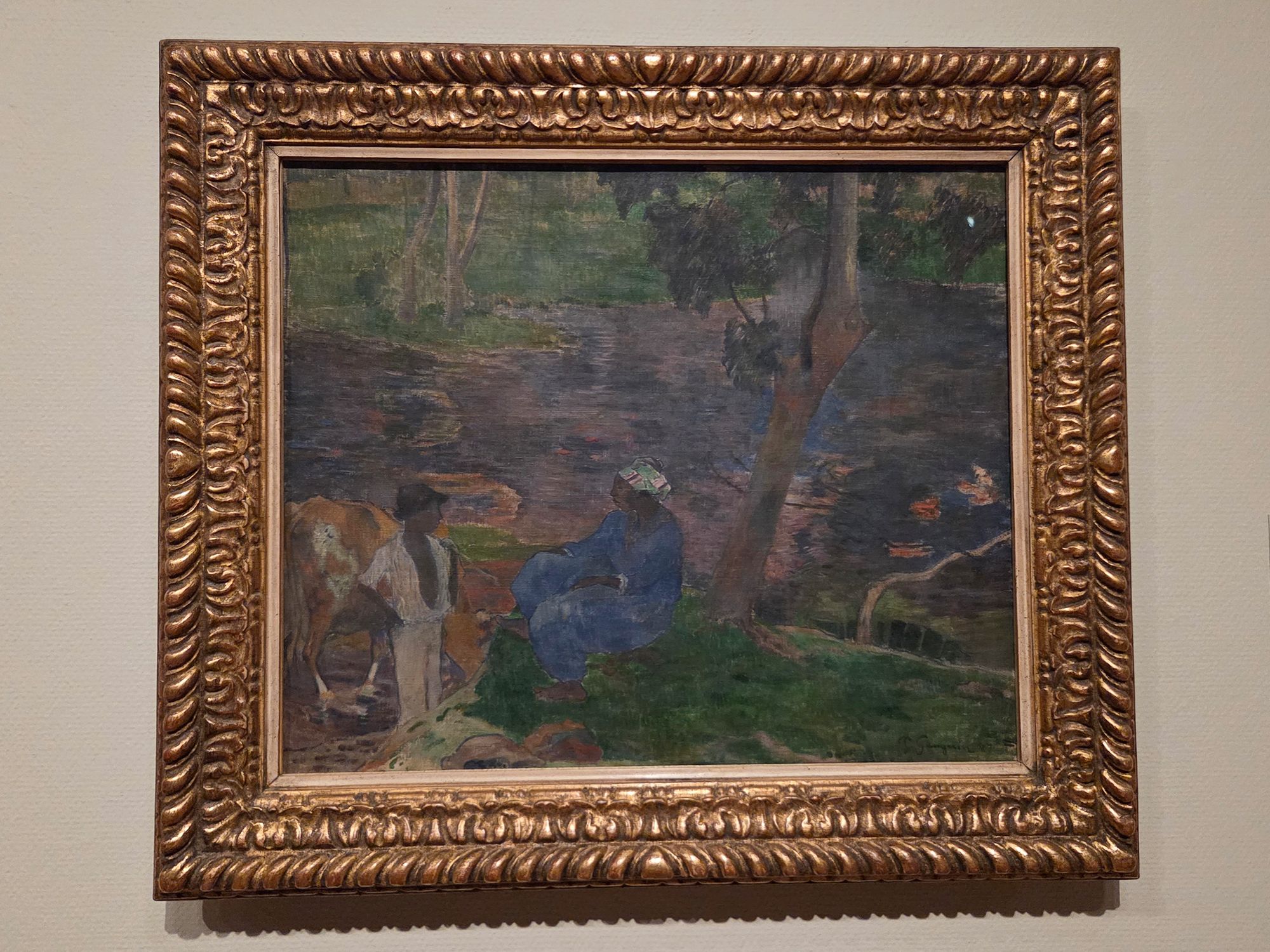
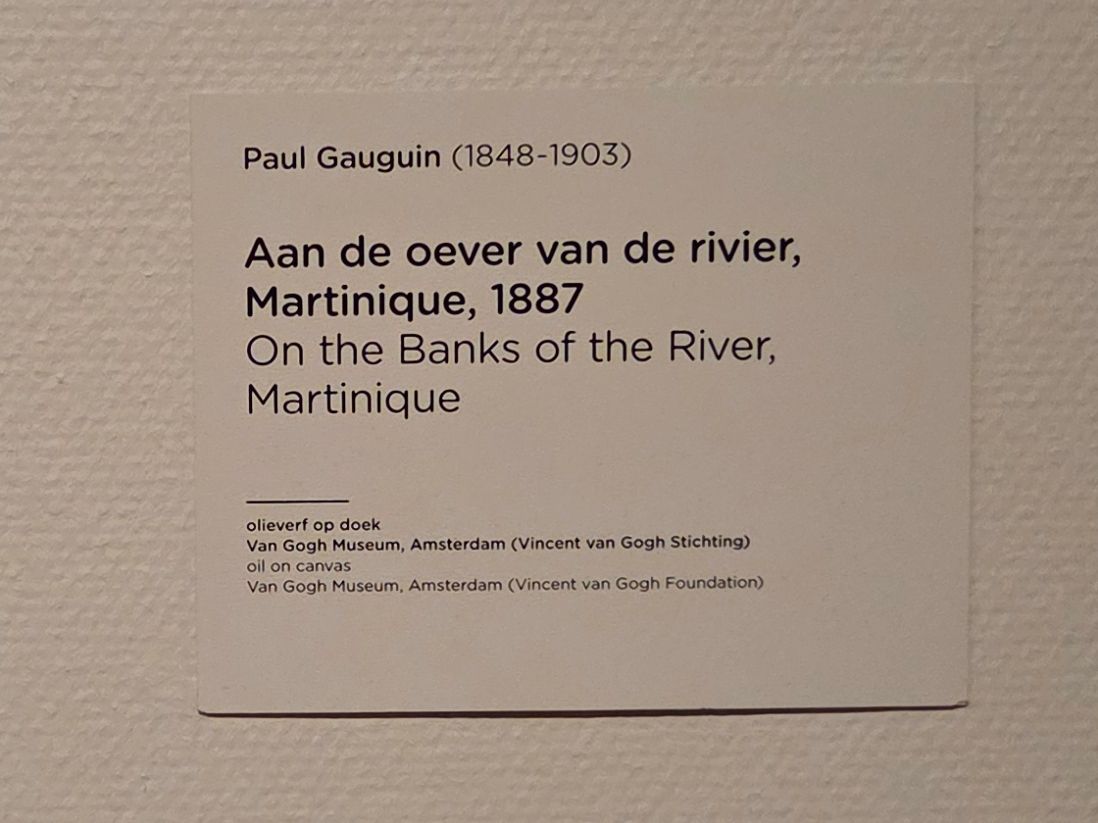
In 1887, Paul Gauguin traveled to Martinique, where the tropical landscape inspired a series of colorful paintings. After returning to France, he met Vincent van Gogh and his brother Theo, who admired his work and purchased two of his Martinique paintings for their collection.
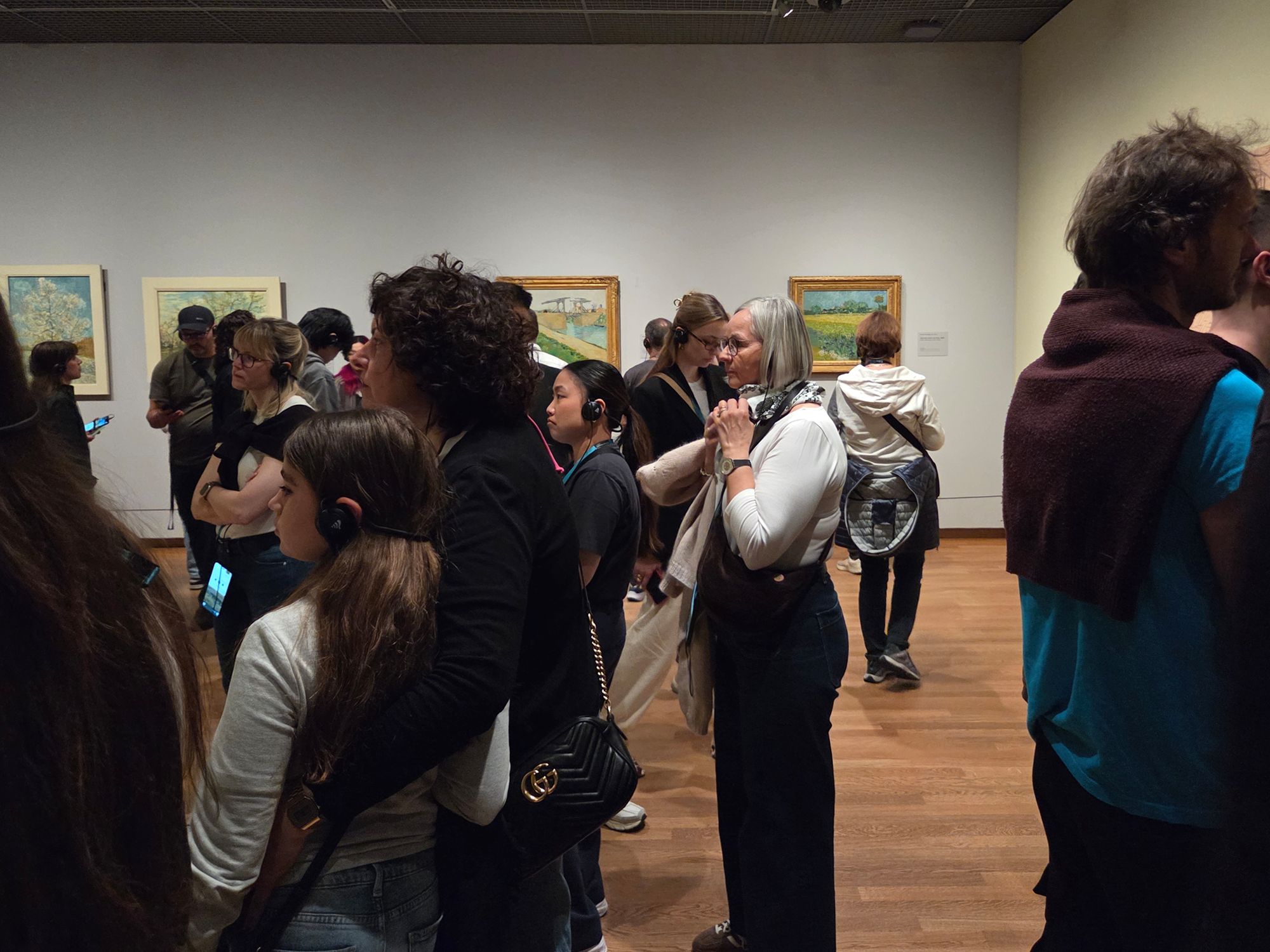
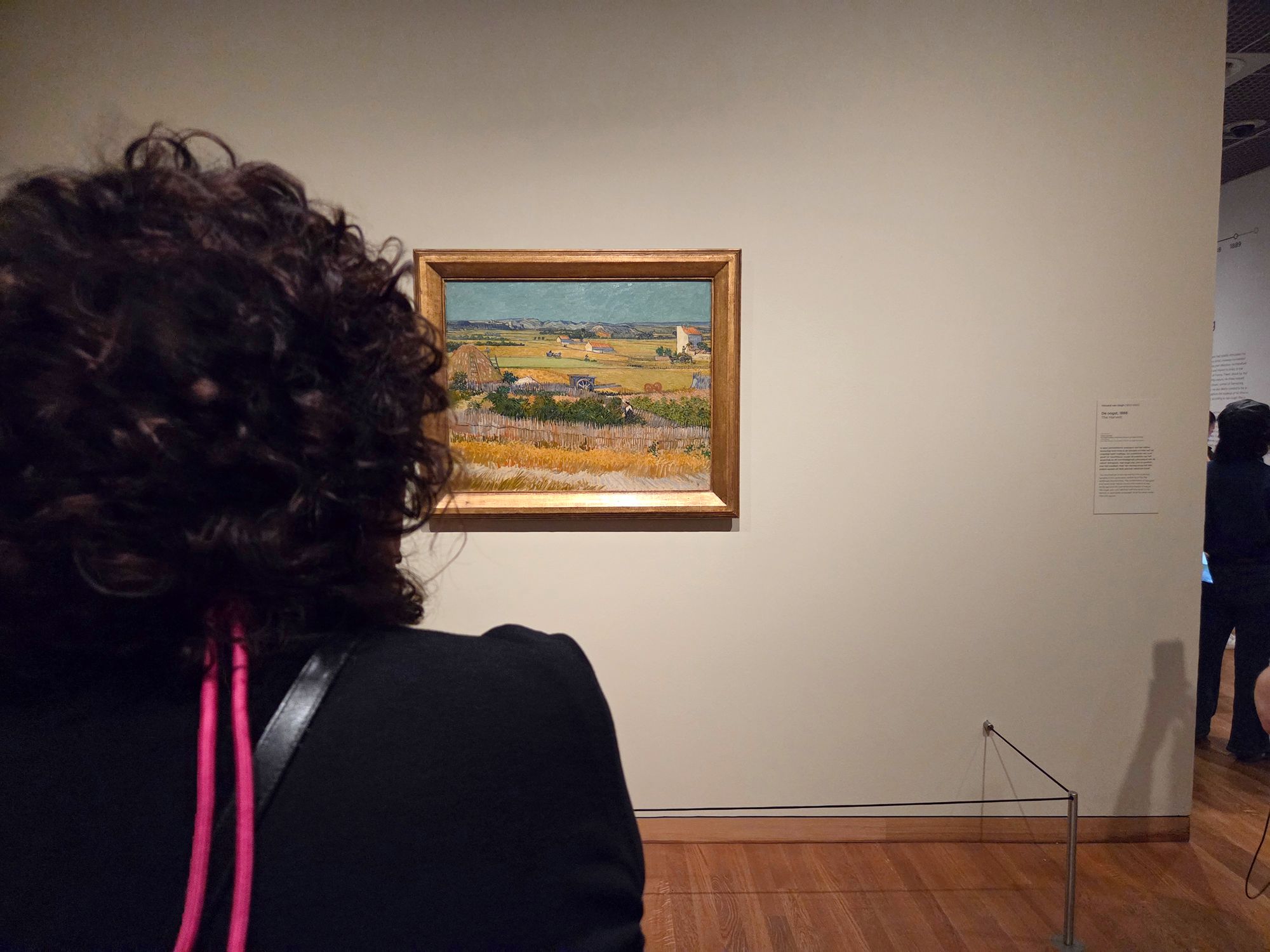
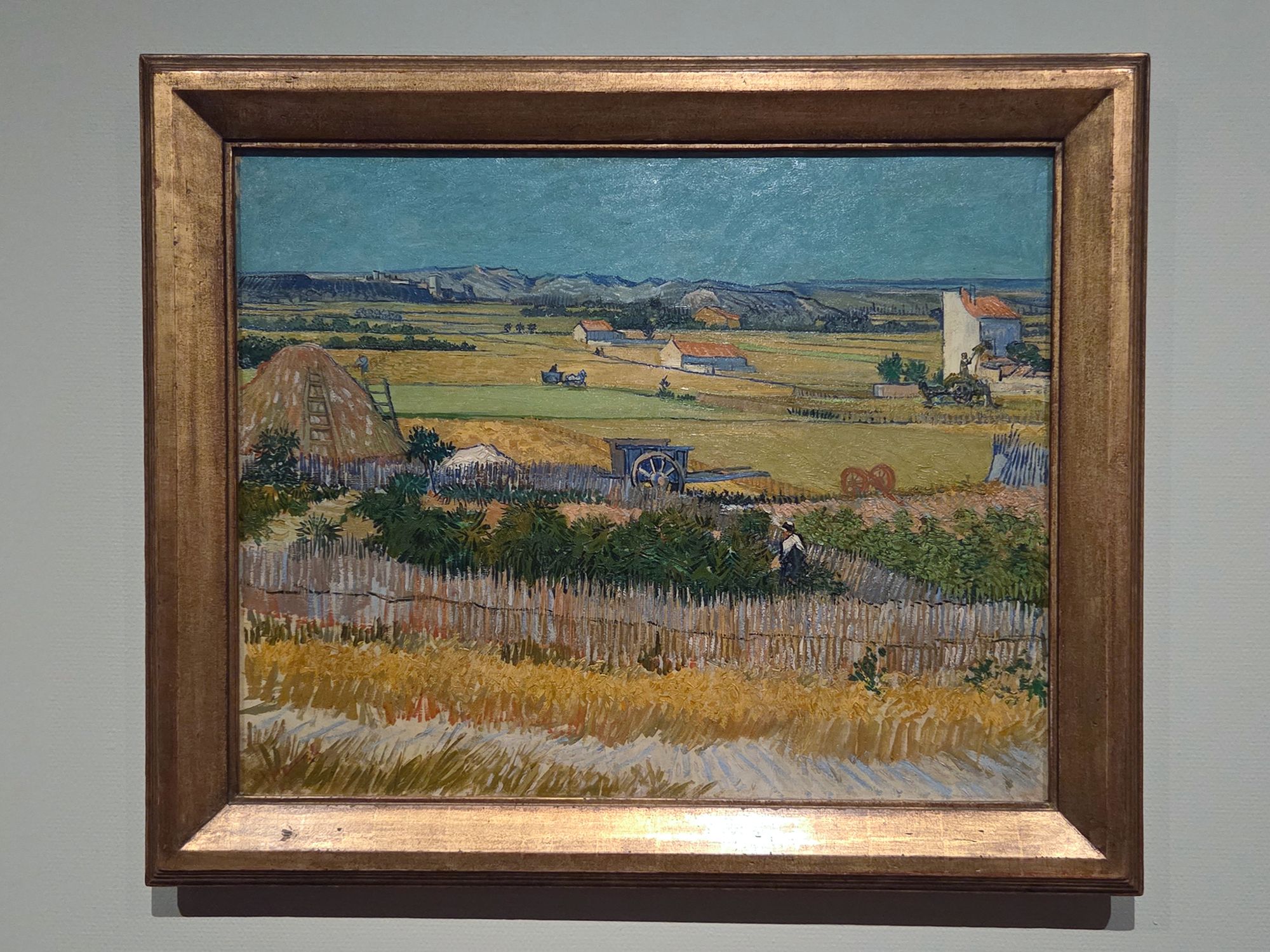
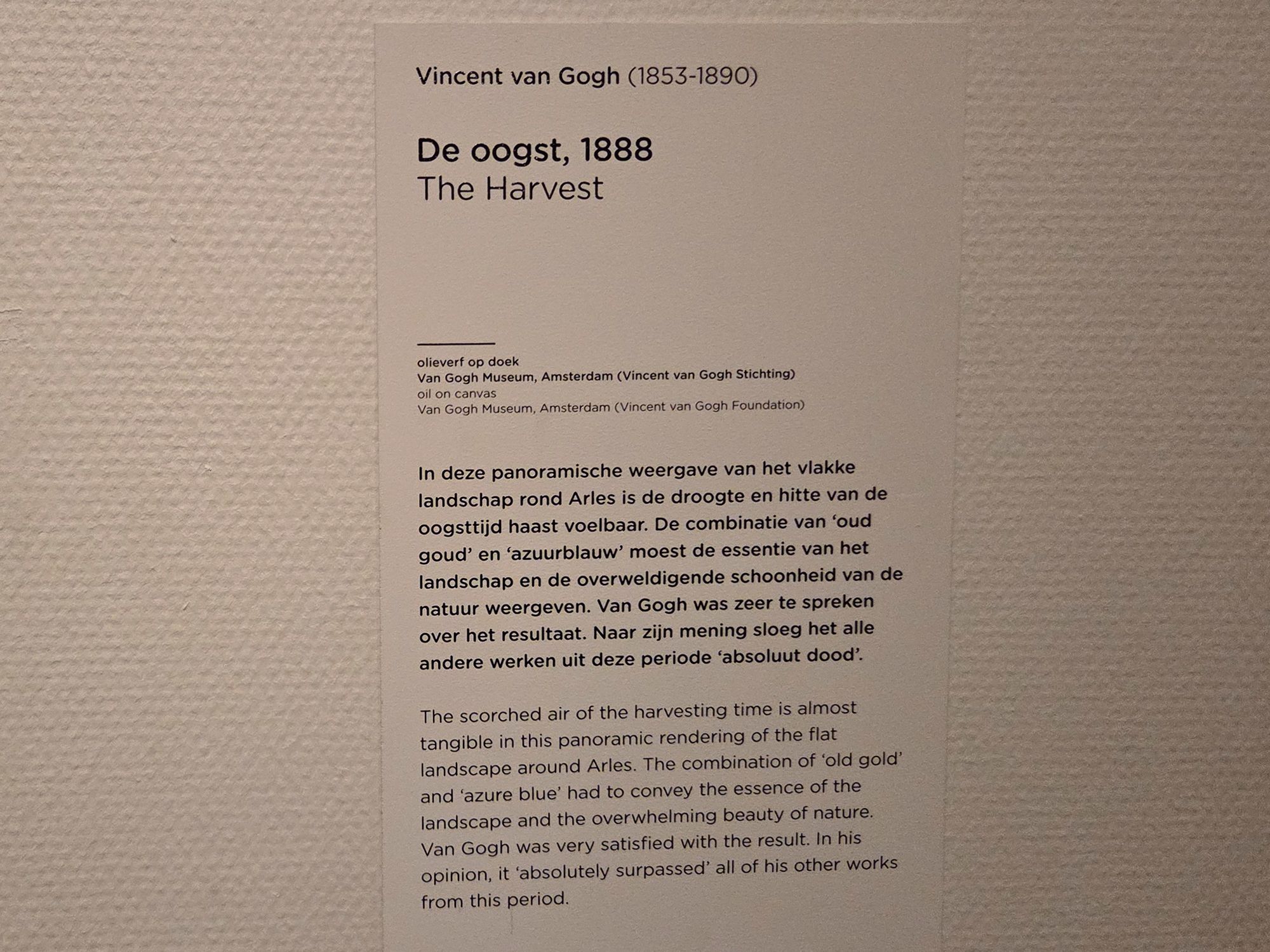
In Arles, Van Gogh was captivated by the intense summer light and colors of the countryside. In this landscape, he used contrasting golden-yellow fields and deep blue sky to capture the heat of harvest time and the beauty of nature—a painting he considered one of his finest from this period.
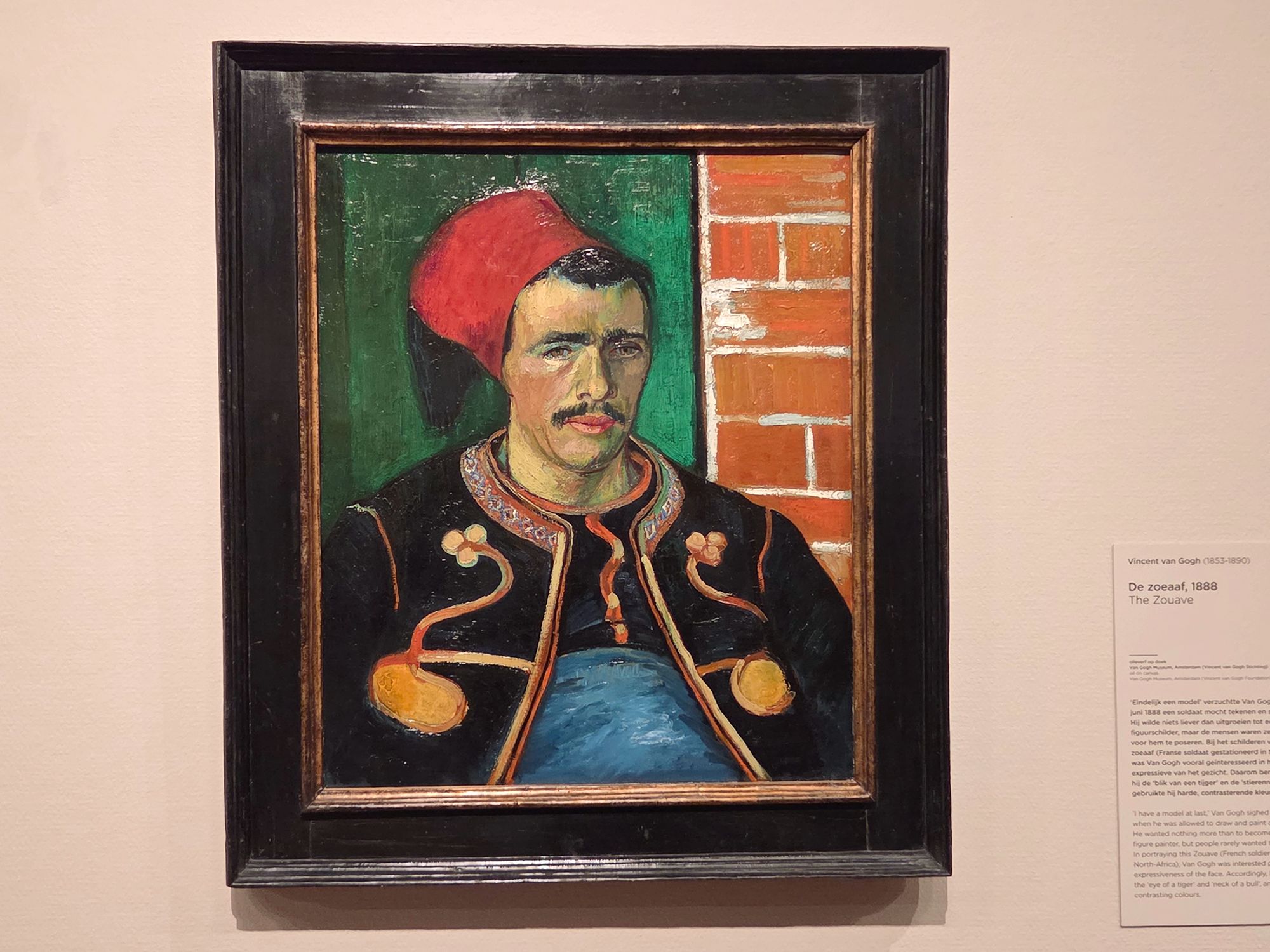
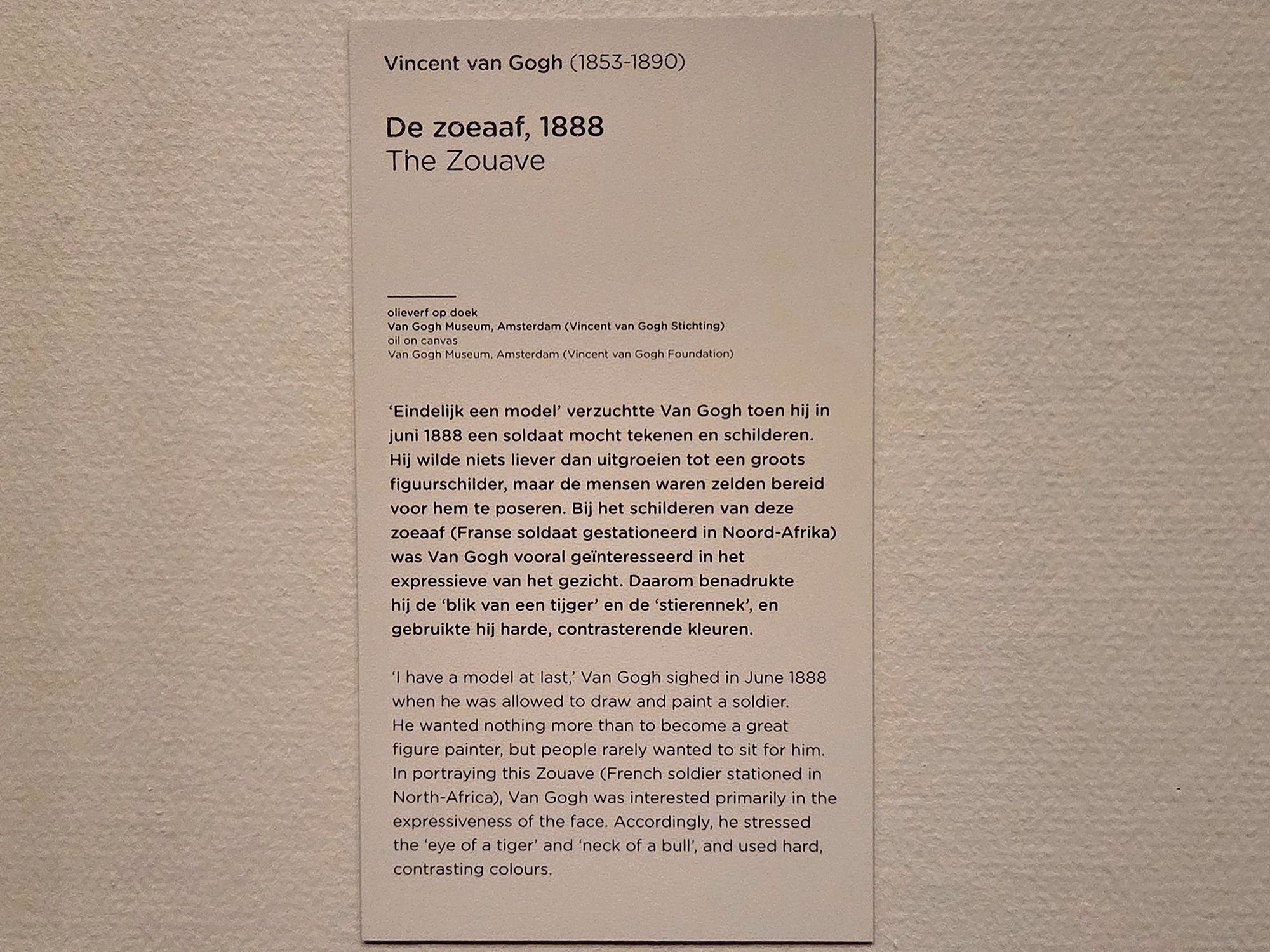
In June 1888, Van Gogh was finally able to find a model willing to pose for him—a French Zouave soldier. He emphasized the soldier’s strong facial features and used bold, contrasting colors, continuing his experiments with expressive portrait painting.
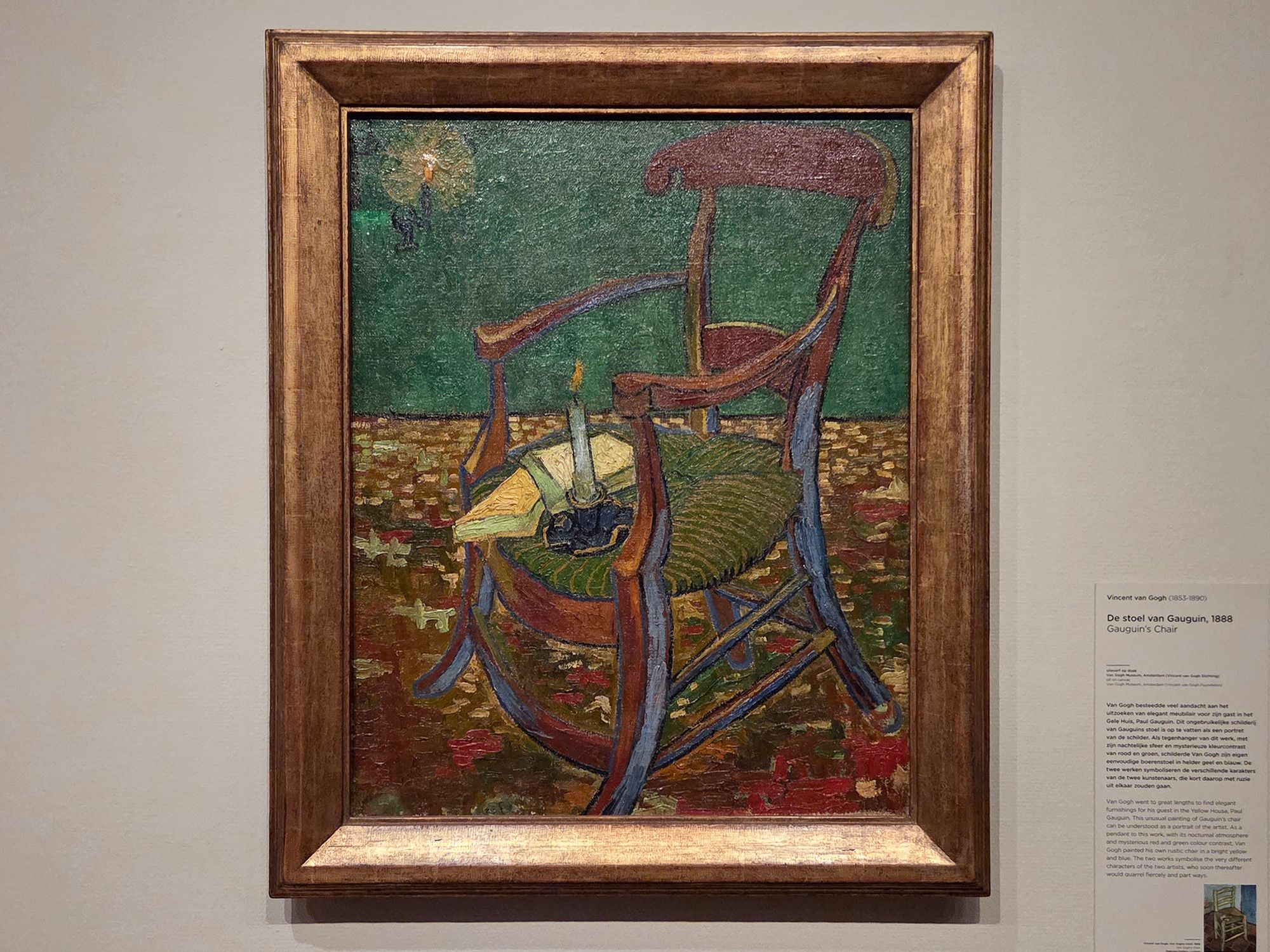
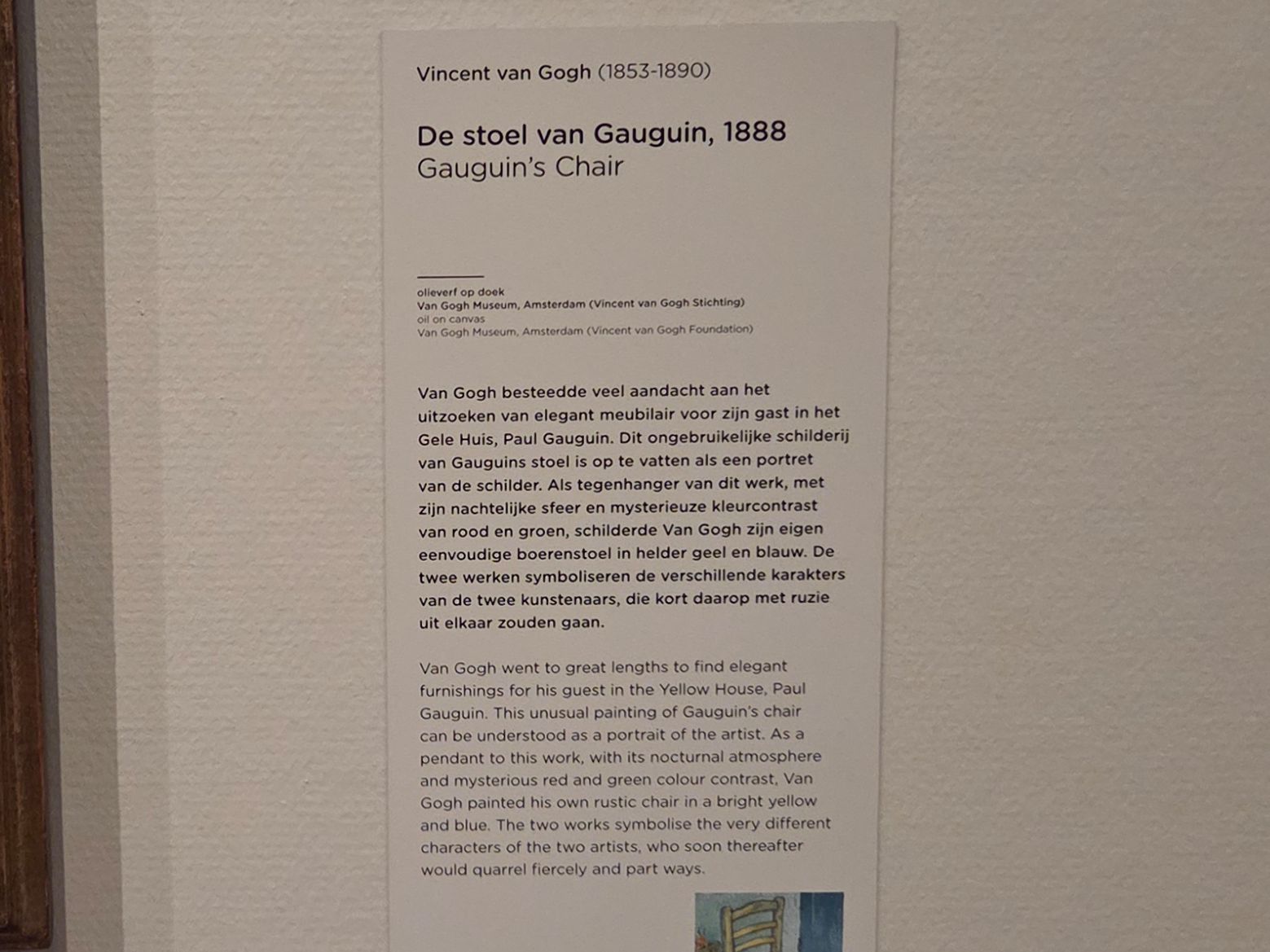
Van Gogh painted Paul Gauguin’s chair as a symbolic portrait of his fellow artist during their time together at the Yellow House in Arles. He also painted his own simpler chair, using contrasting colors and atmosphere to reflect the very different personalities of the two artists, whose friendship soon ended after a serious quarrel.
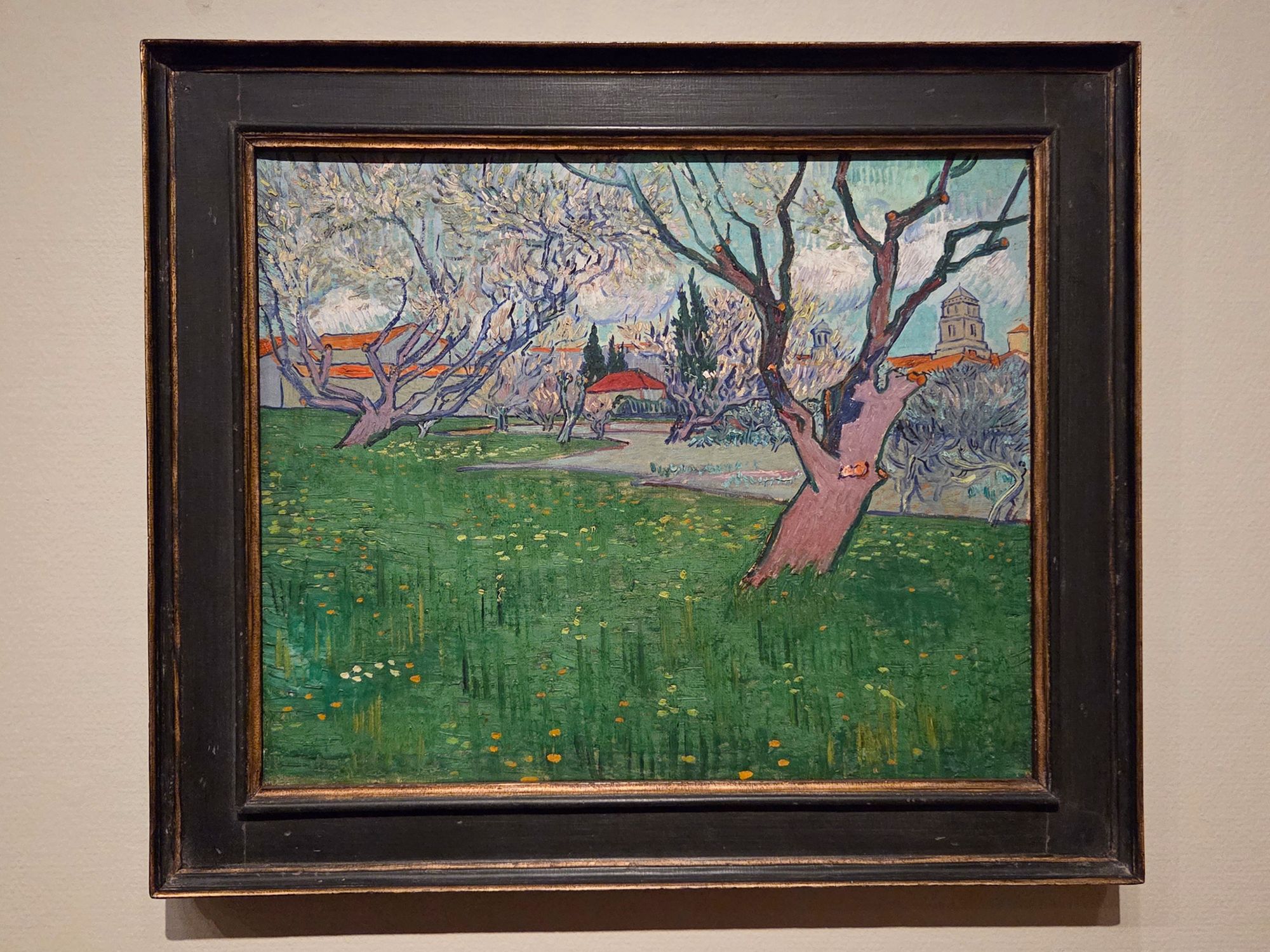
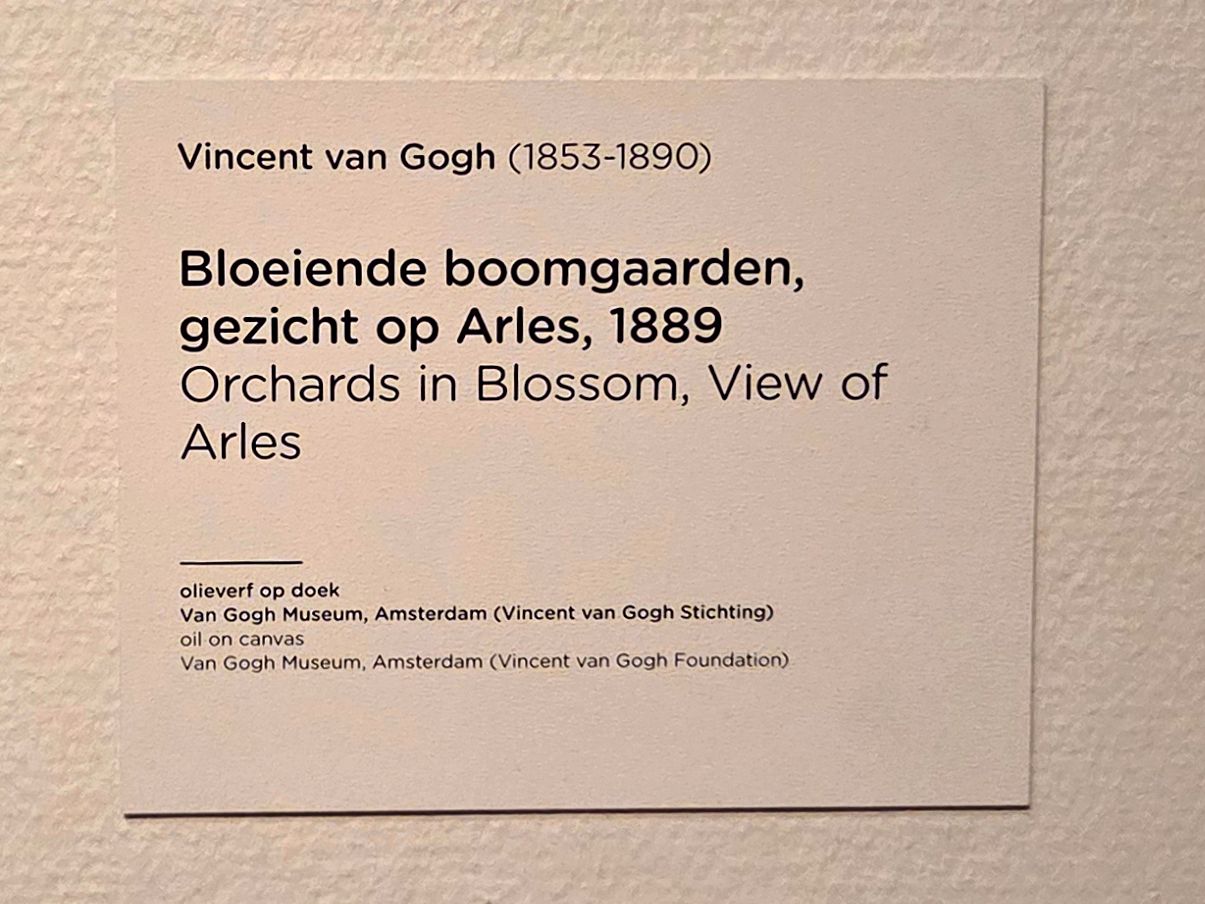
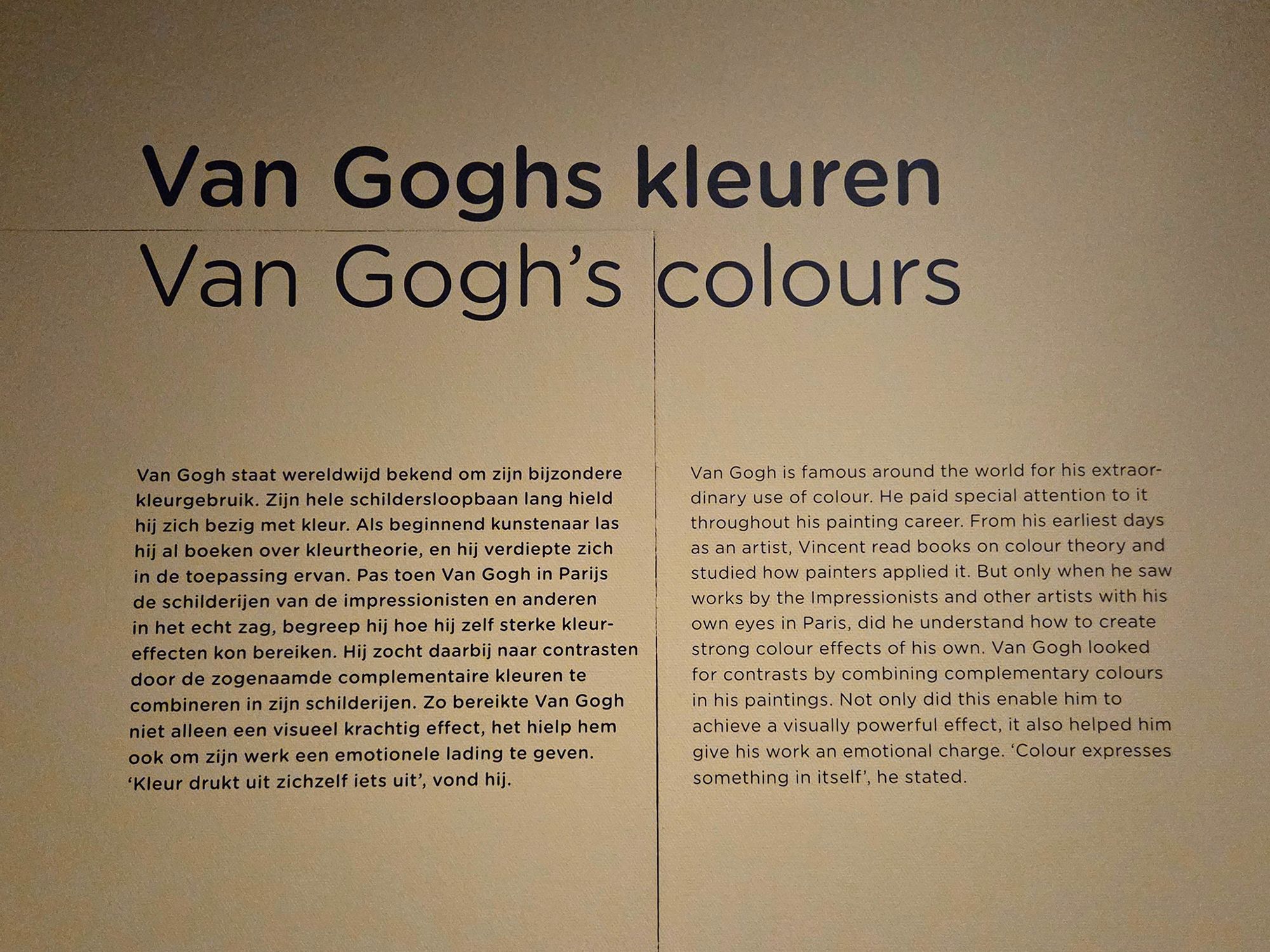
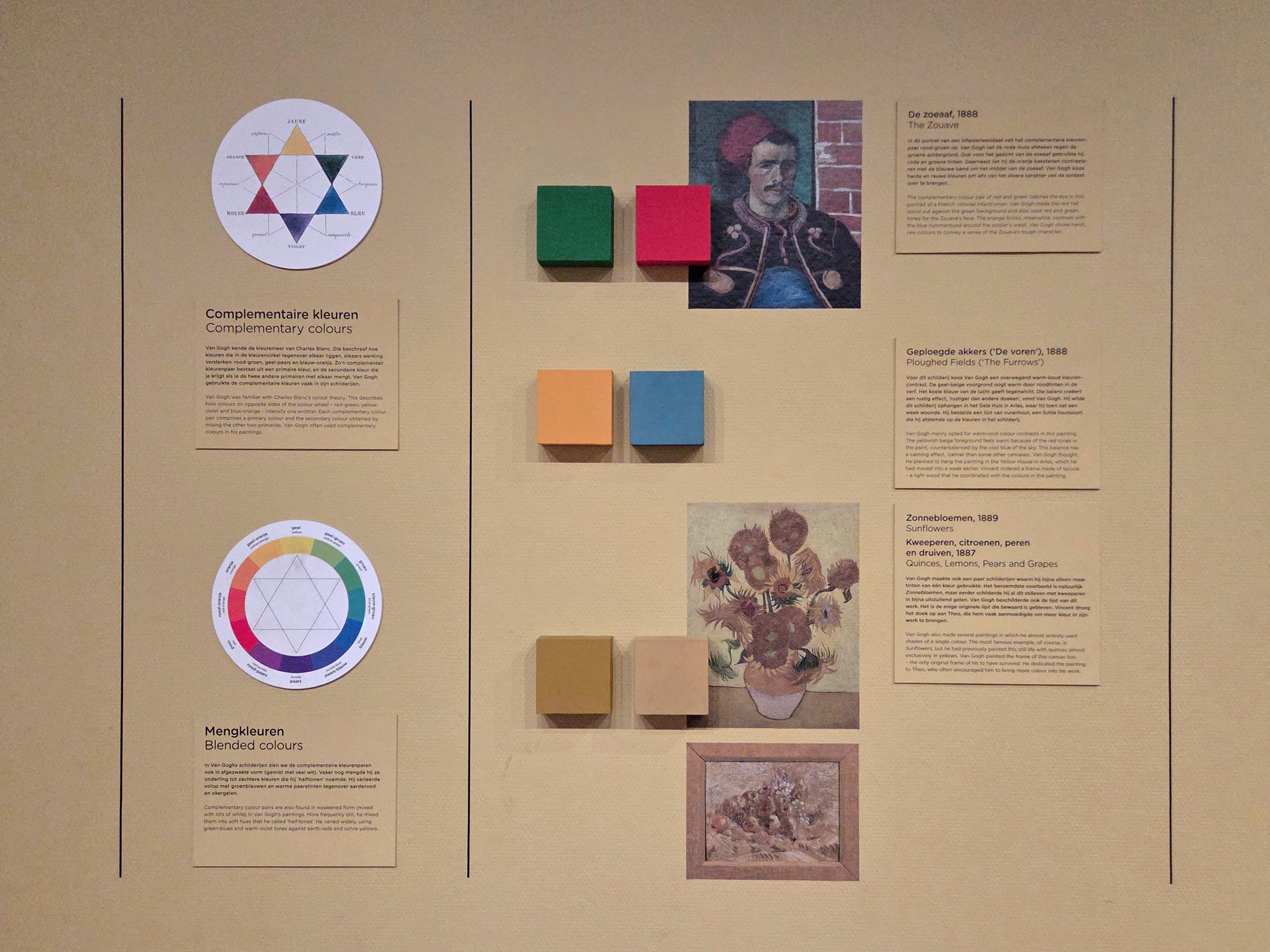
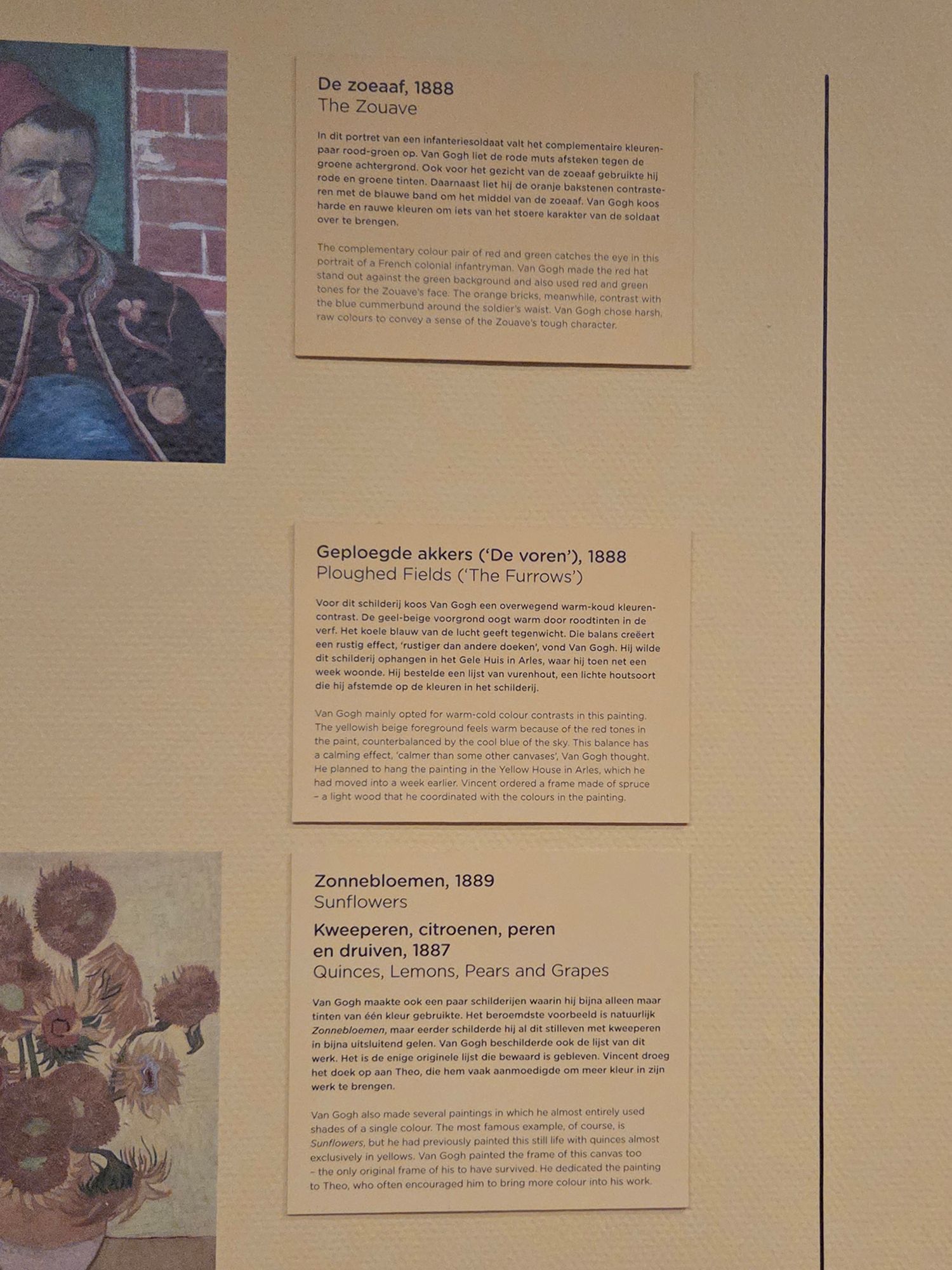
On the third floor of the Van Gogh Museum, I continued exploring Van Gogh’s artistic development, including his increasingly bold and expressive use of color.
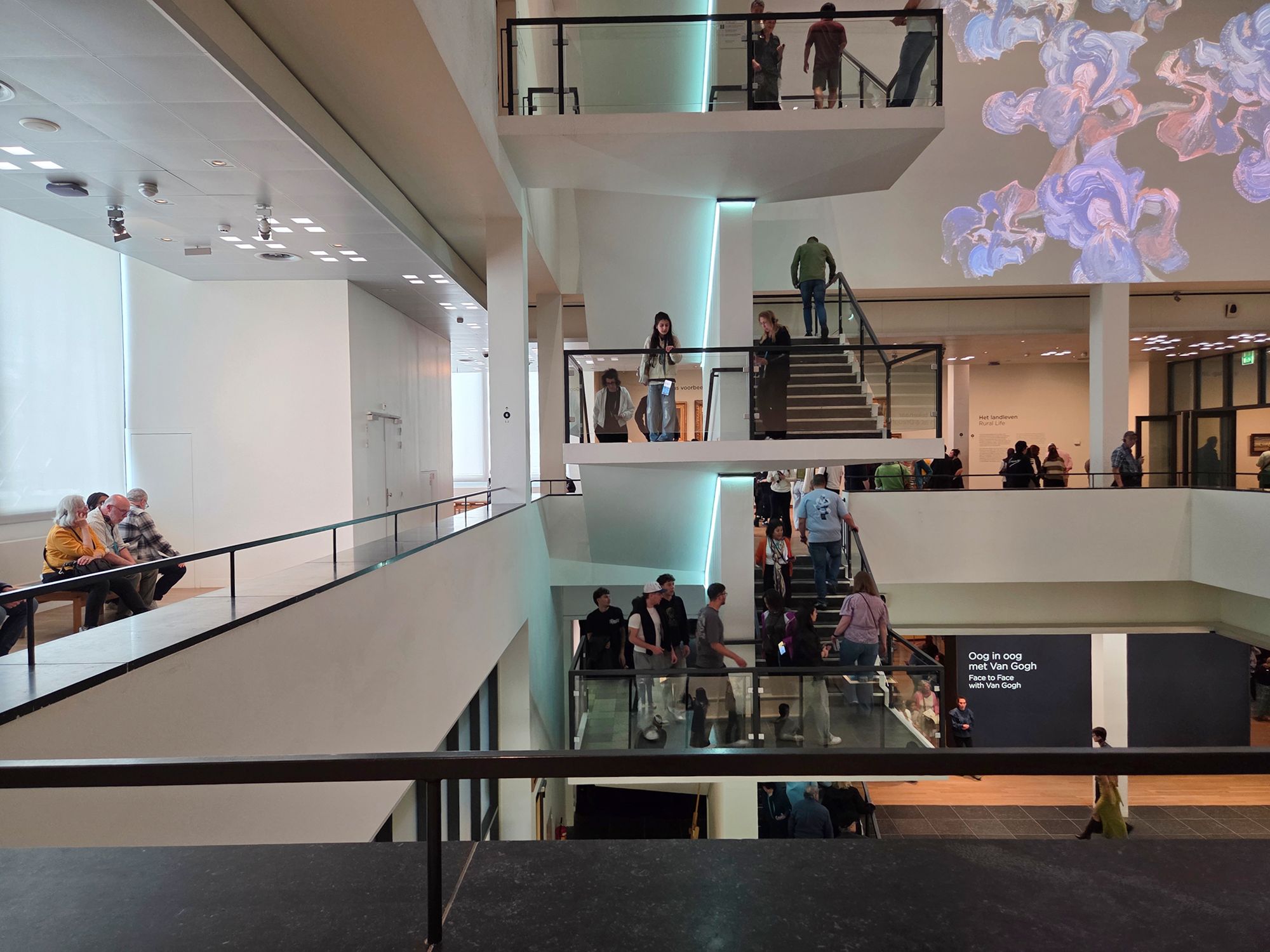
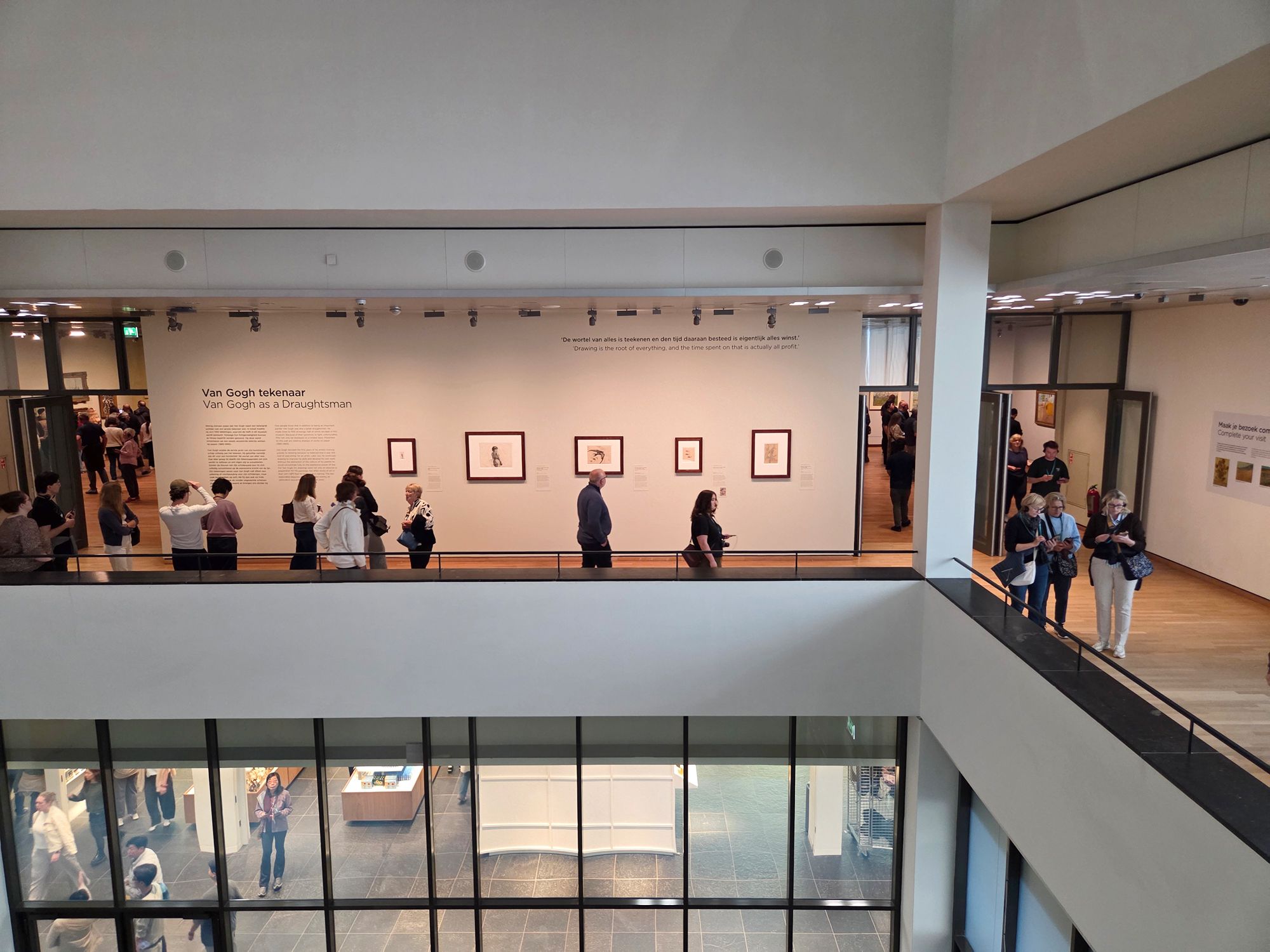
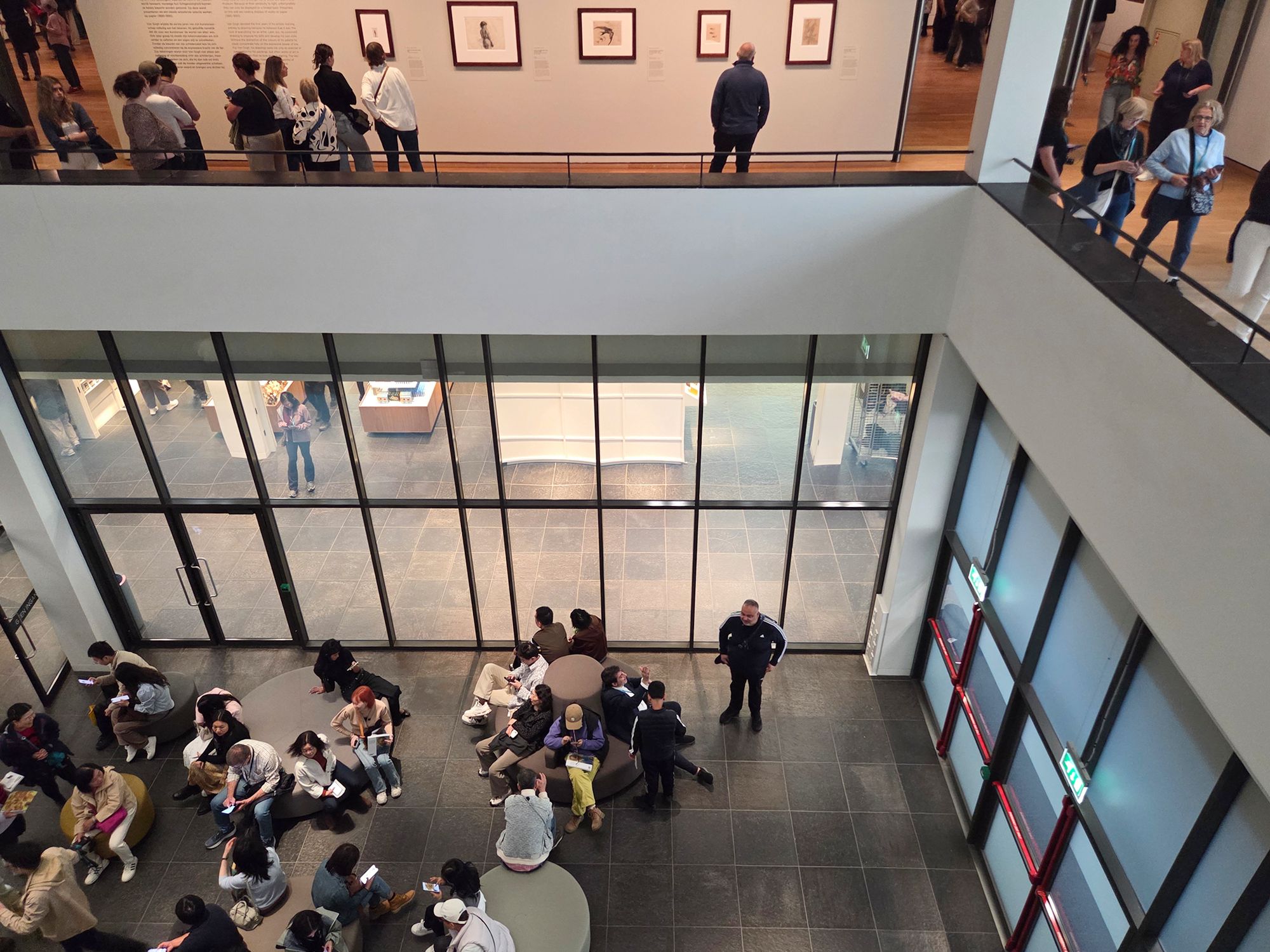
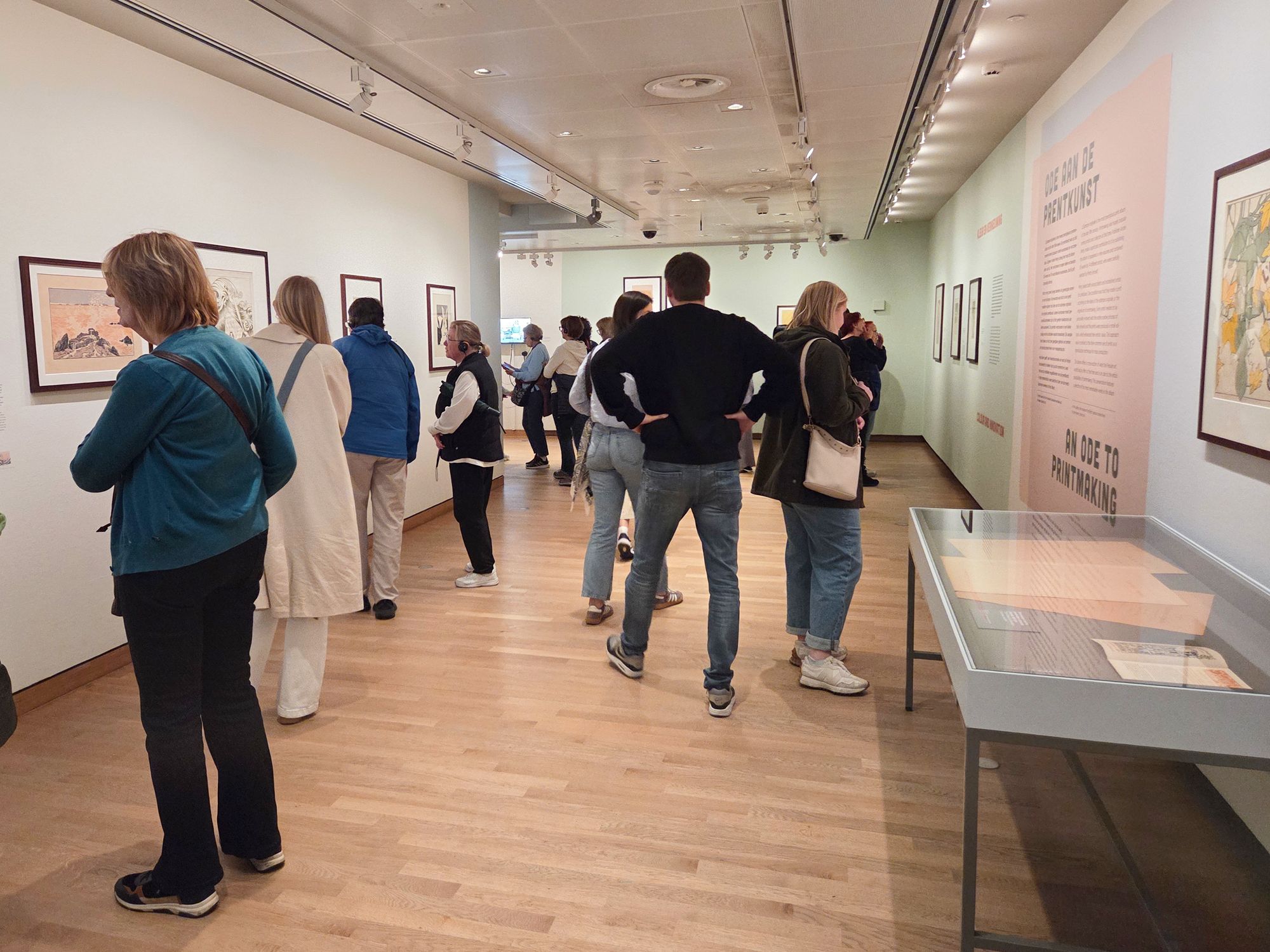
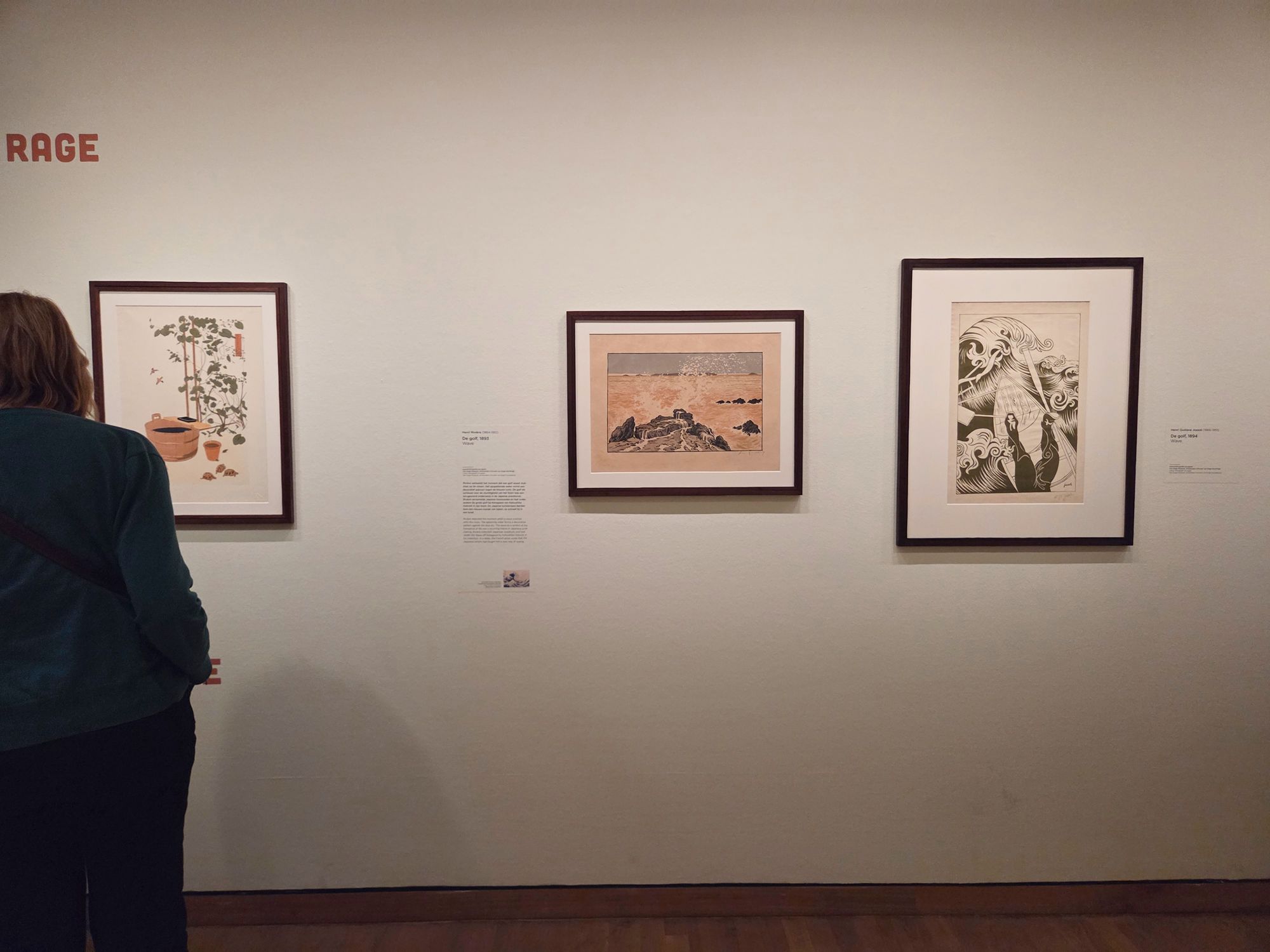
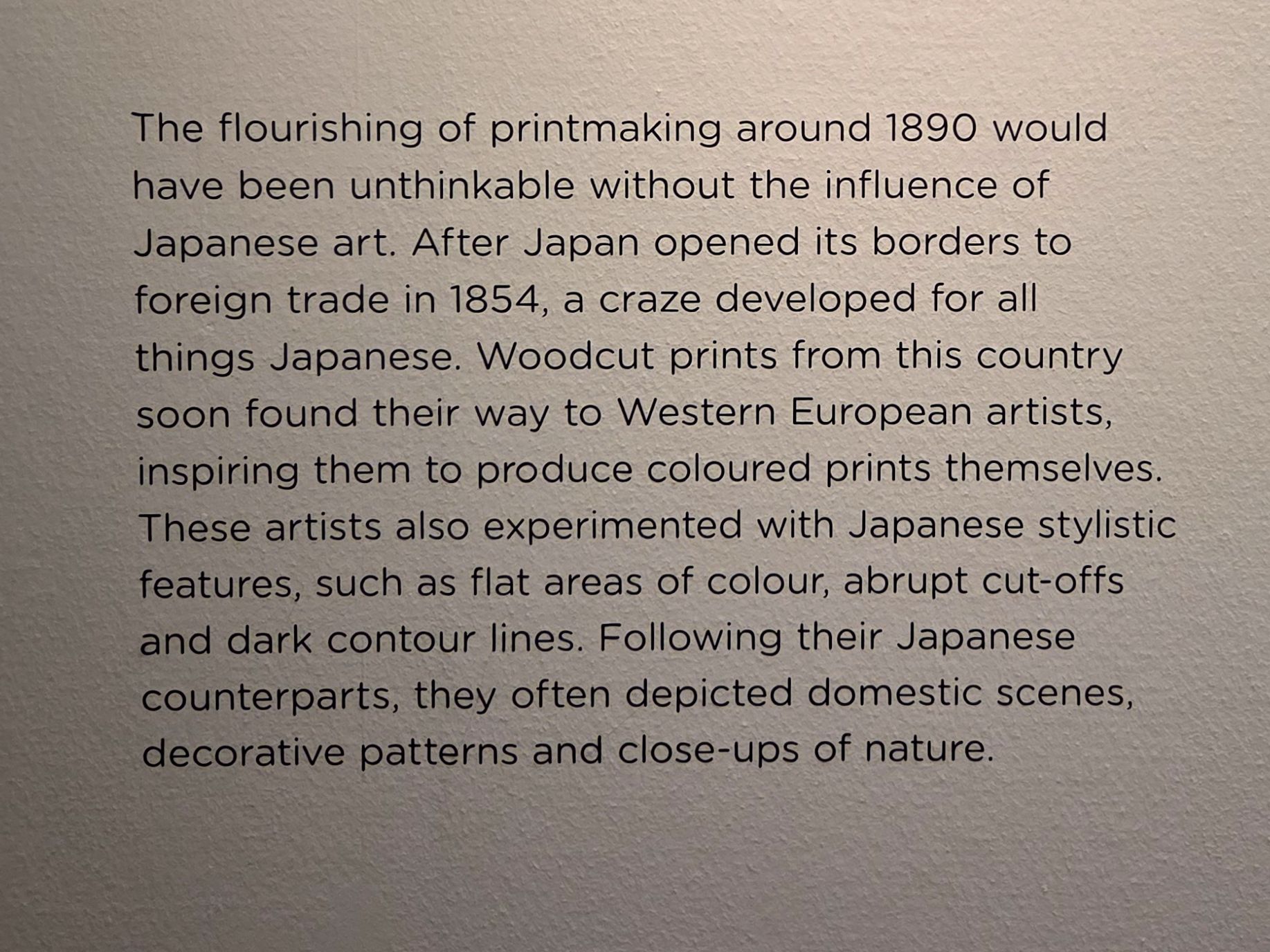
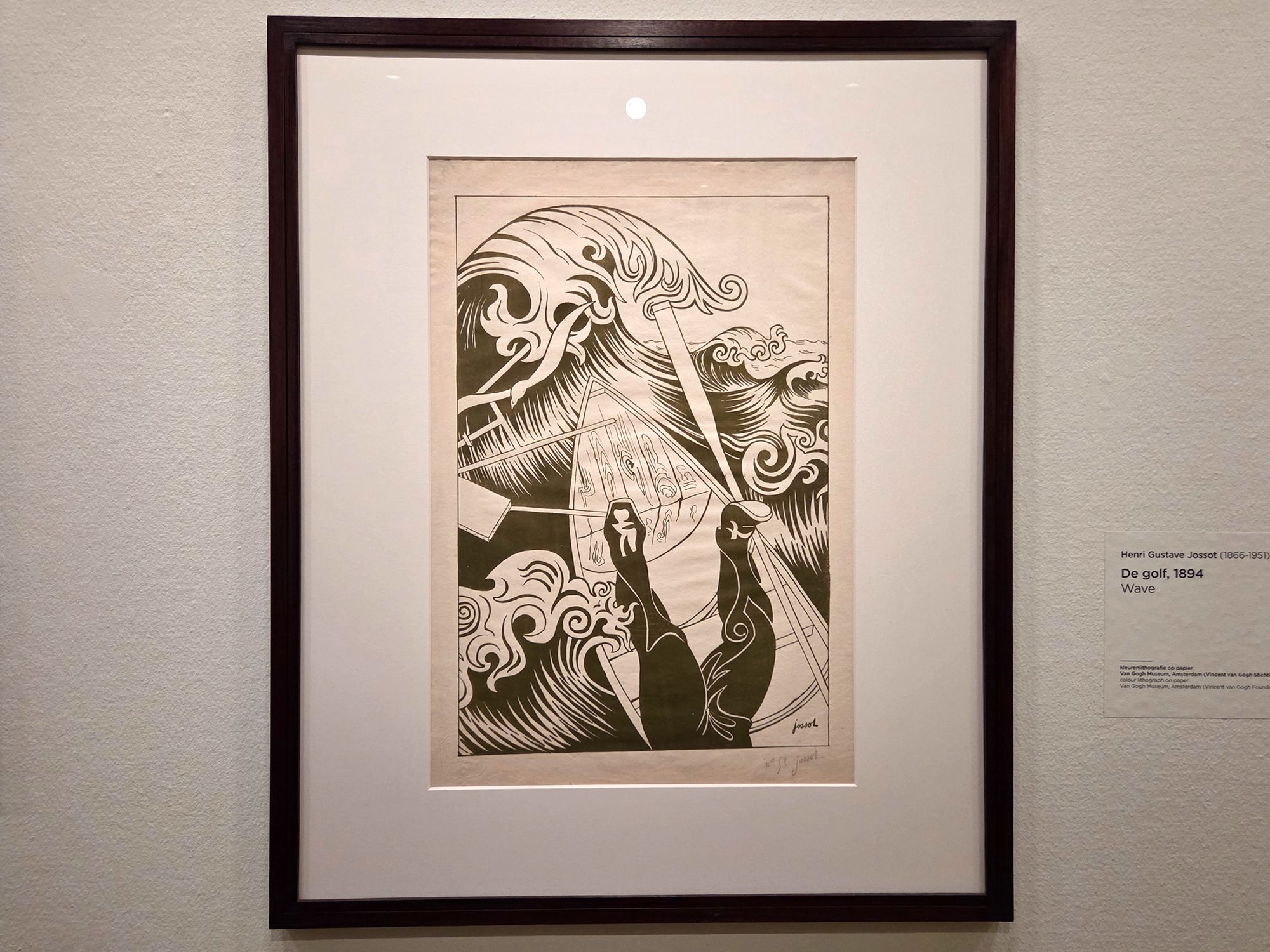
Japanese art had a major influence on European artists in the late 19th century. Japanese woodblock prints, with their flat areas of bold color, strong outlines, unusual cropping, and close-up views of everyday life and nature, inspired artists such as Van Gogh and helped shape new approaches to modern European art.
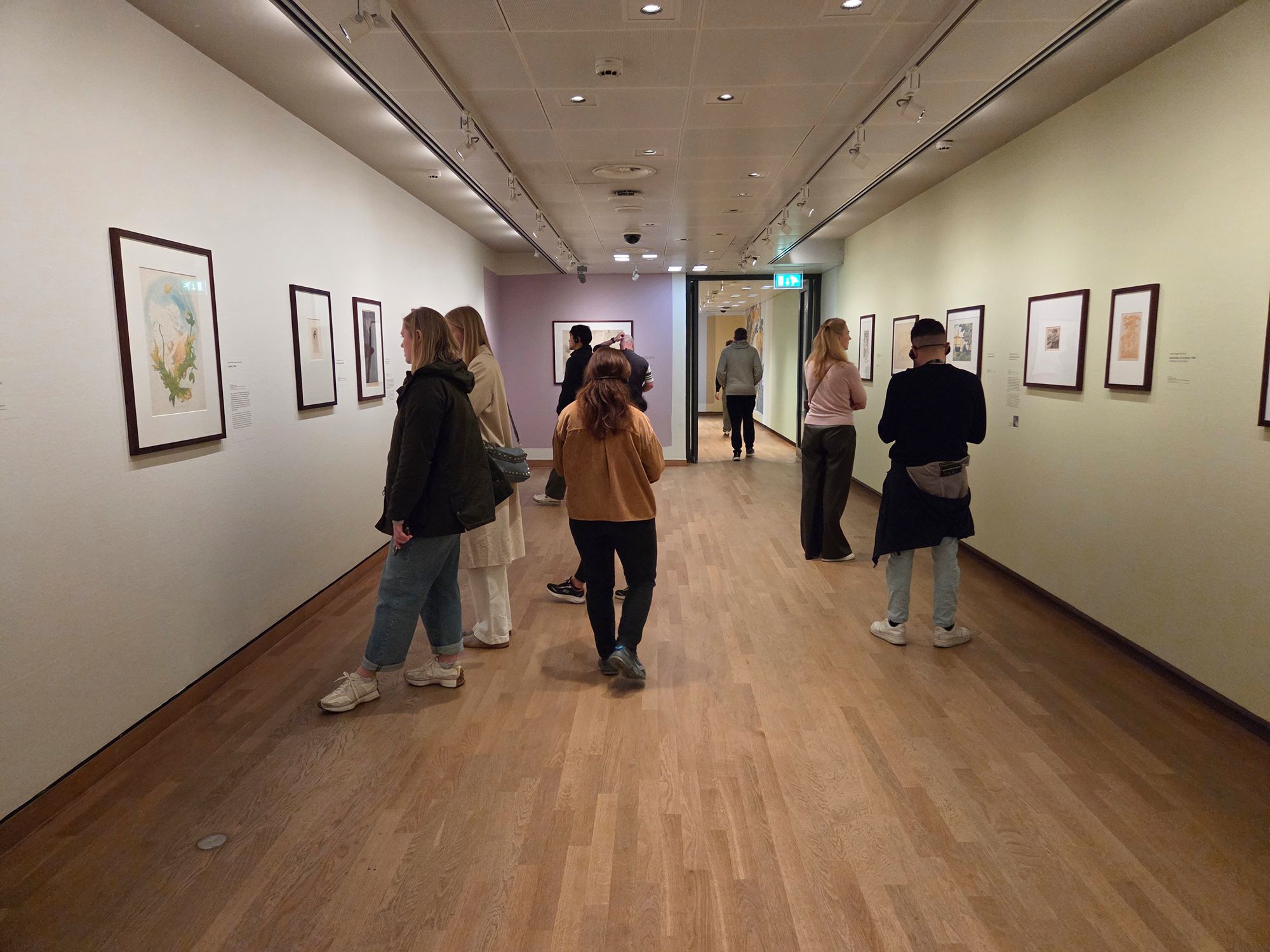
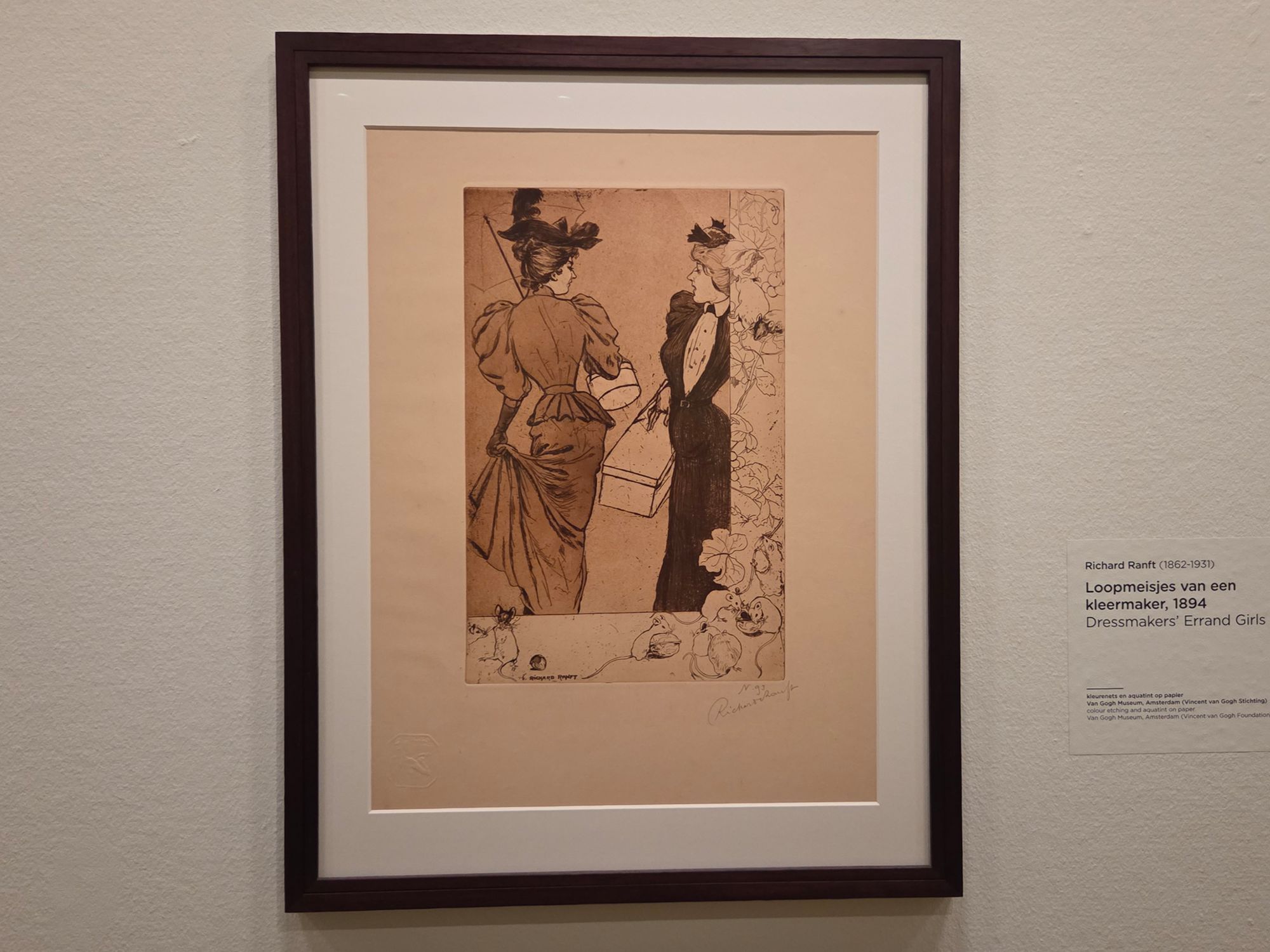
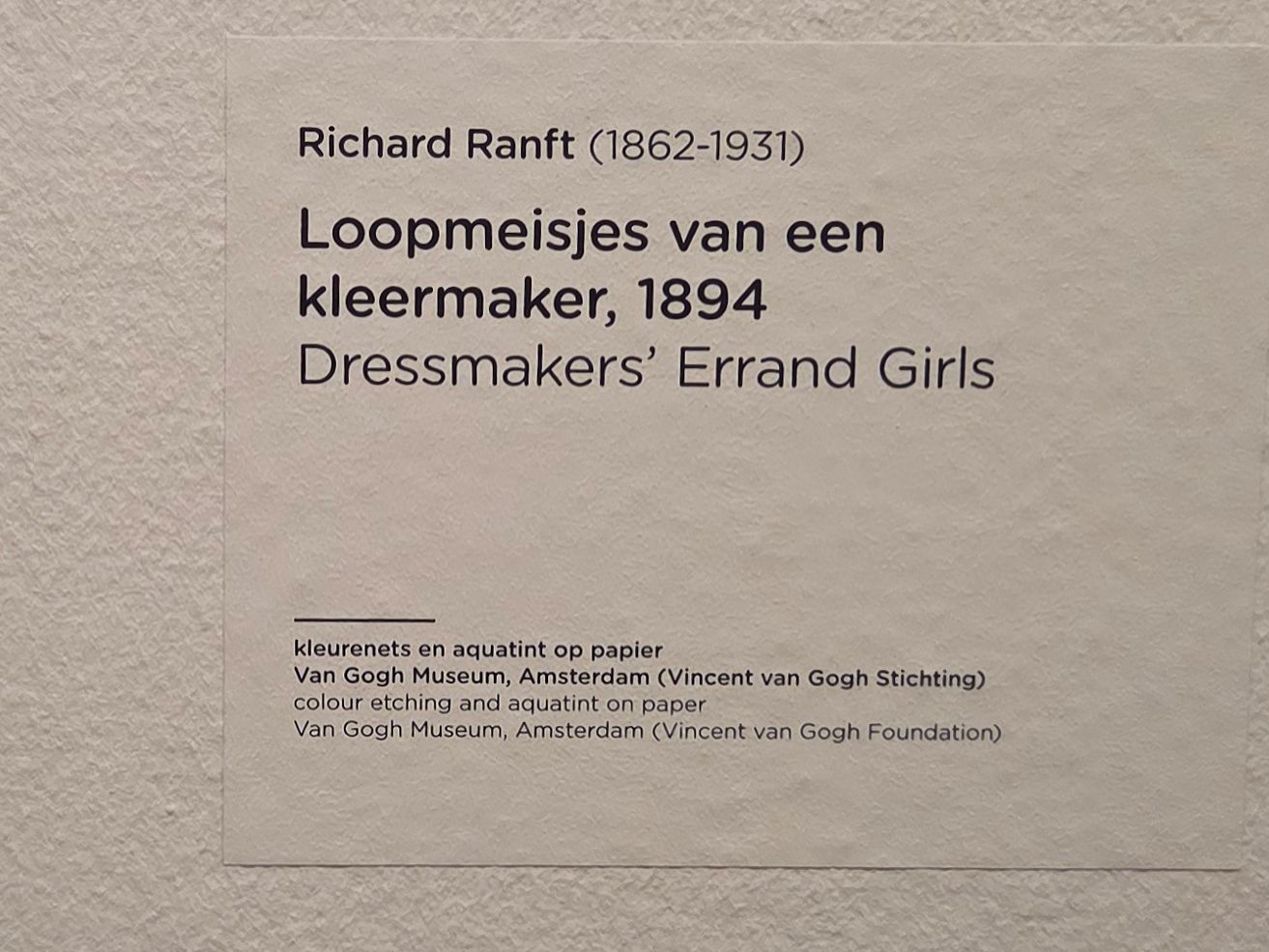
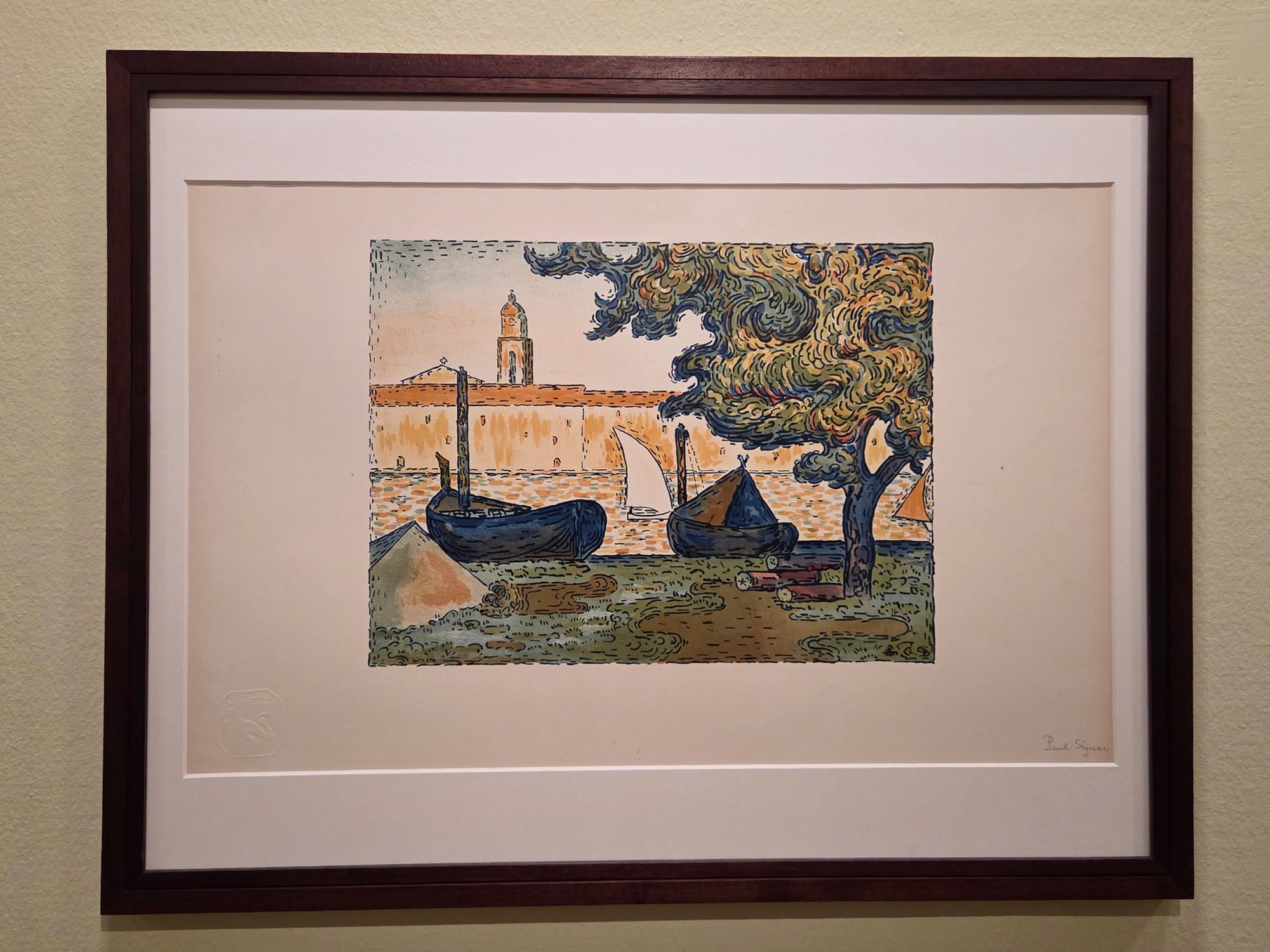
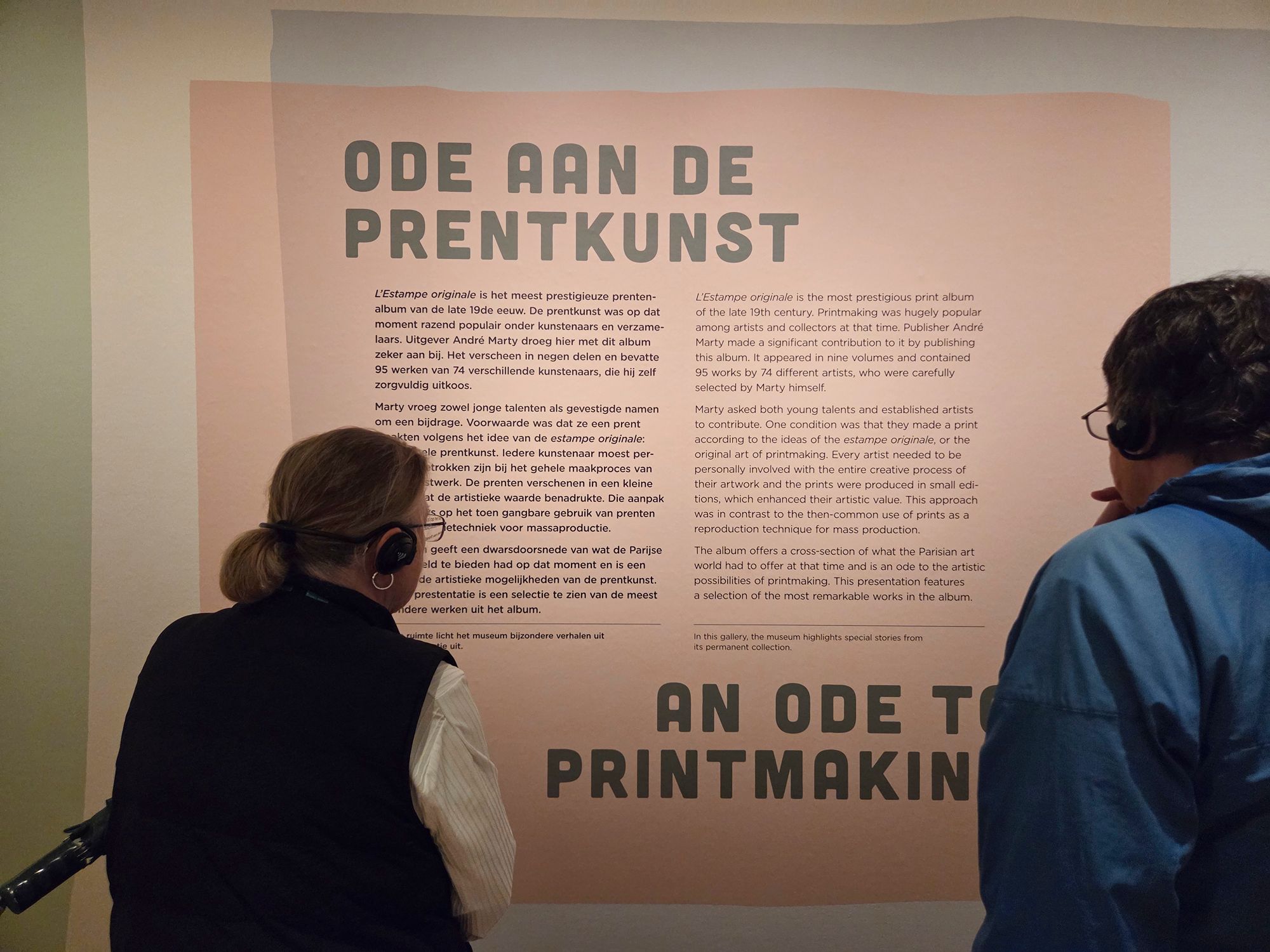
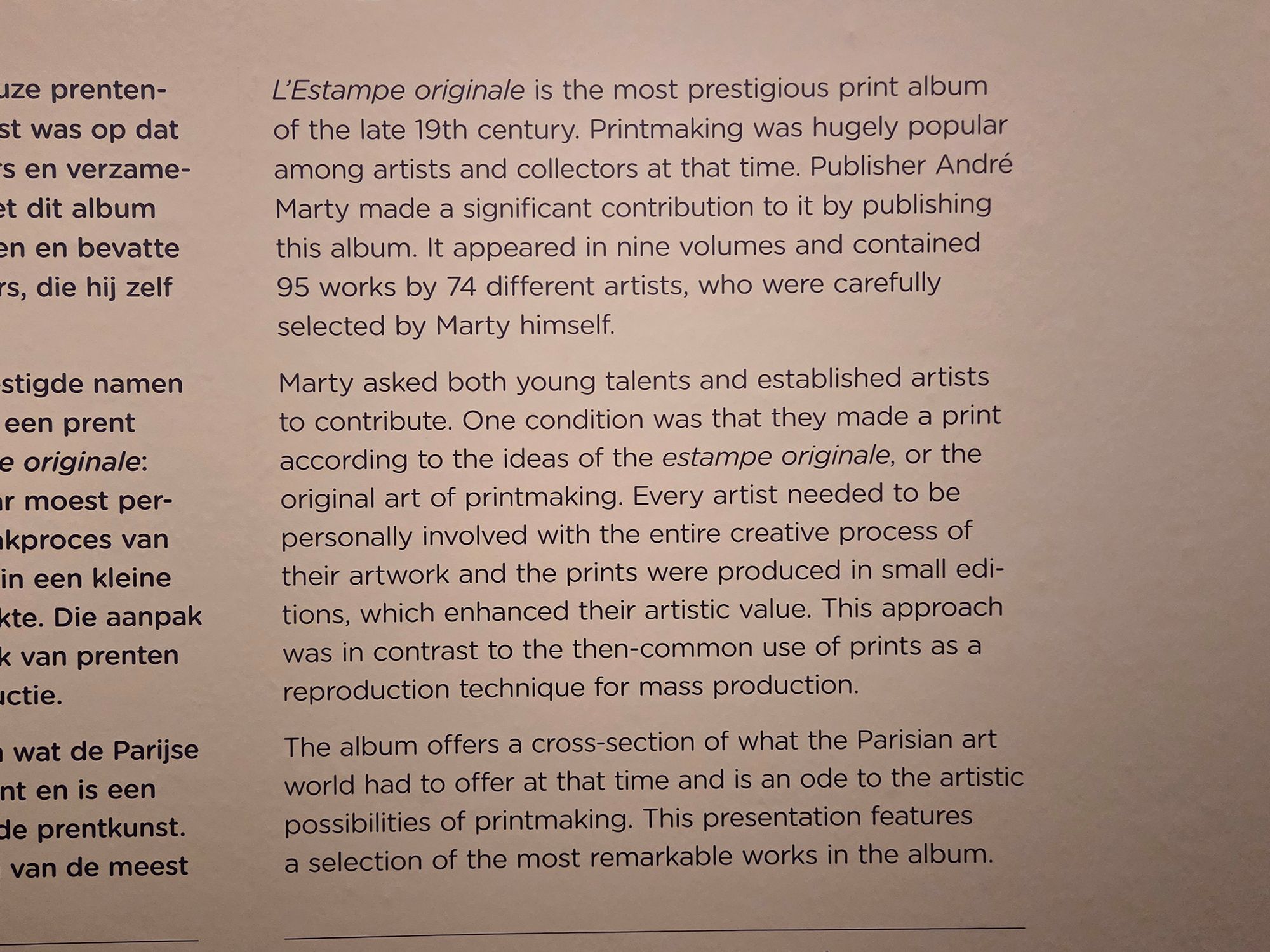
L’Estampe originale was one of the most prestigious print albums of the late 19th century. Published by André Marty, it brought together 95 original prints by 74 artists, including both established artists and younger talents. Unlike ordinary mass-produced reproductions, the artists were personally involved in creating these limited-edition prints, helping establish printmaking as an important art form in its own right.
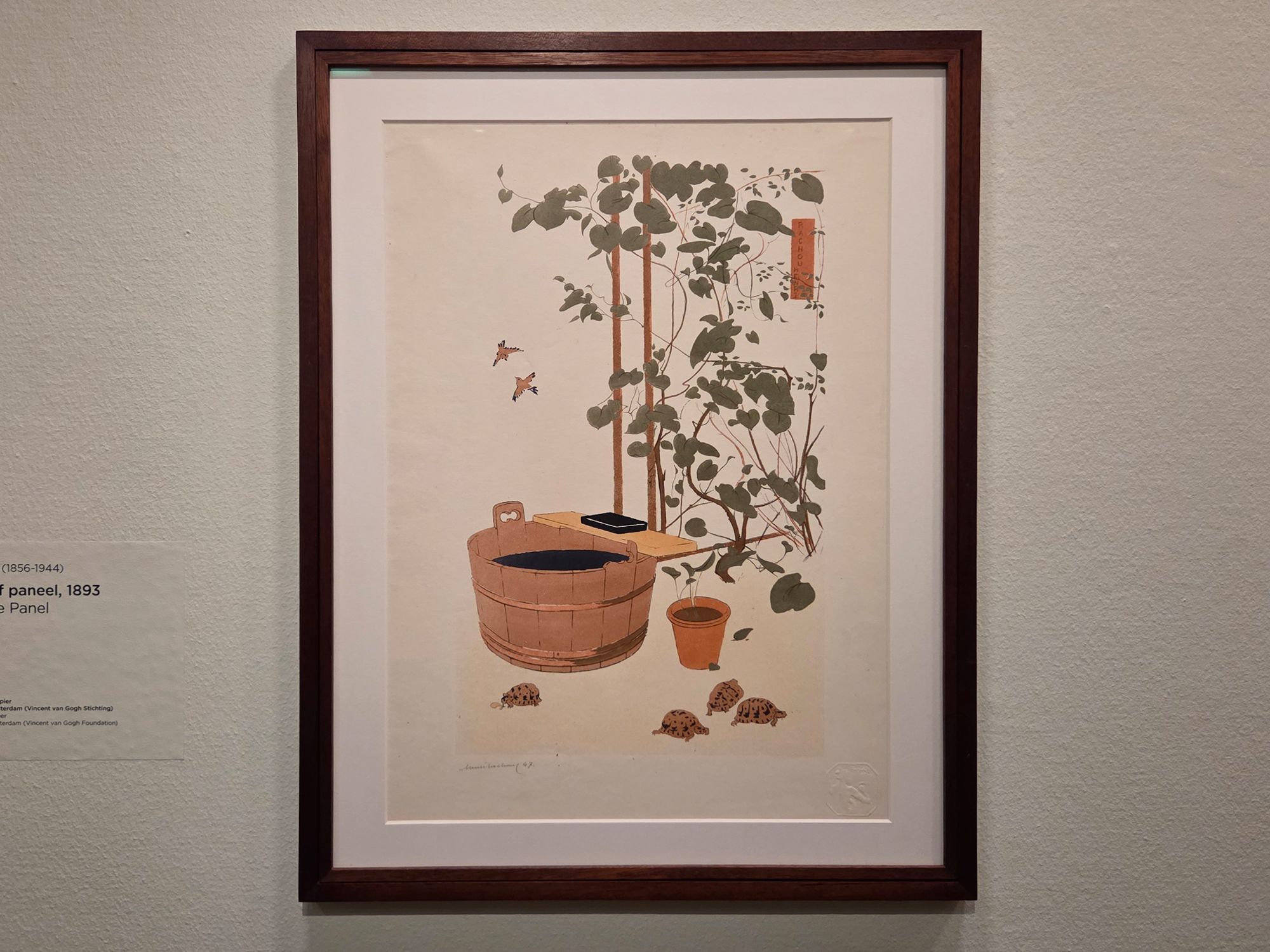
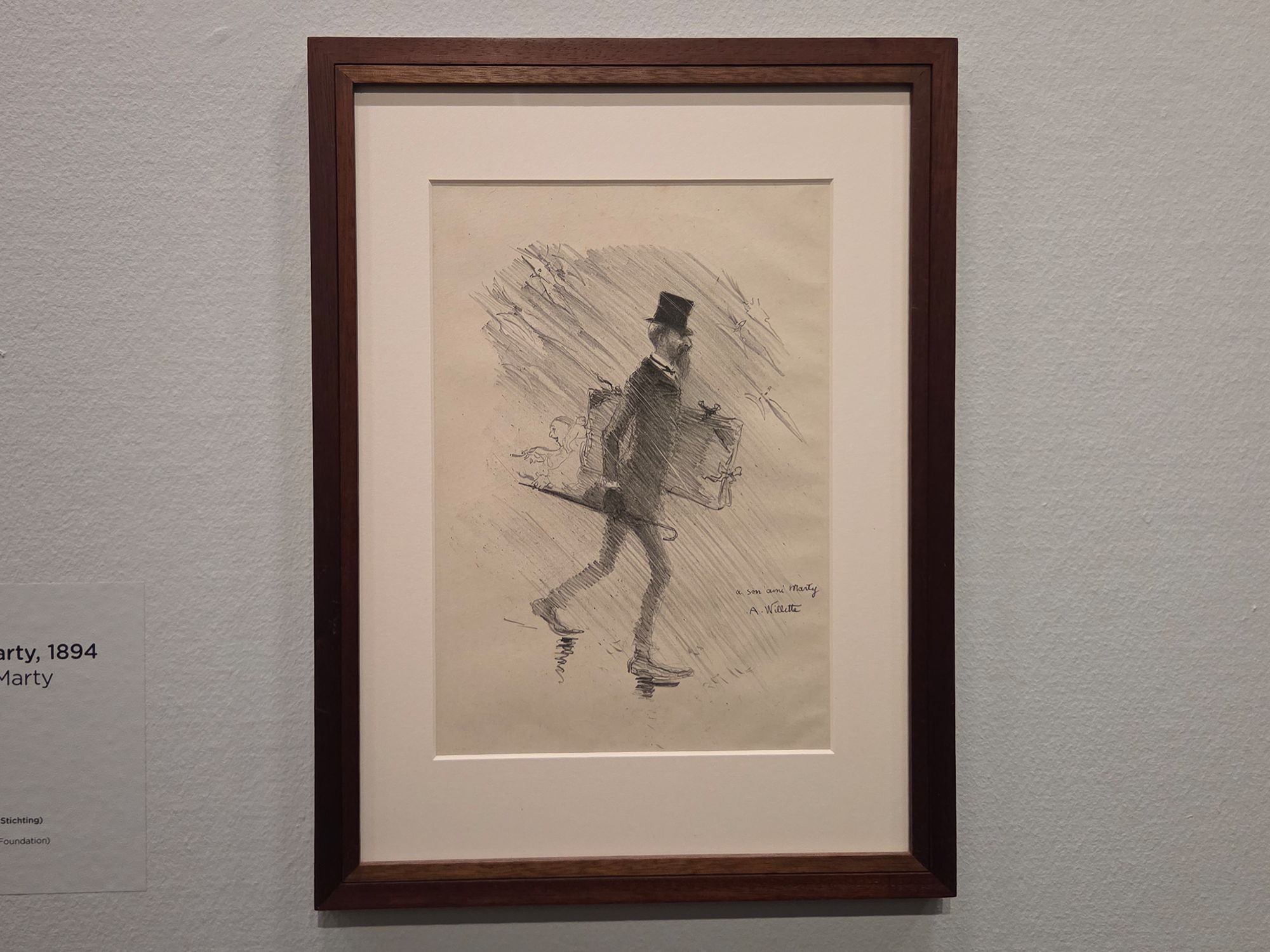
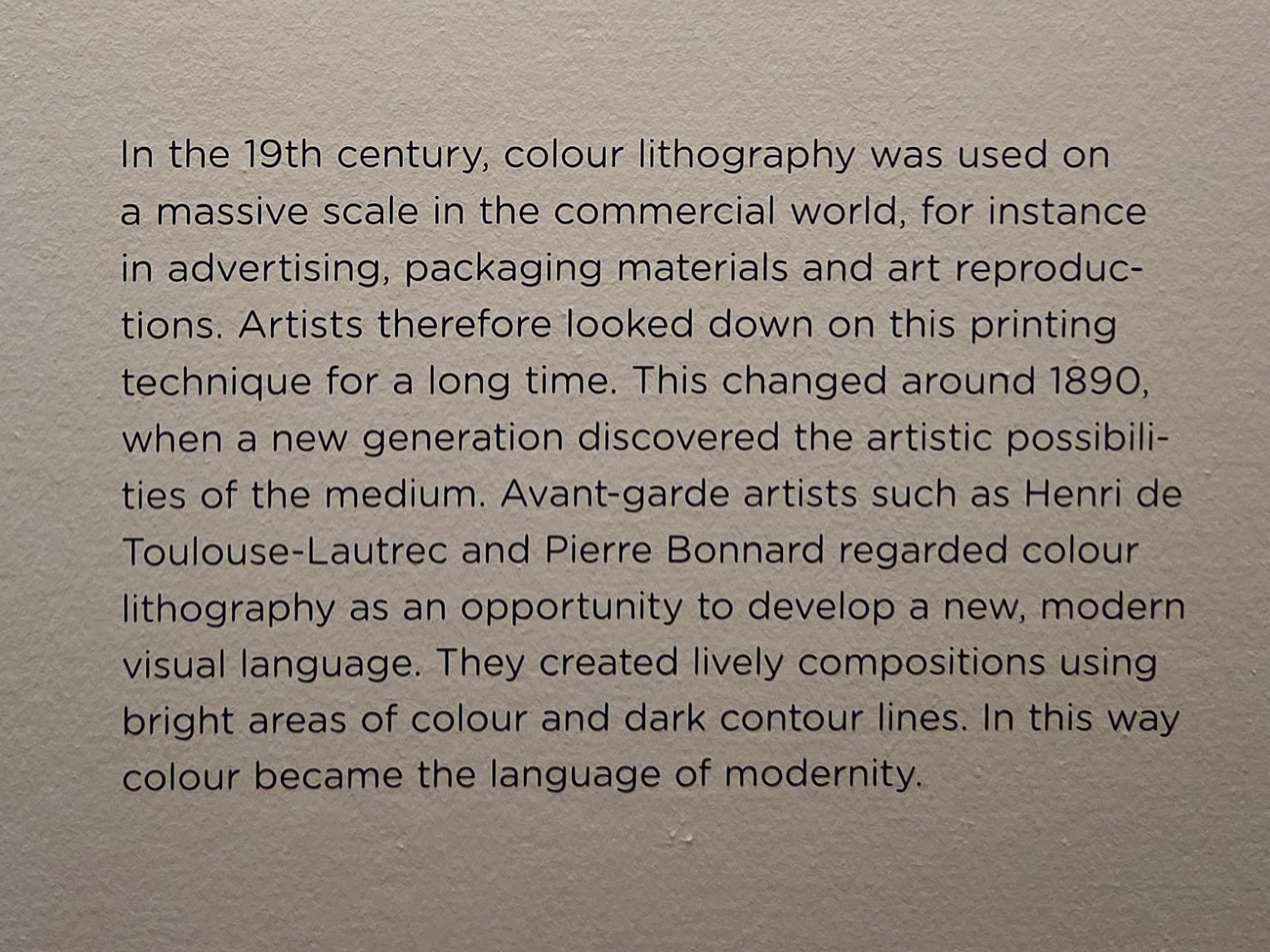
Around 1890, color lithography evolved from a commercial printing technique into an important modern art form. Artists such as Henri de Toulouse-Lautrec and Pierre Bonnard used bright areas of color and strong outlines to create bold, lively images that helped define the new visual style of the period.
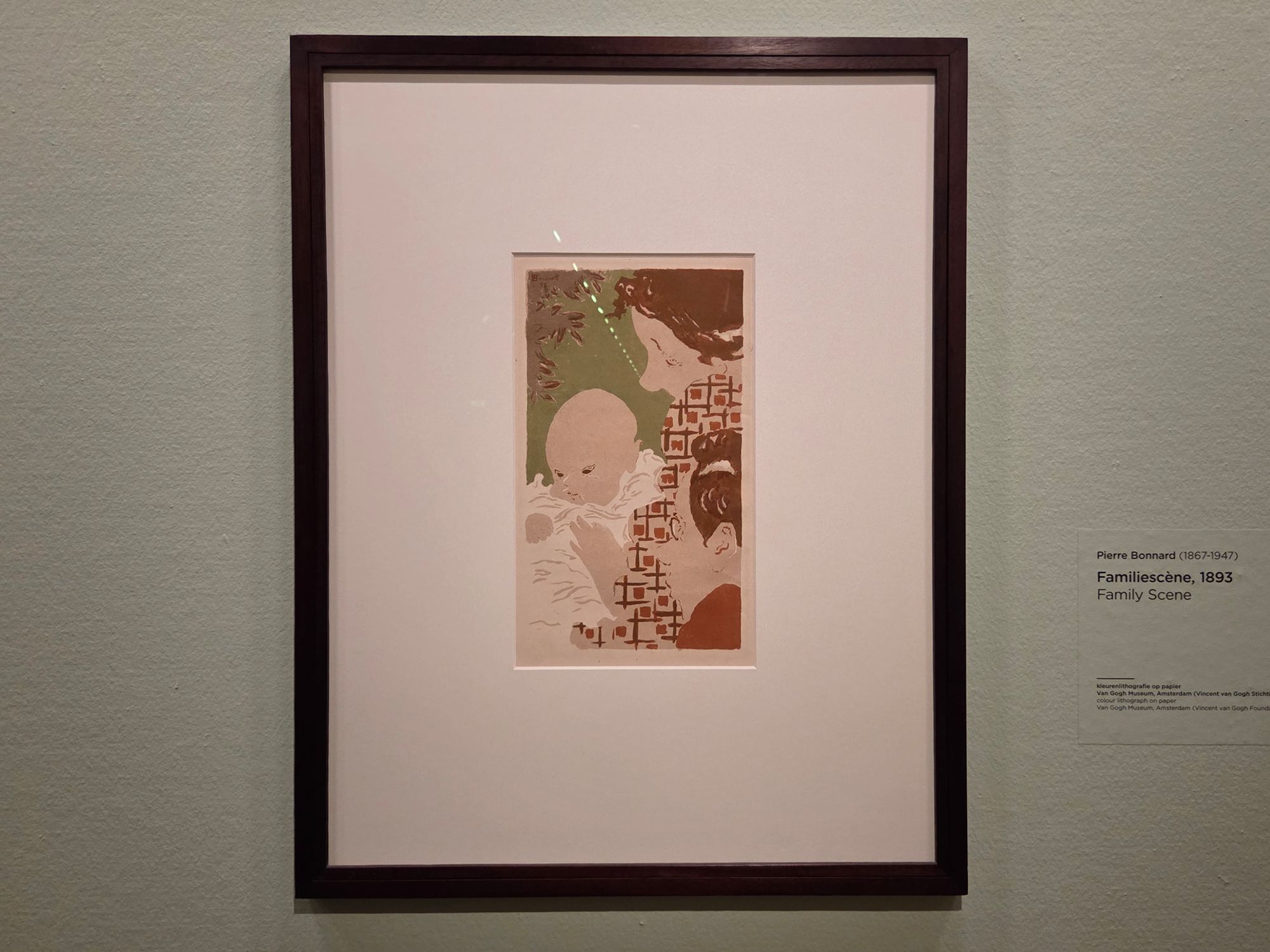
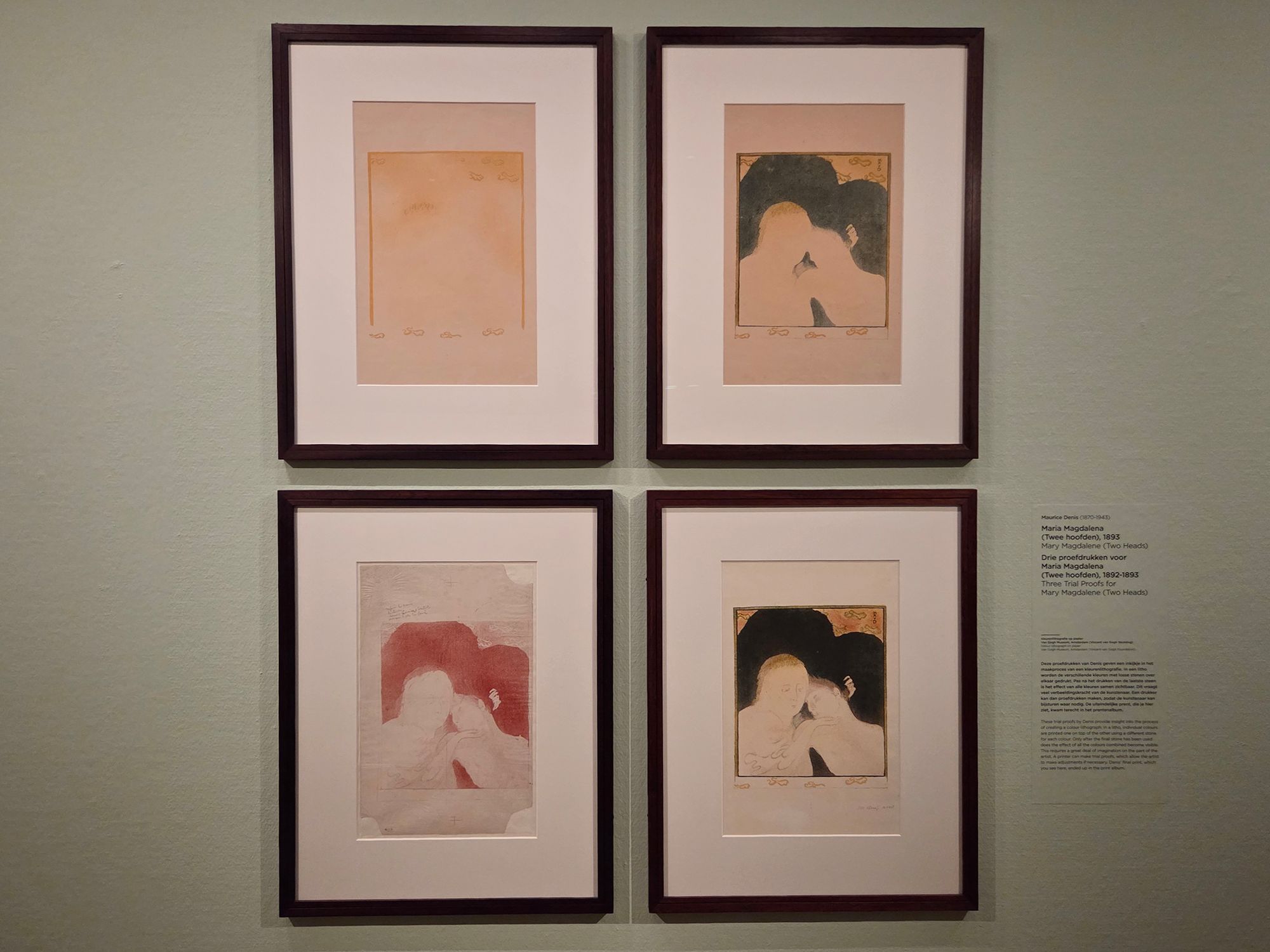
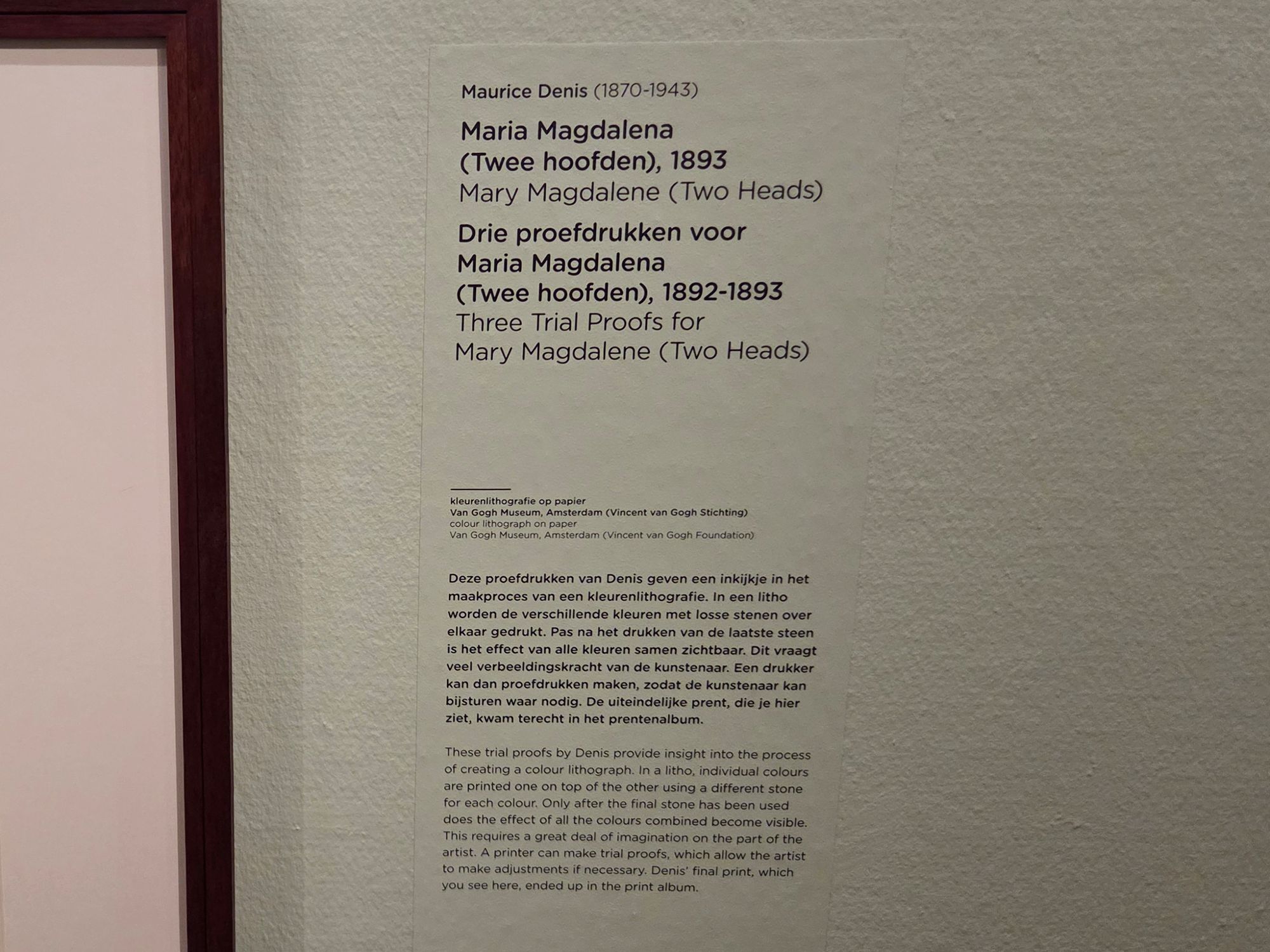
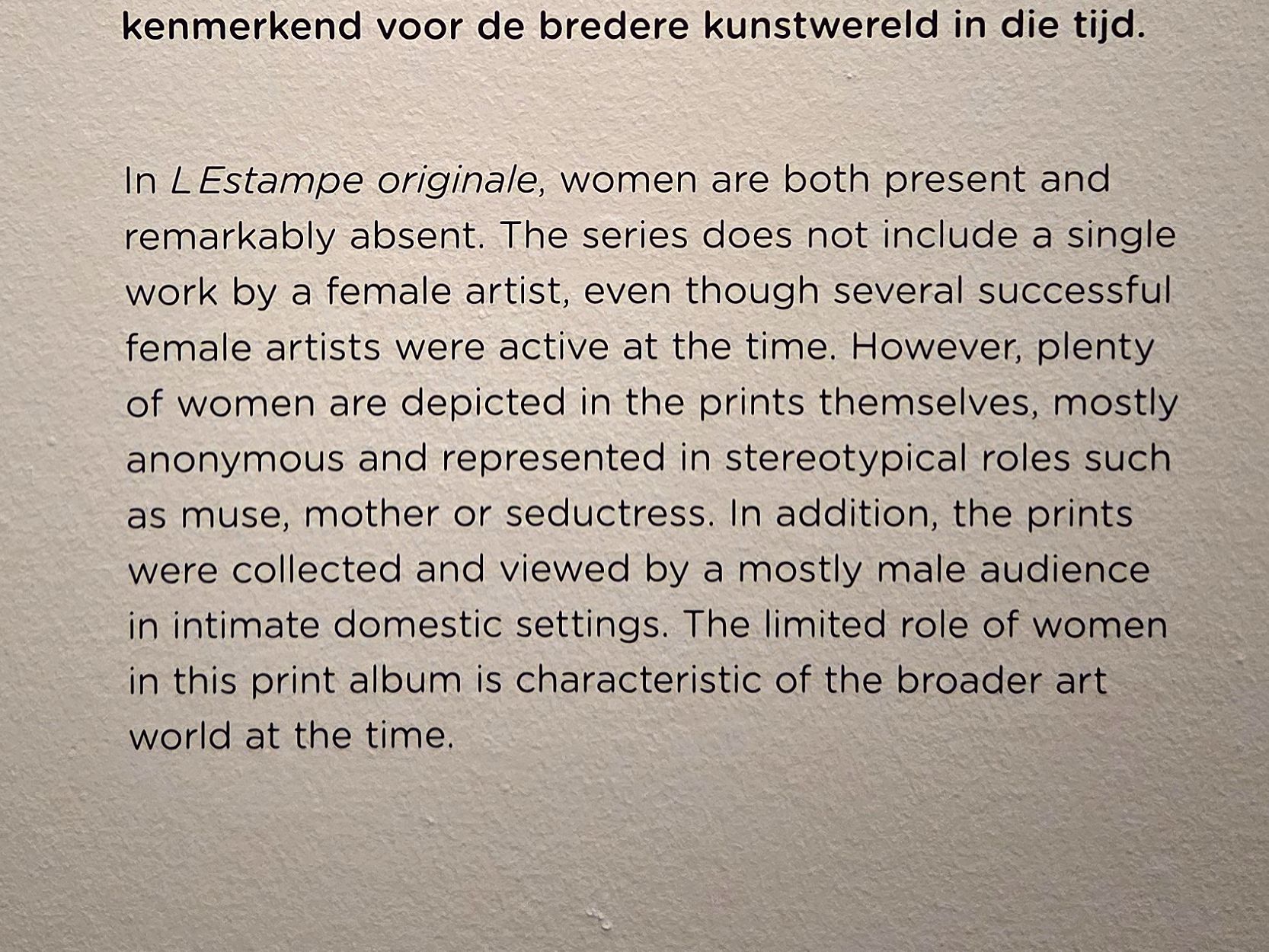
Although women appeared frequently in L’Estampe originale, none of its 95 prints were created by female artists. Women were usually portrayed anonymously in traditional roles such as muse, mother, or seductress, reflecting the limited position women held in the late-19th-century art world.