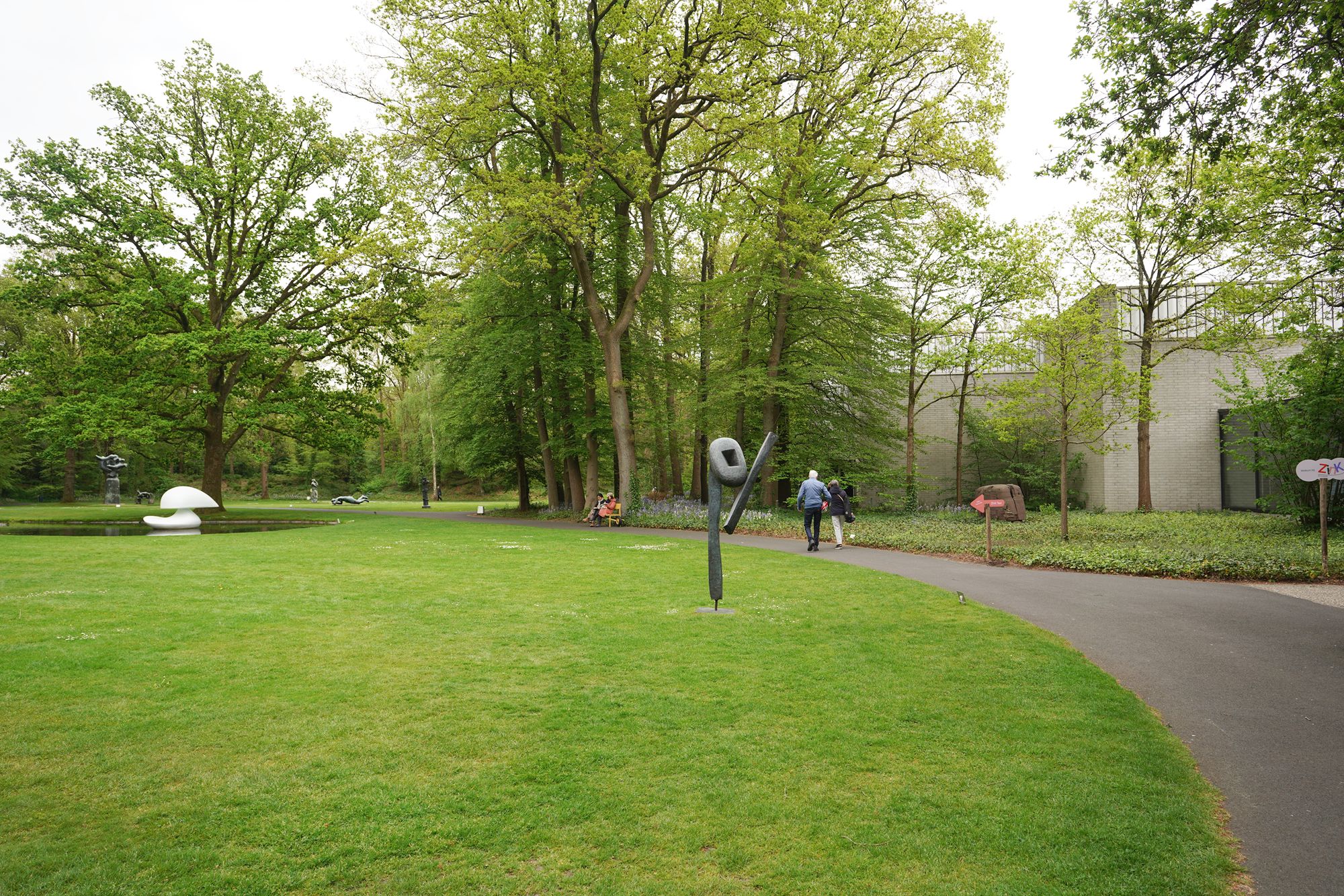
Kröller-Müller Museum, Van Gogh Paintings, Utrecht, Netherland
The Kröller-Müller Museum is famous for its outstanding Van Gogh collection and modern art, surrounded by the beautiful Hoge Veluwe National Park. 1303
Kroller-Muller Museum: Houtkampweg 6, 6731 AW Otterlo, Netherlands
Date Picture Taken: May, 2026
The Kröller-Müller Museum, located inside Hoge Veluwe National Park, is one of the Netherlands’ most important art museums. It is especially famous for having the second-largest collection of Van Gogh works in the world, along with major modern artists such as Picasso, Mondrian, and Seurat.
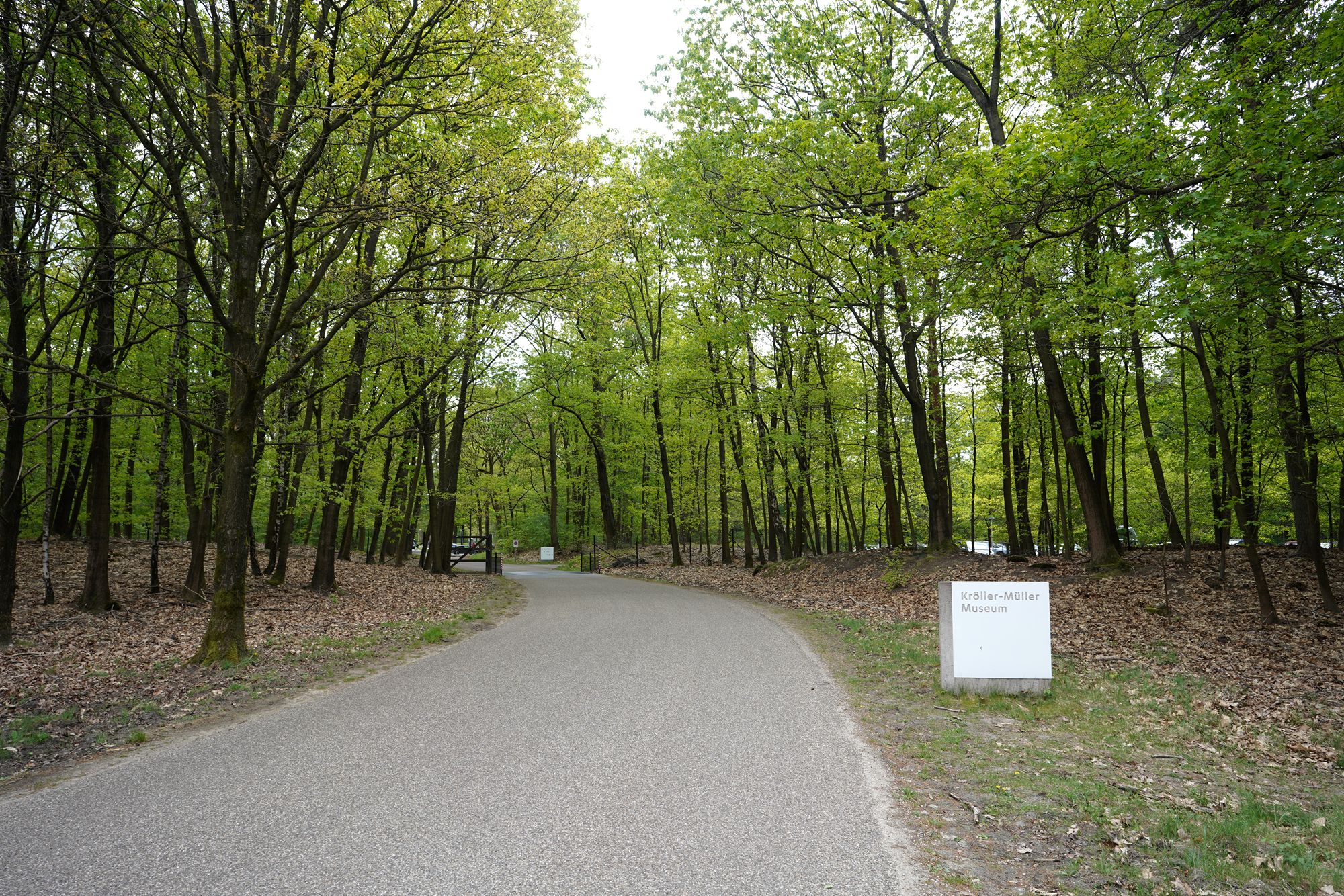
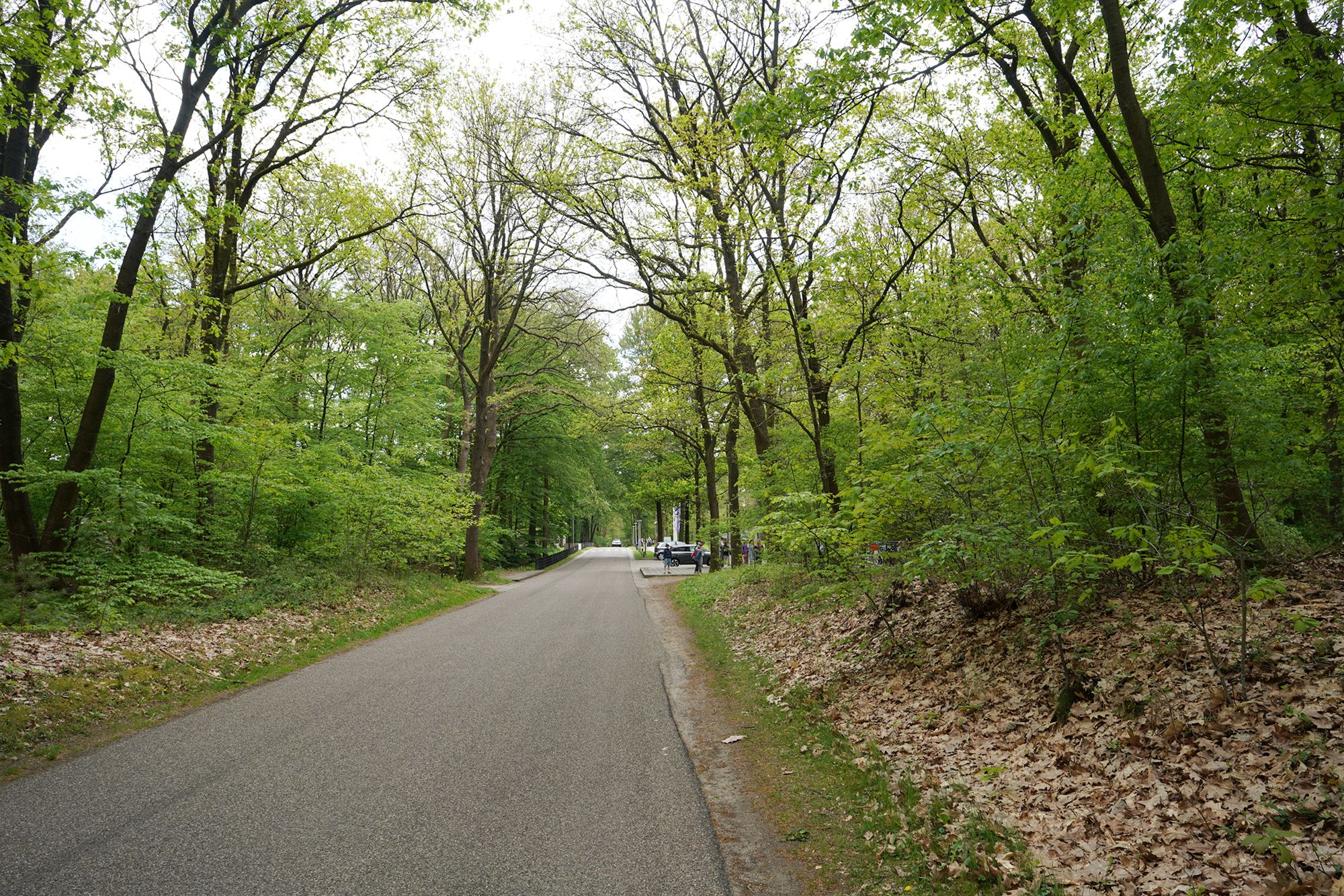
The Kröller-Müller Museum is quite a long trip from Amsterdam, so I set aside an entire day for the visit. Since the museum is located inside Hoge Veluwe National Park and there were no other major attractions I planned to visit nearby, I devoted the day entirely to the museum.
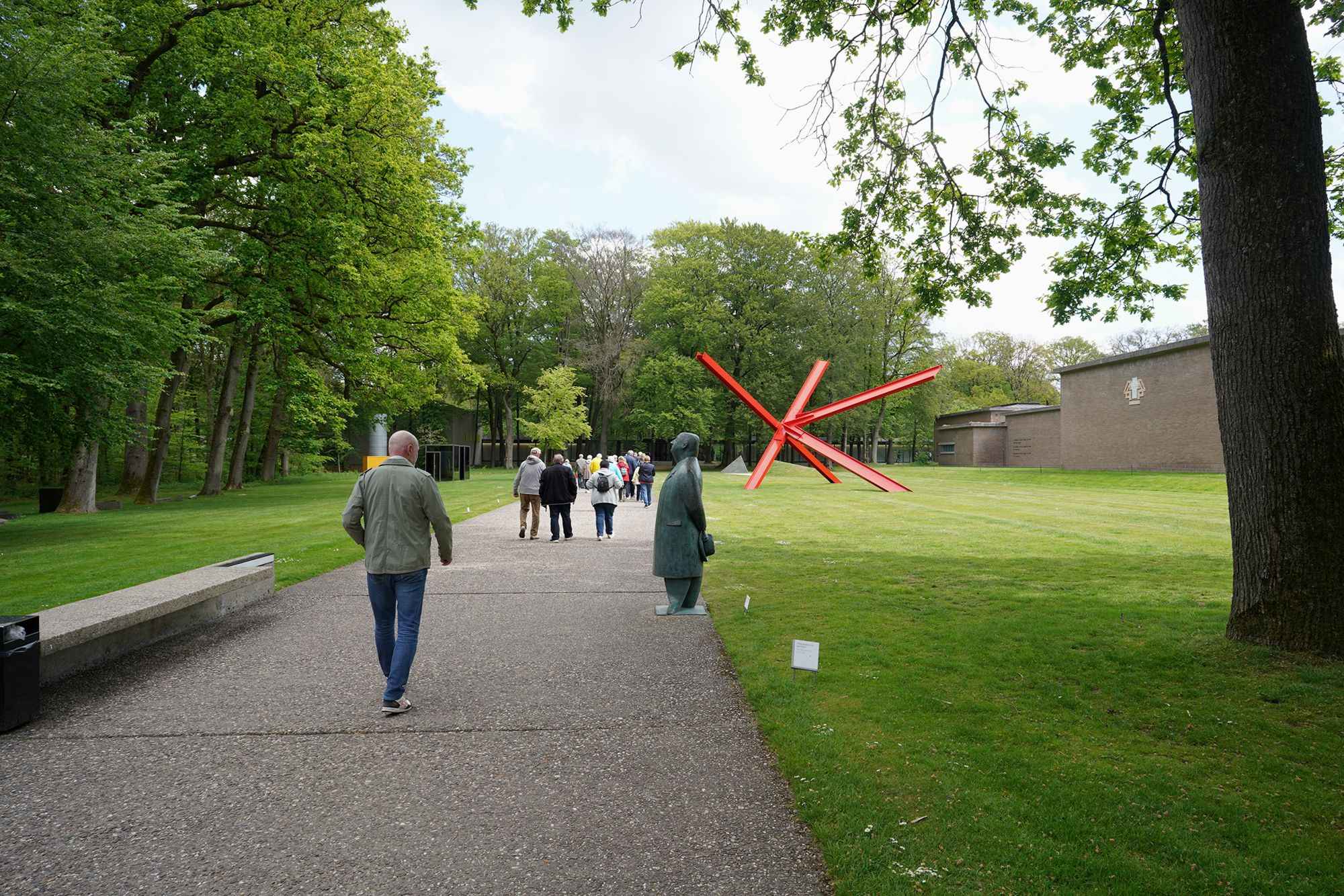
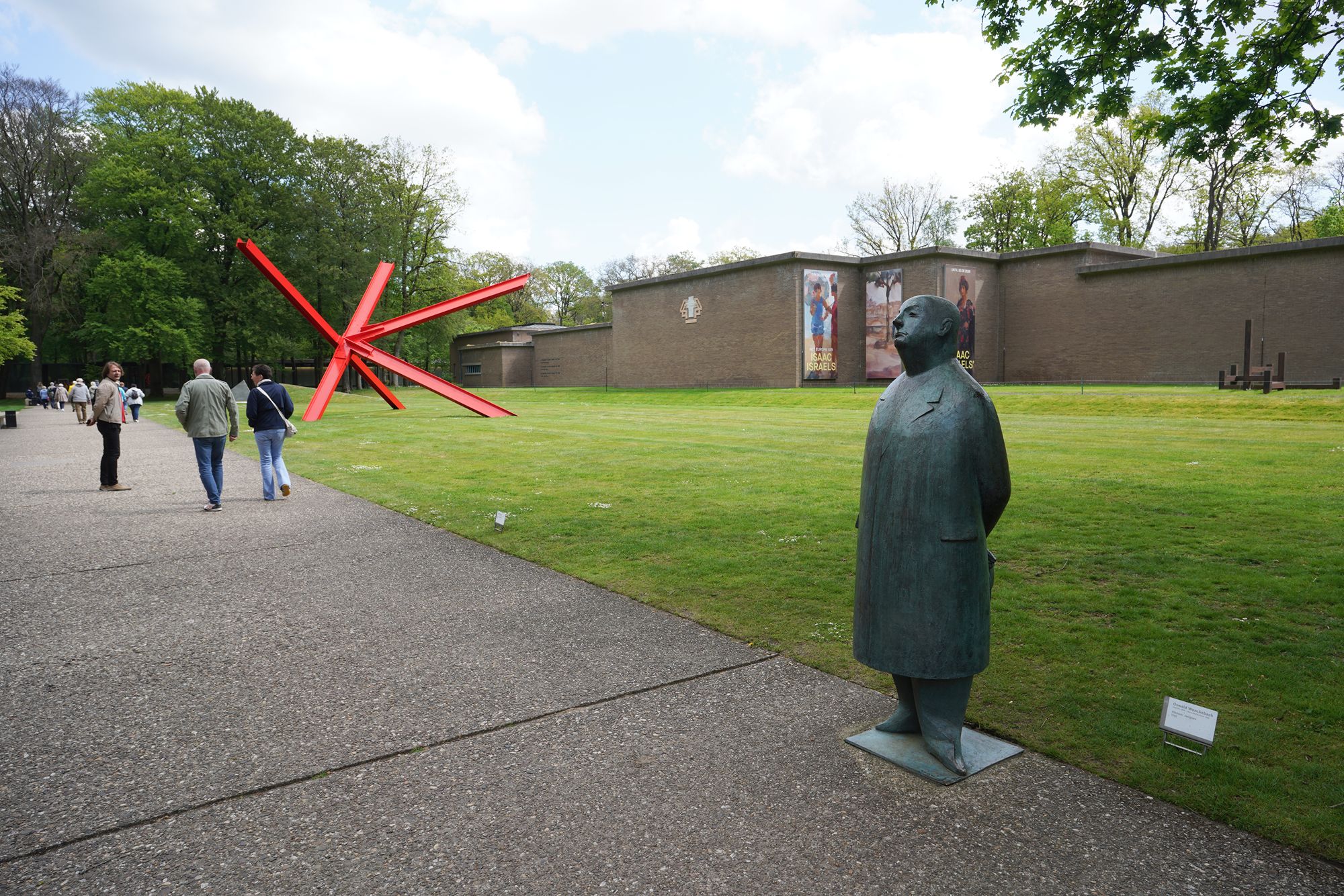
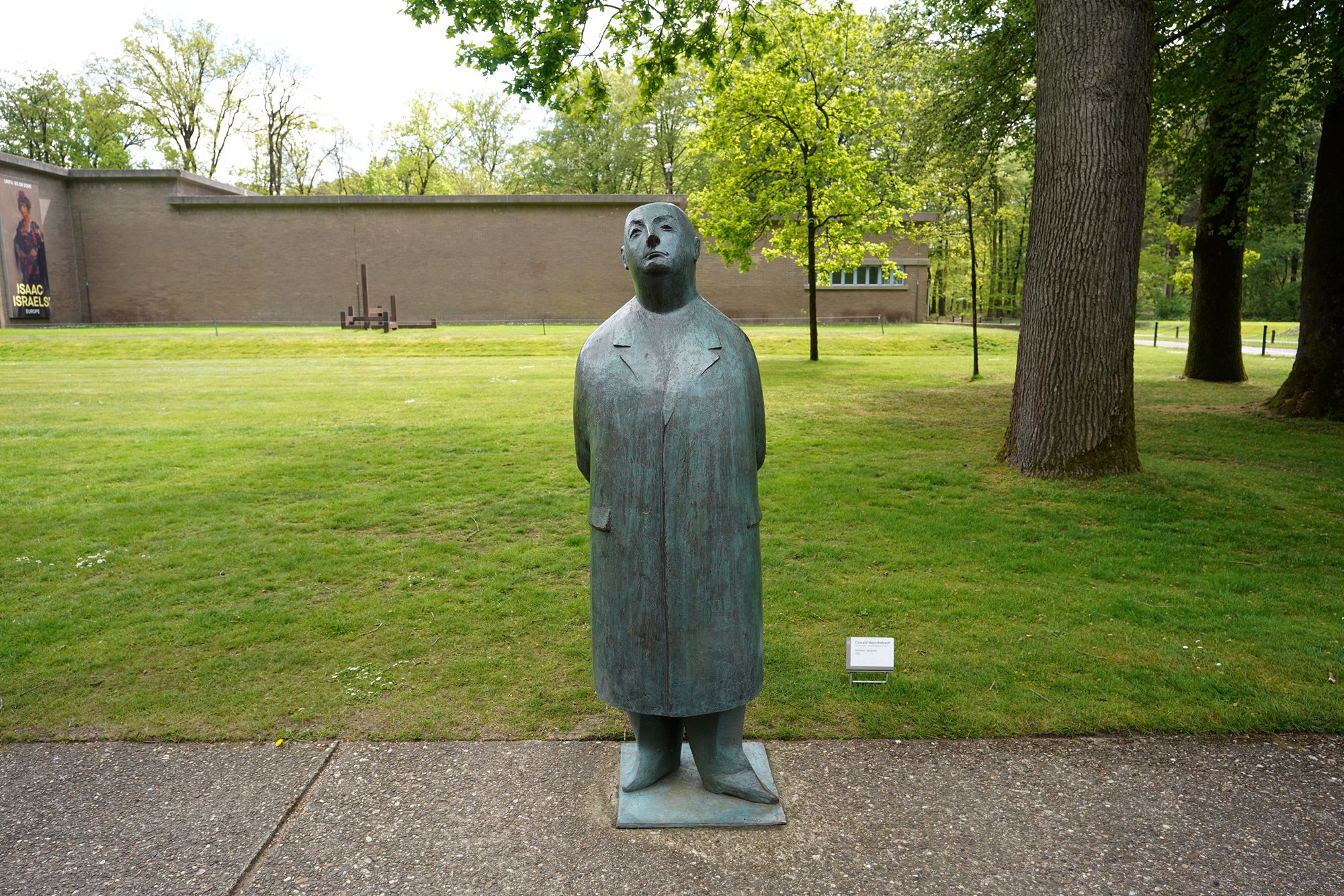
Outside the museum, I came across Meneer Jacques (1955) by Dutch sculptor Oswald Wenckebach. This life-size bronze gentleman looks so natural standing quietly with his hands behind his back that he almost seems like another visitor to the museum.
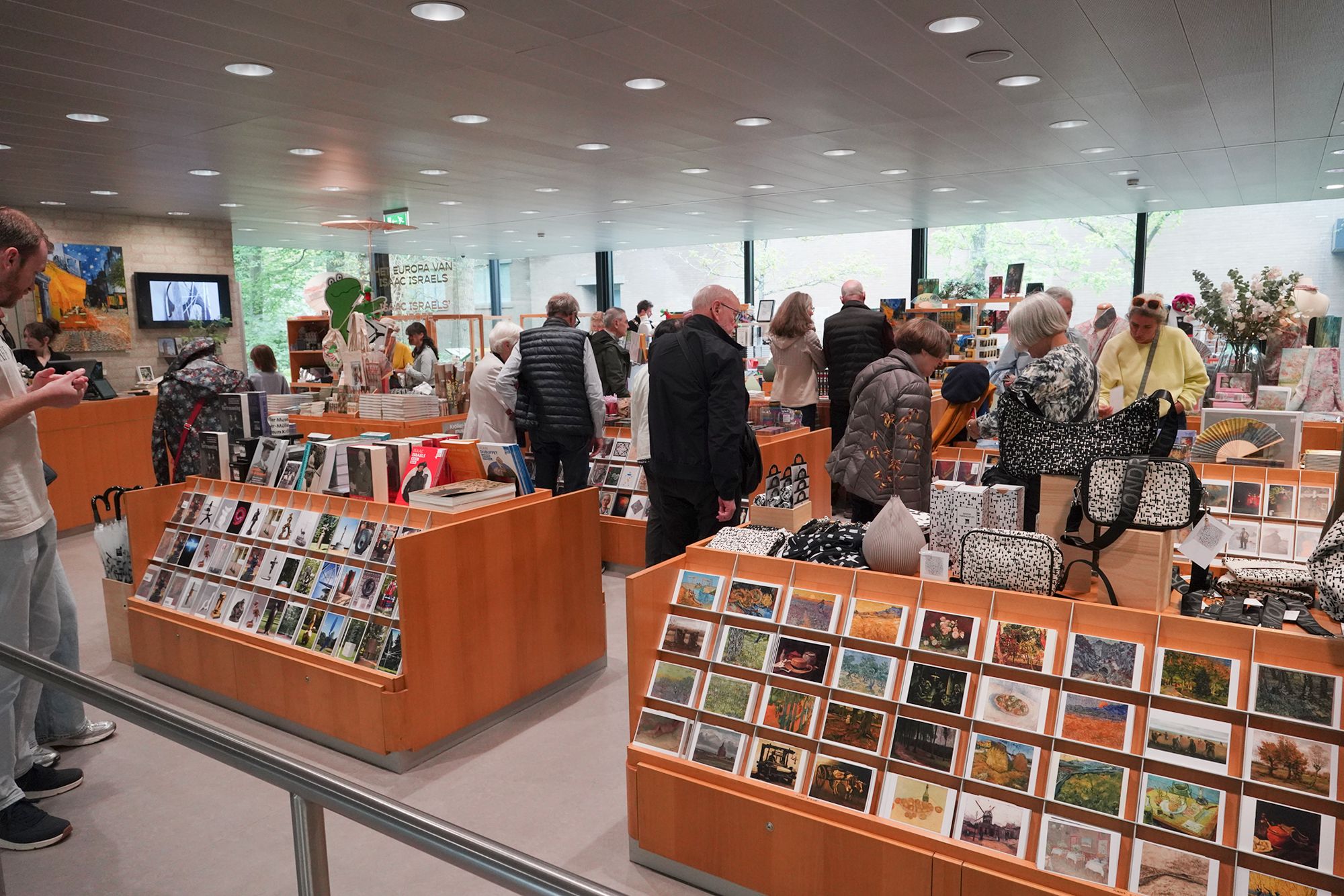
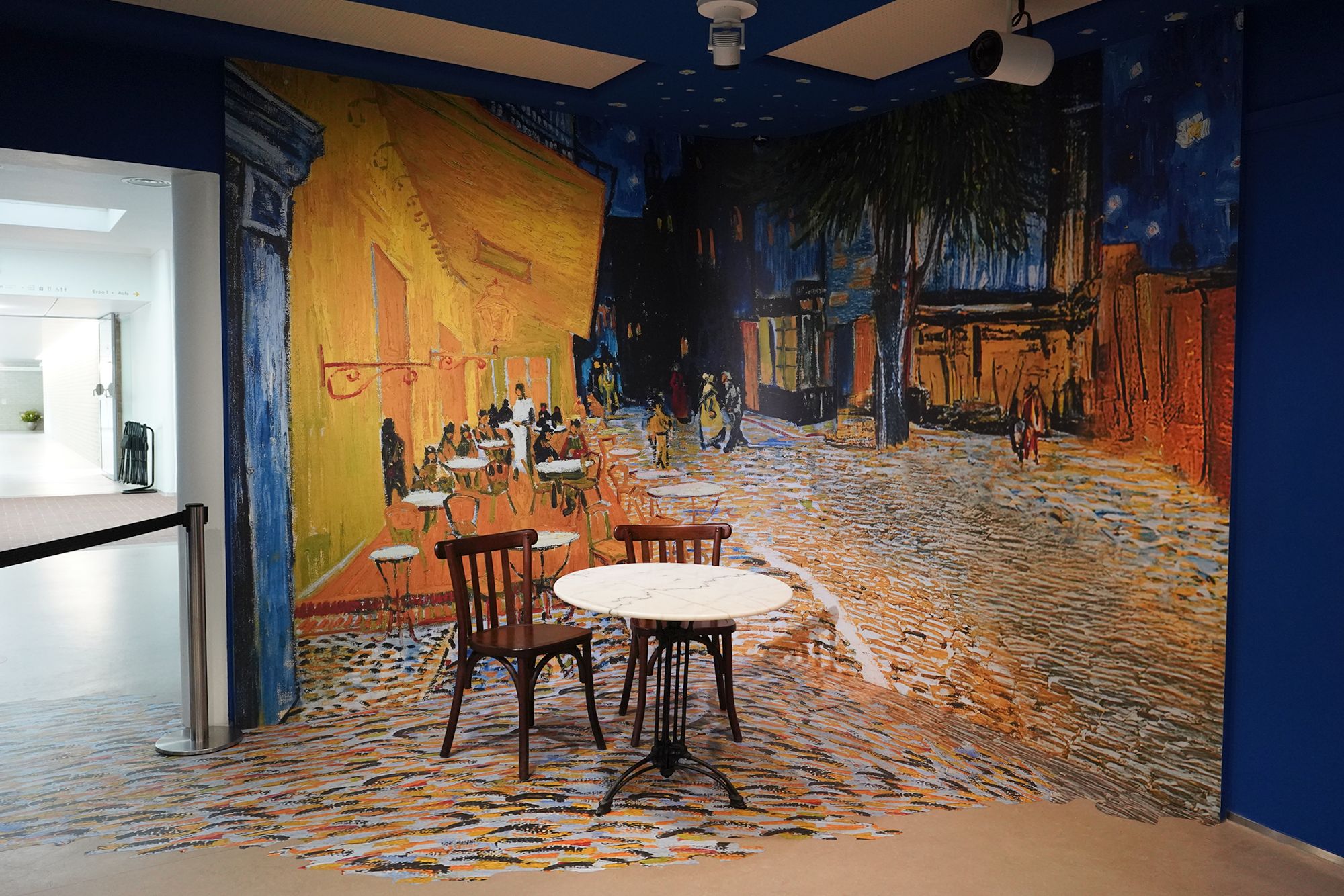
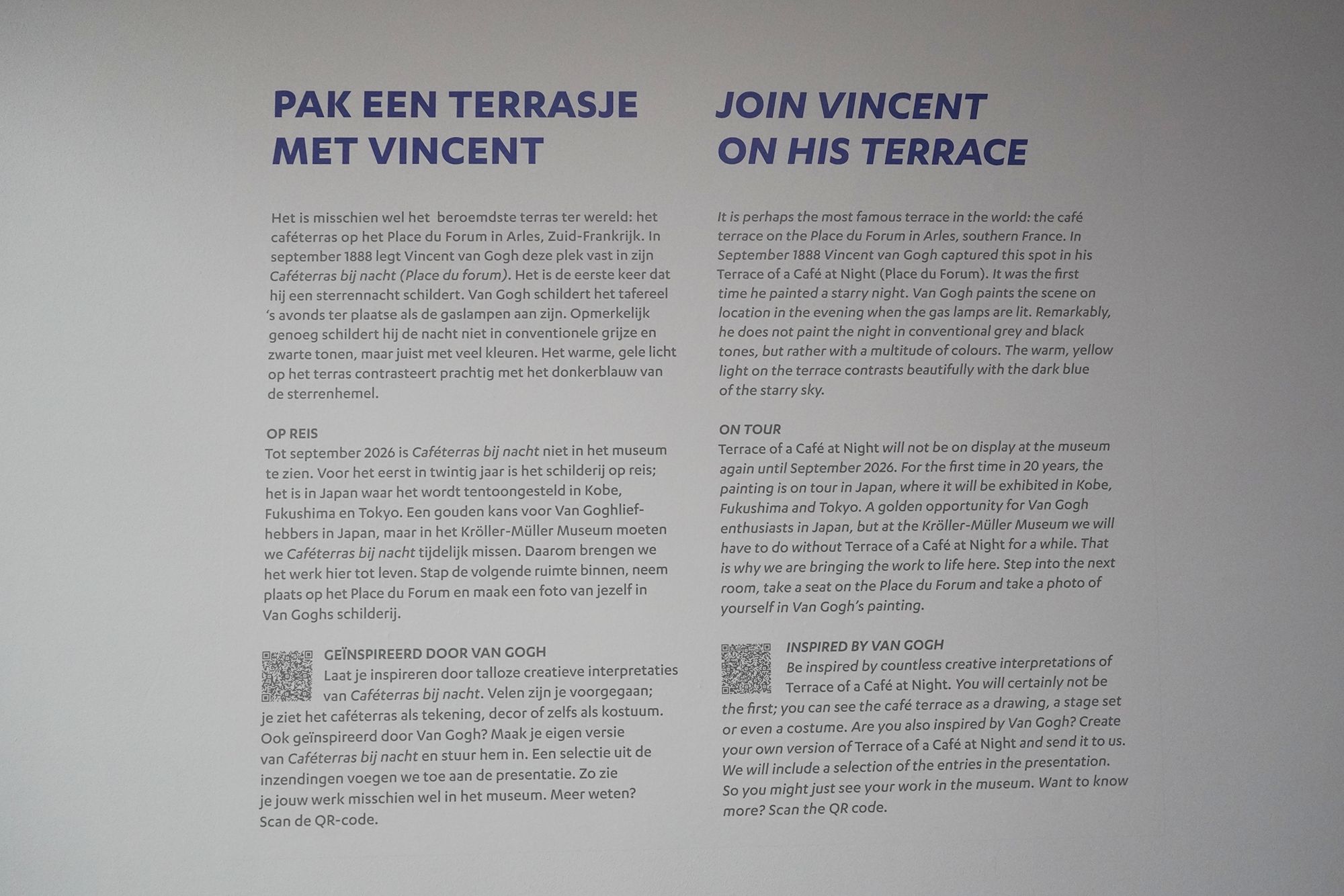
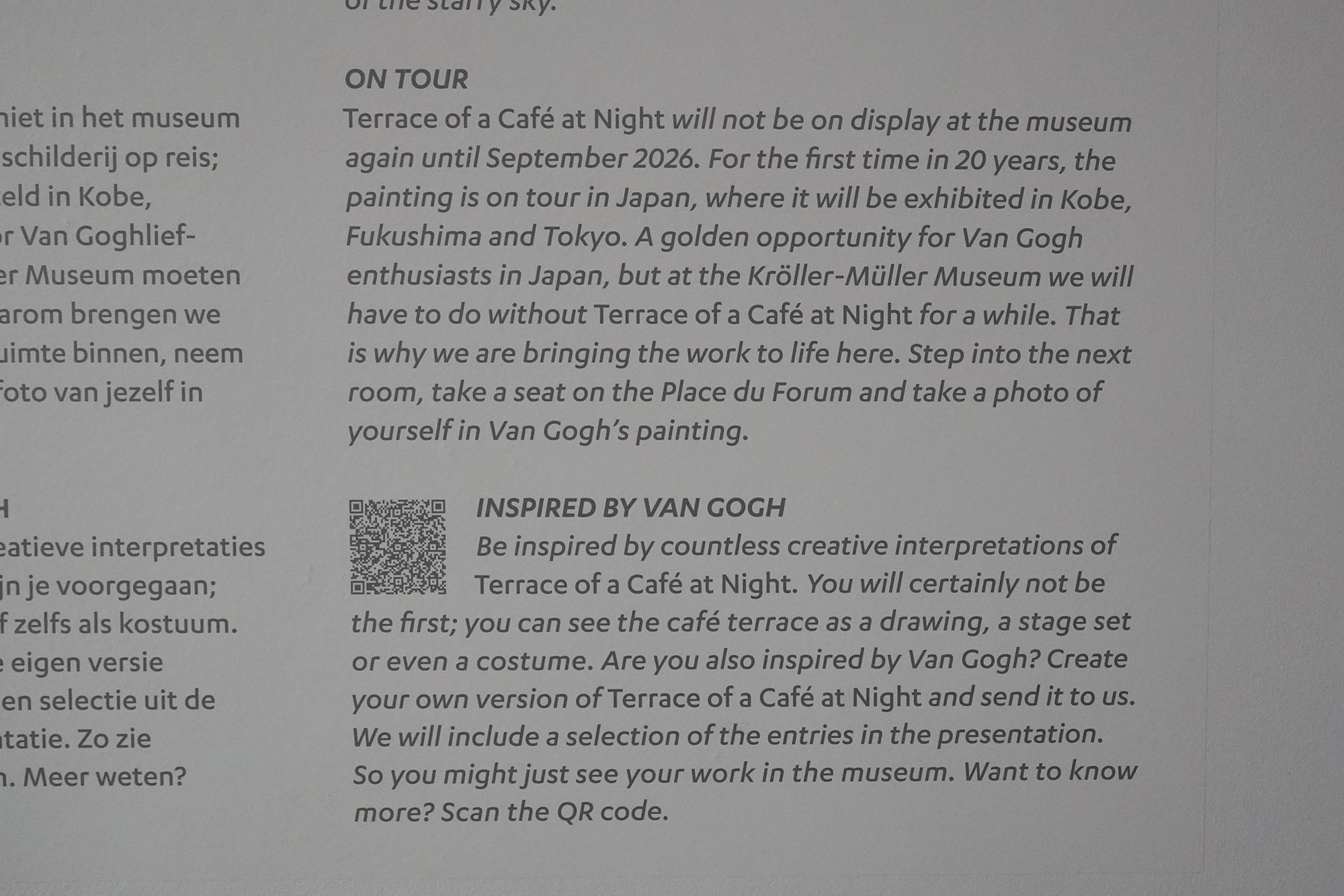
I had especially hoped to see Van Gogh’s Café Terrace at Night, one of the Kröller-Müller Museum’s most famous paintings. Unfortunately, it had been sent to Tokyo for a special exhibition, so instead I found this large reproduction where visitors could sit at the table and take pictures as if they were inside the painting.
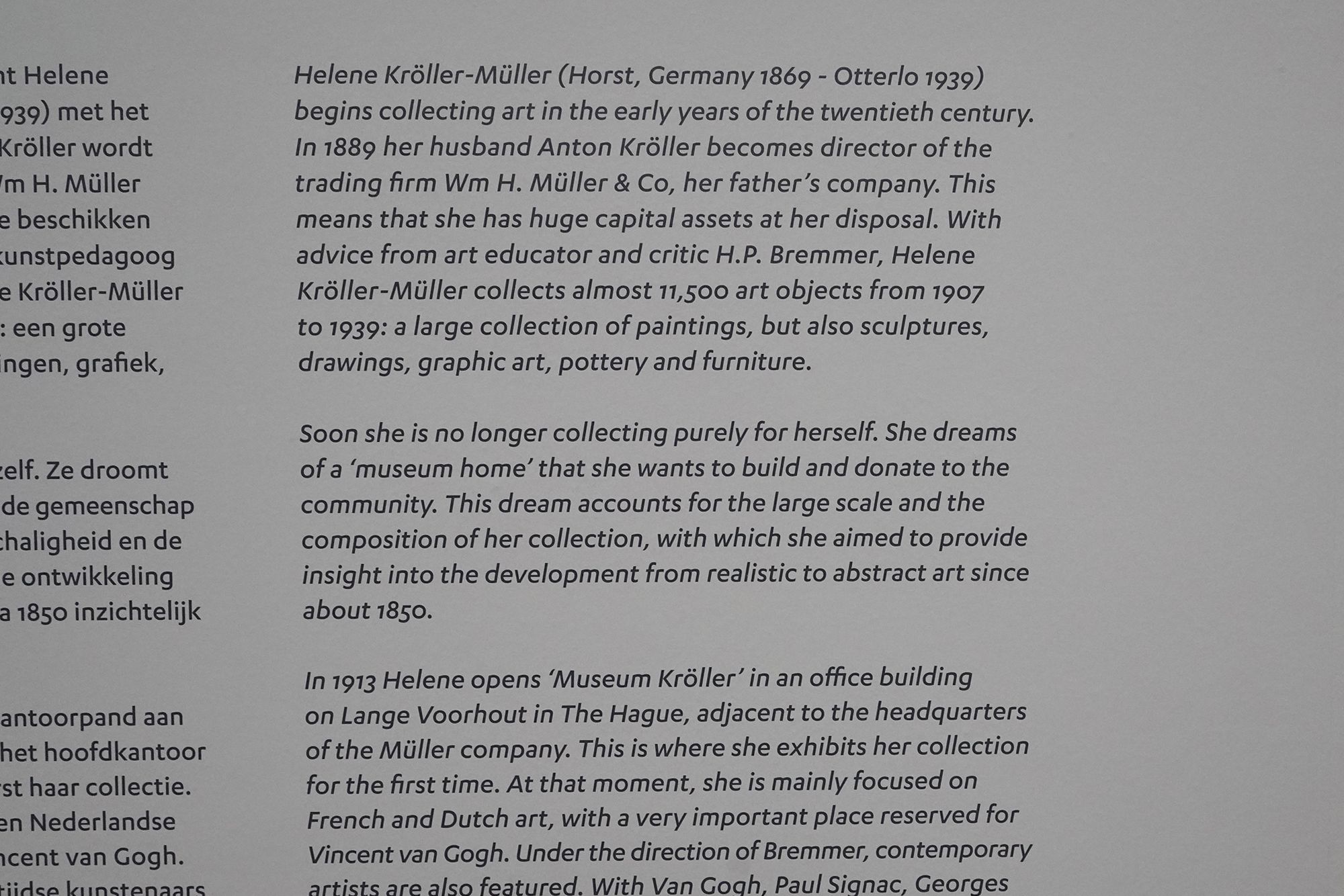
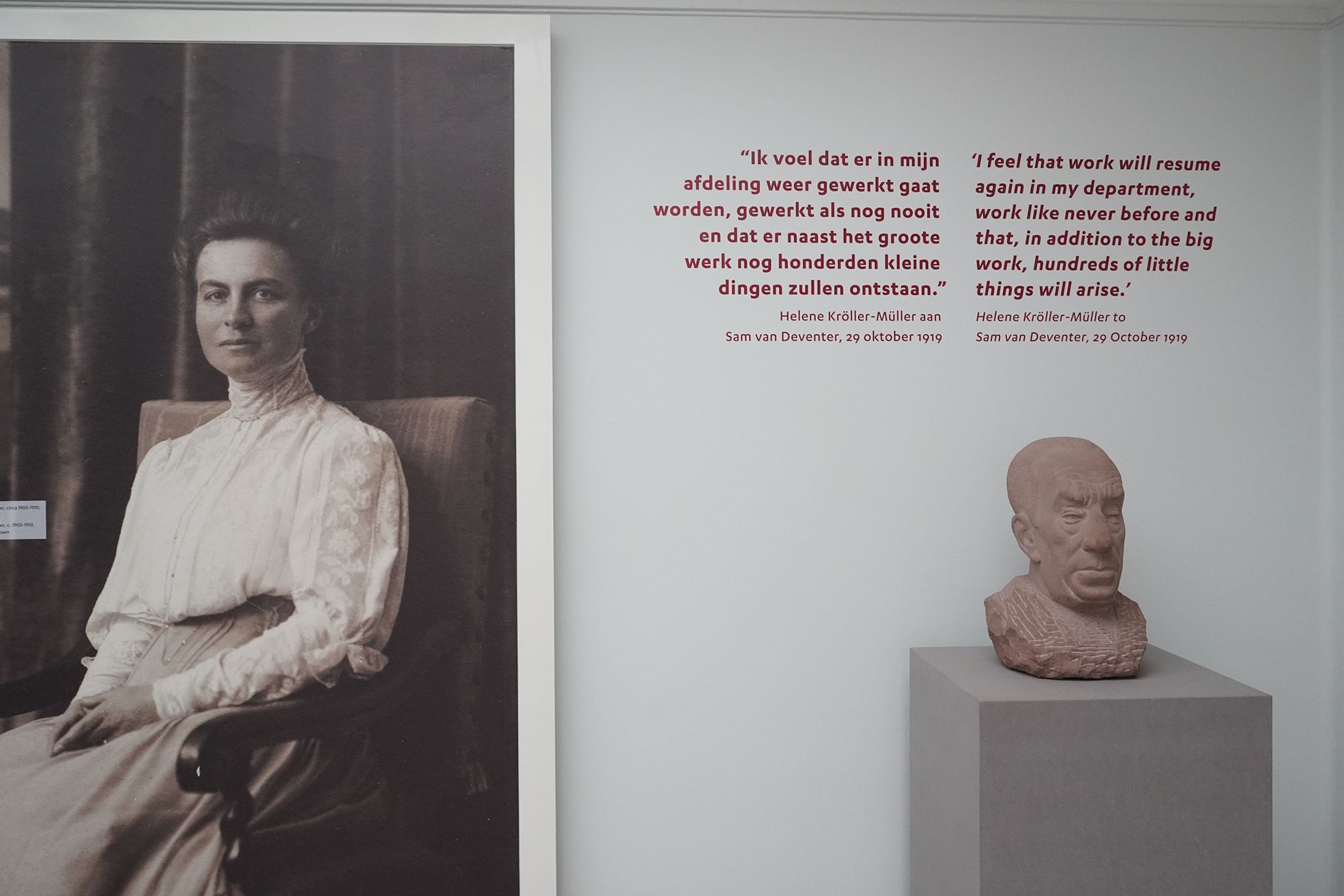
The museum grew from the remarkable private collection of Helene Kröller-Müller, who began collecting art in the early 1900s with advice from art critic H.P. Bremmer. Between 1907 and 1939, she assembled nearly 11,500 works of art, with Van Gogh occupying an especially important place in her collection.
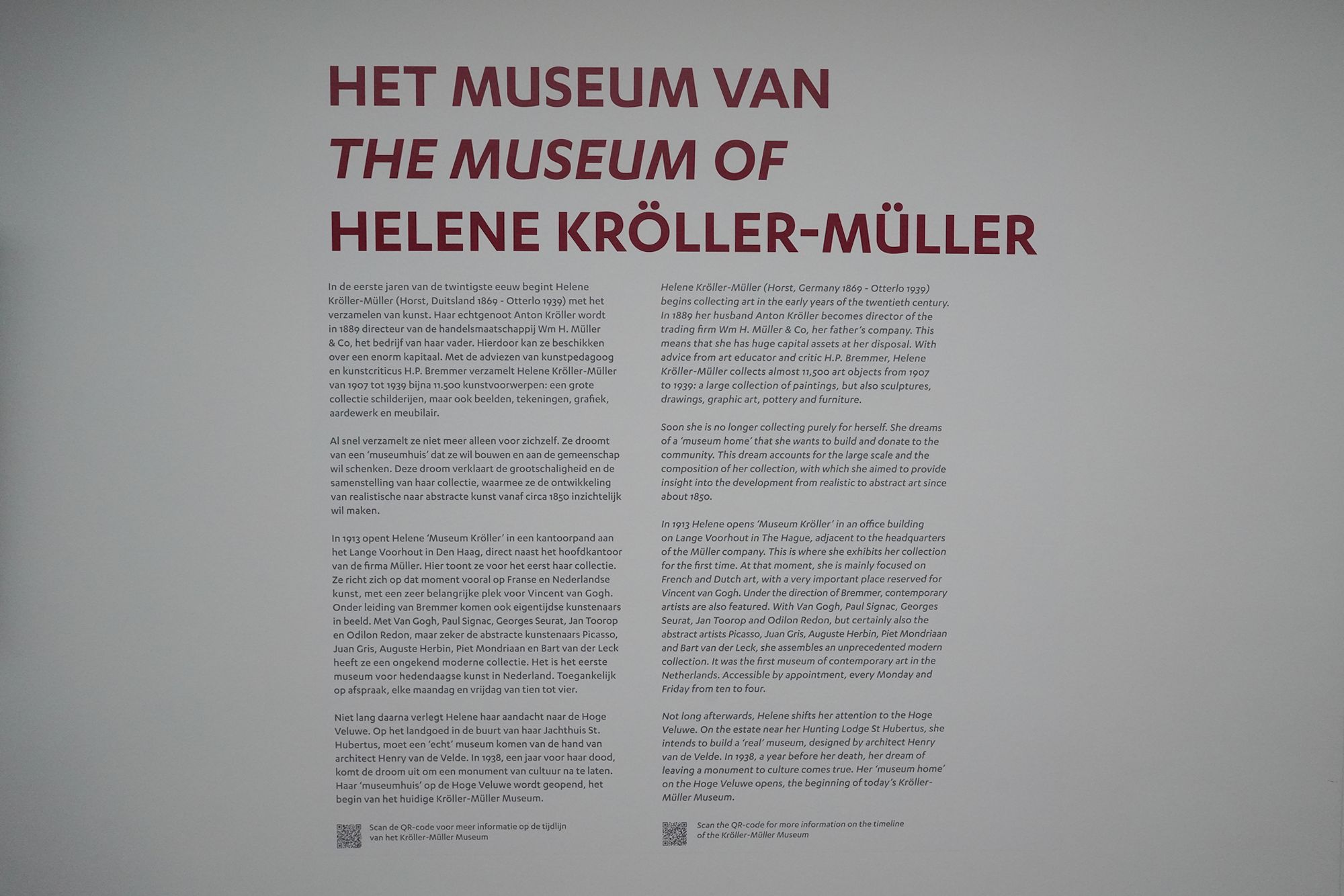
Her ambition was not simply to collect for herself, but to create a “museum home” where the public could follow the development of modern art from realism toward abstraction.
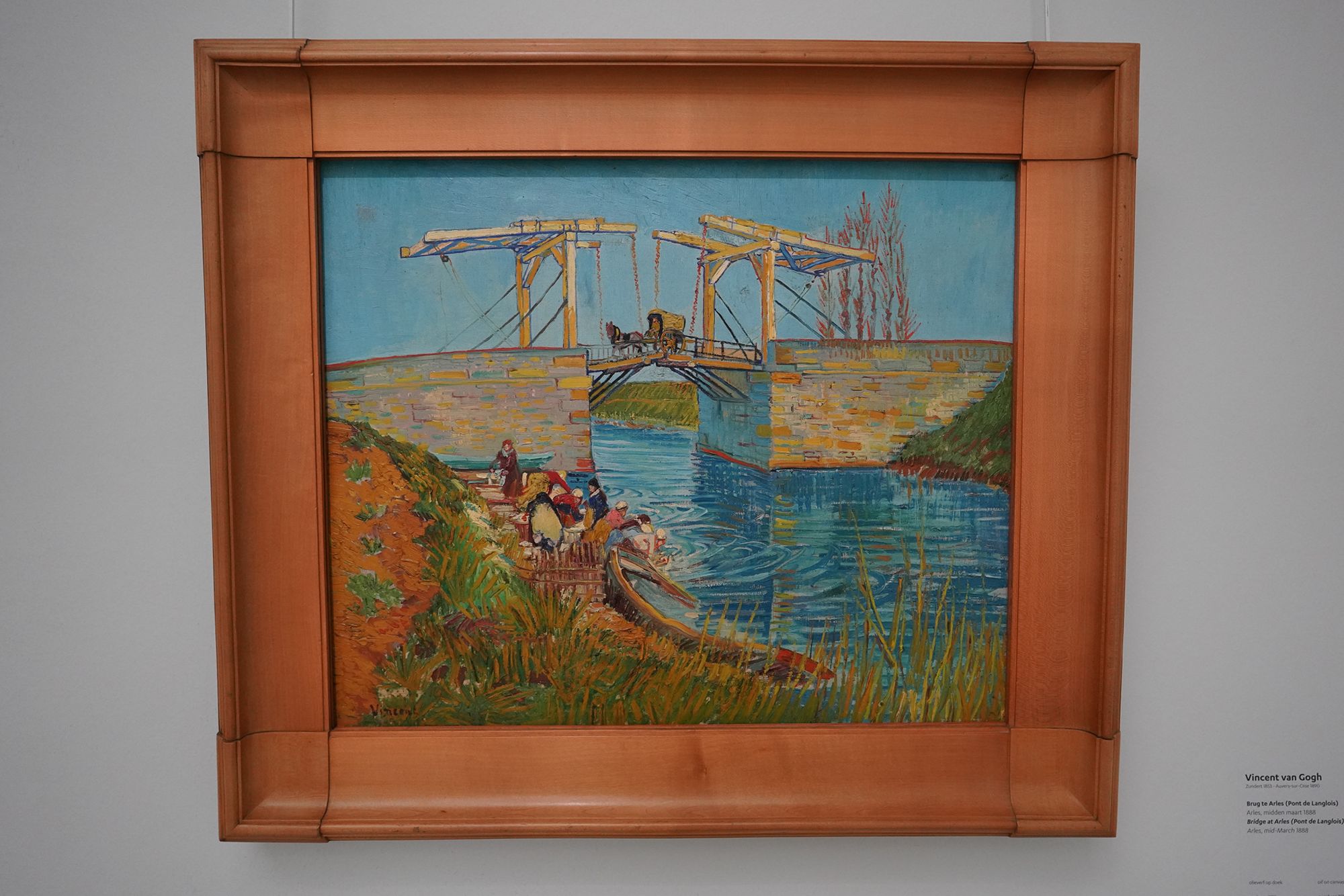
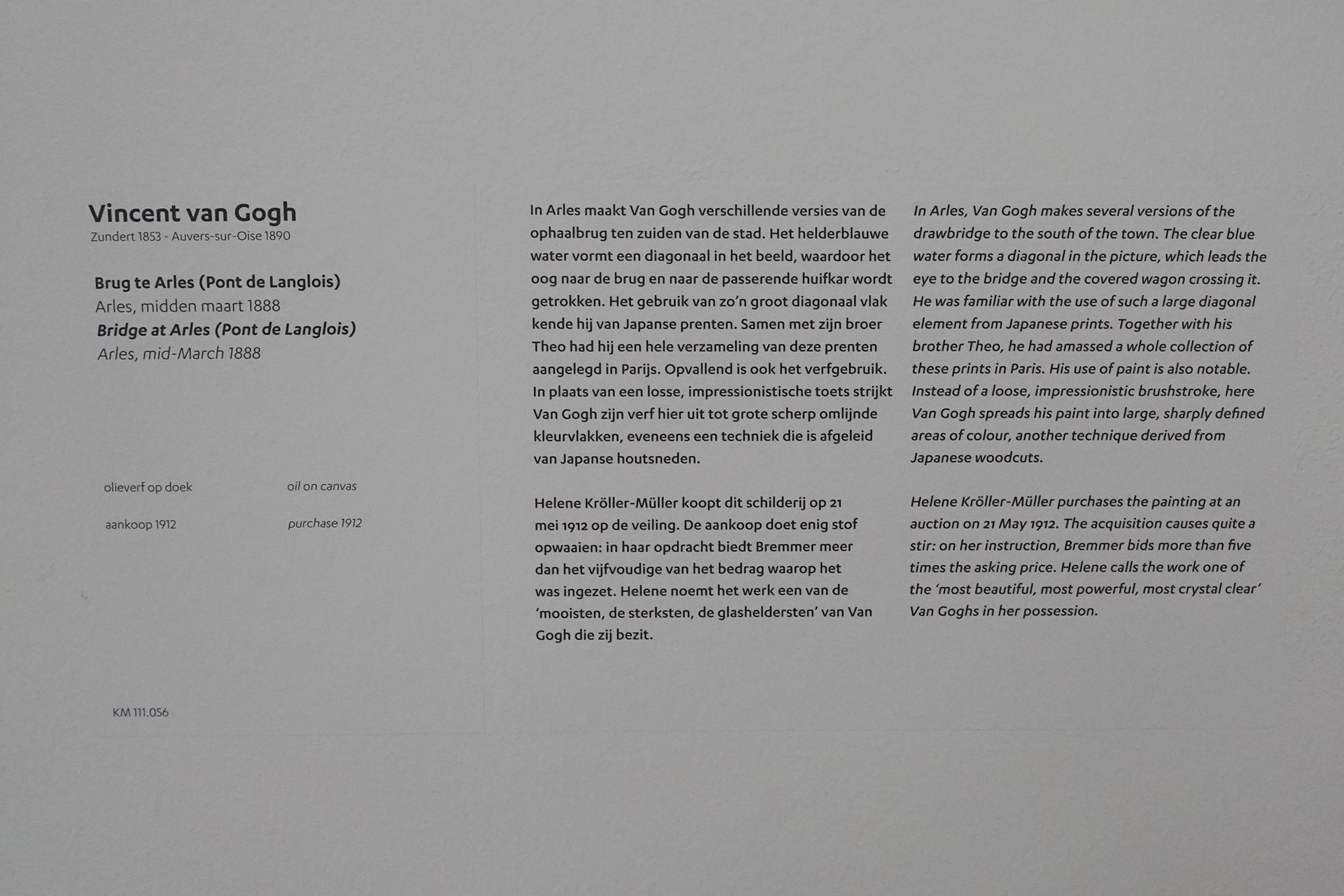
In Arles, Van Gogh painted several versions of the drawbridge south of the town, using a strong diagonal composition and broad areas of color inspired by Japanese woodblock prints. Helene Kröller-Müller bought this painting at auction in 1912, paying more than five times the asking price. She considered it one of the “most beautiful, most powerful, most crystal clear” Van Goghs in her collection.
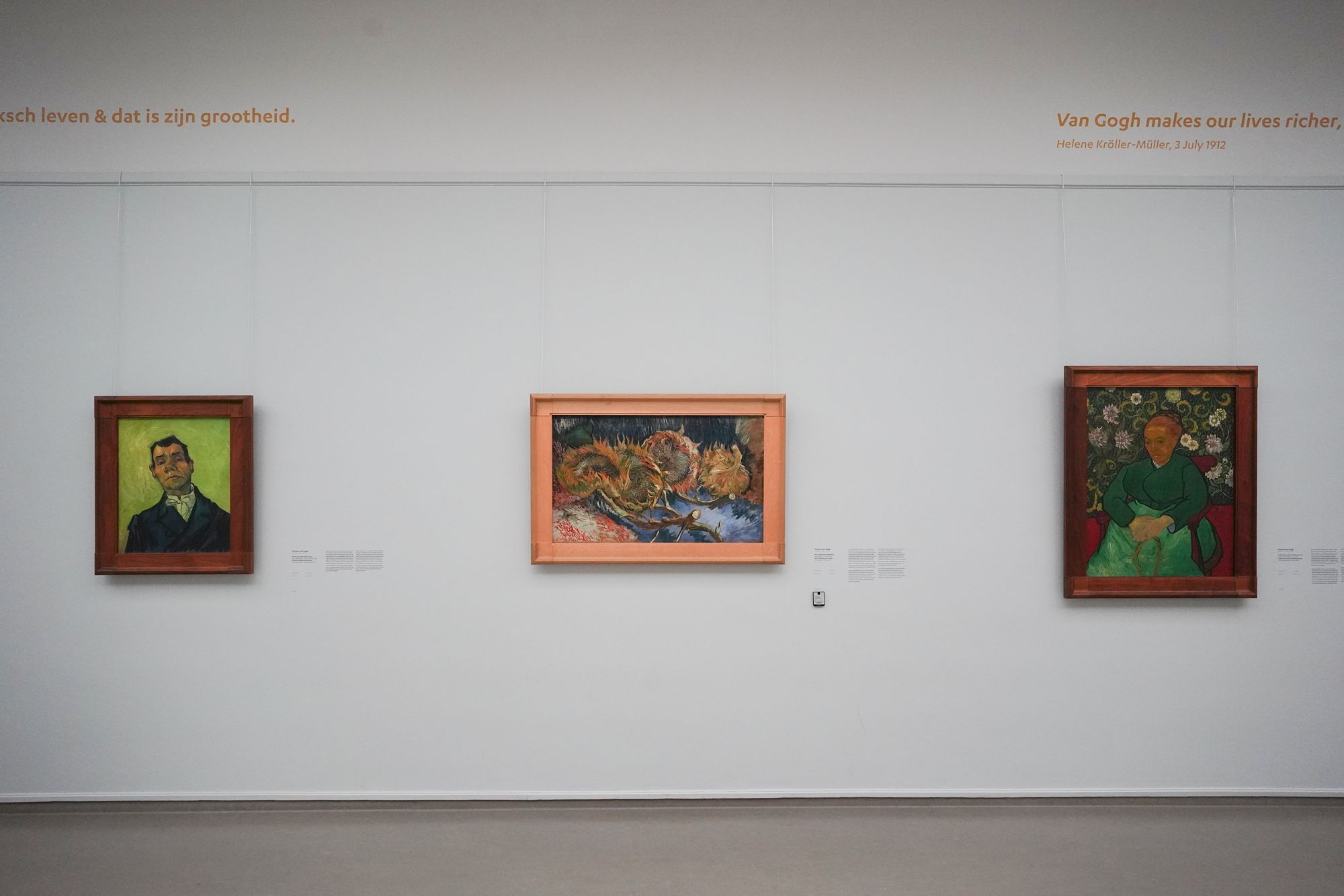
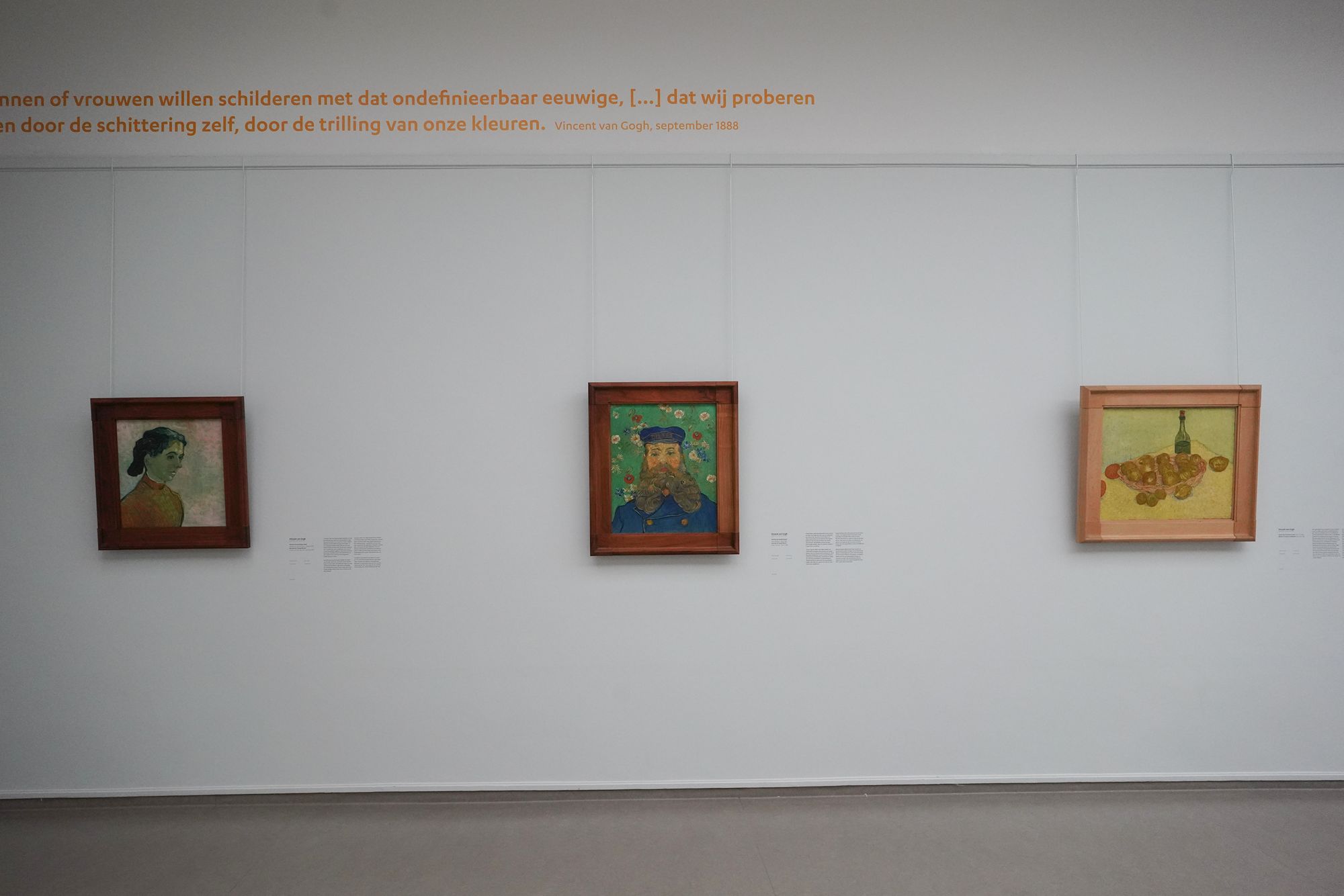
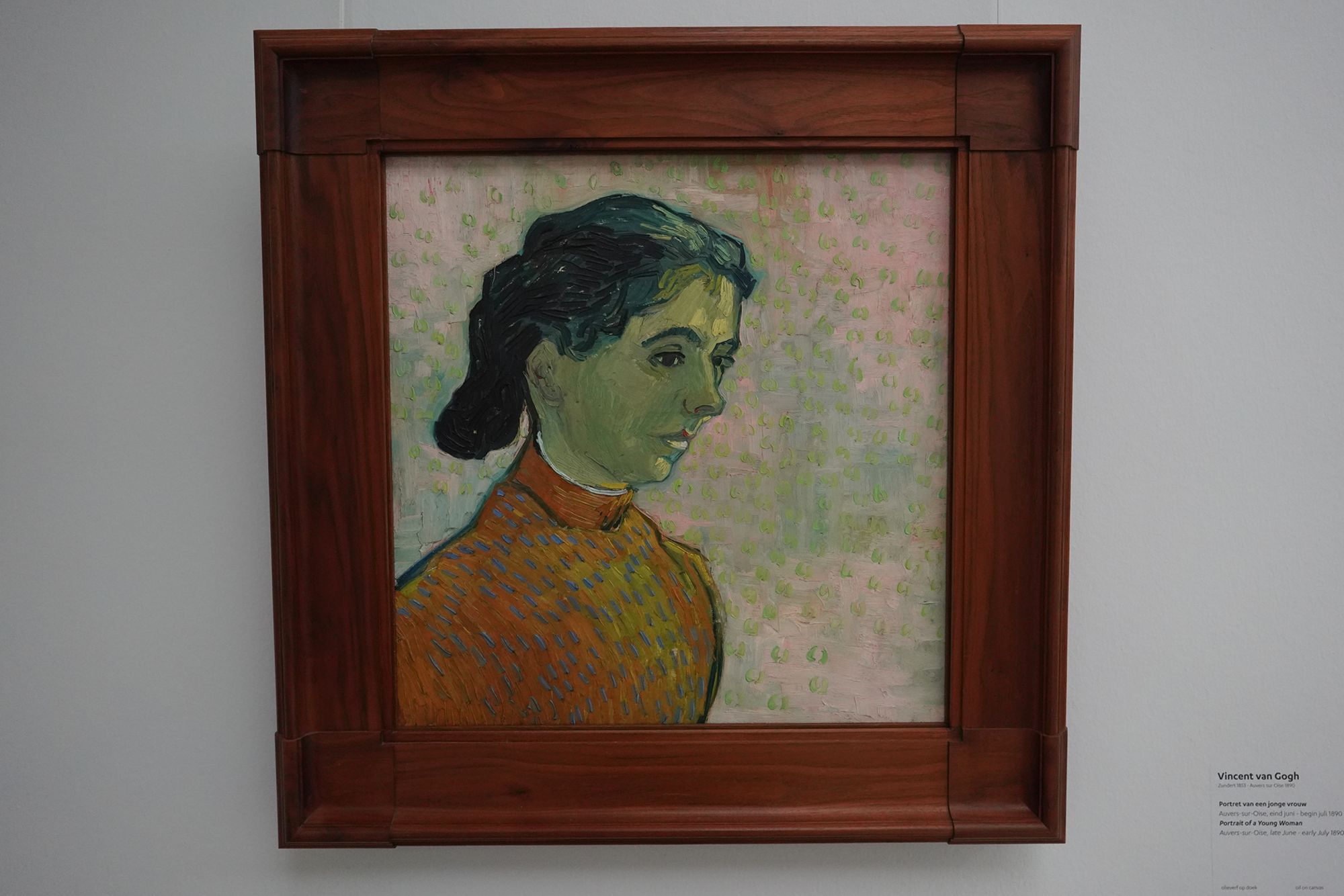
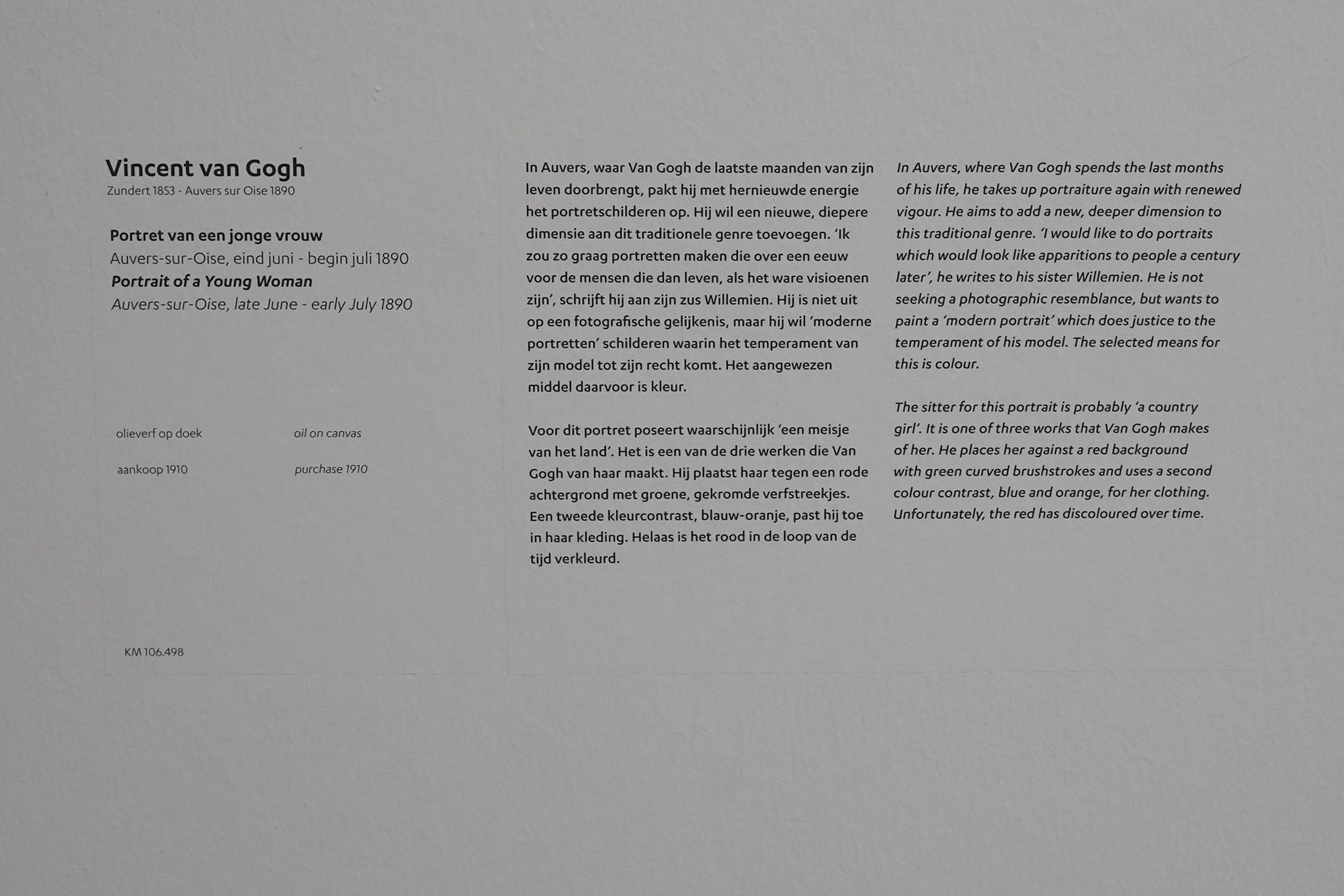
During his final months in Auvers-sur-Oise, Van Gogh returned to portrait painting, hoping to create portraits that would still seem meaningful a century later. Rather than simply capturing a person’s appearance, he used color to express the sitter’s character and temperament. In this portrait of a young country girl, he originally placed her against a vivid red background with green brushstrokes, although much of the red has faded over time.
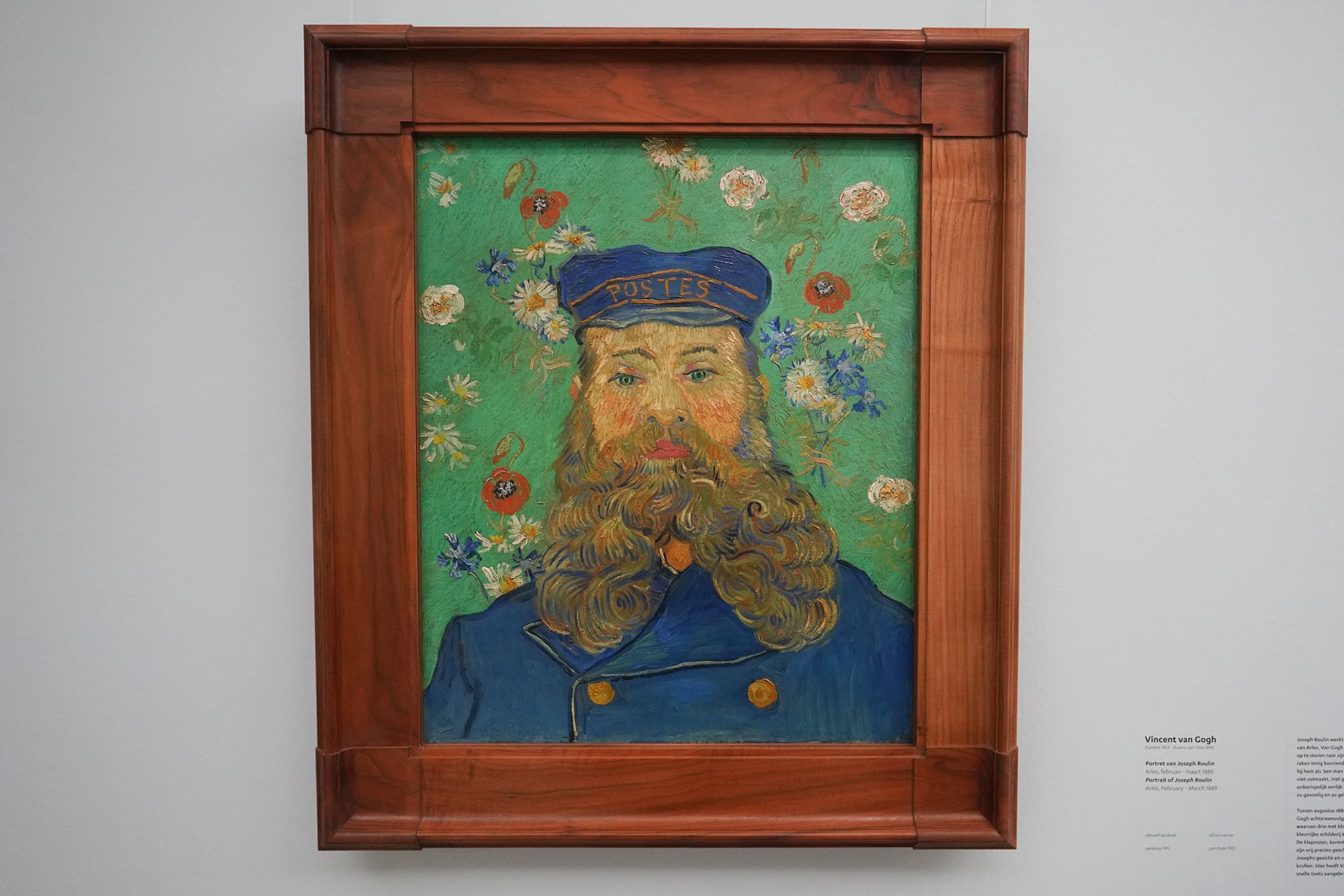
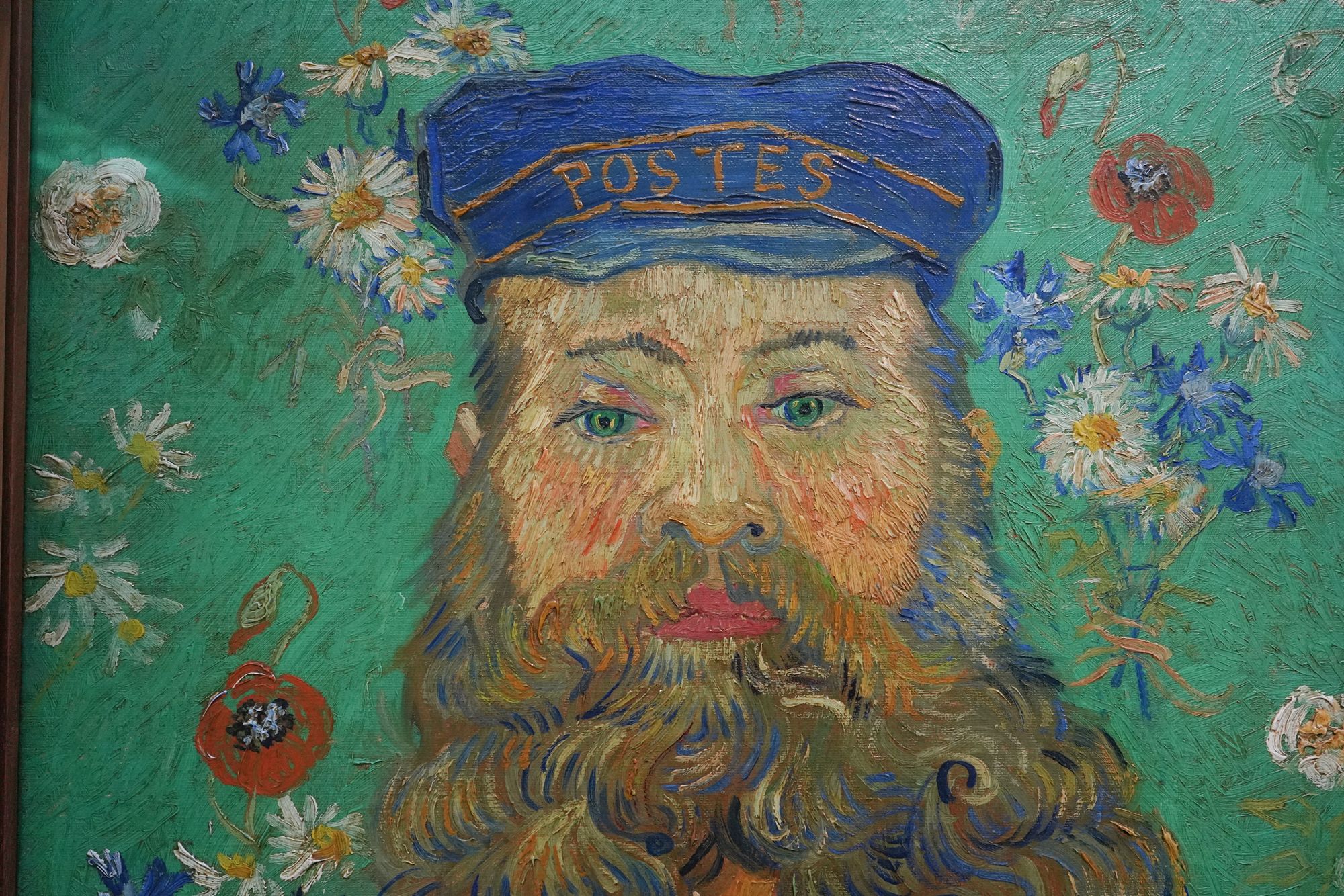
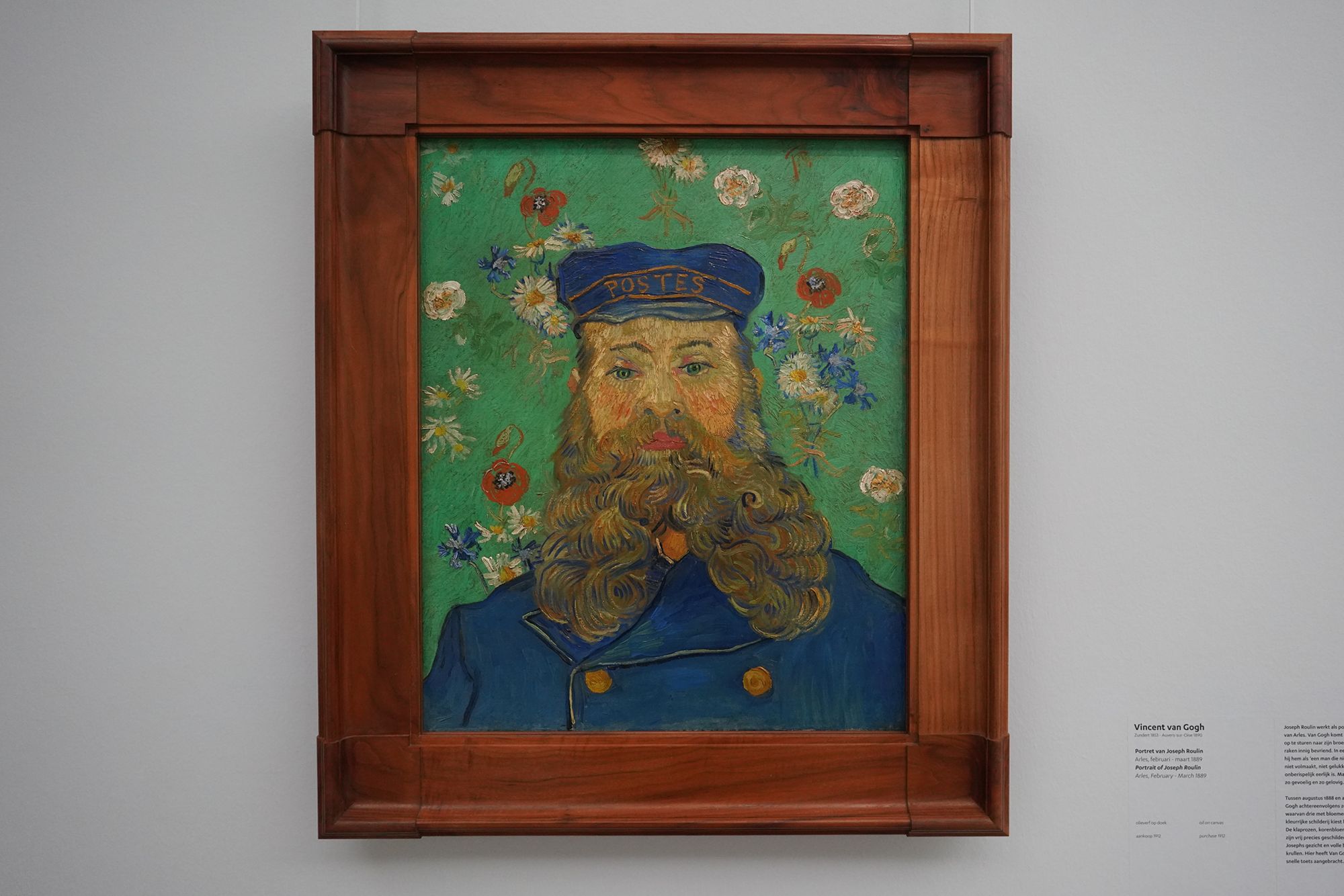
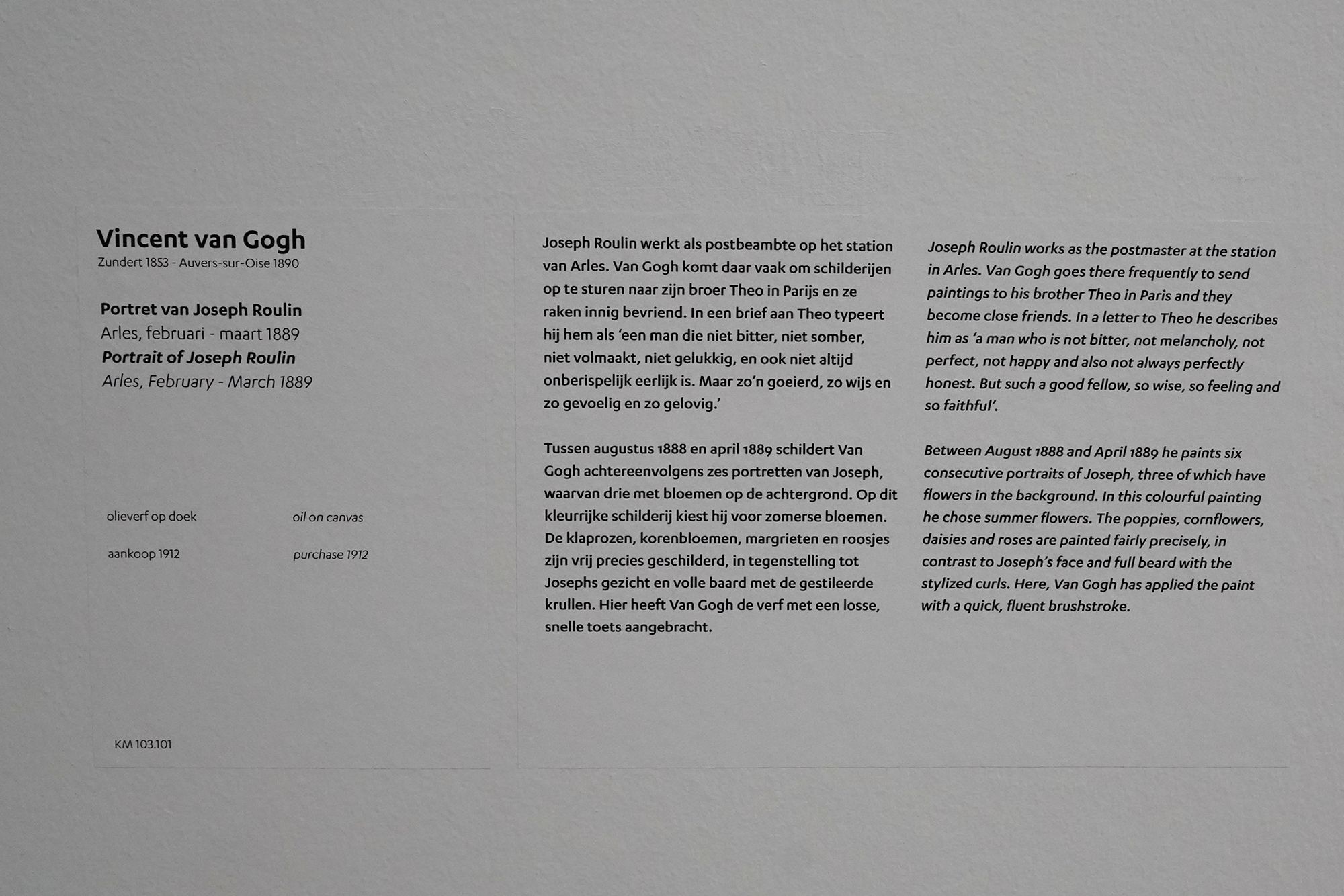
In Arles, Van Gogh became close friends with Joseph Roulin, the postmaster at the railway station where Vincent regularly sent paintings to Theo in Paris. Van Gogh painted Roulin six times, admiring him as a wise, kind, and faithful friend. In this colorful portrait, he surrounded Roulin with summer flowers, contrasting their delicate forms with his large beard and expressive, swirling brushstrokes.
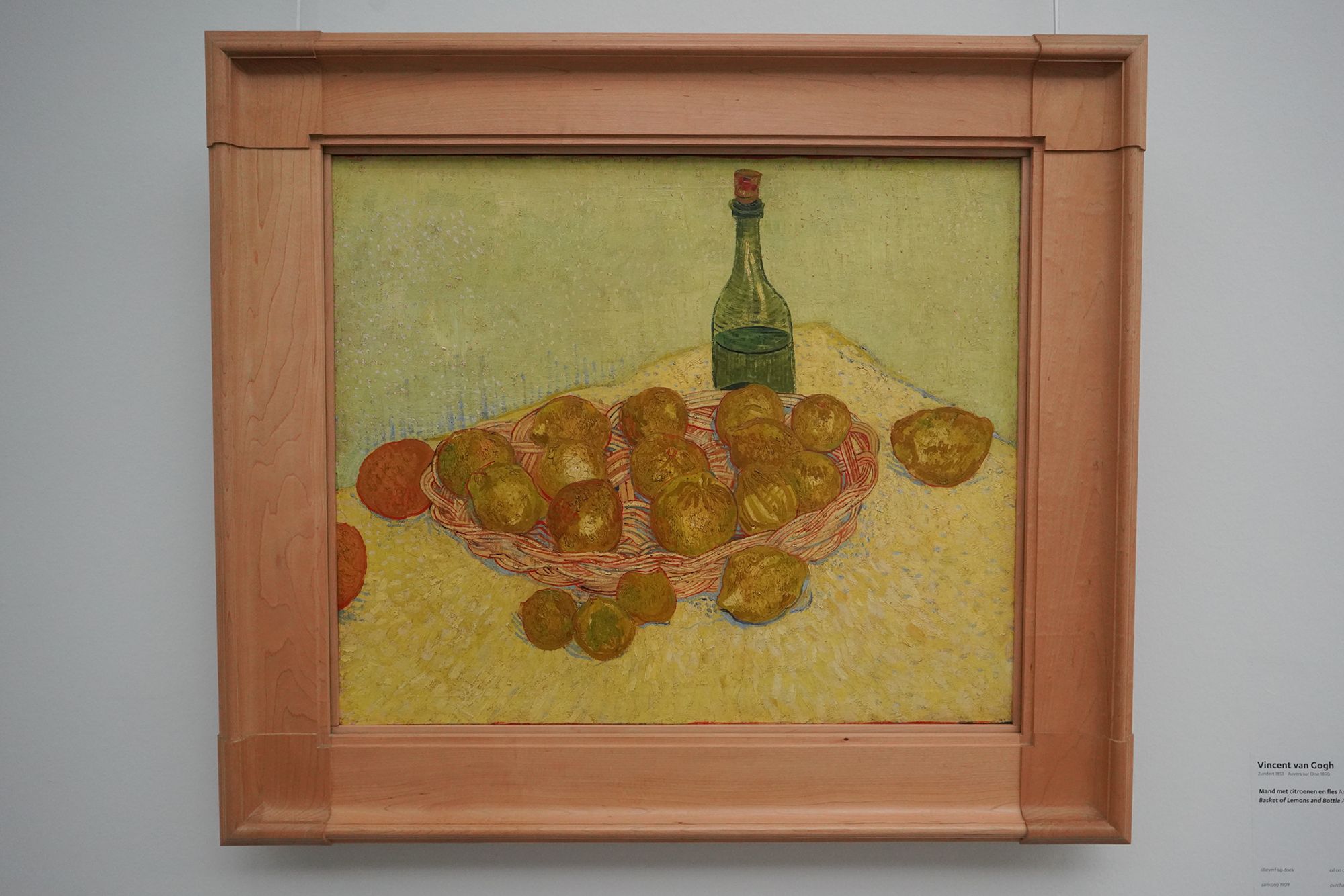
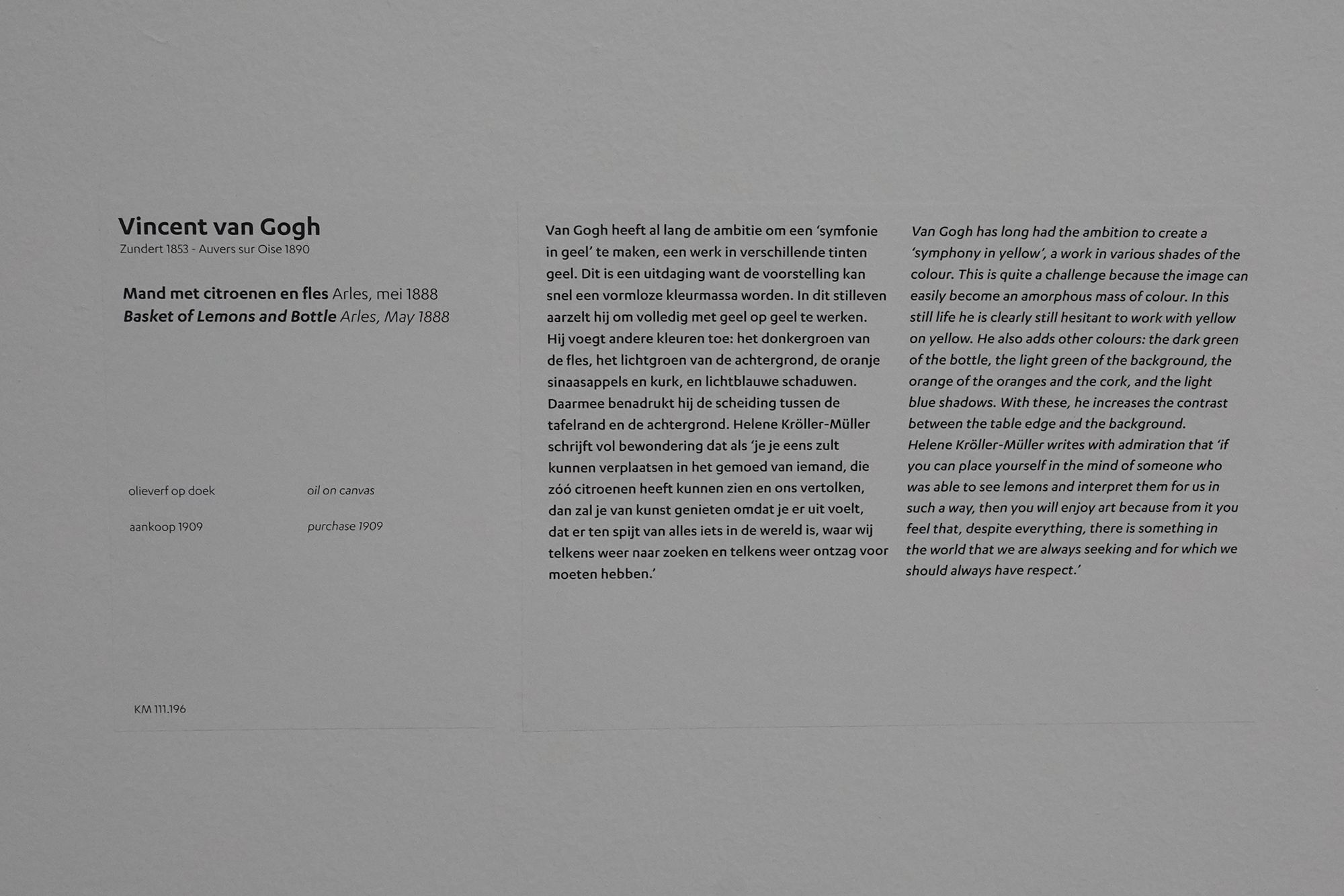
Van Gogh had long dreamed of creating a “symphony in yellow,” but painting almost entirely in one color was challenging. In this still life, he combined different shades of yellow with green, orange, and blue accents to create contrast and depth. Helene Kröller-Müller especially admired the painting, believing that Van Gogh could transform something as ordinary as lemons into a work that revealed beauty in the everyday world.
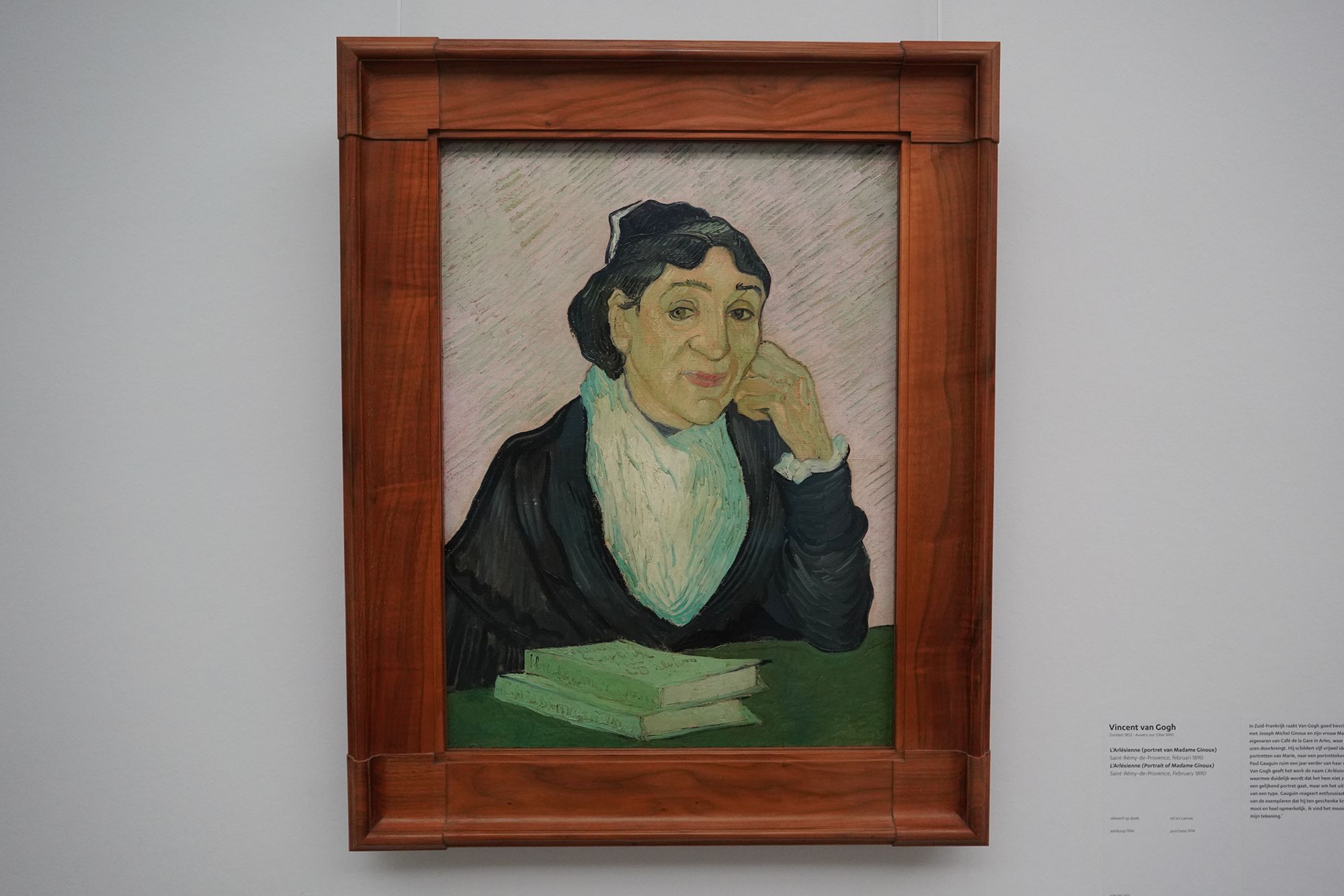
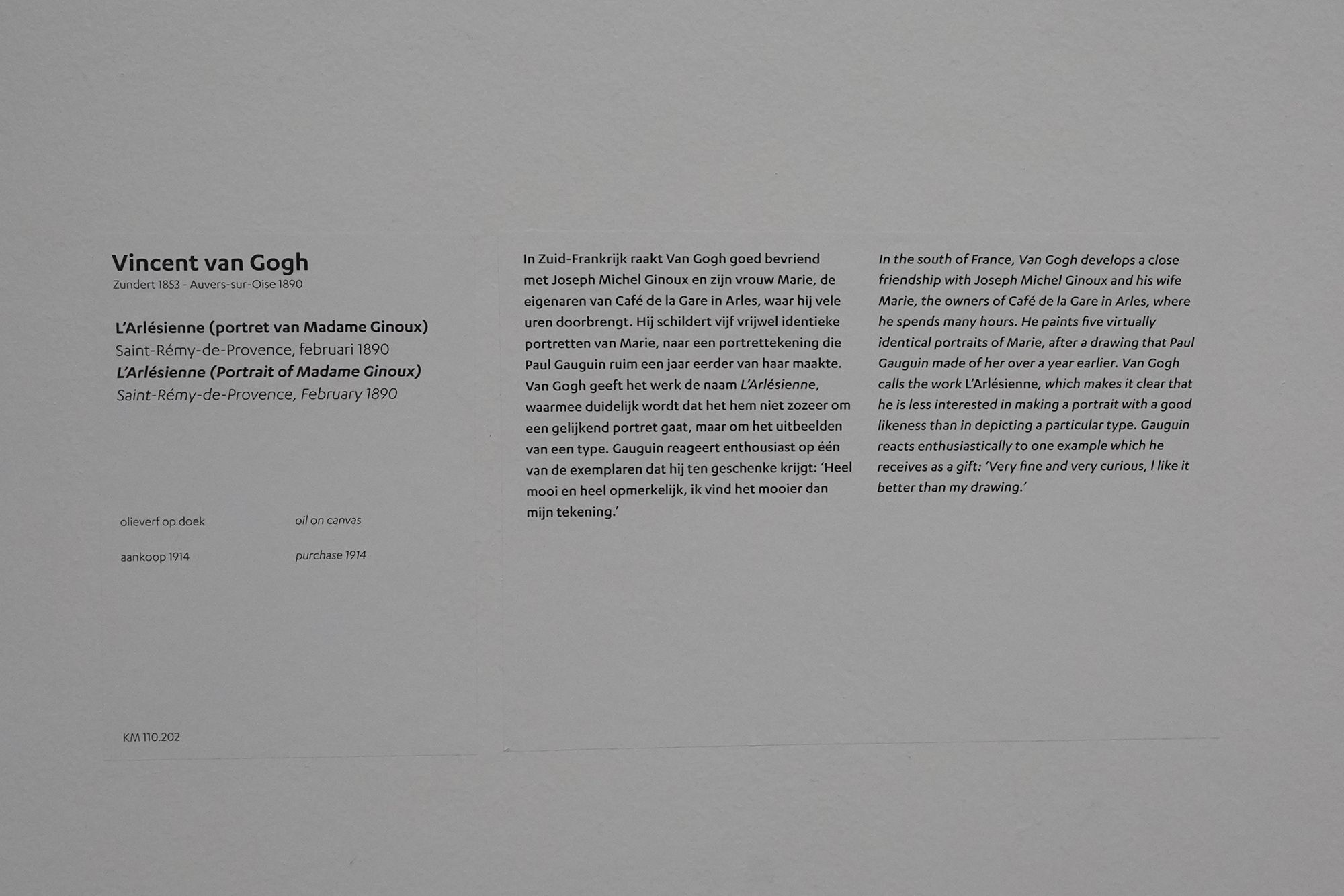
In Arles, Van Gogh became friends with Joseph and Marie Ginoux, owners of the Café de la Gare, where he often spent time. He painted five nearly identical portraits of Marie, known as L’Arlésienne, based on a drawing by Paul Gauguin. Van Gogh was less interested in creating an exact likeness than in expressing Marie’s character and personality through his distinctive style.
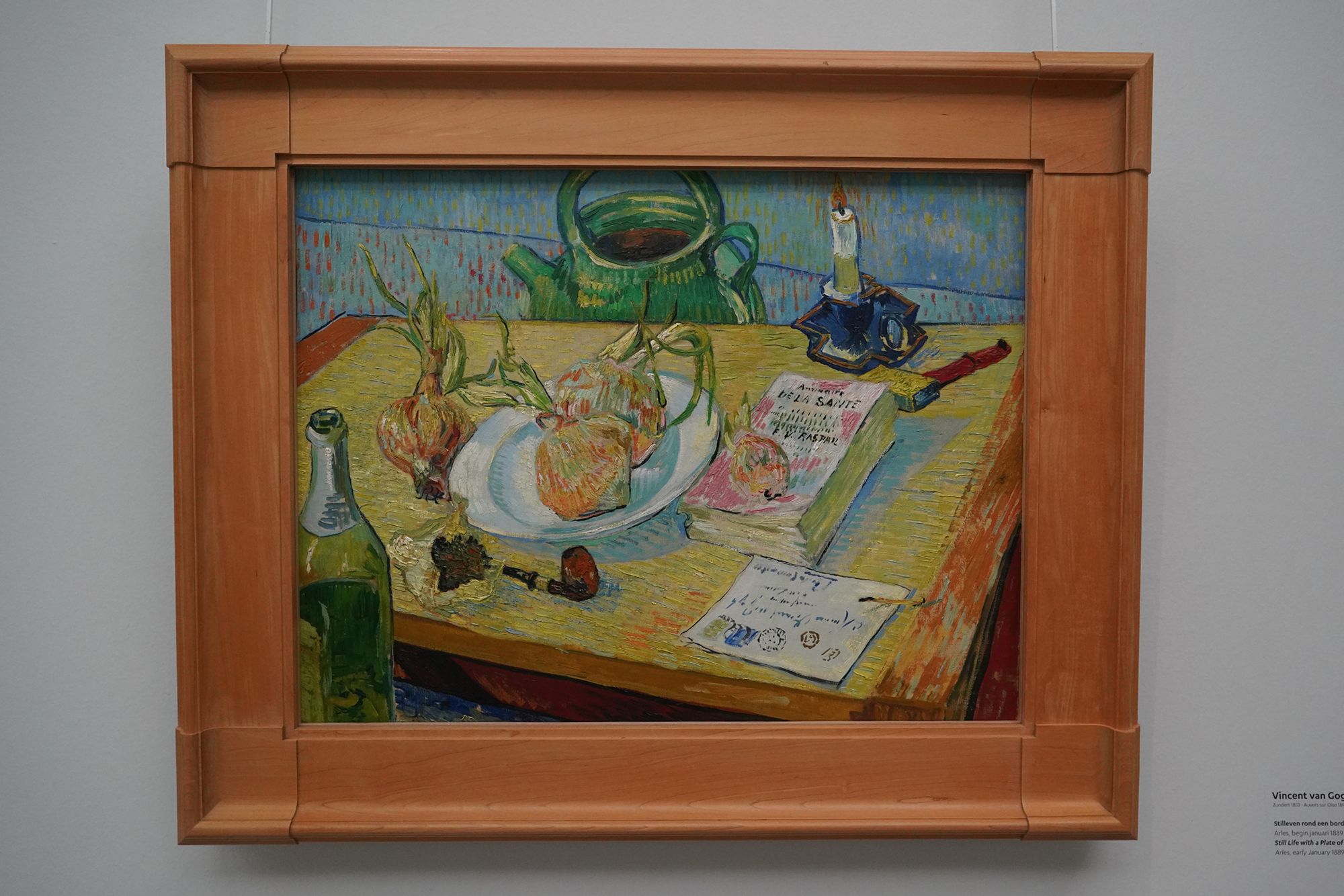
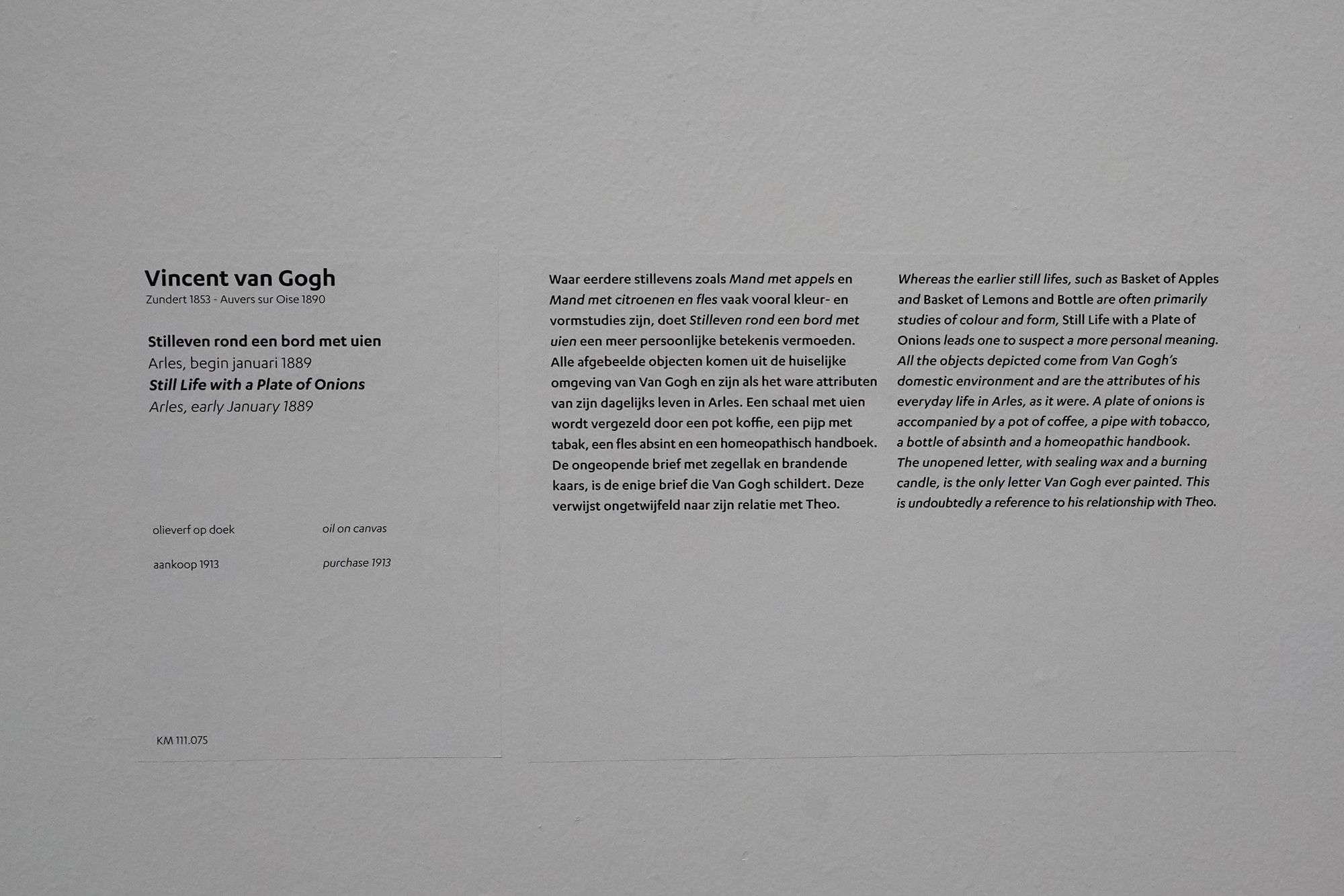
Unlike many of Van Gogh’s earlier still lifes, Still Life with a Plate of Onions seems to have a more personal meaning. The objects—including onions, coffee, tobacco, absinthe, and a handbook—reflect his everyday life in Arles. Most significant is the unopened letter, probably from Theo, quietly representing the close relationship between the two brothers.
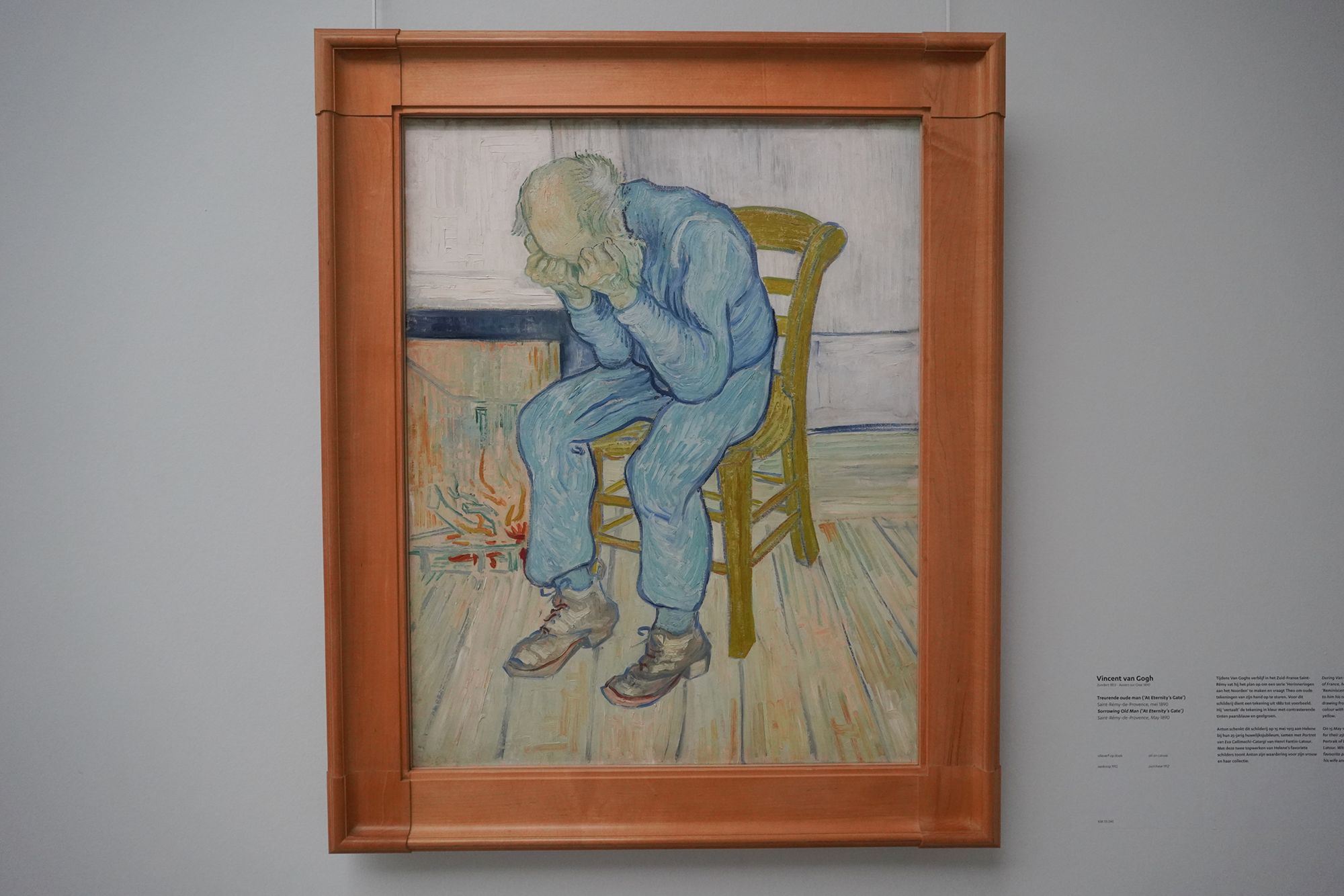
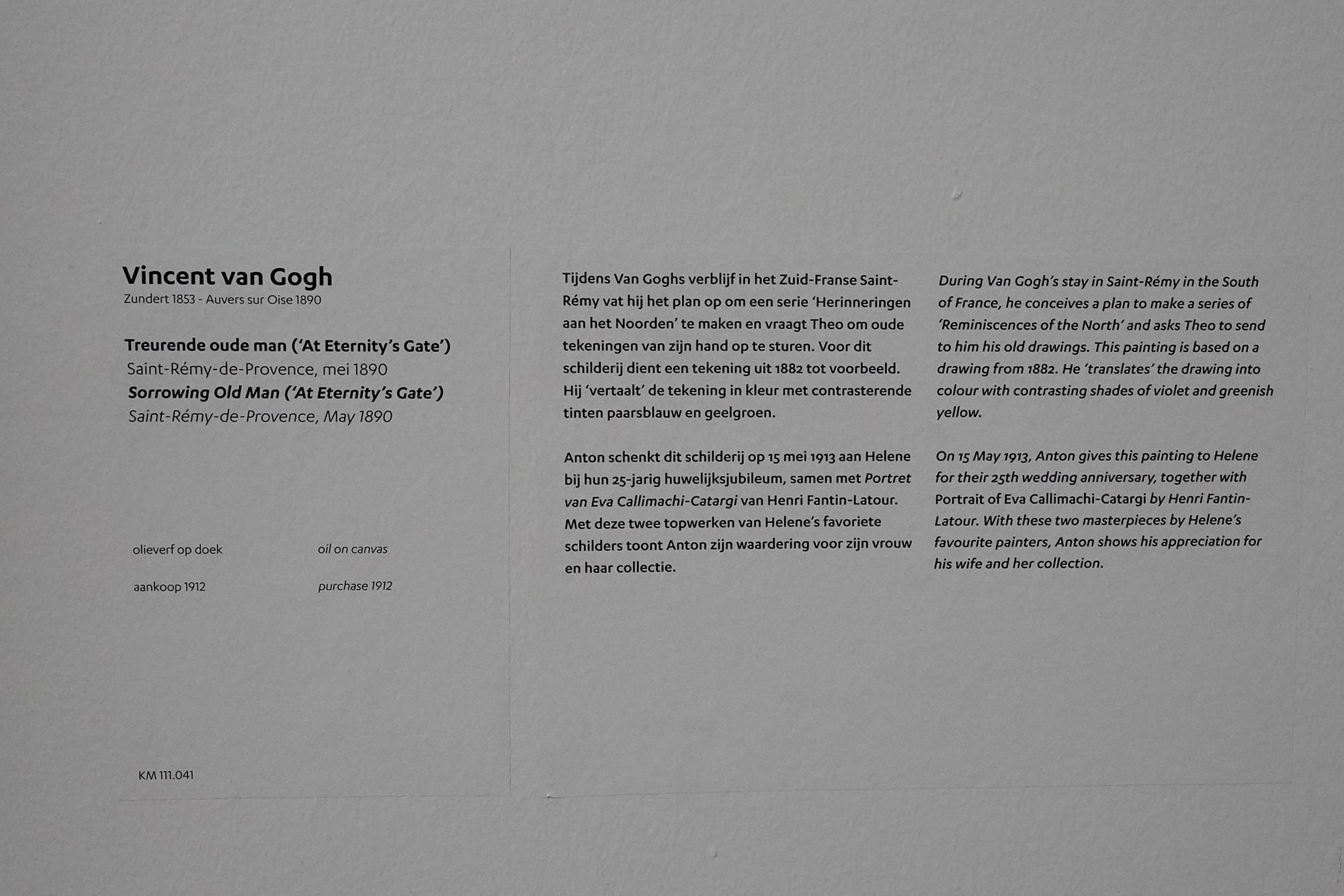
During his stay at Saint-Rémy, Van Gogh revisited subjects from his earlier years, creating a series he called “Reminiscences of the North.” This painting was based on one of his own drawings from 1882, which he transformed with contrasting shades of violet and greenish yellow. In 1913, Anton Kröller gave the painting to Helene for their 25th wedding anniversary, knowing how much she admired Van Gogh.
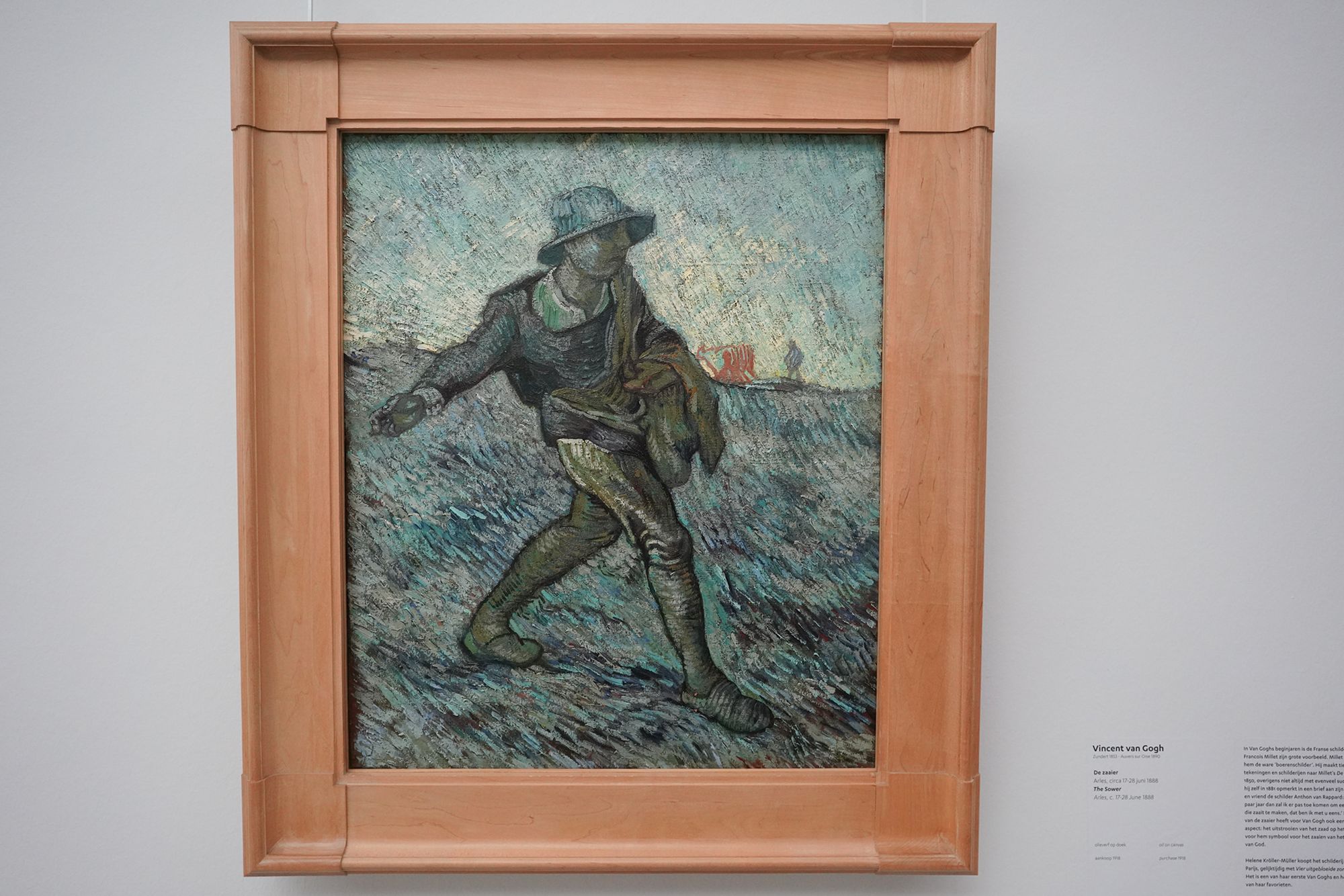
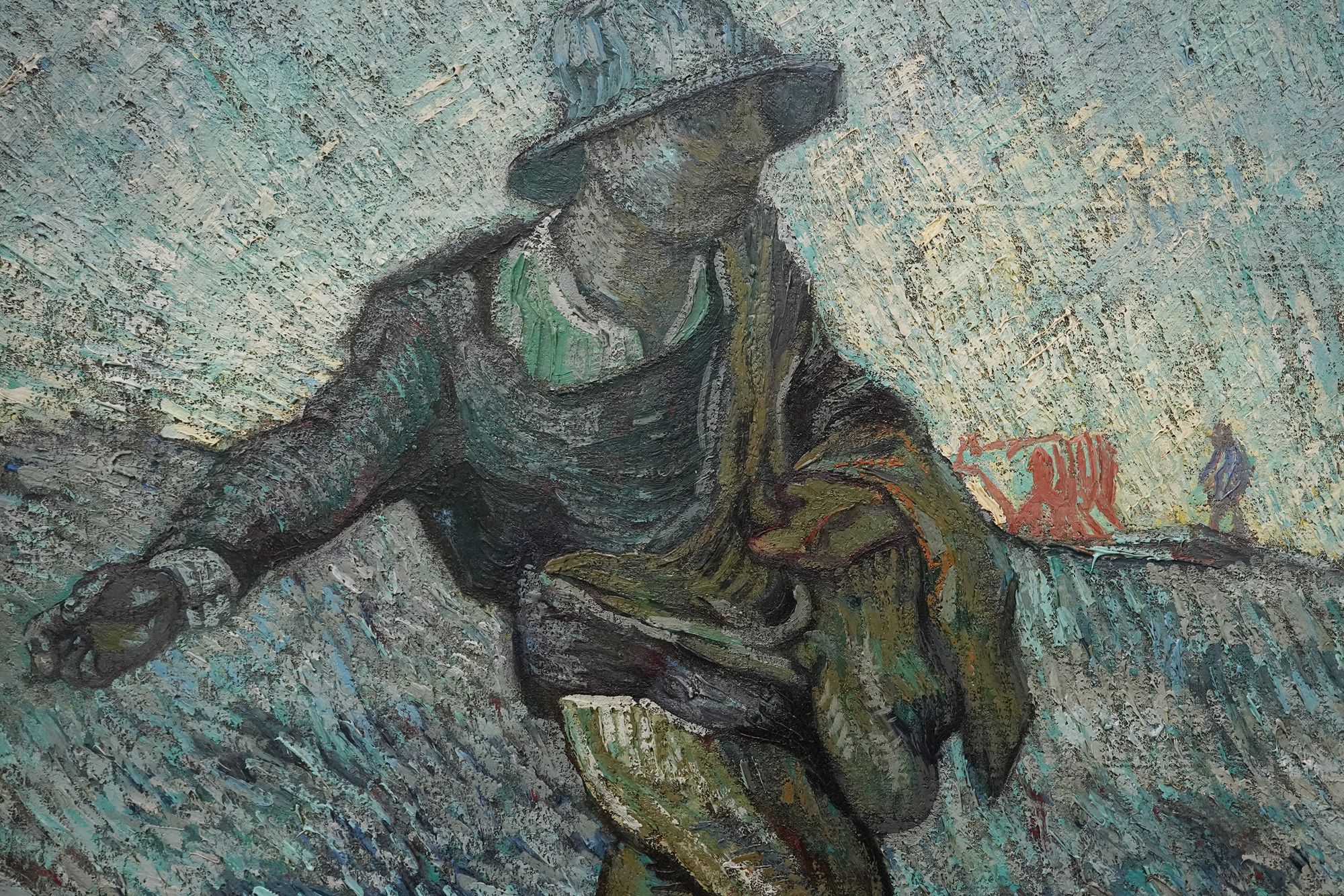
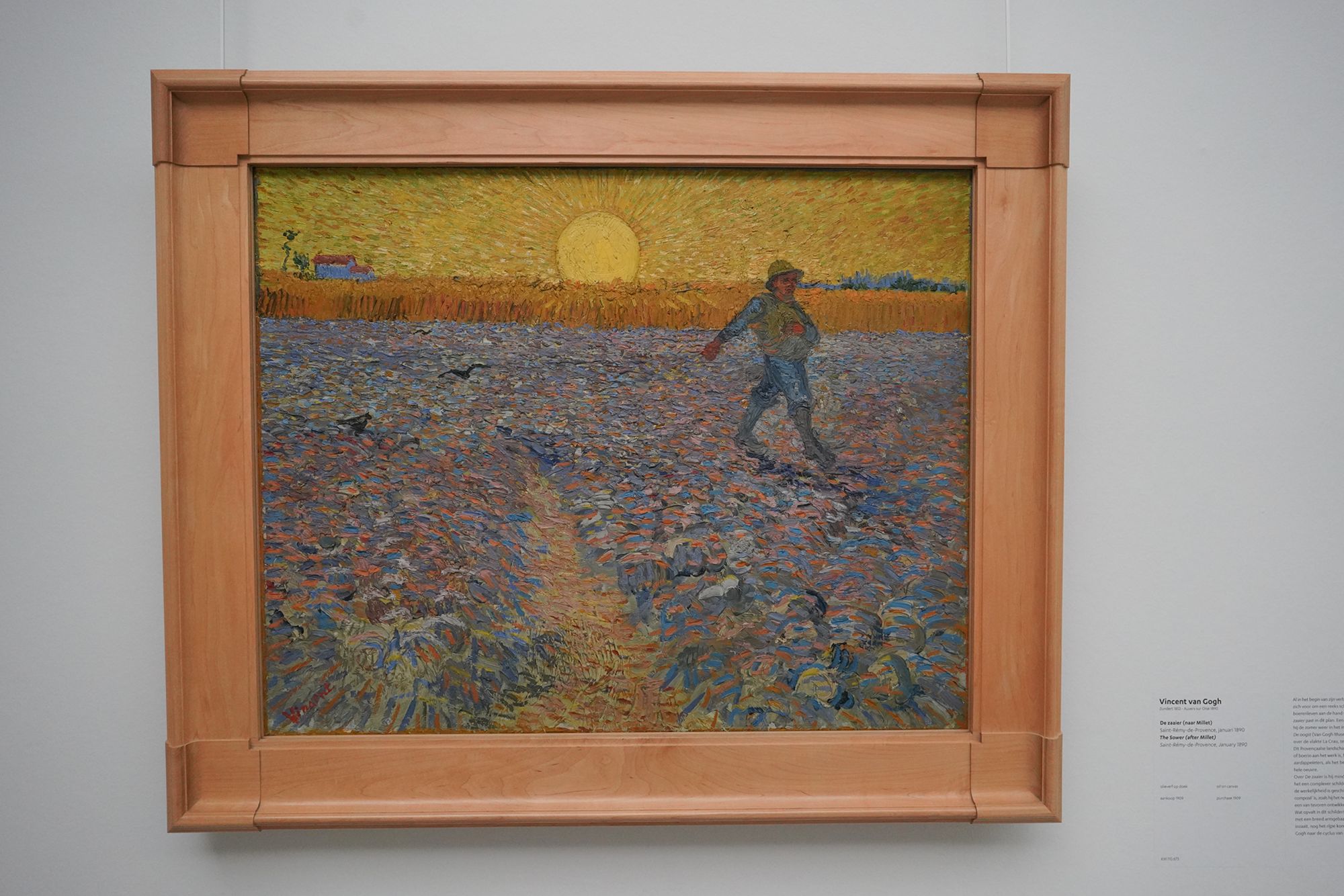
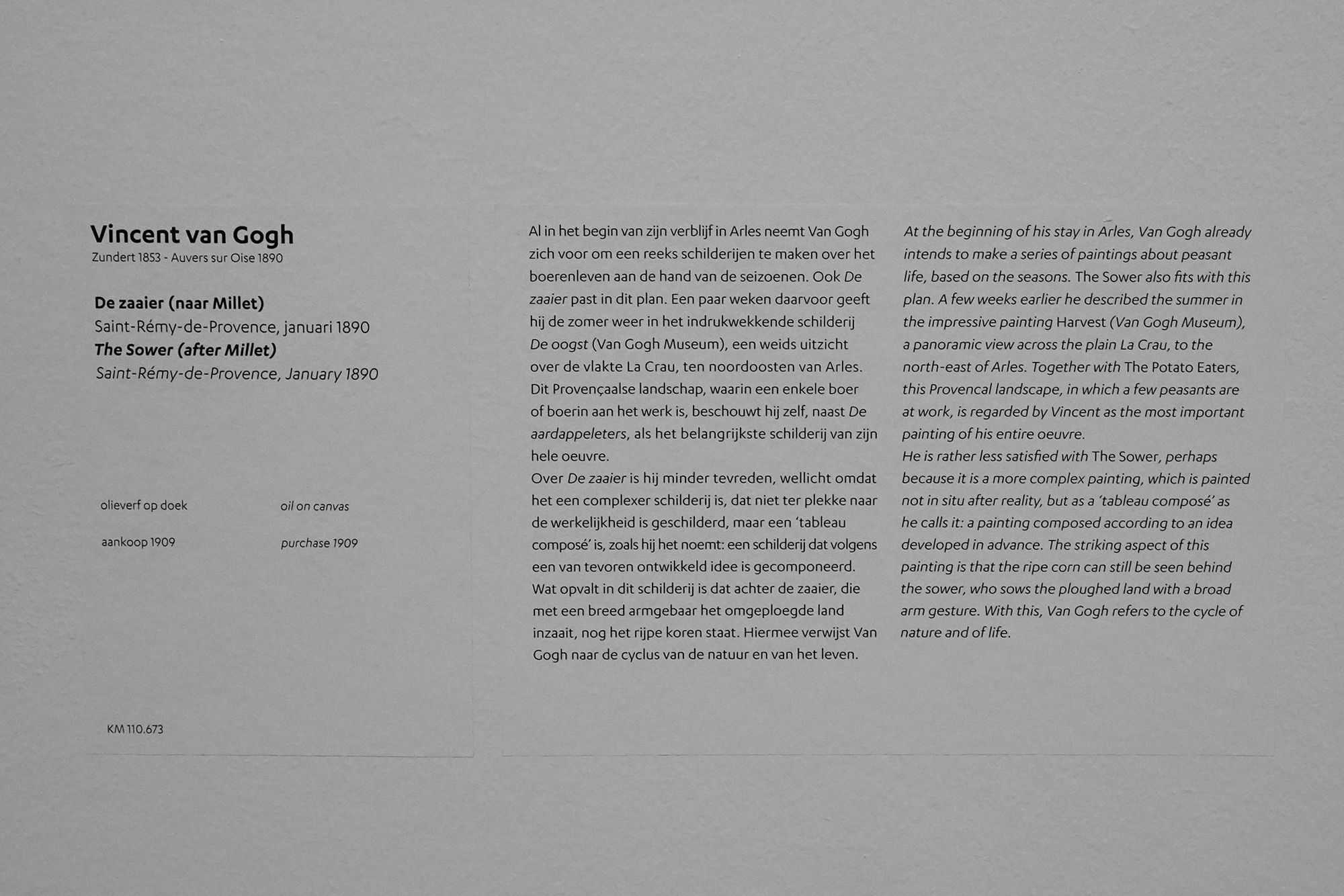
In Arles, Van Gogh planned a series of paintings showing peasant life through the changing seasons. In The Sower, he created a carefully composed scene rather than simply painting what he saw, showing a farmer scattering seeds across a field while ripe wheat remains visible behind him. By combining sowing and harvesting in the same landscape, Van Gogh referred to the continuing cycle of nature, life, and renewal.
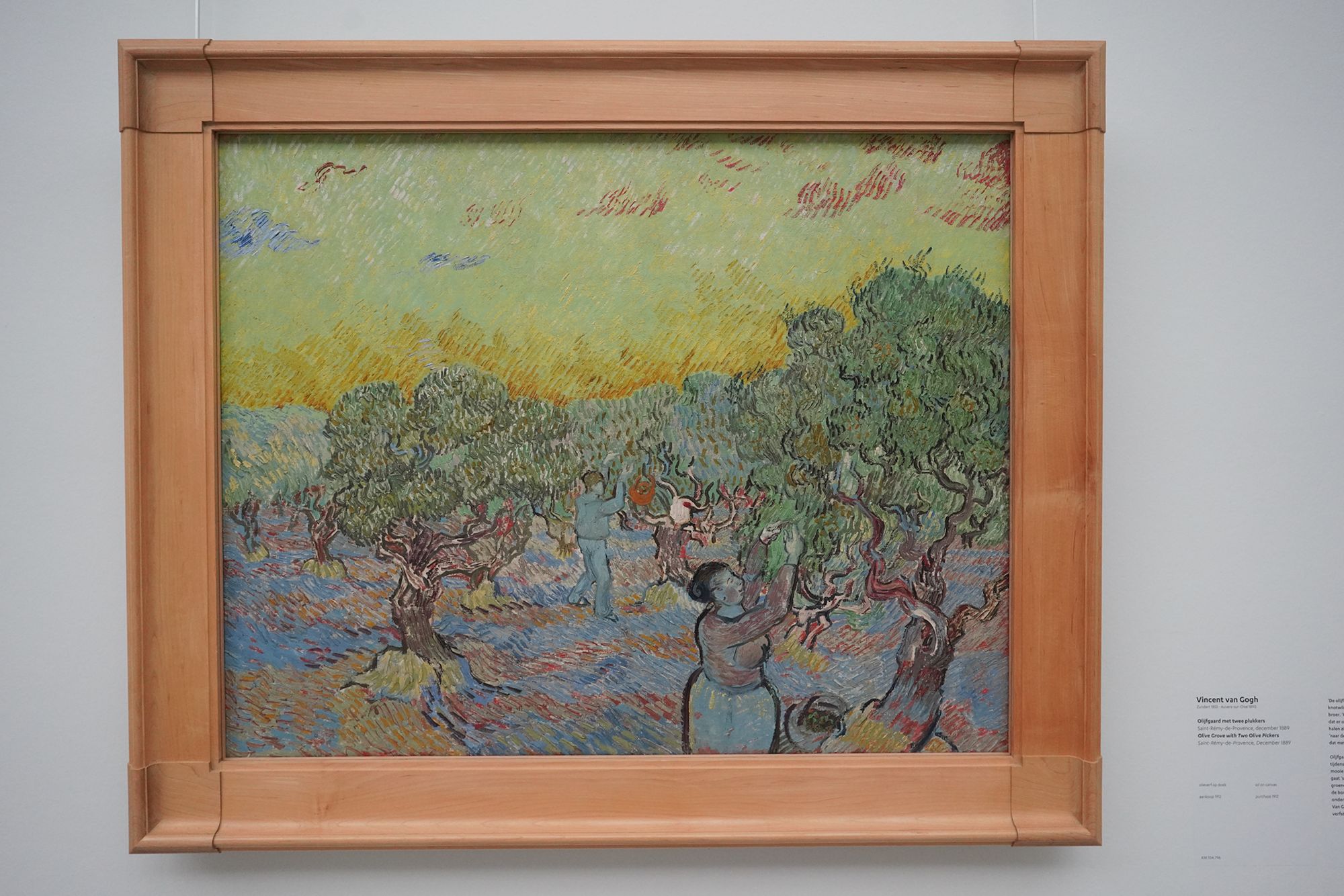
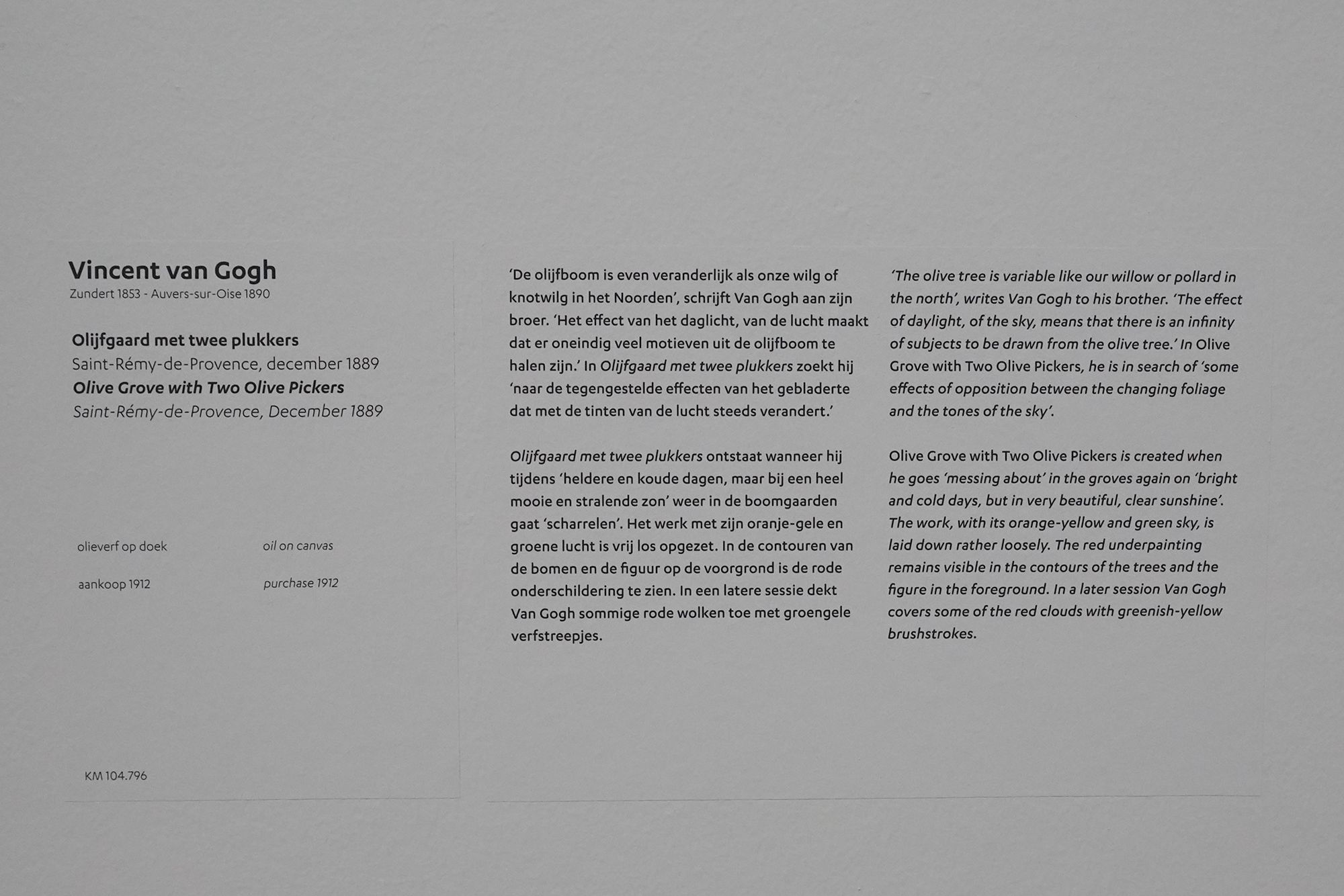
While staying at Saint-Rémy, Van Gogh became fascinated by the changing colors of the olive groves, especially their contrast with the sky. In Olive Grove with Two Olive Pickers, he used an unusual orange-yellow and green sky, with traces of an earlier red underpainting still visible. He painted the scene quickly and loosely, trying to capture the shifting effects of daylight and color among the olive trees.
Early in his career, Van Gogh greatly admired Jean-François Millet, whom he considered the true painter of peasant life. He made many drawings and paintings inspired by Millet’s The Sower, a subject that also had religious meaning for him—the scattering of seeds could symbolize the spreading of God’s word. Helene Kröller-Müller bought this painting in Paris in 1909, and it became one of her favorite Van Gogh works.
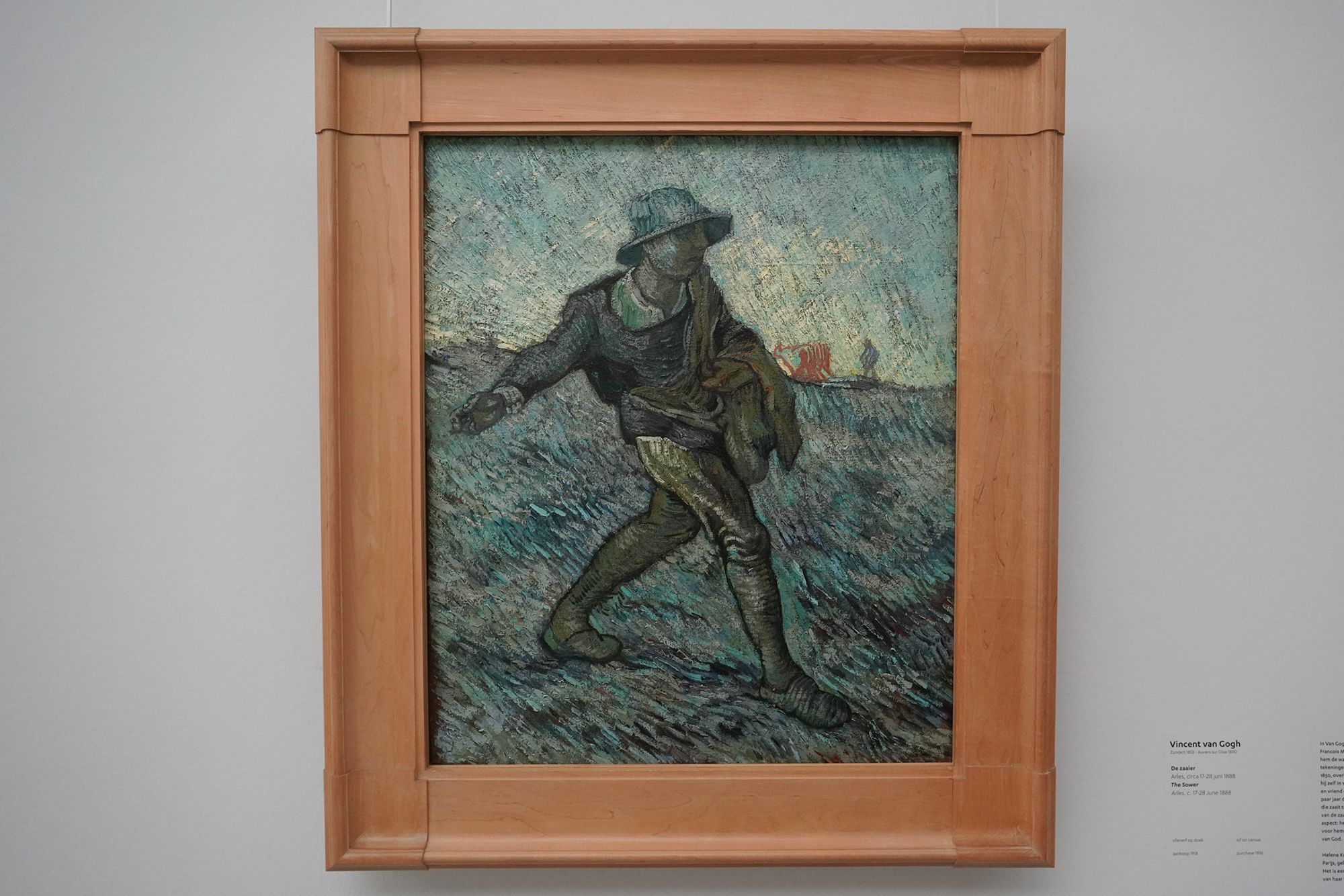
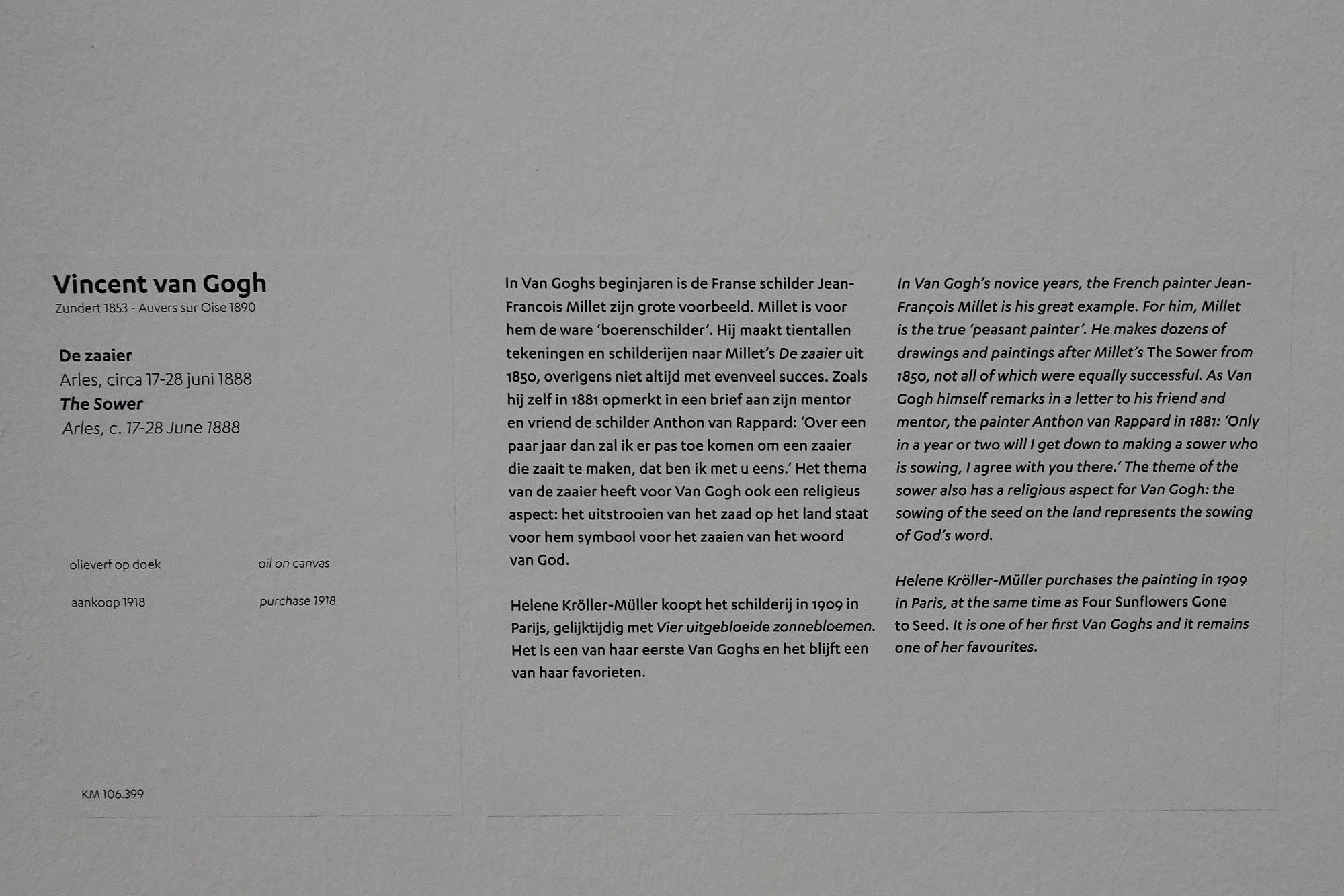
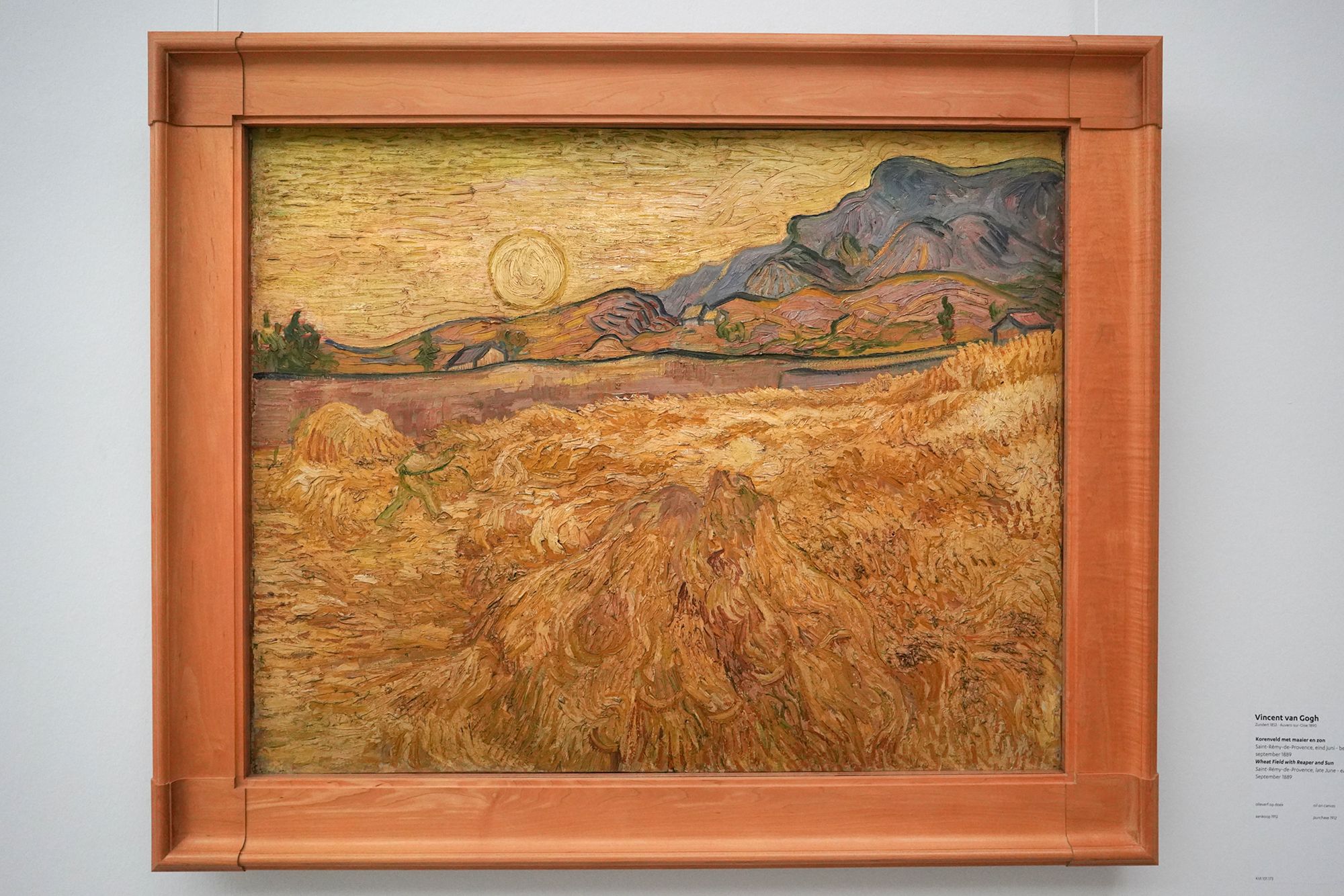
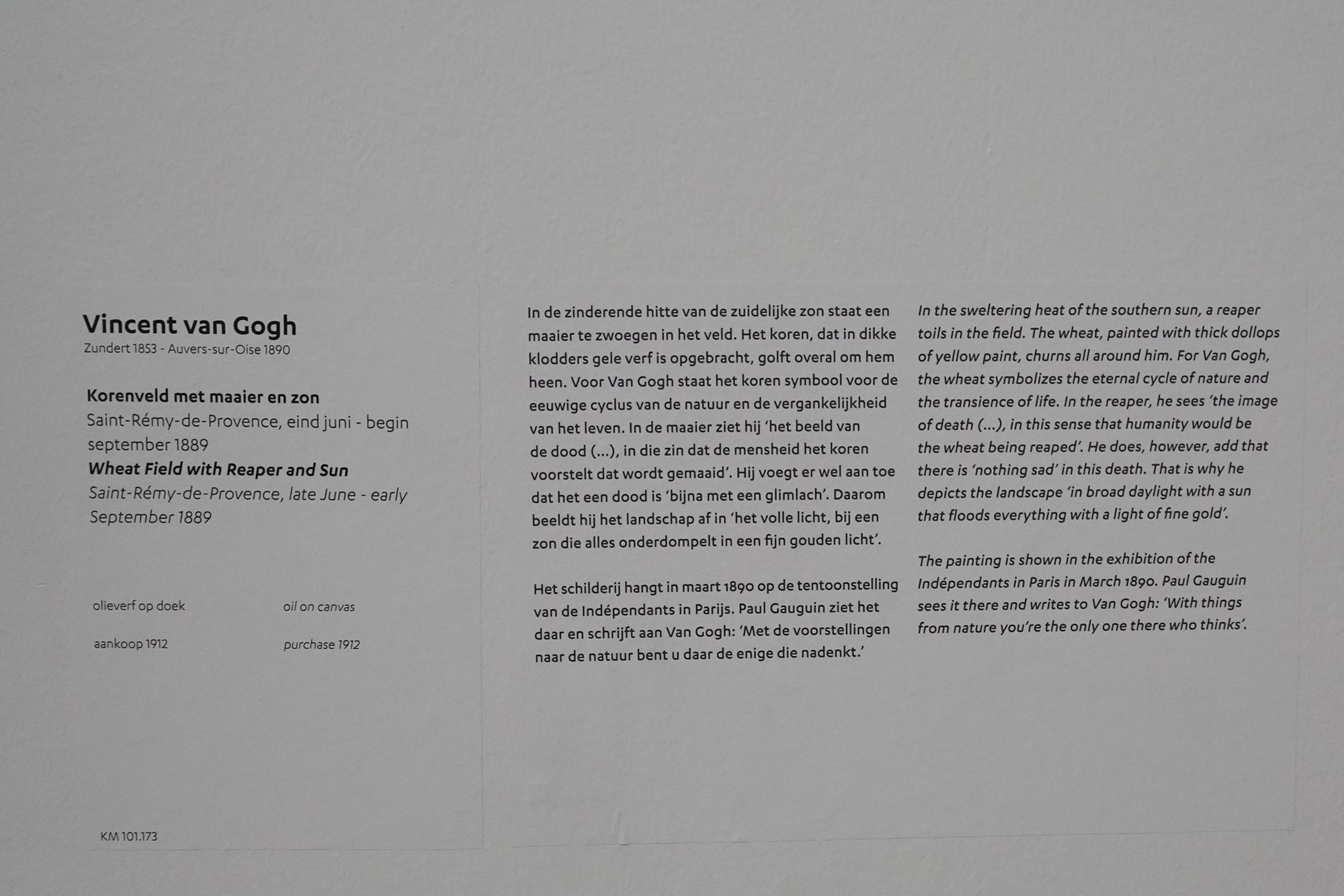
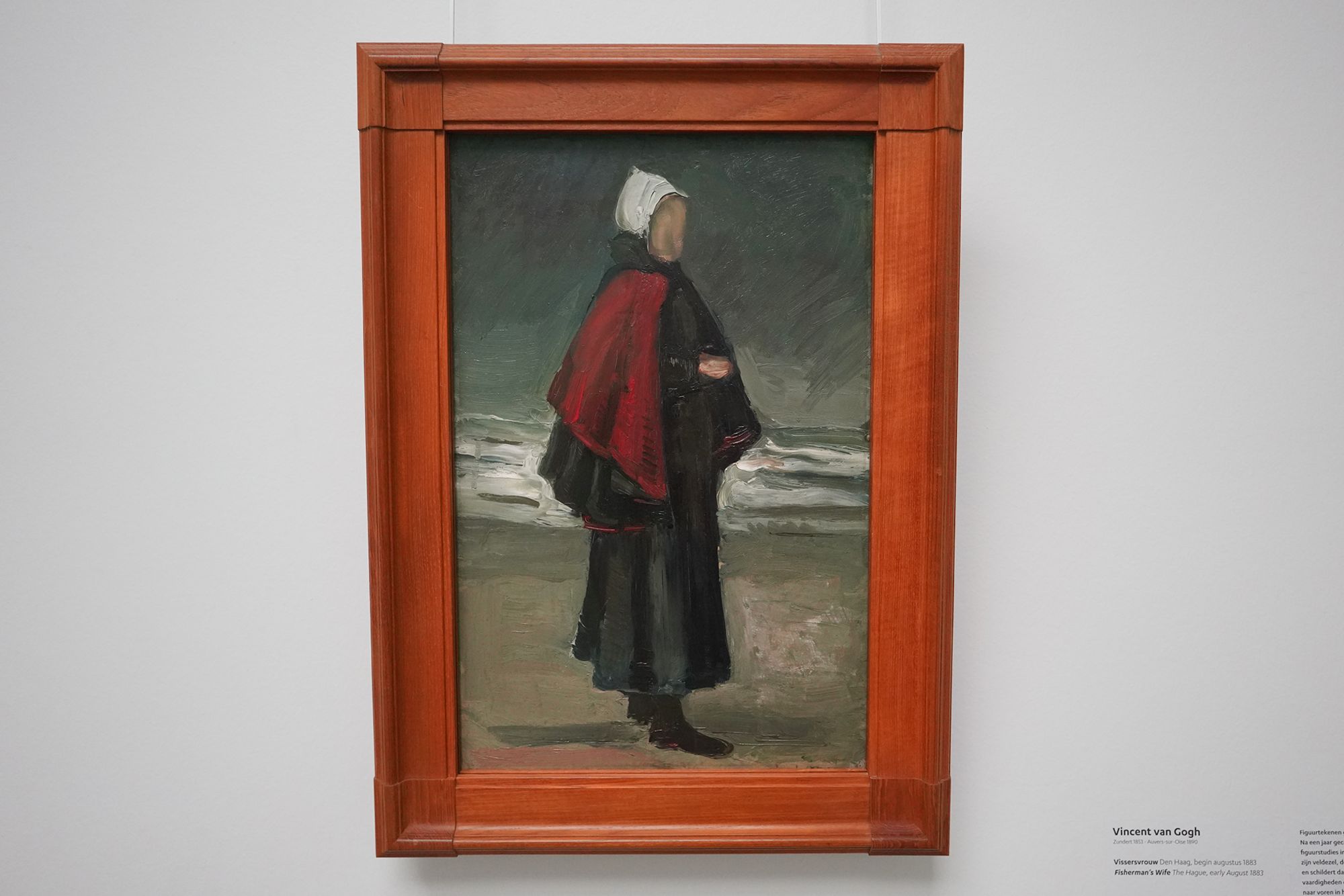
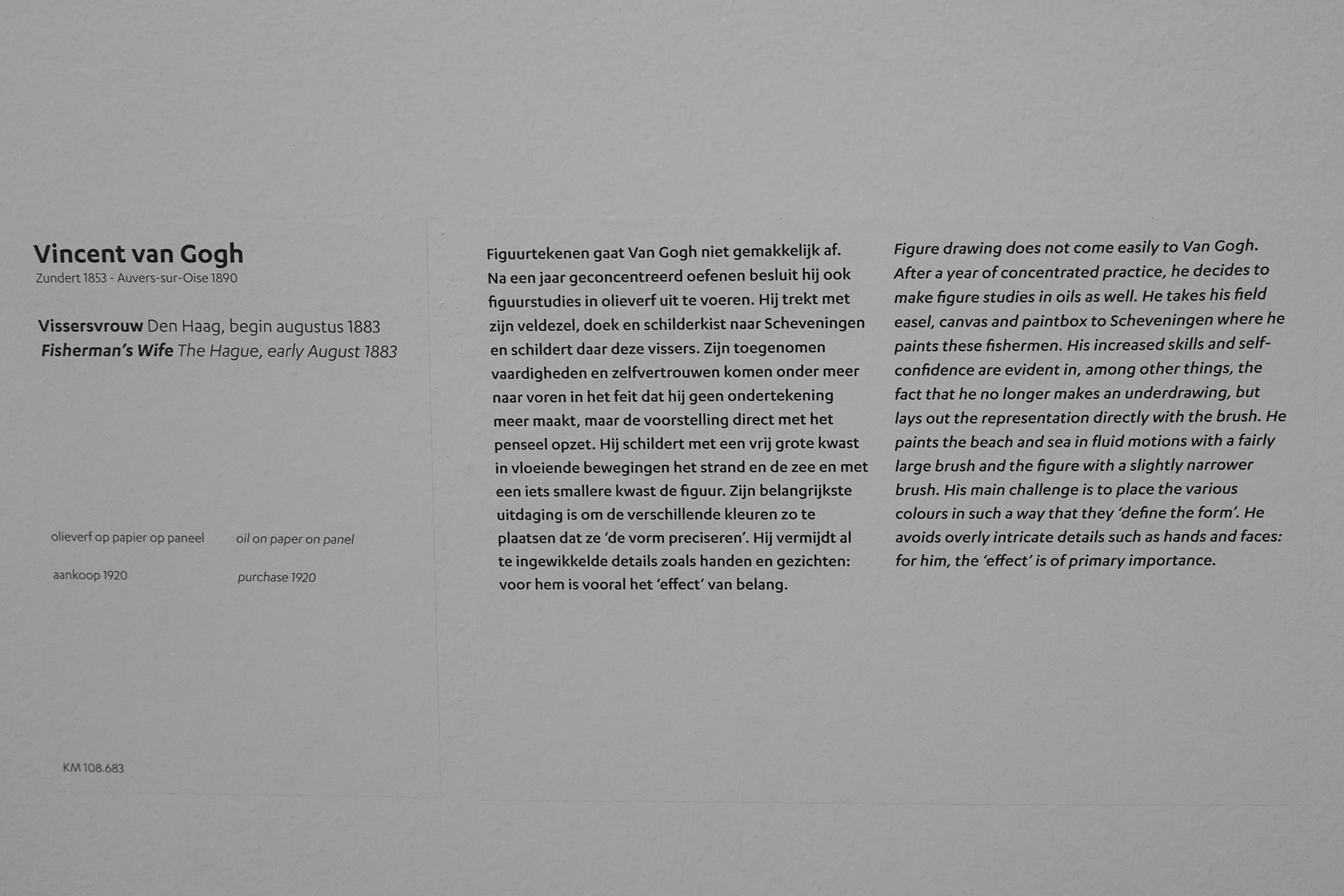
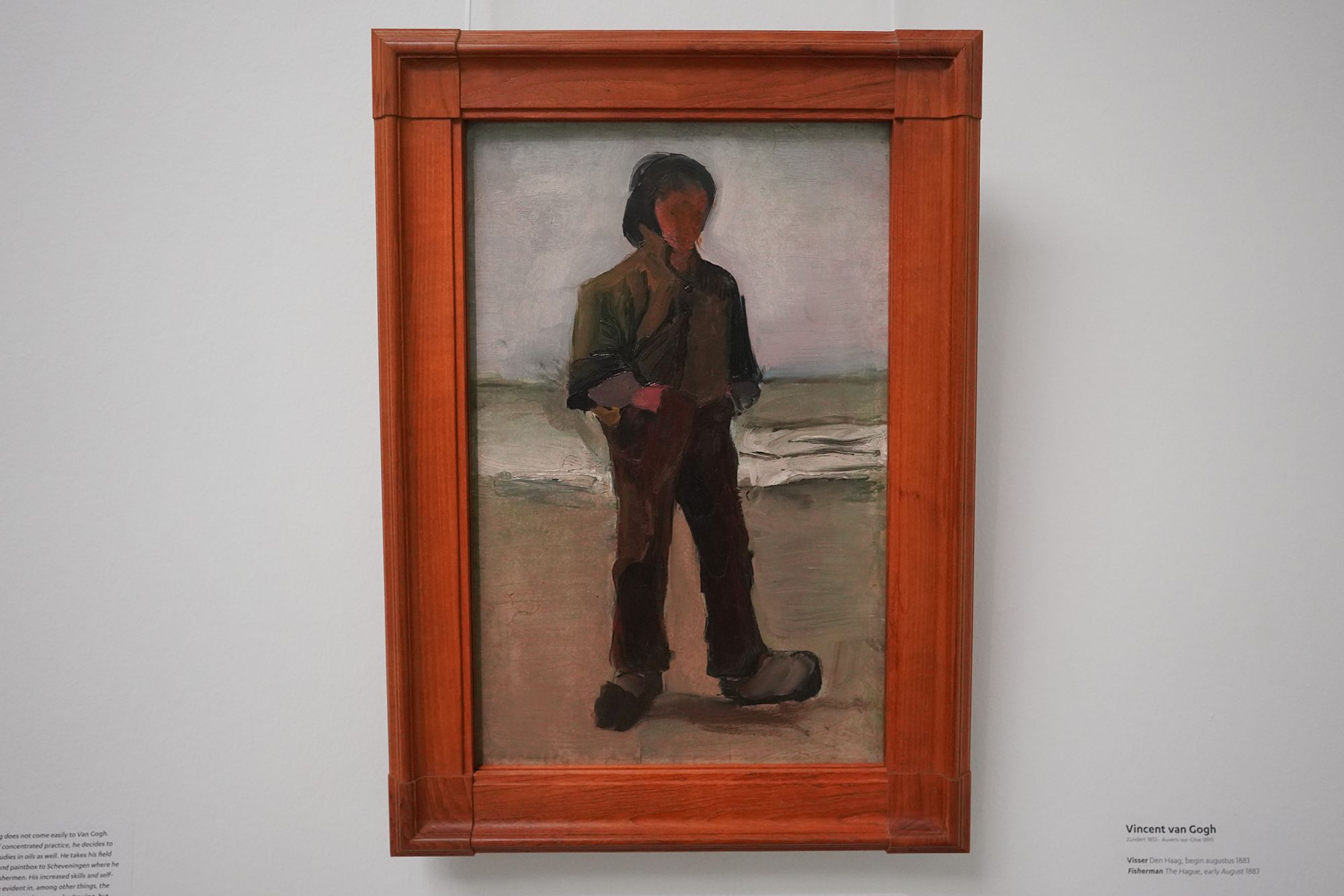
Figure drawing was initially difficult for Van Gogh, but after intensive practice he became increasingly confident. At Scheveningen, he painted these fishermen directly with the brush, without making a preliminary drawing. Rather than concentrating on detailed faces and hands, he used color, form, and fluid brushstrokes to capture the overall impression of the fishermen, beach, and sea.
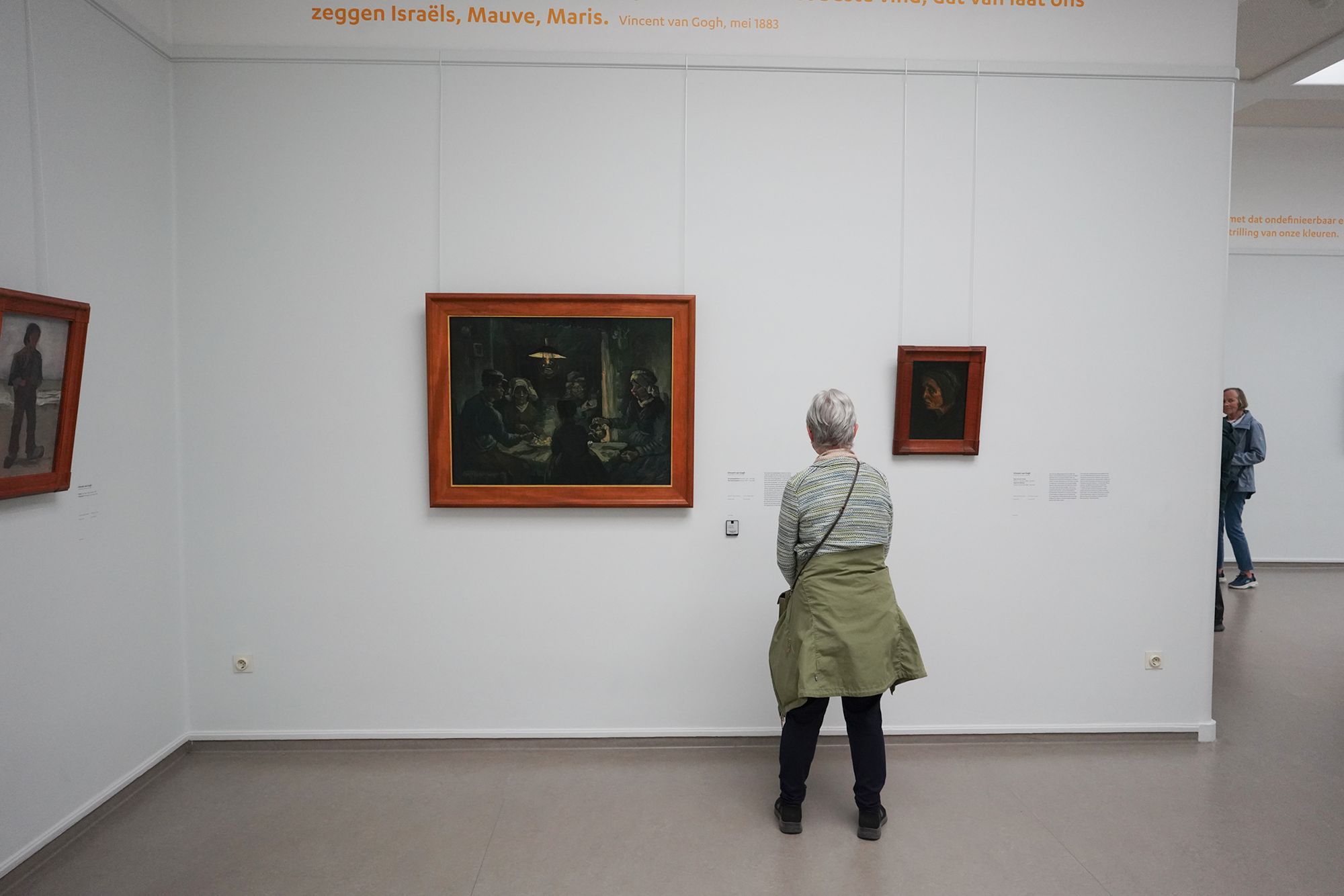
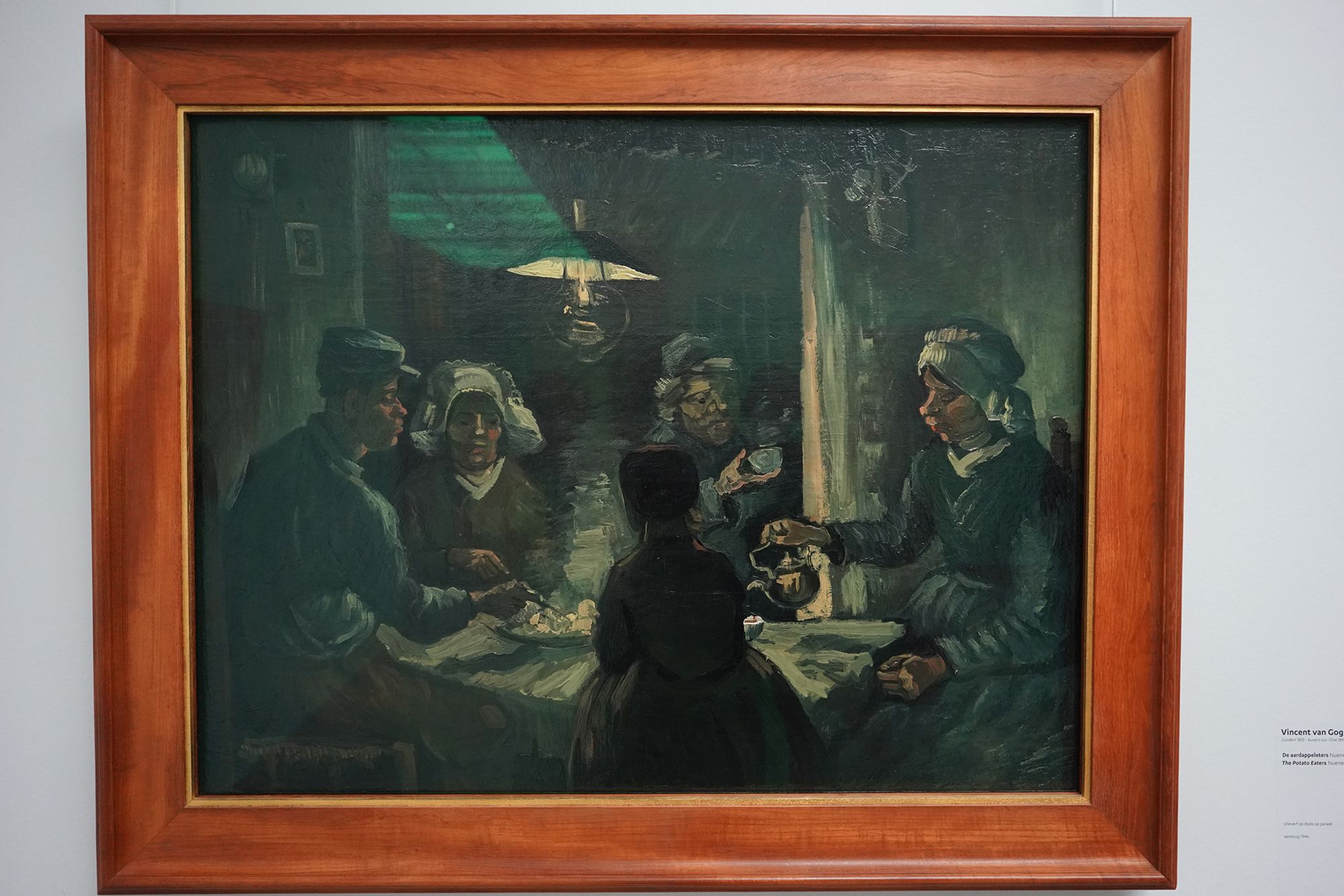
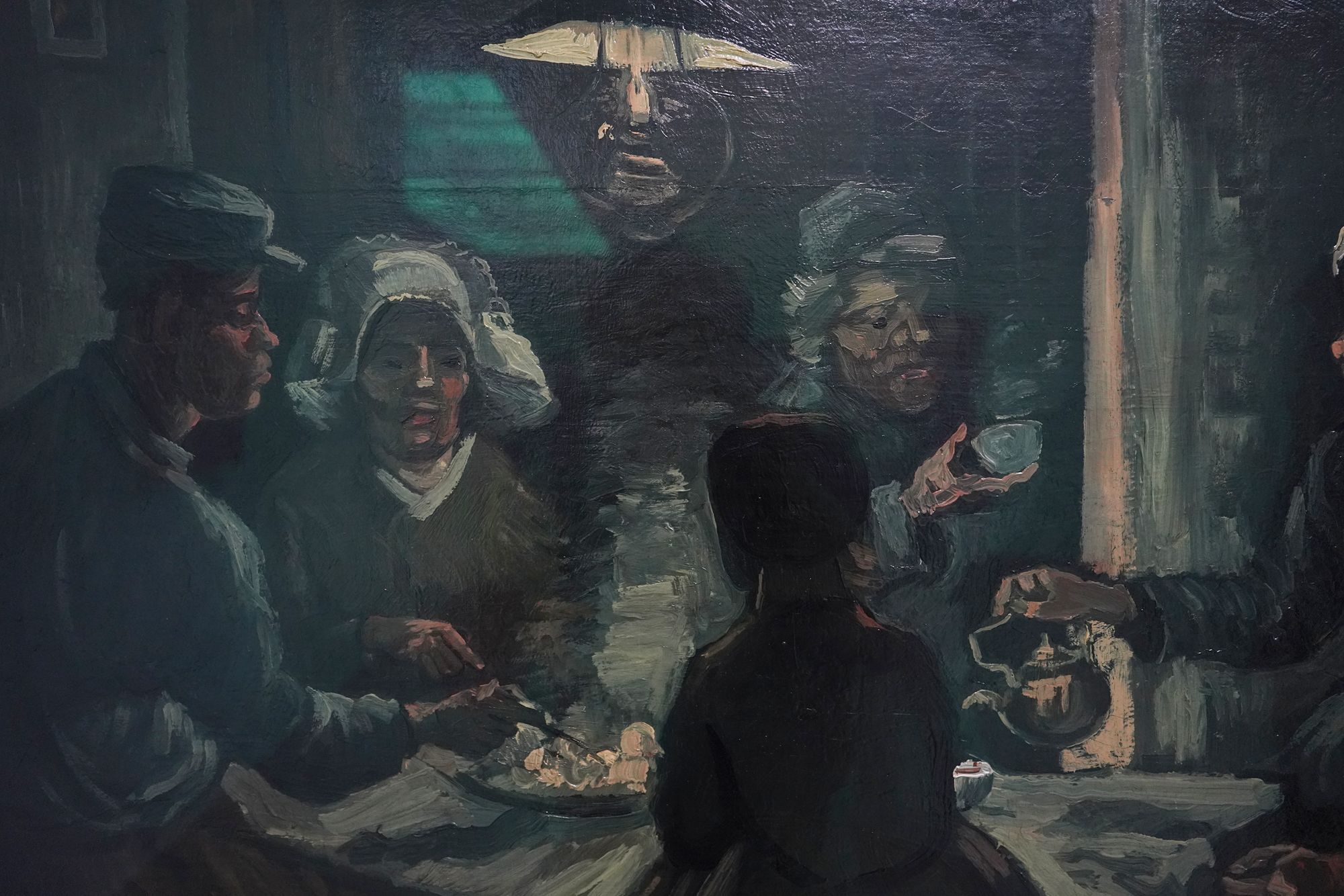
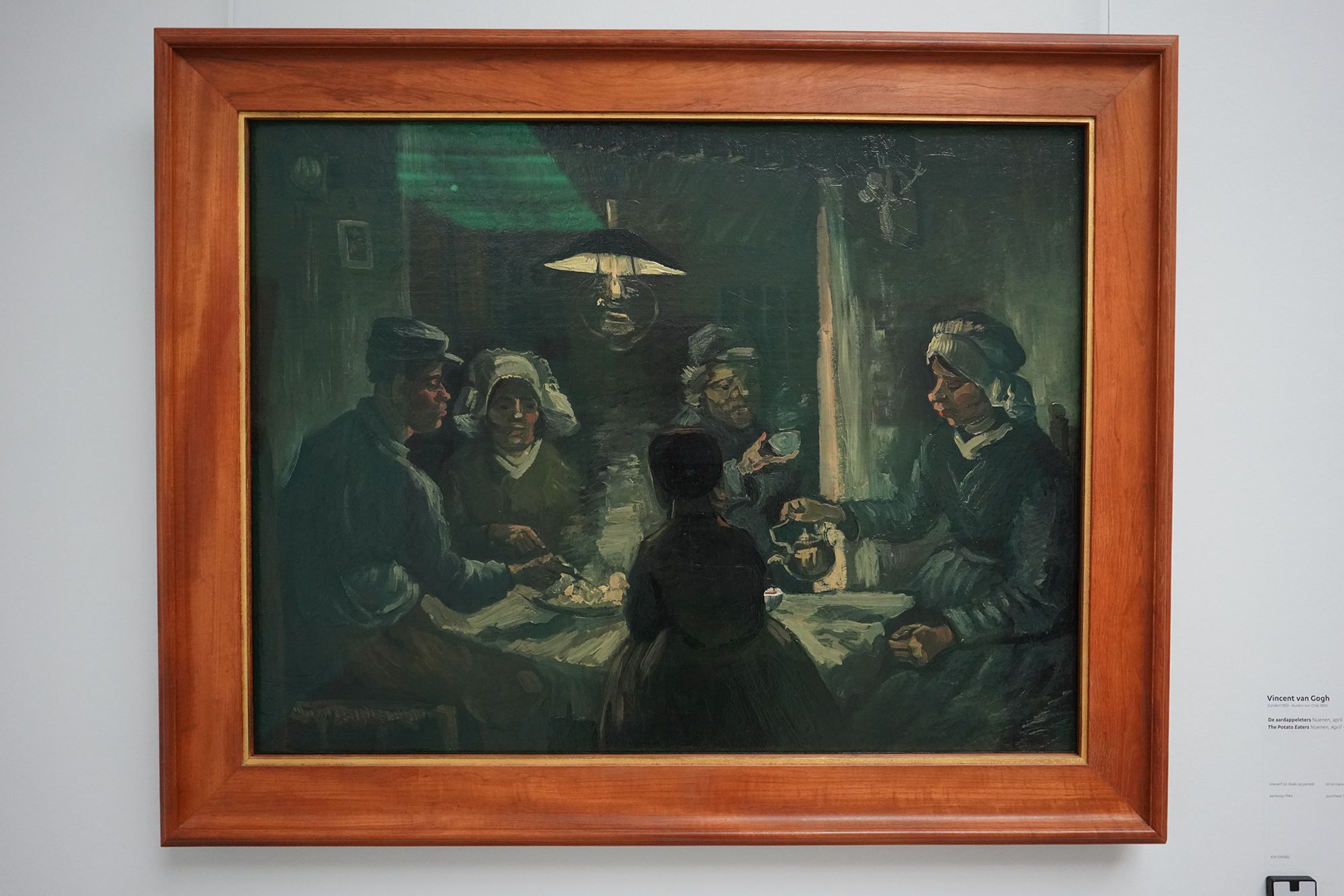
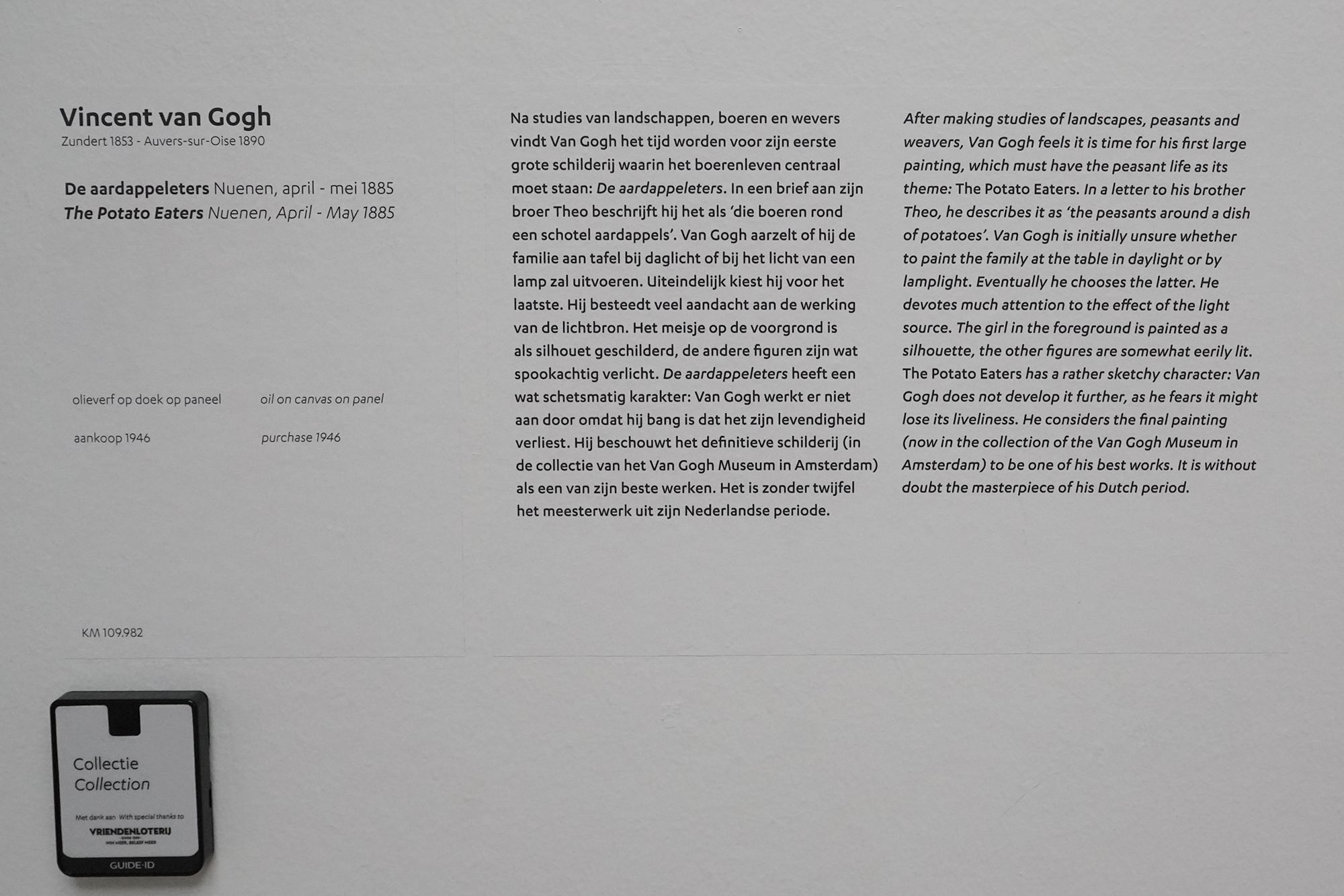
After studying landscapes, peasants, and weavers, Van Gogh decided to create his first major painting about peasant life: The Potato Eaters. This study helped him work out the difficult nighttime scene, especially the figures gathered around the table and the effects of lamplight. He deliberately kept it somewhat rough and lively, later considering the finished version—now in the Van Gogh Museum—one of his best works and the masterpiece of his Dutch period.
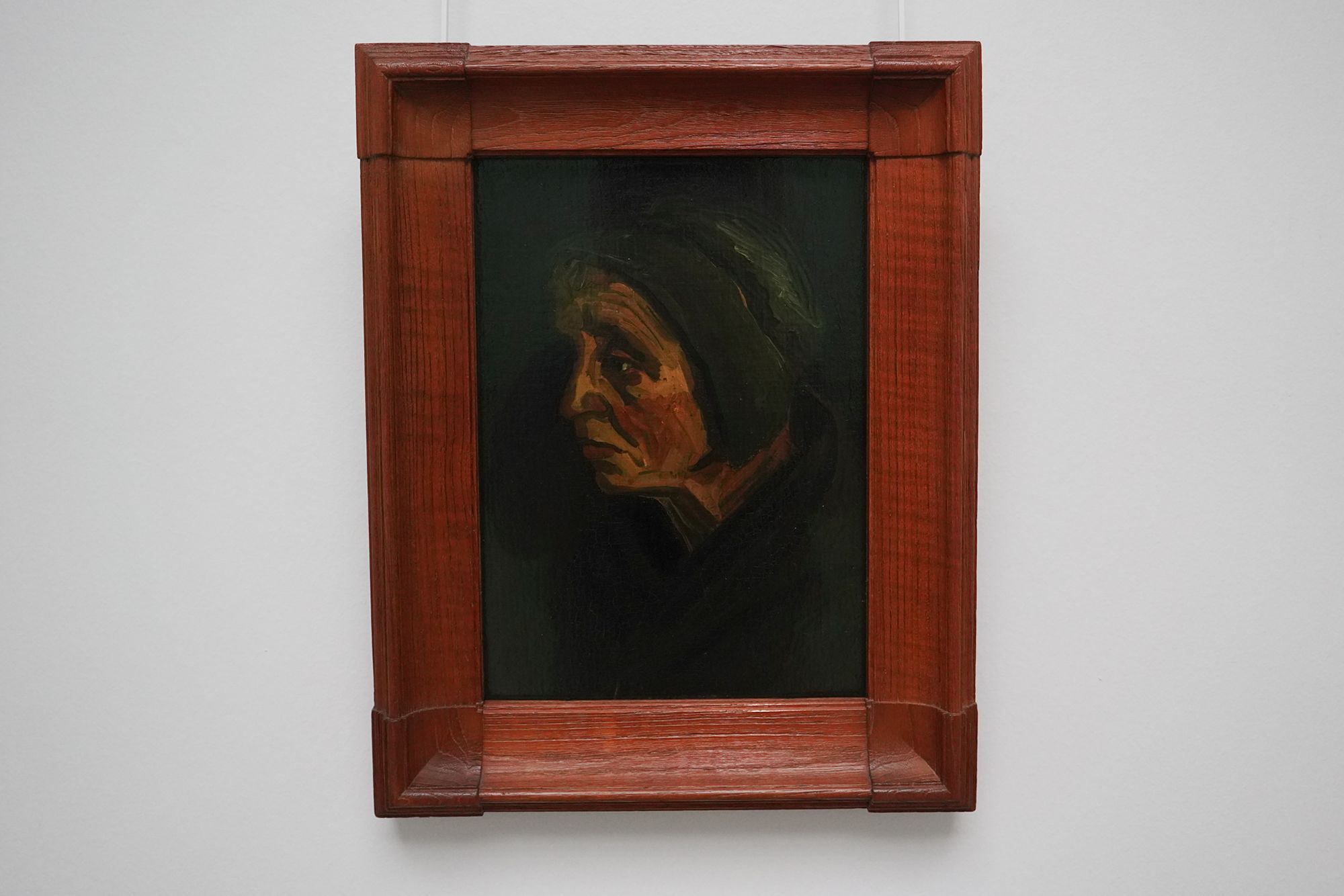
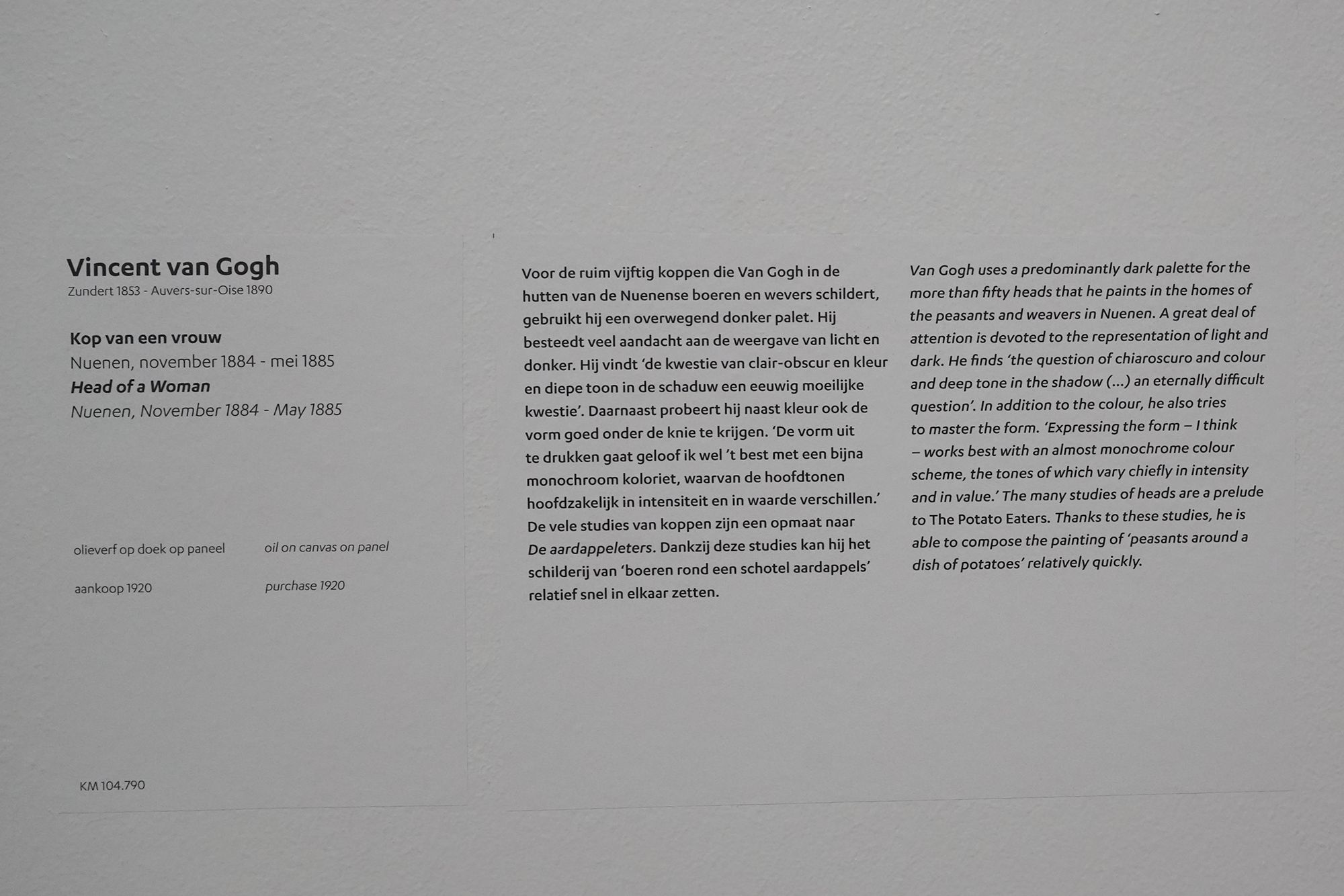
Before painting The Potato Eaters, Van Gogh made more than fifty studies of the heads of peasants and weavers in Nuenen. Using a dark, almost monochromatic palette, he practiced capturing light, shadow, and the forms of their faces. These studies helped him develop the skills needed to compose the five figures in The Potato Eaters relatively quickly.
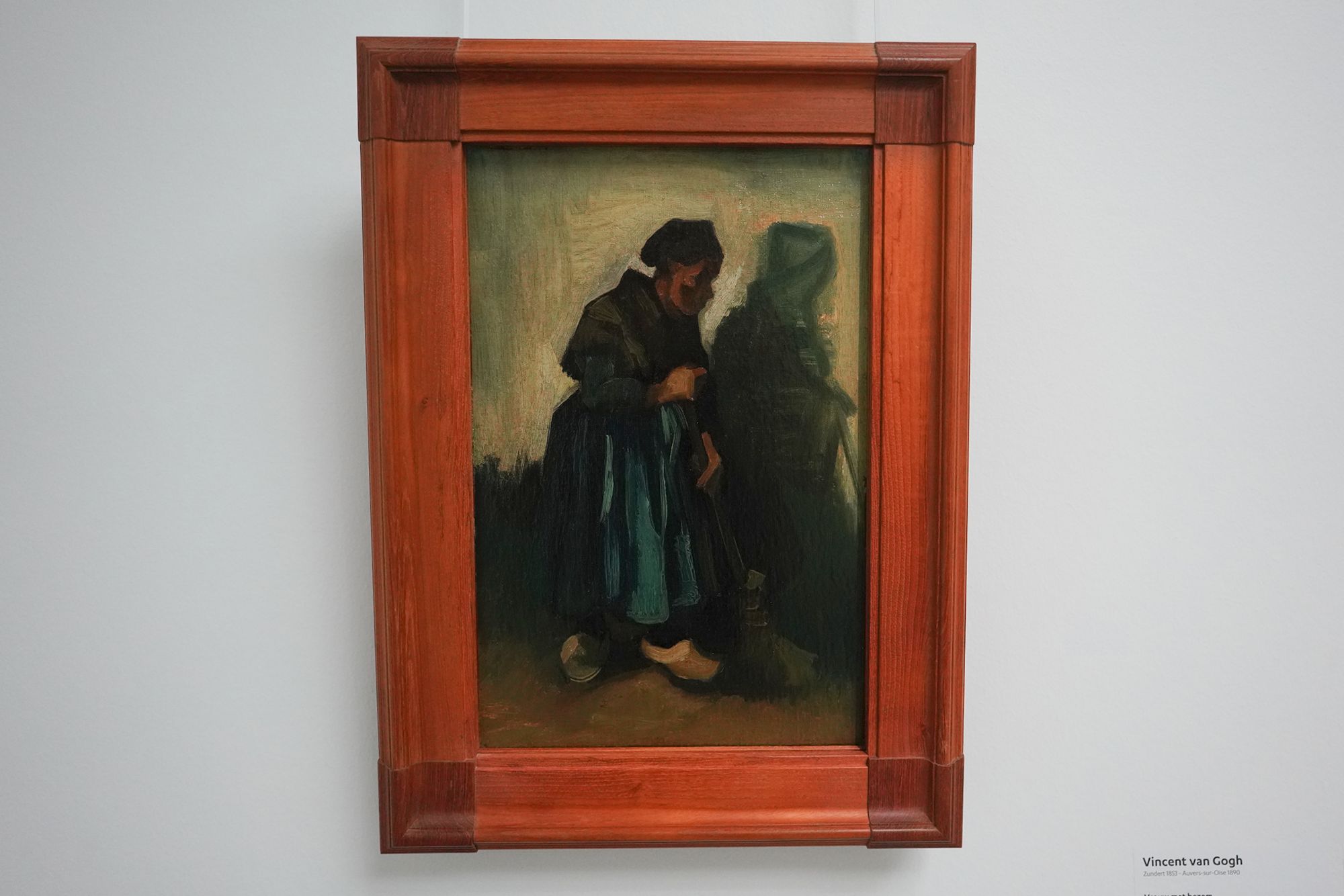
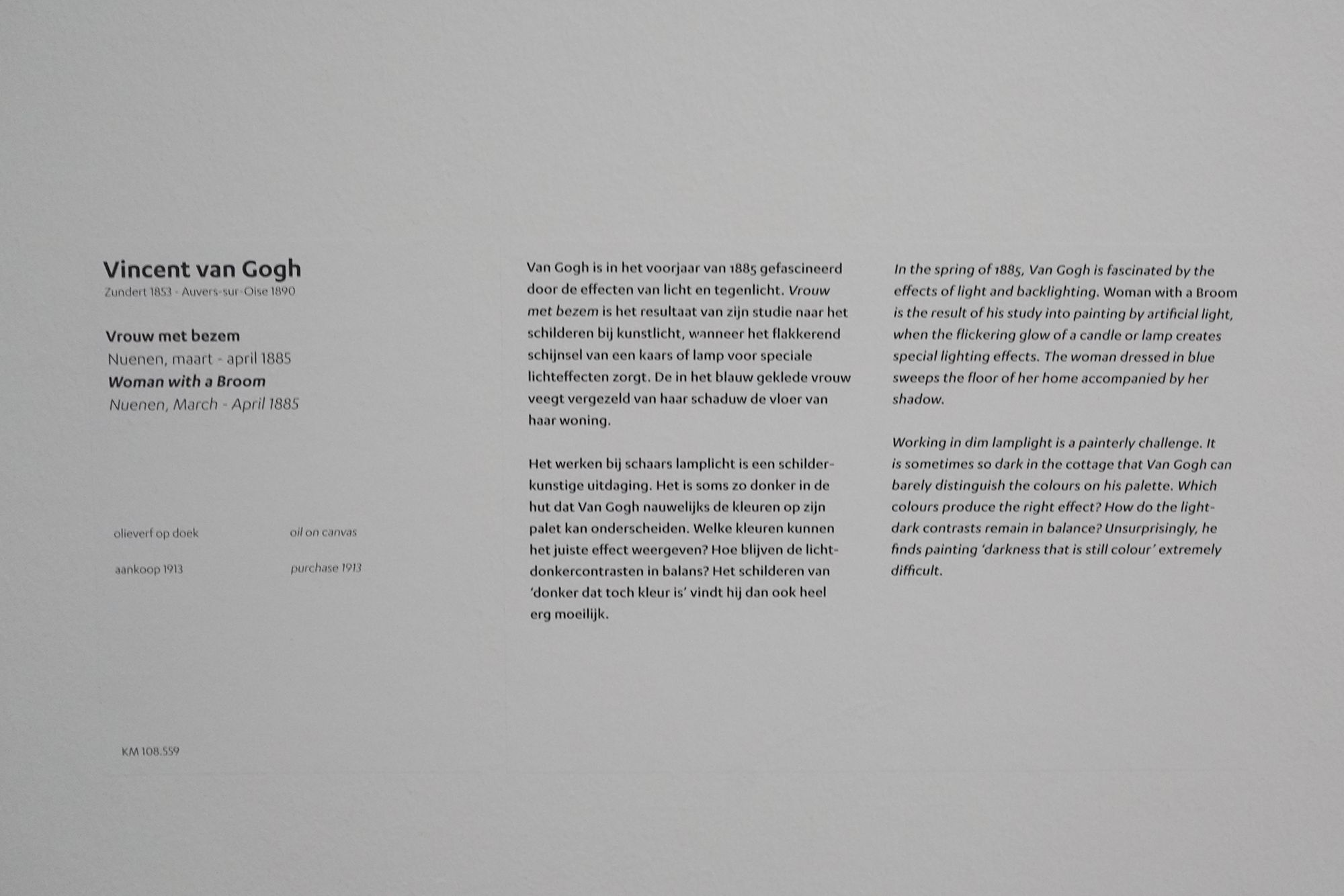
In the spring of 1885, Van Gogh became fascinated by the challenge of painting artificial light and strong shadows. In Woman with a Broom, he shows a woman sweeping her home in dim lamplight, accompanied by her shadow. Working in such darkness made it difficult to distinguish colors, but Van Gogh used the experiment to develop his understanding of light, shadow, and atmosphere.
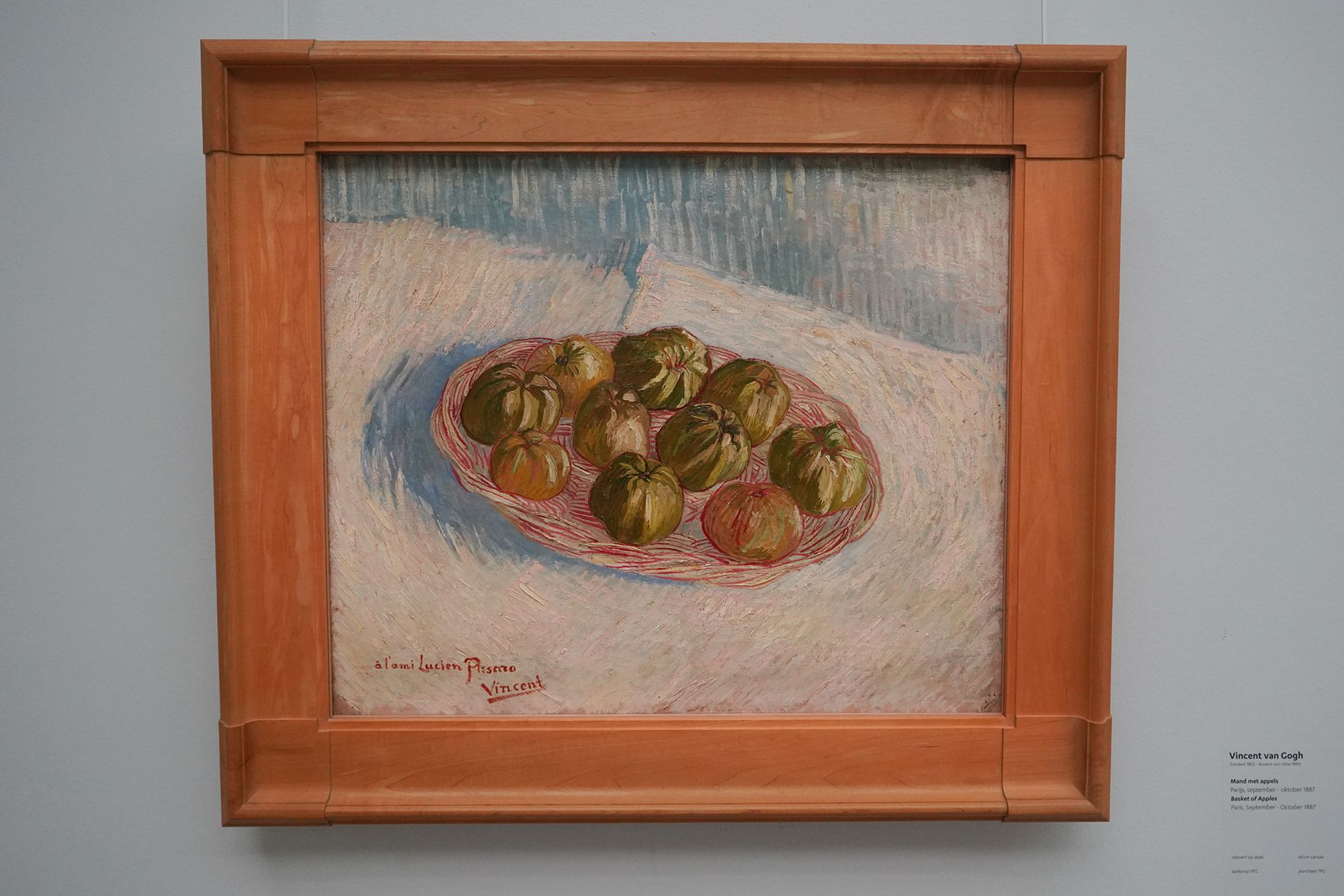
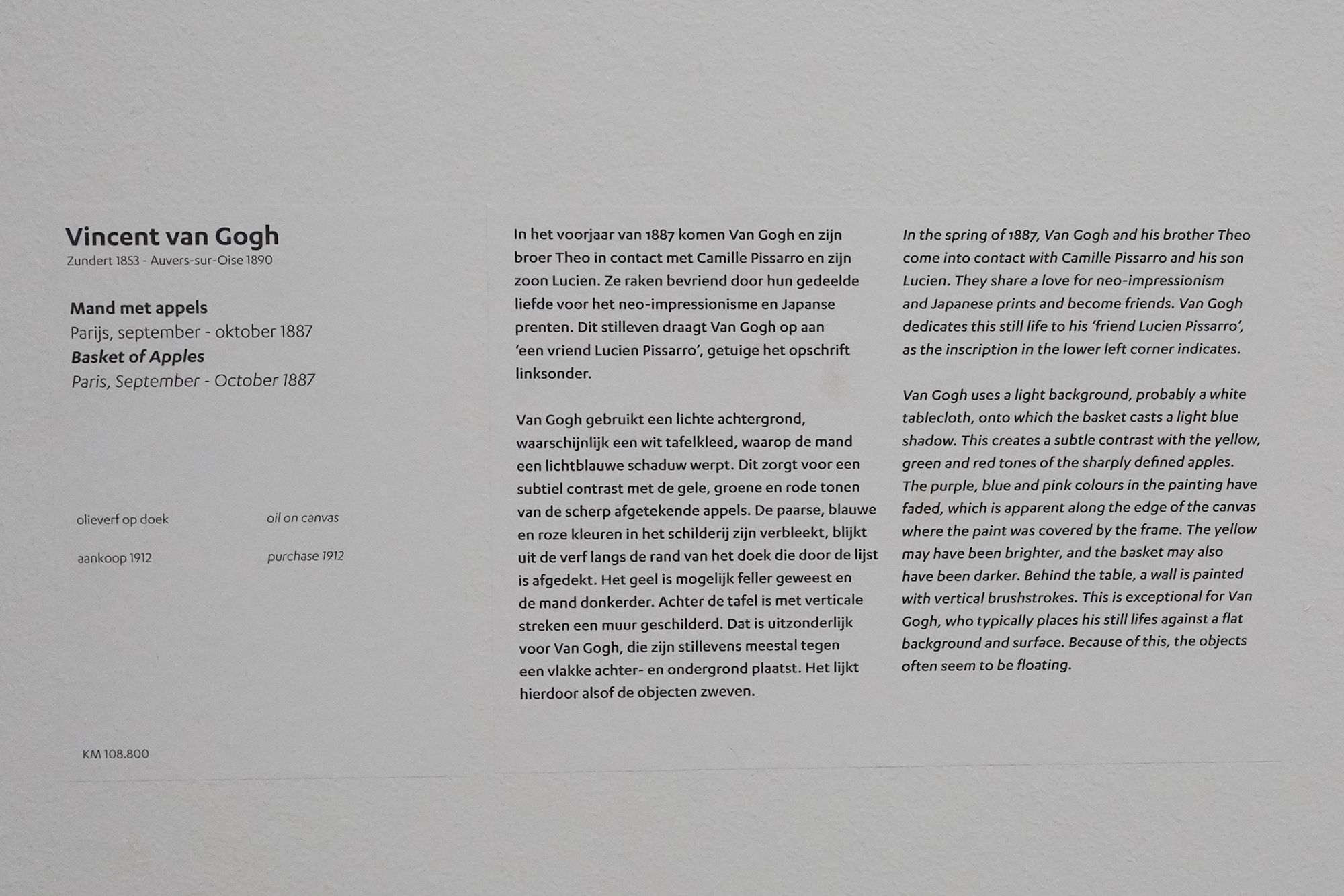
In Paris, Van Gogh became friends with Lucien Pissarro, son of the Impressionist painter Camille Pissarro, sharing an interest in Neo-Impressionism and Japanese prints. Van Gogh dedicated this still life to Lucien. The unusually light background and blue shadow contrast with the yellow, green, and red apples, showing how Van Gogh was experimenting with brighter colors after the dark palette of his earlier Dutch paintings.
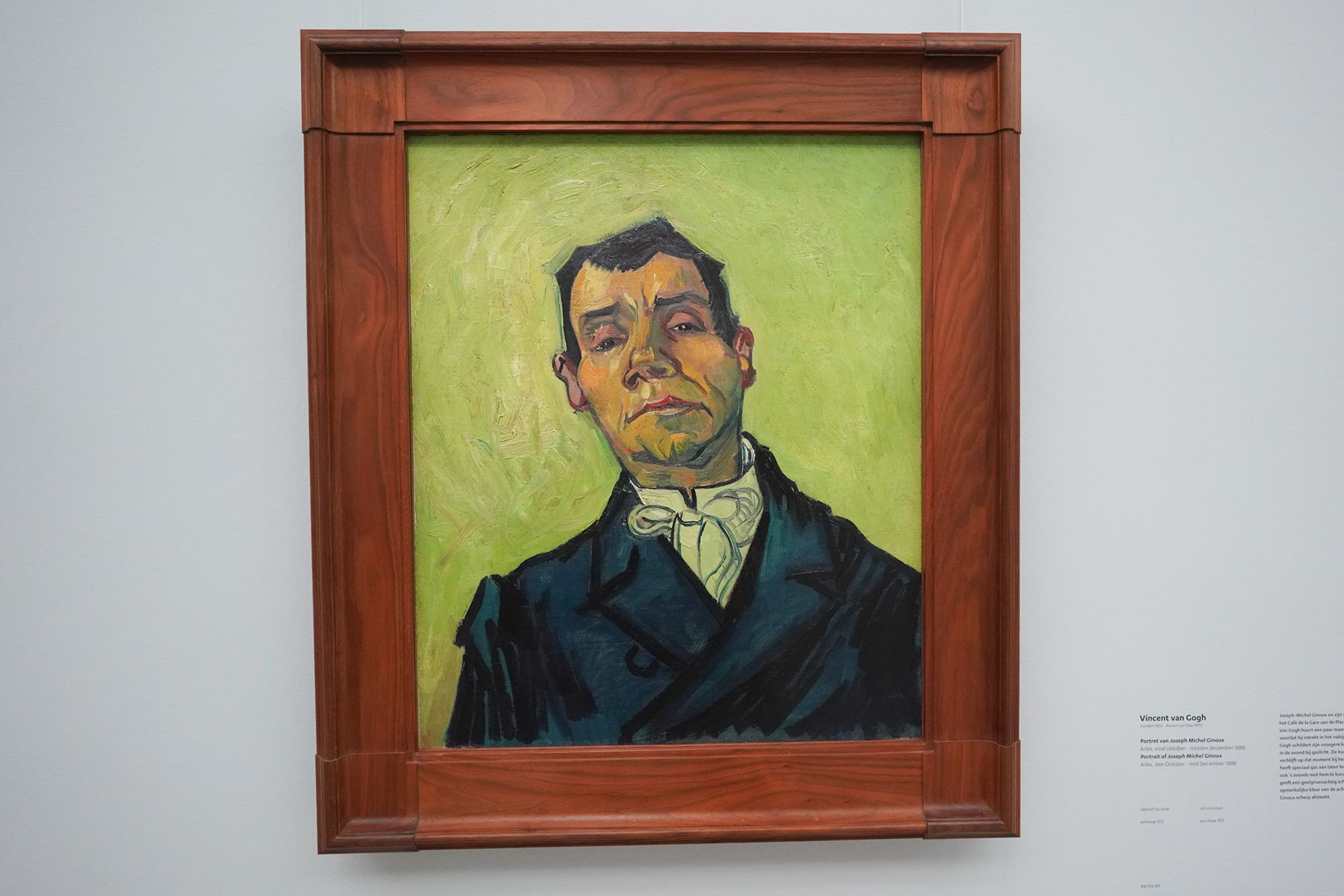
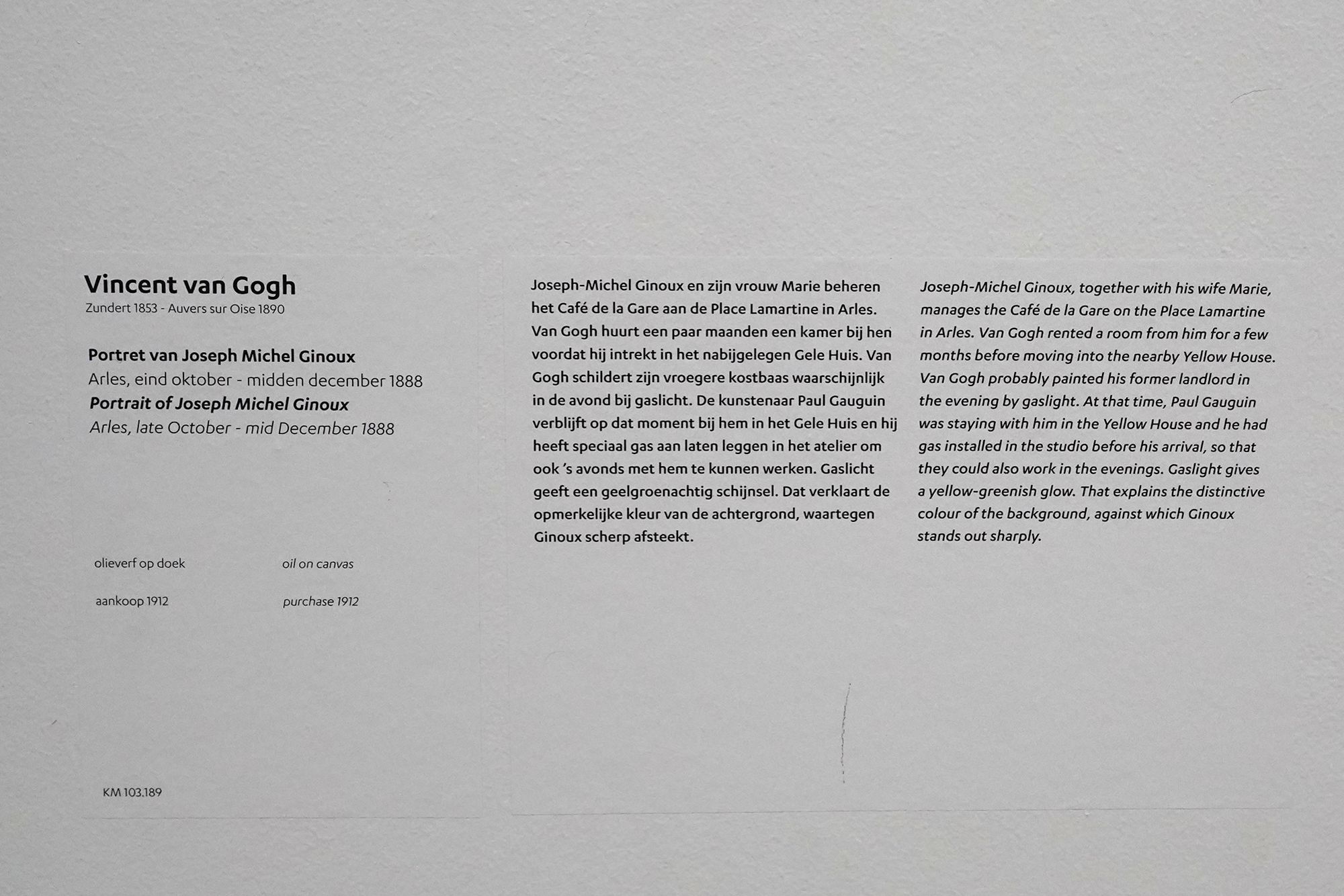
In Arles, Van Gogh became friends with Joseph-Michel Ginoux, who ran the Café de la Gare with his wife Marie and briefly rented Vincent a room. Van Gogh probably painted this portrait of Ginoux in the evening by gaslight, which produced the distinctive yellow-green background. Gas lighting had recently been installed in the Yellow House so that Van Gogh and Paul Gauguin could continue working after dark.
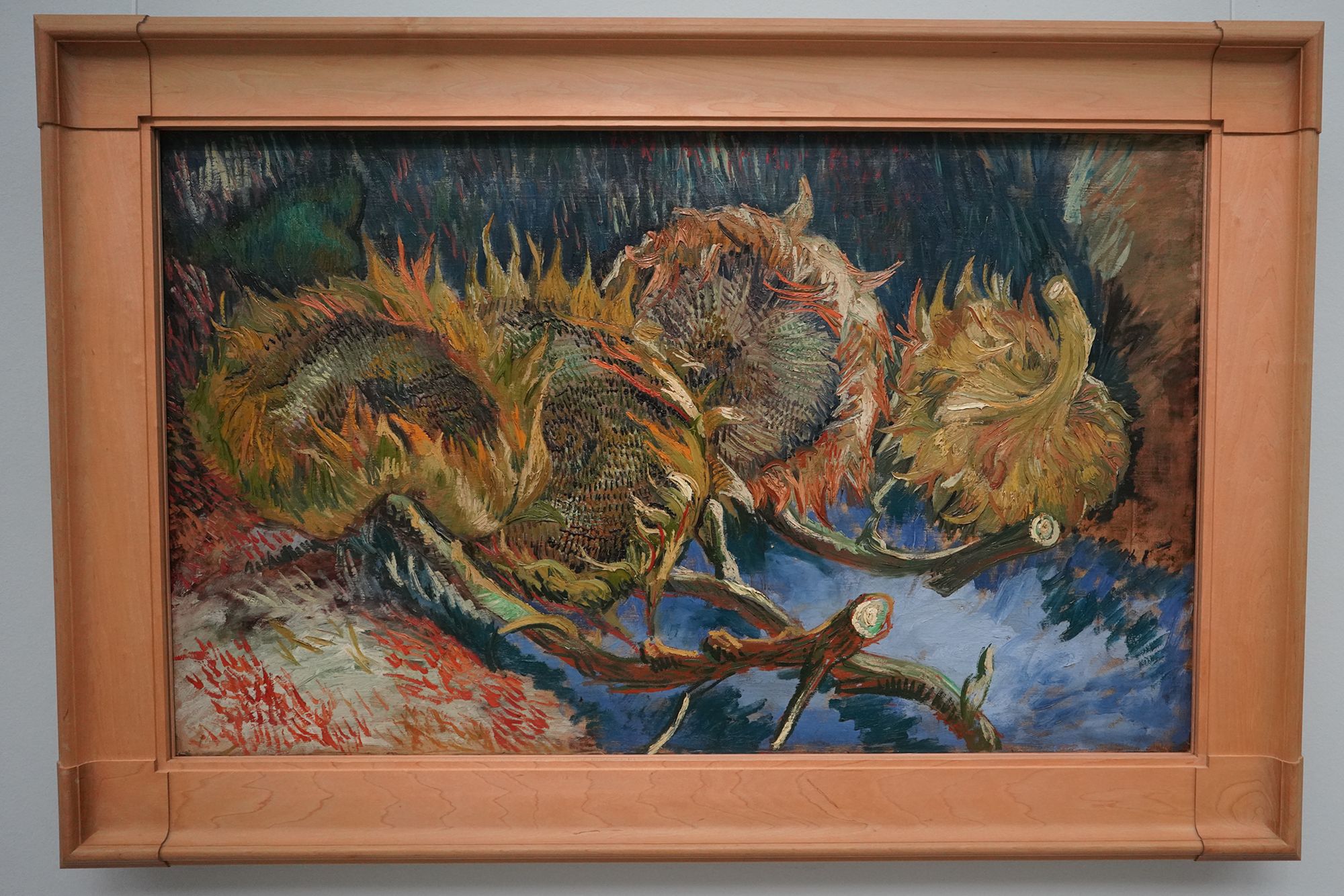
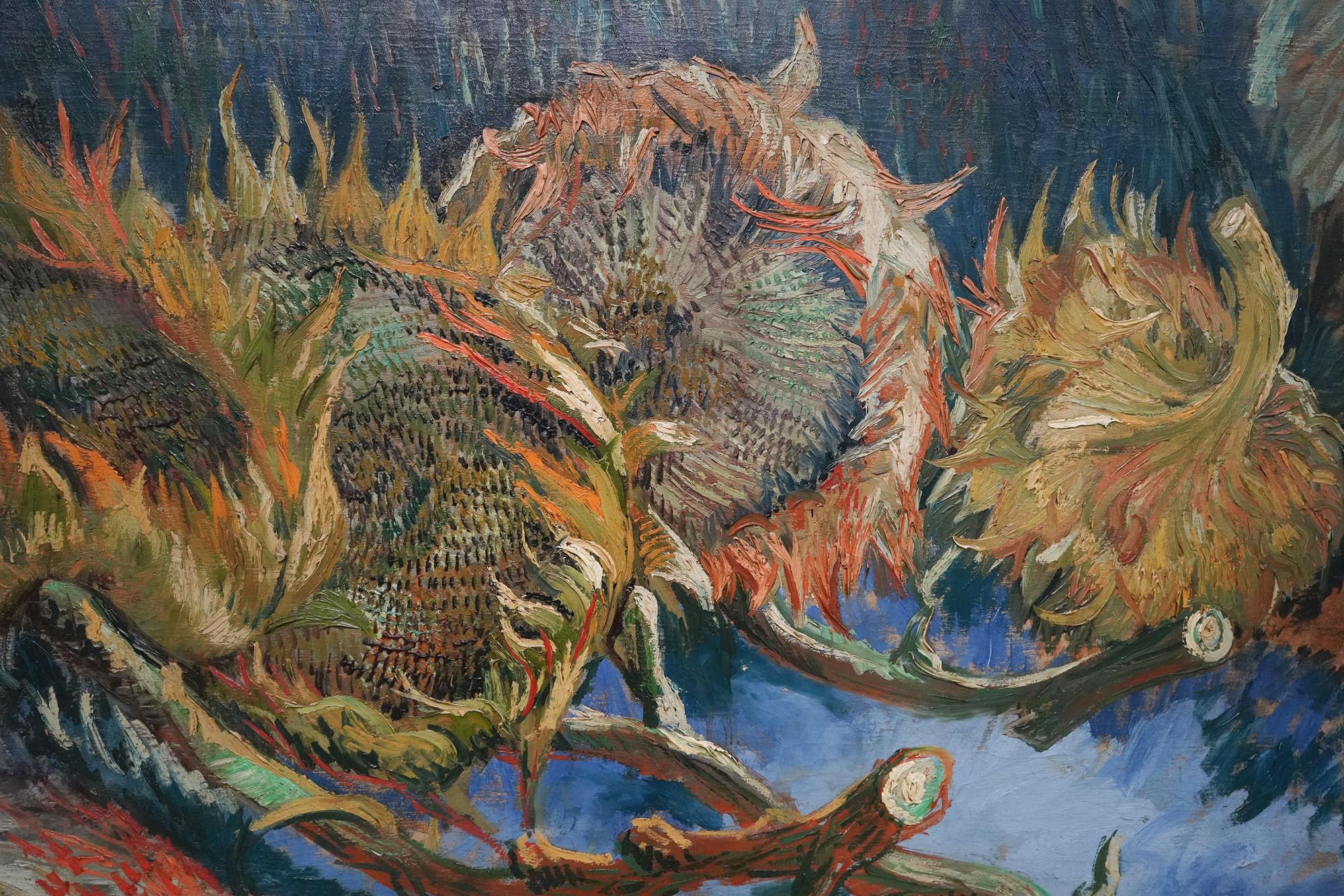
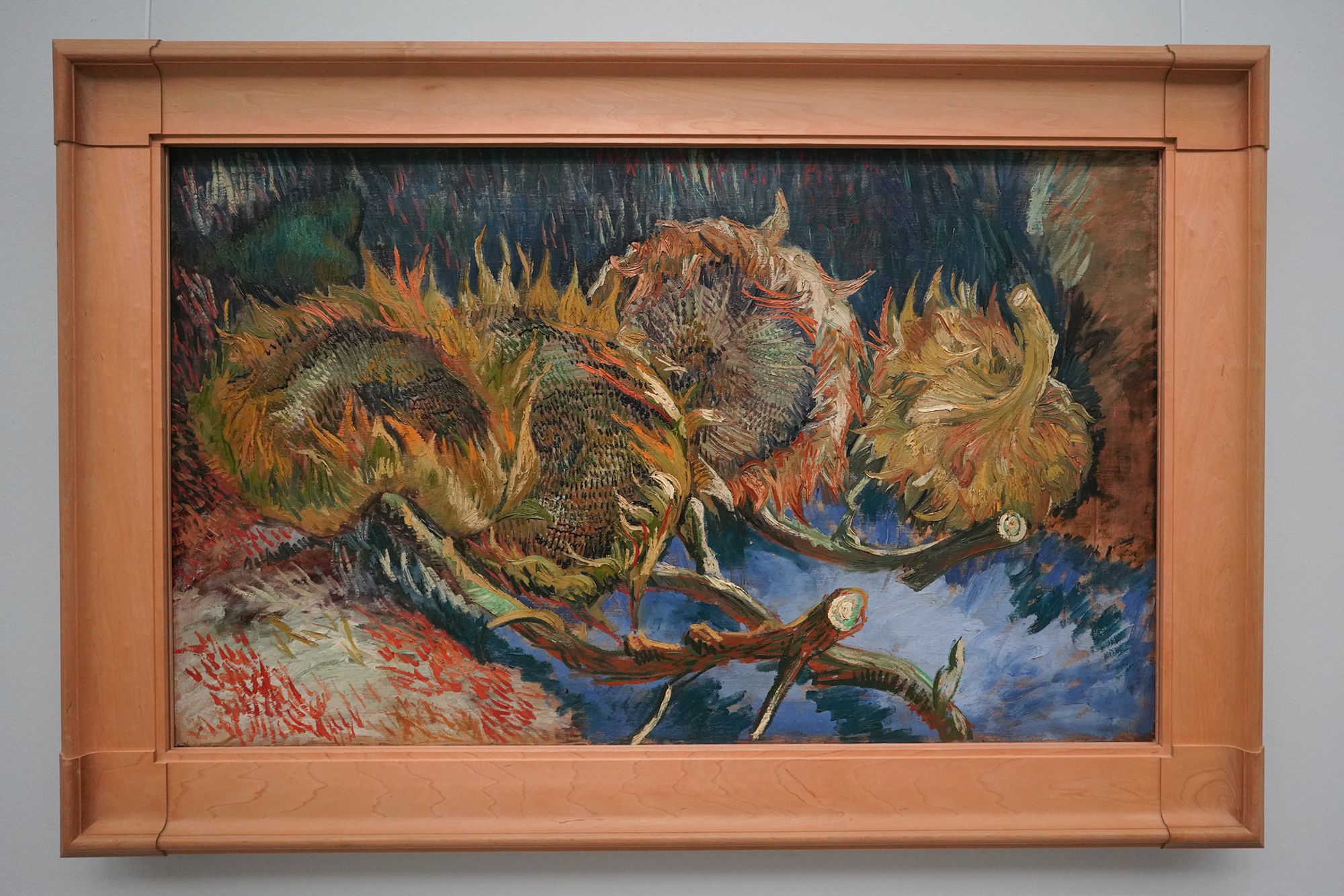
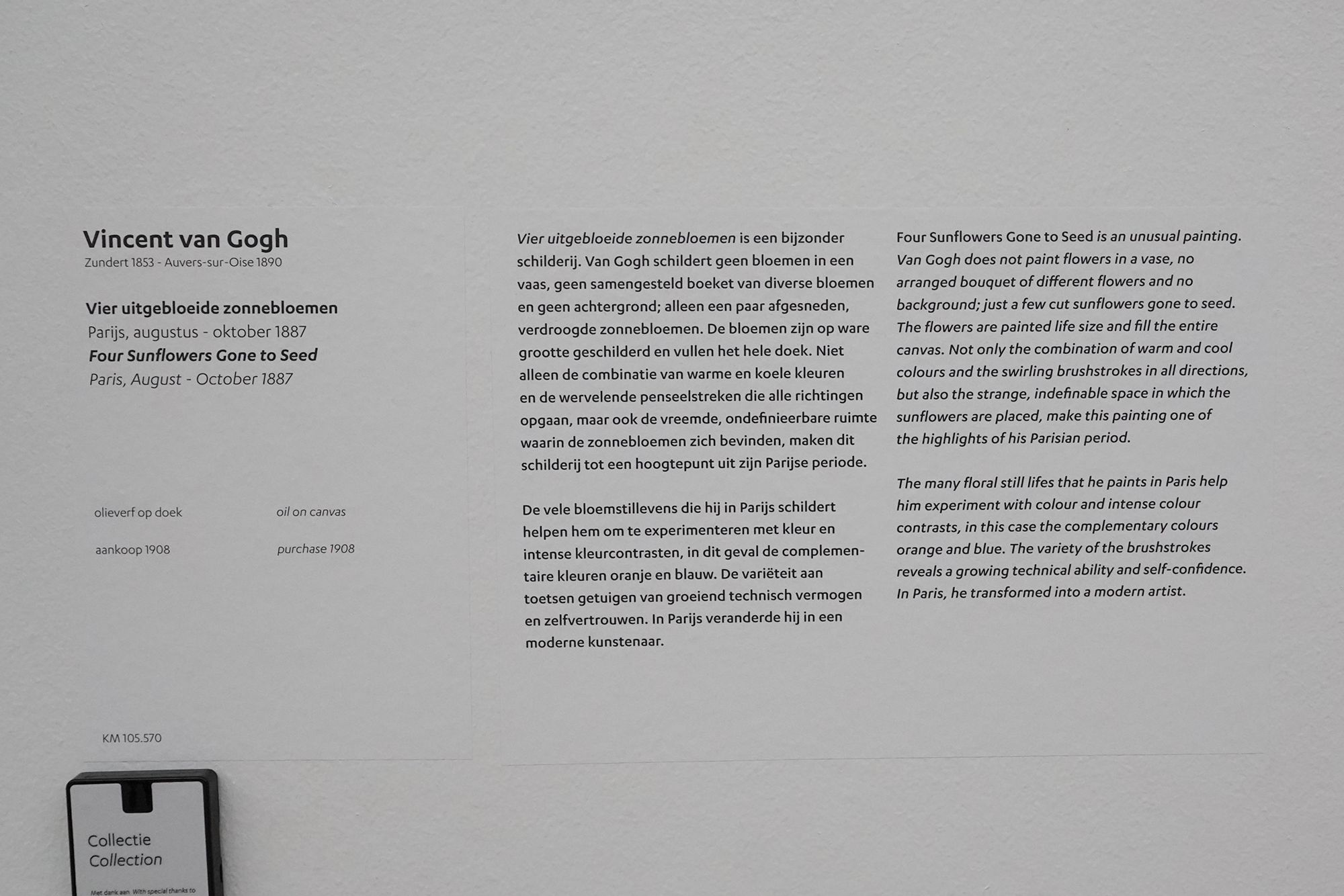
Four Sunflowers Gone to Seed is one of the highlights of Van Gogh’s Paris period. Rather than arranging flowers in a vase, he filled the canvas with a few large, fading sunflowers, experimenting with complementary orange and blue, bold contrasts, and swirling brushstrokes. His many floral still lifes in Paris helped him master color and technique, marking his transformation from the dark style of his Dutch years into a modern artist.
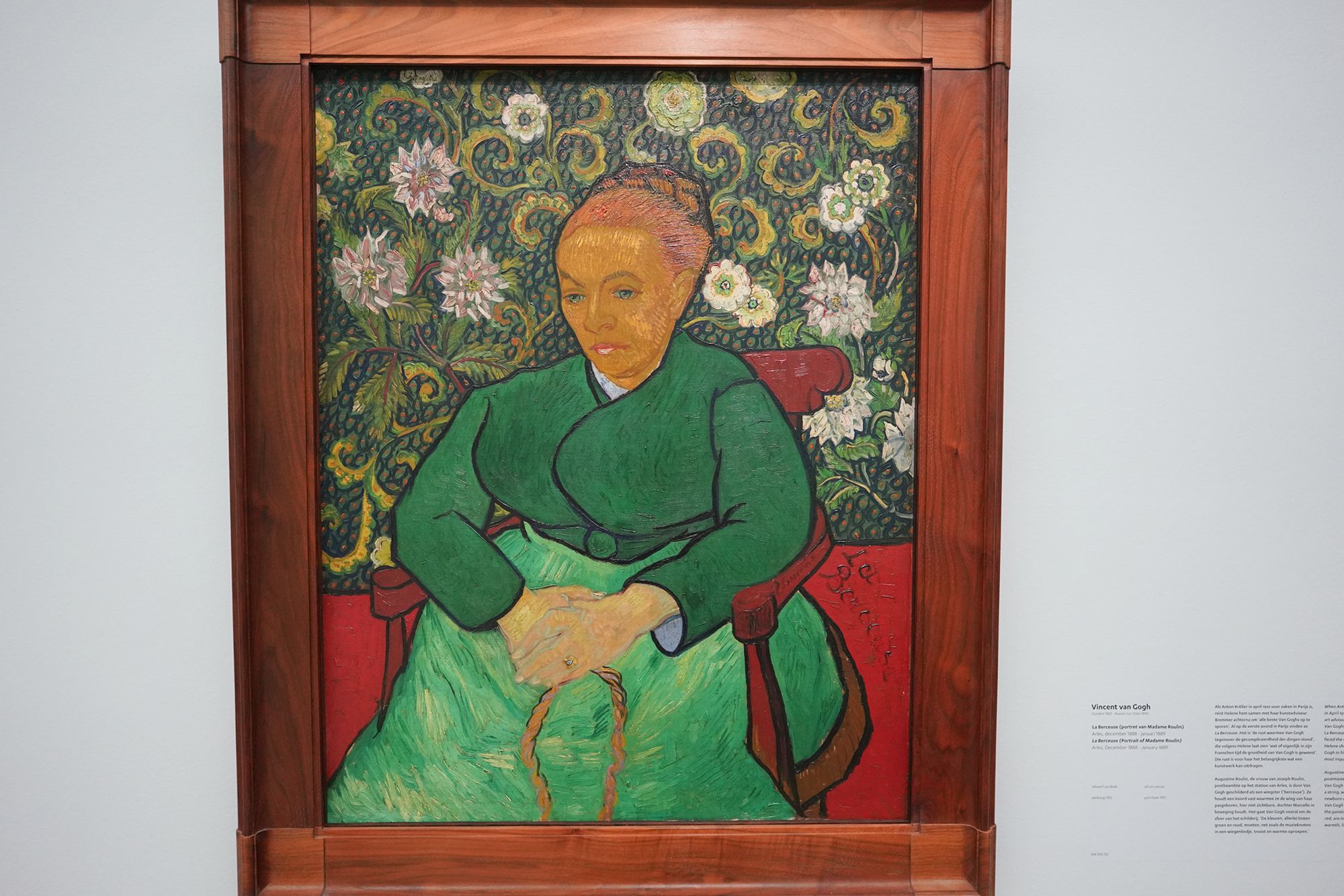
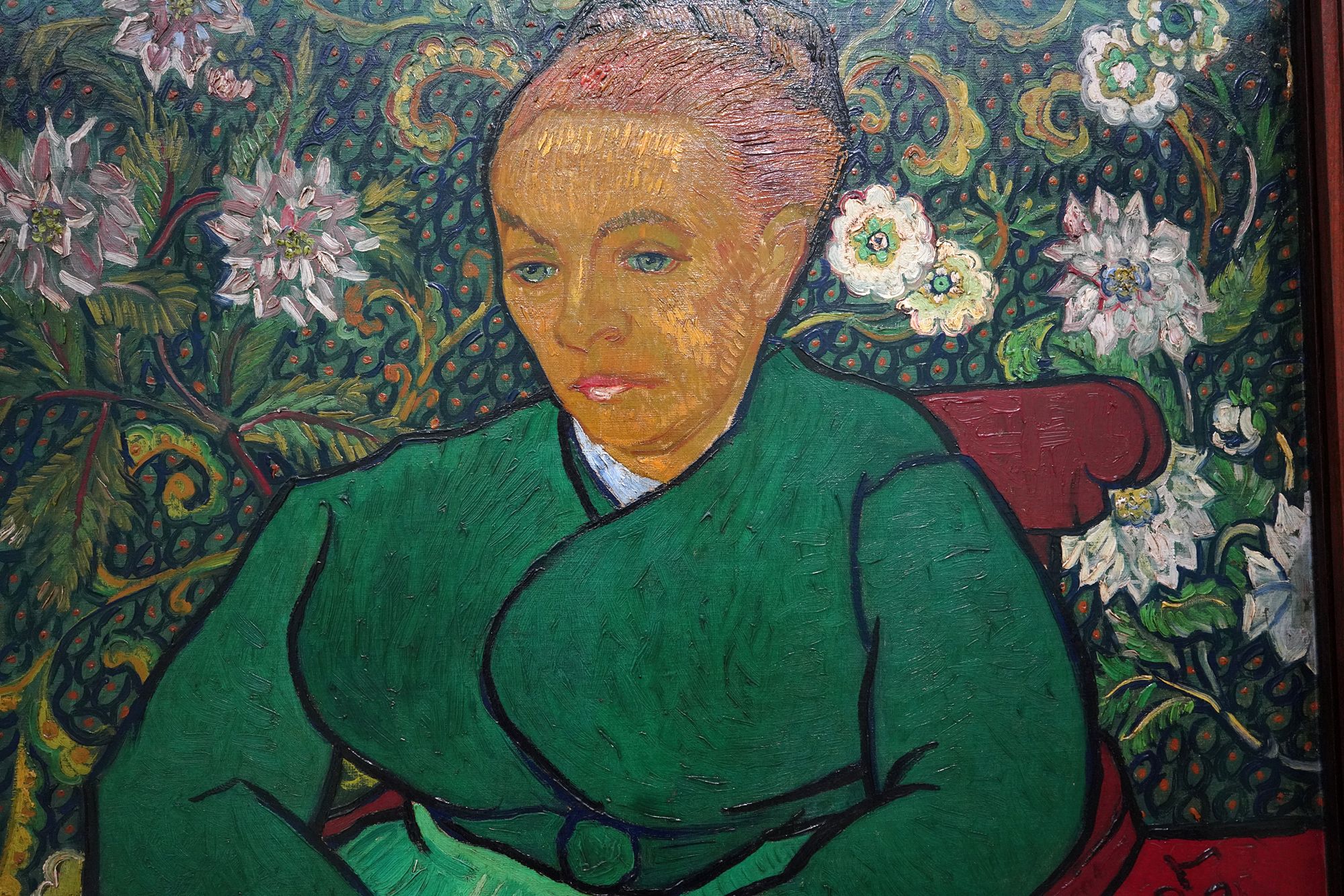
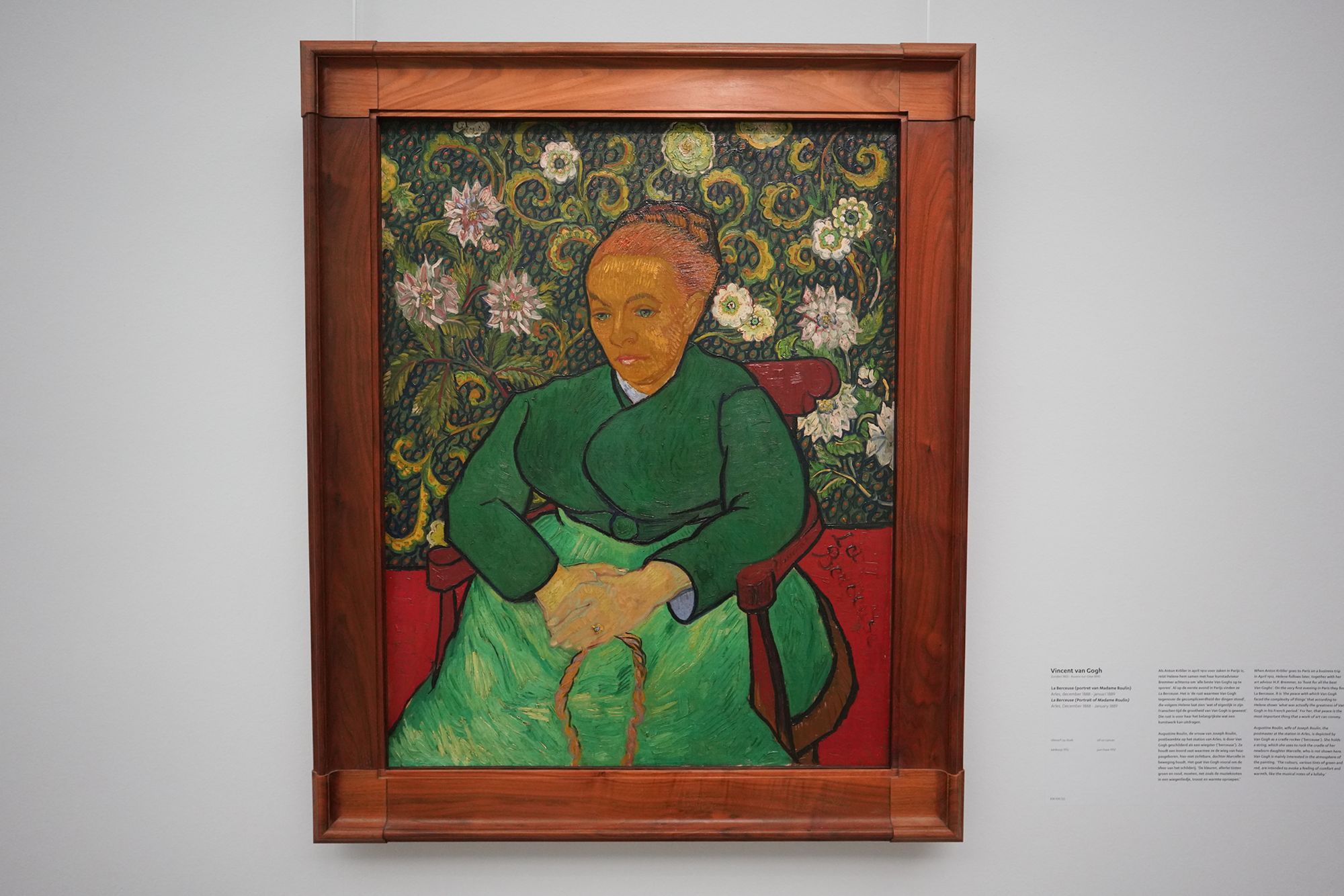
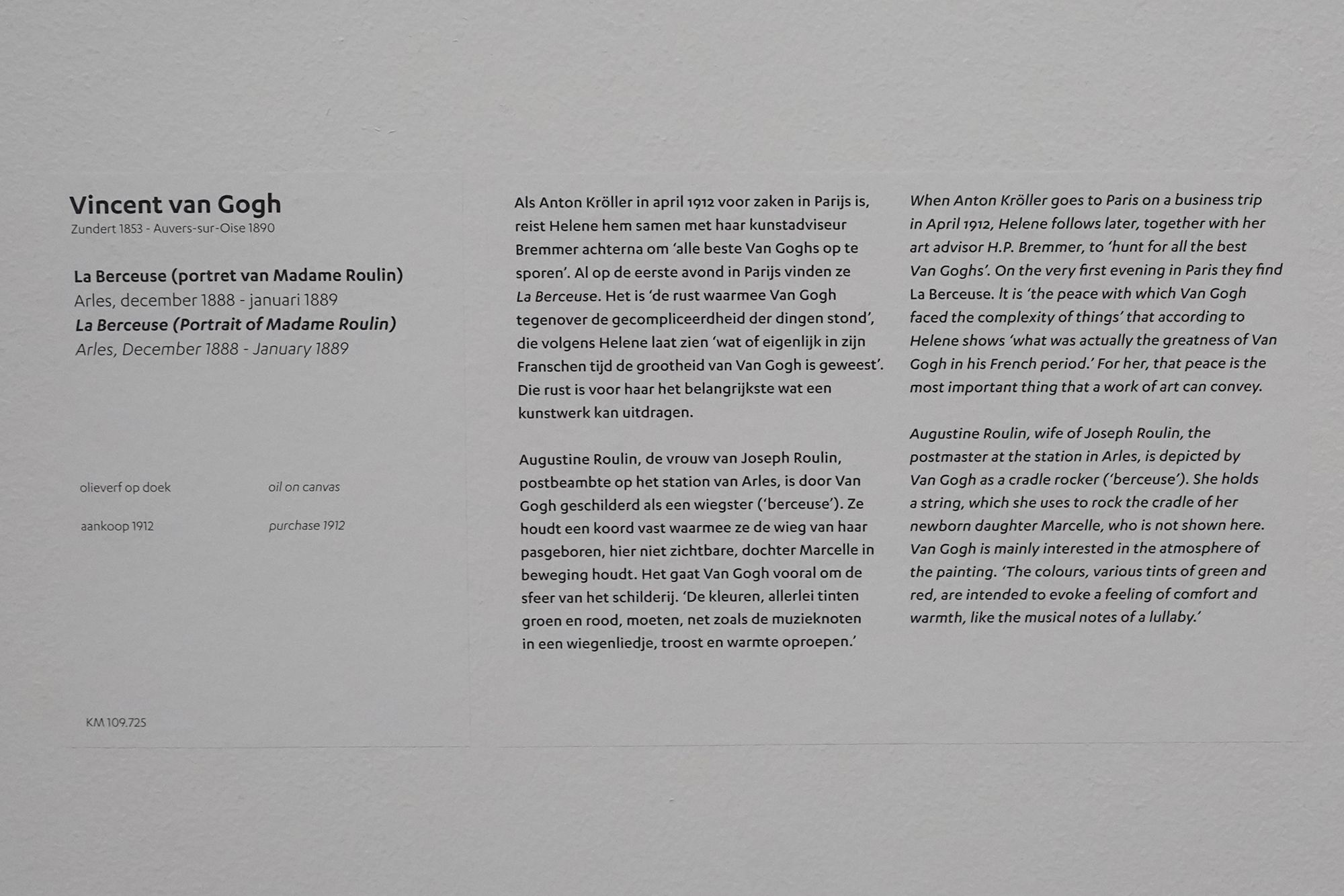
In 1912, Helene Kröller-Müller acquired Van Gogh’s La Berceuse, which she considered one of the greatest works of his French period. The sitter is Augustine Roulin, wife of Van Gogh’s friend Joseph Roulin, shown holding a cord used to rock her baby’s cradle. Van Gogh intended the rich greens and reds to create a comforting feeling of warmth, almost like the soothing notes of a lullaby.
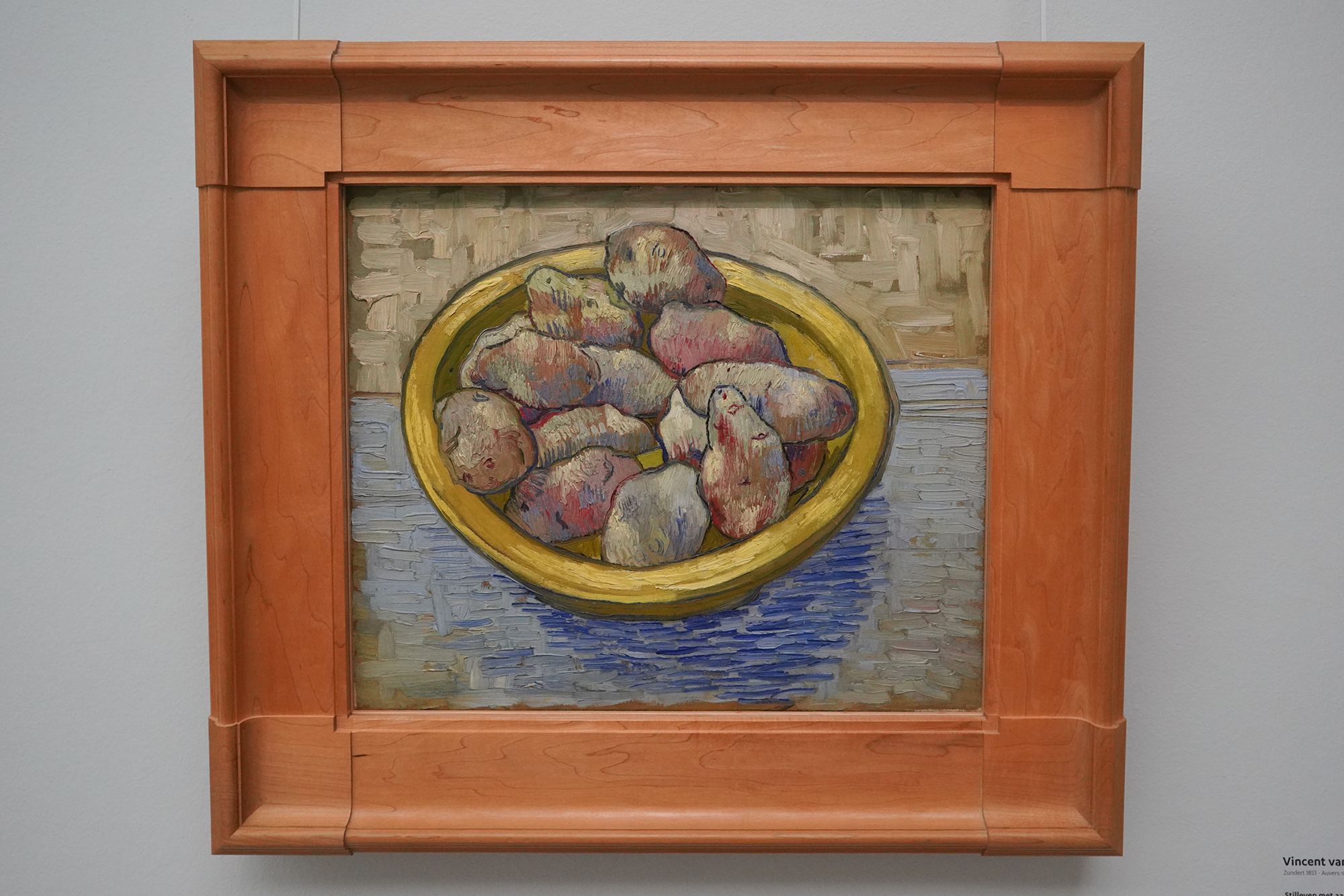
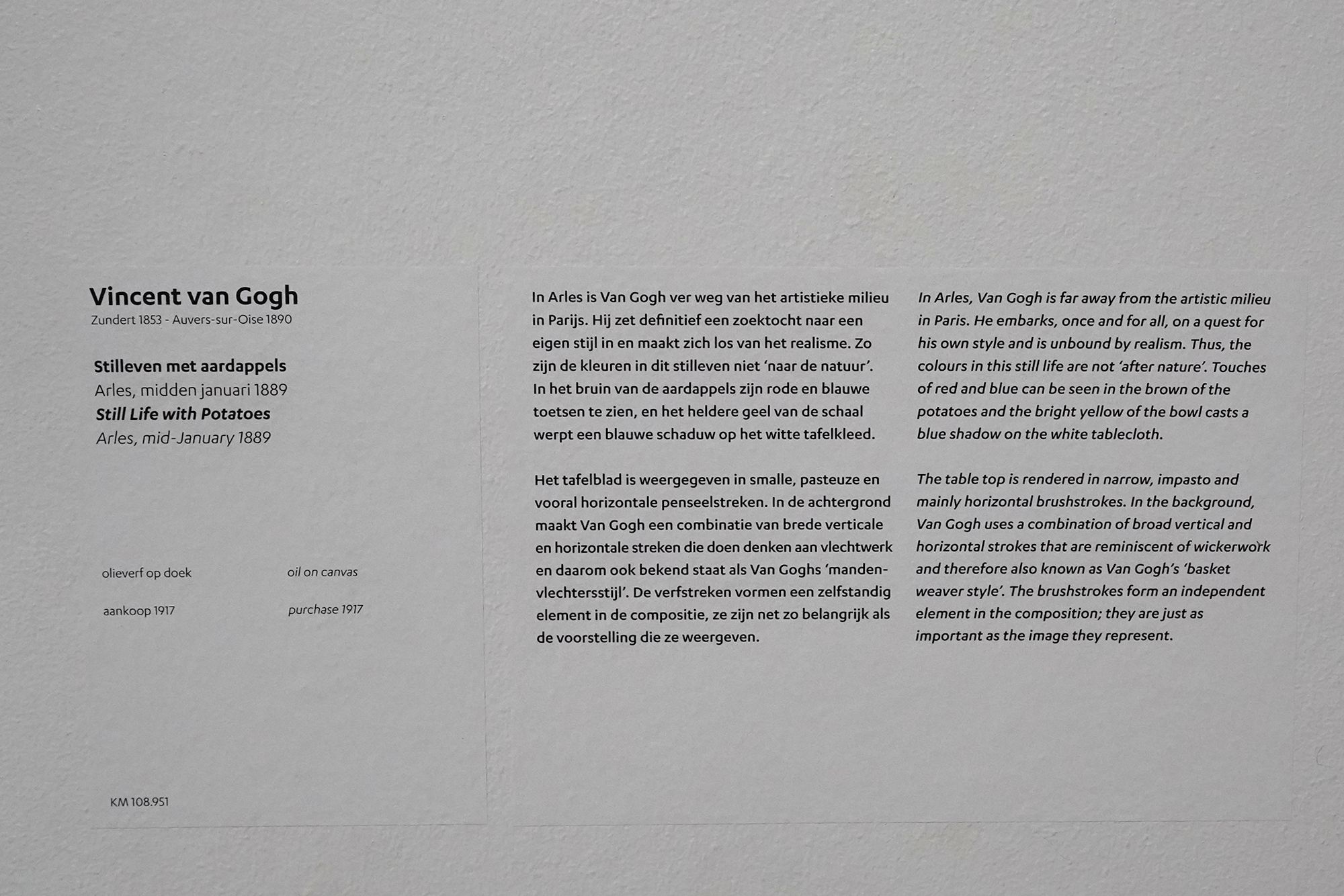
In Arles, Van Gogh increasingly moved away from realistic color and developed a more personal style. In this still life, the potatoes contain touches of red and blue, while the yellow bowl casts an unexpected blue shadow. He also experimented with thick, directional brushstrokes—especially his distinctive “basket-weave” style—making the brushwork itself as important as the objects being painted.
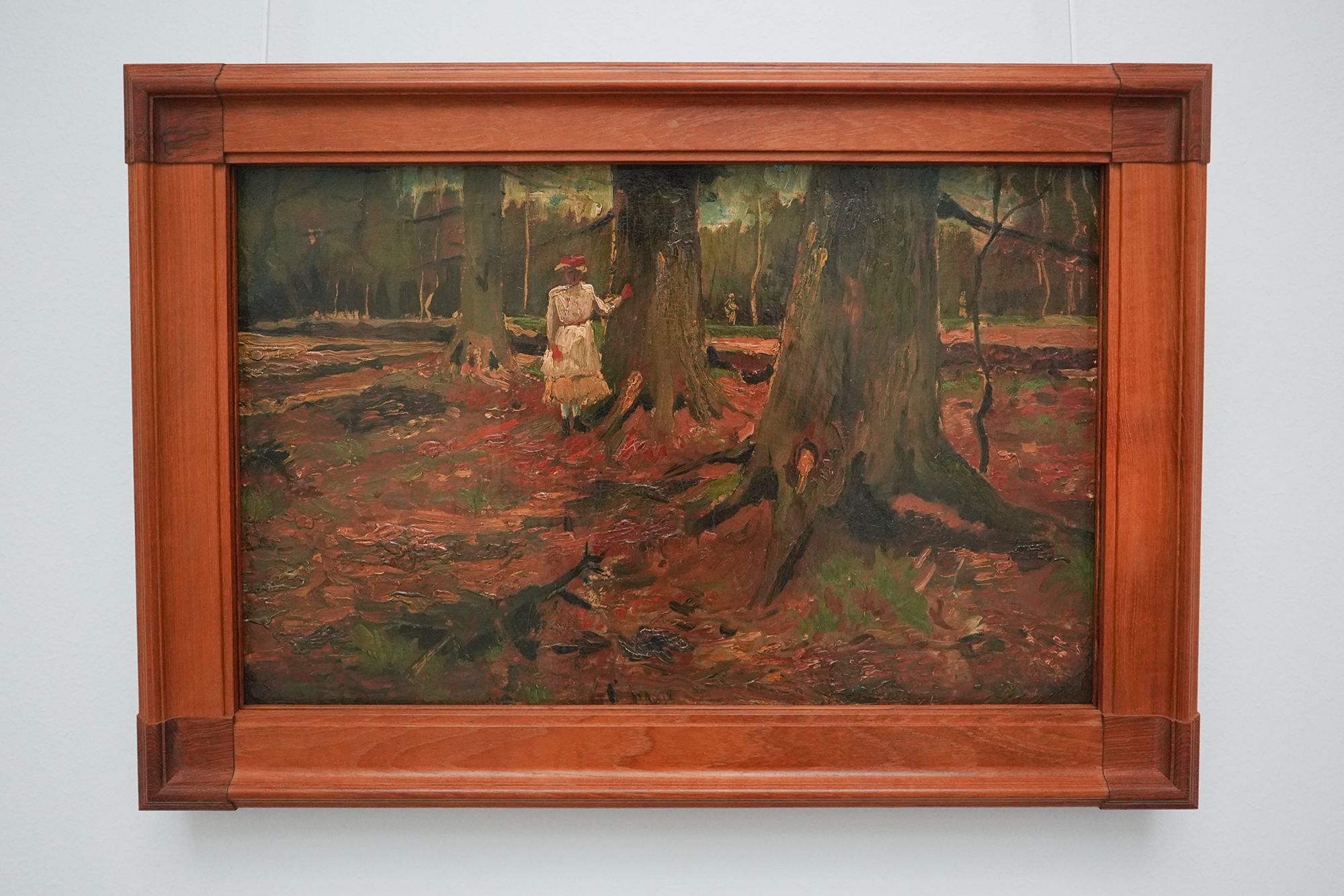
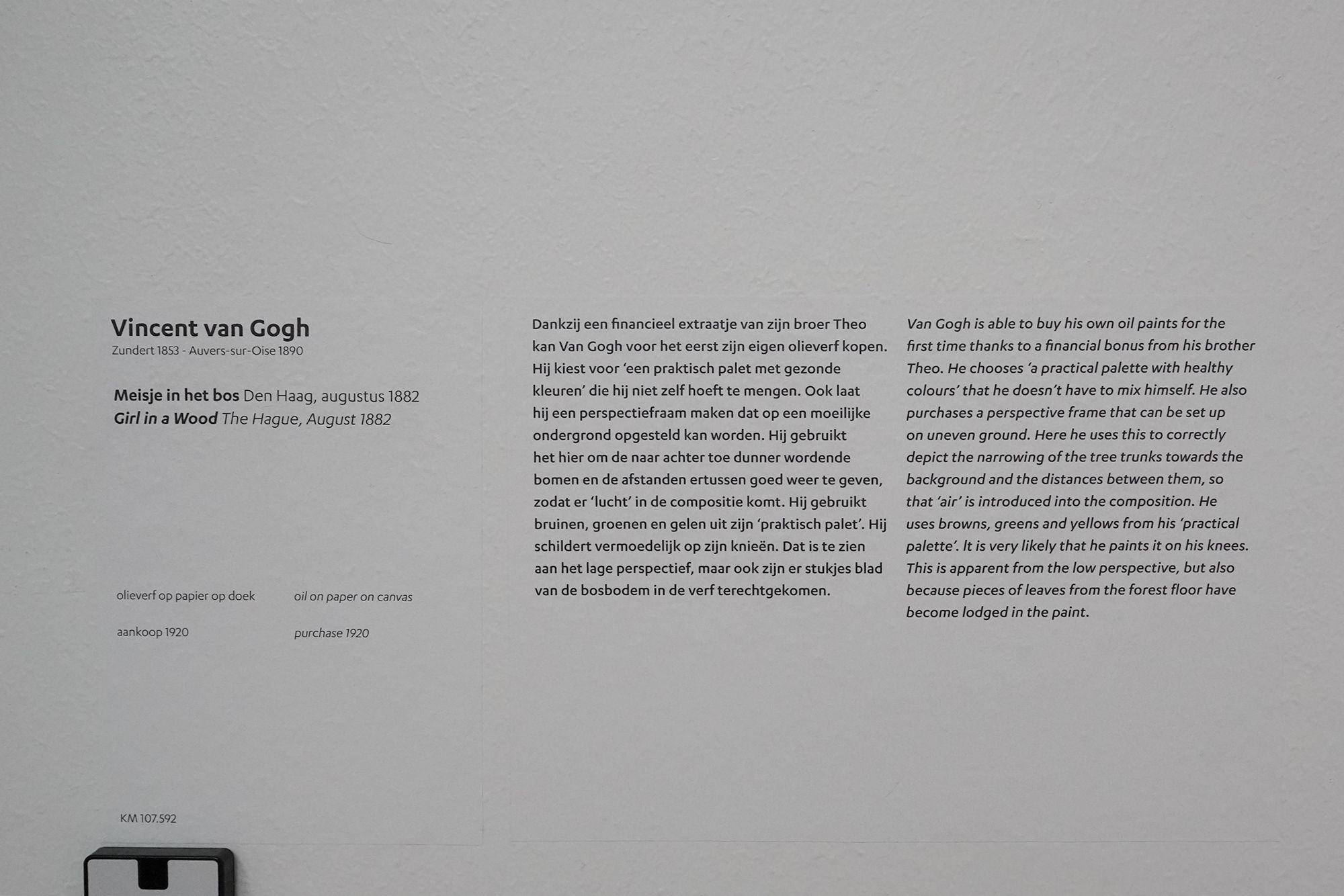
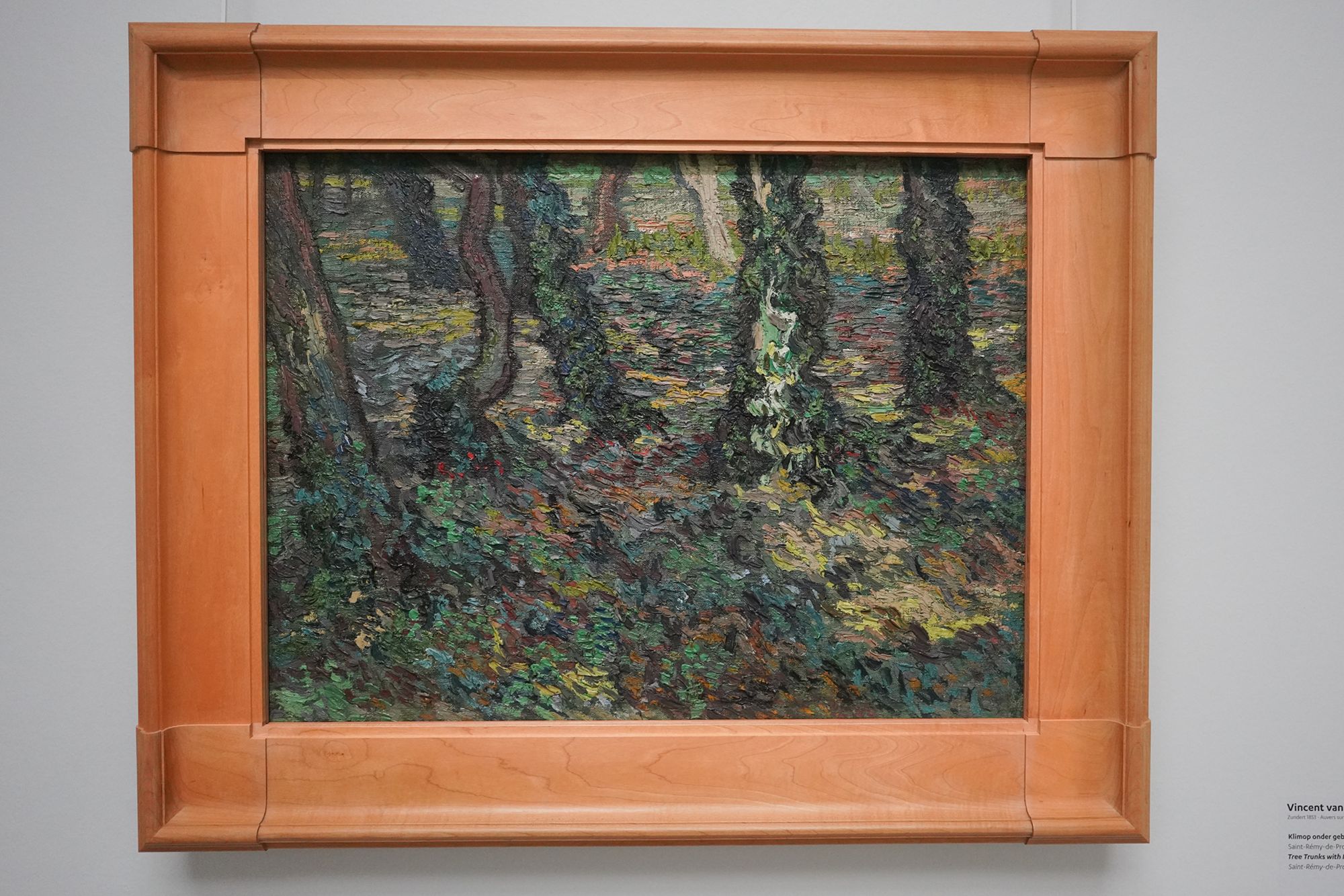
With financial help from Theo, Van Gogh was finally able to buy his own oil paints and a perspective frame, which he used to improve the accuracy of his landscapes. In this forest scene, the frame helped him capture the receding tree trunks and sense of depth. He probably painted it while kneeling on the forest floor, as actual pieces of leaves became embedded in the wet paint.
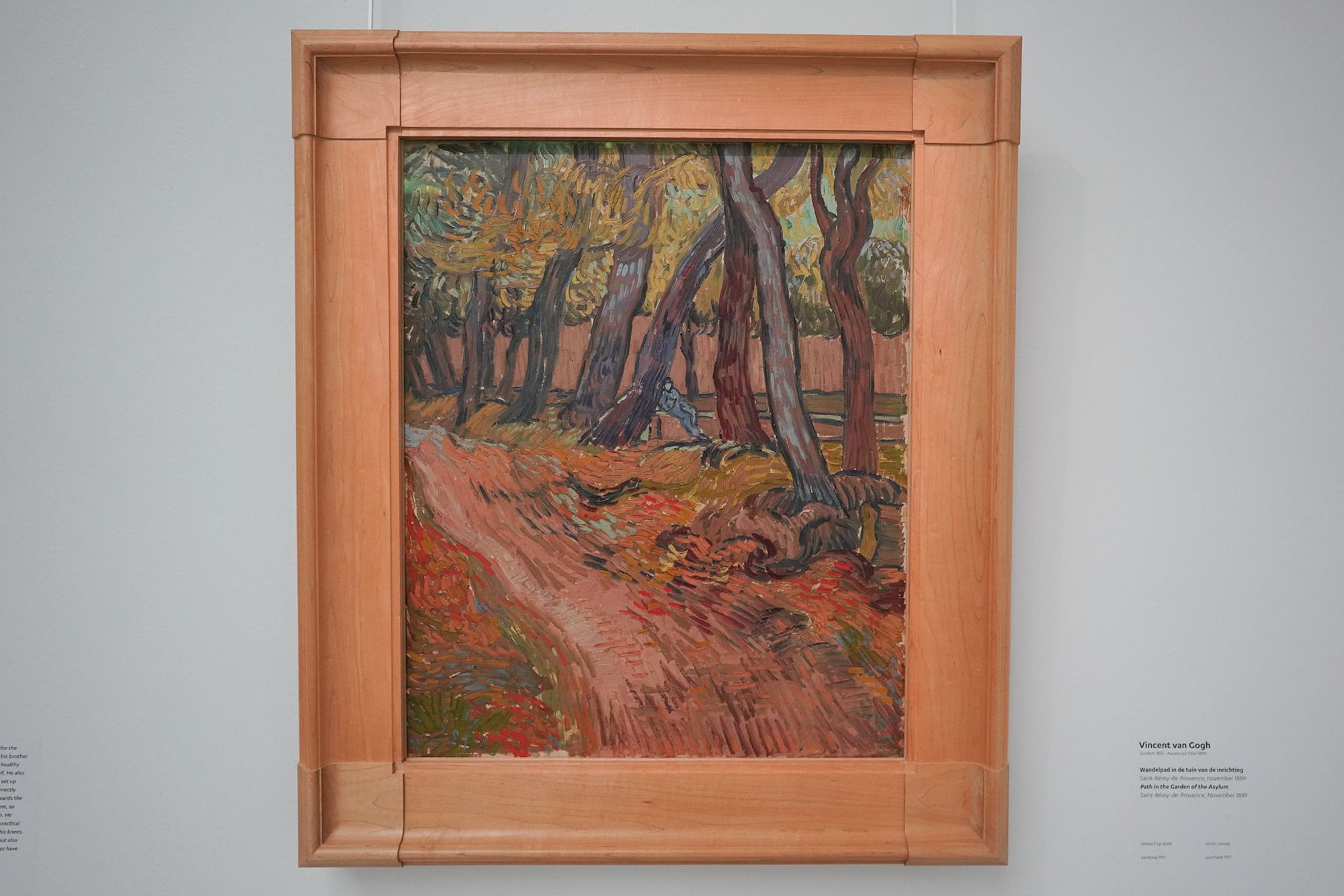
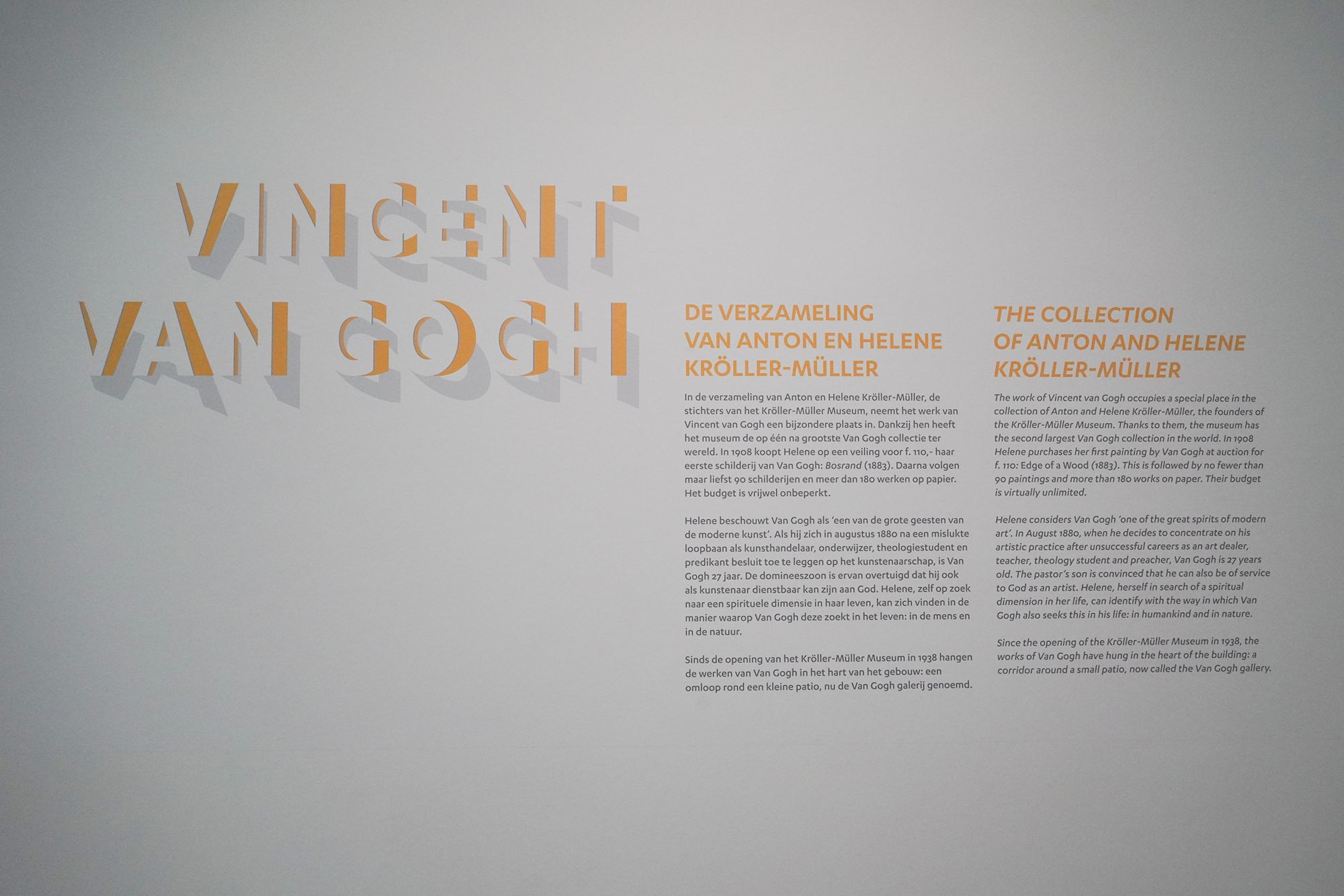
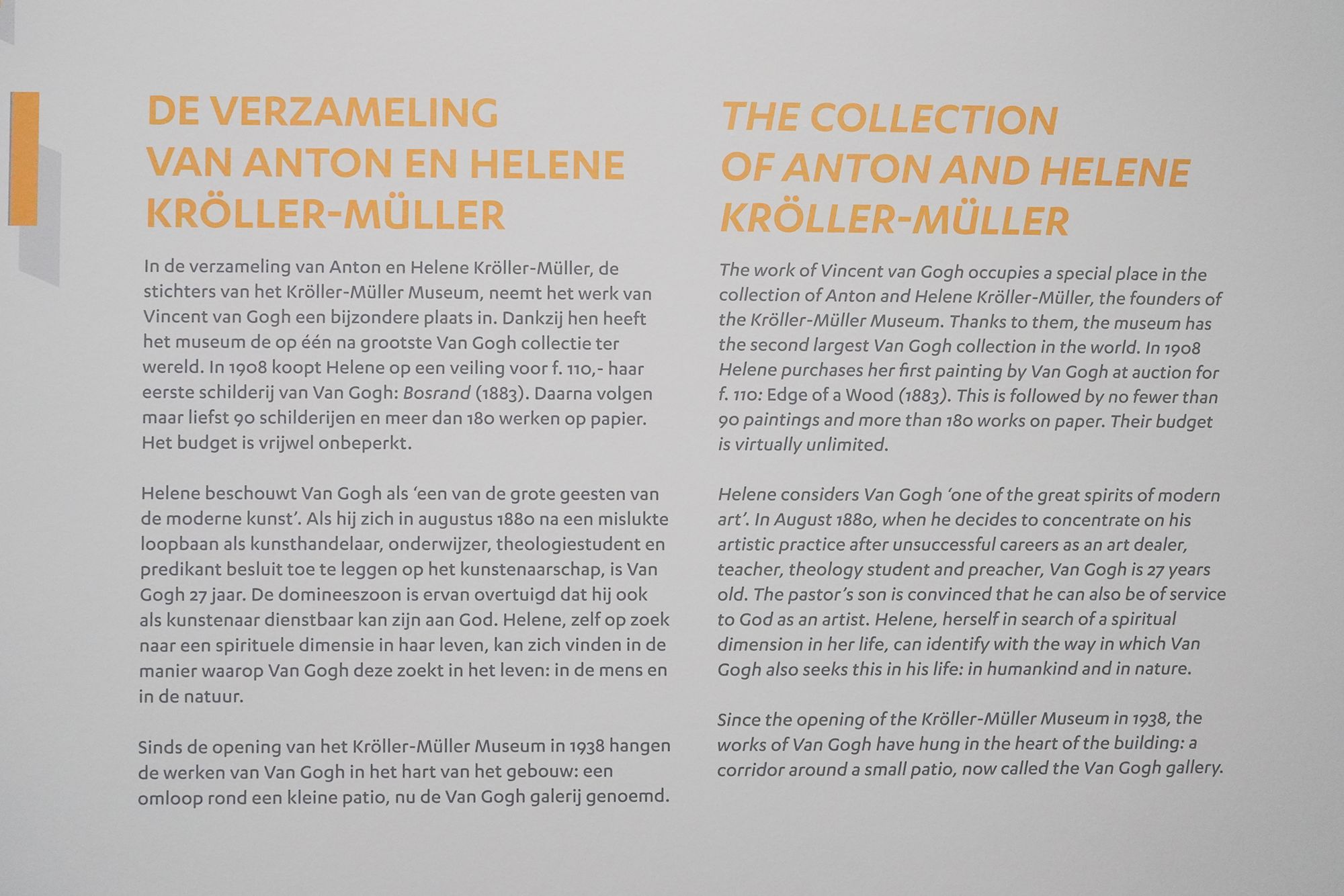
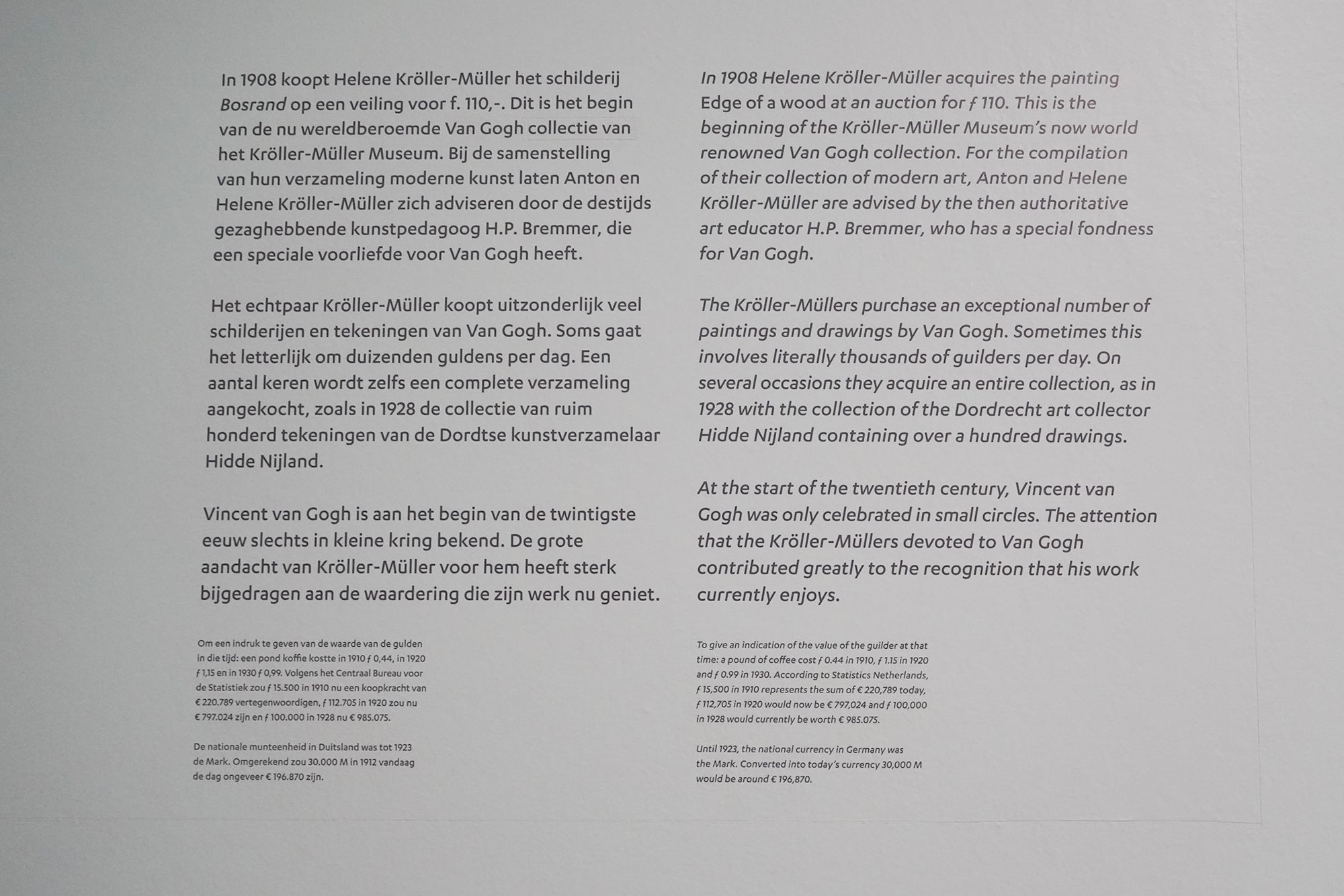
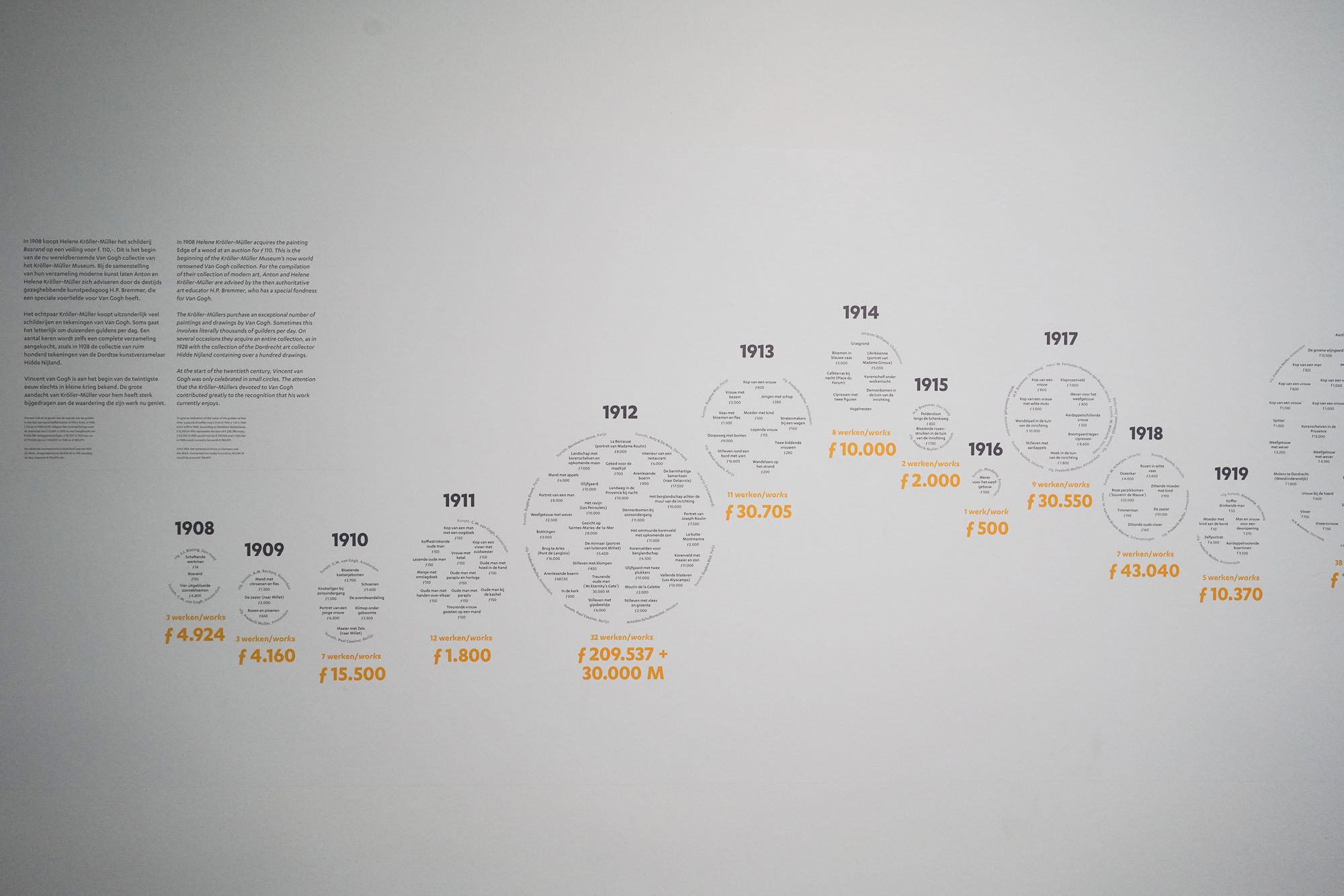
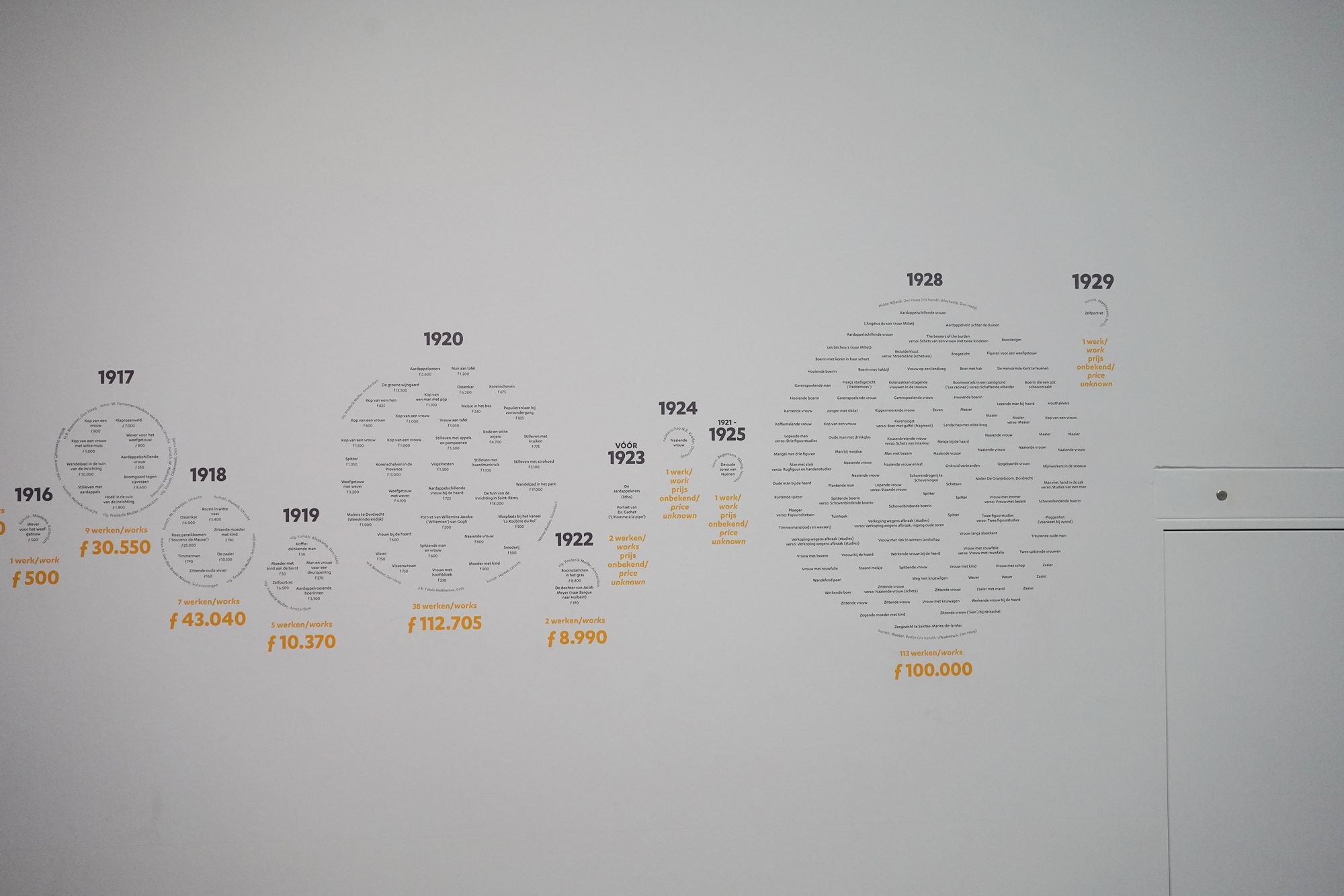
Helene Kröller-Müller’s extraordinary Van Gogh collection began in 1908, when she bought Edge of a Wood at auction for just 110 guilders. With guidance from art adviser H.P. Bremmer, Helene and Anton Kröller-Müller went on to acquire an exceptional number of Van Gogh paintings and drawings. At a time when Van Gogh was still appreciated mainly by a relatively small circle, their enthusiastic collecting and promotion of his work helped contribute to his growing international recognition.
This diagram traces Helene Kröller-Müller’s growing collection of Van Gogh works year by year, showing both the number of works she acquired and how much she paid for them. It illustrates how rapidly she built one of the world’s most important Van Gogh collections, beginning in 1908 and continuing intensively through the following decade.
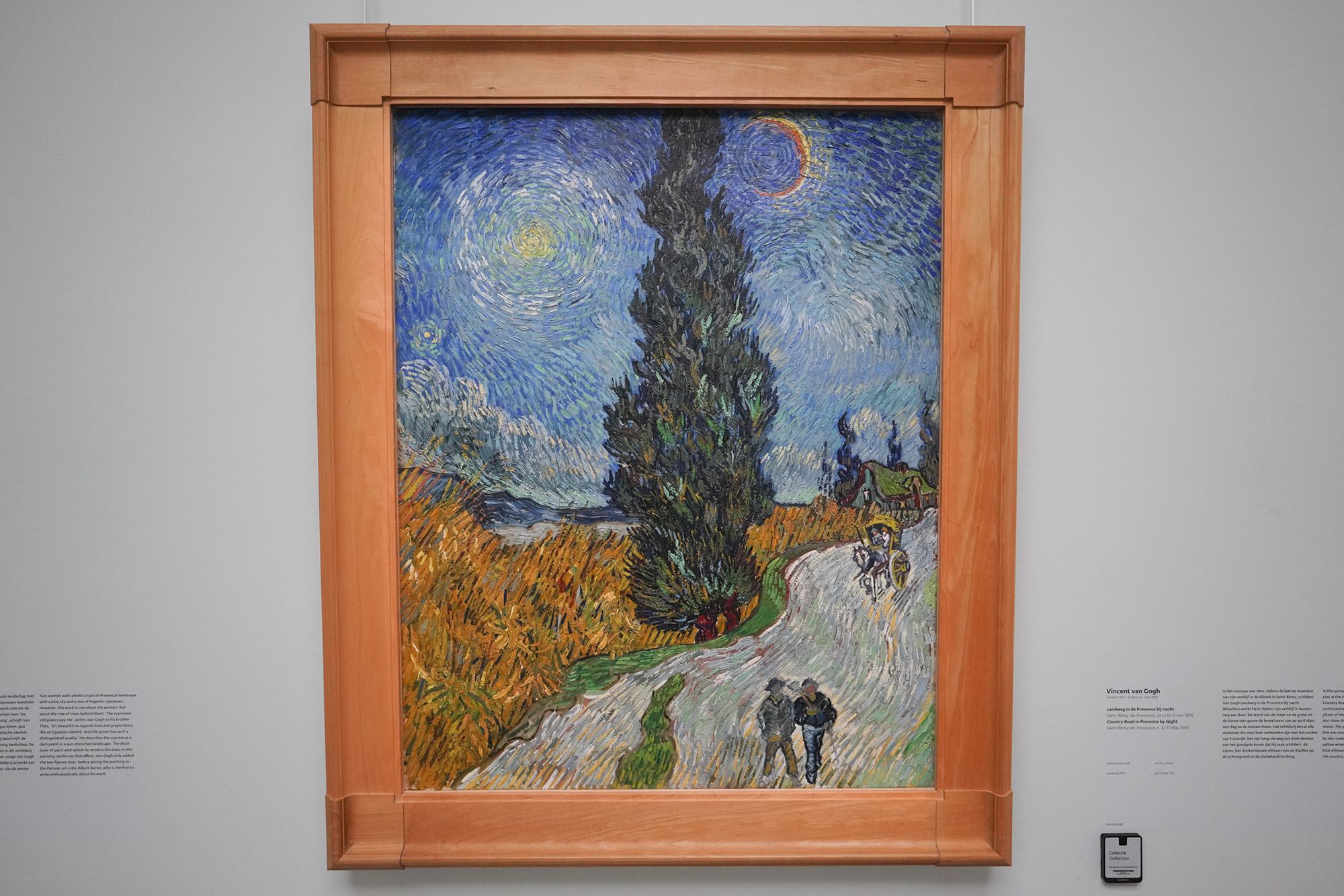
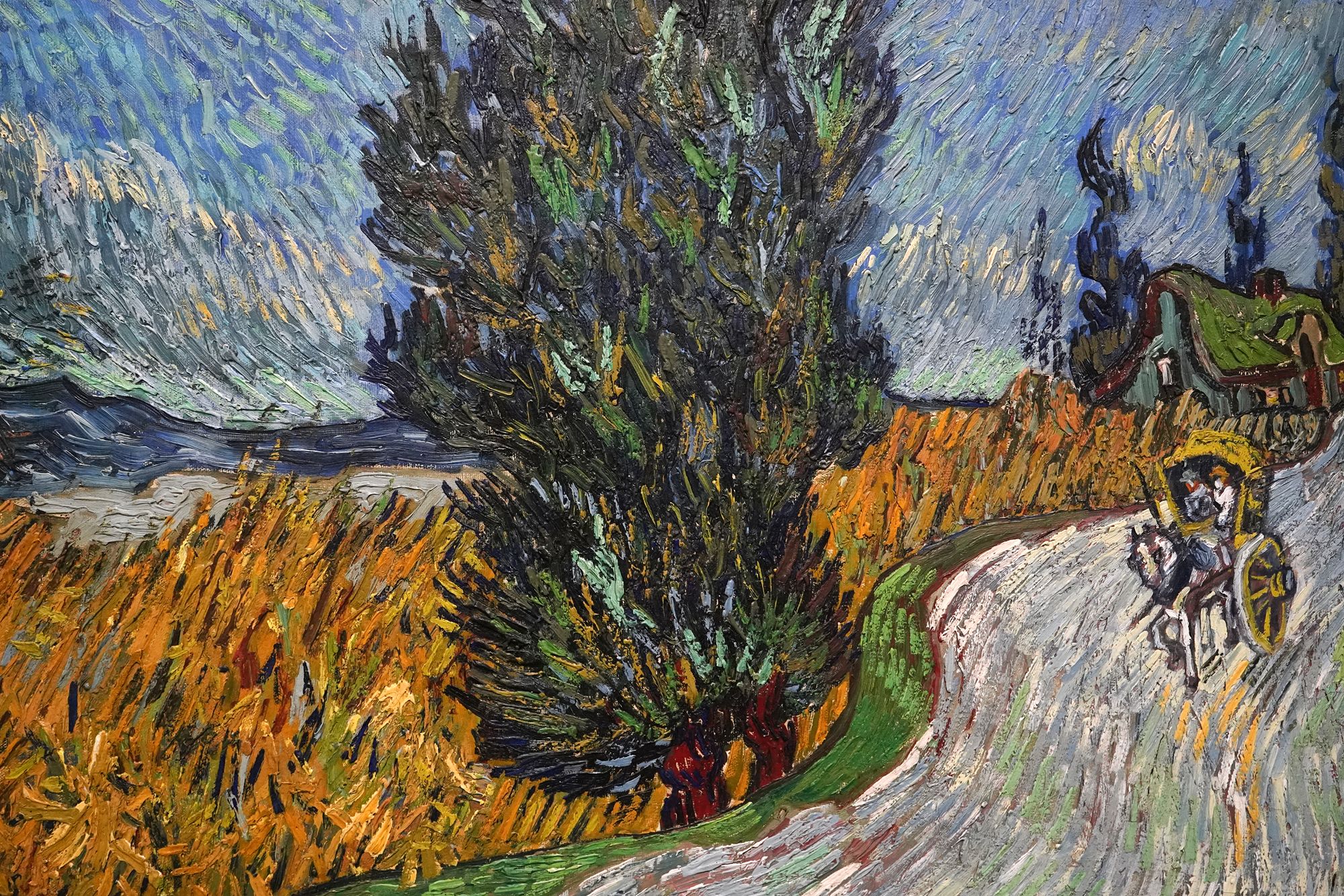
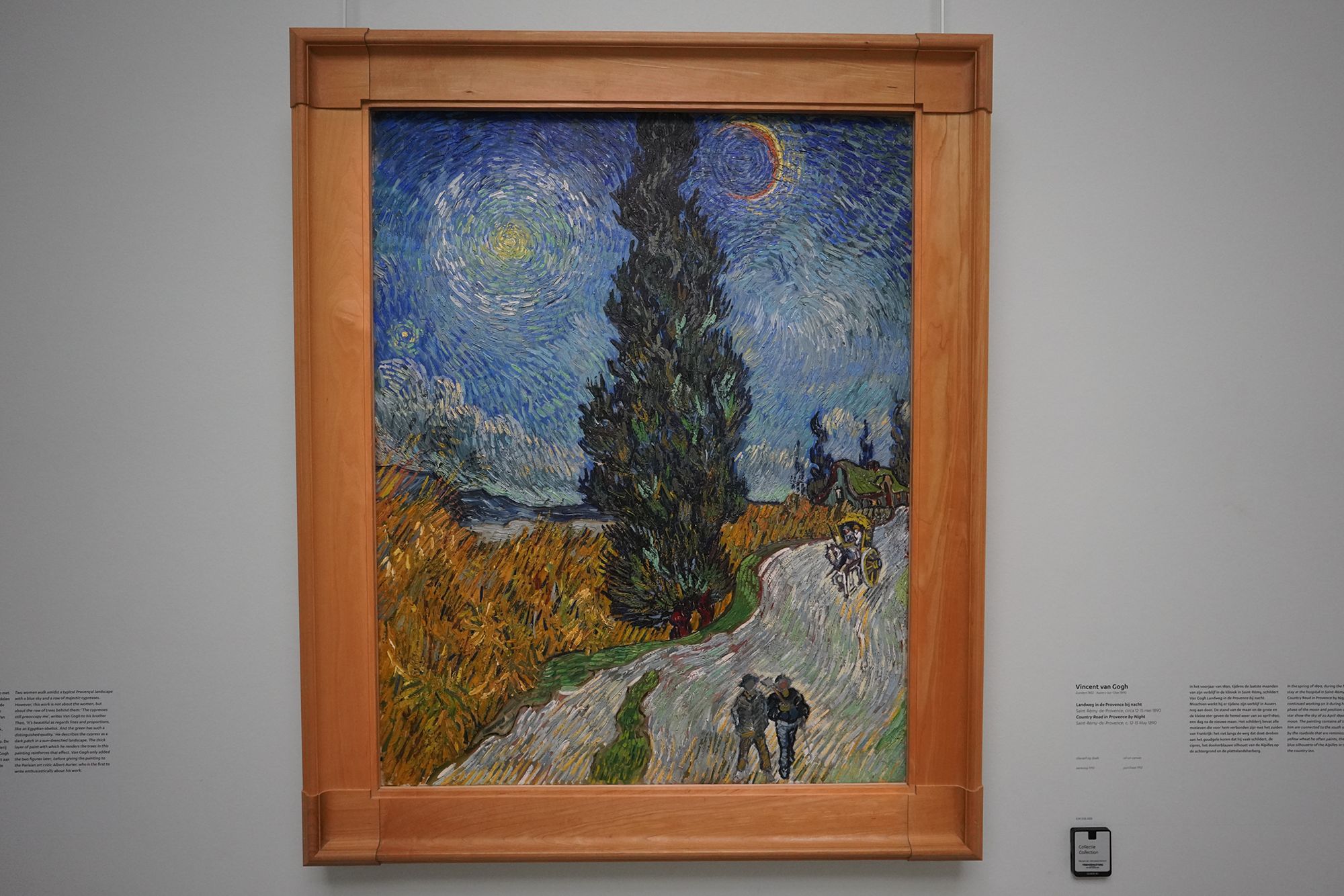
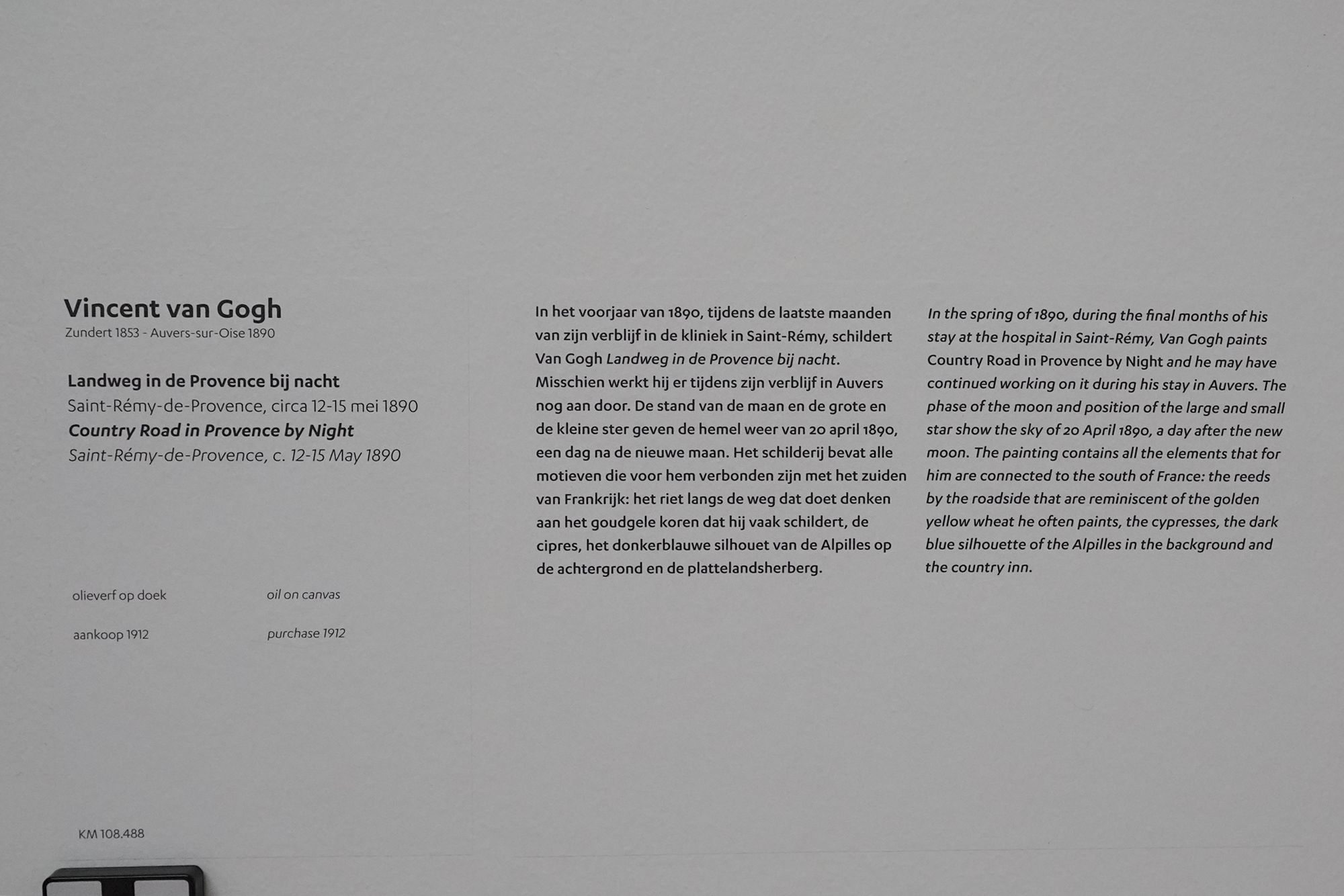
During his final months at Saint-Rémy in 1890, Van Gogh painted Country Road in Provence by Night, possibly continuing it later in Auvers. The scene combines memories of southern France—the reeds, golden wheat, cypress trees, distant Alpilles, and country inn—beneath a crescent moon, creating a kind of farewell to the Provençal landscape that had inspired him.
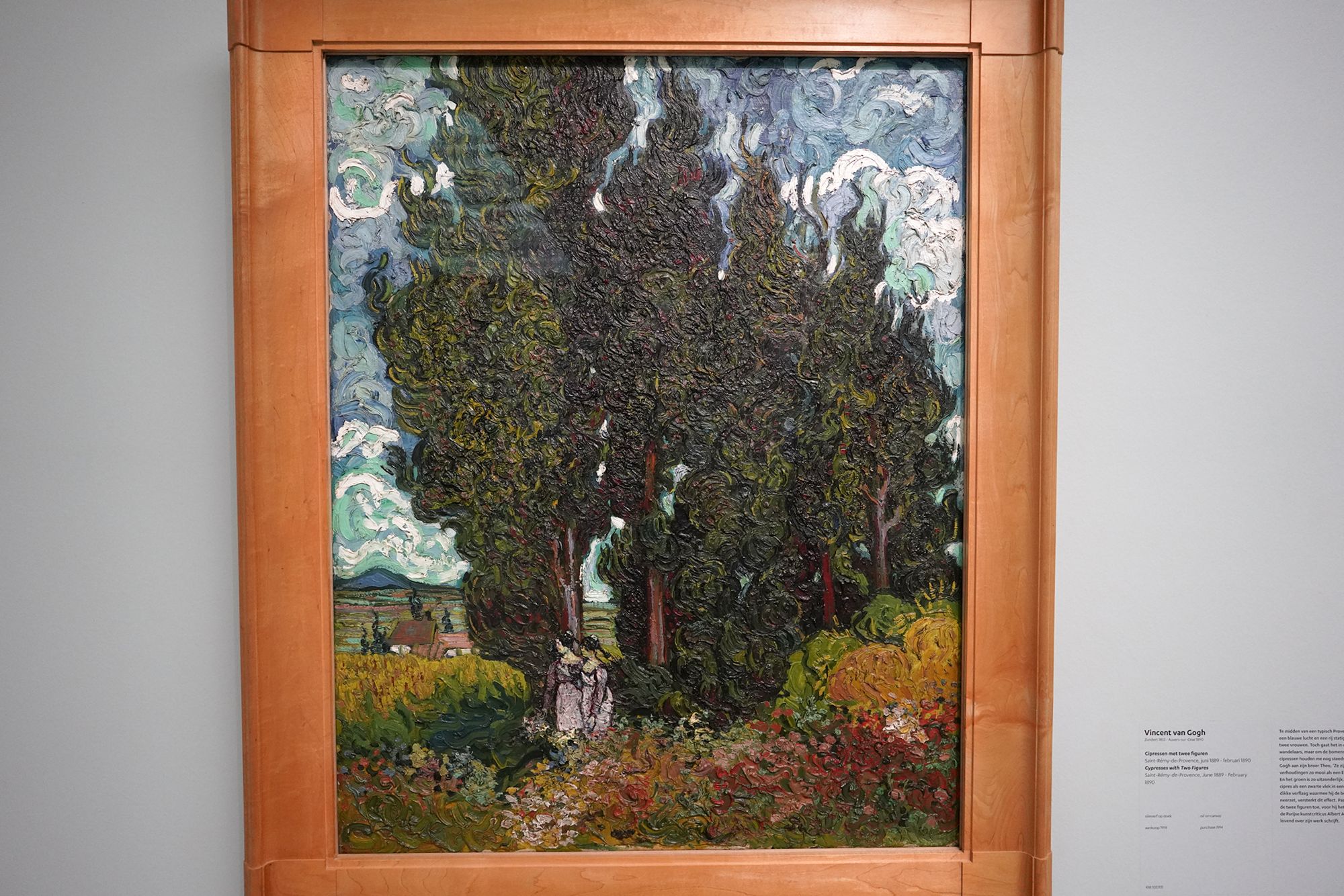
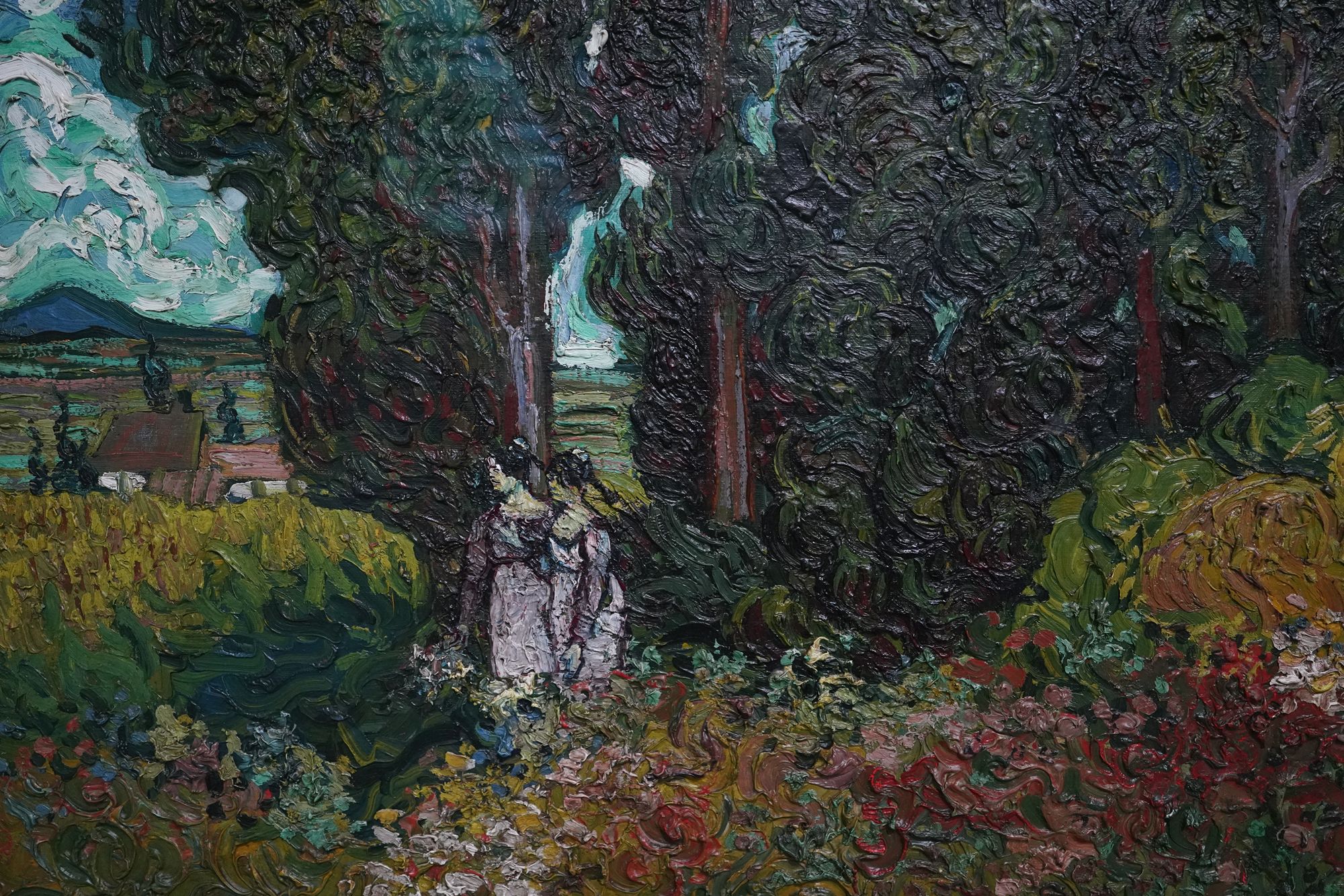
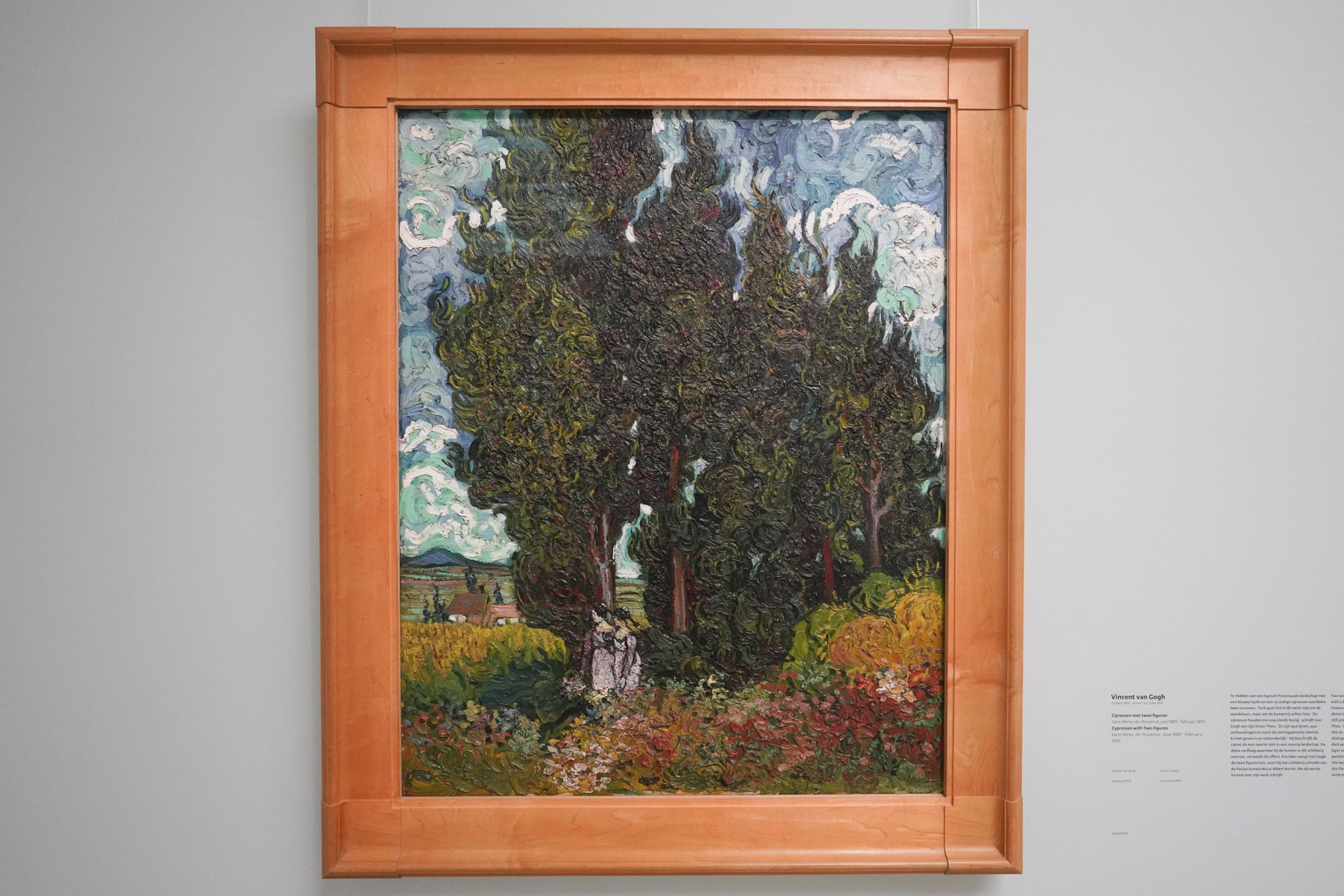
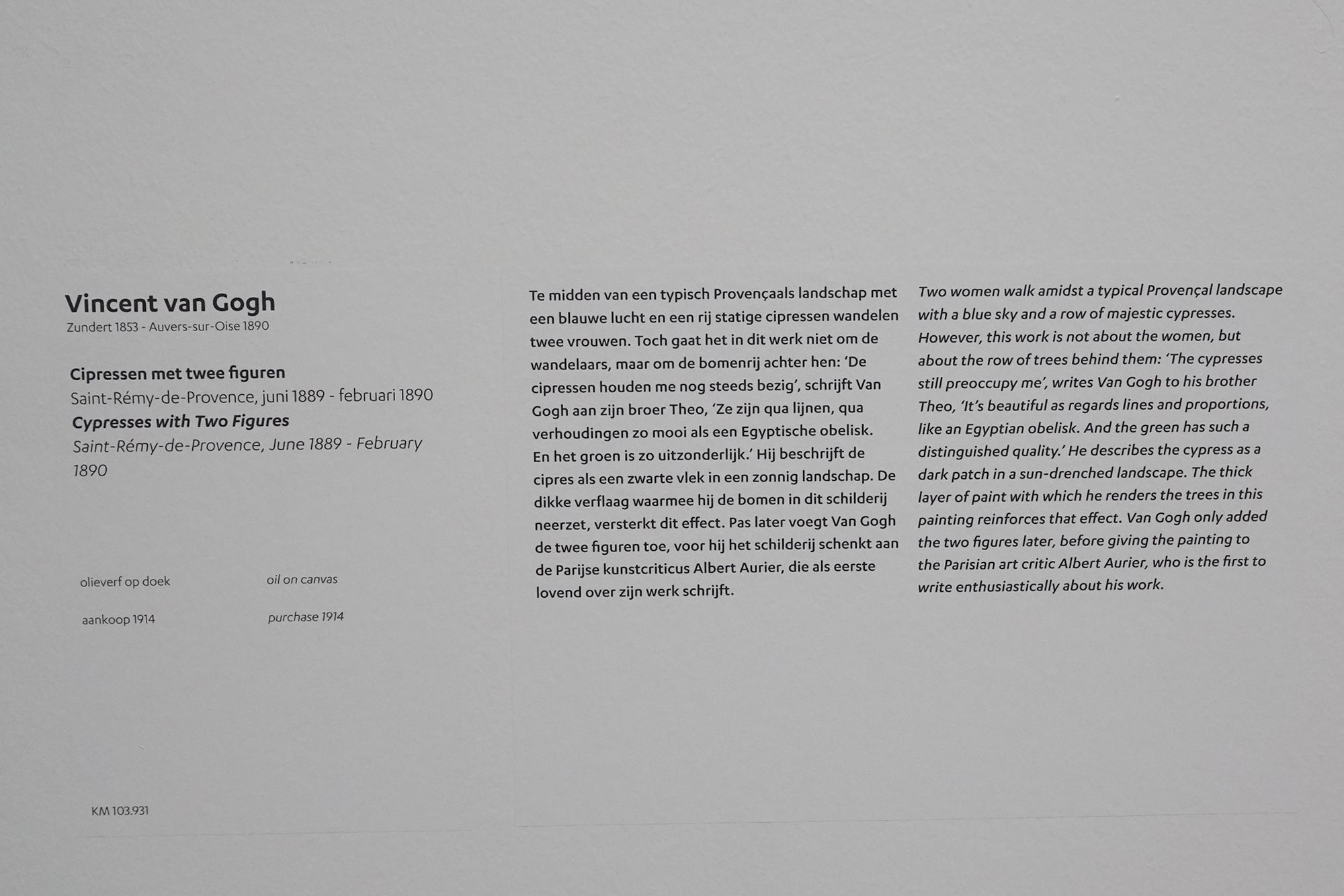
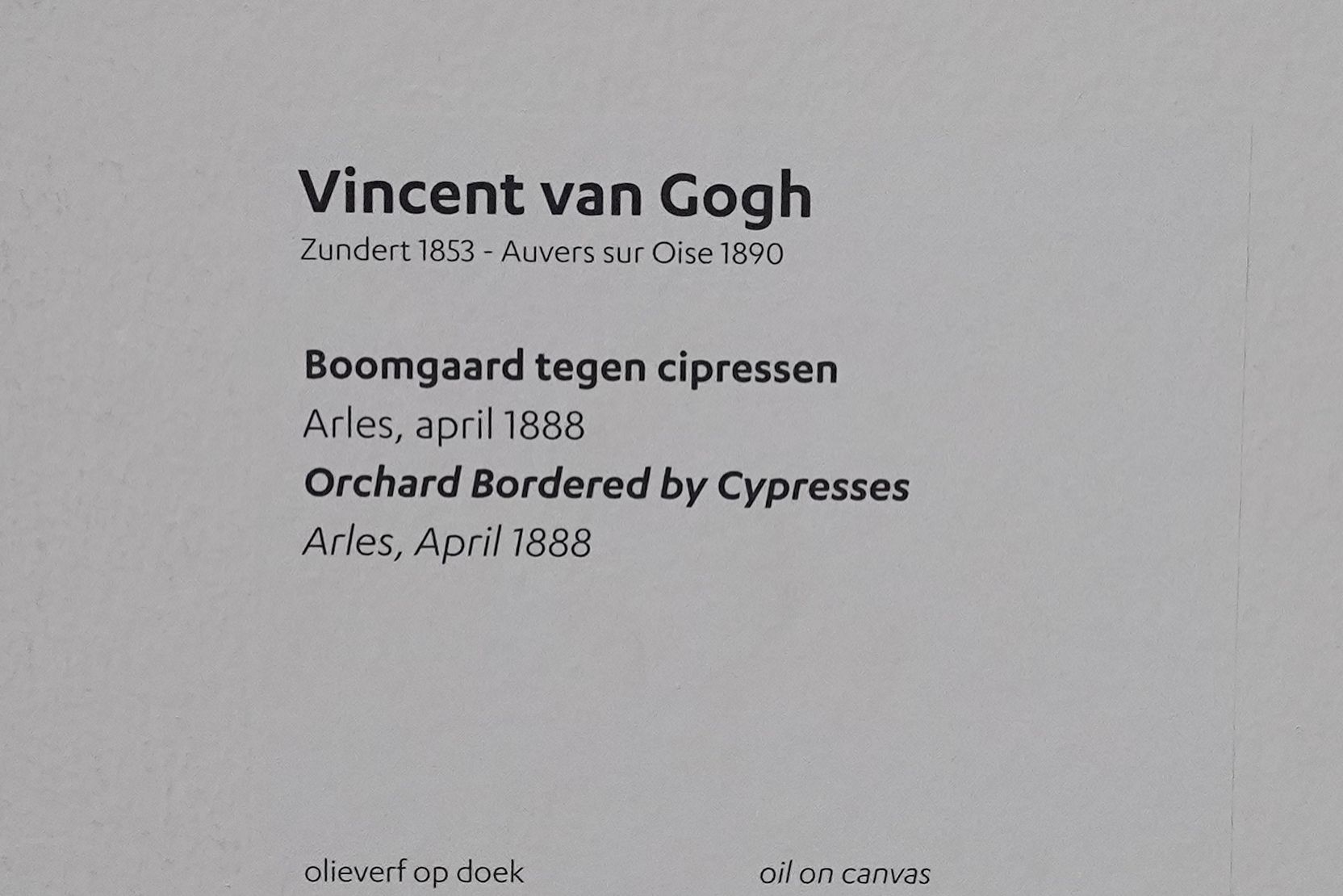
Van Gogh was fascinated by the cypress trees of Provence, admiring their strong lines and proportions and comparing them to Egyptian obelisks. In this painting, the majestic row of dark cypresses dominates the sunlit landscape; the two women were added later, before Van Gogh gave the work to his friend, the artist Albert Aurier.
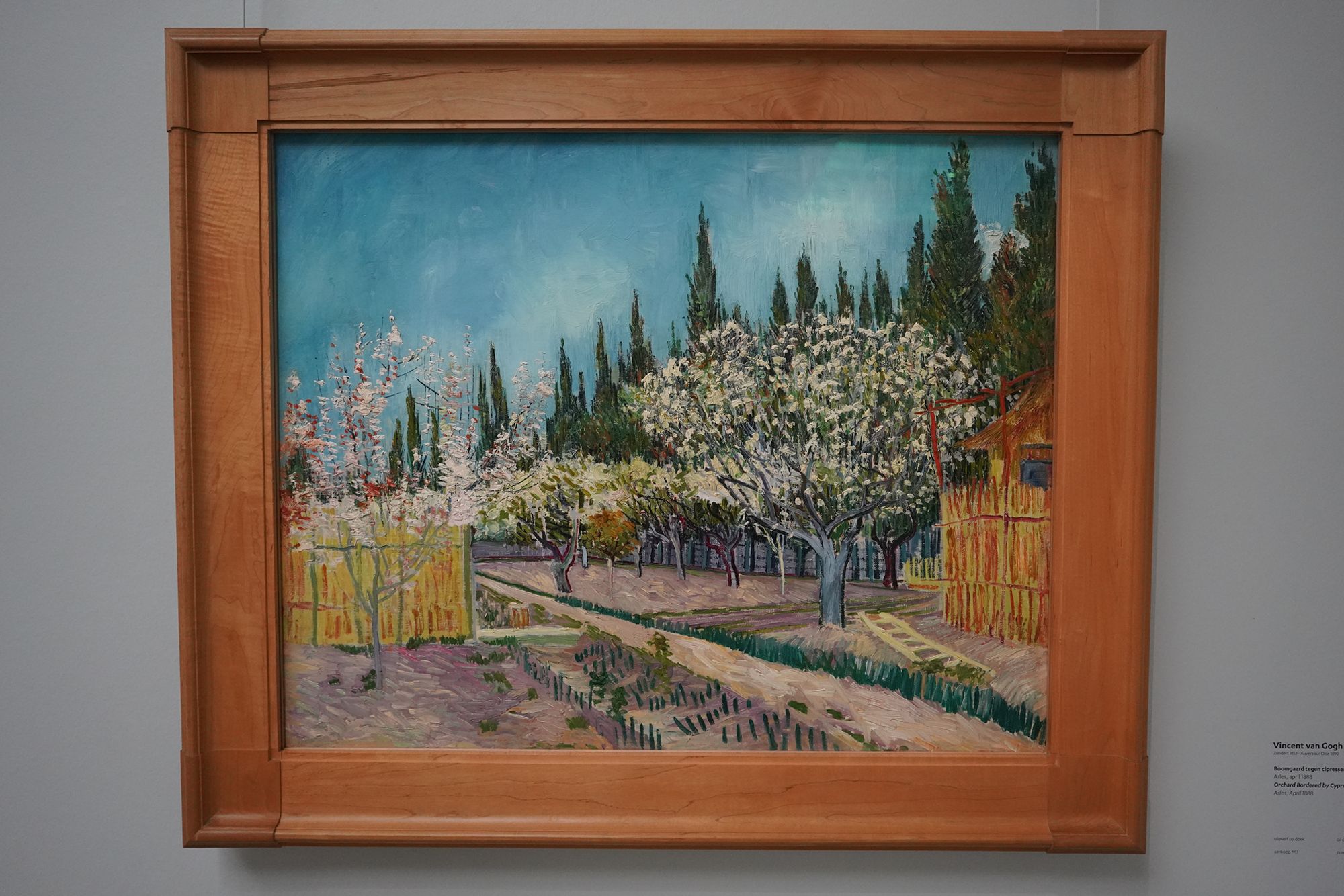
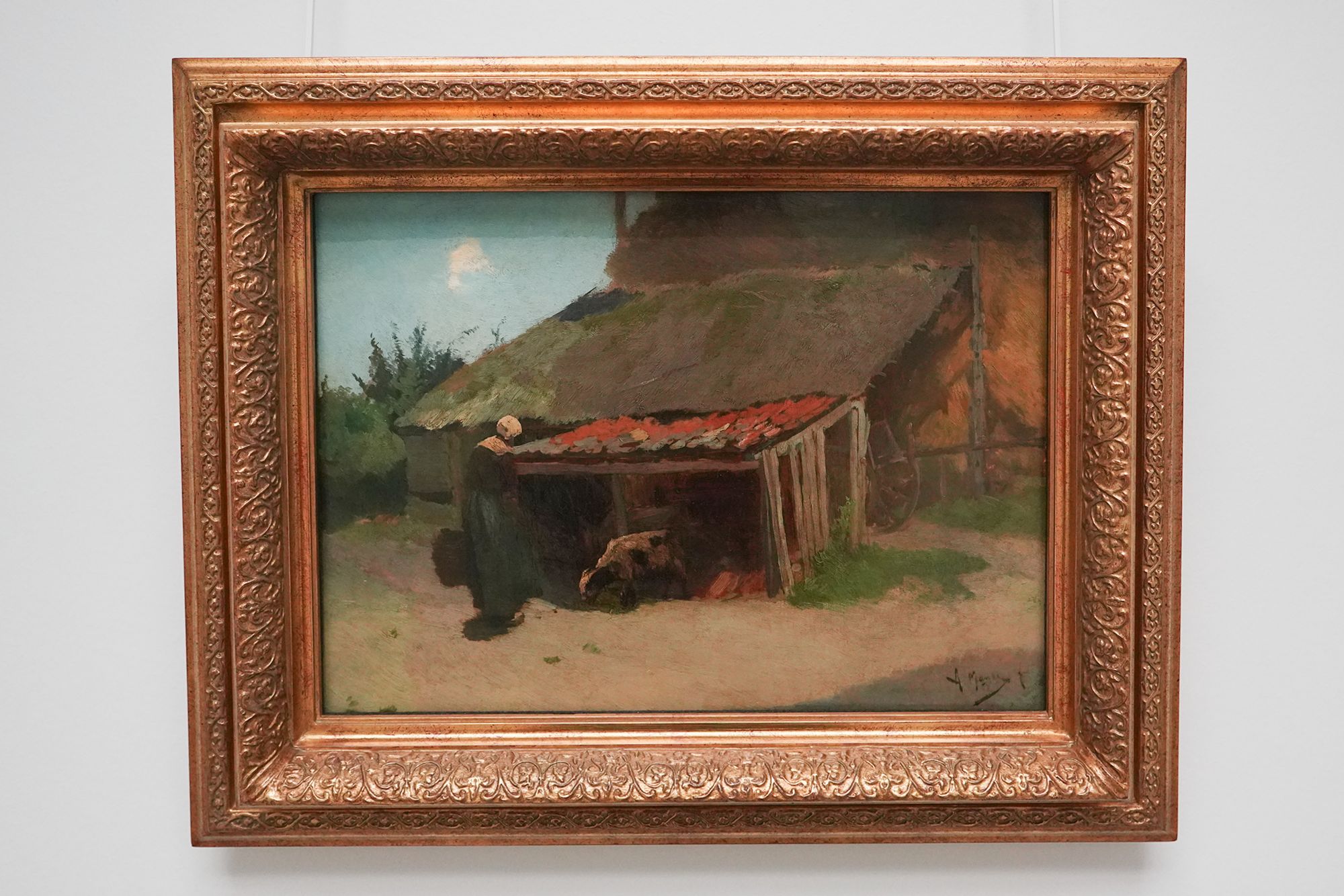
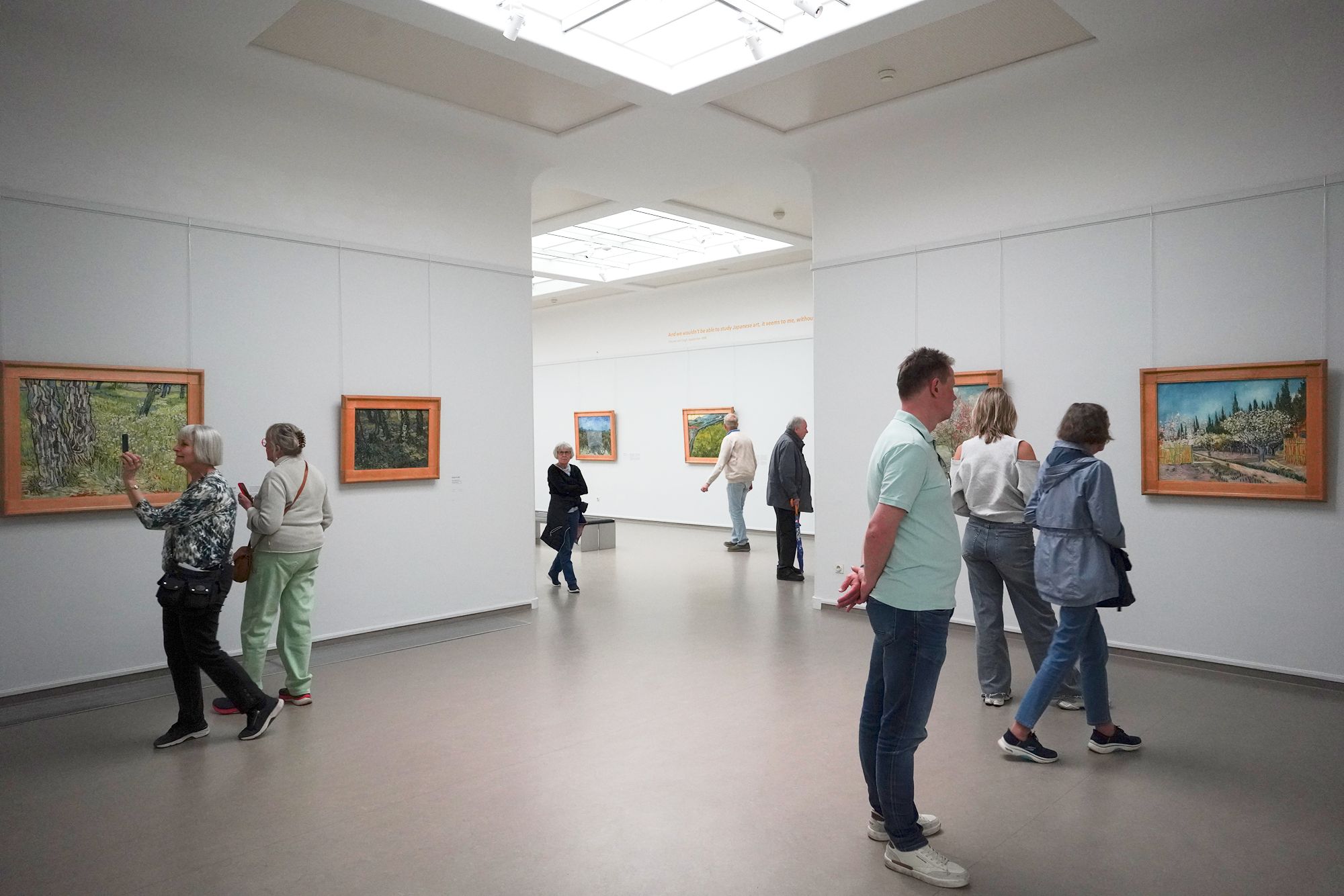
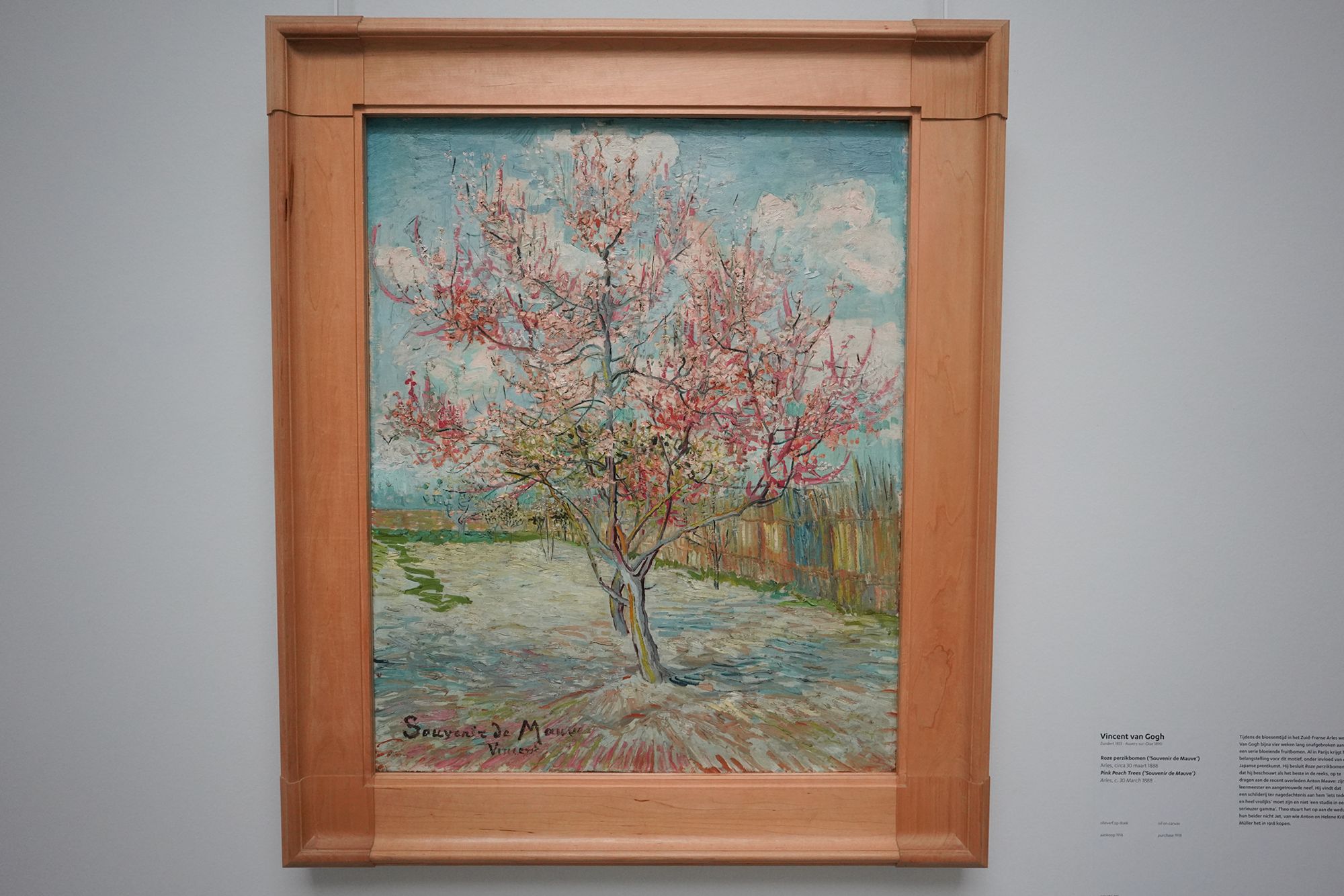
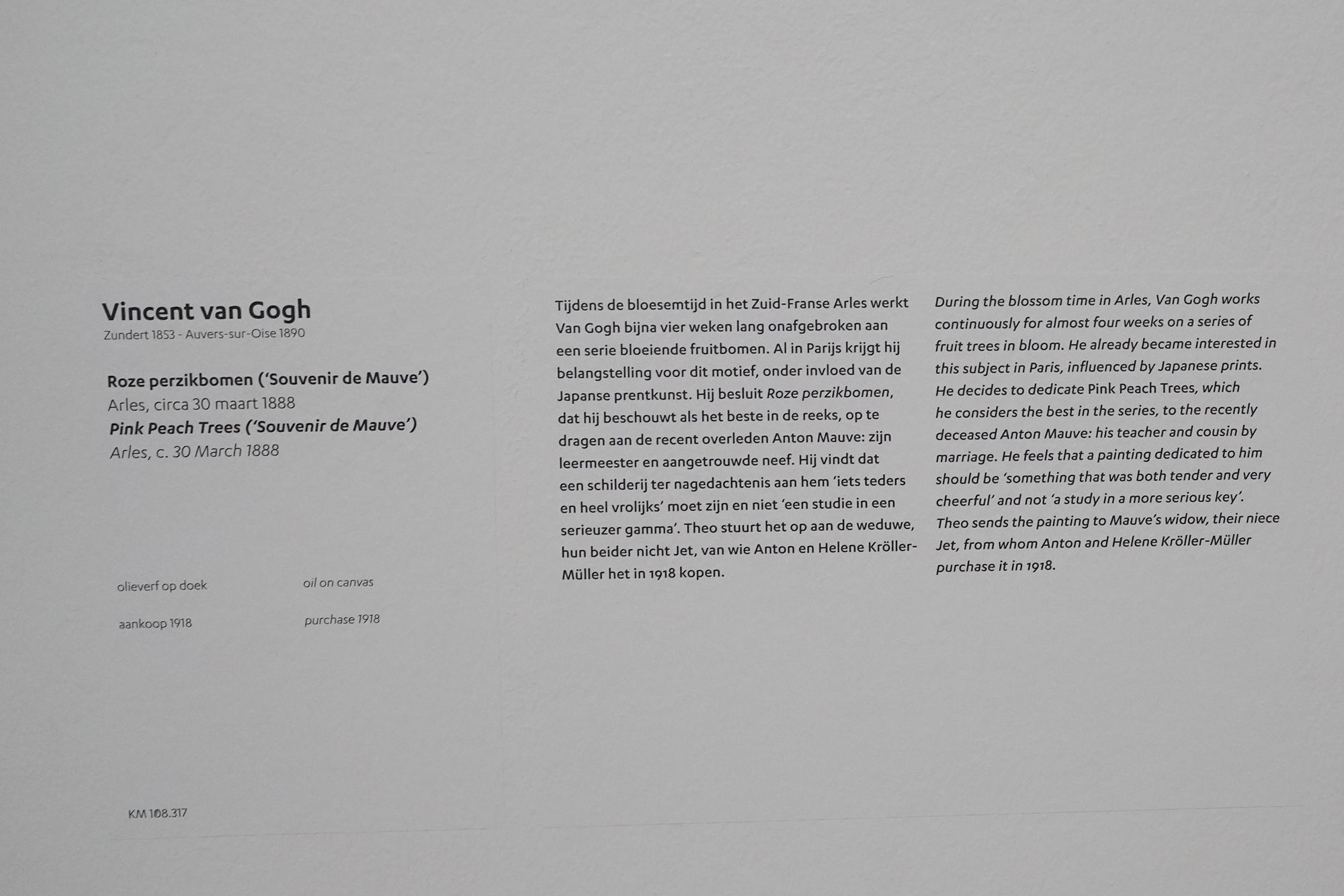
During the spring of 1888 in Arles, Van Gogh spent nearly four weeks painting the blossoming fruit trees, a subject inspired partly by his love of Japanese prints. He dedicated Pink Peach Trees to his recently deceased teacher and relative Anton Mauve, choosing this bright, delicate scene because he felt a memorial should be tender and cheerful rather than somber.
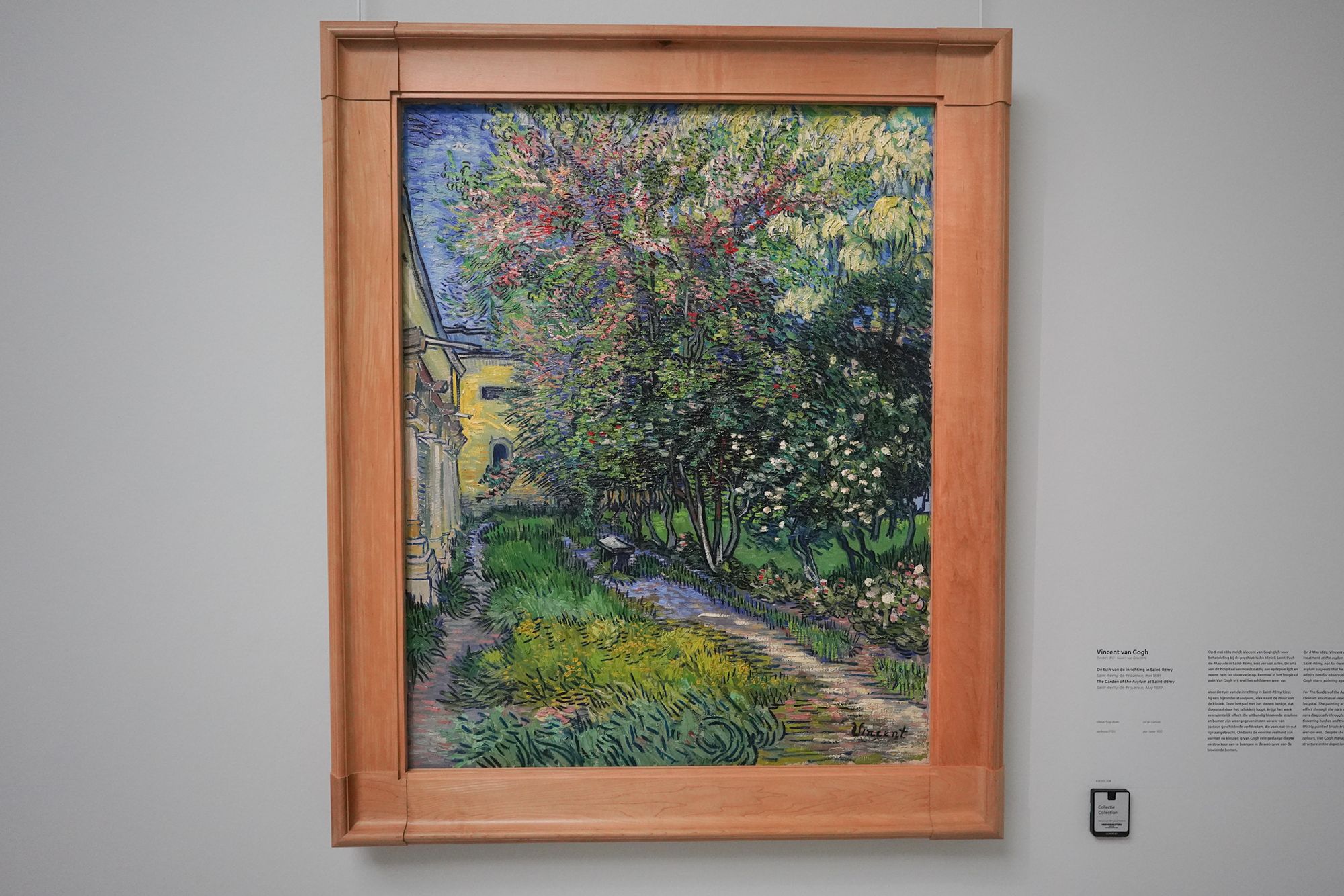
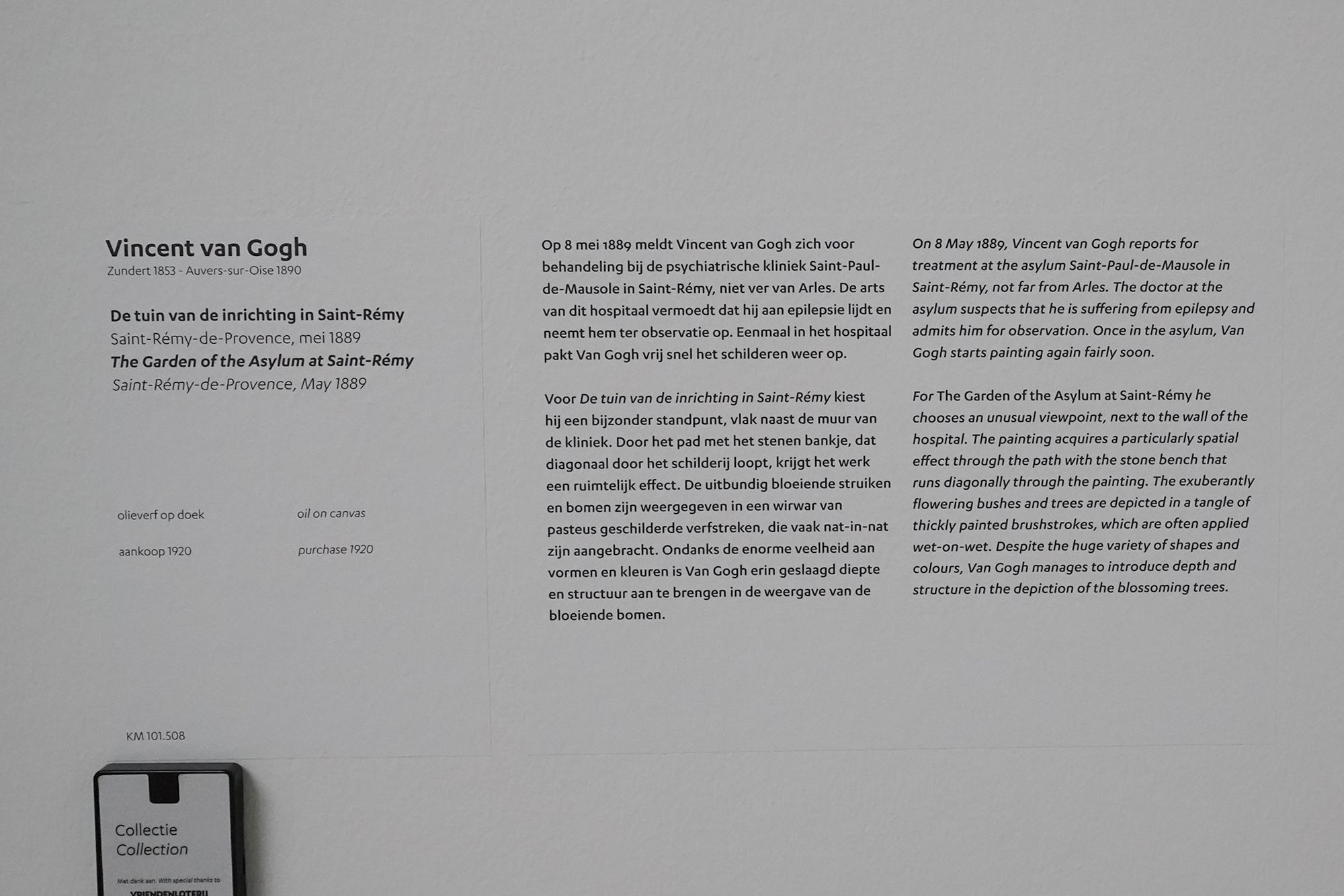
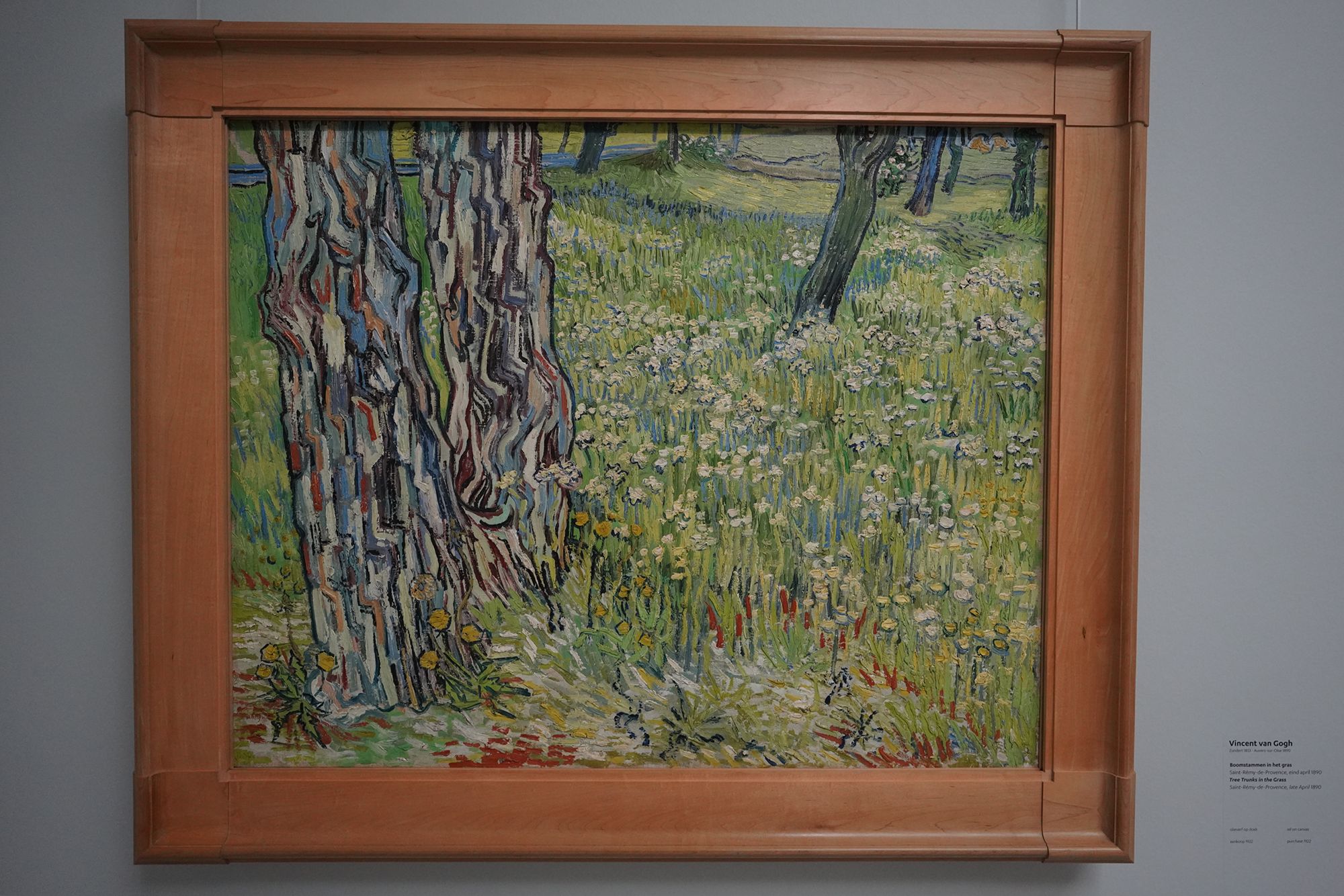
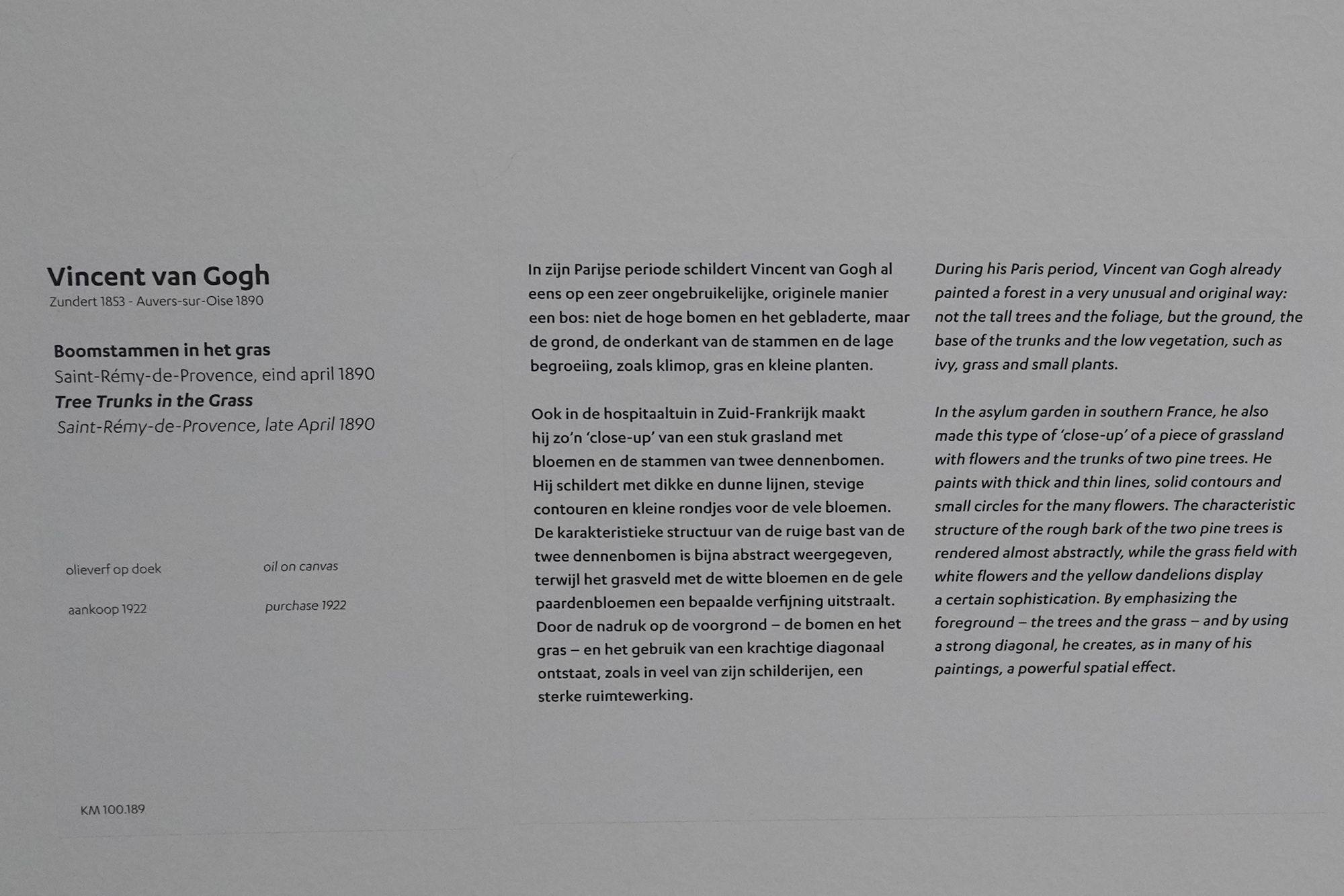
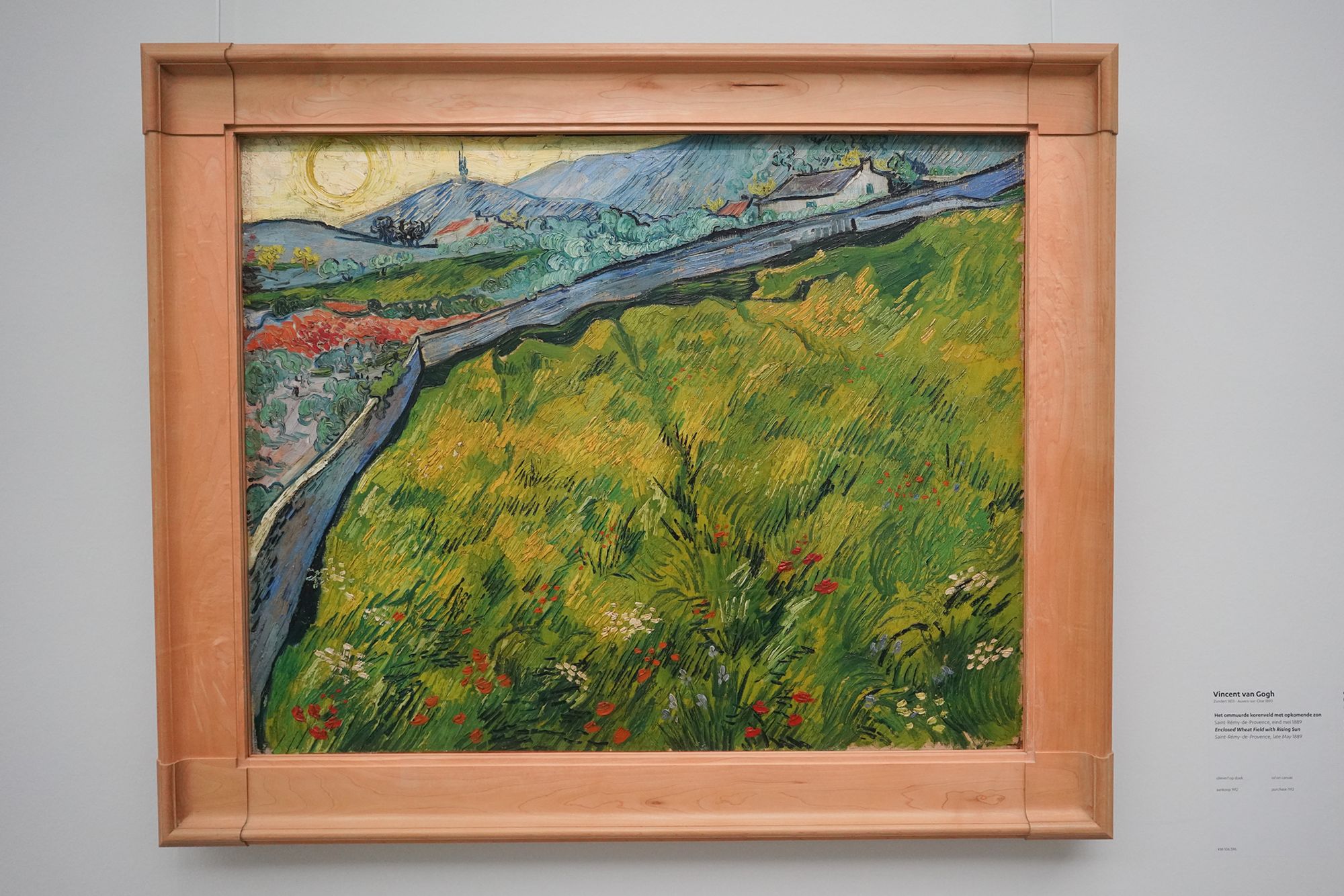
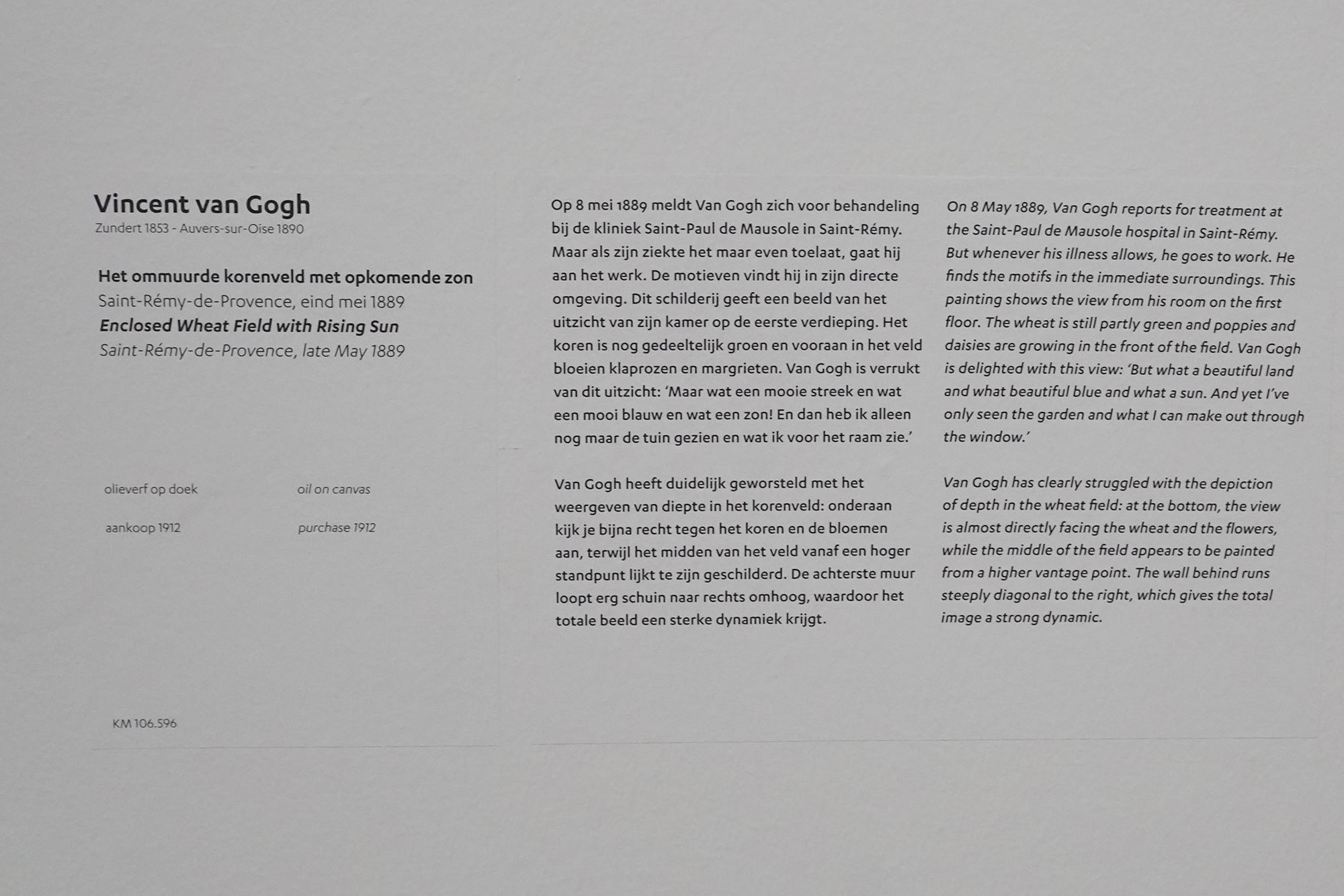
After entering the Saint-Rémy asylum in May 1889, Van Gogh found inspiration in the landscape visible from his room. This painting shows the wheat field with poppies and daisies outside his window, using shifting viewpoints and a strong diagonal wall to create depth and movement. Van Gogh was delighted by the view, especially its beautiful land, blue sky, and brilliant sunlight.
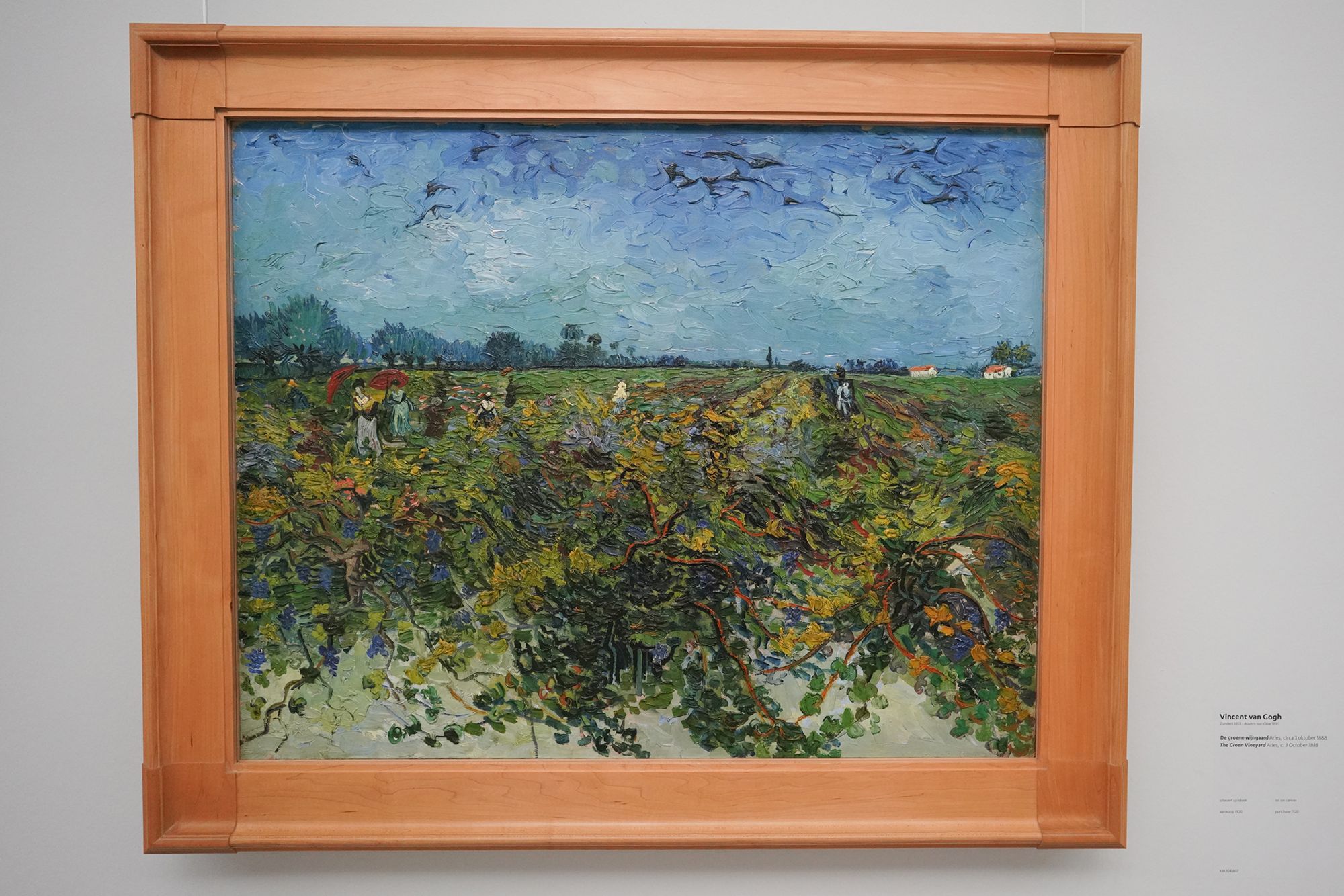
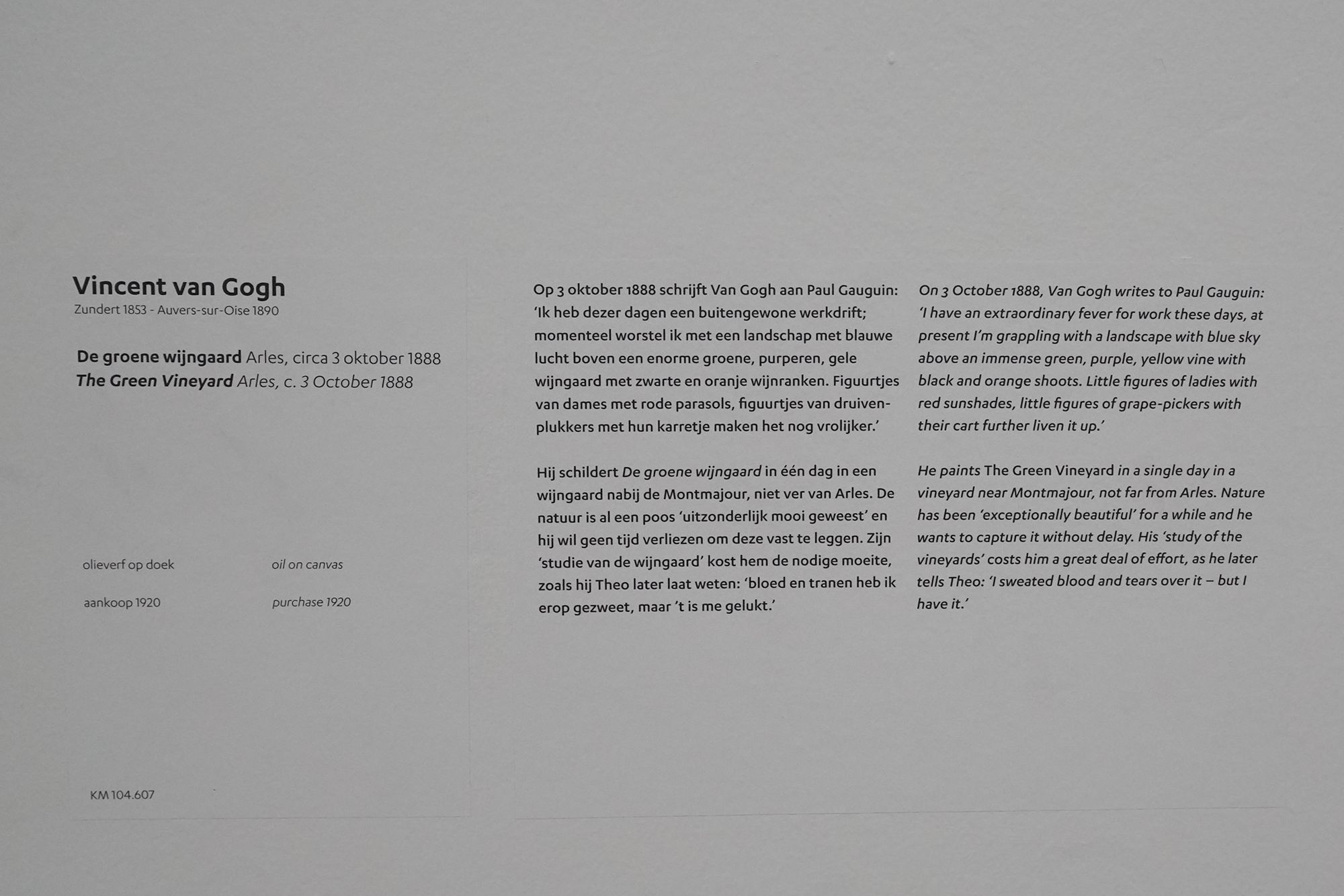
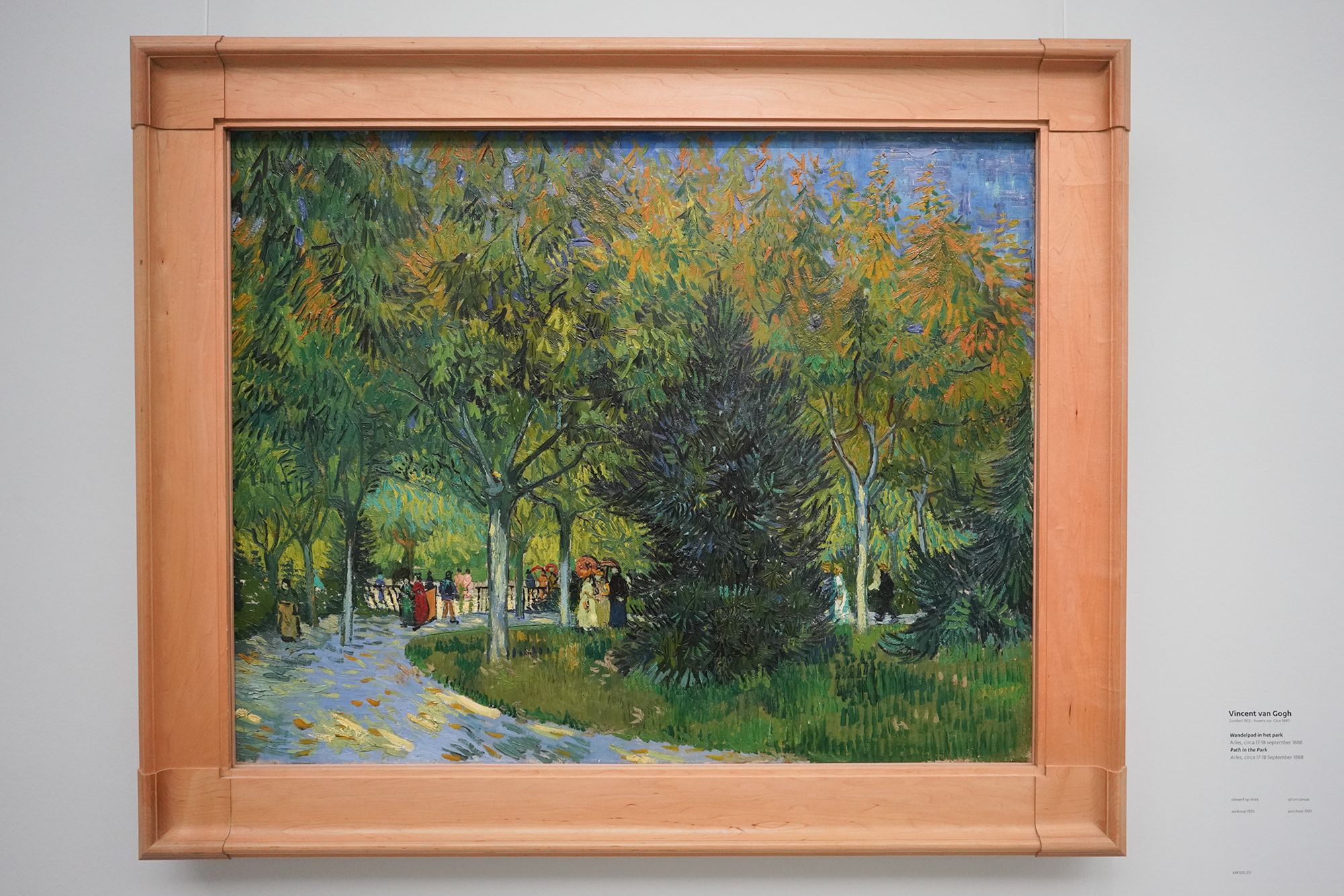
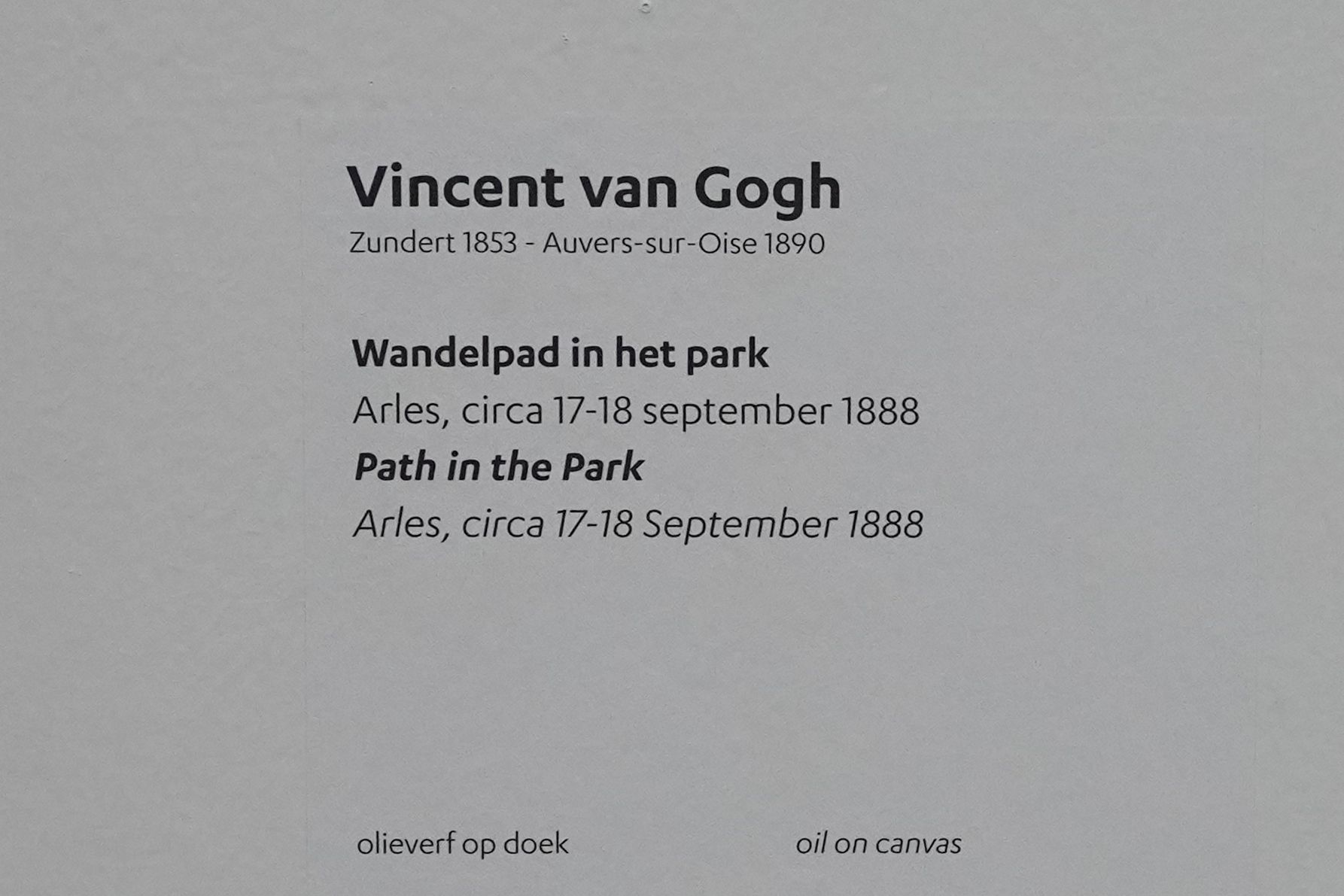
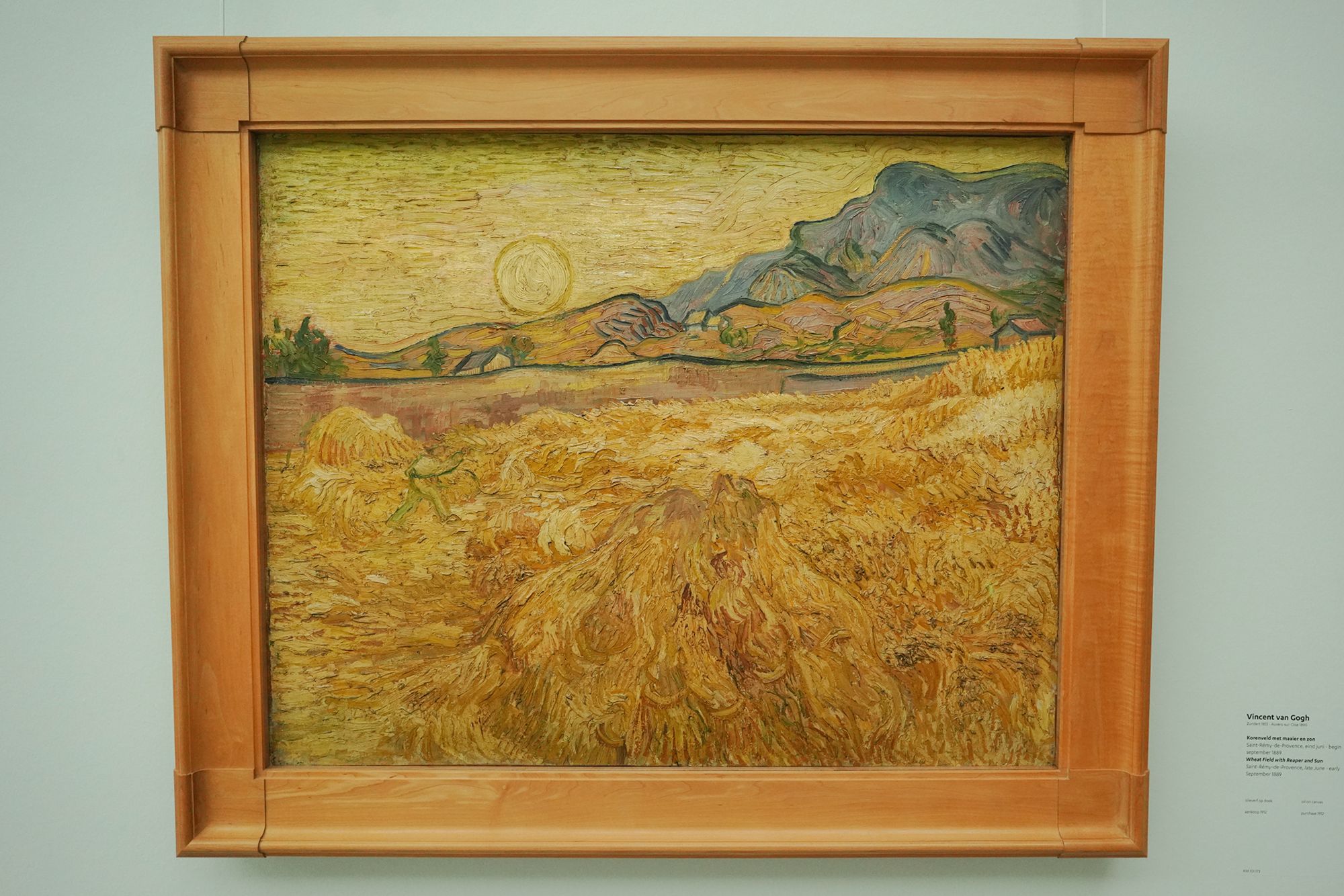
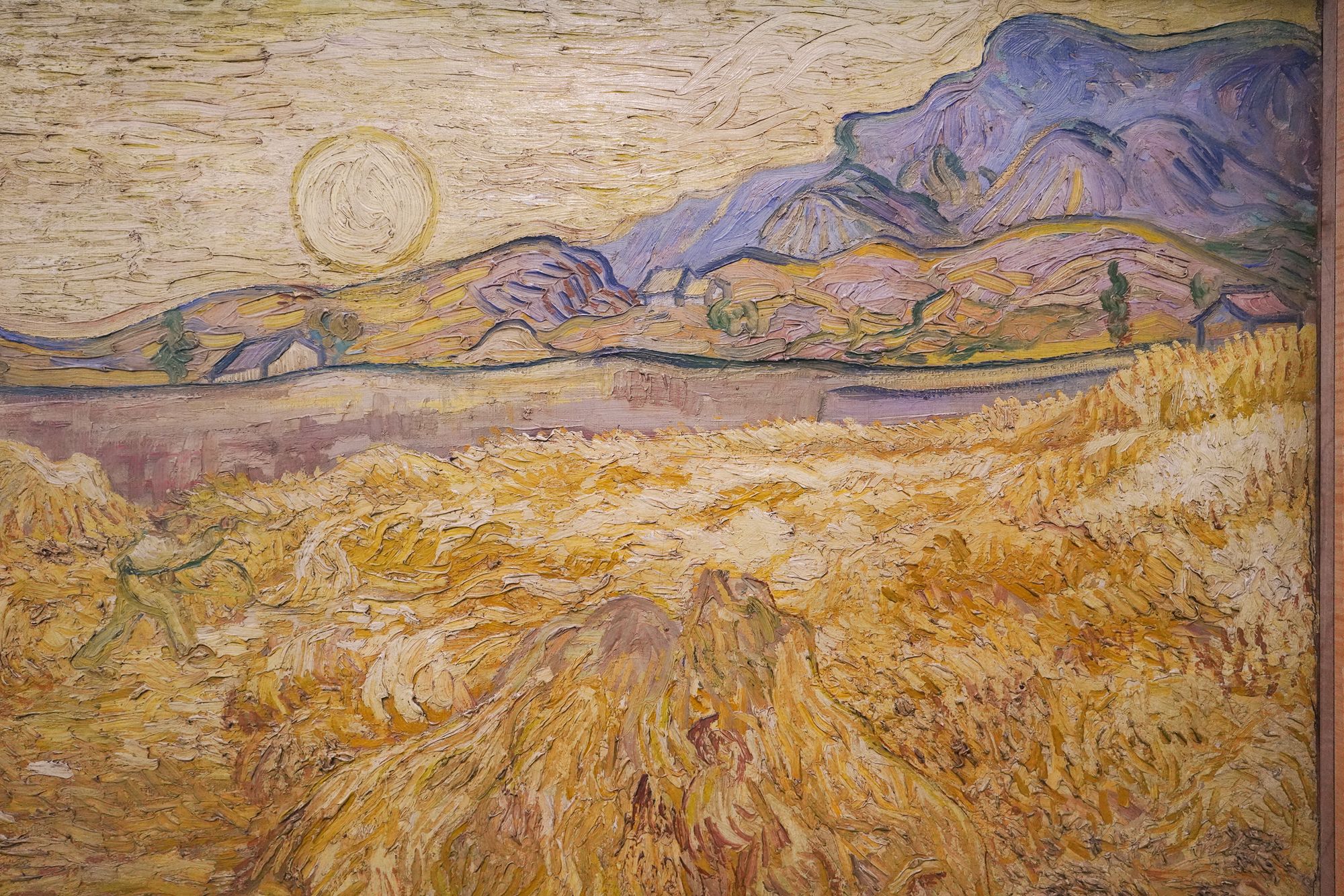
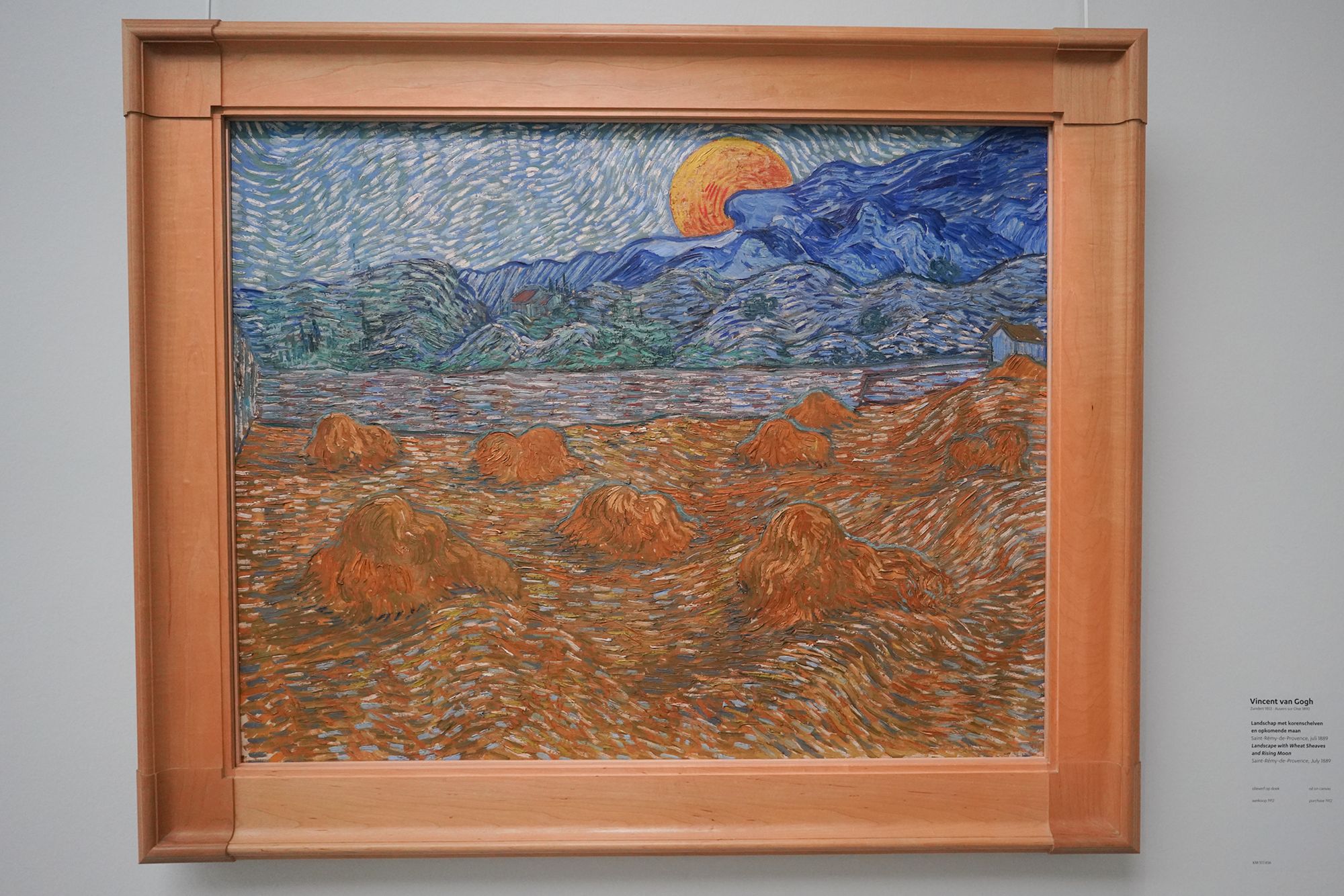
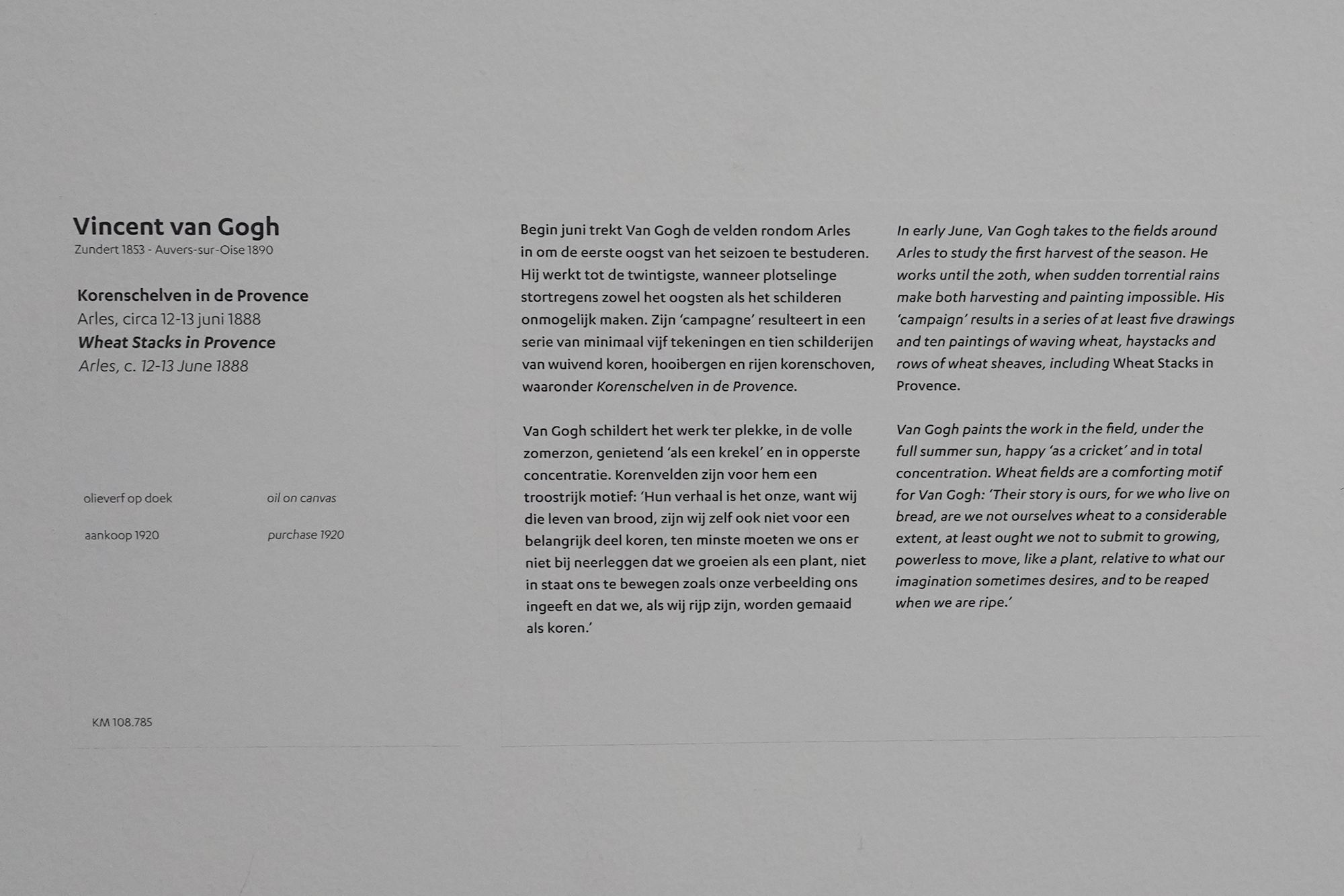
In June 1888, Van Gogh worked in the fields around Arles, creating a series of paintings and drawings of the wheat harvest, haystacks, and sheaves of wheat. He painted outdoors under the intense Provençal sun, and wheat fields became a deeply meaningful subject for him, symbolizing the cycle of life, growth, ripening, and harvest.
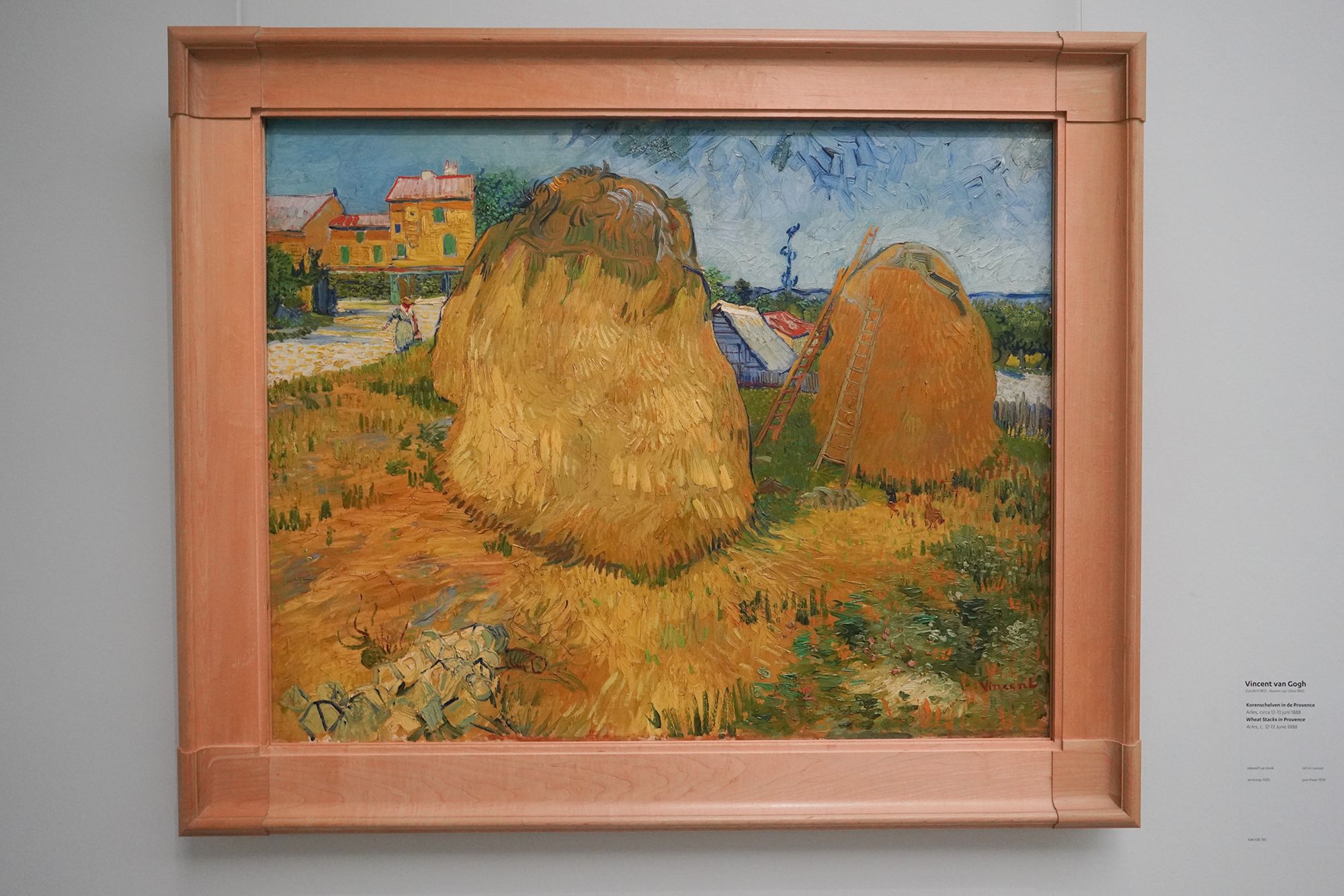
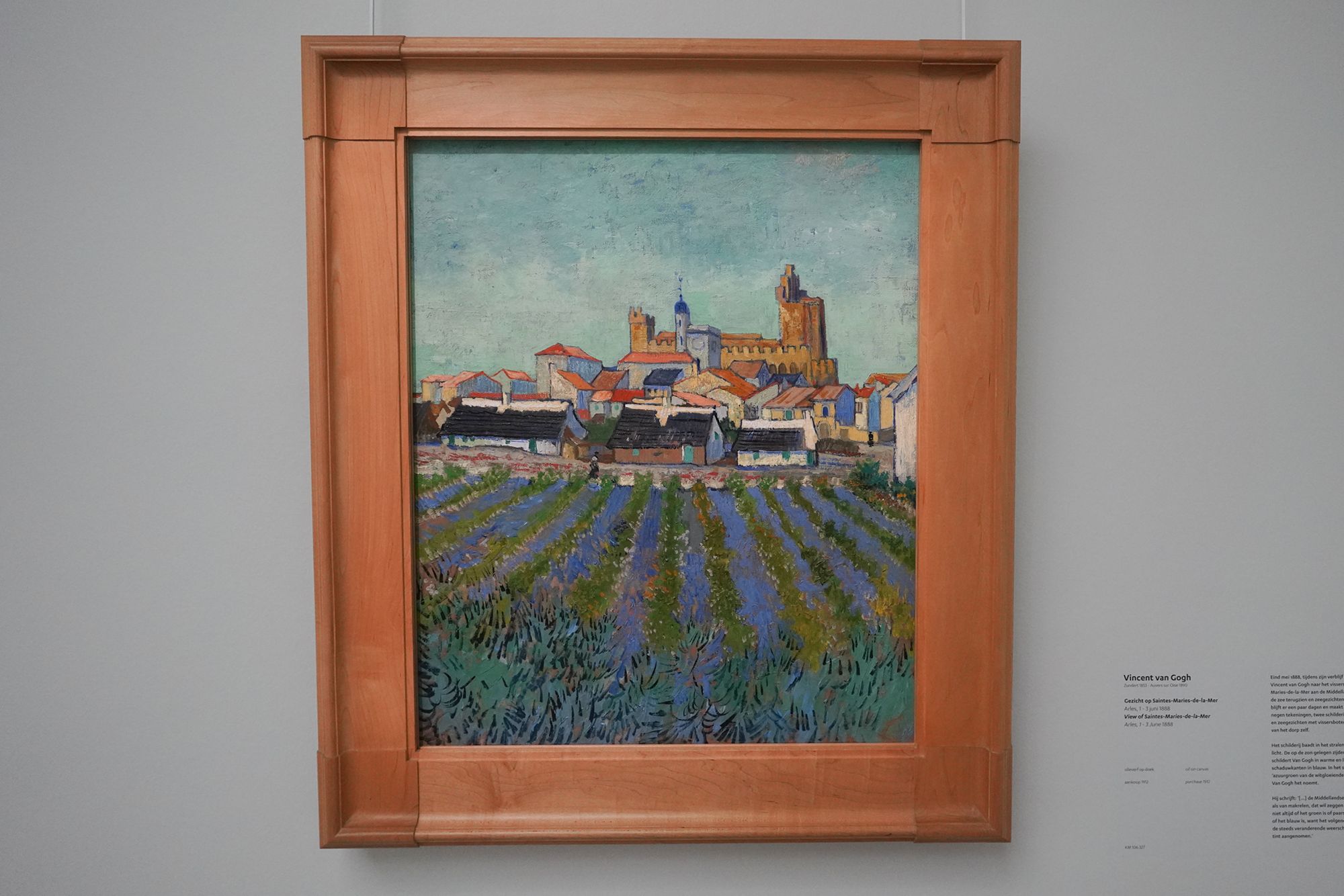
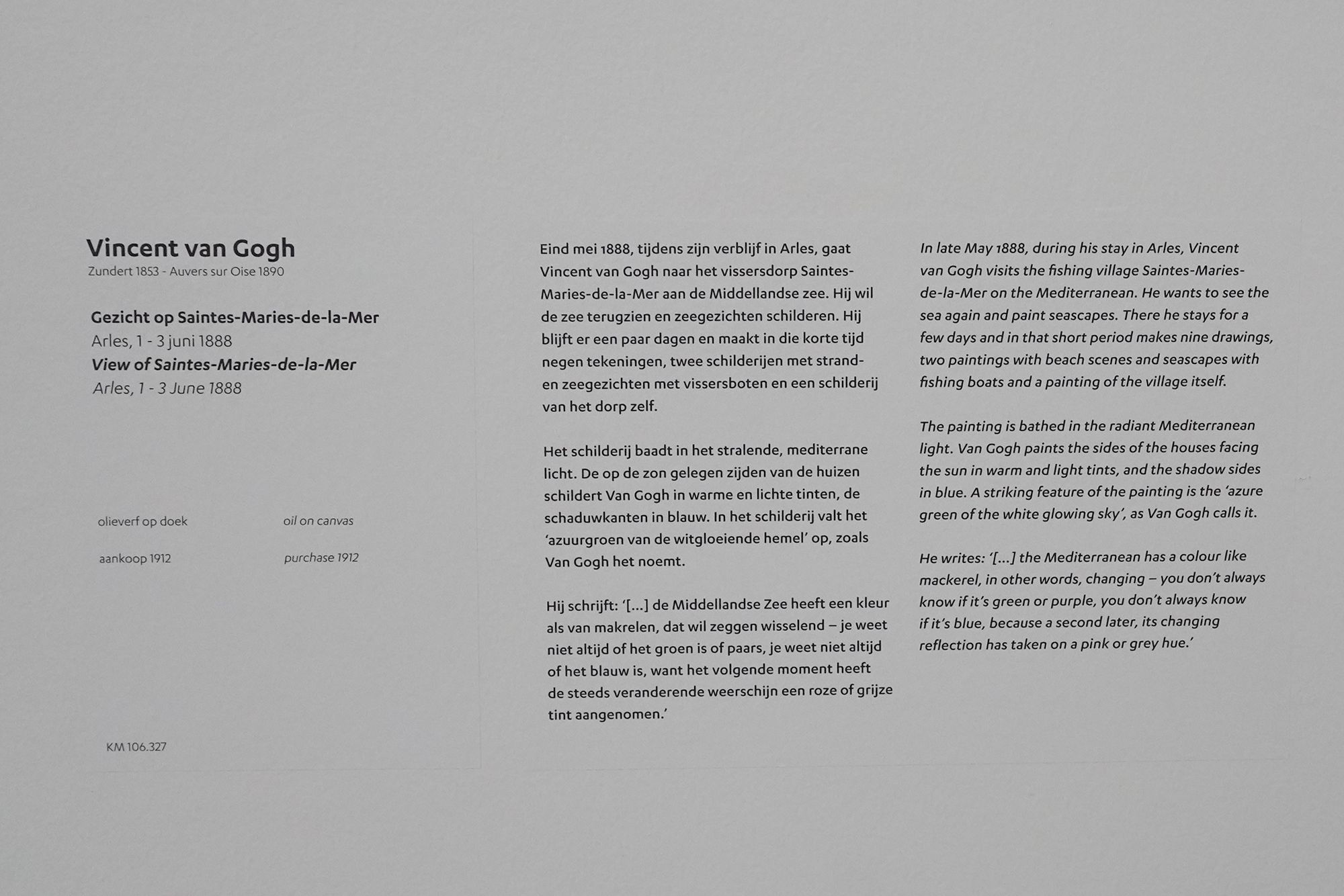
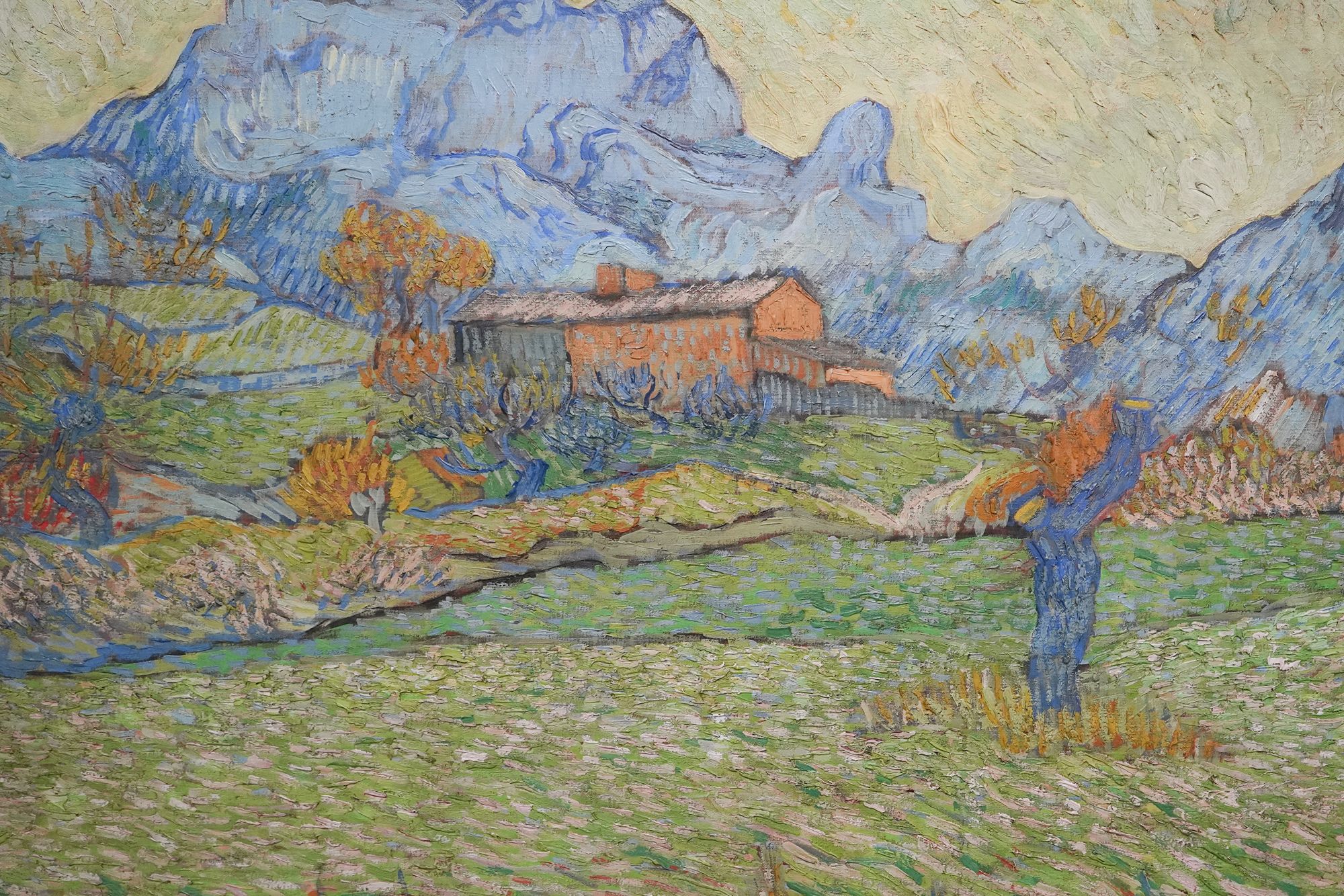
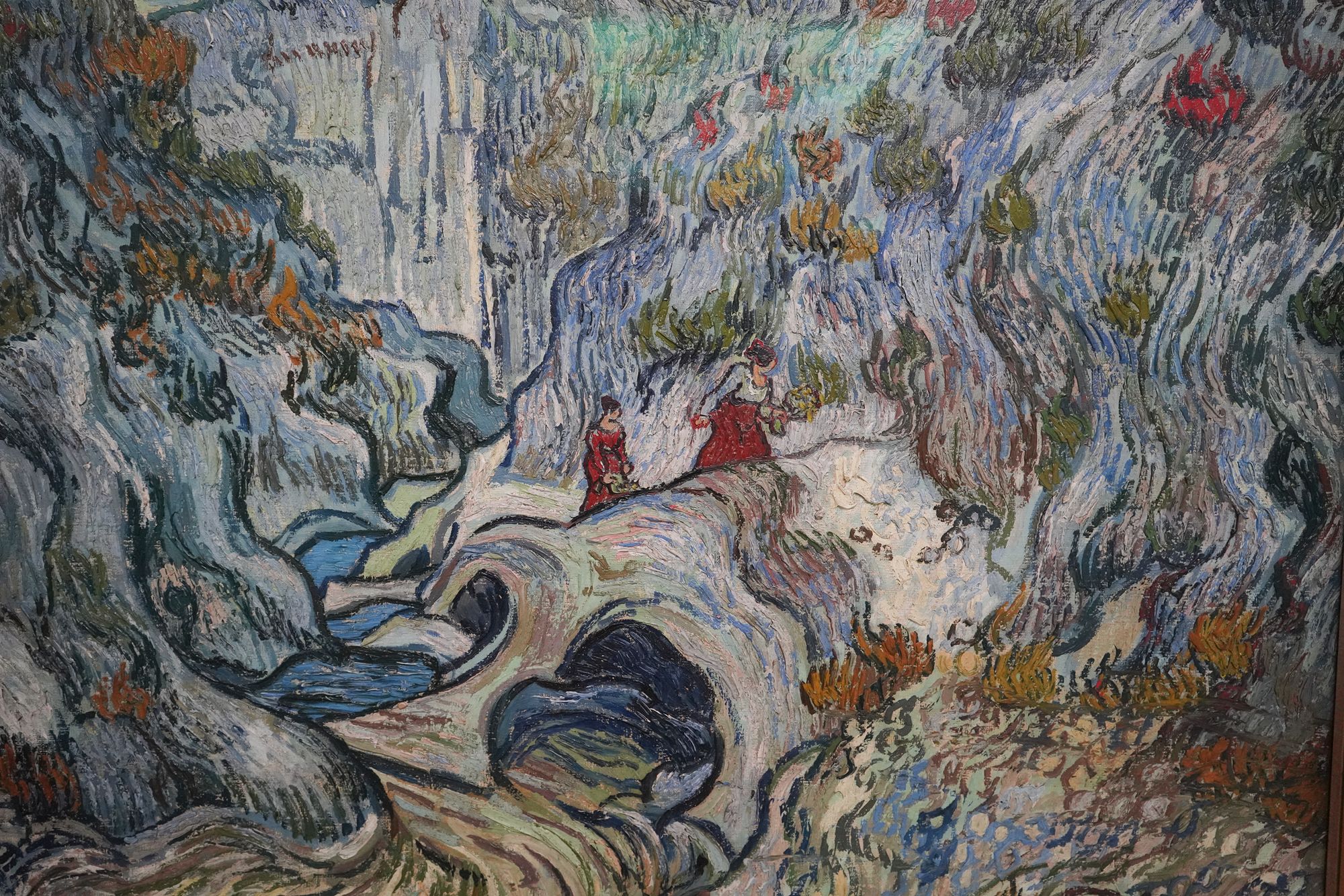
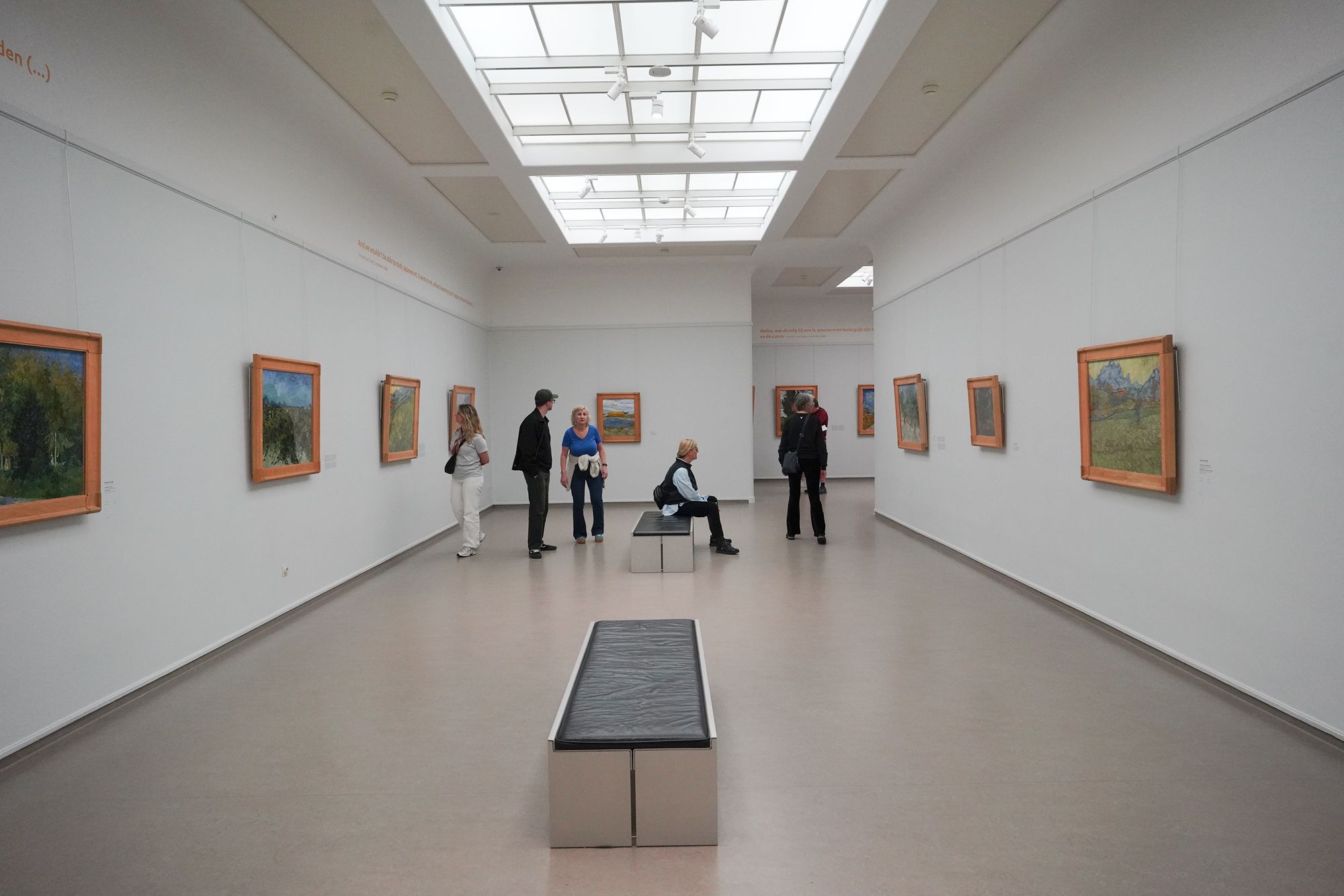
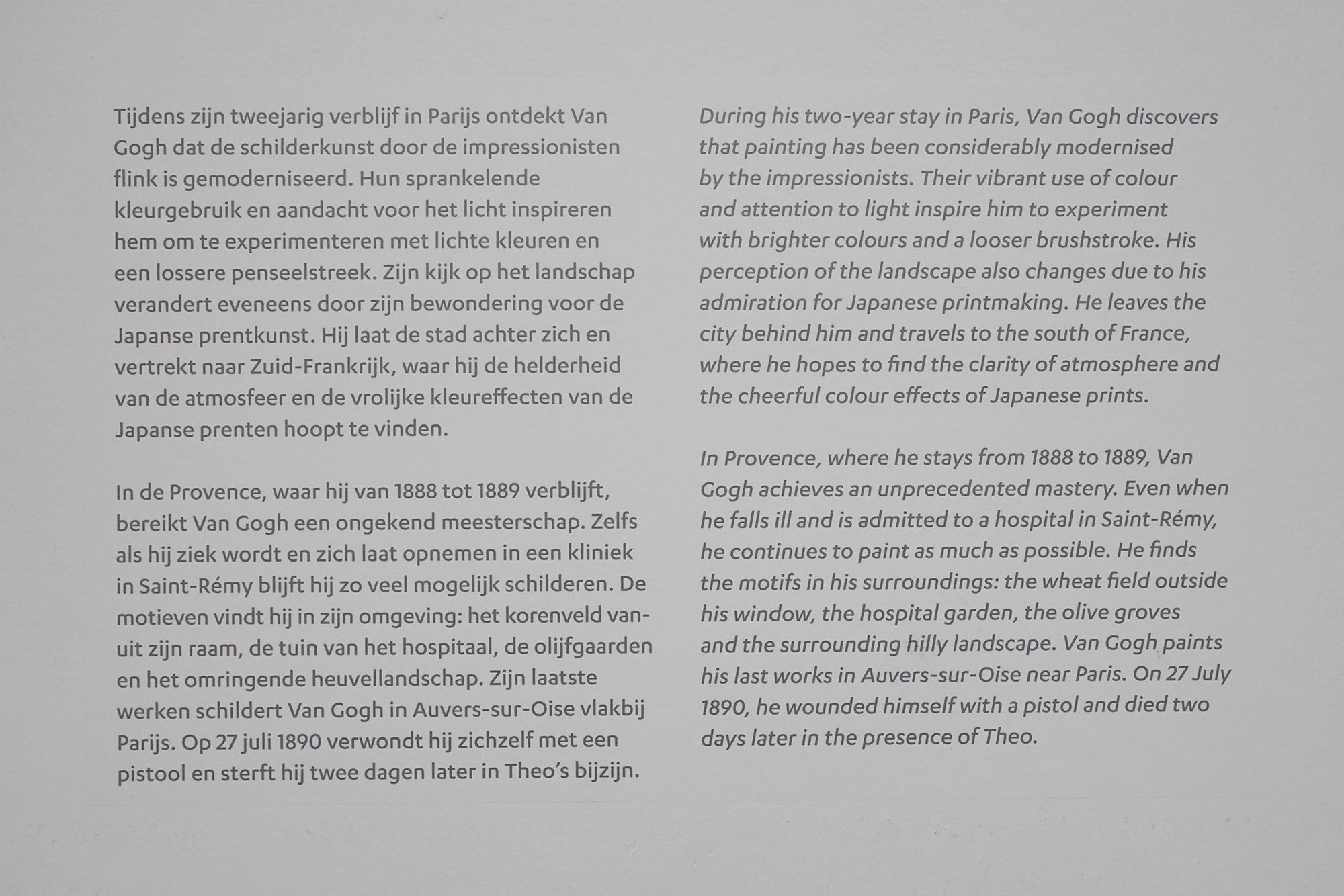
During his two years in Paris, Van Gogh was transformed by Impressionism and Japanese prints, adopting brighter colors, greater attention to light, and looser brushwork. Seeking the brilliant light and color he admired in Japanese art, he moved to Provence in 1888, where he produced some of his greatest works. Even during his illness at Saint-Rémy, he continued painting the wheat fields, gardens, olive groves, and surrounding landscape before spending his final months working in Auvers-sur-Oise.
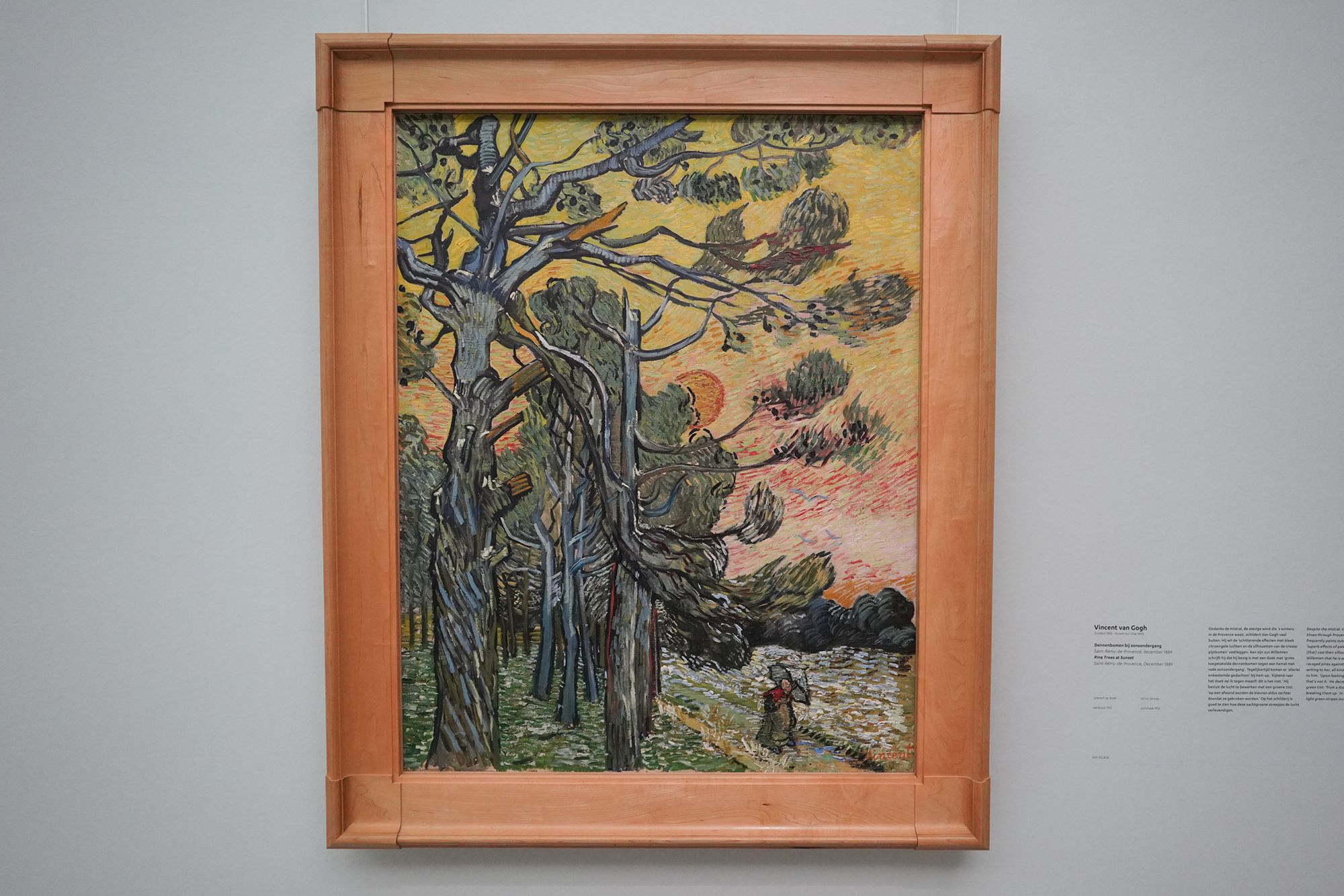
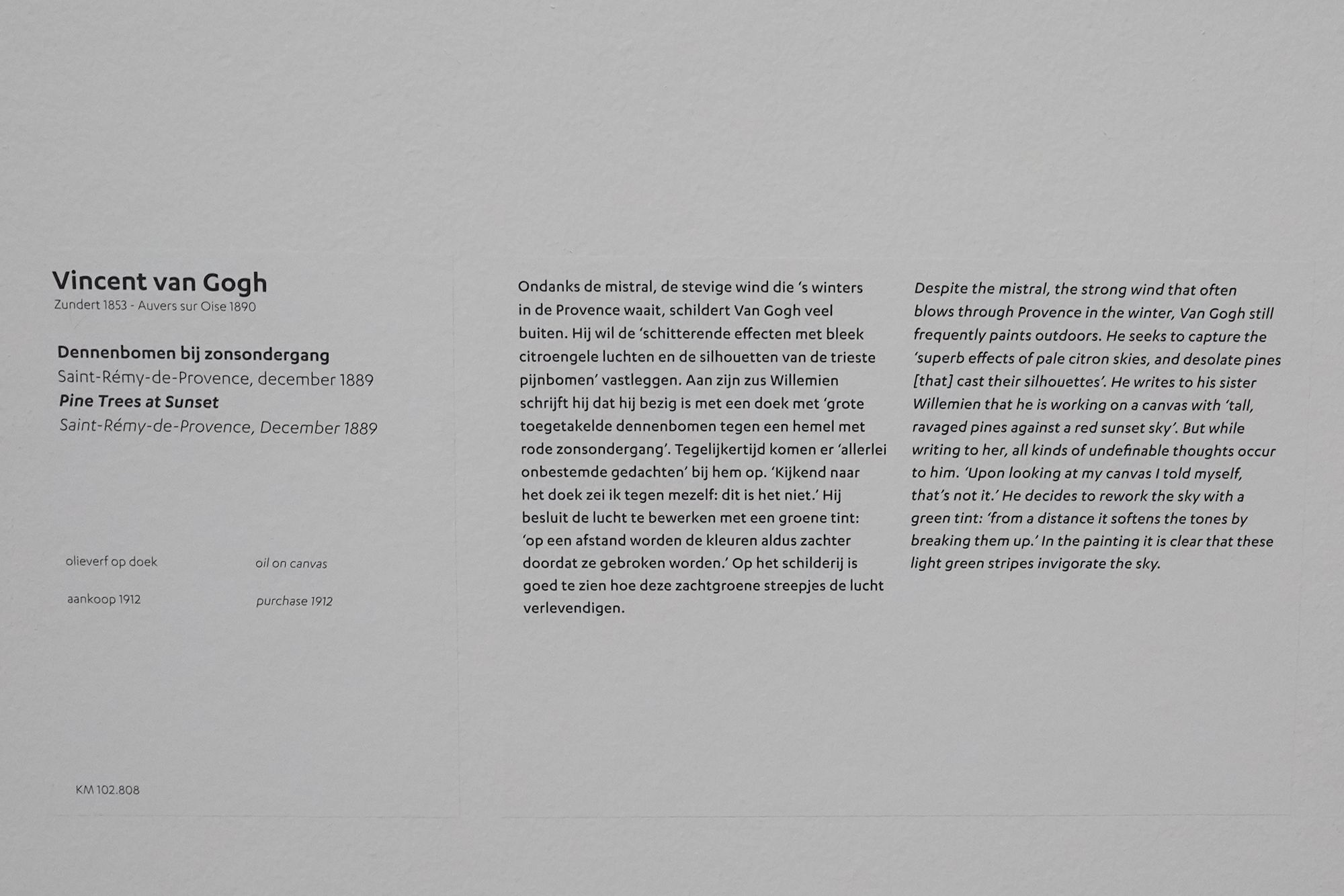
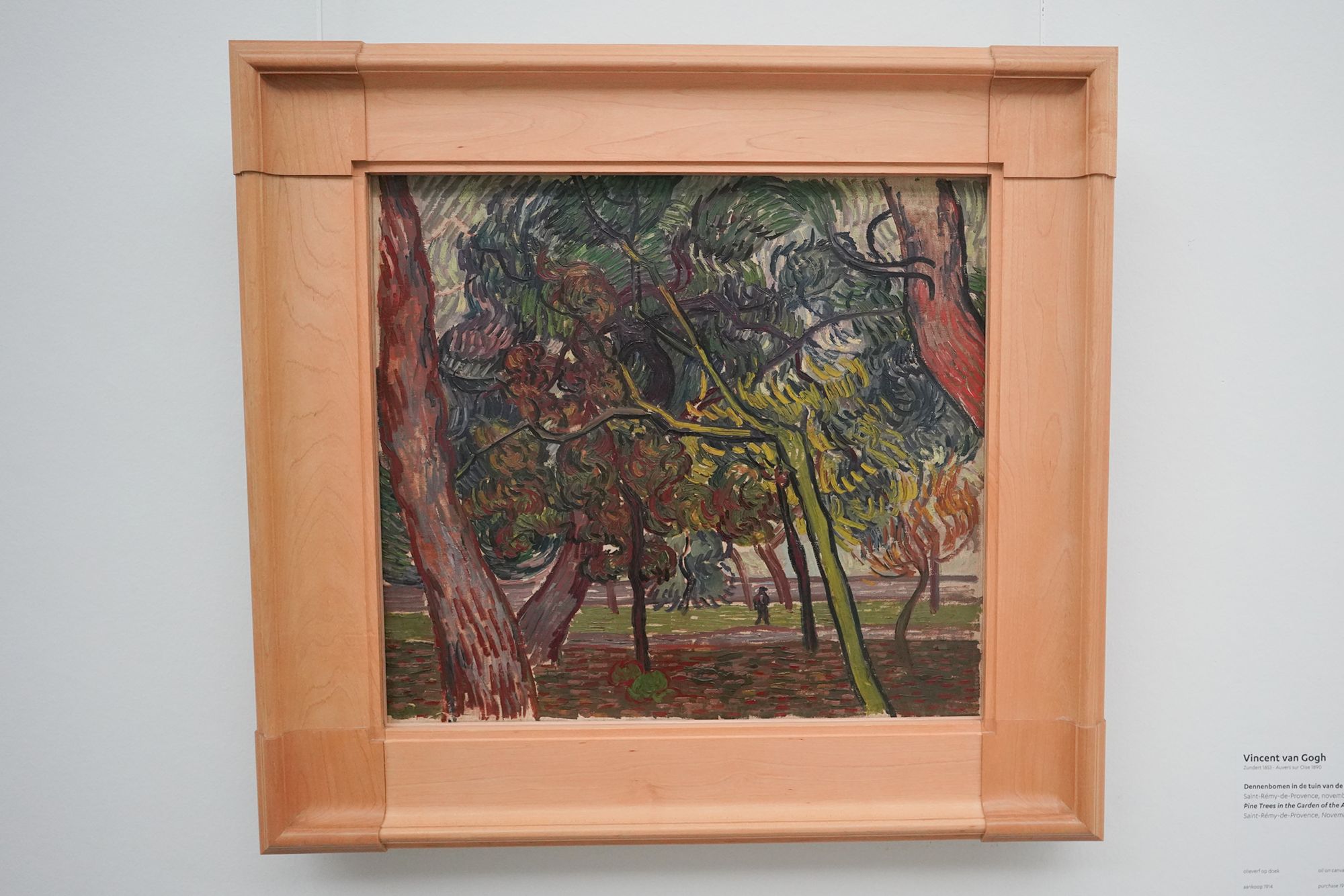
Despite the powerful mistral winds of Provence, Van Gogh often painted outdoors during the winter. In this landscape, he originally envisioned tall, weather-beaten pine trees against a red sunset, but later reworked the sky with pale green tones, using the unusual color to soften the composition and make the dark pines stand out dramatically.
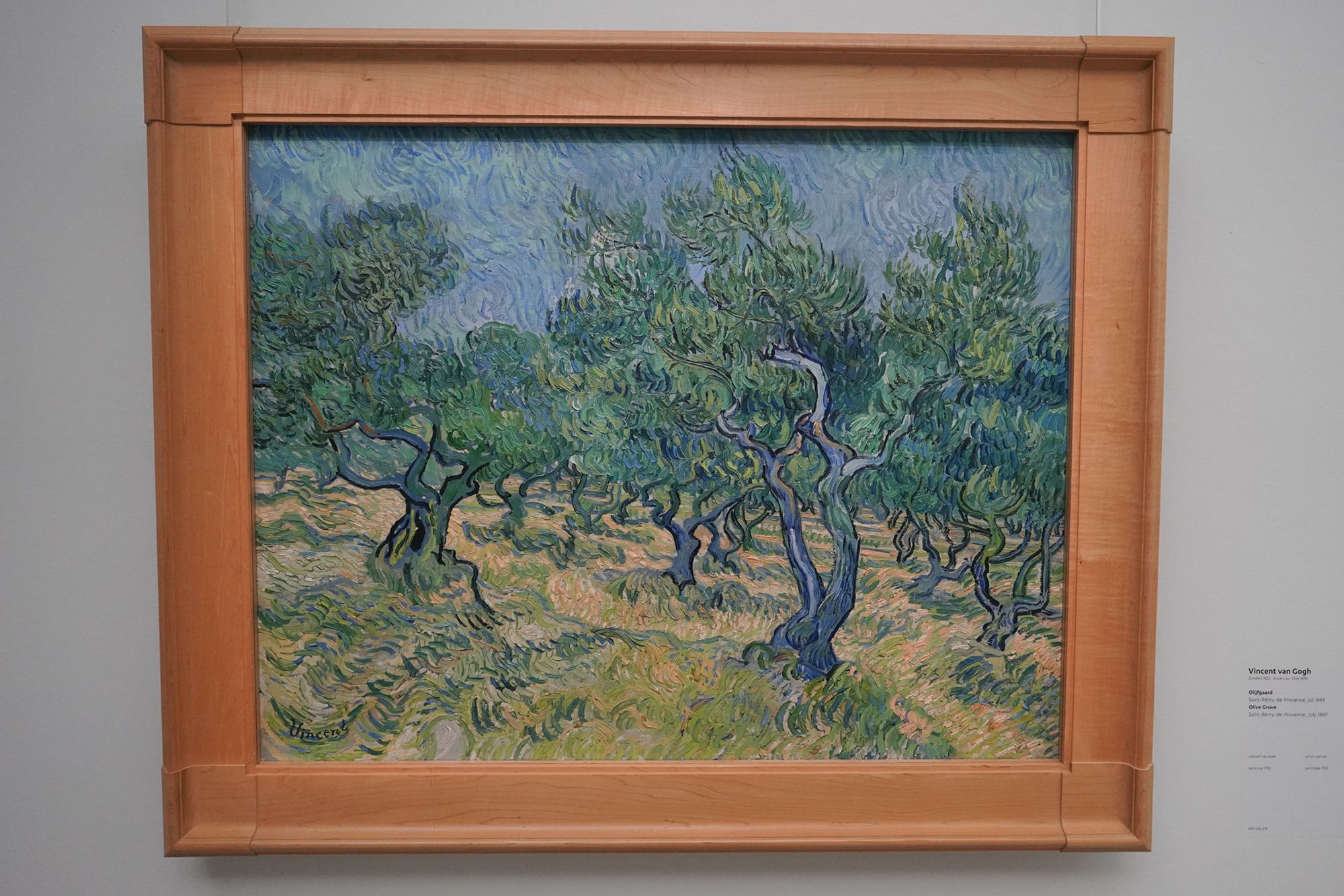
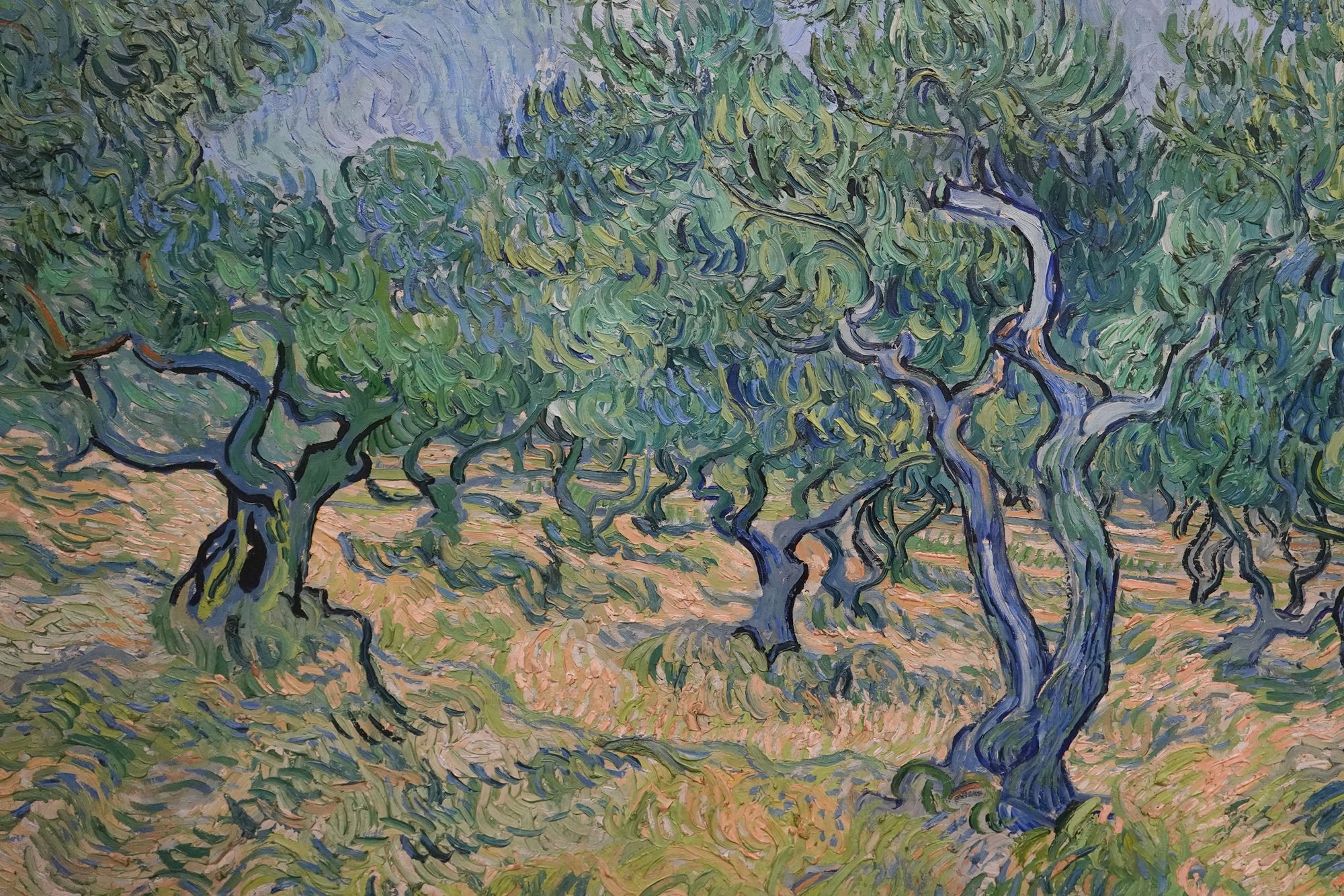
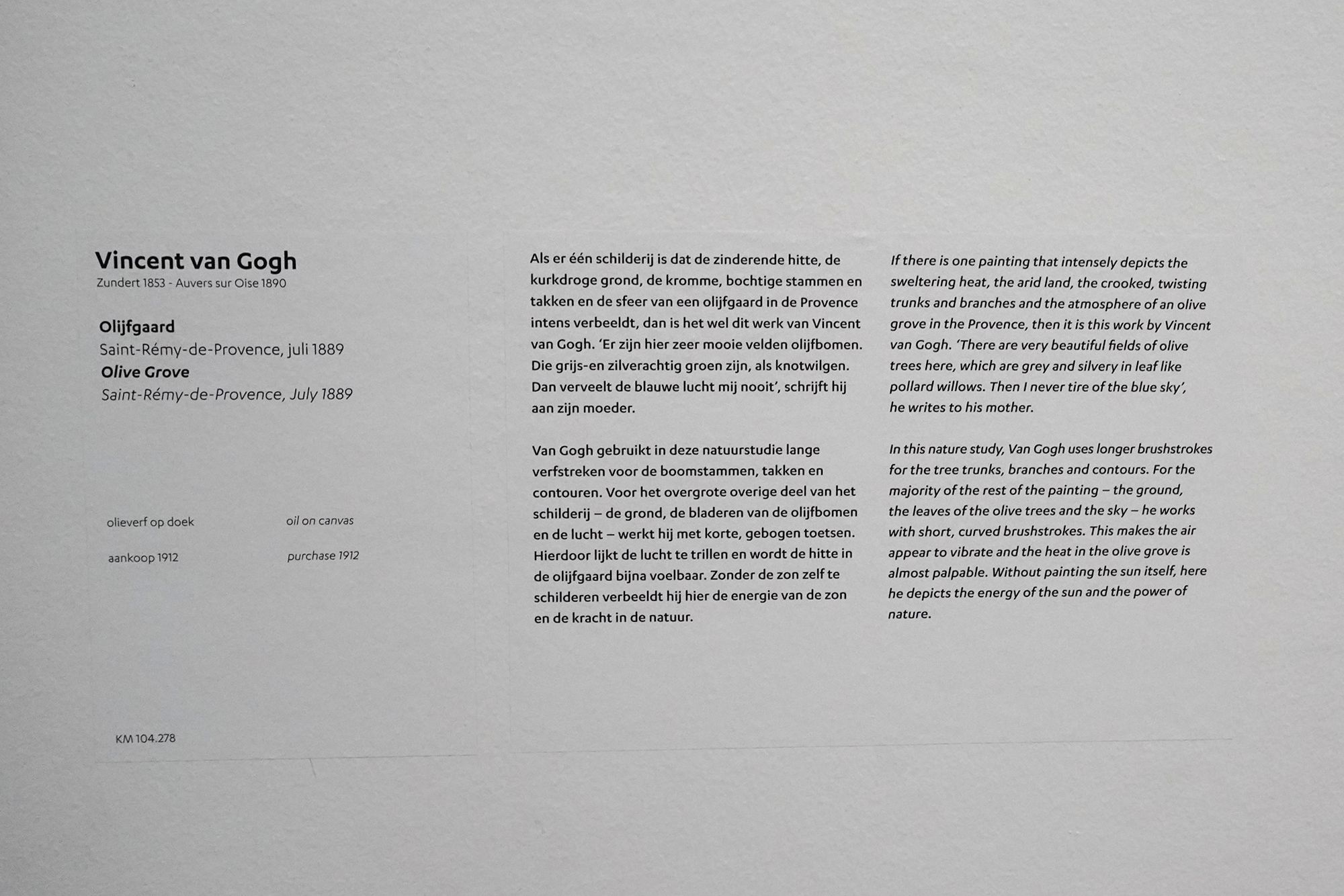
In this olive grove in Provence, Van Gogh used twisting trunks and energetic short, curved brushstrokes to make the trees, grass, and even the air seem to vibrate in the intense summer heat. Rather than painting the sun itself, he captured its presence through the shimmering landscape, expressing what he saw as the powerful energy of sun and nature.