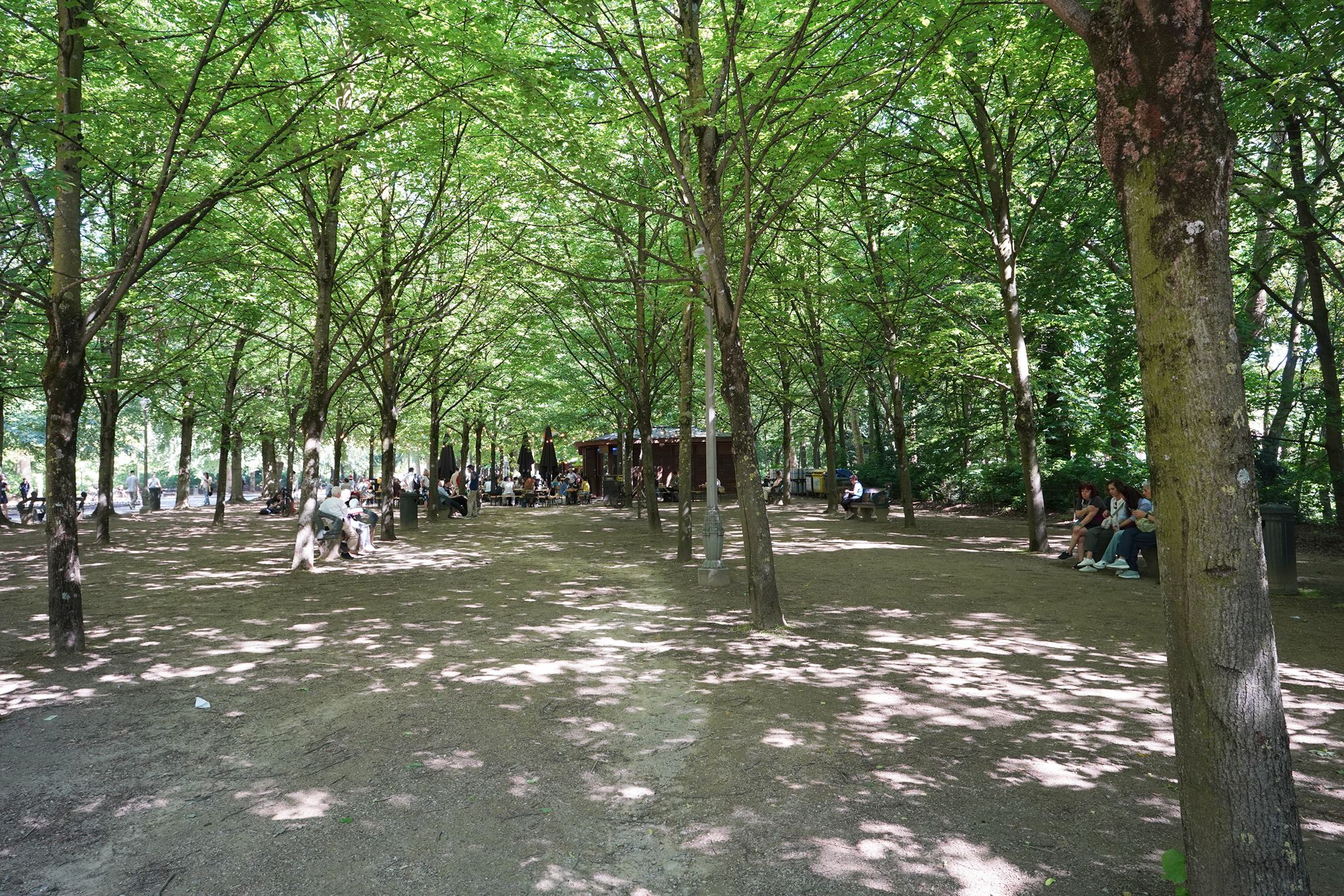
BELvue museum, Brussels, Belgium
The BELvue Museum in Brussels explores Belgium’s history, society, democracy, and monarchy through engaging exhibits, historical objects, documents, and multimedia displays. 1319
BELvue Museum: Pl. des Palais 7, 1000 Bruxelles, Belgium
Date Picture Taken: May, 2026
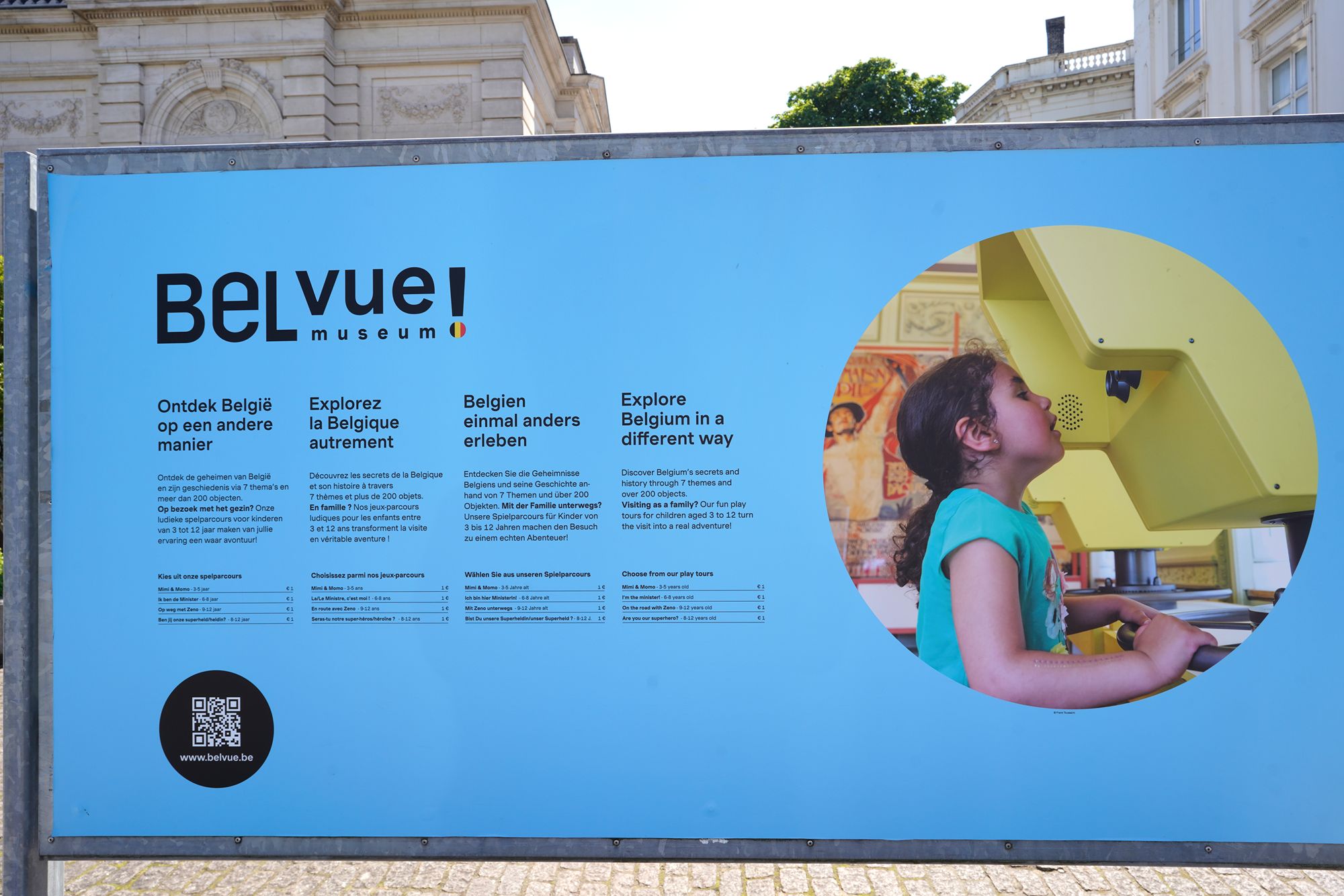
The BELvue Museum, located next to the Royal Palace in Brussels, presents the history of Belgium from its independence in 1830 to modern times. Exhibits explore Belgian democracy, society, industry, migration, languages, and the monarchy through historical objects, photographs, documents, and interactive displays. The museum provides an accessible introduction to how Belgium developed into the diverse country it is today.
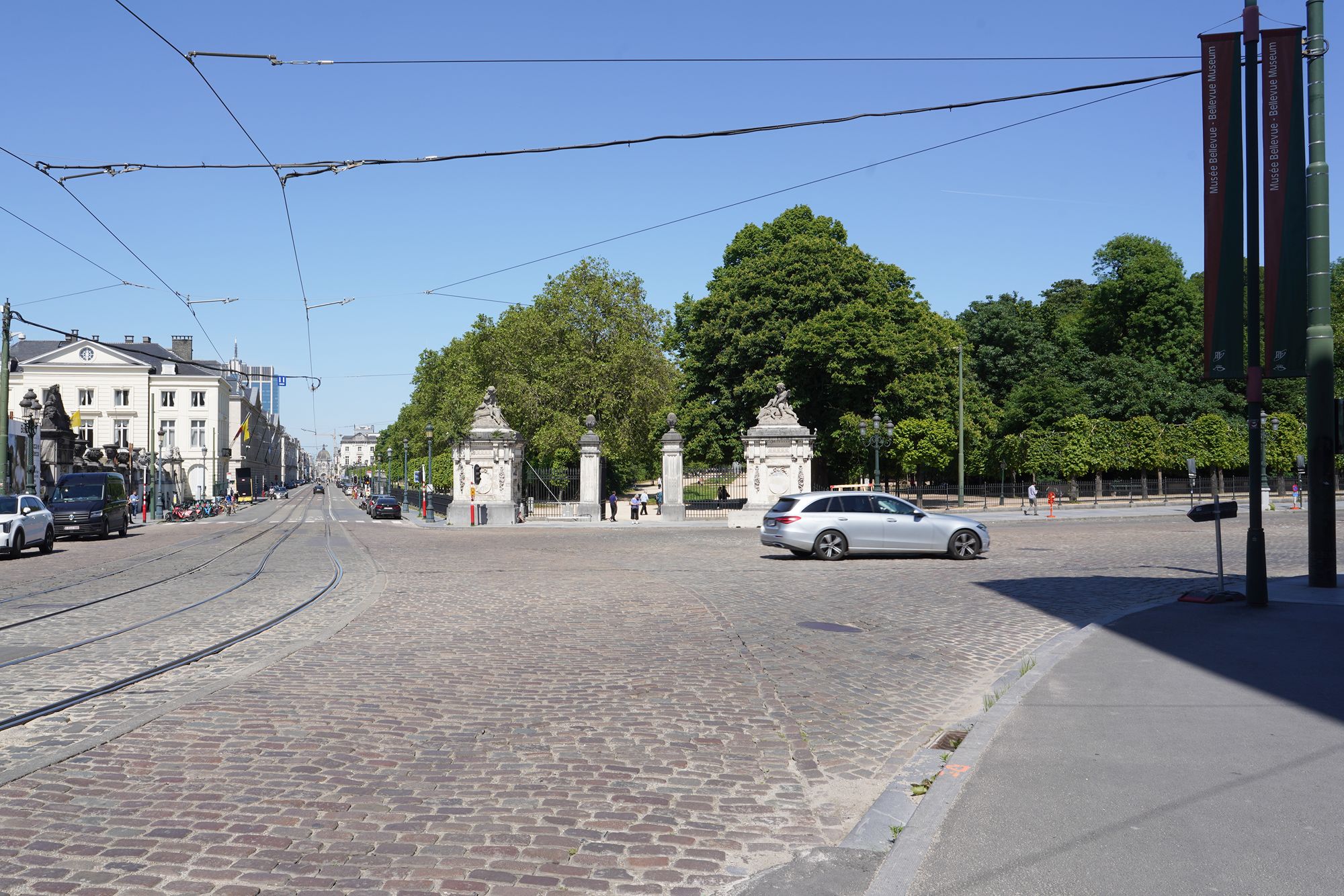
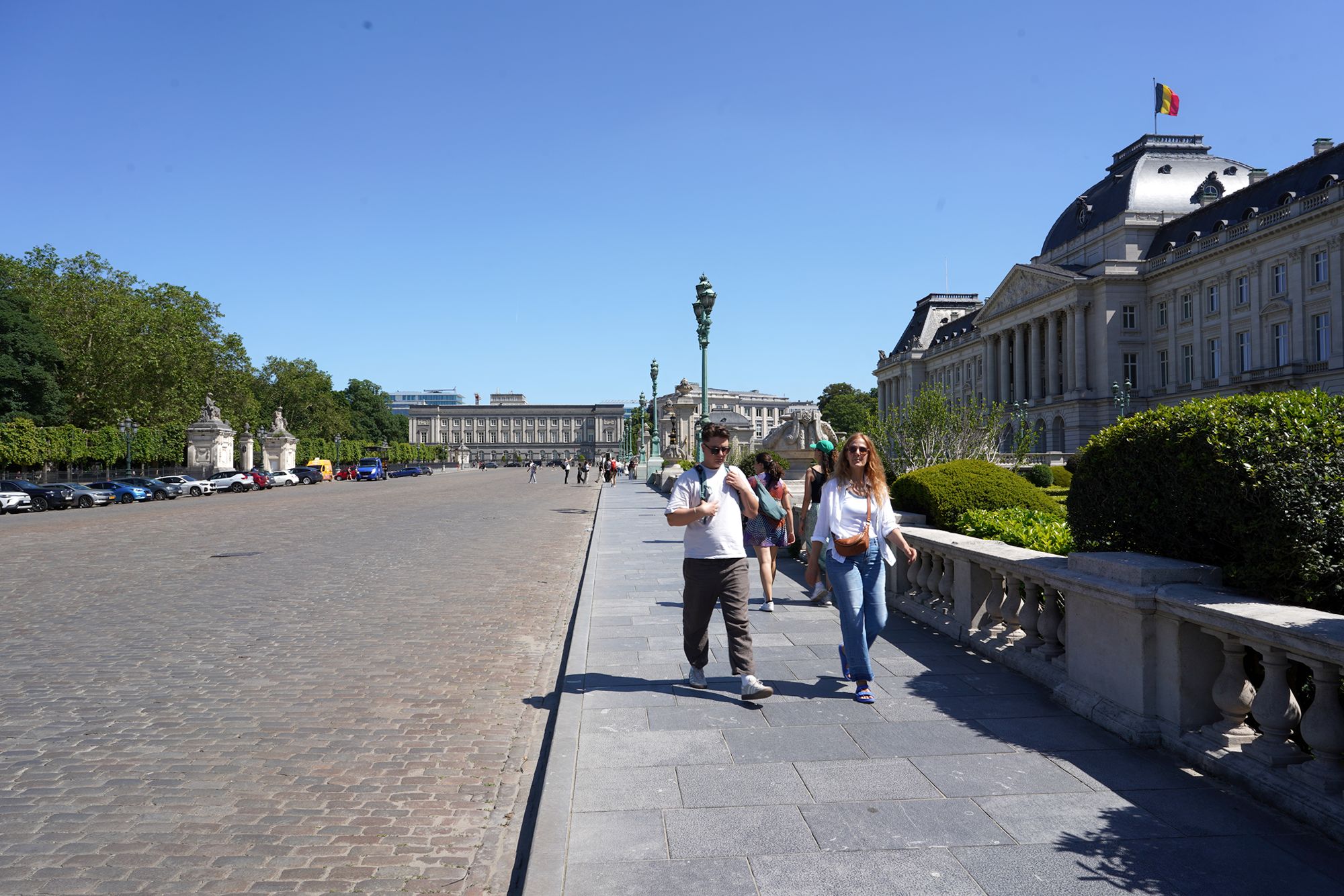
The Royal Palace of Brussels is the official palace of Belgium’s king, located in the heart of Brussels. Although the royal family does not live there, the palace is used for official ceremonies, receptions, and state functions. Its grand neoclassical façade dates largely from the 19th century. Parts of the richly decorated interior are traditionally opened to visitors during the summer.
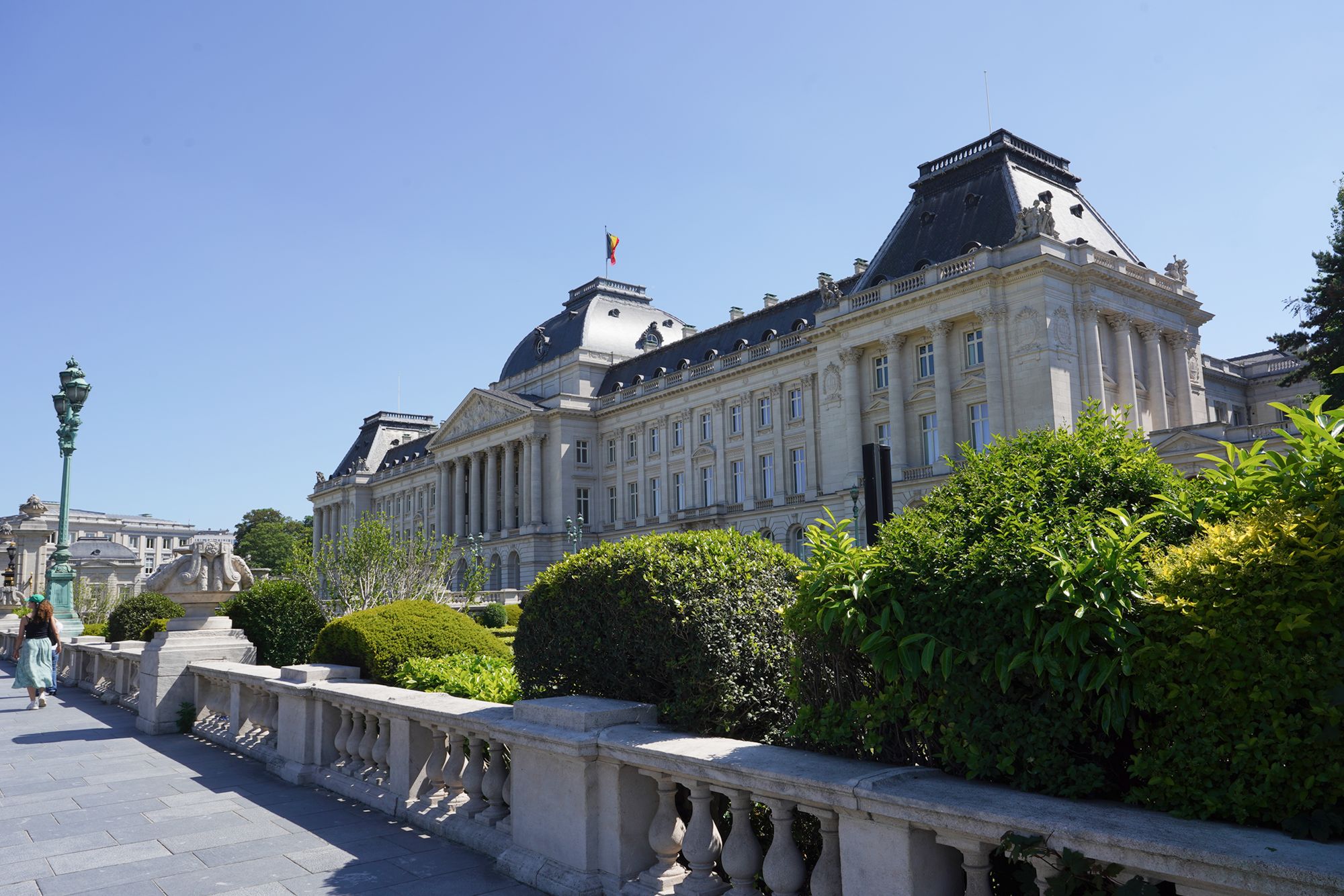
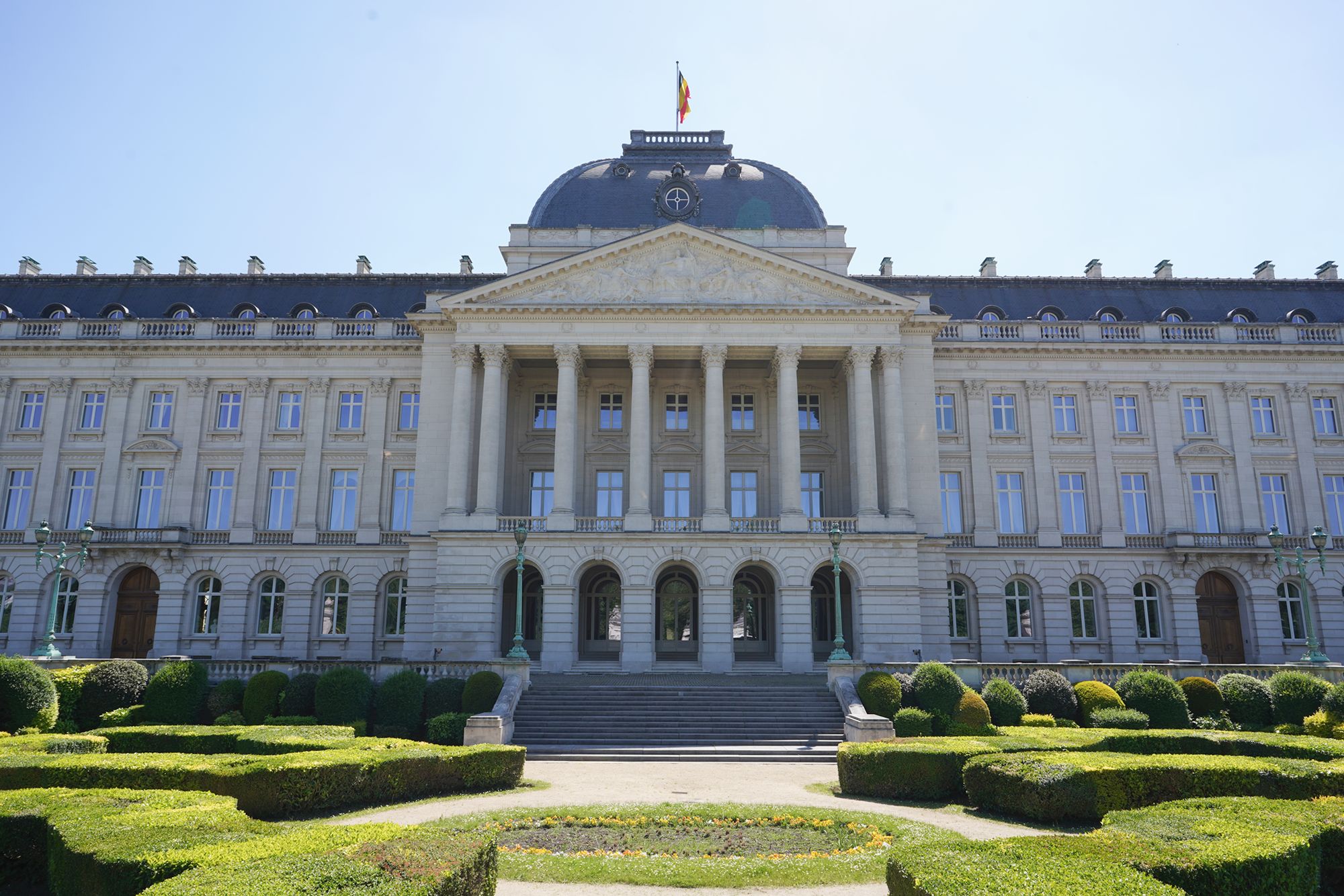
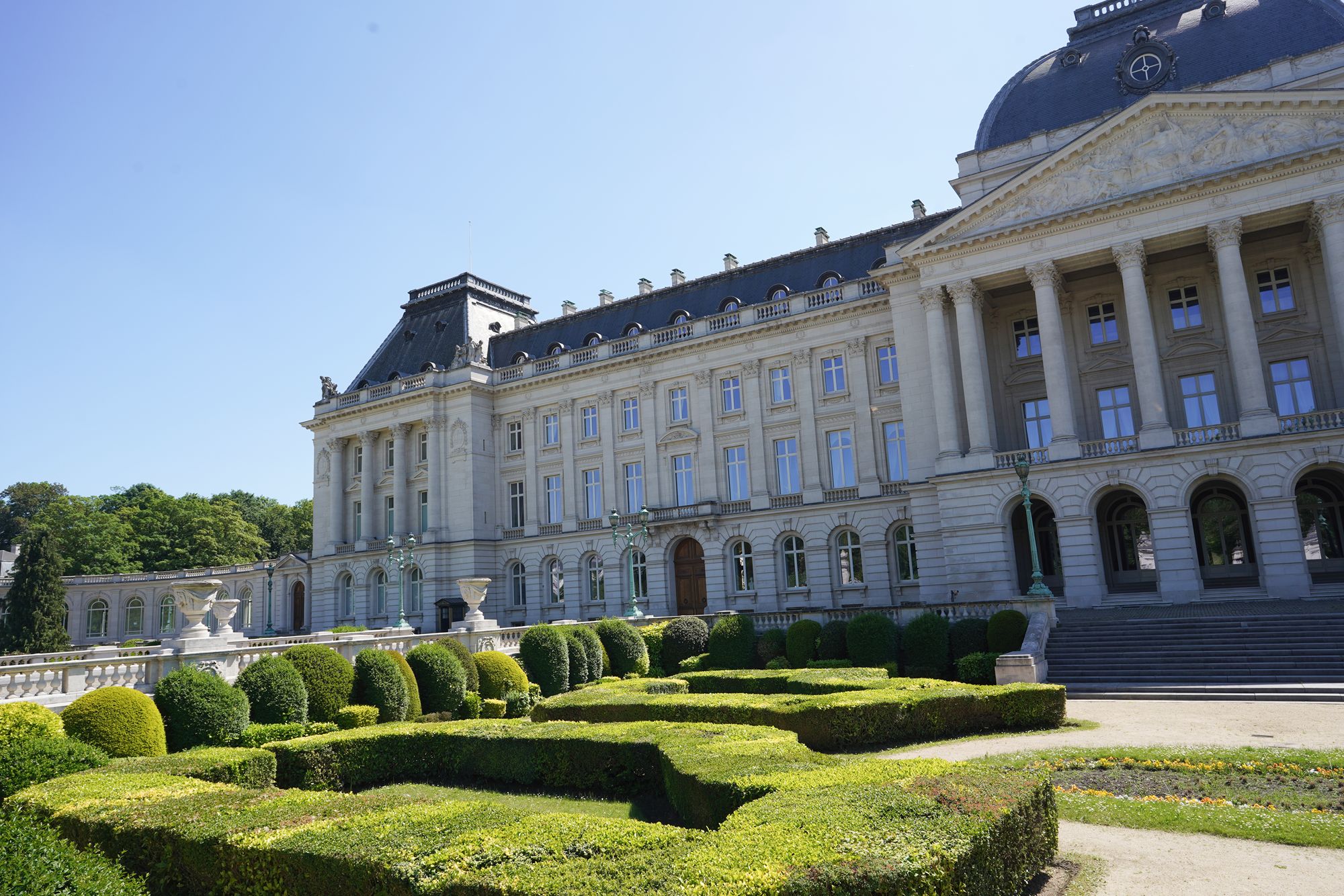
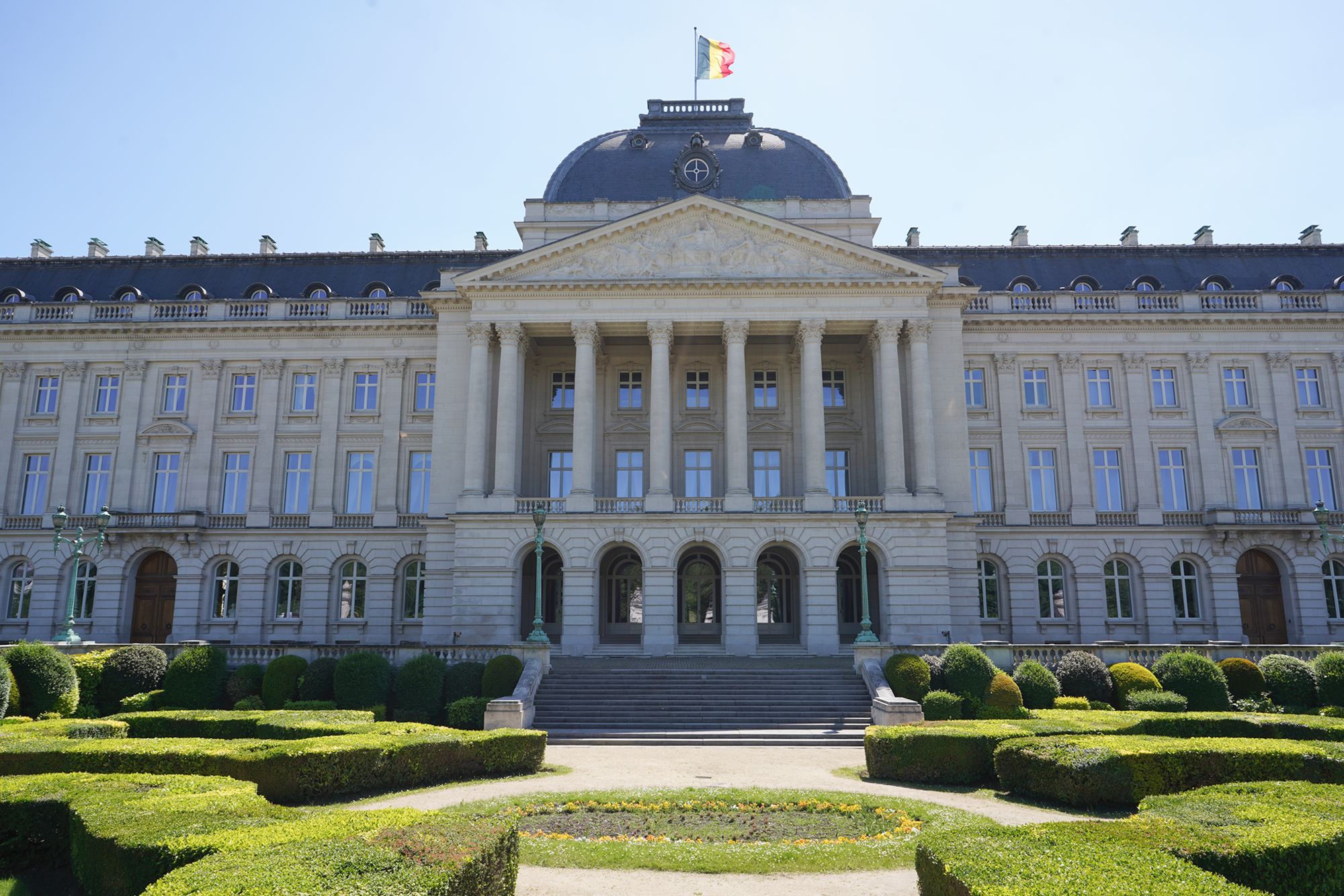
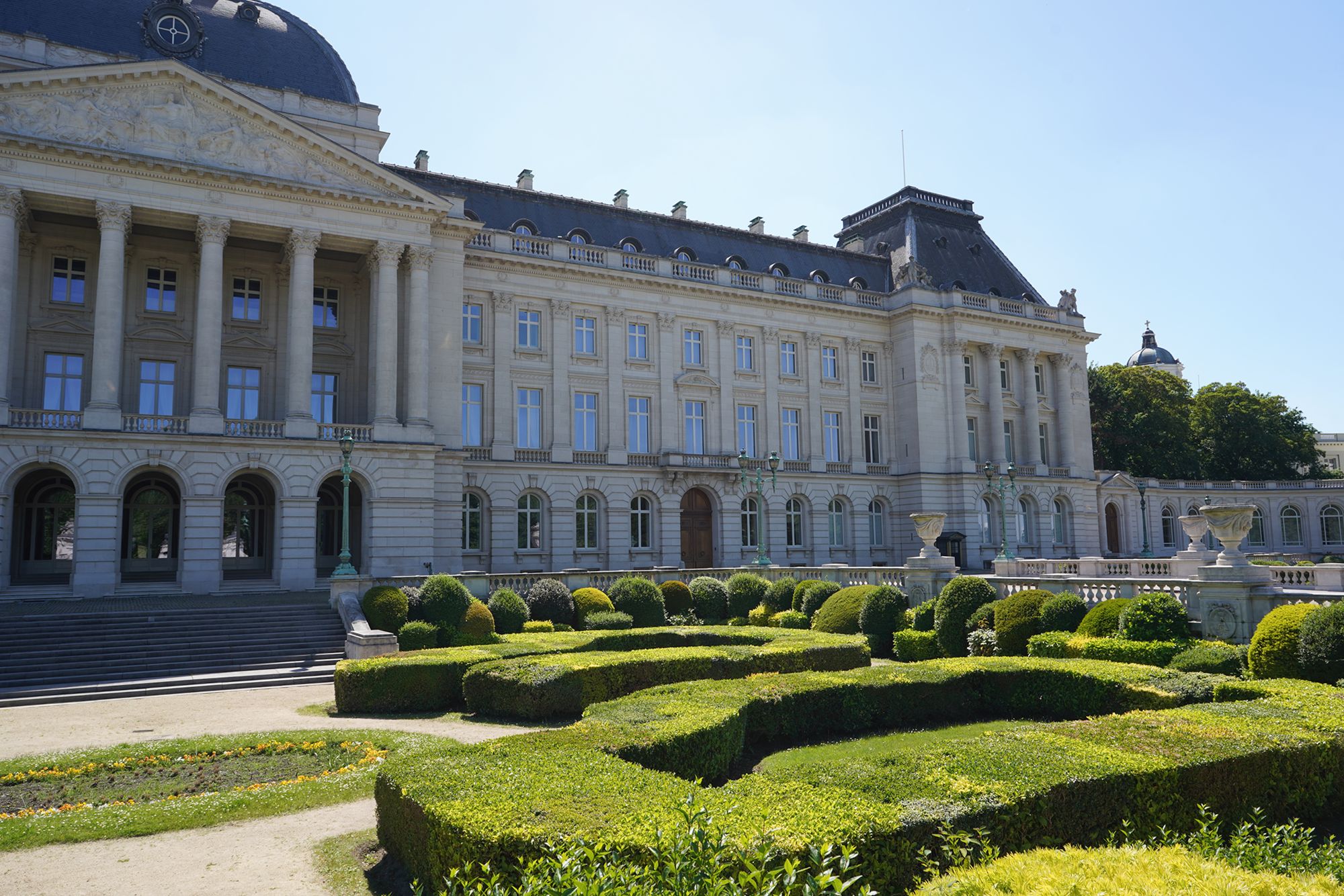
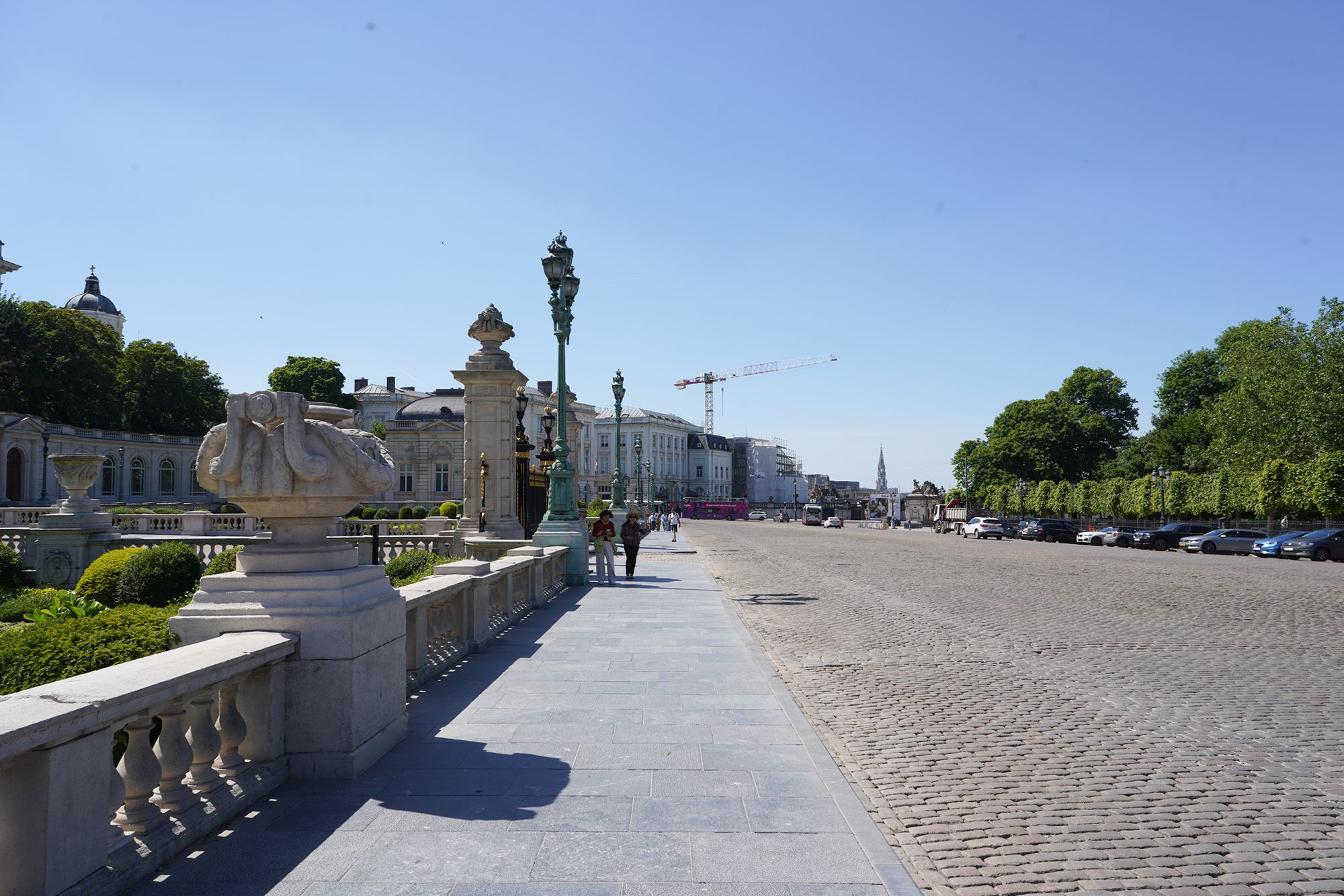
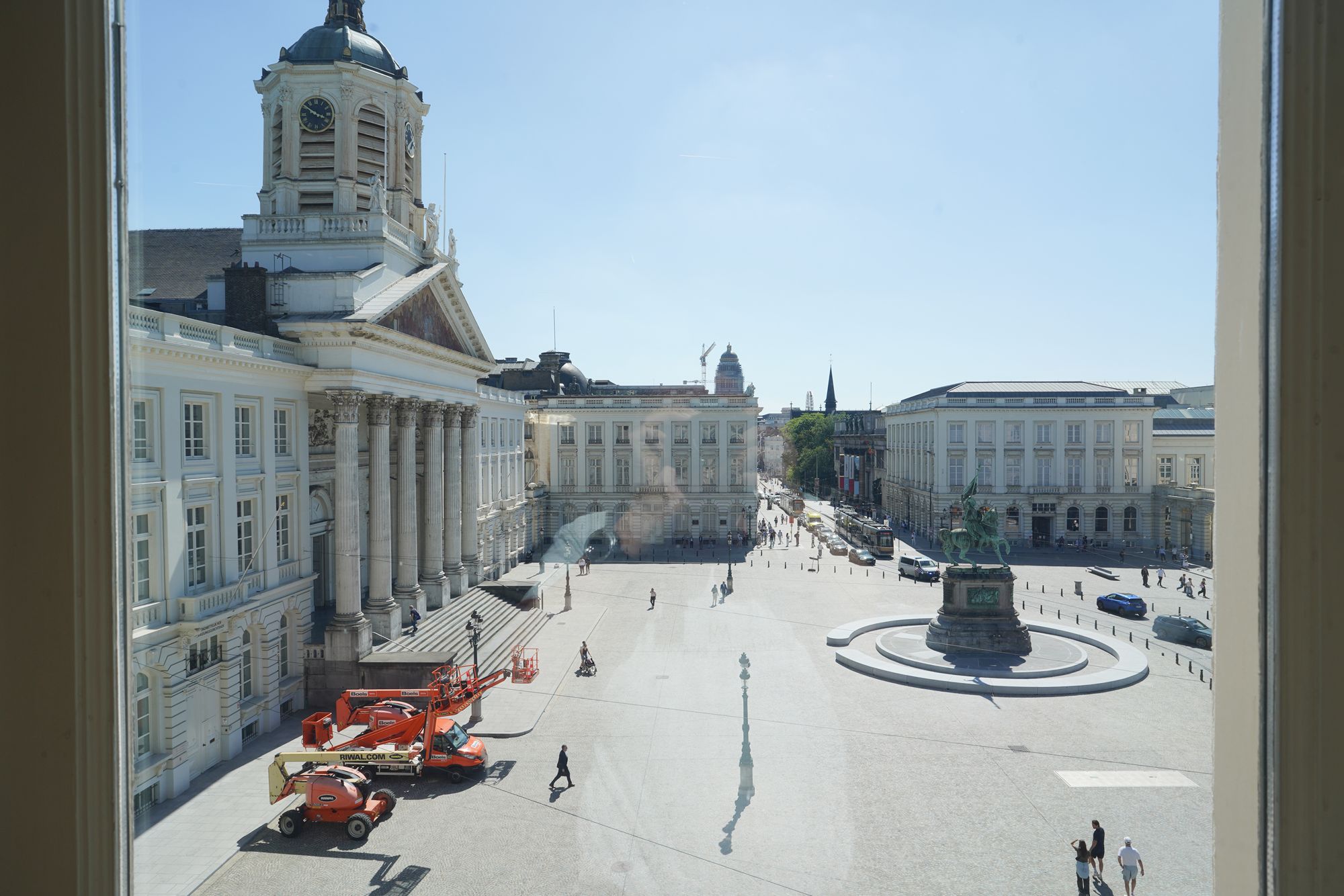
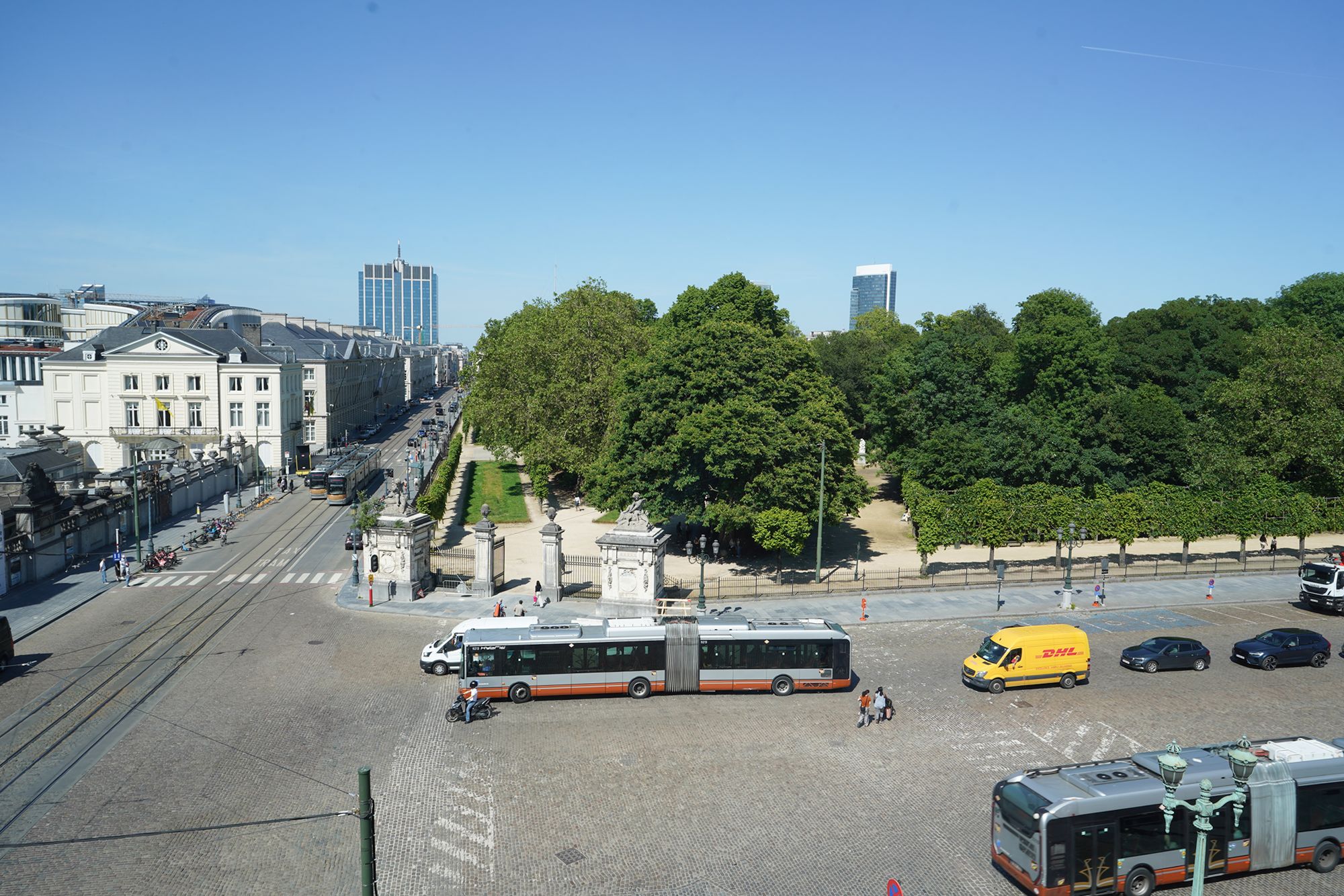
The BELvue Museum is located next to the Royal Palace of Brussels, making it easy to visit both attractions together while exploring the historic center of Brussels.
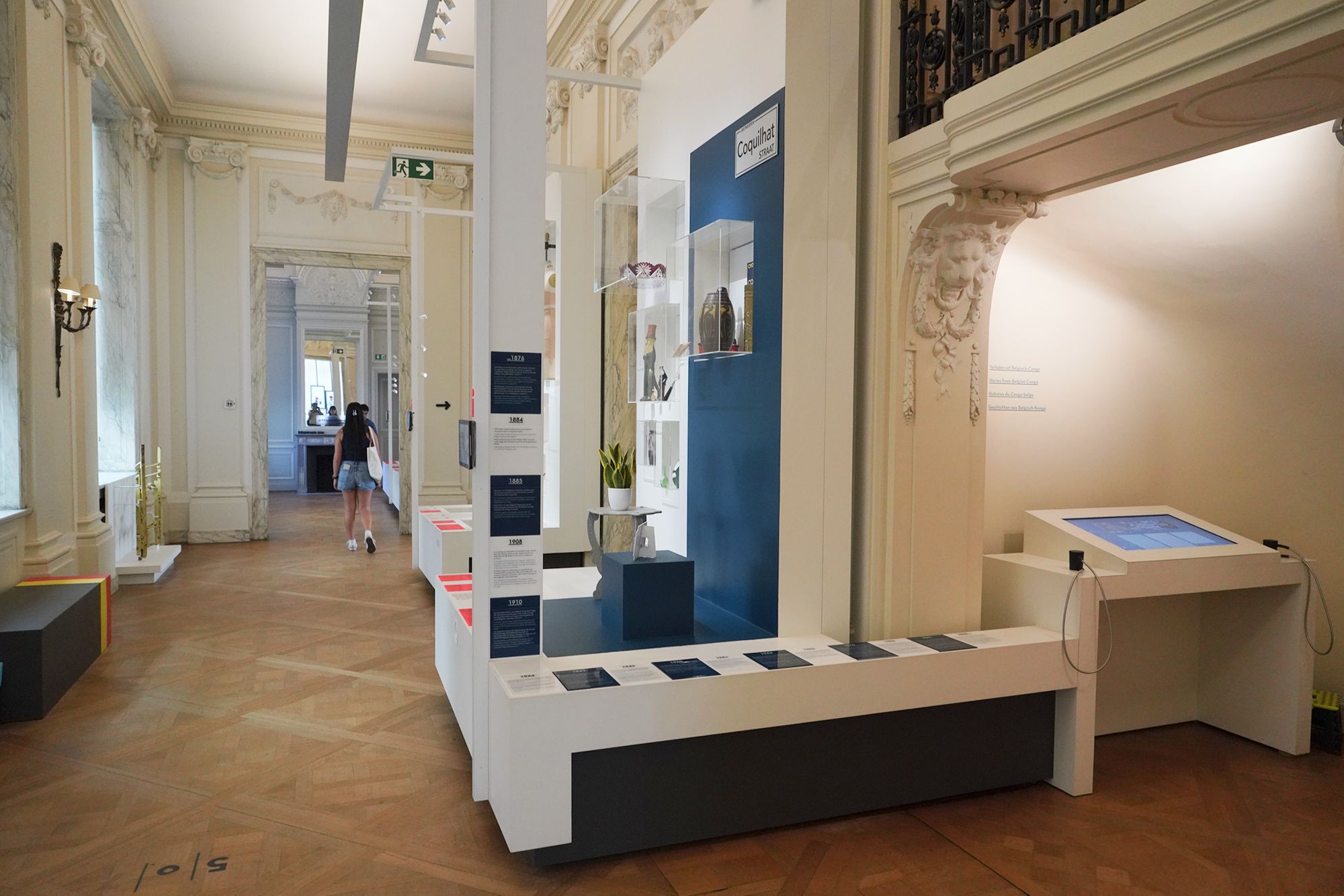
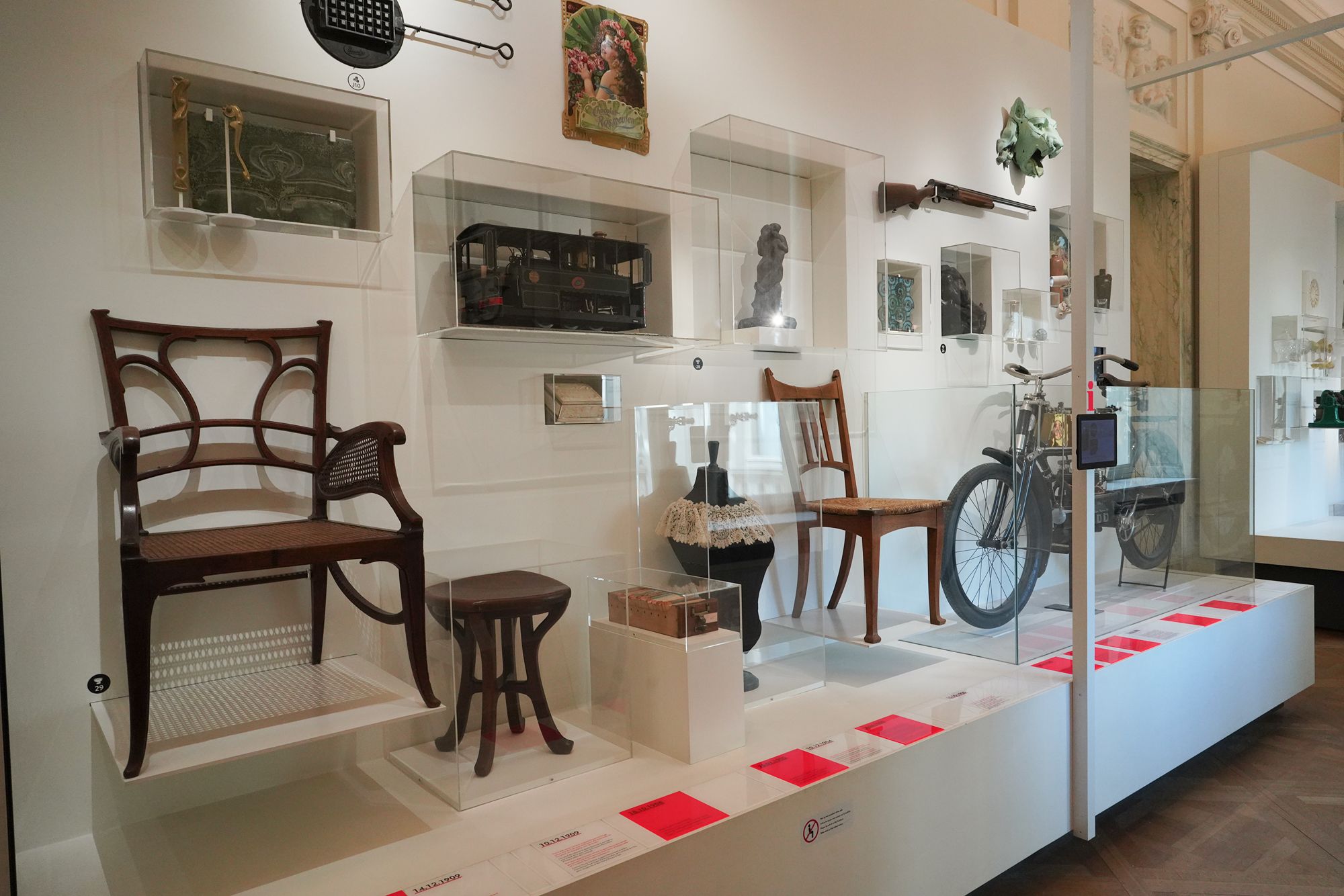
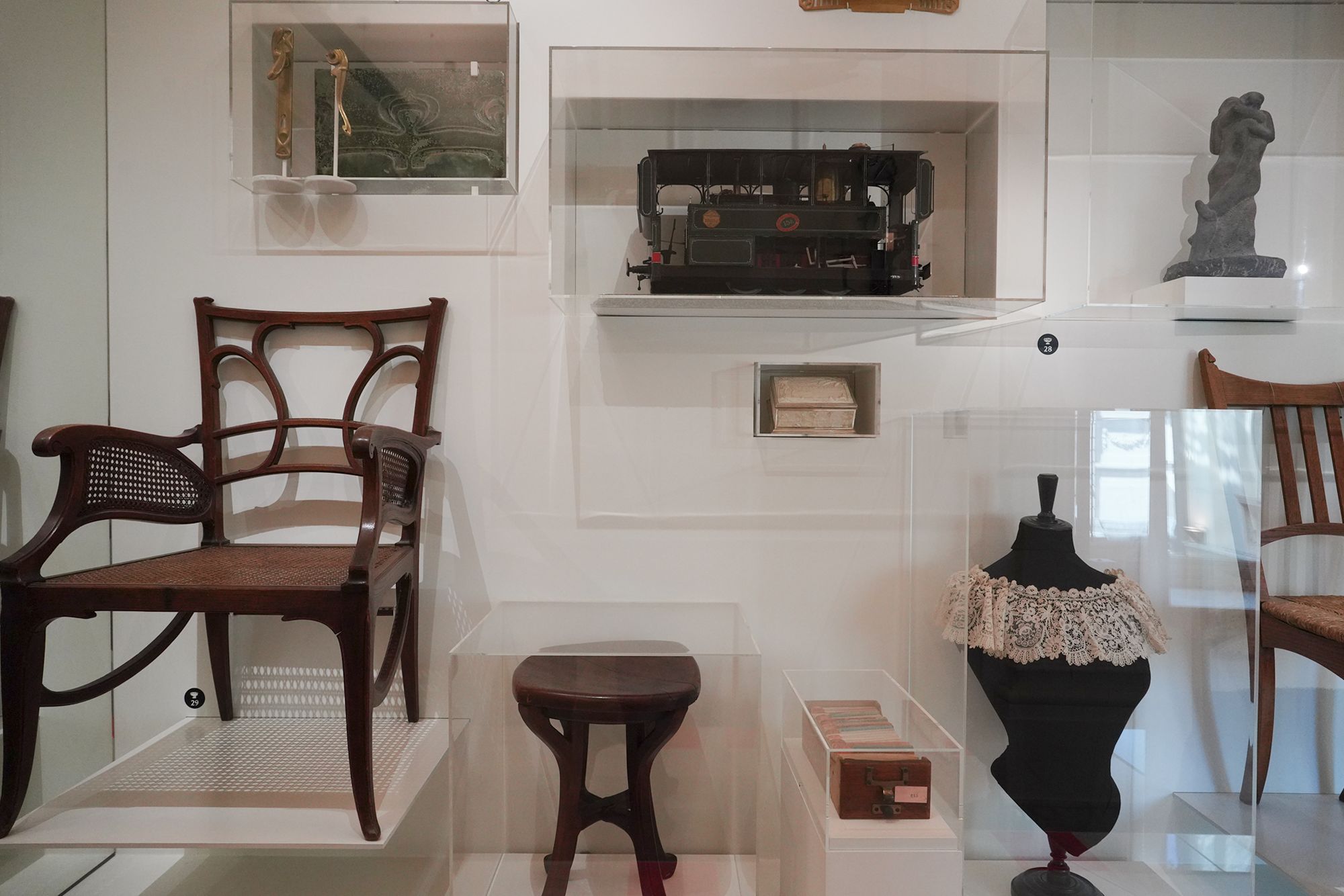
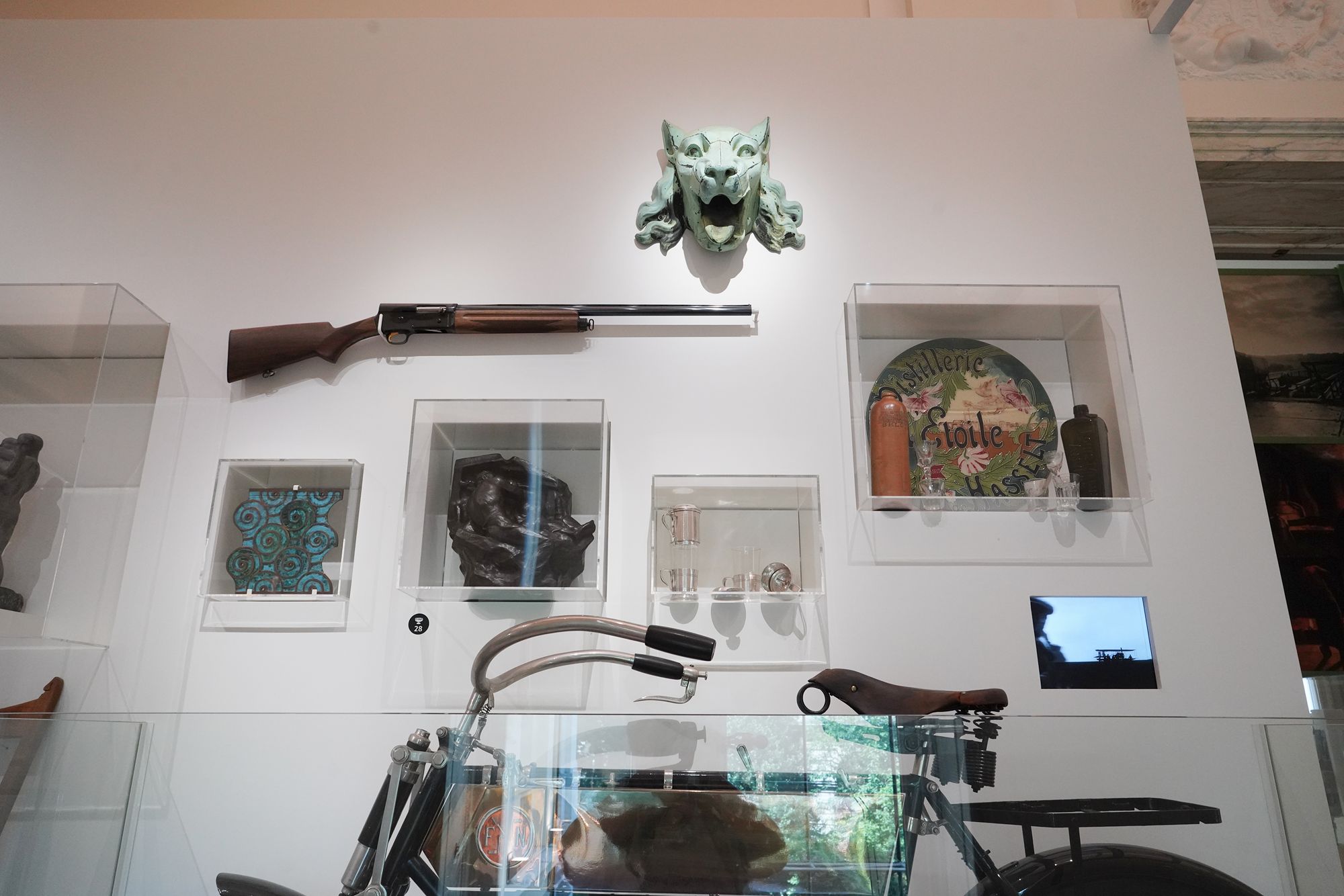
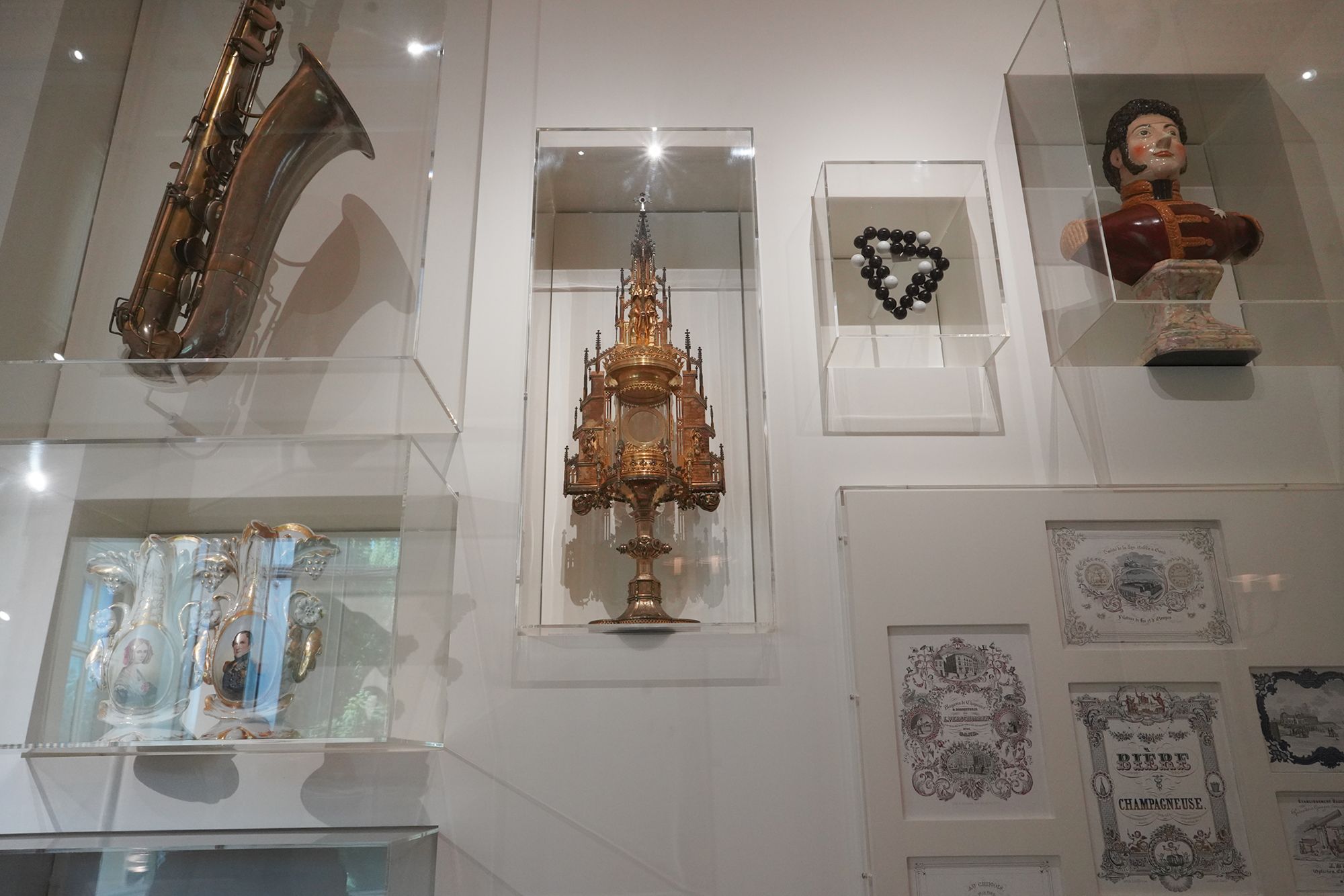
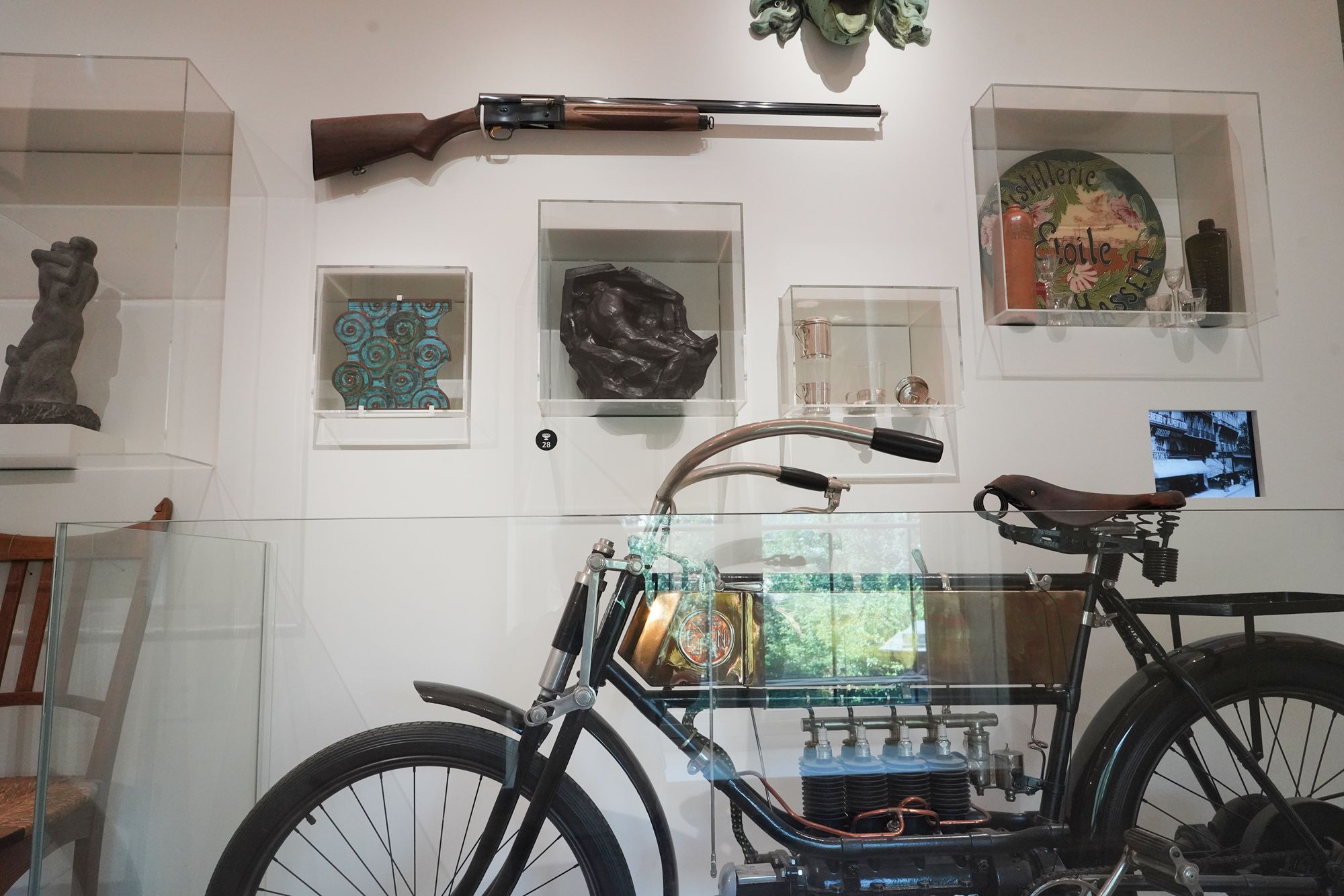
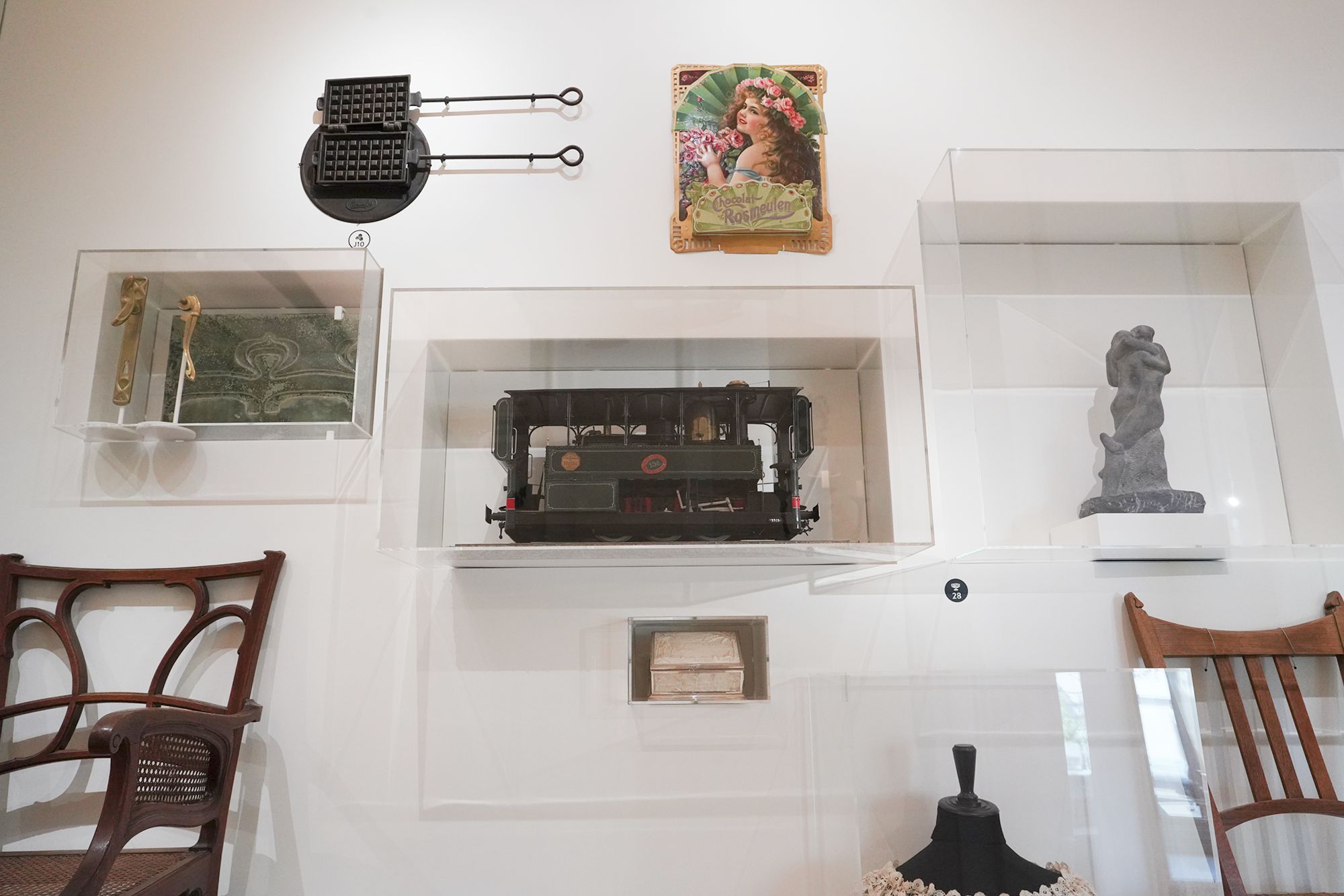
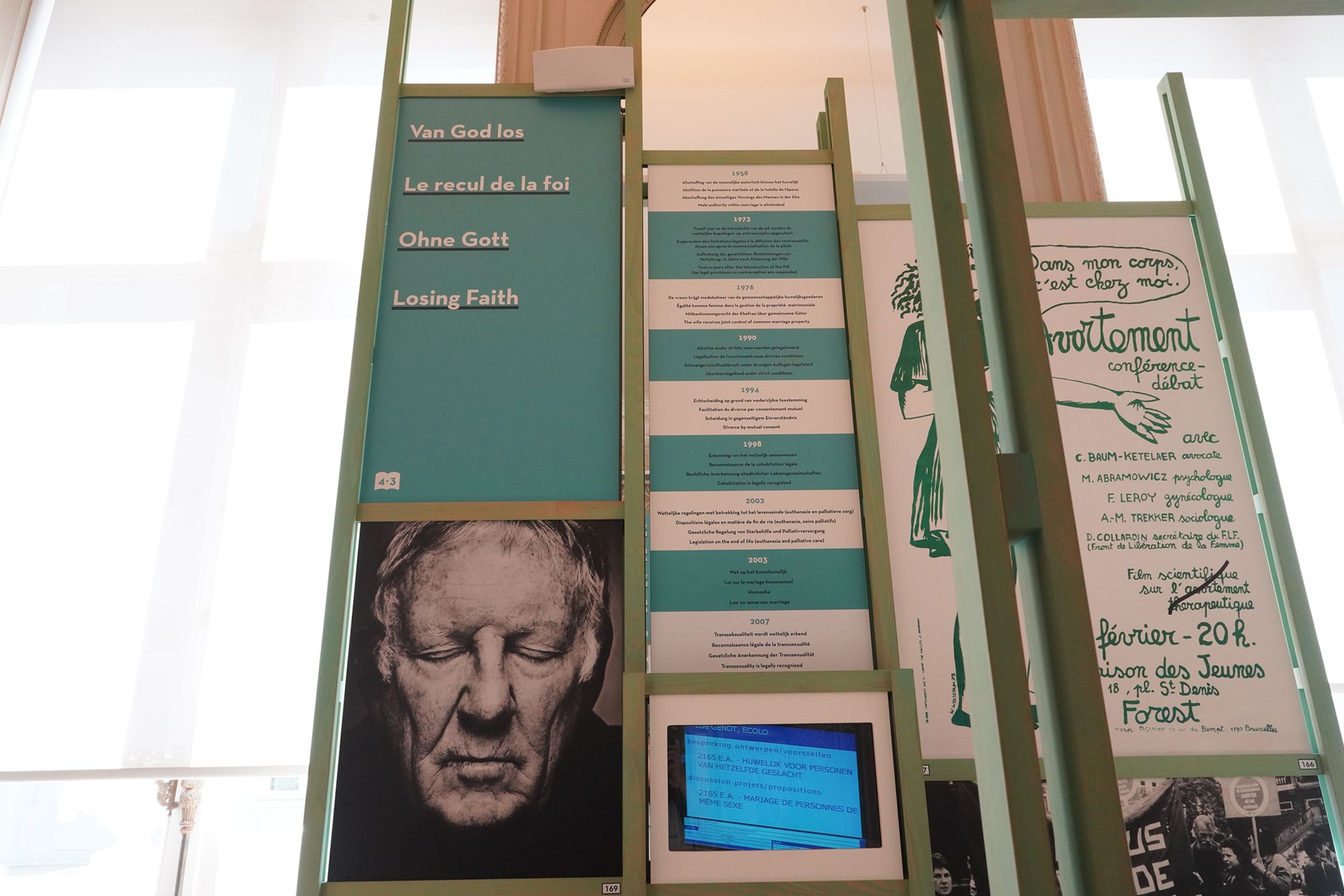
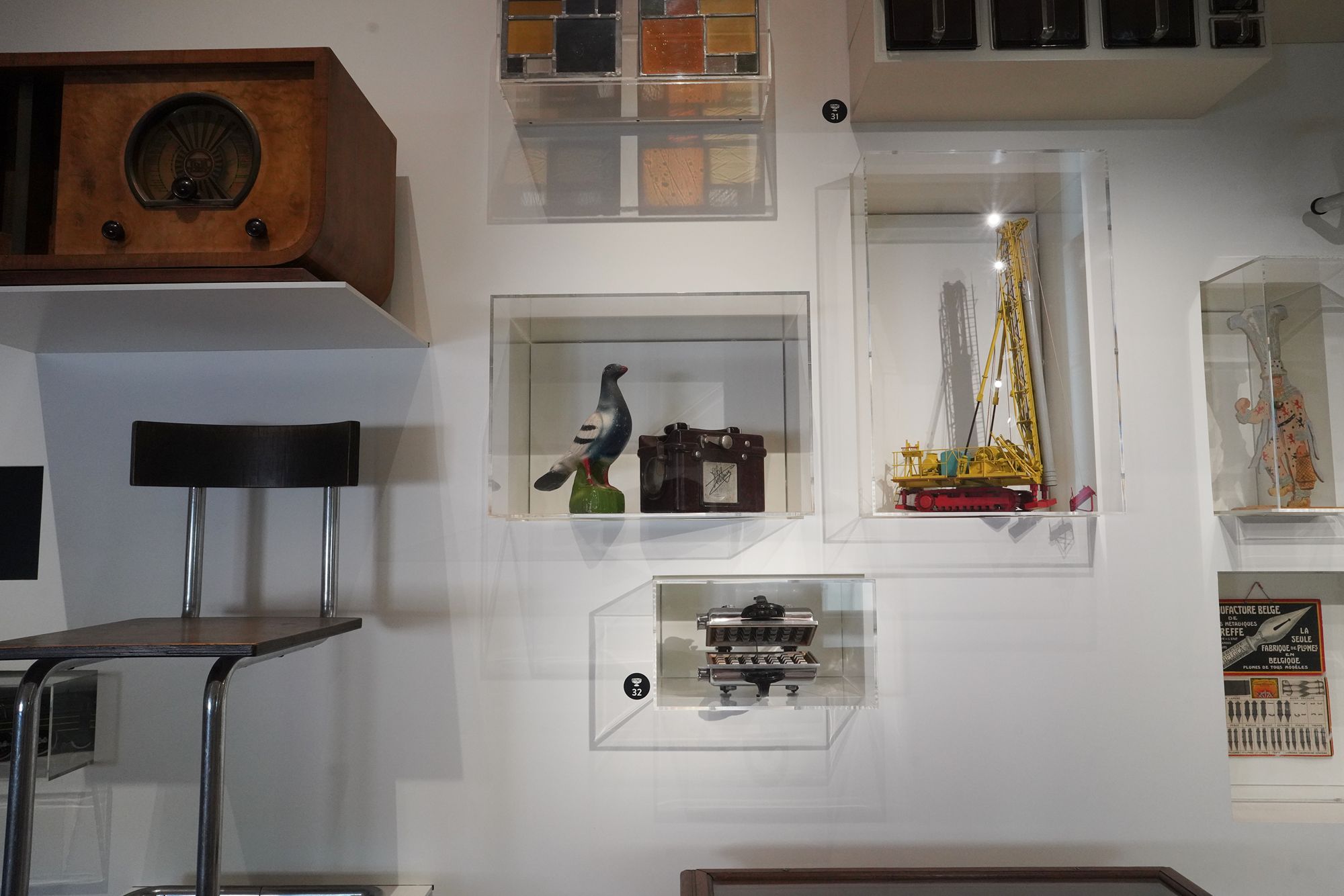
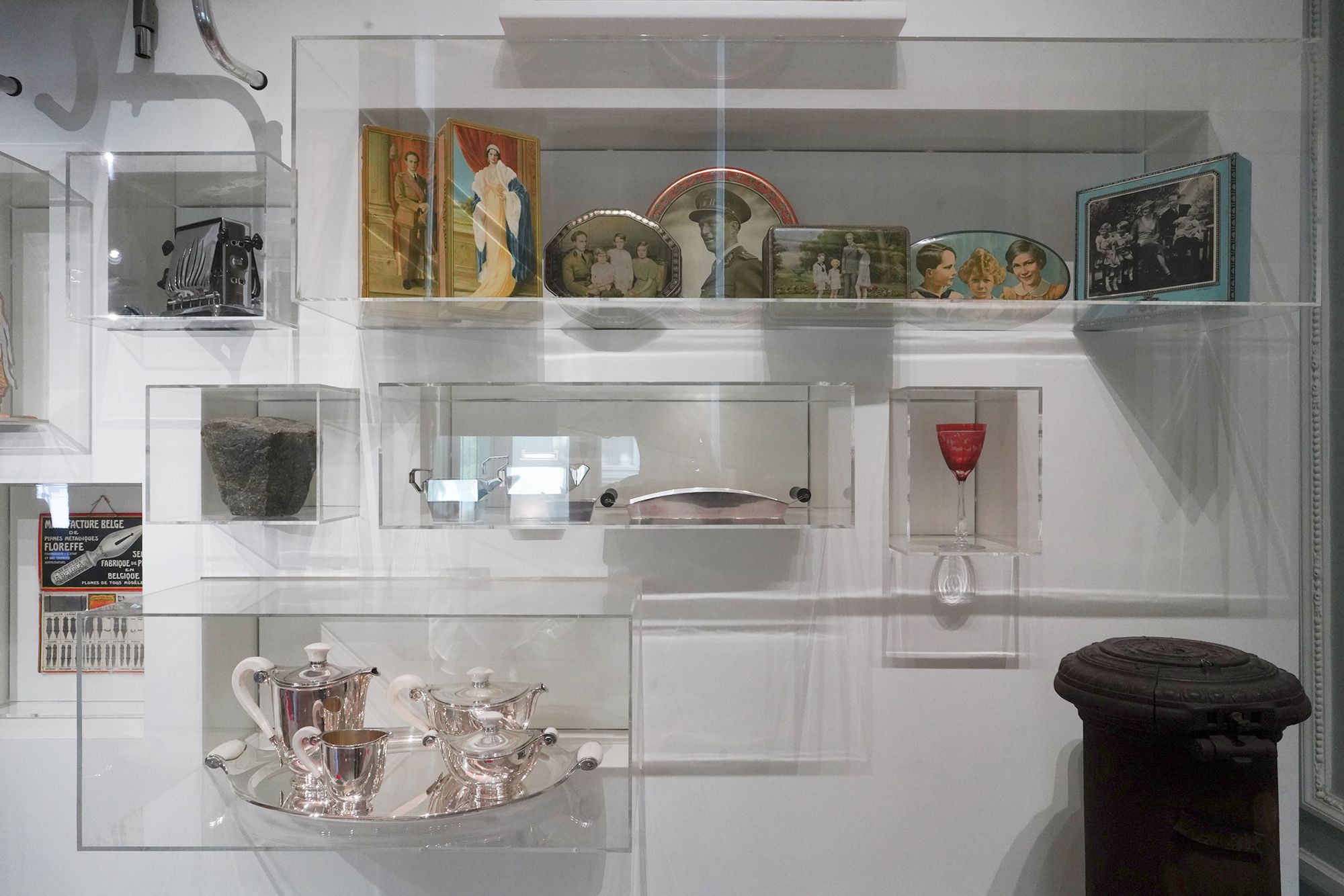
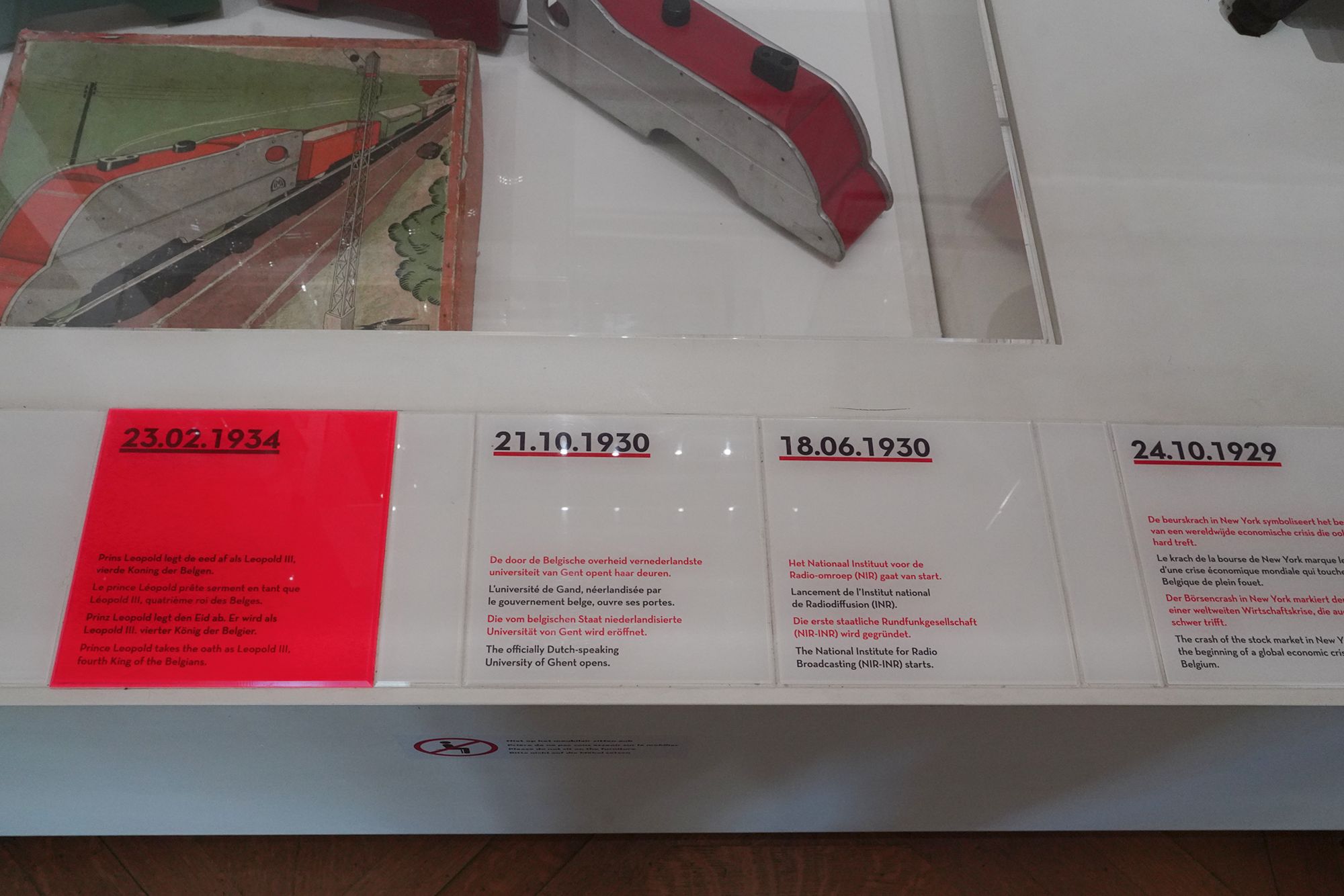
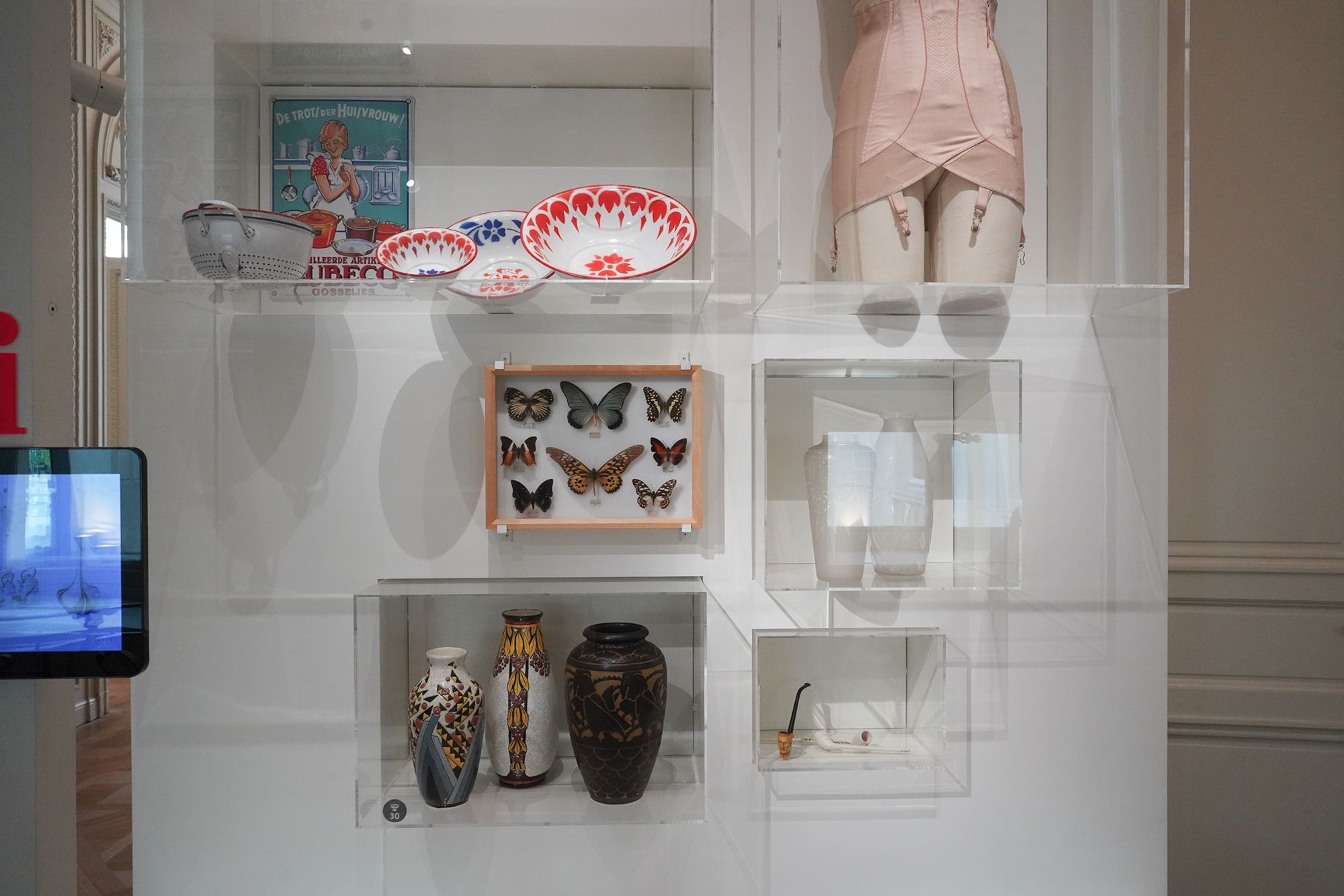
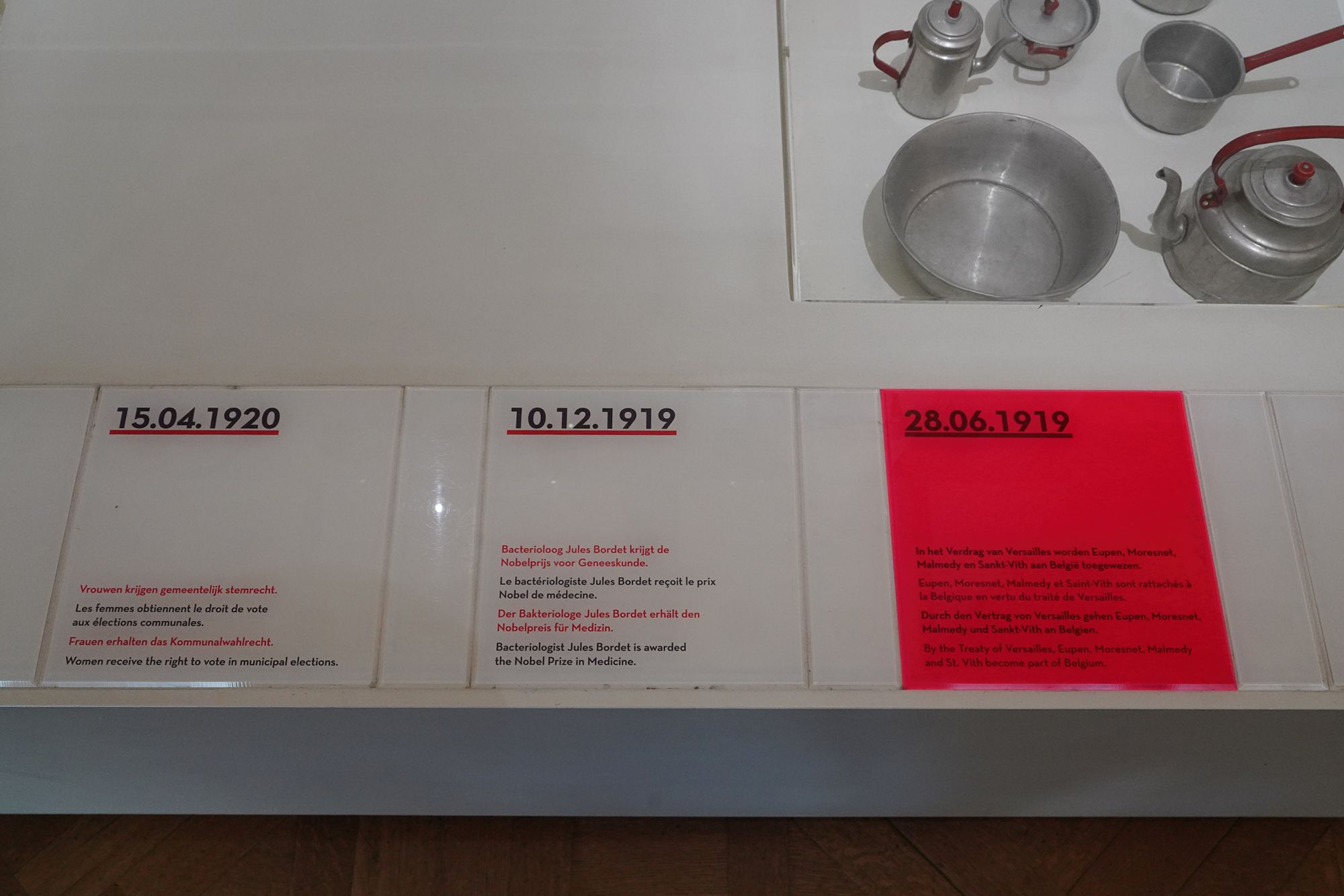
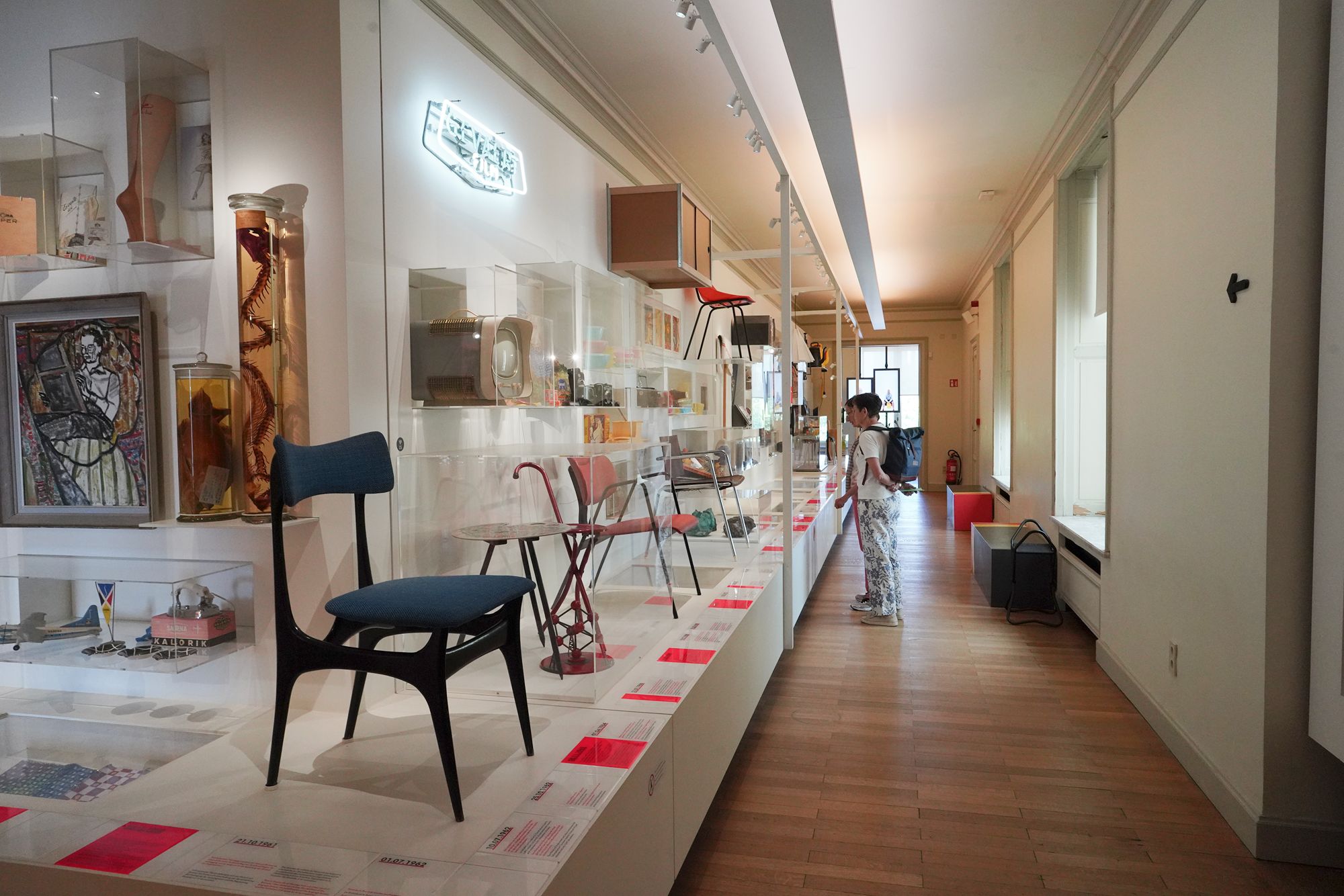
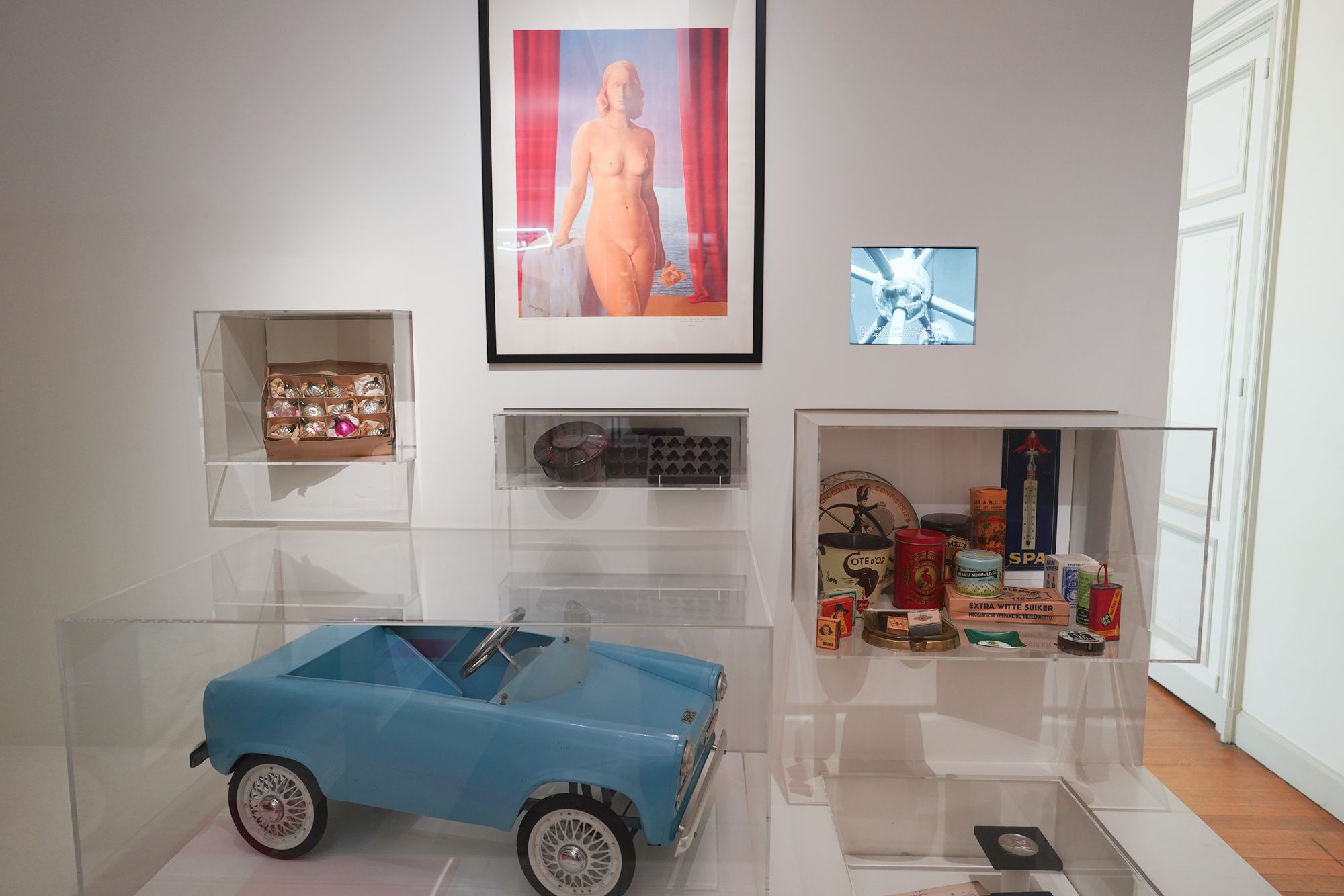
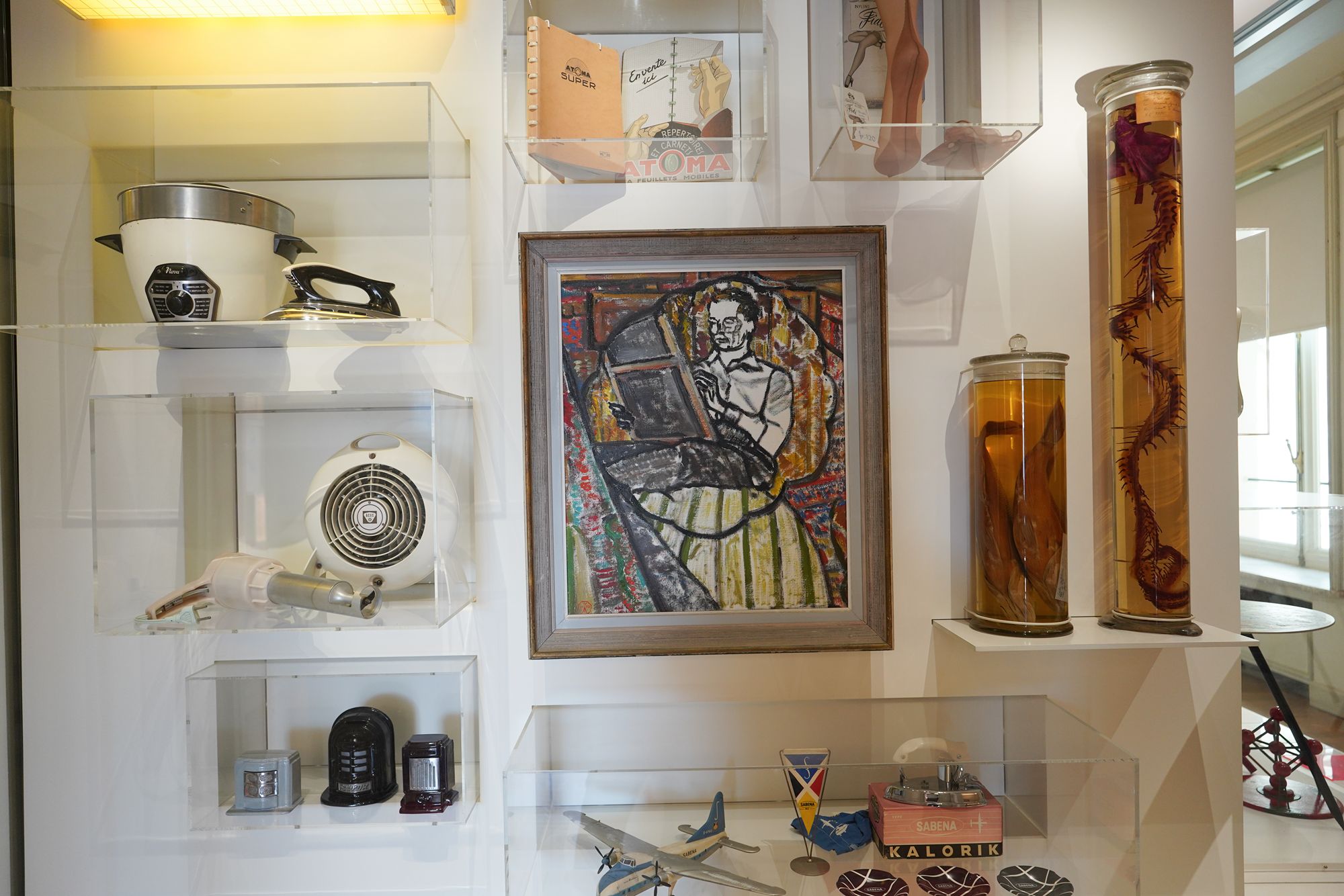
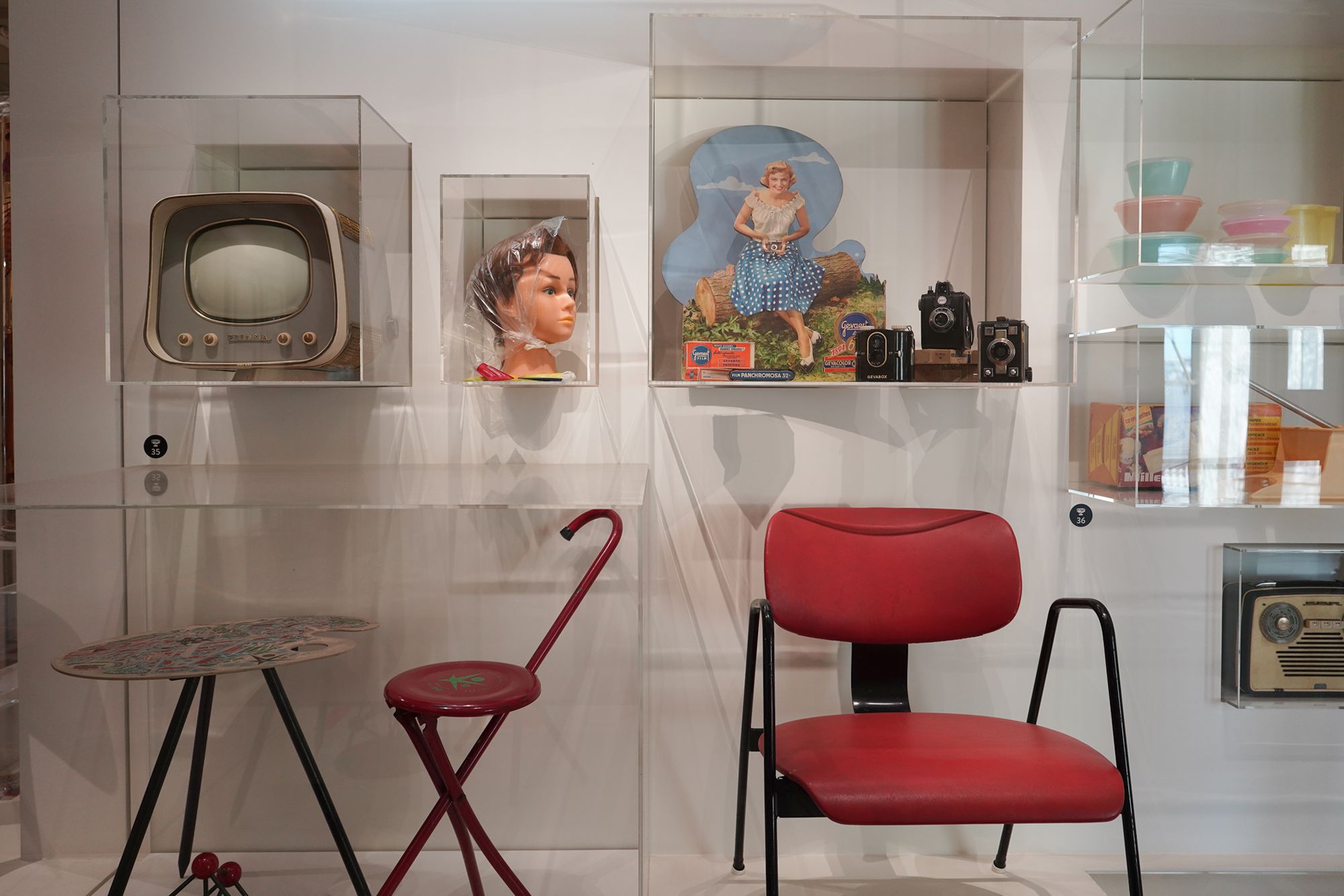
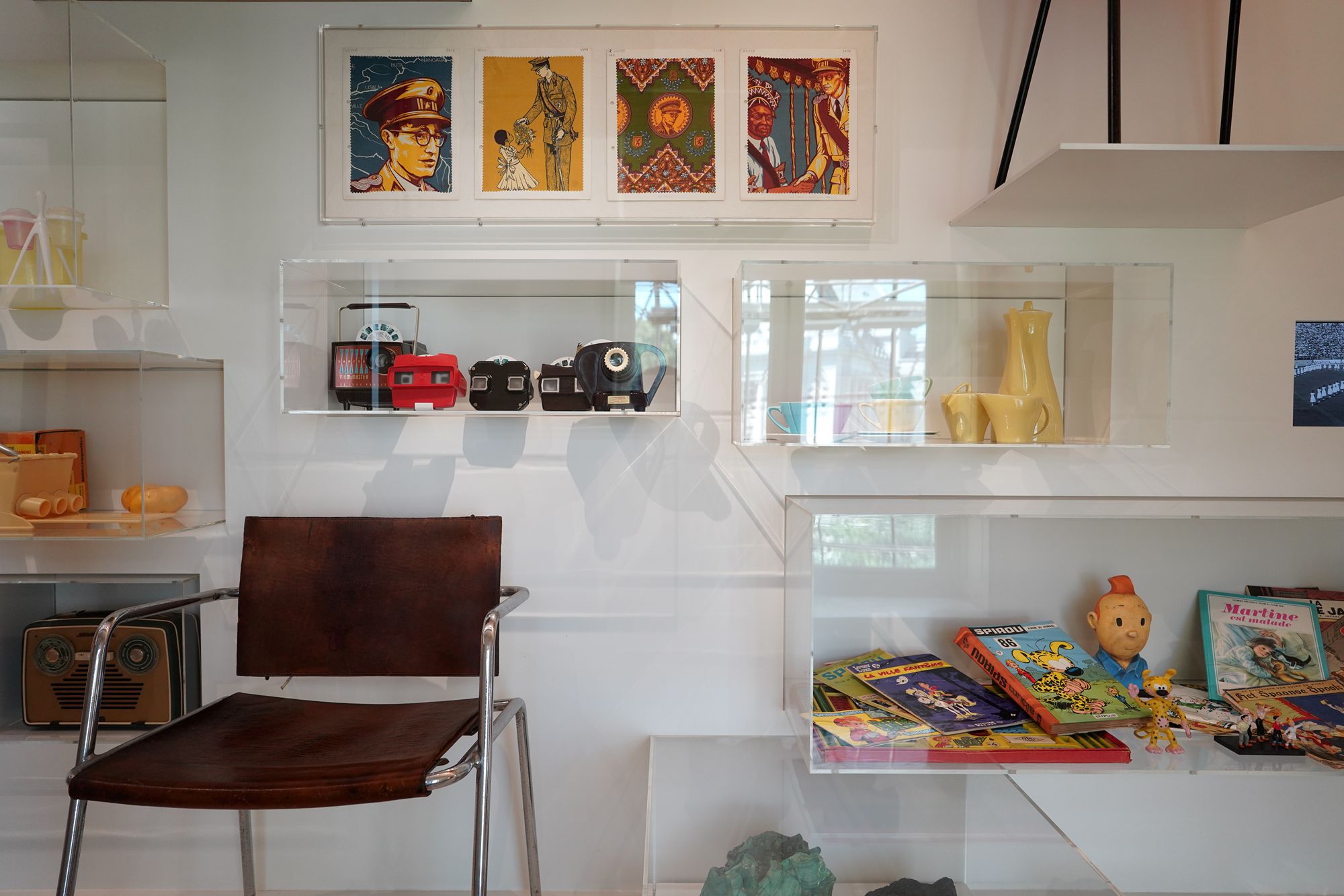
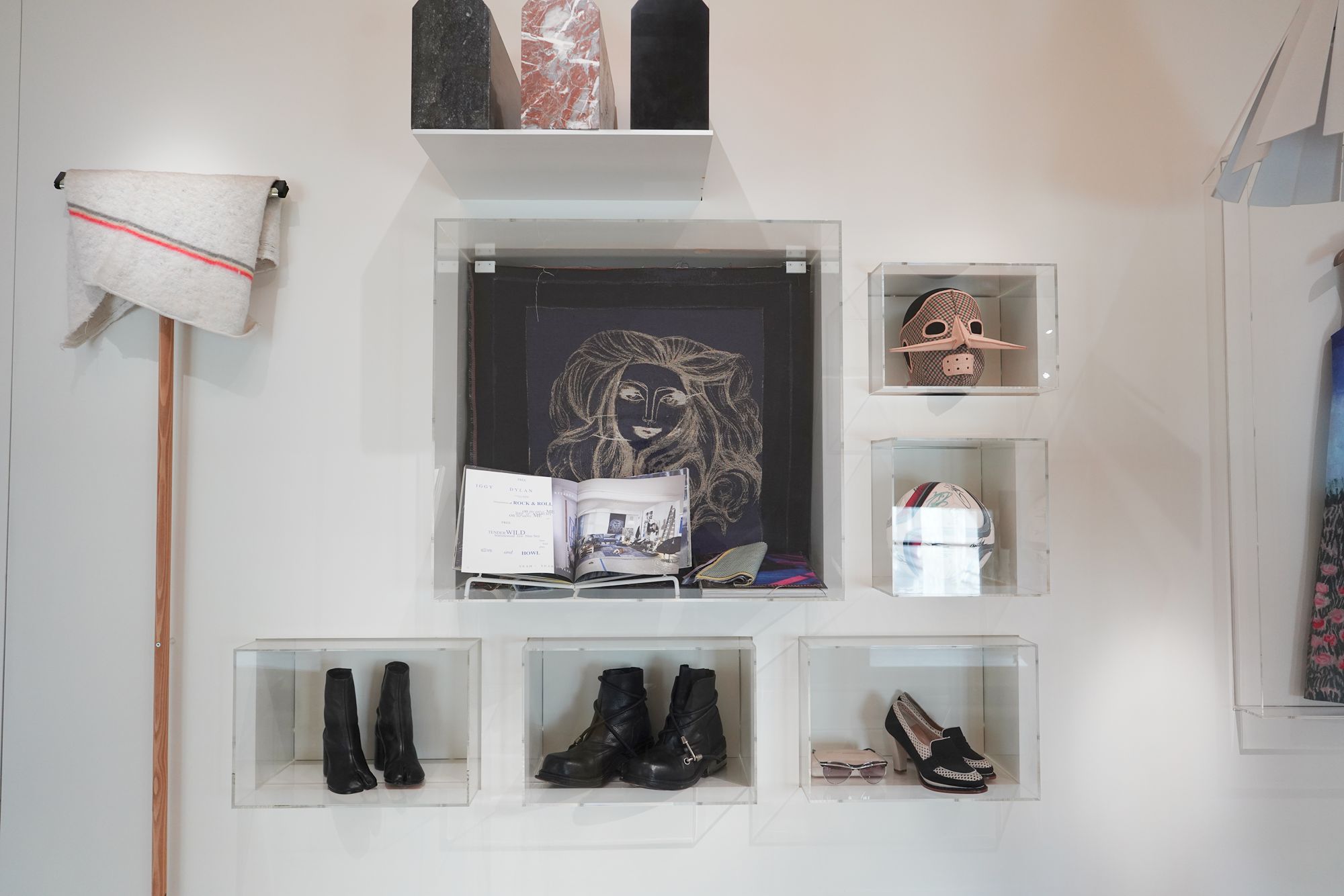
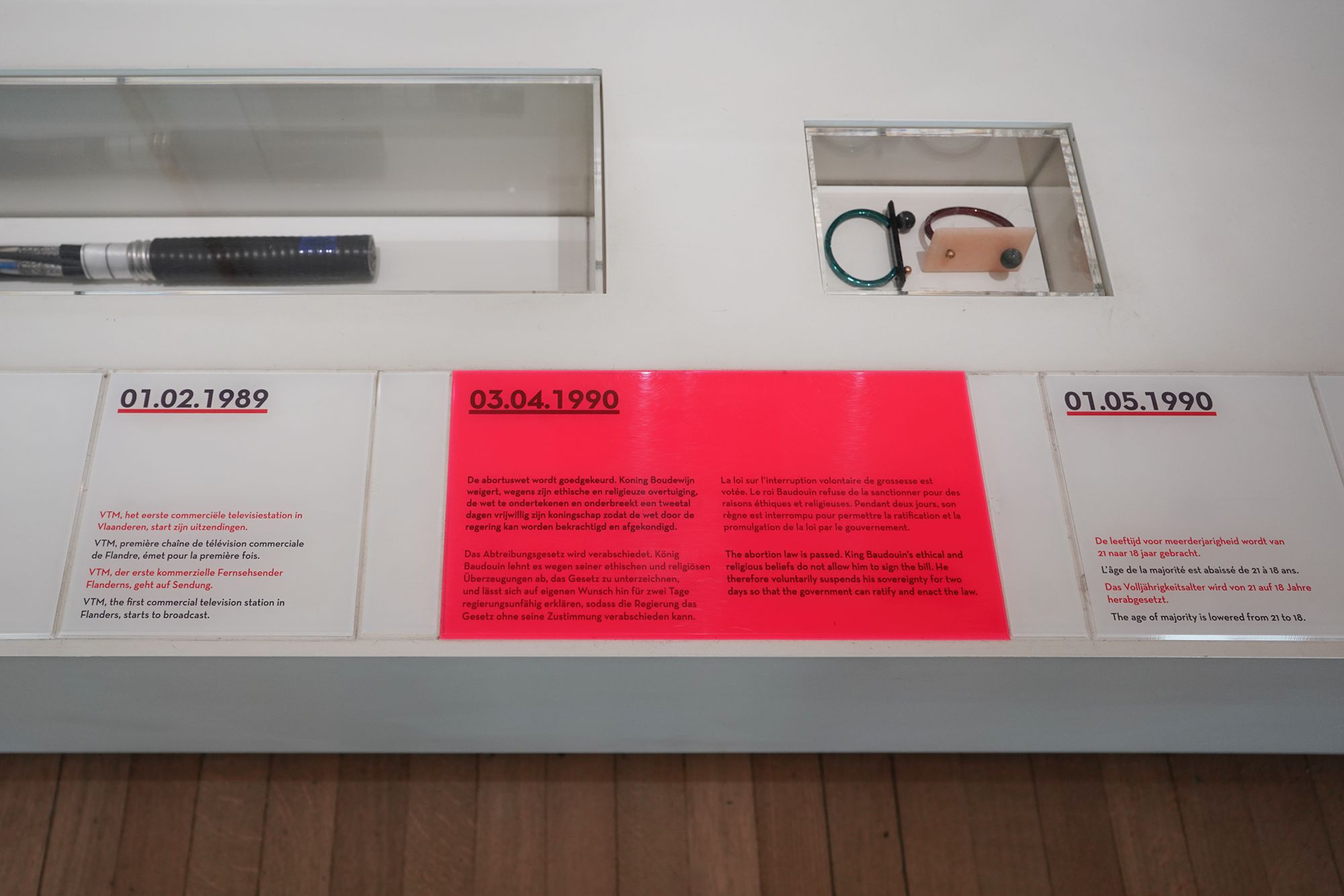
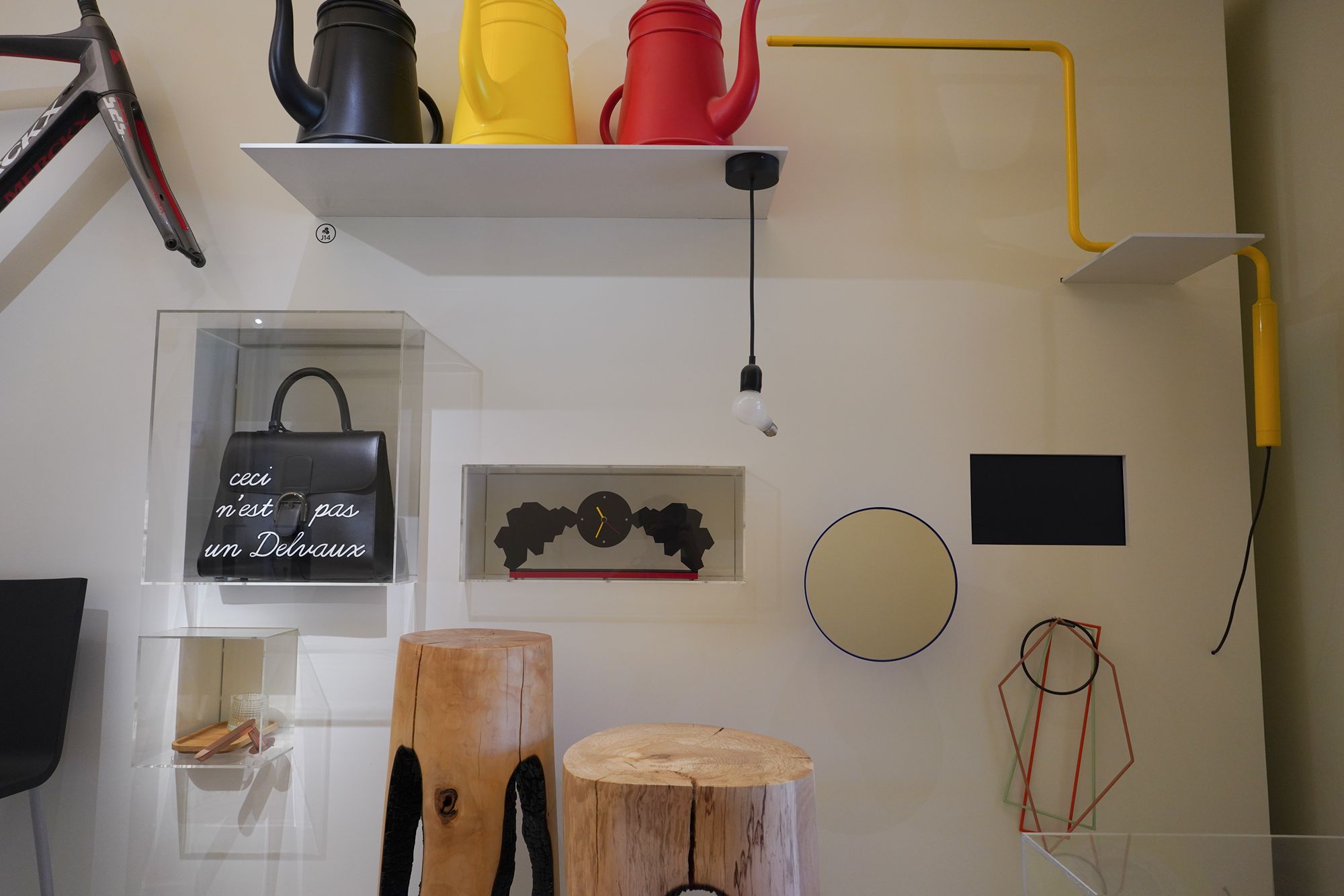
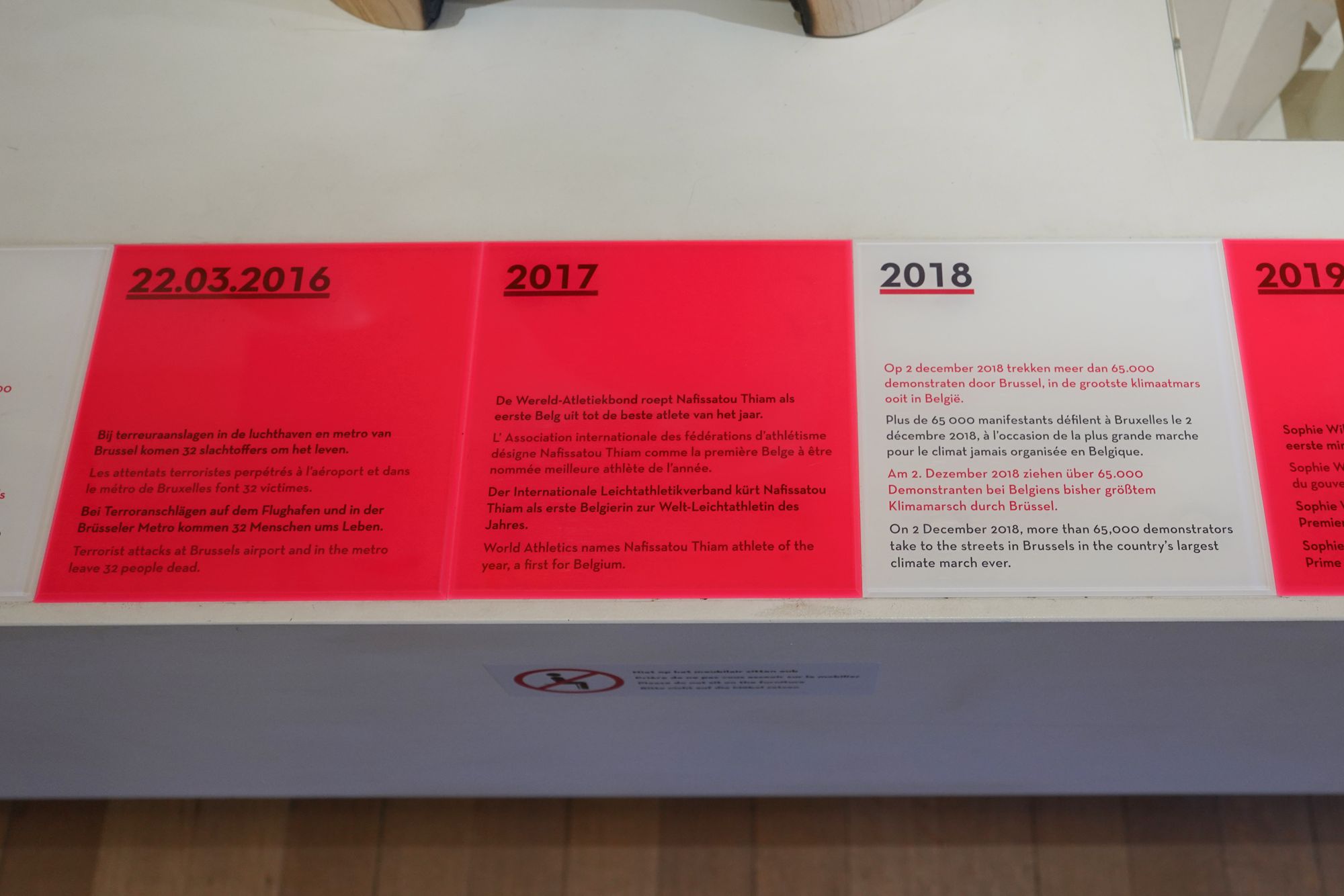
Inside the BELvue Museum, exhibits trace Belgium’s history and development through historical objects, photographs, documents, and interactive displays.
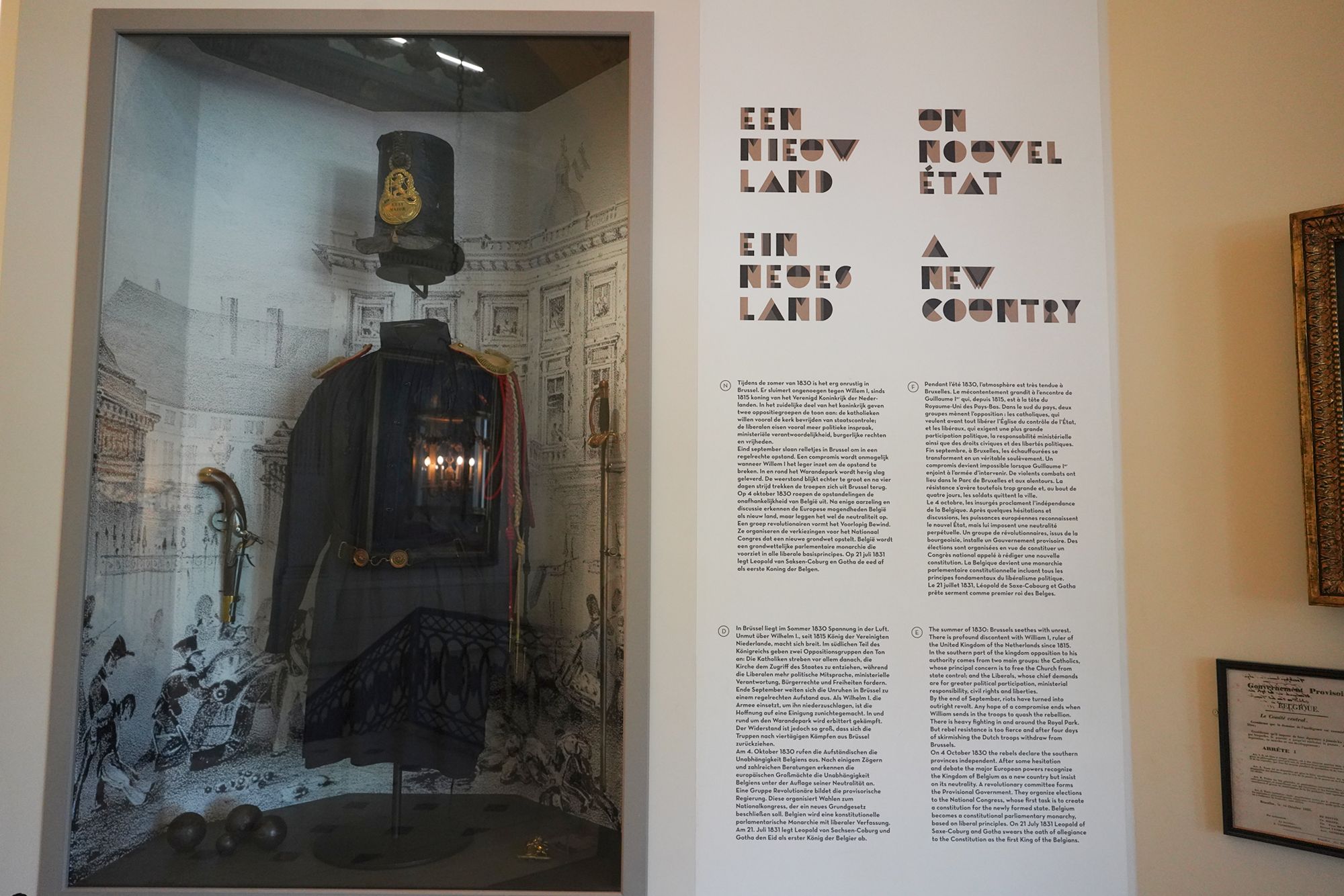
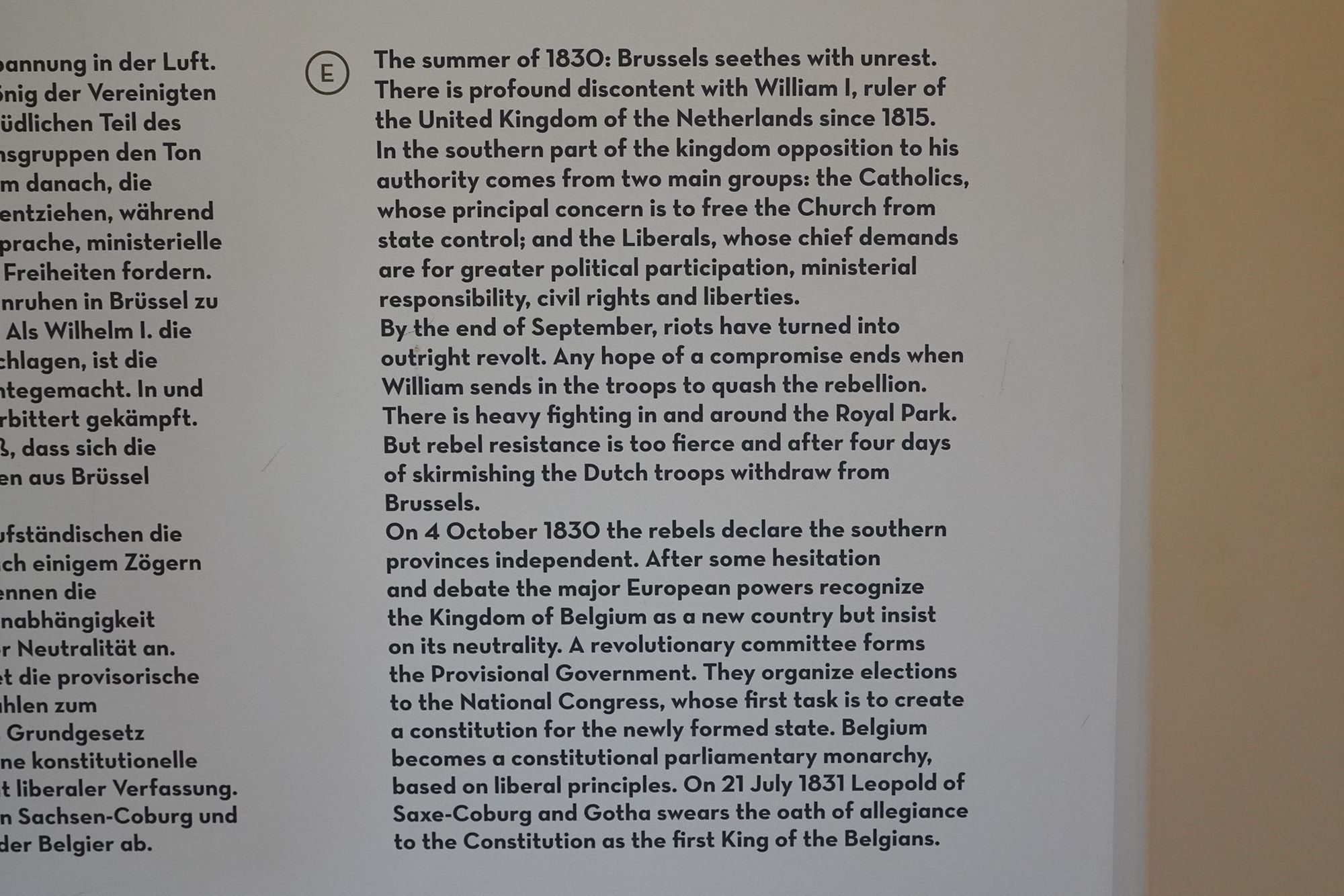
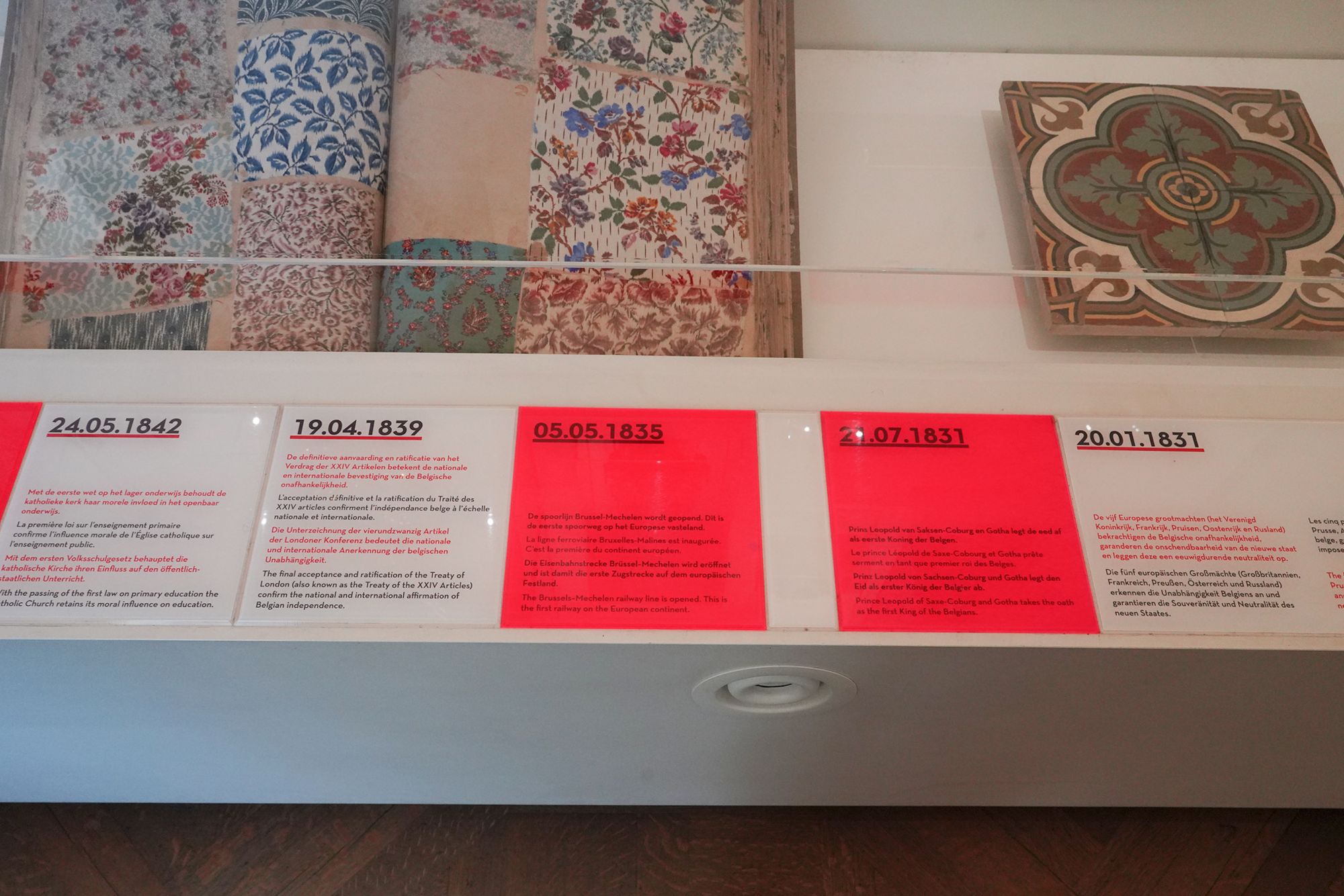
This exhibit explains the Belgian Revolution of 1830, when growing opposition to Dutch King William I led to an uprising in Brussels. After several days of fighting, Dutch troops withdrew, and the southern provinces declared independence on October 4, 1830. Belgium became a constitutional parliamentary monarchy, with Leopold I taking the oath as the first King of the Belgians on July 21, 1831.
The region that is now Belgium was ruled by several European powers over the centuries. During the Middle Ages, cities such as Bruges, Ghent, and Brussels became prosperous centers of trade and textile production. The region later came under Burgundian, Spanish Habsburg, and Austrian Habsburg rule.
In 1795, the territory was annexed by revolutionary France and later became part of Napoleon’s French Empire. After Napoleon’s defeat in 1815, it was united with the Netherlands as the United Kingdom of the Netherlands, ruled by King William I.
Religious, political, economic, and linguistic tensions contributed to the Belgian Revolution of 1830. Belgium declared independence and established a constitutional monarchy. In 1831, Leopold I became the first King of the Belgians.
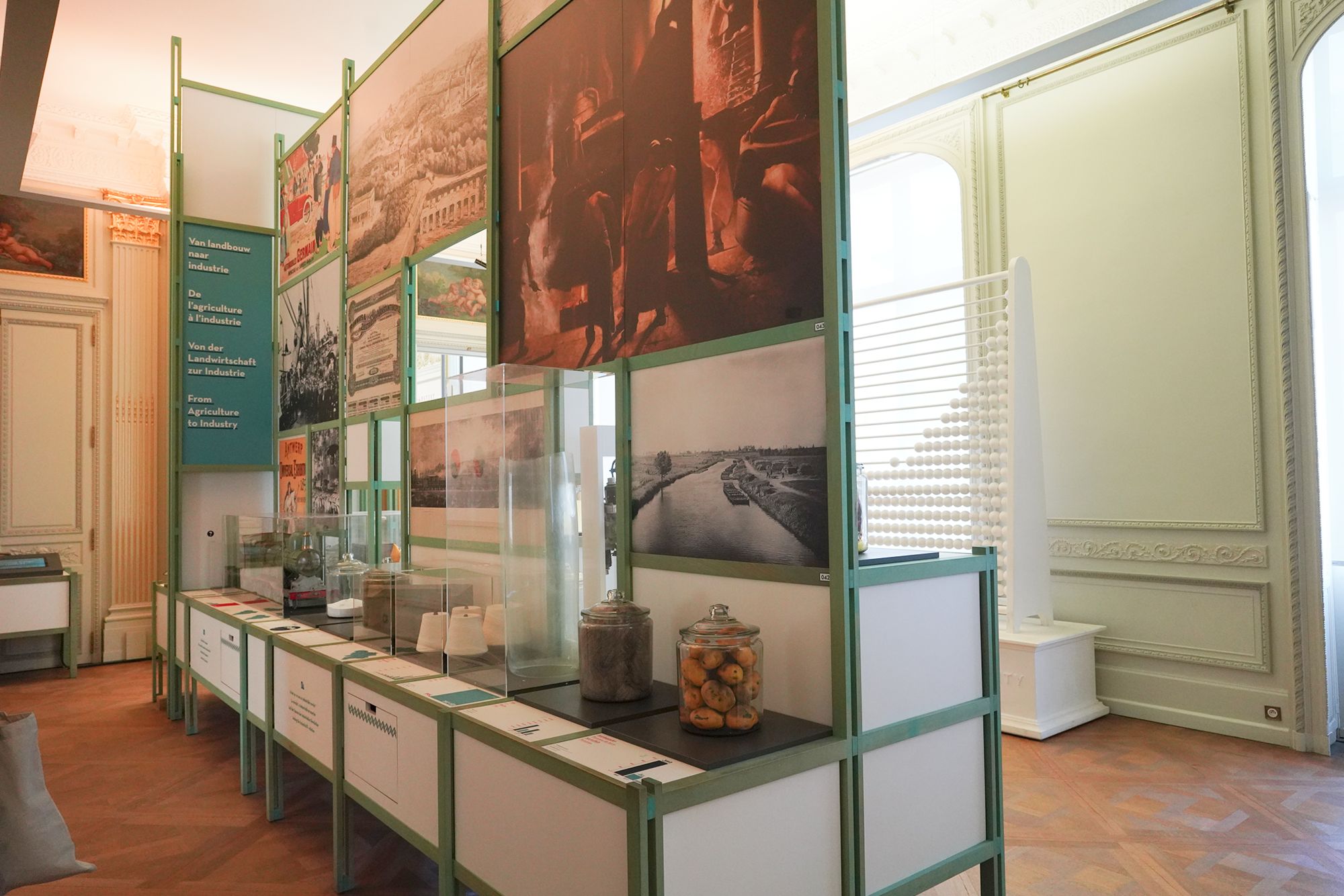
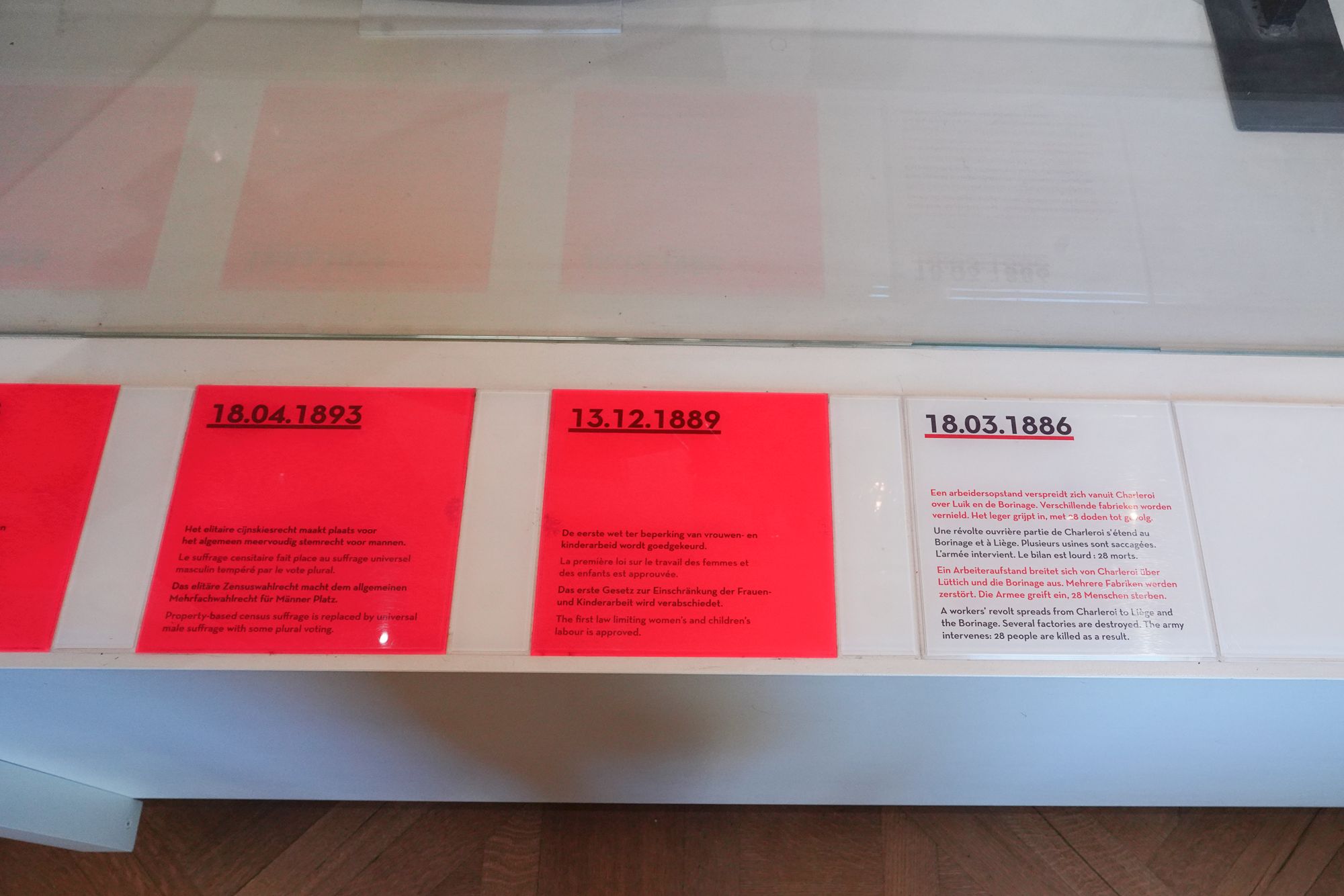
After gaining independence, Belgium adopted a new Constitution in 1831, establishing a constitutional parliamentary monarchy with separate legislative, executive, and judicial powers. The Constitution guaranteed important civil freedoms, including freedom of religion, education, the press, association, and assembly. However, voting rights were initially limited mainly to wealthy men who paid sufficient taxes and were gradually expanded over time.
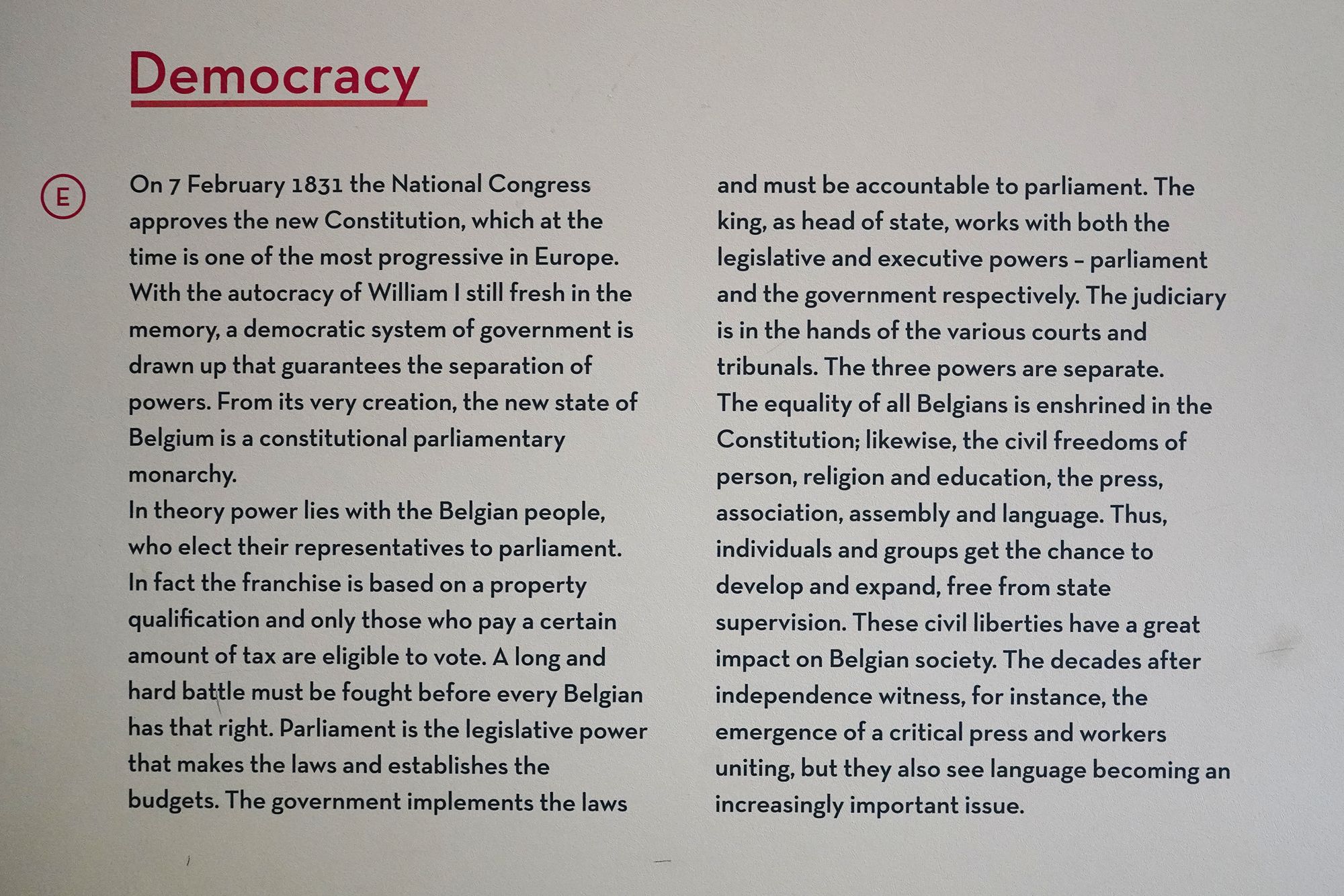
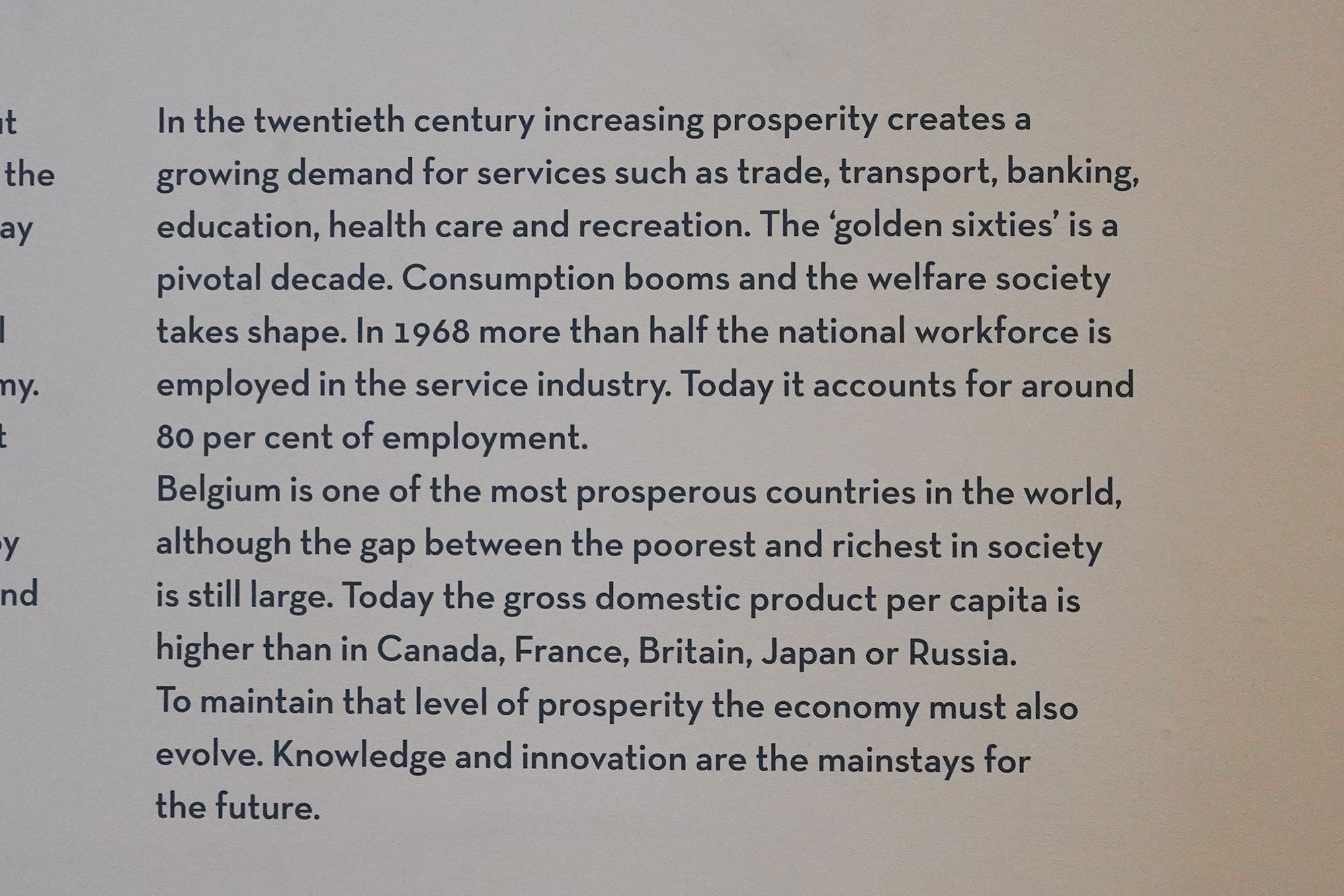
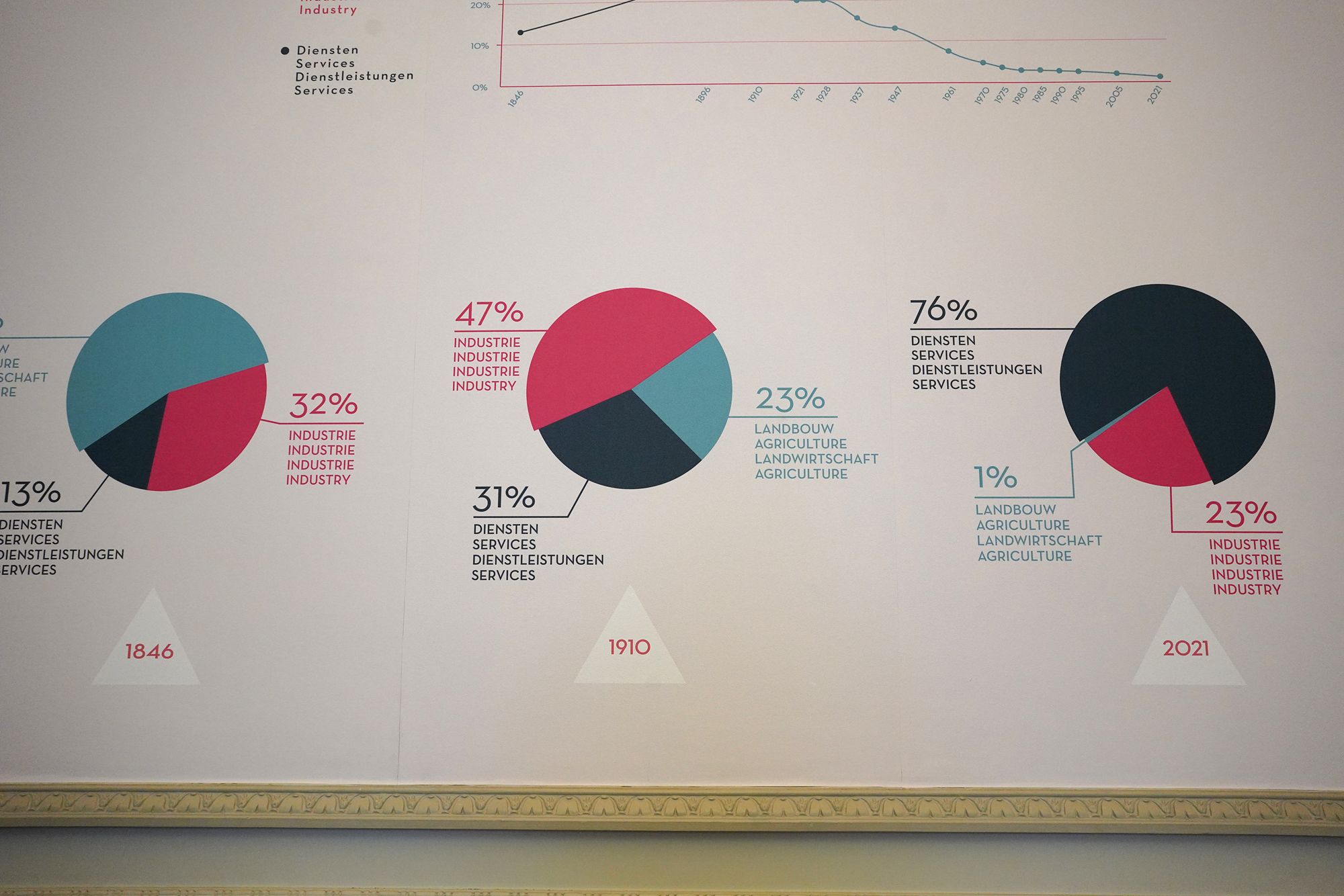
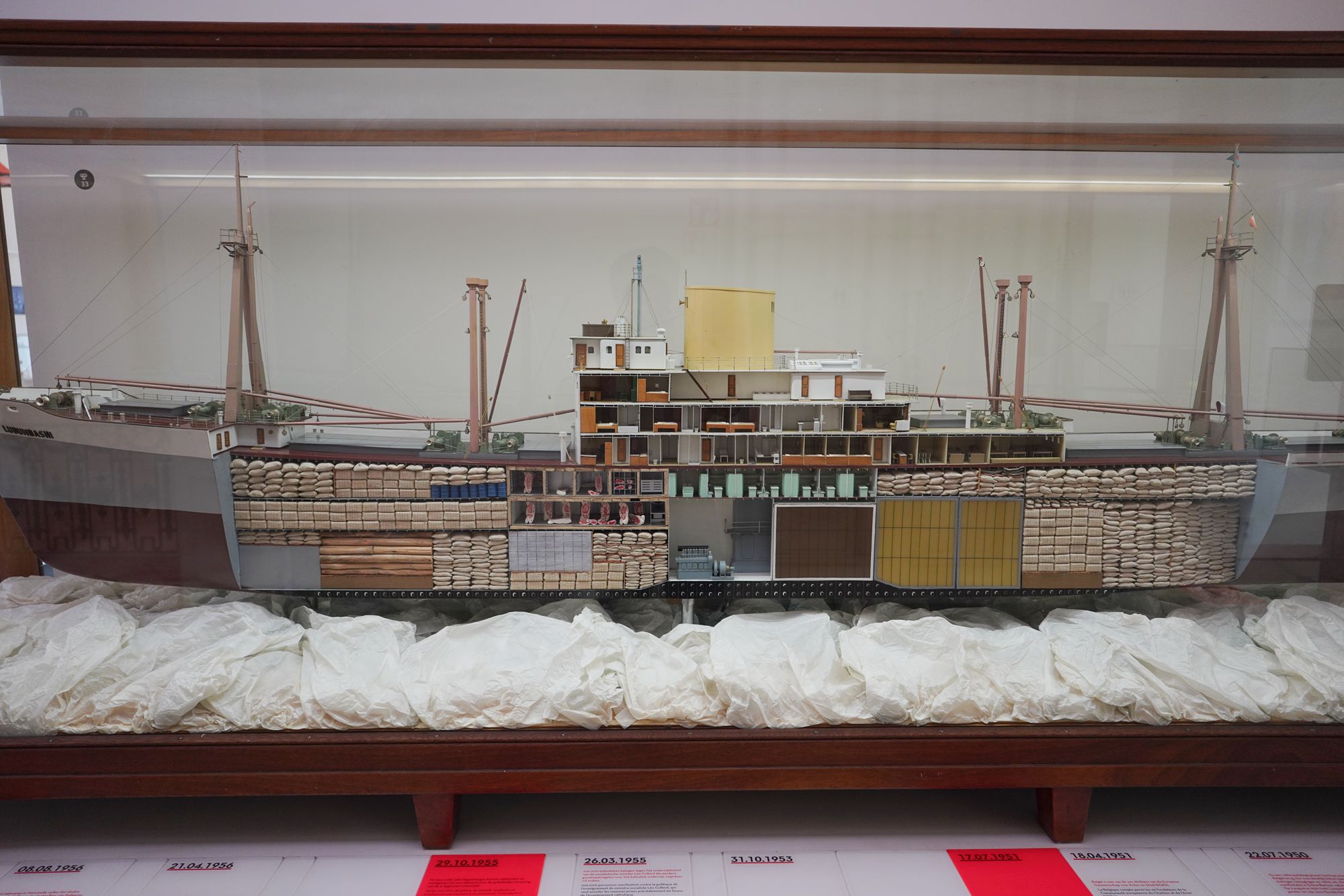
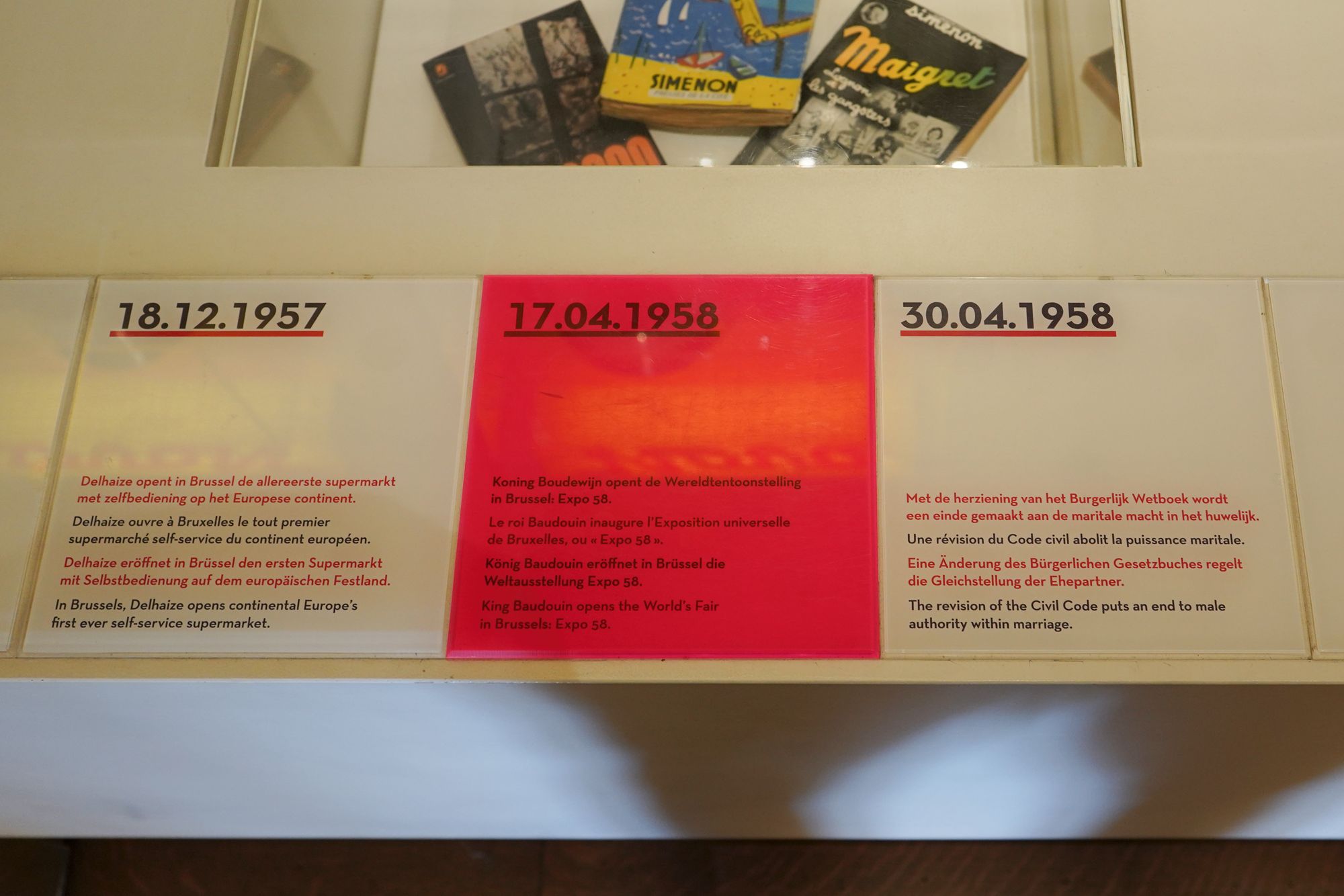
Belgium was mainly agricultural when it became independent in 1830, but it soon became the first country in continental Europe to industrialize. Railways, manufacturing, and exports helped make Belgium one of Europe’s major economic powers. During the 20th century, the economy gradually shifted from industry toward services, banking, transportation, health care, education, and other modern sectors.
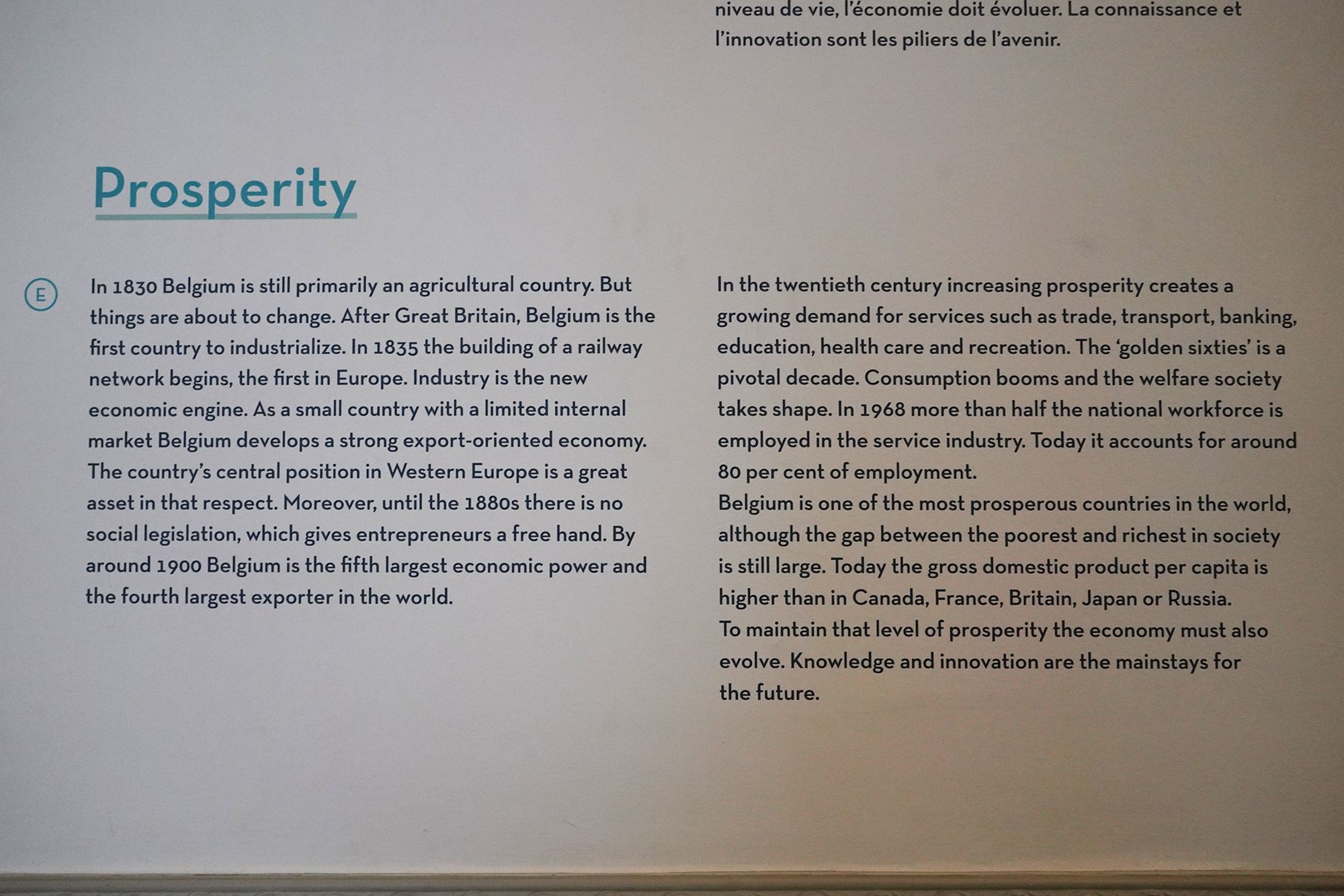
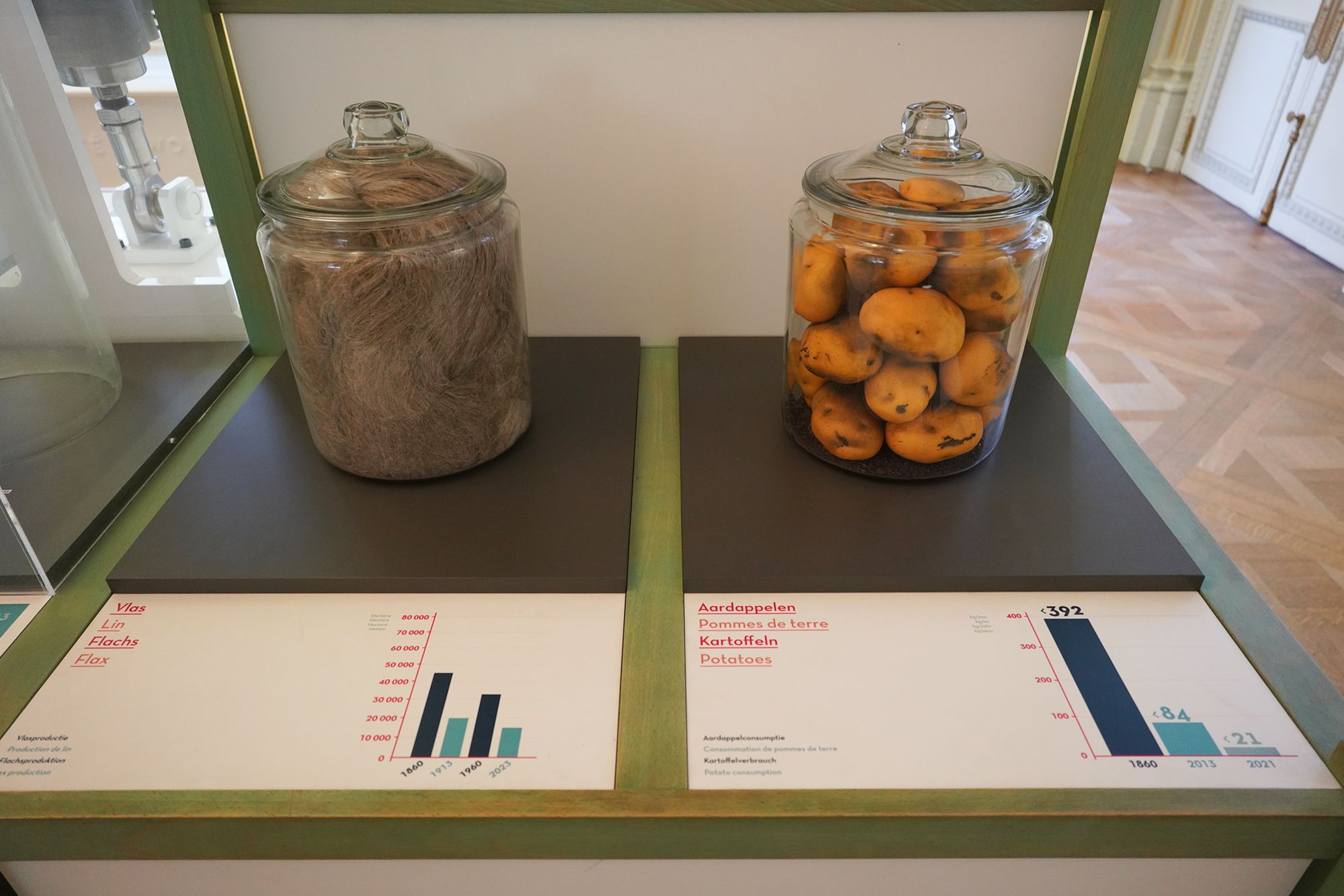
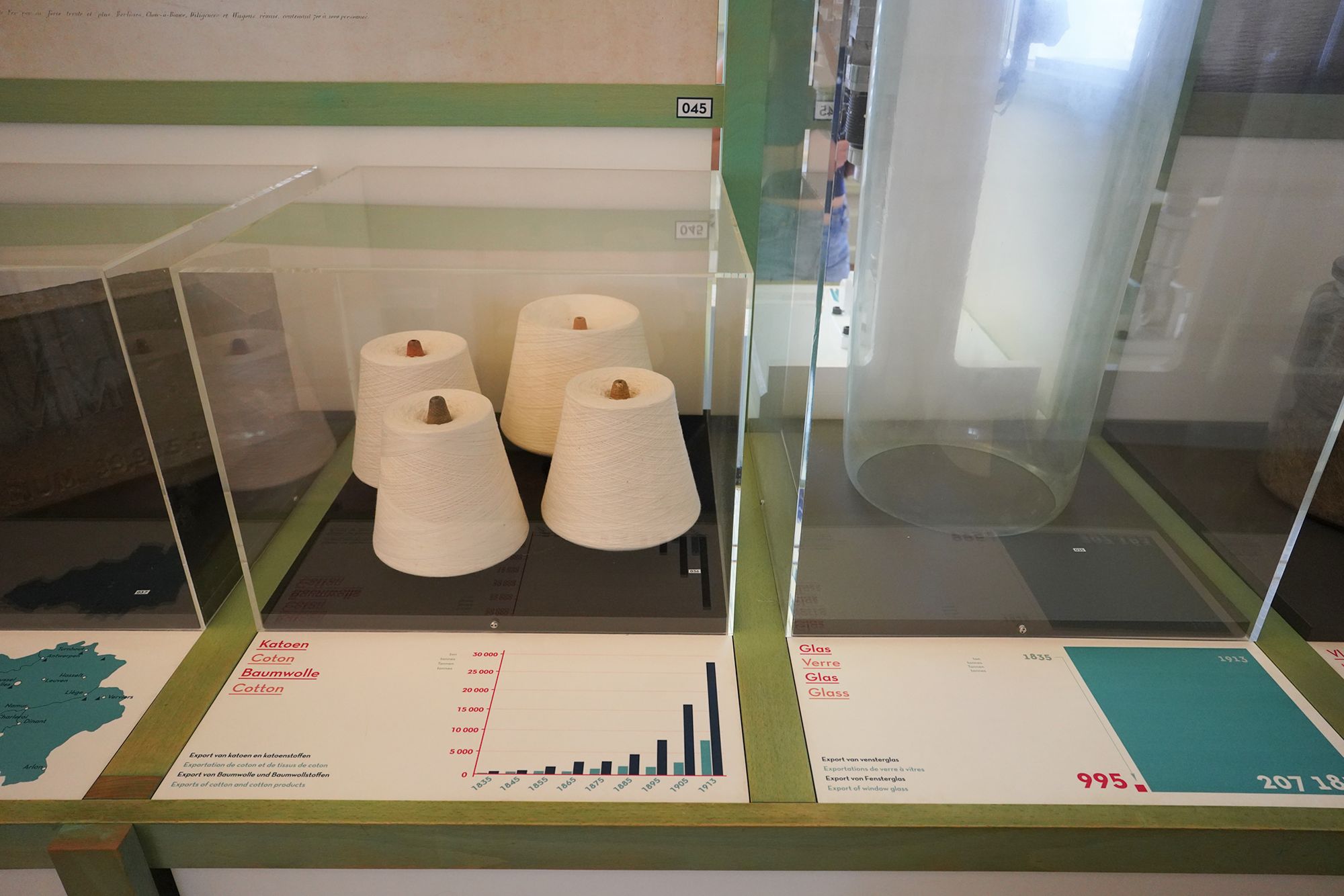
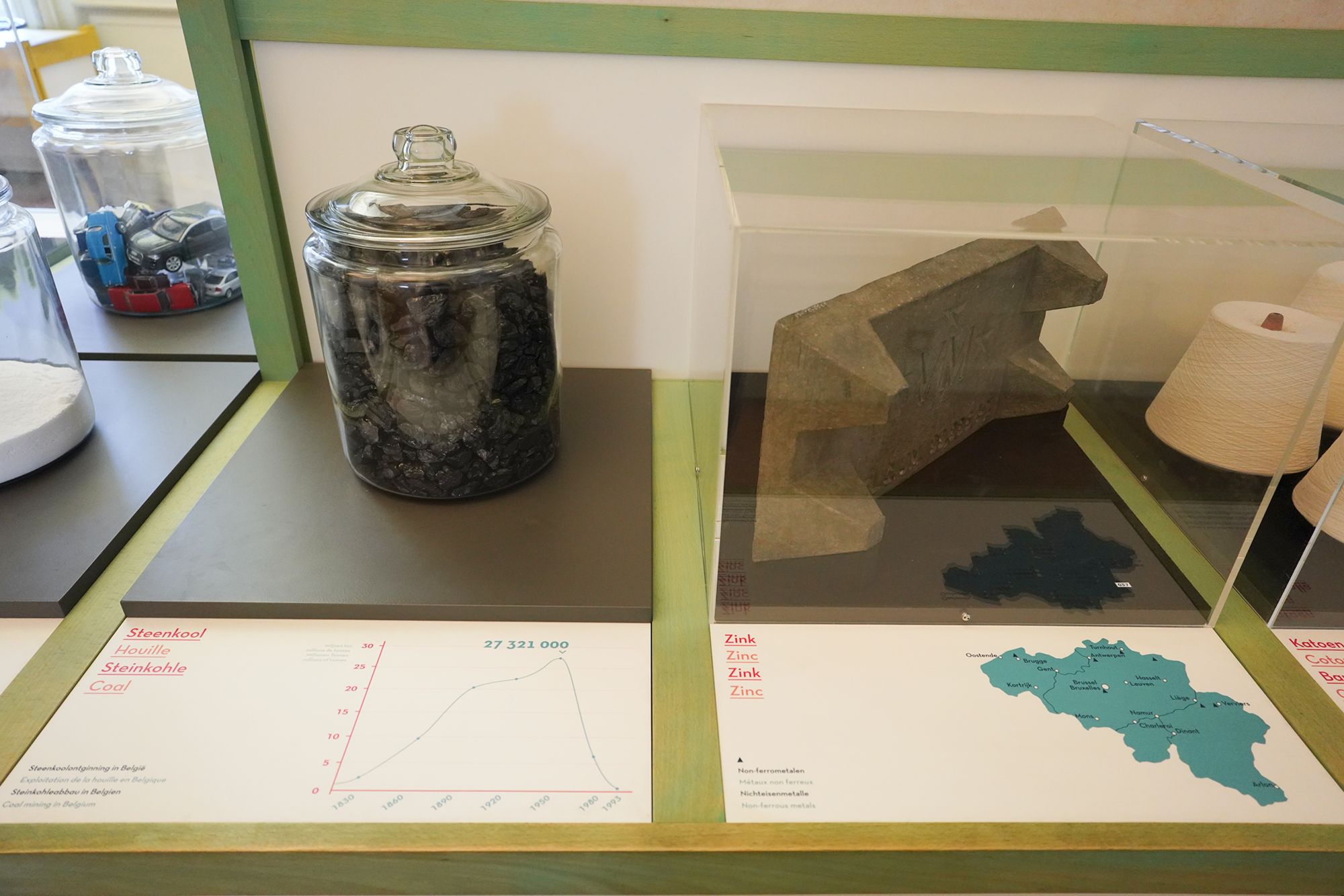
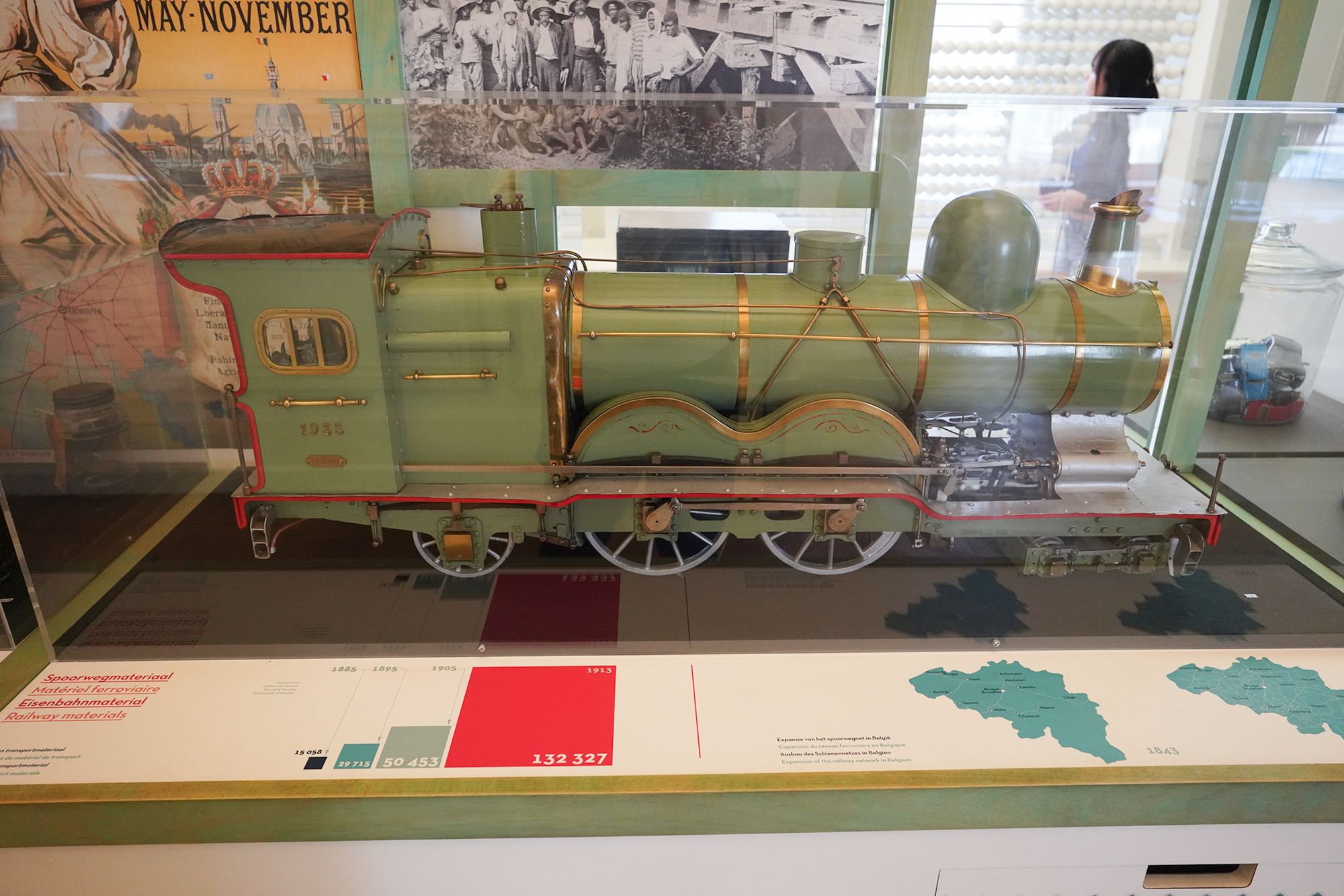
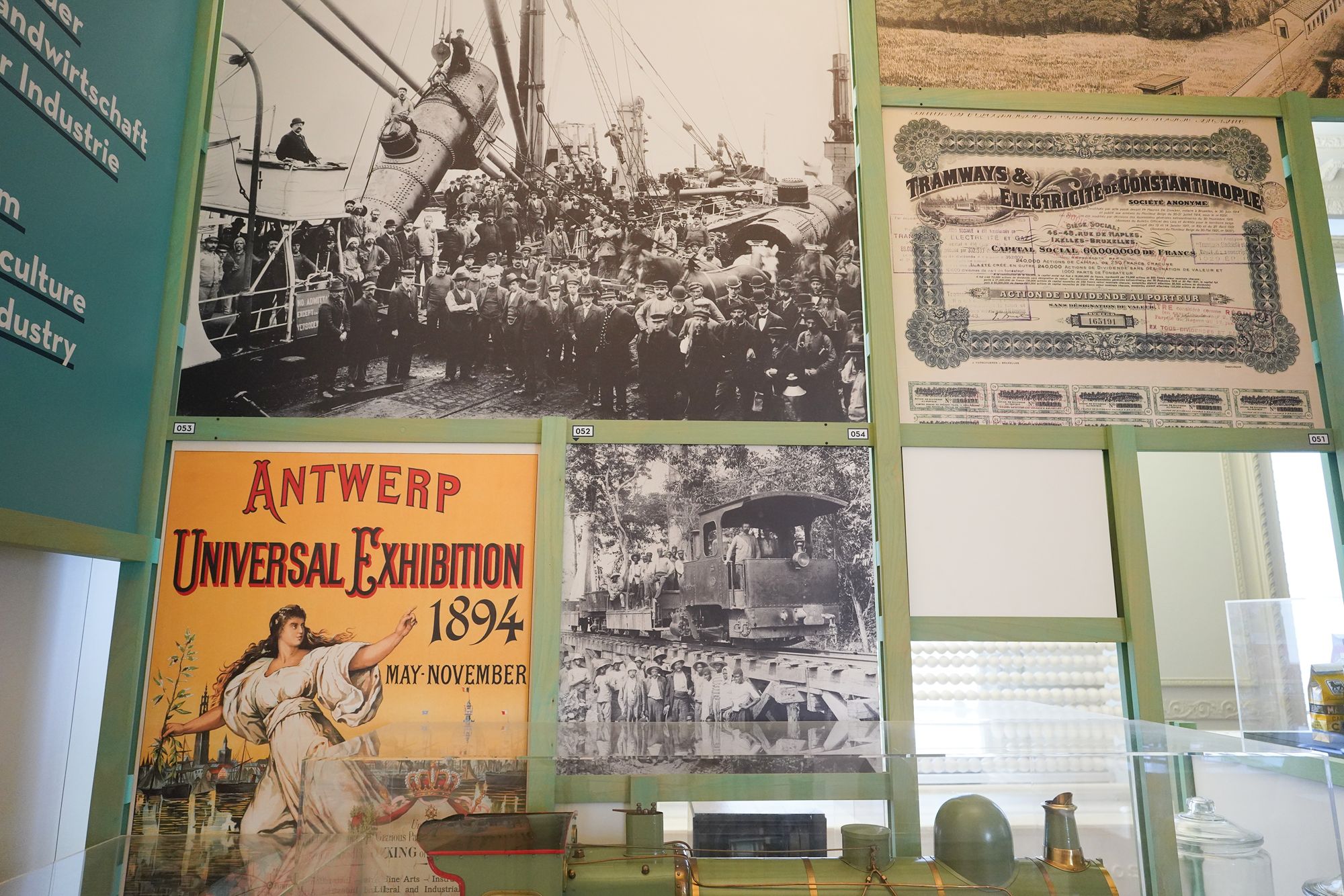
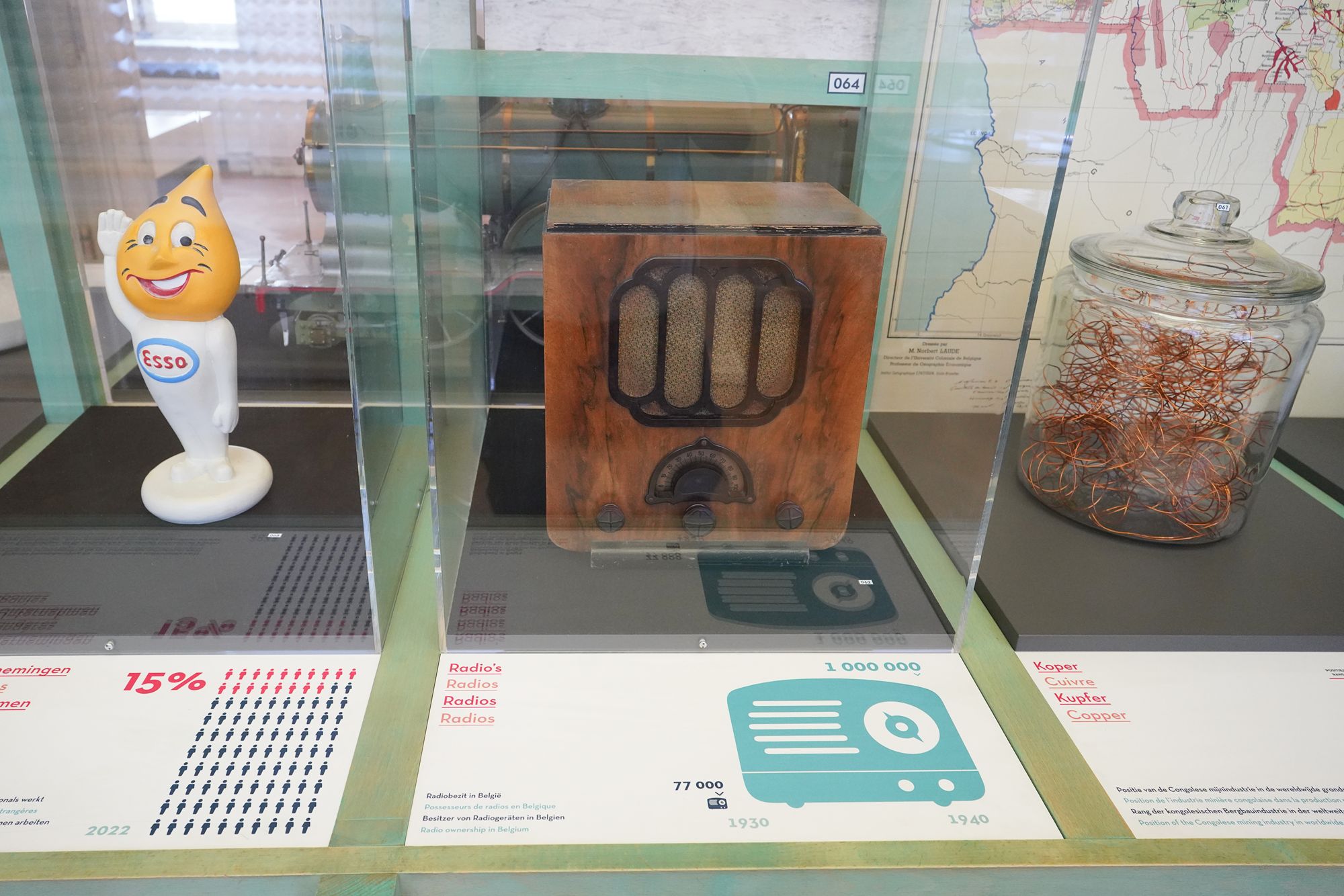
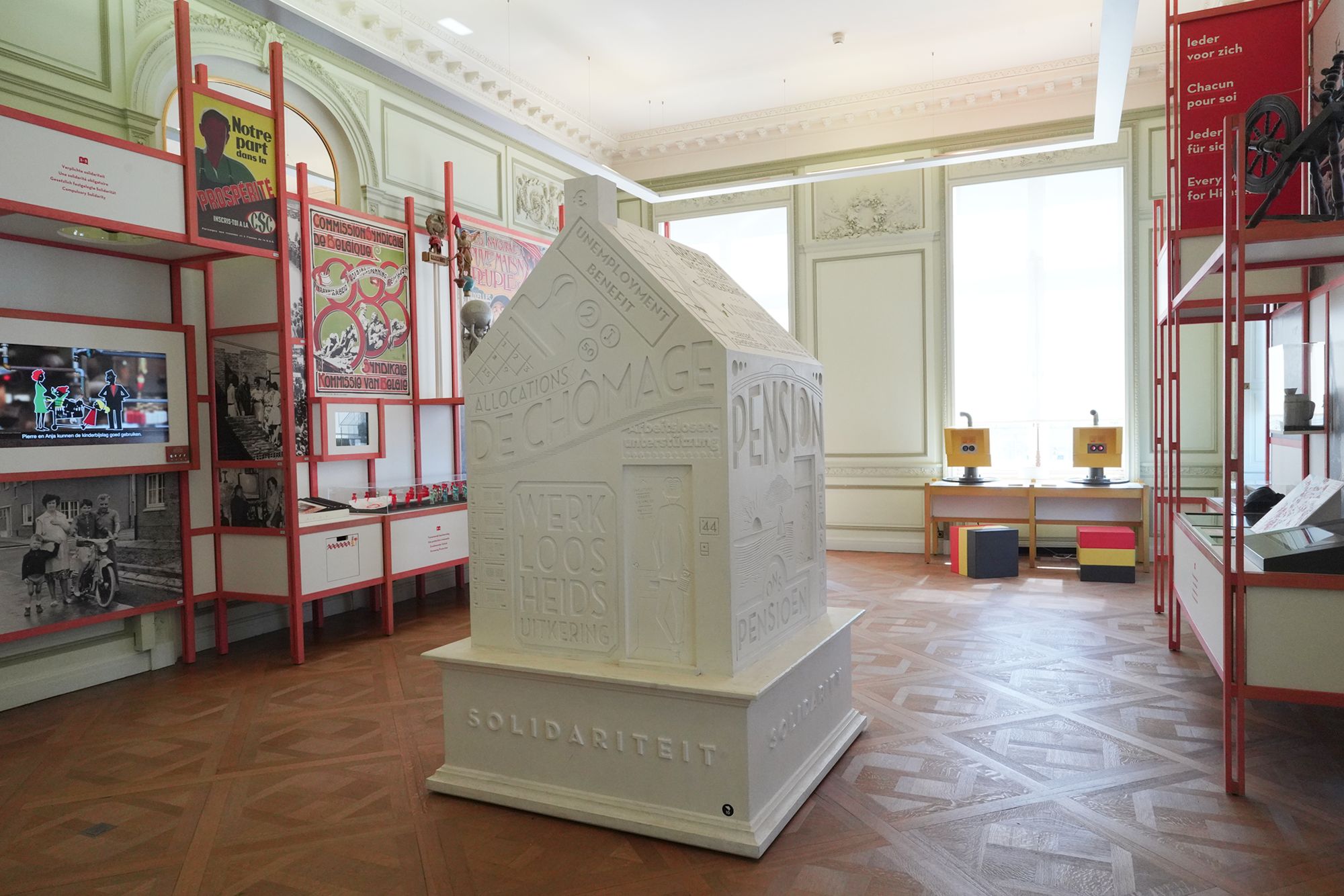
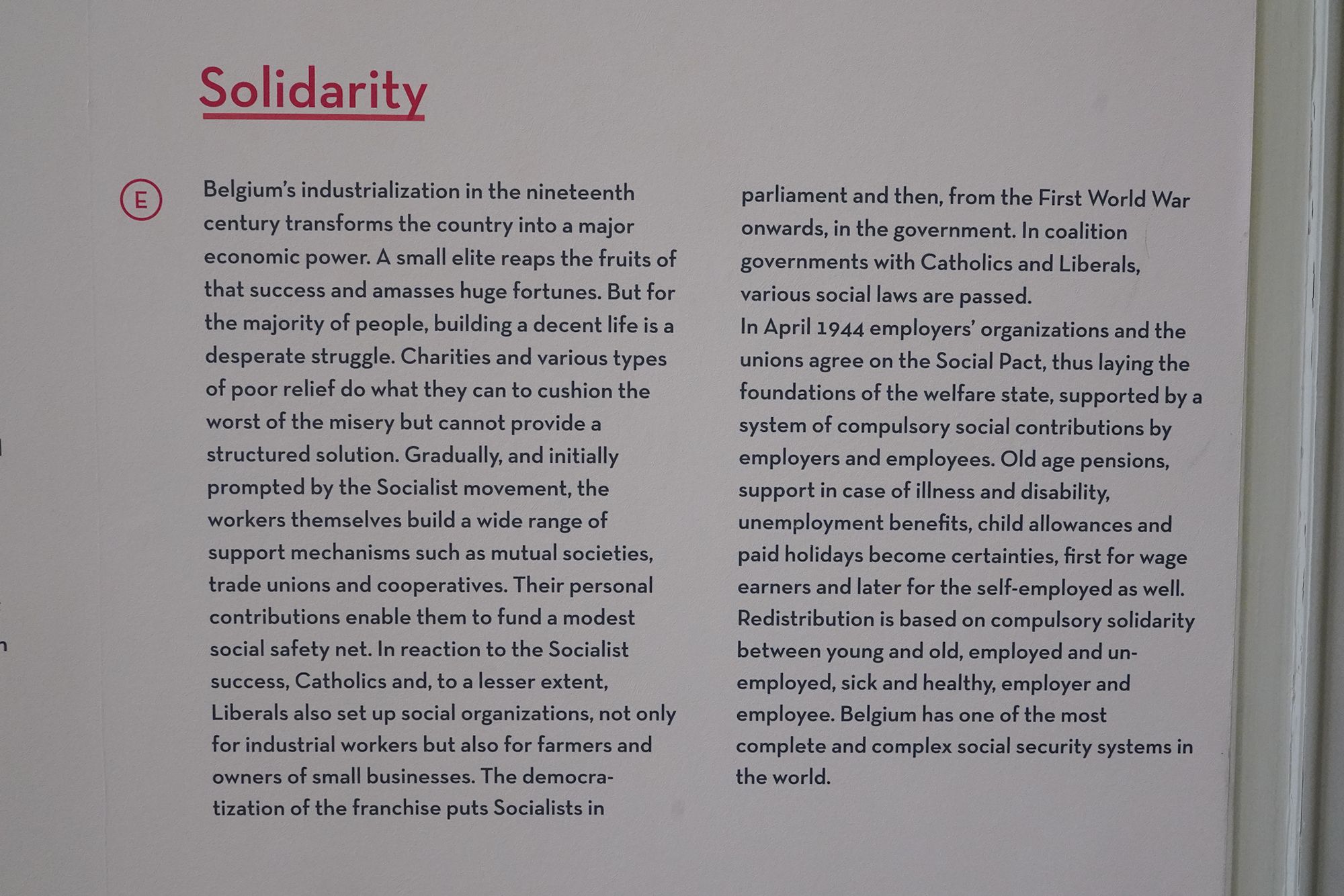
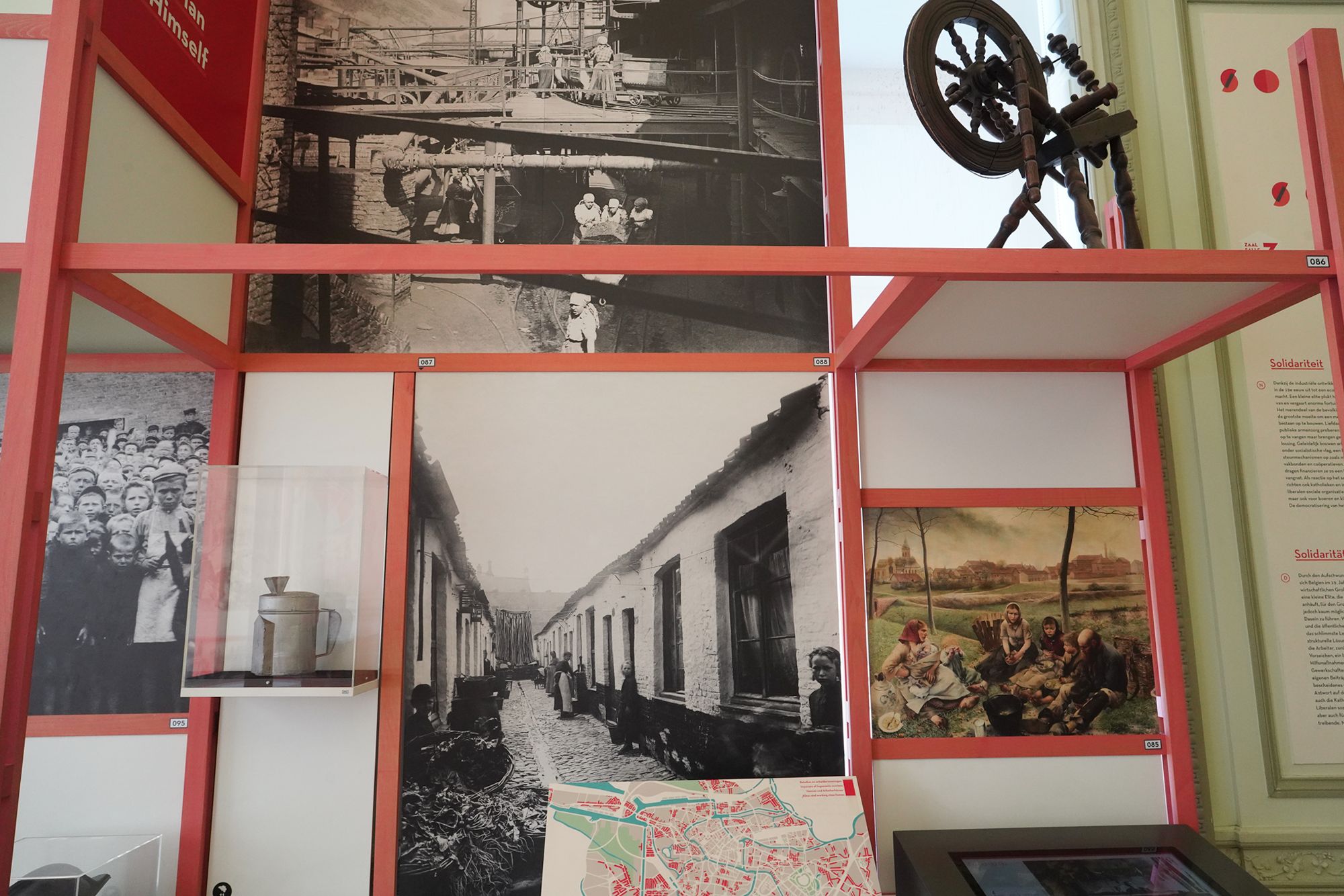
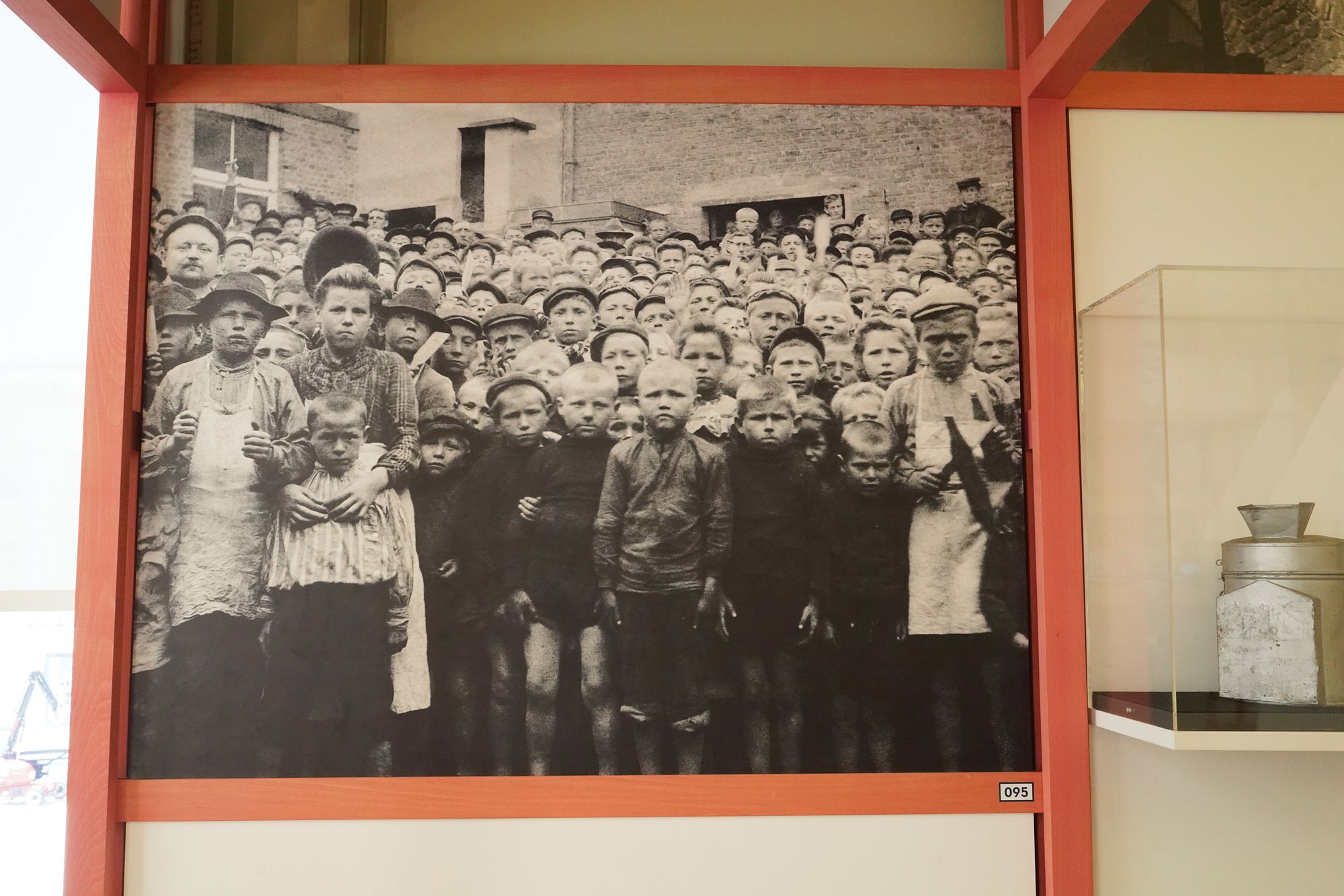
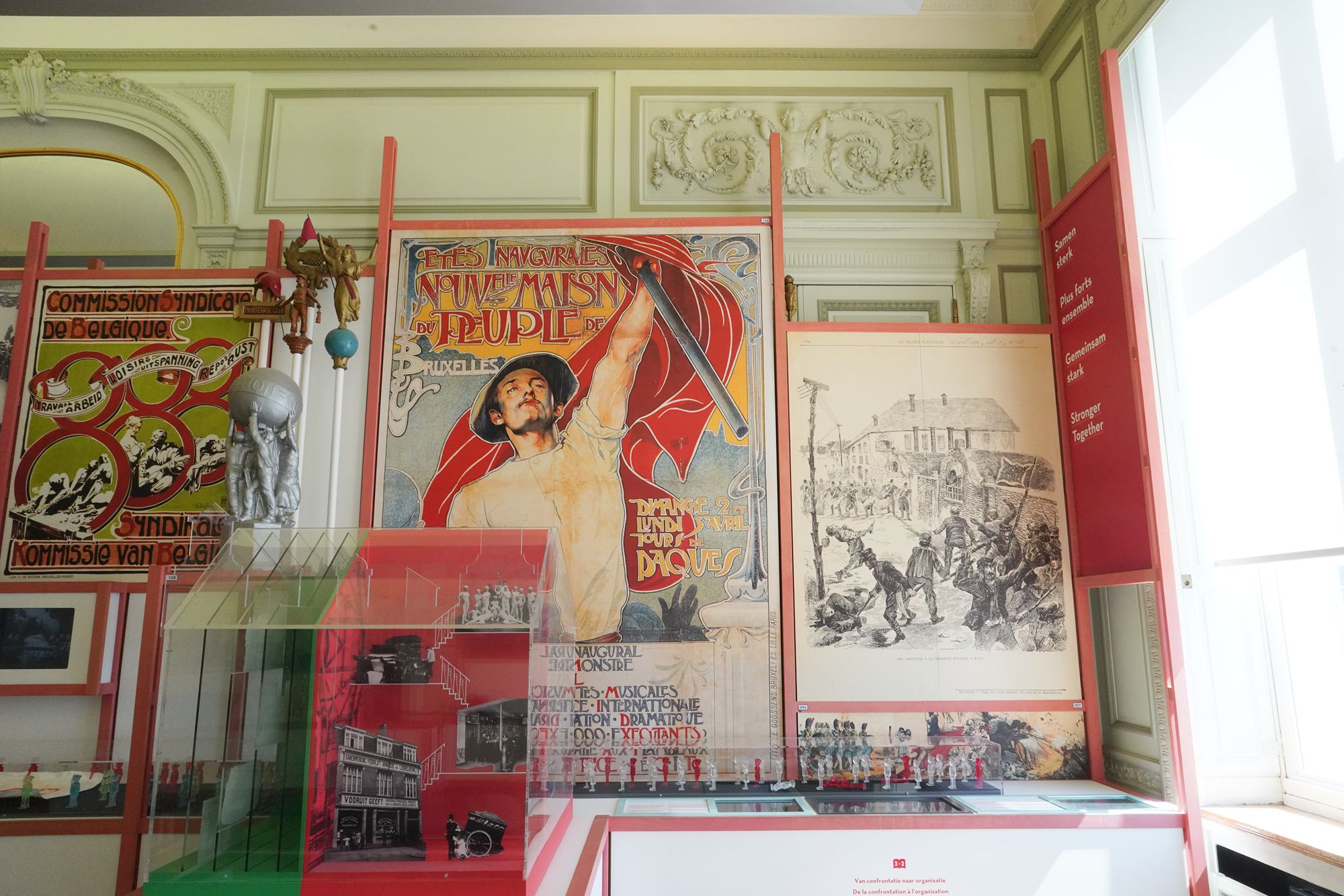
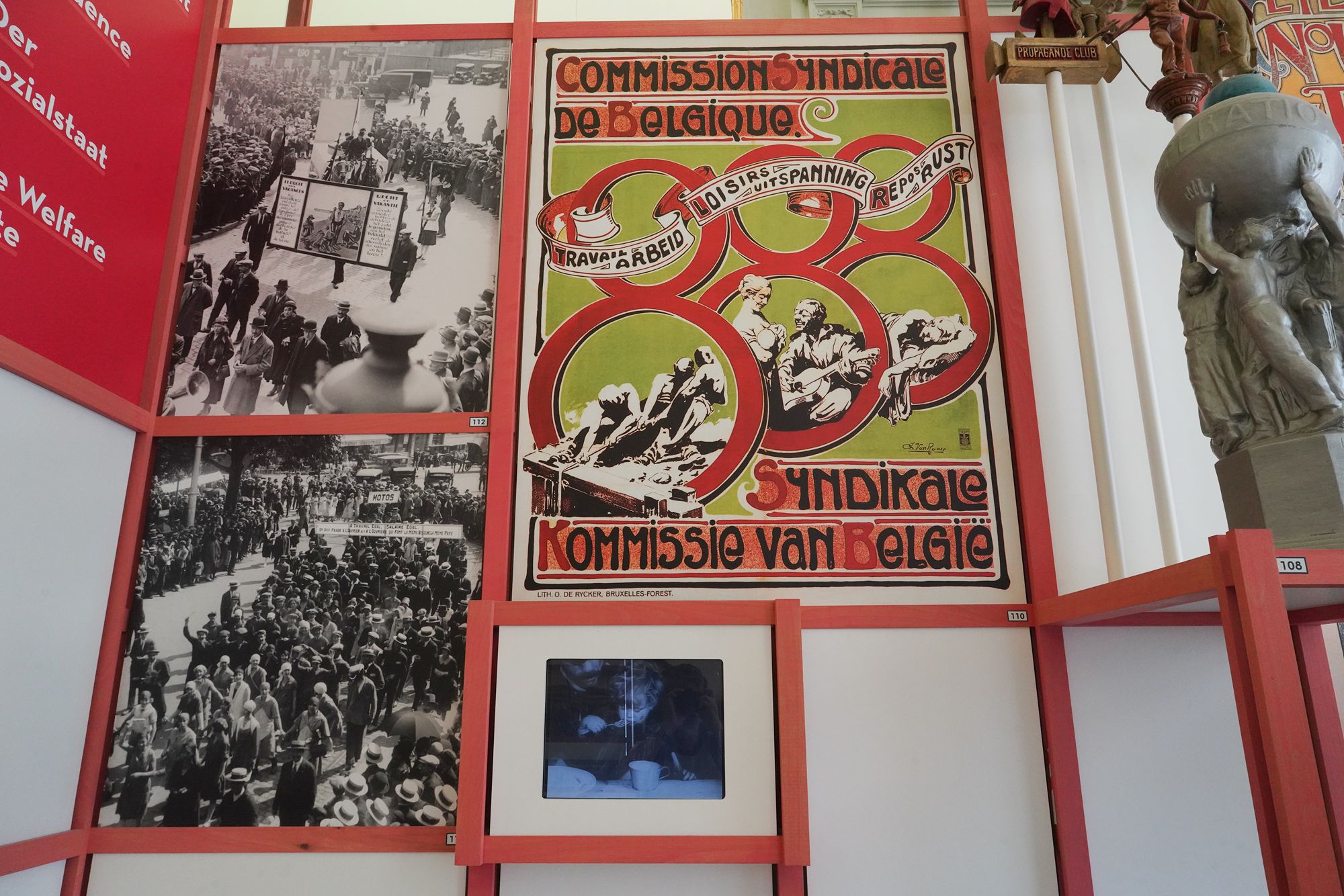
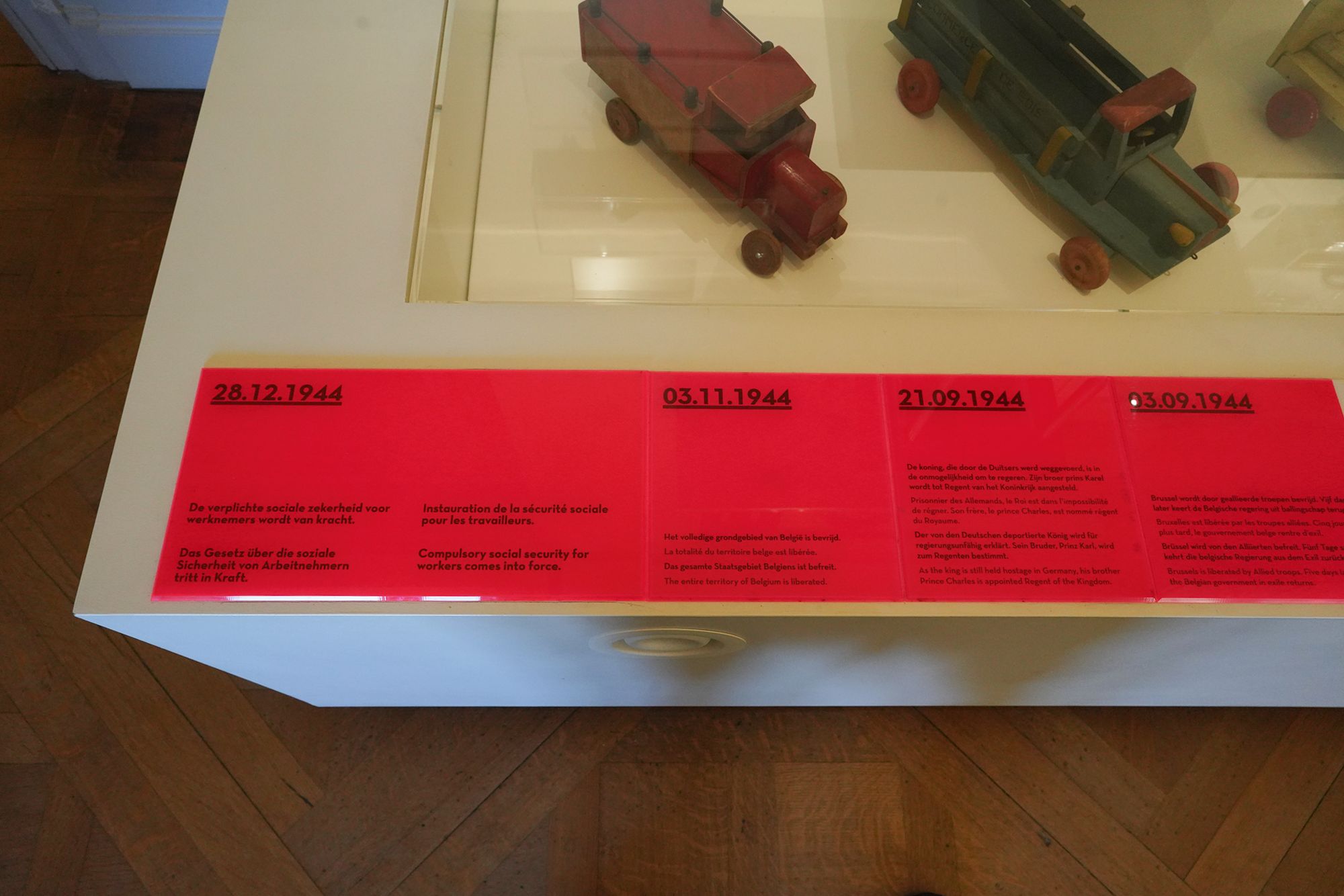
Belgium’s rapid industrialization created great wealth but also difficult living conditions for many workers. Trade unions, mutual aid societies, and cooperatives gradually developed to provide greater protection. In 1944, employers and unions agreed on the Social Pact, which laid the foundation for Belgium’s modern welfare state, including pensions, health and disability support, unemployment benefits, child allowances, and paid holidays.
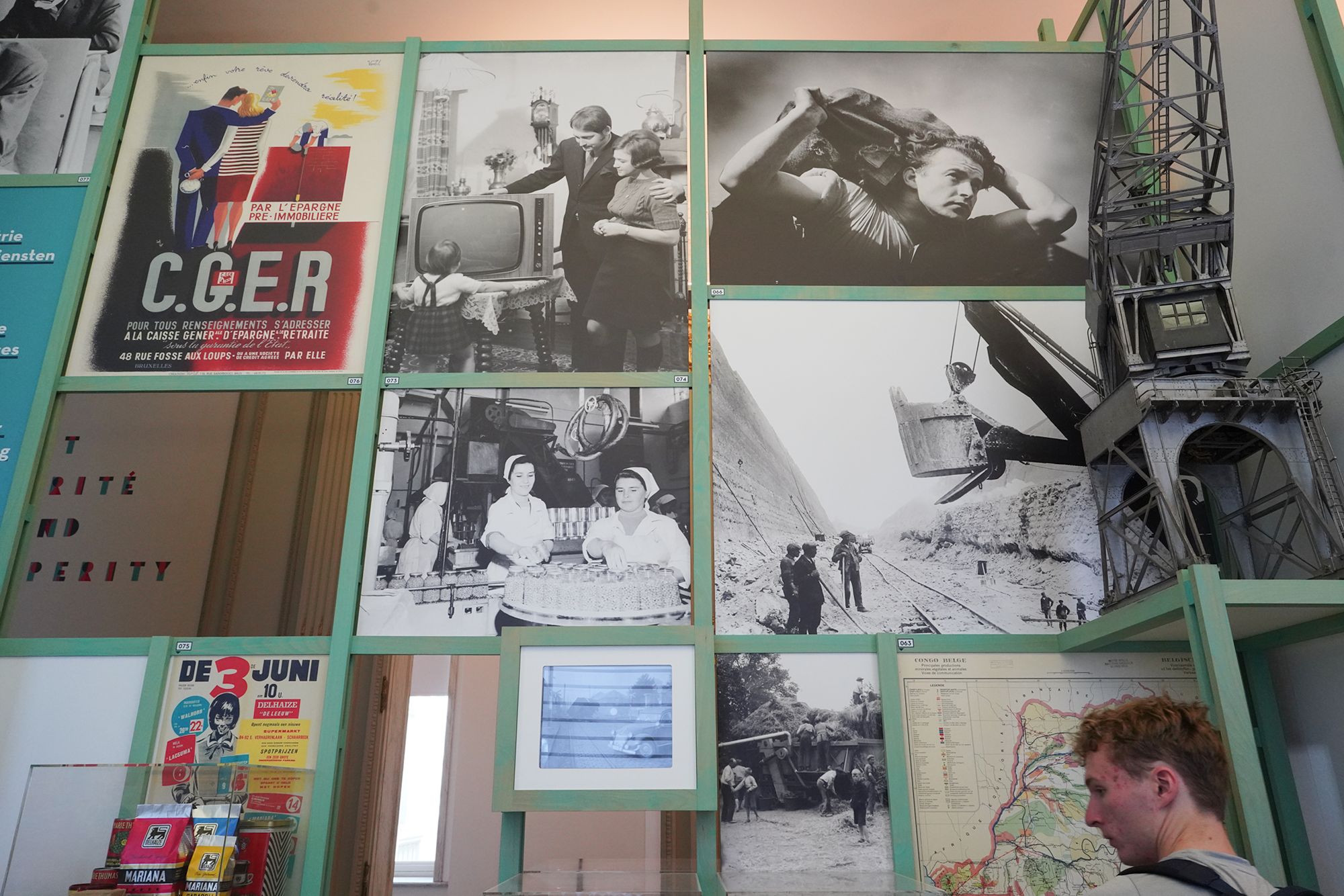
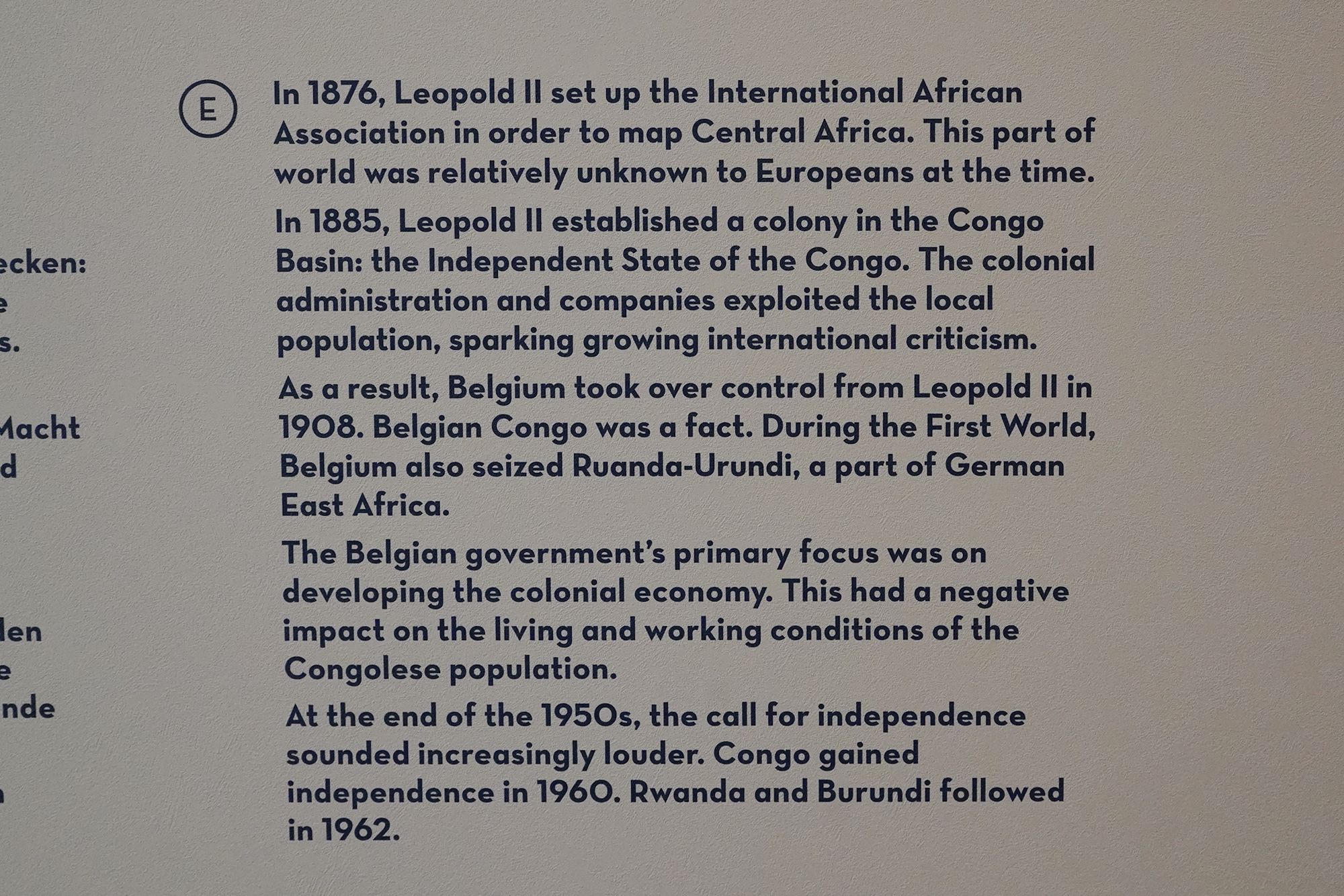
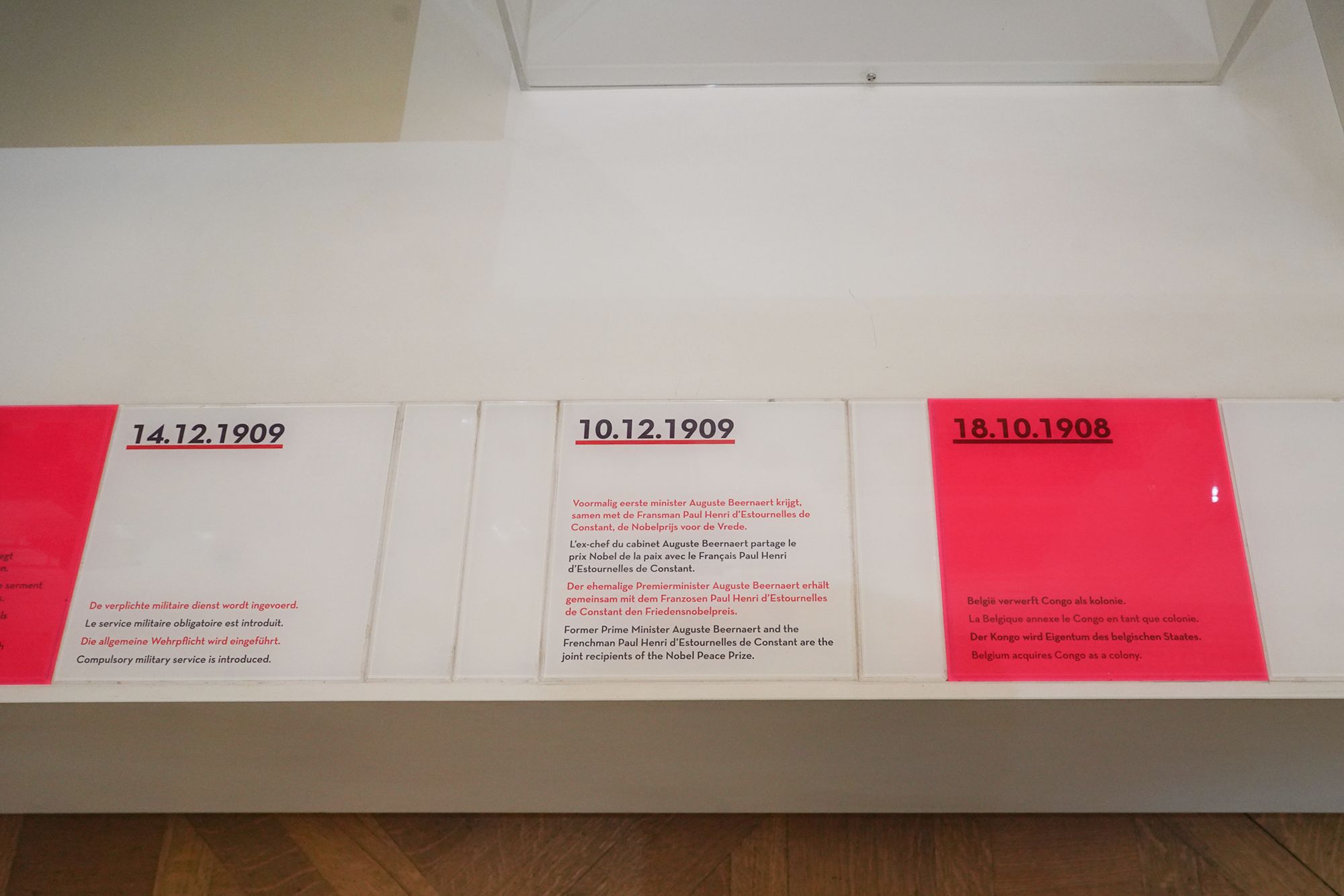
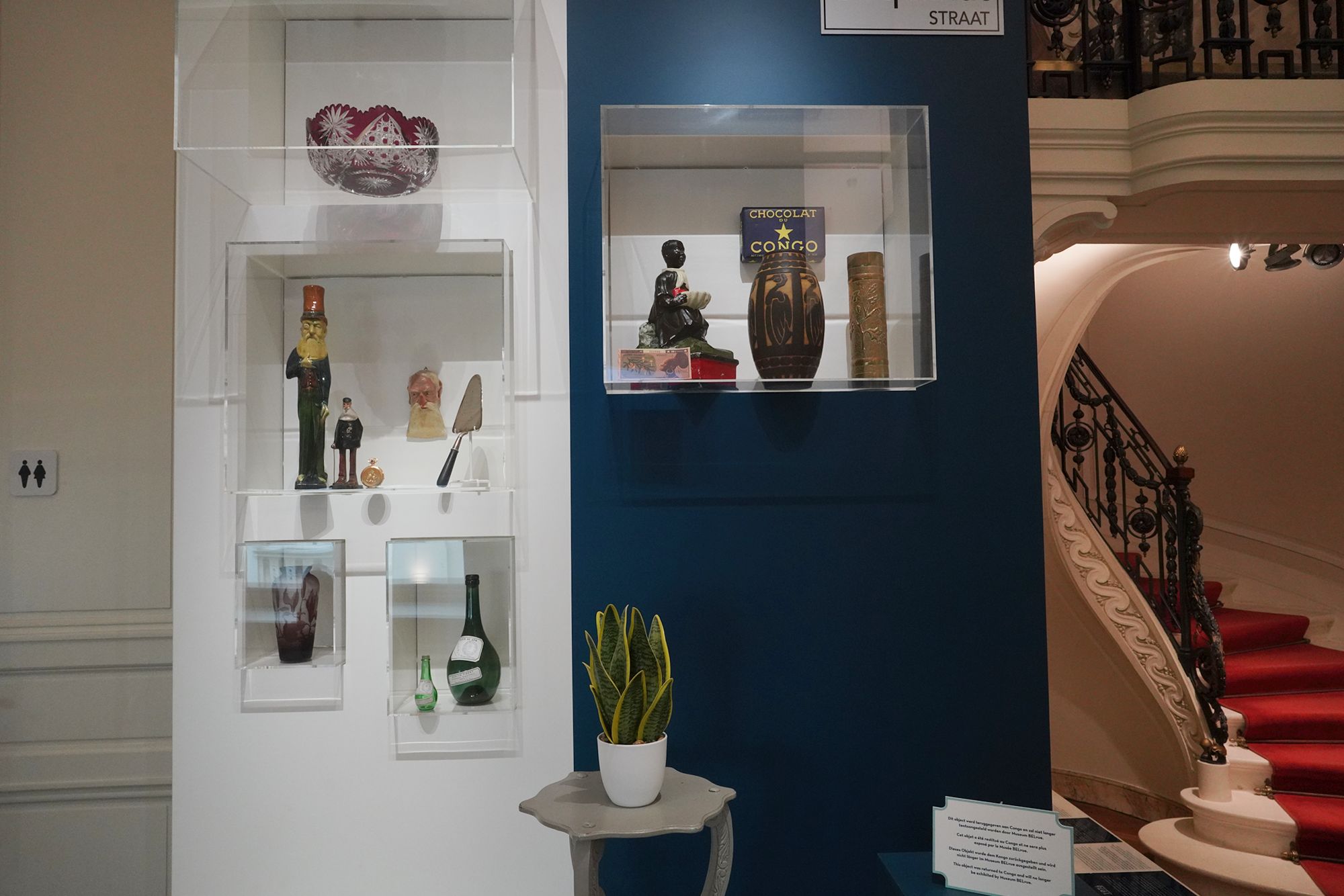
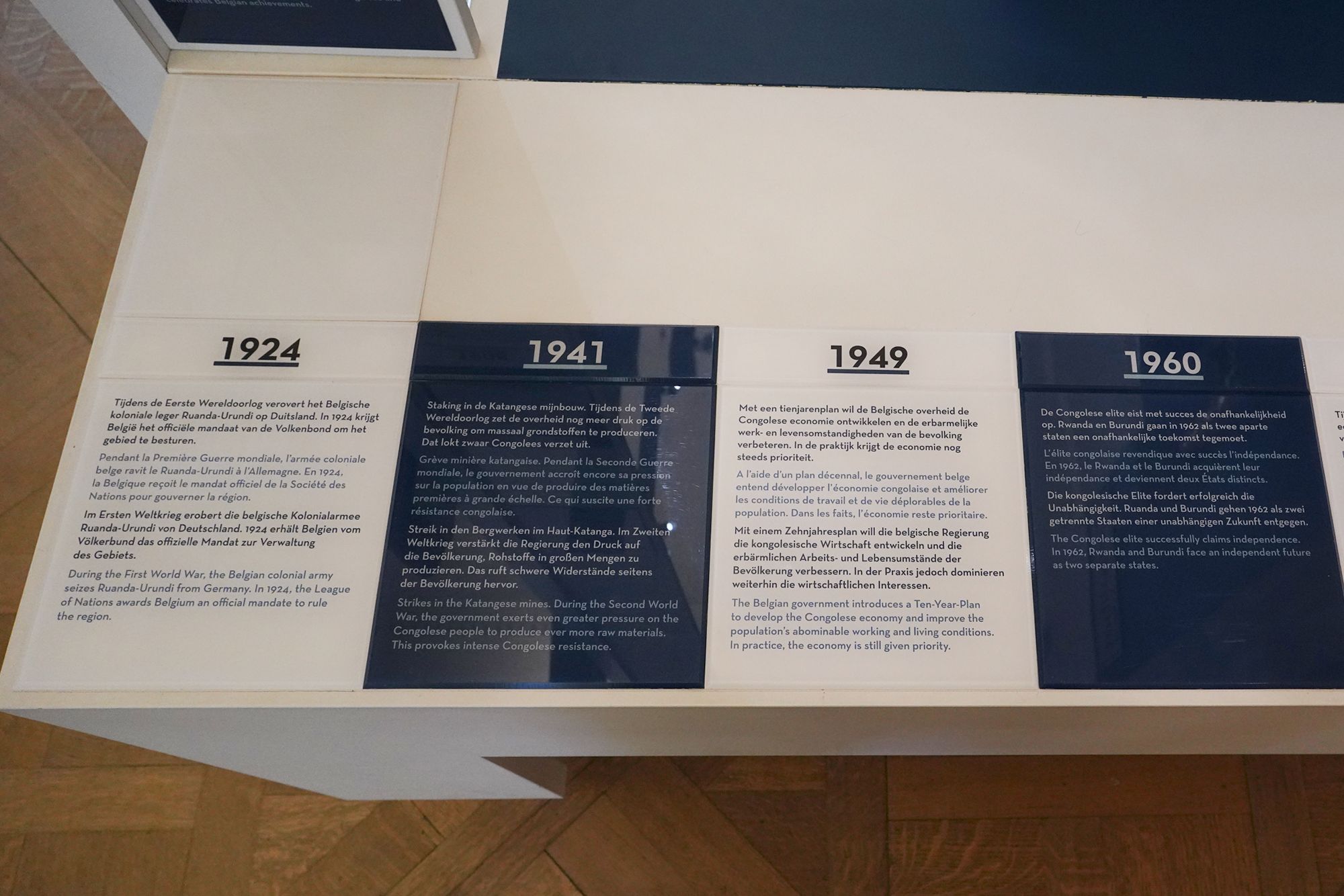
Belgium’s colonial involvement in Central Africa began under King Leopold II, who took personal control of the Congo Free State in 1885. The exploitation and brutal treatment of the Congolese population generated international criticism, and Belgium took control of the colony in 1908. The Belgian Congo gained independence in 1960, followed by Rwanda and Burundi in 1962.
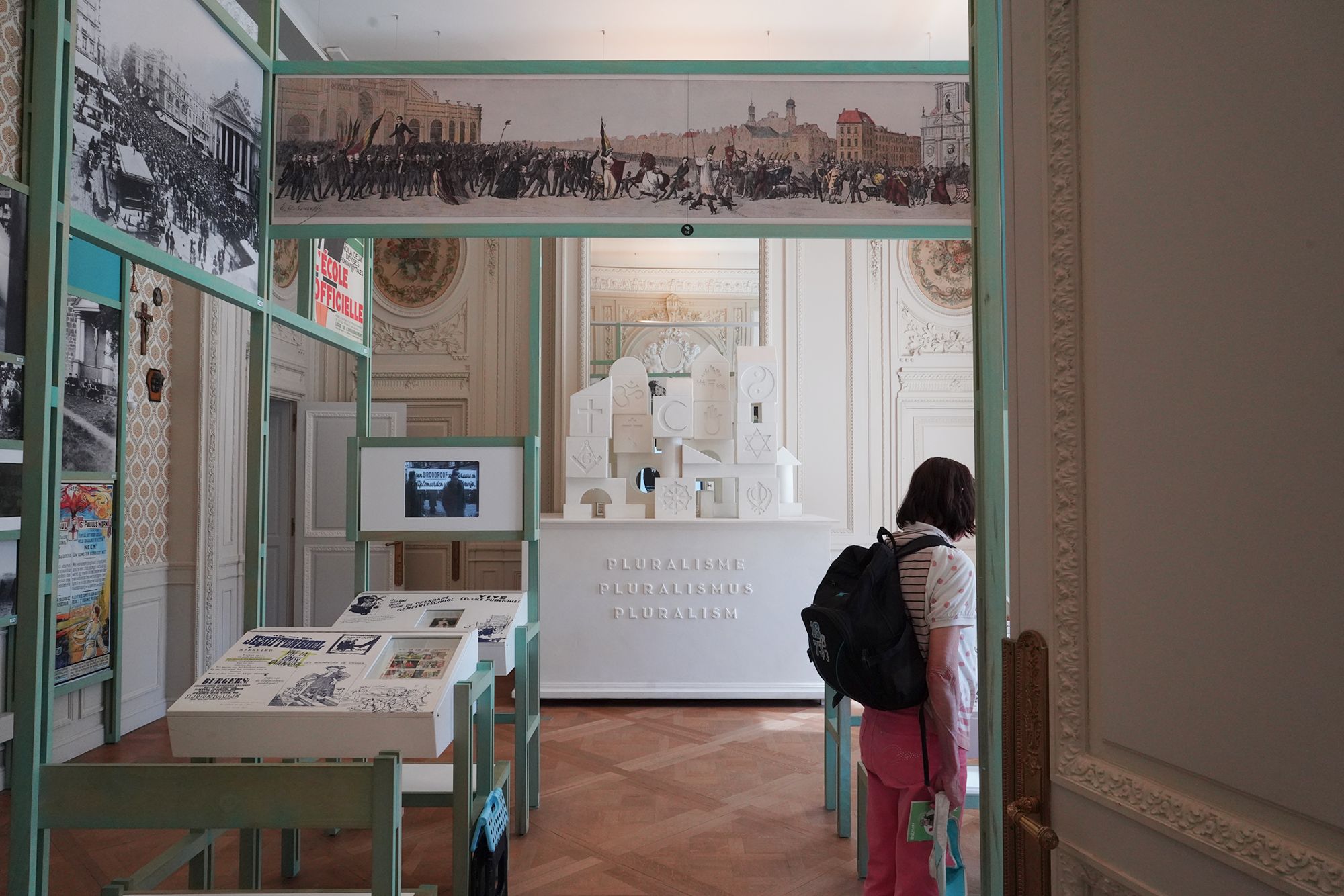
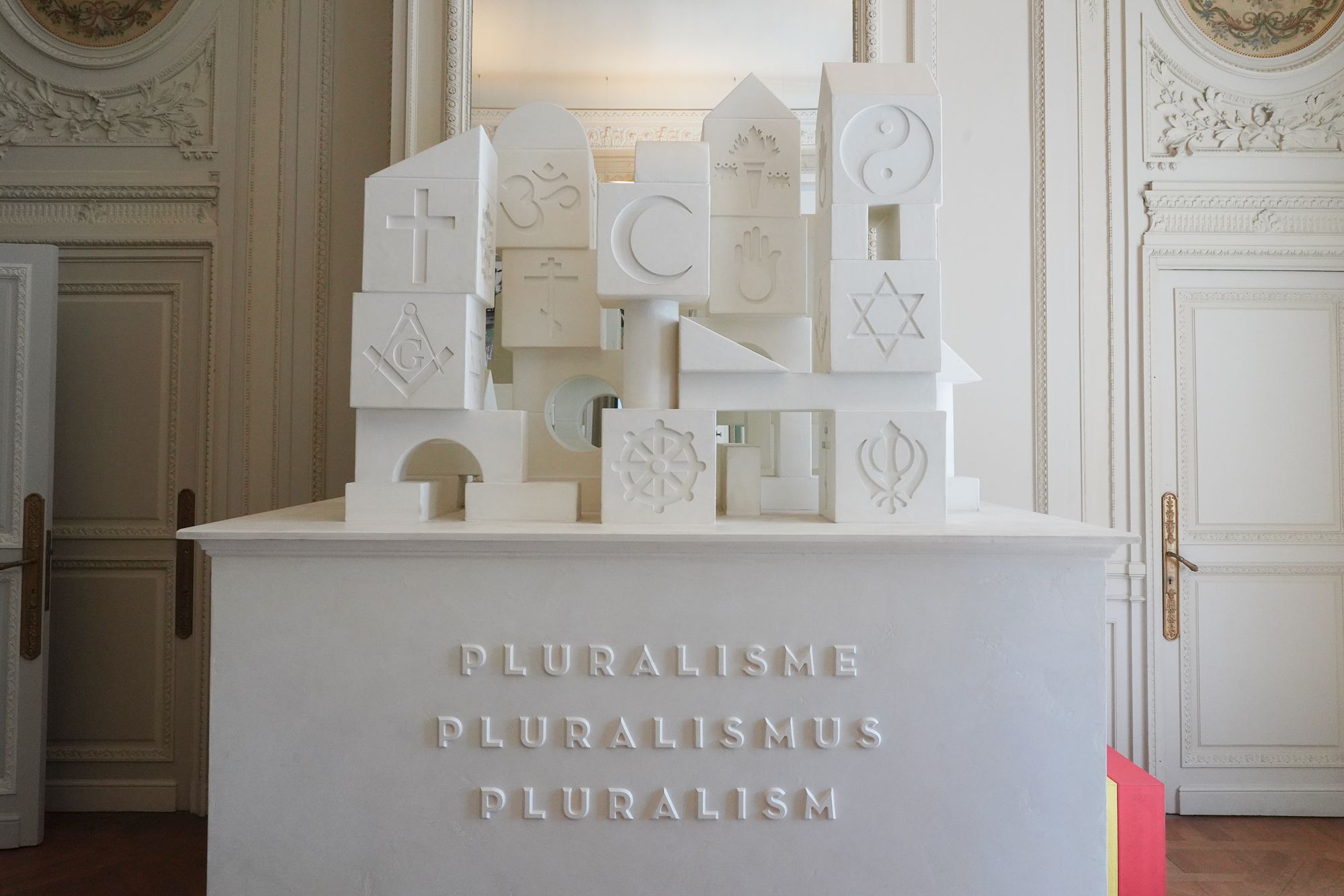
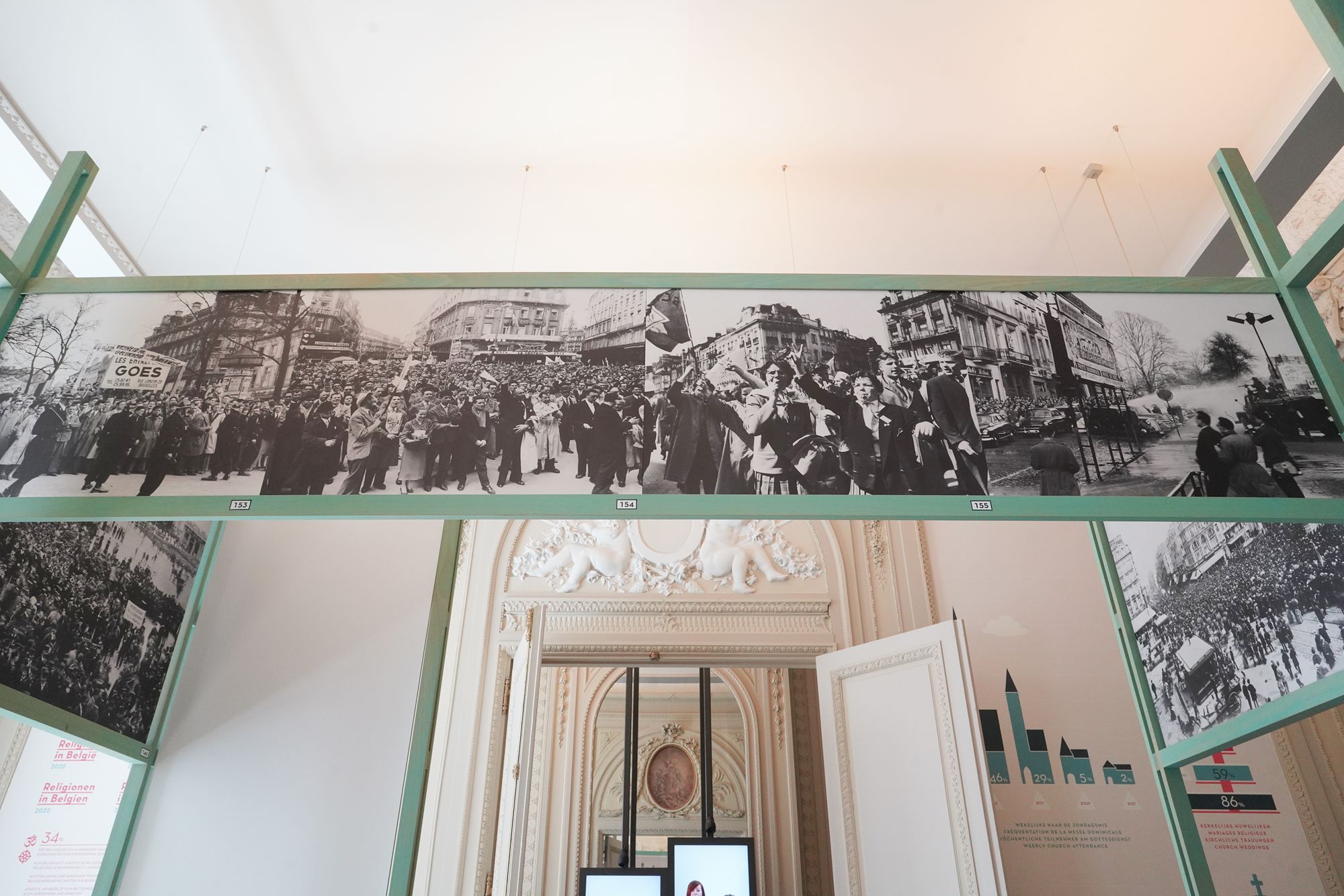
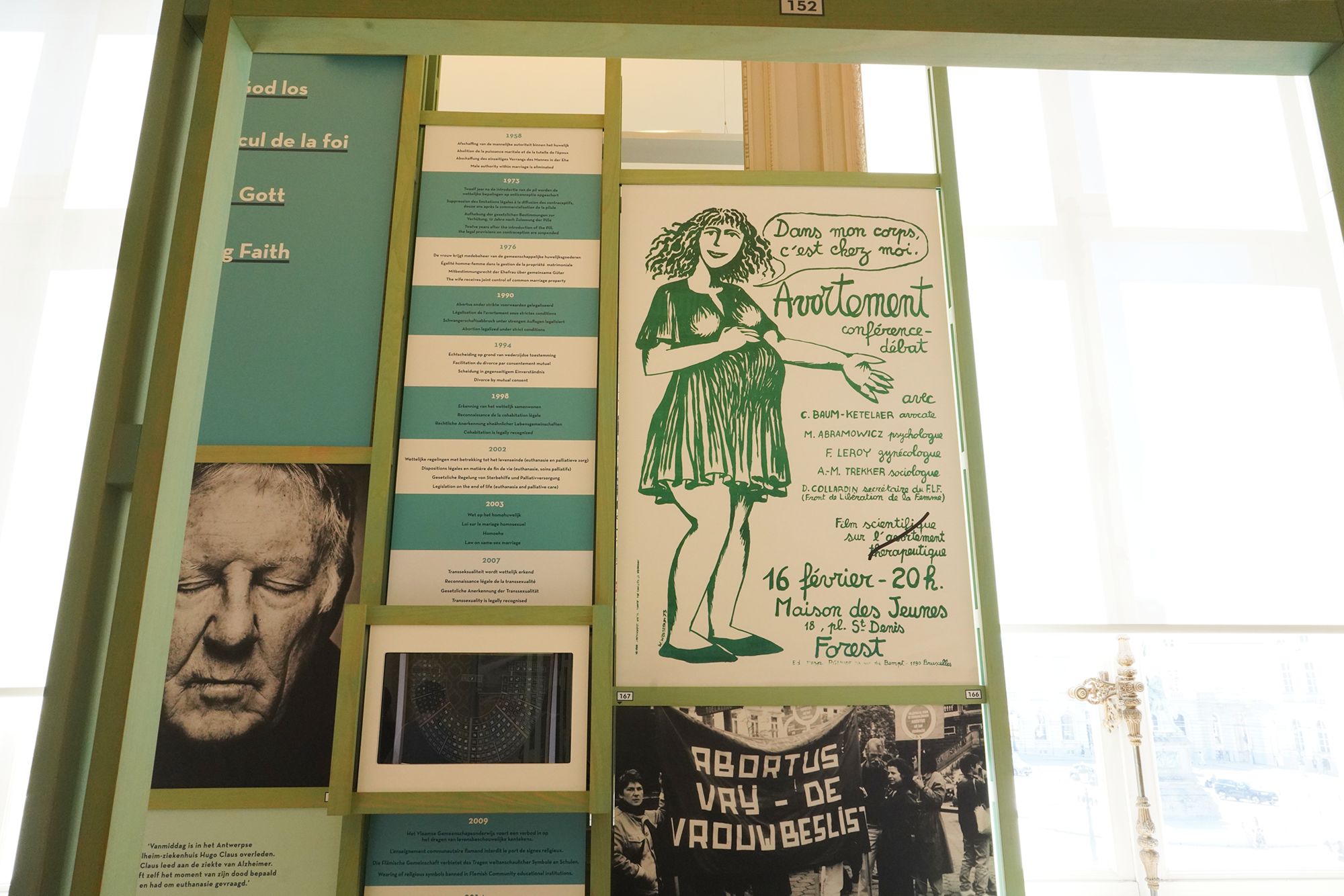
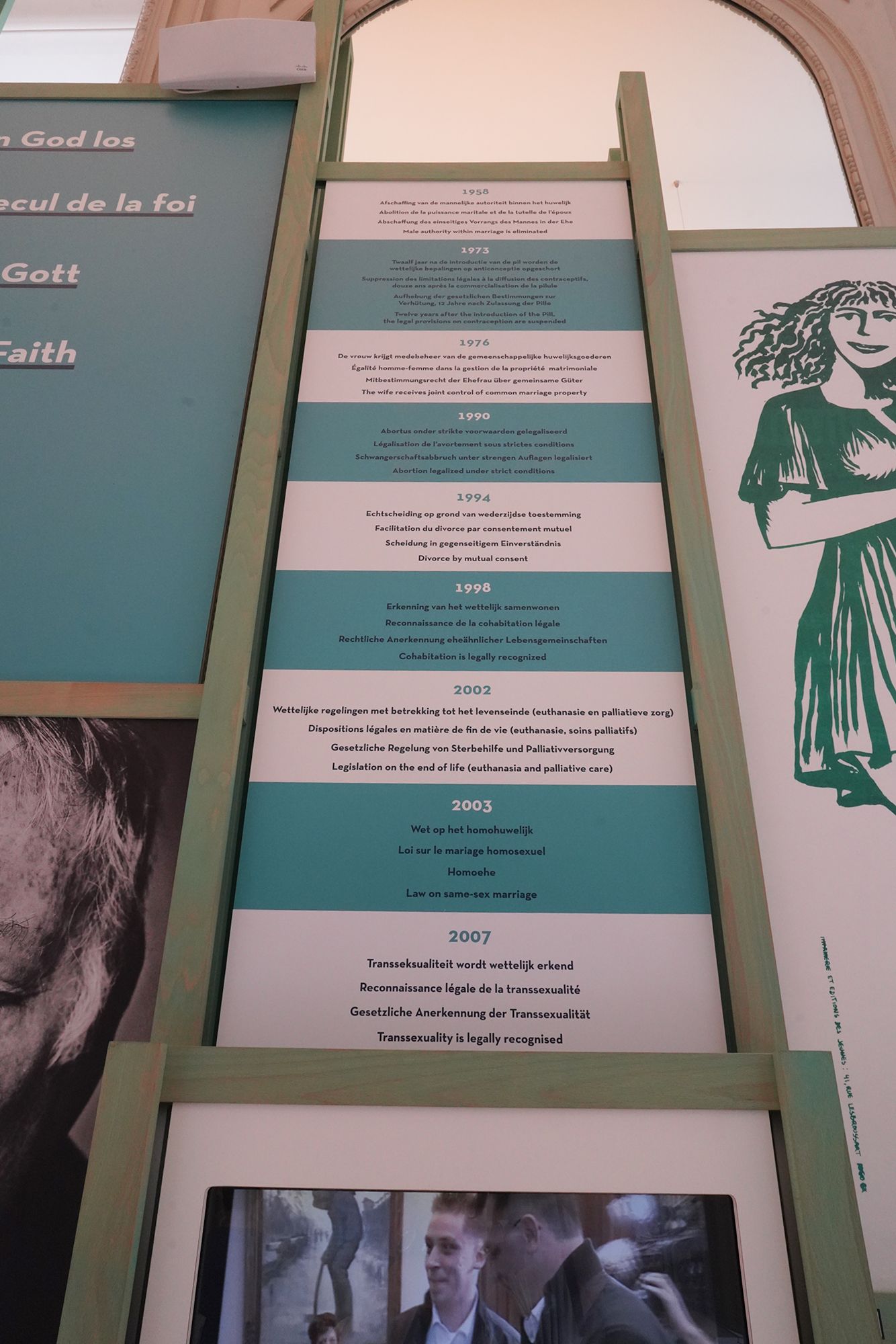
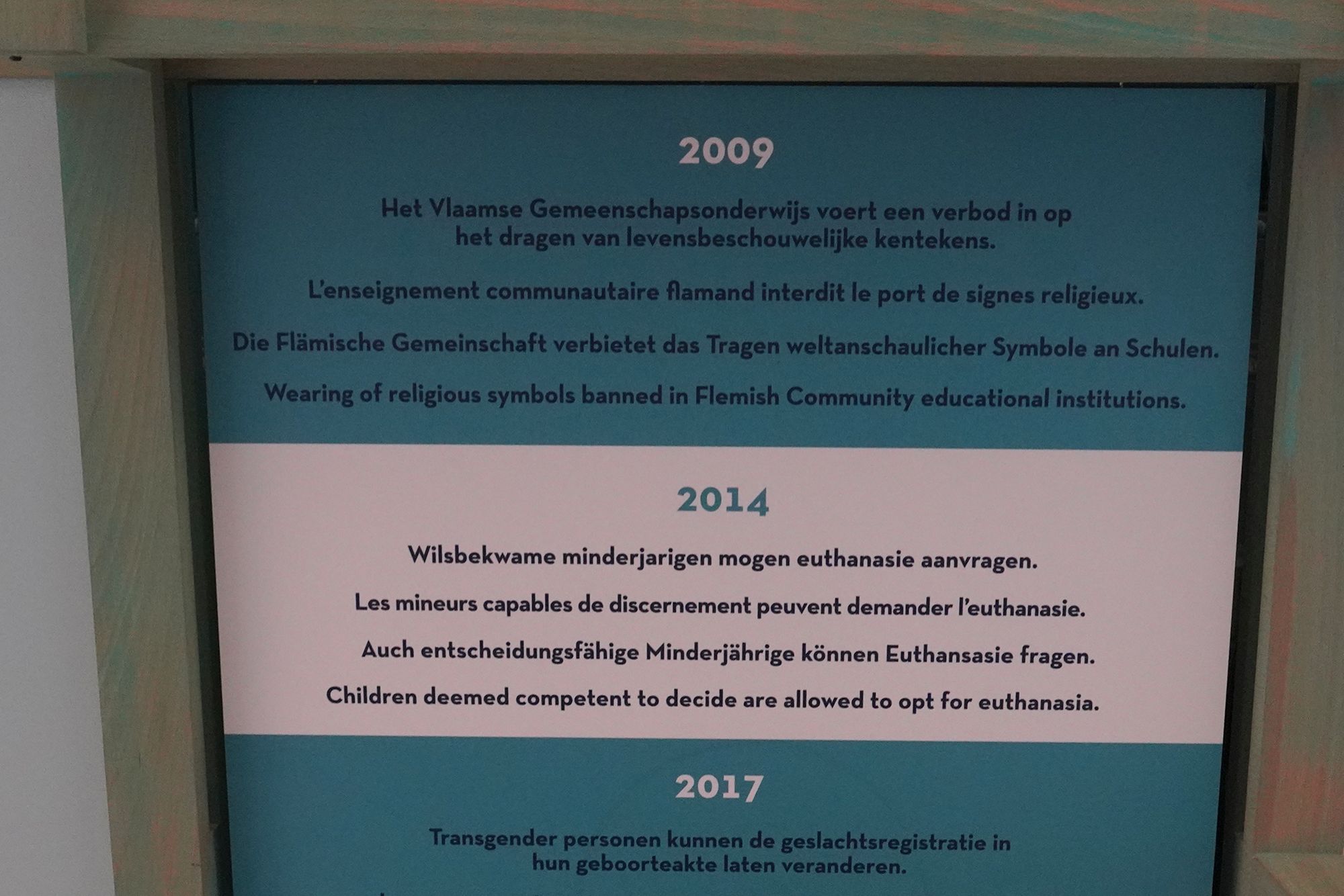
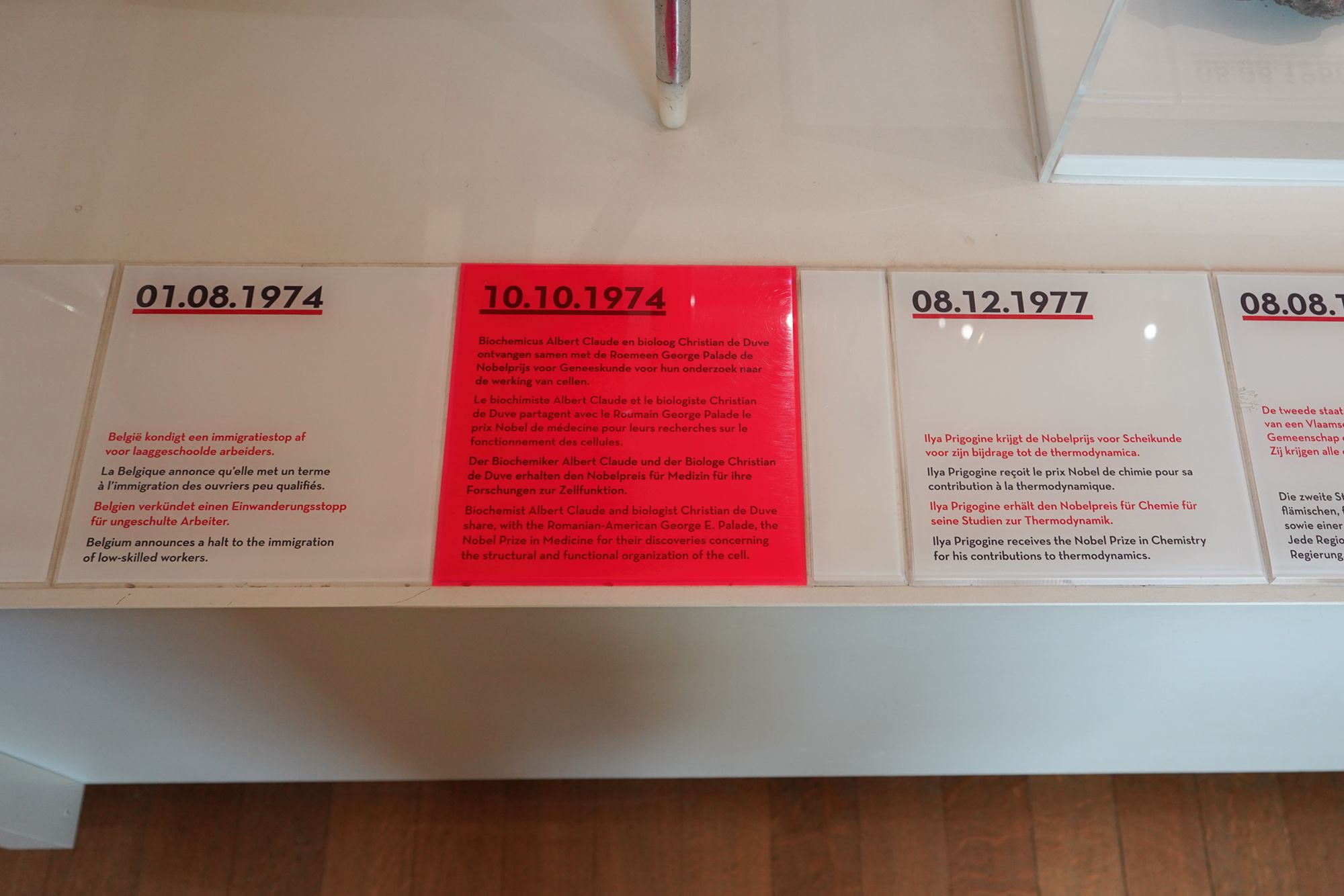
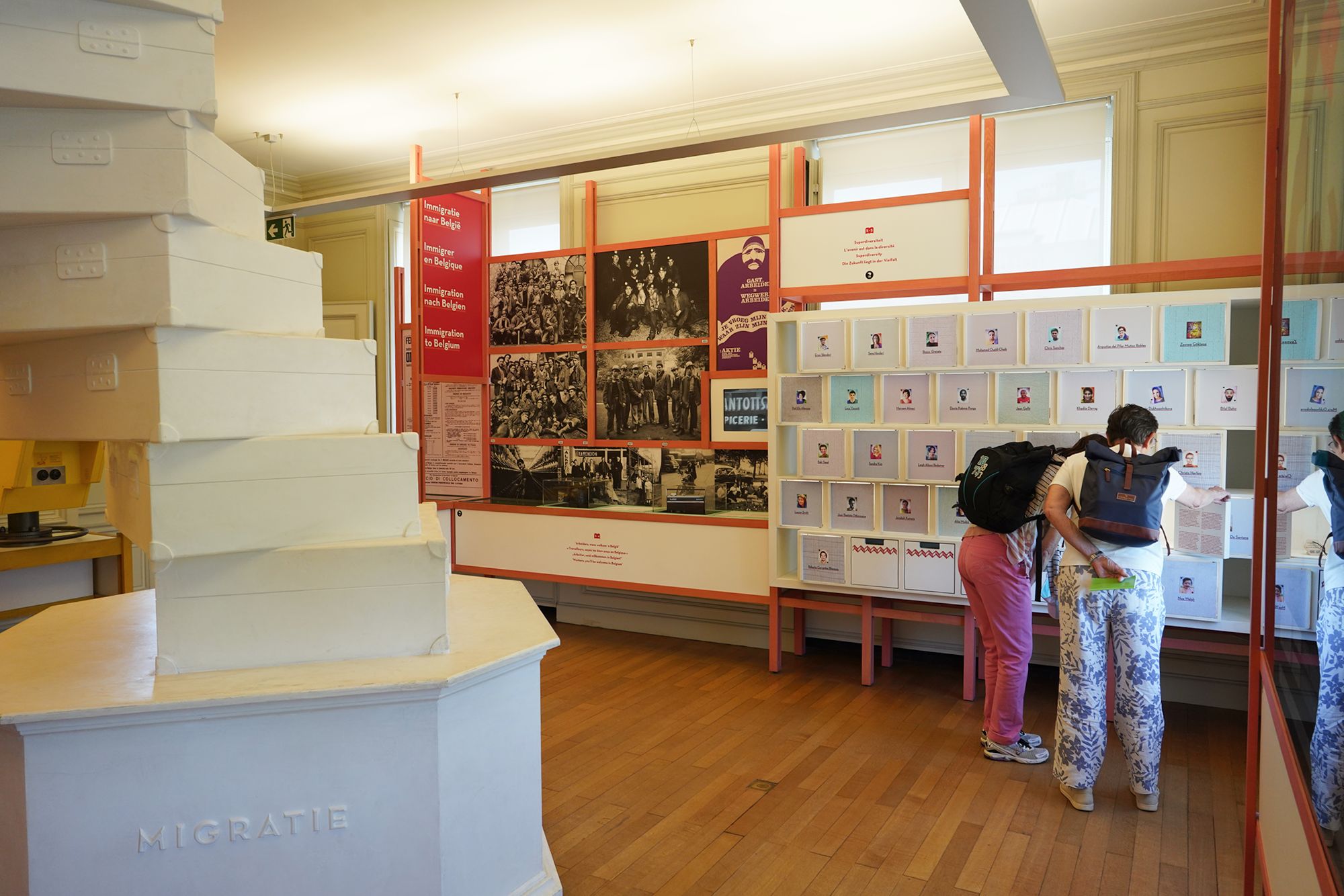
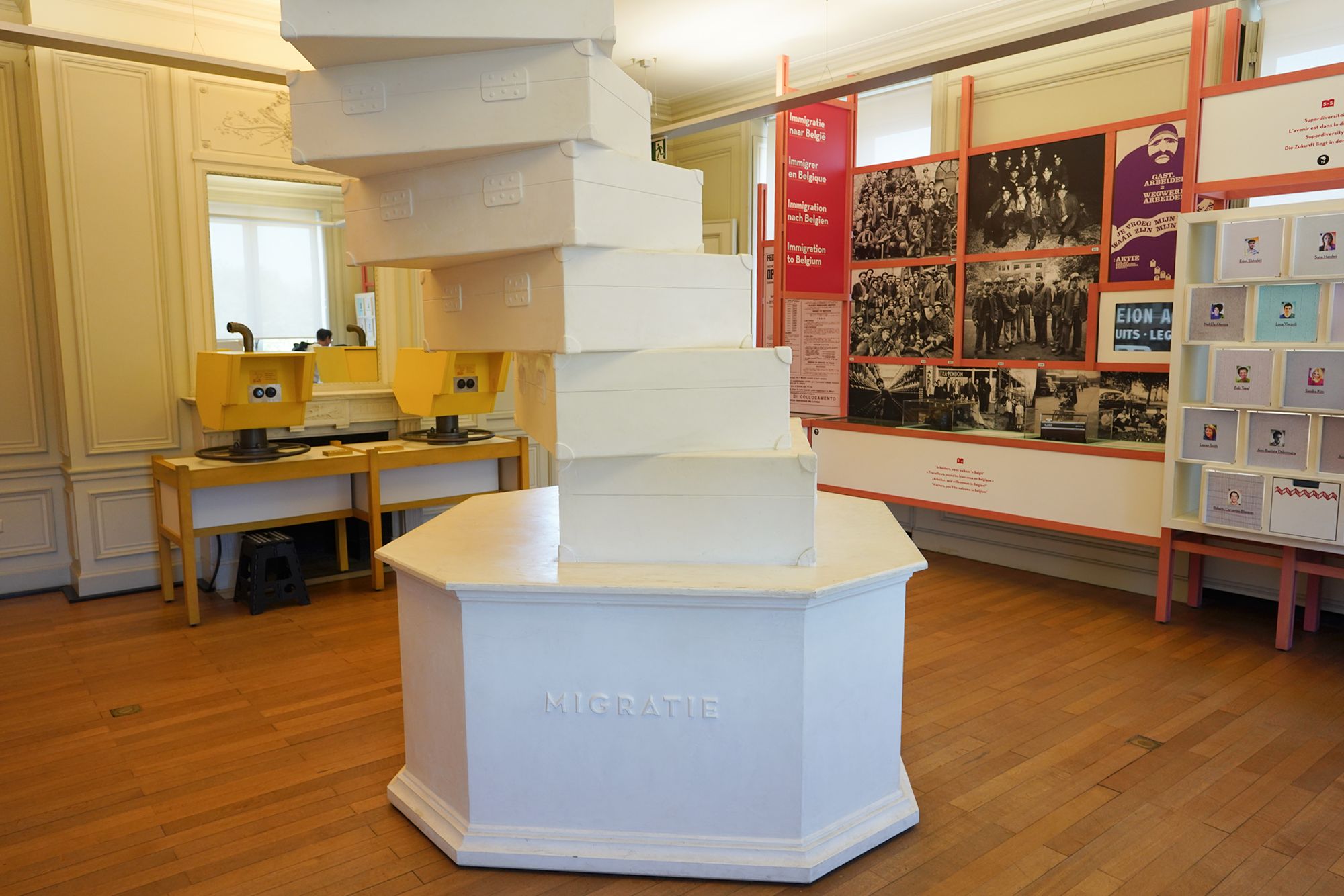
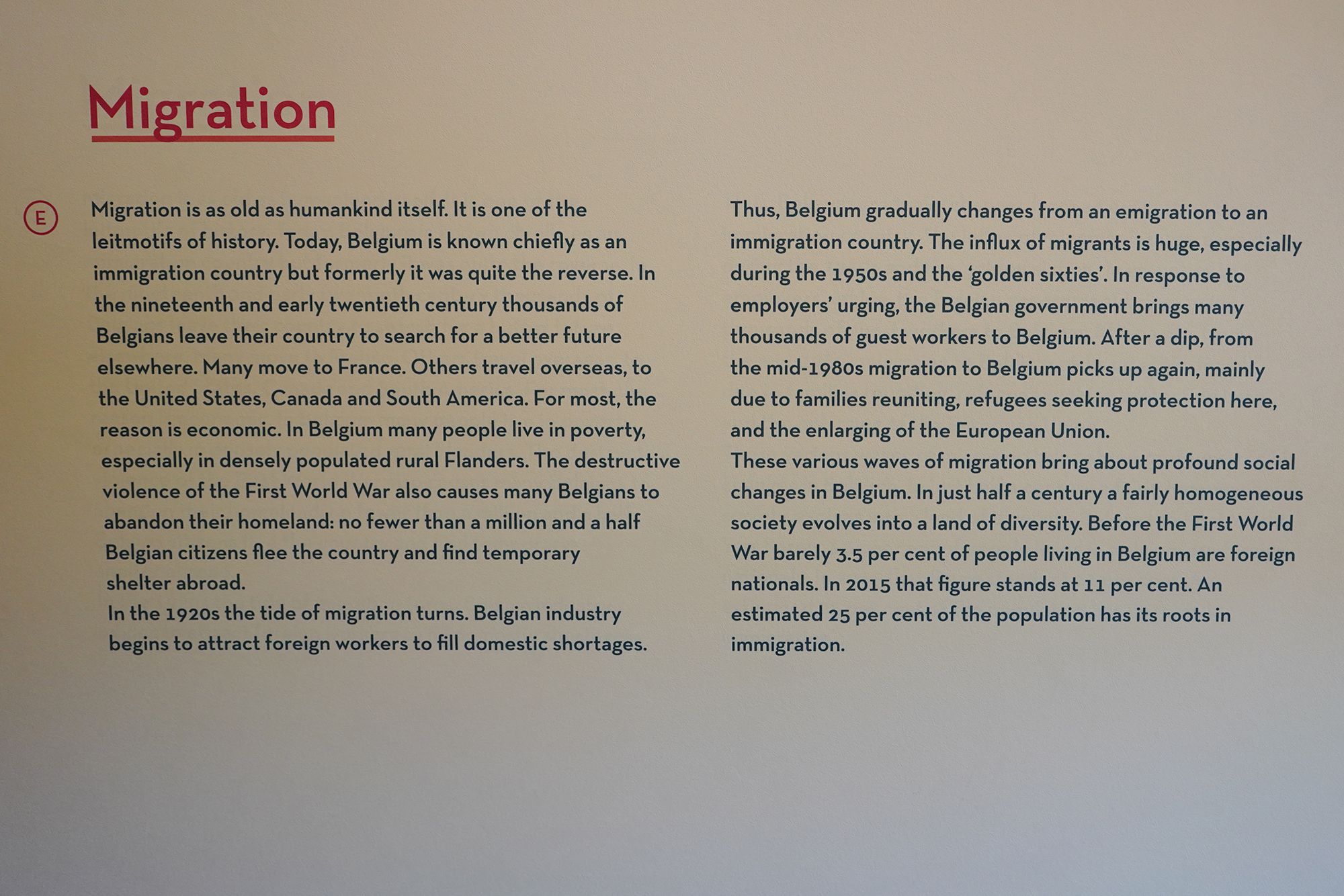
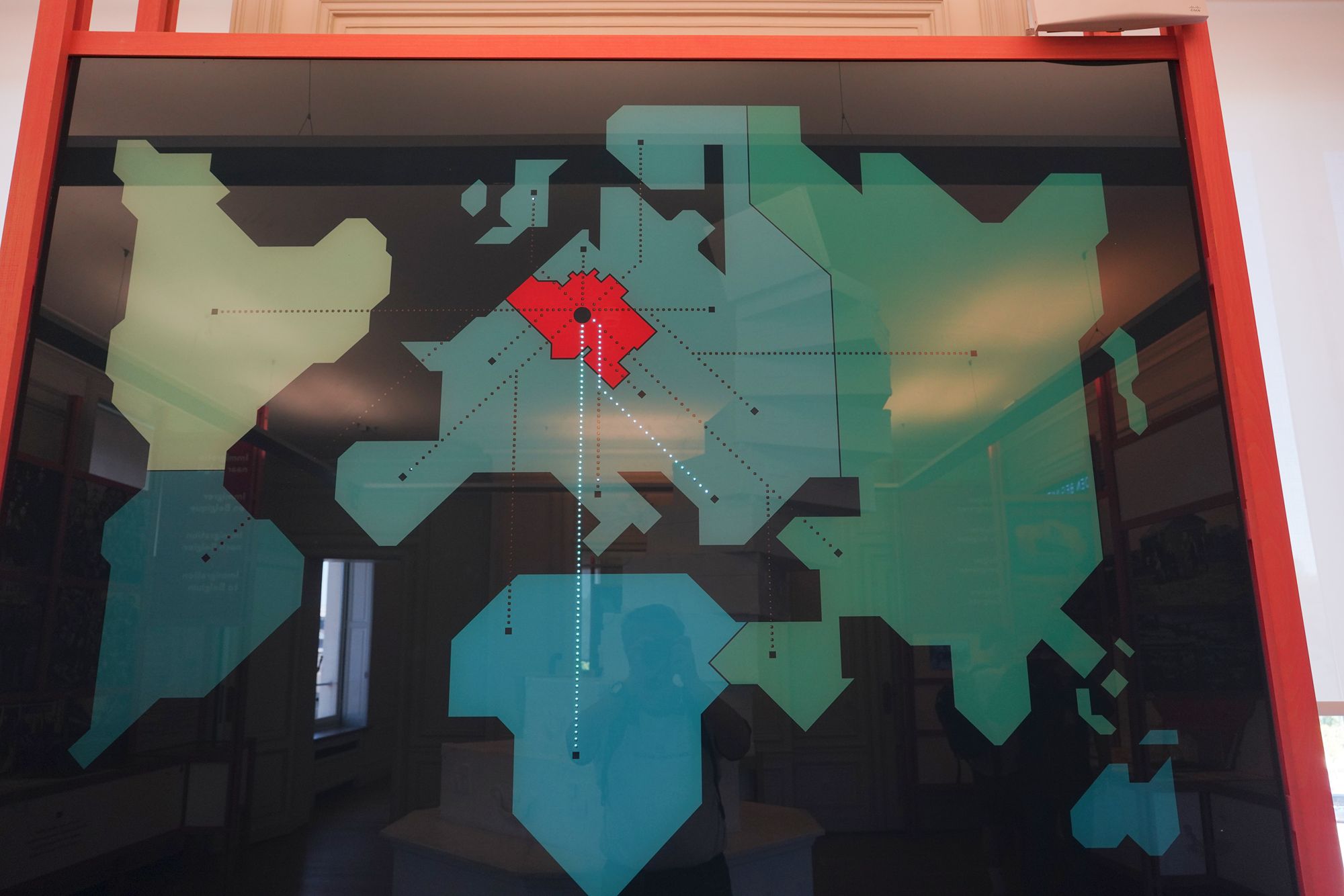
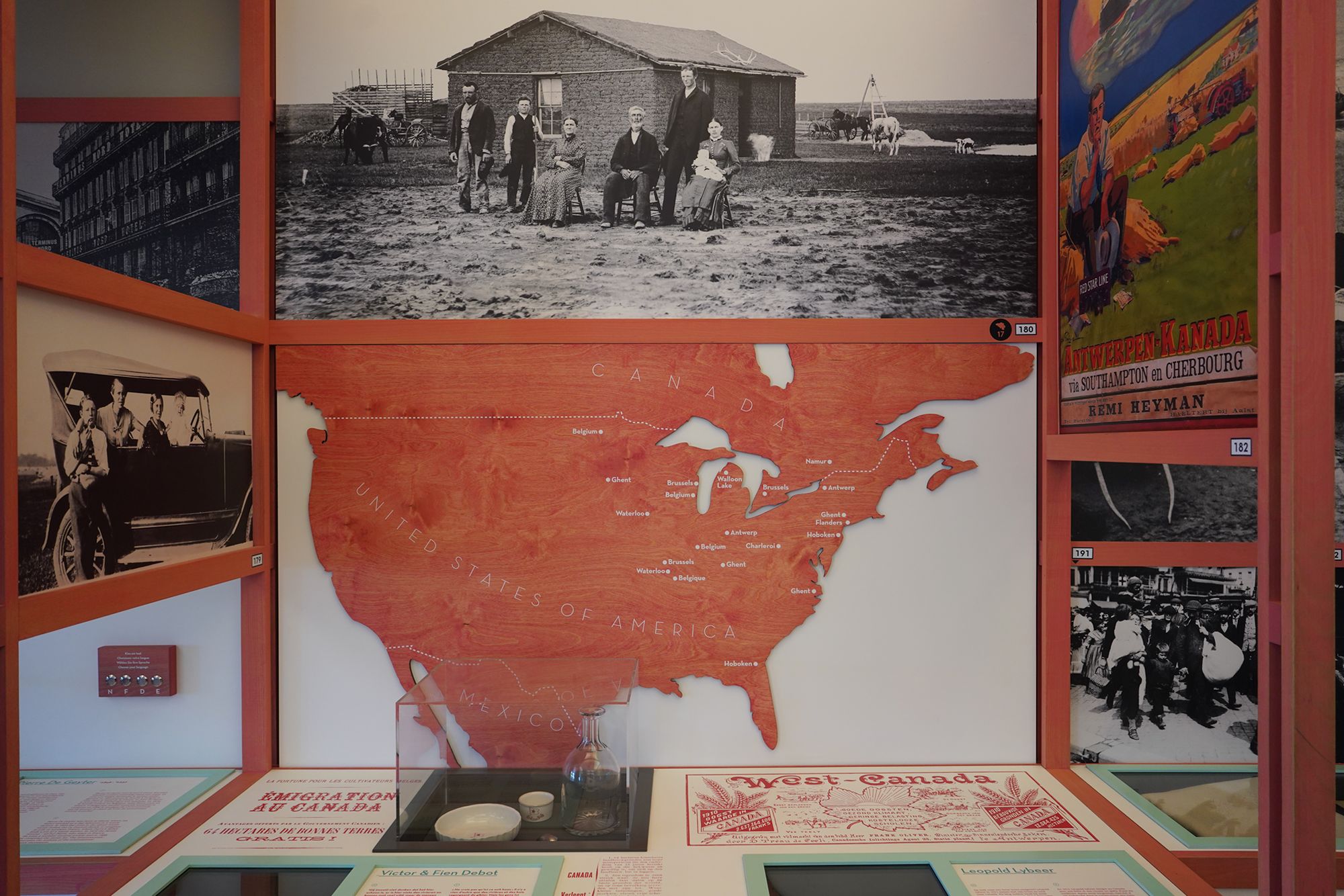
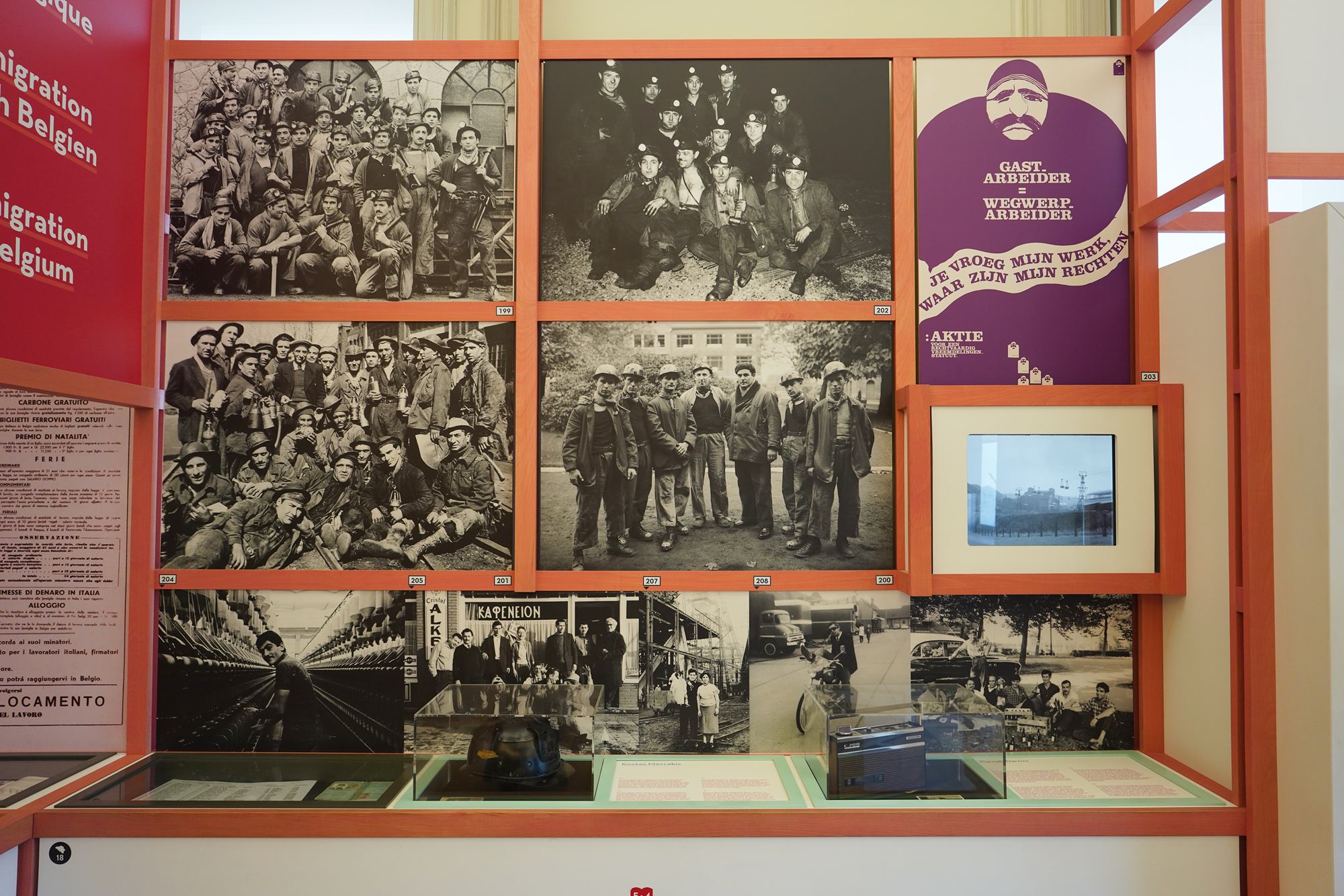
Belgium was once a country of emigration, with many Belgians leaving for France, North America, and elsewhere in search of better opportunities. From the 1920s, the trend reversed as Belgian industries recruited foreign workers. Immigration increased greatly after World War II and later through family reunification, refugees, and European integration, gradually transforming Belgium into the diverse, multicultural society it is today.
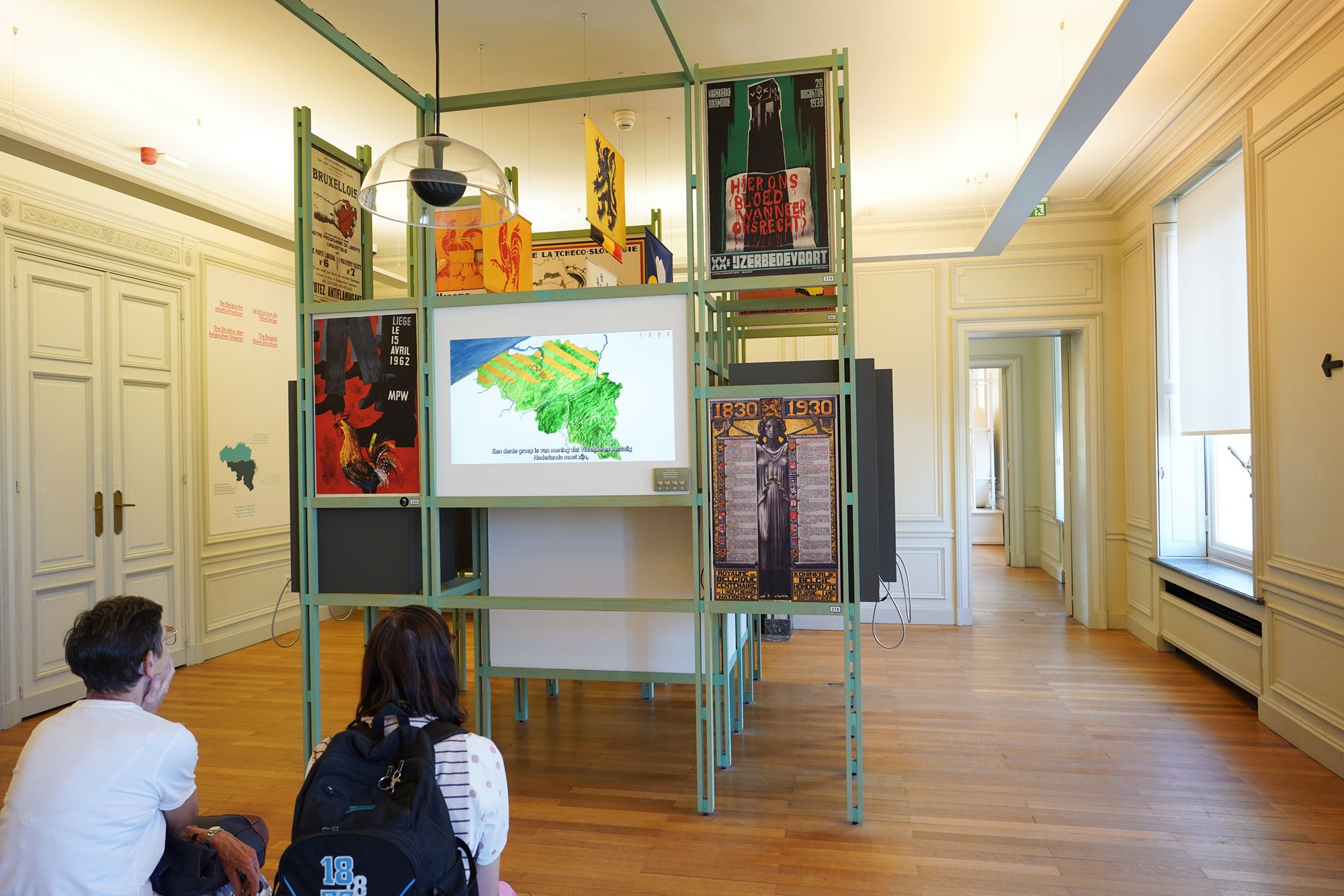
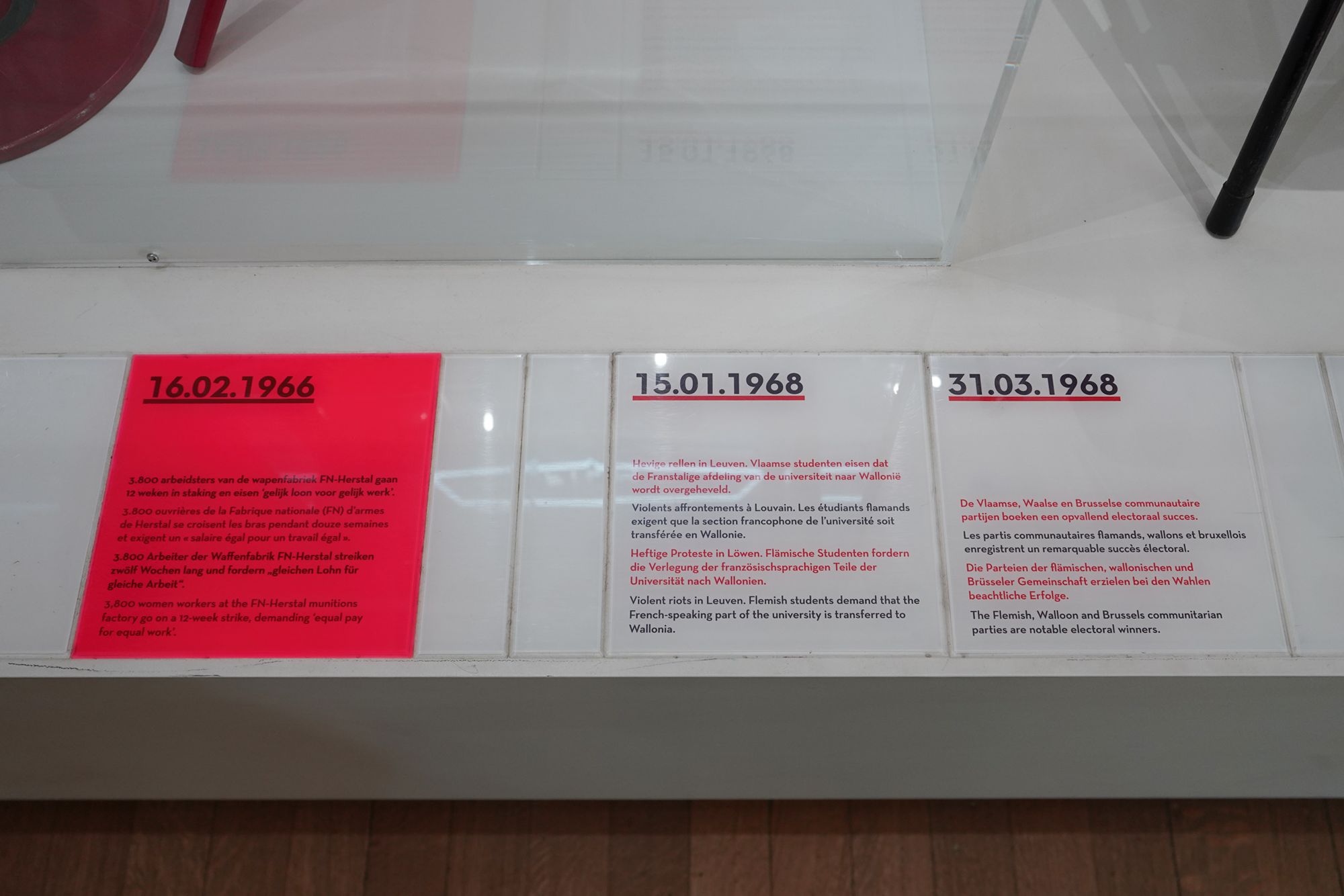
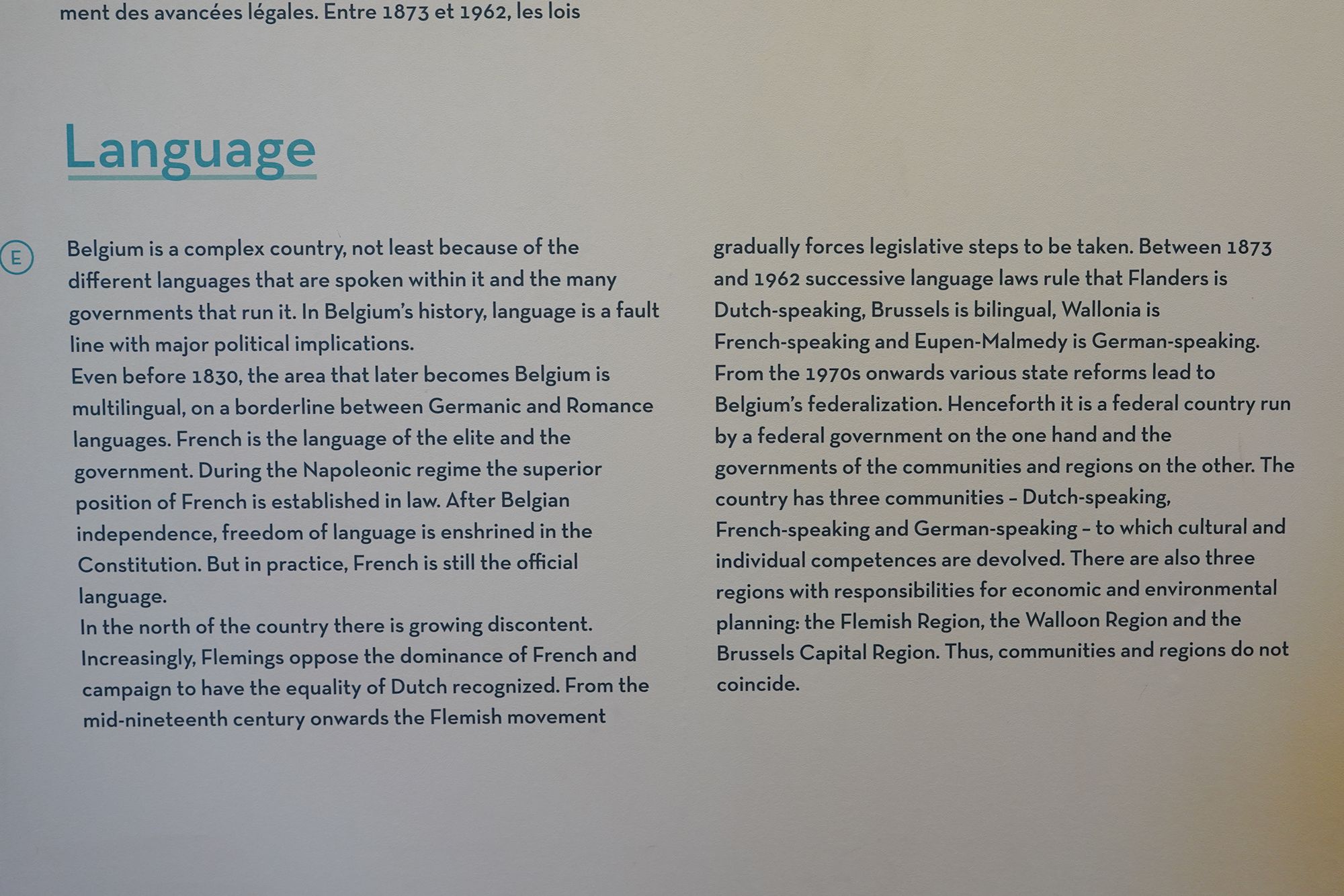
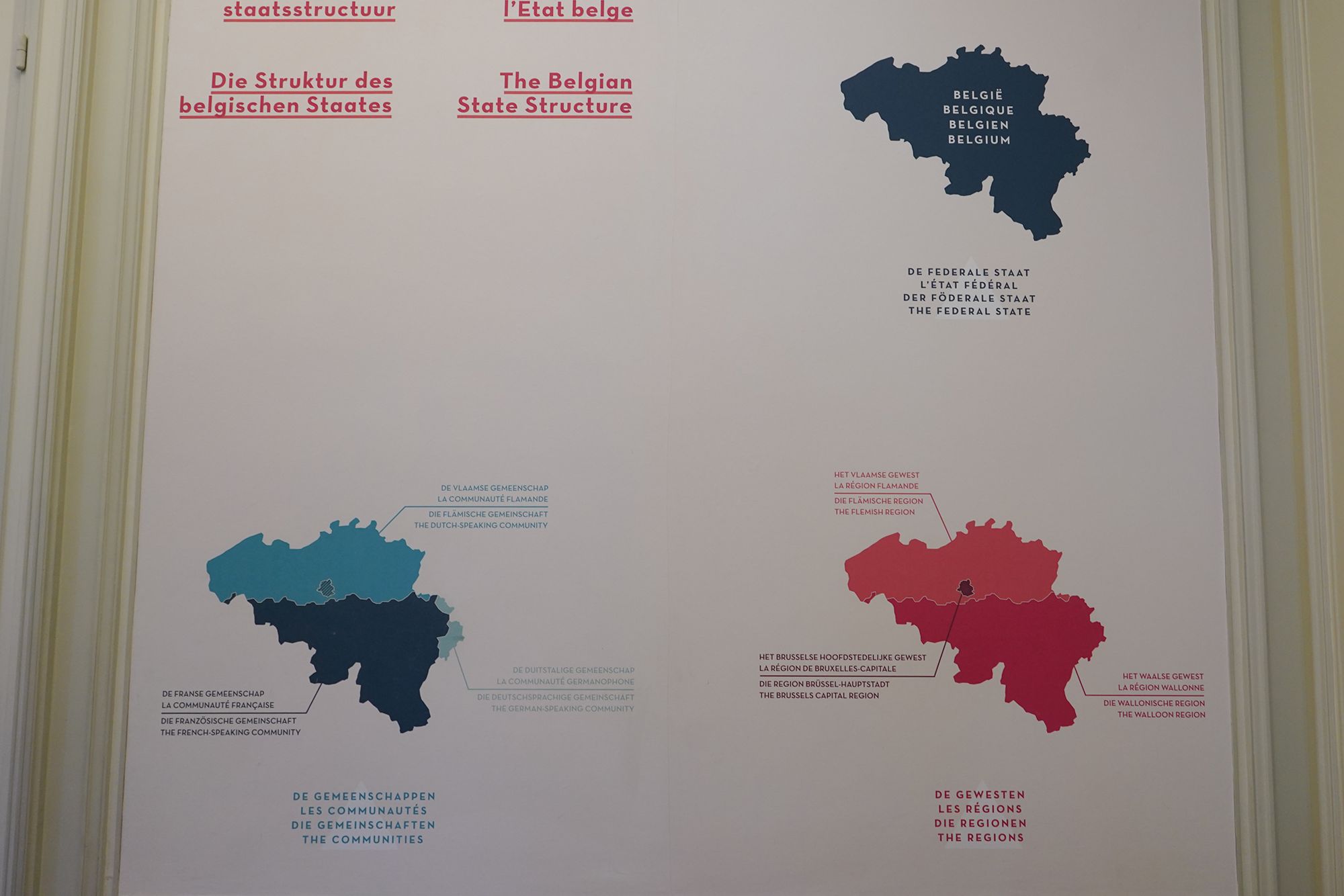
Belgium has three official languages: Dutch, French, and German. French originally dominated government and public life, but the Flemish movement successfully campaigned for equal recognition of Dutch. Today, Flanders is Dutch-speaking, Wallonia mainly French-speaking, and Brussels officially bilingual. These linguistic divisions helped transform Belgium into a federal state with separate regions and language communities.
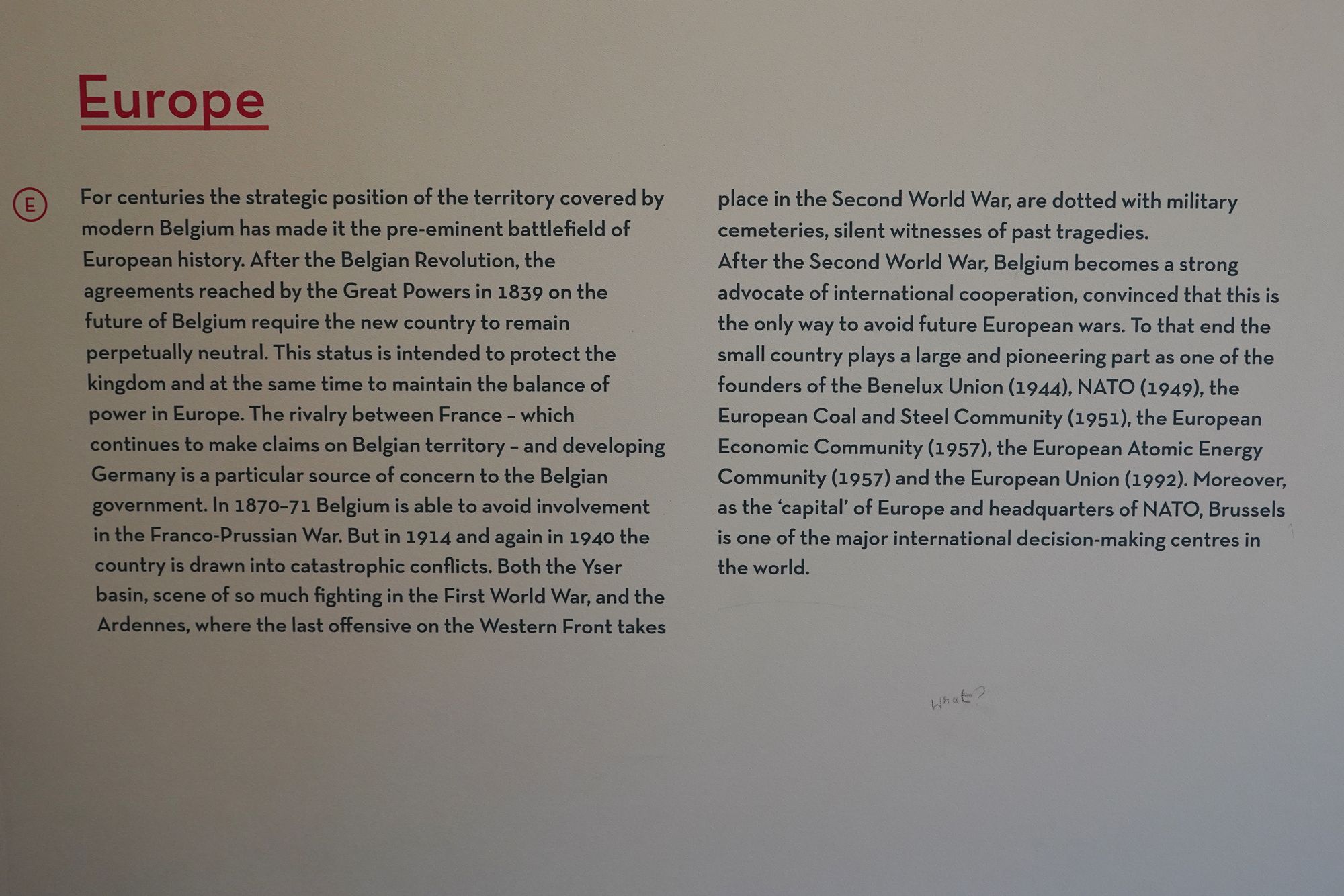
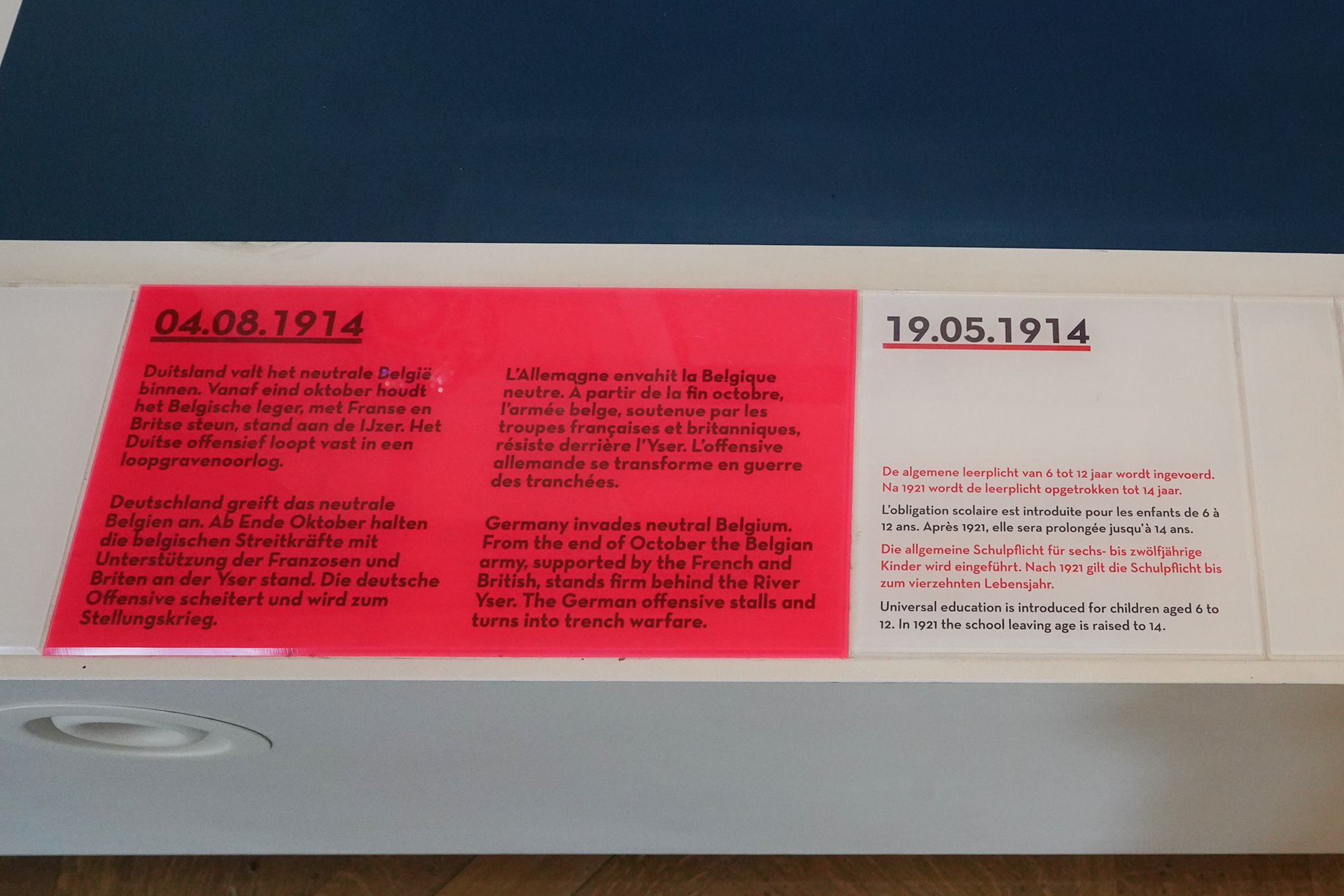
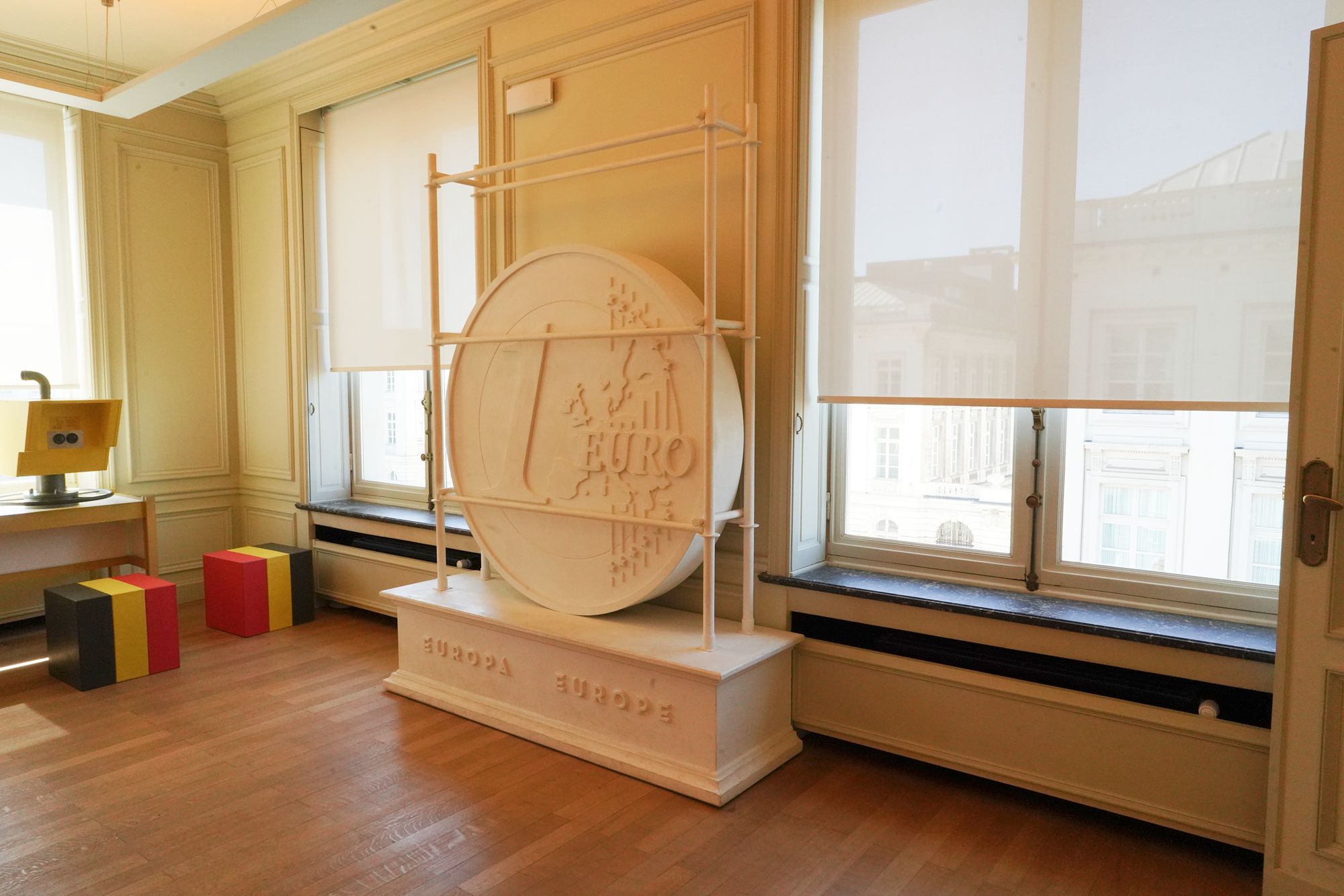
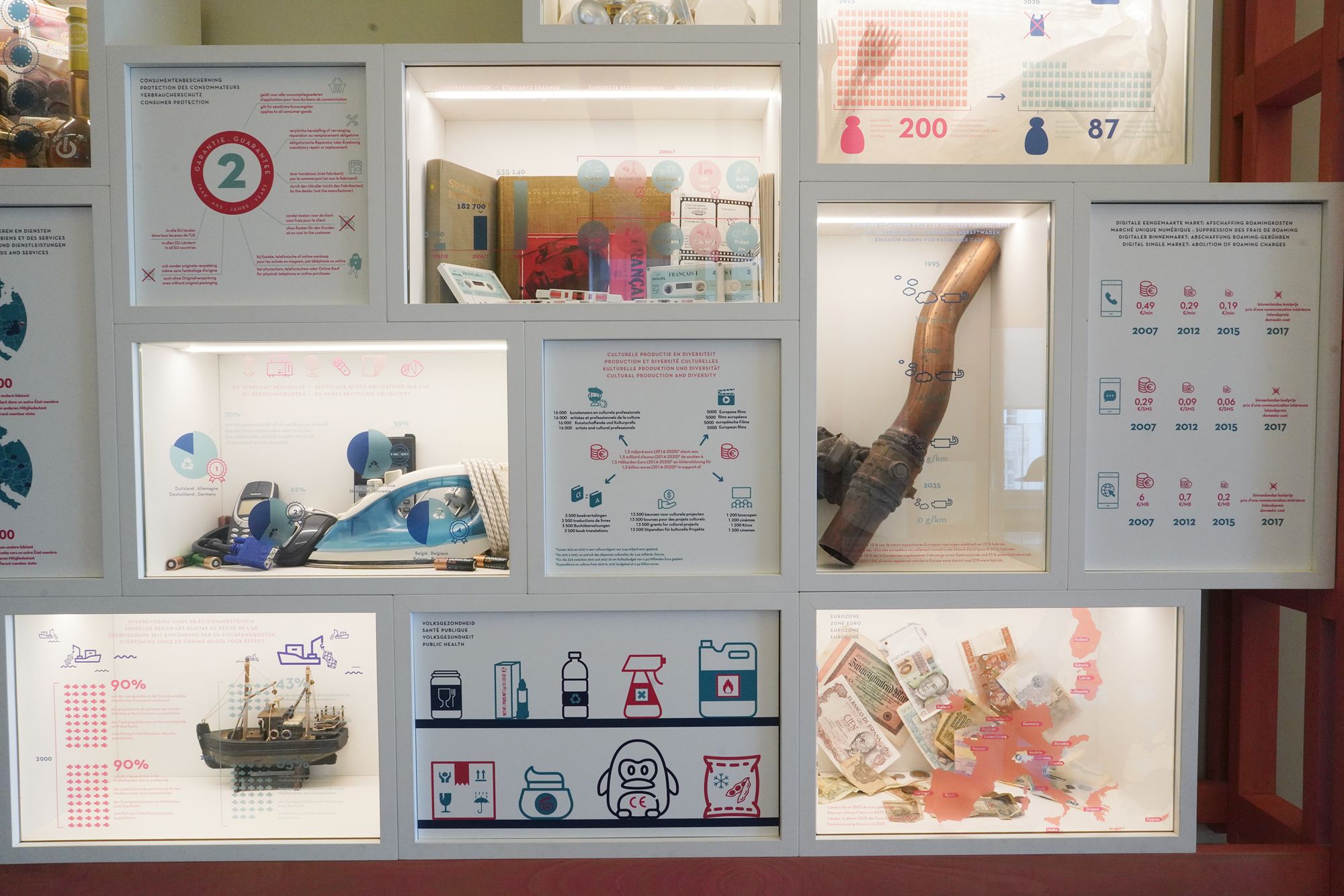
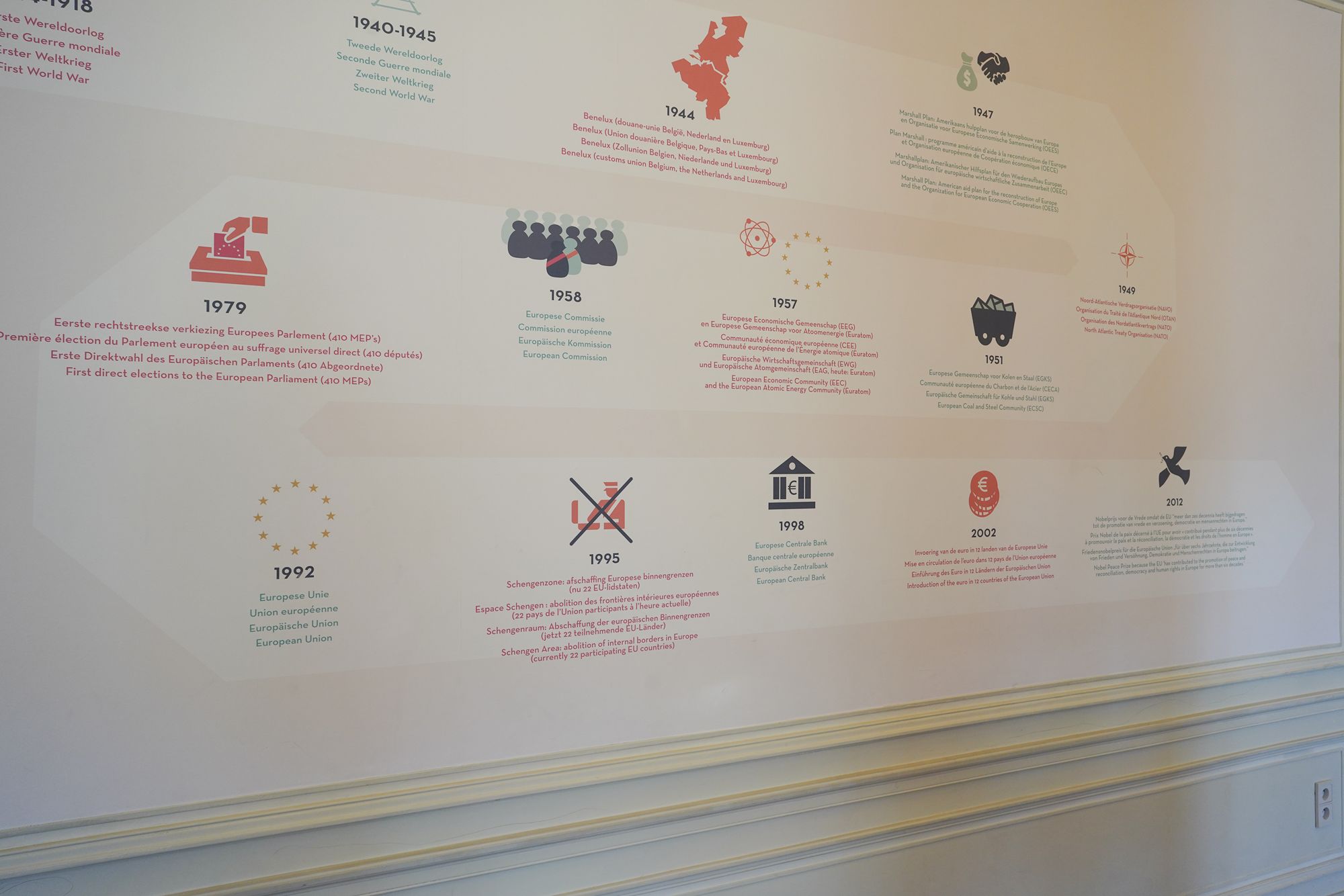
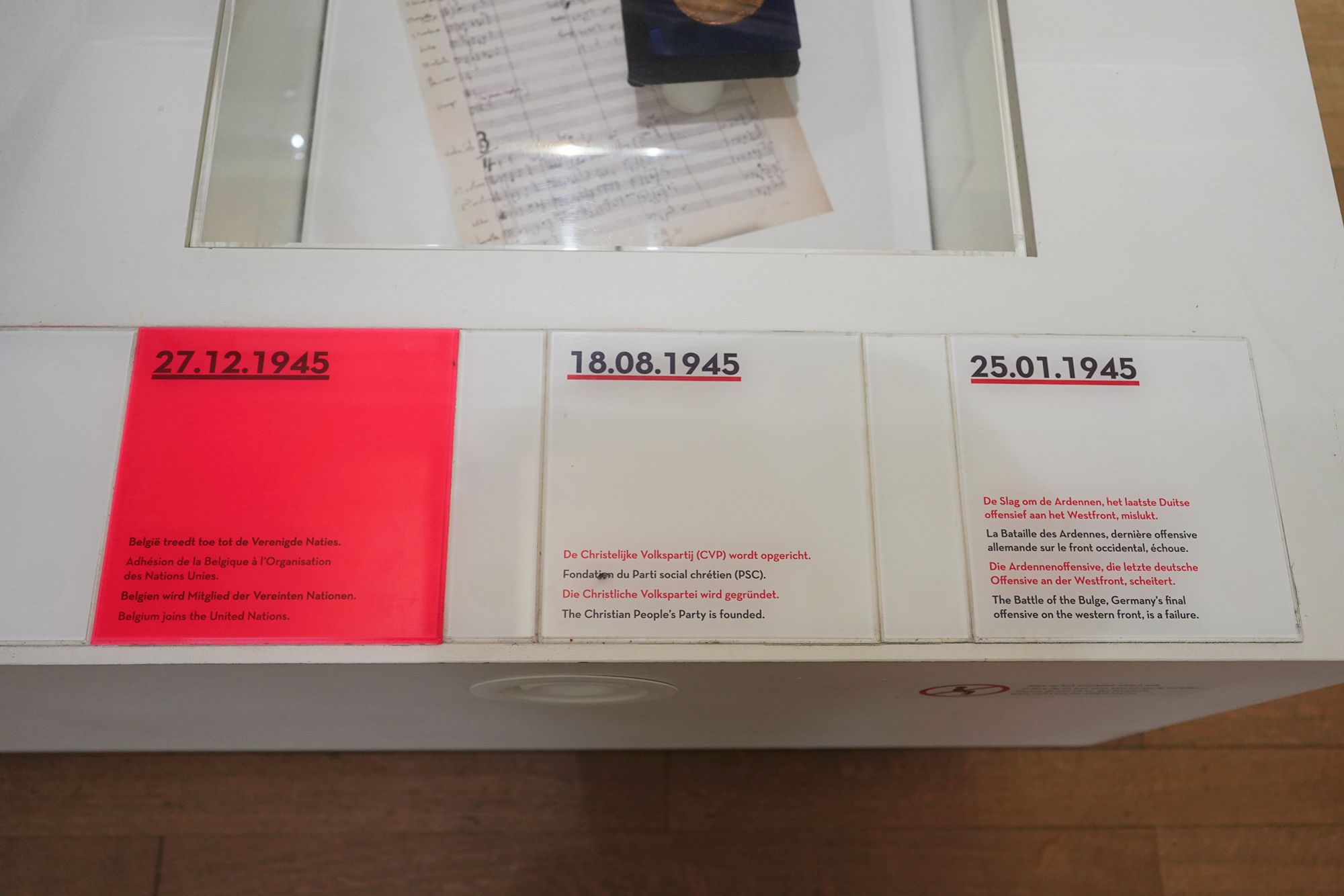
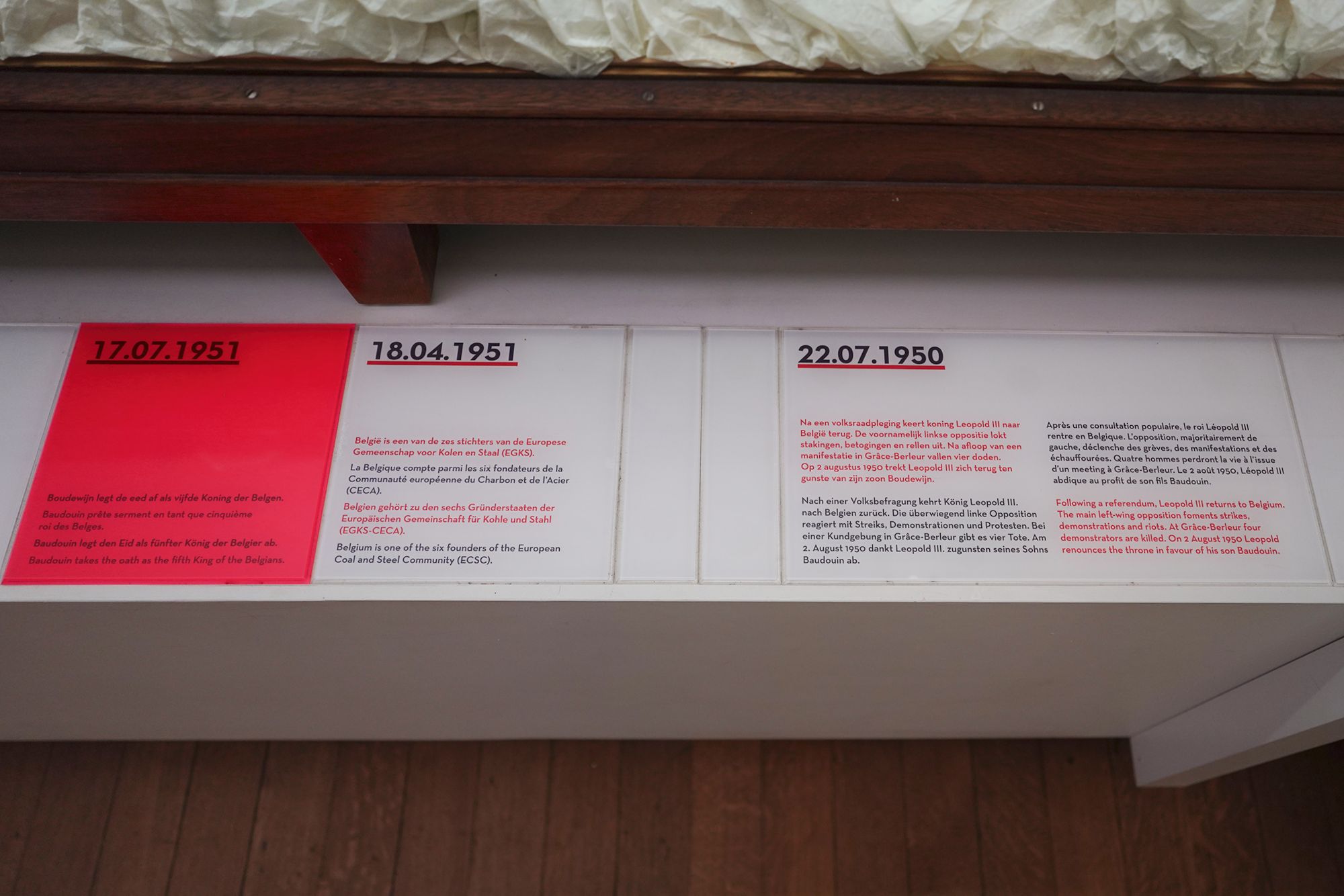
Belgium’s central location made it a major European battlefield, particularly during World War I and World War II. After 1945, Belgium strongly supported international cooperation and became a founding member of Benelux, NATO, and the institutions that developed into the European Union. Today, Brussels hosts major EU and NATO institutions, making the city an important center of European and international affairs.