Museum of the Second World War, Part 2, Gdansk, Poland
Part 2 showed Polish life under German and Soviet occupation, the Holocaust, and the war’s aftermath. 1360
Museum of the Second World War: Plac Władysława Bartoszewskiego 1, 80-862 Gdańsk, Poland
Date Picture Taken: Jun, 2026
Part 2 presented how people in Poland lived under German and Soviet occupation. The exhibits showed the hardships of daily life, the persecution and murder of Jews in the Holocaust, and the effects of war. They traced Poland’s postwar reality and the lasting shadow of occupation after the war ended.
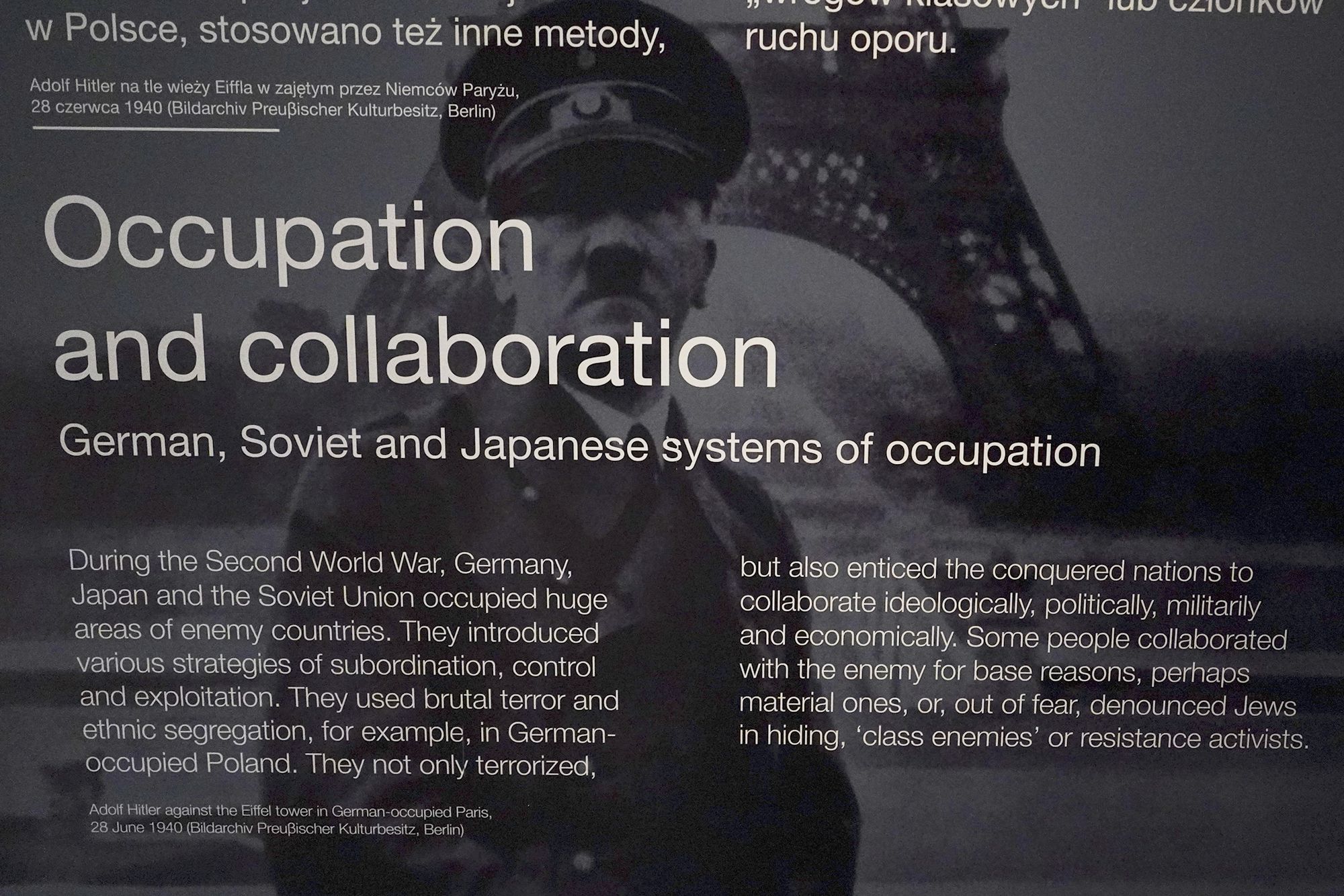
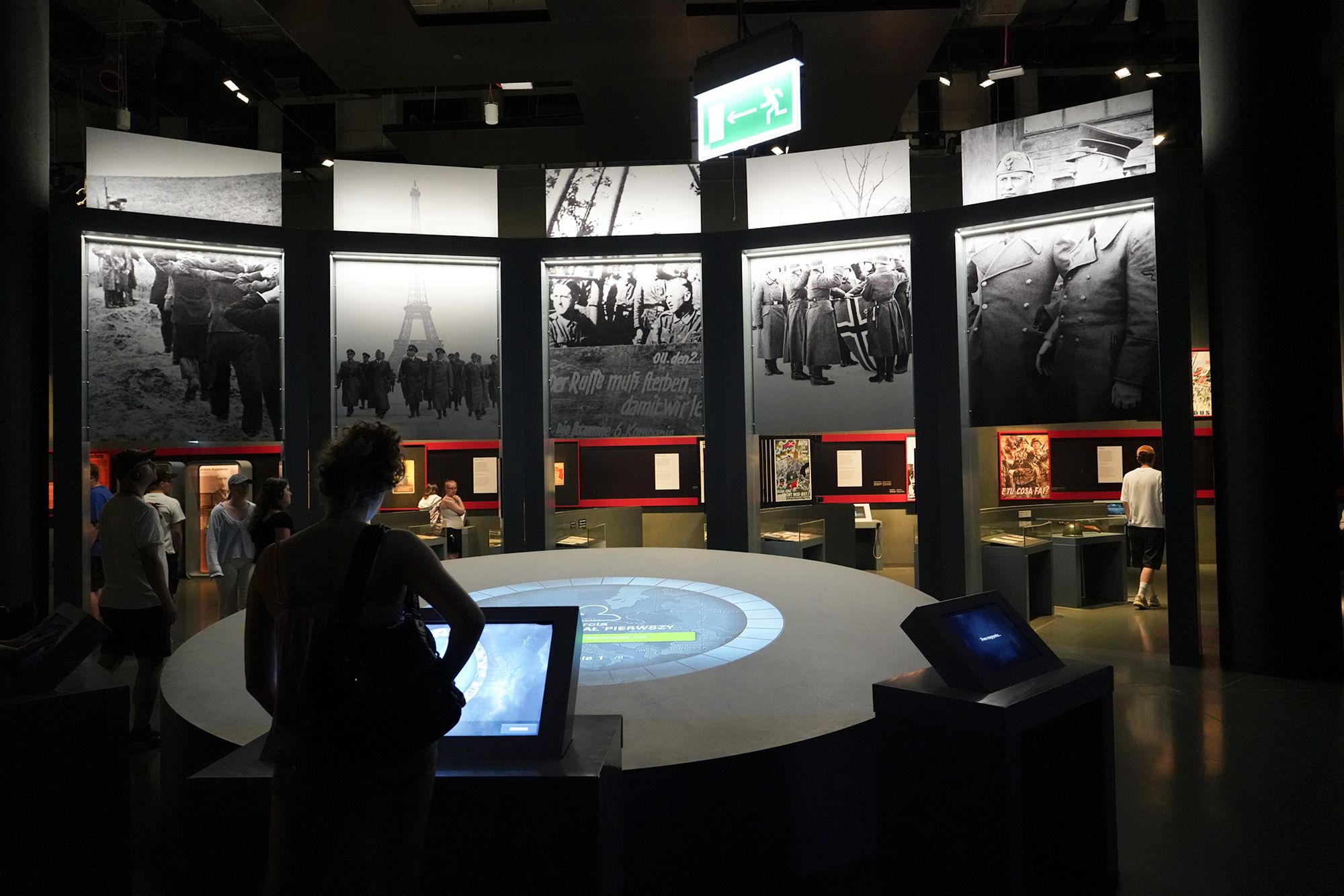
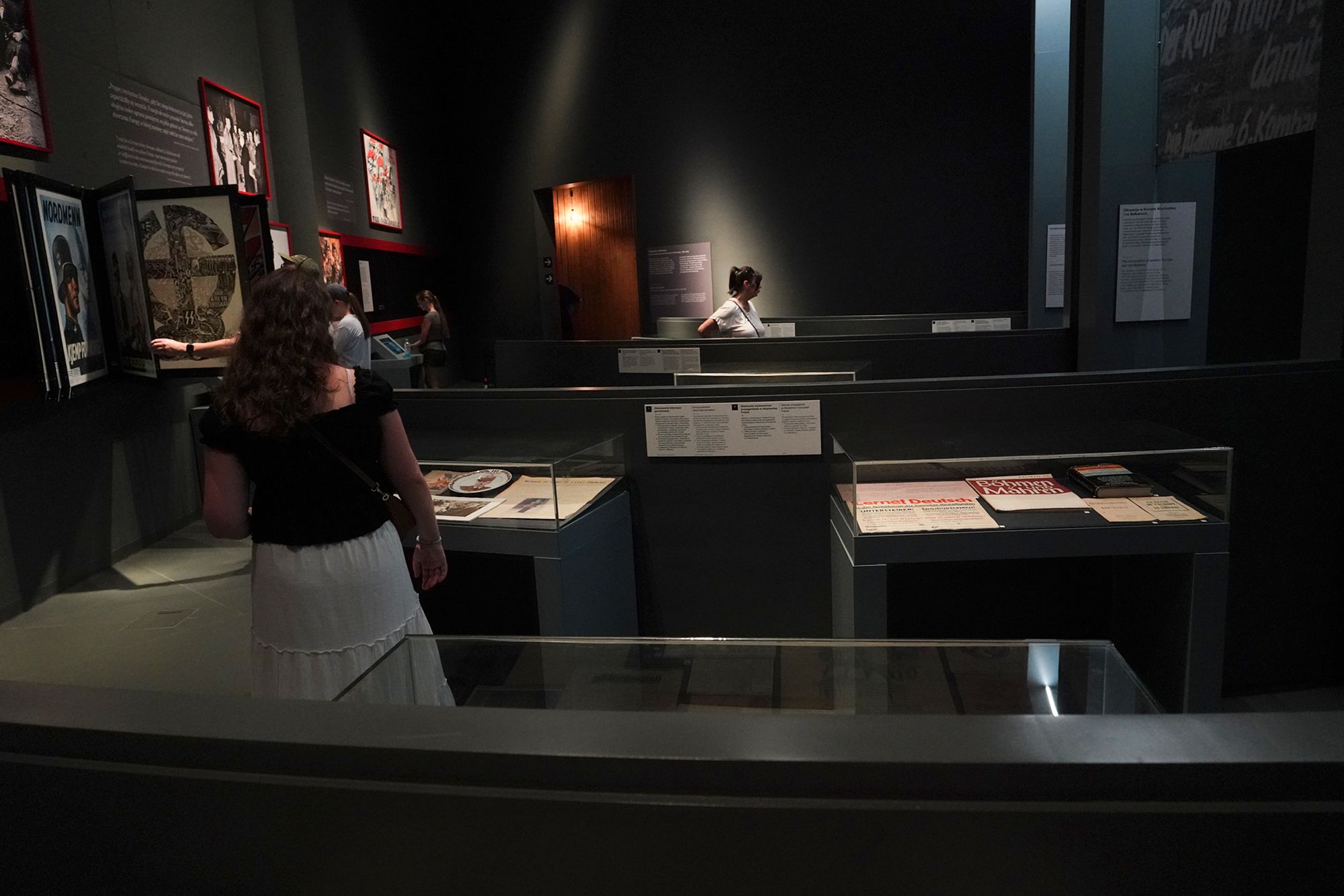
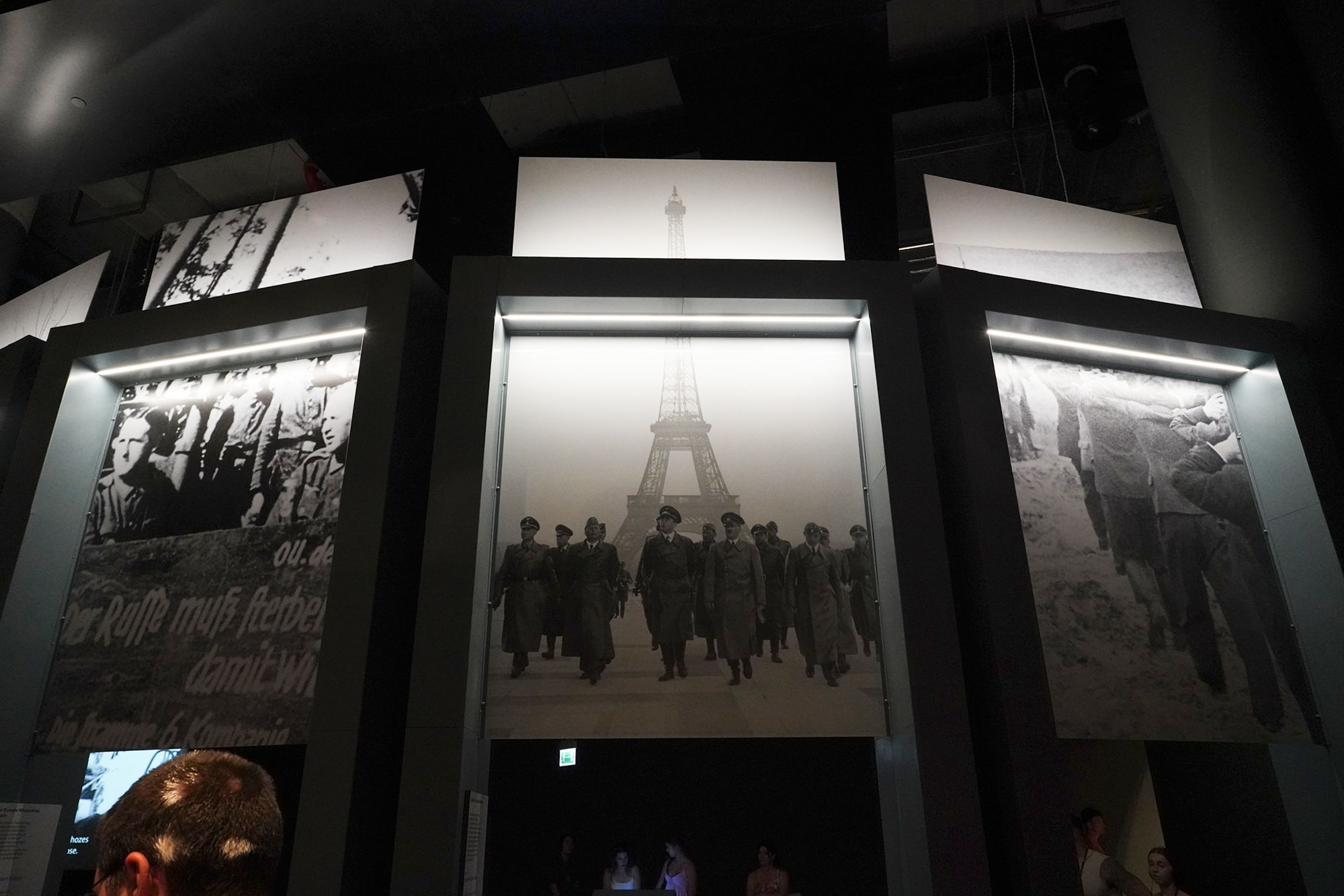
The exhibit describes how Germany, Japan, and the Soviet Union occupied large areas during the war and imposed systems of control and exploitation. In German-occupied Poland, this included terror and the separation of people by ethnicity. The occupiers also sought help from local people. Some cooperated for material gain or out of fear; some informed on Jews in hiding, political opponents, or resistance members.
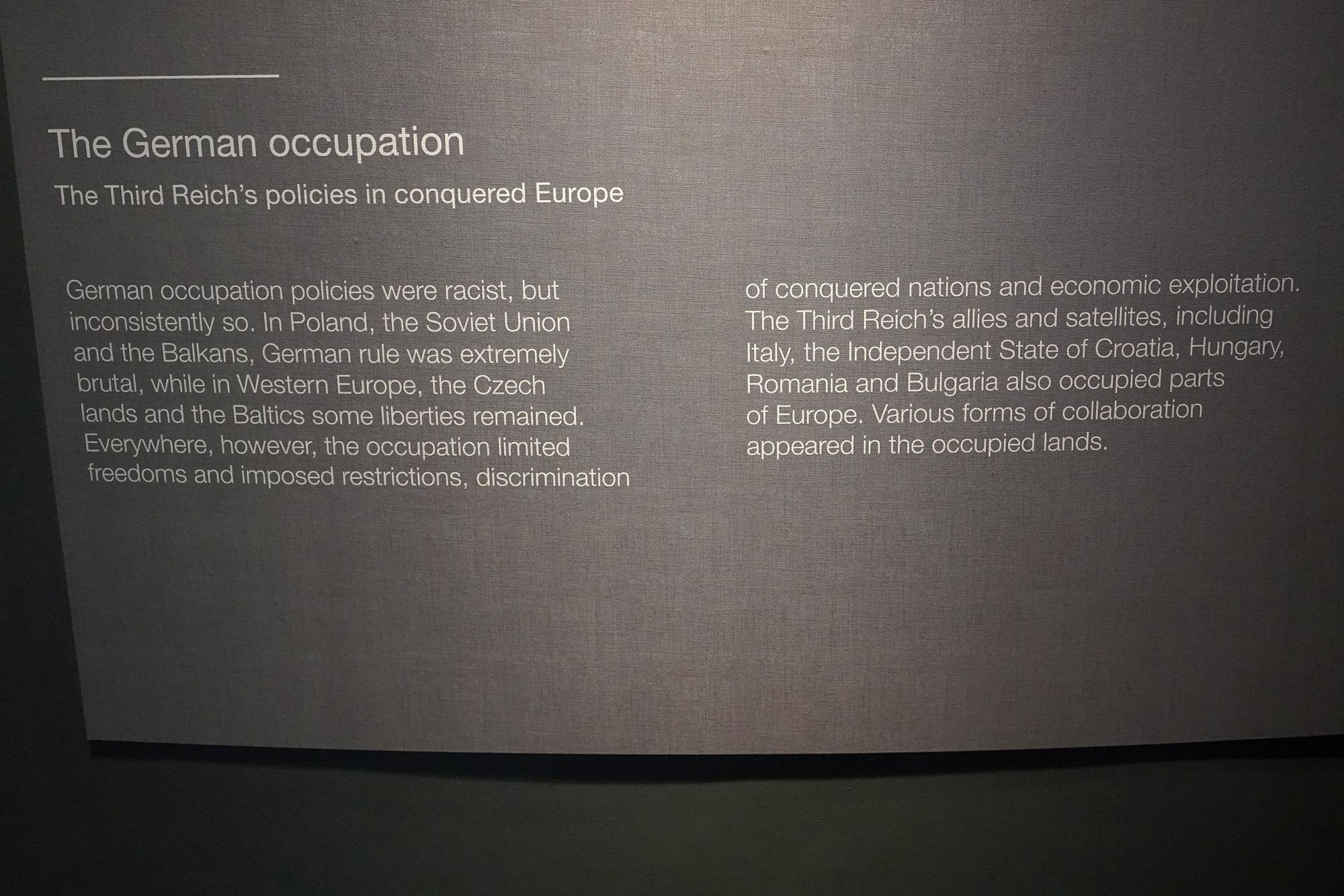
The panel explains that German occupation policies varied across Europe but were rooted in racism and exploitation. German rule was especially brutal in Poland, the Soviet Union, and the Balkans, while people in Western Europe, the Czech lands, and the Baltic states retained some freedoms. Everywhere under occupation, people faced restrictions and discrimination. Germany’s allies, including Italy, Hungary, Romania, and Bulgaria, also occupied parts of Europe, and different forms of collaboration developed under occupation.
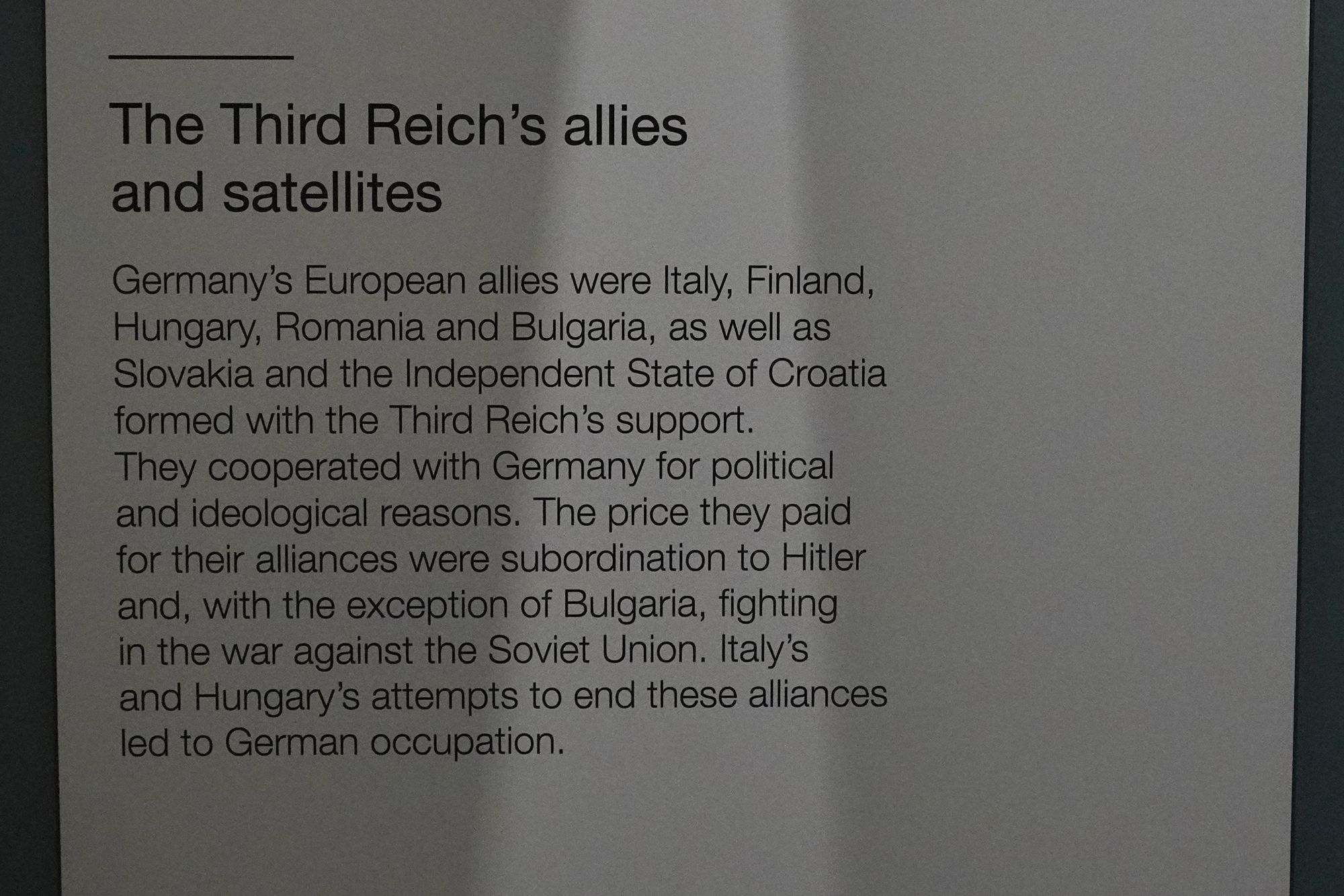
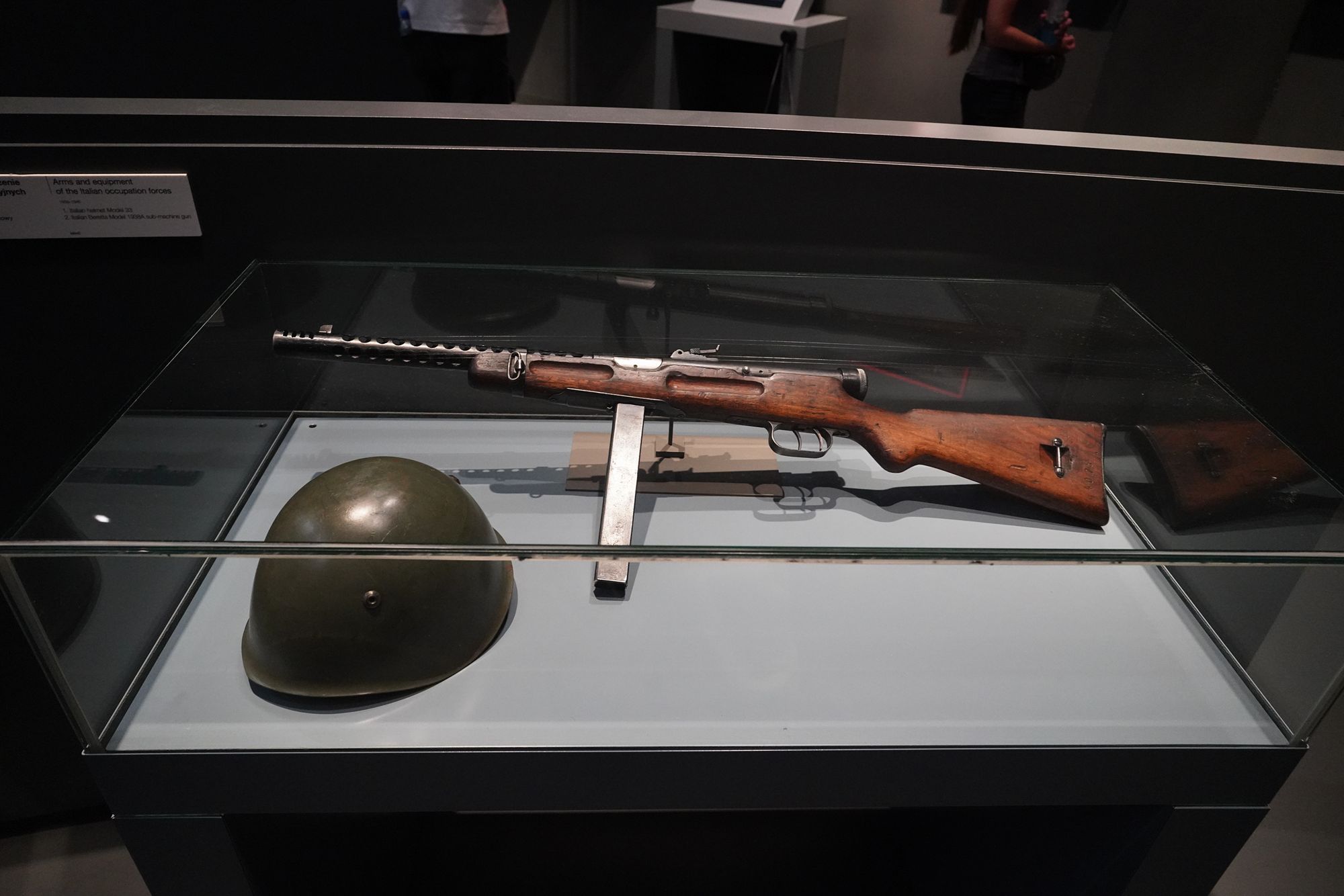
The panel identifies Germany’s European partners, including Italy, Finland, Hungary, Romania, Bulgaria, Slovakia, and the German-backed Independent State of Croatia. They cooperated with Hitler for political and ideological reasons, but their alliances left them subordinate to Germany. Most fought the Soviet Union; Bulgaria did not. When Italy and Hungary tried to leave the alliance, Germany occupied them.
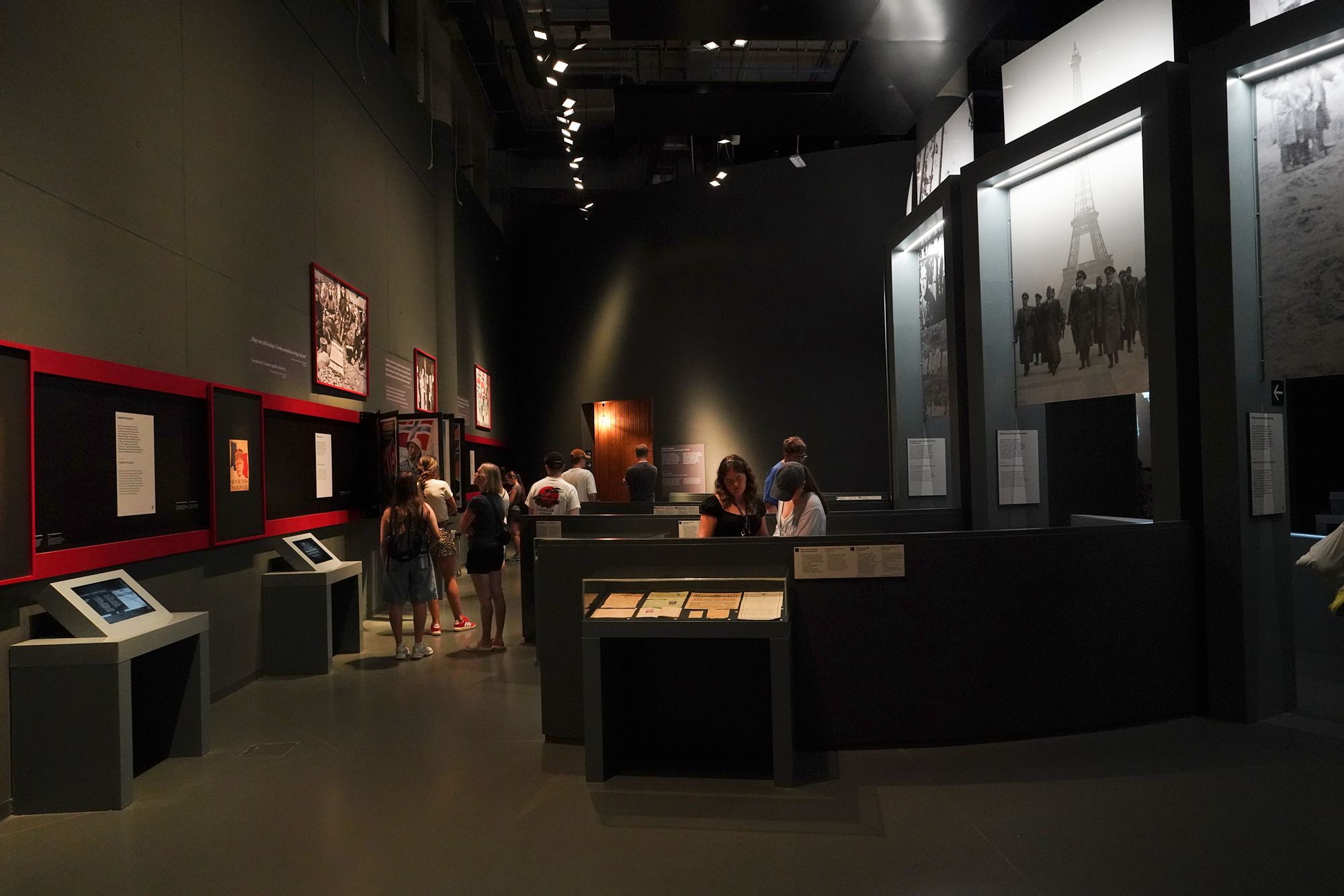
The panel describes how German occupation tried to reshape Polish towns and control their residents. The Germans renamed streets and squares, took over Polish companies, and used them to establish German-run banks, post offices, and government offices. They also tightly controlled the population through identity documents called Kennkarten. These measures made occupation part of everyday life and advanced Germany’s colonial rule.
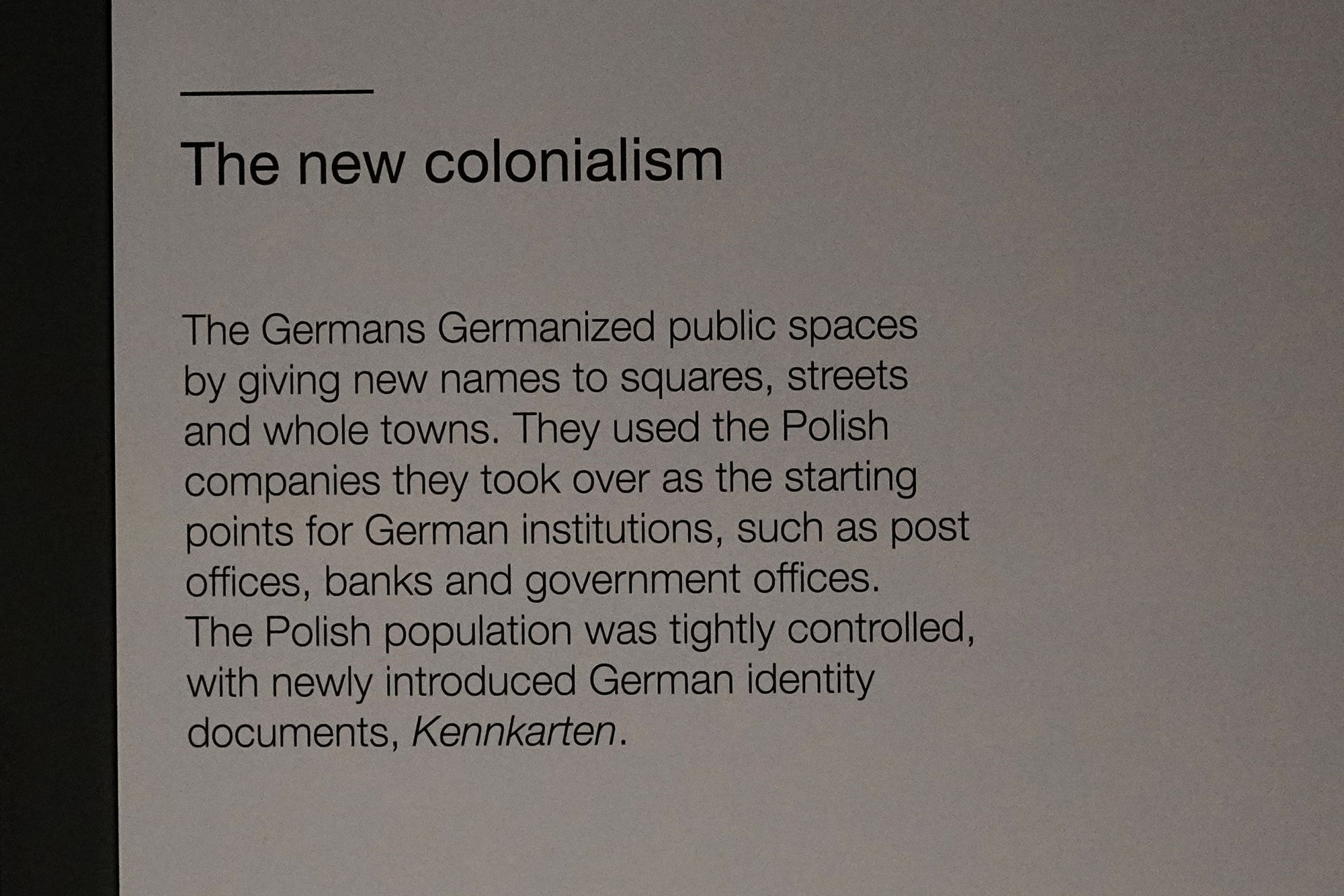
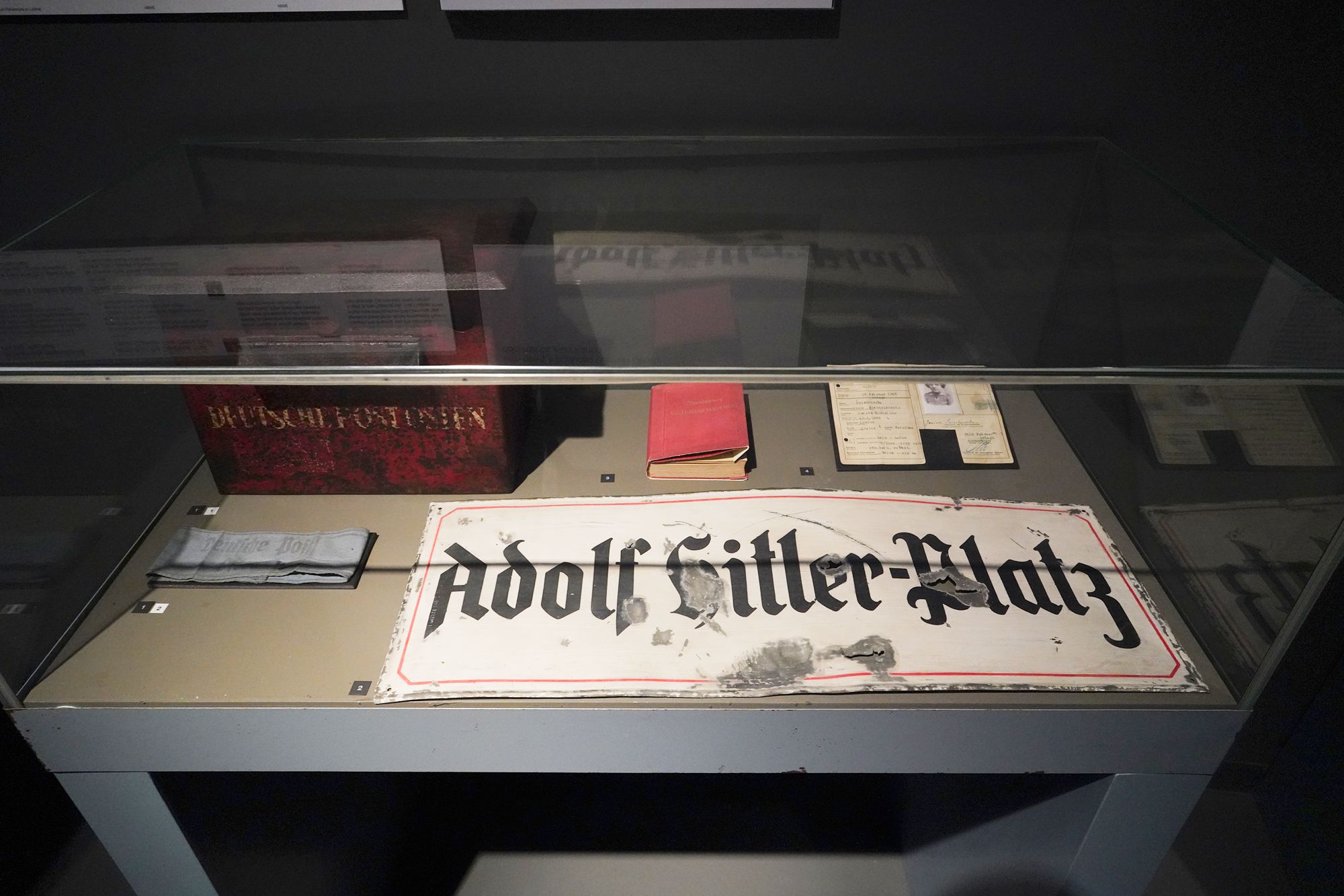
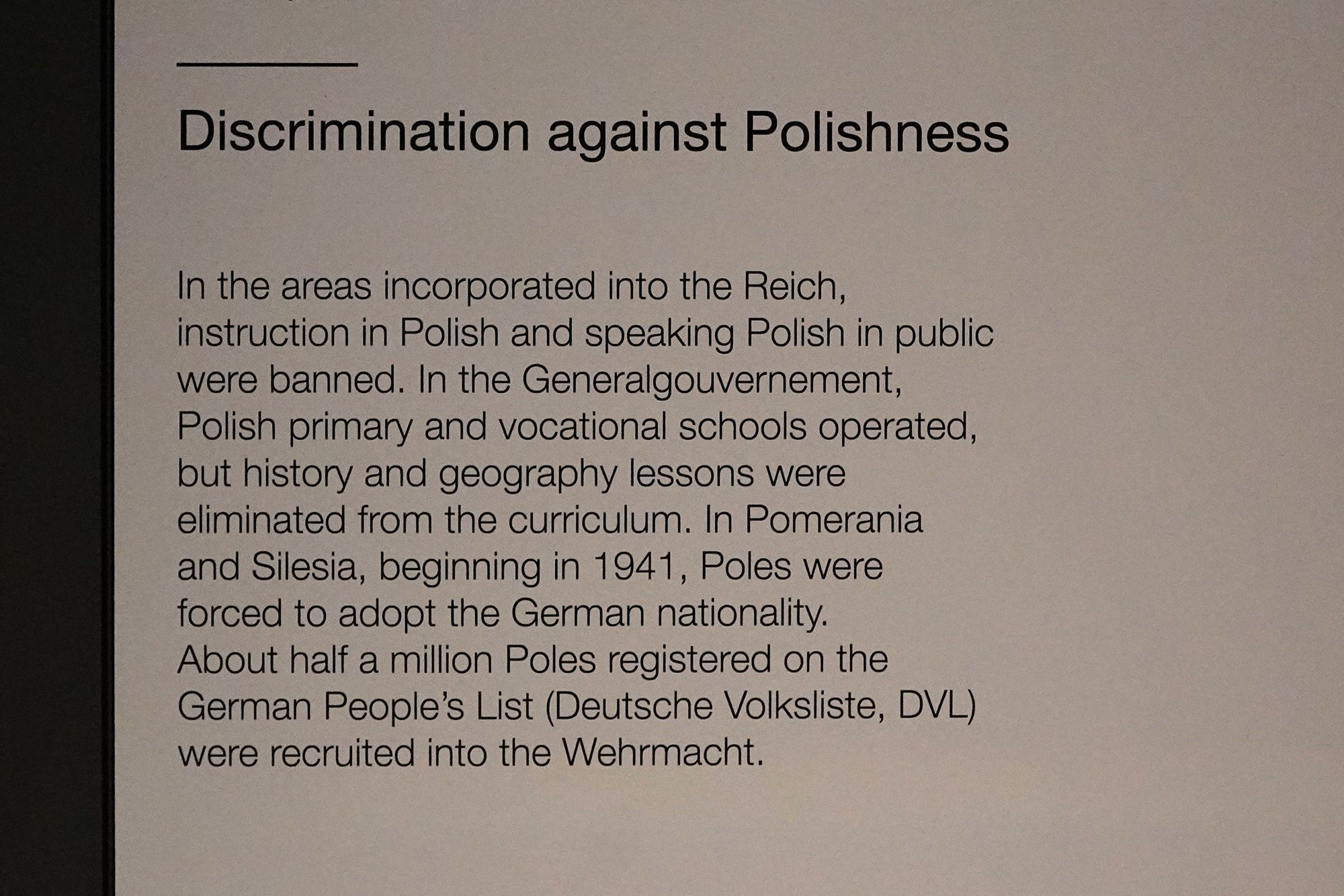
The panel shows how German rule targeted Polish language, education, and identity. In areas annexed to Germany, Polish-language teaching and speaking Polish in public were banned. In the General Government, Polish primary and vocational schools continued, but history and geography were removed from the curriculum. In Pomerania and Silesia, many Poles were forced to register as German; about half a million people on the German People’s List were then recruited into the German armed forces.
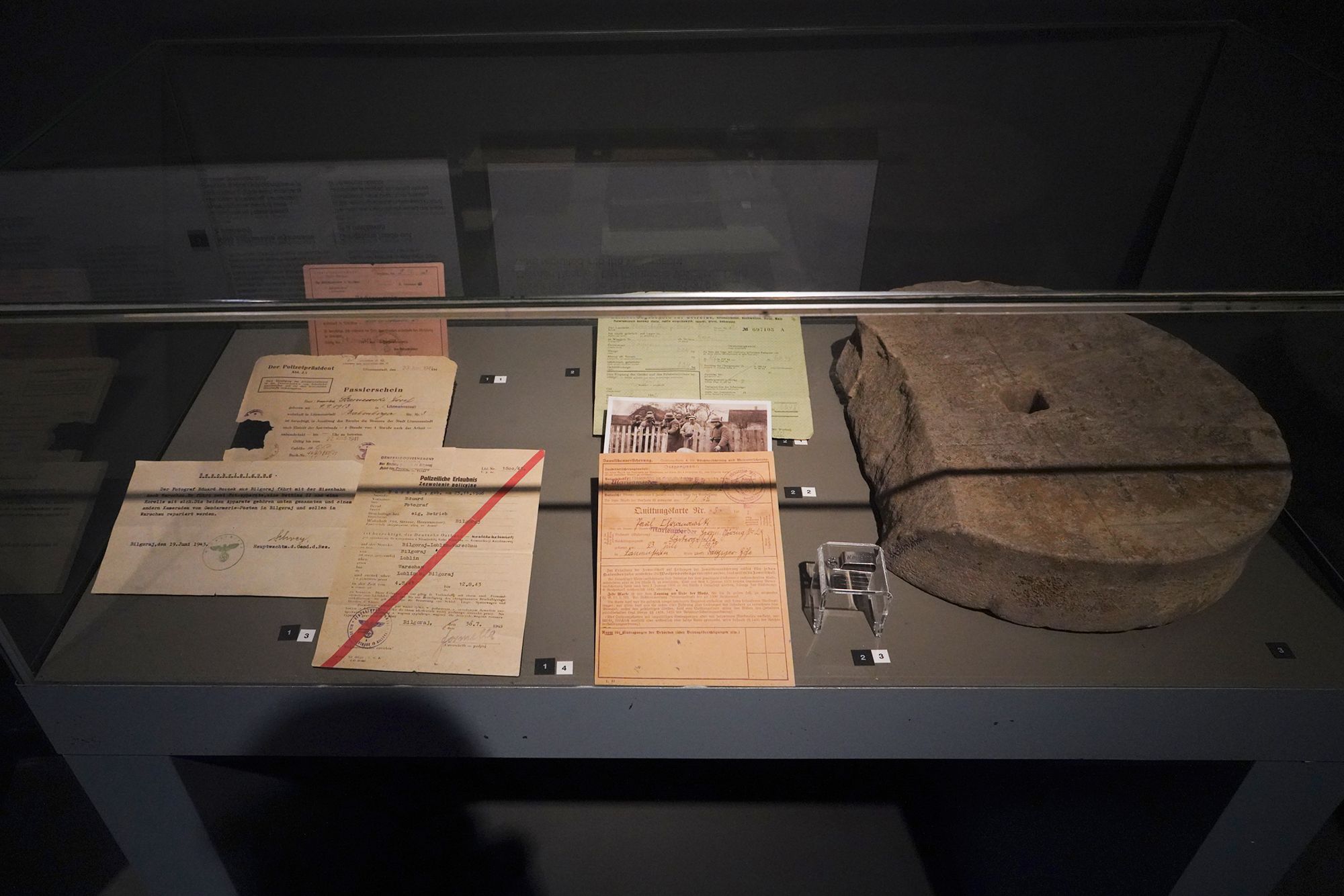
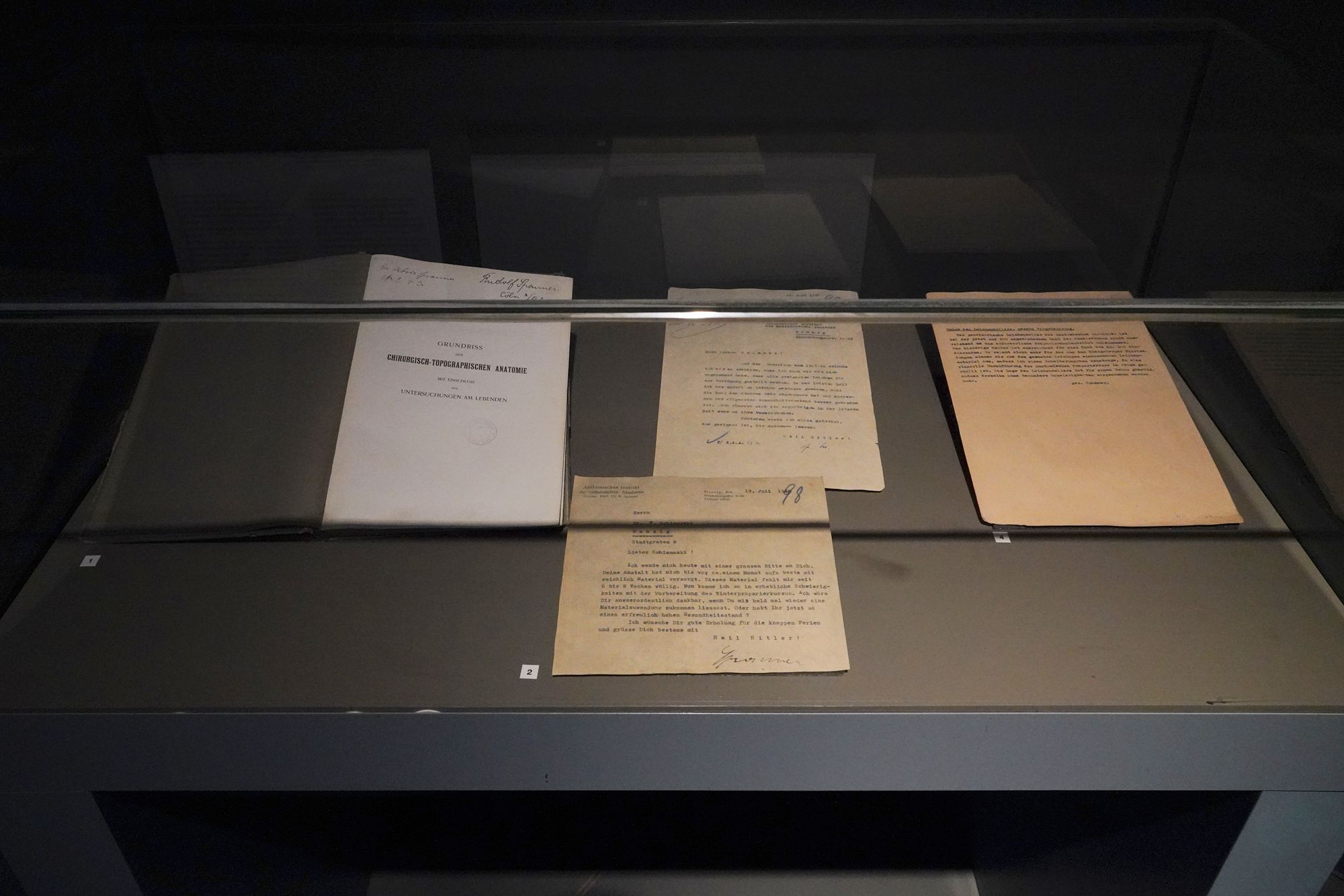
This disturbing panel describes how Nazi victims’ bodies were used to prepare laboratory skeletons. It names Rudolf Spanner, a pathologist and professor in Gdańsk, as one of the scientists involved, and says the process produced a material that resembled soap. The panel gives the example of Captain Antoni Kasztelan, whose body was sent to the Anatomy Institute in Königsberg.
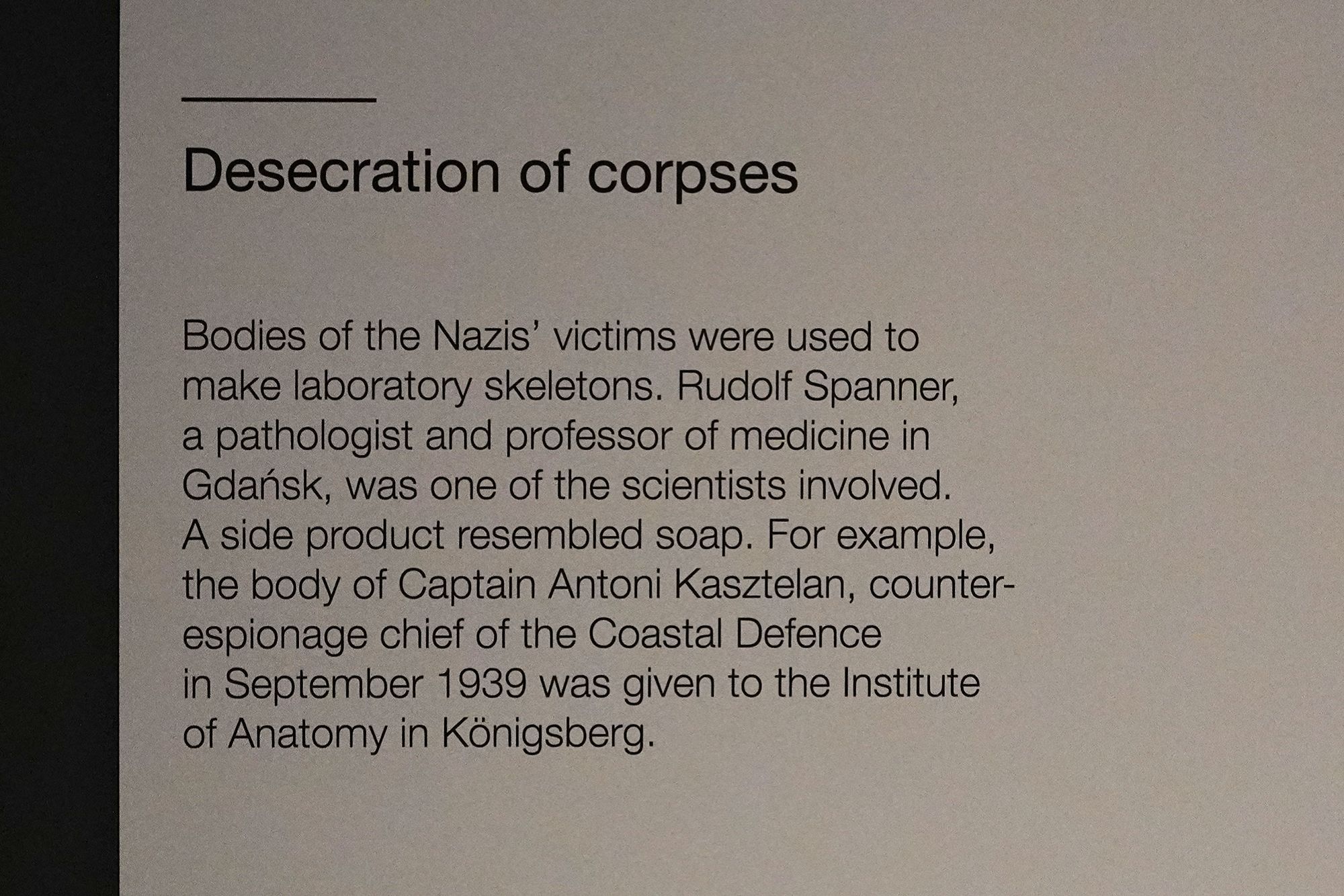
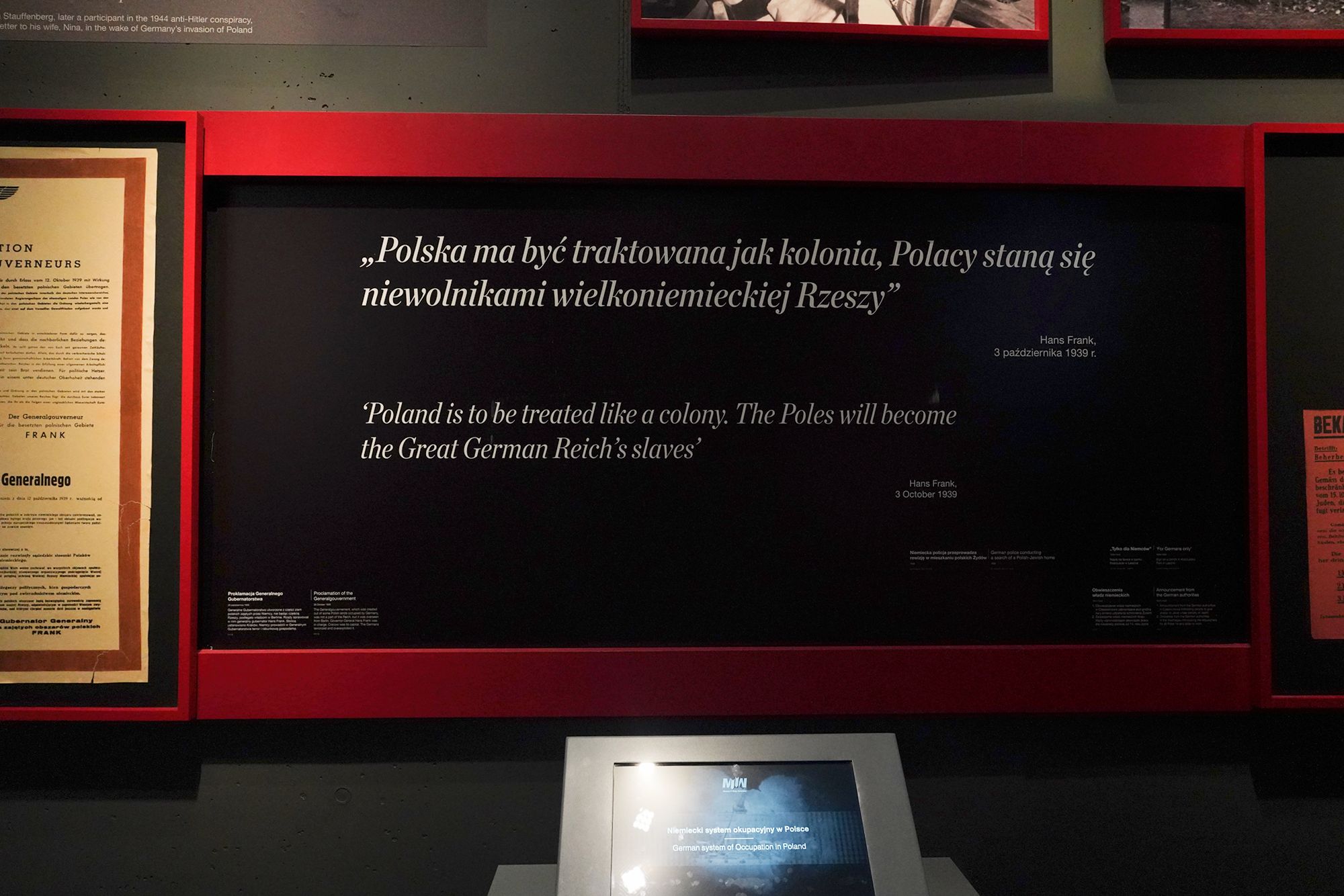
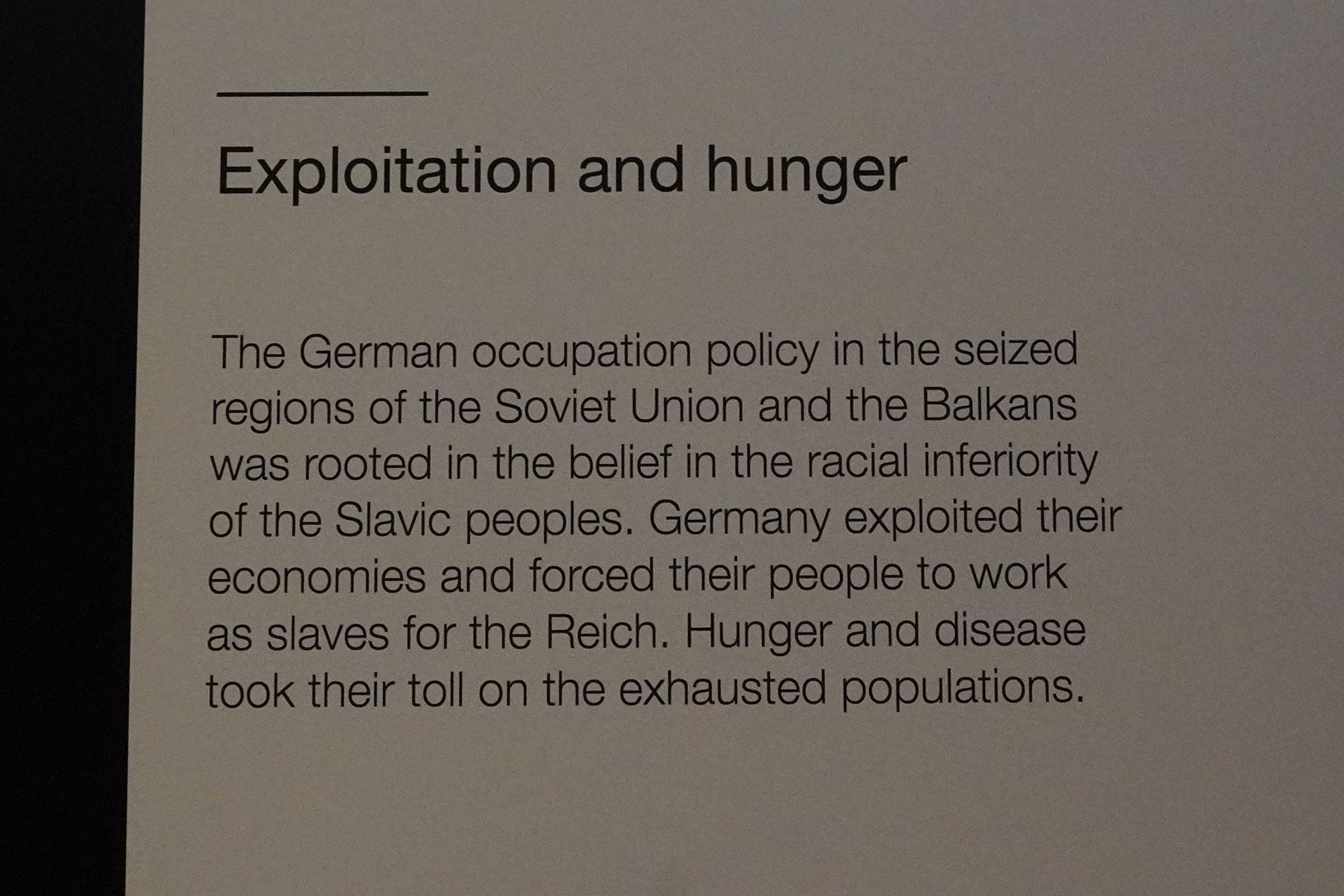
The panel explains that in occupied parts of the Soviet Union and the Balkans, Nazi Germany treated Slavic people as racially inferior. The Germans exploited local economies and forced people to work for the Reich, often as slave laborers. Hunger and disease further weakened populations already exhausted by occupation and war.
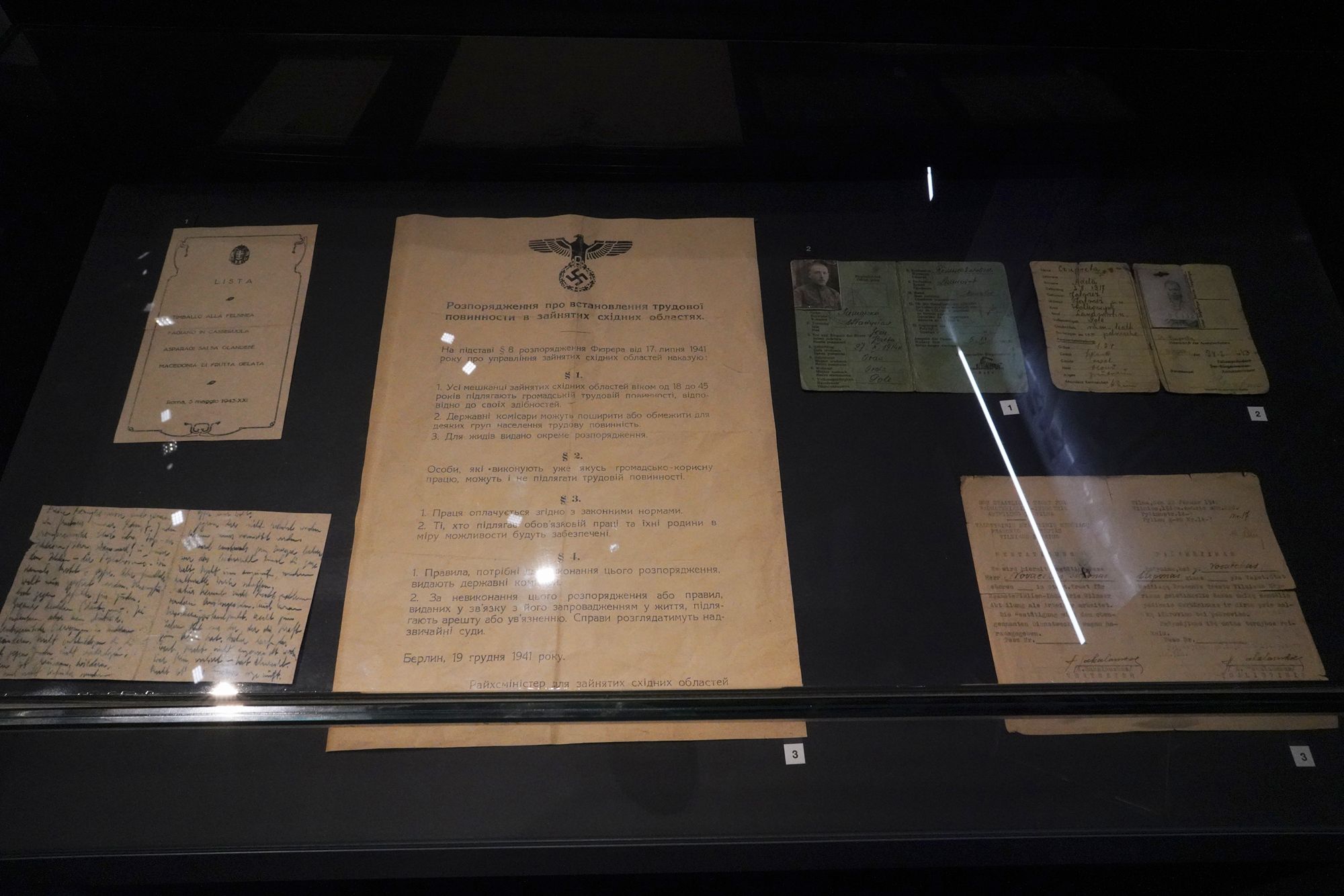
The panel describes ideological and military collaboration with Nazi Germany. Some leaders supported fascism or Nazism and hoped their nations would gain influence in a German-dominated Europe. They helped form military units that fought alongside German forces, mostly against the Soviet Union; the panel says more than a million volunteers served in these units. Collaborators also helped suppress resistance movements in their own countries, undermining resistance and morale.
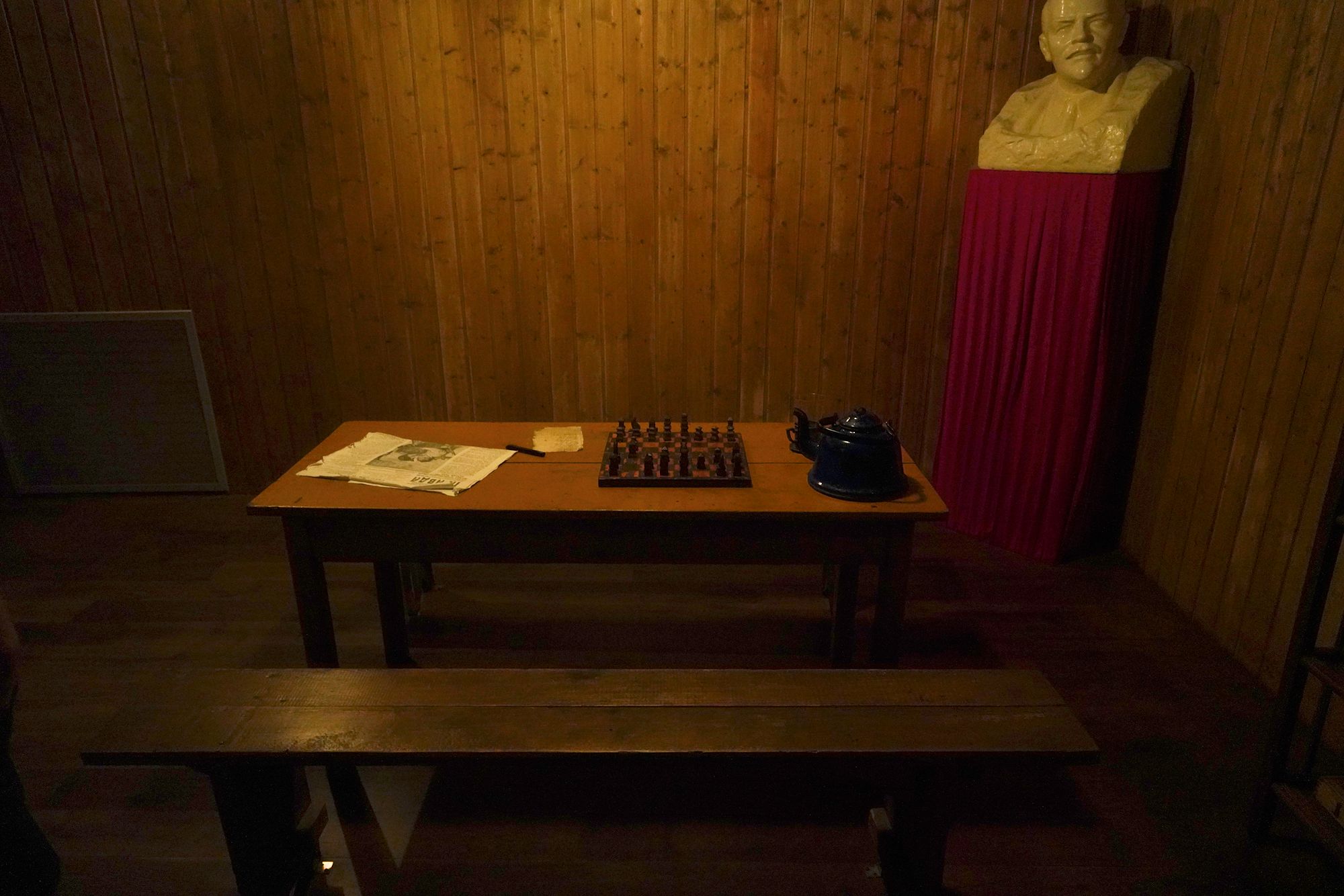
The panel describes Soviet expansion in 1939–40. The Soviet Union invaded eastern Poland and attacked Finland, then annexed Estonia, Latvia, and Lithuania and took Bessarabia and Bukovina from Romania. Across these occupied territories, it sought to impose Soviet rule through terror, mass deportations, propaganda, and attacks on political and social leaders.
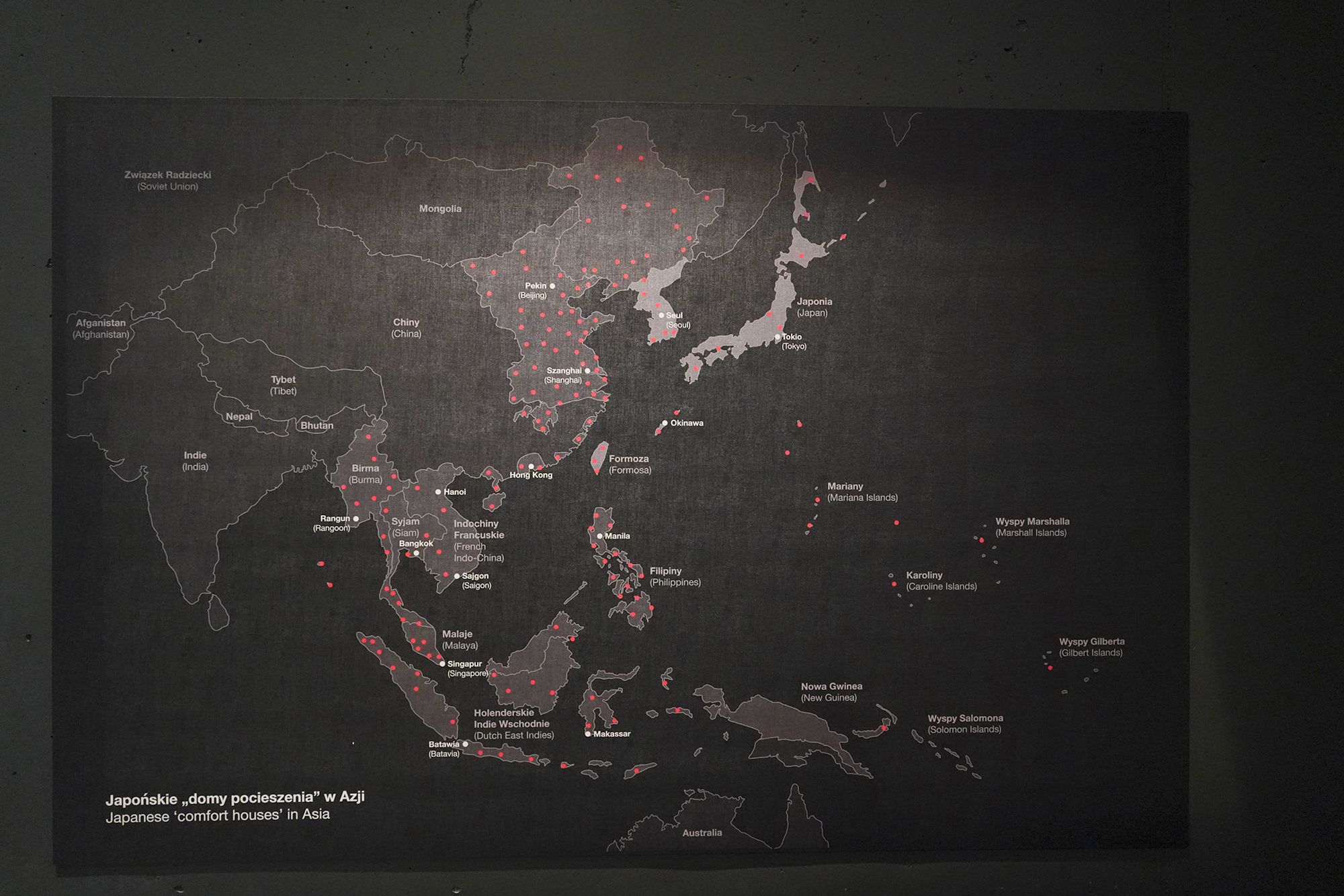
The panel describes Japan’s occupation of large parts of Asia and Oceania from 1931 to 1945, including areas of China, Southeast Asia, and the Pacific. Japan claimed it was freeing Asia from European colonial rule and promoted a “Greater East Asia Co-Prosperity Sphere” under Japanese leadership. In practice, its occupation was violent and exploitative, and European-descended residents were gradually interned.
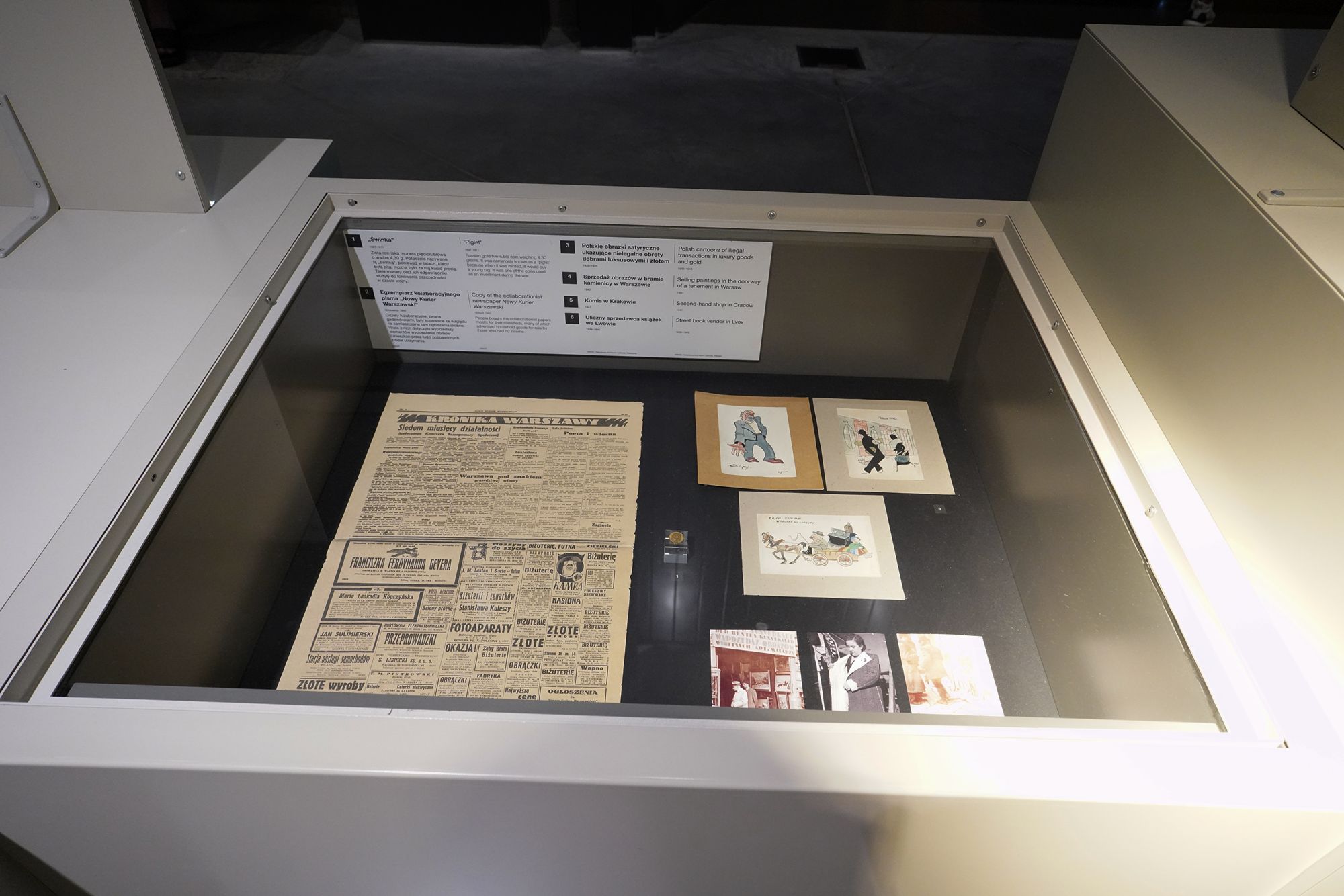
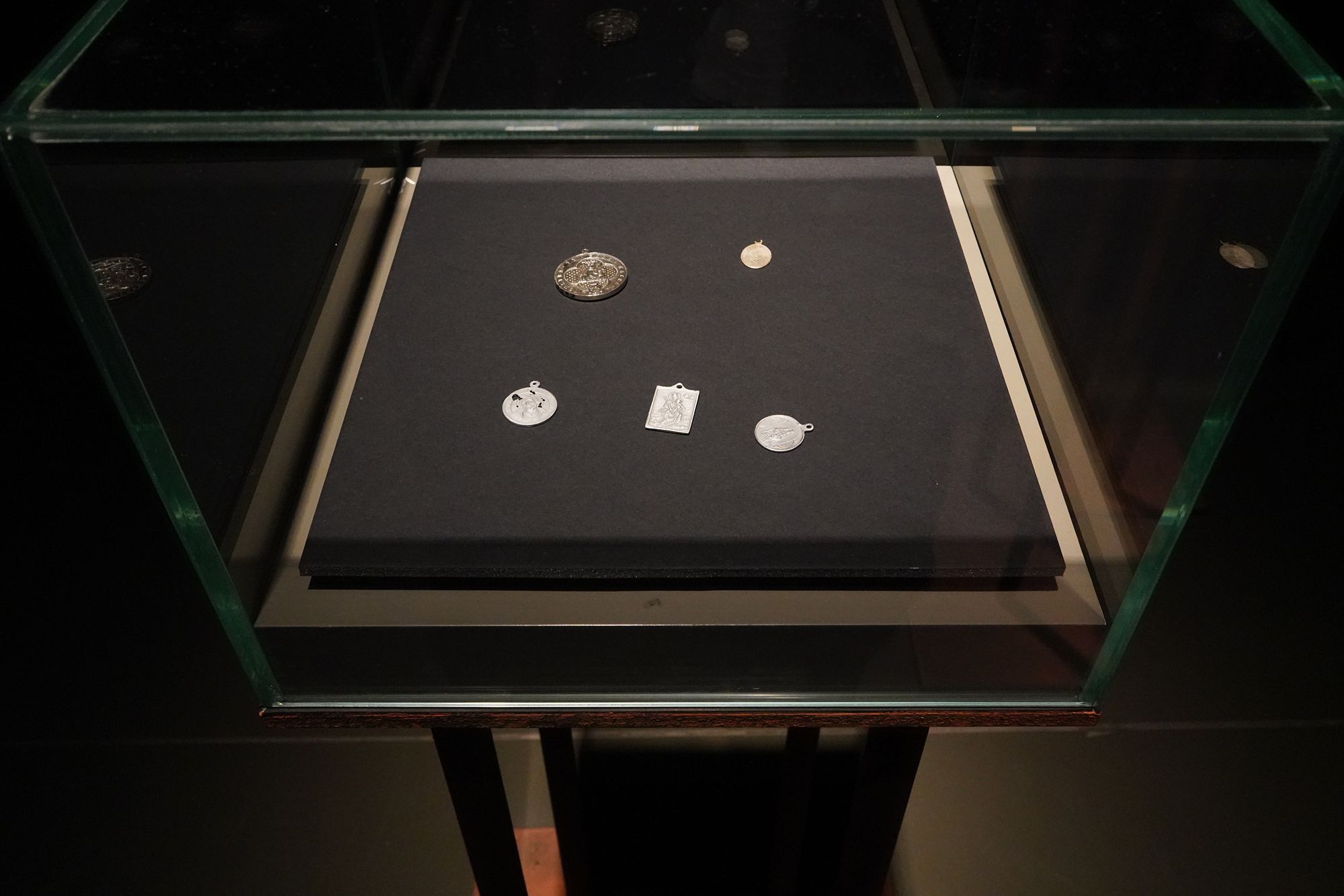
The panel shows how wartime poverty pushed people to sell furniture, clothes, books, and paintings in streets and markets or take them to pawnshops. While many sold belongings to get by, others made fortunes from the war. Gold was seen as the safest way to protect savings.
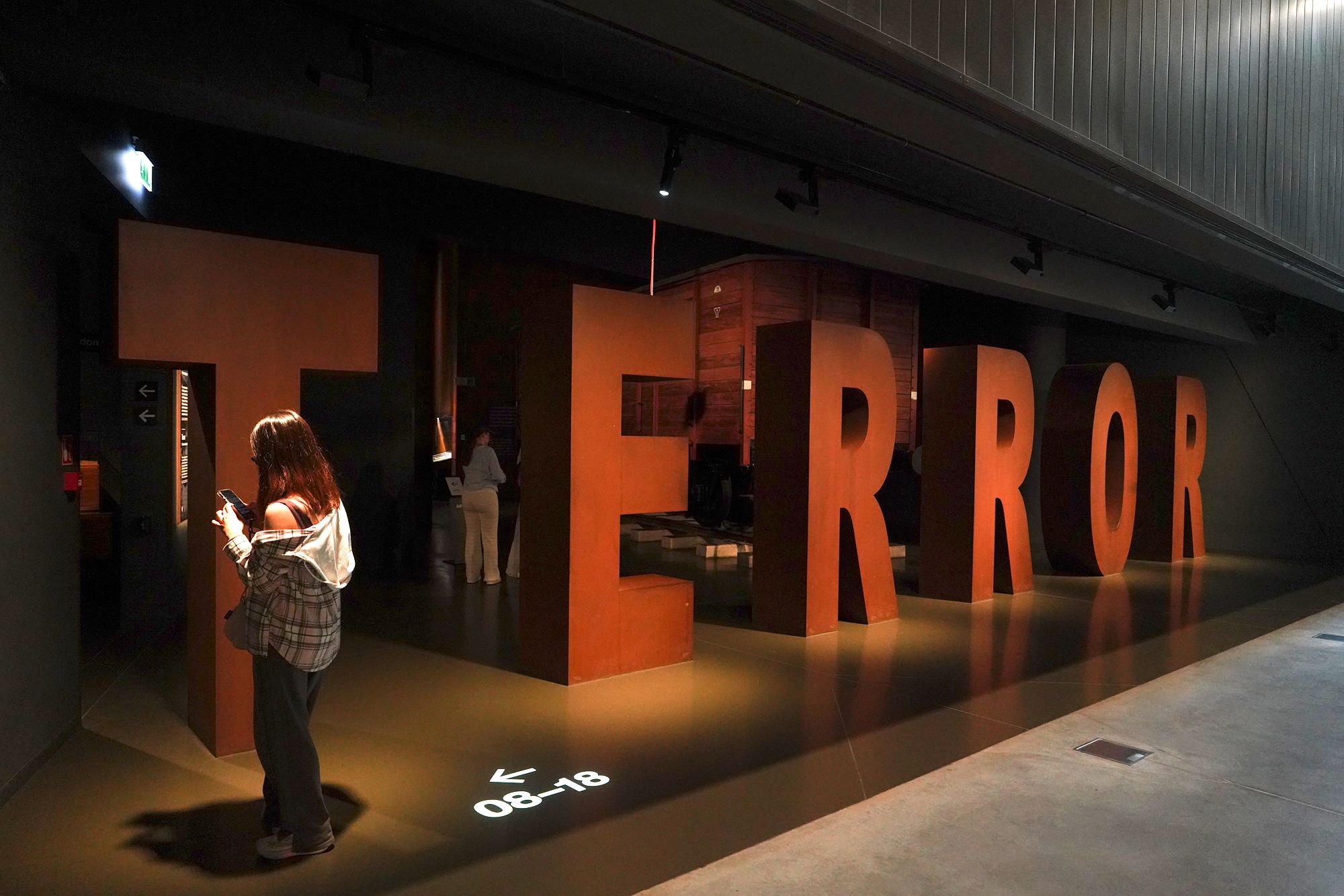
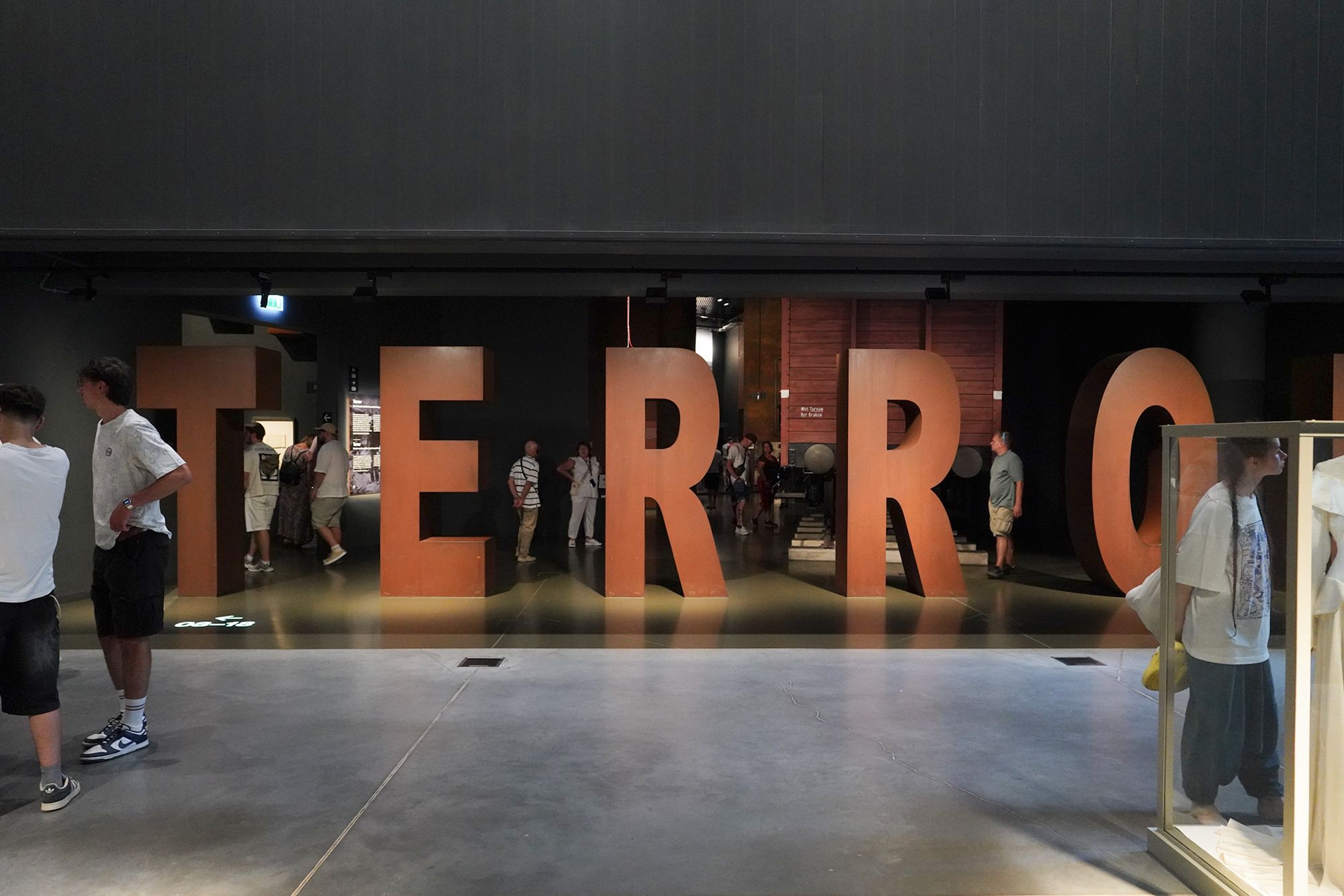
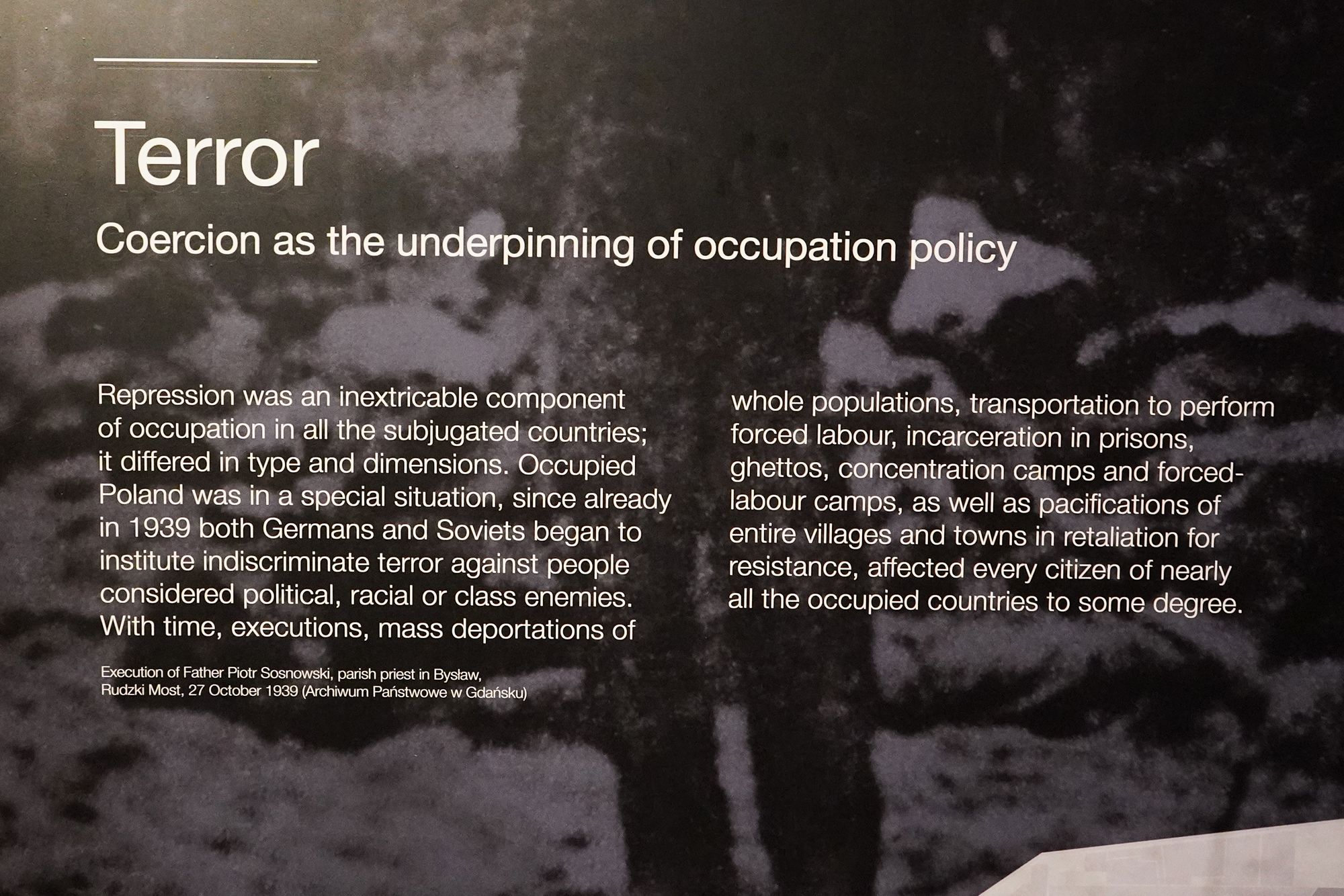
The panel describes terror as a basic tool of occupation across the countries controlled by Nazi Germany. Poland faced especially severe repression: in 1939, both German and Soviet authorities began targeting people they viewed as political, racial, or class enemies. The violence included executions, mass deportations, forced labor, imprisonment in prisons and camps, and collective reprisals against towns and villages accused of supporting resistance. These policies touched nearly everyone living under occupation.
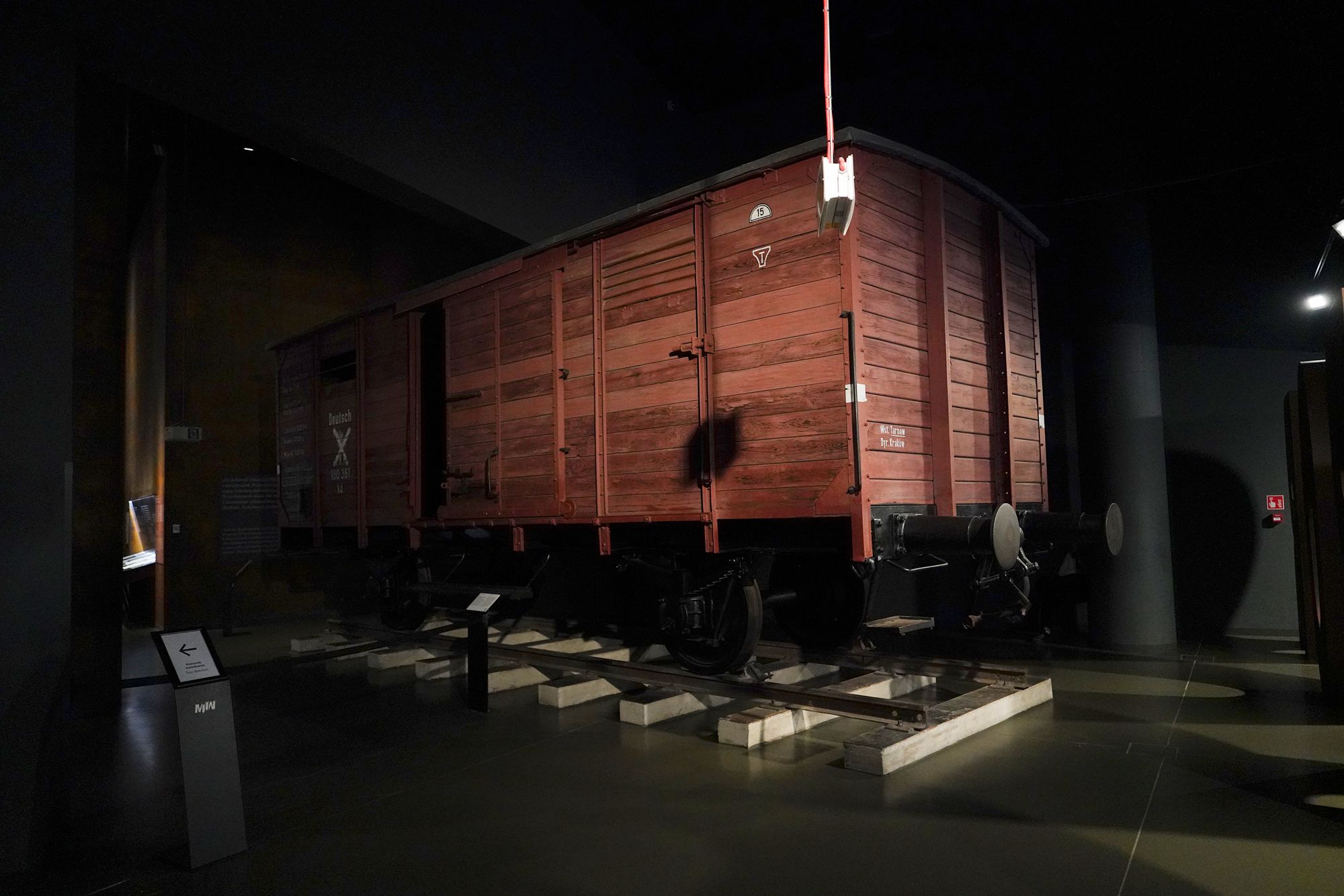
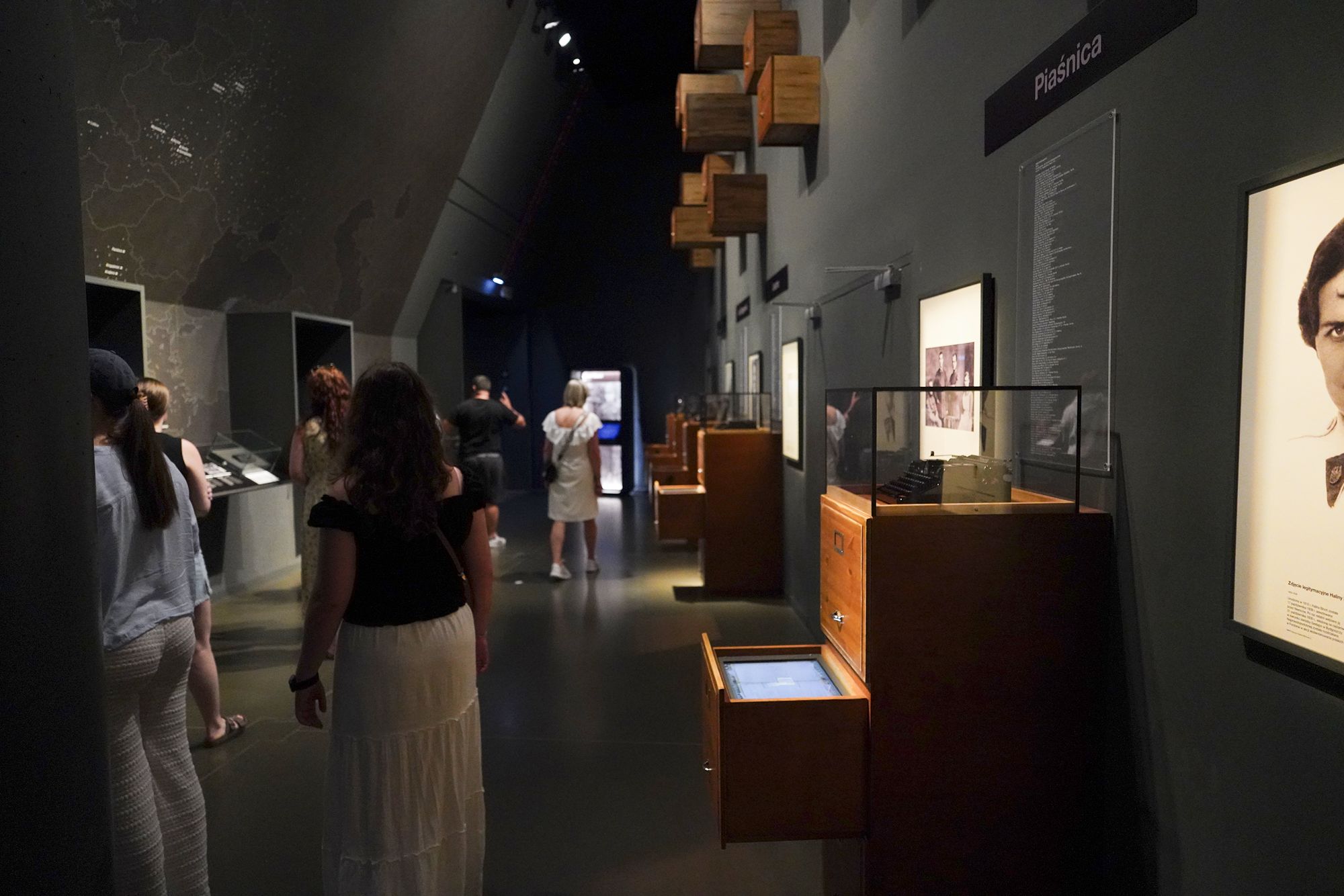
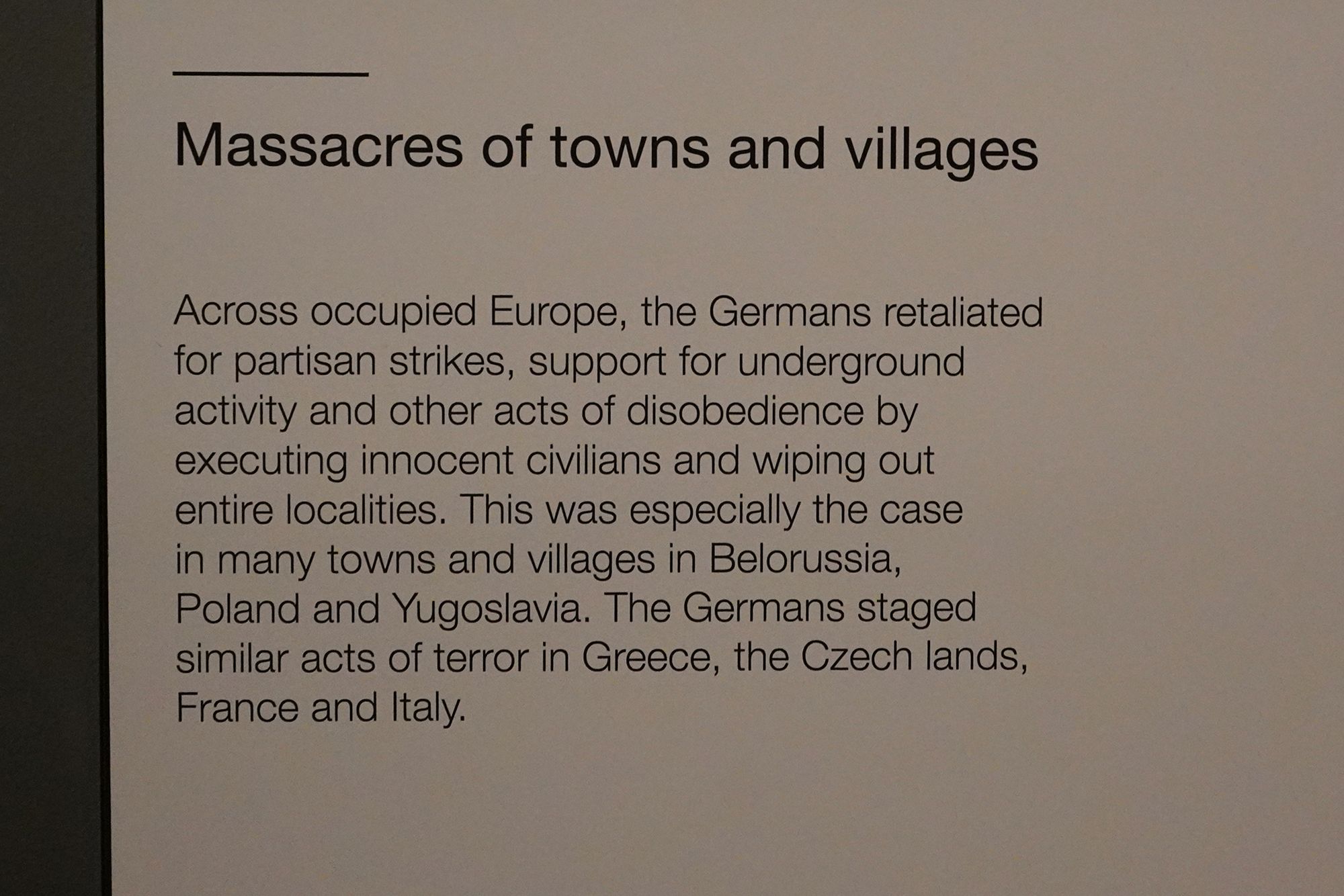
The panel describes German reprisals against civilians across occupied Europe. In response to partisan strikes, support for underground resistance, or other acts of disobedience, German forces executed civilians and destroyed entire communities. Such massacres were especially common in Belarus, Poland, and Yugoslavia; similar acts of terror took place in Greece, the Czech lands, France, and Italy.
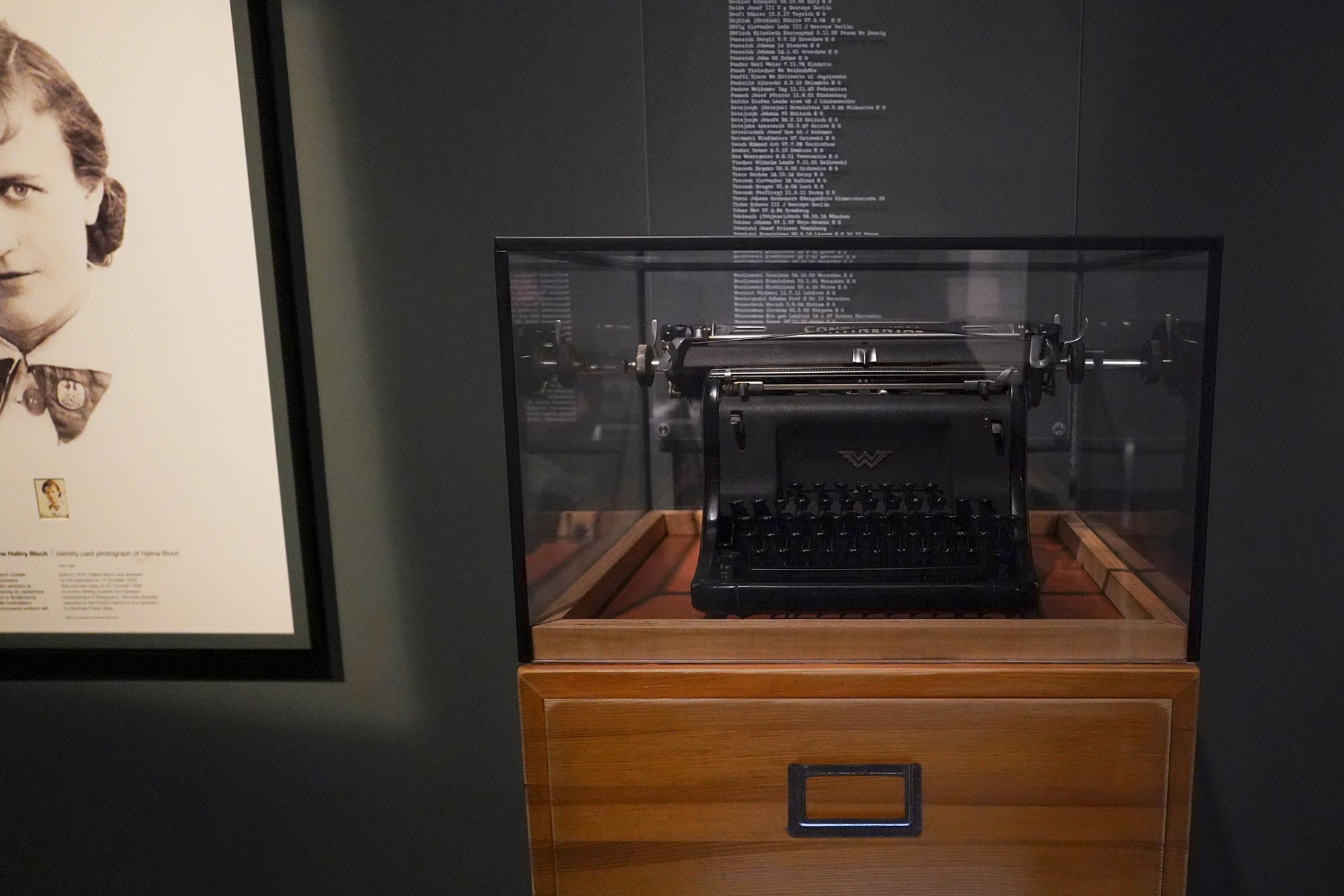
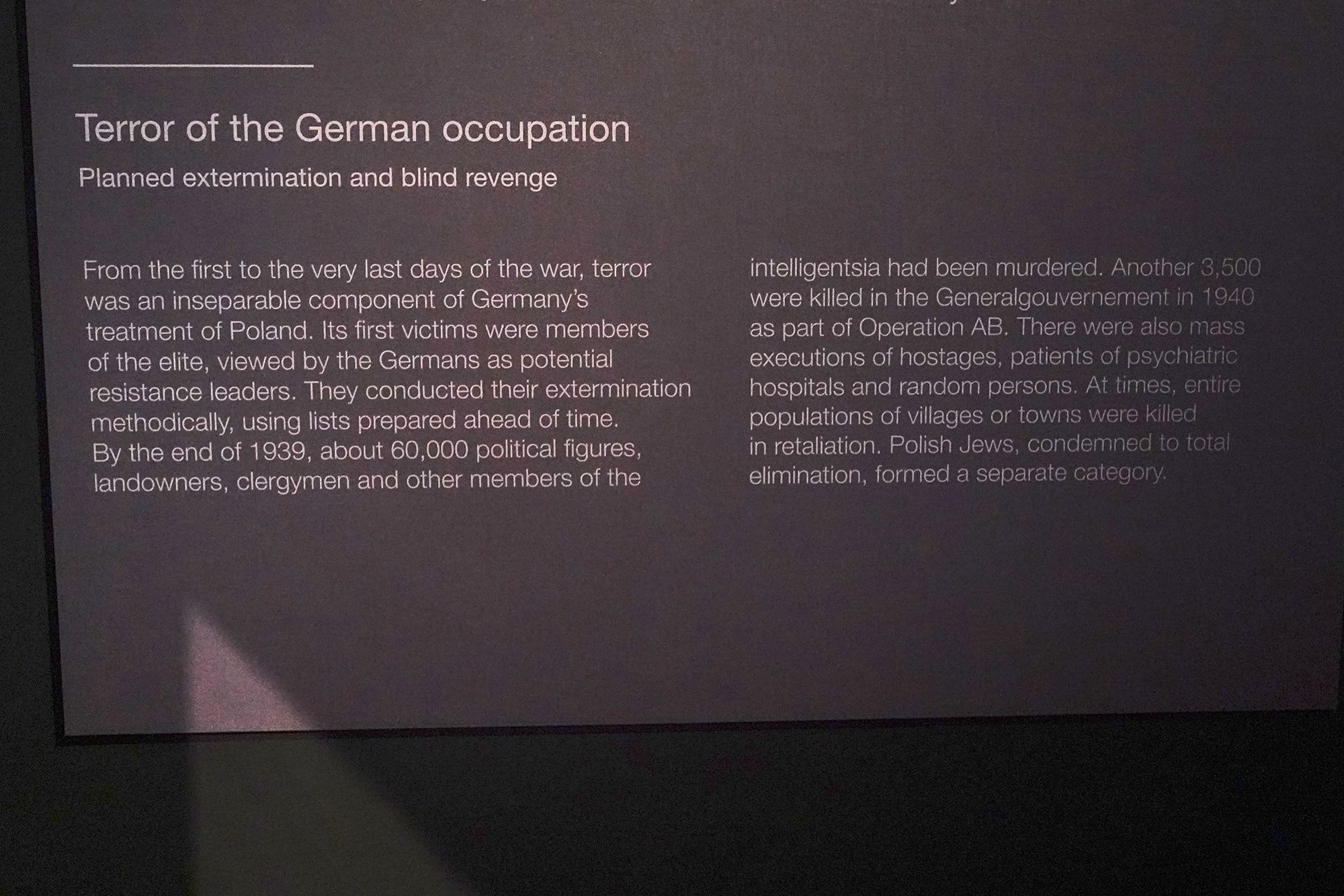
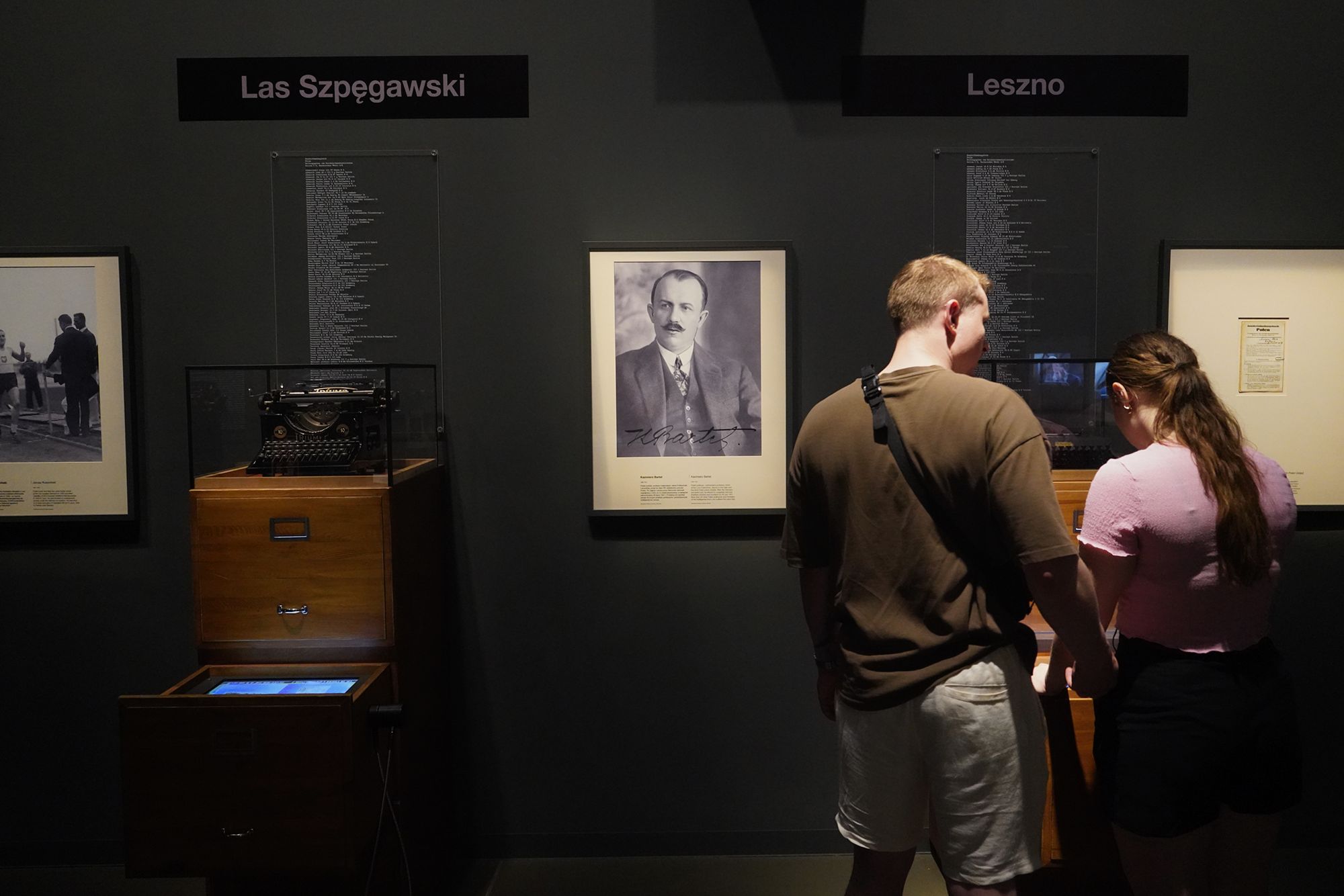
The panel describes terror as a deliberate part of Germany’s occupation of Poland. German forces first targeted people they feared might lead resistance, including political figures, landowners, clergy, and other members of the Polish intelligentsia. The panel reports that about 60,000 had been murdered by the end of 1939, with thousands more killed during Operation AB in 1940. Executions also included hostages, psychiatric patients, and random civilians; sometimes whole towns and villages were killed in retaliation. Polish Jews were targeted separately for total extermination.
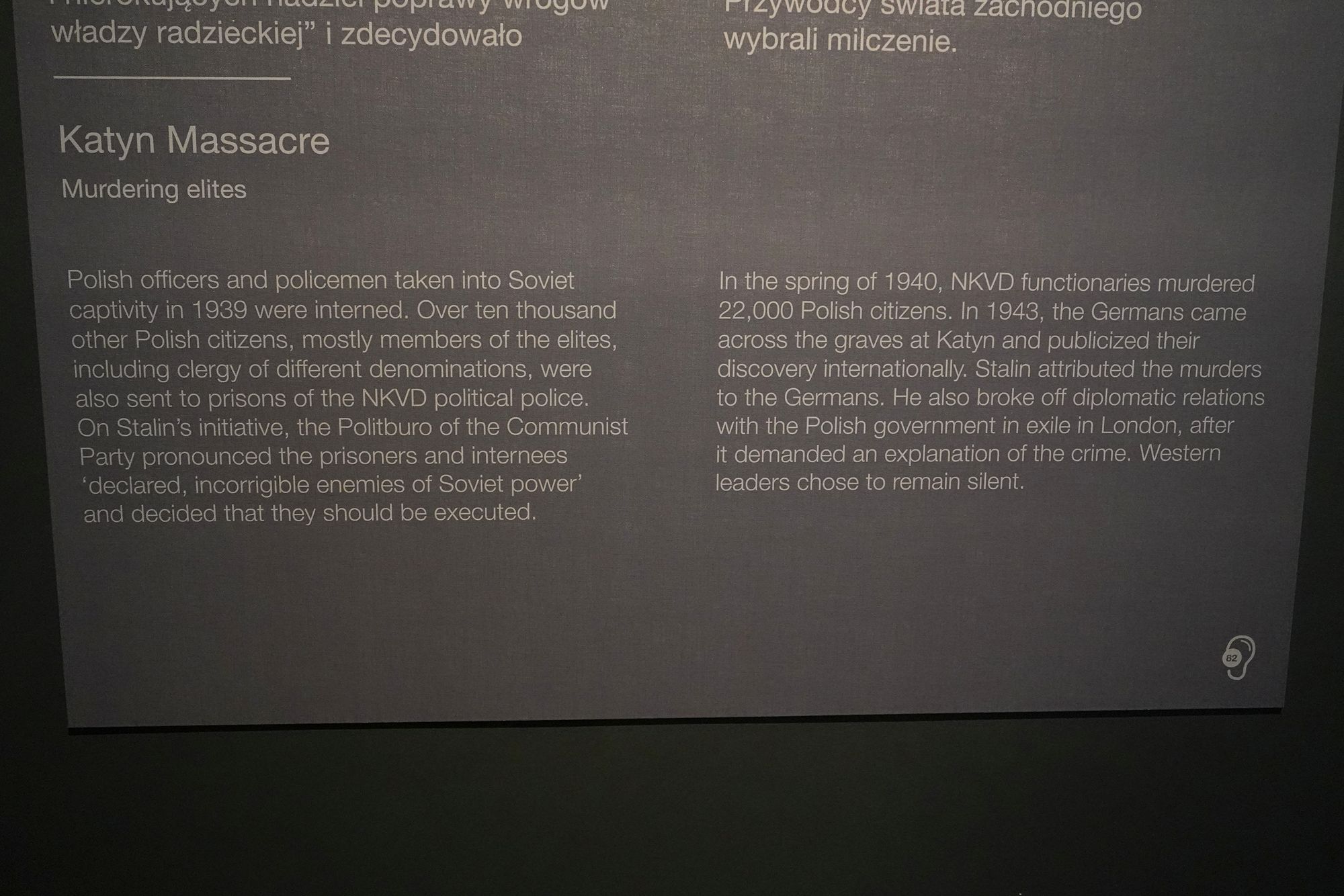
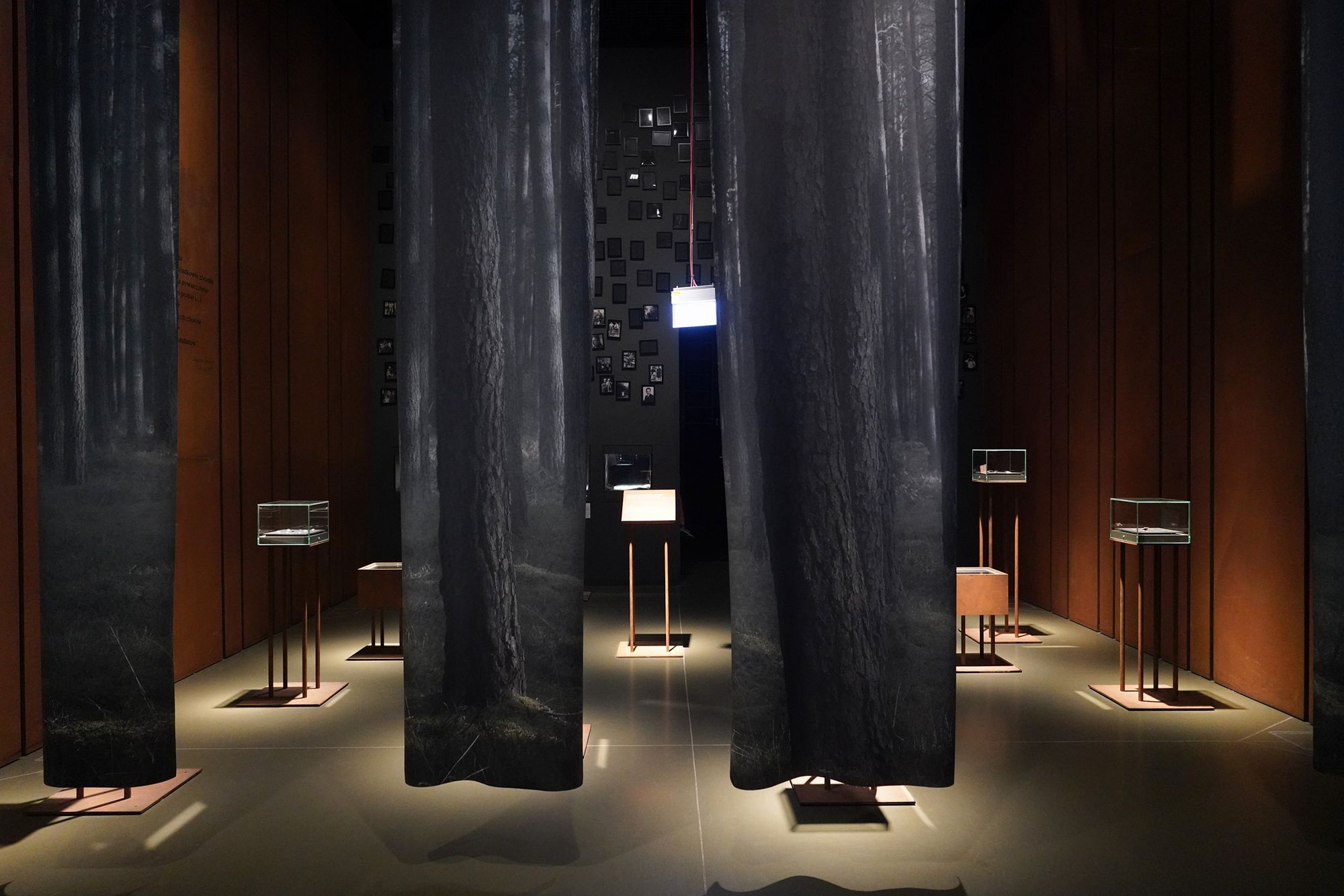
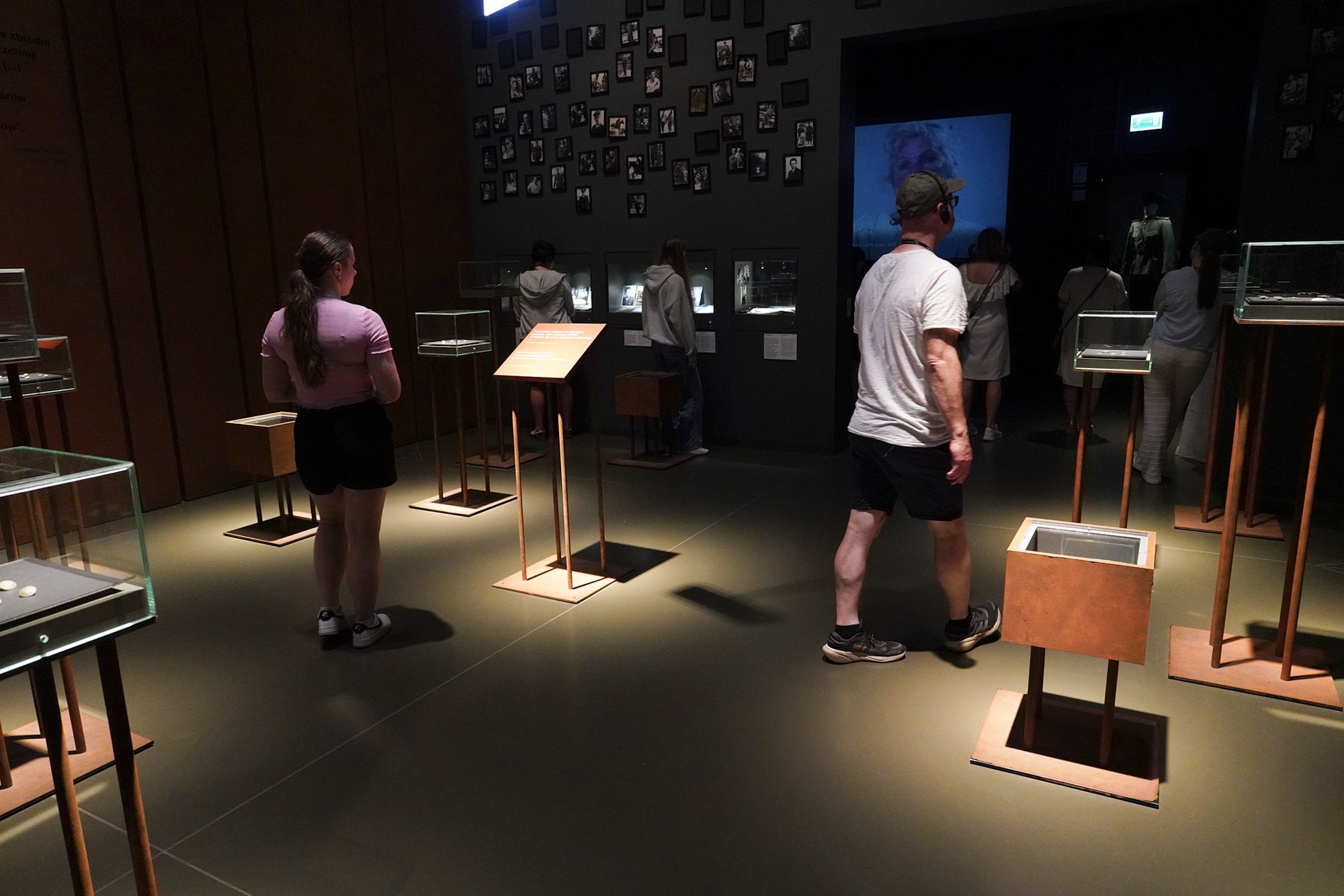
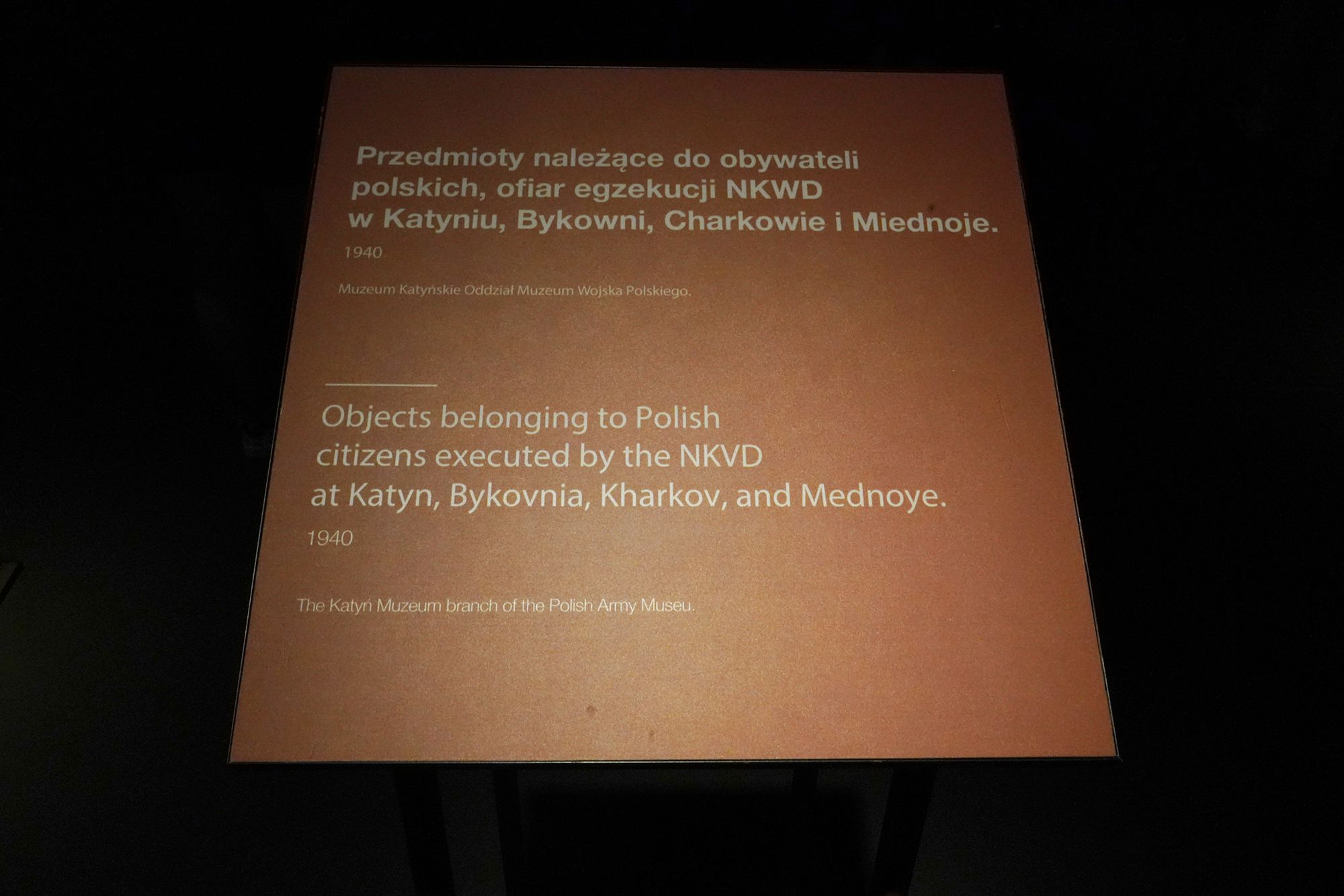
Katyn Massacre: Murdering Poland’s elites
After the Soviet Union invaded eastern Poland in 1939, Soviet authorities imprisoned Polish officers, policemen, clergy, and other members of the country’s elite. In spring 1940, Stalin’s government ordered the NKVD, the Soviet secret police, to execute about 22,000 Polish citizens. The killings took place at Katyn and other sites. When German forces discovered mass graves in 1943, Stalin blamed Germany and severed relations with Poland’s government-in-exile, which demanded an explanation. Western leaders largely stayed silent.
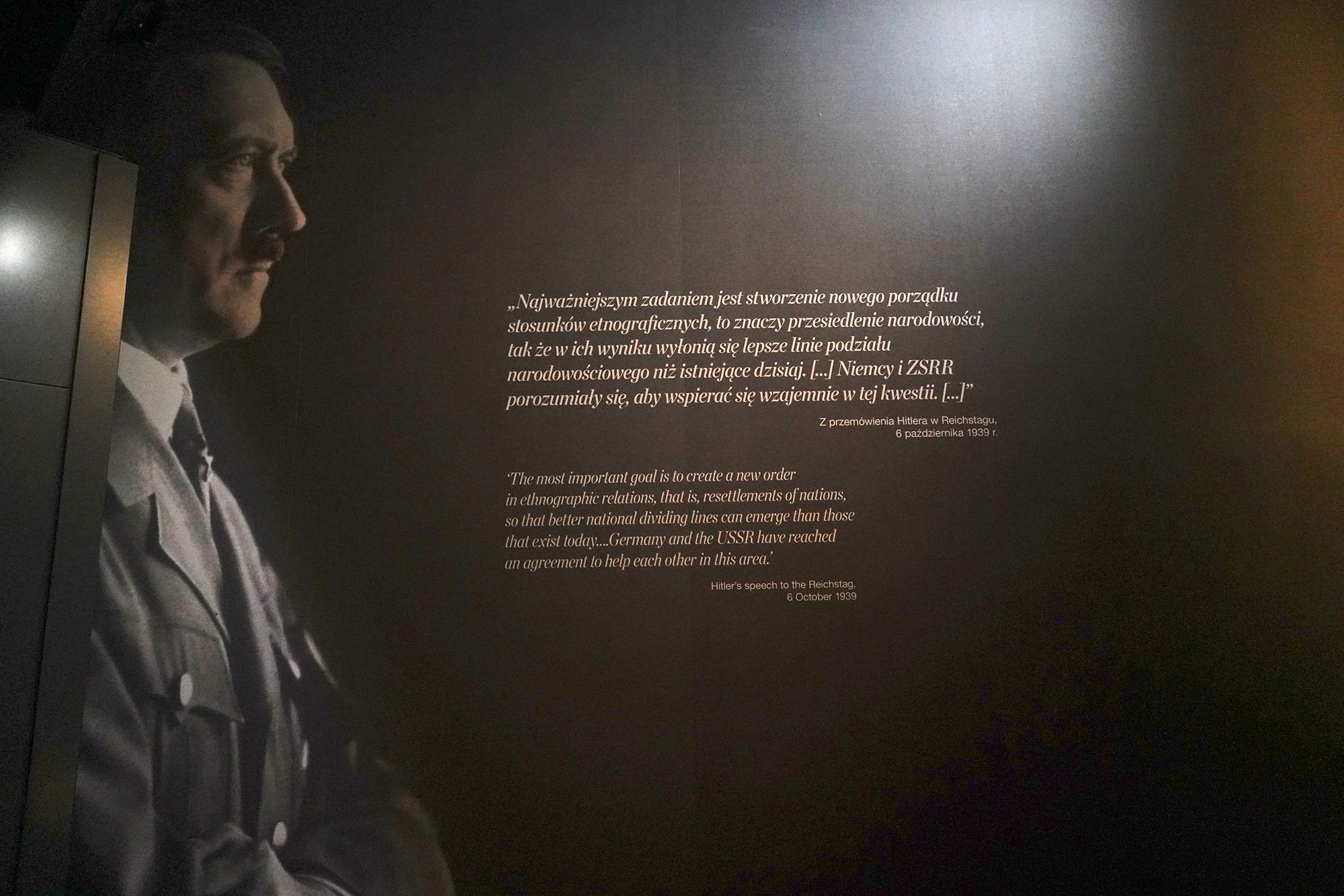
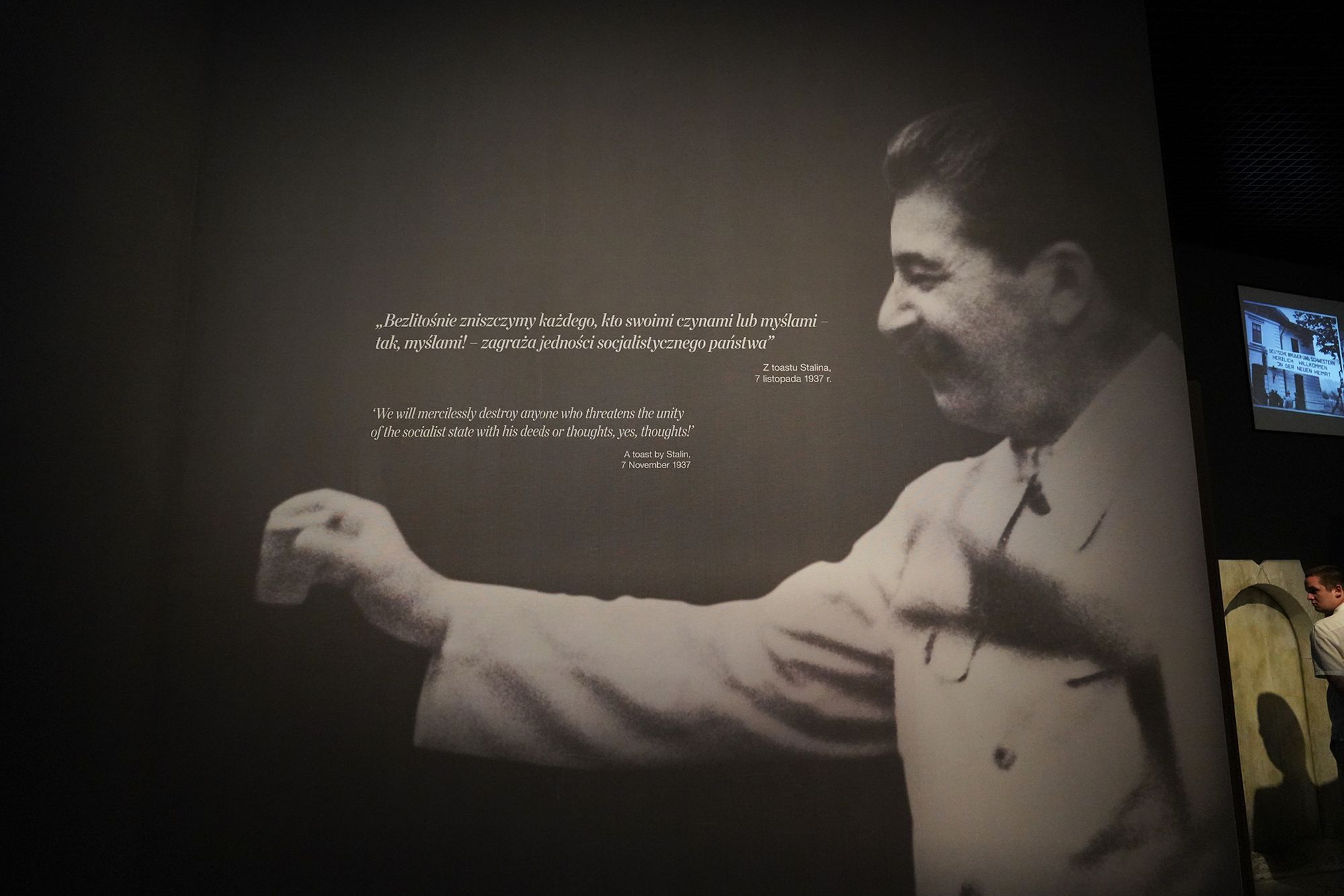
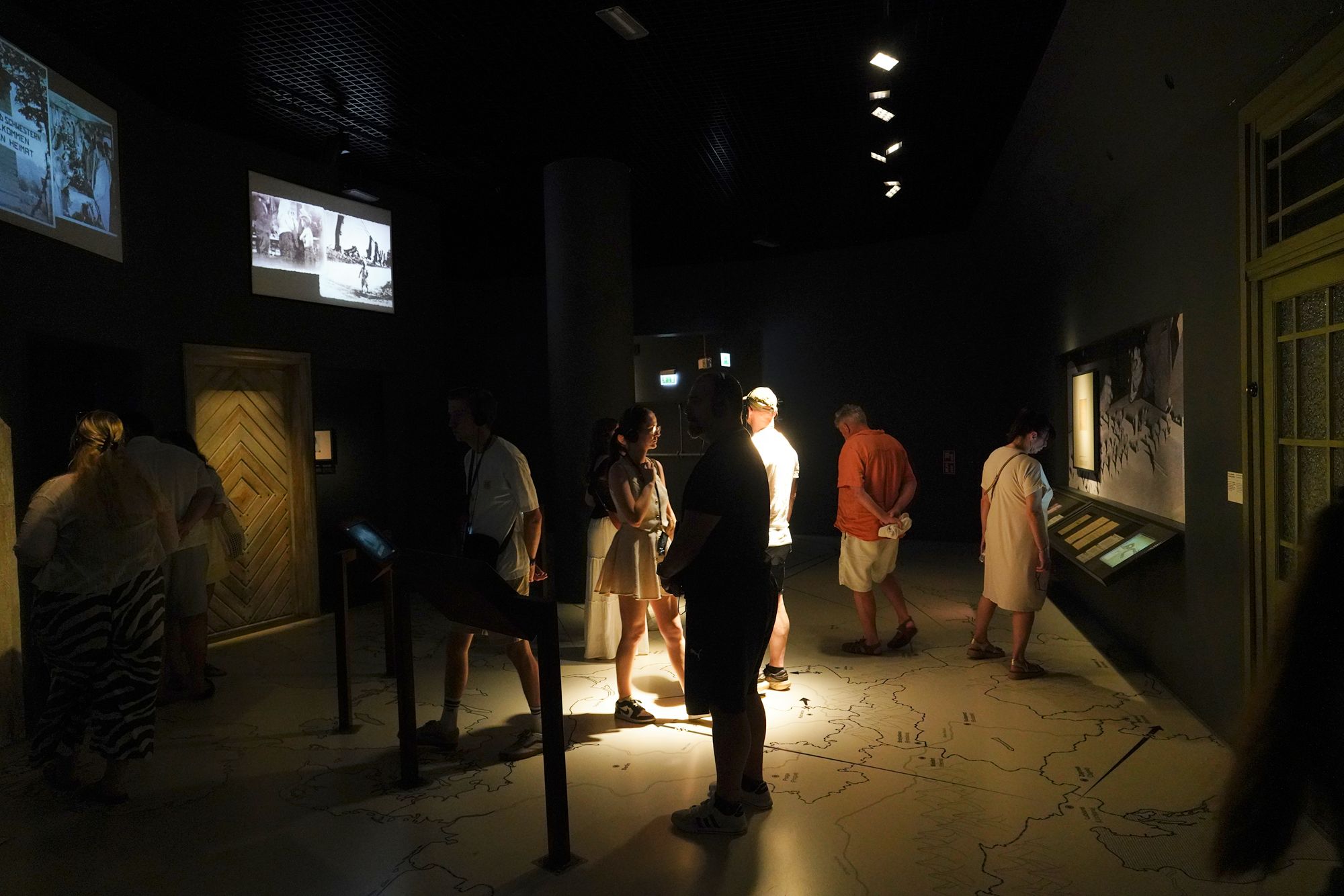
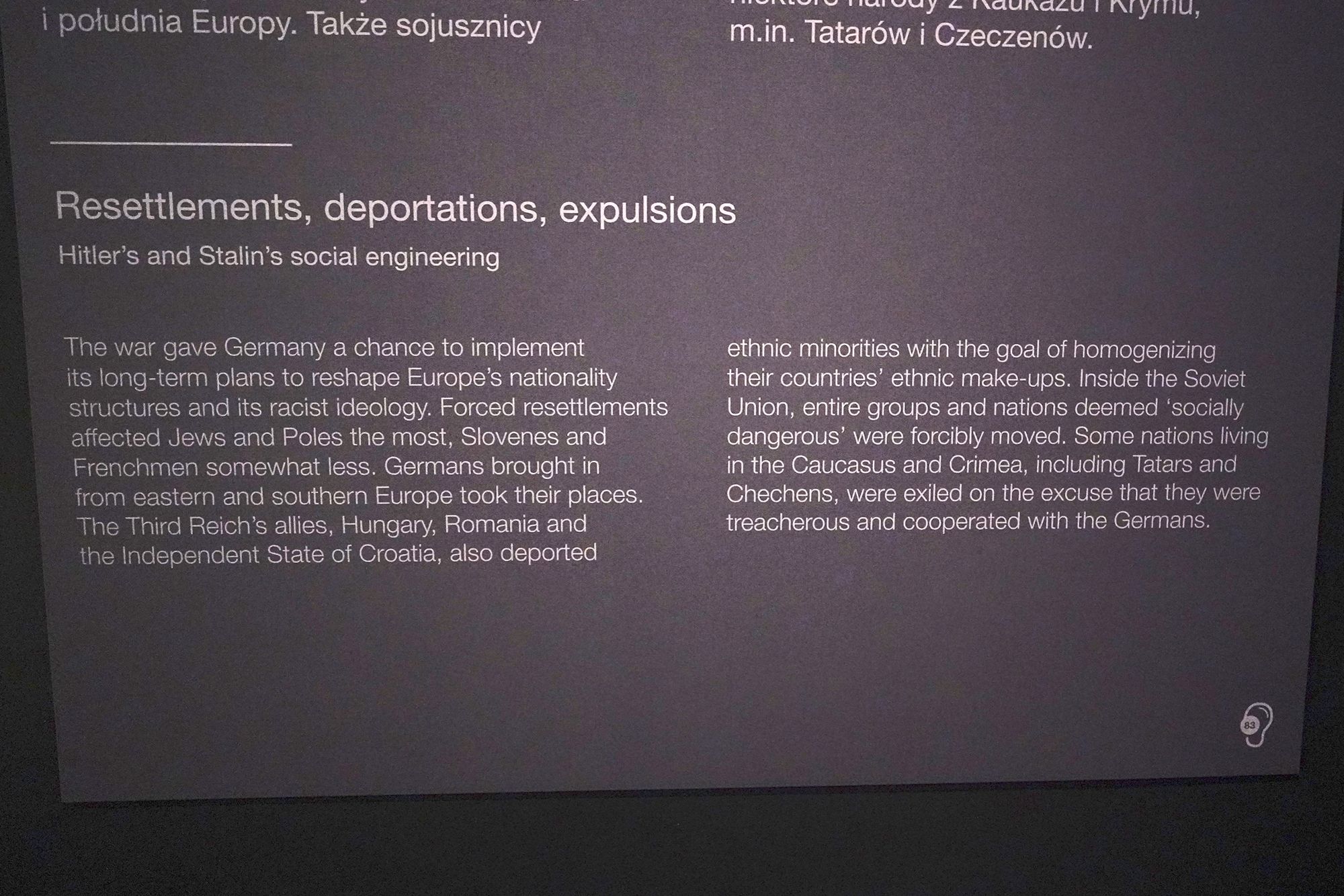
Resettlements, deportations, and expulsions
During the war, Nazi Germany used forced resettlement to reshape Europe’s population according to its racist plans. Jews and Poles were affected most, while Slovenes and French people were also displaced; settlers brought from eastern and southern Europe took over some of their homes. Germany’s allies, including Hungary, Romania, and Croatia, also deported ethnic minorities. The Soviet Union forcibly deported whole peoples it considered dangerous, including Crimean Tatars and Chechens, accusing them of helping the Germans.
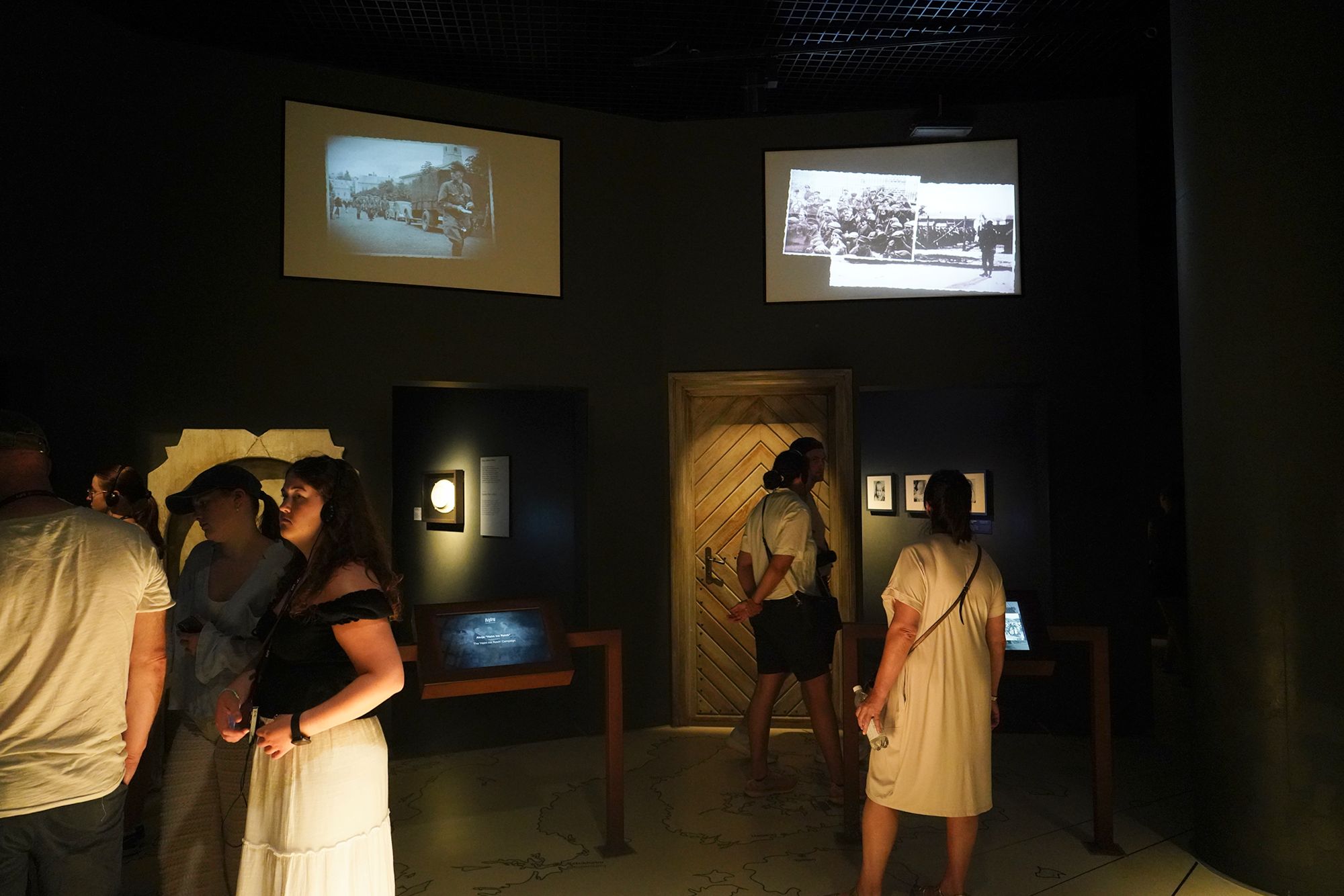
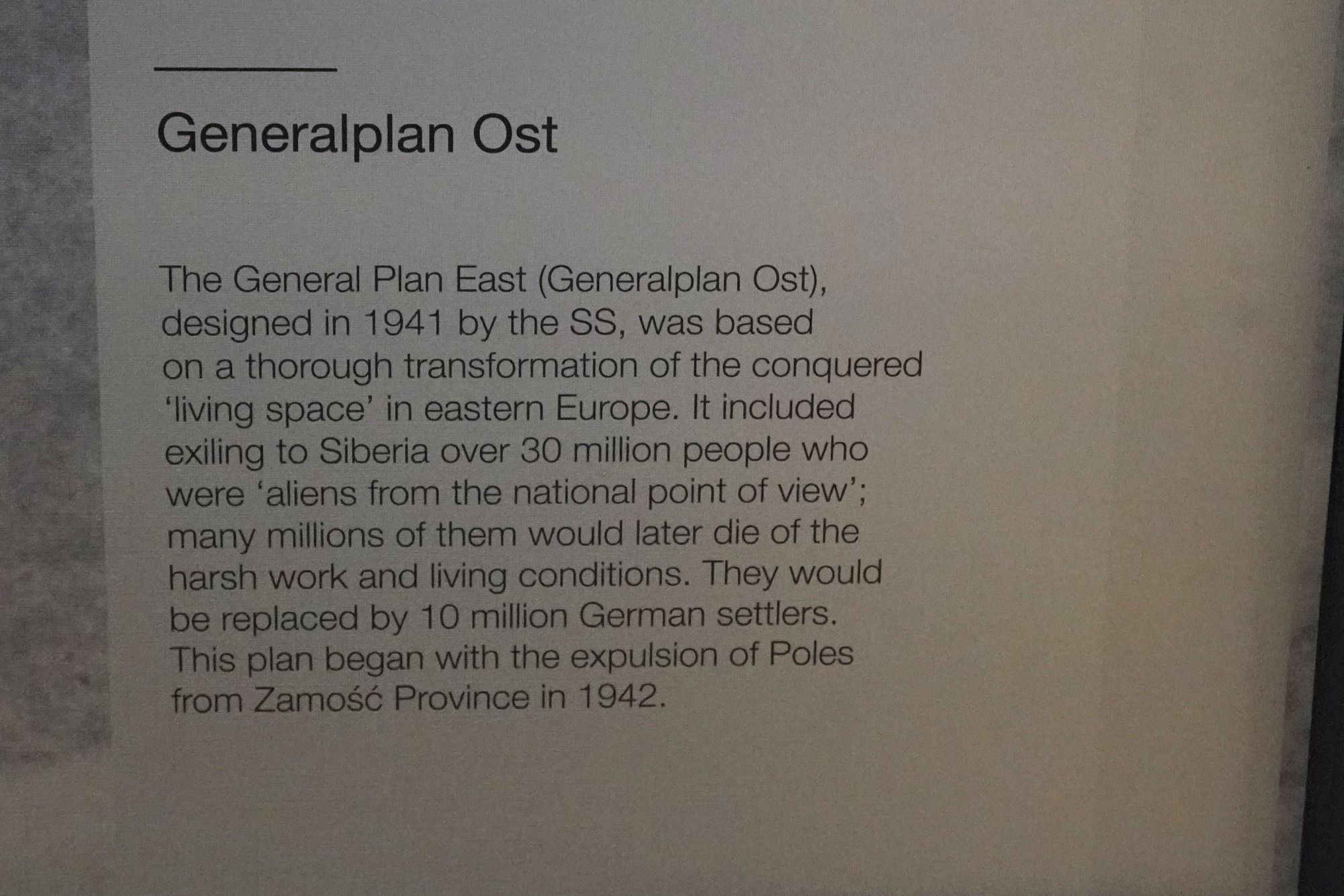
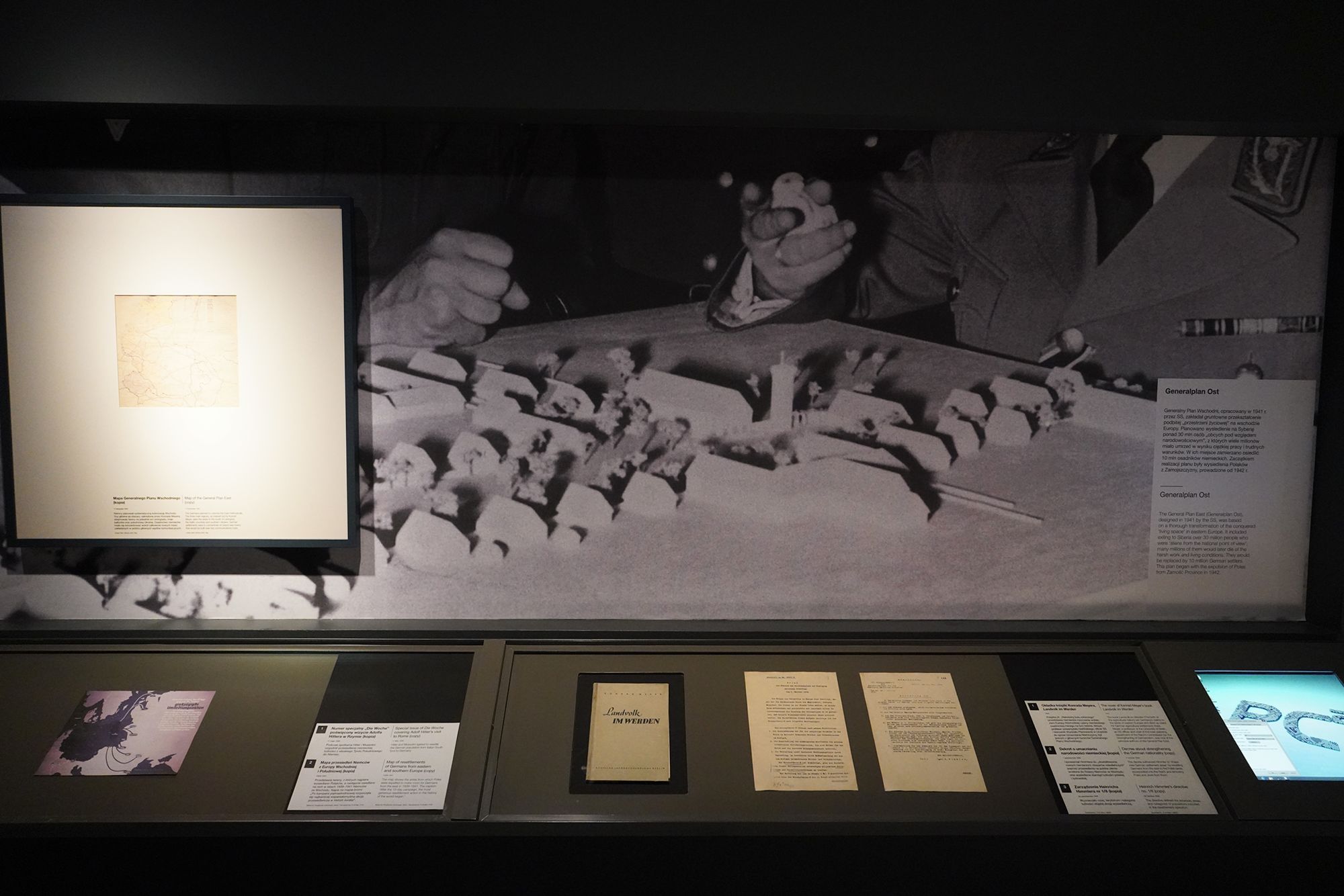
Generalplan Ost
The SS’s General Plan East, developed in 1941, set out a Nazi vision for remaking eastern Europe as German “living space.” It proposed deporting more than 30 million people to Siberia, where many were expected to die from forced labor and harsh conditions, and replacing them with German settlers. The plan began to be put into practice in 1942, when Polish families were expelled from the Zamość region.
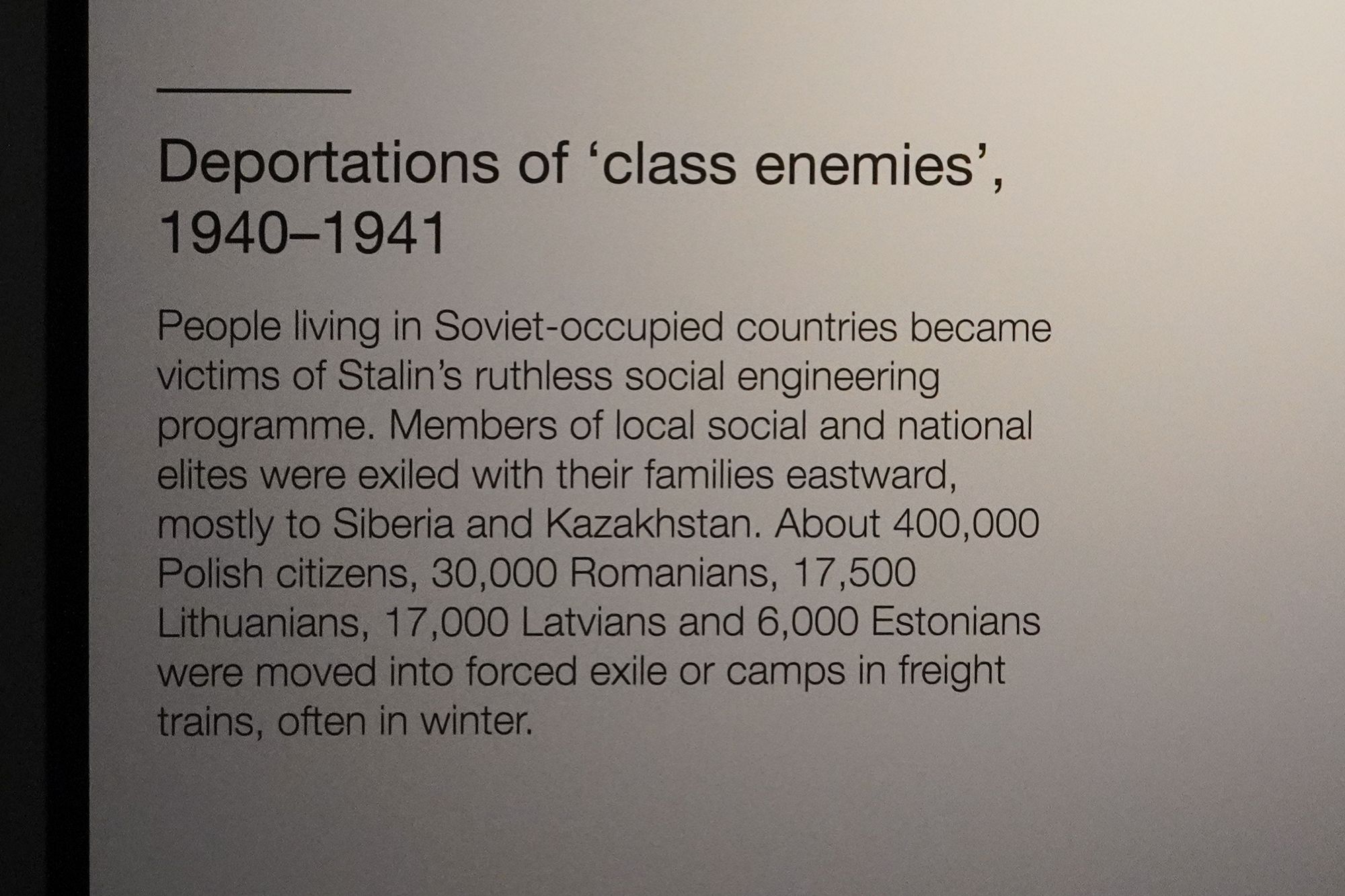
Deportations of “class enemies,” 1940–1941
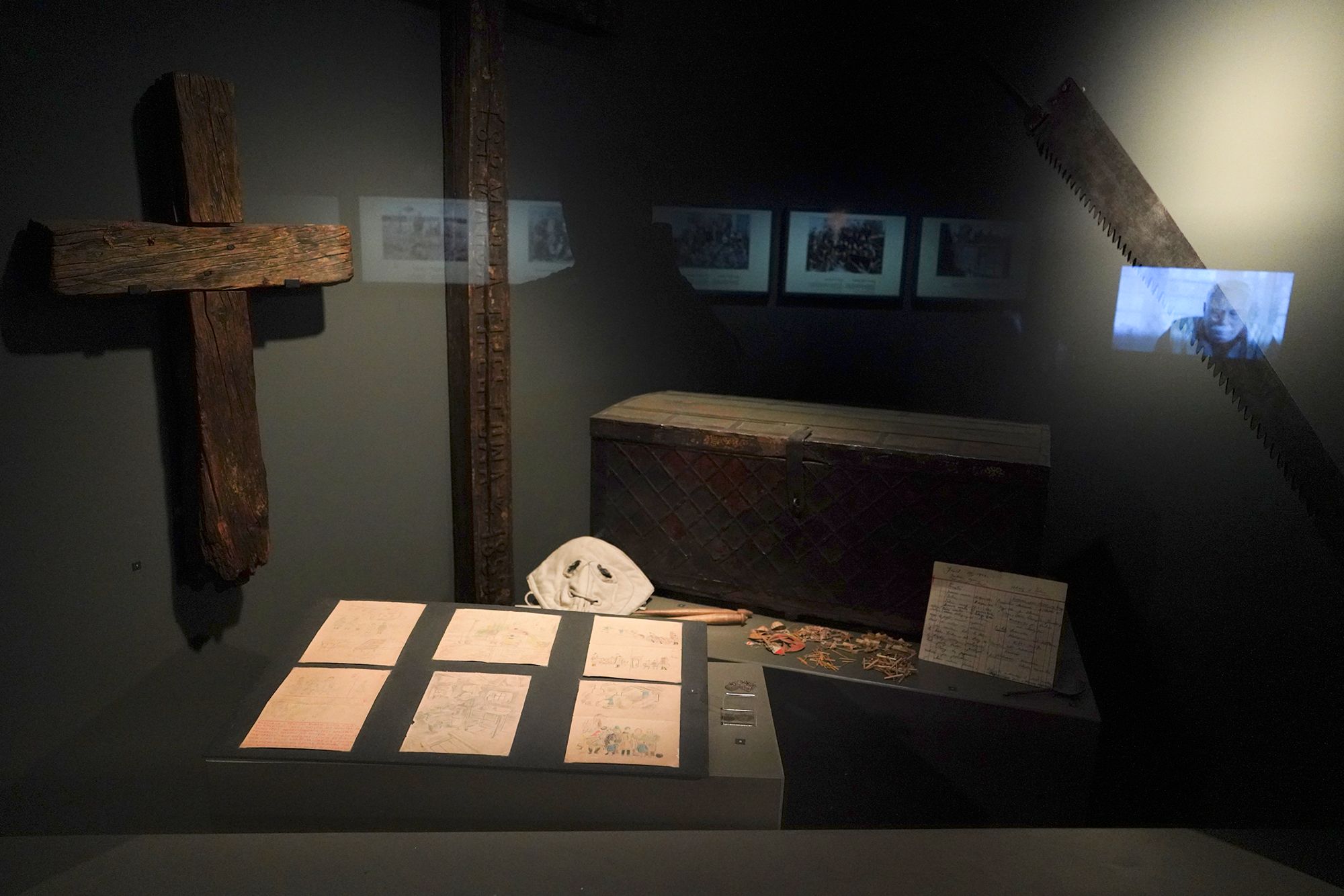
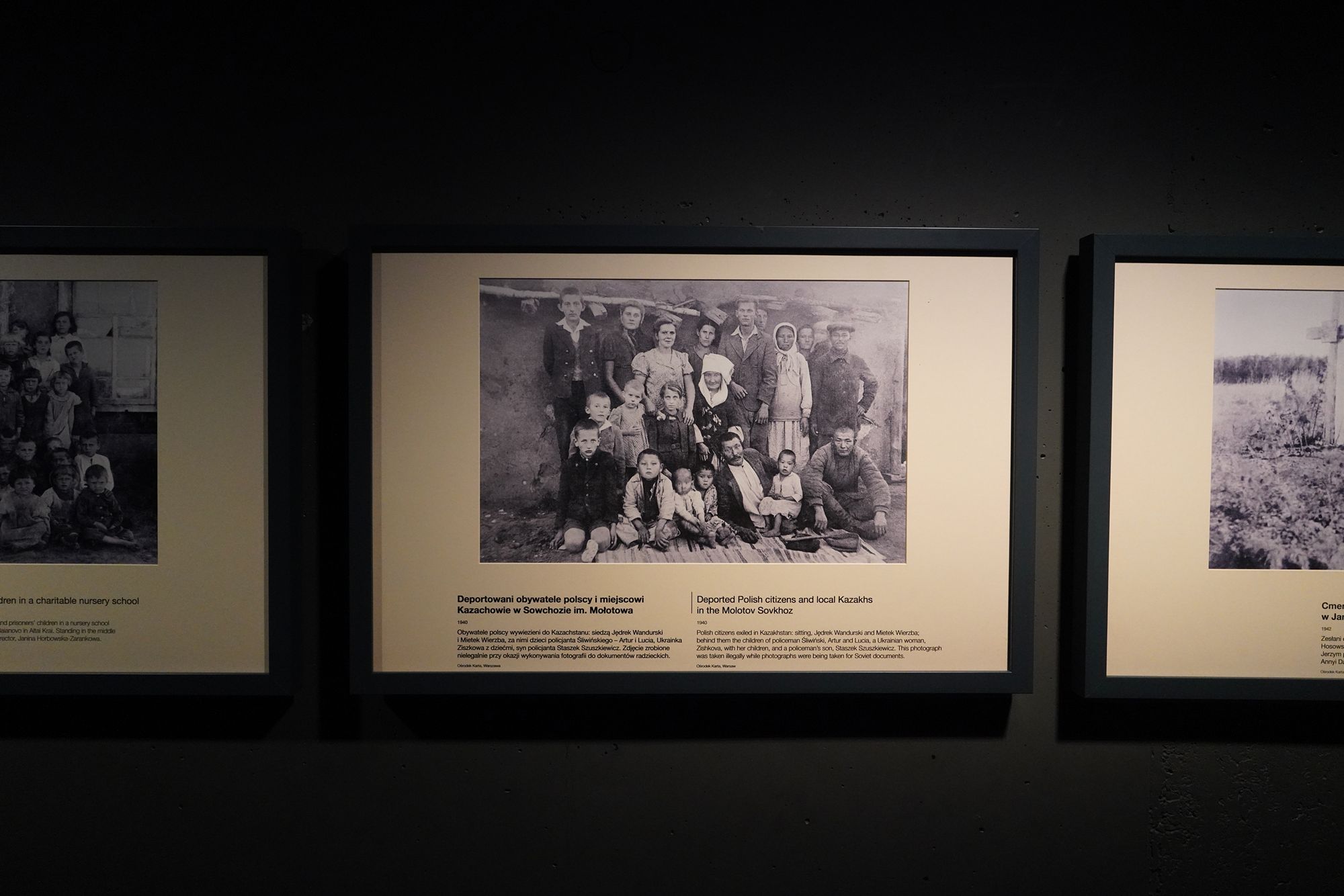
Under Stalin, Soviet authorities deported people from occupied territories whom they viewed as political or social threats, often targeting local leaders and national elites along with their families. They were sent east, mainly to Siberia and Kazakhstan, or imprisoned in camps. The panel lists about 400,000 Polish citizens, 30,000 Romanians, 17,500 Lithuanians, 17,000 Latvians, and 6,000 Estonians. Many were transported in freight trains, sometimes during winter.
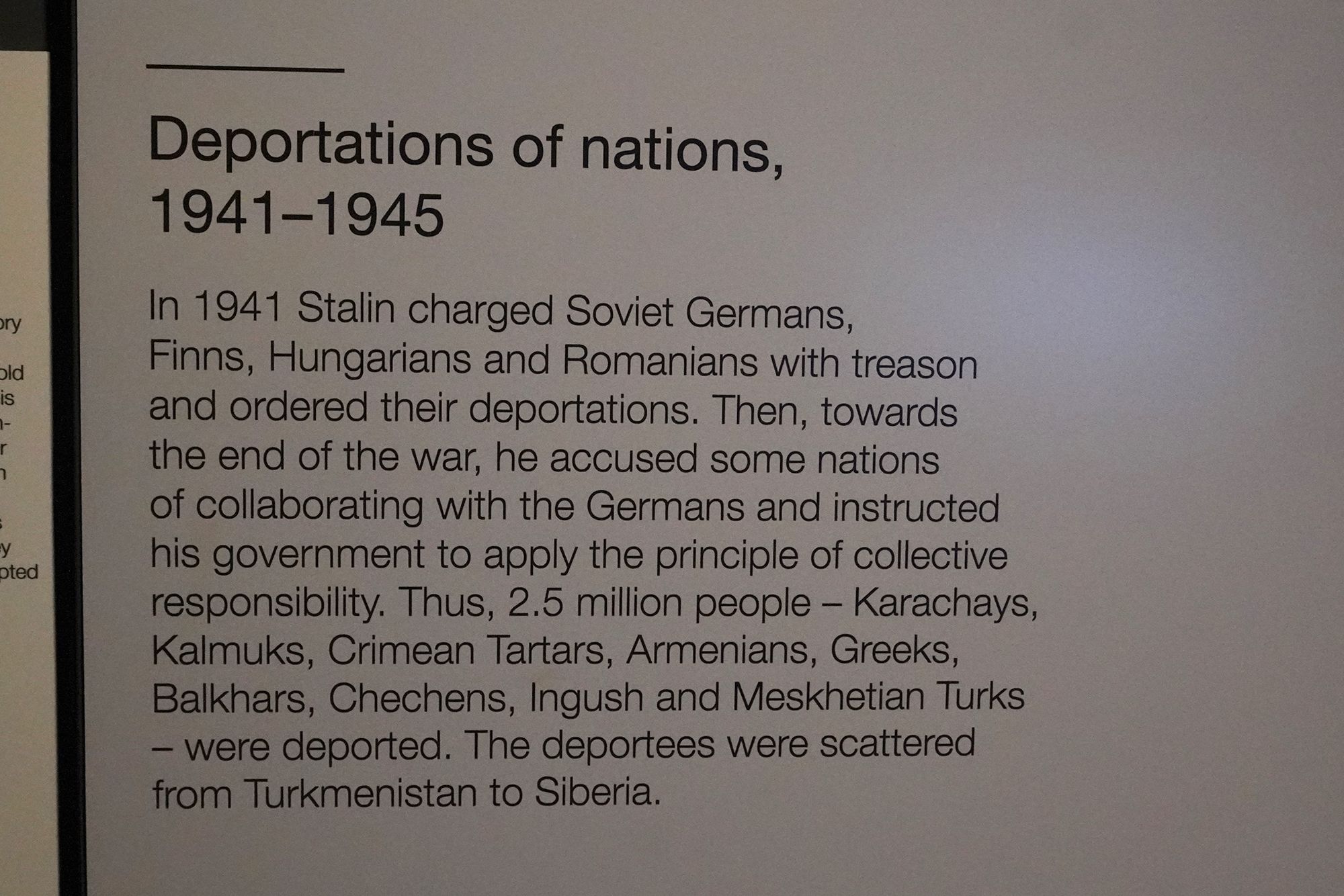
Deportations of nations, 1941–1945
During the war, Stalin’s government forcibly deported entire communities, accusing some of treason and others of helping the Germans. Instead of judging people individually, it imposed collective punishment on whole national groups. The panel says about 2.5 million people were deported, including Soviet Germans, Crimean Tatars, Chechens, Ingush, and others. They were scattered across remote parts of the Soviet Union, from Turkmenistan to Siberia.
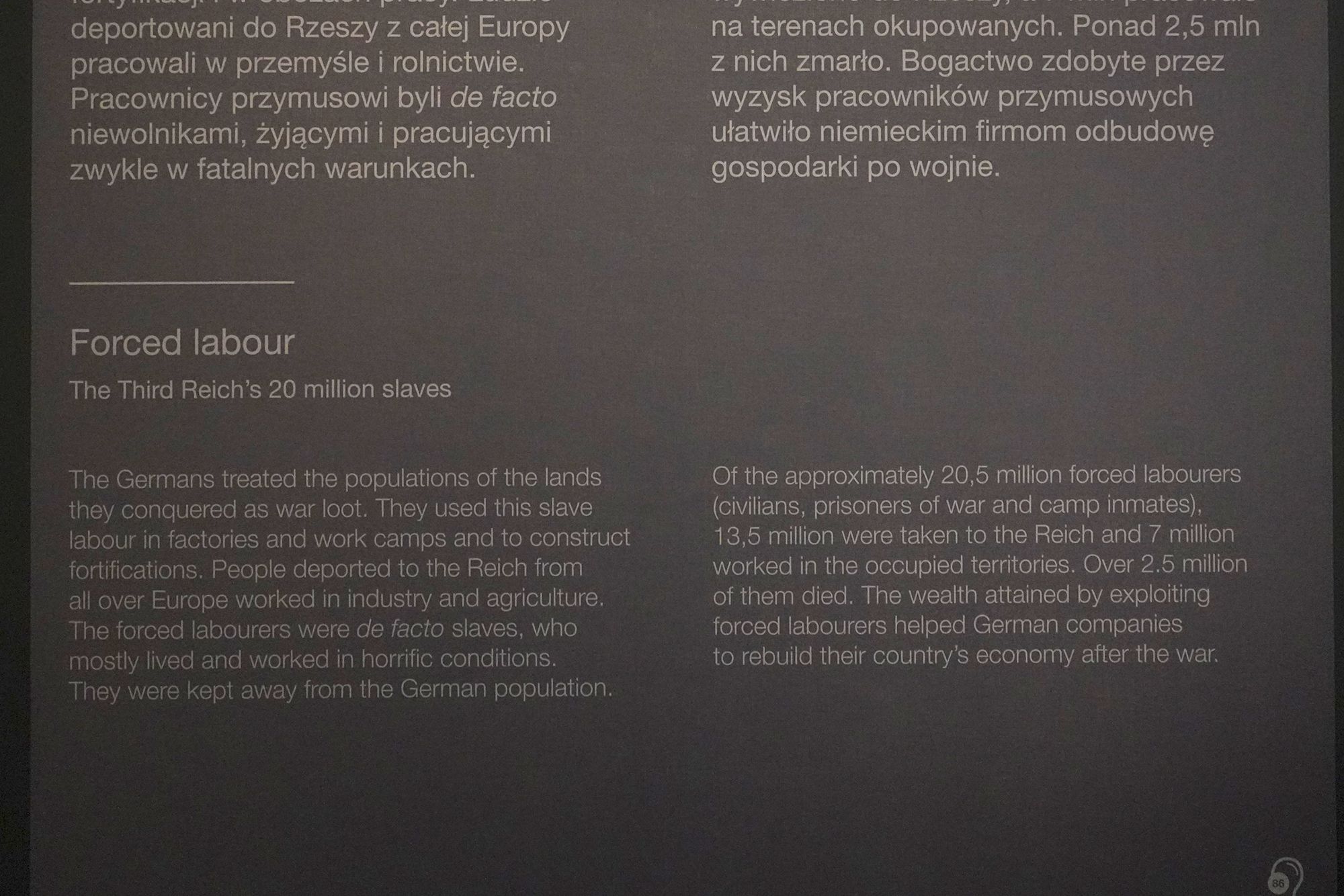
Forced labor in the Third Reich
Nazi Germany exploited people from conquered countries as forced laborers, sending them to factories, farms, work camps, and construction sites. The panel estimates that about 20.5 million civilians, prisoners of war, and camp inmates were forced to work: 13.5 million were taken to Germany, while 7 million labored in occupied territories. They faced harsh conditions and were kept apart from Germans. More than 2.5 million died, while German companies benefited from their labor.
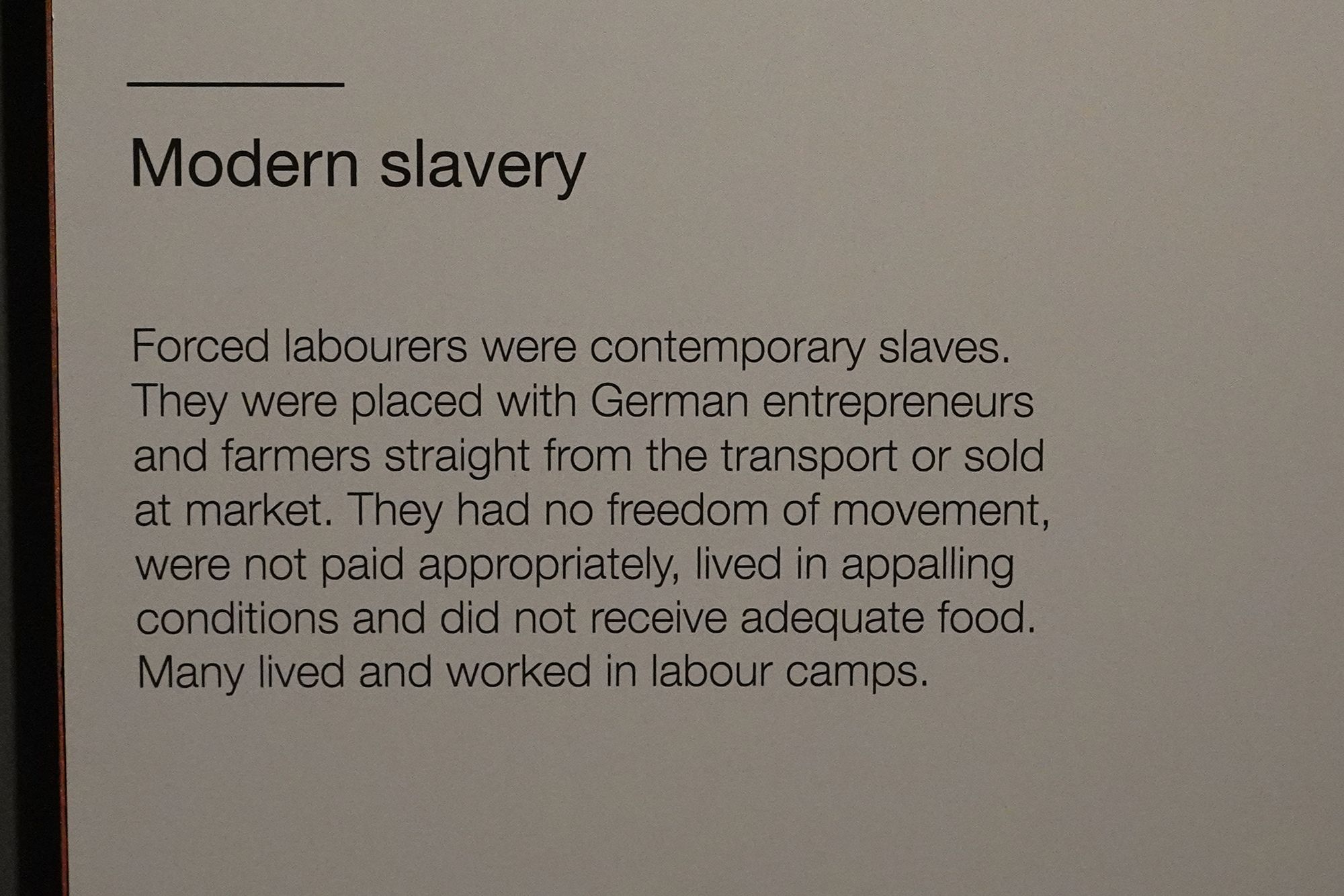
Modern slavery
People taken from occupied Europe were treated as slaves. They were assigned or sold to German business owners and farmers, had little freedom or proper pay, and often lived and worked in labor camps with poor food and harsh conditions. Their forced labor supported German farms and businesses while denying them control over their own lives.
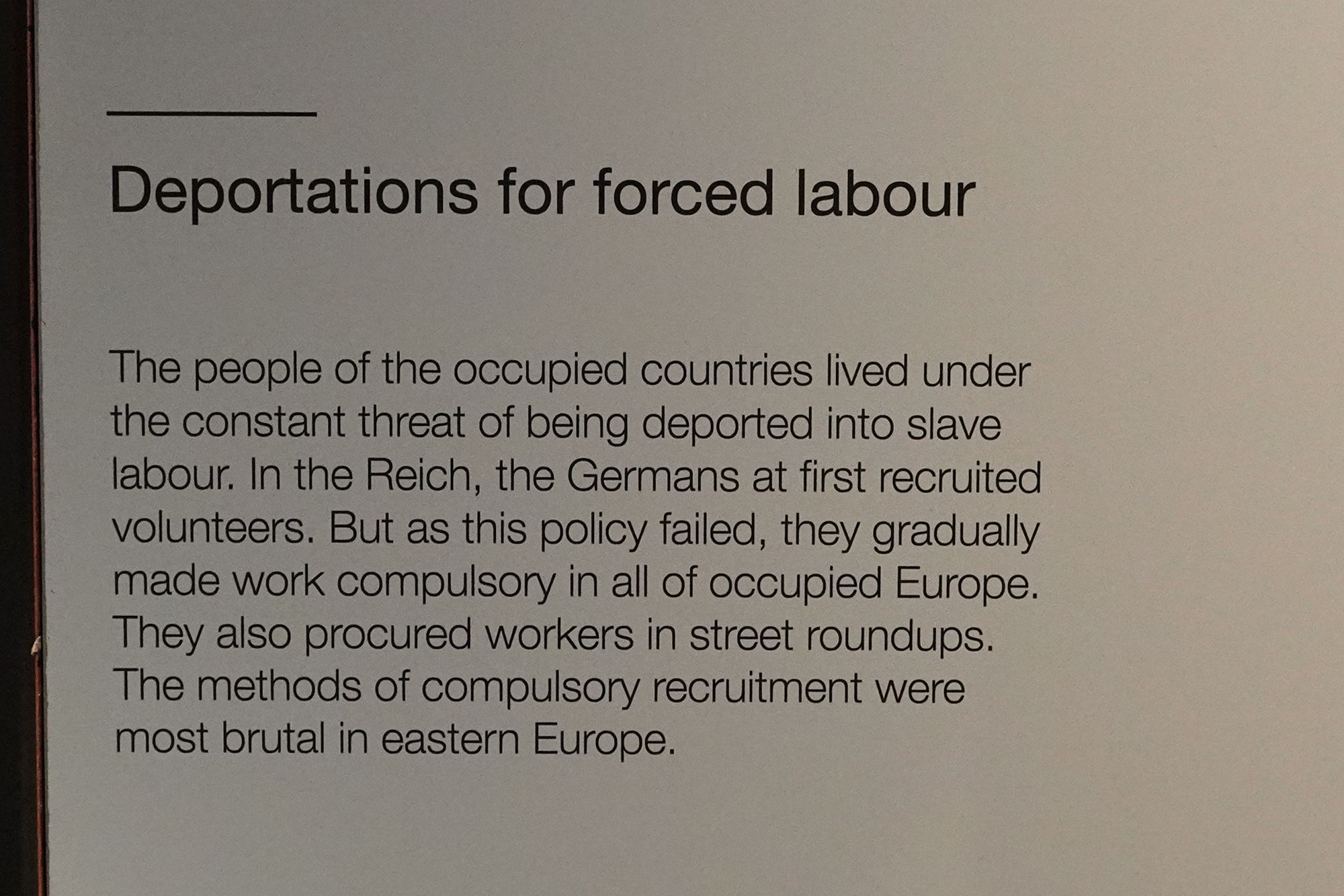
Deportations for forced labor
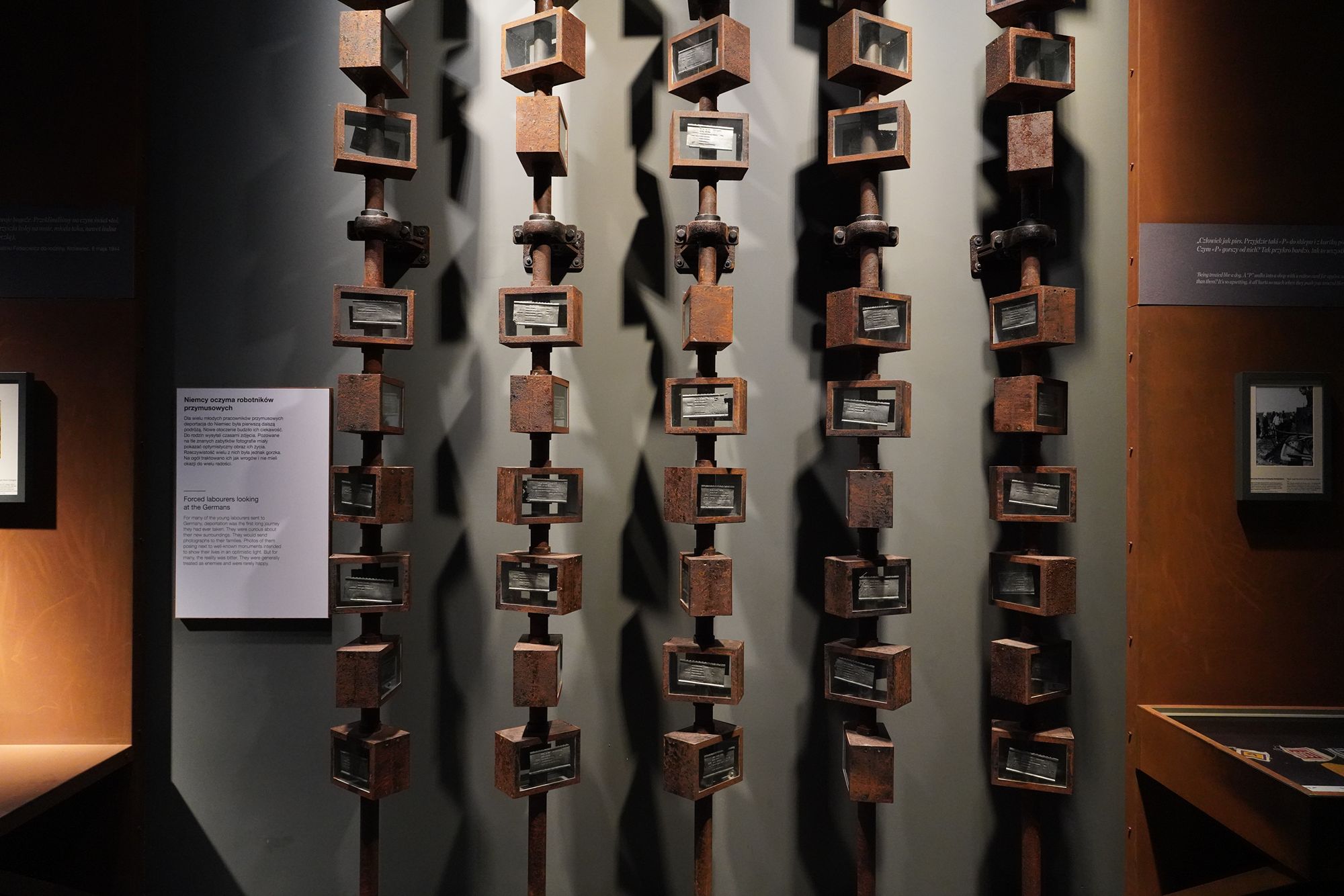
People in German-occupied countries lived under the threat of being deported to work as forced laborers. Germany first tried to recruit volunteers, but when too few came forward, it made labor compulsory across occupied Europe. Workers were also seized in street roundups, with the harshest methods used in eastern Europe.
Living conditions
Forced laborers lived in miserable conditions. Many were housed in crowded camp barracks with poor sanitation and too little food, which caused illness and sometimes death. Those placed in peasants’ homes also faced poor treatment. Nazi racism marked them as inferior, and even minor offenses could bring harsh punishment.
Intimacy
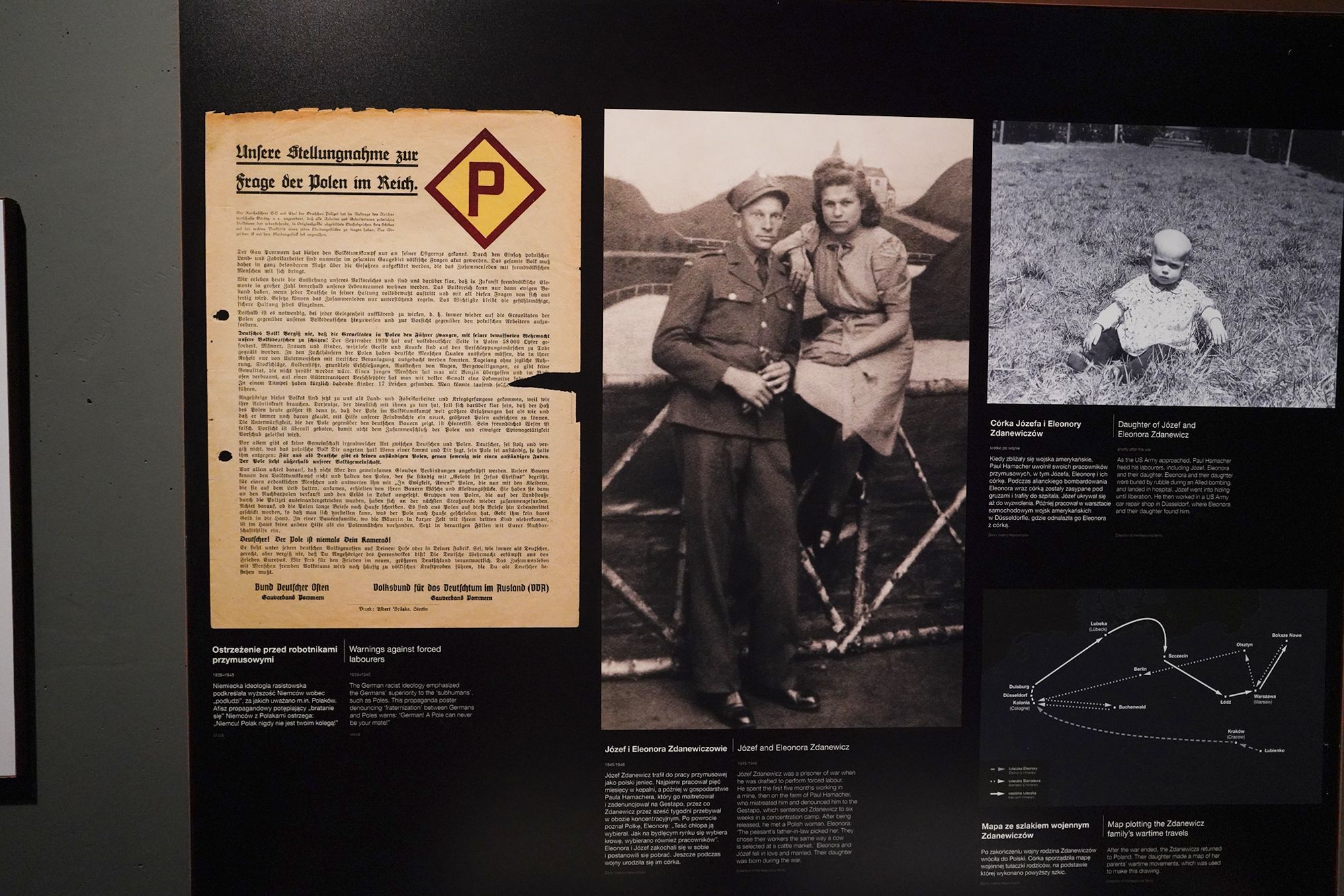
Nazi racial policy aimed to preserve what it called the “purity of German blood.” Foreign forced laborers were segregated from Germans, and even friendly contact with German women could bring severe punishment. A worker accused of a sexual relationship could be sent to prison or a concentration camp, or even executed. This policy reflected the racism and control imposed on forced laborers in Germany.
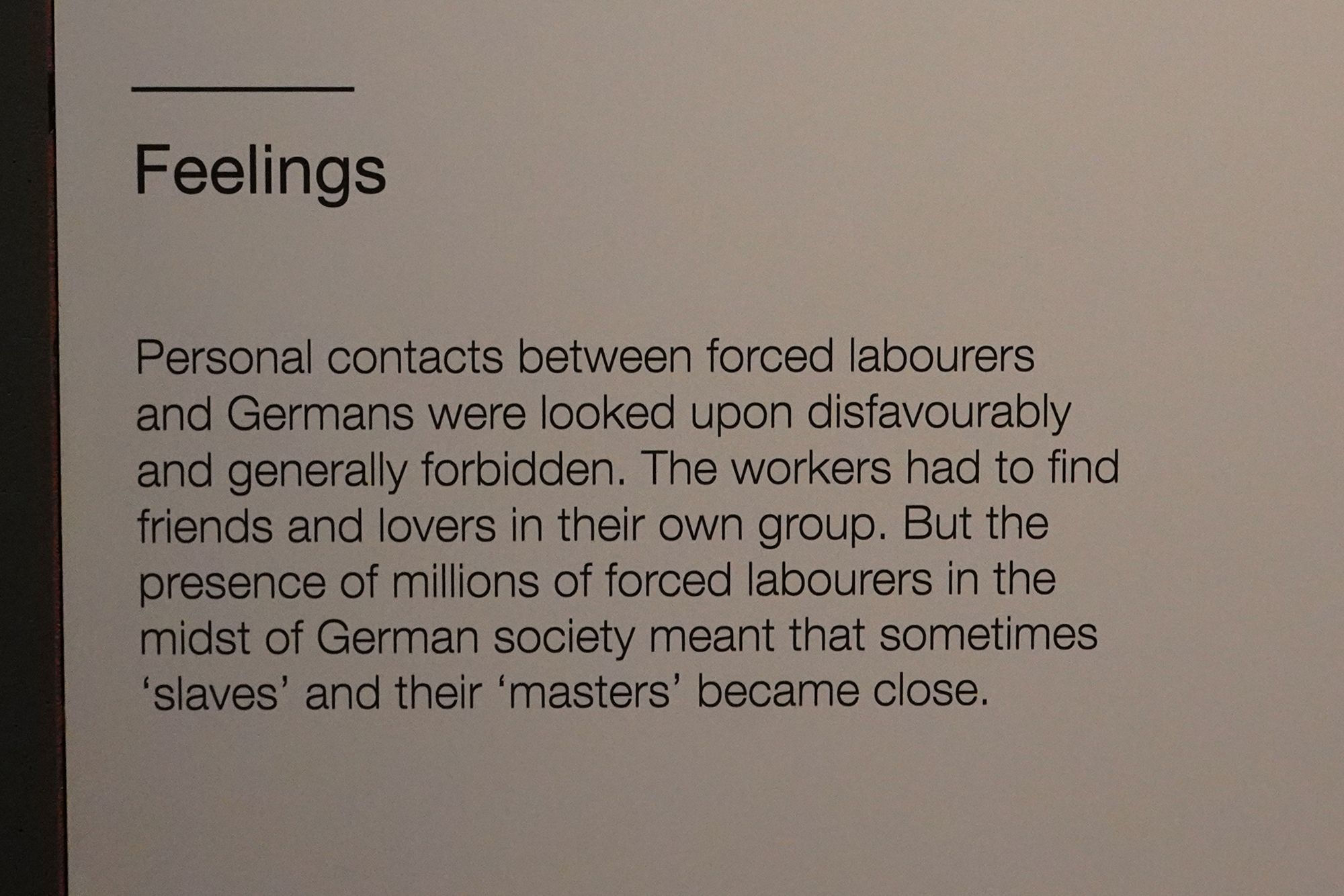
Feelings
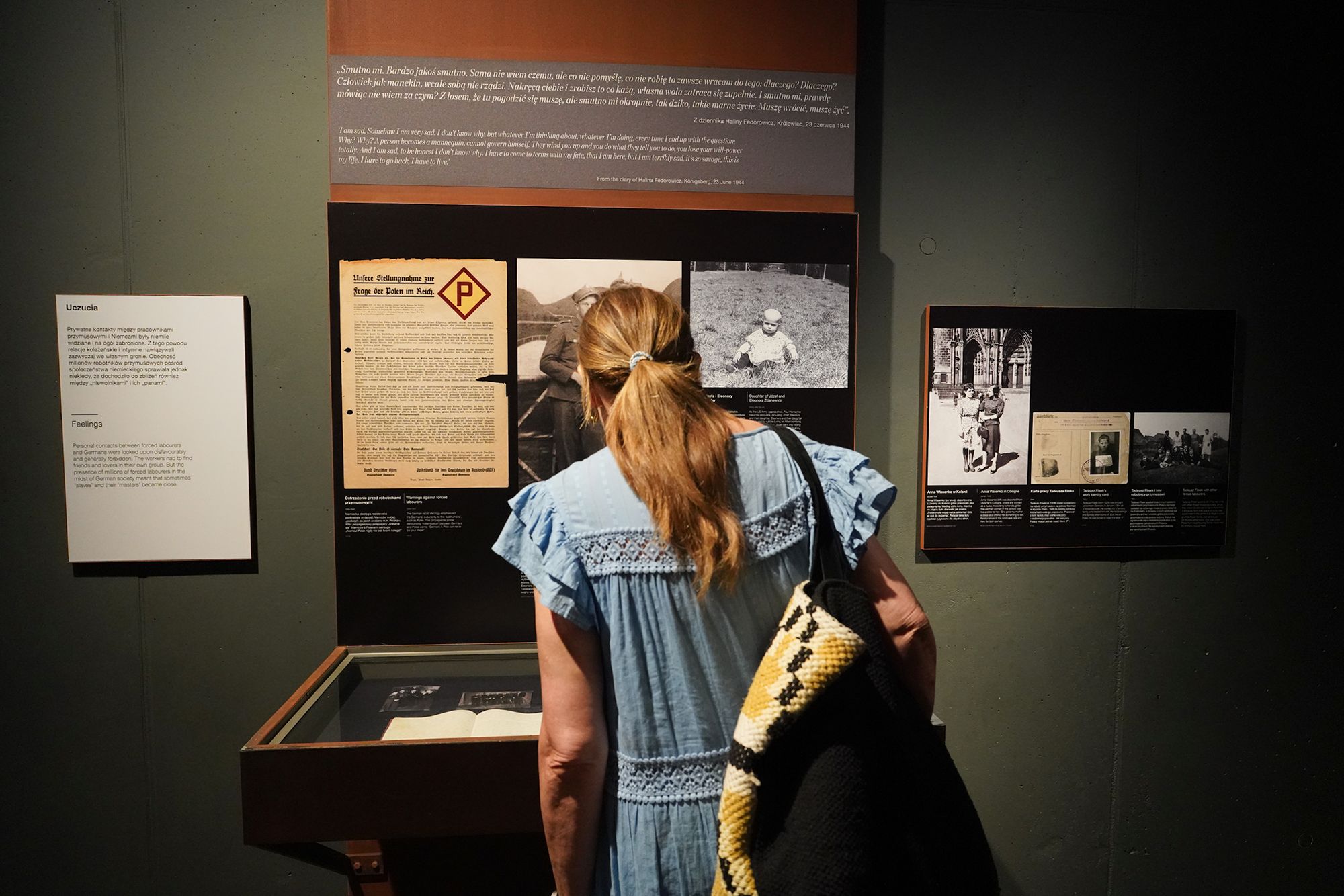
Nazi authorities generally forbade personal relationships between foreign forced laborers and Germans, so workers were expected to find friends and partners within their own groups. Yet millions of laborers lived and worked among German families and communities. Despite the rules and unequal power between them, some workers and Germans became close.
The concentration camp system
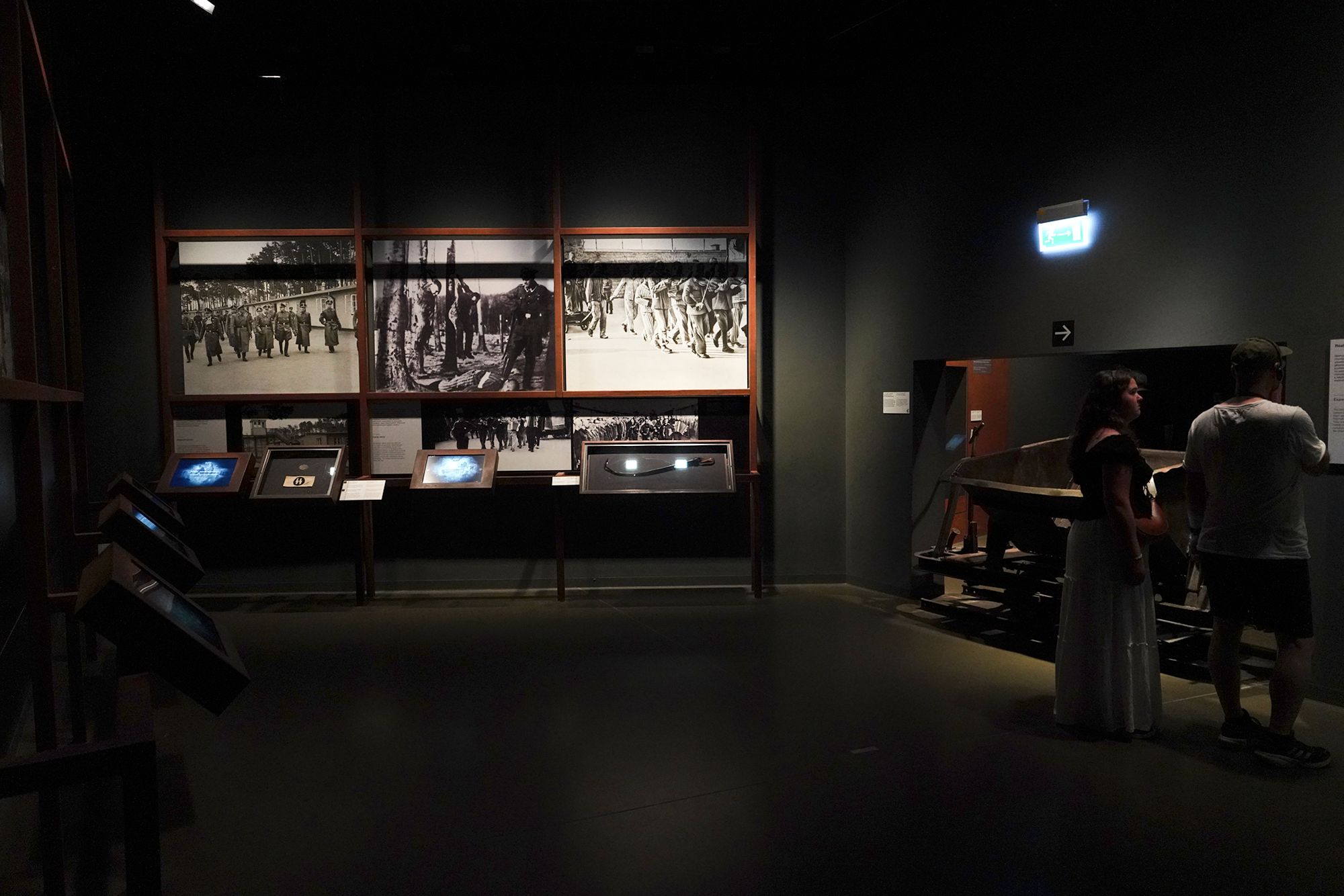
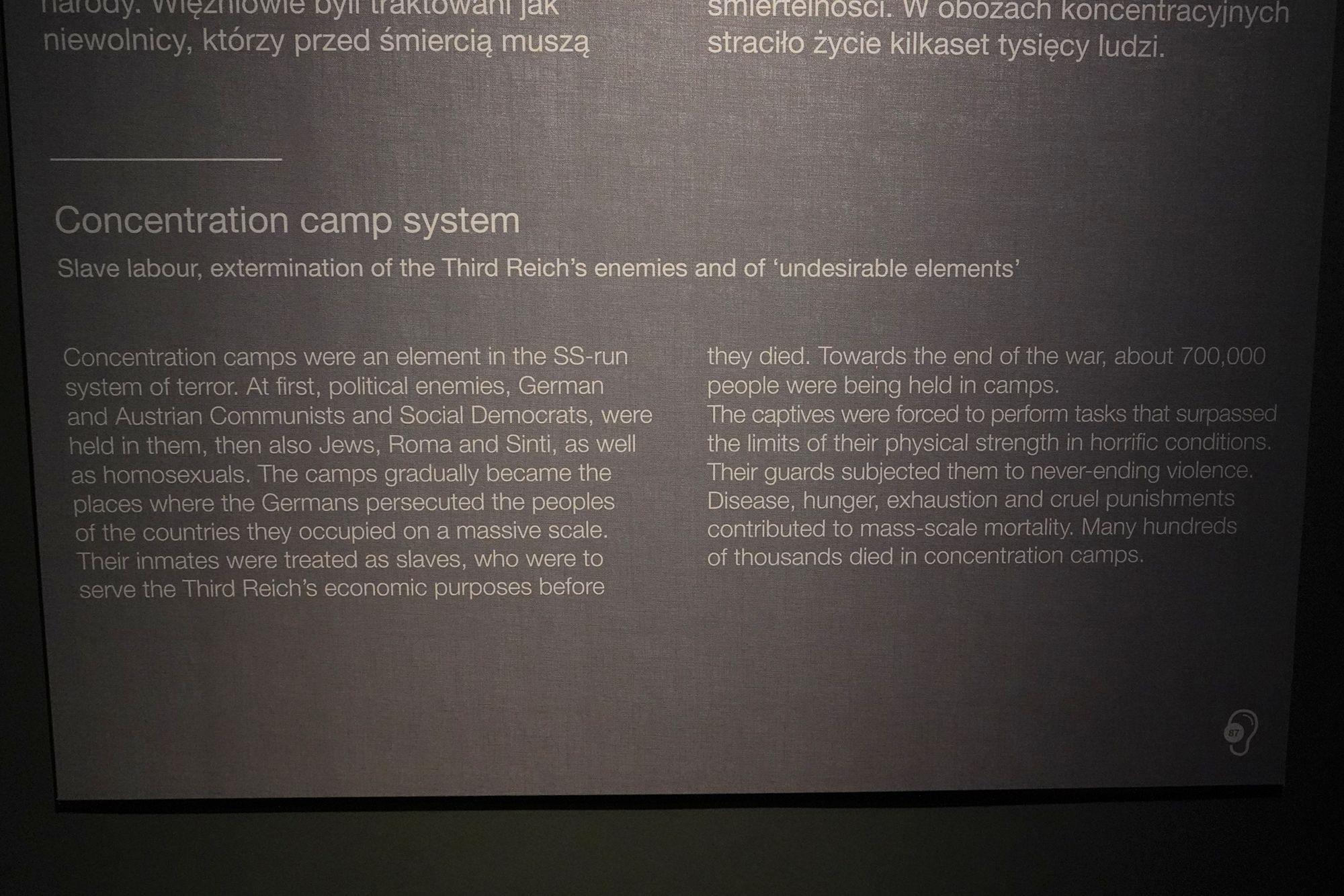
The Nazi concentration camp system began as a tool of terror against political opponents, including Communists and Social Democrats. It later imprisoned Jews, Roma and Sinti, gay people, and people from occupied countries. Prisoners were forced to work under brutal conditions, and the SS used violence, hunger, disease, exhaustion, and punishment to control them. Around 700,000 people were held in camps near the war’s end, and many hundreds of thousands died.
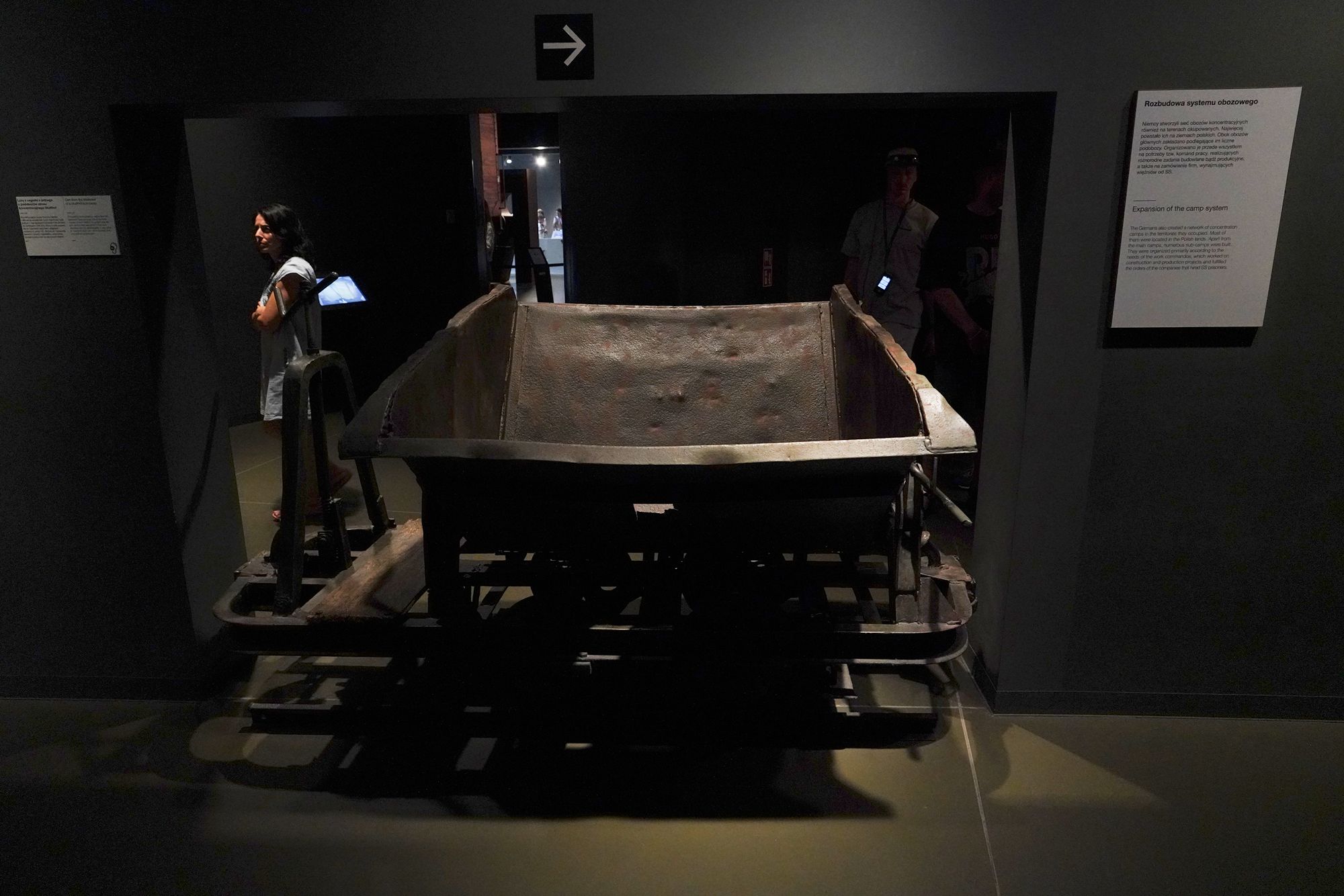
Expansion of the camp system
Nazi Germany built concentration camps across occupied Europe, with many located in occupied Polish territory. Around the main camps, the SS established numerous subcamps near construction sites and factories. Prisoners were assigned to work crews and forced to carry out projects for companies that used labor supplied by the SS, expanding the camp system to serve Germany’s labor needs.
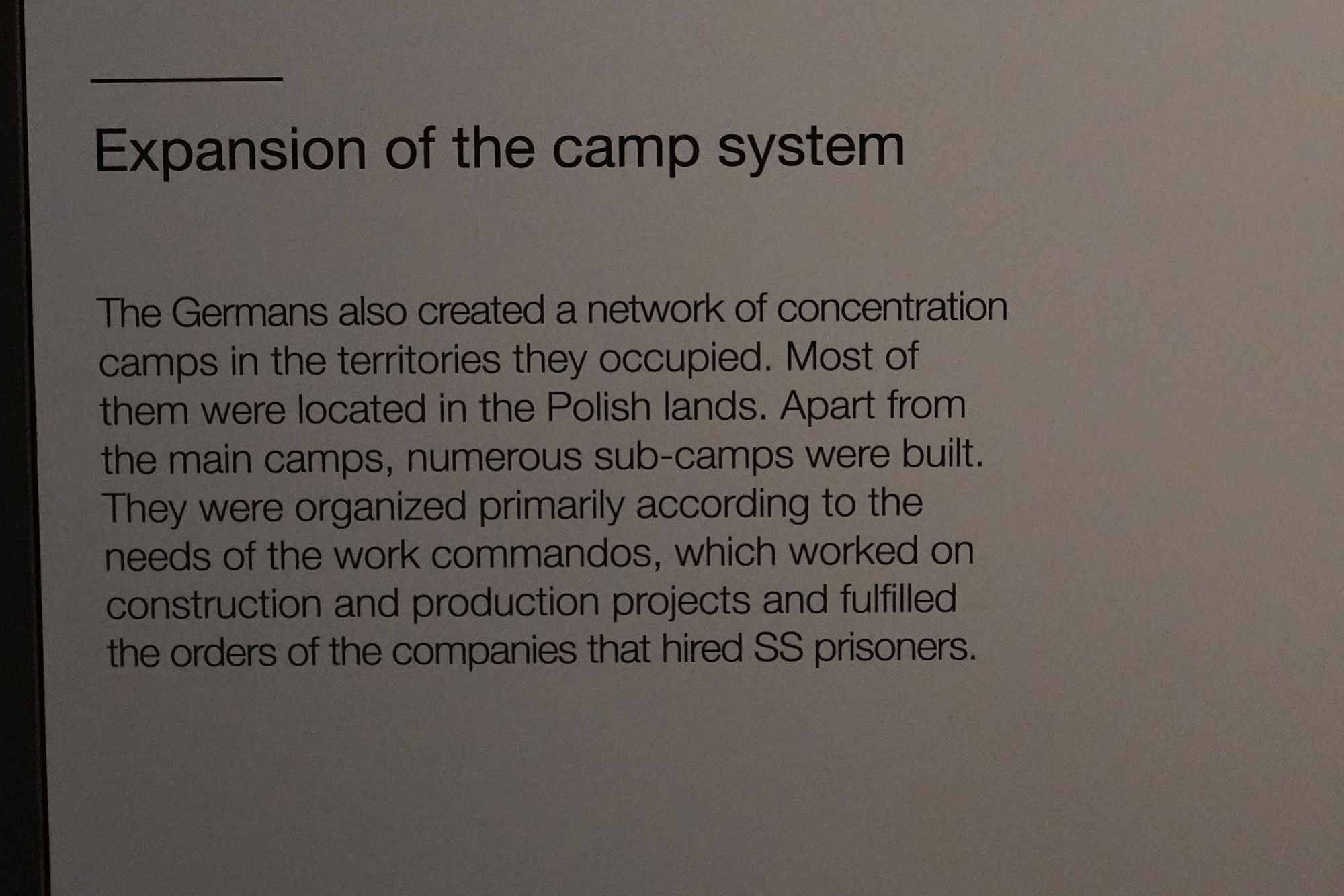
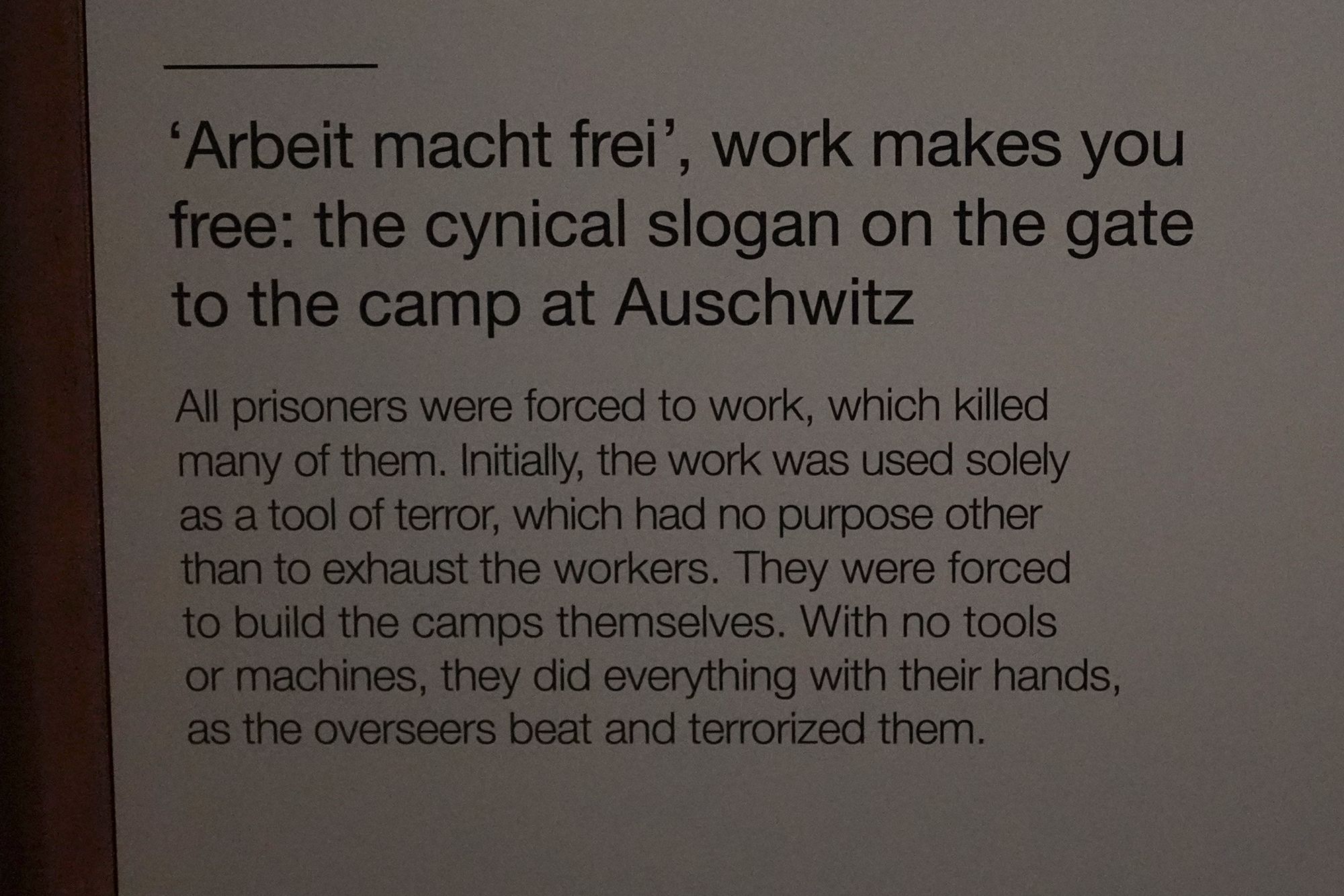
“Work makes you free”
The words “Arbeit macht frei” (“Work makes you free”) above Auschwitz’s gate were a cruel lie. Prisoners were forced to work, often in tasks designed simply to exhaust and terrorize them. Some had to build the camps by hand, without proper tools or machinery, while overseers beat and threatened them. The labor killed many prisoners.
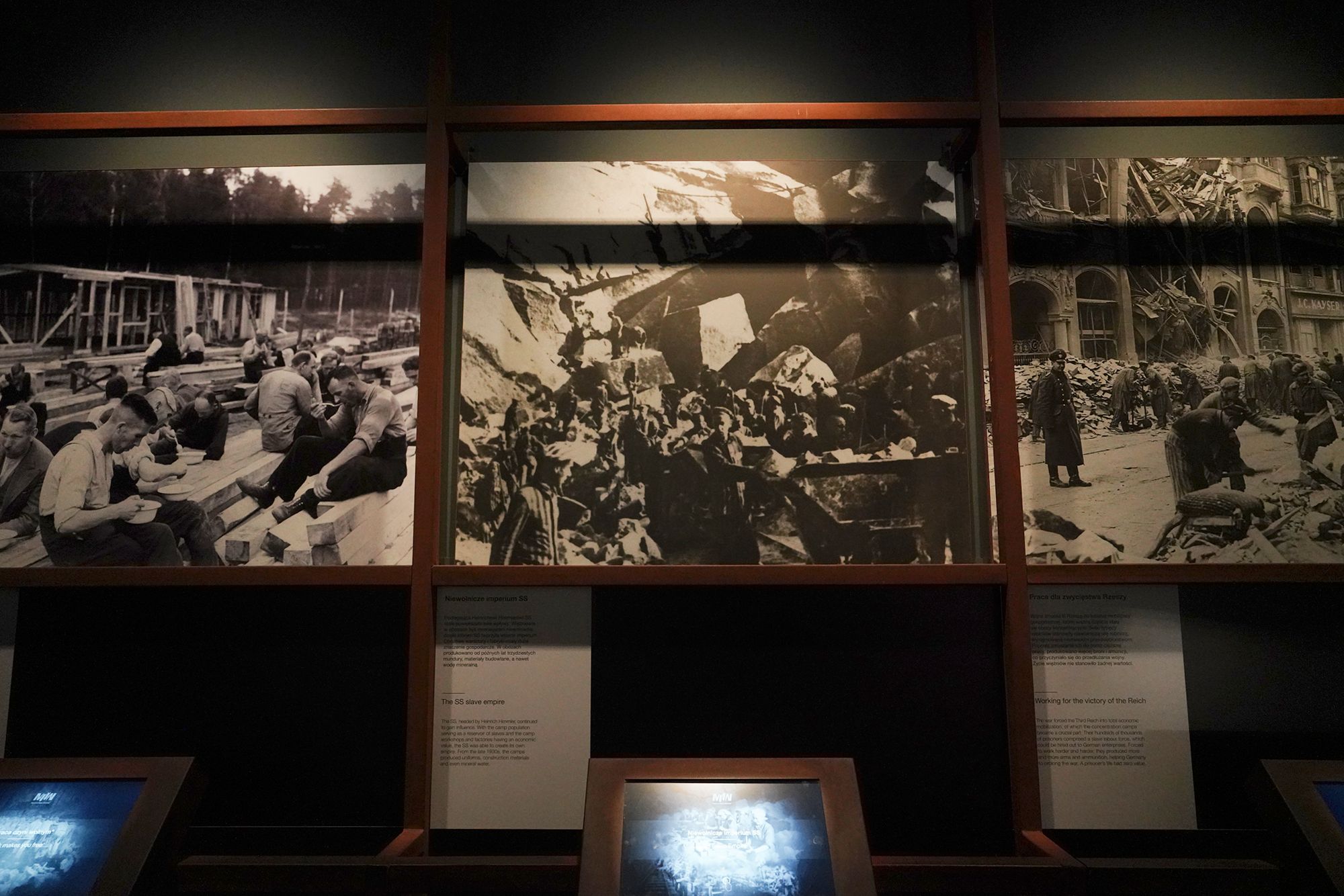
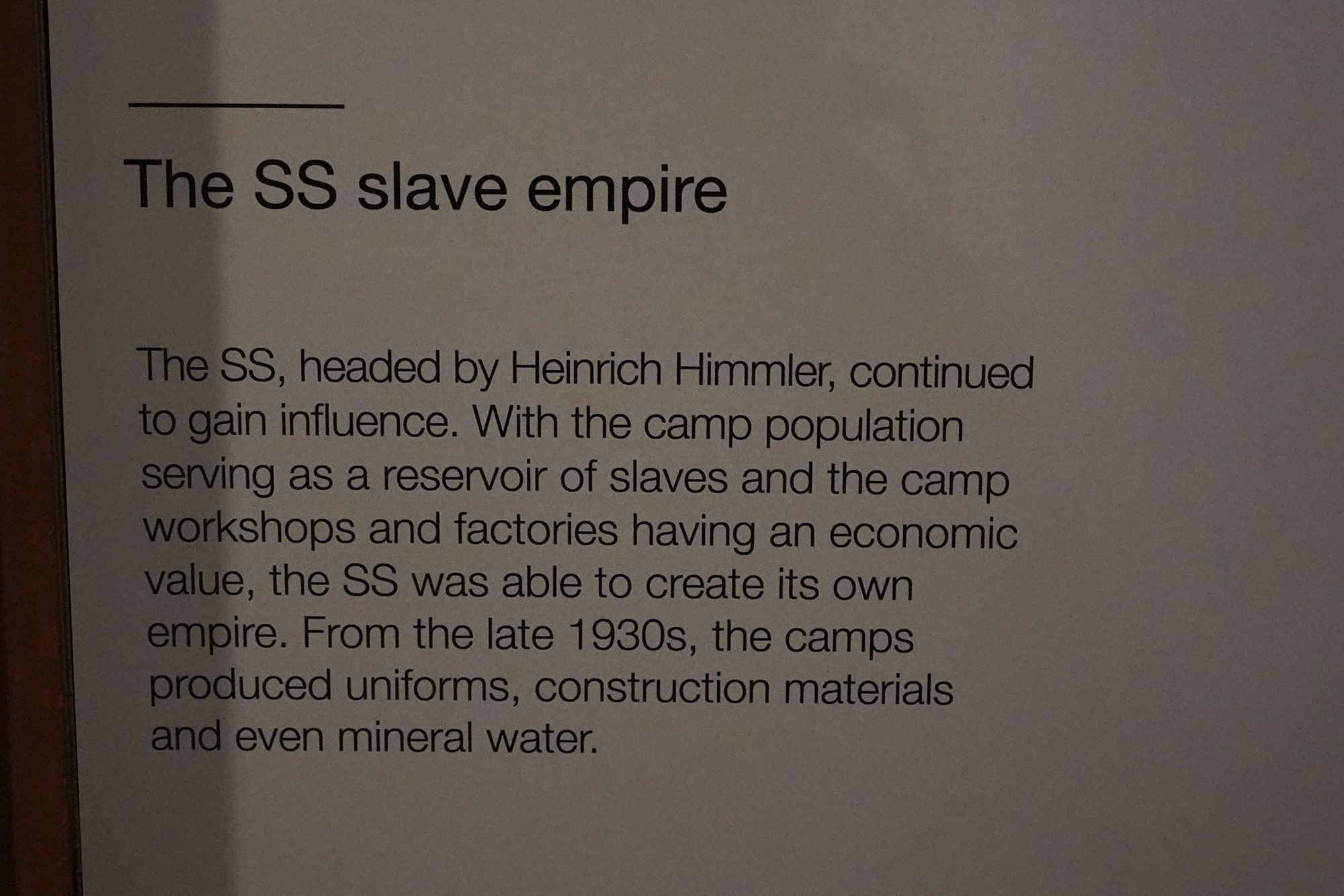
The SS slave empire
Under Heinrich Himmler, the SS expanded its power by turning concentration camp prisoners into a source of slave labor. Camp workshops and factories produced goods for the SS, including uniforms and building materials. The panel notes that they even produced mineral water. This system gave the SS an economic base as well as control over a vast network of camps and prisoners.
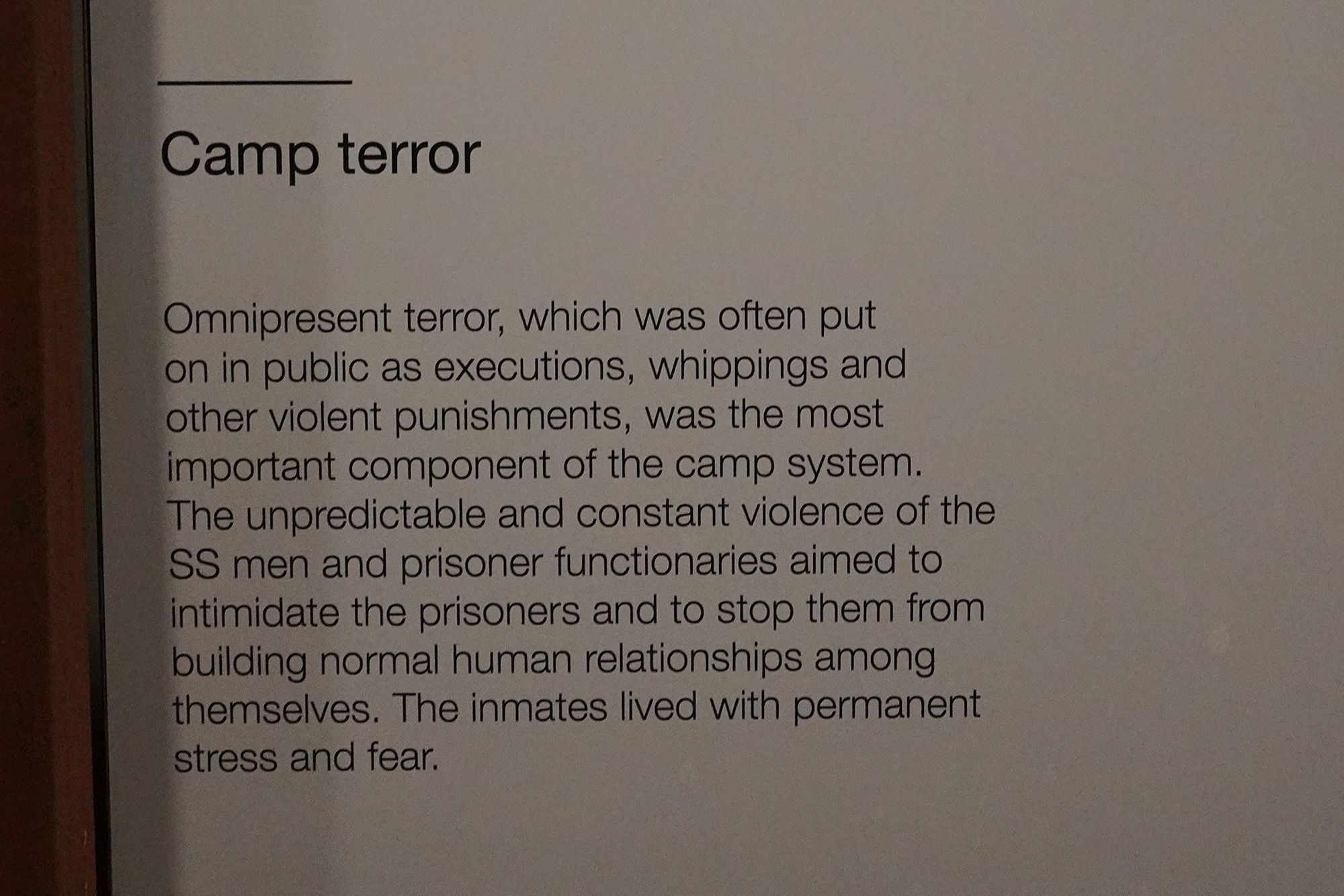
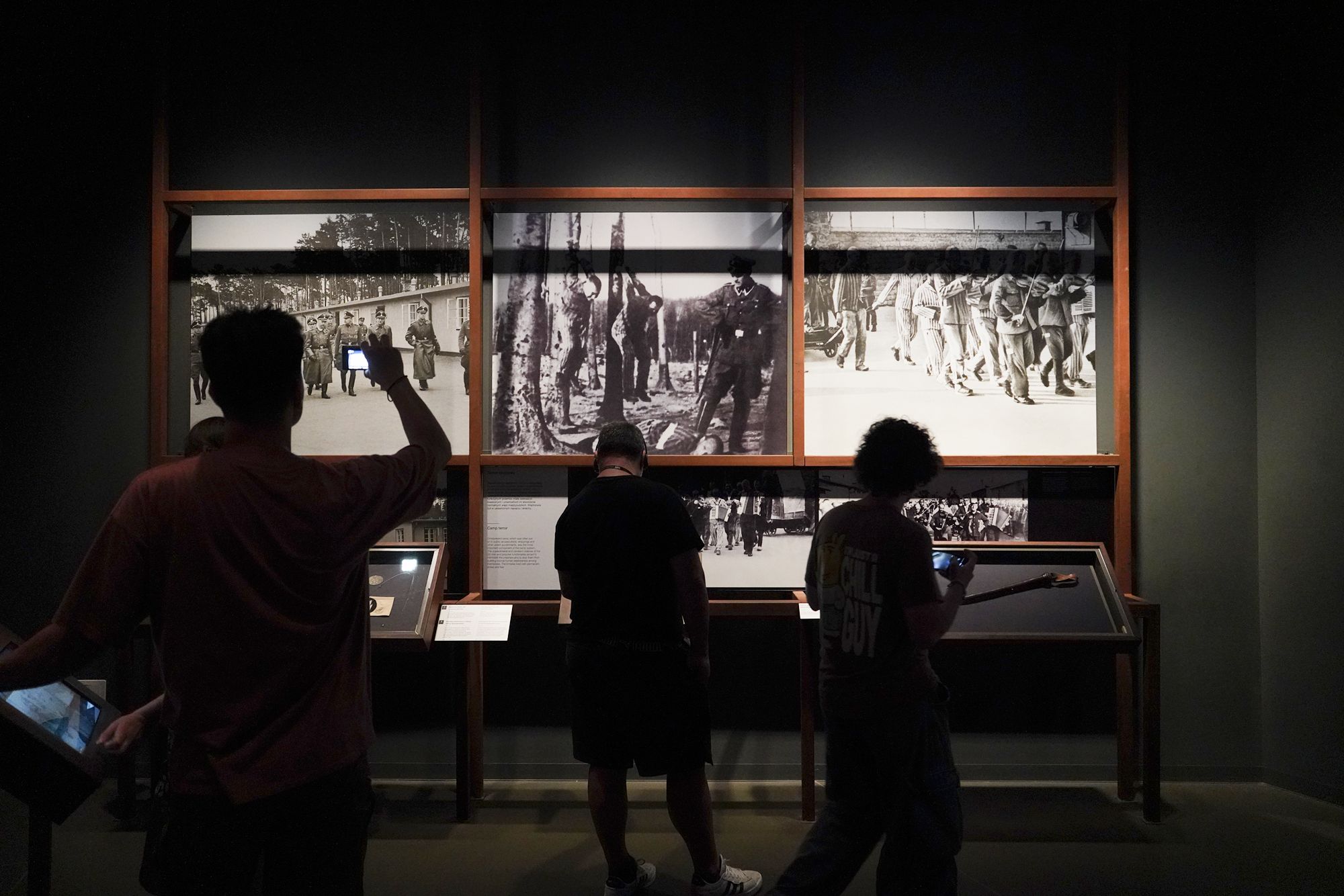
Camp terror
Violence was built into the concentration camp system. Public executions, beatings, and other punishments kept prisoners in constant fear. The SS and prisoner officials used unpredictable violence to intimidate inmates and make it harder for them to form supportive relationships with one another. Prisoners lived under constant stress, never knowing when punishment might come.
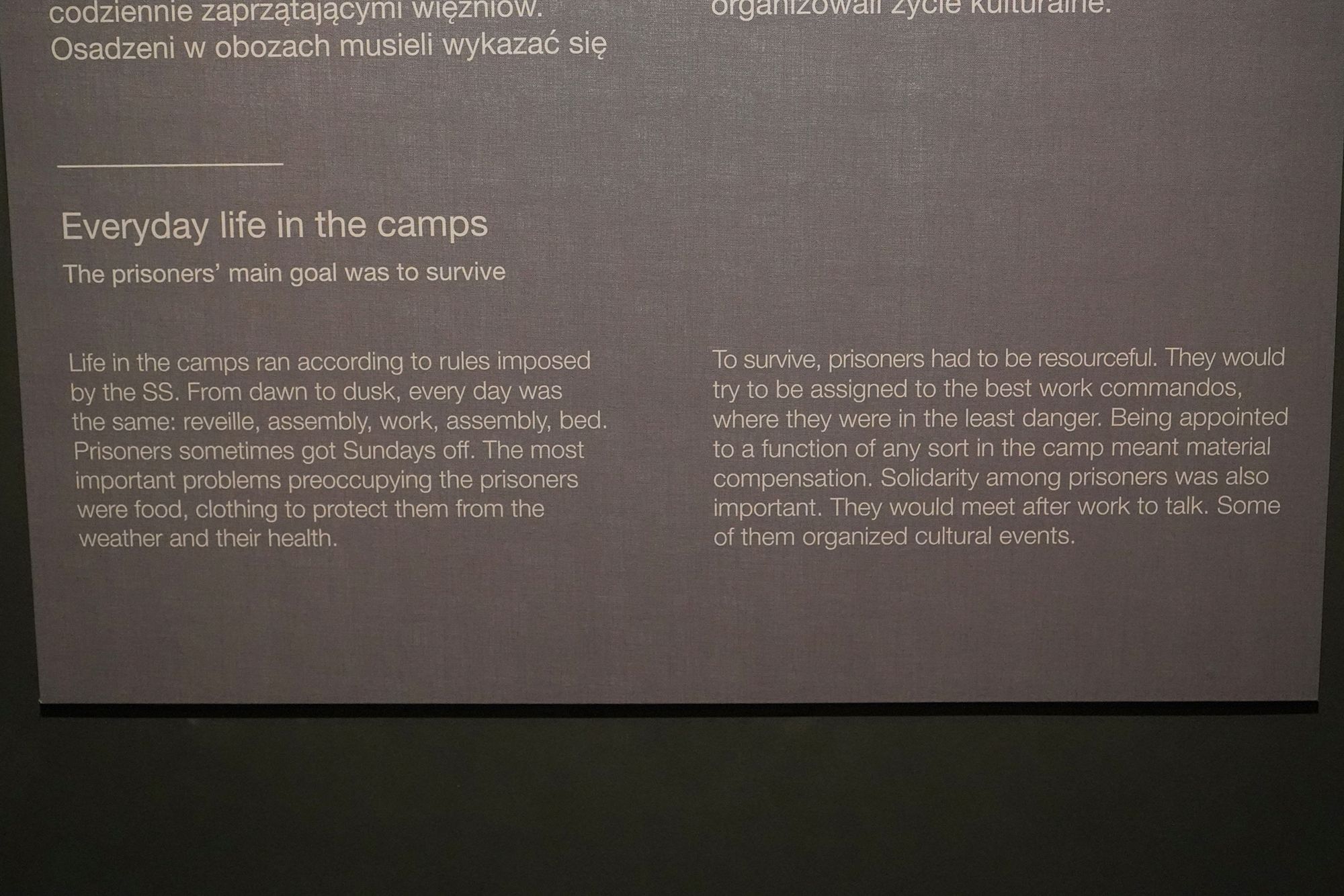
Everyday life in the camps
Prisoners’ main aim was to survive each day under SS-imposed routines: roll call, forced work, another assembly, and then bed. They worried constantly about food, clothing, and their health. Survival often depended on finding a less dangerous work assignment or a camp role that brought small material advantages. Support among prisoners also mattered; some met after work to talk or organized cultural activities.
Roll-call assemblies
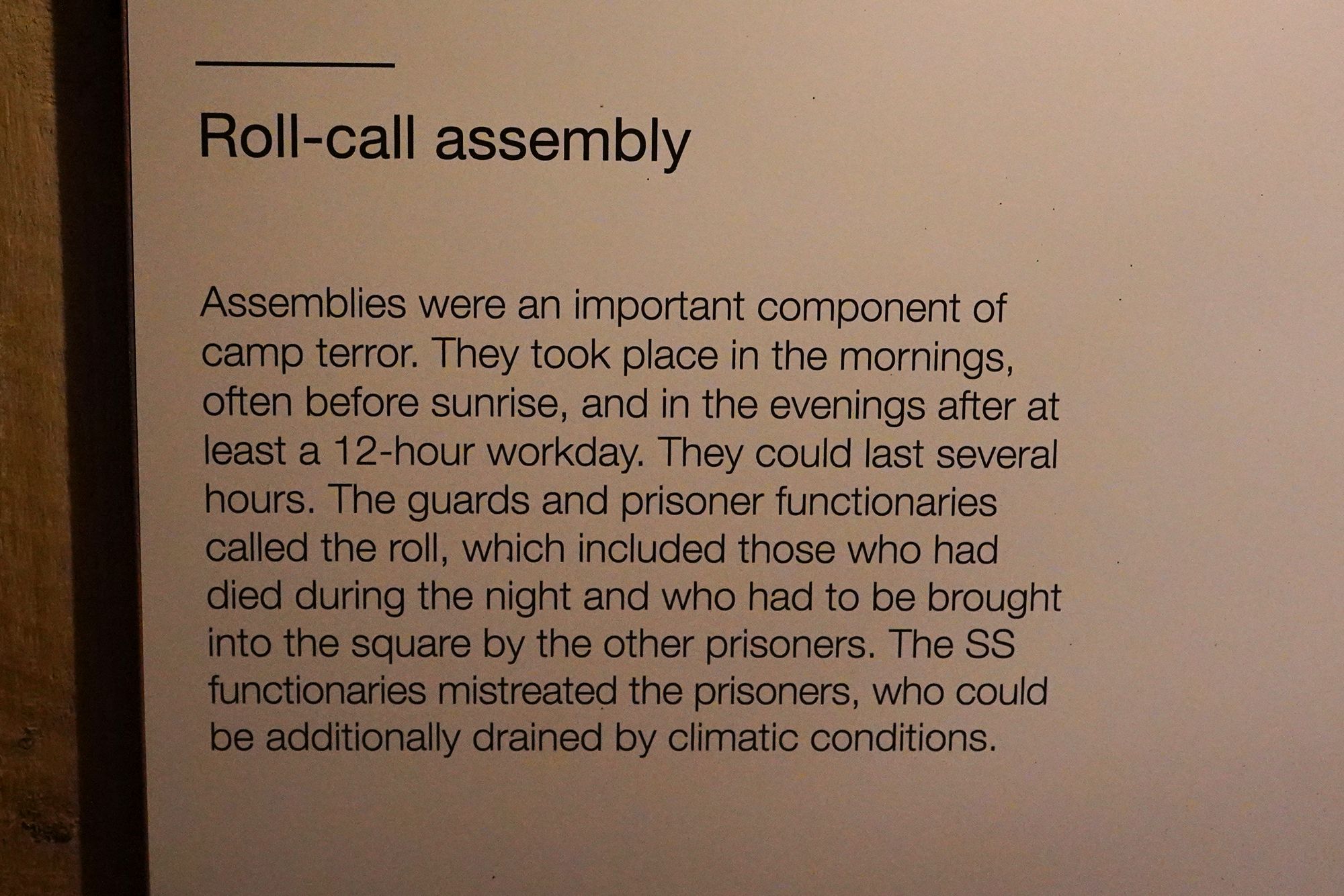
Roll call was part of the terror of camp life. Prisoners had to gather before sunrise and again in the evening, often after working at least 12 hours. The assemblies could last for hours while guards and prisoner officials counted them. Those who had died overnight still had to be carried into the square, and the SS mistreated prisoners as they stood exposed to harsh weather.
Death by starvation
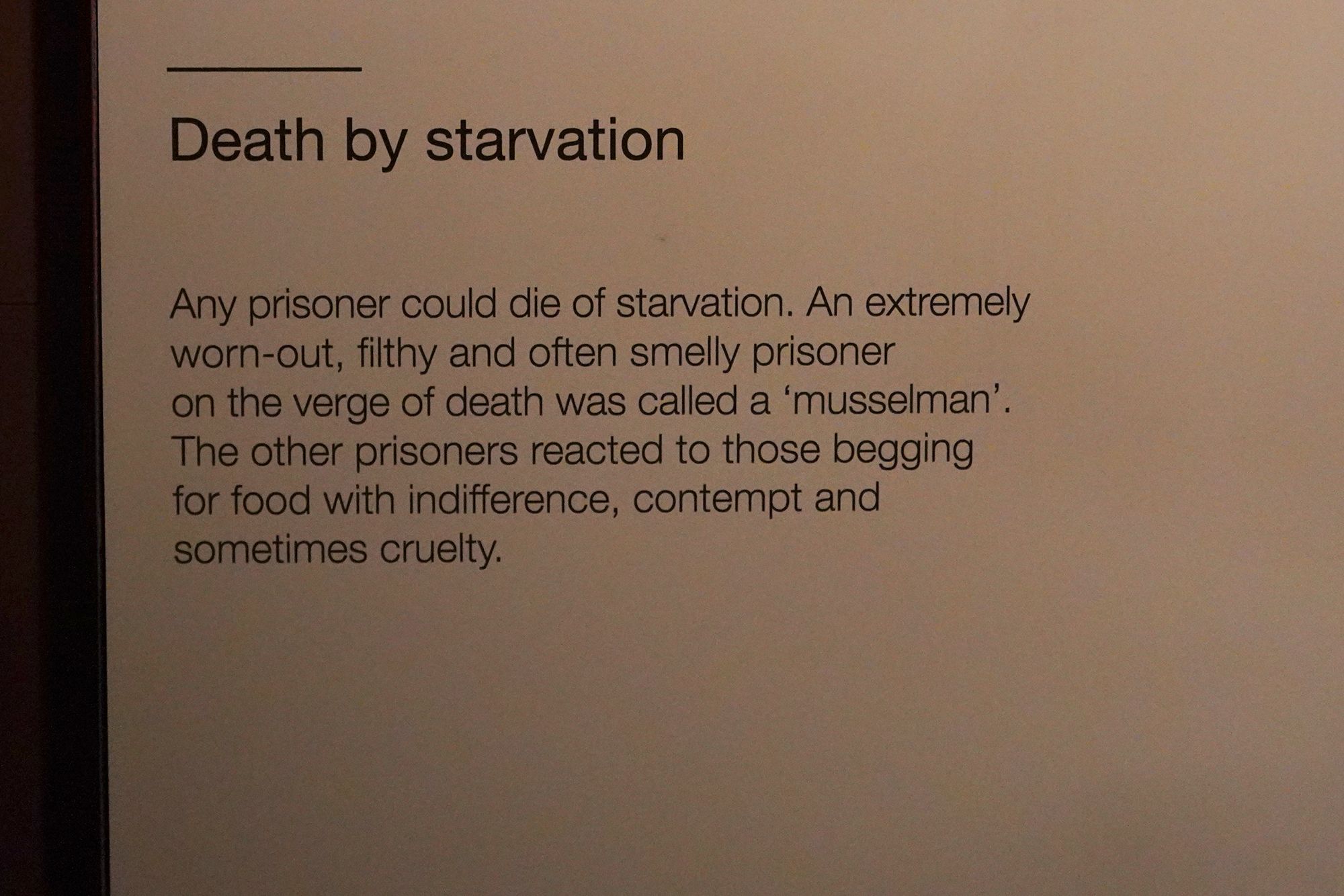
Starvation could kill any prisoner. Those reduced to extreme exhaustion and weakness were sometimes called “Muselmänner,” a camp term for people close to death. The panel also describes how other prisoners might react to people begging for food with indifference, contempt, or cruelty, showing how hunger shaped relationships inside the camps.
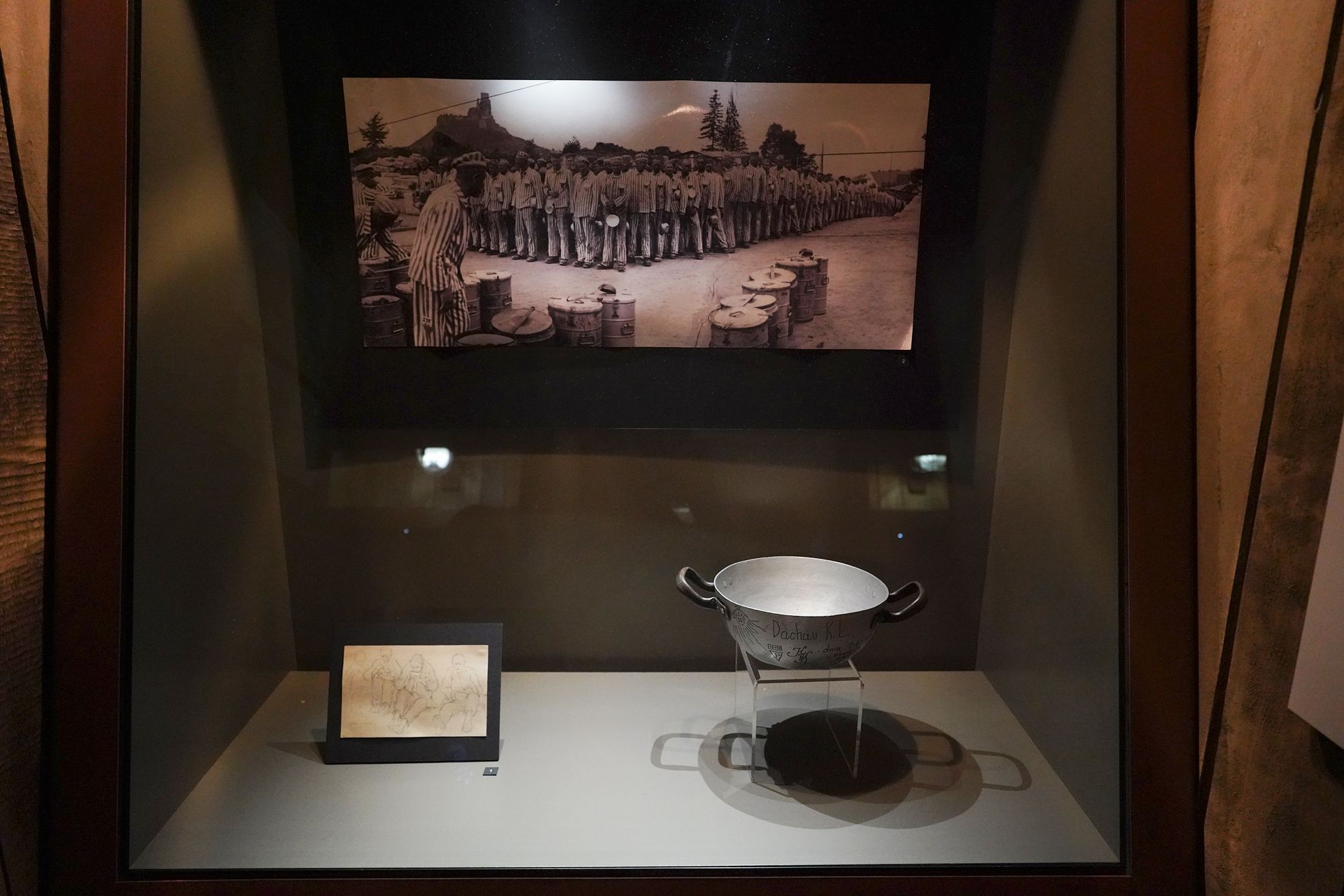
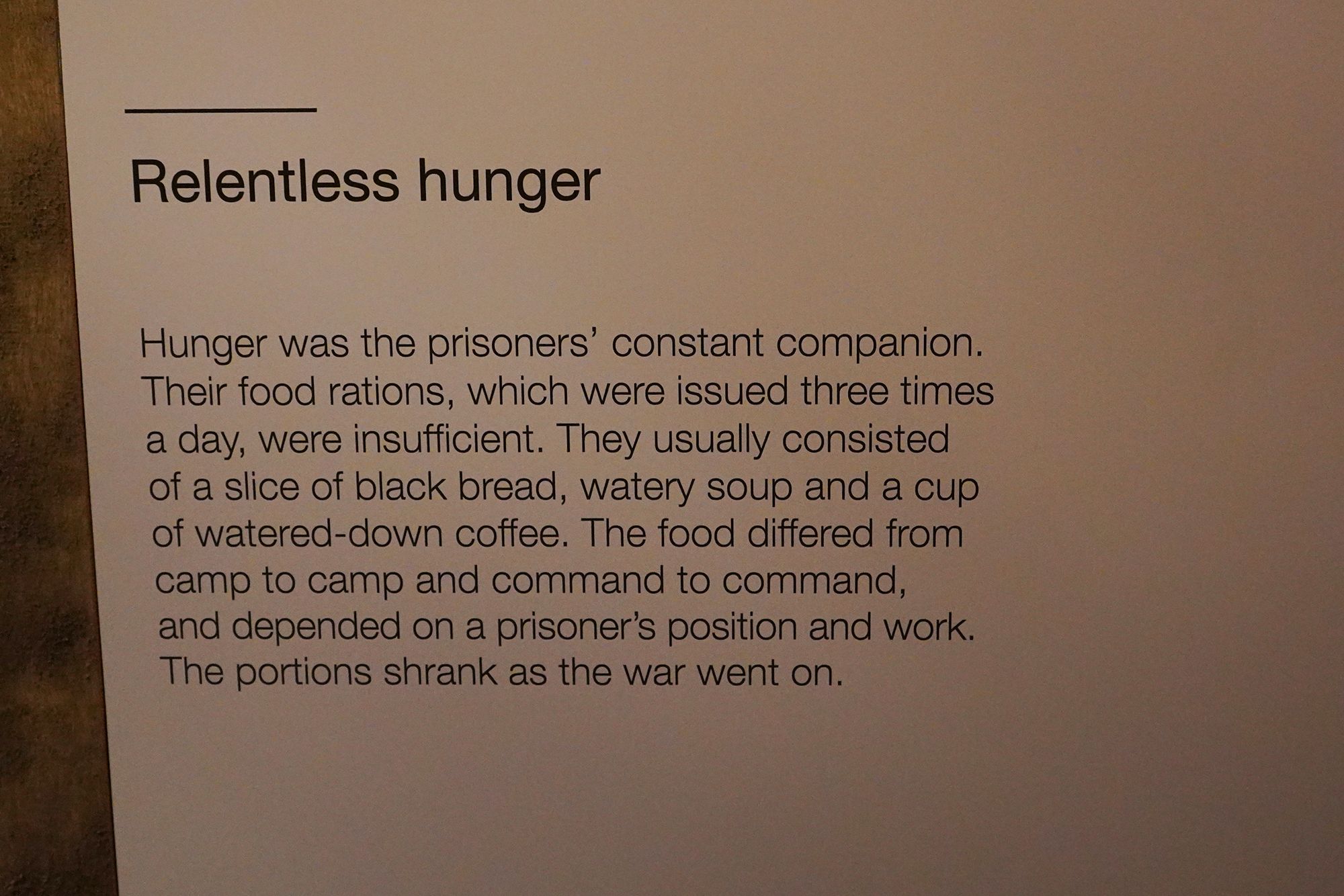
Relentless hunger
Hunger was a constant part of camp life. Prisoners received food three times a day, but the rations were meager: usually a slice of black bread, watery soup, and diluted coffee. Portions varied by camp, work assignment, and a prisoner’s position, and became smaller as the war continued.
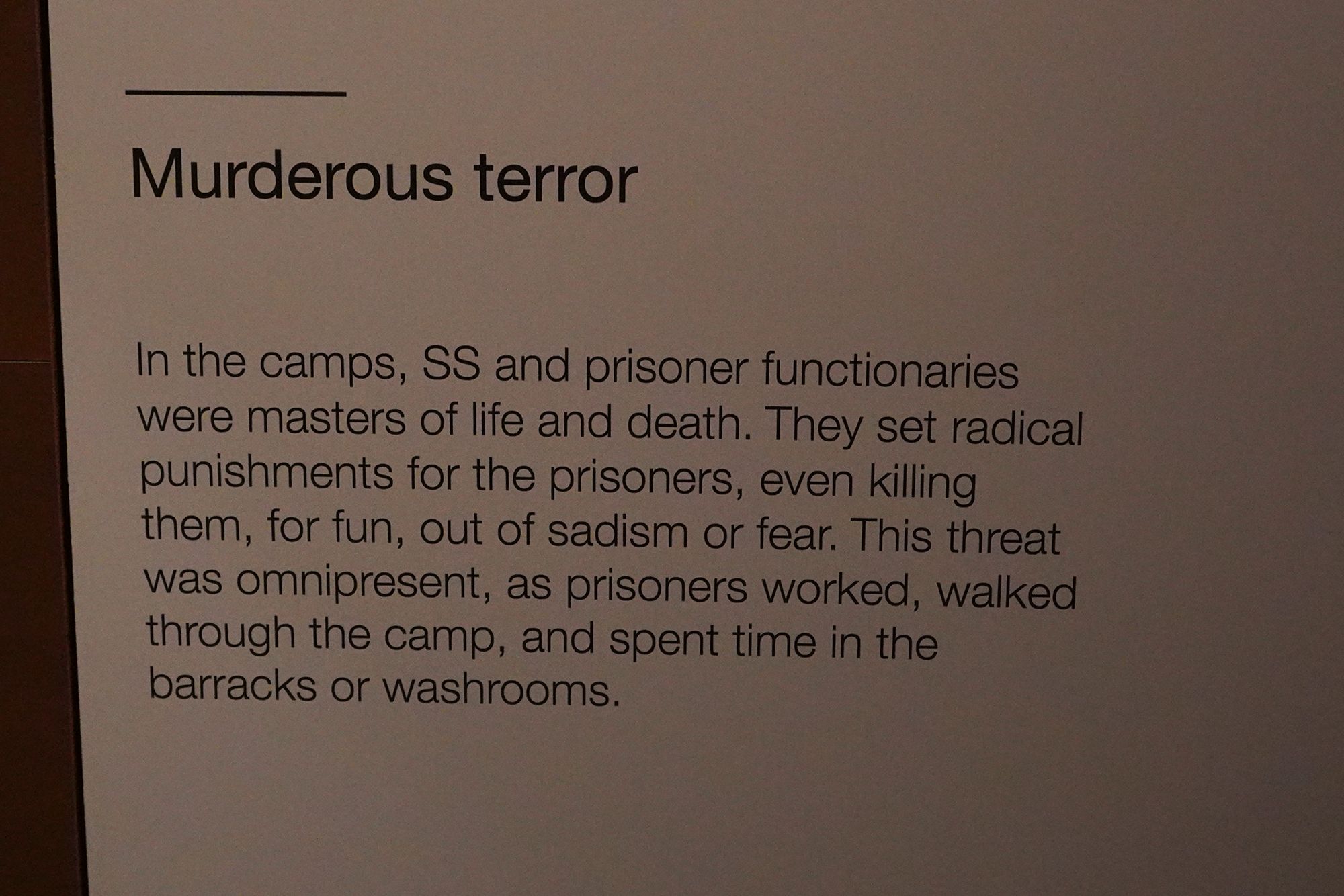
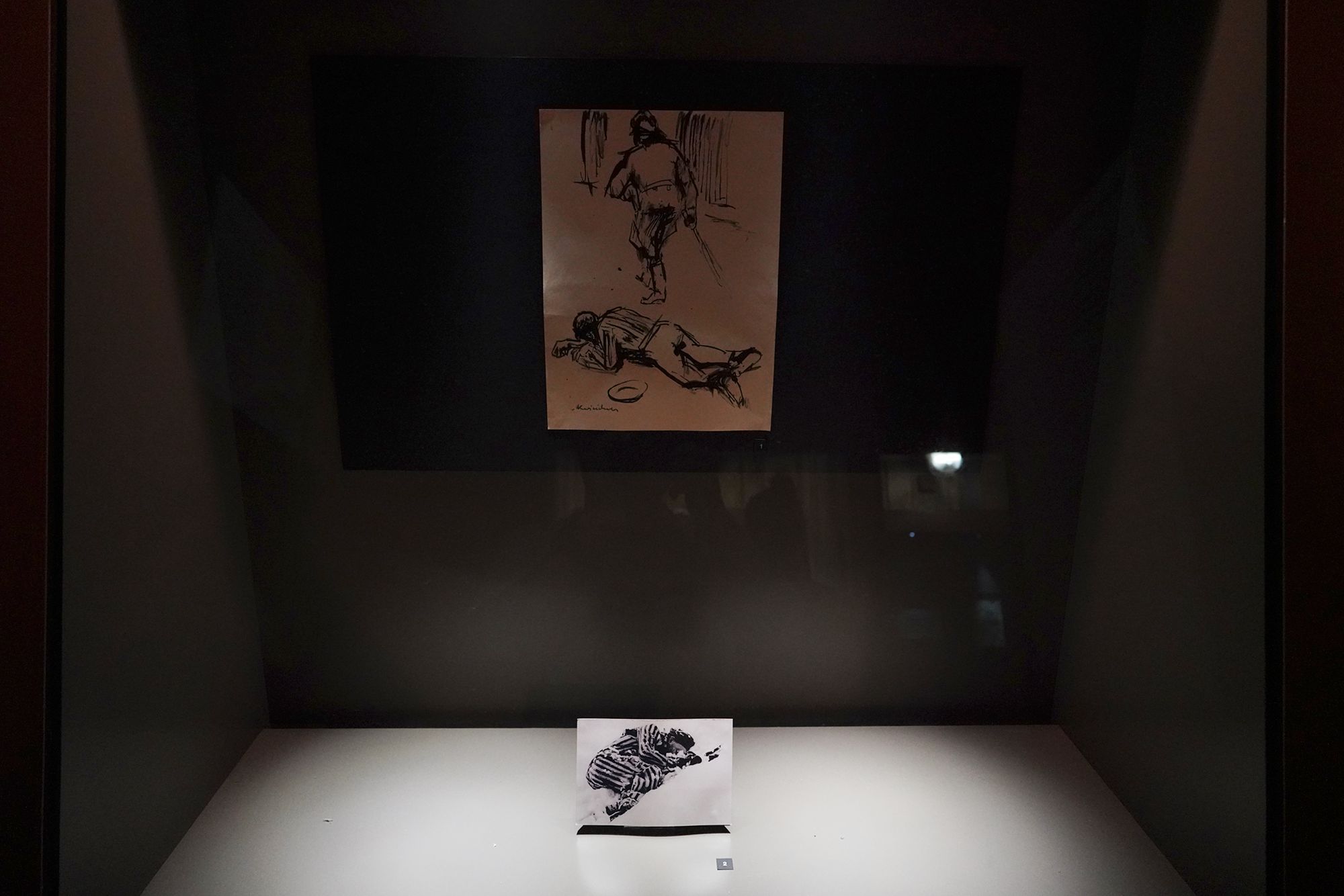
Murderous terror
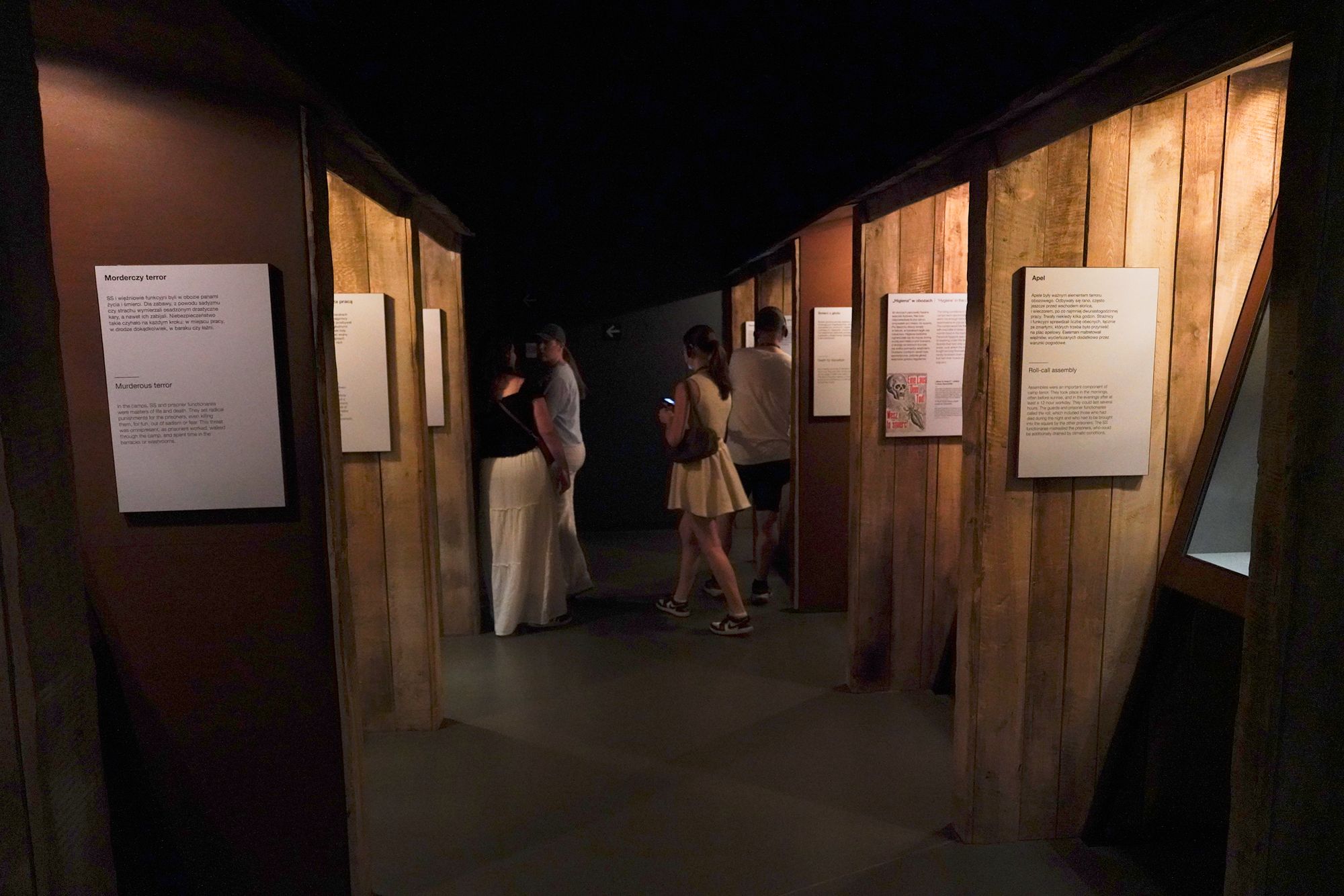
In the camps, SS guards and prisoner officials had power over prisoners’ lives and deaths. They imposed severe punishments and sometimes killed prisoners out of sadism or fear. The threat of violence followed people through ordinary parts of the day—from work and roll call to the barracks and washrooms—keeping camp life under constant terror.
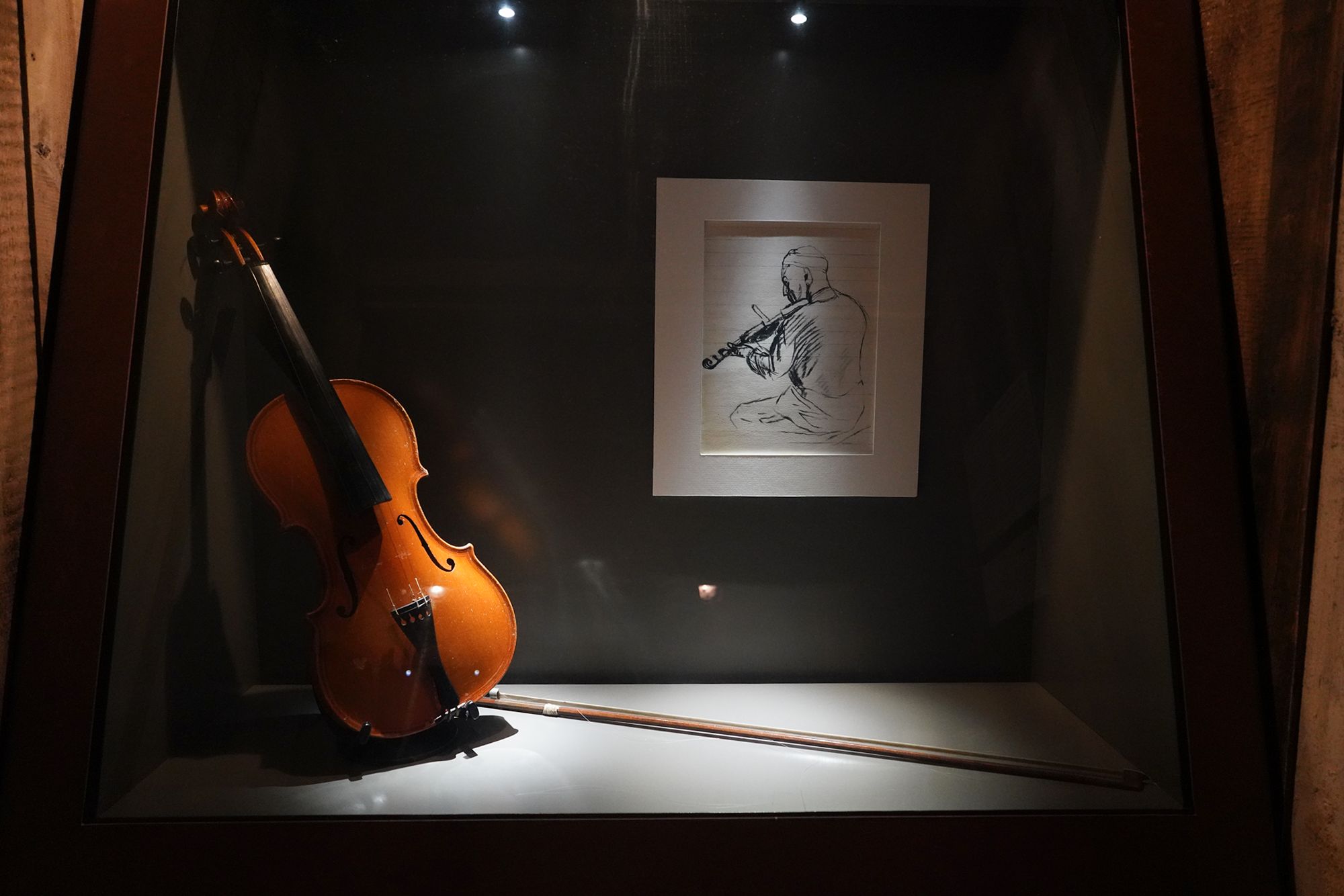
“Private” music
Music offered some prisoners a brief lift in spirits. In the barracks, prisoners sometimes held concerts, though they were technically forbidden and only tolerated by the SS. Performances took place in all the camps, but only some prisoners were allowed to attend.
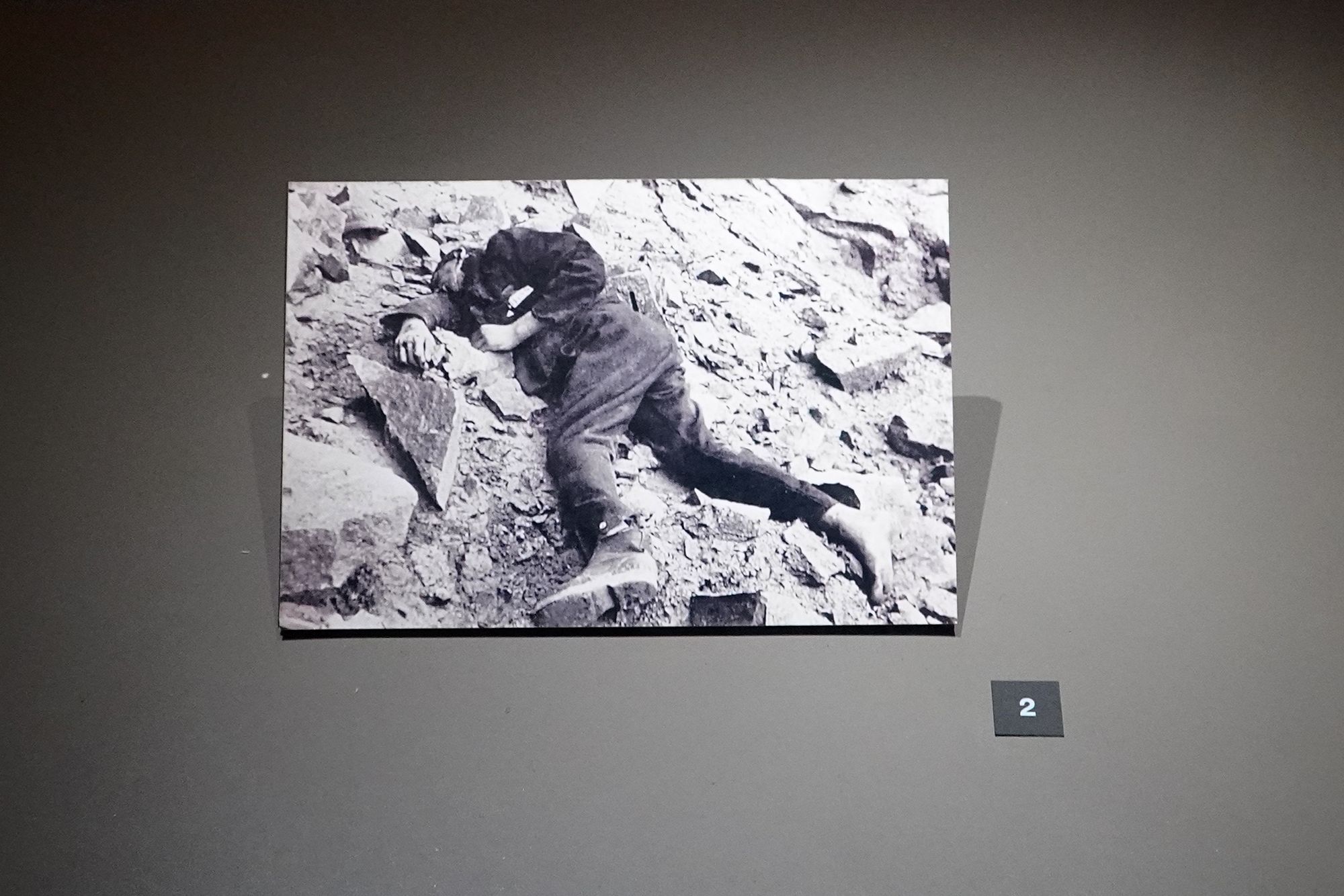
xtermination by work
Work assignments were among the most dangerous parts of camp life. Prisoners could die from exhaustion, lack of food, exposure, or beatings and torture by SS guards and kapos—prisoners forced into supervisory roles. The work was so punishing that every labor group lost many of its members over time.
Relationships between prisoners
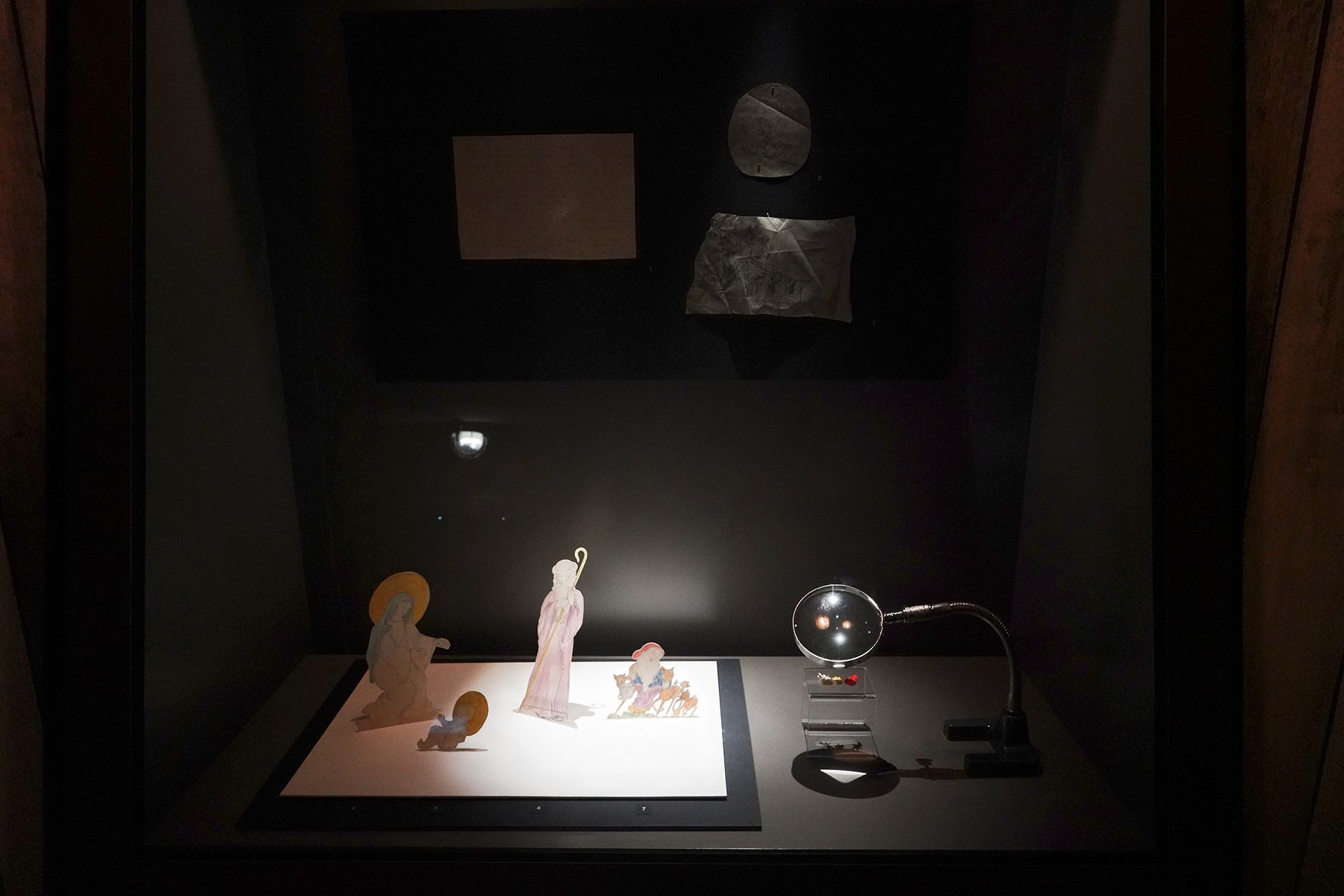
Camp life was designed to weaken solidarity, yet prisoners still formed close relationships. They helped one another, spent free time together, and marked birthdays, holidays, and name days—small moments that mattered in the camps. Friendships often formed among people from the same national group.
Motherhood
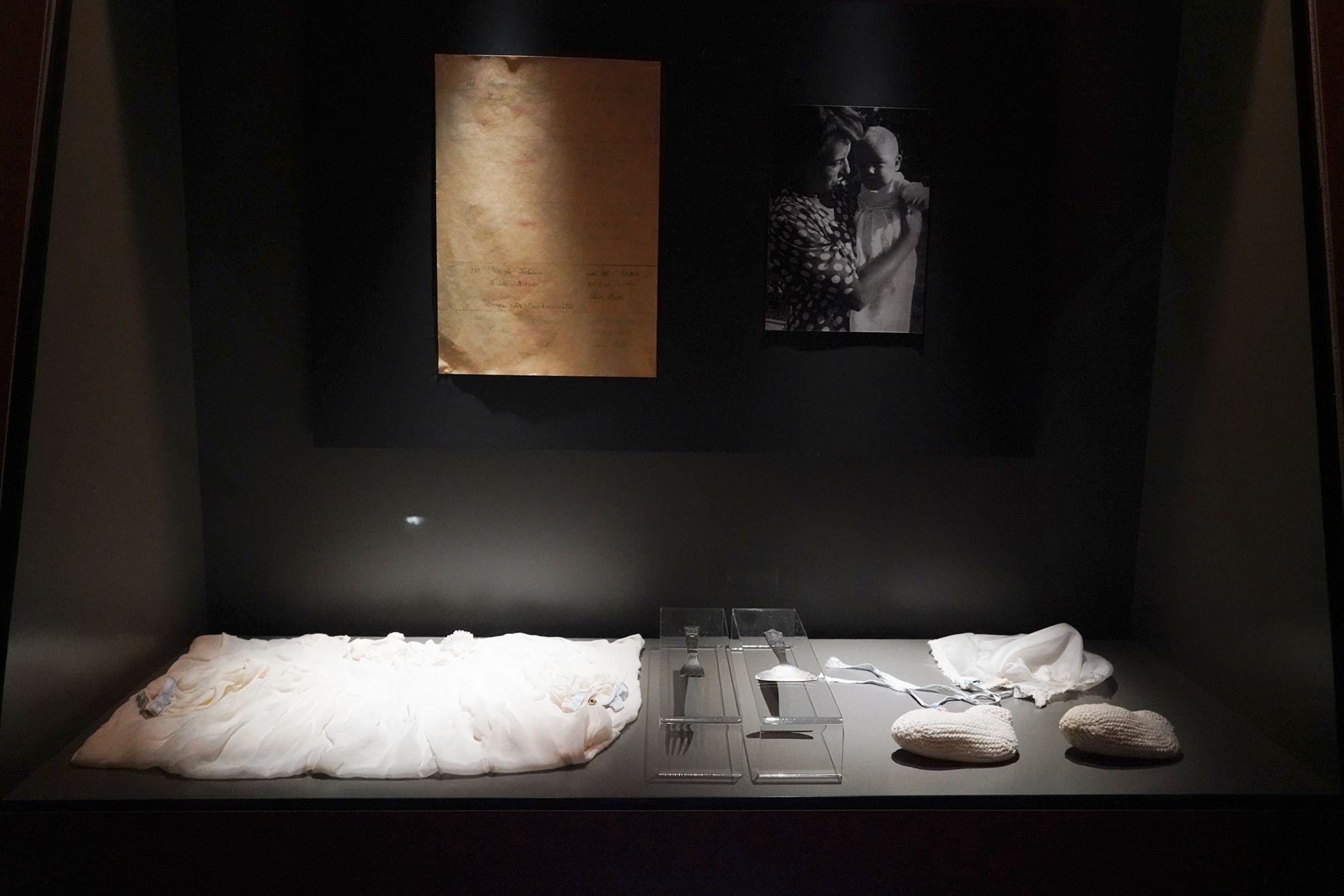
Babies born in the camps had almost no chance of survival. The panel says that living newborns were taken from their mothers and killed; toward the end of the war, some were allowed to live. Even then, starvation and terrible living conditions left them with little chance of surviving.
Crematorium
Prisoners who could no longer work were murdered by shooting, poison, or in gas chambers. Their bodies were burned in crematoria, whose furnaces operated around the clock. Smoke and the smell of burning bodies spread over the camps, making the killing visible and present in daily life.
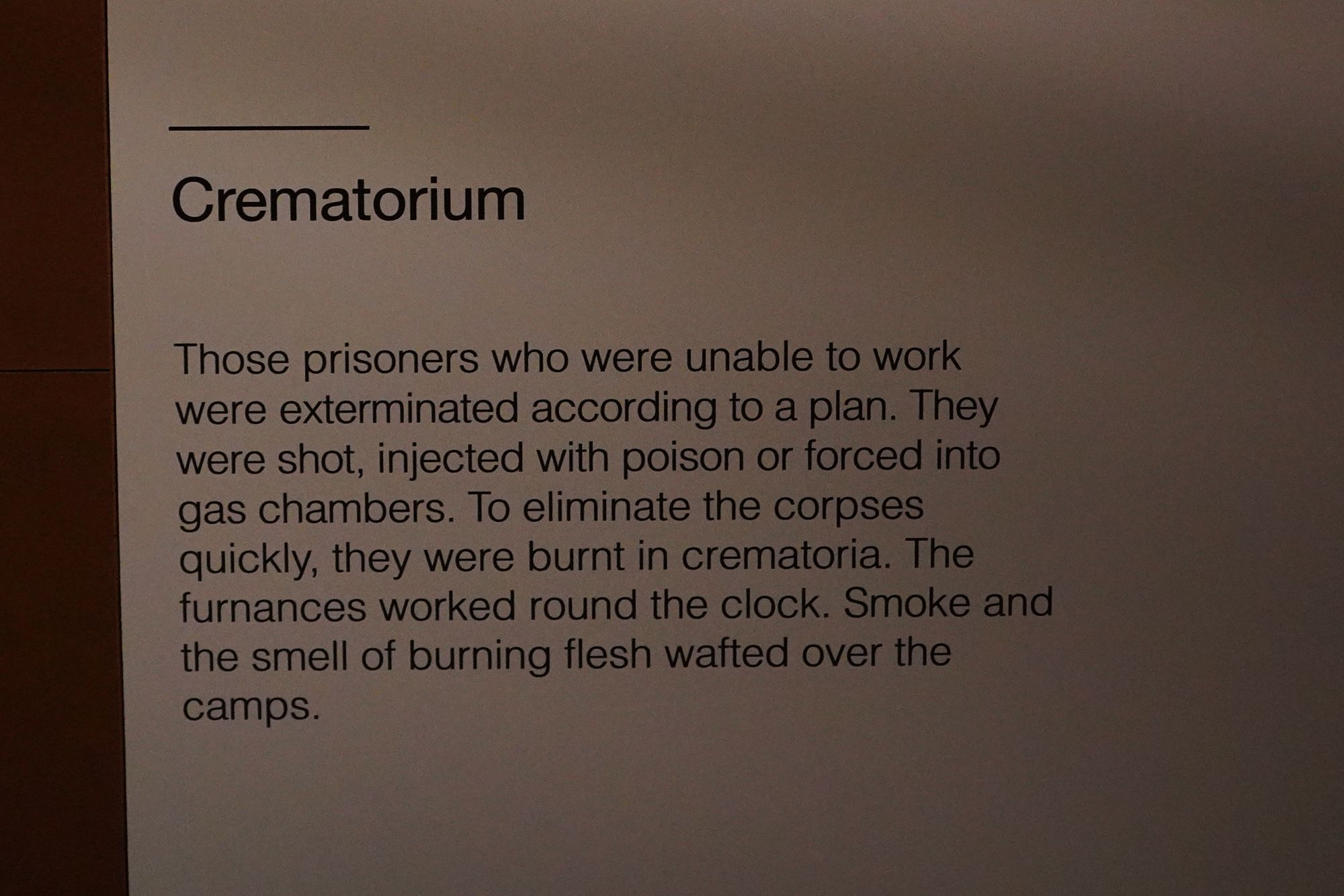
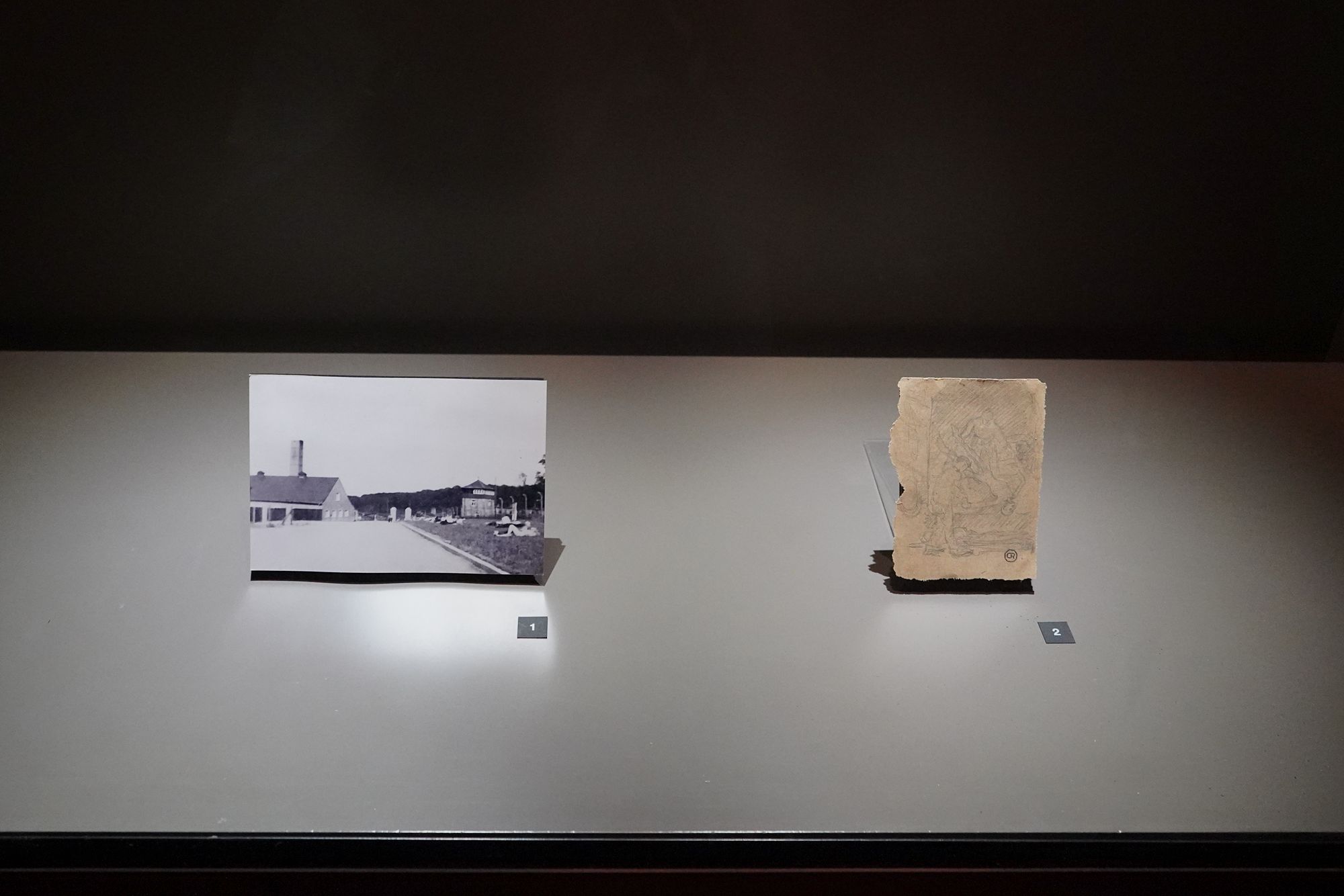
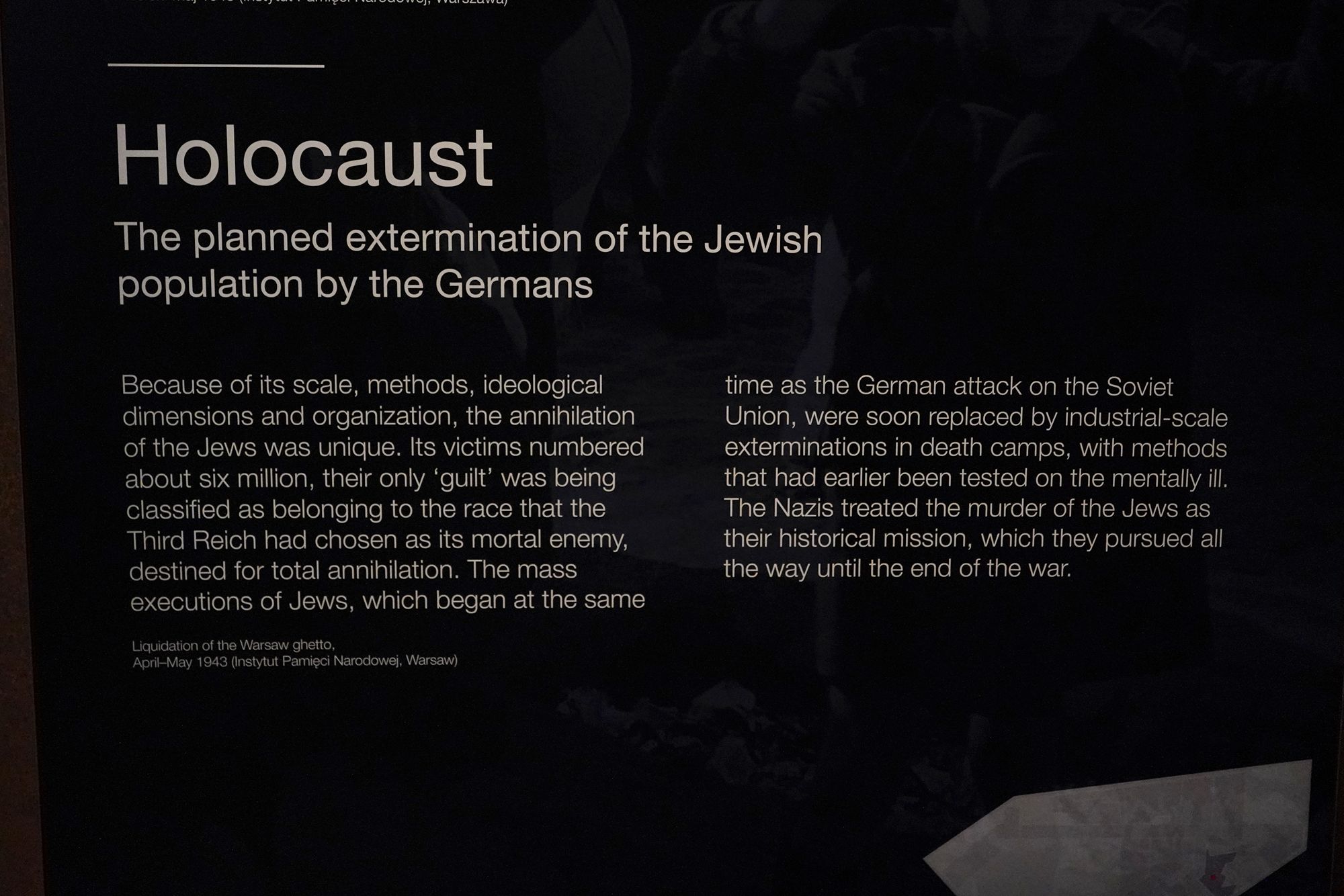
The Holocaust
The panel describes the Holocaust as the Nazis’ planned murder of Europe’s Jews, driven by their racist ideology. About six million Jews were killed. Mass shootings expanded during Germany’s invasion of the Soviet Union, while the Nazis also carried out mass murder in death camps. They continued this campaign until the end of the war.
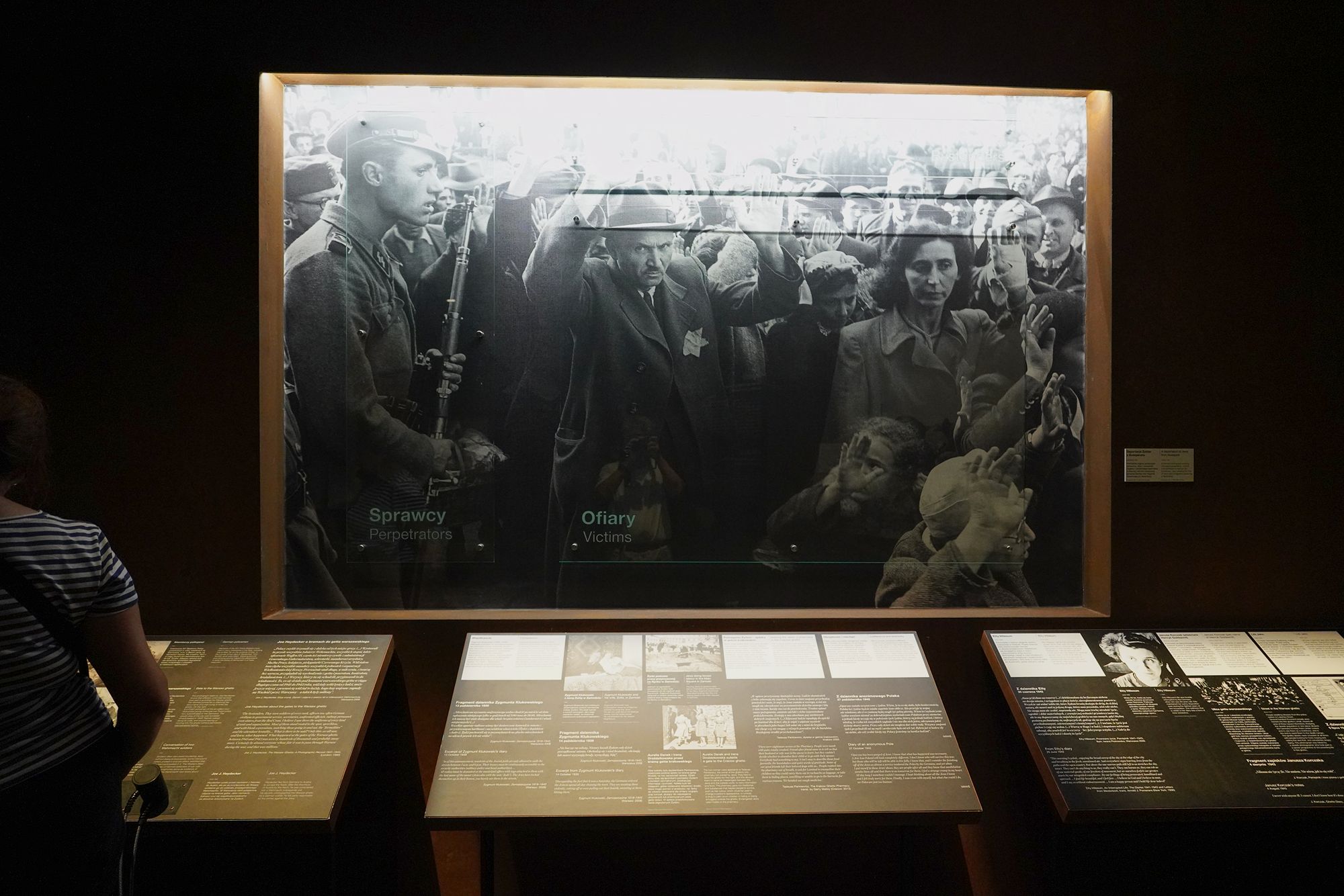
The Shoah: Perpetrators, witnesses, and victims
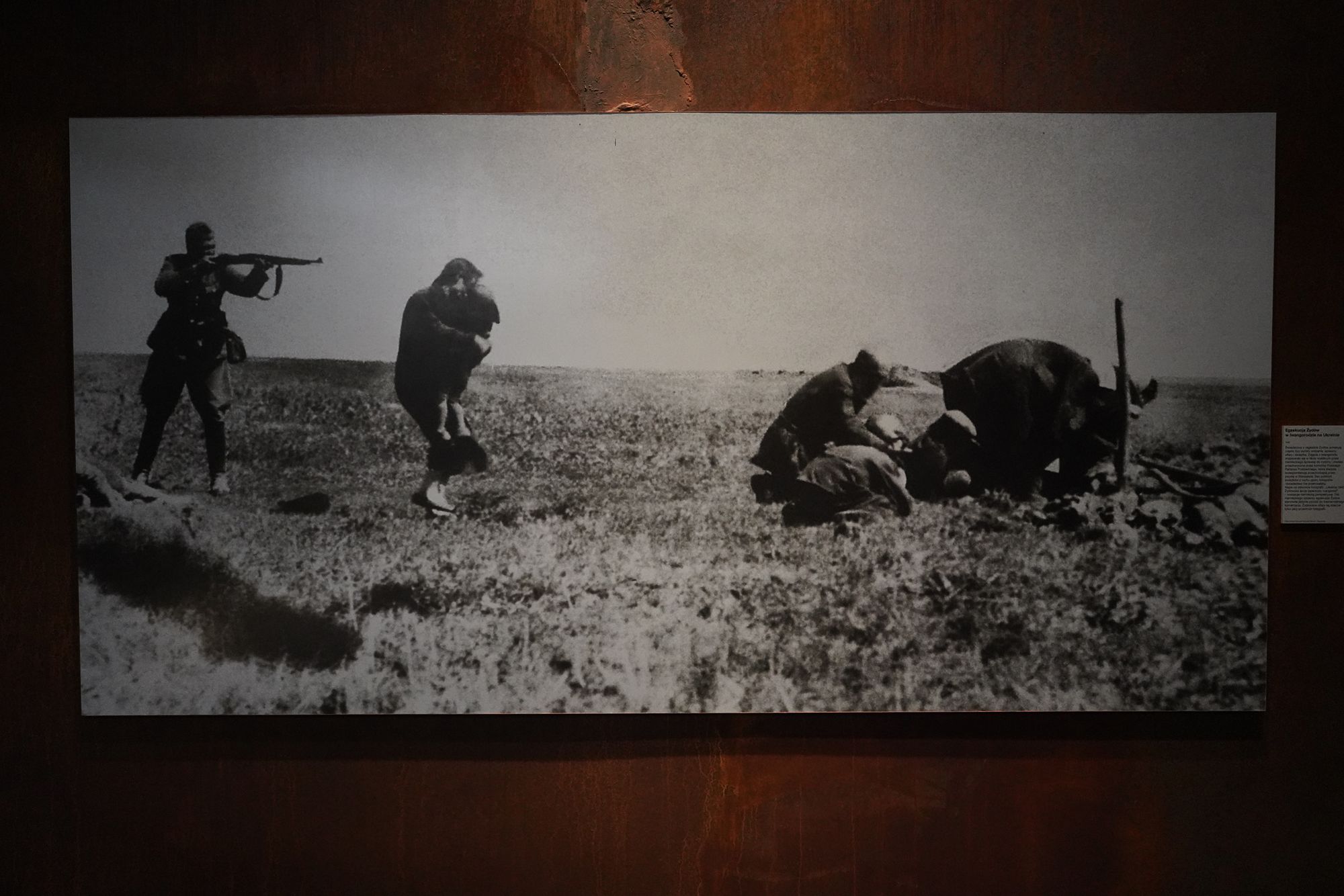
The panel explains that Nazi leaders planned and carried out the murder of Europe’s Jews, drawing on deep-rooted antisemitism. Hundreds of thousands served in the SS, police, and other units involved in the killing. Across occupied countries, people responded with indifference, assistance, or participation. Jewish victims, facing overwhelming violence, tried to flee, hide, resist, or alert the world.
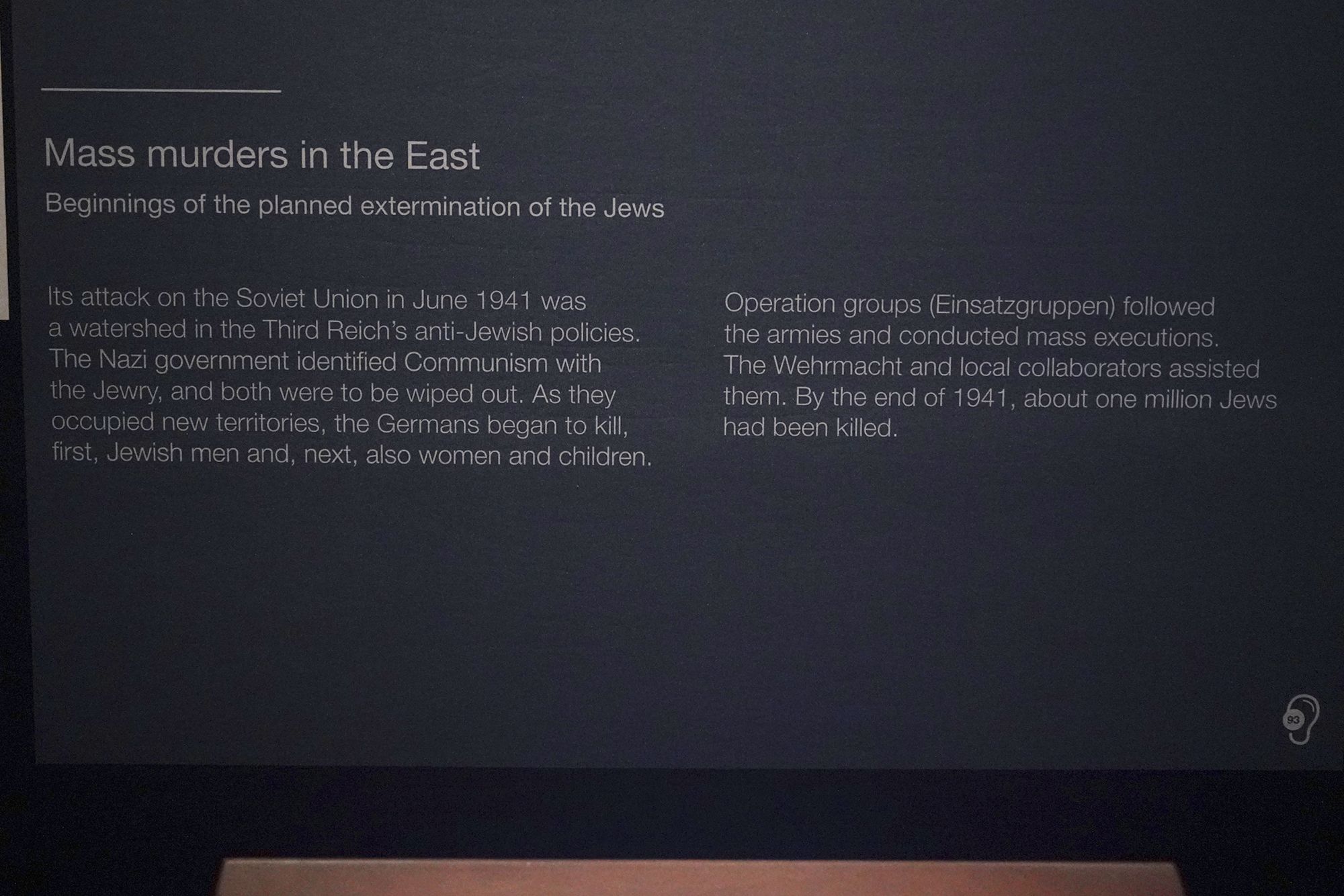
Mass murders in the East
Germany’s invasion of the Soviet Union in June 1941 marked a new phase in Nazi persecution of Jews. Mobile killing units called Einsatzgruppen followed the German army, first murdering Jewish men and then women and children. The Wehrmacht and local collaborators also assisted. By the end of 1941, about one million Jews had been killed.
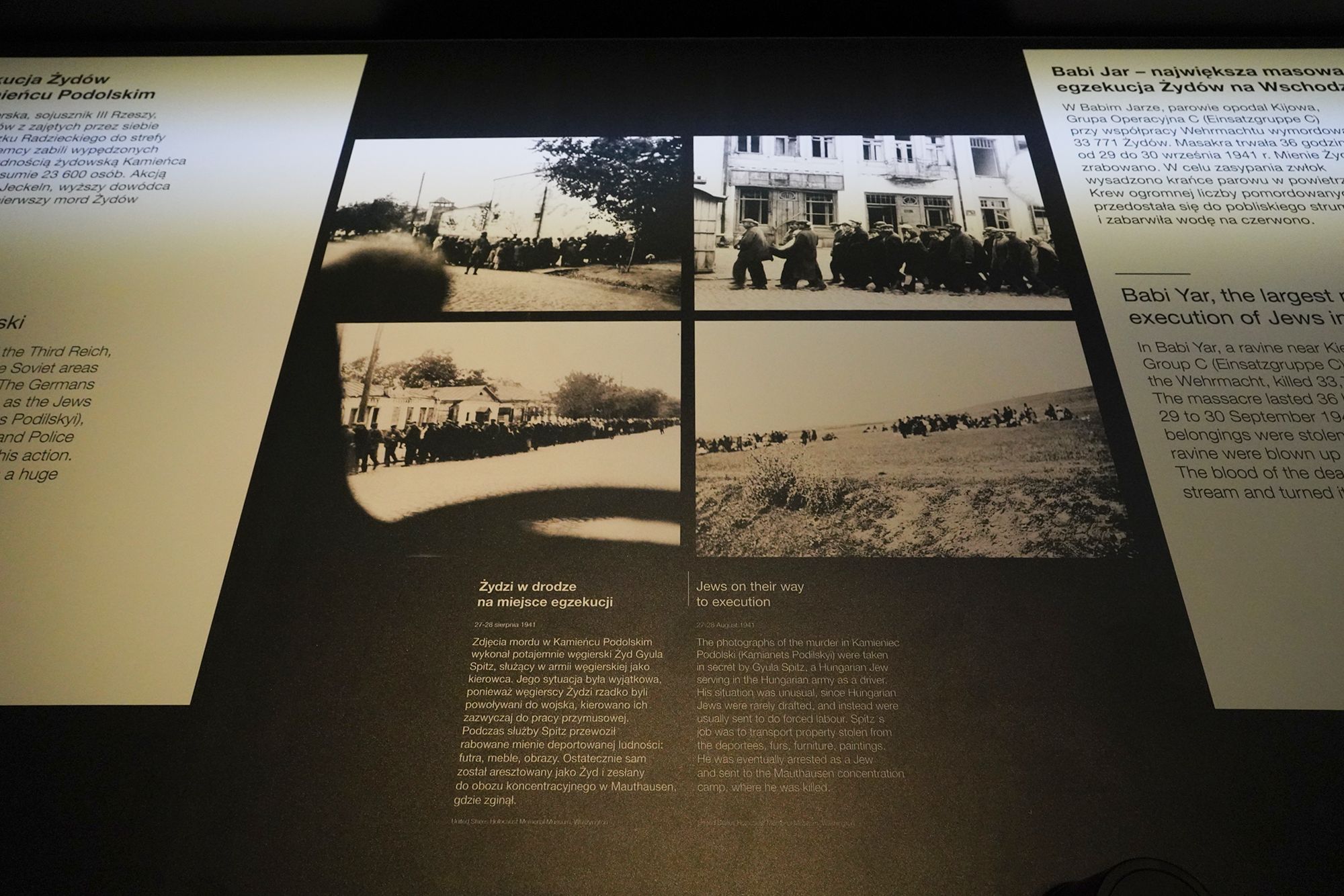
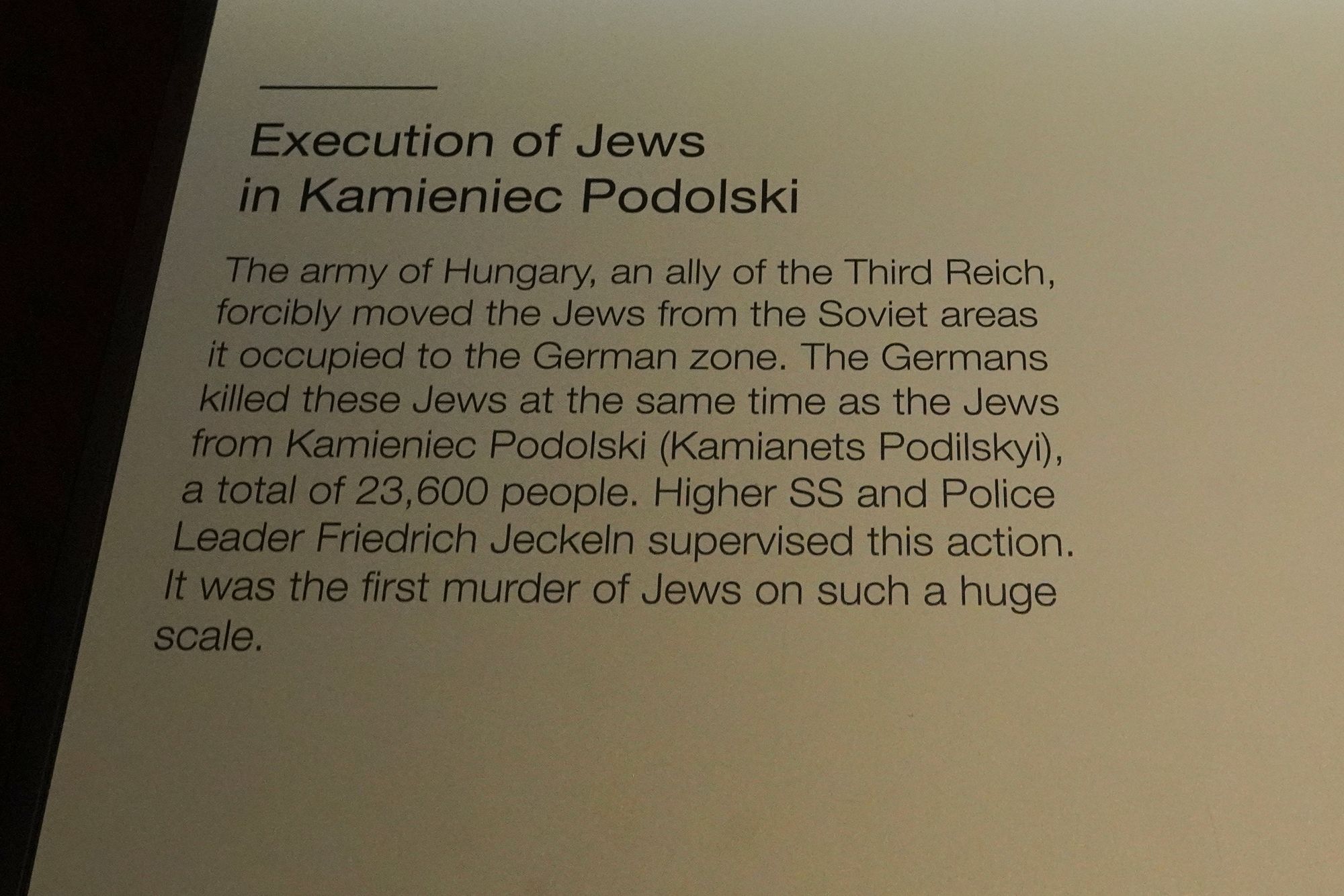
Execution of Jews in Kamianets-Podilskyi
In 1941, Hungary, then an ally of Nazi Germany, forcibly transferred Jews from territories its army occupied into German-controlled territory. German forces murdered them alongside the town’s Jewish residents. About 23,600 people were killed under the supervision of SS and police leader Friedrich Jeckeln. The massacre was one of the first mass killings of Jews on this scale.
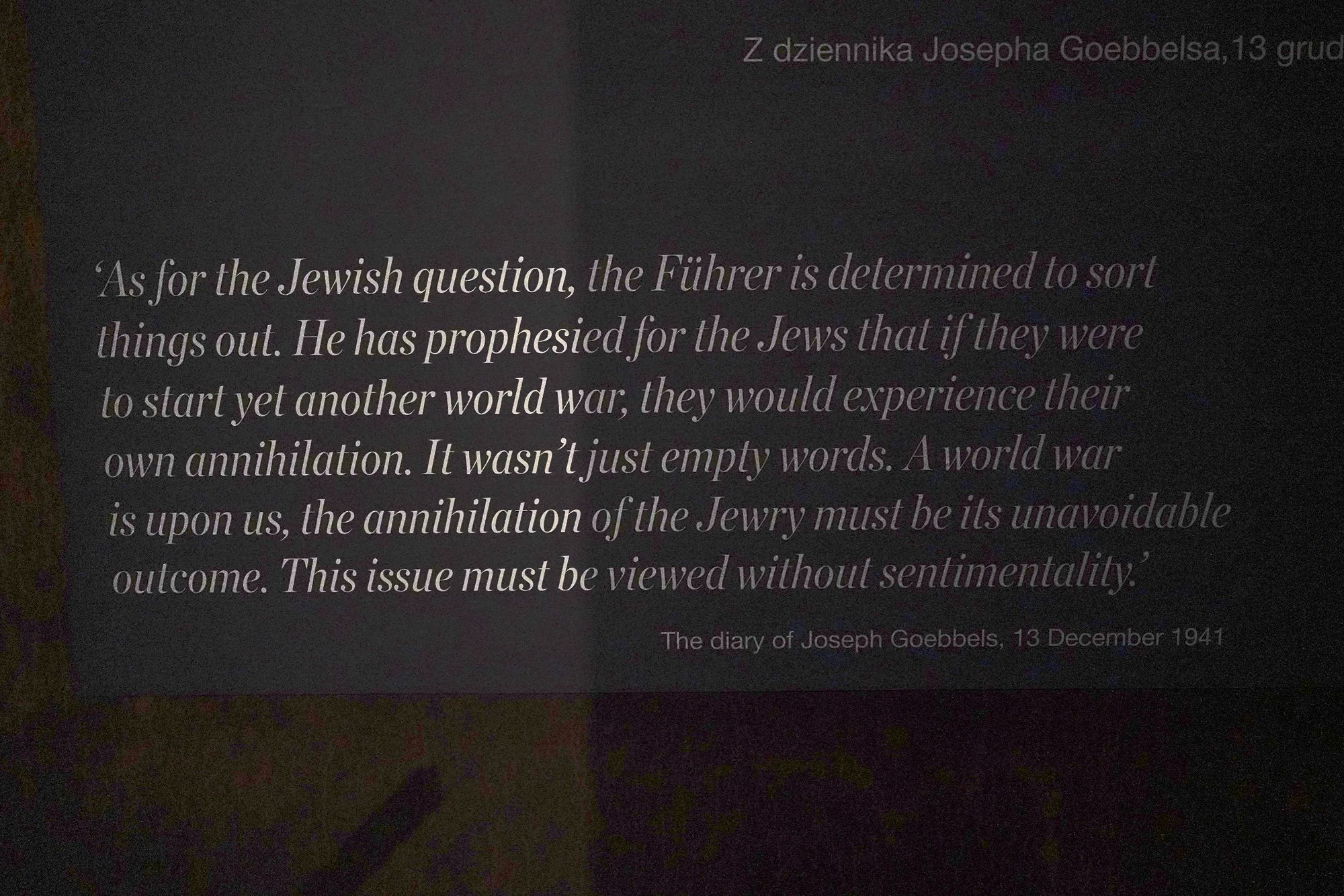
Anti-Jewish pogroms in 1941
As German forces advanced into areas once occupied by the Soviet Union, anti-Jewish pogroms broke out from the Baltic region through Poland and Ukraine. Germans often incited the violence, with radical nationalist groups helping organize pogroms in some places. Jews were falsely blamed collectively for supporting Communism, while the violence also gave people an excuse to loot Jewish homes and businesses. In many cases, attackers targeted neighbors they had known for years.
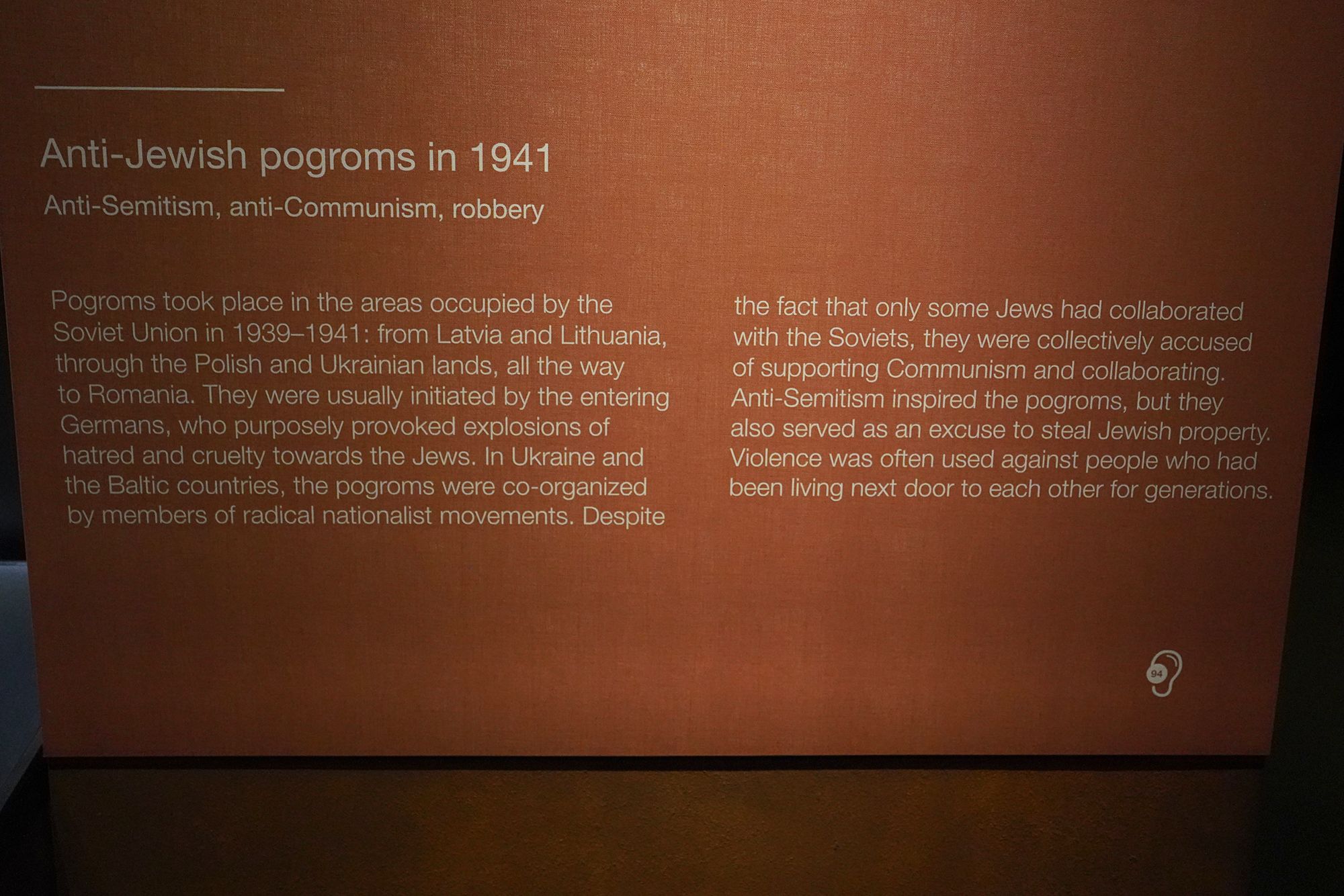
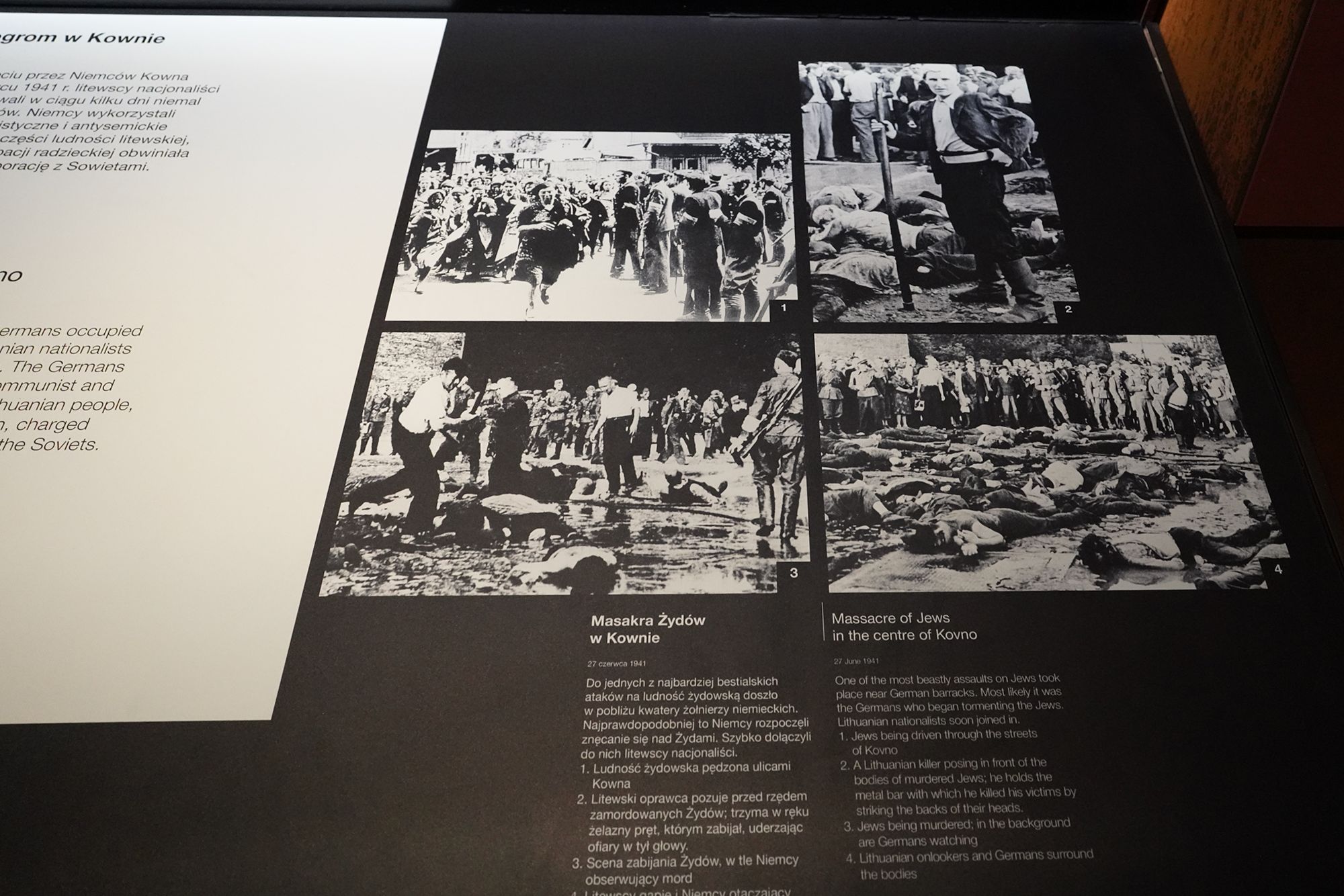
Pogrom in Kovno
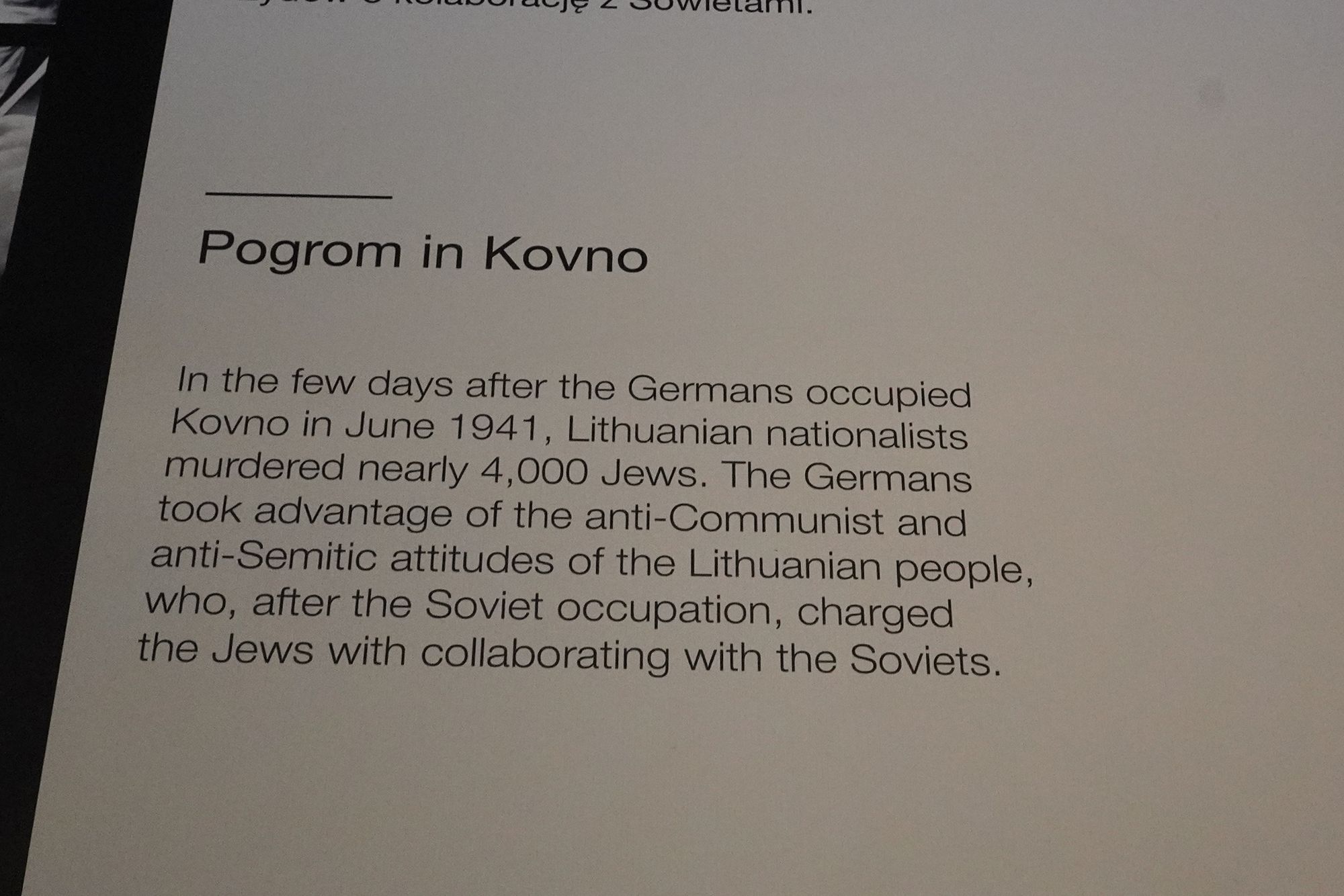
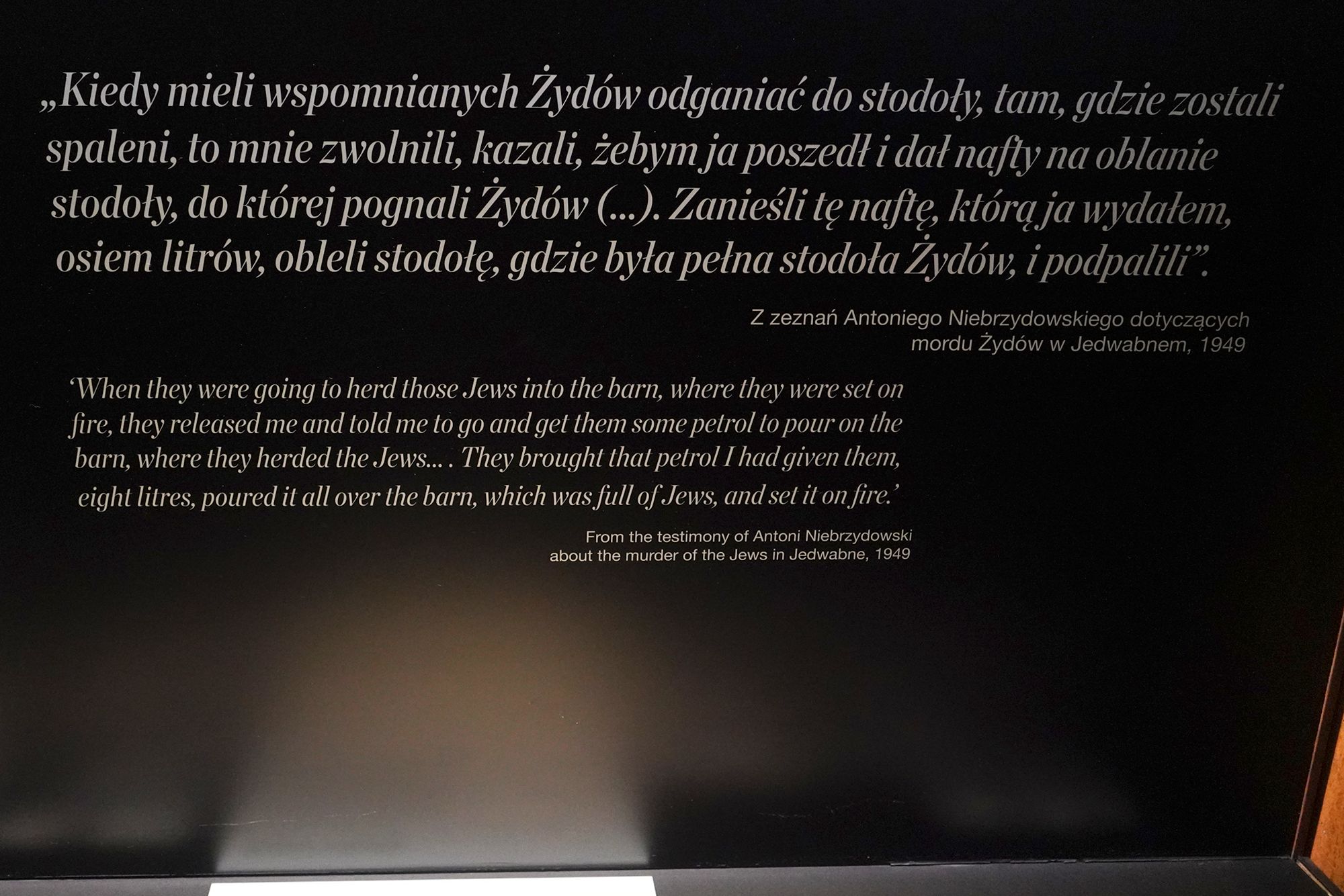
After German forces occupied Kovno (now Kaunas) in June 1941, Lithuanian nationalists murdered nearly 4,000 Jews in a few days. The Germans exploited existing antisemitism and anti-Communist anger; some Lithuanians blamed Jews for collaborating with the Soviets. The exhibit shows how these accusations helped fuel violence against Jewish neighbors.
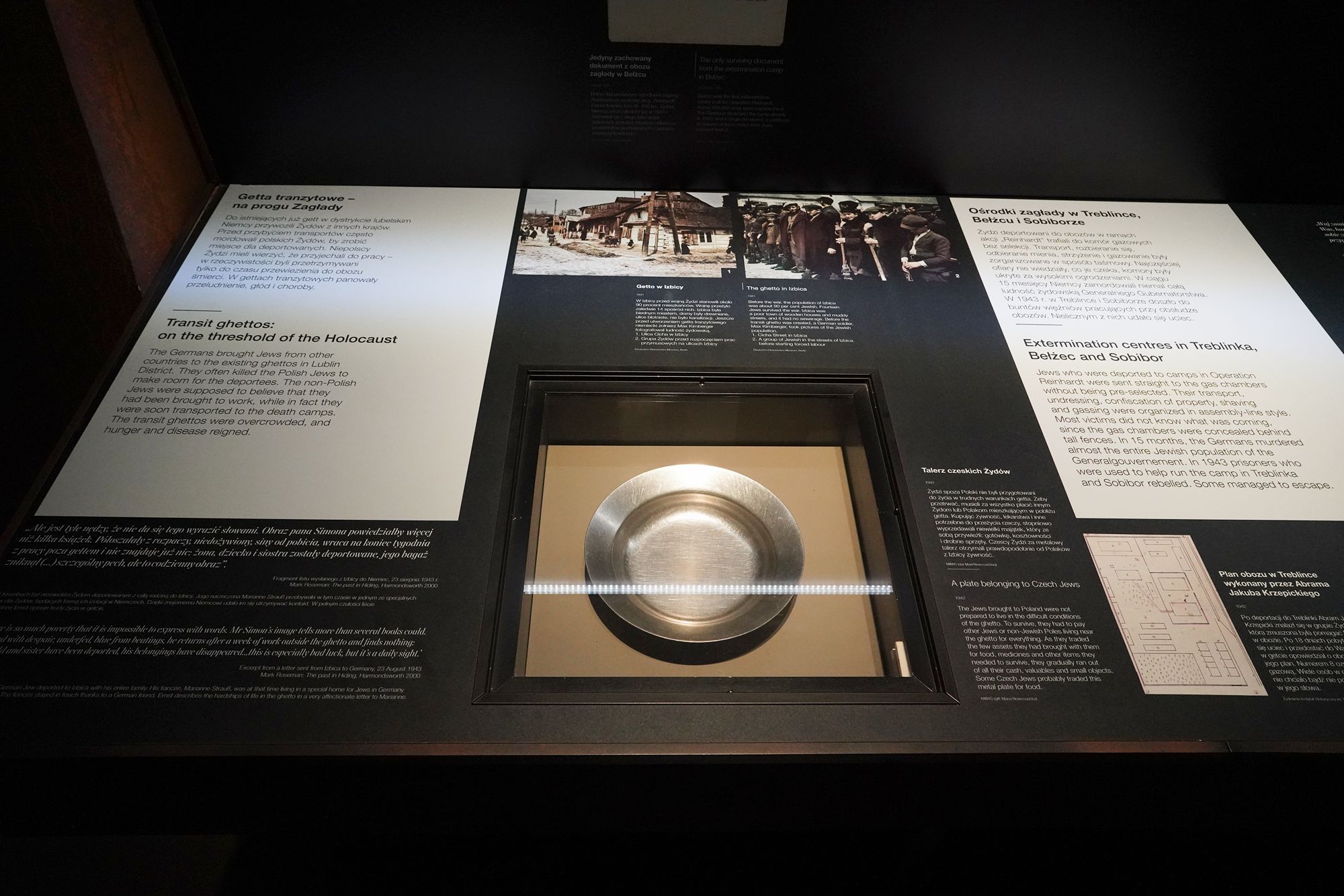
Transit ghettos: On the threshold of the Holocaust
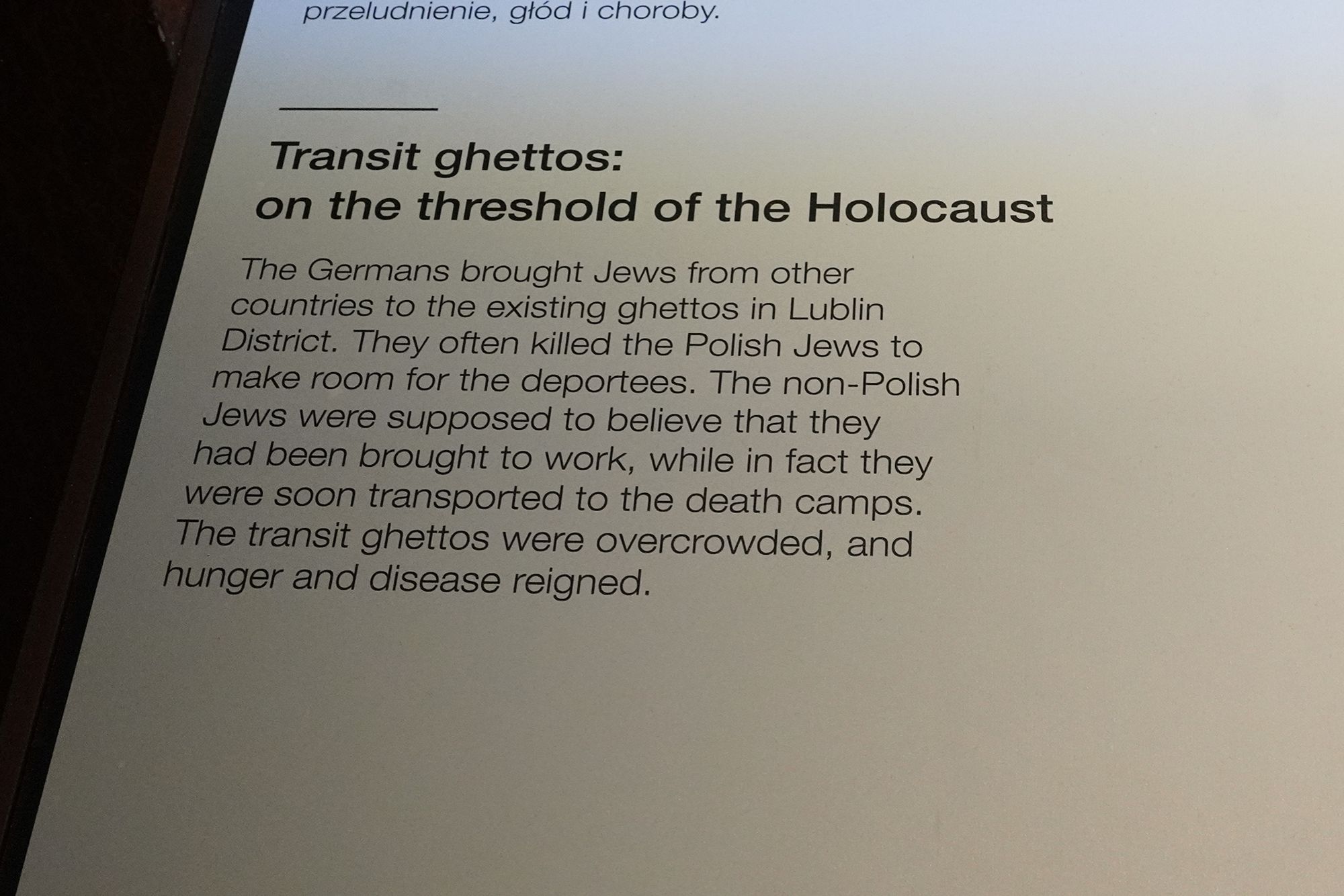
In the Lublin District, German authorities brought Jews from other countries into existing ghettos, often killing Polish Jews to make room. They told the deportees they had been brought for work, while preparing to send them to death camps. The transit ghettos were overcrowded, and hunger and disease were widespread.
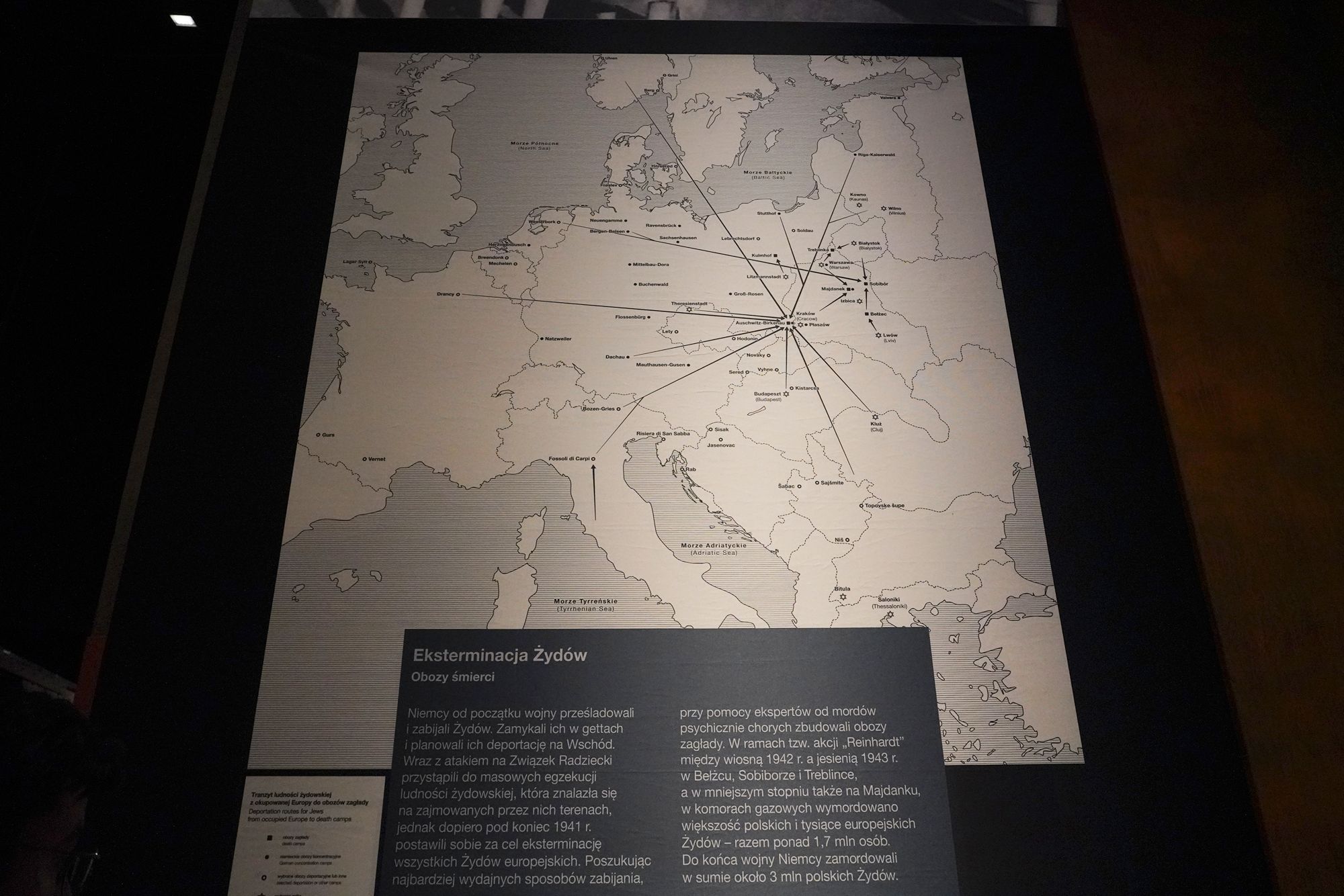
Extermination of the Jews: Death camps
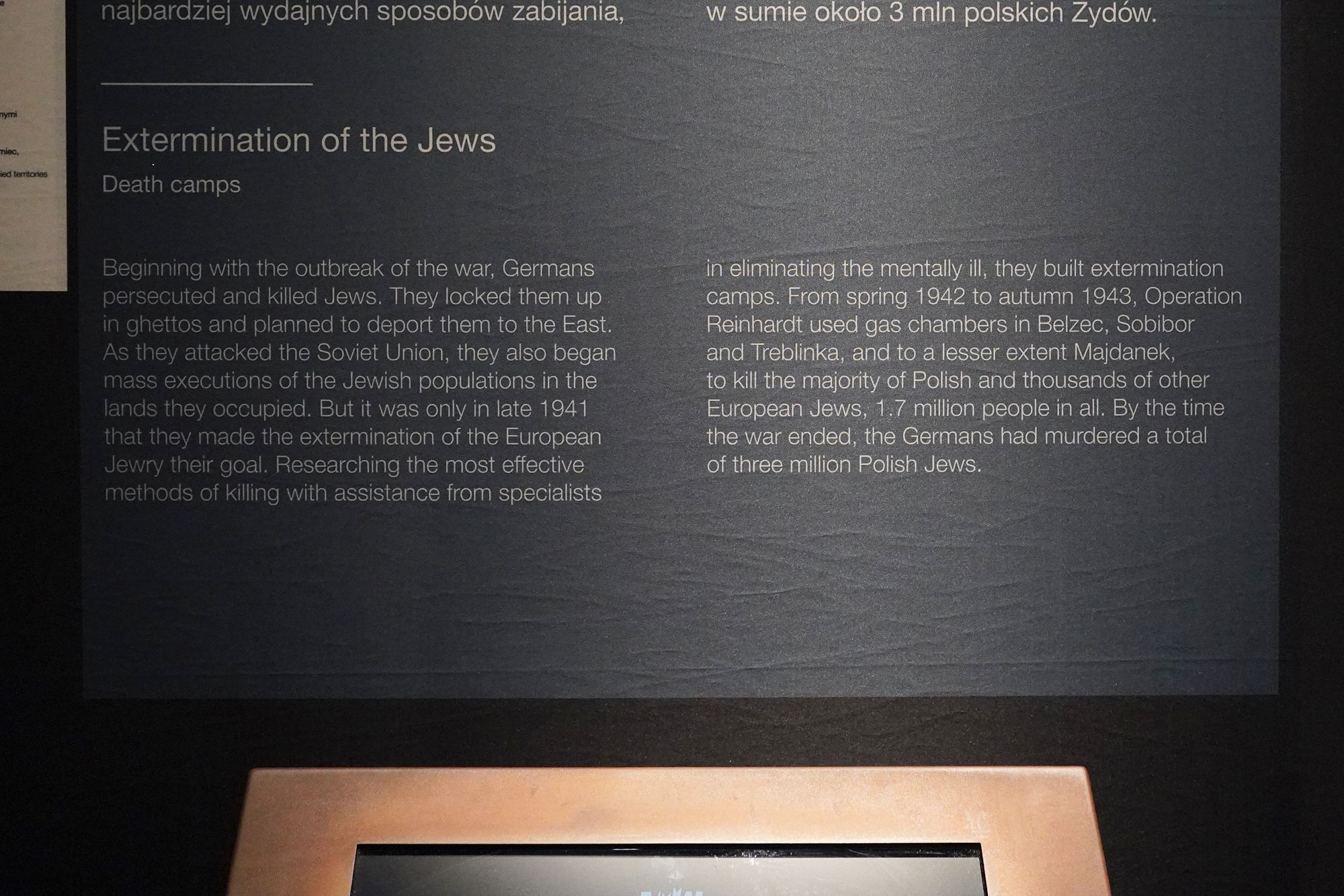
By late 1941, Nazi Germany had made the murder of Europe’s Jews an explicit goal. After imprisoning Jews in ghettos and carrying out mass shootings in occupied Soviet territories, the Nazis built death camps for mass killing. During Operation Reinhard, gas chambers at Bełżec, Sobibór, and Treblinka—and to a lesser extent Majdanek—were used to murder about 1.7 million people, mostly Polish Jews. By the war’s end, about three million Polish Jews had been killed.
Non-Jewish Poles and Jews
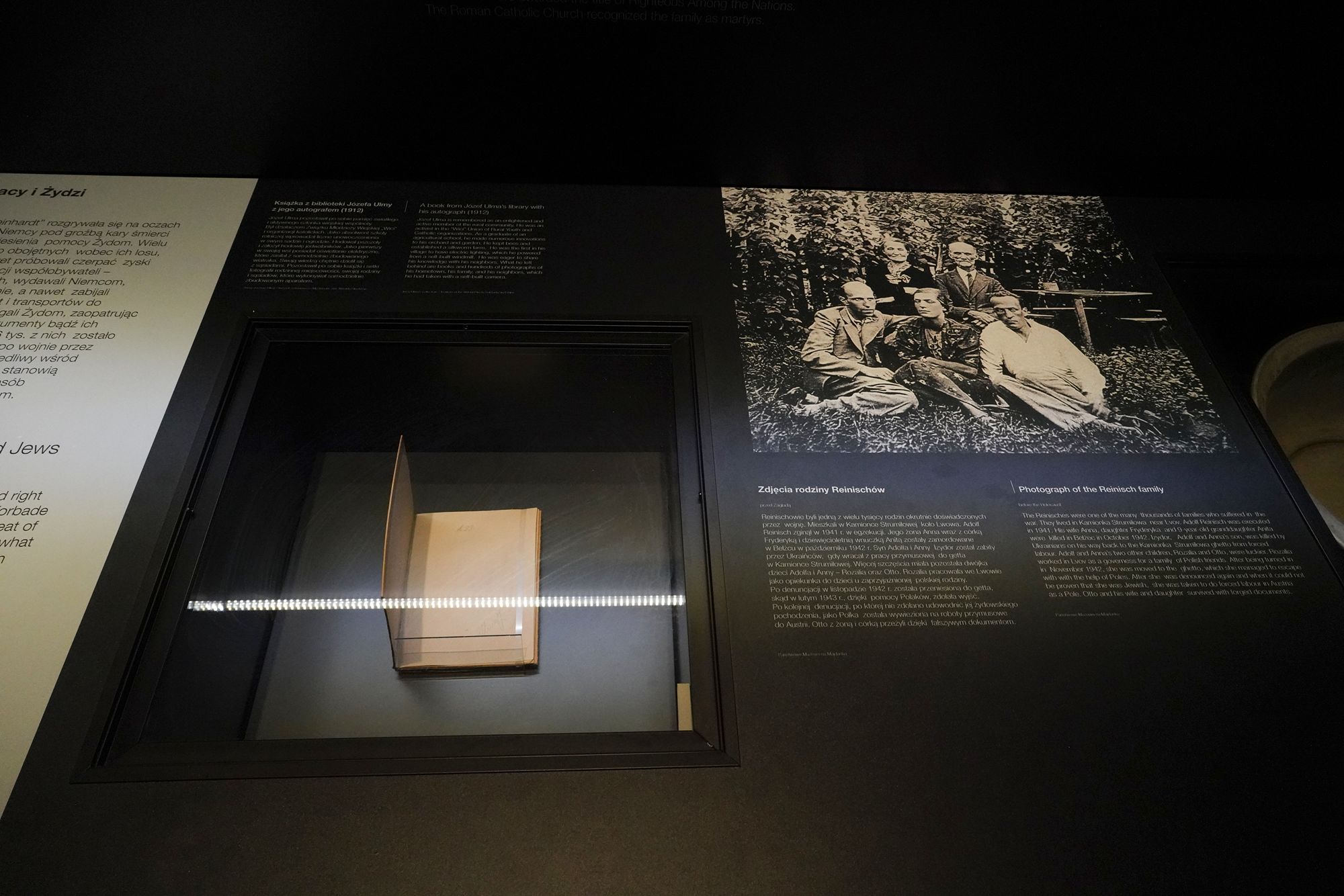
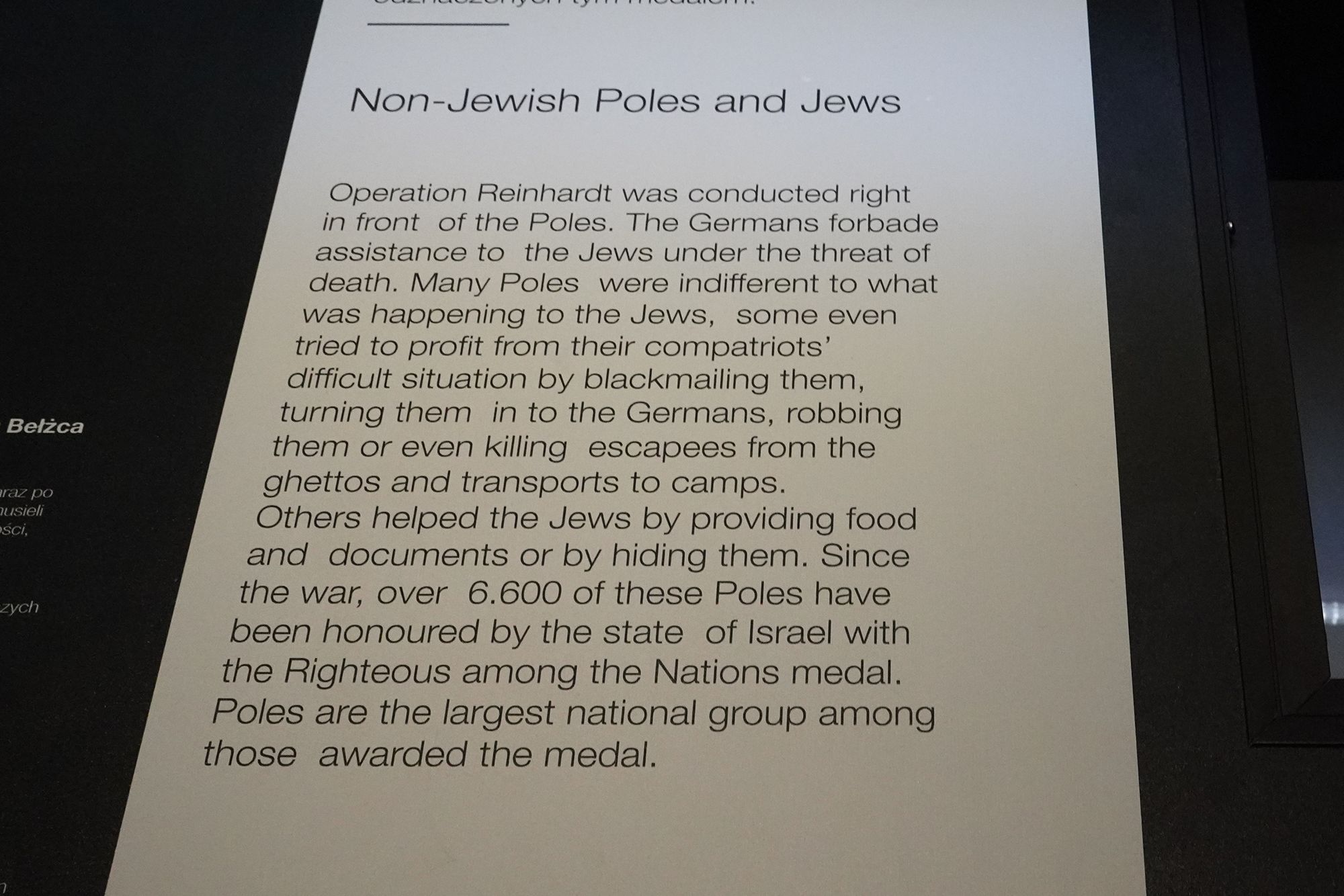
Operation Reinhardt—the Nazi campaign to murder Polish Jews—unfolded in German-occupied Poland, where many Poles witnessed what was happening. German authorities threatened death for helping Jews. Some people exploited or betrayed Jews, while others risked their lives to provide food, documents, or hiding places. Since the war, more than 6,600 Poles have been recognized by Israel as Righteous Among the Nations for helping Jews; Poles are the largest national group among the award’s recipients.
The Łódź Ghetto and the Death Centre in Kulmhof
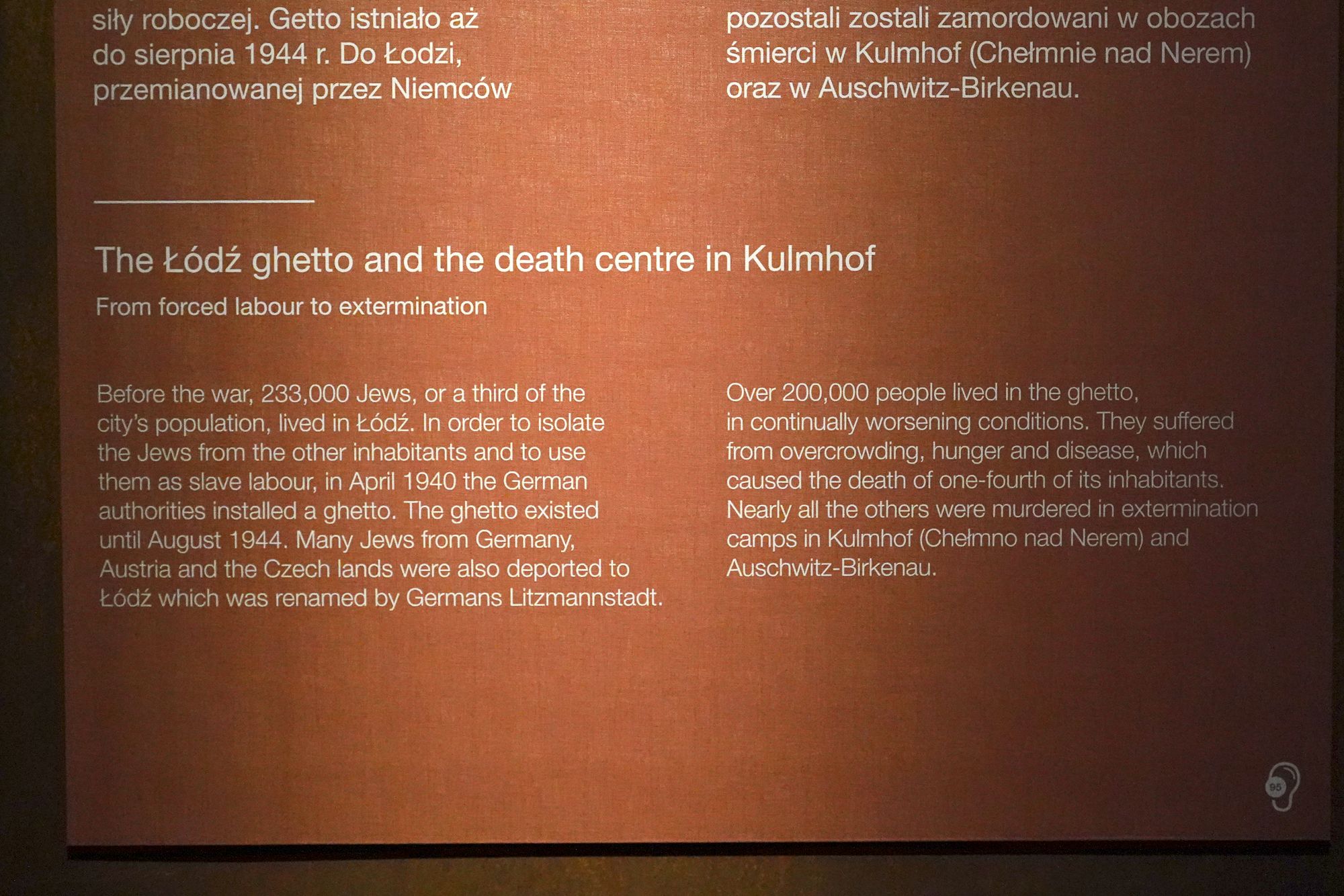
Before the war, Jews made up about a third of Łódź’s population. German authorities established a ghetto there in April 1940, confining Jews and forcing them into labor. More than 200,000 people lived in the ghetto amid severe overcrowding, hunger, and disease; about a quarter died there. Nearly all those who remained were murdered at Kulmhof or Auschwitz-Birkenau.
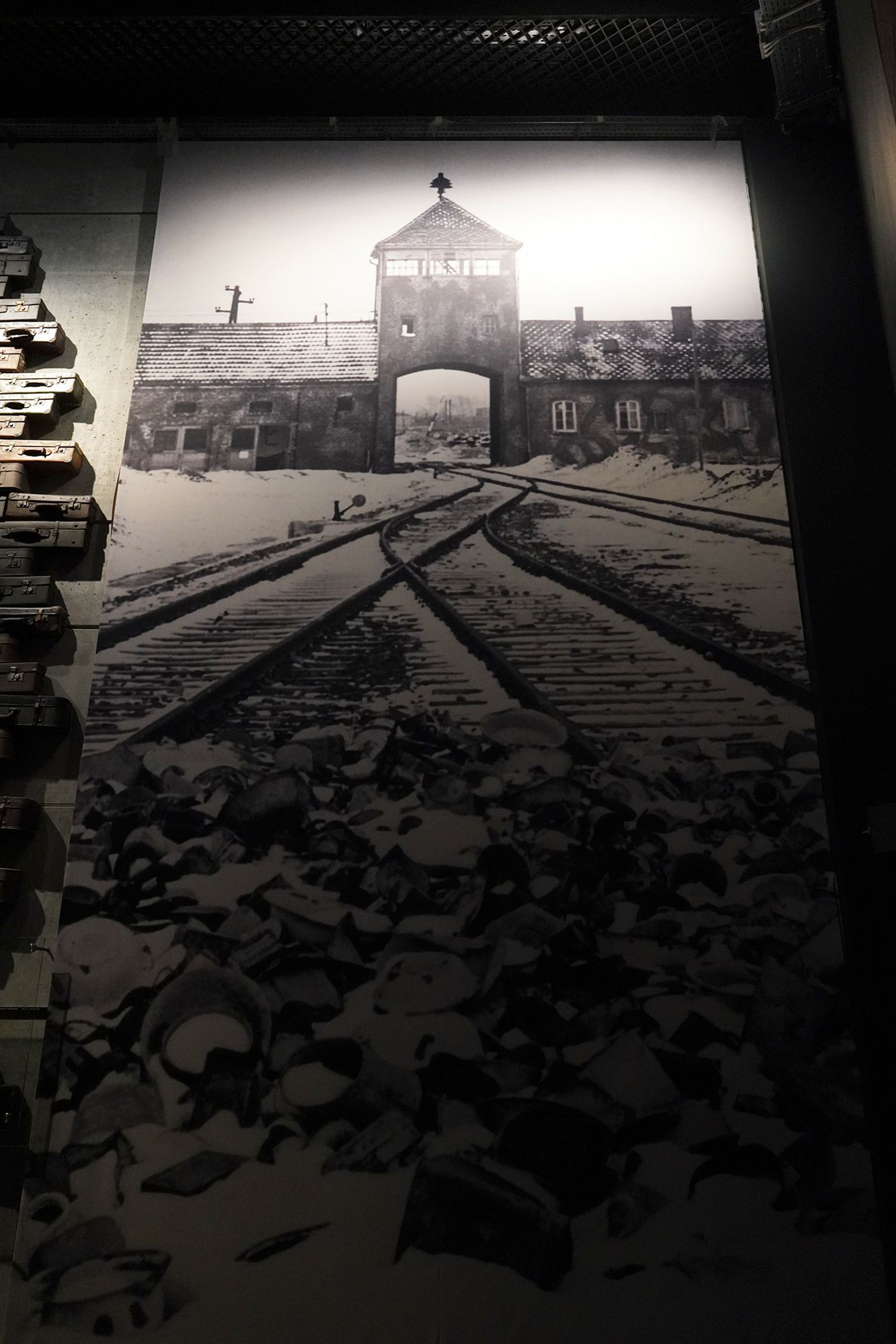
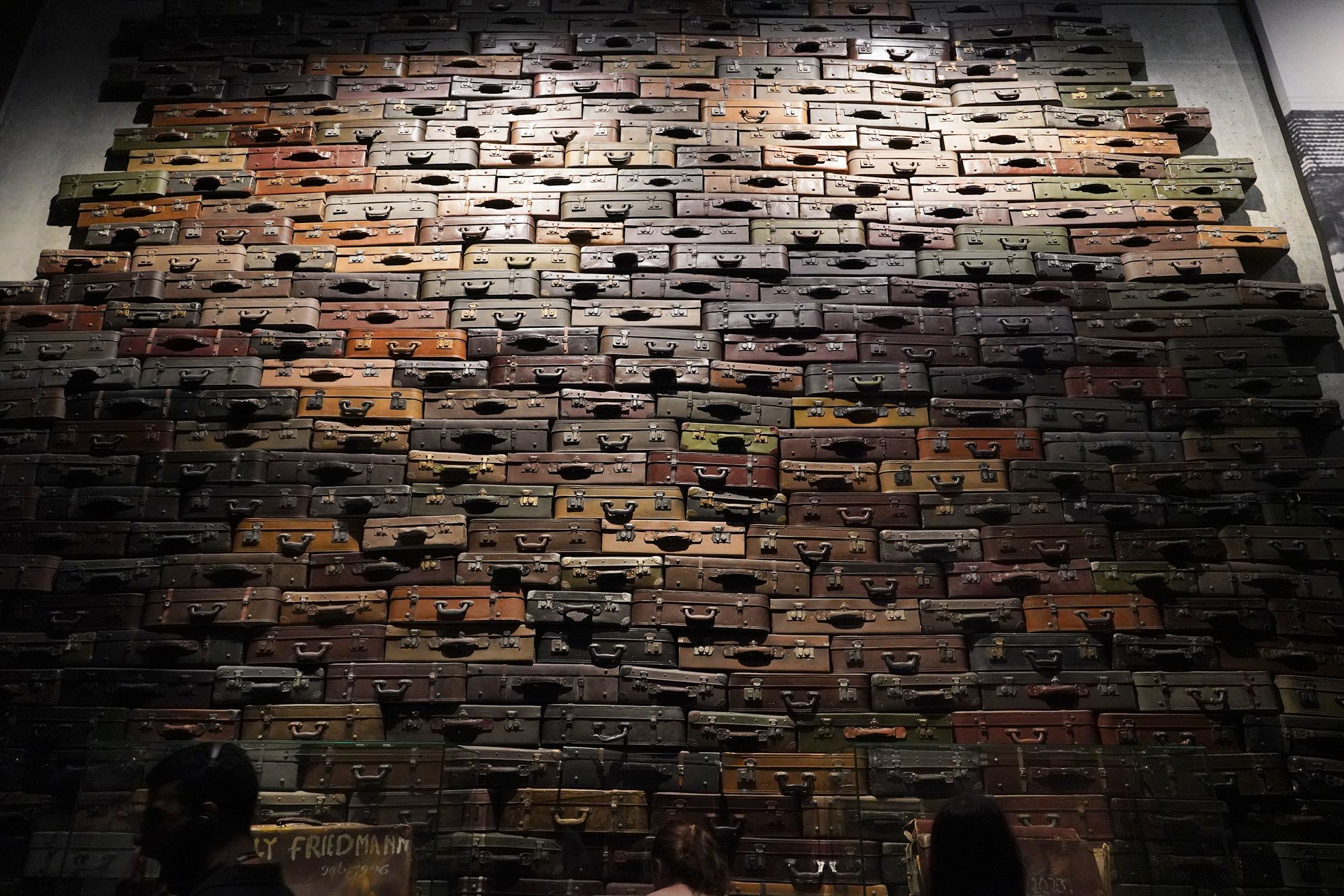
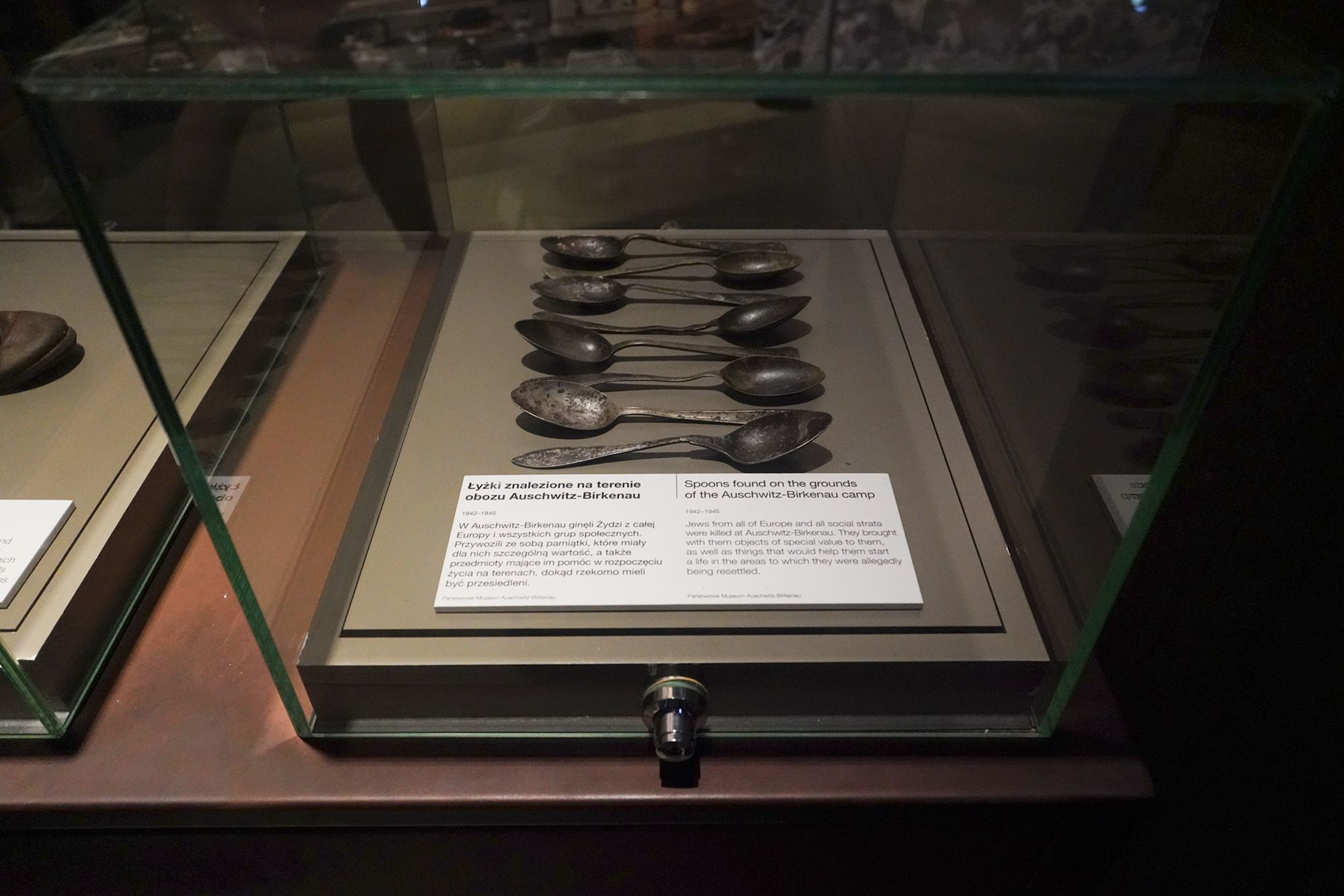
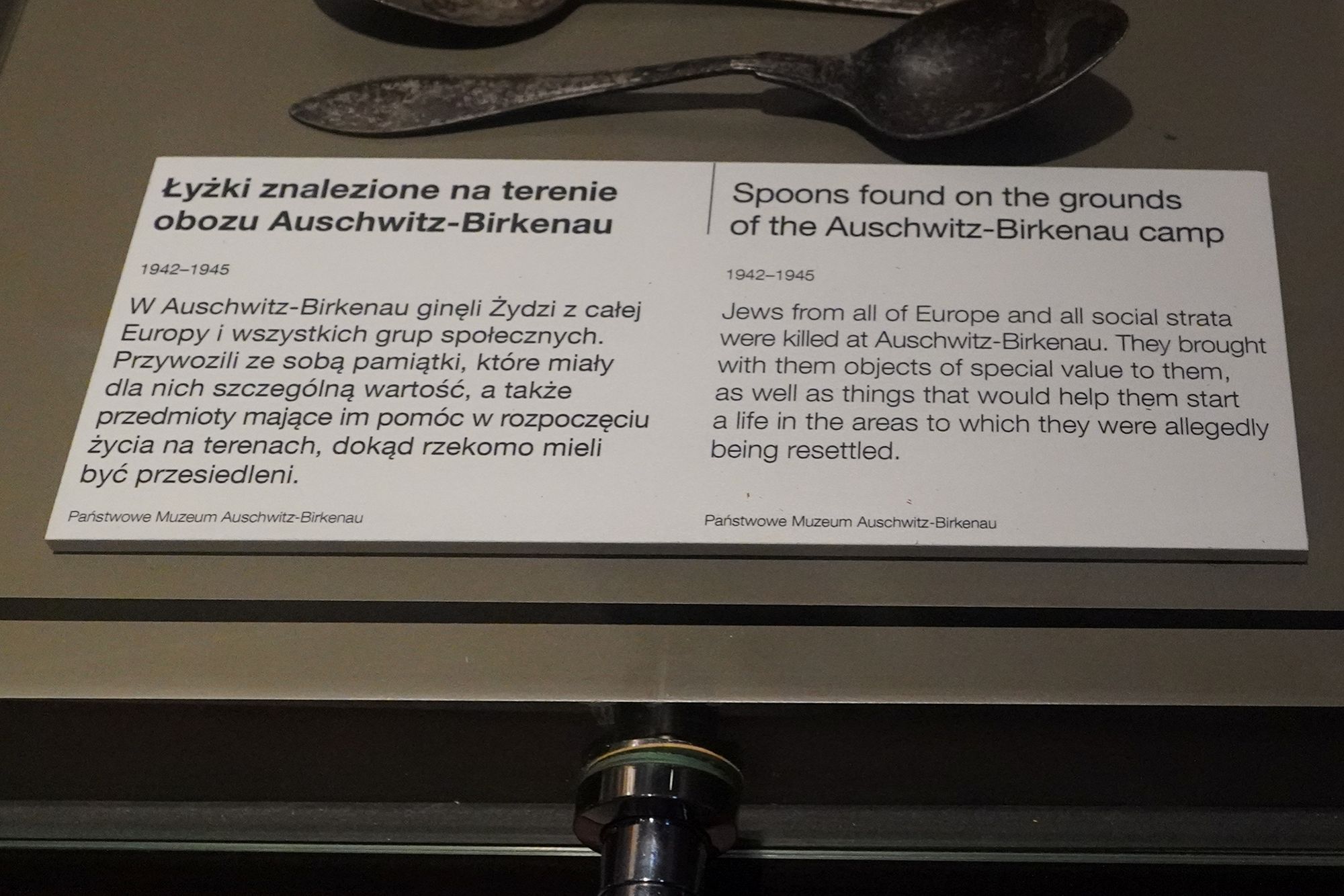
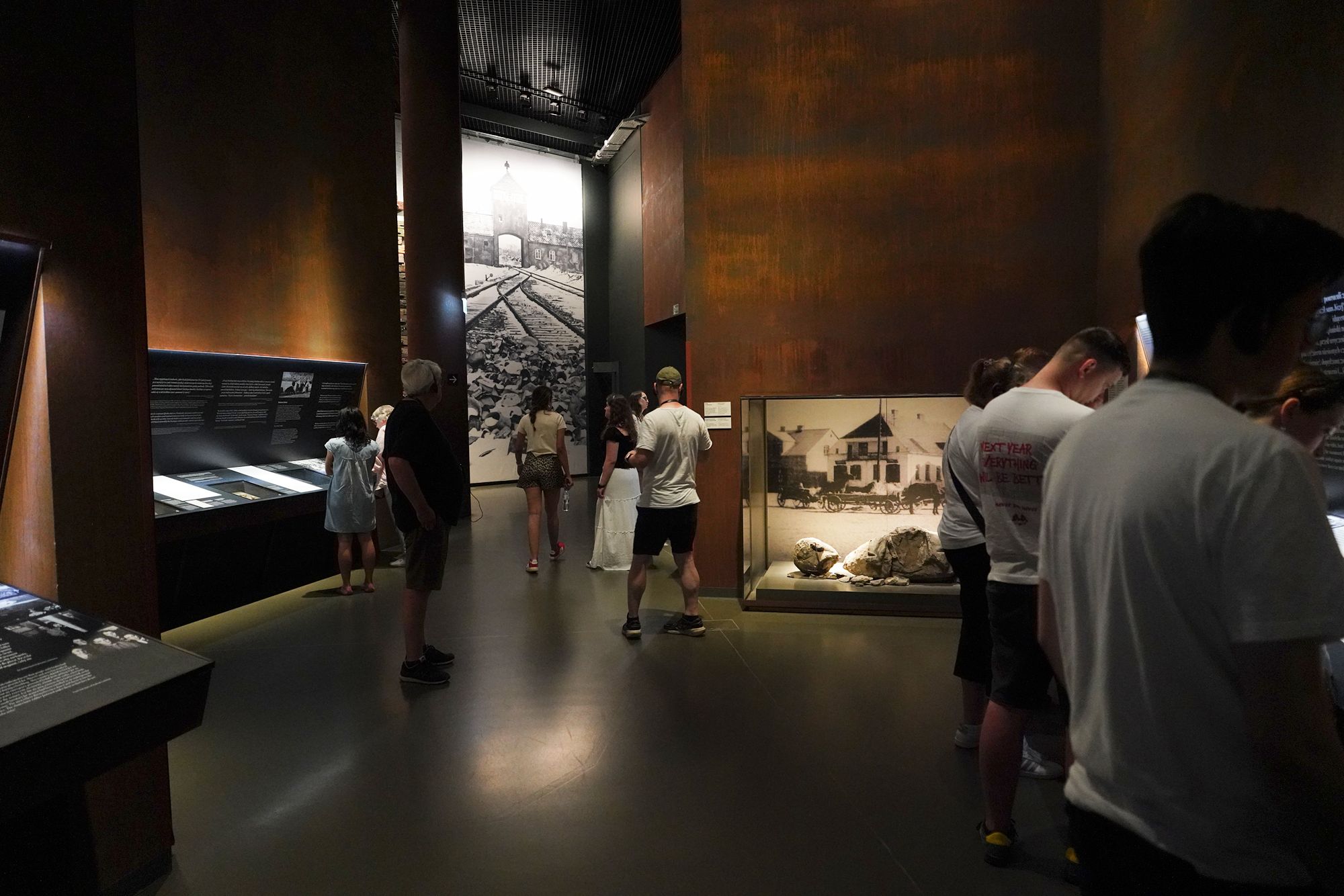
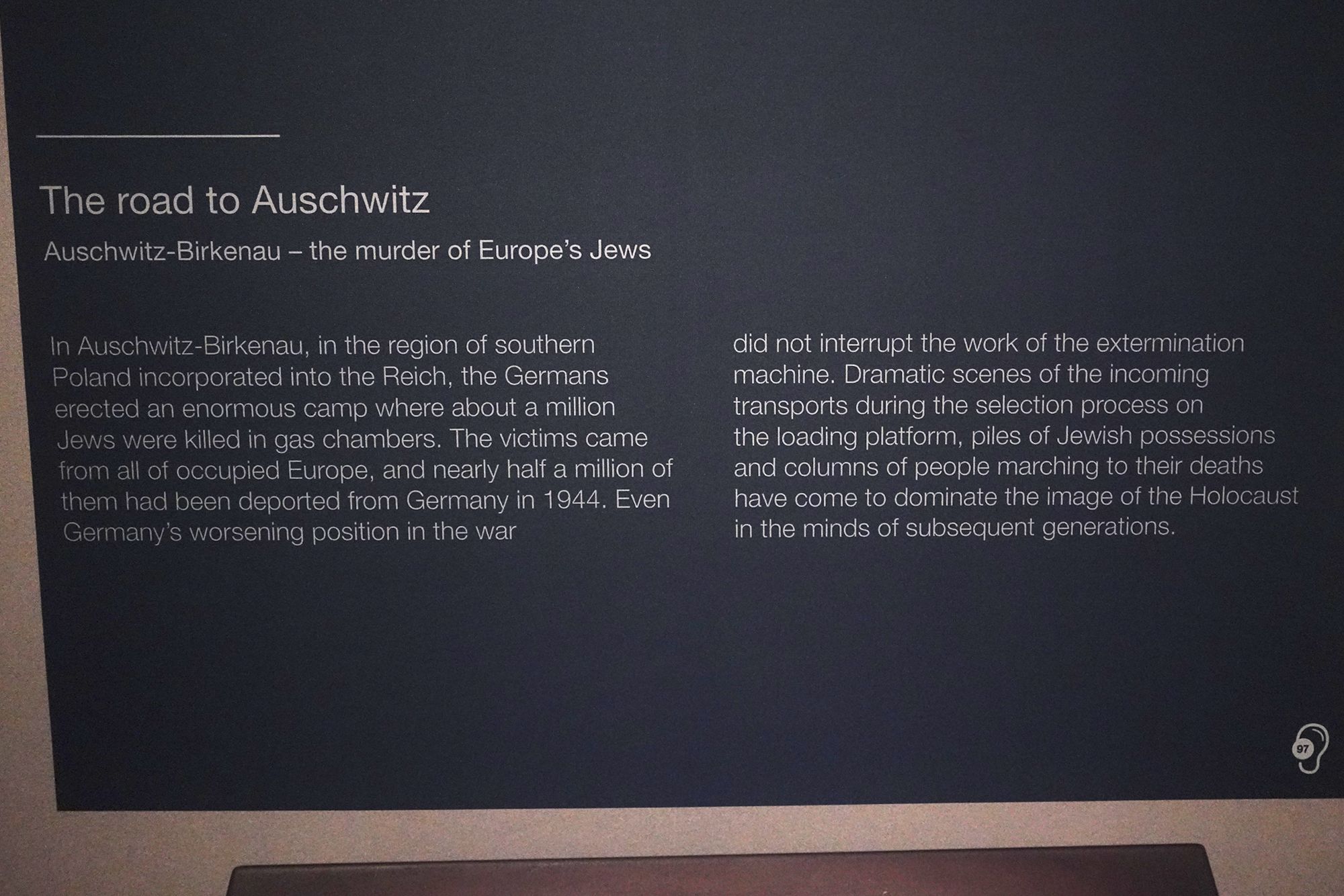
The Road to Auschwitz
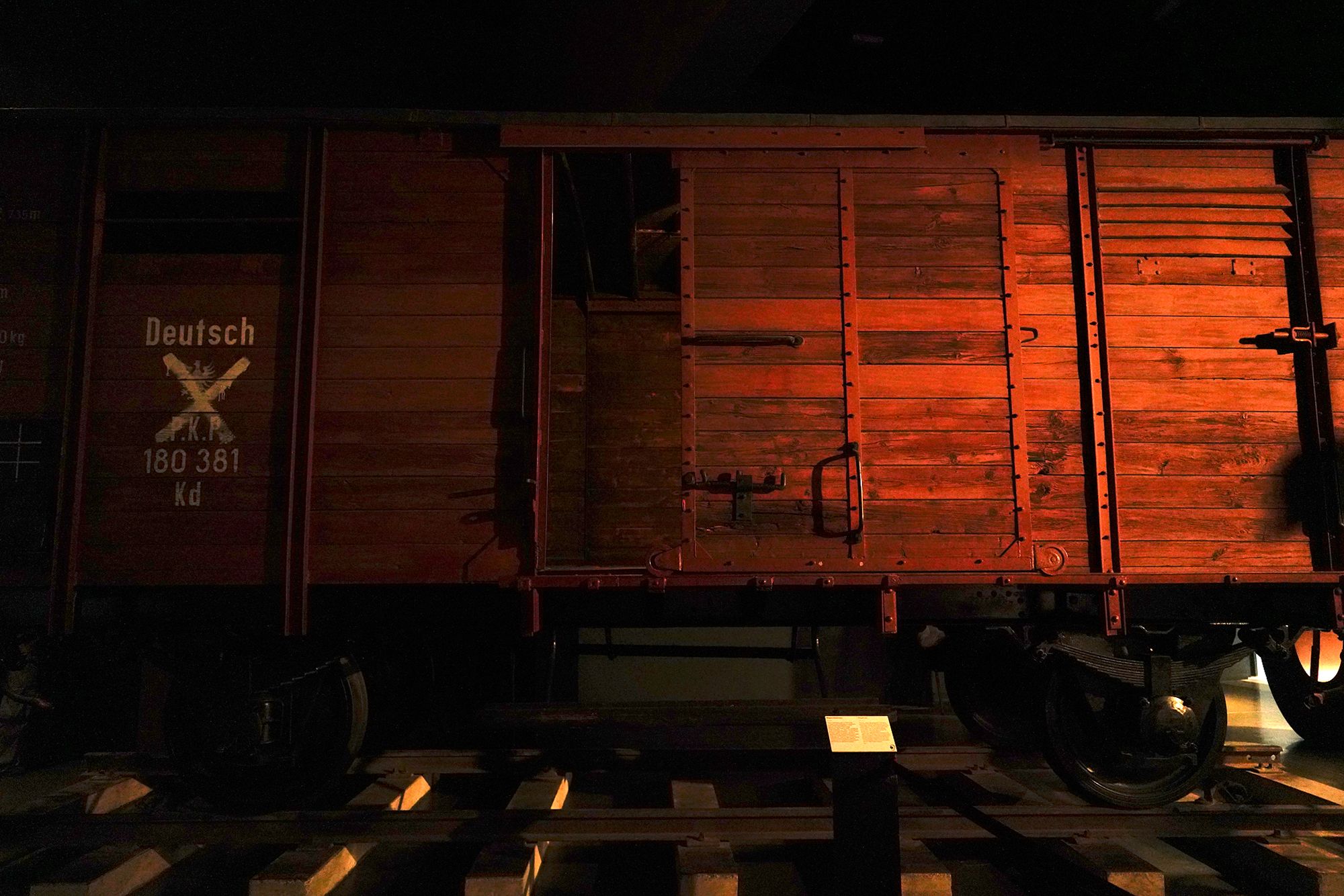
At Auschwitz-Birkenau, in German-annexed Poland, about one million Jews from across occupied Europe were murdered in gas chambers. Nearly half a million were deported there from Germany in 1944. Even as Germany’s military position worsened, deportations and mass killings continued. The arriving transports, the selection process, and piles of victims’ belongings became lasting images of the Holocaust.
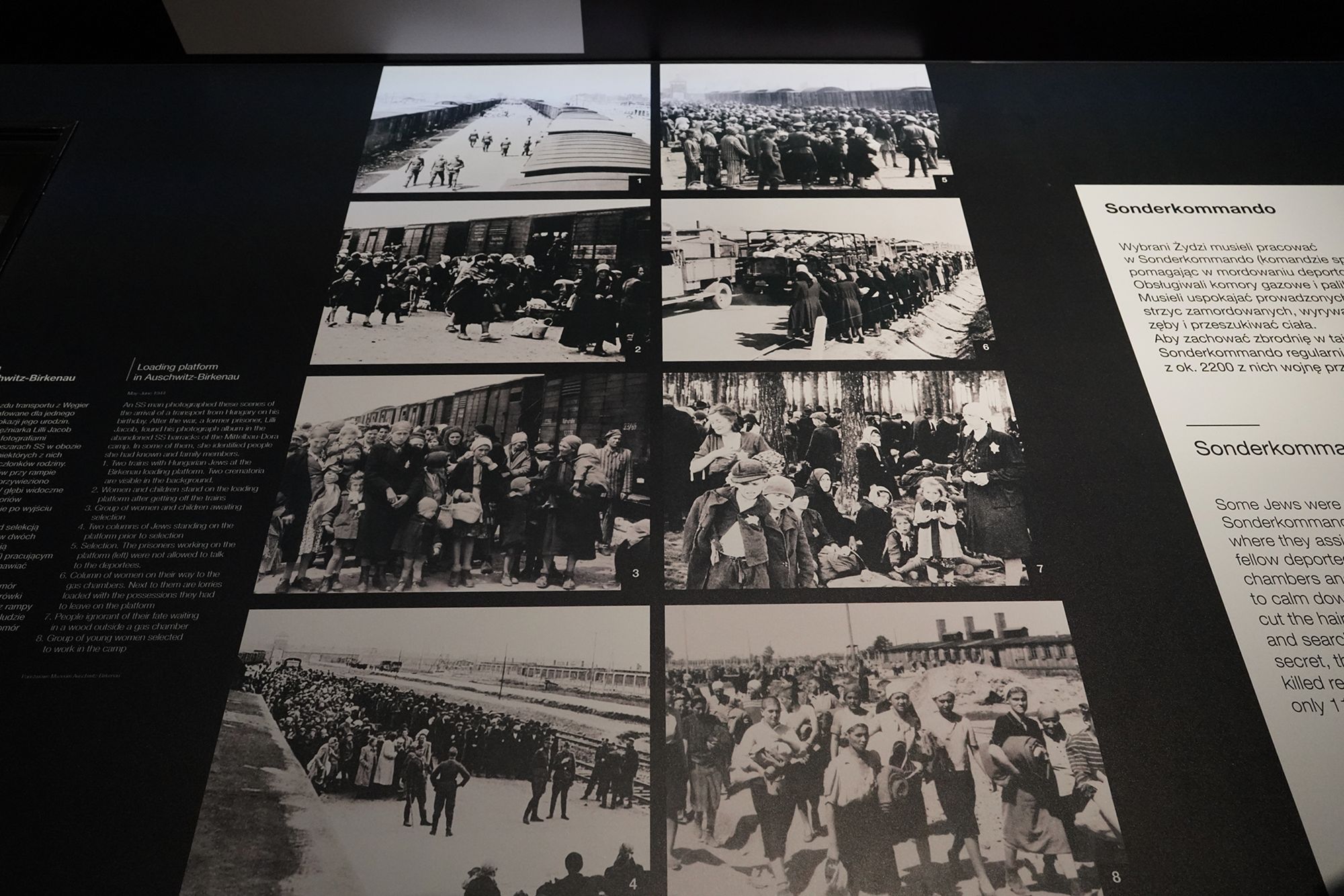
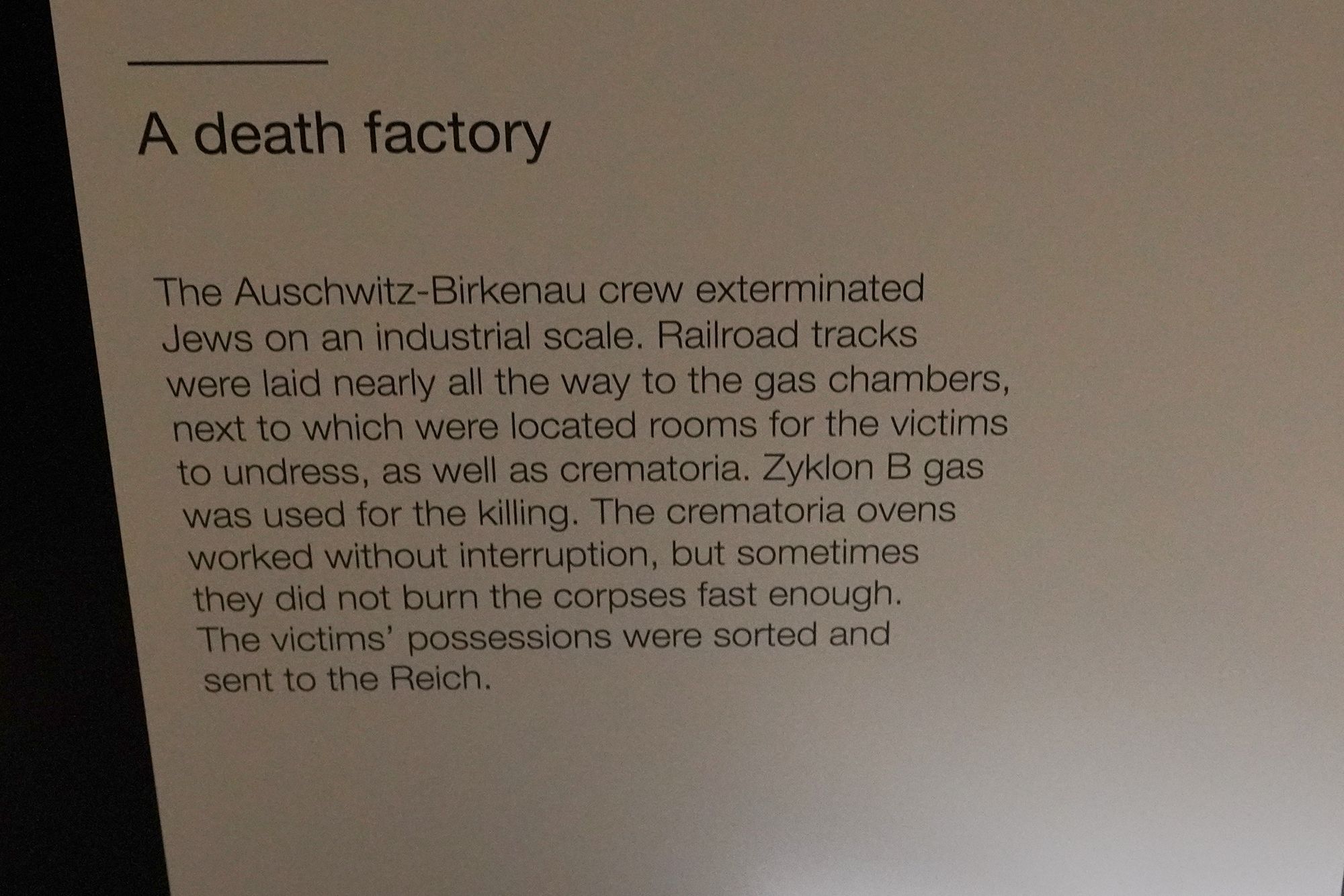
A Death Factory
At Auschwitz-Birkenau, the Nazis organized mass murder on an industrial scale. Rail tracks brought deportees close to the gas chambers, where victims were forced to undress before being killed with Zyklon B. Crematoria burned bodies continuously but sometimes could not keep up. The Nazis also sorted the victims’ belongings and sent them to Germany.
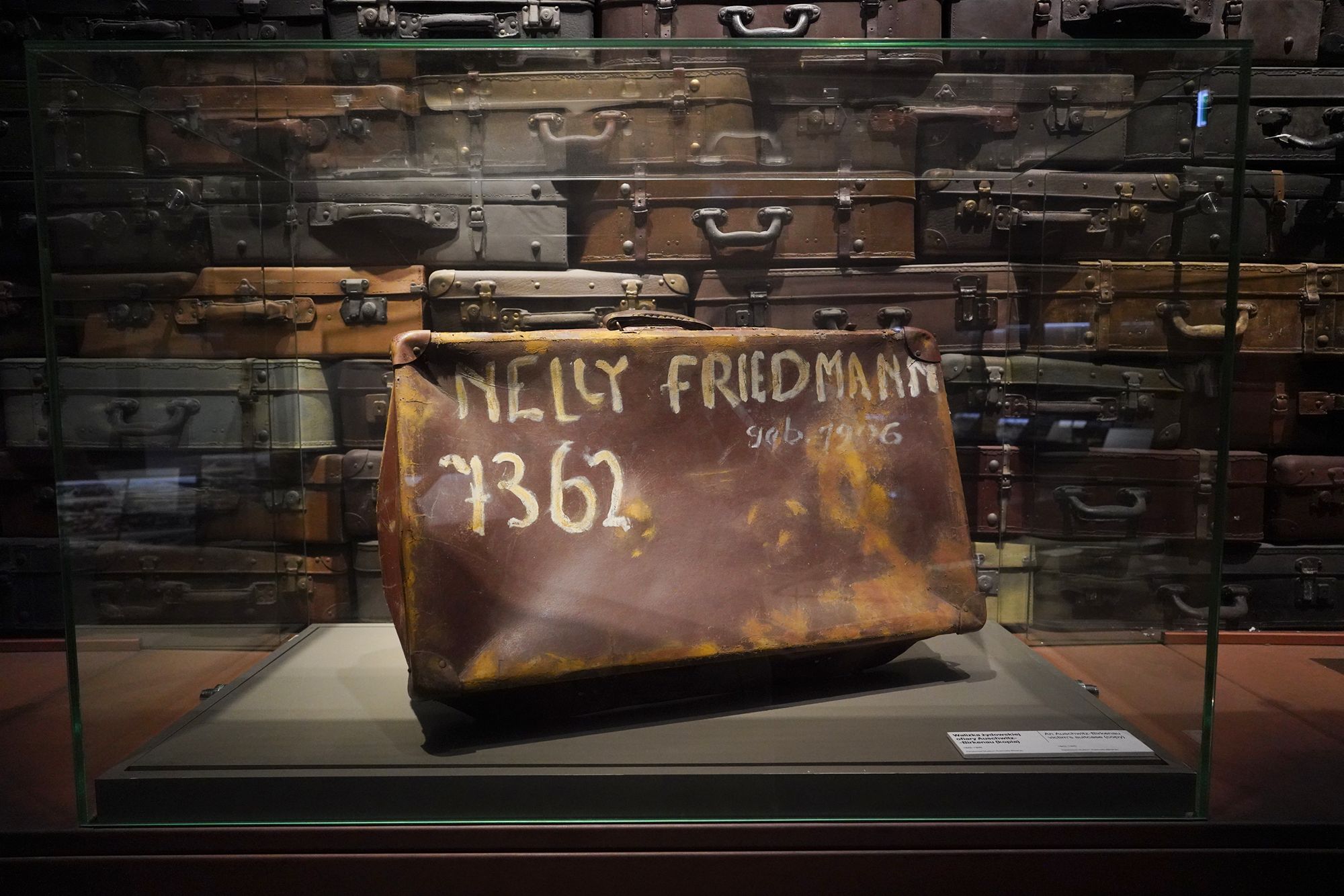
People Like Us
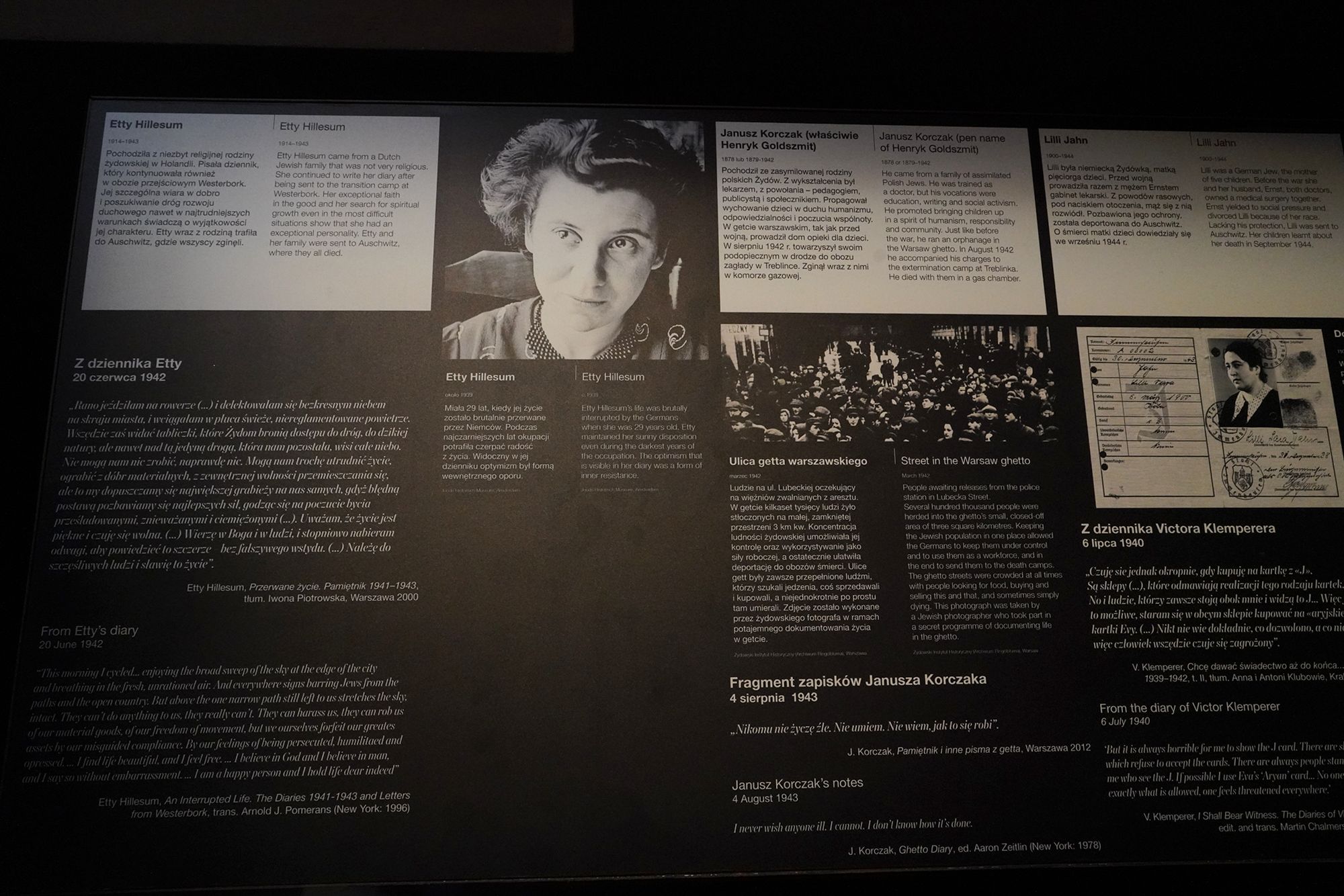
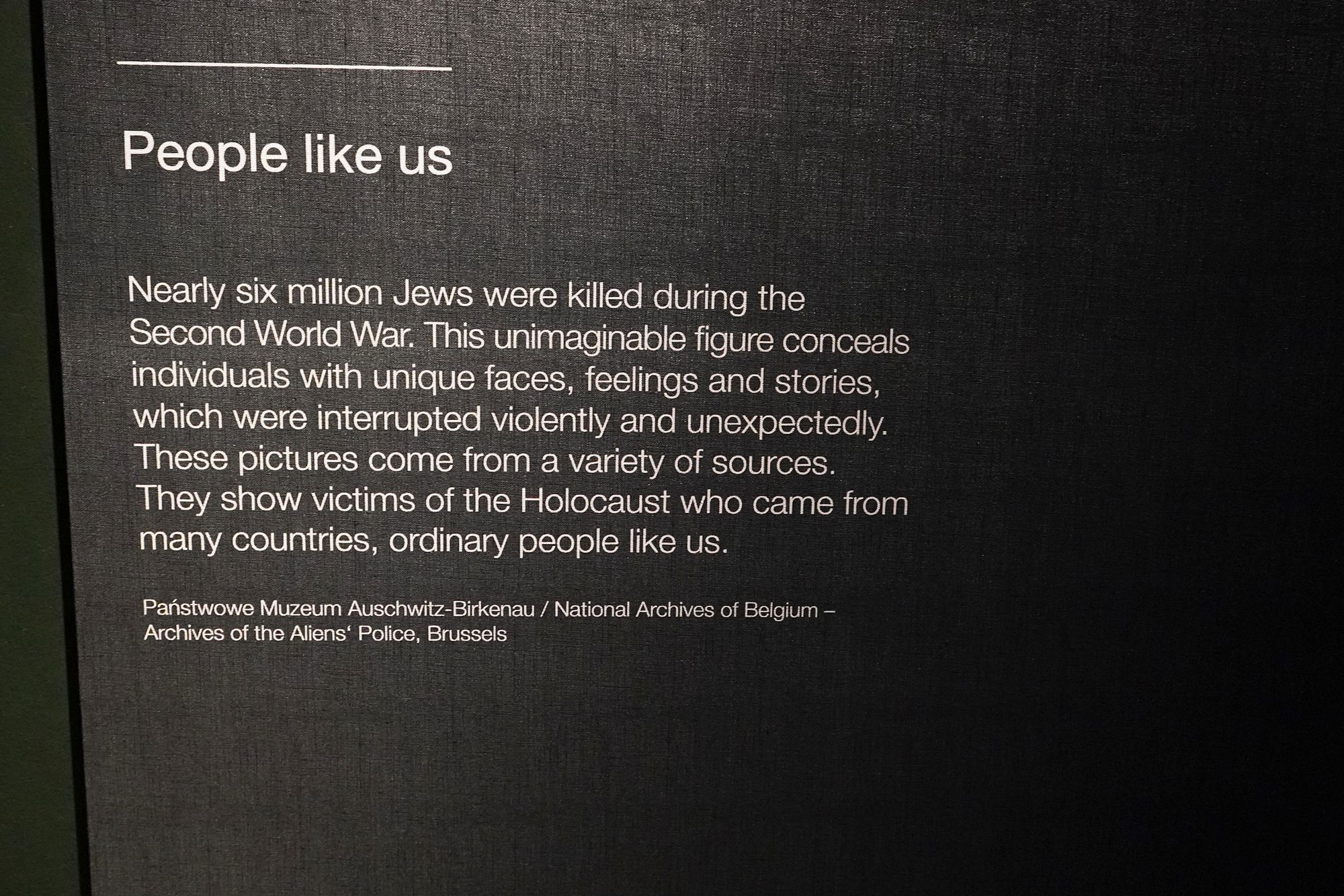
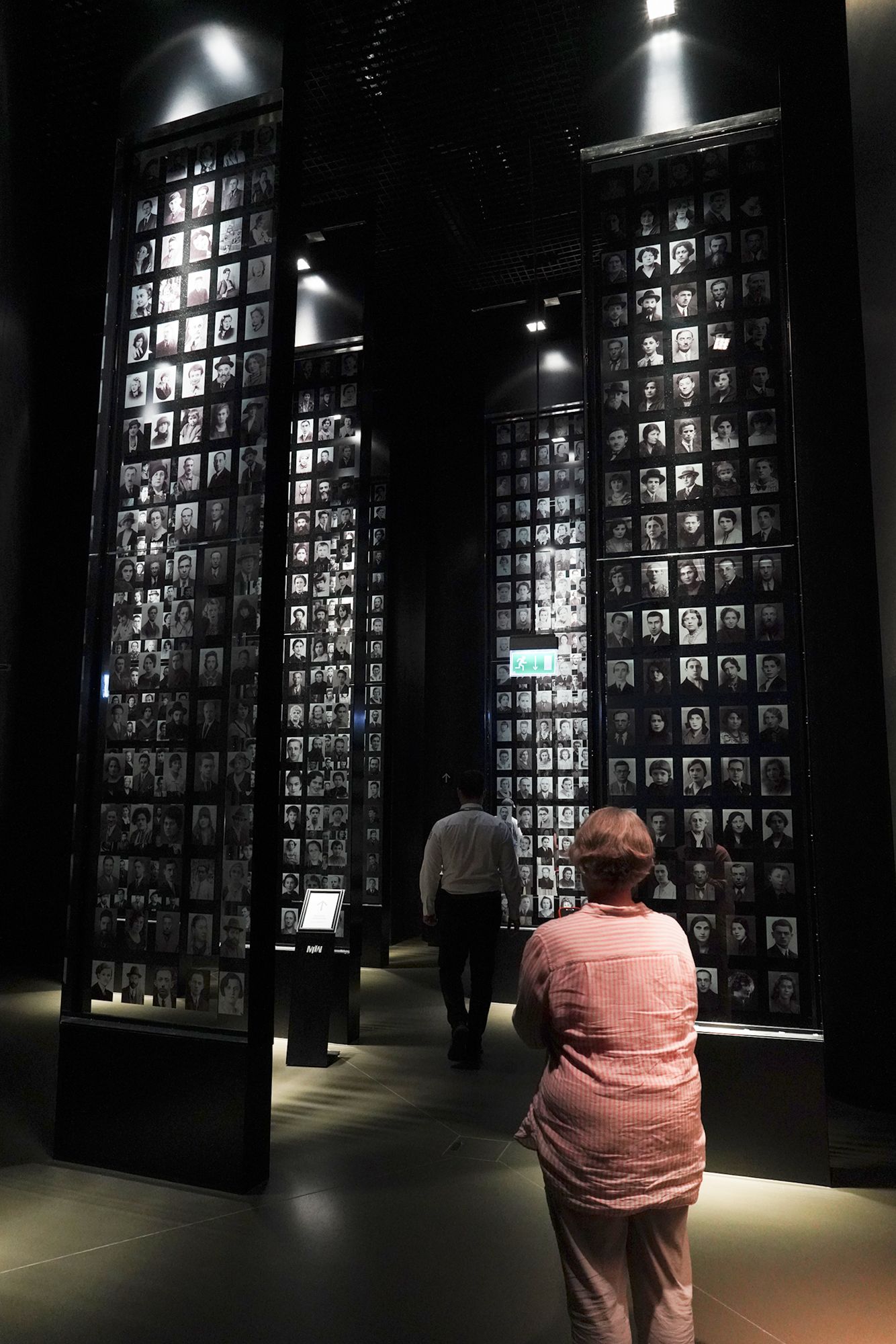
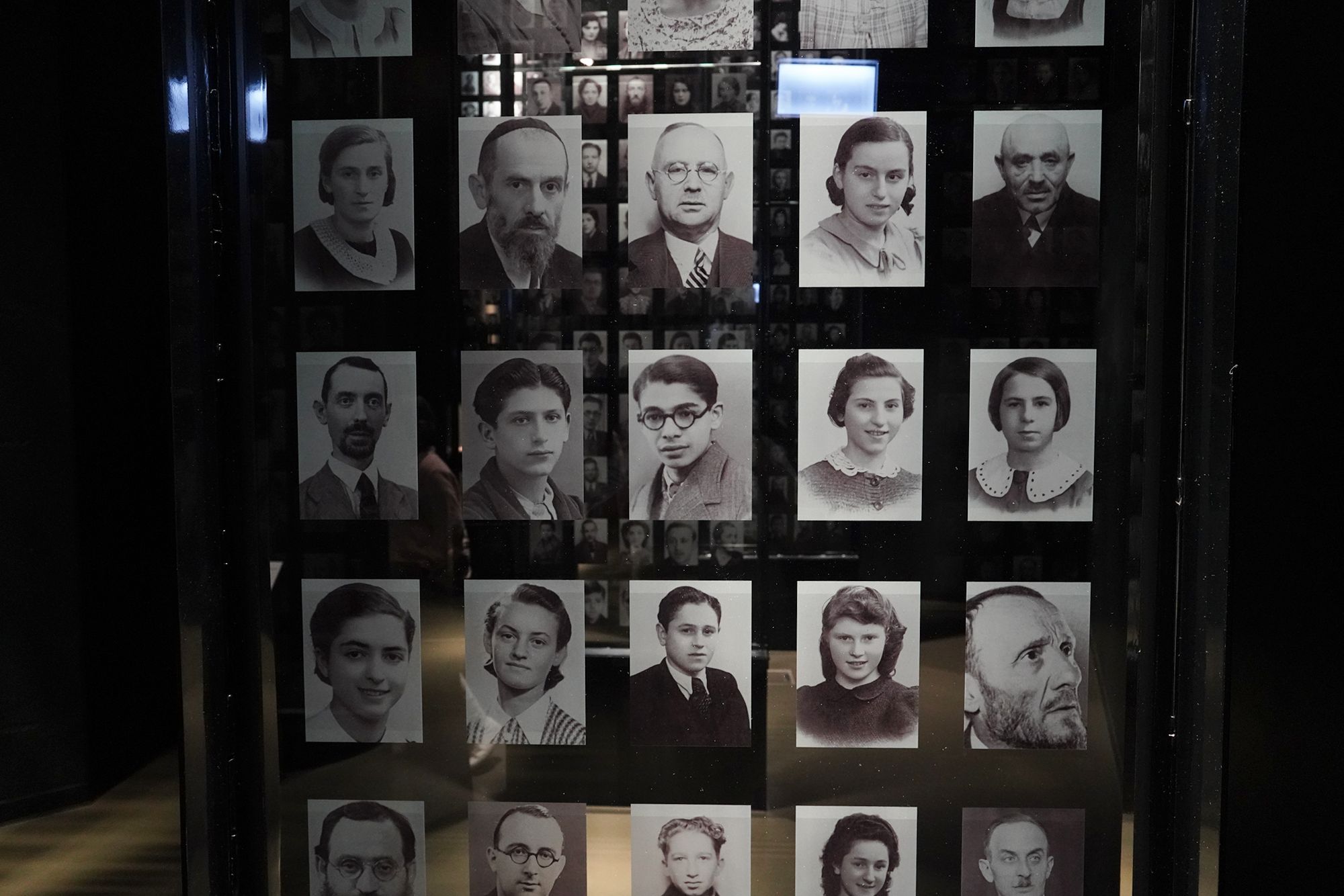
The exhibit begins by reminding visitors that the nearly six million Jews murdered during the Holocaust were individuals, each with a face, feelings, and a personal story. Photographs from several archives show victims from many countries—ordinary people whose lives were violently cut short.
Battle Over Secrets
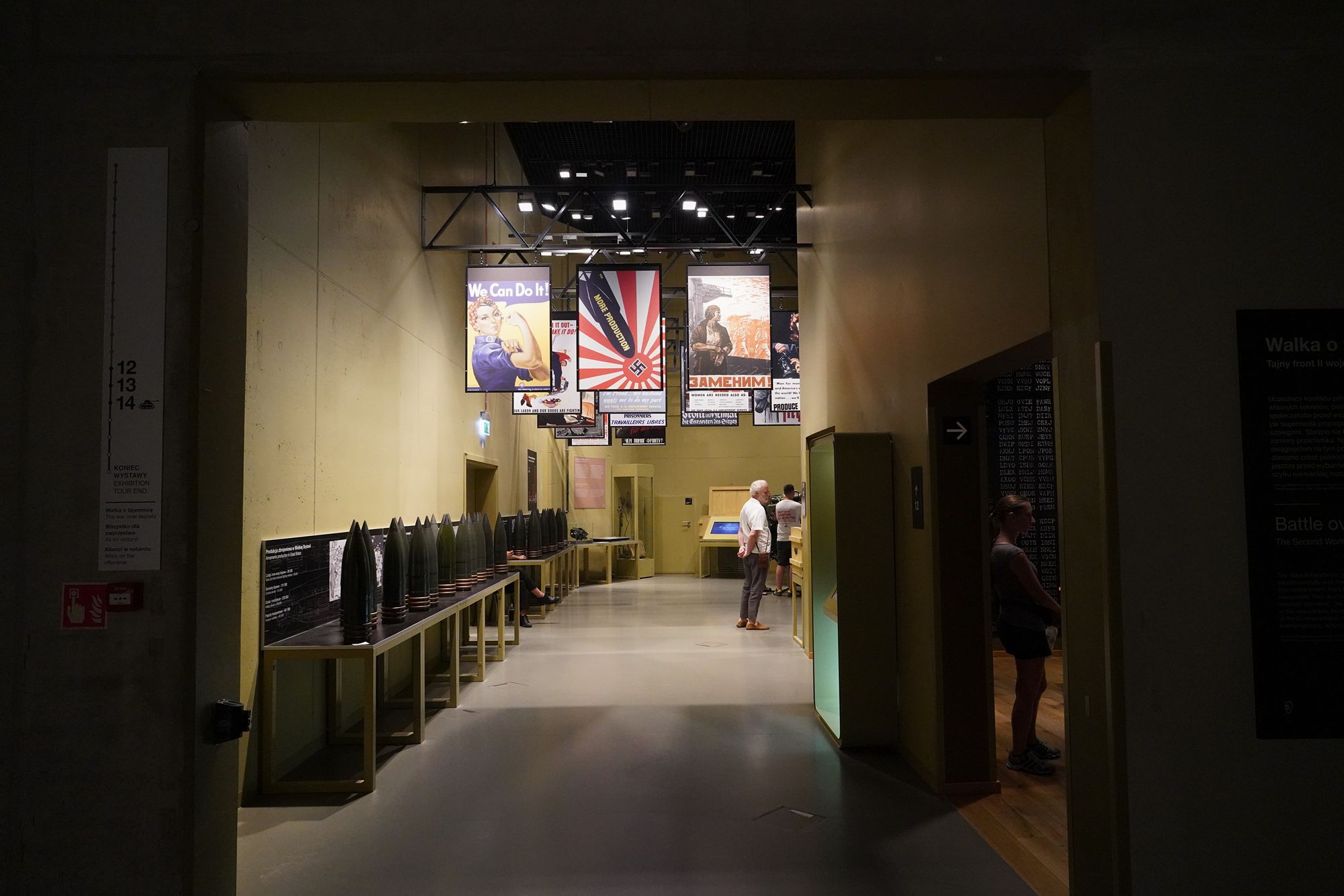
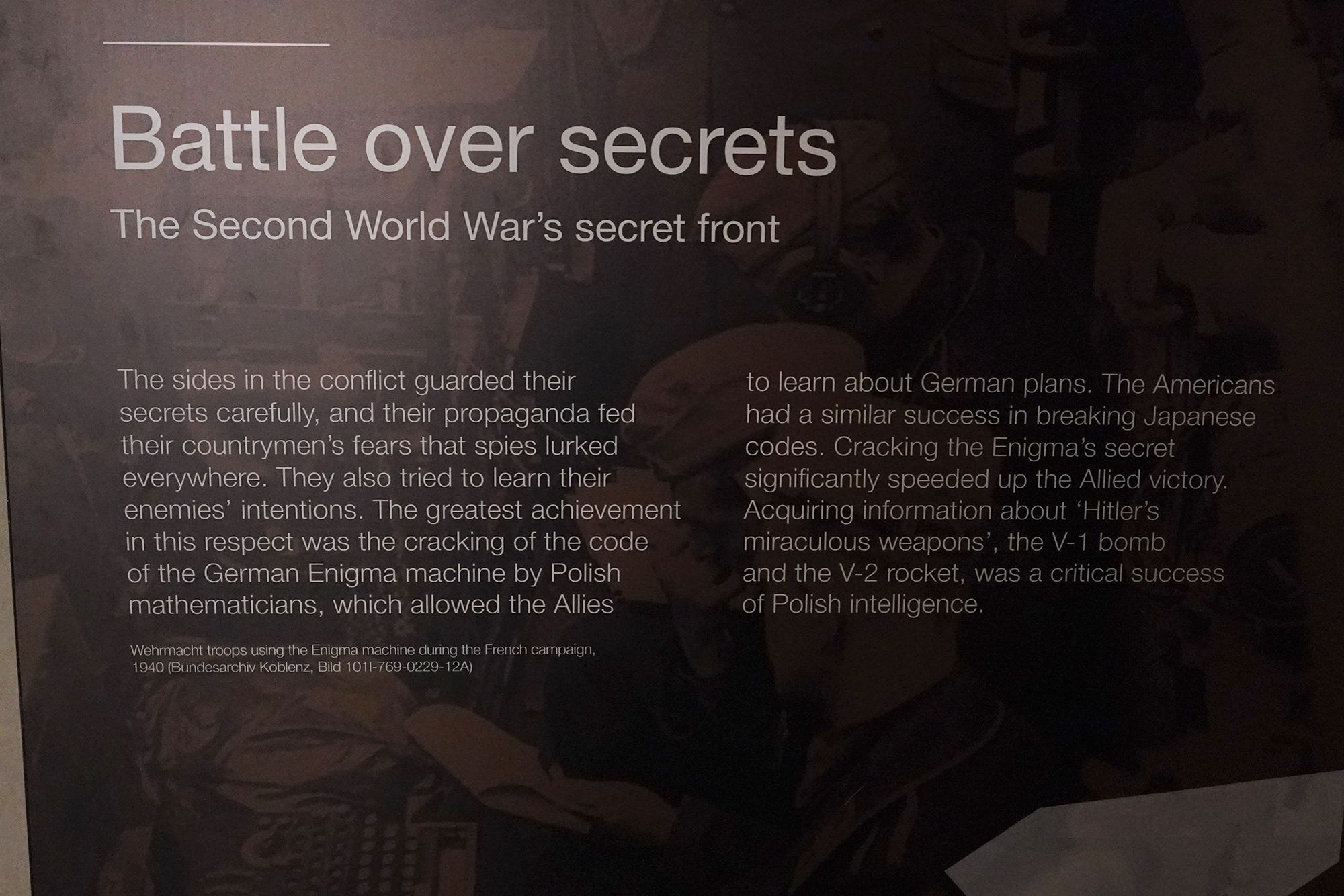
Both sides guarded military secrets and tried to uncover their enemies’ plans. Polish mathematicians made an early breakthrough by deciphering Germany’s Enigma code, helping the Allies obtain intelligence. The Americans also broke Japanese codes. Polish intelligence gathered information about Germany’s V-1 flying bomb and V-2 rocket, while Allied codebreaking helped speed the victory.
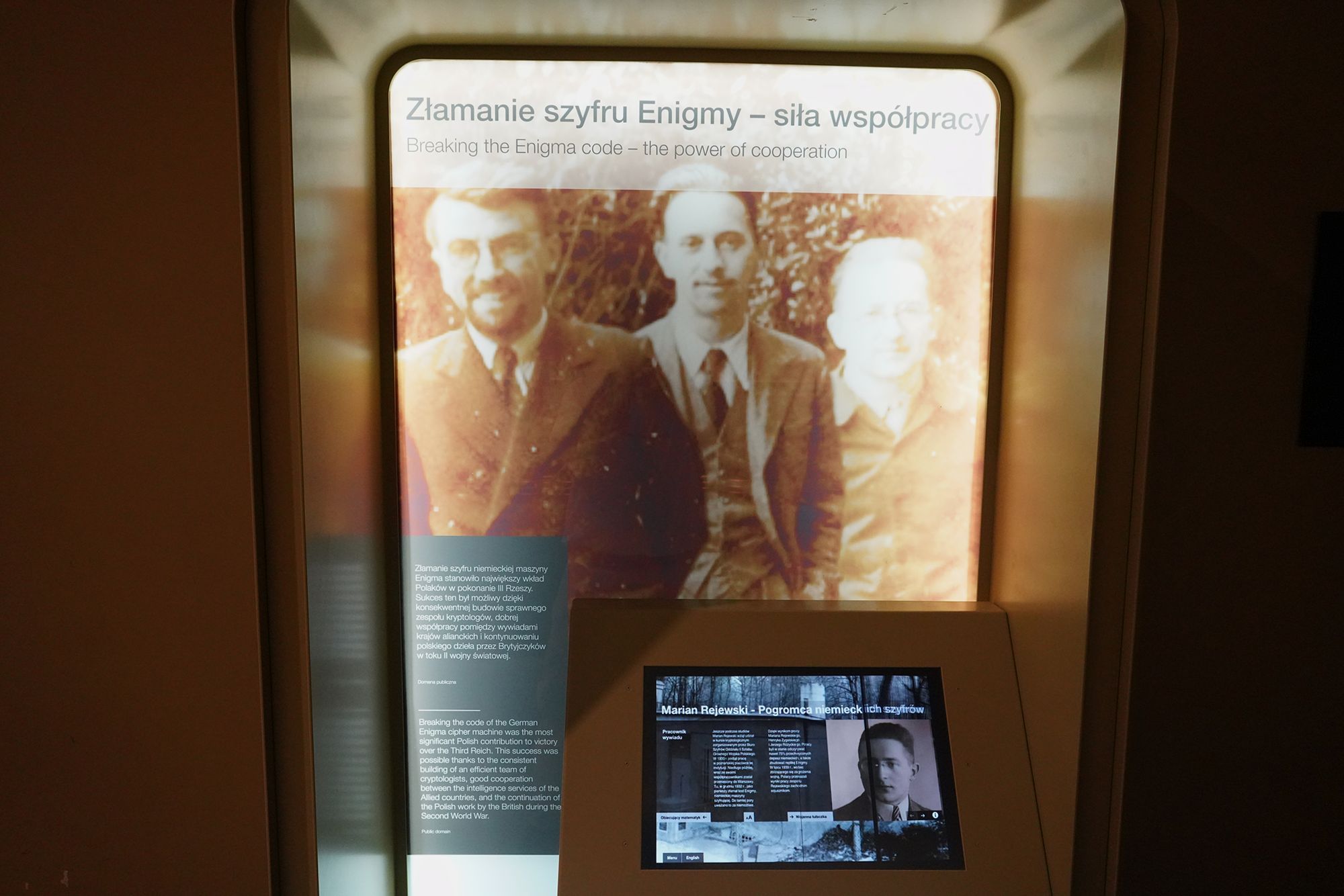
Poland’s Enigma Breakthrough
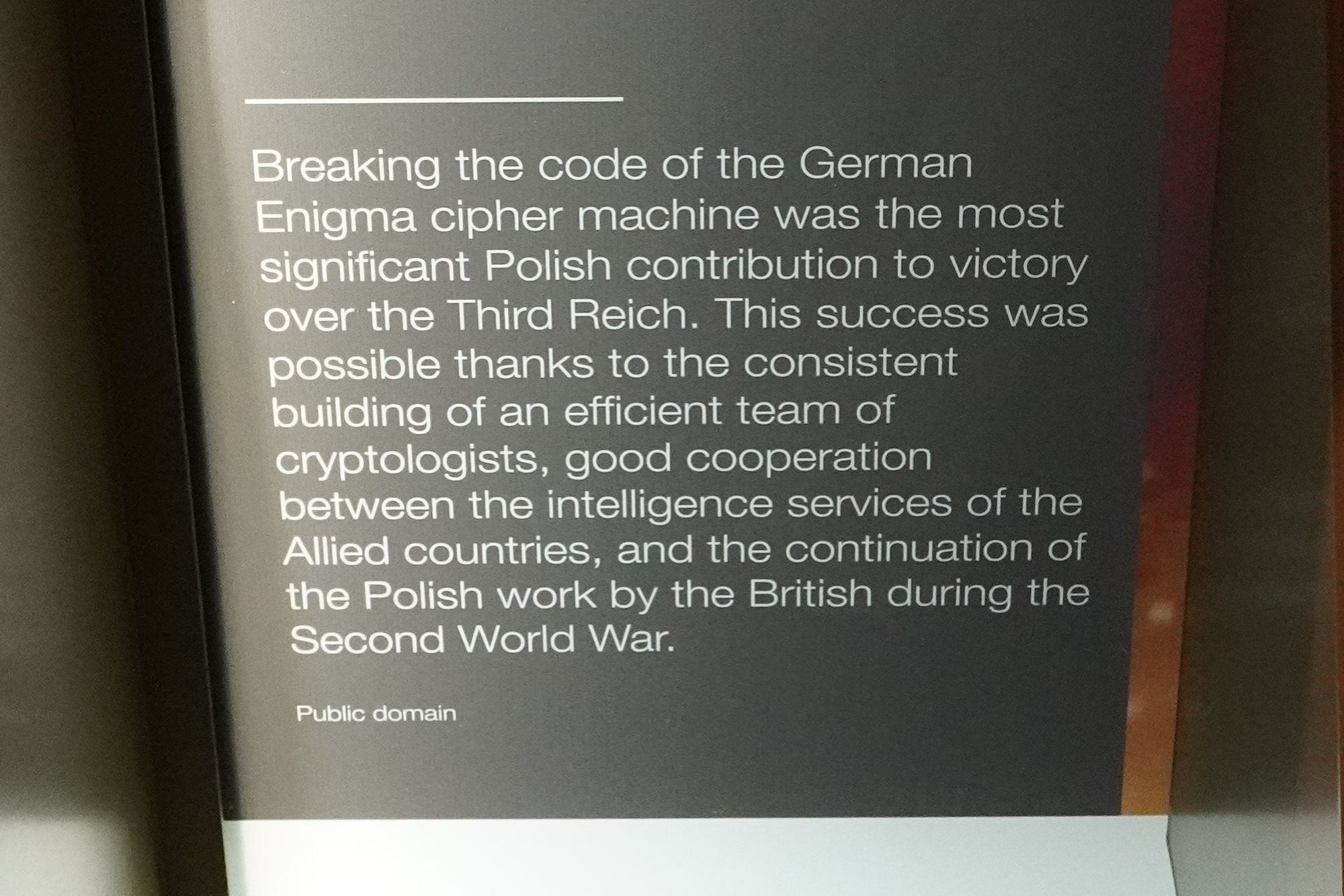
Breaking the German Enigma cipher was a major Polish contribution to the Allied victory. Polish cryptologists built a team and developed methods to read Enigma messages. They shared their work with the British, who continued it during the war, with cooperation among Allied intelligence services helping sustain the effort.
Polish Cryptologic Bomb
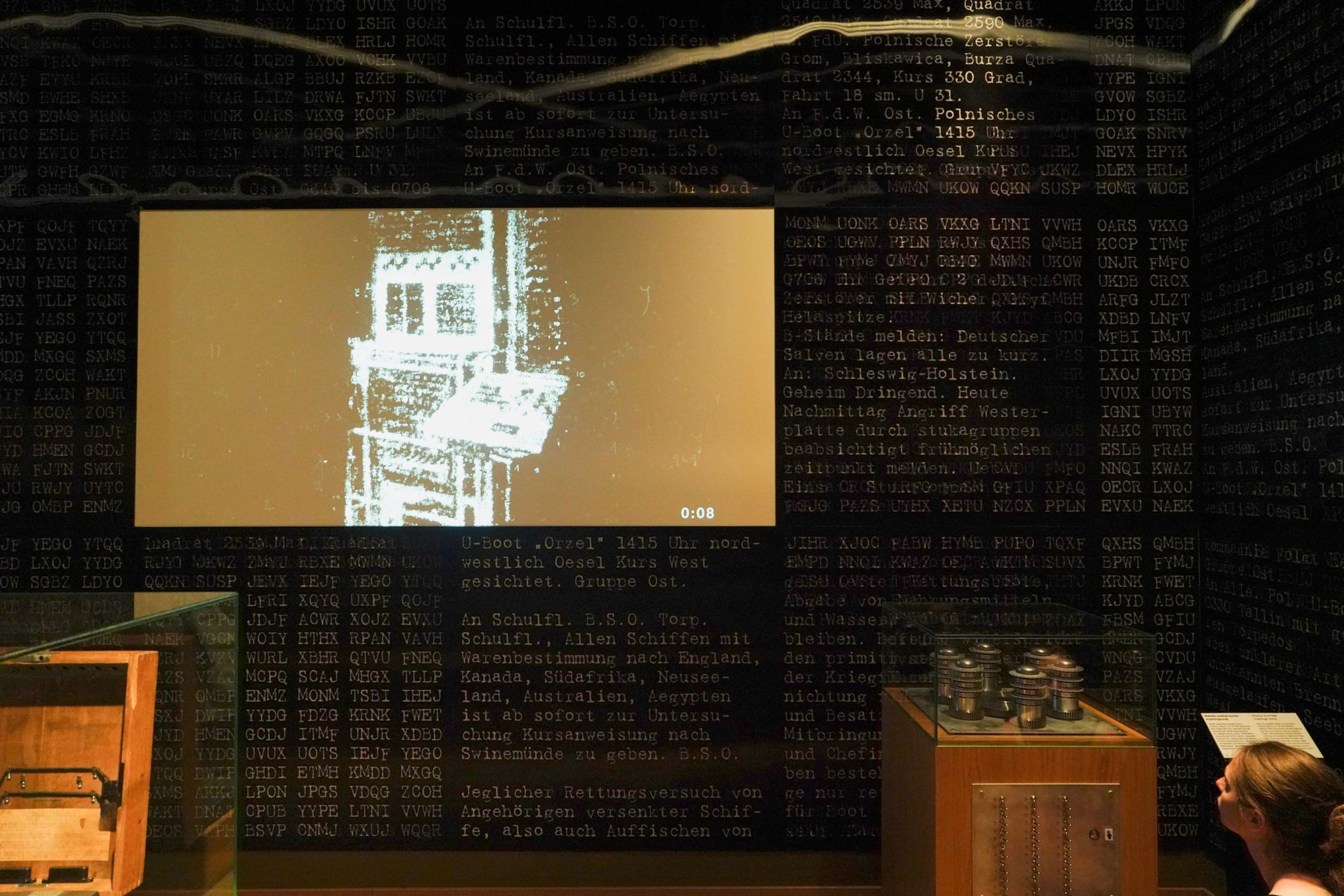
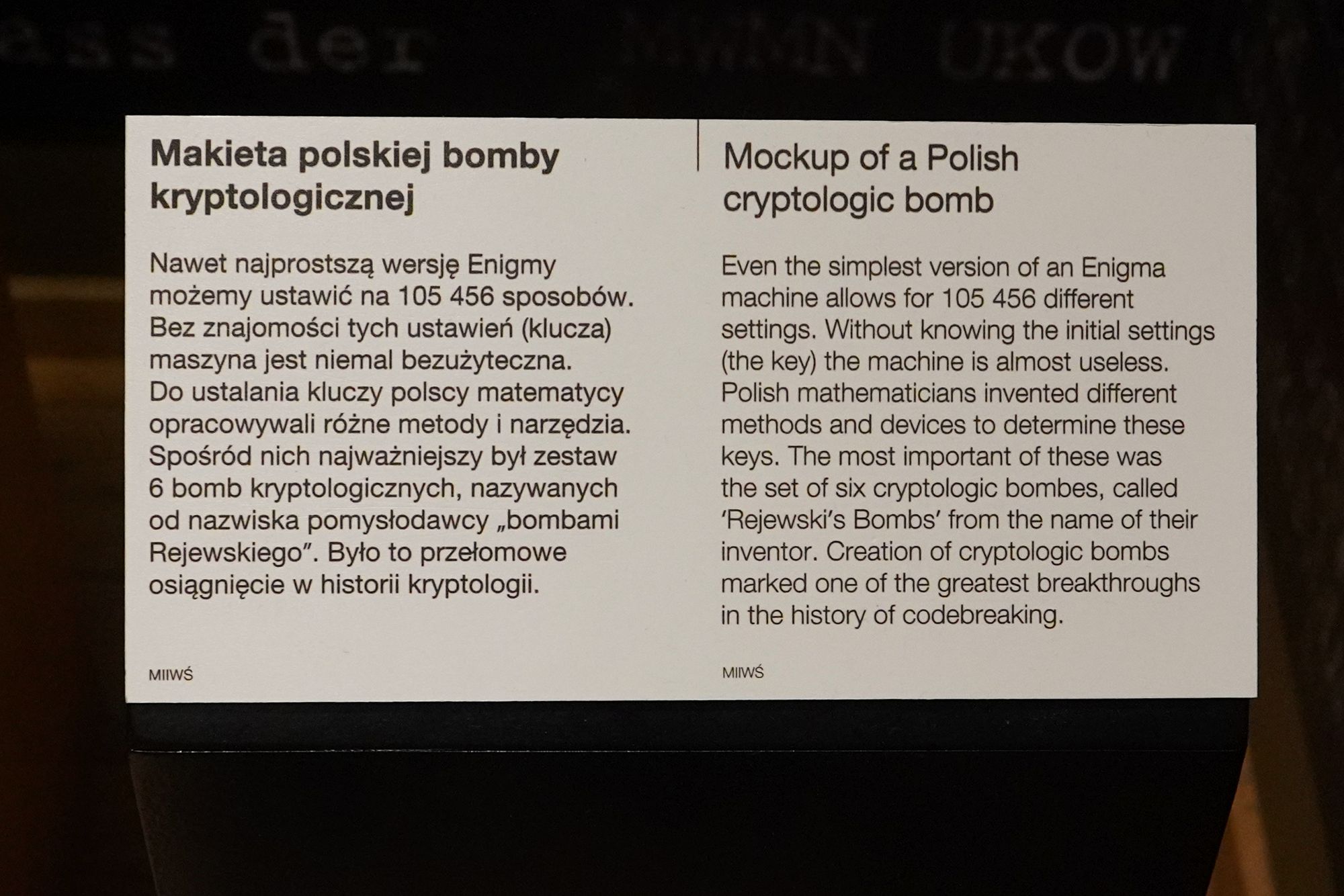
The Enigma machine could be set in more than 105 million ways, so the Allies needed to discover its daily key to read messages. Polish mathematicians developed methods and devices for finding it. The most important were six machines called “cryptologic bombs,” named after their inventor, Marian Rejewski. They were codebreaking devices, not weapons.
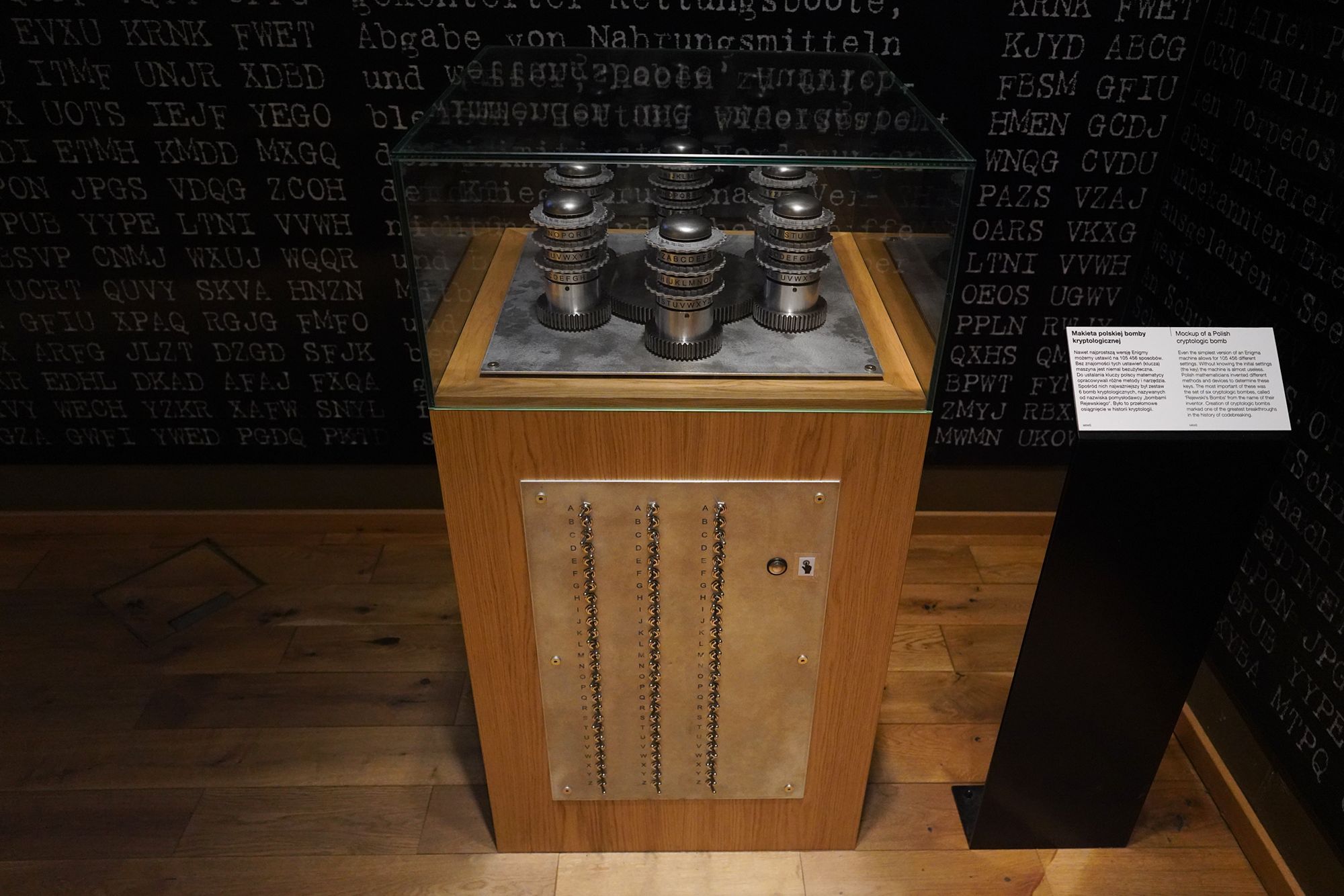
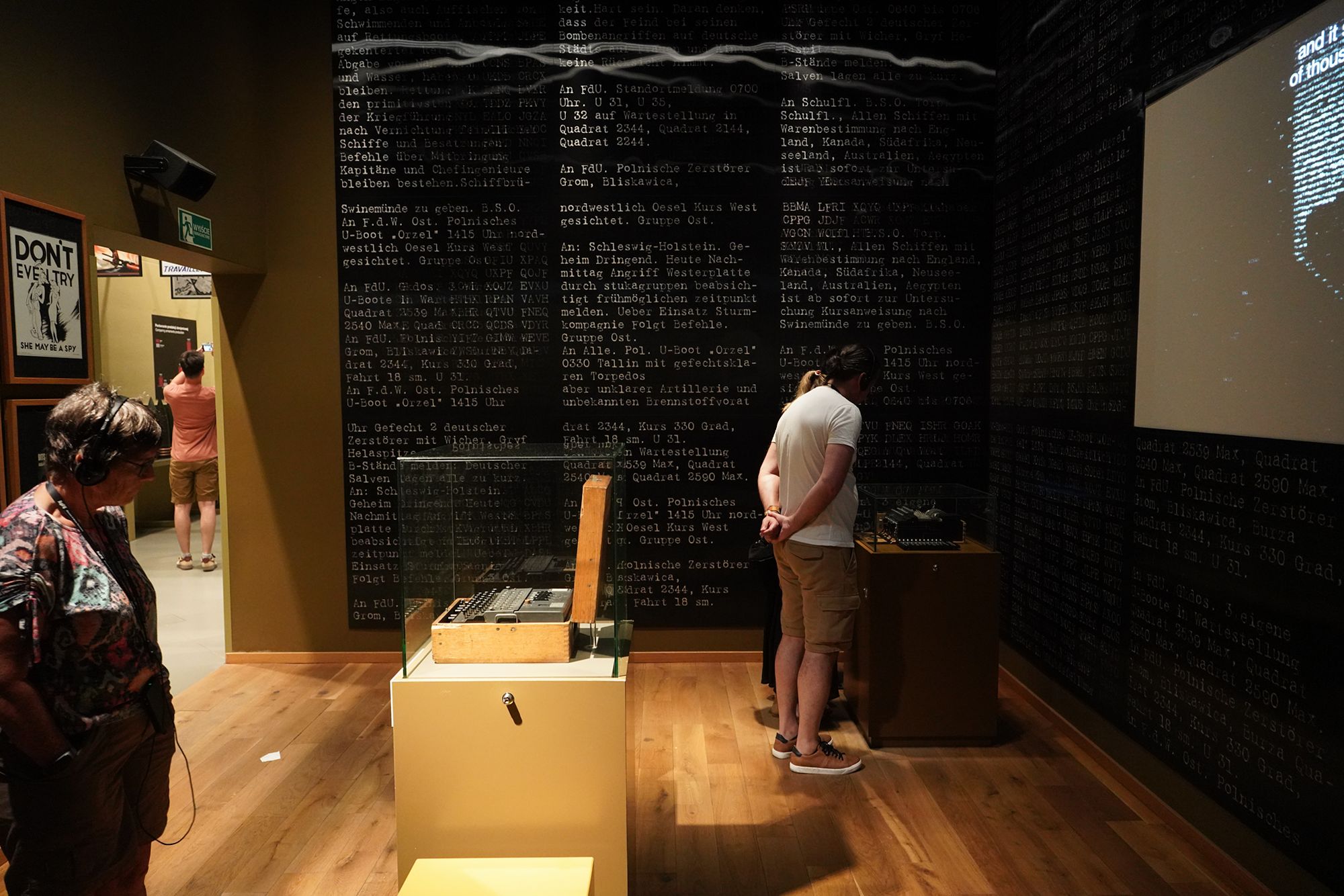
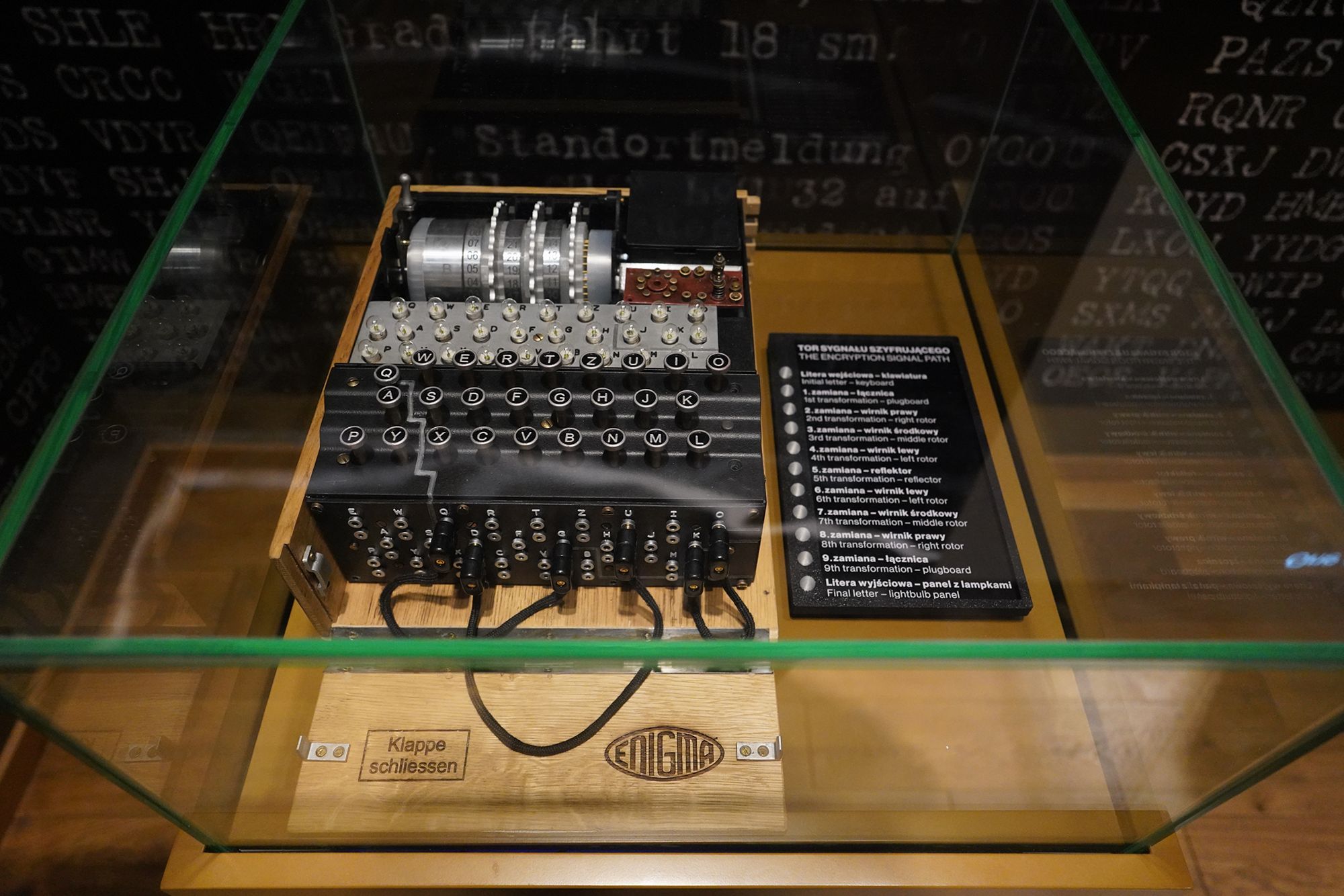
German Enigma Cipher Machine
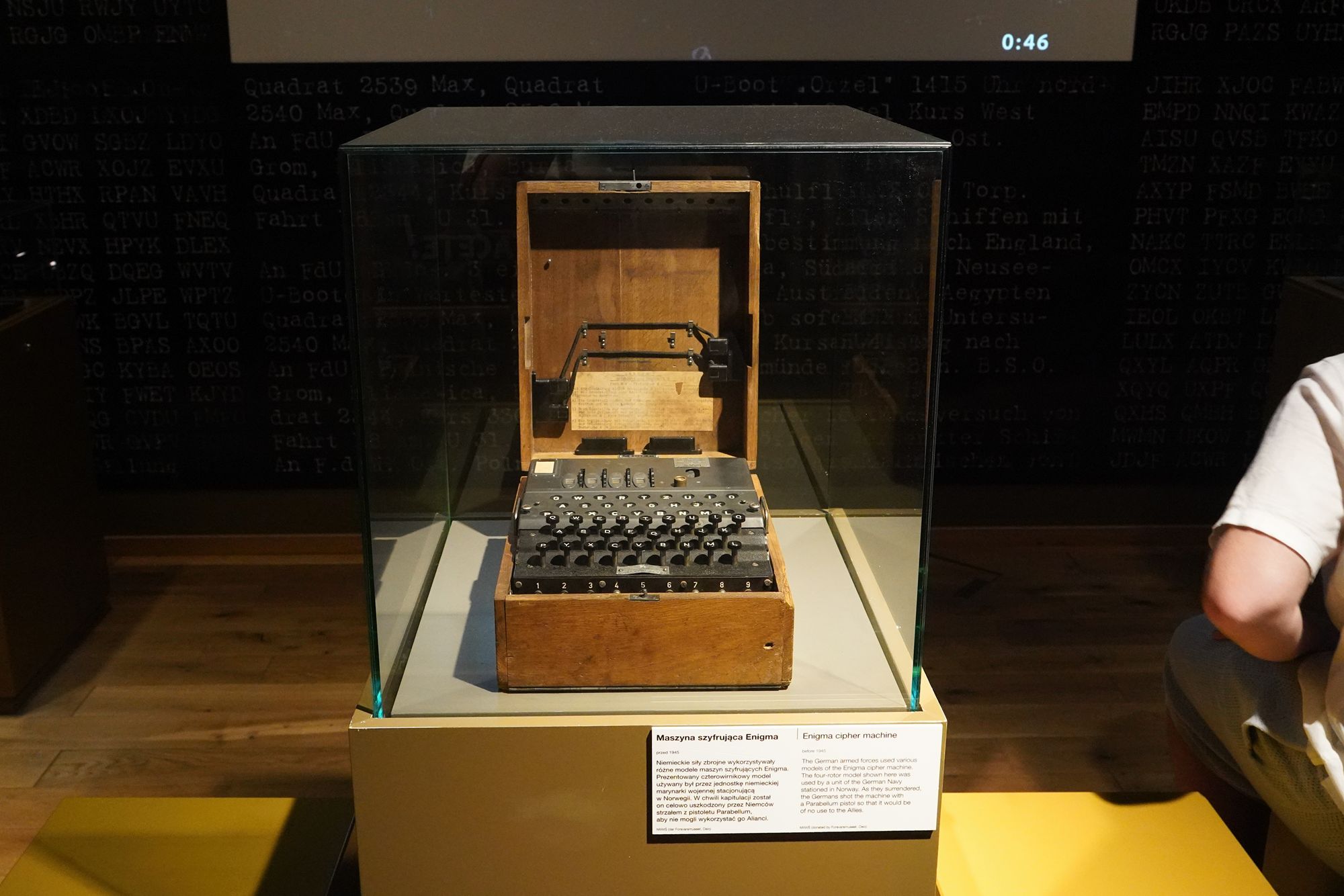
Replaceable rotors and a plugboard gave Enigma an enormous number of possible settings, making messages difficult to decipher. When an operator pressed a key, an electrical circuit passed through the machine and lit a different letter, encoding or decoding the message. Polish and later Allied codebreakers worked to find the settings needed to read it.
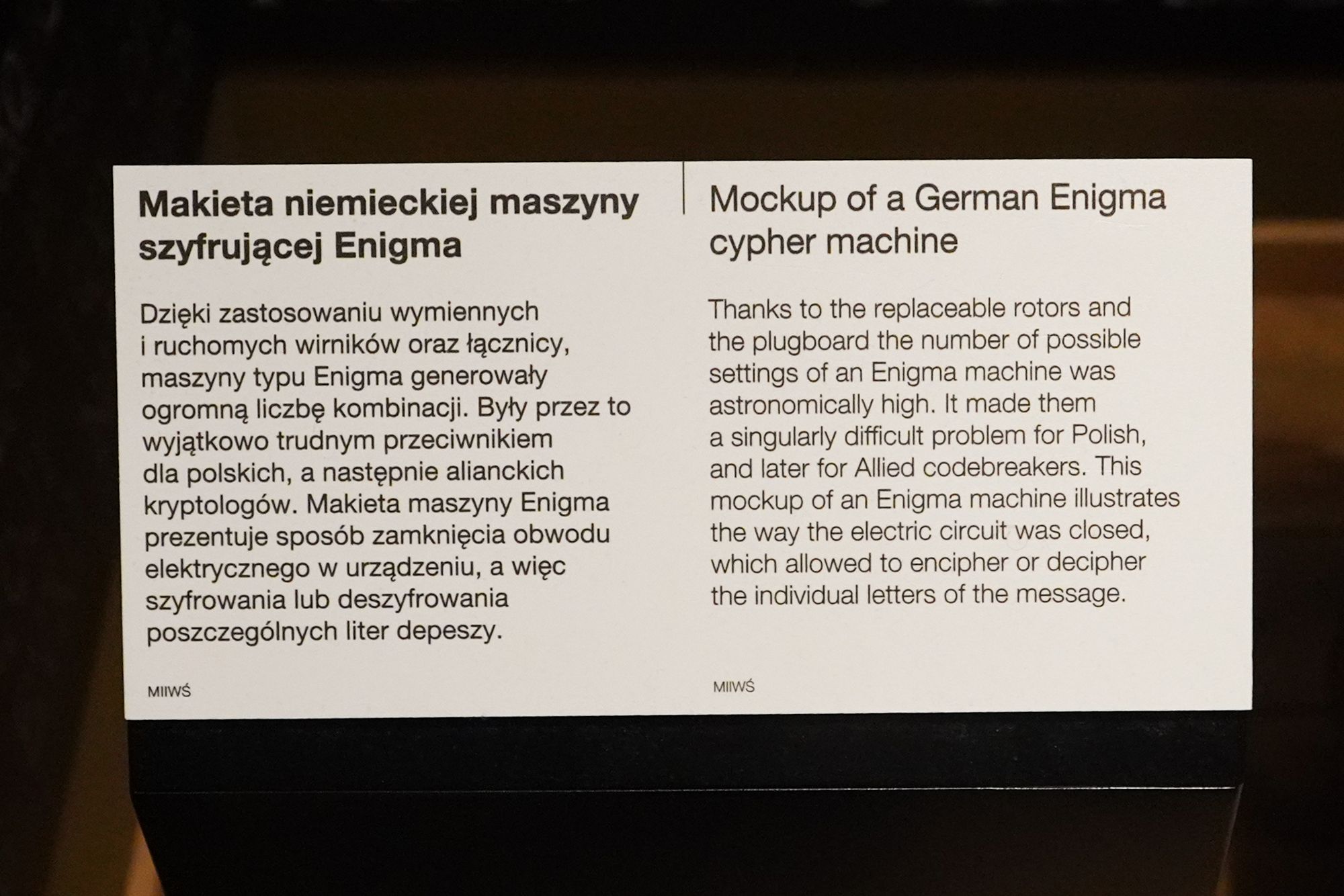
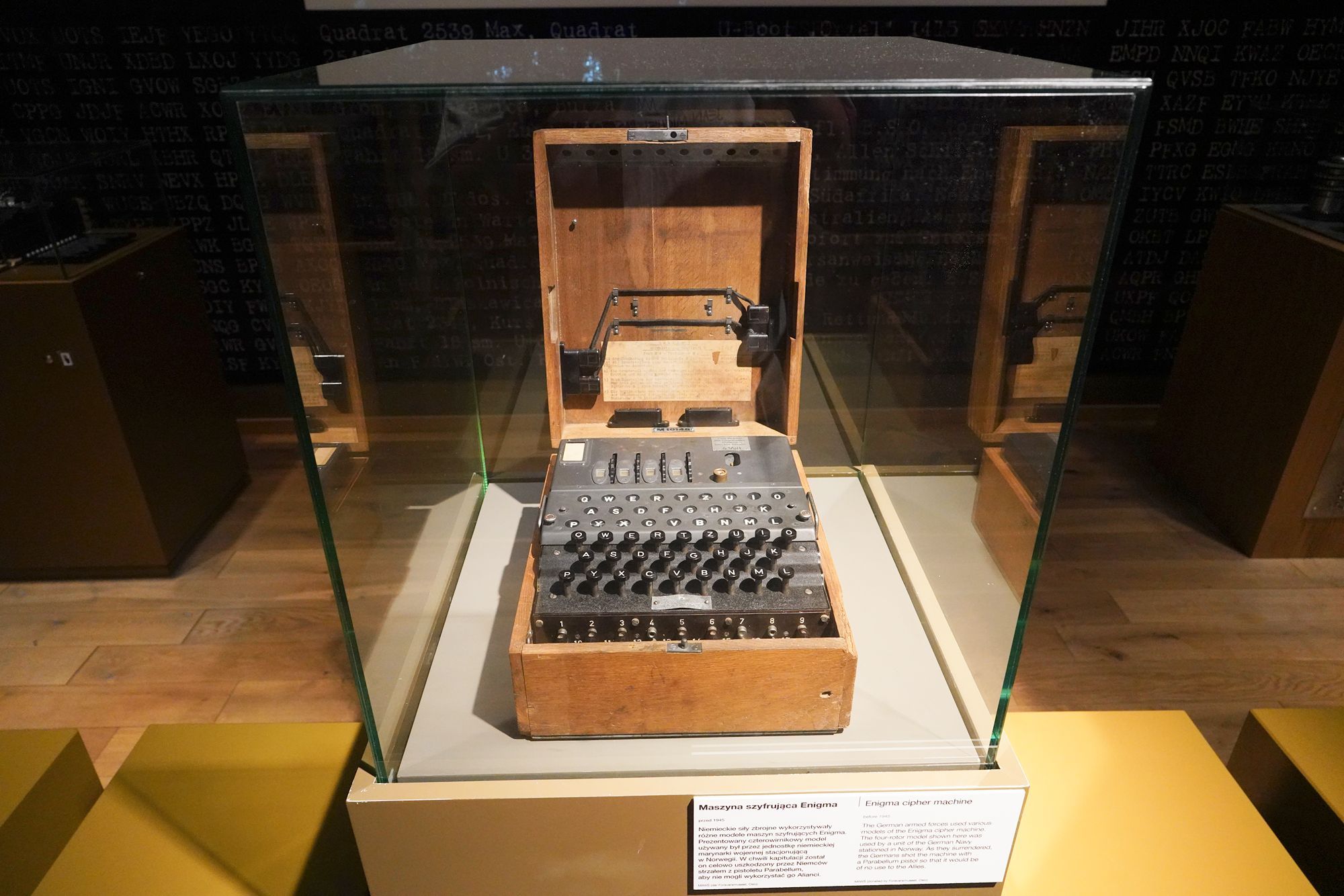
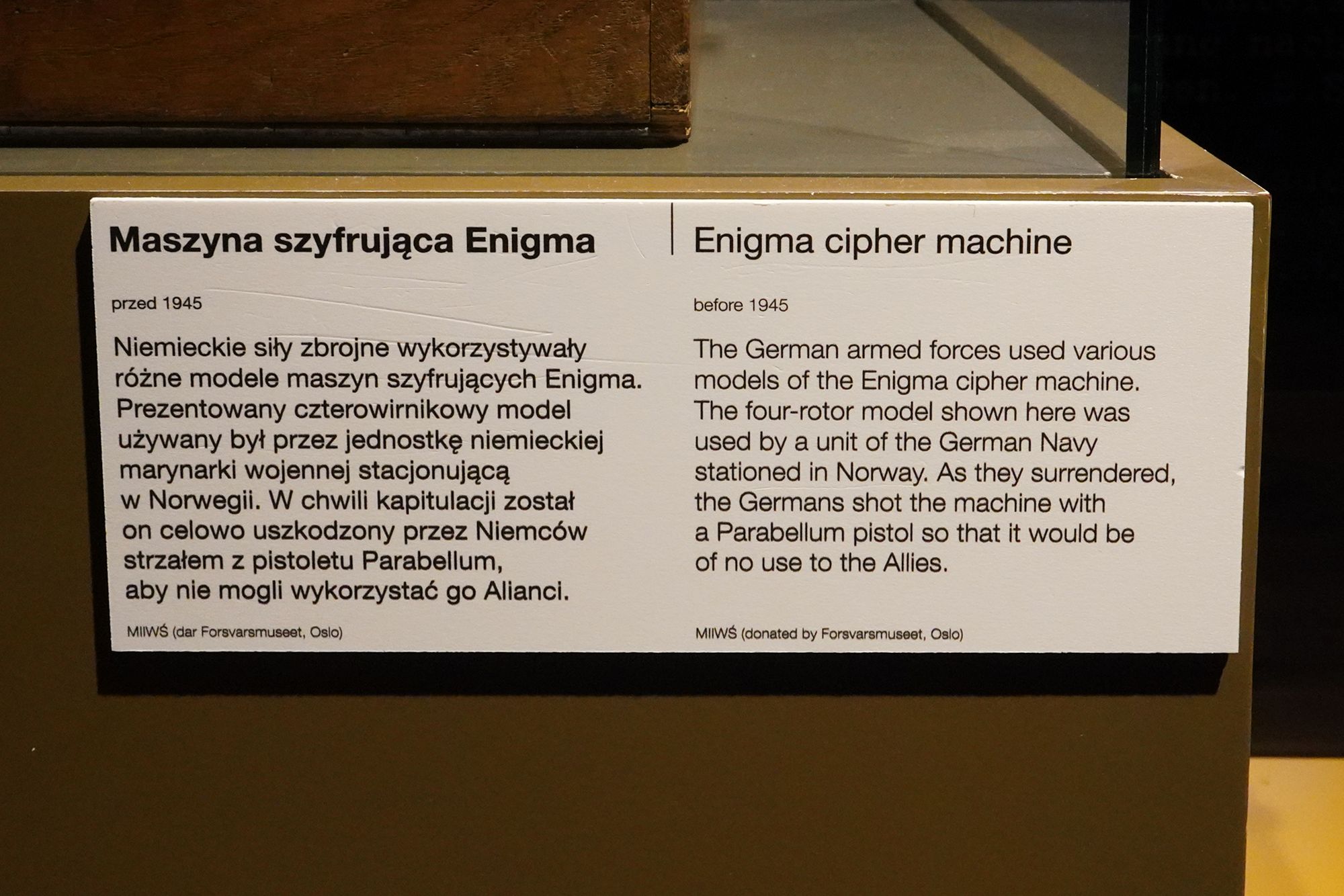
Enigma Cipher Machine
The German armed forces used several Enigma models. This four-rotor machine belonged to a German Navy unit in Norway. As the unit surrendered, German soldiers shot the machine with a pistol to keep it from being useful to the Allies.
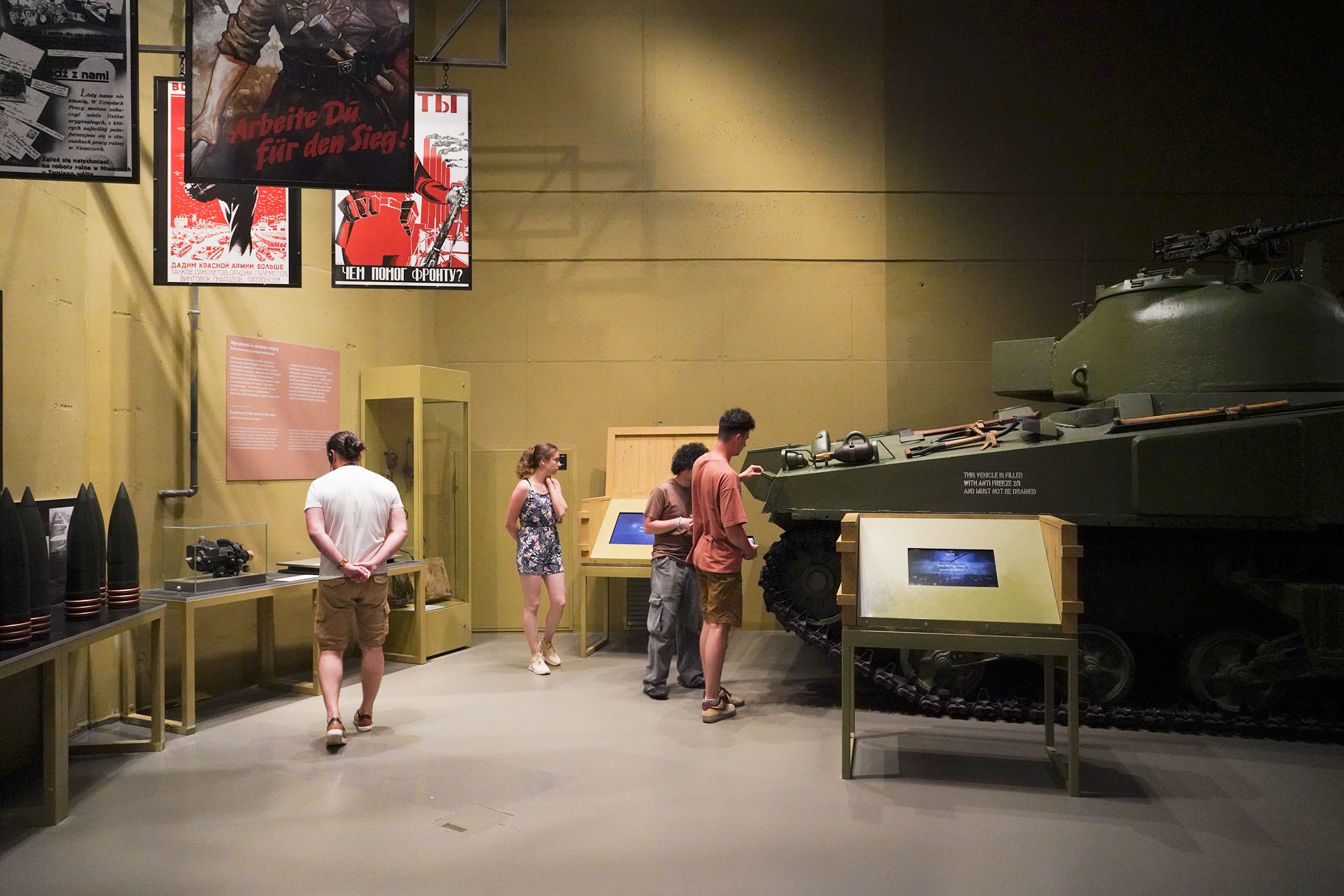
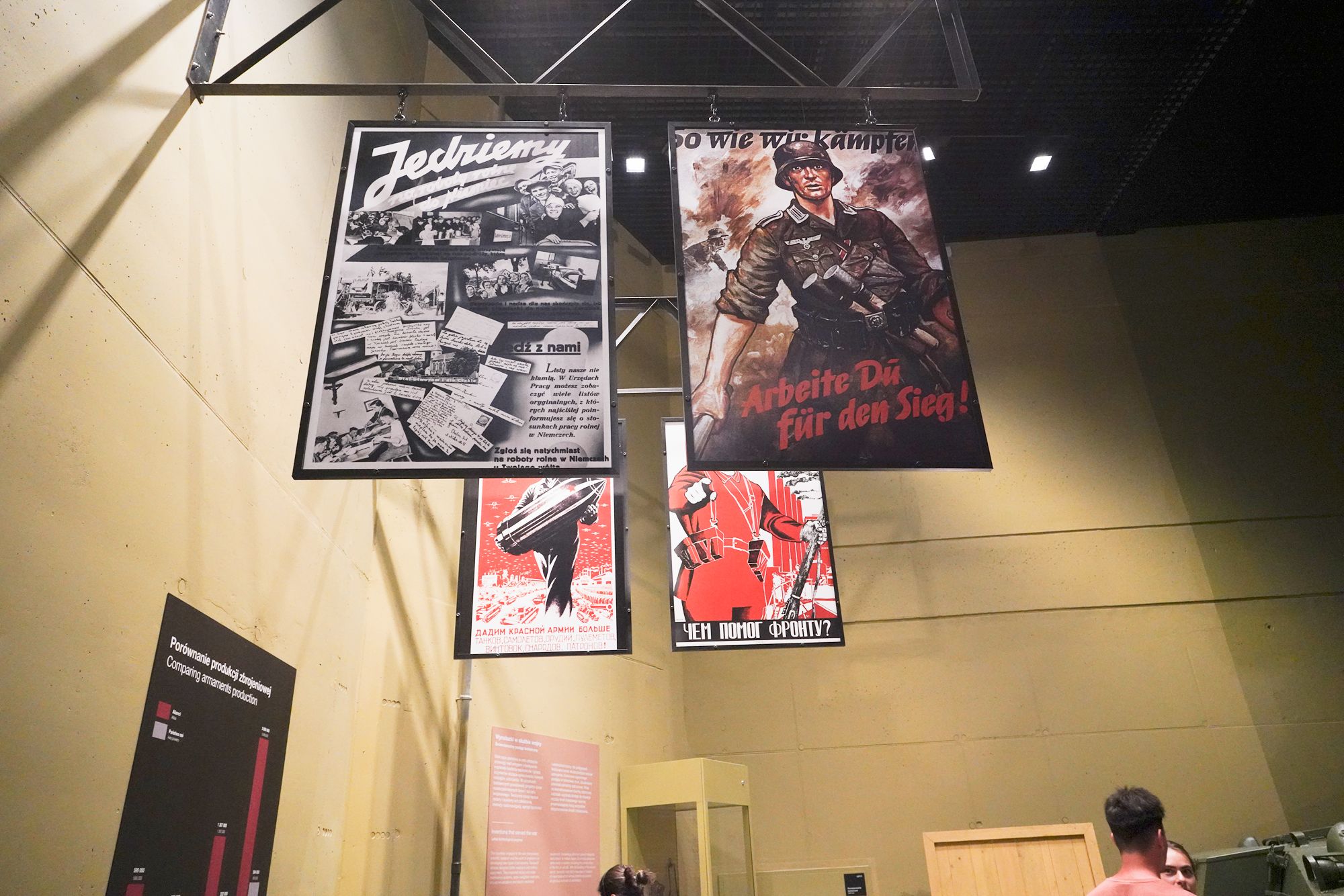
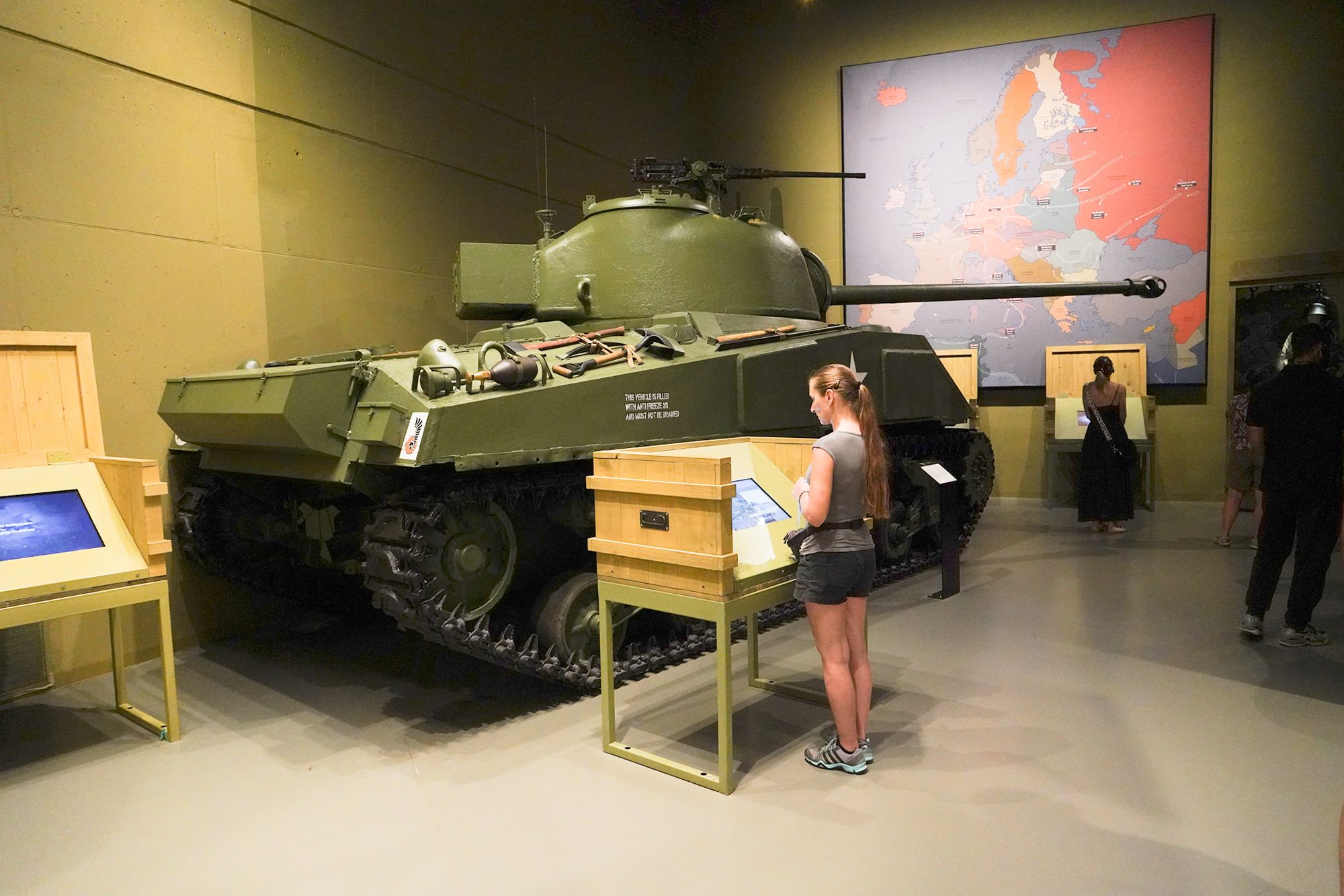
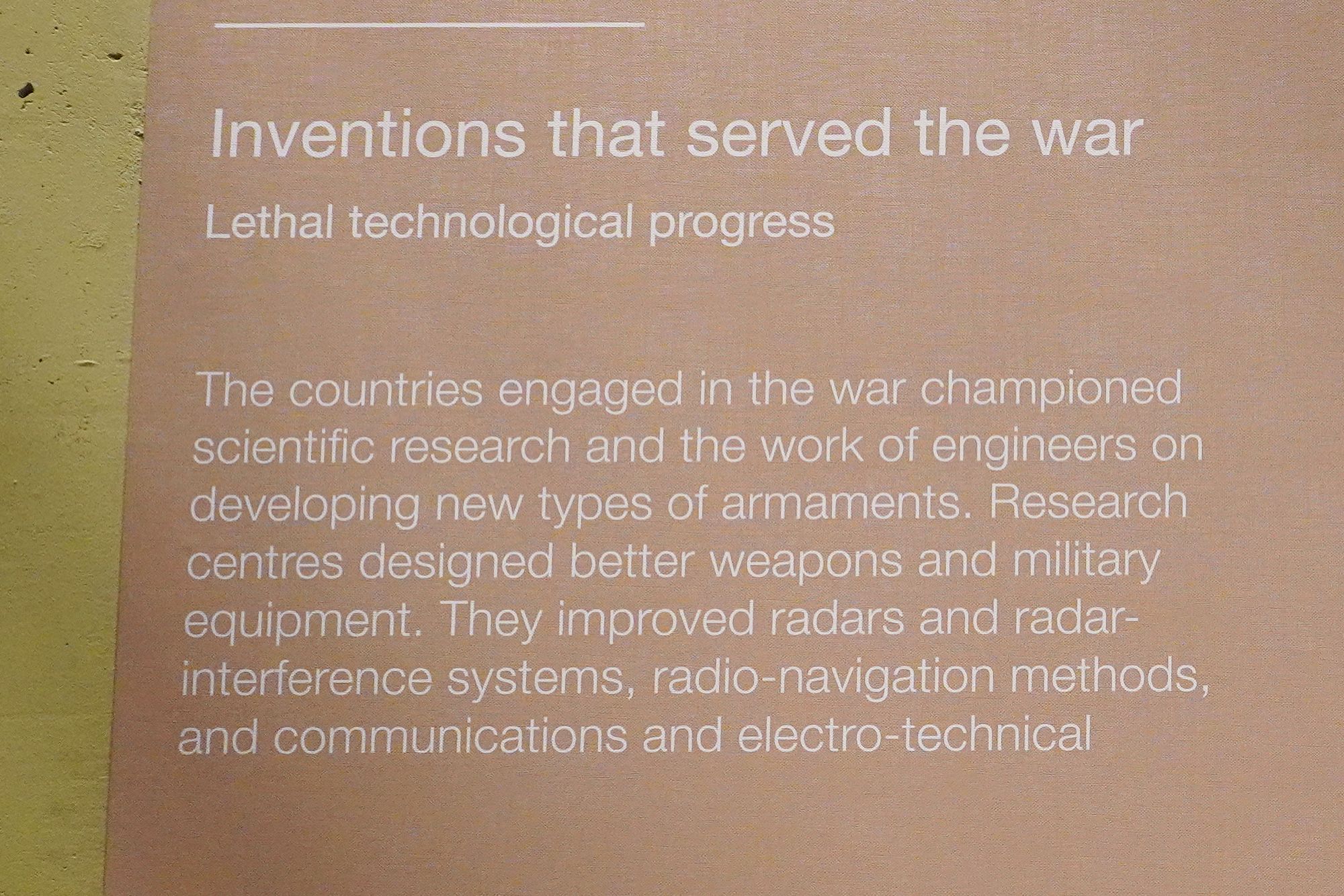
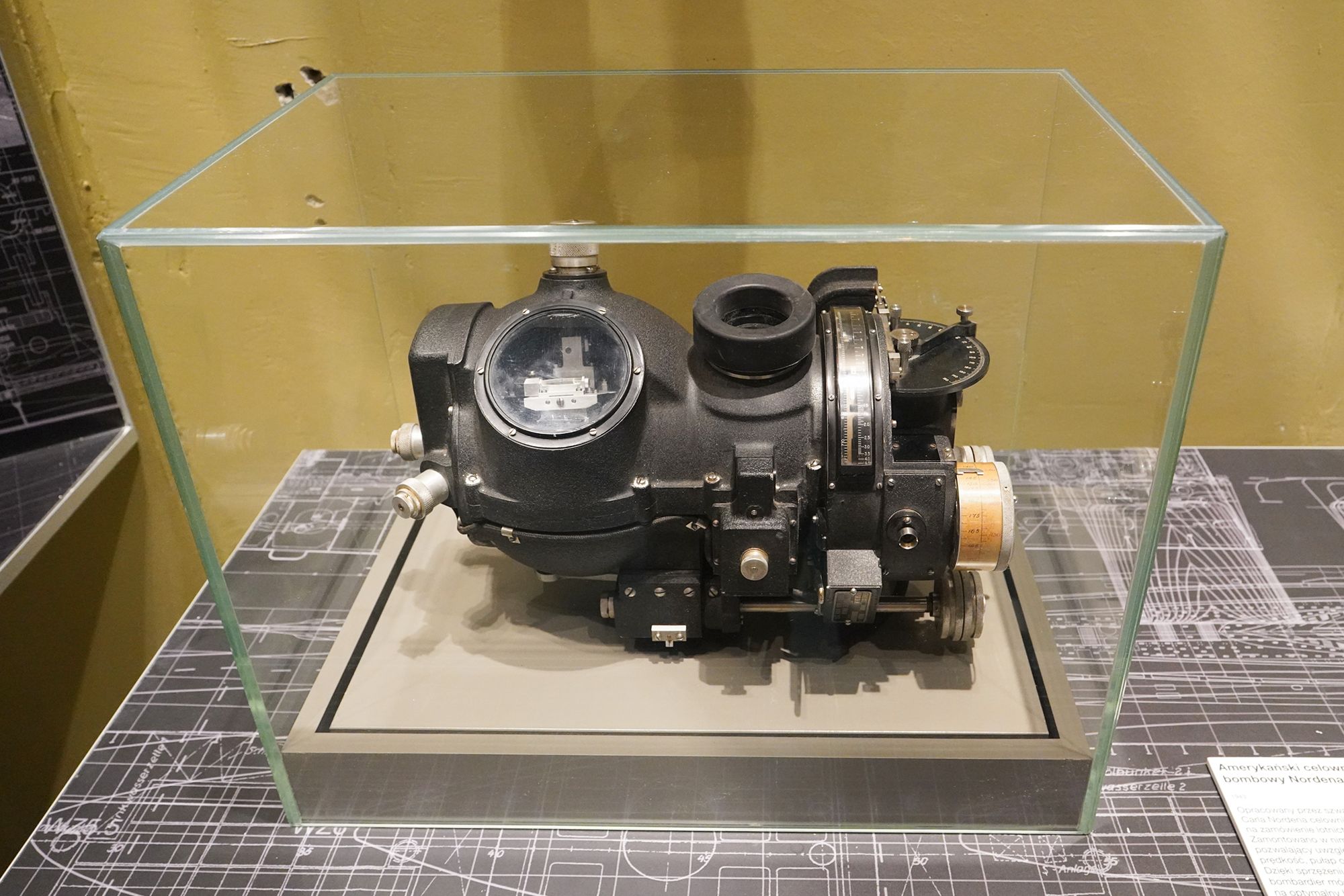
Inventions That Served the War
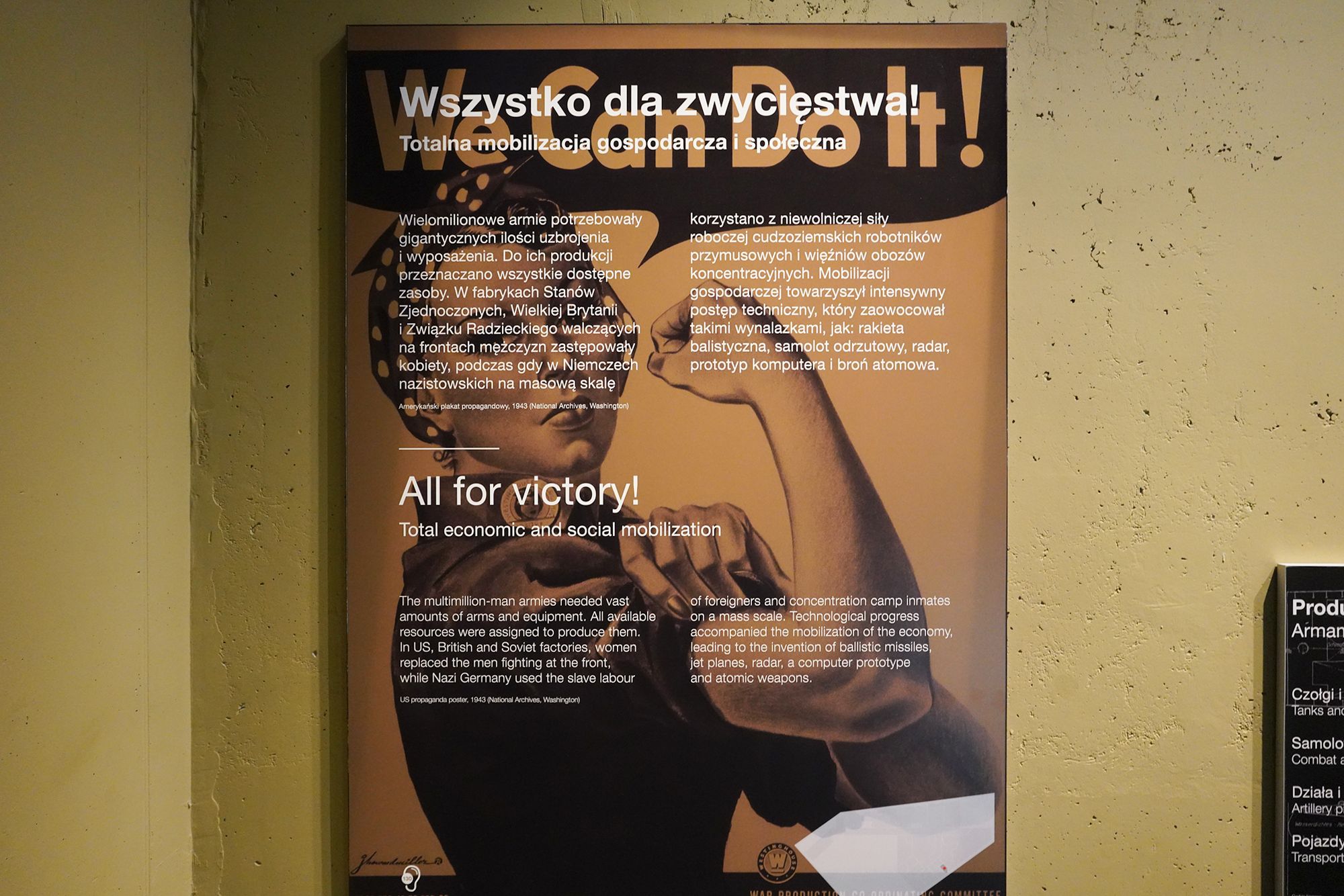
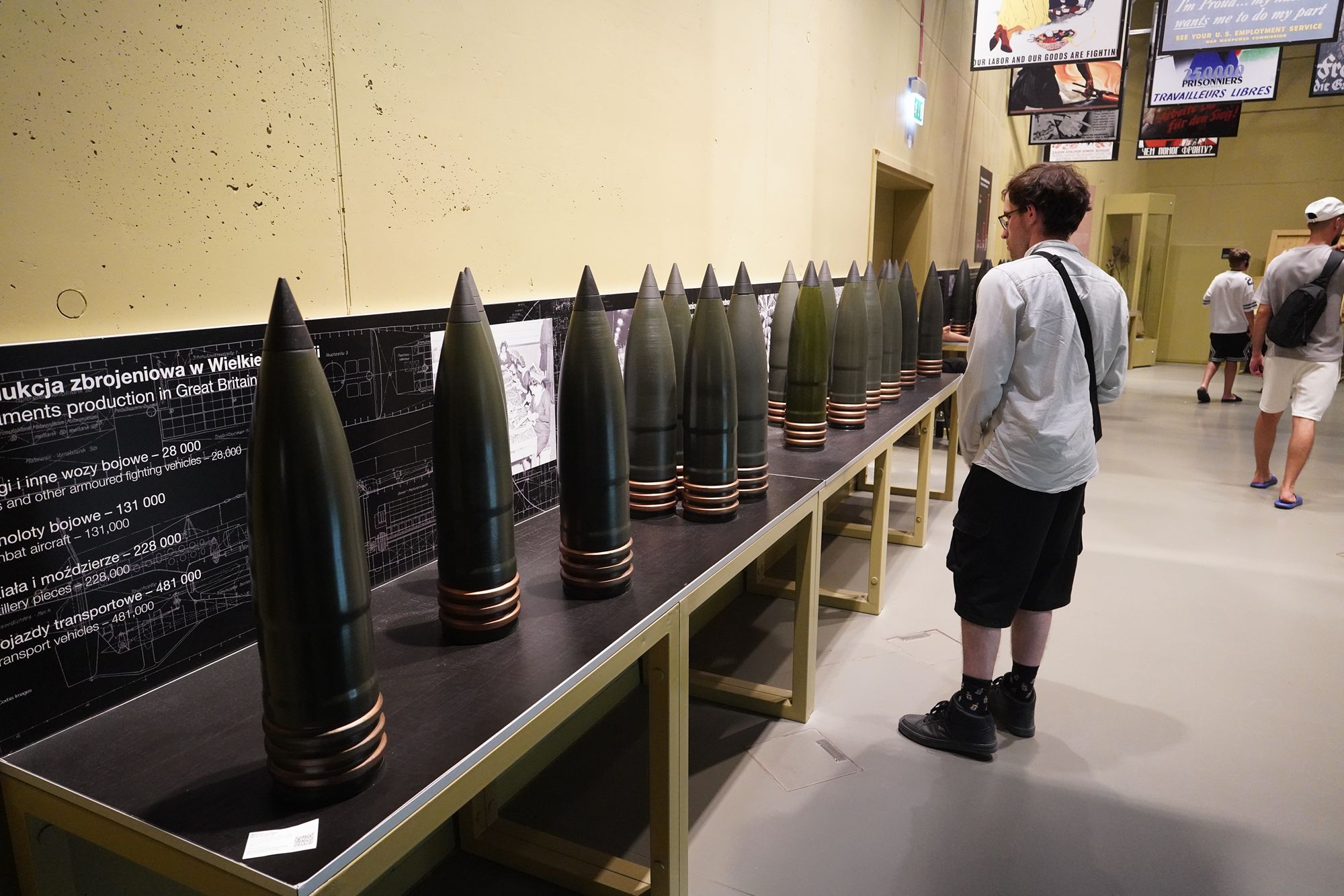
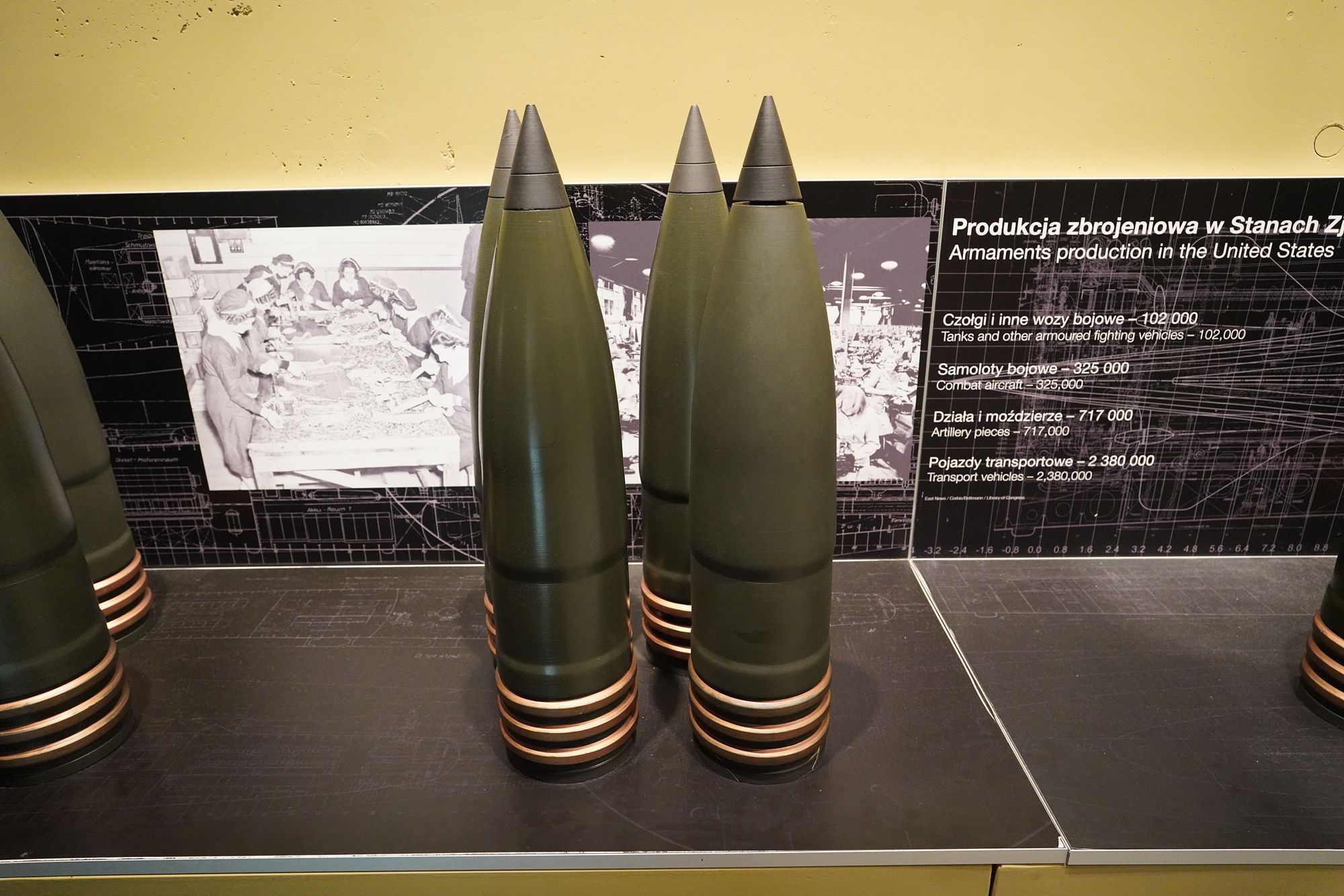
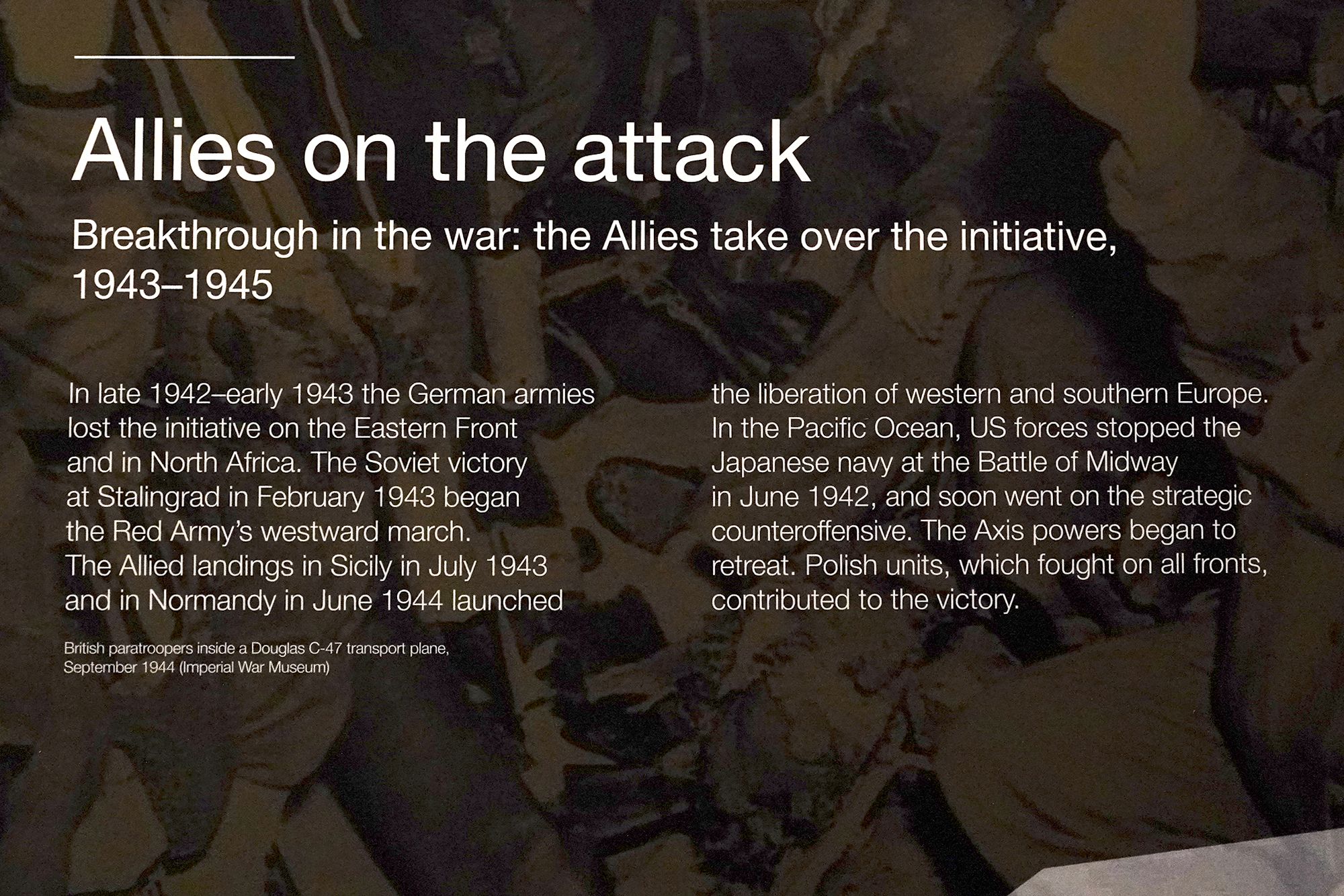
Wartime governments funded scientific research and engineering to develop weapons and military equipment. Research also improved radar, methods of interfering with radar, radio navigation, and communications. These advances helped militaries operate and fight more effectively, showing how technology became part of the war effort.
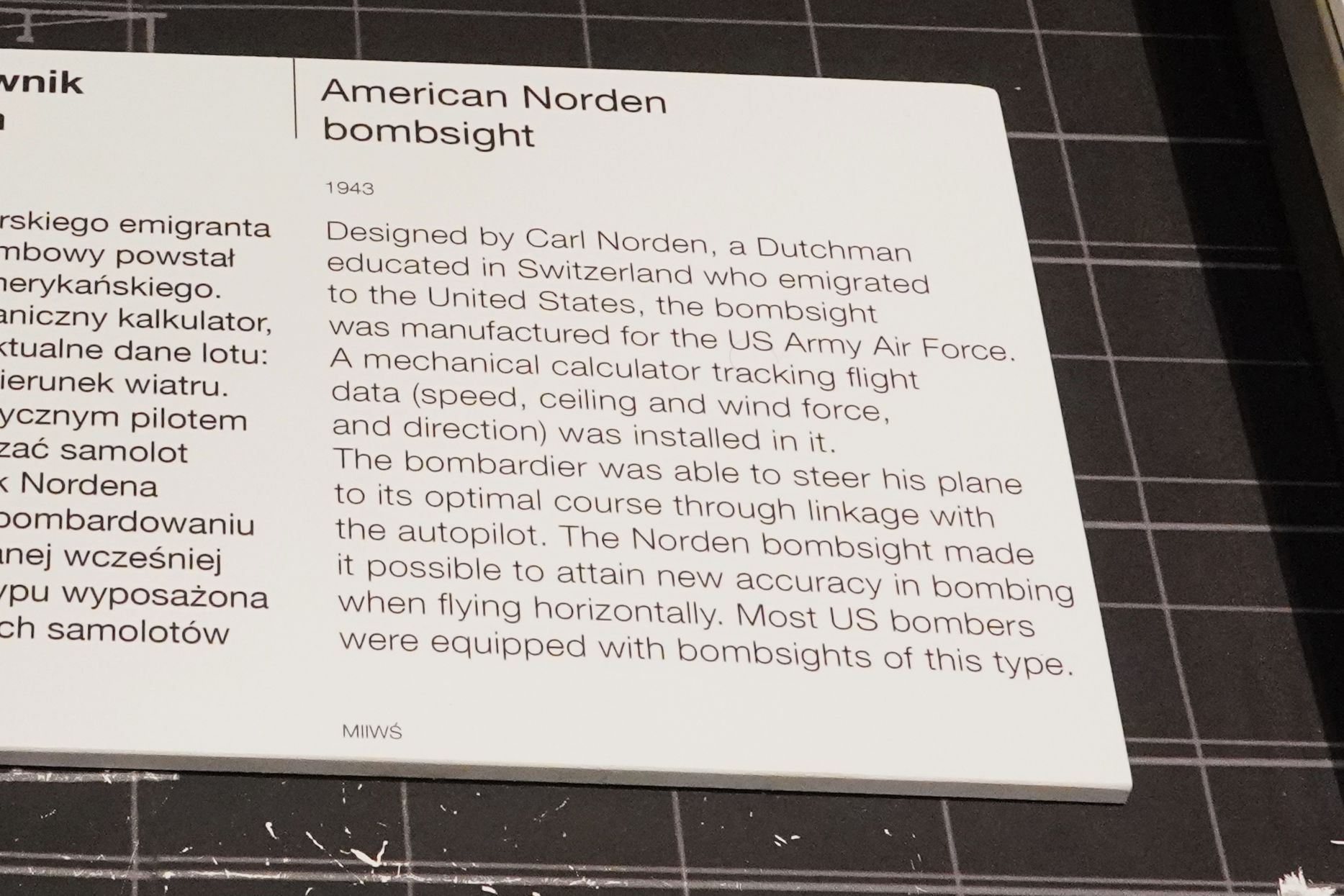
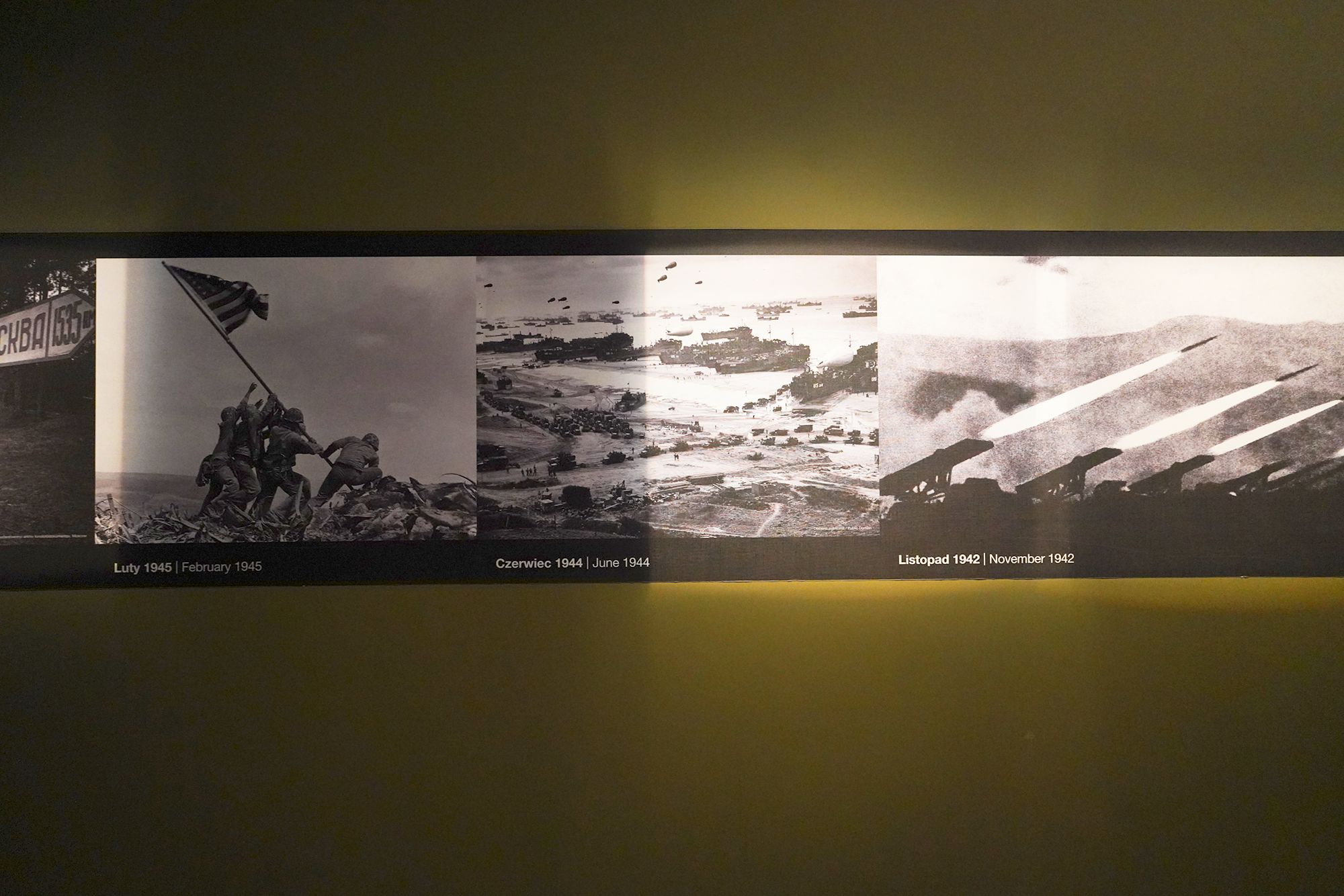
The panel, “Allies on the attack,” describes how the Allies gained the initiative between 1943 and 1945. It highlights the Soviet advance after Stalingrad, Allied landings in Sicily and Normandy, the campaign in the Pacific, and the contribution of Polish troops fighting on several fronts.
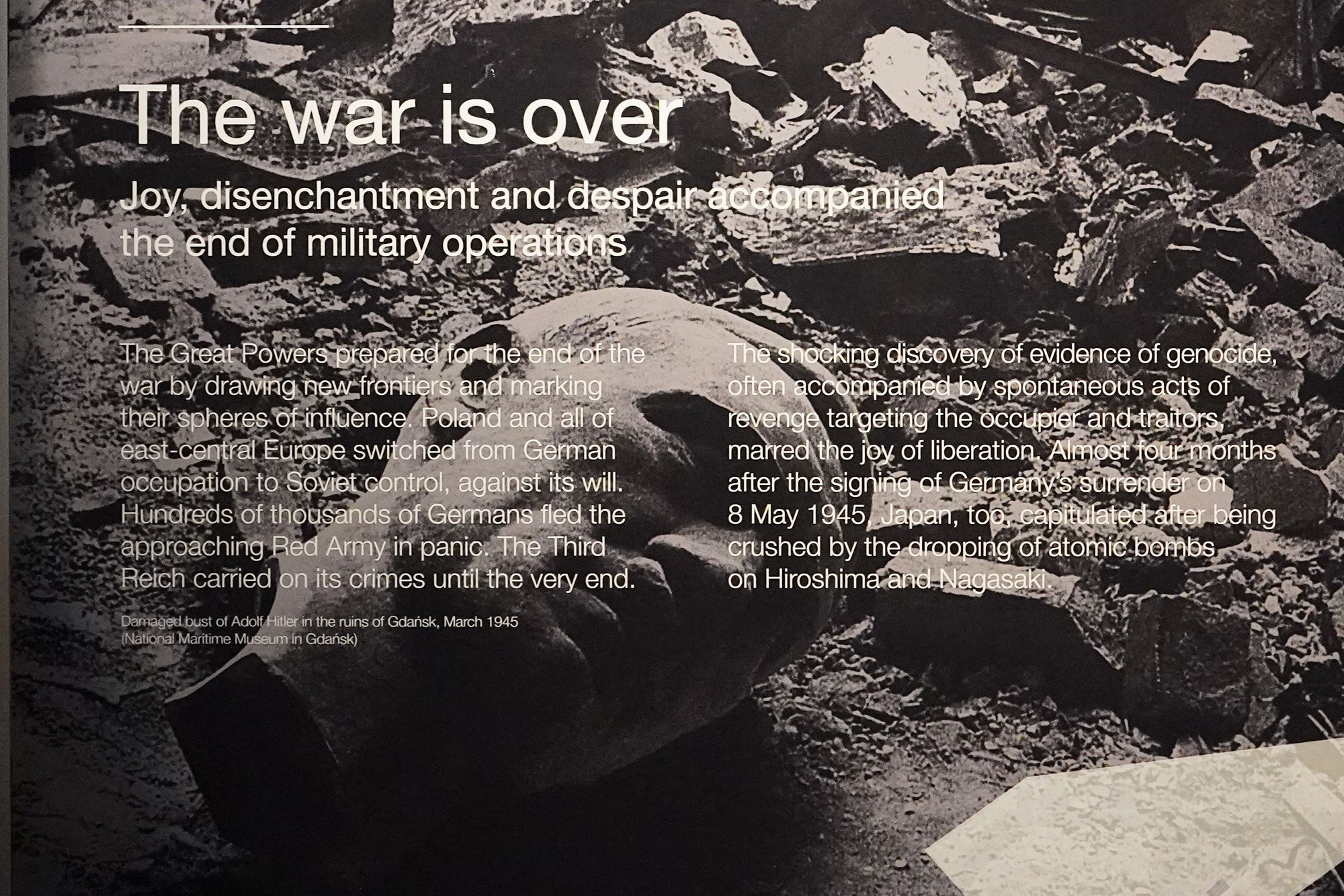
The War Is Over
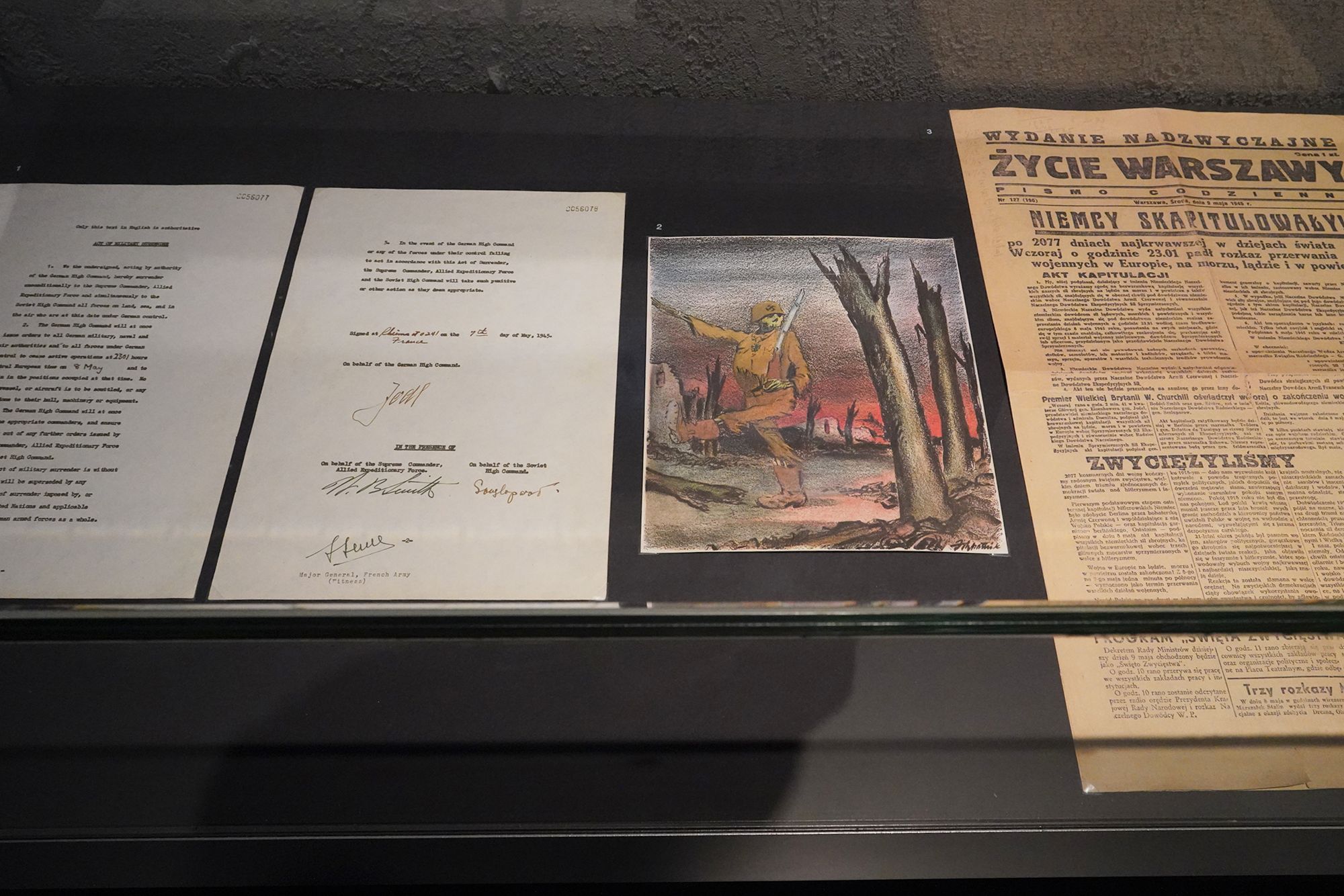
Germany’s surrender in May 1945 ended the fighting in Europe, but liberation brought mixed emotions. People confronted evidence of genocide, while acts of revenge also occurred. Poland and much of eastern-central Europe came under Soviet control, against Poland’s will, and many Germans fled the advancing Red Army. The Nazi regime continued its crimes until the end. Japan surrendered later that year after the atomic bombings of Hiroshima and Nagasaki.
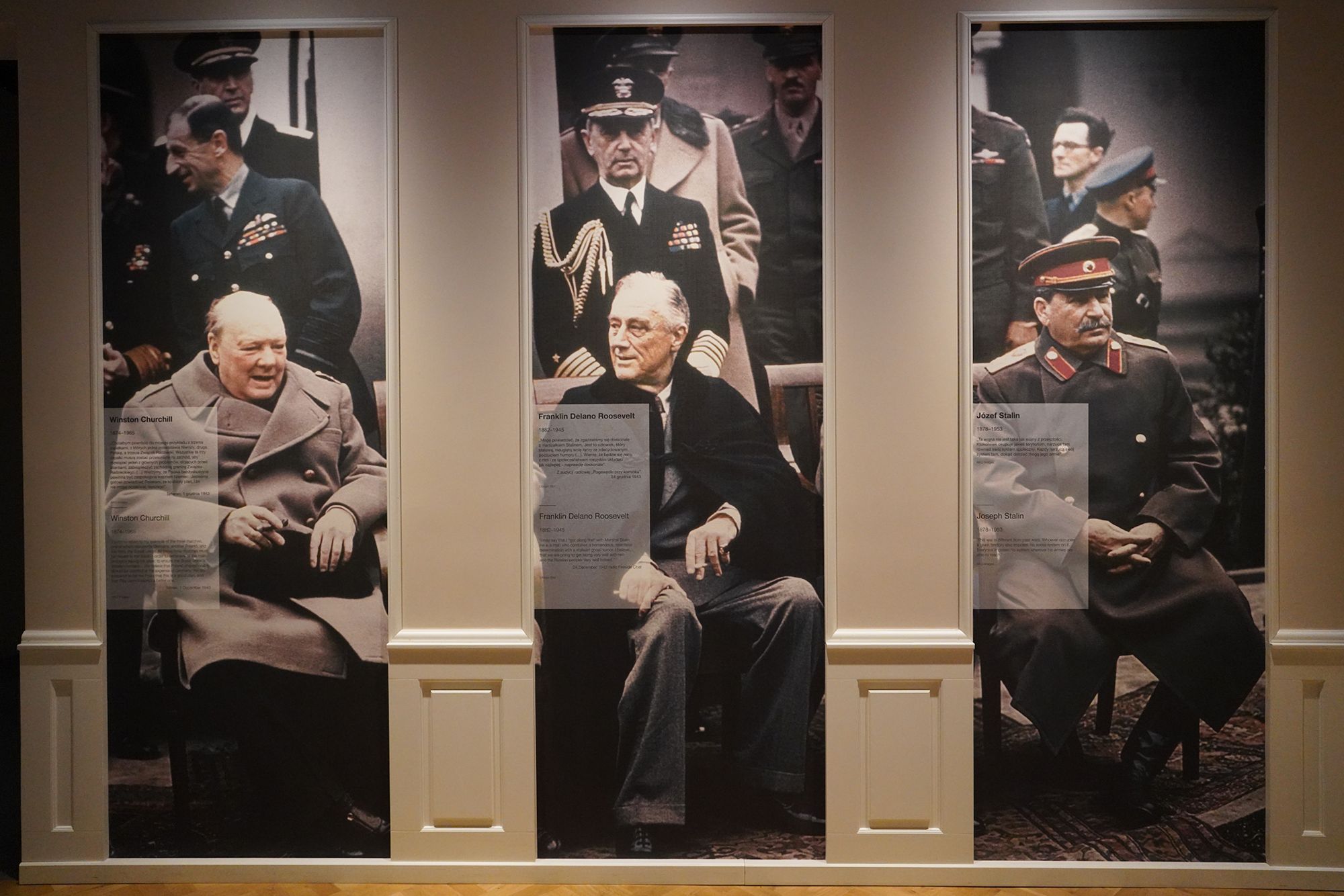
From Tehran to Yalta
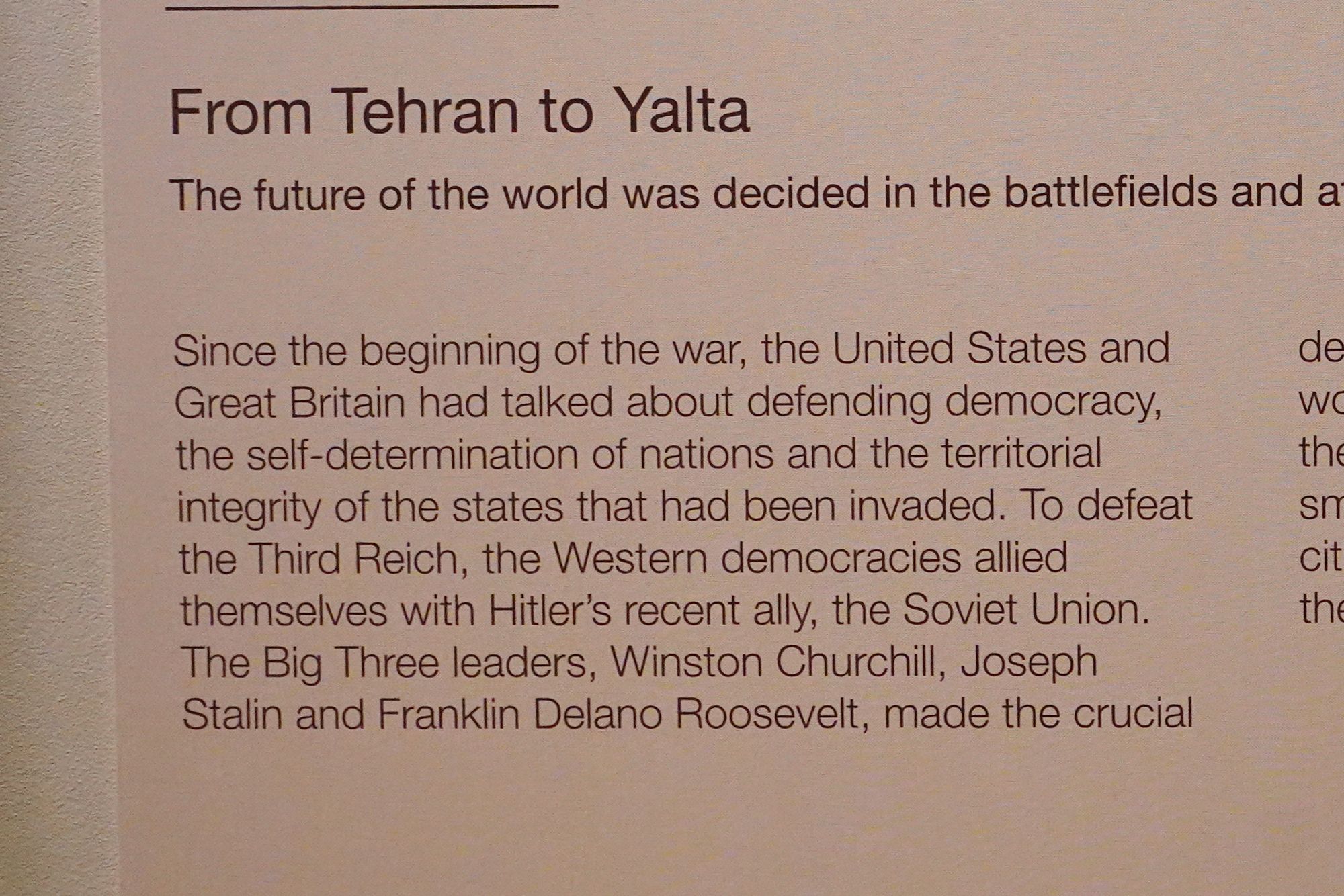
The United States and Britain said they were fighting for democracy and the independence of countries Germany had invaded. To defeat Hitler, however, they allied with the Soviet Union, which had previously signed a pact with Nazi Germany. The leaders of the “Big Three”—Churchill, Stalin, and Roosevelt—met at Tehran and Yalta as they planned the war and discussed the postwar world.
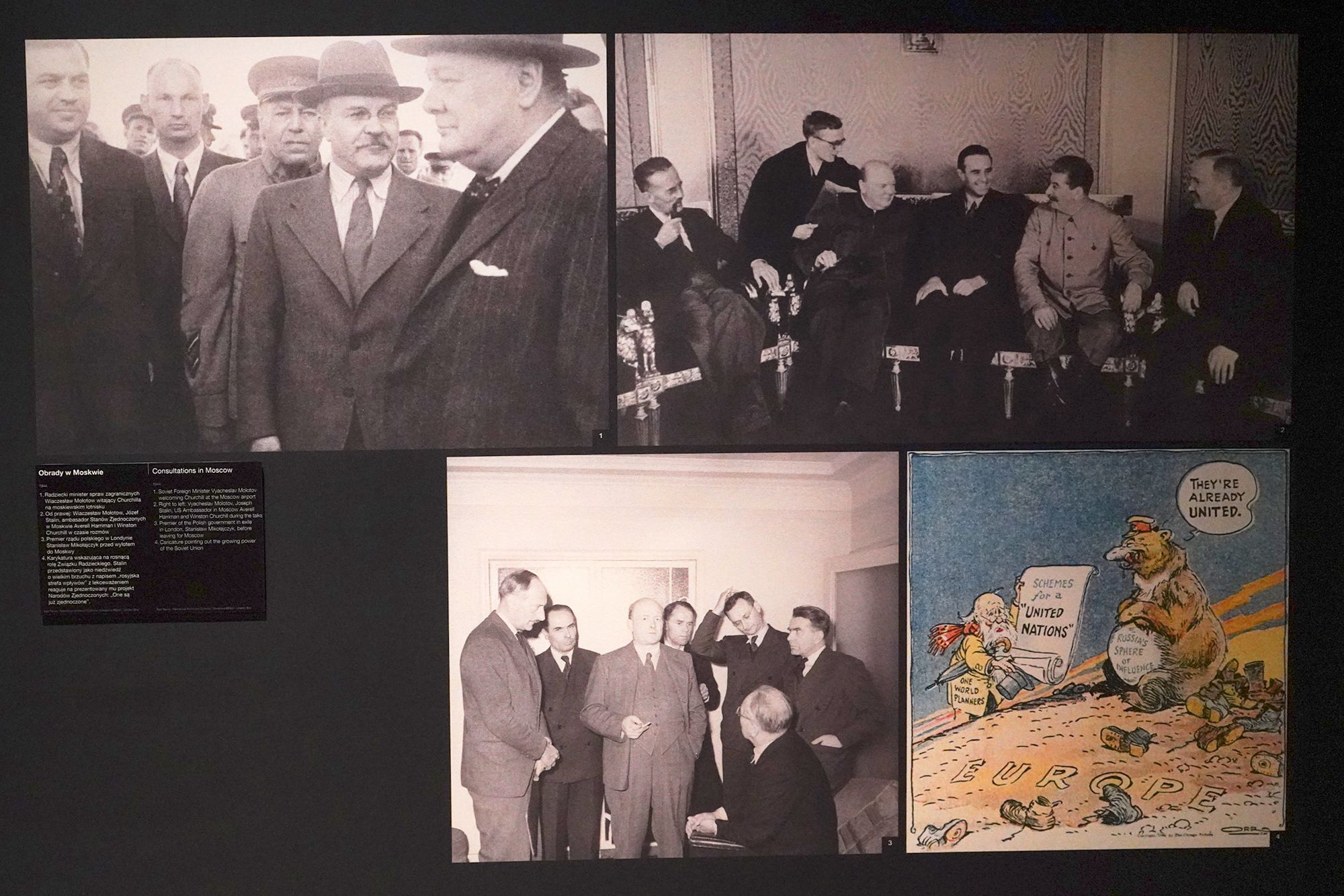
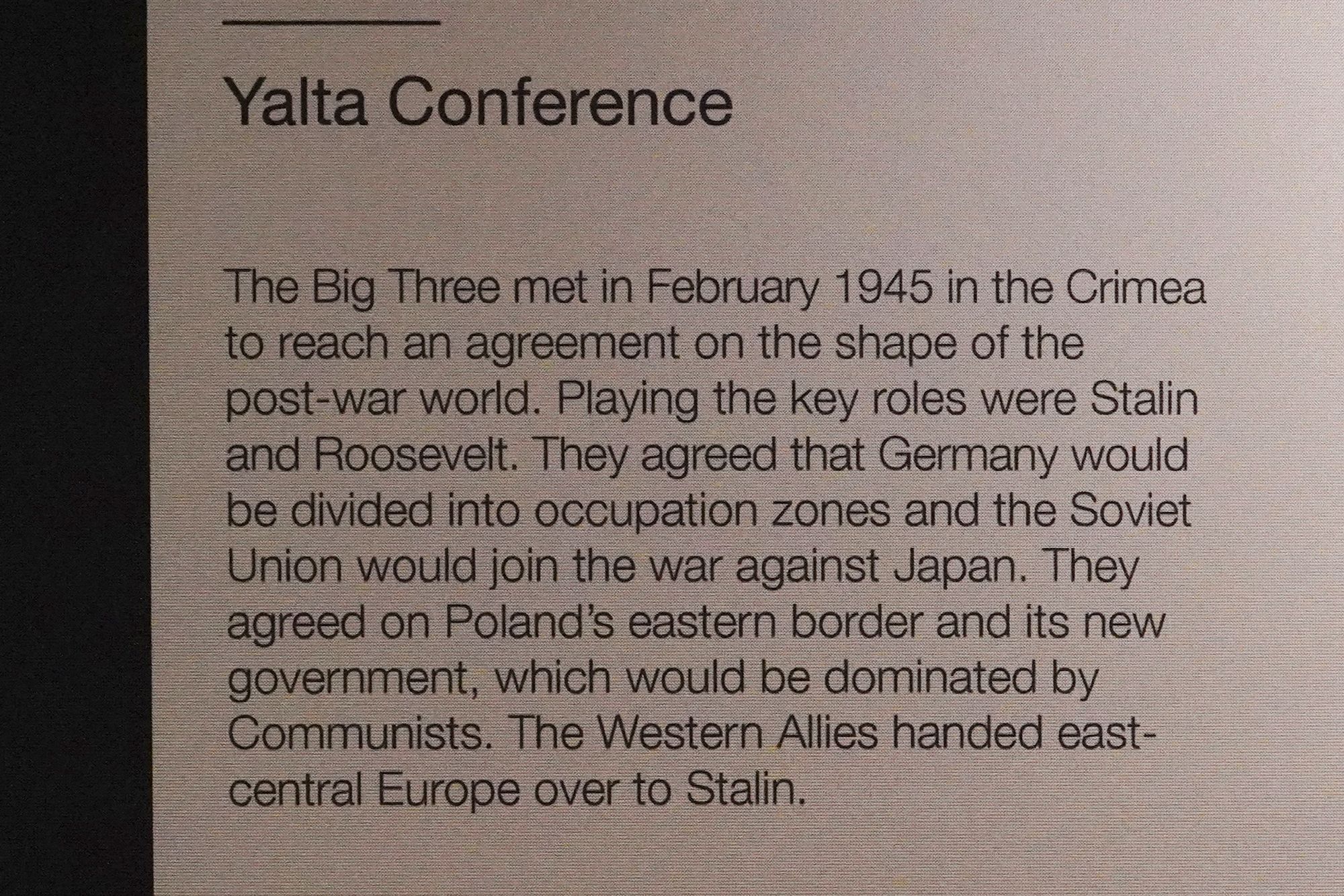
Yalta Conference
In February 1945, the Big Three—Stalin, Roosevelt, and Churchill—met in Crimea to discuss the postwar settlement. They agreed to divide Germany into occupation zones and for the Soviet Union to join the war against Japan. They also accepted changes to Poland’s eastern border and a new, Communist-dominated government. In practice, the agreements left much of eastern-central Europe under Soviet influence.
The San Francisco Conference
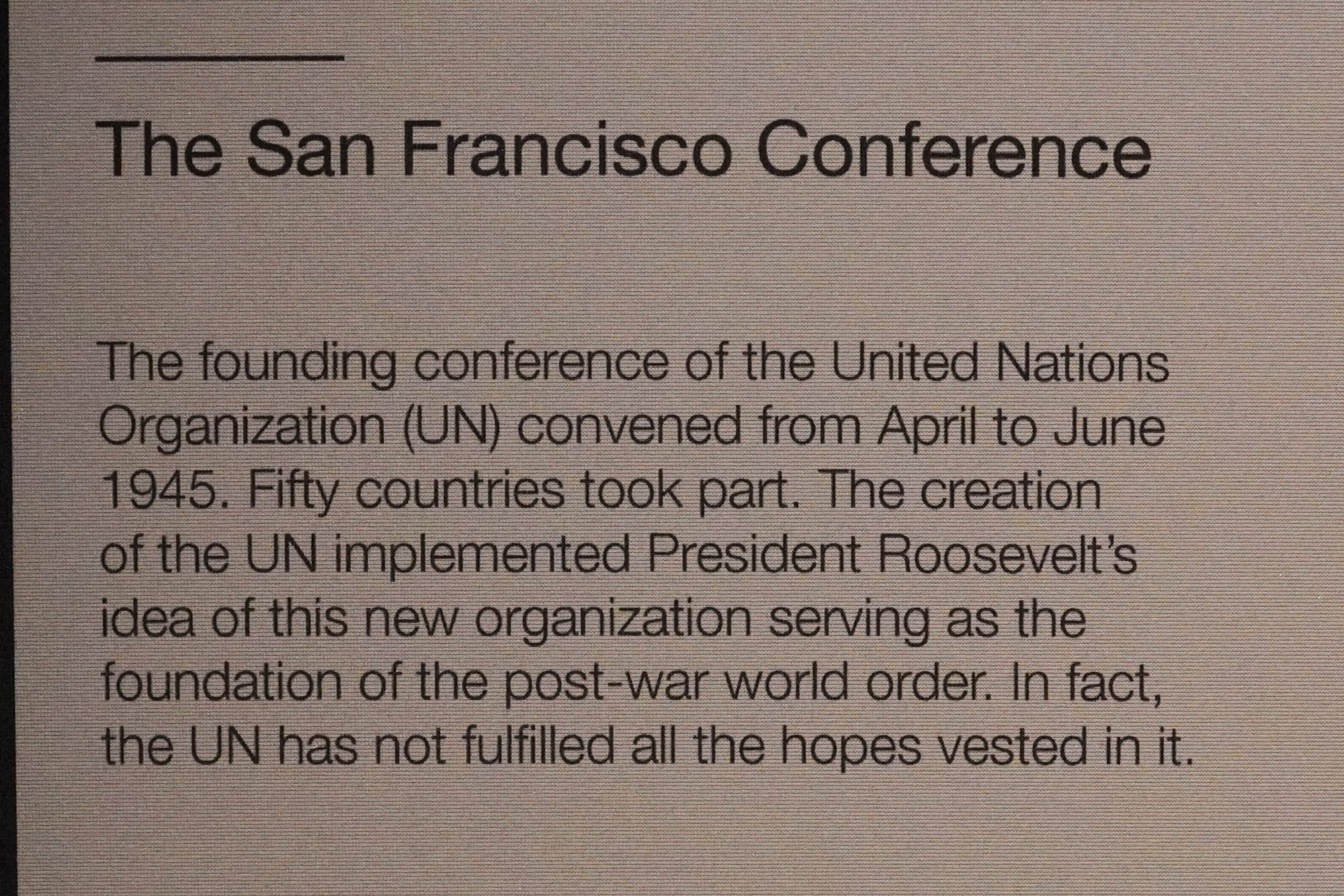
From April to June 1945, representatives of 50 countries met in San Francisco to establish the United Nations. The new organization reflected President Roosevelt’s vision of an international body that could help shape the postwar order. The exhibit also notes that the UN has not fulfilled every hope people placed in it.
Fall of the “Thousand-Year Reich”
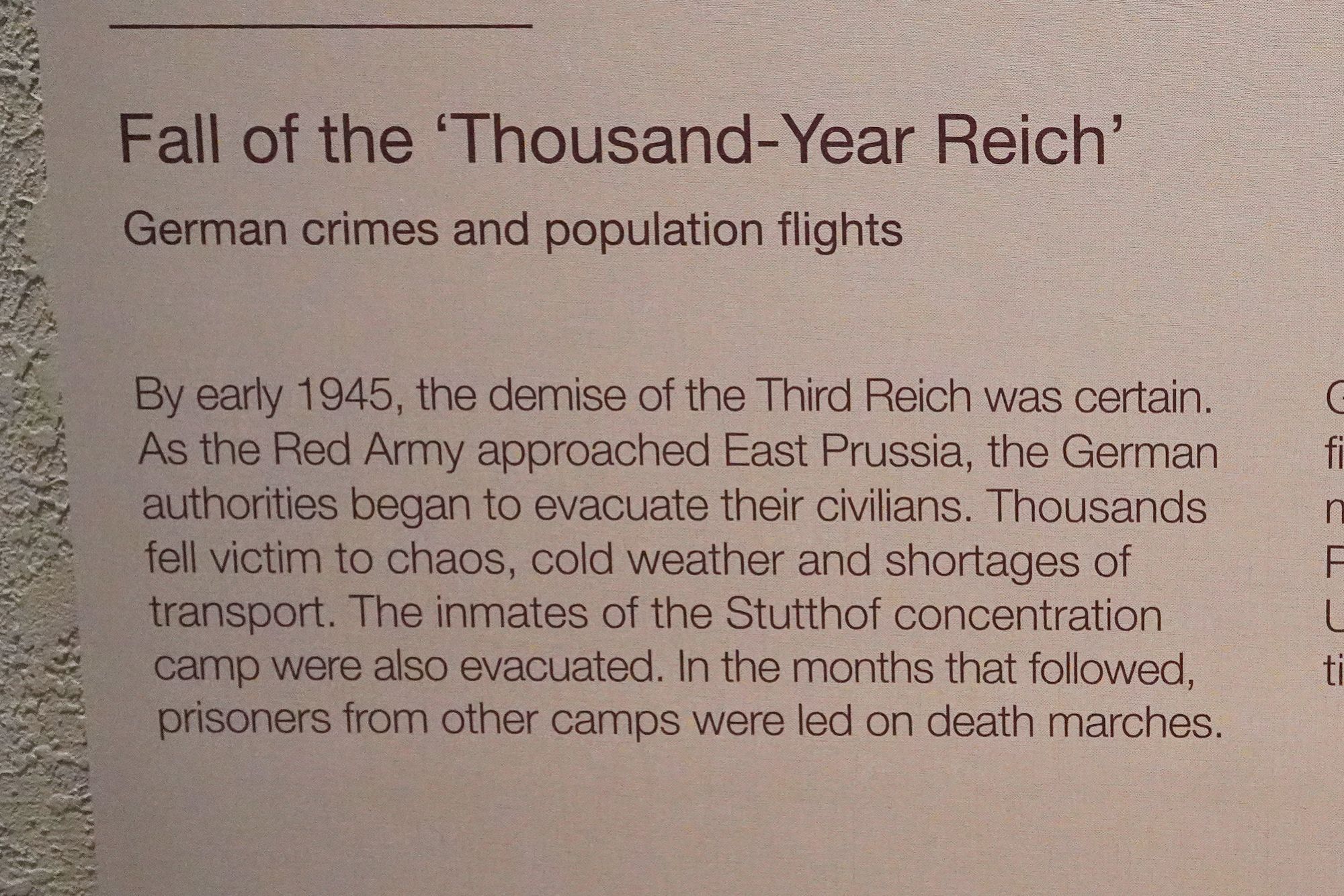
By early 1945, Germany’s defeat was clear. As the Red Army advanced into East Prussia, German authorities began evacuating civilians; thousands died amid chaos, bitter cold, and a lack of transport. Prisoners were also forced from camps such as Stutthof. In the final months of the war, many endured deadly marches between camps.
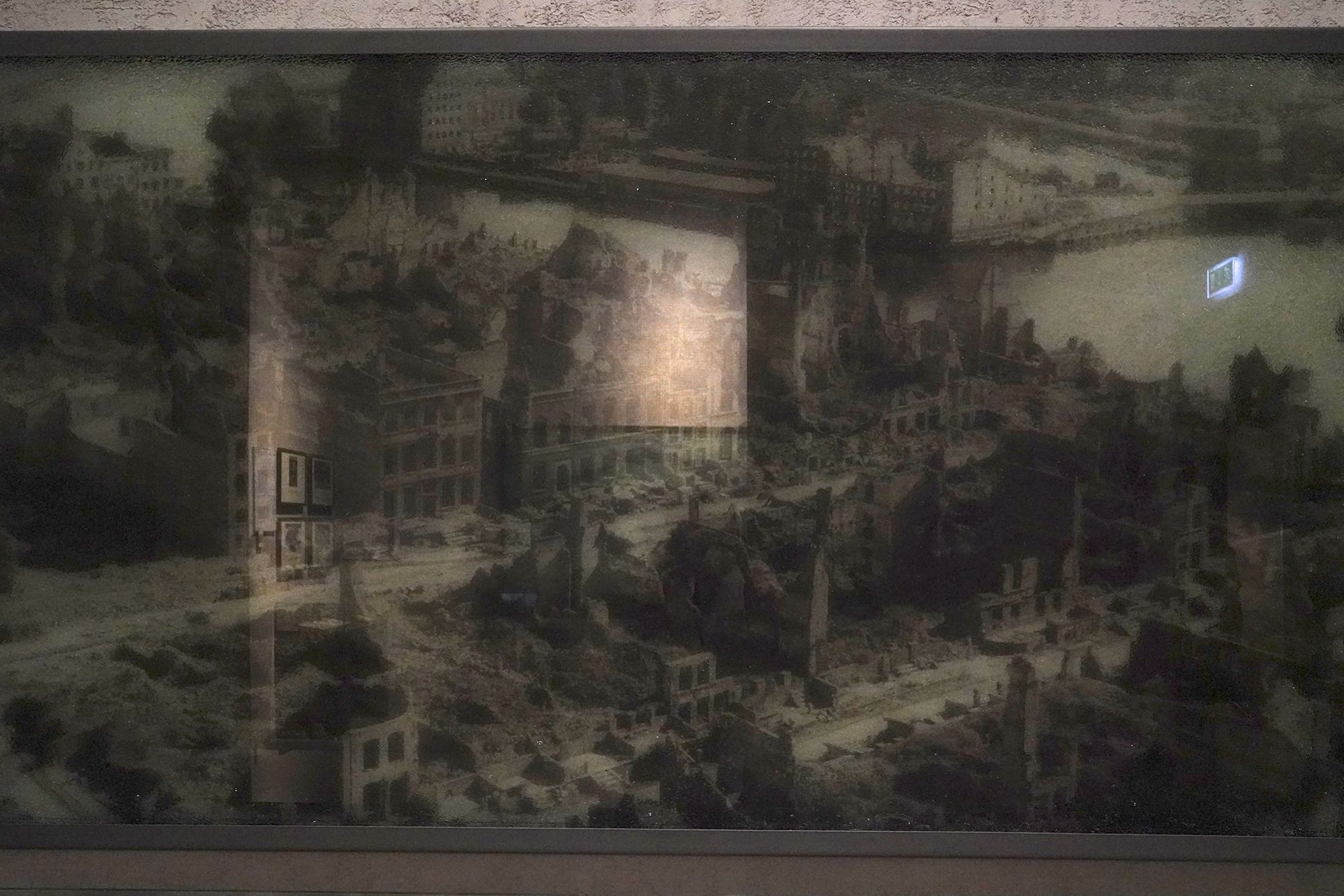
Total Victory, Ambiguous Liberation
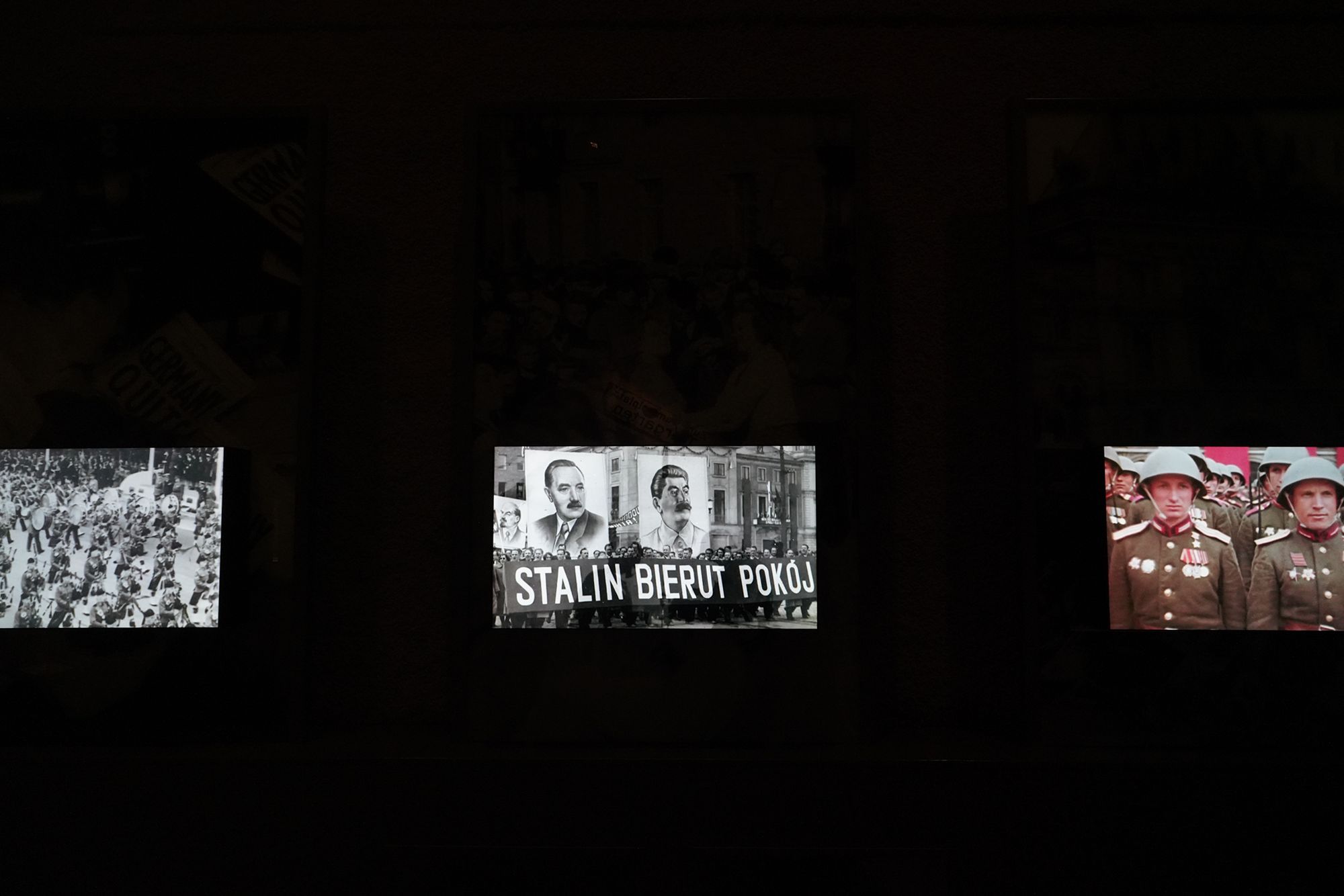
Germany’s surrender in May 1945 ended the war in Europe and brought relief across the West. But in Poland and much of east-central Europe, celebration was uneasy: the Soviet Union emerged victorious and expanded its influence. The war was over, yet freedom remained uncertain.
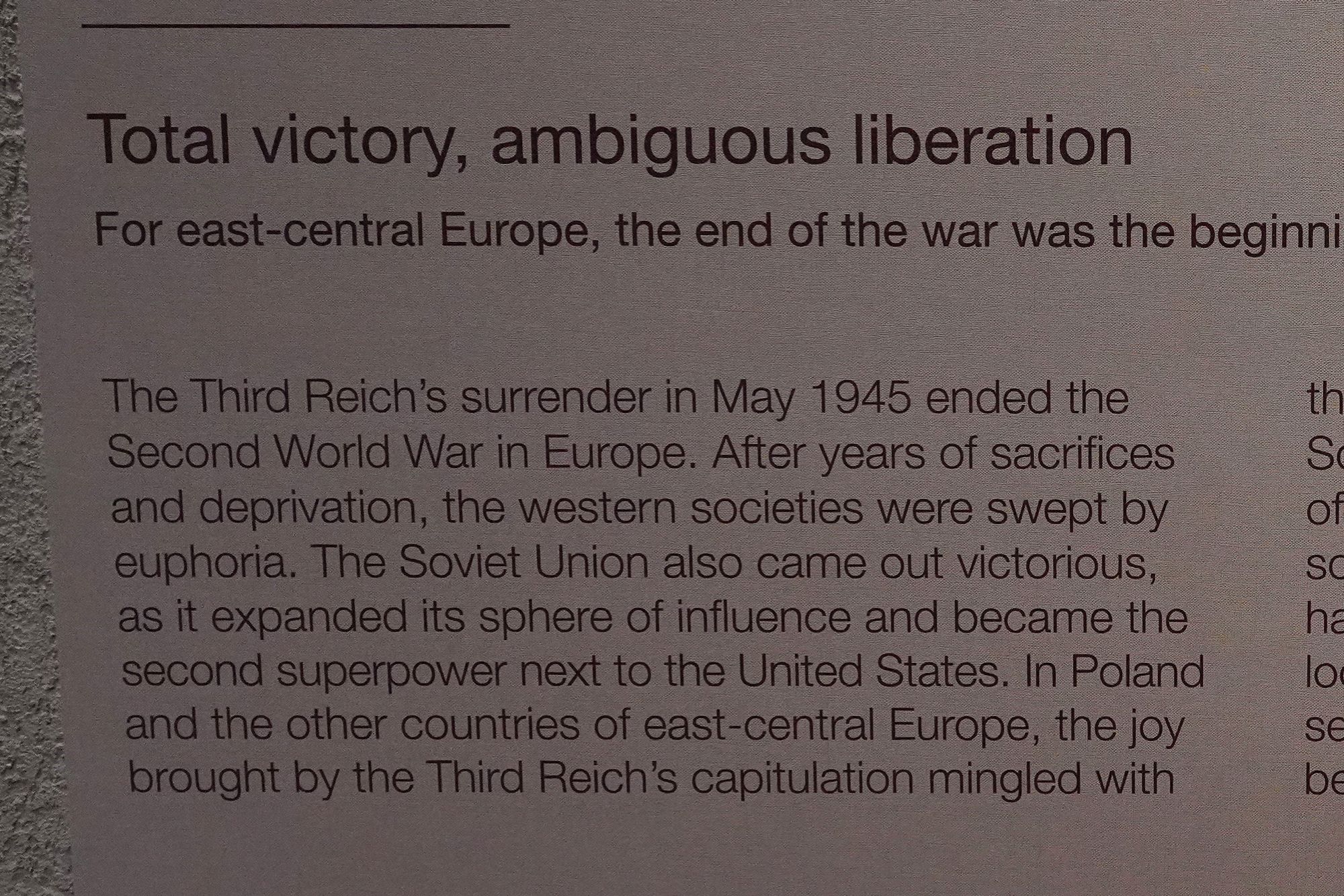
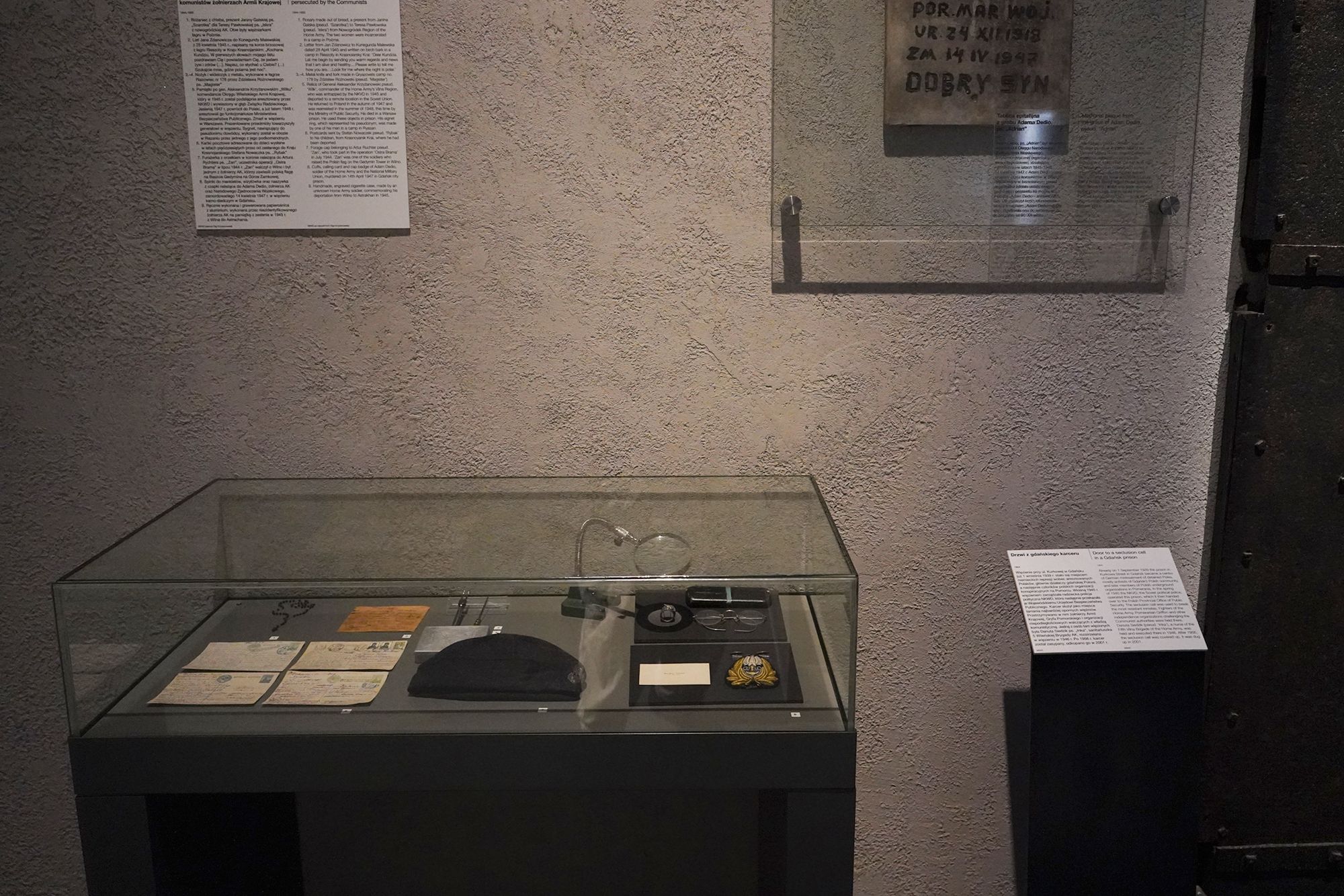
New Government’s Terror
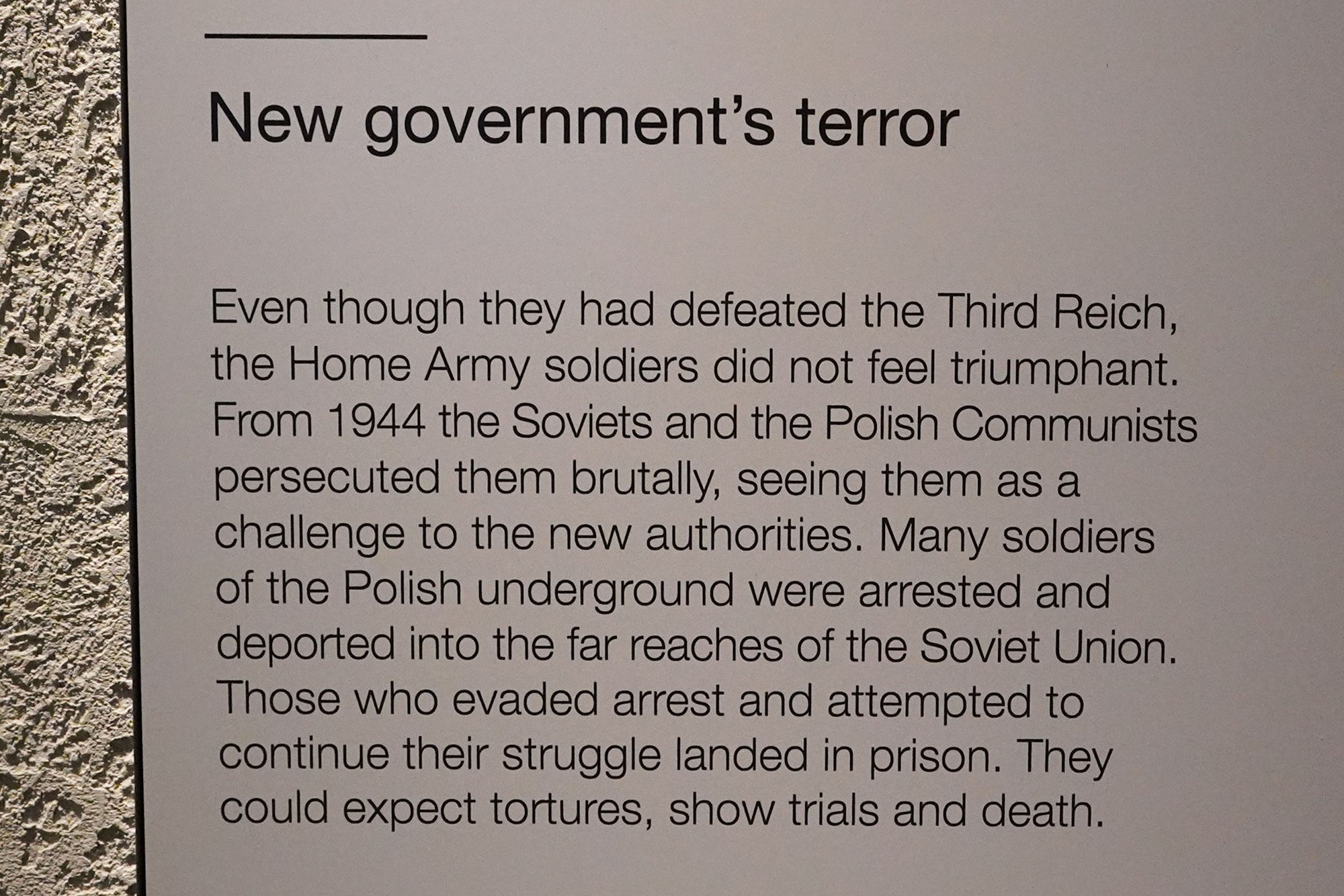
Although the Home Army had fought Nazi Germany, its soldiers were not welcomed after the war. From 1944, Soviet forces and Polish Communists treated them as threats to the new regime. Many were arrested and deported to the Soviet Union; others who continued resisting faced imprisonment, torture, show trials, and execution.
Exposed Crimes
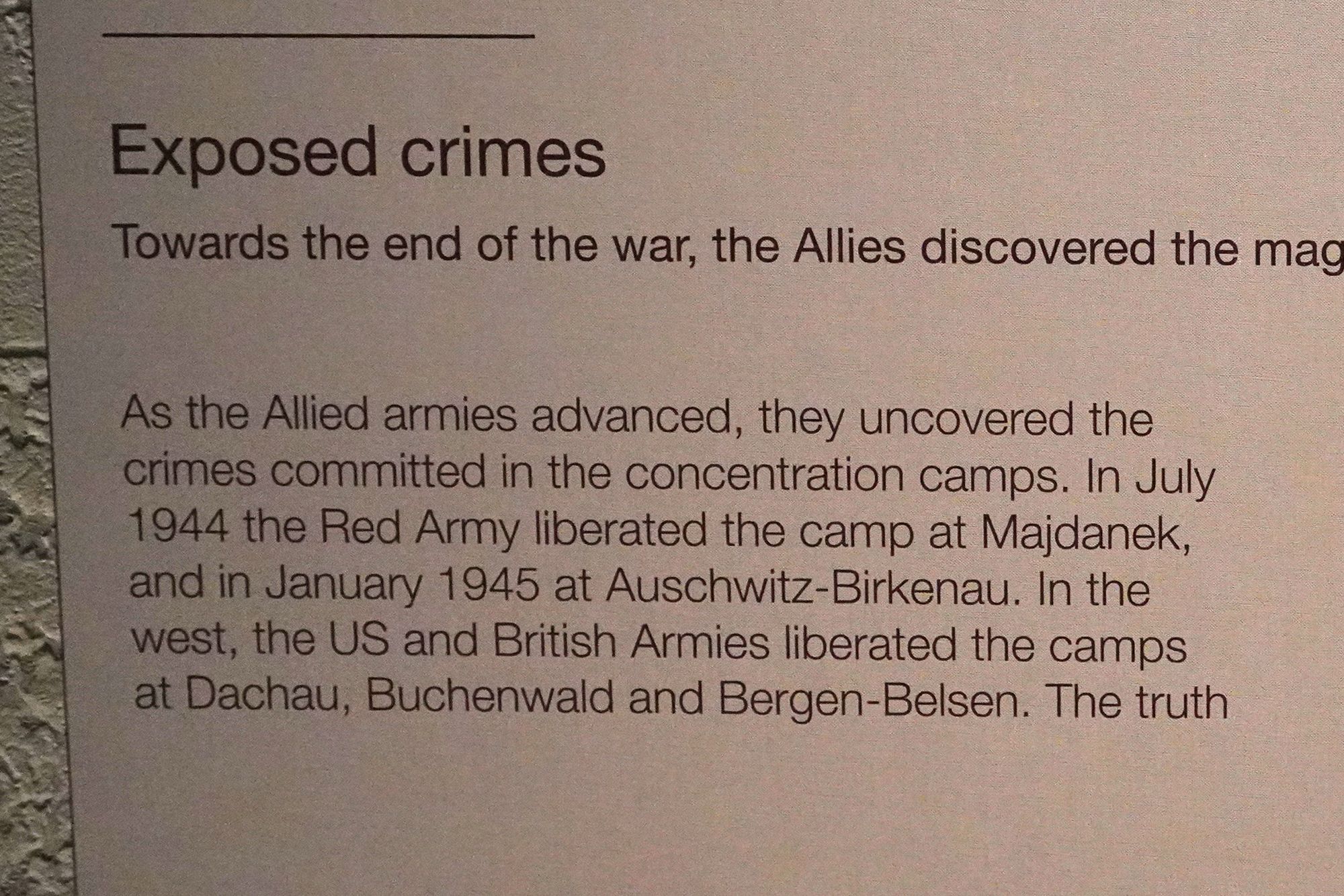
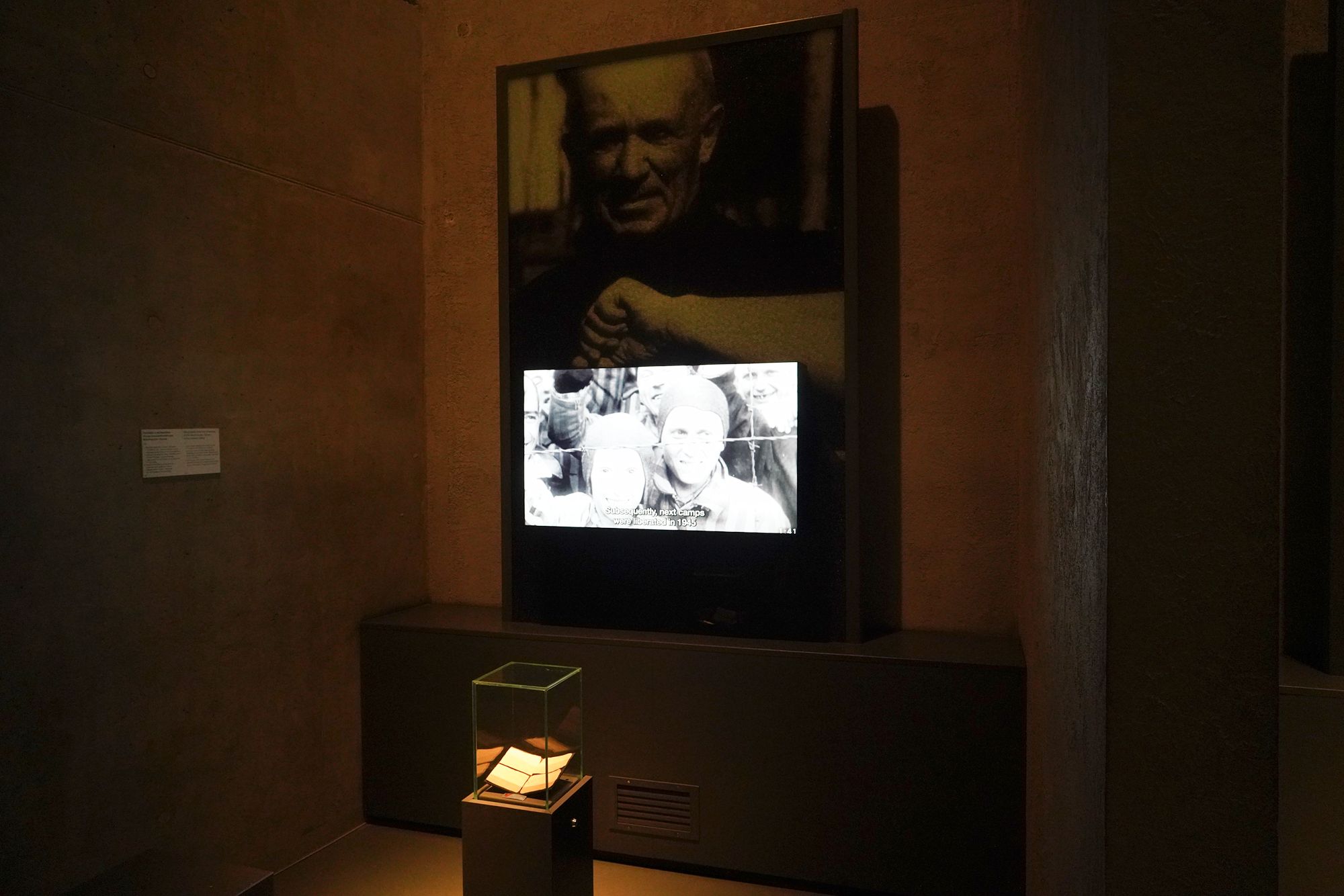
As Allied forces advanced, they uncovered evidence of Nazi crimes in the concentration camps. The Red Army liberated Majdanek in July 1944 and Auschwitz-Birkenau in January 1945; U.S. and British troops reached Dachau, Buchenwald, and Bergen-Belsen in the West. The camps revealed the scale of Nazi persecution and mass murder.
Spontaneous Payback
After liberation, anger over occupation and collaboration sometimes turned into revenge outside the courts. In Italy, more than 10,000 people accused of aiding the Germans or supporting Fascism were killed in 1945. In France, about 10,000 accused collaborators were lynched. Similar violence erupted in Belgium, Luxembourg, Czechoslovakia, and Poland.
Hiroshima
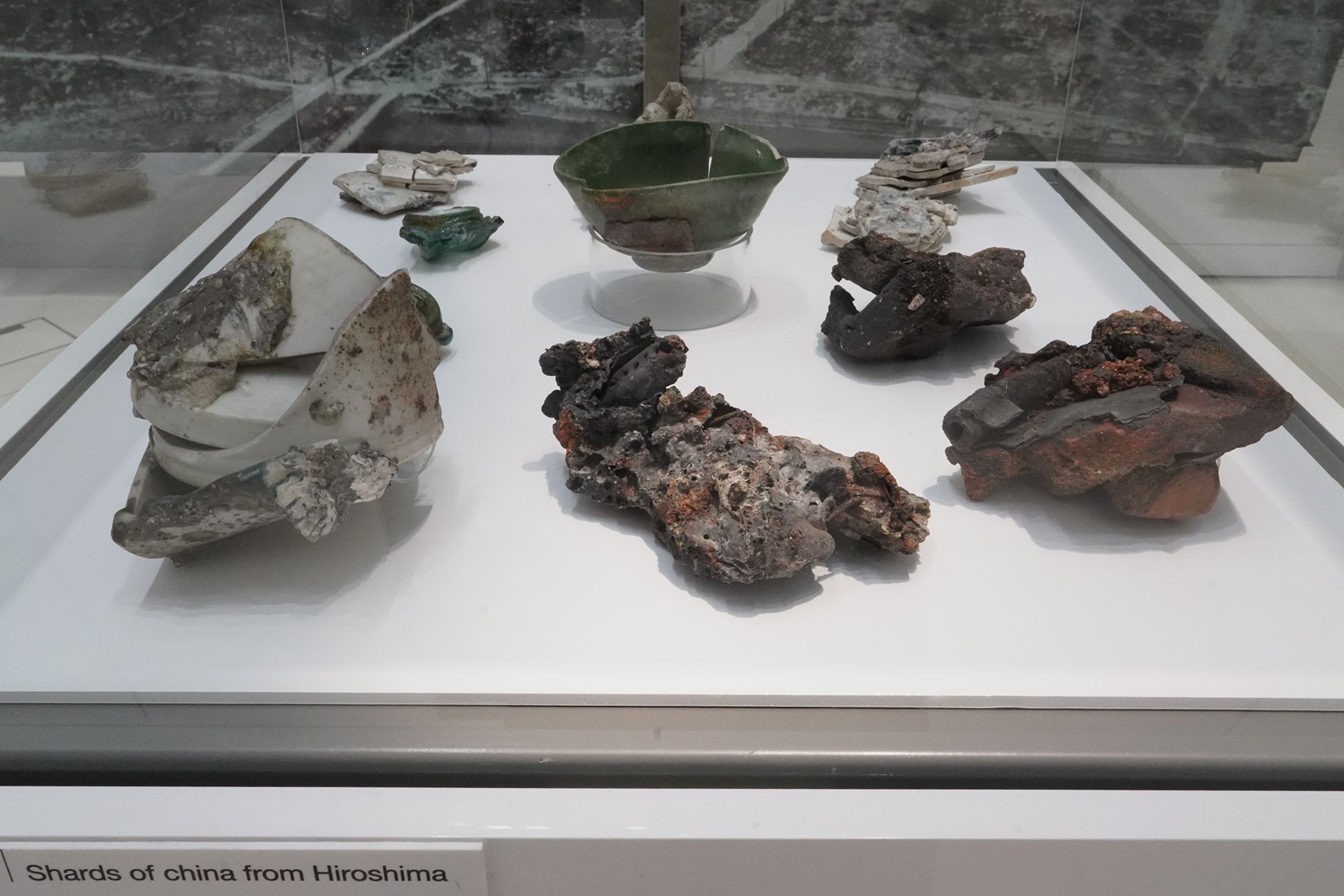
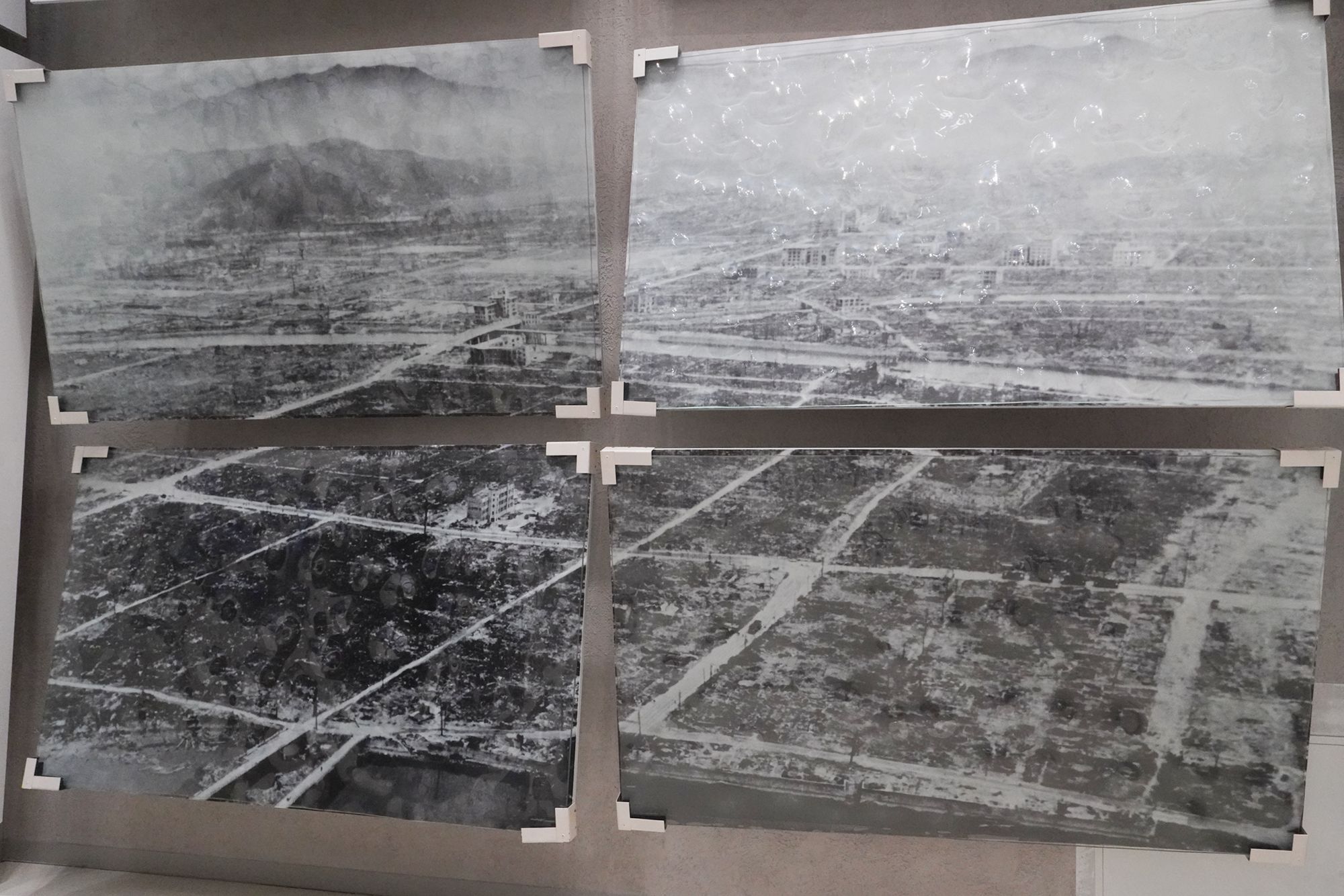
The United States began the Manhattan Project in 1942 to develop an atomic bomb. After Japan refused to surrender unconditionally, the United States dropped the bomb “Little Boy” on Hiroshima at 8:15 a.m. on August 6, 1945. The explosion killed about 30 percent of the city’s population.
After the War
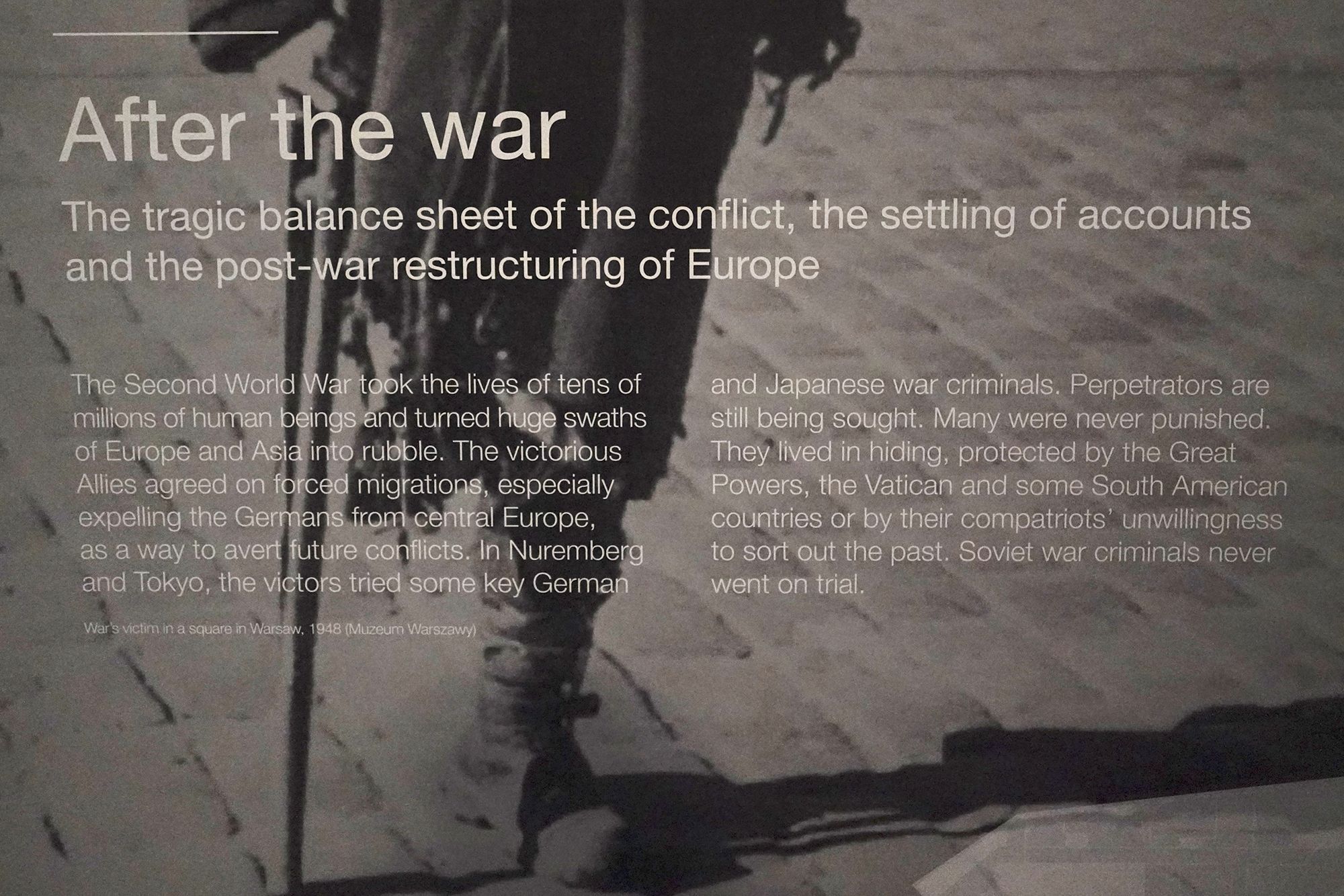
The war killed tens of millions and left much of Europe and Asia in ruins. The Allies used forced migrations, including the expulsion of Germans from Central Europe, as a way to prevent future conflicts. Trials at Nuremberg and Tokyo punished some German and Japanese leaders, but many perpetrators escaped justice, and Soviet war criminals were never tried.
A Horrific Balance Sheet
World War II killed more than 50 million people through murder, starvation, disease, and wounds. Millions more were left injured, orphaned, homeless, or without a way to earn a living. Towns and villages lay in ruins, infrastructure was destroyed, and many valuable works of art were lost or damaged.
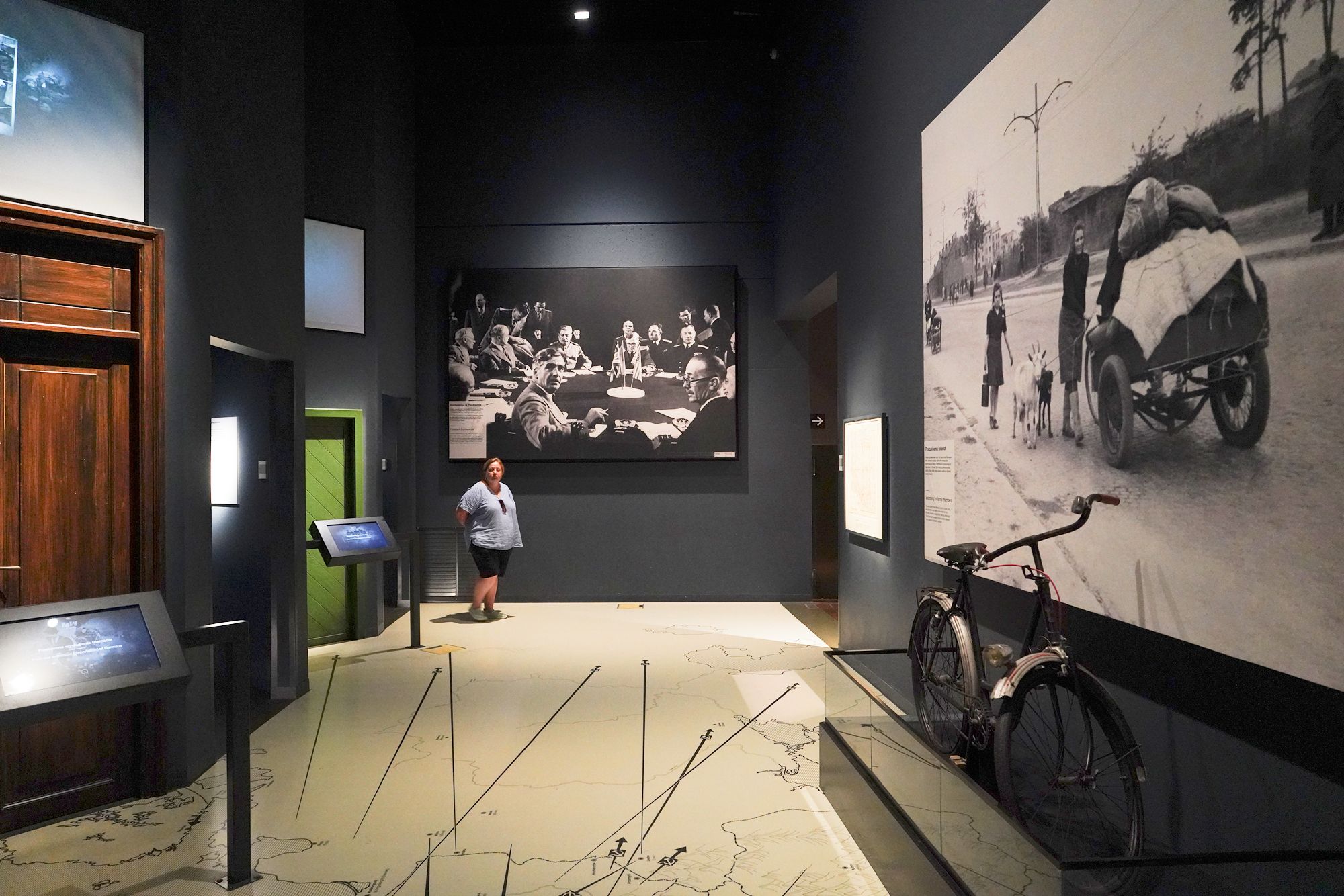
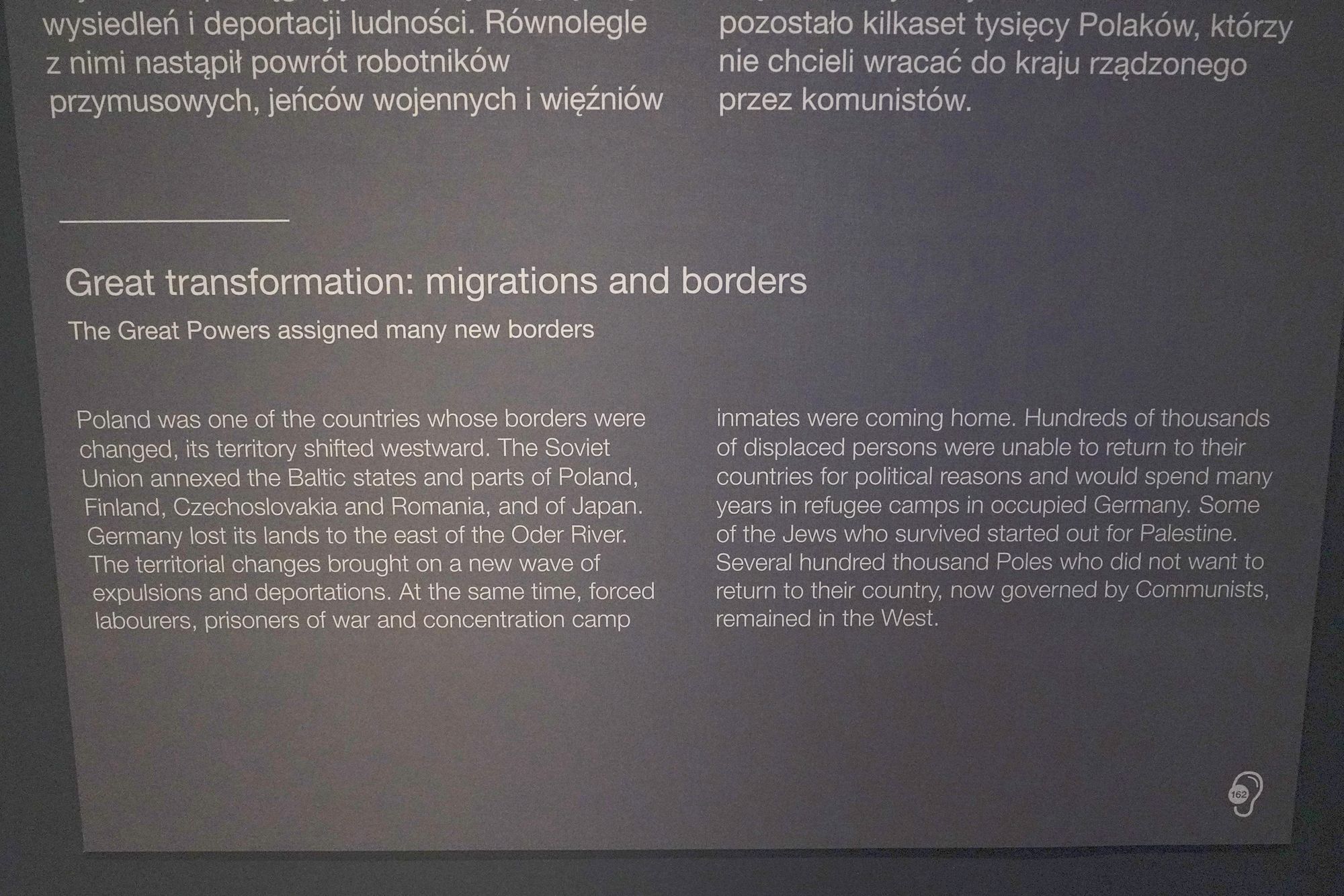
Great Transformation: Migrations and Borders
After World War II, the Great Powers redrew borders across Europe. Poland shifted west, while the Soviet Union annexed territory; Germany lost land east of the Oder River. These changes displaced millions. Some people remained in refugee camps, Jewish survivors headed for Palestine, and many Poles stayed in the West rather than return to communist-ruled Poland.
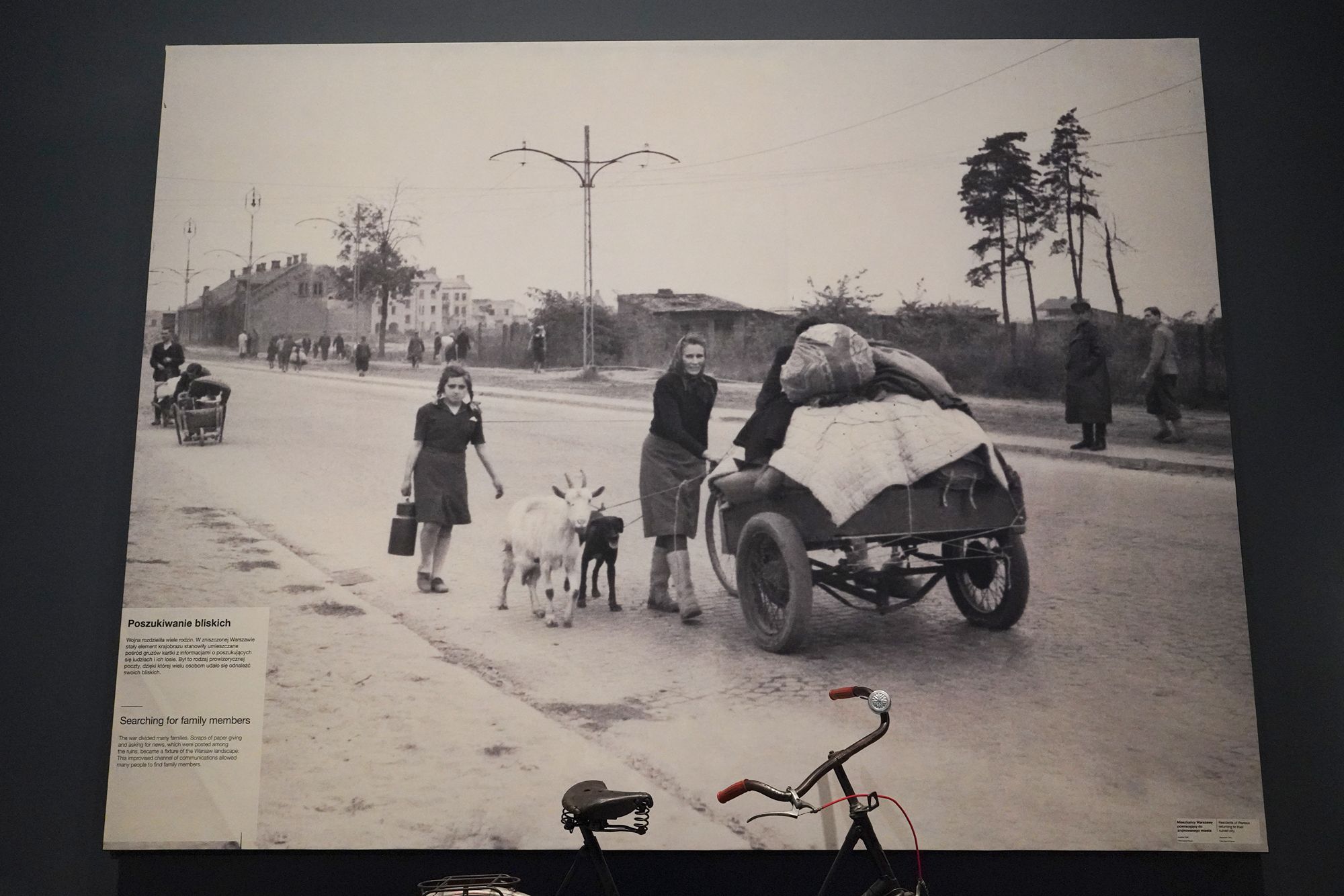
Searching for Family Members
The war separated many families, leaving people unsure whether their relatives had survived. In Warsaw, scraps of paper posted among the ruins asked for news or shared information. These makeshift notices became a familiar sight and helped many people find family members.
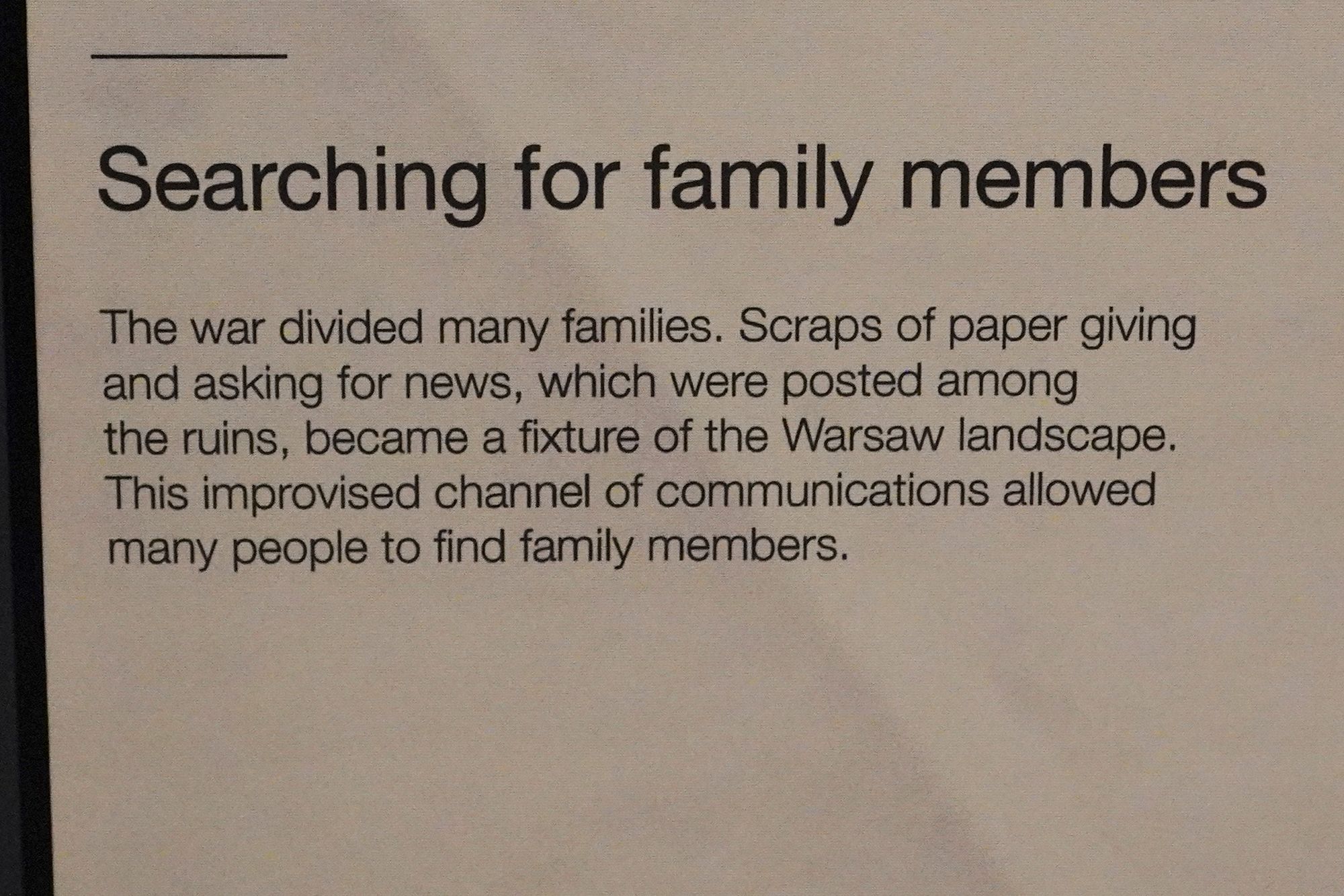
Potsdam Conference
At Potsdam in July and August 1945, the Big Three discussed Germany’s future and war reparations. They set the Oder–Neisse line as Poland’s western border, leaving final confirmation for a peace conference that never took place. They also agreed to transfer German populations from Poland, Czechoslovakia, and Hungary.
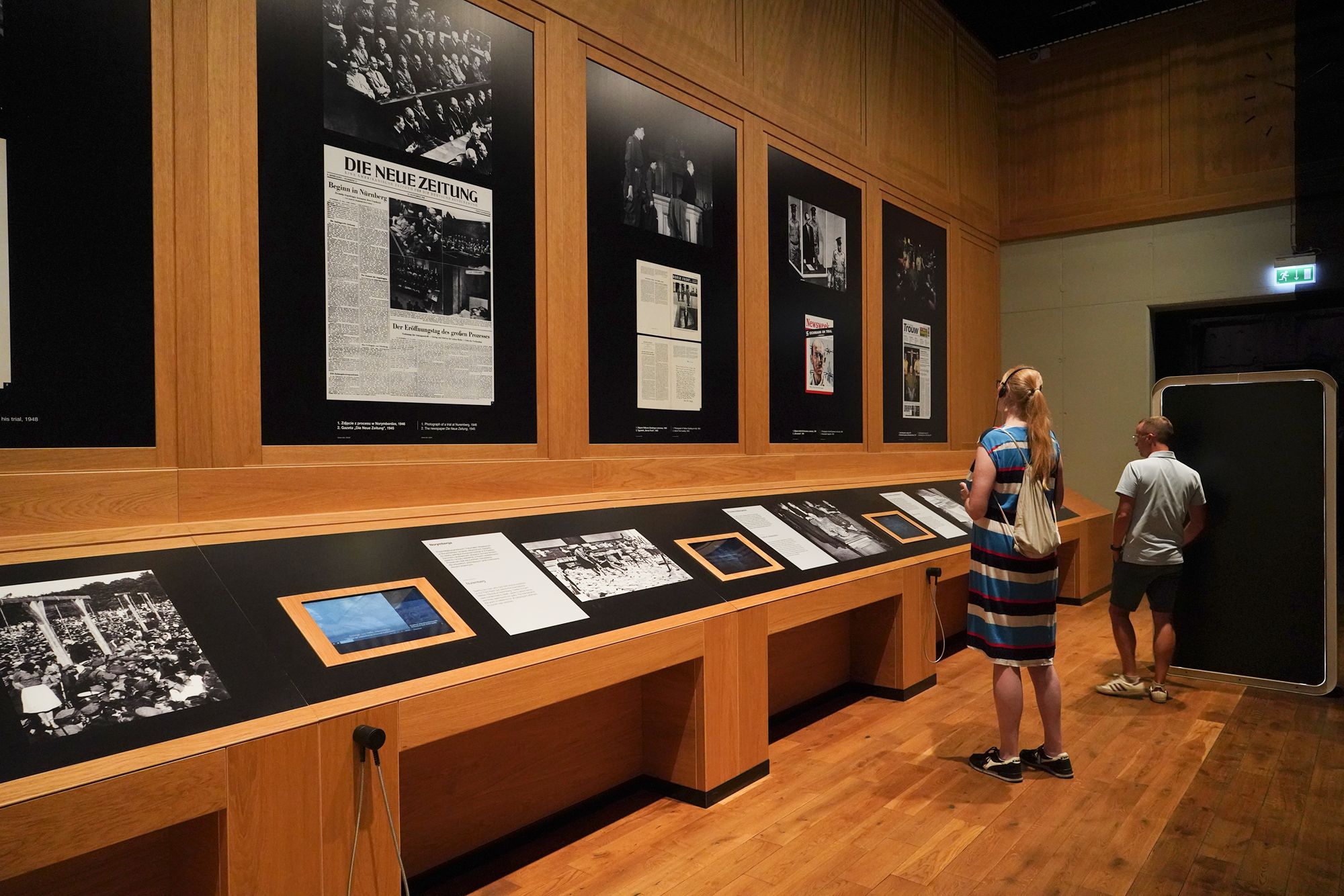
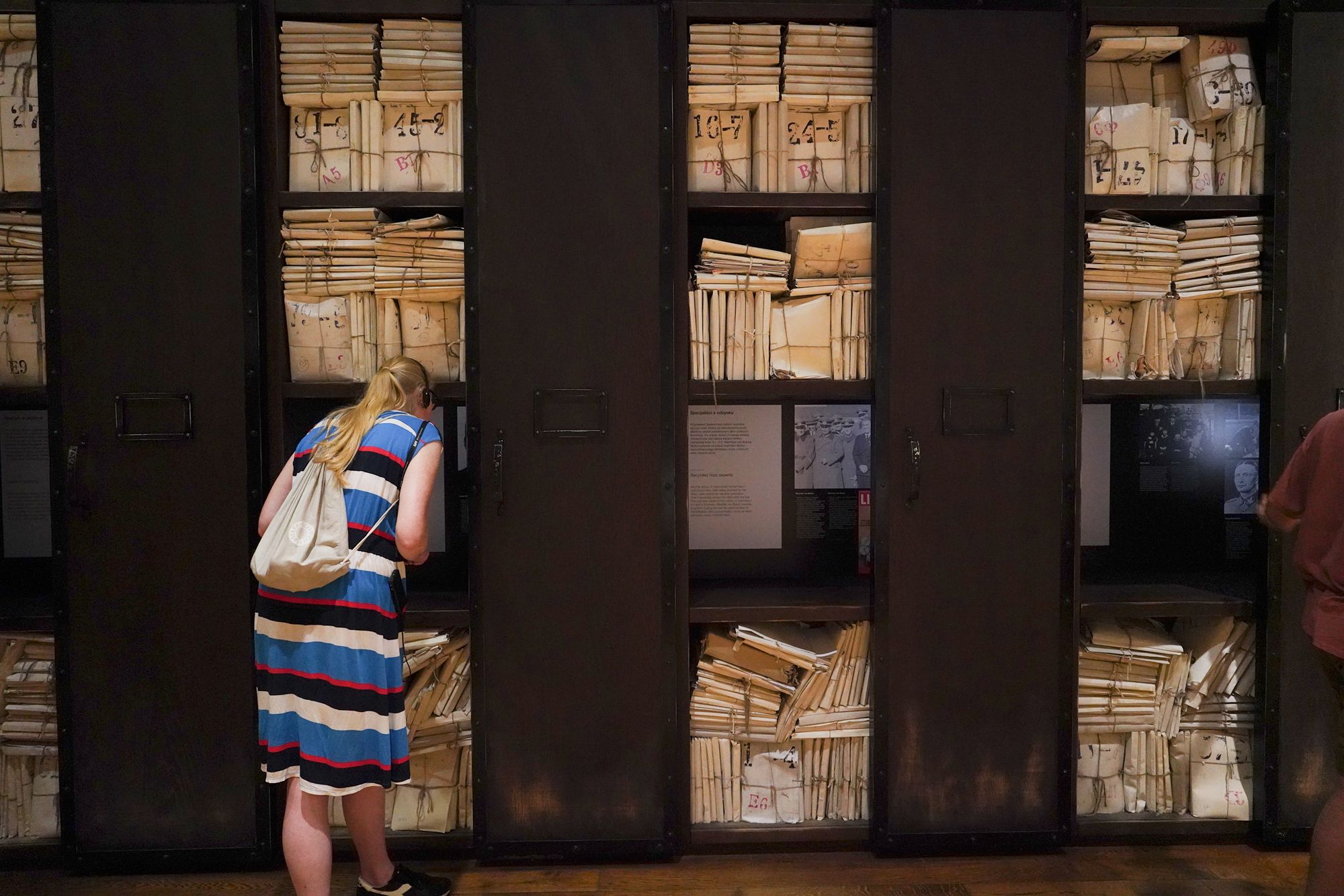
Failings of the Justice System
As the postwar world split into rival blocs, many war criminals escaped punishment. Some lived comfortably despite their crimes; Auschwitz doctor Josef Mengele went into hiding in Latin America. Other former Nazis were considered valuable specialists and held influential positions, showing how political priorities sometimes outweighed the pursuit of justice.
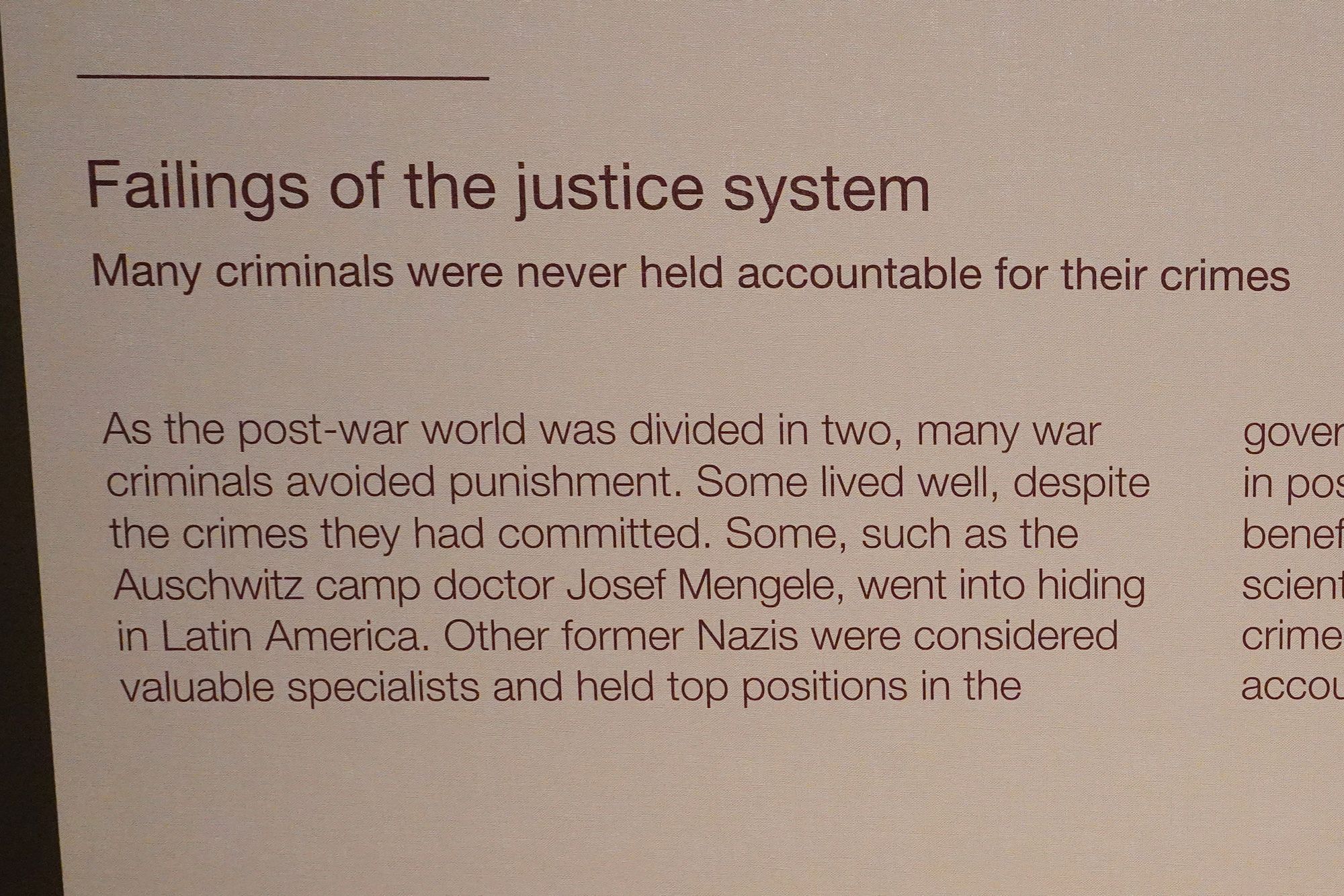
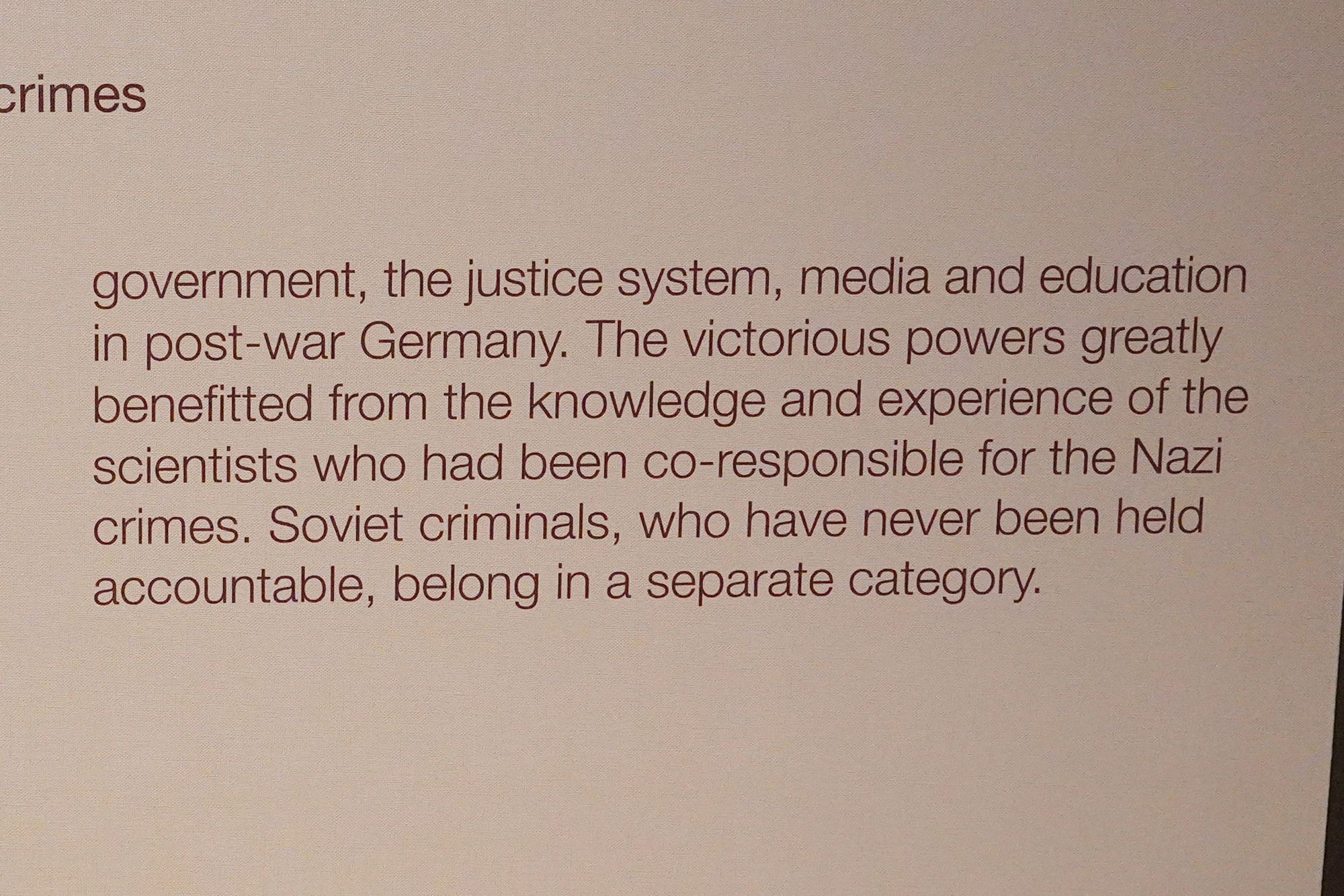
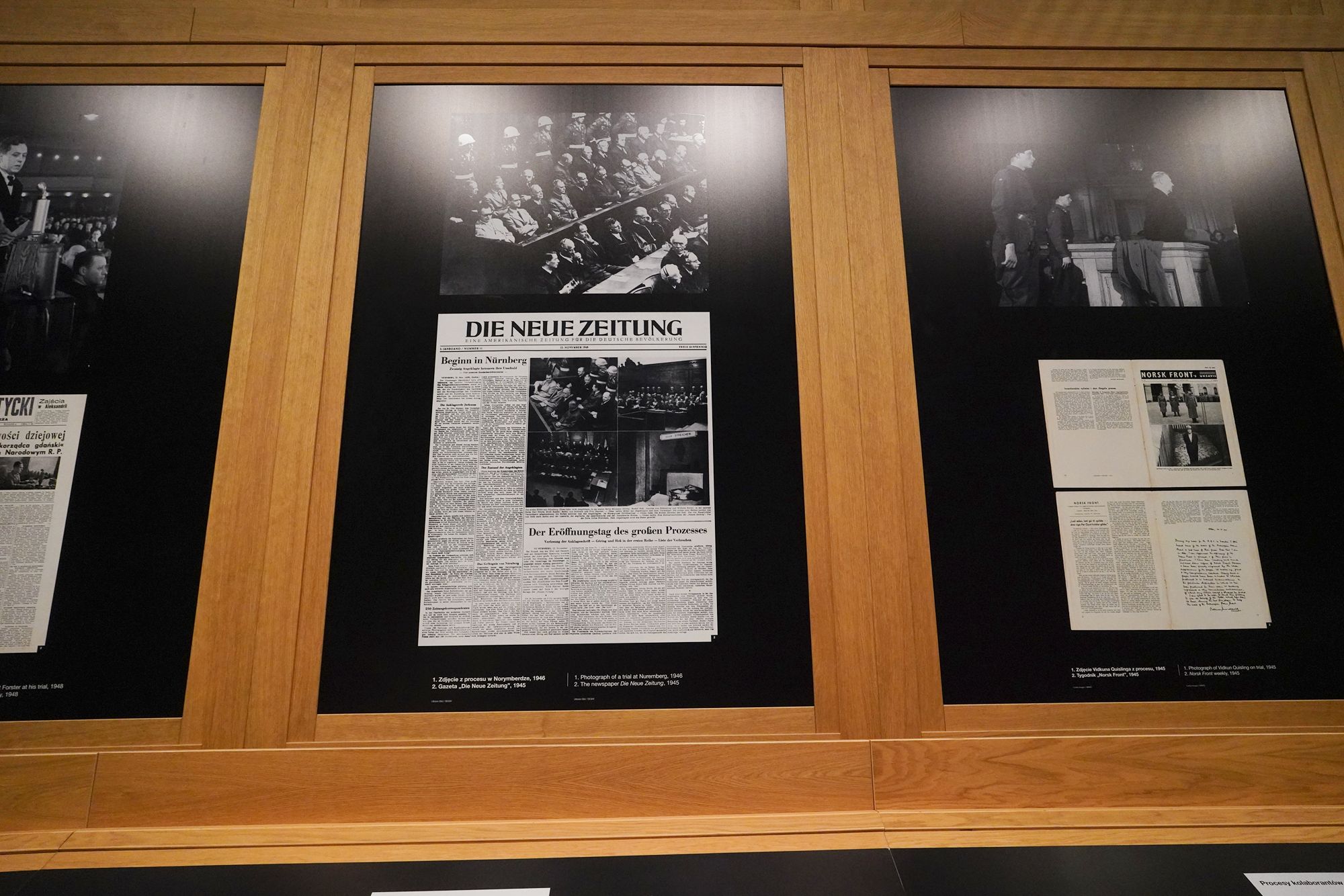
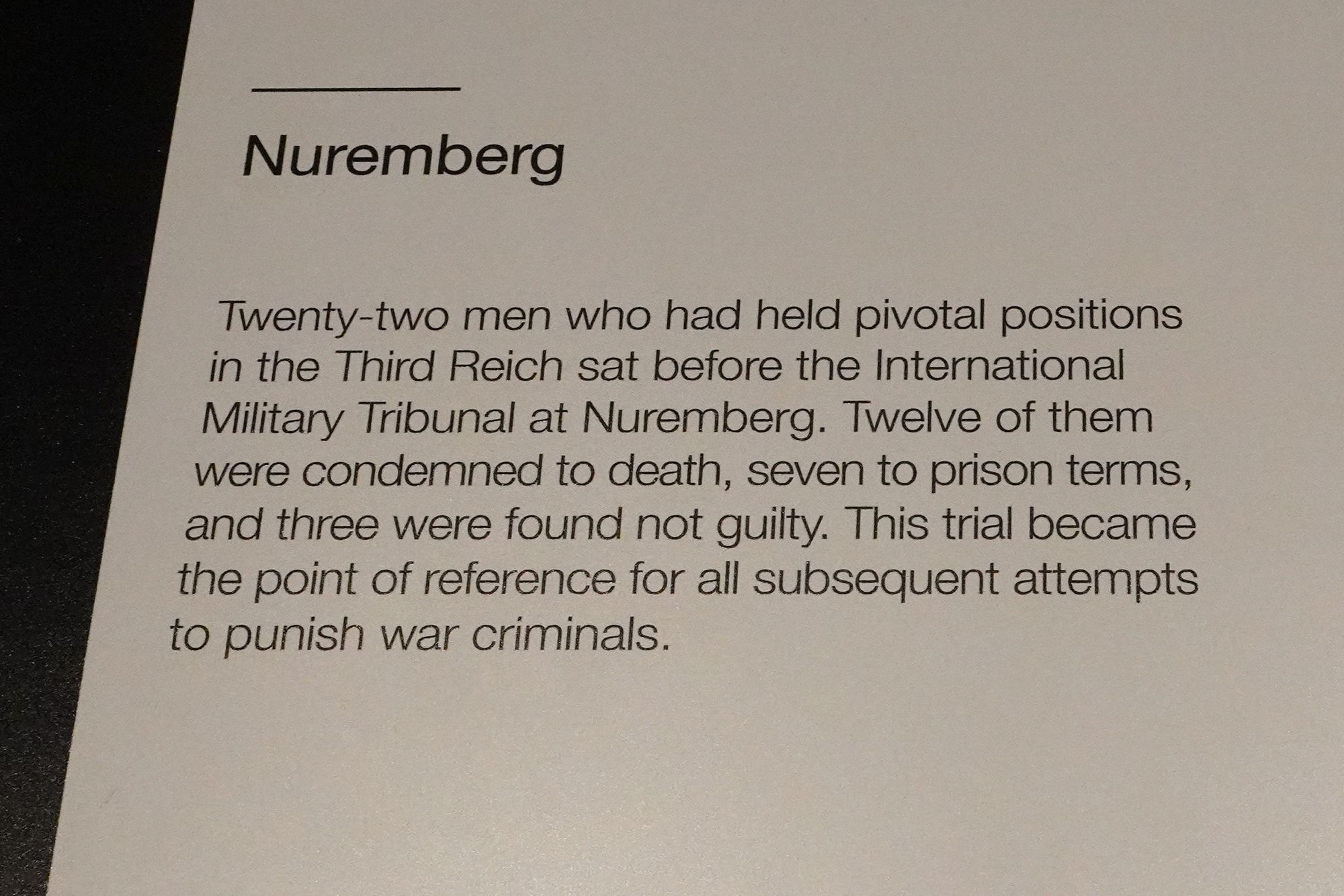
Nuremberg
At the Nuremberg trial, 22 leading Nazi officials faced the International Military Tribunal. Twelve were sentenced to death, seven received prison terms, and three were acquitted. The trial established an important precedent: national leaders could be held accountable under international law for crimes committed during war.
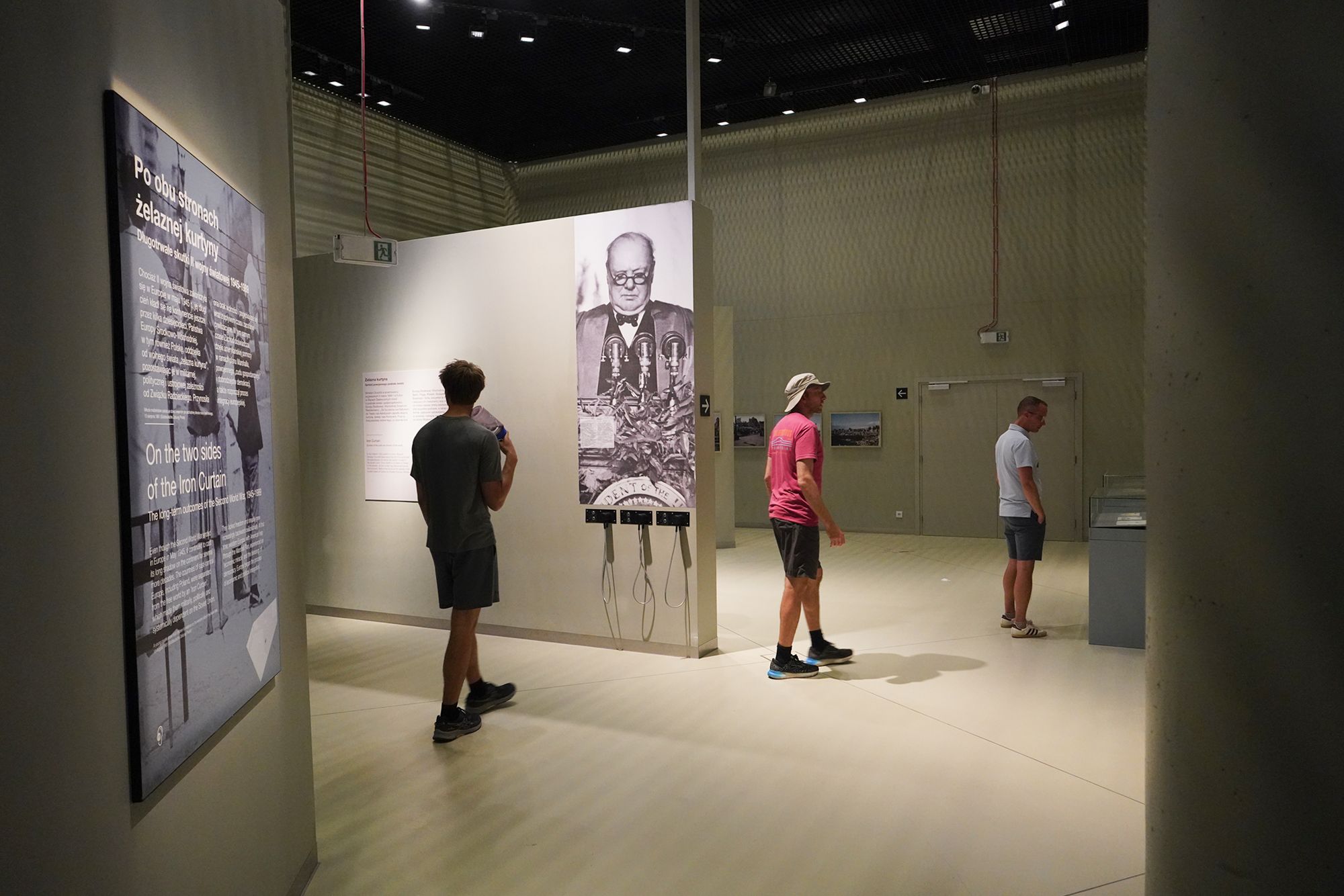
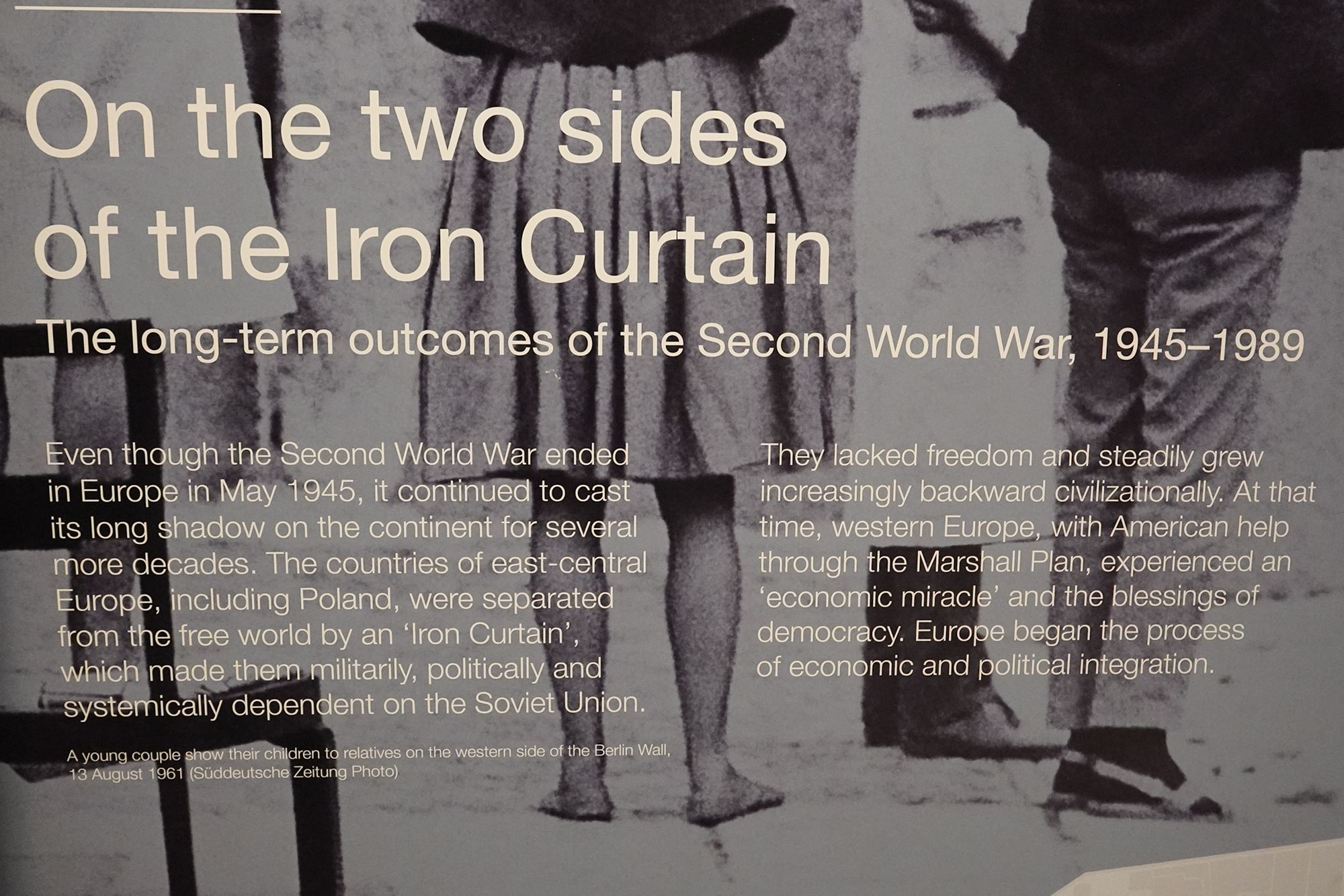
On the Two Sides of the Iron Curtain
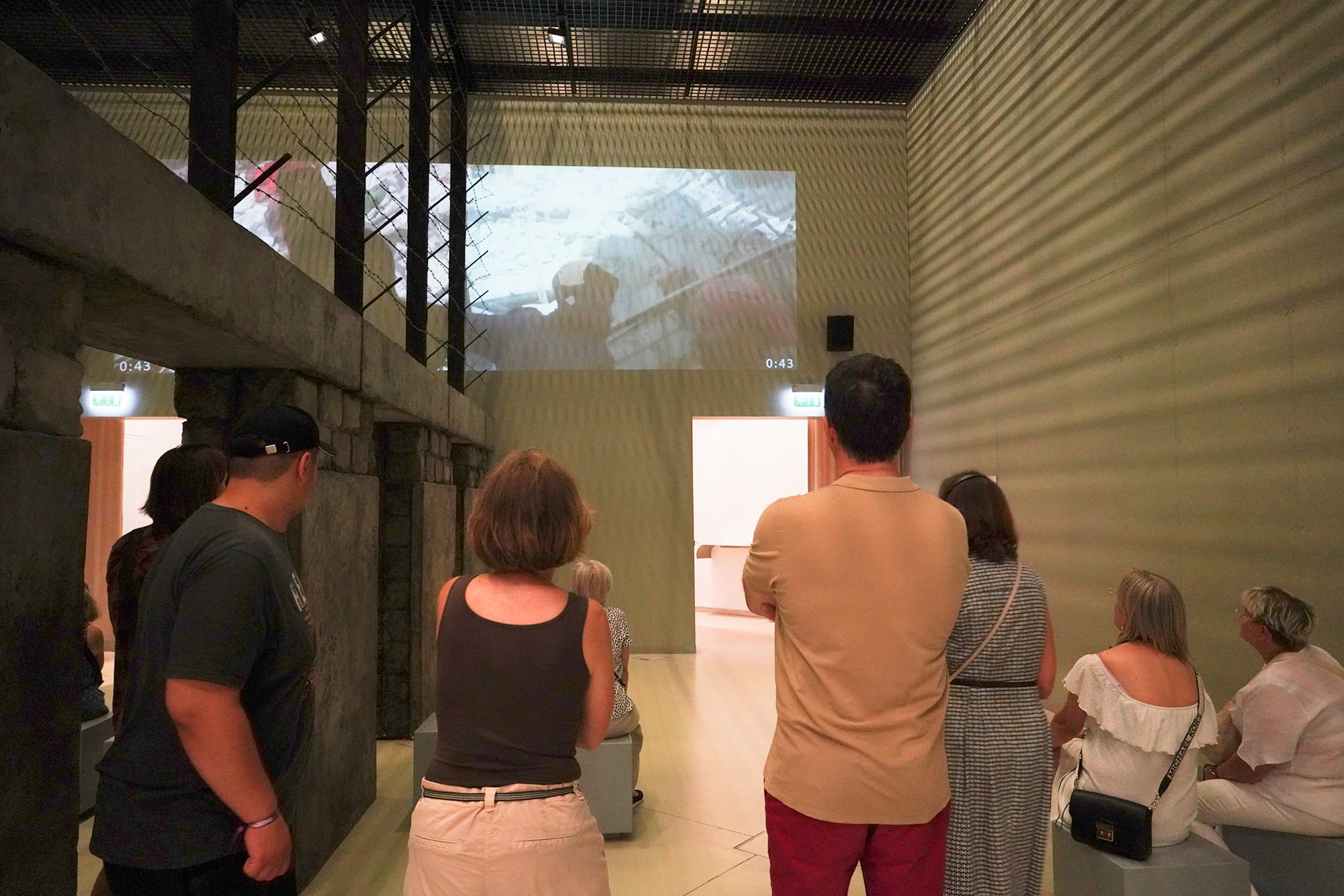
Although the war in Europe ended in May 1945, its effects shaped the continent for decades. The Iron Curtain separated east-central Europe, including Poland, from the West, leaving those countries dependent on the Soviet Union and without political freedom. Western Europe rebuilt with U.S. aid through the Marshall Plan and began integrating economically and politically.
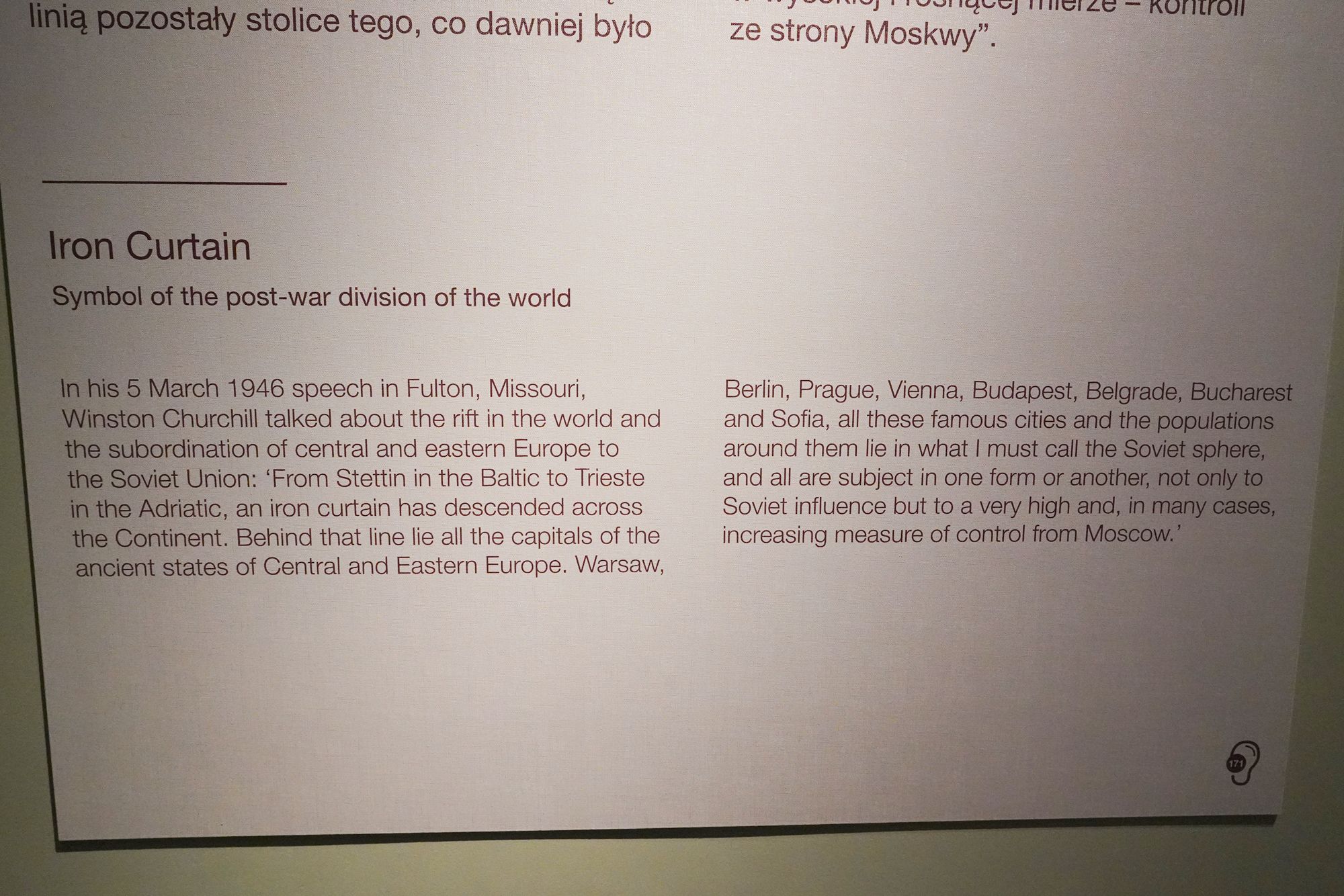
Iron Curtain
In a 1946 speech in Fulton, Missouri, Winston Churchill described Europe’s postwar division as an “Iron Curtain.” He said that capitals such as Warsaw, Prague, and Budapest were in the Soviet sphere, where Moscow was gaining increasing control over Central and Eastern Europe.
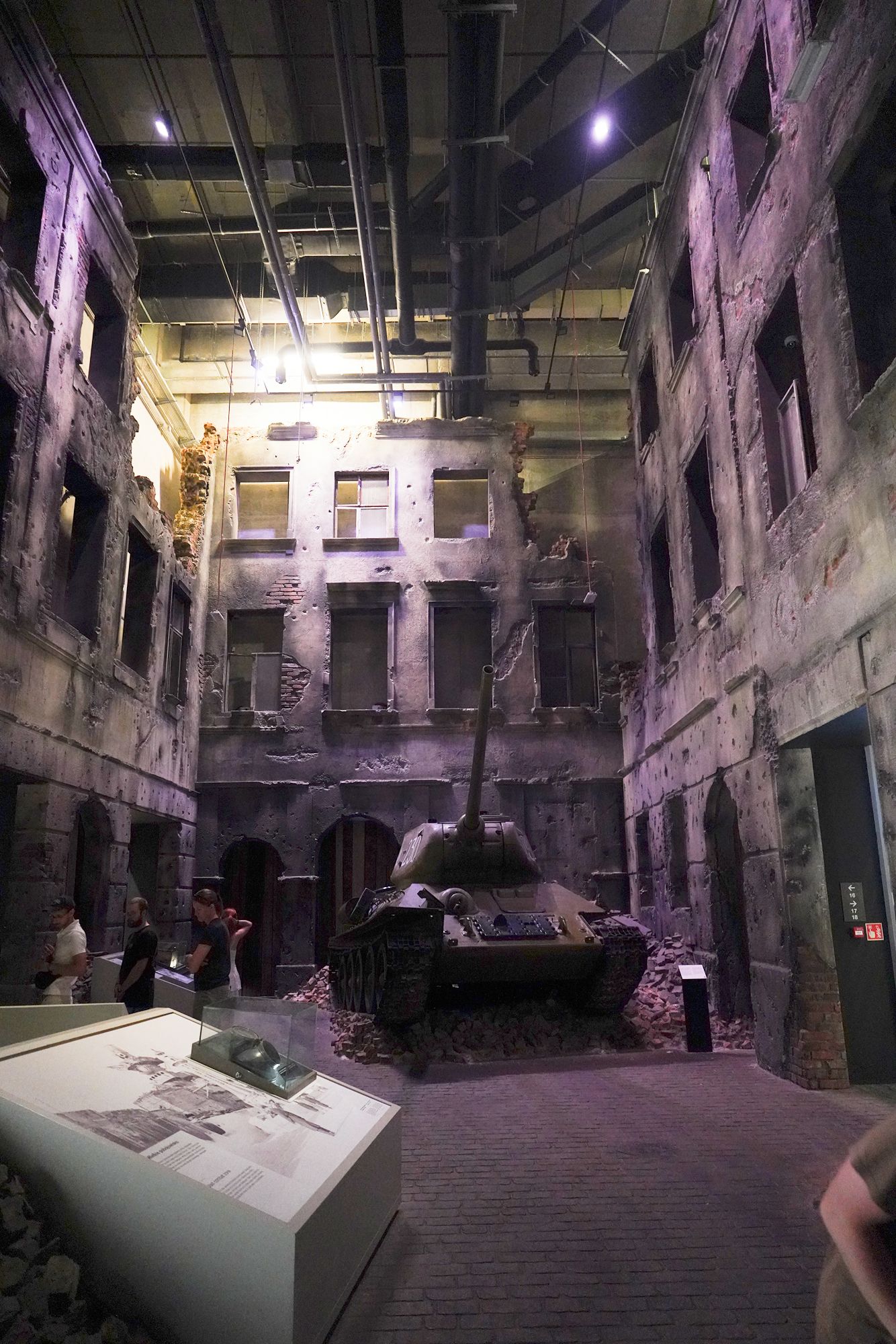
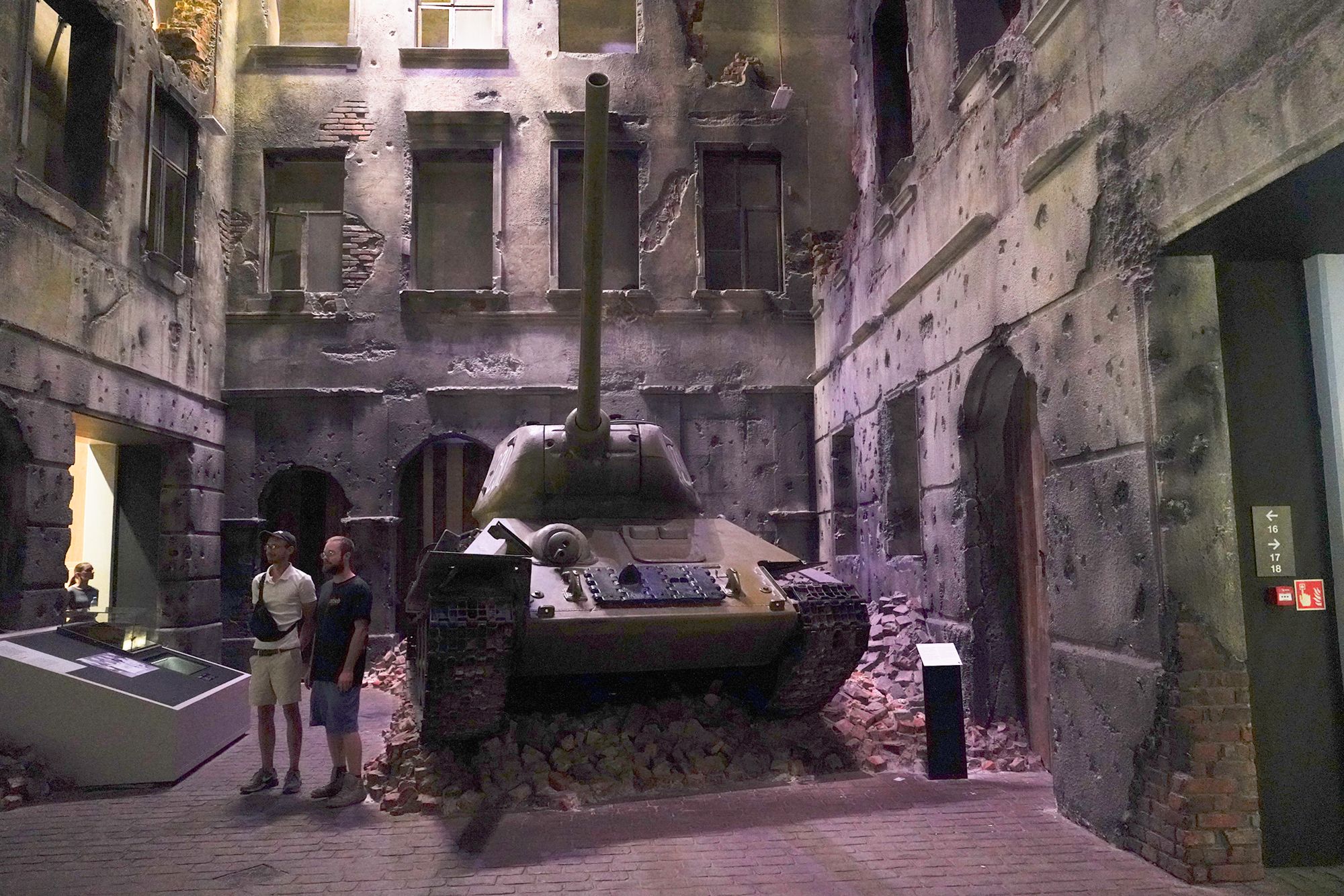
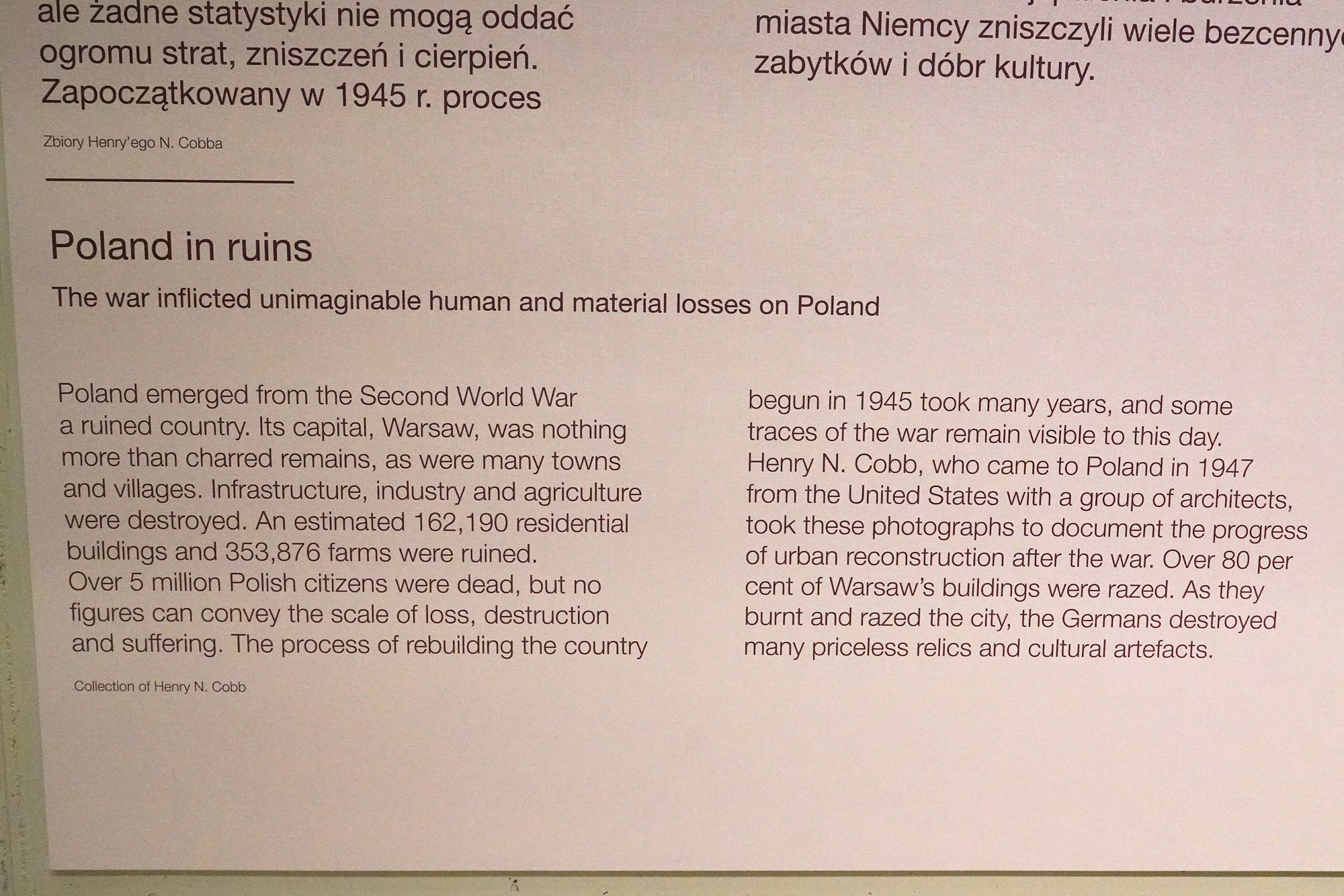
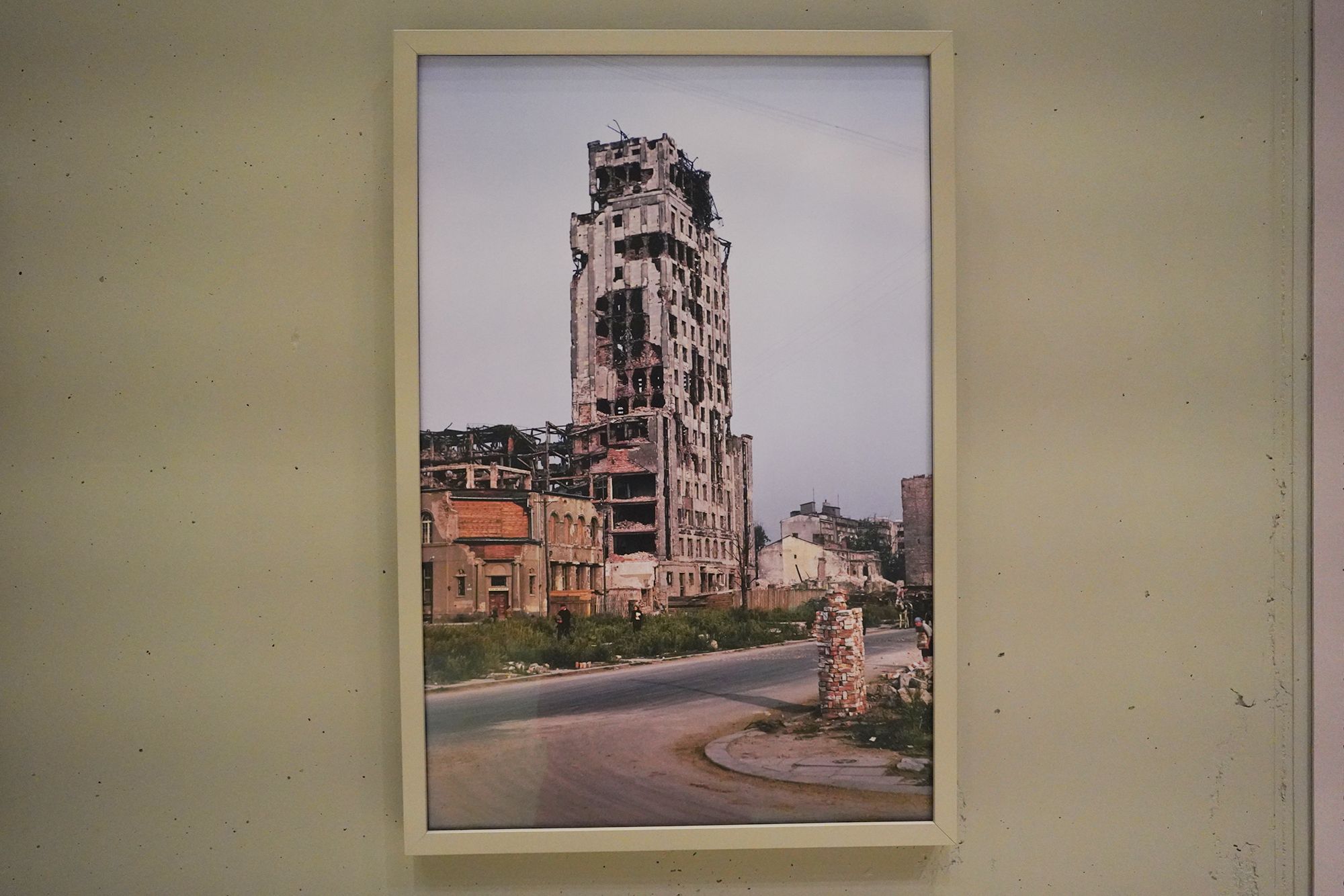
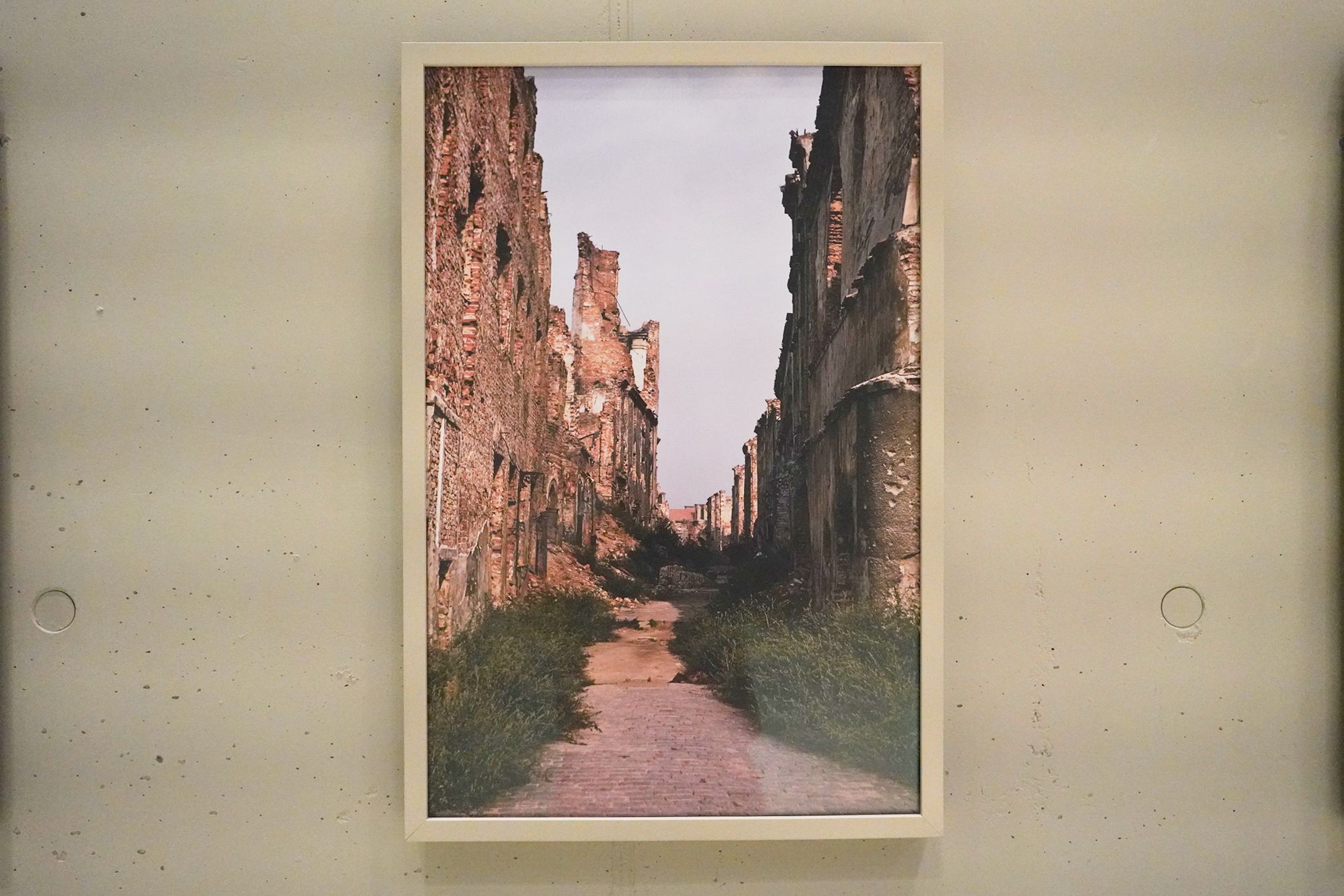
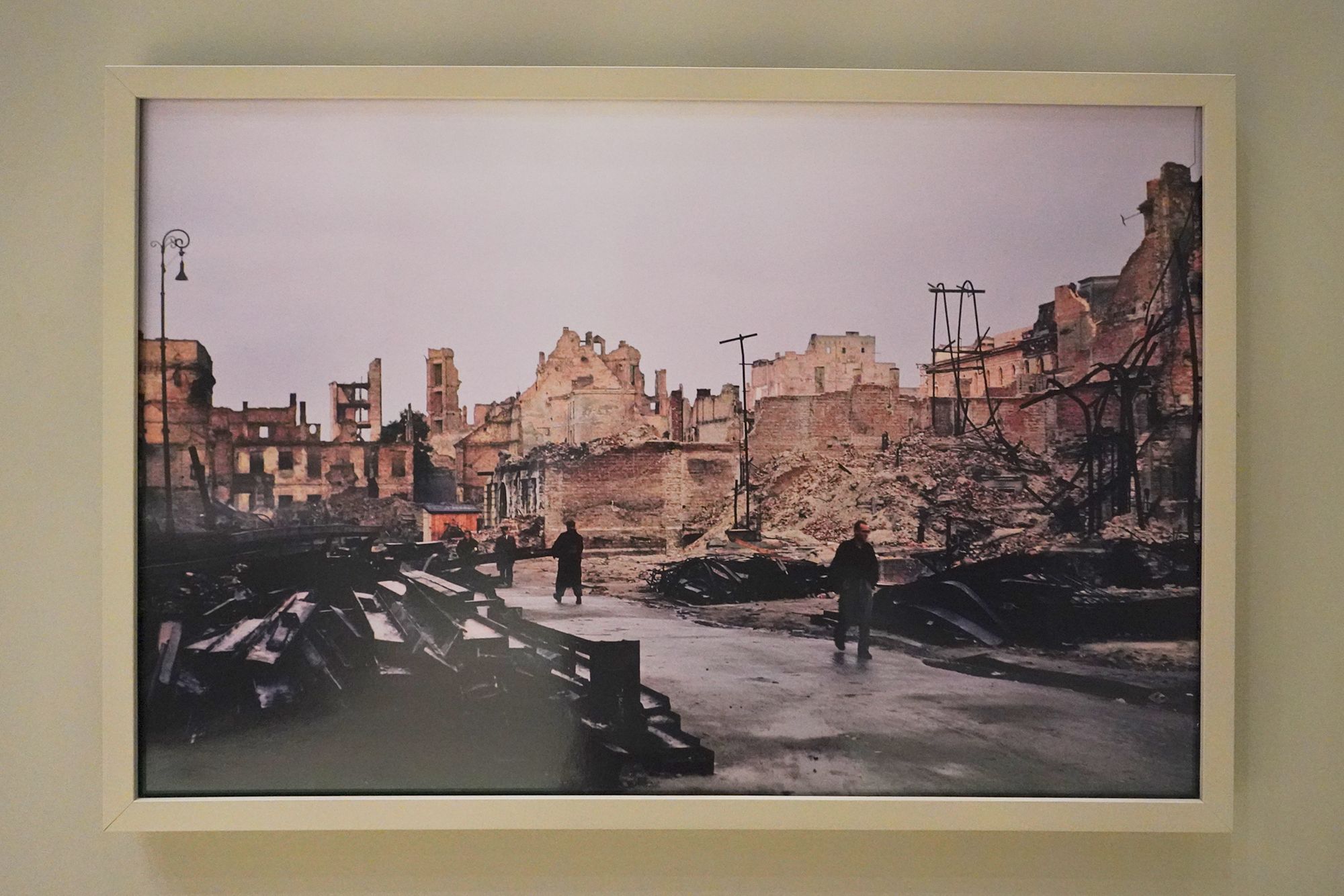
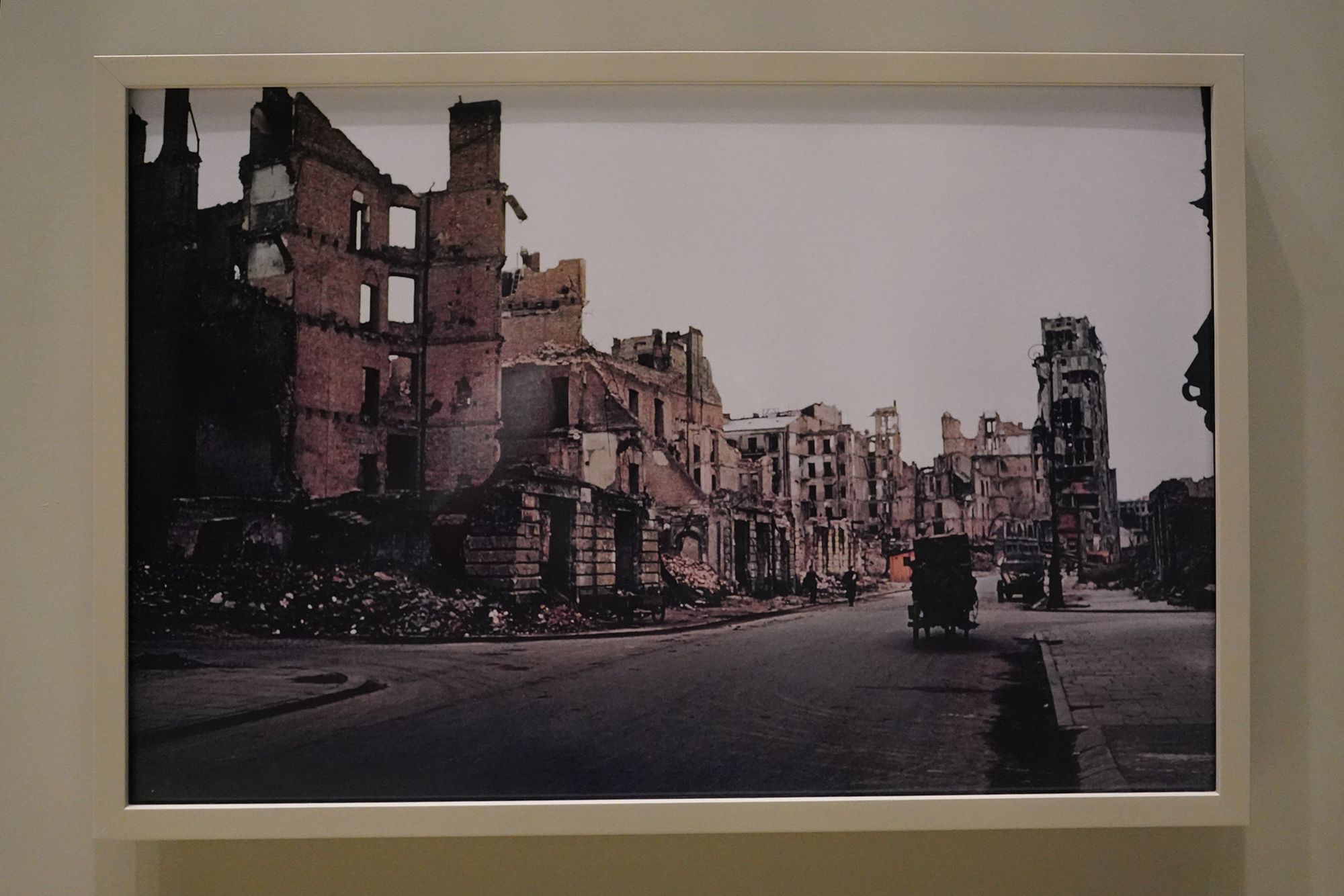
Poland in Ruins
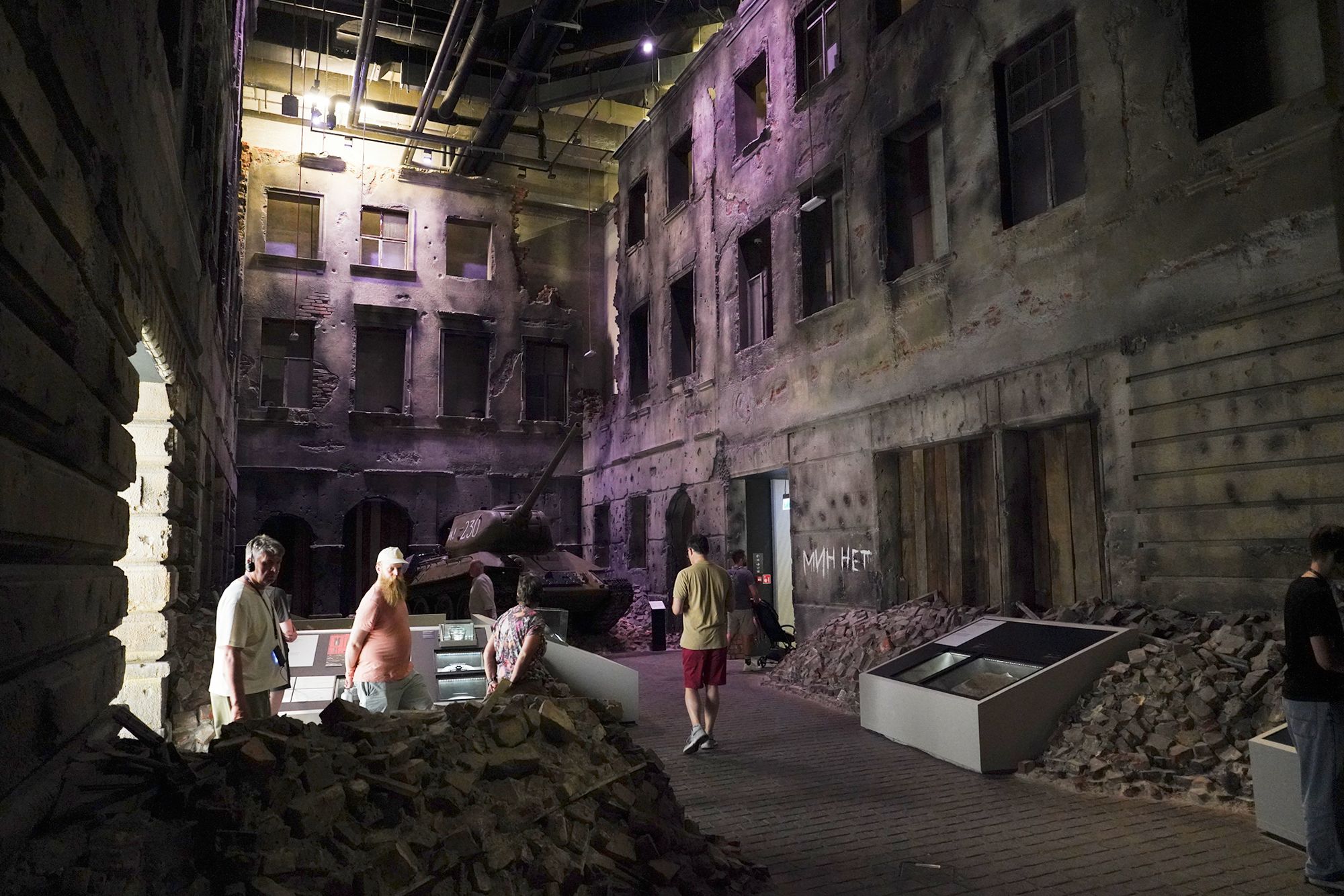
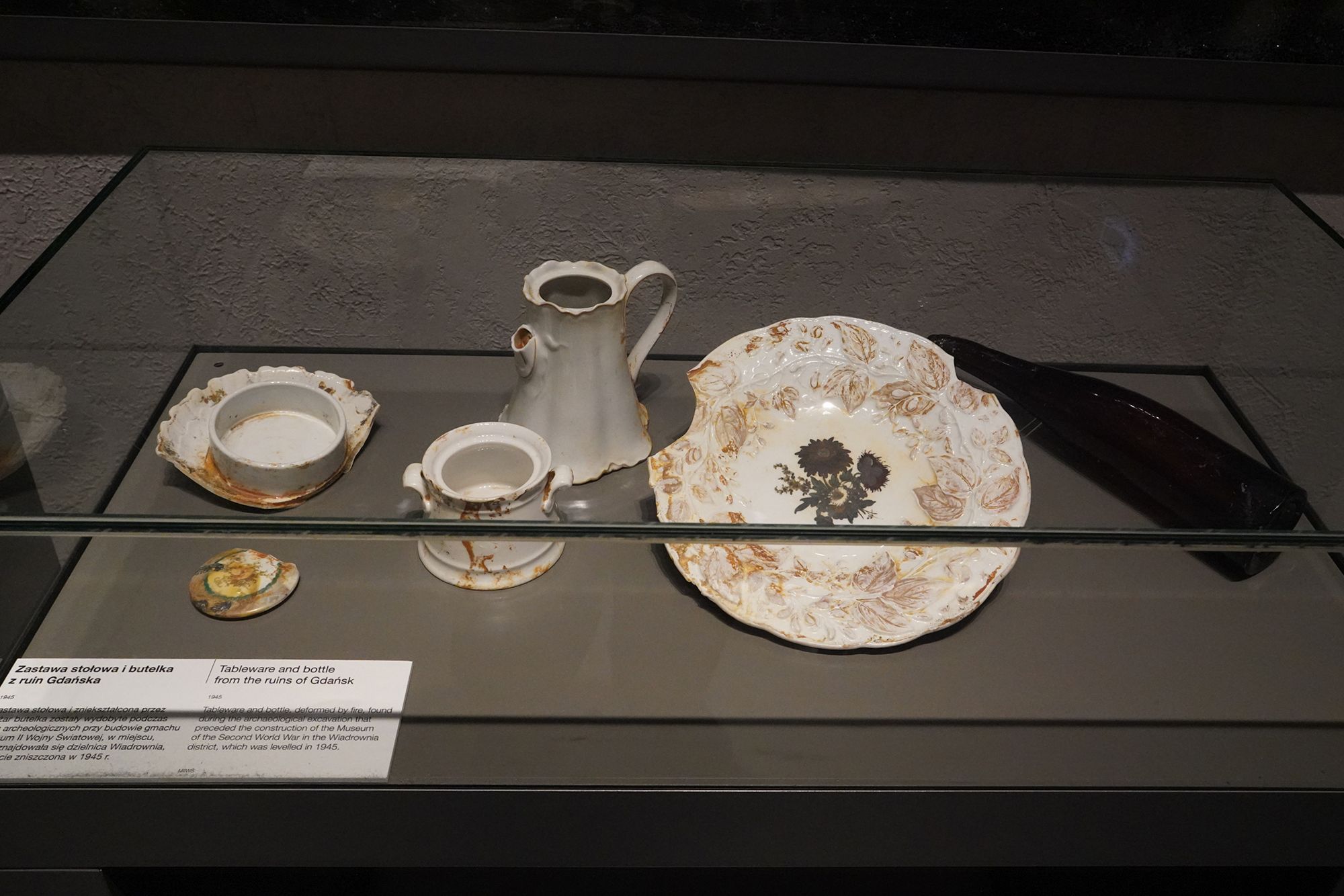
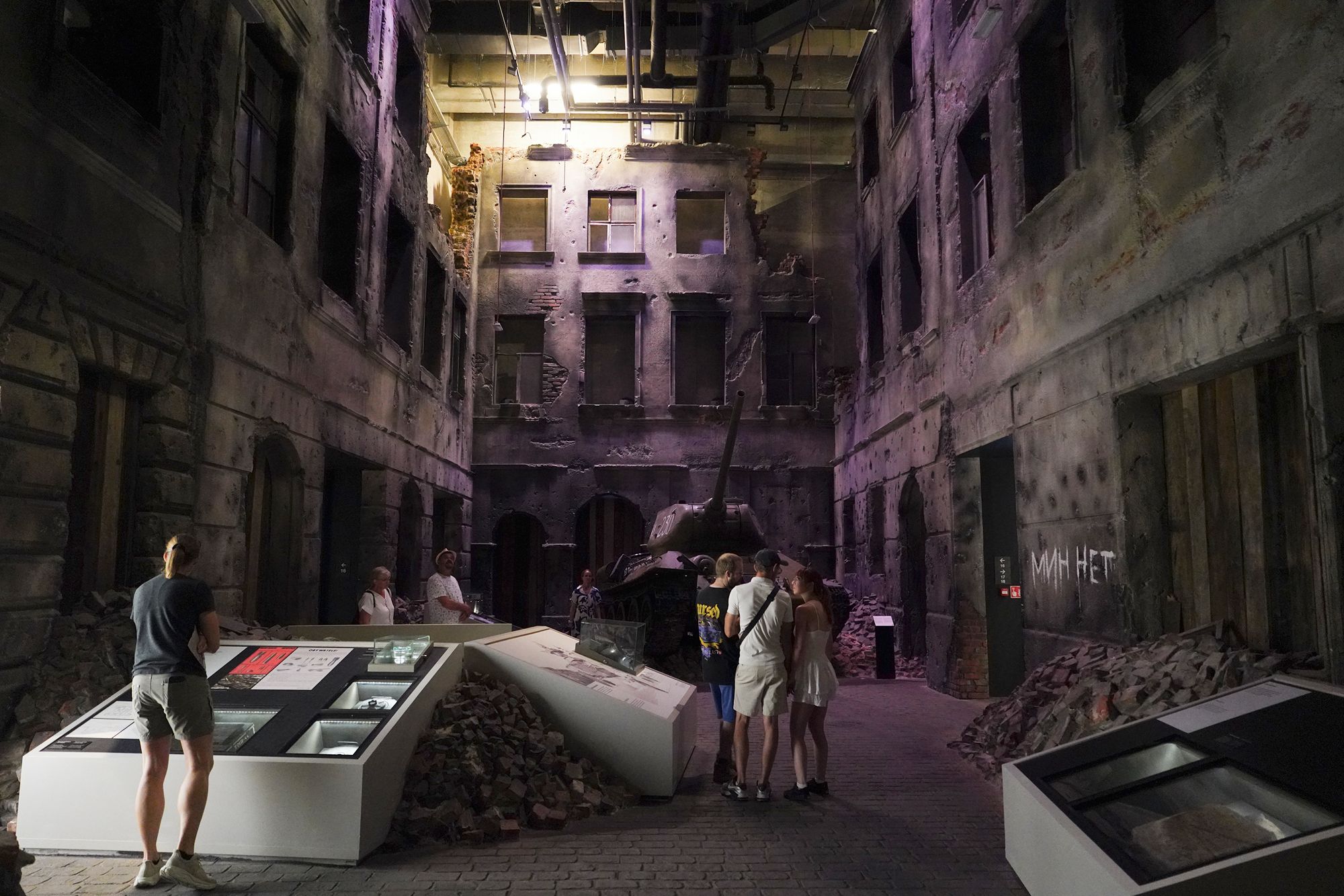
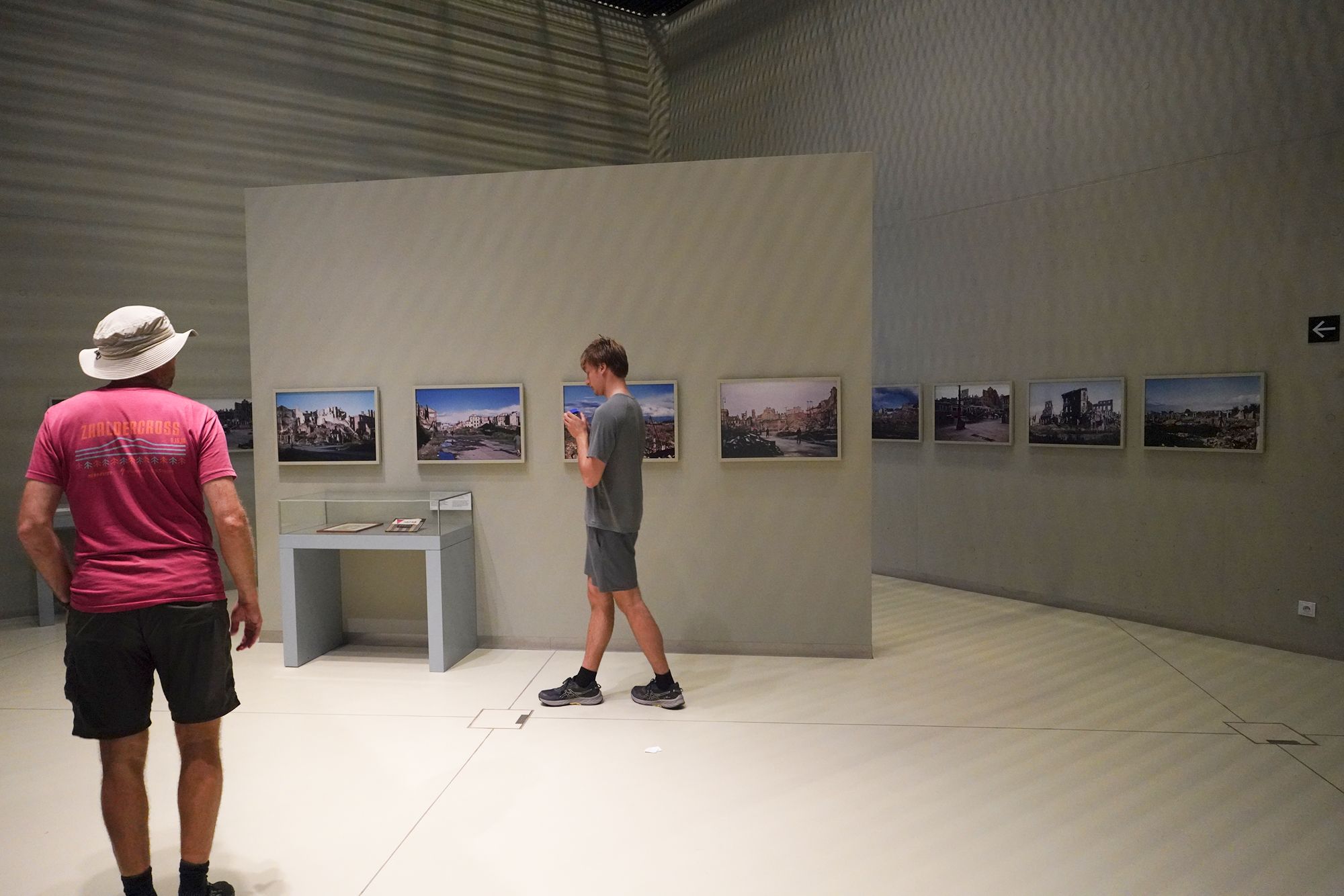
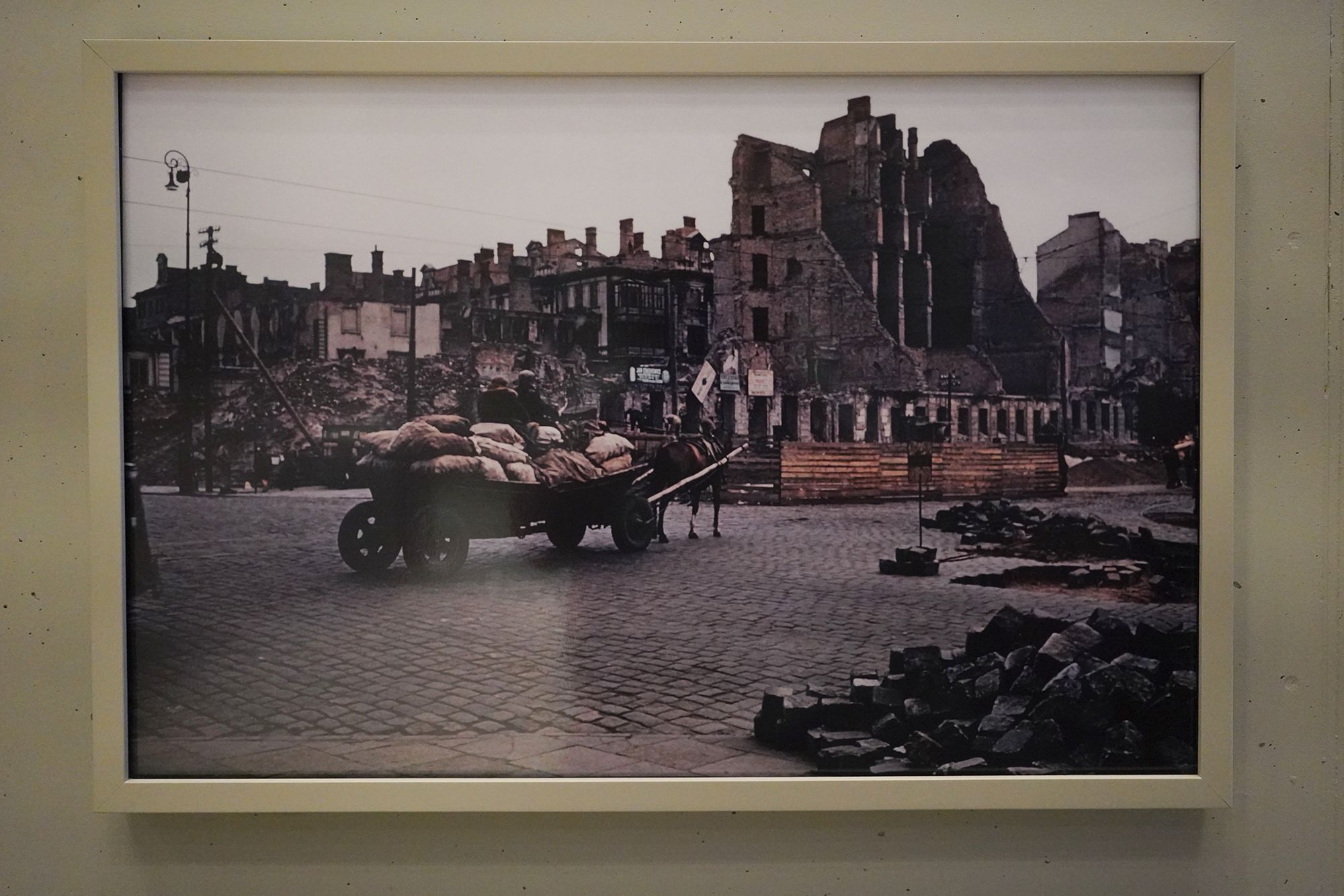
Poland emerged from the war devastated. More than five million Polish citizens had died, and over 80 percent of Warsaw’s buildings were destroyed. Farms, towns, industry, and infrastructure were also lost. Reconstruction began in 1945 and took many years; traces of the war remain visible today.
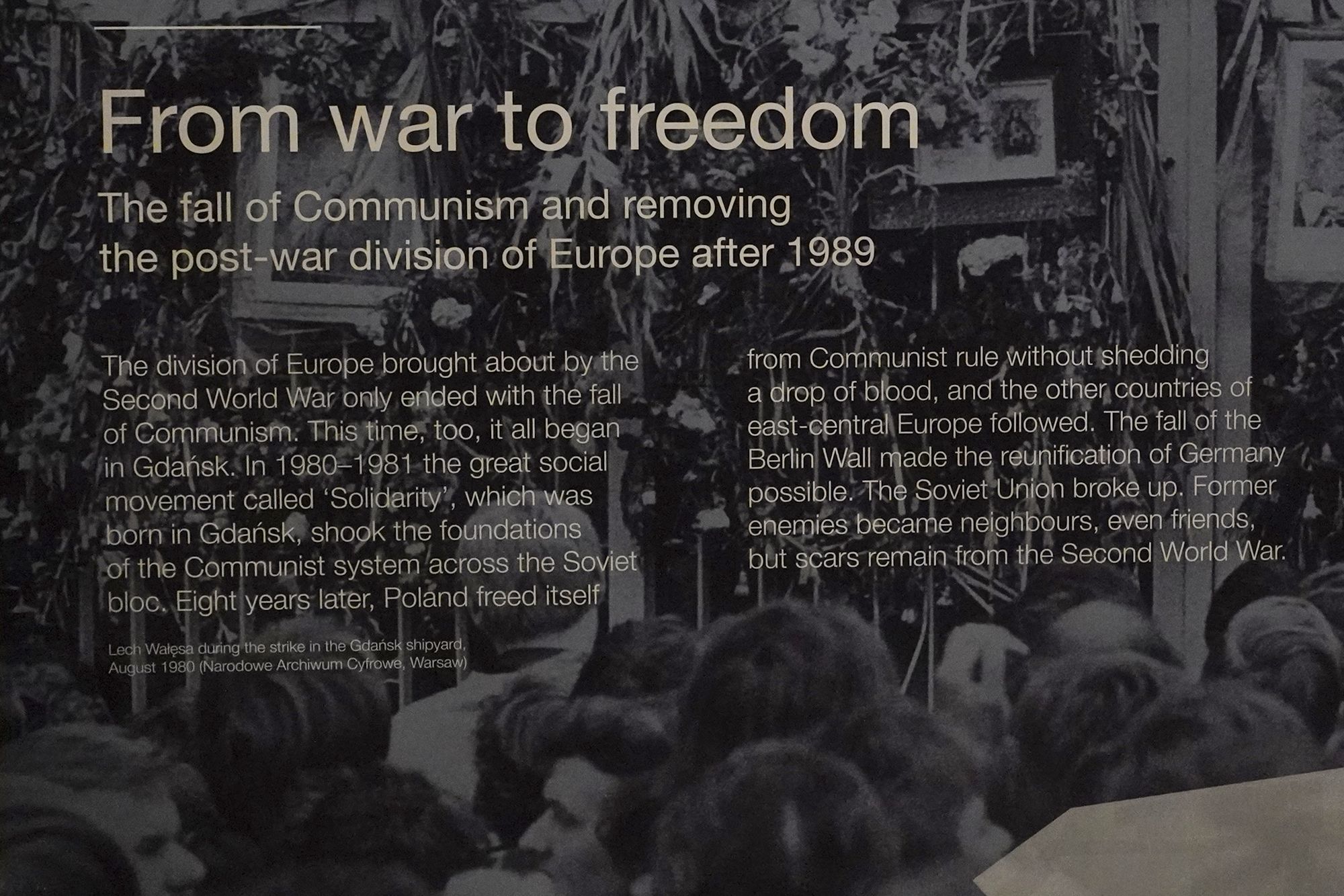
“From war to freedom,” explains how the fall of Communism ended Europe’s postwar division. It highlights the Solidarity movement in Gdańsk, Poland’s freedom in 1989, the fall of the Berlin Wall, and the breakup of the Soviet Union.