Museum of the Second World War, Part 1, Gdansk, Poland
The exhibition showed war’s reach into daily life through bombing, hunger, shortages, and efforts to preserve dignity. 1359
Museum of the Second World War: Plac Władysława Bartoszewskiego 1, 80-862 Gdańsk, Poland
Date Picture Taken: Jun, 2026
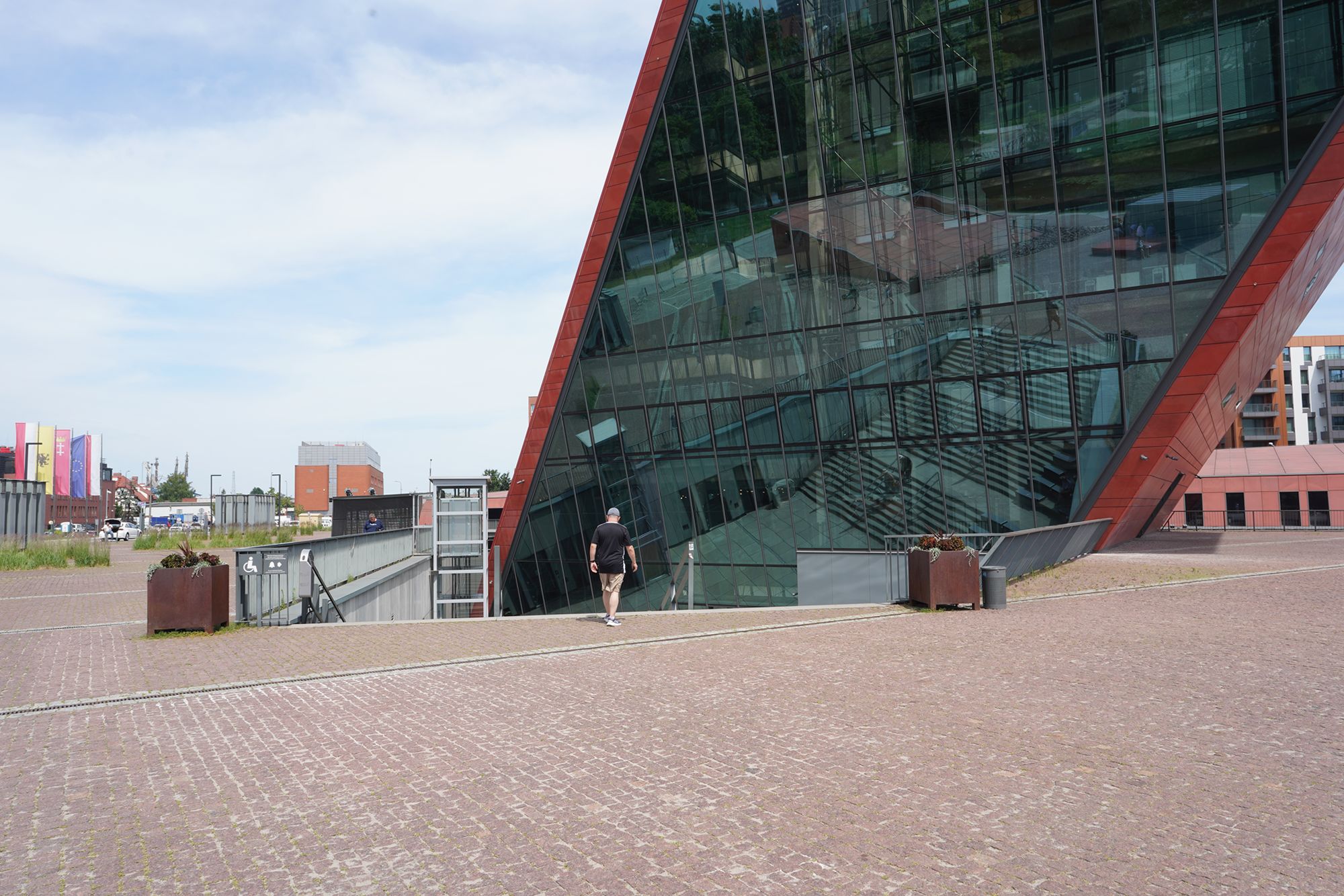
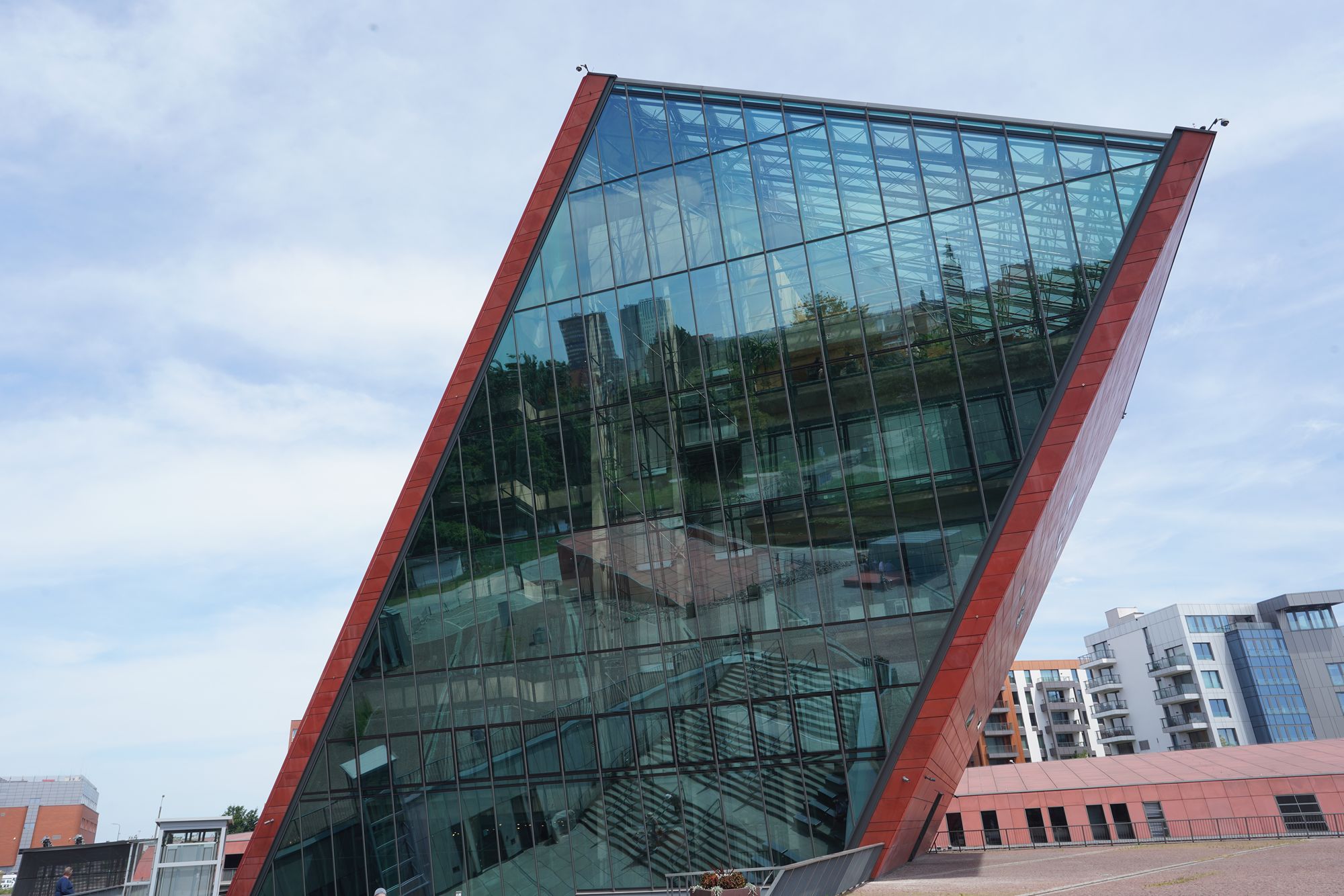
The museum’s striking exterior is dominated by a tall, sharply angled tower rising above the ground, while much of the building lies underground. The architects designed it to evoke the tragedy of the past, the vitality of the present, and the horizon of the future.
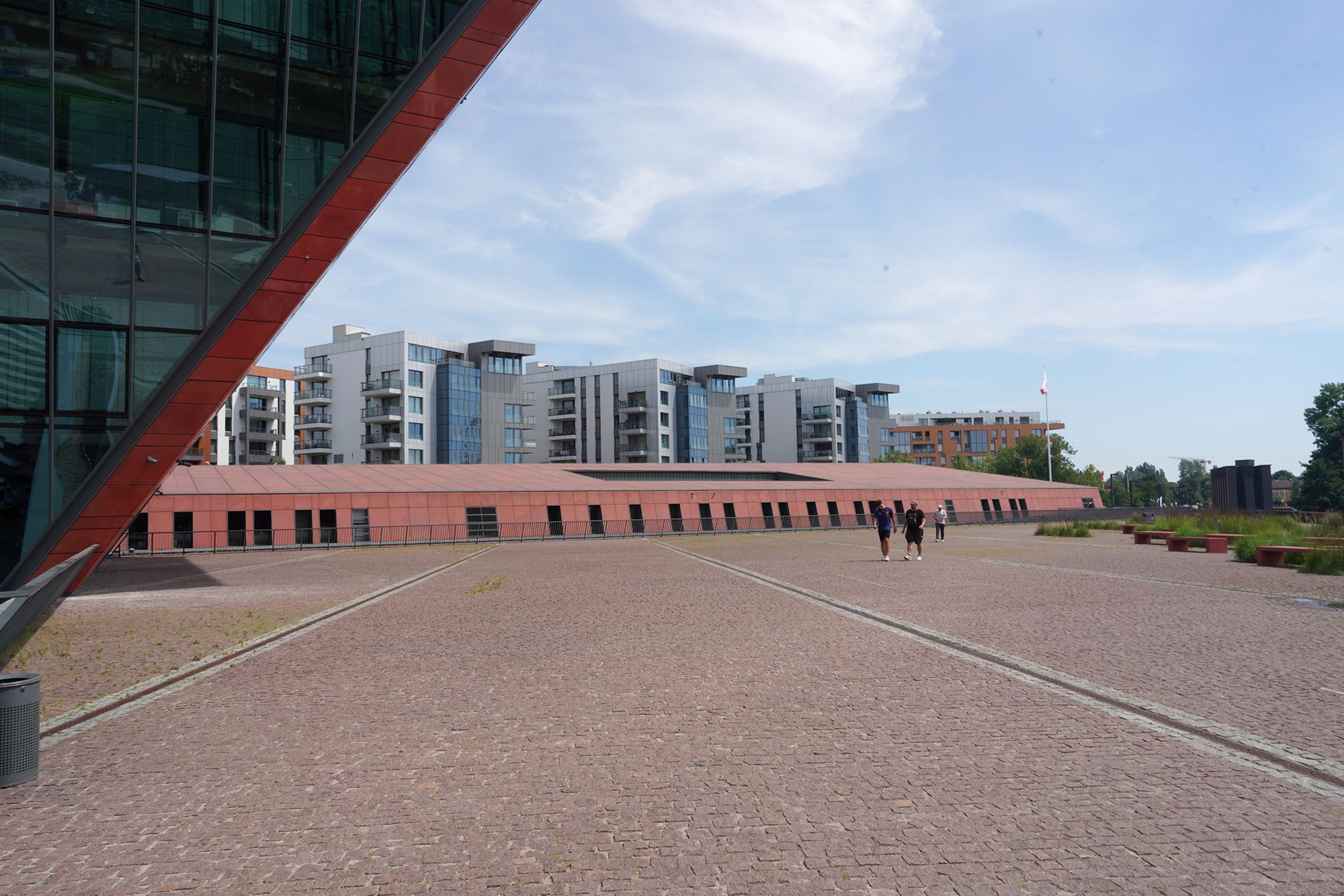
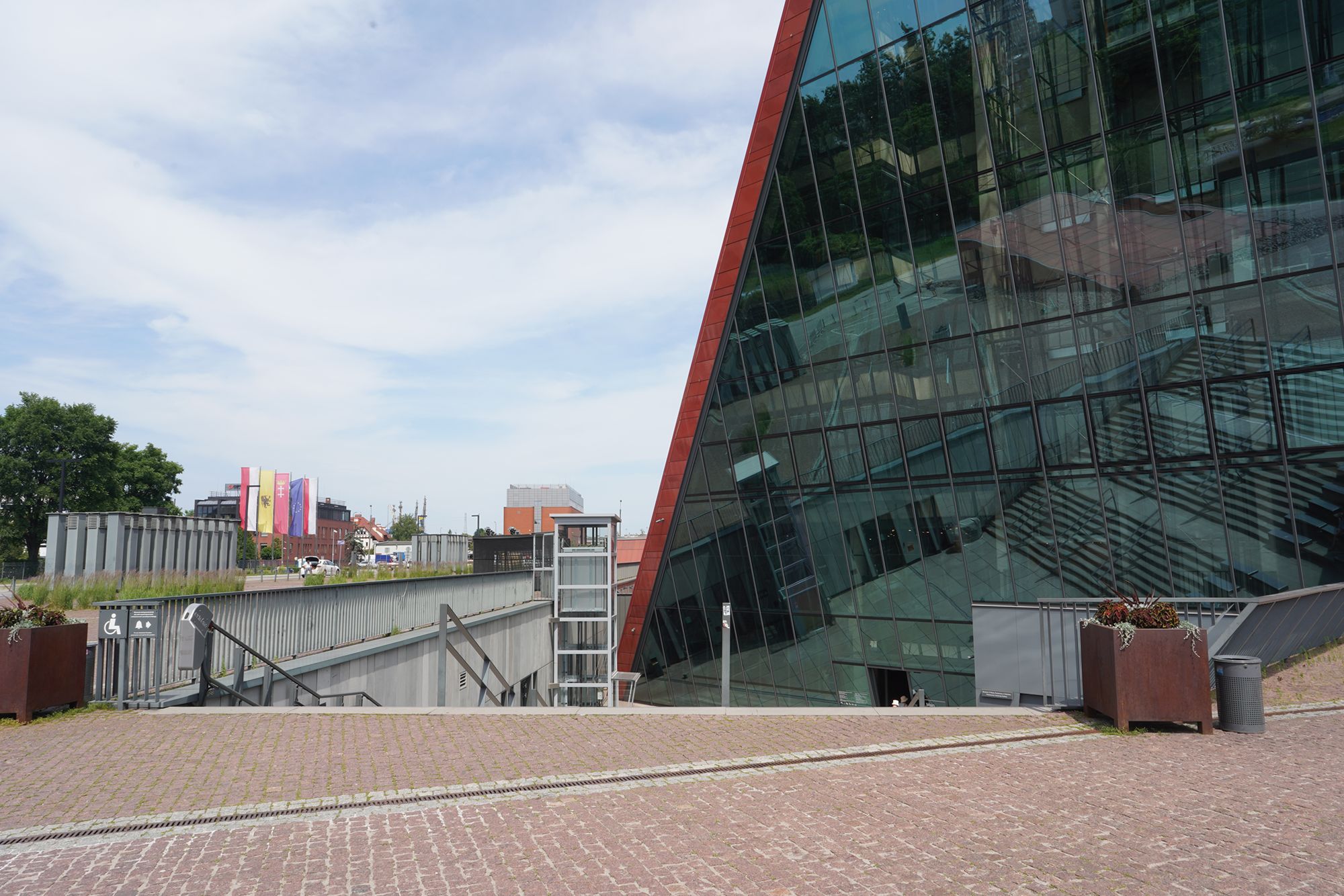
The museum was proposed in 2007, formally established in 2008, and its building’s foundation stone was laid in 2012. It opened to visitors on March 23, 2017.
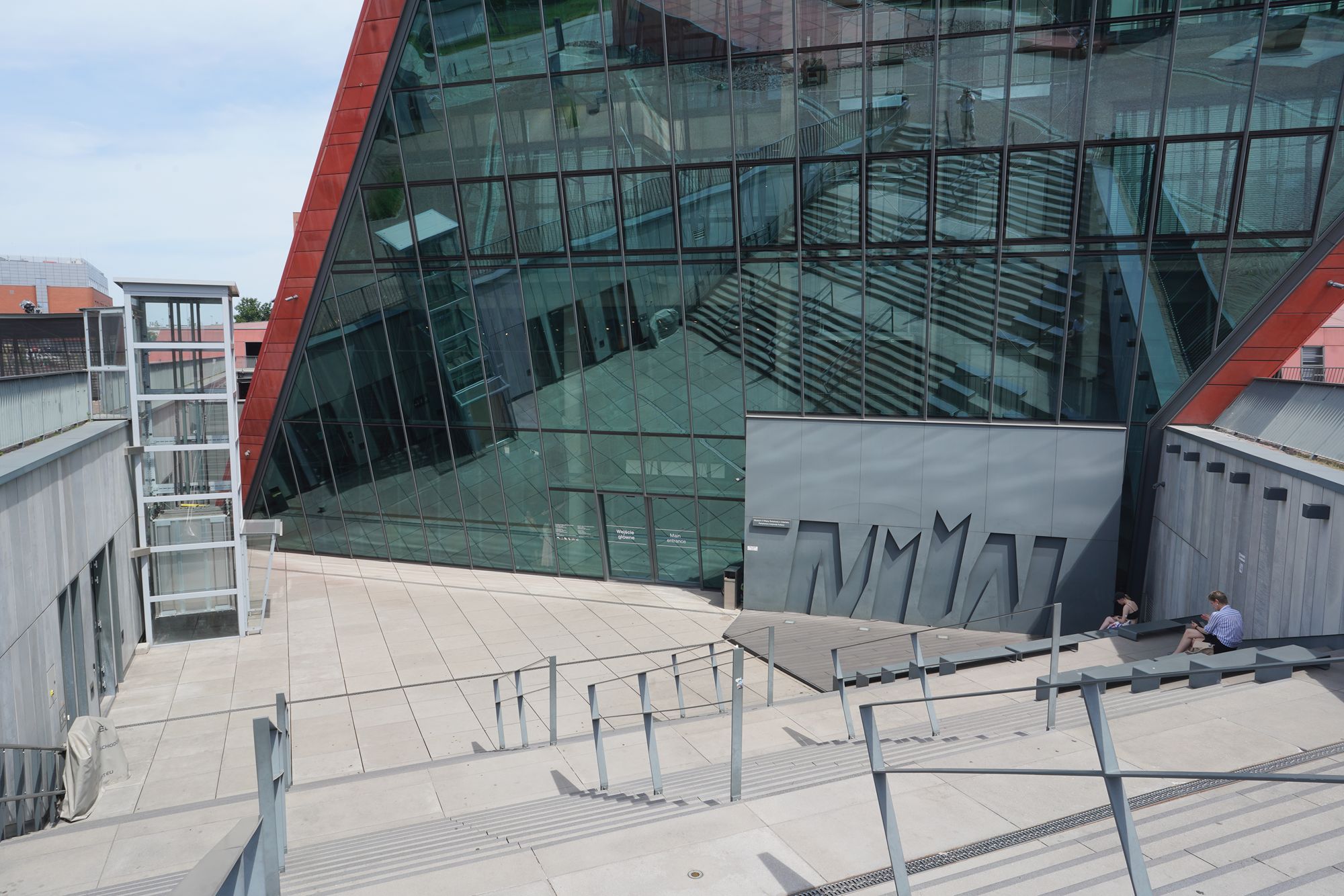
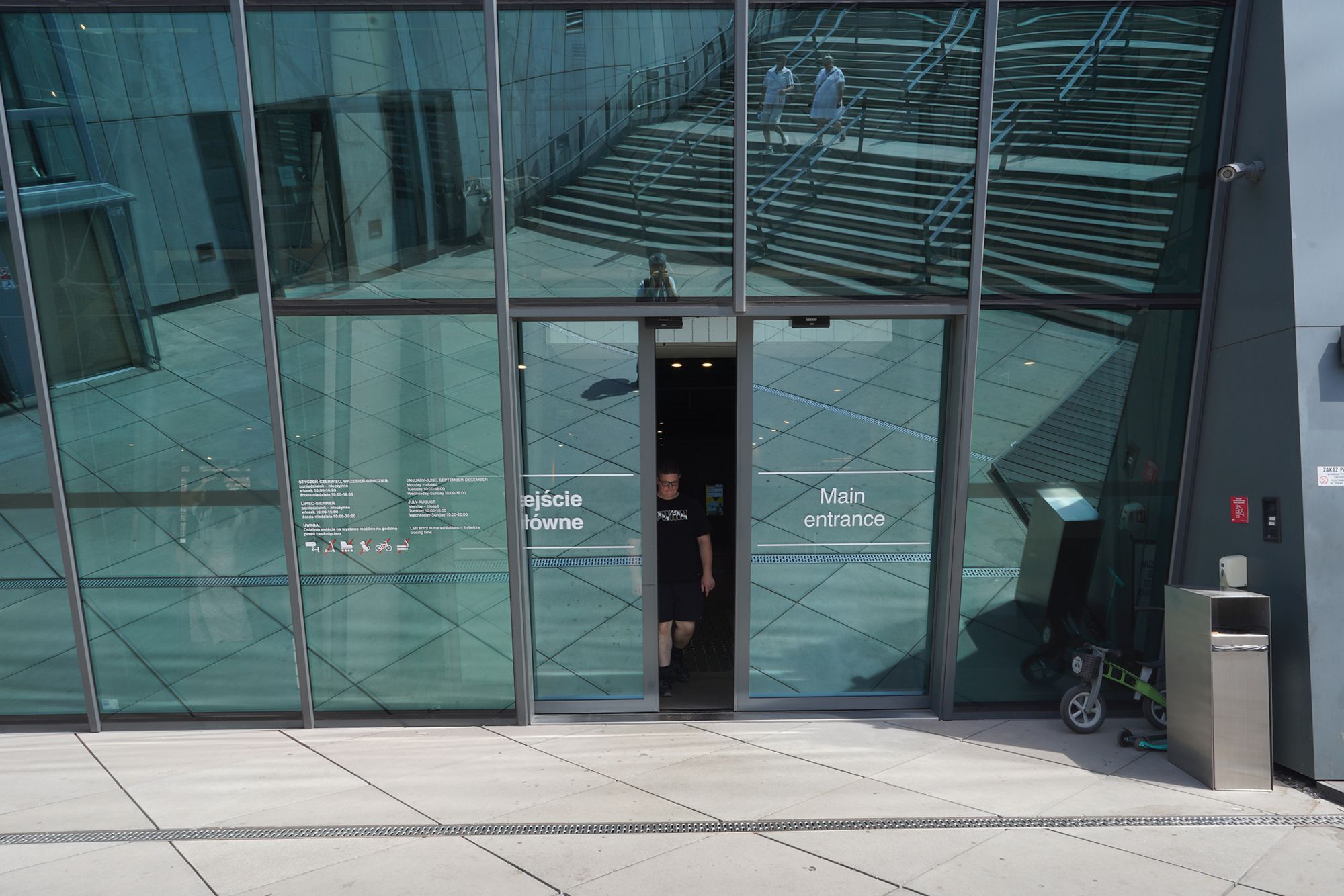
It was built in Gdańsk because the war began nearby, at Westerplatte, and to tell the story of World War II through both Poland’s experience and its wider international context. Its purpose is to remember the victims and explore the war’s causes, human impact, and consequences.
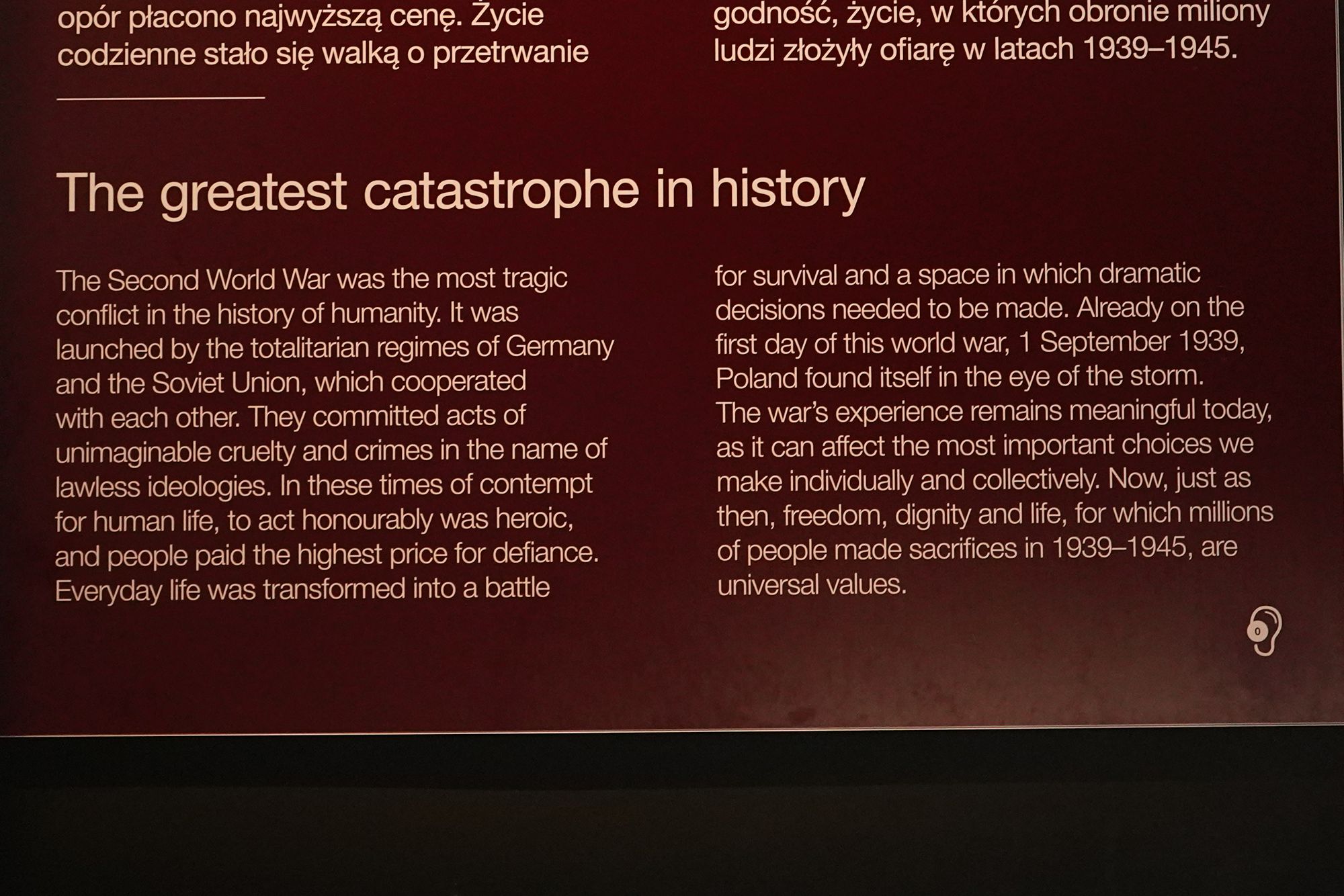
The panel, titled “The Greatest Catastrophe in History,” describes World War II as a devastating conflict launched by Germany’s and the Soviet Union’s totalitarian regimes. It emphasizes how war turned everyday life into a struggle for survival, and says that freedom, dignity, and life remain universal values.
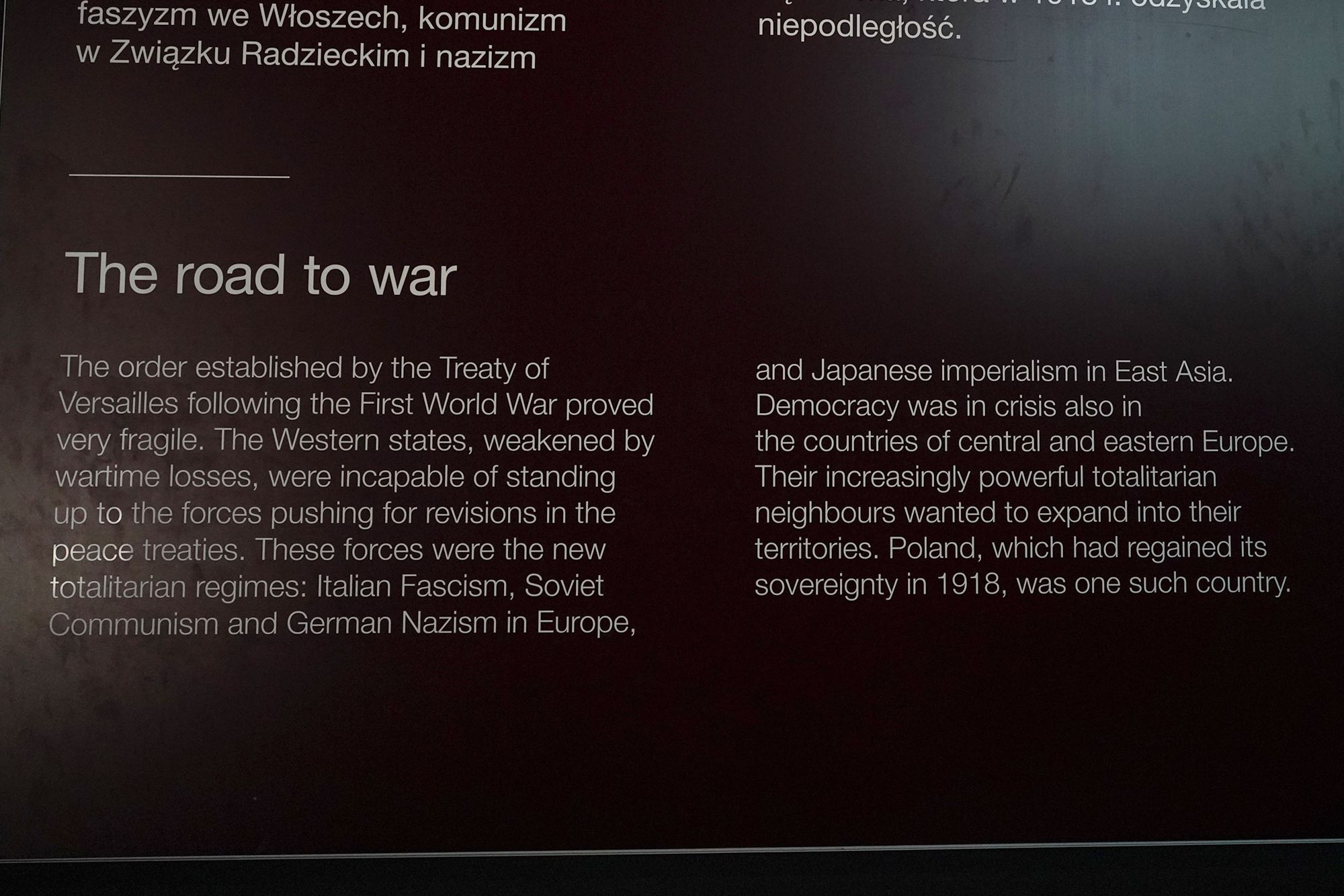
The exhibit “The Road to War” explains how the fragile post–World War I order and weakening democracies left Europe vulnerable to expansionist regimes. It points to Italian Fascism, Soviet Communism, German Nazism, and Japanese imperialism, noting that Poland—independent again since 1918—was among the countries threatened by their ambitions.
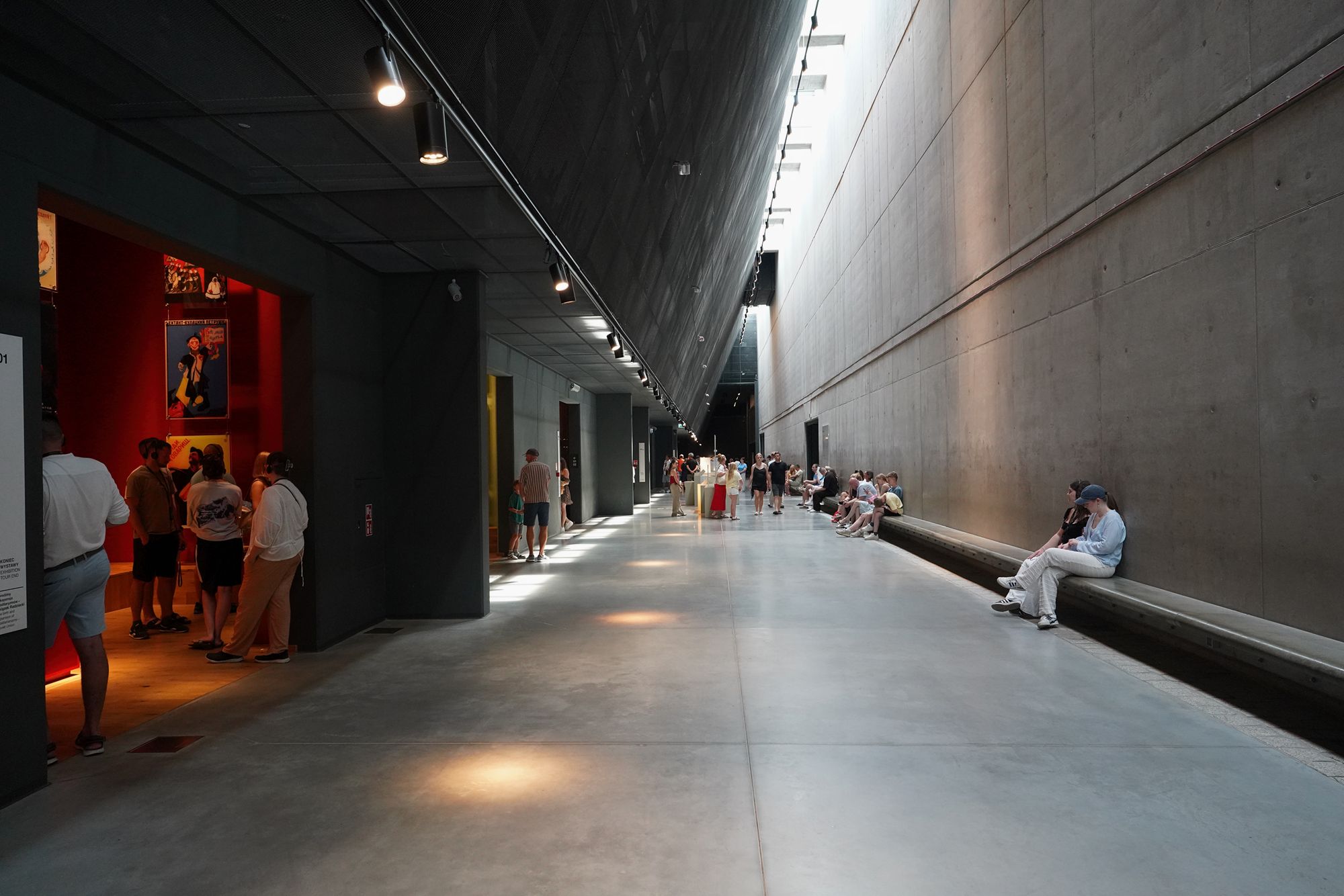
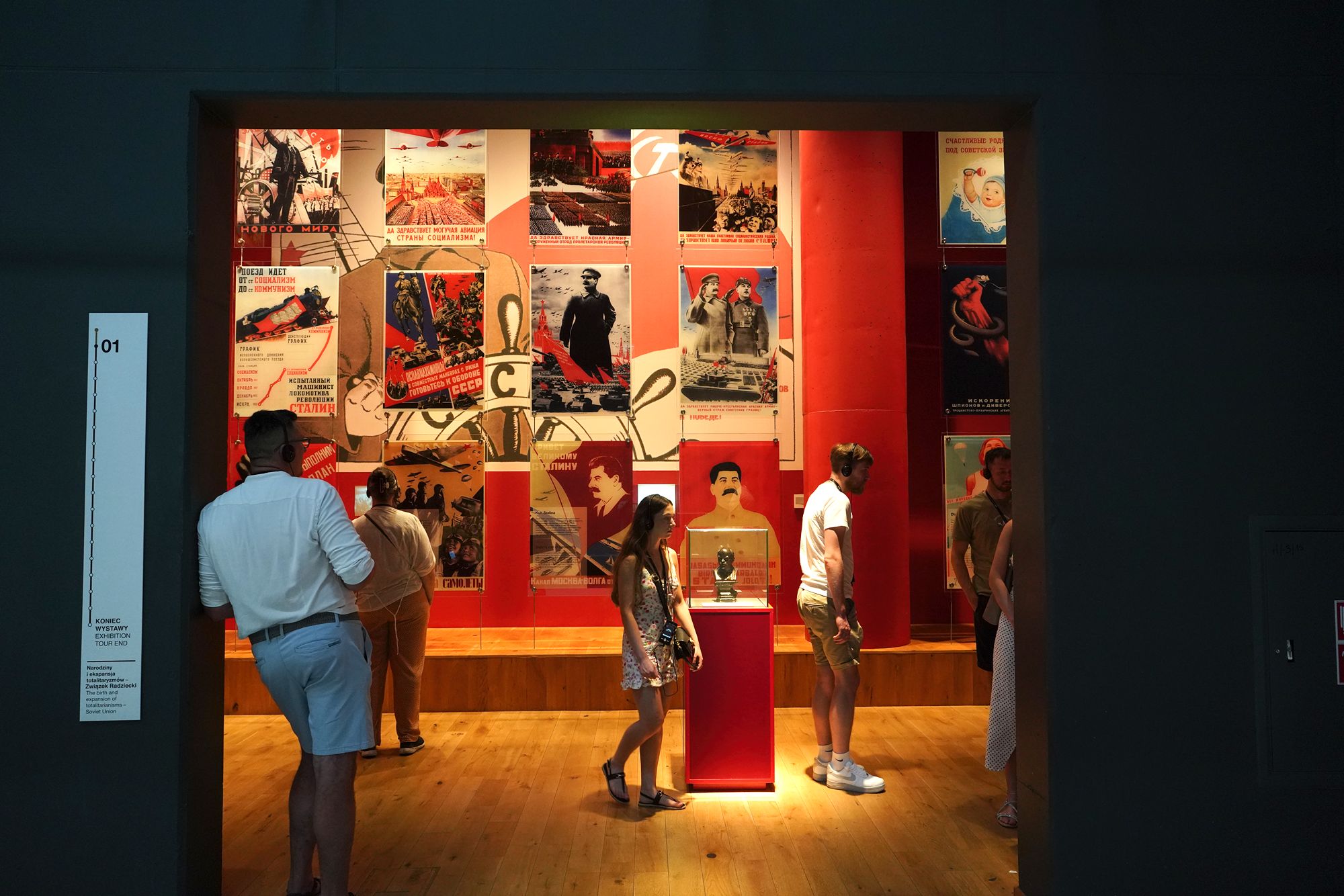
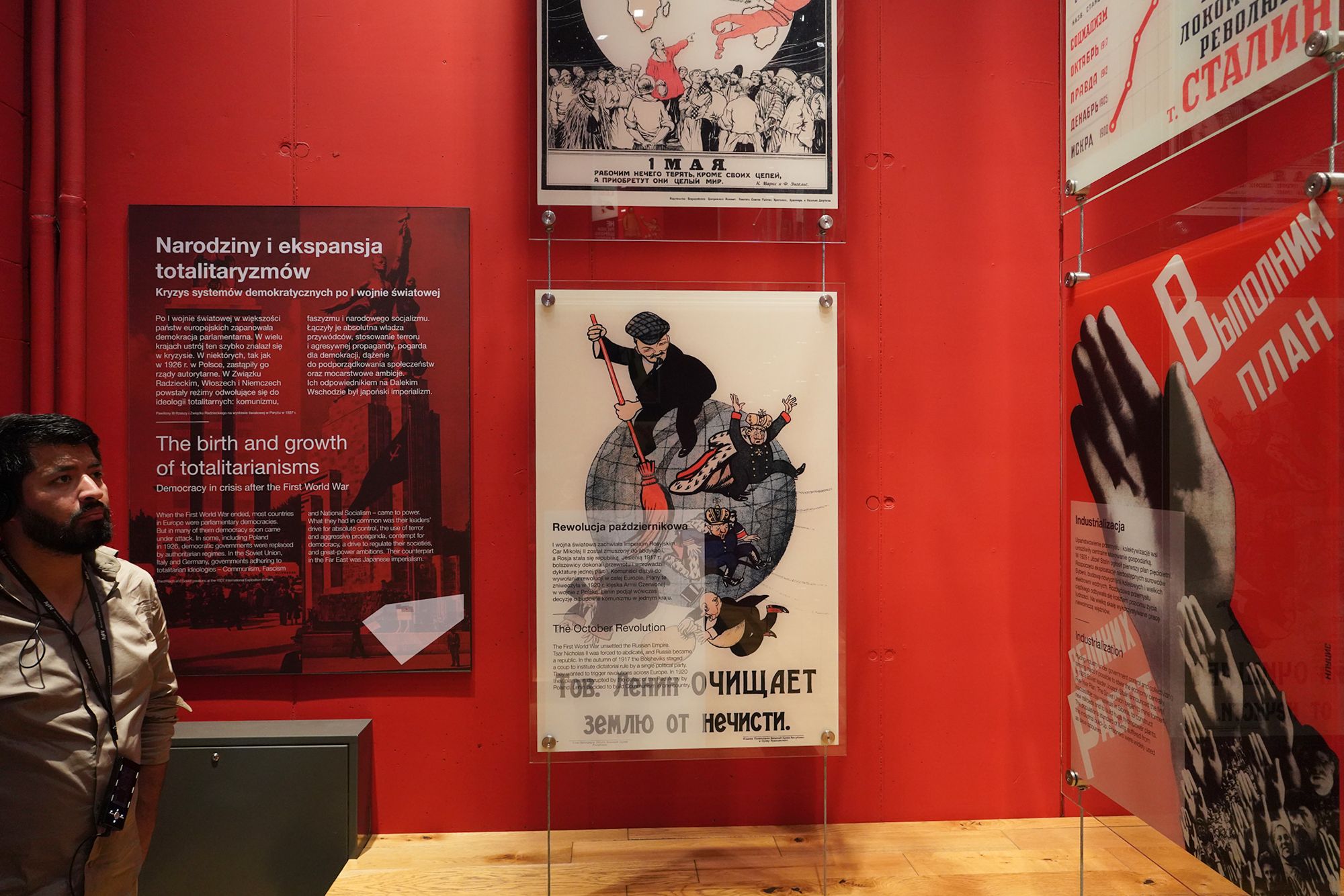
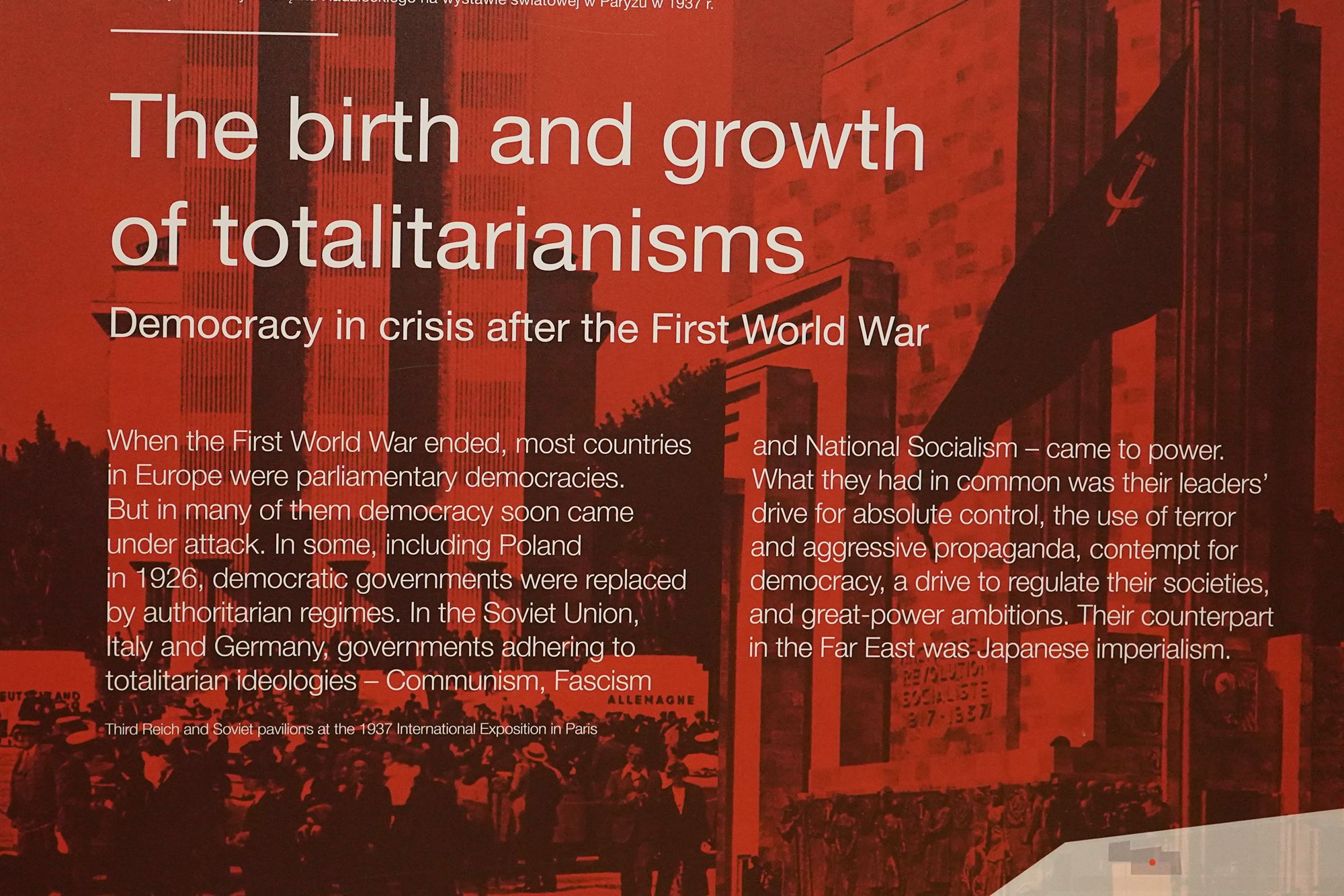
The exhibit “The Birth and Growth of Totalitarianisms” describes how democracy weakened after World War I. It notes that authoritarian regimes took hold in countries including Poland, while Communist, Fascist, and Nazi governments in the Soviet Union, Italy, and Germany pursued absolute control through terror and propaganda. It also points to Japanese imperialism in East Asia.
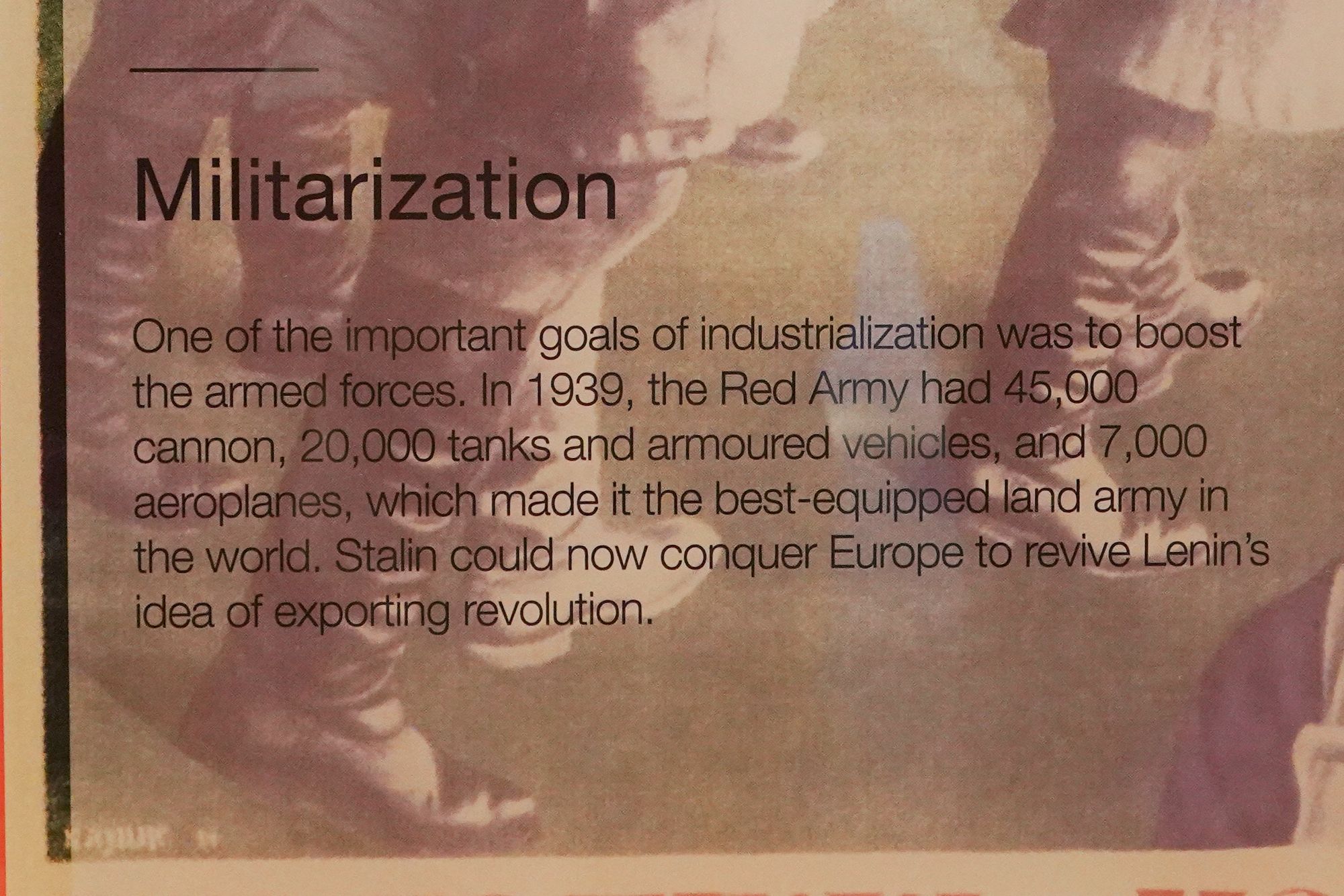
The “Militarization” panel says Soviet industrialization helped expand the Red Army. It lists the army’s weapons and aircraft in 1939, then argues that Stalin’s military strength could be used to spread revolution. That final claim is the exhibit’s interpretation of Soviet intentions.
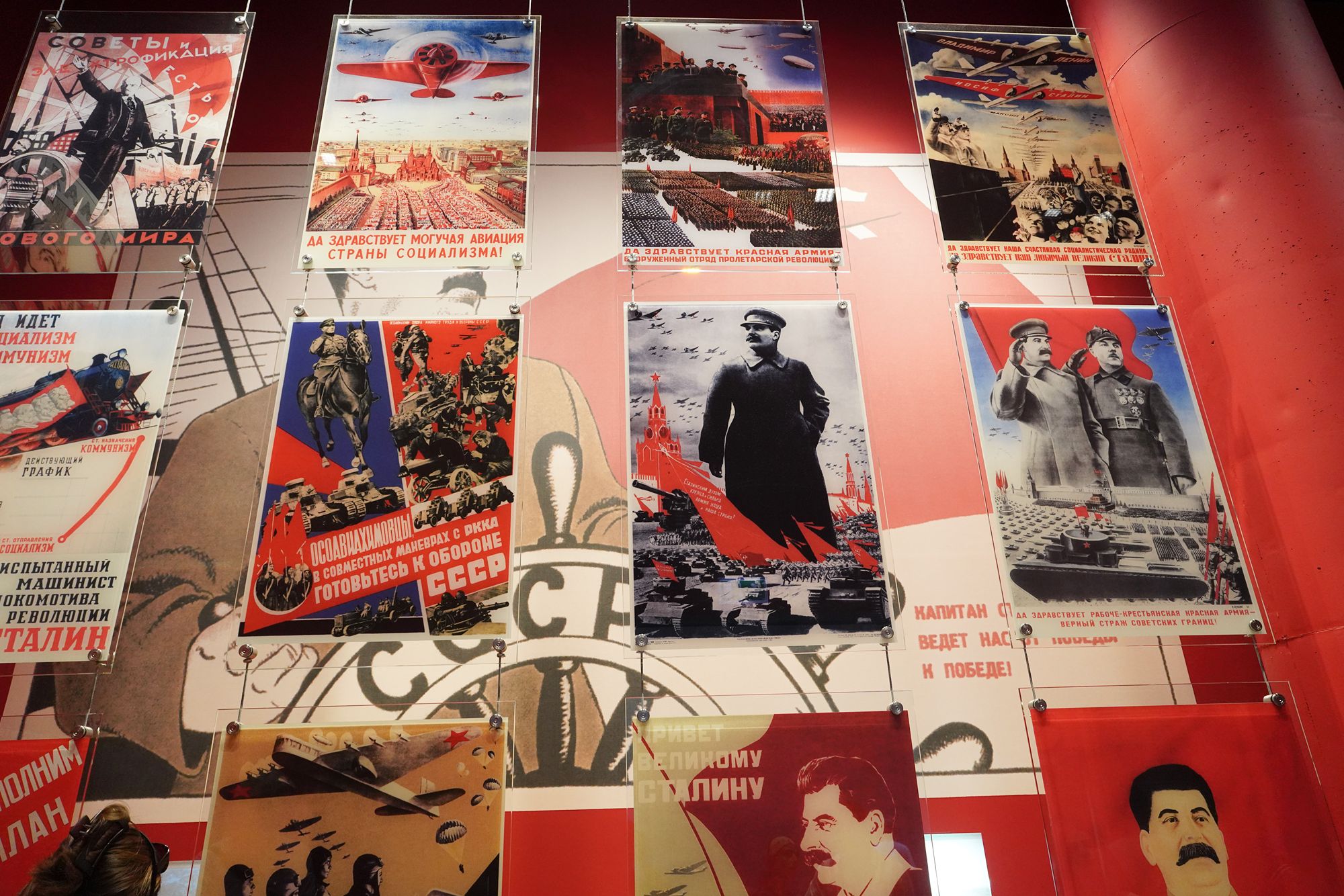
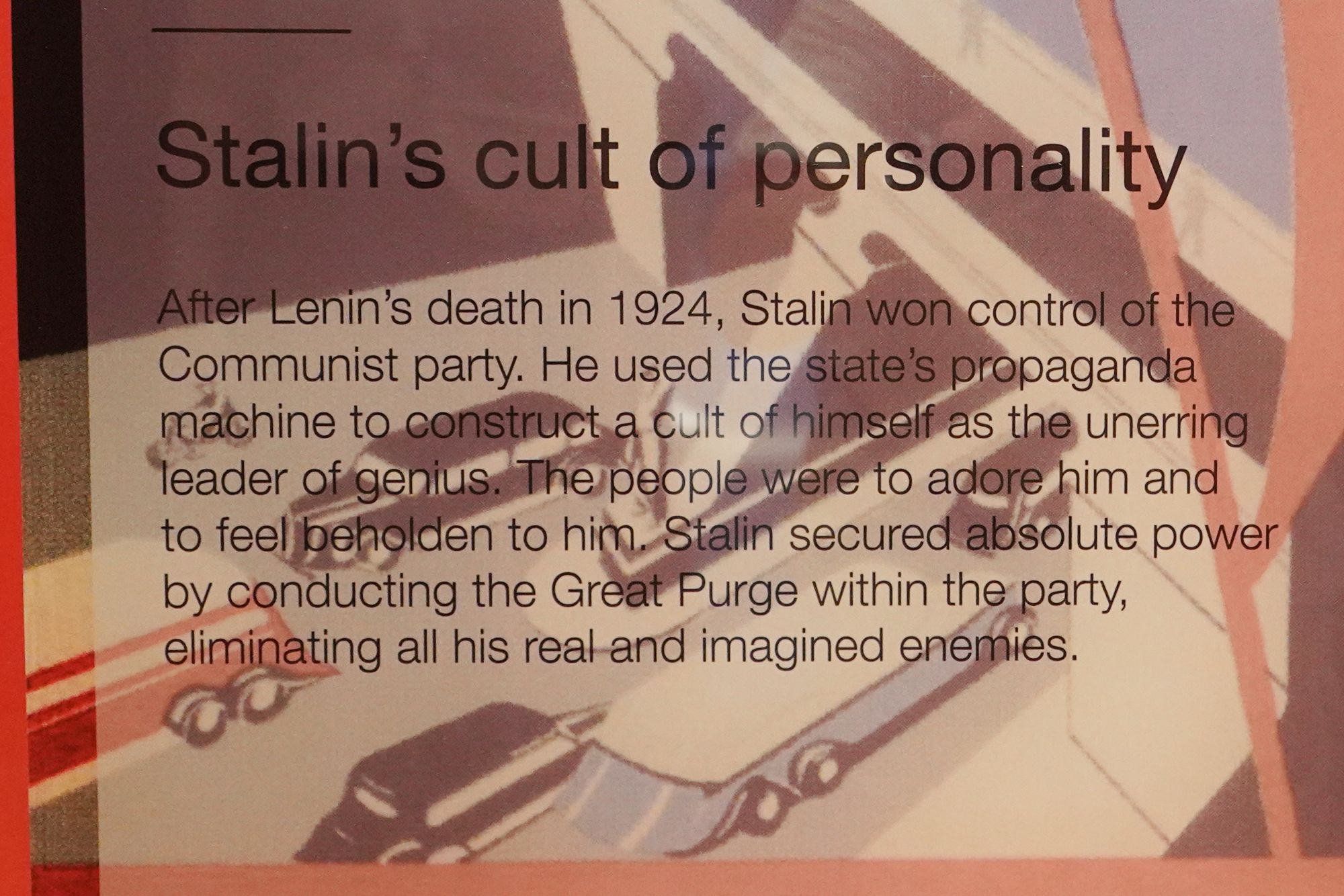
The “Stalin’s Cult of Personality” panel describes how Stalin used state propaganda to portray himself as an infallible leader and inspire public devotion. It also explains how the Great Purge helped him secure absolute power by eliminating perceived enemies within the Communist Party.
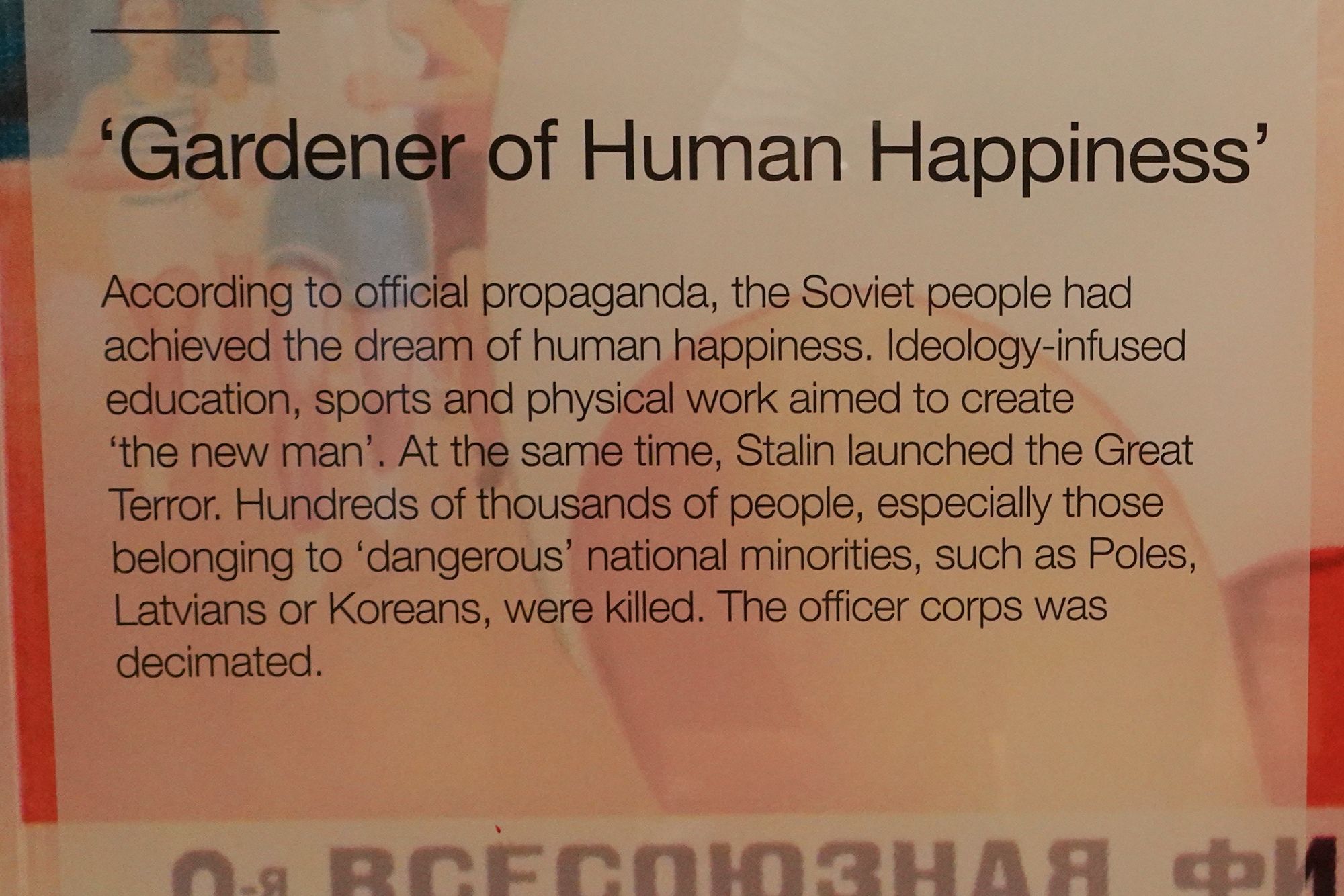
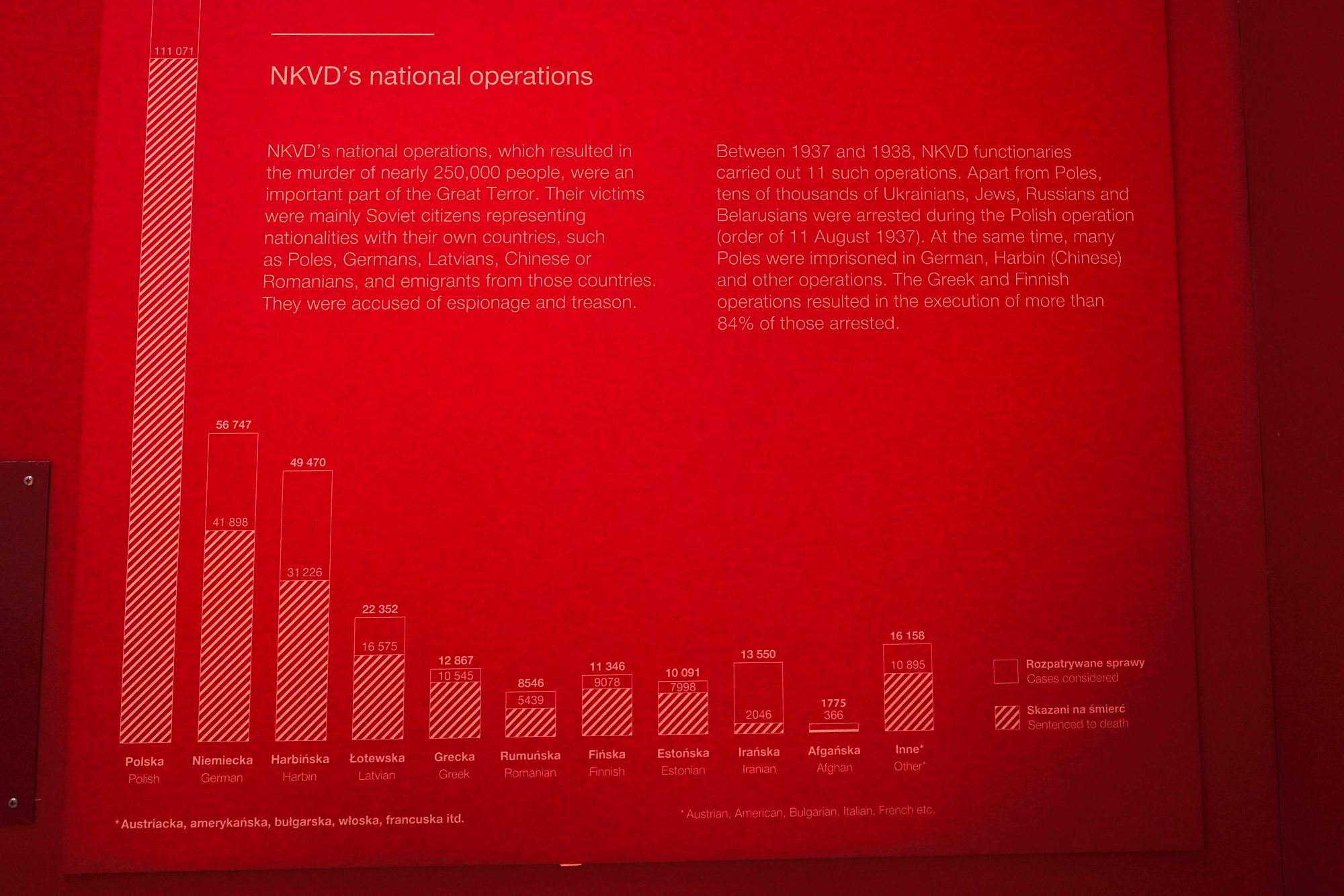
The exhibit’s title, “Gardener of Human Happiness,” refers to Soviet propaganda that claimed people had achieved happiness and were being shaped into “new people” through education, sports, and work. The panel contrasts that ideal with Stalin’s Great Terror, which killed hundreds of thousands, including members of national minorities, and devastated the military officer corps.
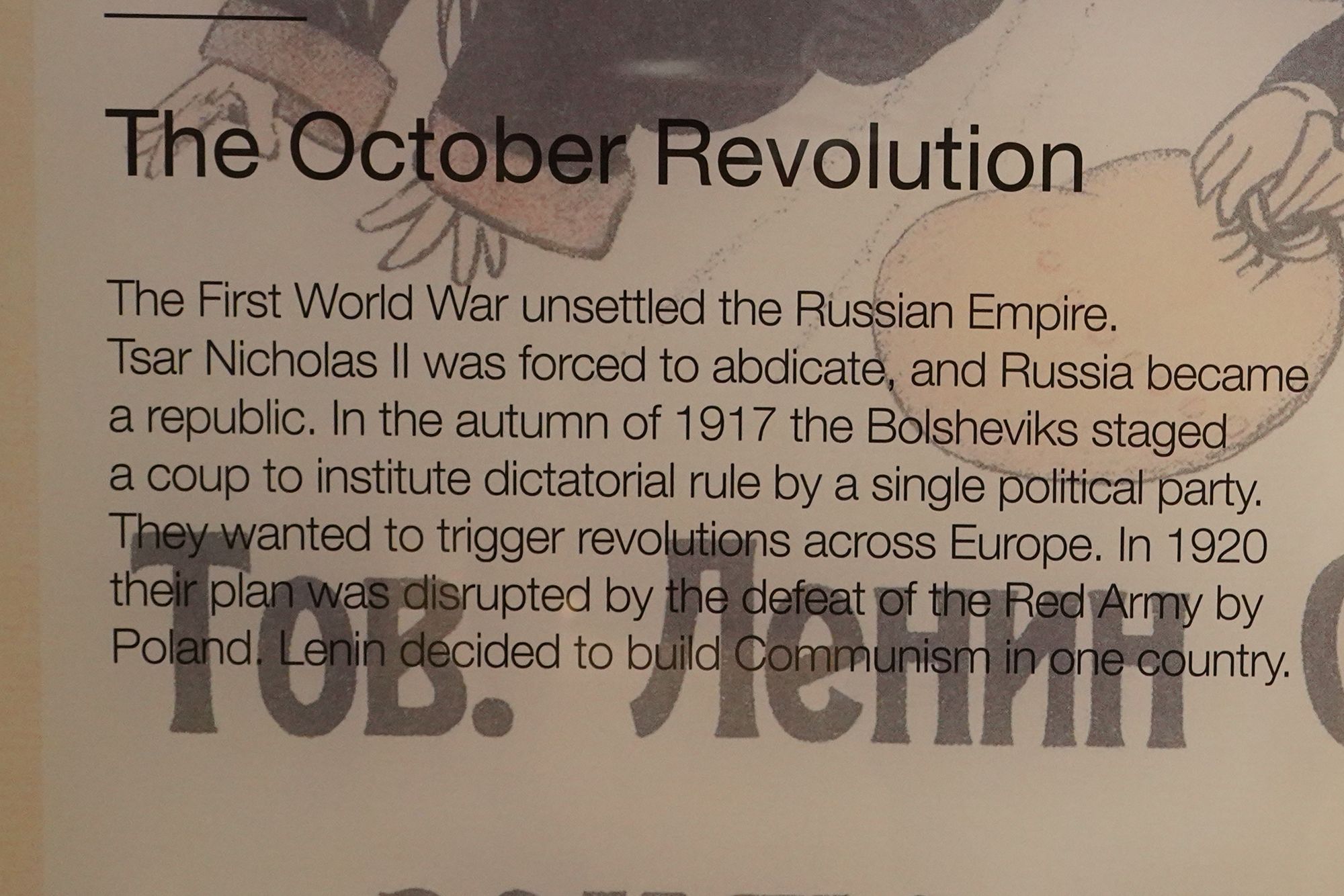
The panel recounts the 1917 Bolshevik takeover and its goal of spreading revolution across Europe. It says Poland’s defeat of the Red Army in 1920 halted that plan. The panel then credits Lenin with turning toward communism in one country, but that’s simplified: the doctrine is usually associated with Stalin’s leadership after Lenin’s death.
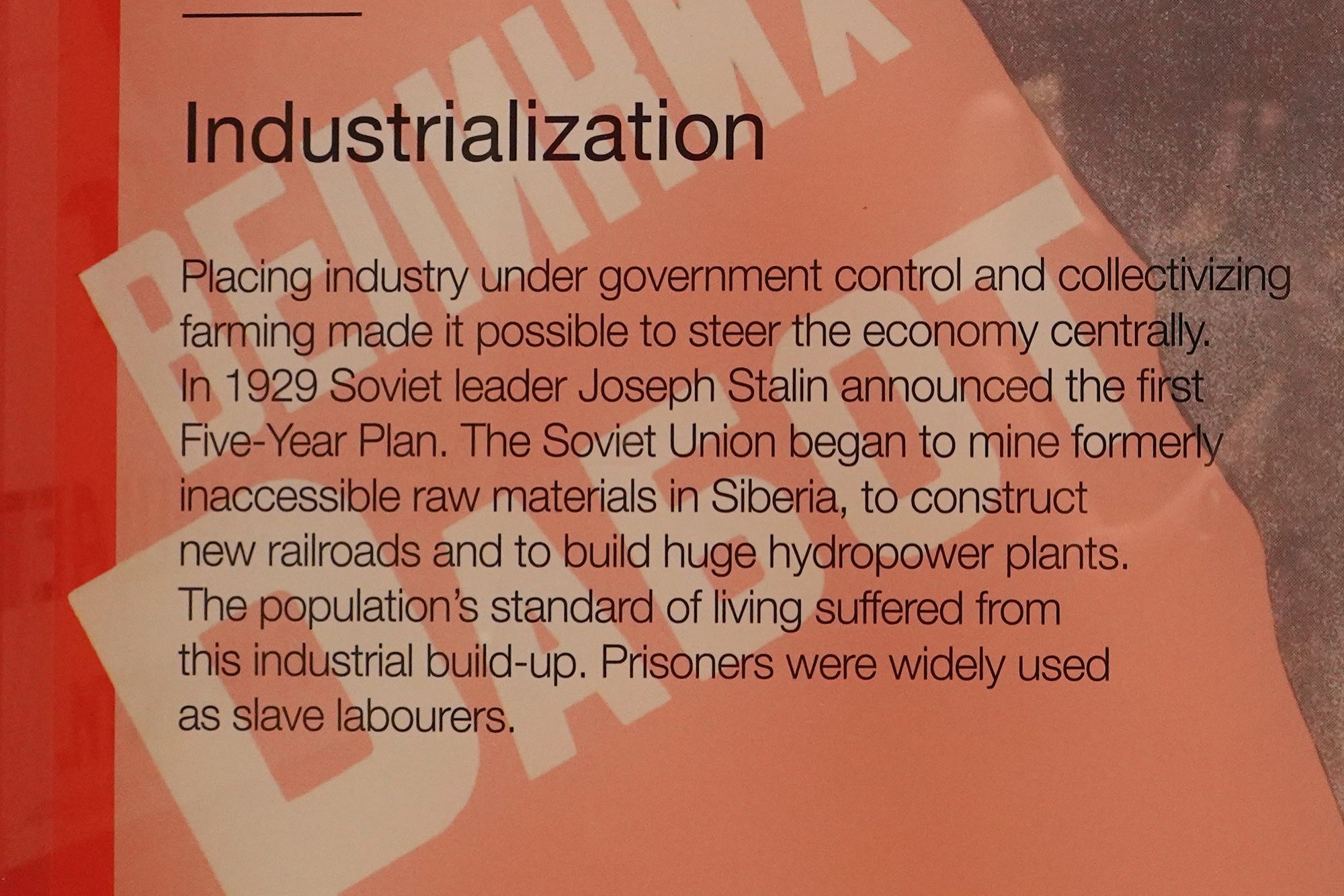
The “Industrialization” panel describes Stalin’s first Five-Year Plan, announced in 1929. Soviet industry and farming came under central government control as the country built mines, railways, and hydroelectric plants. The panel also notes the human cost: living standards fell, and prisoners were used as forced laborers.
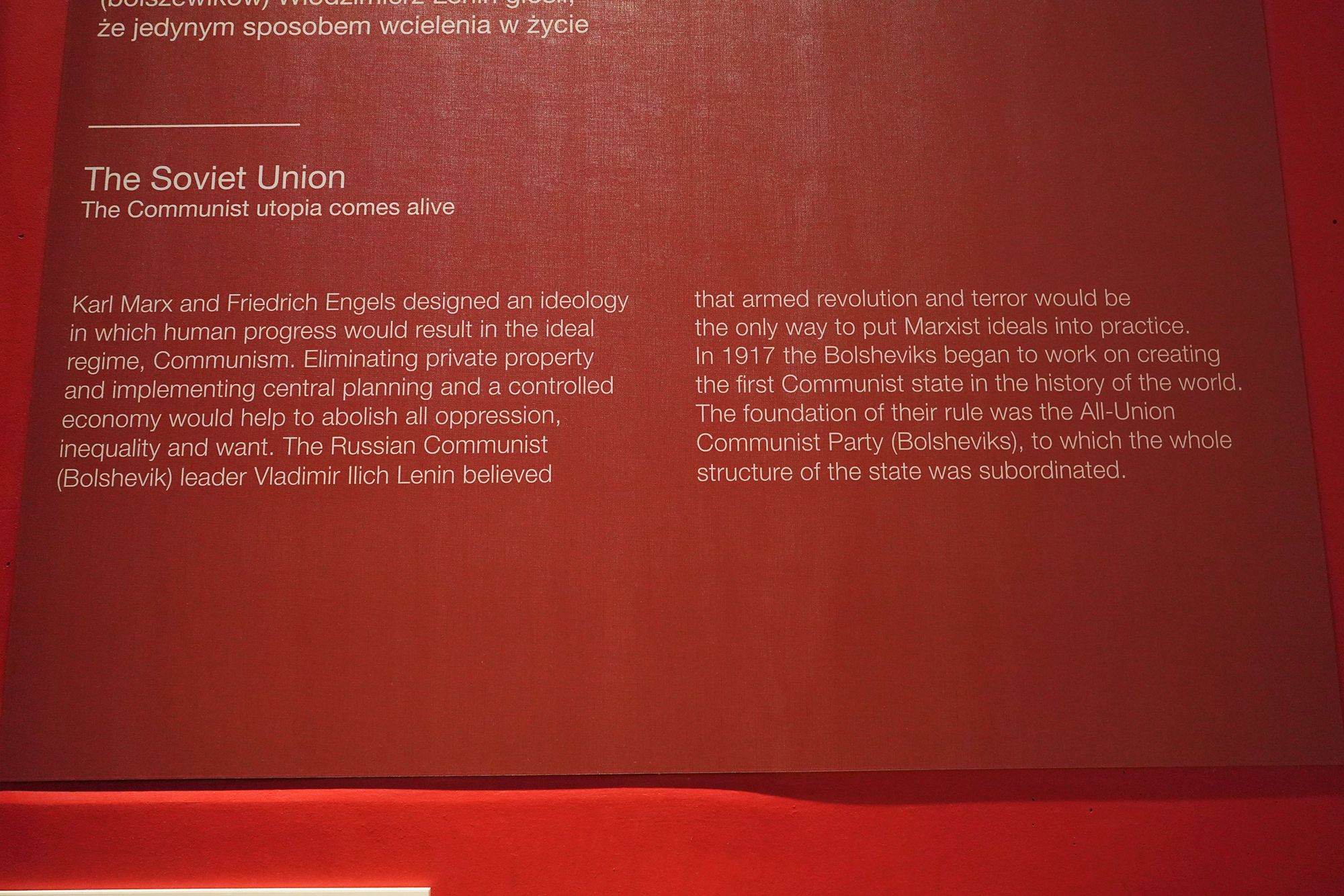
The panel explains the Communist ideal of a classless society, built through public ownership and central economic planning. It says Lenin believed revolution and terror were necessary to achieve it. After the Bolsheviks took power in 1917, the Communist Party became the foundation of the new state, with government subordinated to party rule.
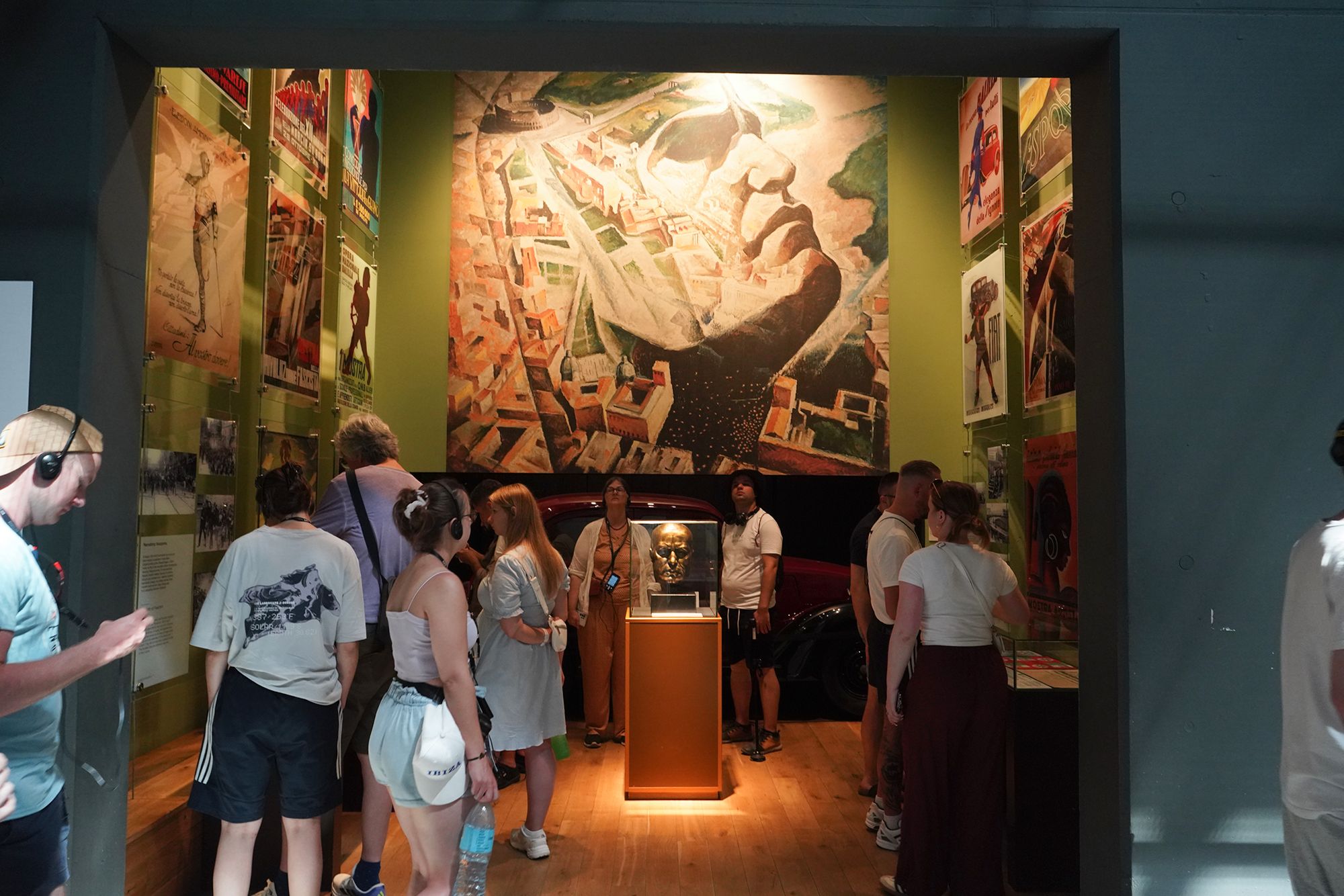
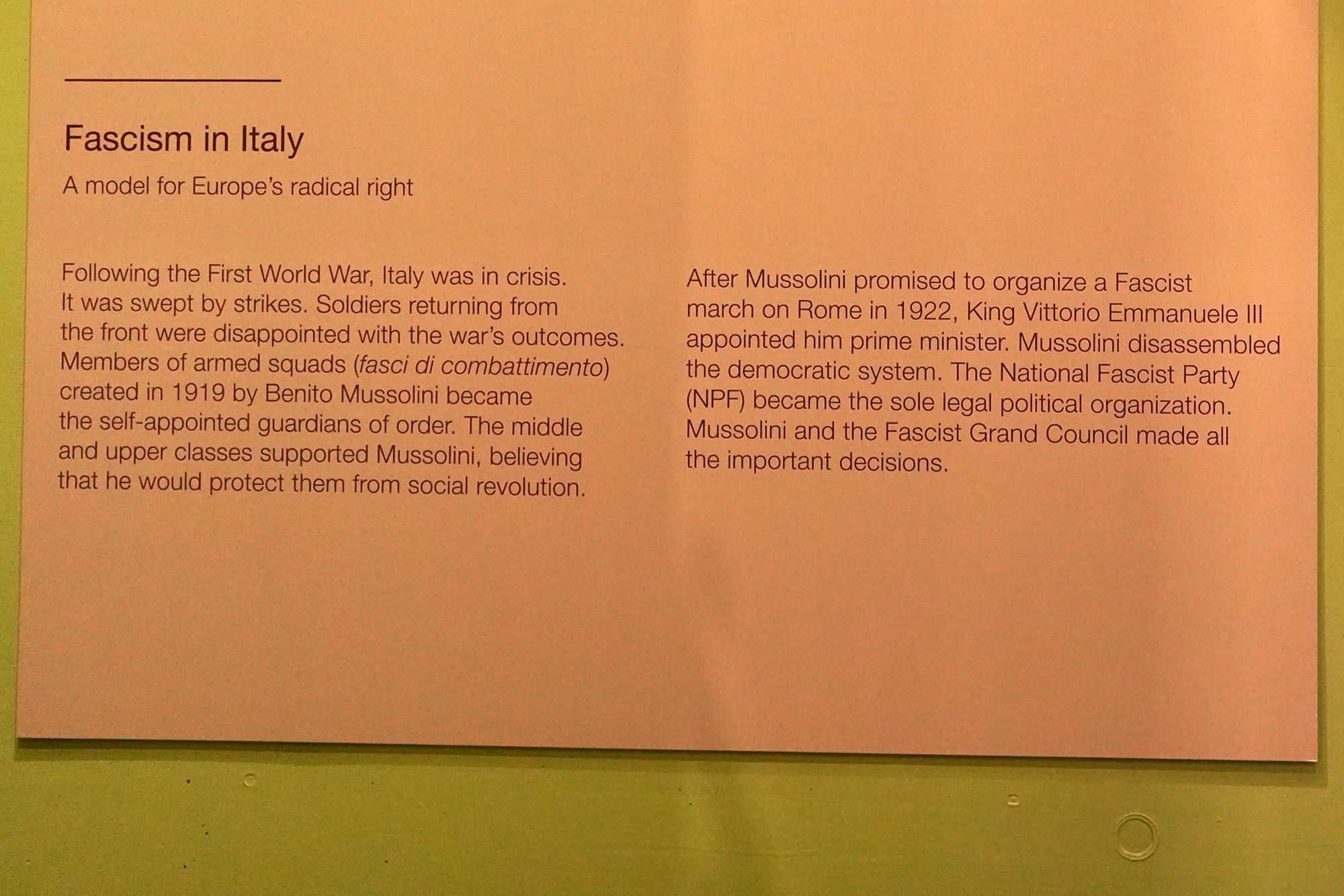
The panel explains that postwar strikes and unrest helped Mussolini’s armed squads present themselves as defenders of order. Fearing social revolution, many middle- and upper-class Italians supported him. In 1922, King Victor Emmanuel III appointed Mussolini prime minister; Mussolini then dismantled democracy, making the Fascist Party the only legal political organization.
This panel, “Empire-building,” describes Mussolini’s ambition to create a “Second Roman Empire.” Italy conquered Ethiopia in 1935–36, using chemical weapons, and invaded Albania in 1939. Mussolini also aligned Italy with Nazi Germany: Italy joined the Anti-Comintern Pact in 1937 and signed the Pact of Steel with Germany in 1939.
This panel describes Mussolini’s effort to remake Italy through large public projects: reclaiming farmland, expanding industry, and building roads, housing, and monumental buildings. It presents these projects as part of totalitarianism—the attempt by a government to reshape the country and society under its control.
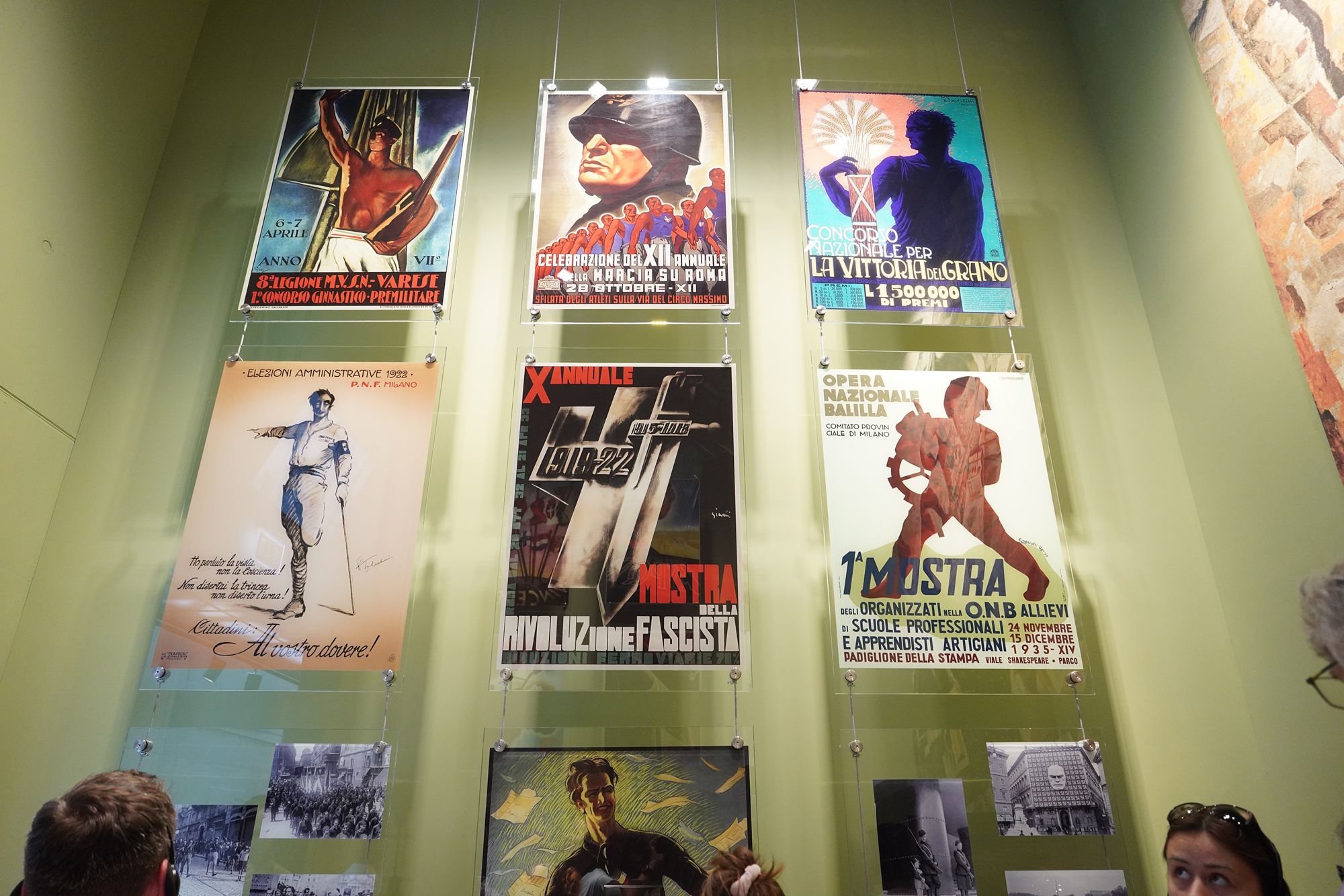
This panel explains how Mussolini’s Fascists built power through violence and fear. It says the March on Rome in 1922 was later portrayed as a victorious revolution, though Mussolini became prime minister after the king appointed him amid pressure from Fascist forces. The panel also names Giacomo Matteotti, a Socialist politician murdered by Fascists in 1924.
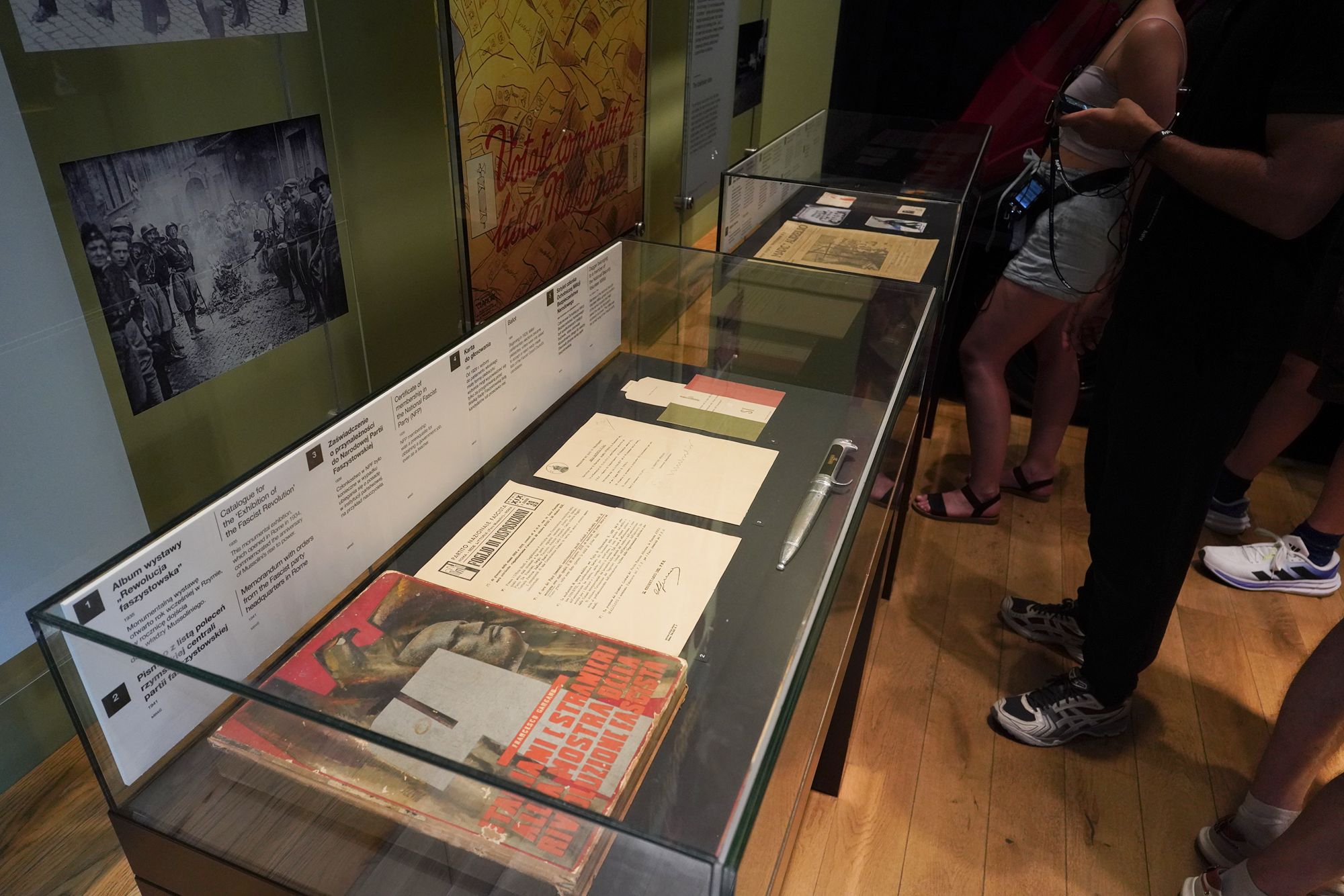
This panel explains the Fascist idea of a totalitarian state: the state was meant to control every part of life, leaving no independent space outside it. Mussolini wanted to create a “new man”—a loyal Fascist, disciplined soldier, and supporter of Italy’s expansion.
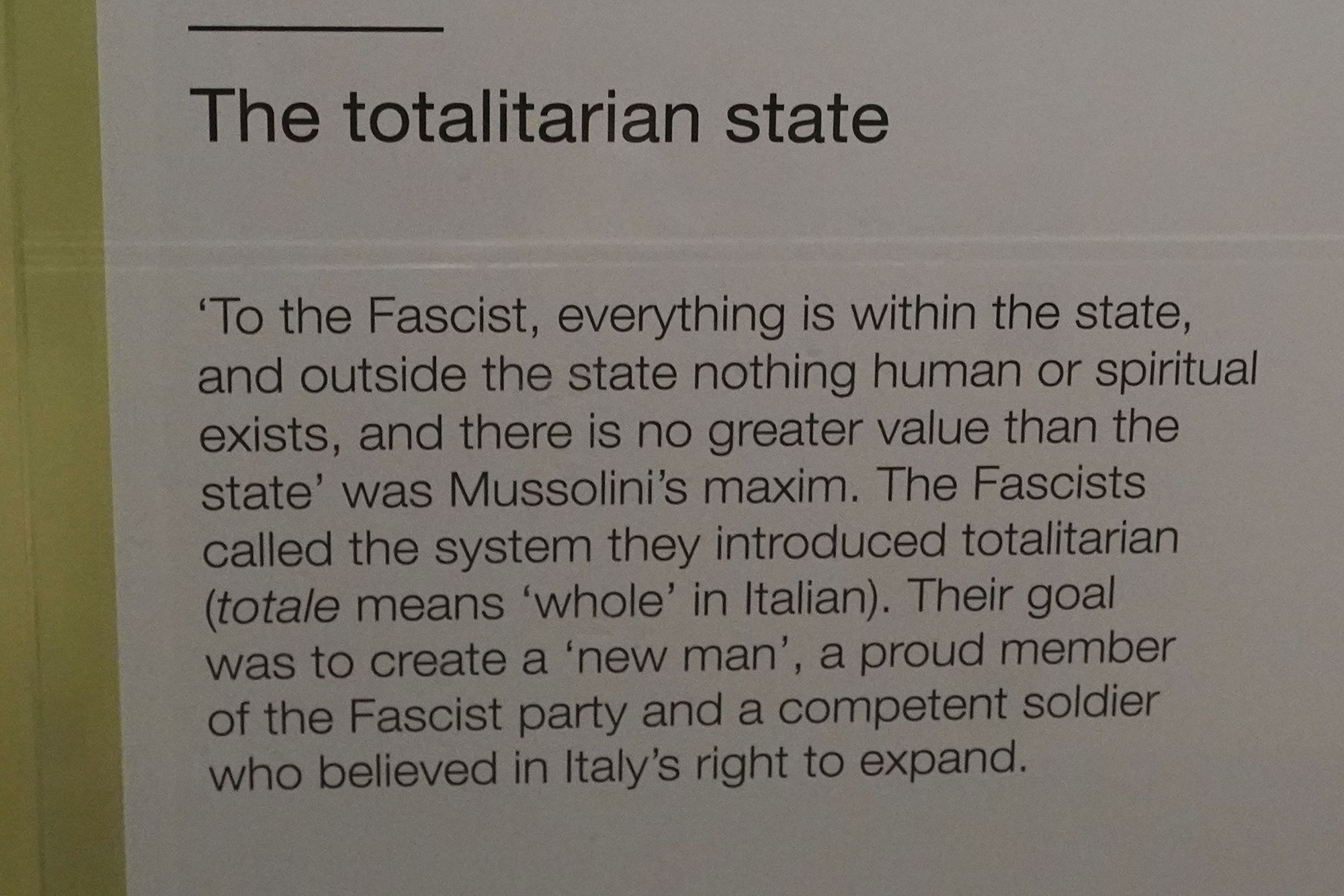
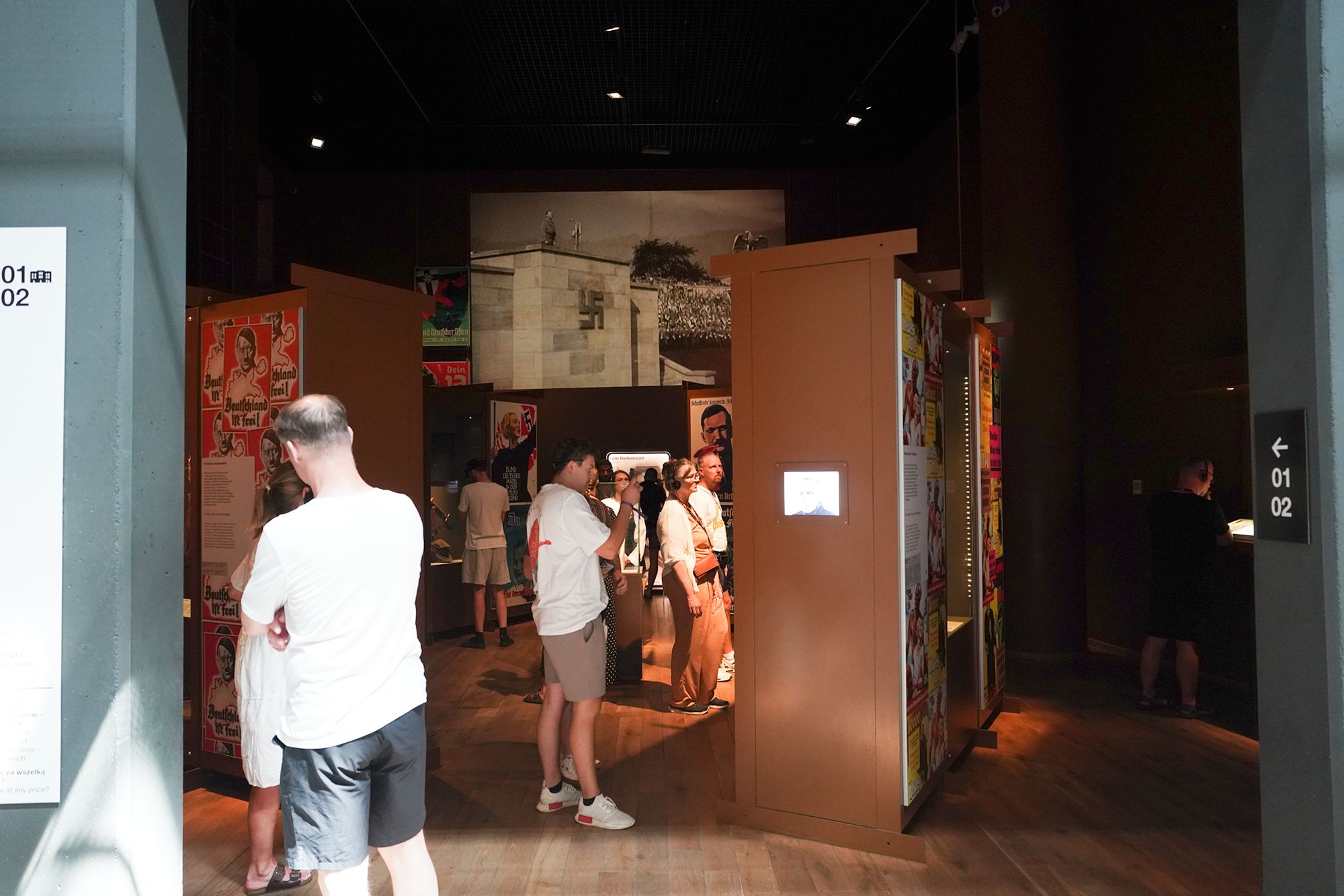
This panel describes how the Nazis turned Germany into a racist dictatorship. They blamed Jews and other groups for Germany’s problems, promised national recovery, and promoted expansion into other countries to gain “living space.”
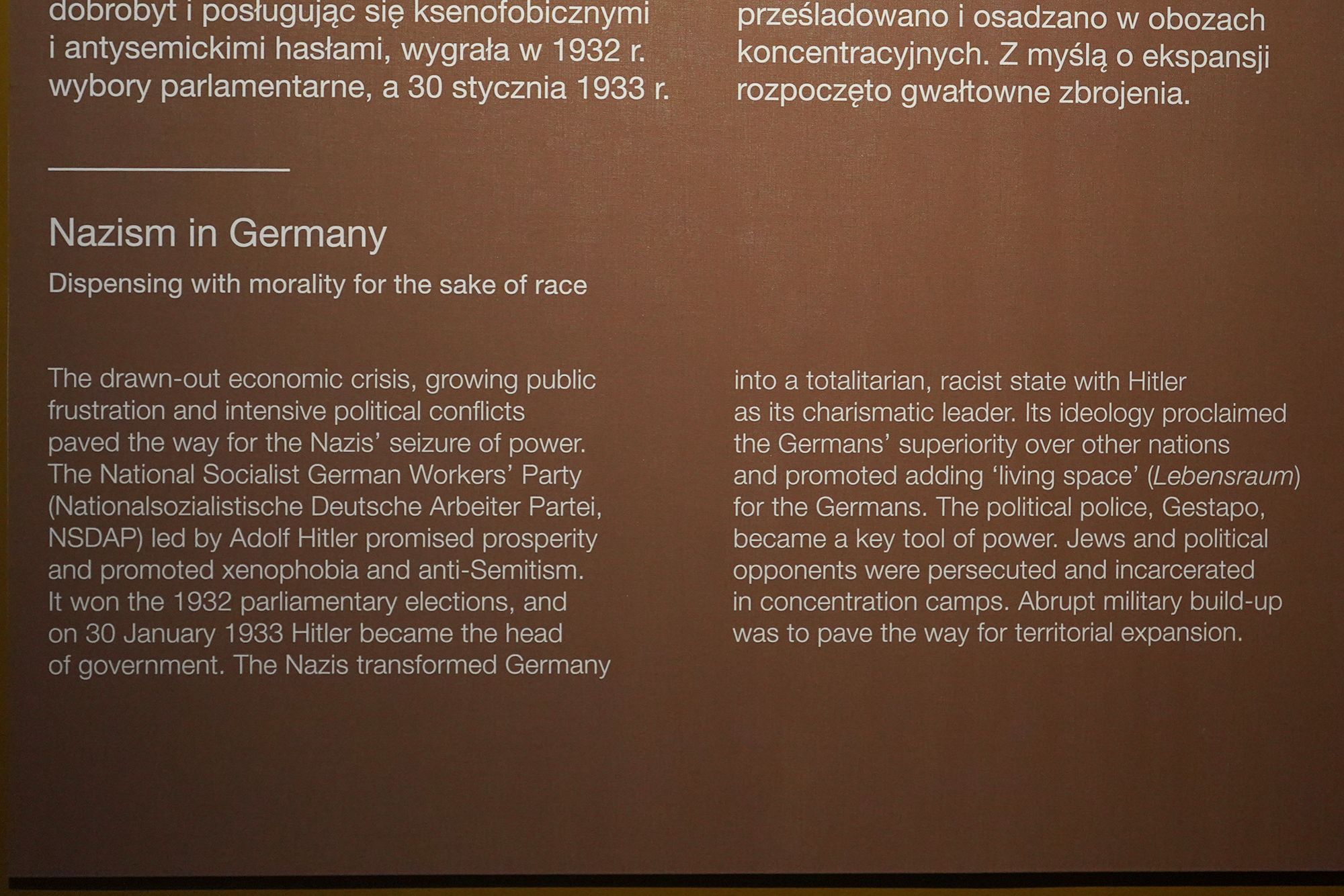
One detail: the Nazis became the largest party in the 1932 elections, but didn’t win a majority. President Hindenburg appointed Hitler chancellor in January 1933. The Nazis then dismantled democracy, using the Gestapo to persecute opponents and imprison people in concentration camps.
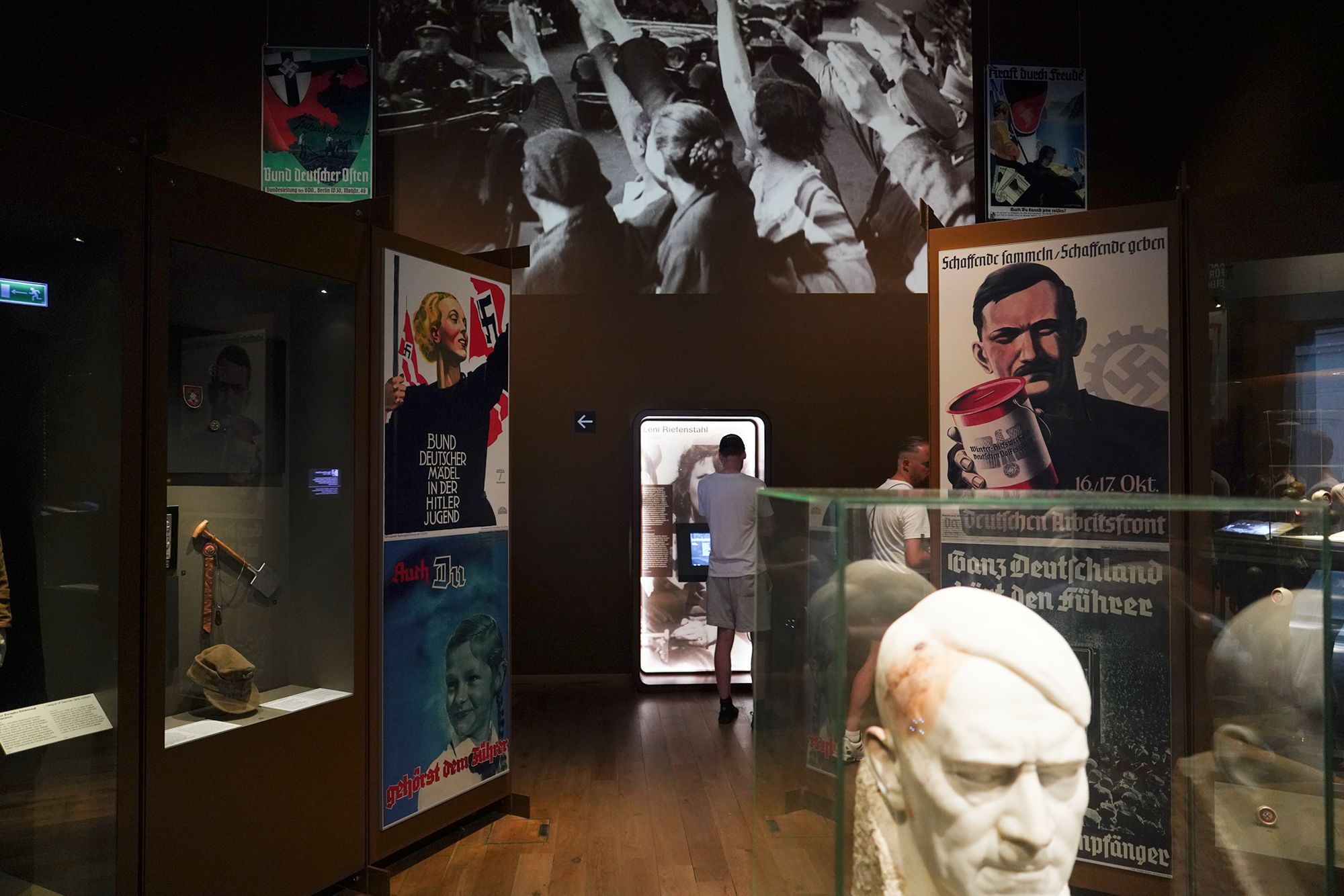
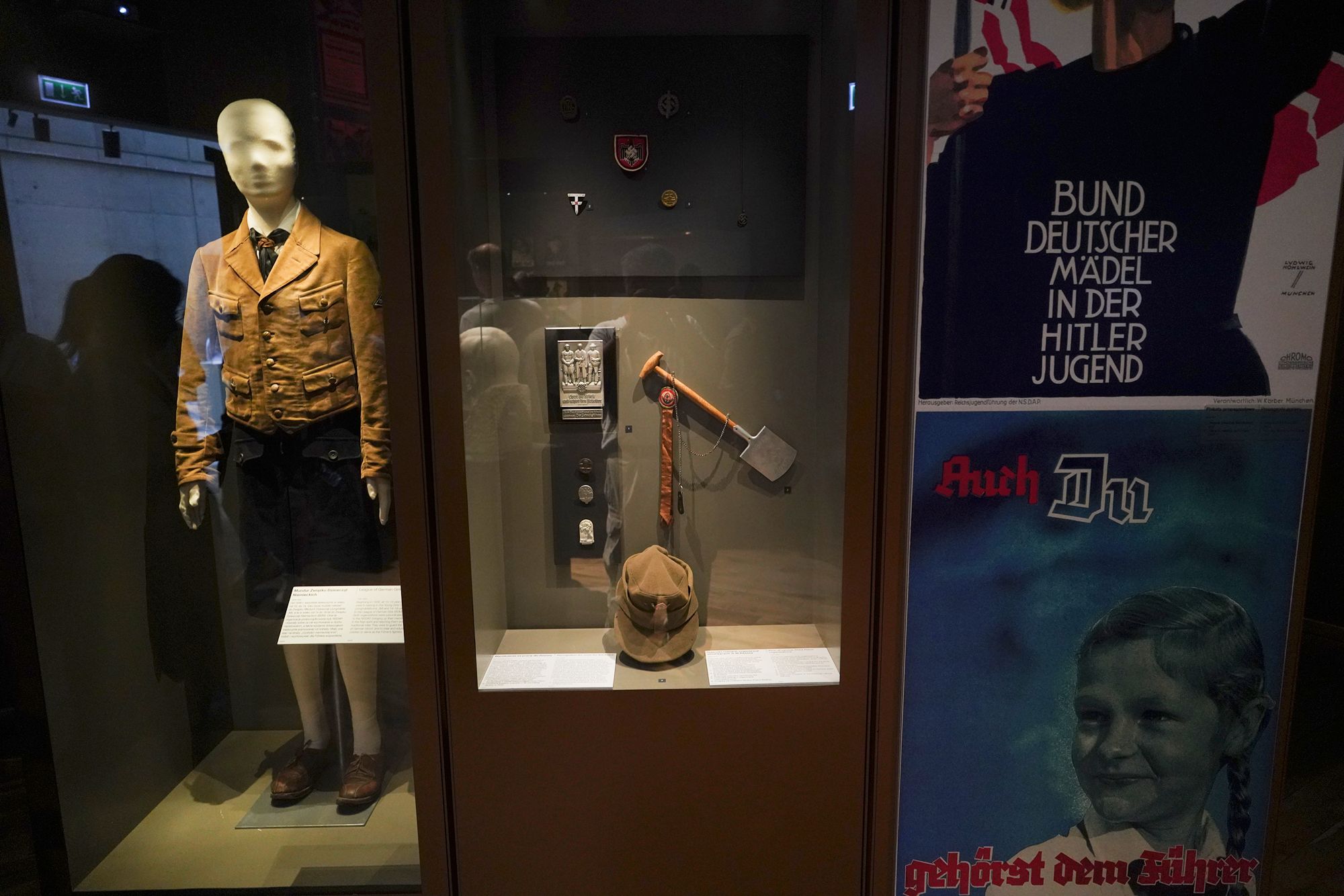
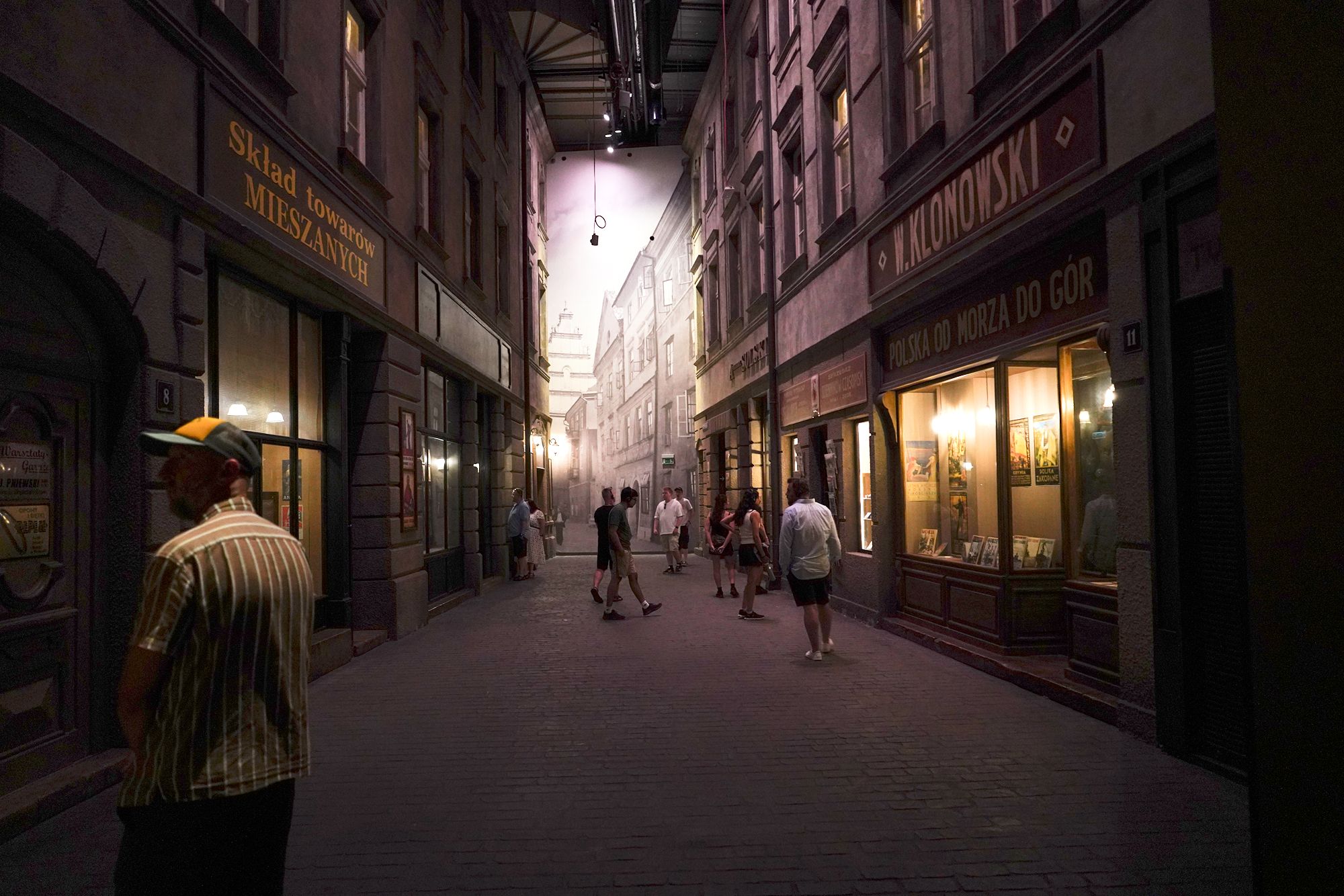
Poland had difficult interwar years after it regained independence in 1918 following more than a century under foreign rule. Poverty, ethnic tensions, and political conflict challenged the new country. Poland also felt threatened by Germany and the Soviet Union, so it spent heavily on its military while working to modernize.
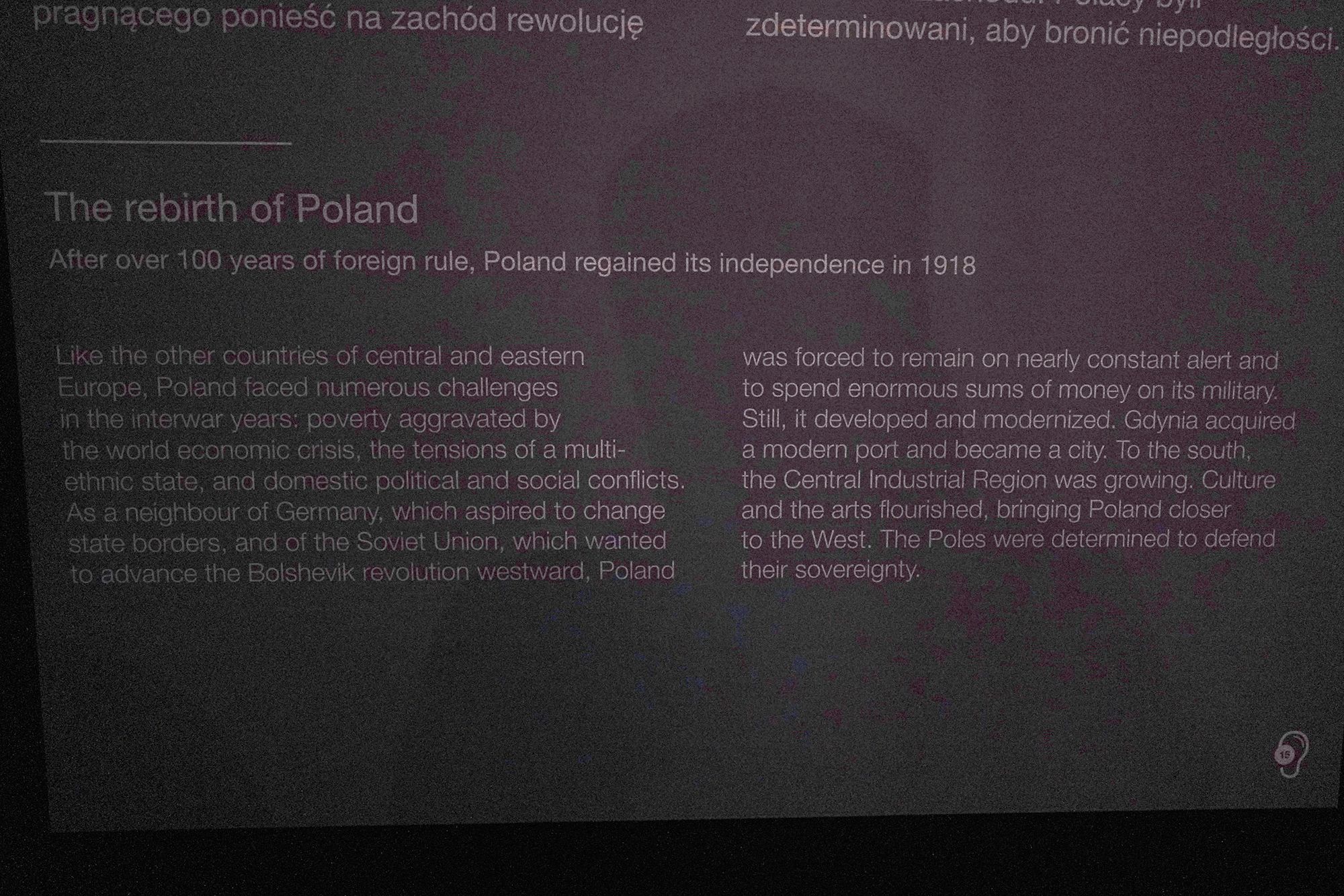
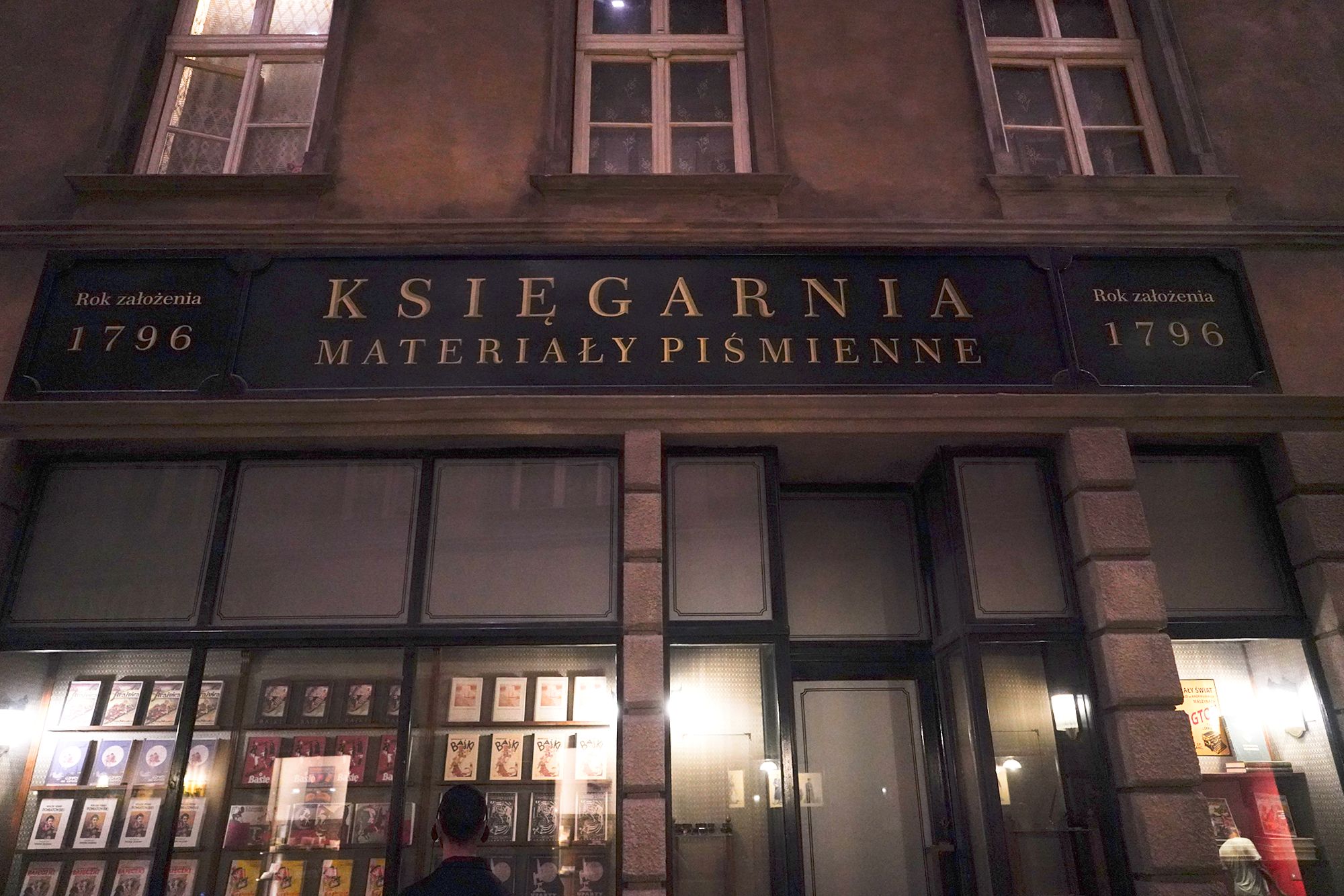
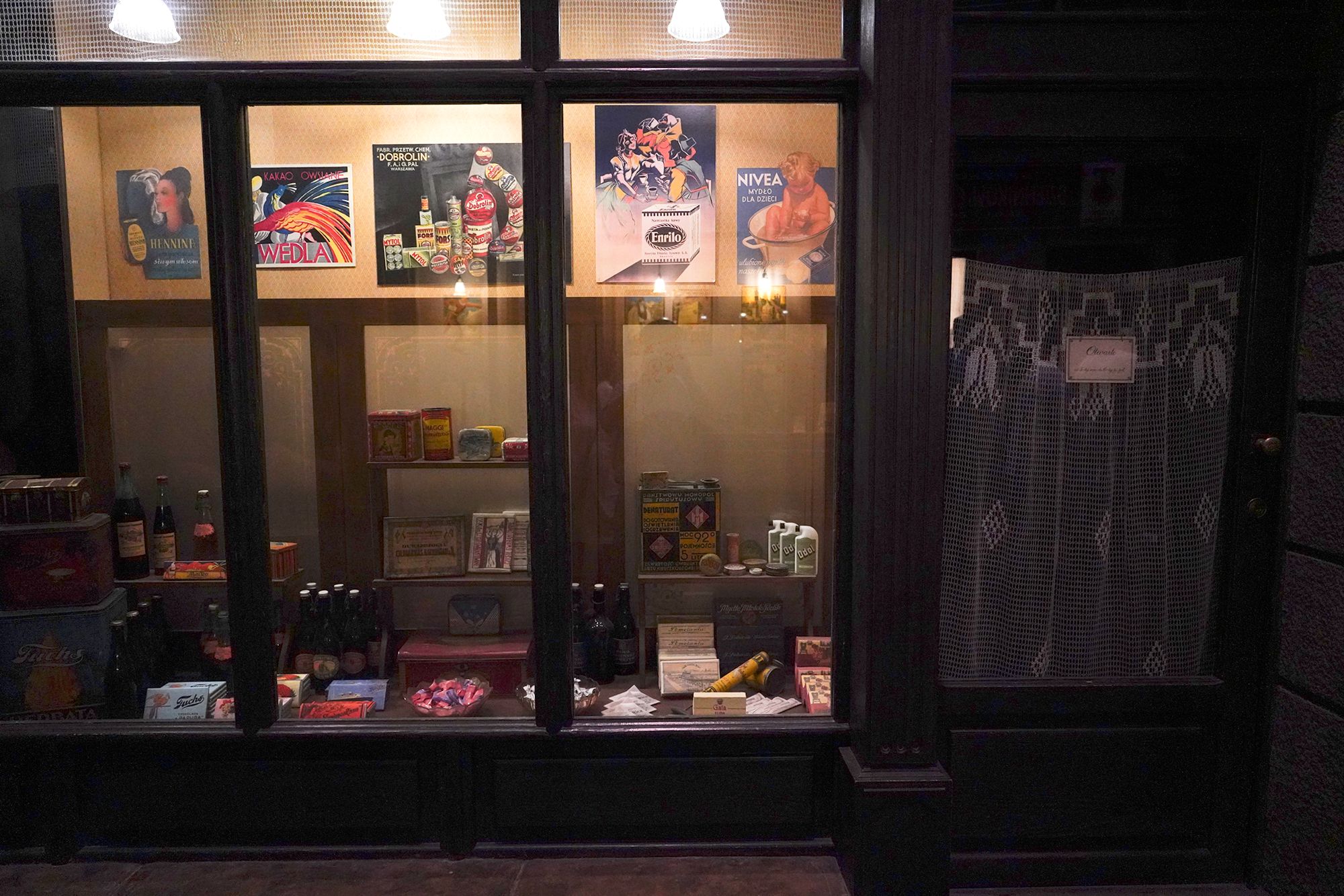
A replica shows what a Polish city looked like during the interwar period
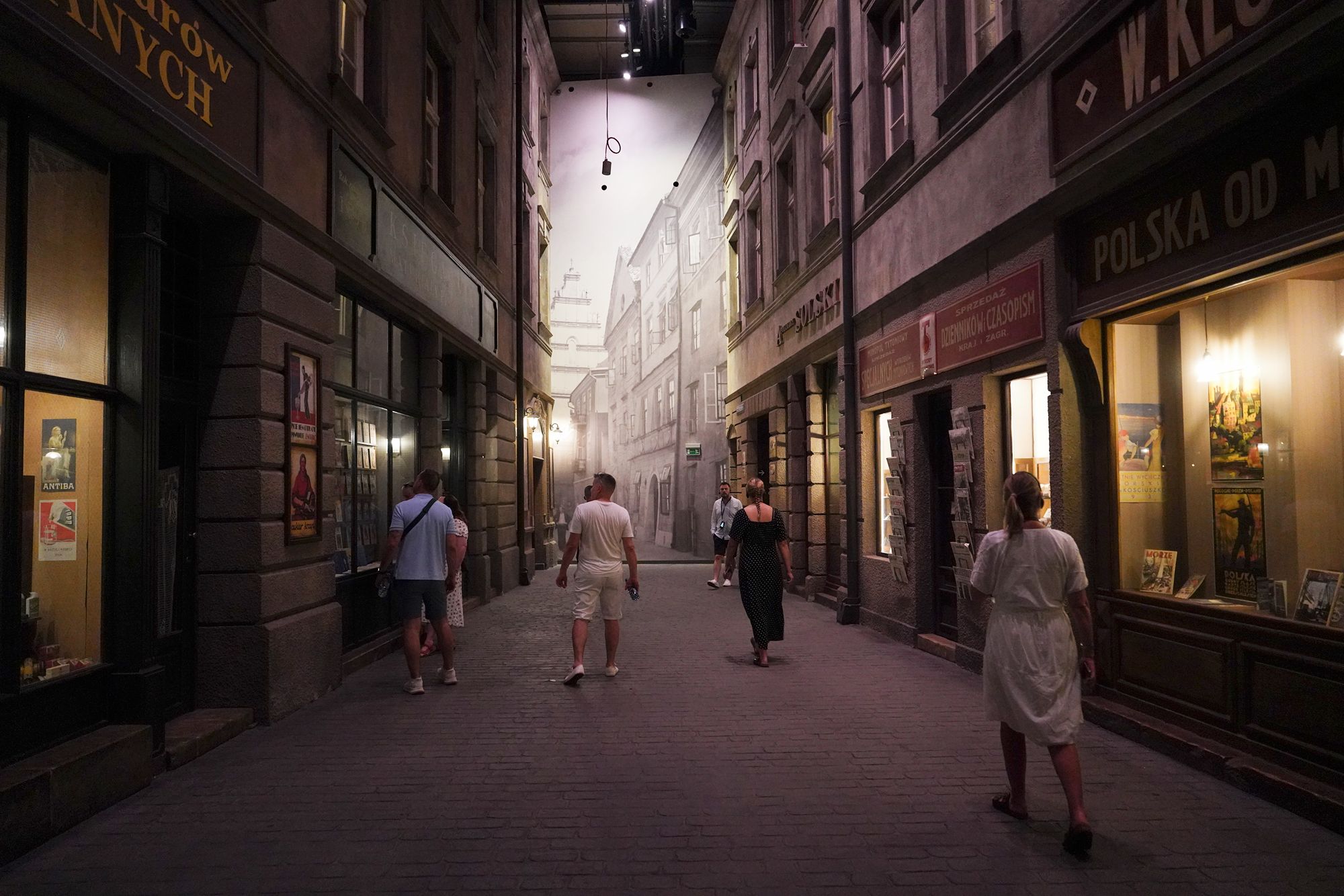
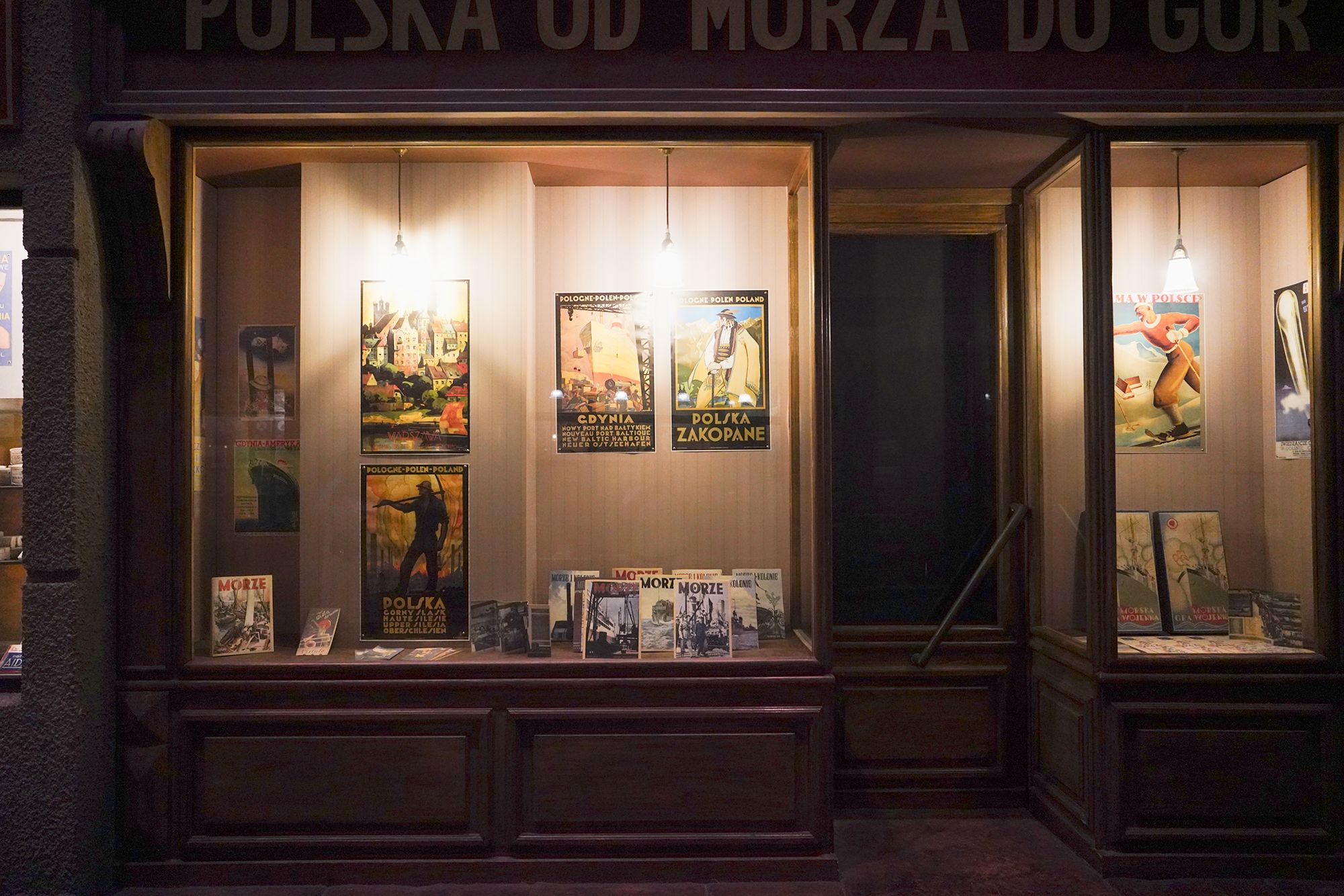
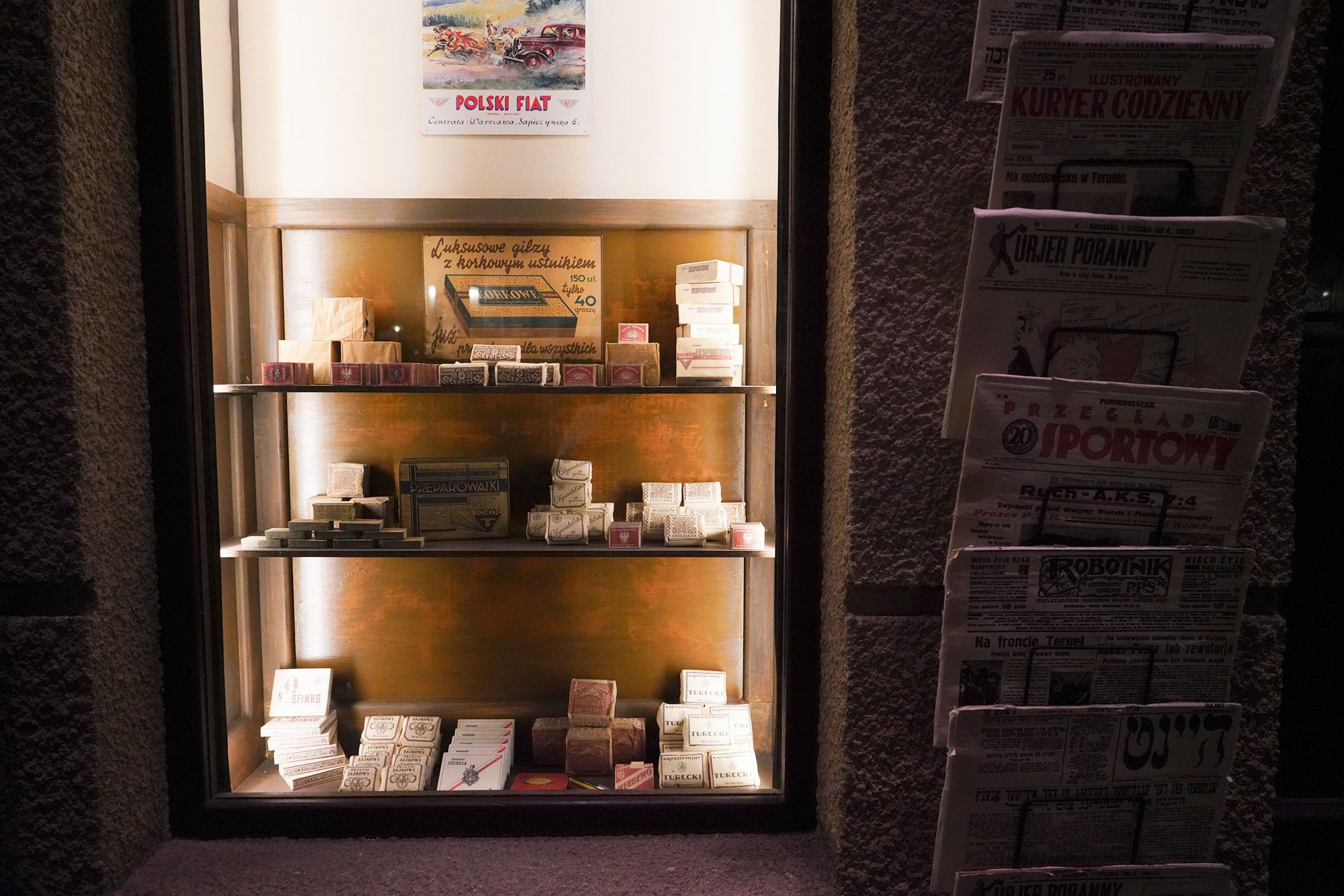
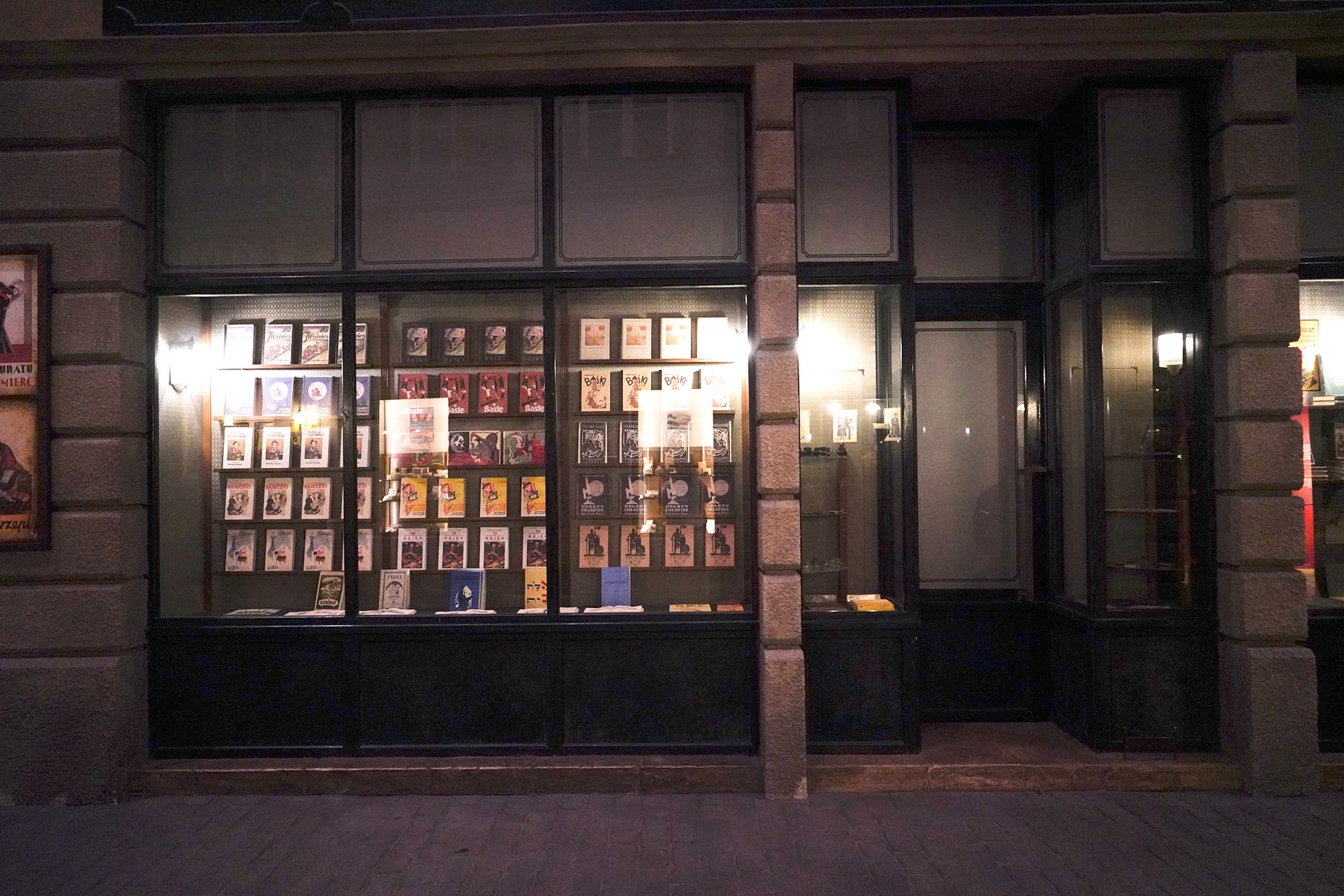
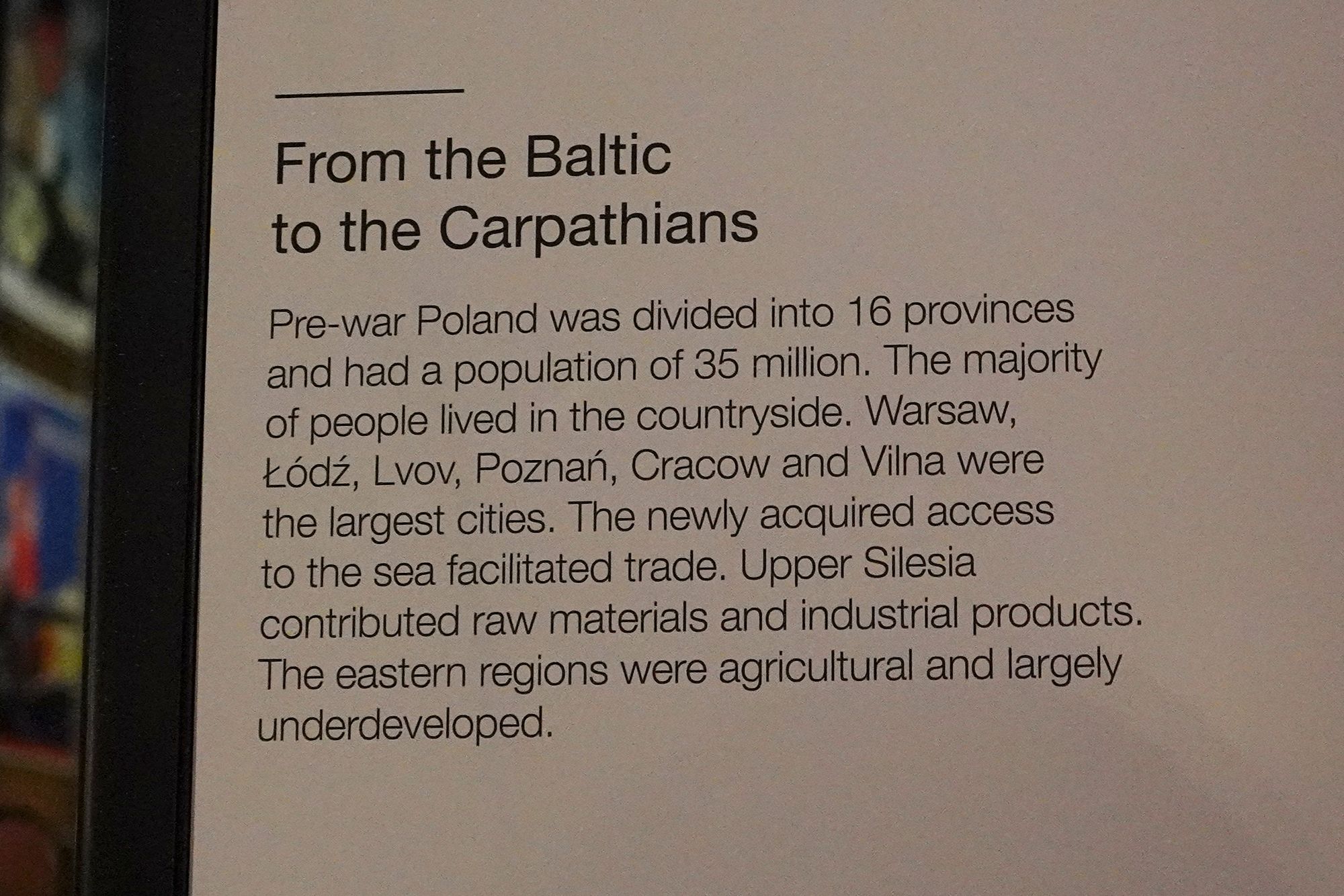
The prewar Poland stretched from the Baltic Sea to the Carpathian Mountains. It had about 35 million people, mostly living in the countryside. Warsaw, Łódź, Poznań, Kraków, Lwów, and Vilna were among its largest cities. The regions differed: Upper Silesia was industrial, while the east was mainly agricultural and less developed.
Before World War II, Poland was home to many communities, each contributing to the country’s political and cultural life.
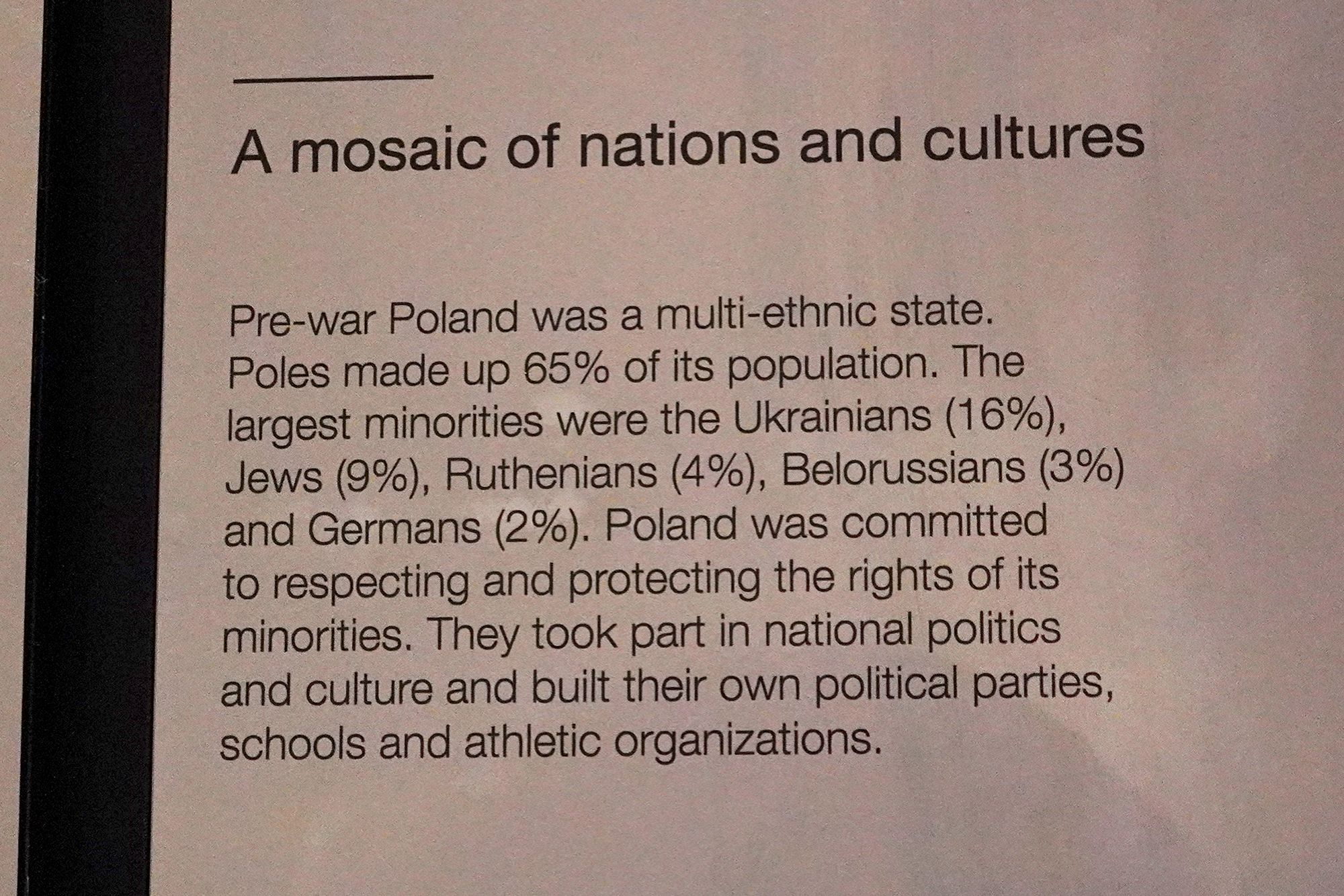
Interwar Poland was culturally diverse, but its national minorities also faced political tensions, government repression, and, for Jewish communities, antisemitic violence.
Poland’s parliamentary system was unstable, with frequent changes of government and strong party rivalries. In May 1926, Józef Piłsudski seized power in a coup and introduced sanacja (“healing”), claiming he would repair the state. His rule became more authoritarian and restricted civil liberties, though parliament, political parties, and opposition newspapers continued to operate.
Poland’s recovery from 1920s hyperinflation was followed by the Great Depression, which hurt farmers and drove up urban unemployment.
Between the wars, Poland invested in new industries and infrastructure, while telephones, radios, and cars gradually brought modern life to more people.
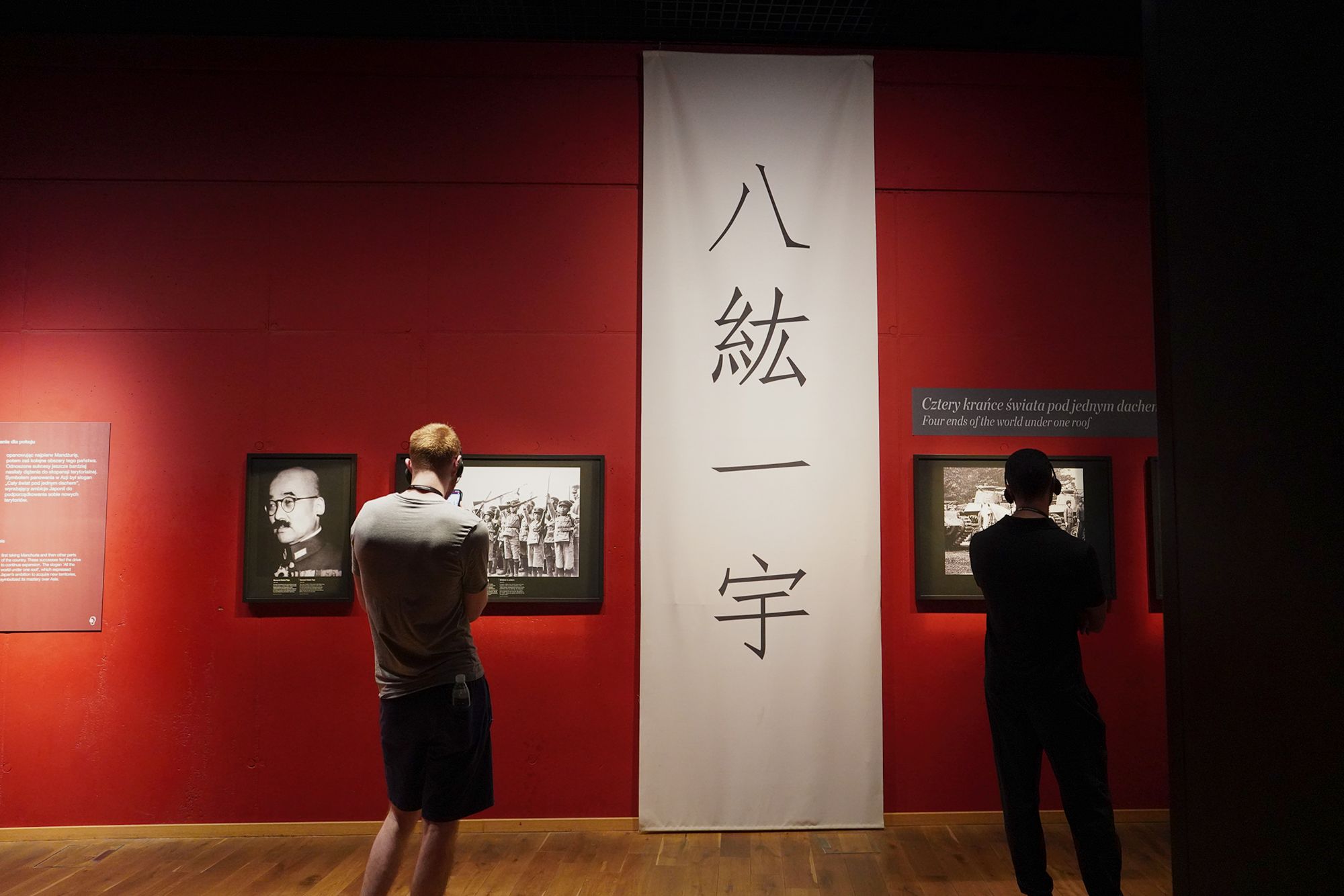
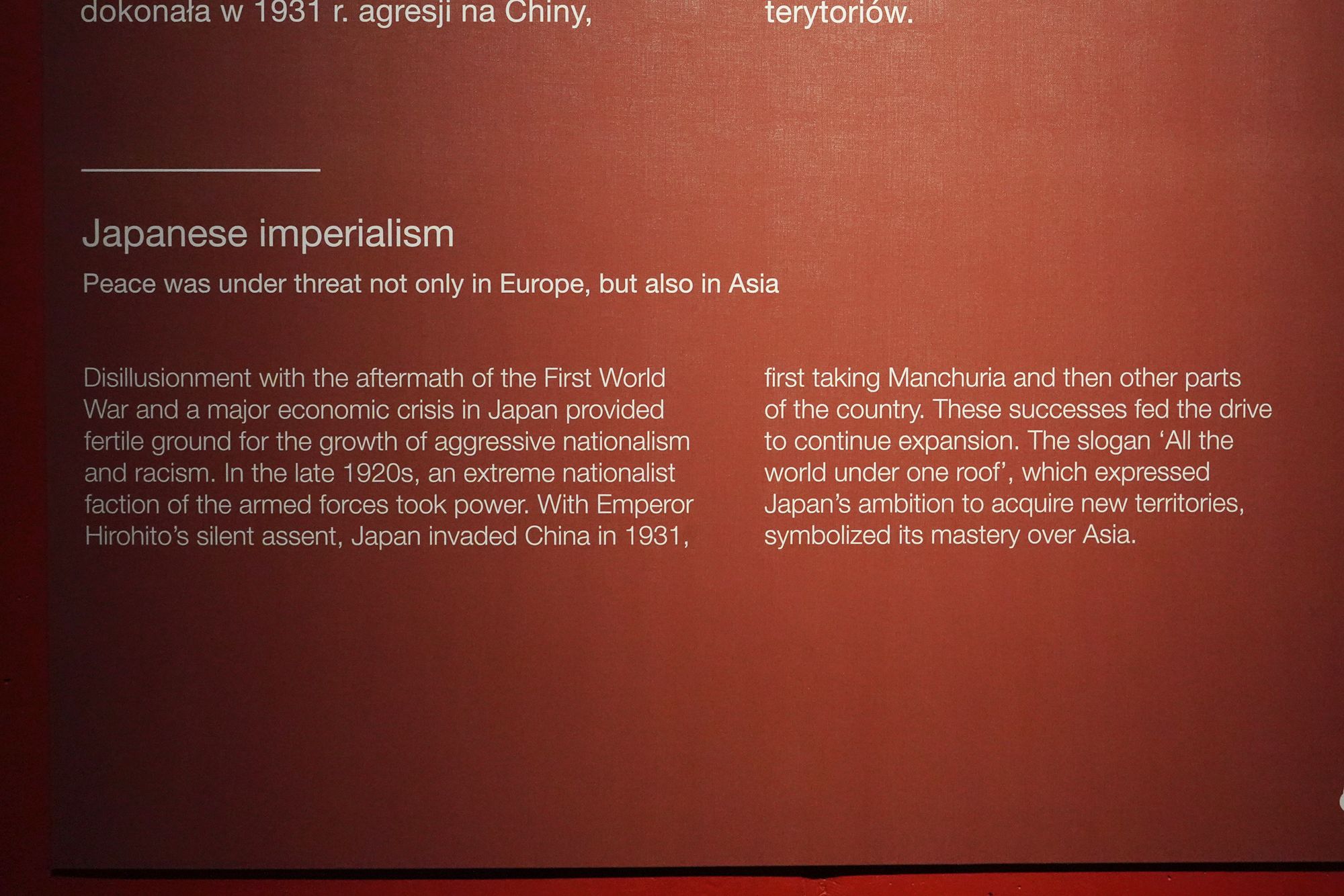
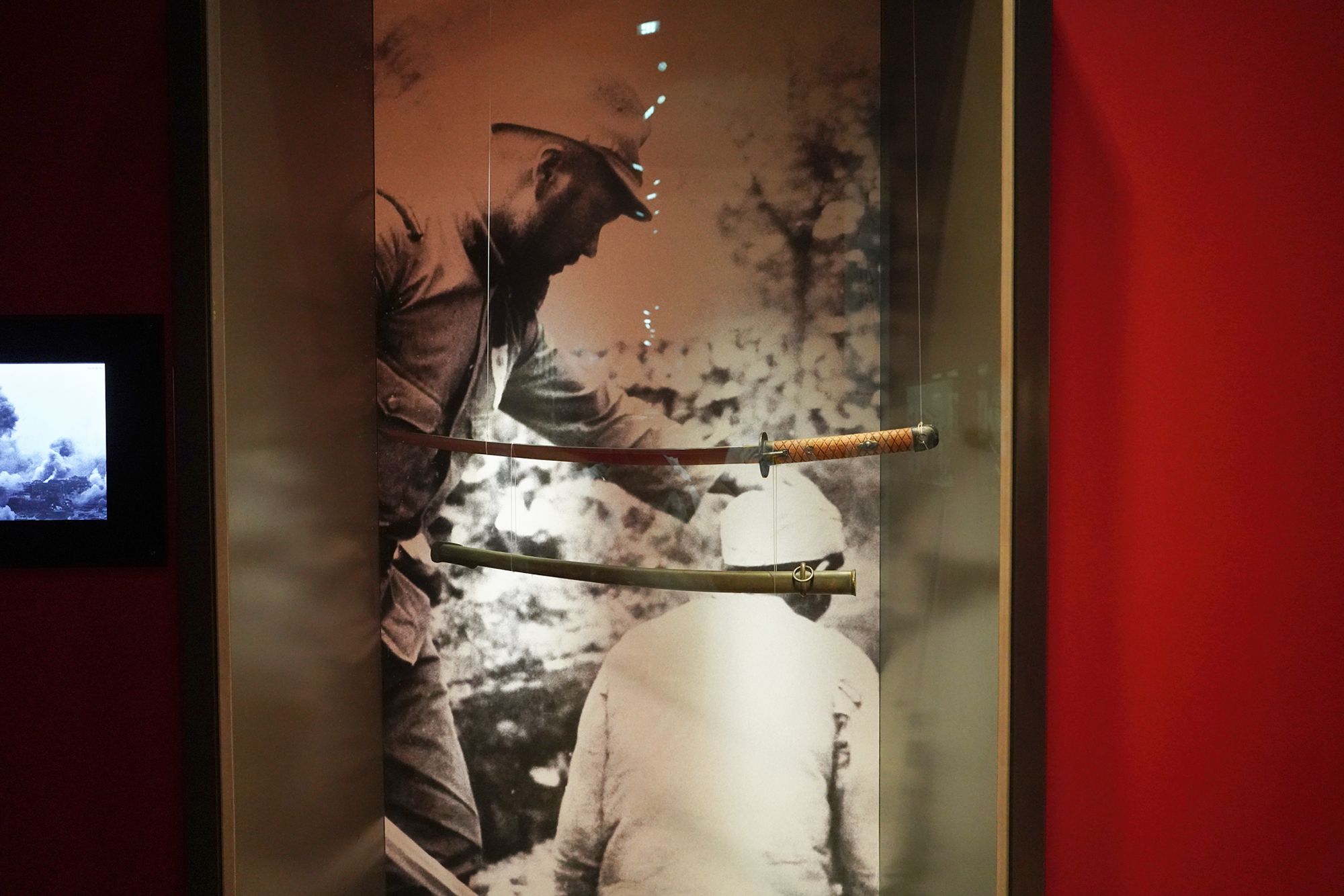
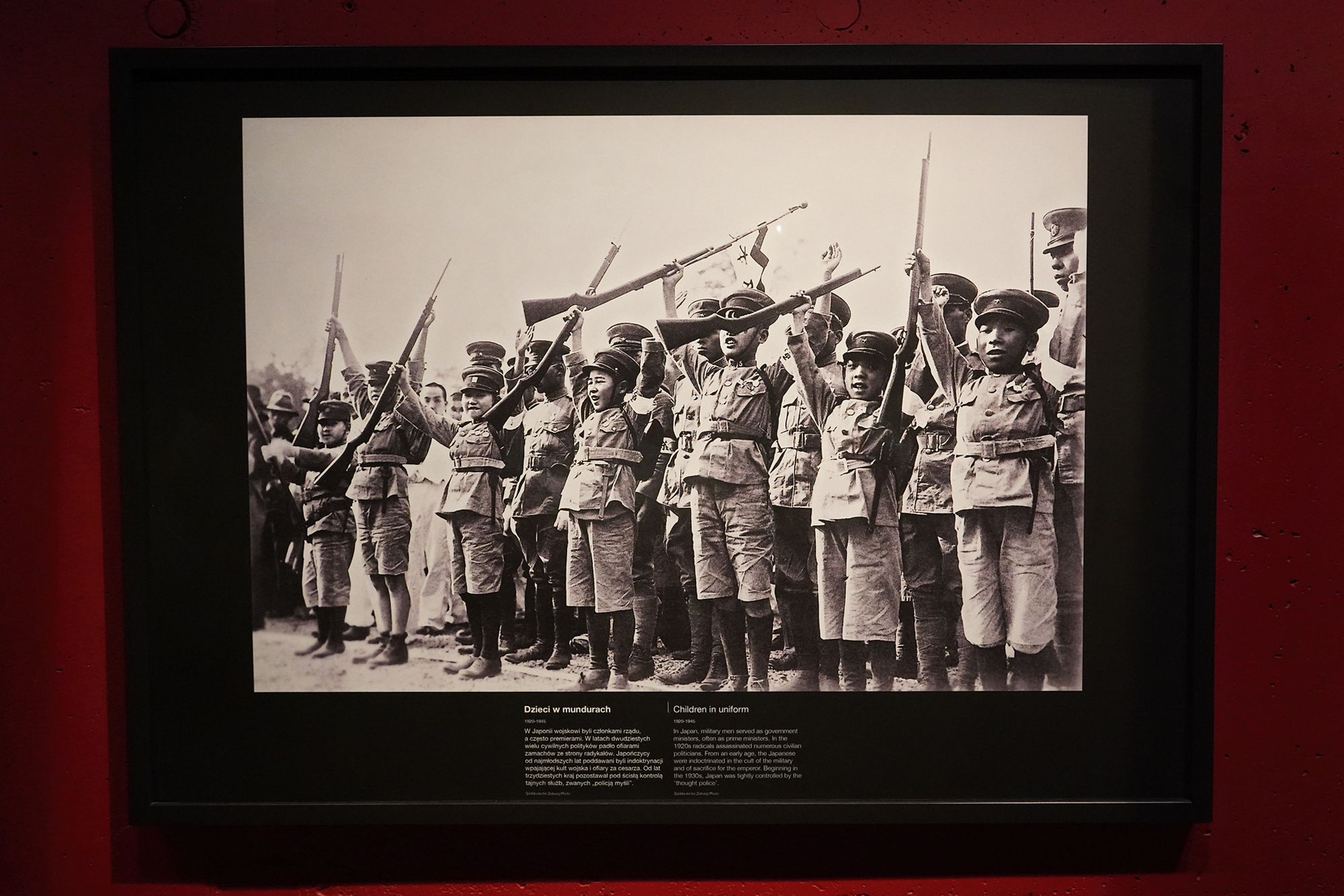
While tensions were rising in Europe, Japan’s expansion into Manchuria and China brought another threat to peace in Asia.
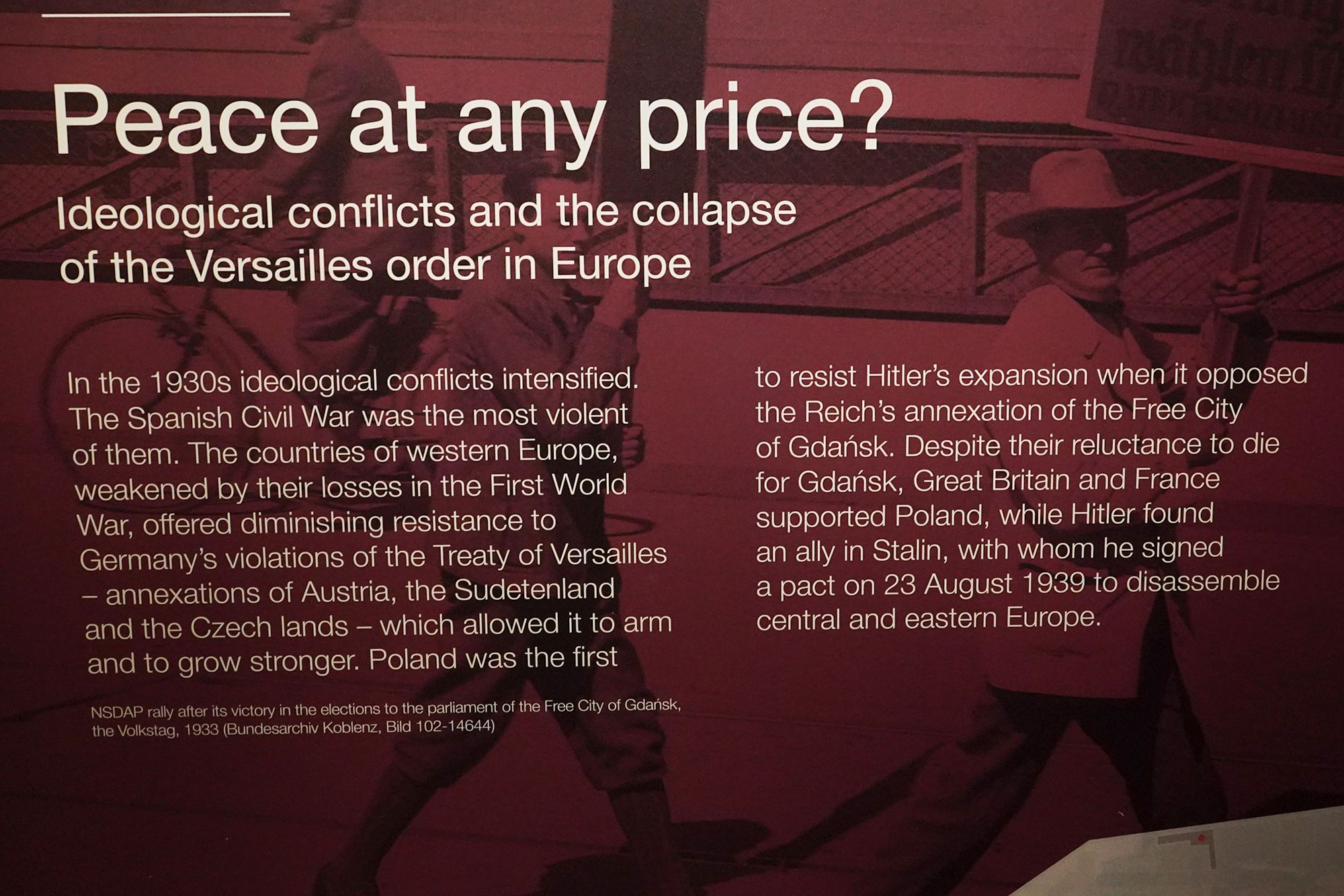
This panel explains how appeasement failed to preserve peace in Europe. Britain and France offered little resistance as Hitler broke the postwar order by annexing Austria and taking the Sudetenland and Czech lands. Poland became the next focus when Hitler demanded the Free City of Gdańsk. Britain and France then backed Poland, while Hitler and Stalin secretly agreed in August 1939 to divide parts of Central and Eastern Europe into their spheres of influence.
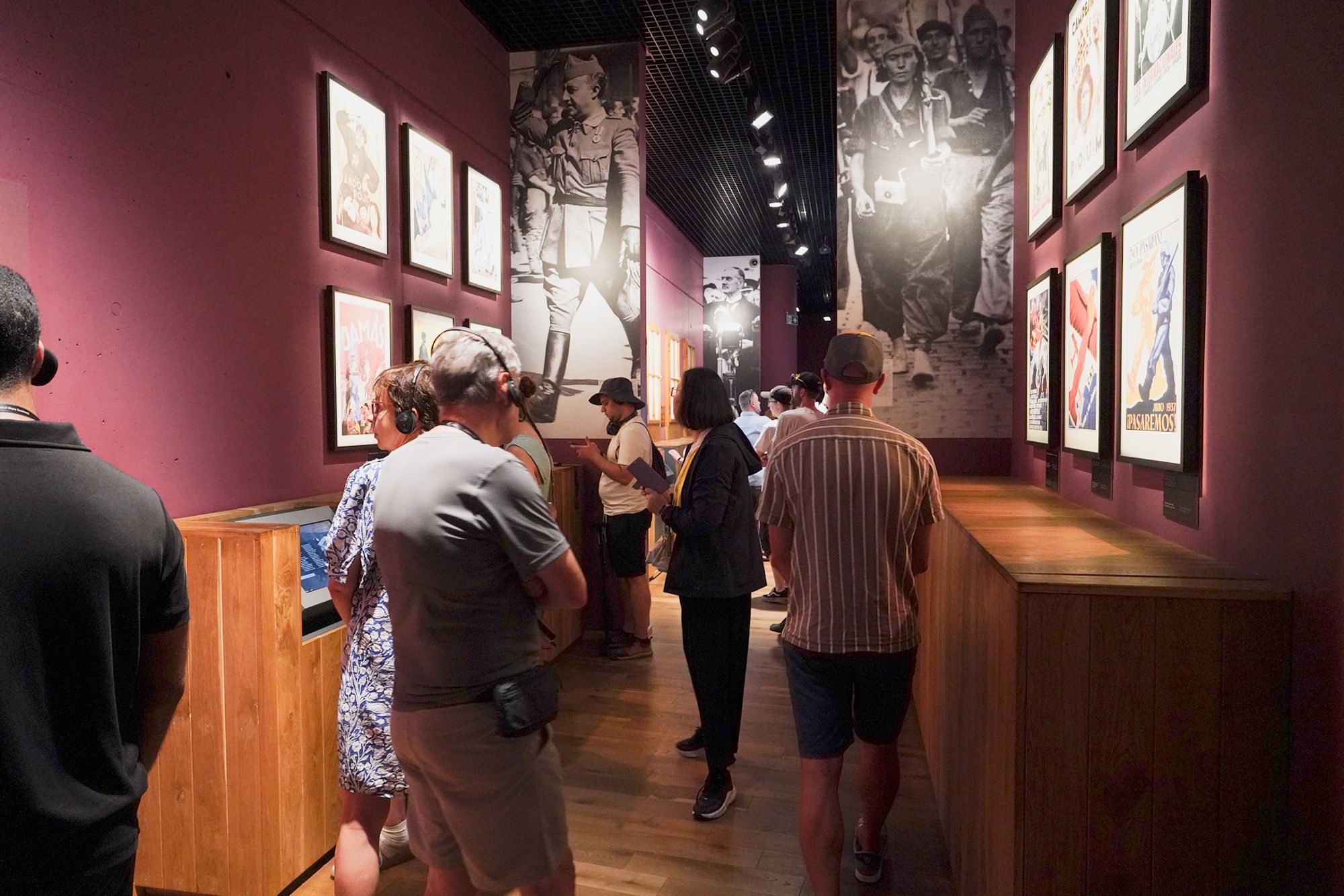
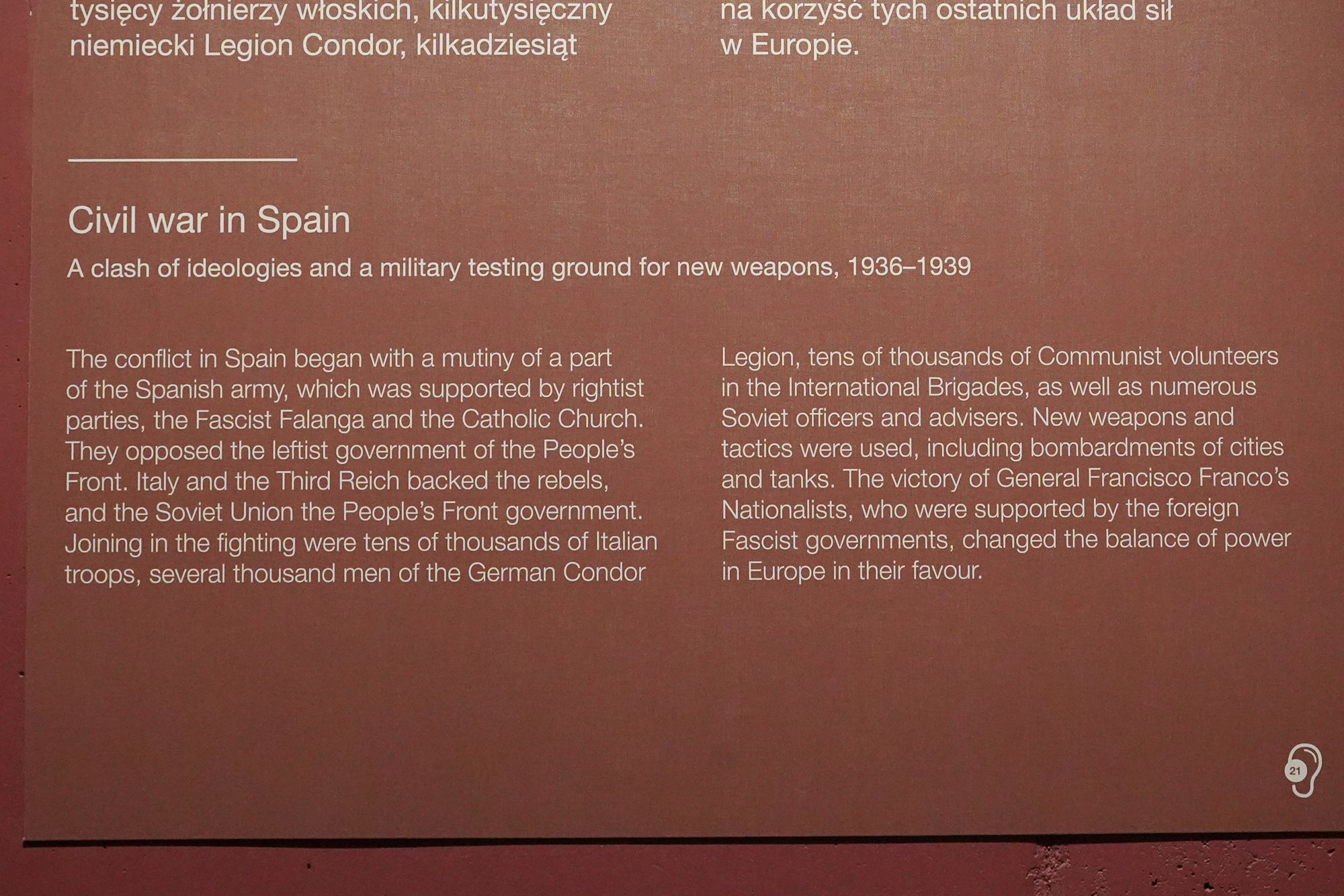
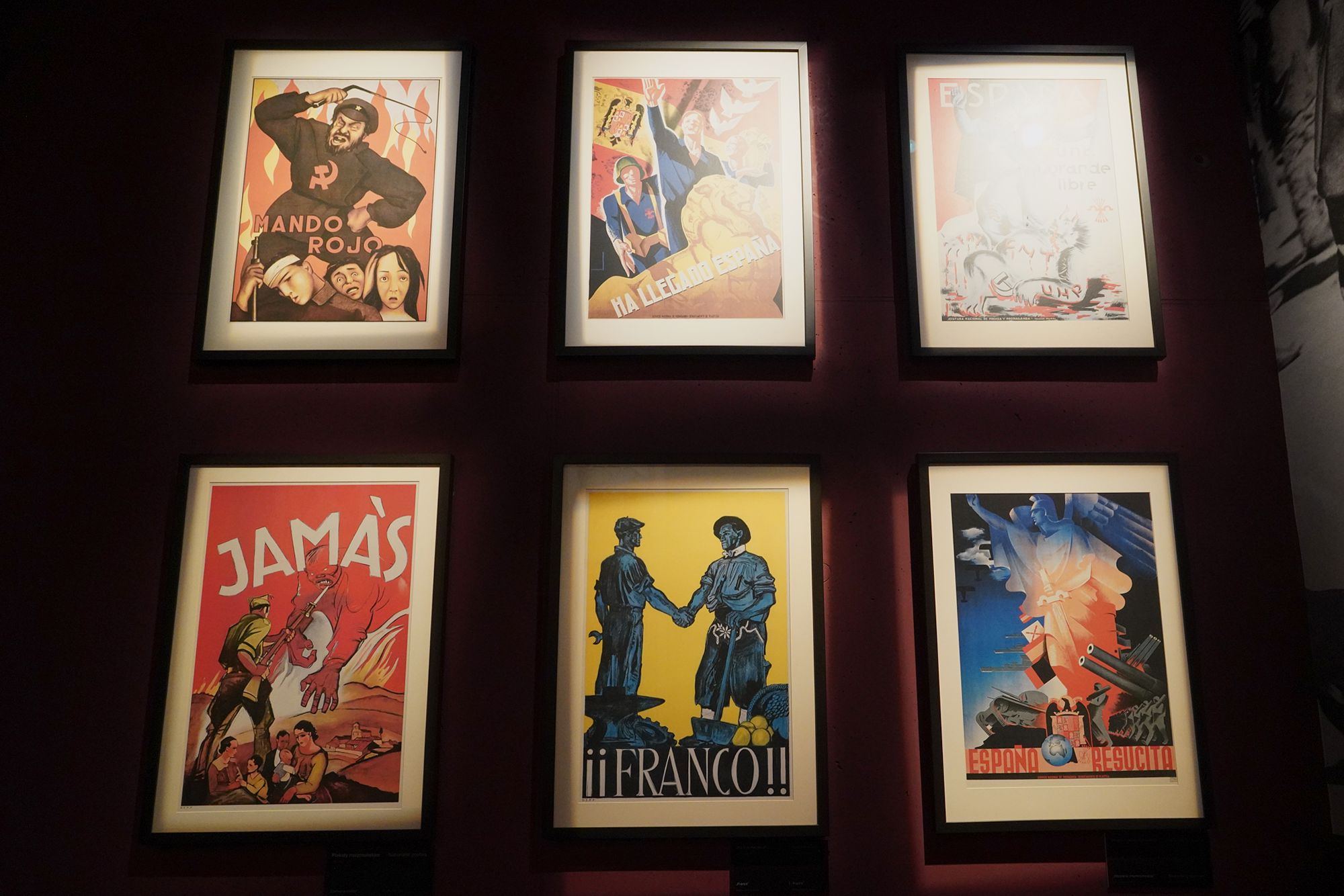
The Spanish Civil War (1936–1939) began when part of the Spanish army revolted against the elected Popular Front government. The rebels, led by General Francisco Franco, received support from Fascist Italy and Nazi Germany. The government received Soviet aid and help from foreign volunteers, including the International Brigades. Franco’s victory strengthened fascist forces in Europe, and the war became a testing ground for weapons and tactics later used in World War II.
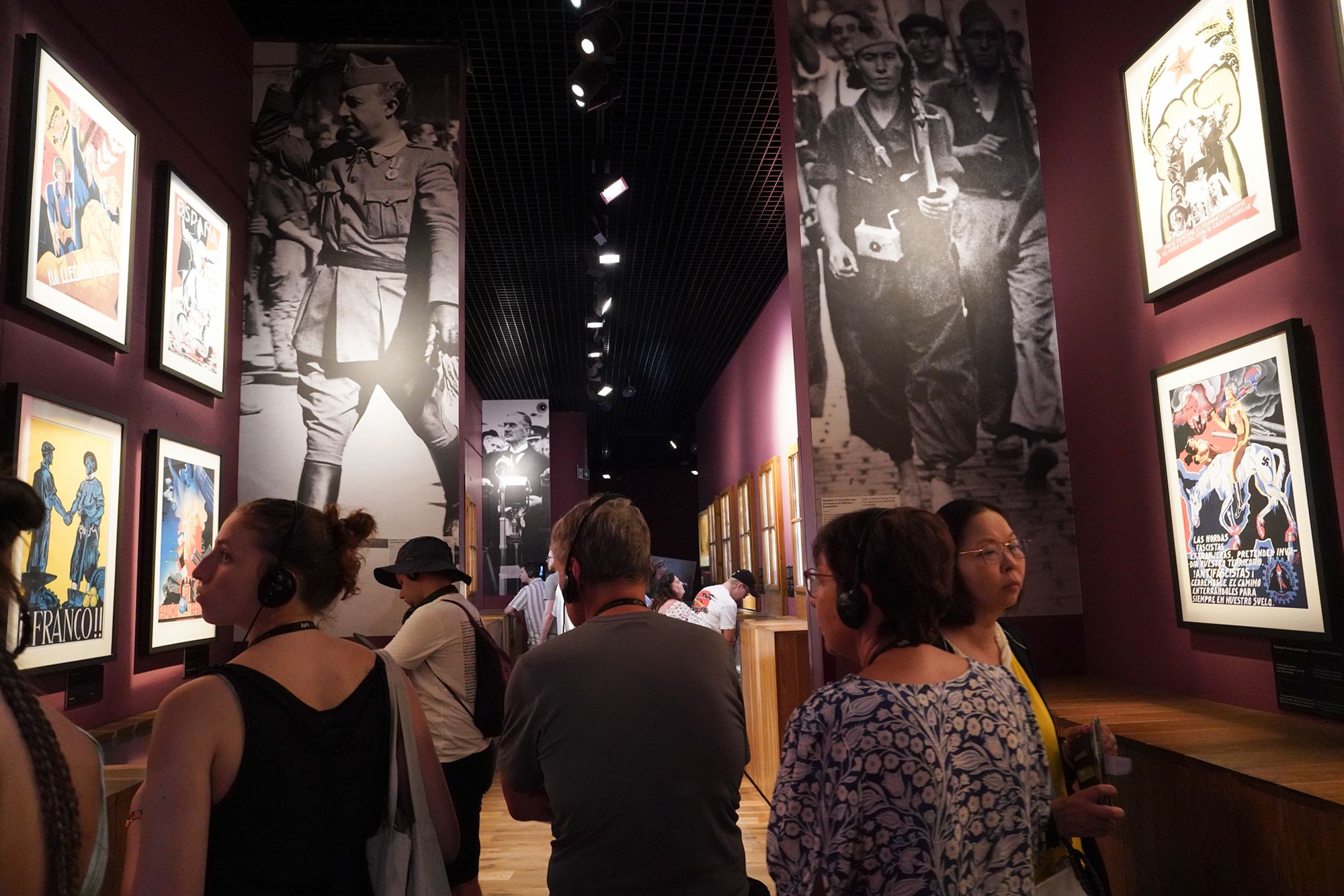
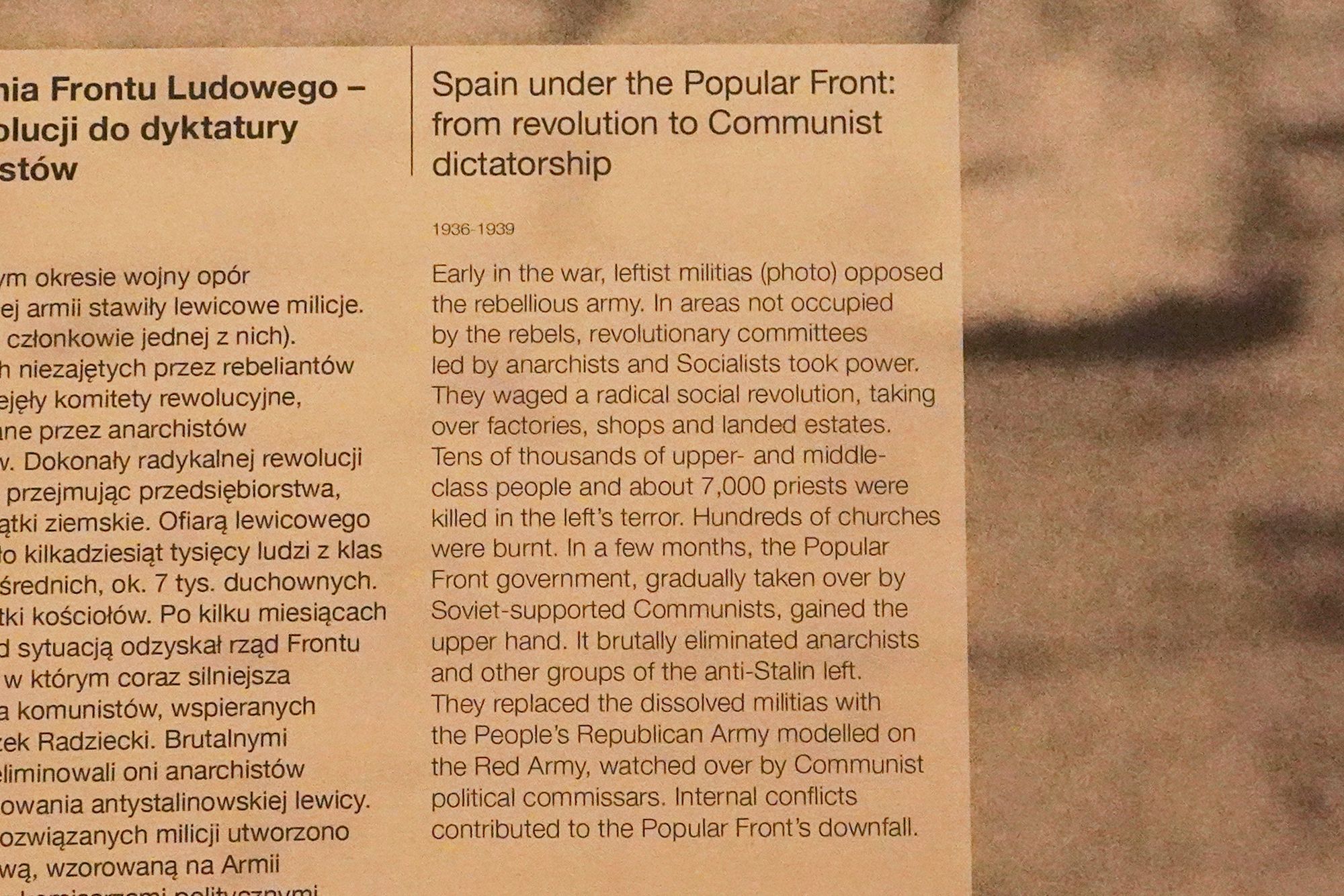
As the war continued, Soviet-backed Communists gained influence and pushed to bring the militias under a regular army. They also violently suppressed anarchists and other left-wing rivals. The Republican side was a broad, divided coalition, so the panel’s title simplifies a complicated struggle; Franco’s victory in 1939 established the dictatorship that ruled Spain afterward.
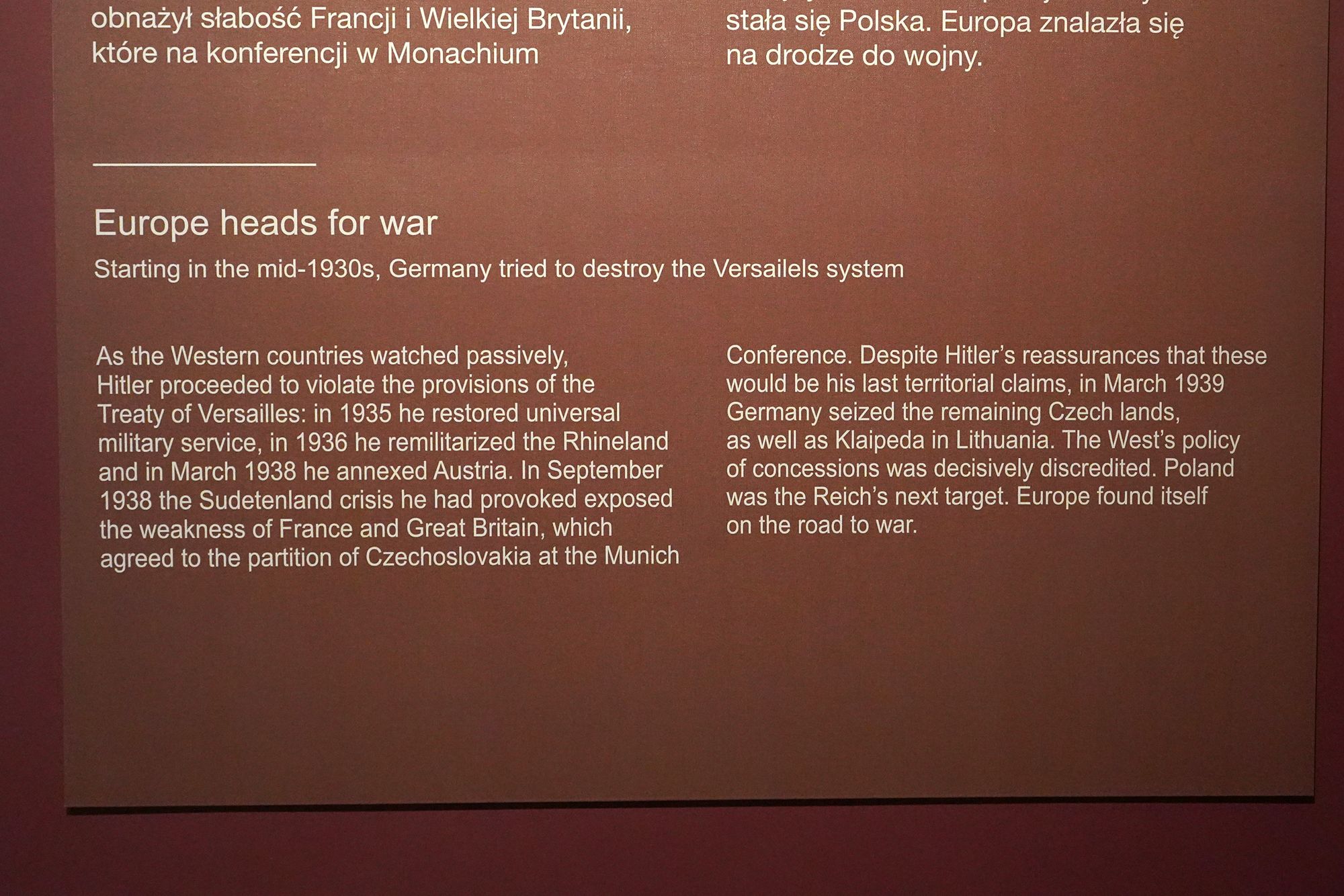
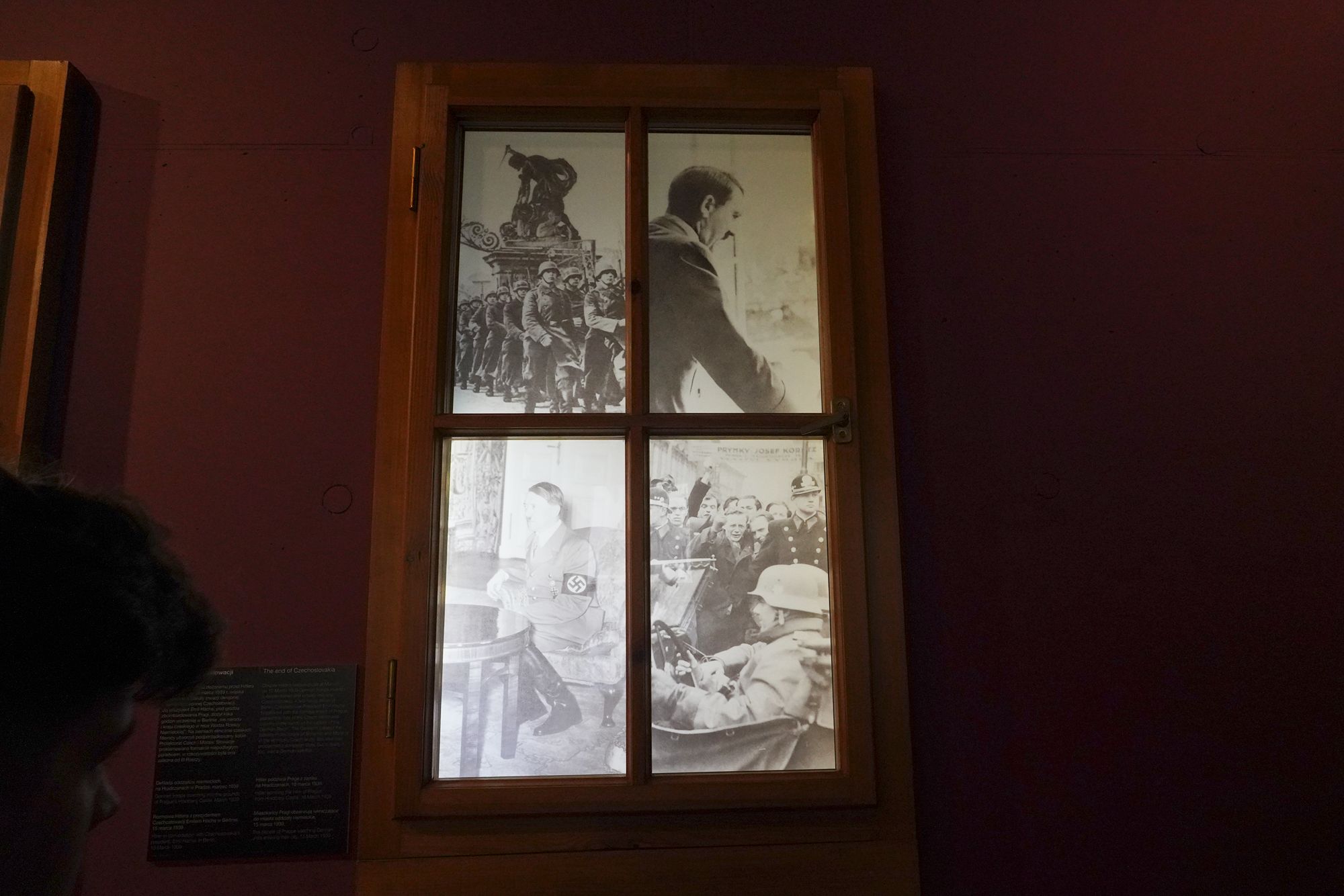
The panel traces Hitler’s expansion leading up to World War II. Germany rebuilt its armed forces, remilitarized the Rhineland, annexed Austria, and took the Sudetenland after Britain and France agreed to concessions at Munich in 1938. In March 1939, Hitler seized the rest of the Czech lands, showing that his promises to stop expanding could not be trusted. Poland was next.
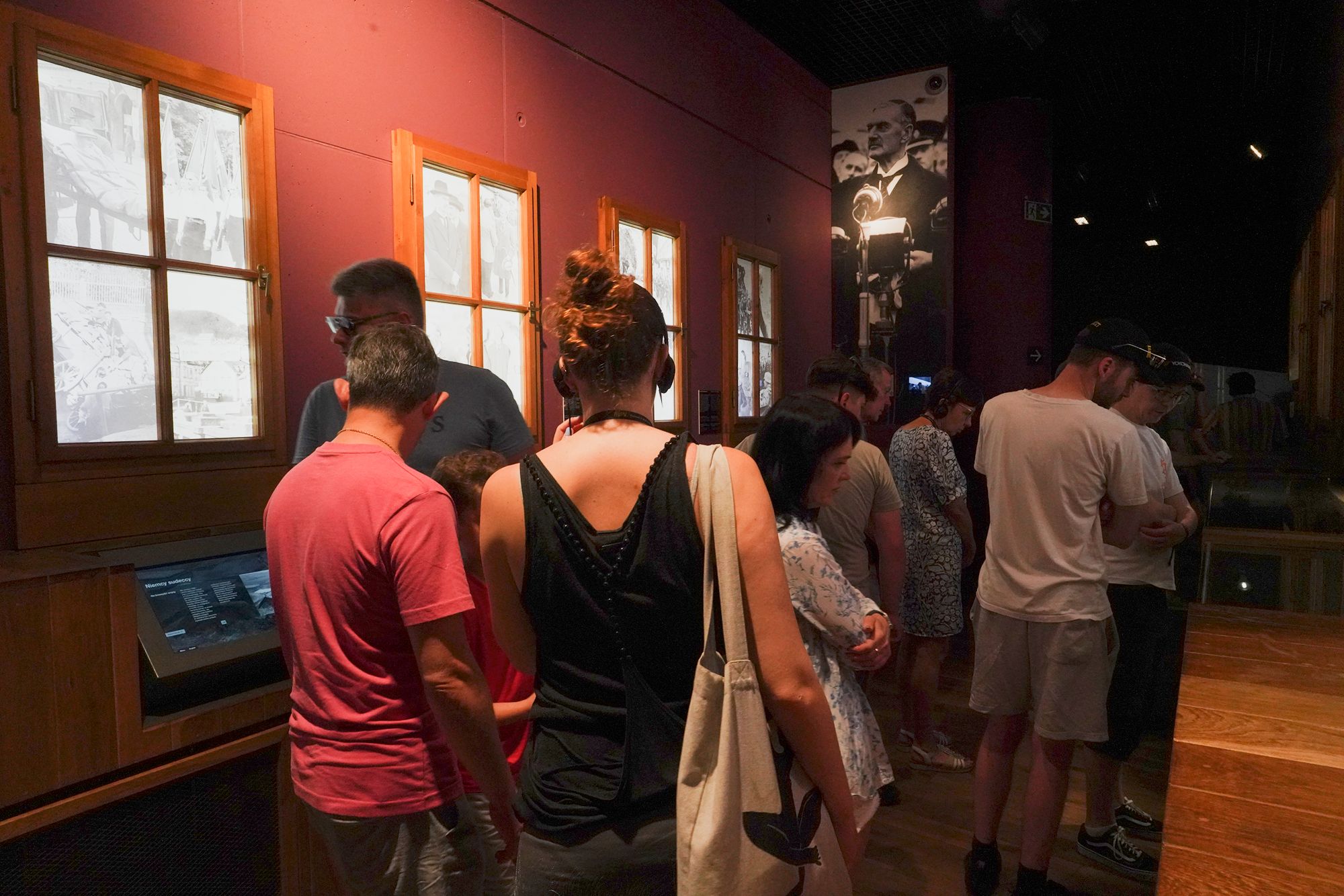
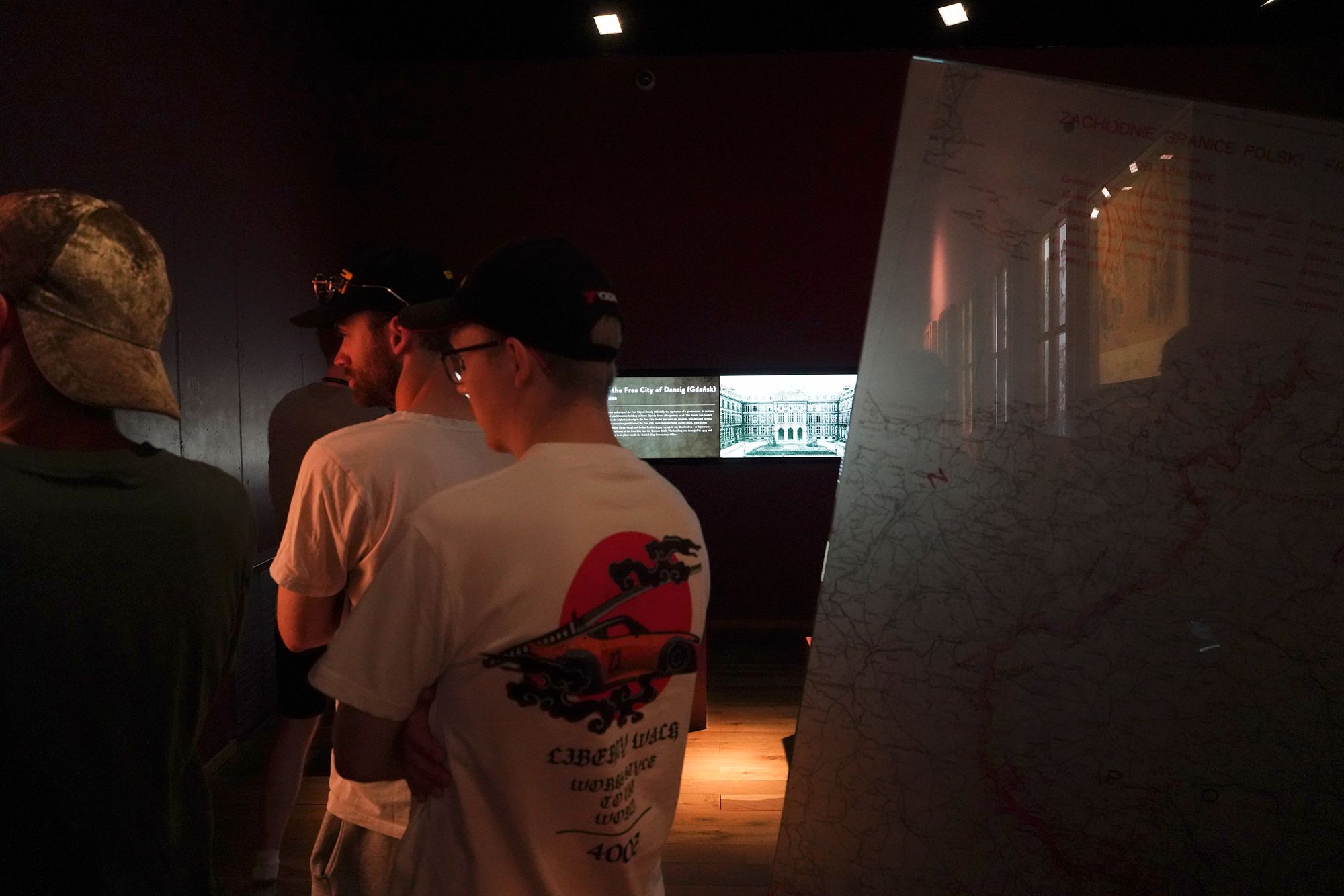
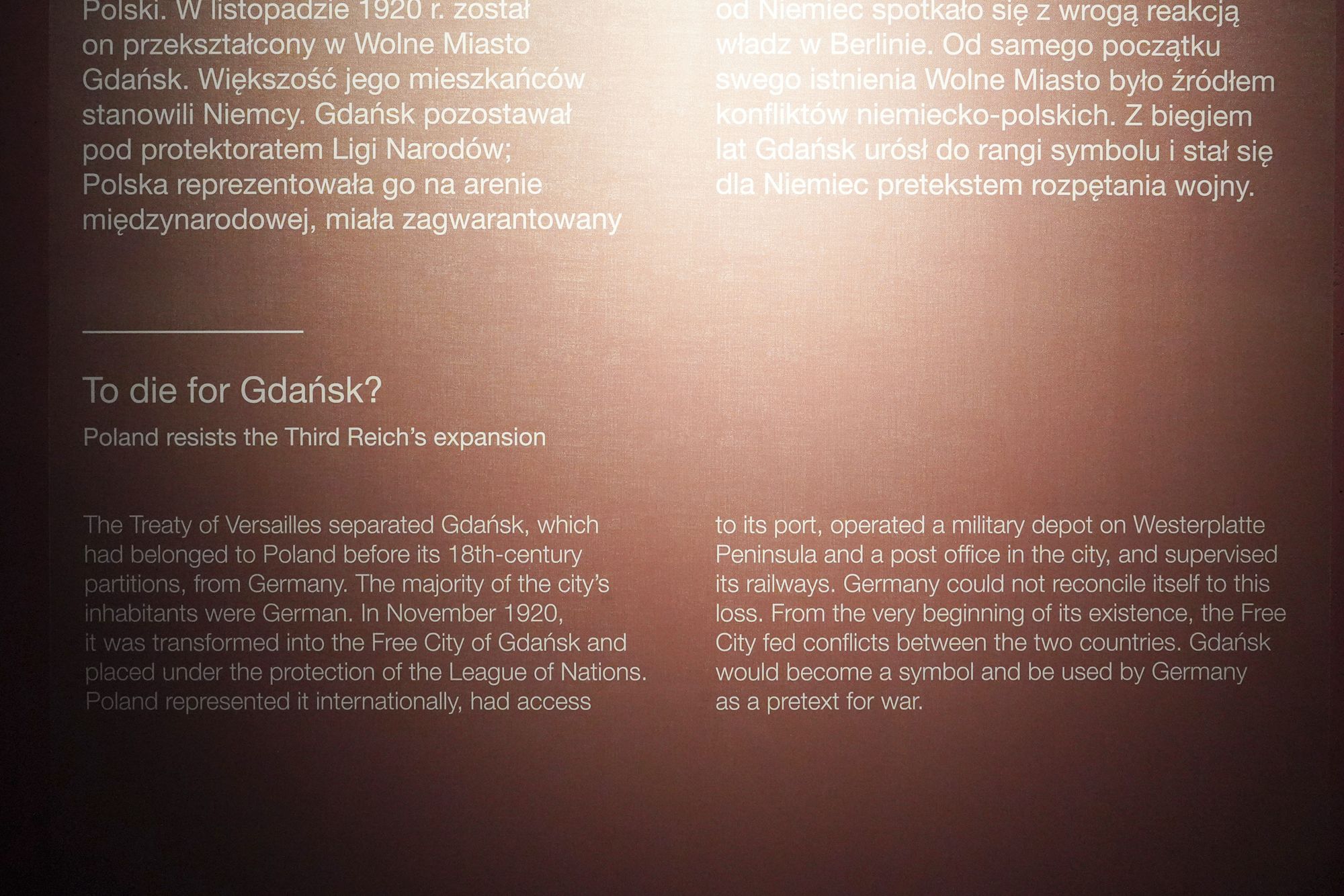
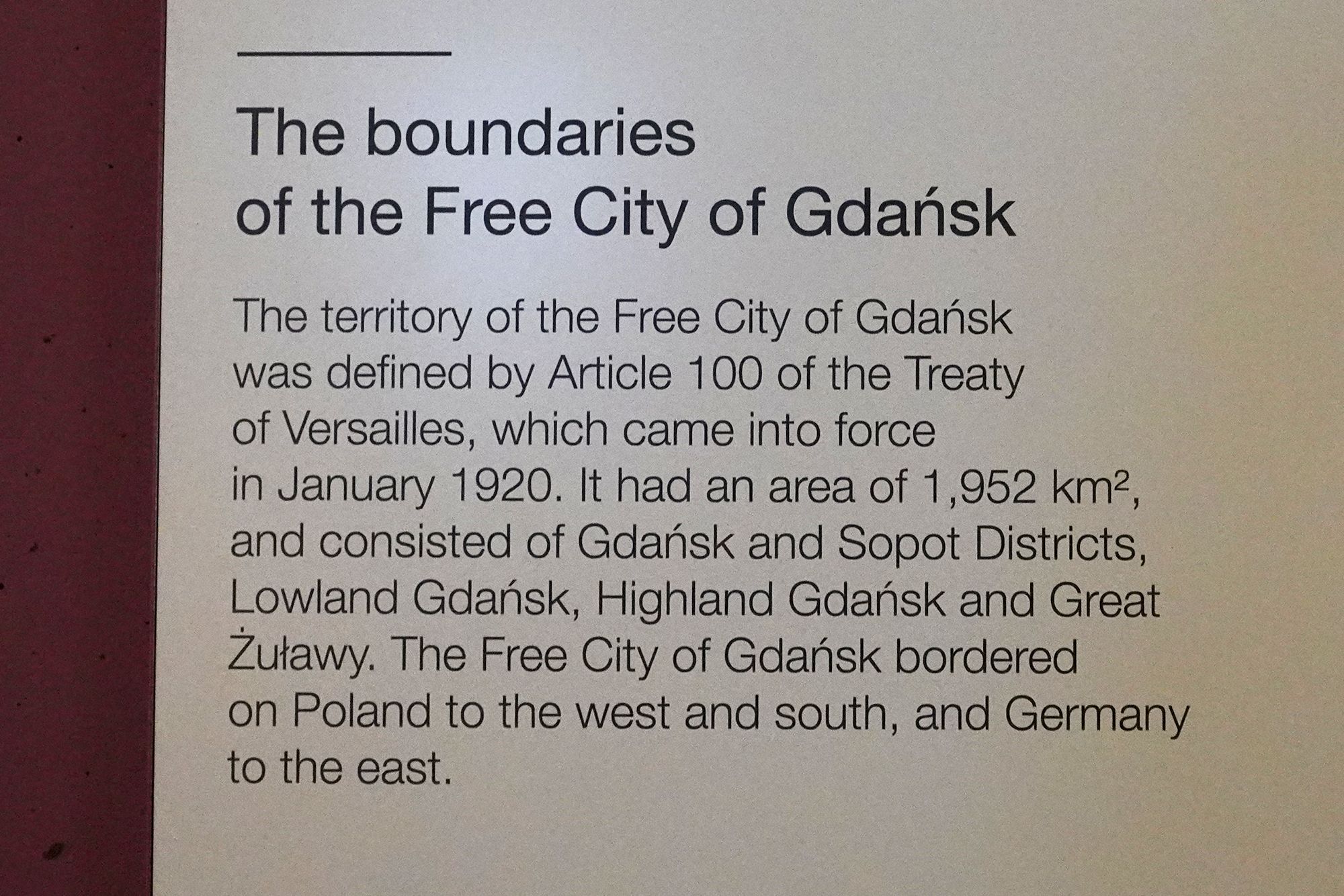
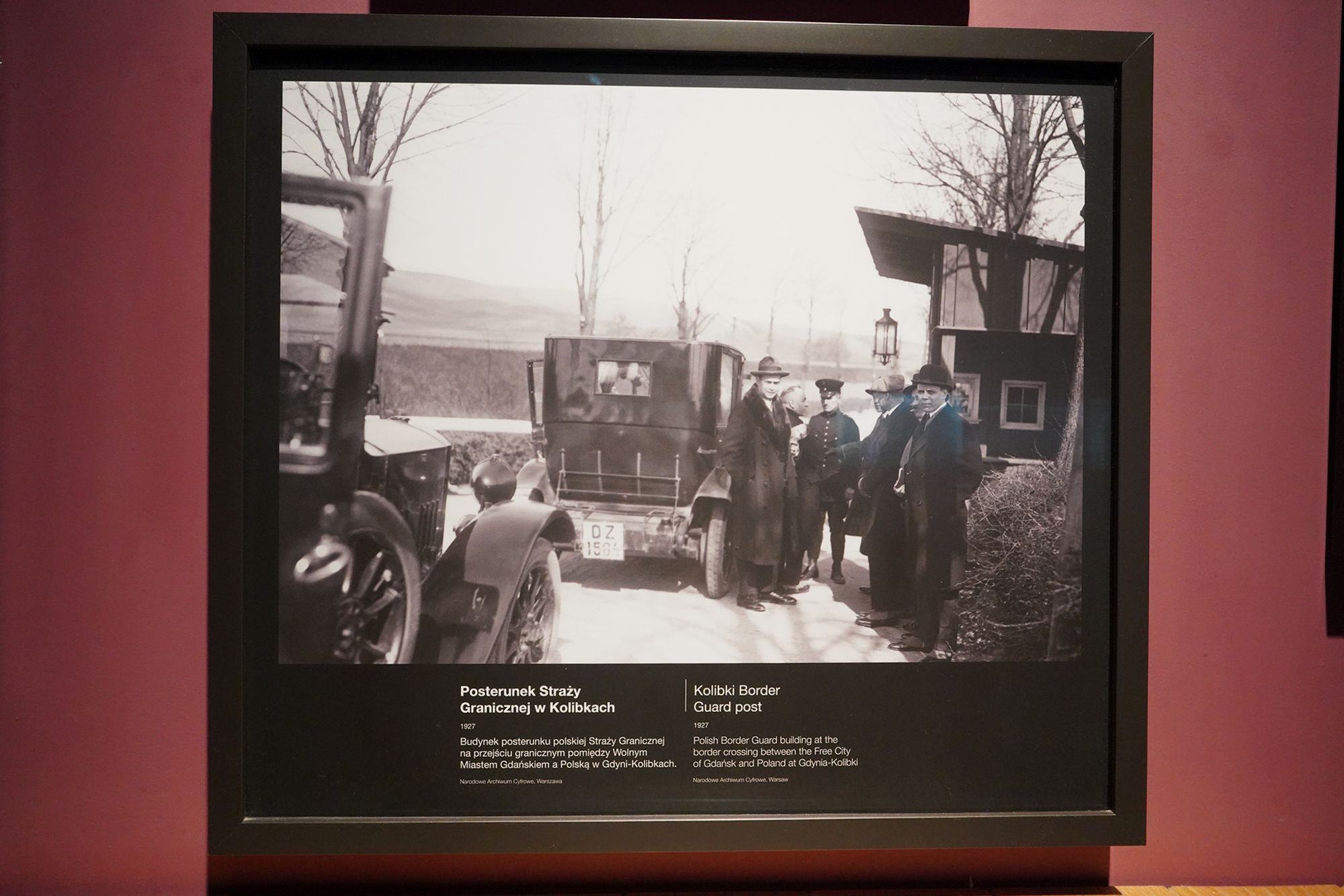
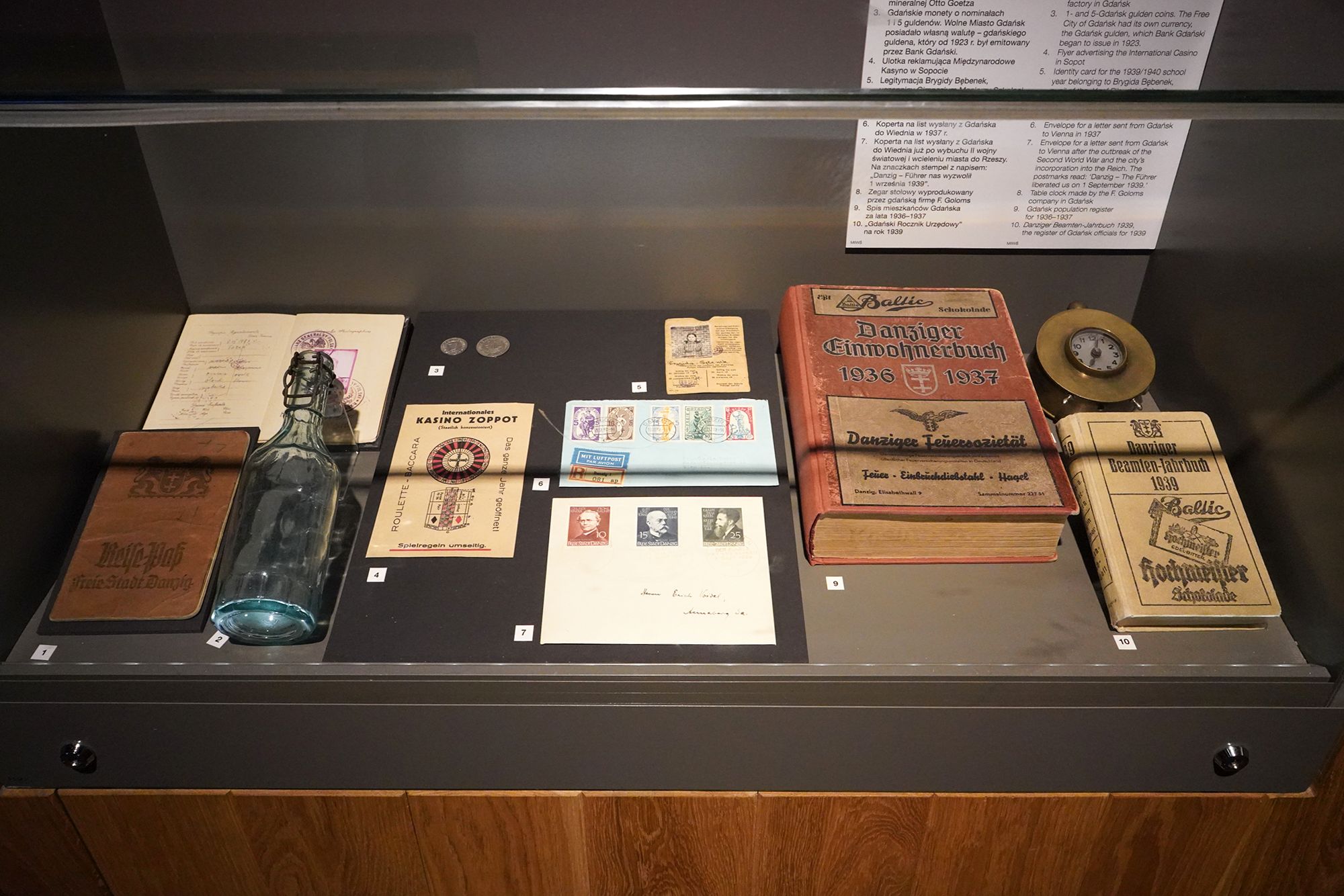
After World War I, the Treaty of Versailles made Gdańsk (then commonly called Danzig) a Free City under the League of Nations, separate from both Poland and Germany. Most residents were German, but Poland had important rights there, including access to the port. Germany resented this arrangement, and Hitler later used Gdańsk as a pretext for expansion and war.
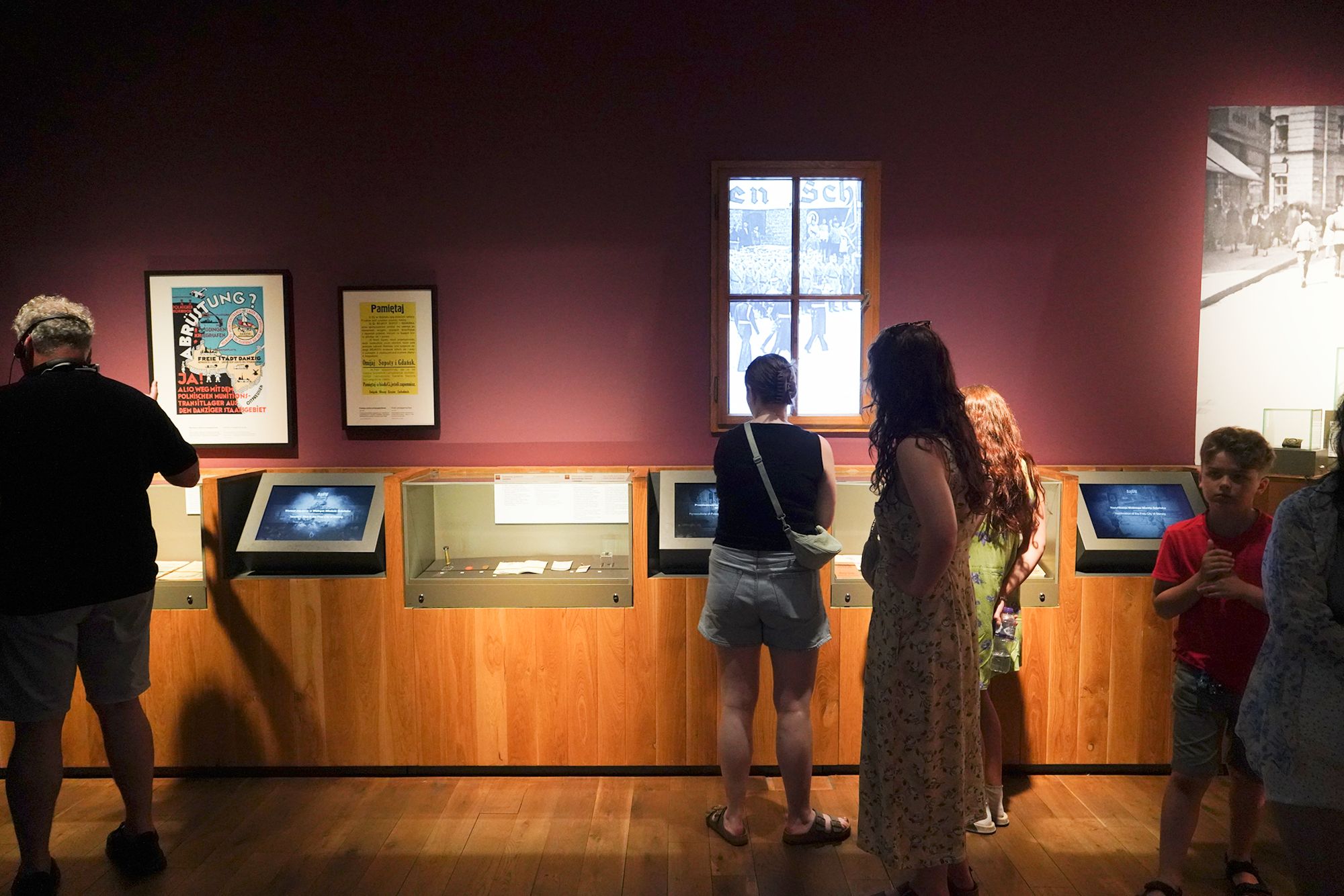
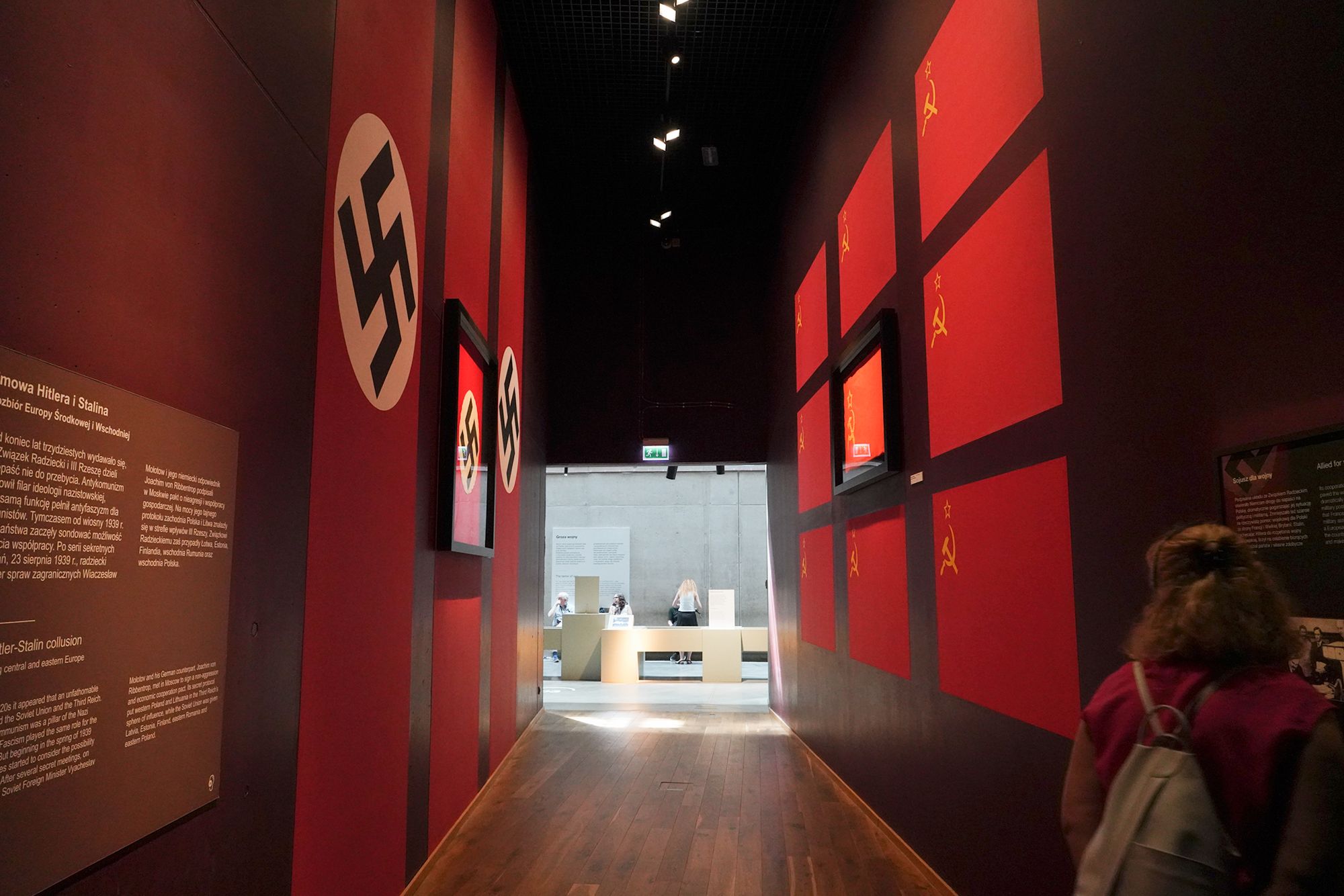
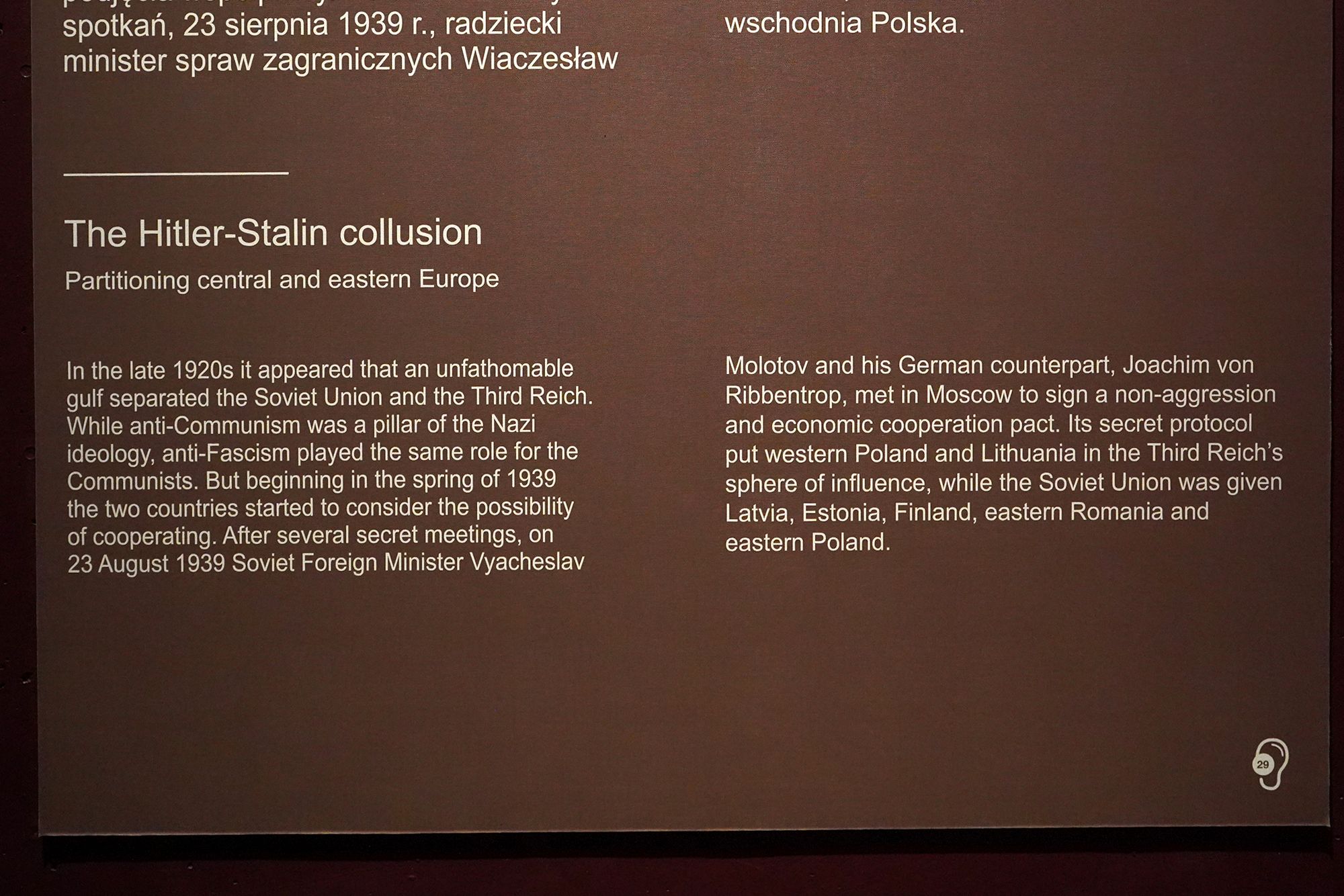
This panel describes the Nazi-Soviet Pact, signed on August 23, 1939, by the foreign ministers of Germany and the Soviet Union. Publicly, they agreed not to attack each other. A secret protocol divided parts of Eastern Europe into their spheres of influence, including Poland. The pact let Hitler invade Poland without immediately facing a war with the Soviet Union; both countries later occupied and divided Polish territory.
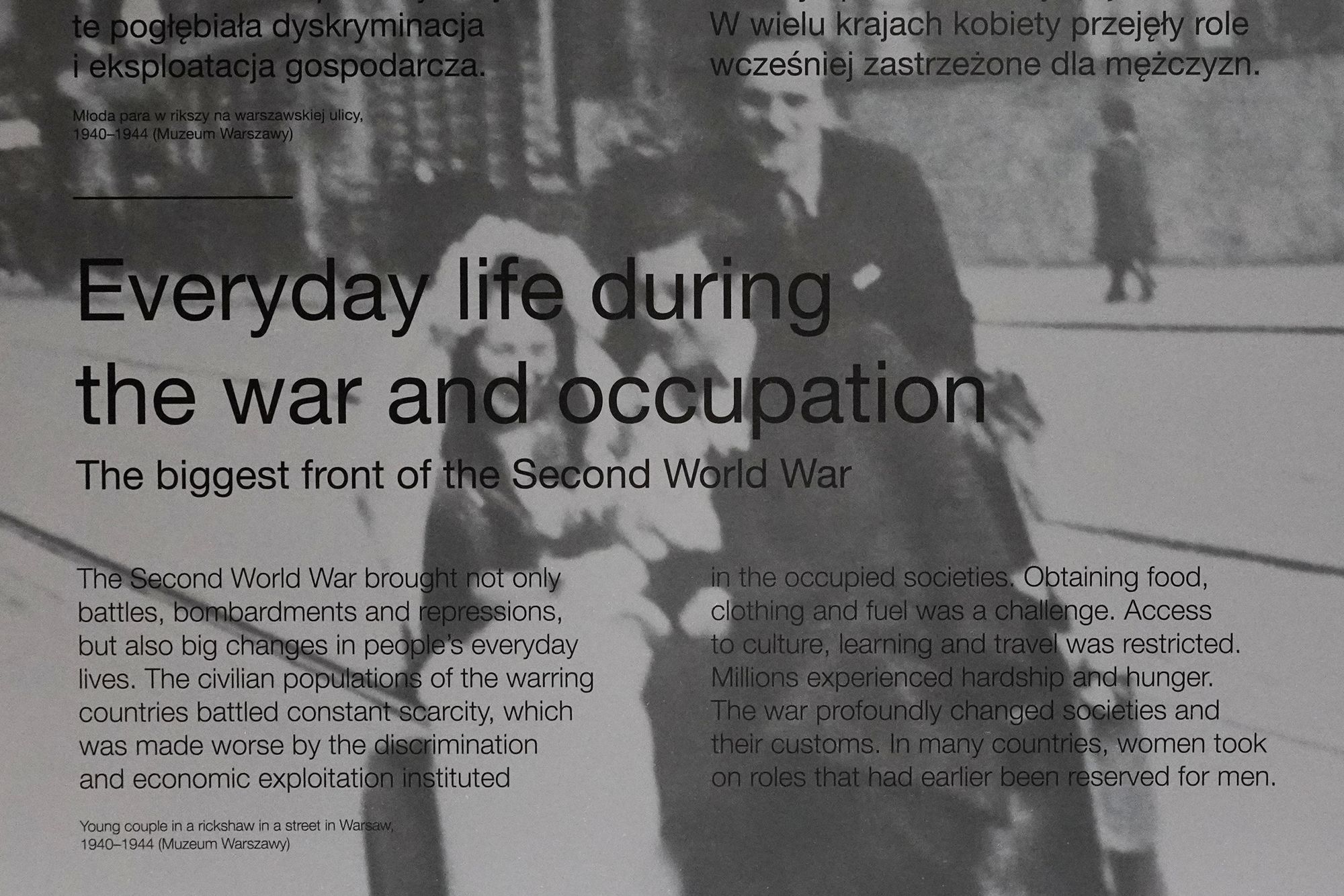
This introductory panel shifts from military events to civilians’ daily lives during World War II. People faced shortages of food, clothing, and fuel, along with restrictions on travel, education, and cultural life. Occupation brought discrimination and economic exploitation. The war also changed family and work roles, as women took on jobs previously held by men. The photo shows a young couple in a rickshaw in Warsaw, 1940–1944.
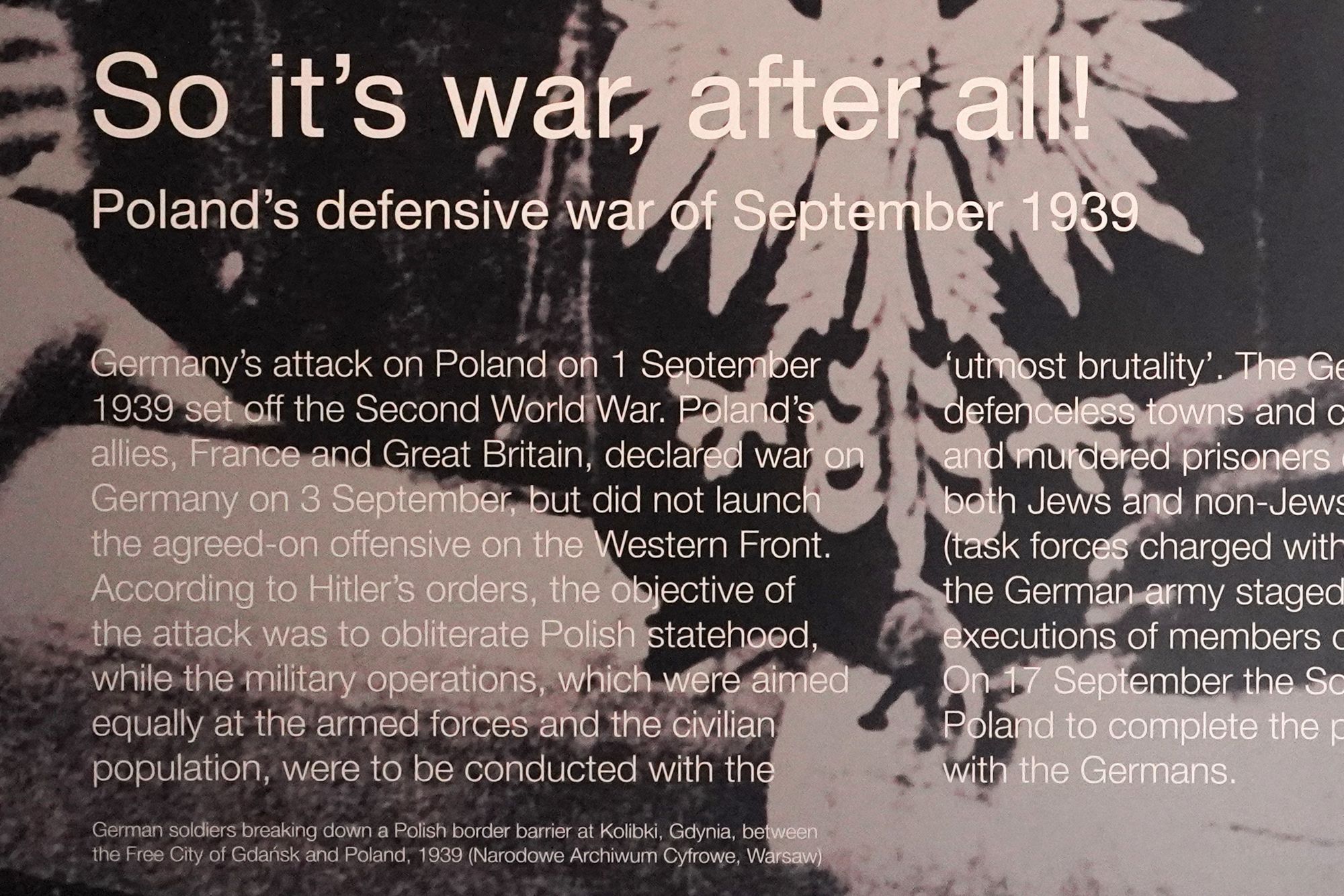
The panel describes Poland’s September 1939 defensive war. Germany invaded on September 1, beginning World War II in Europe. Britain and France declared war two days later but did not launch the offensive Poland had hoped for. On September 17, the Soviet Union invaded from the east, sealing Poland’s defeat.
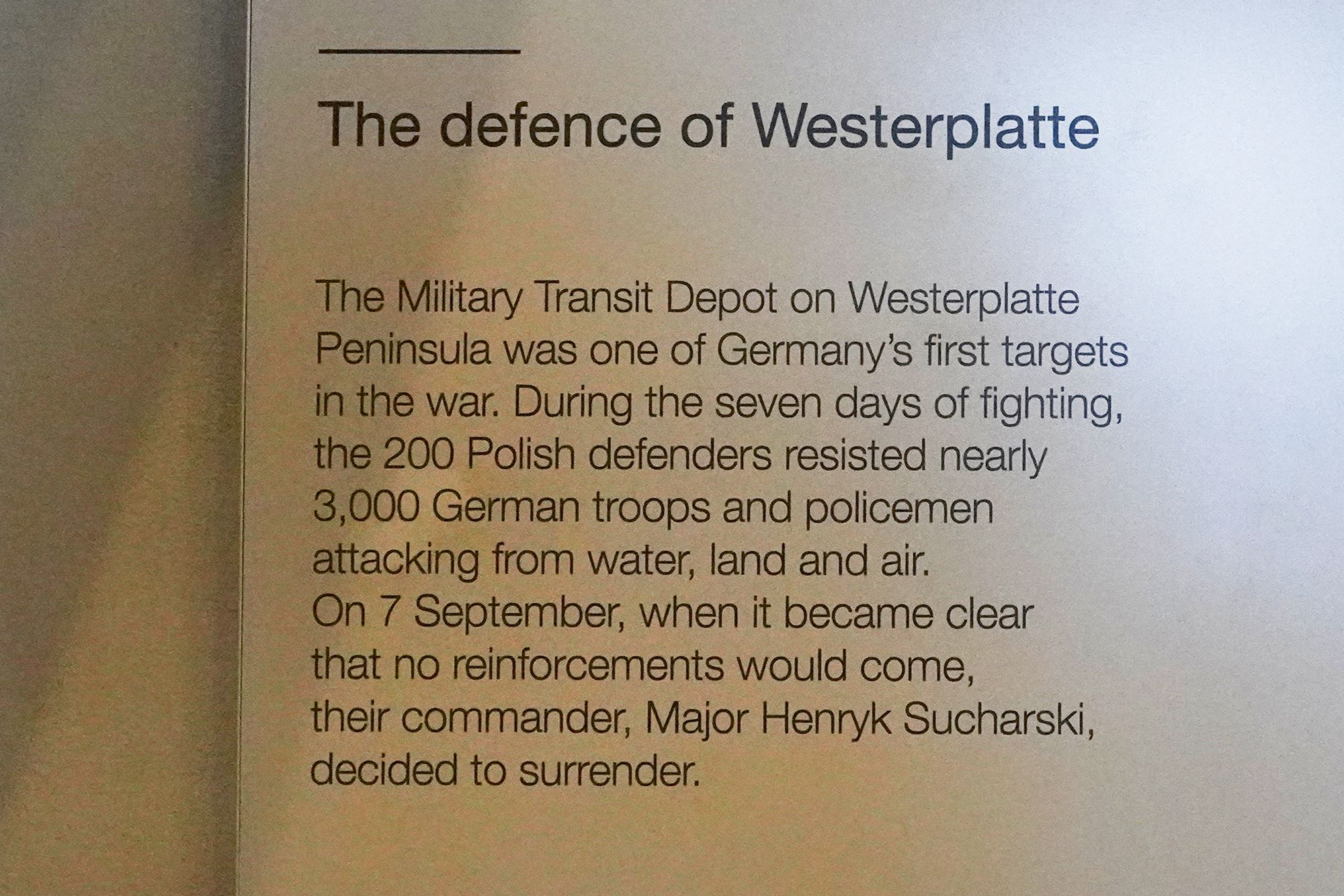
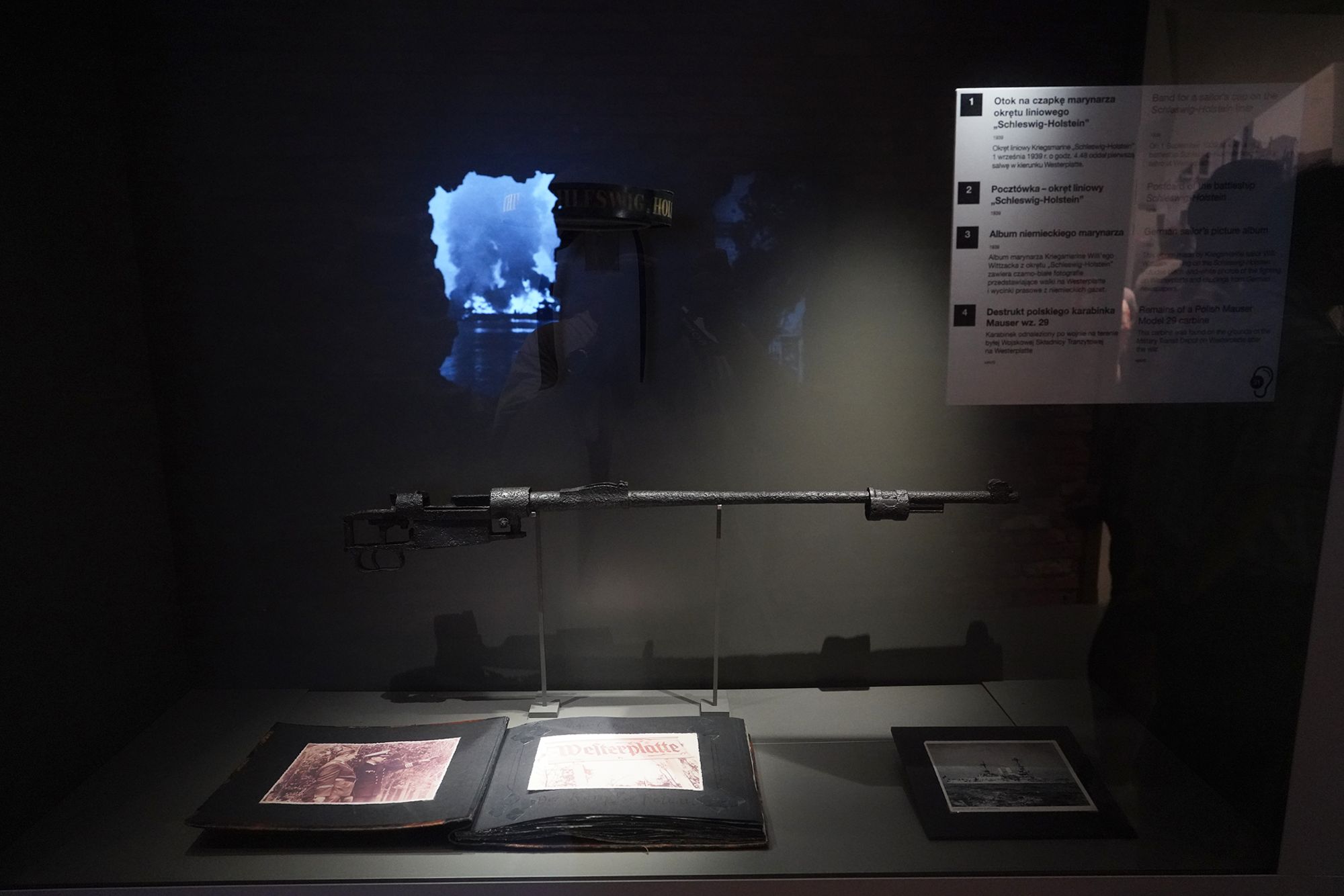
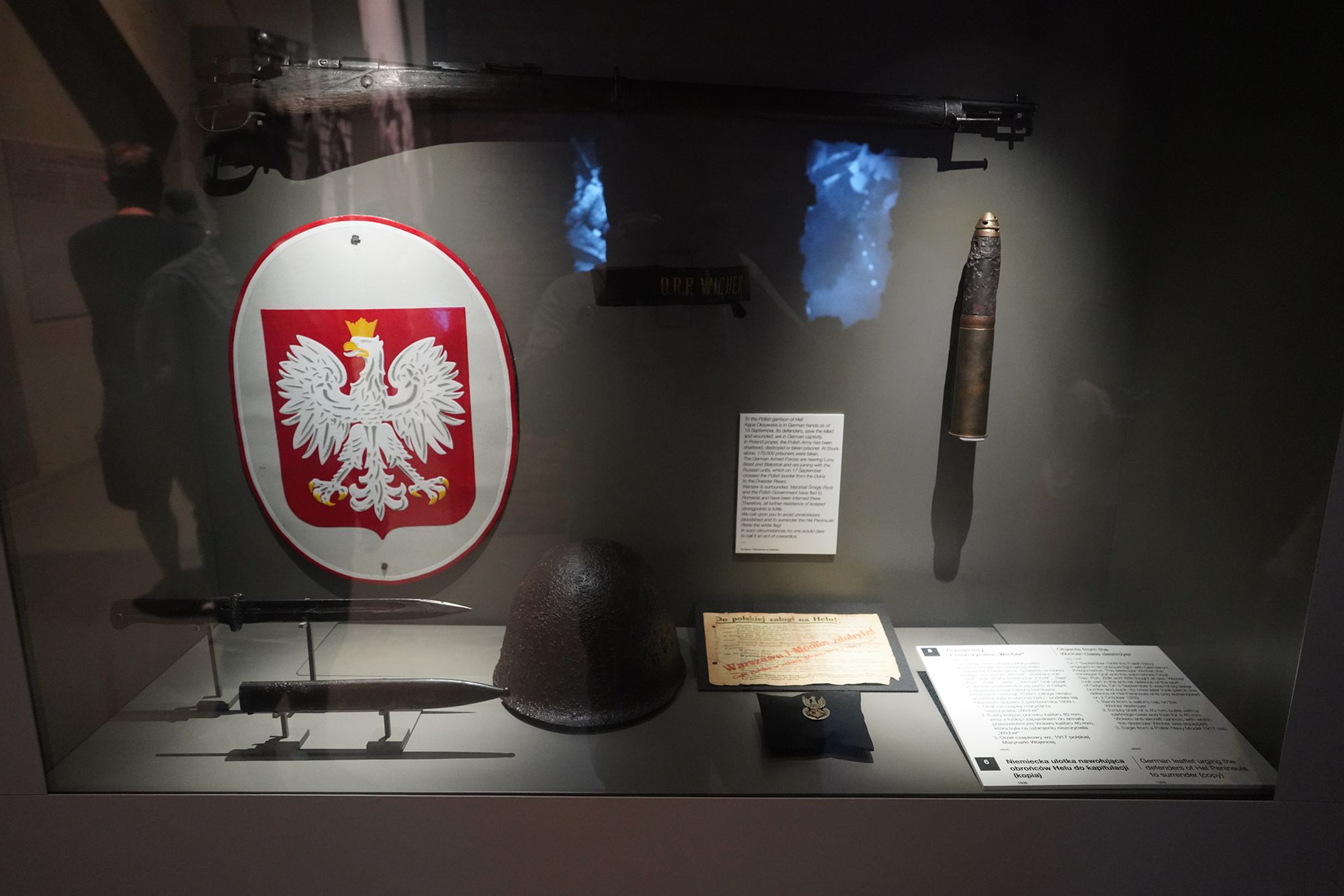
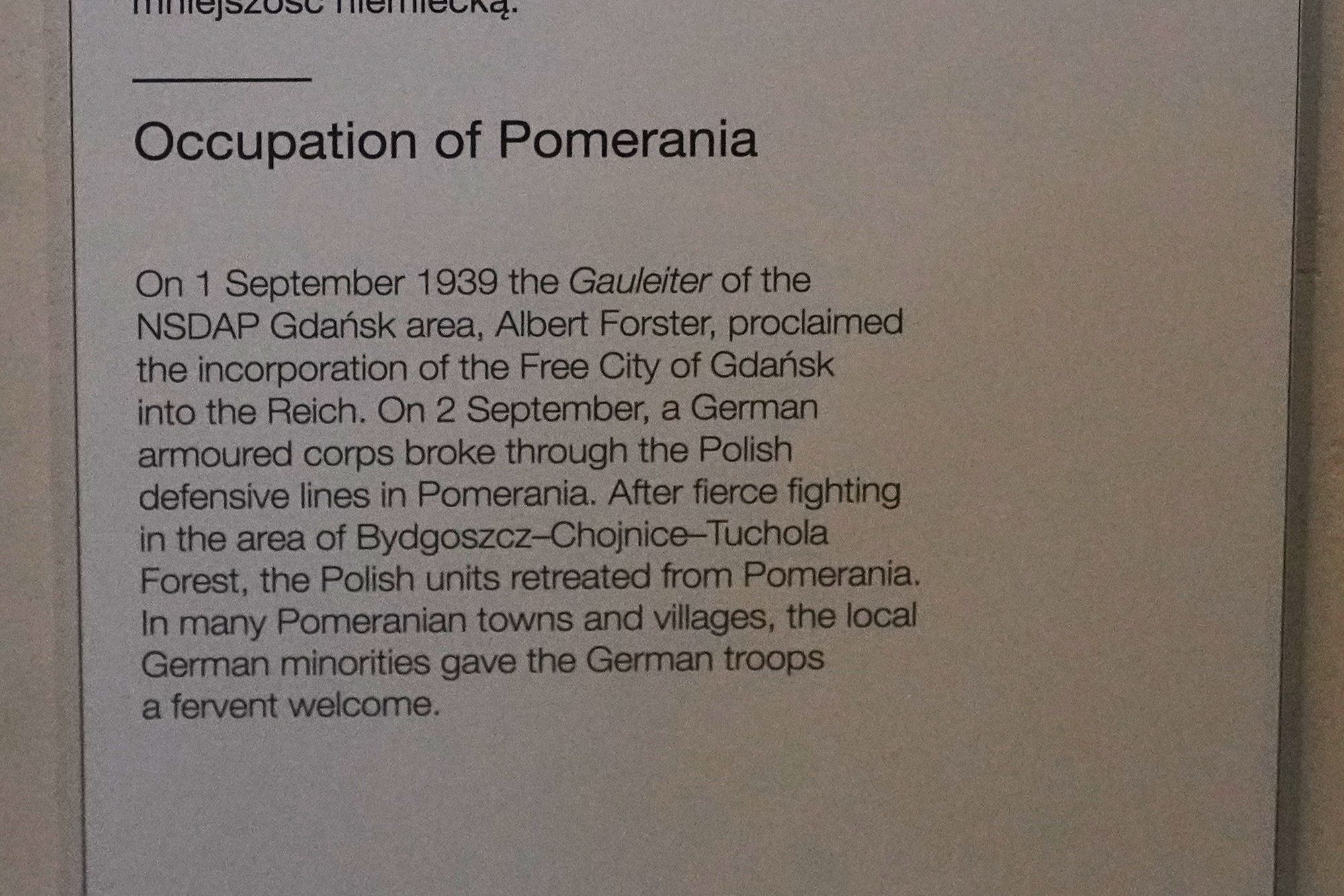
This panel describes the defense of Pomerania, the region around Gdańsk and Gdynia. German forces aimed to cut it off from the rest of Poland. Much of the Polish Pomorze Army retreated south to avoid encirclement, while isolated units continued fighting at Westerplatte, Gdynia, Kępa Oksywska, and the Hel peninsula. These battles lasted for more than a month.
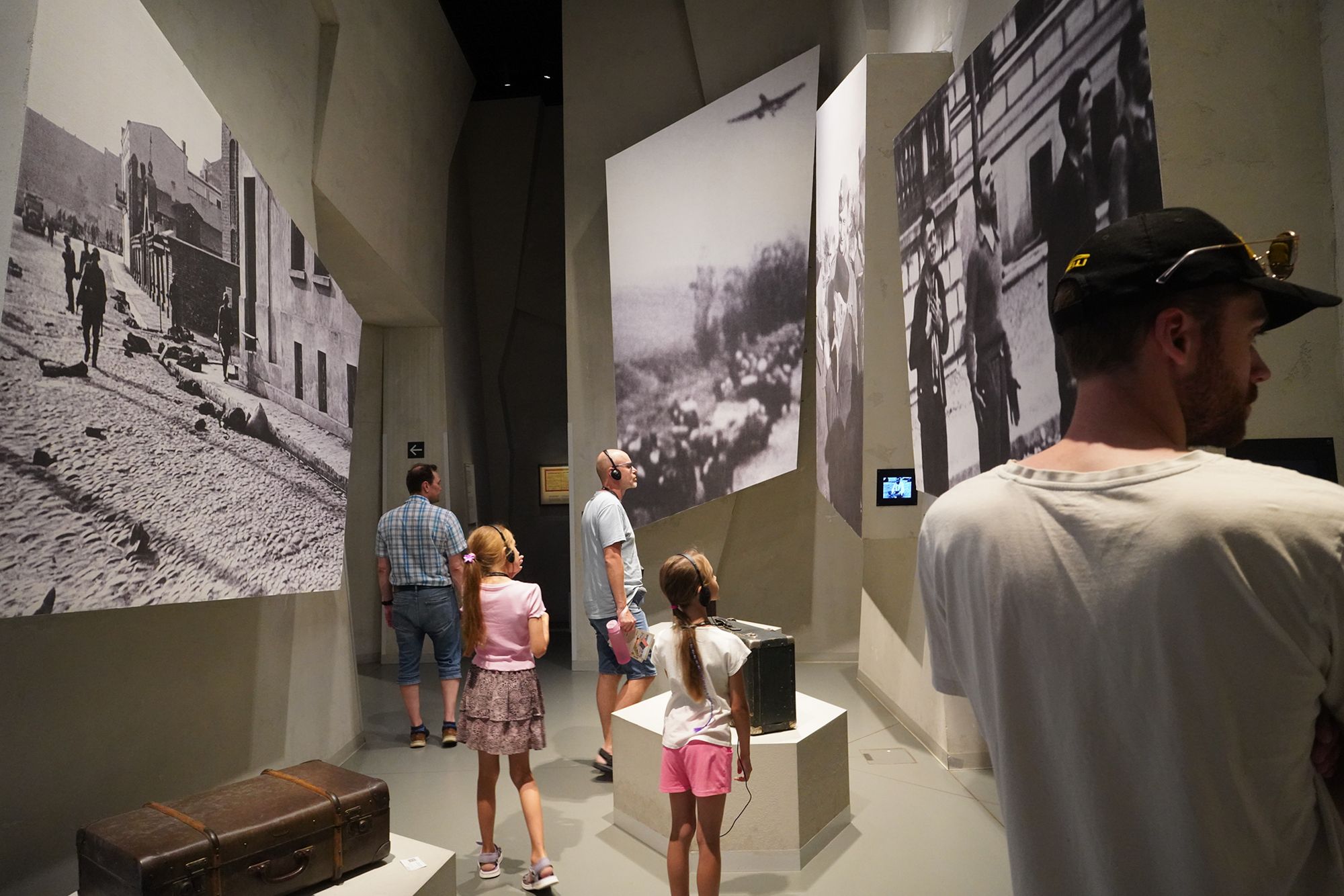
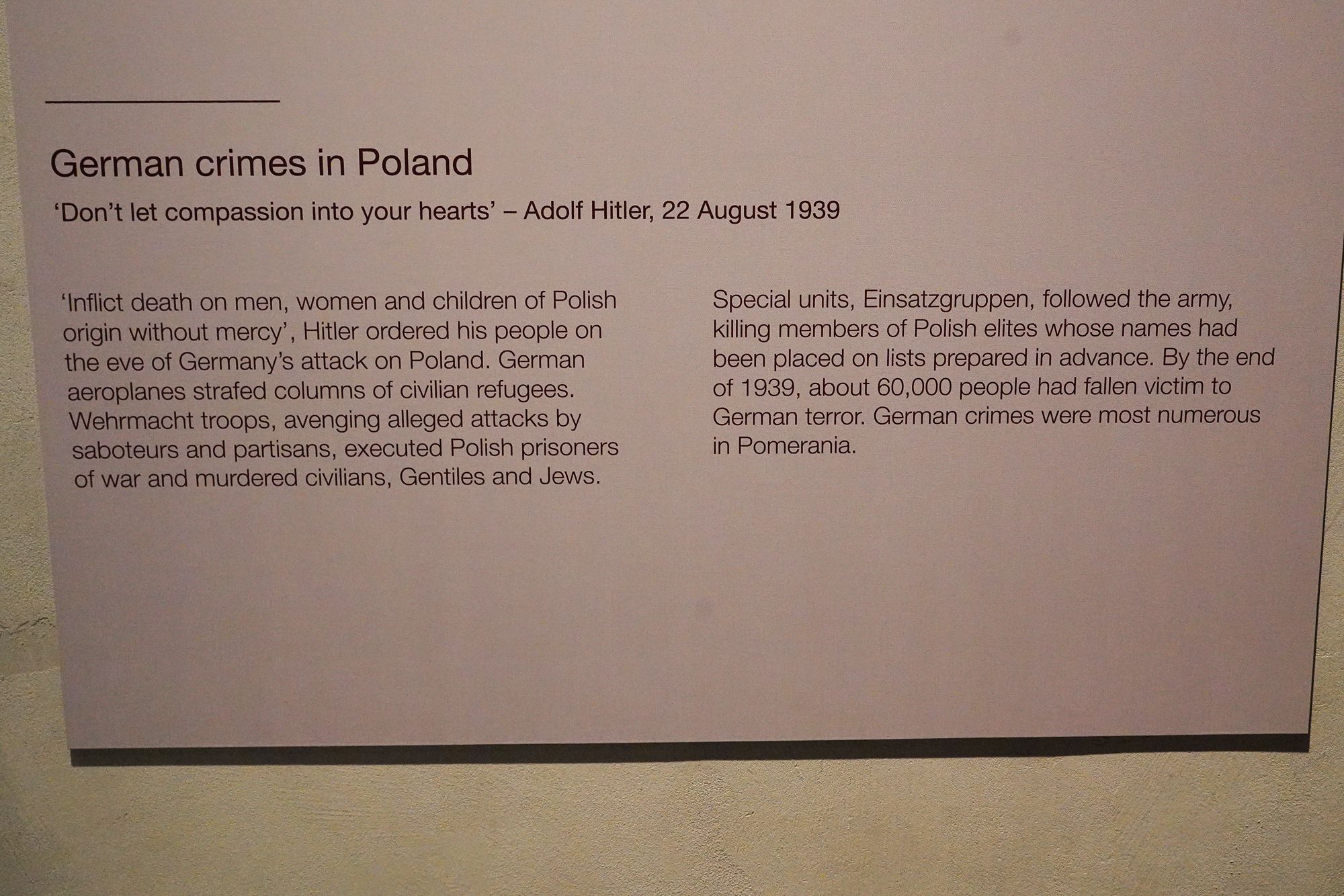
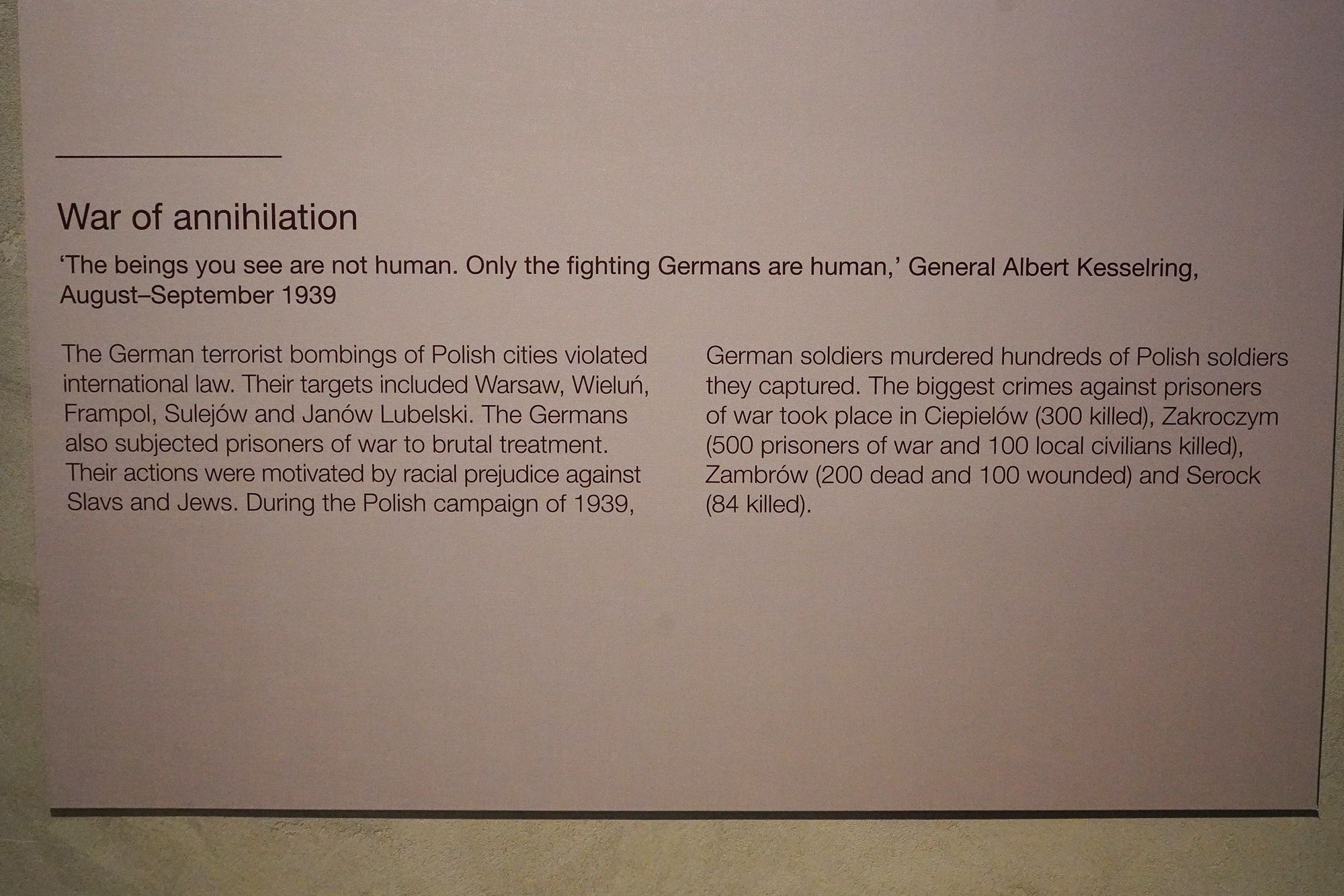
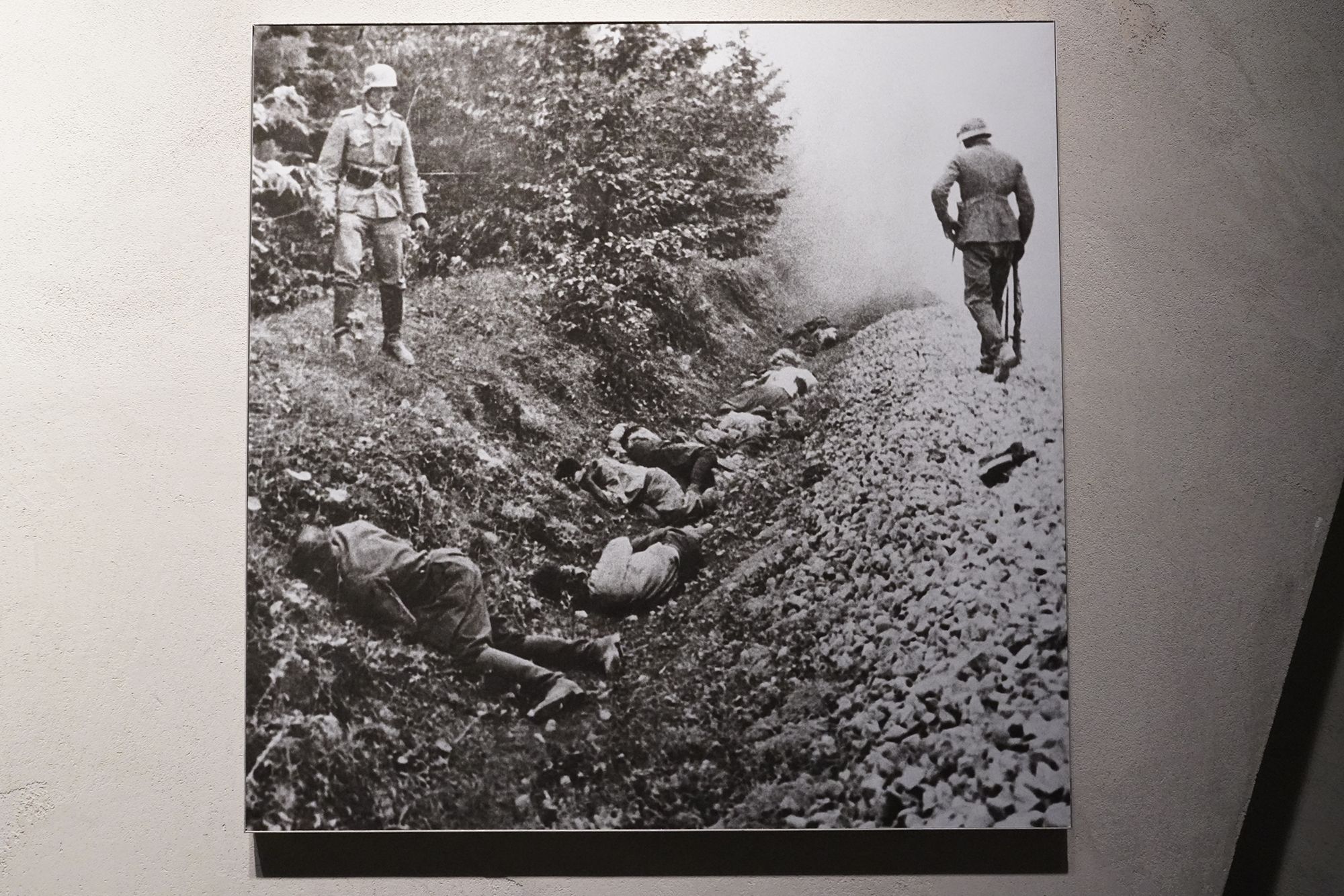
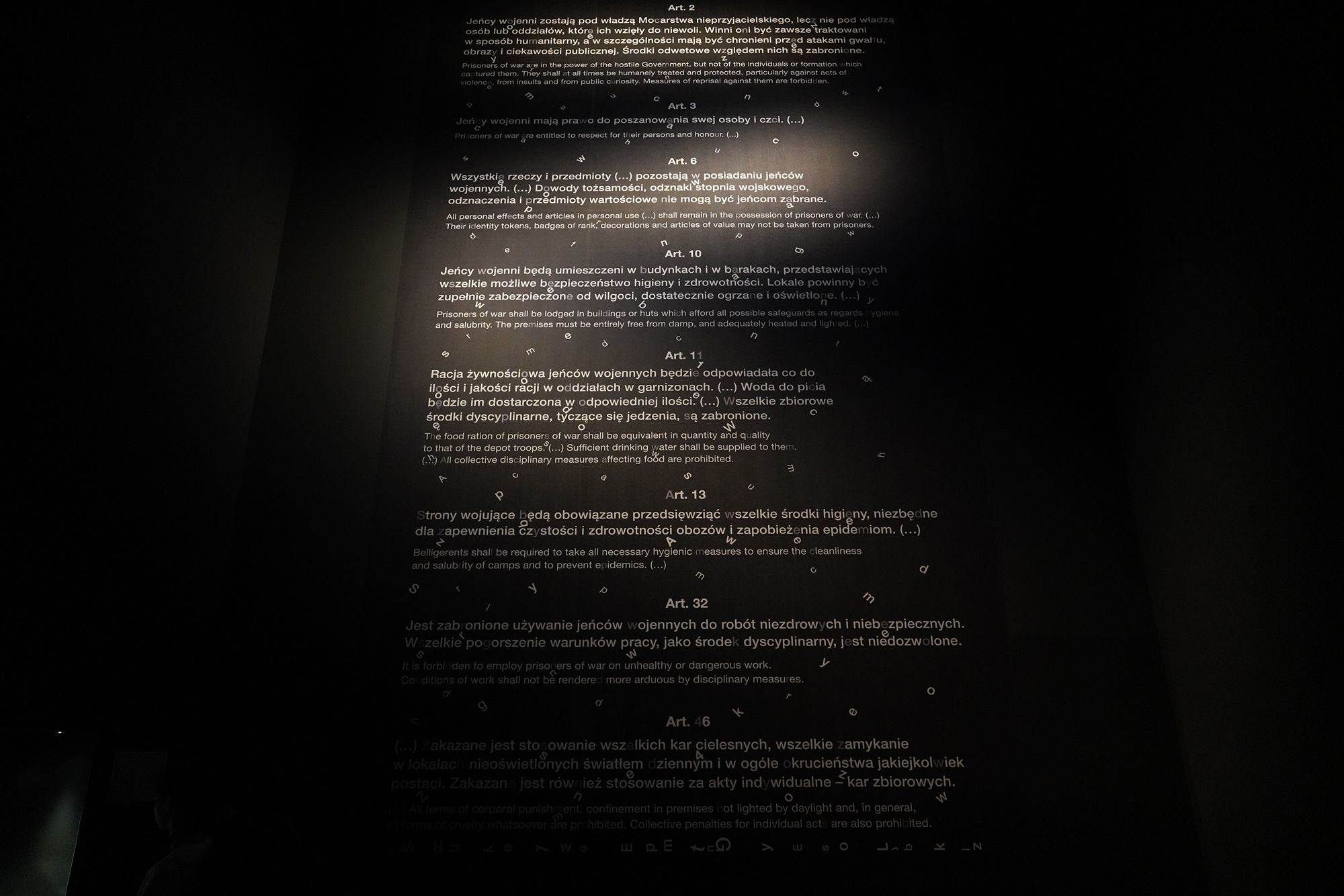
This panel describes the terror accompanying Germany’s invasion. German aircraft attacked civilian refugees, and German troops killed Polish prisoners and civilians, including Jews. Special units called Einsatzgruppen followed the army and targeted Polish leaders and other members of the elite using lists prepared before the invasion. The museum panel says about 60,000 people had been killed by the end of 1939, with the worst crimes in Pomerania. Estimates for the region vary; Poland’s Institute of National Remembrance gives a range of 20,000–50,000 victims.
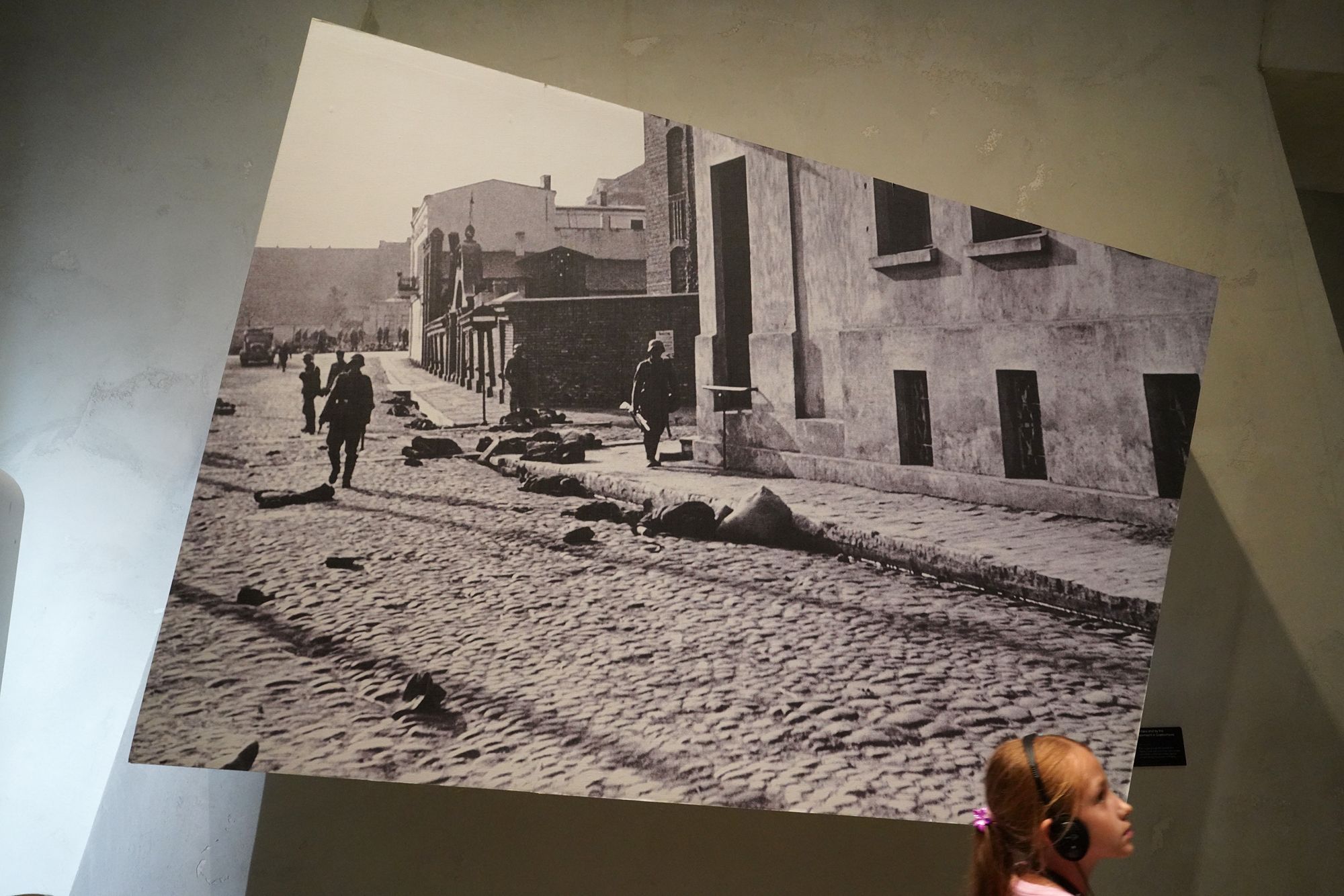
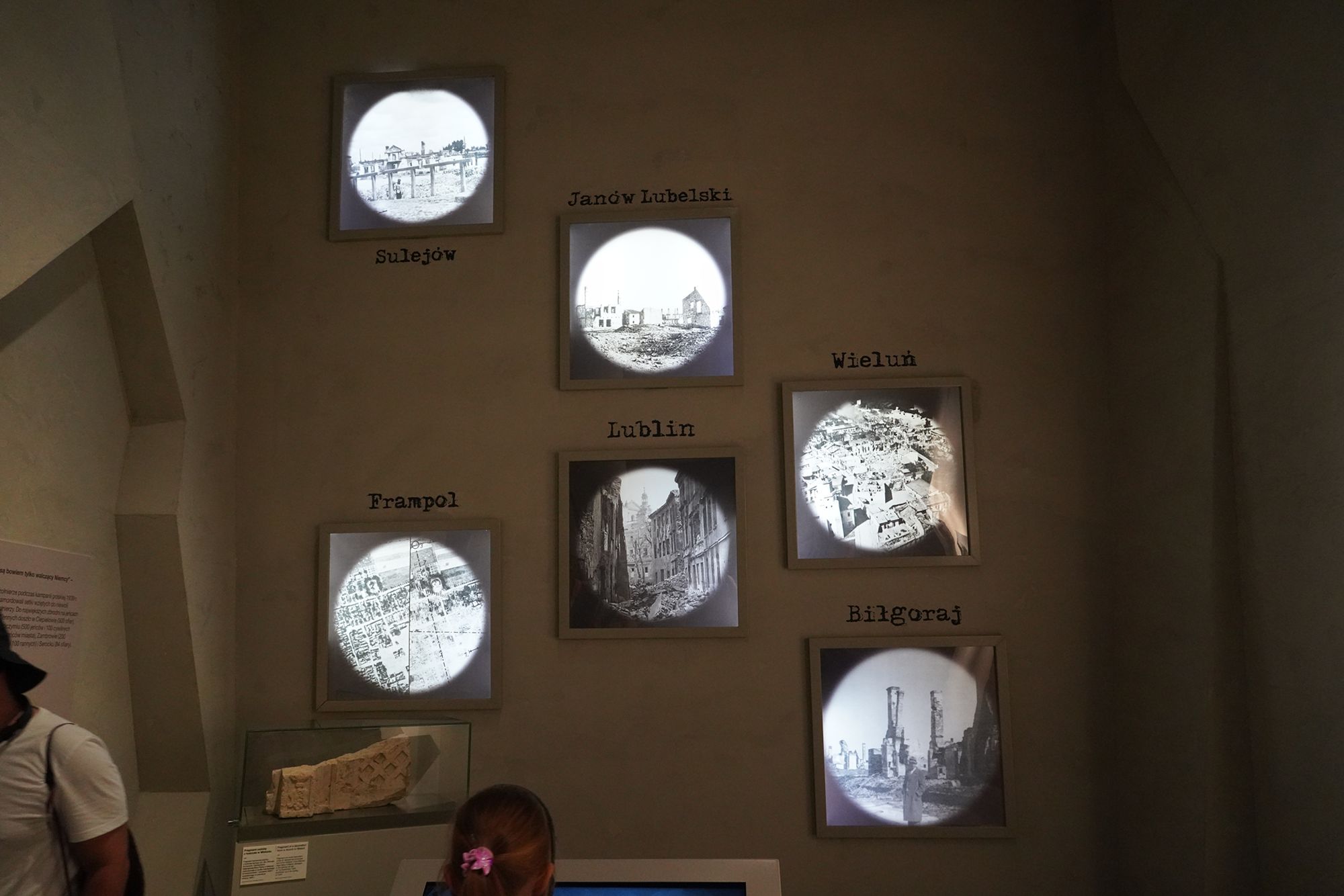
The panel calls the 1939 campaign a “war of annihilation” because Germany’s invasion included deliberate terror against civilians and captured soldiers. It describes the bombing of Polish cities, brutal treatment of prisoners of war, and killings motivated by racist beliefs that dehumanized Slavs and Jews. It lists massacres at Ciepielów, Zakroczym, Zambrów, and Serock.
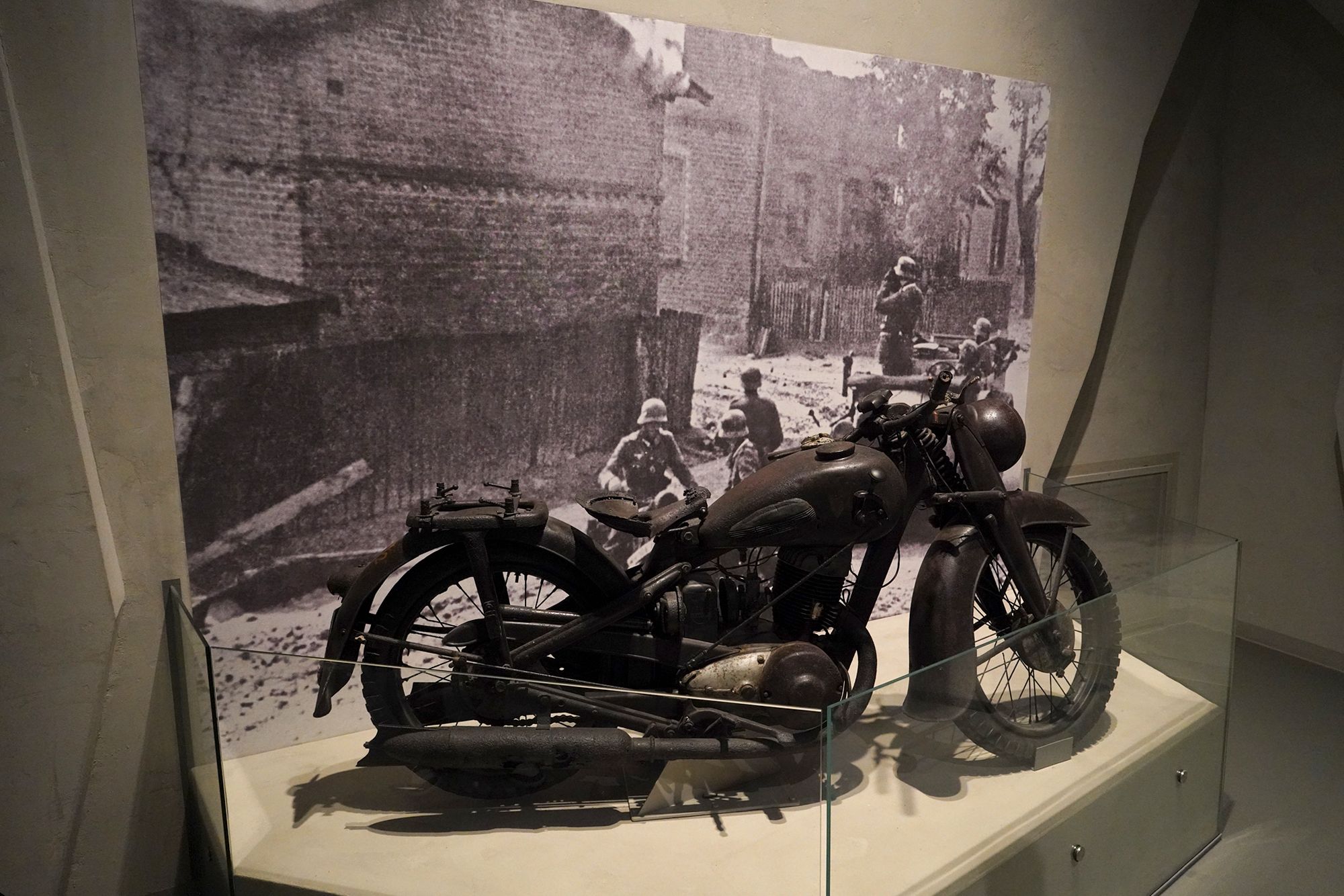
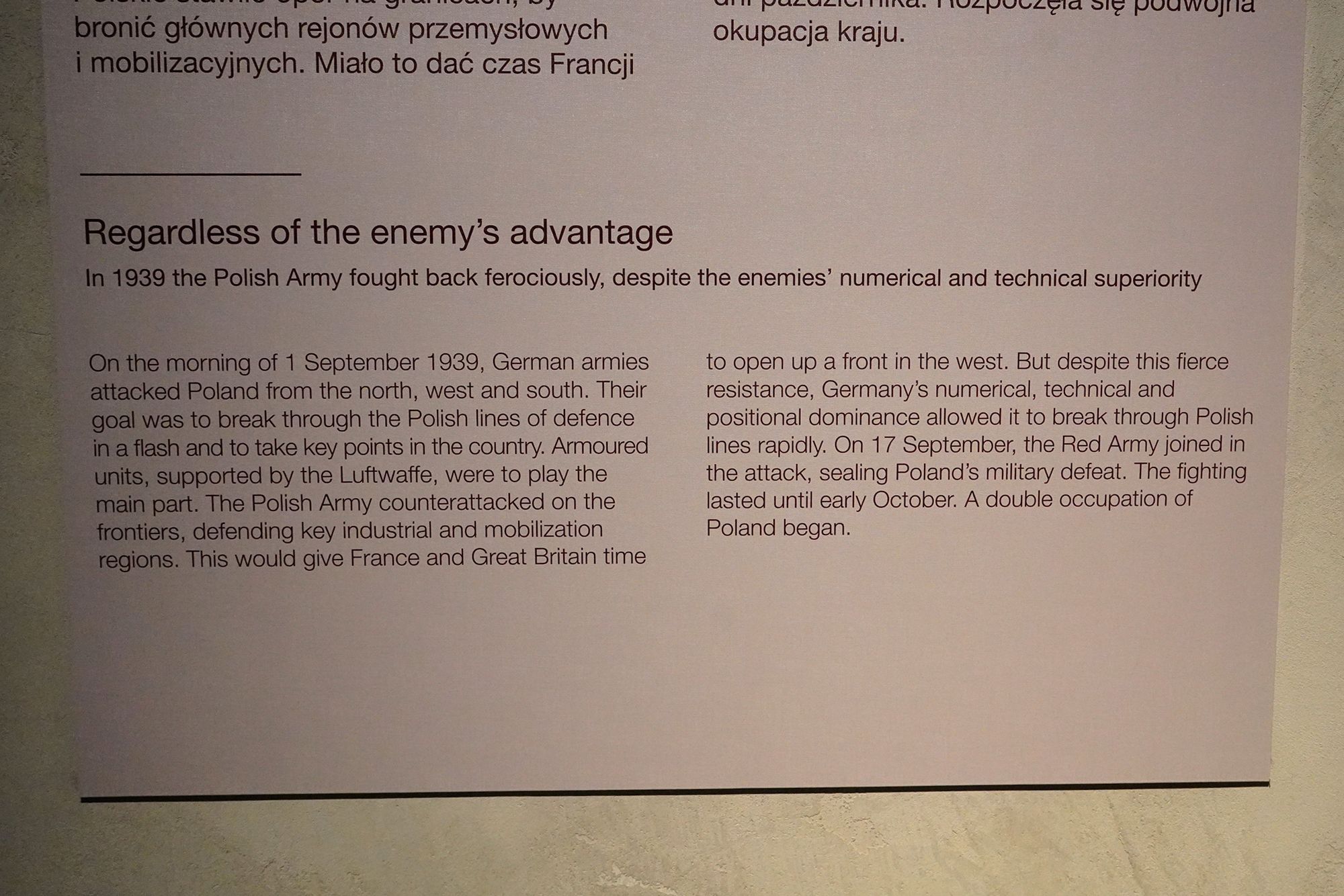
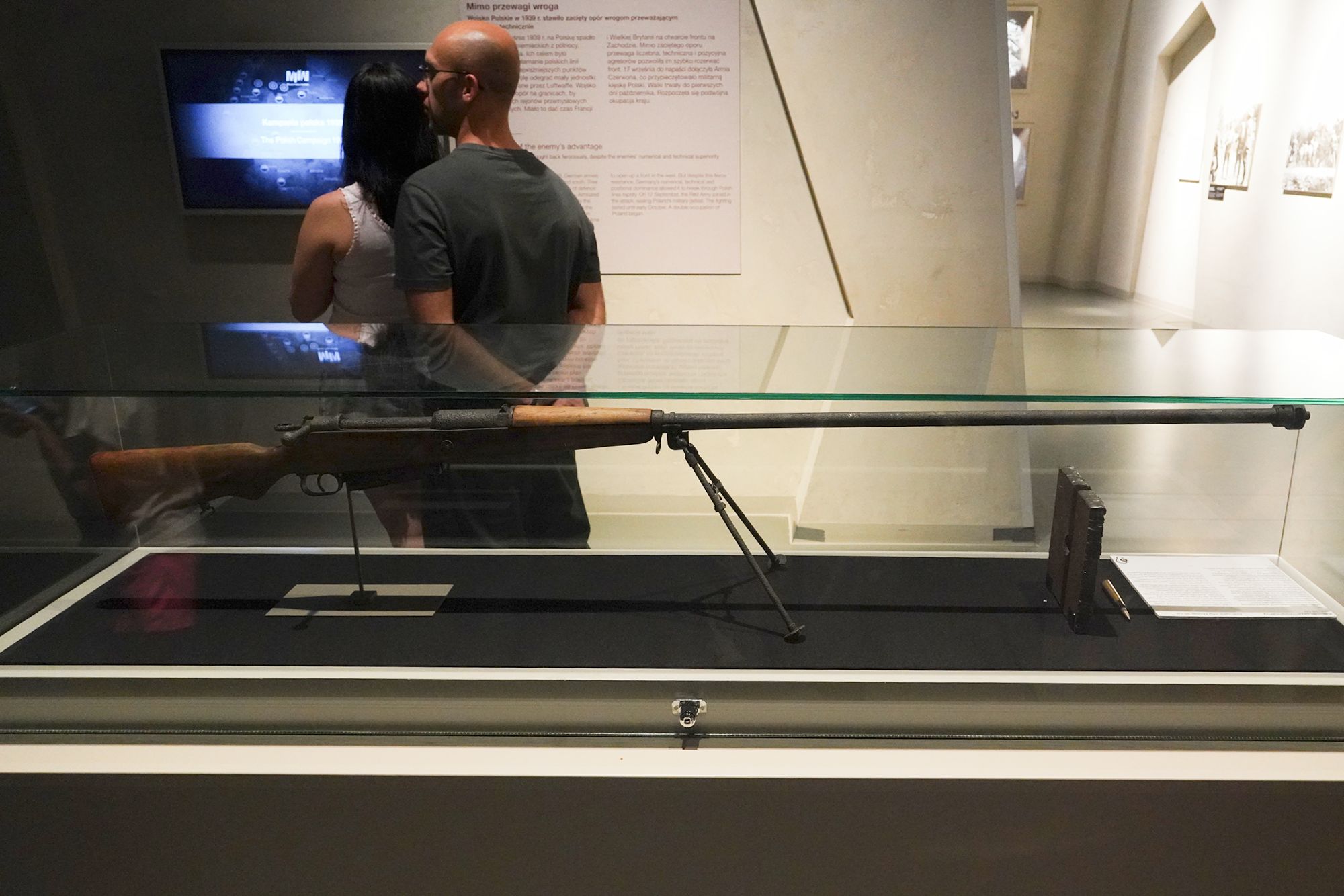
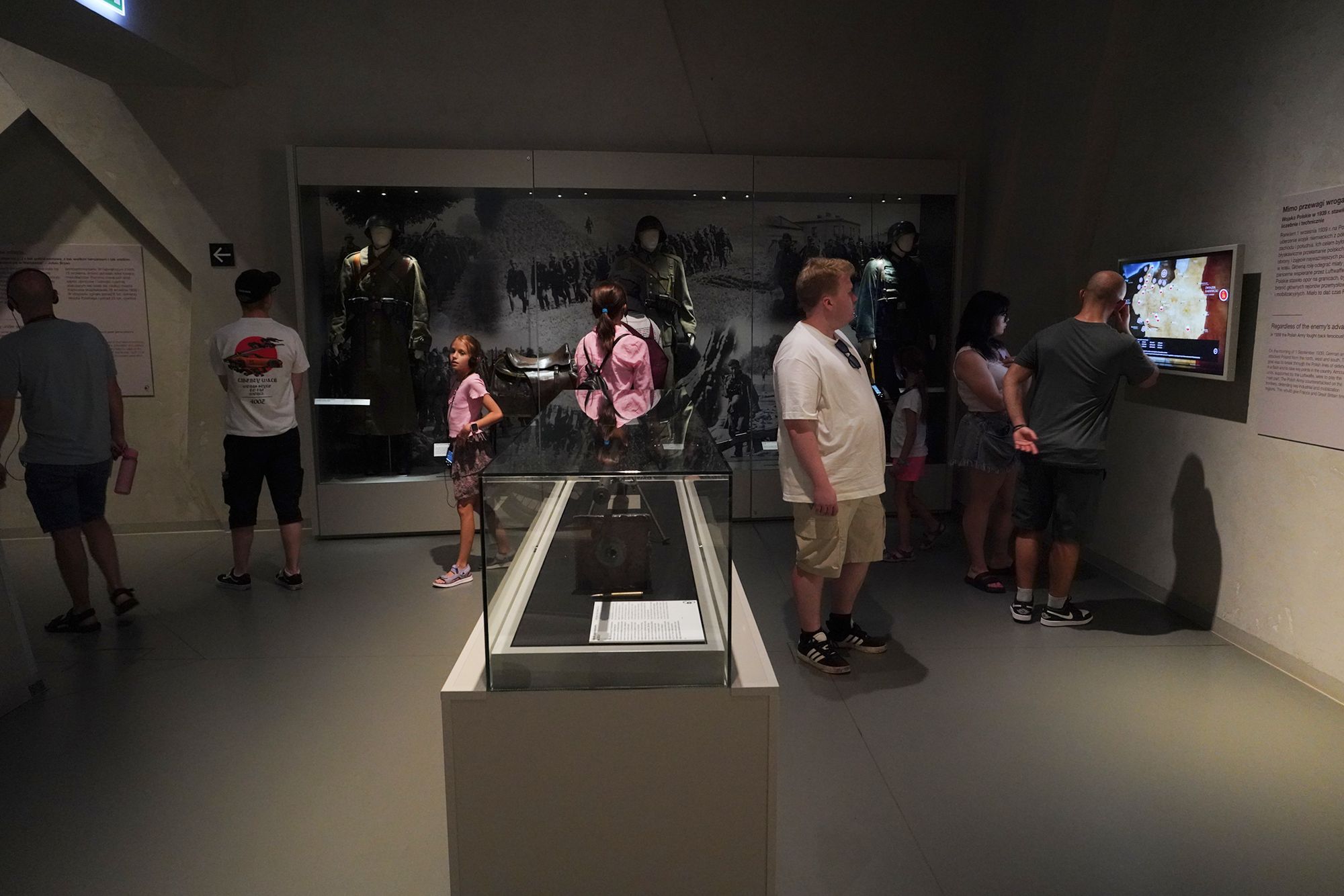
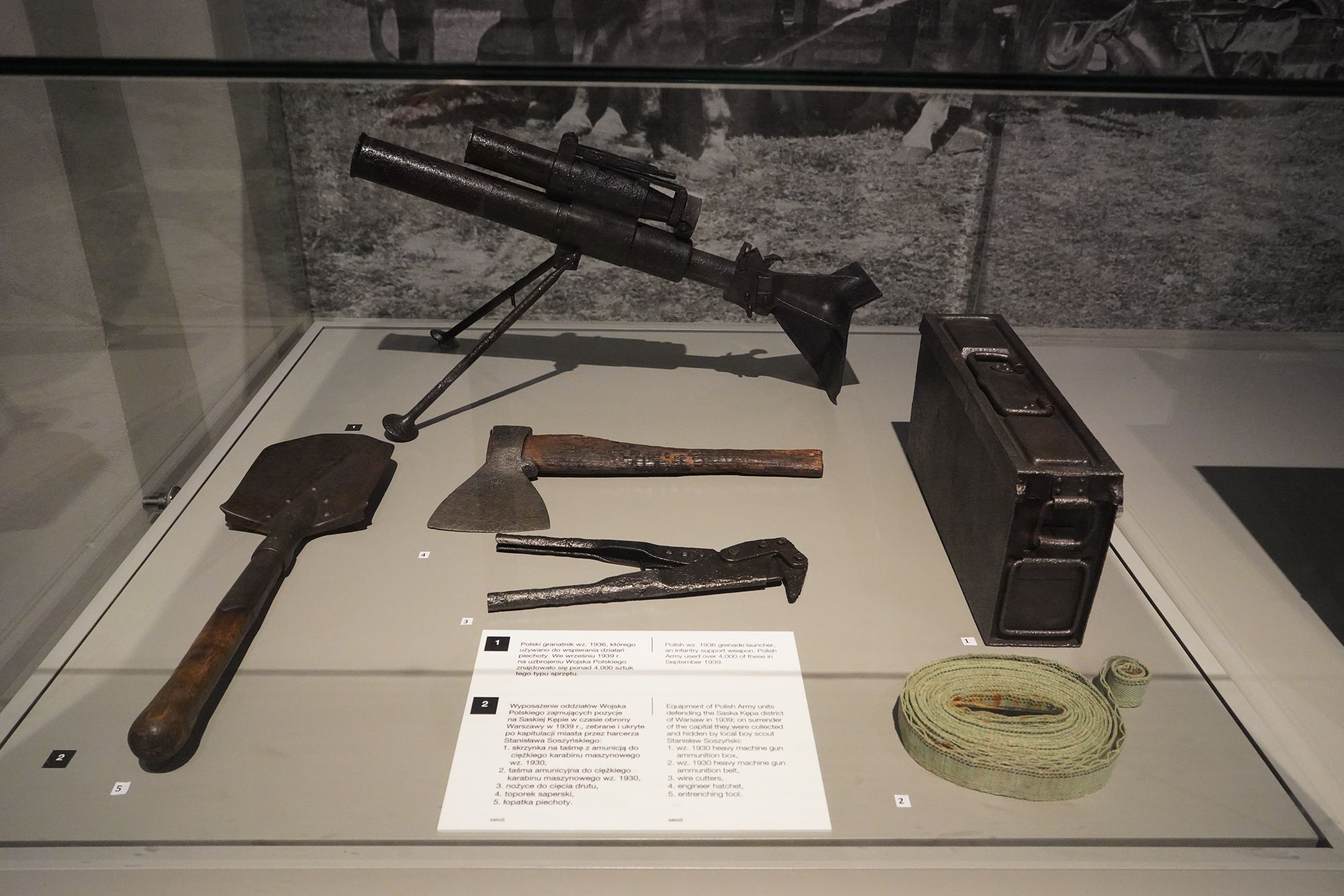
This panel emphasizes that Polish forces fought back despite Germany’s greater numbers and equipment. They counterattacked to defend key industrial and mobilization areas, hoping to give France and Britain time to open a western front. German forces nevertheless broke through, and the Soviet invasion from the east on September 17 sealed Poland’s defeat. Fighting continued into early October, followed by German and Soviet occupation.
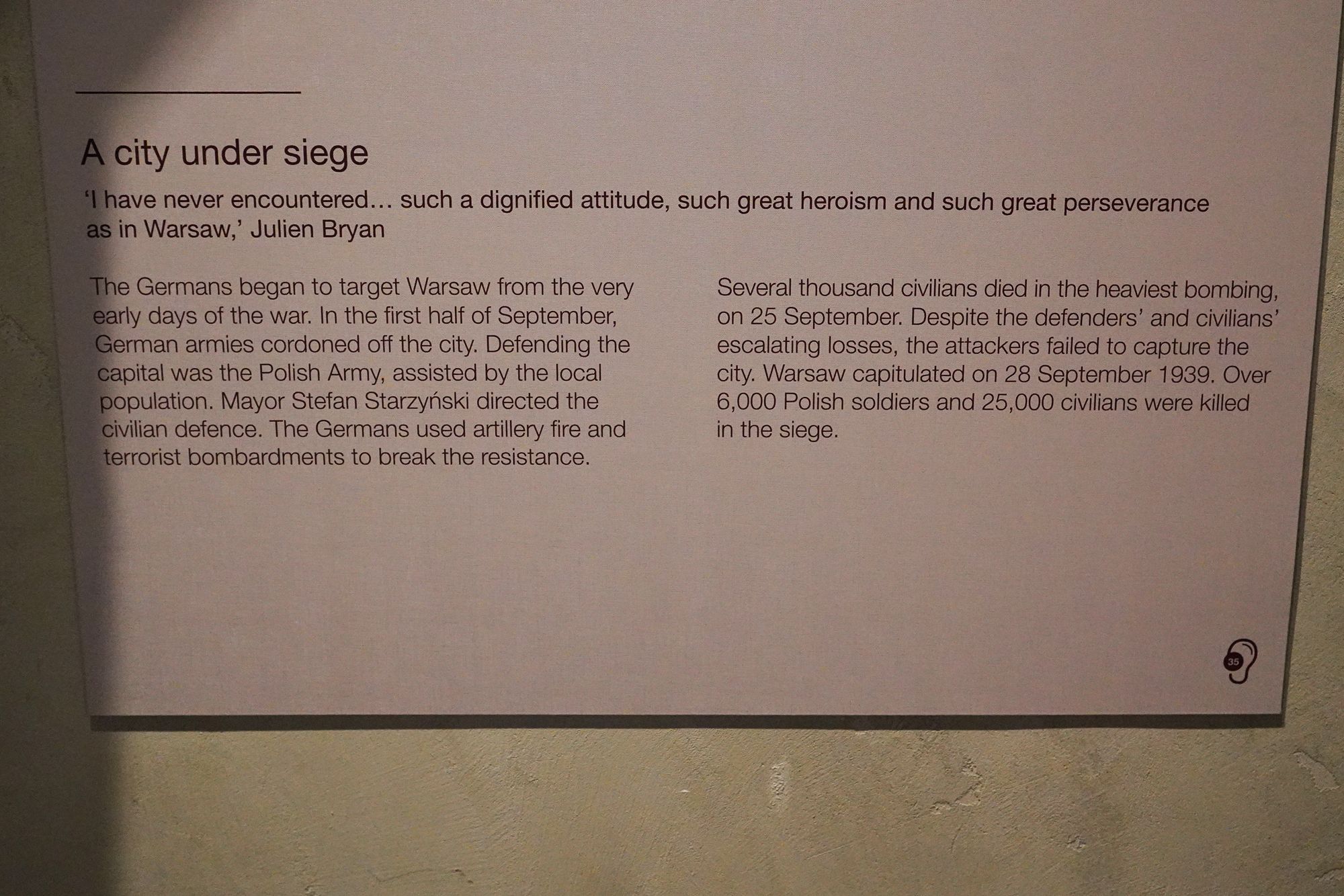
The panel describes the Siege of Warsaw in September 1939. Polish soldiers, supported by local residents, defended the city while Mayor Stefan Starzyński organized civilian defense. German forces bombarded Warsaw heavily; after a devastating attack on 25 September, the city surrendered on 28 September. The panel estimates that more than 6,000 Polish soldiers and 25,000 civilians died.
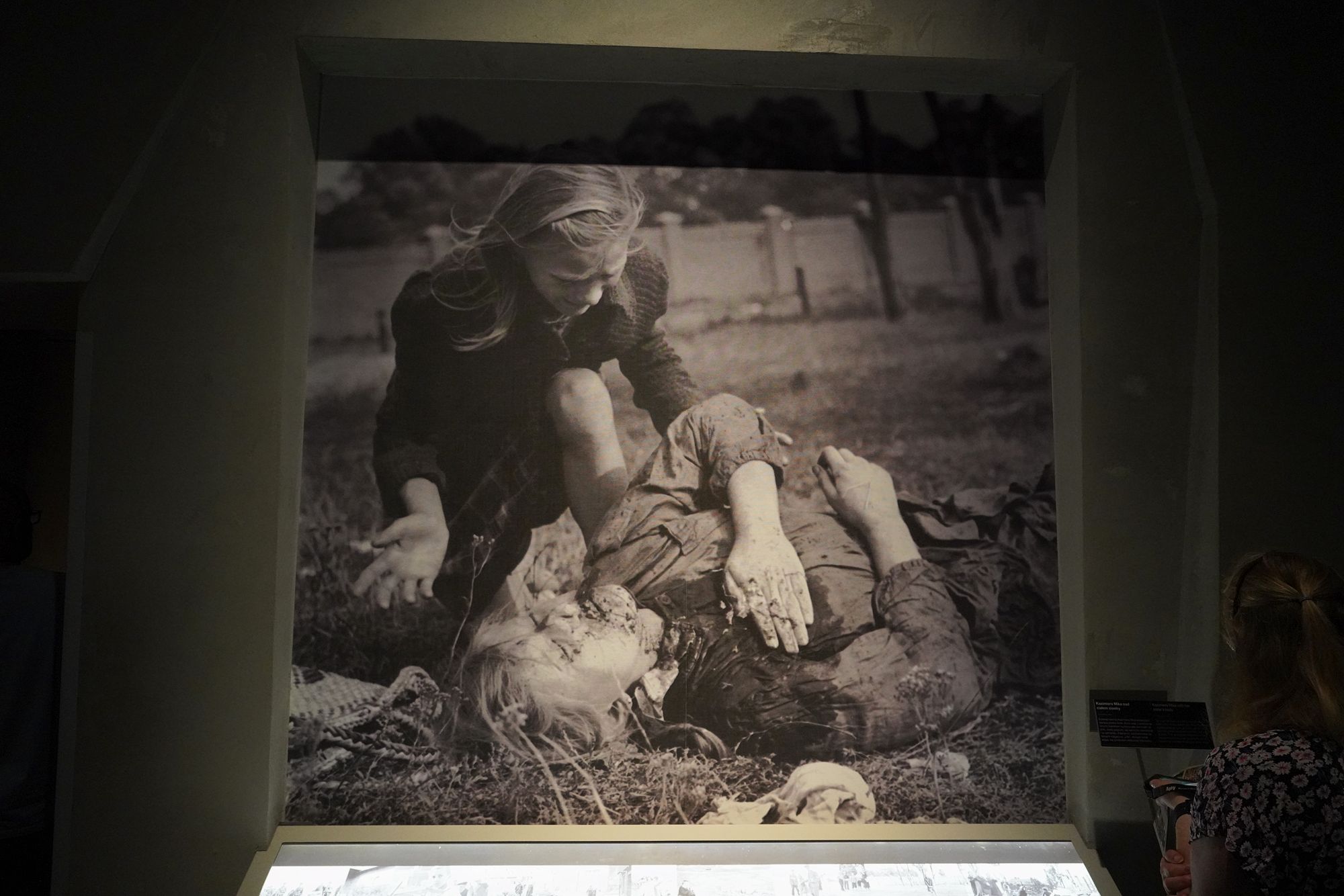
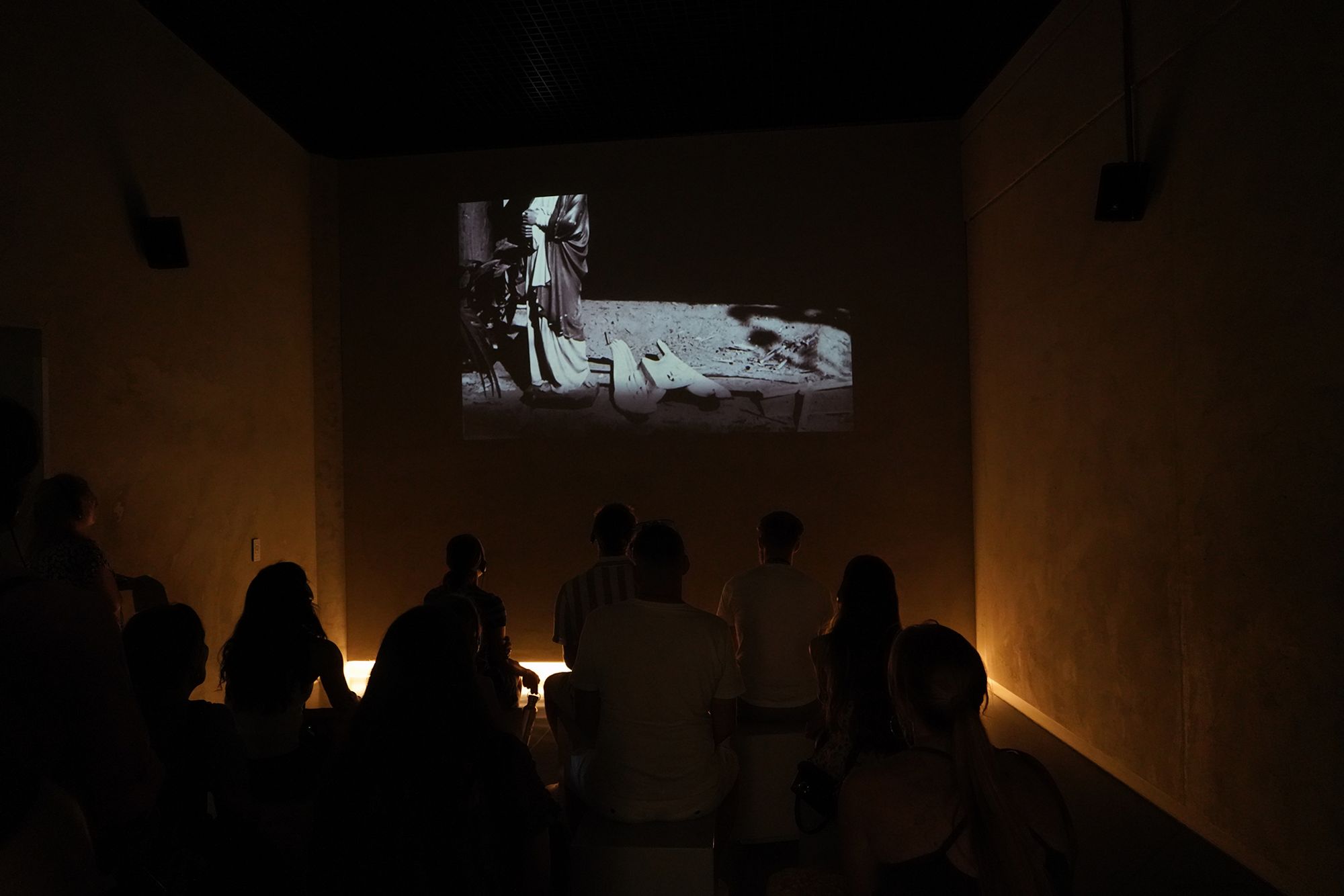
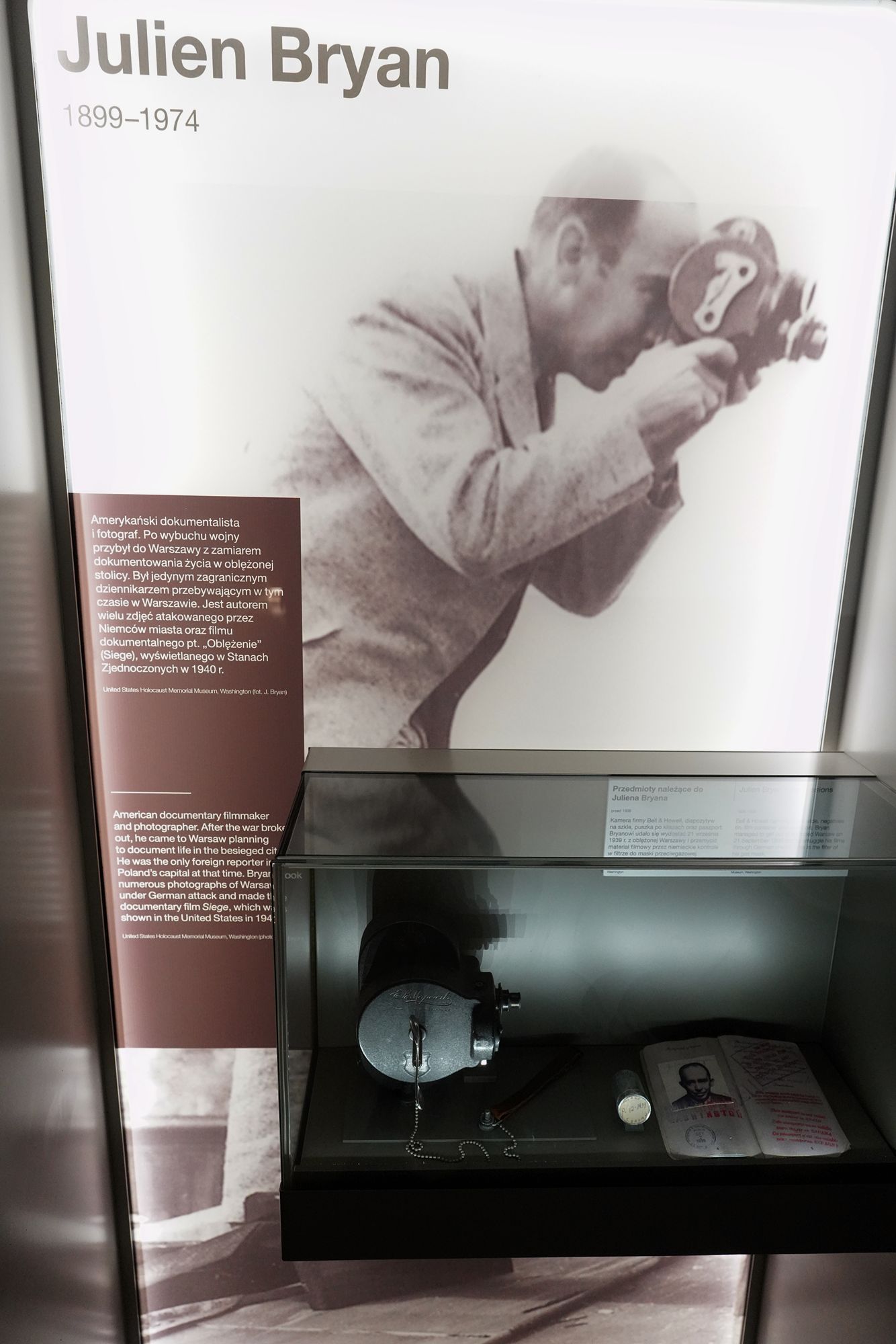
This is Julien Bryan (1899–1974), the American photographer and documentary filmmaker quoted on the previous panel. He stayed in Warsaw during the siege in September 1939, photographing the bombardment and its effects on civilians. His footage became the documentary Siege, released in 1940.
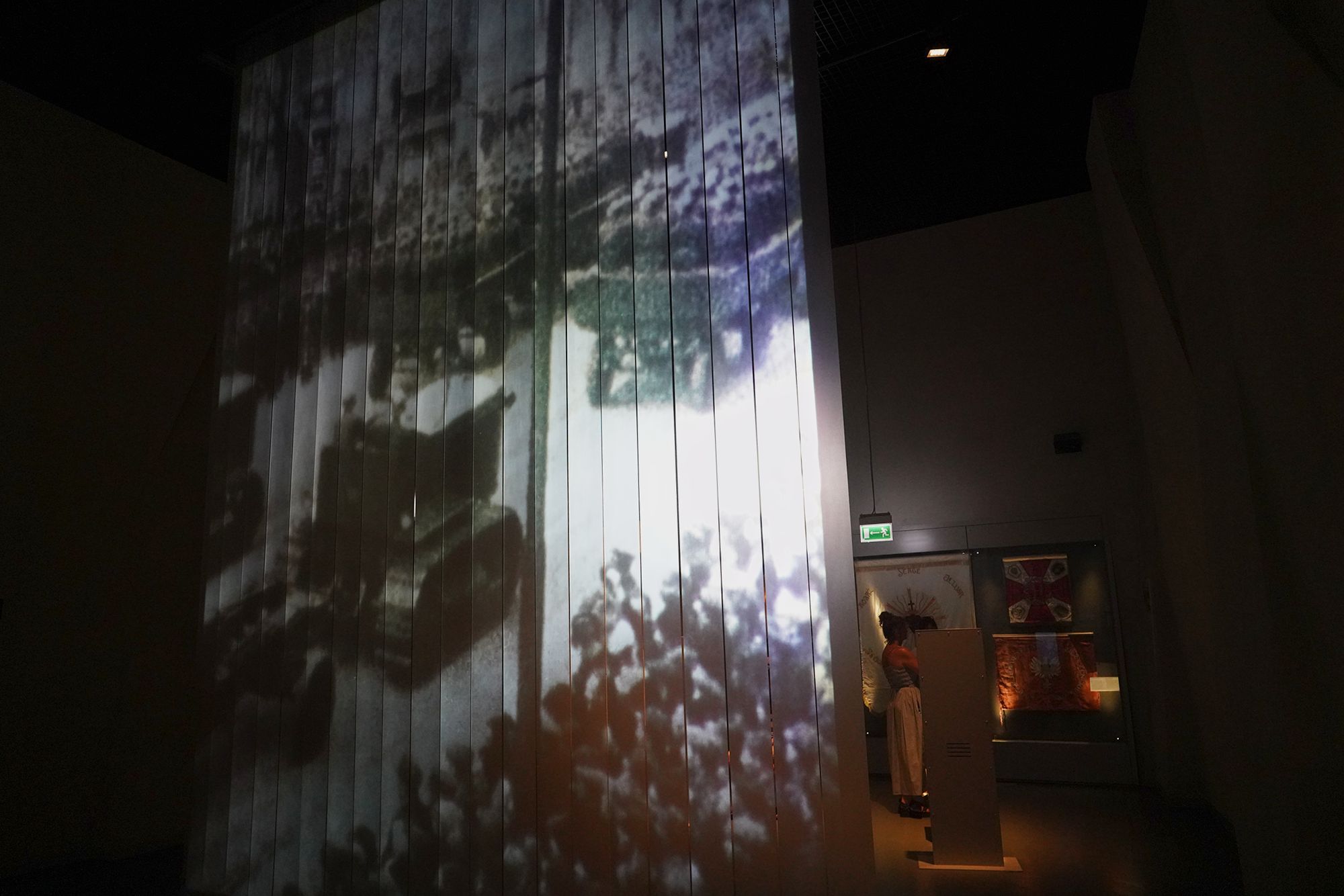
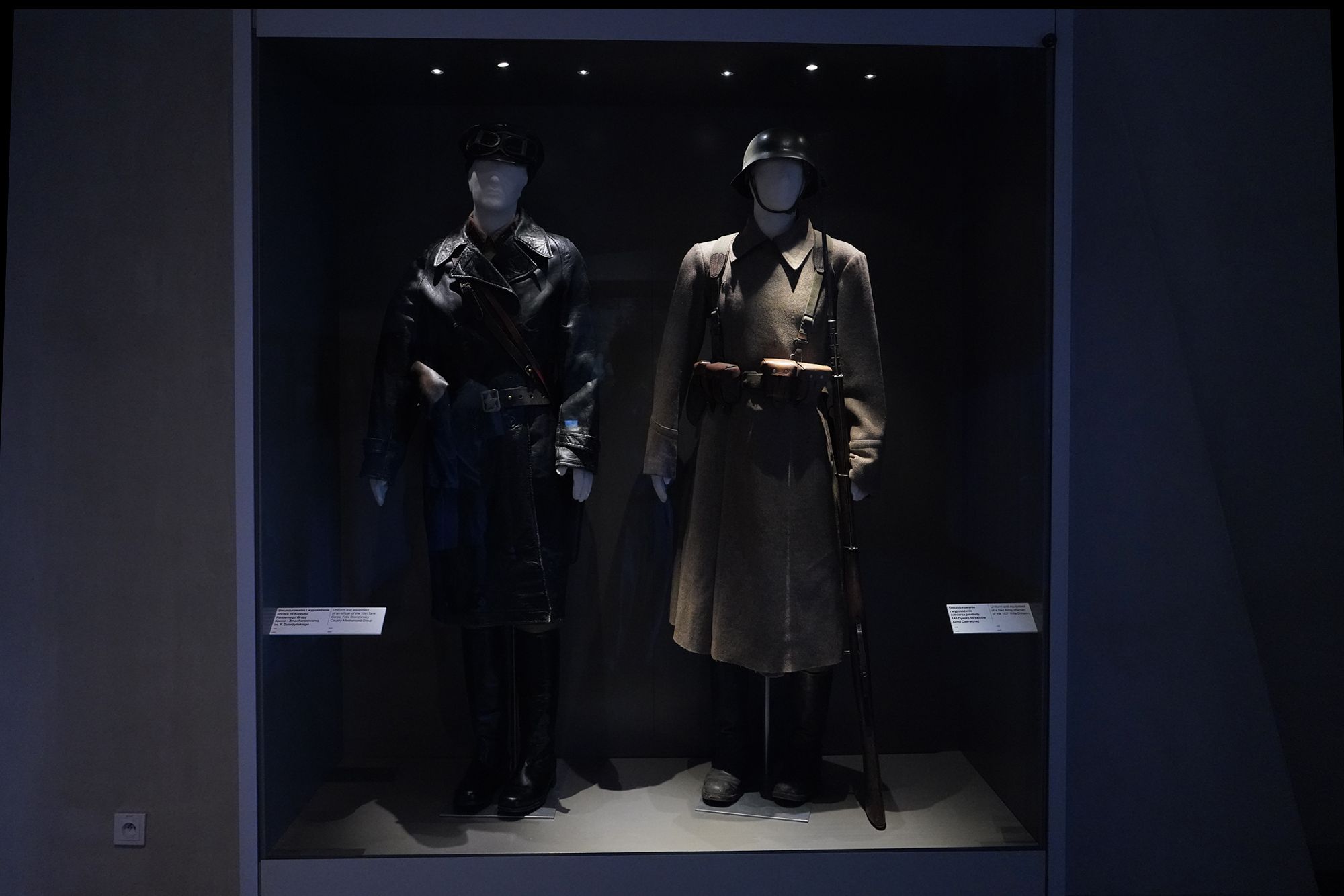
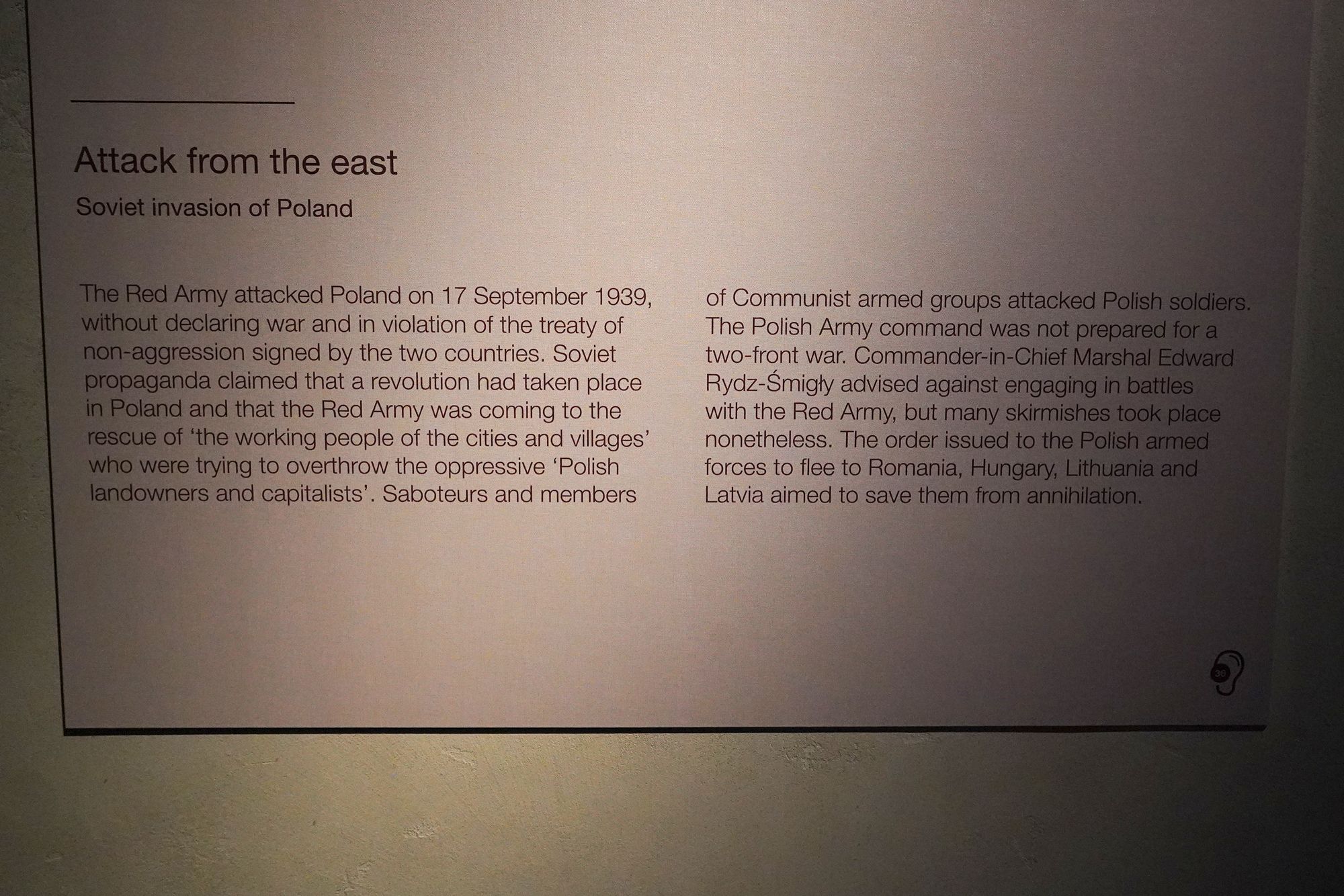
The panel describes the Soviet invasion of Poland on 17 September 1939, while Poland was already fighting Germany in the west. The Red Army crossed from the east despite a Soviet–Polish non-aggression pact. Soviet propaganda claimed it was rescuing people from oppression, but Polish forces now faced attacks on two fronts. The Polish commander advised avoiding a major fight with the Soviets, and many Polish troops retreated across nearby borders.
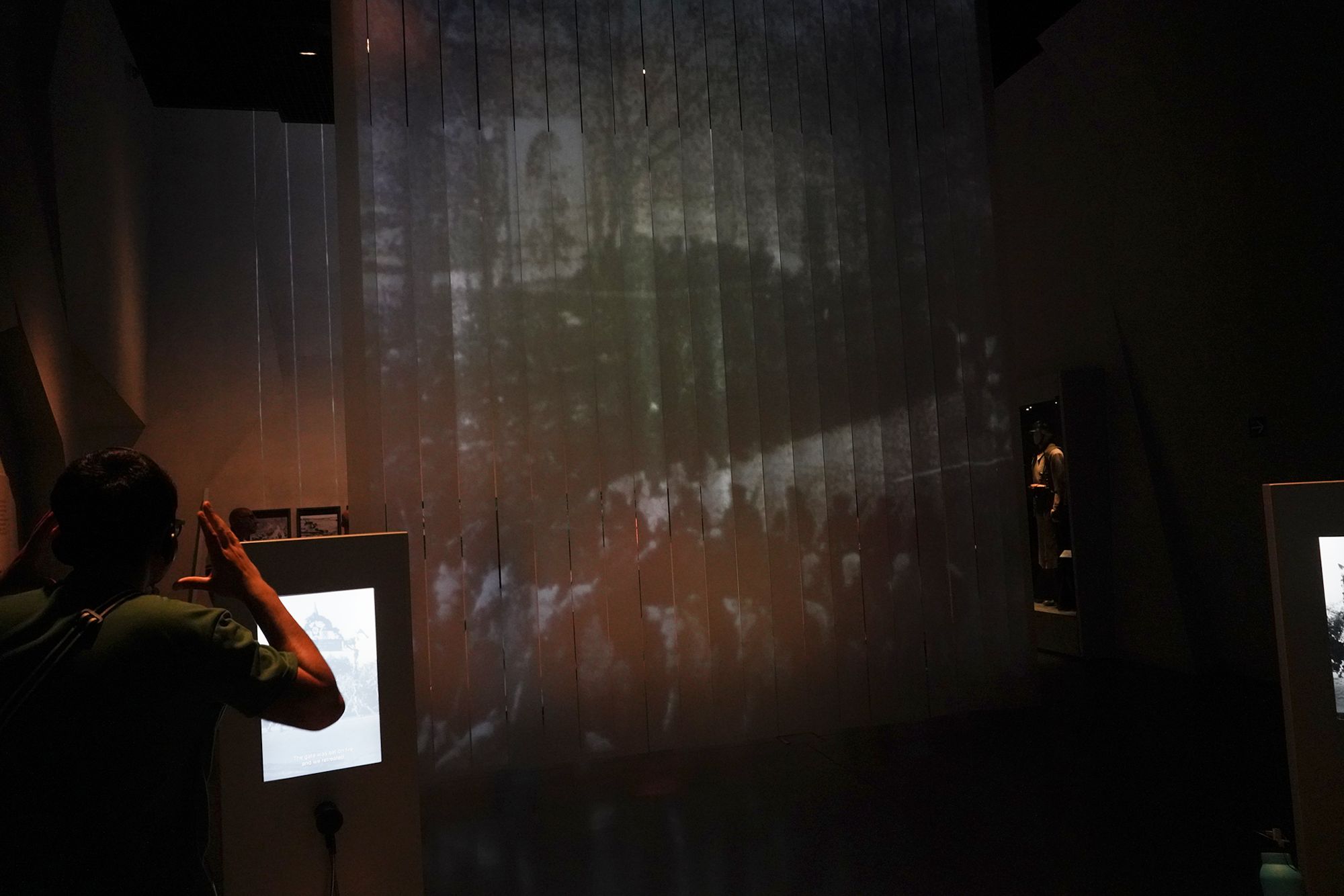
The panel explains how Germany and the Soviet Union formalized their division of Poland. On 28 September 1939, while some Polish units were still fighting, they signed a boundary and friendship treaty that set a new border through occupied Poland. The word “friendship” was a diplomatic label for cooperation between the two occupying powers. The panel also notes that Slovakia joined the attack and that Lithuania received the Vilnius region from the Soviet Union.
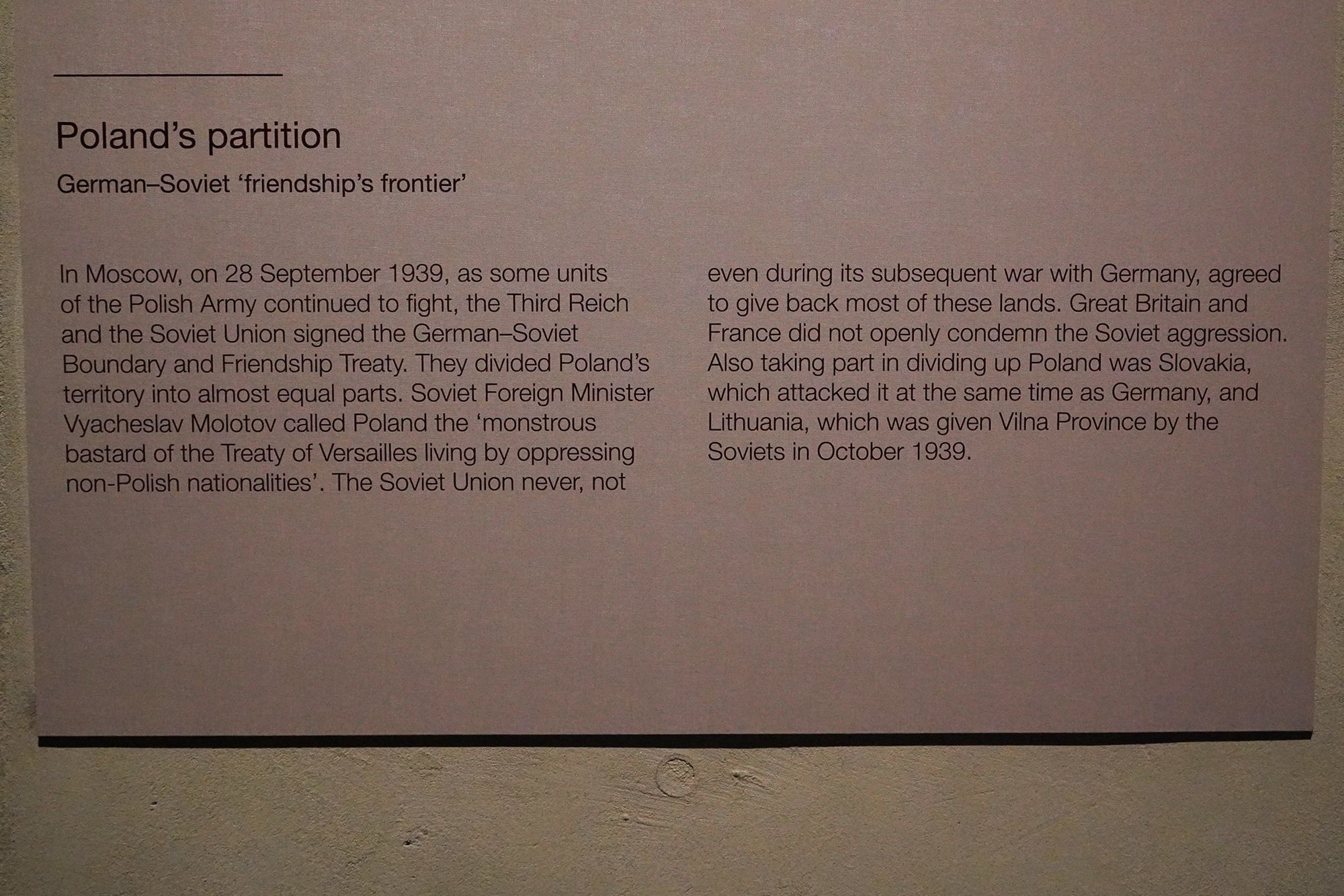
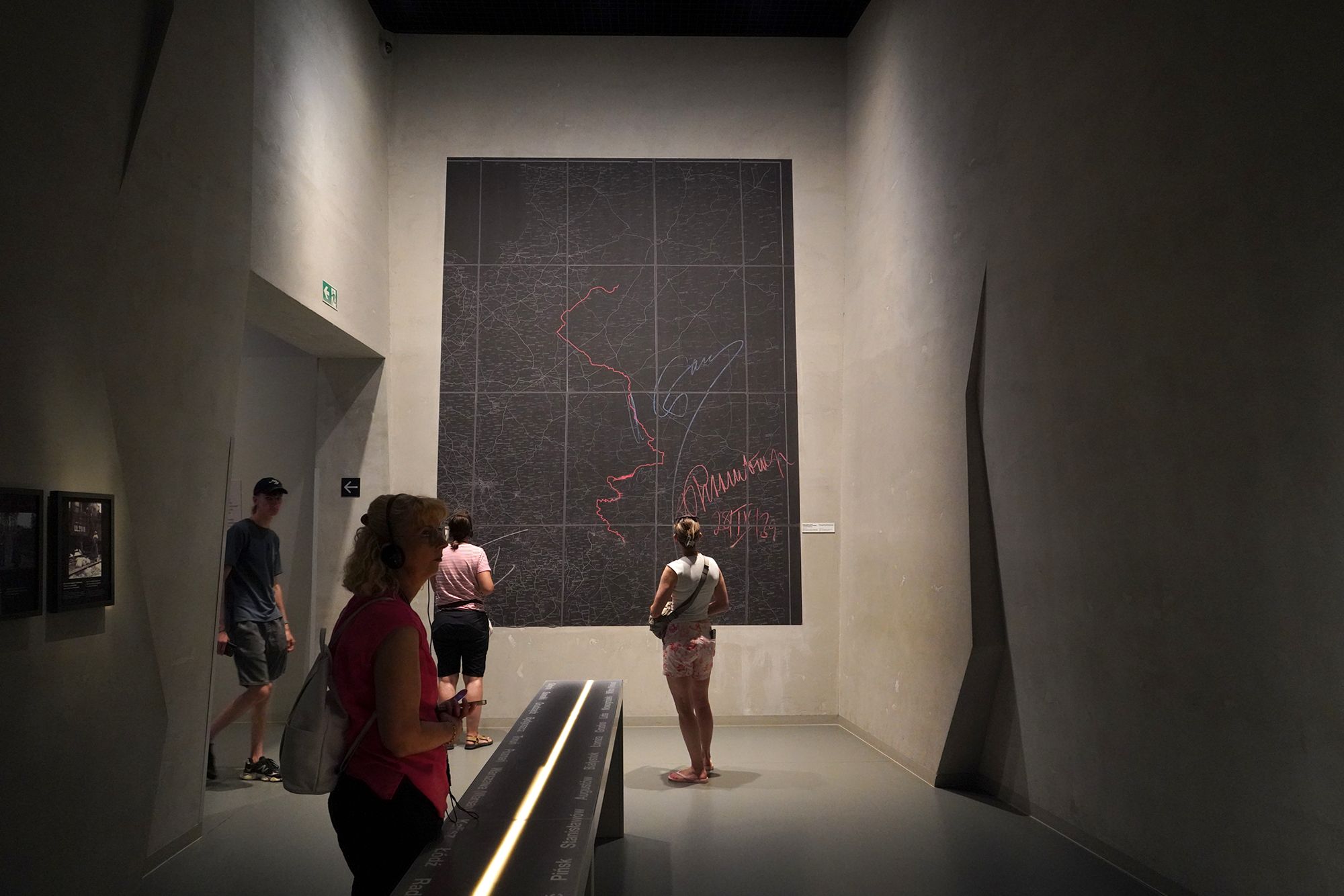
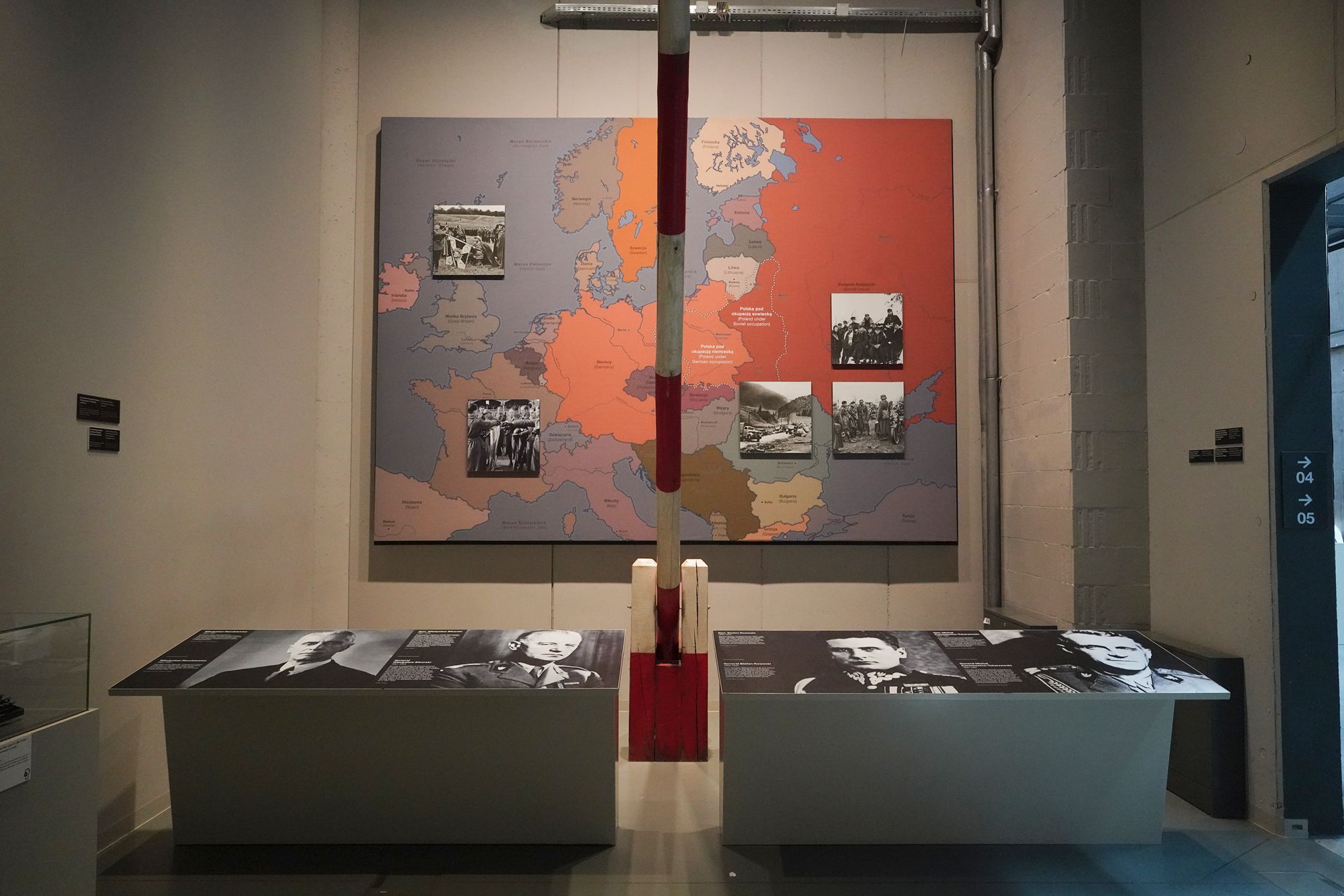
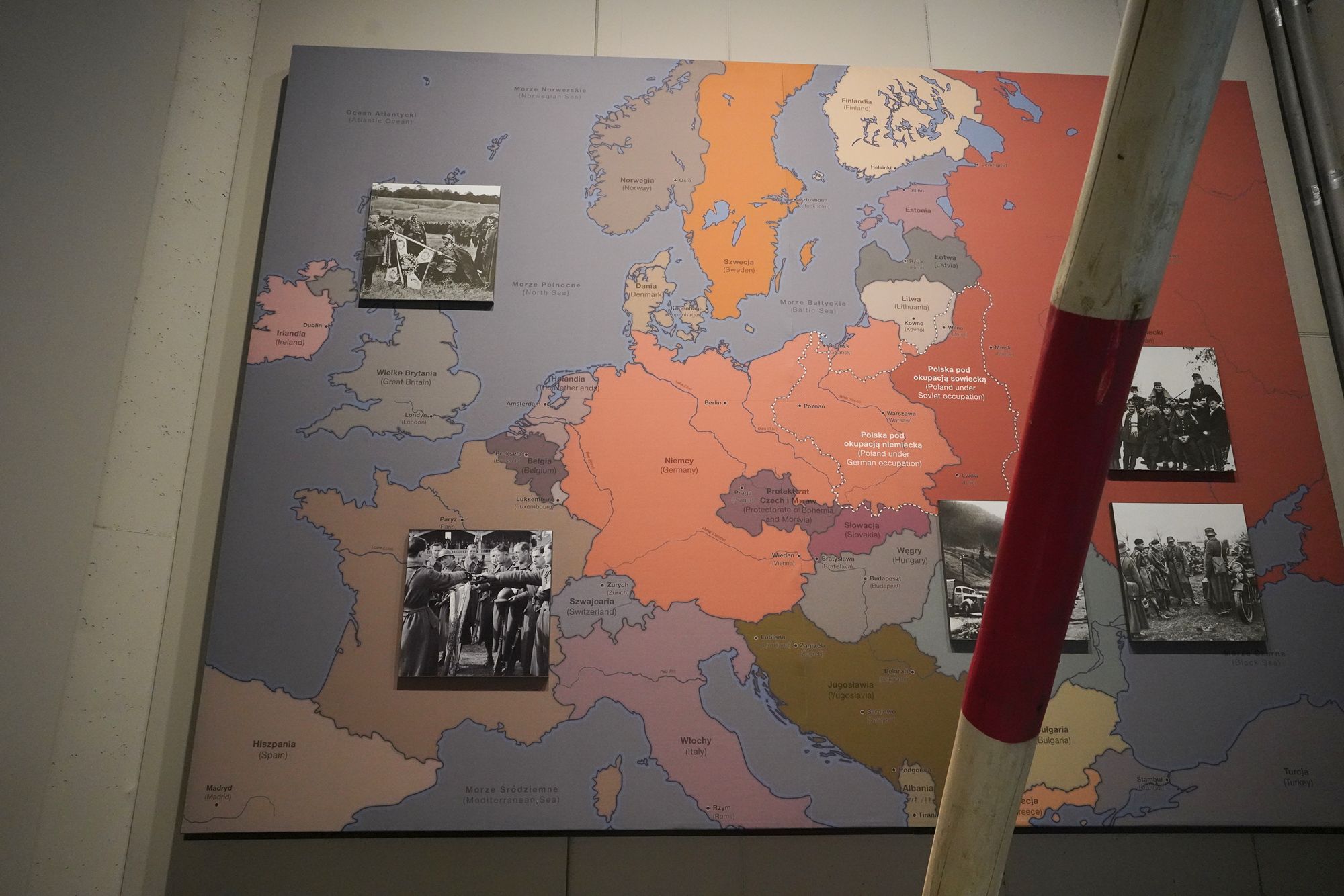
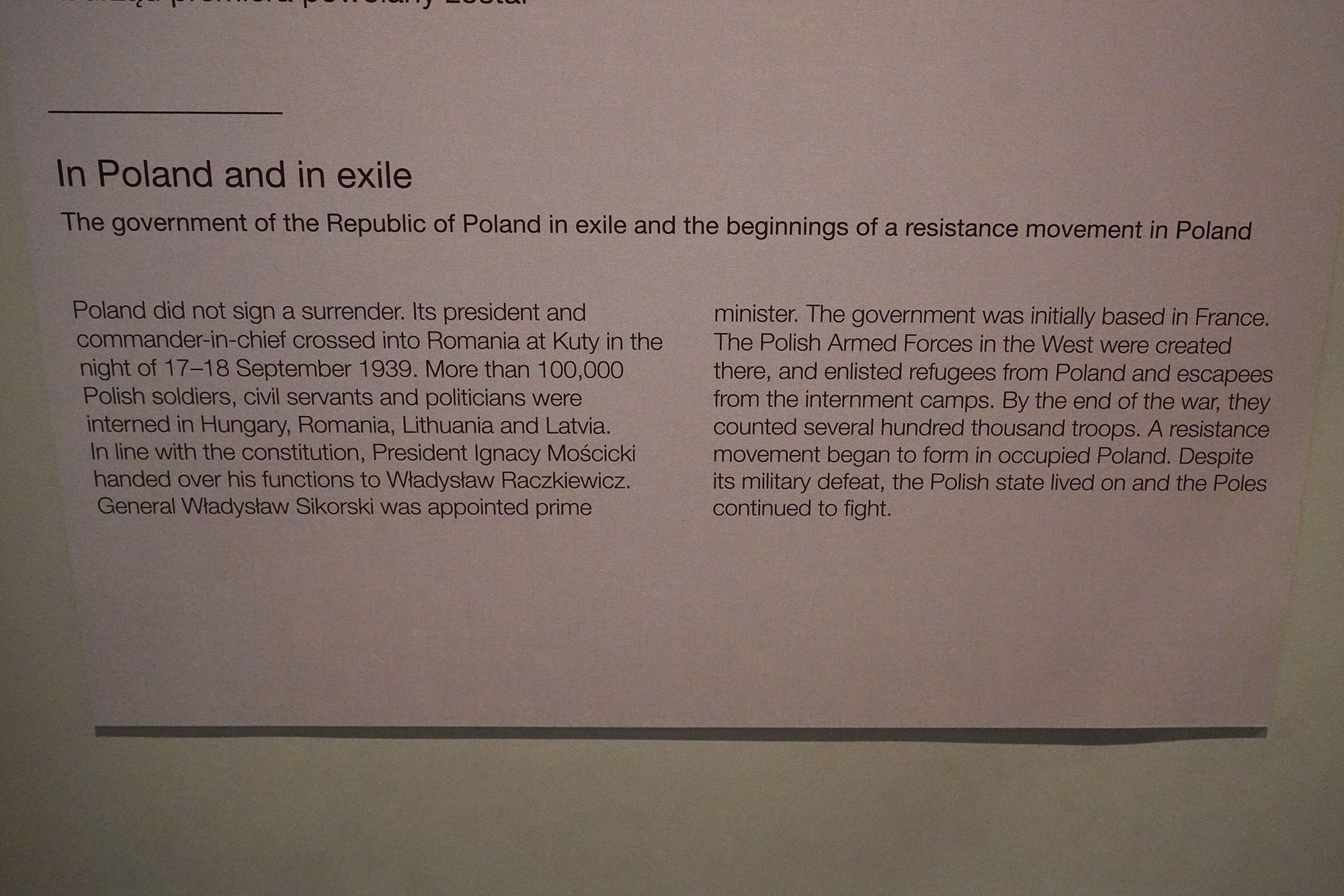
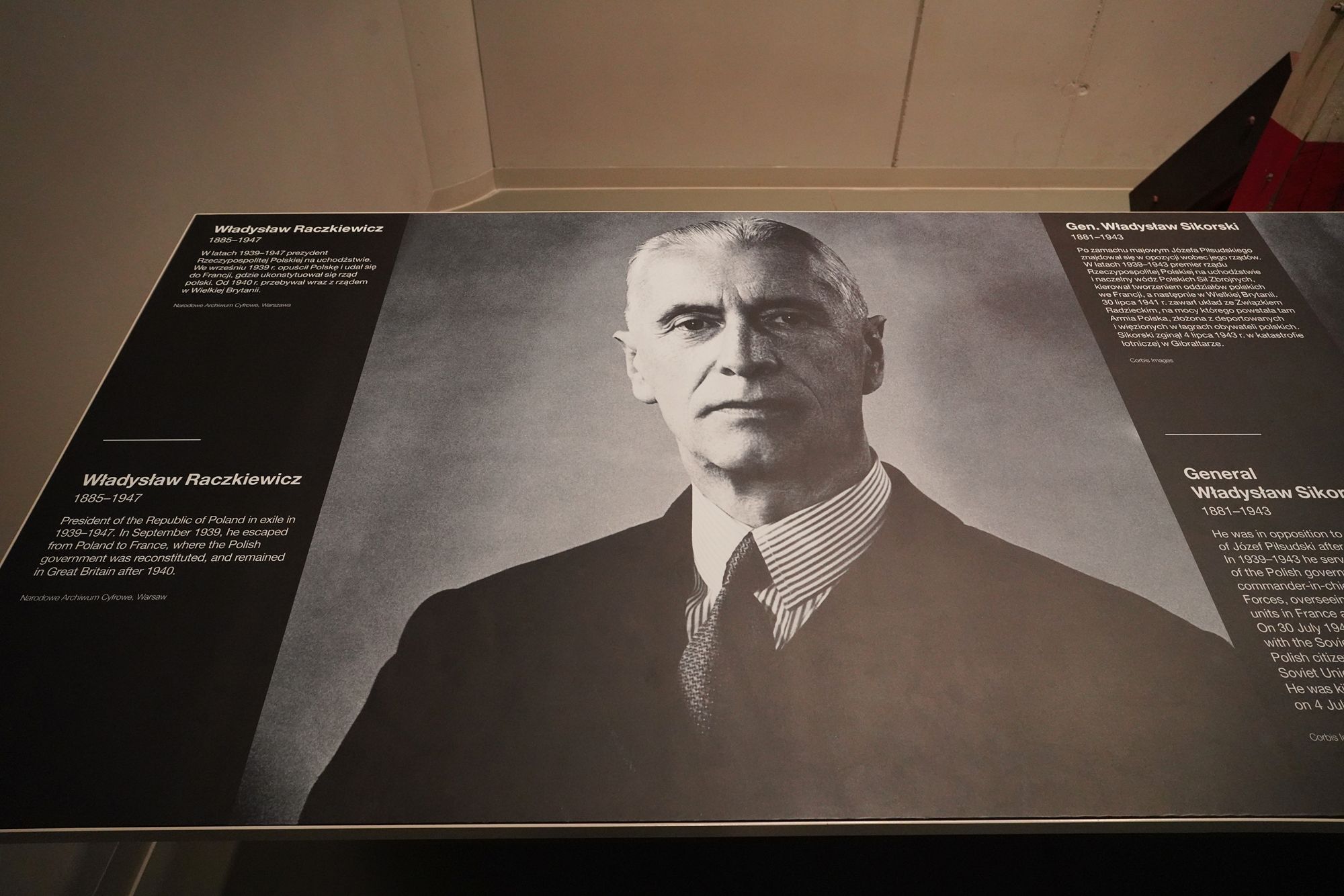
Poland did not formally surrender. Its president and commander-in-chief crossed into Romania, and a government-in-exile was formed, with General Władysław Sikorski as prime minister. Polish forces regrouped abroad, while an underground resistance began forming inside occupied Poland. The exhibit’s point is that Poland’s defeat did not end its state or its fight.
The exiled president
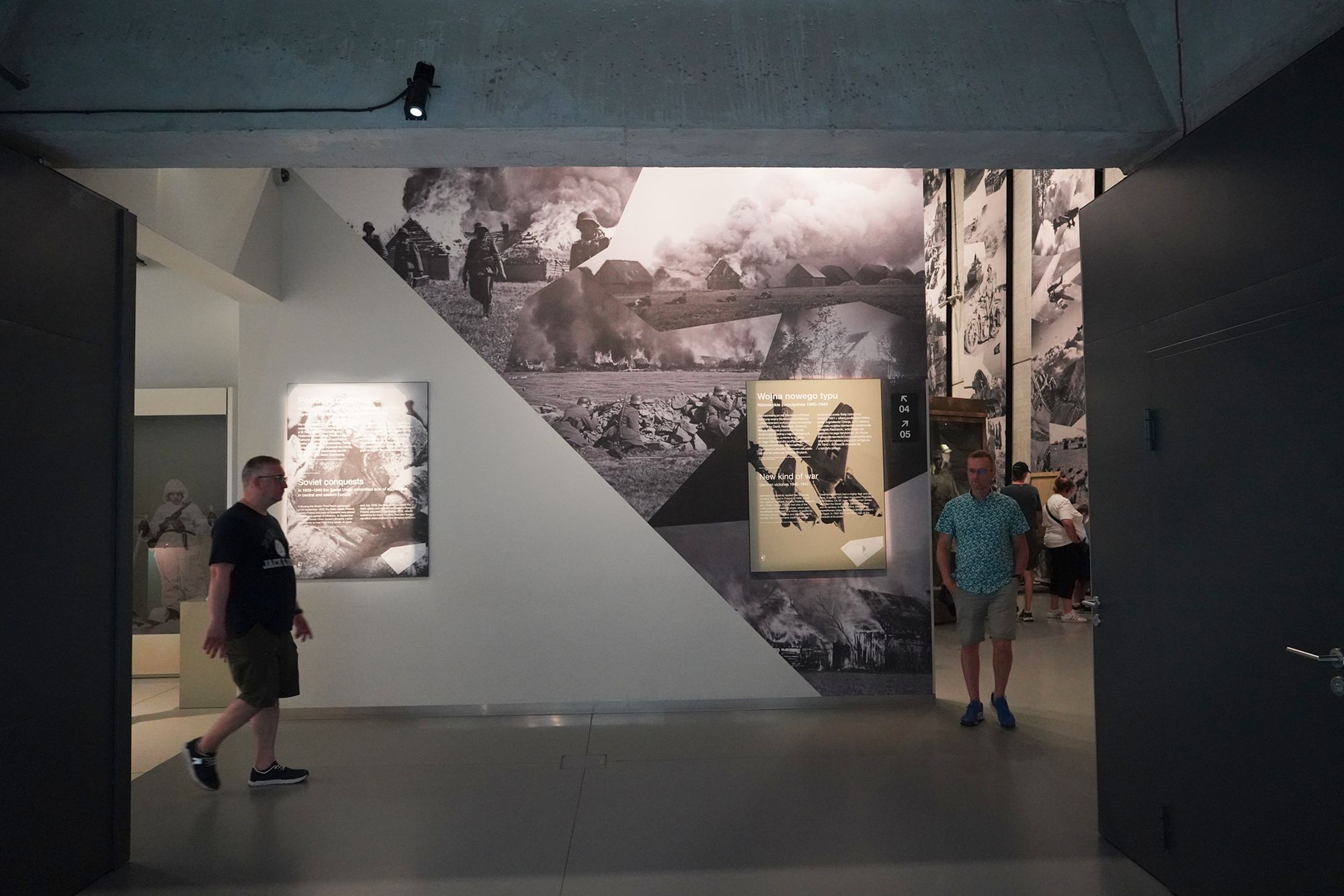
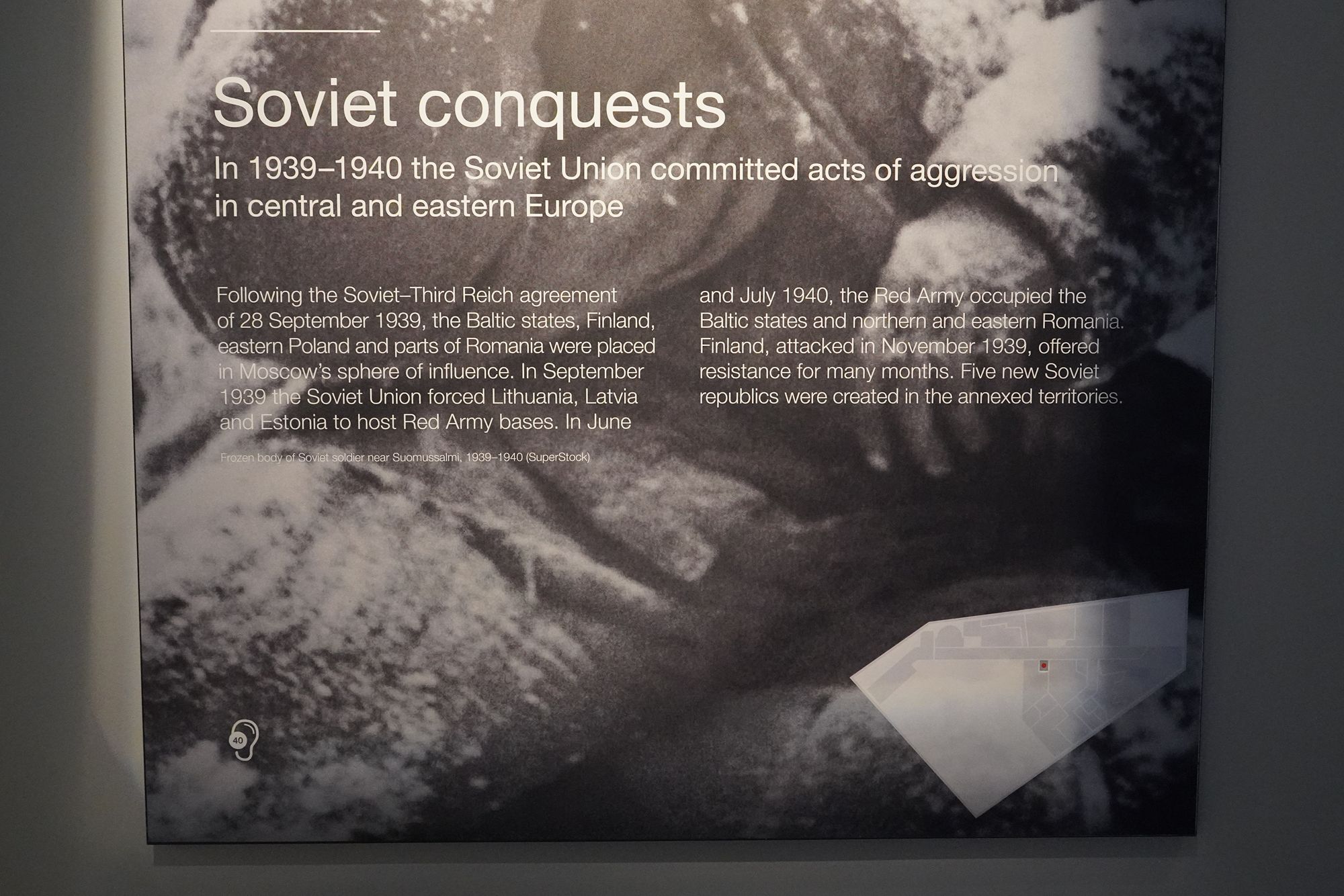
This panel shows that Soviet expansion in 1939–40 went beyond eastern Poland. The Nazi–Soviet agreement placed several neighboring territories in Moscow’s sphere of influence. Soviet forces then occupied the Baltic states and parts of Romania; Finland resisted the Soviet attack in the Winter War.
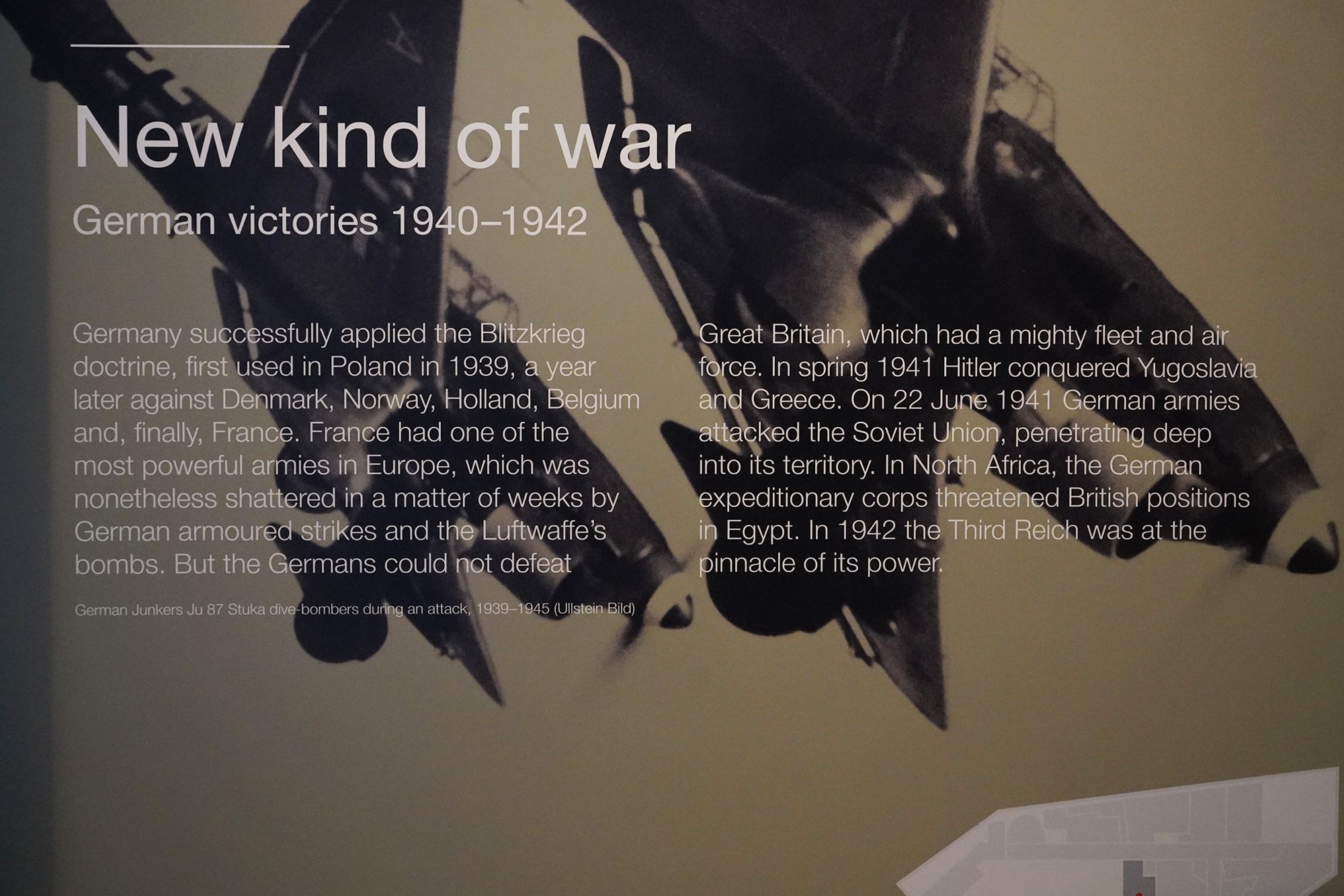
The panel describes Germany’s rapid victories from 1940 to 1942. Using Blitzkrieg—fast attacks coordinated between tanks and aircraft—Germany defeated Denmark, Norway, the Netherlands, Belgium, and France. It then conquered Yugoslavia and Greece, invaded the Soviet Union in June 1941, and threatened British positions in North Africa. By 1942 Germany had reached the height of its power, but it had not defeated Britain or the Soviet Union.
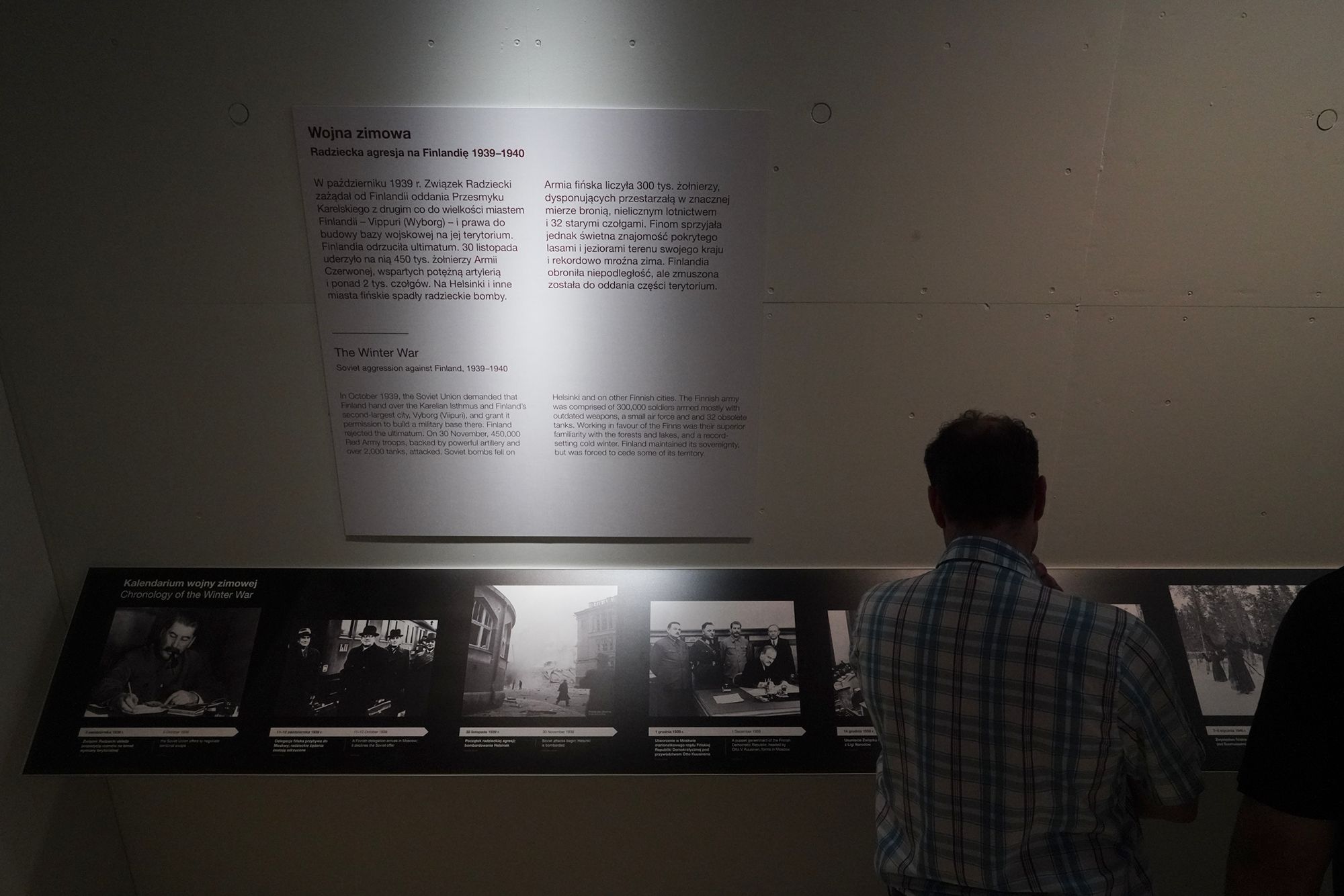
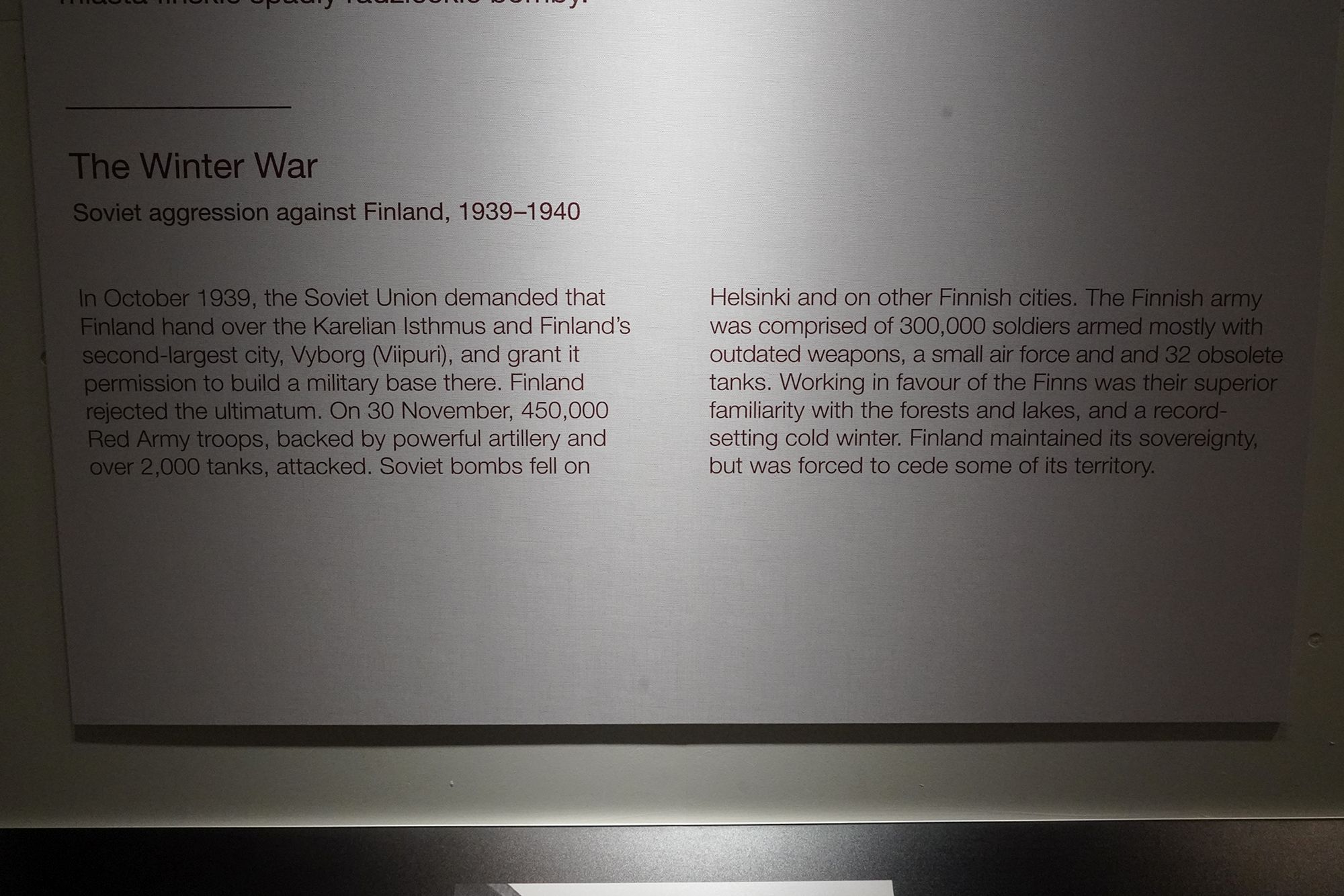
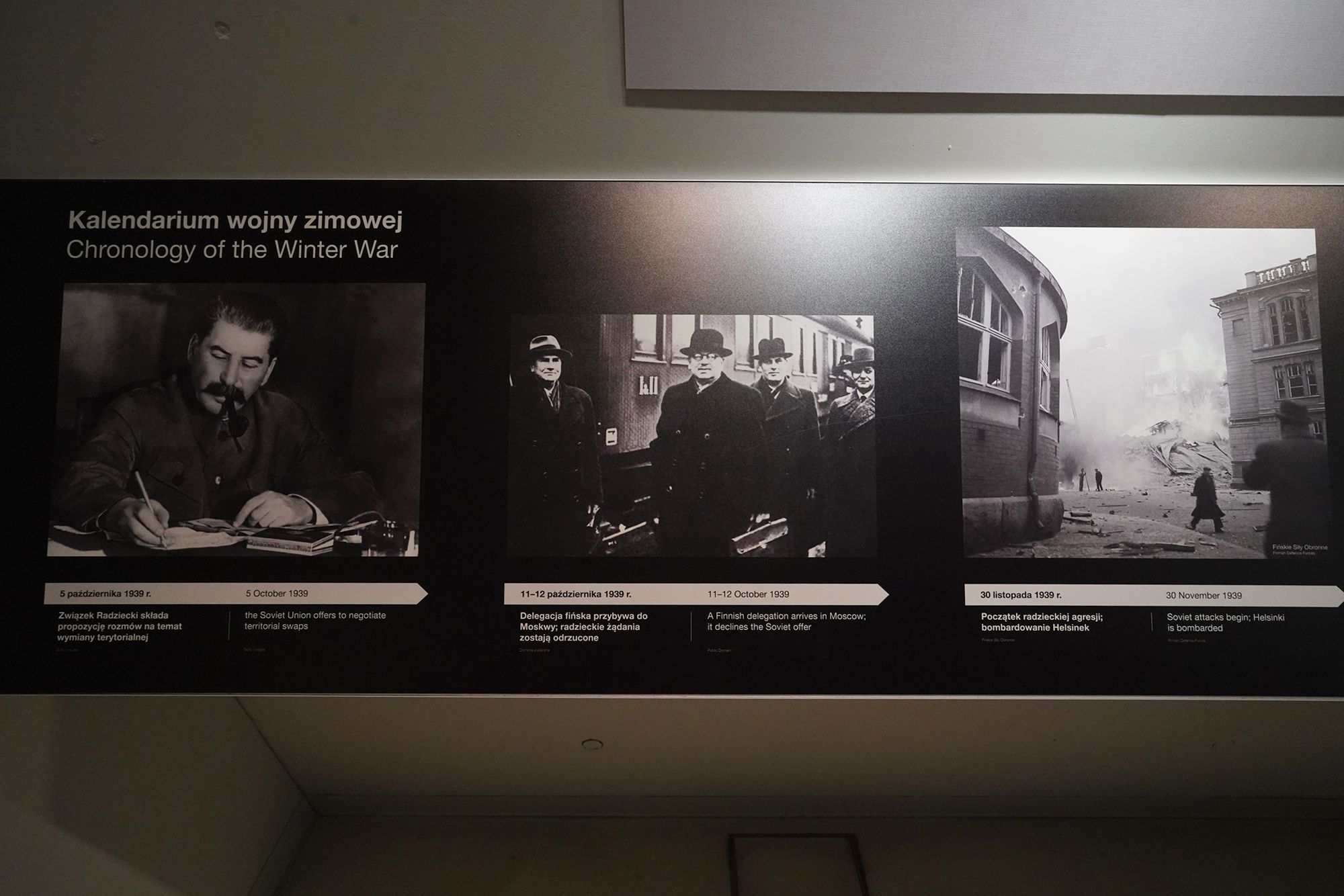
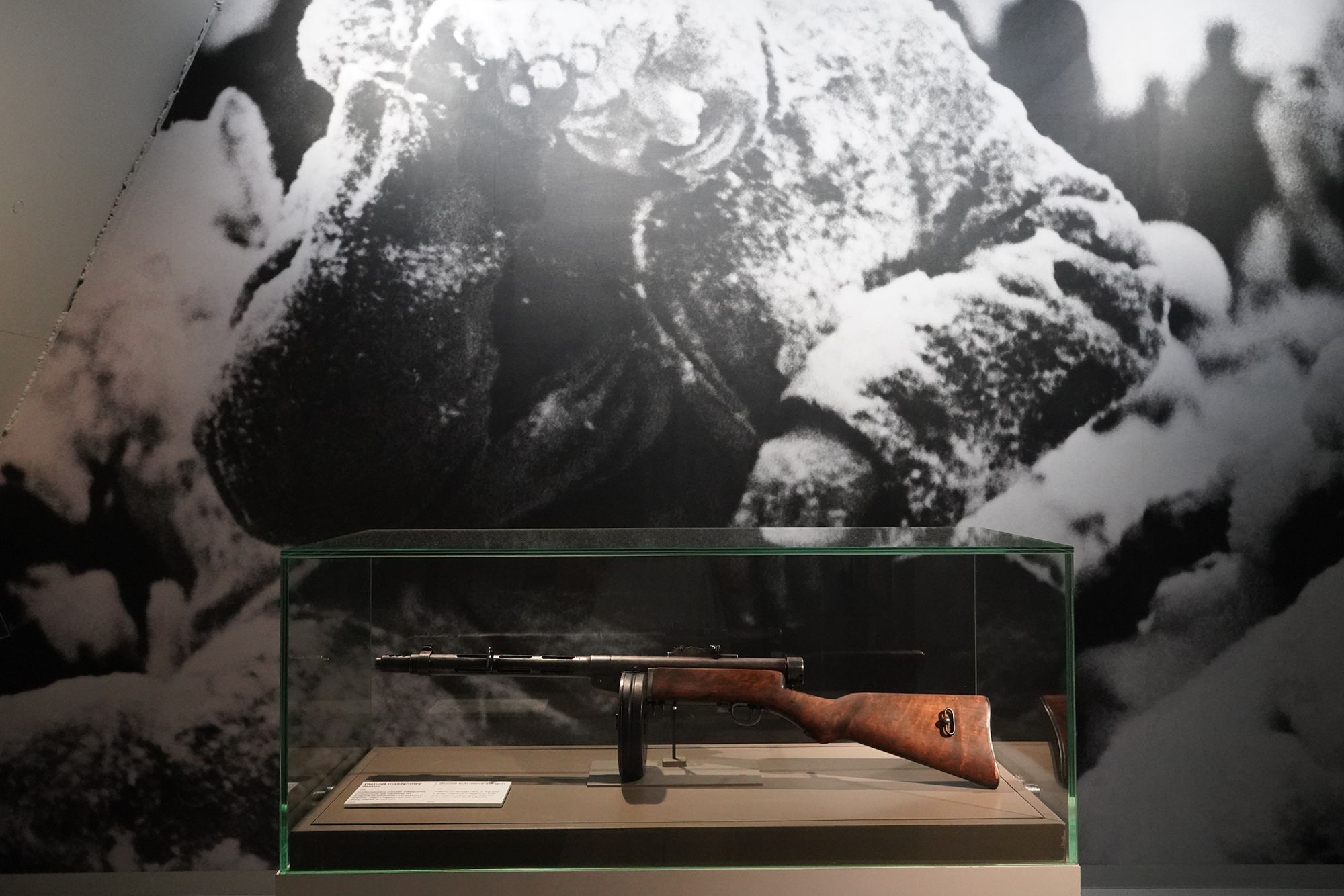
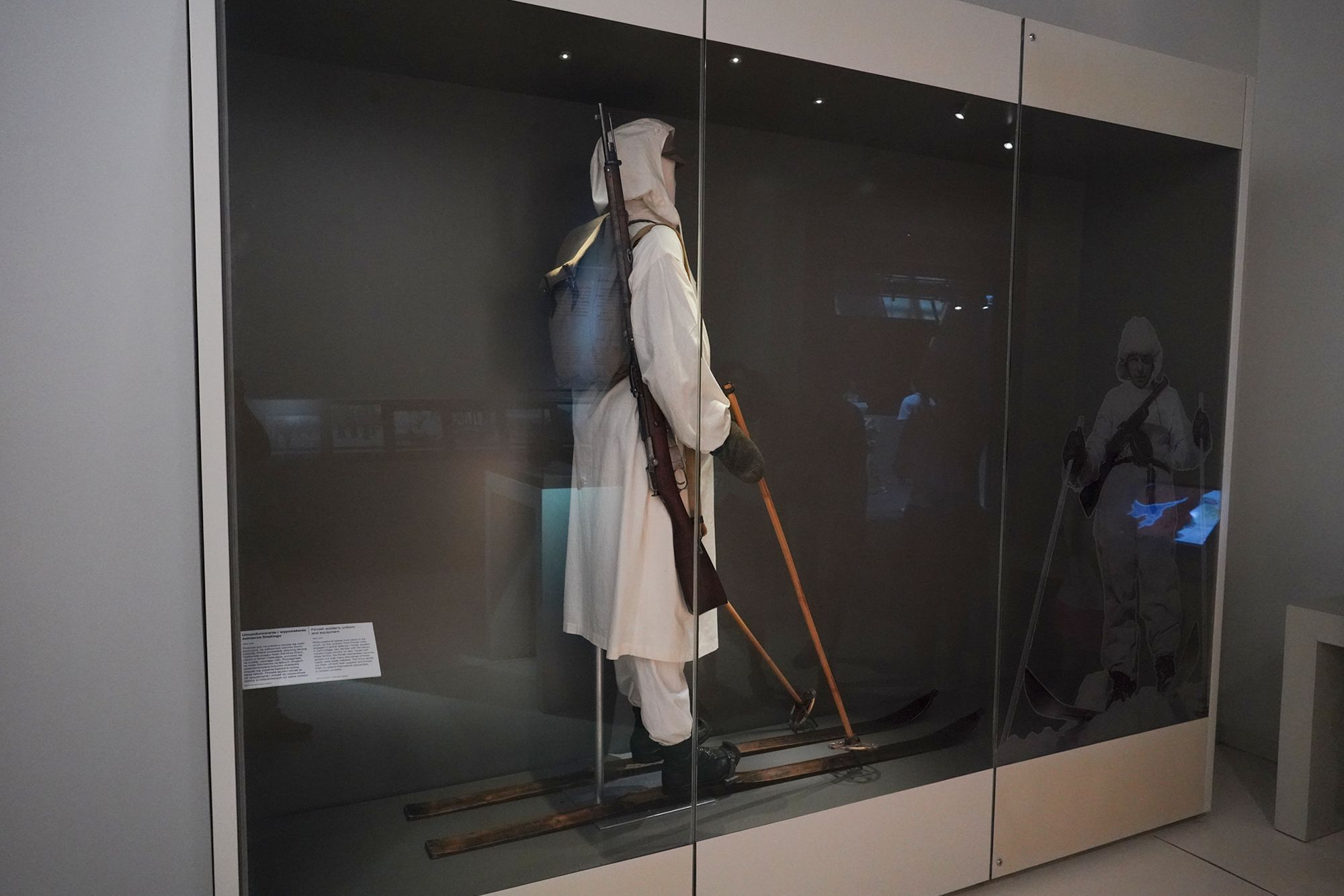
The Winter War began when Finland rejected Soviet demands for territory and a military base. The Red Army invaded on 30 November 1939 and bombed Finnish cities. Finland’s smaller, less well-equipped army used its knowledge of the forests and lakes to resist. Finland kept its independence but had to give up some territory.
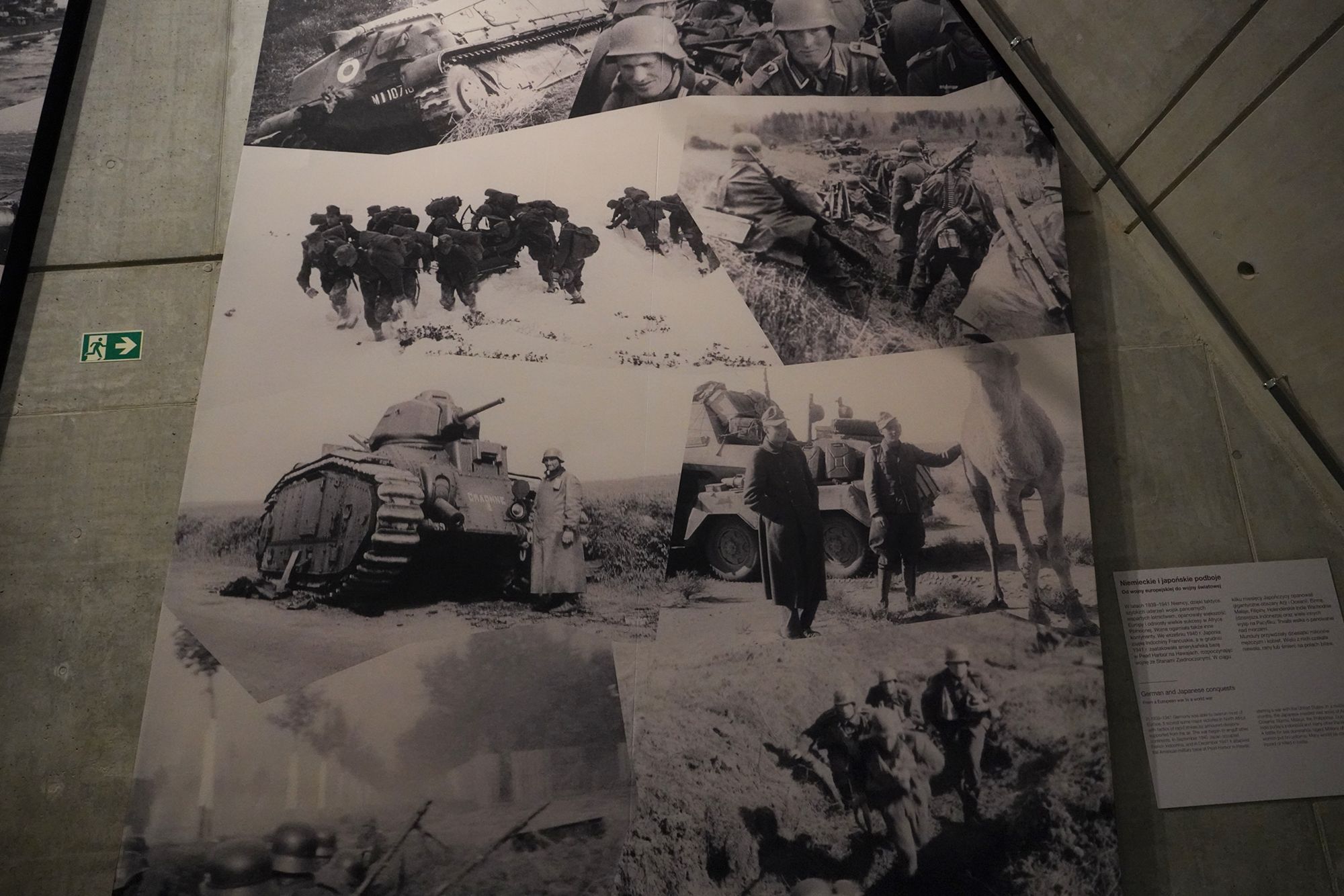
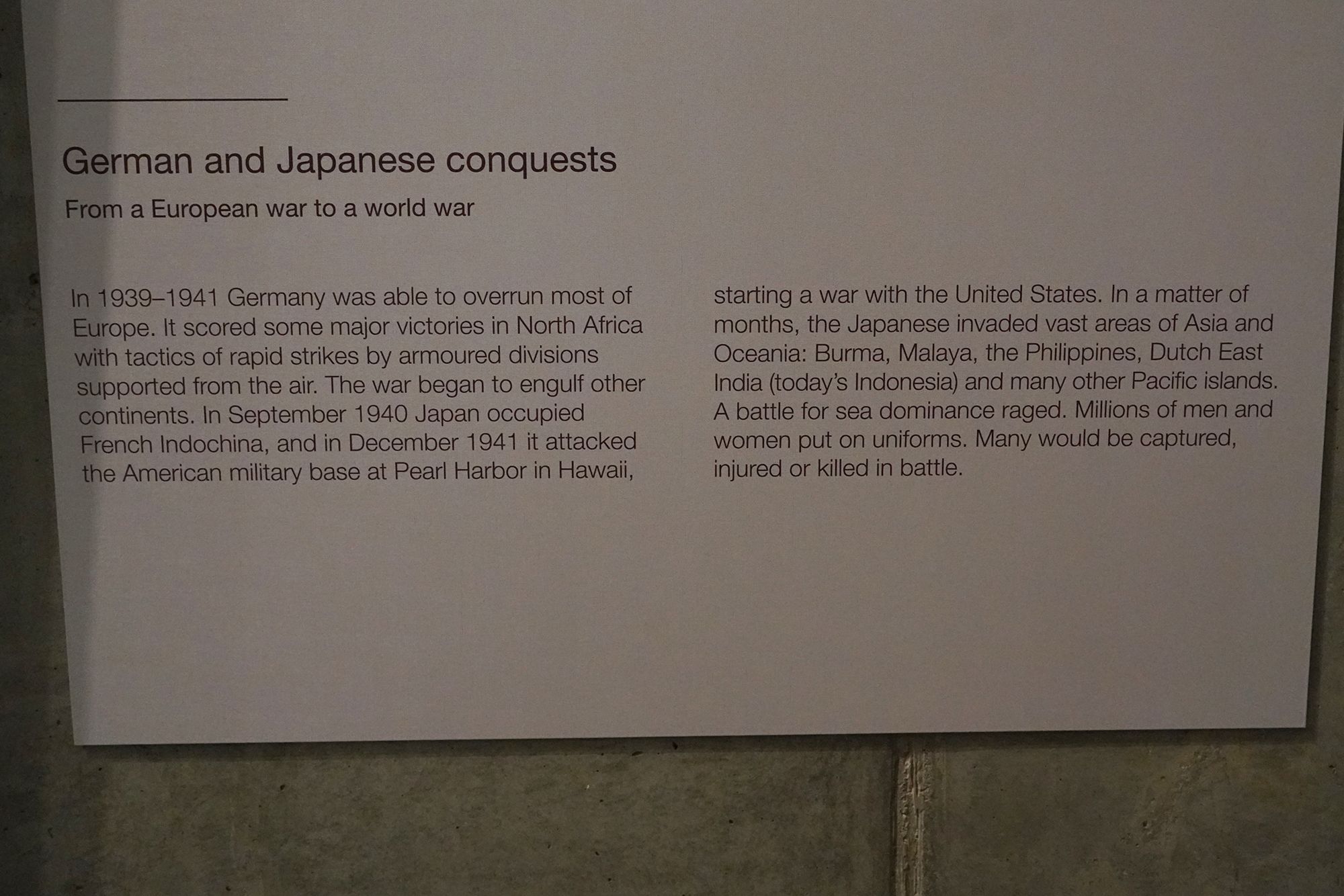
The panel describes how the war spread beyond Europe. While Germany conquered much of Europe and fought in North Africa, Japan expanded through Asia and the Pacific. Japan’s attack on Pearl Harbor in December 1941 brought the United States into the war, and fighting over control of the sea and territory intensified.
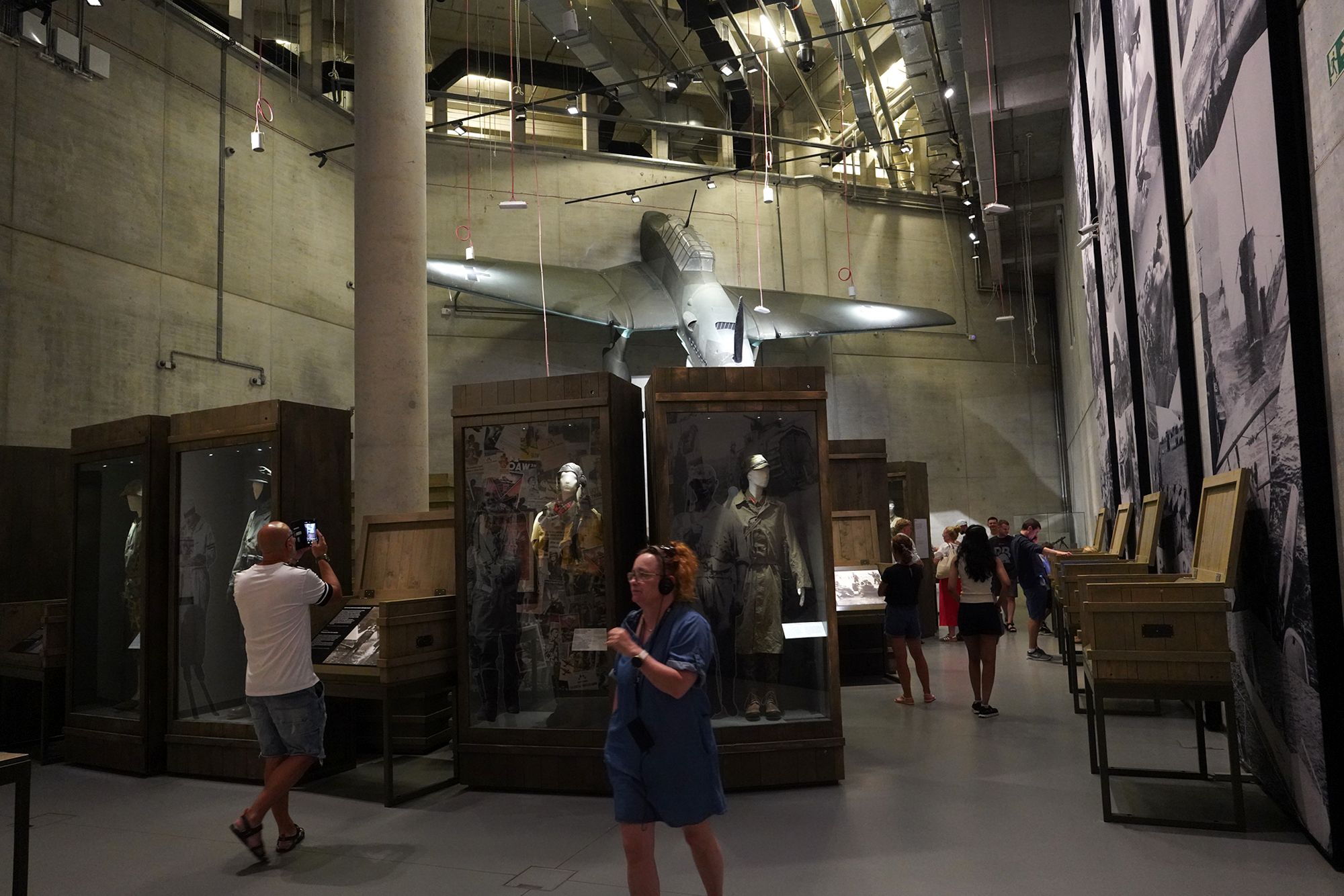
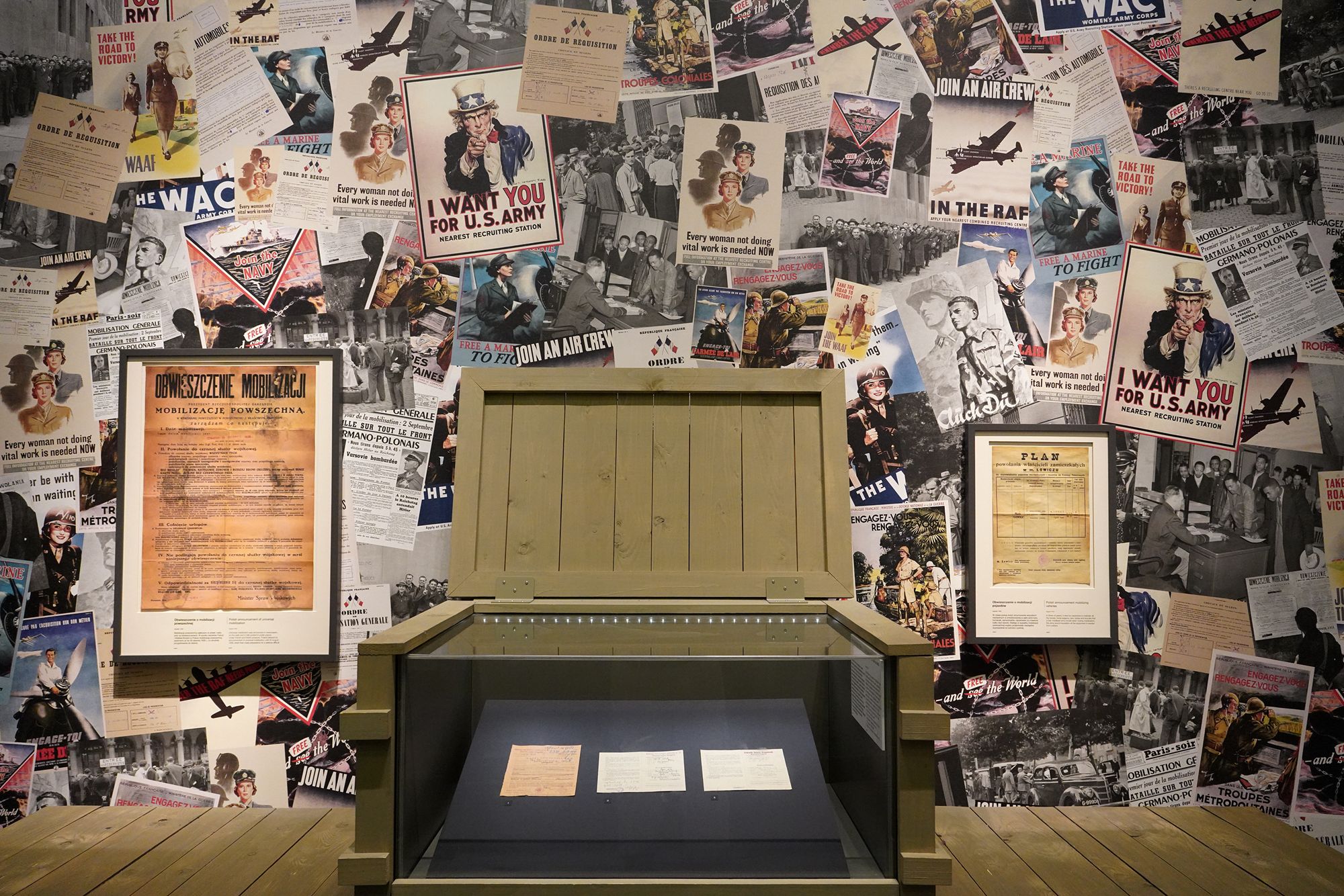
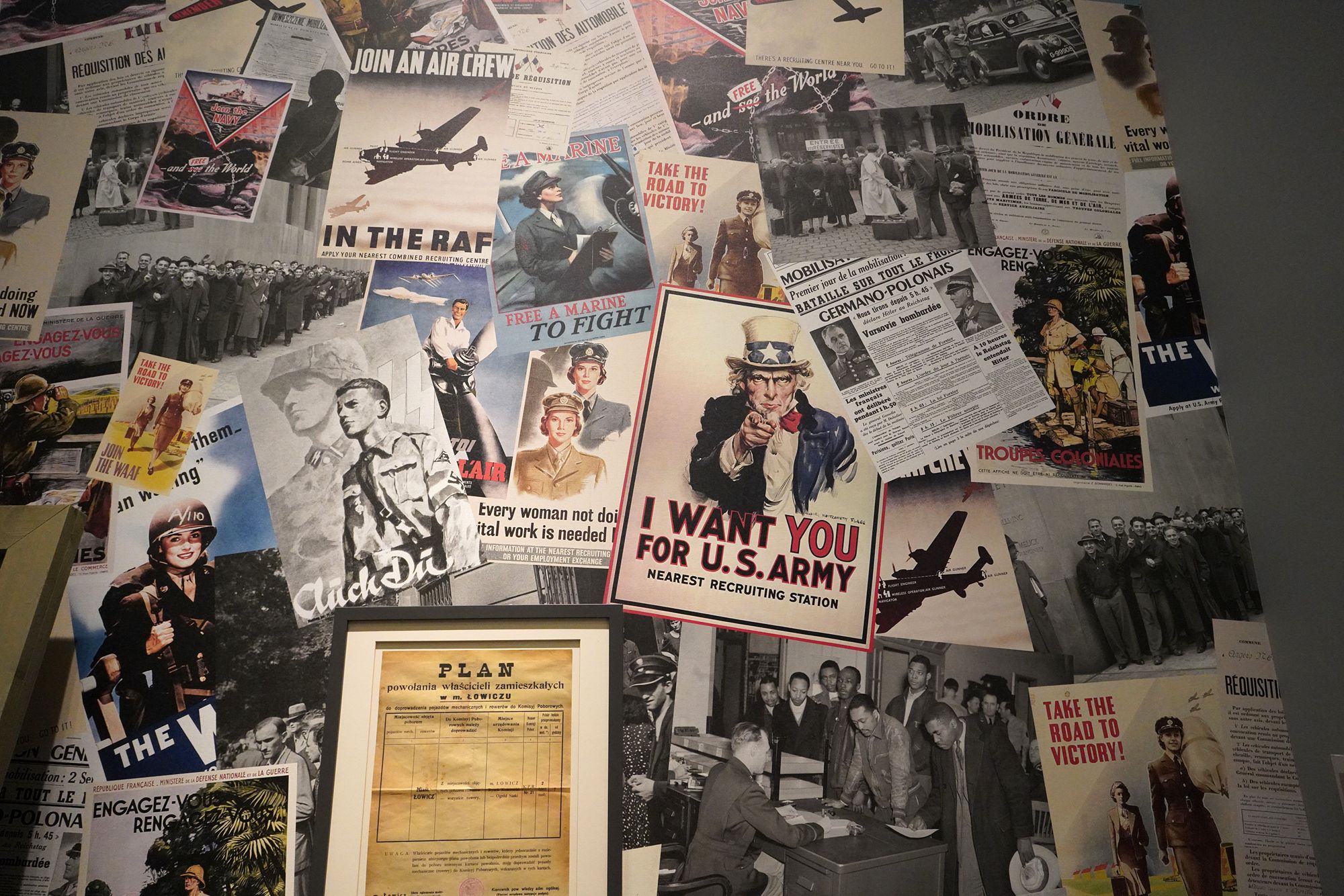
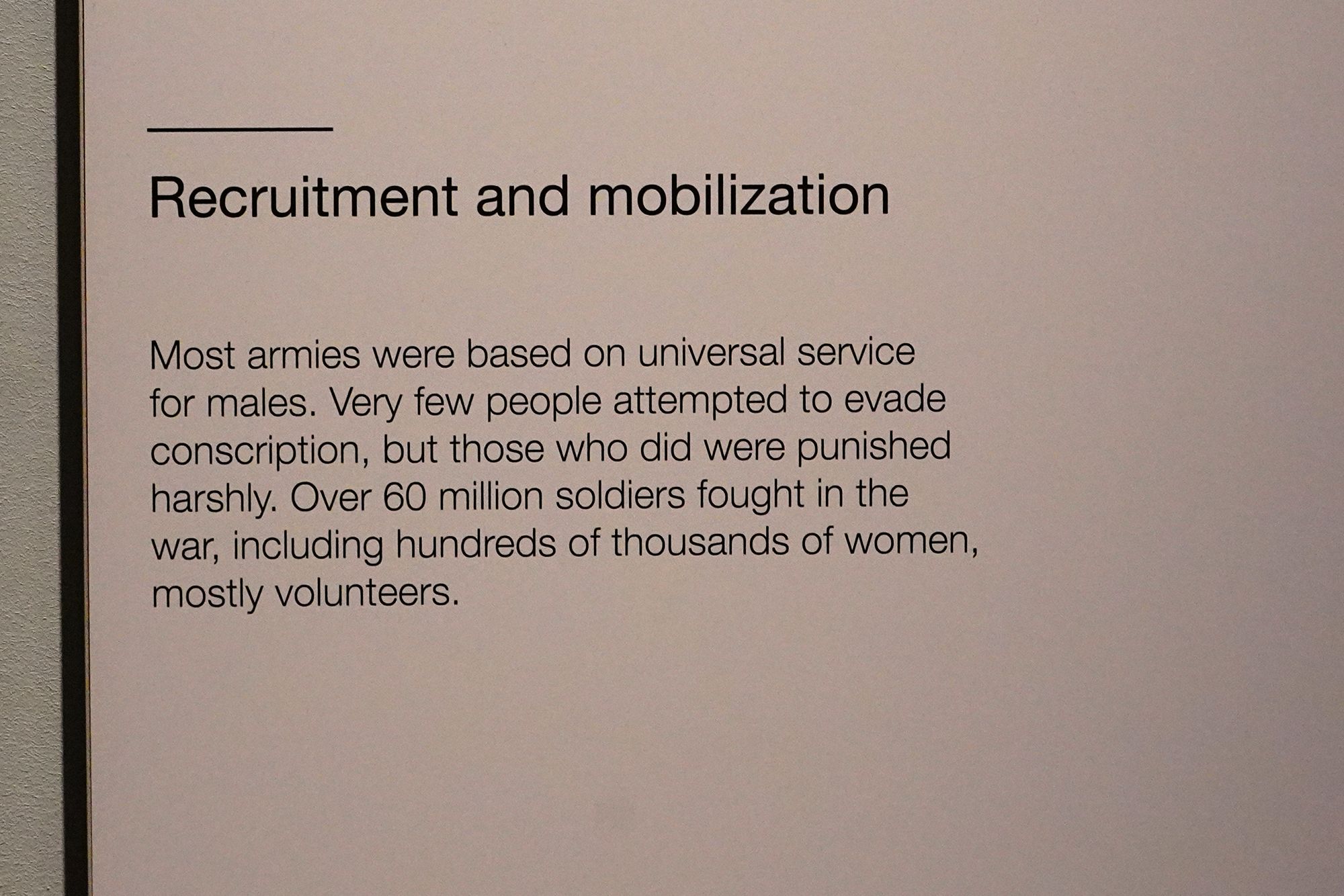
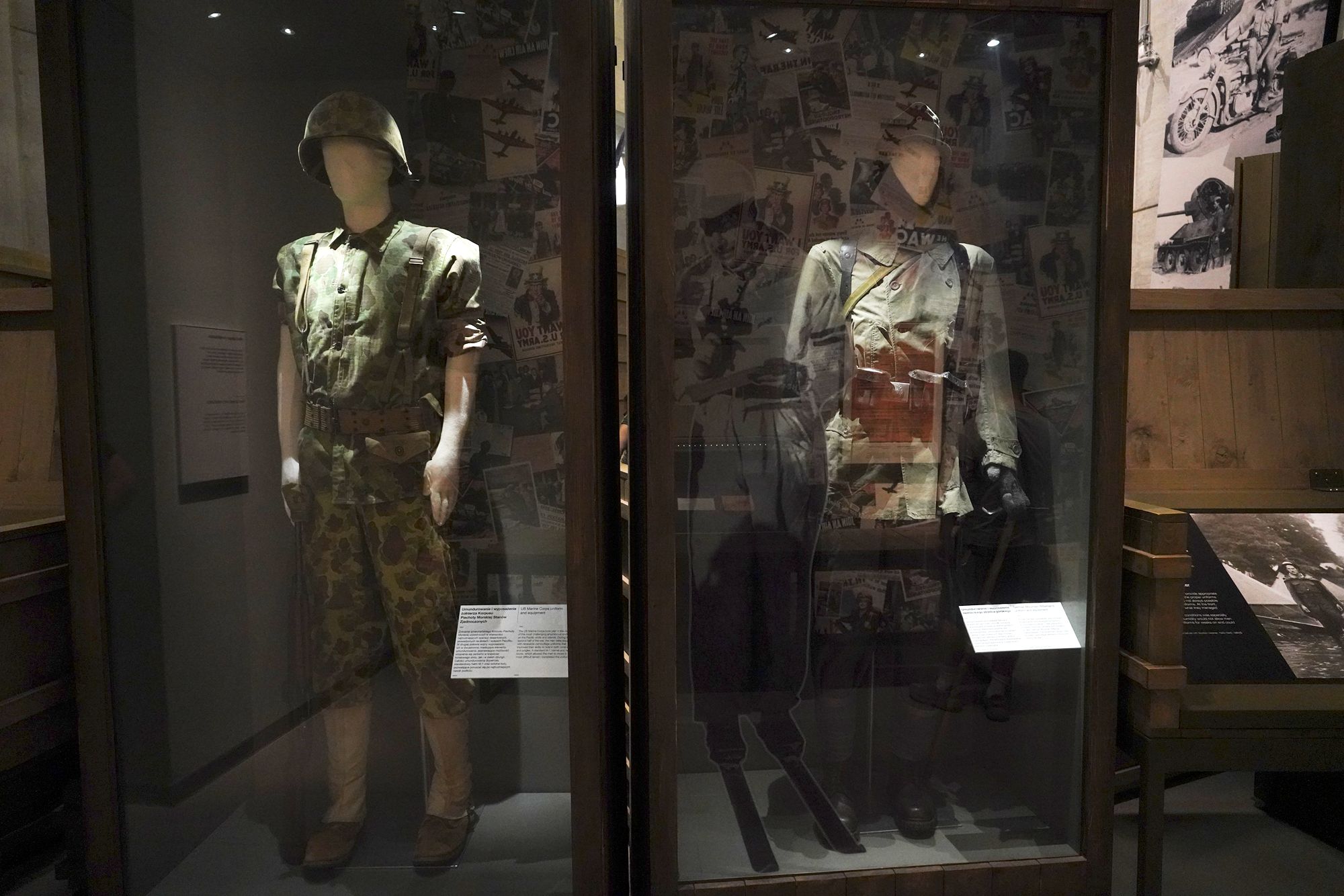
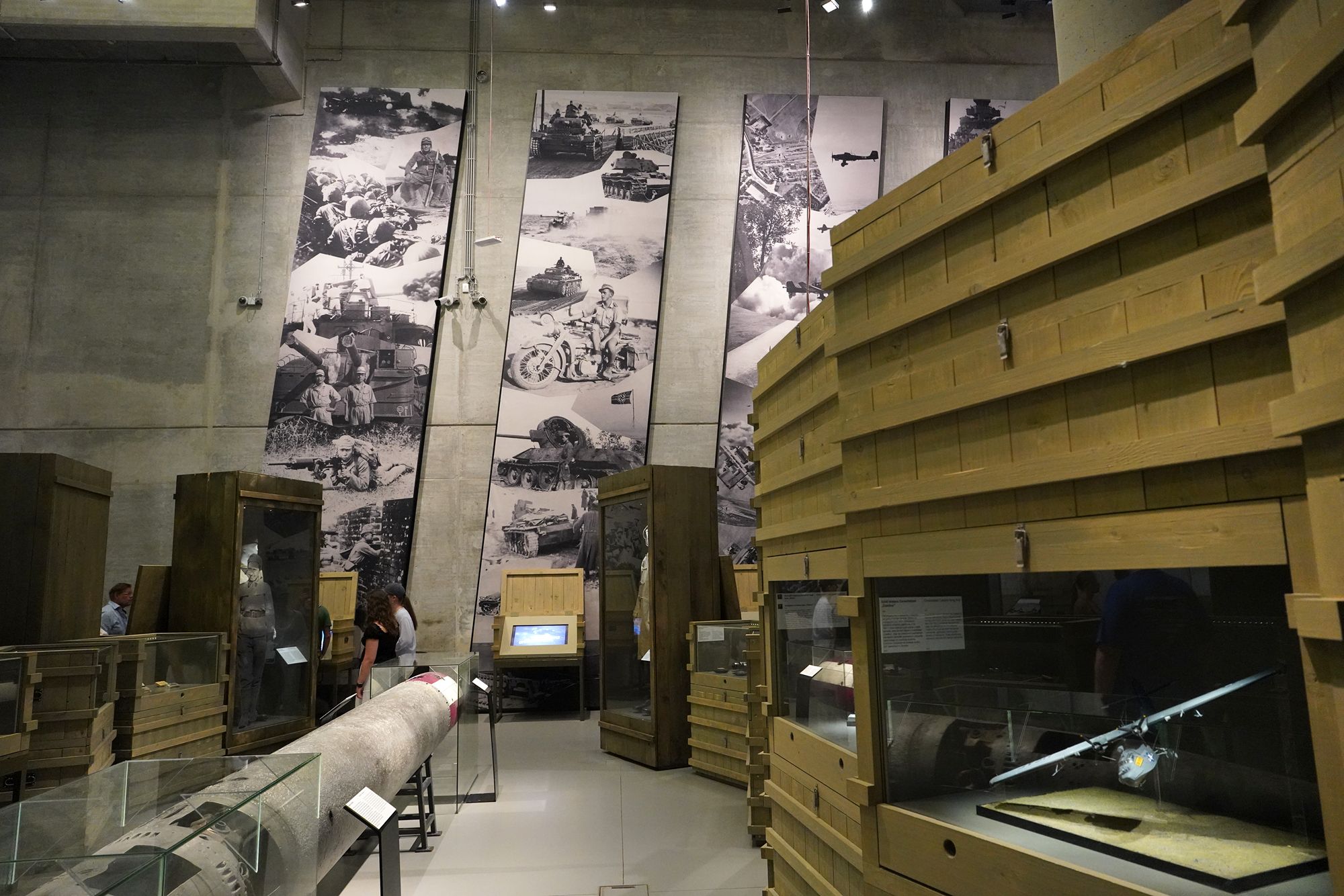
The panel highlights the scale of wartime mobilization: many countries conscripted men, and more than 60 million soldiers served. Hundreds of thousands of women also served, mostly as volunteers. People who evaded conscription could face severe punishment.
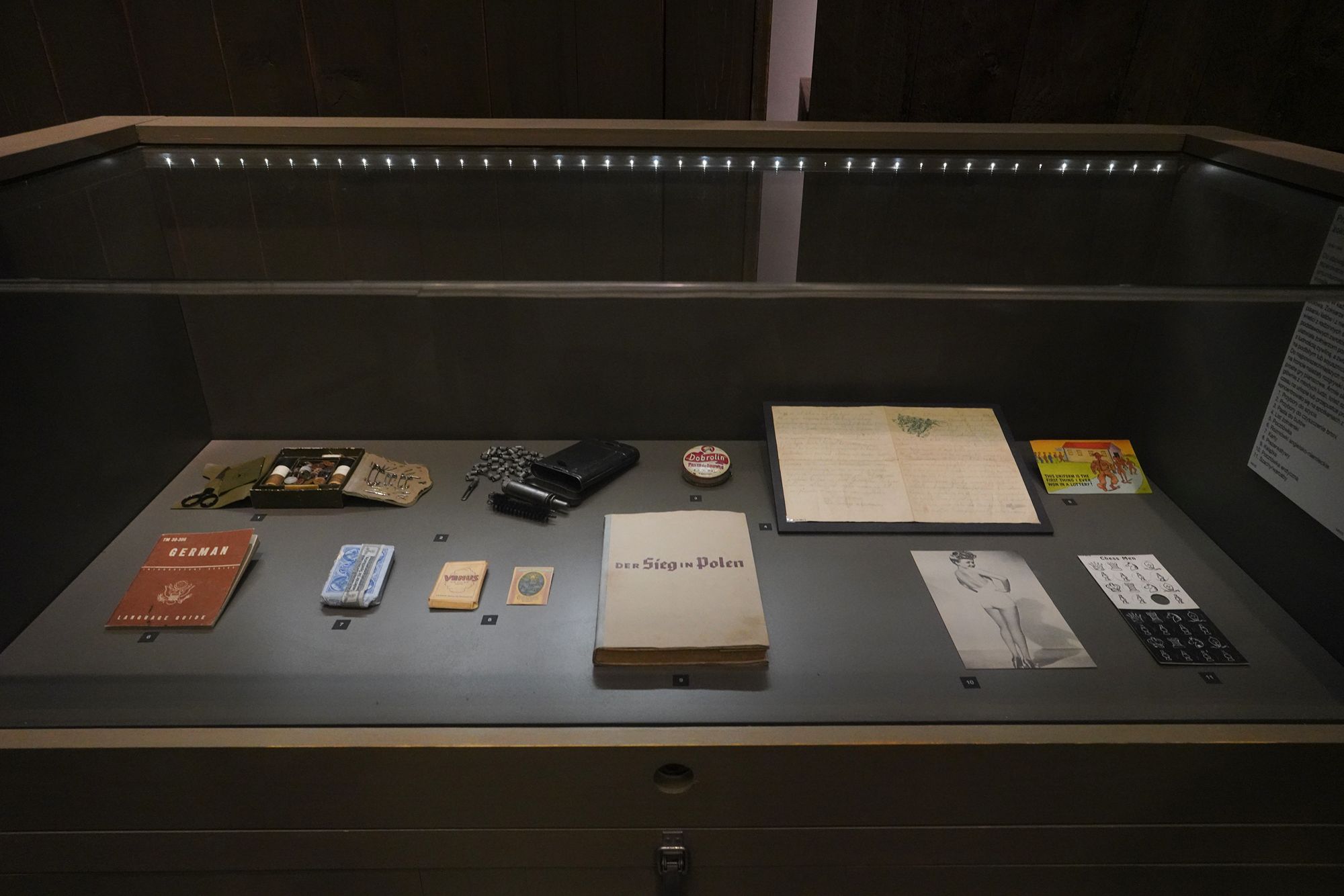
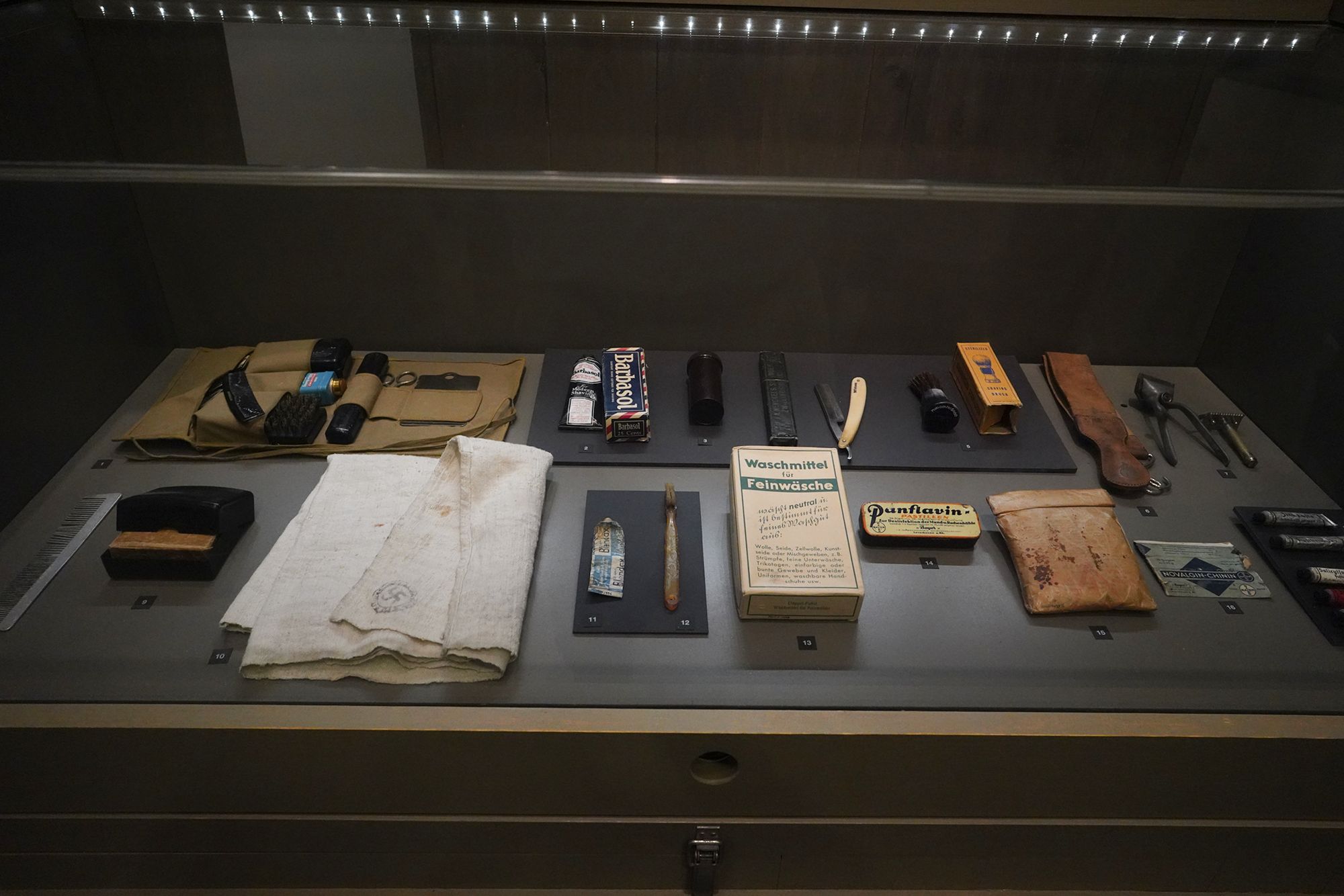
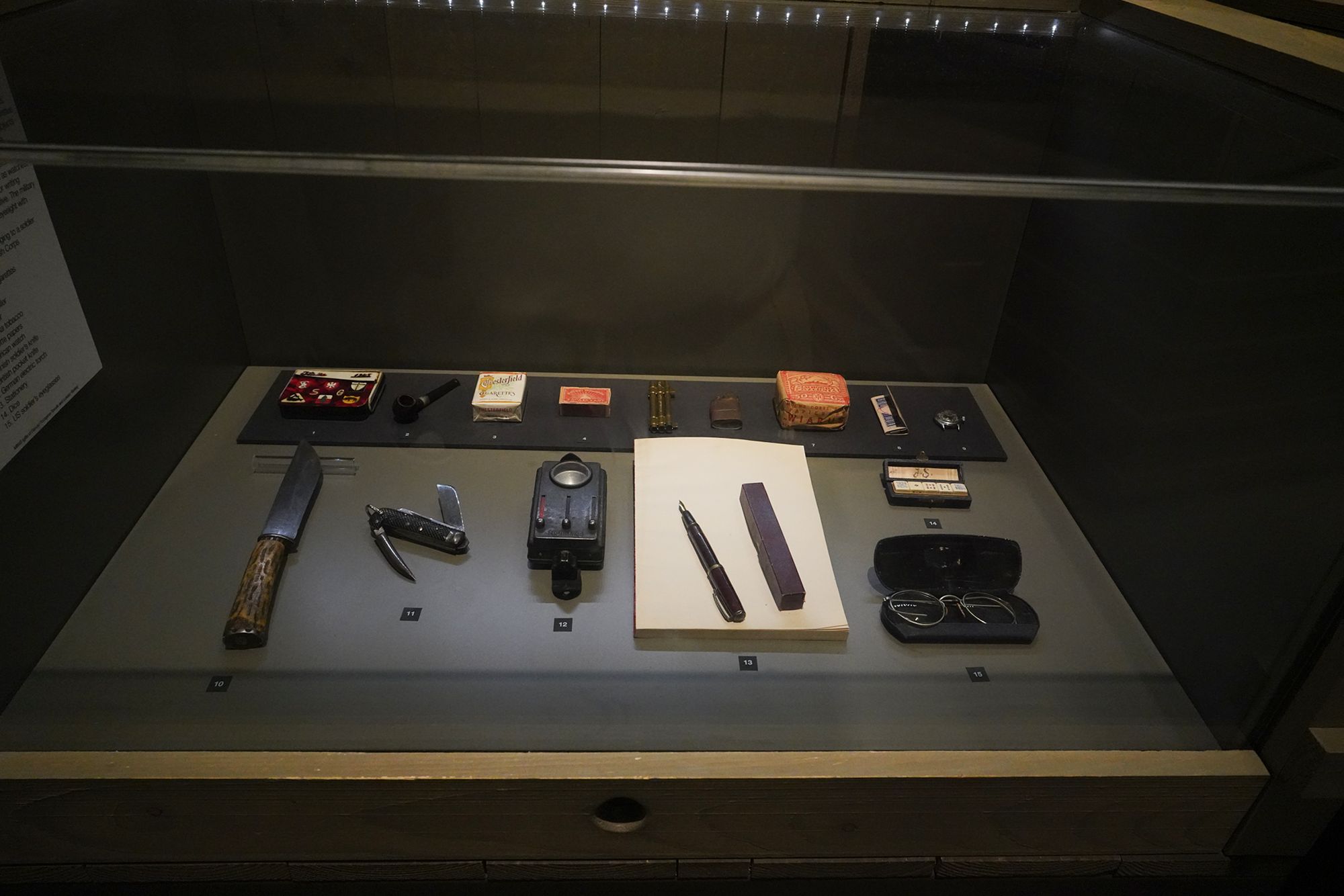
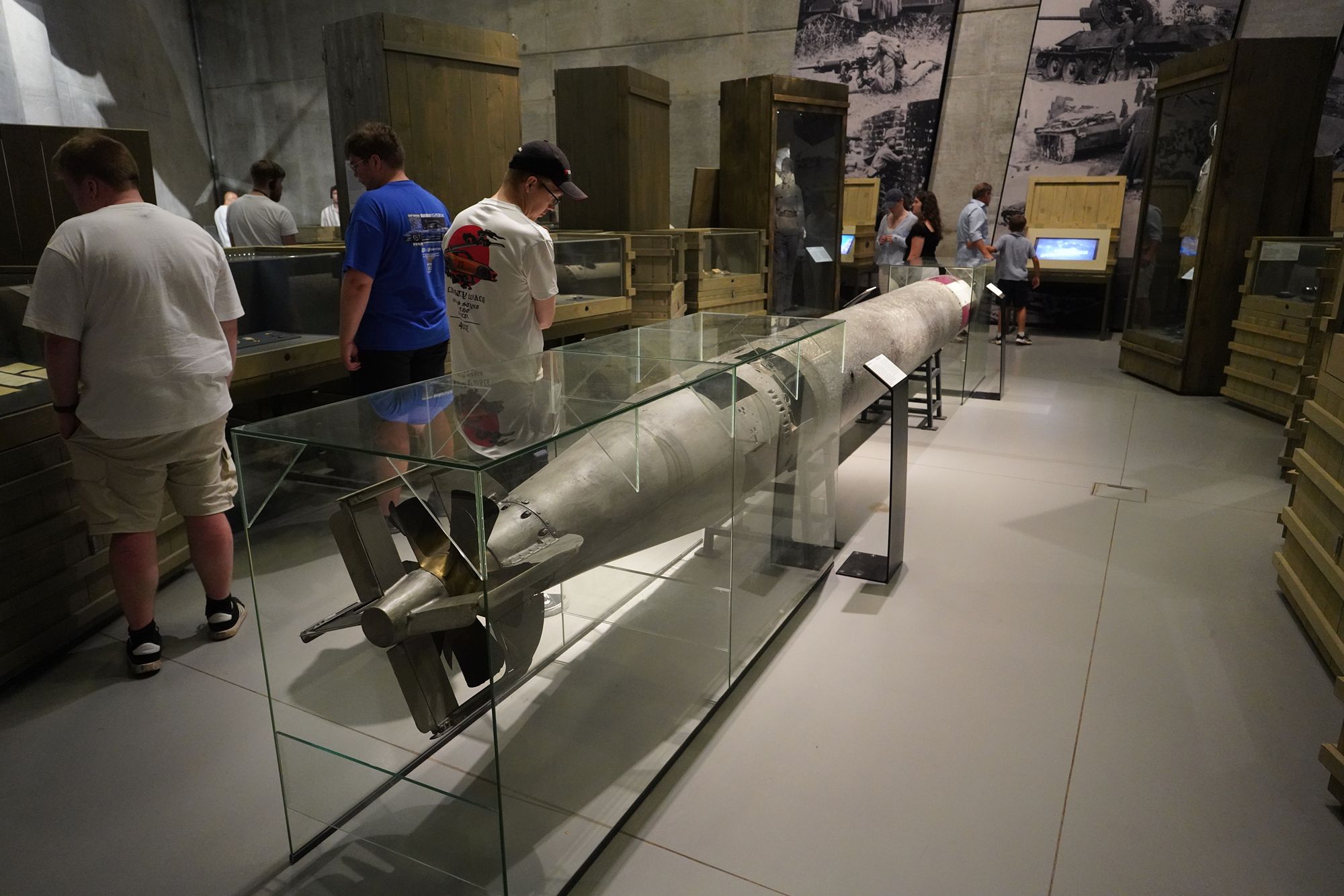
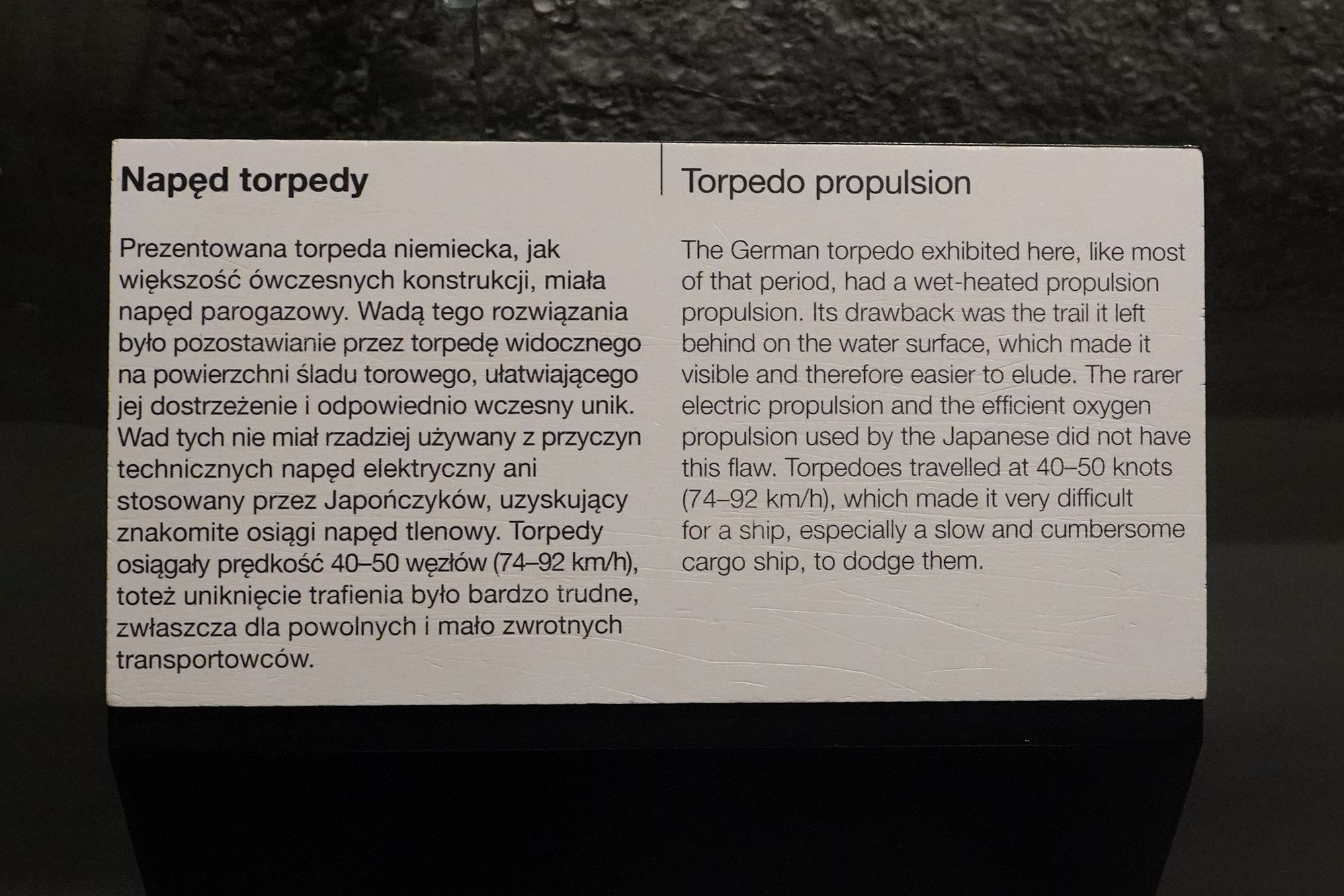
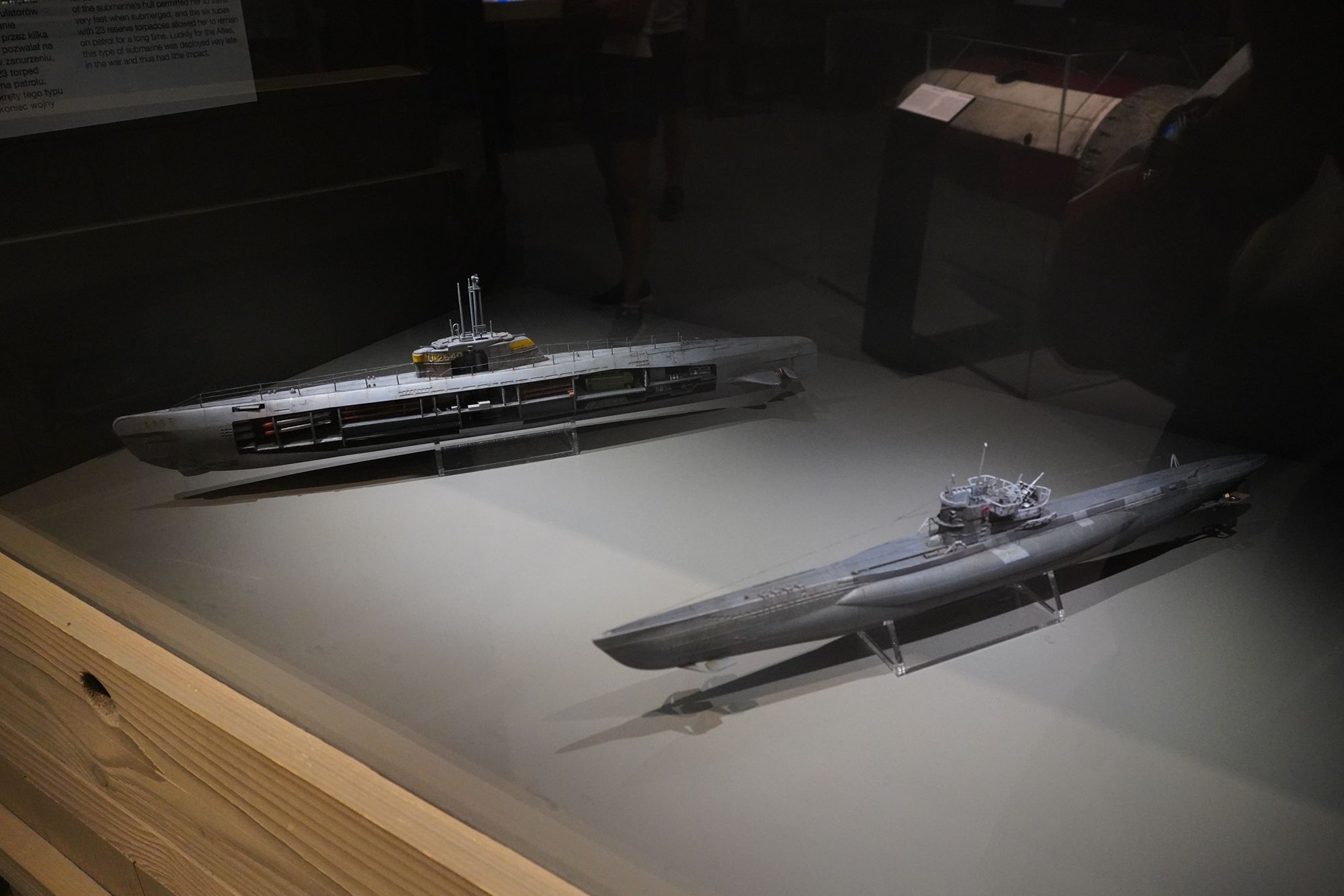
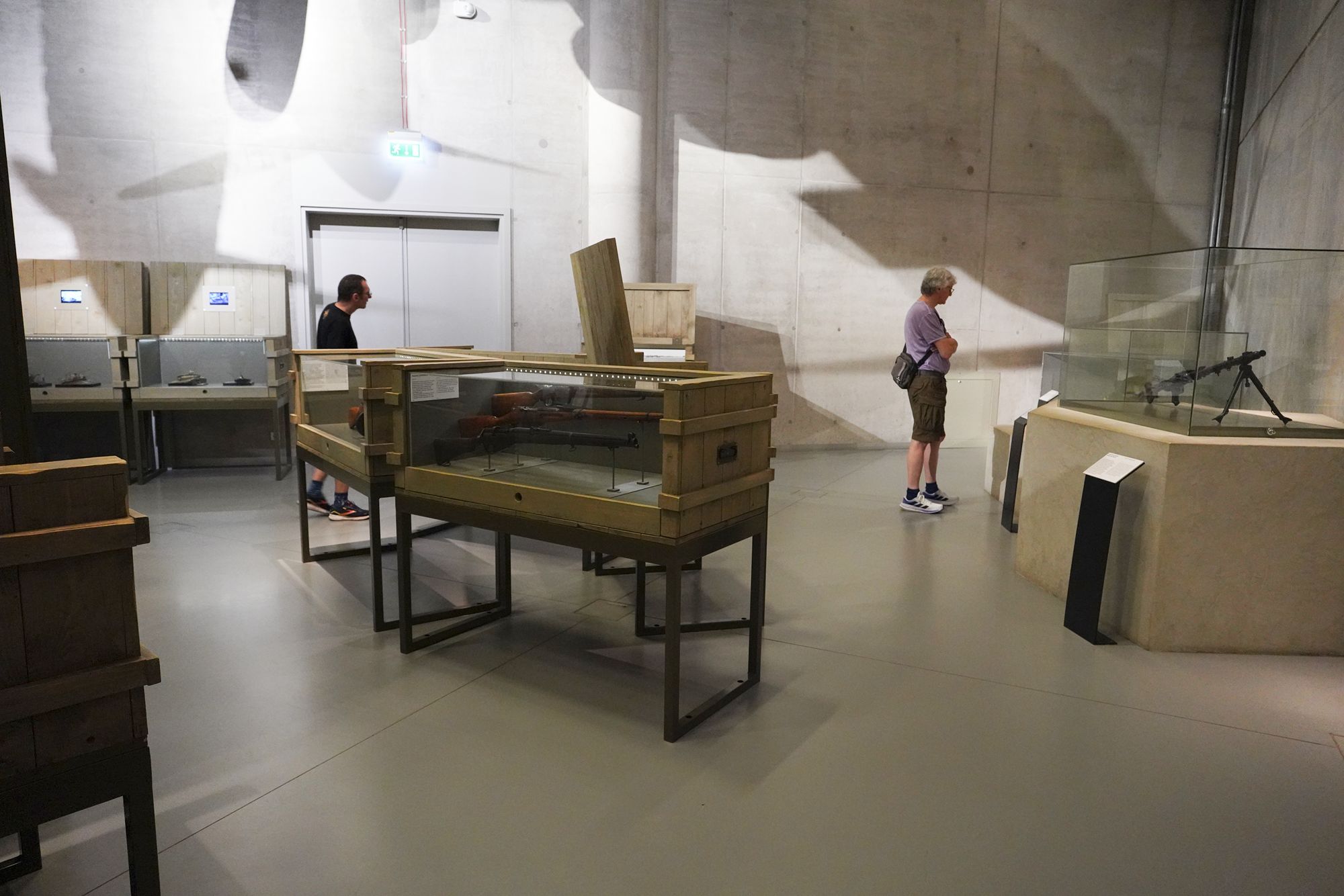
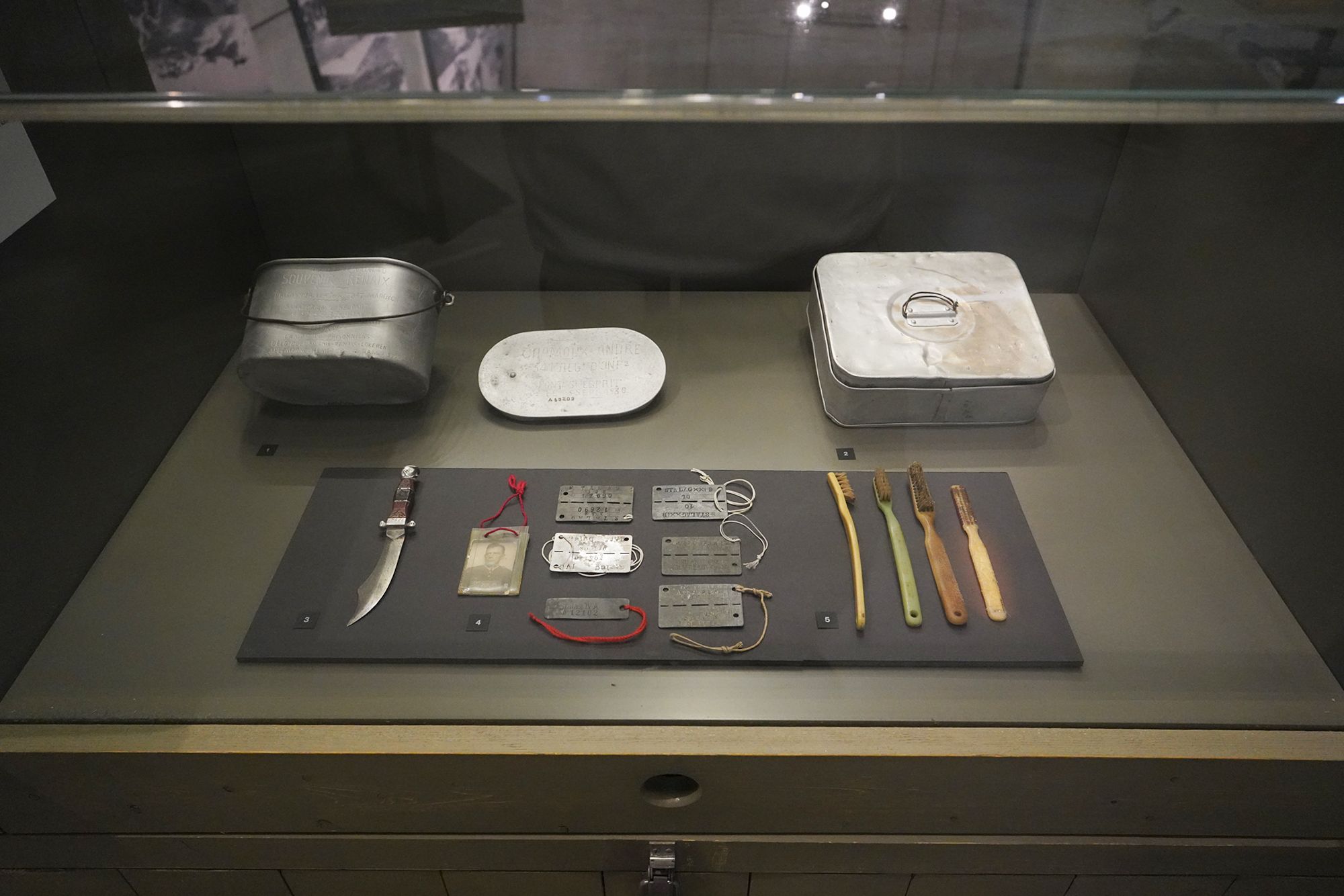
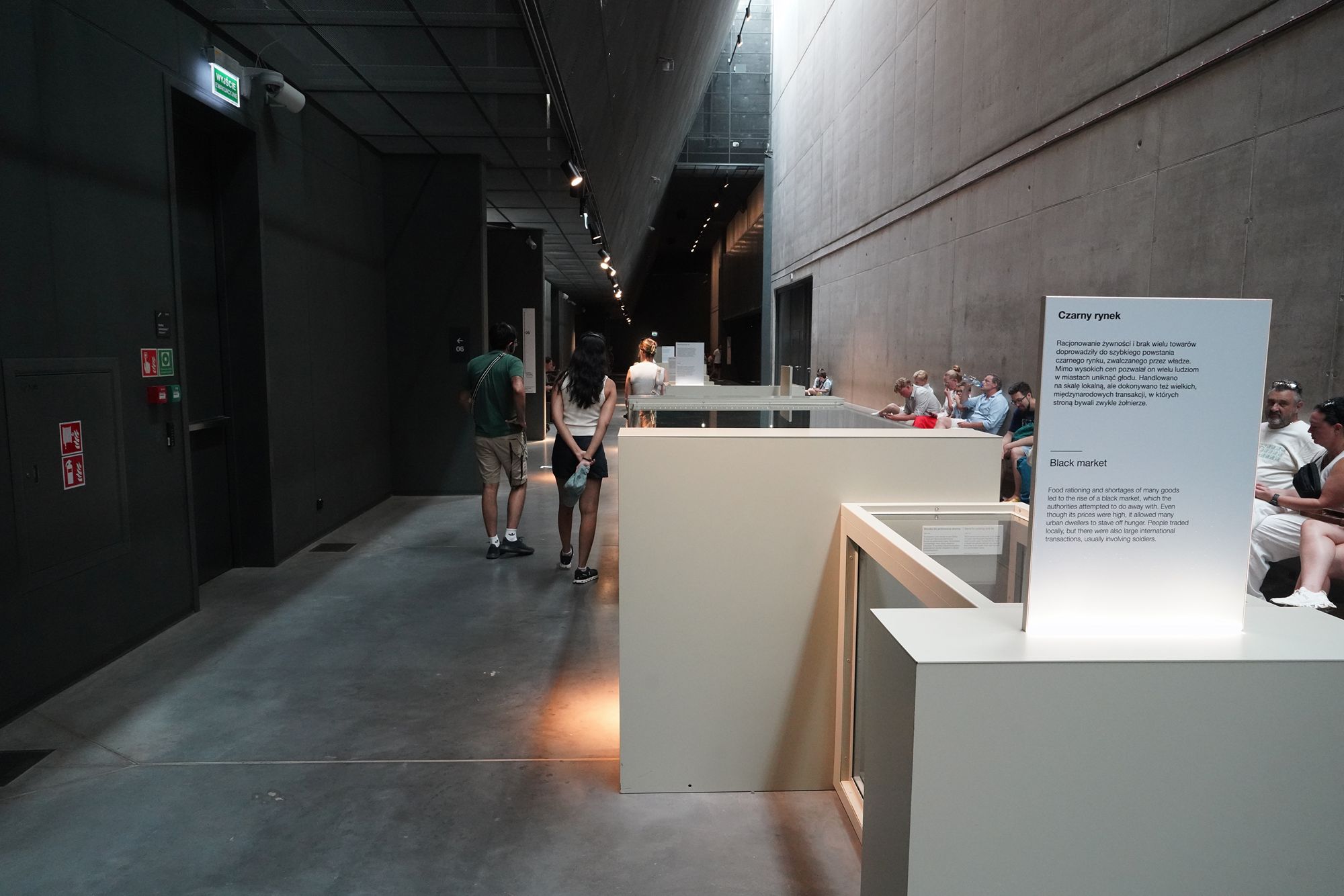
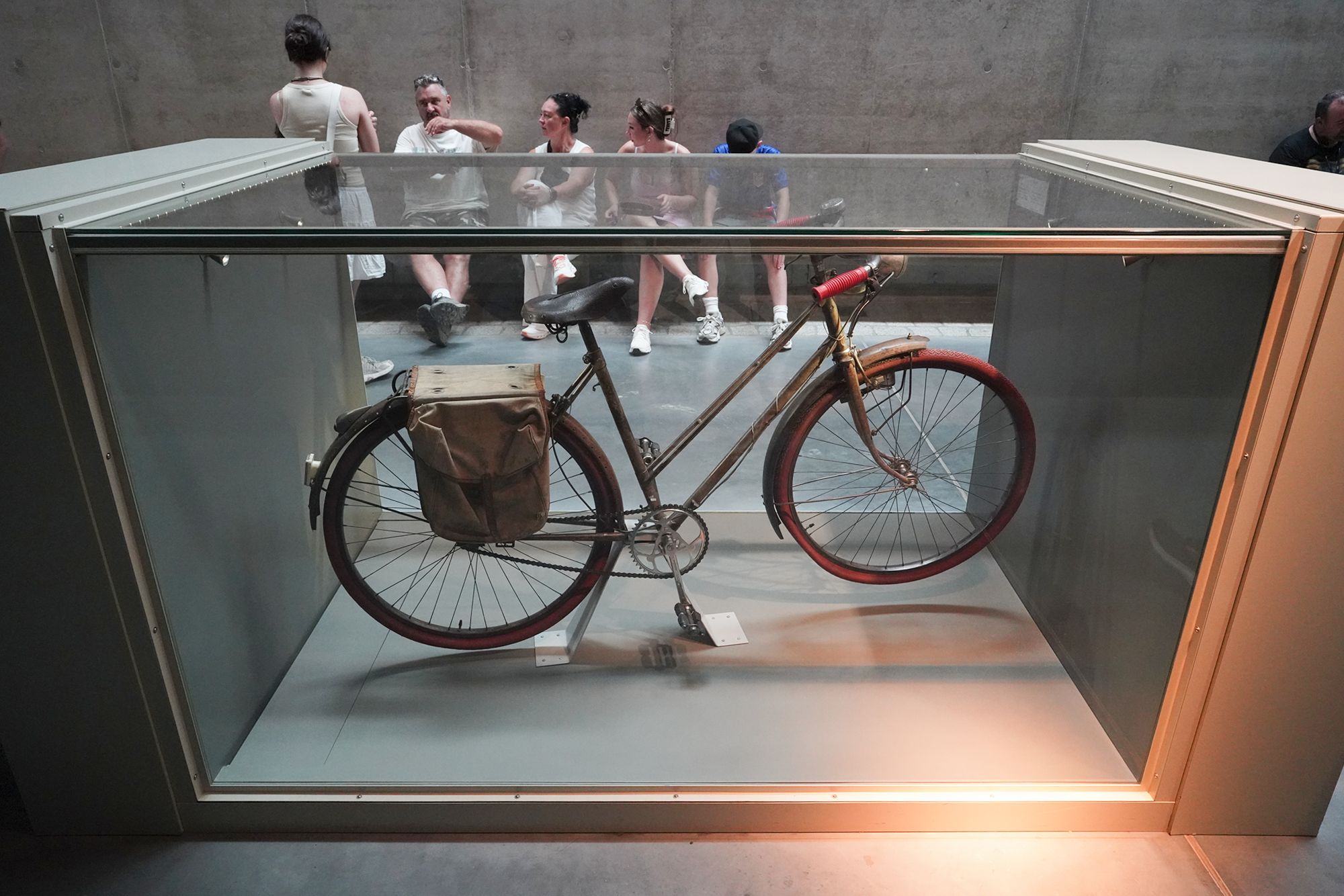
Rationing and shortages created a black market where people bought and sold scarce food and other goods at high prices. Although authorities tried to stop it, the trade helped many city residents get enough to eat. Some exchanges were local; larger deals often involved soldiers.
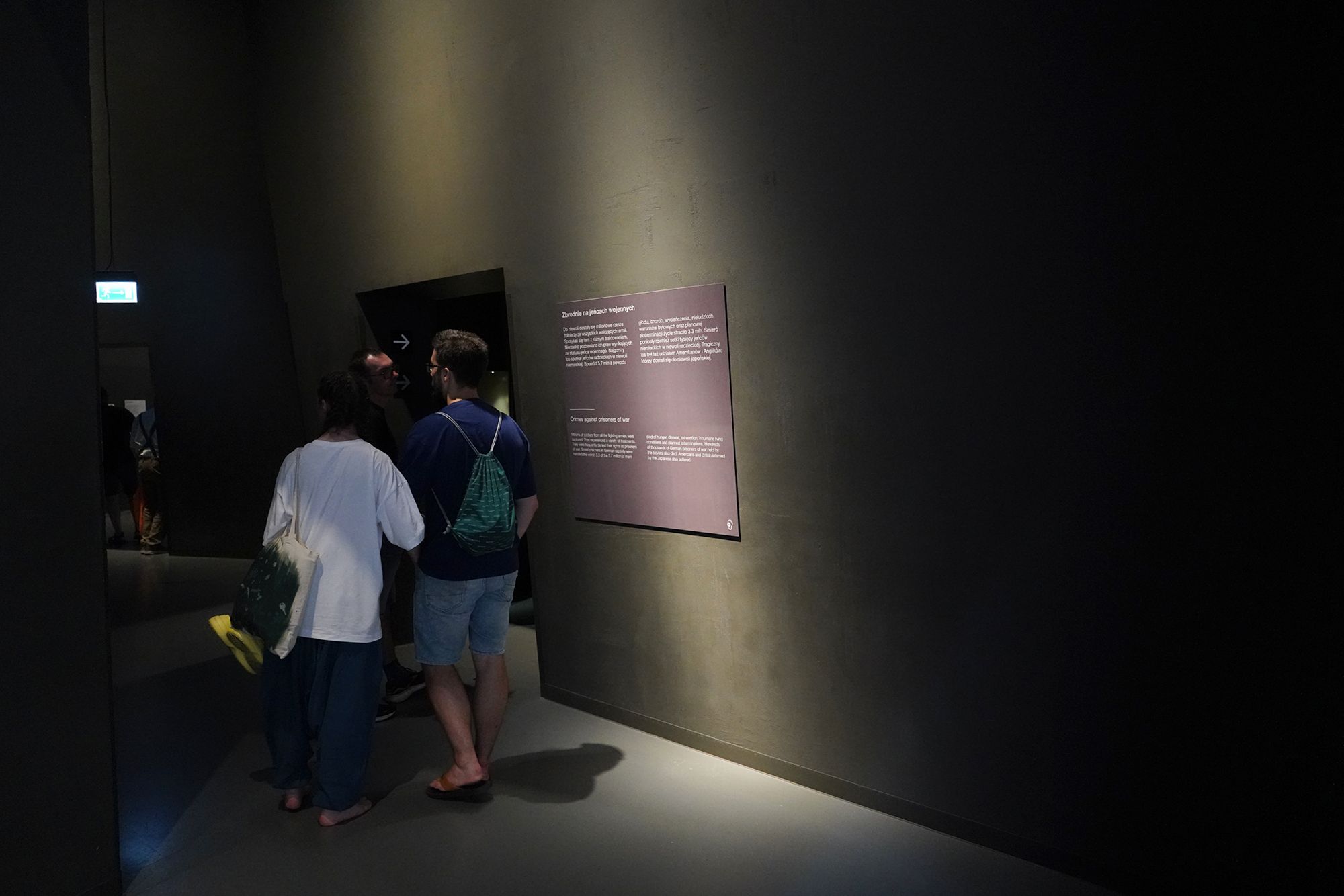
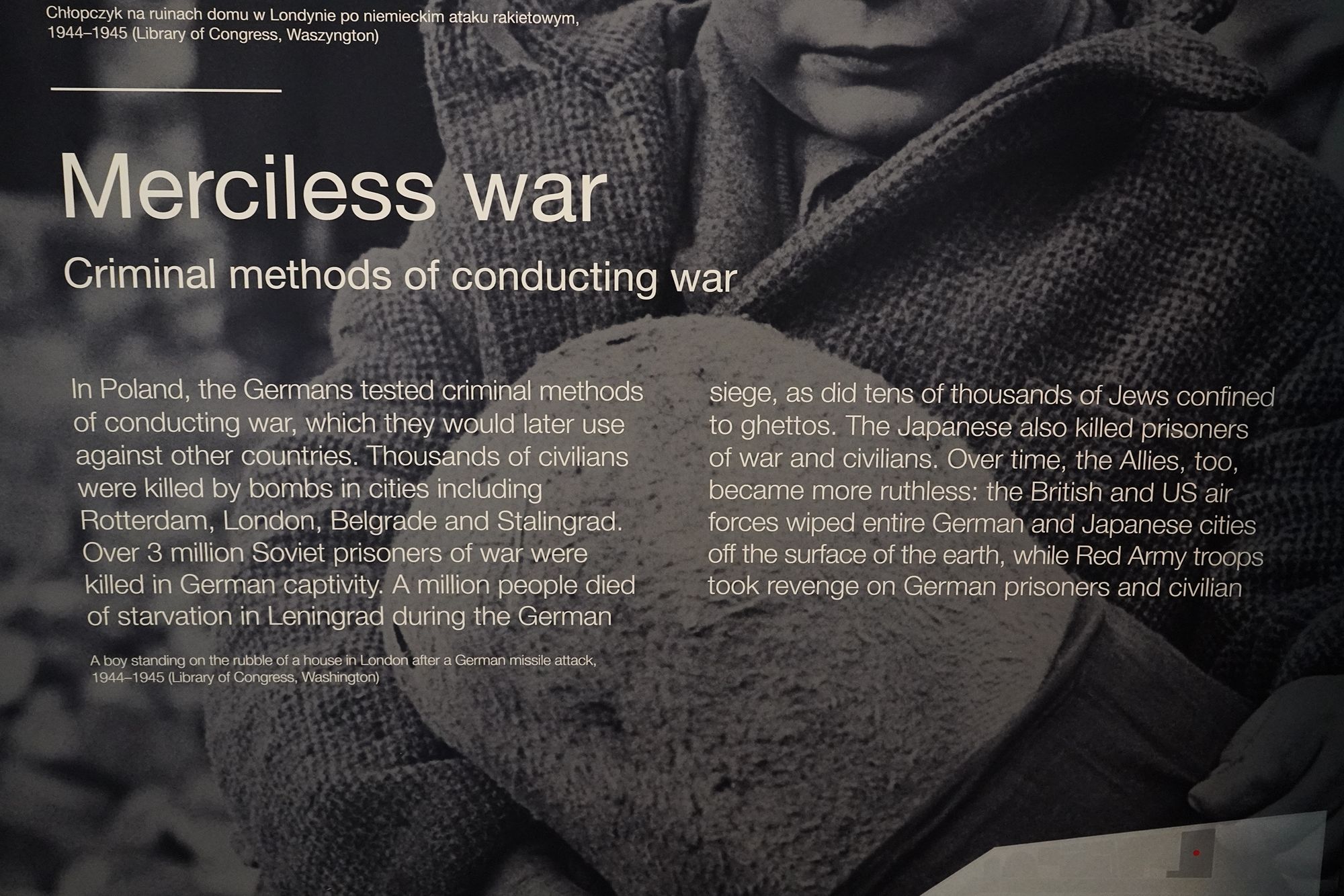
This panel looks at the war’s brutal impact on civilians and prisoners. It describes German bombing, the deaths of more than three million Soviet prisoners in German captivity, starvation during the siege of Leningrad, and Japanese abuses. It also notes Allied bombing of German and Japanese cities and Soviet reprisals against Germans. The harms were not all the same in purpose or scale: Nazi Germany’s treatment of Soviet POWs was a deliberate, systematic policy.
Germany invaded the Soviet Union on June 22, 1941, launching Operation Barbarossa. Hitler broke the nonaggression pact the two countries had signed in 1939 and sent millions of German and allied troops east.
The invasion aimed to destroy the Soviet state and seize land and resources. It was also a war of racial conquest: Nazi Germany intended to subjugate the peoples of Eastern Europe and murder Jews and others it considered enemies. German forces advanced rapidly at first, but the Soviet Union continued fighting. The invasion became a turning point in the war, especially after Germany’s defeat at Stalingrad in 1943.
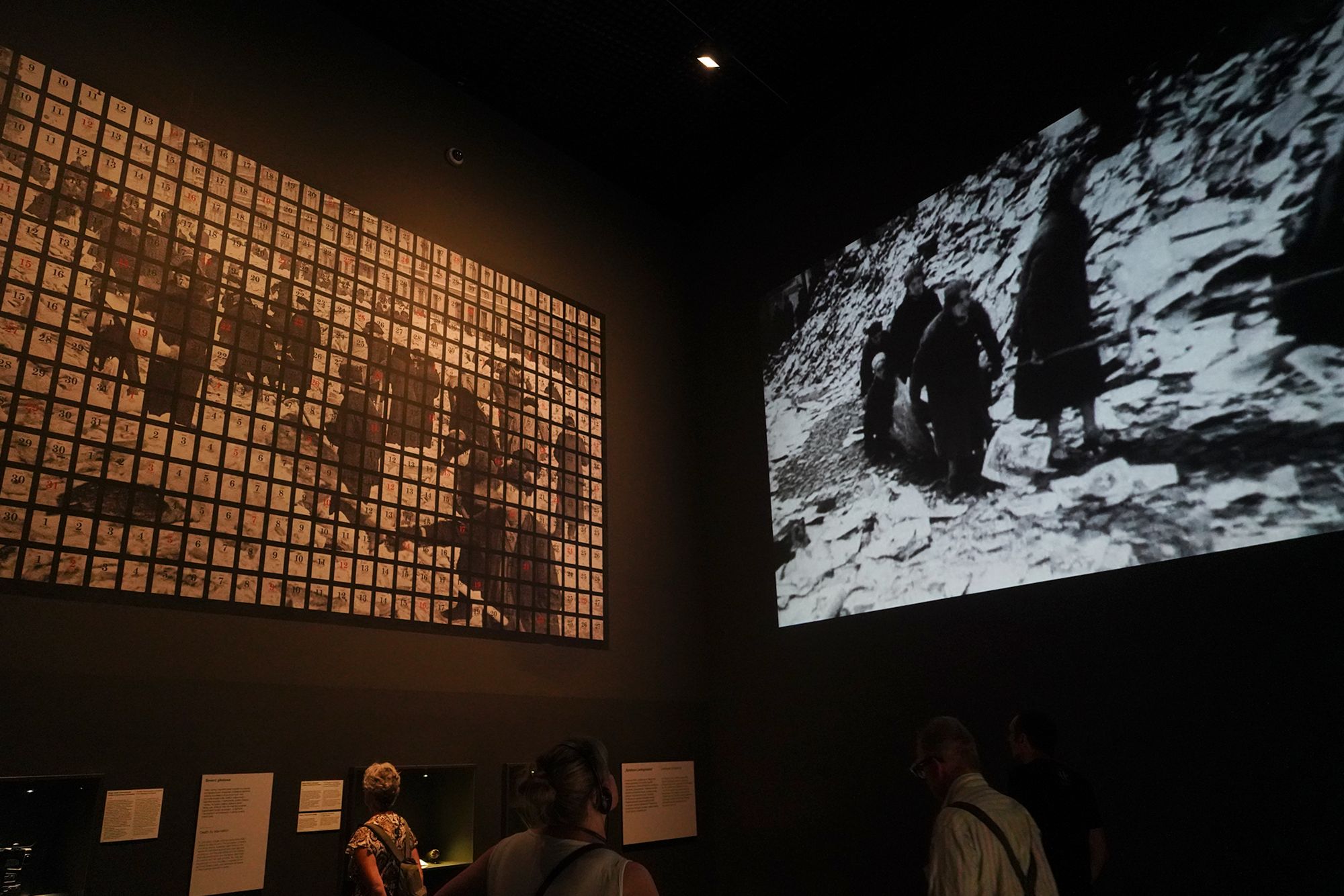
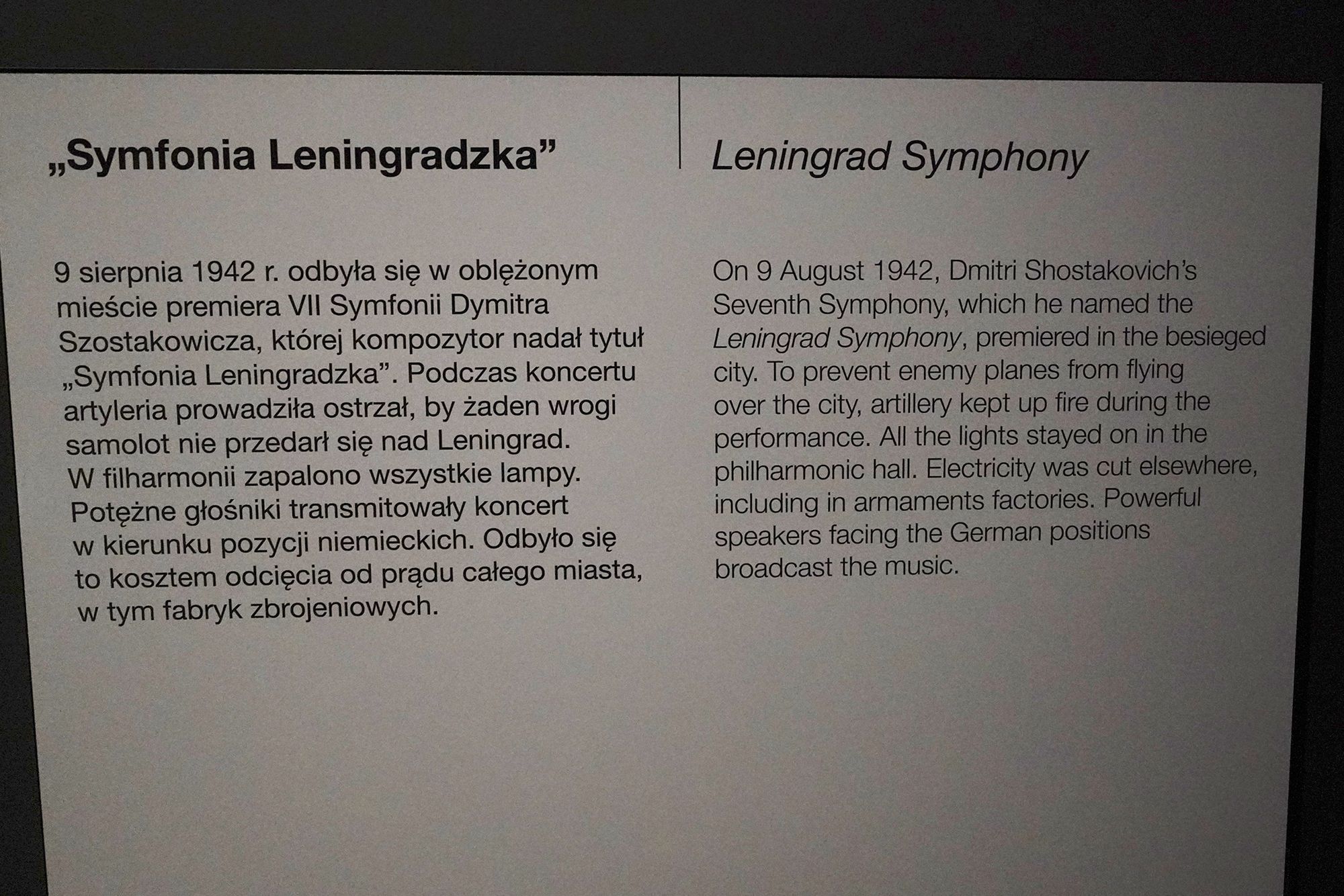
On 9 August 1942, Dmitri Shostakovich’s Seventh Symphony—known as the Leningrad Symphony—was performed in the besieged city. The hall’s lights stayed on while electricity was cut elsewhere. Artillery fired during the concert, and loudspeakers carried the music toward German positions.
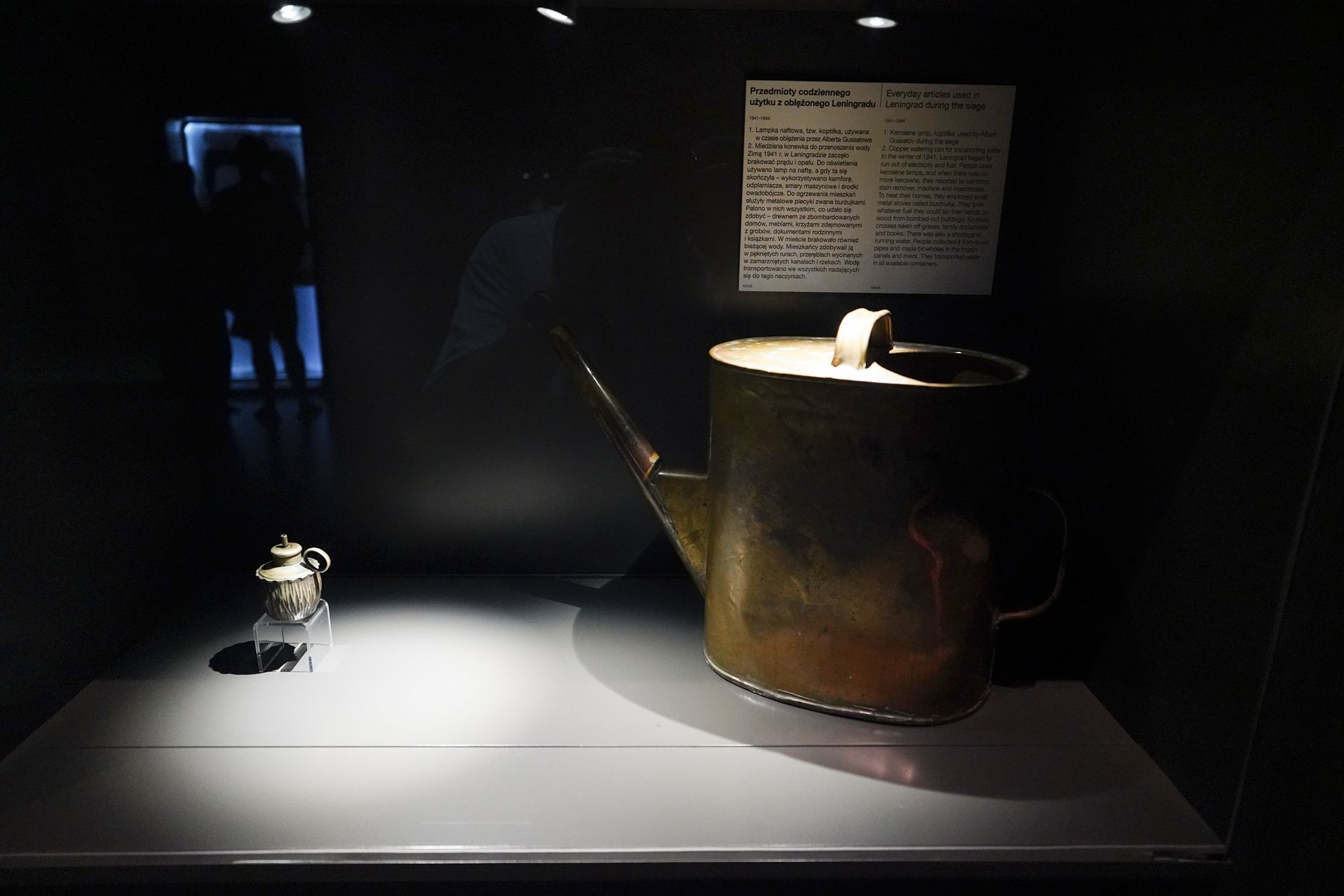
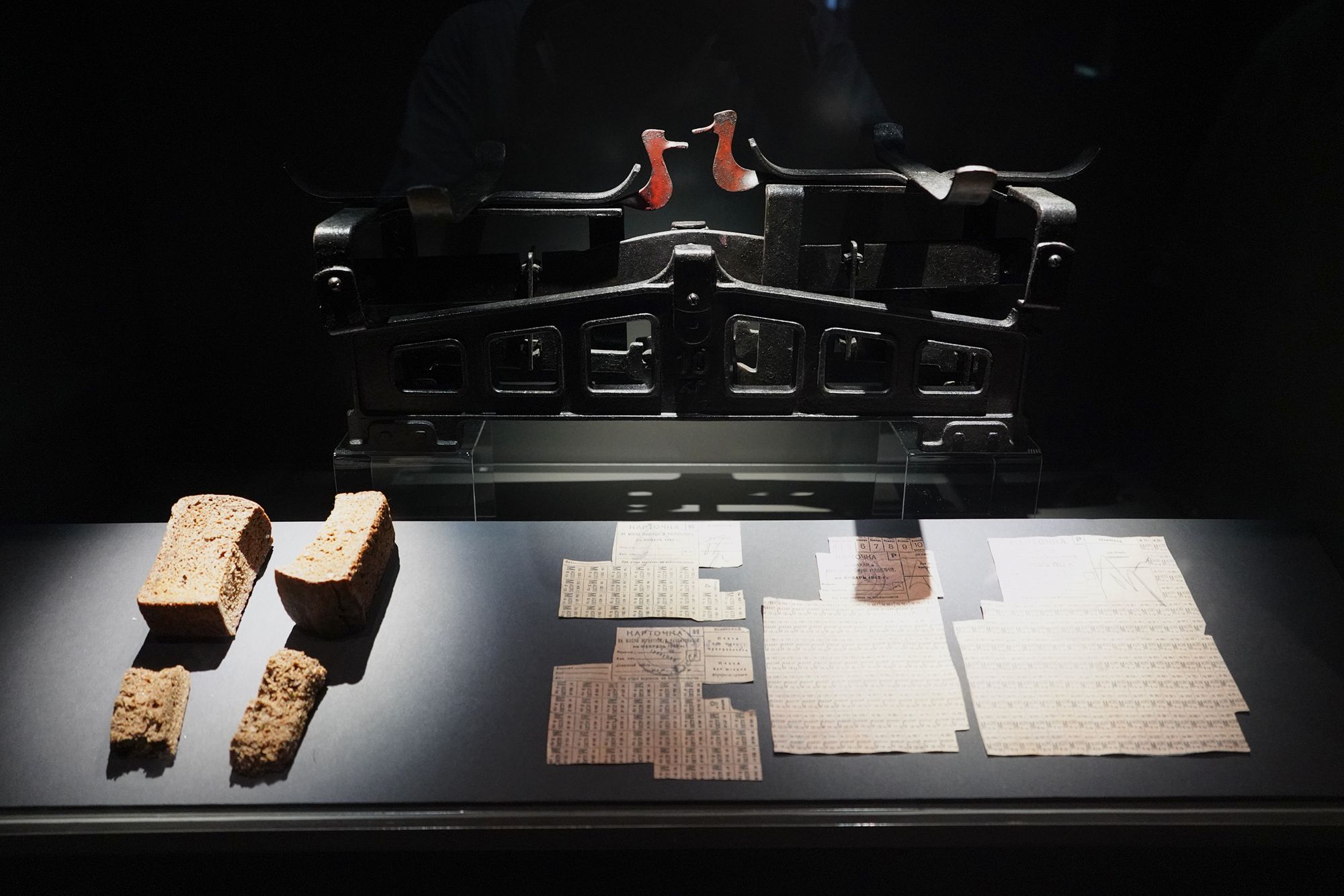
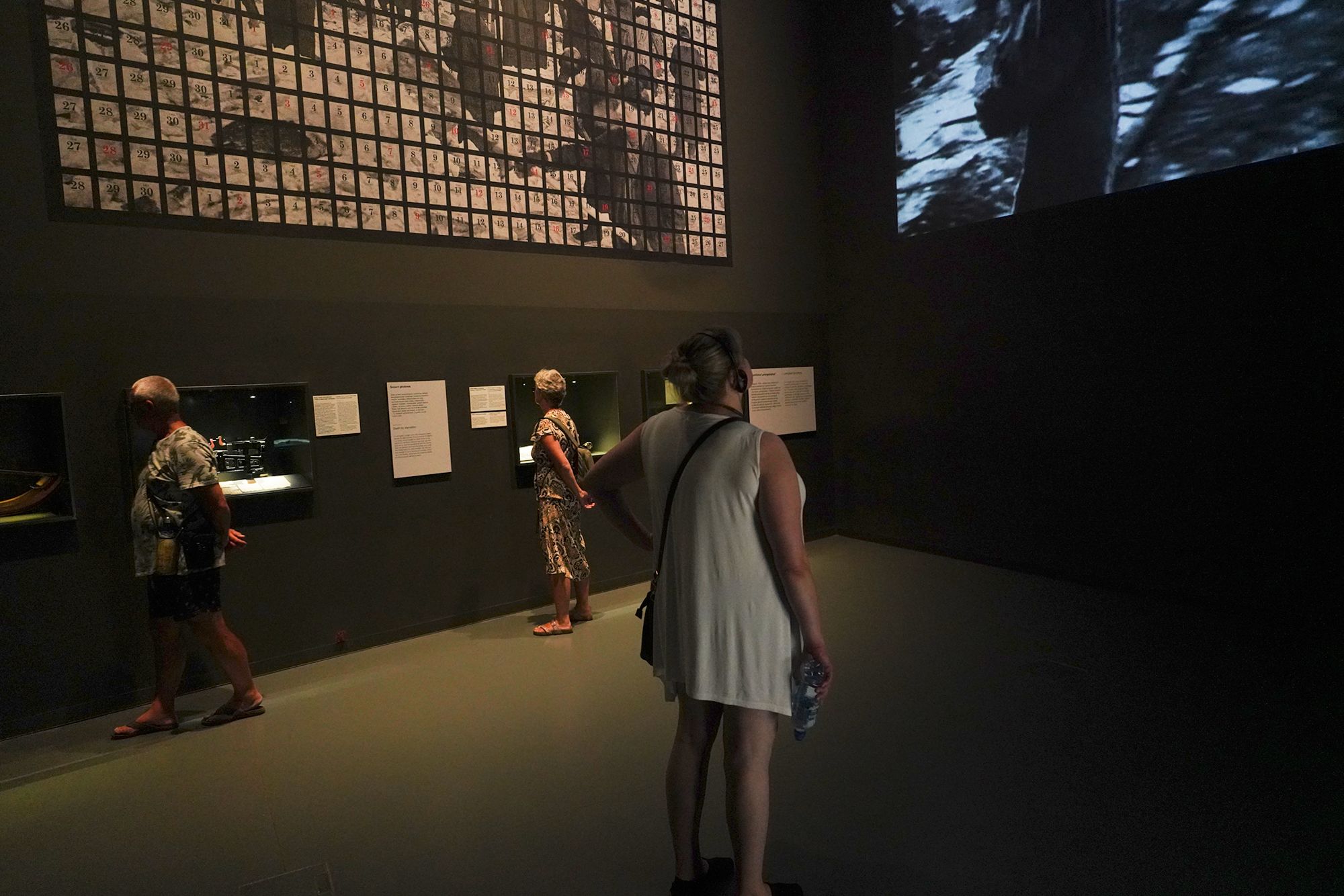
The panel describes the human toll of the Siege of Leningrad: hunger, cold, and exhaustion wore families down, while ration amounts and age affected who survived longest. Many bodies remained unburied because the living were too weak to move them. The panel gives the death toll from starvation as about one million; estimates vary, but the loss of life was immense.
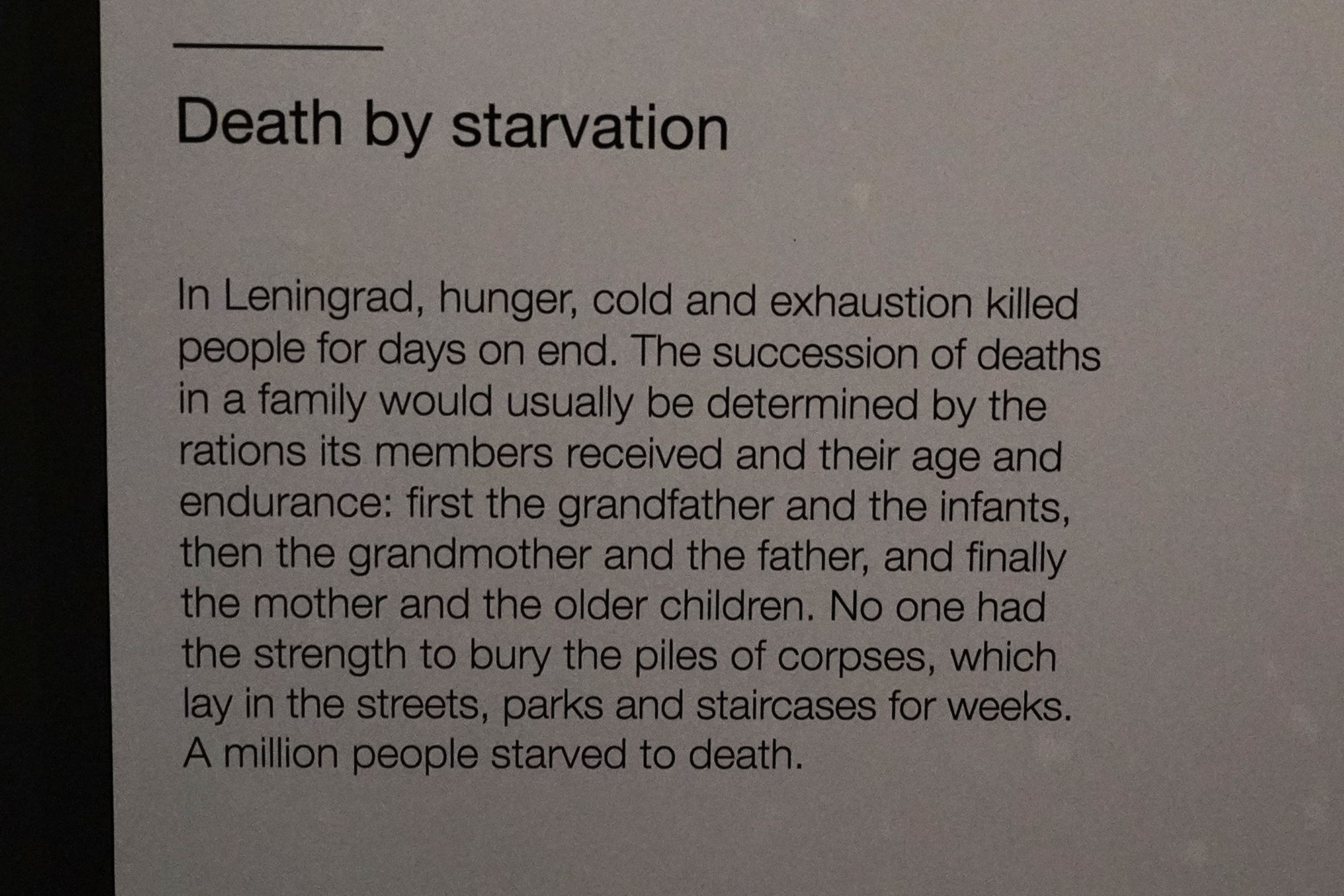
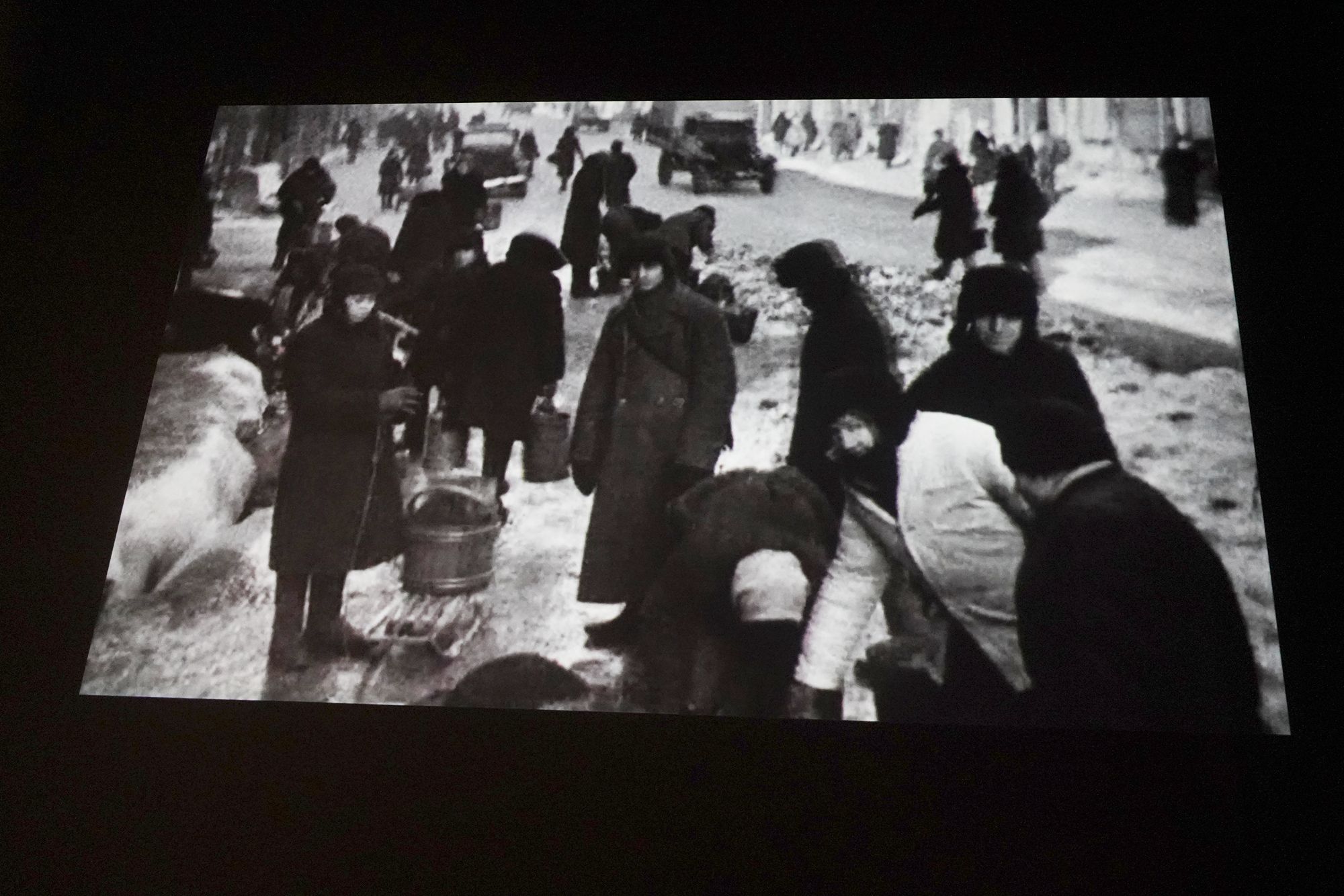
The panel describes Leningrad’s 871-day siege, beginning in September 1941. More than 2.5 million civilians, including about 400,000 children, were trapped as food ran short. The “Road of Life” across Lake Ladoga brought supplies in and evacuated people. The Red Army pushed German forces away in January 1944; the panel says about one million people died of starvation.
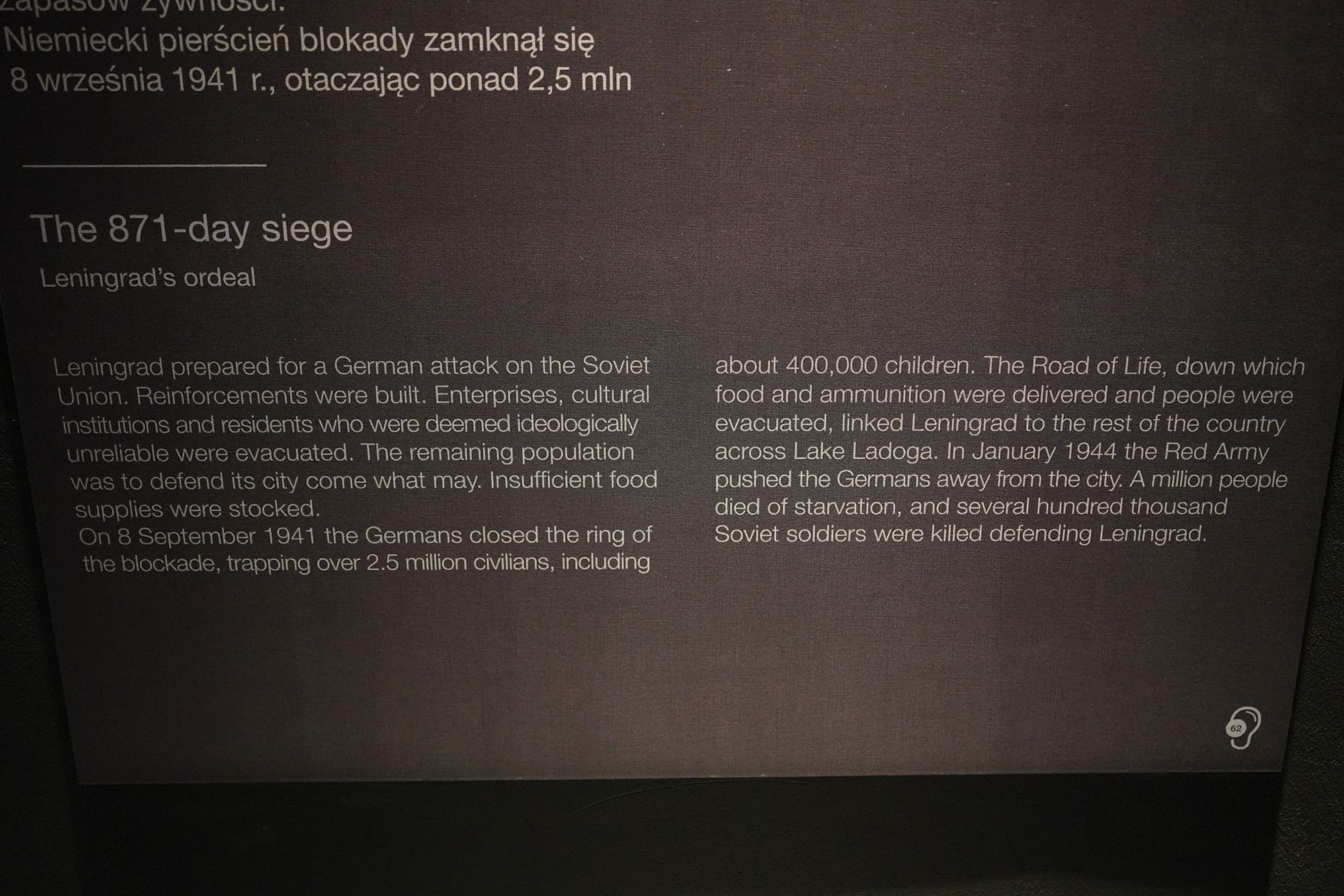
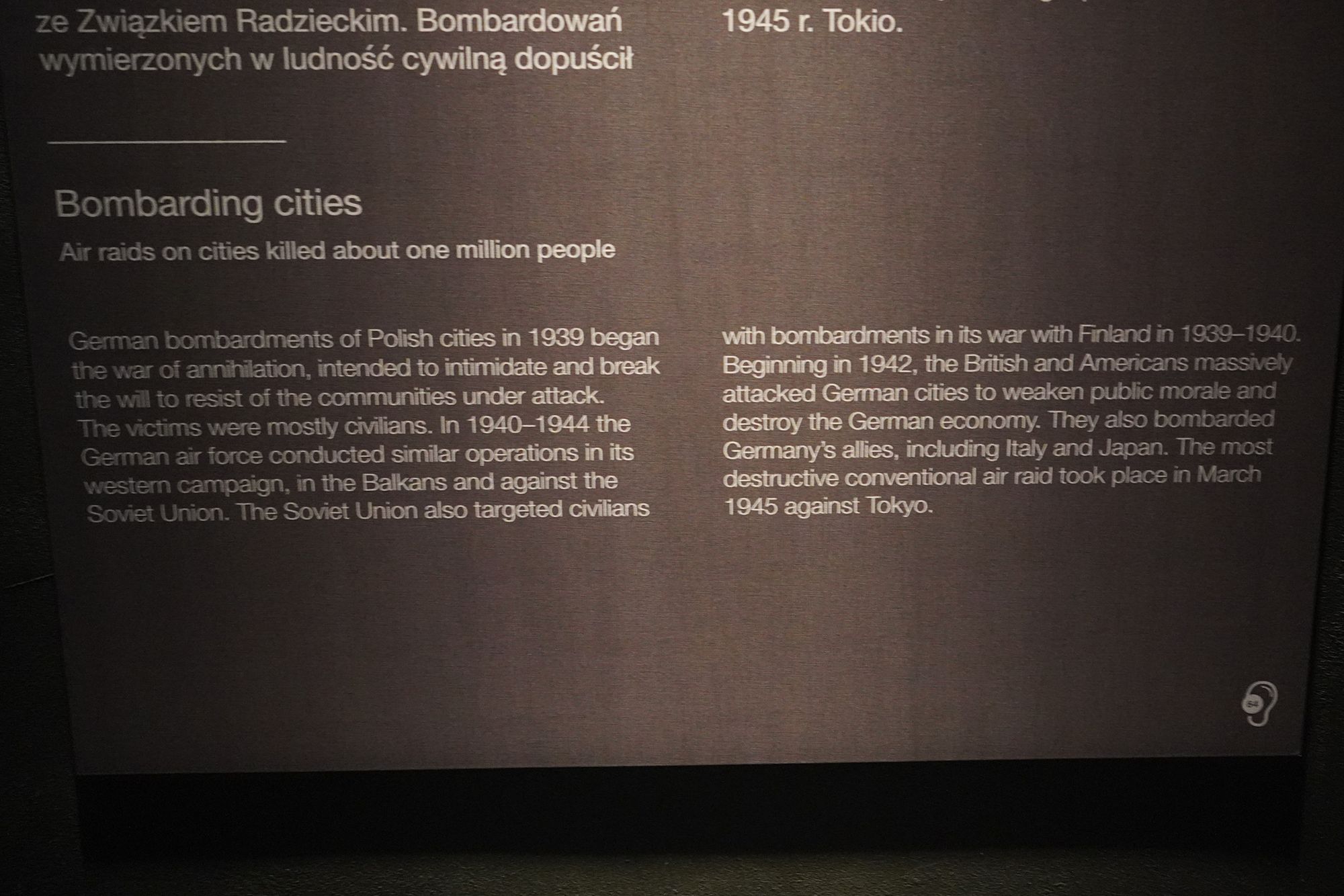
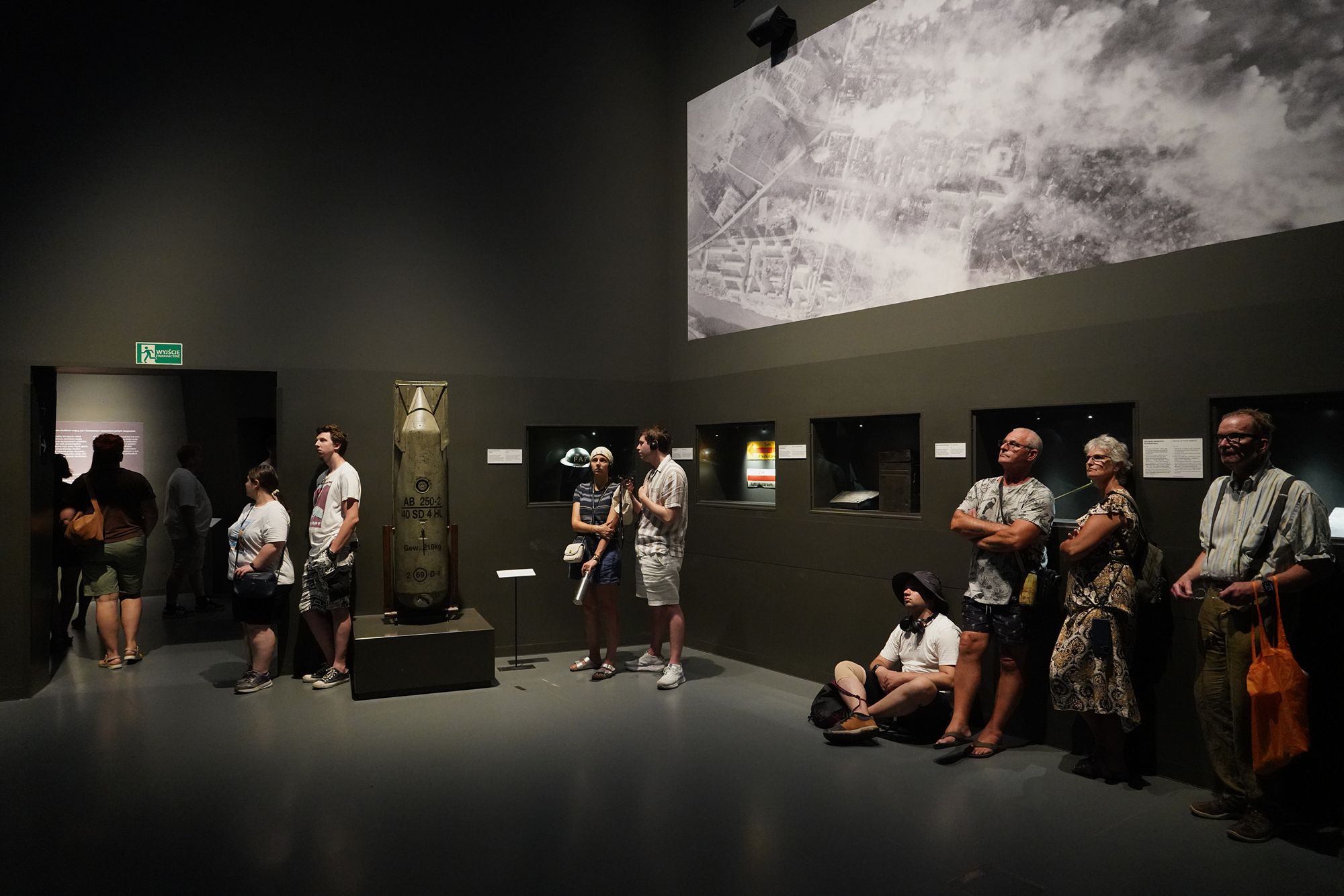
The panel traces the spread of aerial attacks on cities. It says German bombing began in Poland in 1939 and later targeted cities across Europe and the Soviet Union. Soviet forces also bombed Finnish cities. From 1942, British and American air forces carried out large raids on German cities, and in March 1945 a devastating conventional air raid struck Tokyo. The panel estimates that air raids killed about one million people.
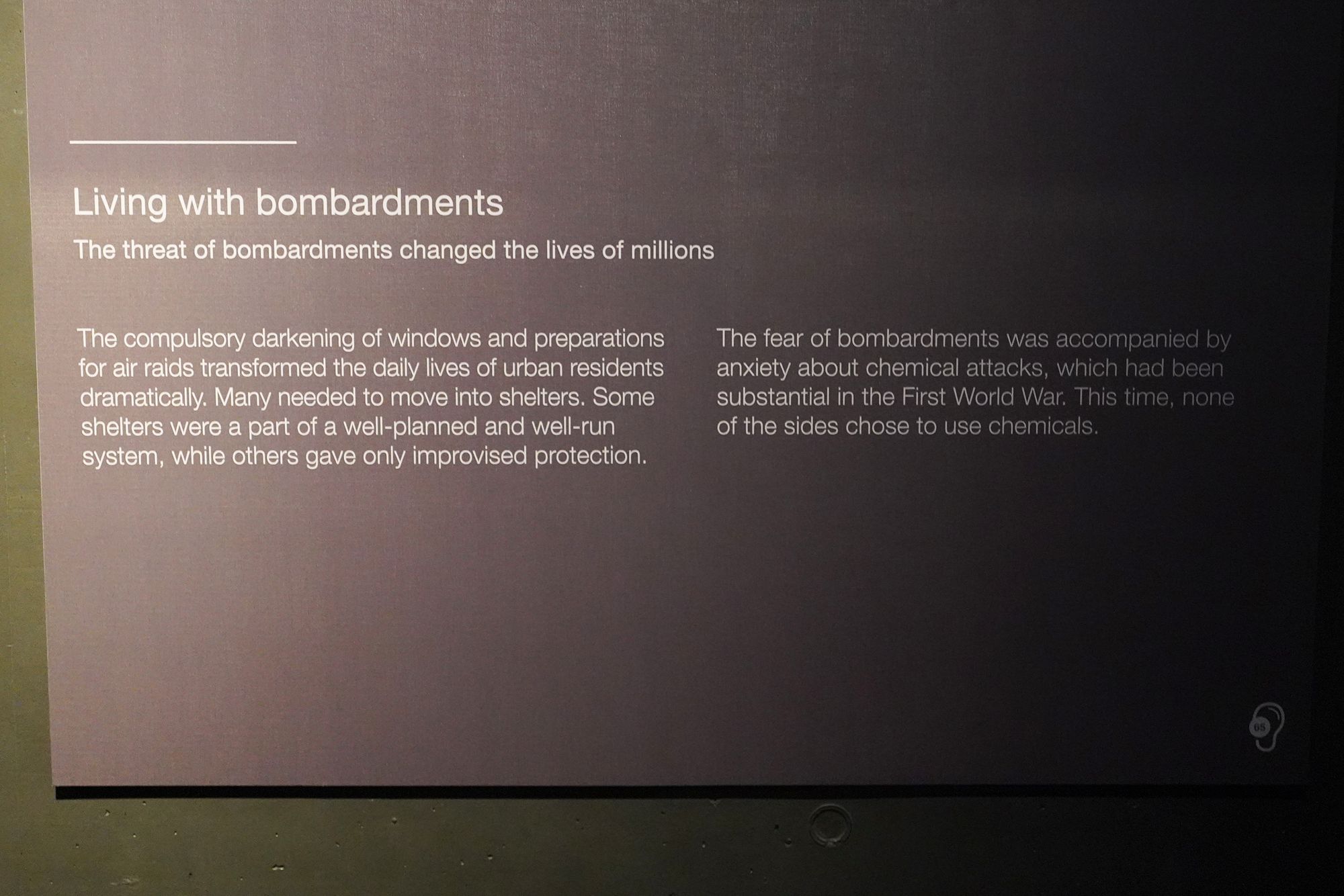
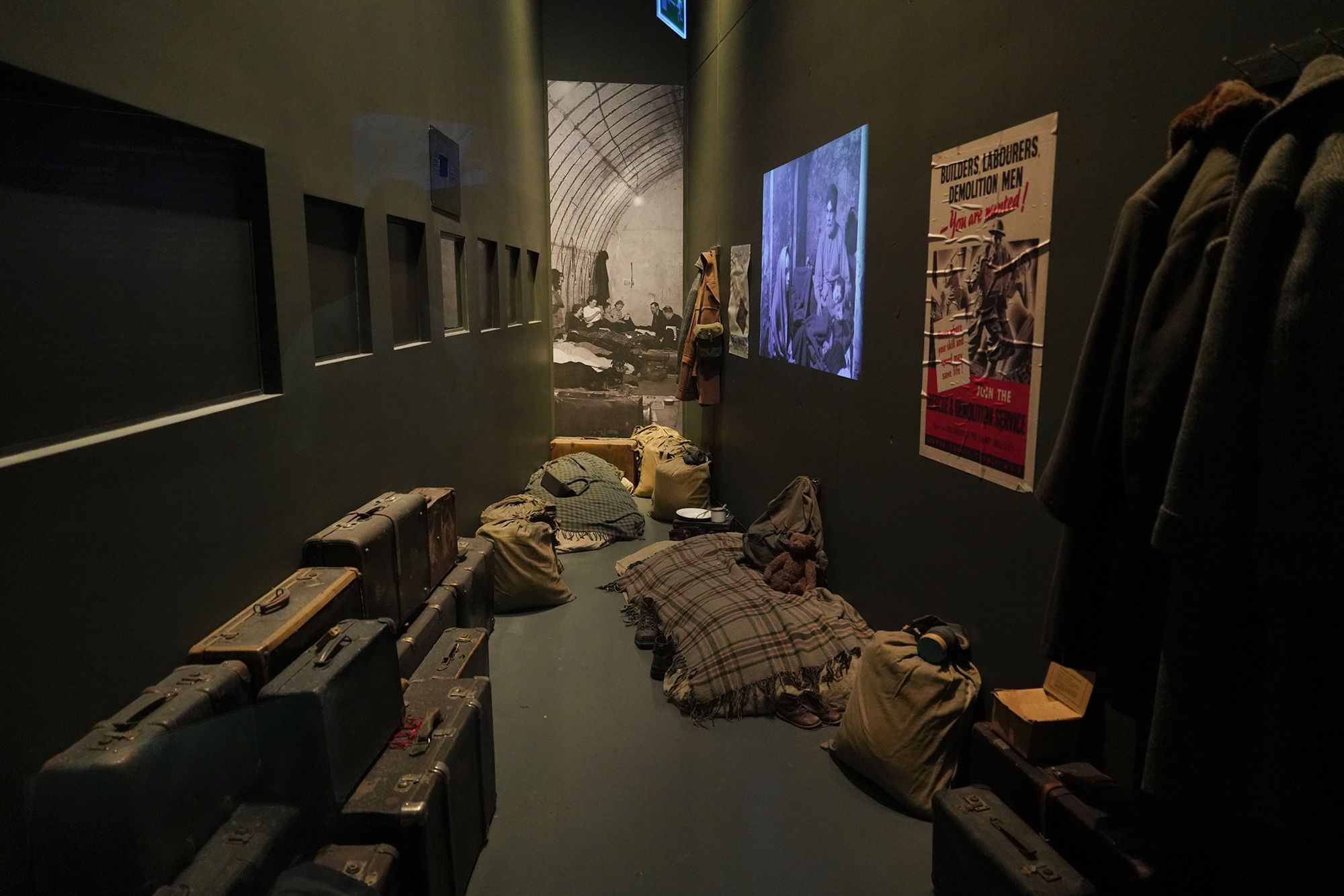
The panel explains how the threat of air raids changed everyday city life: people darkened their windows and sought shelter, though protection varied. Many also feared chemical attacks, but no side used chemical weapons in the war.
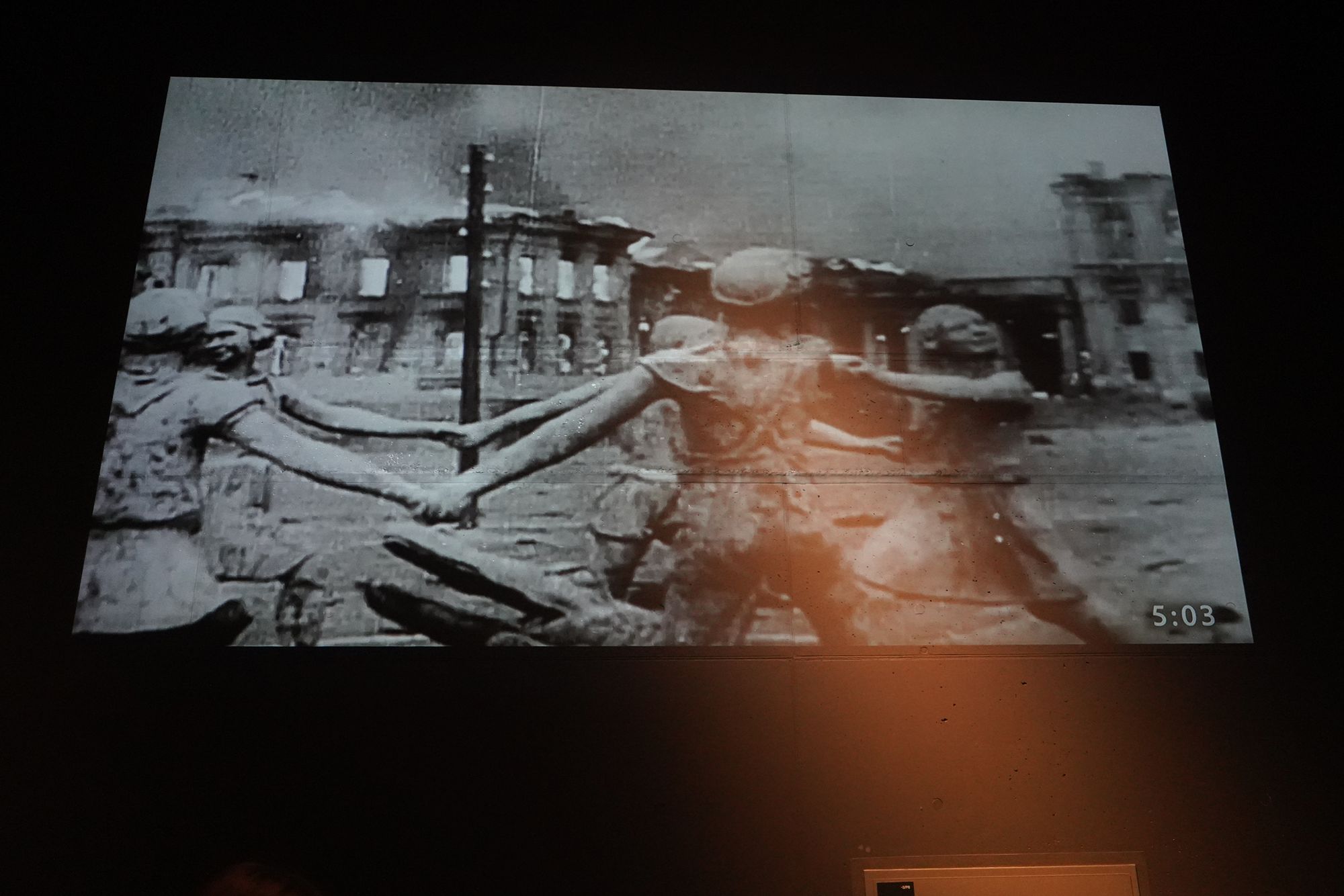
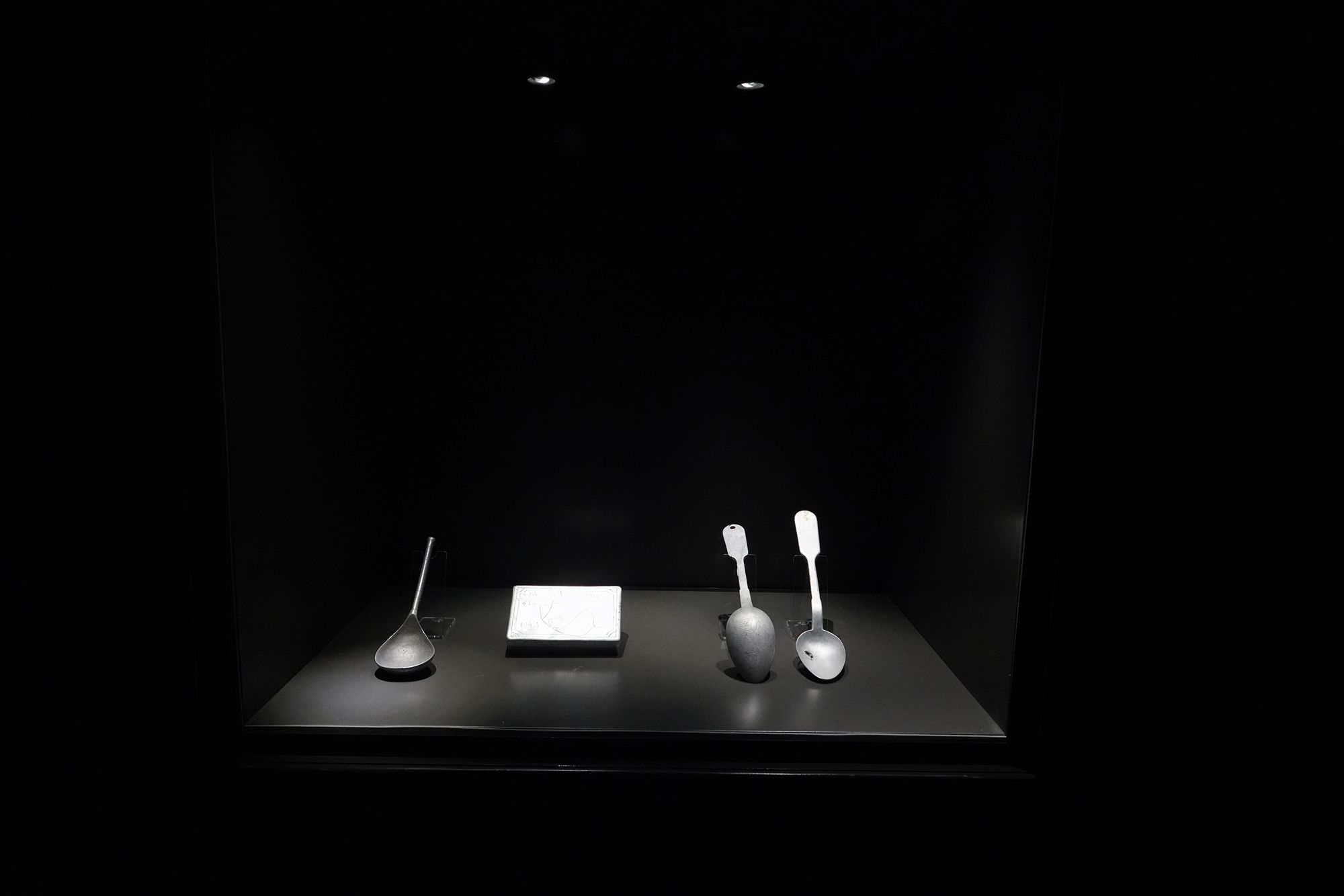
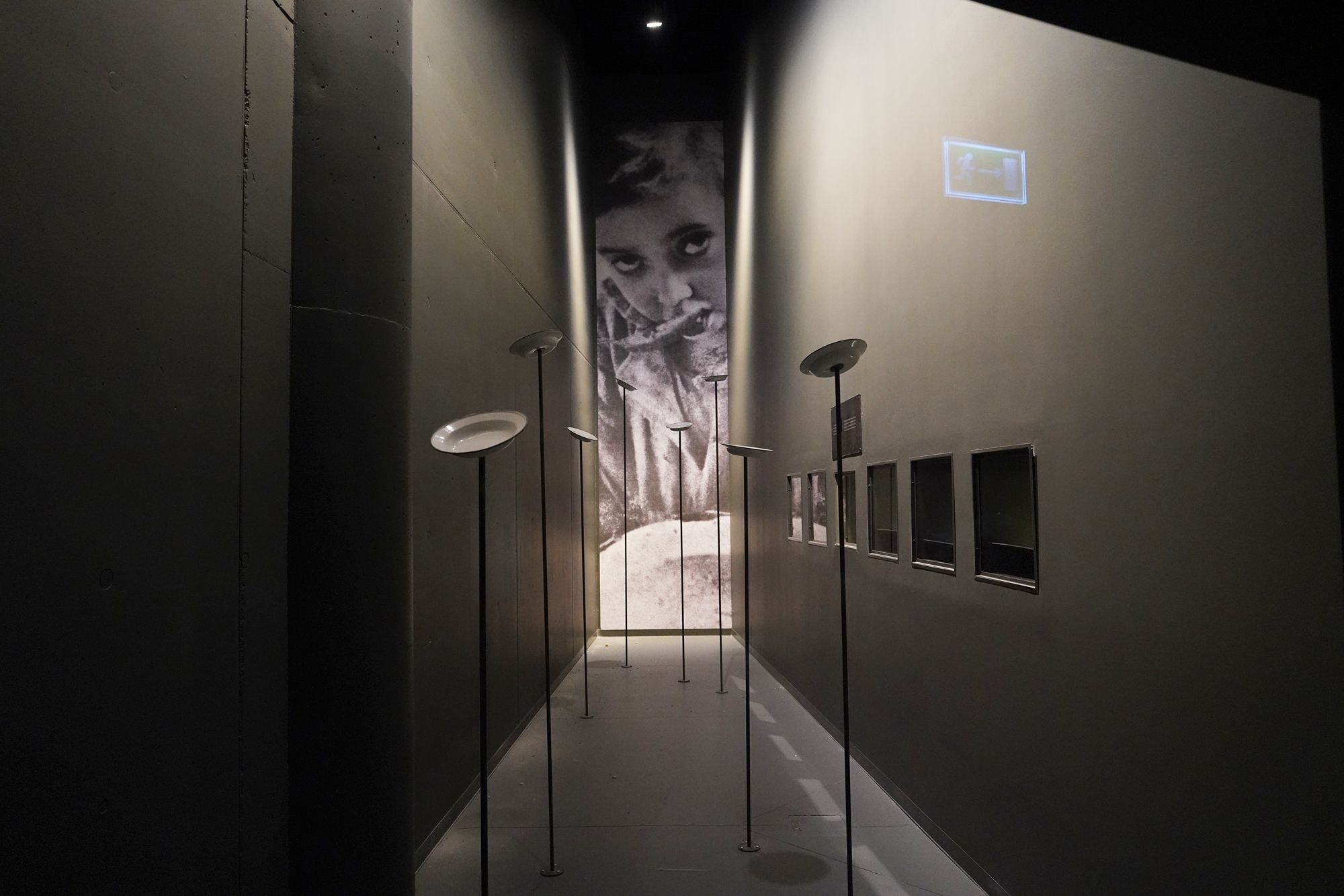
The panel explains that hunger spread during the war as food supplies and crops were disrupted. In occupied territories, the authorities also used starvation deliberately, especially against Jews confined in ghettos and concentration camps.
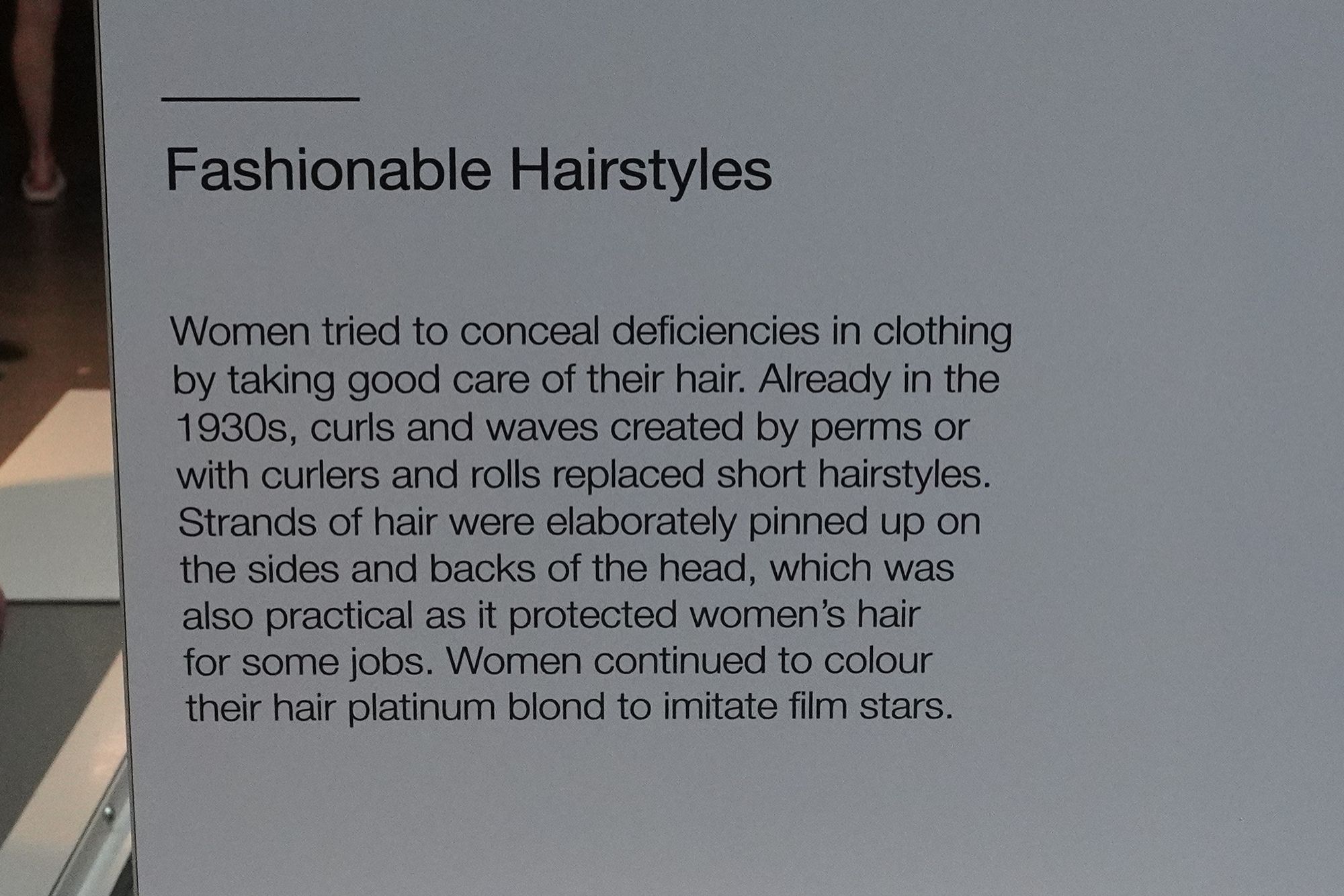
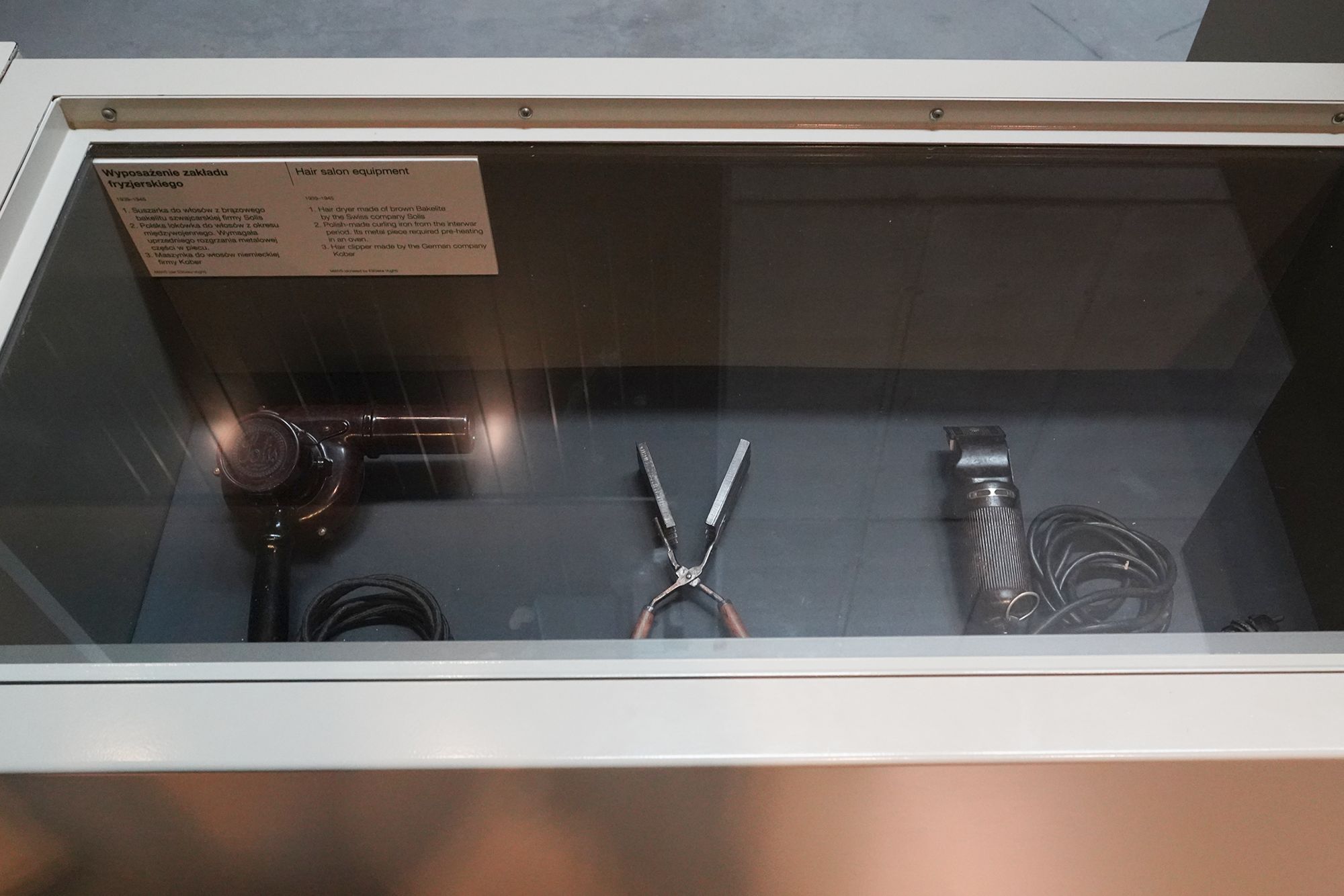
During the war, women used curls, waves, and carefully pinned-up hairstyles to make limited clothing look more presentable. The pinned styles were also practical for some kinds of work, and some women dyed their hair platinum blonde to imitate film stars.