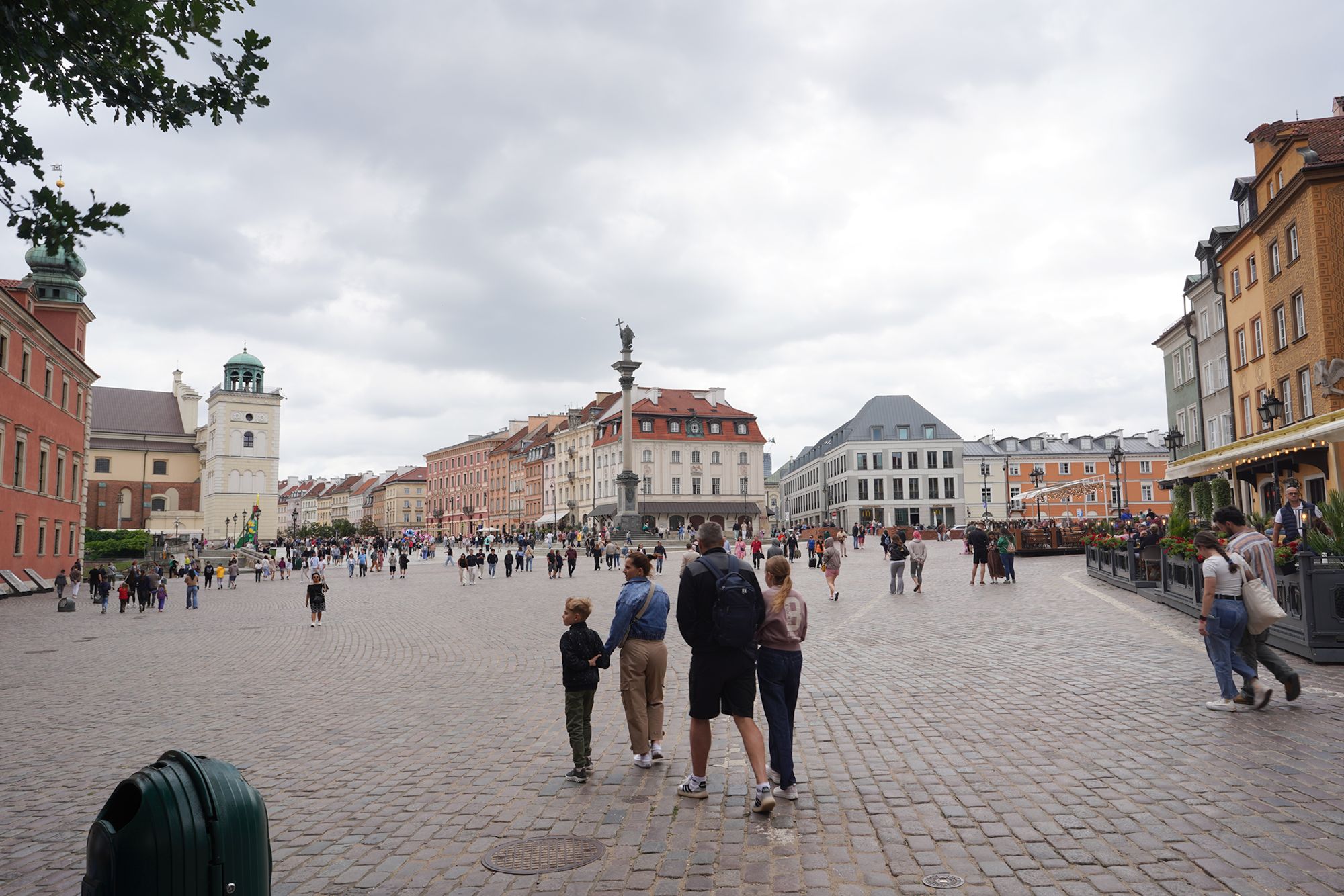
The Royal Castle in Warsaw, Poland
Exploring Warsaw’s Royal Castle through its reconstructed royal rooms, historic furnishings, paintings, and remarkable art collections. 1367
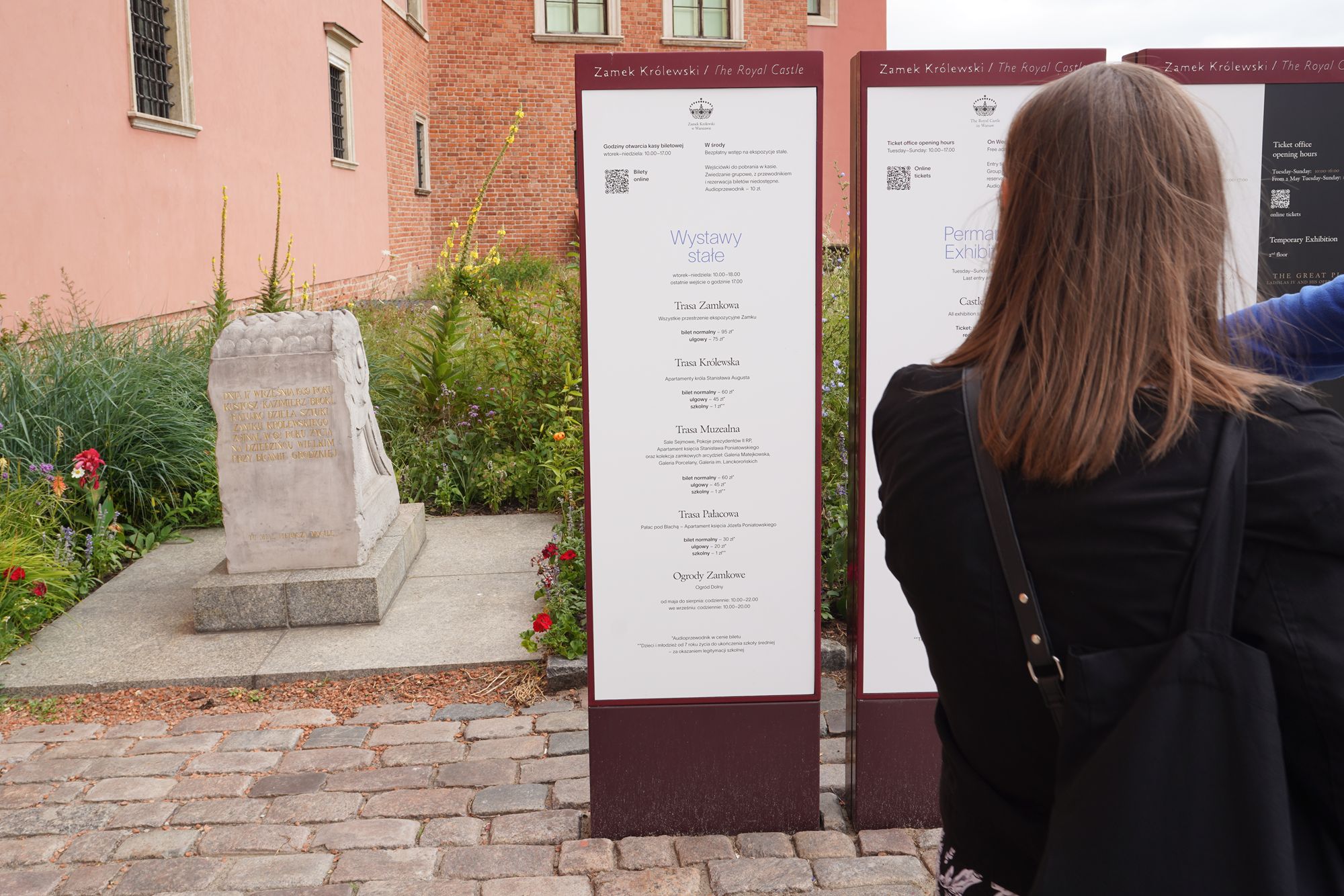
Royal Castle in Warsaw: Plac Zamkowy 4, 00-277 Warszawa, Poland
Date Picture Taken: Jul, 2026
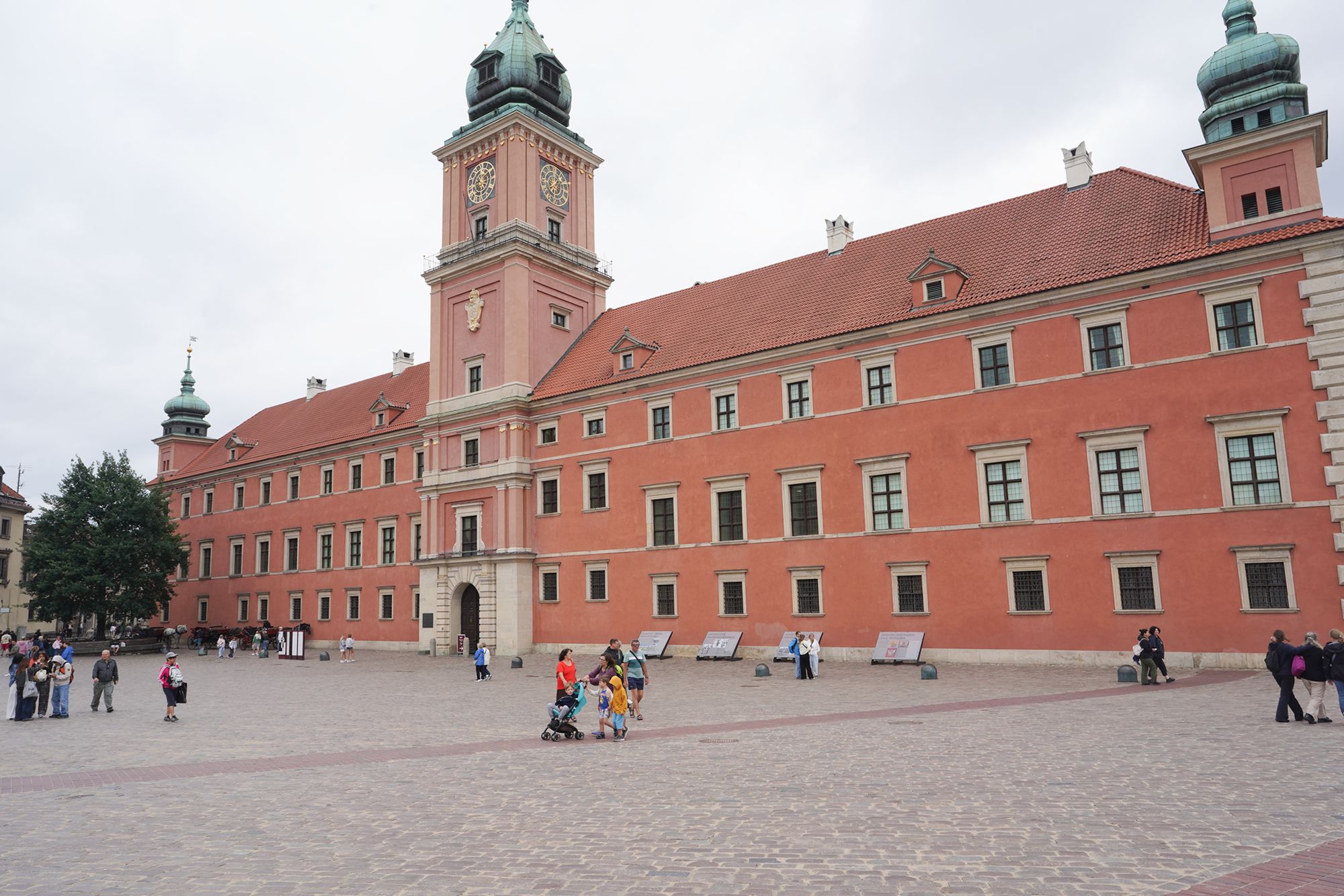
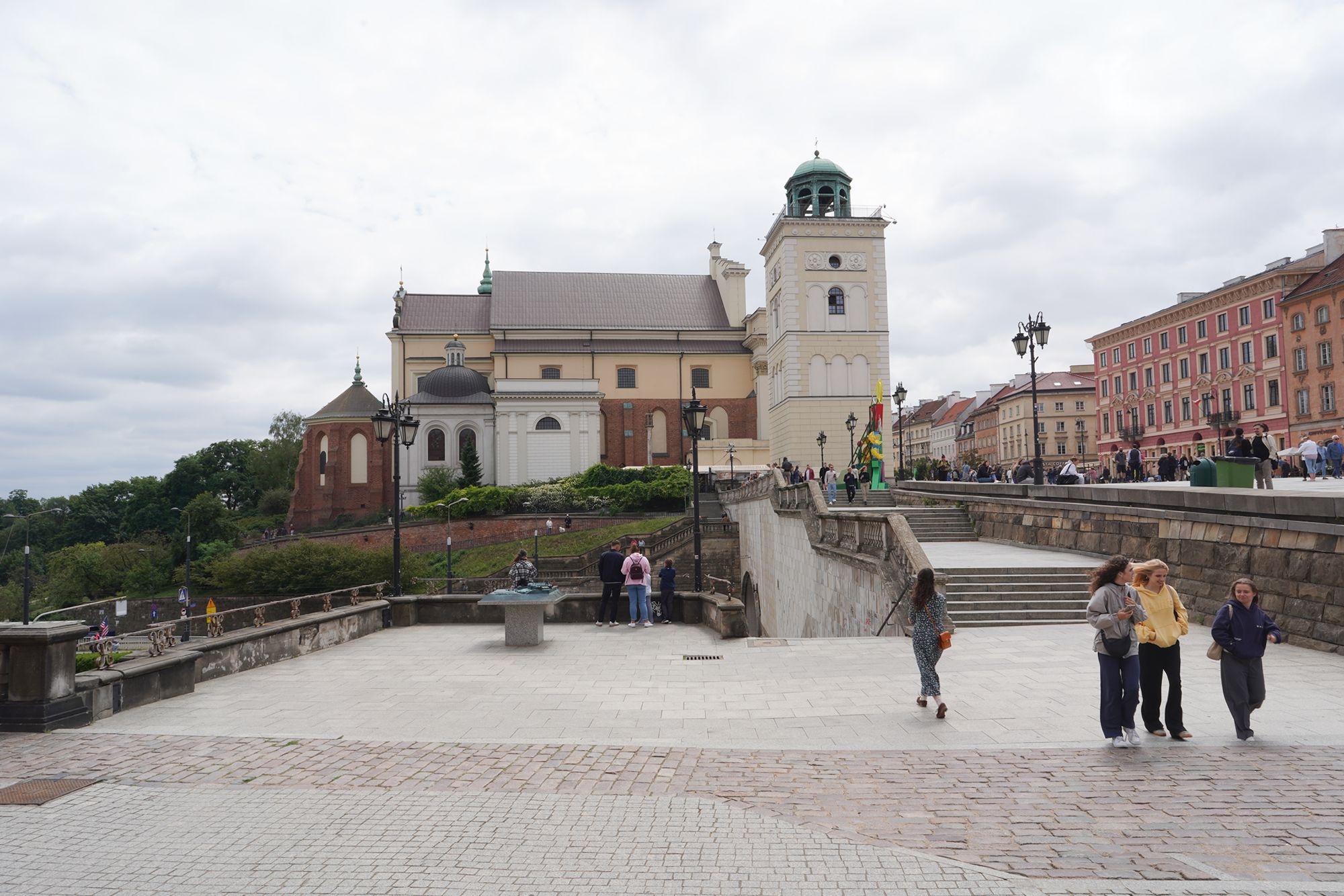
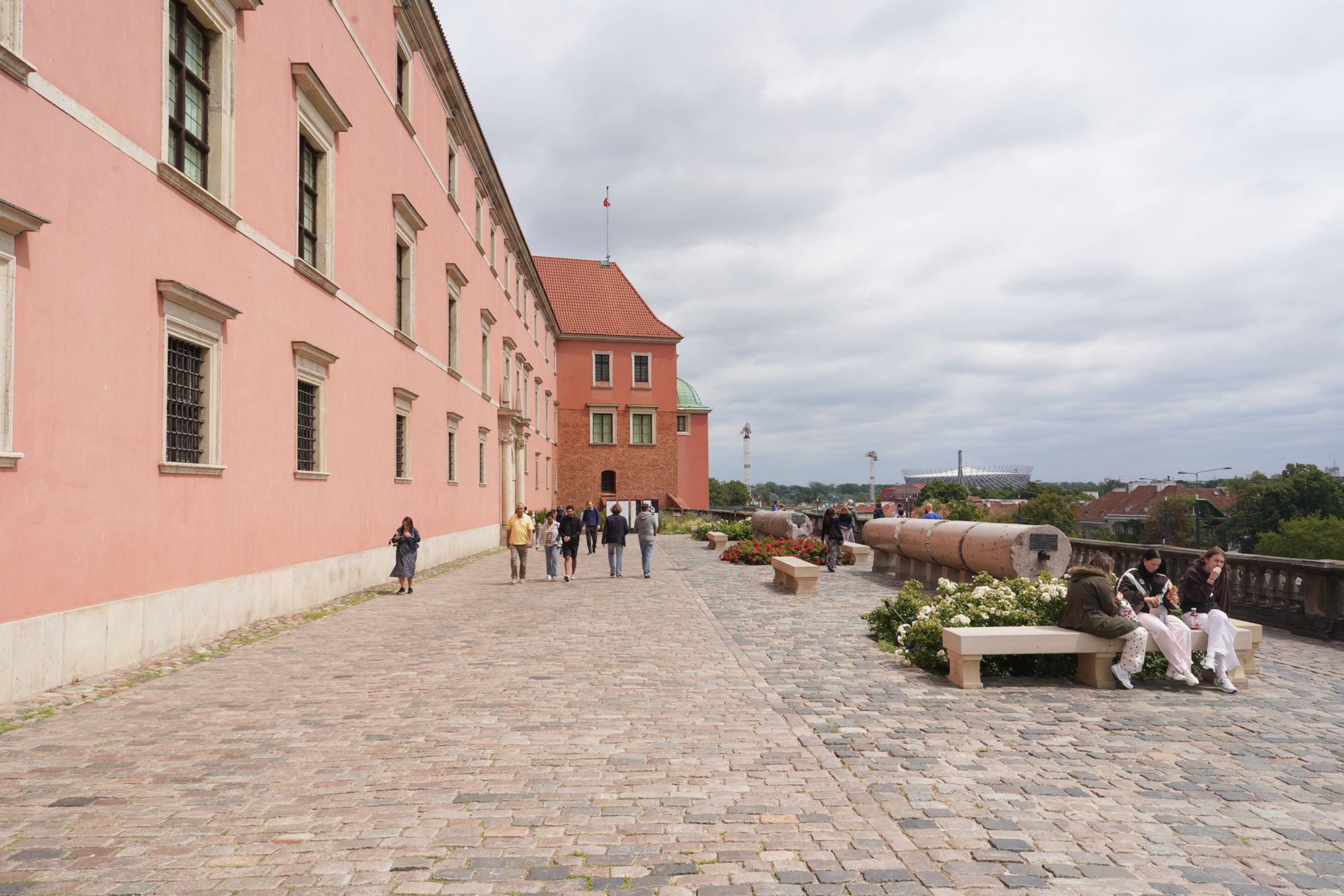
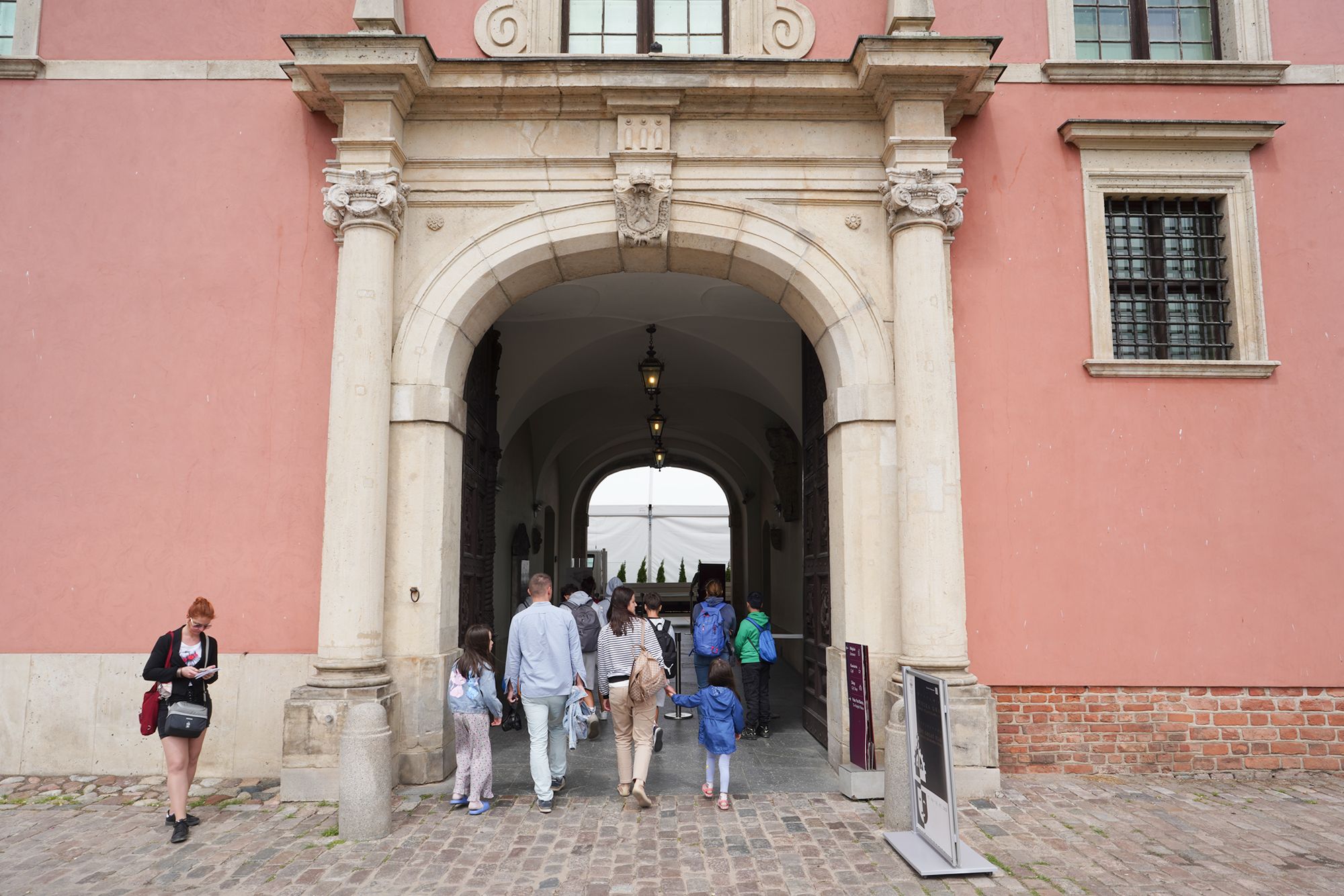
The Royal Castle in Warsaw stands beside Castle Square at the entrance to the Old Town. Originally a residence of the Dukes of Mazovia, it later became the home of Poland’s kings and the seat of parliament. German forces destroyed it during World War II, and it was rebuilt between 1971 and 1984 using historical records and original decorations saved from the ruins. Today, it is a museum where visitors can explore the reconstructed royal apartments and richly decorated state rooms.
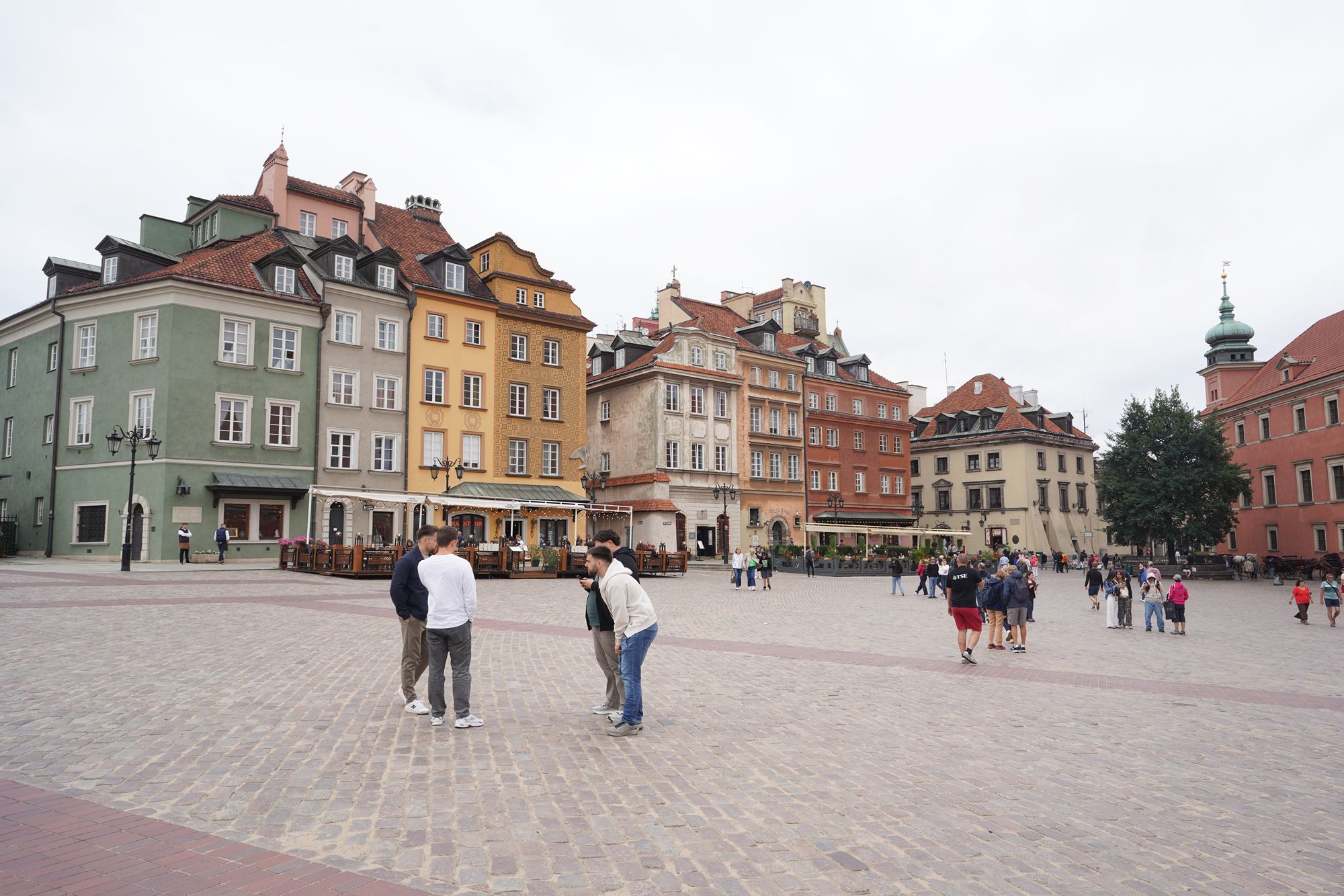
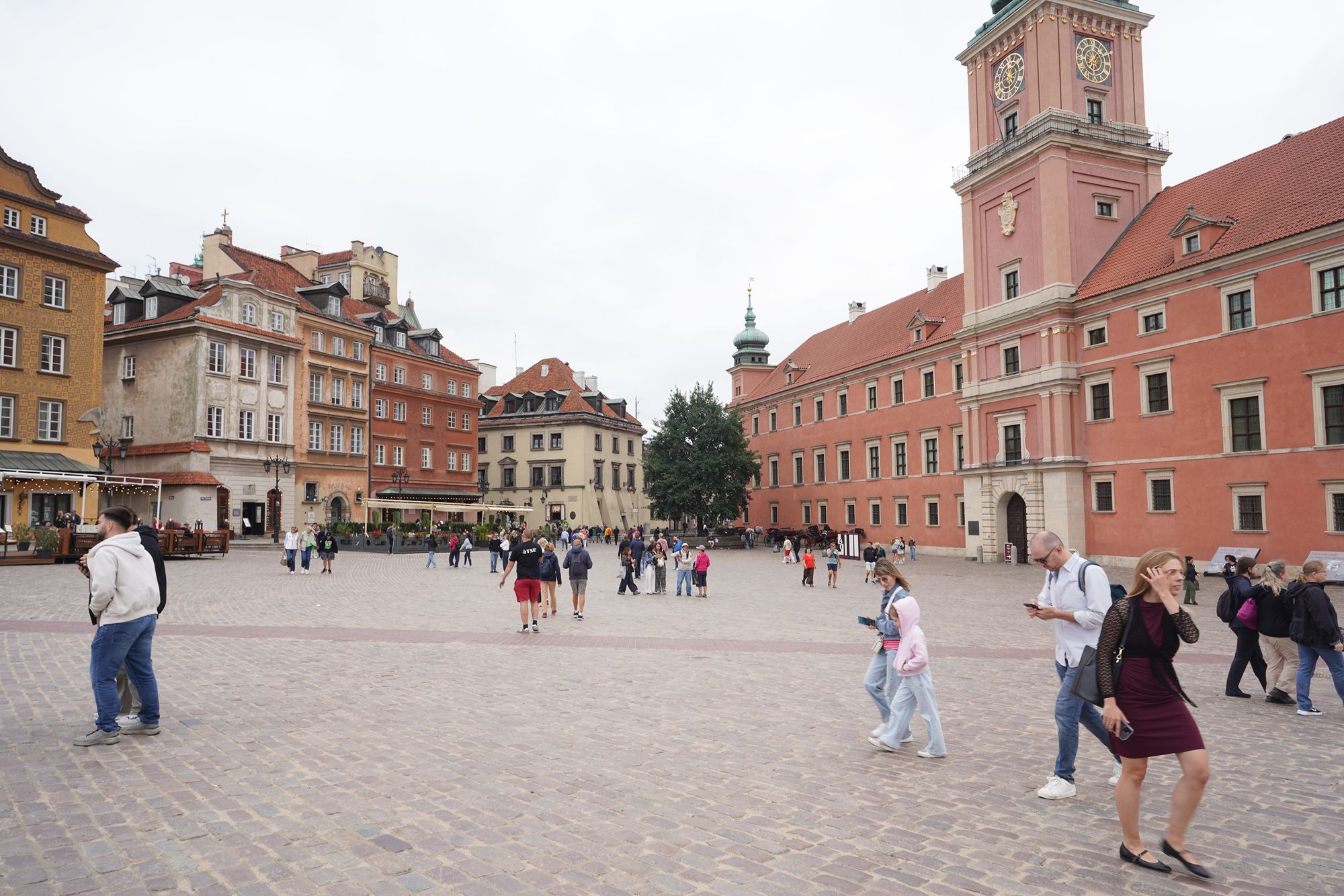
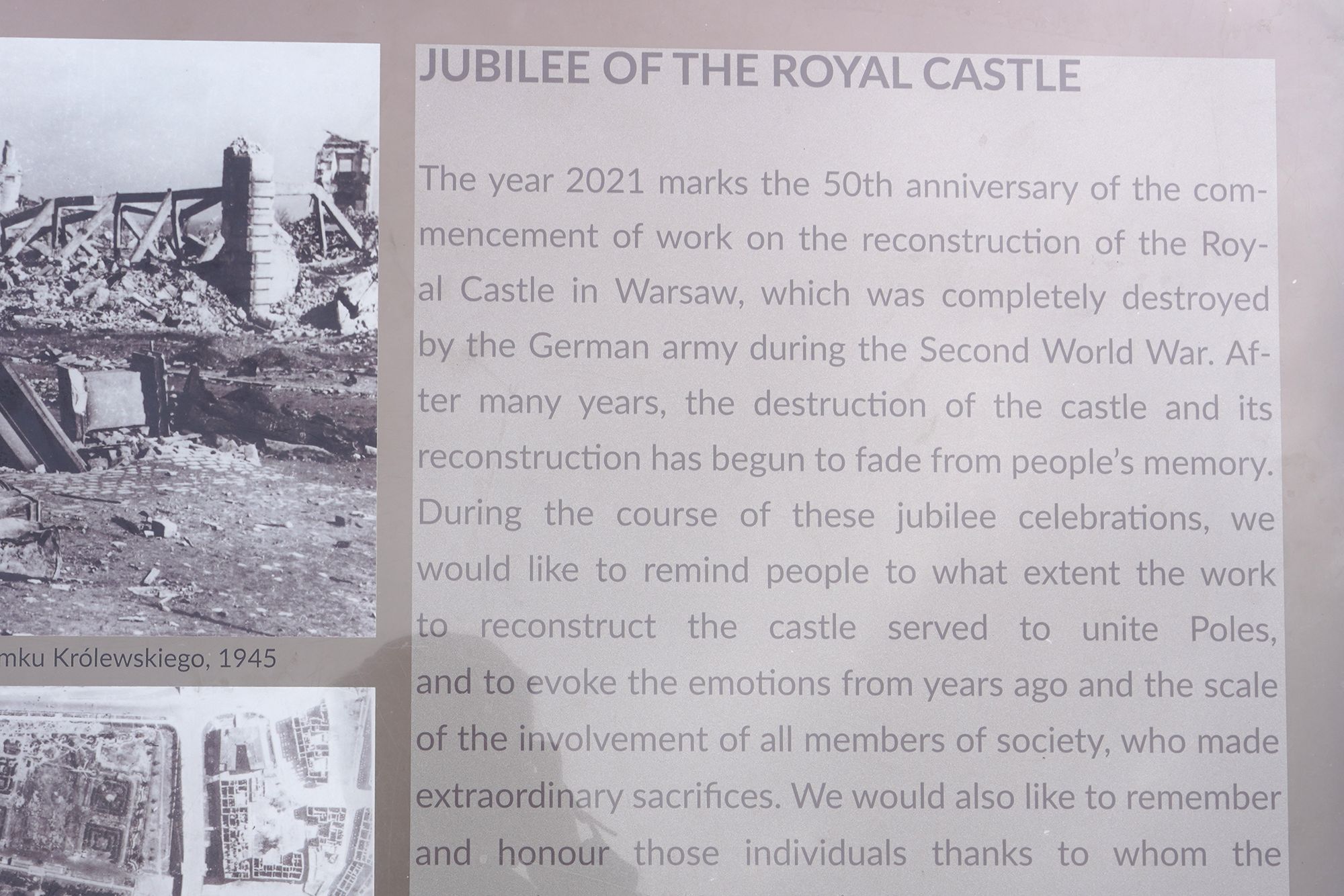
The Royal Castle
This exhibition marked the 50th anniversary of the Royal Castle’s reconstruction, which began in 1971. It highlighted how rebuilding the castle united Polish society and honored the people whose dedication and sacrifices made its restoration possible.
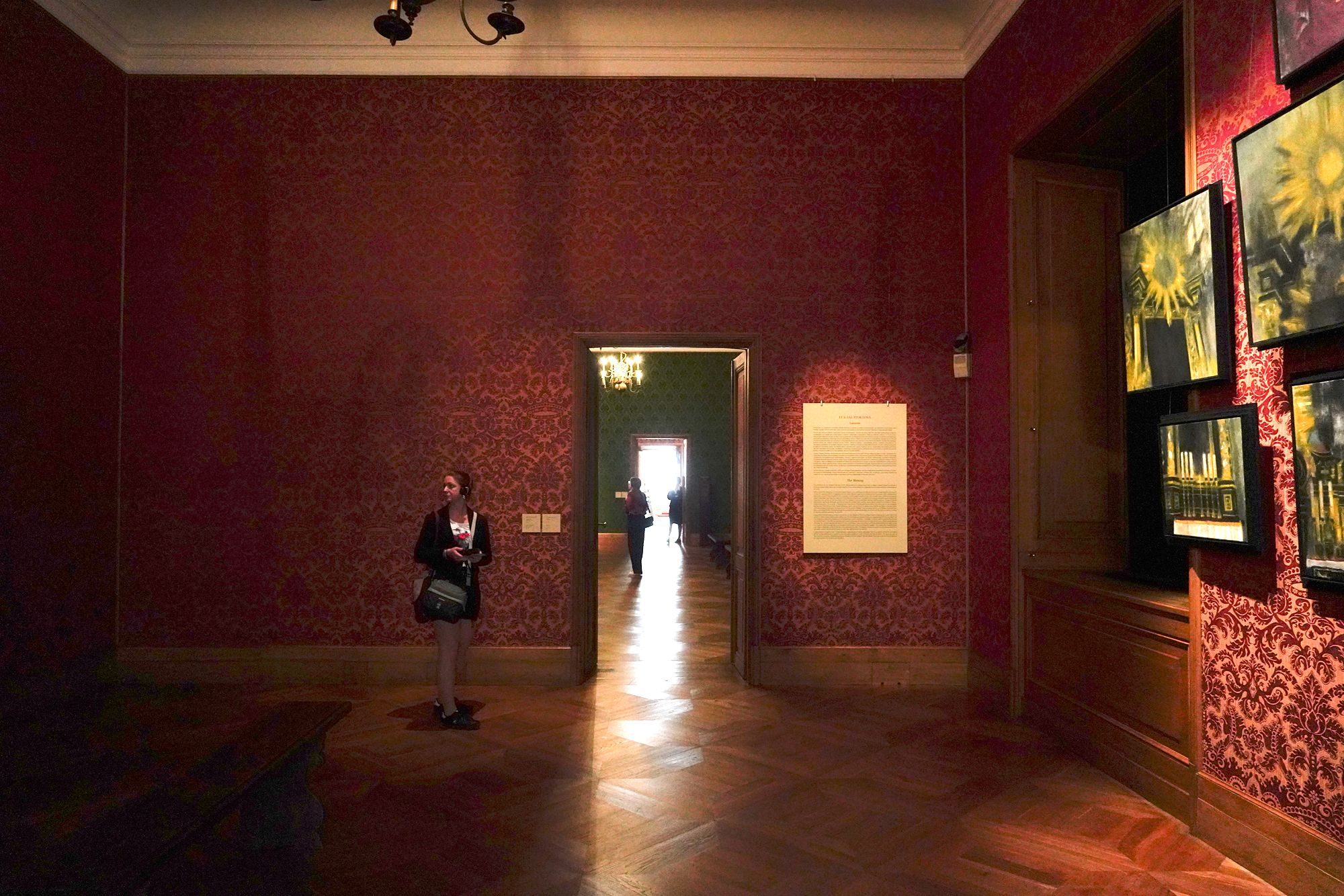
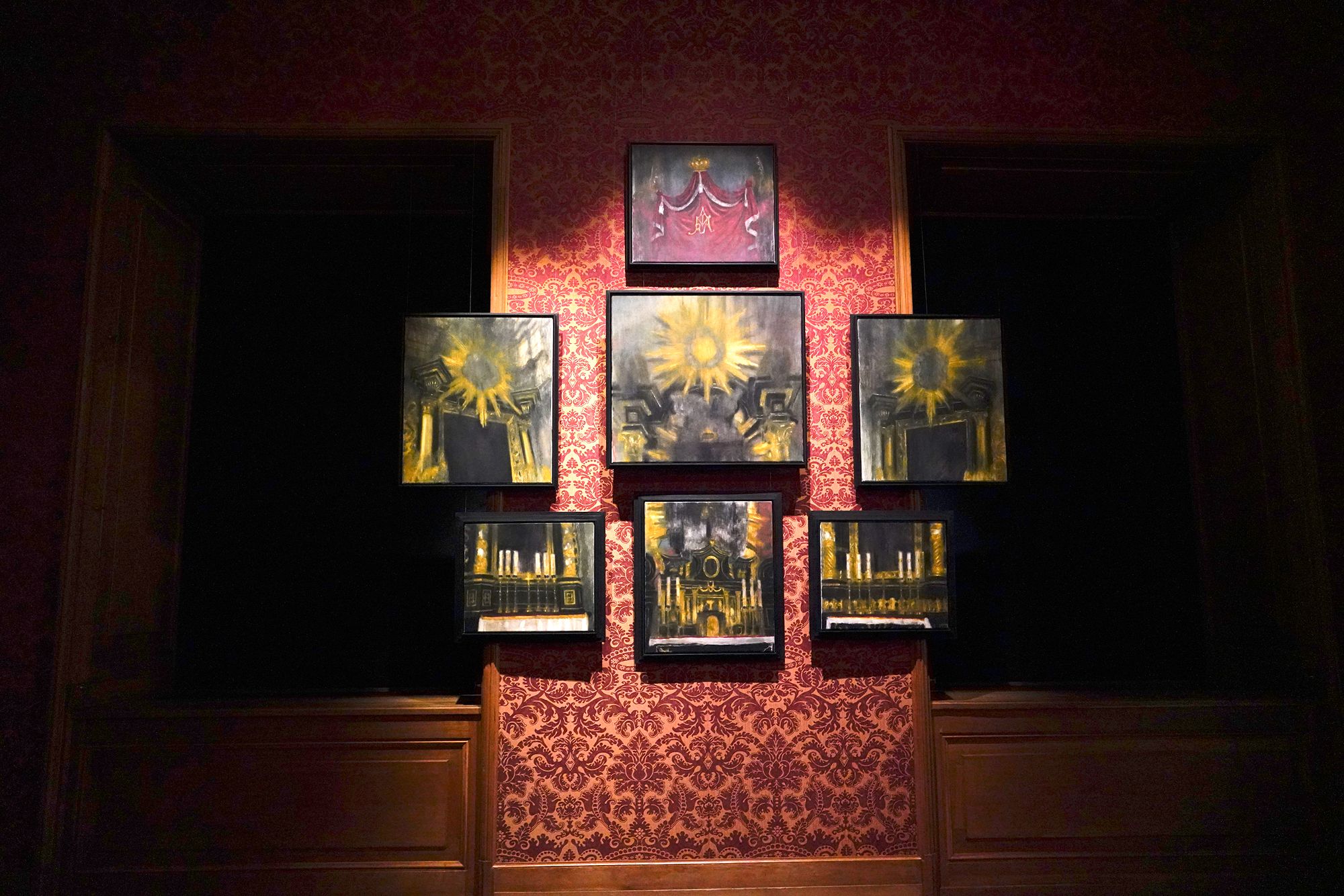
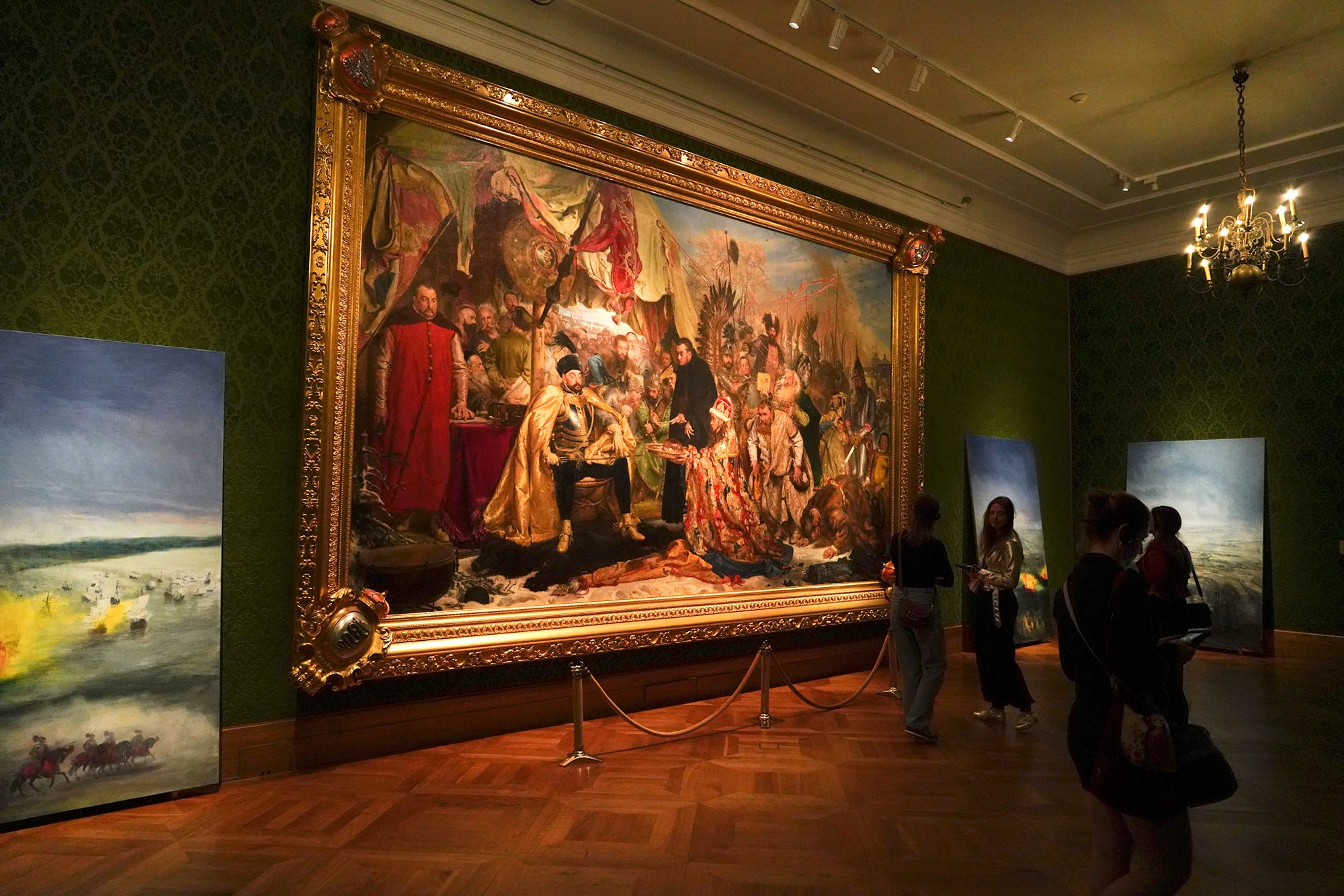
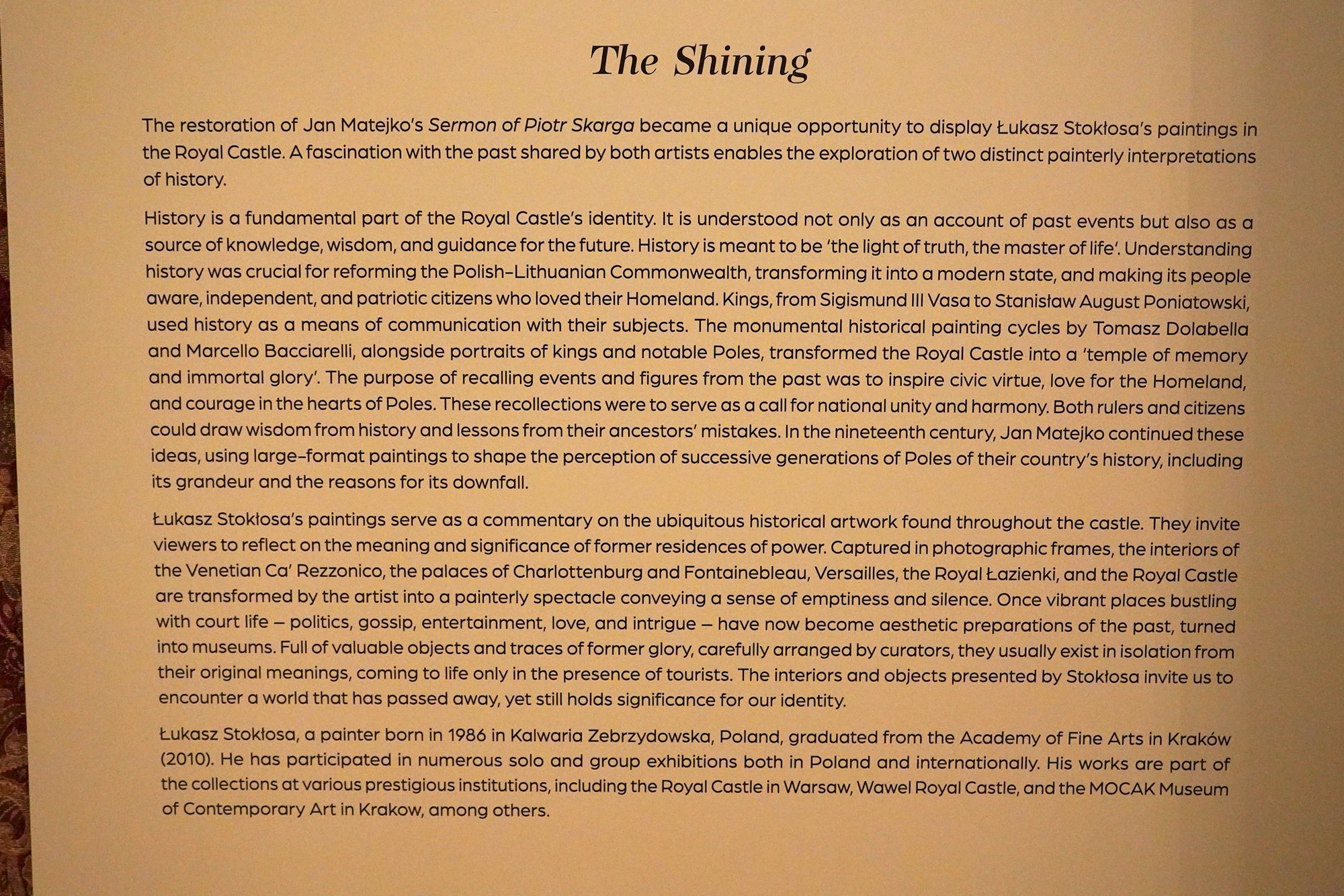
“The Shining” exhibition presents Łukasz Stokłosa’s paintings of palace interiors alongside the Royal Castle’s historical art. While earlier paintings celebrated rulers and encouraged national unity, Stokłosa depicts these once-busy residences as quiet, empty spaces. His work invites visitors to consider how places of power become museums and how the past continues to shape our identity.
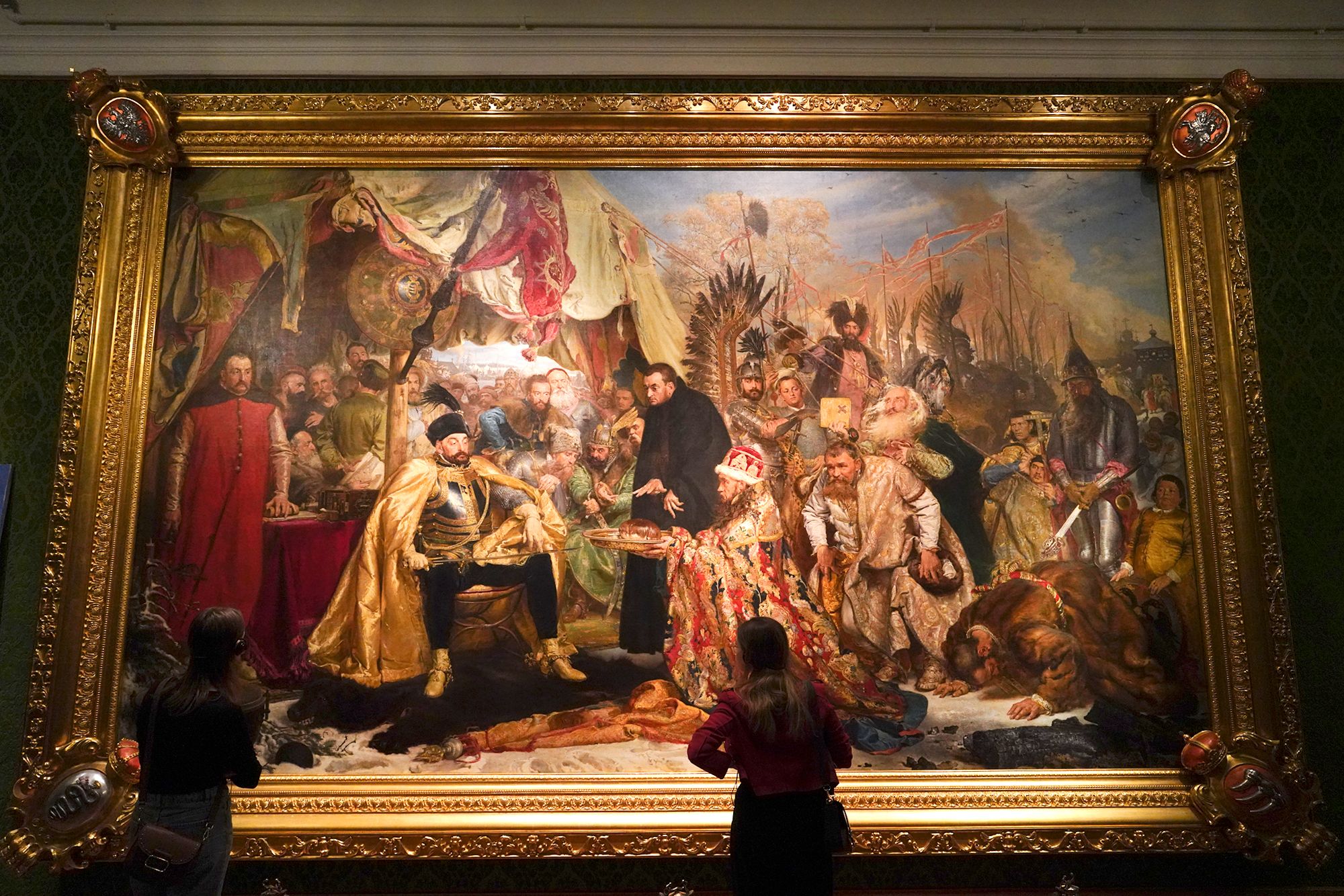
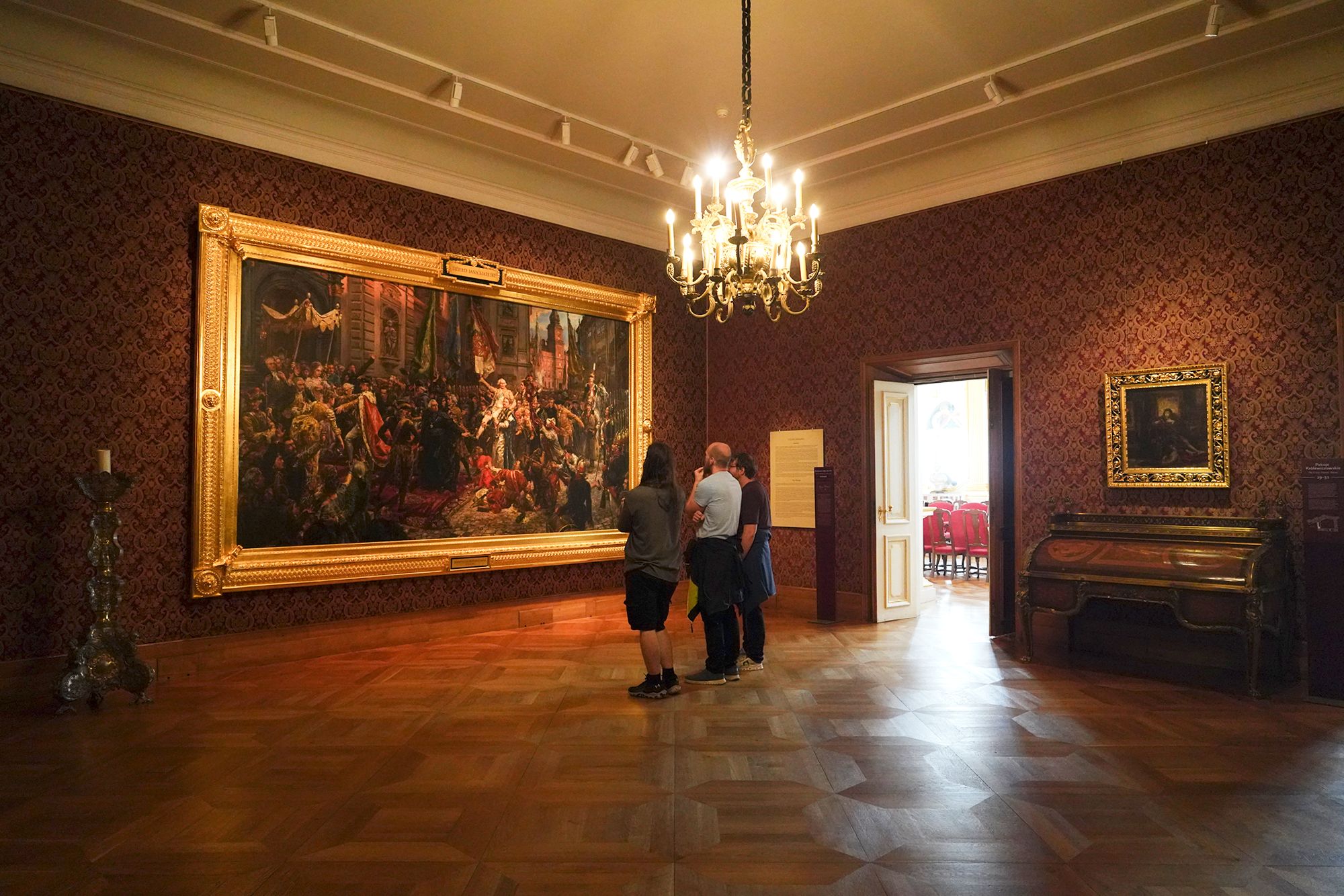
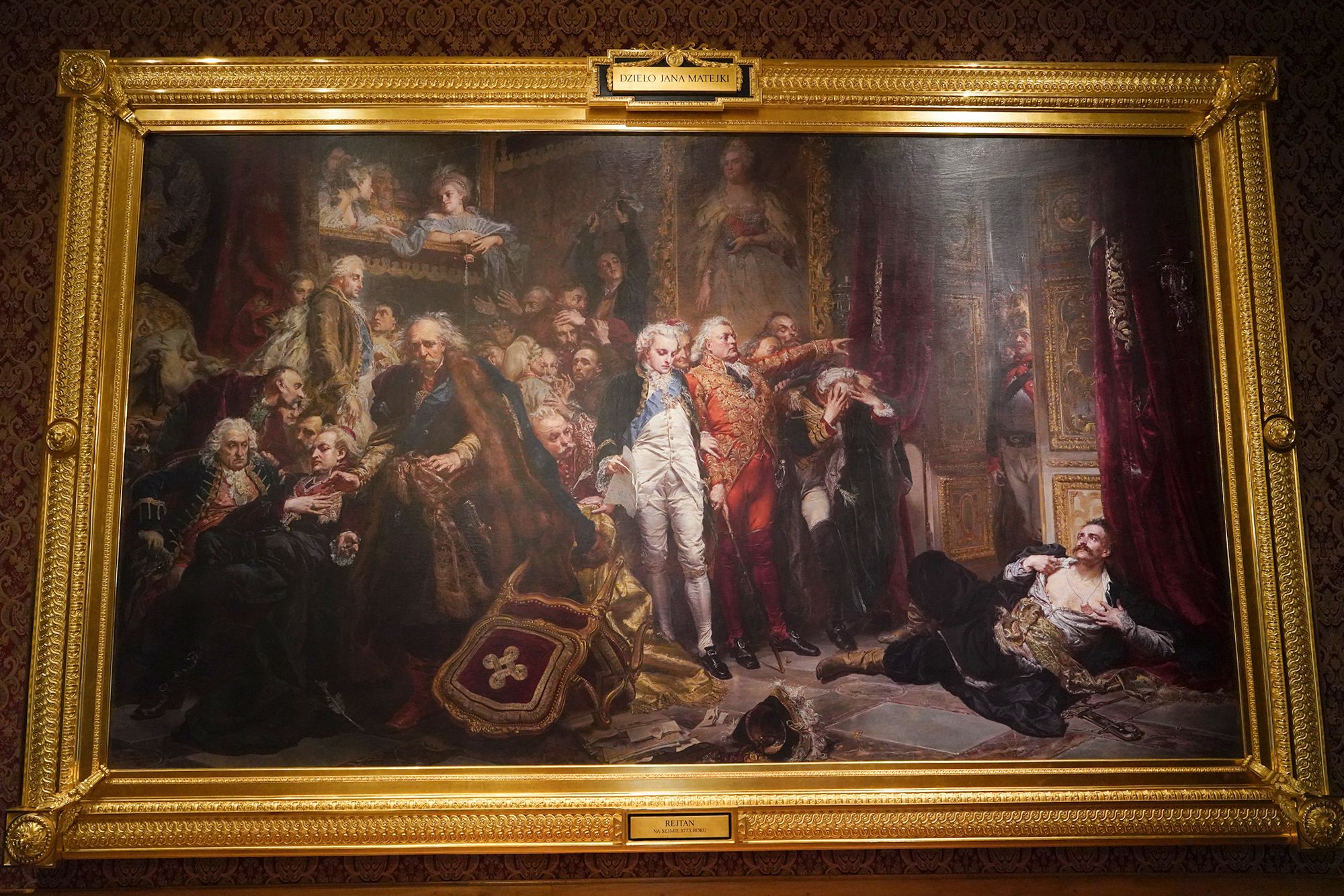
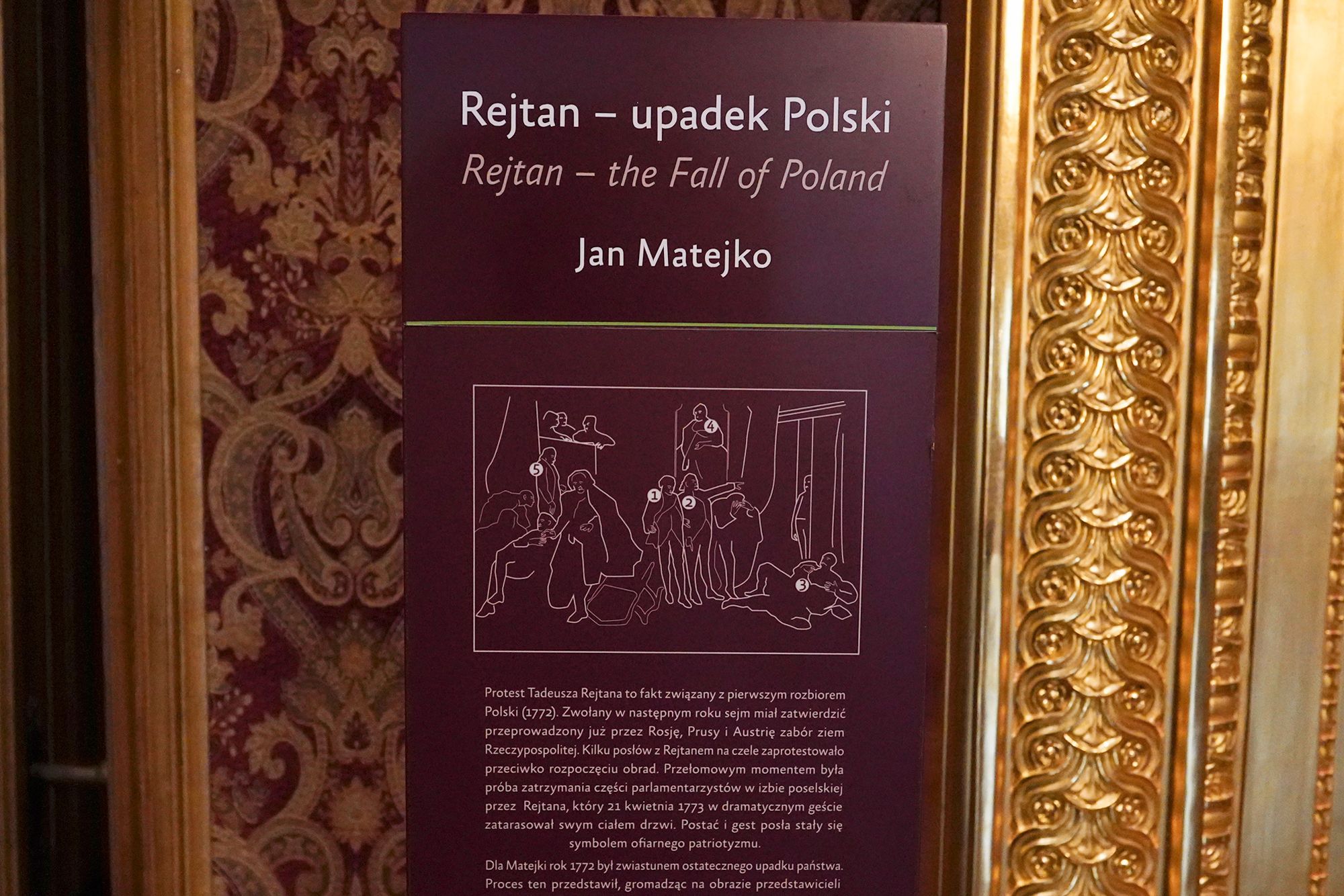
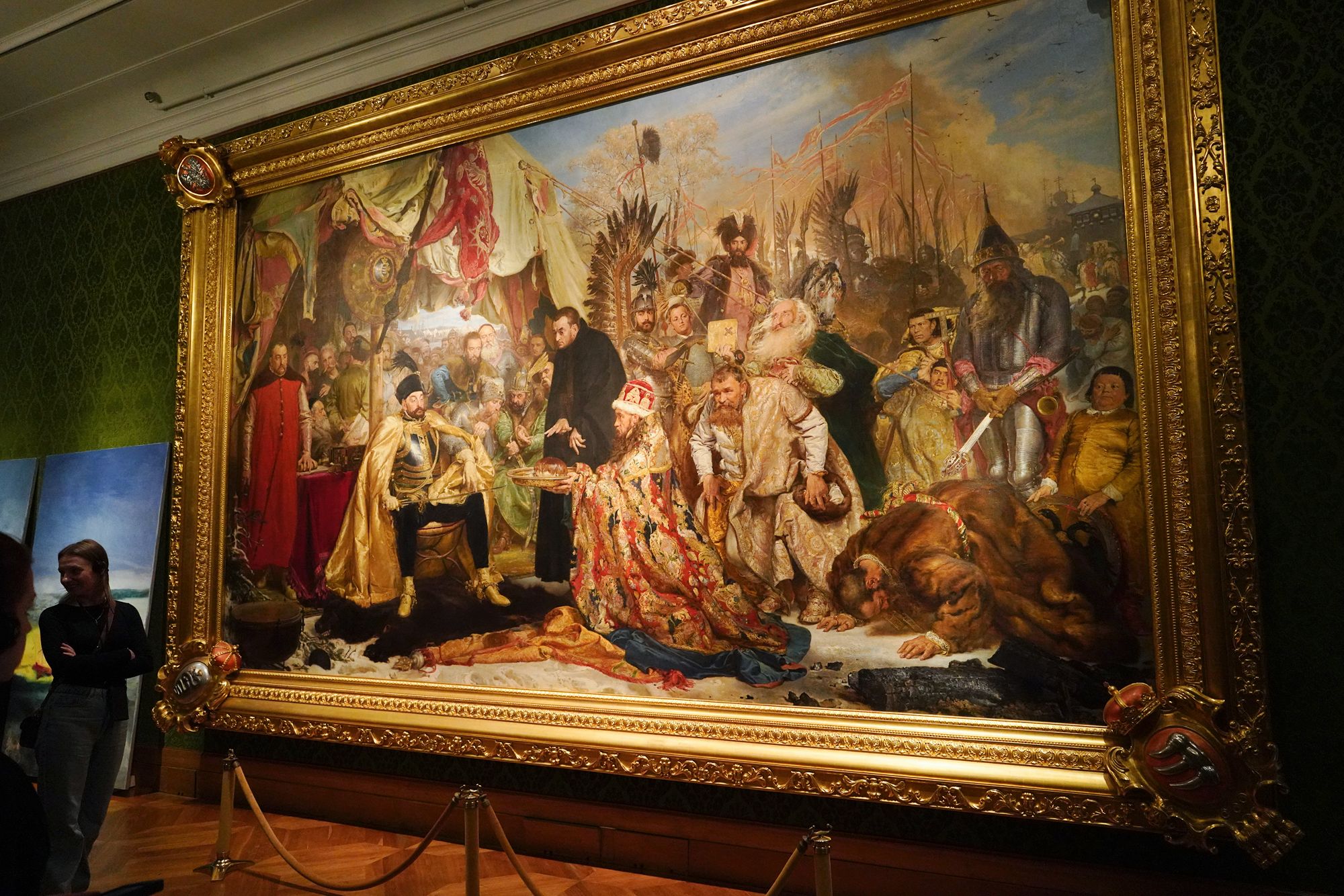
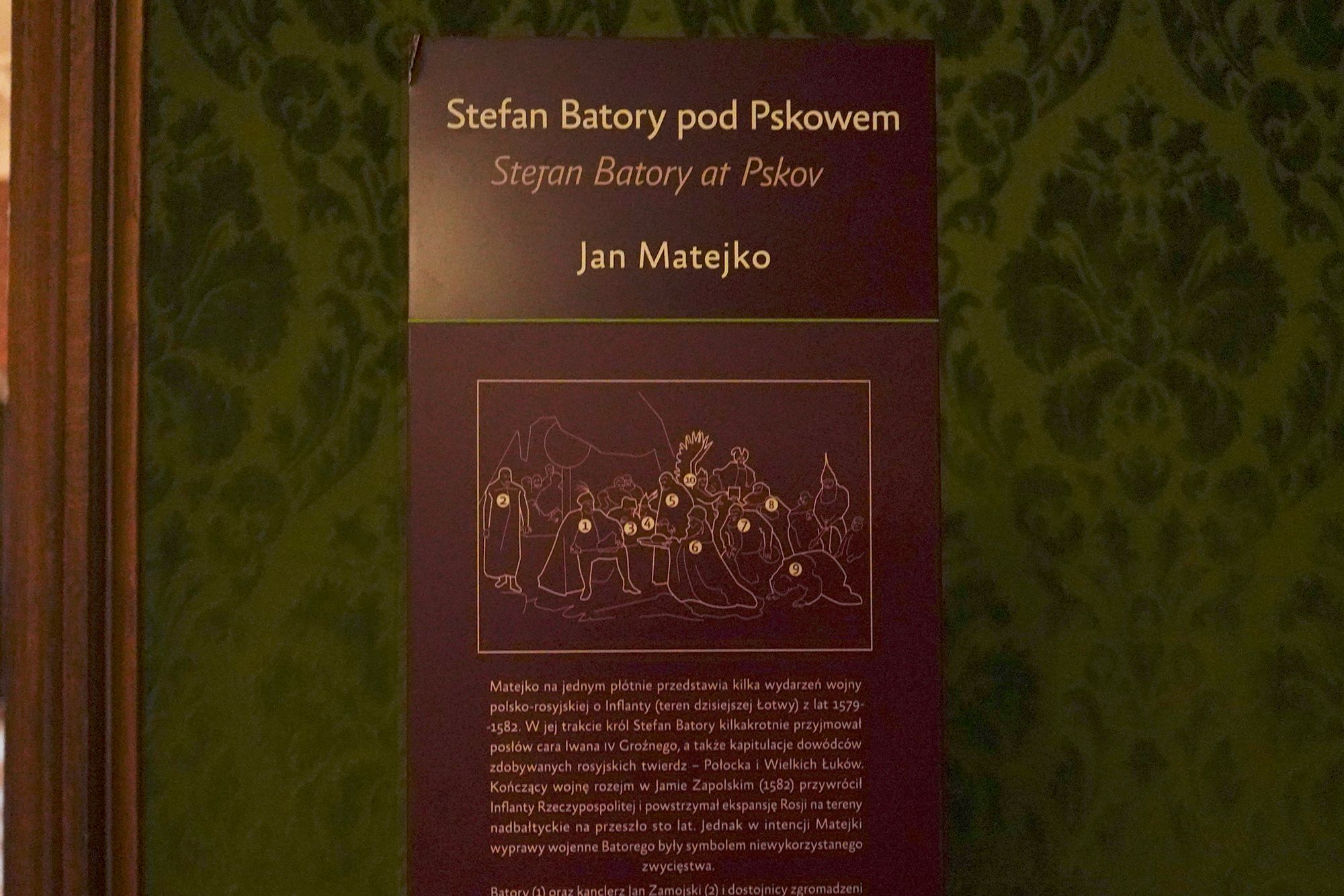
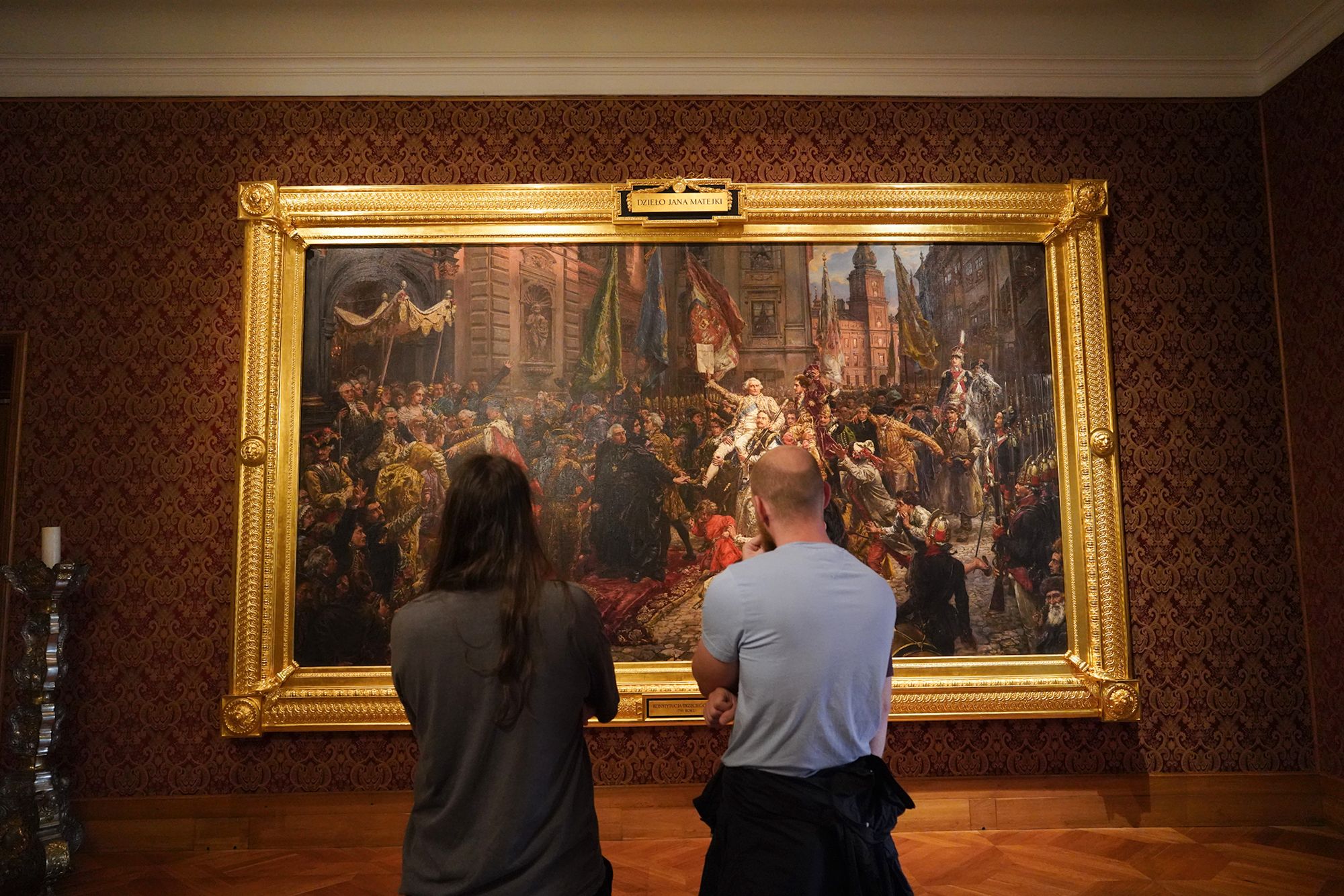
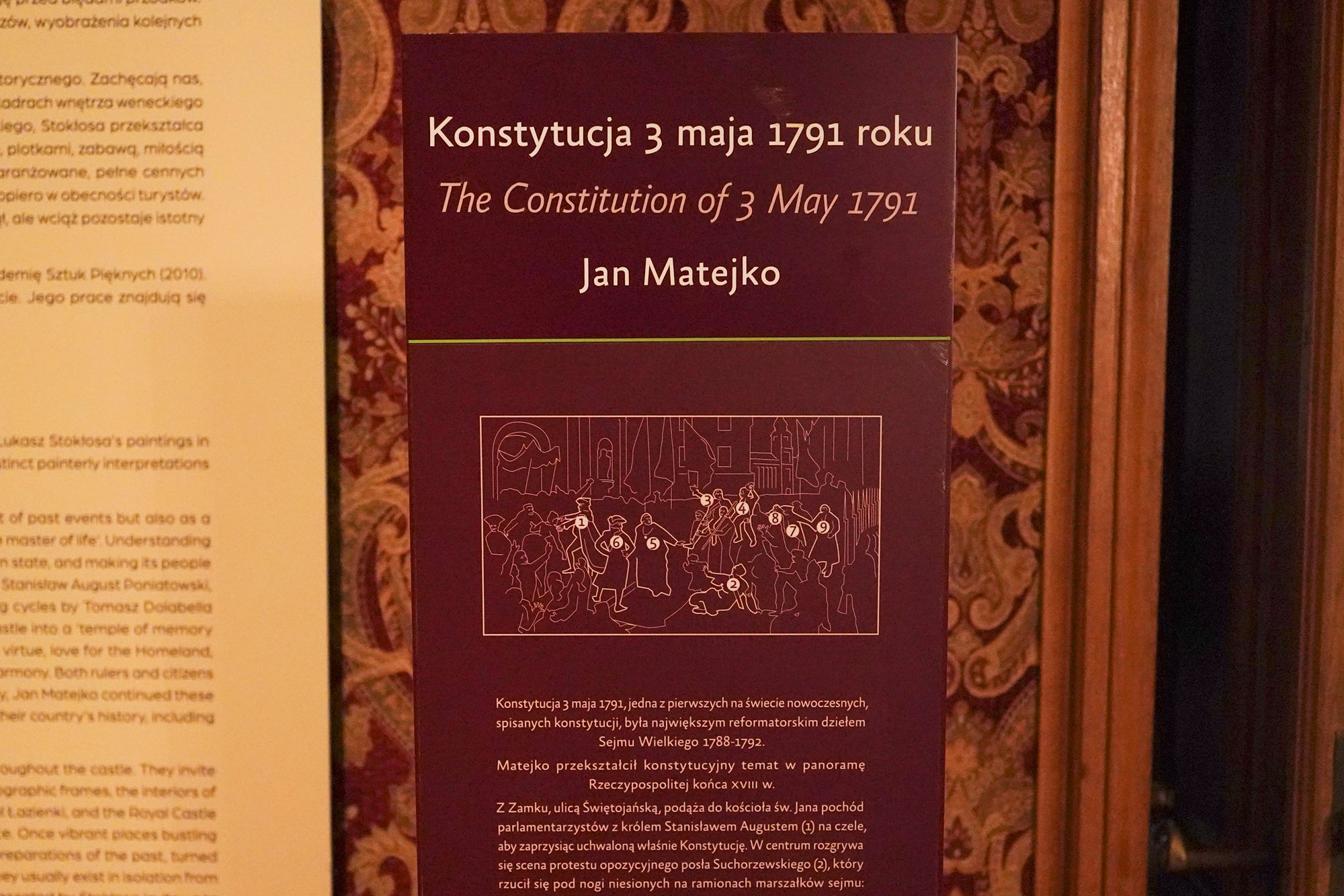
Jan Matejko (1838–1893) was a Polish painter best known for large, detailed paintings of important events in Poland’s history.
The exhibition panel mentions his painting The Sermon of Piotr Skarga. It presents a preacher addressing the king and nobles, warning about the country’s problems. Matejko used historical scenes to encourage viewers to reflect on Poland’s past, its achievements, and the reasons for its decline.
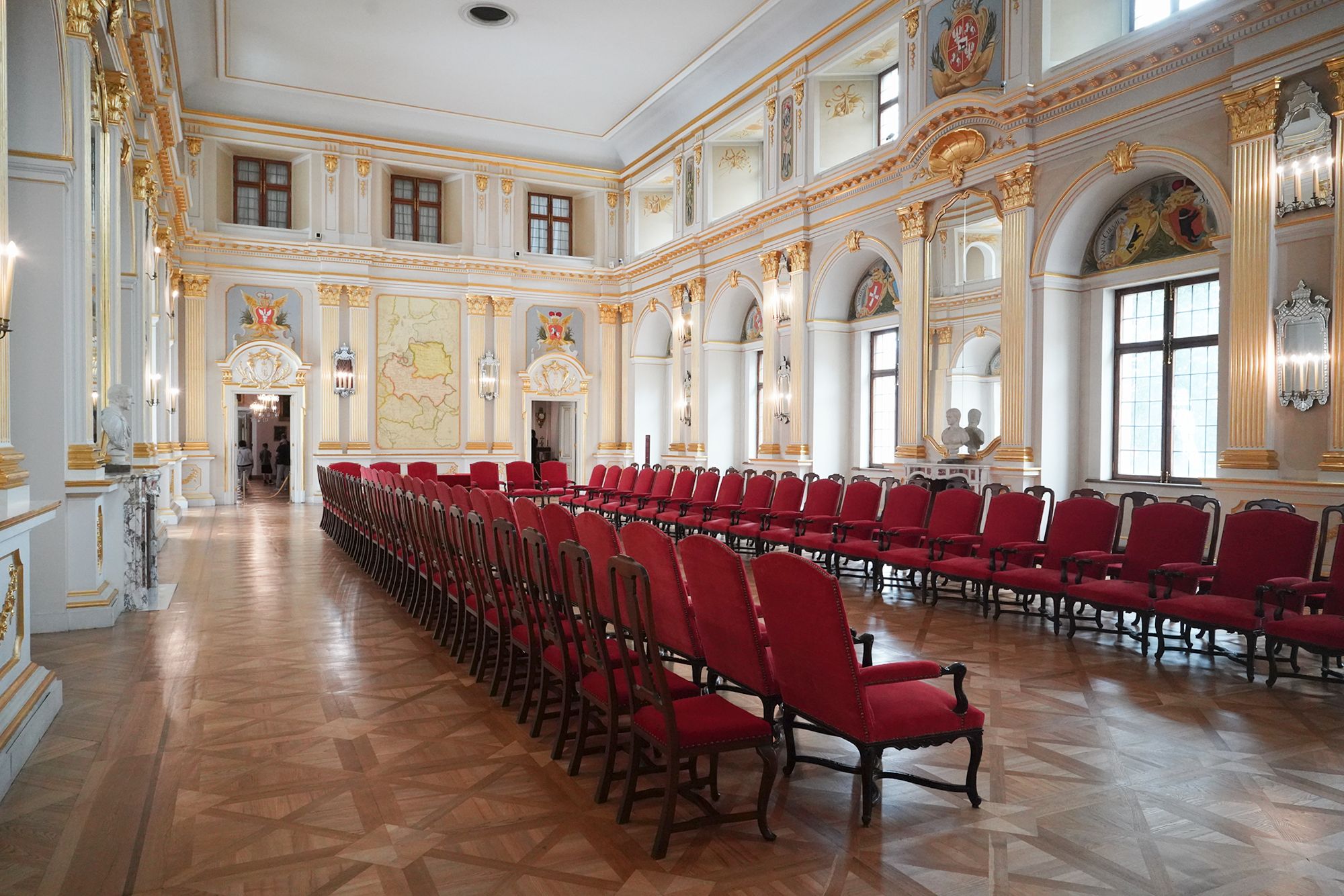
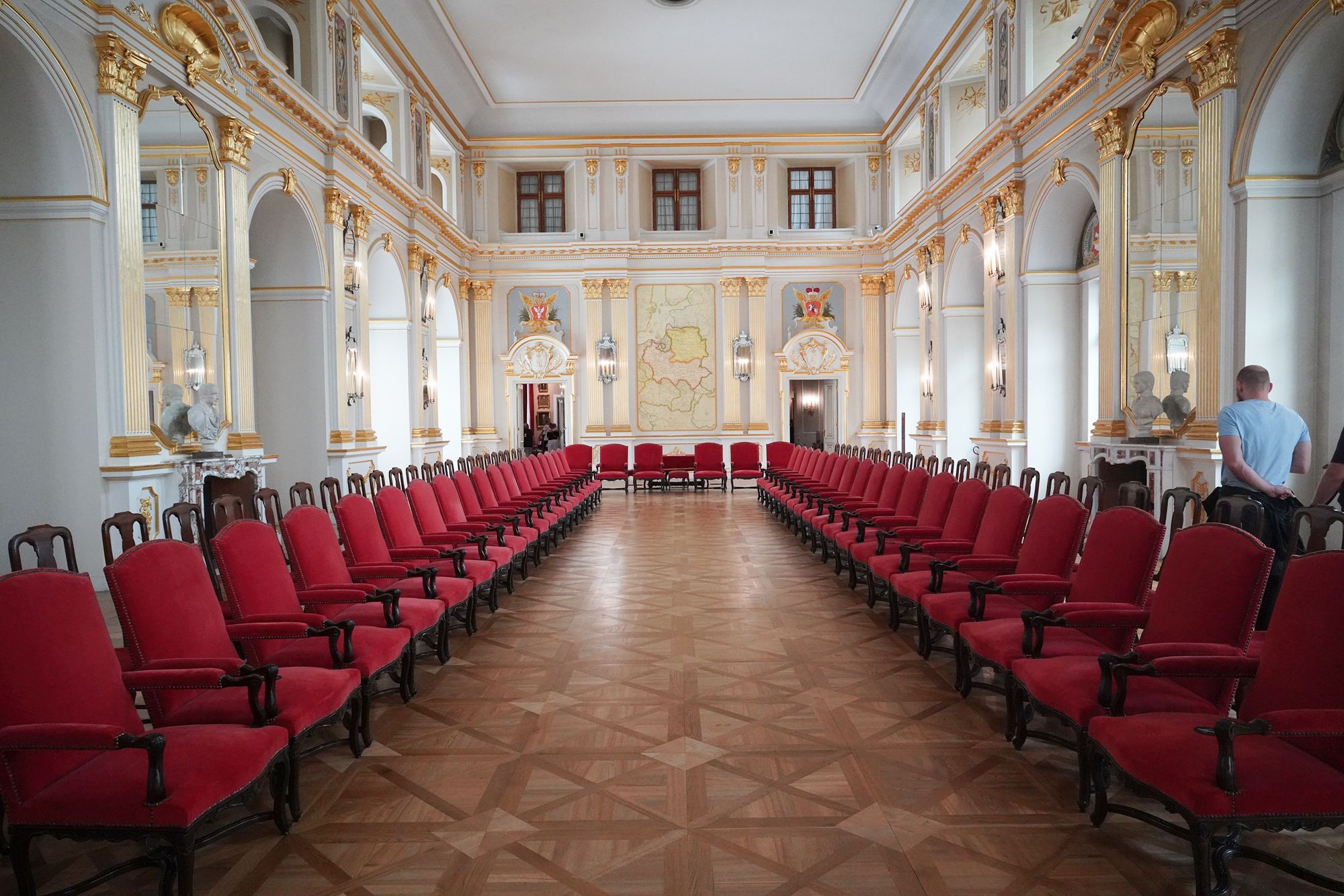
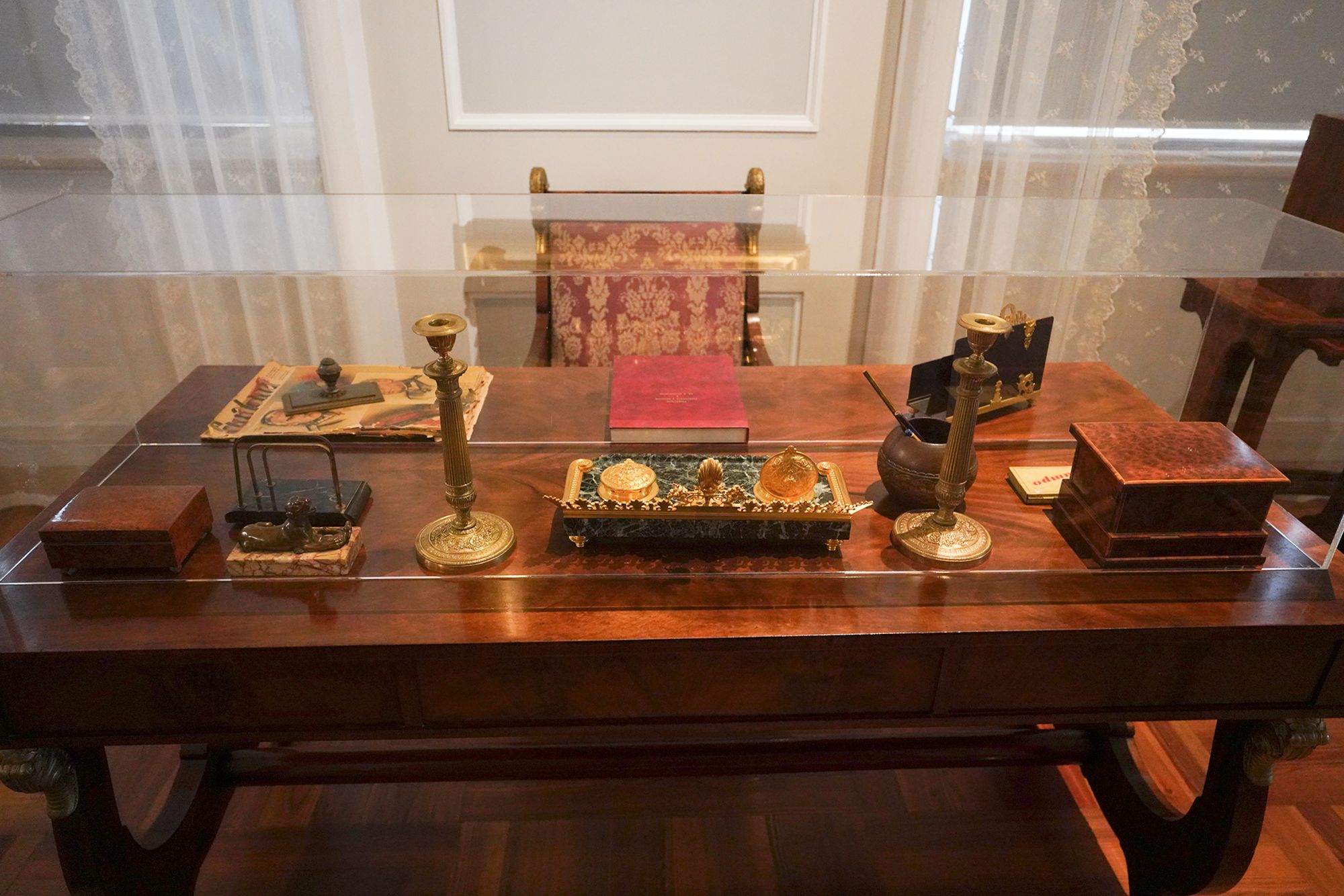
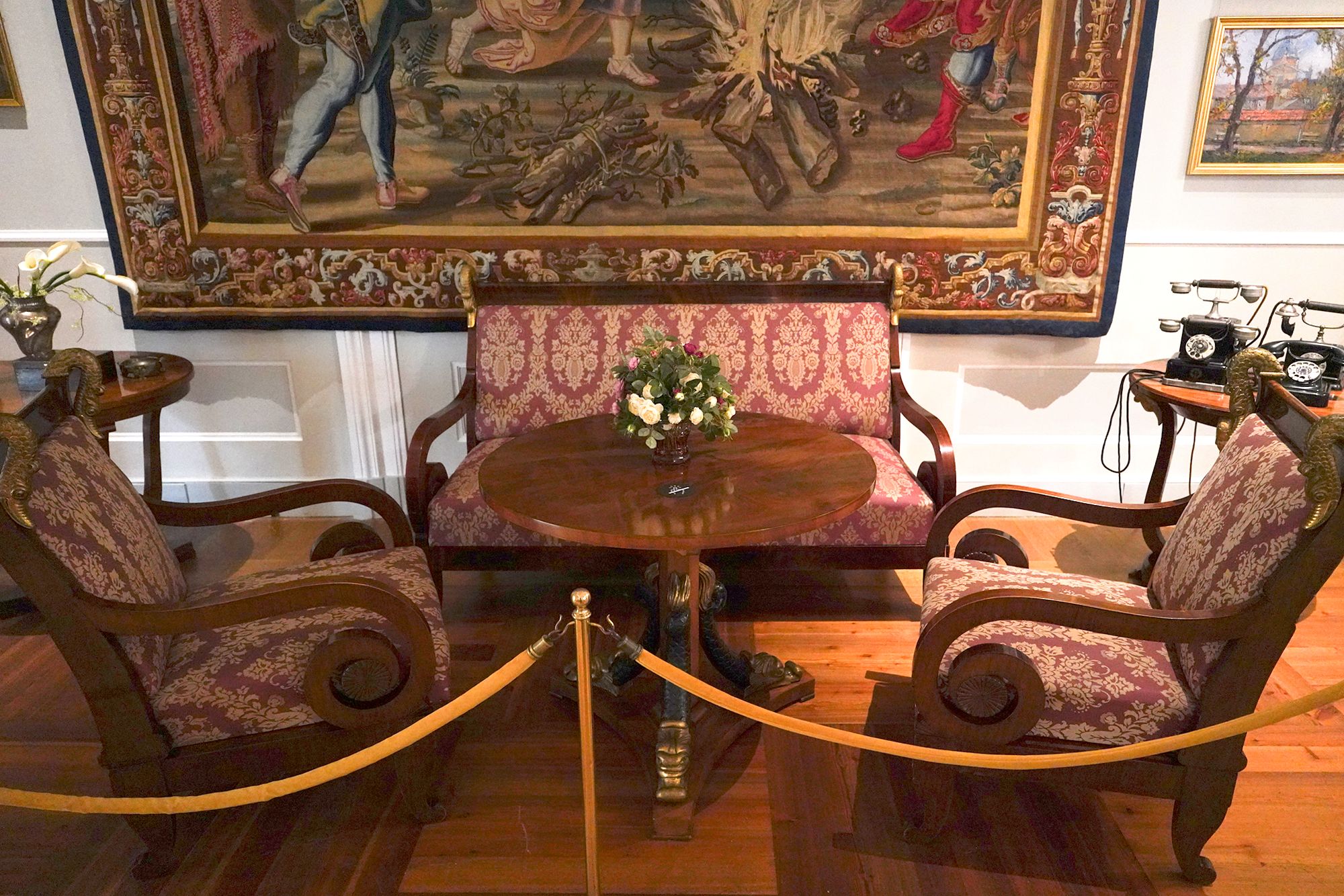
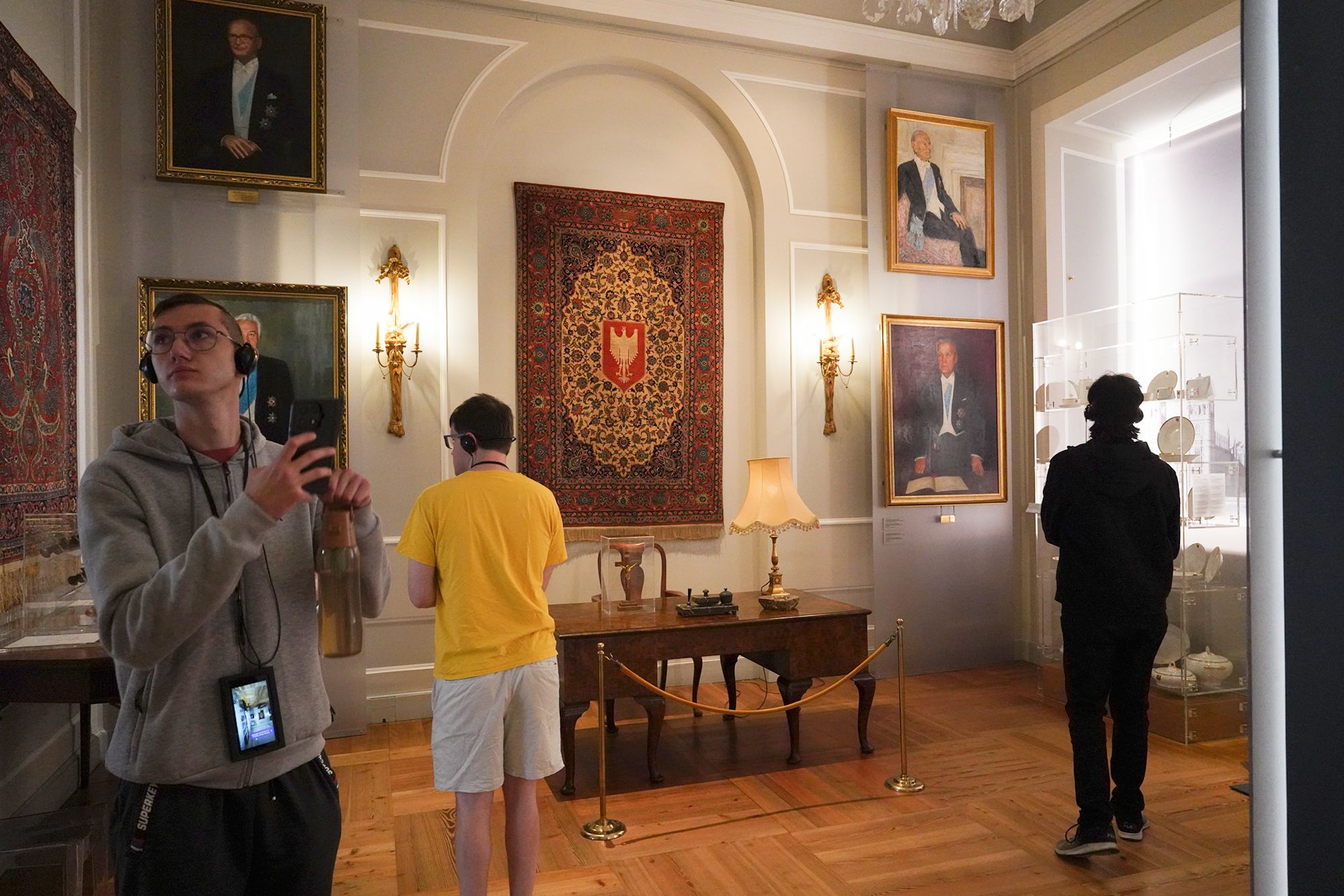
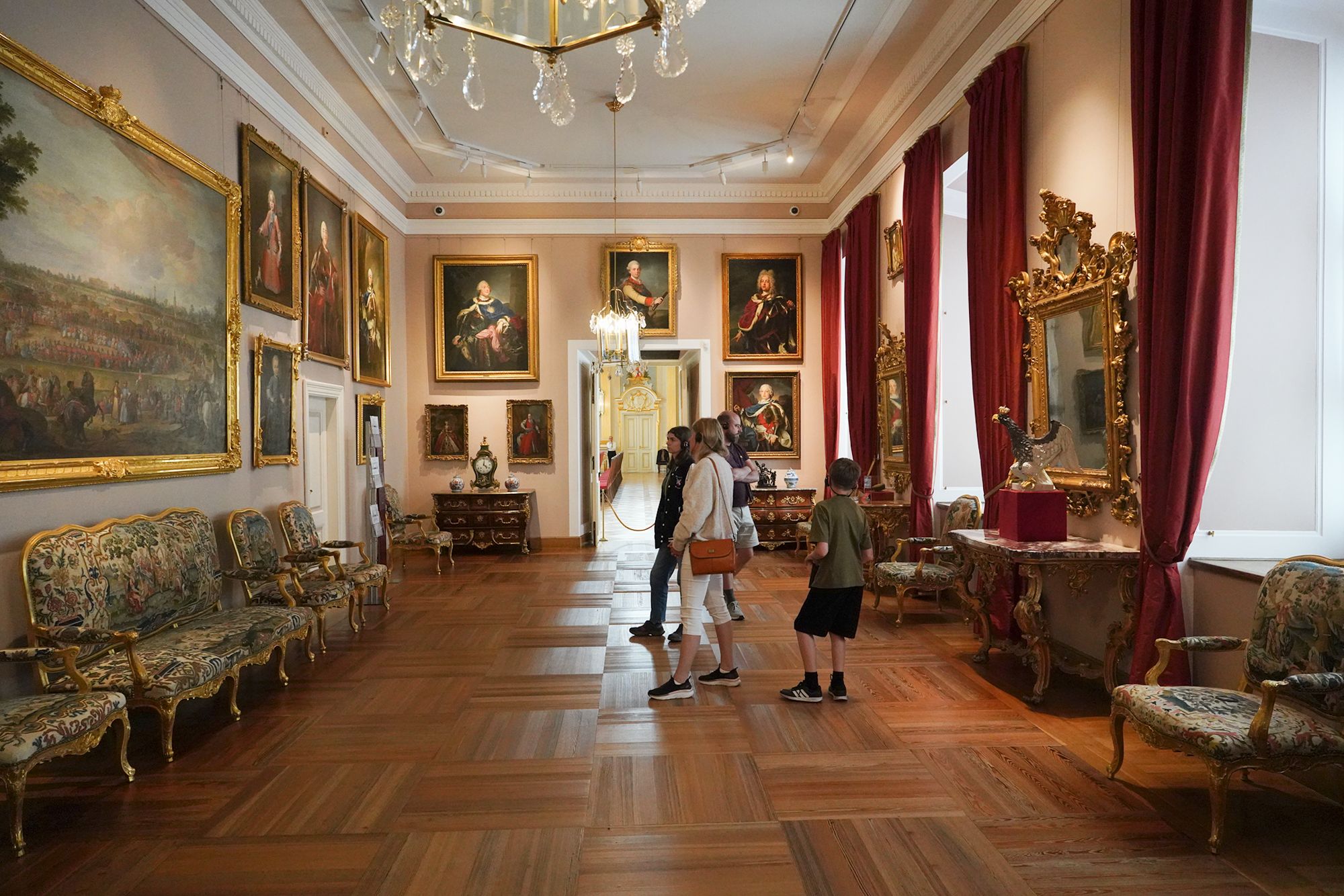
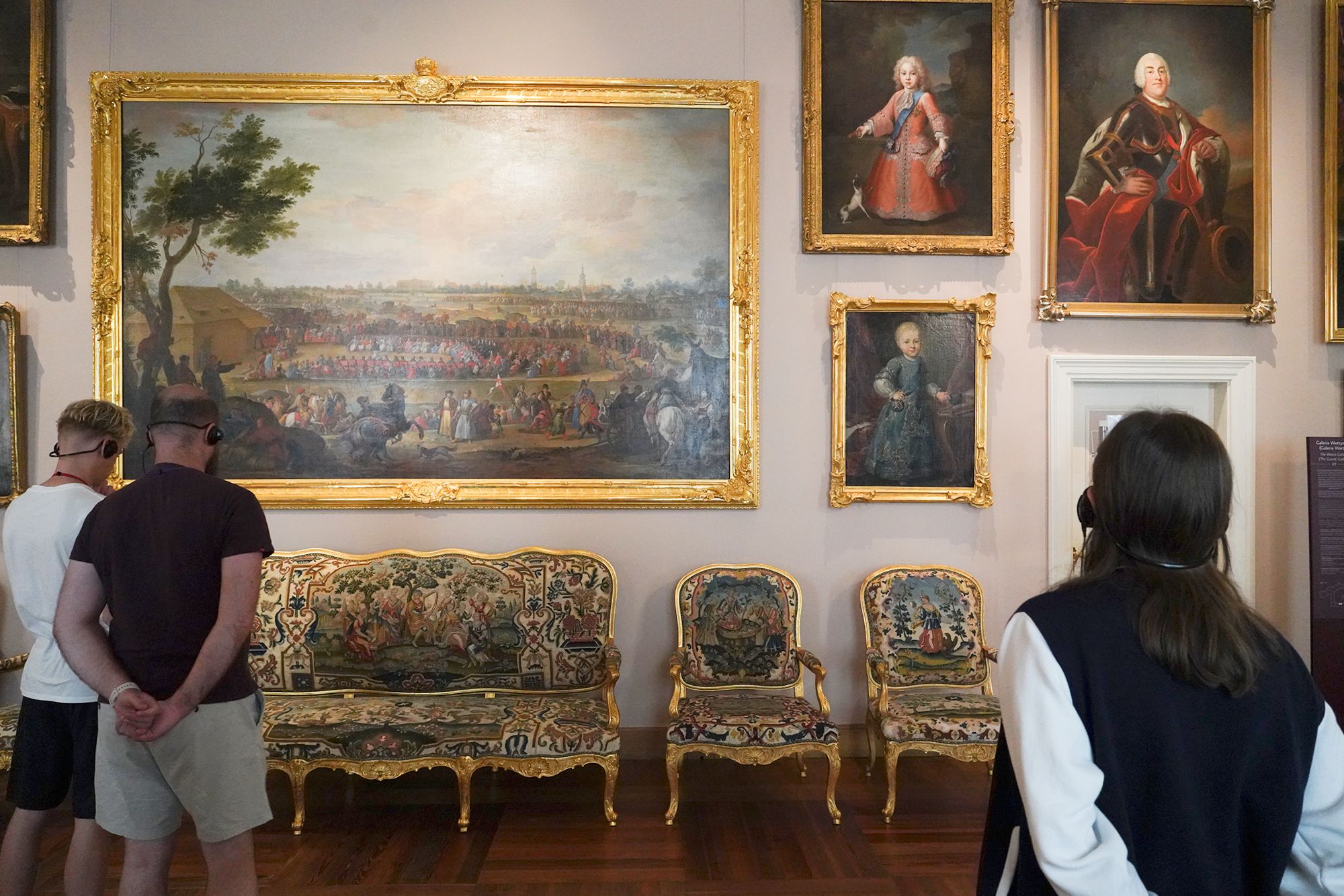
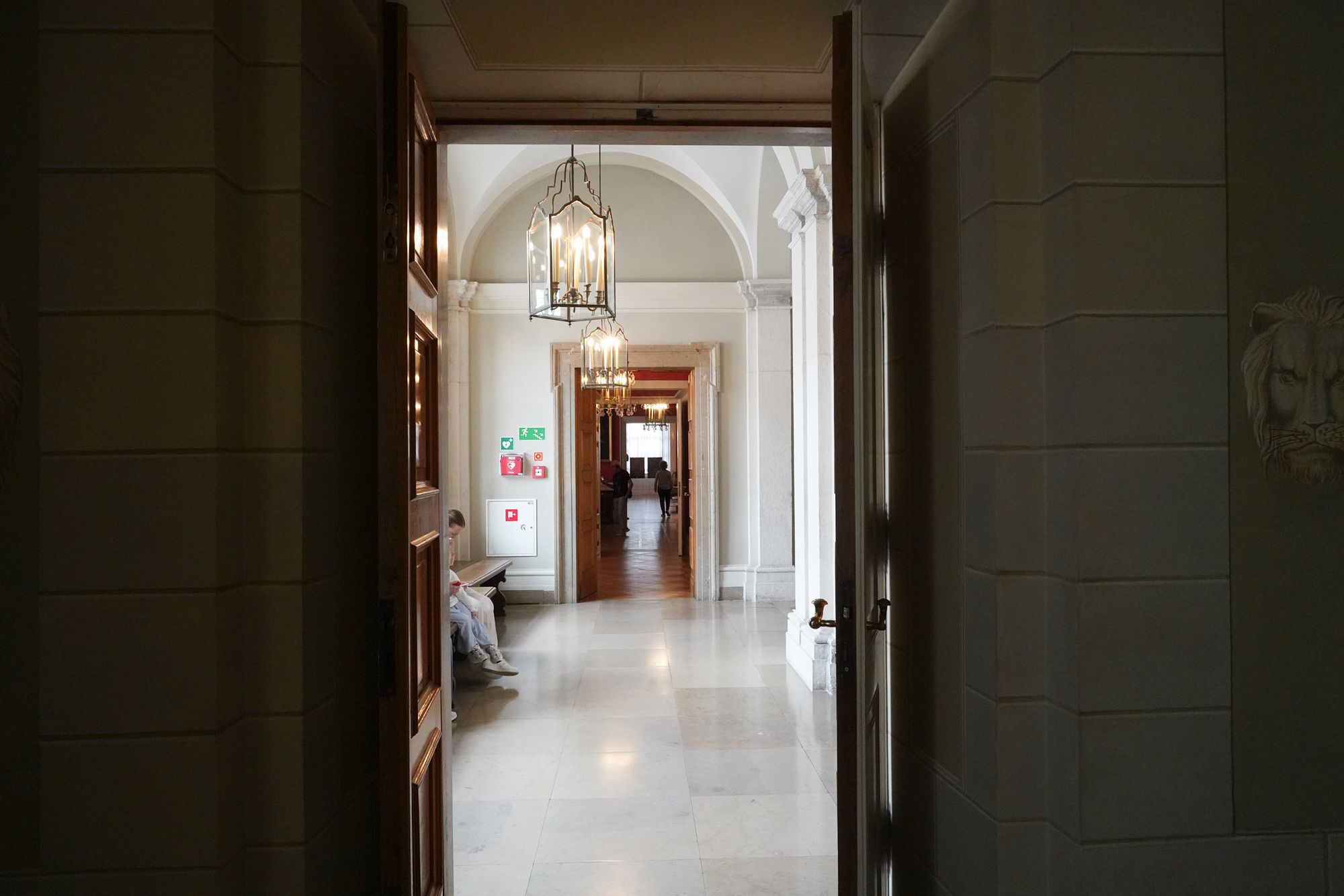
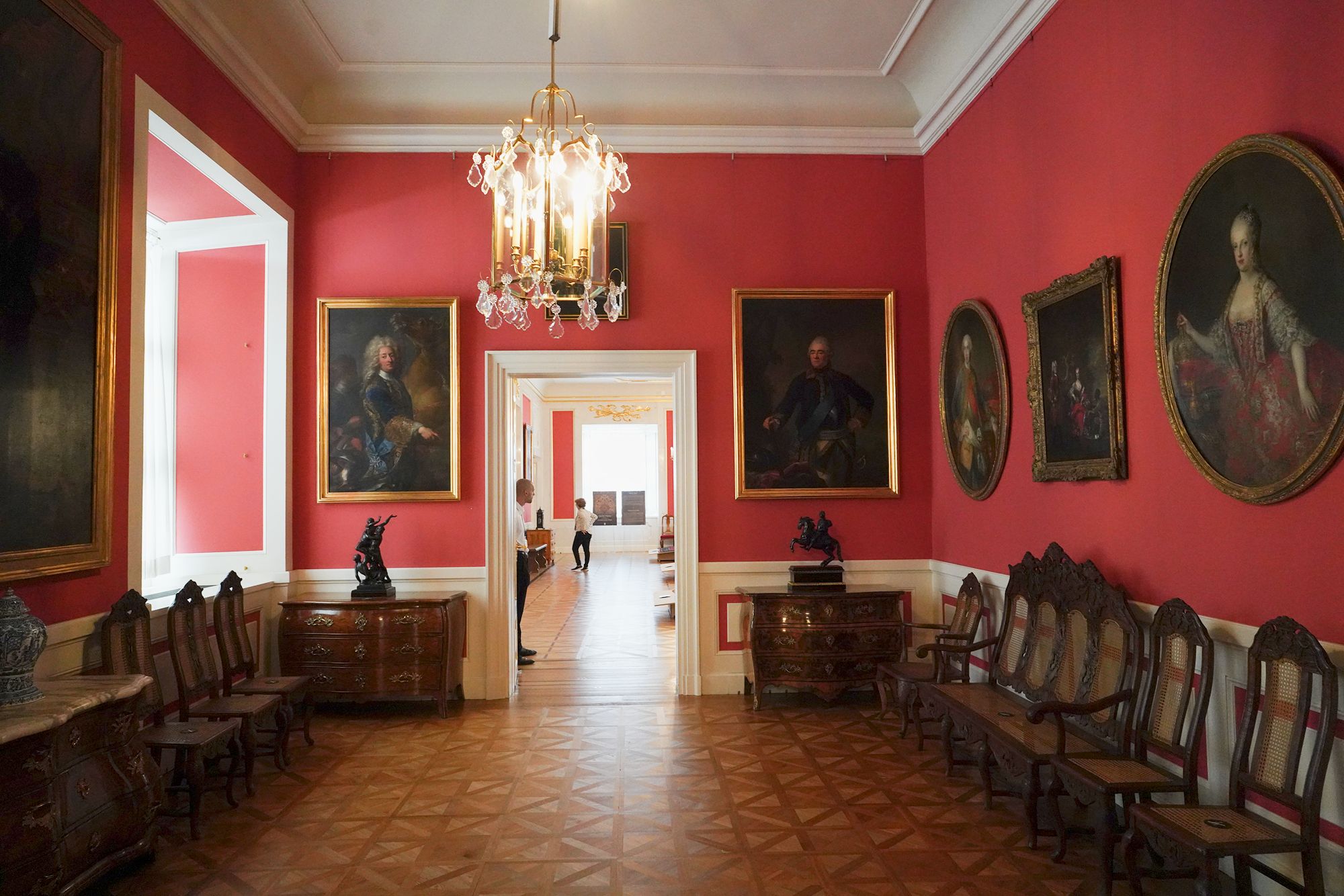
The New Deputies’ Chamber was used by the lower house of parliament of the Polish–Lithuanian Commonwealth. Its reconstruction followed a remodeling plan from 1721 preserved in Dresden.
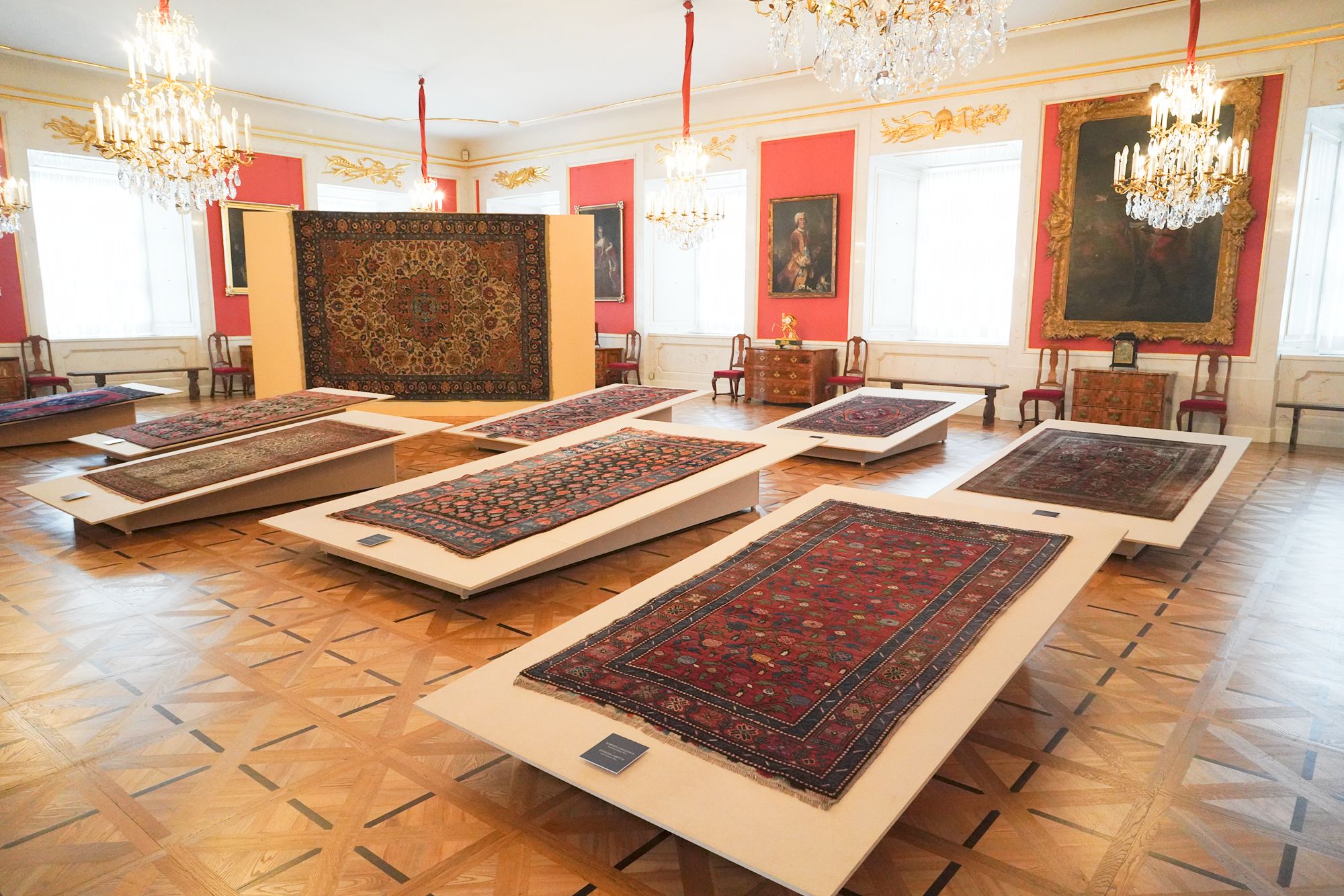
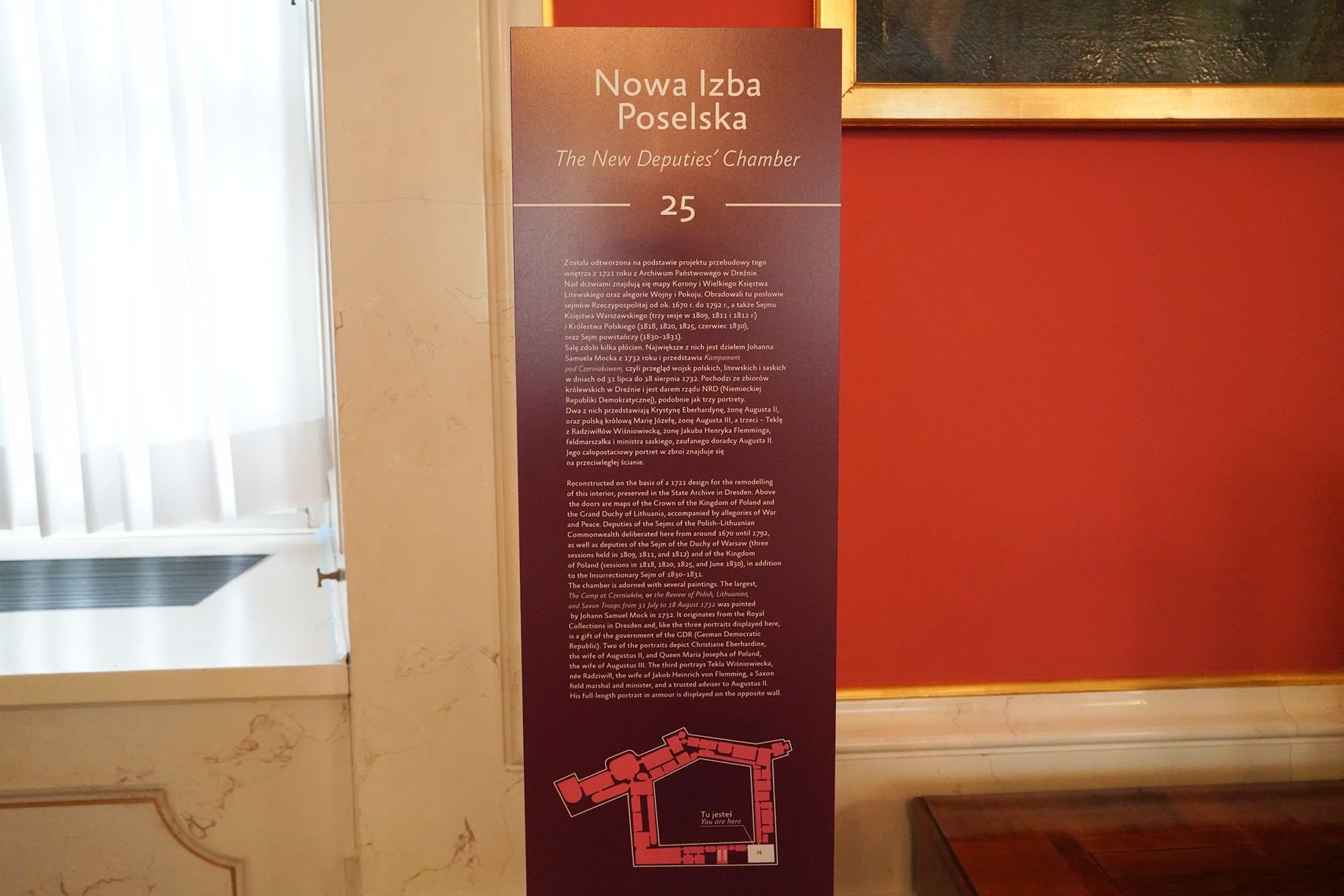
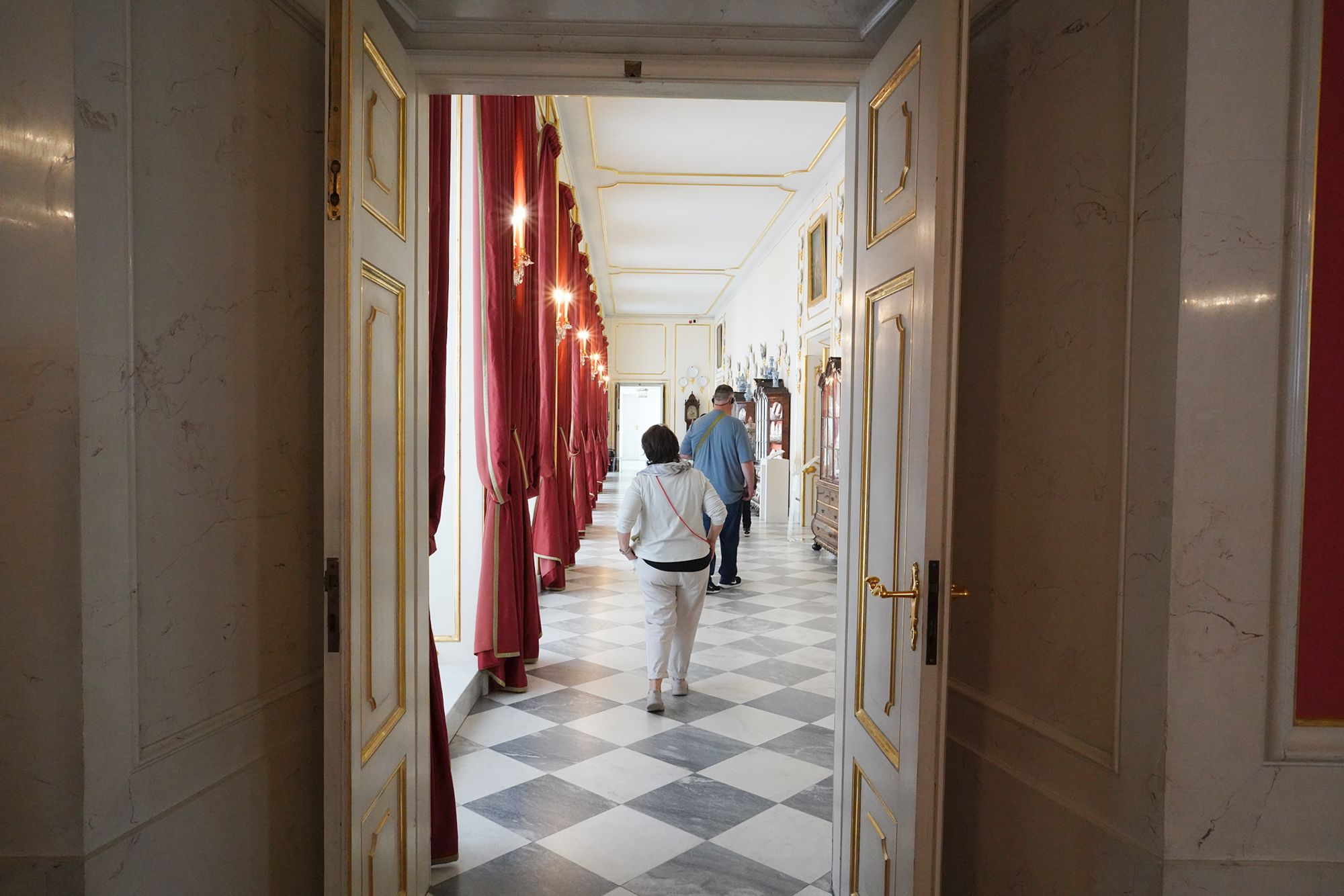
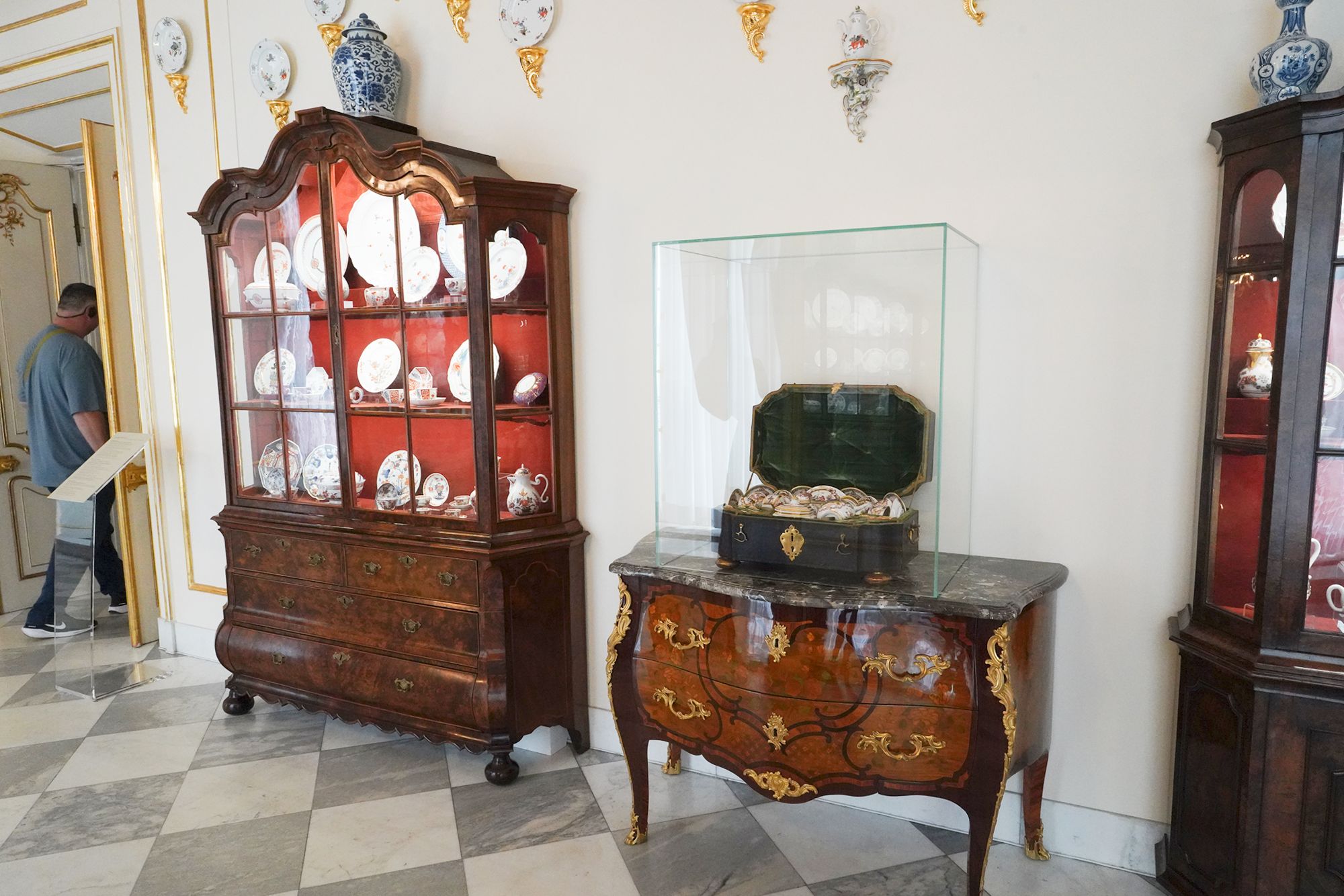
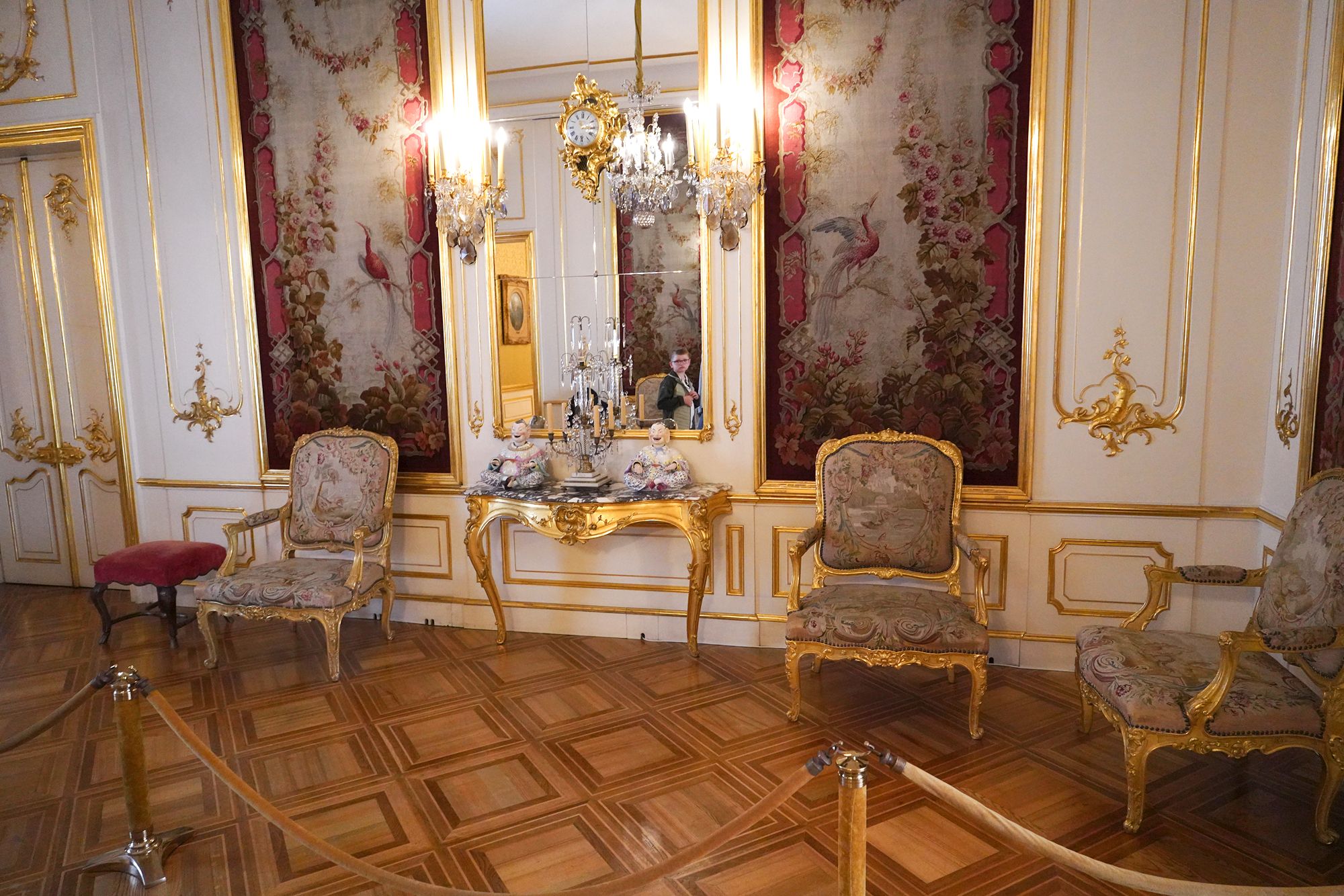
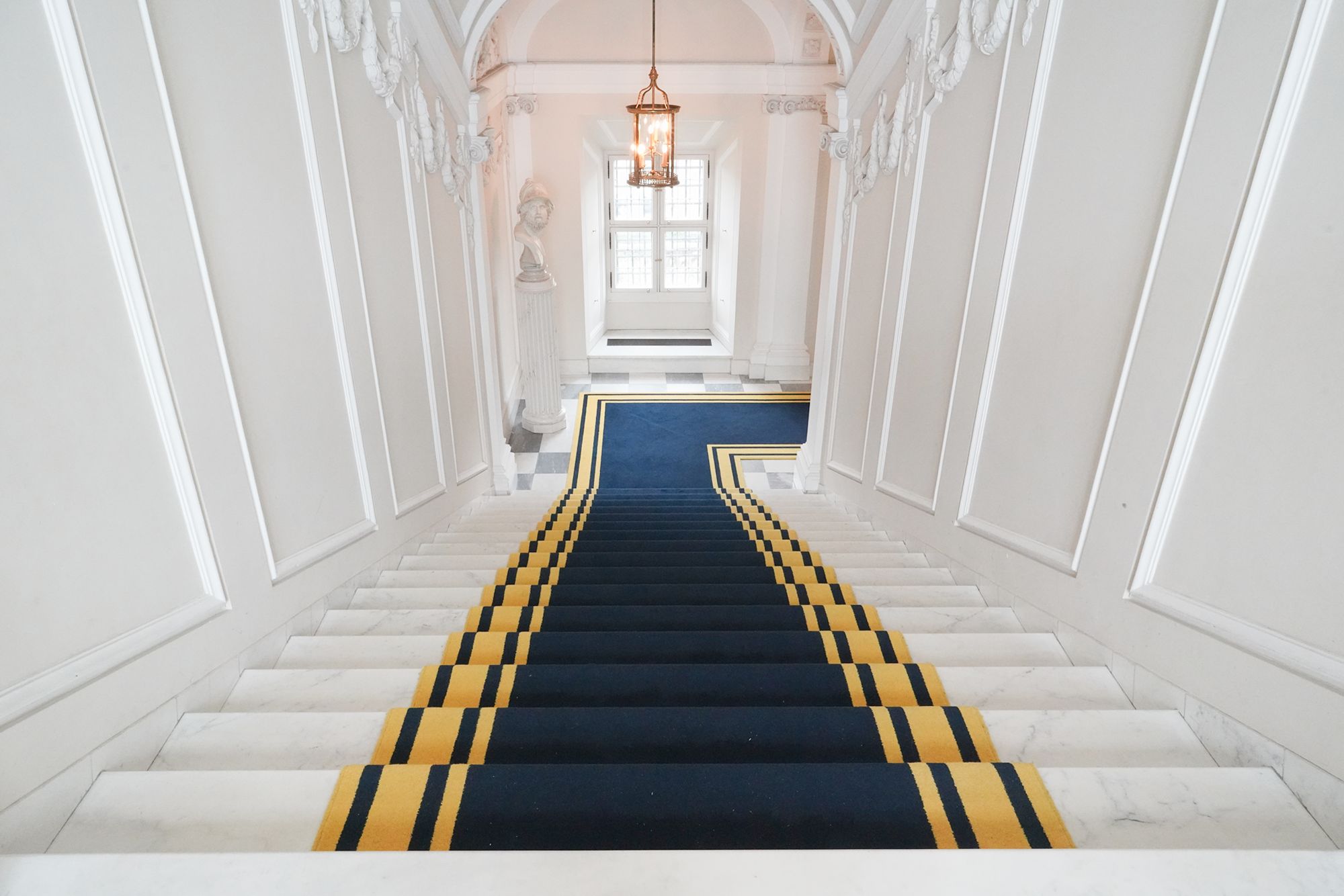
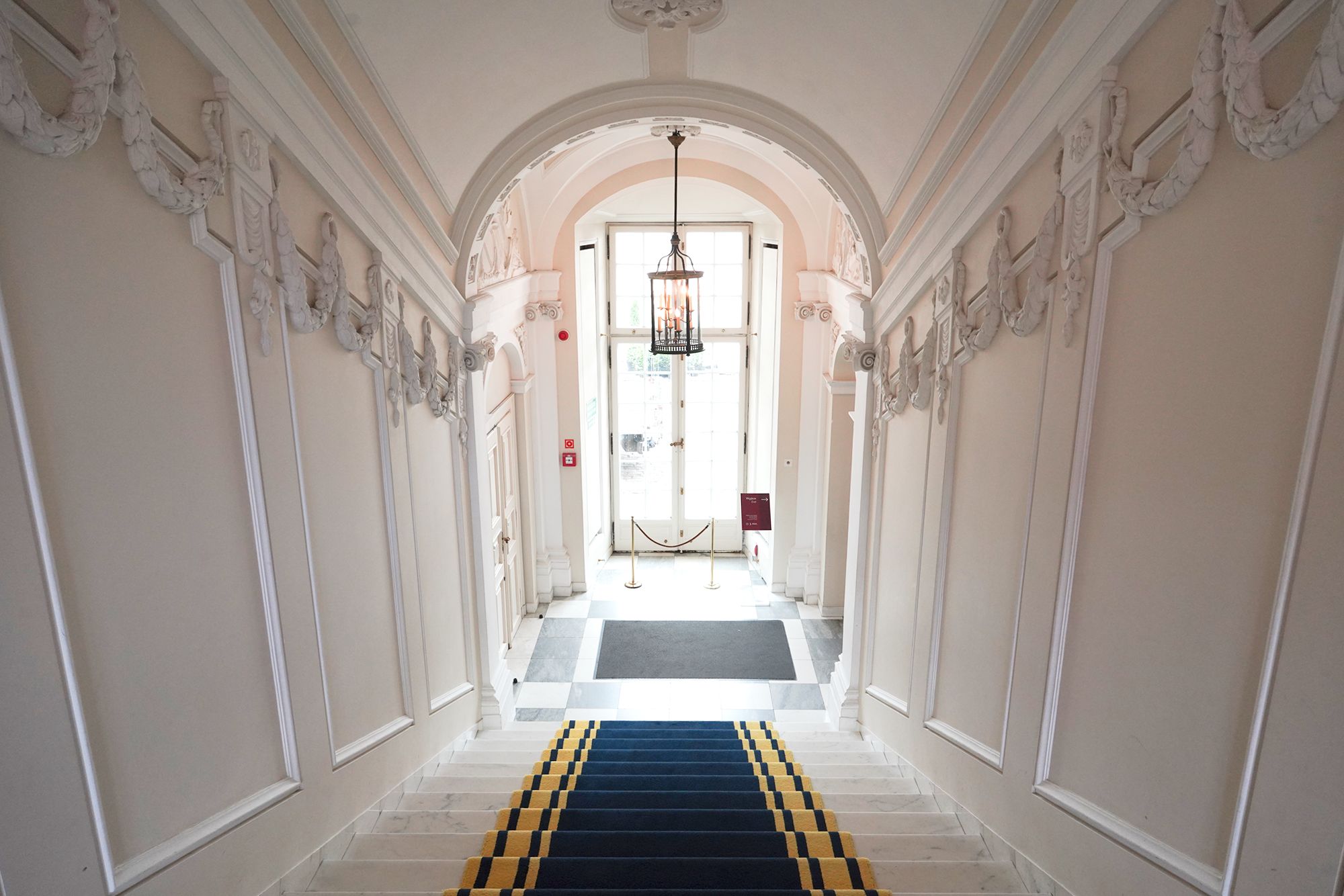
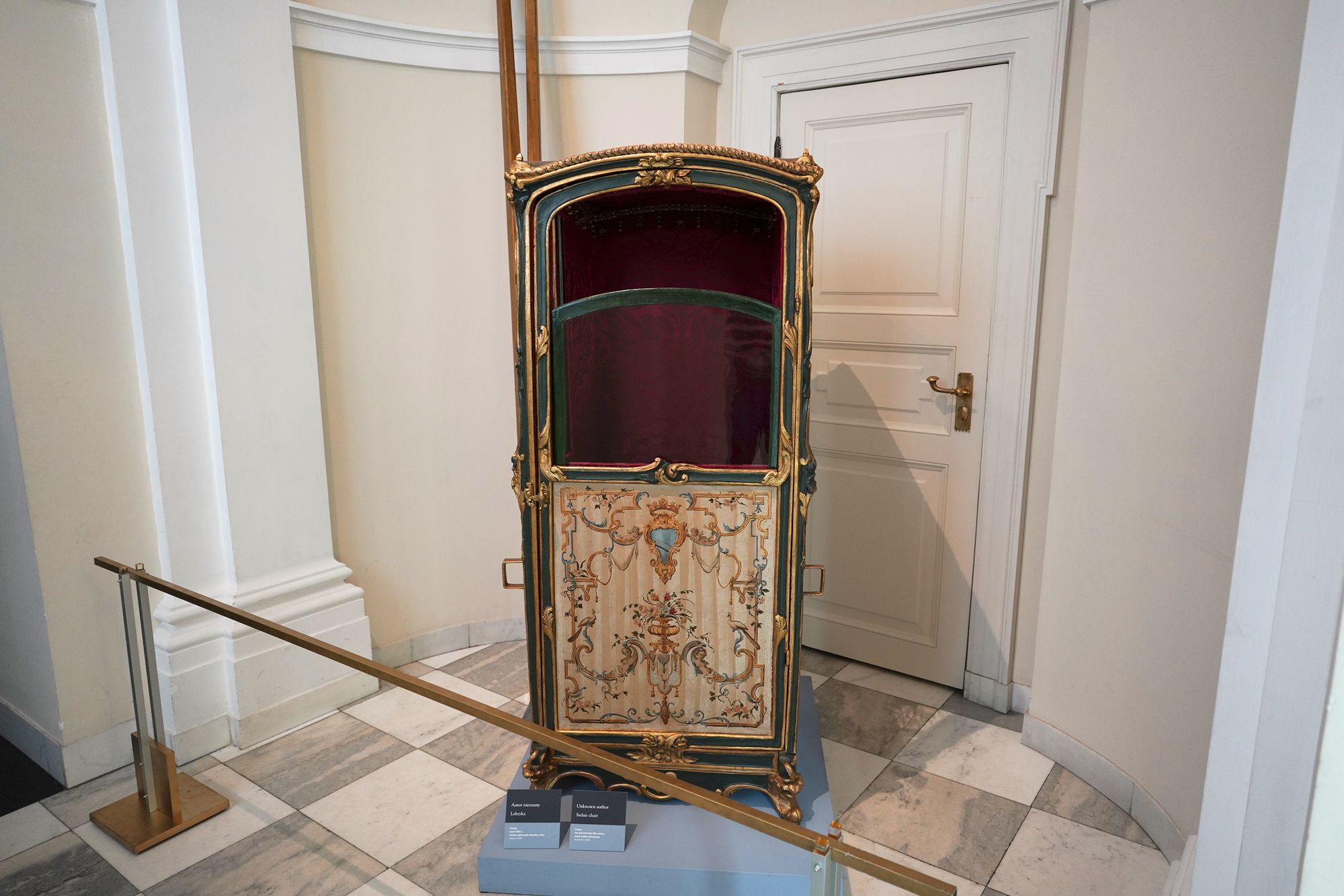
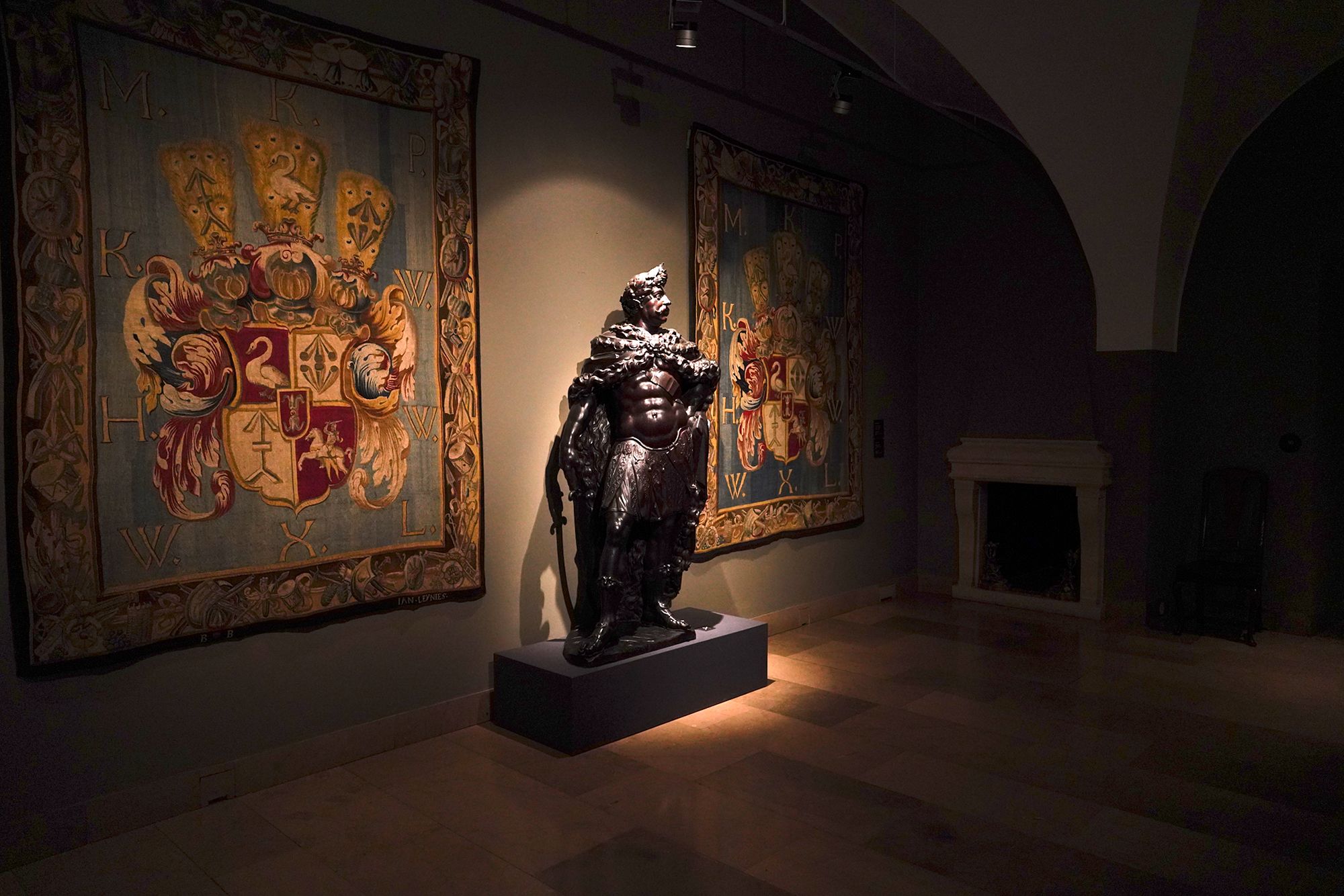
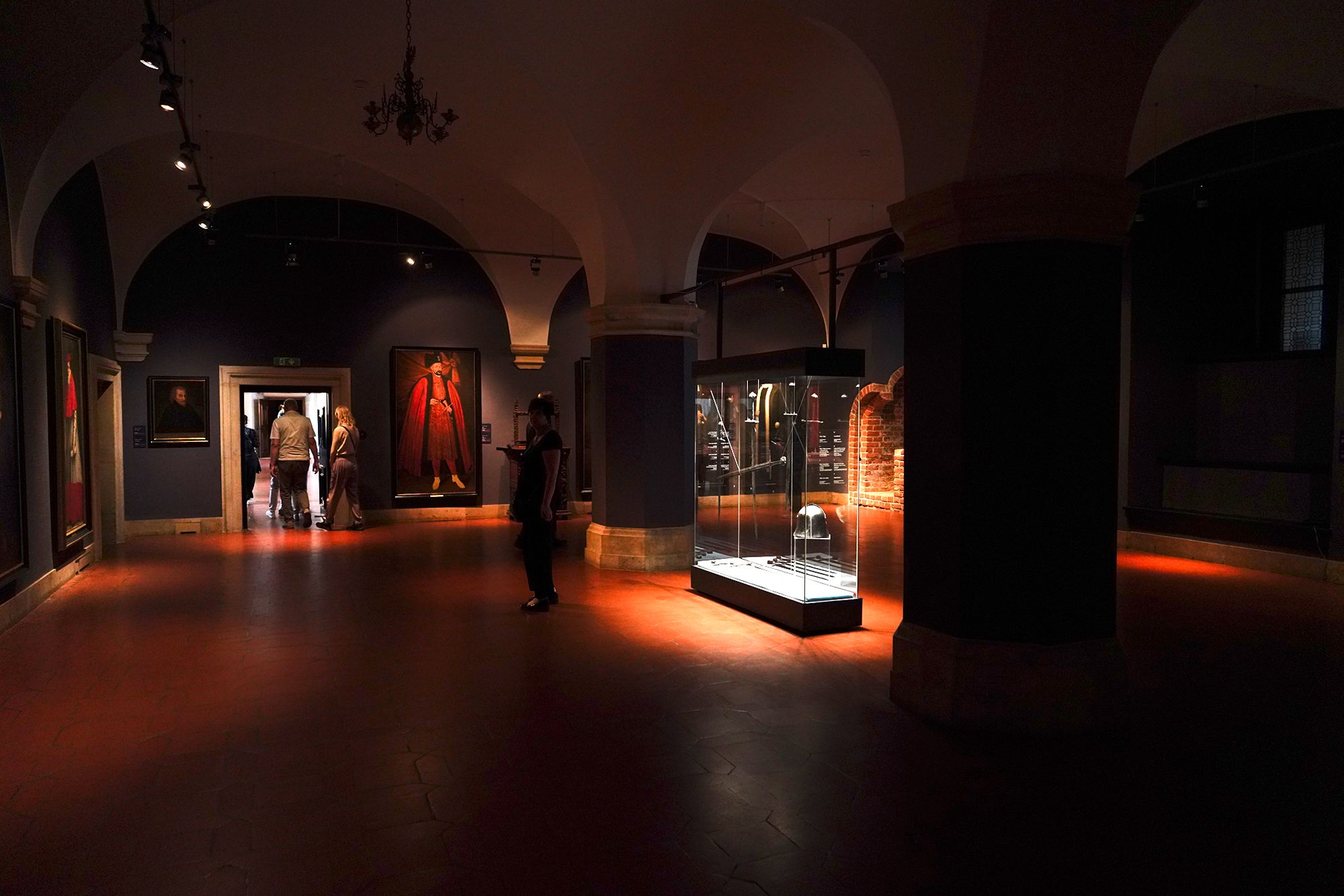
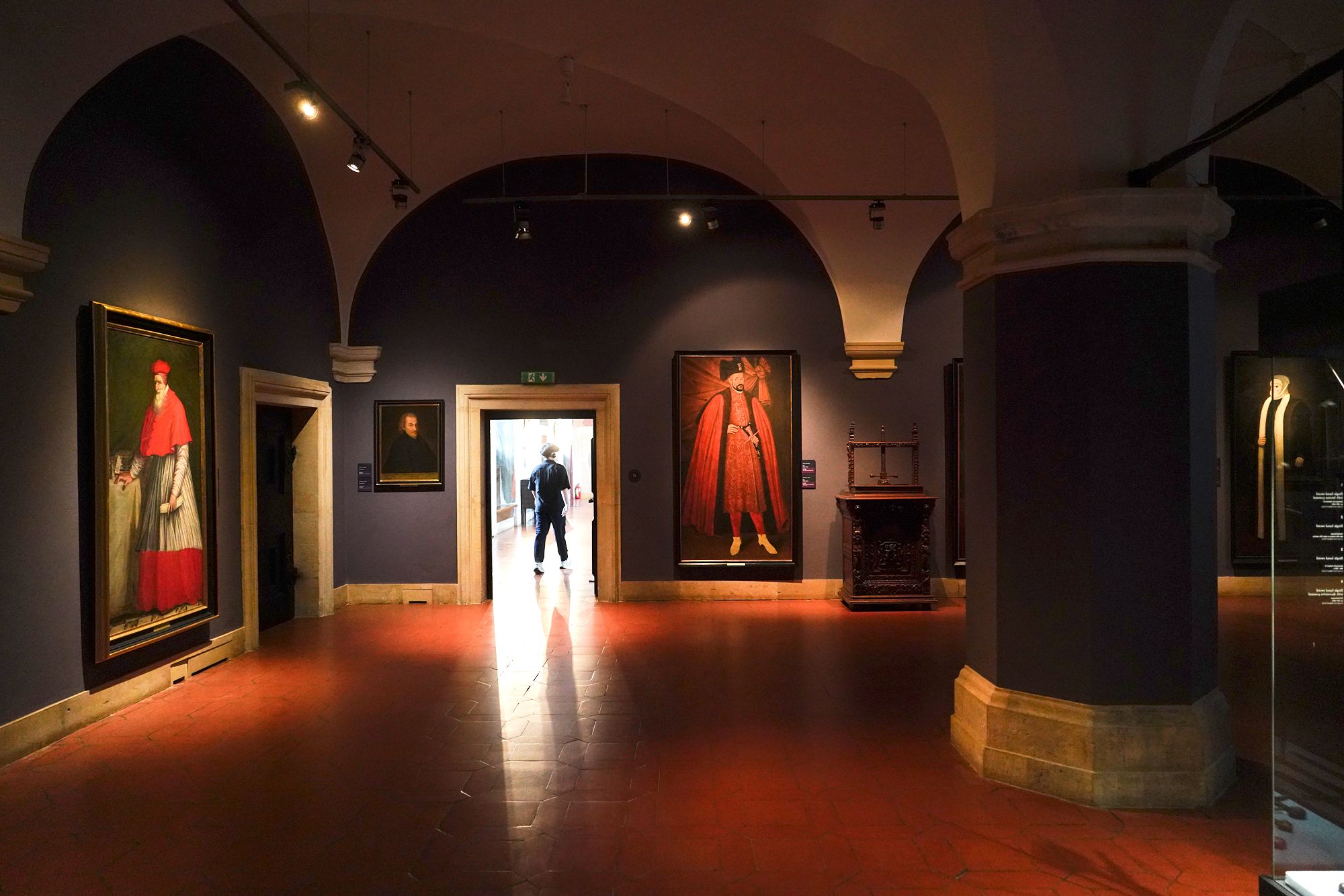
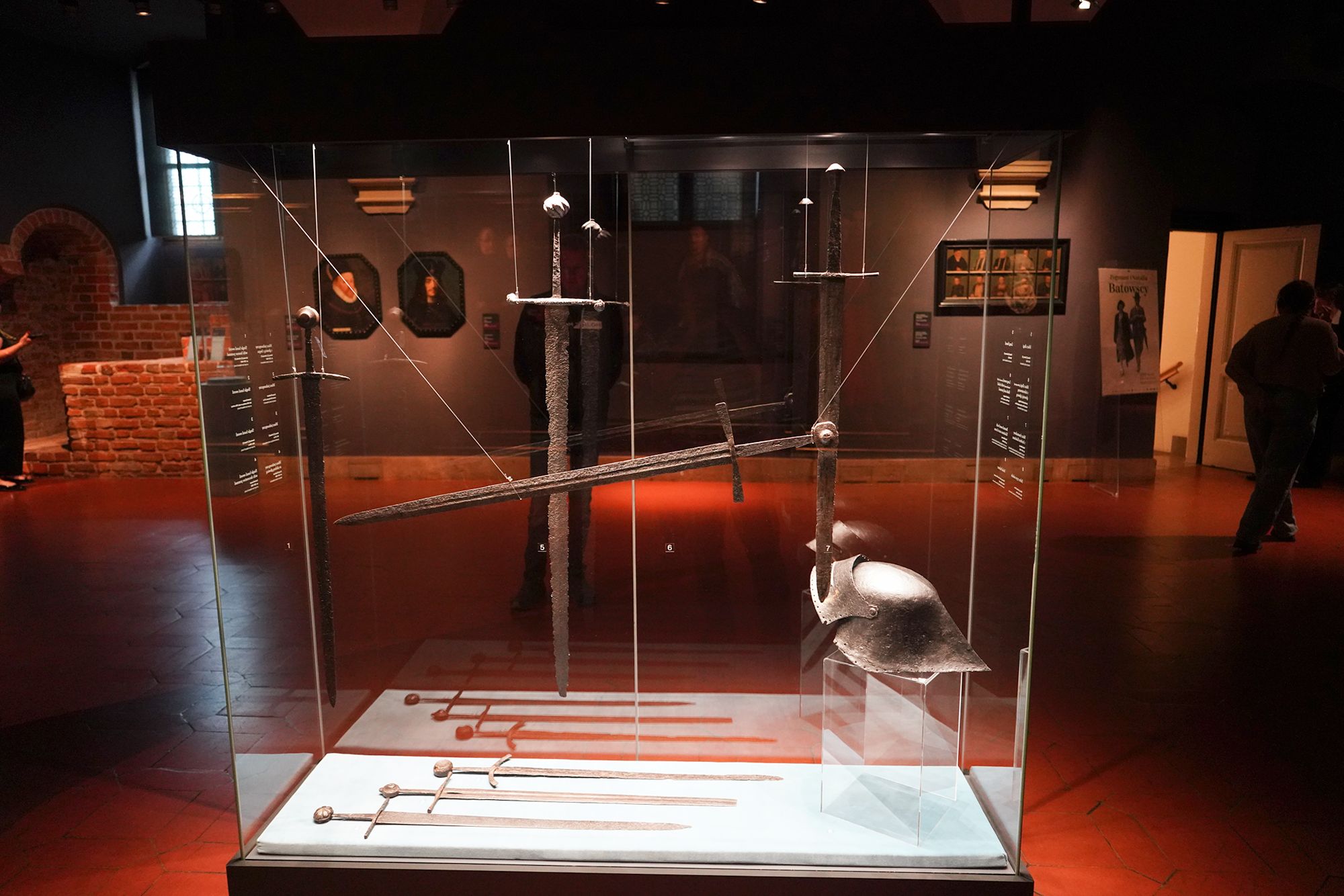
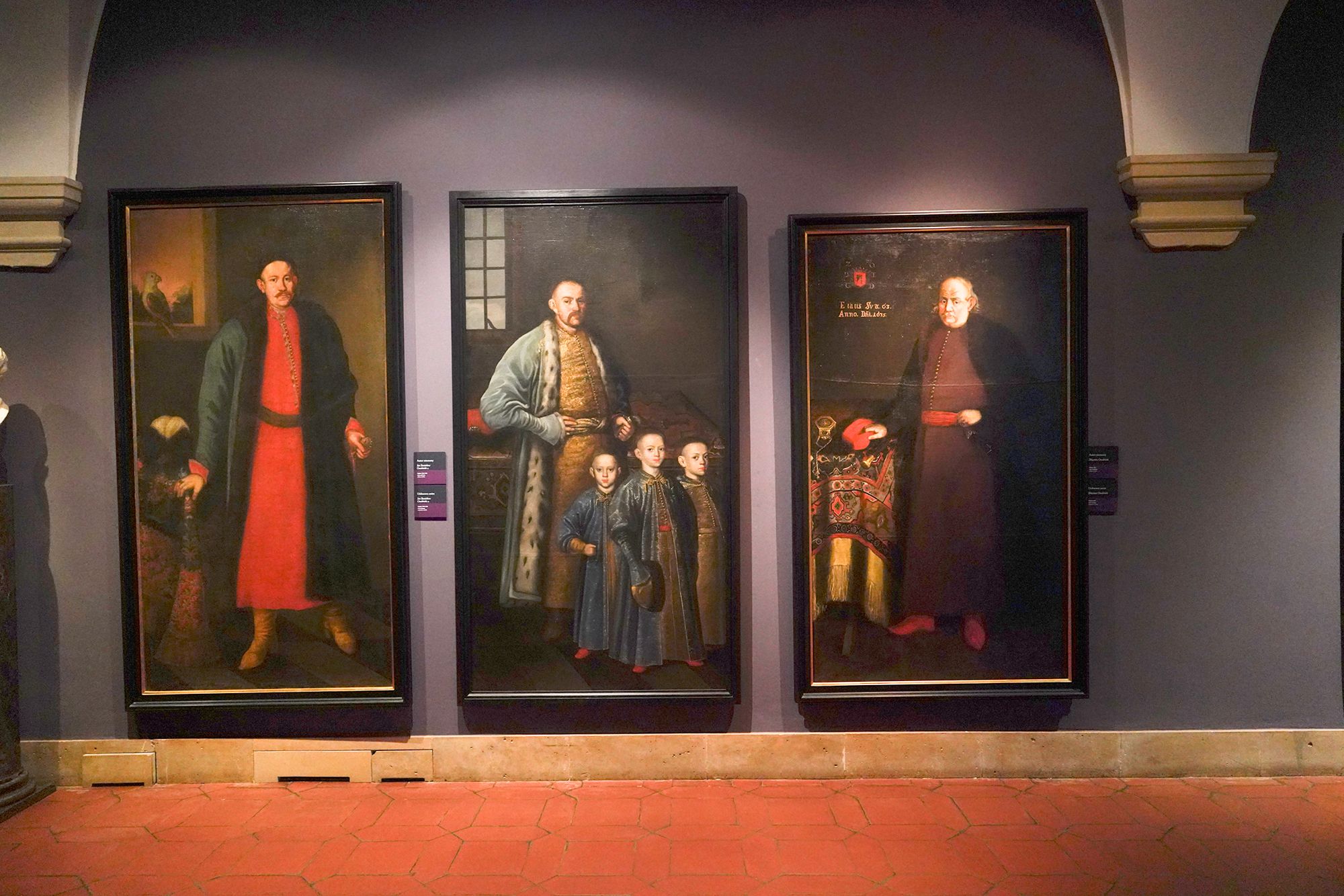
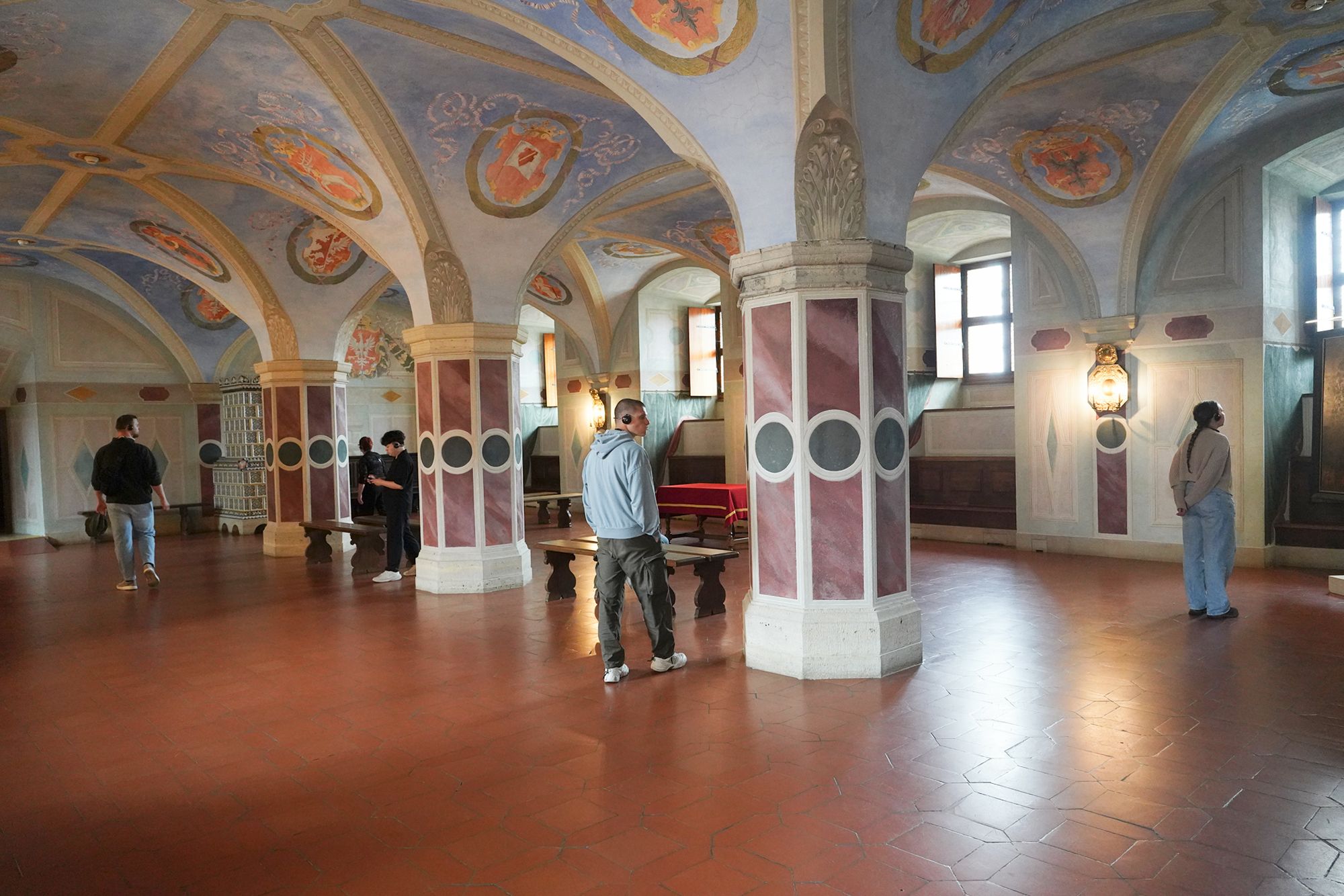
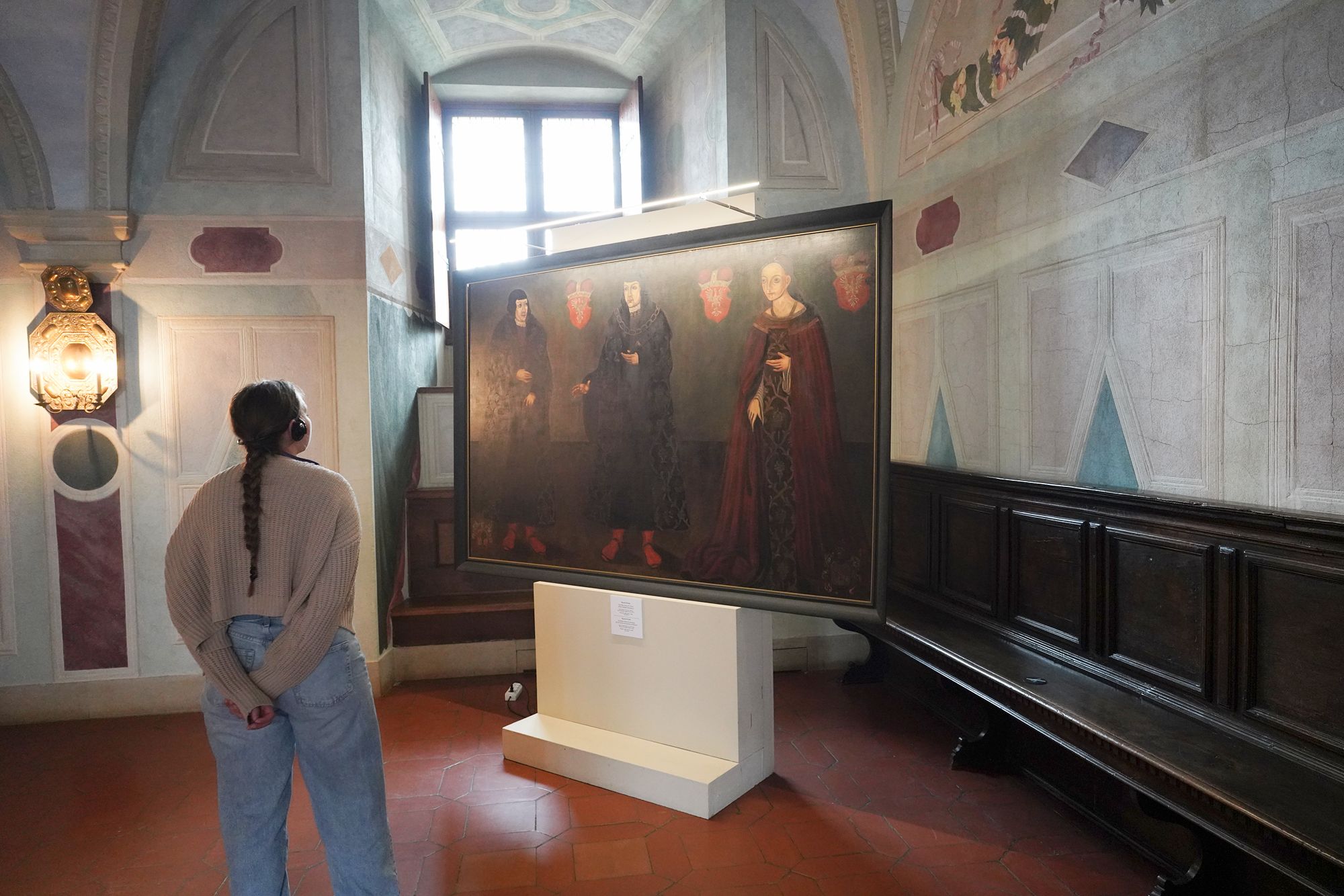
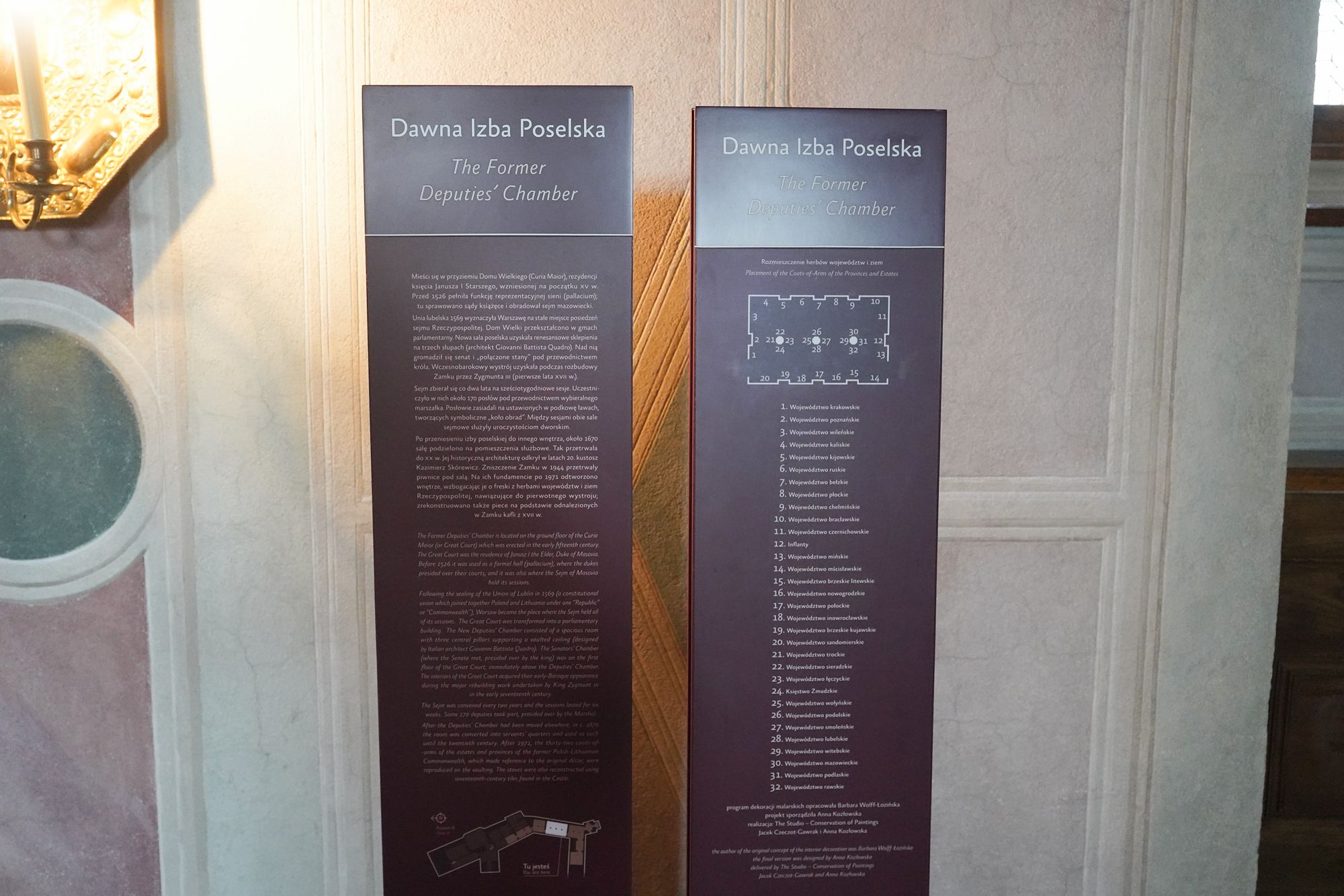
The Former Deputies’ Chamber occupies part of the castle’s early 15th-century residence of the Dukes of Mazovia. From 1569, deputies of the Polish–Lithuanian Commonwealth met here, while the king and senators gathered upstairs. Its reconstructed decoration includes regional coats of arms, reflecting the territories represented in parliament.
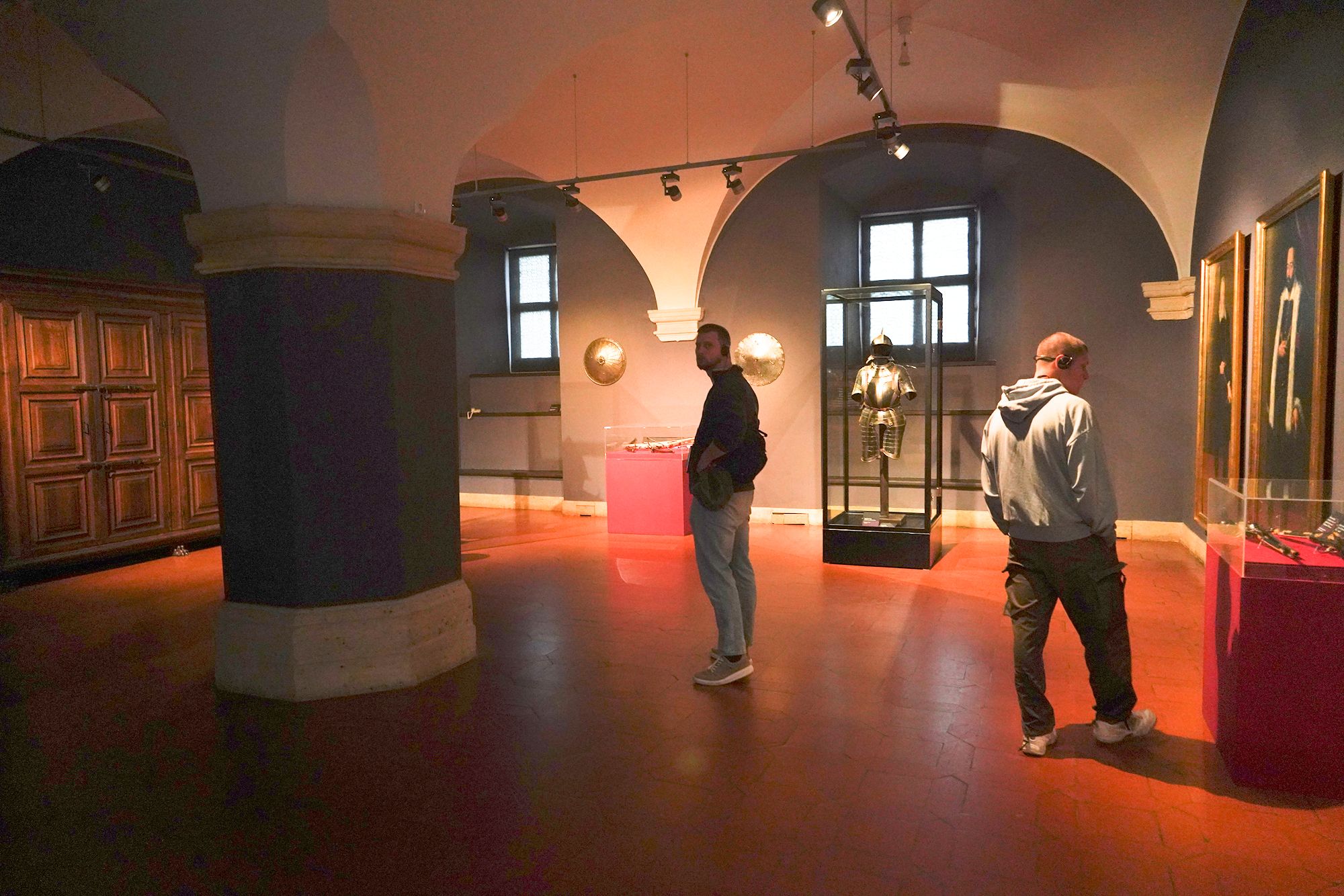
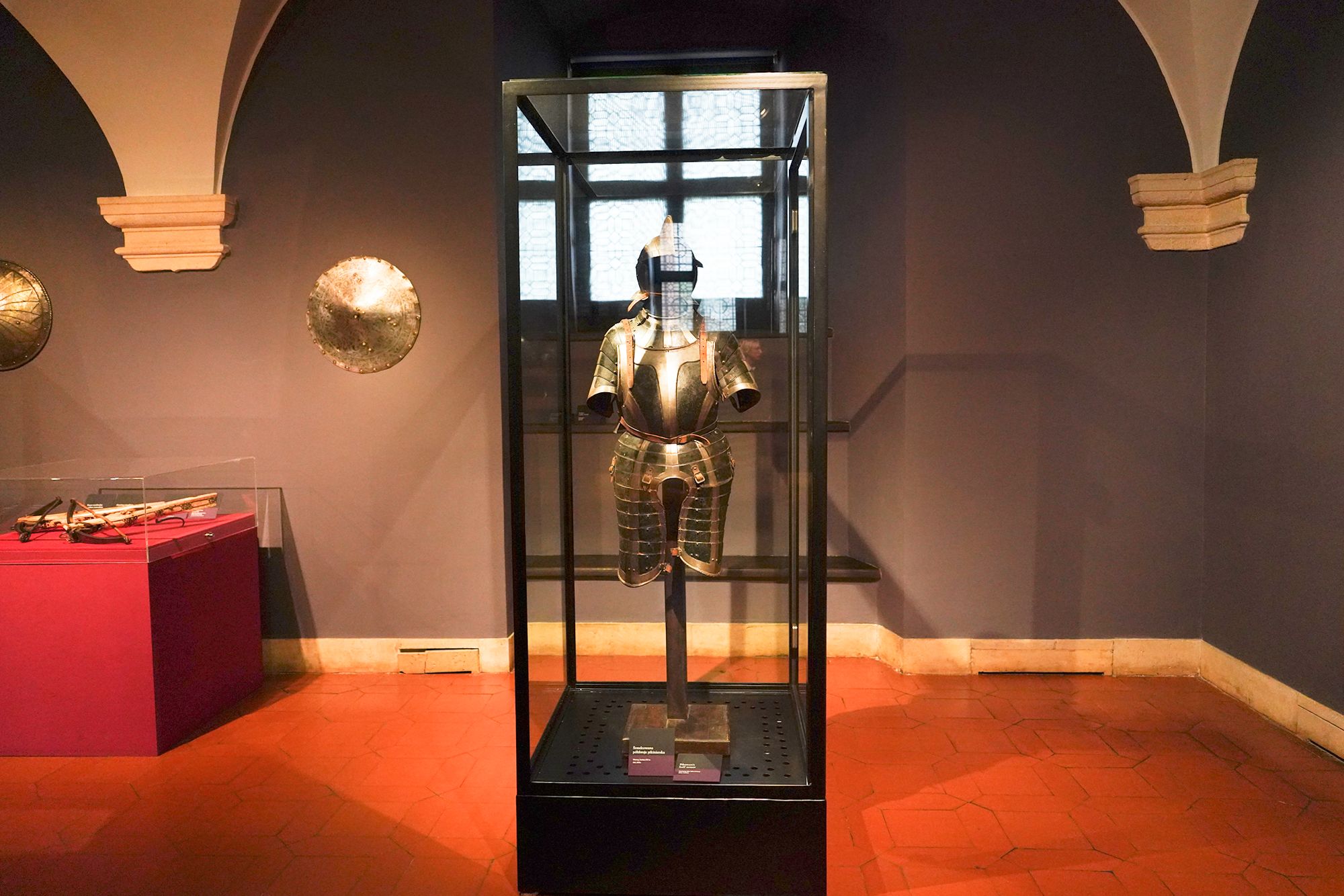
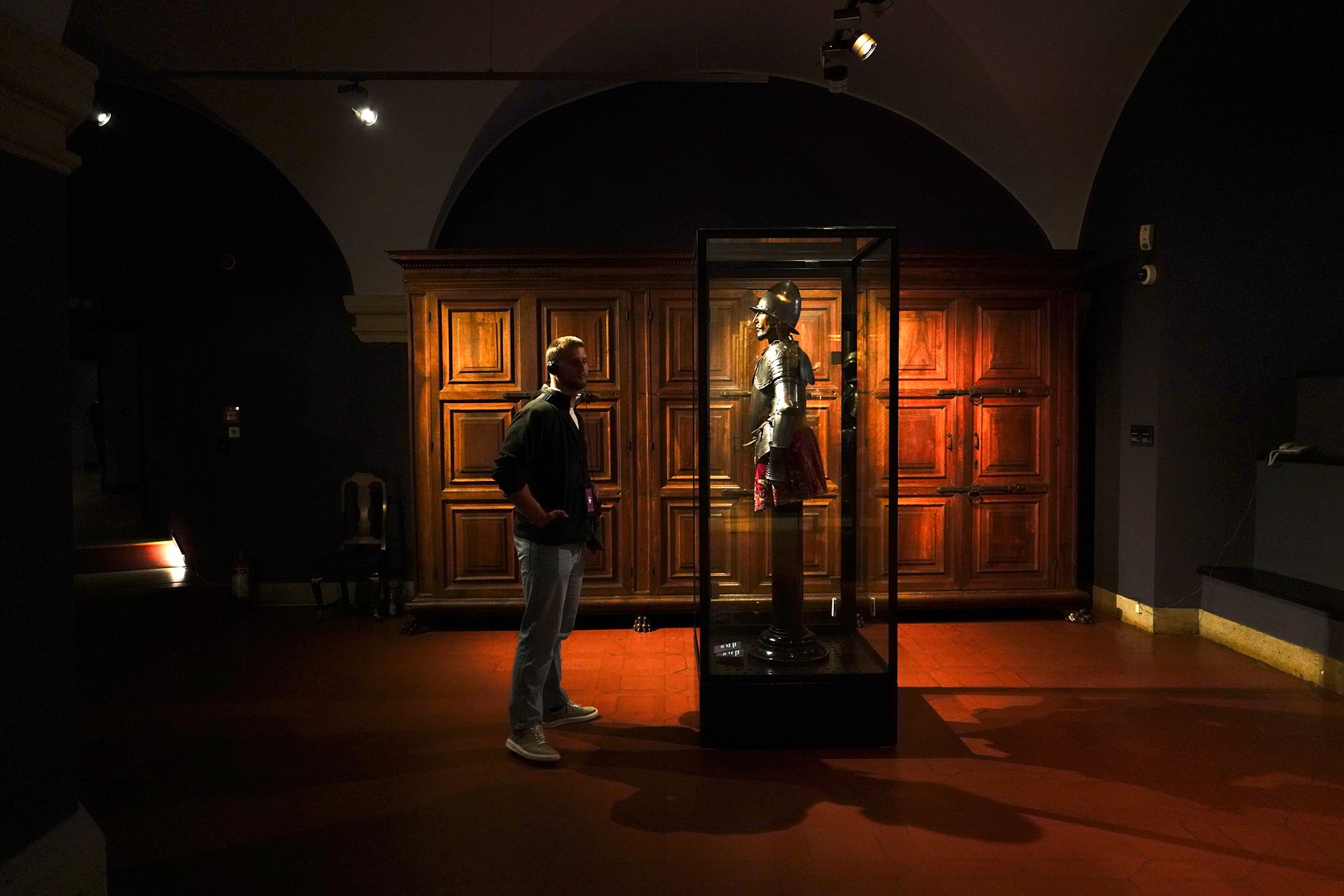
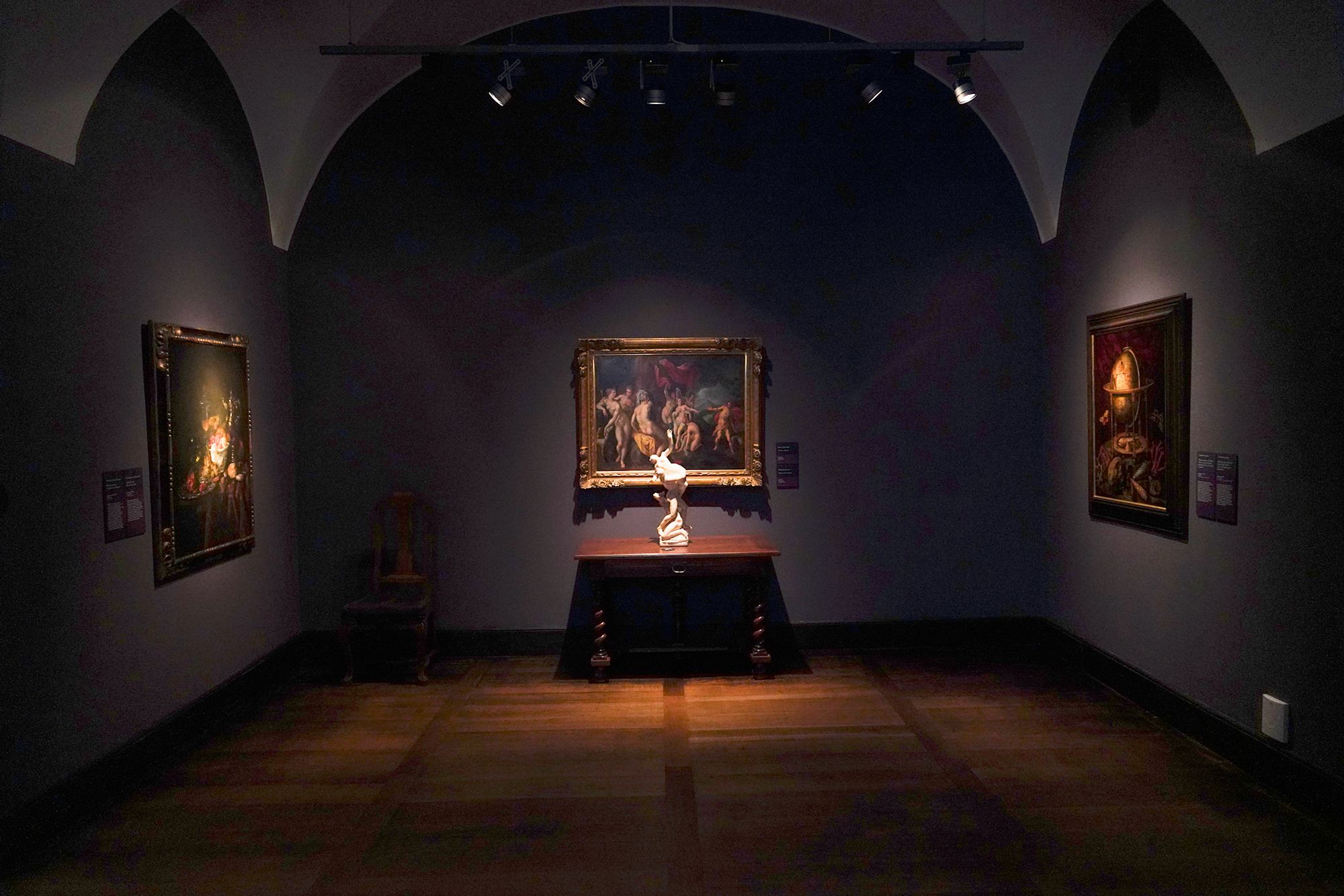
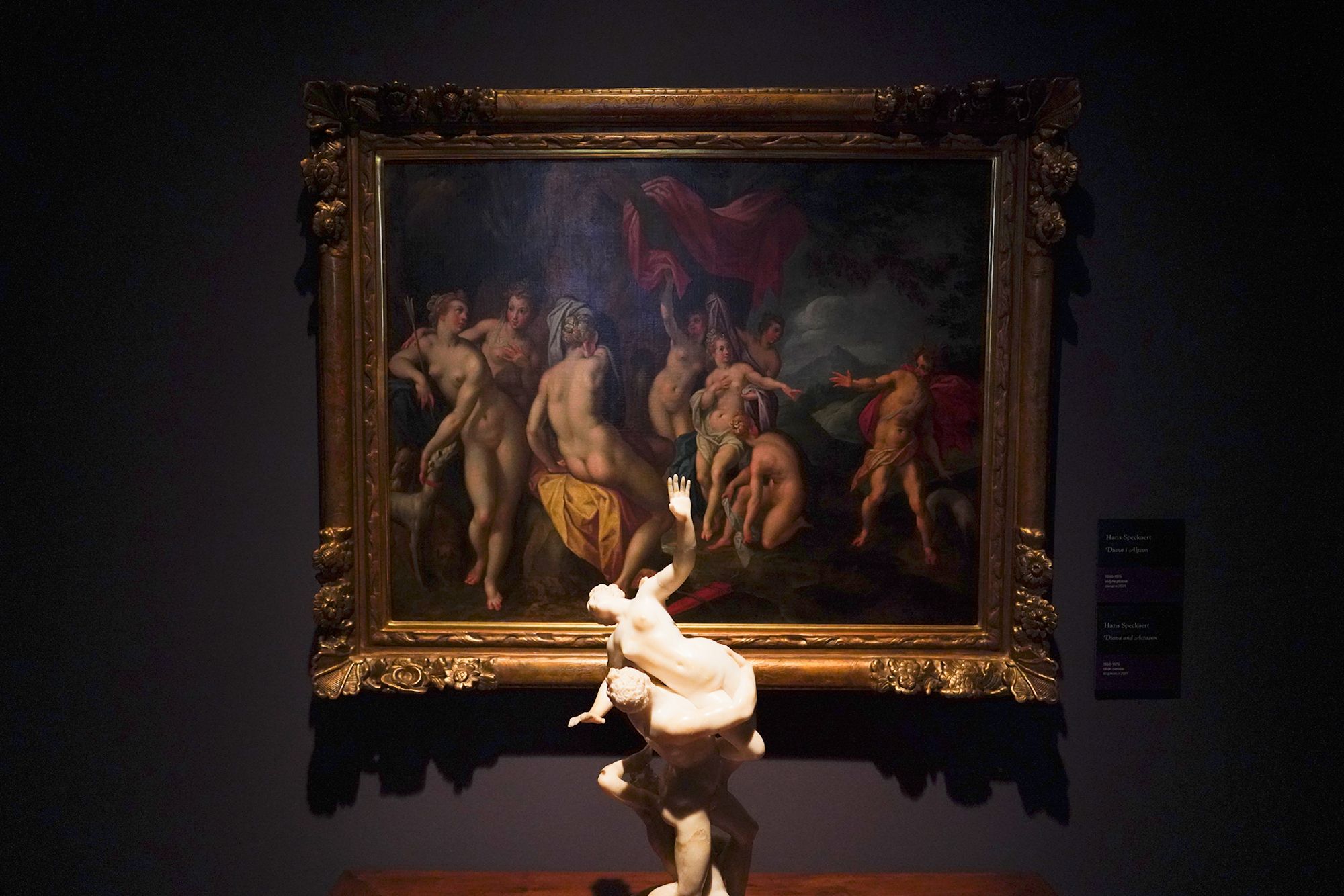
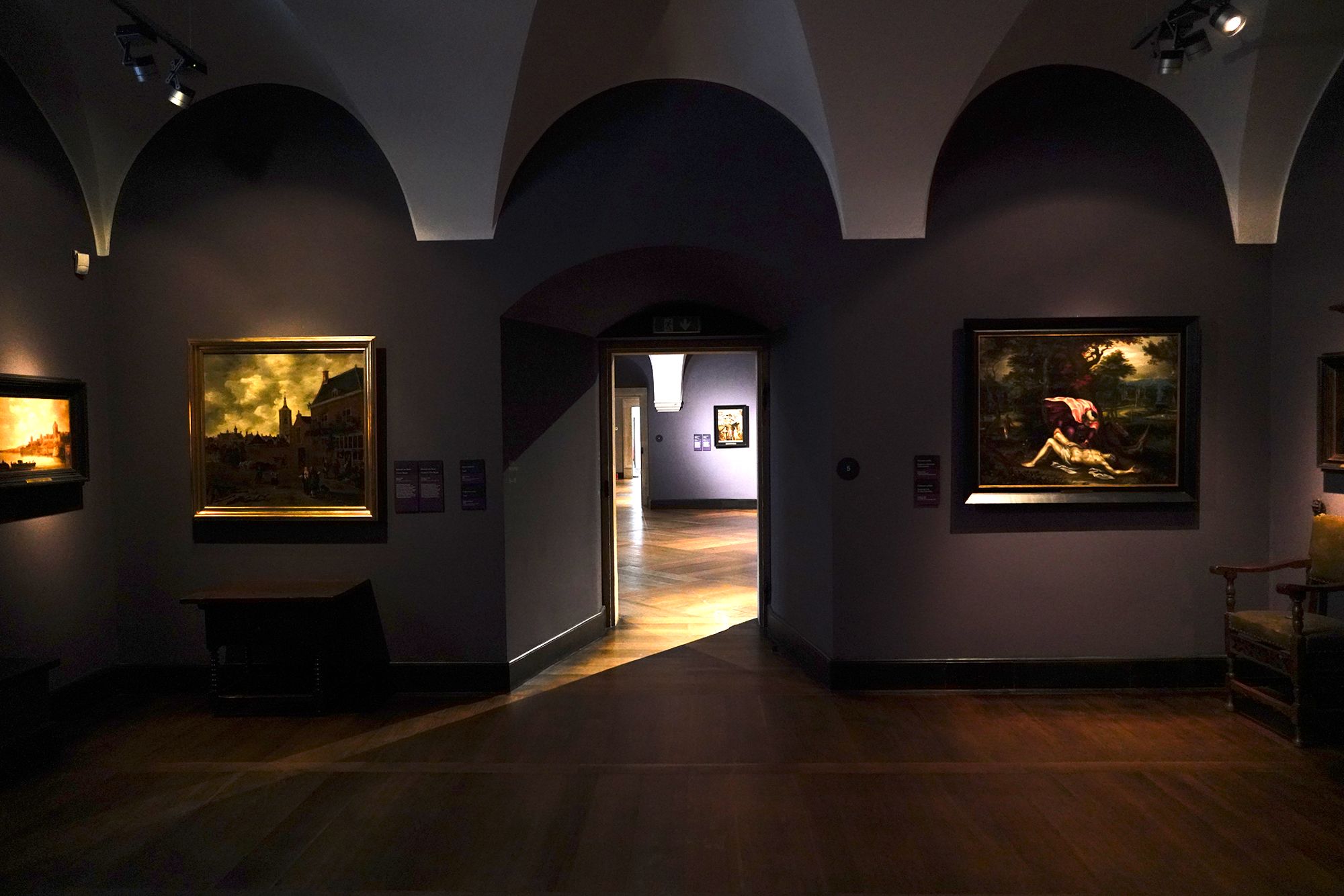
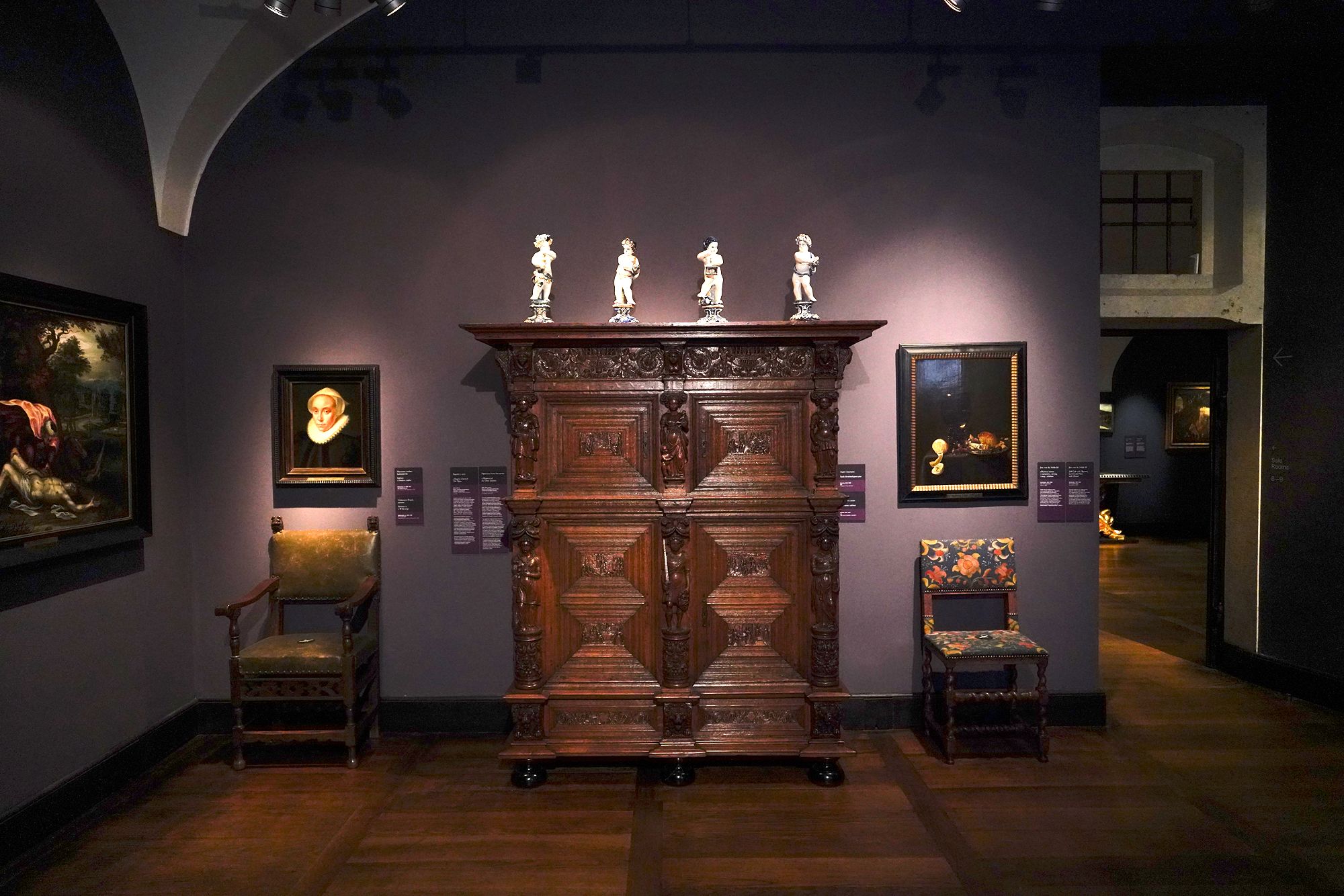
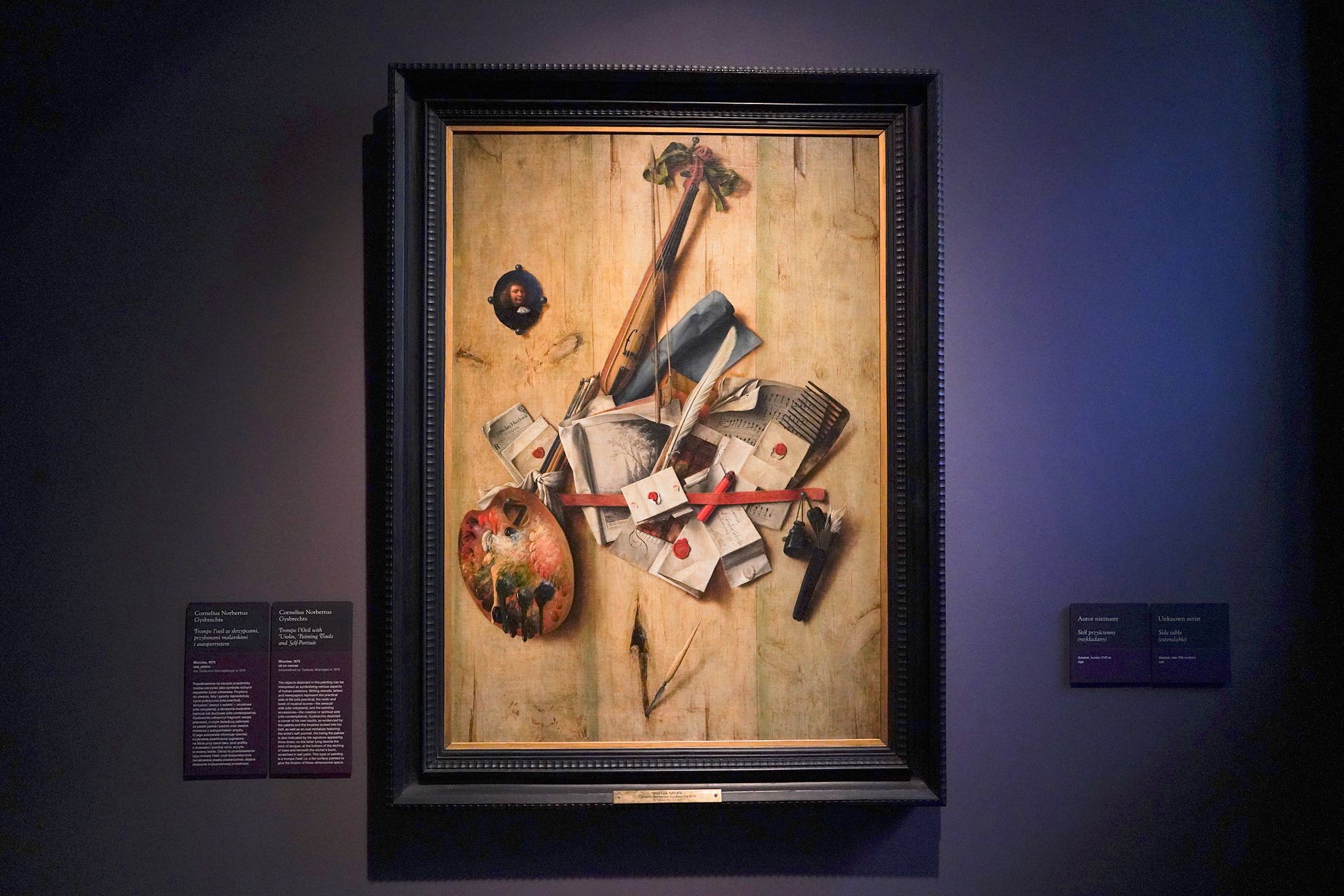
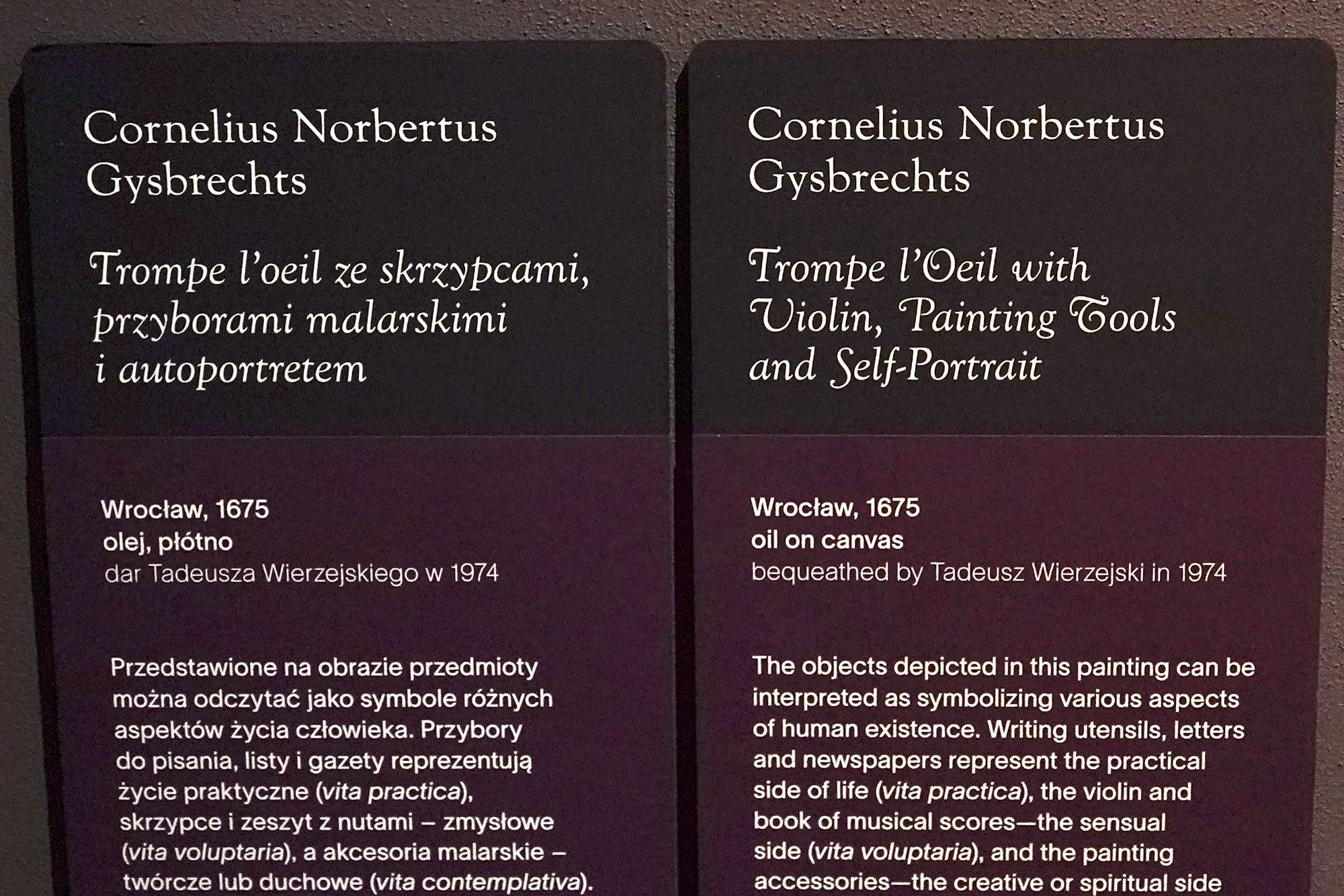
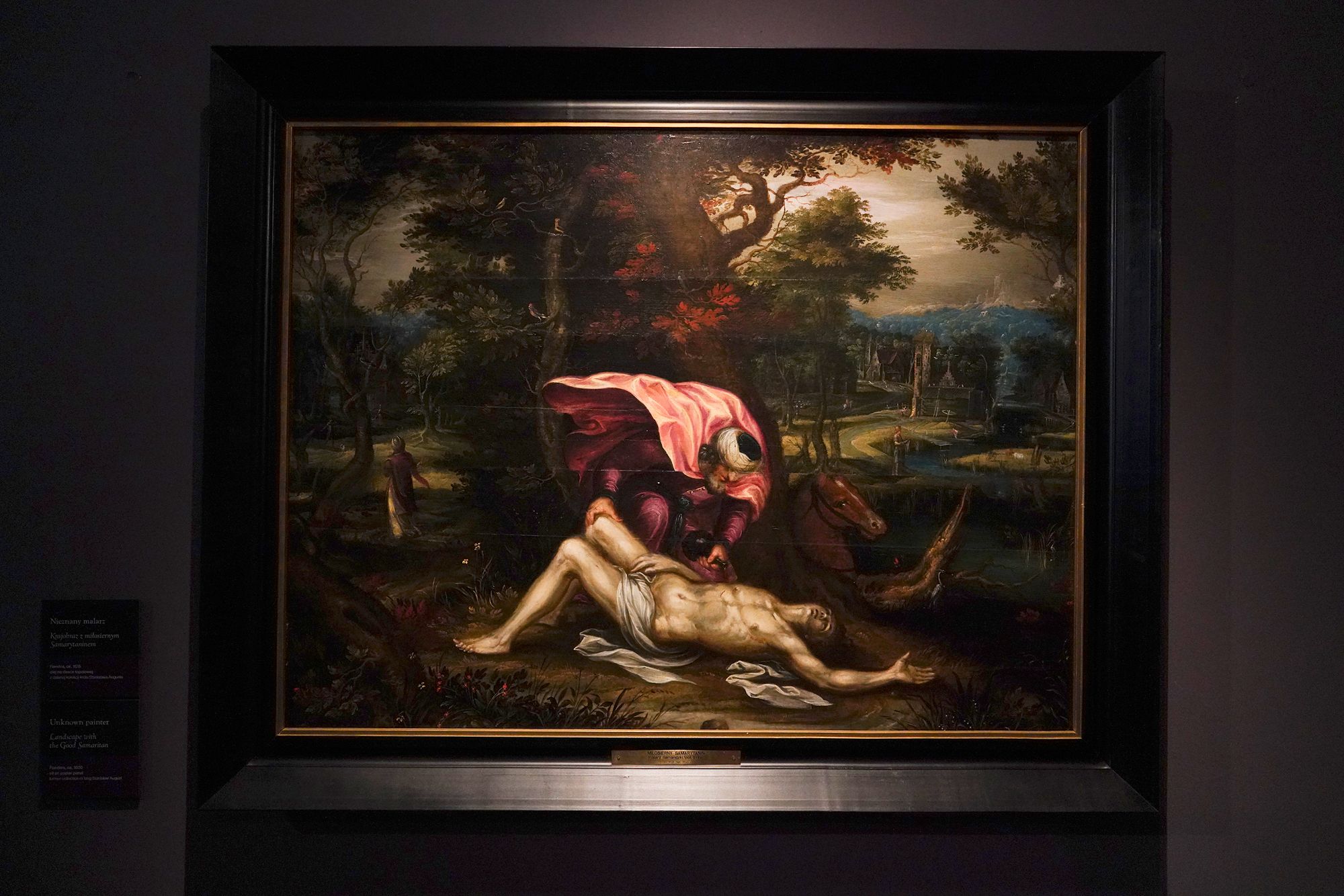
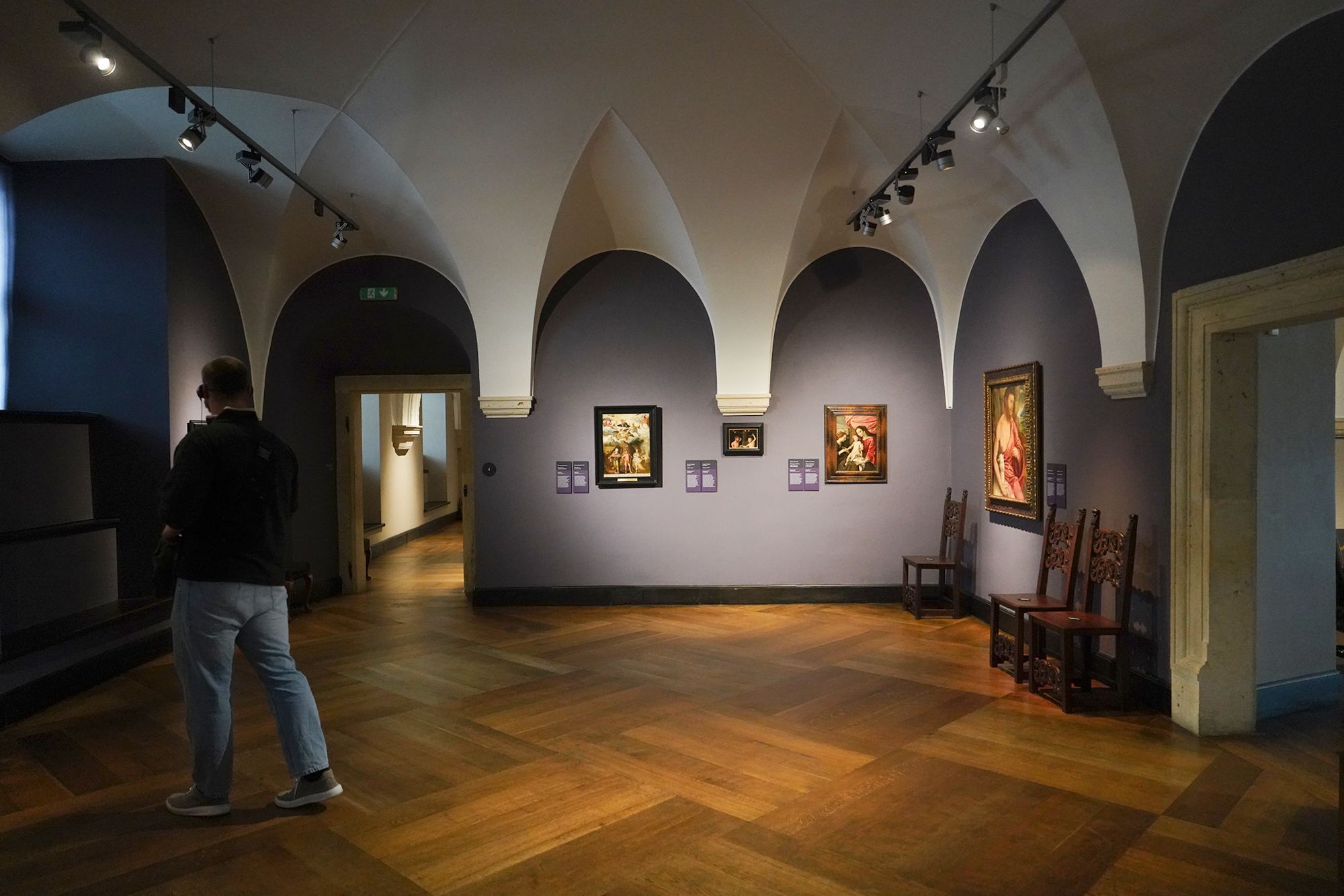
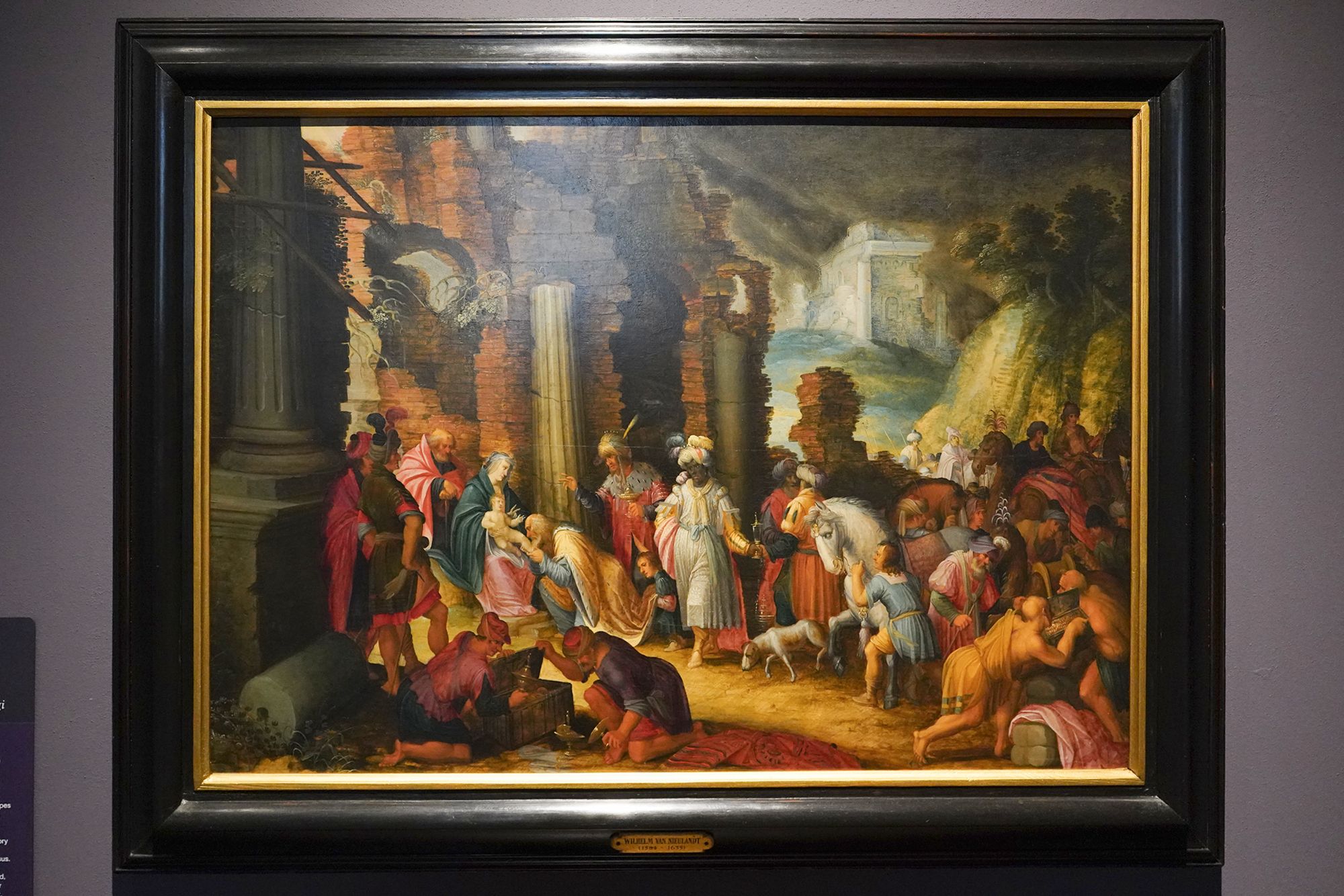
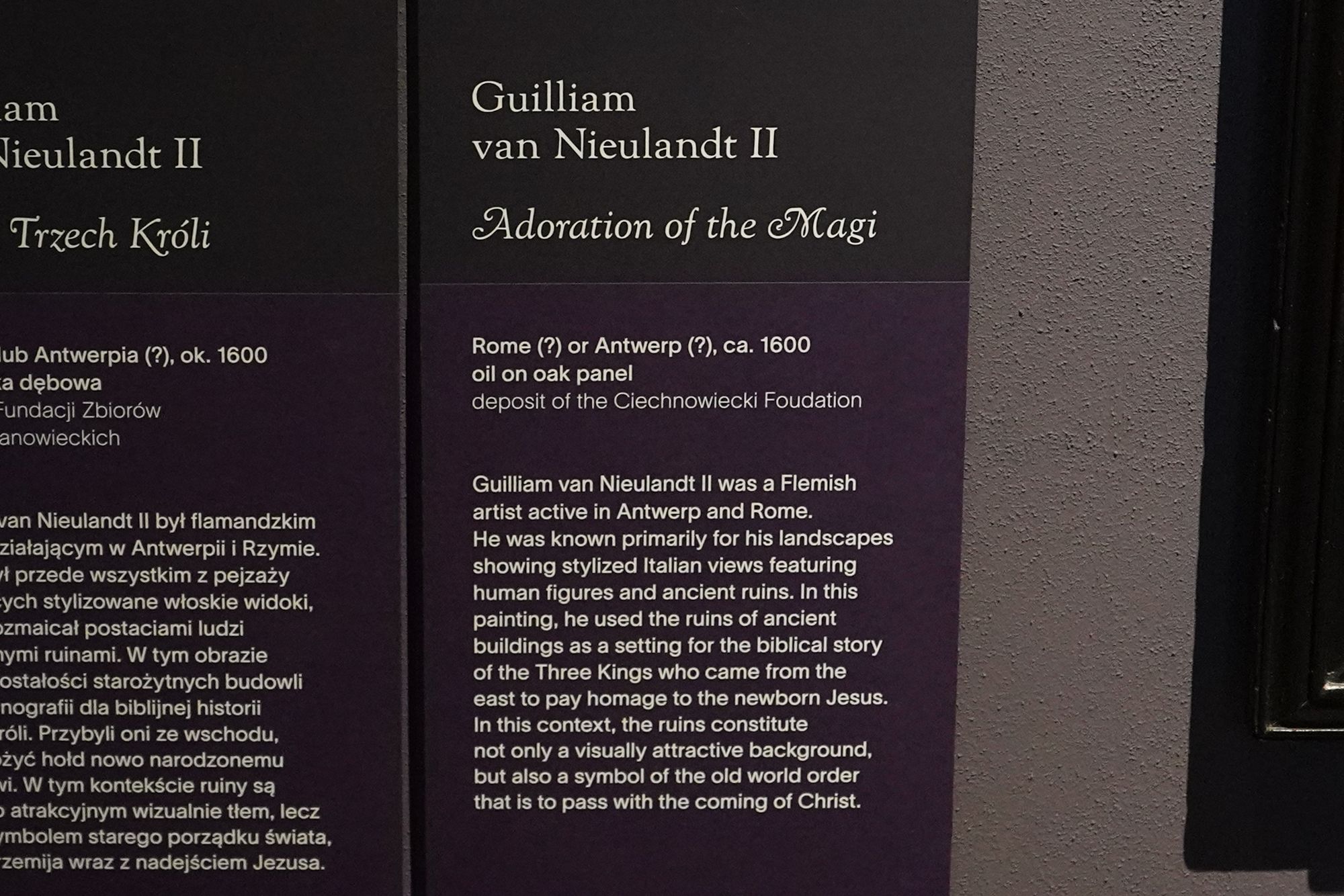
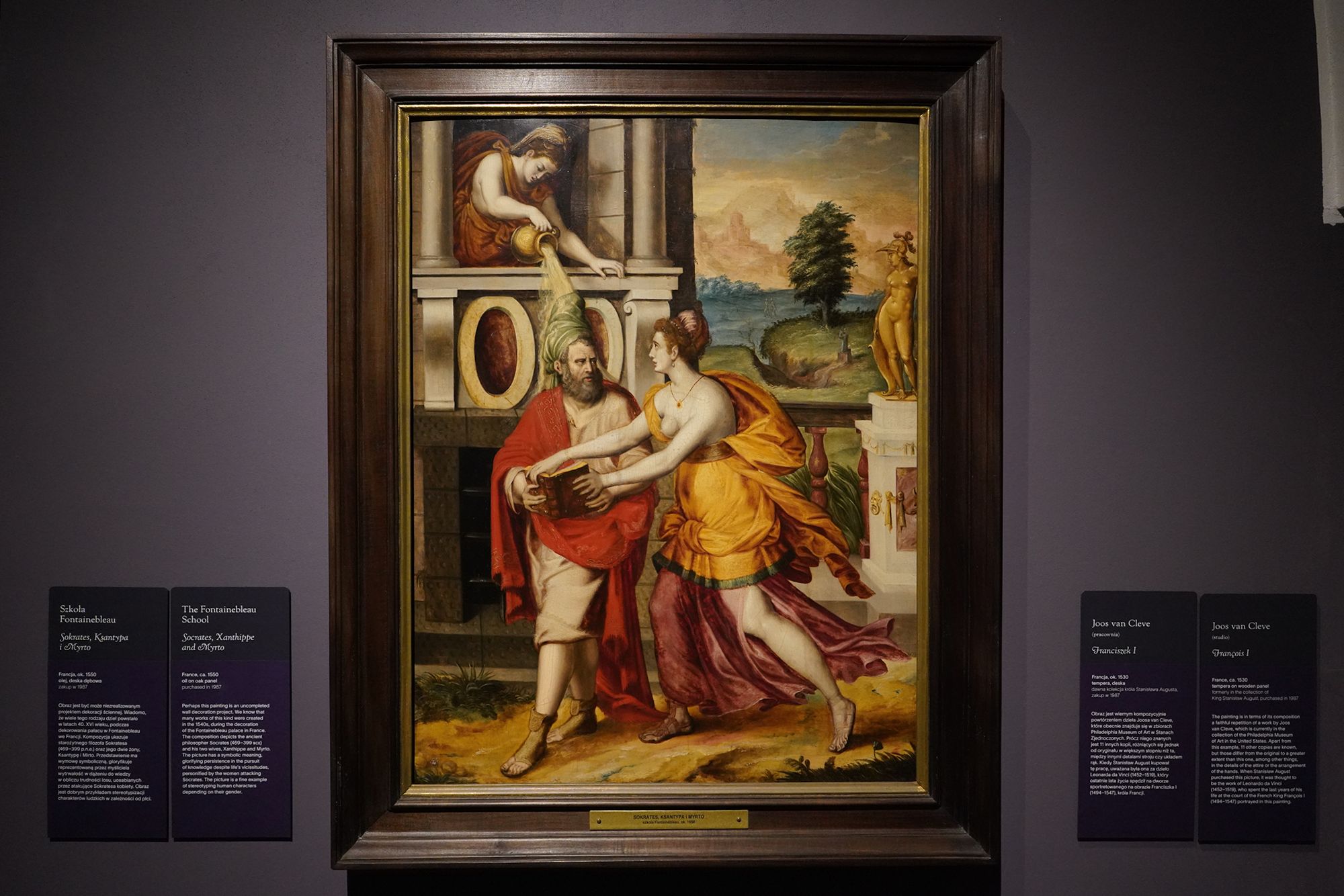
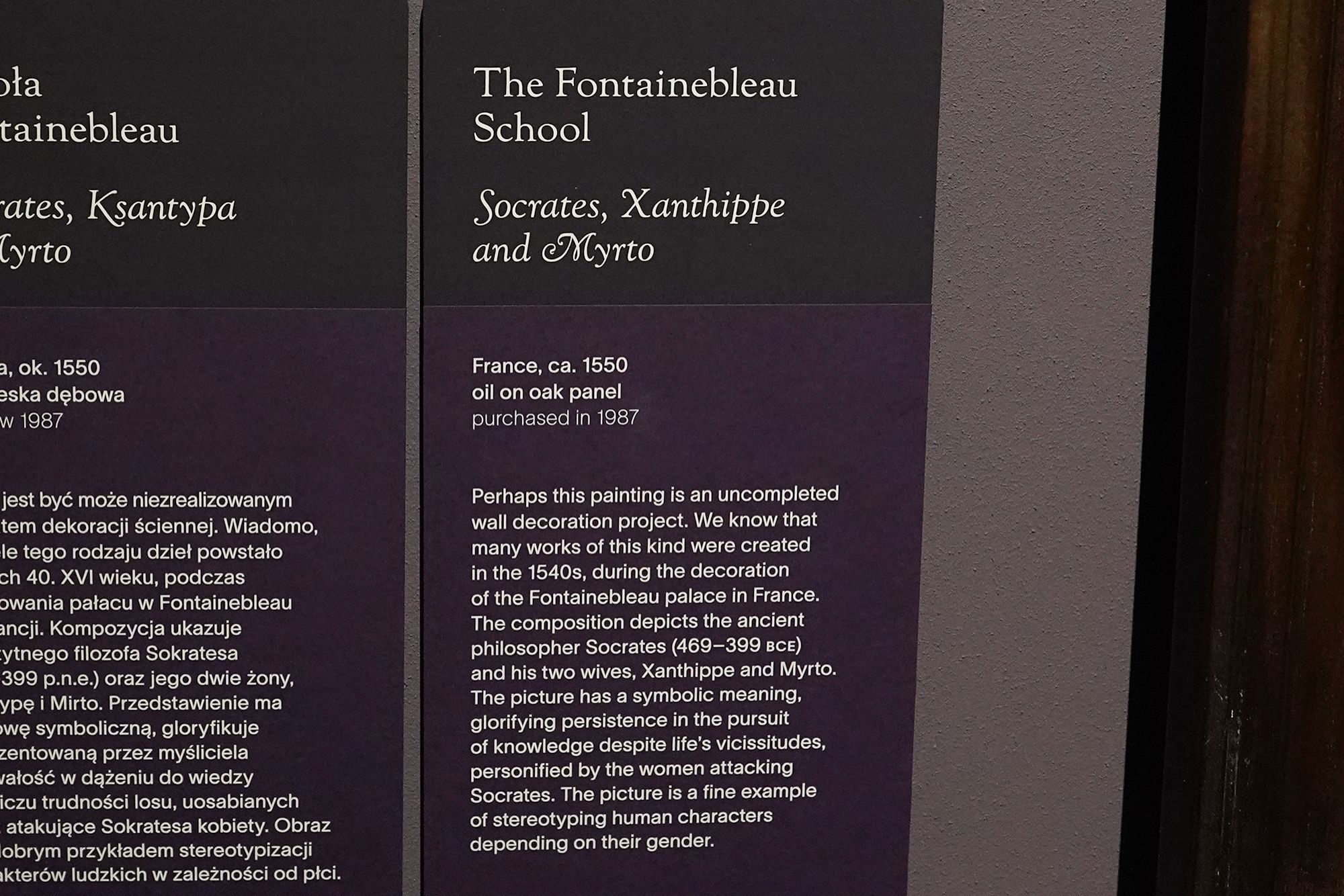
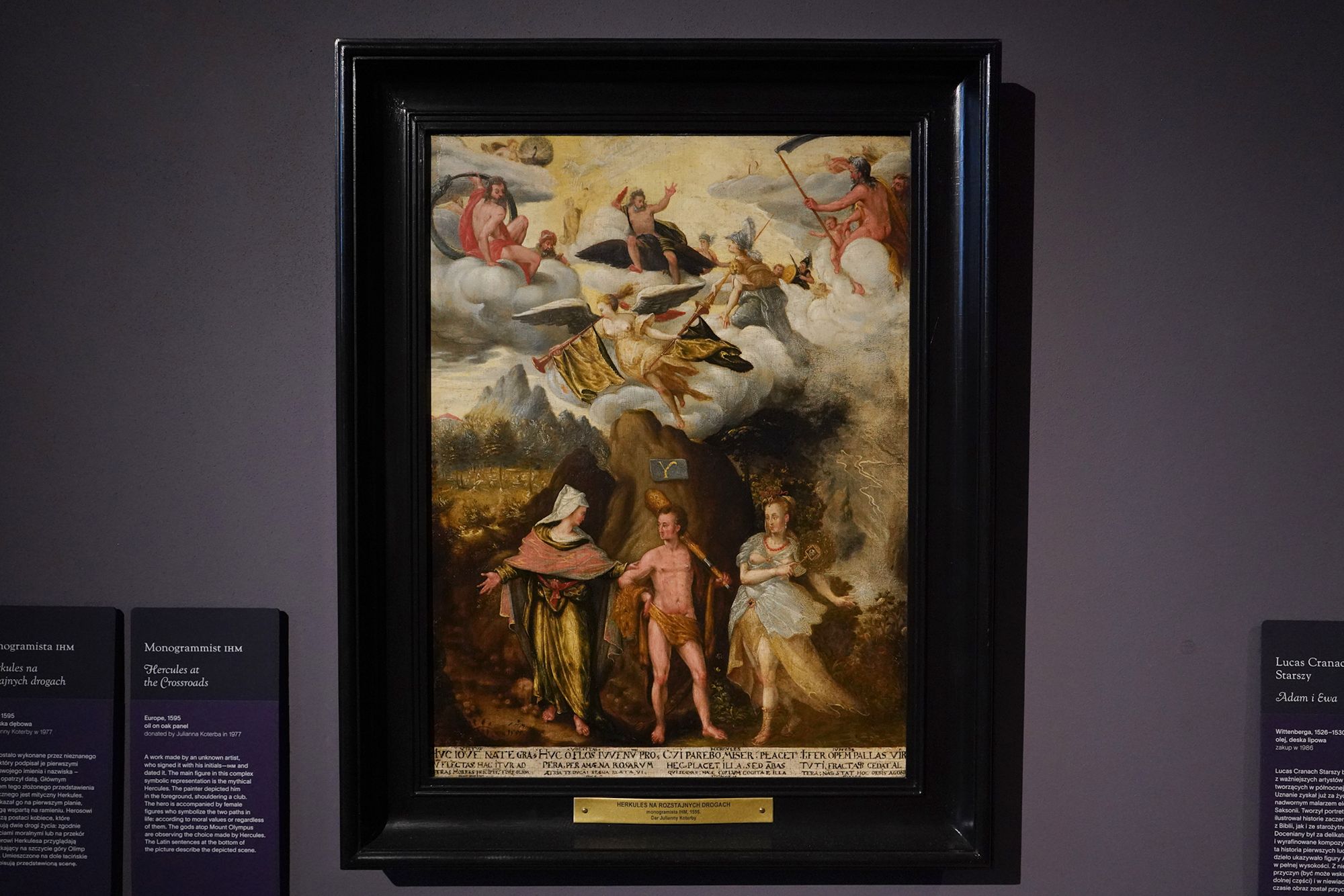
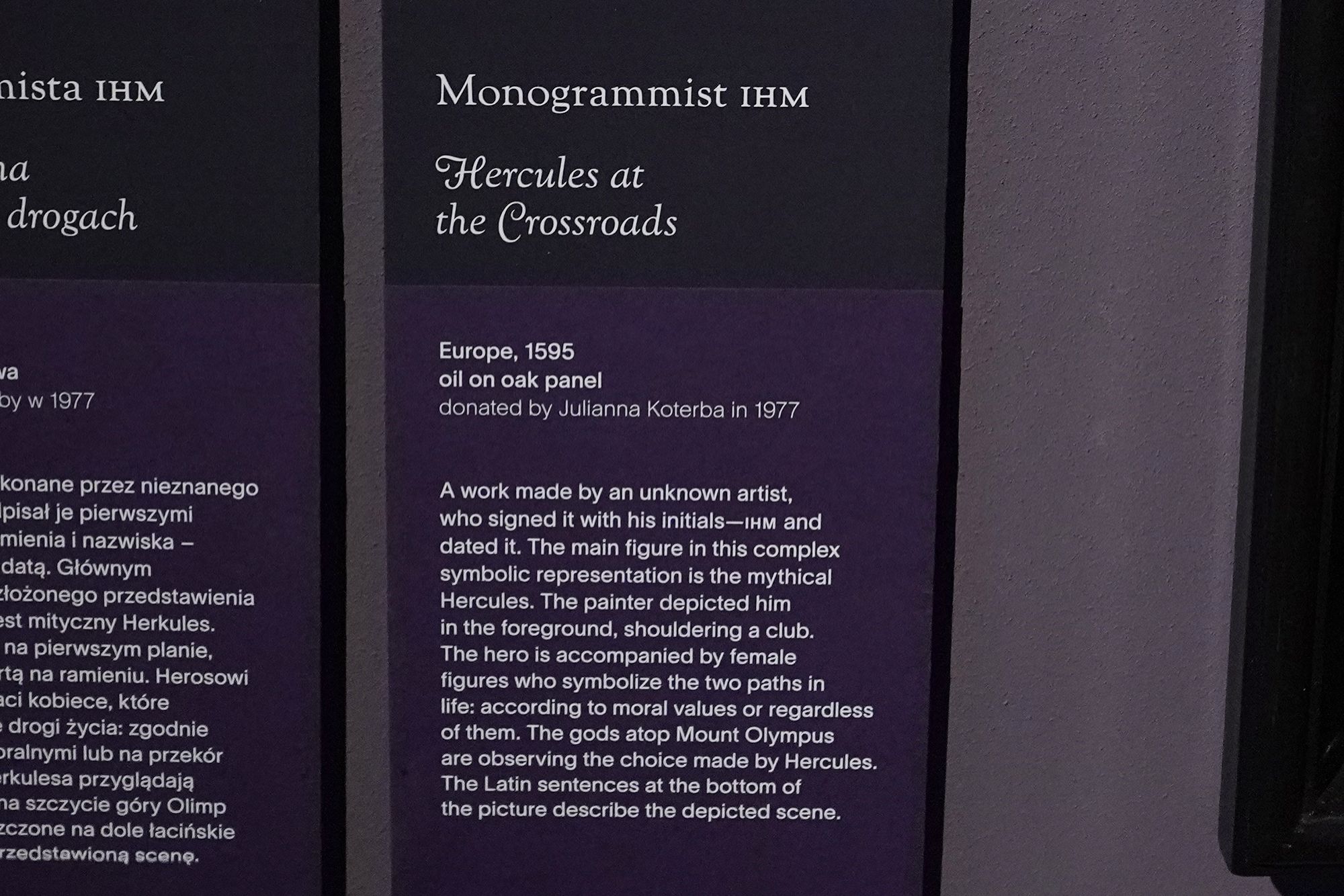
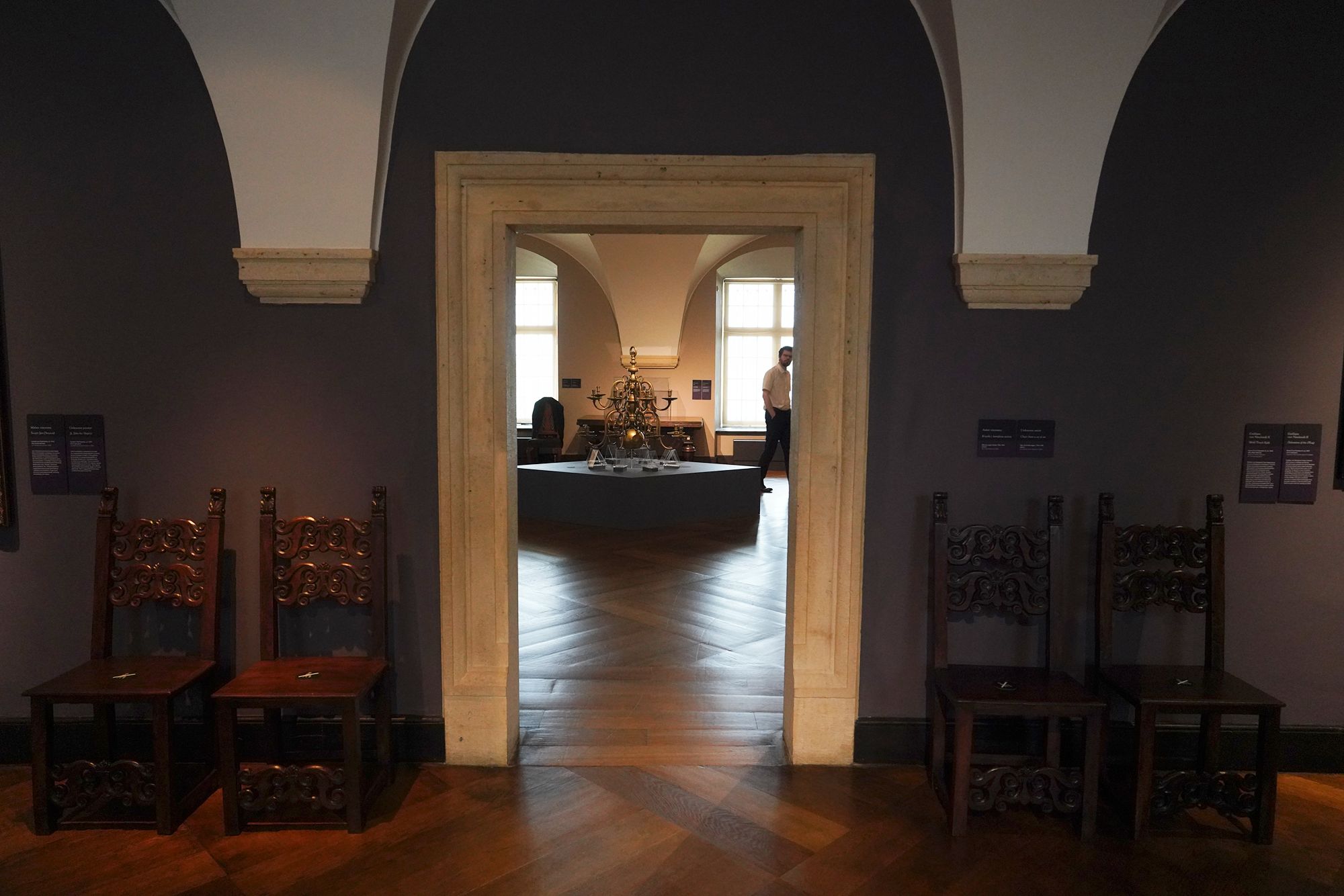
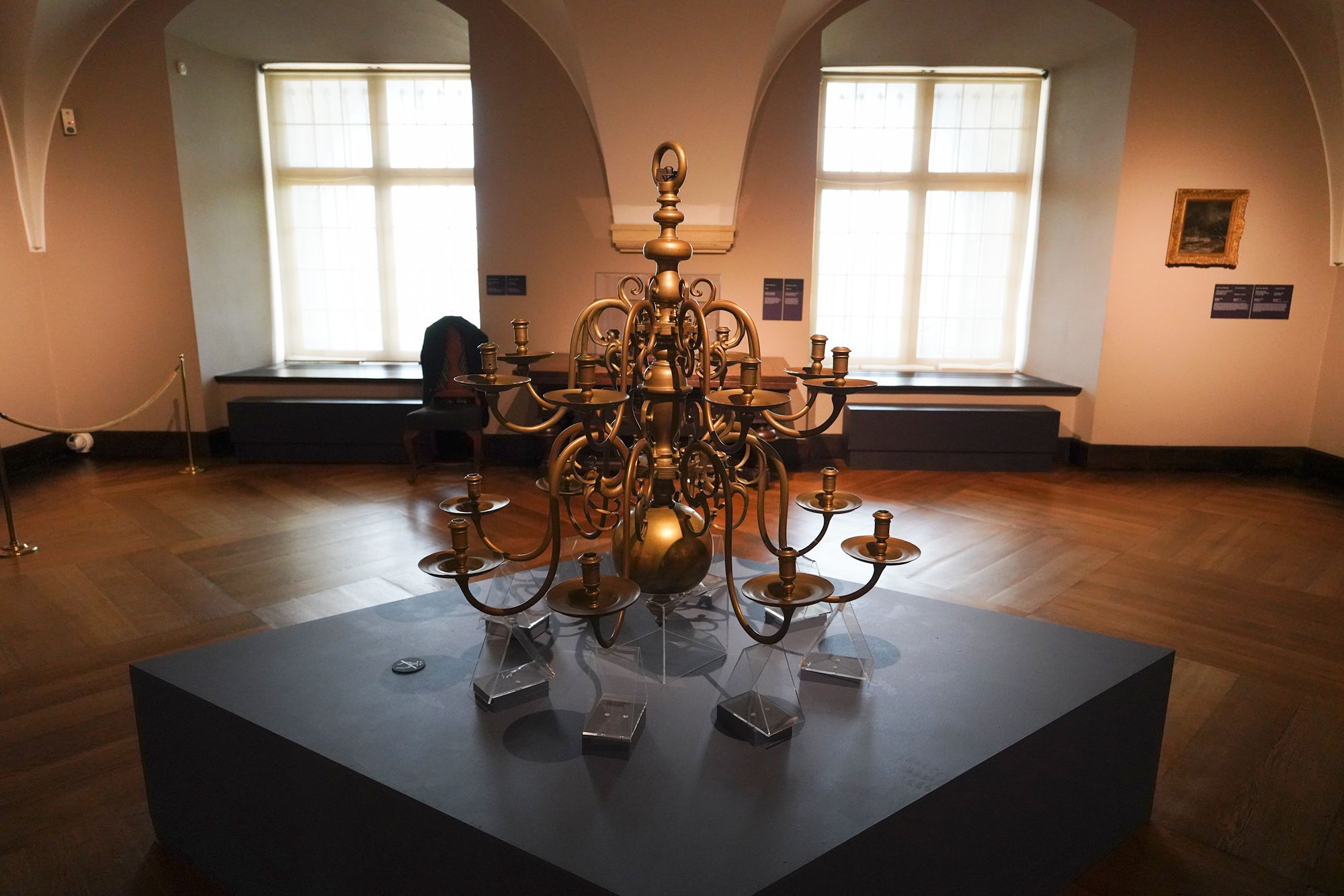
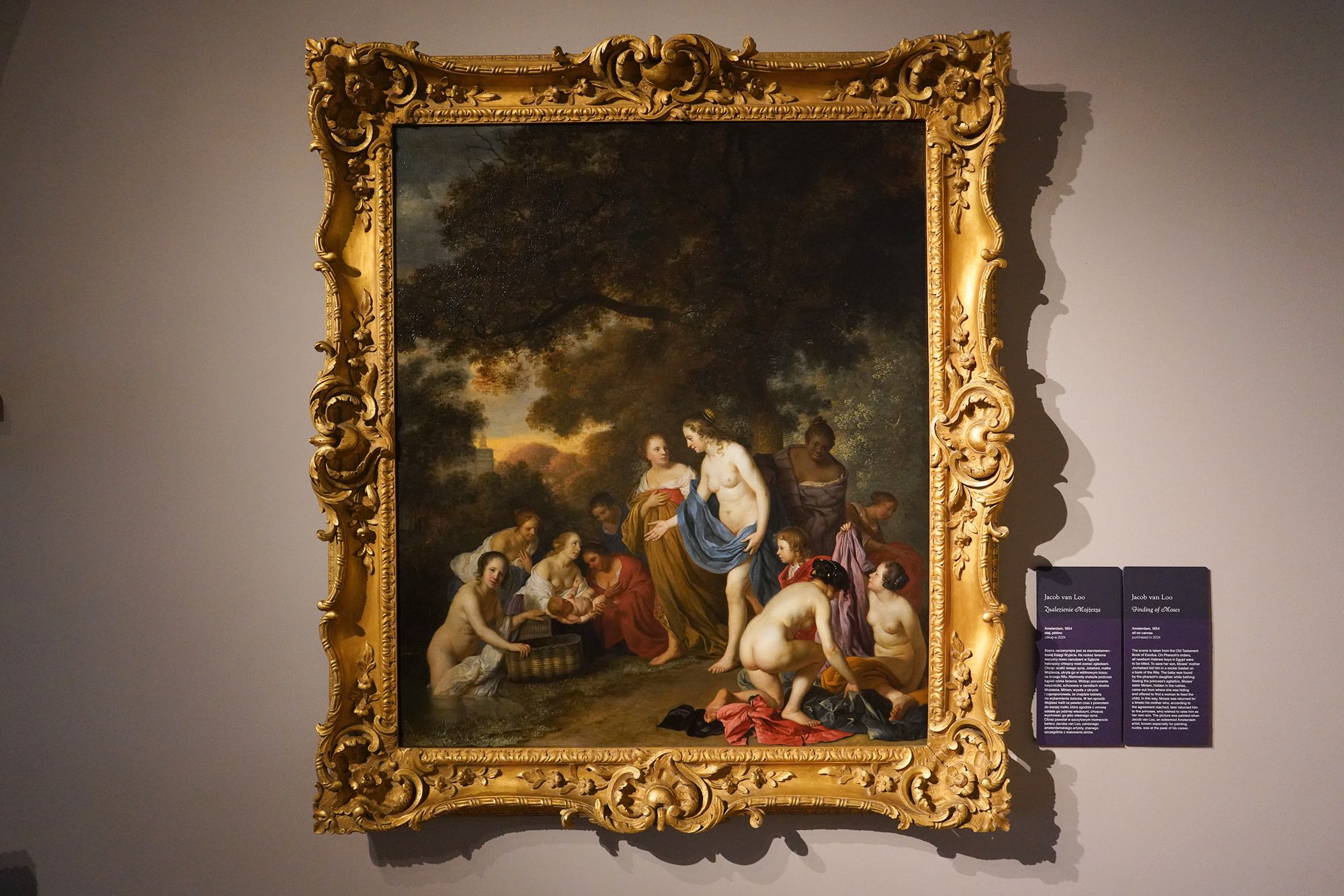
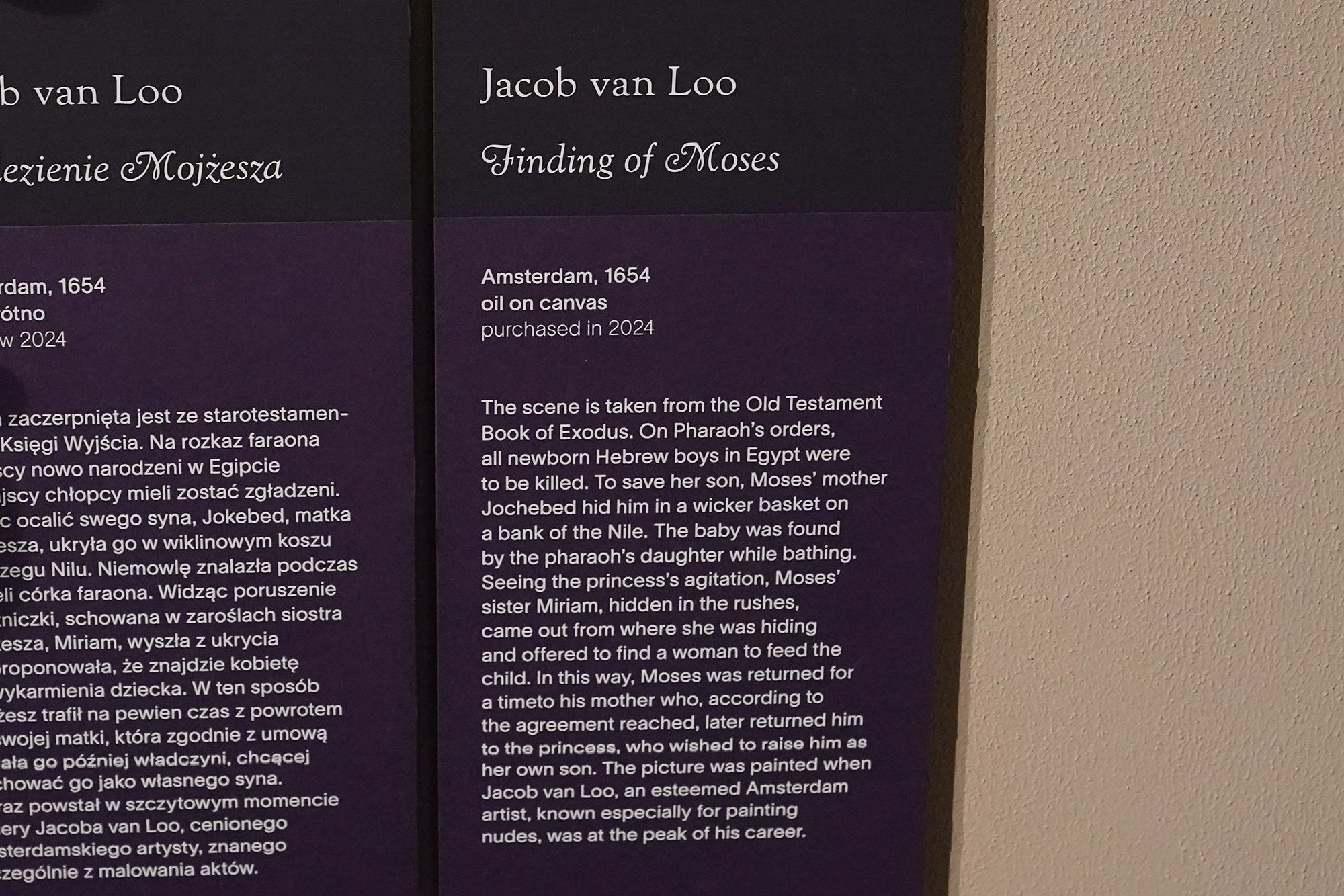
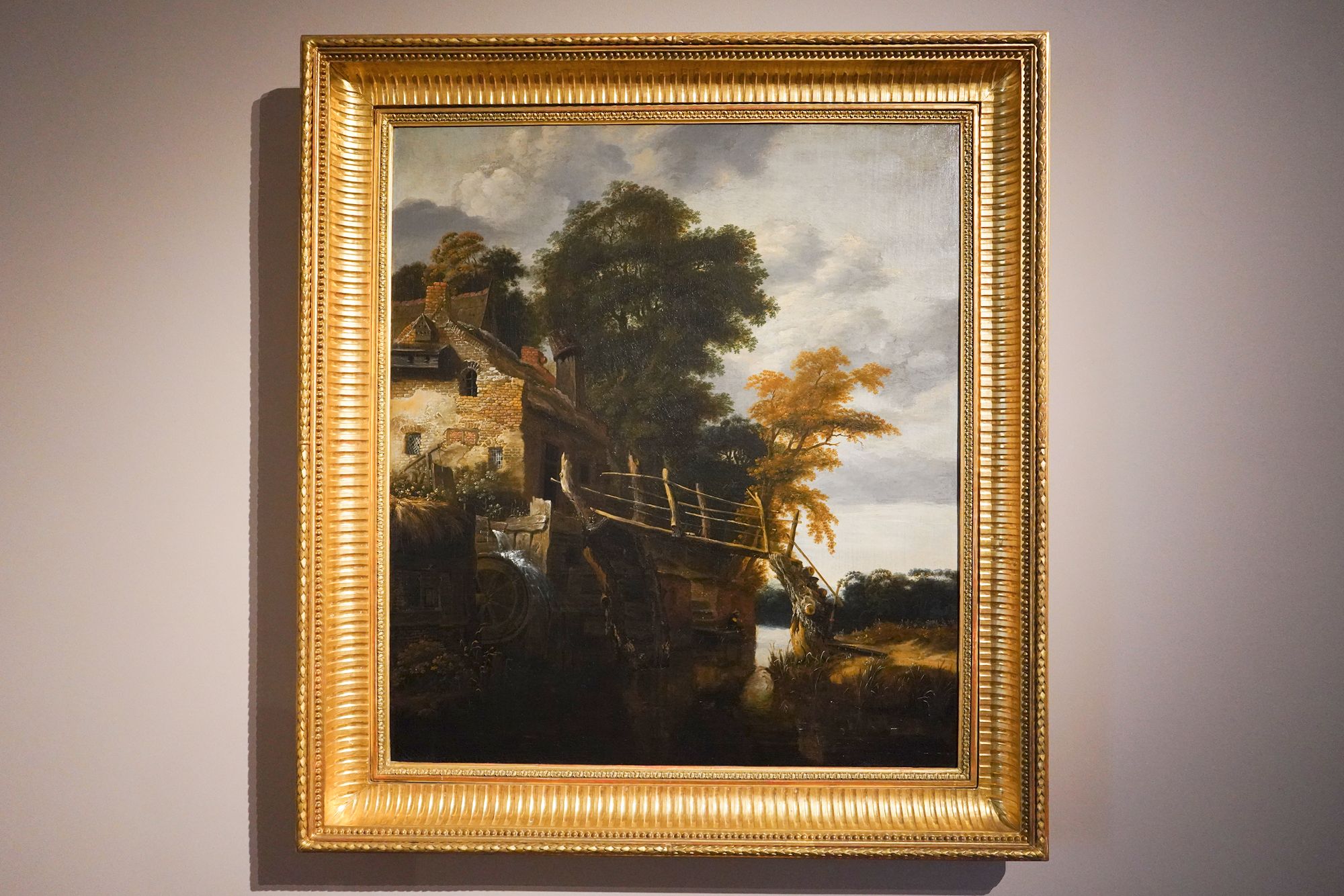
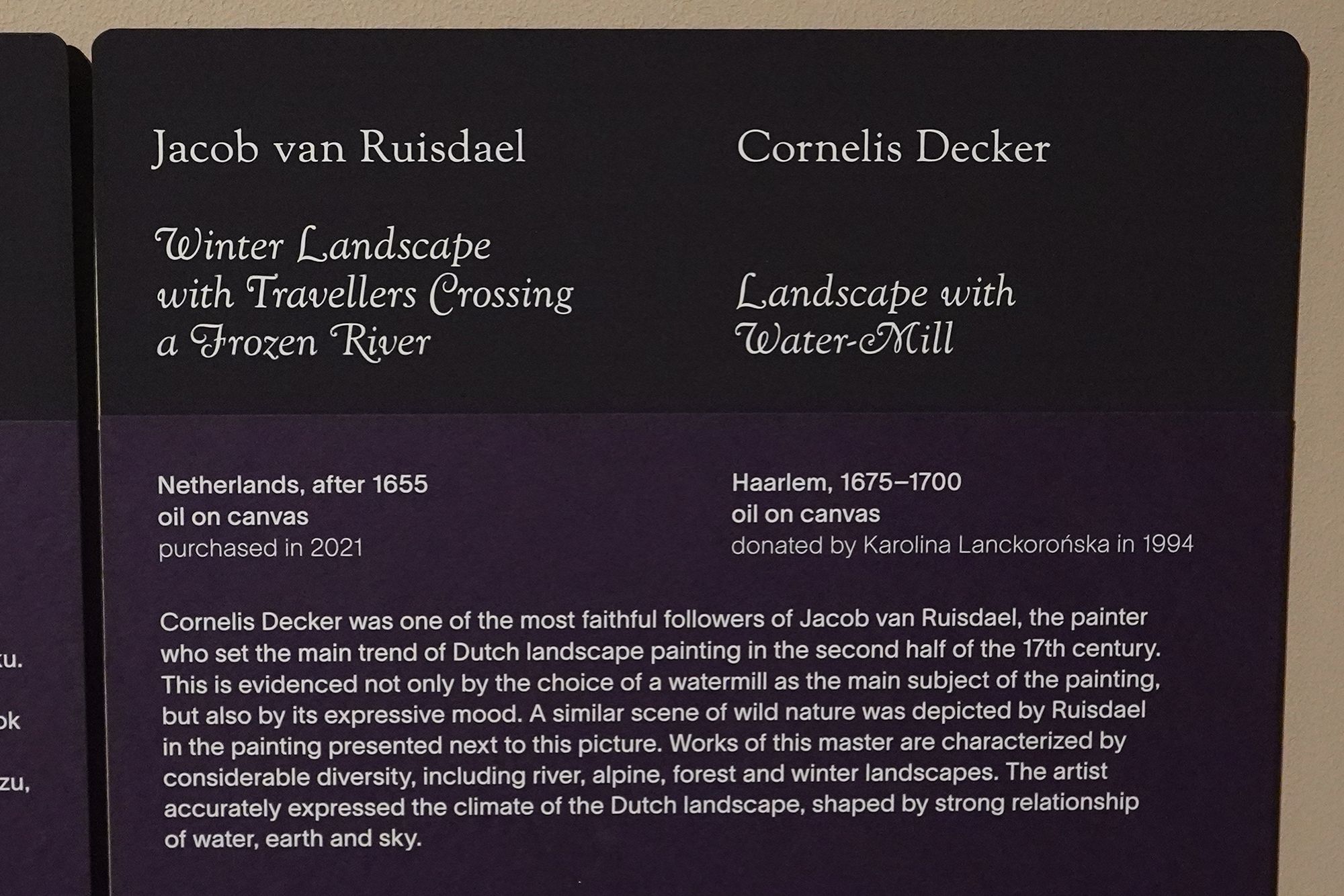
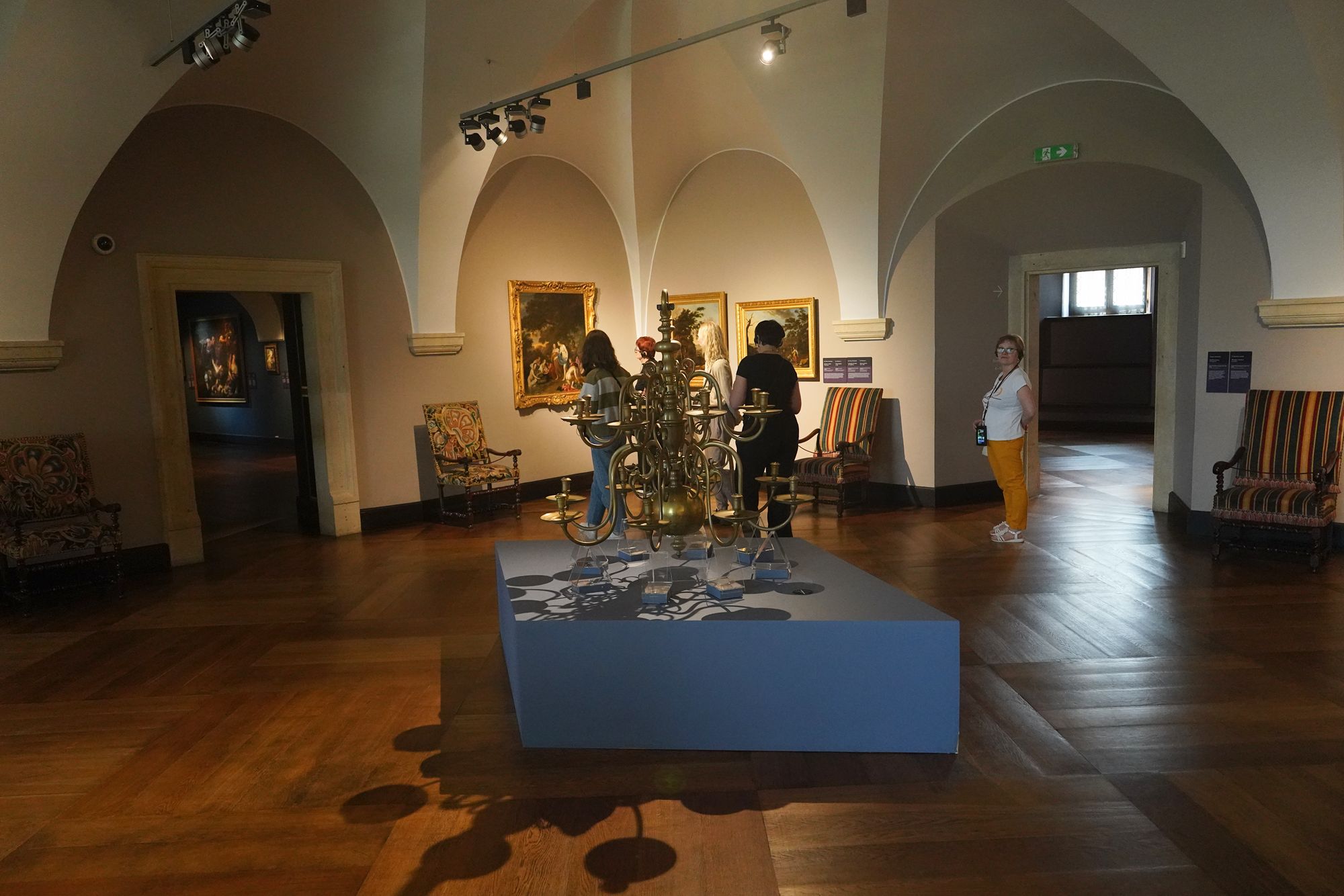
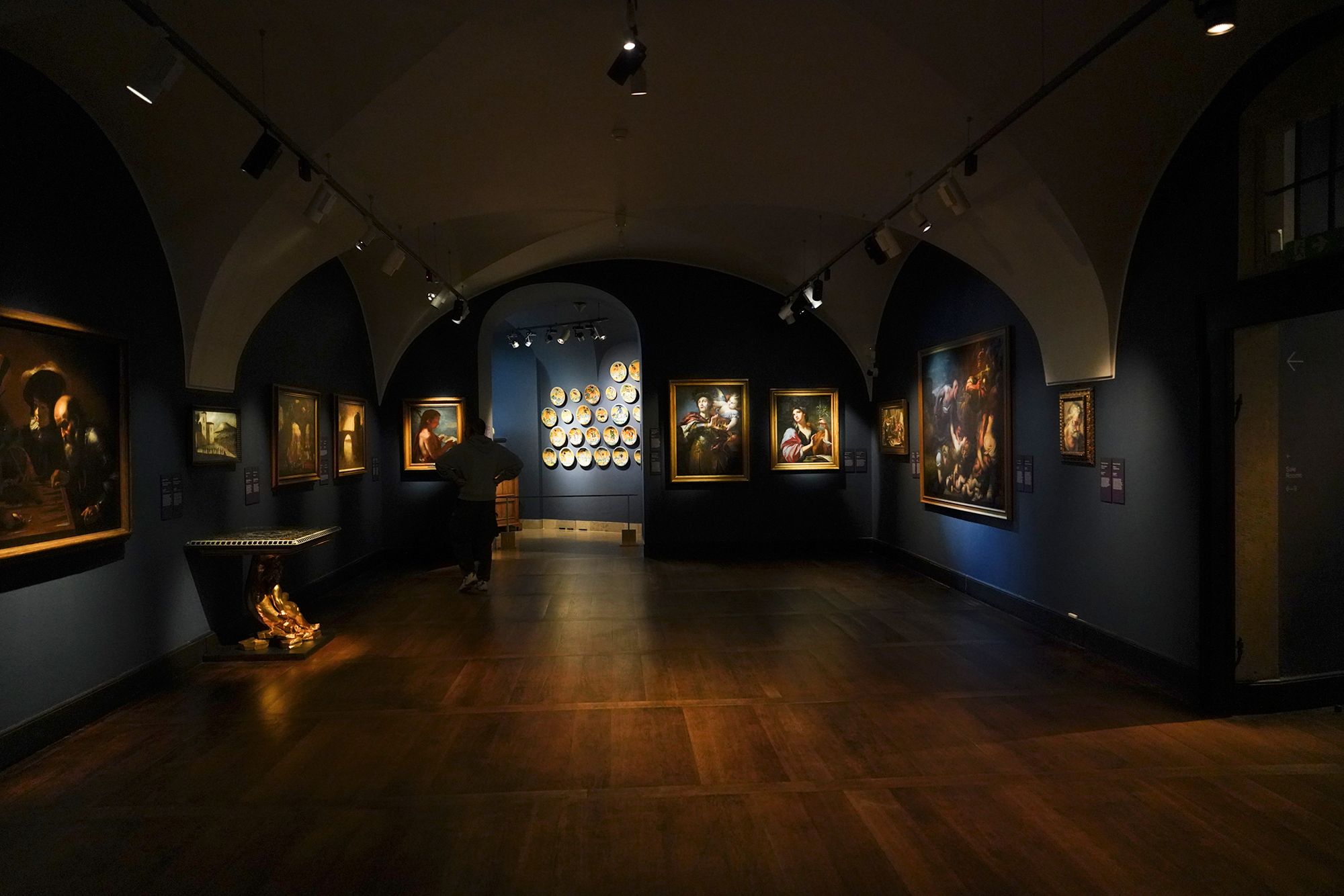
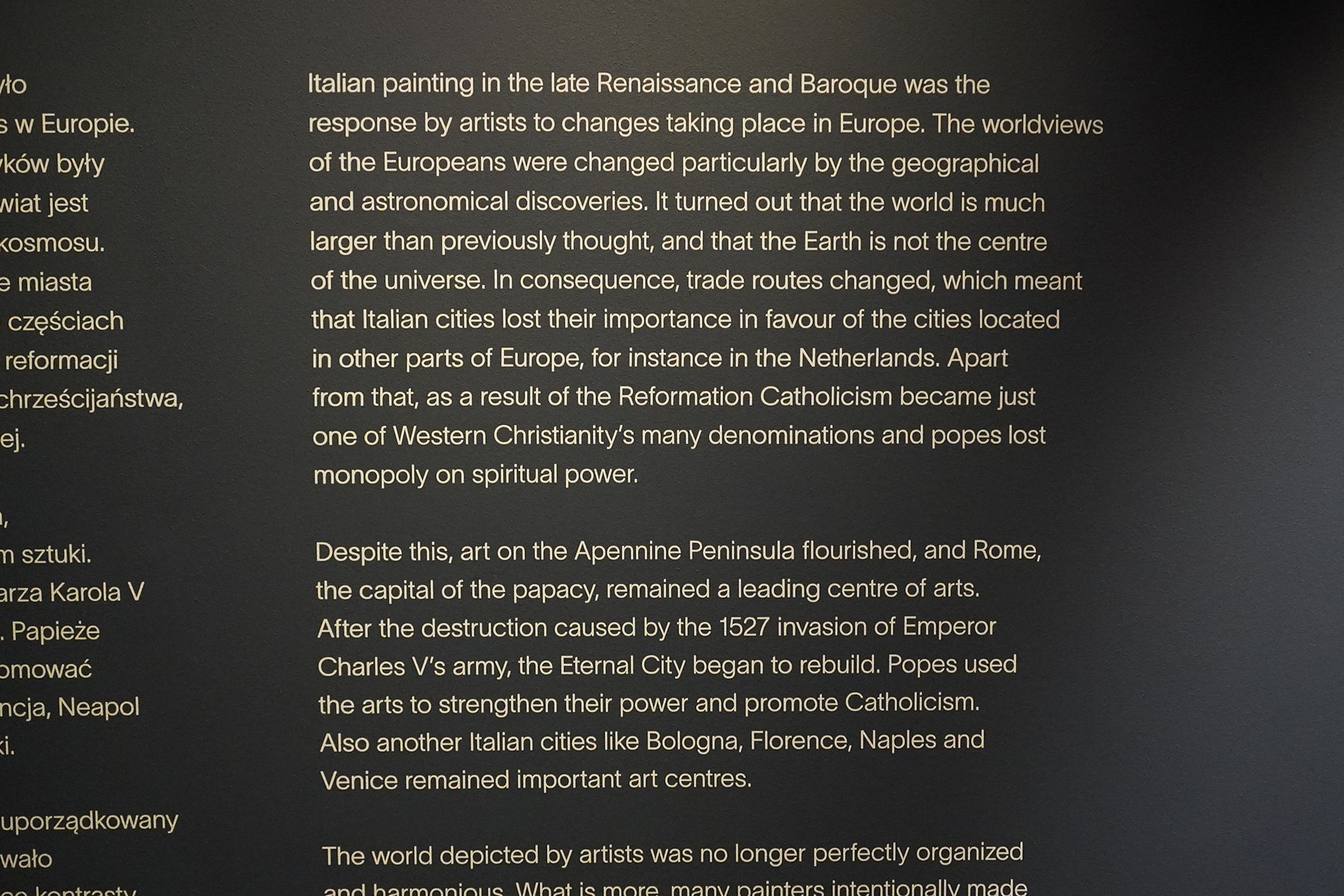
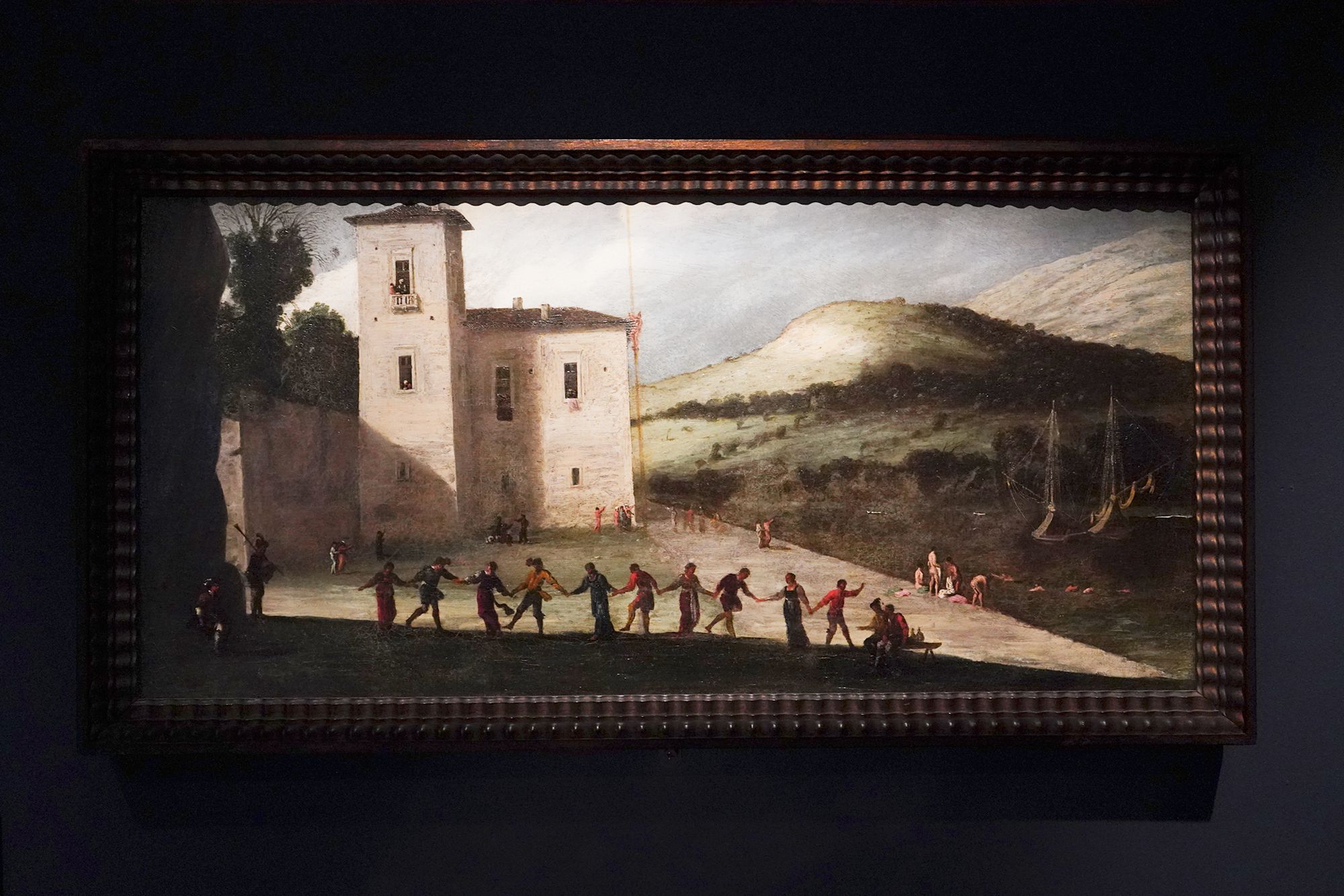
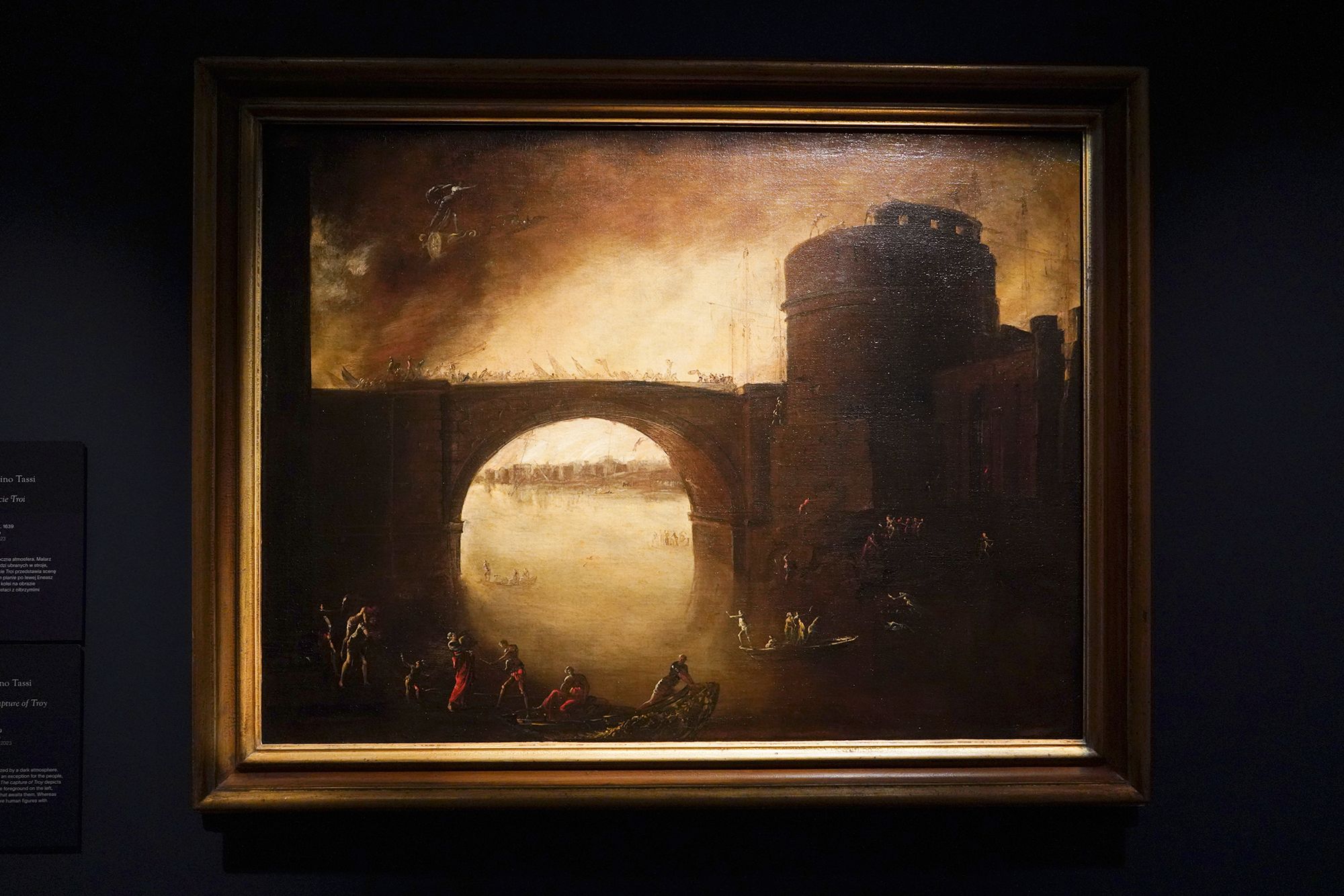
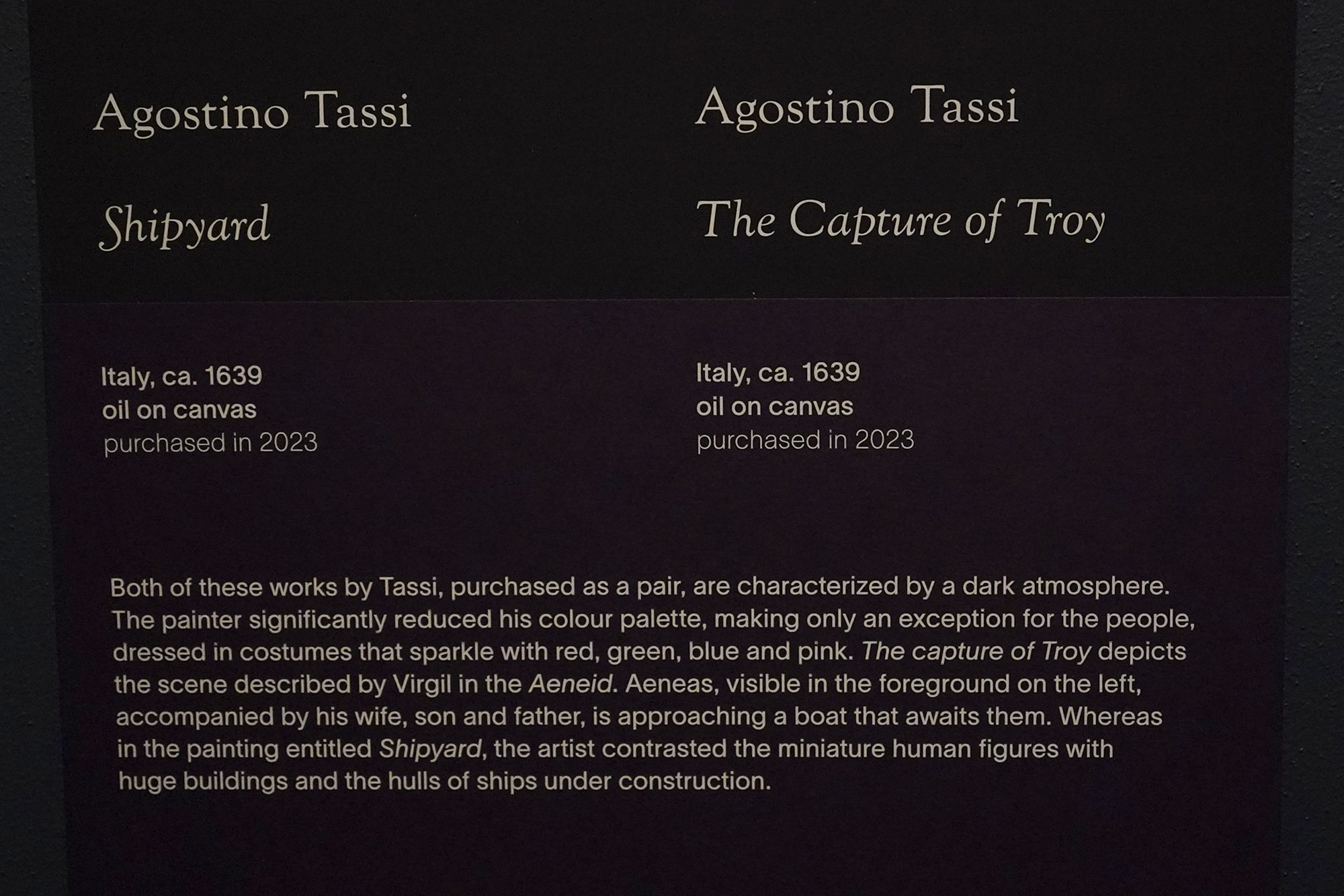
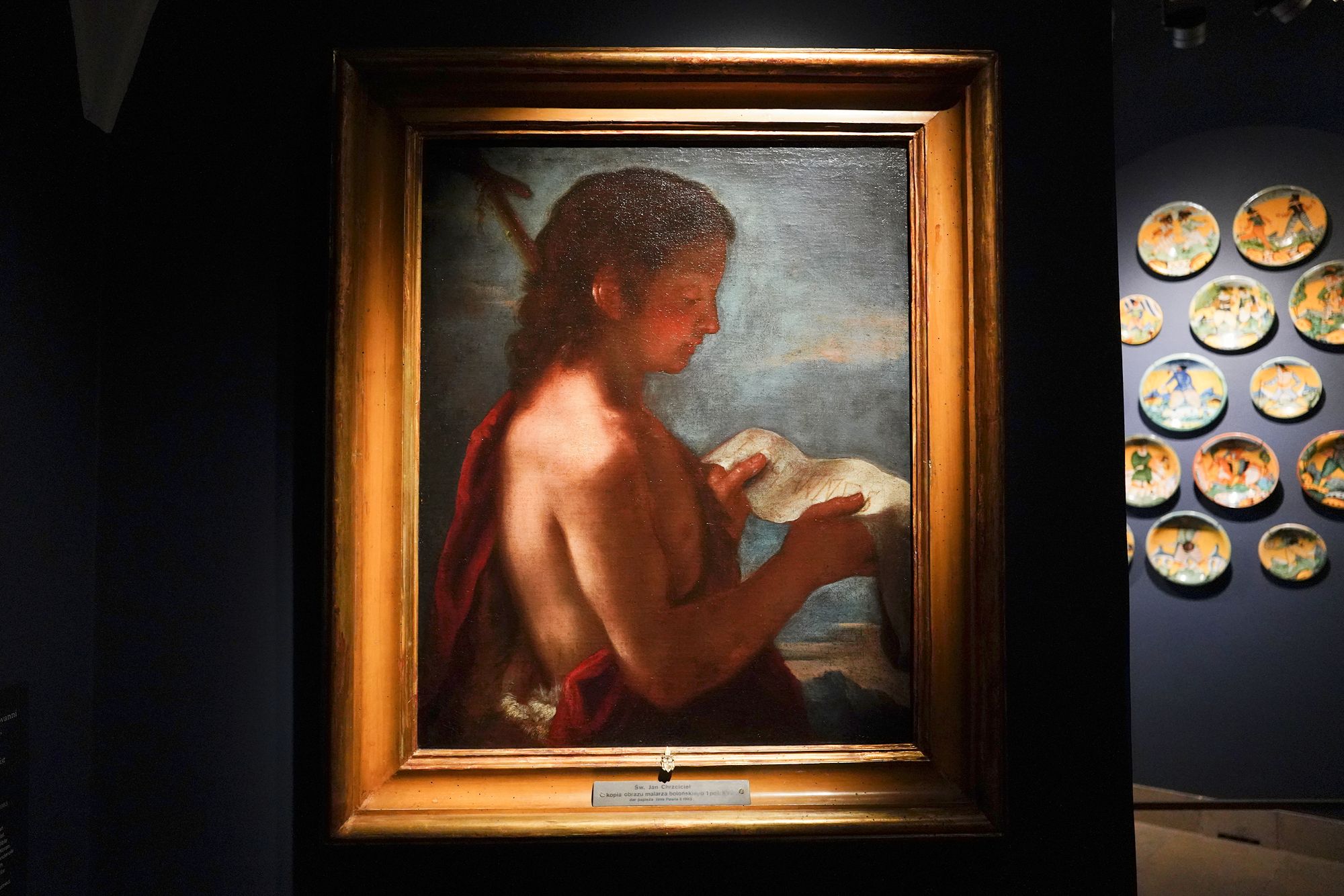
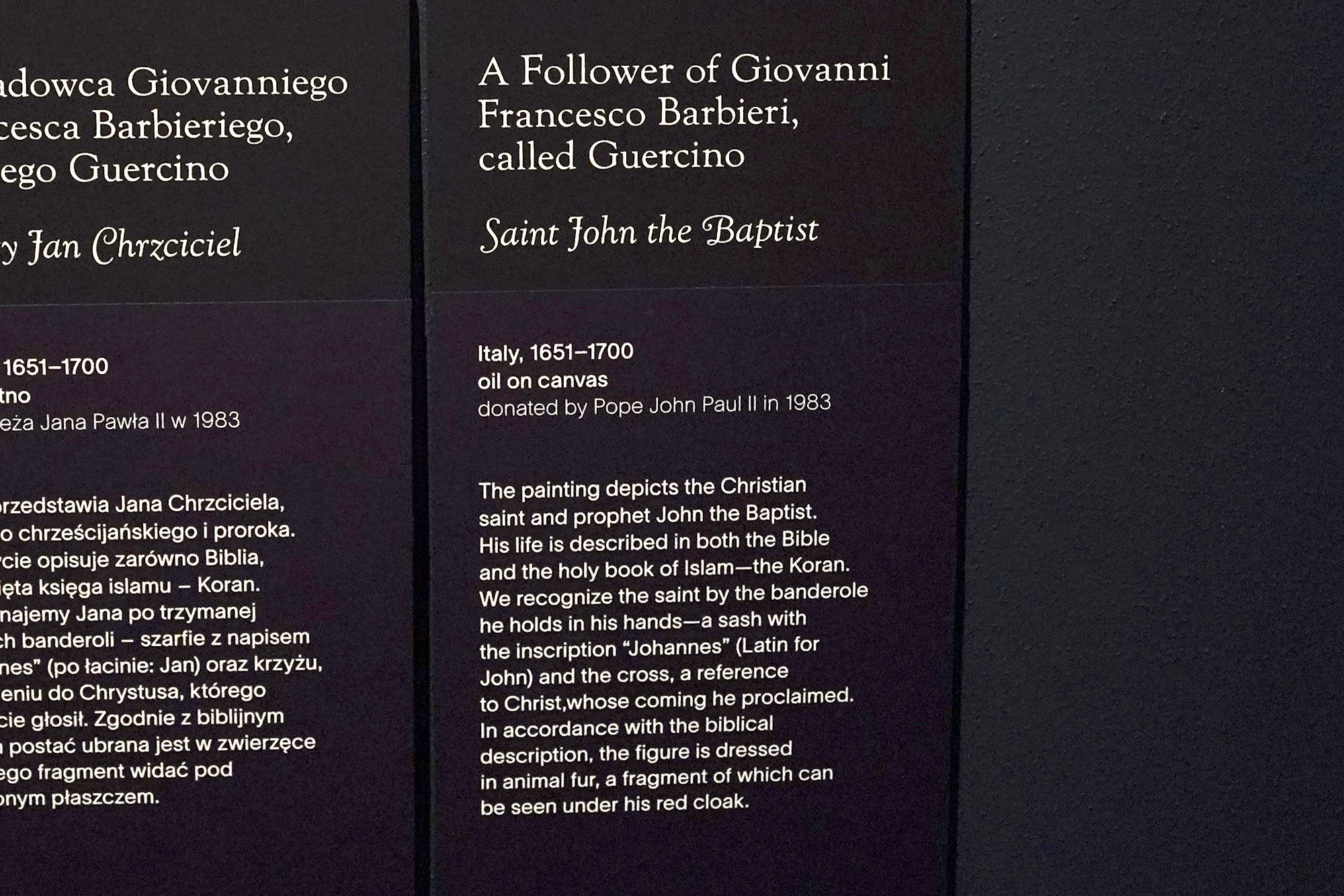
This display explains how Italian painting responded to the changes of the late Renaissance and Baroque periods. Exploration, astronomical discoveries, and the Reformation challenged established beliefs and shifted Europe’s balance of power. Italian art continued to flourish, however, with popes supporting art to promote Catholicism and strengthen their authority.
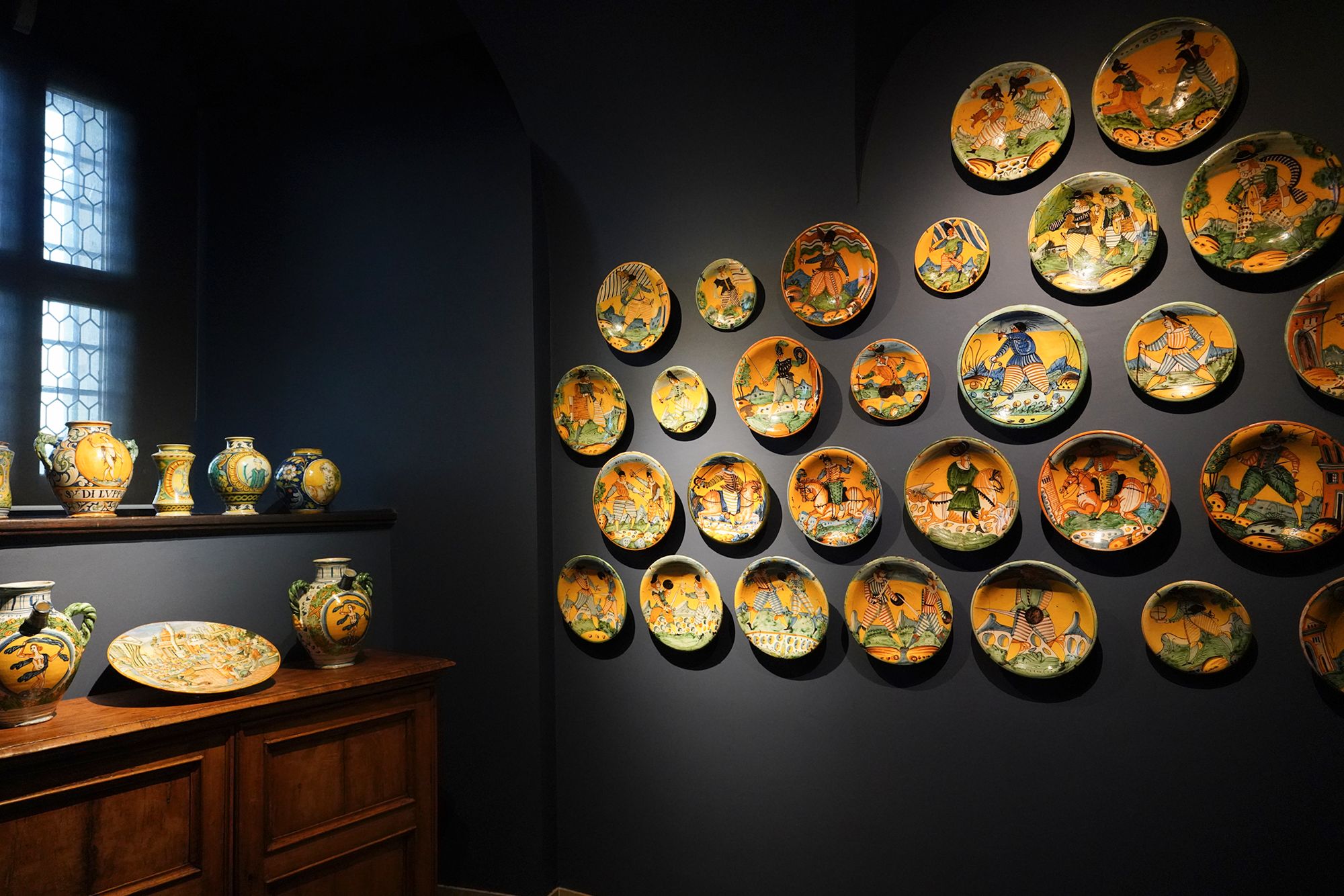
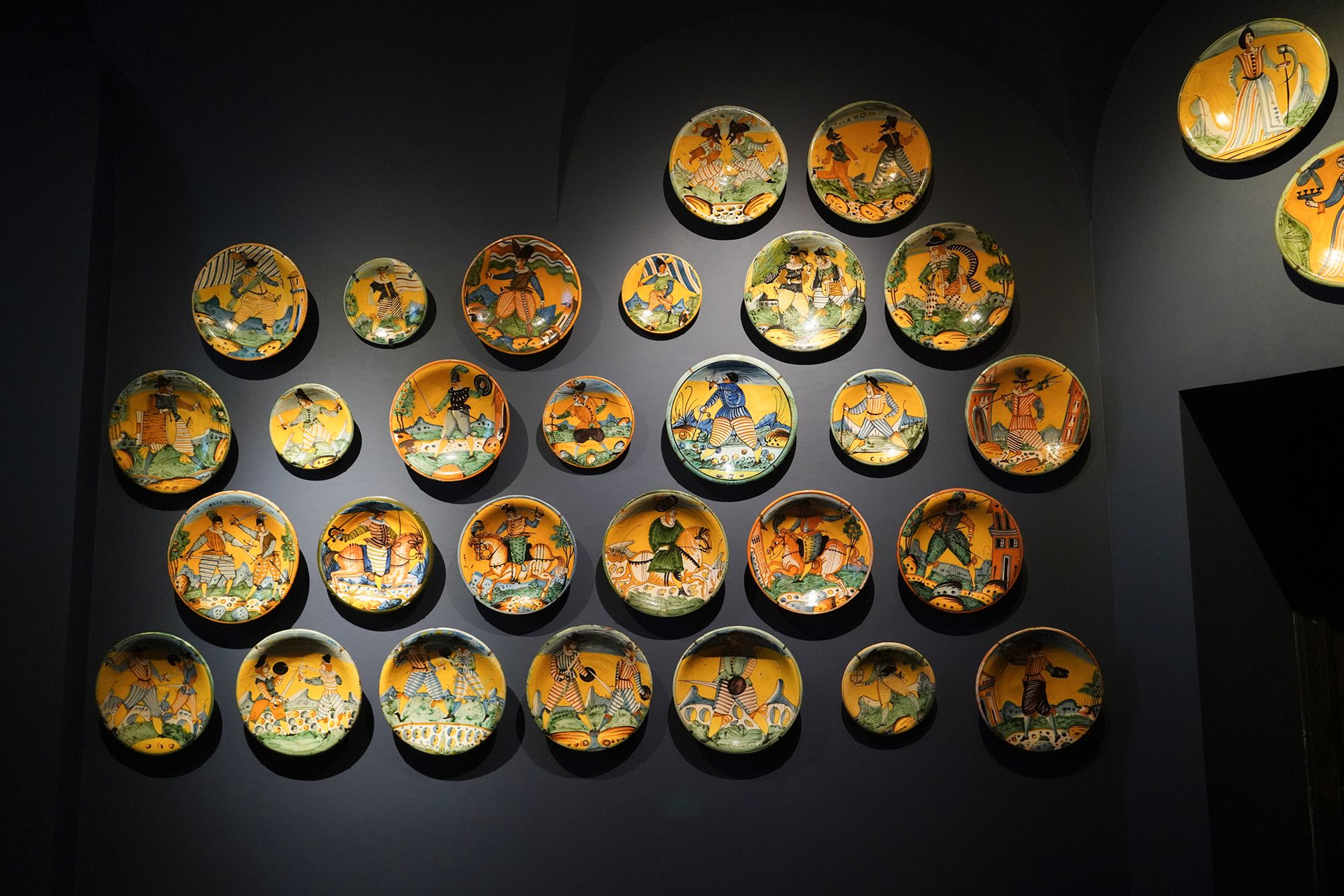
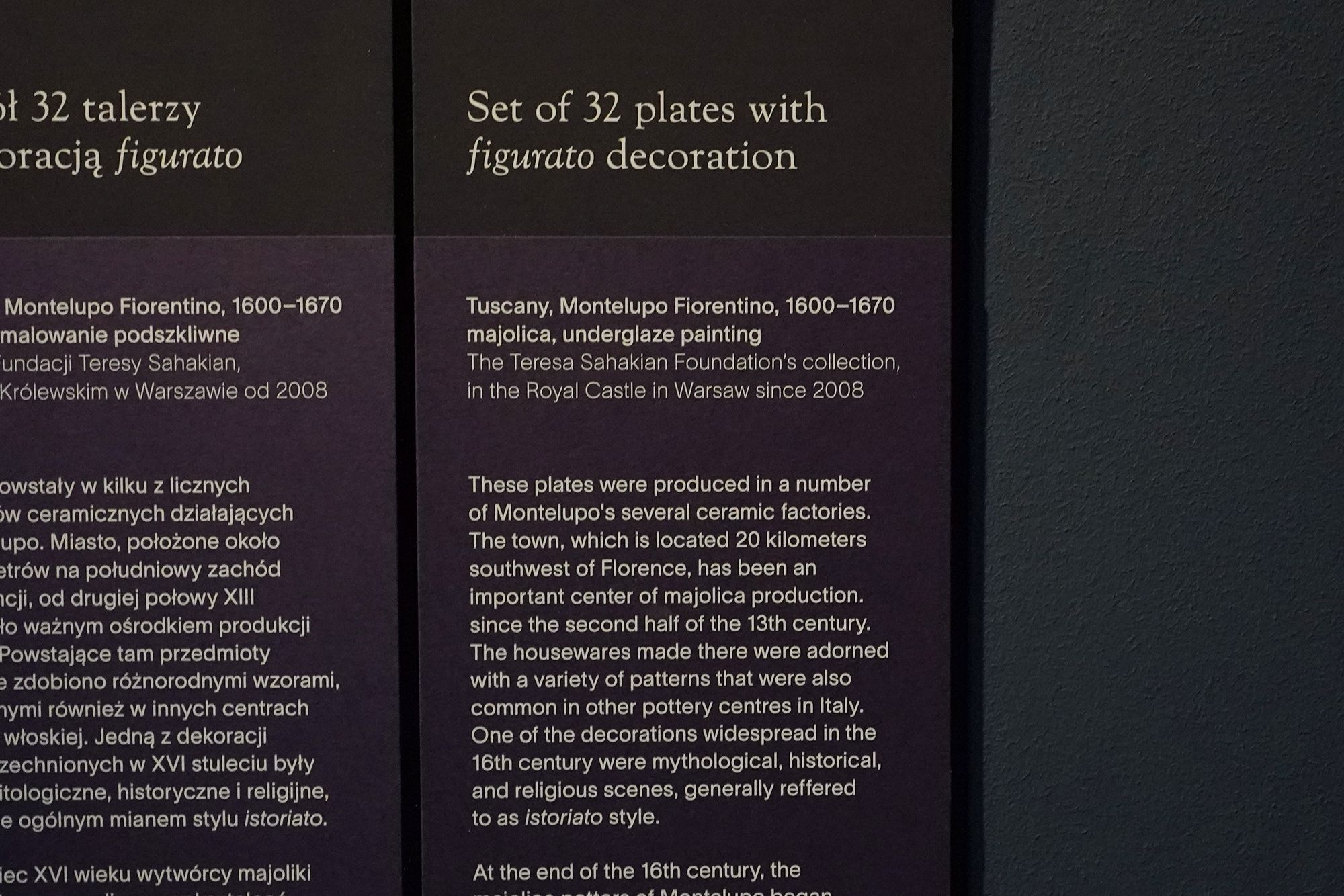
This set of 32 maiolica plates was made in Montelupo Fiorentino, Tuscany, between 1600 and 1670. Their painted decorations include scenes and figures, reflecting the town’s long tradition of pottery production. Part of the Teresa Sahakian Foundation’s collection, the plates have been at Warsaw’s Royal Castle since 2008.
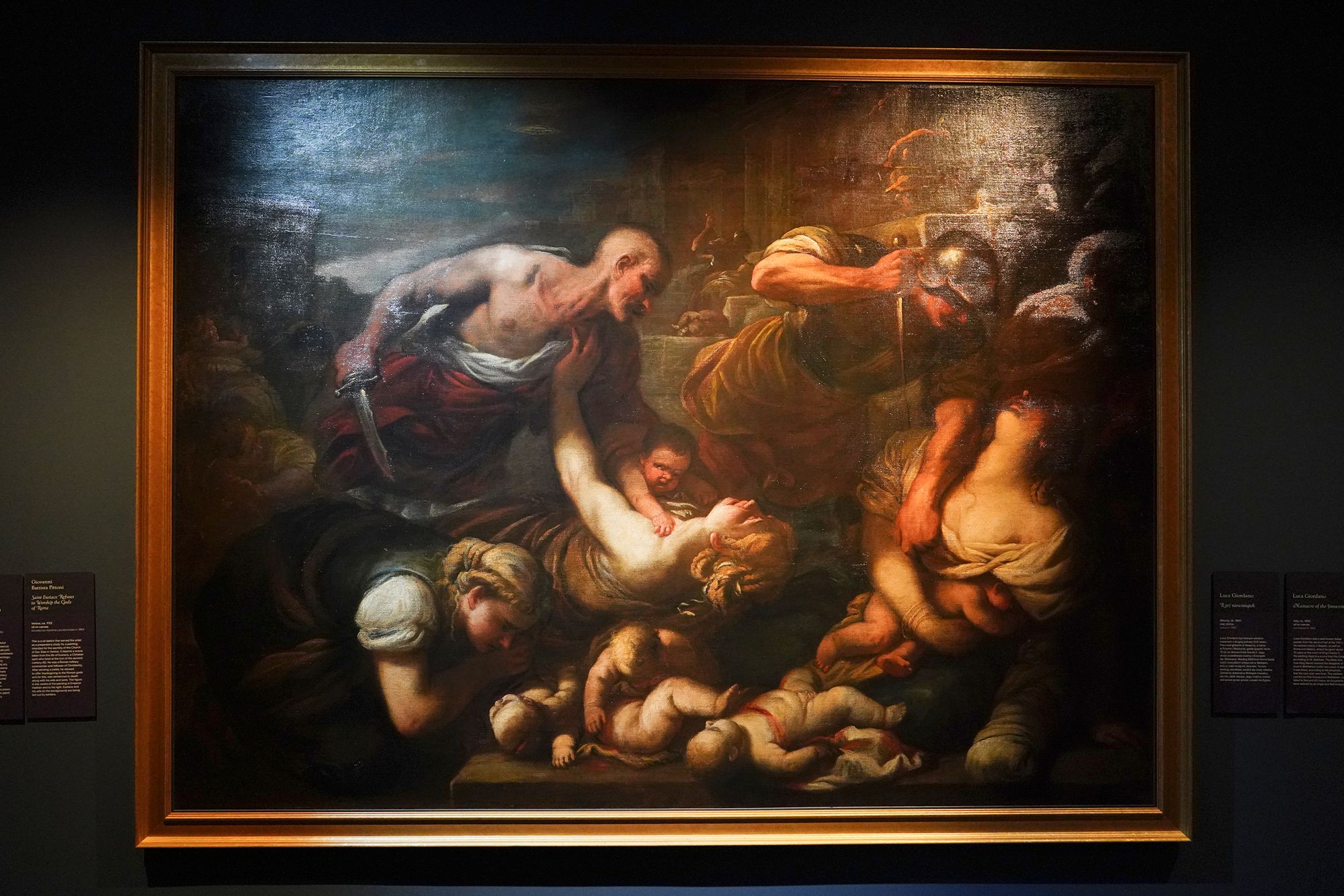
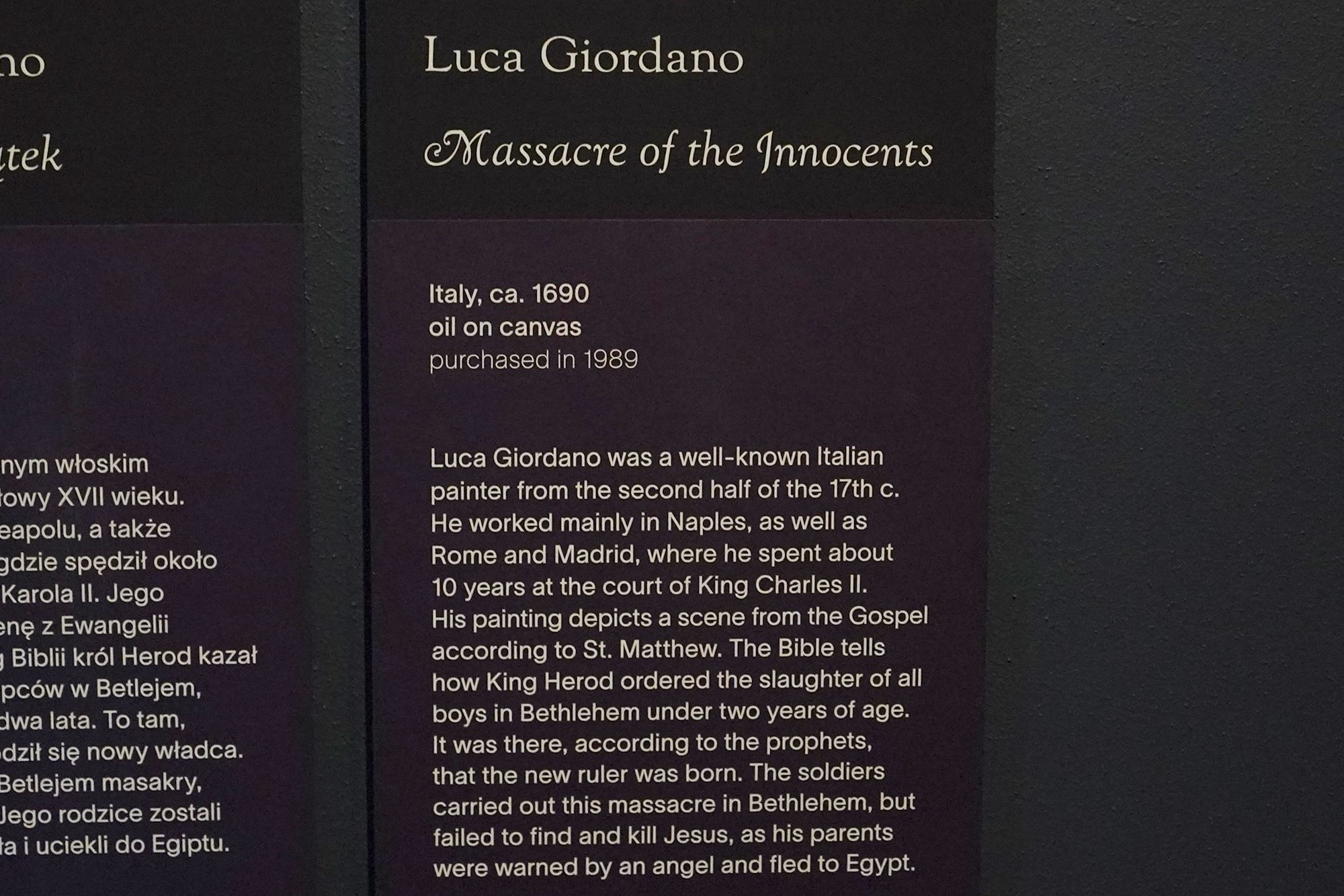
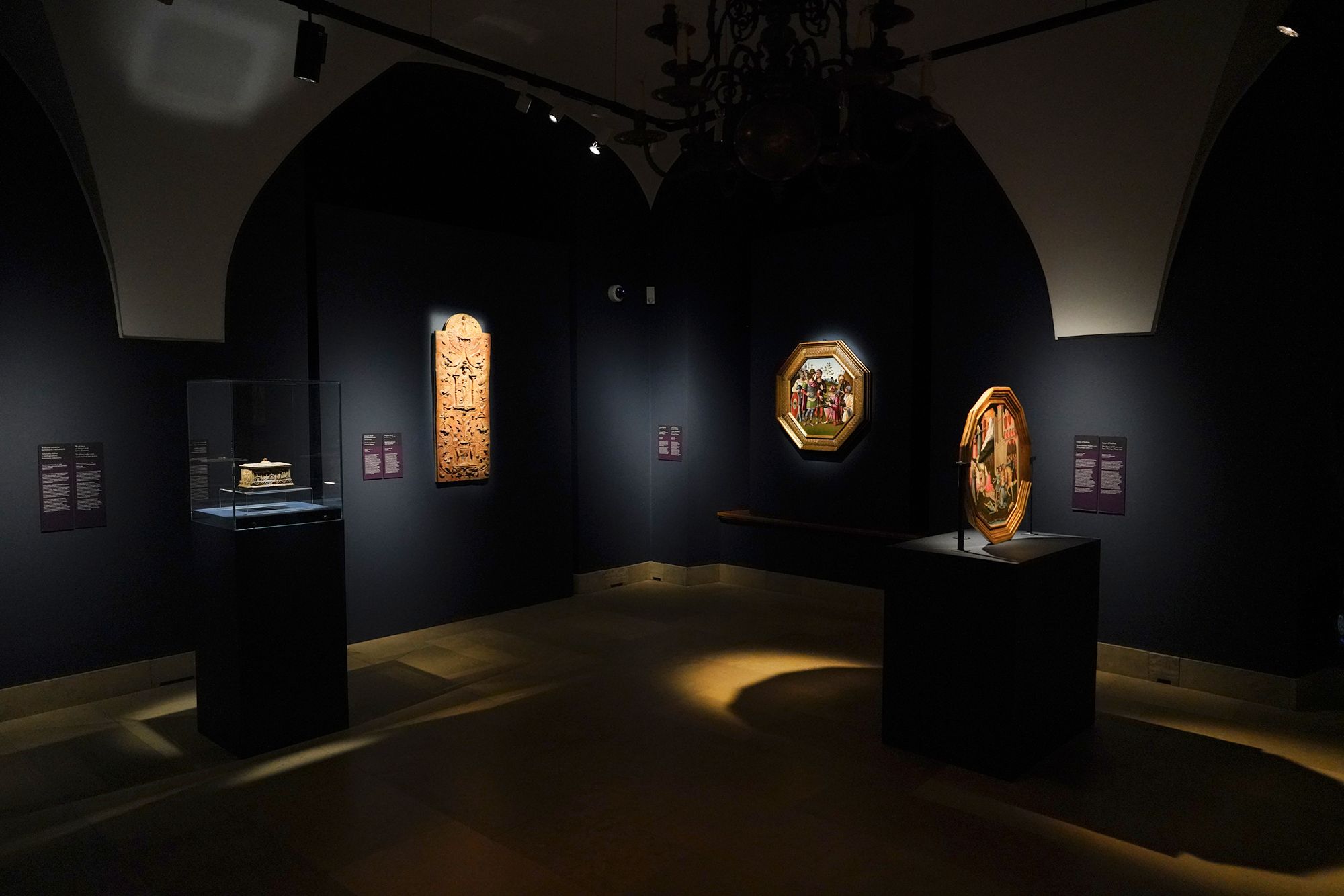
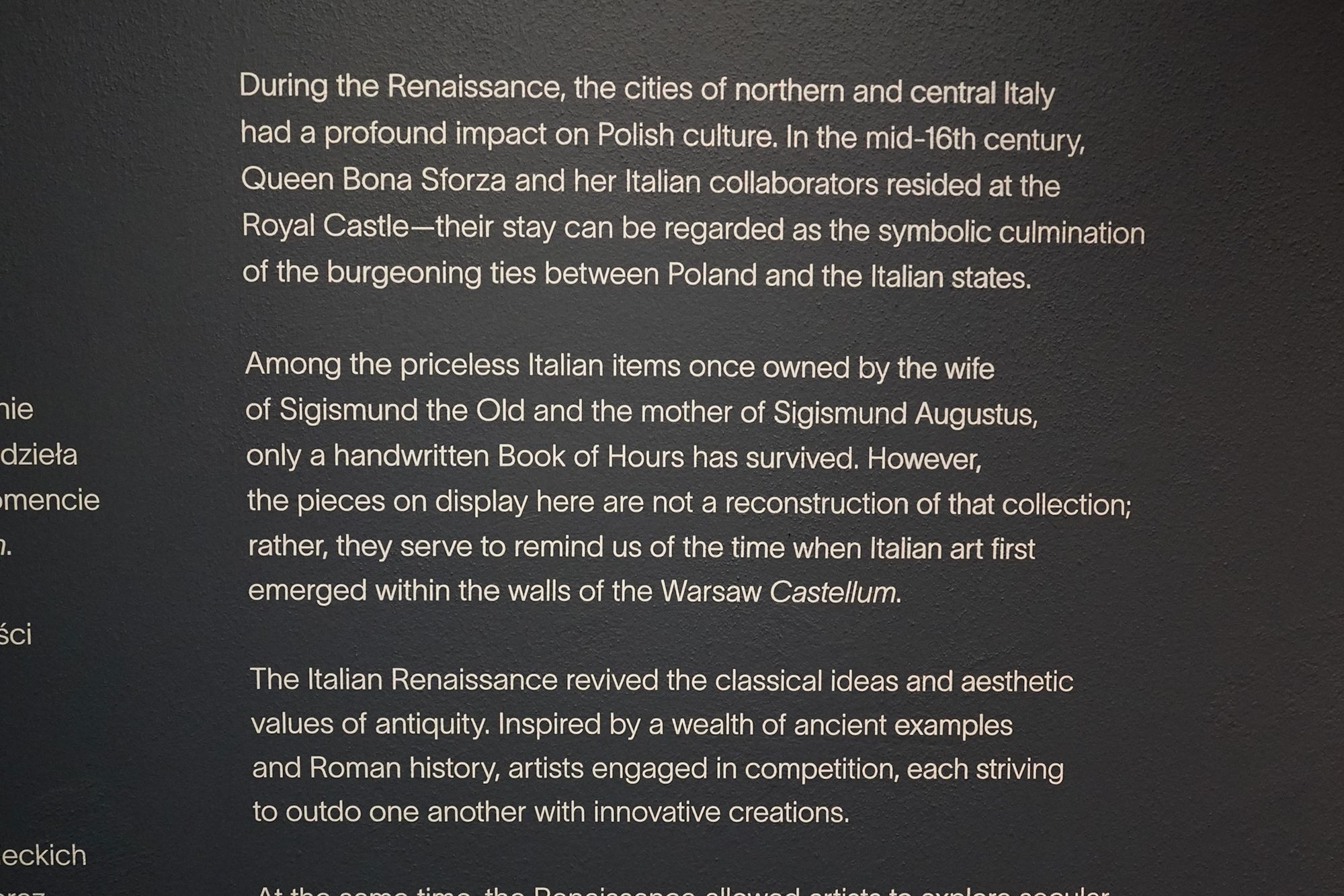
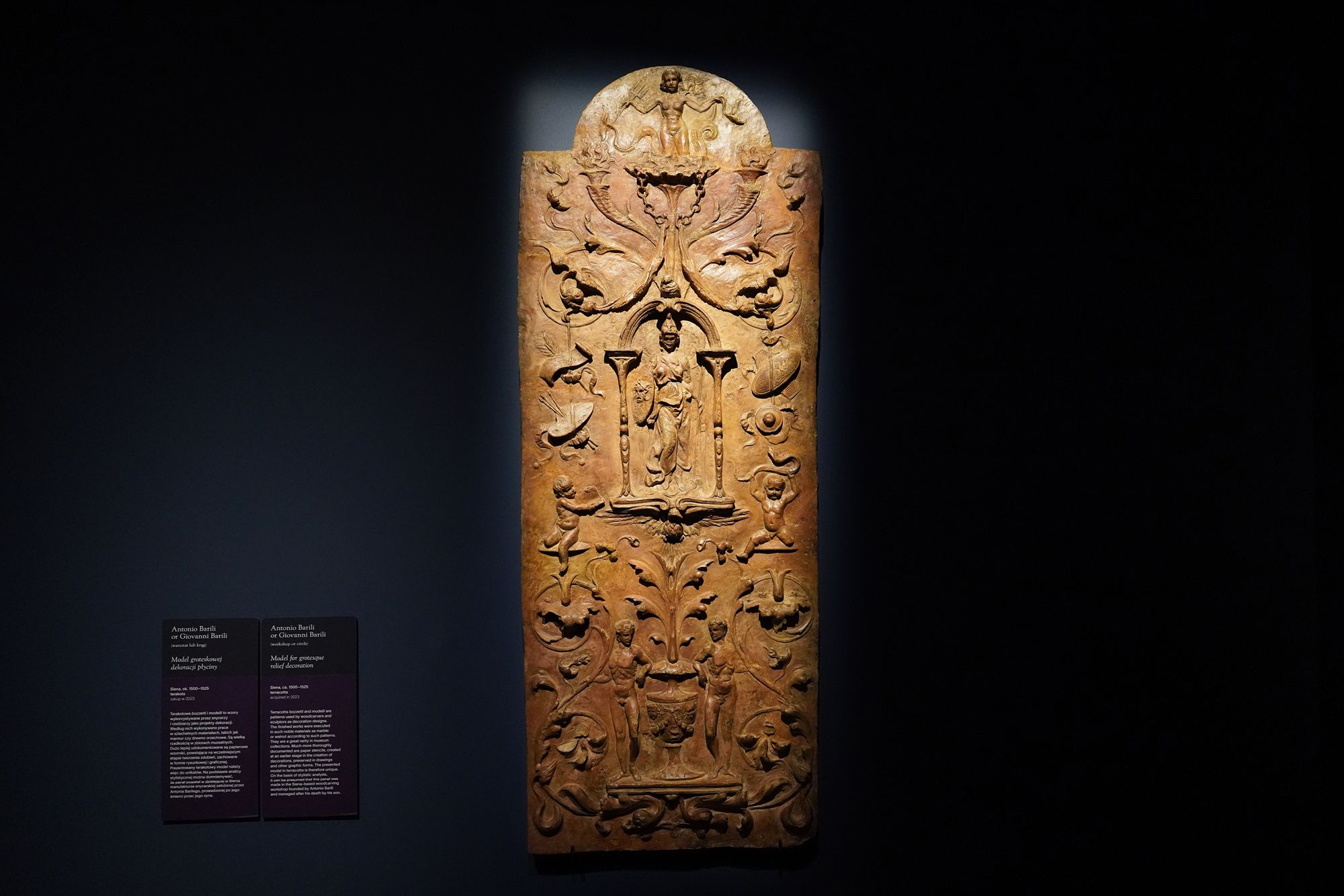
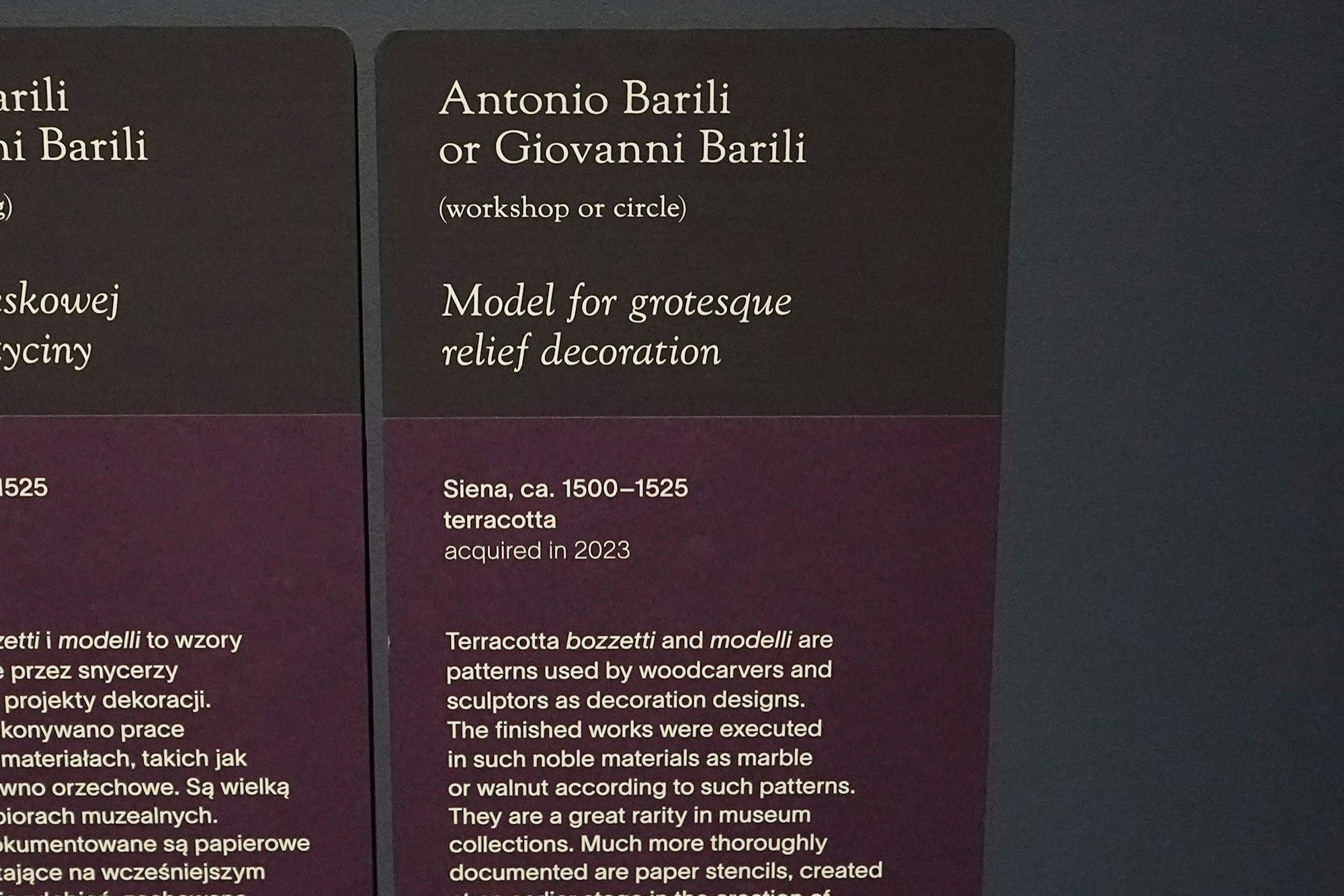
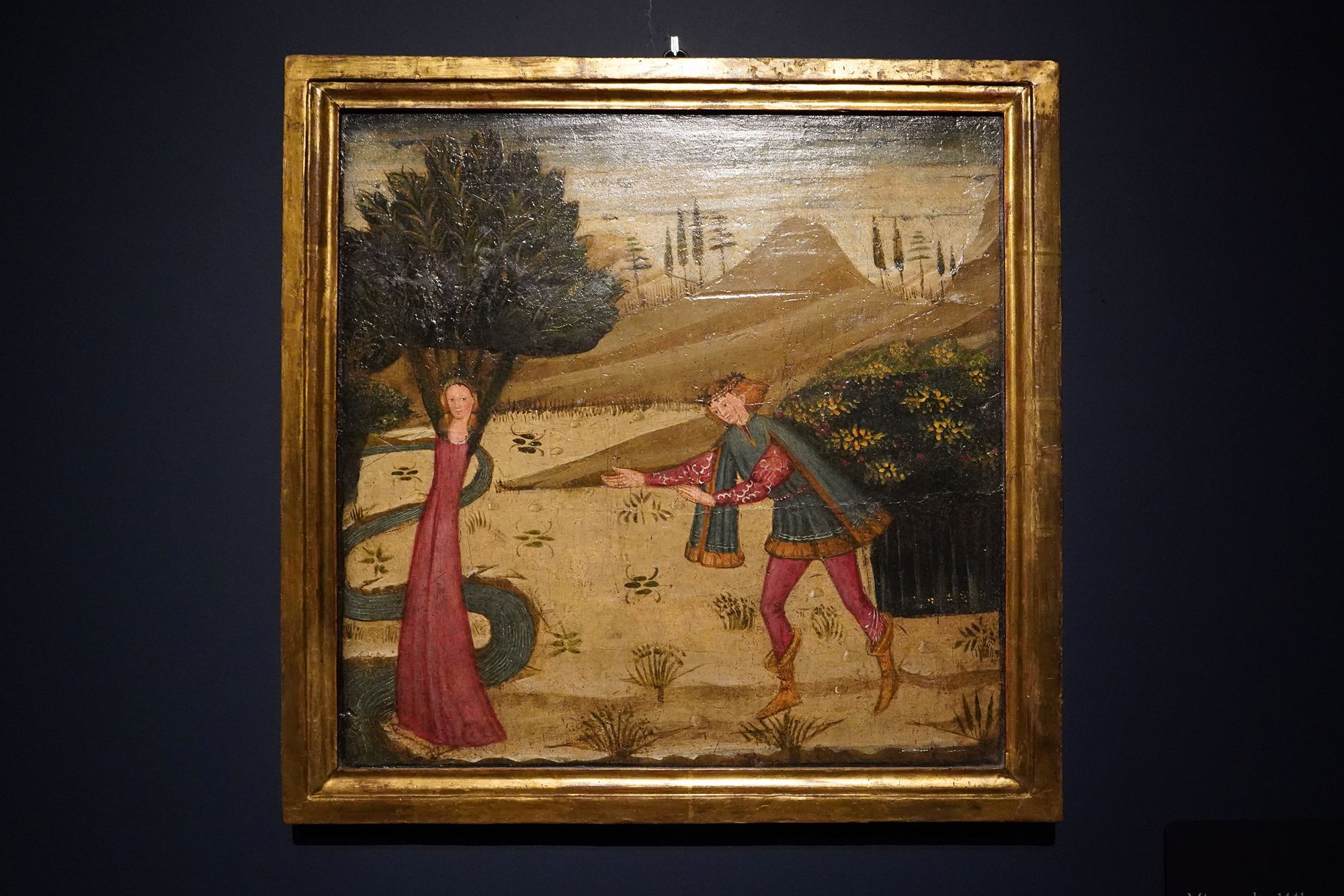
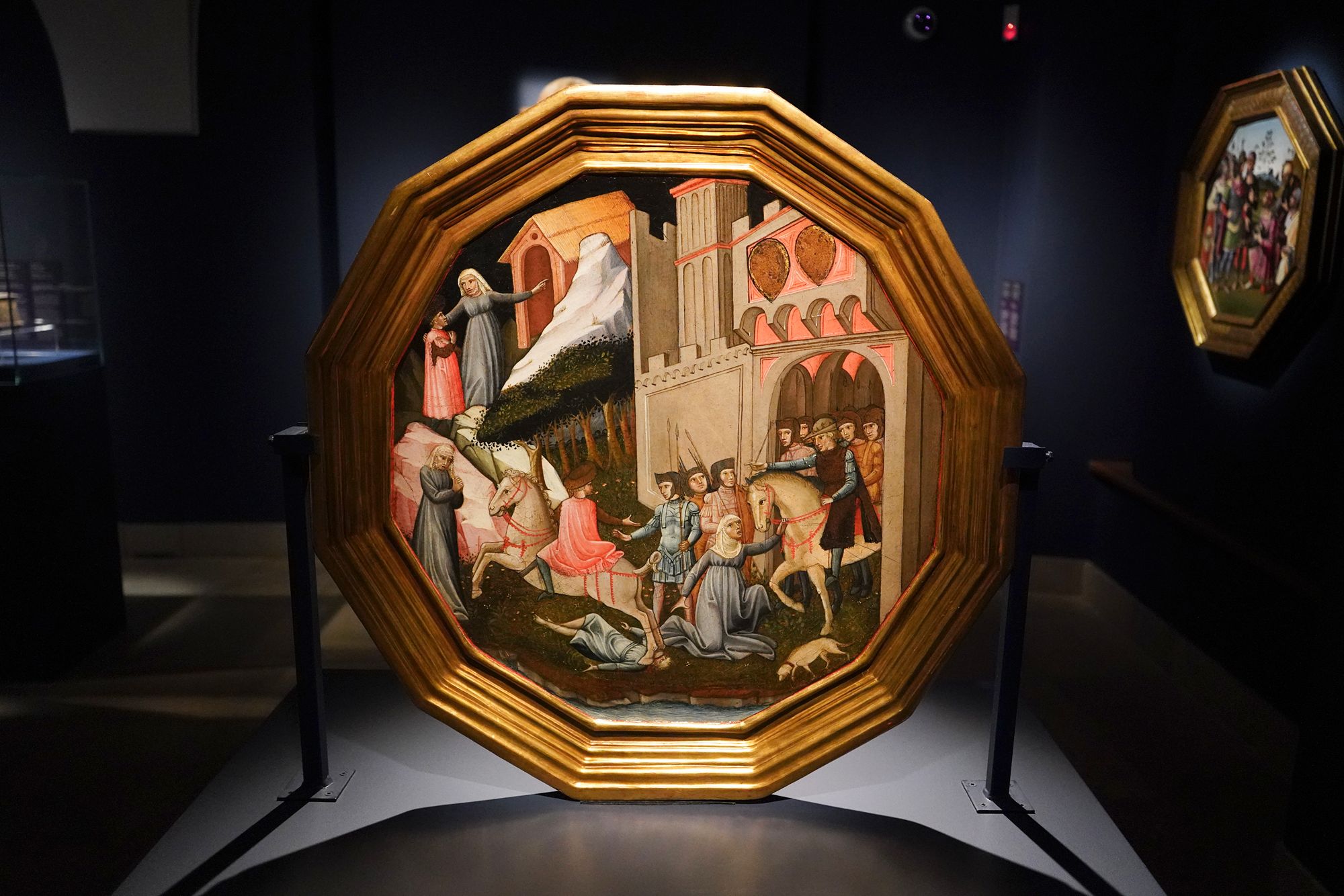
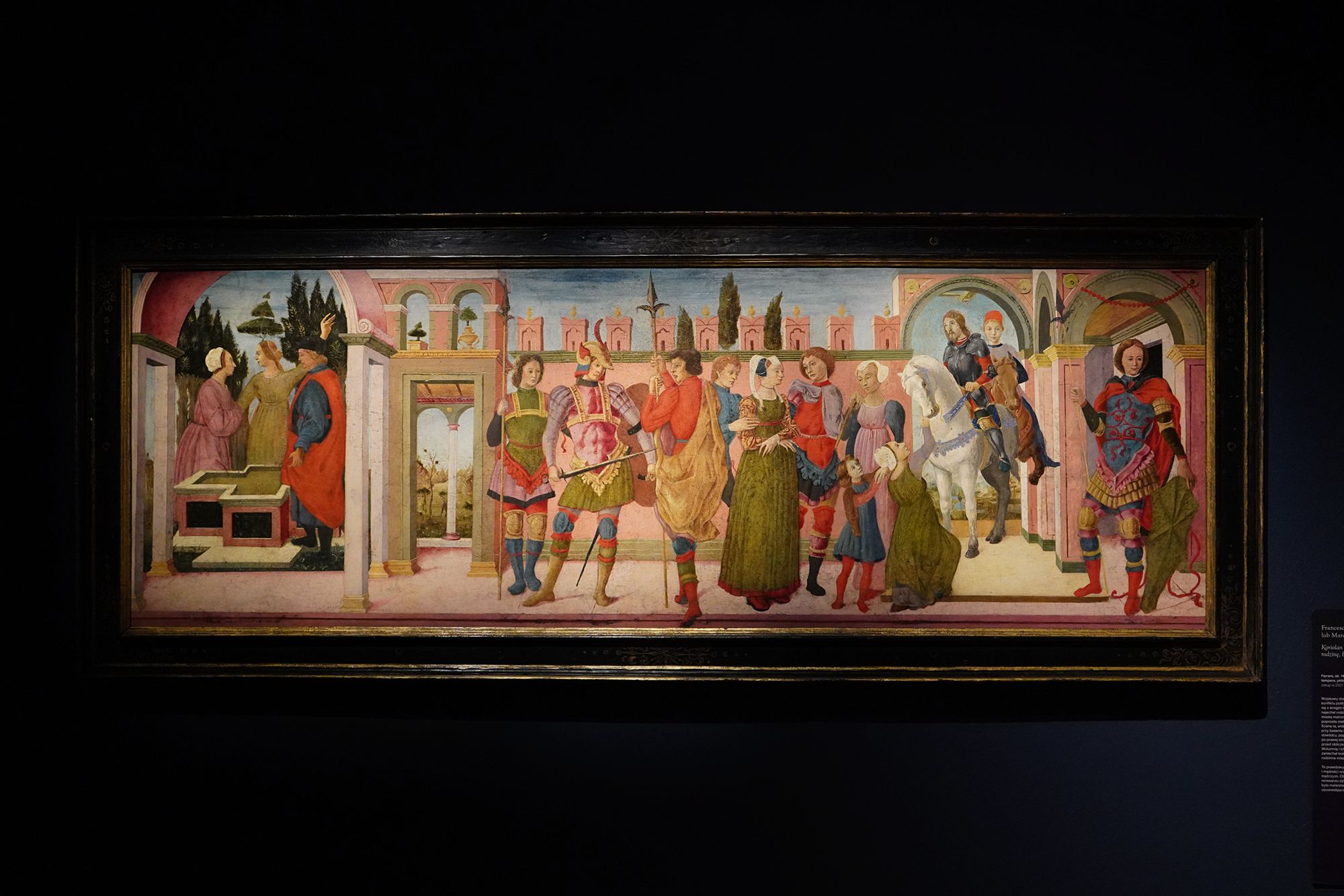
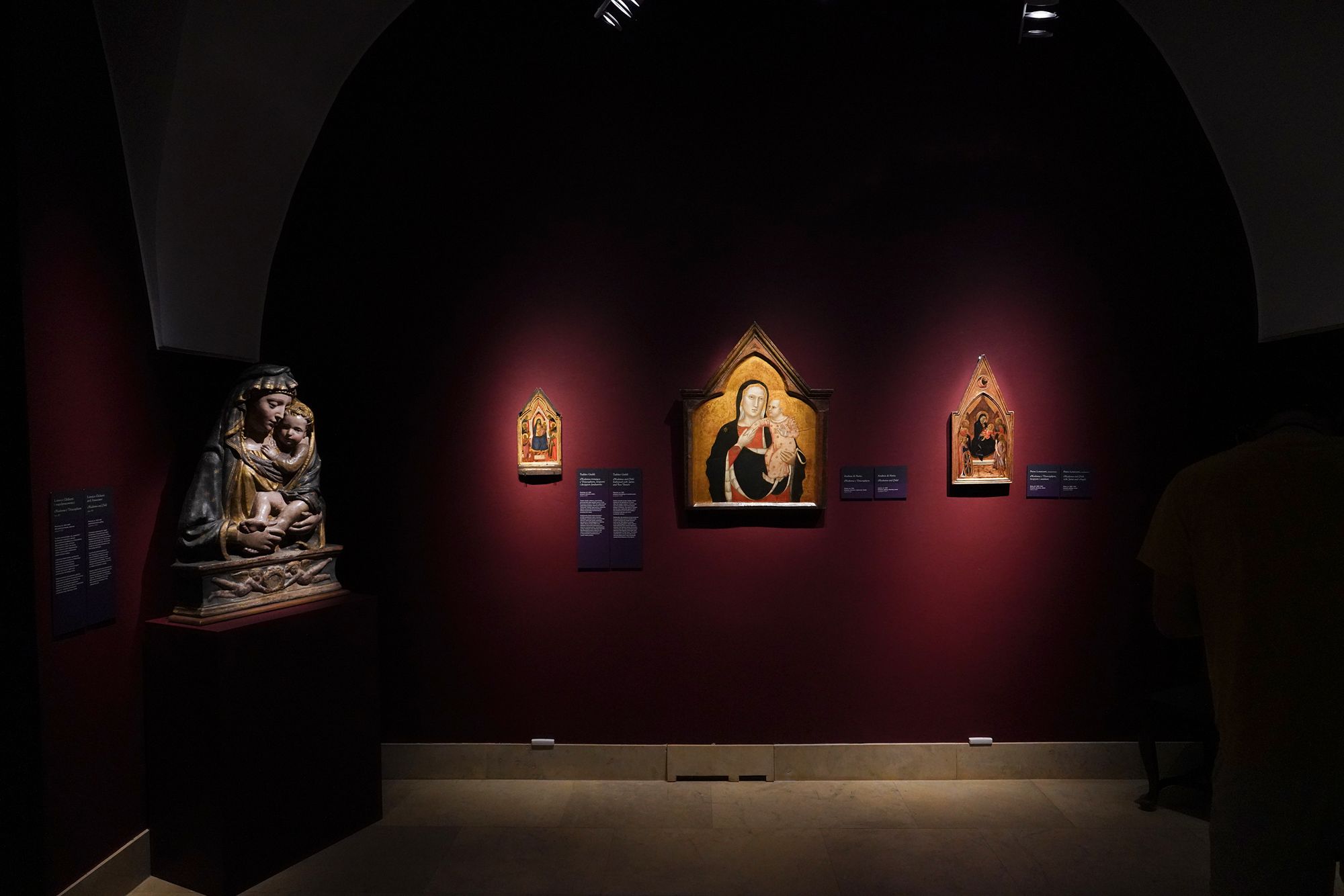
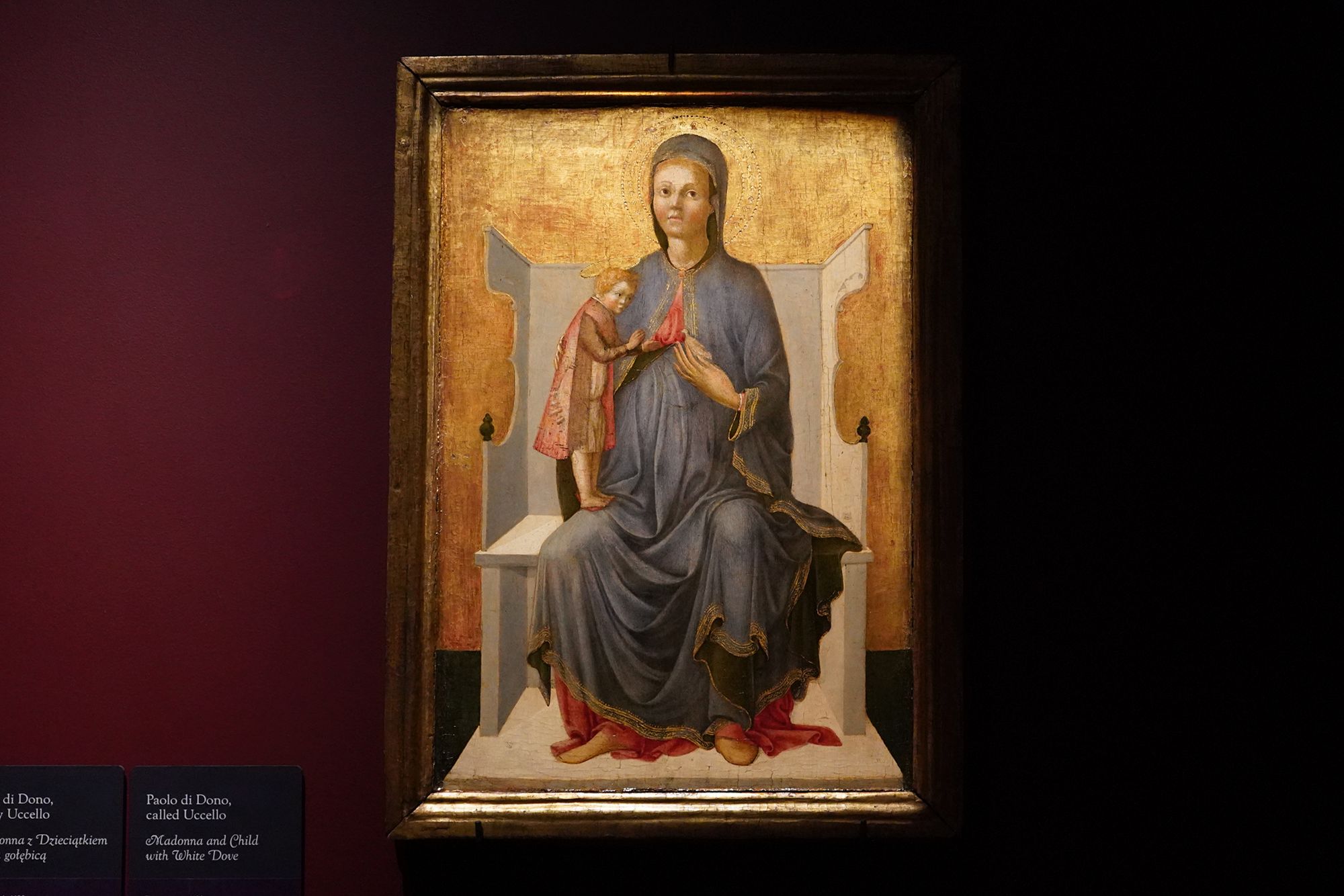
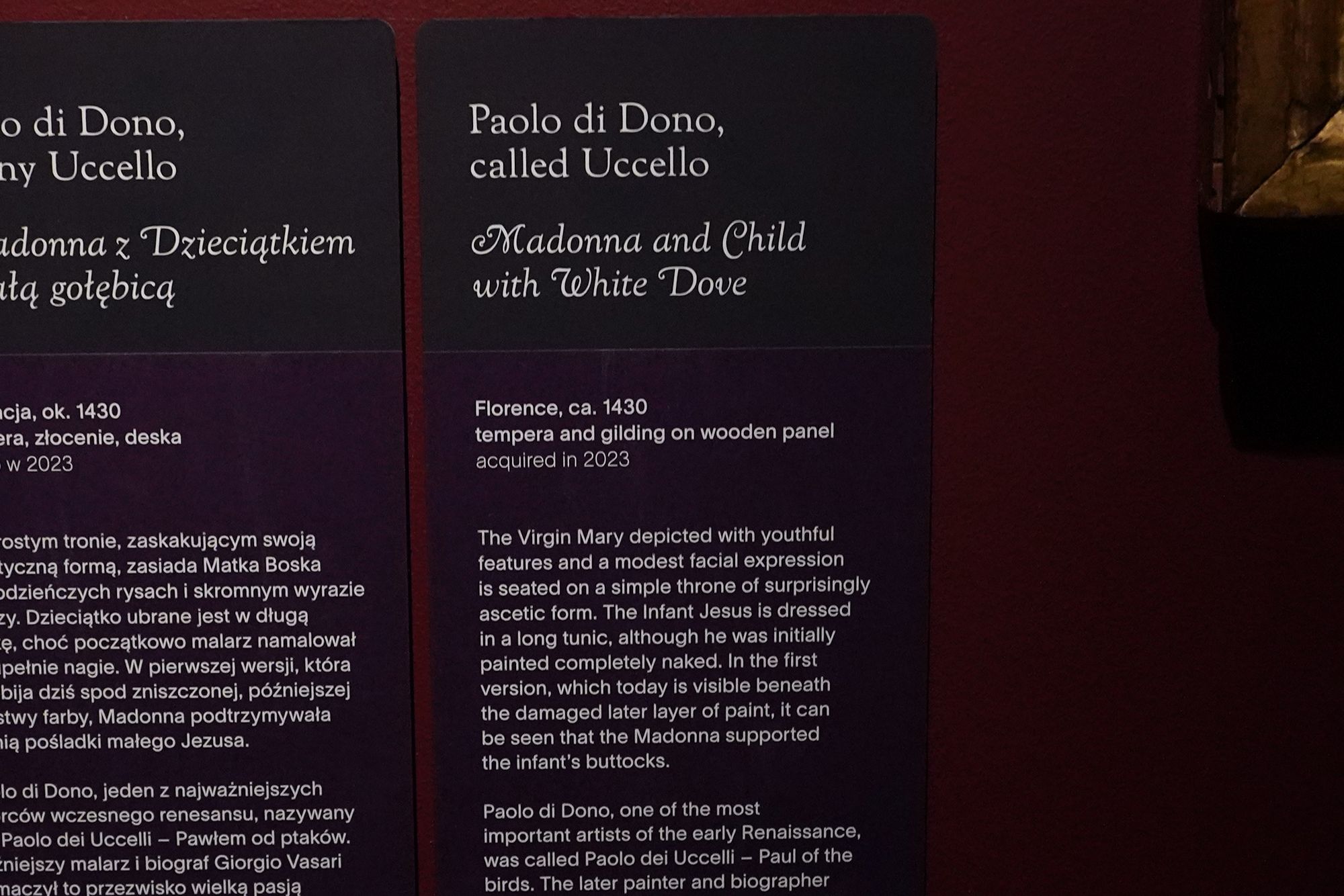
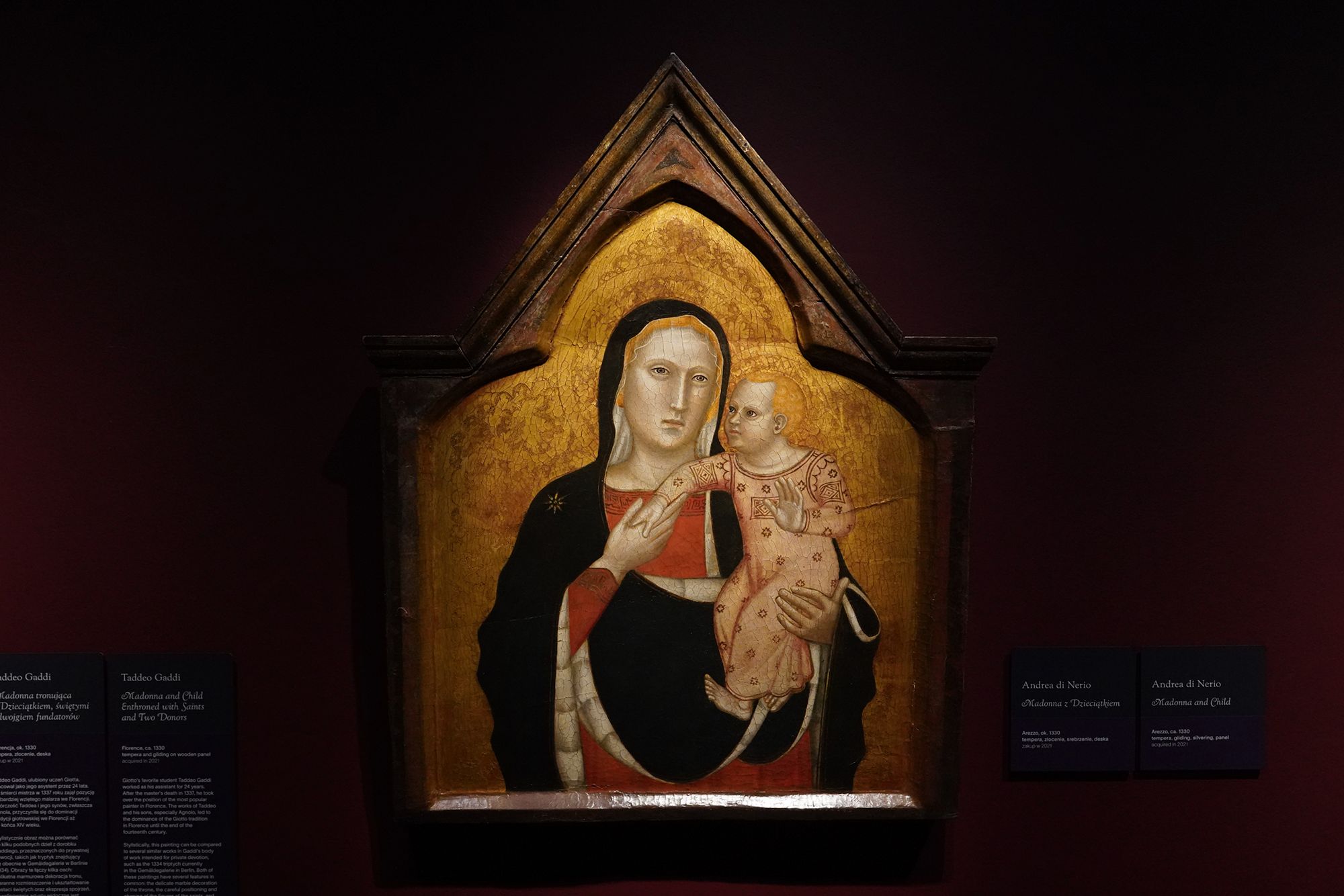
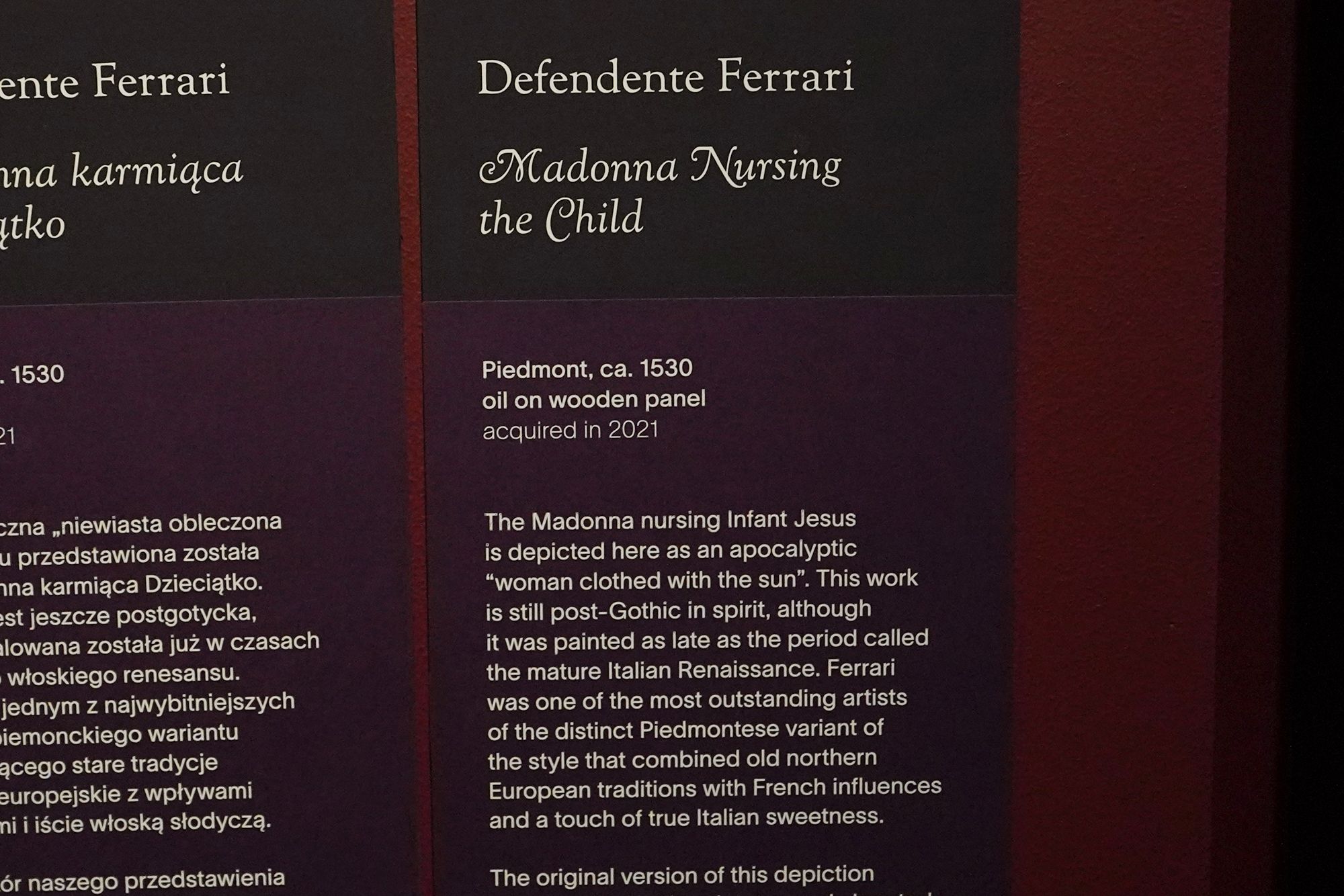
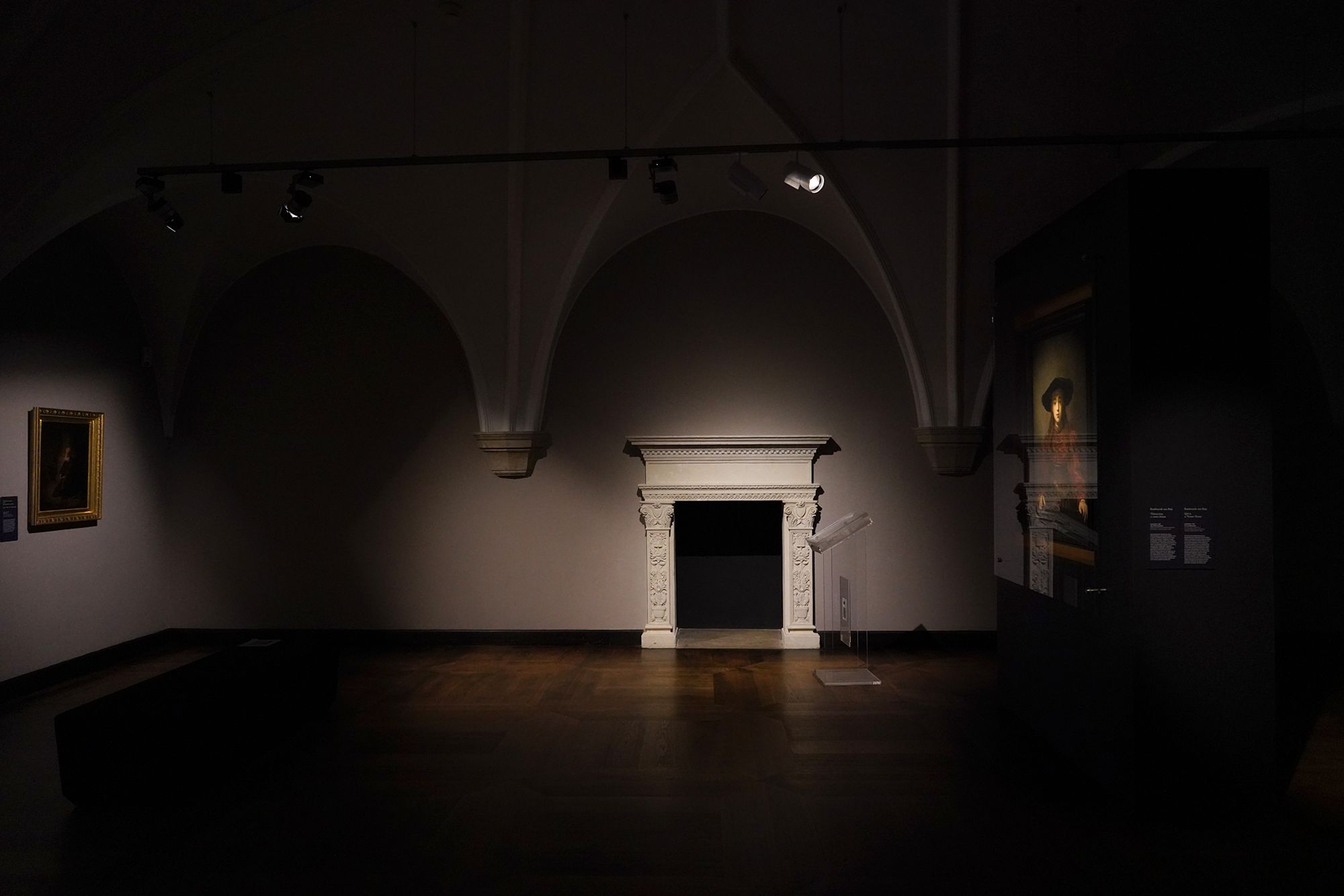
This display explores the influence of Italian Renaissance art on Polish culture. Queen Bona Sforza and her Italian companions lived at the Royal Castle in the mid-16th century, strengthening these cultural ties. The artworks shown recall that period, although they do not recreate her collection, of which only a handwritten prayer book survives.
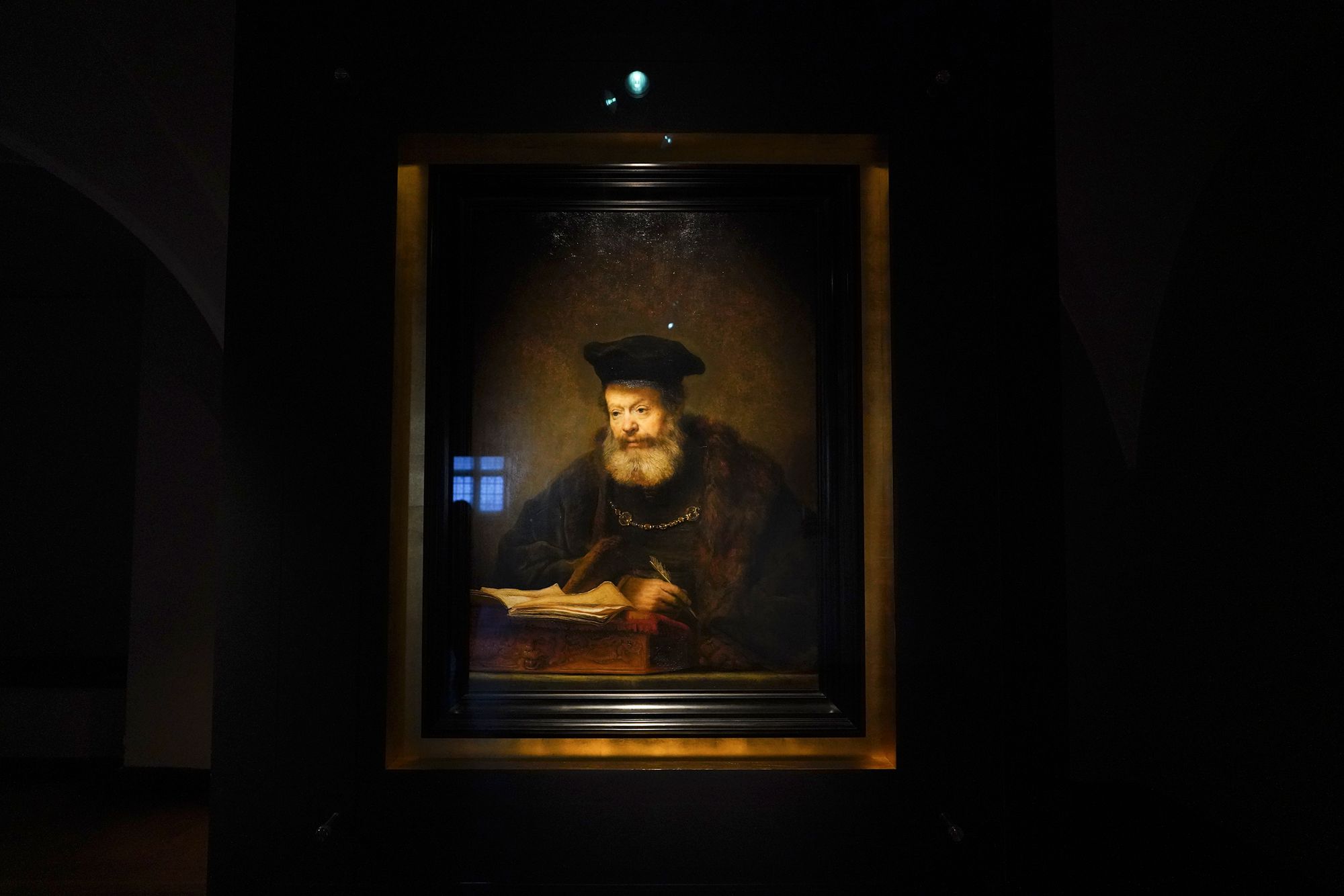
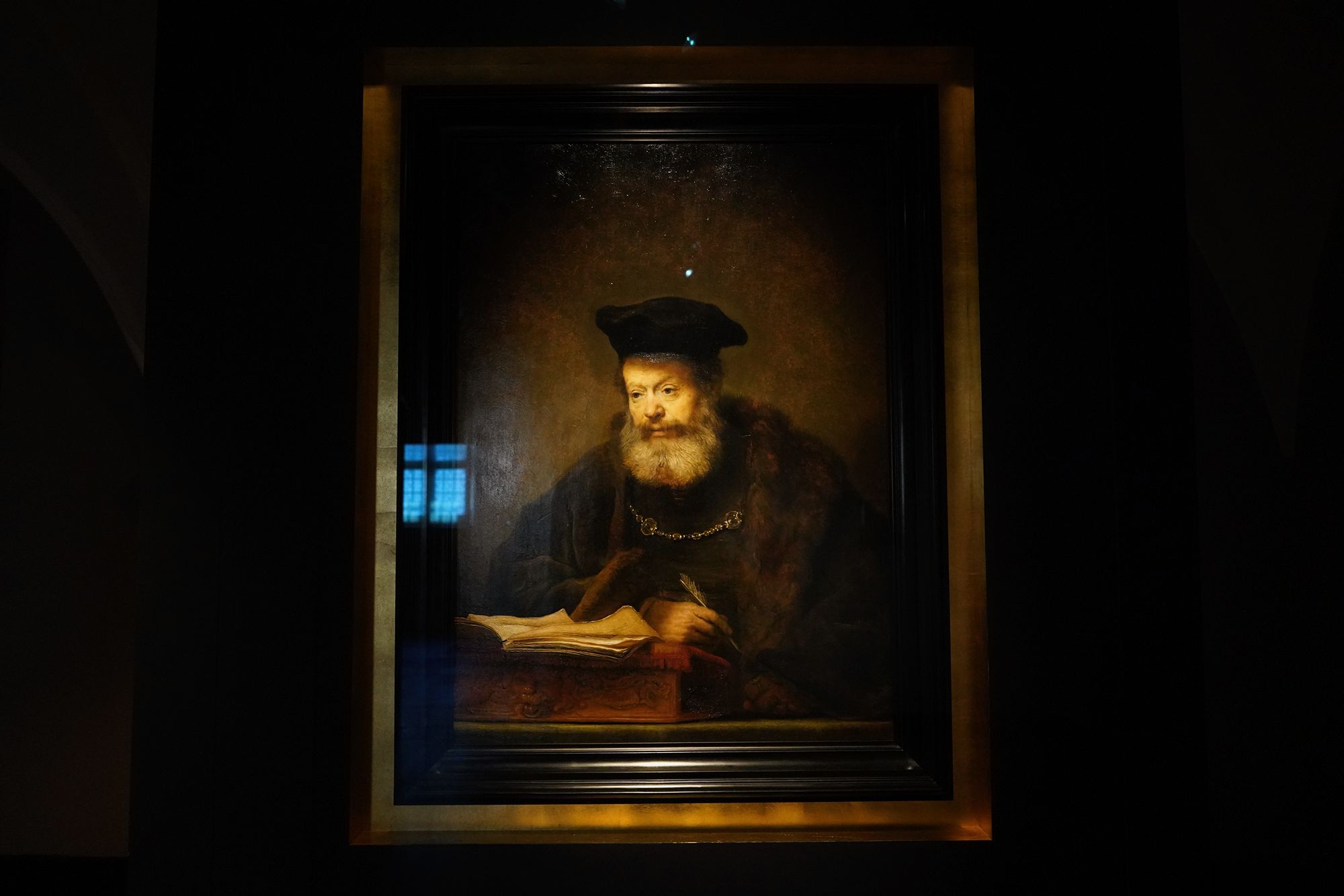
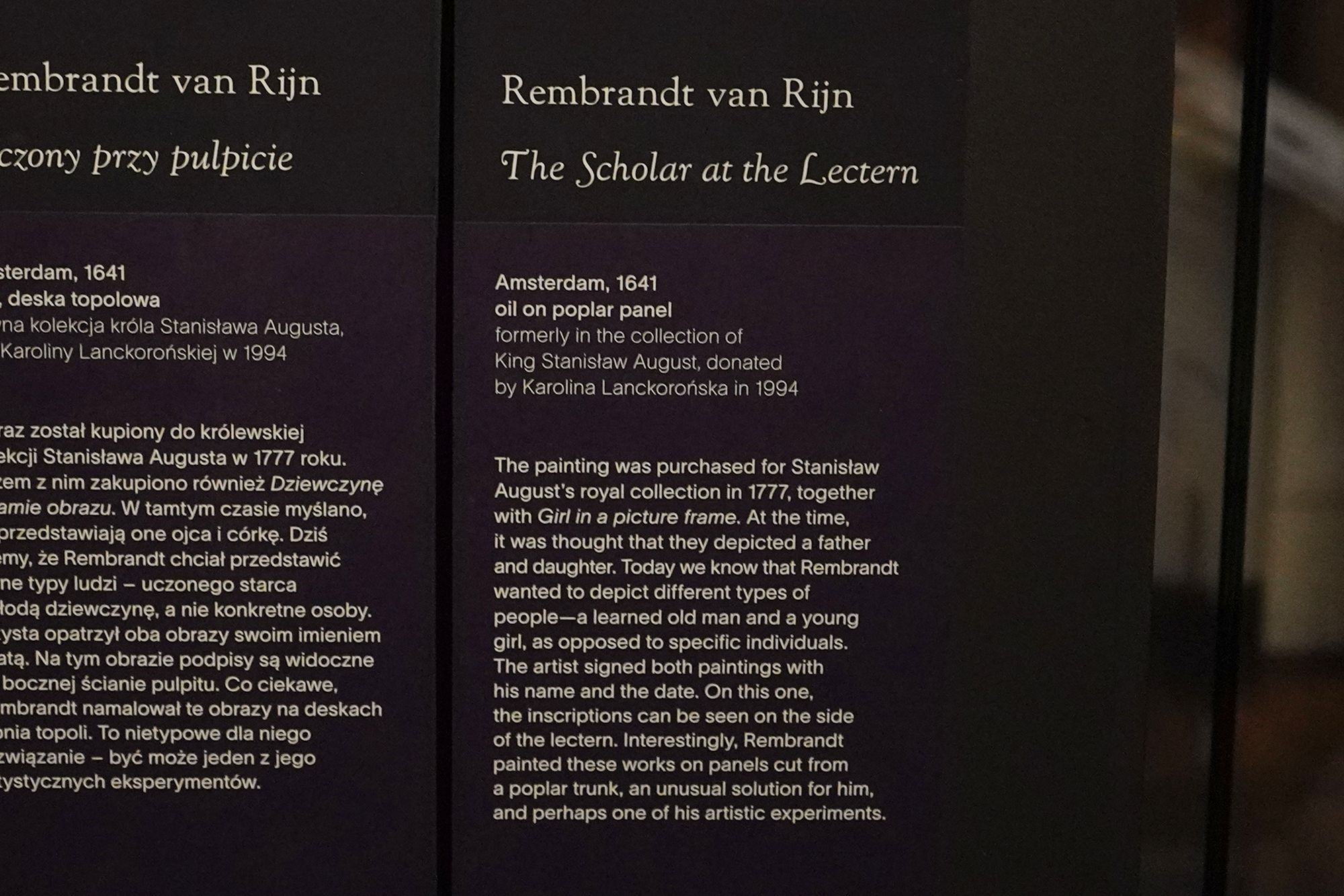
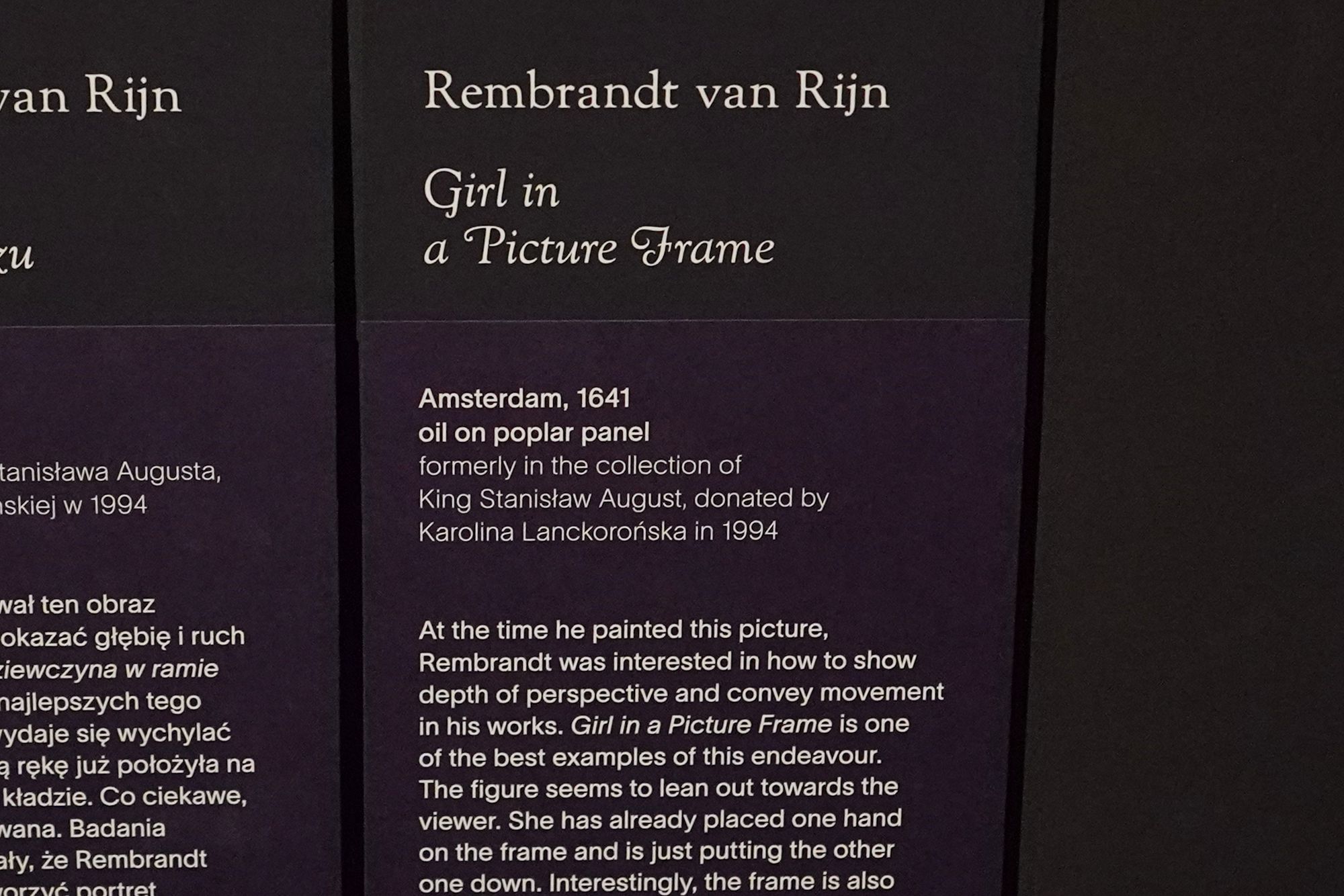
Rembrandt painted The Scholar at the Lectern in 1641. Purchased for King Stanisław August’s collection in 1777 alongside Girl in a Picture Frame, the two paintings were once thought to show a father and daughter. They instead represent different types of people. Karolina Lanckorońska donated this painting to the Royal Castle in 1994.
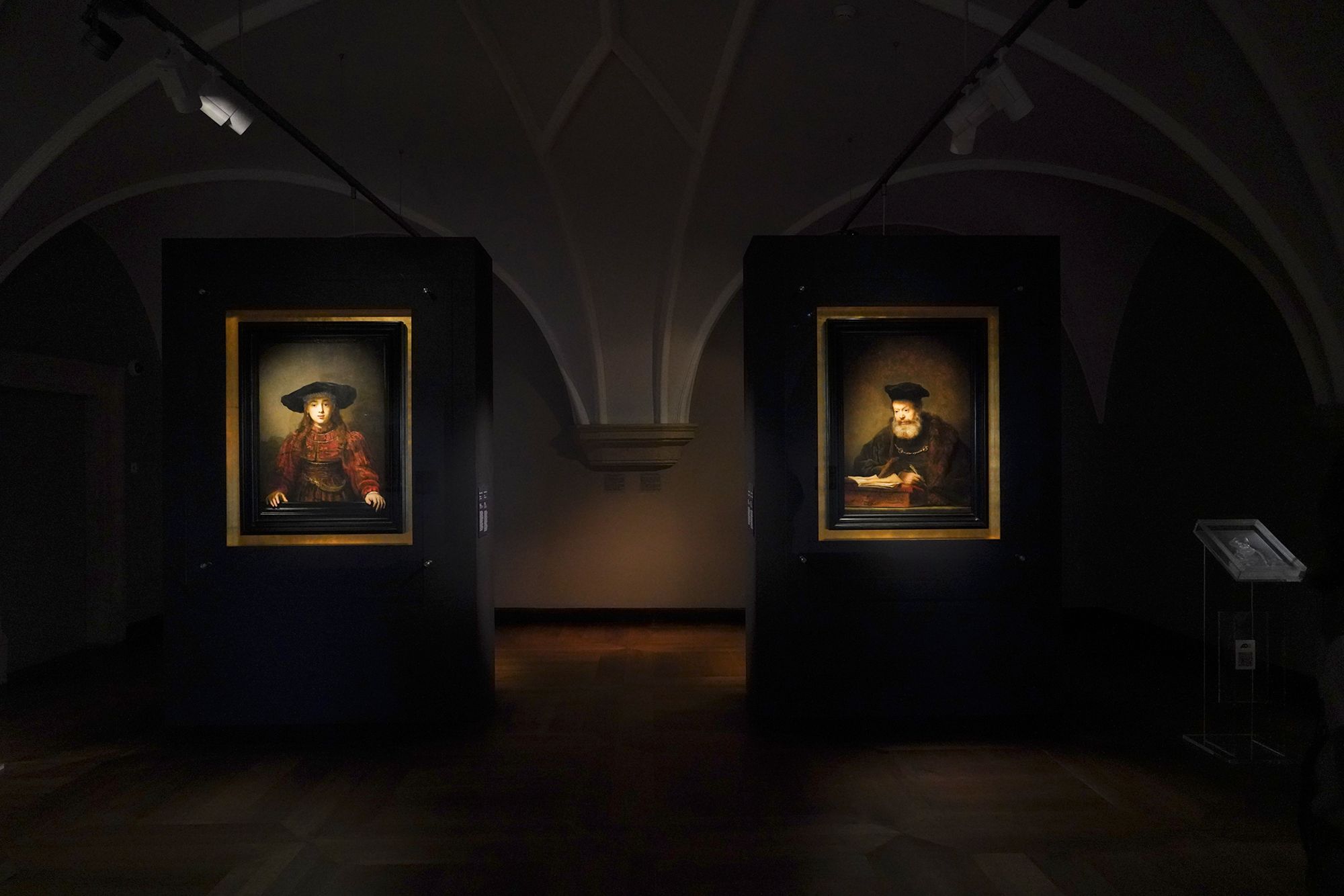
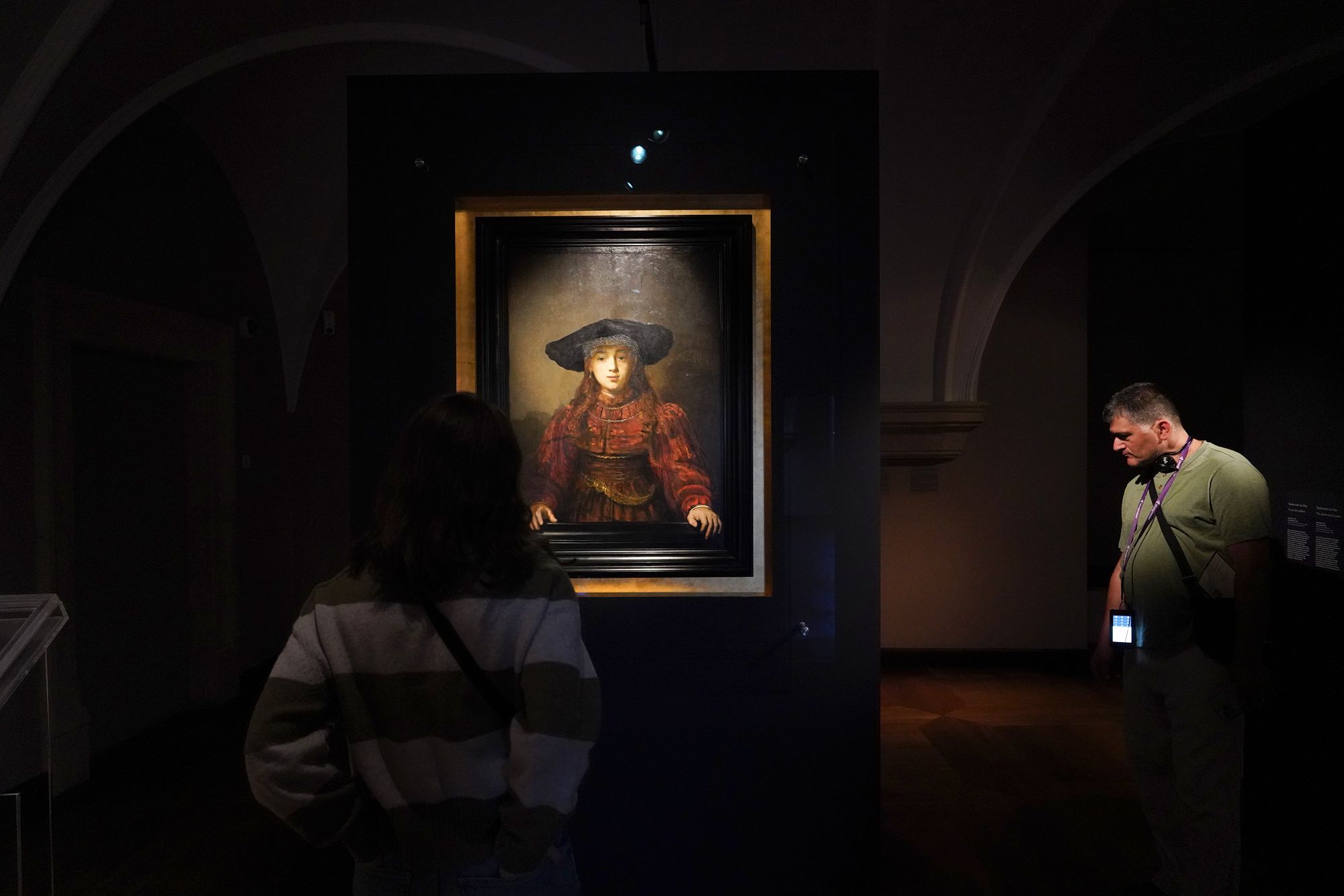
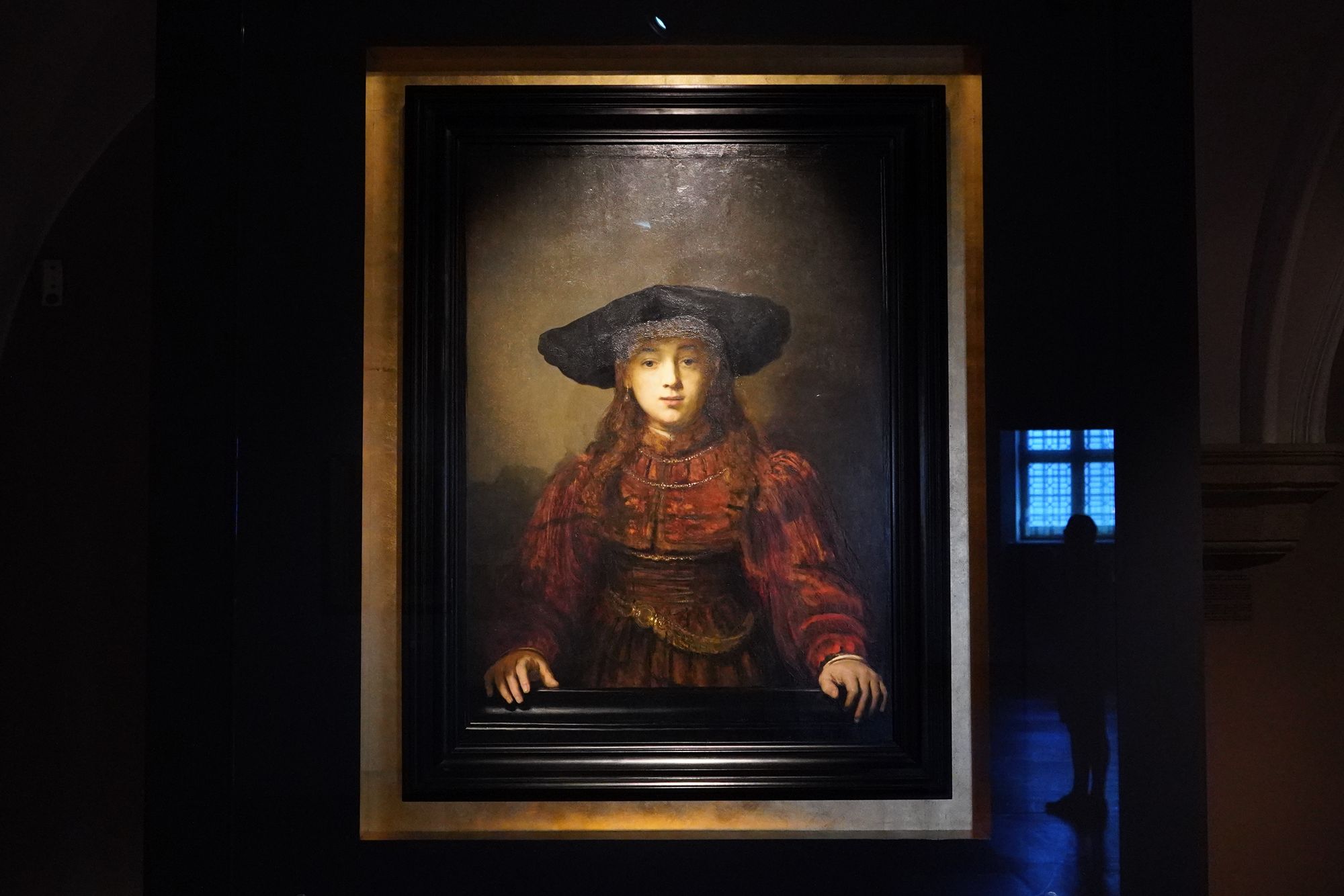
Rembrandt painted Girl in a Picture Frame in 1641, creating the illusion that the girl is leaning out toward the viewer, with her hands resting on a painted frame. Once part of King Stanisław August’s collection, the painting was donated to the Royal Castle by Karolina Lanckorońska in 1994.
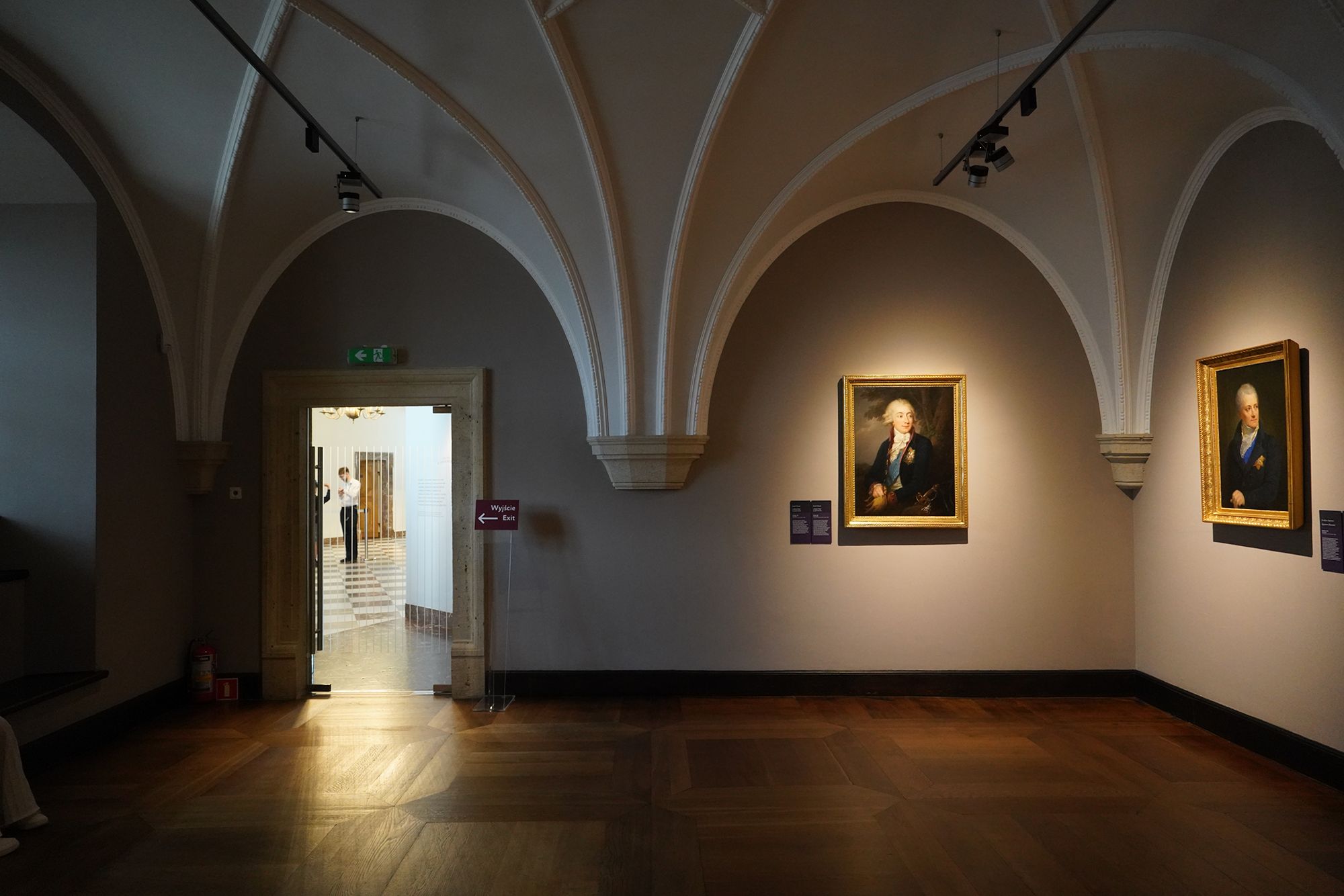
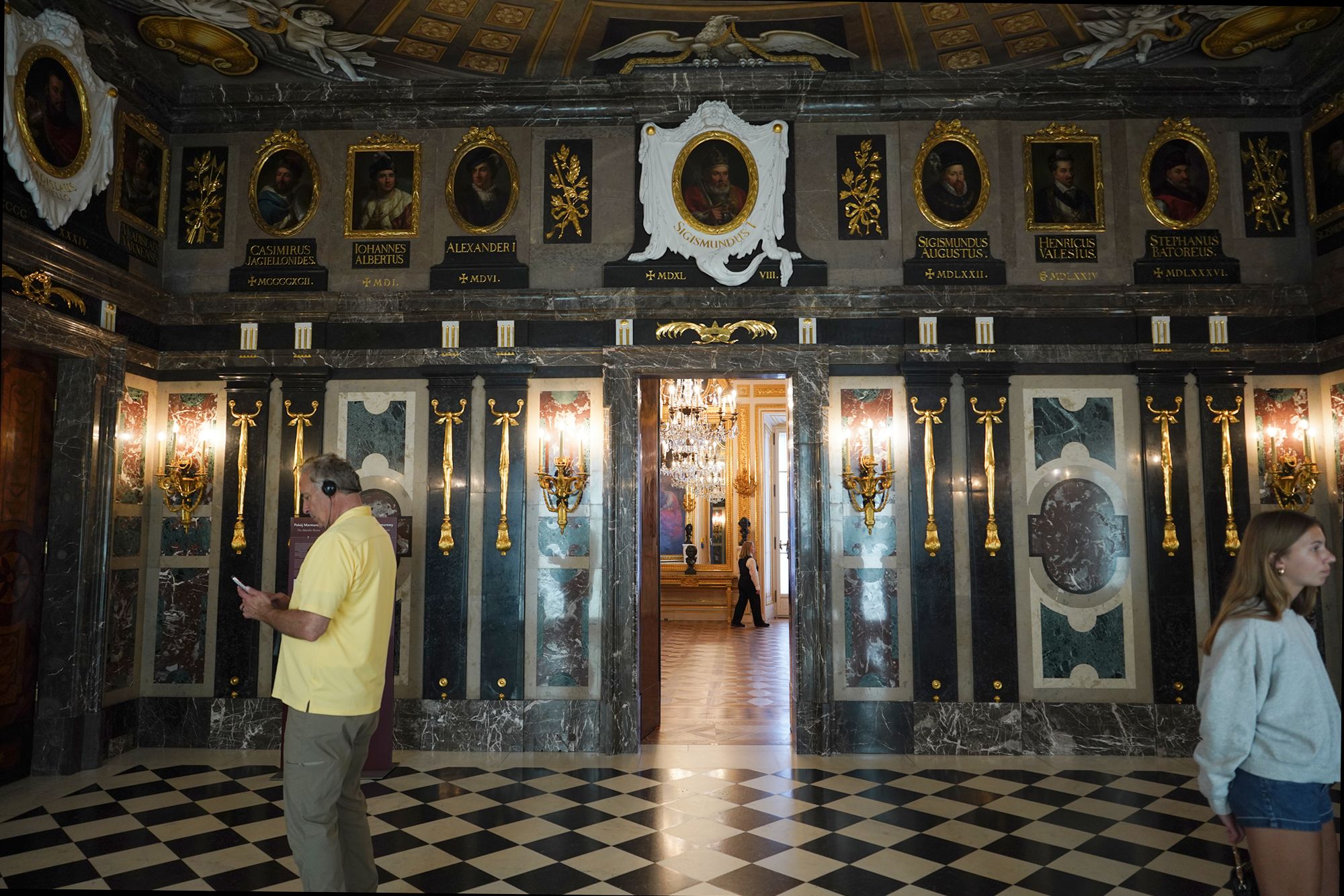
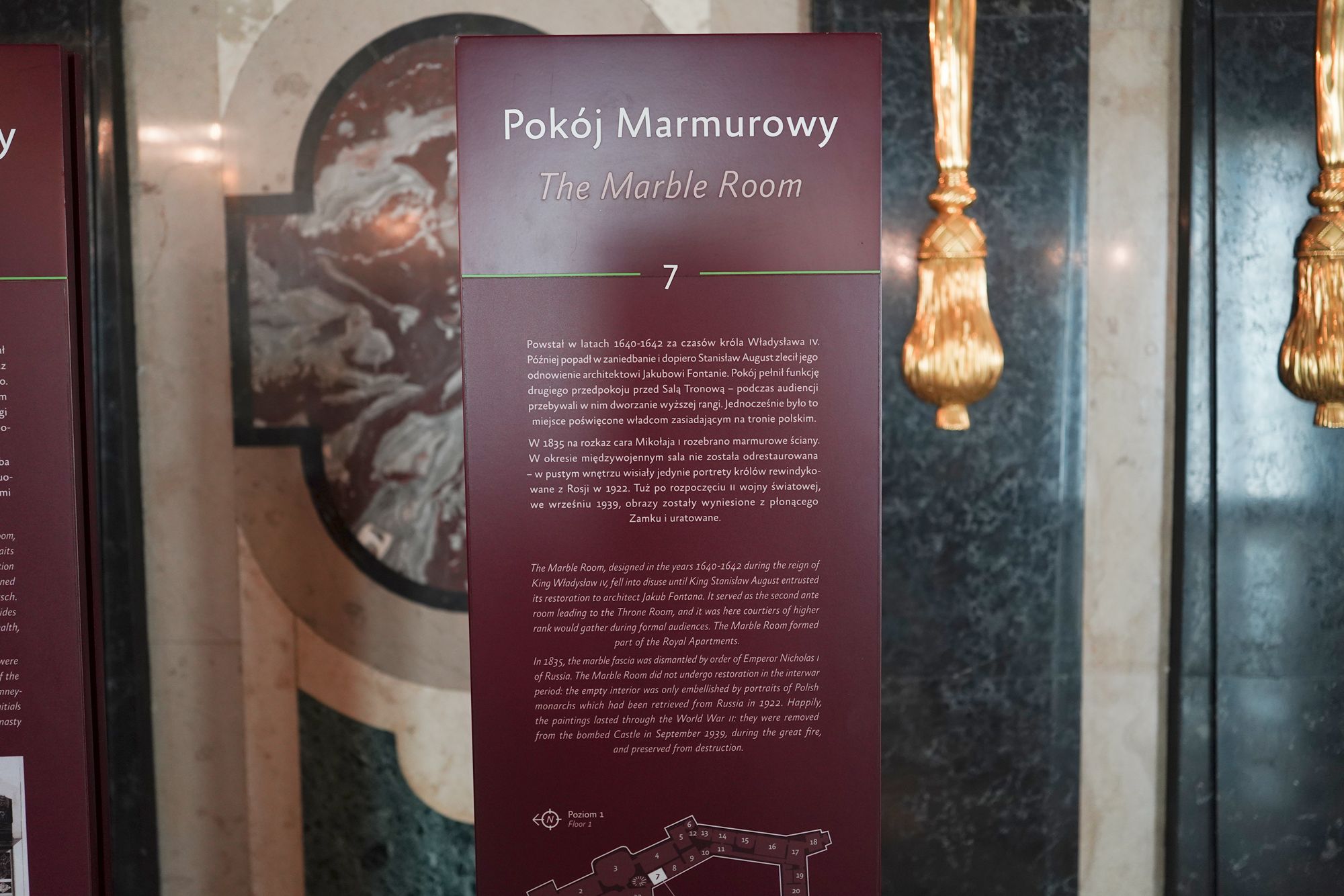
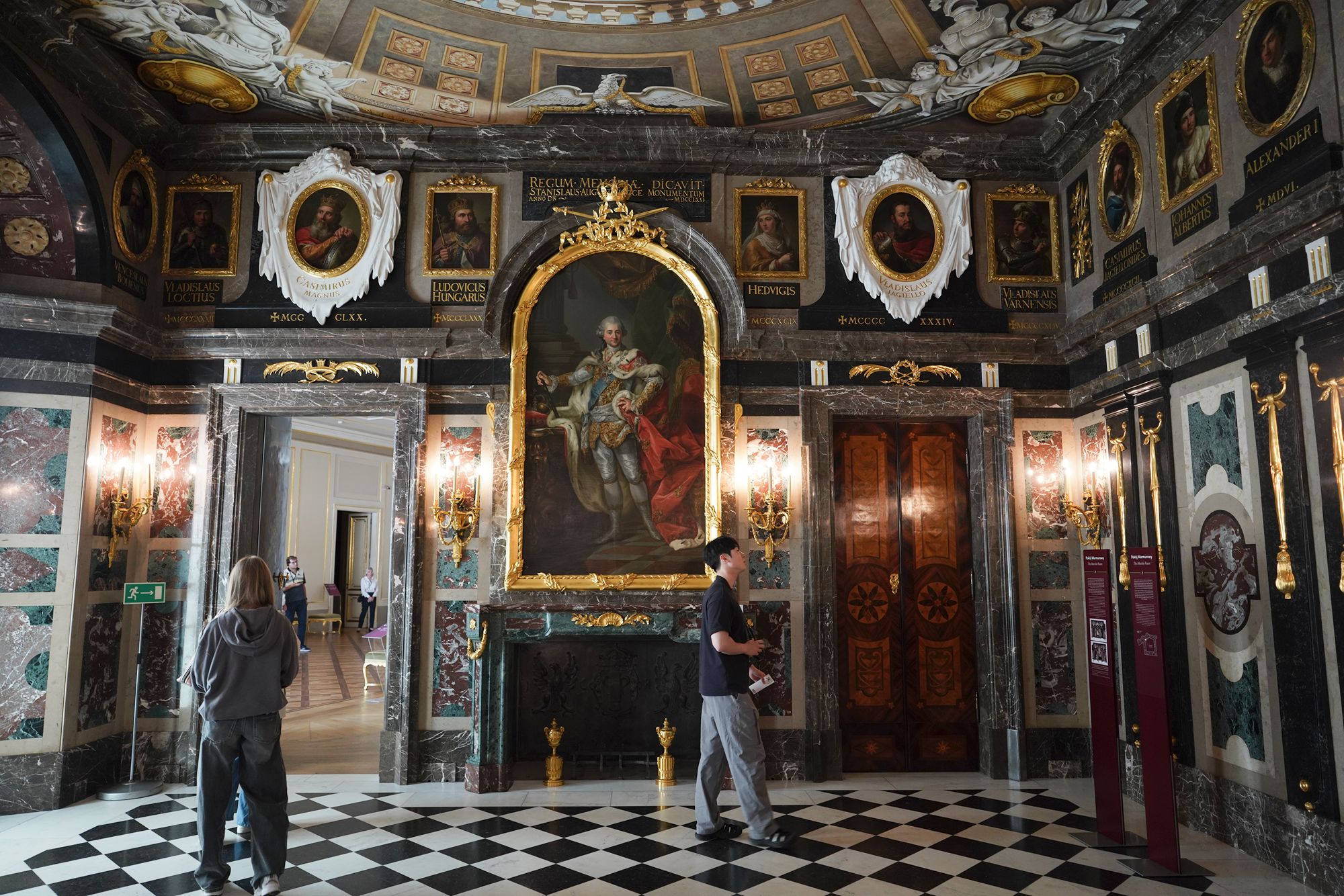
The Marble Room was created between 1640 and 1642 during the reign of King Władysław IV and later renovated for King Stanisław August. It served as an antechamber to the Throne Room, where senior courtiers waited during royal audiences. Portraits of Poland’s rulers celebrated the monarchy, and these paintings were rescued from the burning castle in September 1939.
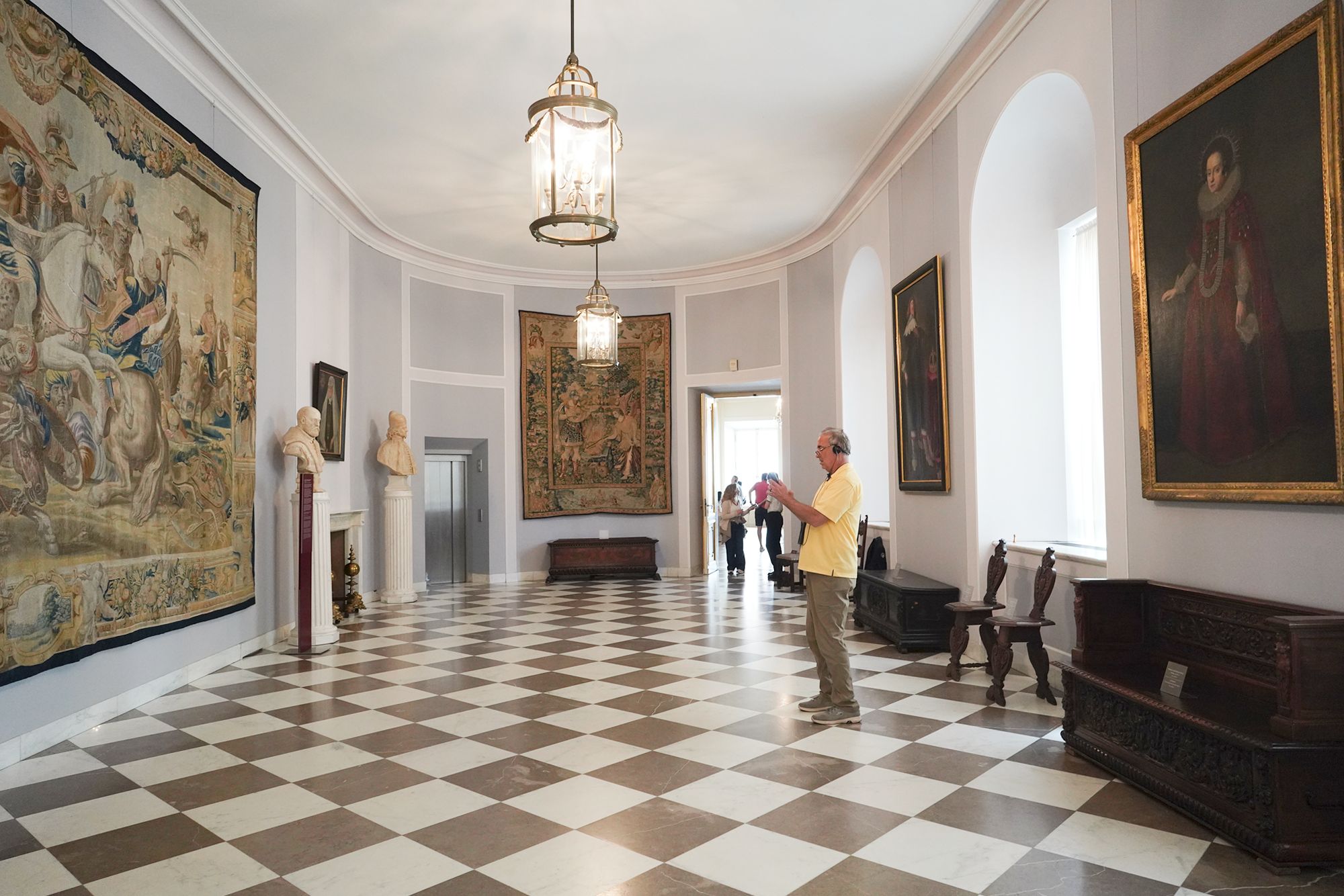
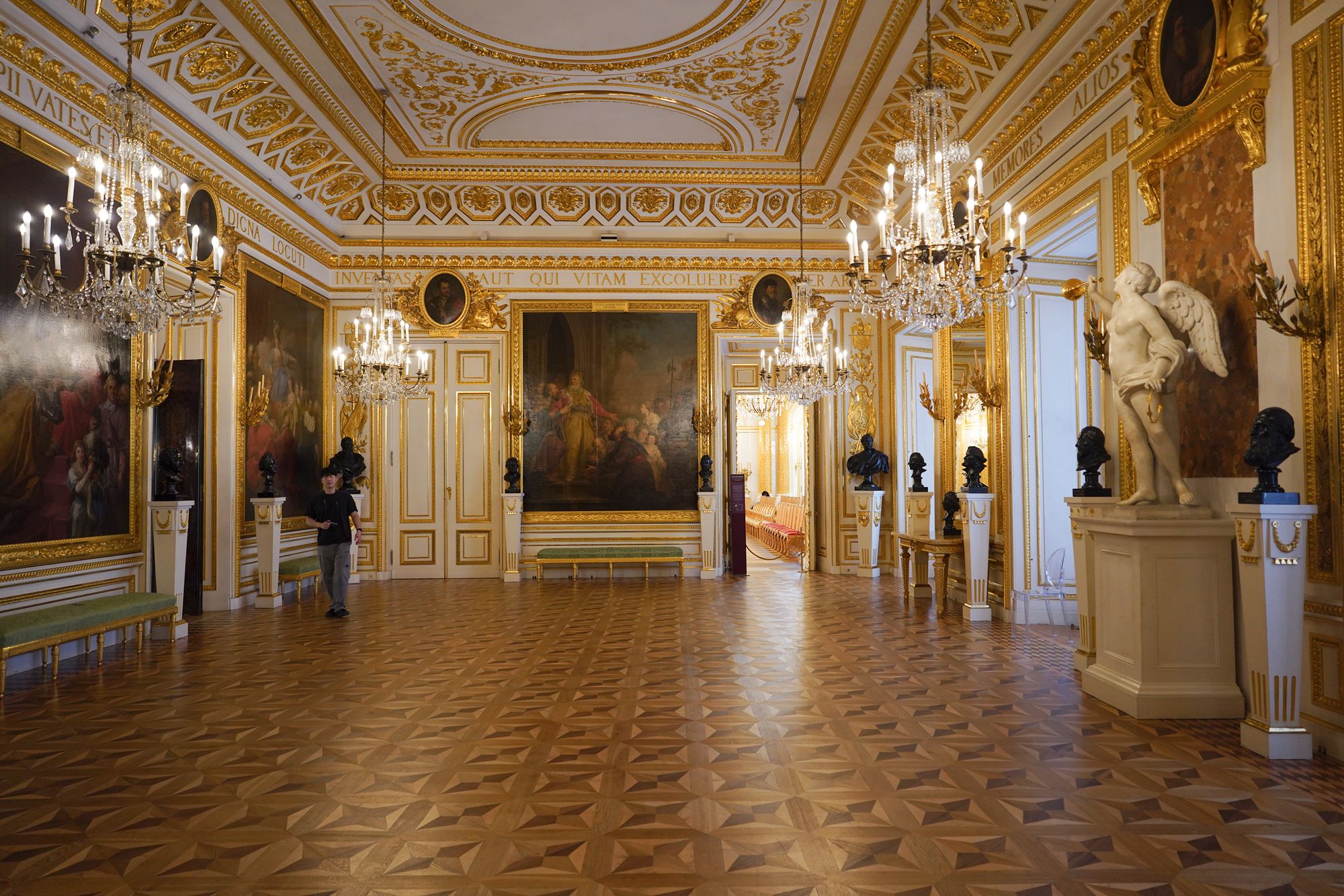
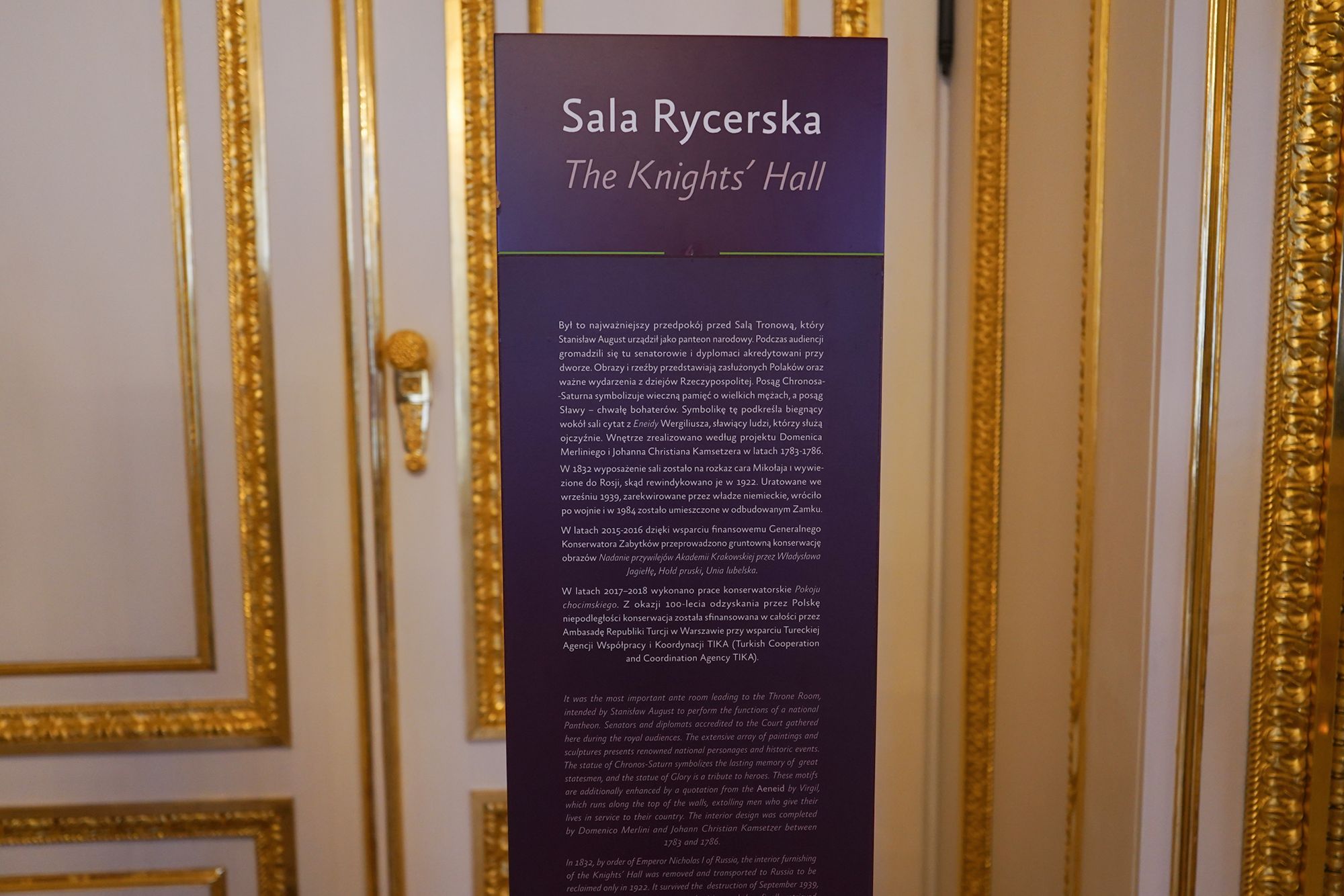
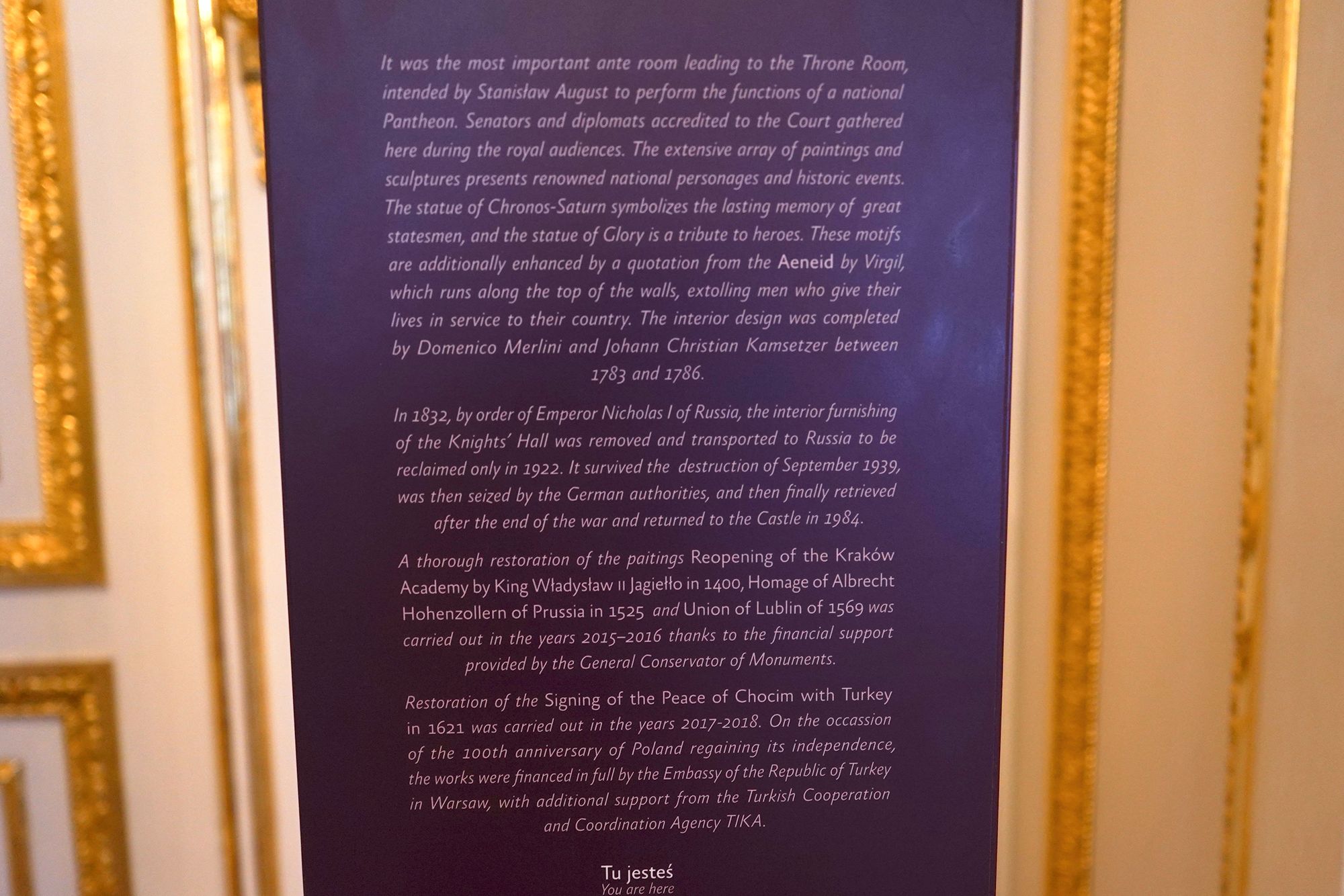
The Knights’ Hall was an important antechamber to the Throne Room, where senators and diplomats gathered during royal audiences. Designed between 1783 and 1786, it honored Poland’s notable figures and historical achievements through paintings and sculptures. Its original furnishings survived wartime destruction and were eventually returned to the rebuilt castle in 1984.
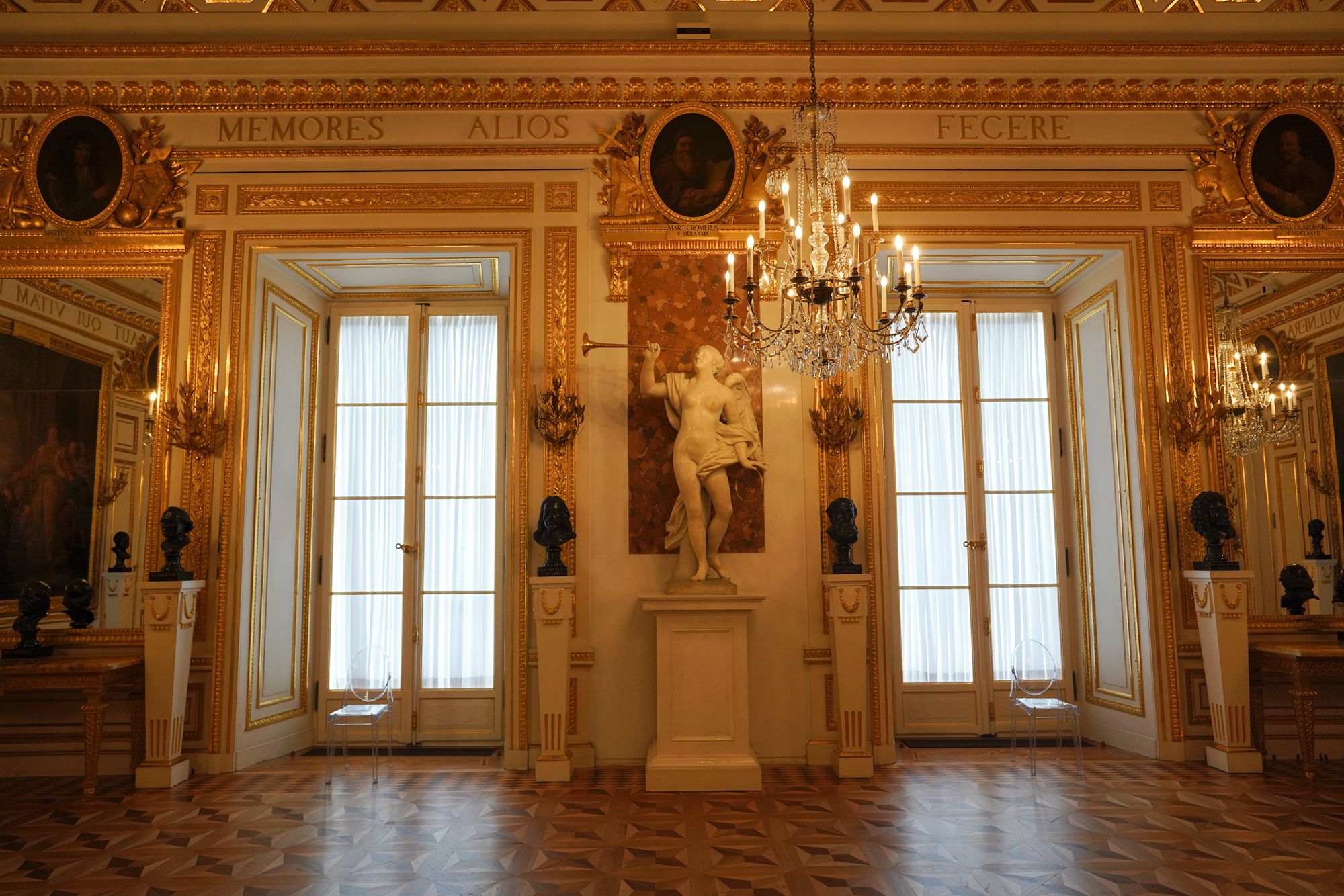
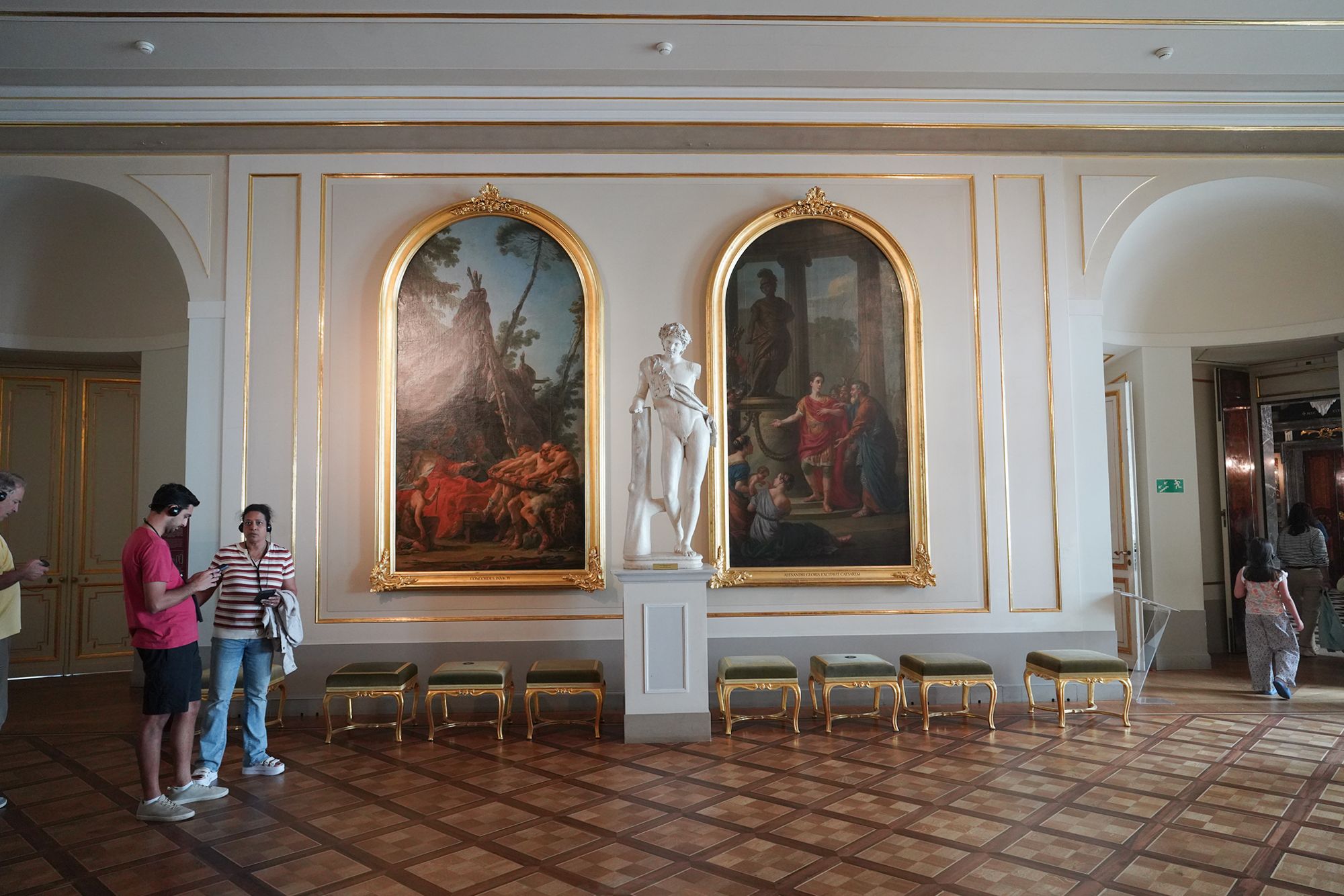
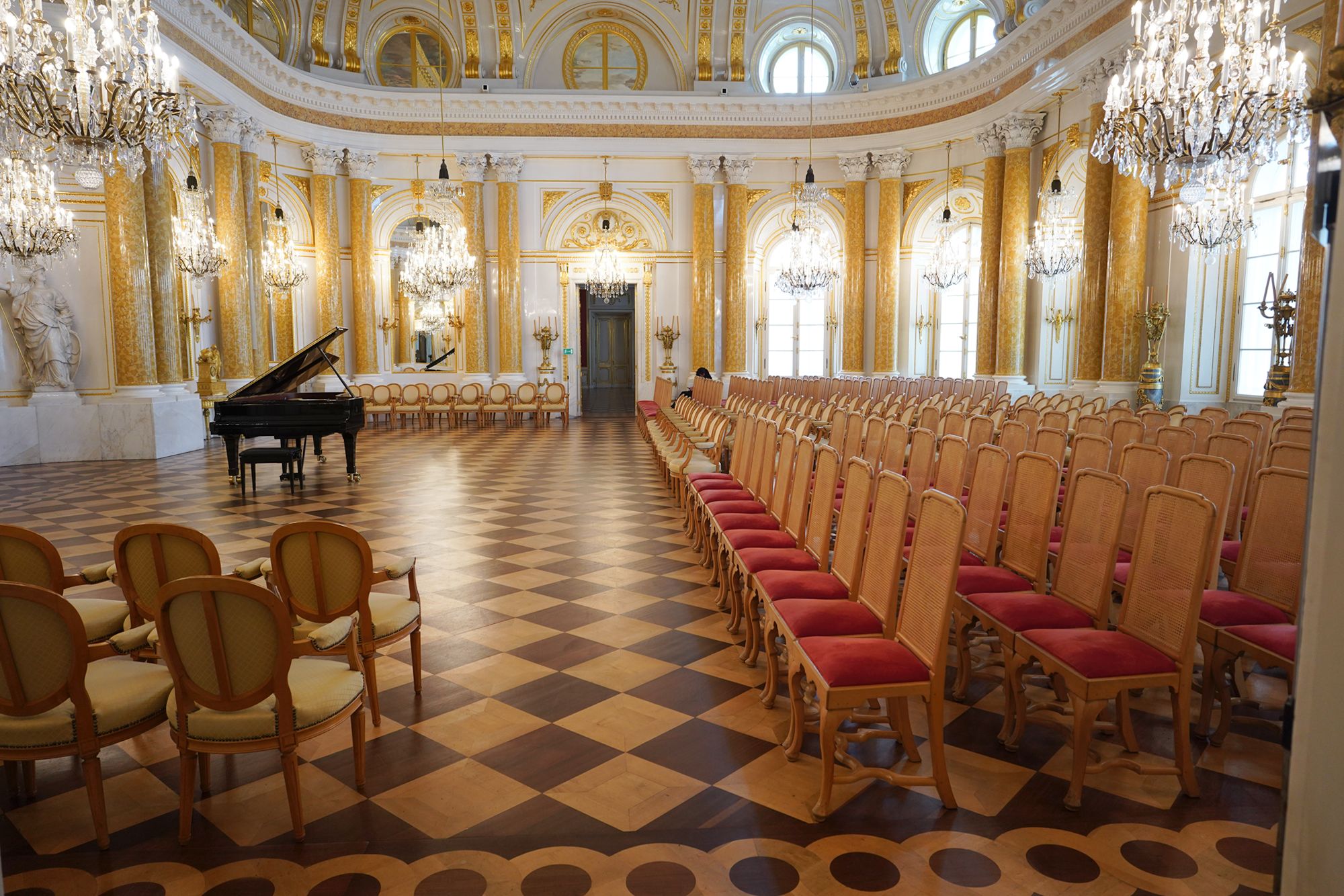
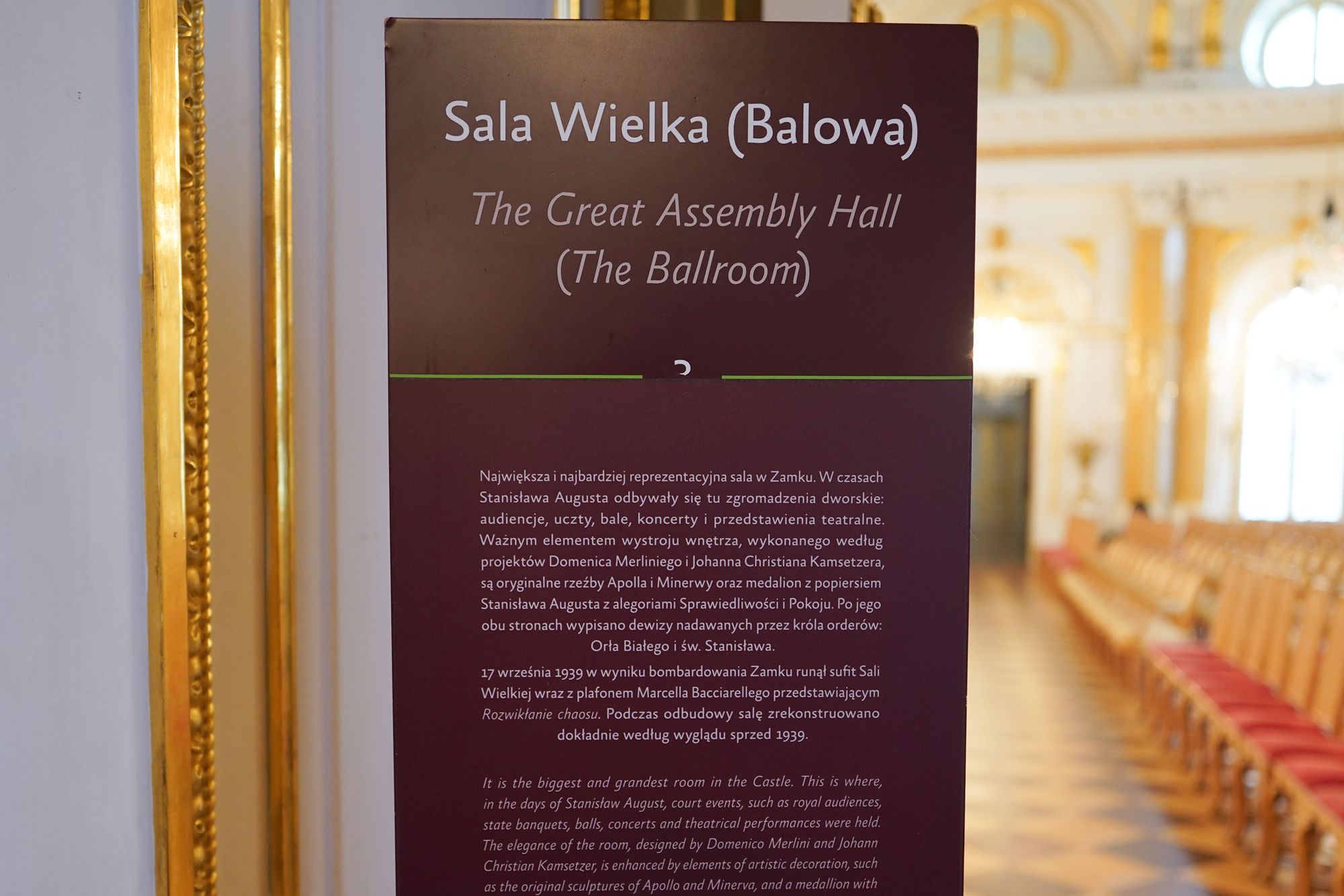
The Great Assembly Hall, also known as the Ballroom, is the castle’s largest and grandest room. During King Stanisław August’s reign, it hosted royal audiences, banquets, balls, concerts, and theatrical performances. Its ceiling painting was destroyed during the bombing in September 1939, and the room was later reconstructed to match its prewar appearance.
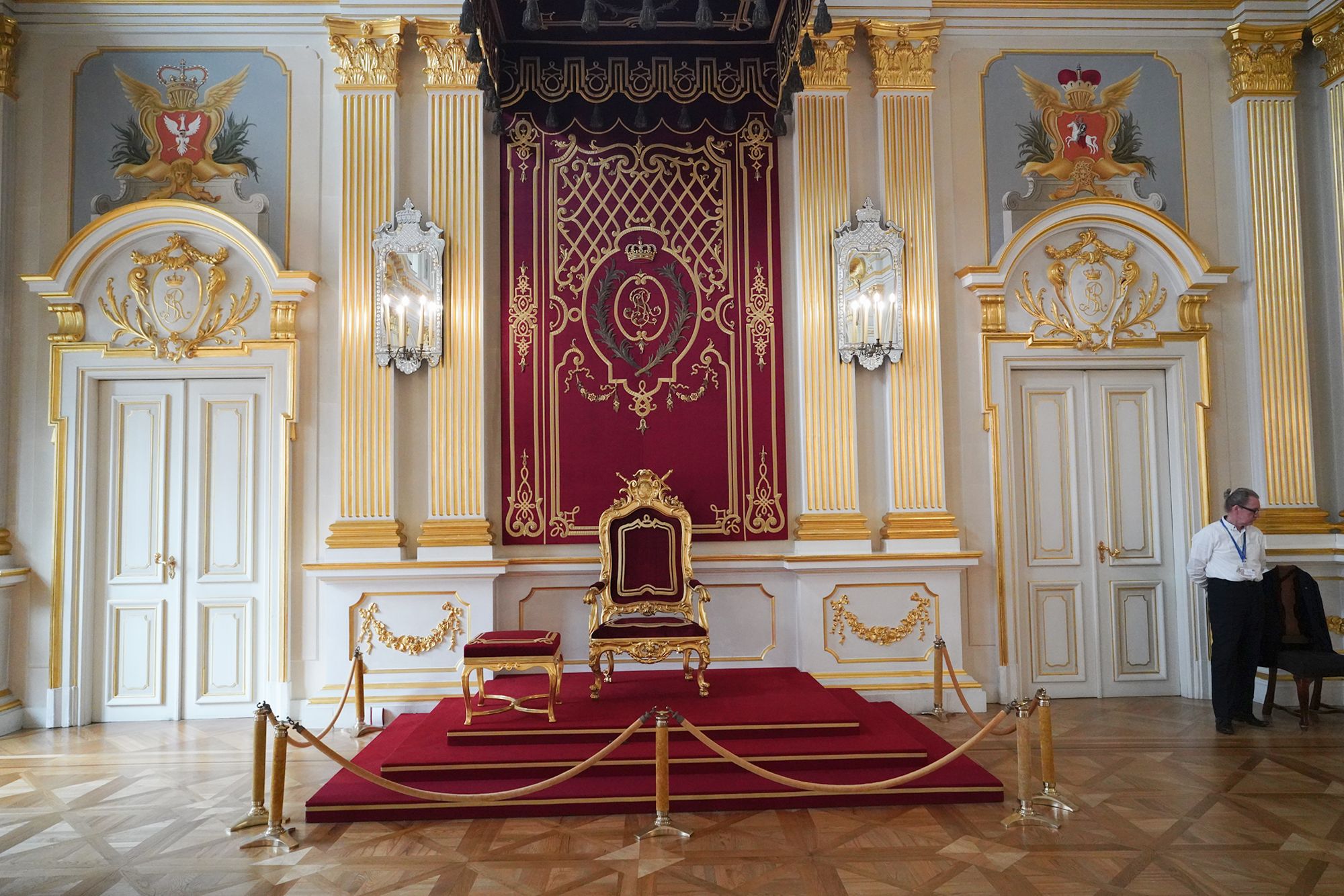
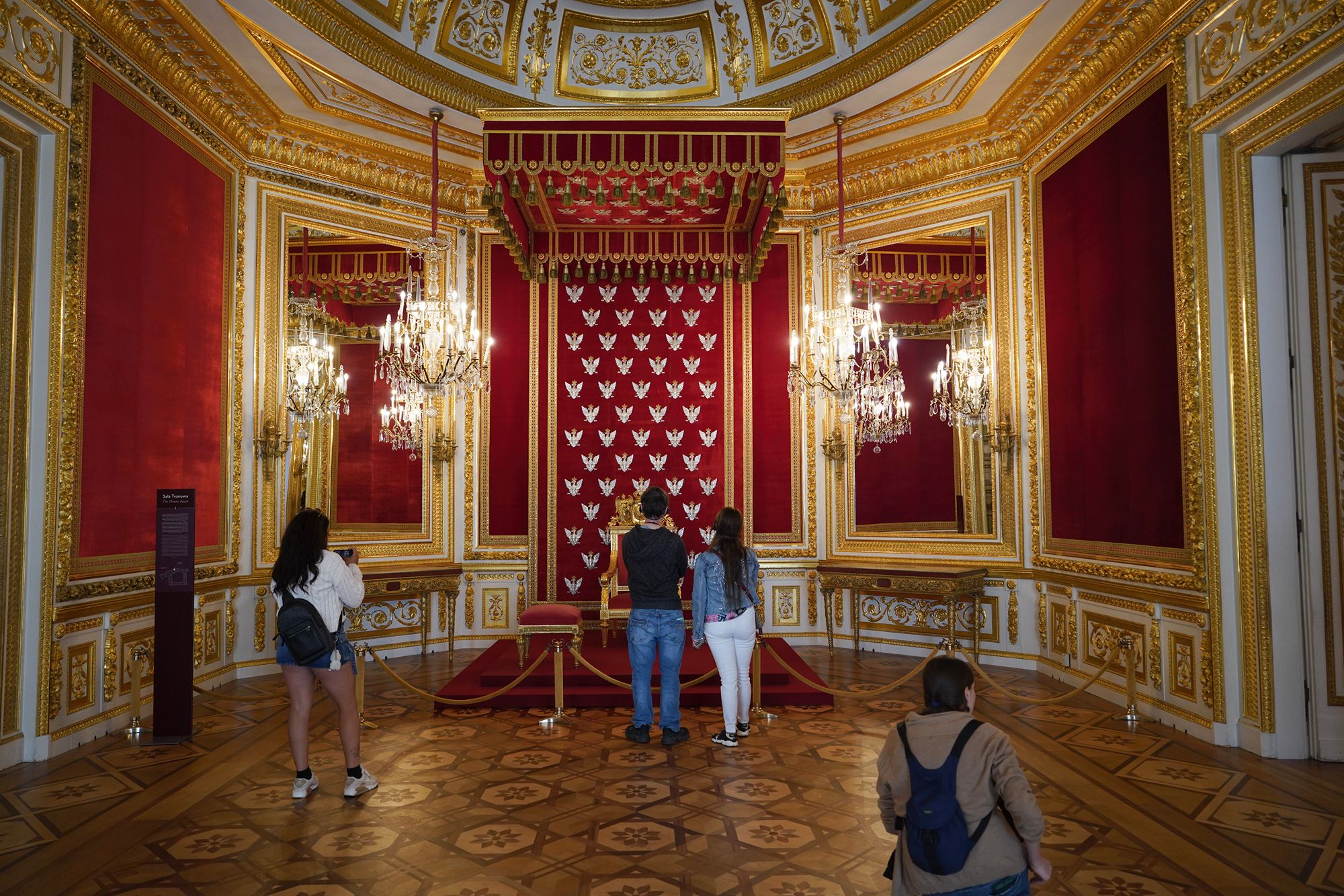
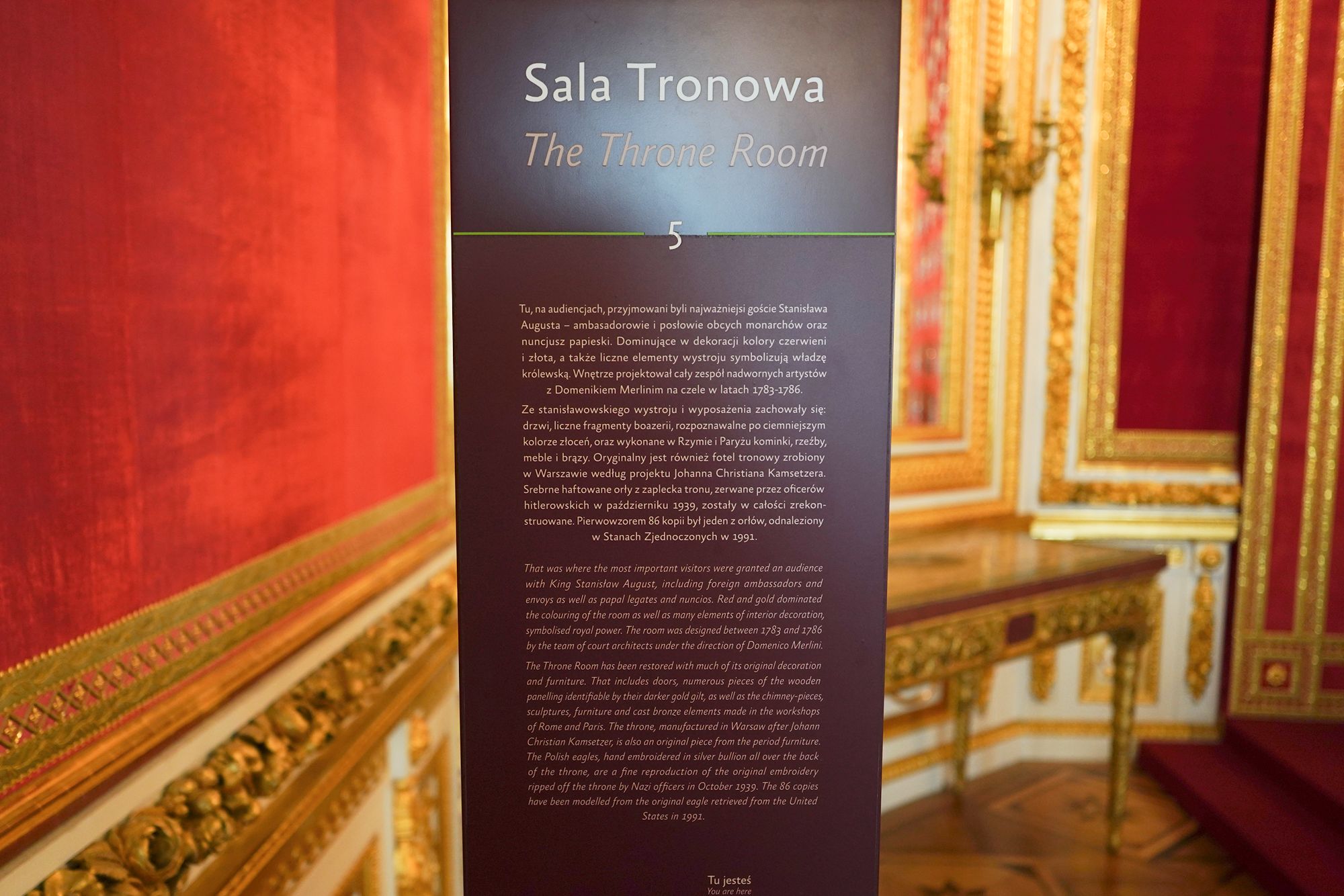
The Throne Room was where King Stanisław August received foreign ambassadors, royal envoys, and papal representatives. Designed between 1784 and 1786, its red and gold decoration emphasized royal authority. The original throne and several furnishings survive, while the silver eagles embroidered on the throne’s backdrop were recreated after being removed by German officers in 1939.
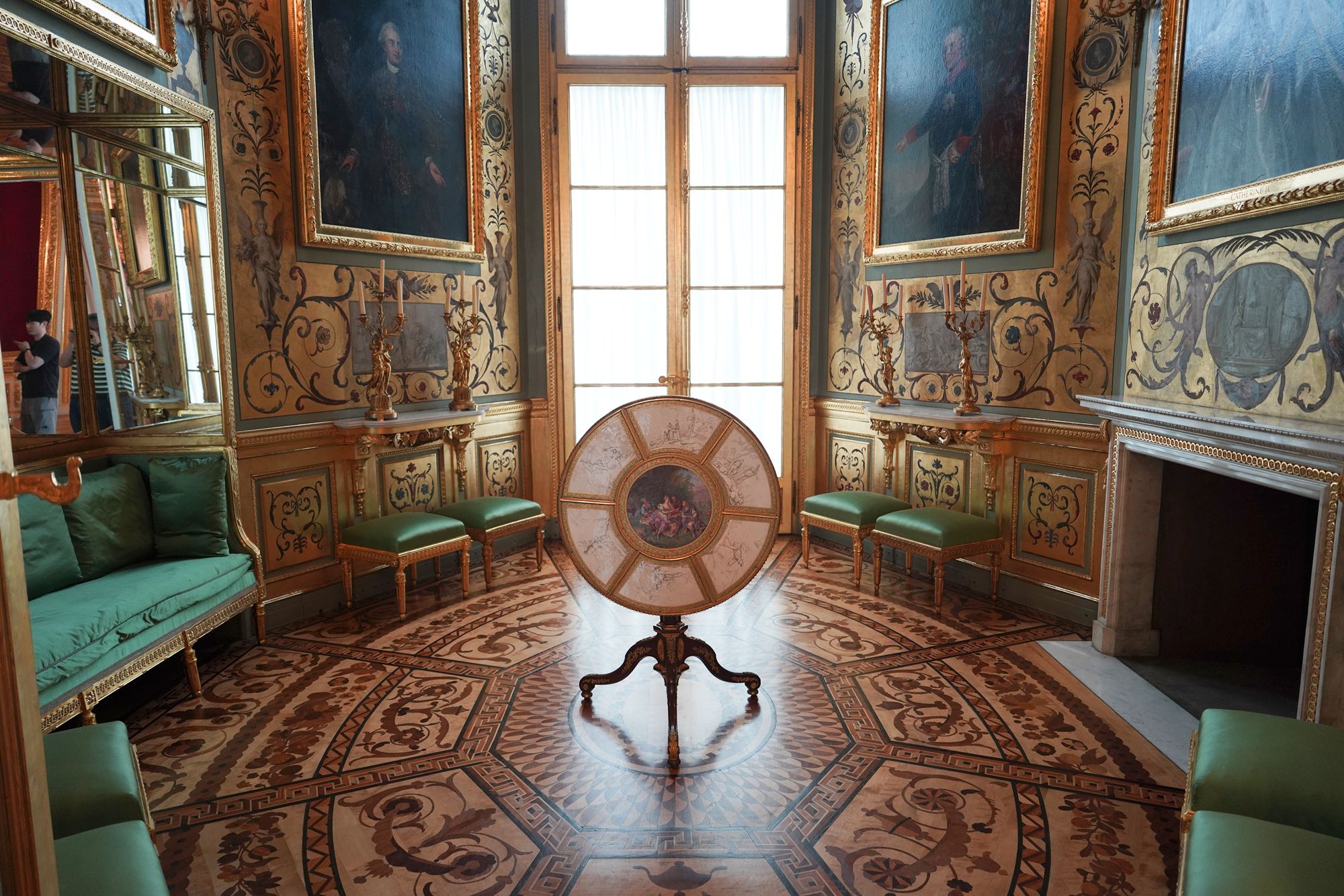
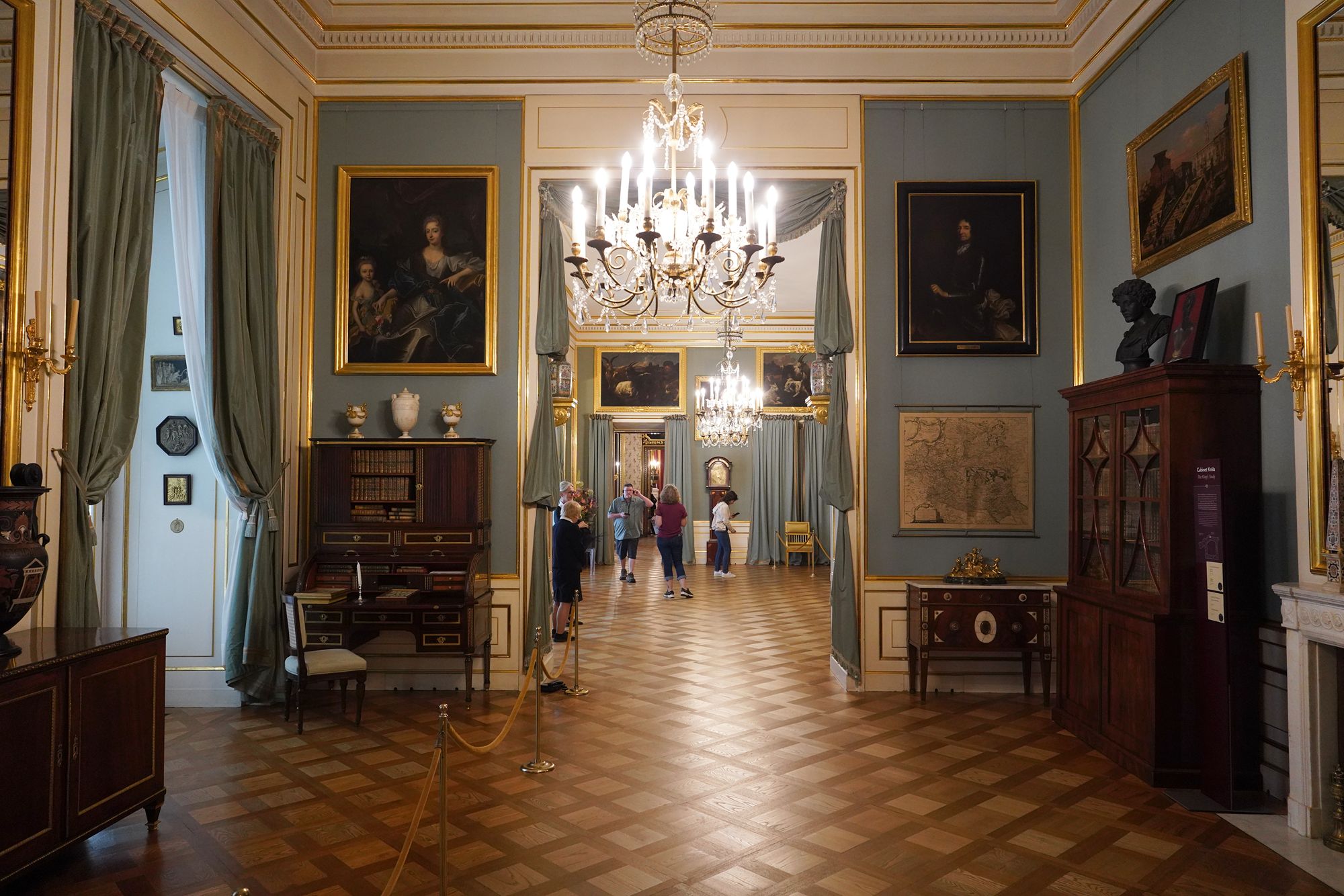
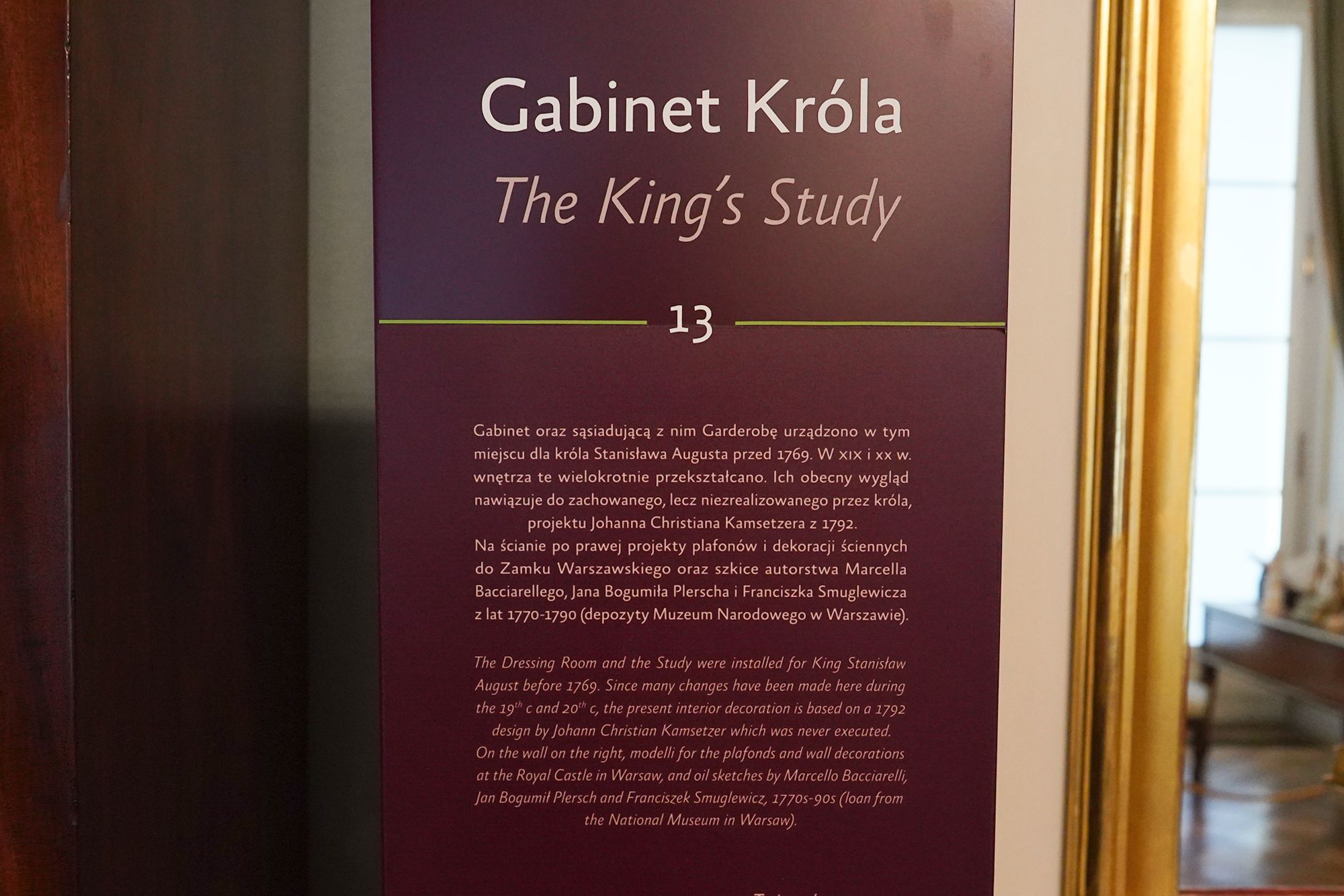
The King’s Study and adjoining dressing room were arranged for King Stanisław August before 1769. After many later alterations, the study’s present appearance was based on a surviving design from 1792 that was never carried out during his reign. The paintings displayed here include sketches for the castle’s ceiling and wall decorations.
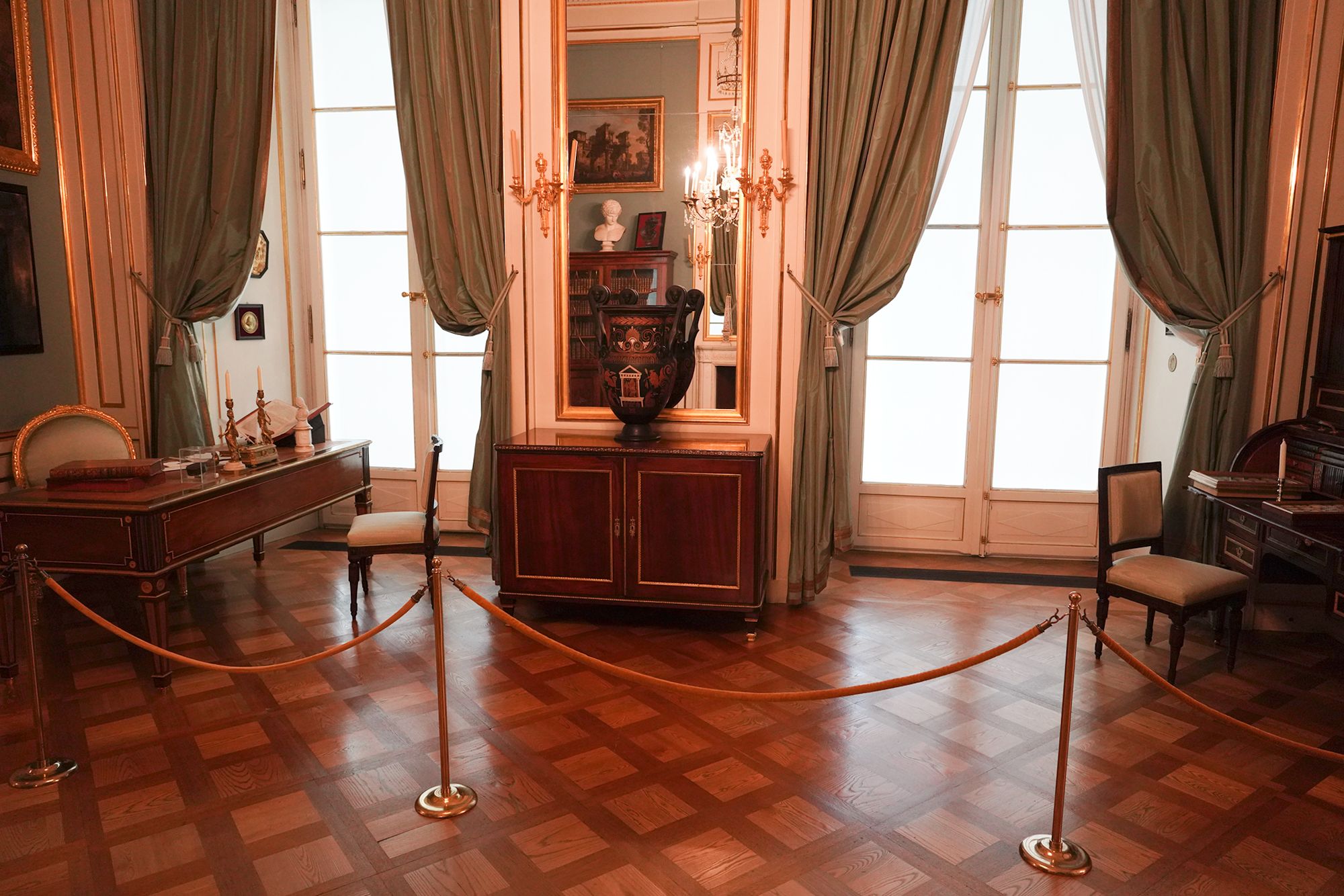
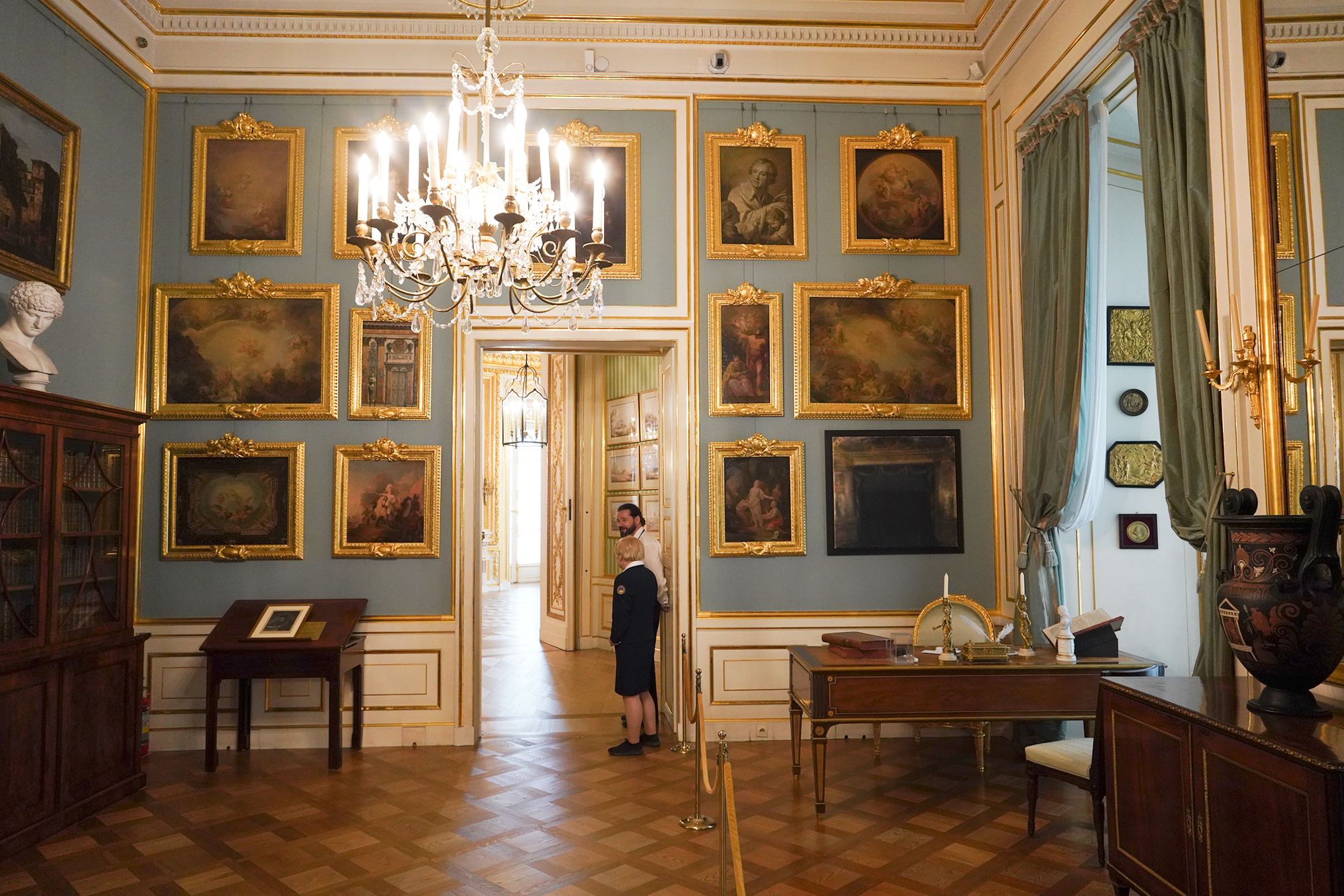
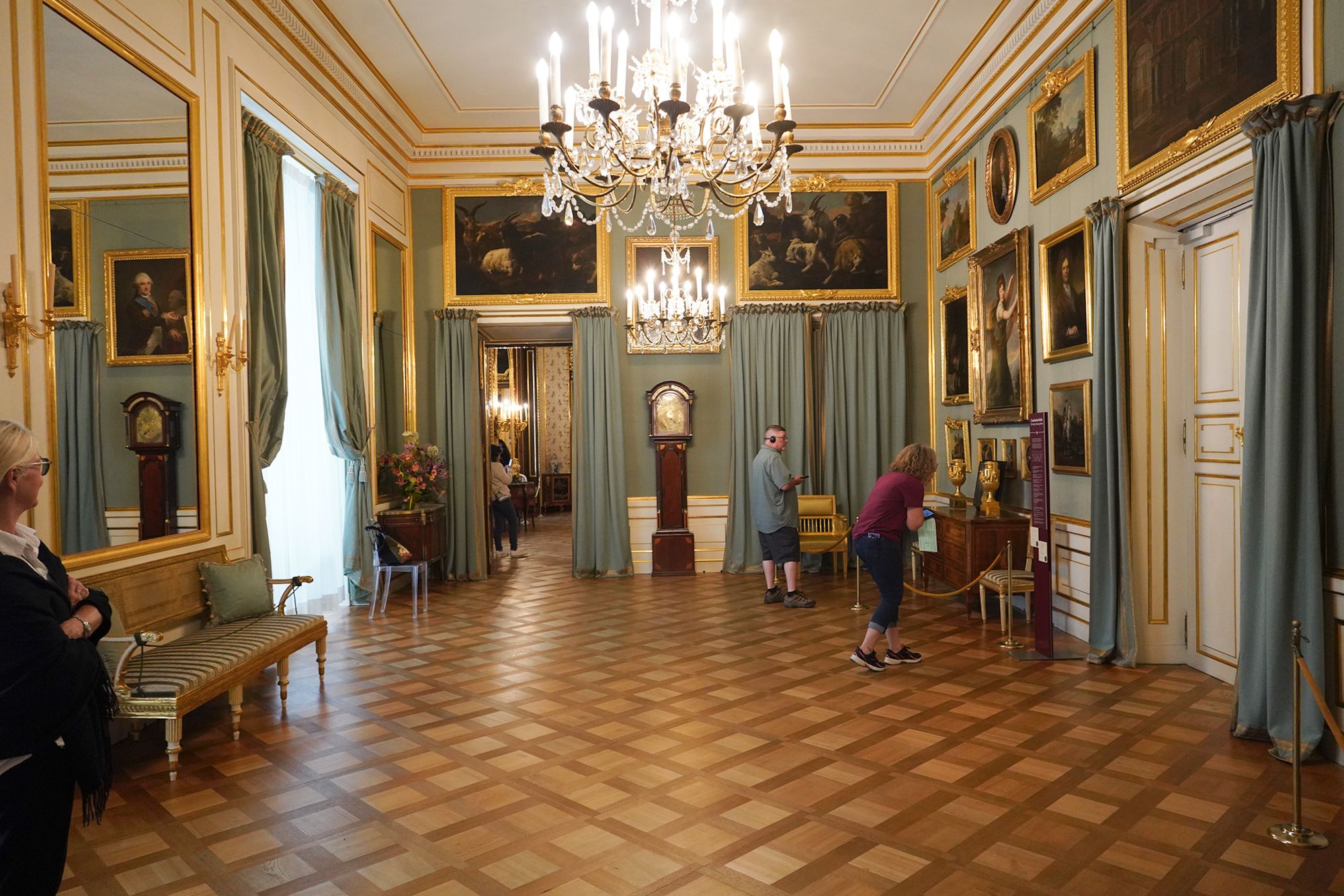
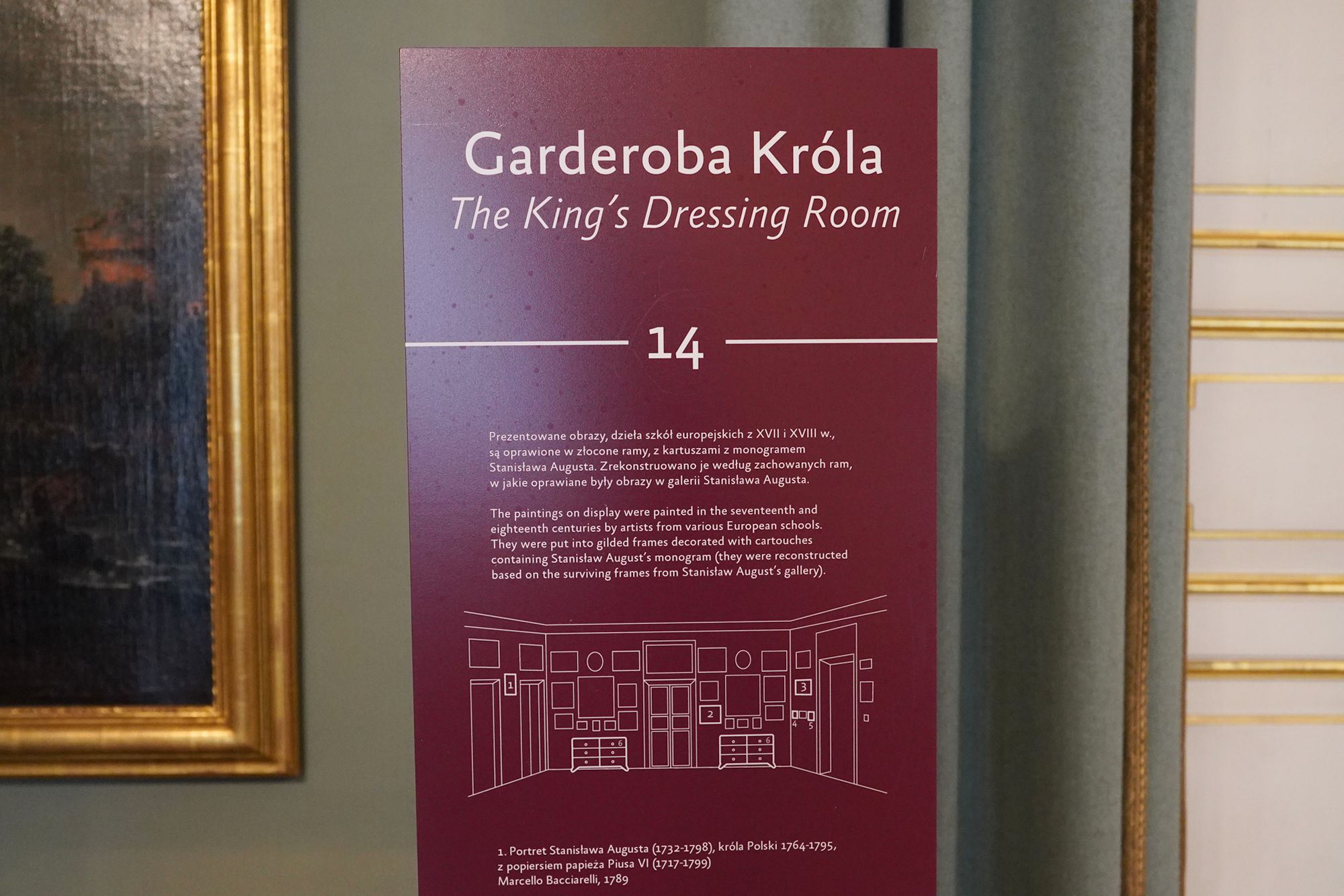
The King’s Dressing Room displays 17th- and 18th-century paintings from various European schools. Their gilded frames feature King Stanisław August’s monogram and were reconstructed using surviving examples from his art gallery.
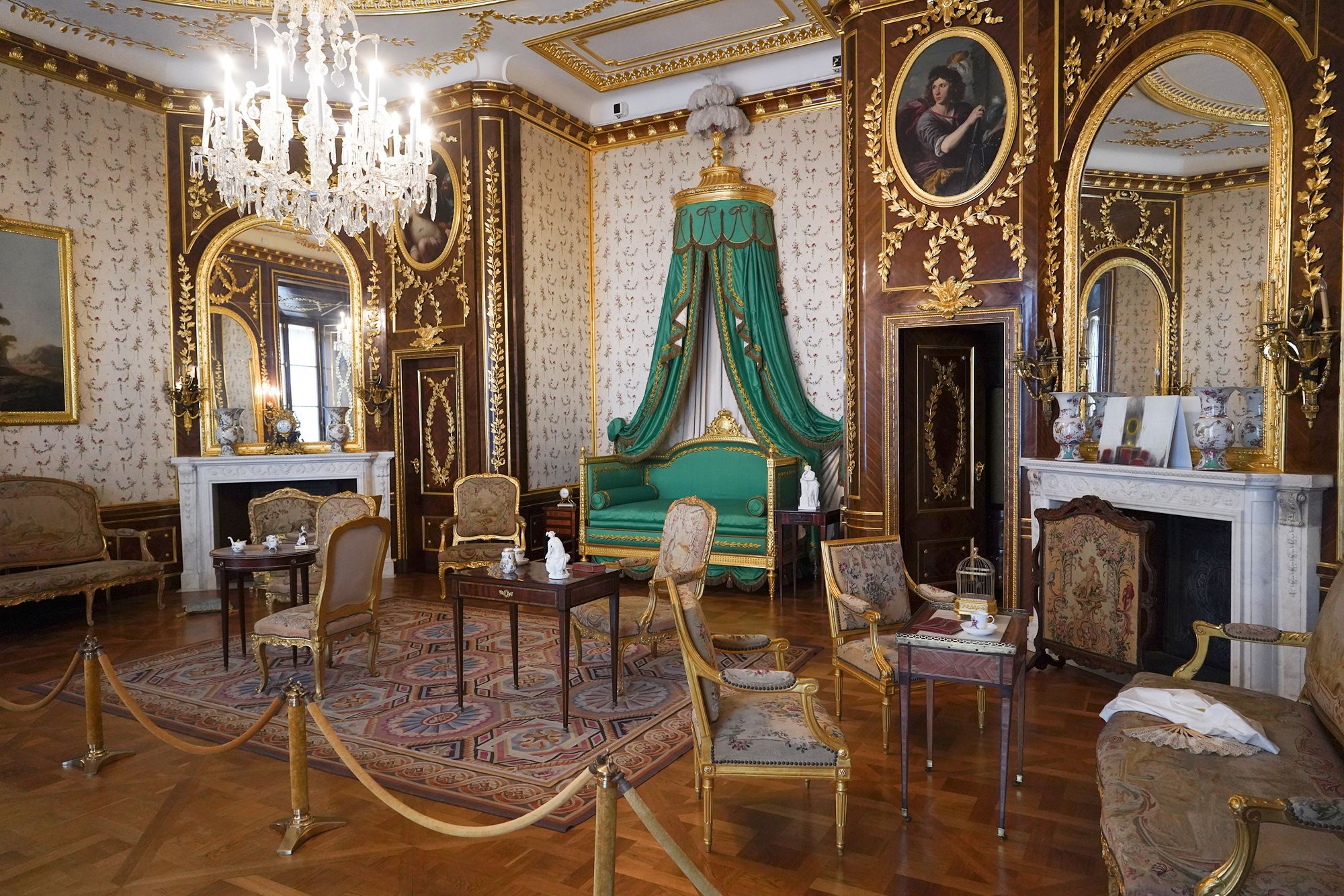
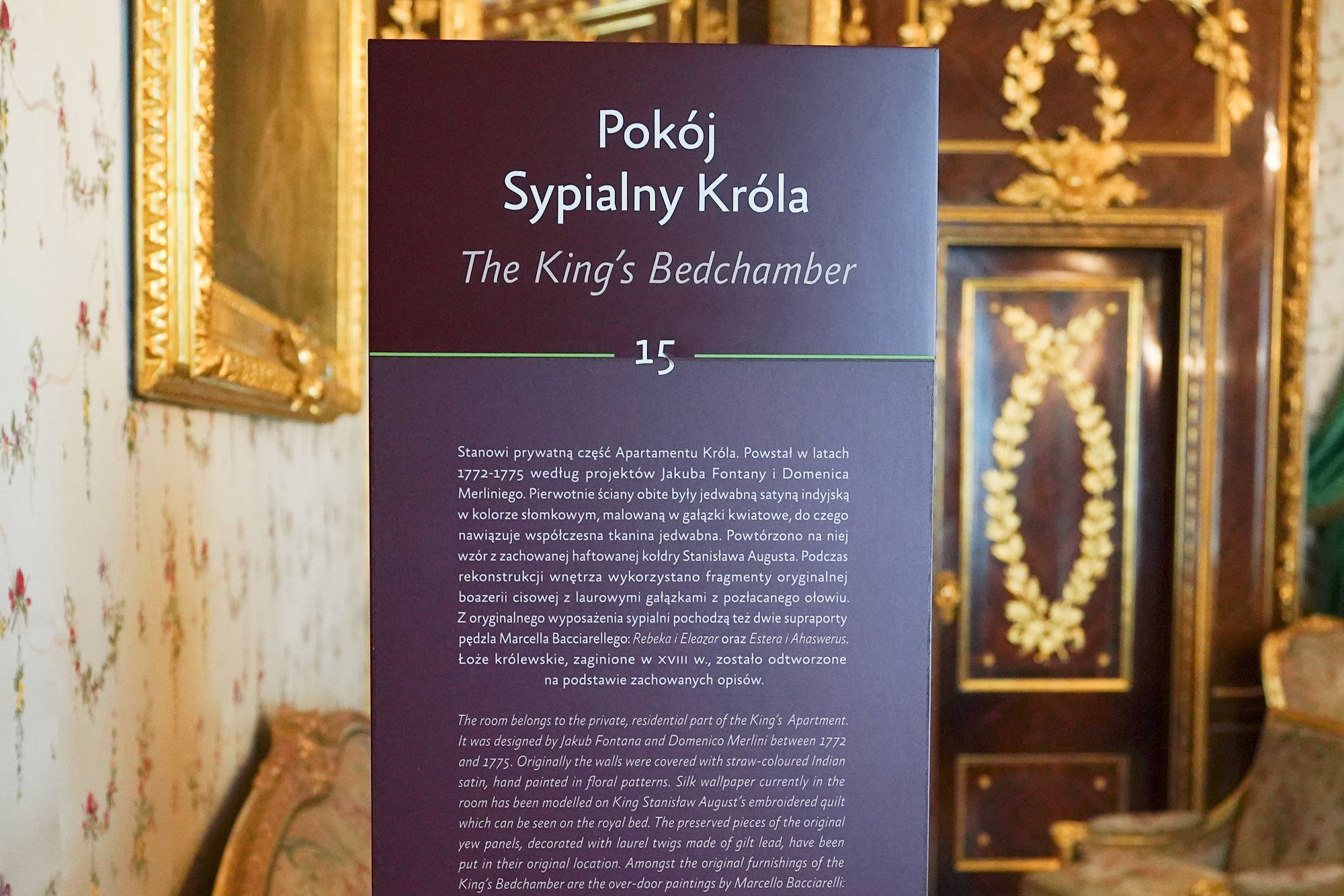
The King’s Bedchamber formed part of his private apartments and was designed between 1772 and 1775. Its silk wall covering recreates the floral pattern of the original straw-colored satin. The reconstructed room incorporates surviving woodwork and two original paintings by Marcello Bacciarelli, while the royal bed was recreated from historical descriptions.
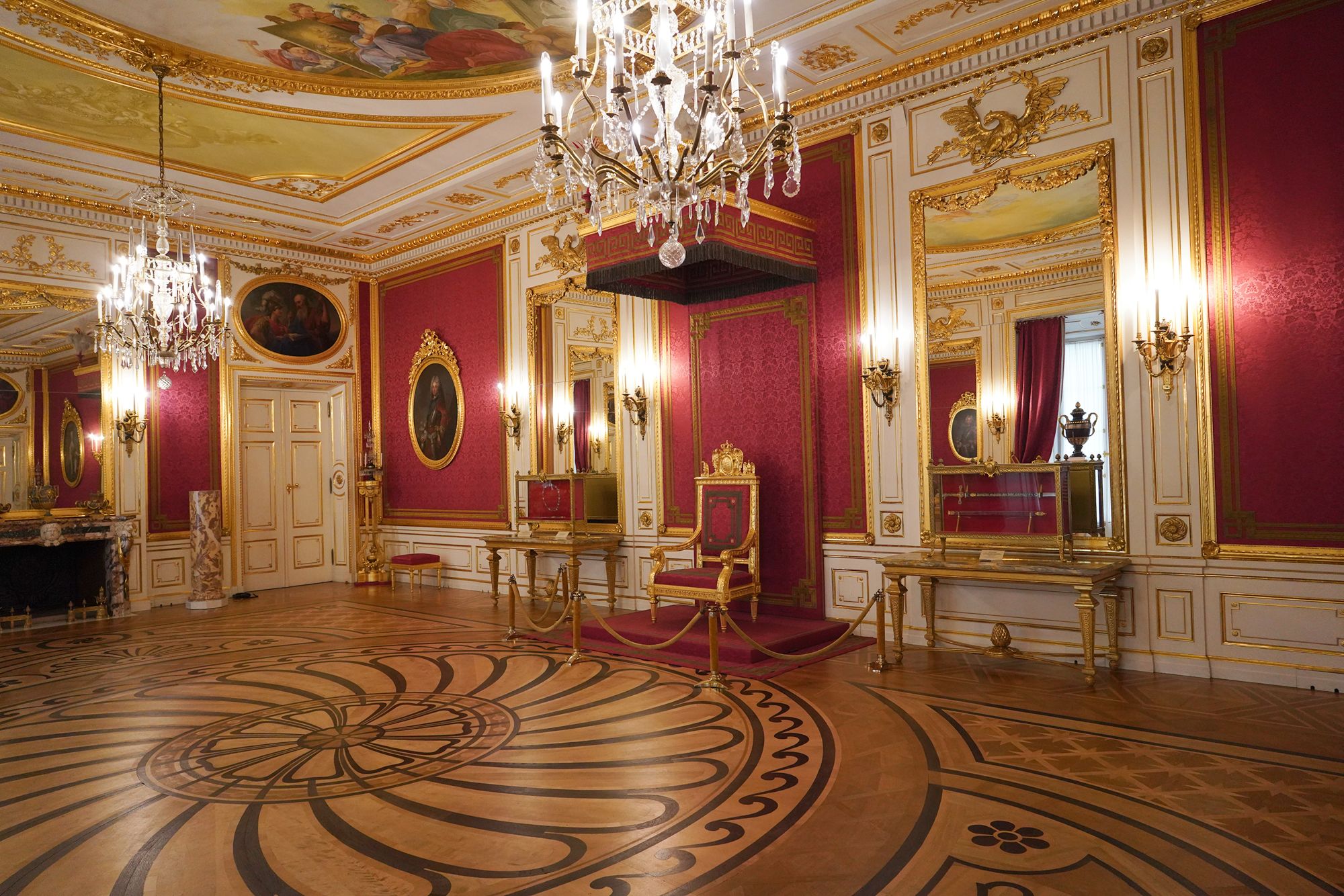
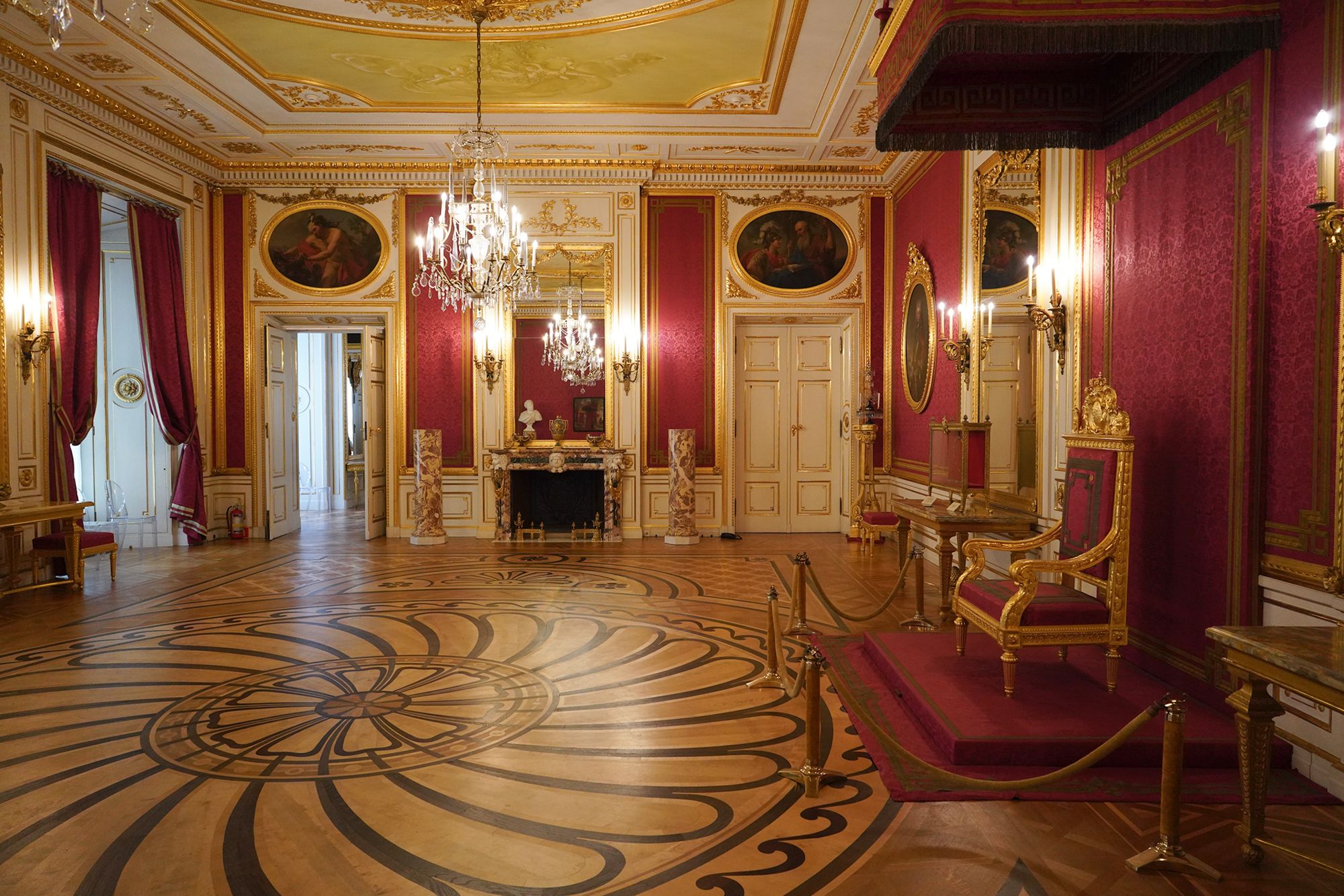
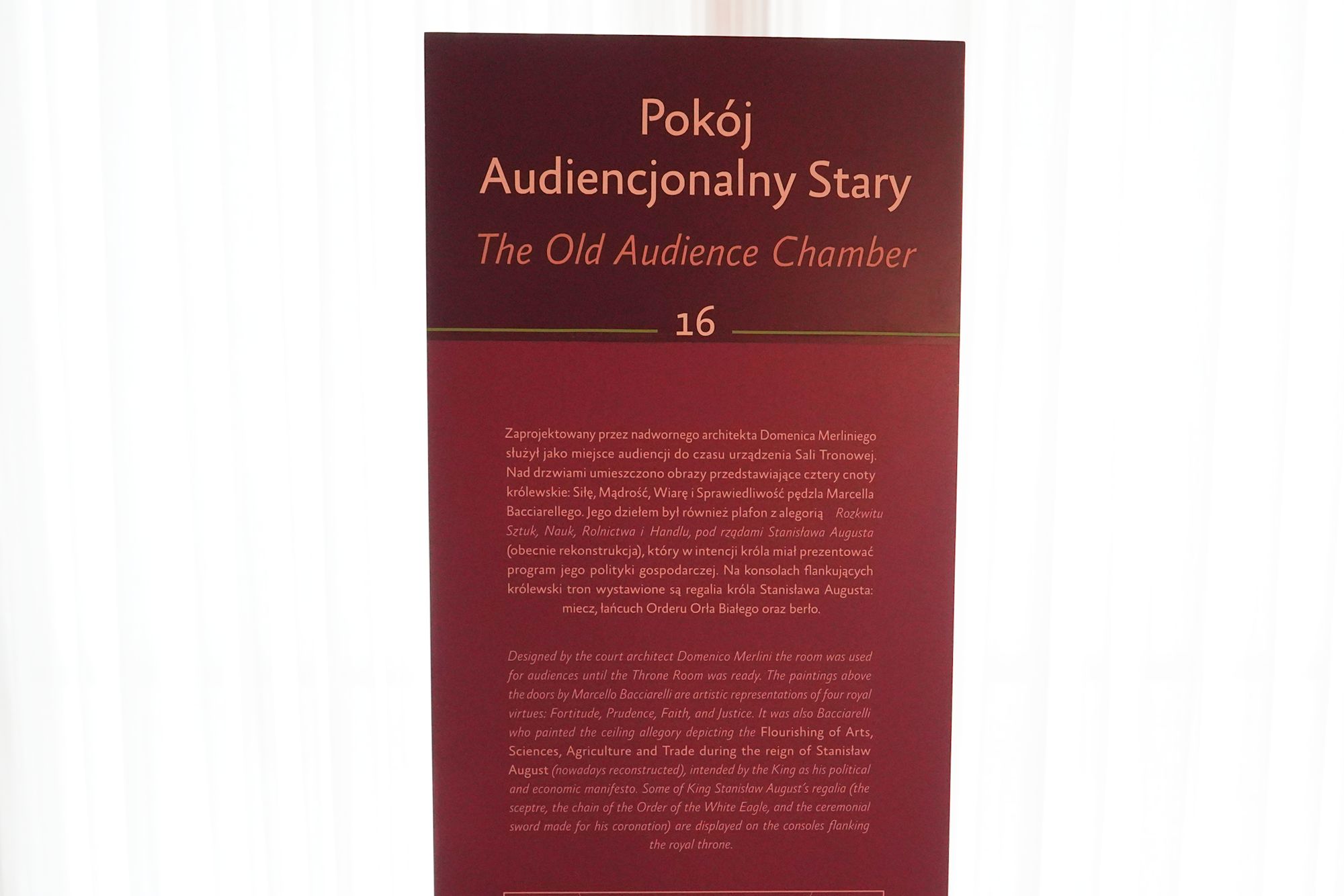
The Old Audience Chamber was where King Stanisław August received visitors before the Throne Room was ready. Designed by Domenico Merlini, it features paintings representing strength, wisdom, faith, and justice. Its reconstructed ceiling celebrates the arts, sciences, agriculture, and trade, reflecting the king’s ambitions for the country.
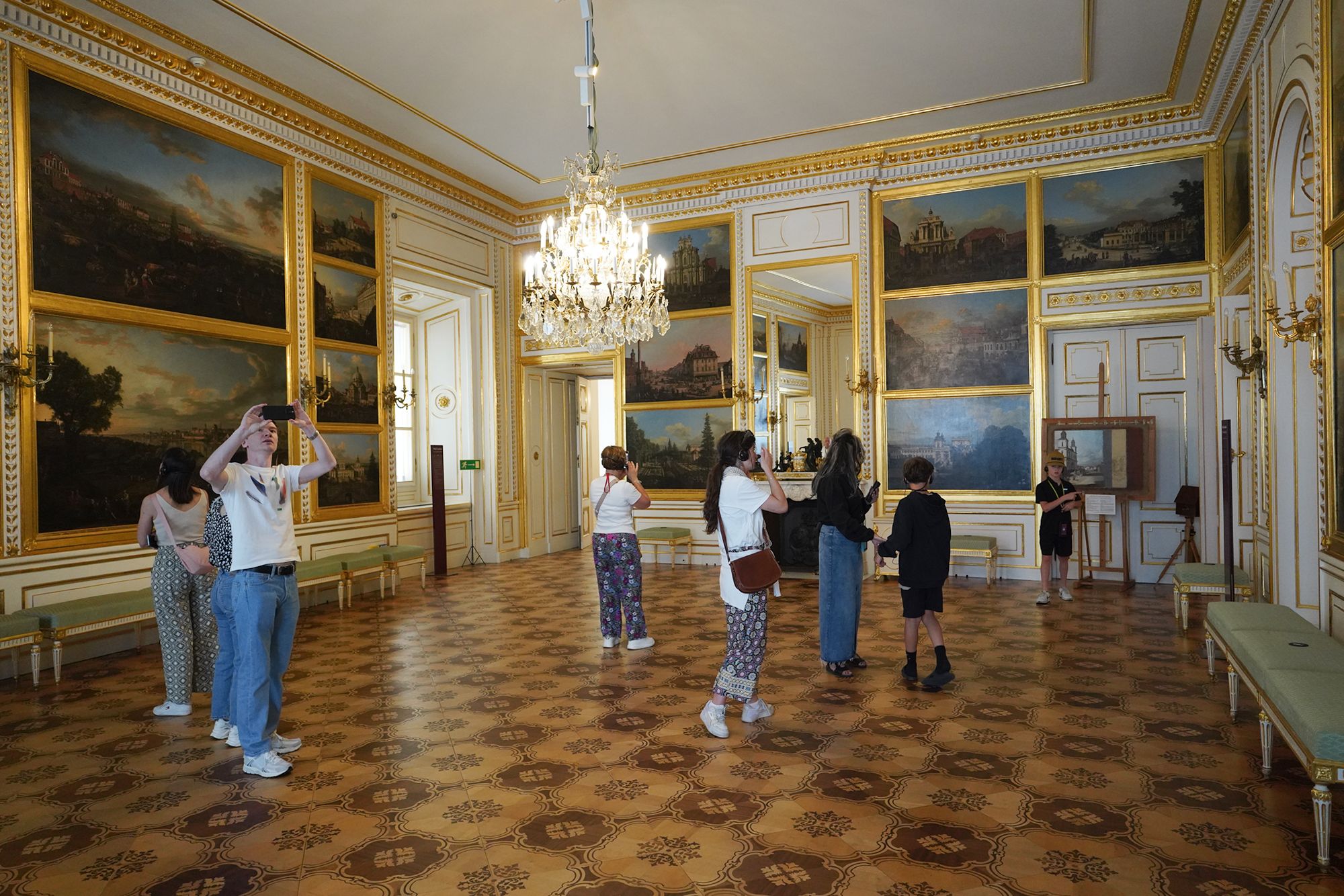
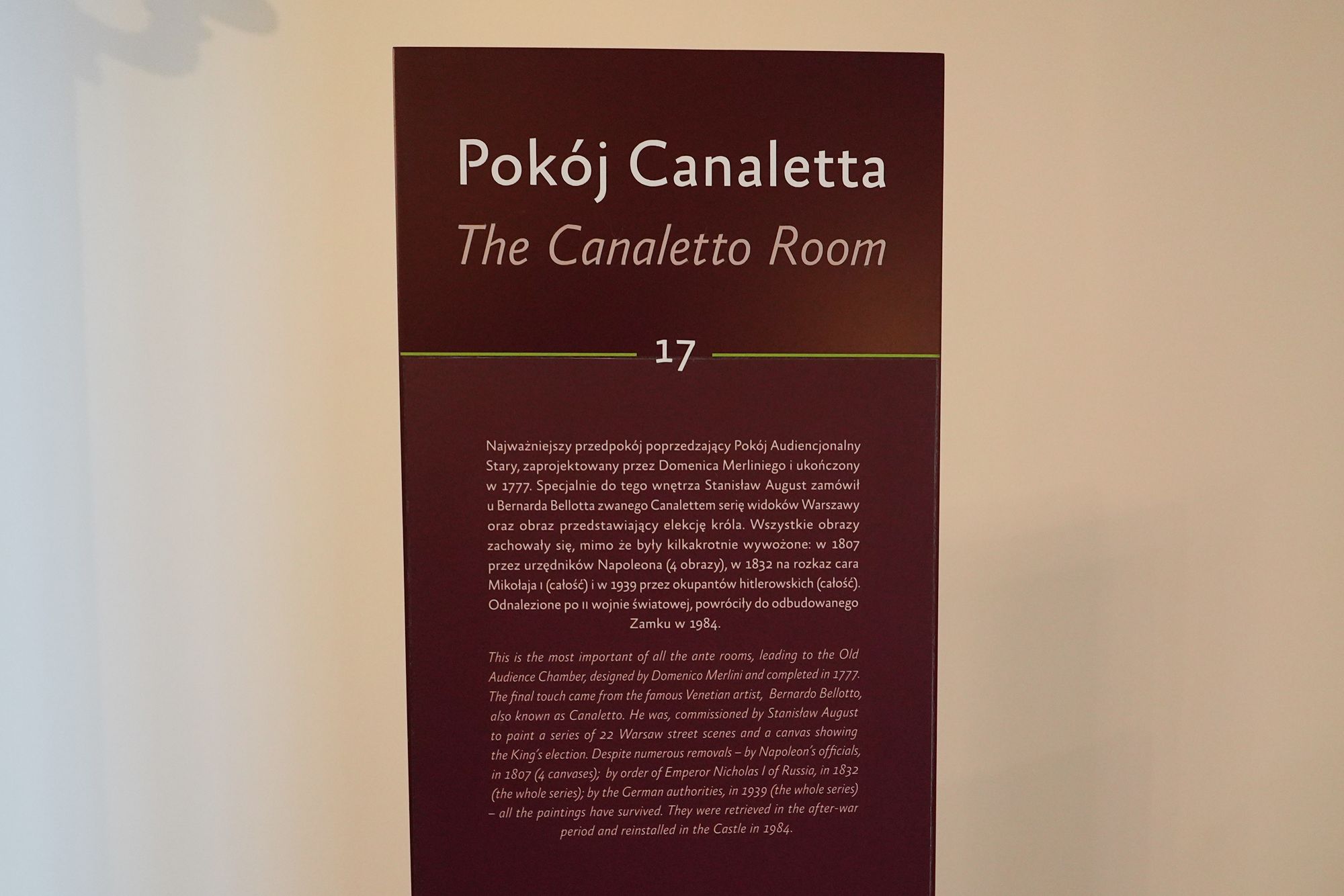
The Canaletto Room served as an antechamber to the Old Audience Chamber and was completed in 1777. King Stanisław August commissioned Bernardo Bellotto, known as Canaletto, to paint views of Warsaw and a scene of his election. Despite being taken away several times, all the paintings survived and returned to the rebuilt castle in 1984.
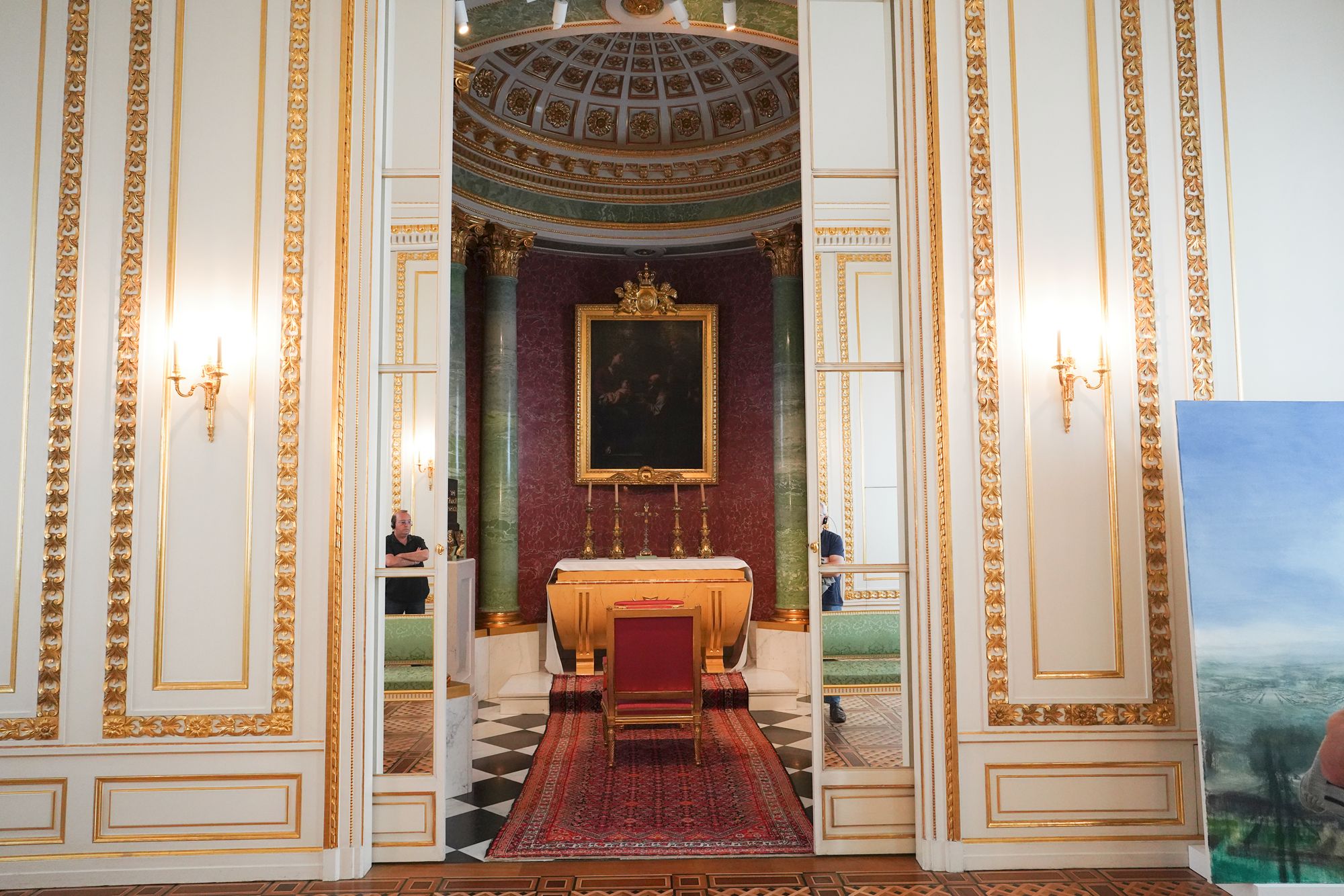
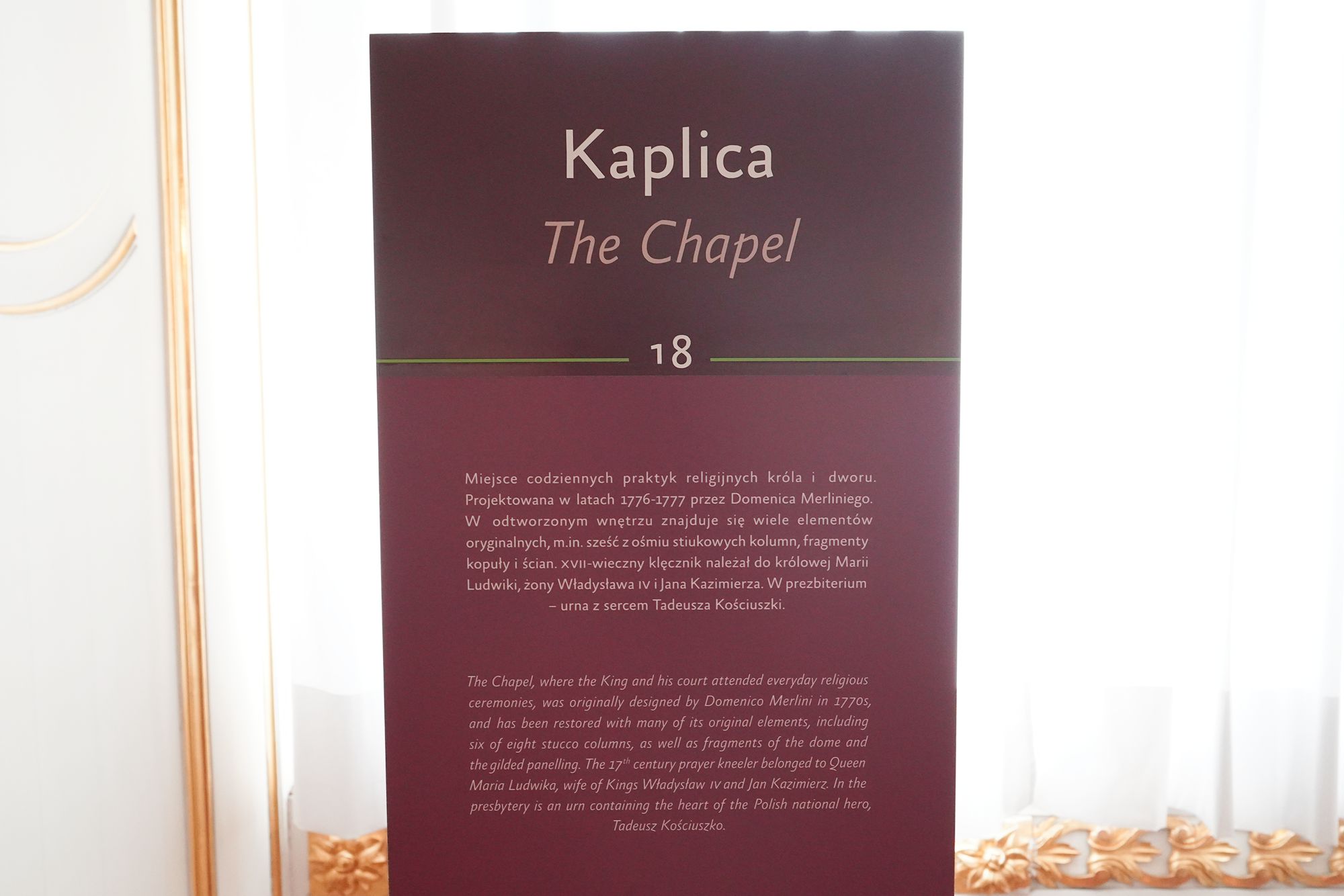
The chapel was used for daily worship by the king and his court. Designed by Domenico Merlini in 1776–1777, its reconstructed interior preserves original elements, including six stucco columns and fragments of the dome and walls. It also contains Queen Marie Louise’s 17th-century kneeler and an urn holding the heart of Tadeusz Kościuszko.
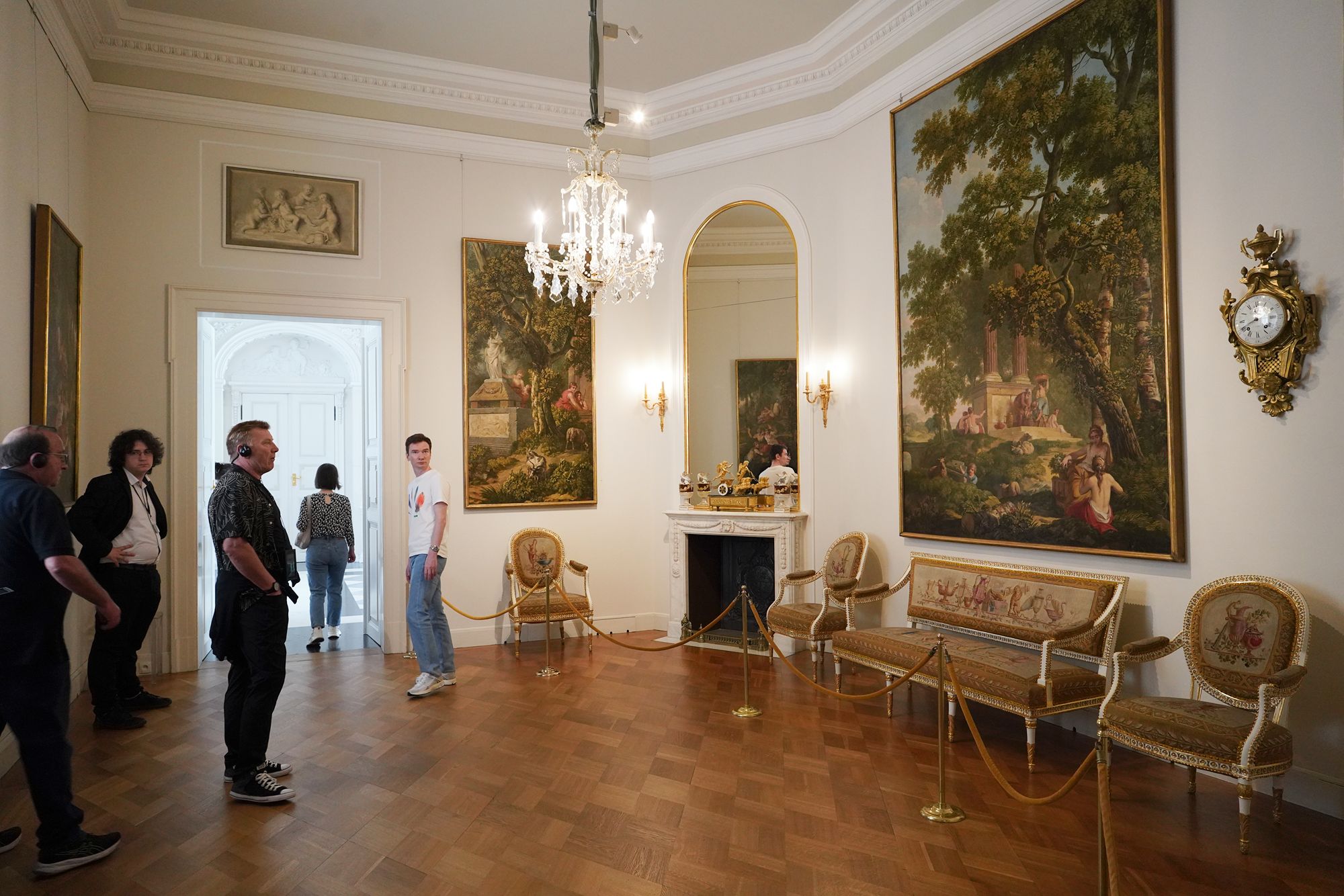
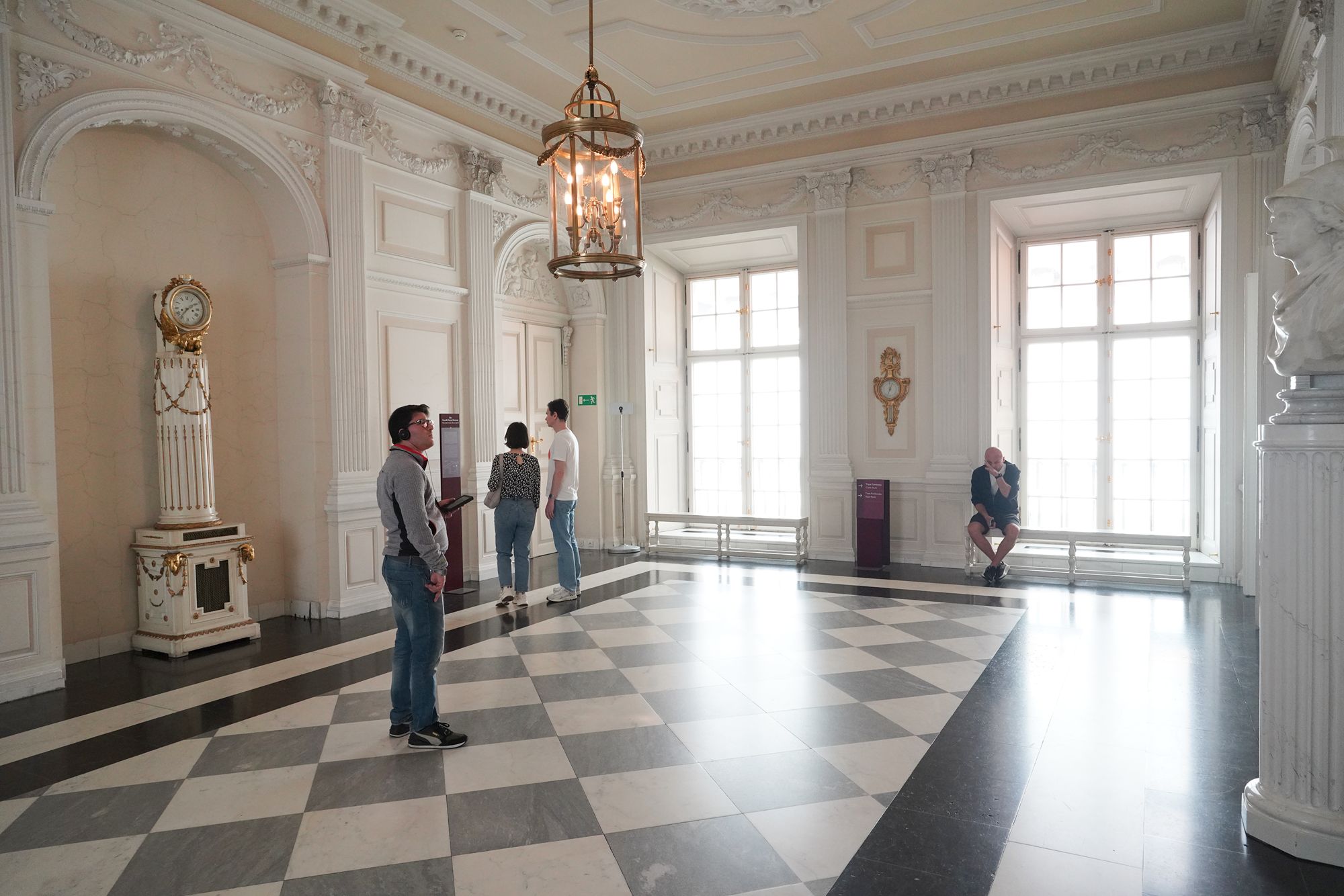
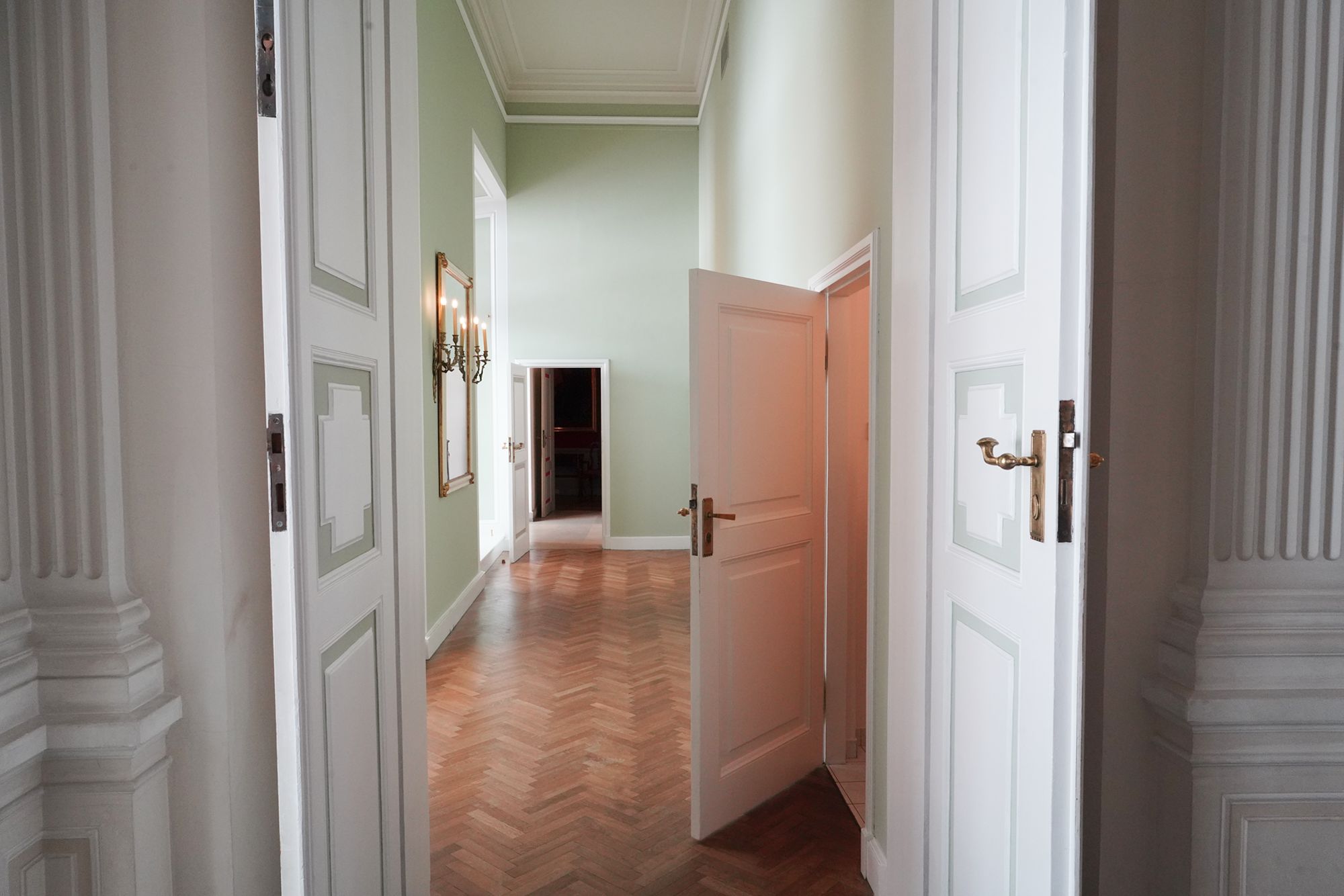
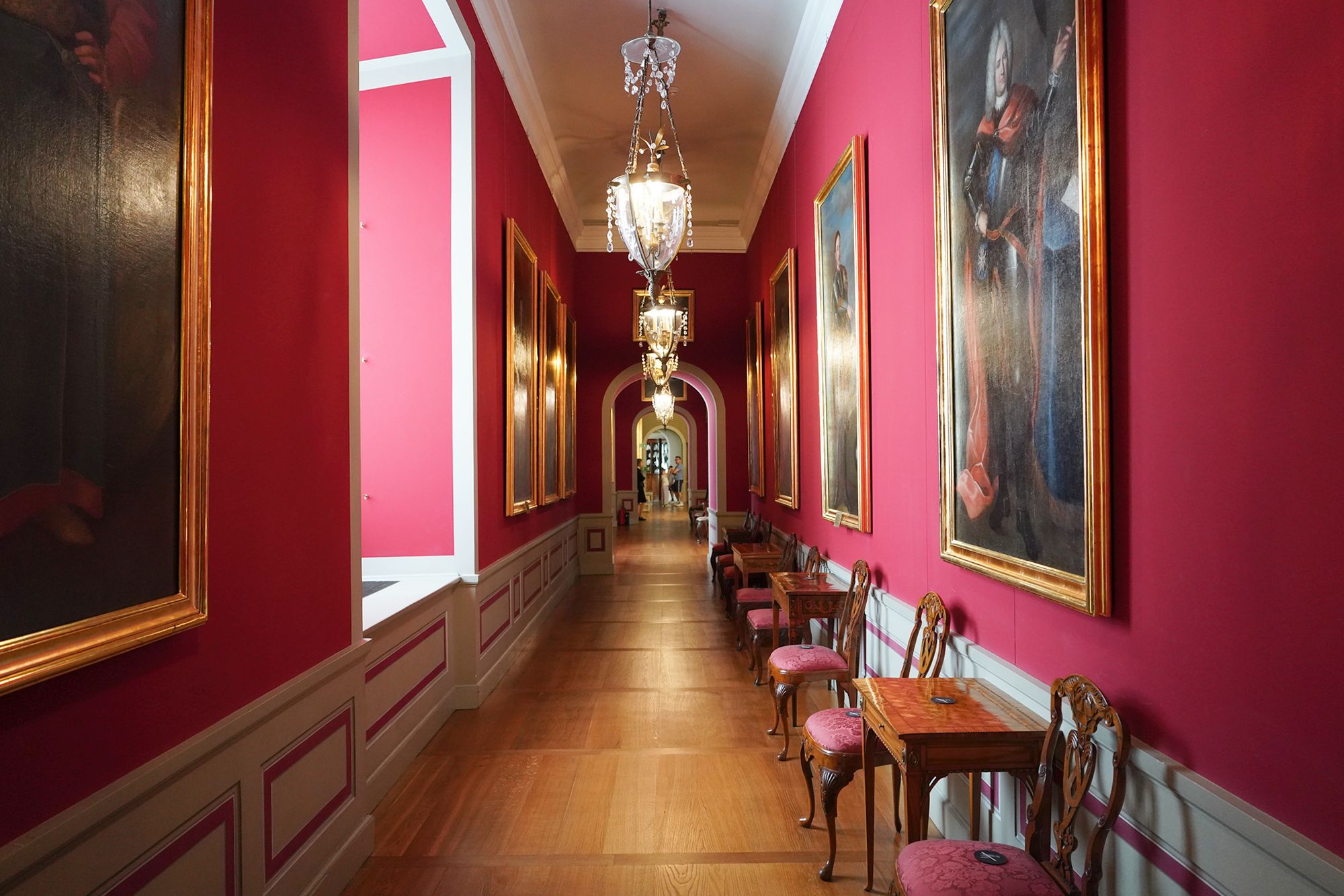
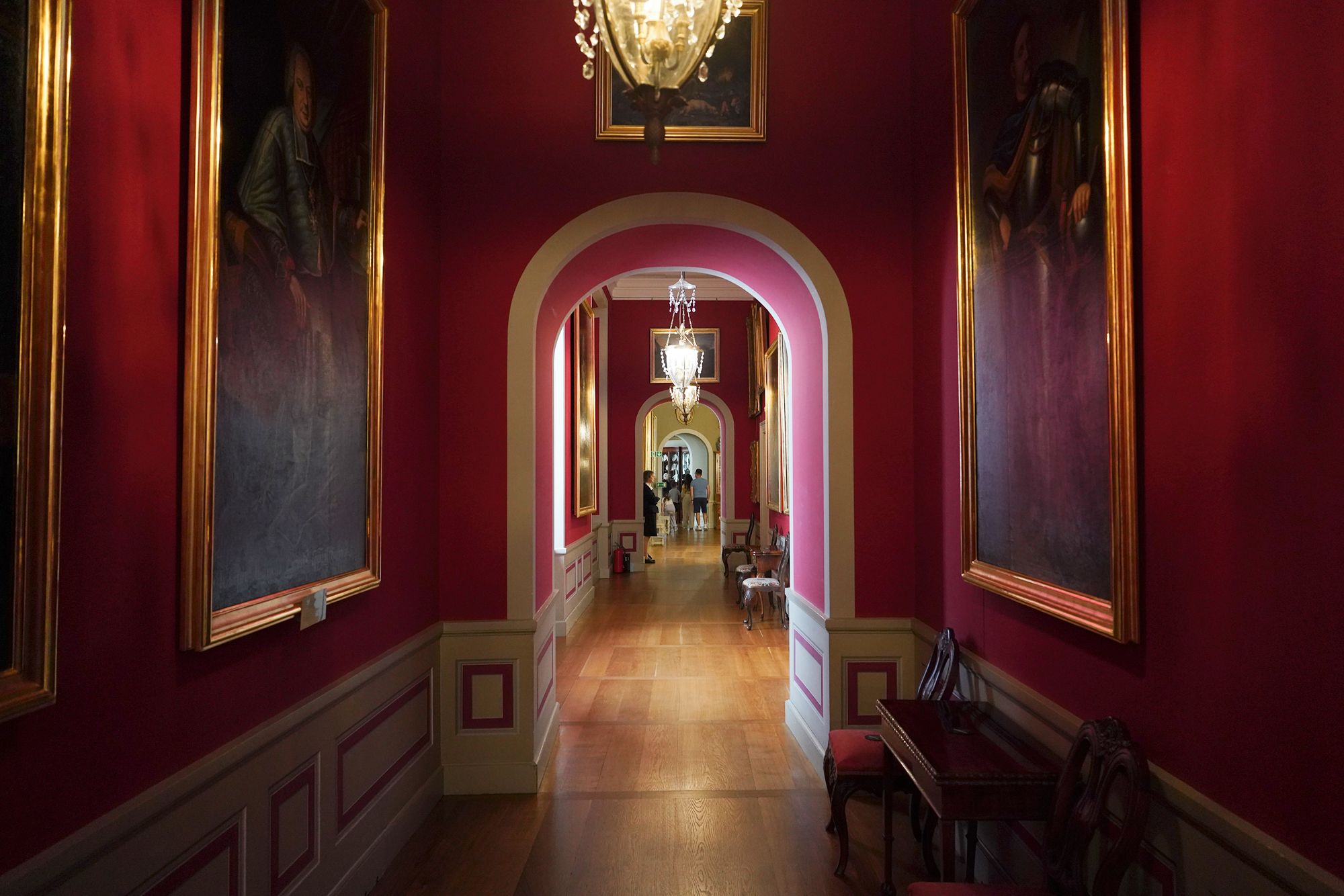
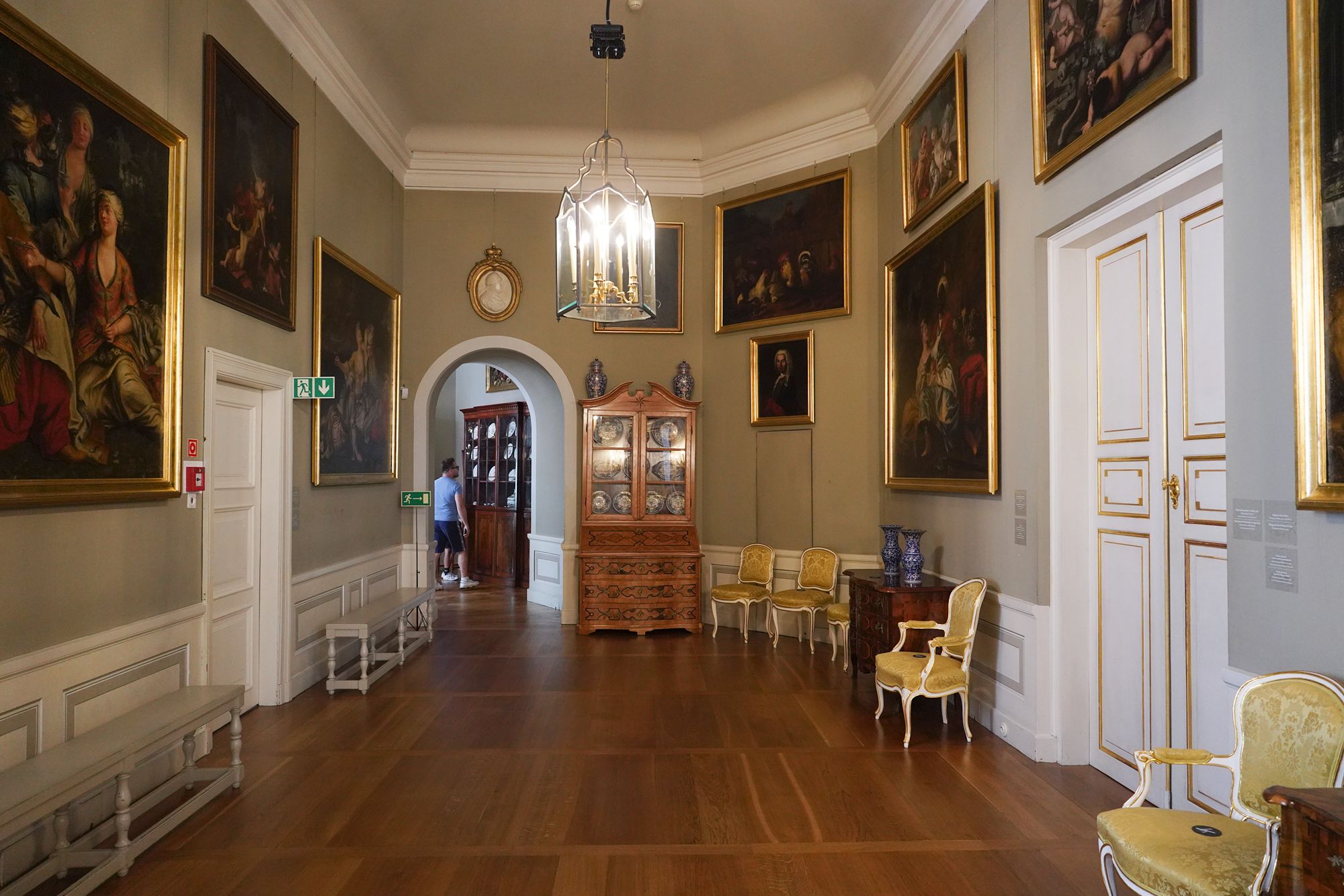
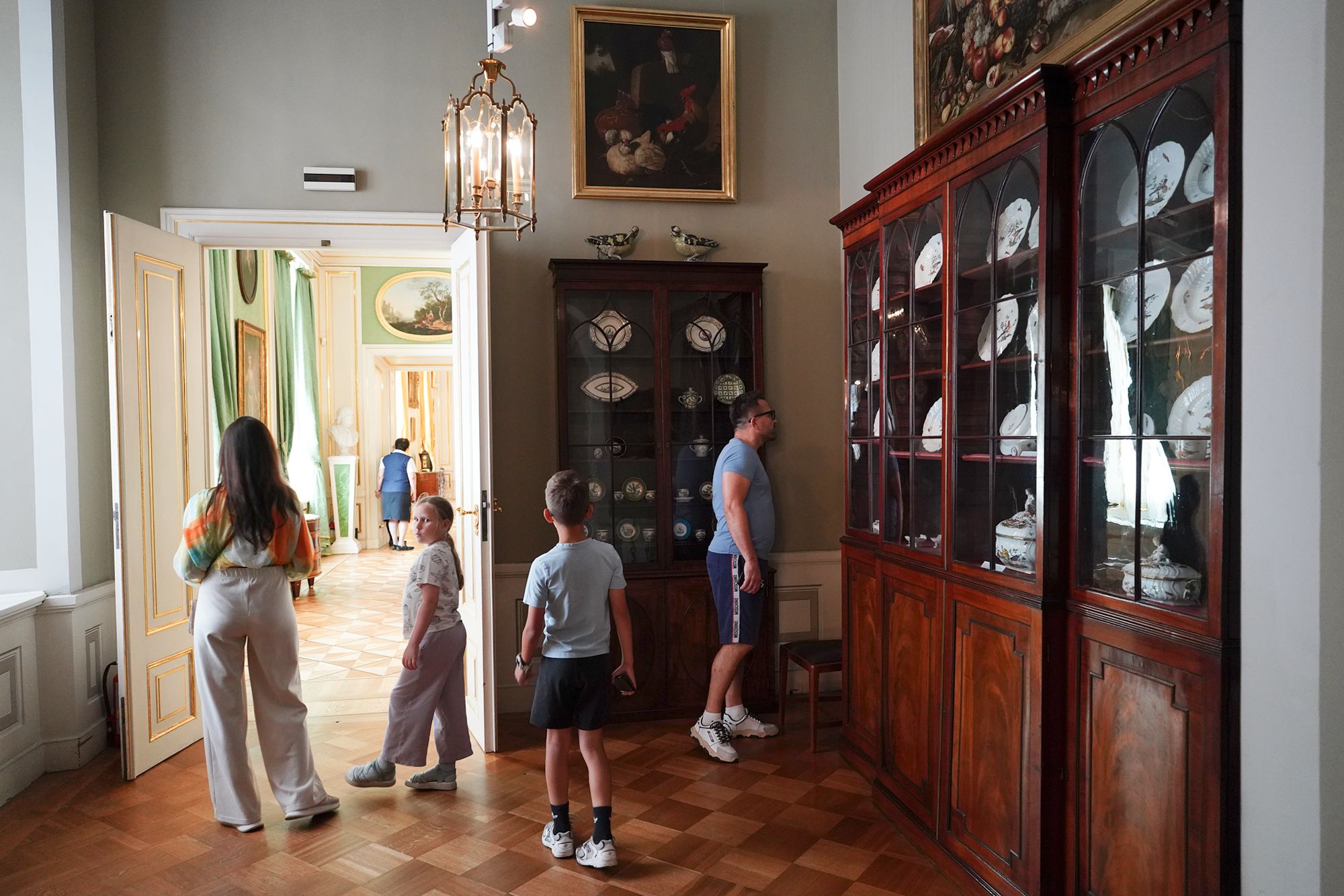
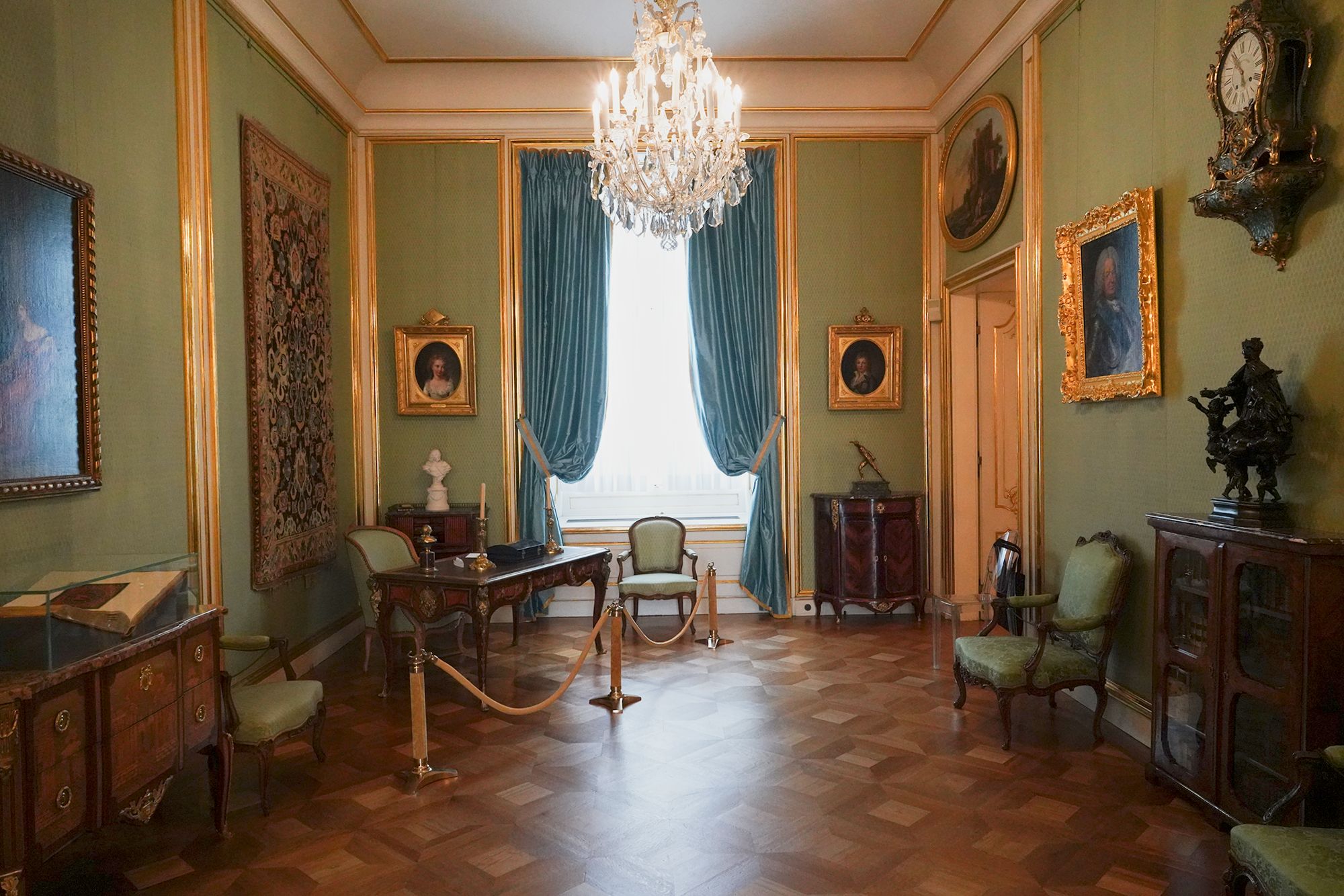
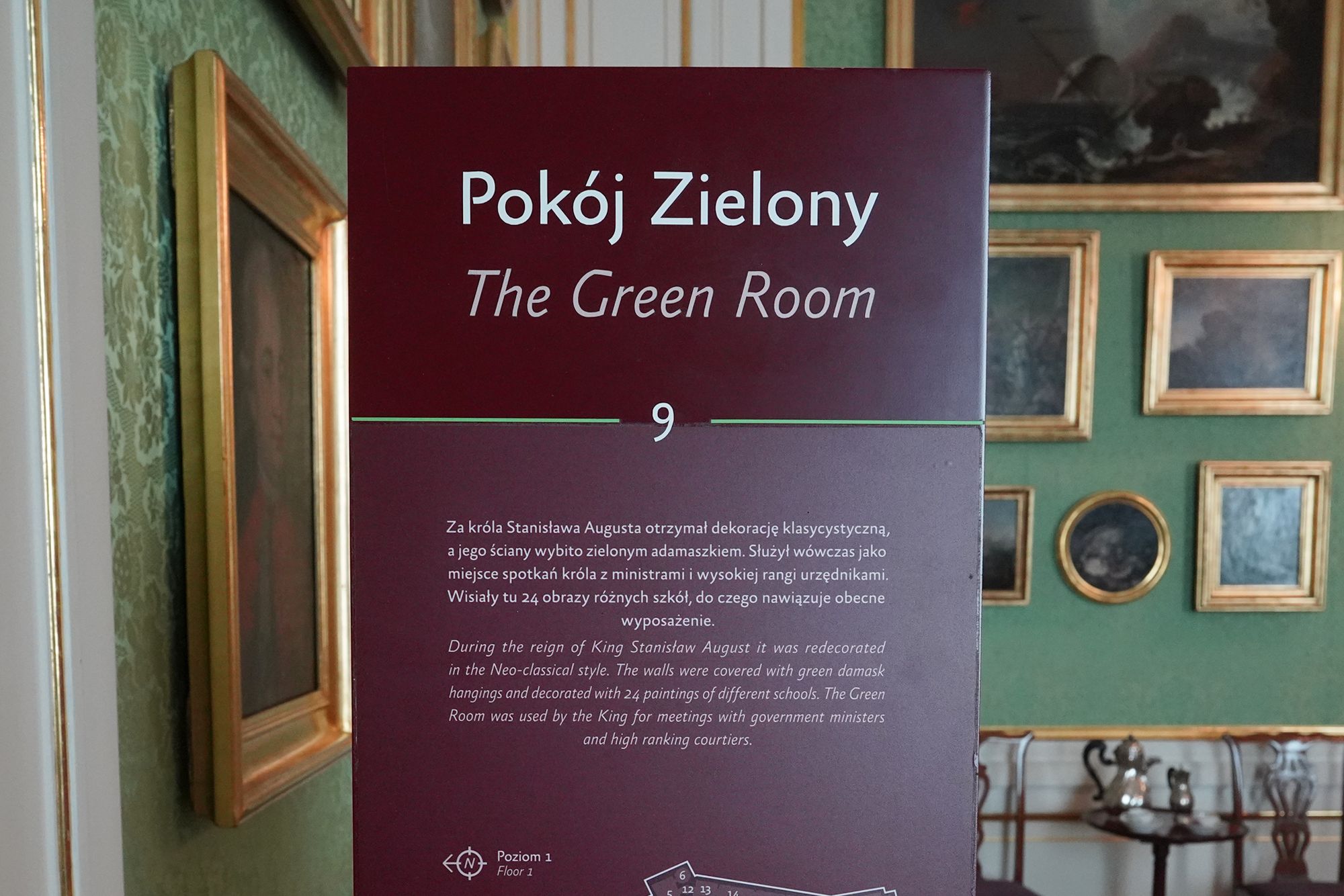
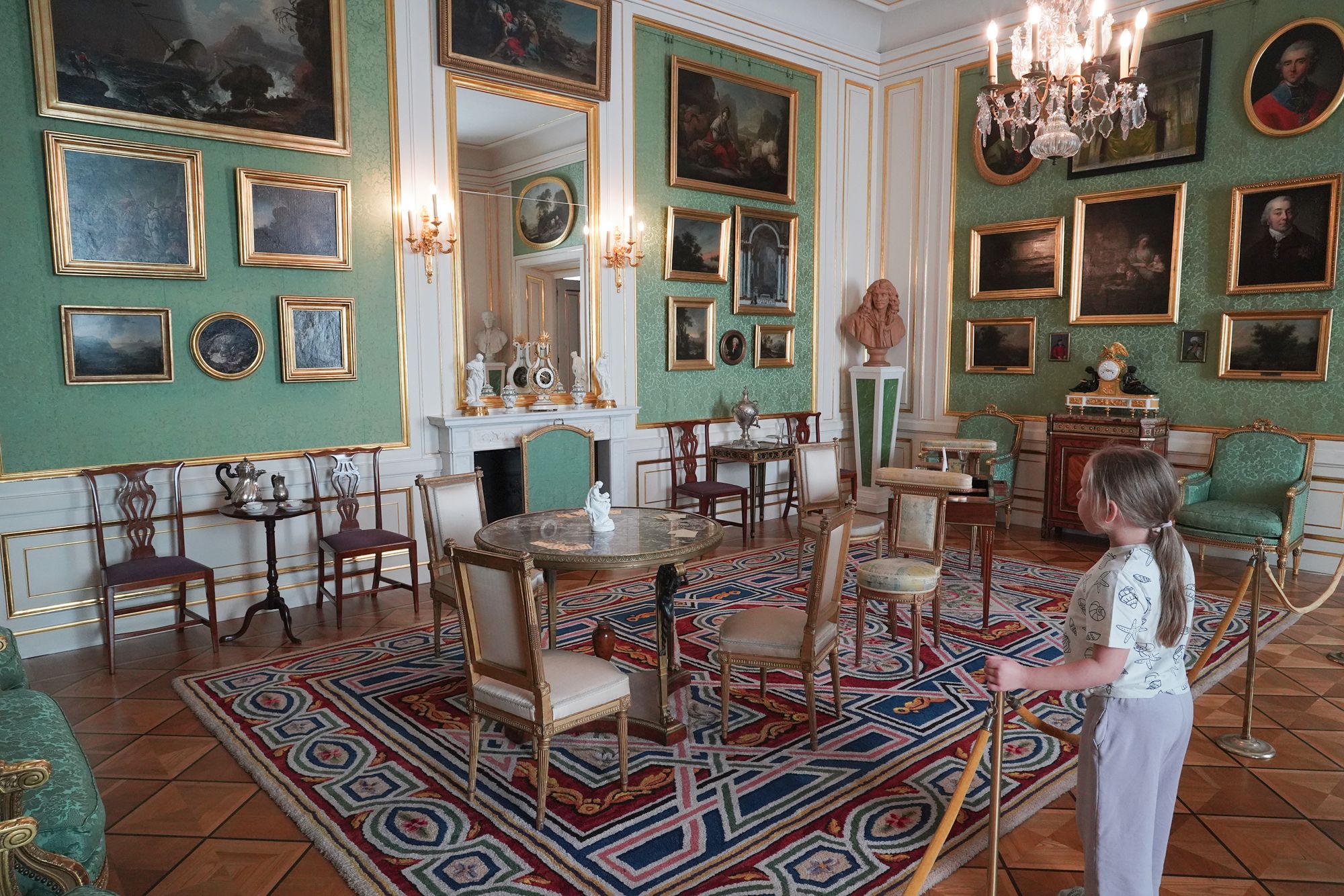
The Green Room was used by King Stanisław August for meetings with government ministers and high-ranking courtiers. Decorated in the neoclassical style, it had green damask wall coverings and 24 paintings from different artistic schools. Its present furnishings reflect that earlier arrangement.
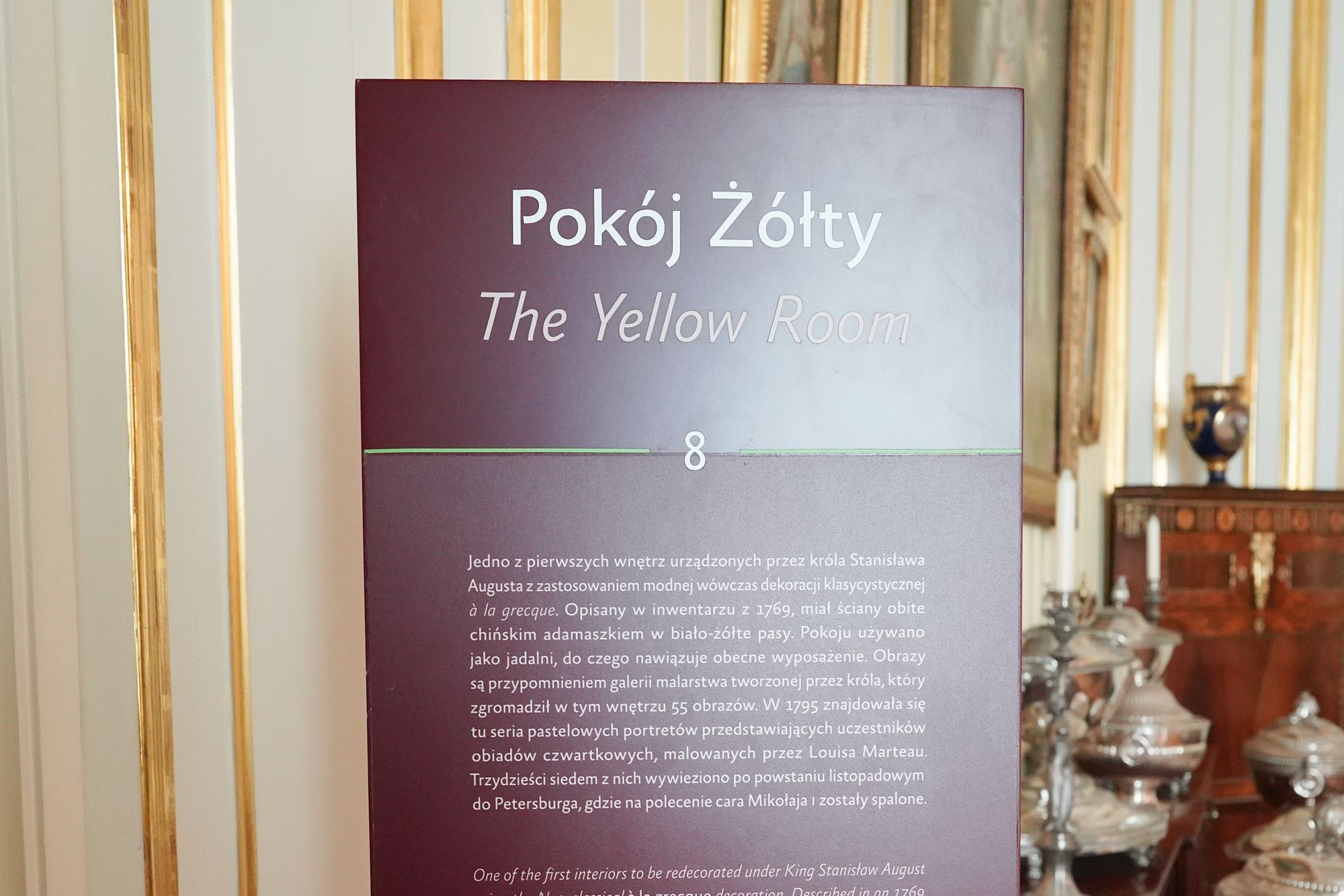
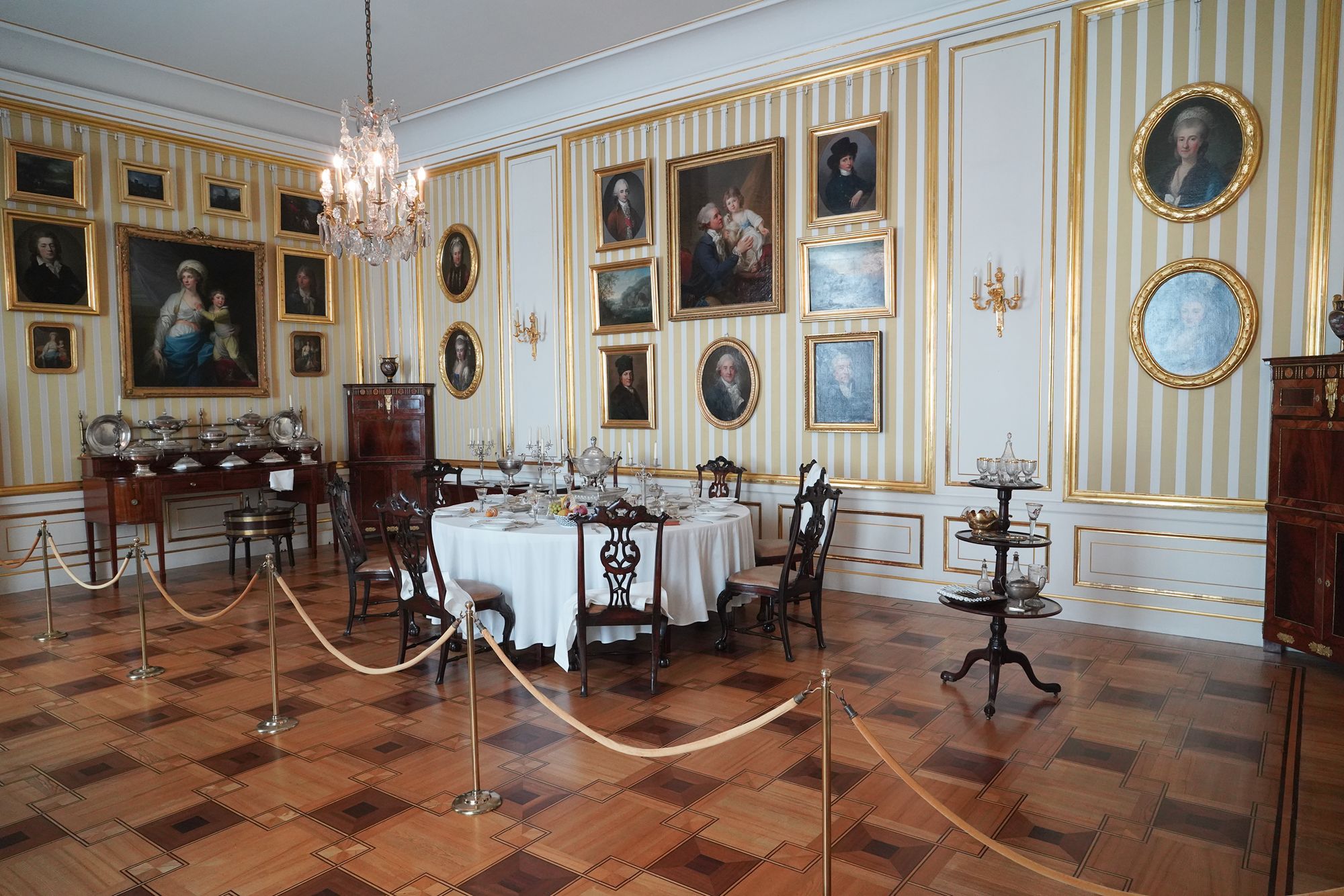
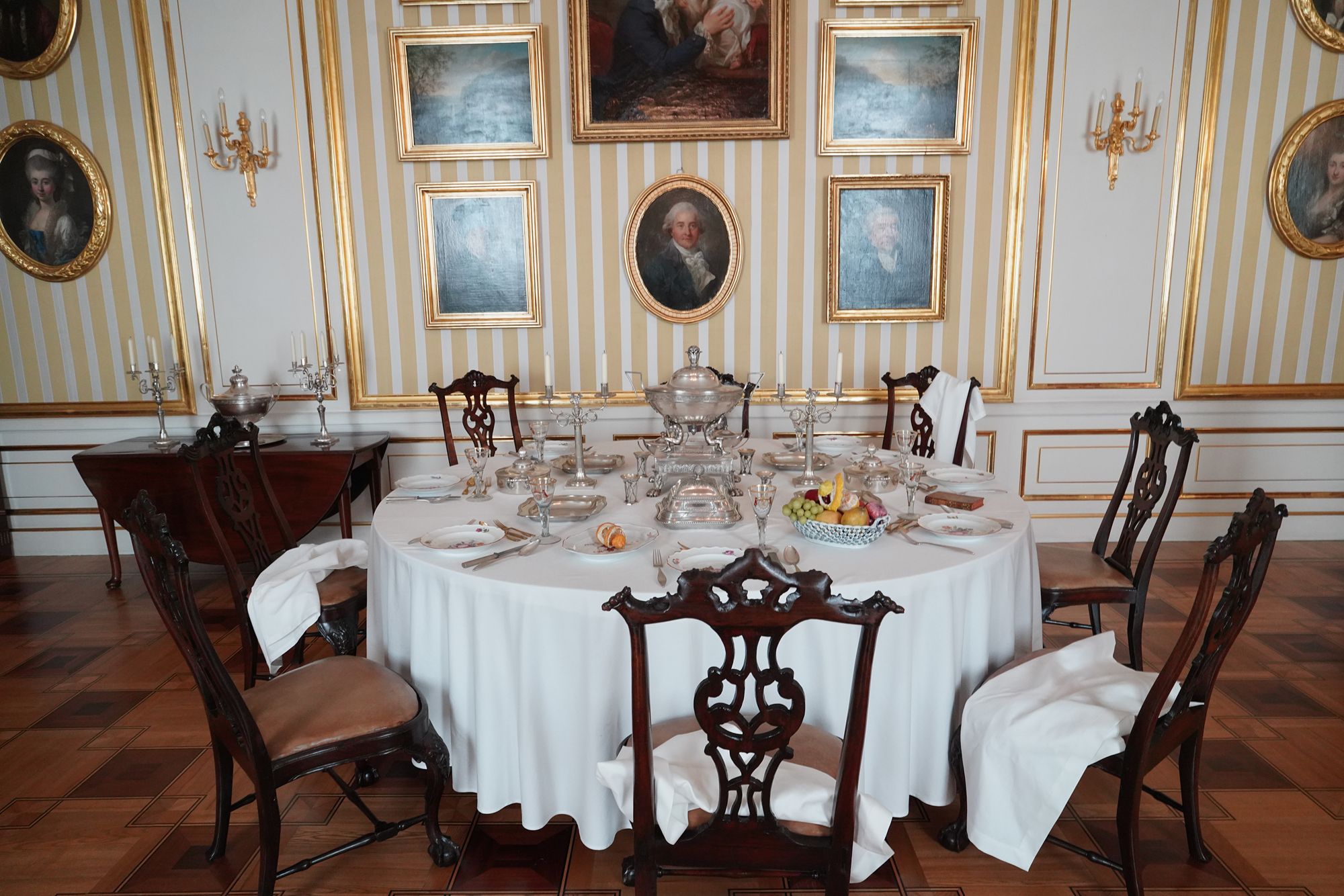
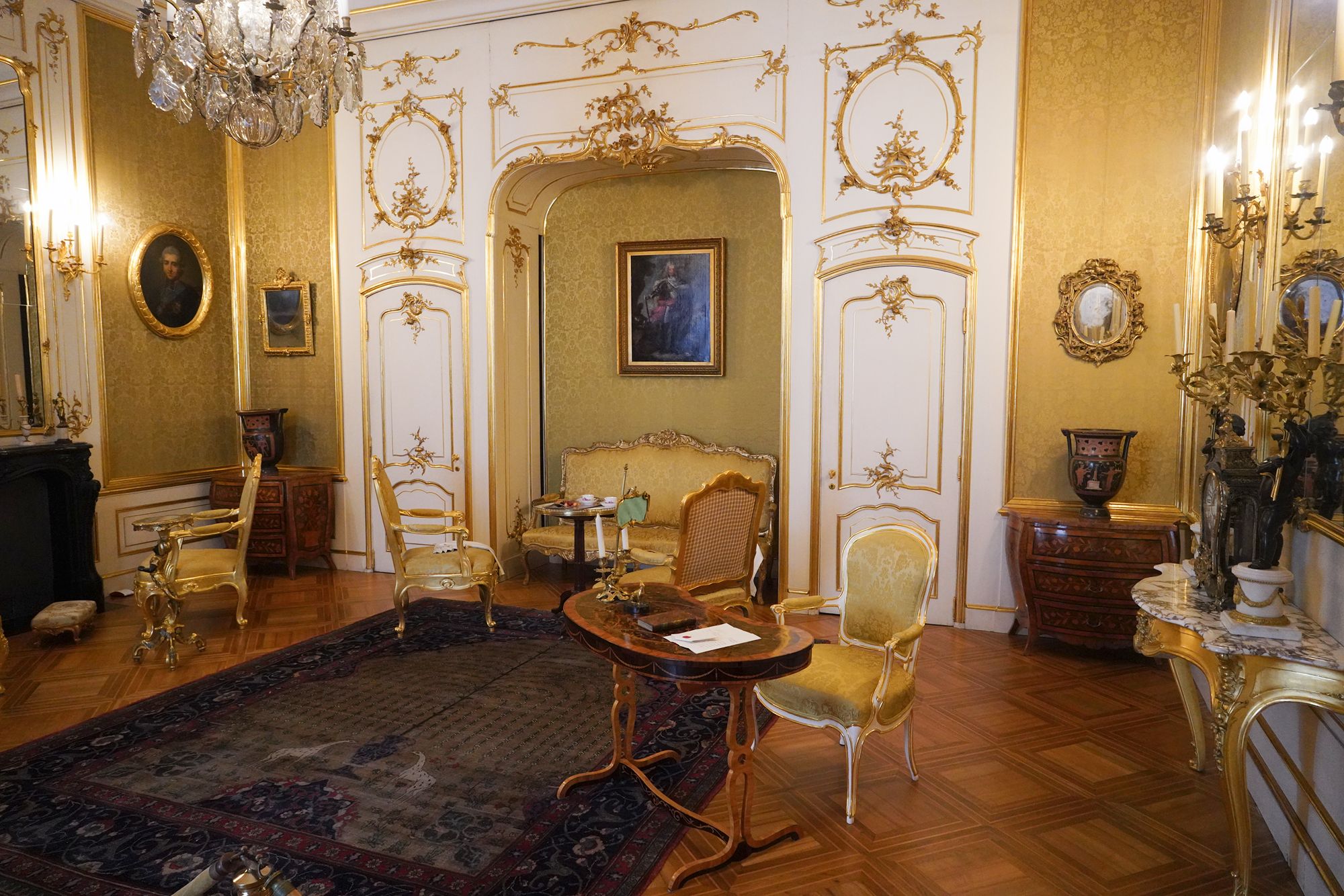
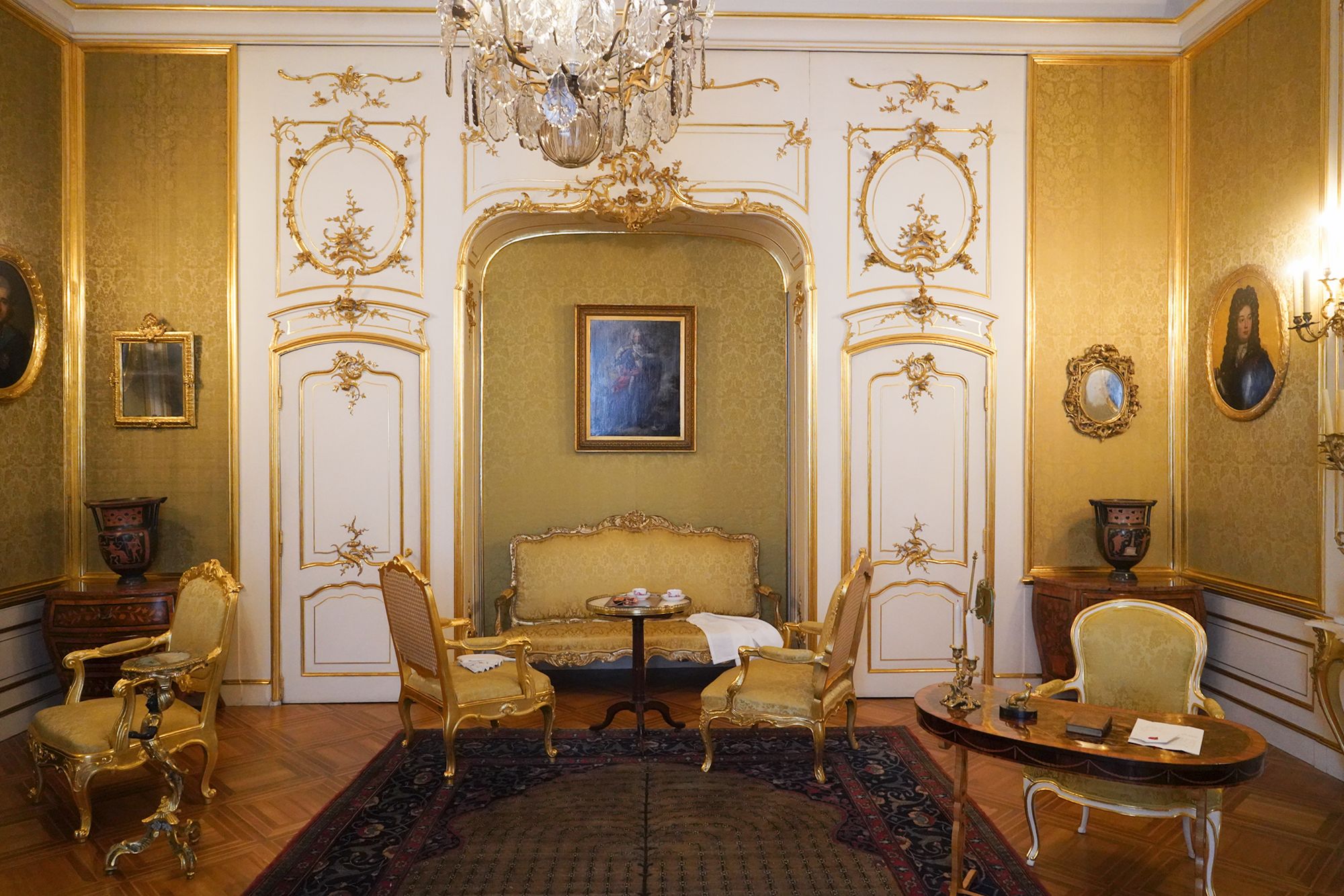
The Yellow Room was one of the first interiors decorated by King Stanisław August in the fashionable neoclassical style. Used as a dining room, it once held 55 paintings, including pastel portraits of guests at his Thursday dinners. Thirty-seven of these portraits were later taken to St. Petersburg and burned on the orders of Tsar Nicholas I.