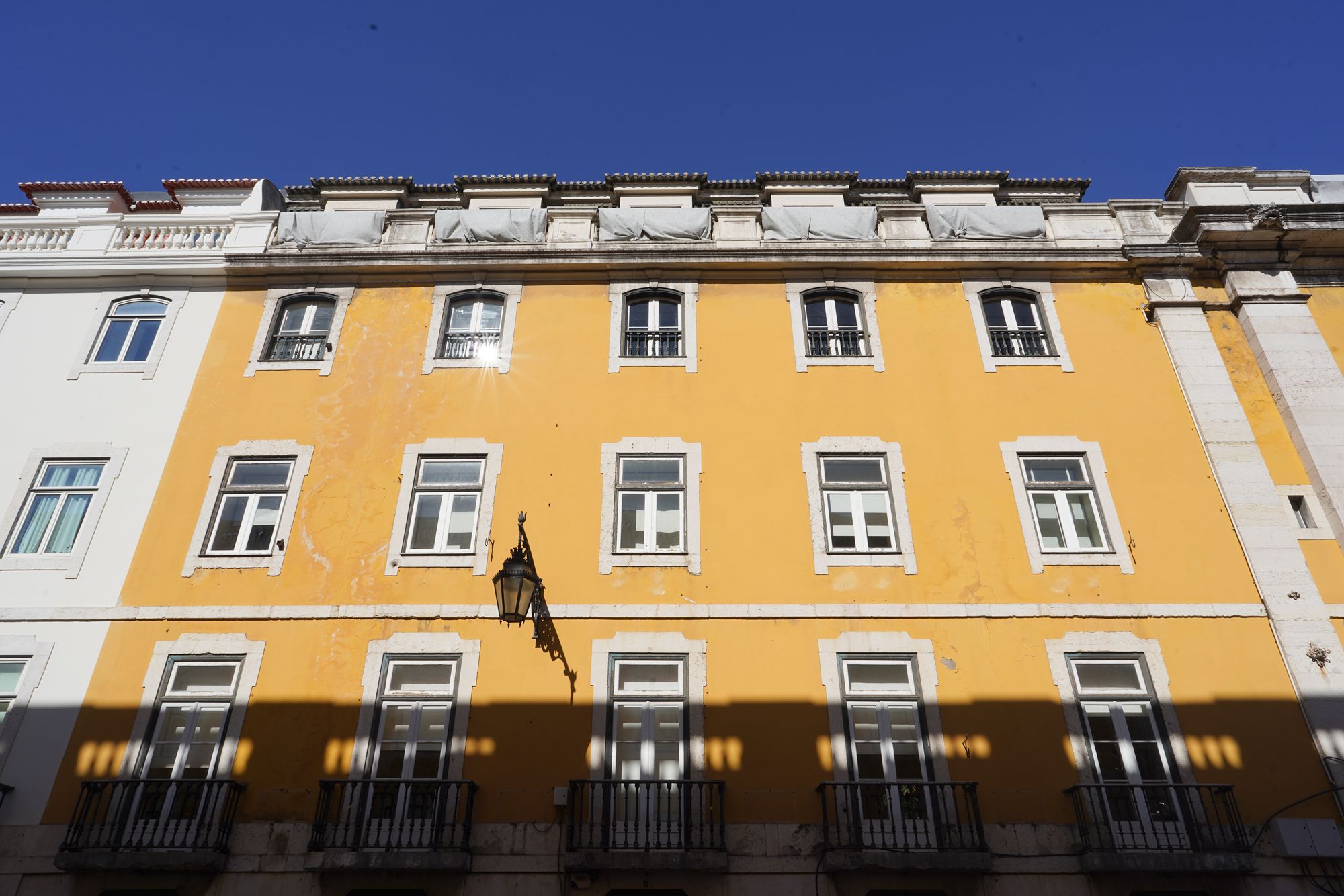
Lisbon Walk III, Portugal
This is the third part of my Lisbon walk, exploring the Bairro Alto neighborhood. 1380
Miradouro de São Pedro de Alcântara: R. de São Pedro de Alcântara, 1250-238 Lisboa, Portugal
Convento de São Pedro de Alcântara: R. de São Pedro de Alcântara 85, 1200-089 Lisboa, Portugal
Rua de São Pedro de Alcântara: R. de São Pedro de Alcântara 85, 1200-089 Lisboa, Portugal
Igreja de São Roque: Largo Trindade Coelho, 1200-470 Lisboa, Portugal
Largo do Carmo: Largo do Carmo, 1200-092 Lisboa, Portugal
Armazéns do Chiado shopping mall: R. do Carmo 2, 1200-094 Lisboa, Portugal
Date Picture Taken: Jul, 2026
Bairro Alto, meaning “Upper District,” sits on a hill above Baixa. Developed in the 16th century, it has narrow cobbled streets lined with old houses, small shops, and restaurants. During the day, it has a relatively quiet, residential feel. In the evening, its bars and traditional fado venues make it one of Lisbon’s liveliest neighborhoods.
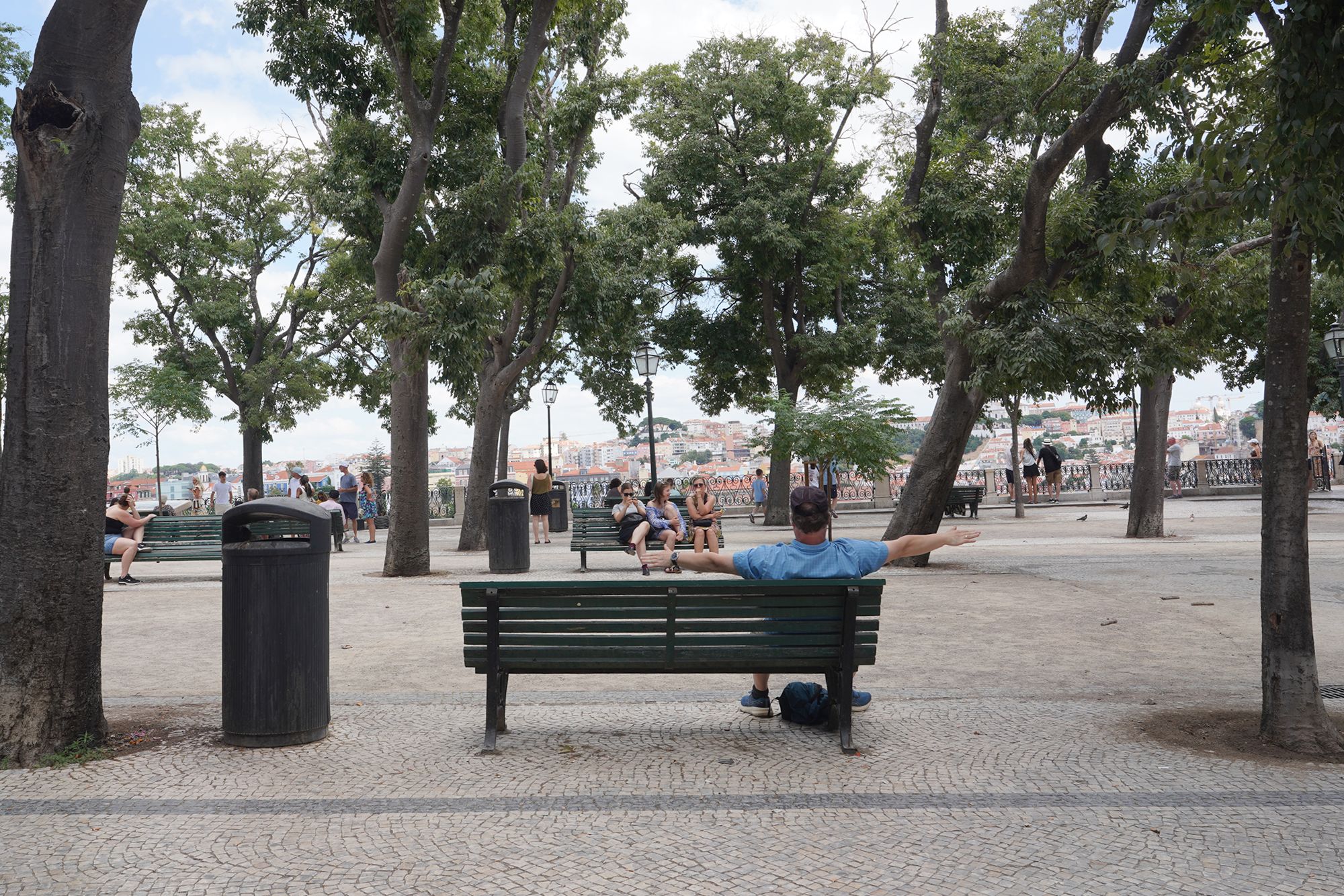
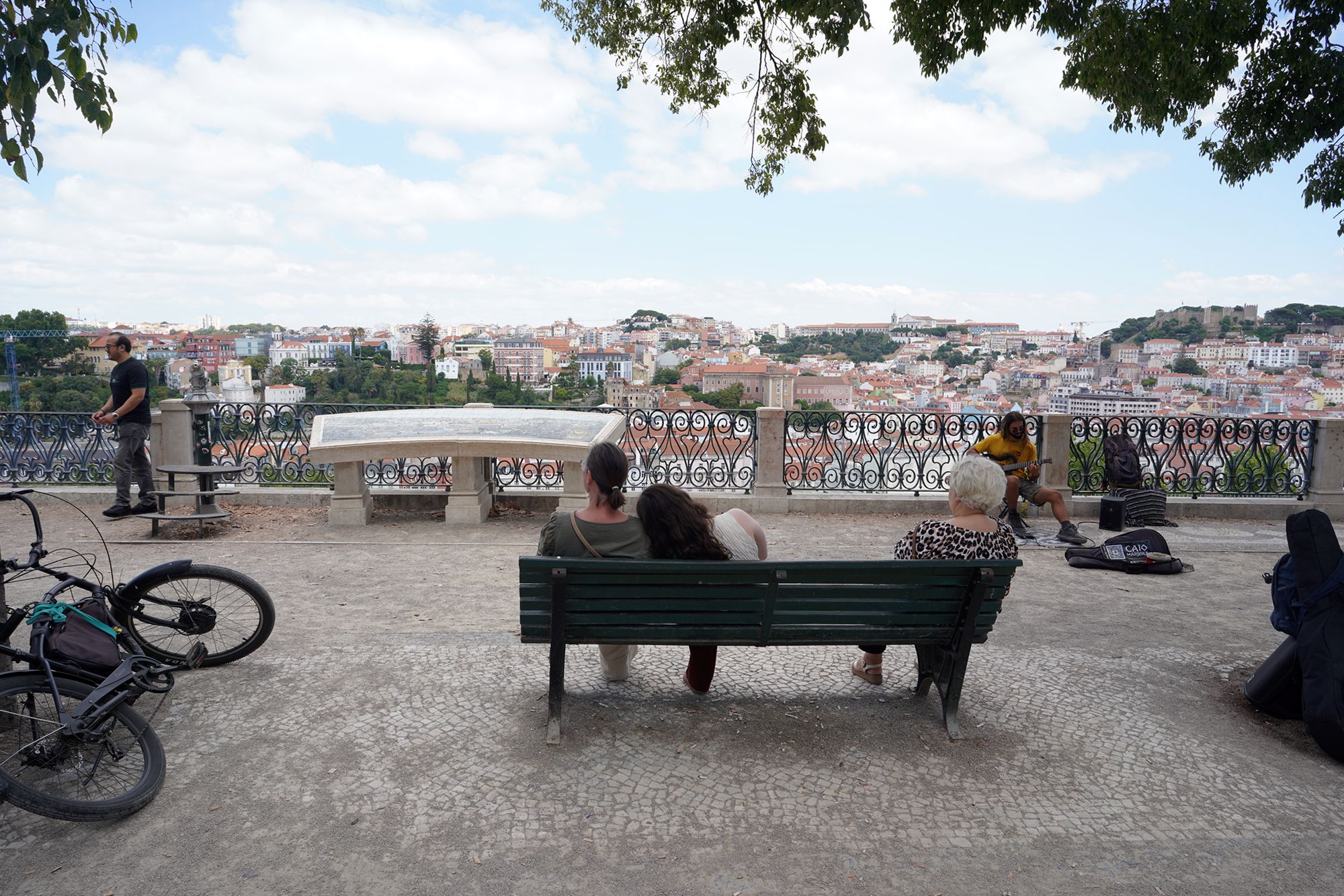
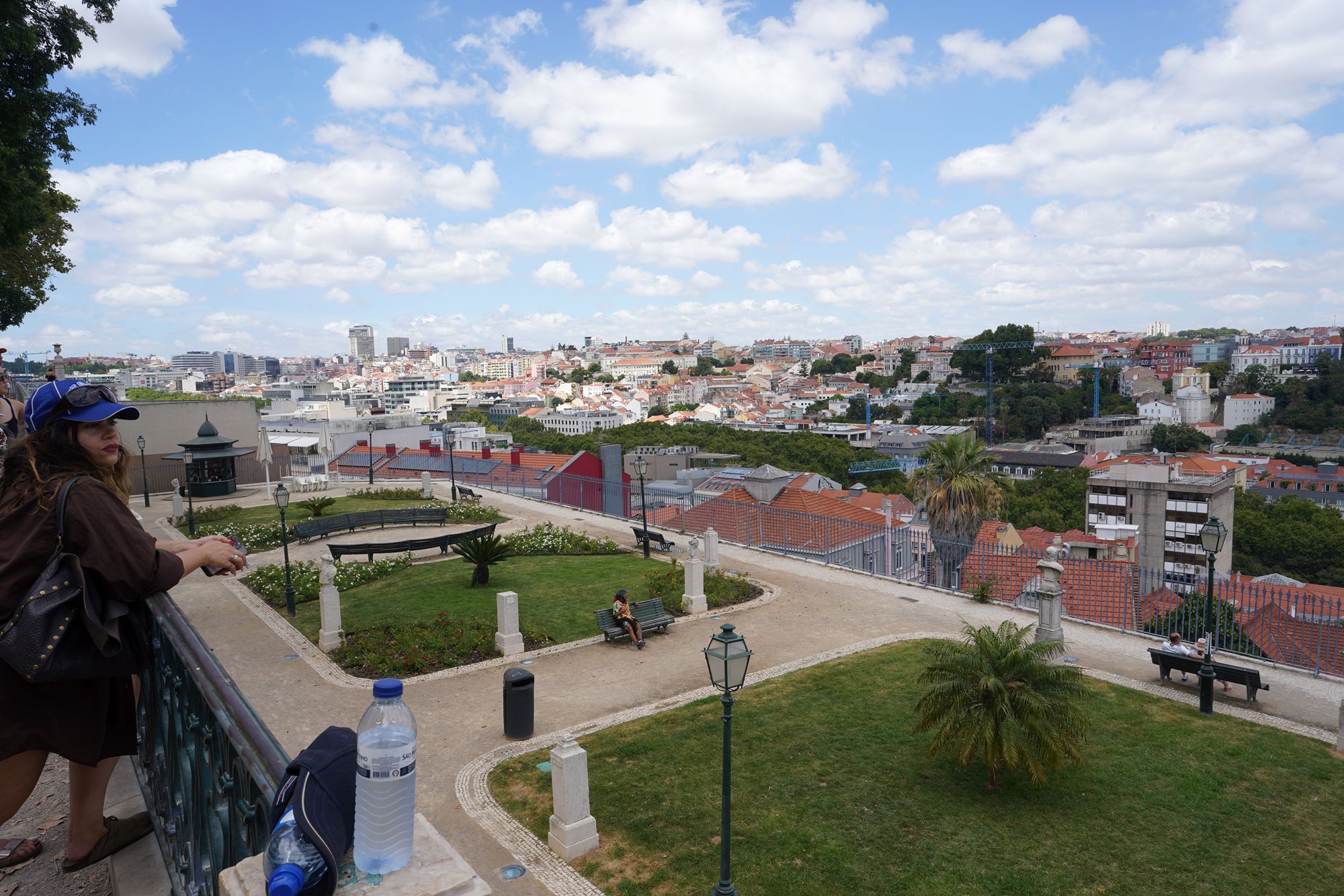
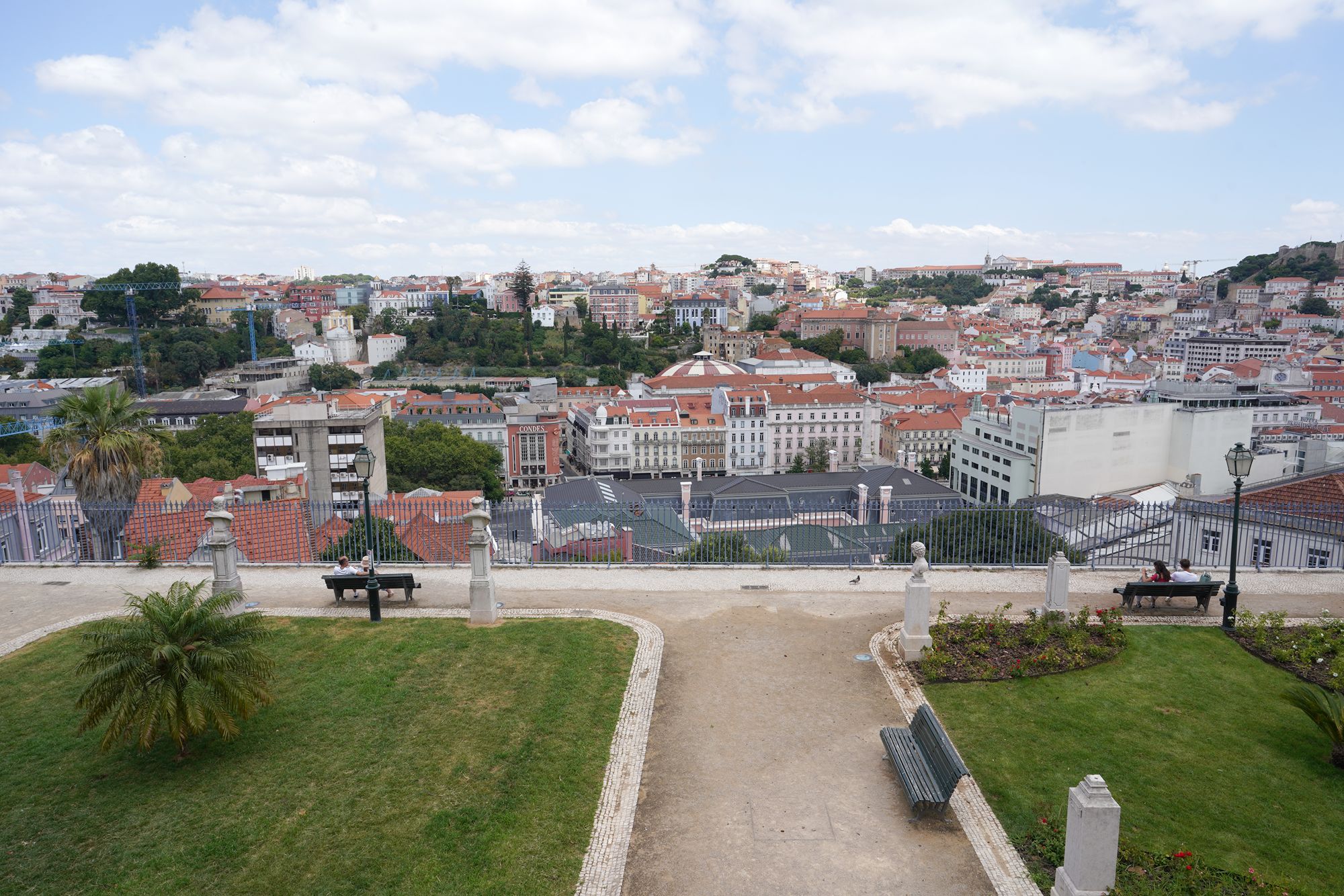
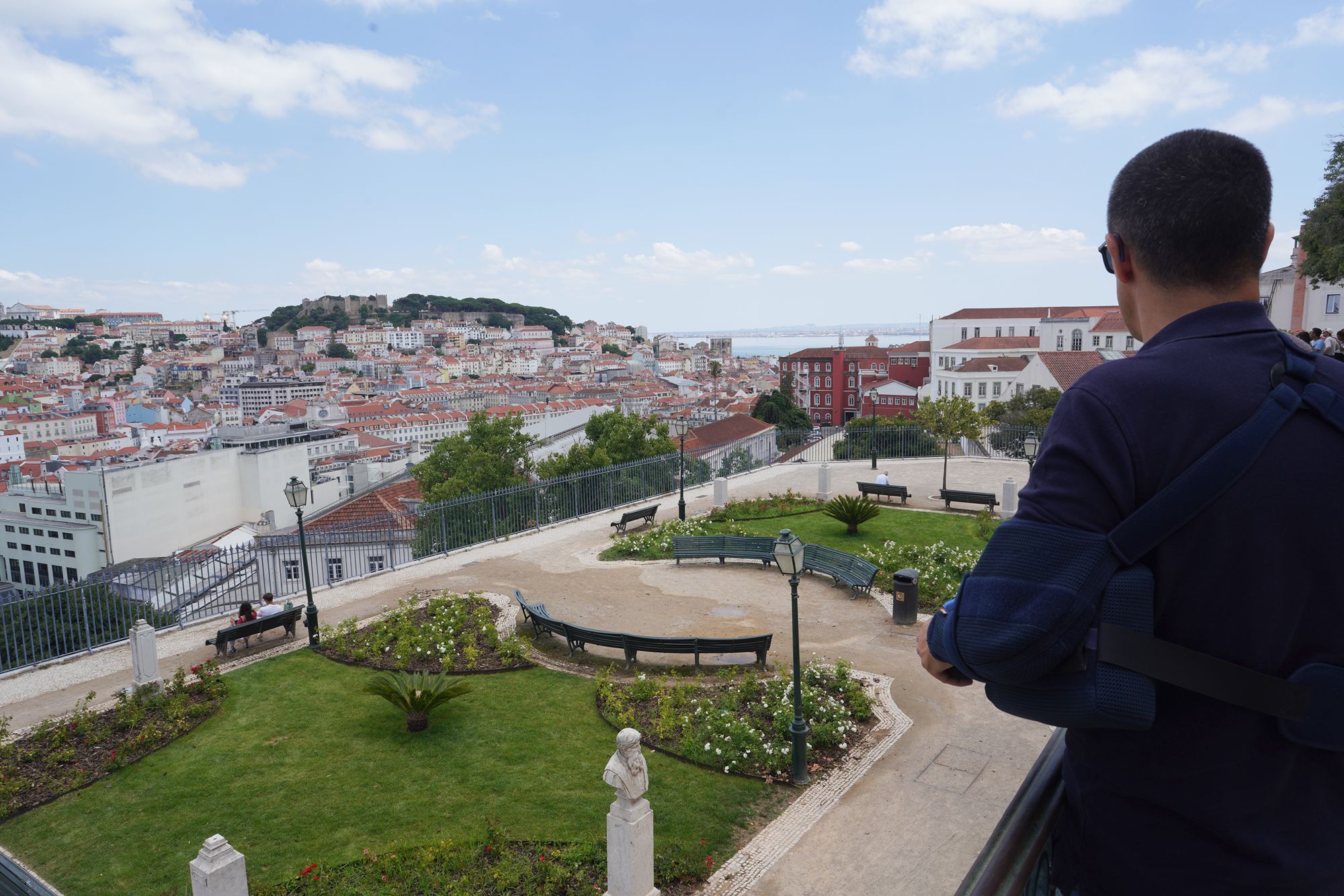
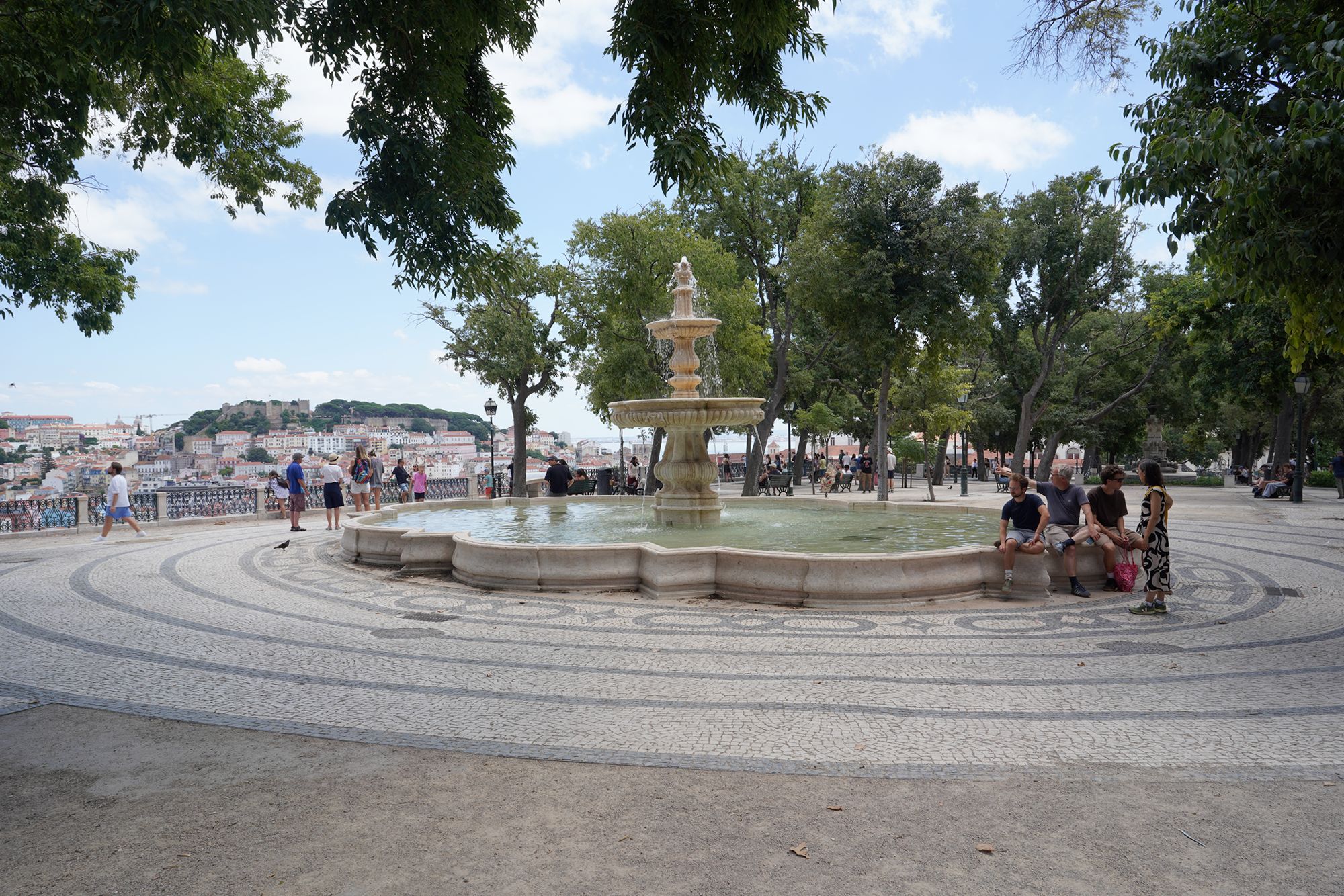
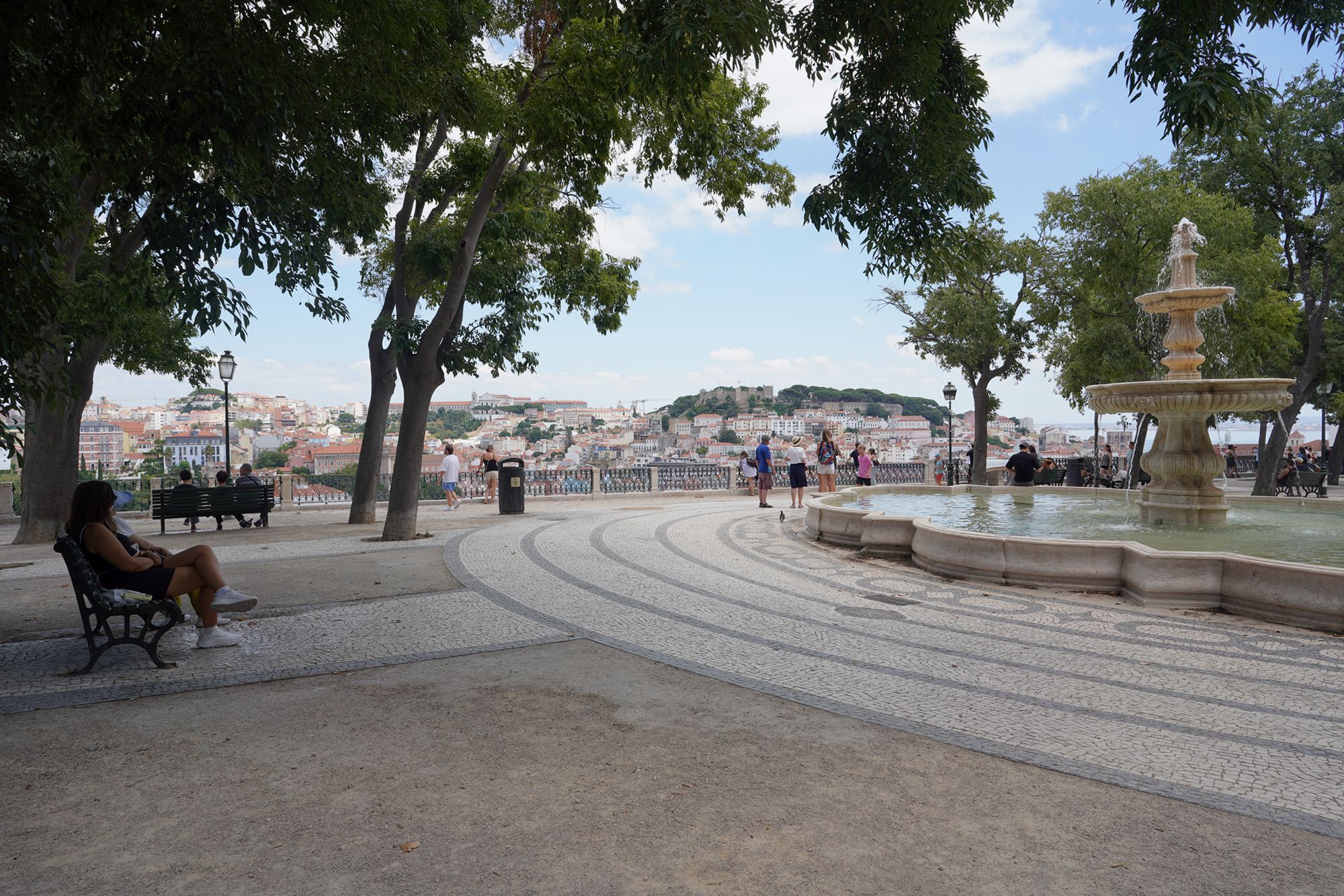
I began my walk at Miradouro de São Pedro de Alcântara, a garden and viewpoint on the edge of Bairro Alto. From its terraces, you can look across Baixa toward Castelo de São Jorge on the opposite hill. Trees, benches, and landscaped flowerbeds make it a pleasant place to pause and enjoy the city views before exploring the neighborhood.
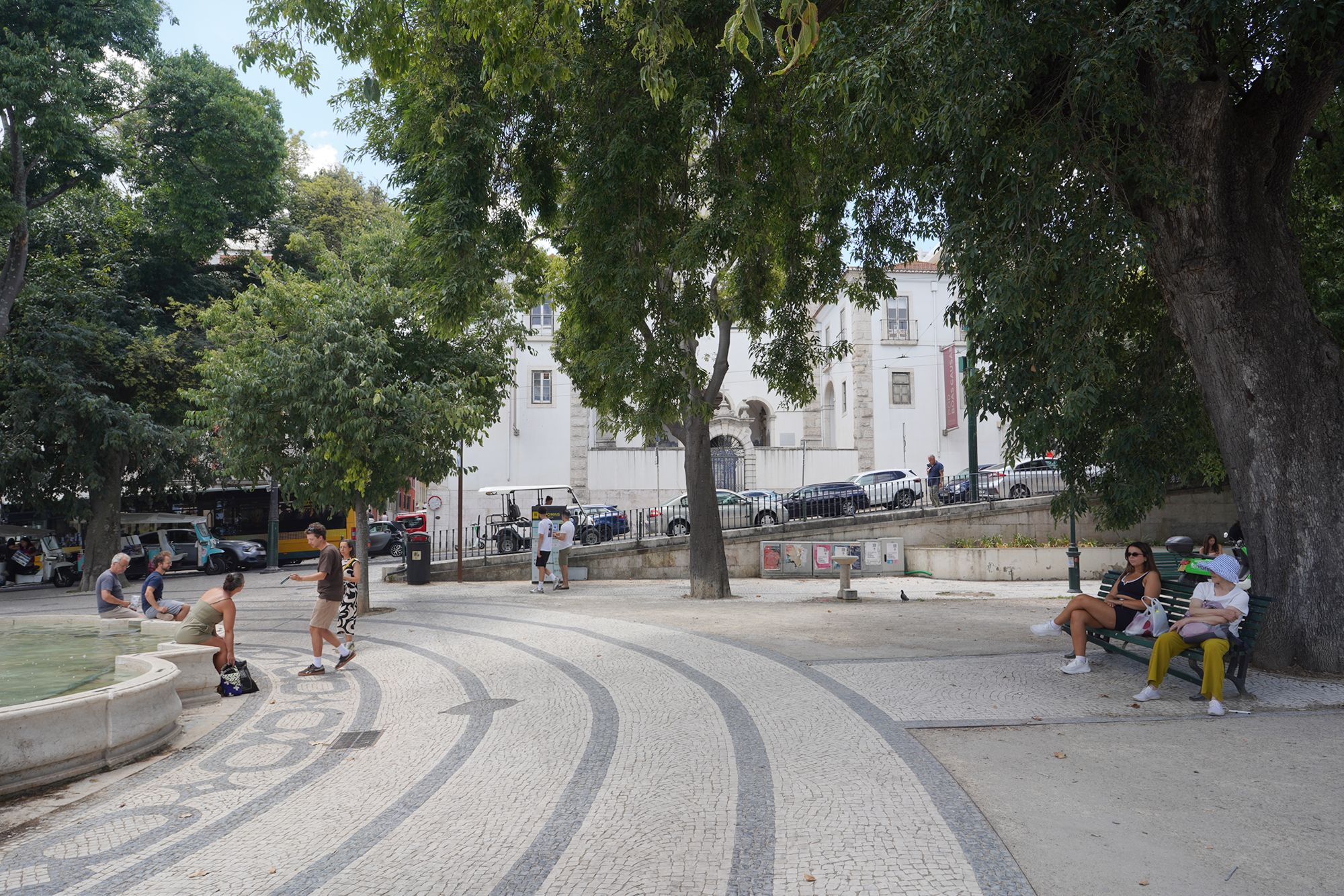
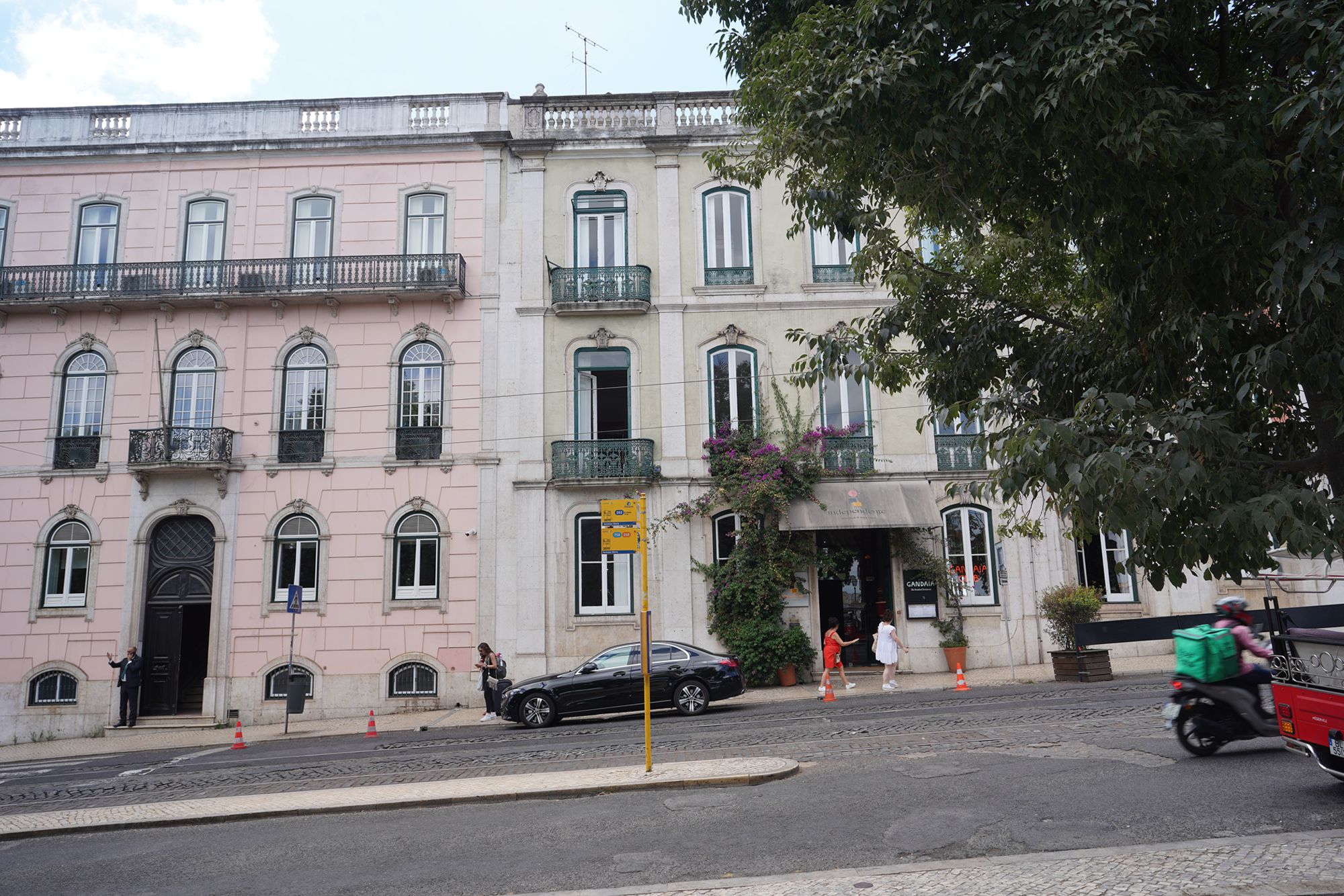
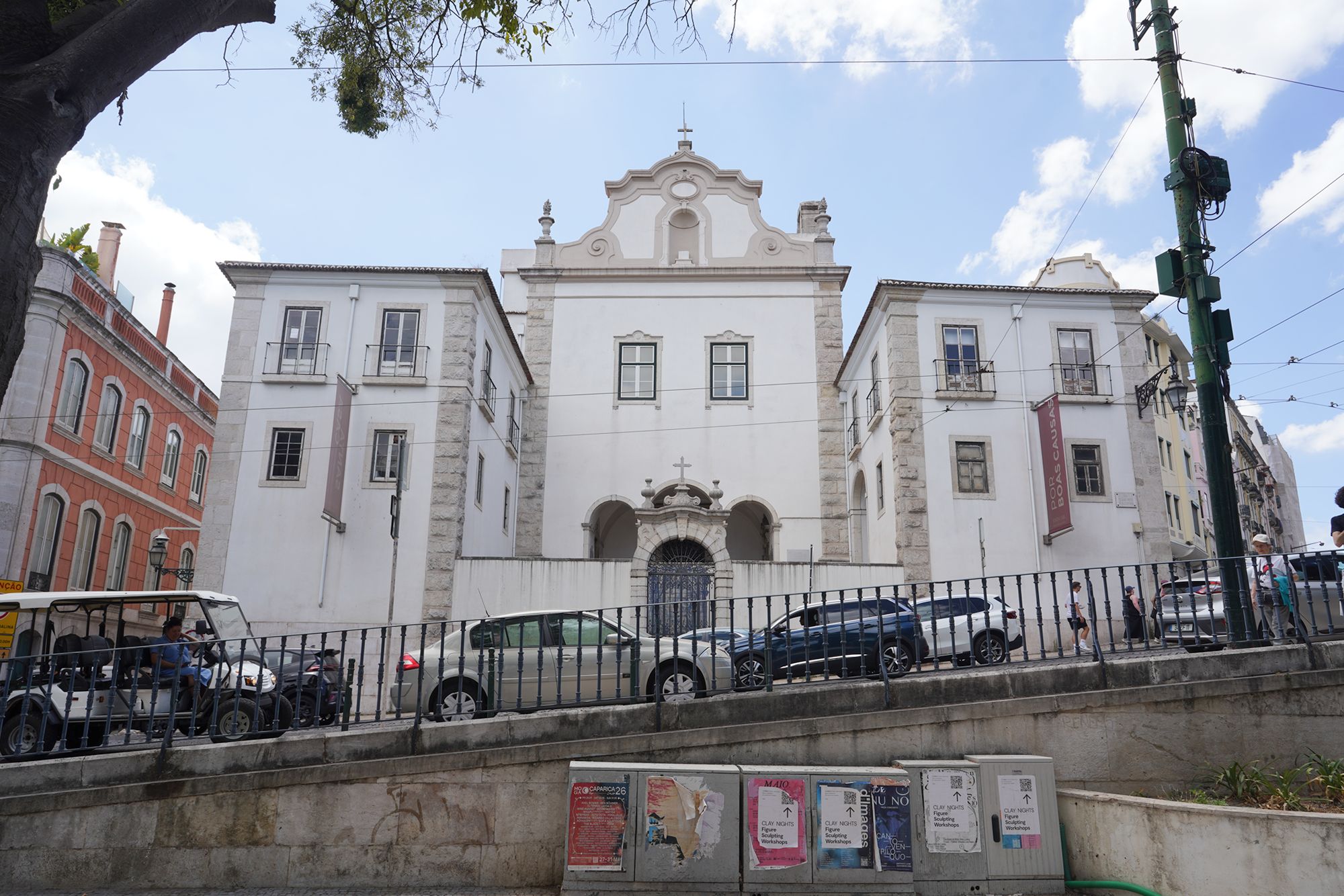
Near the viewpoint stands the Convento de São Pedro de Alcântara, a former Franciscan convent dating from the late 17th century. Behind its modest exterior, the church contains gilded woodwork, religious paintings, and blue-and-white tile panels.
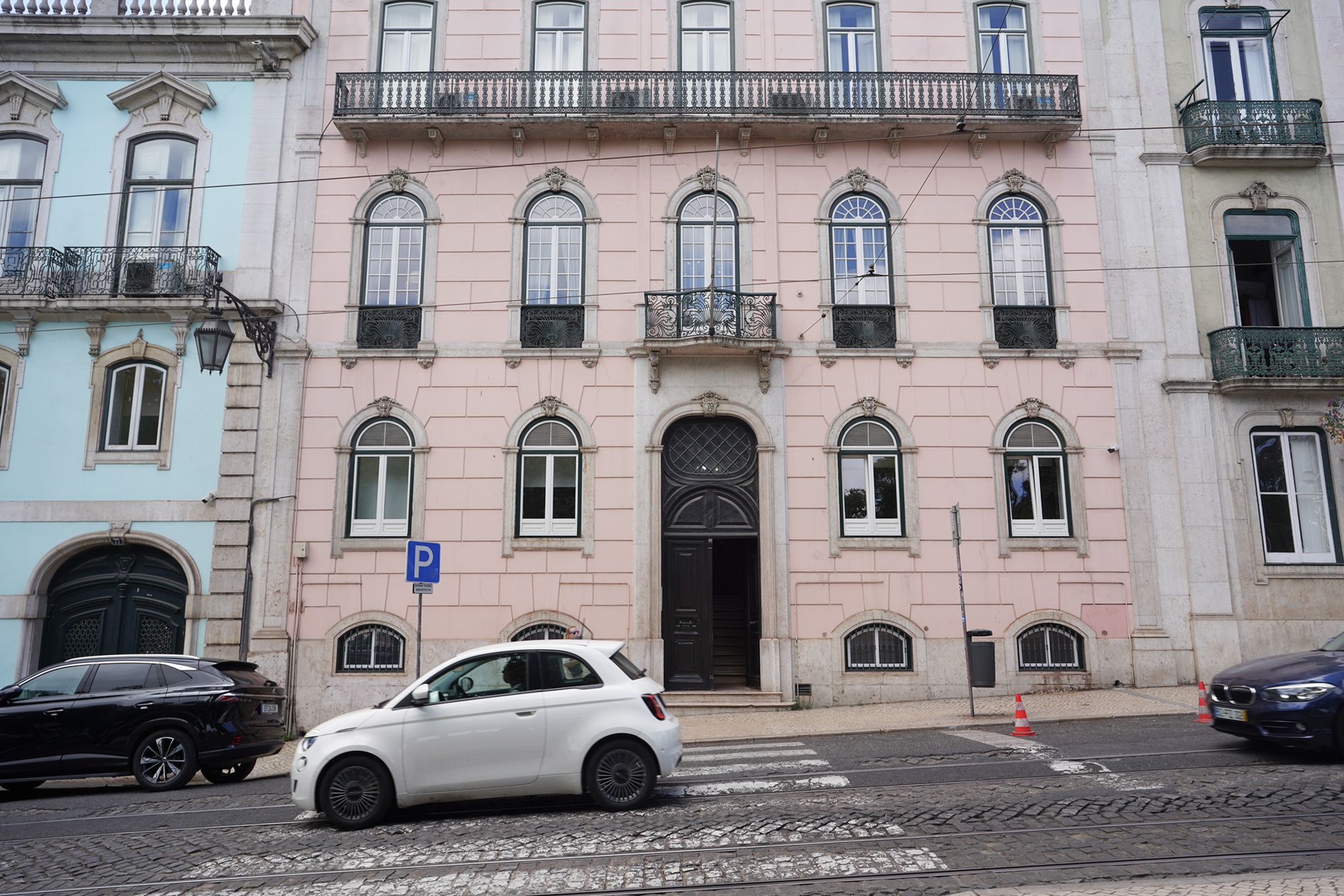
From the small garden, I walked down Rua de São Pedro de Alcântara.
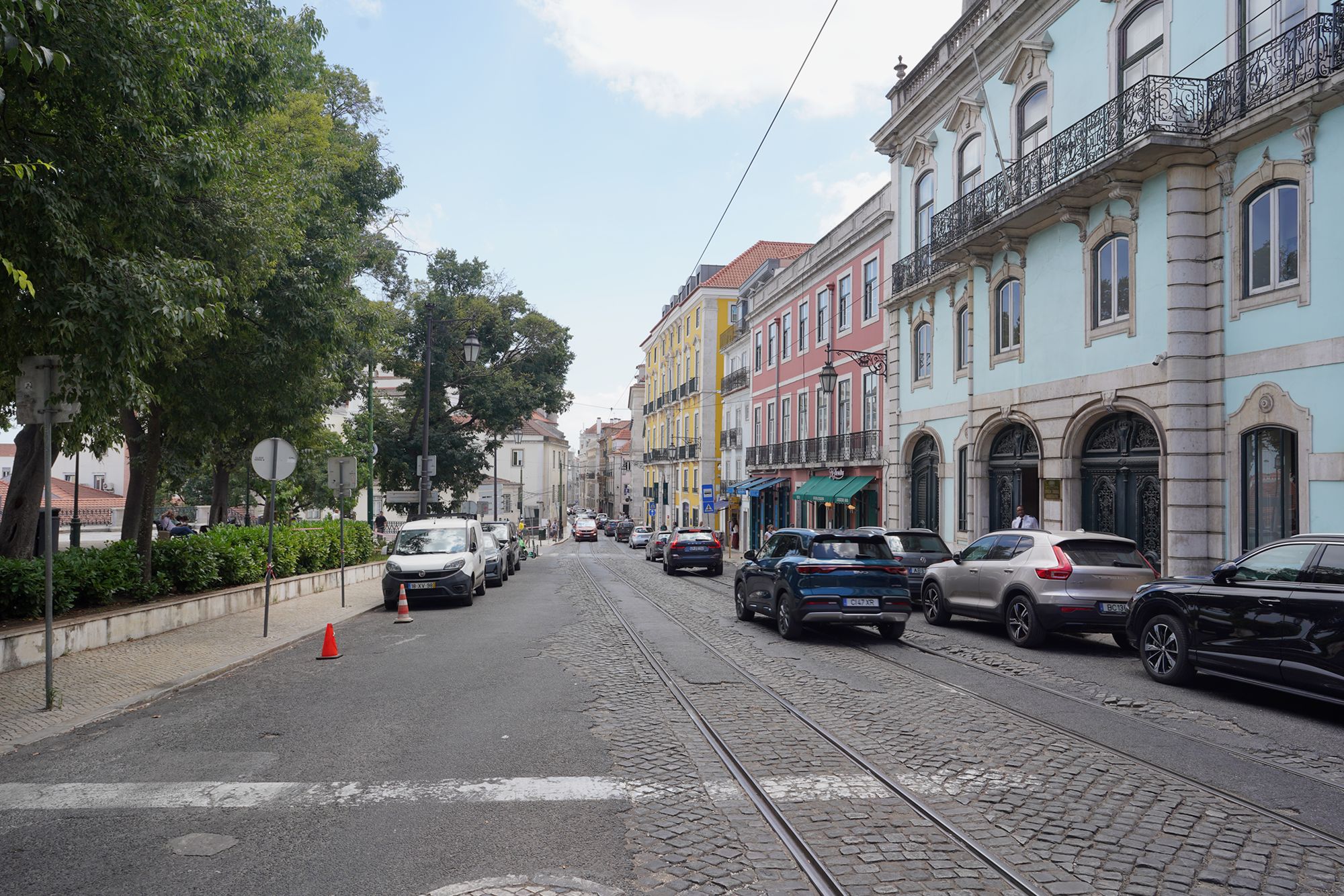
From Rua de São Pedro de Alcântara, I turned right onto a narrow street.
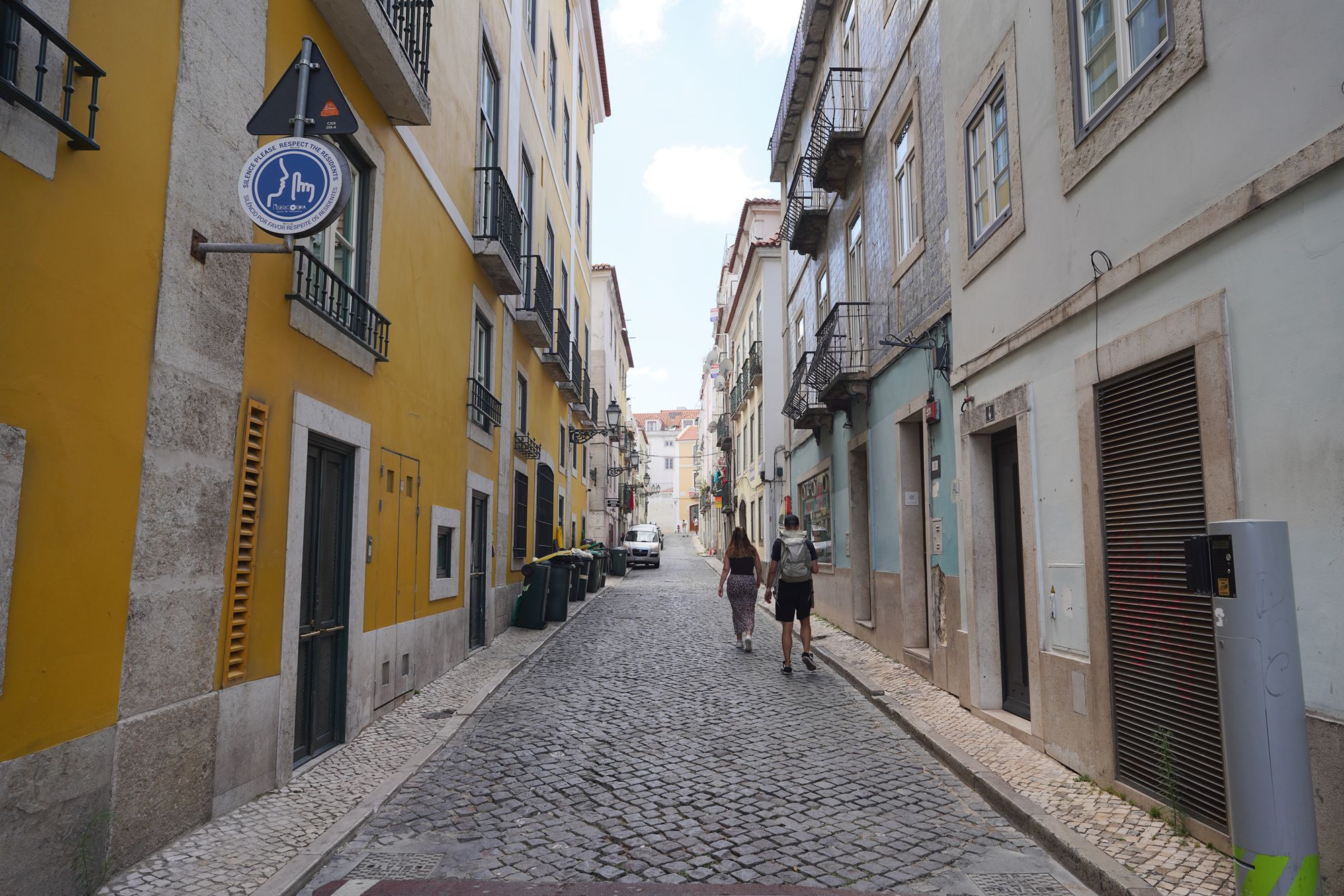
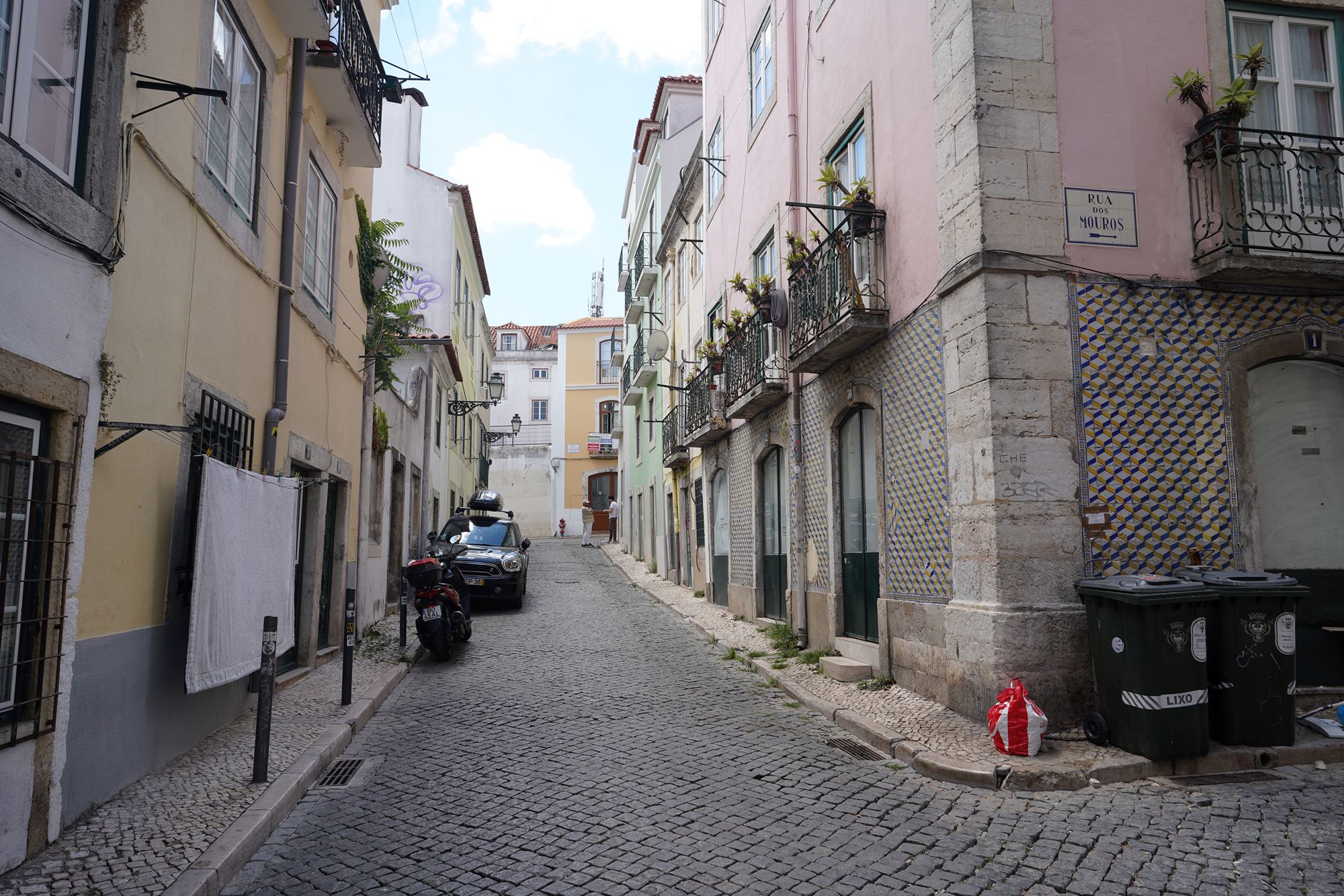
Then took a left turn at the end of the street
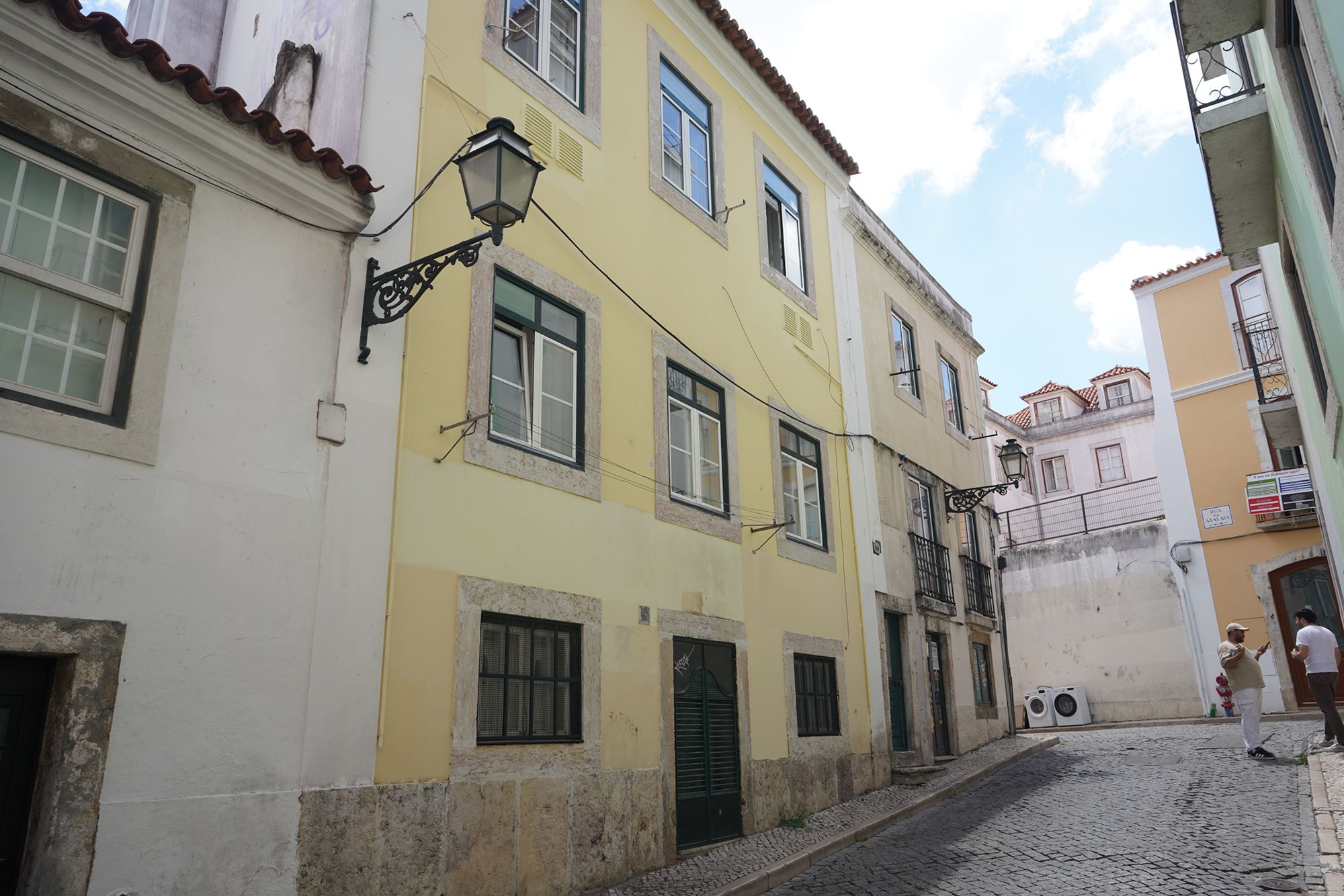
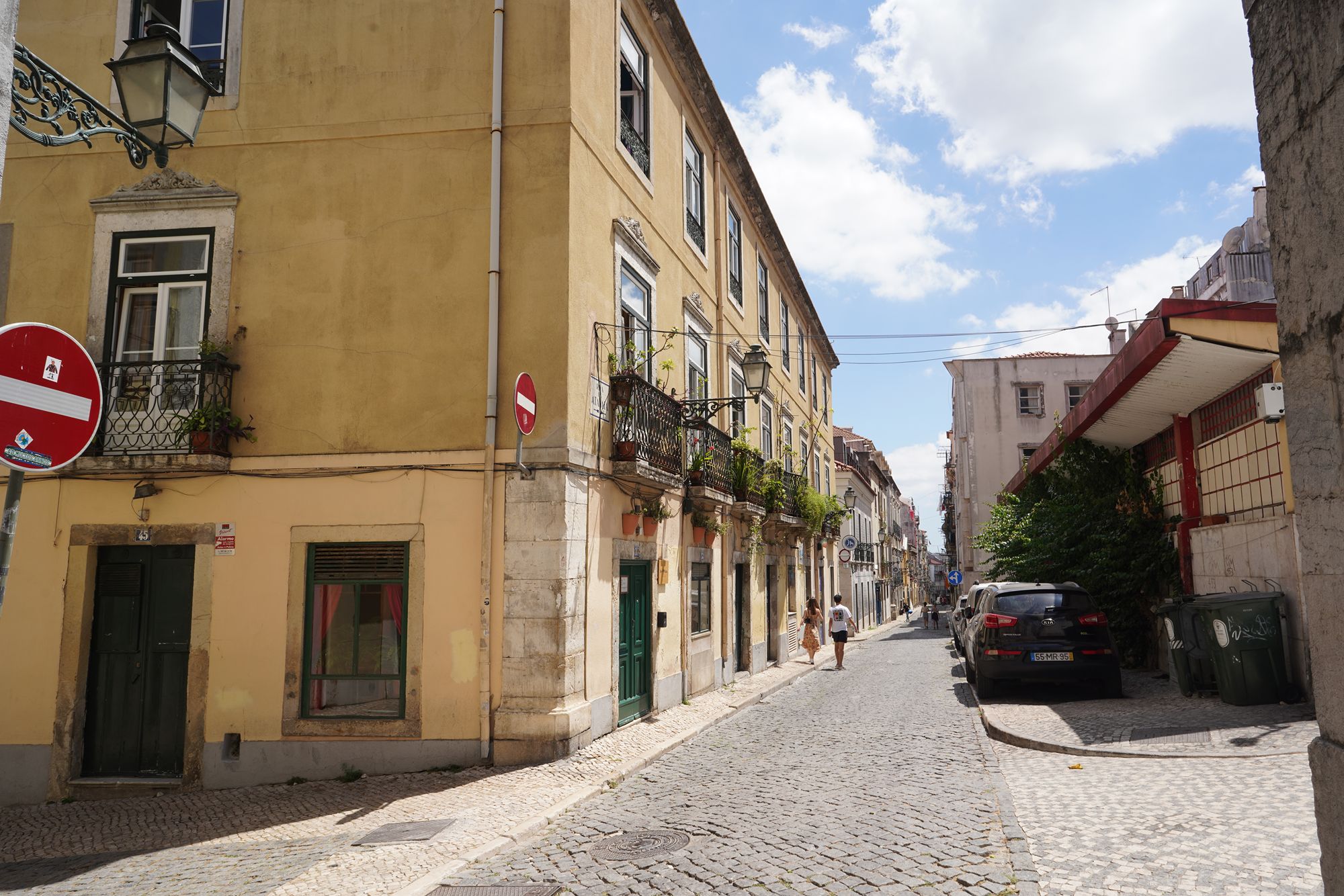
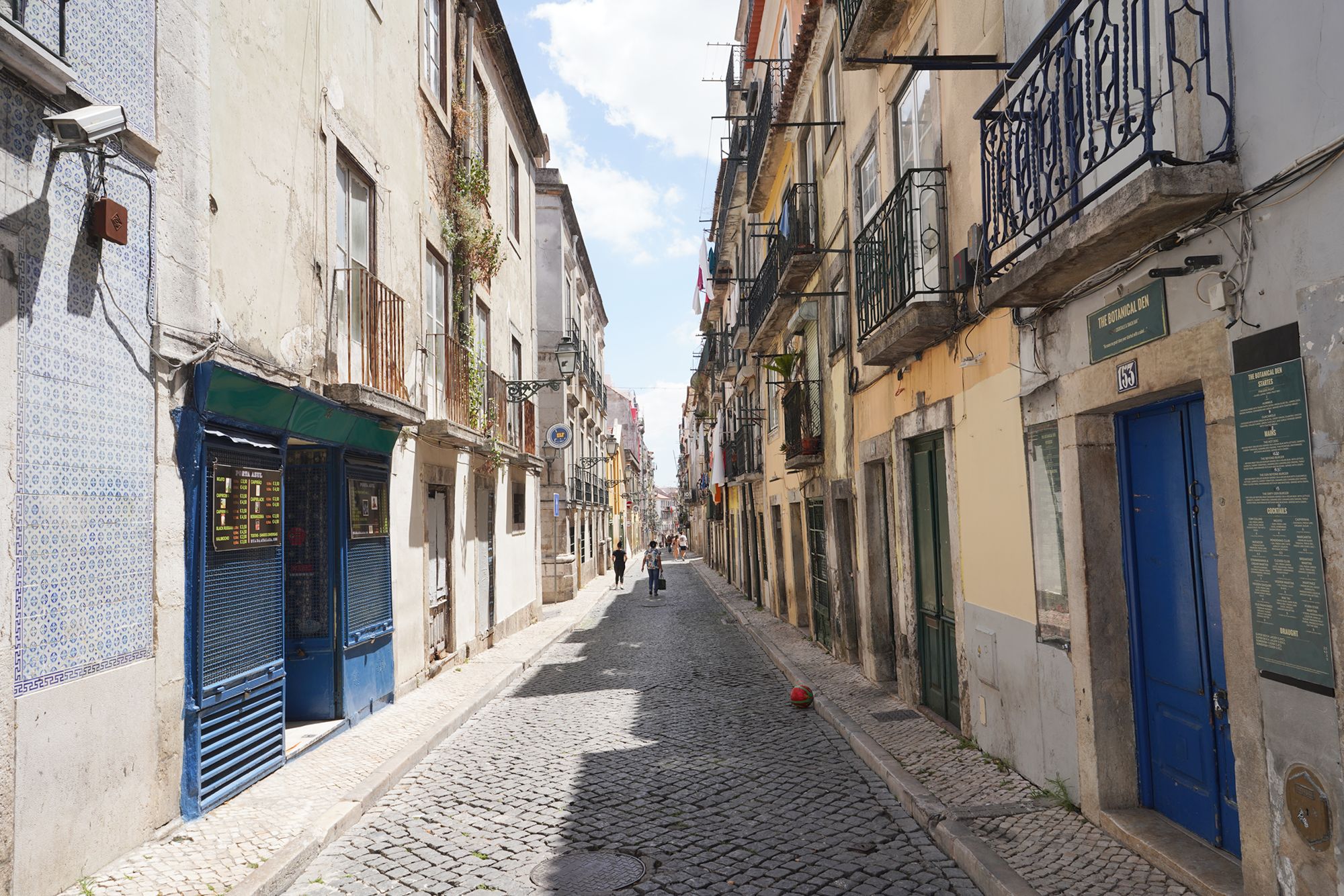
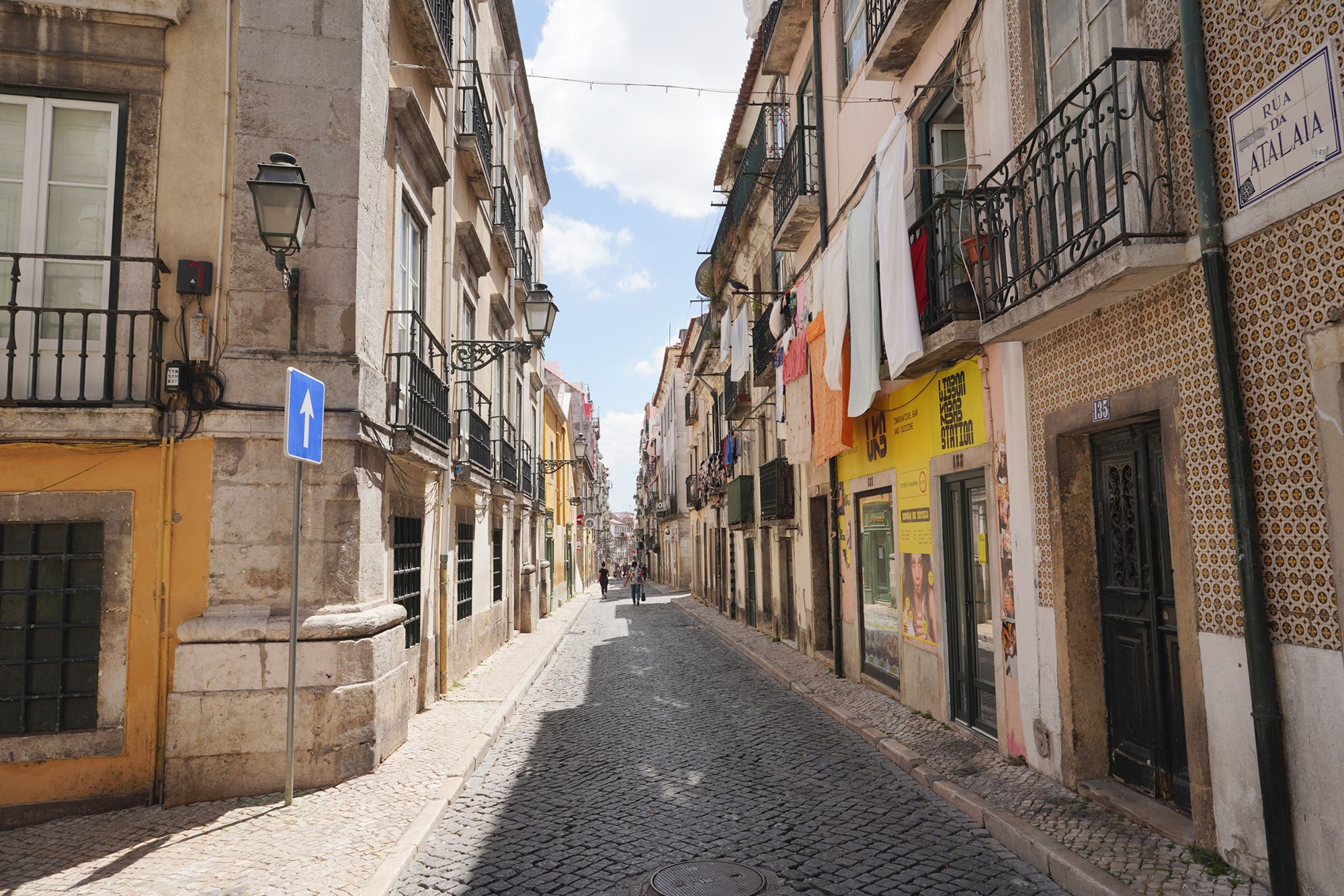
Then turned another left to go back to Rua de São Pedro de Alcântara
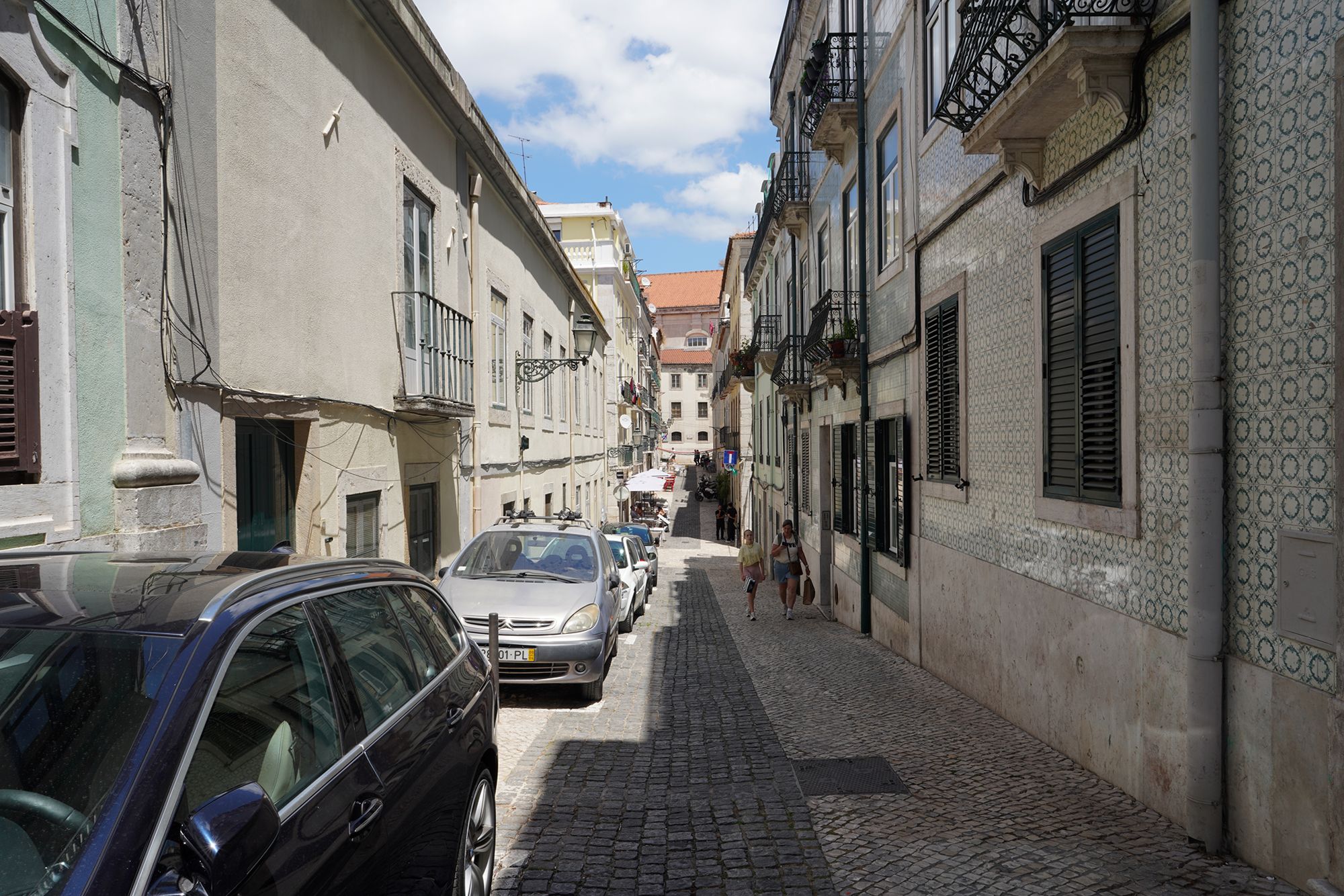
A side street on my right
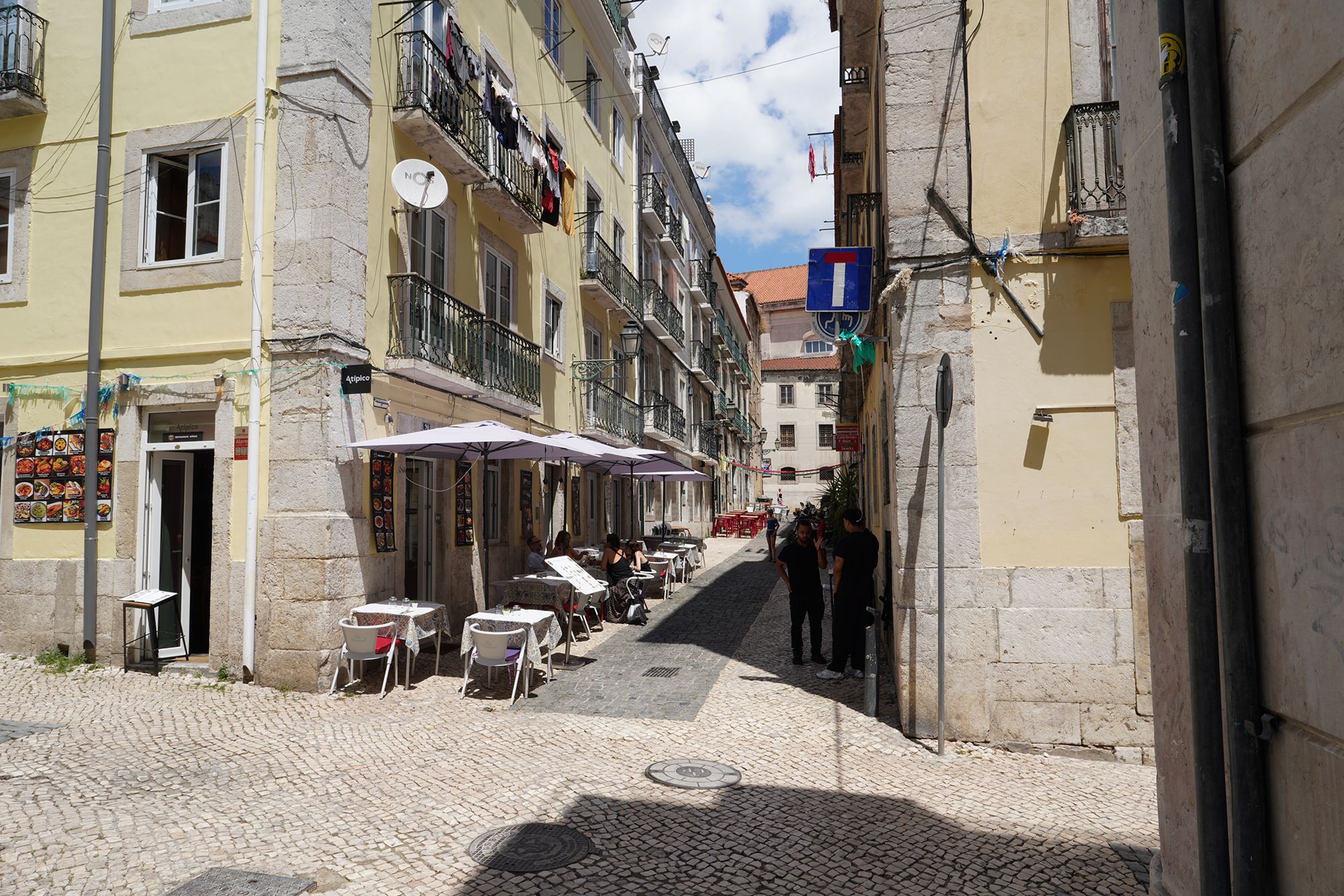
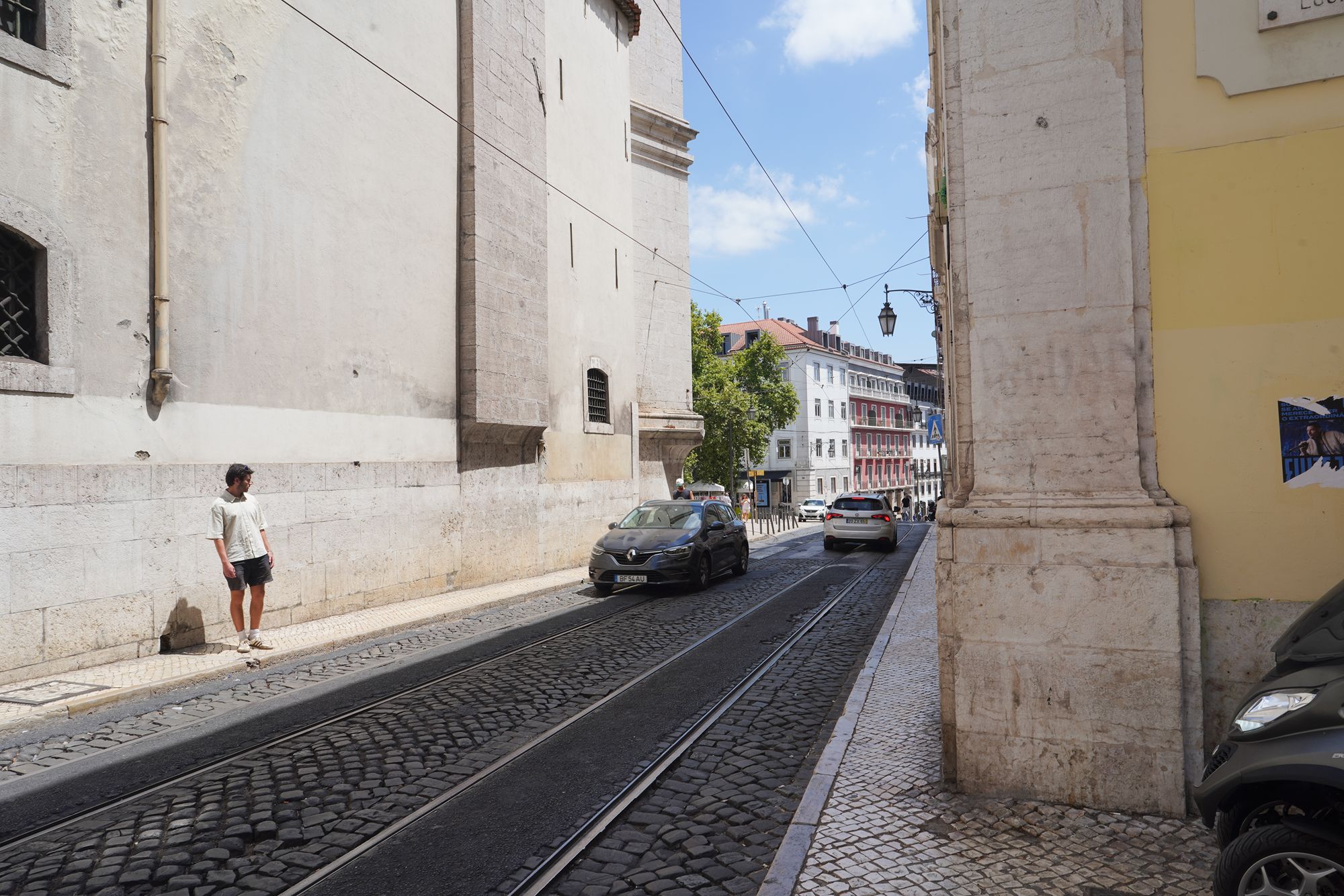
I returned to Rua de São Pedro de Alcântara, in front of Igreja de São Roque.
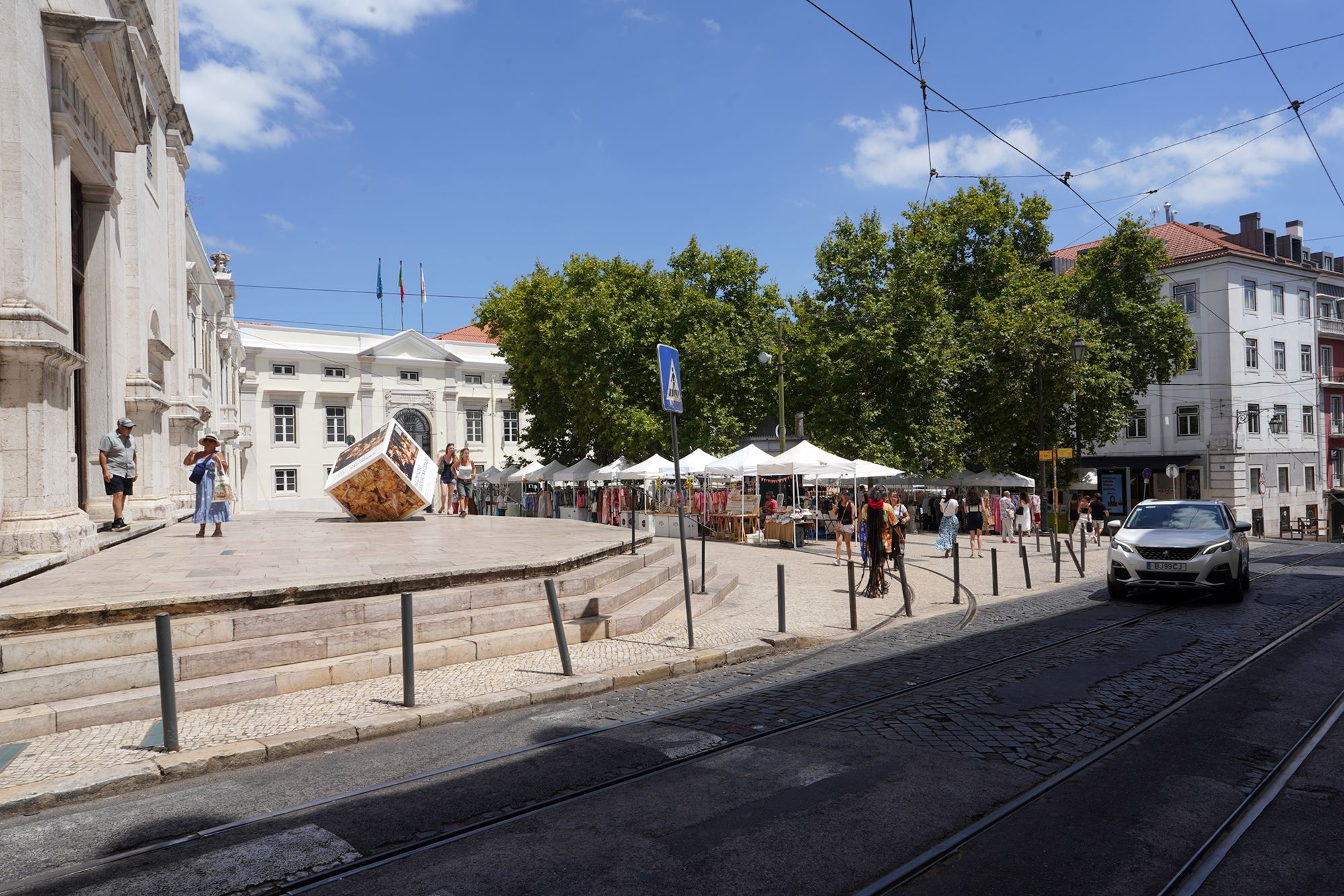
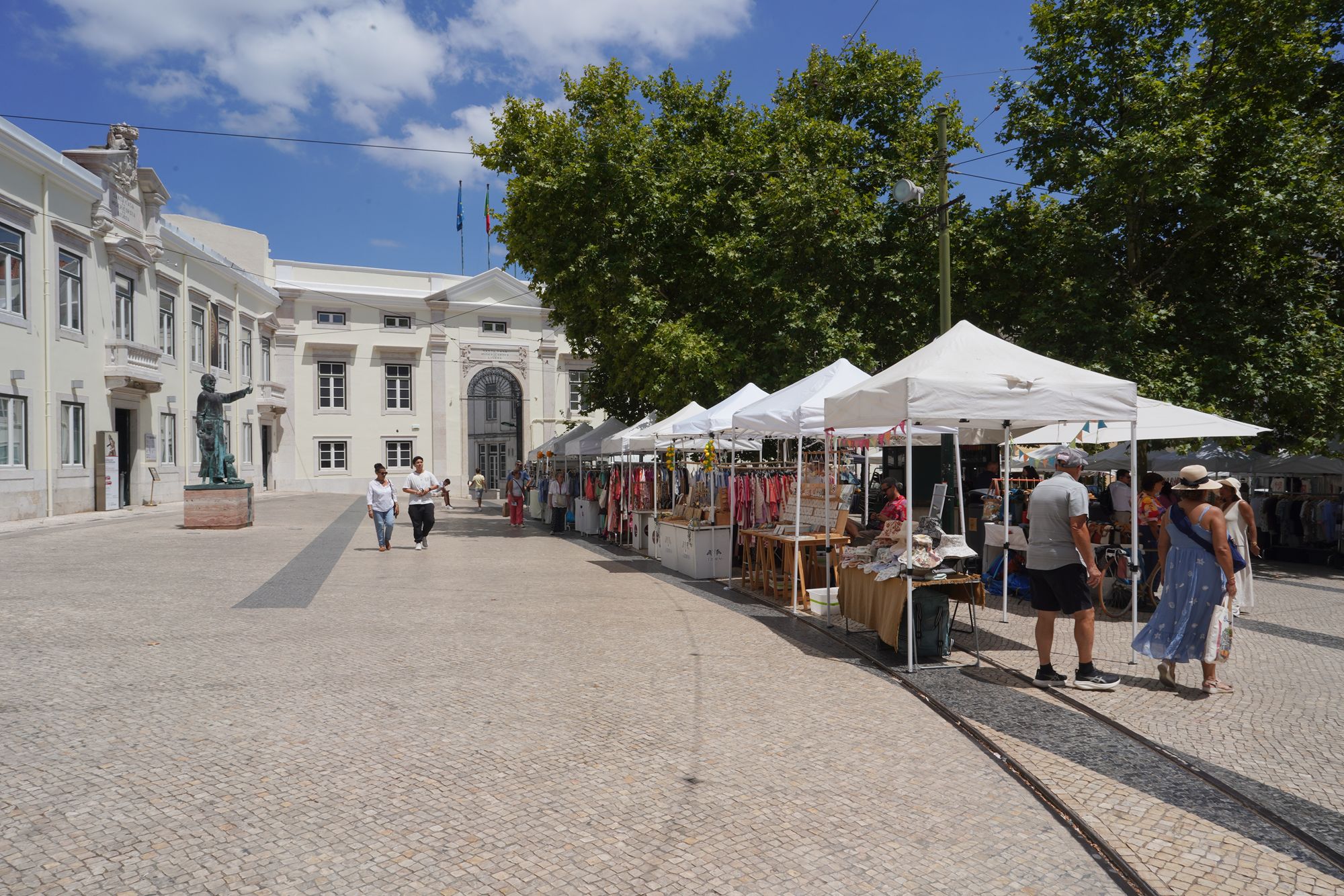
Igreja de São Roque is a 16th-century Jesuit church with a simple exterior.
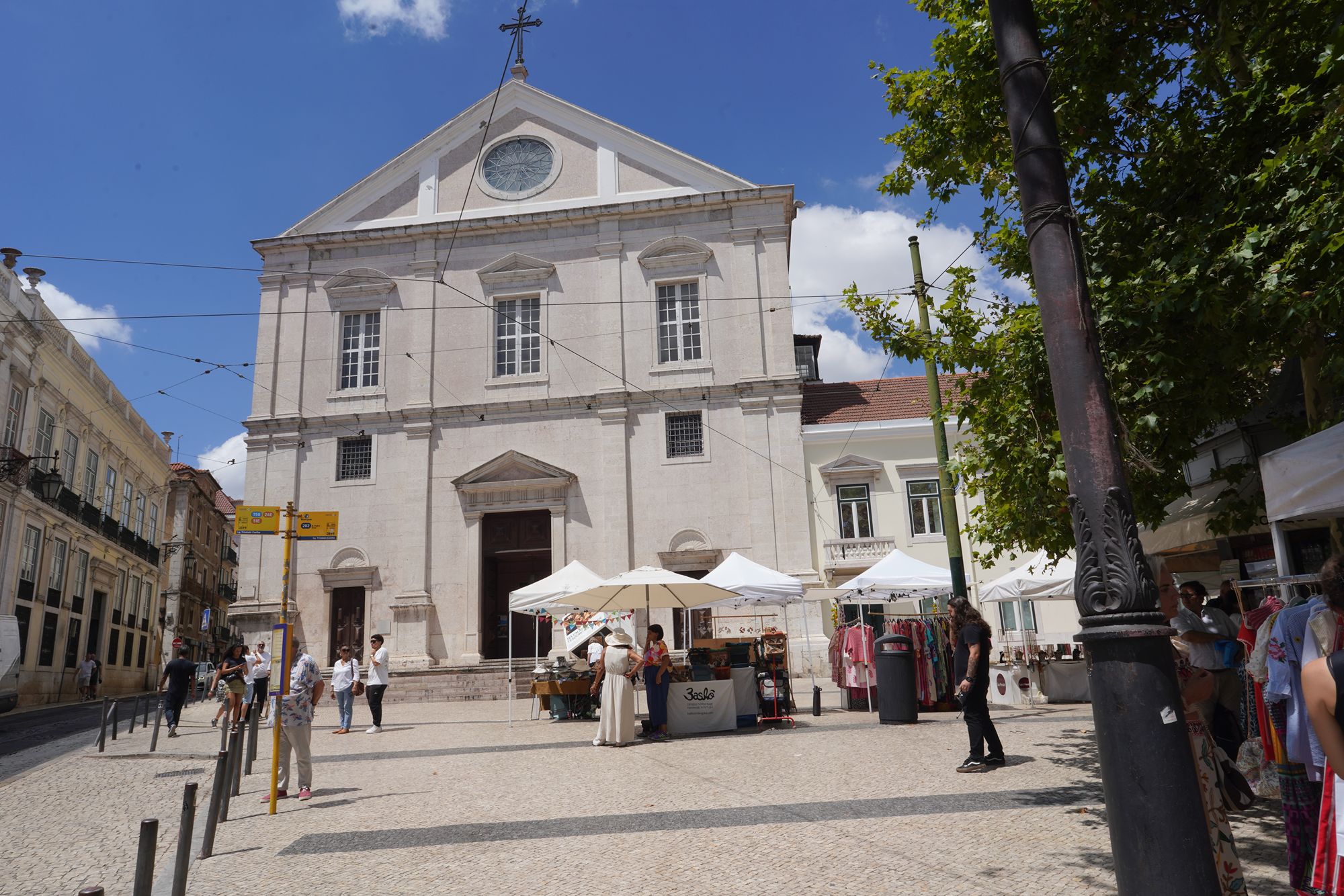
Rua de São Pedro de Alcântara
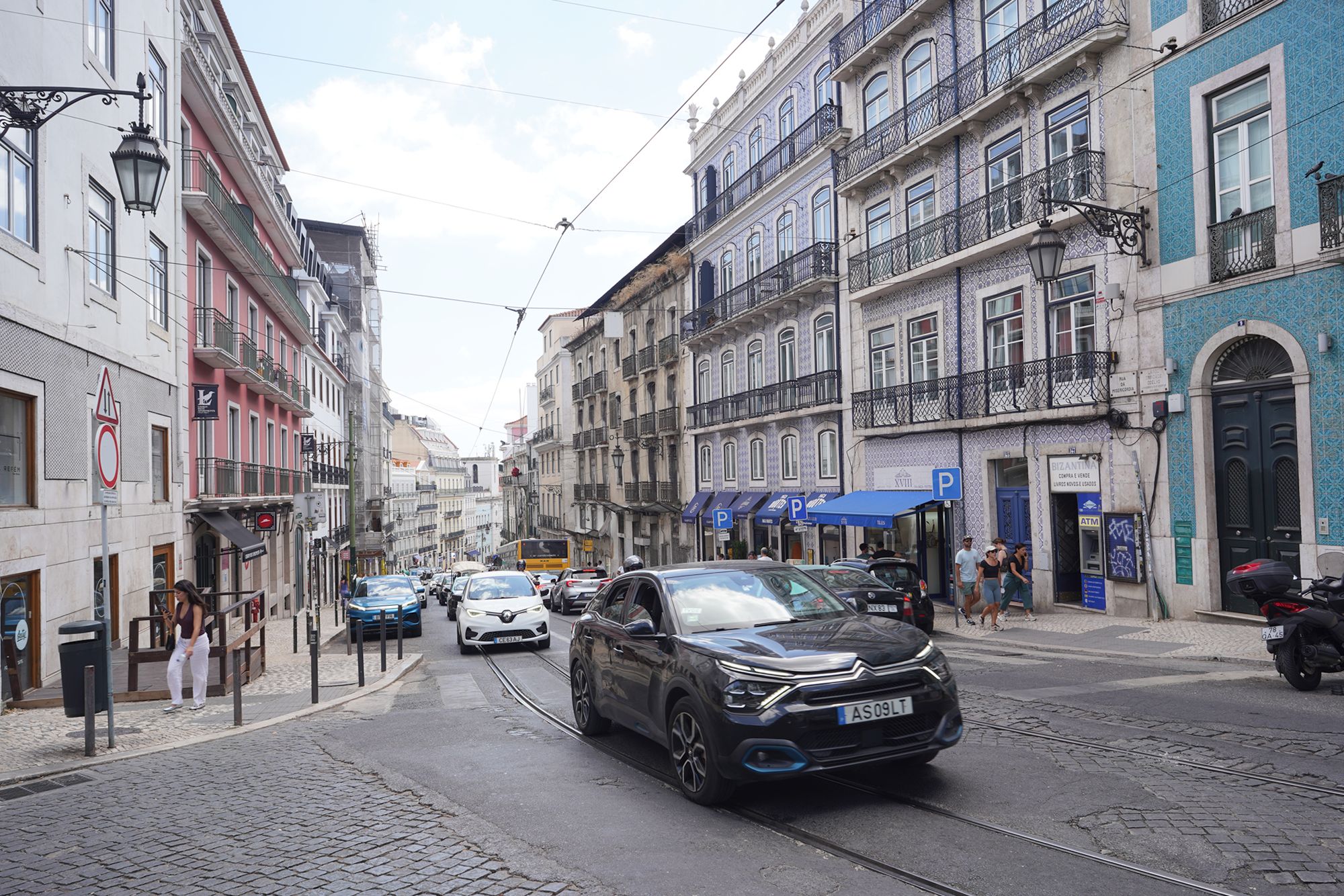
I turned left onto this street
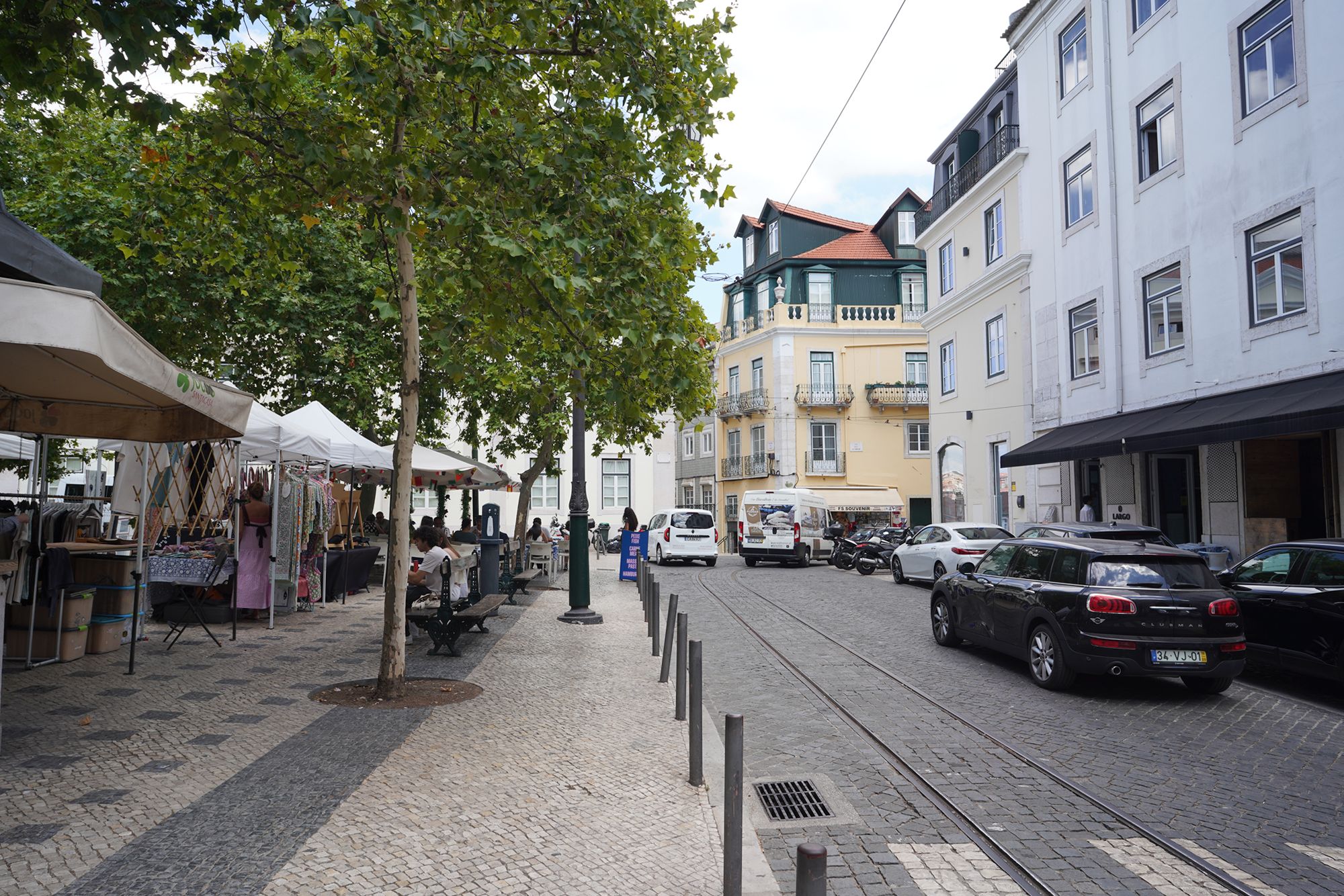
Then turned right
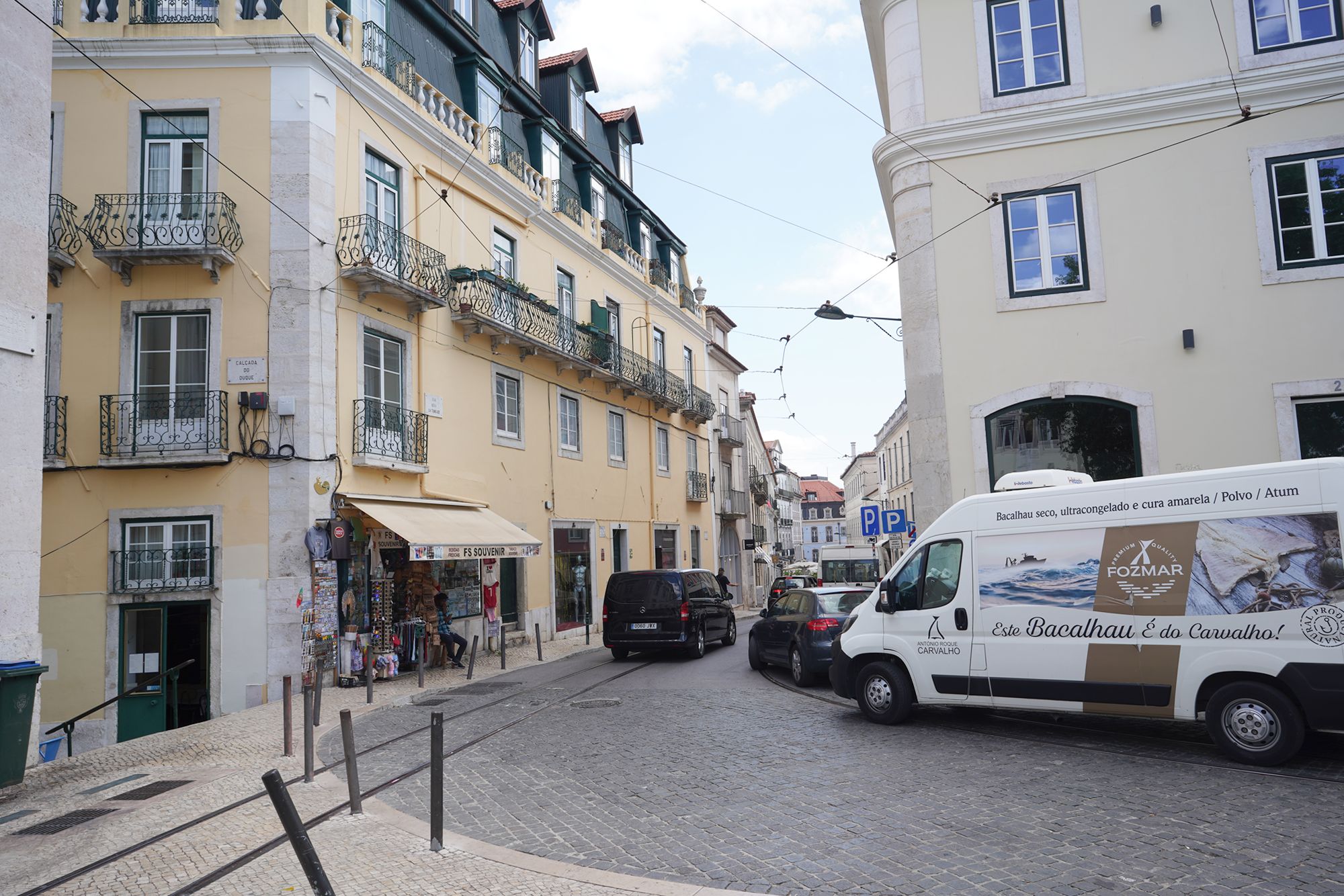
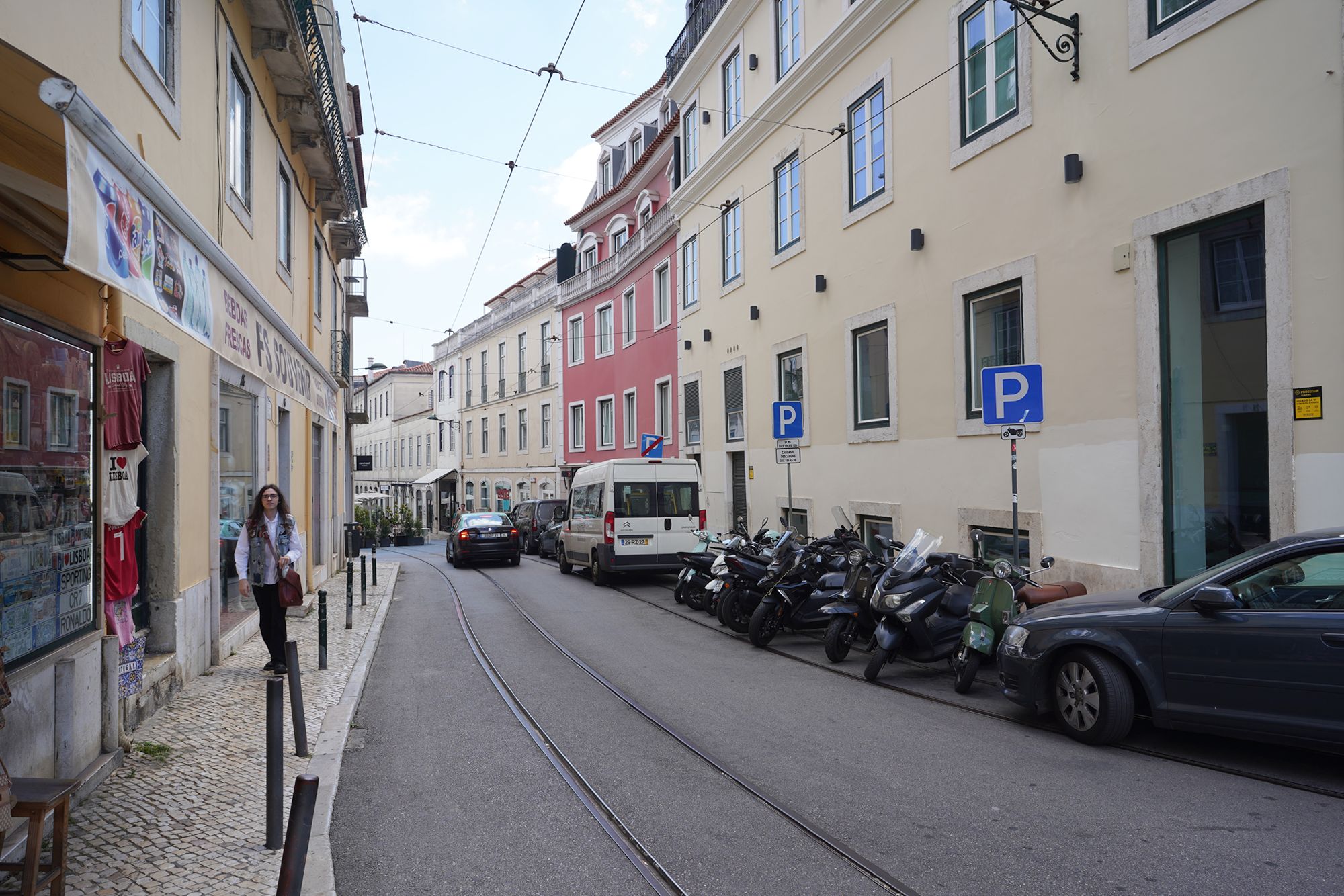
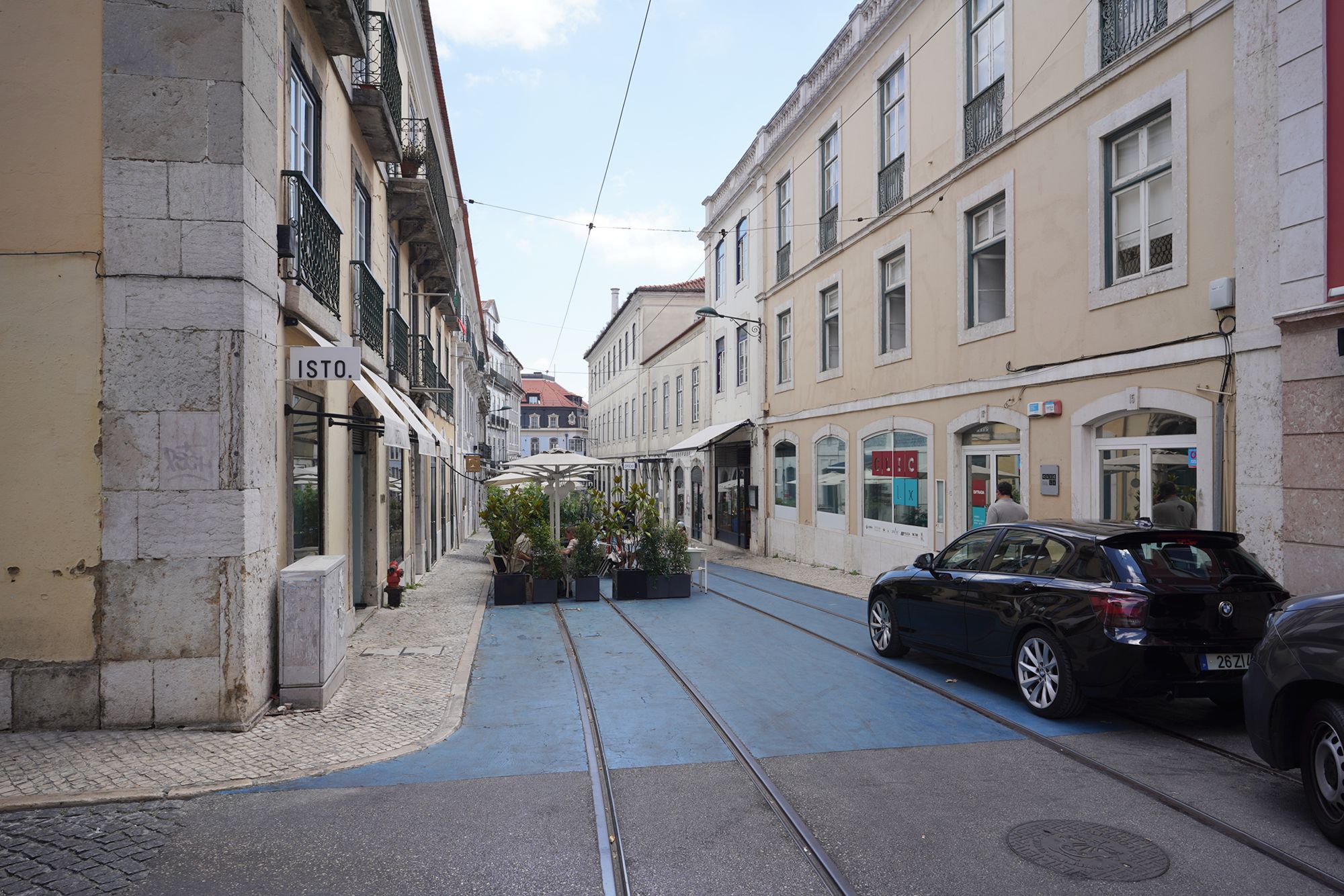
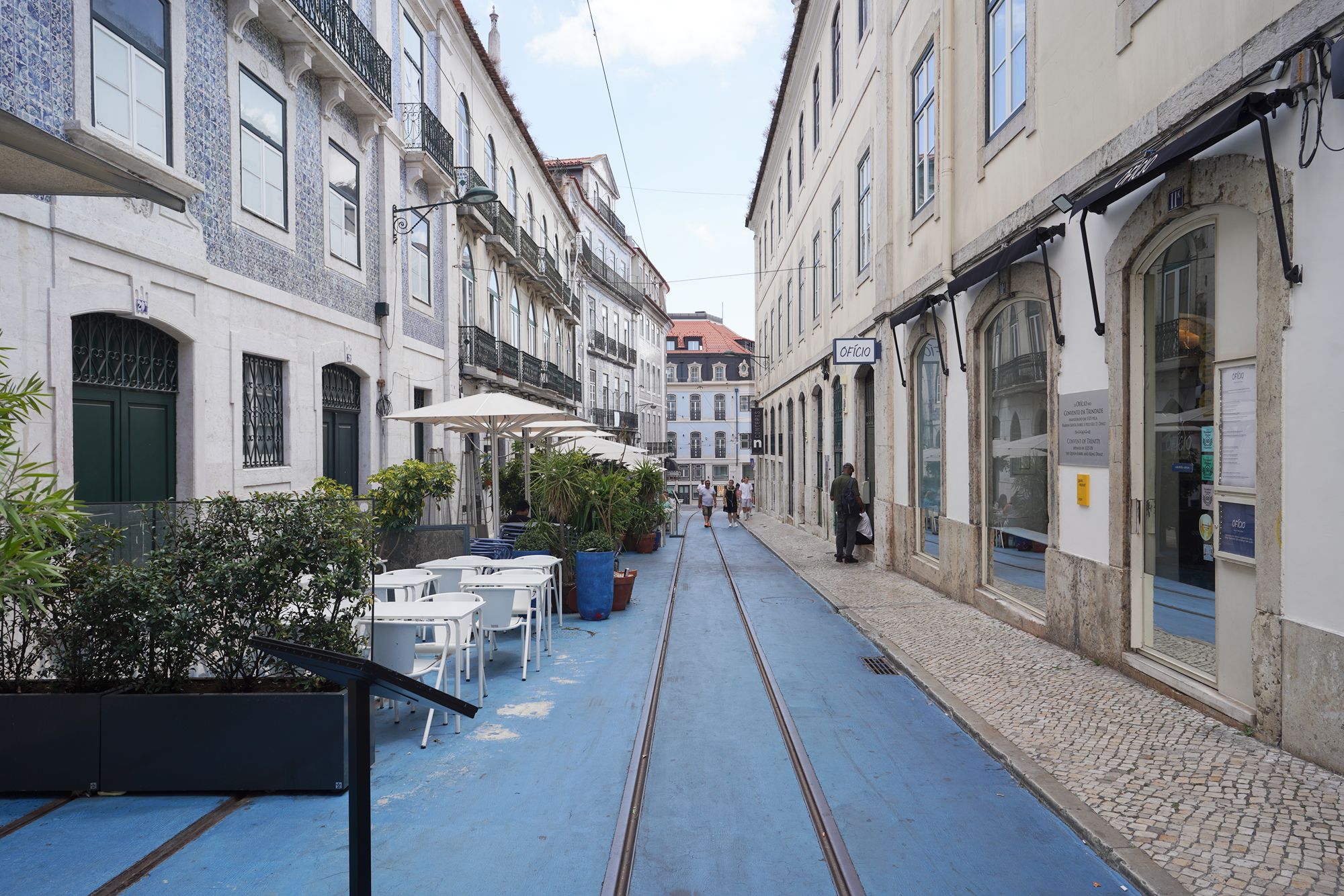
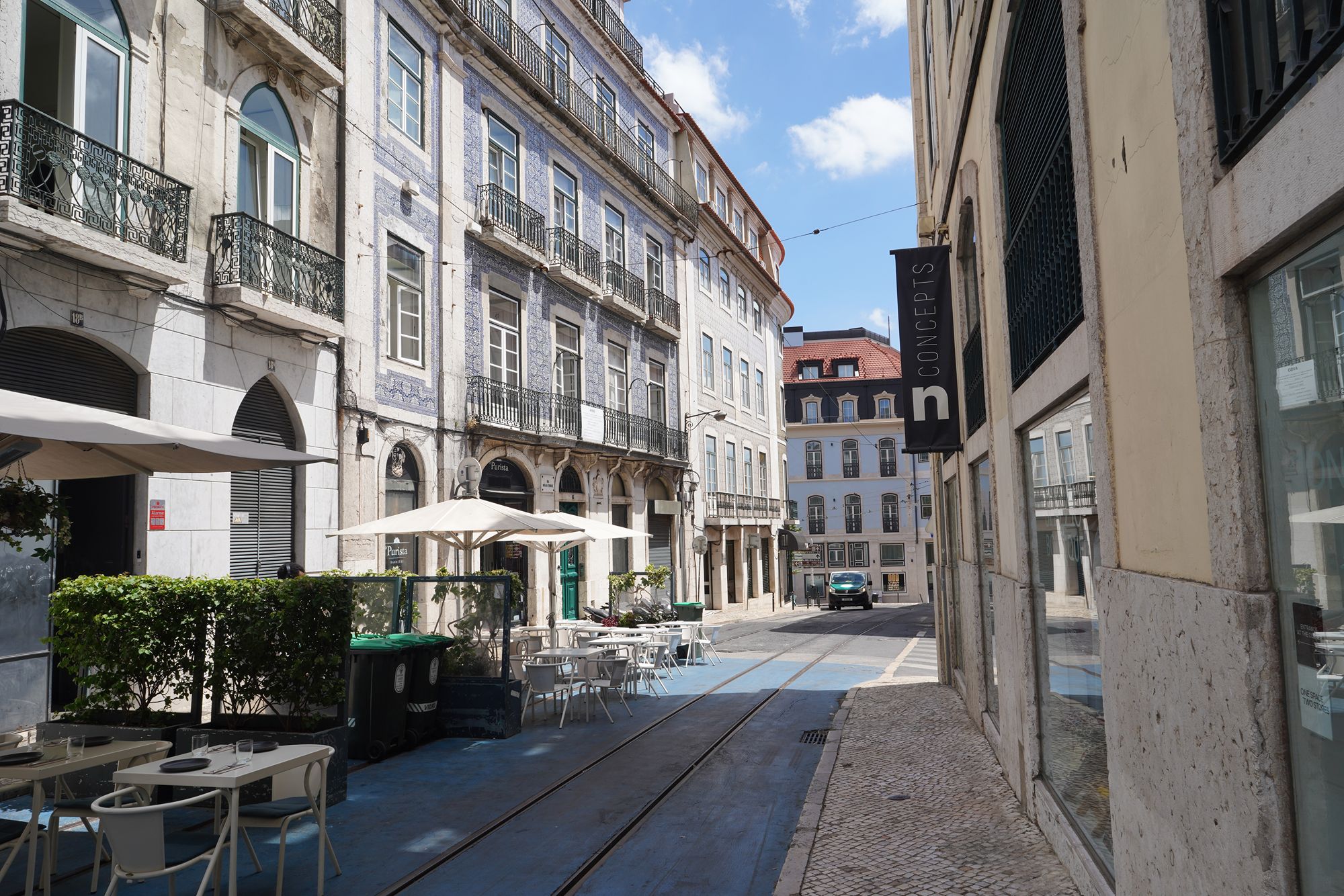
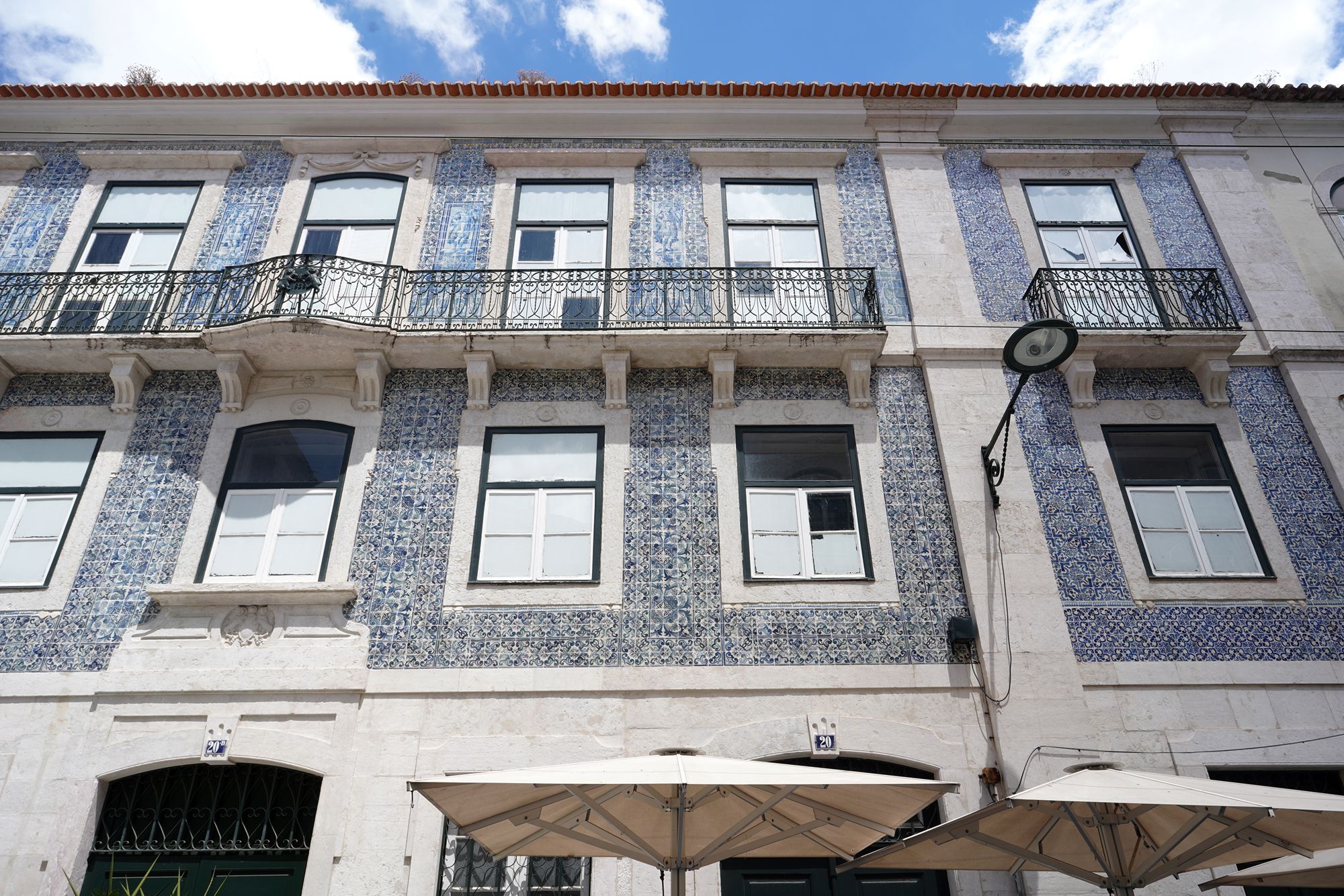
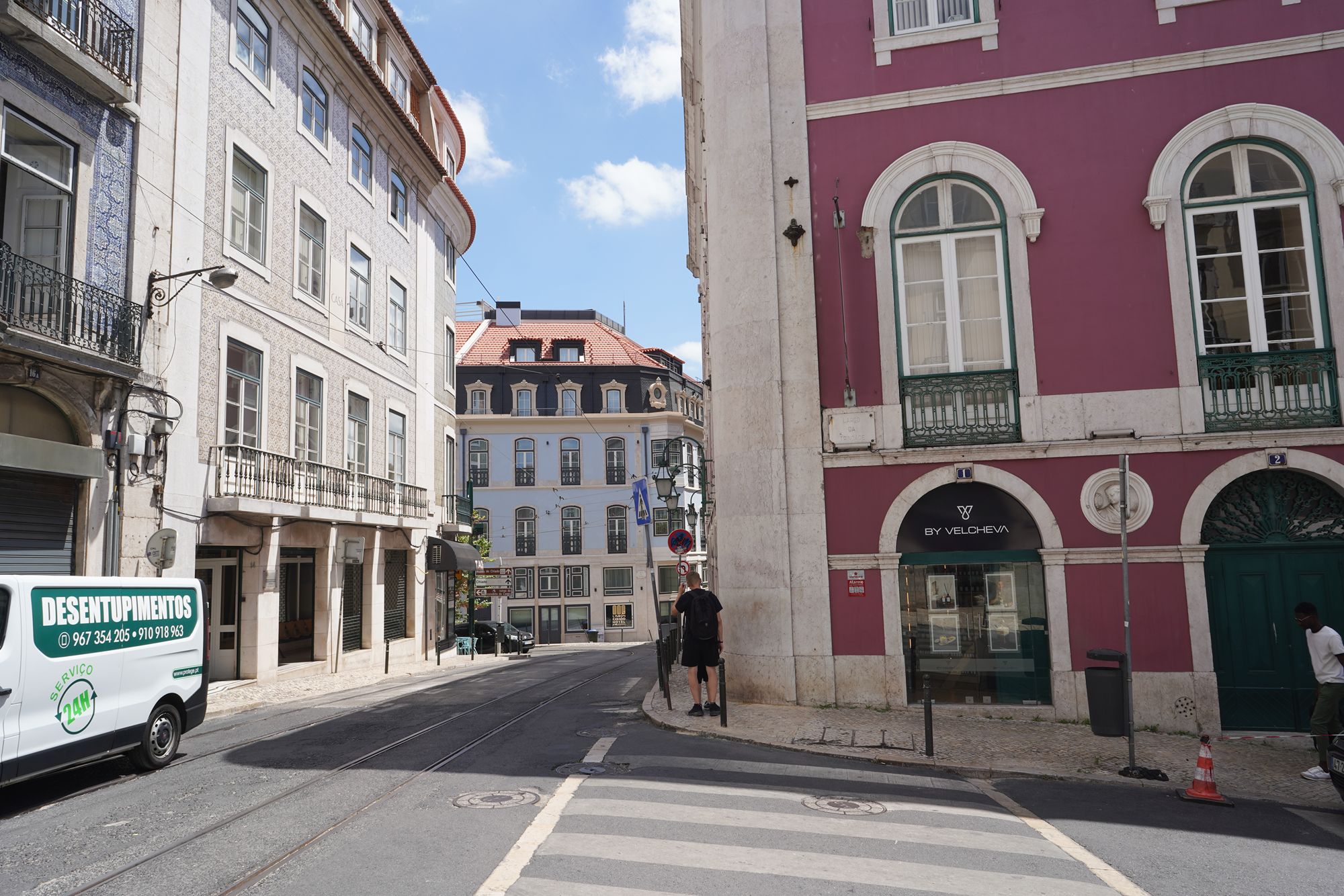
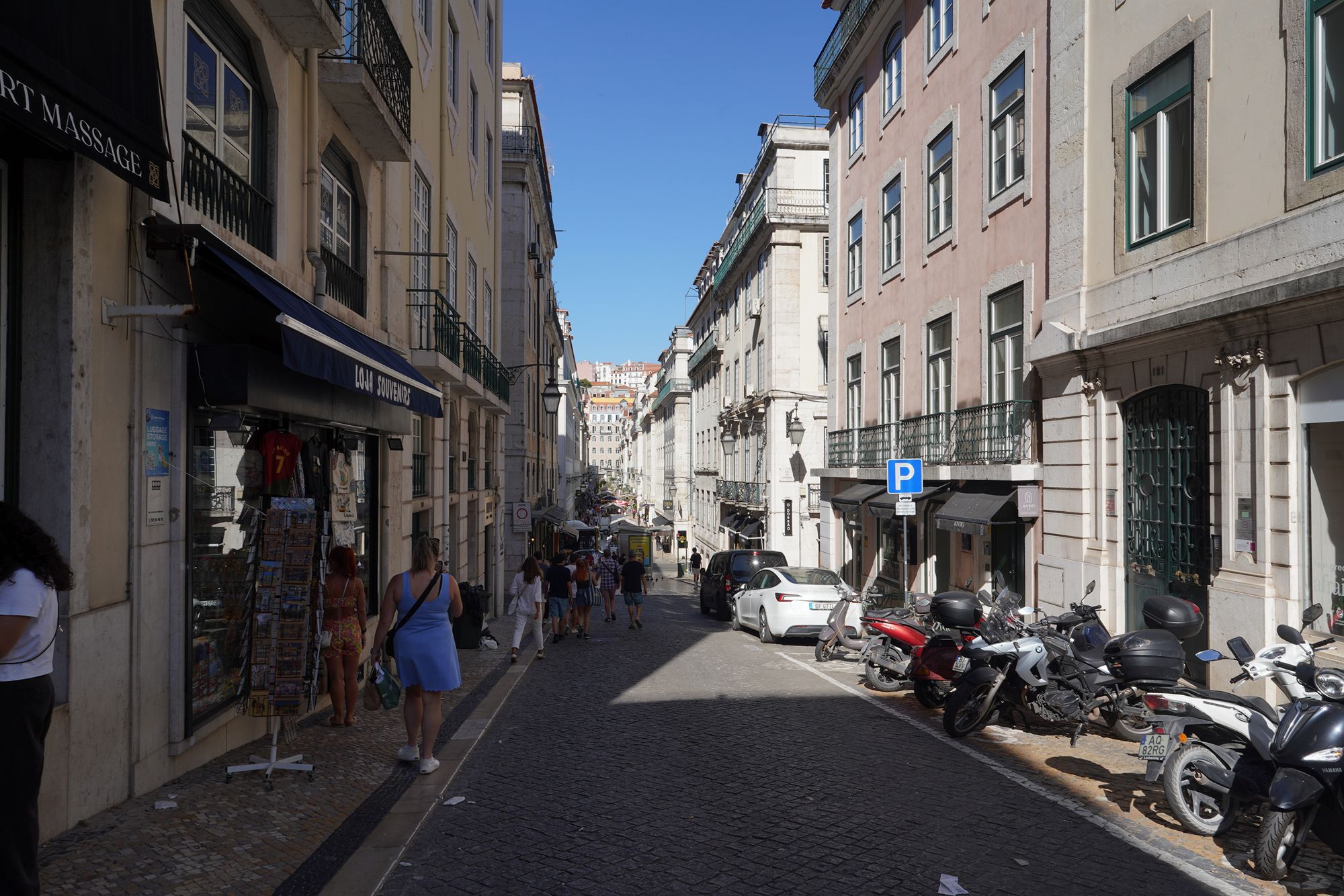
Then I followed the road to the left
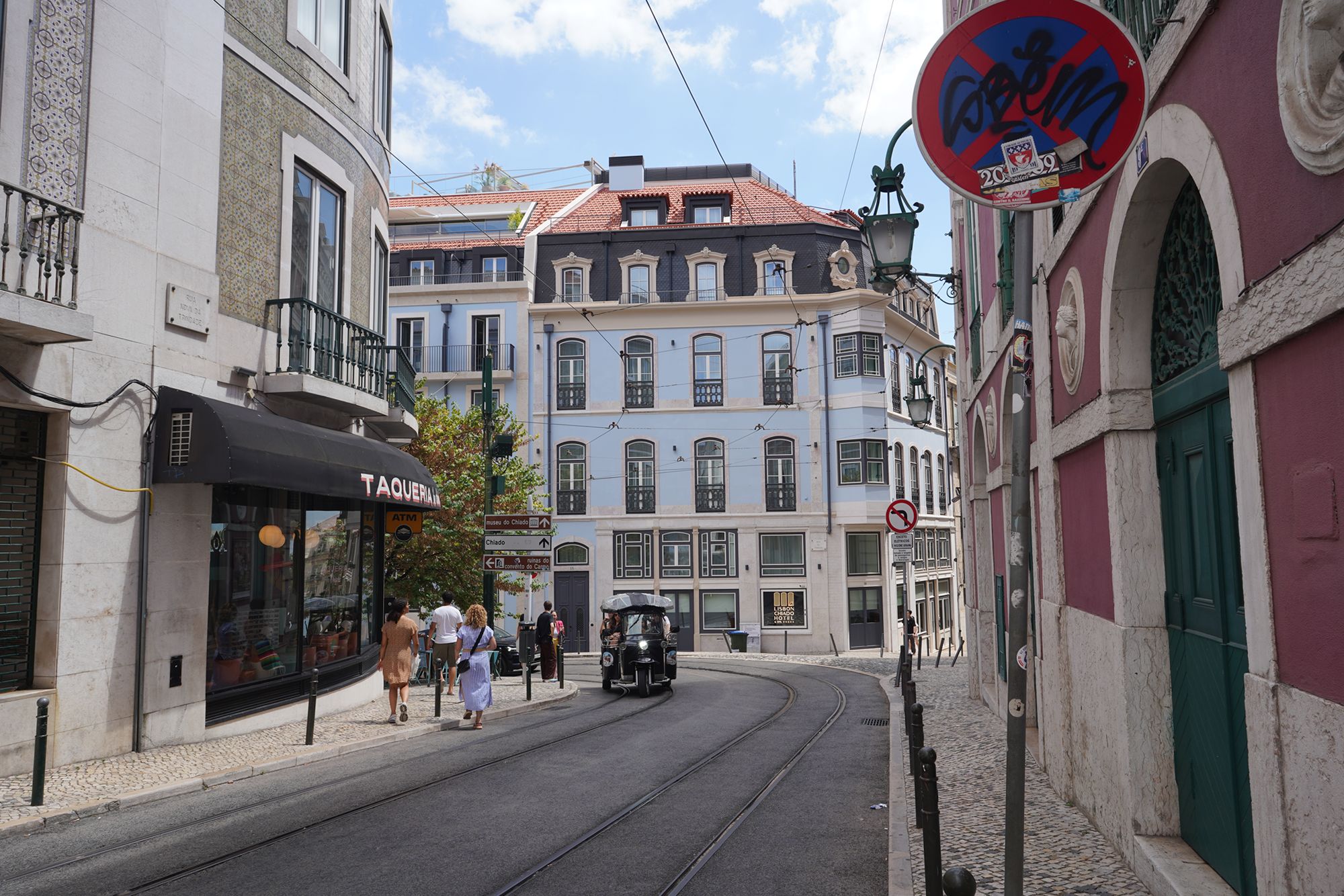
Then to the right
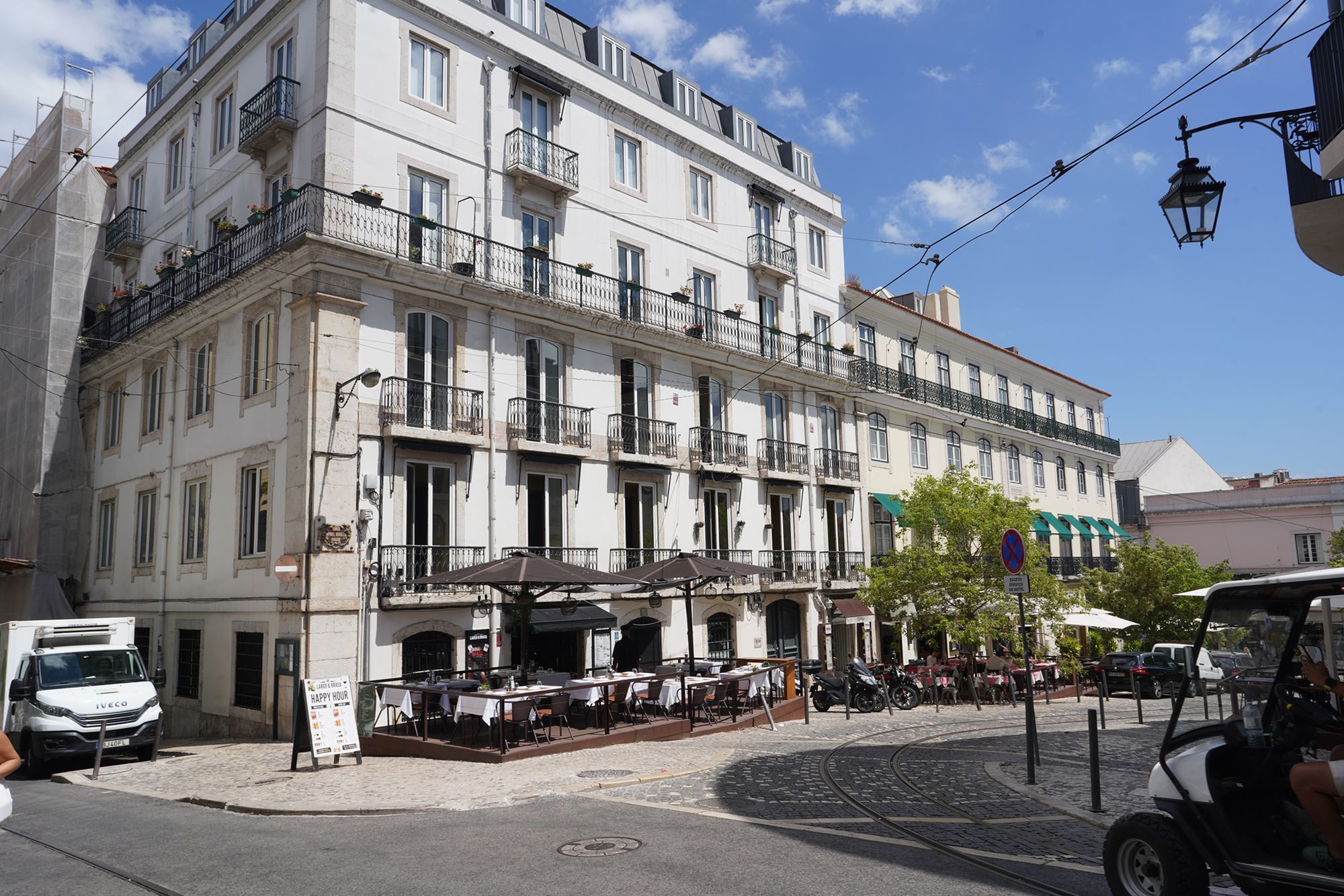
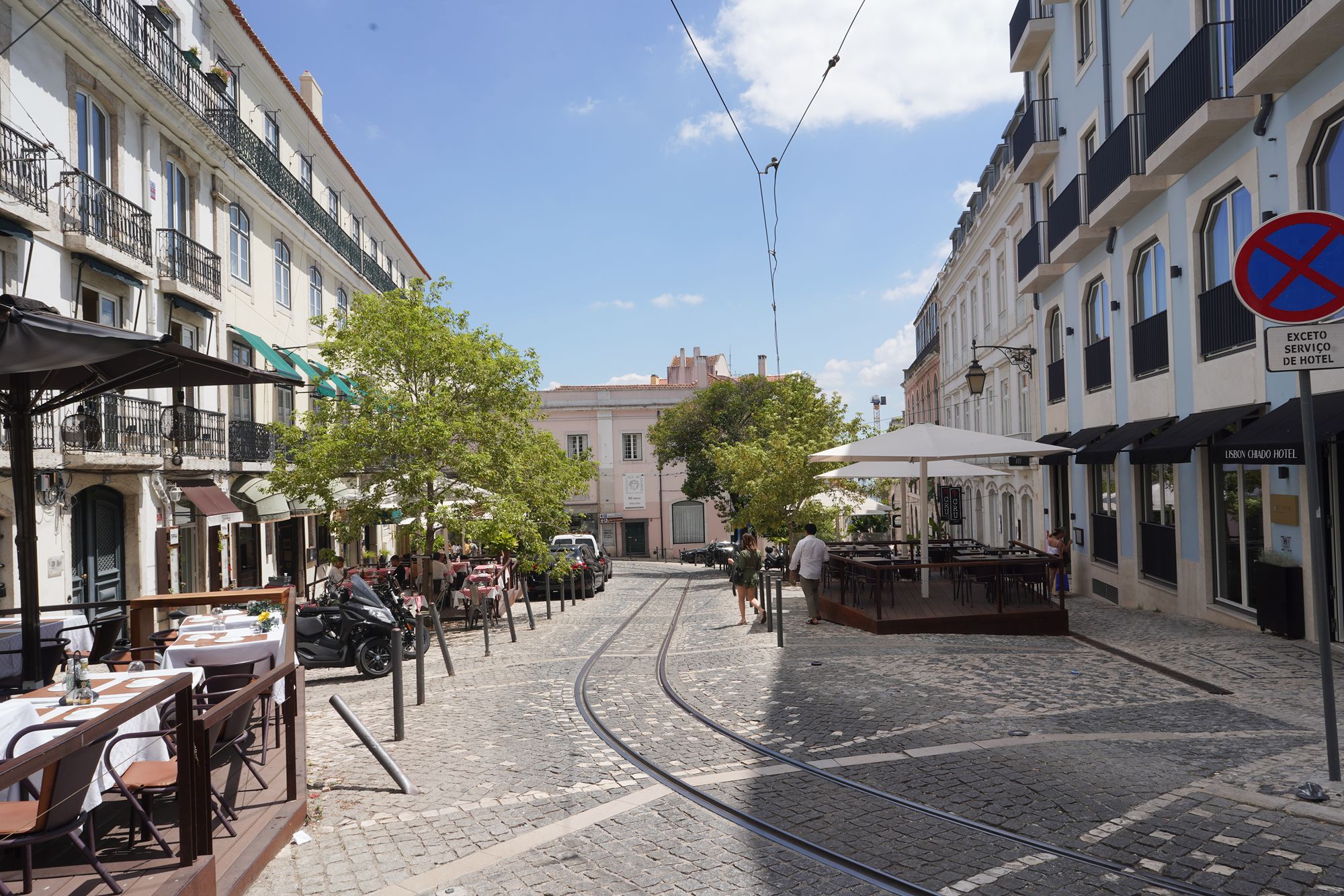
A view behind me
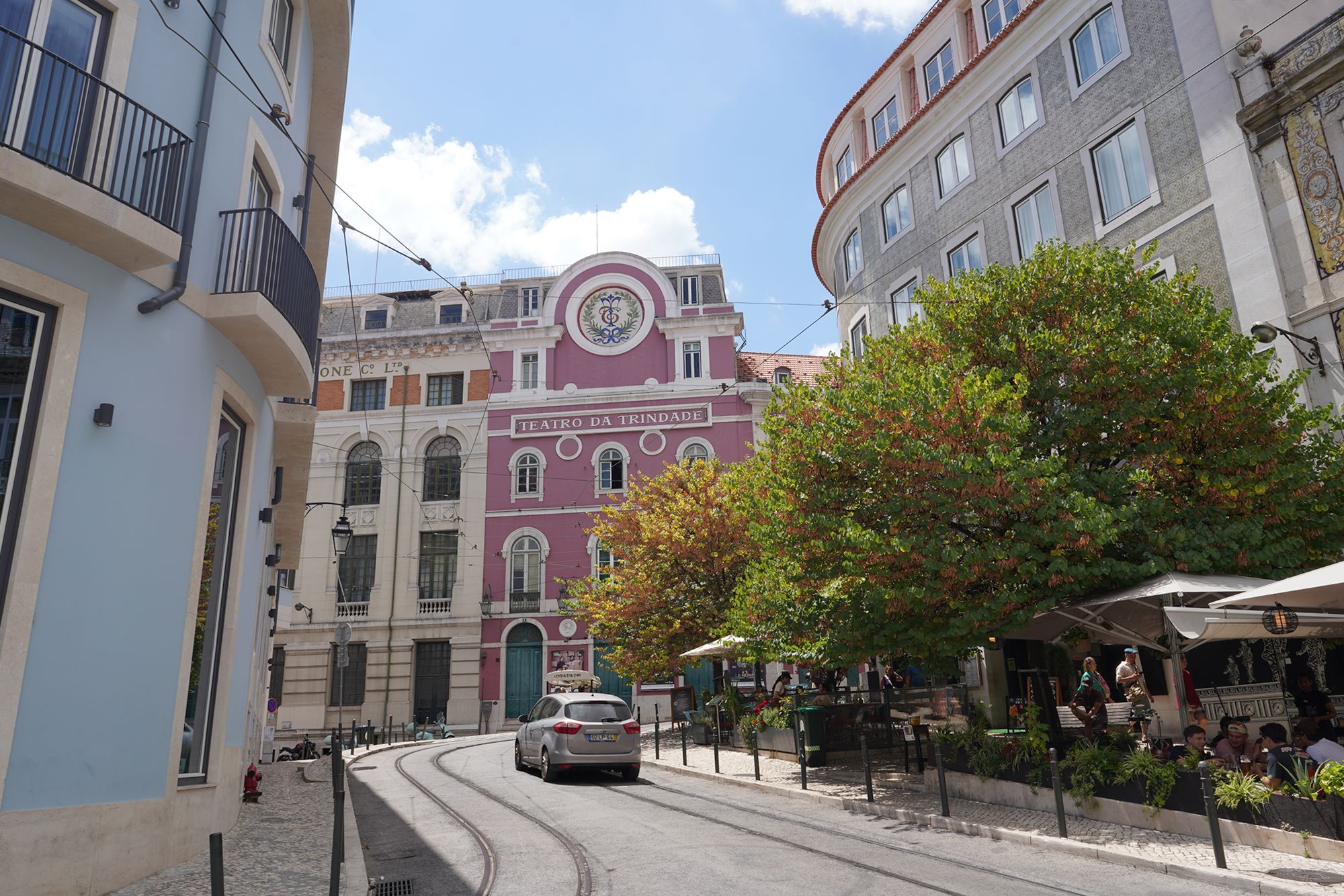
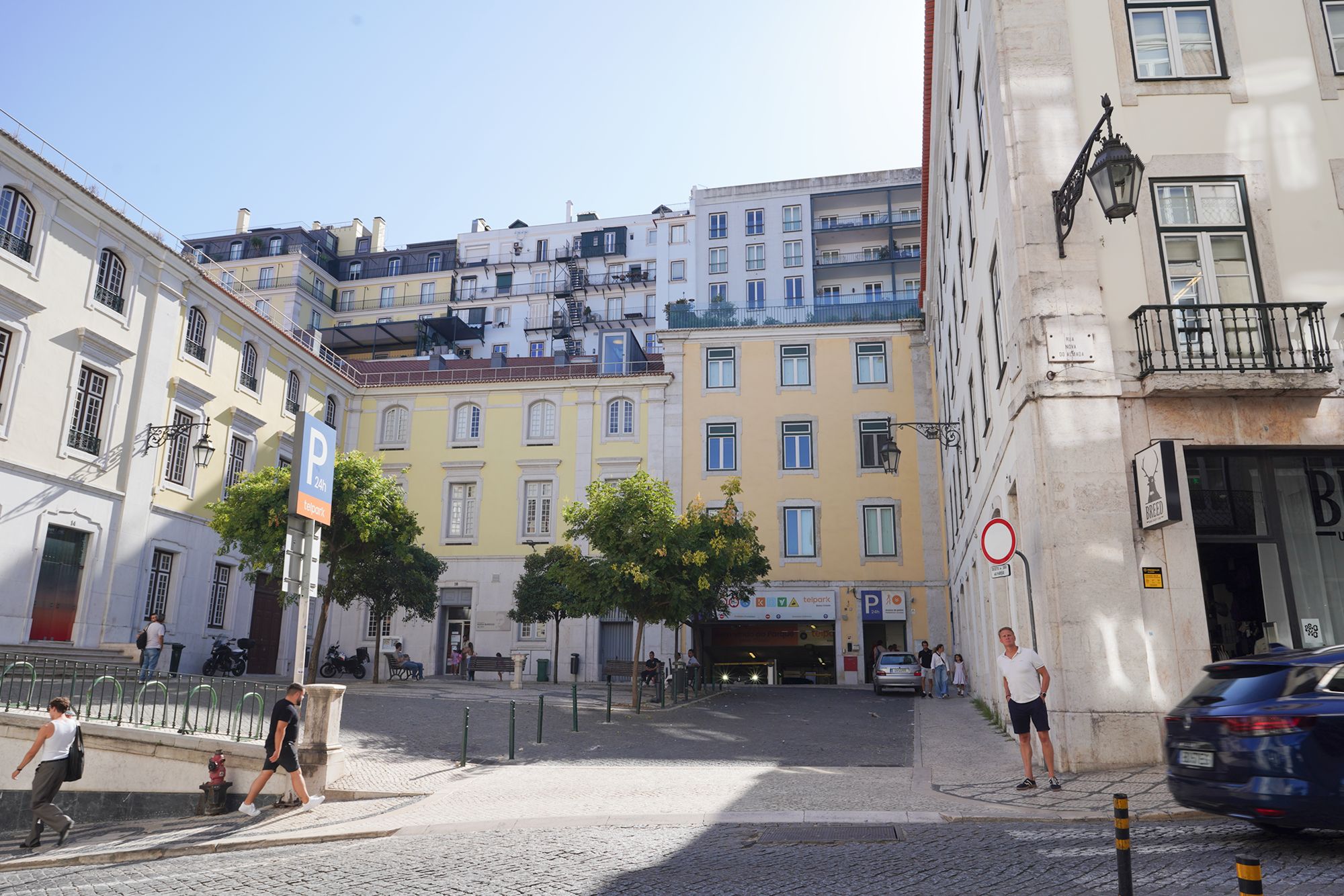
I turned right here
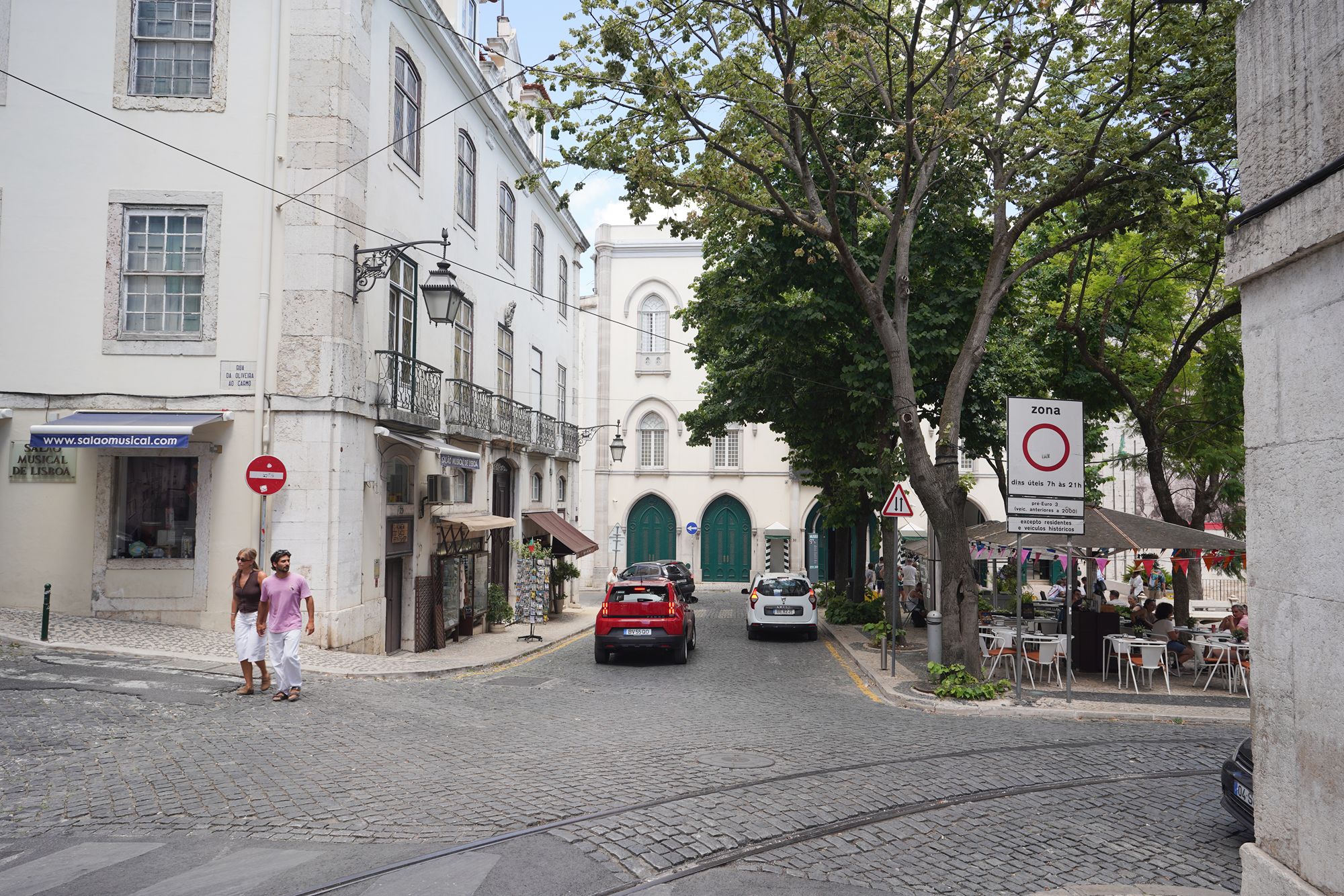
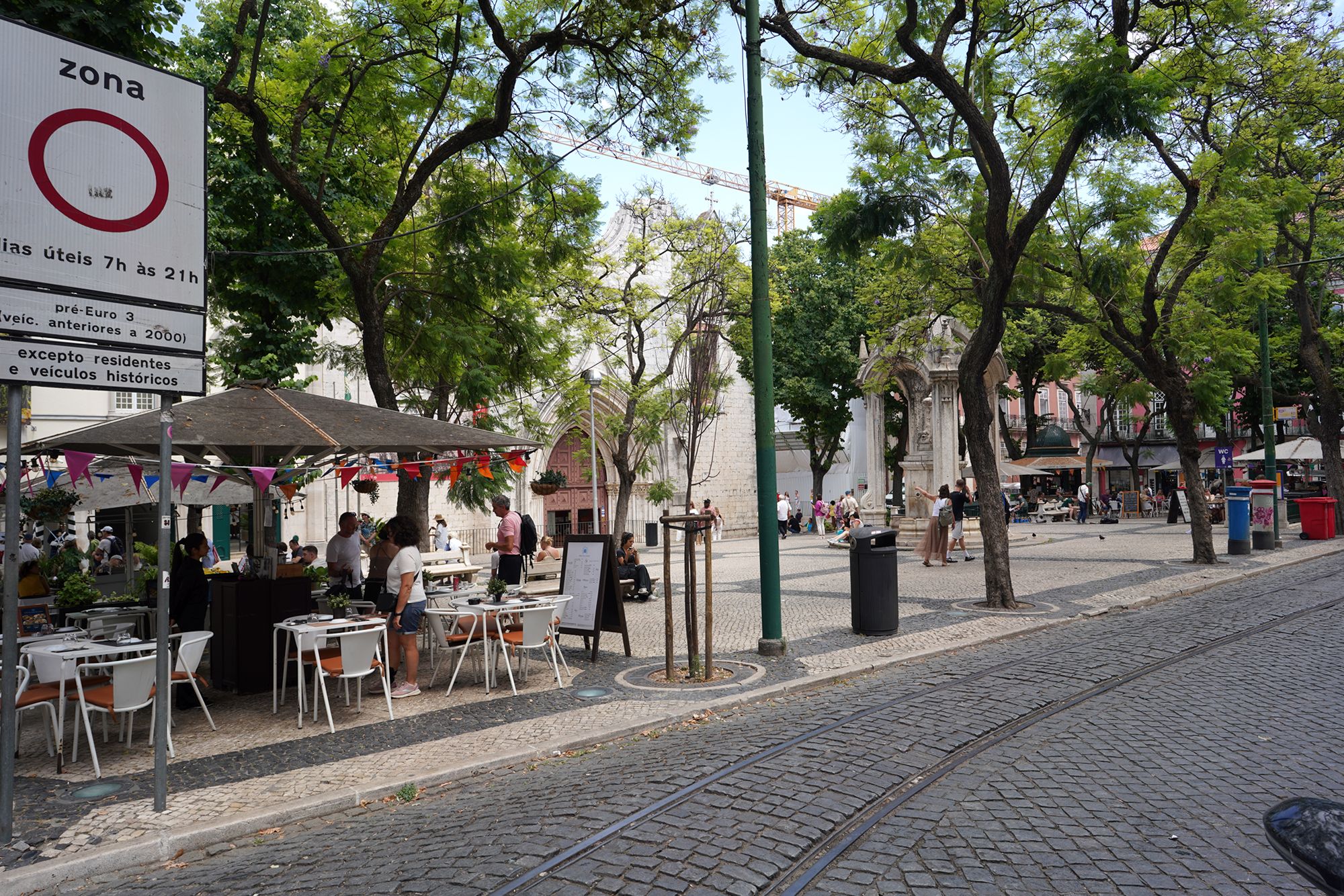
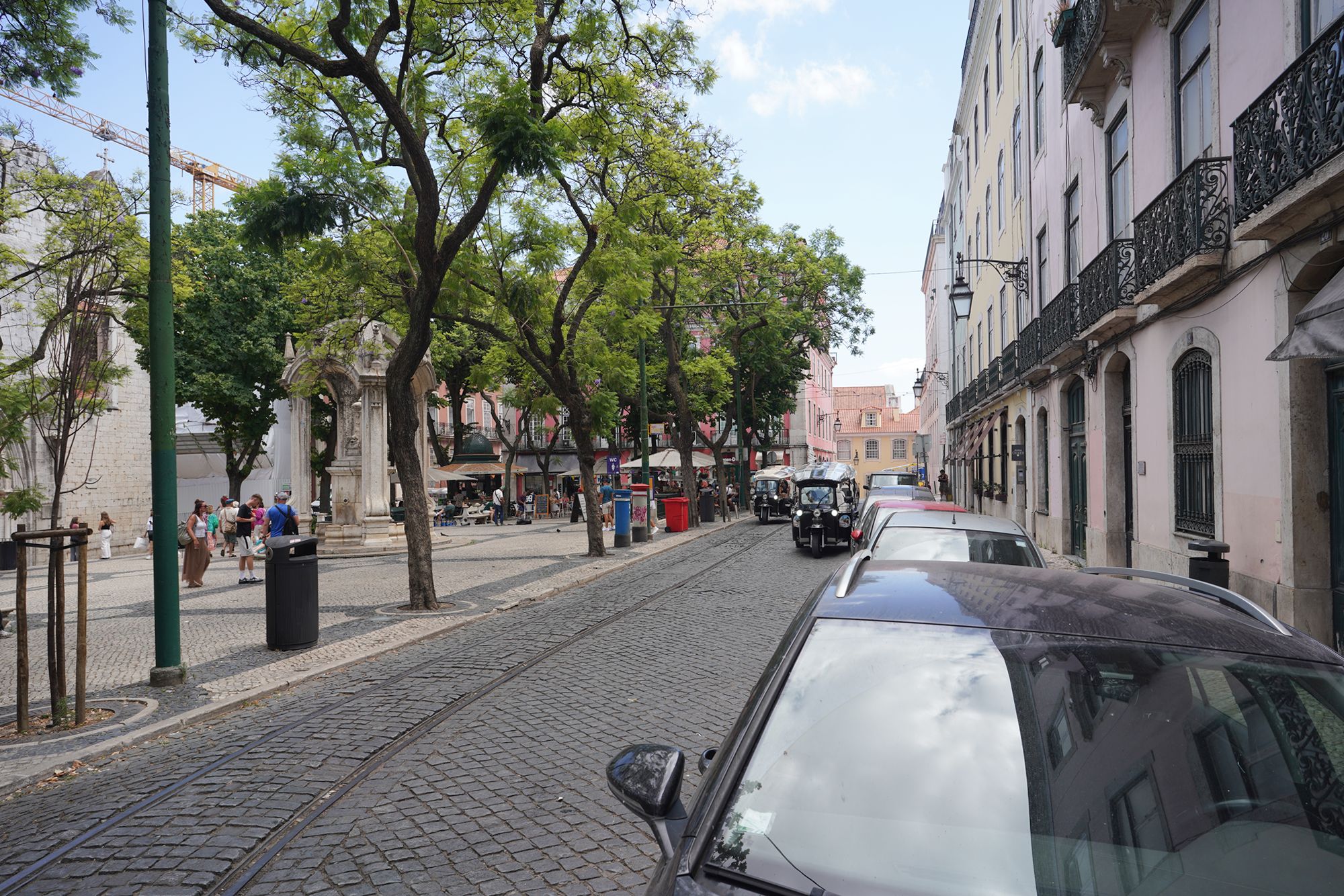
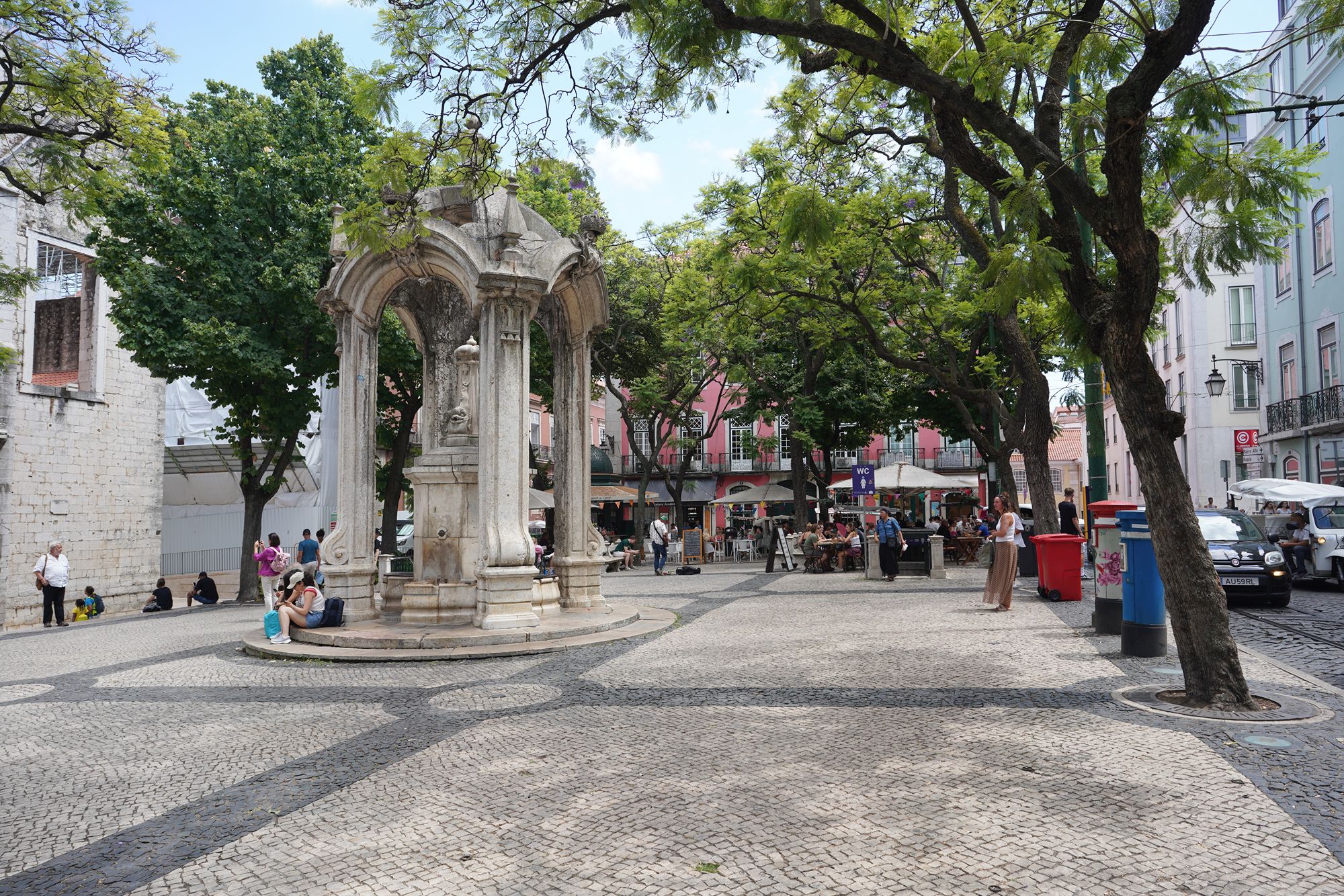
Largo do Carmo is a small square in Chiado, shaded by jacaranda trees and bordered by the ruins of Carmo Convent. It is also an important place in Portugal’s modern history. During the Carnation Revolution on April 25, 1974, Prime Minister Marcelo Caetano took refuge in the nearby Carmo barracks before surrendering, helping bring the dictatorship to an end.
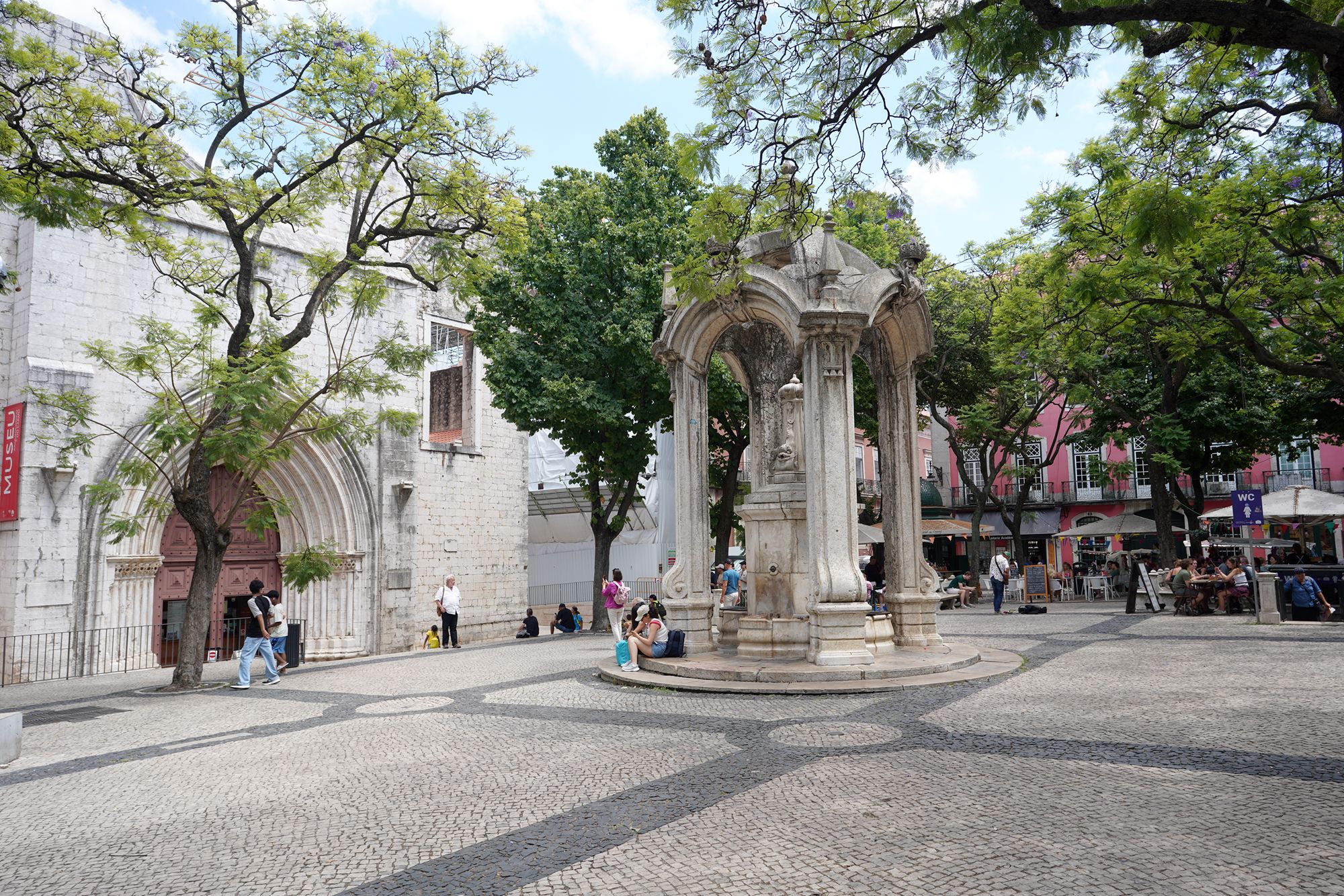
The Carmo Archaeological Museum occupies the ruins of Carmo Convent’s Gothic church, badly damaged in the 1755 earthquake. Its roofless nave, with tall stone arches open to the sky, is one of its most distinctive features. Founded in 1864, the museum displays sculptures, medieval tombs, Roman inscriptions, decorative tiles, and objects from ancient Egypt and pre-Columbian America.
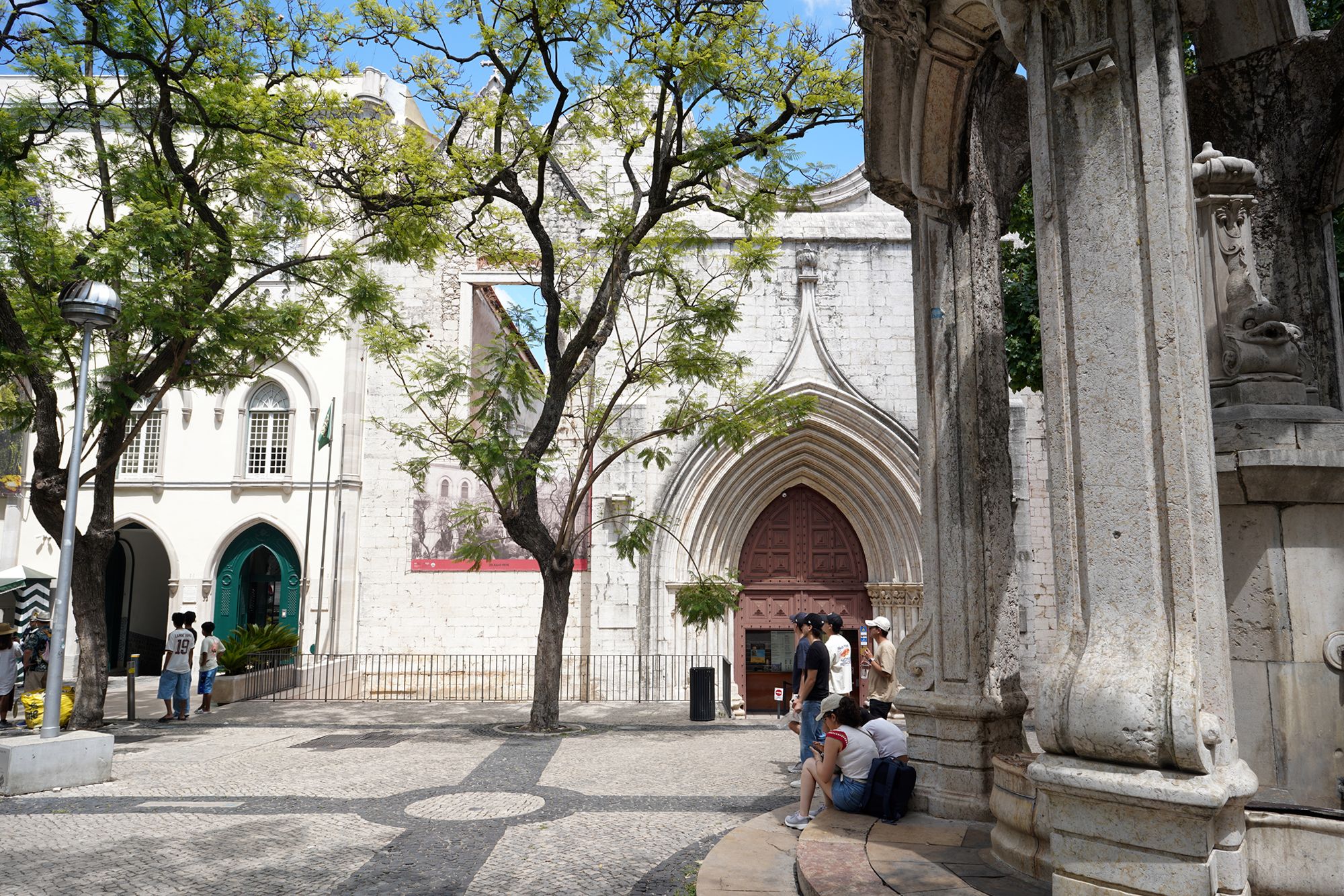
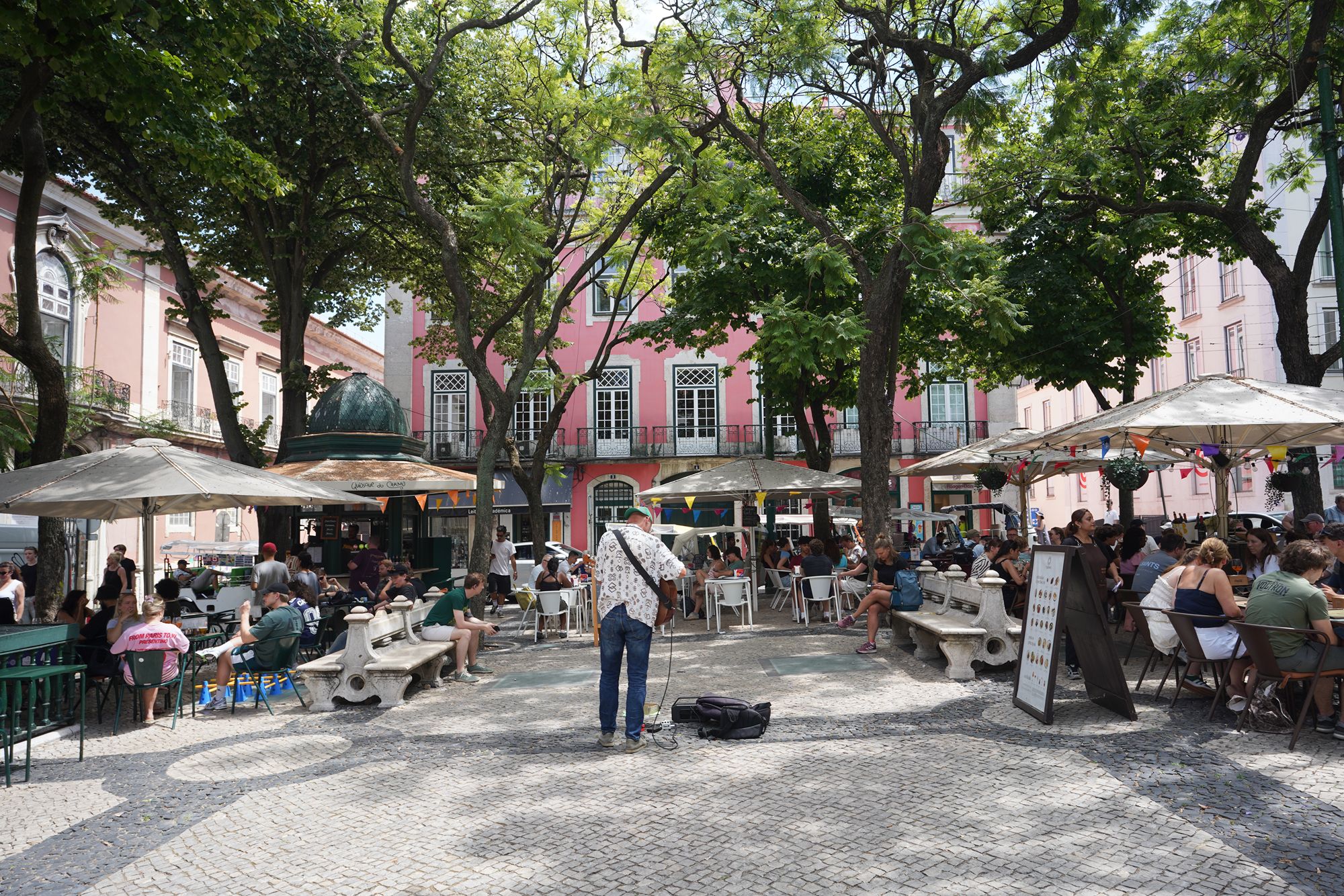
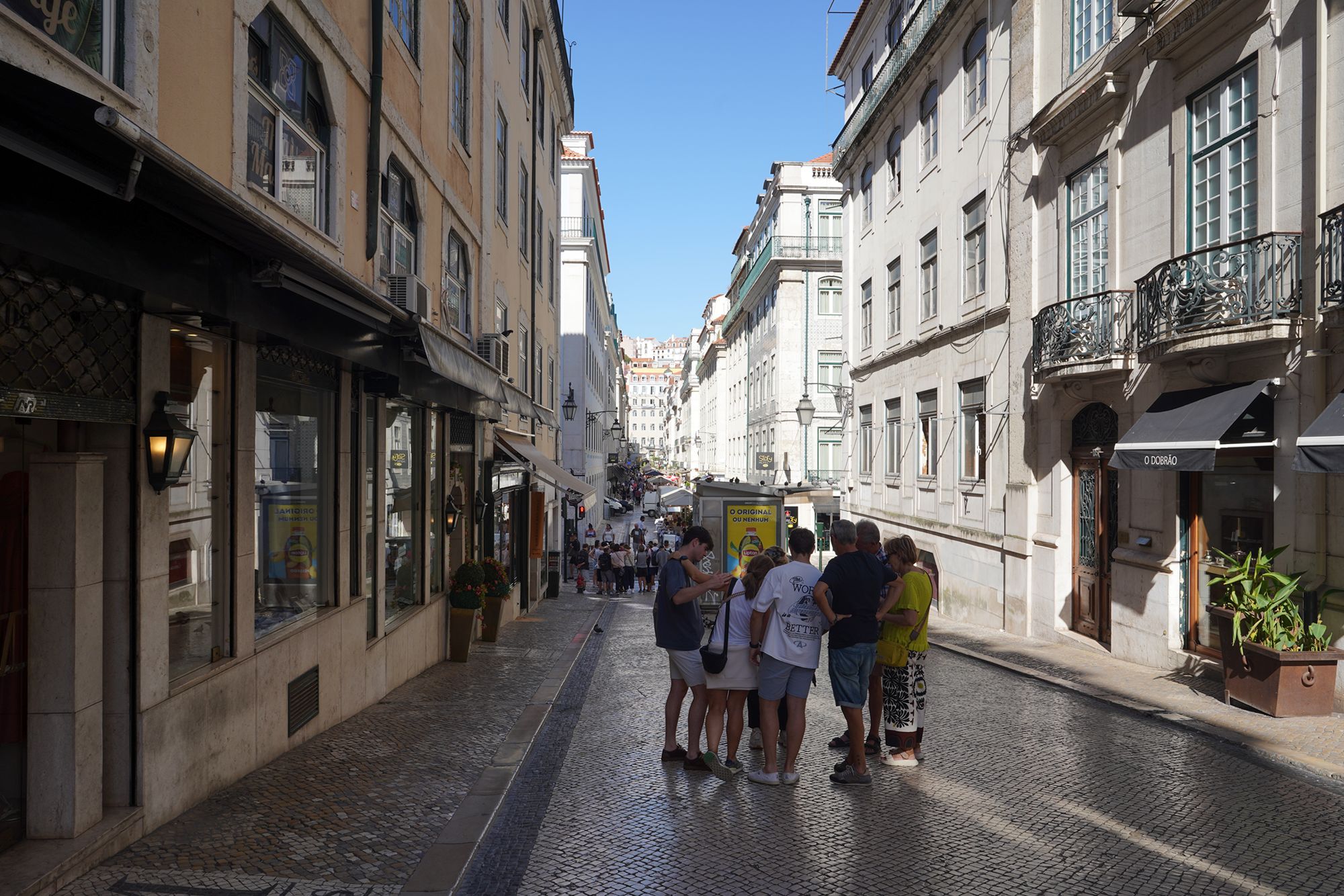
A view behind me
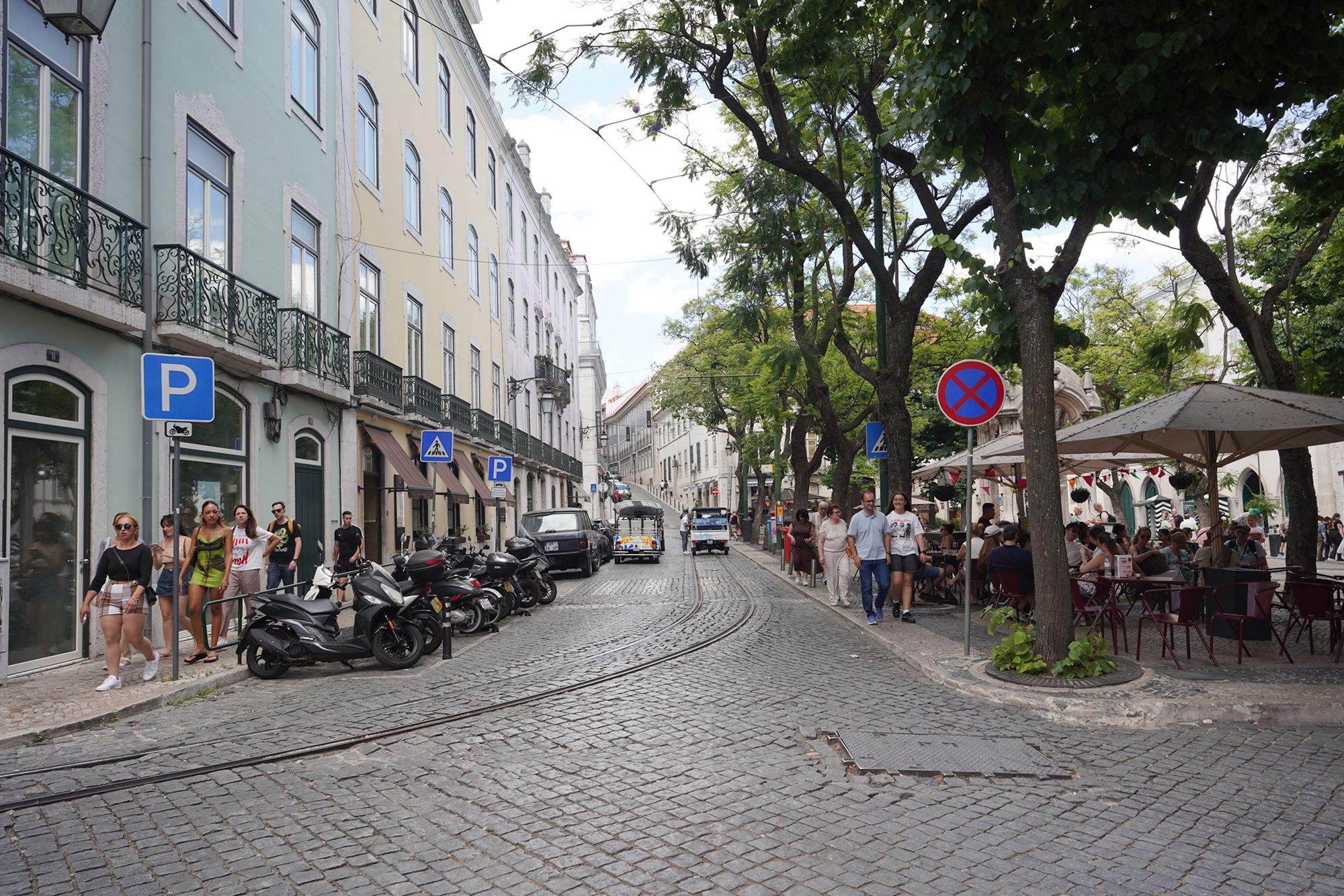
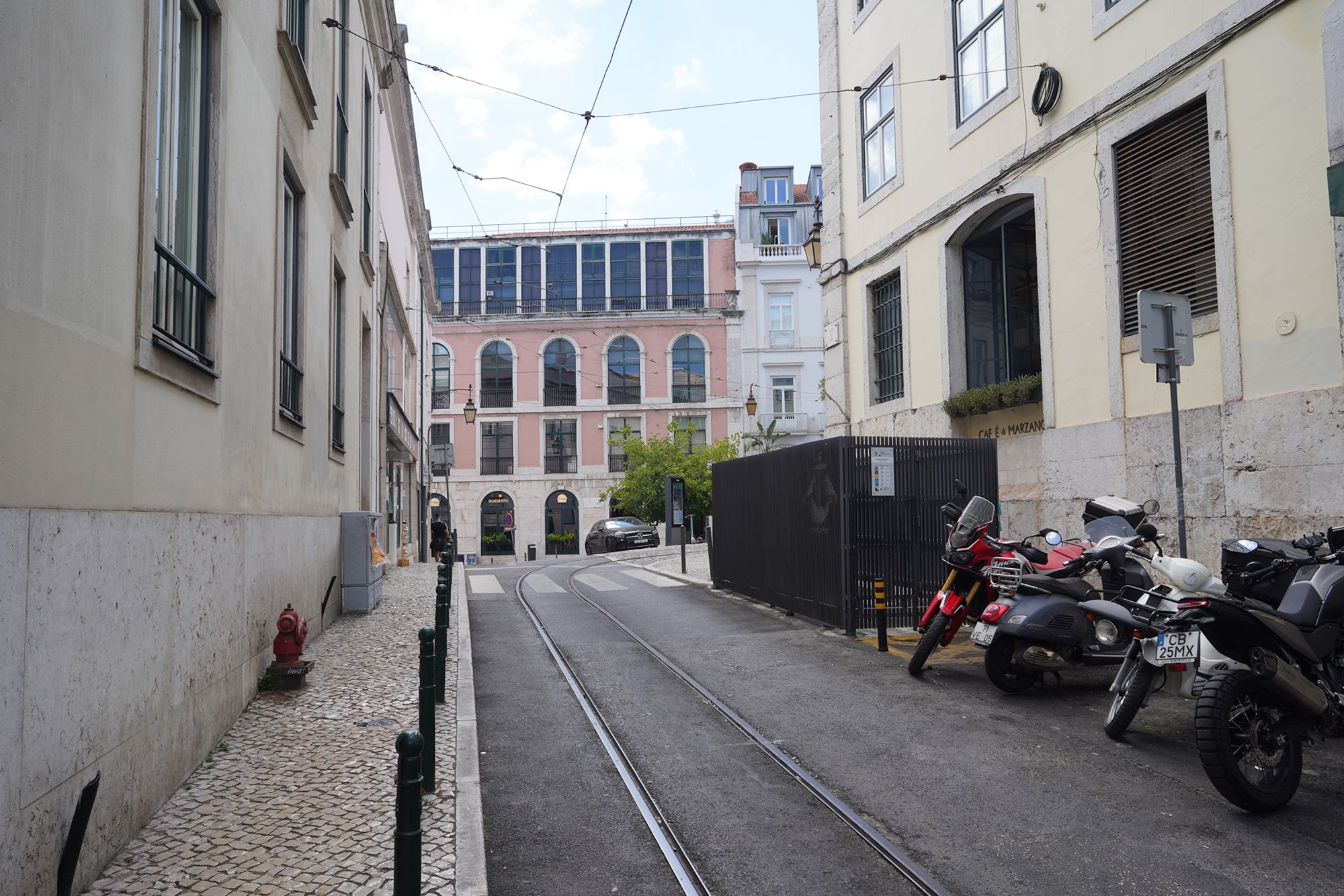
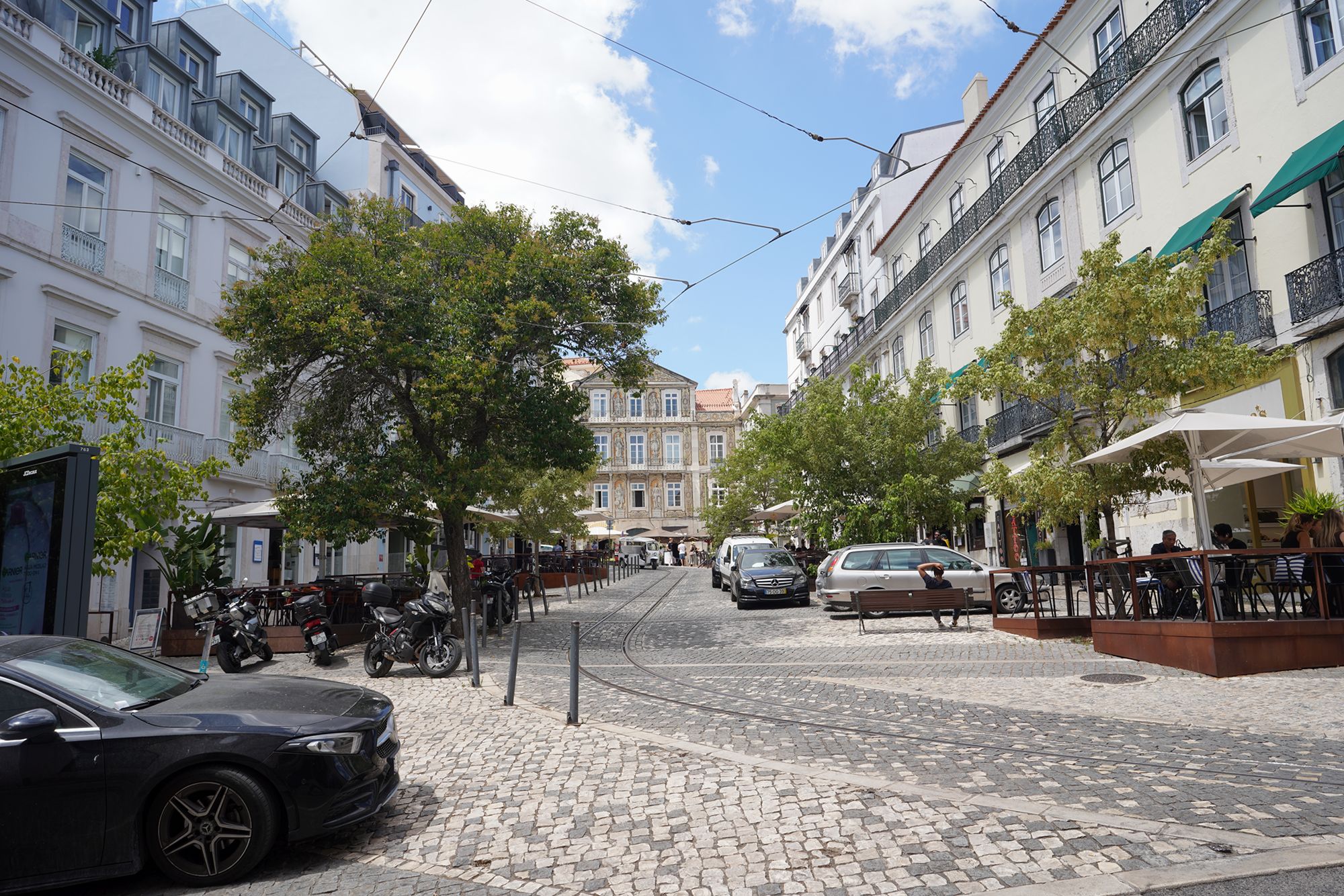
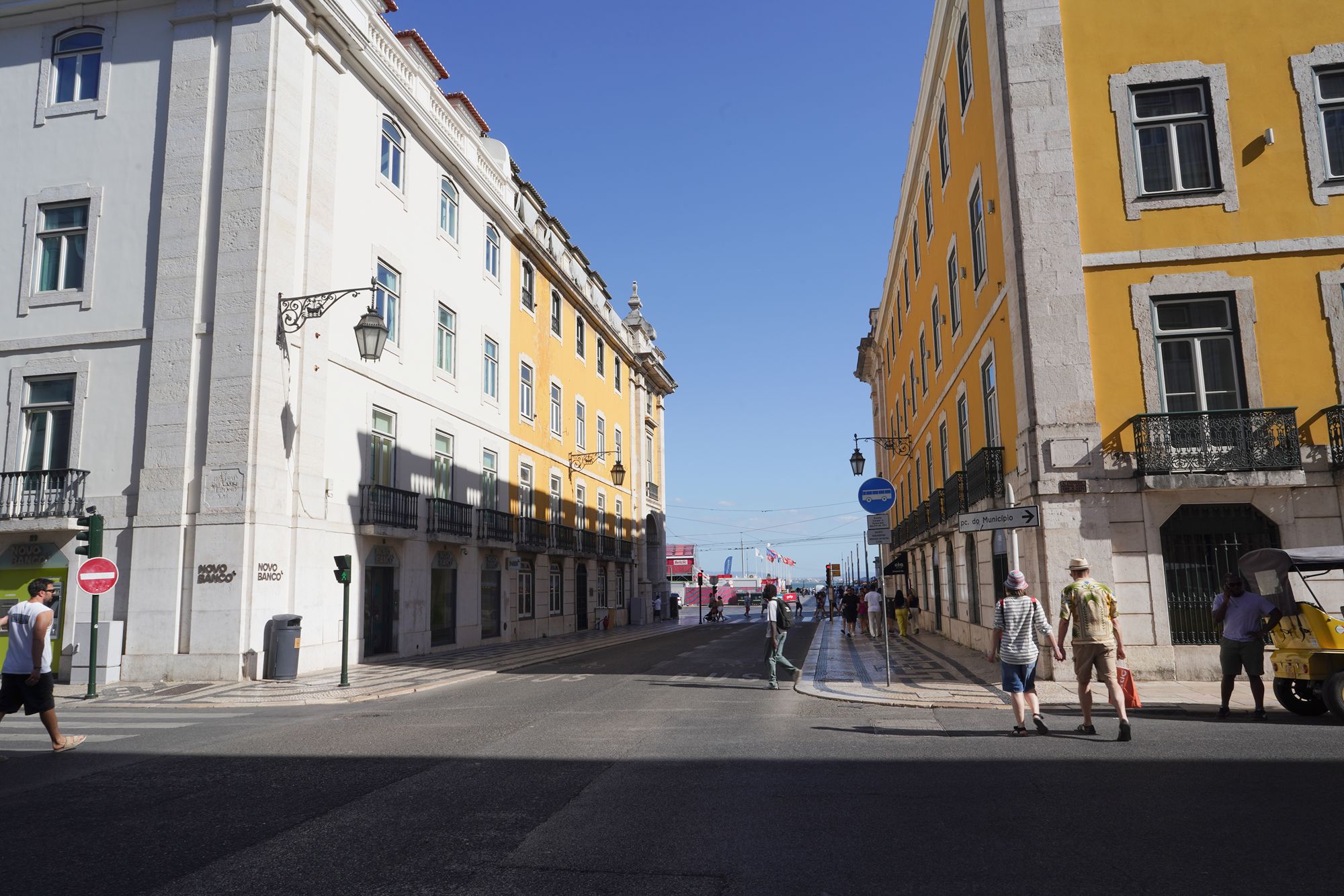
I continued walking downhill toward the Armazéns do Chiado shopping mall.
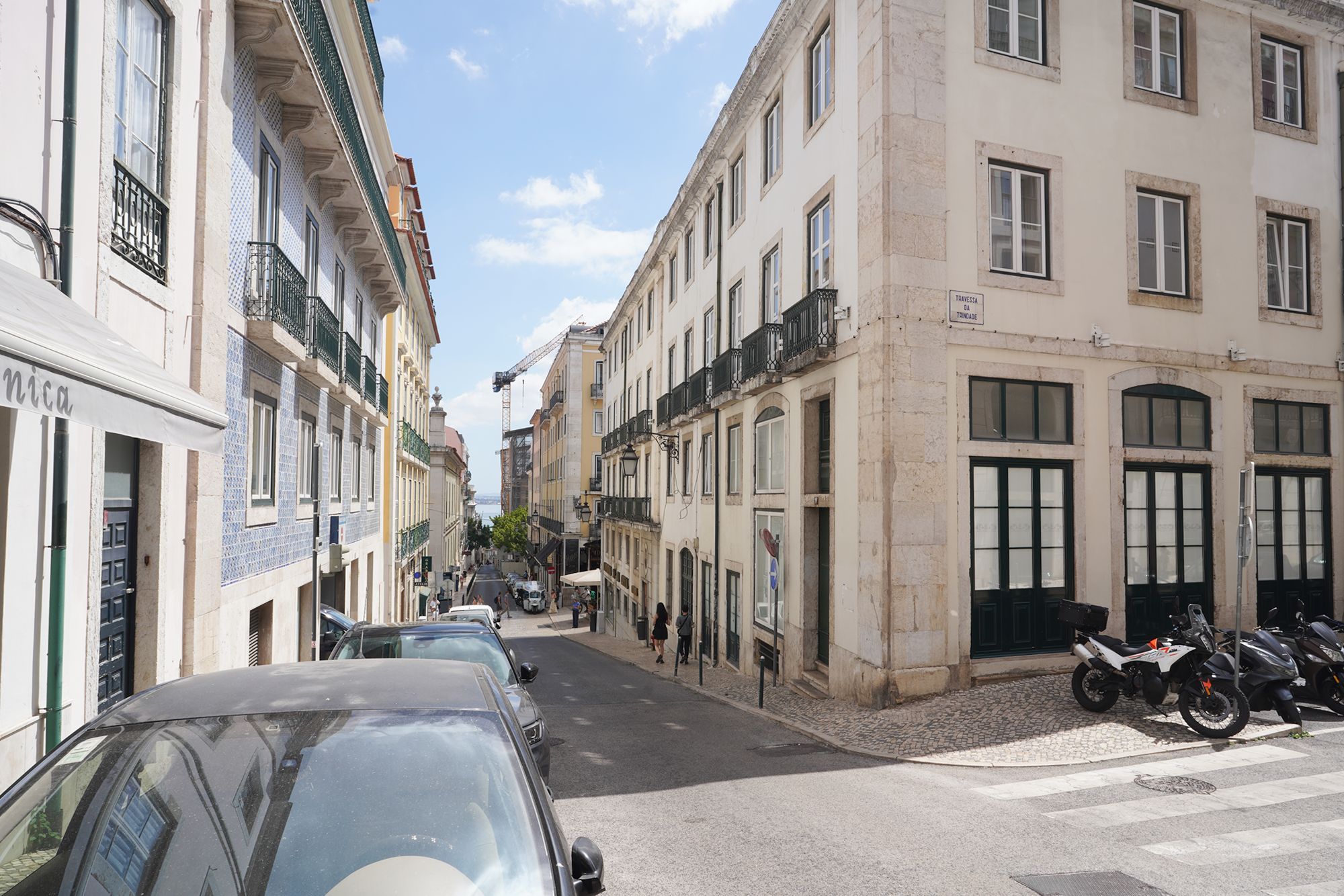
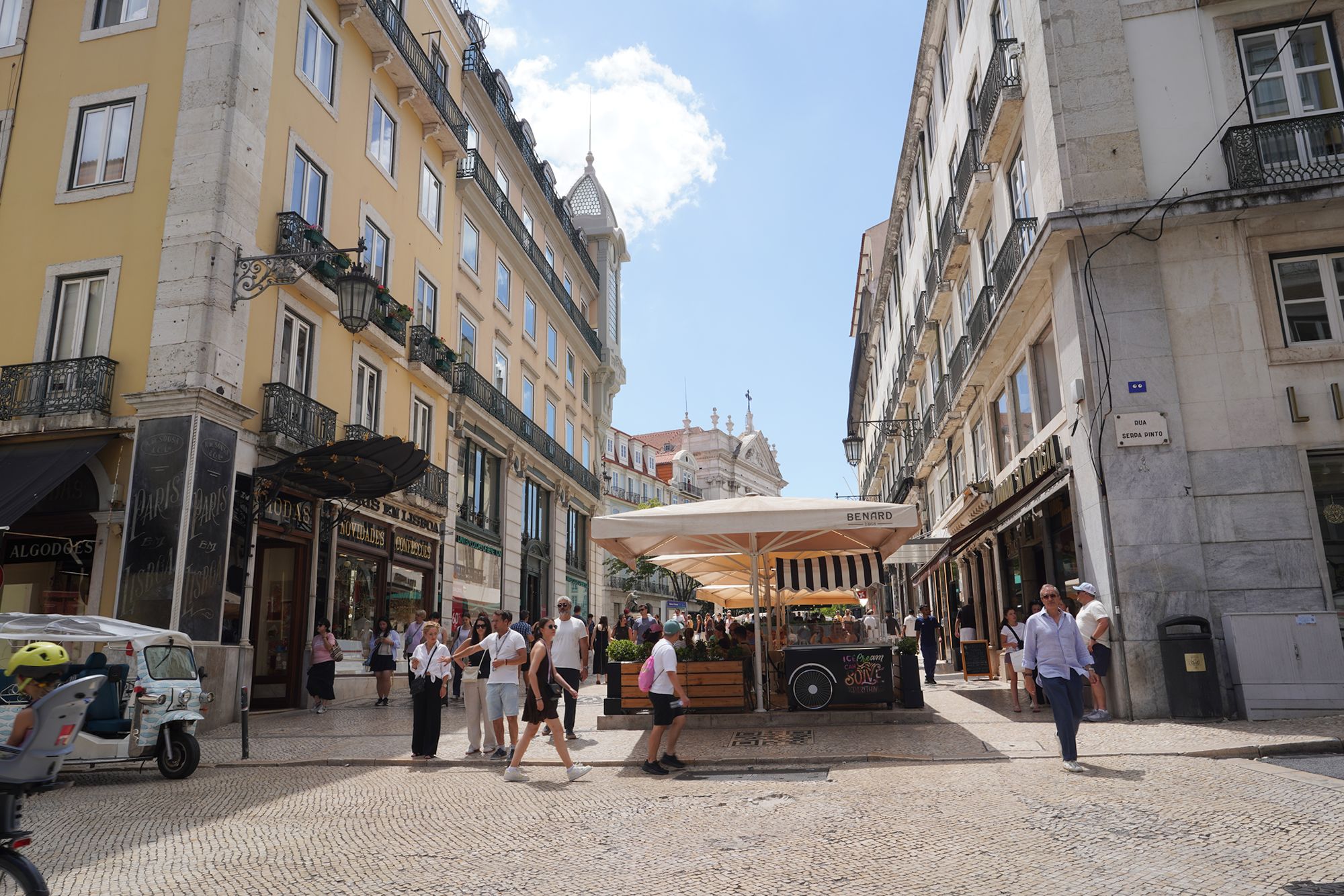
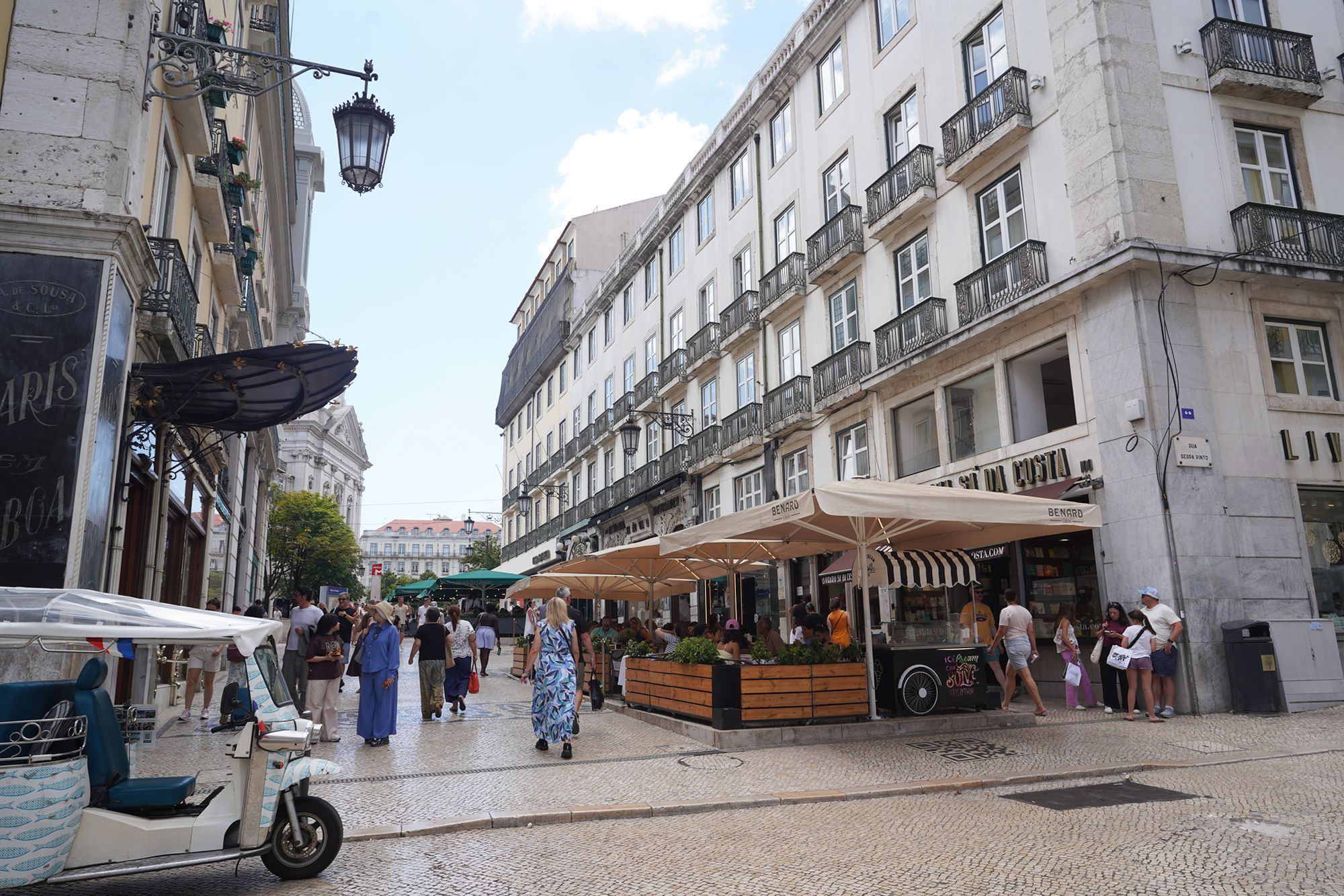
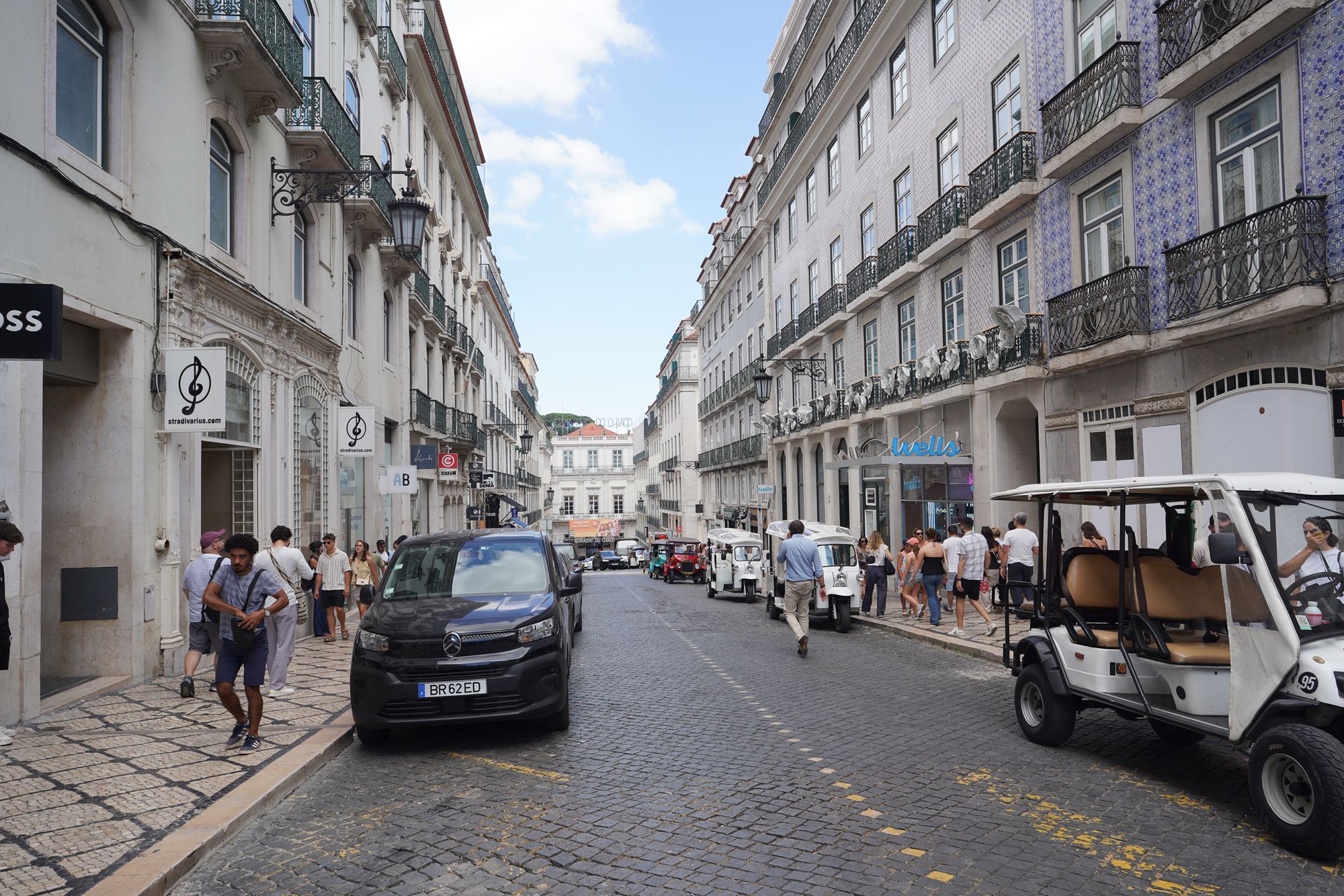
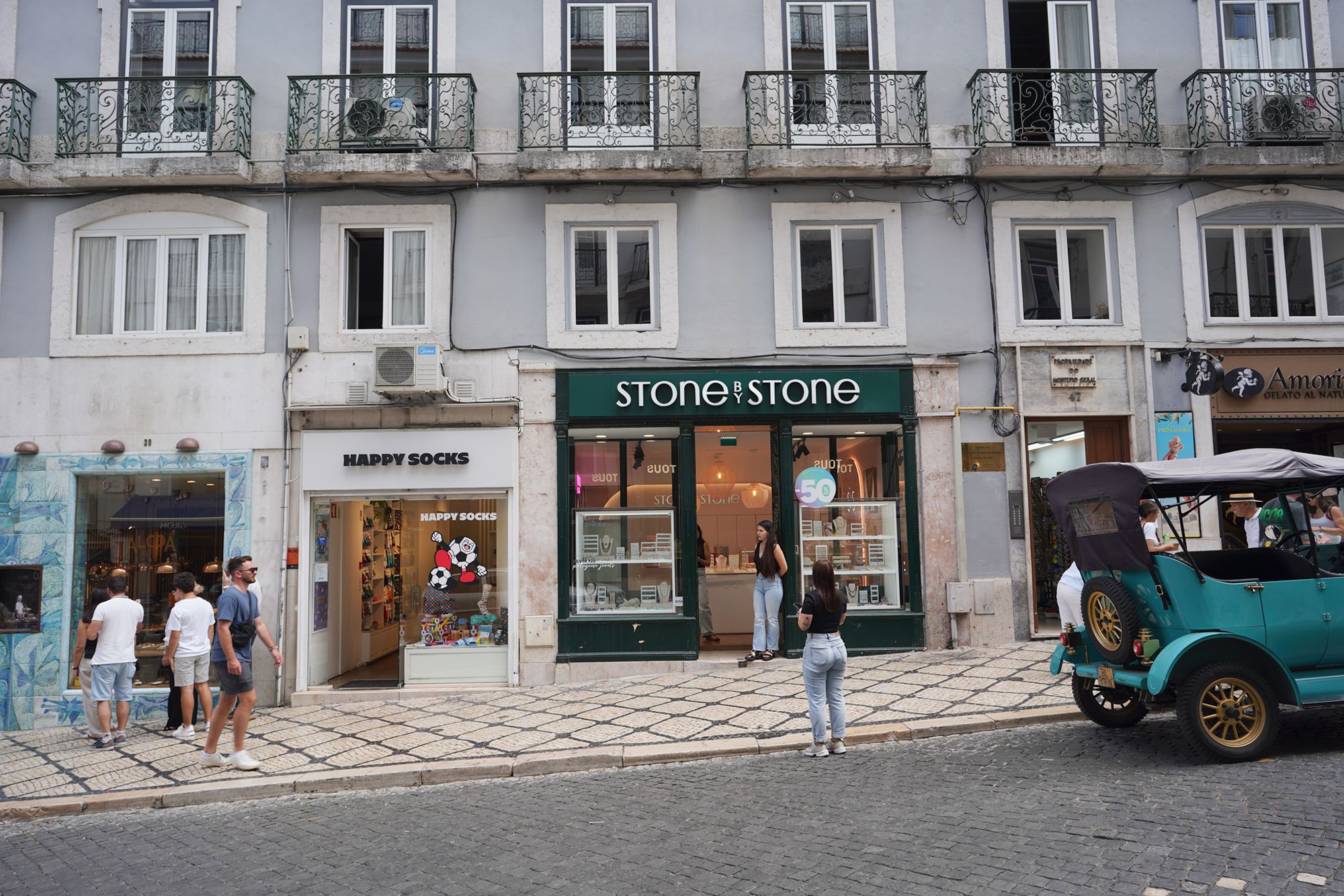
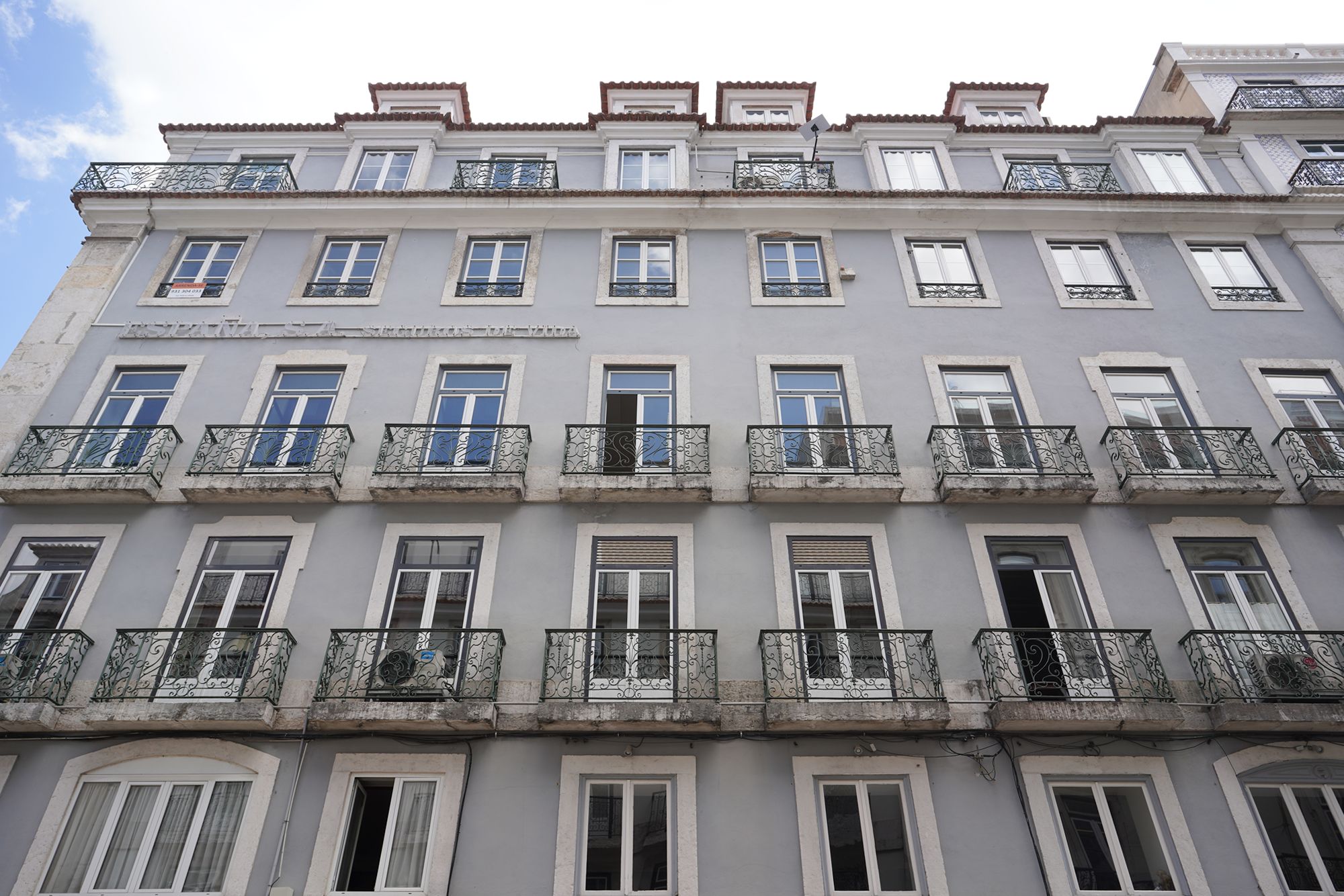
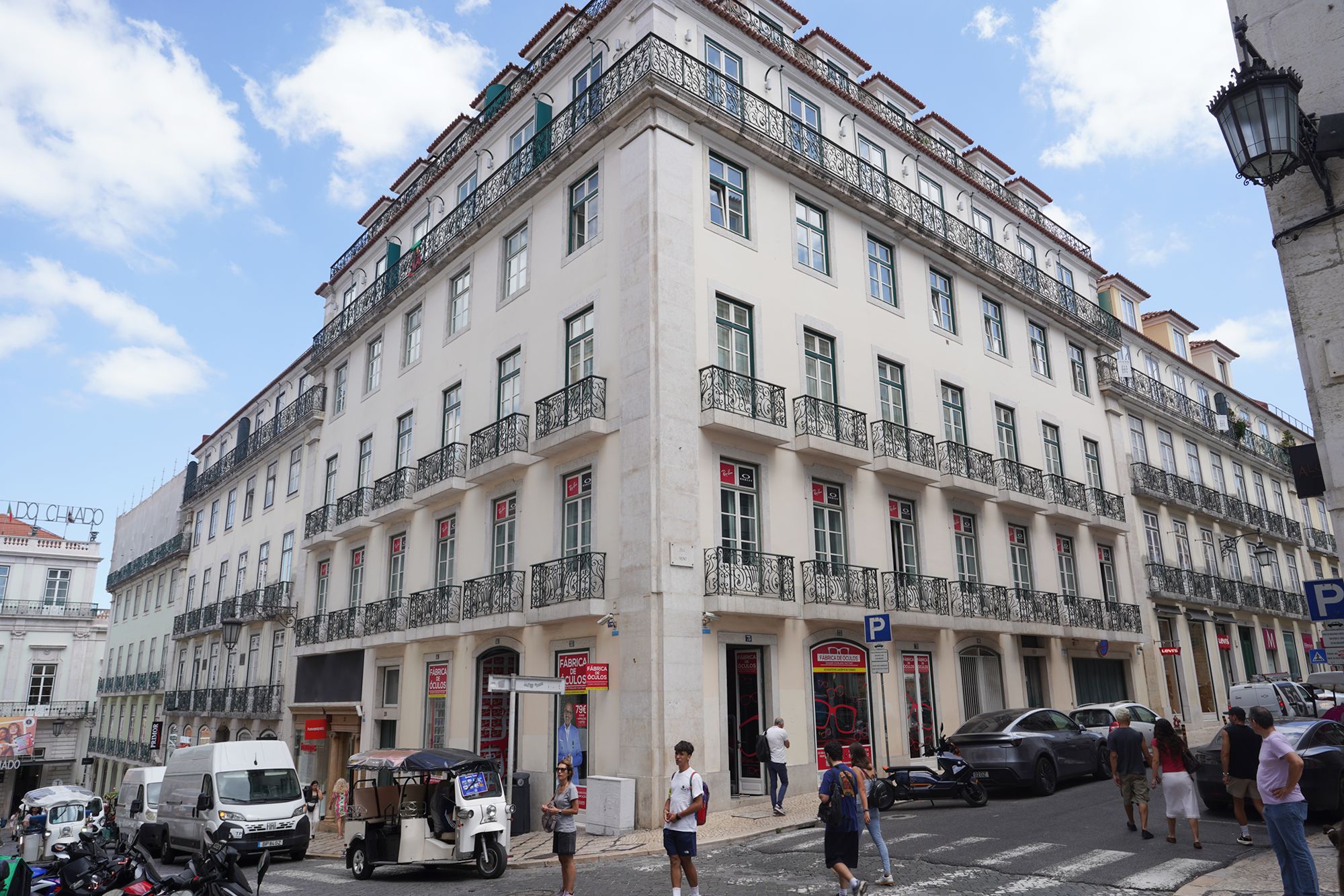
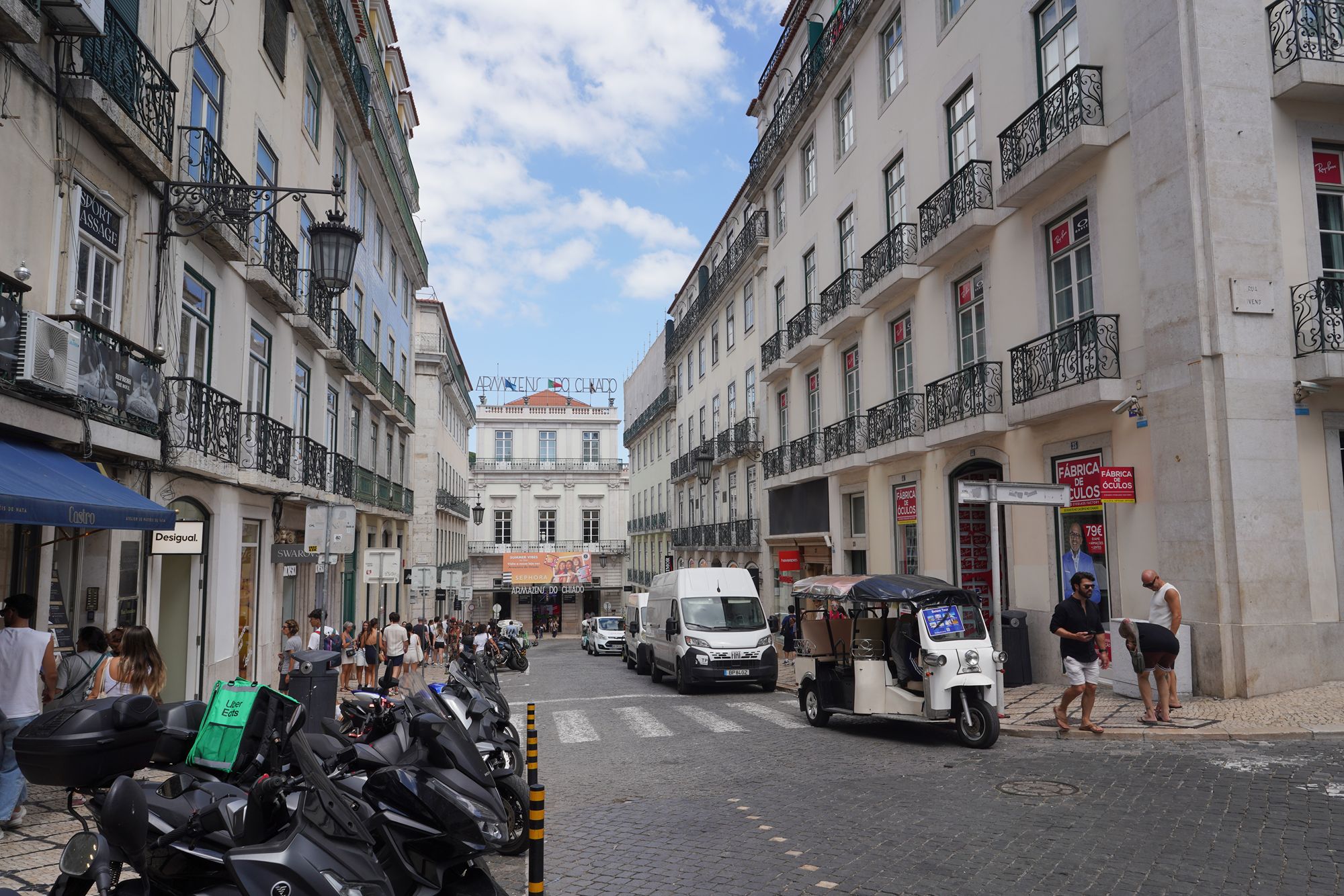
Armazéns do Chiado is a shopping mall housed in a historic building between Chiado and Baixa. Once a well-known department store, it was devastated by the 1988 Chiado fire and reopened as a shopping center in 1999. Its restored exterior preserves the character of the neighborhood, while the interior contains modern shops, cafés, and places to eat.
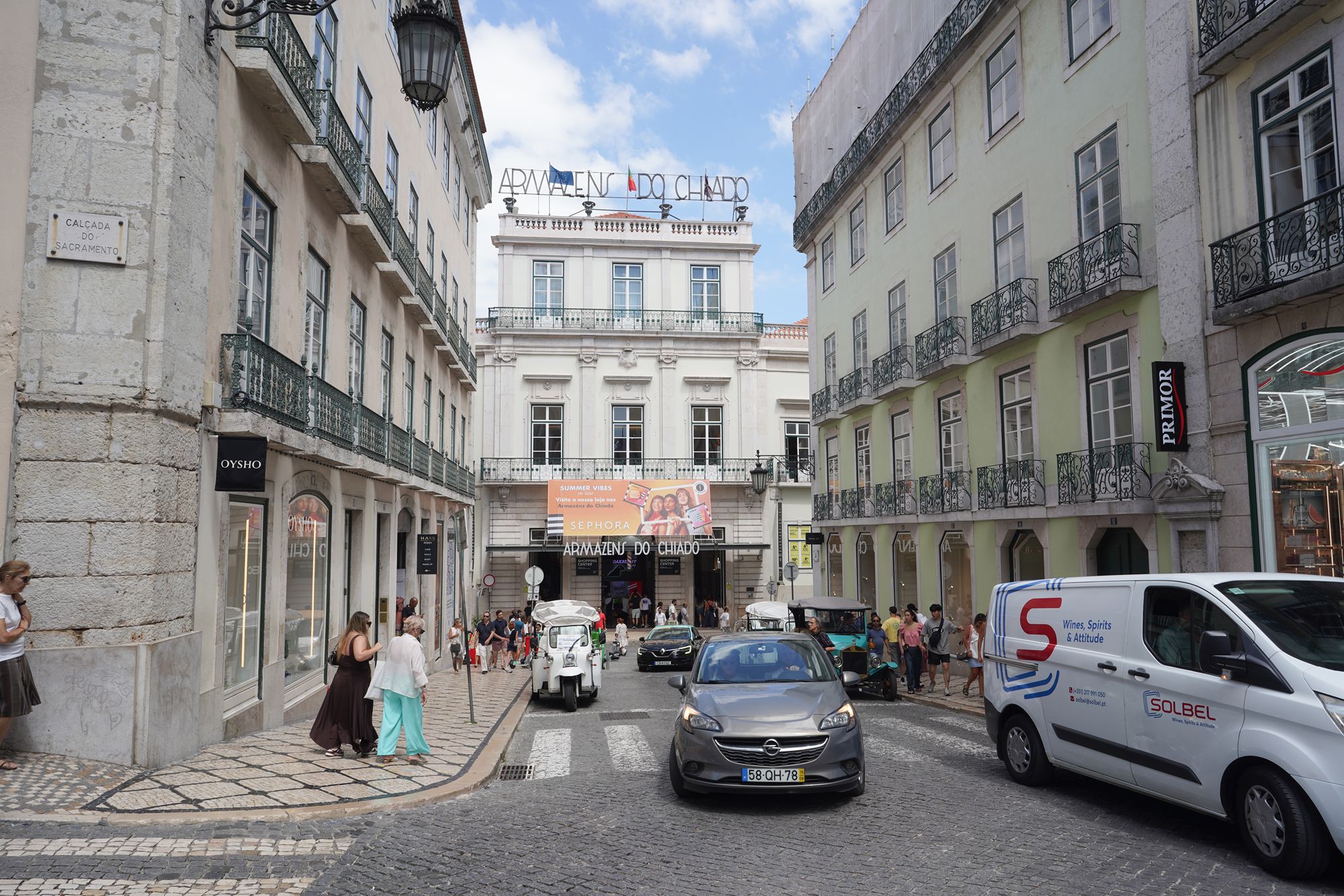
From the shopping mall, I continued downhill into Baixa and toward the riverfront.