Polish National Museum in Warsaw – Kolekcjoner, Poland
Exploring paintings and the story of collector Ignacy Korwin-Milewski at Warsaw’s National Museum in the Kolekcjoner exhibition. 1368
Polish National Museum in Warsaw: Al. Jerozolimskie 3, 00-495 Warszawa, Poland
Date Picture Taken: Jul, 2026
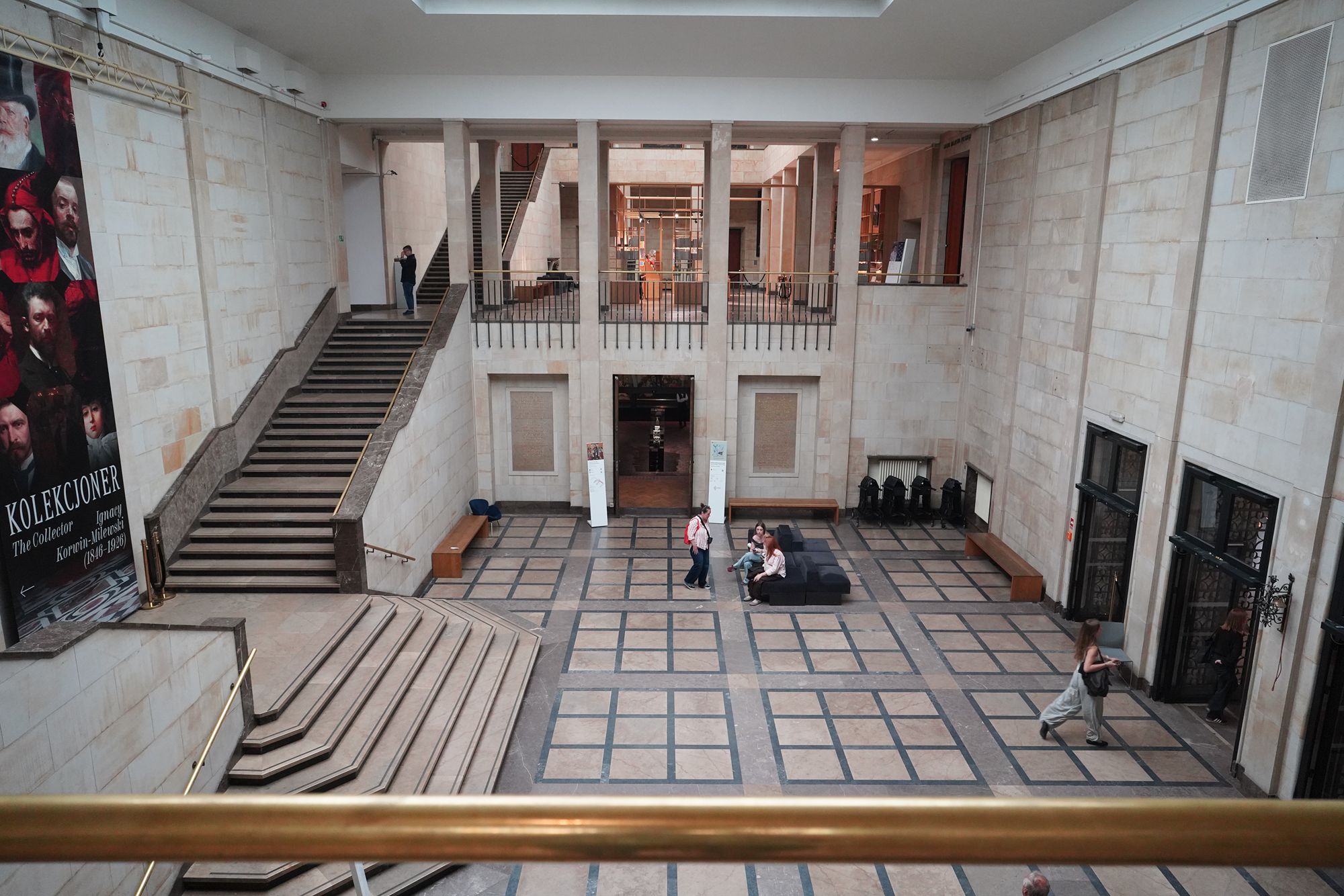
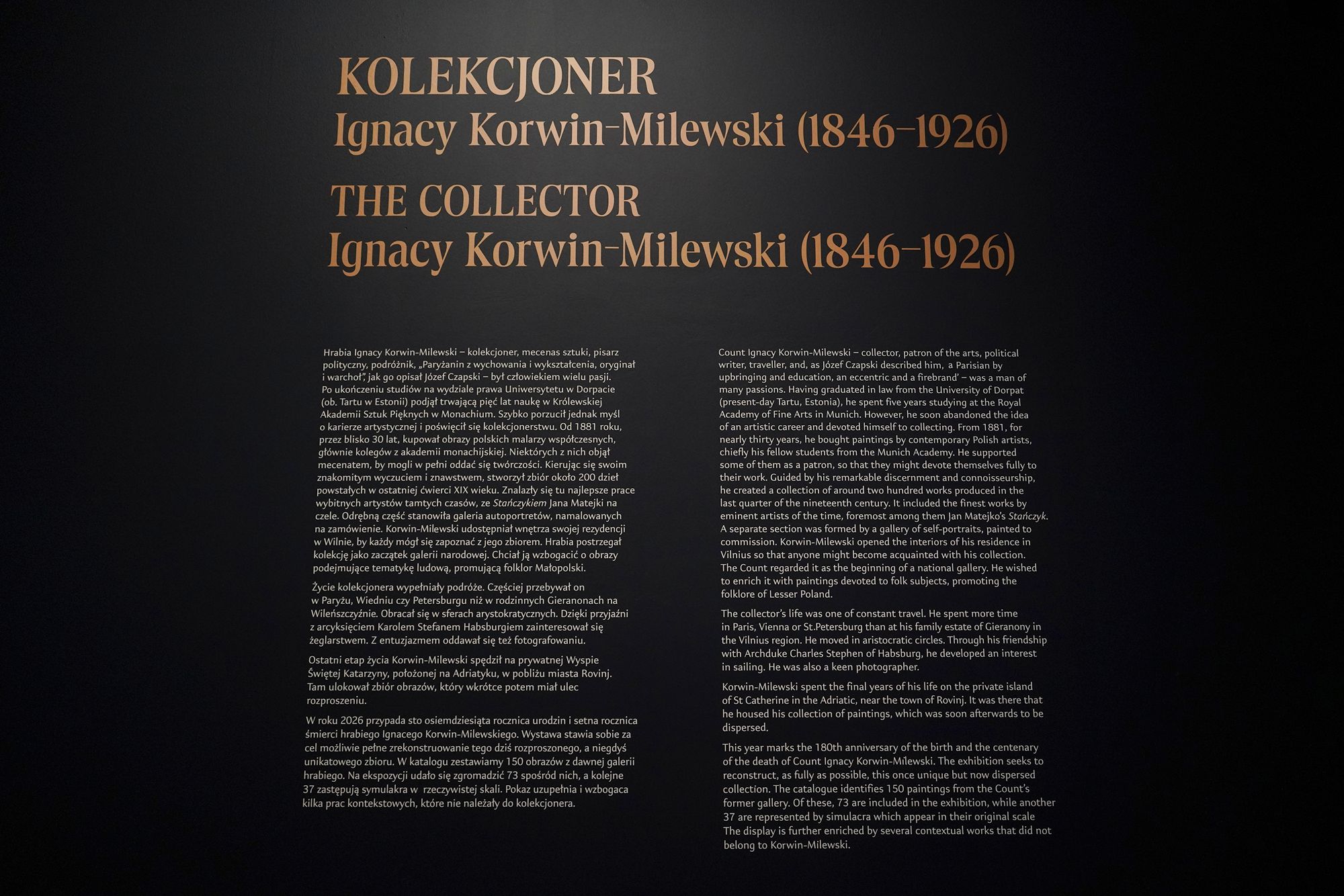
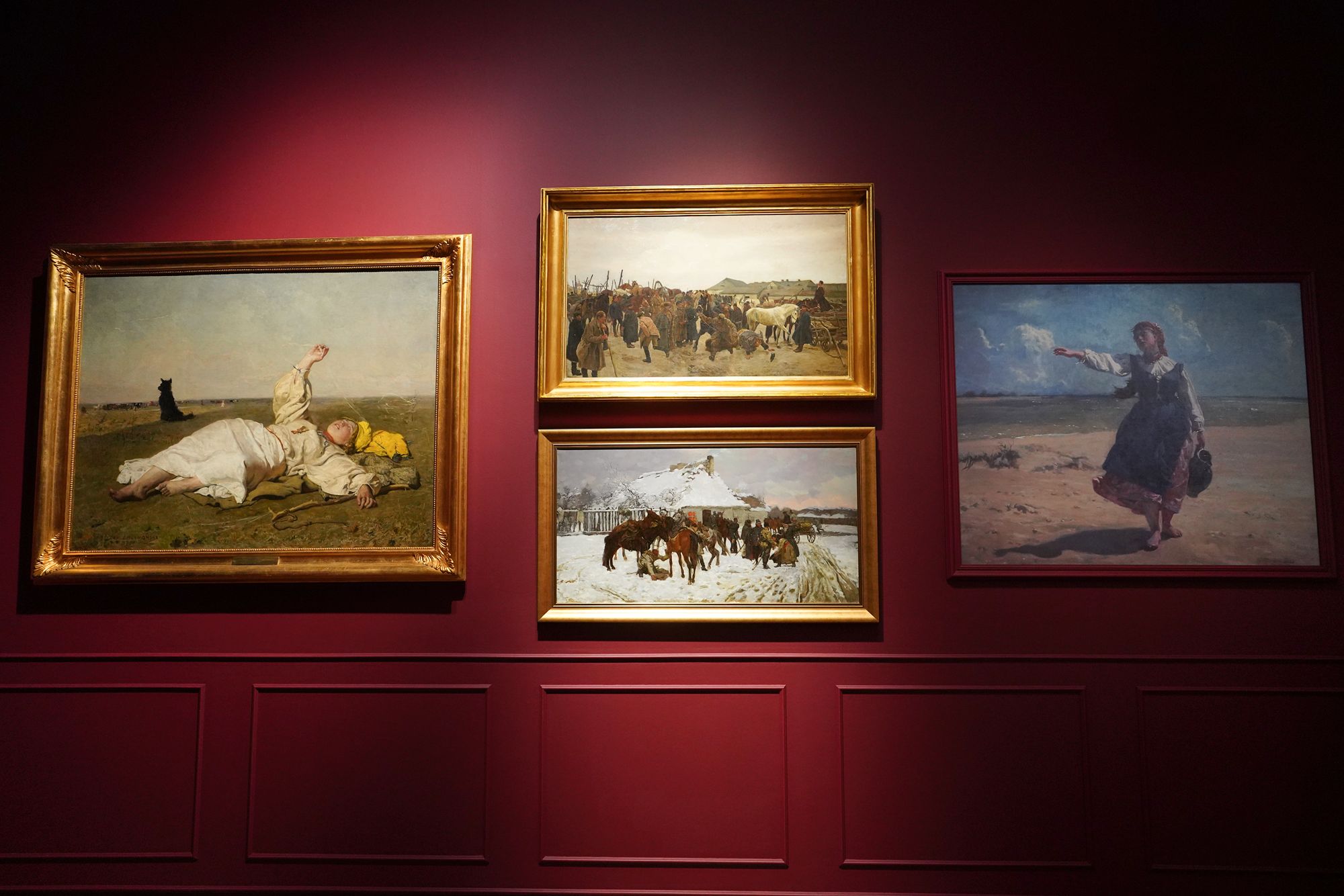
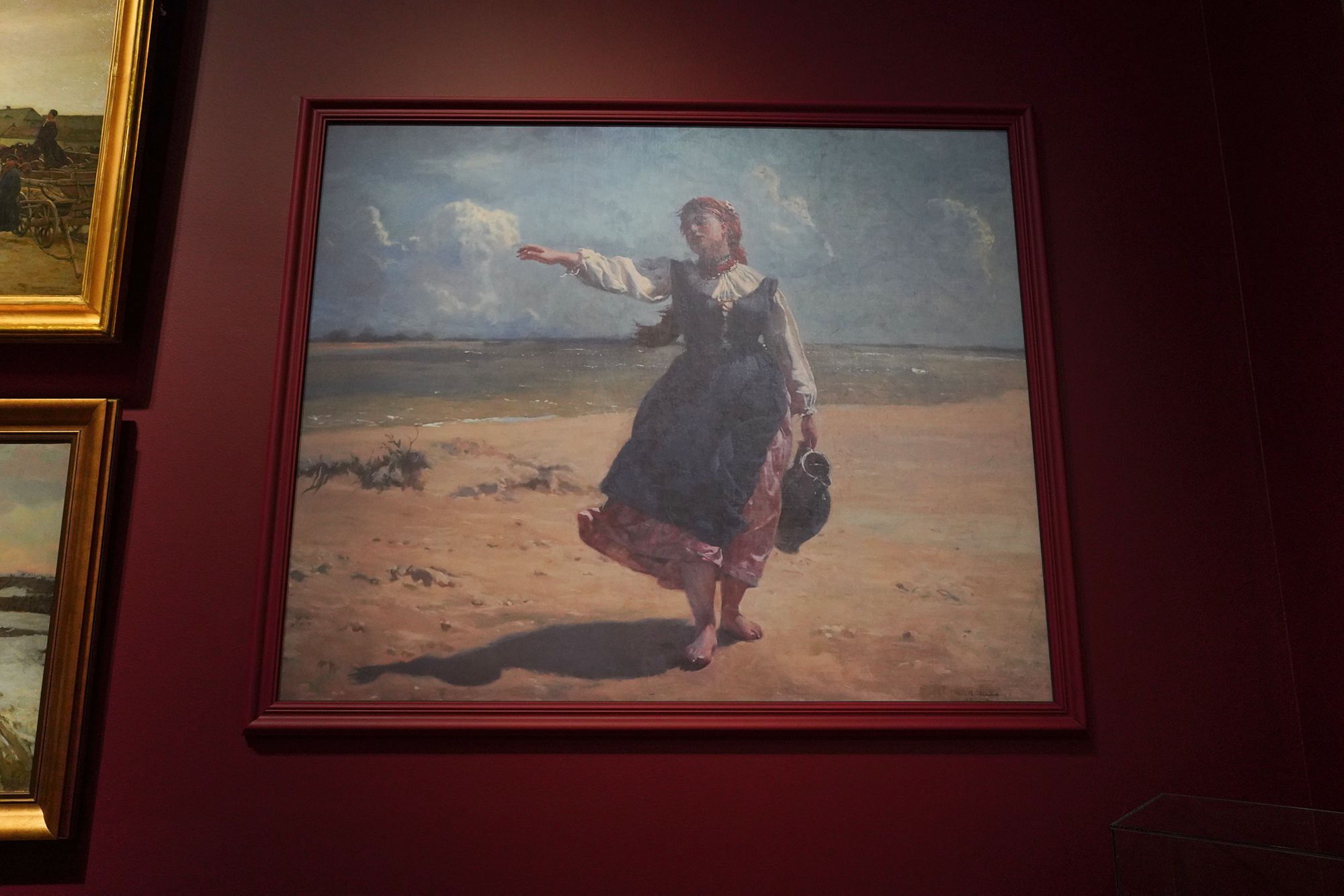
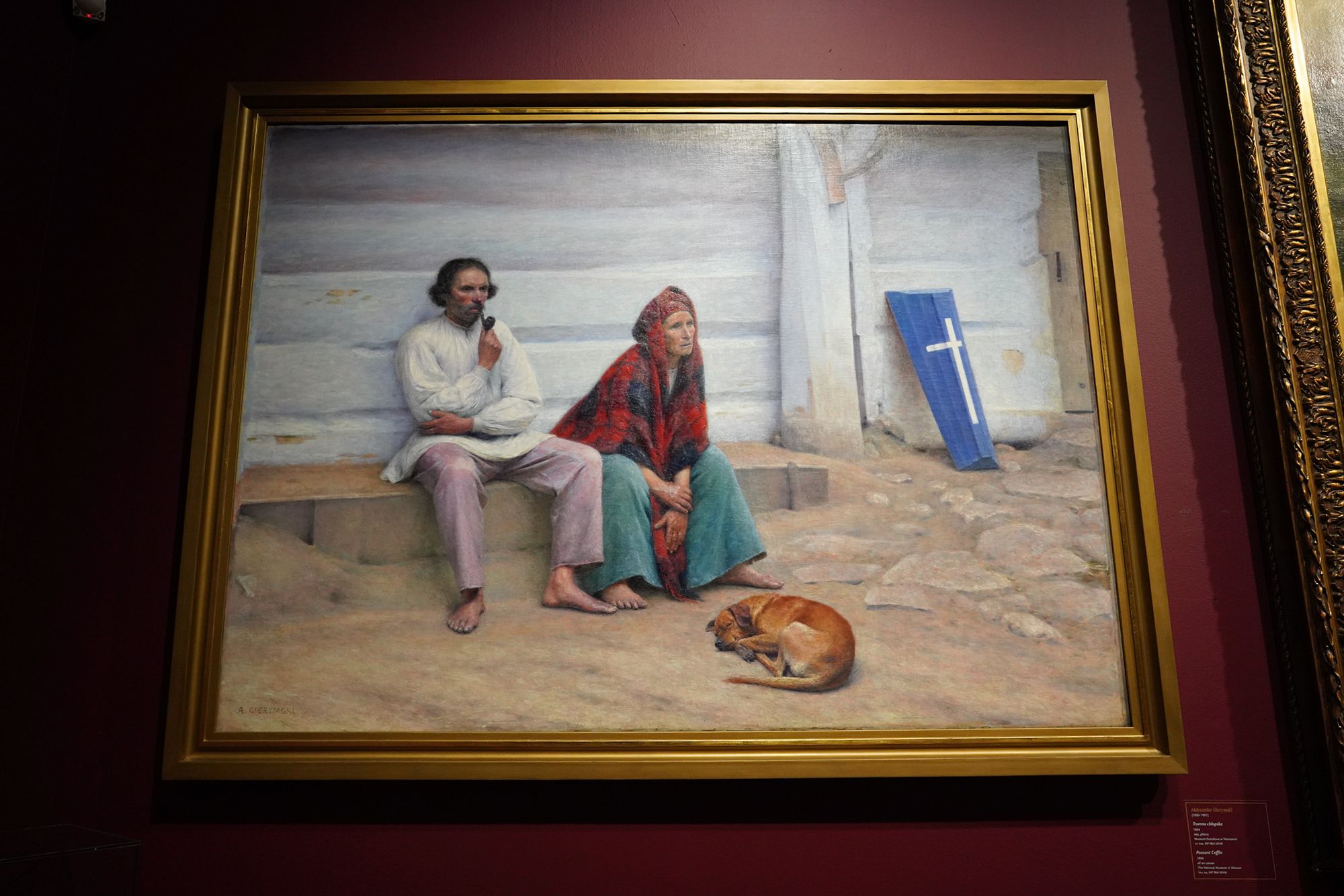
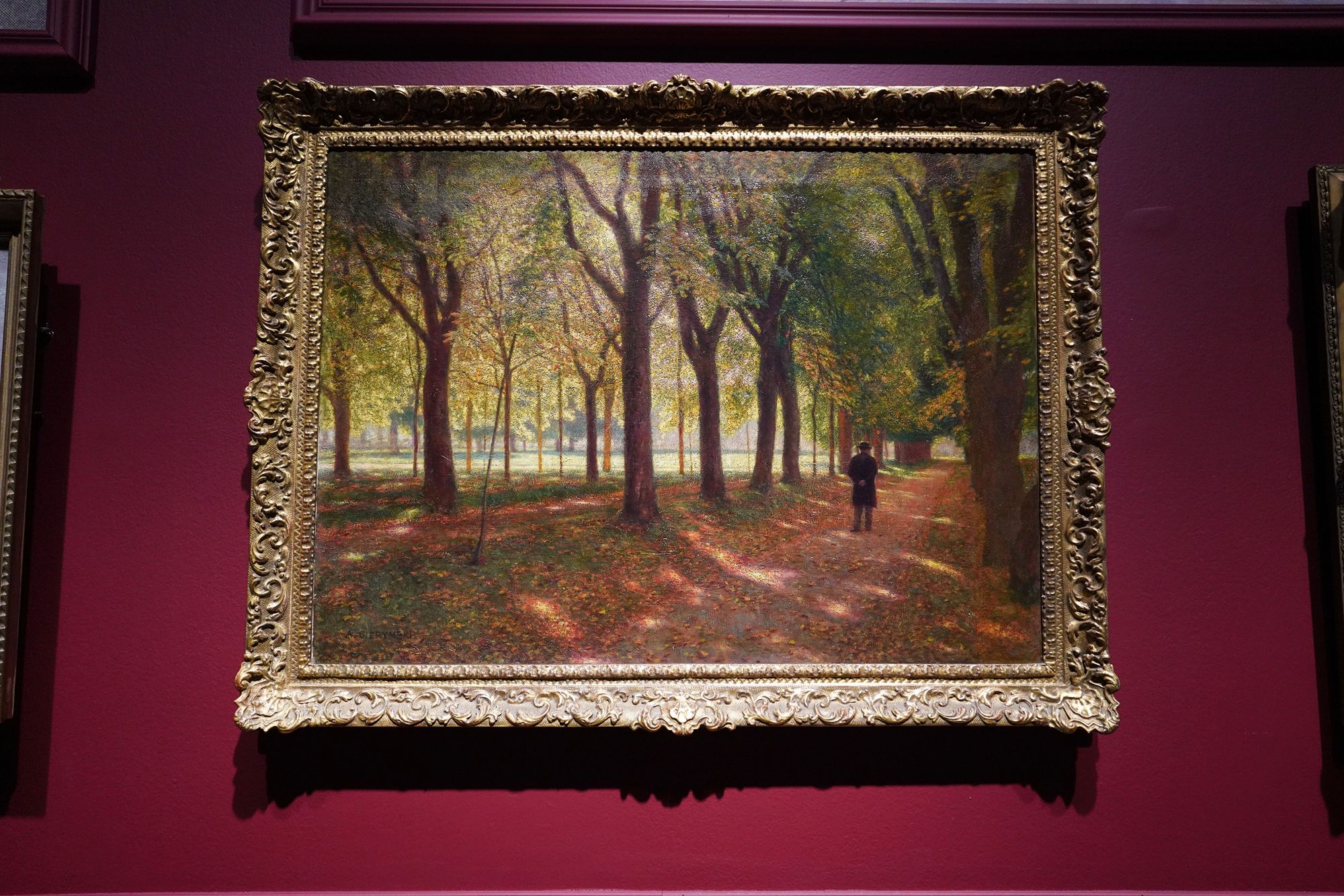
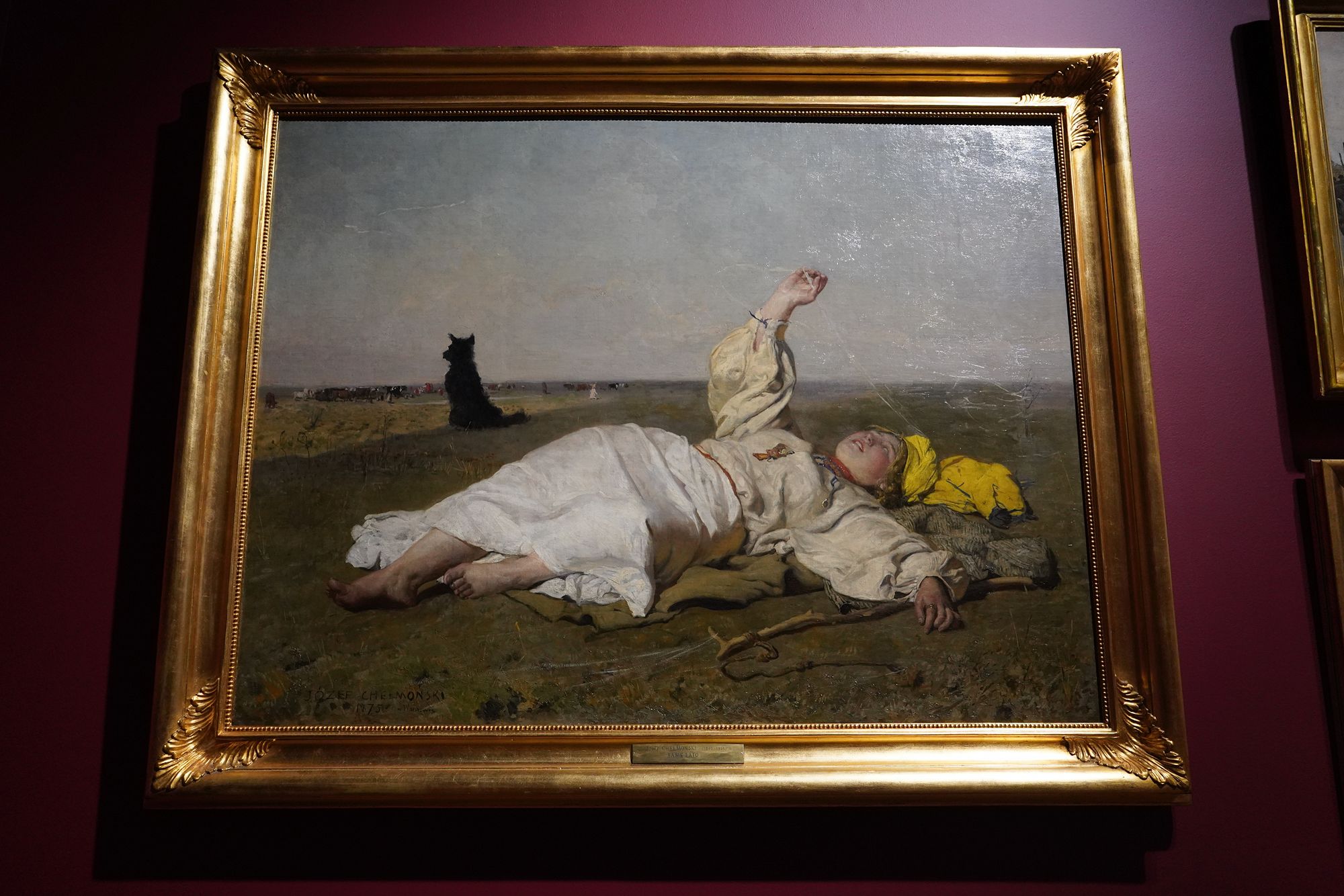
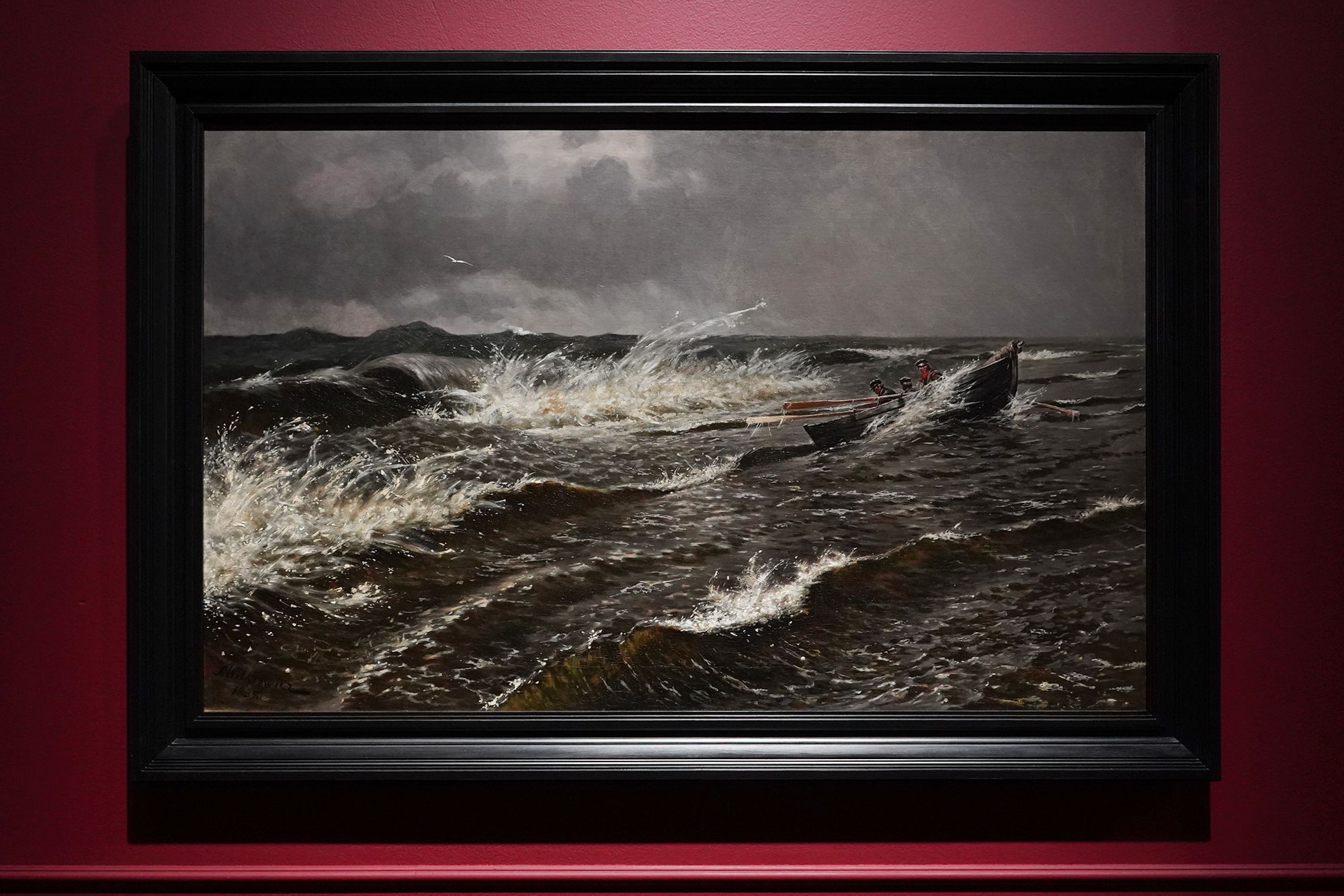
The Kolekcjoner exhibition at the National Museum in Warsaw brought together paintings once owned by Ignacy Korwin-Milewski. Between 1880 and 1910, he assembled around 250 works, including paintings by Jan Matejko, Józef Chełmoński, and Aleksander Gierymski
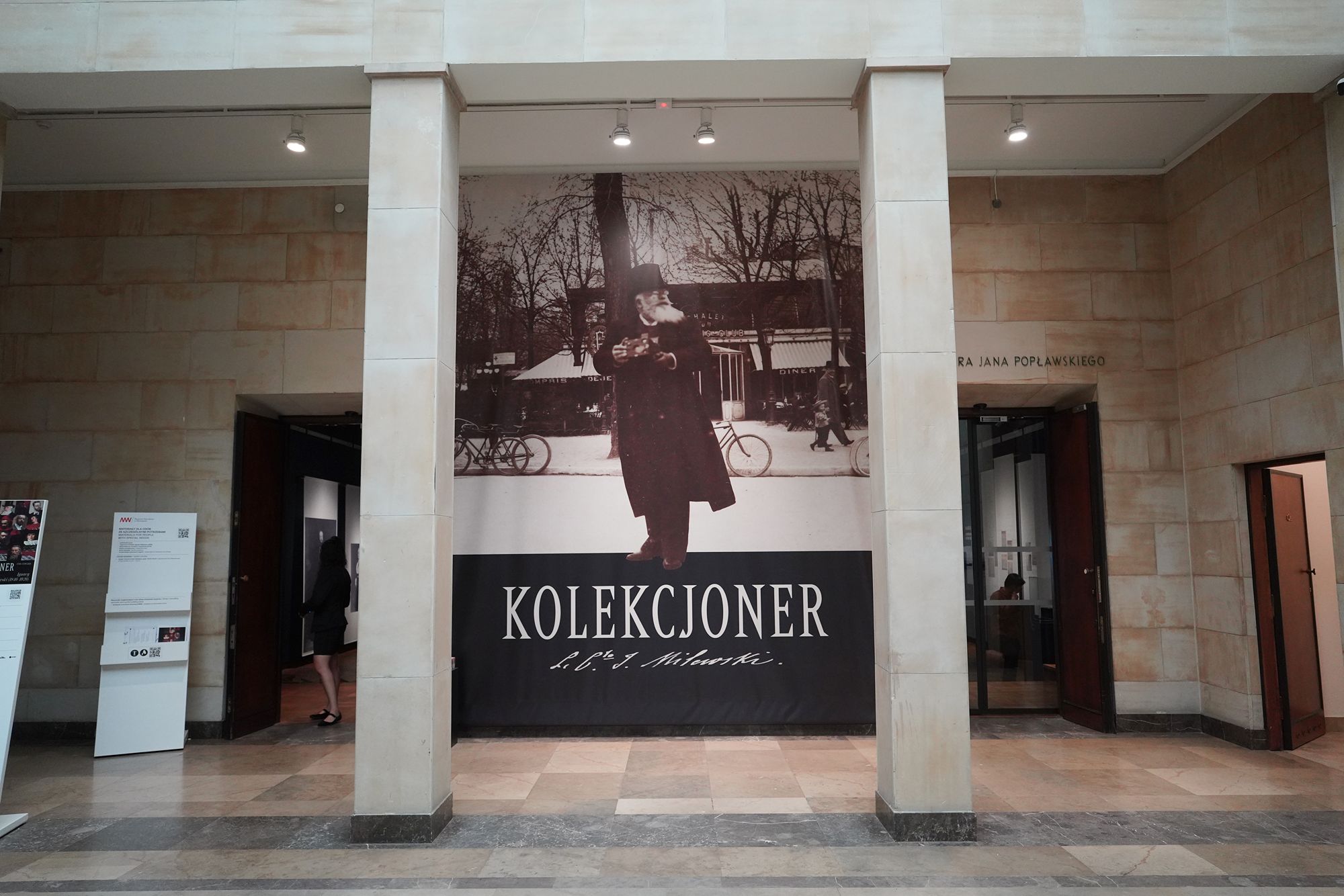
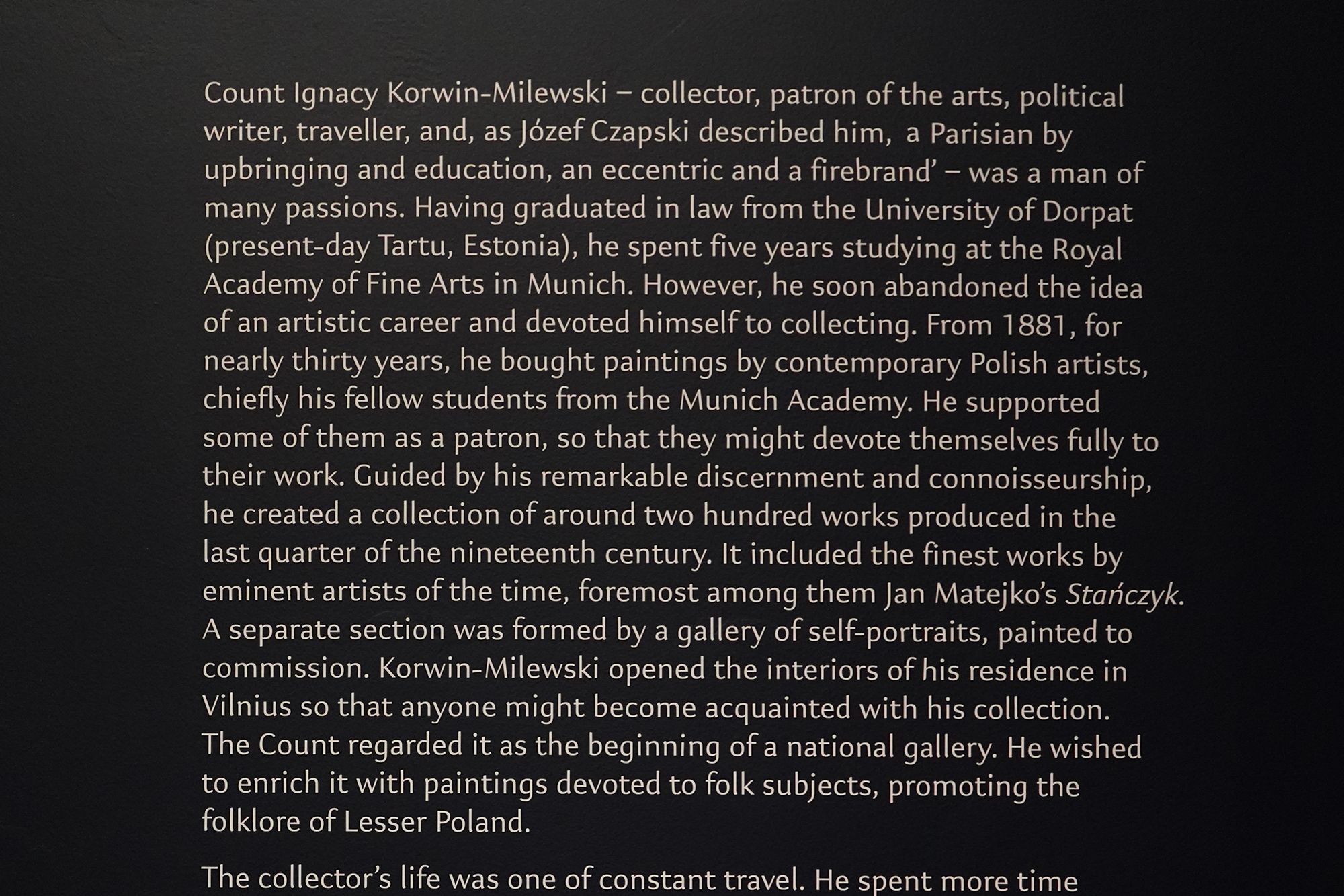
Ignacy Korwin-Milewski studied art in Munich before becoming a collector and patron. From 1881, he assembled around 200 paintings by contemporary Polish artists, including Matejko’s Stańczyk, and commissioned a gallery of artists’ self-portraits. He hoped his collection would form the beginning of a national gallery, but it was eventually dispersed.
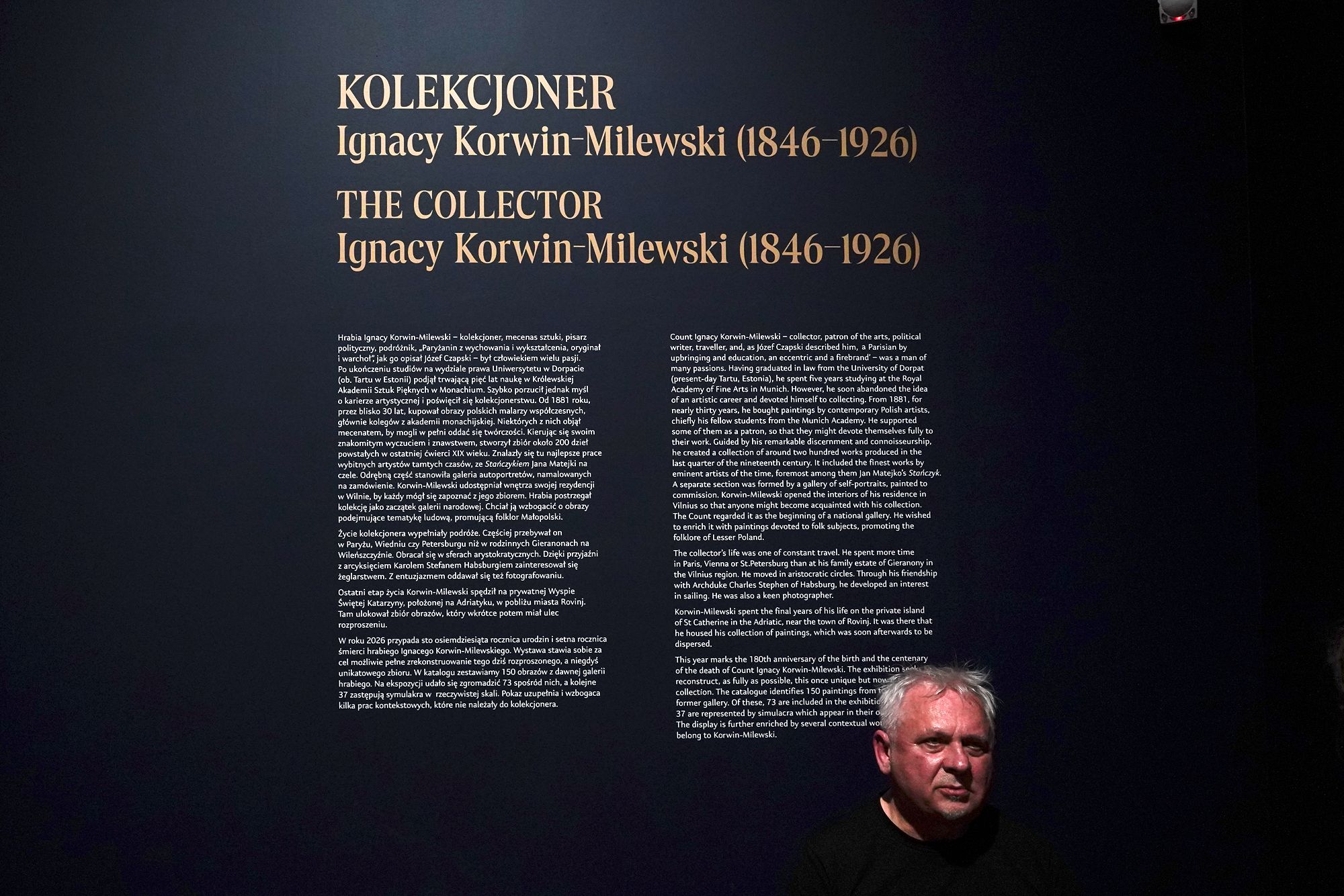
Count Ignacy Korwin-Milewski studied law and art before turning to collecting. Beginning in 1881, he bought paintings by contemporary Polish artists and financially supported some of them. His collection included Jan Matejko’s Stańczyk and commissioned self-portraits. He opened his residence in Vilnius to visitors, hoping his collection would become the foundation of a national gallery.
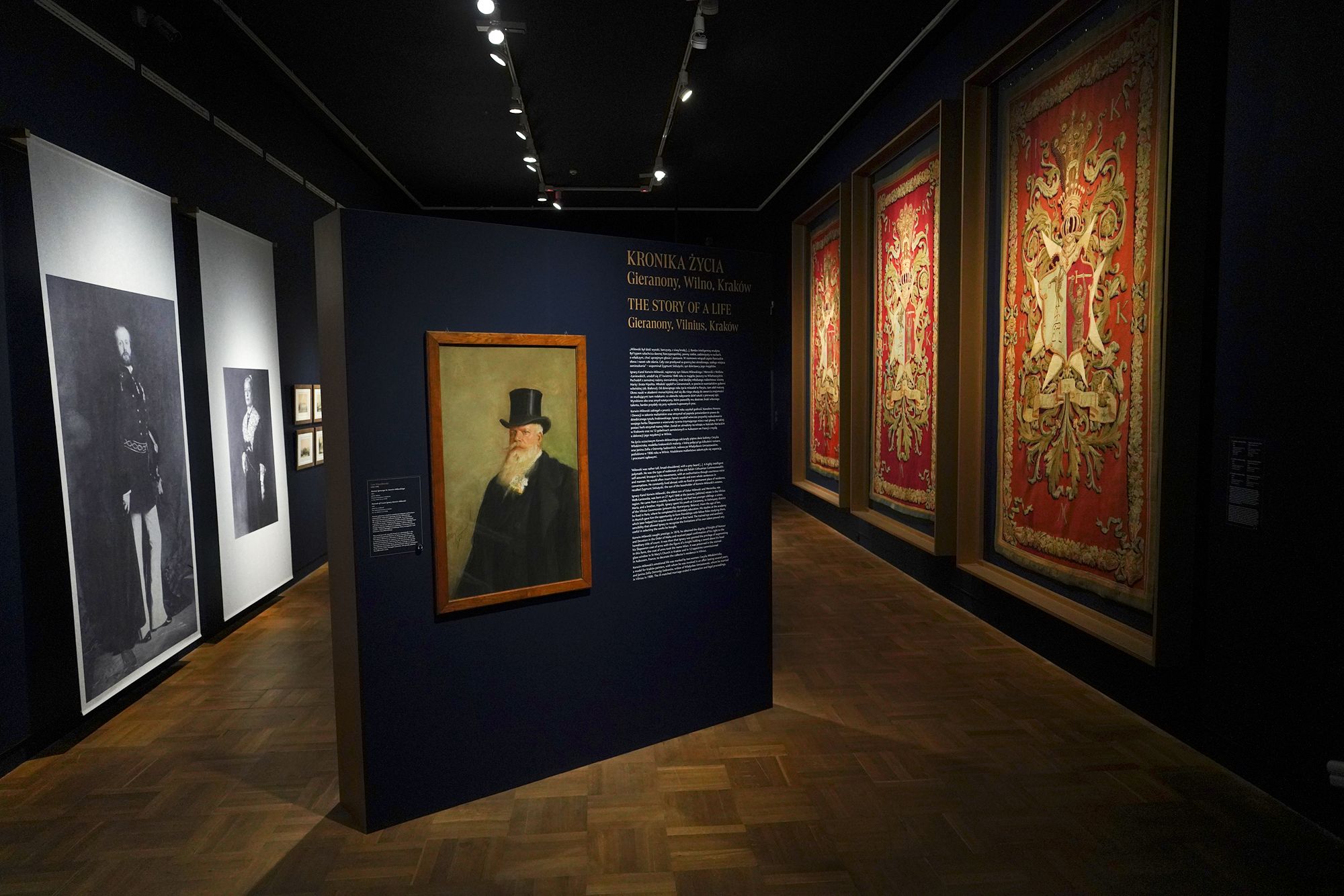
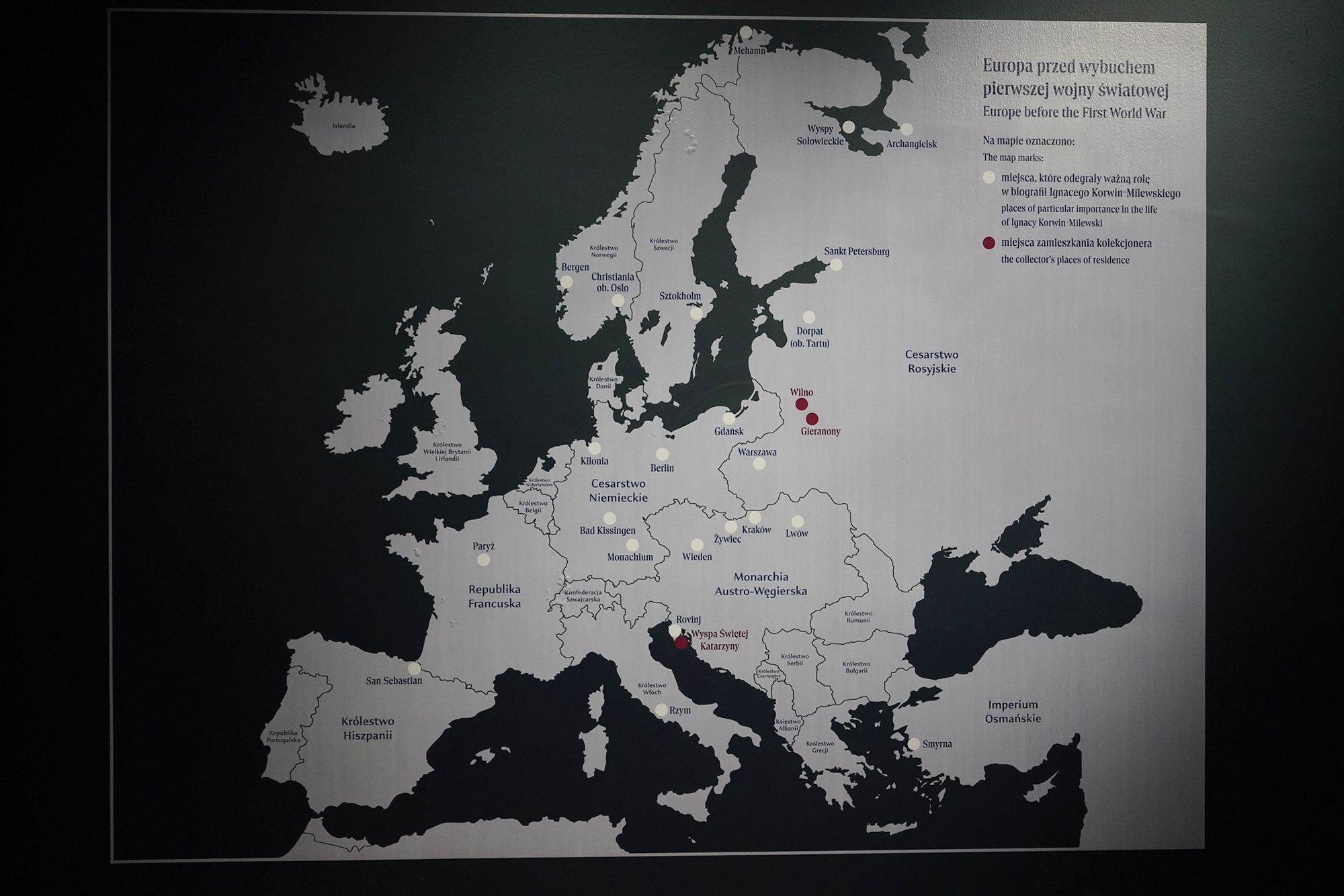
Korwin-Milewski inherited a considerable fortune in 1875, allowing him to collect paintings, support artists, and travel widely. His life connected Gieranony, Vilnius, and Kraków, where he hoped to establish a gallery. Alongside his collecting ambitions, the exhibition explores his family relationships, marriage, and personal affairs, revealing the complicated life behind the collection.
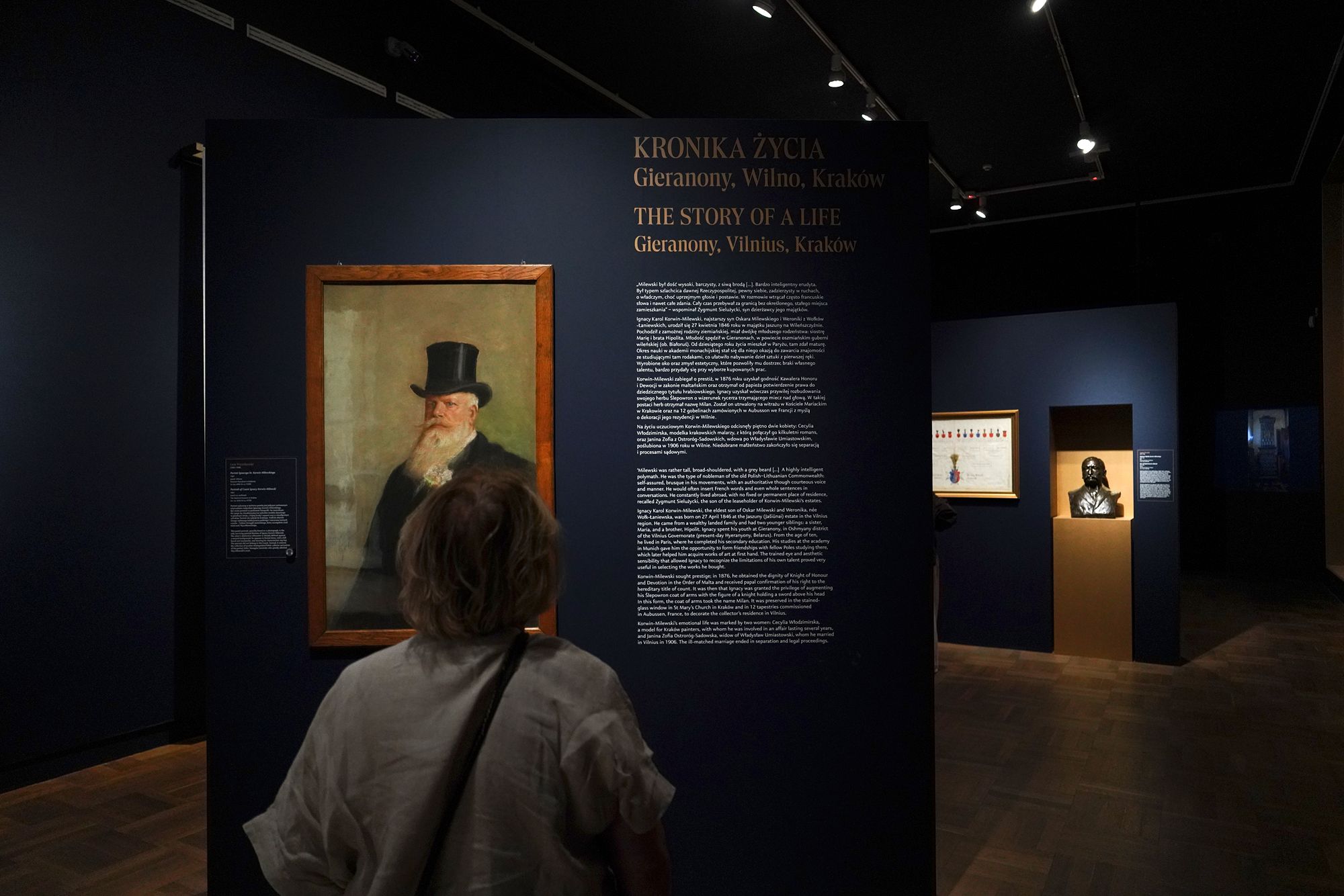
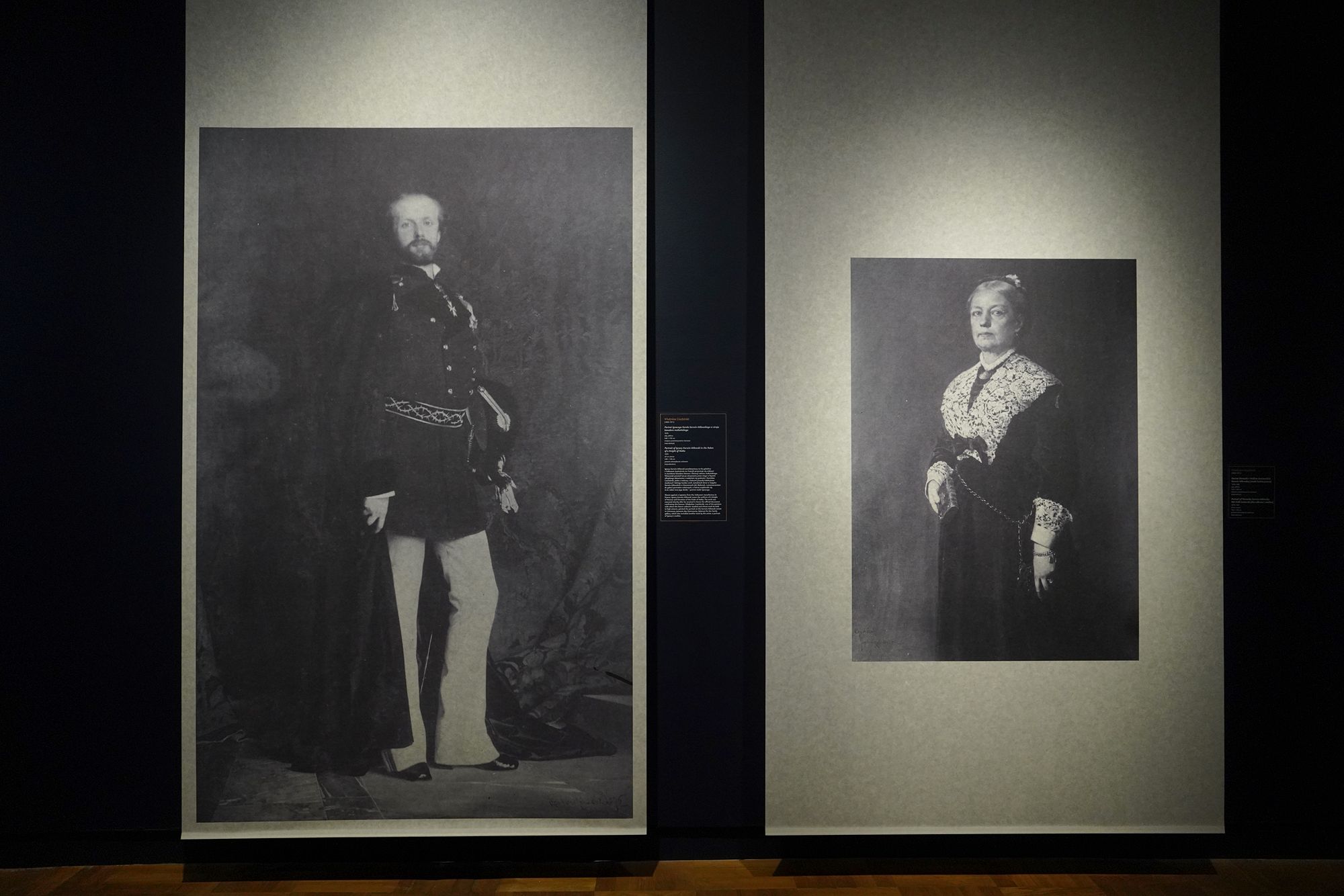
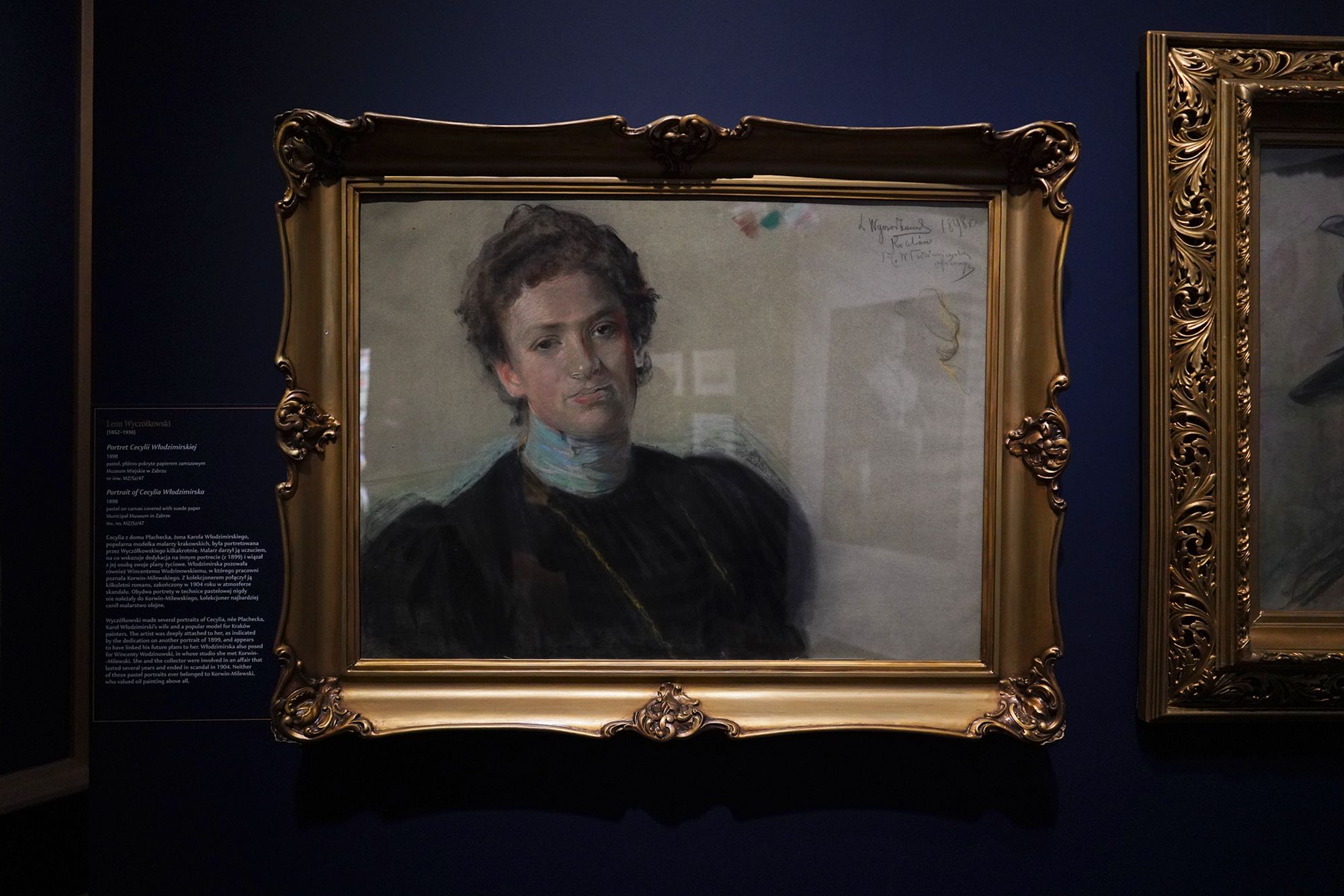
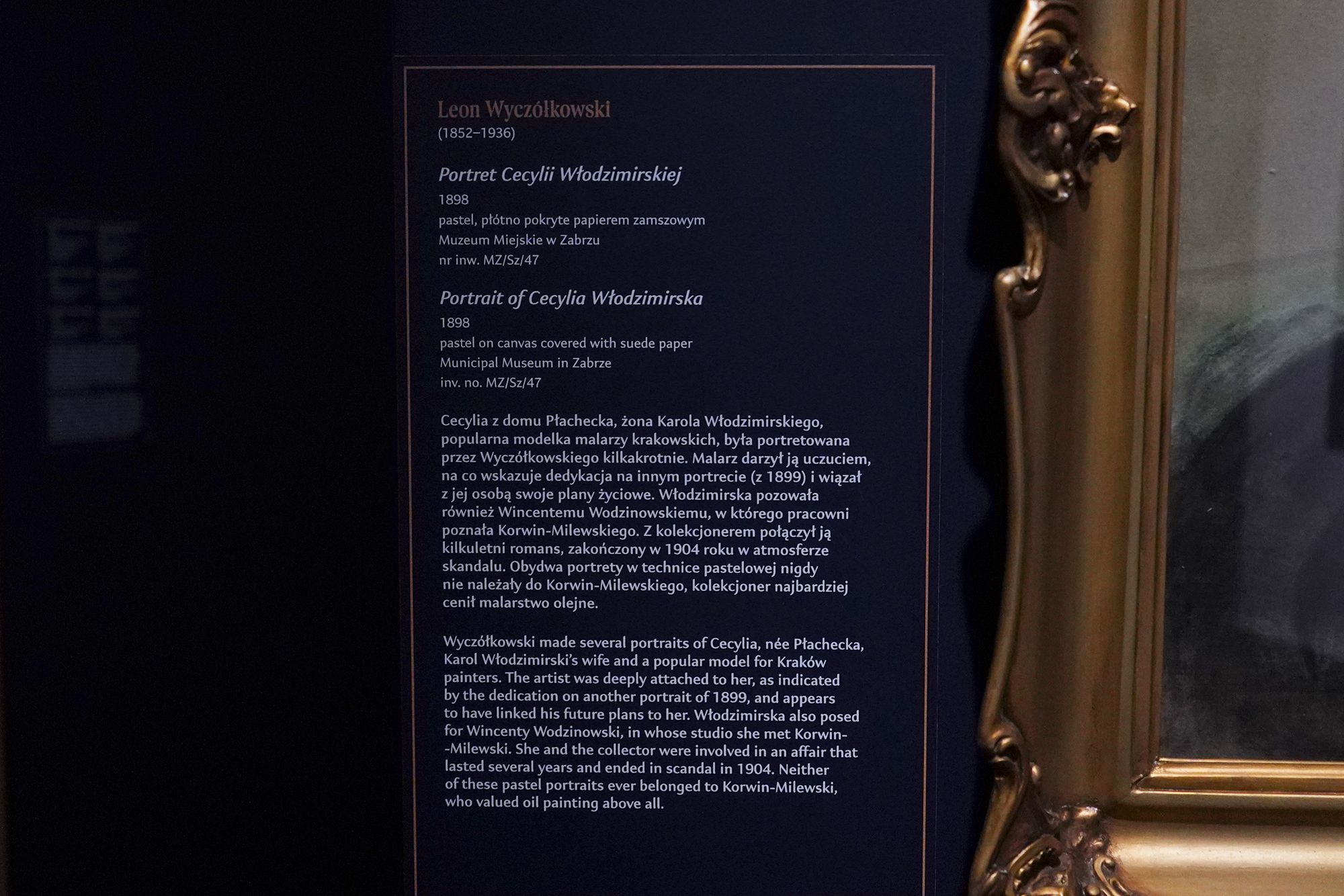
Leon Wyczółkowski’s Portrait of Cecylia Włodzimierska (1898) depicts a popular model among Kraków painters. She met Korwin-Milewski in Wincenty Wodzinowski’s studio, and their affair lasted several years before ending in scandal in 1904. Although included in this exhibition, the pastel portrait never belonged to the collector, who preferred oil paintings.
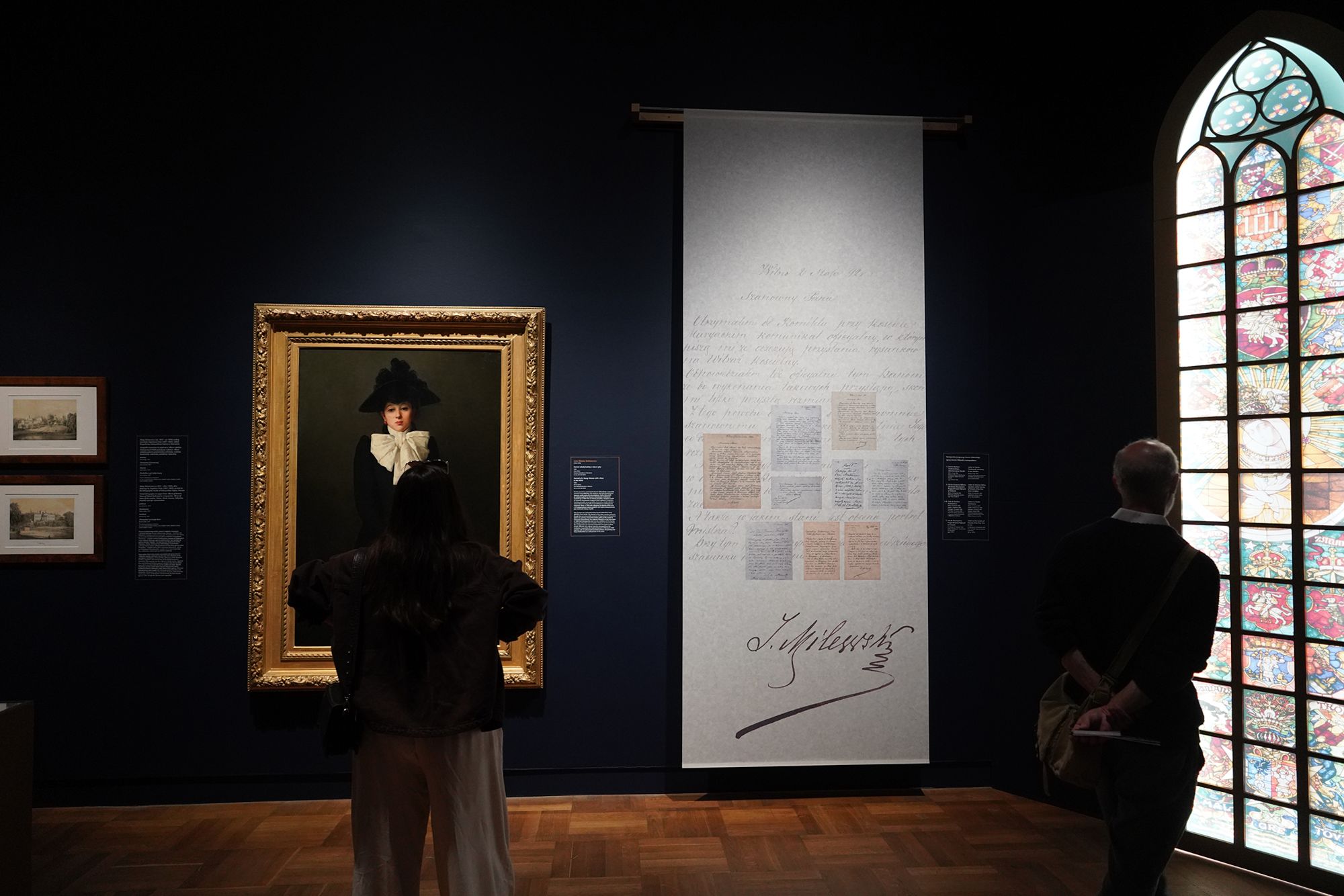
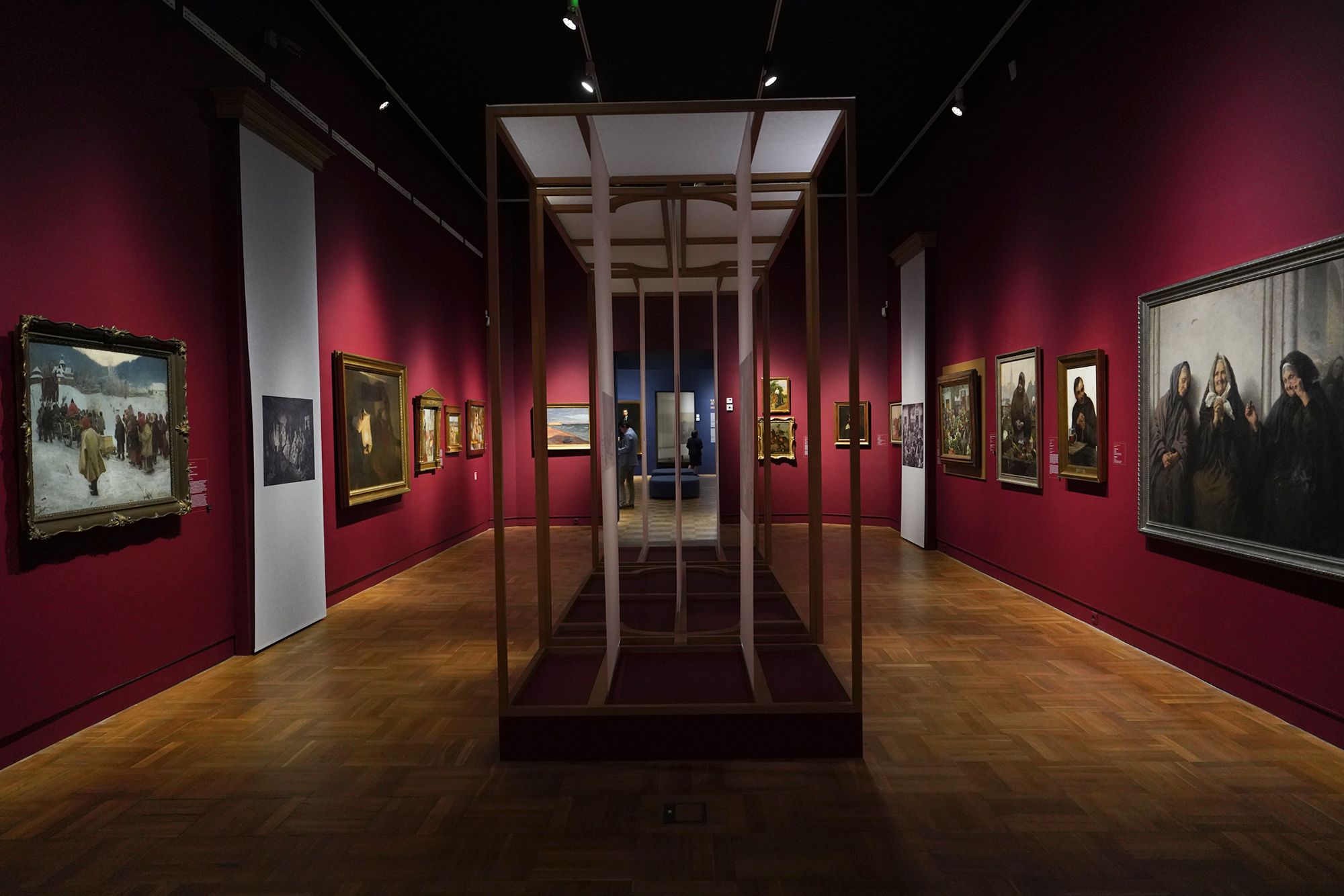
Korwin-Milewski assembled his collection between 1881 and 1910, focusing on original works by Polish painters associated with the Munich school. He wanted the paintings to be publicly accessible and opened his Vilnius residence as a private museum in 1890. He later pursued plans for a museum in Kraków, intending to donate his collection to the nation.
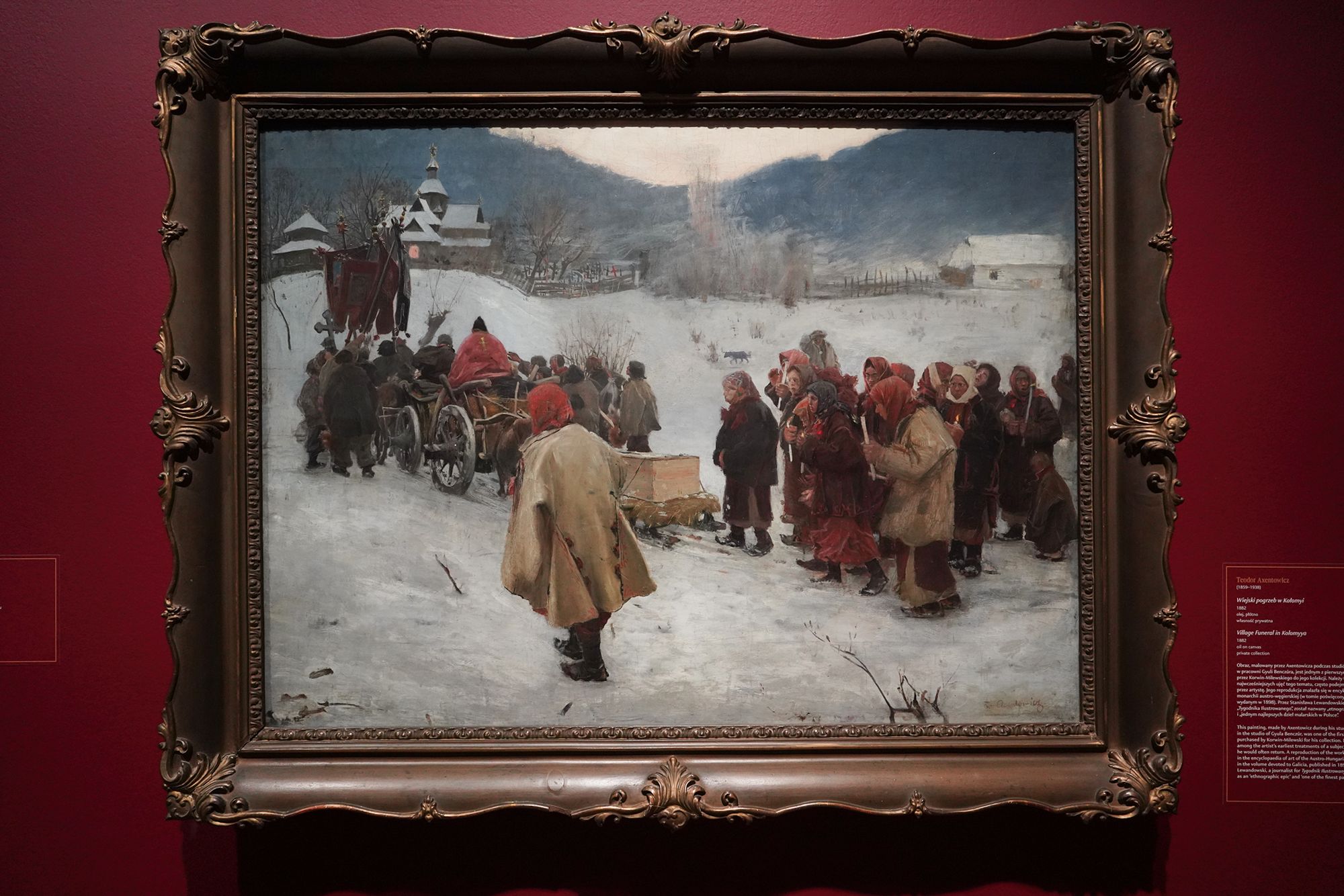
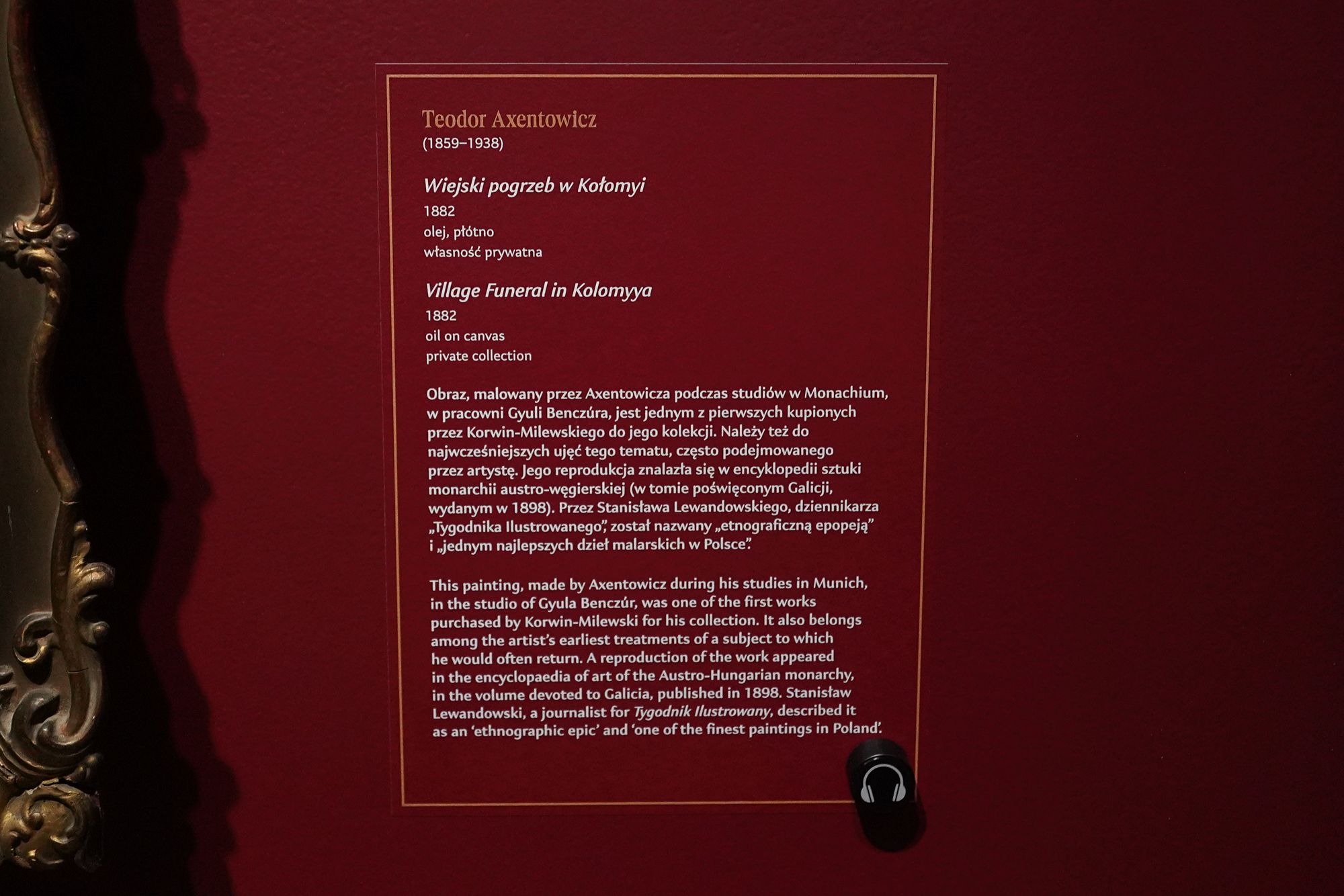
Teodor Axentowicz painted Village Funeral in Kolomyya in 1882 while studying in Munich. It was one of the first paintings purchased by Korwin-Milewski for his collection. The work explores rural funeral traditions, a subject the artist revisited, and was praised by a contemporary critic as an “ethnographic epic.”
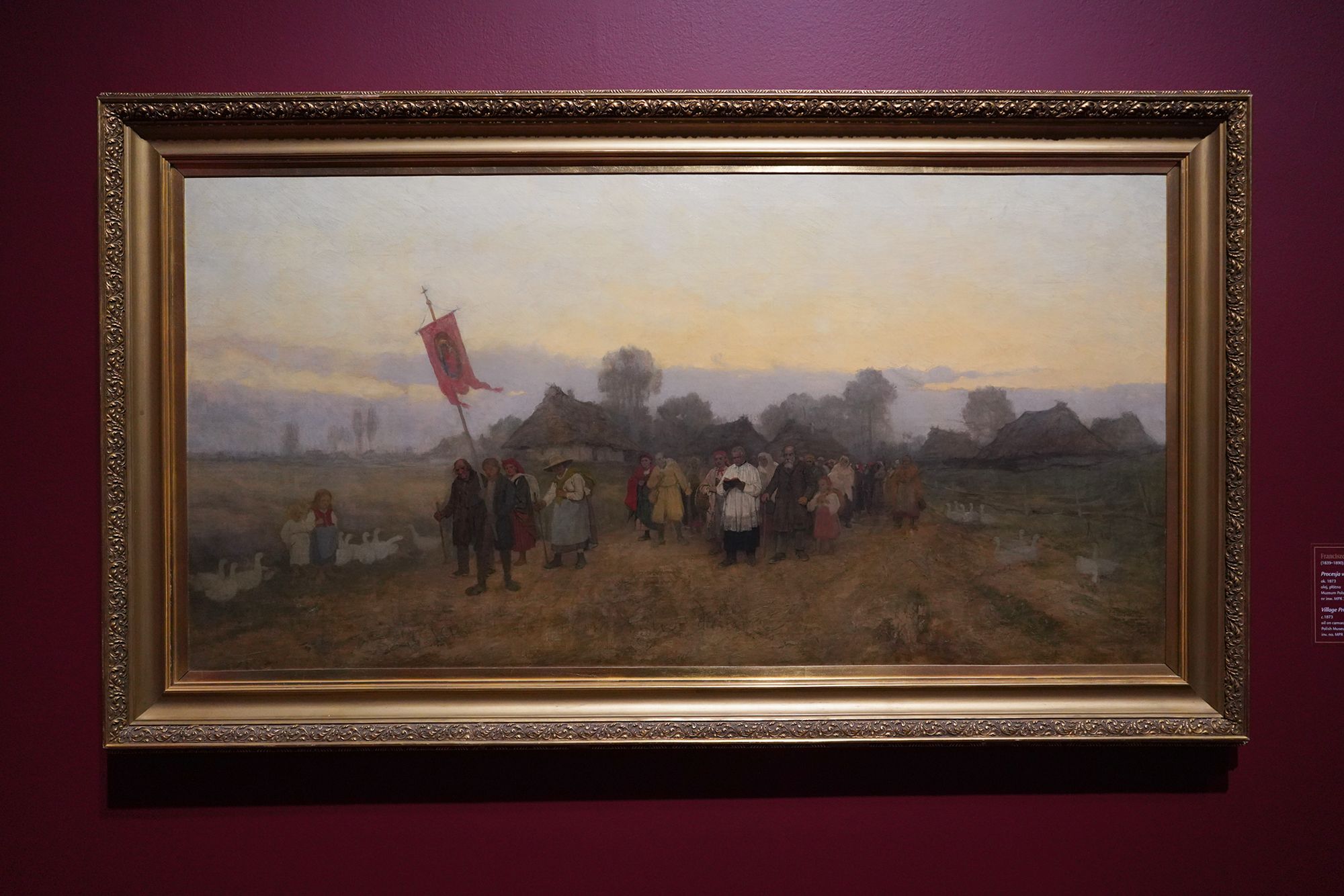
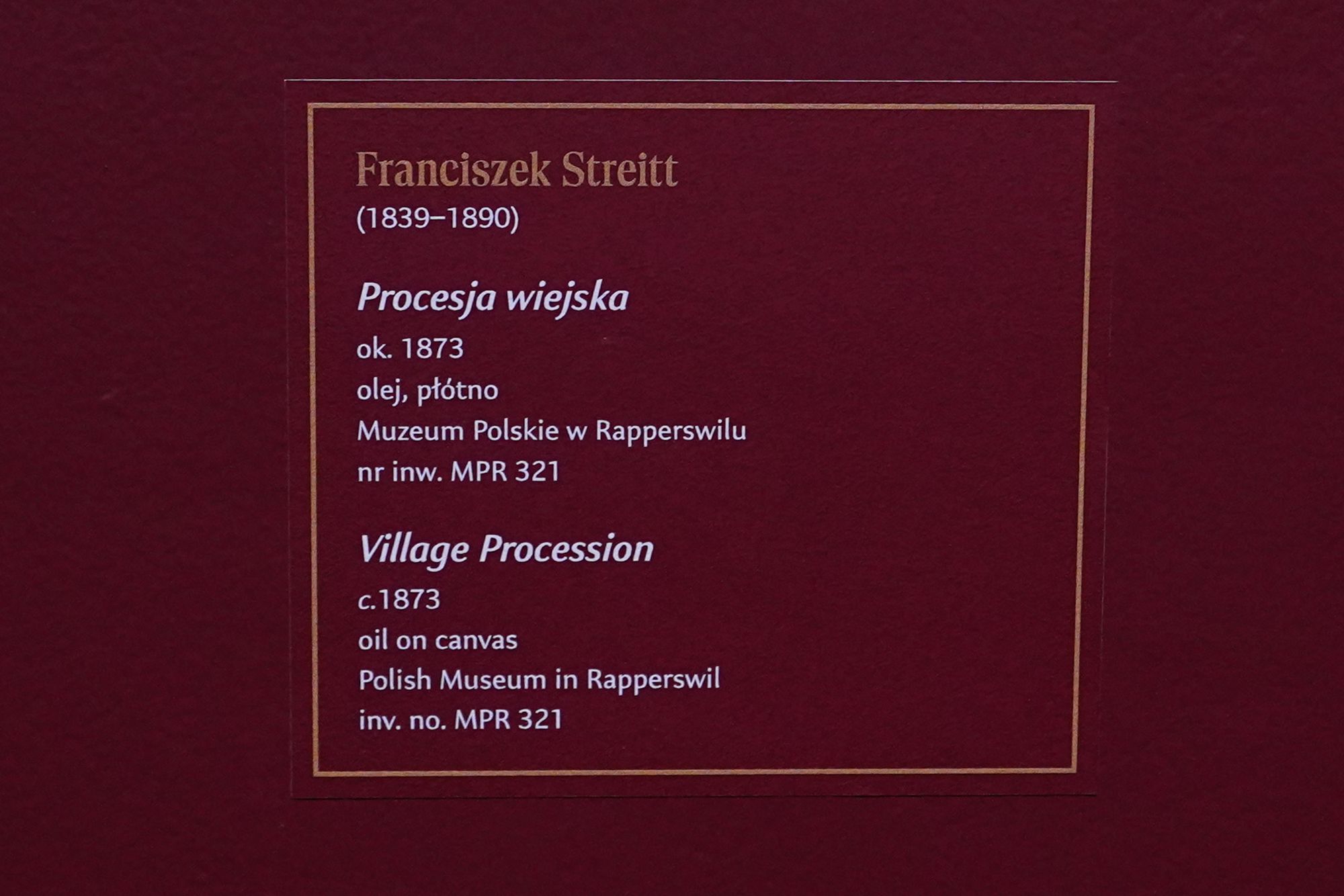
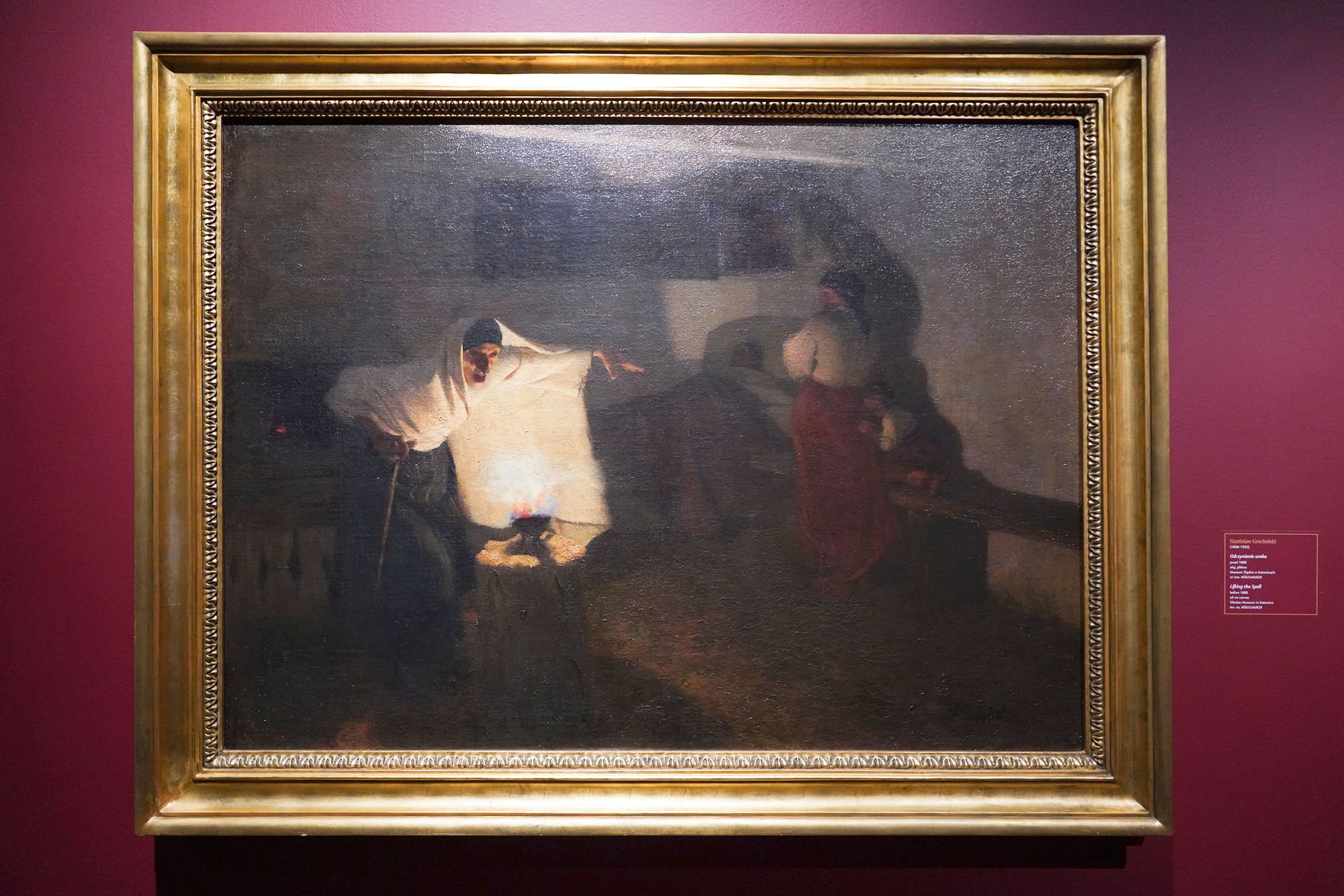
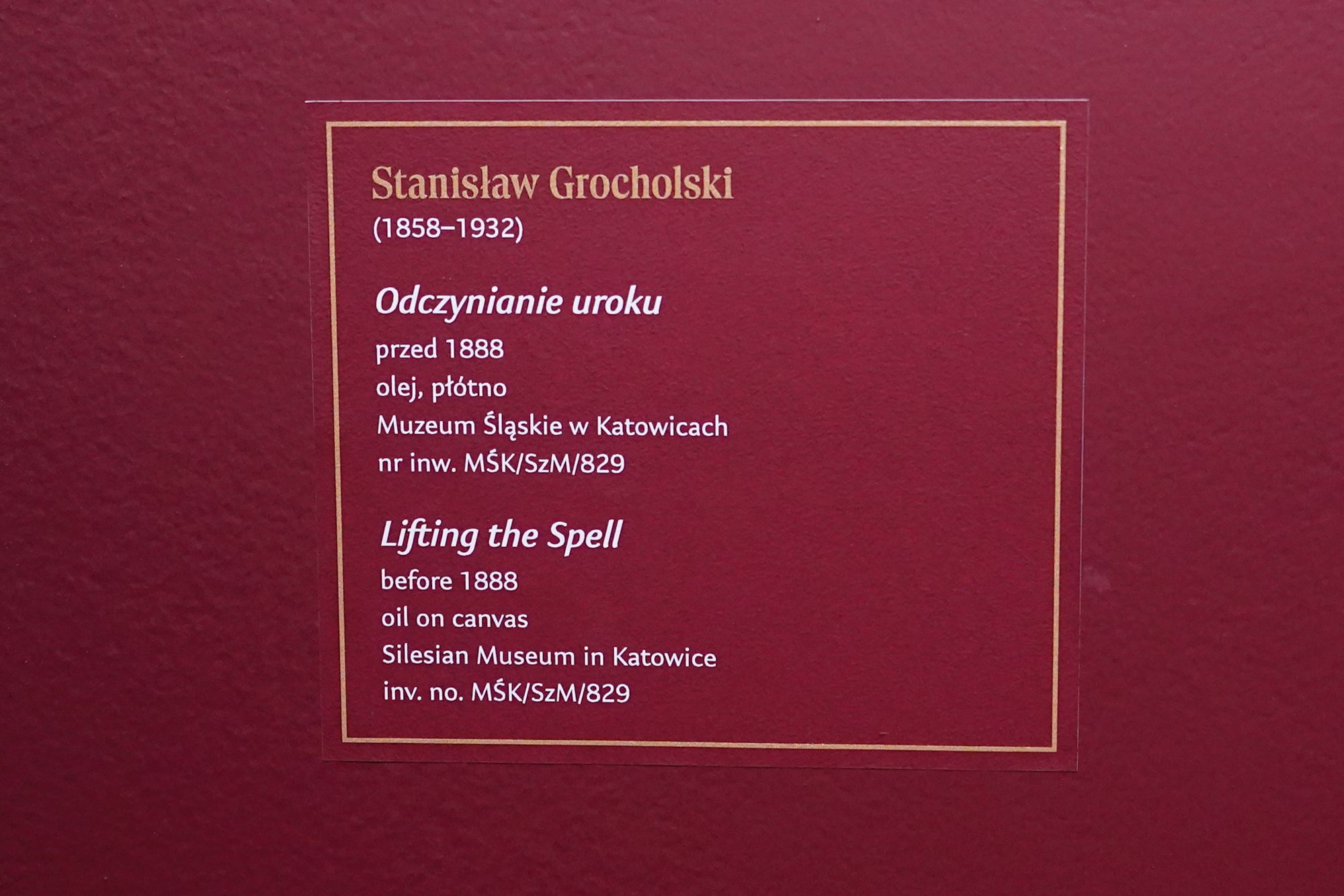
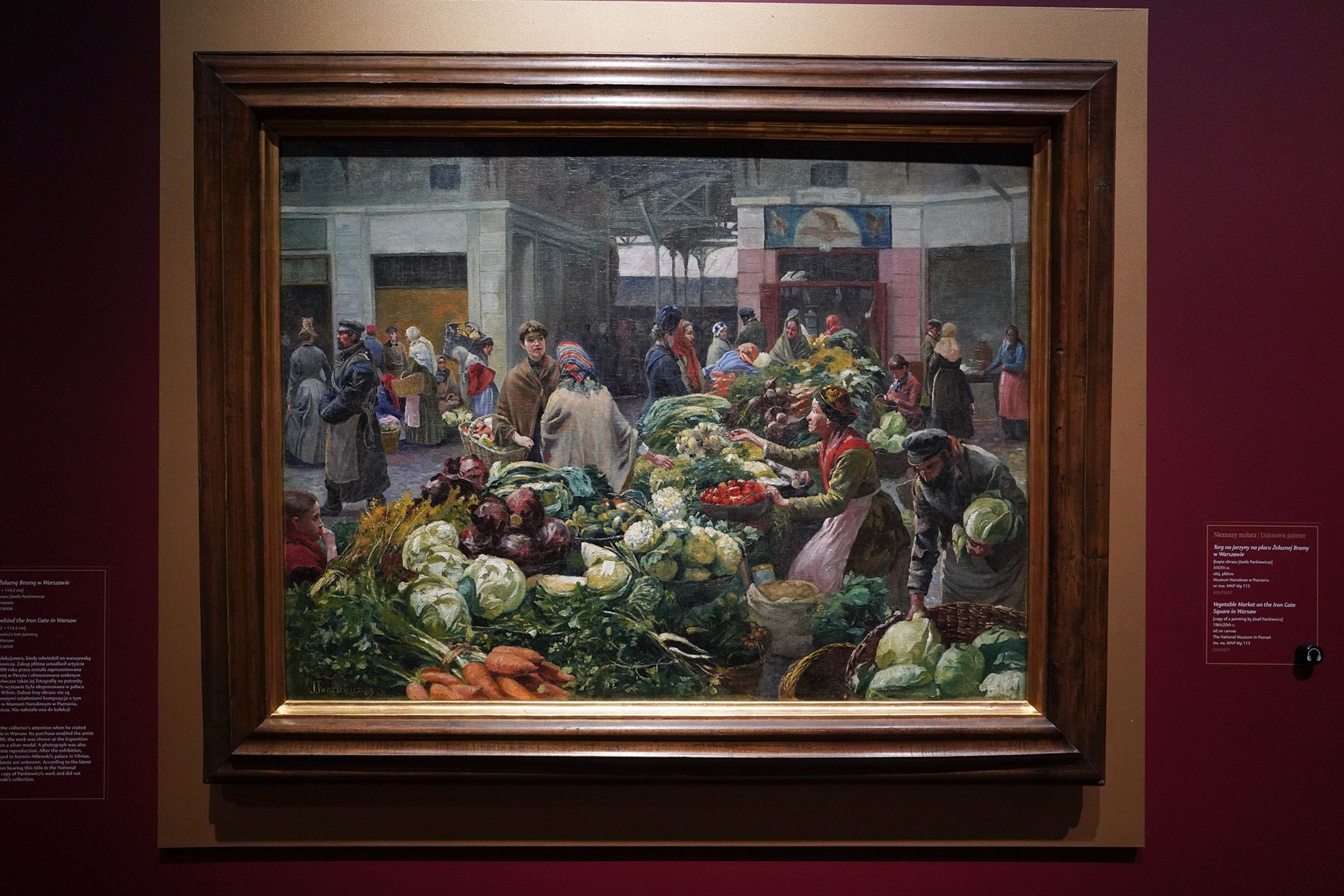
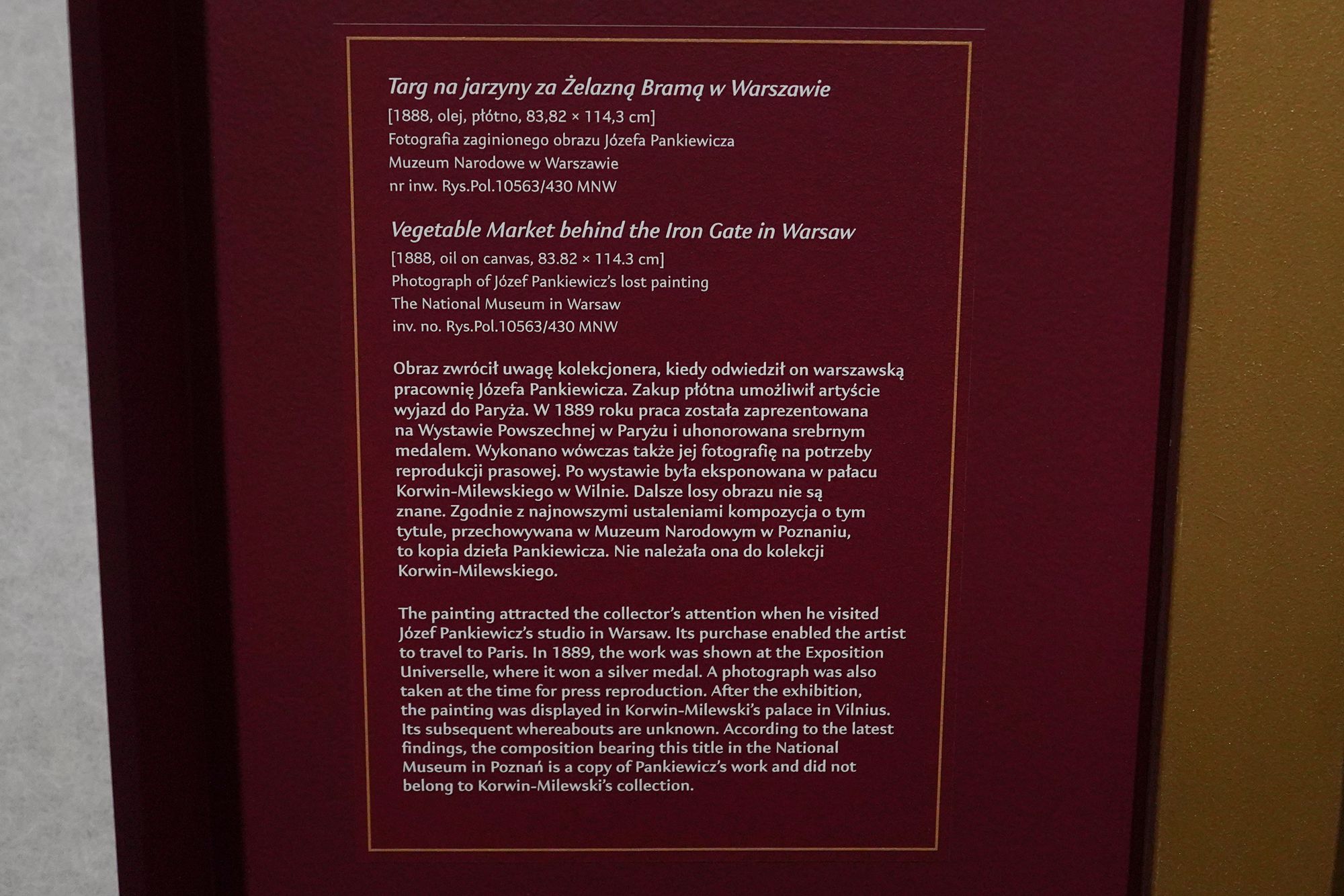
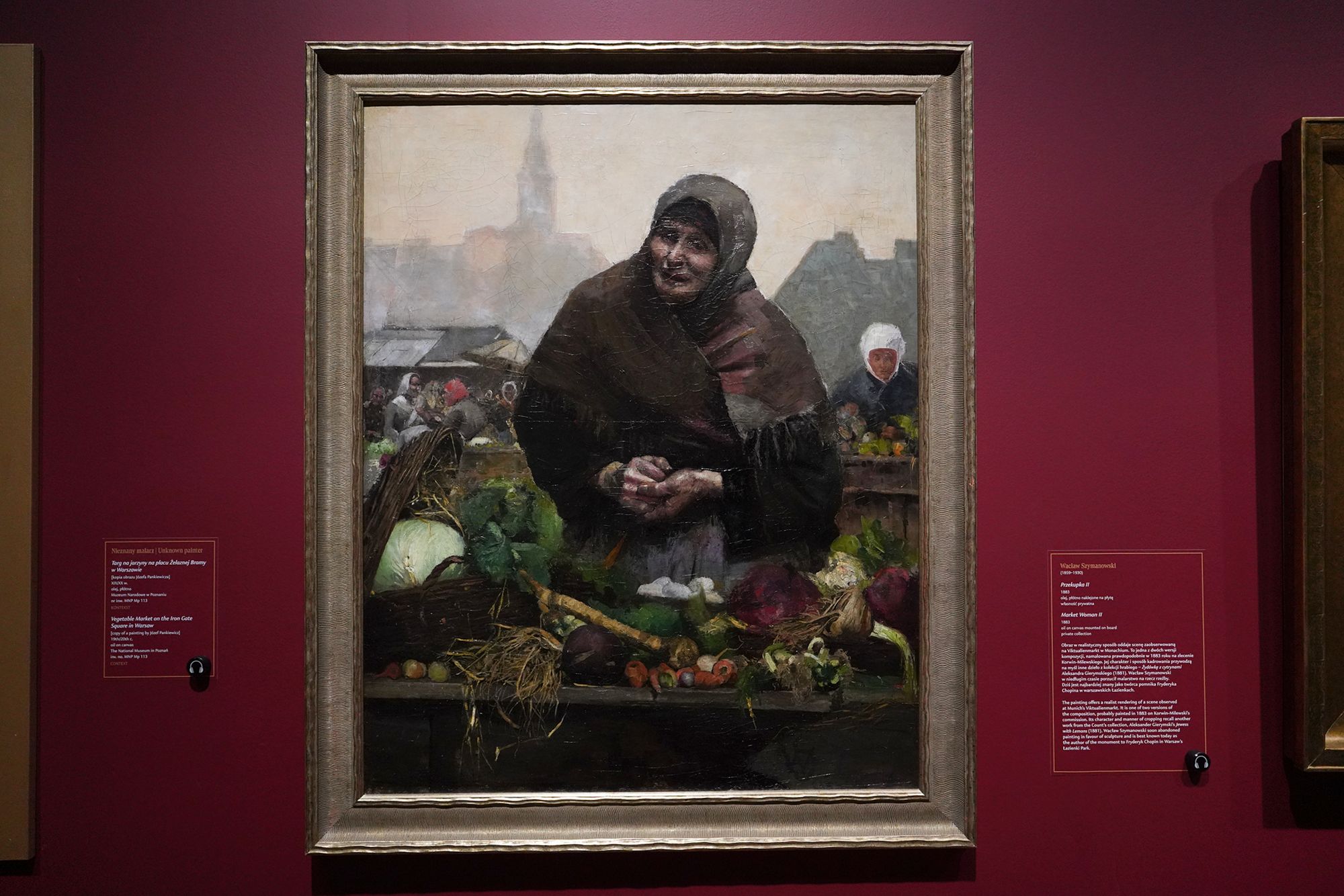
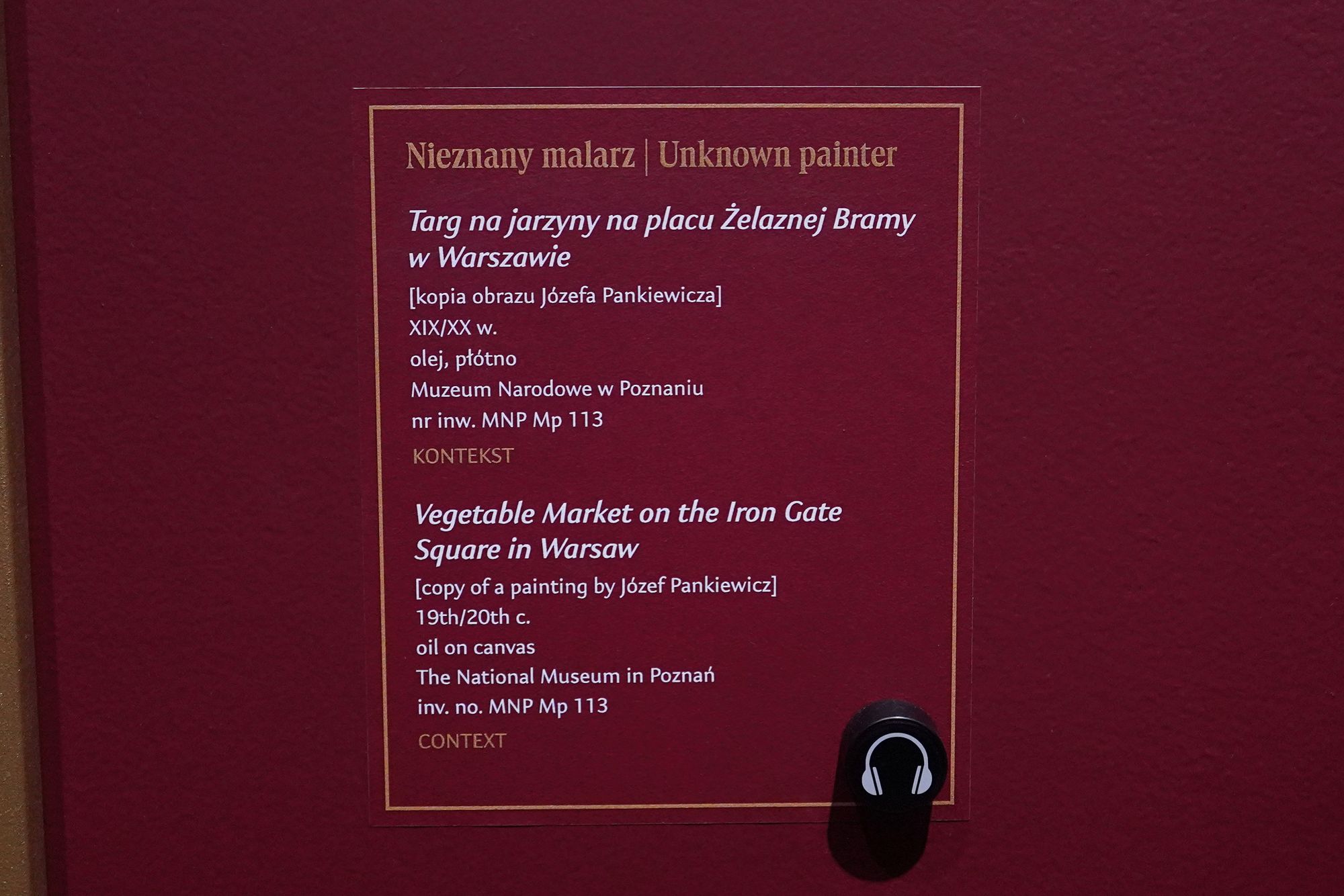
This photograph shows Józef Pankiewicz’s lost painting, Vegetable Market behind the Iron Gate in Warsaw, painted in 1888. Korwin-Milewski’s purchase helped fund the artist’s trip to Paris, where the painting won a silver medal at the 1889 Exposition Universelle. It later hung in the collector’s Vilnius palace, but its whereabouts remain unknown.
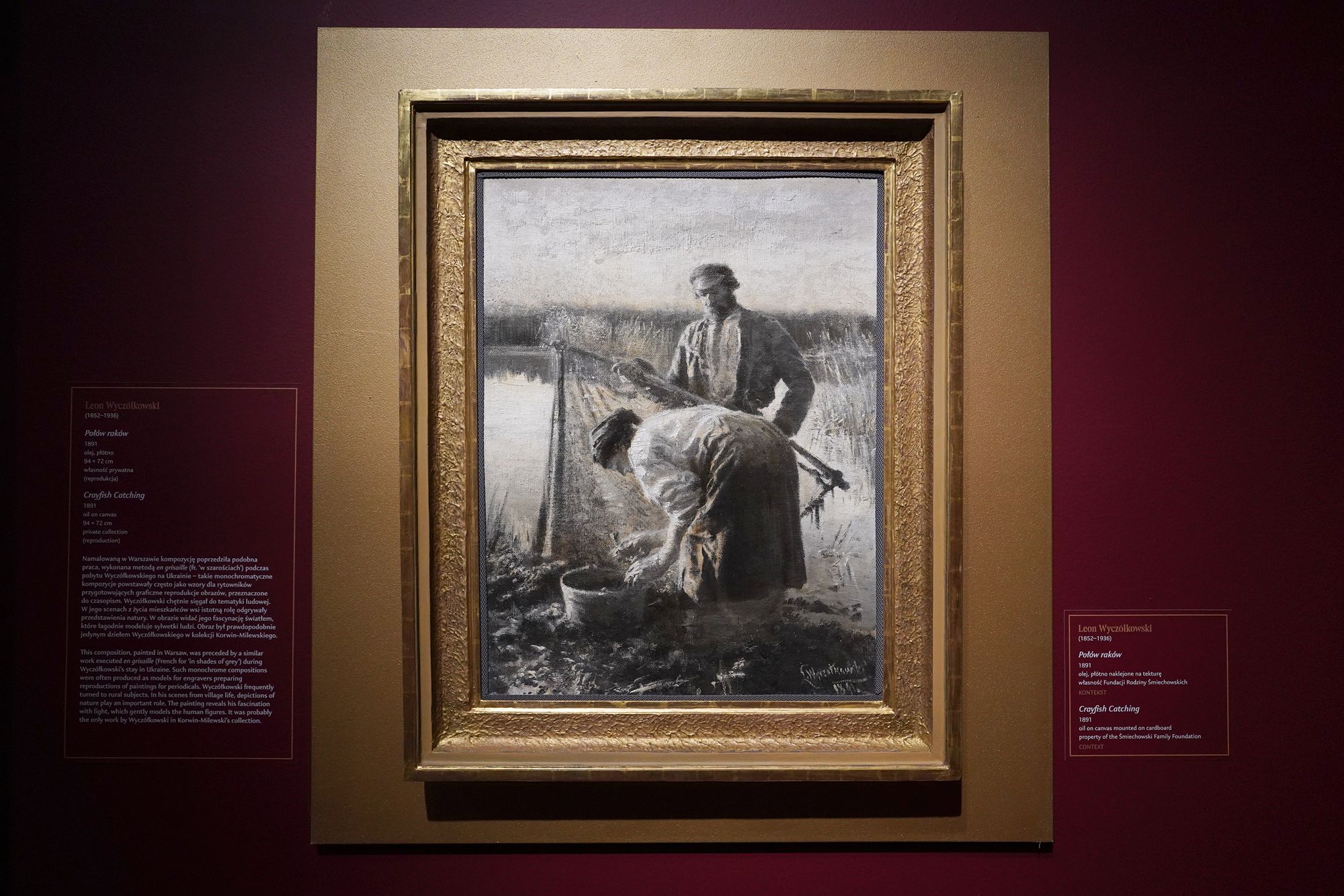
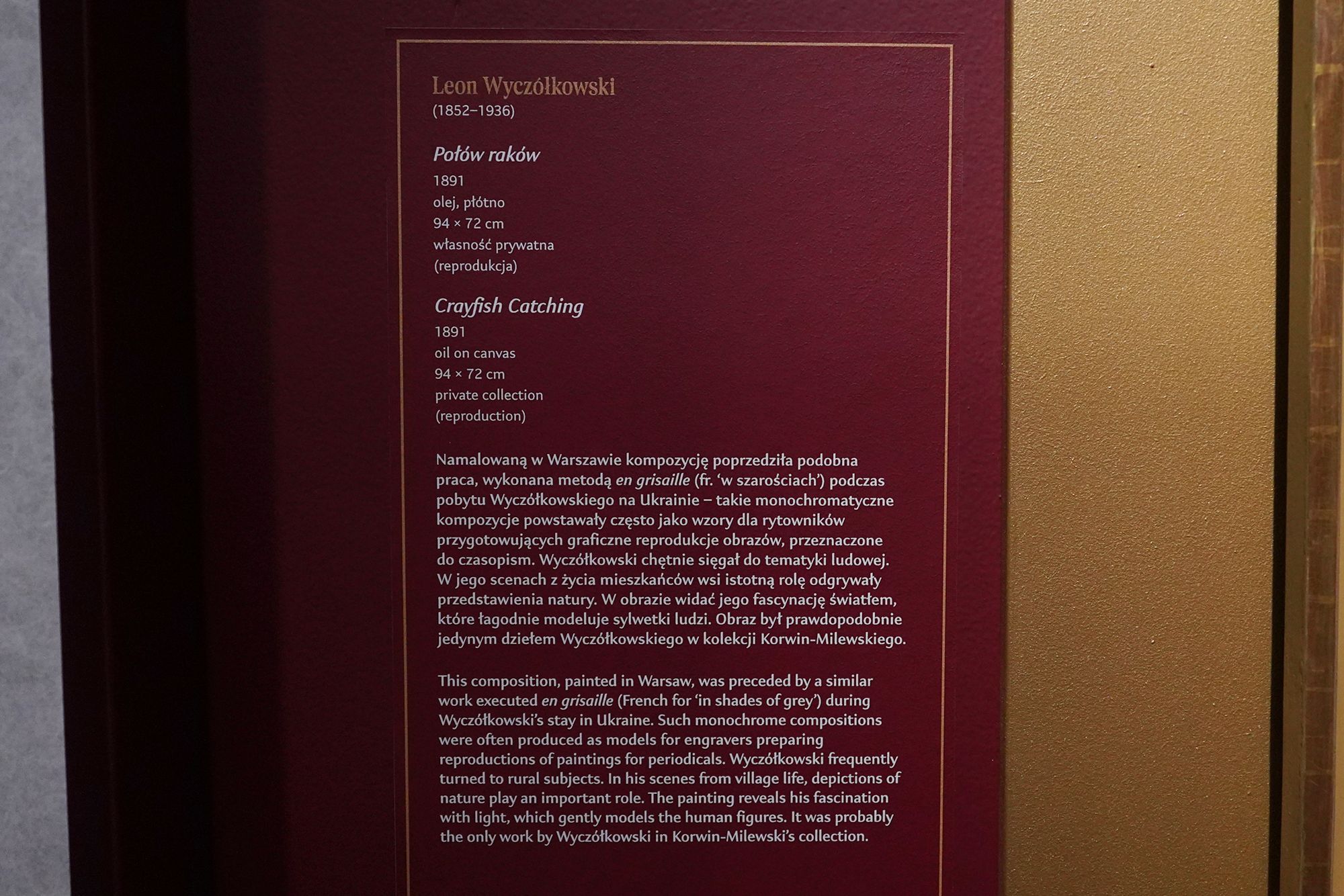
This reproduction shows Leon Wyczółkowski’s Crayfish Catching, painted in Warsaw in 1891. The work reflects his interest in rural life and nature, particularly the way light gently shapes human figures. It was probably the only painting by Wyczółkowski in Korwin-Milewski’s collection.
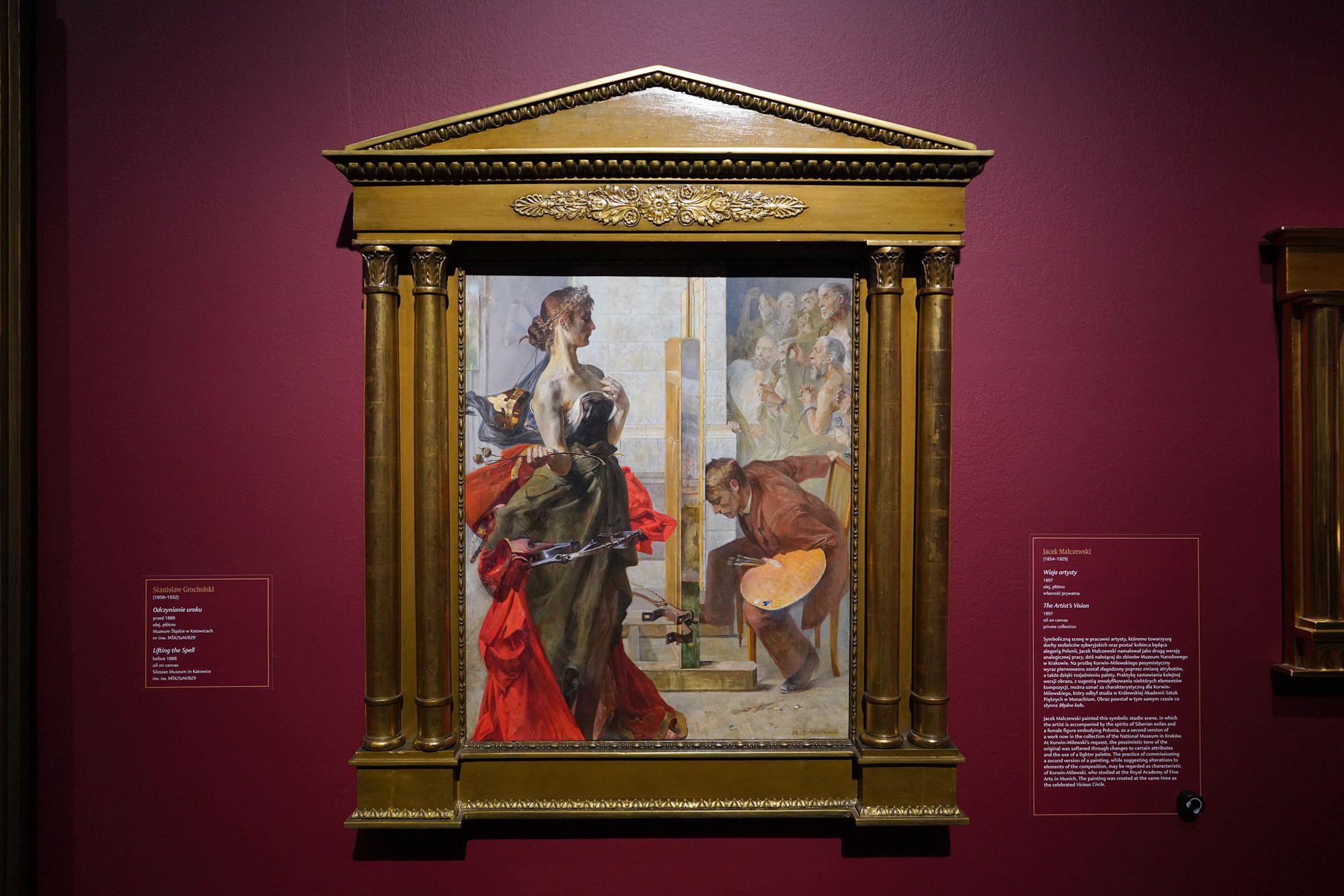
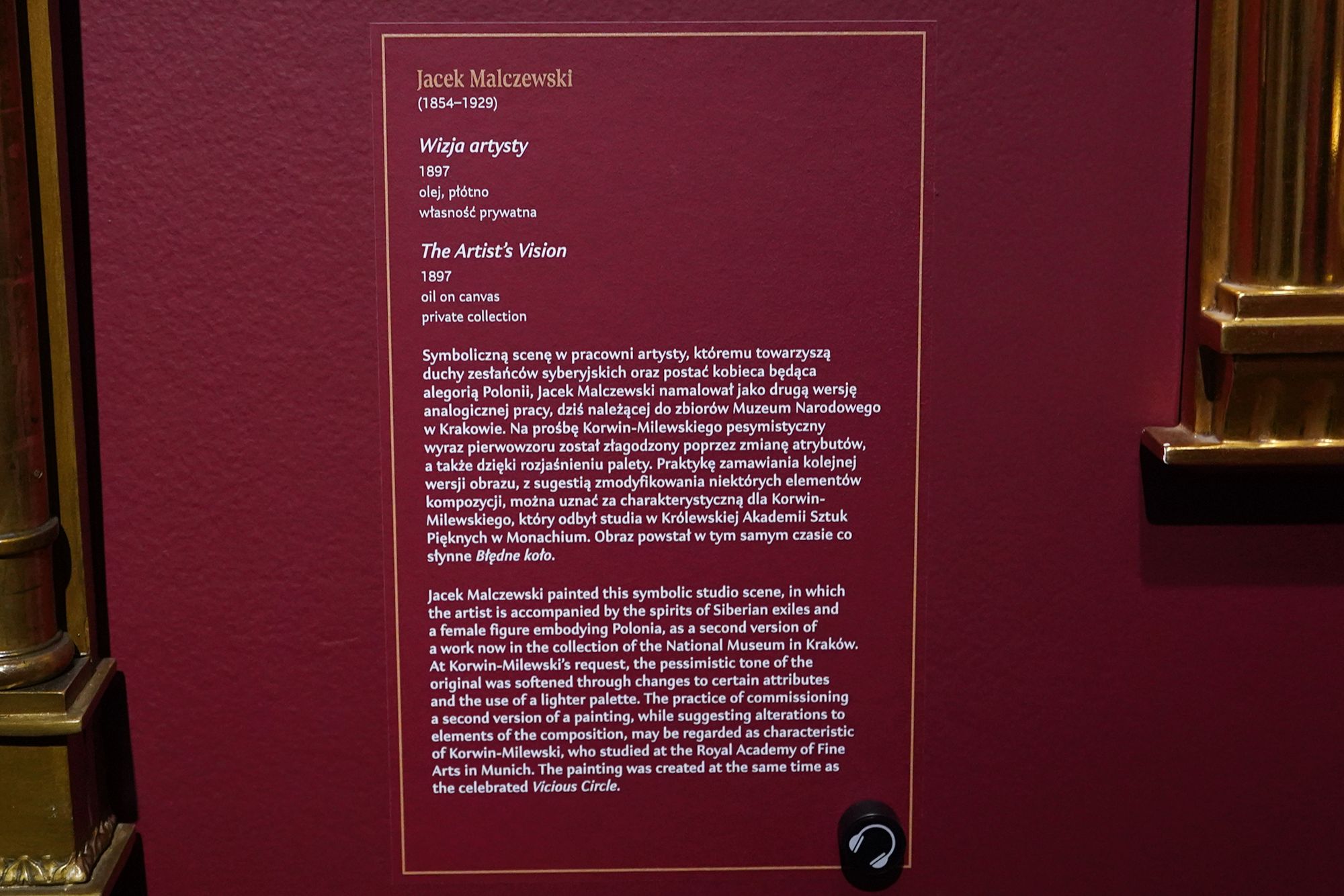
Jacek Malczewski’s The Artist’s Vision, painted in 1897, shows an artist in his studio accompanied by the spirits of Siberian exiles and a female figure symbolizing Poland. This second version was made for Korwin-Milewski, who requested changes that softened the original’s pessimistic mood through altered symbols and a lighter palette.
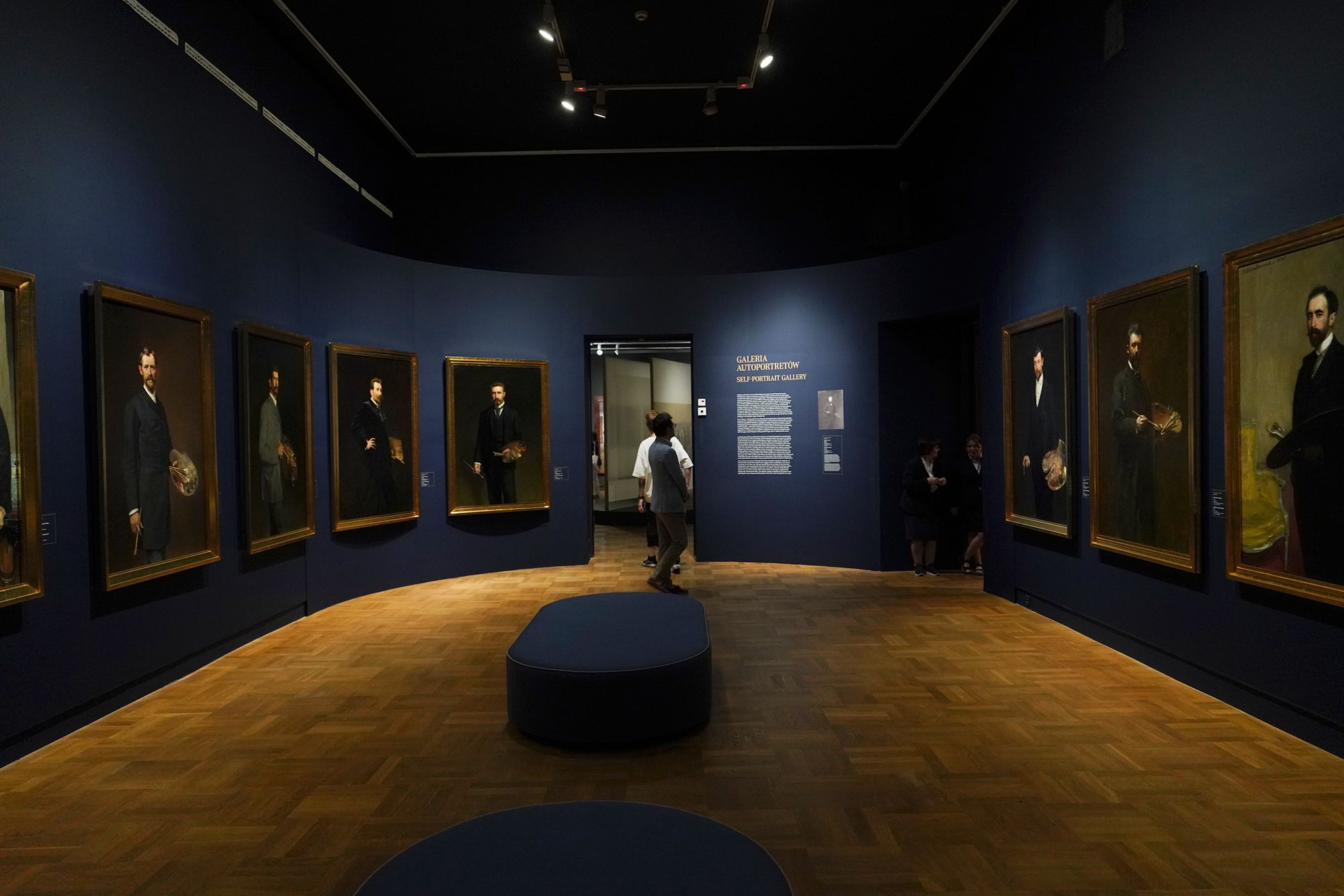
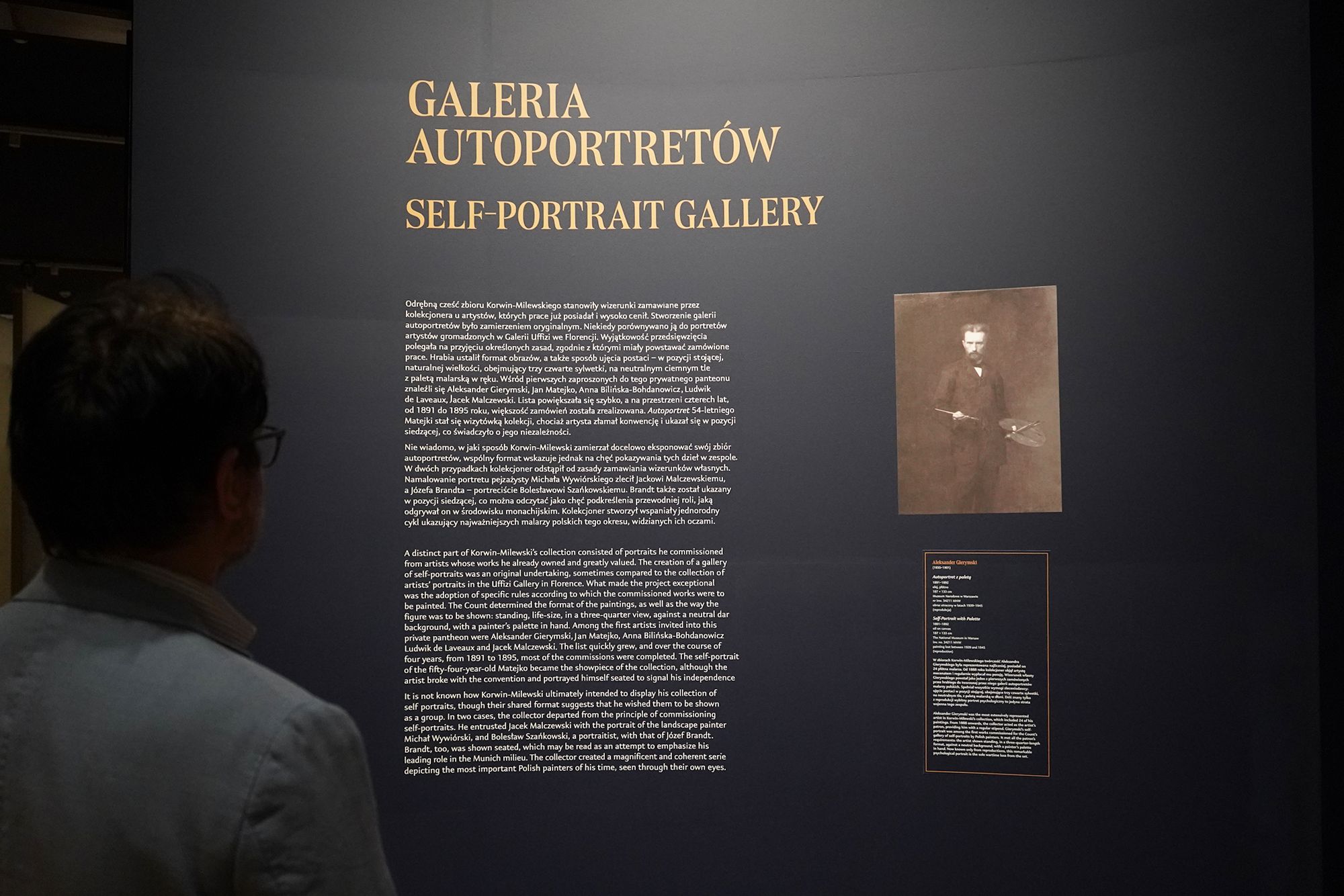
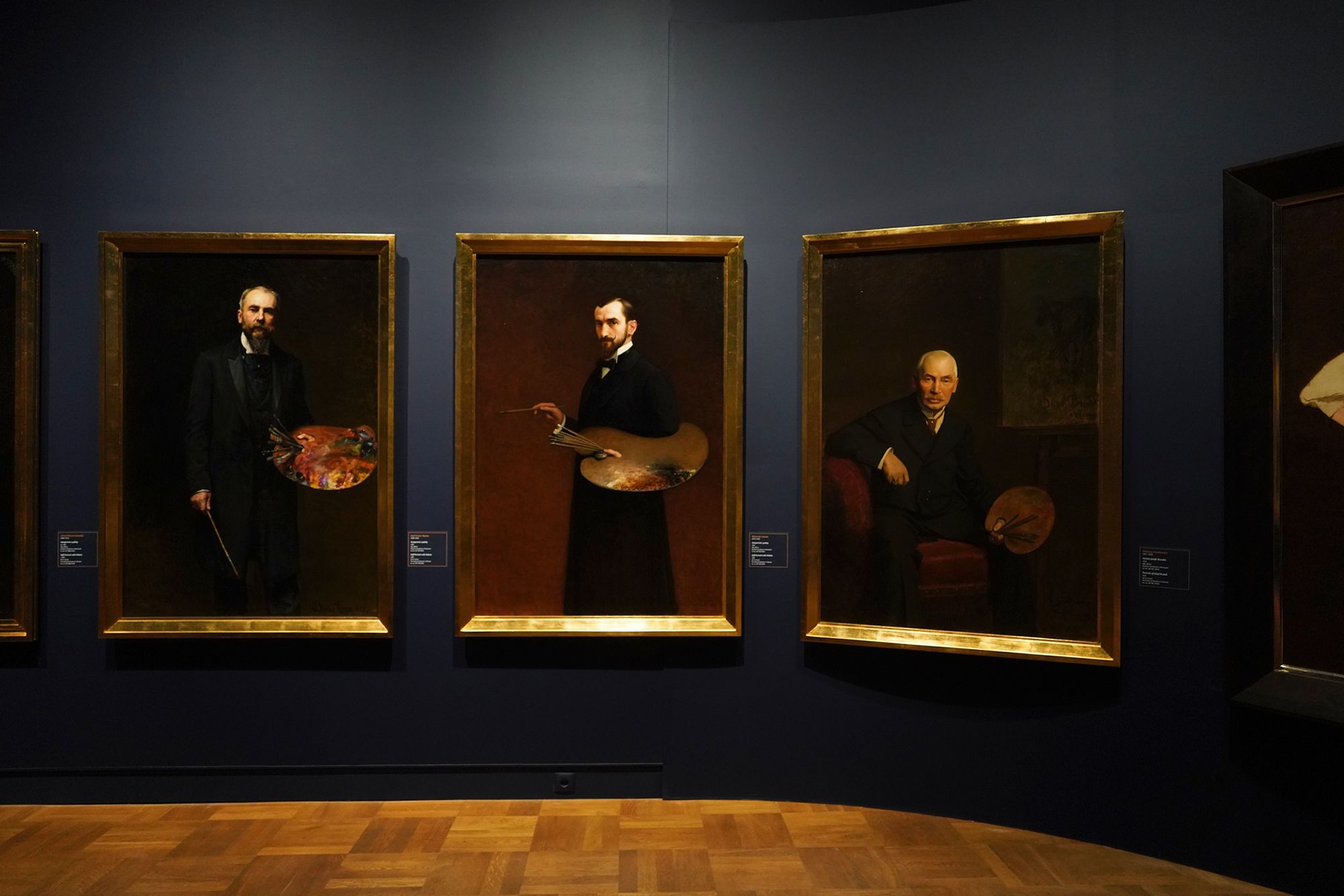
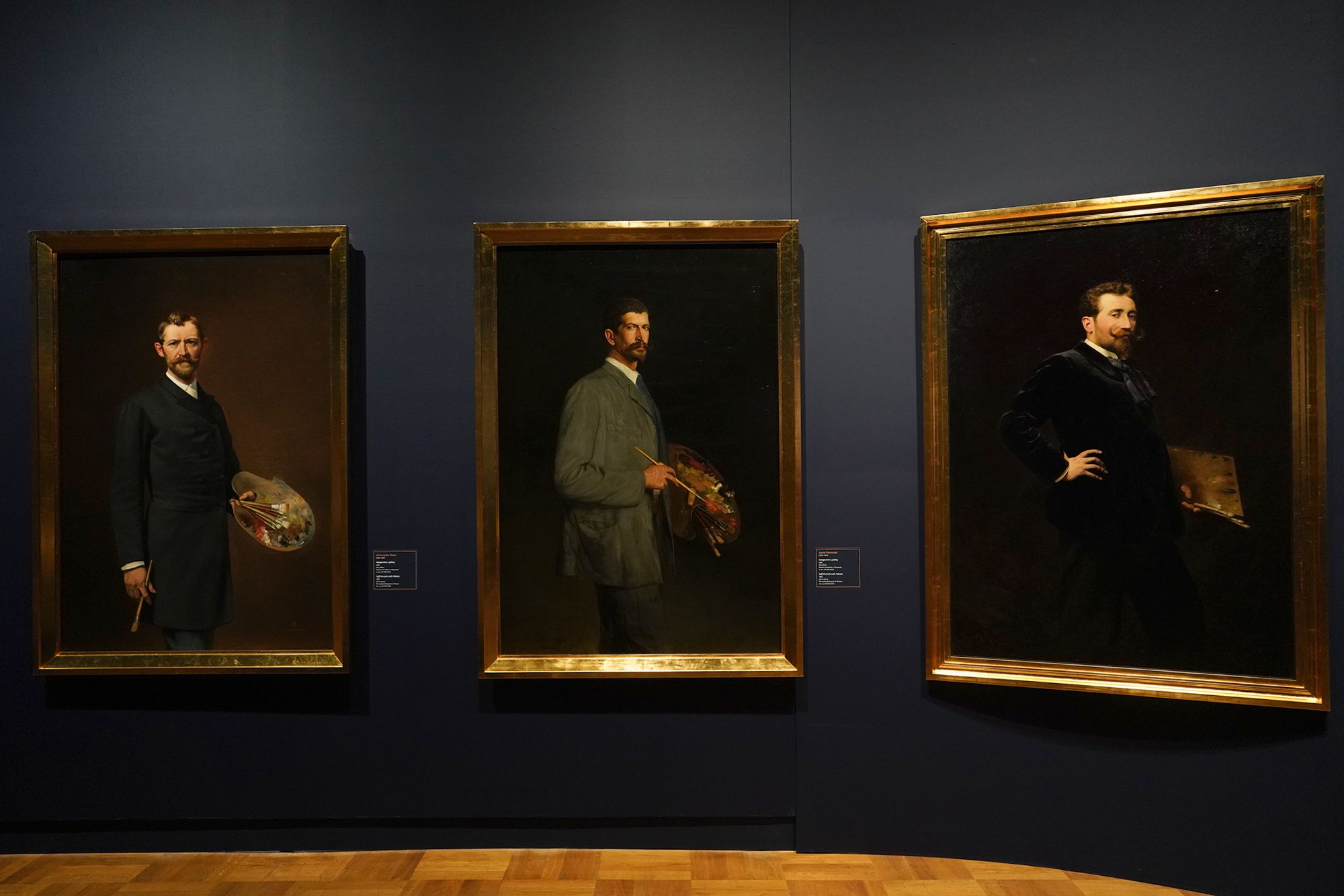
Korwin-Milewski commissioned self-portraits from Polish artists whose work he admired. He asked them to depict themselves standing, life-size, holding a painter’s palette against a neutral background. Most followed this format, but Jan Matejko portrayed himself seated. Together, the portraits show leading painters of the period as they saw themselves.
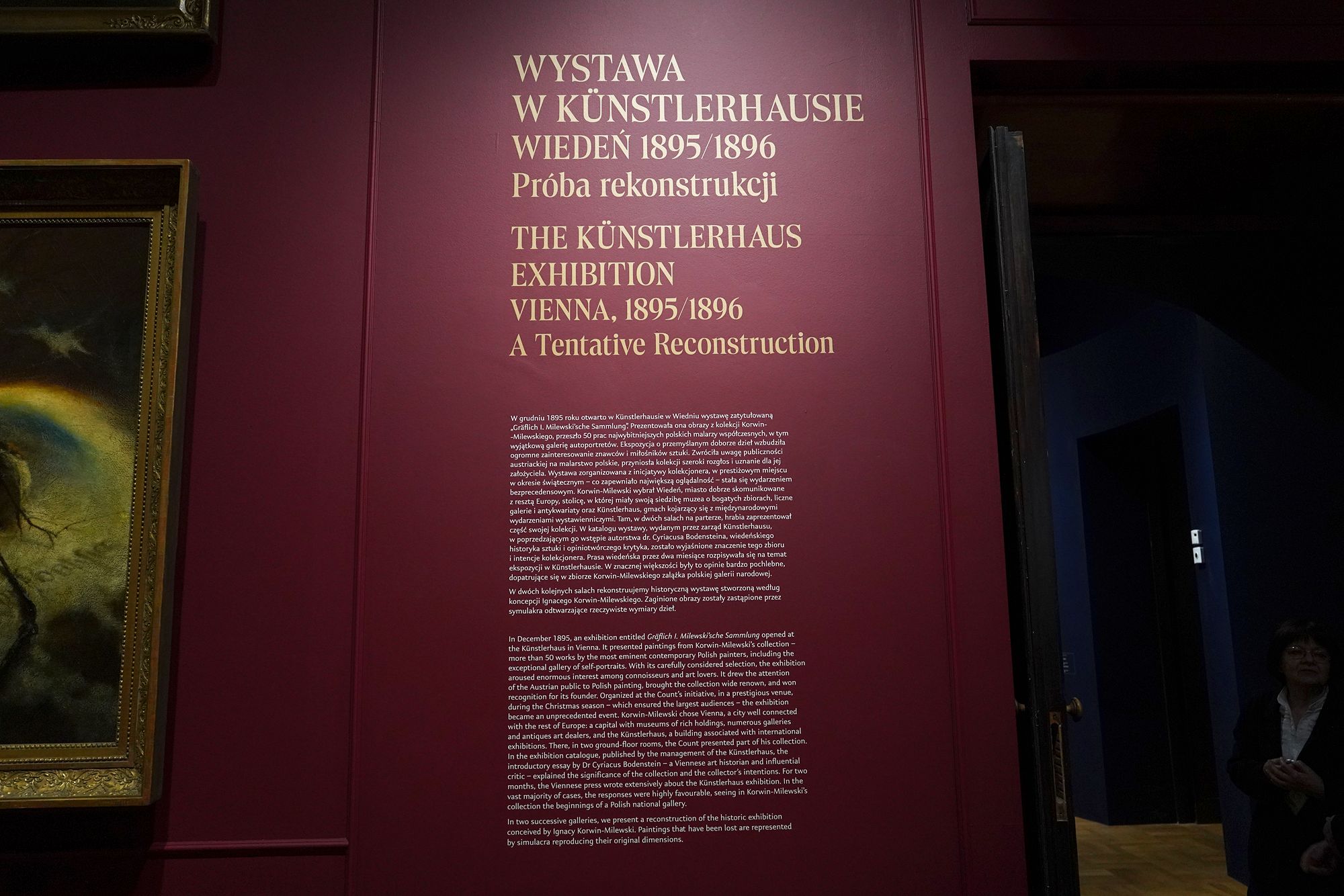
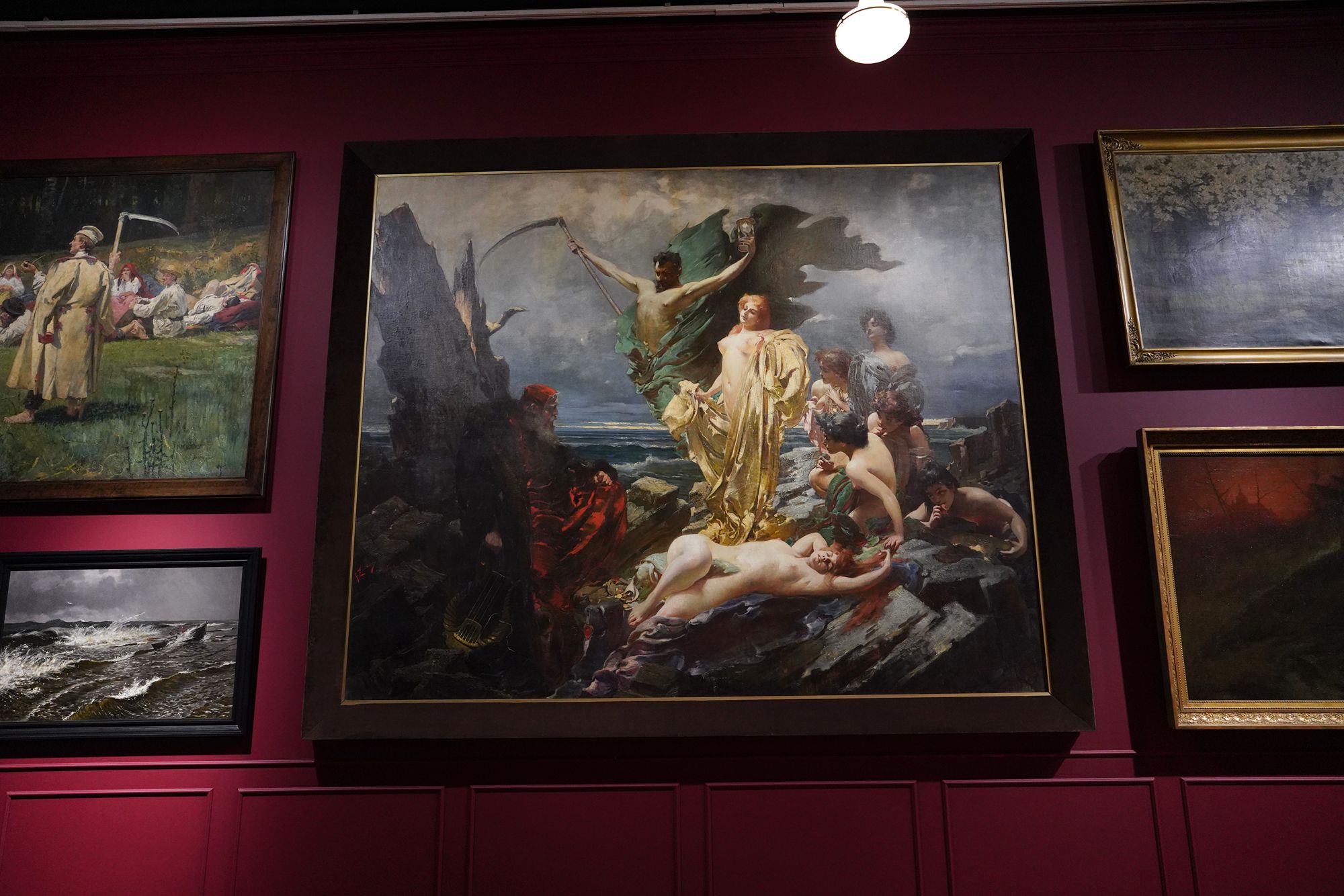
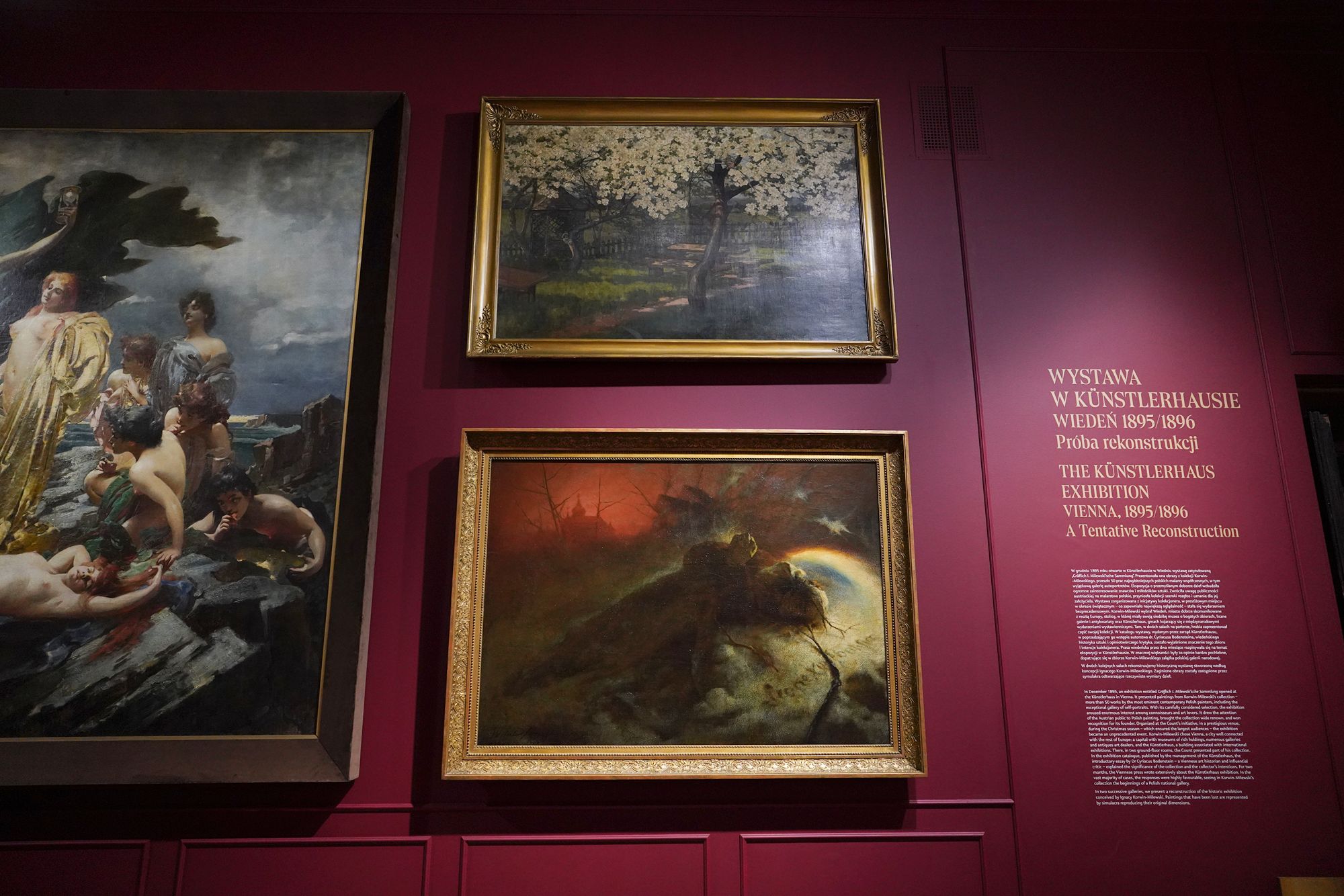
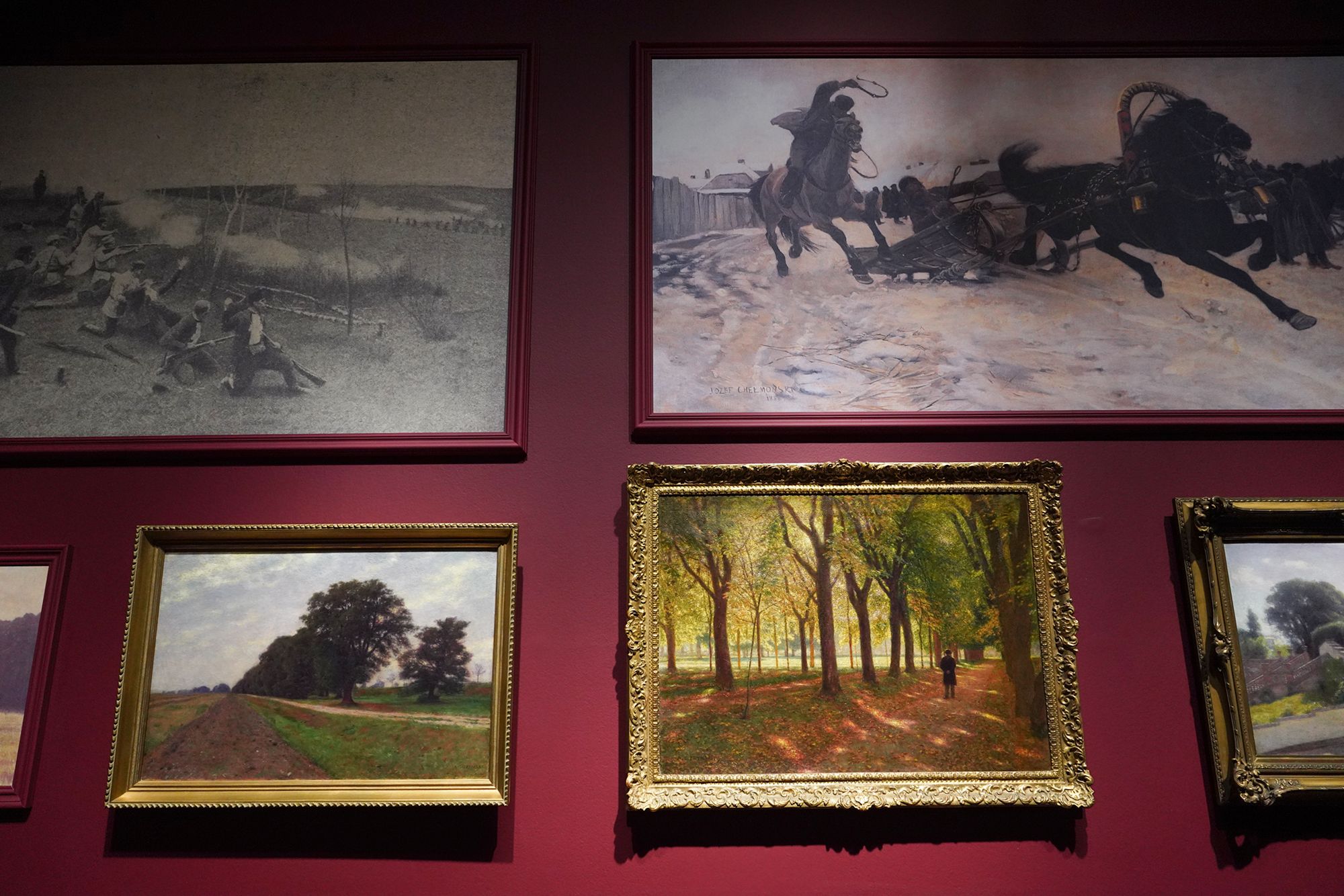
This section attempts to recreate the exhibition of Korwin-Milewski’s collection held at Vienna’s Künstlerhaus in 1895–1896. The original show featured more than 50 paintings by leading Polish artists, including his self-portrait gallery, and received favorable reviews. The reconstruction brings surviving works together, using substitutes to represent paintings that have been lost.
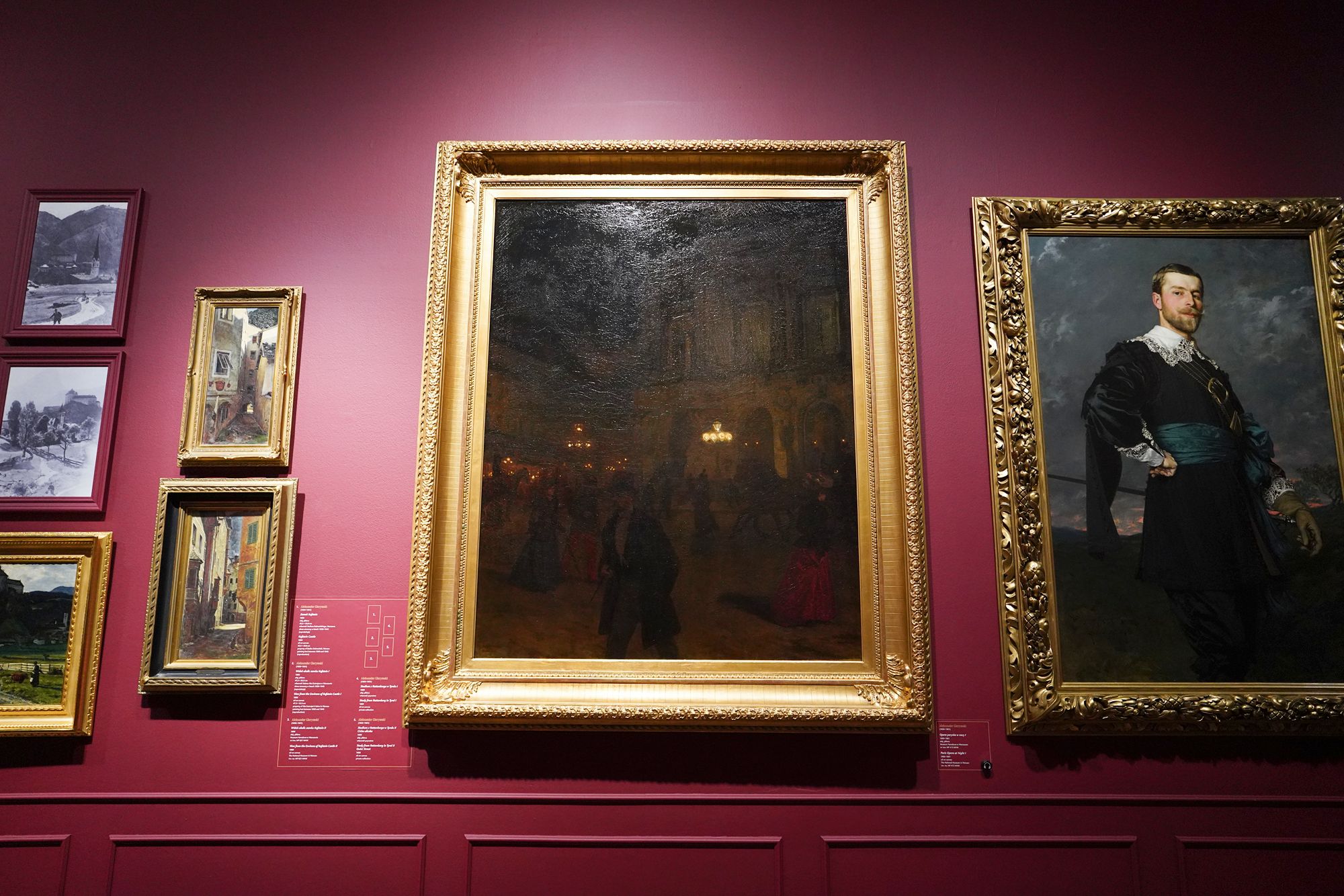
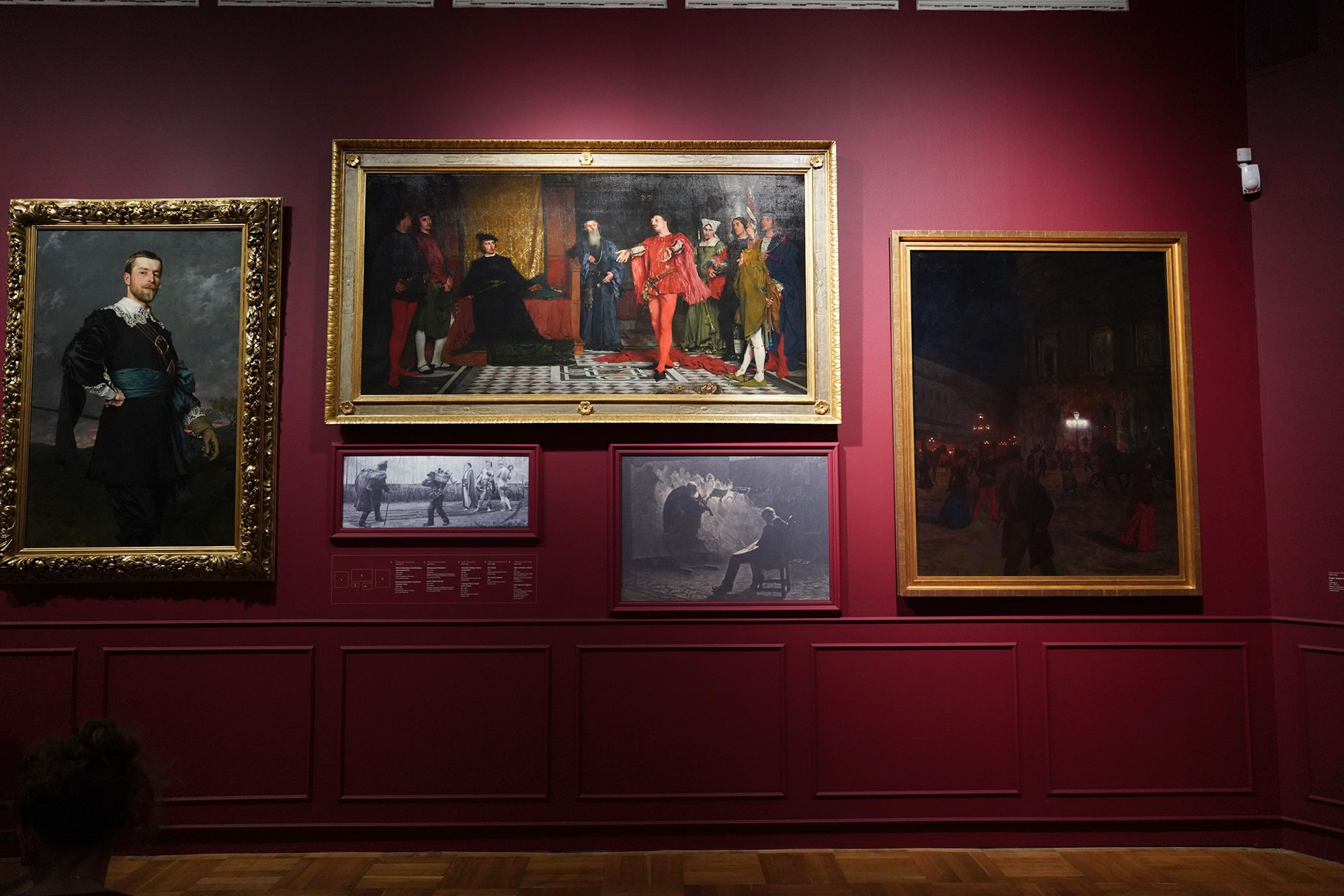
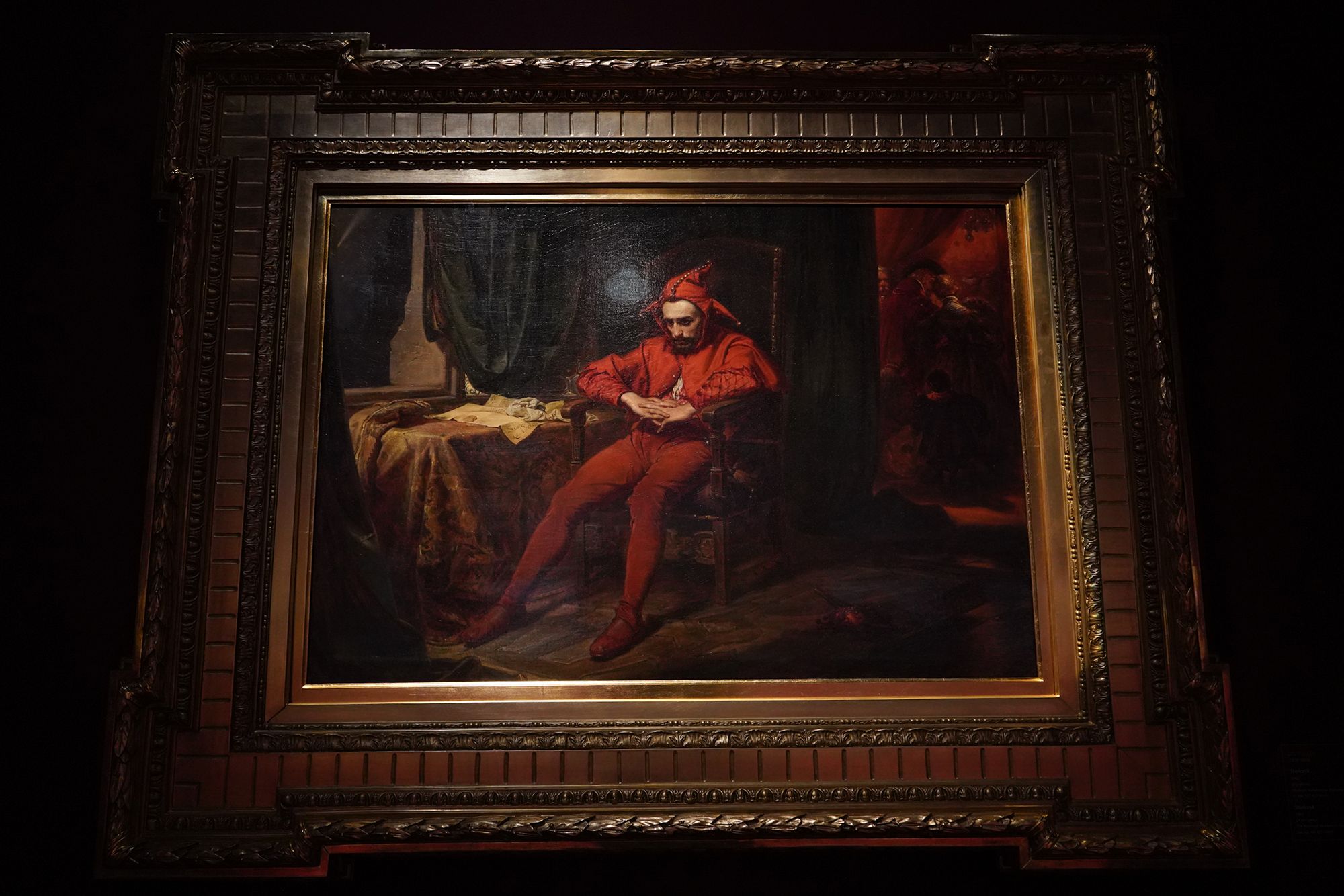
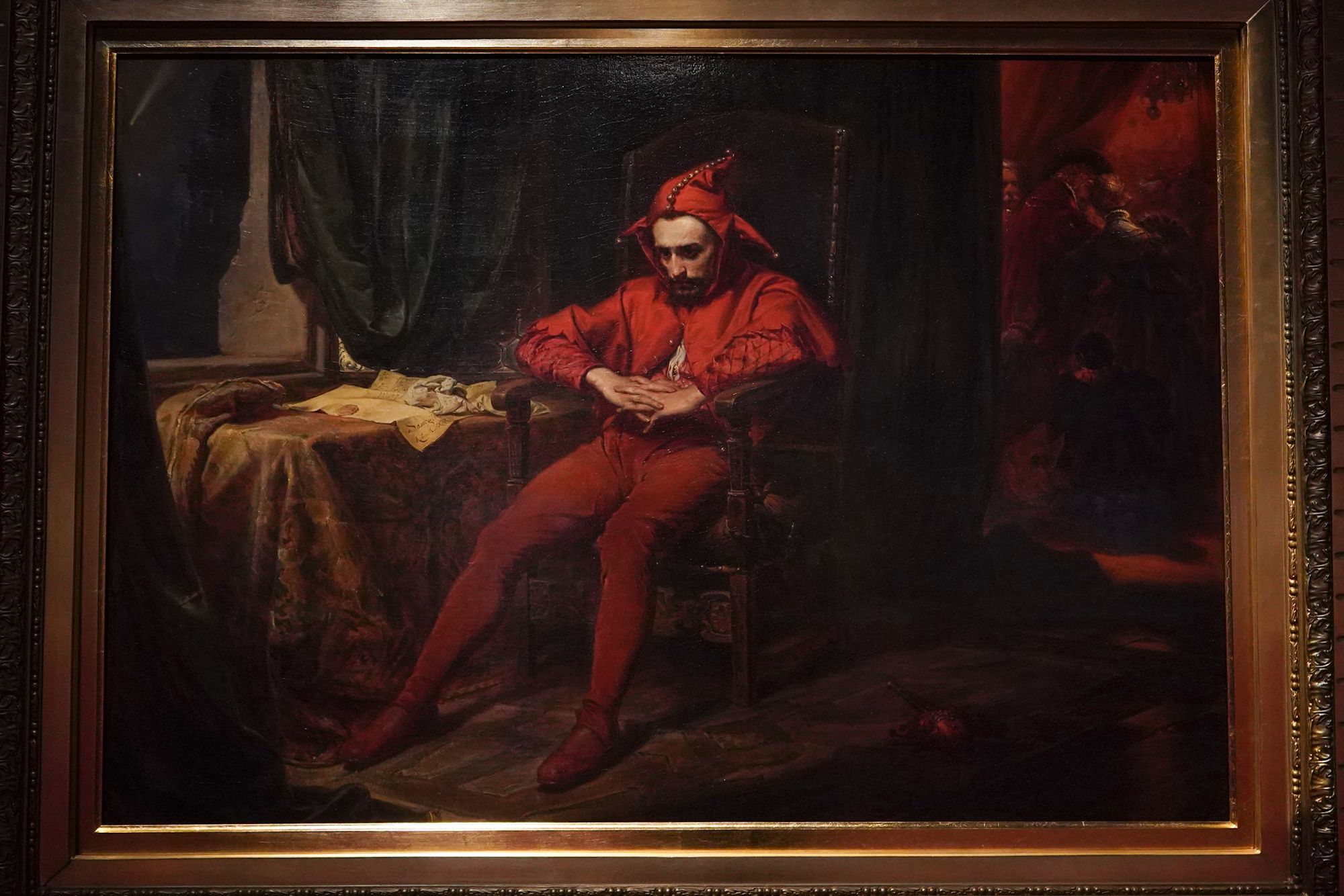
Jan Matejko’s Stańczyk (1862) shows the royal court jester sitting alone, troubled by news of Poland’s loss of Smolensk to Moscow, while courtiers celebrate in the adjoining room. His red costume suggests entertainment, but his expression conveys deep concern. The painting presents the jester as someone who understands the danger facing the country.
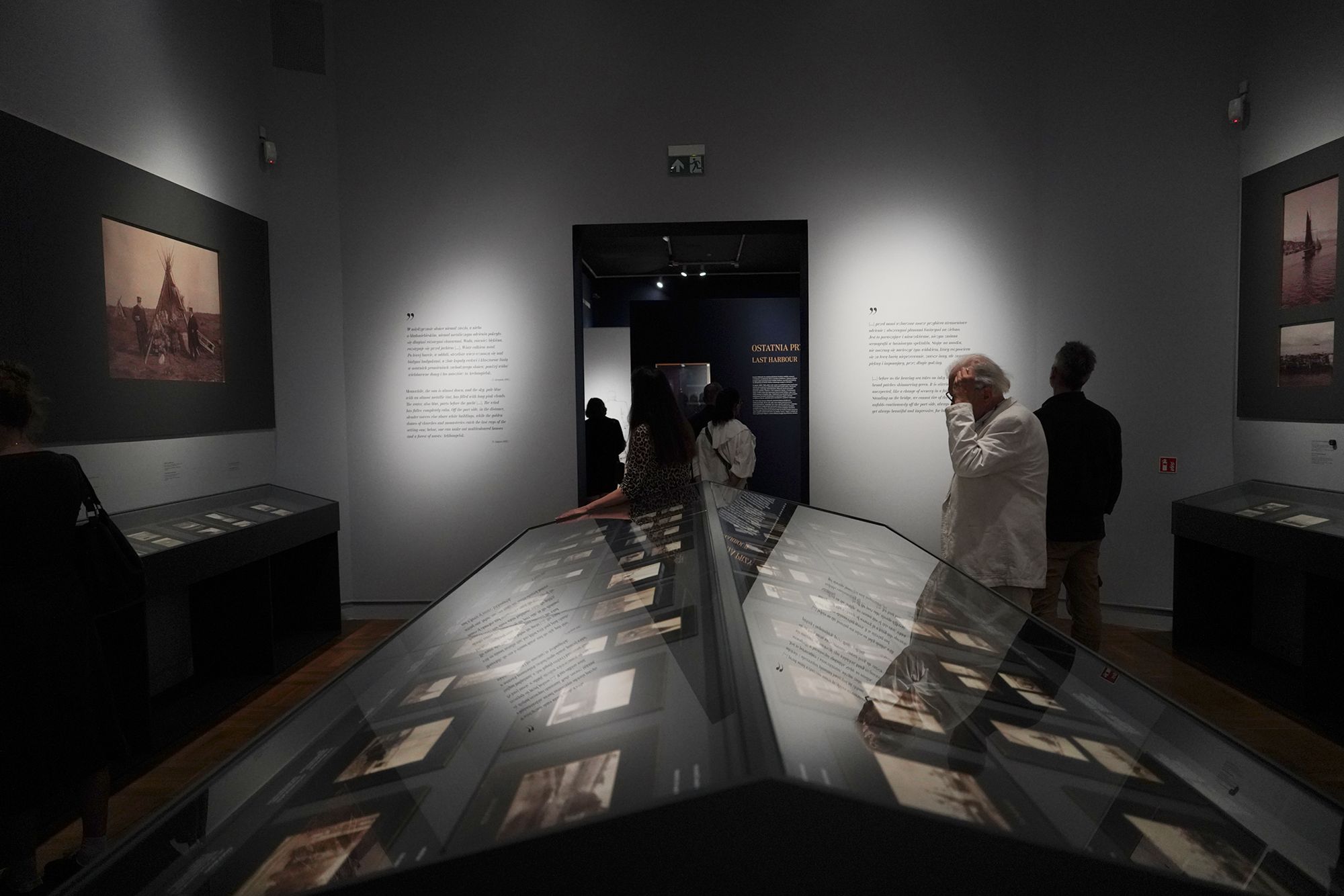
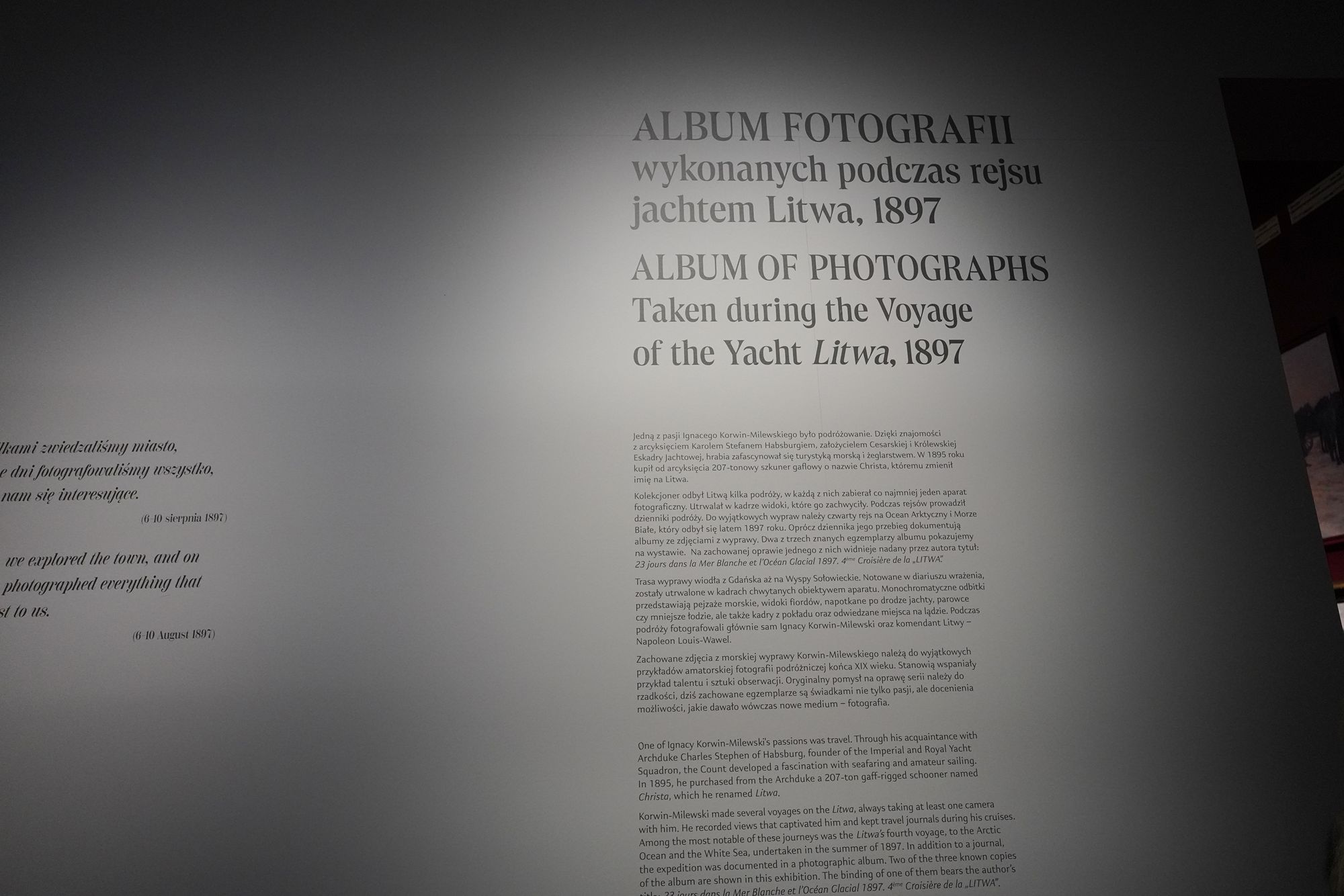
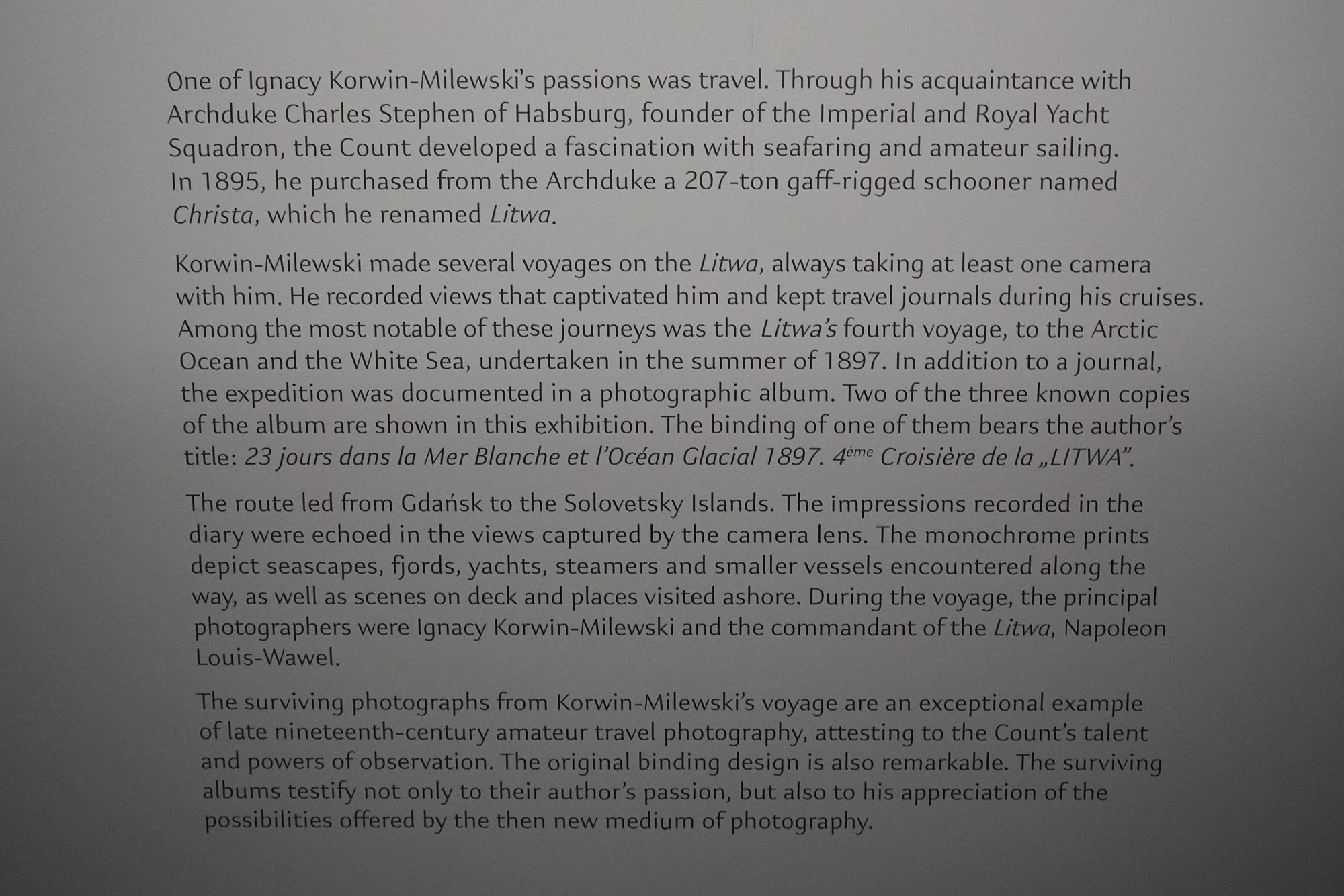
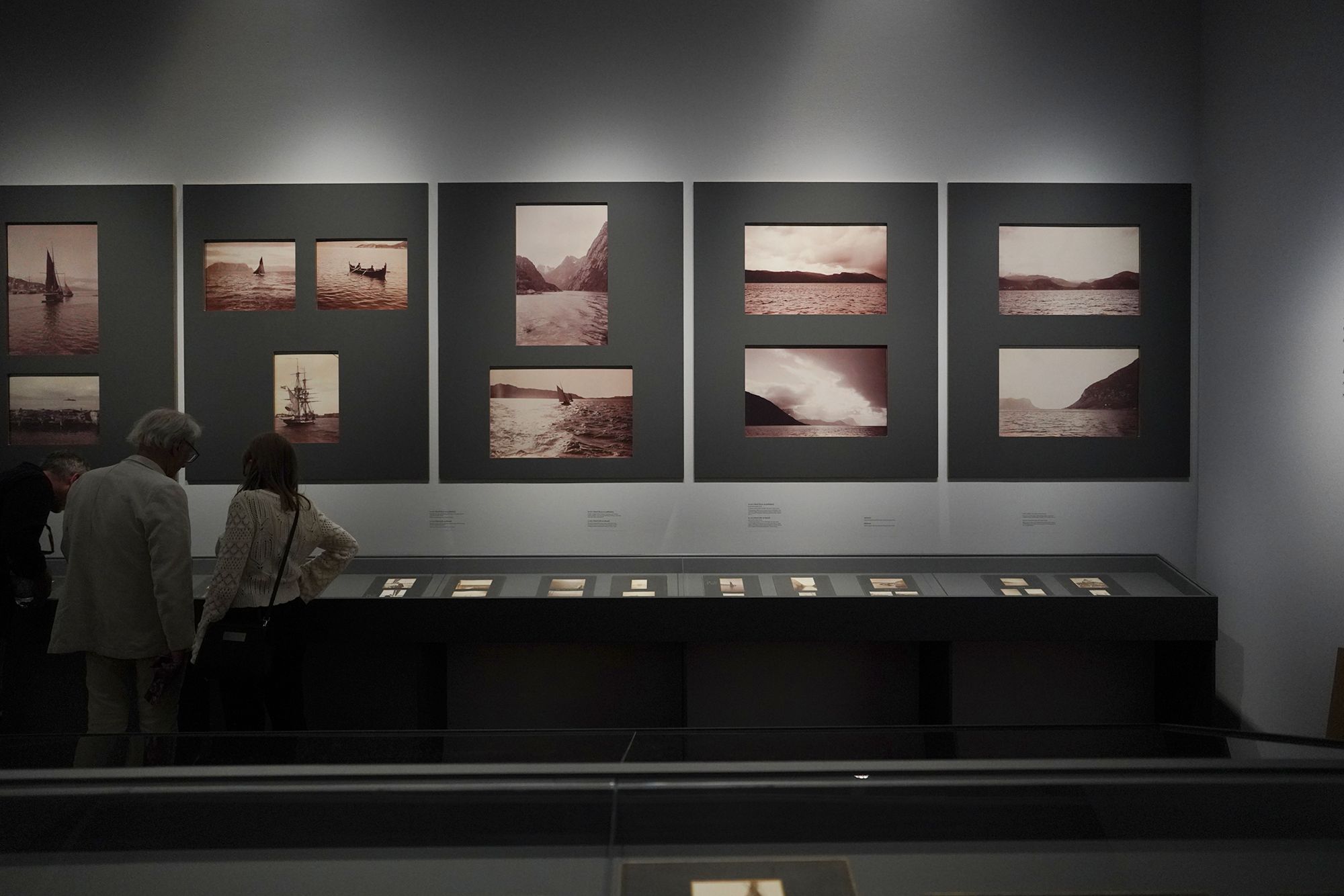
Korwin-Milewski was also a keen traveler and amateur photographer. In 1895, he bought a sailing yacht and renamed it Litwa. Two years later, he sailed from Gdańsk to the Solovetsky Islands, documenting the journey through photographs and a journal. The exhibition displays albums showing seascapes, ships, life on deck, and places visited ashore.
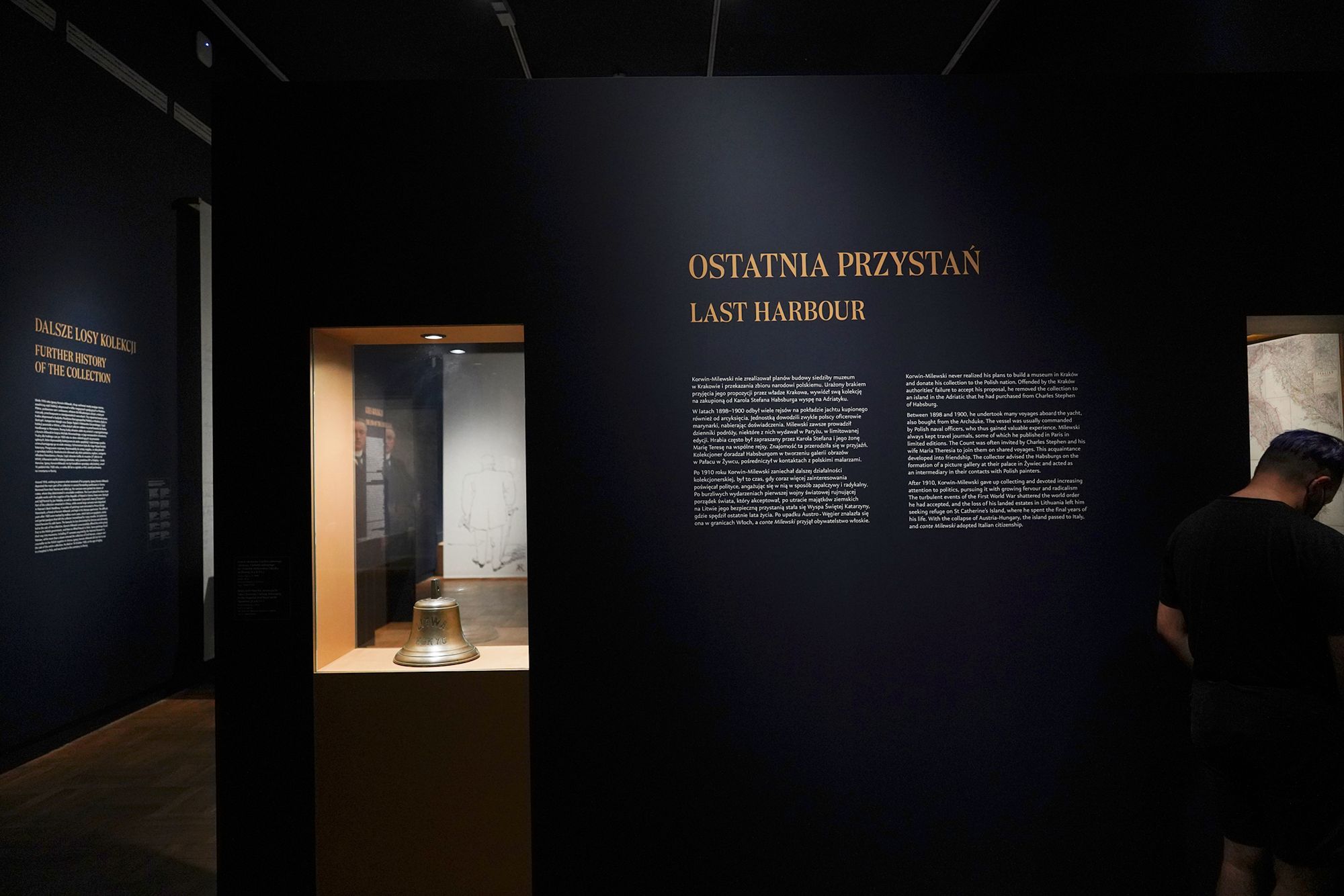
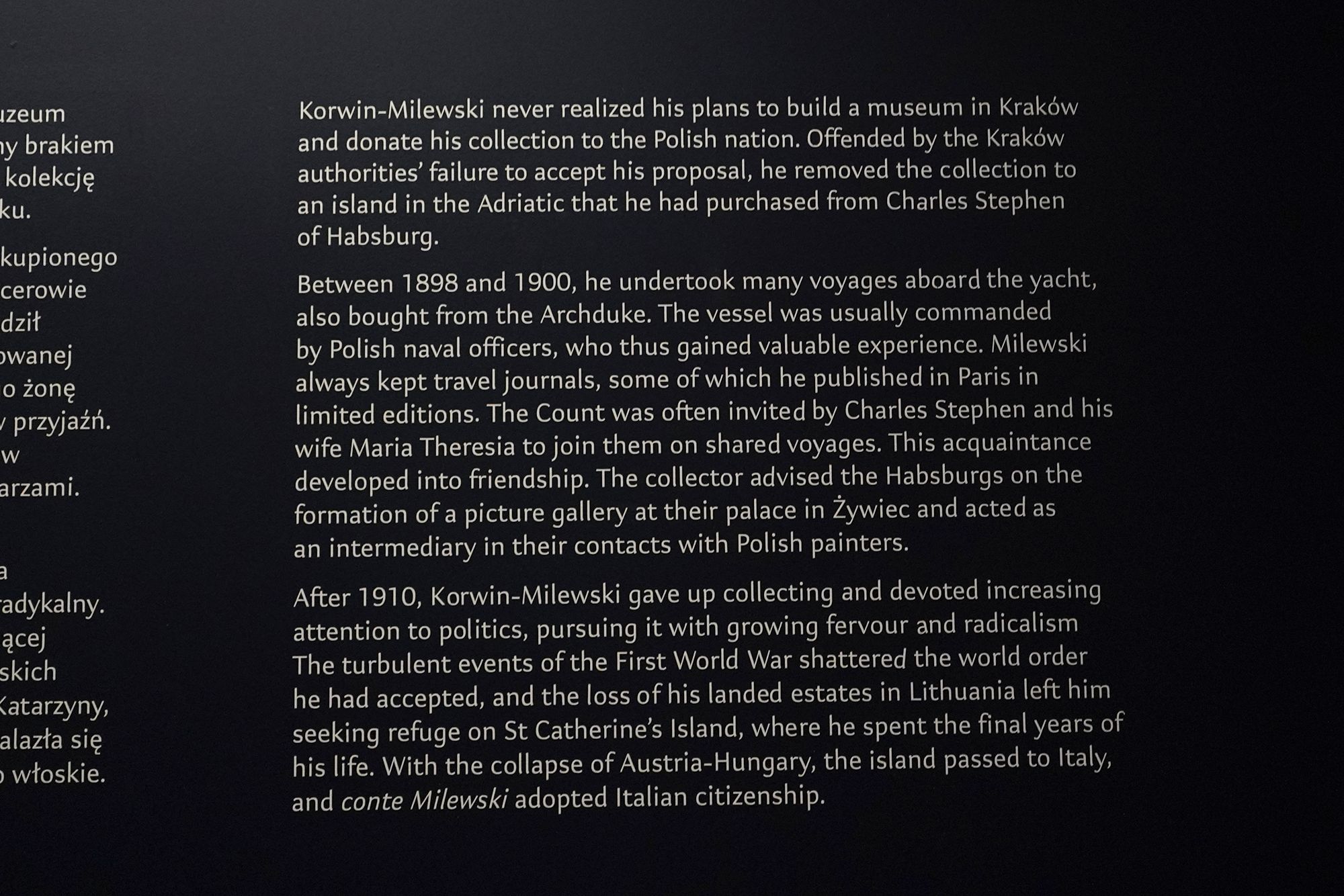
Korwin-Milewski’s plans for a museum in Kraków never materialized. After the city authorities failed to accept his proposal, he moved his collection to an island he owned in the Adriatic. He stopped collecting after 1910 and turned increasingly to politics. Following World War I and the loss of his Lithuanian estates, he spent his final years on St. Catherine’s Island.
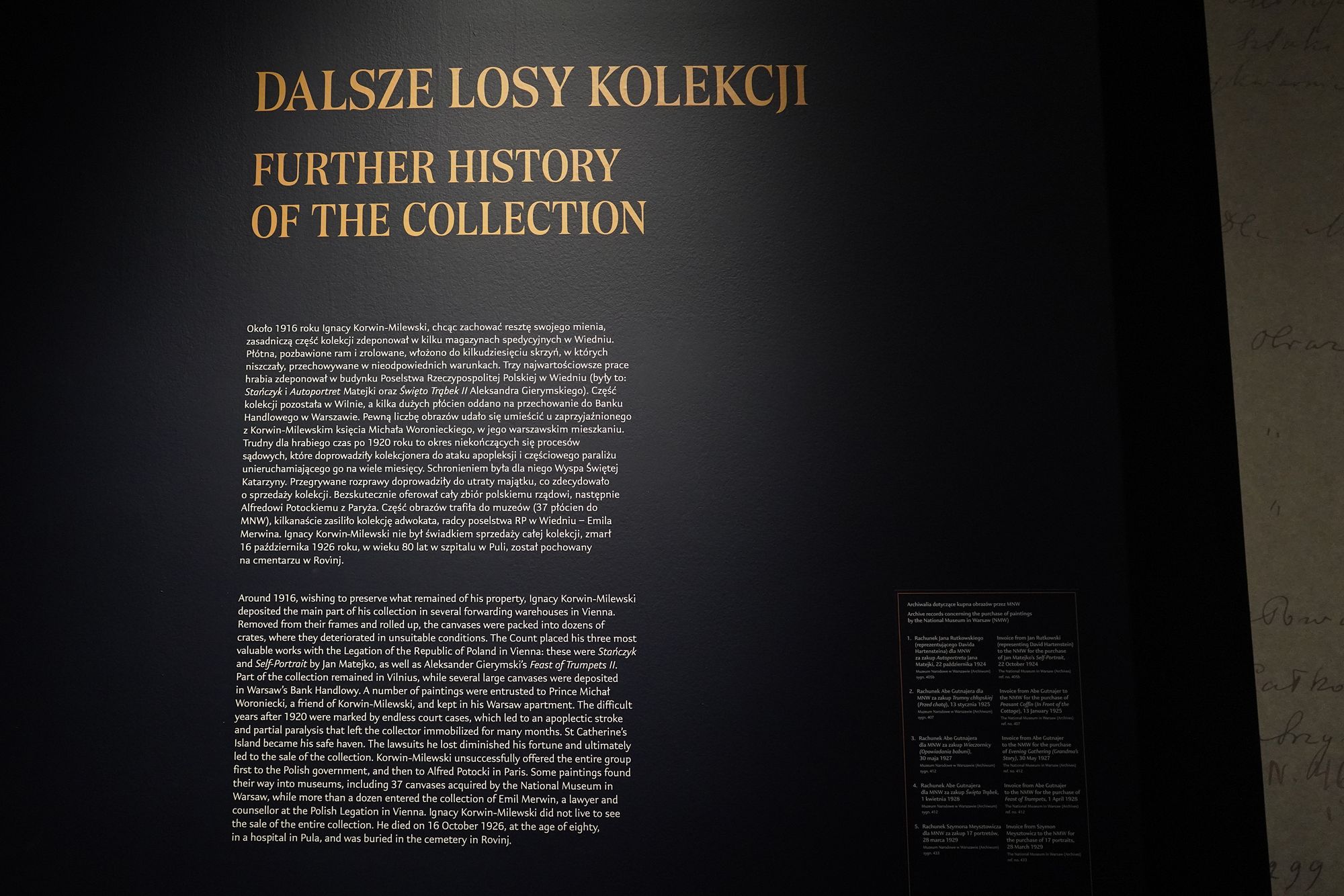
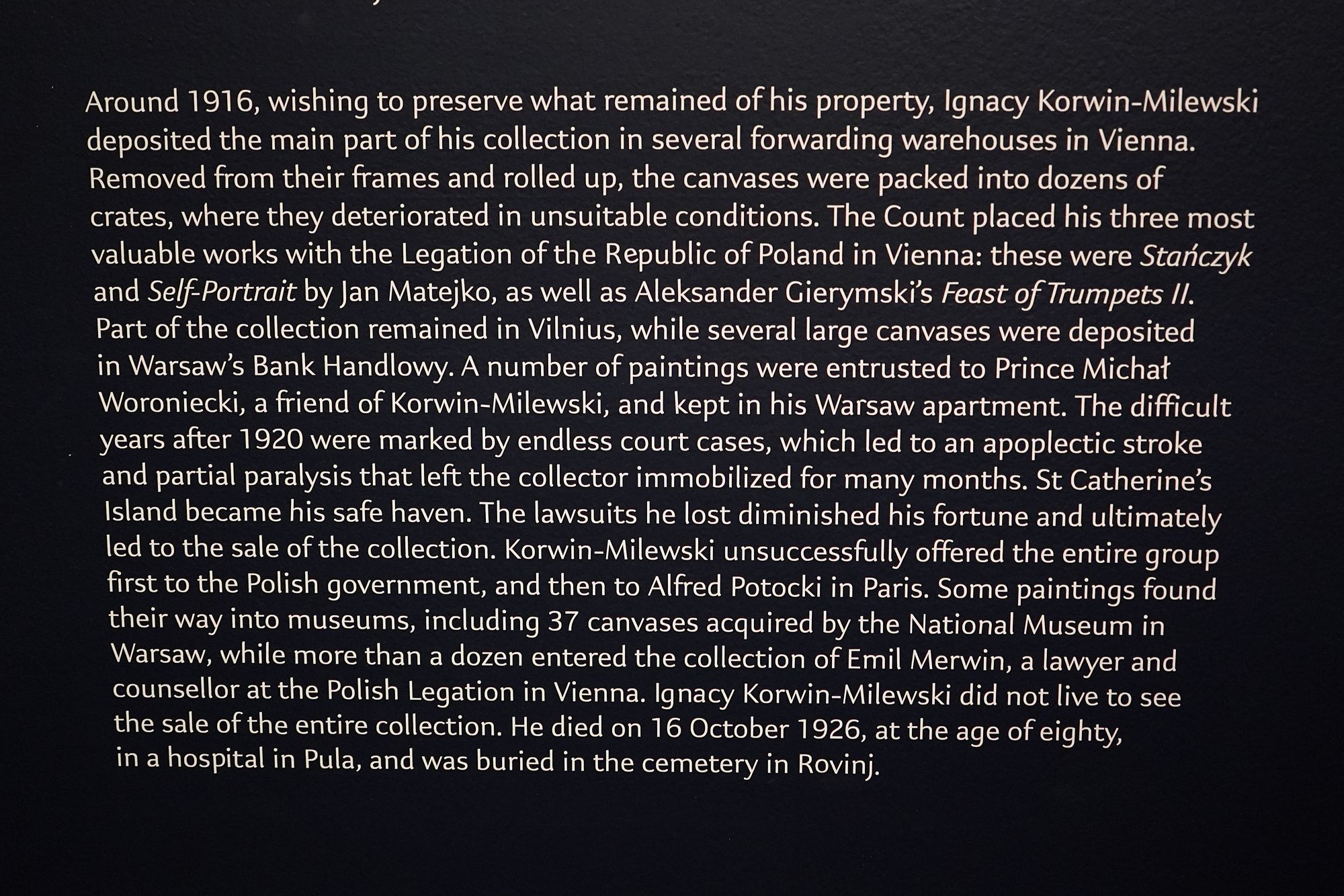
Around 1916, Korwin-Milewski stored much of his collection in Vienna warehouses, where poor conditions damaged the rolled canvases. Later lawsuits reduced his fortune and forced him to sell the paintings. Attempts to sell the collection as a whole failed, and it was dispersed. The National Museum in Warsaw acquired 37 paintings. He died in Pula in 1926, aged eighty.
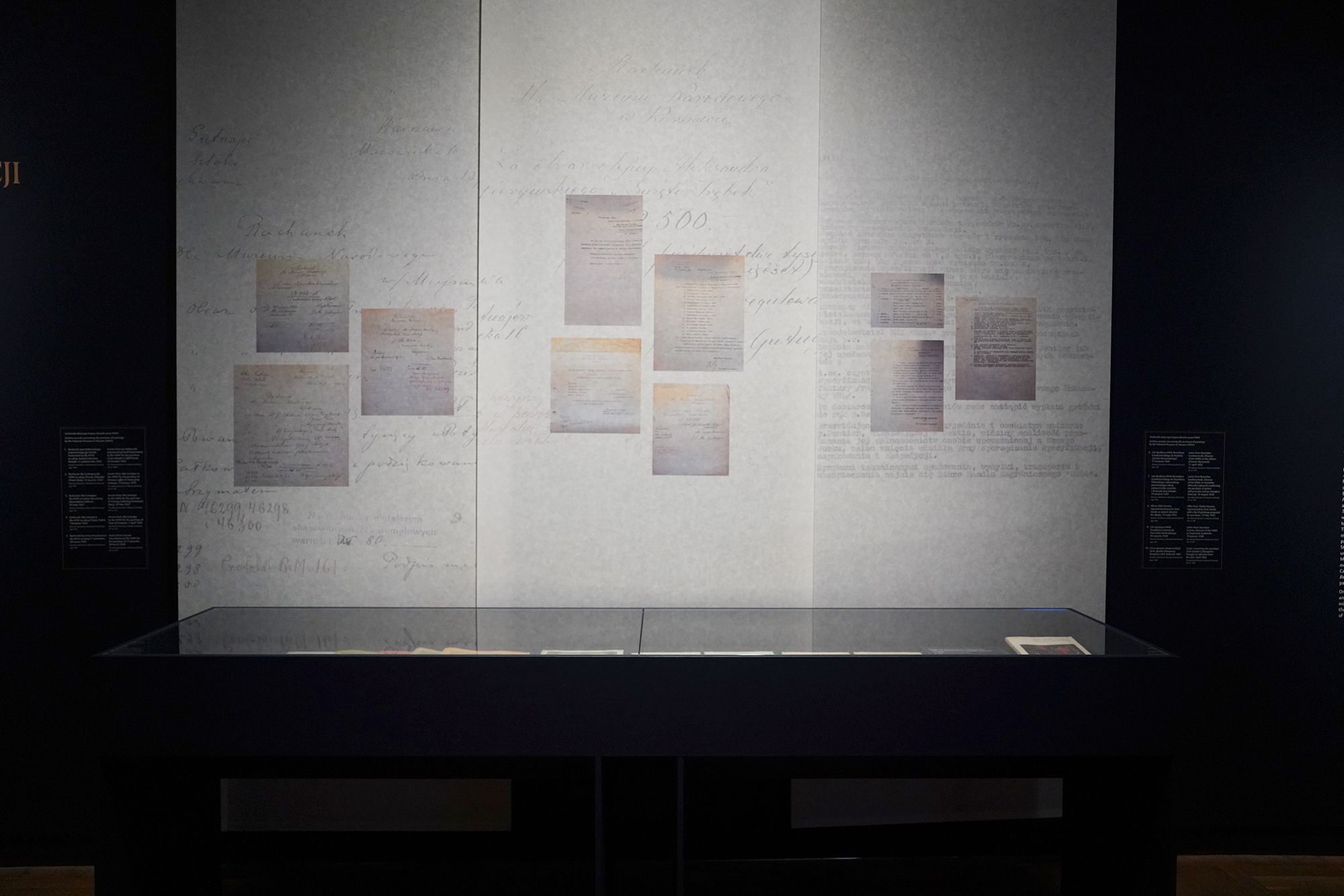
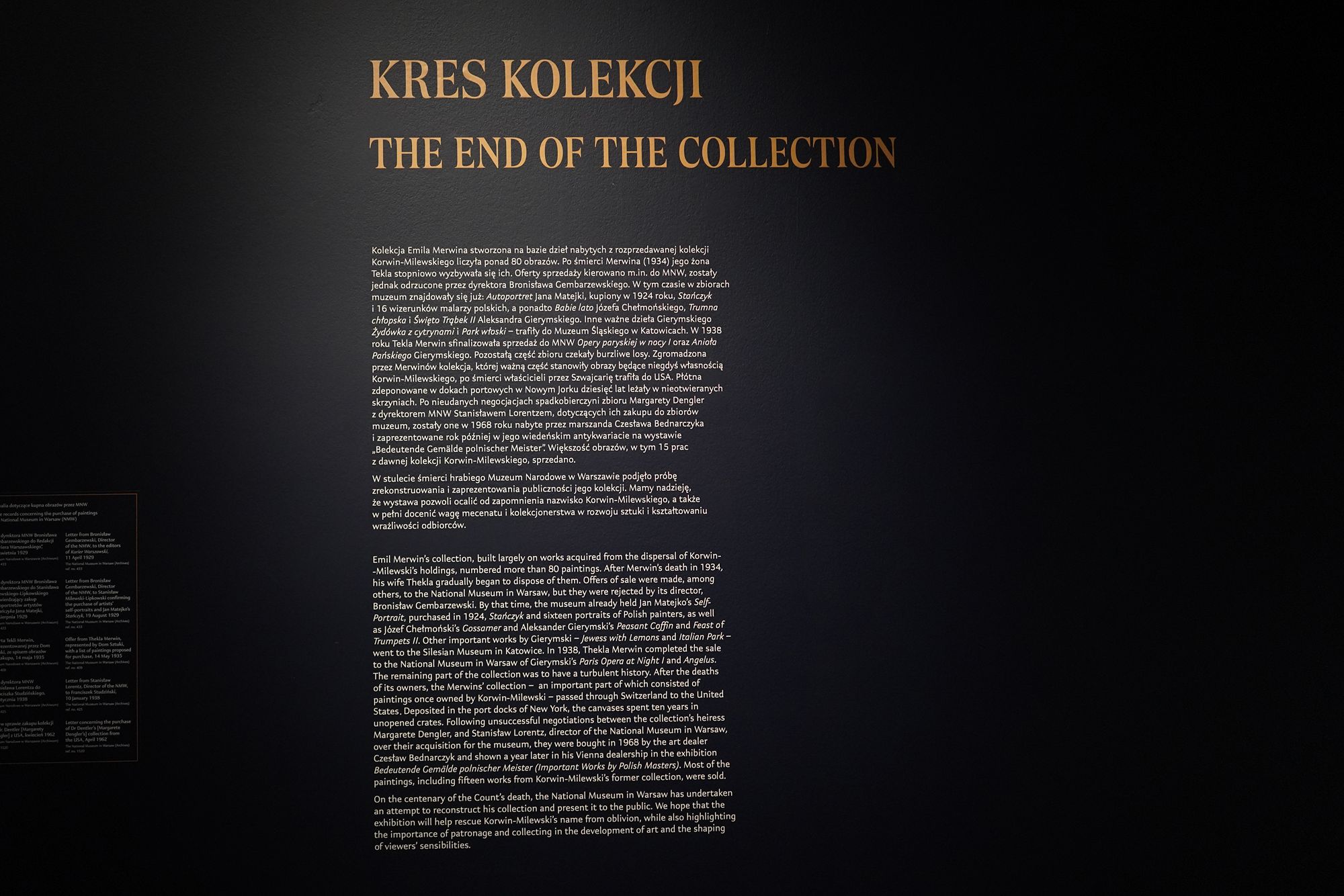
Many paintings from Korwin-Milewski’s collection passed to Emil Merwin and were later scattered among museums and private owners. Some traveled through Switzerland to New York, where they remained in unopened crates for ten years before eventually being sold. Marking the centenary of Korwin-Milewski’s death, this exhibition reunites surviving works and recalls his contribution to Polish art.
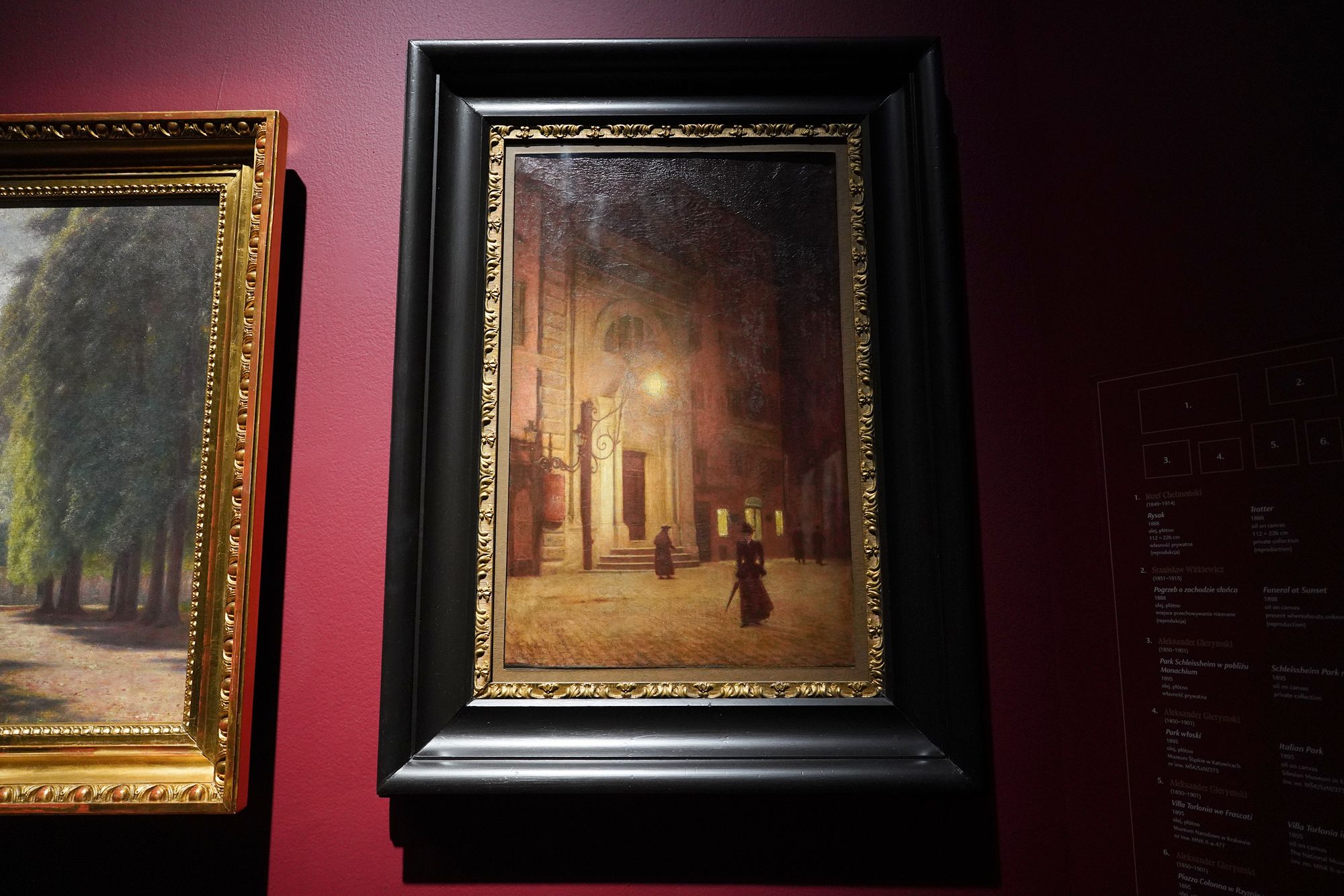
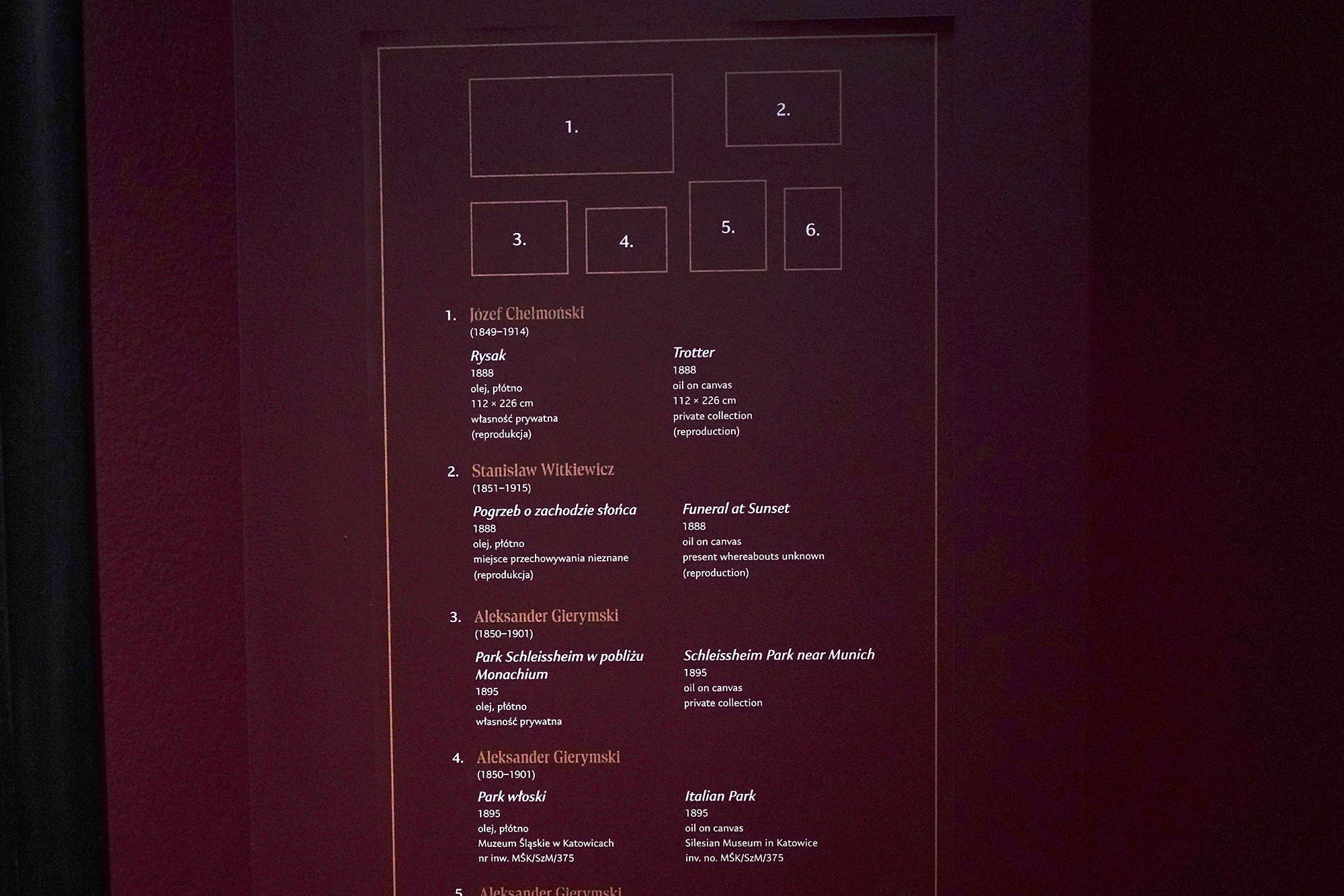
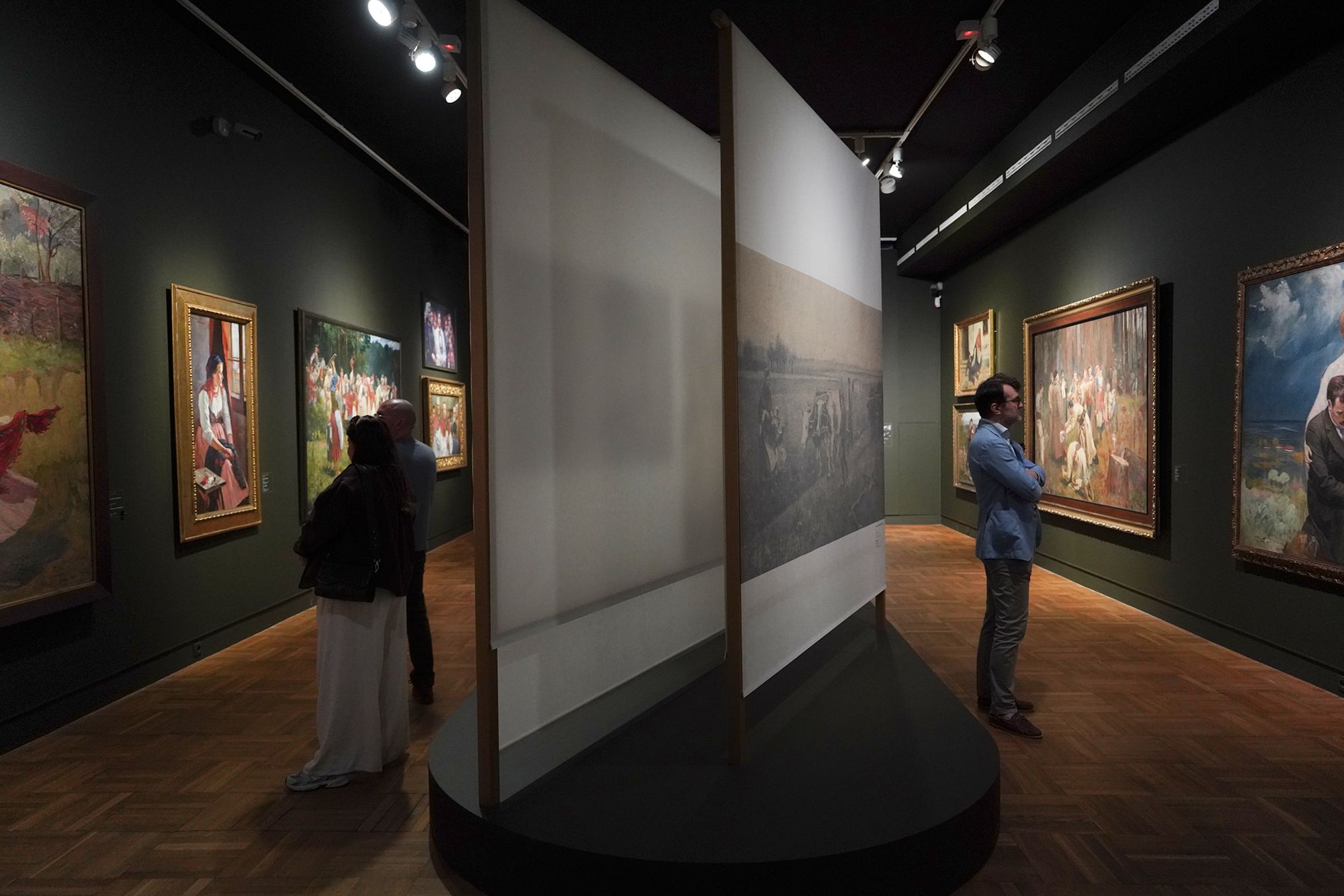
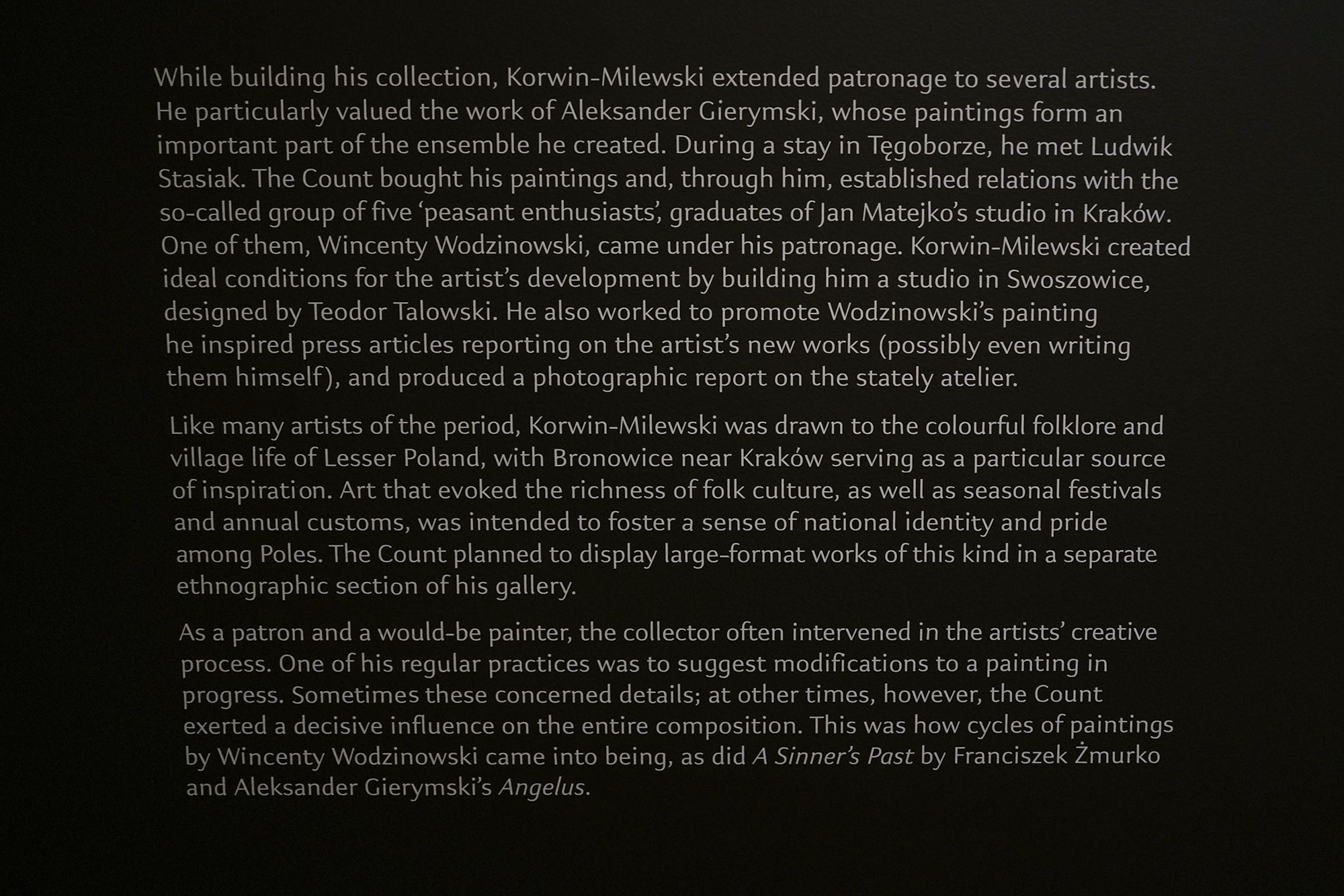
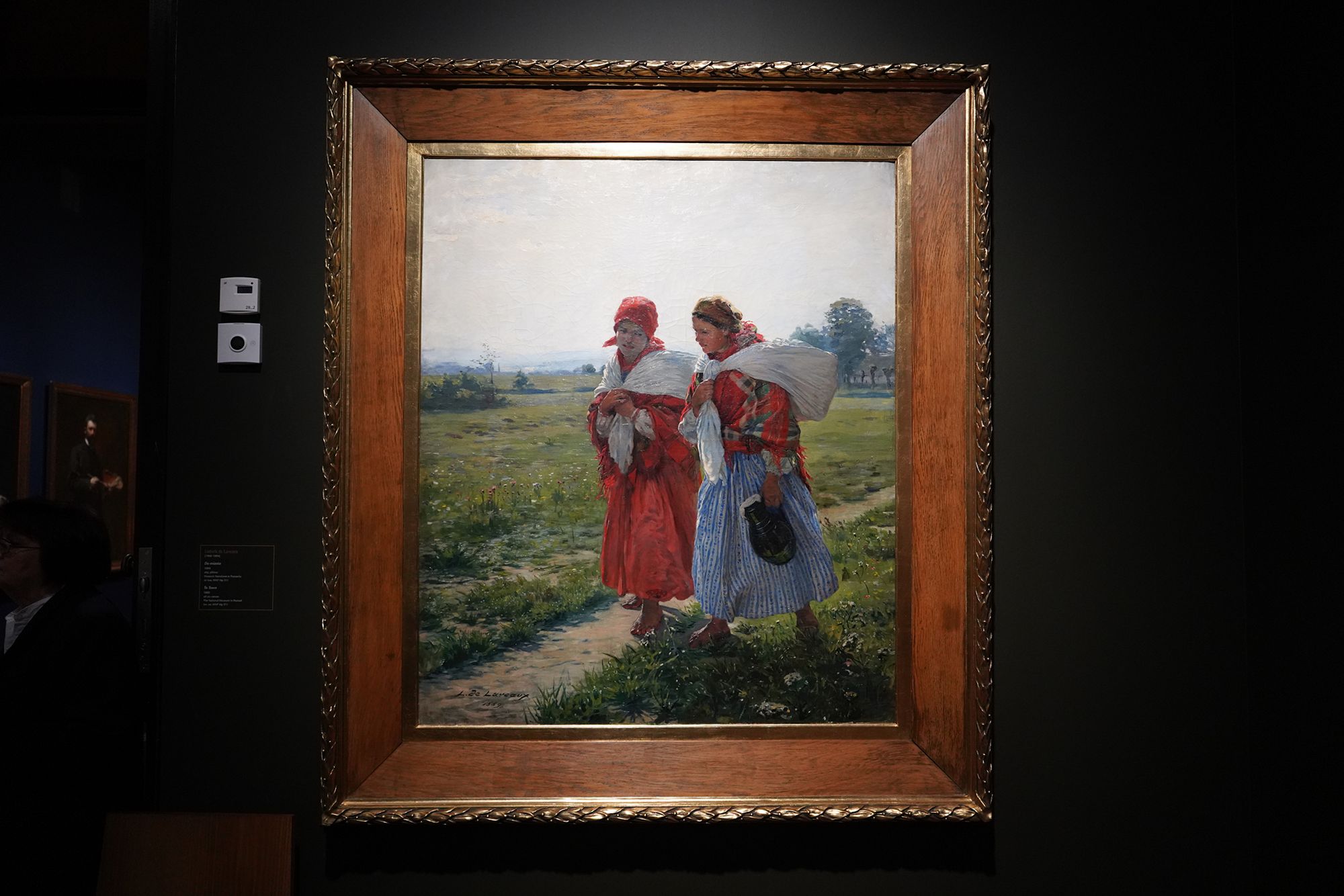
Korwin-Milewski supported several Polish artists, particularly Aleksander Gierymski and Wincenty Wodzinowski, for whom he built a studio near Kraków. He favored paintings of village life and folk traditions, seeing them as expressions of Polish identity. His patronage also involved suggesting changes to paintings, sometimes influencing their entire composition.
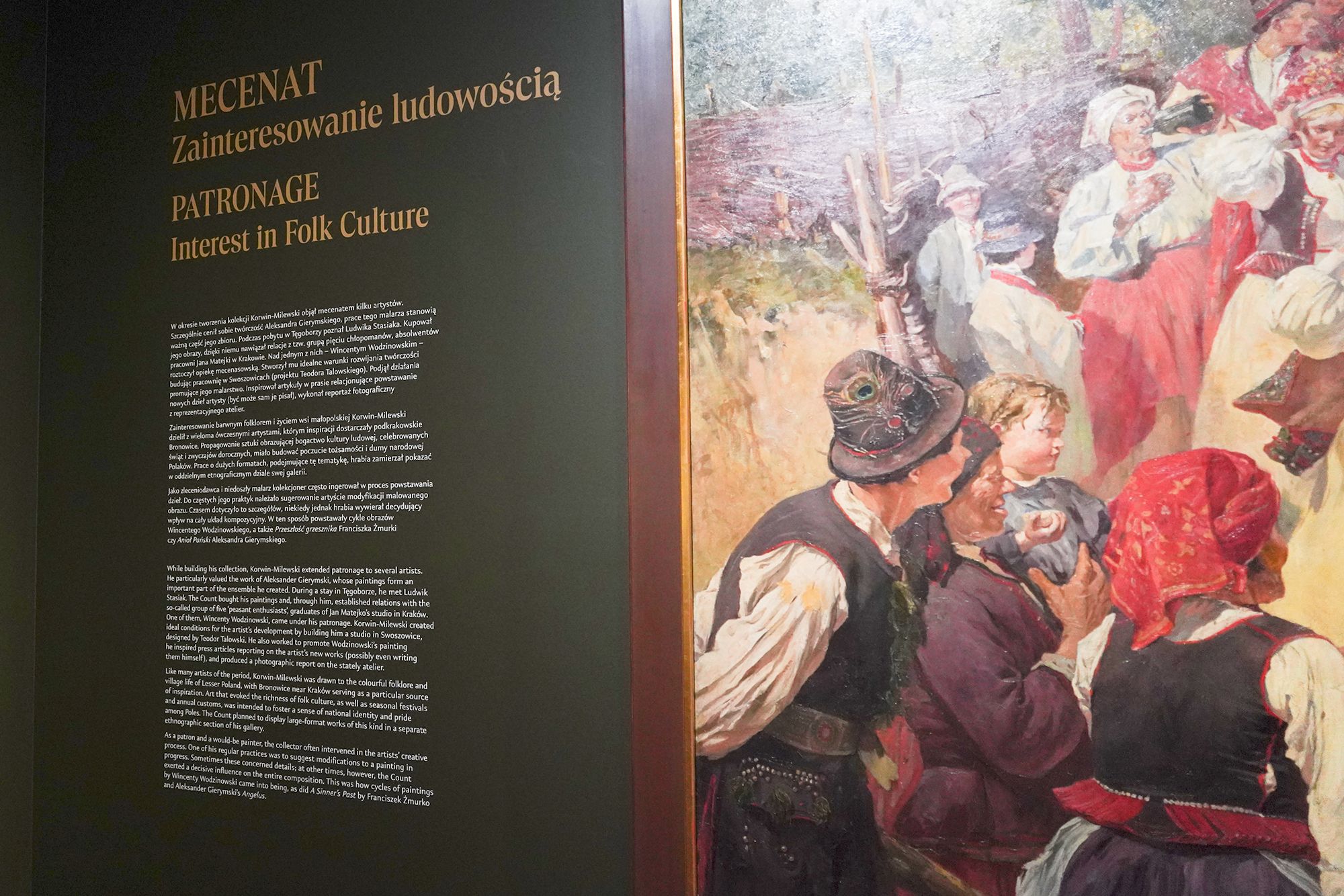
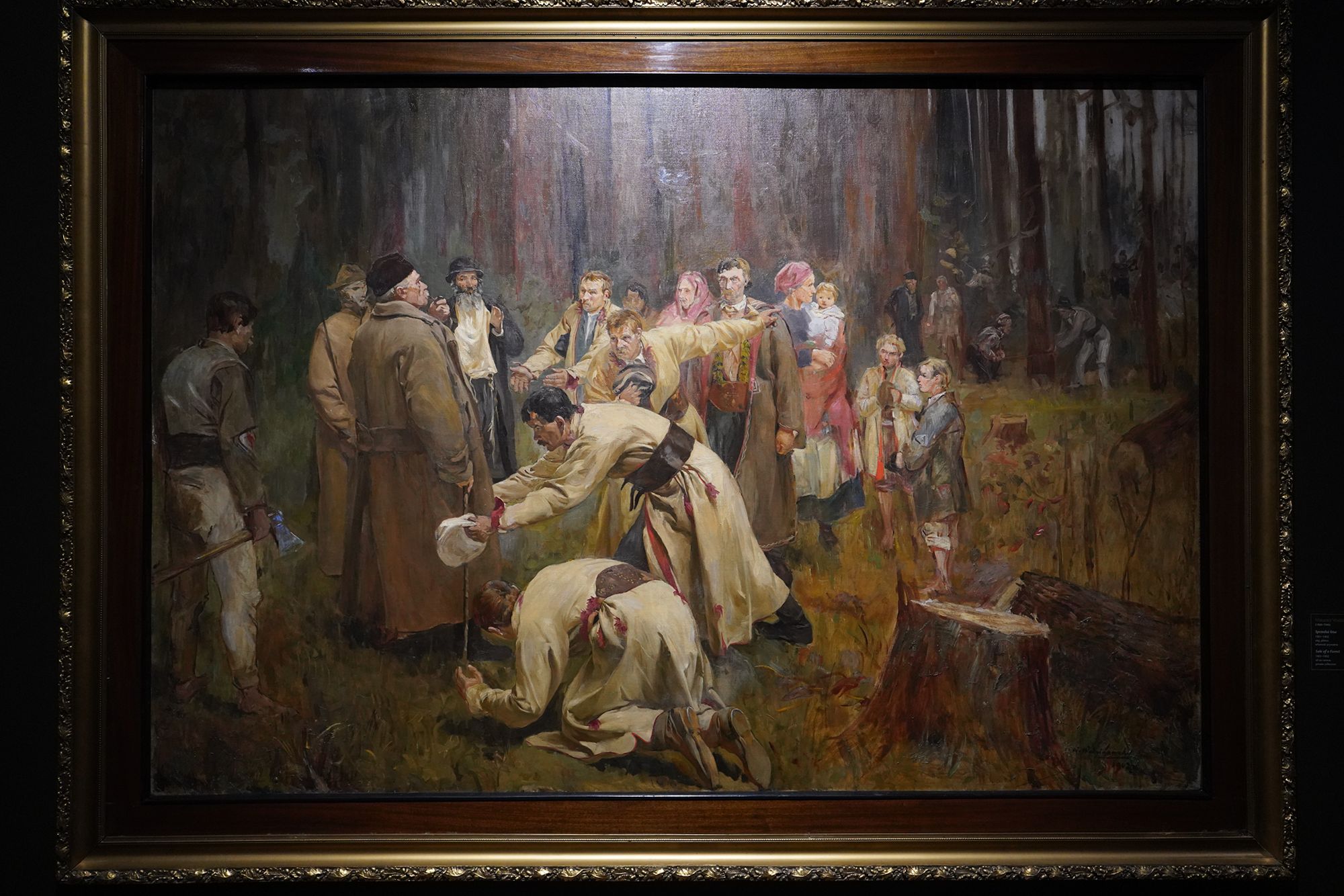
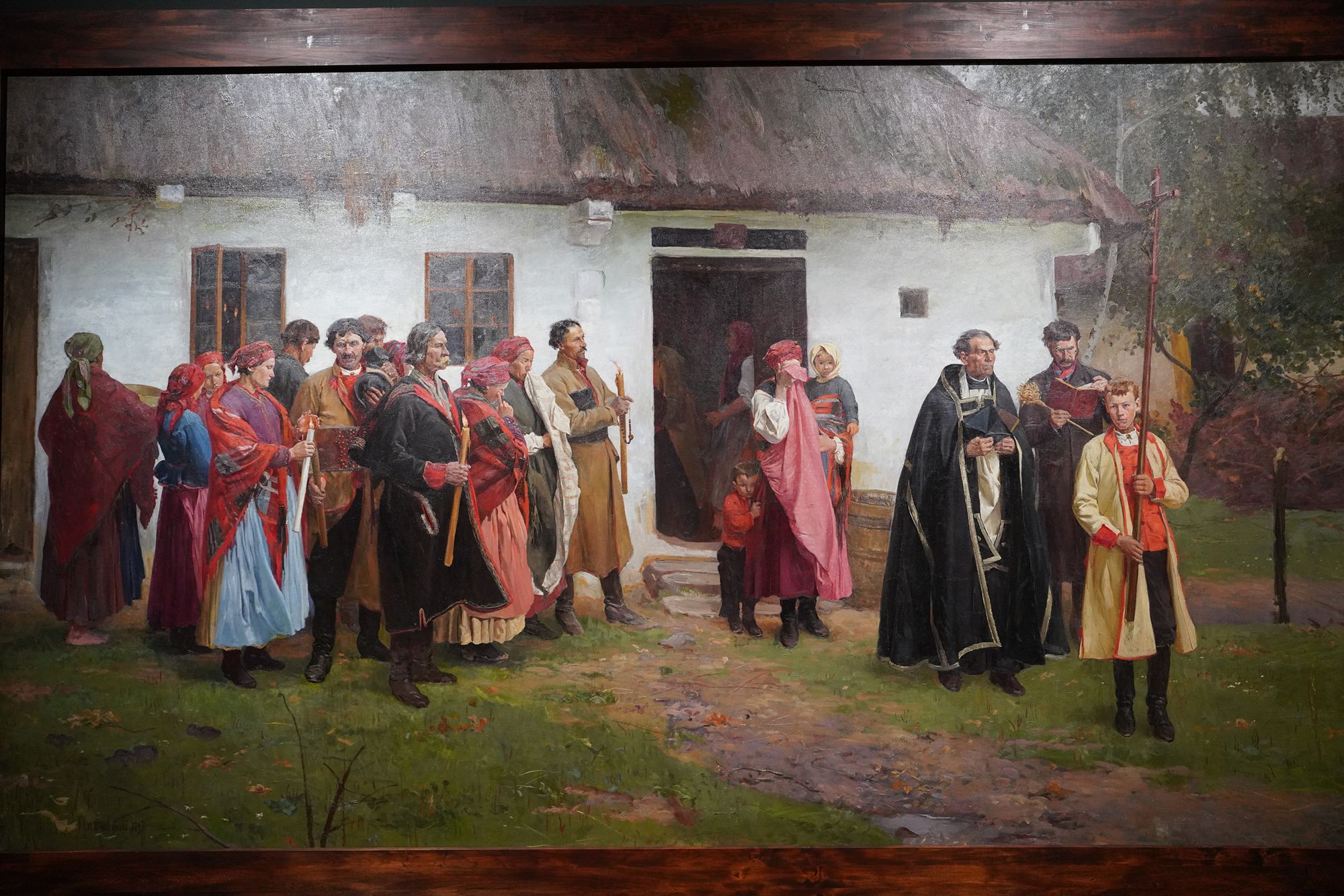
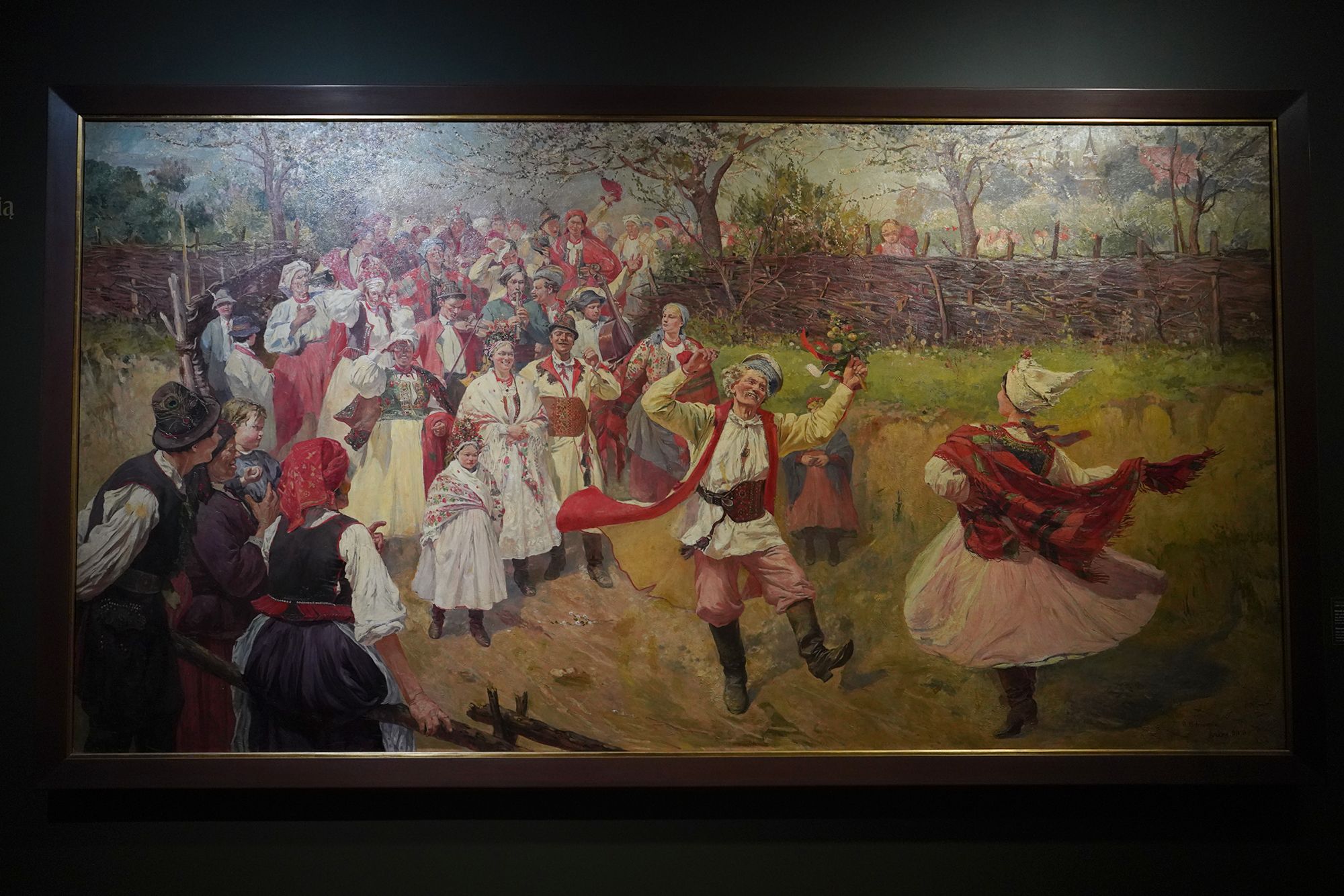
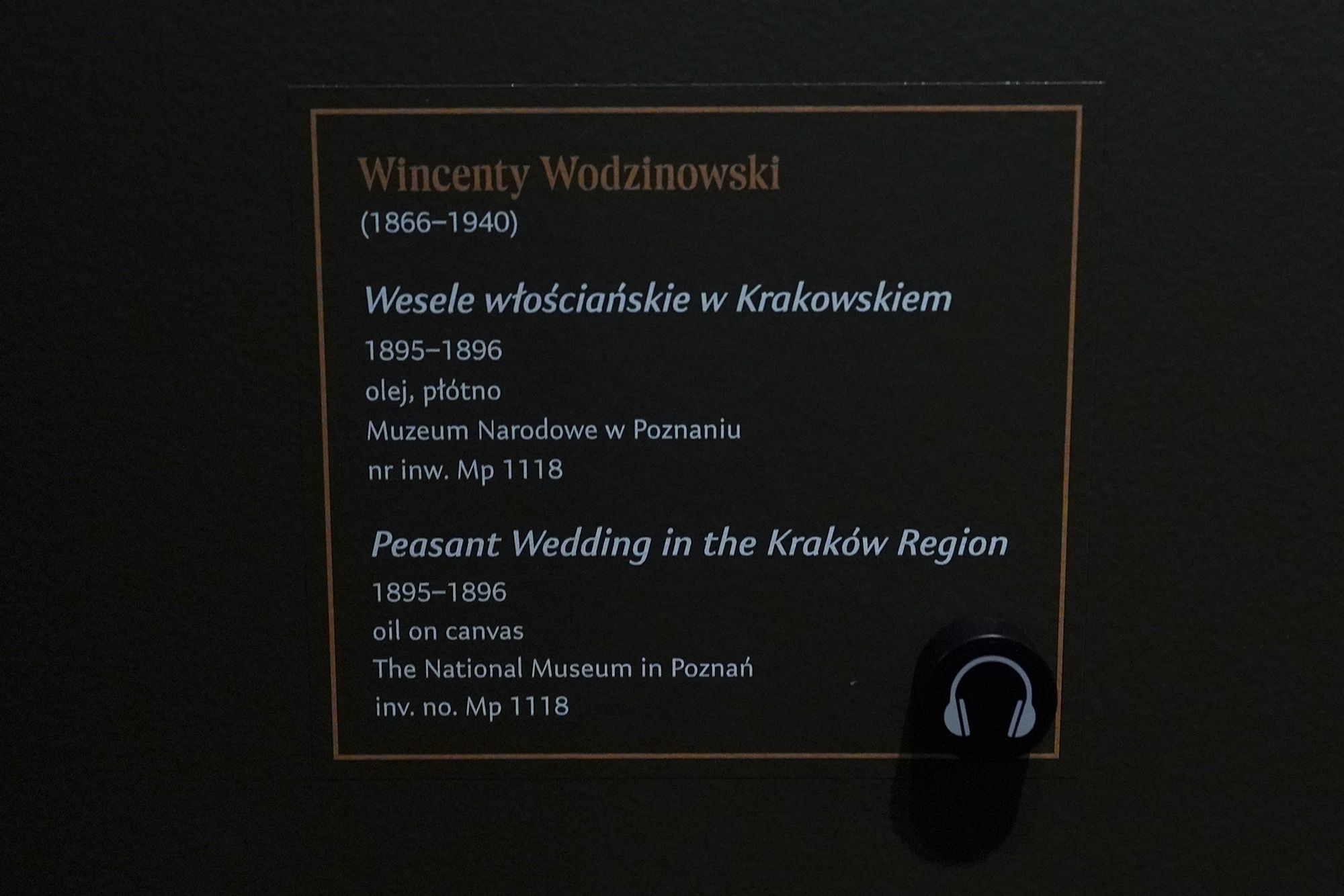
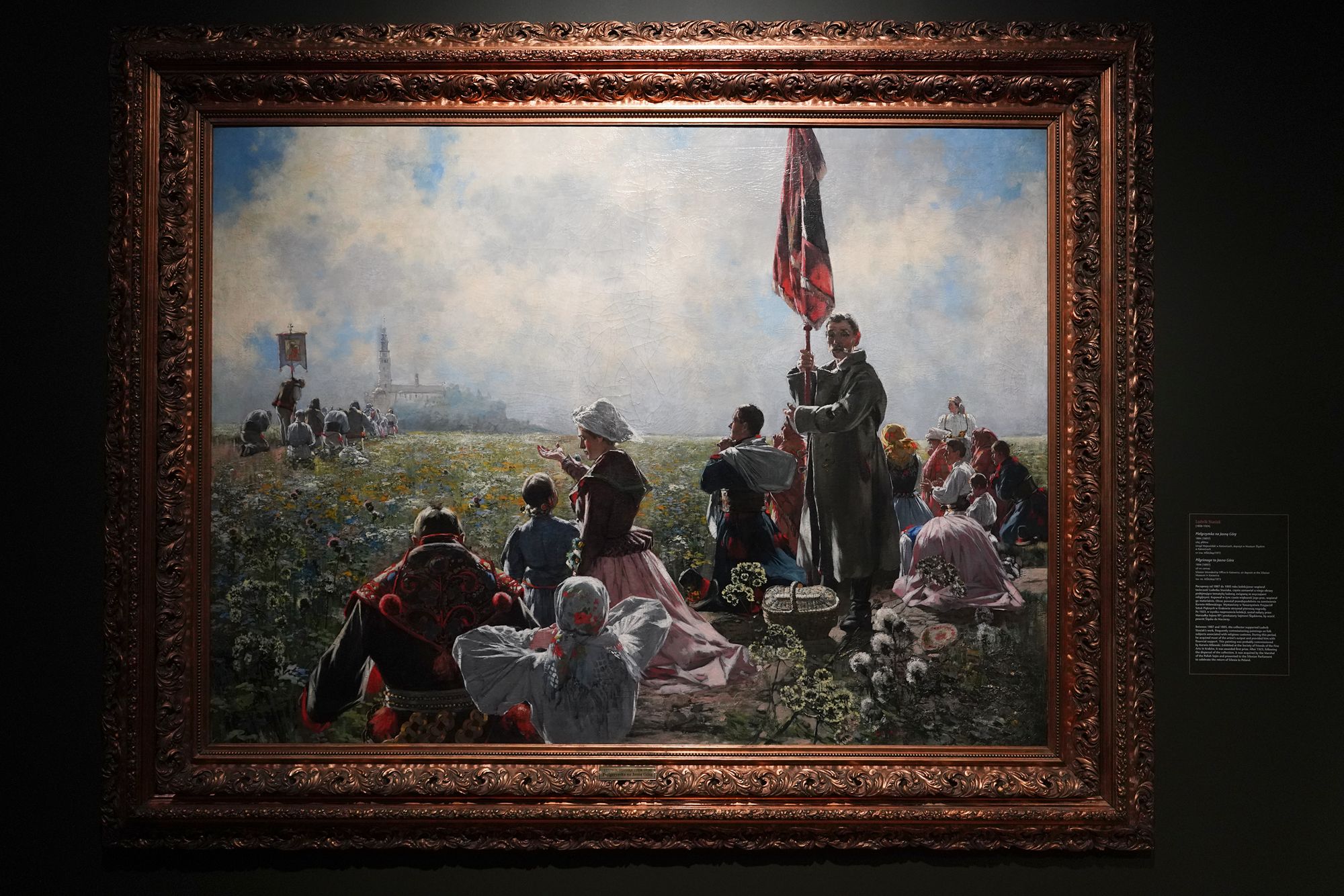
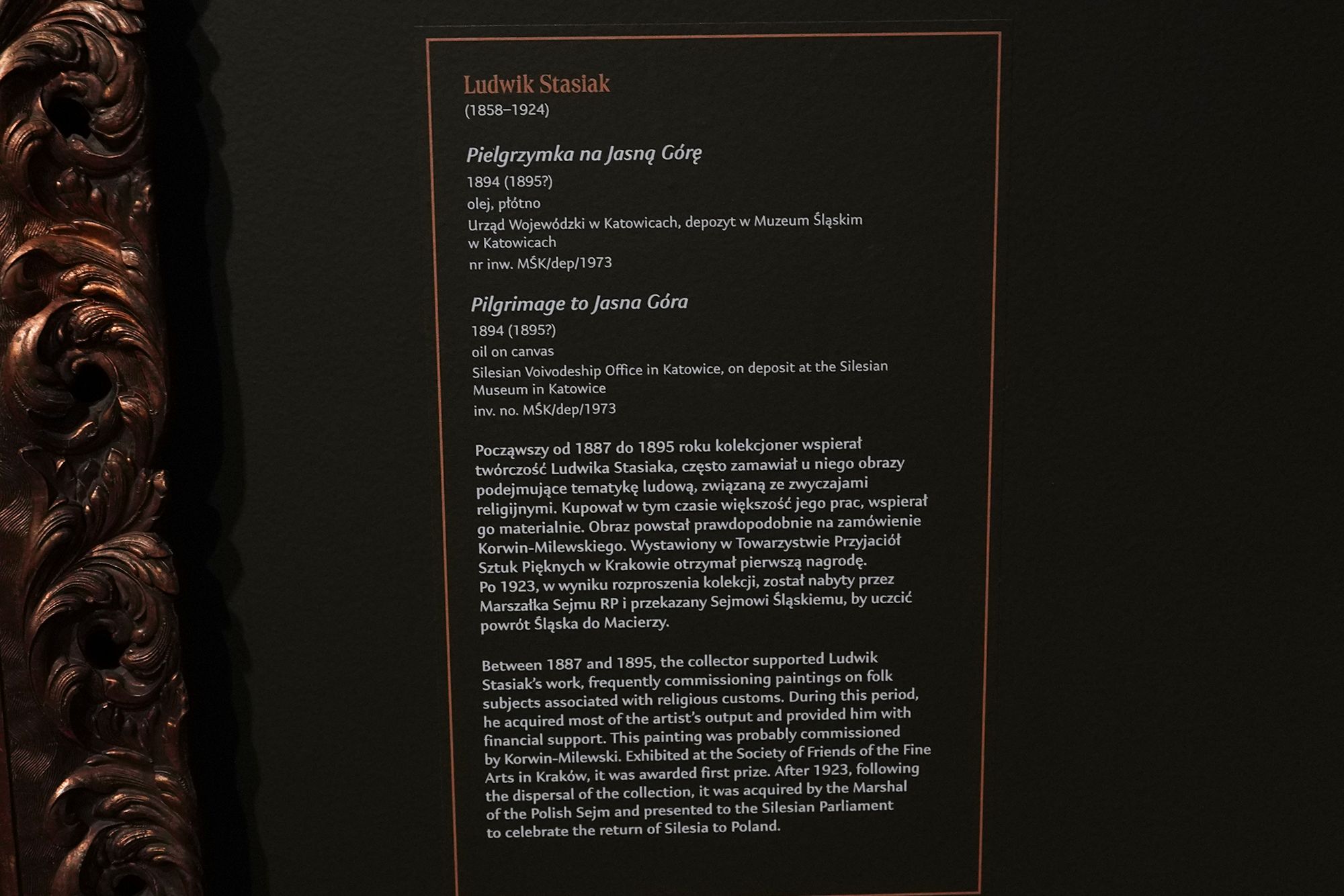
Ludwik Stasiak’s Pilgrimage to Jasna Góra, painted around 1894–1895, reflects Korwin-Milewski’s interest in folk life and religious customs. The collector supported Stasiak financially and purchased many of his paintings. Probably commissioned by Korwin-Milewski, this work won first prize at an exhibition in Kraków and later passed to the Silesian Parliament.
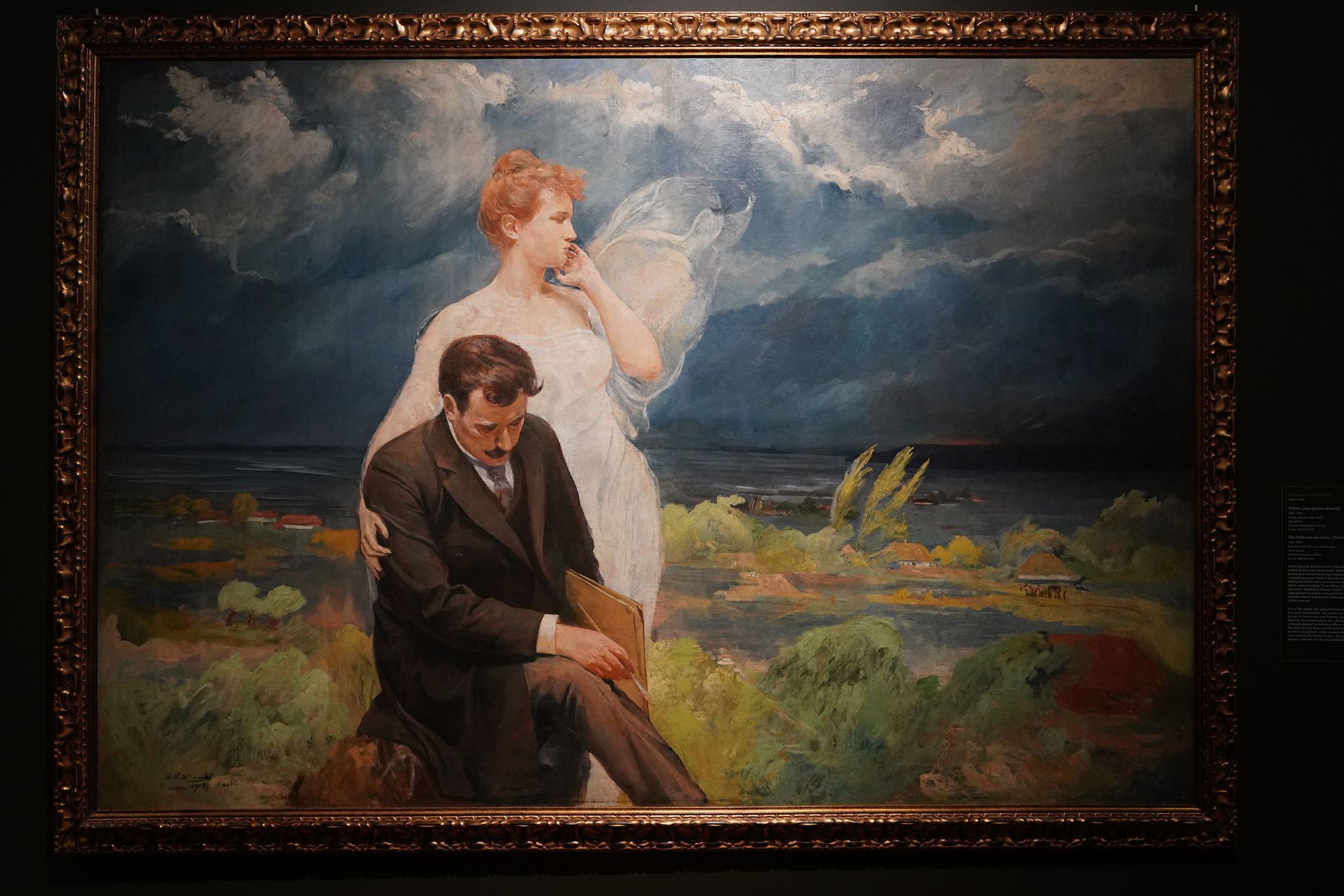
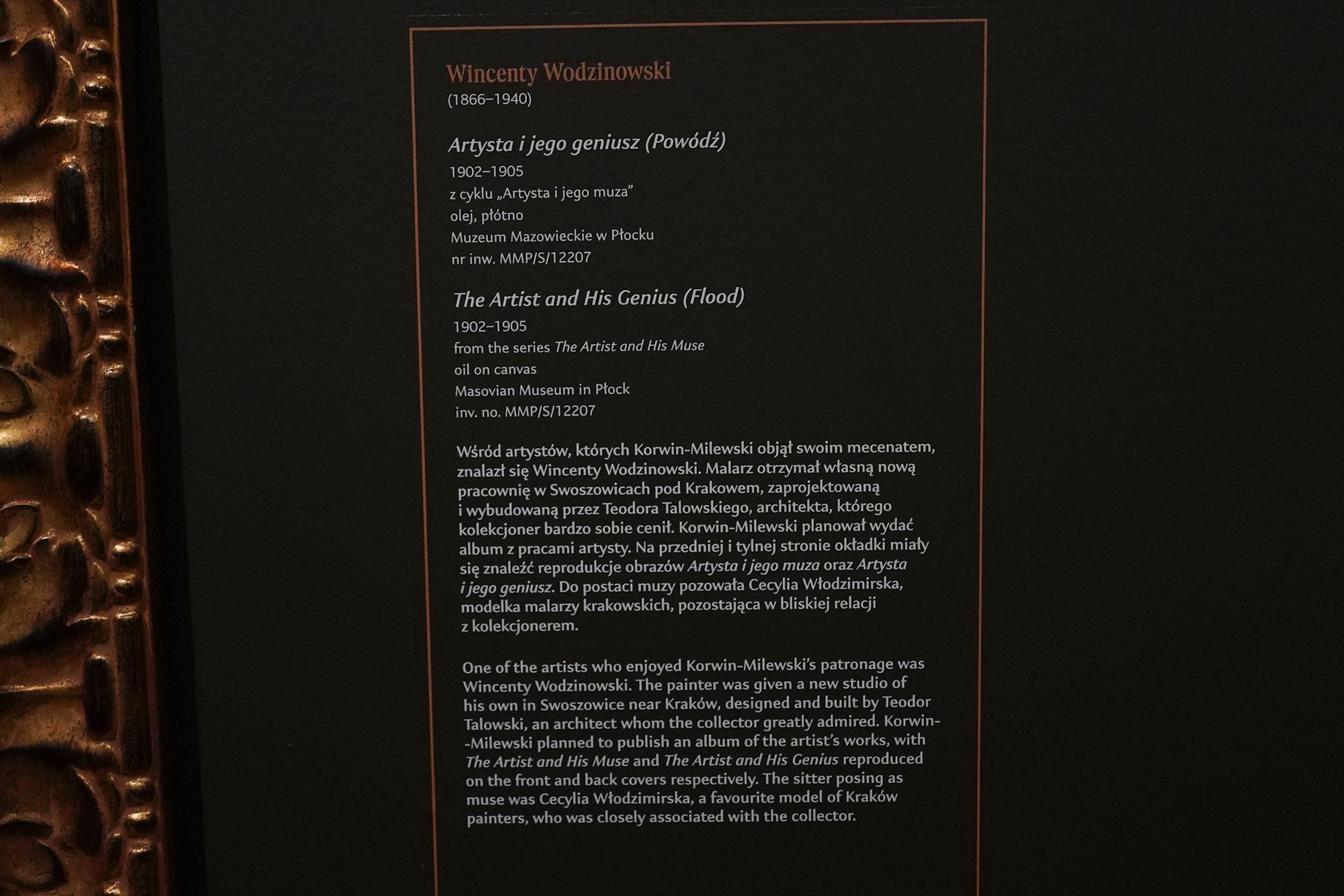
Wincenty Wodzinowski’s The Artist and His Genius (Flood), painted between 1902 and 1905, belongs to his series The Artist and His Muse. Korwin-Milewski supported the painter by providing a studio near Kraków and planned an album featuring his work. Cecylia Włodzimierska, a model closely associated with the collector, posed as the muse.
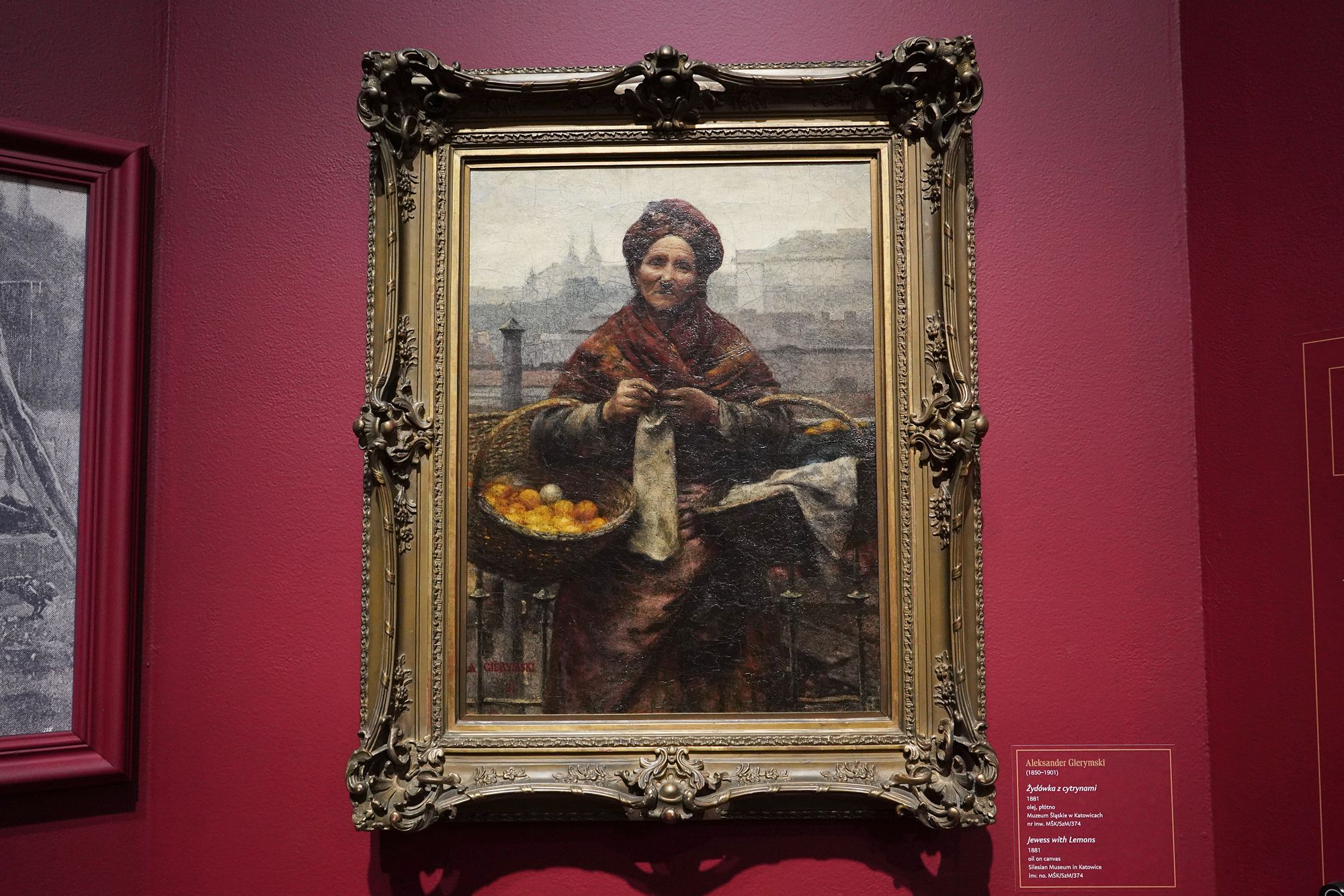
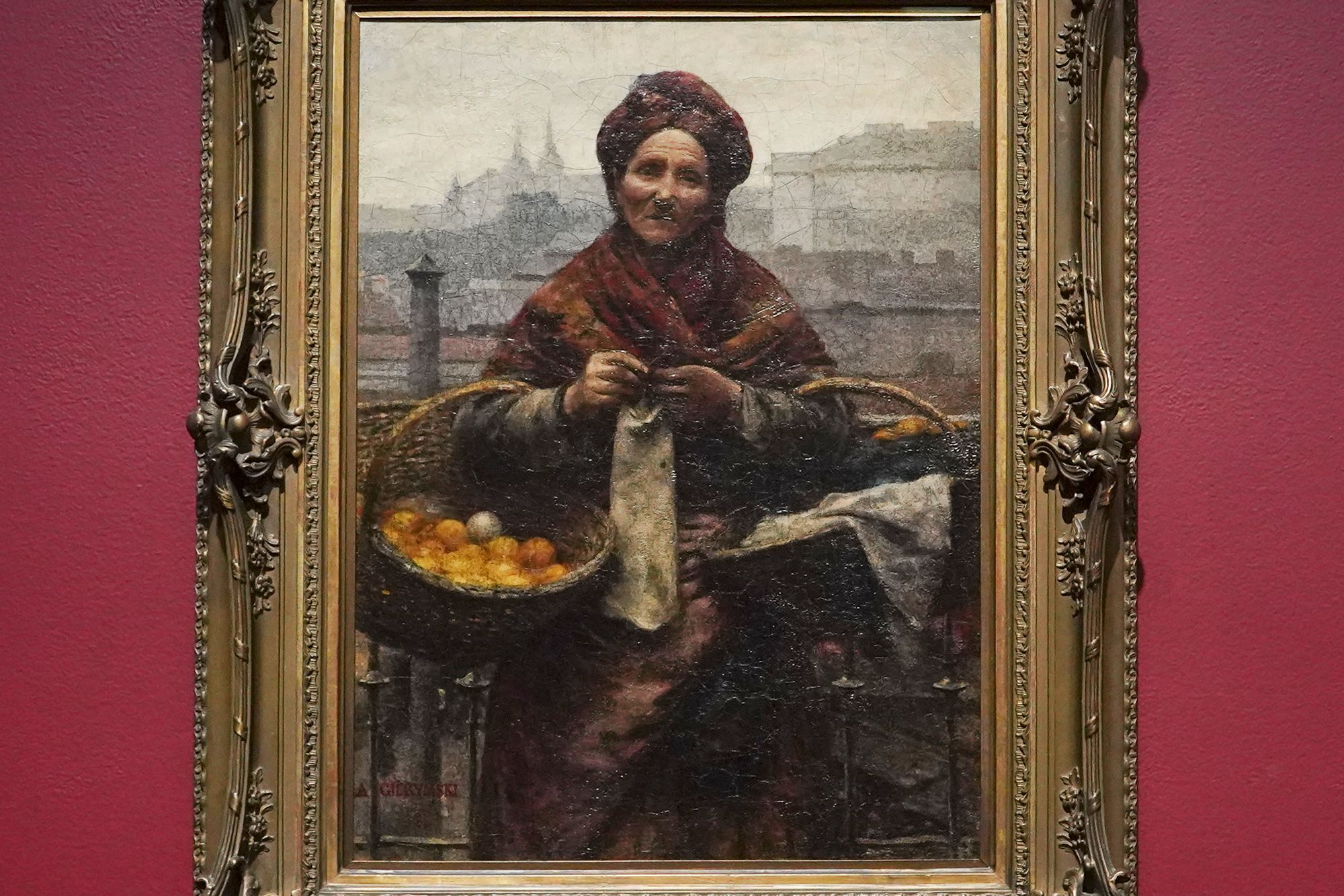
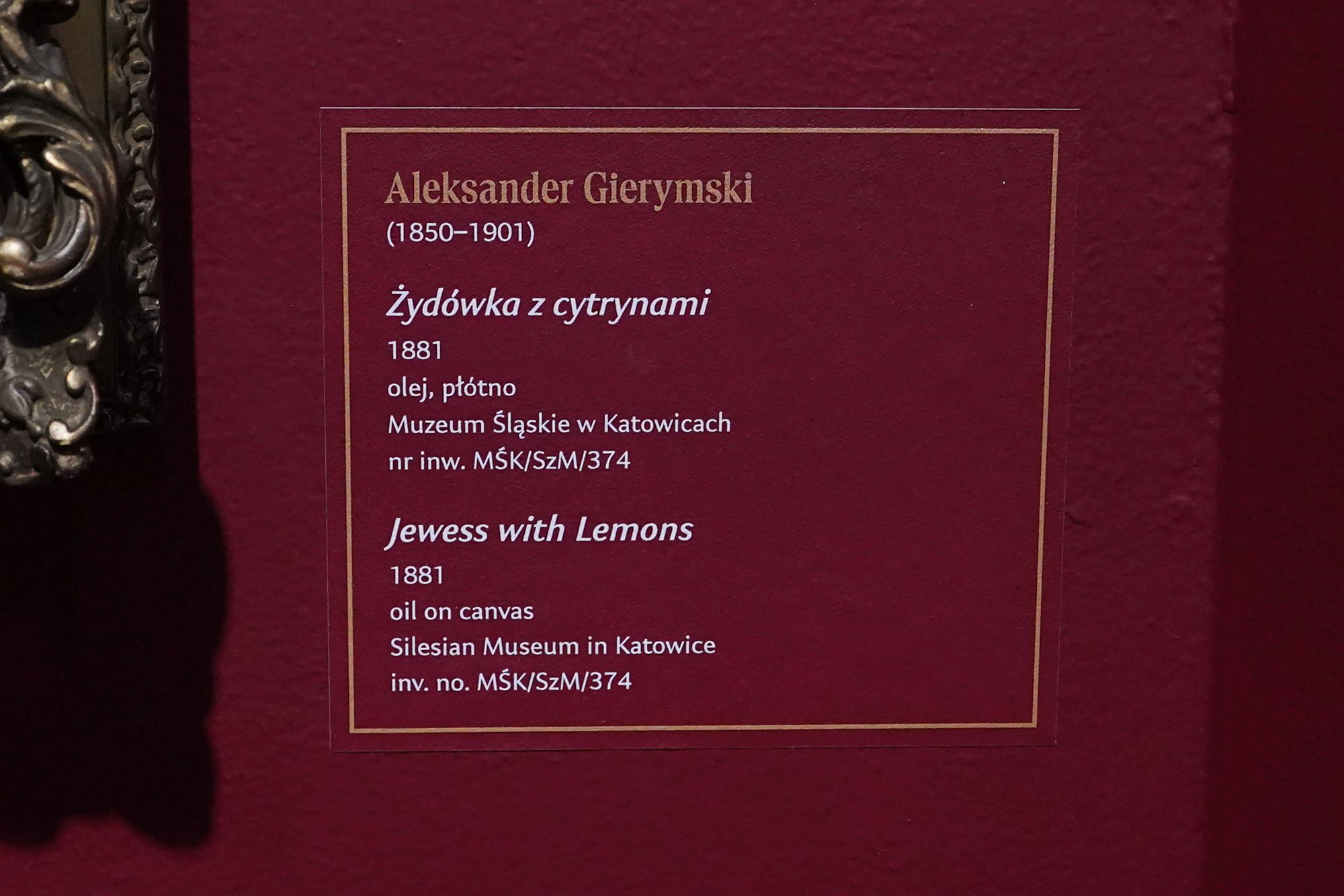
Aleksander Gierymski’s Jewess with Lemons, painted in 1881, is an oil painting depicting a Jewish woman selling lemons. The work belongs to the Silesian Museum in Katowice and is displayed here as part of the exhibition.