Polish National Museum in Warsaw – Part I, Poland
Exploring Polish paintings at Warsaw’s National Museum reveals changing styles, national history, and artists’ personal visions. 1369
Polish National Museum in Warsaw: Al. Jerozolimskie 3, 00-495 Warszawa, Poland
Date Picture Taken: Jul, 2026
The National Museum in Warsaw brings together Polish and European paintings, medieval religious art, and objects from ancient civilizations. Walking through its galleries, I saw how artists portrayed history, faith, and everyday life.
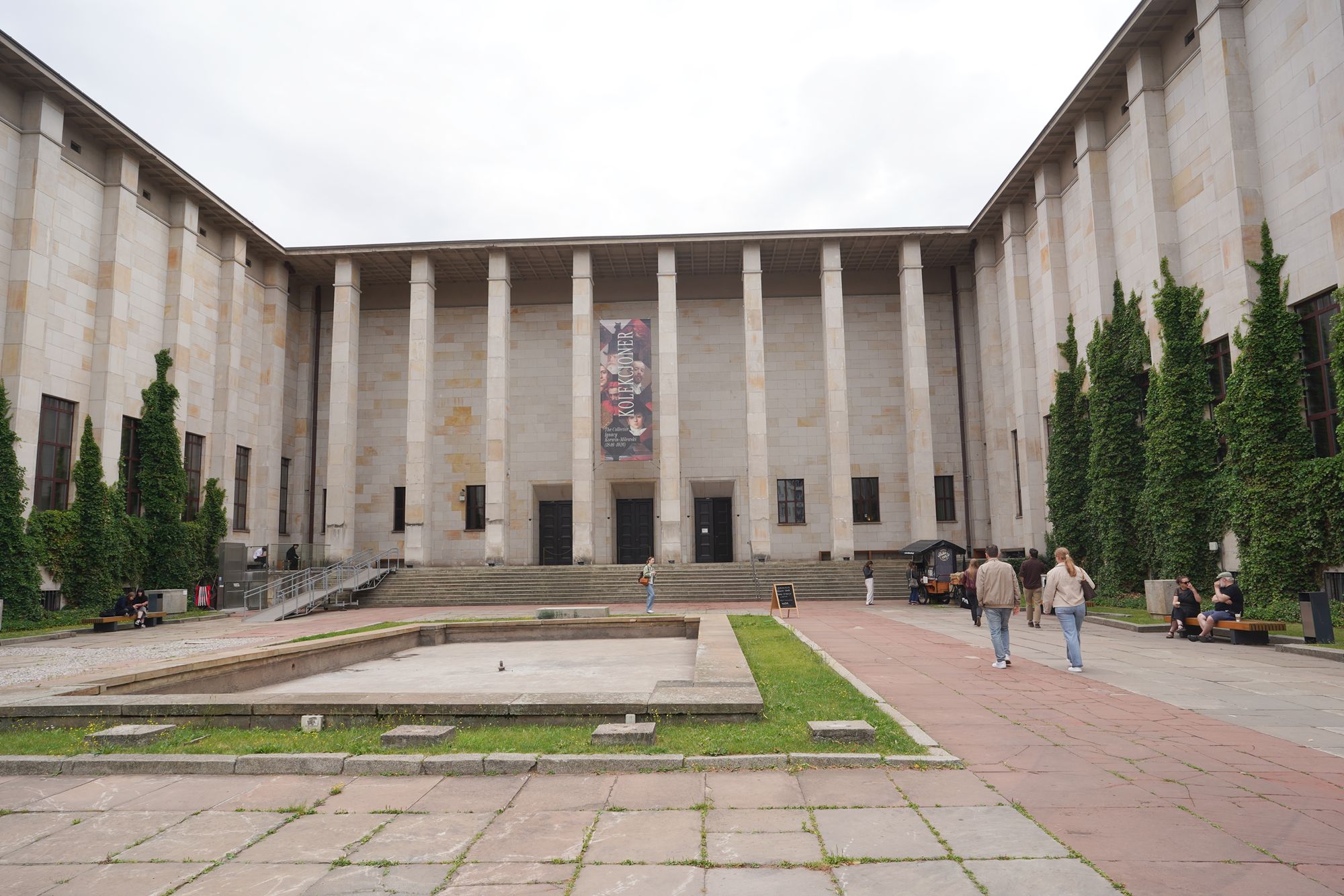
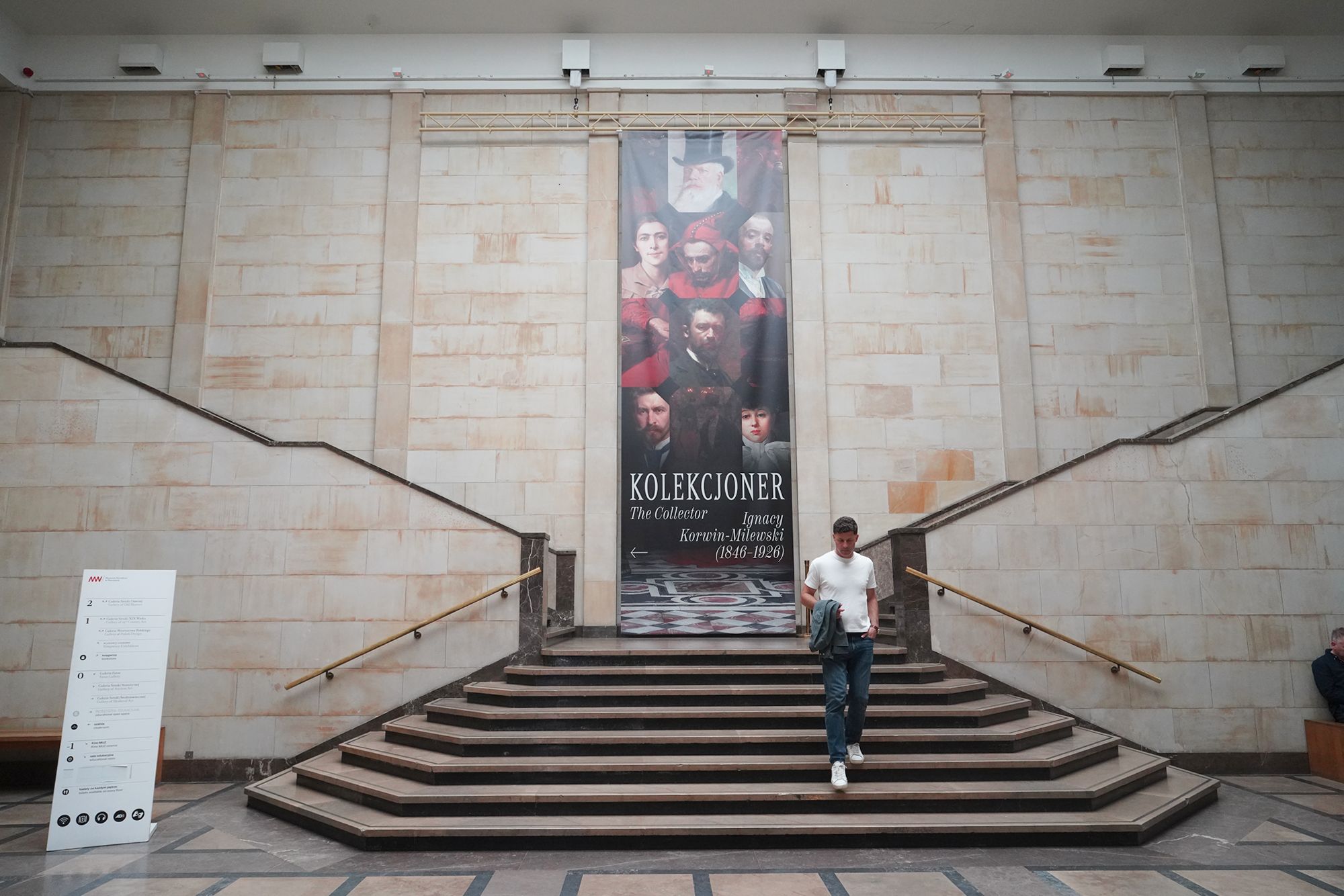
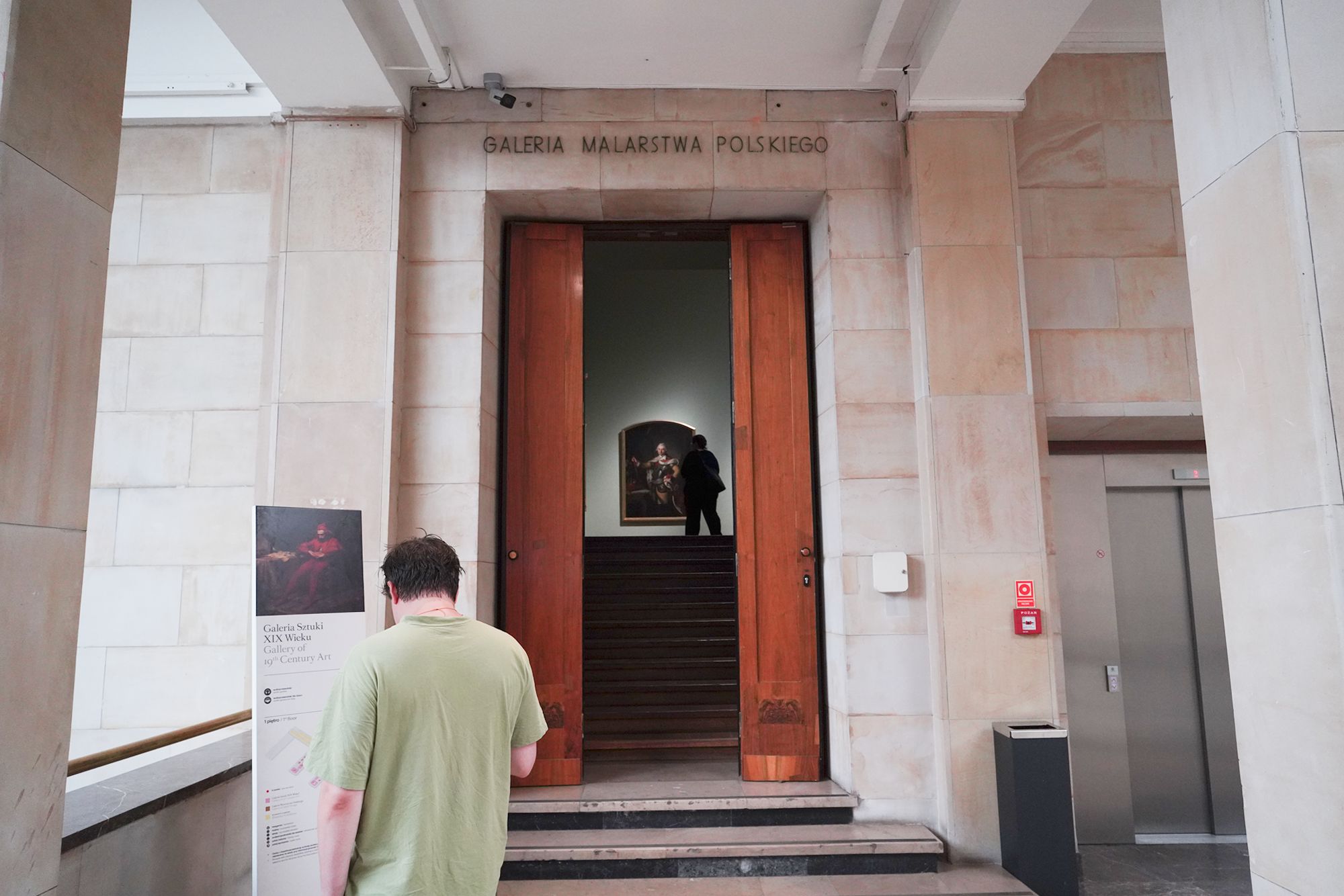
Next, I entered the Gallery of 19th Century Art.
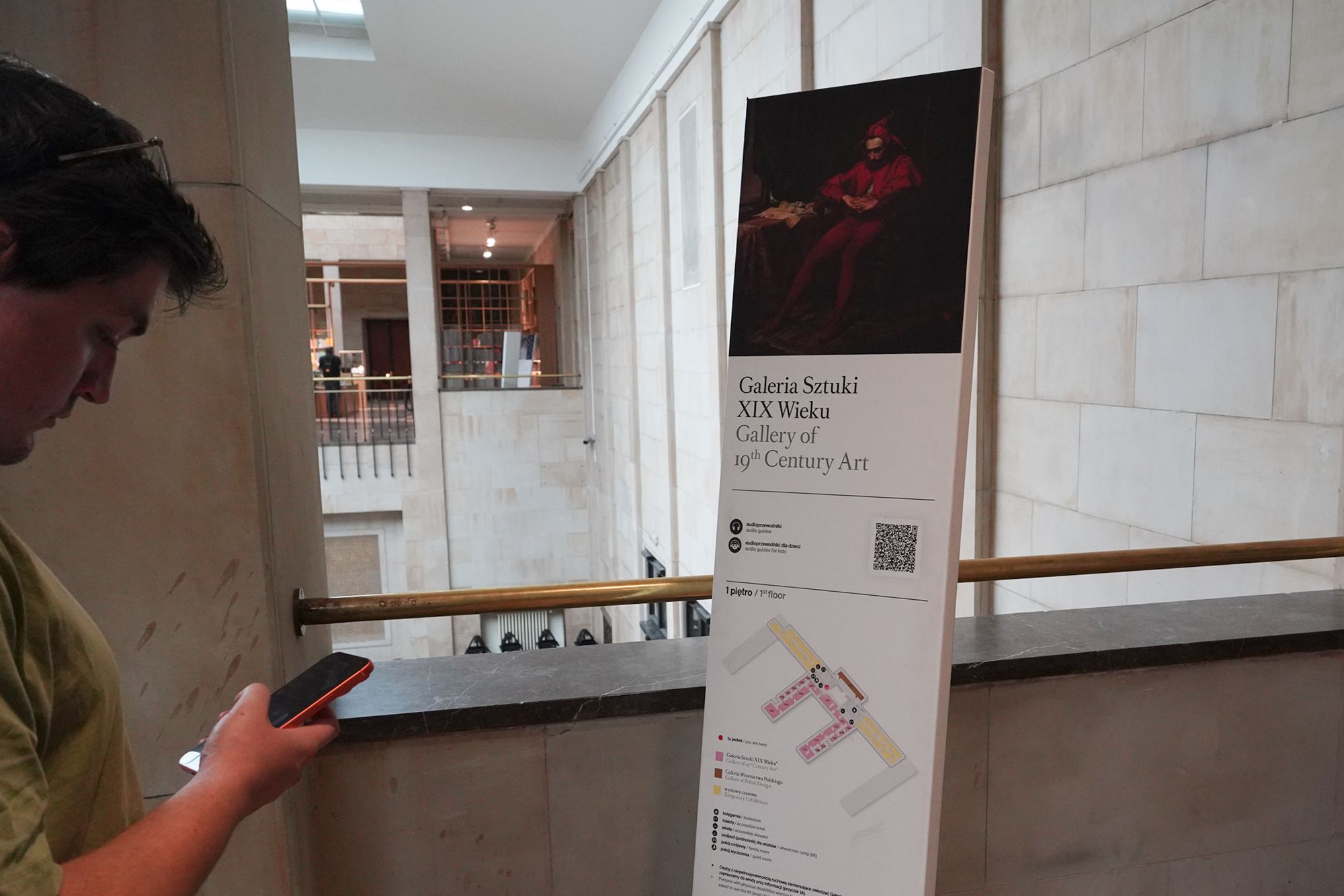
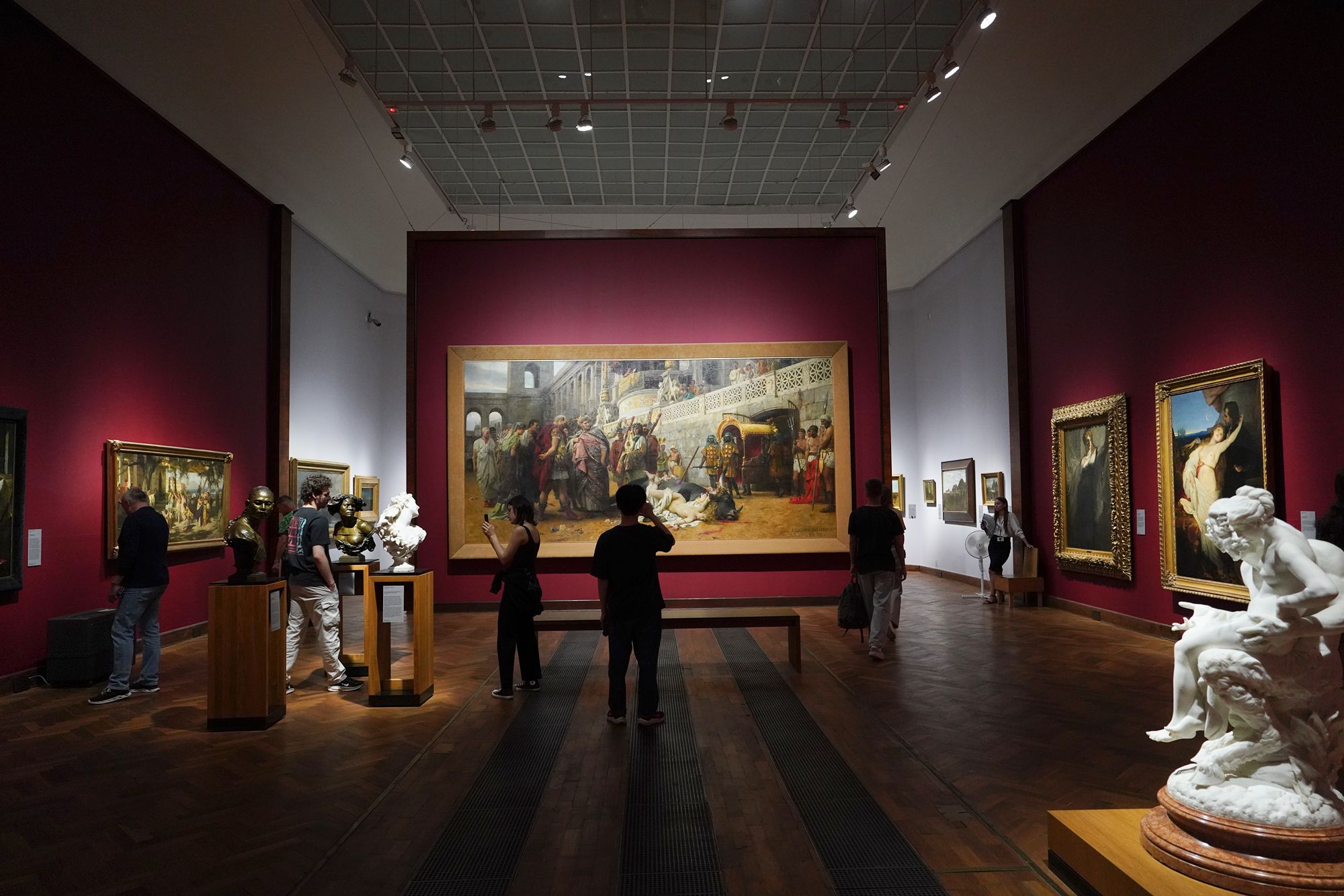
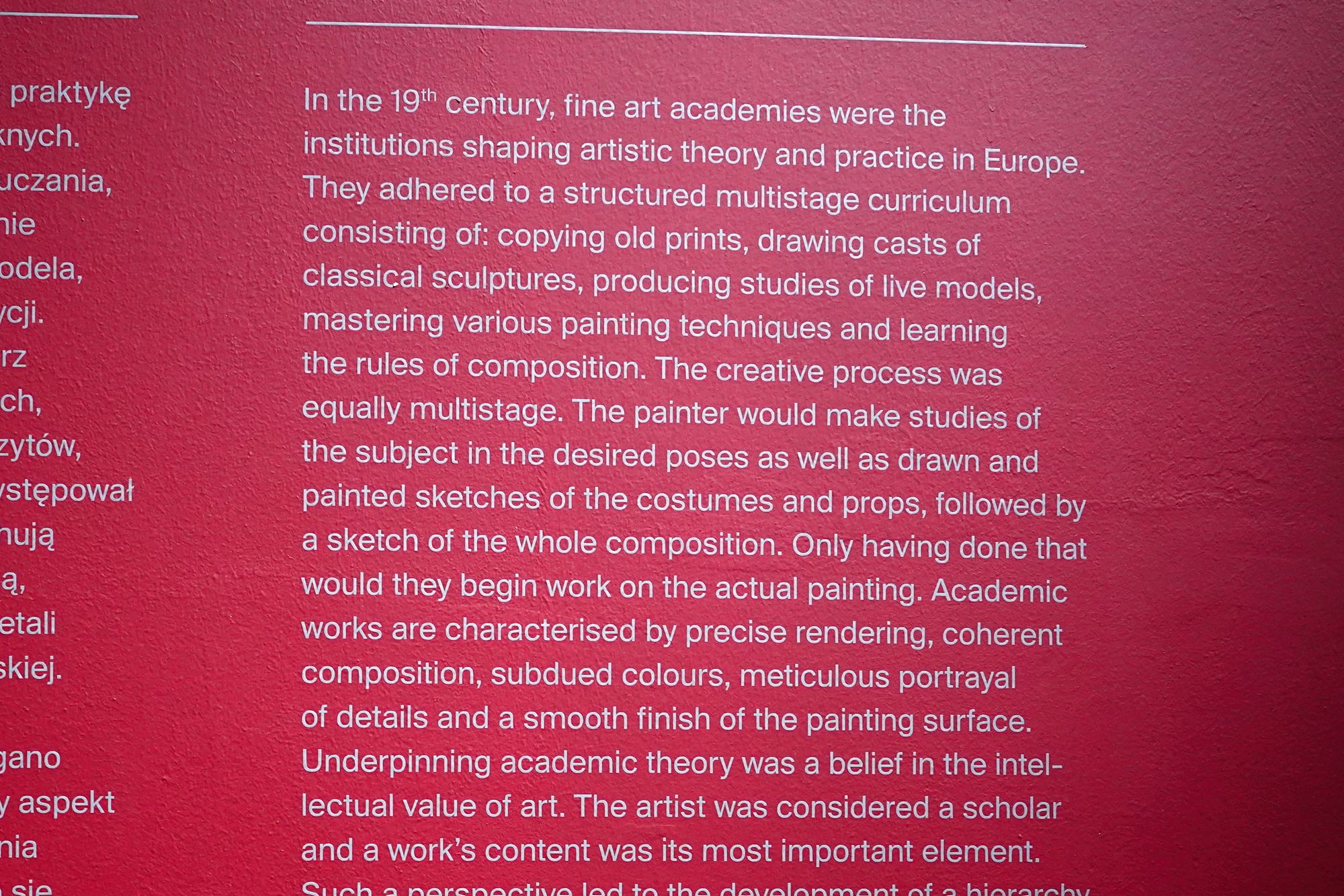
The gallery introduced the academic traditions of 19th-century painting, when artists followed rigorous training and prepared careful studies before creating their finished works. These paintings emphasized detail, balanced compositions, and subjects with historical or intellectual meaning.
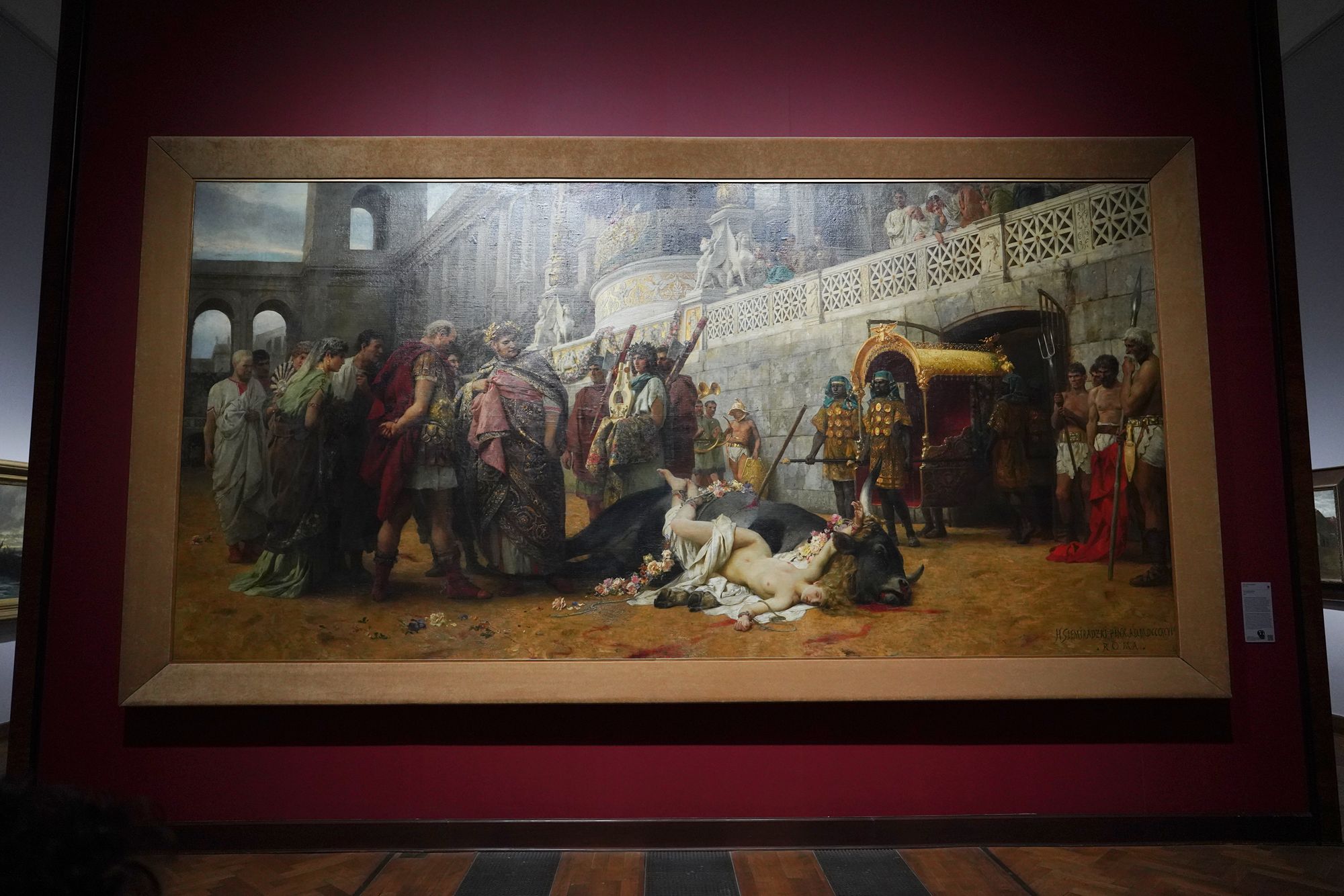
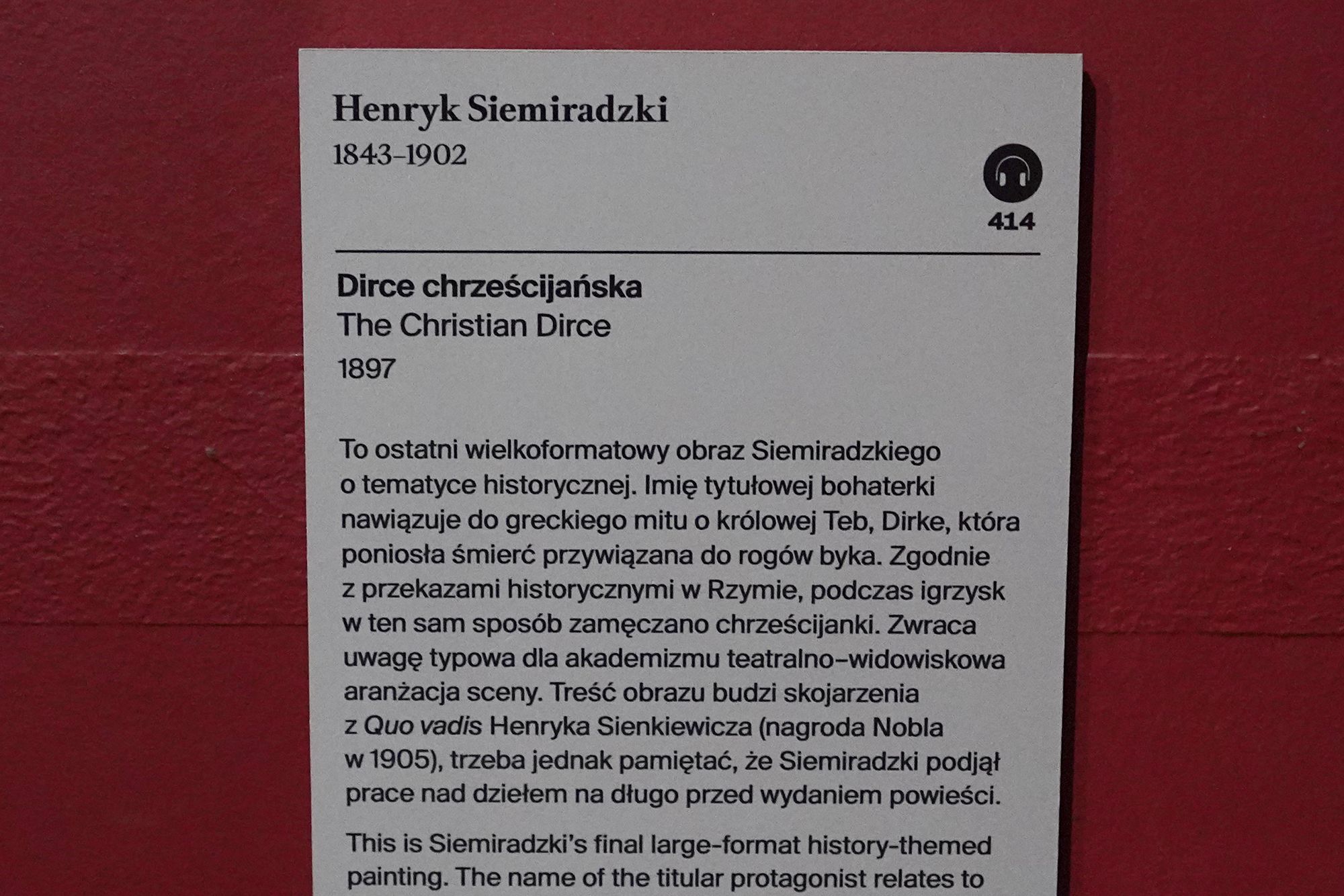
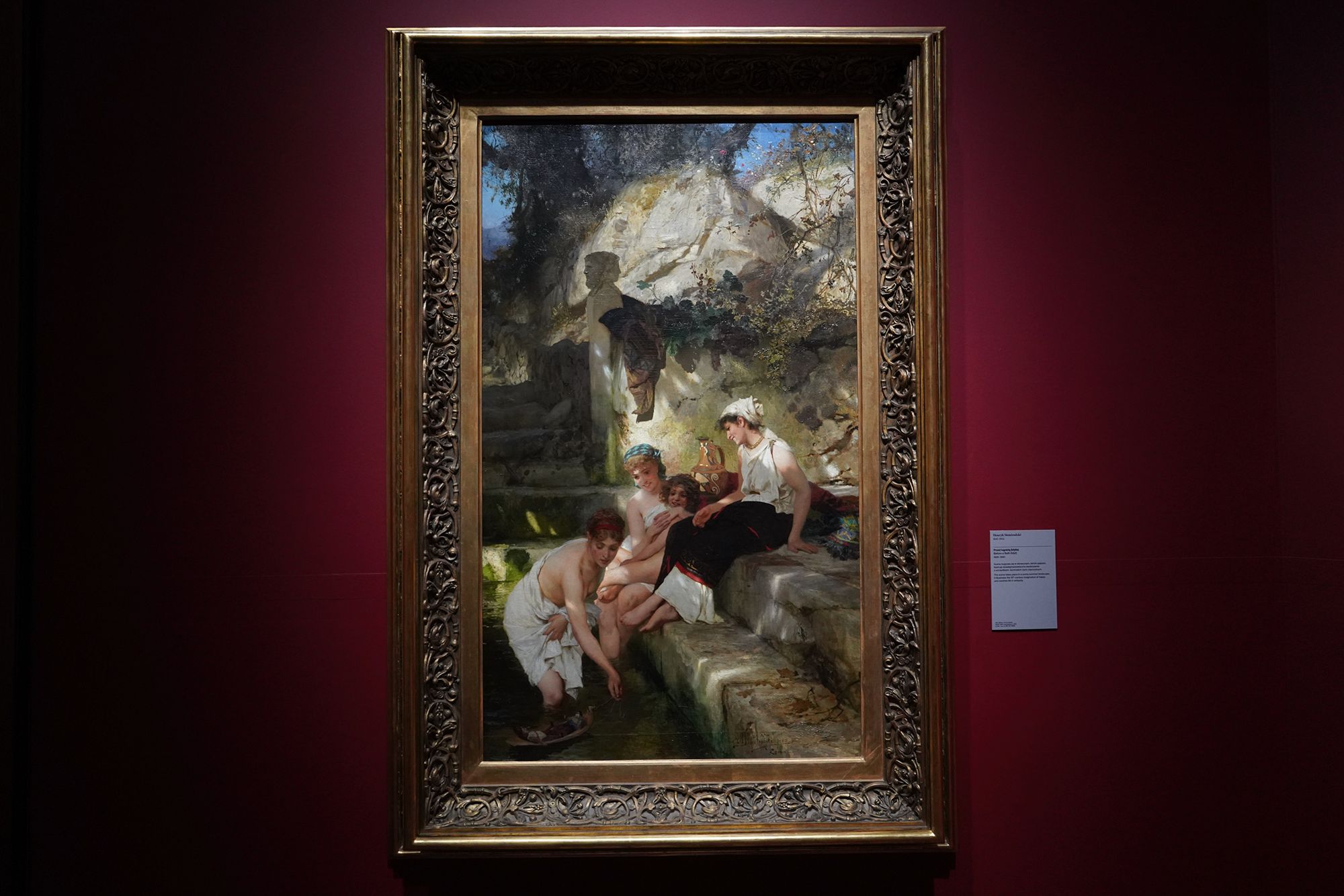
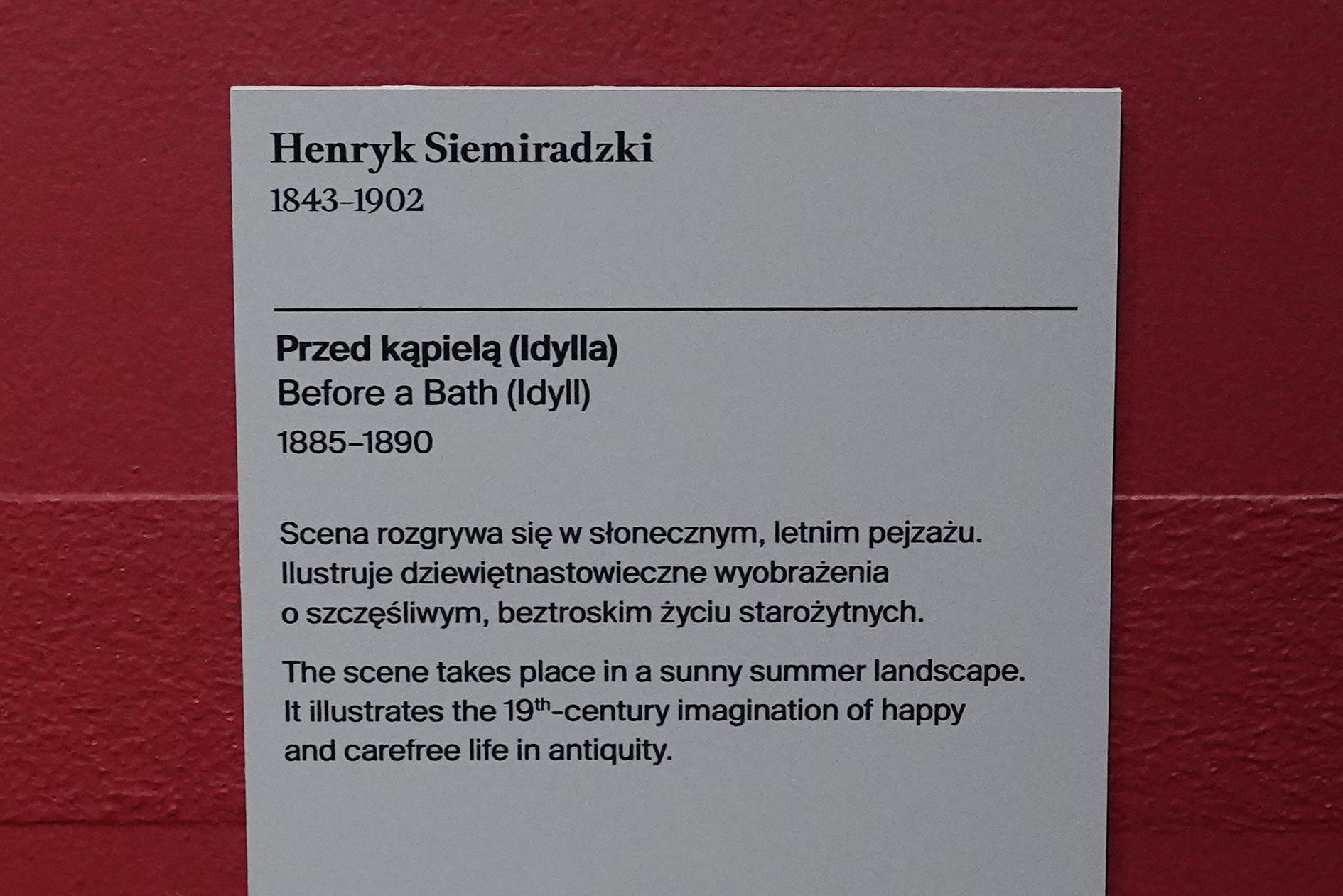
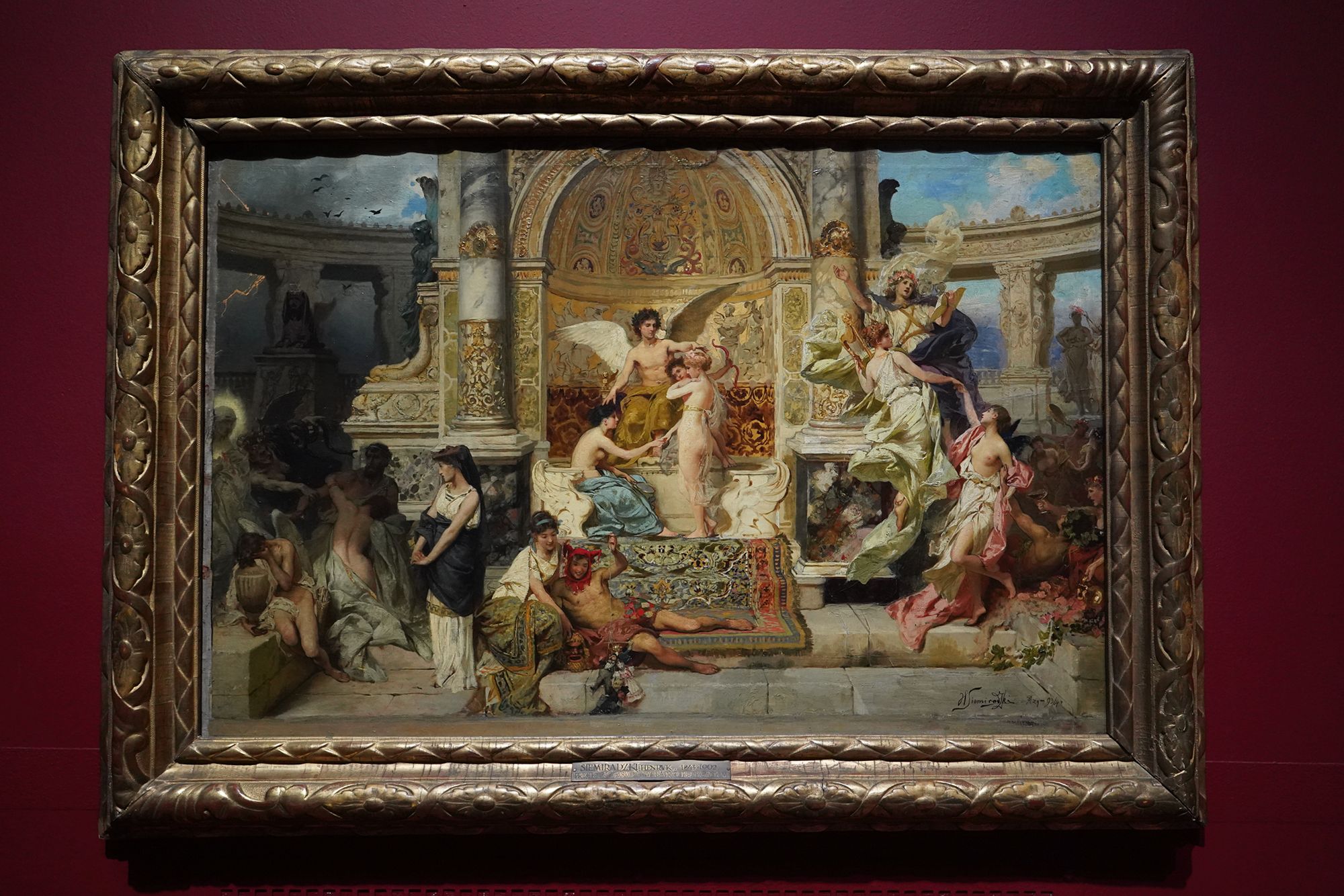
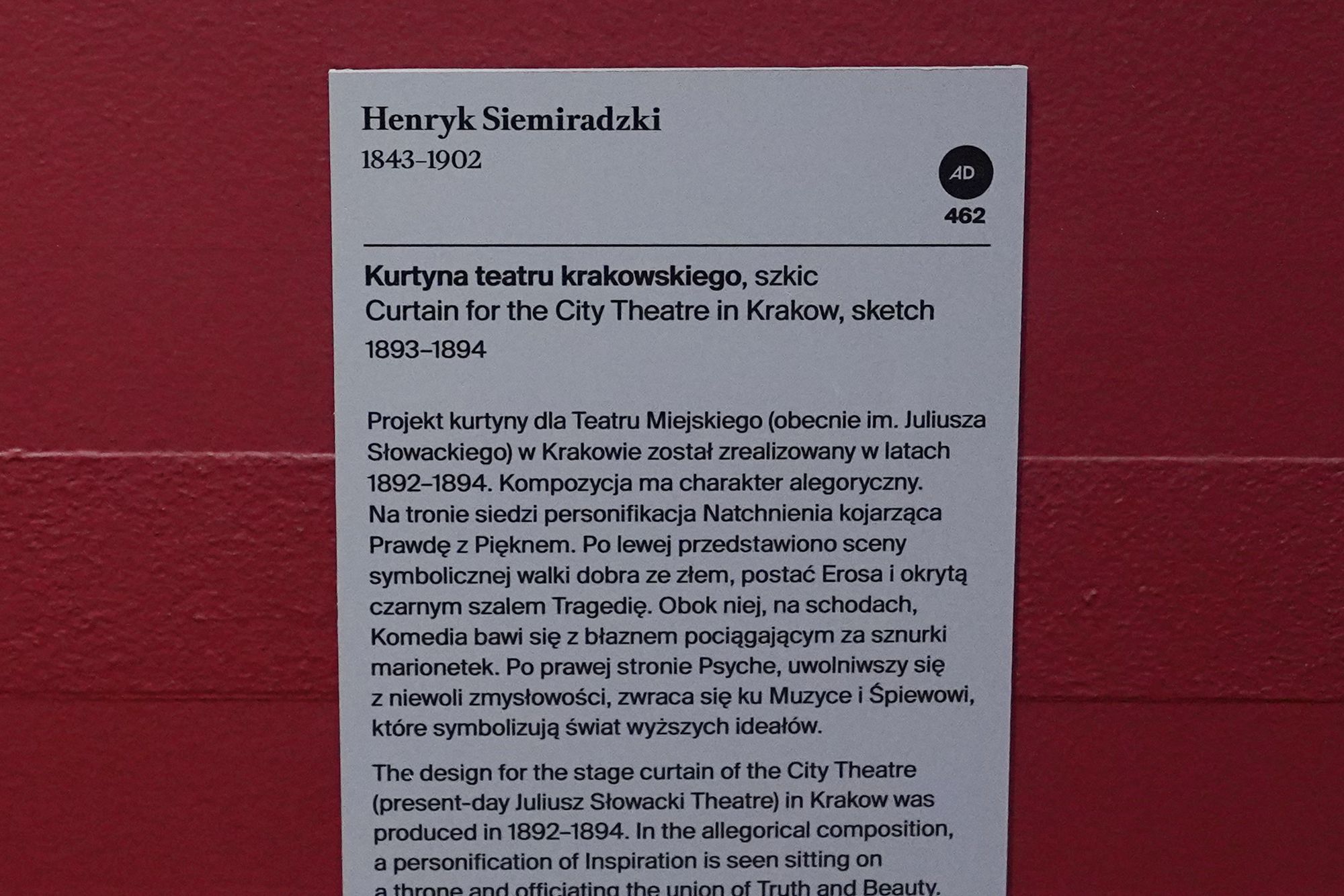
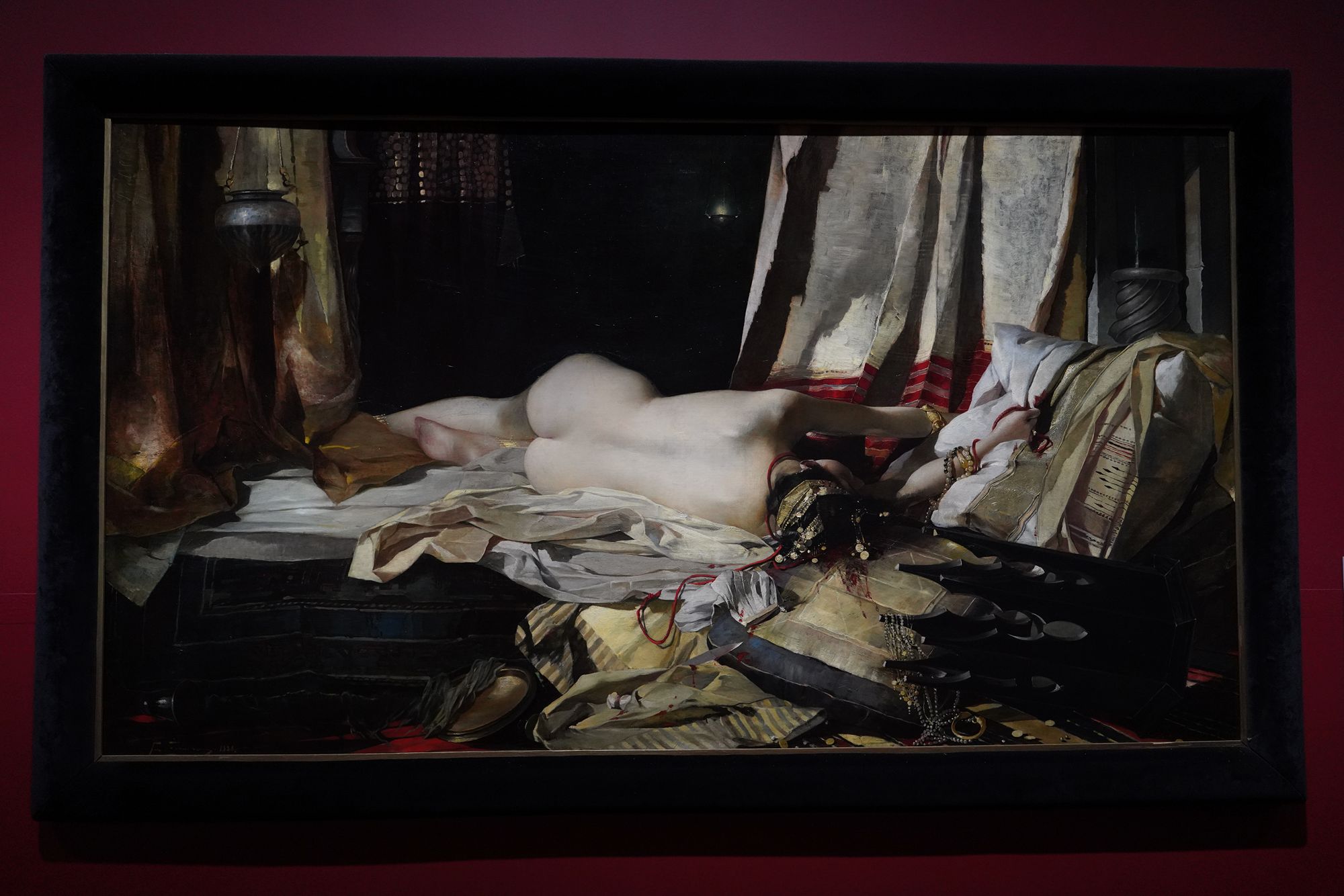
Henryk Siemiradzki (1843–1902) was a Polish painter known for large, detailed scenes set in ancient Greece and Rome, including episodes from early Christian history.
Henryk Siemiradzki’s The Christian Dirce (1897) depicts a Christian martyr in a Roman arena. Its subject draws on the Greek myth of Dirce, who was killed while tied to a bull’s horns. The dramatic staging reflects the academic painting traditions introduced in this gallery.
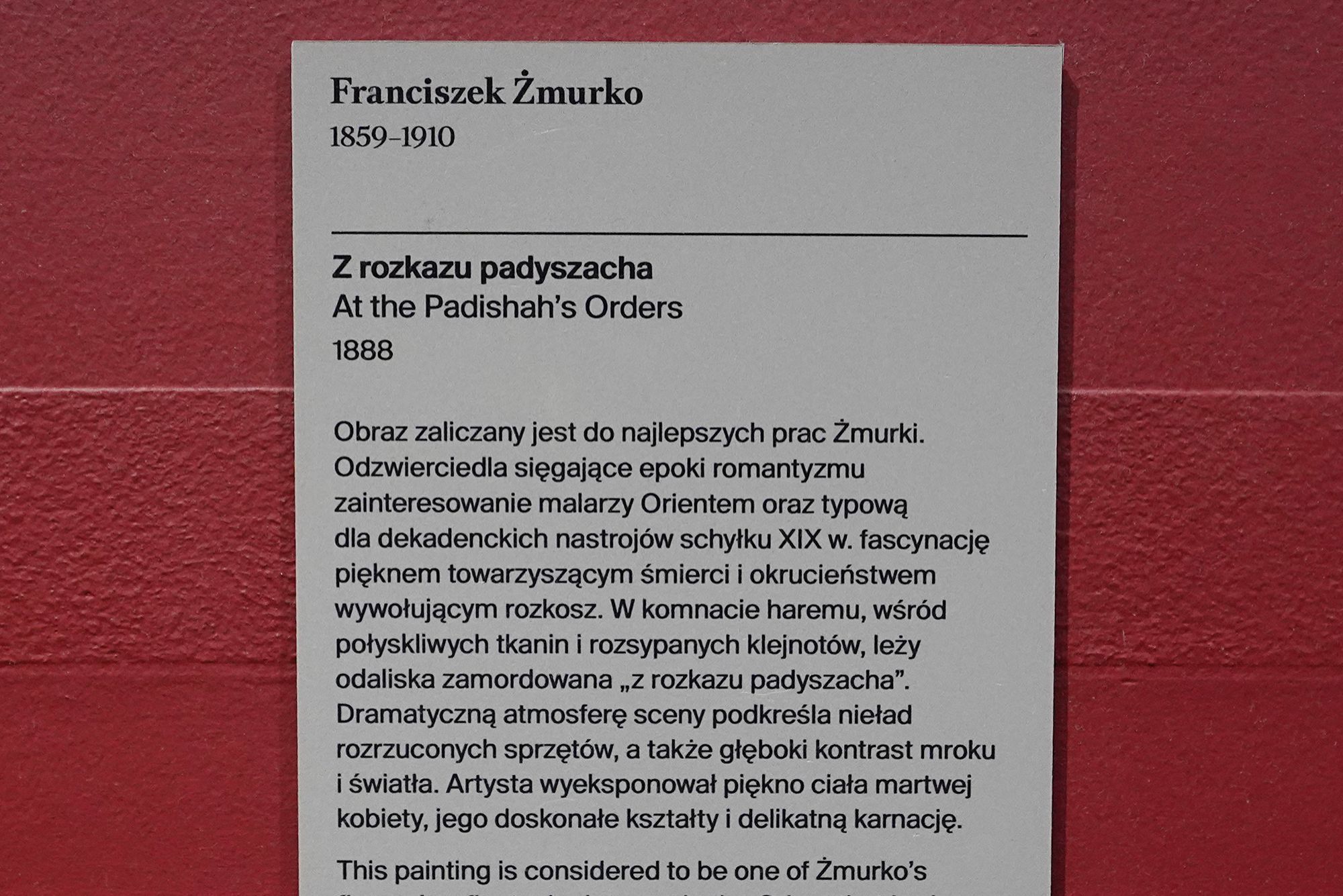
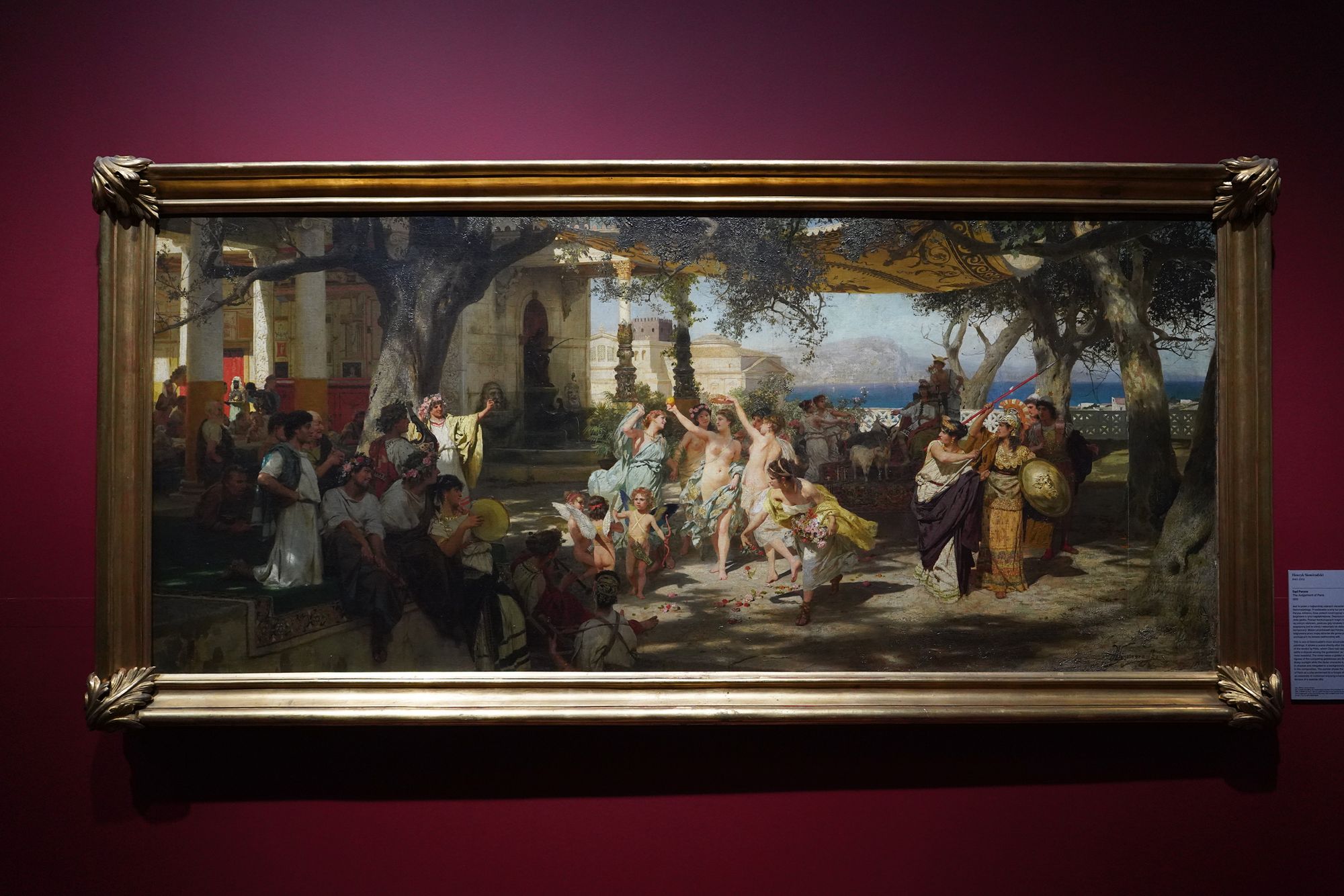
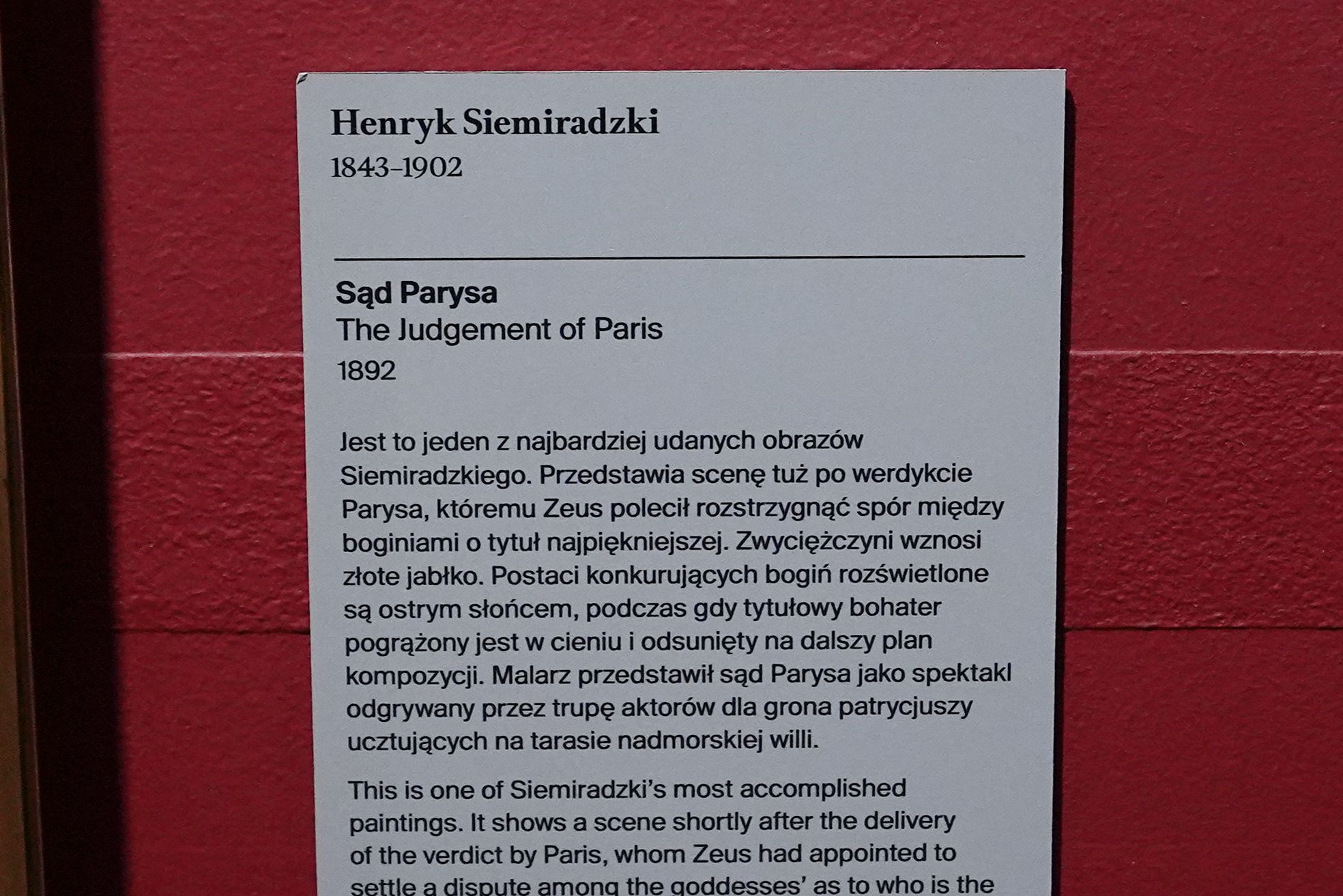
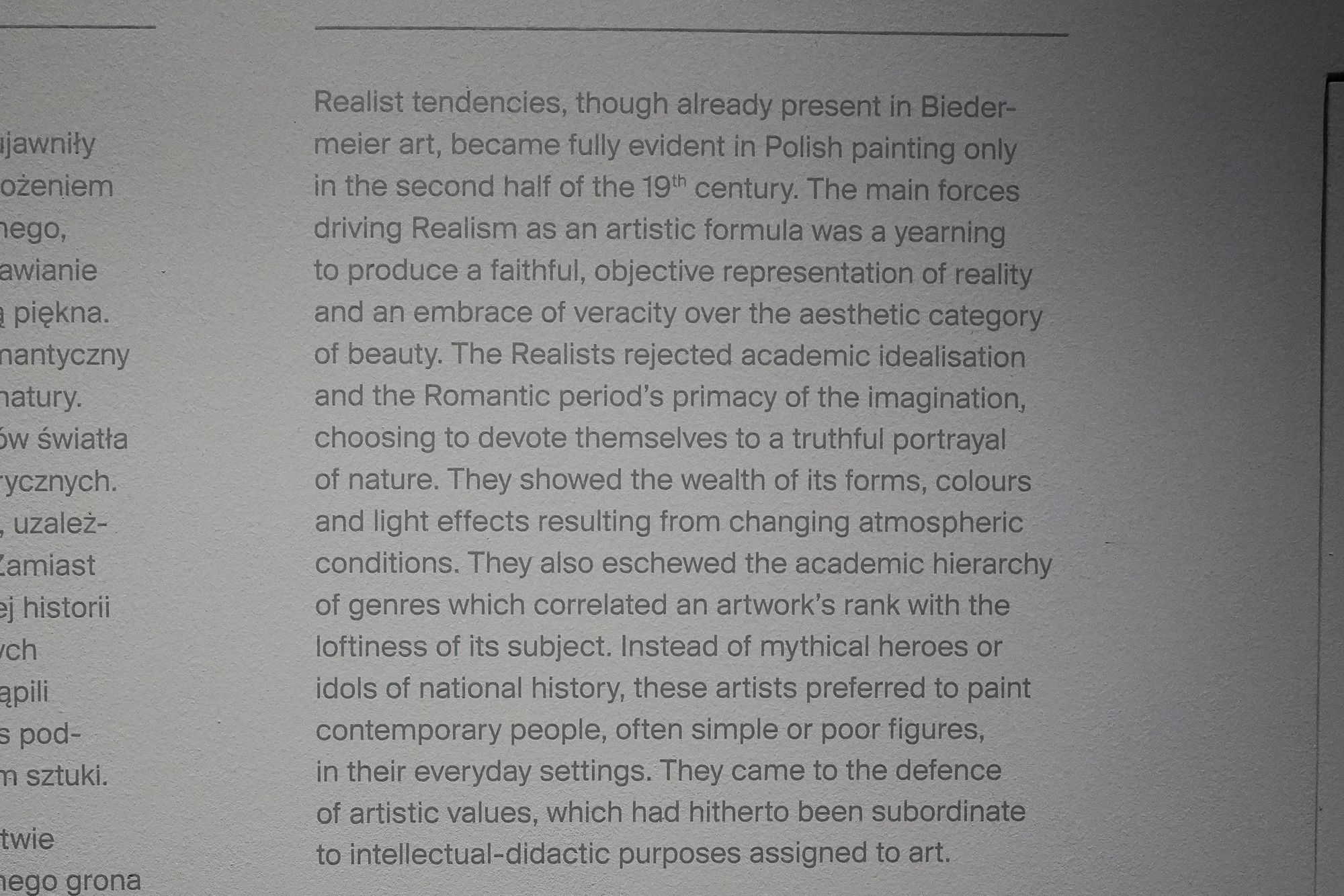
The next section introduced Realism in Polish painting. These artists focused on ordinary people and everyday life, capturing nature, changing light, and familiar surroundings with close attention to what they actually observed.
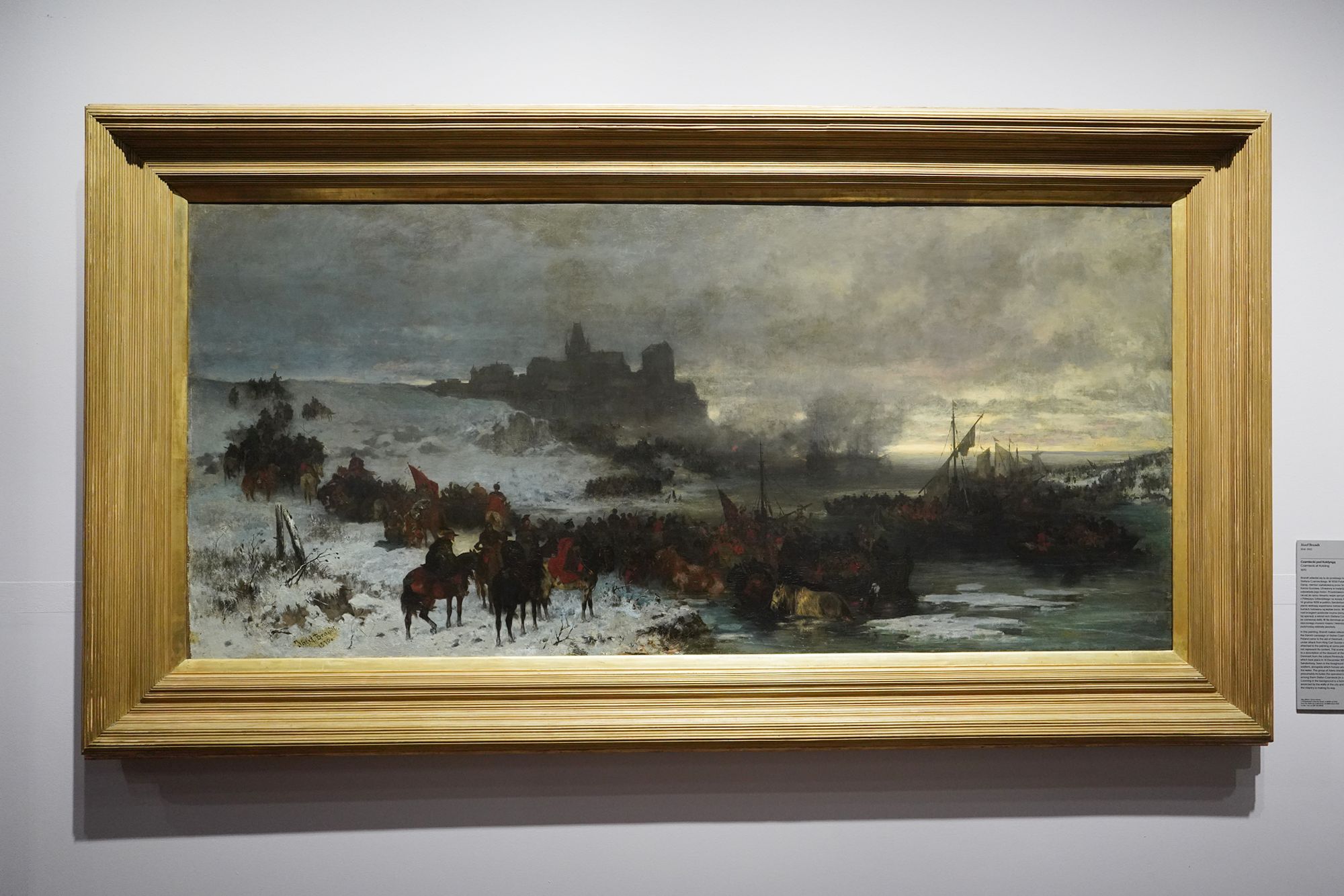
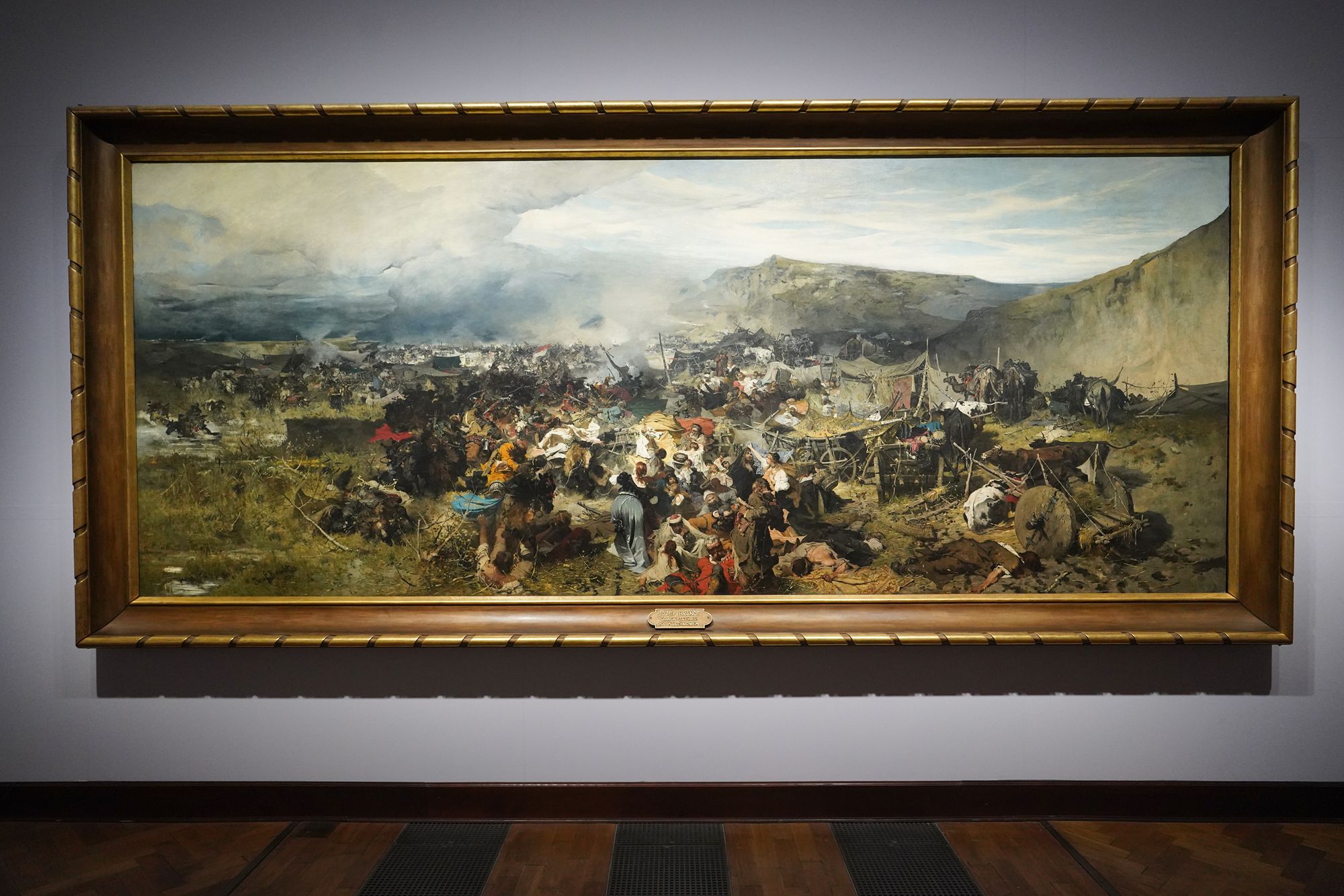
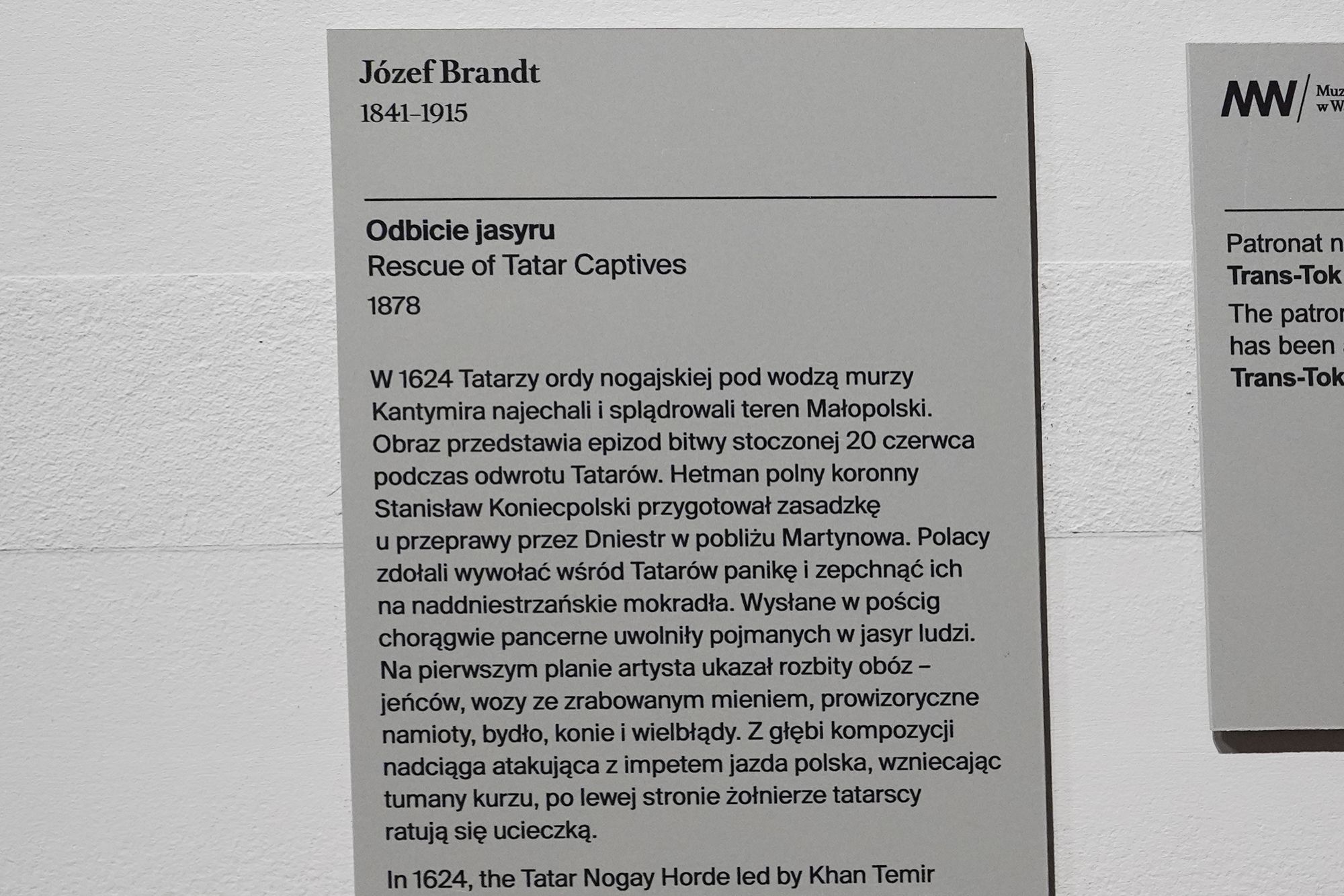
Józef Brandt (1841–1915) was a Polish painter best known for scenes of military life, particularly cavalry, battles, and soldiers from Poland’s 17th-century history.
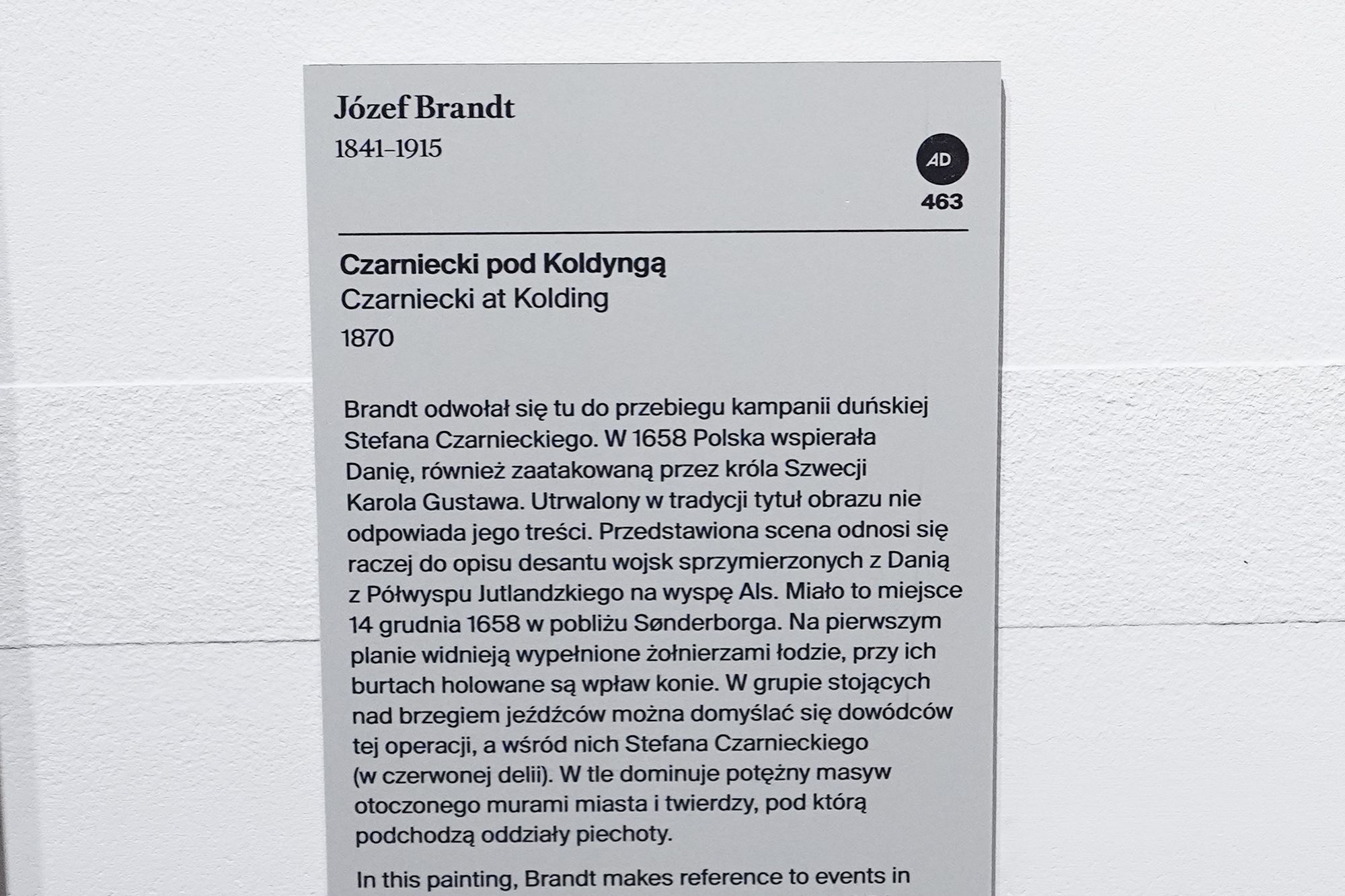
Józef Brandt’s Czarniecki at Kolding (1870) shows a military crossing during Poland’s campaign in support of Denmark against Sweden. Soldiers fill the boats while horses swim alongside them. Despite its title, the museum identifies the setting as a crossing to the island of Als near Sønderborg.
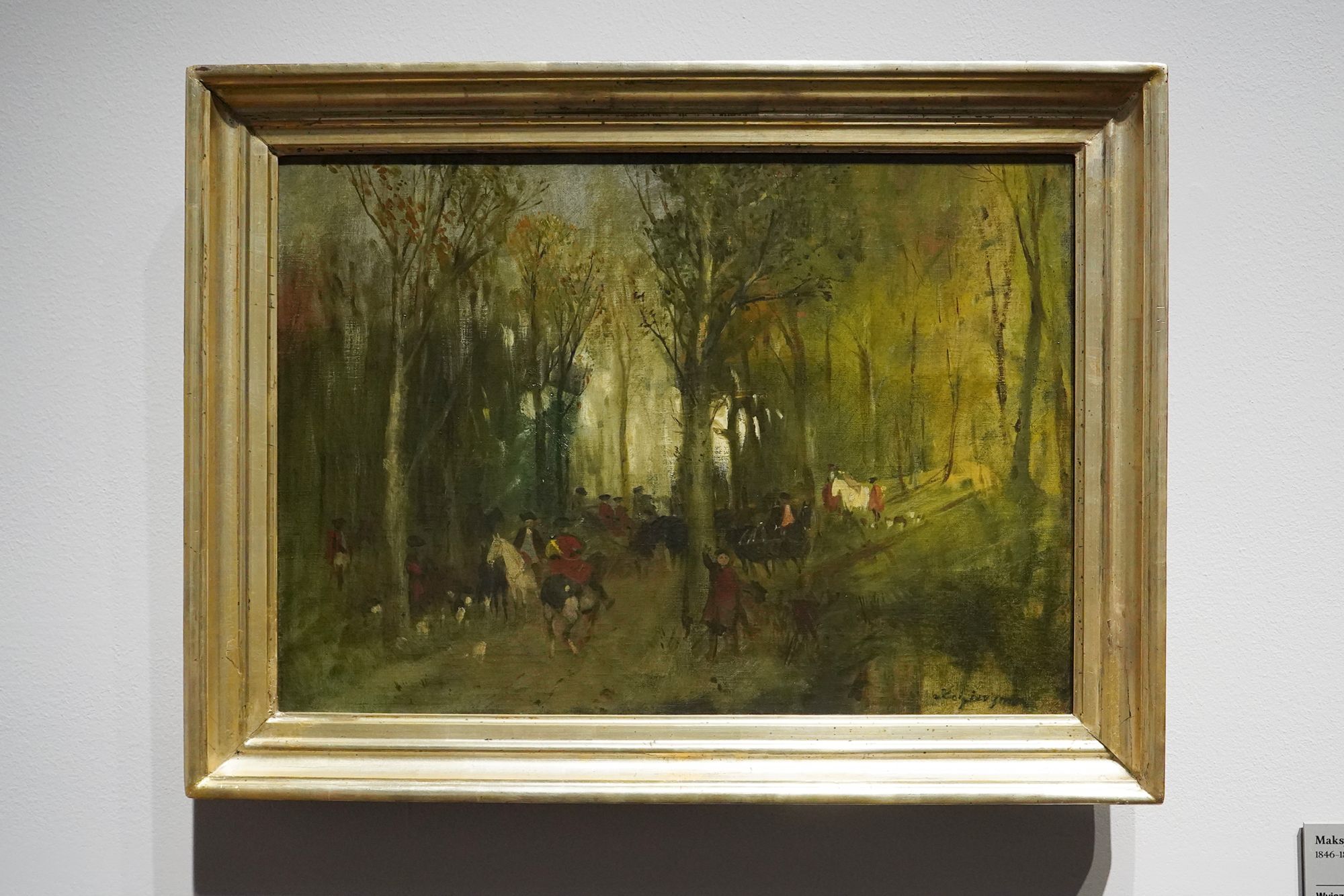
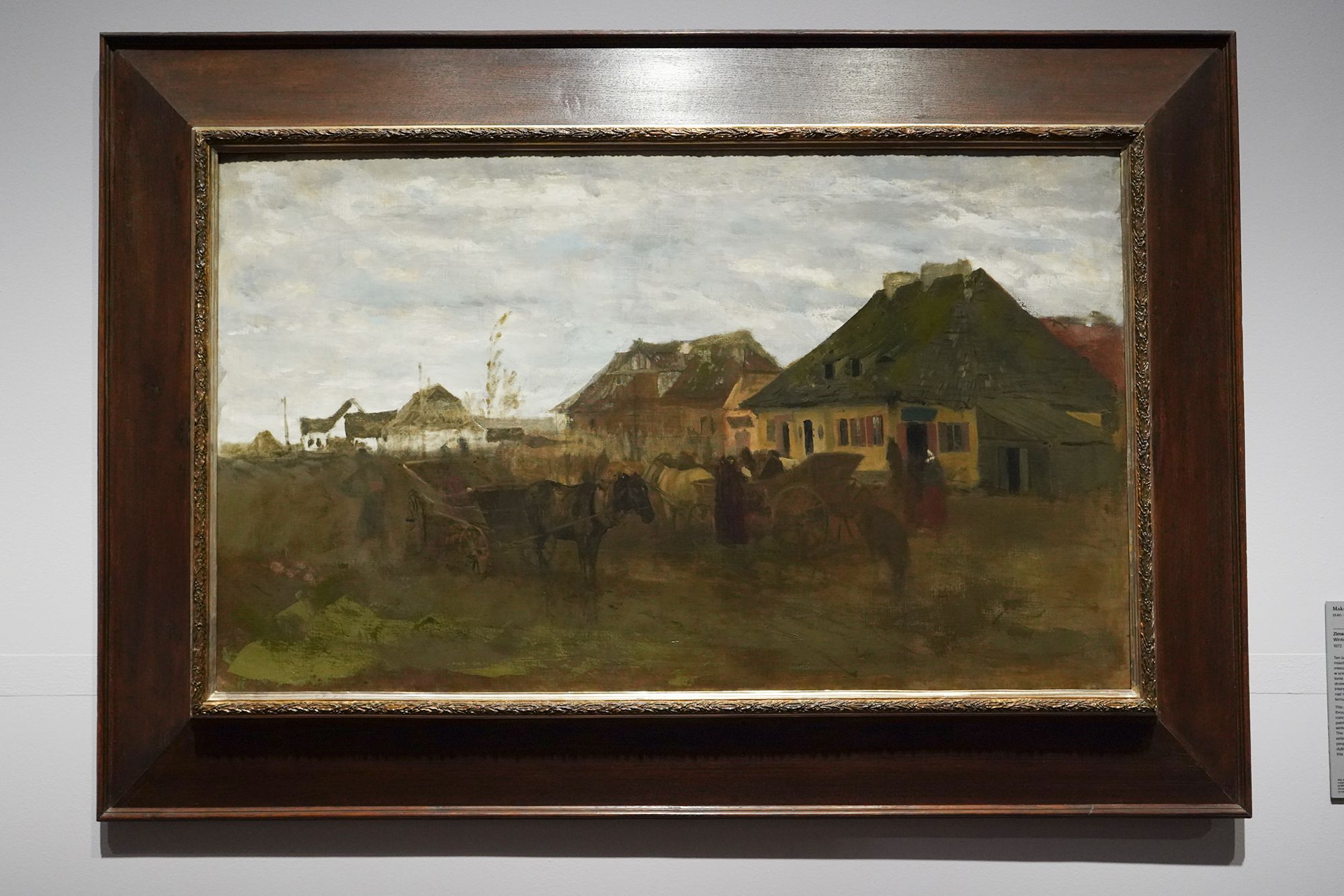
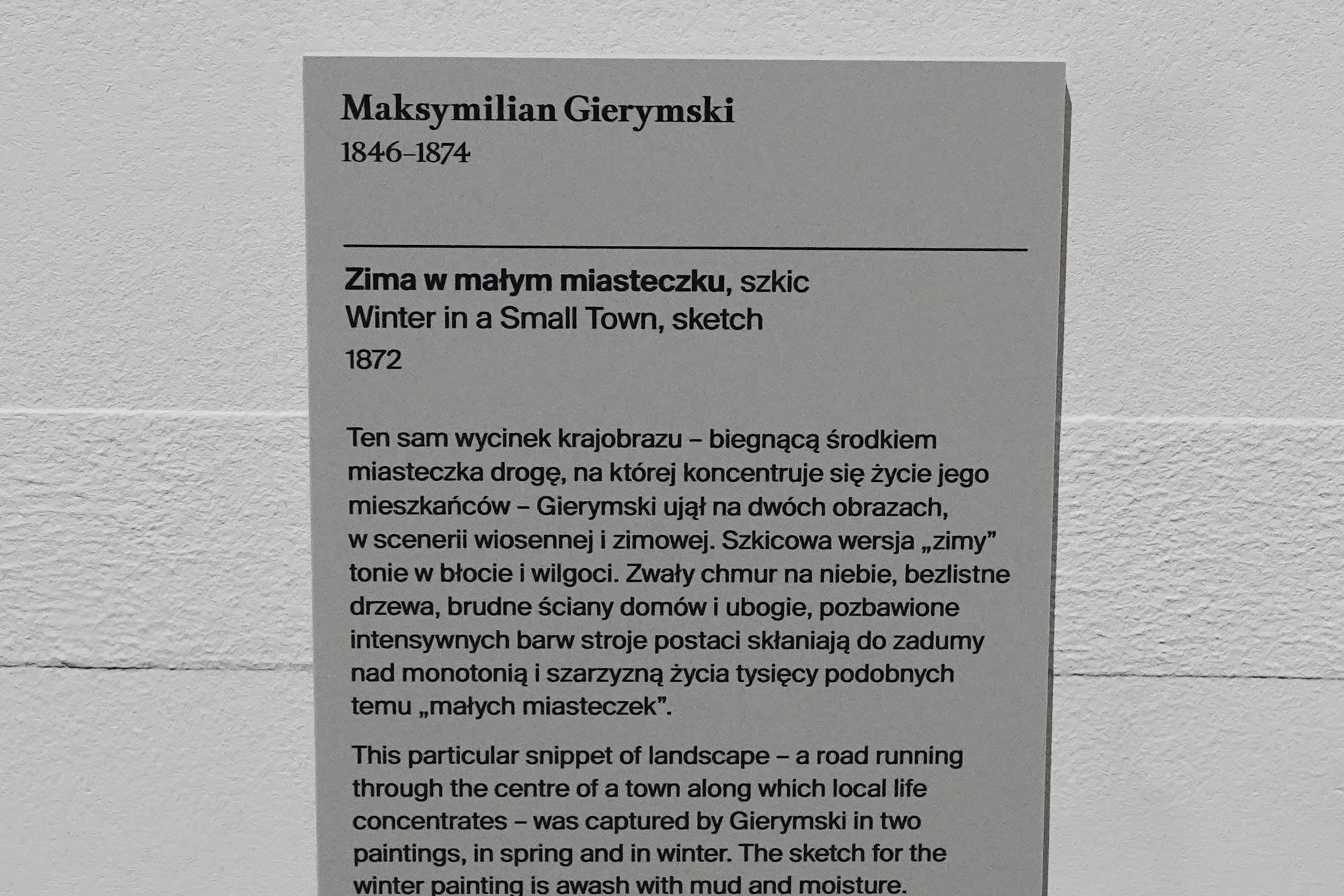
Maksymilian Gierymski (1846–1874) was a Polish painter and an important early figure in Polish Realism. He worked mainly in Munich and was known for landscapes, hunting scenes, and soldiers on horseback, with particular attention to atmosphere and light.
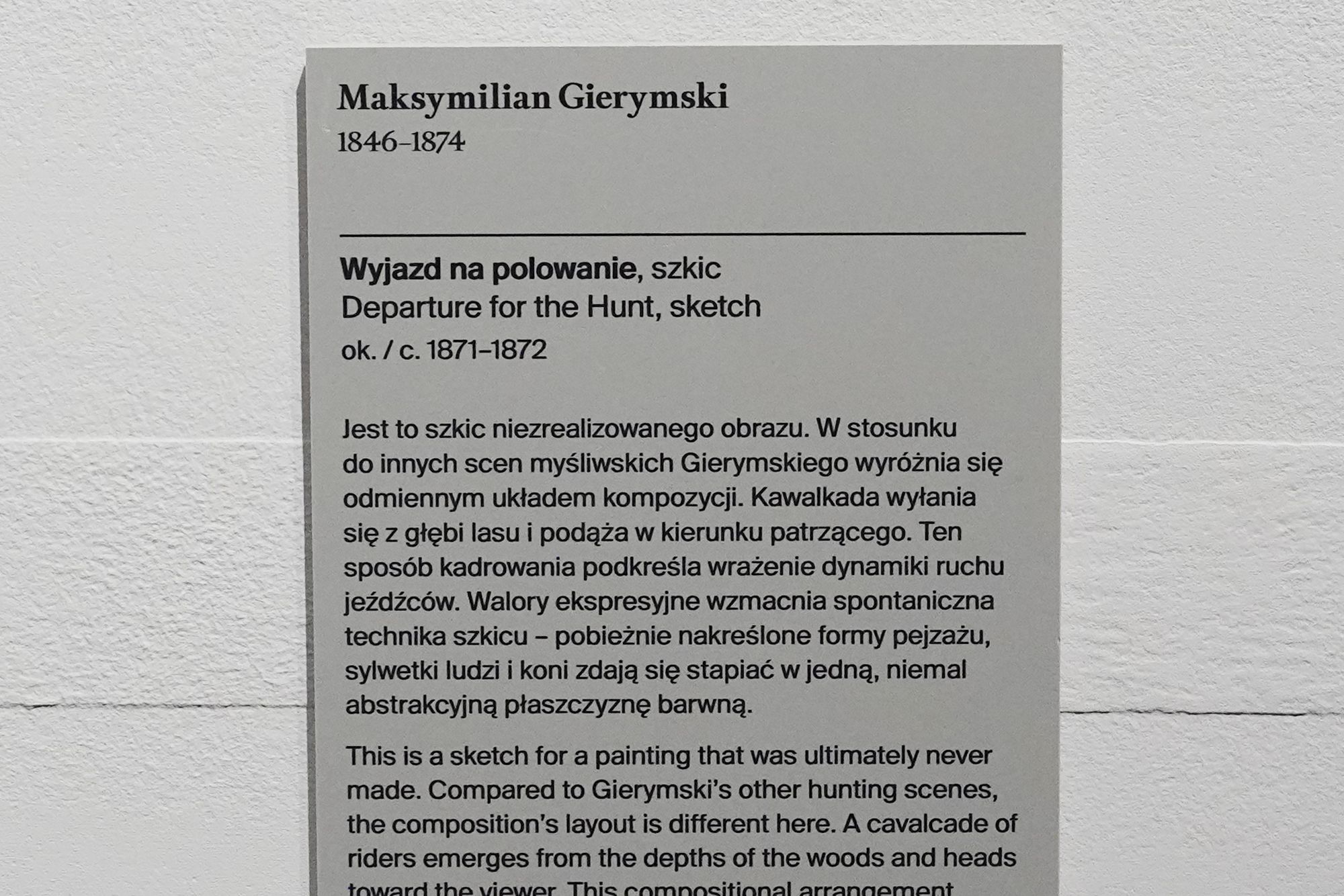
Maksymilian Gierymski’s Departure for the Hunt is a sketch for a painting that was never completed. Riders emerge from the forest toward the viewer, while the loose brushwork blends the horses, figures, and landscape, giving the scene a strong sense of movement.
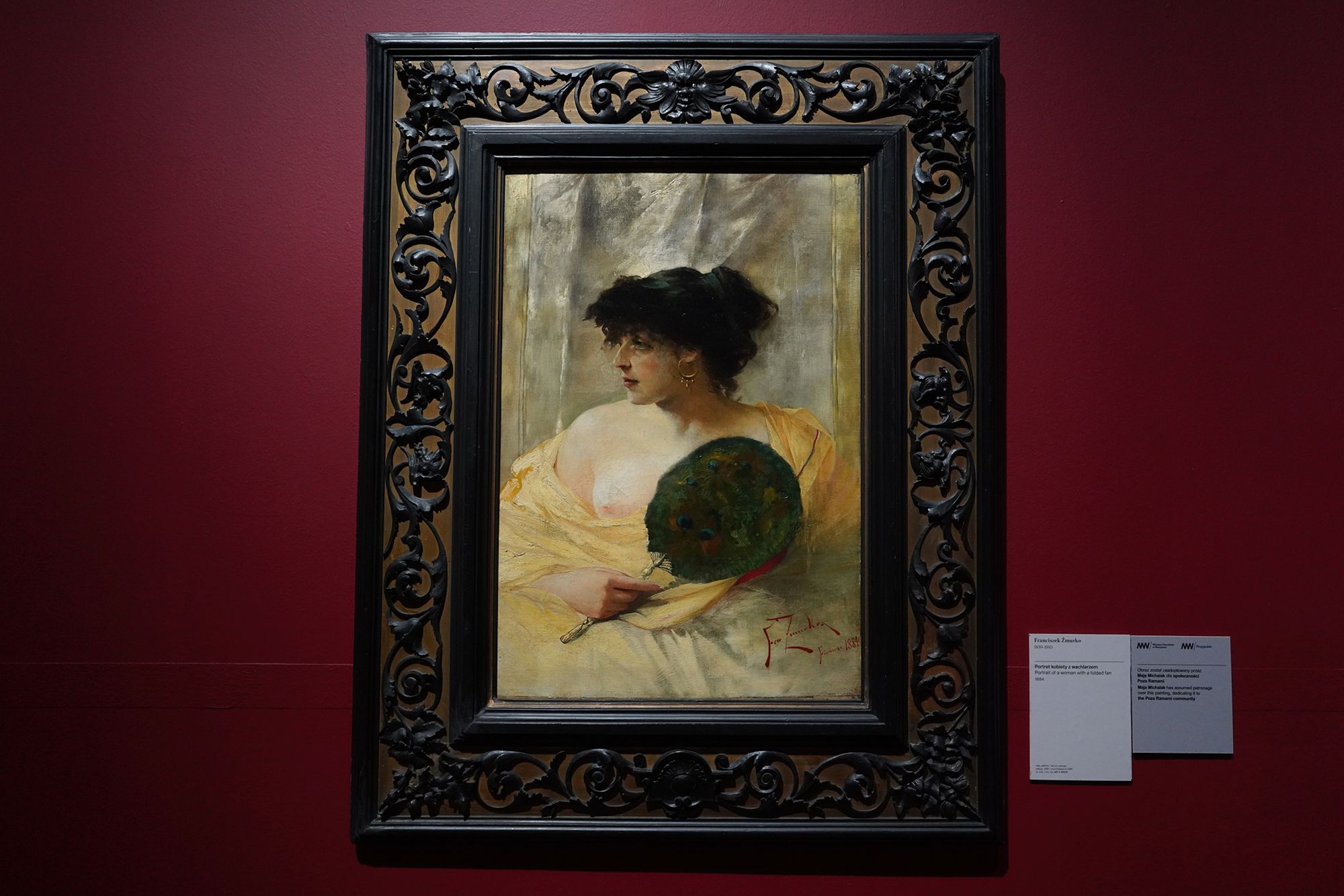
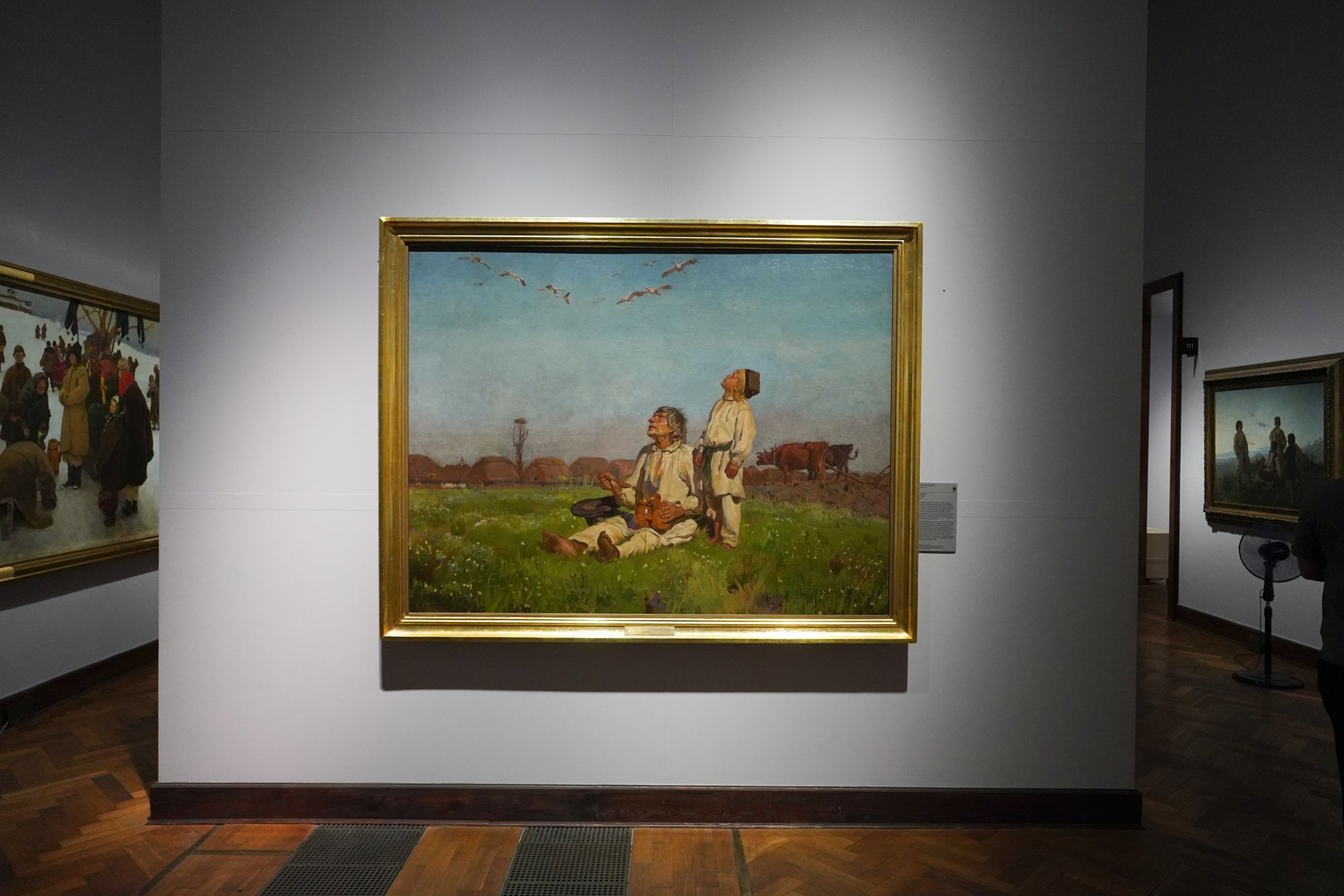
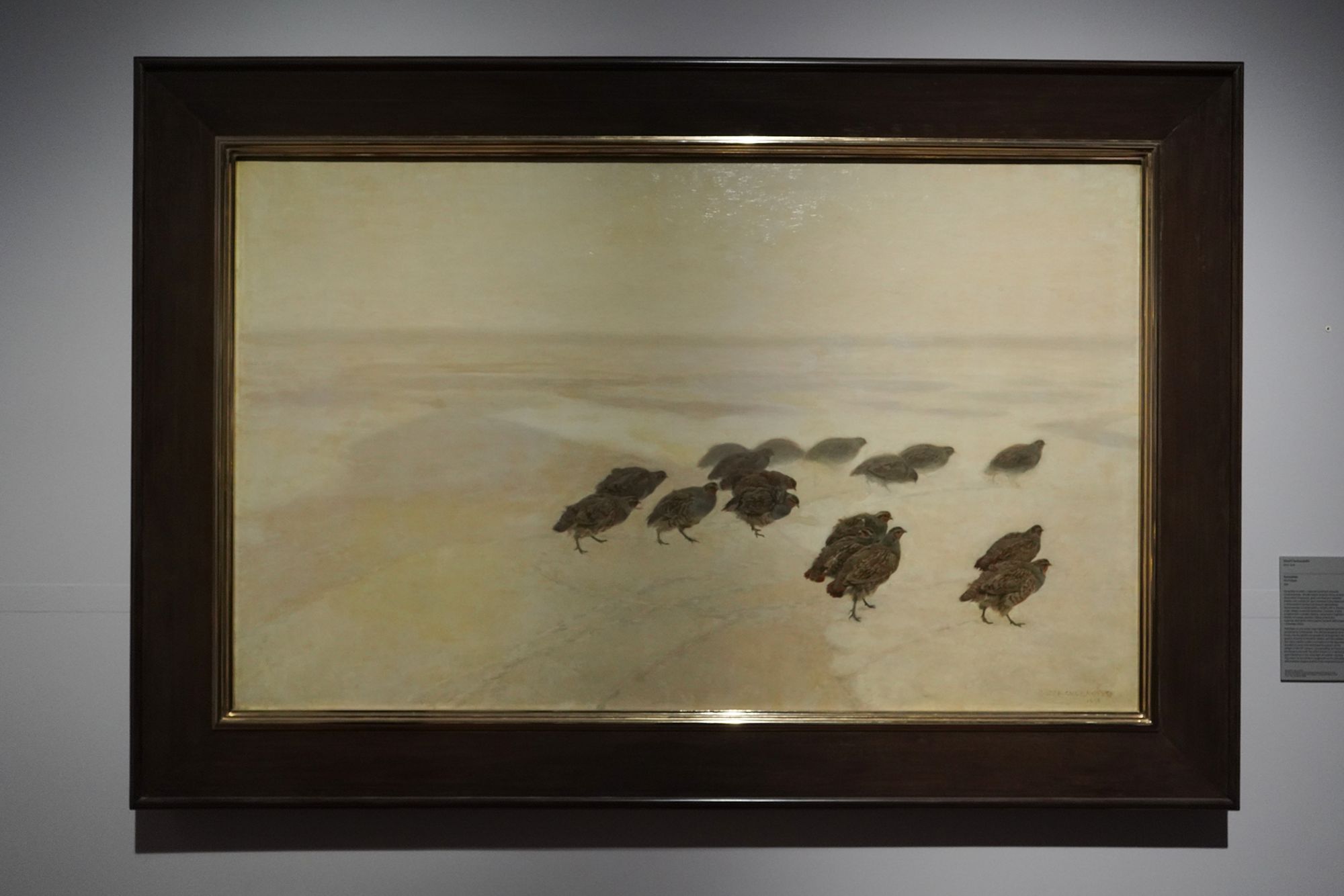
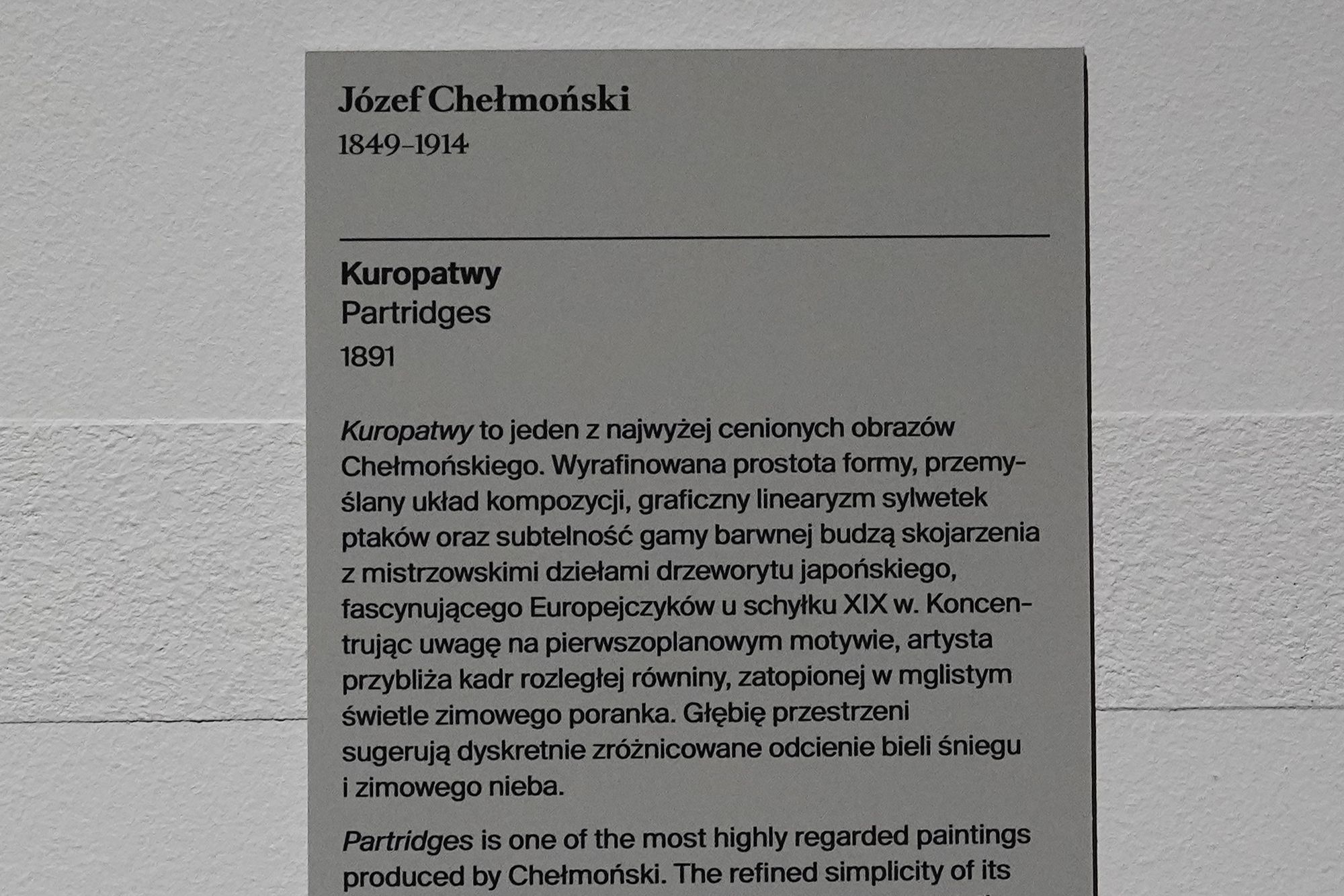
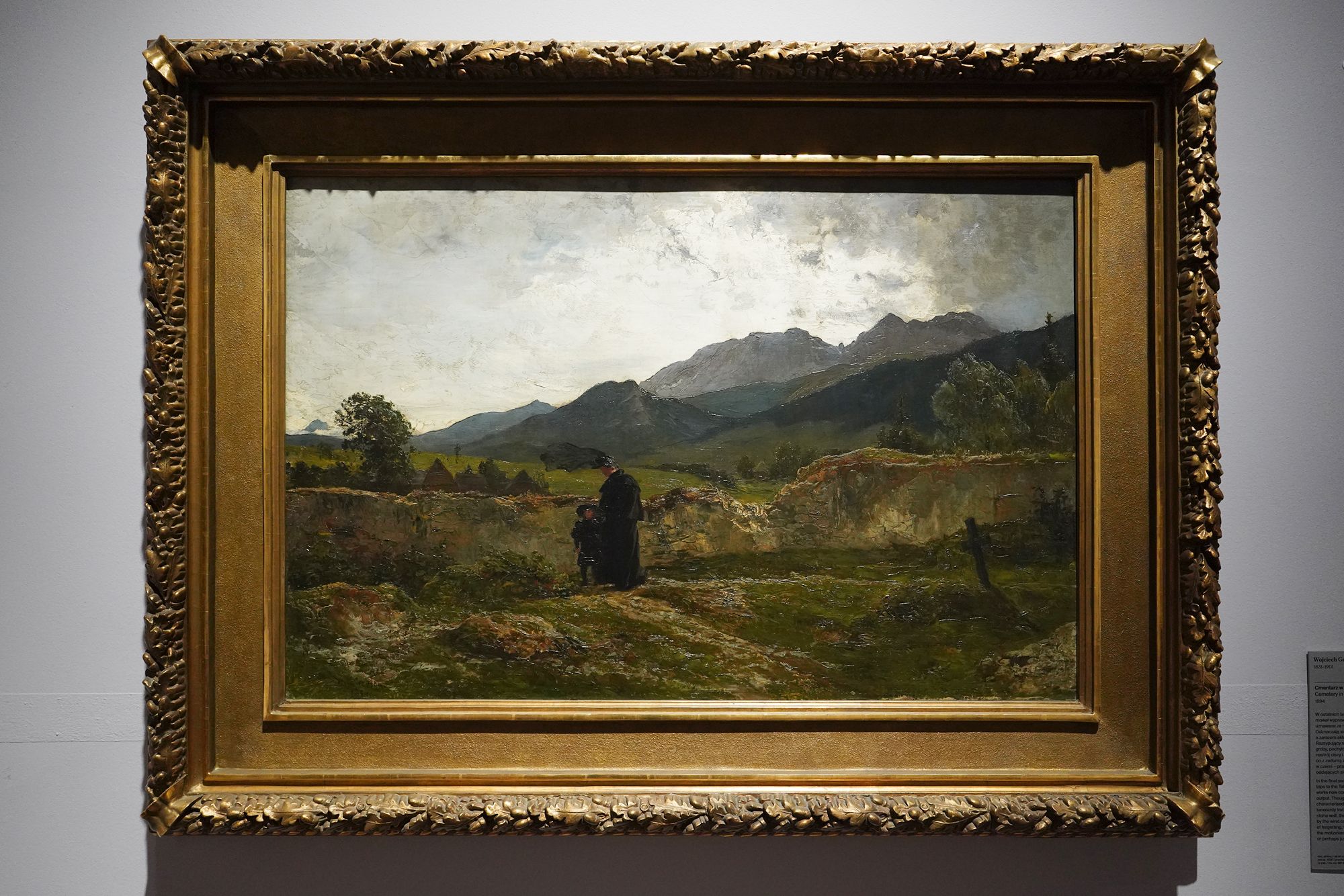
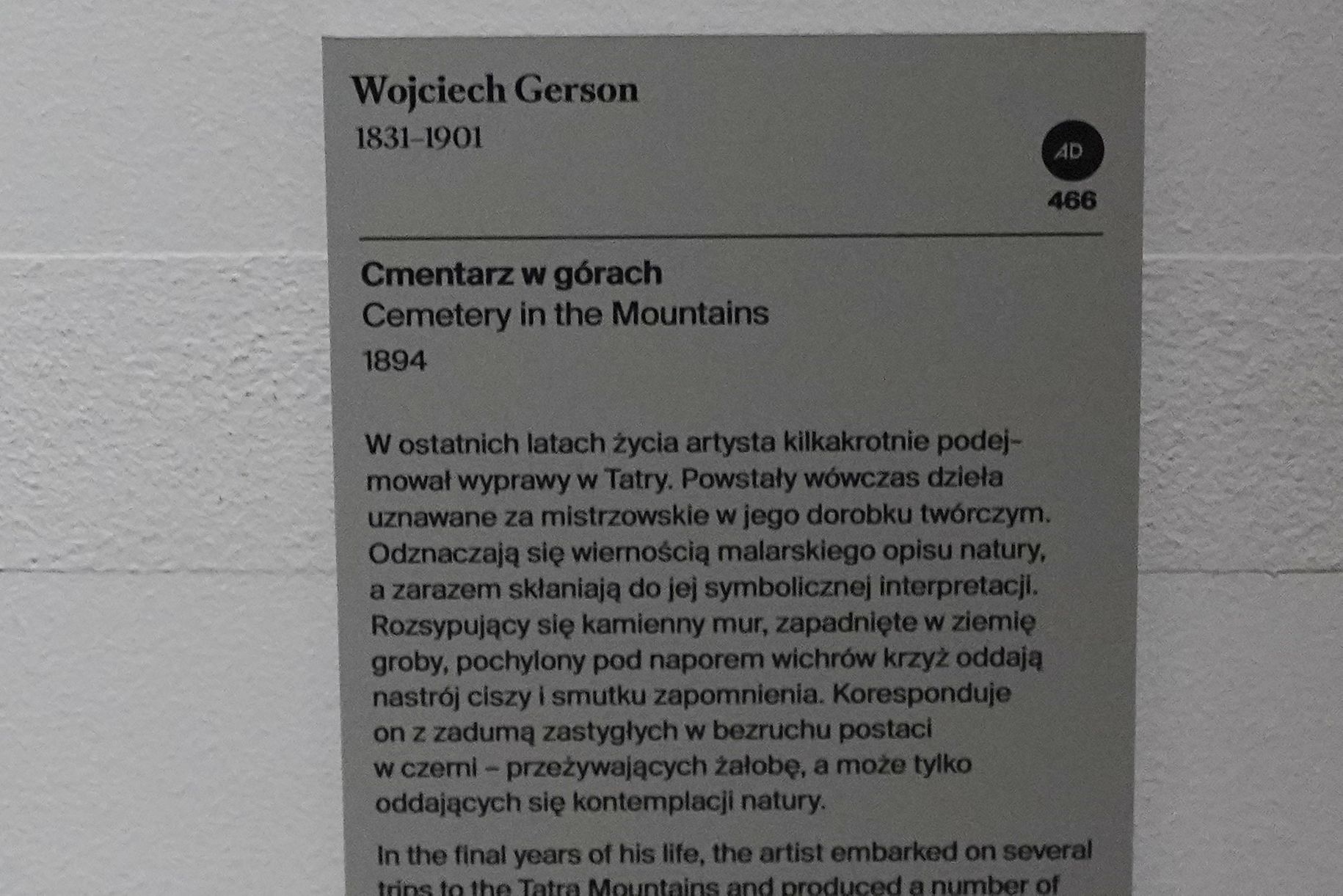
Józef Chełmoński (1849–1914) was a Polish painter and a leading figure in Polish Realism, best known for countryside scenes, rural people, horses, and wildlife. His paintings capture both everyday life and the atmosphere of open fields, changing seasons, and skies.
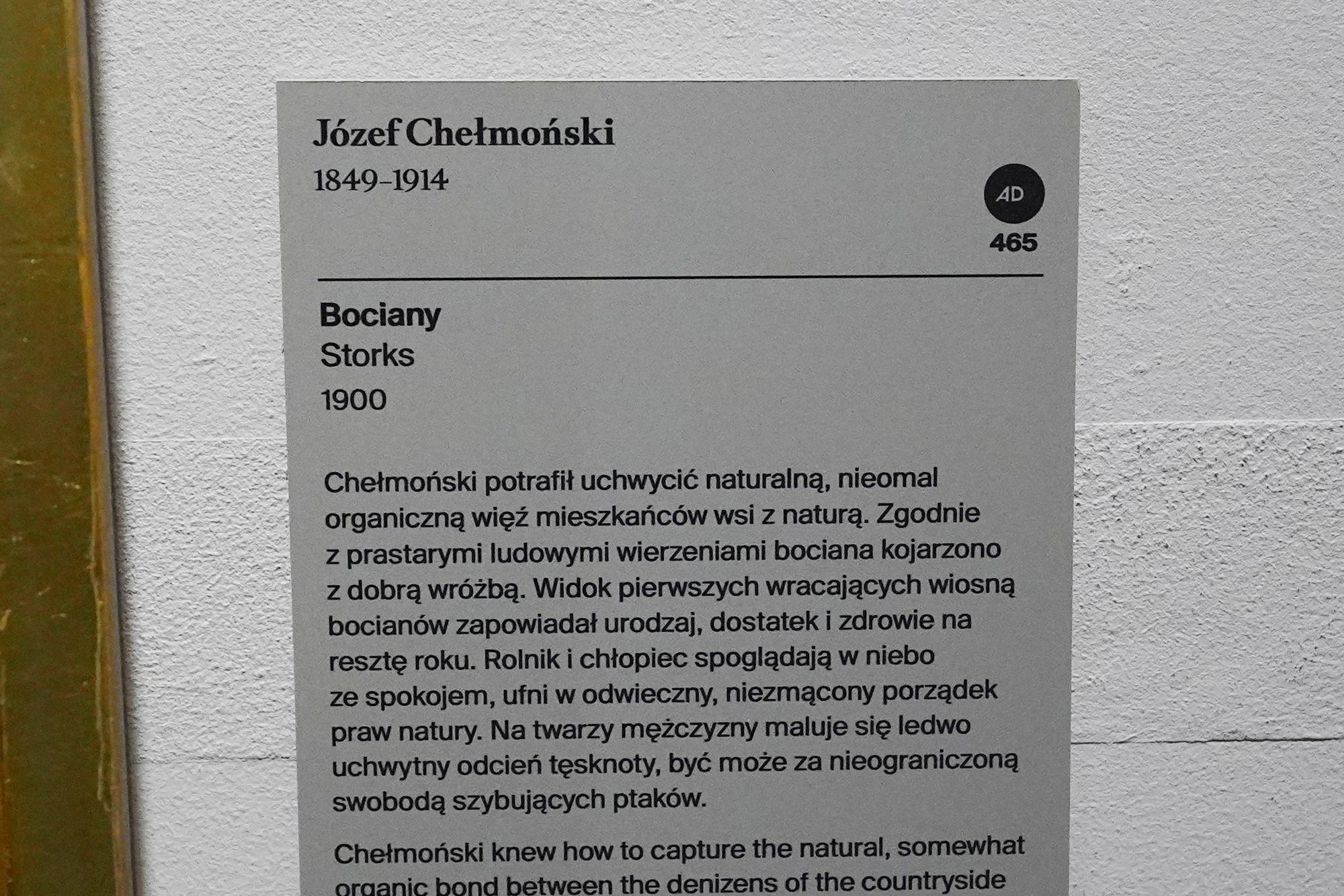
Józef Chełmoński’s Storks (1900) shows a farmer and a boy watching the birds overhead. Their quiet attention reflects the close relationship between country life and nature. In Polish folk tradition, the return of storks in spring was a hopeful sign of a good harvest, prosperity, and health.
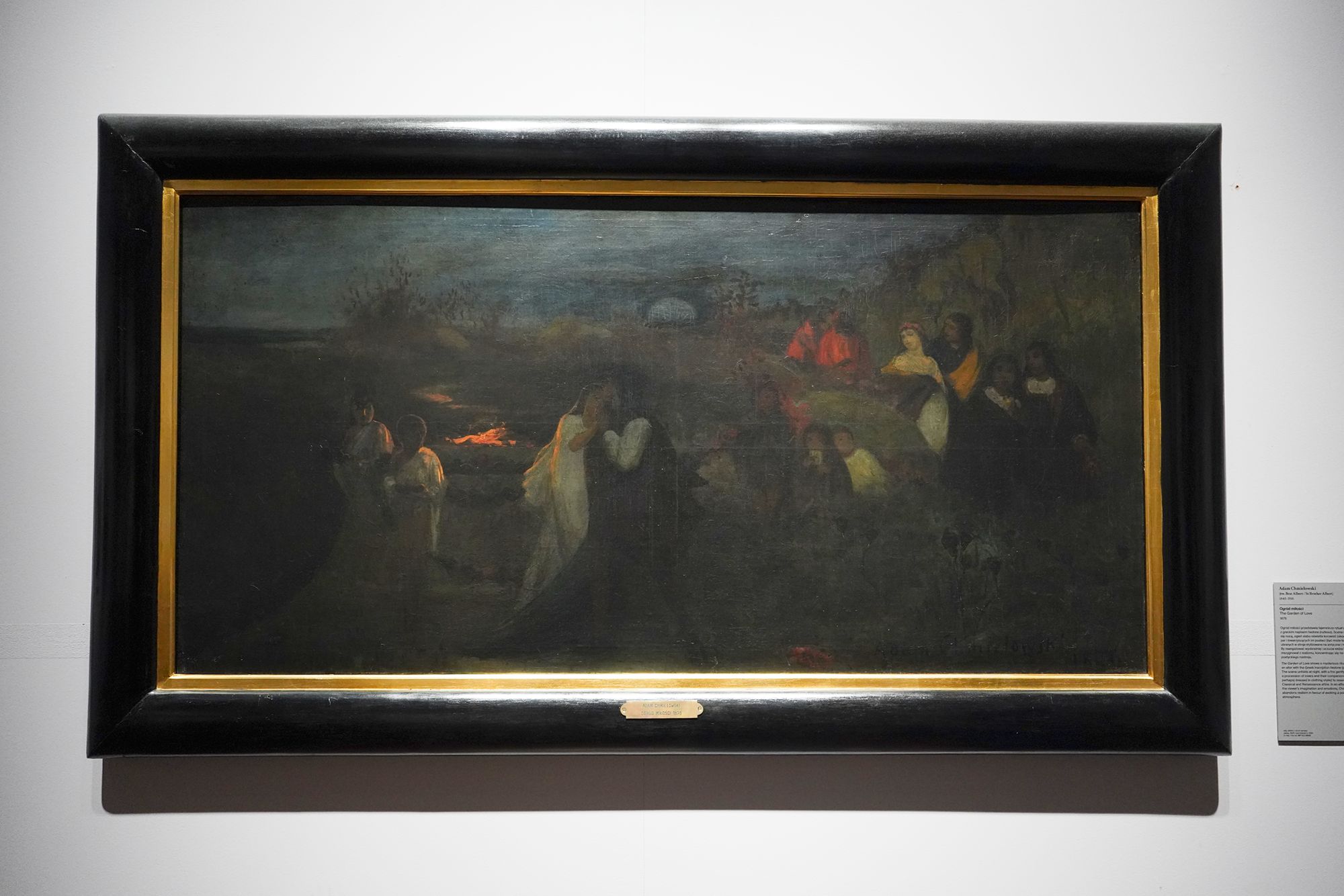
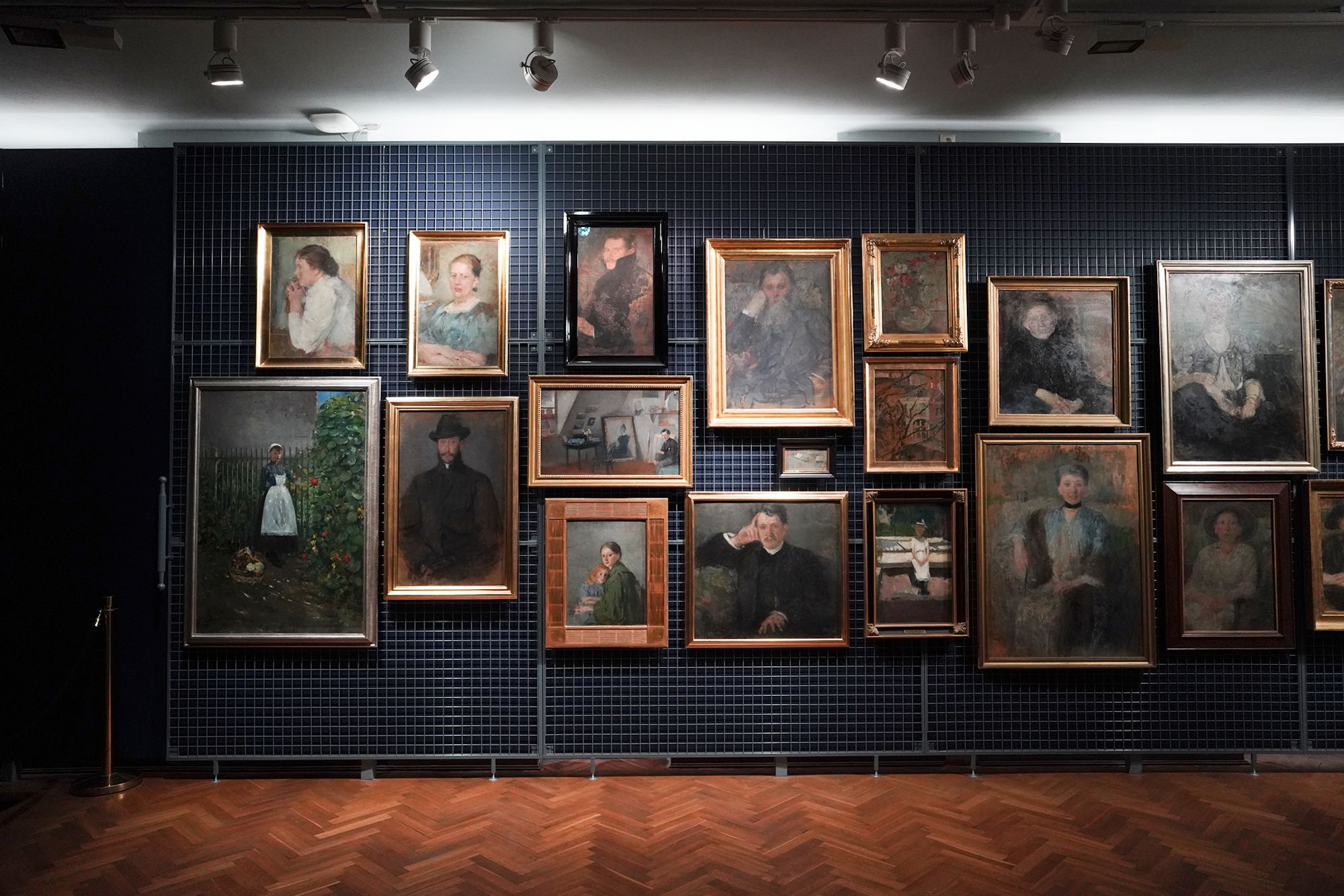
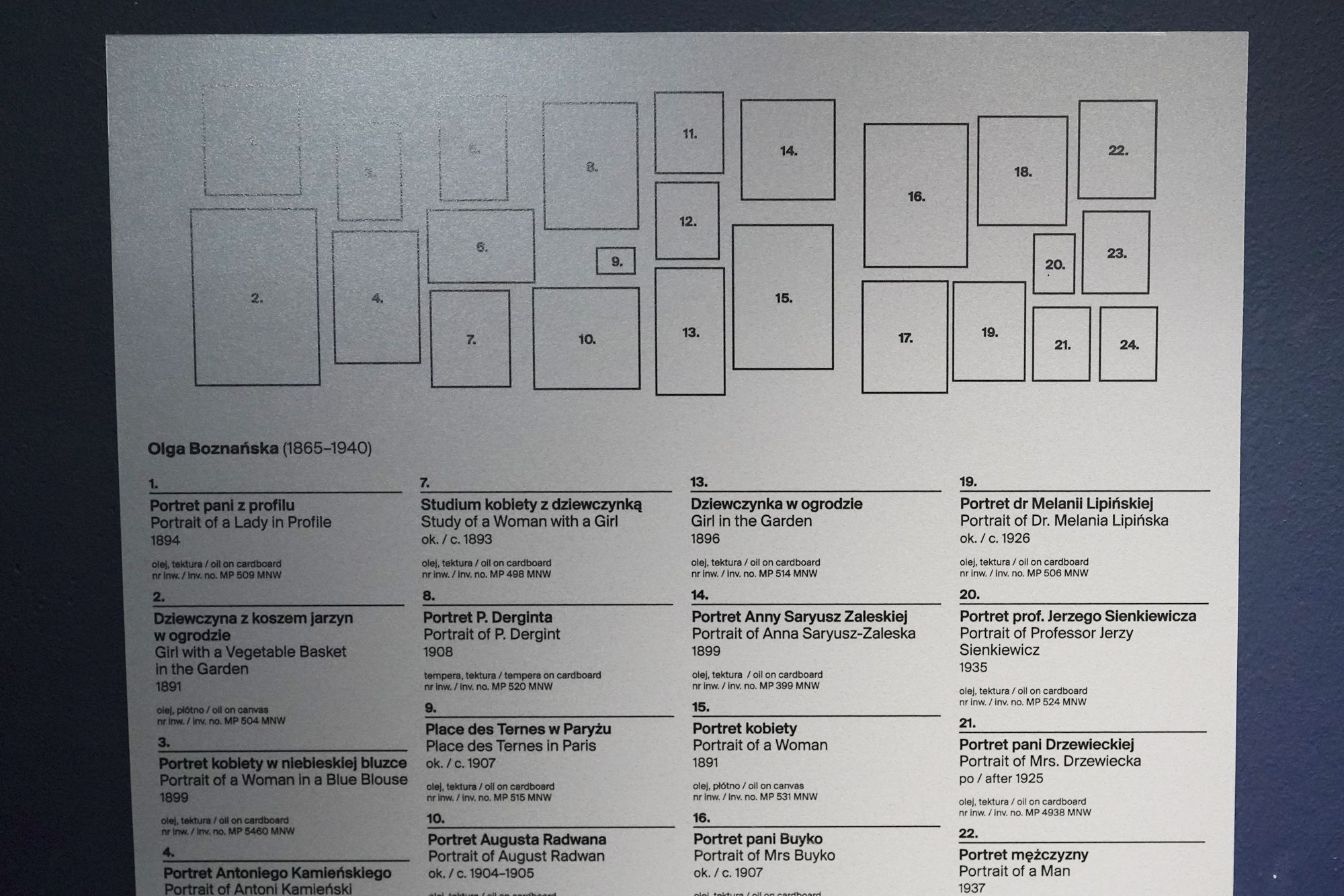
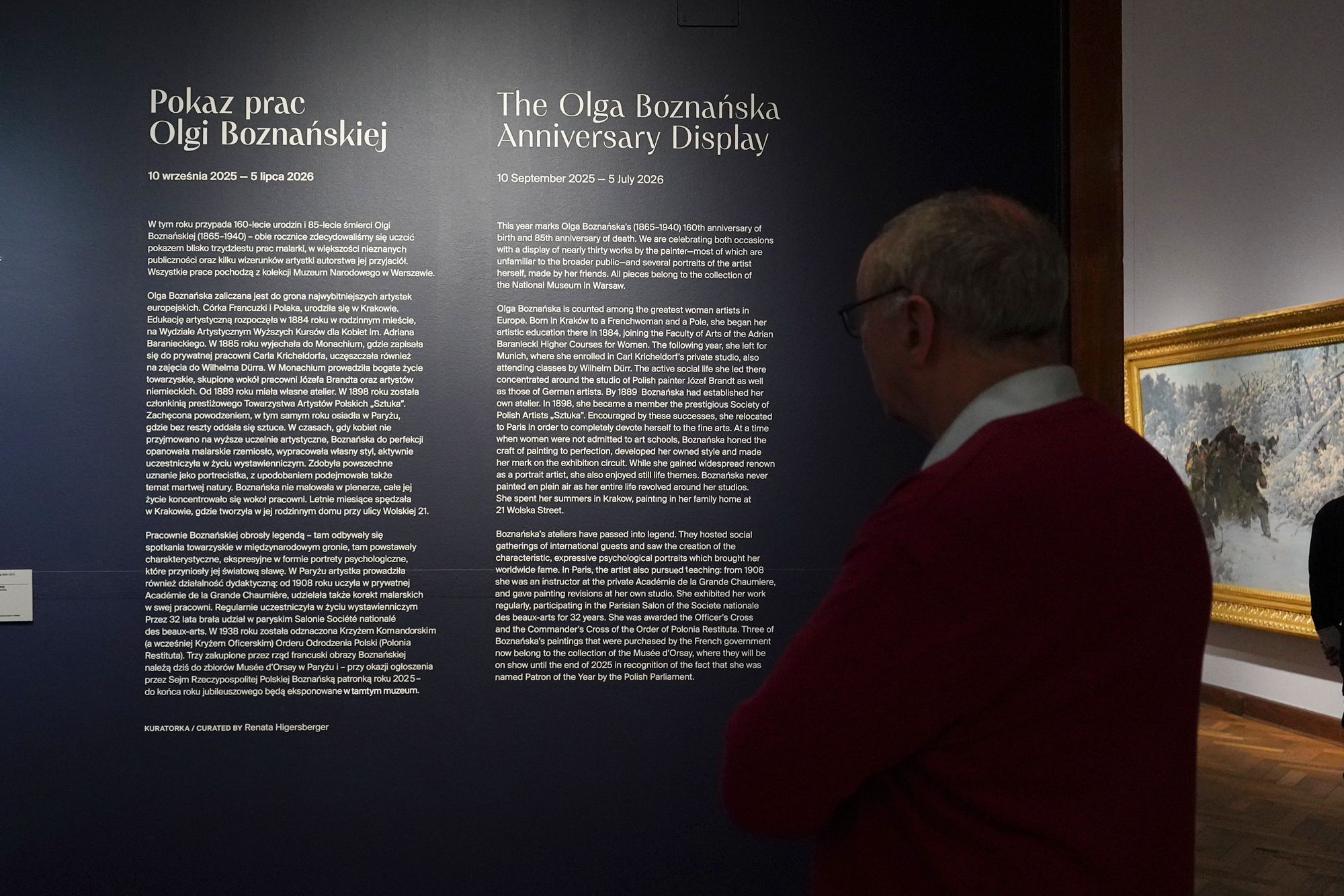
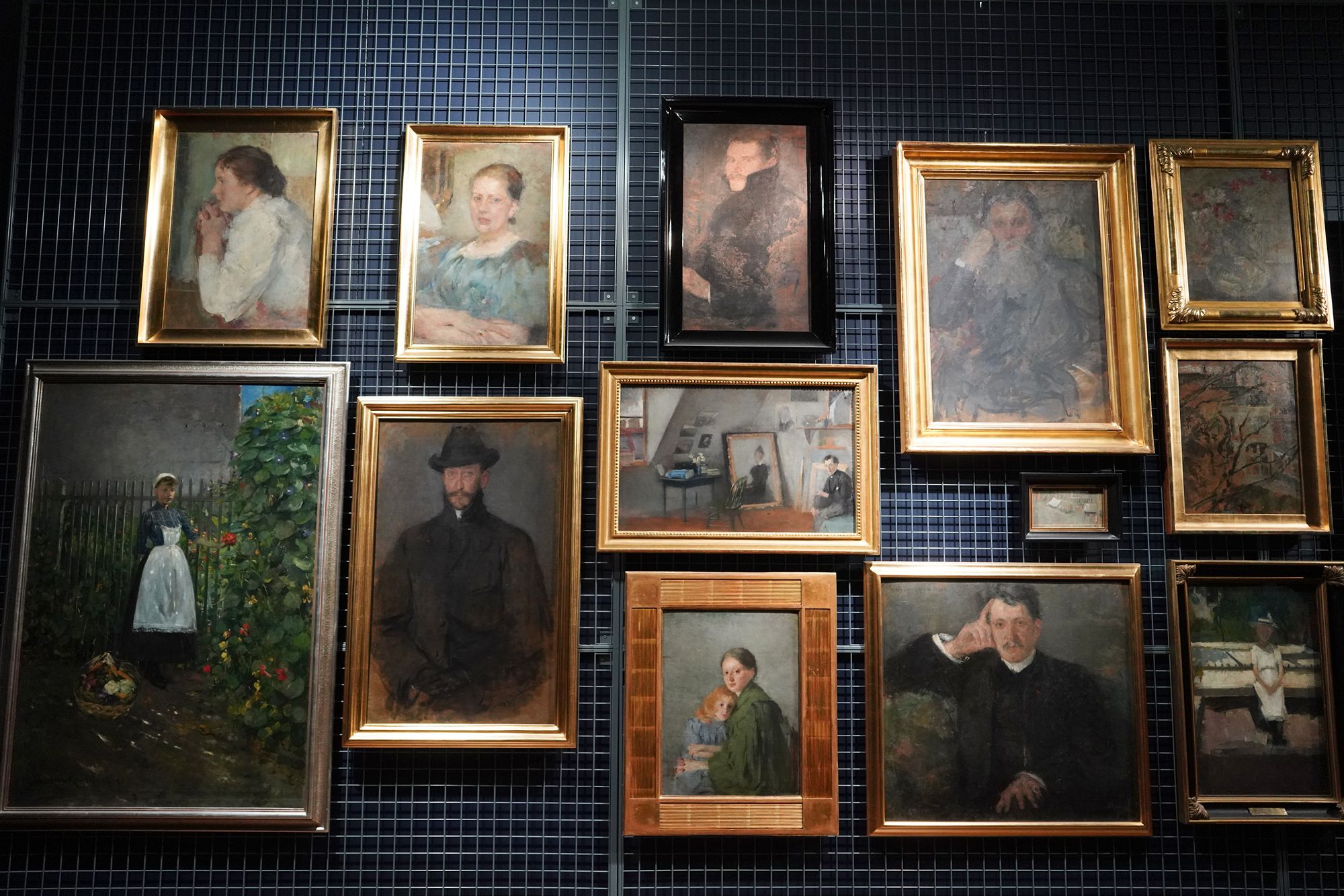
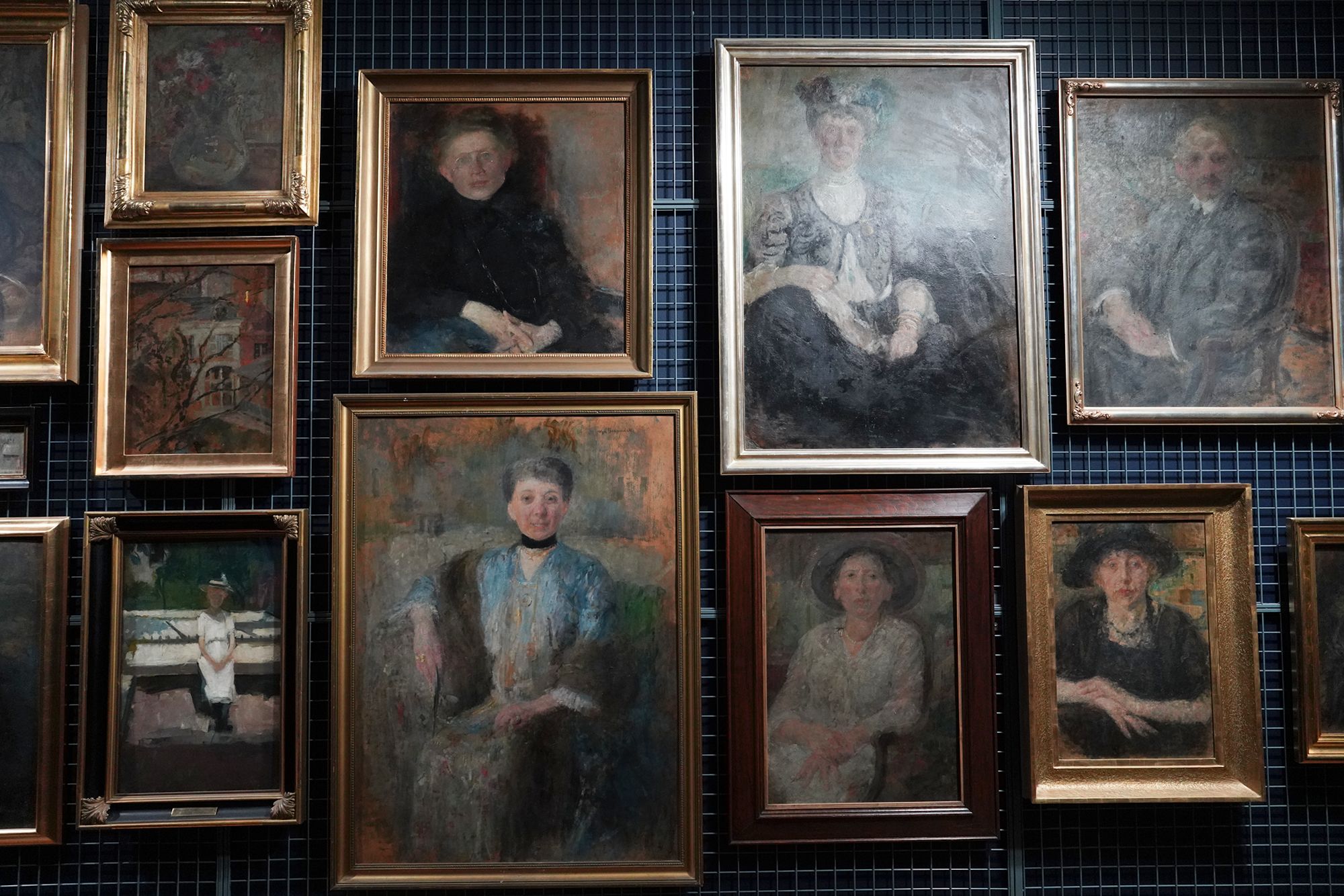
Olga Boznańska (1865–1940) was a major Polish painter, especially known for expressive portraits. Born in Kraków to a Polish father and French mother, she developed her career in Munich before moving to Paris in 1898.
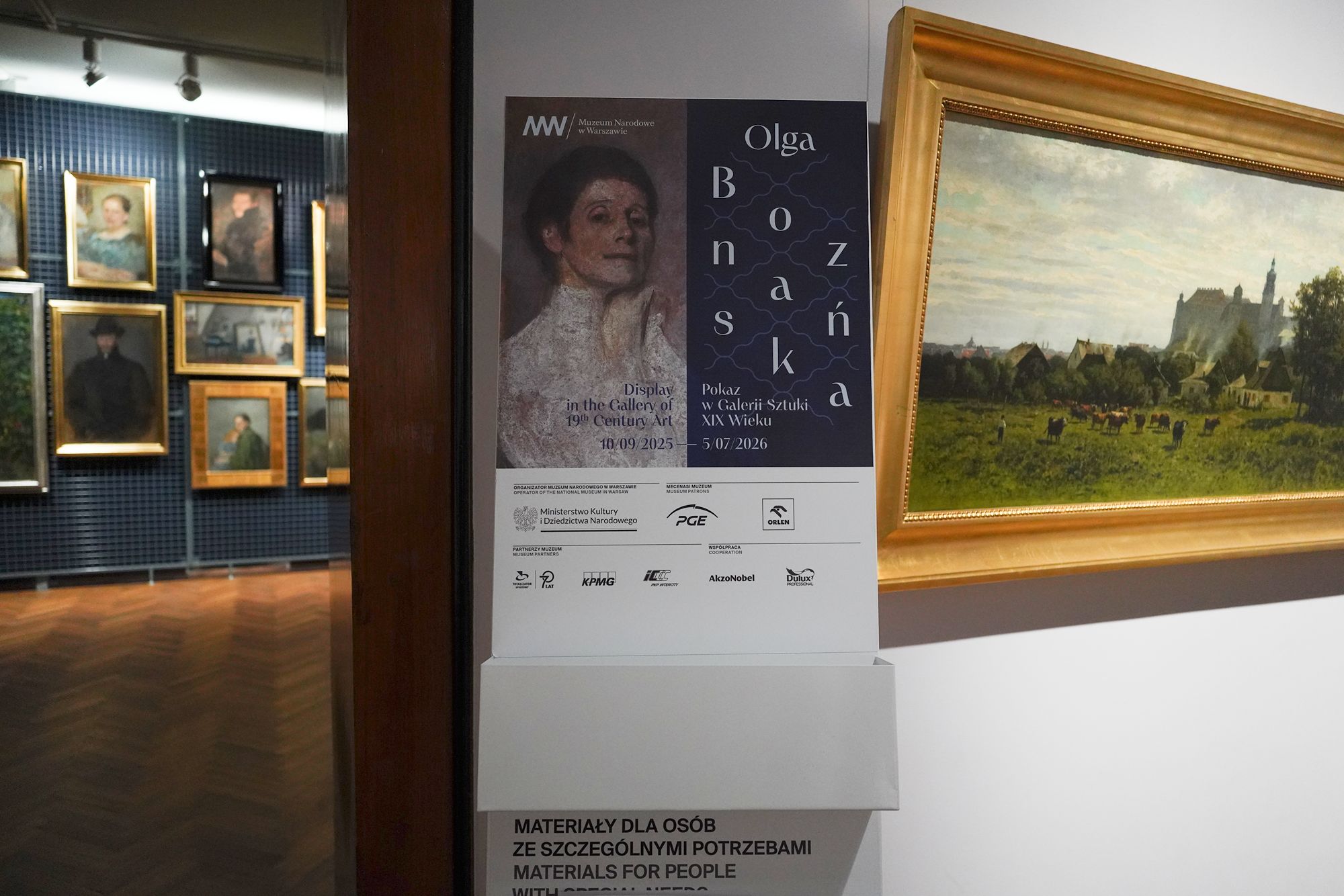
The display marked the 160th anniversary of her birth and 85th anniversary of her death, bringing together nearly thirty paintings from the museum’s collection.
The next section explored early 20th-century painting, when Polish artists experimented with color, line, and form to express their own impressions and emotions. Influences from France helped introduce new approaches, expanding the possibilities of painting beyond the realistic scenes in the earlier galleries.
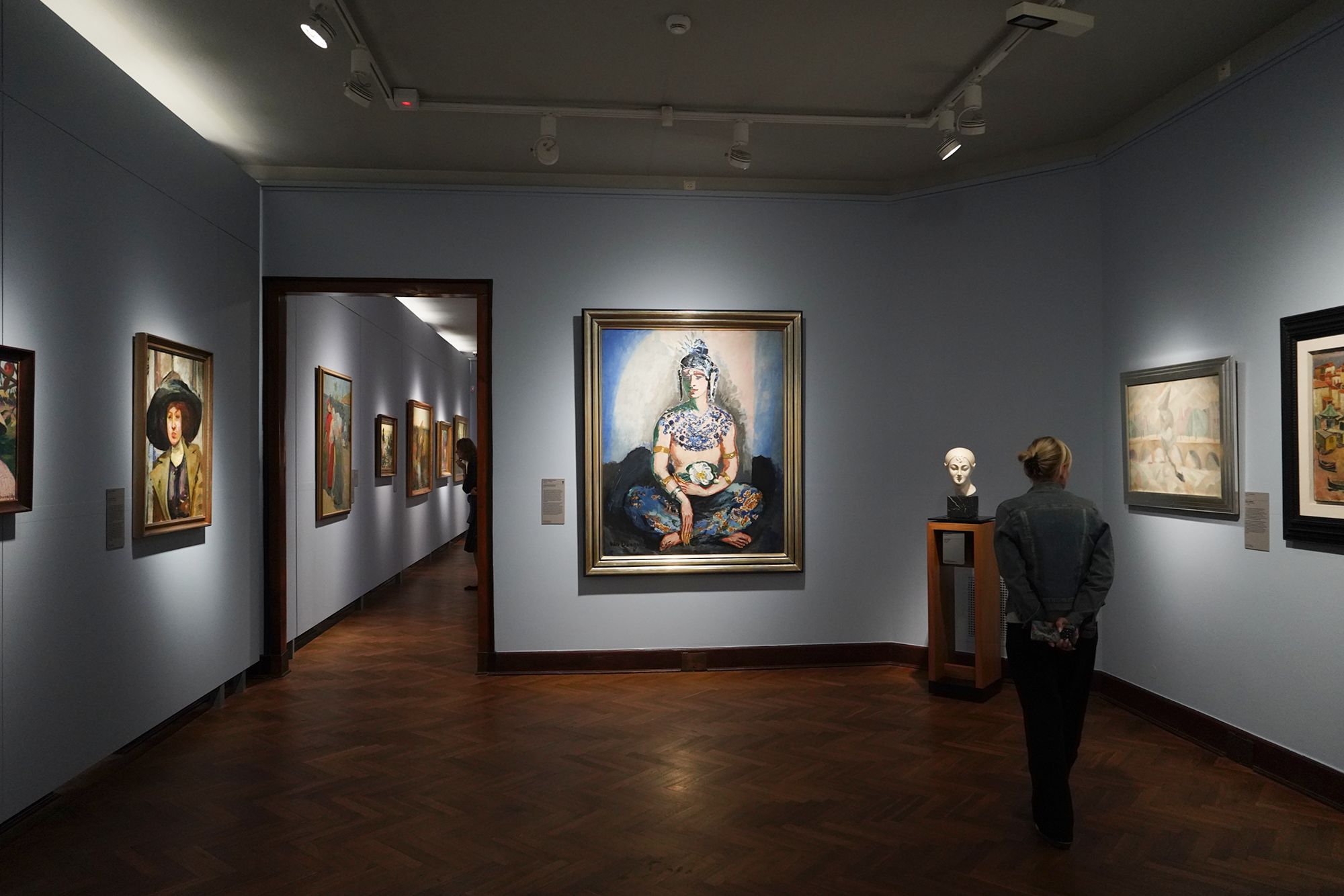
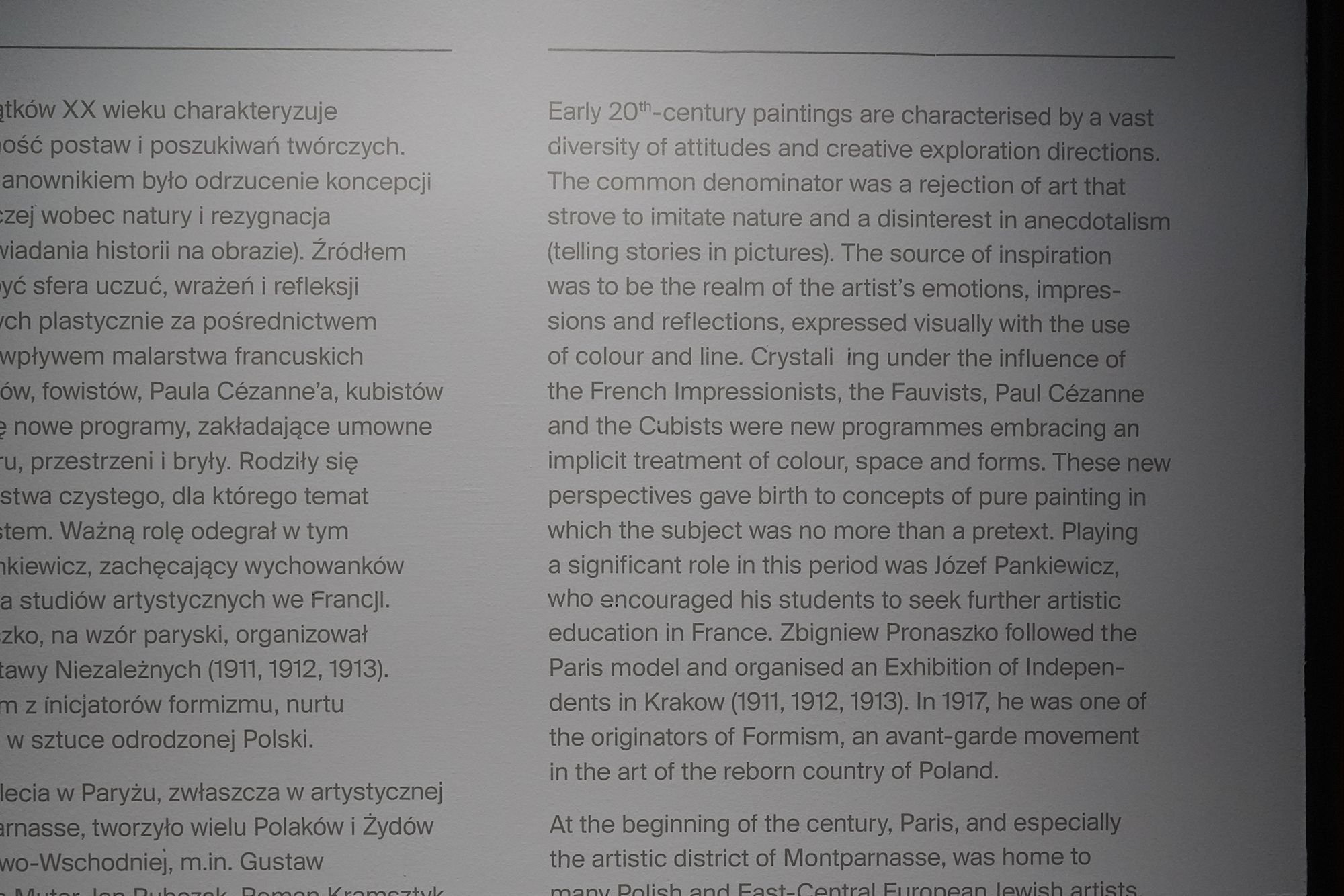
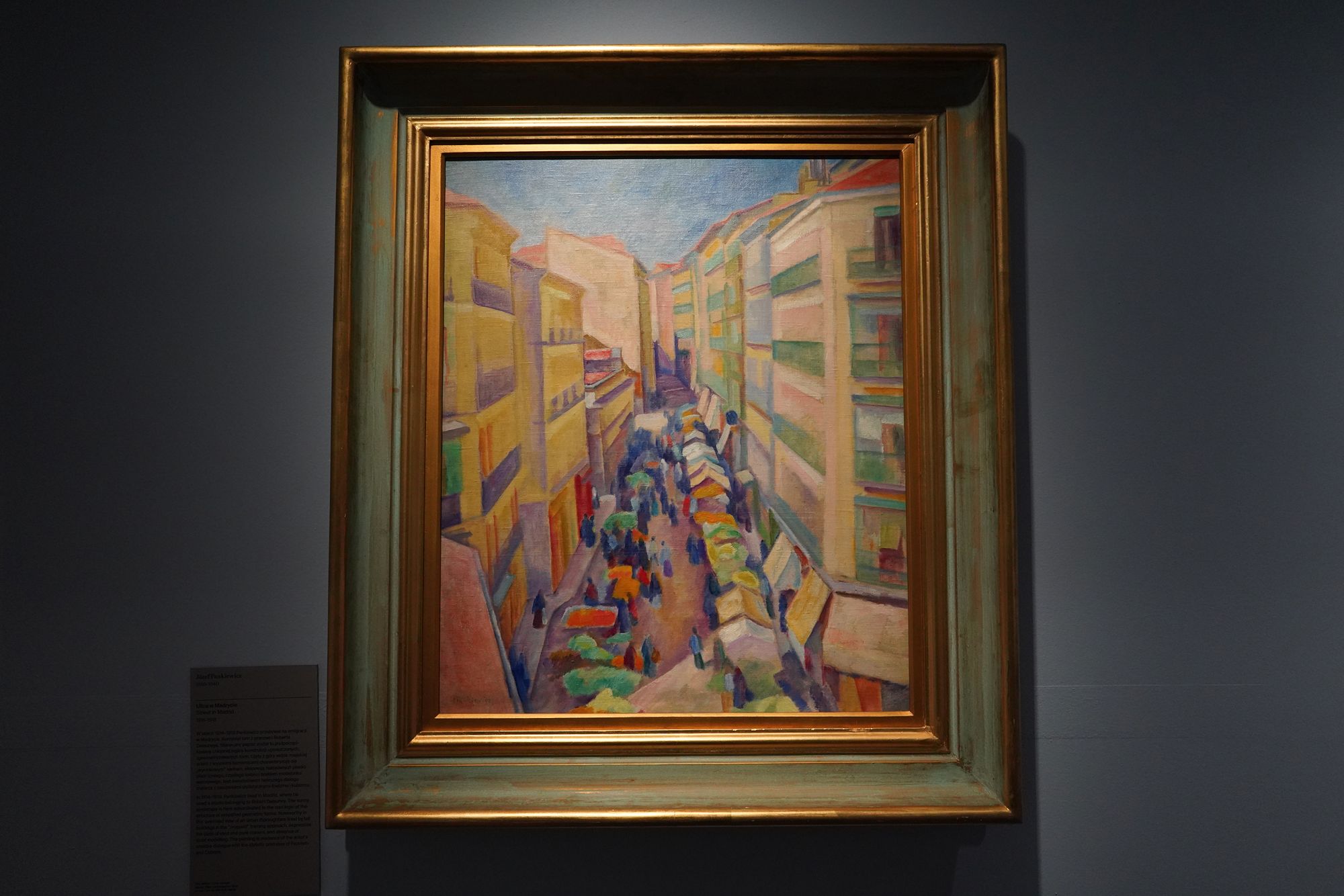
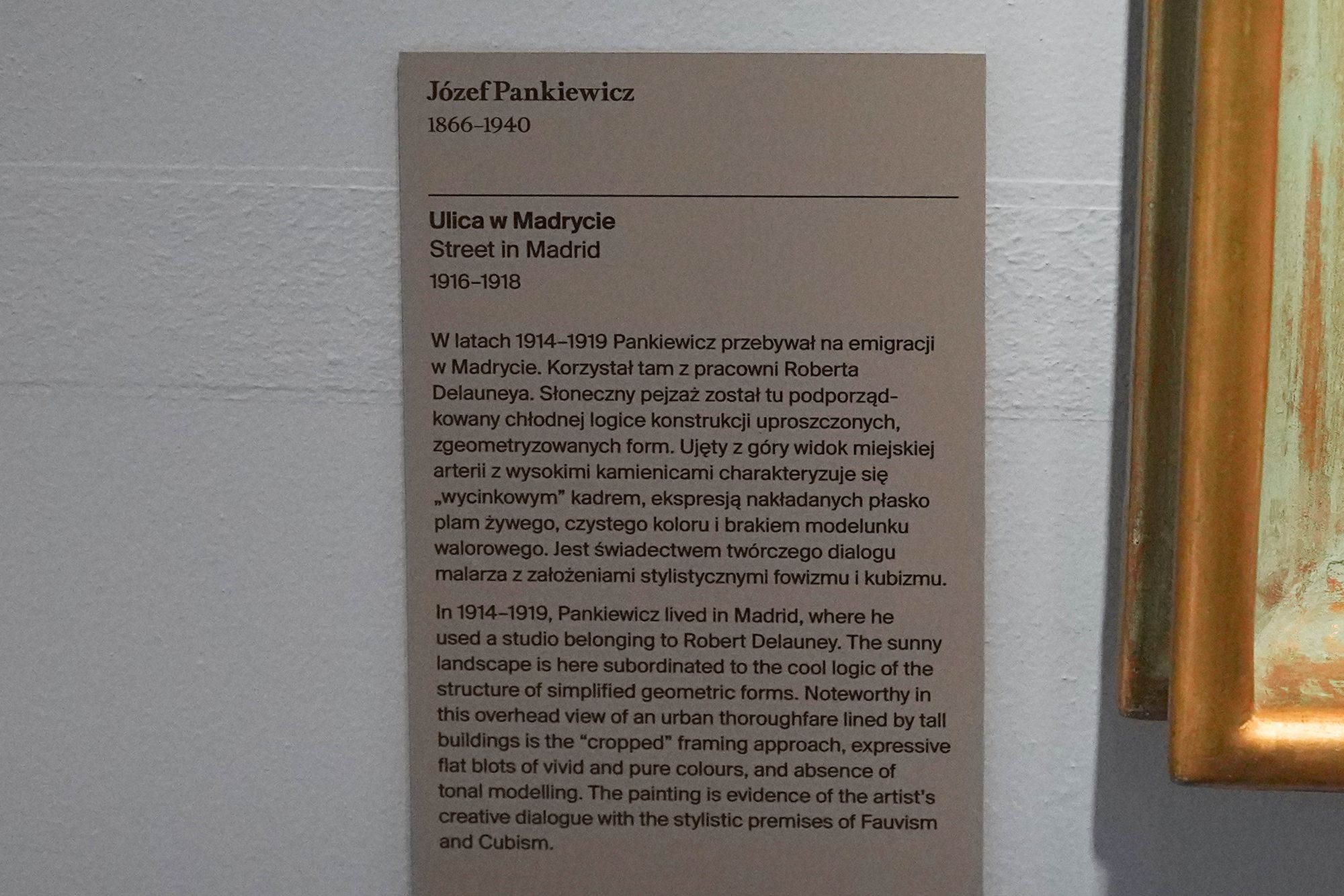
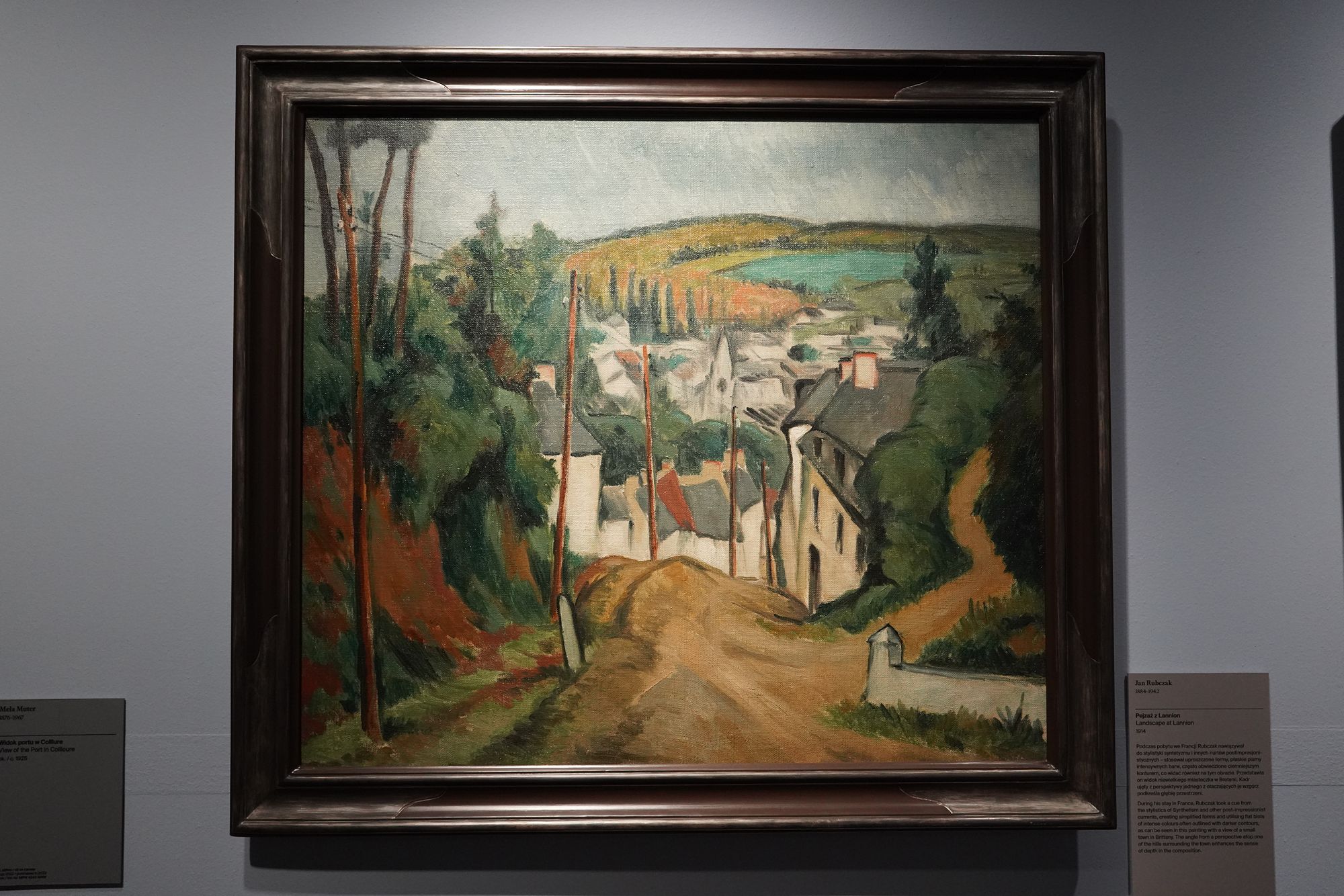
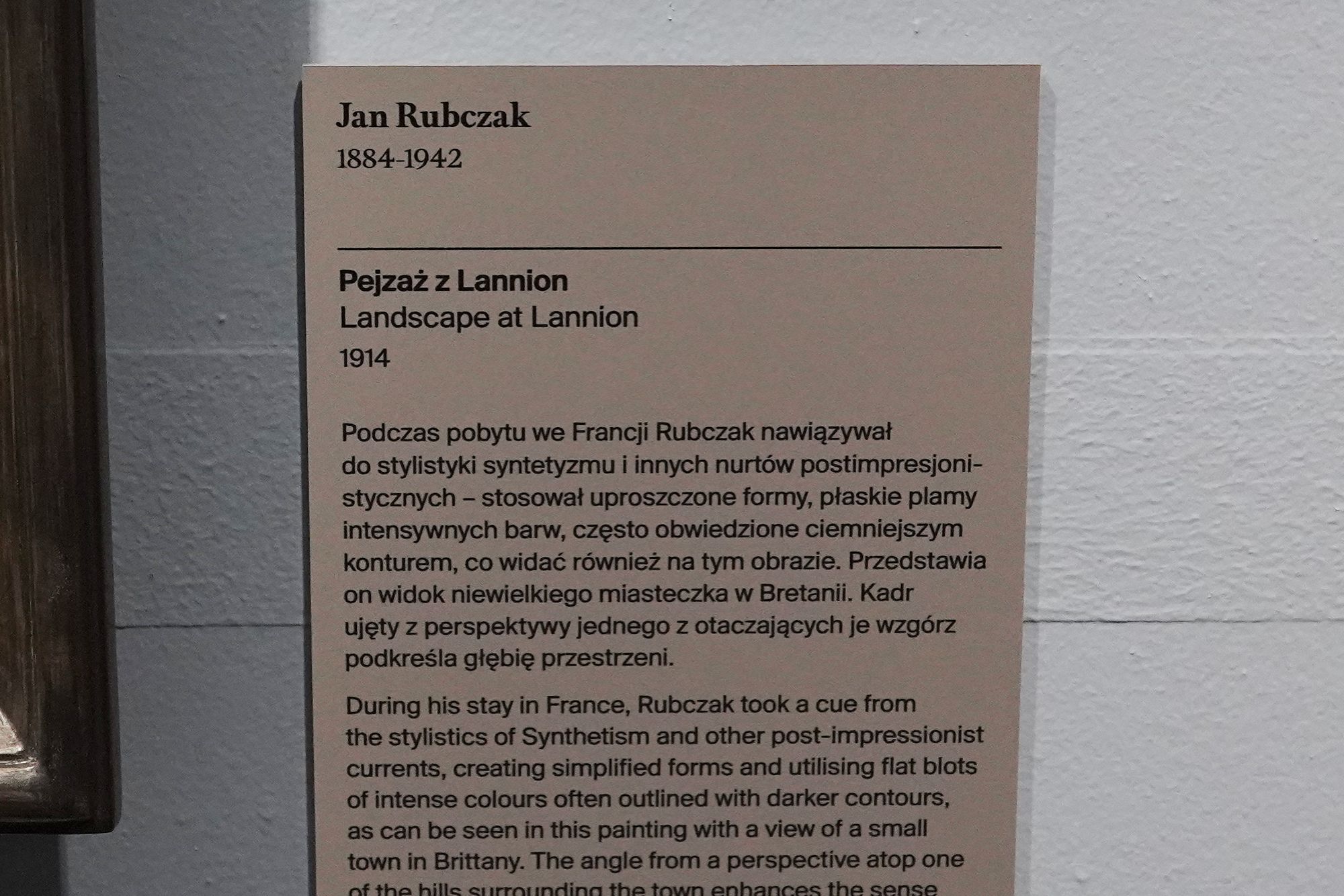
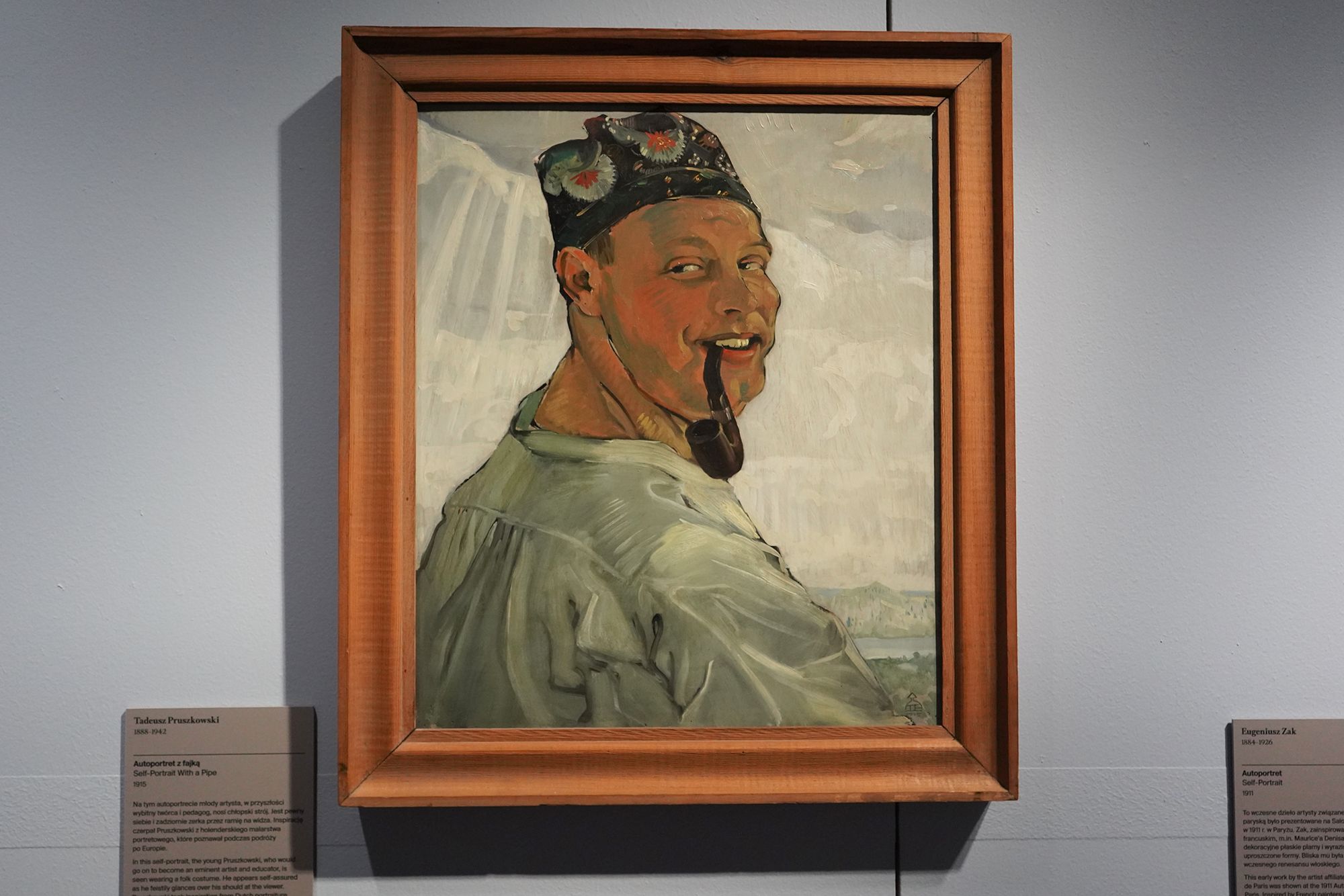
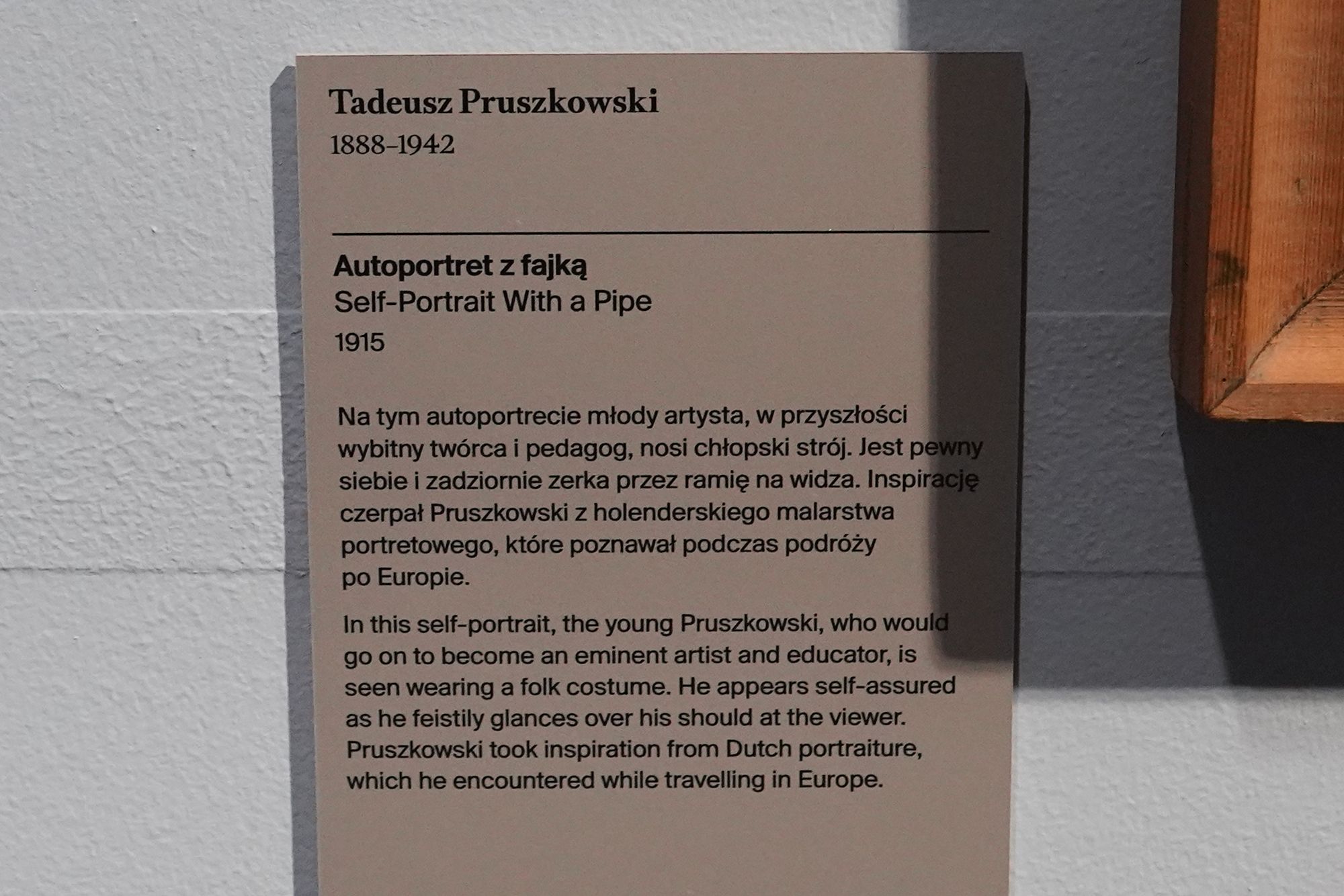
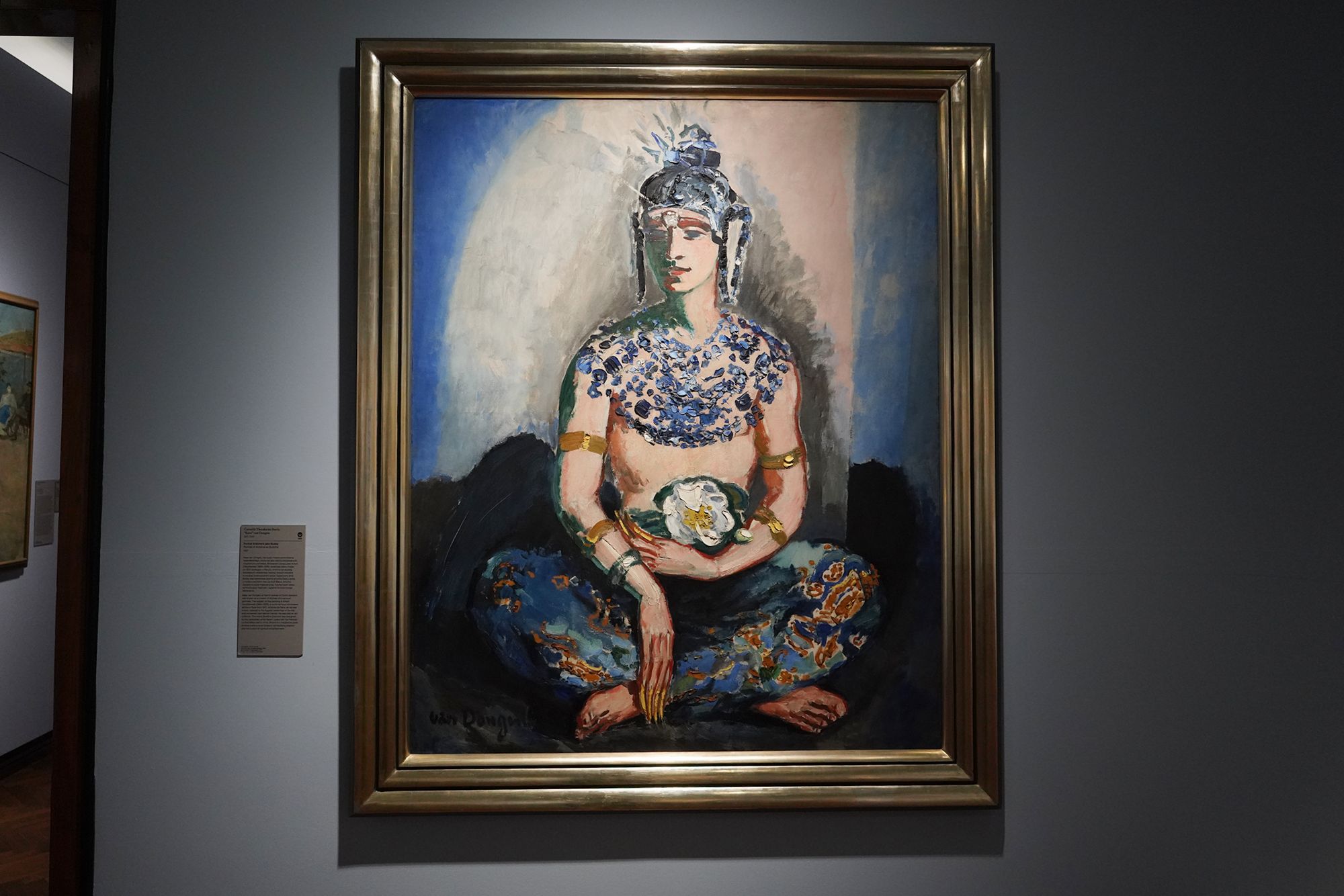
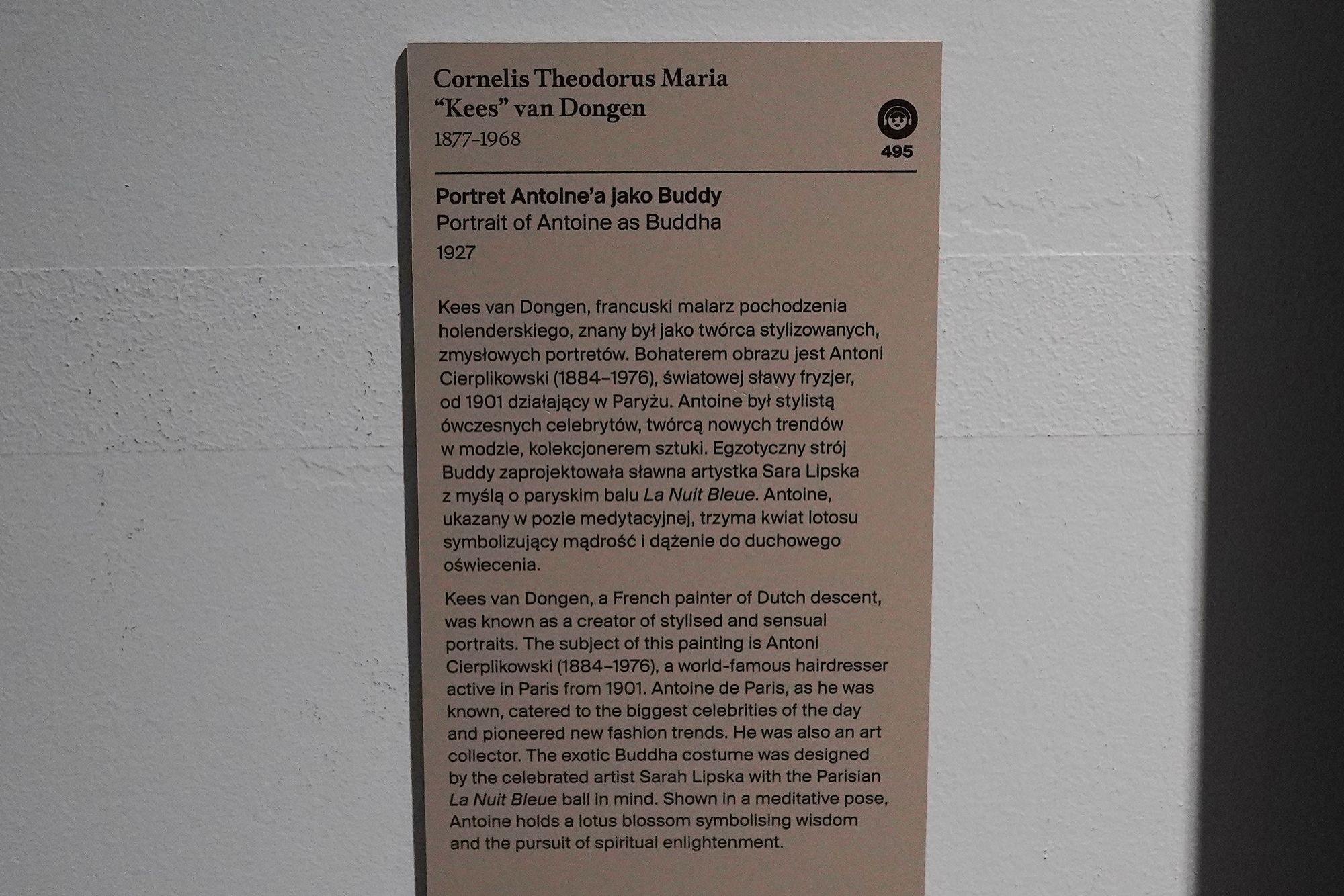
This room featured paintings from around 1900, many created outdoors to capture natural light and changing colors. Inspired by Impressionism, Polish artists explored how sunlight and atmosphere transformed familiar landscapes.
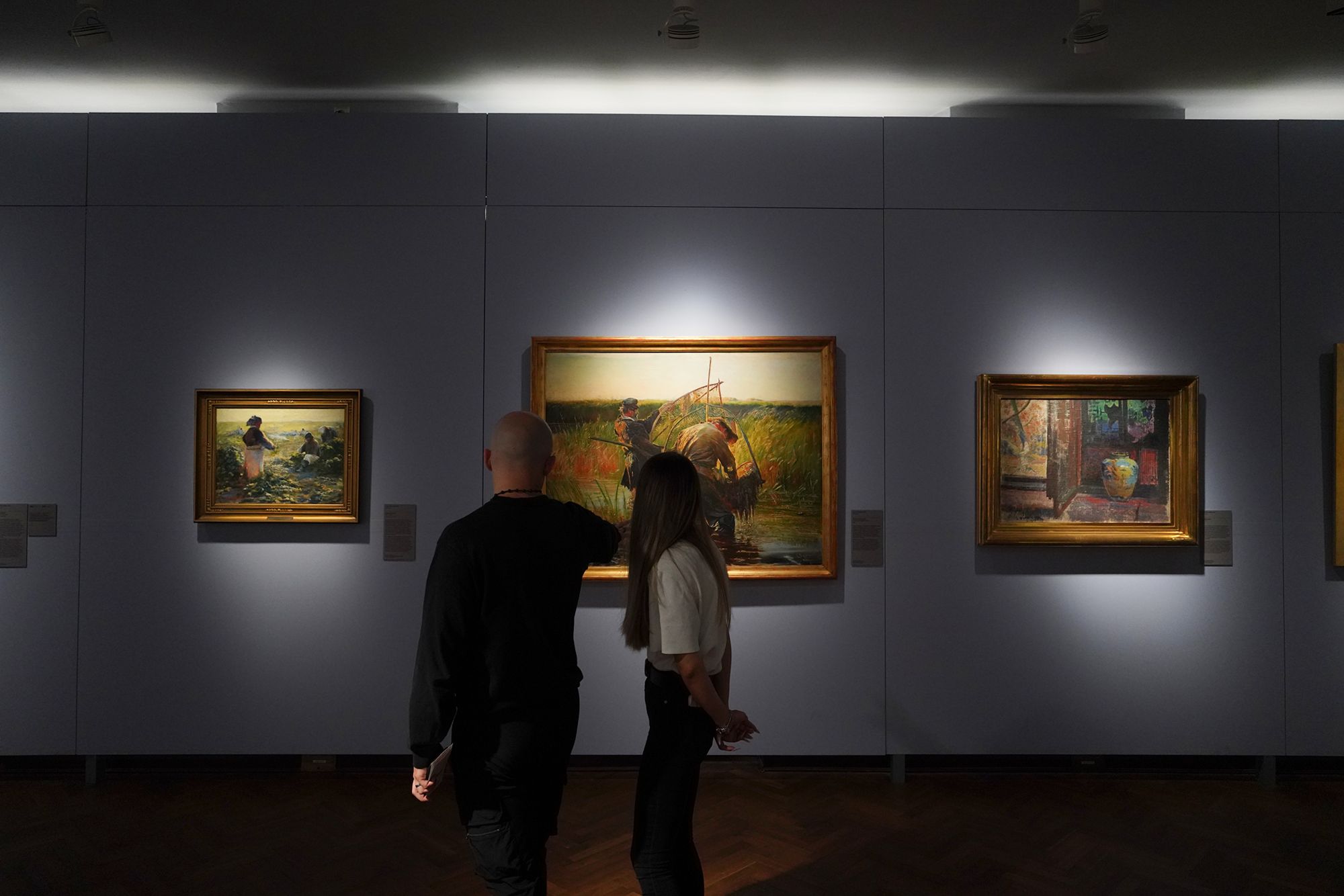
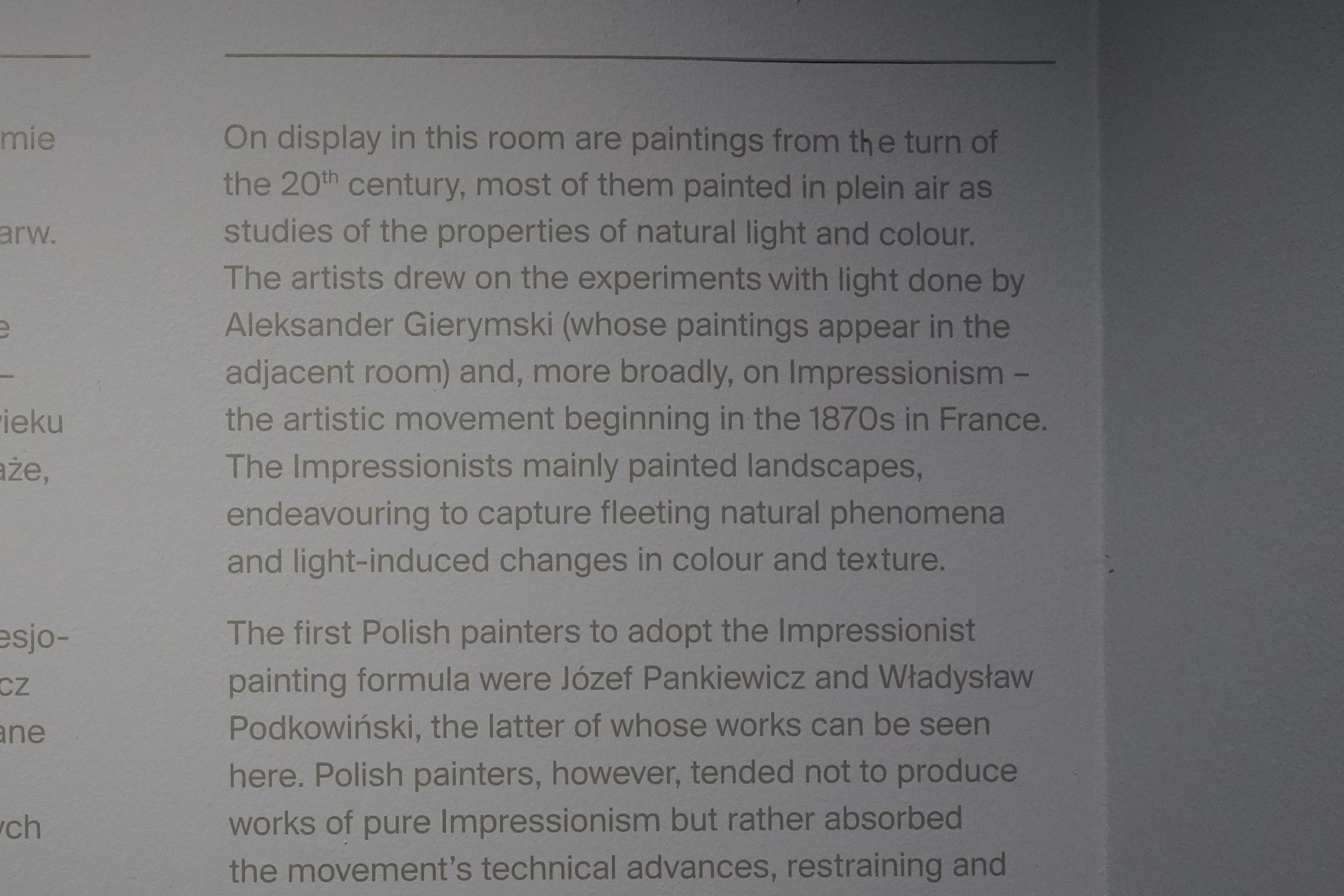
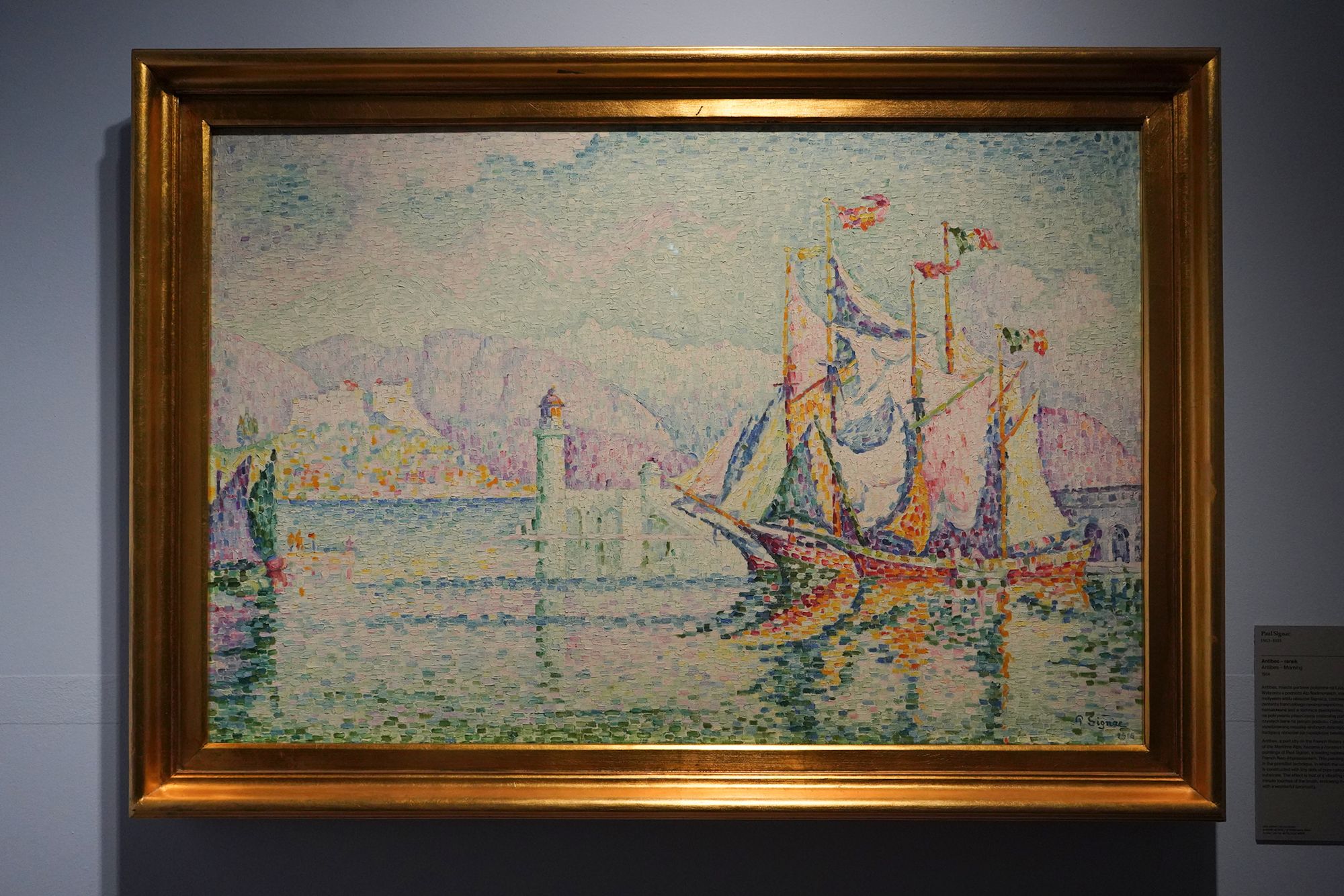
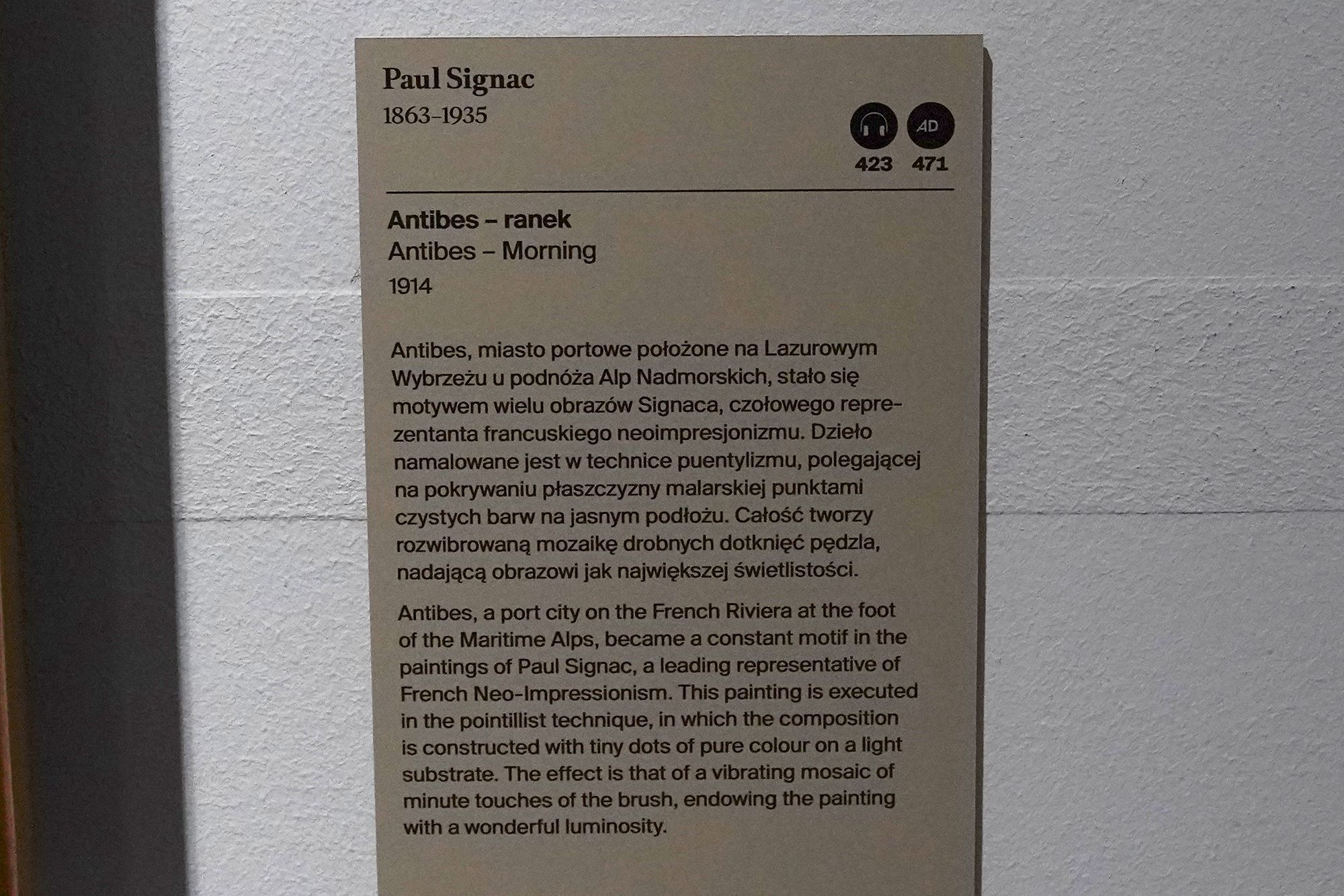
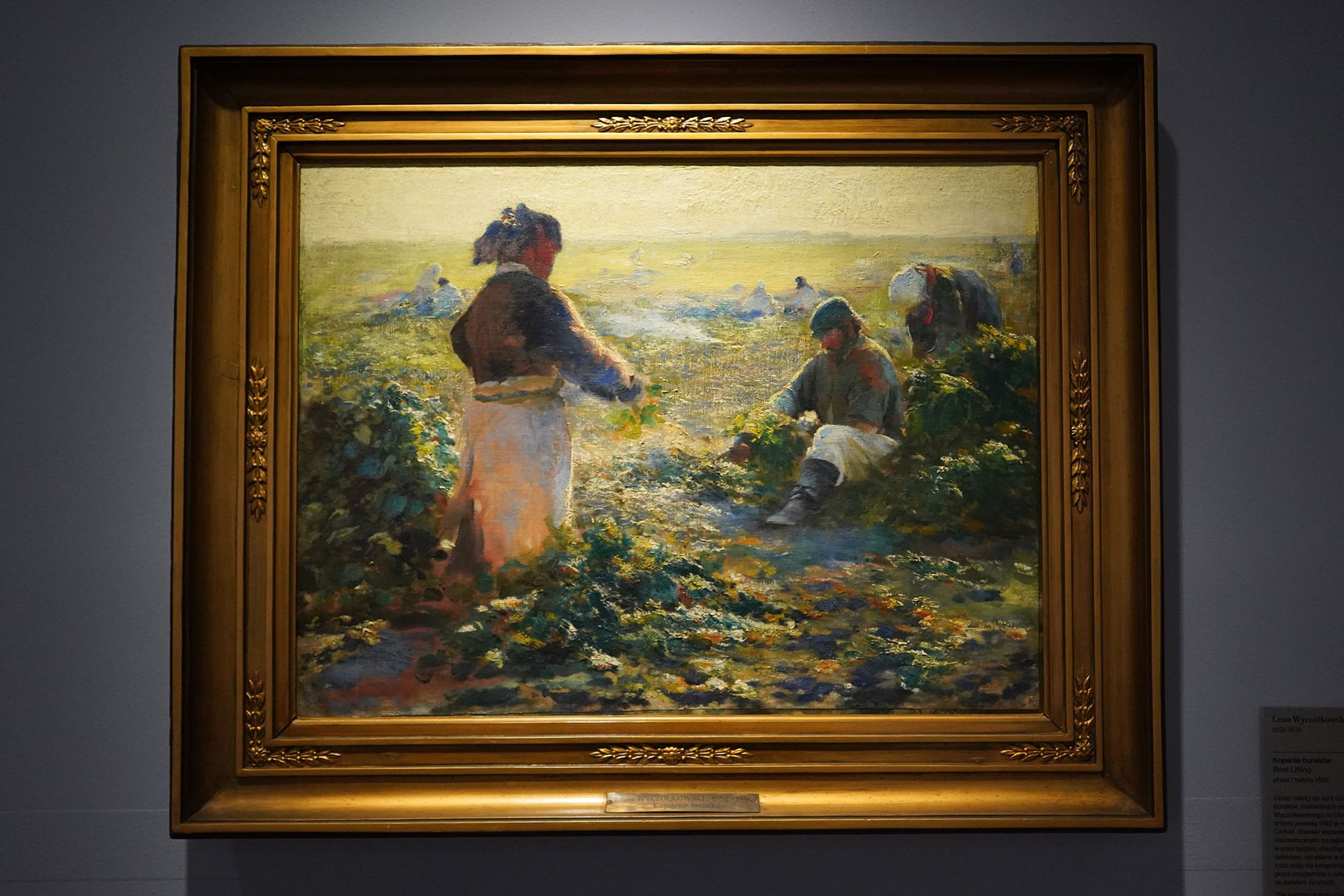
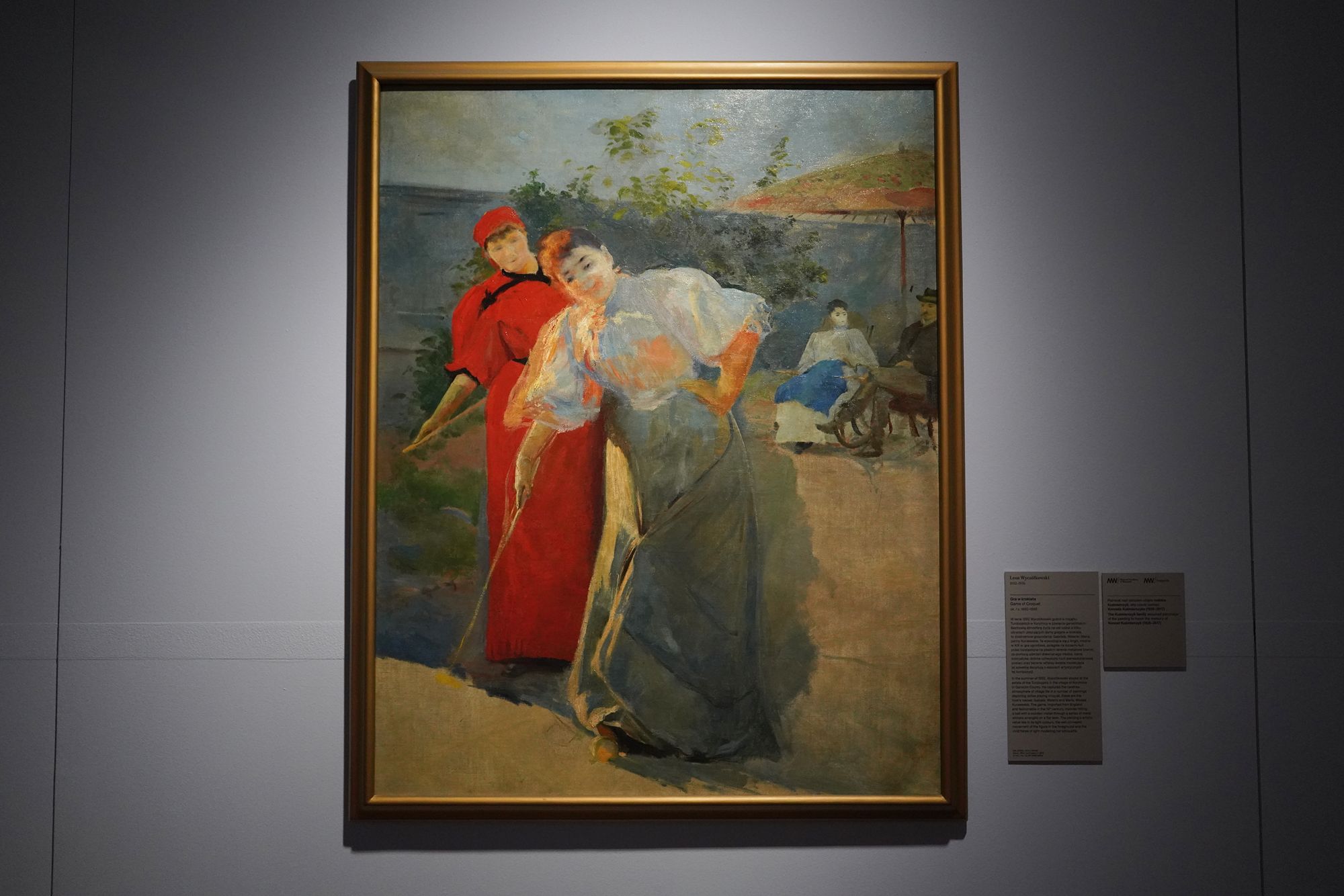
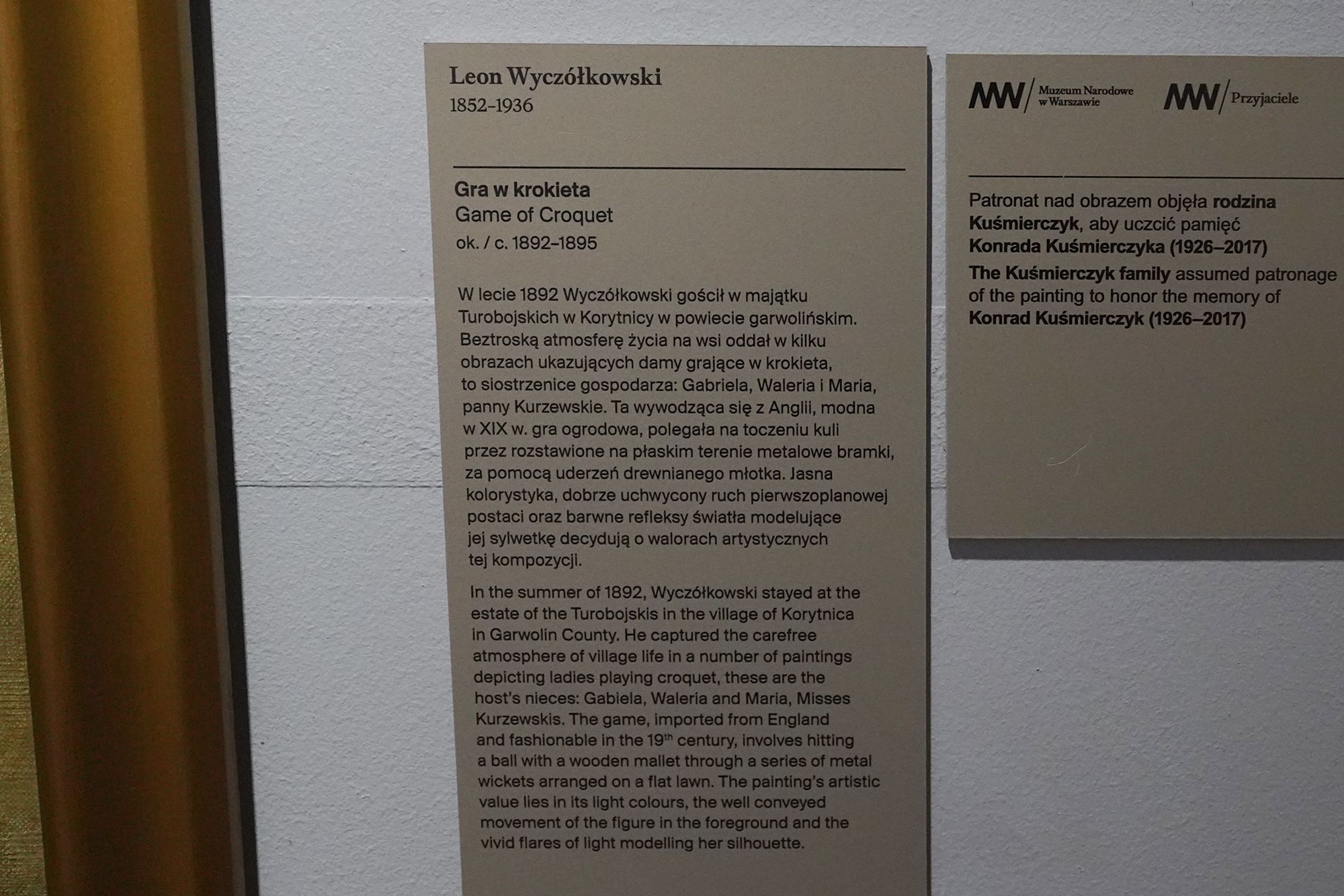
Leon Wyczółkowski (1852–1936) was a Polish painter and printmaker, and a leading artist of the Young Poland period around the turn of the 20th century. He painted landscapes, portraits, flowers, and rural life, exploring different ways of capturing light and color.
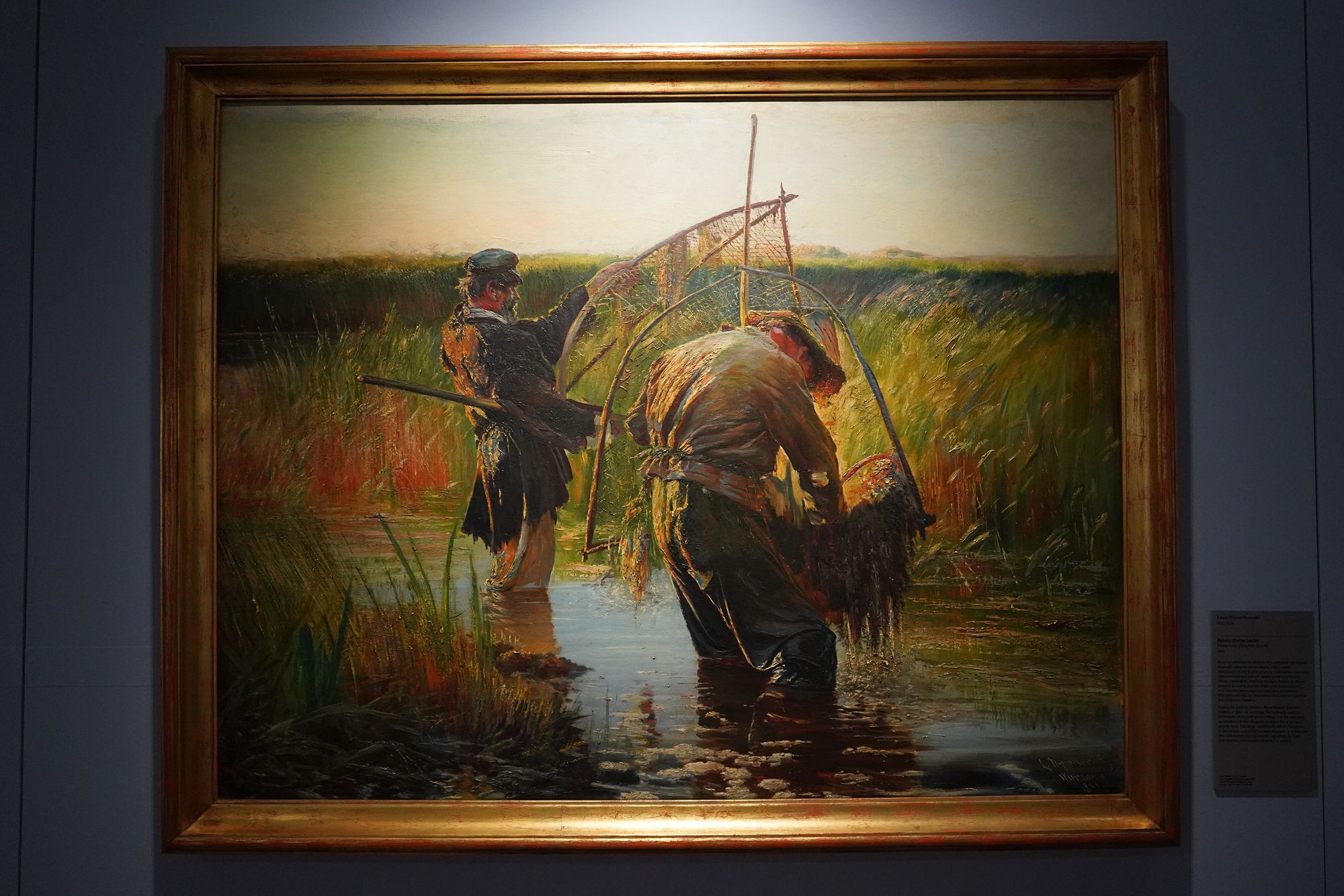
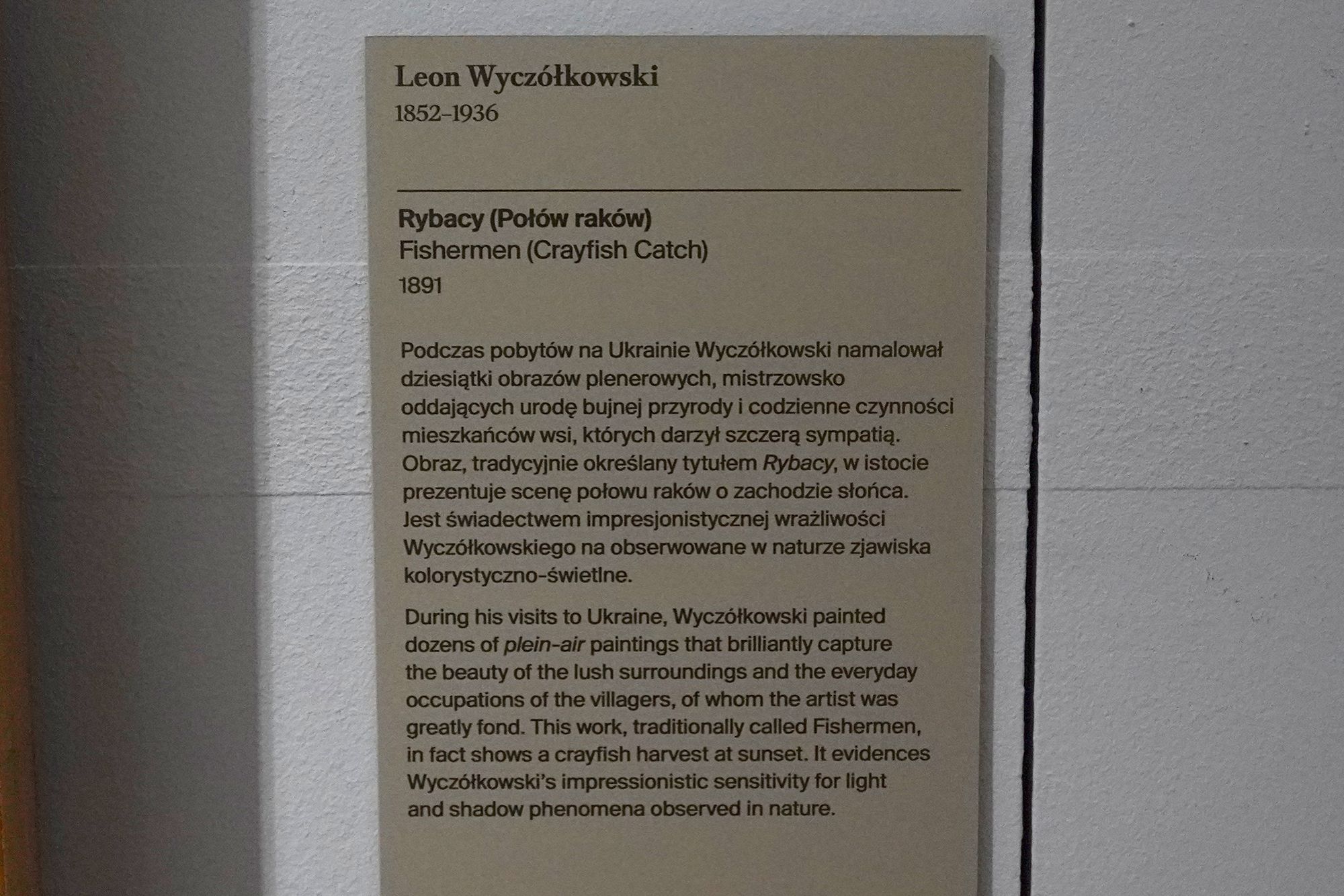
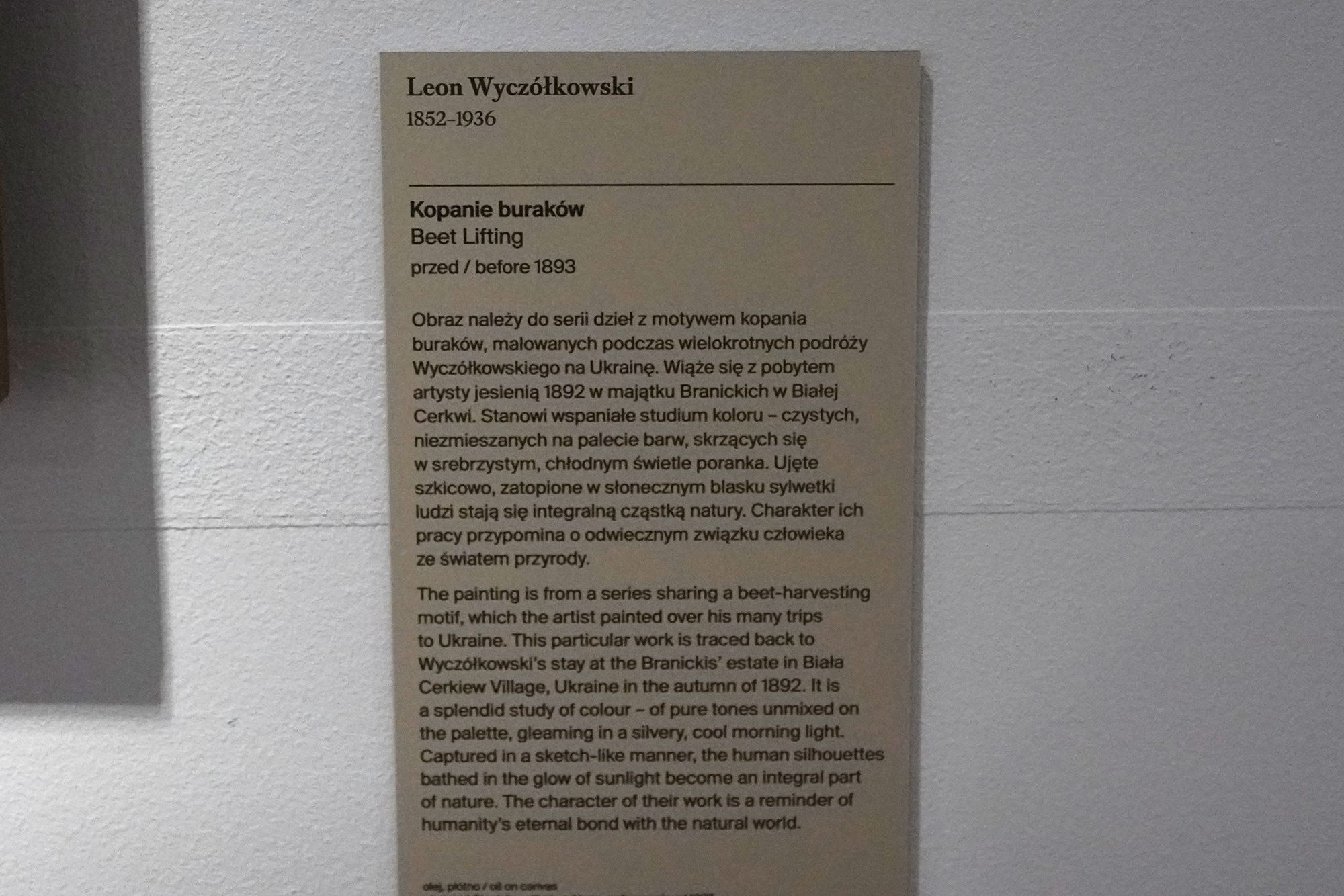
Leon Wyczółkowski’s Beet Lifting shows workers harvesting beets in the morning light. Inspired by his visits to Ukraine, the painting explores color and sunlight, blending the figures into the landscape and emphasizing the close connection between agricultural life and nature.
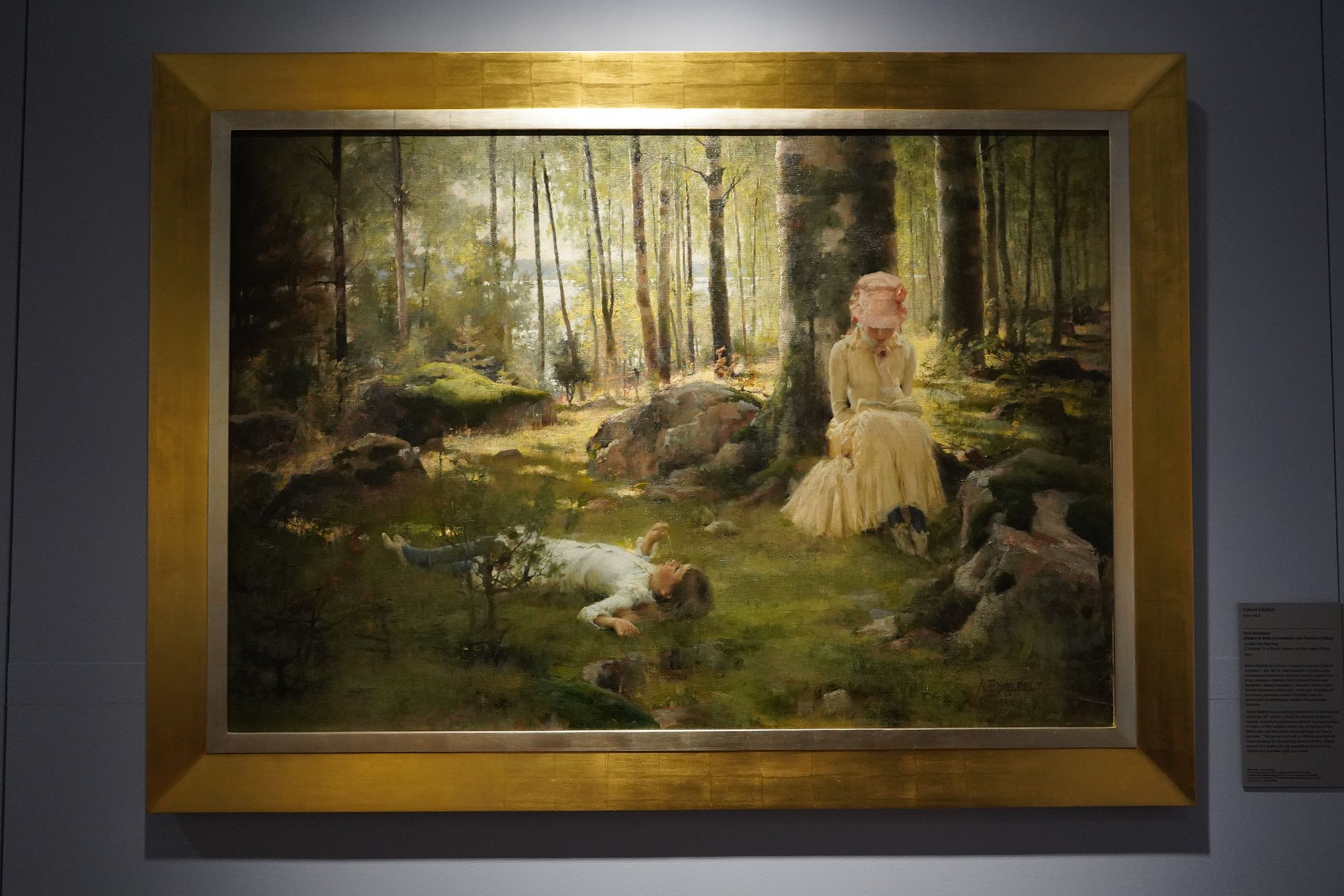
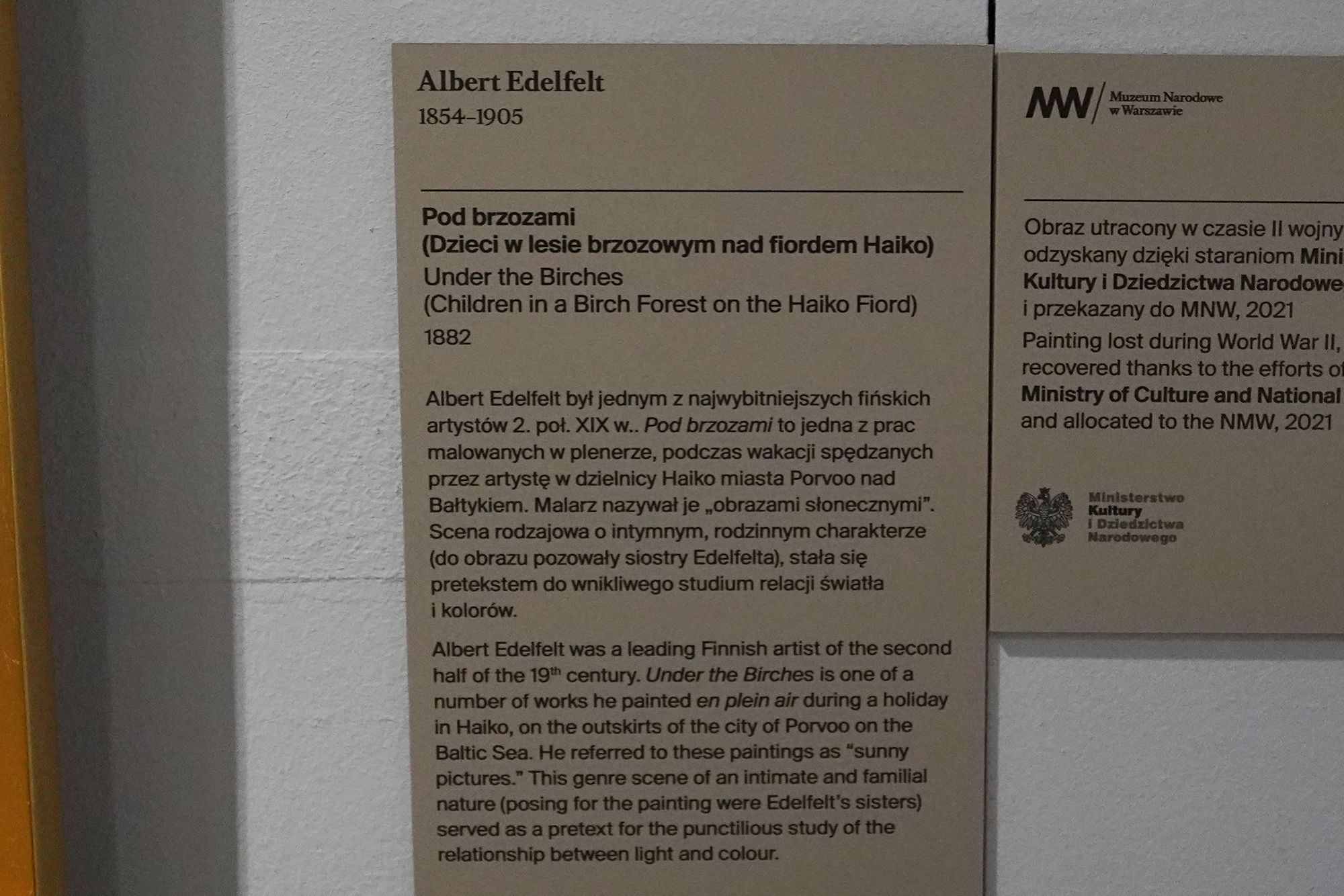
Władysław Podkowiński (1866–1895) was a Polish painter and illustrator, and one of the pioneers of Impressionism in Poland. A stay in Paris in 1889 inspired him to capture fleeting light and color in landscapes and everyday scenes, including Children in the Garden.
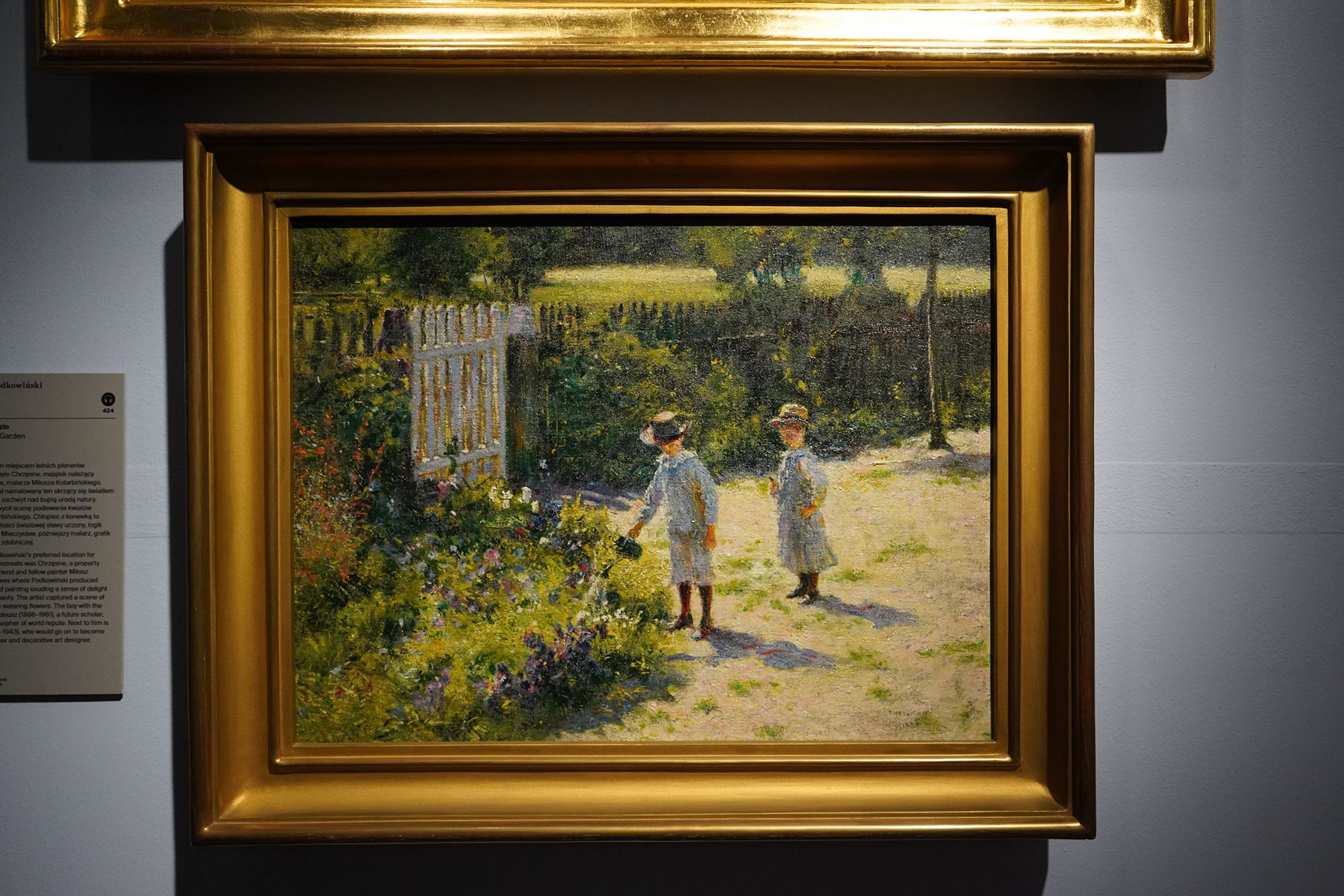
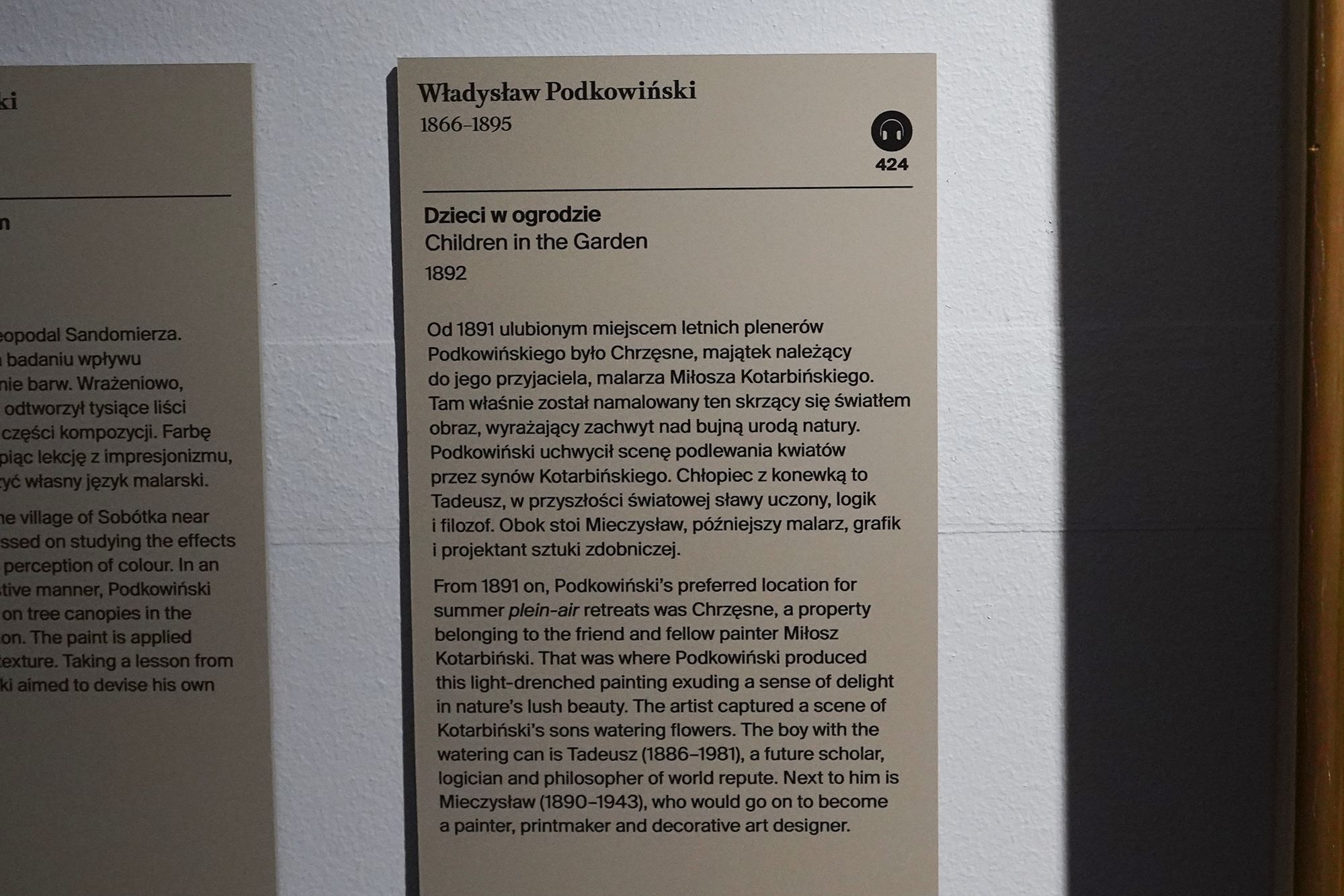
Władysław Podkowiński’s Children in the Garden (1892) captures two boys watering flowers at a friend’s country estate. The sunlit garden reflects his interest in Impressionism and the beauty of everyday outdoor scenes. The boys later became a philosopher and an artist.
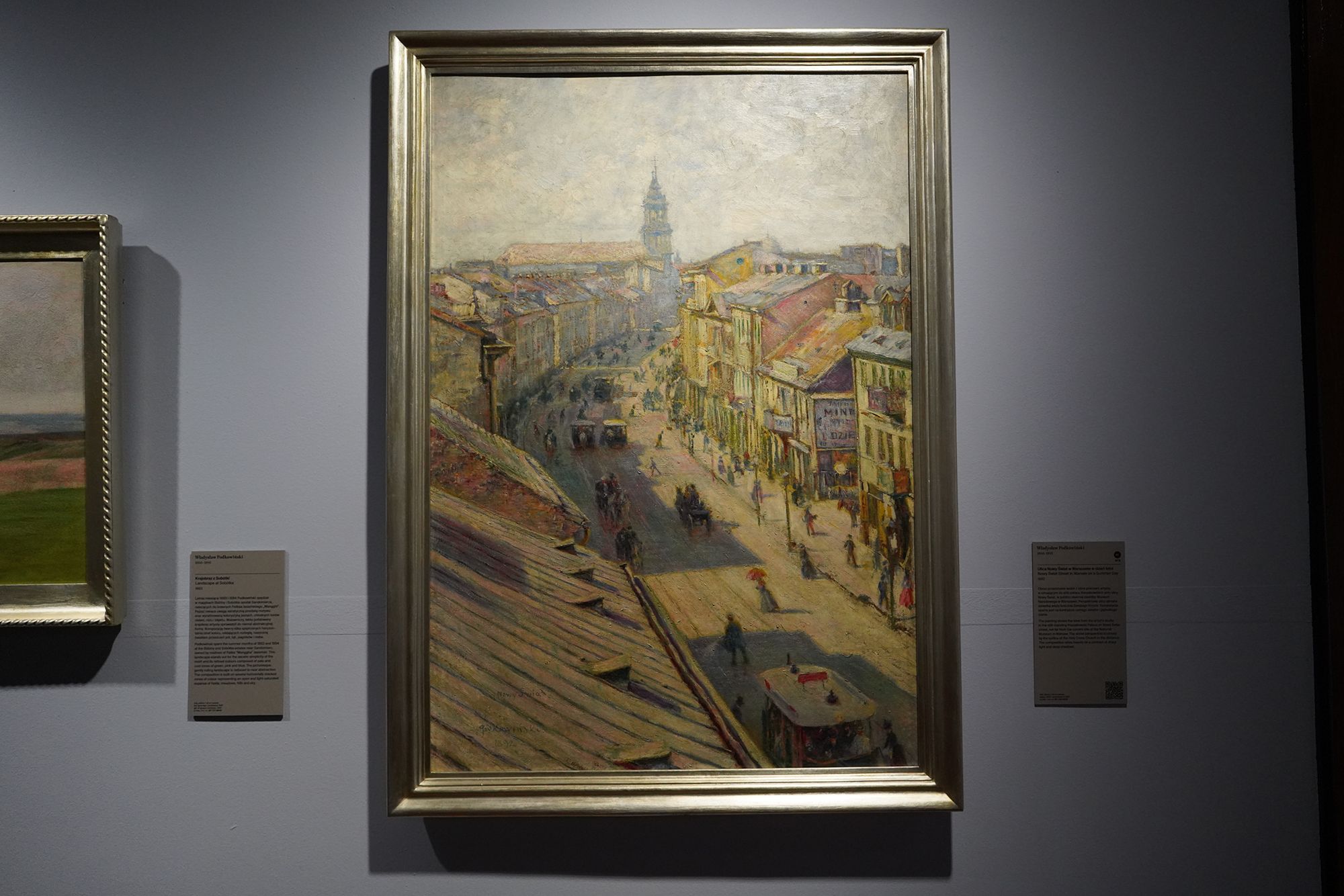
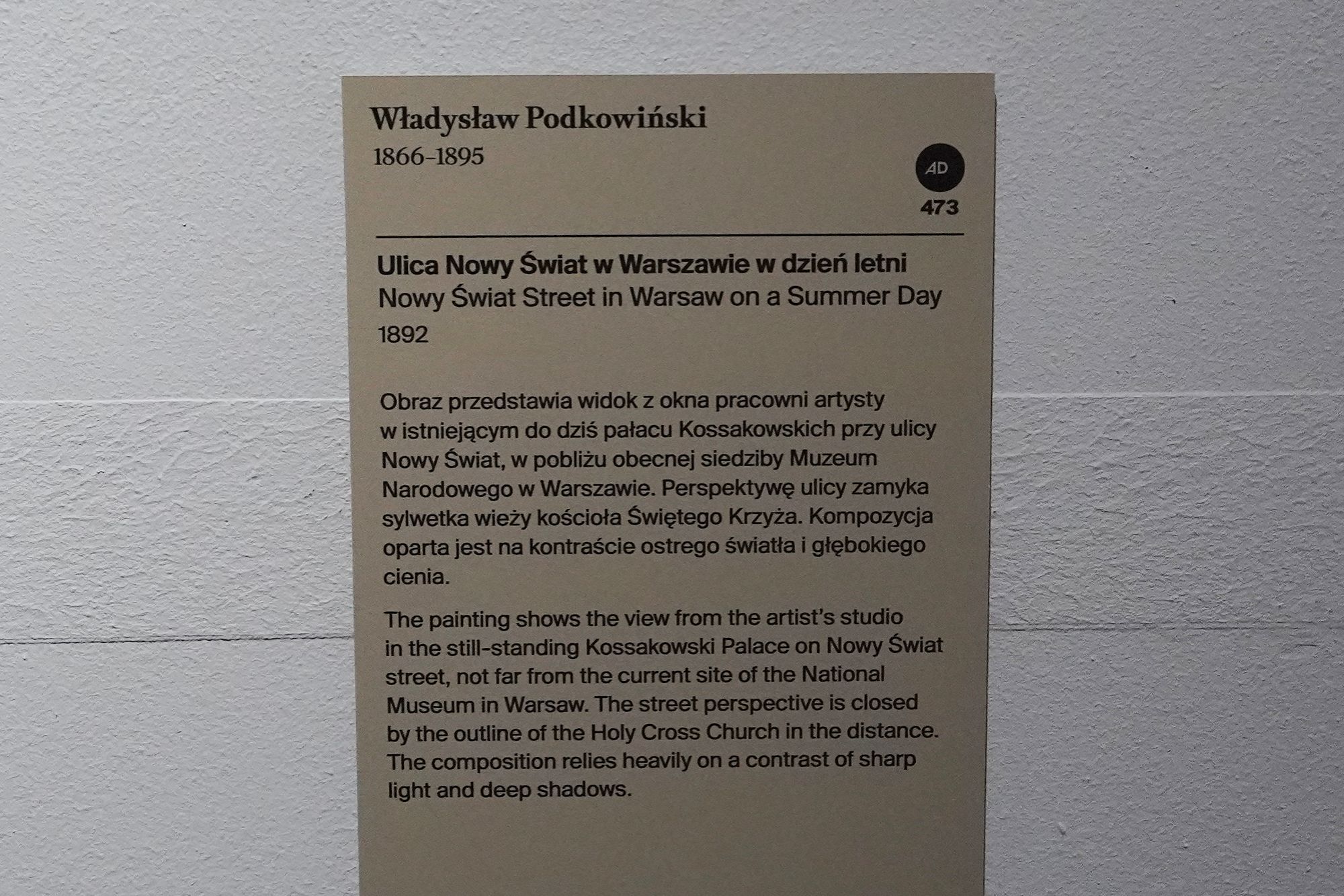
This room brought together artists who explored light, color, and emotion in their own ways. Their paintings ranged from atmospheric church interiors to nighttime city views and landscapes, showing how familiar subjects could express a mood or suggest a deeper meaning.
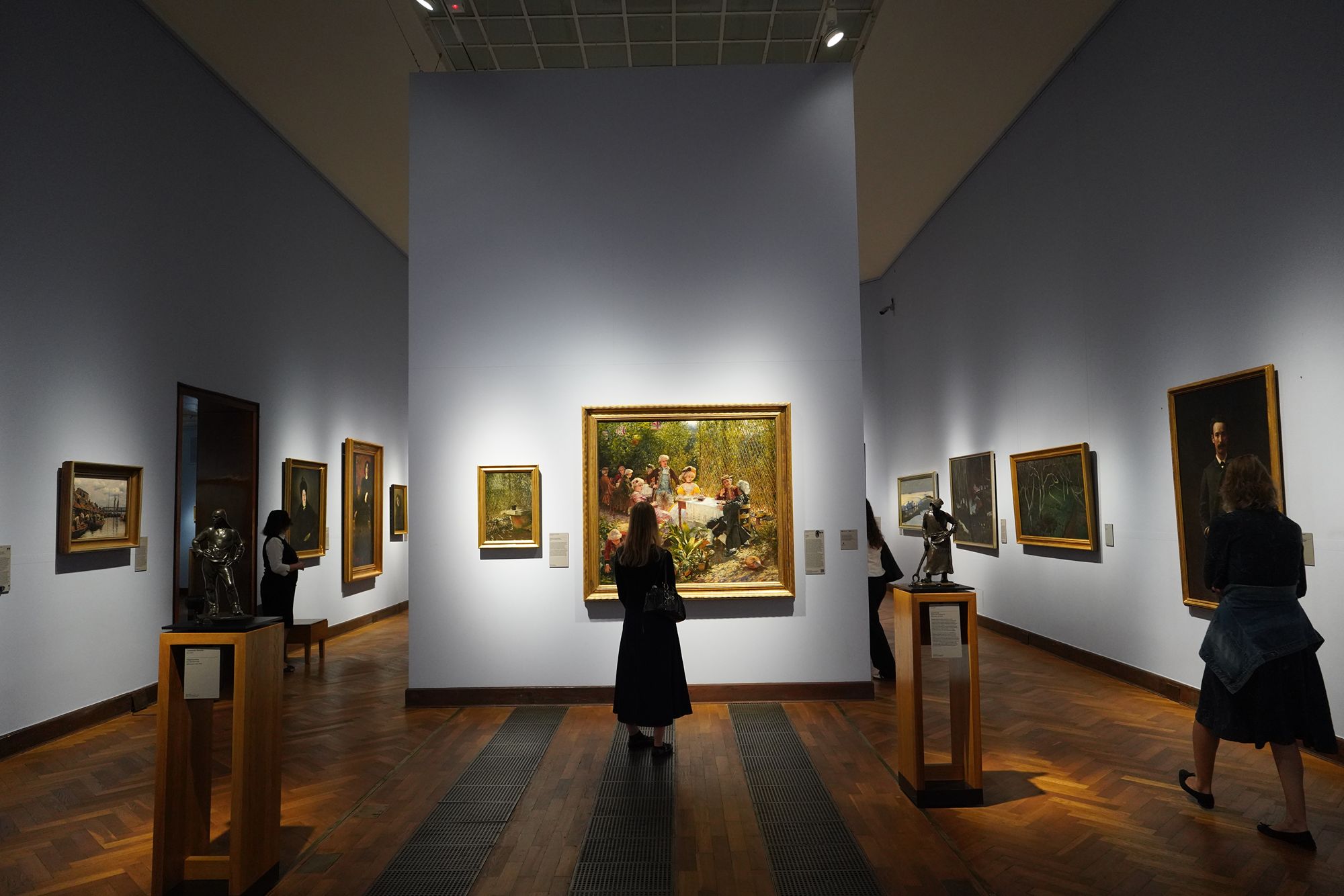
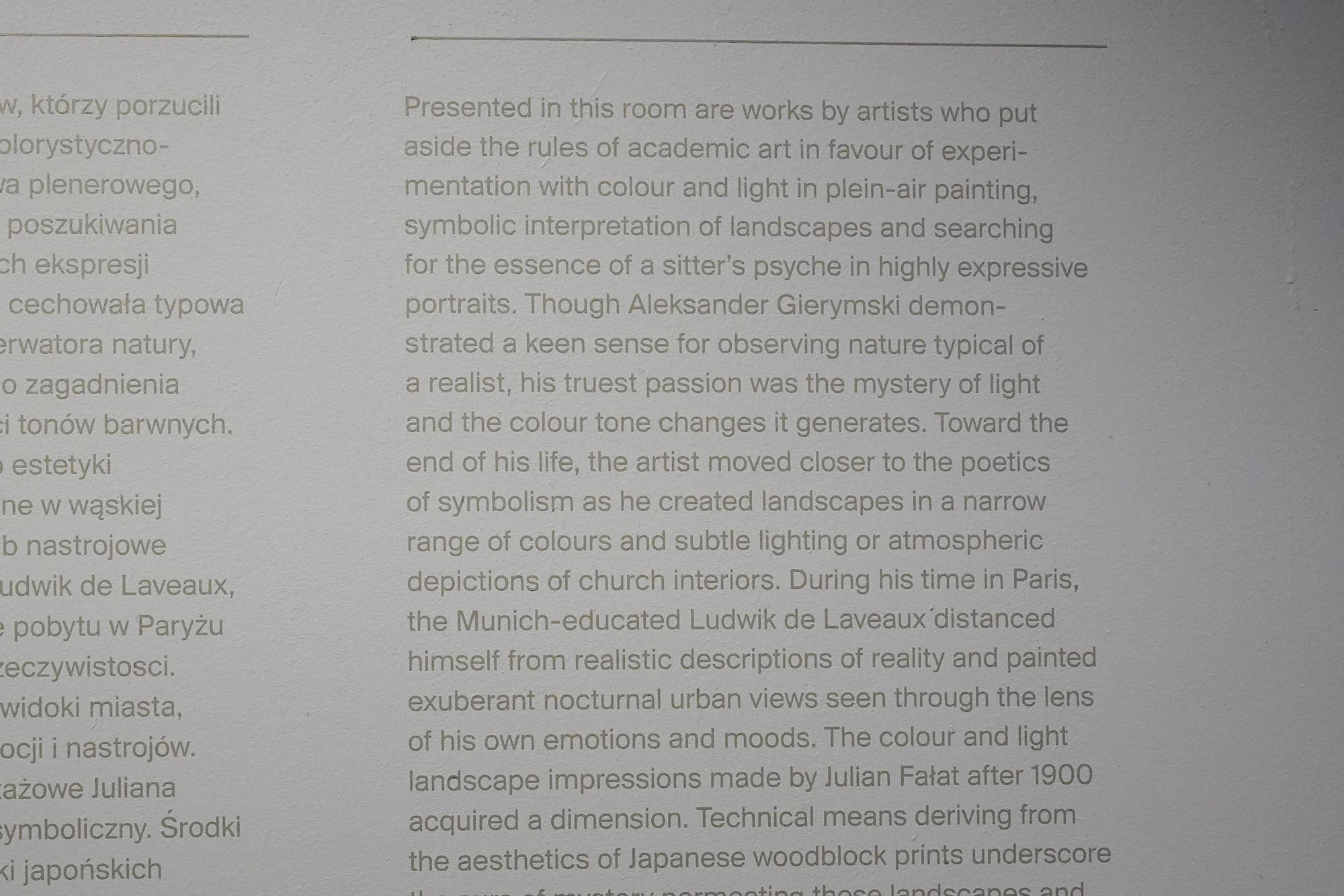
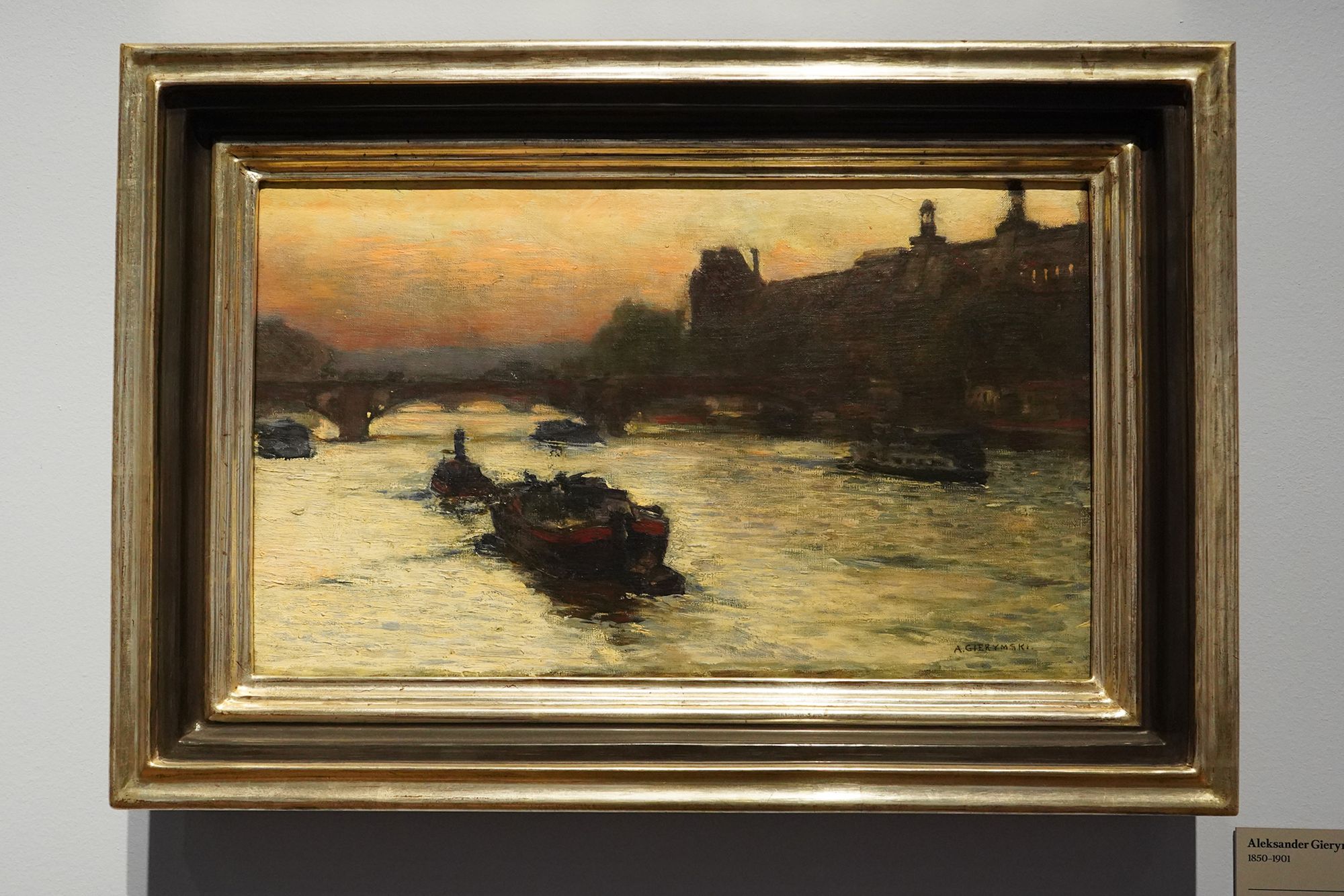
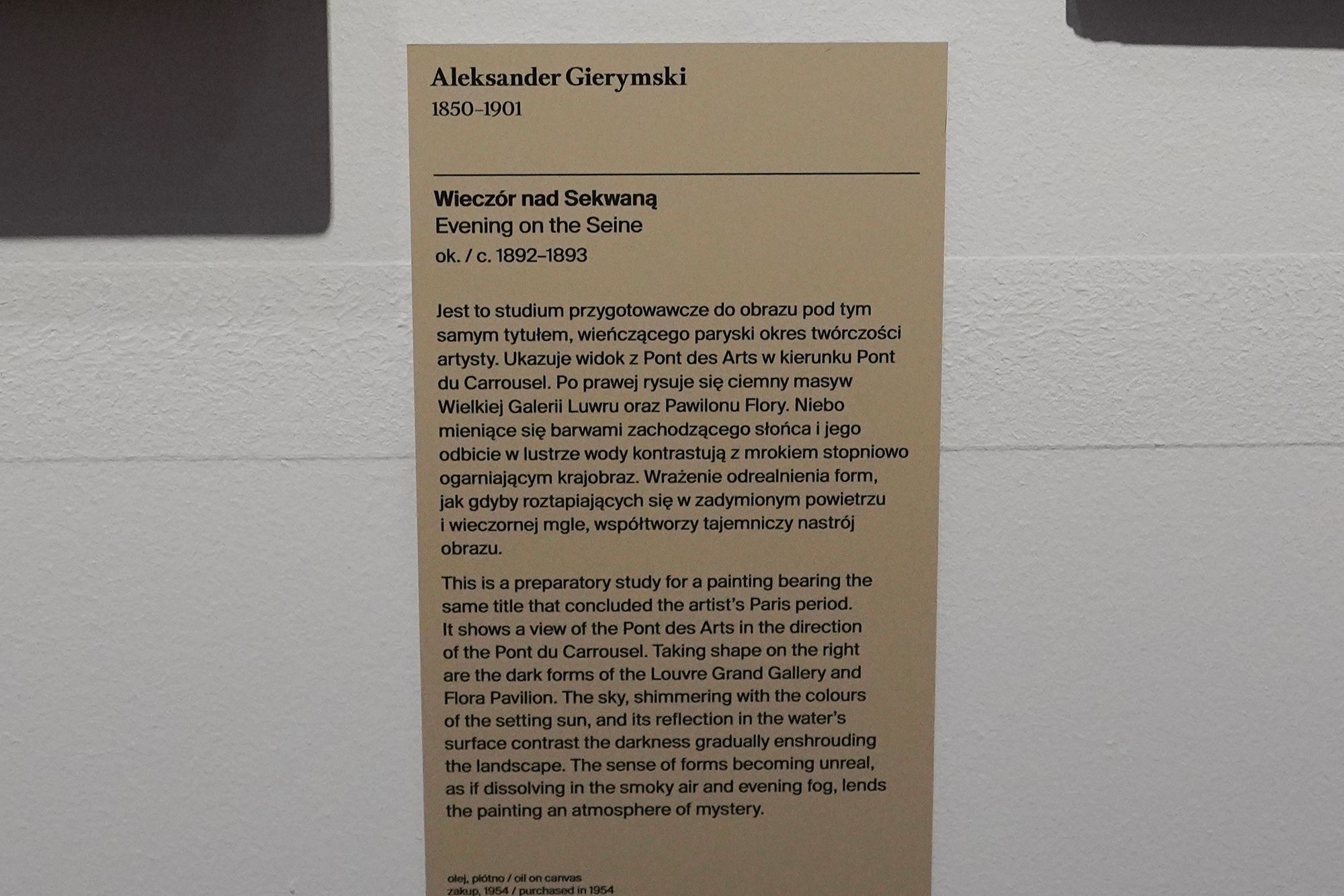
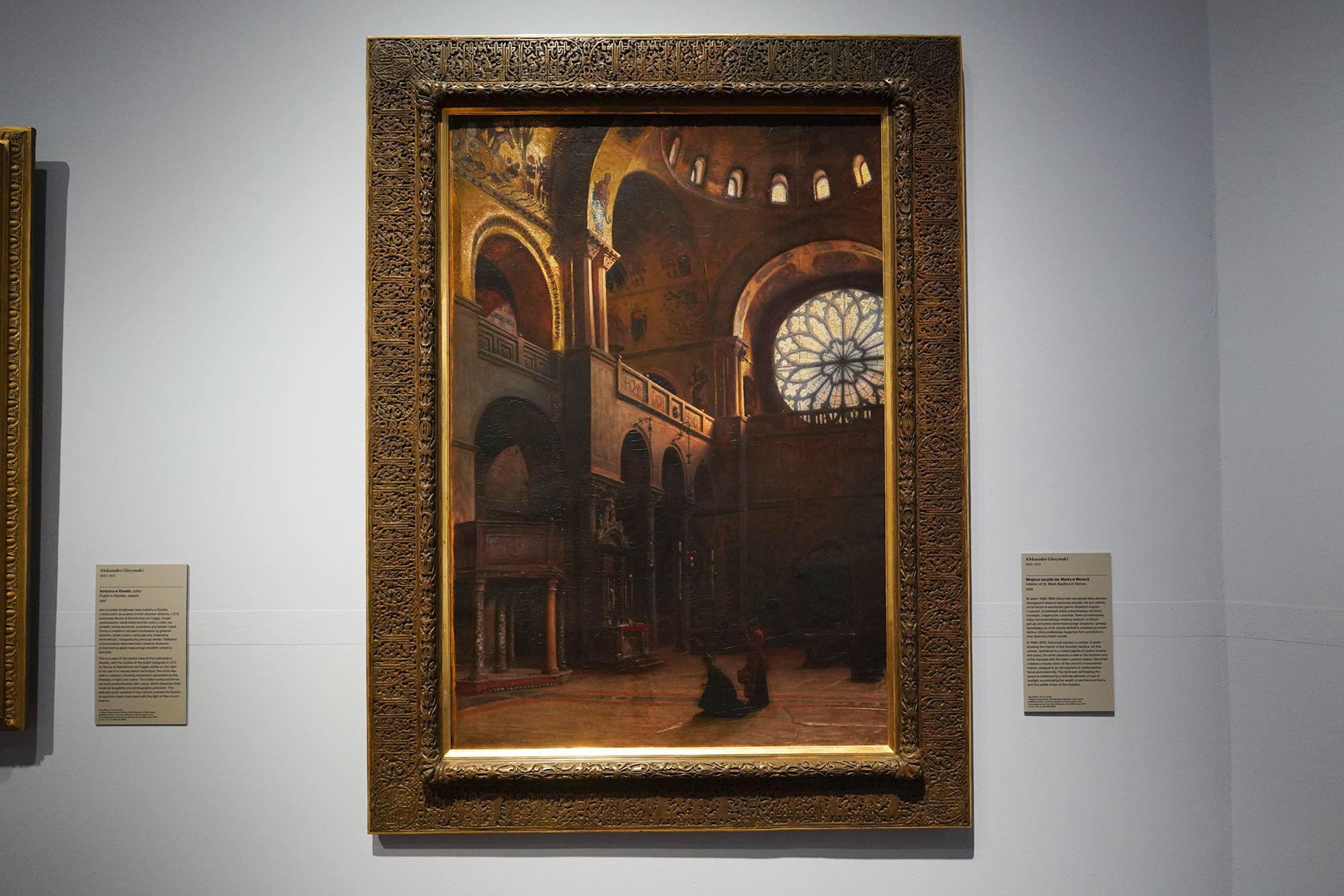
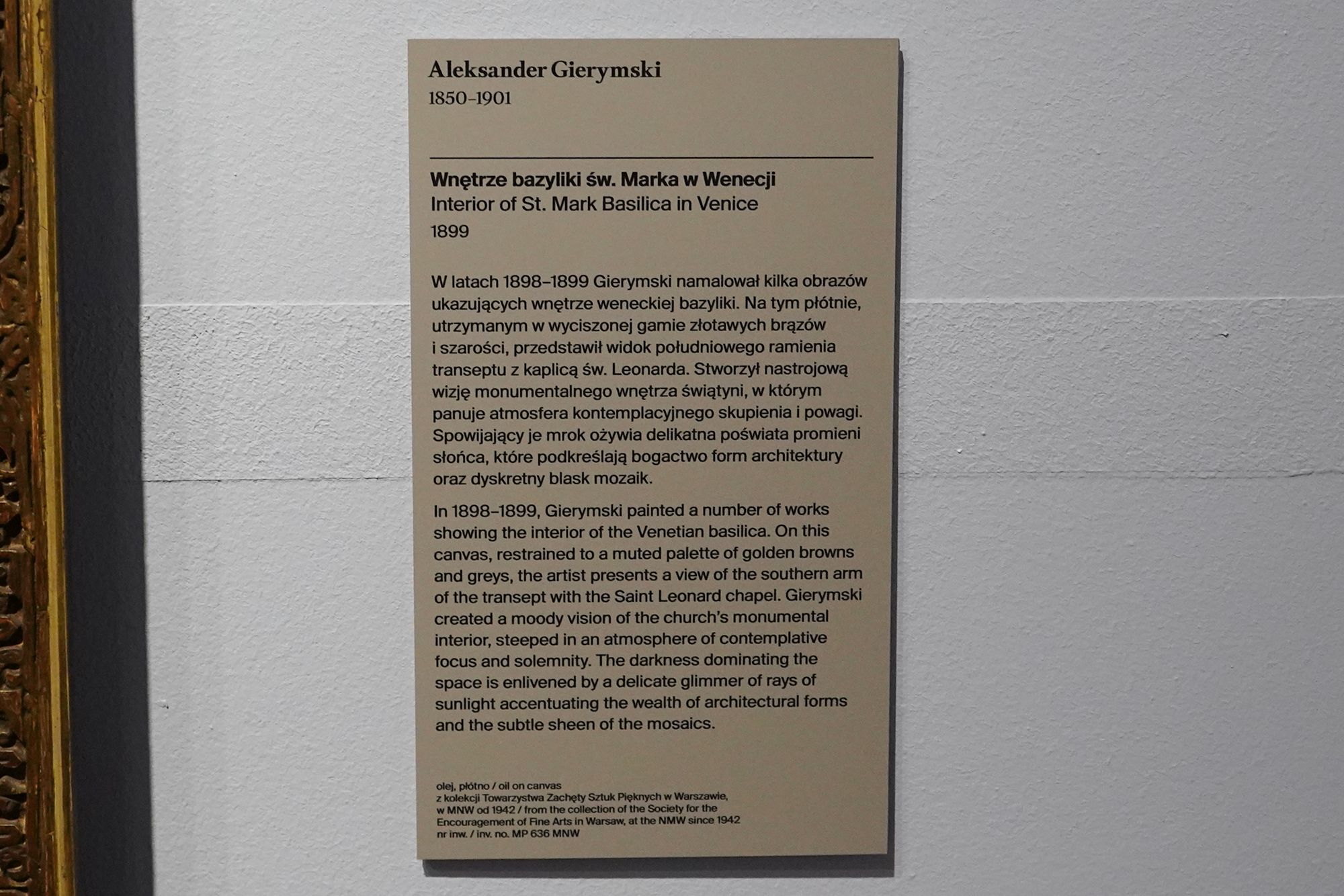
Aleksander Gierymski (1850–1901) was a major Polish Realist painter, particularly interested in how light changes color. He painted everyday people, city scenes, landscapes, and church interiors with close attention to their surroundings.
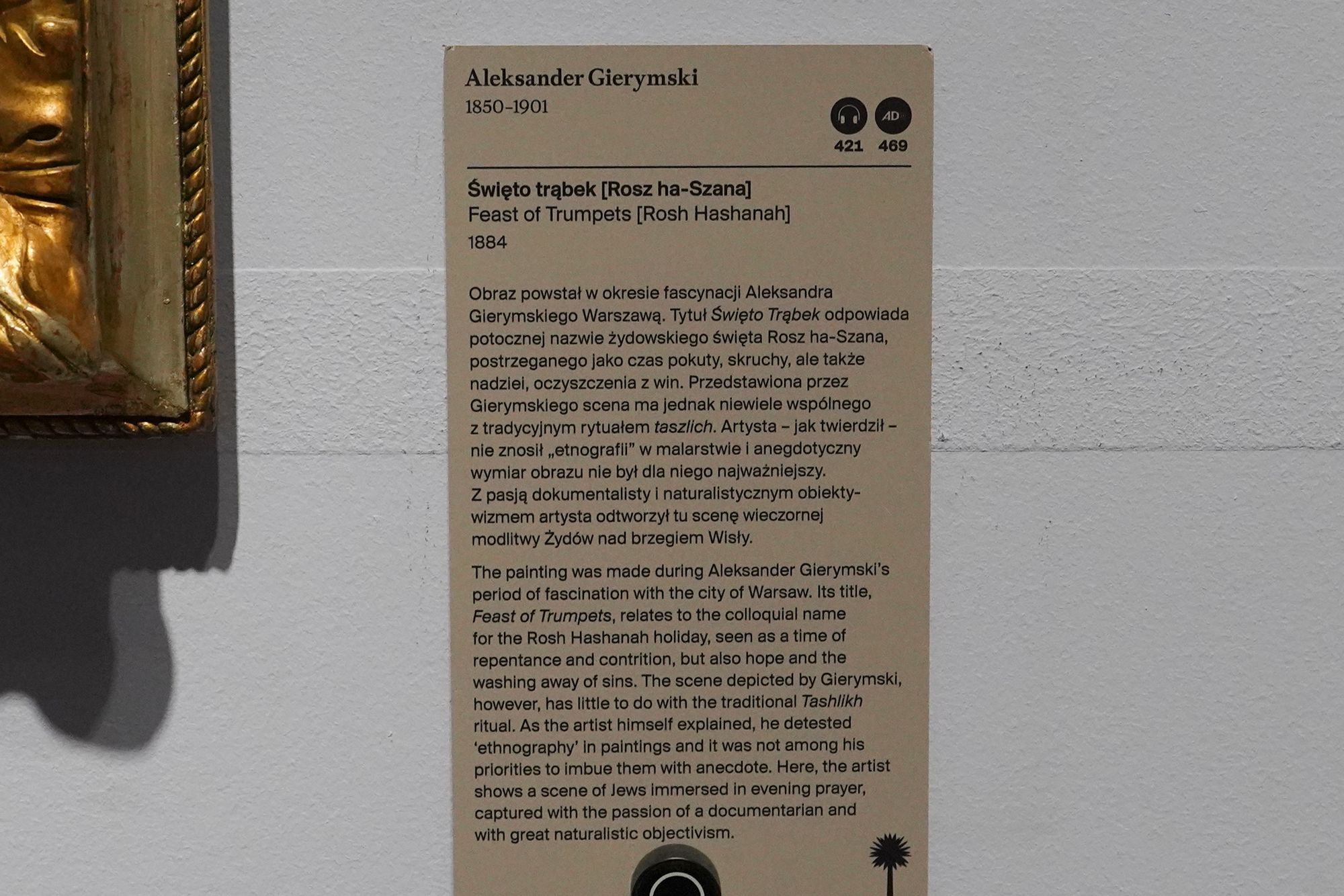
Aleksander Gierymski’s Feast of Trumpets (1884) depicts Jewish worshippers praying beside Warsaw’s Vistula River at dusk. Named after Rosh Hashanah, the Jewish New Year, the painting captures a quiet moment of religious life with close attention to the people and their surroundings.
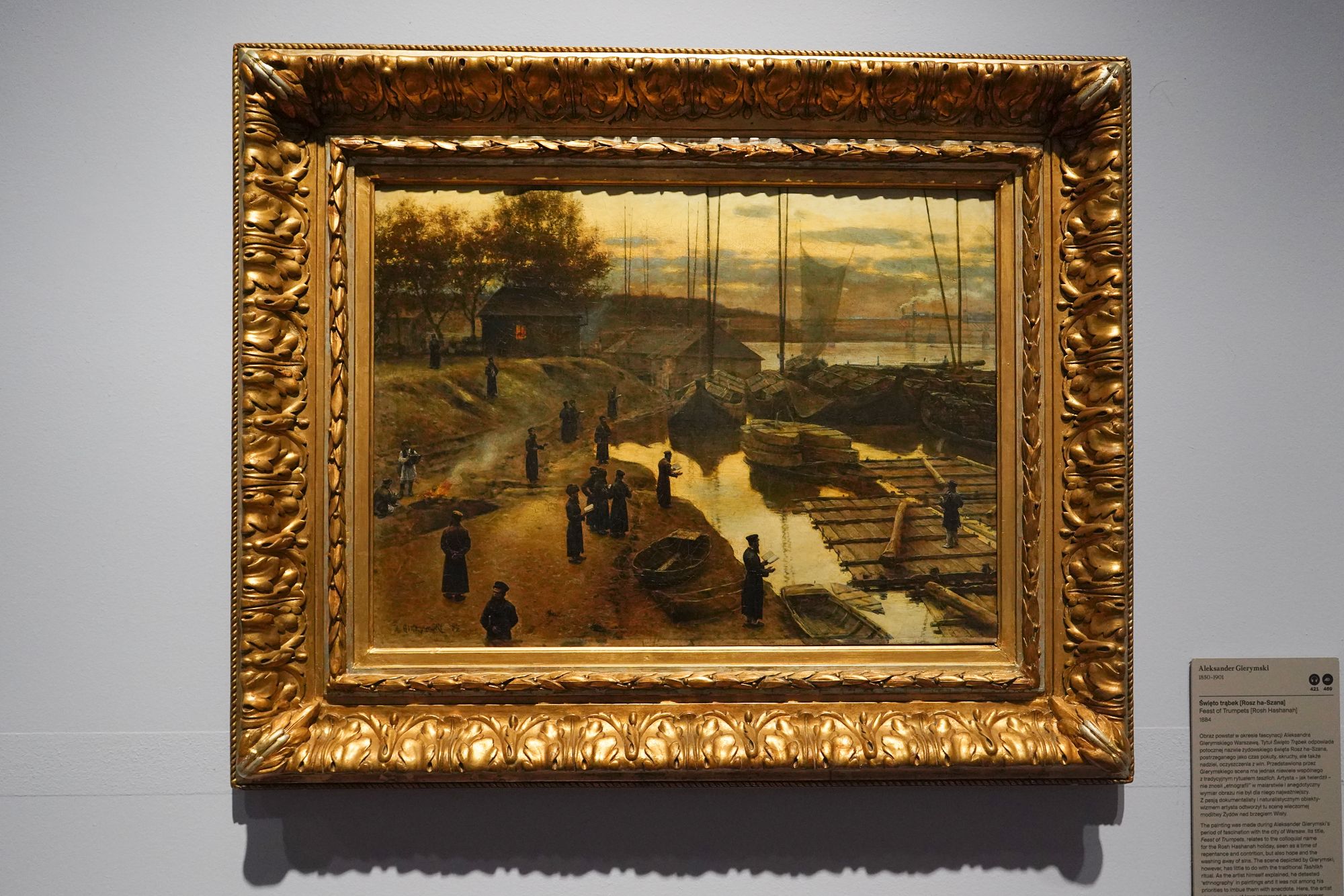
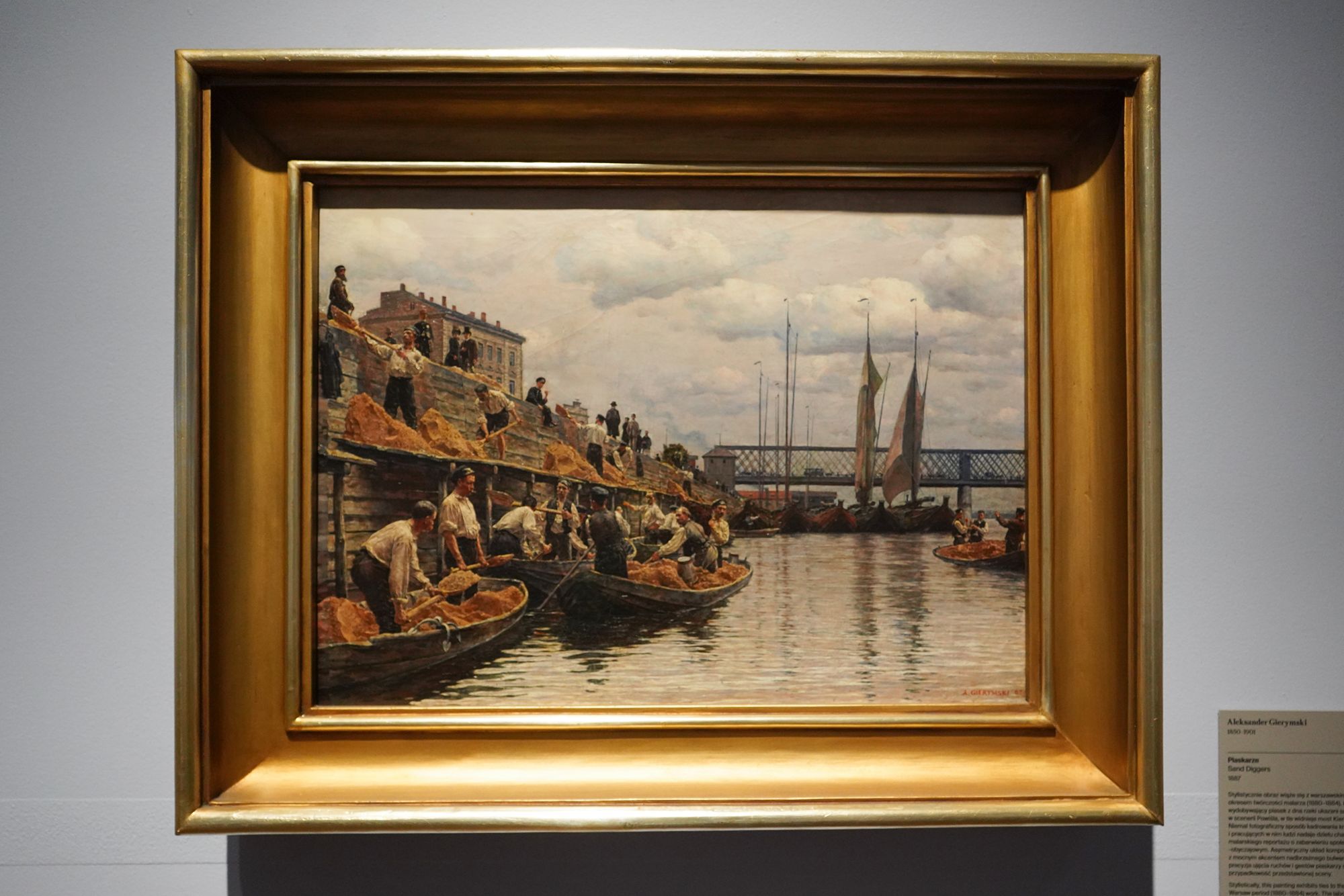
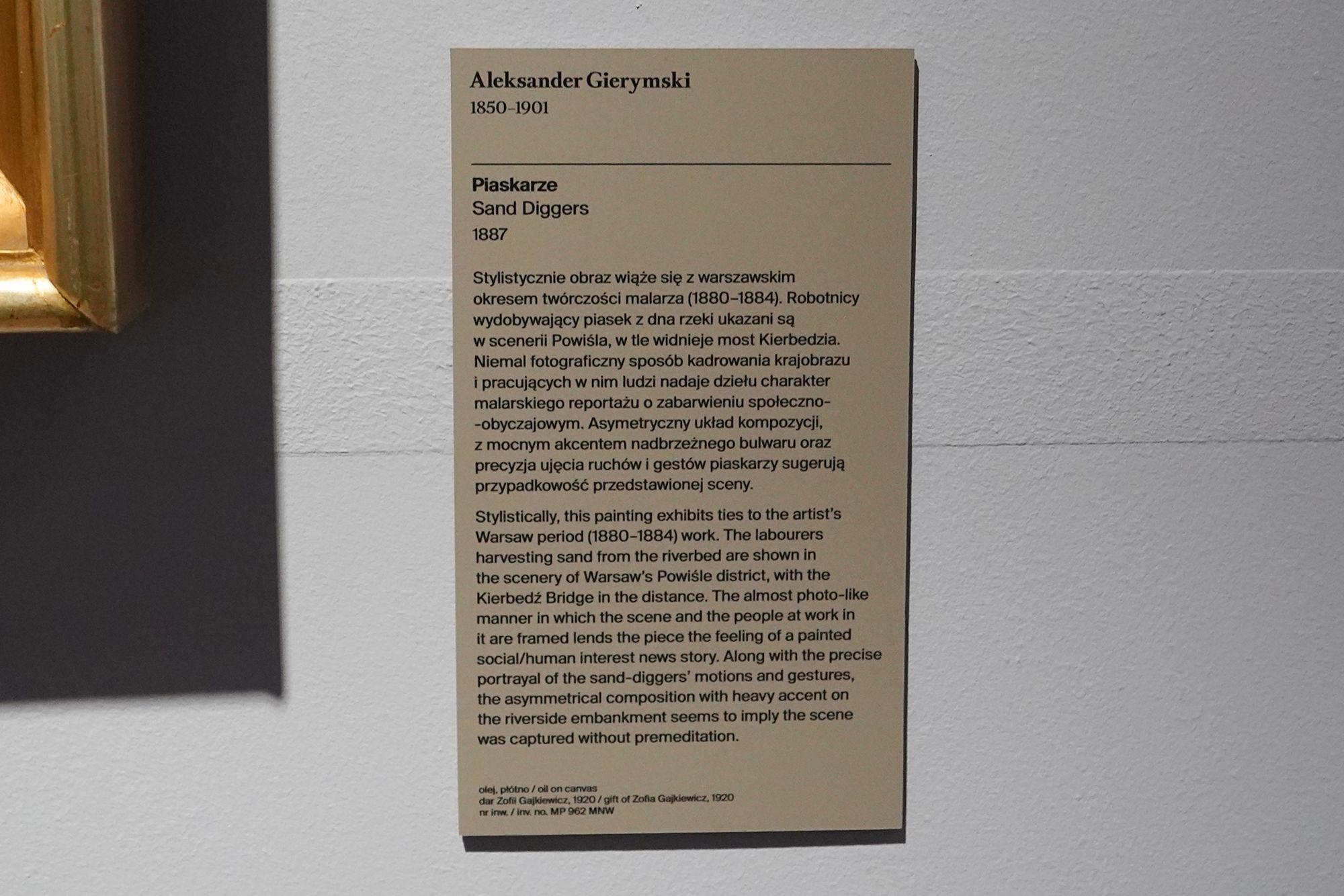
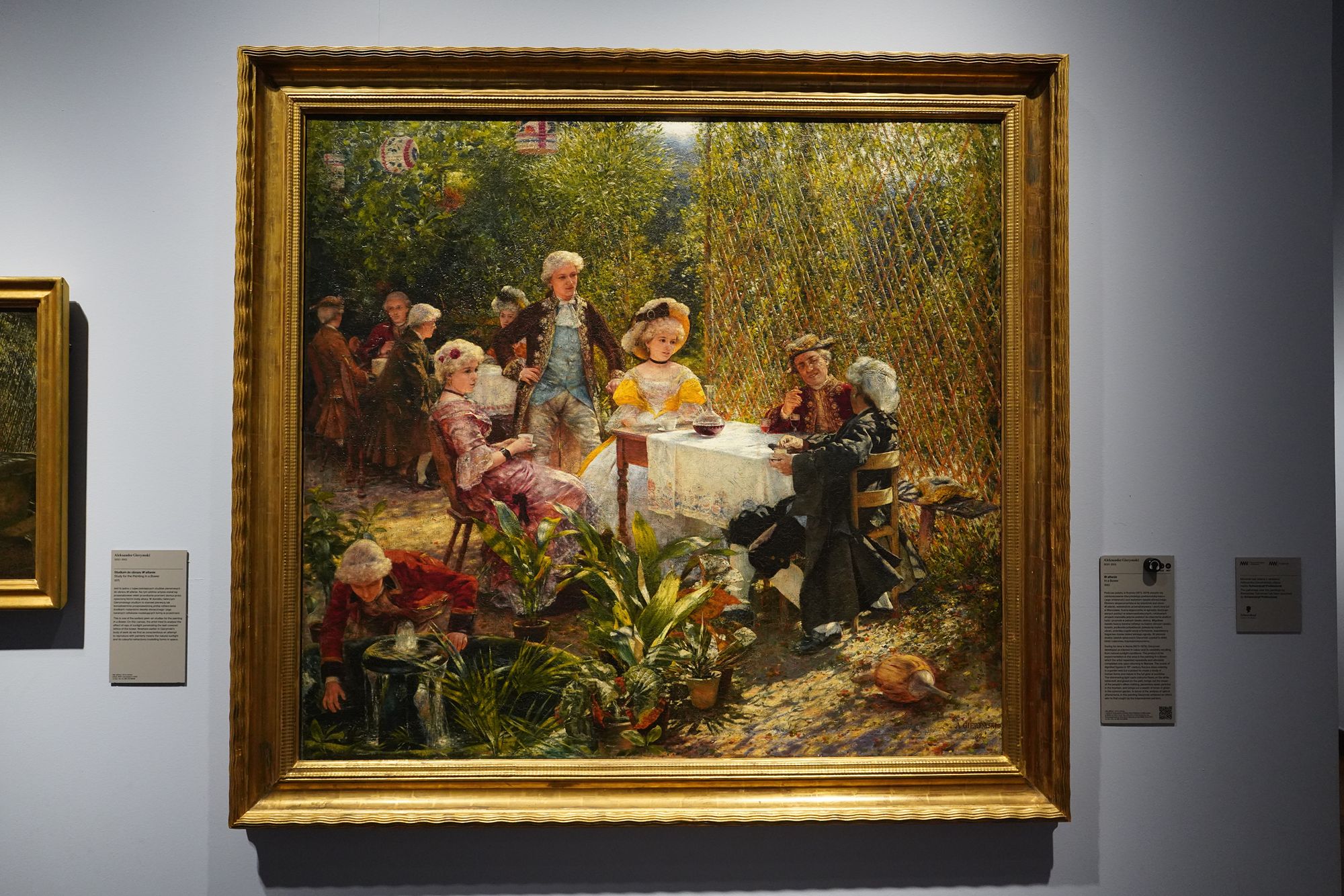
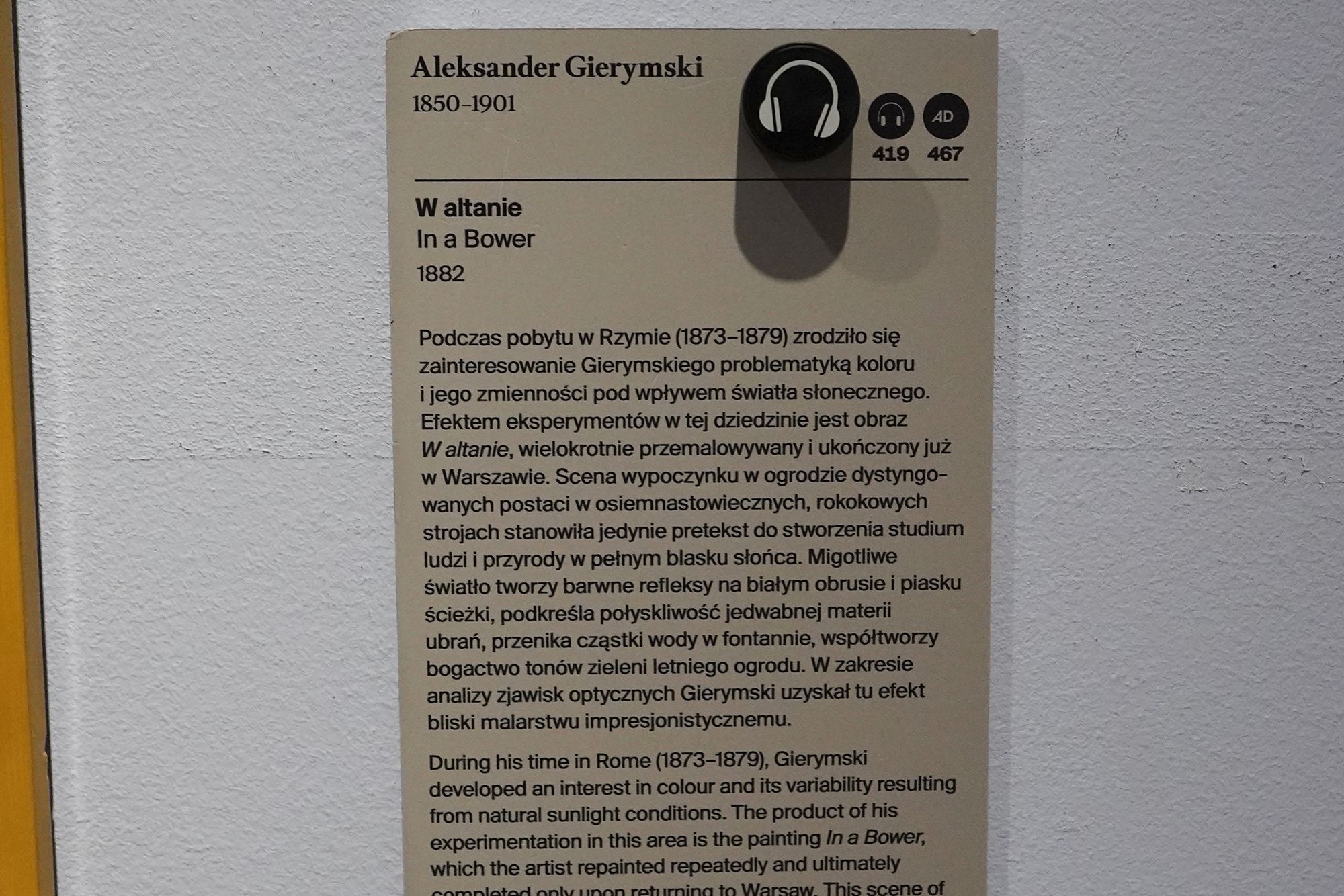
Aleksander Gierymski’s In a Bower (1882) shows elegantly dressed figures relaxing in a garden. The scene gave him an opportunity to study sunlight, from reflections on a white tablecloth to the shimmer of silk clothing, fountain water, and the surrounding greenery.
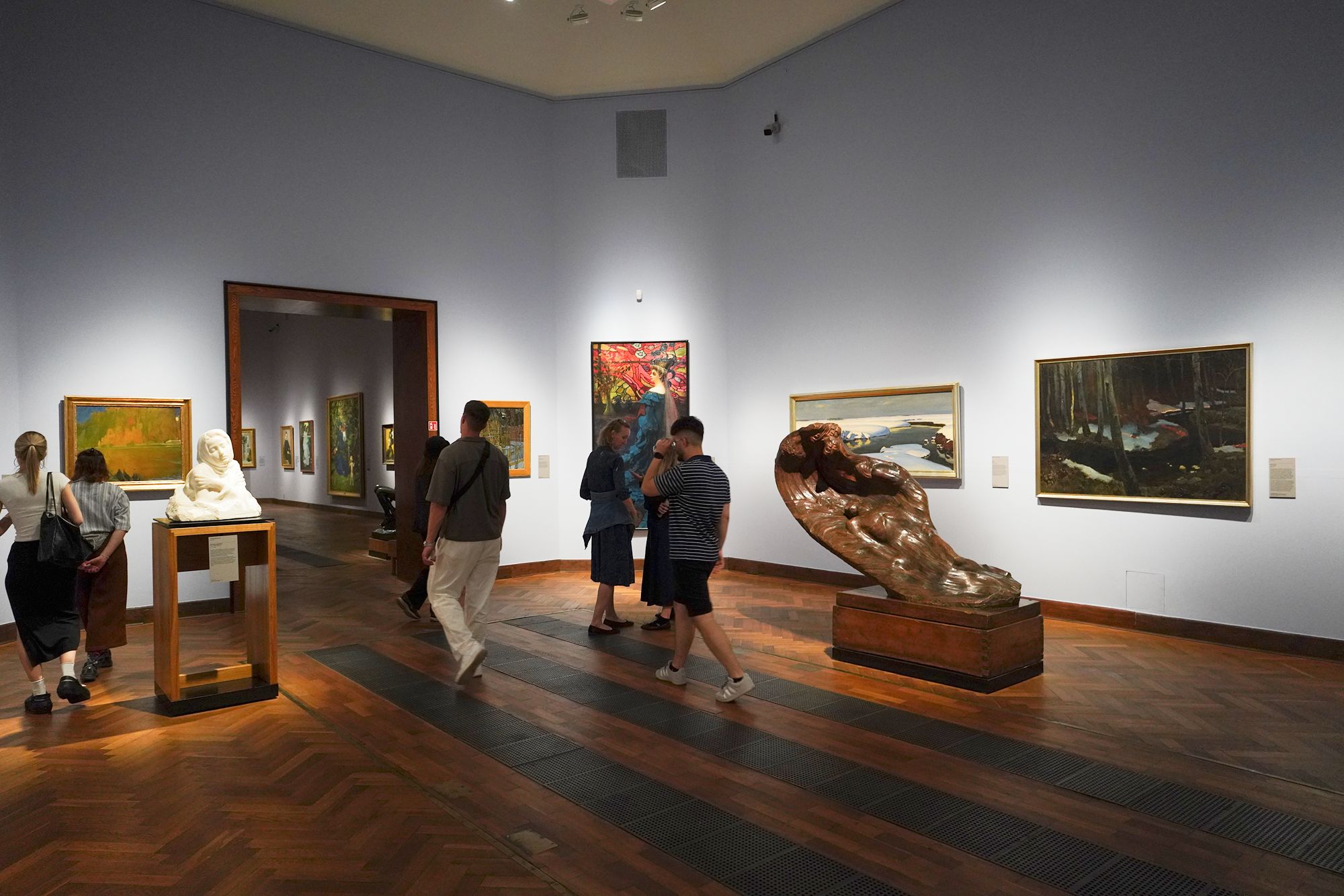
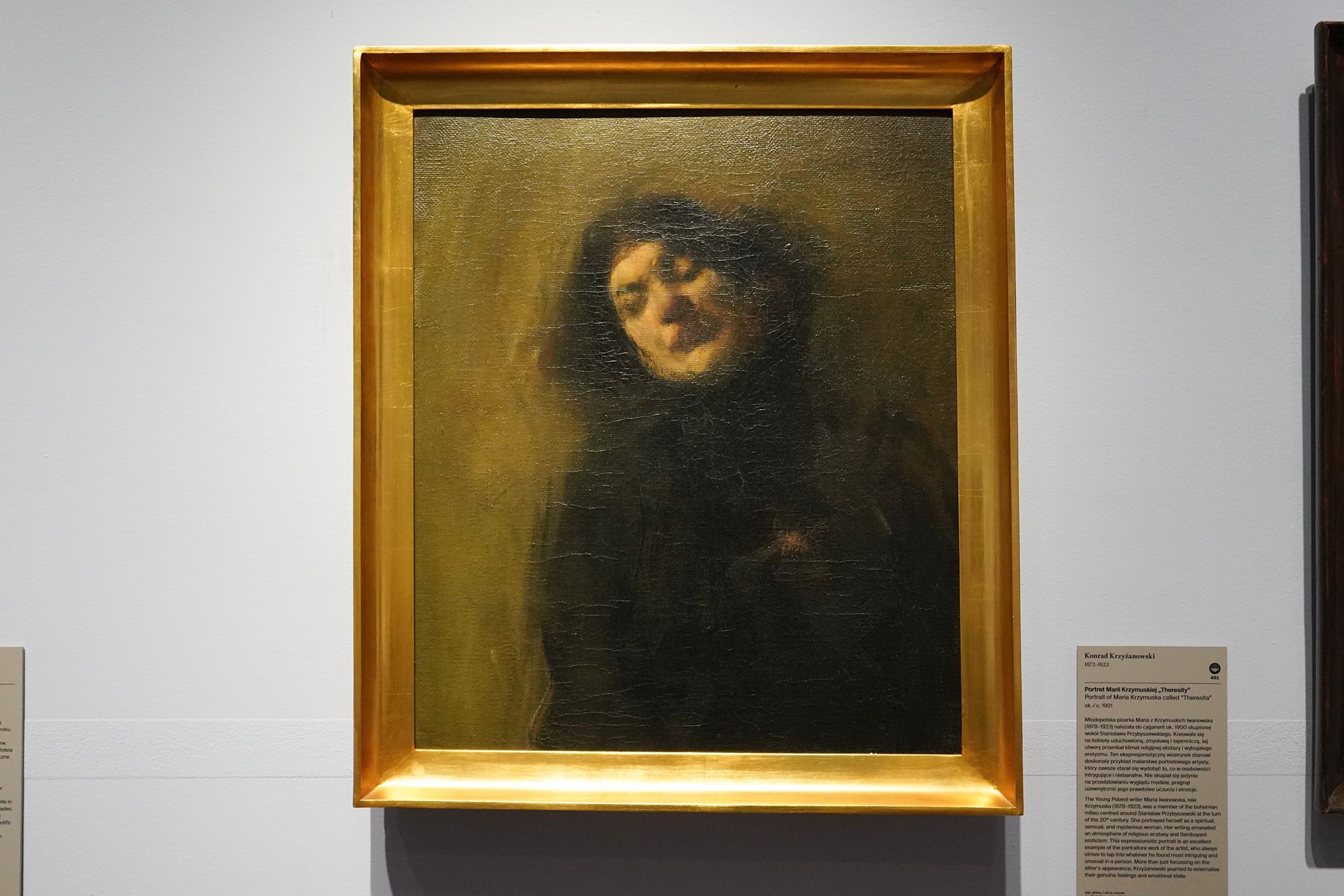
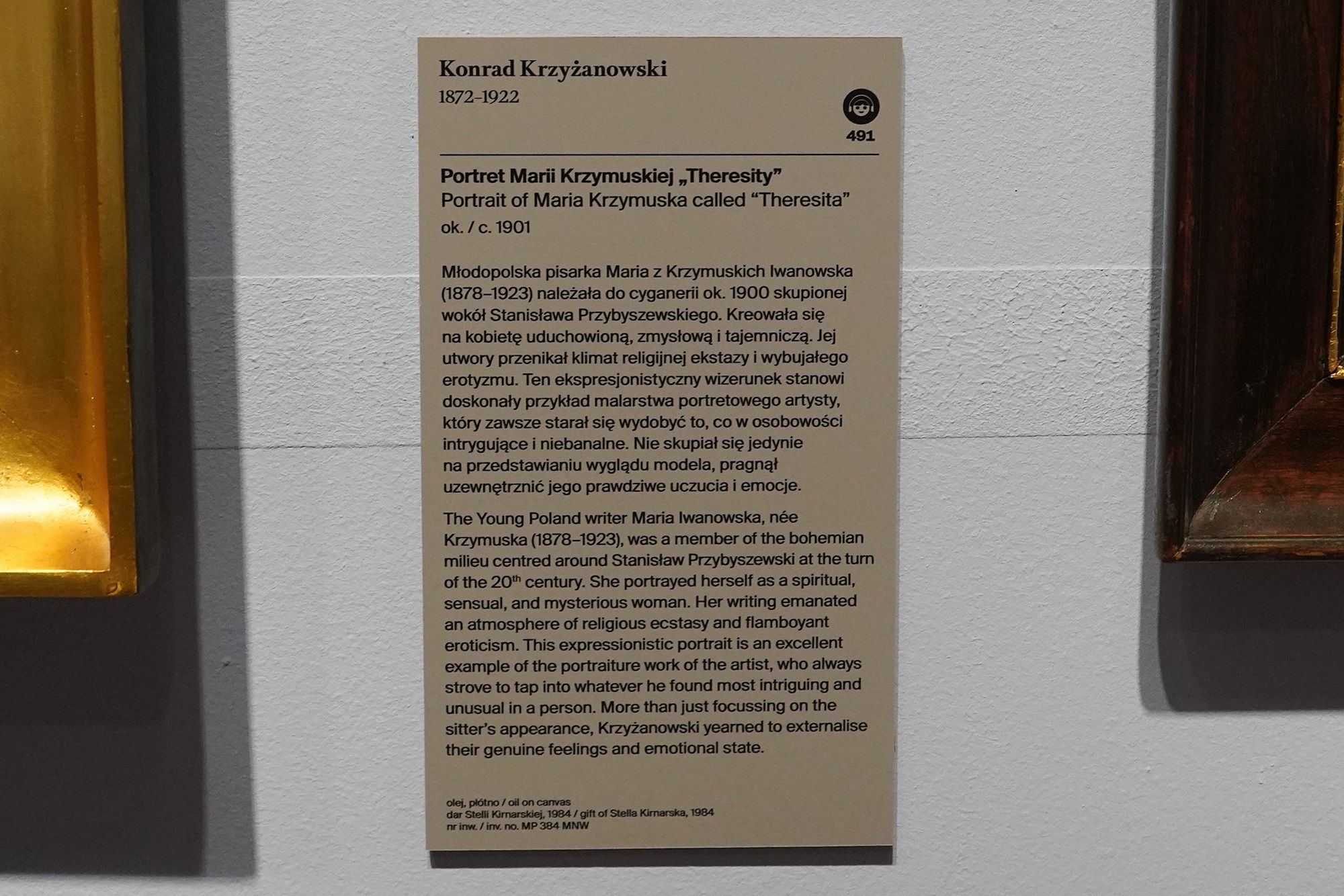
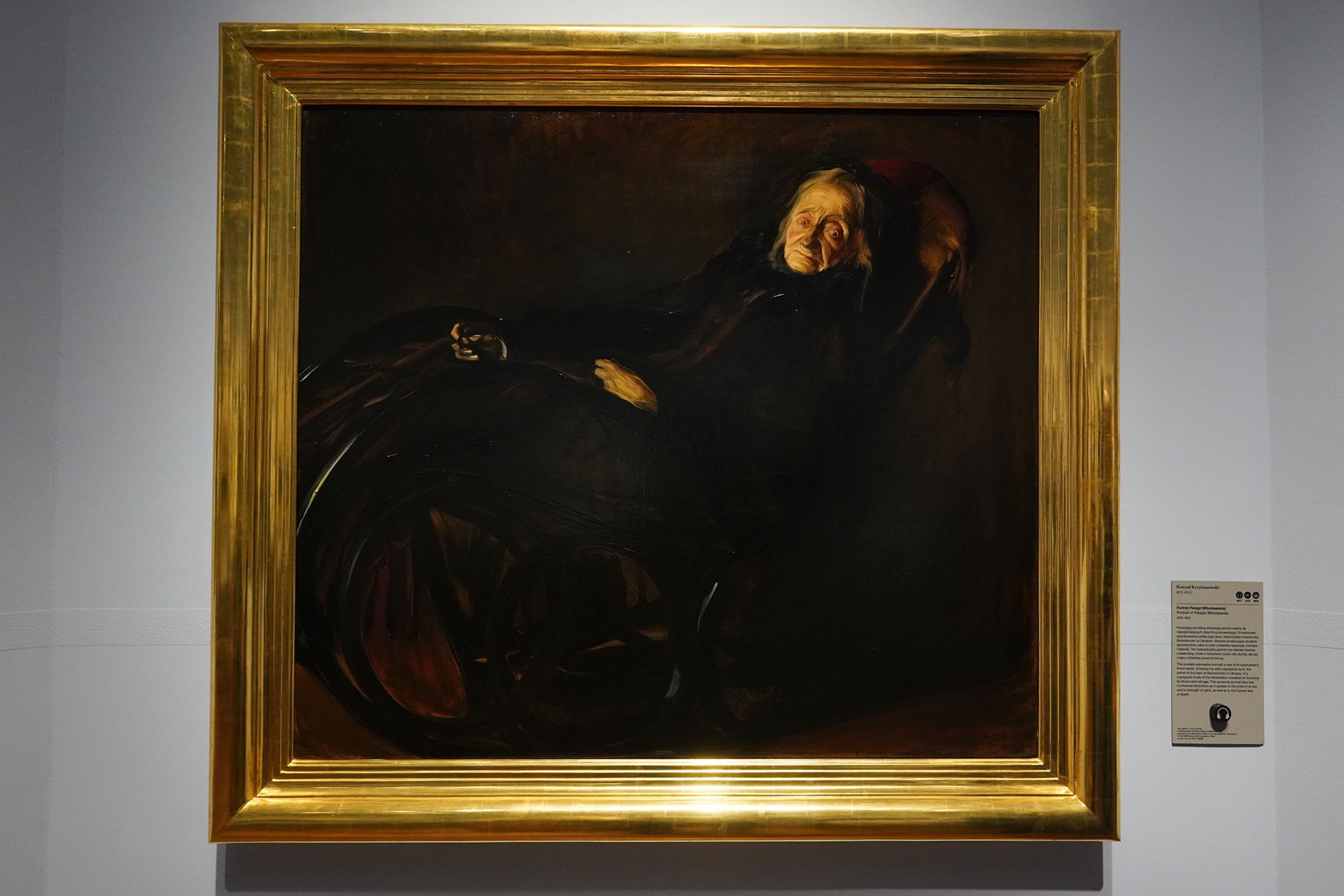
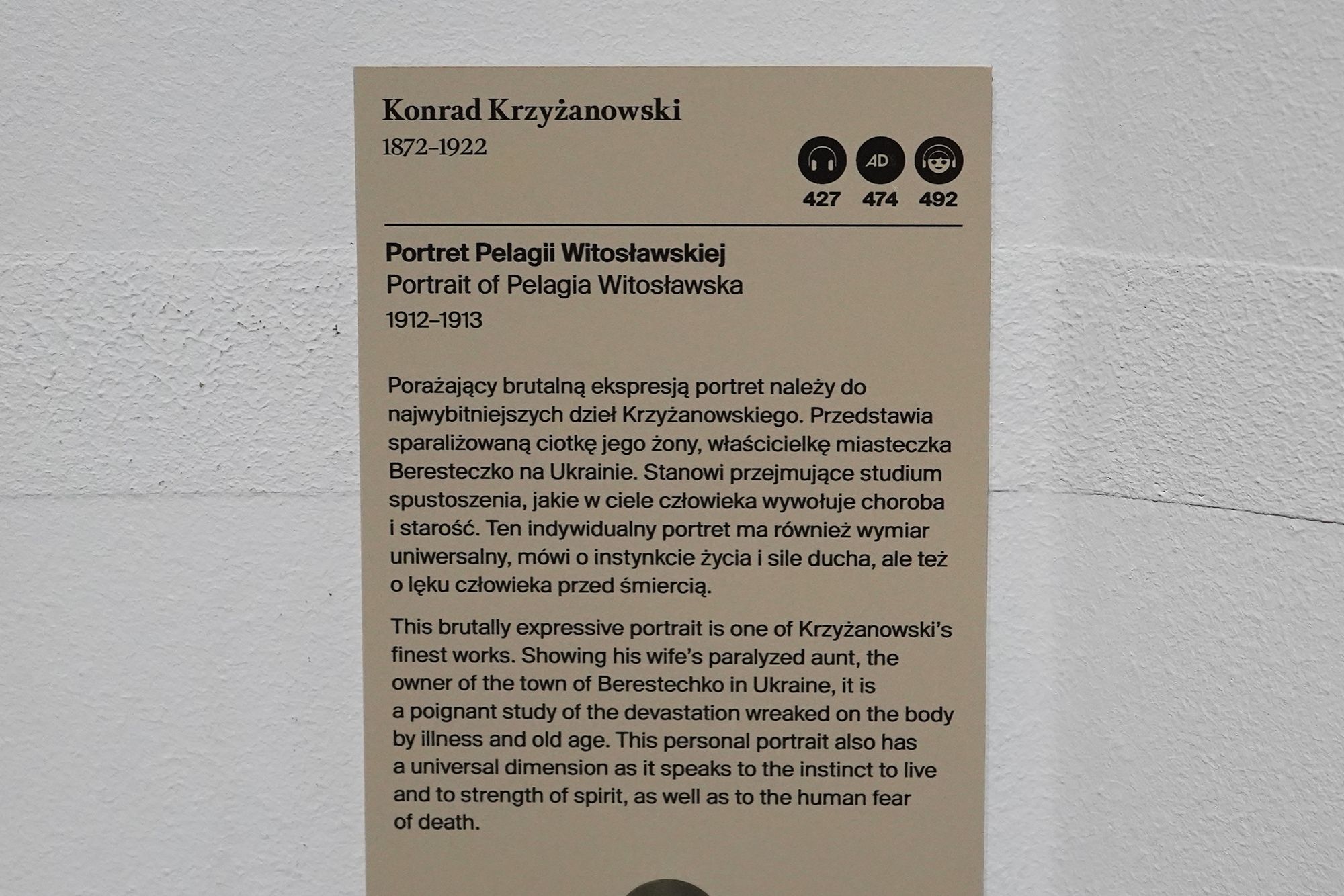
Konrad Krzyżanowski (1872–1922) was a Polish painter and teacher associated with the Young Poland movement, best known for expressive portraits that explore a sitter’s personality and emotional state. His energetic brushwork and dark colors give many portraits a dramatic, introspective atmosphere.
Konrad Krzyżanowski’s portrait of the writer Maria Krzymuska, known as “Theresita,” focuses on her inner character. Painted around 1901, it reflects his interest in using expressive portraiture to reveal a sitter’s personality and emotions.
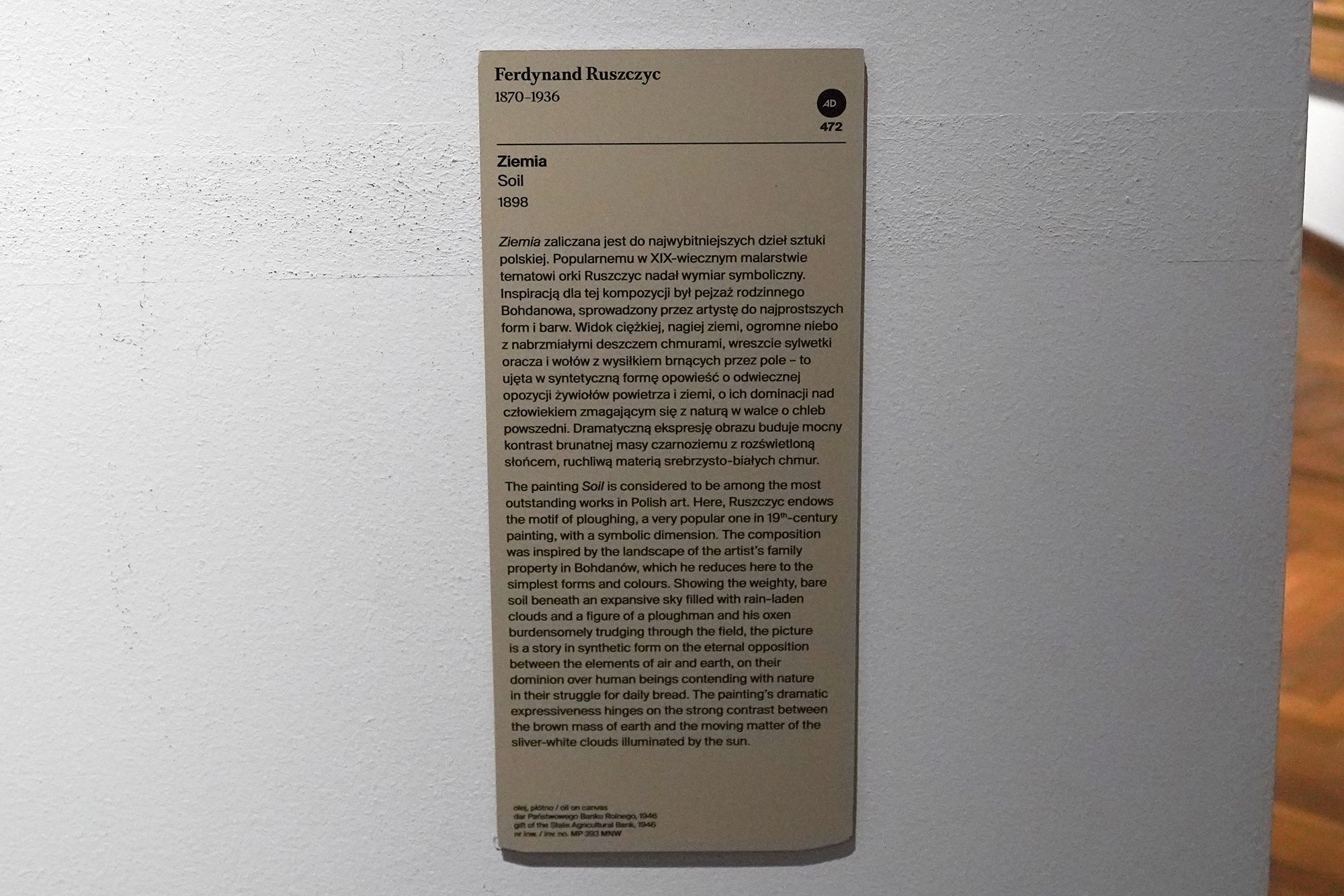
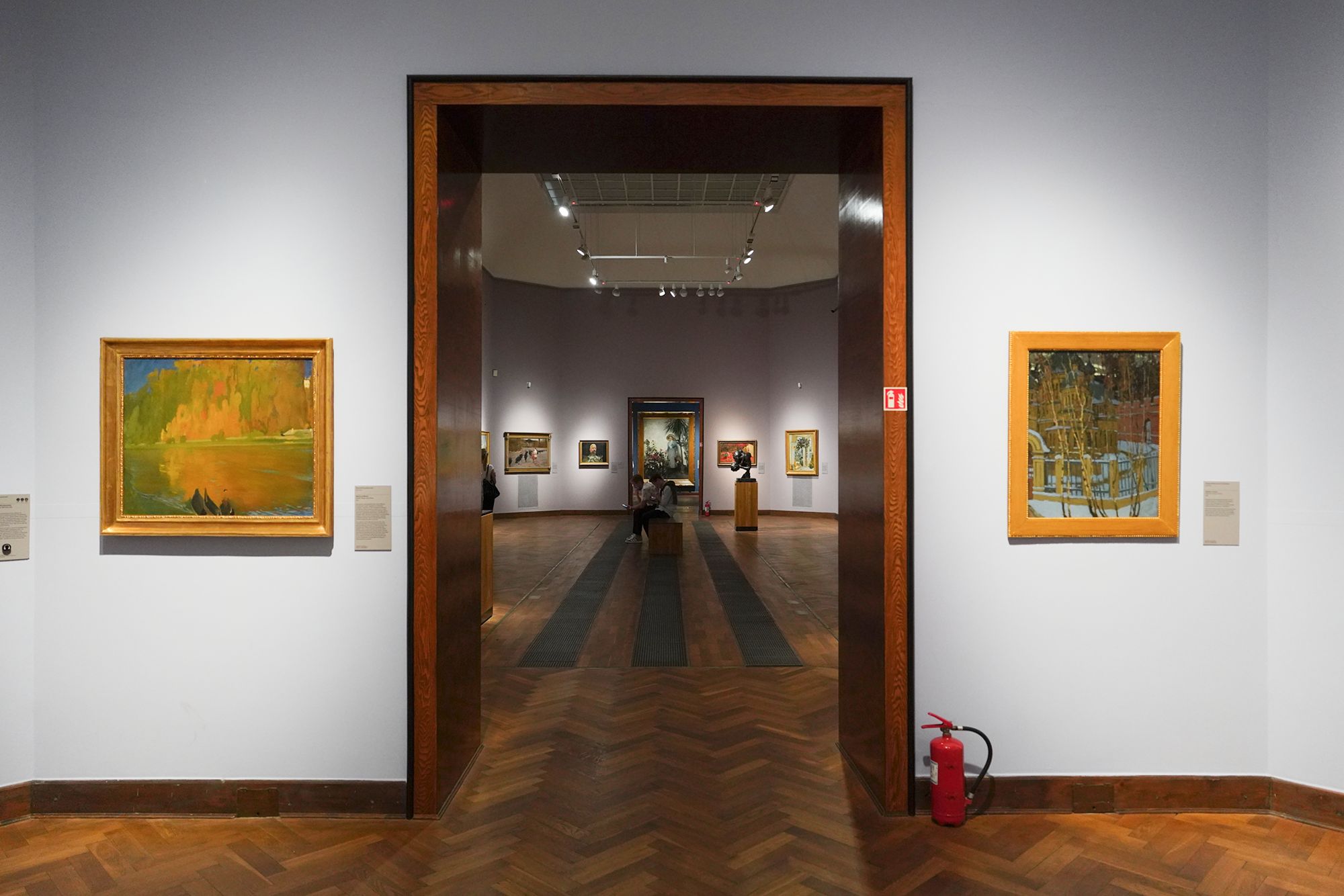
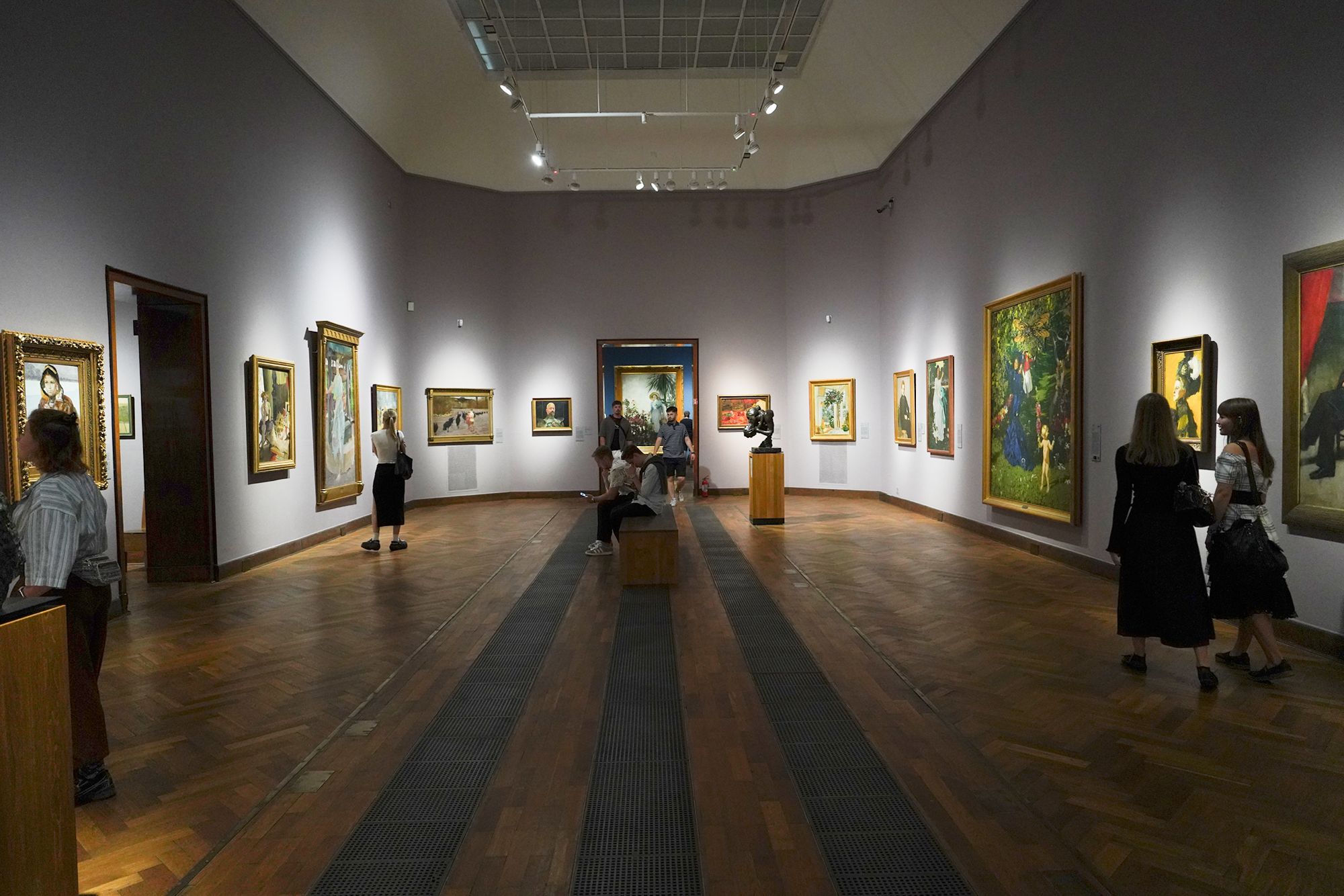
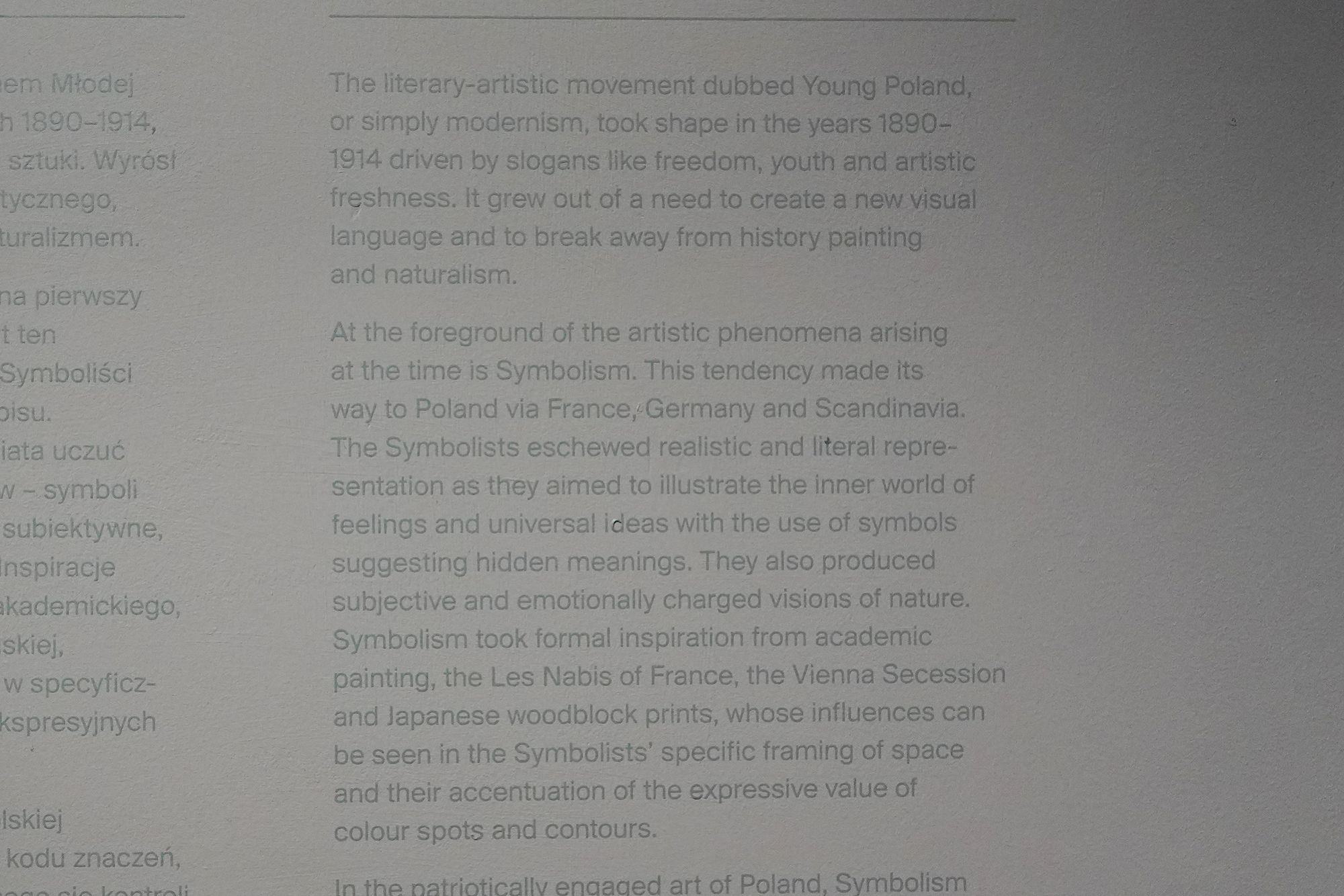
The next section introduced Young Poland, an artistic and literary movement from around 1890 to 1914. Symbolism played an important role, with artists using color, imagery, and atmospheric landscapes to express emotions and suggest meanings beyond what was immediately visible.
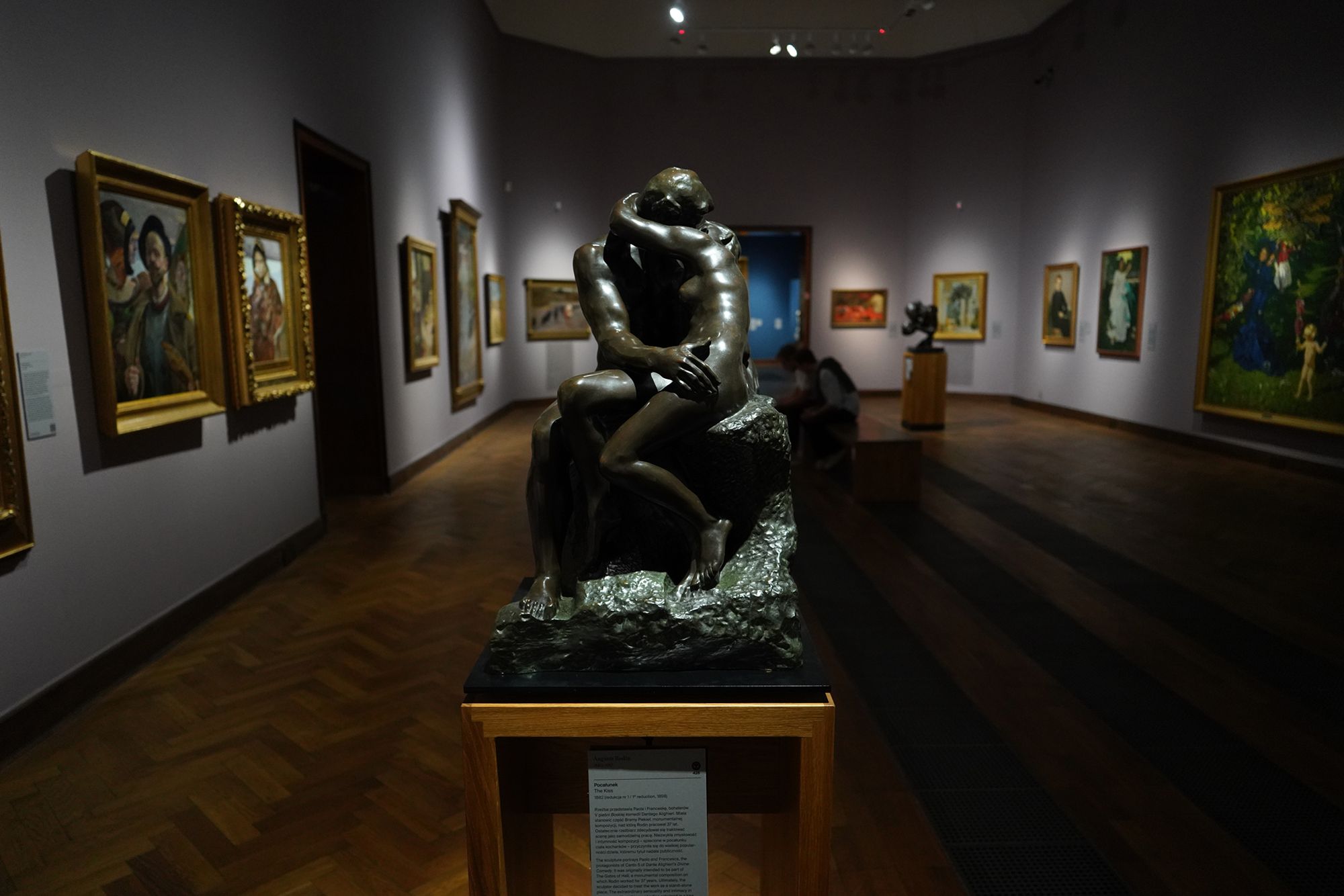
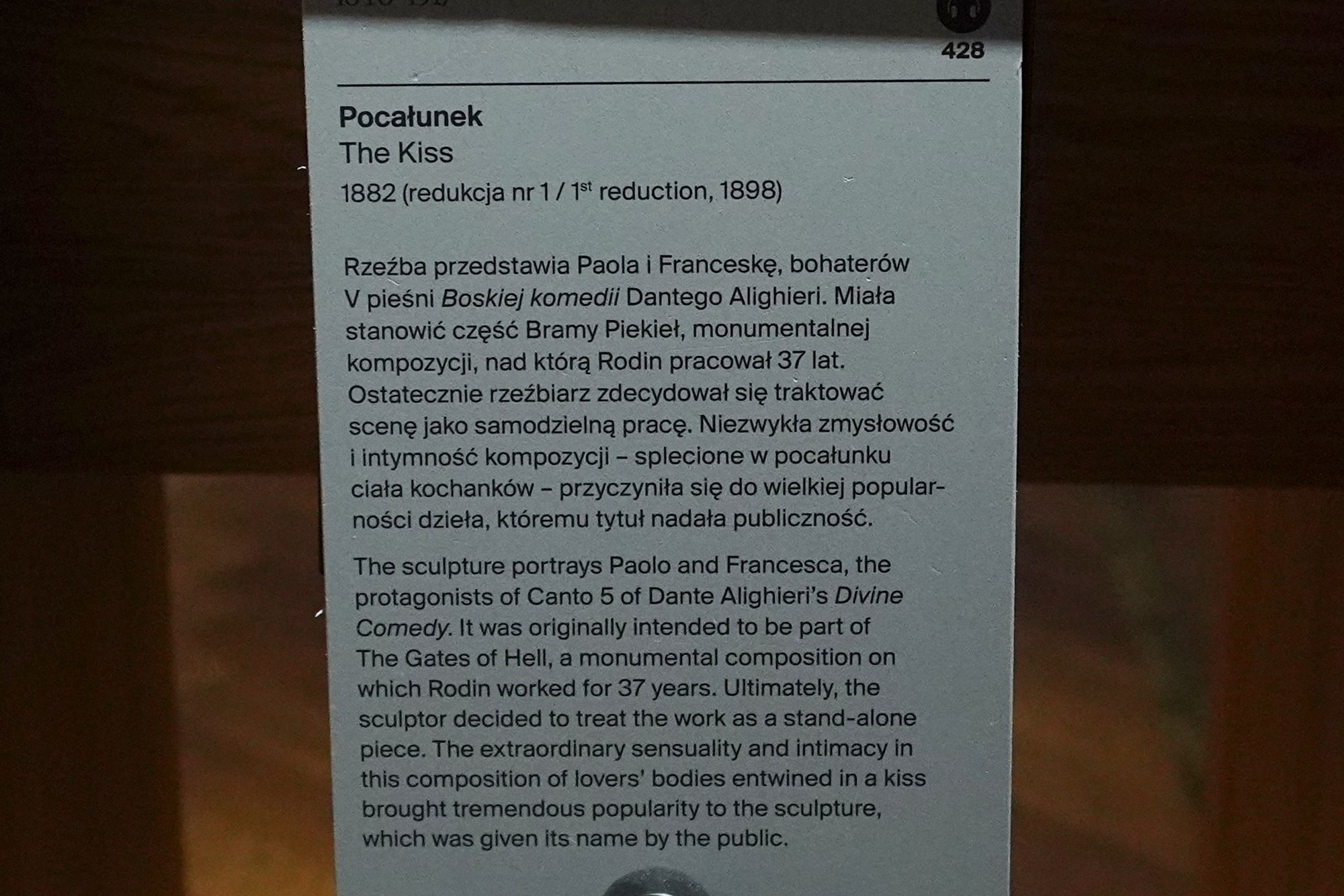
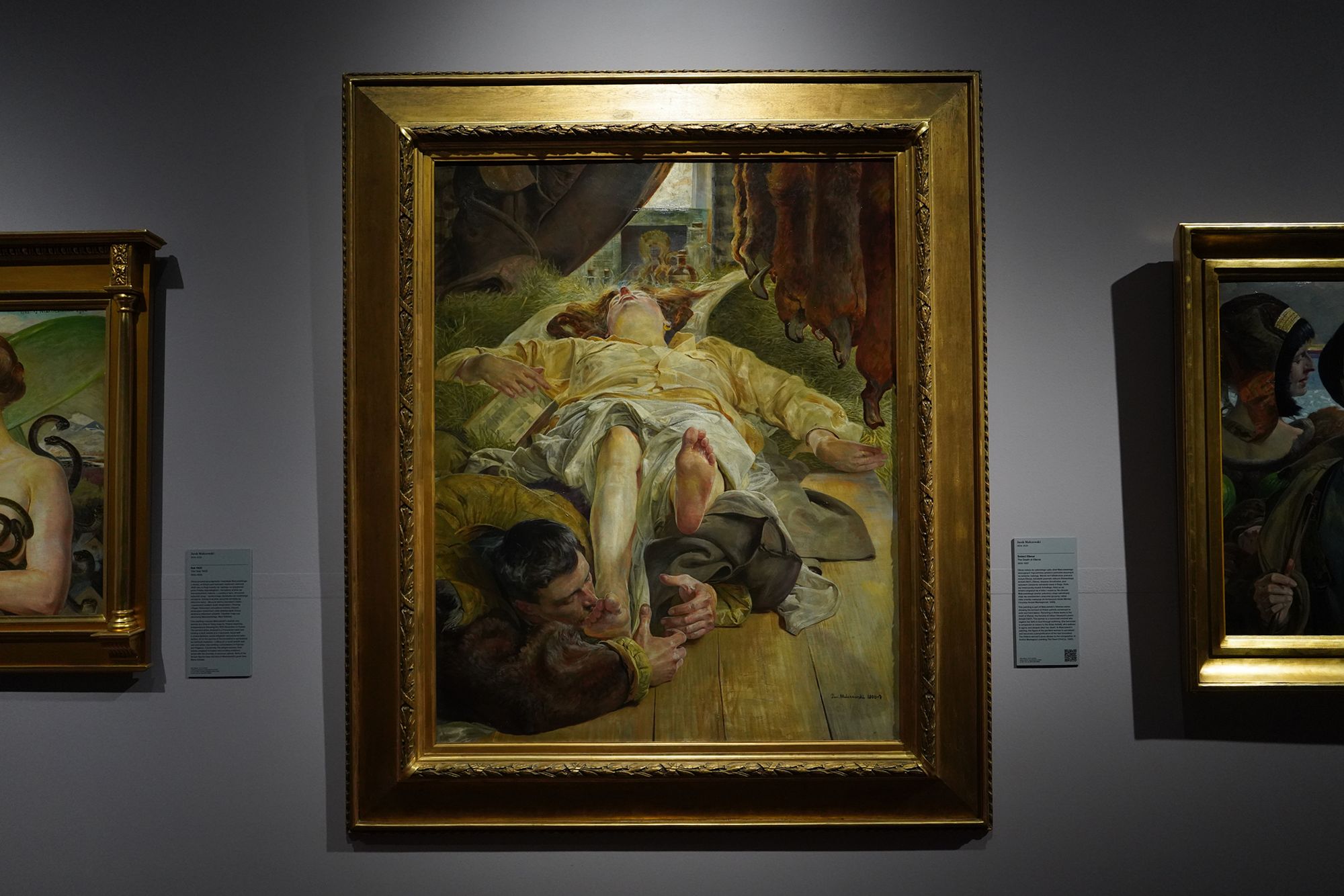
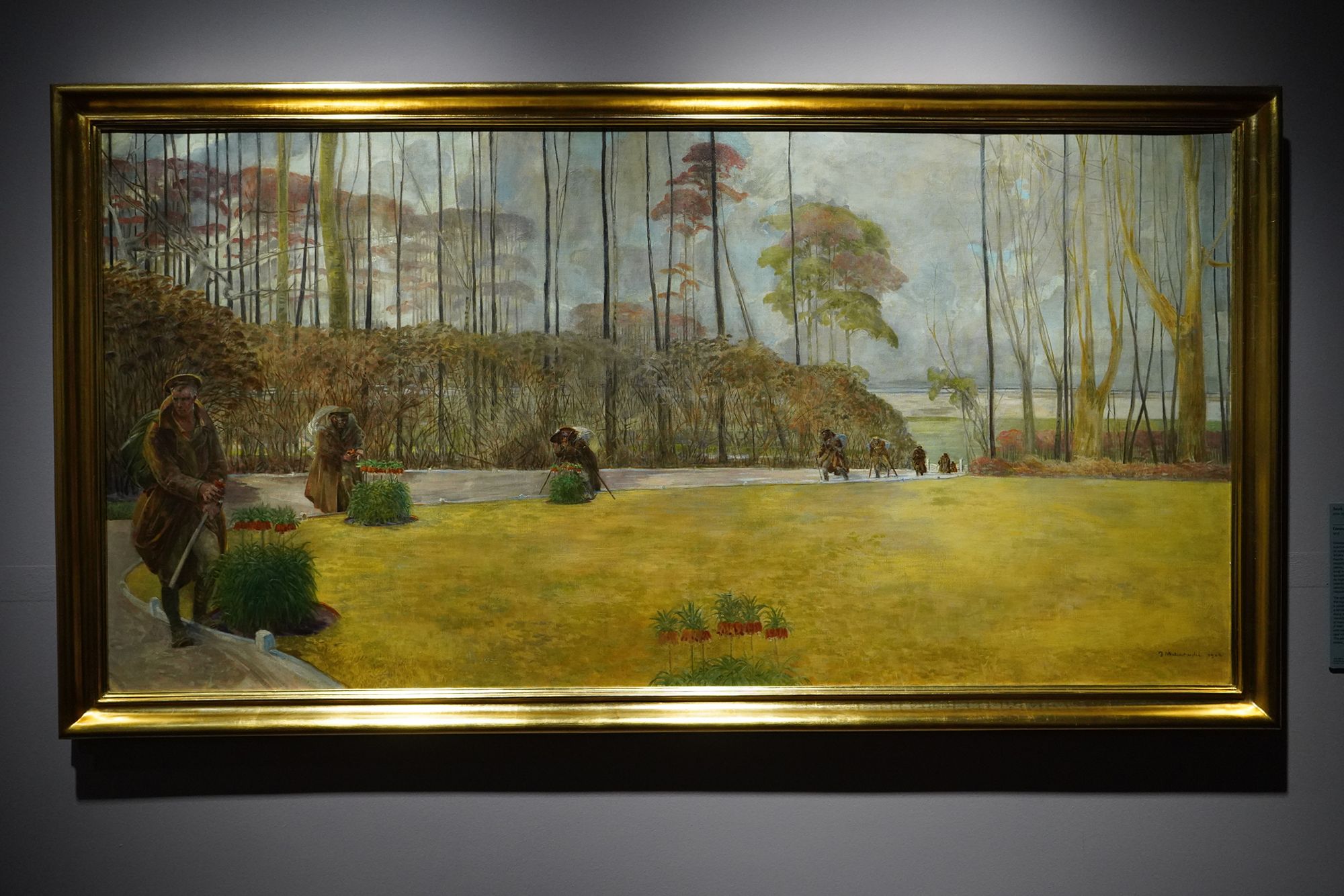
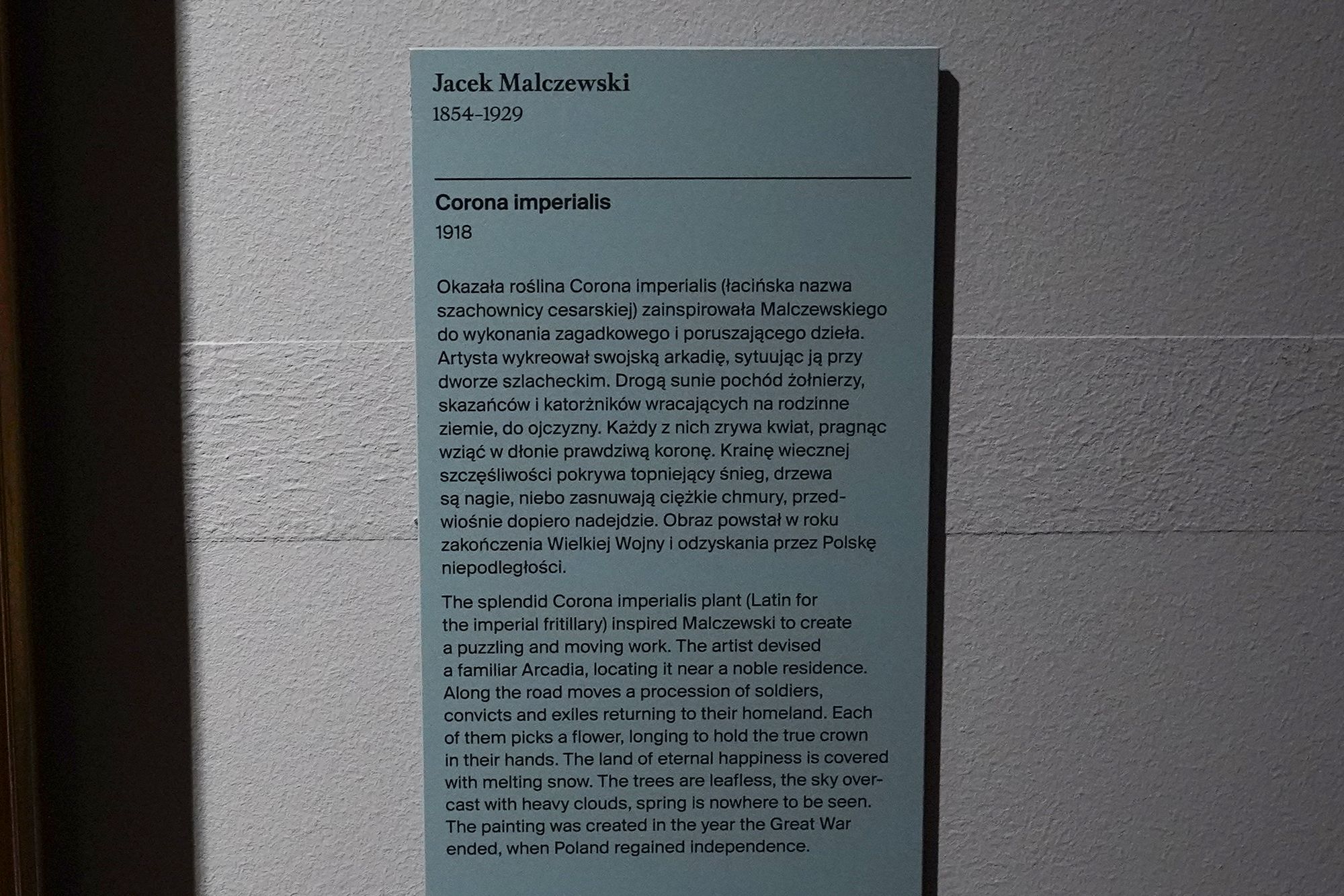
Jacek Malczewski (1854–1929) was a Polish painter and a leading figure in Symbolism and the Young Poland movement. His paintings used people, mythological figures, and imaginary scenes to express ideas about Poland’s suffering, death, freedom, and the role of the artist.
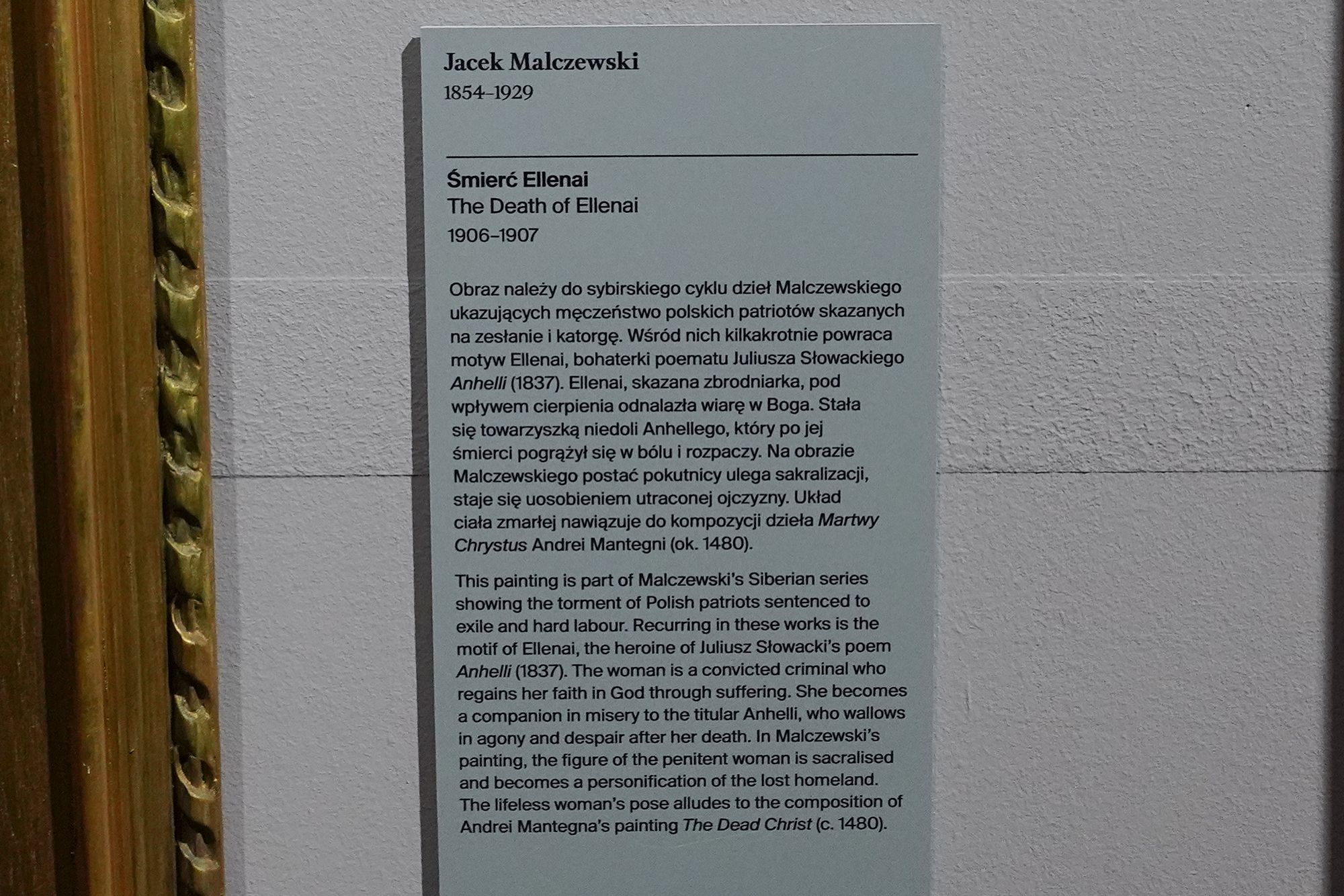
Jacek Malczewski’s The Death of Ellenai transforms a literary scene into a symbol of Poland’s suffering. Inspired by Słowacki’s poem Anhelli, the painting connects personal grief with exile and the loss of a homeland. Ellenai’s pose echoes Mantegna’s Dead Christ, giving her death a sacred quality.
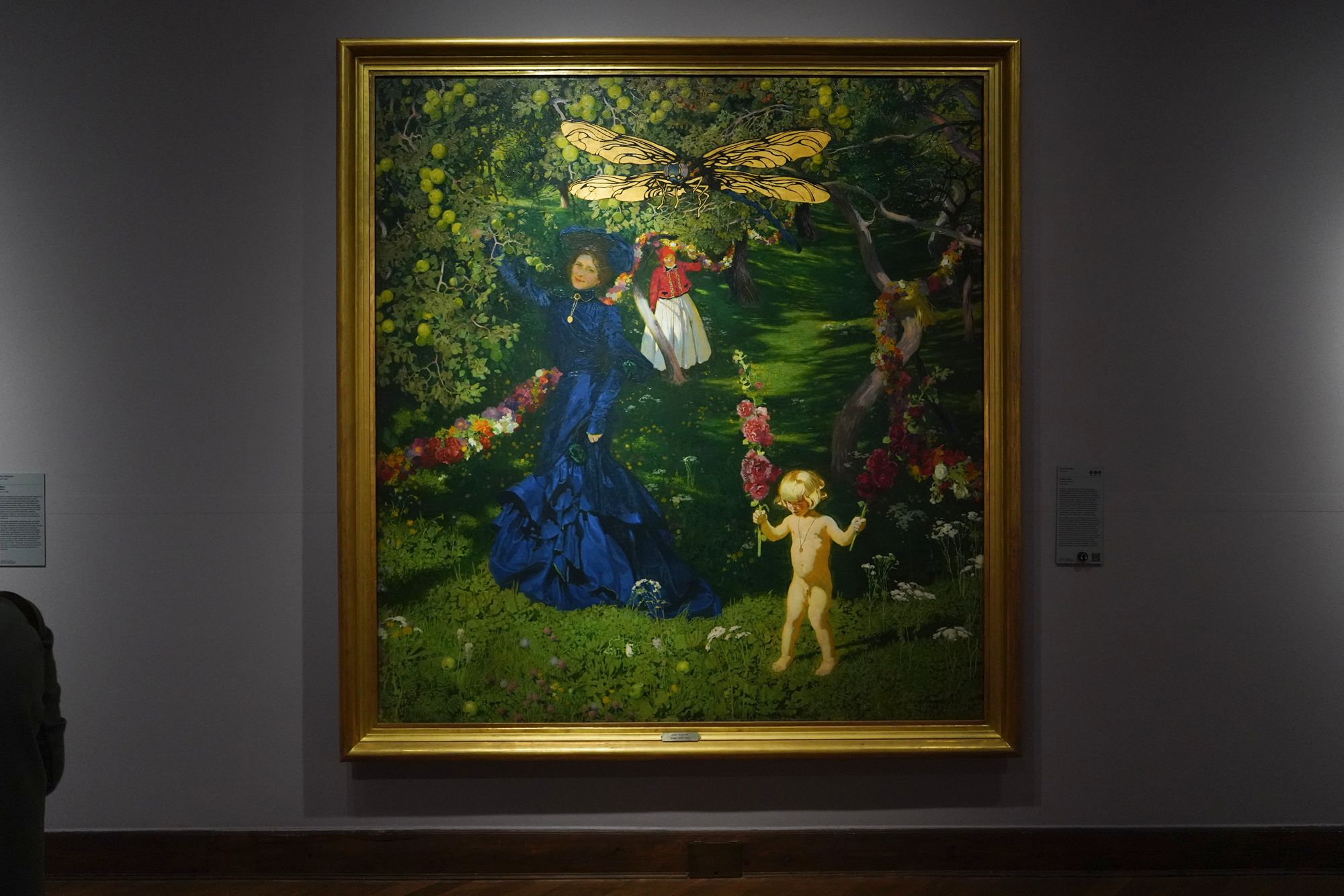
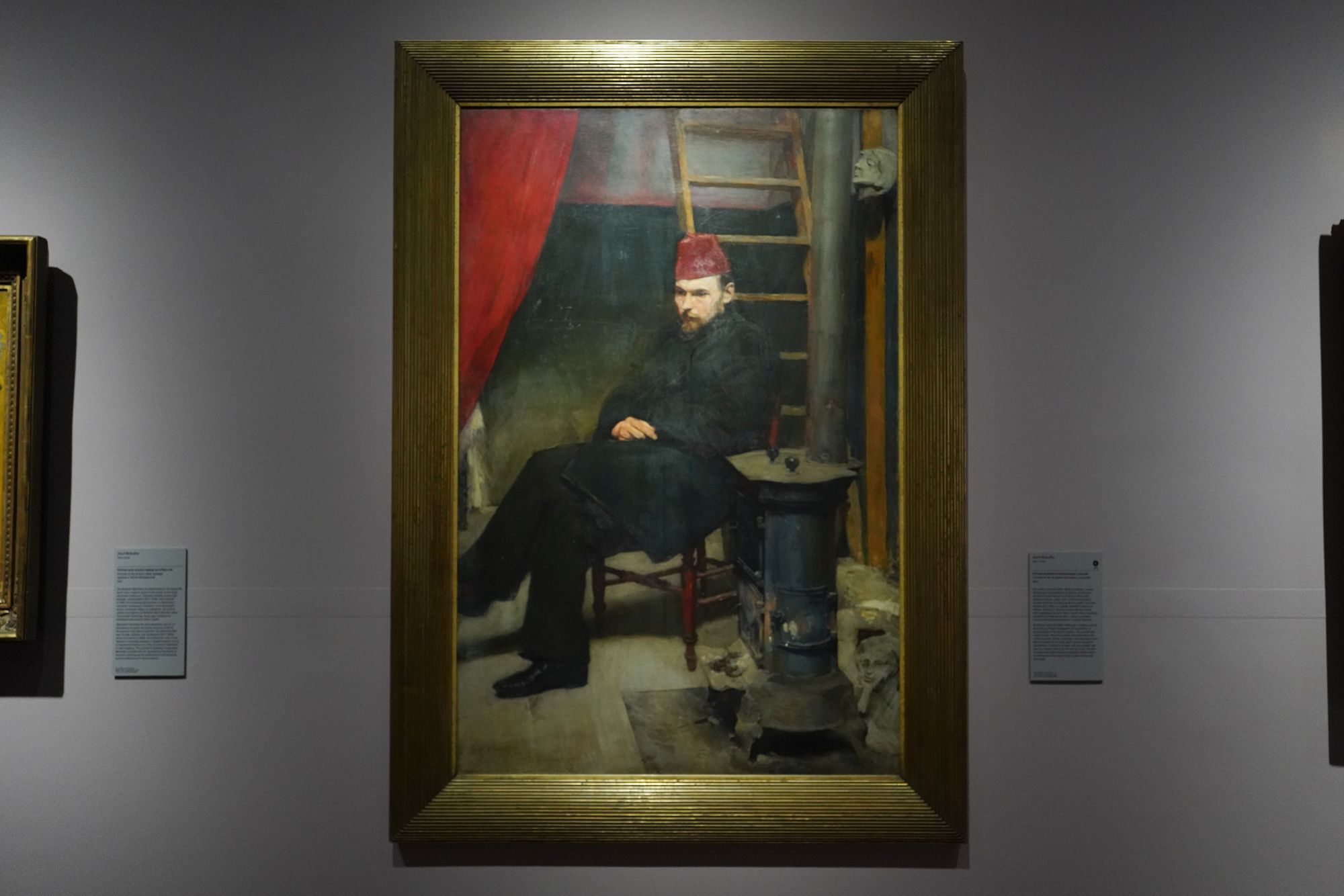
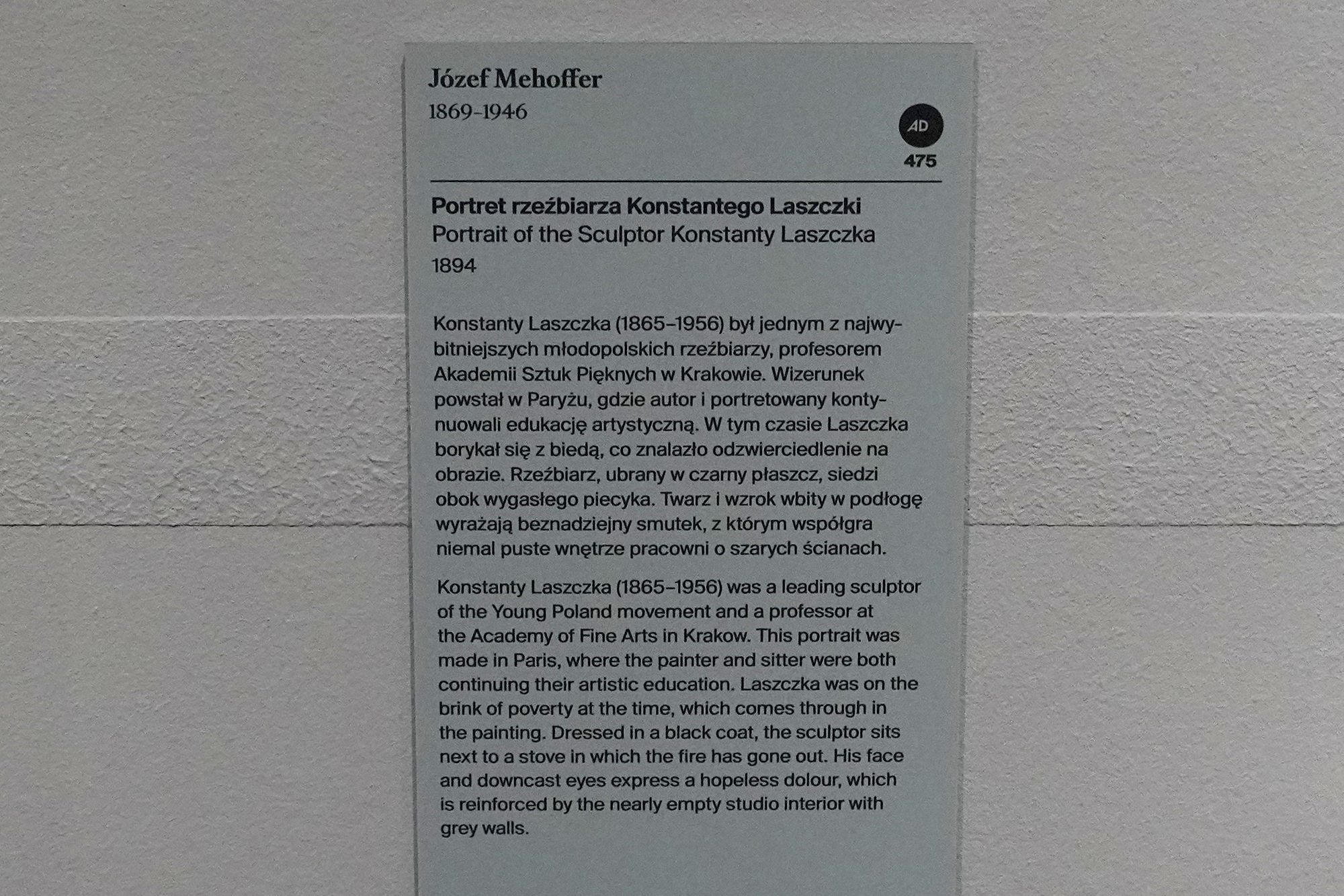
Józef Mehoffer (1869–1946) was a Polish painter, stained-glass designer, and a leading artist of the Young Poland movement. He also designed furniture, textiles, posters, and interior decorations. His art combined rich decorative patterns with symbolism—using images to suggest deeper ideas and emotions.
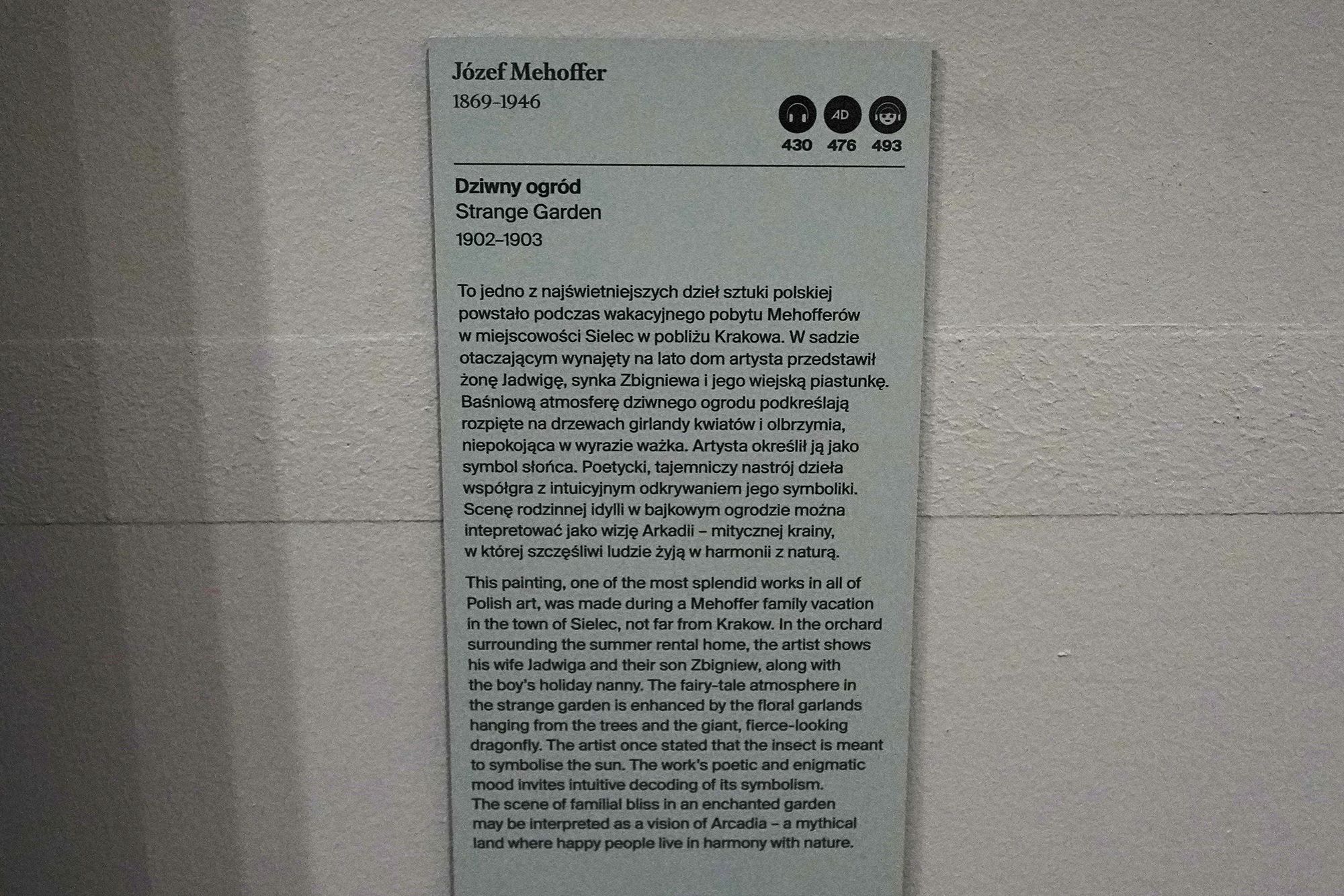
Józef Mehoffer’s Strange Garden (1902–1903) shows his wife, young son, and their nanny in an orchard during a summer holiday near Kraków. Flower garlands and an enormous dragonfly give this family scene a fairy-tale atmosphere. Mehoffer described the dragonfly as a symbol of the sun, adding a mysterious element to the peaceful garden.
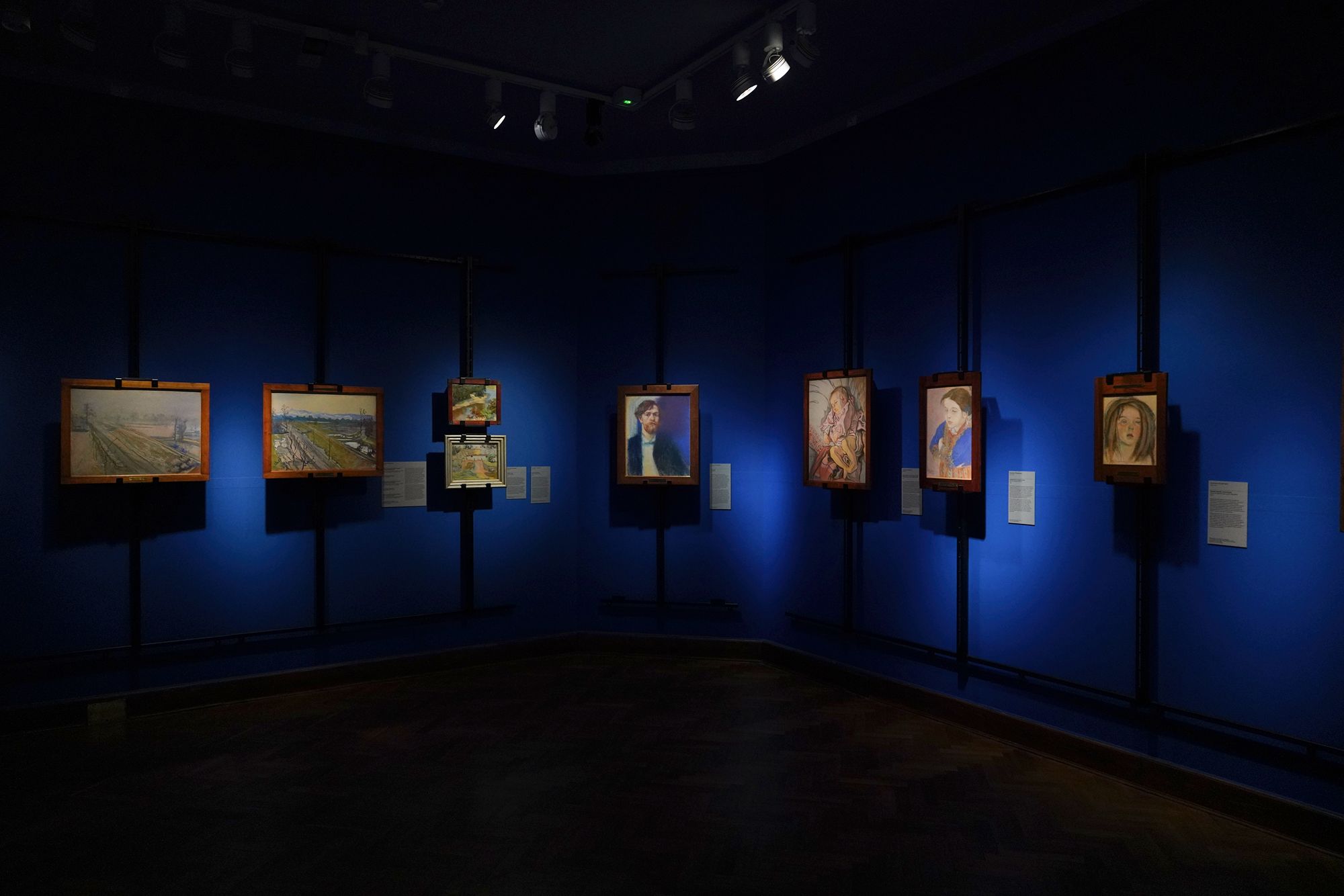
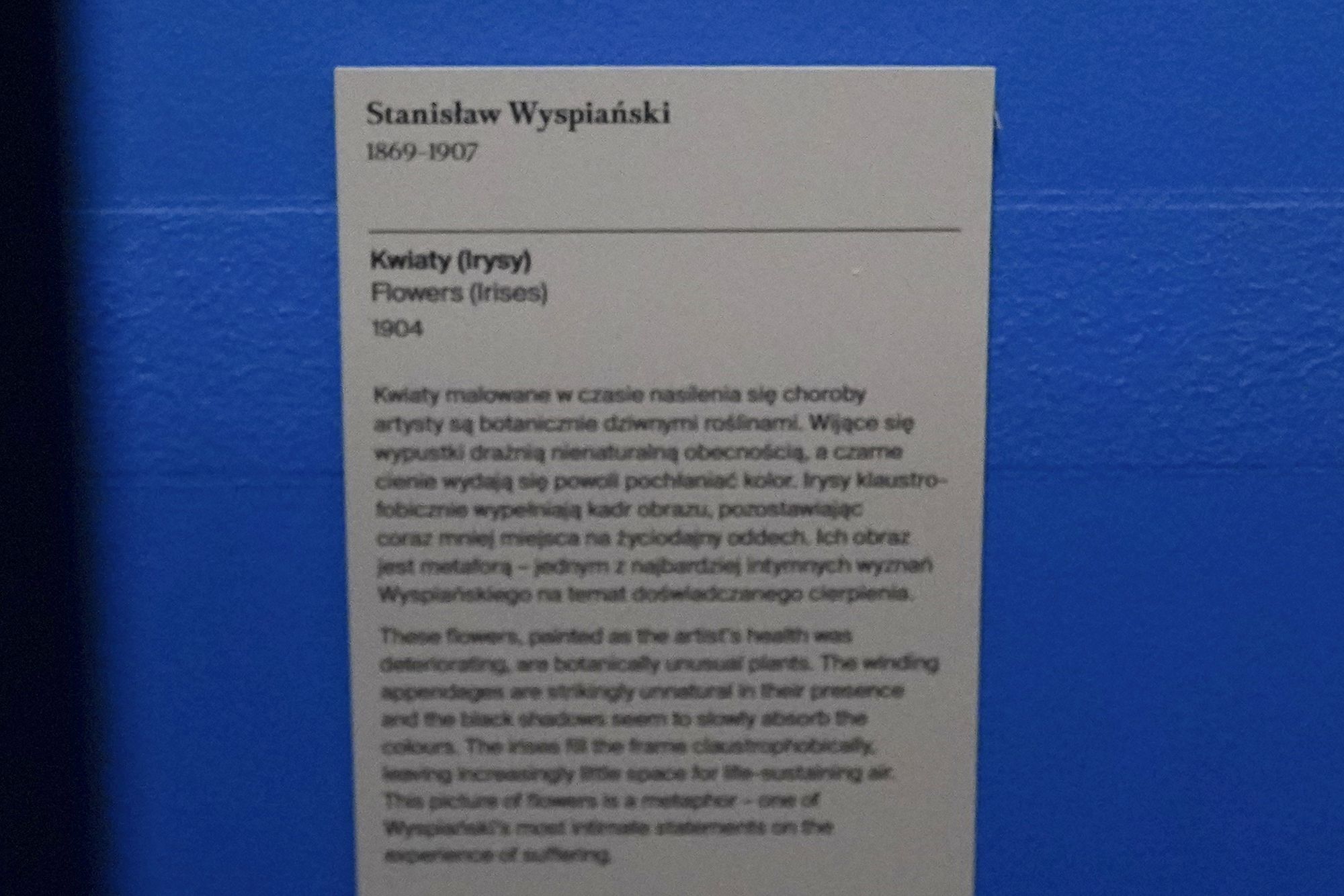
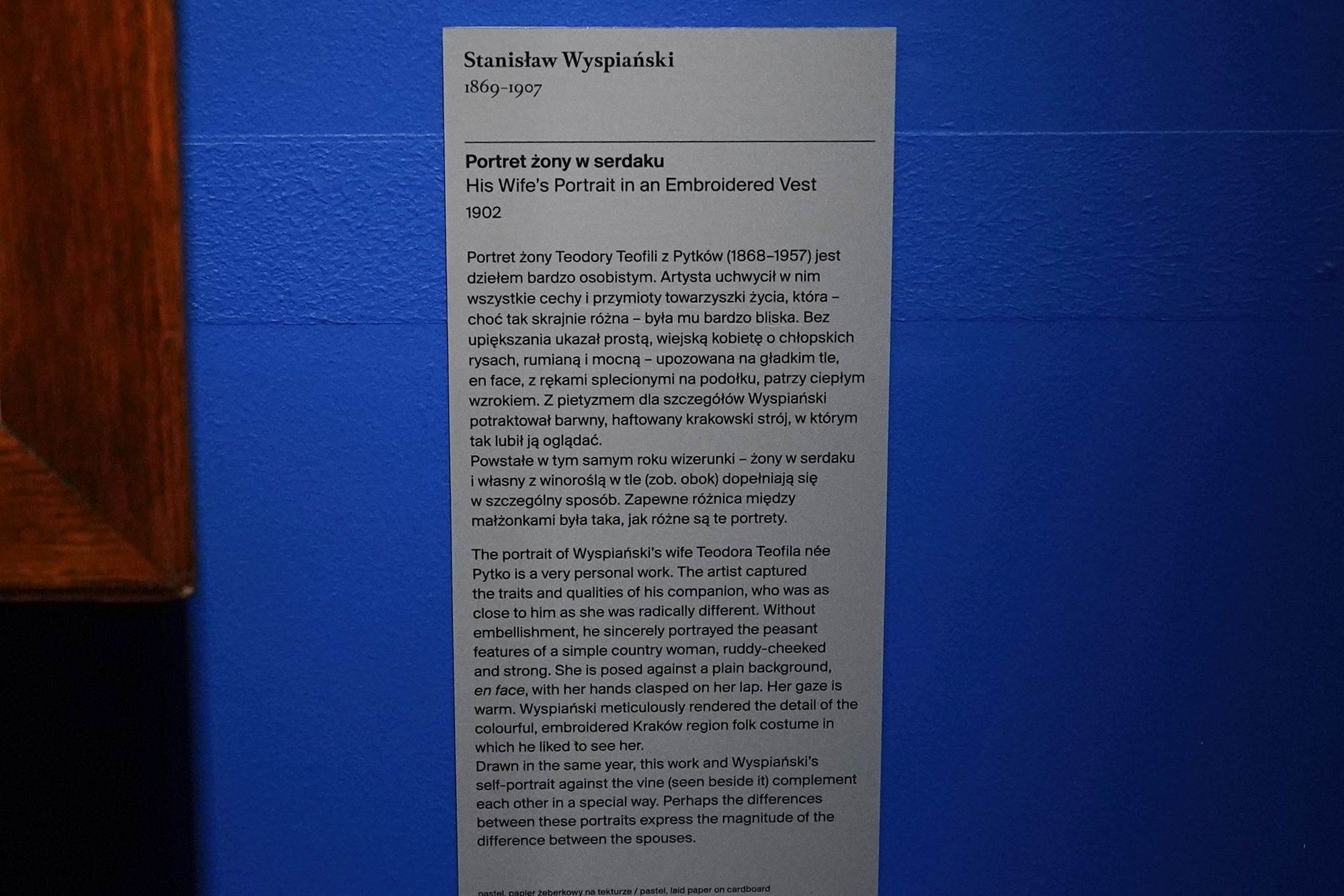
Stanisław Wyspiański (1869–1907) was a Polish painter, playwright, poet, and designer associated with the Young Poland movement. Based in Kraków, he created pastel portraits, stained-glass windows, wall decorations, and designs for interiors and furniture.
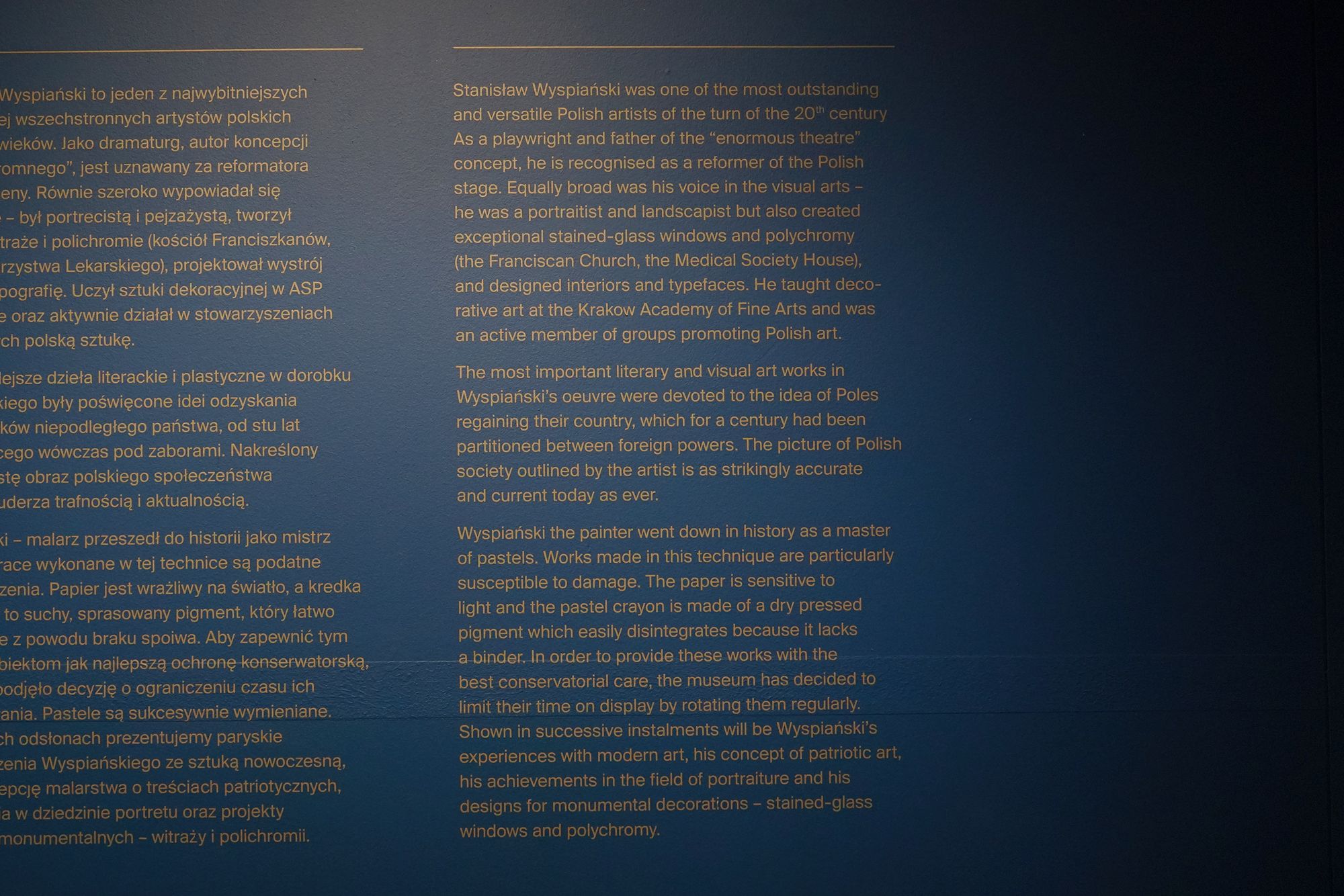
This section introduces Stanisław Wyspiański, whose work ranged from painting and stained glass to theatre and interior design. His art often reflected Poland’s struggle for independence. He was particularly known for his pastel portraits, which the museum displays in rotation because their delicate materials are easily damaged.
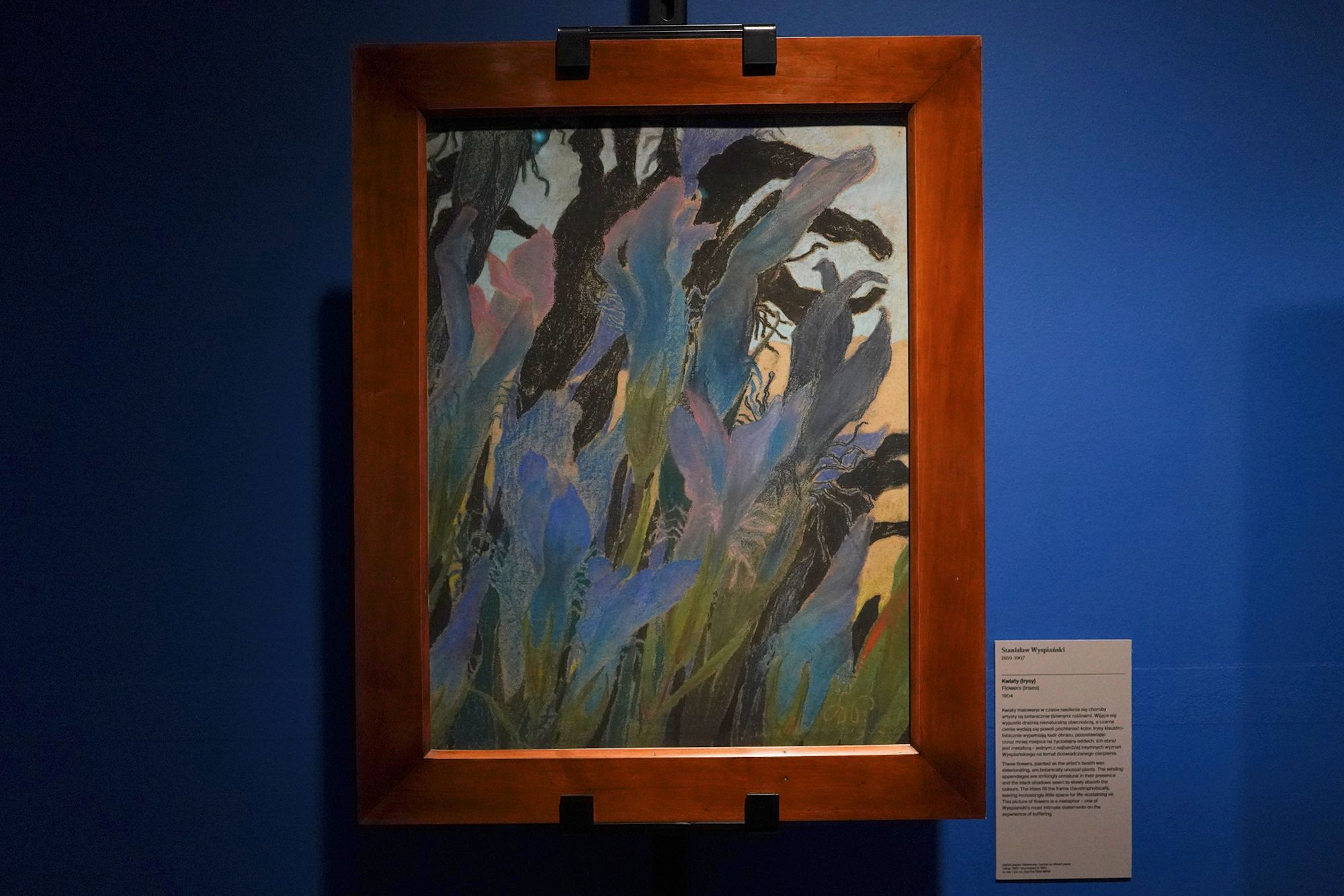
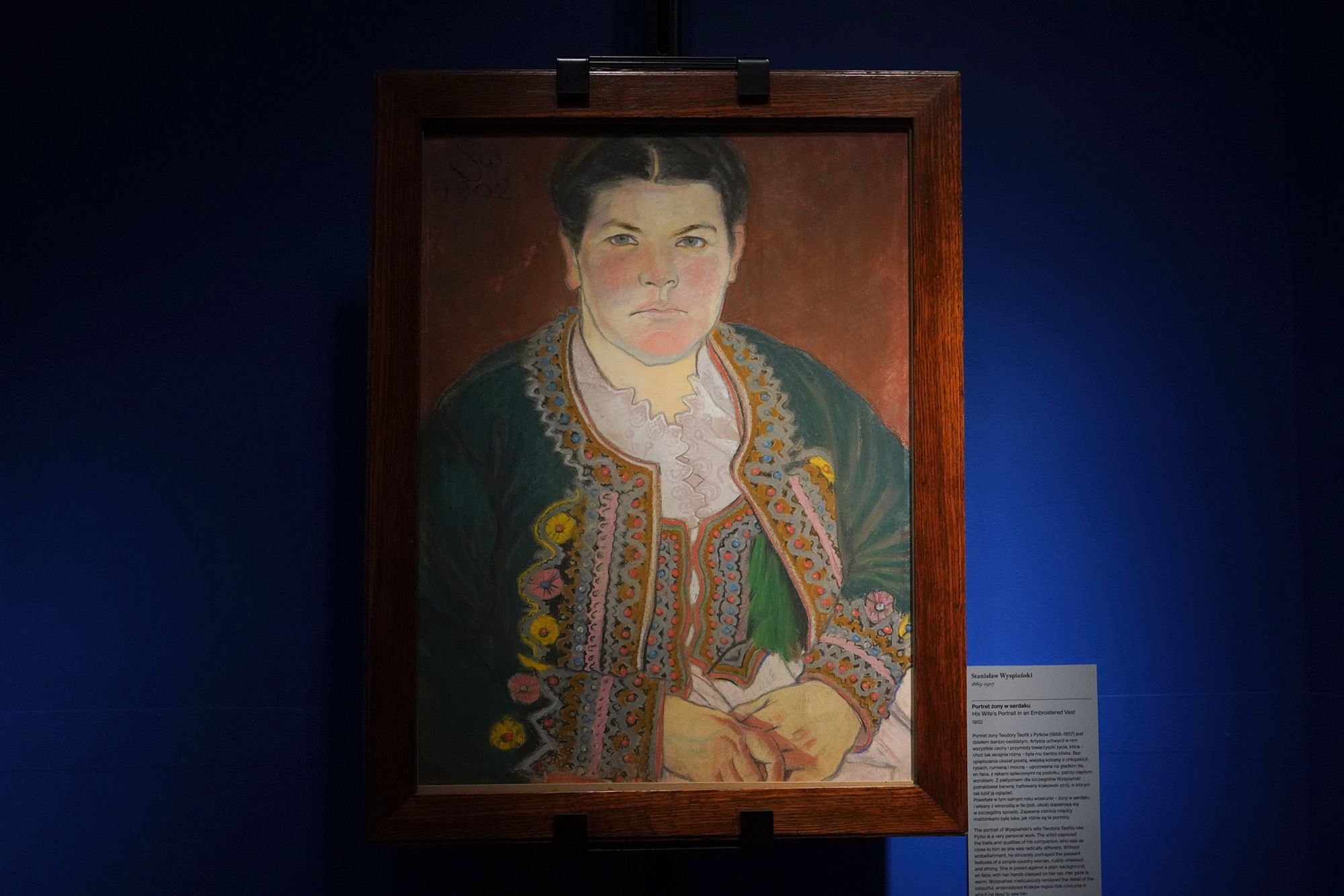
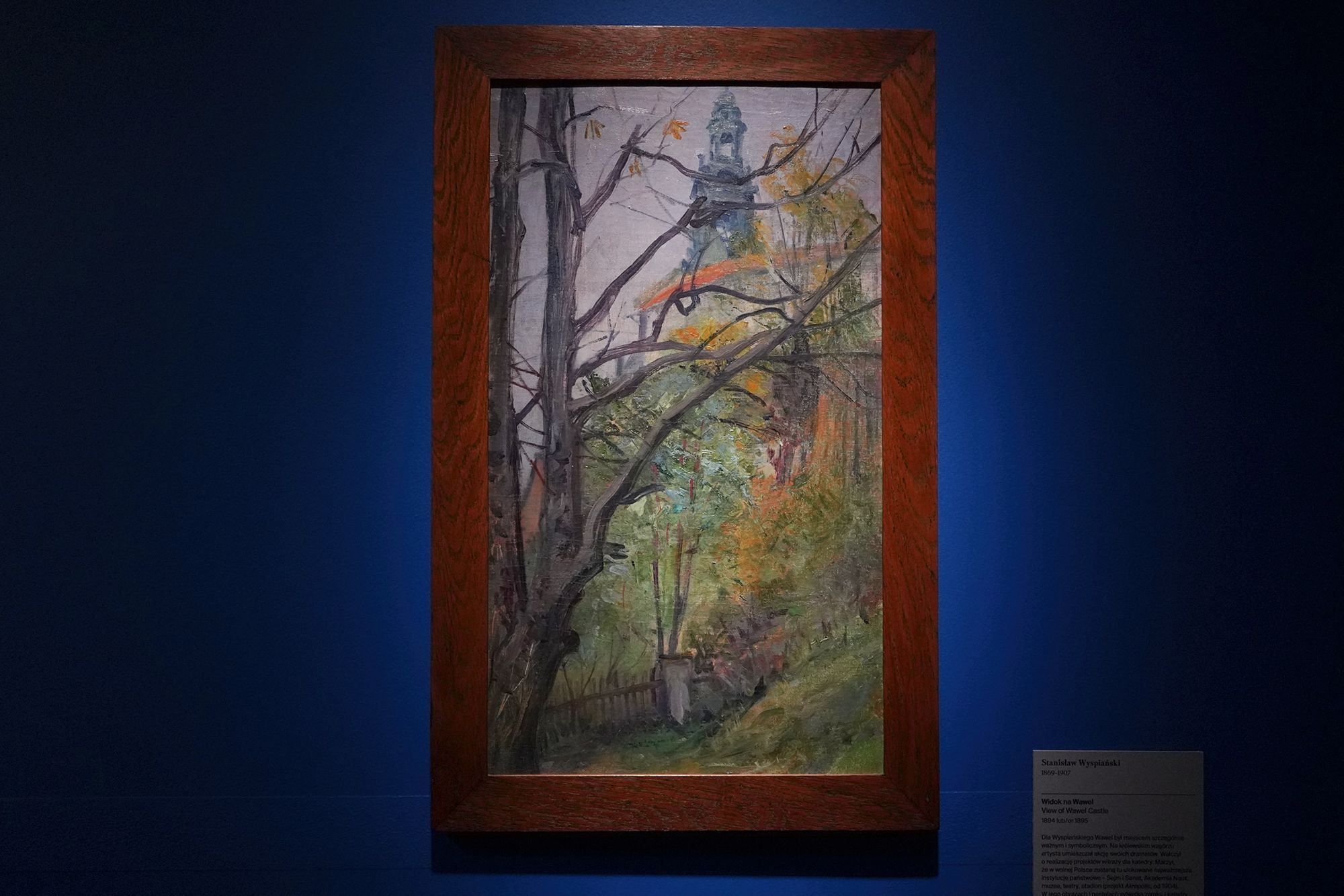
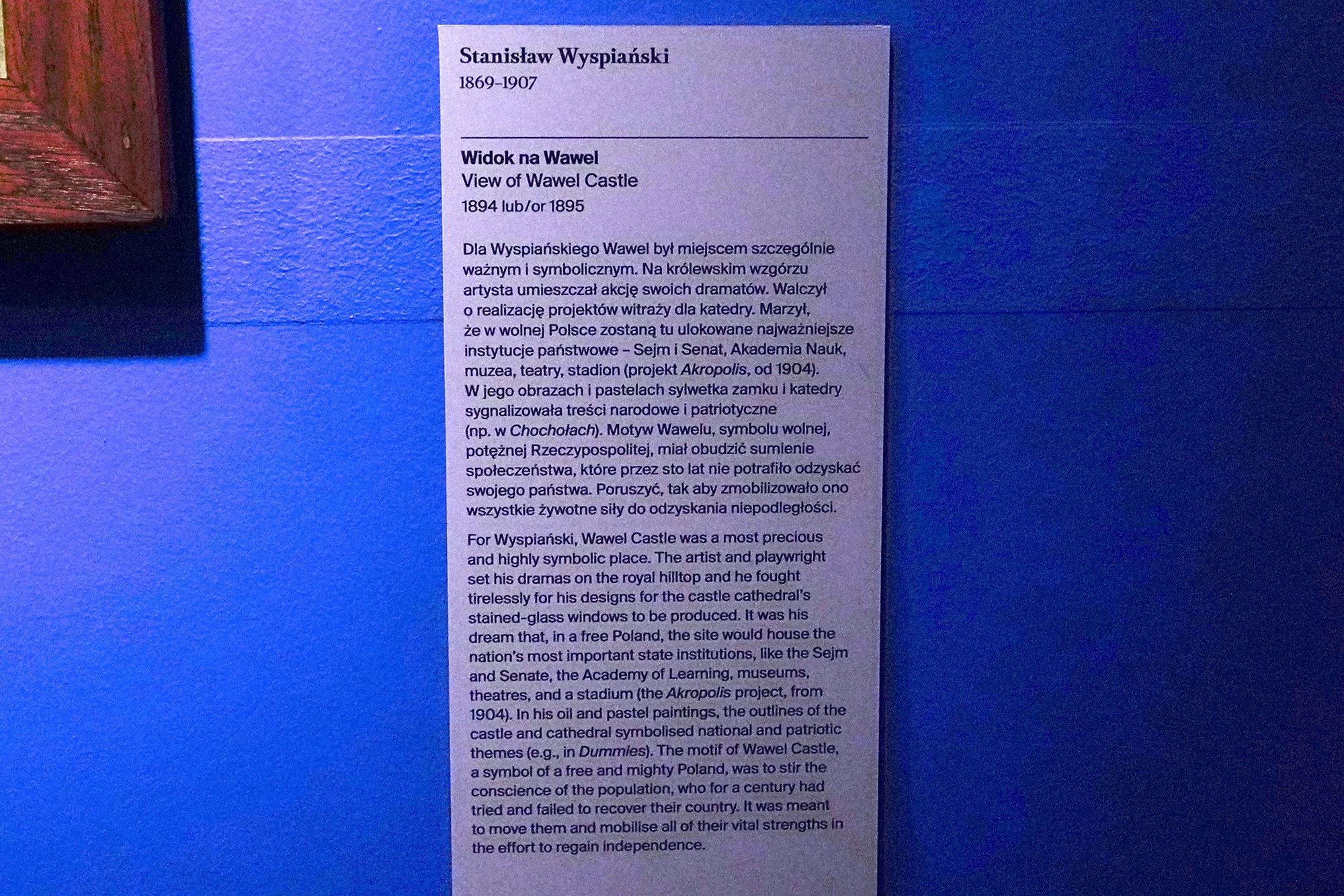
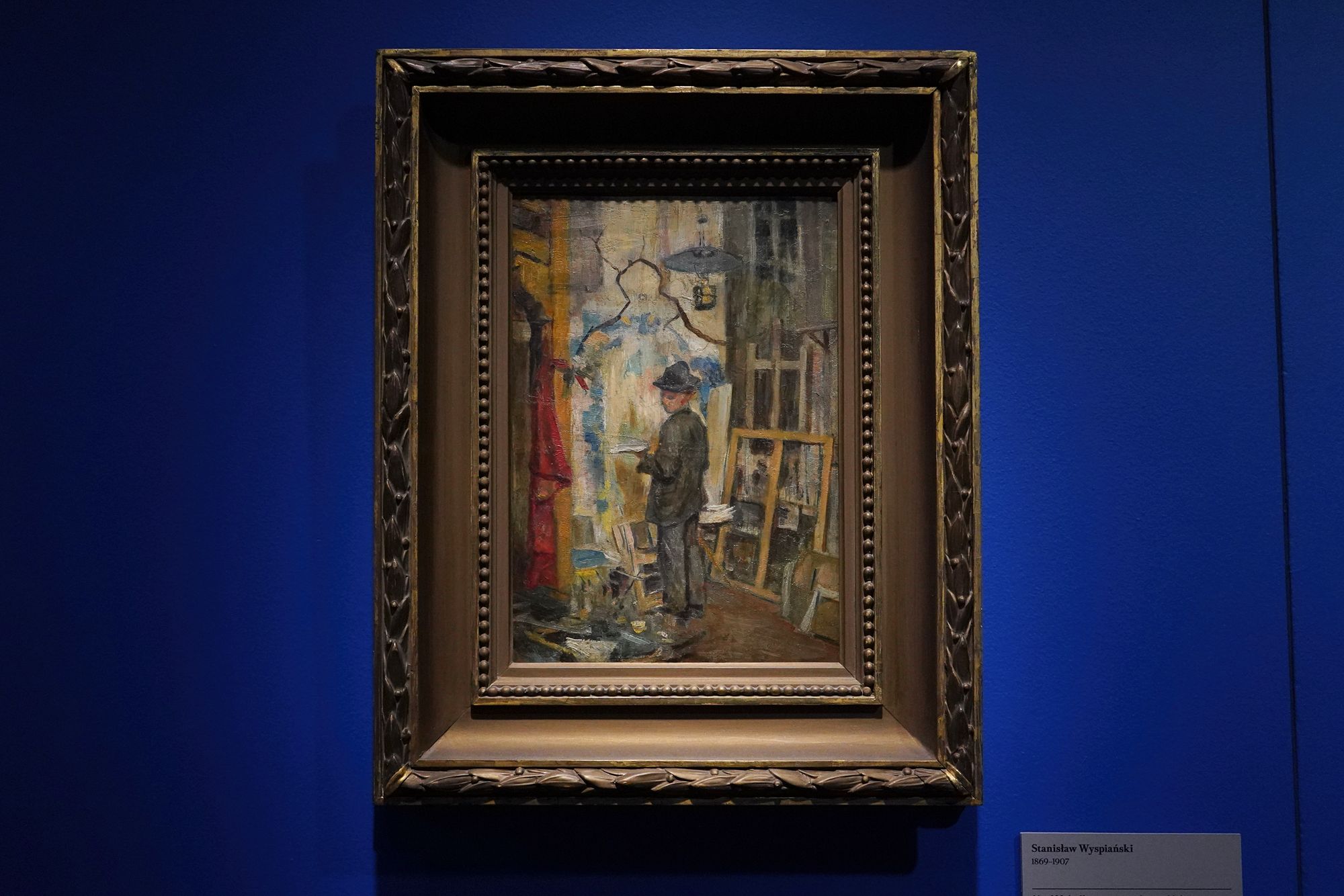
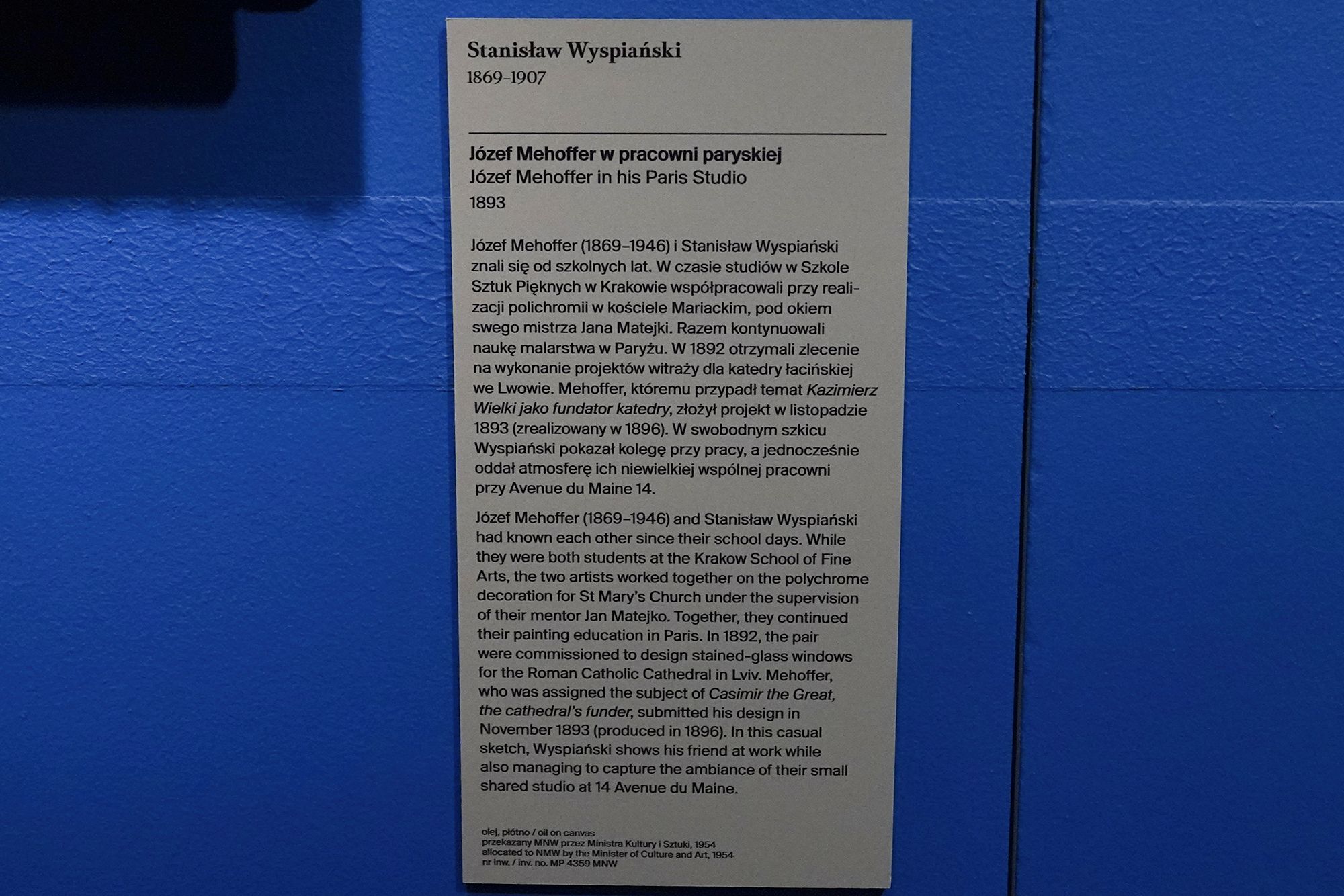
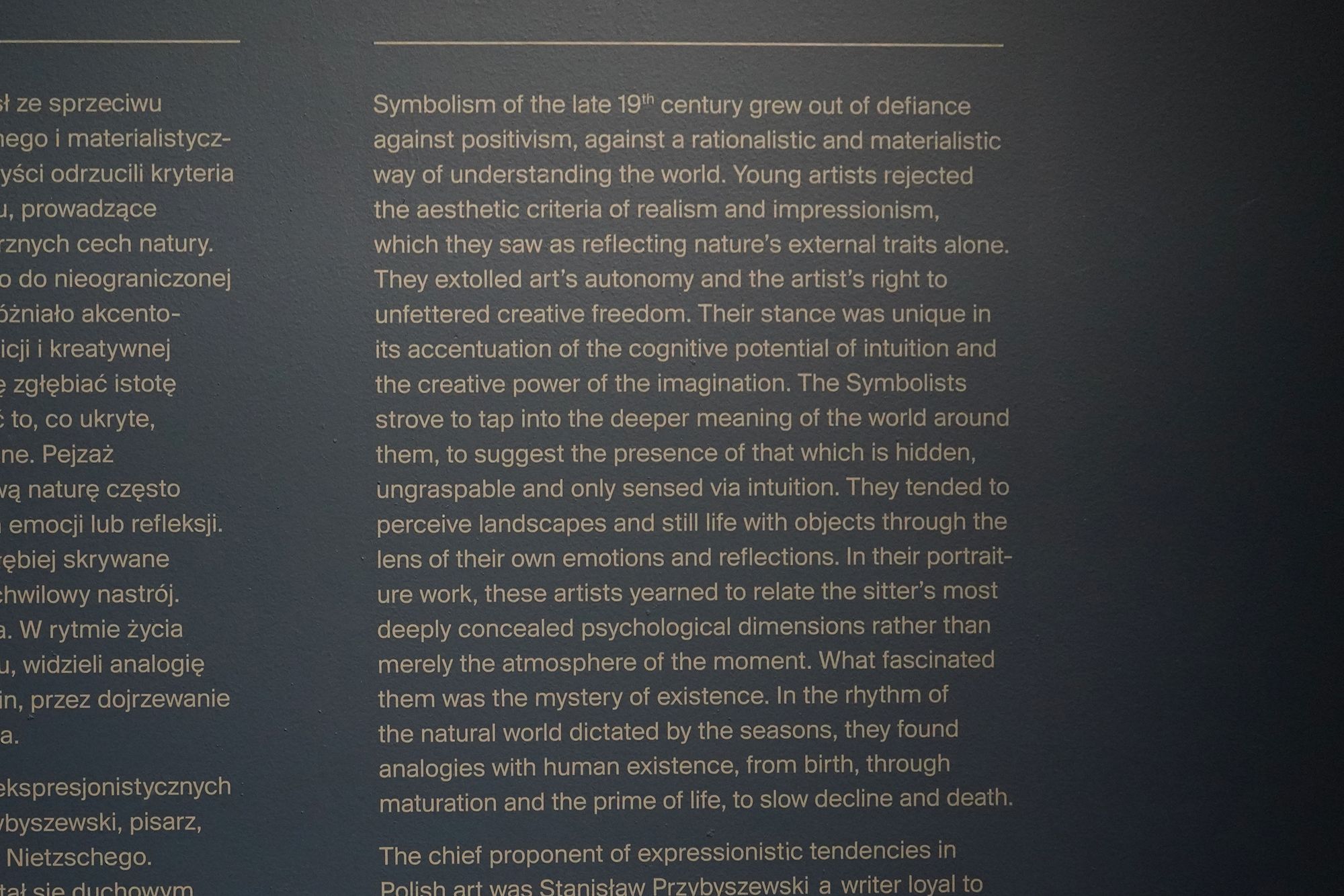
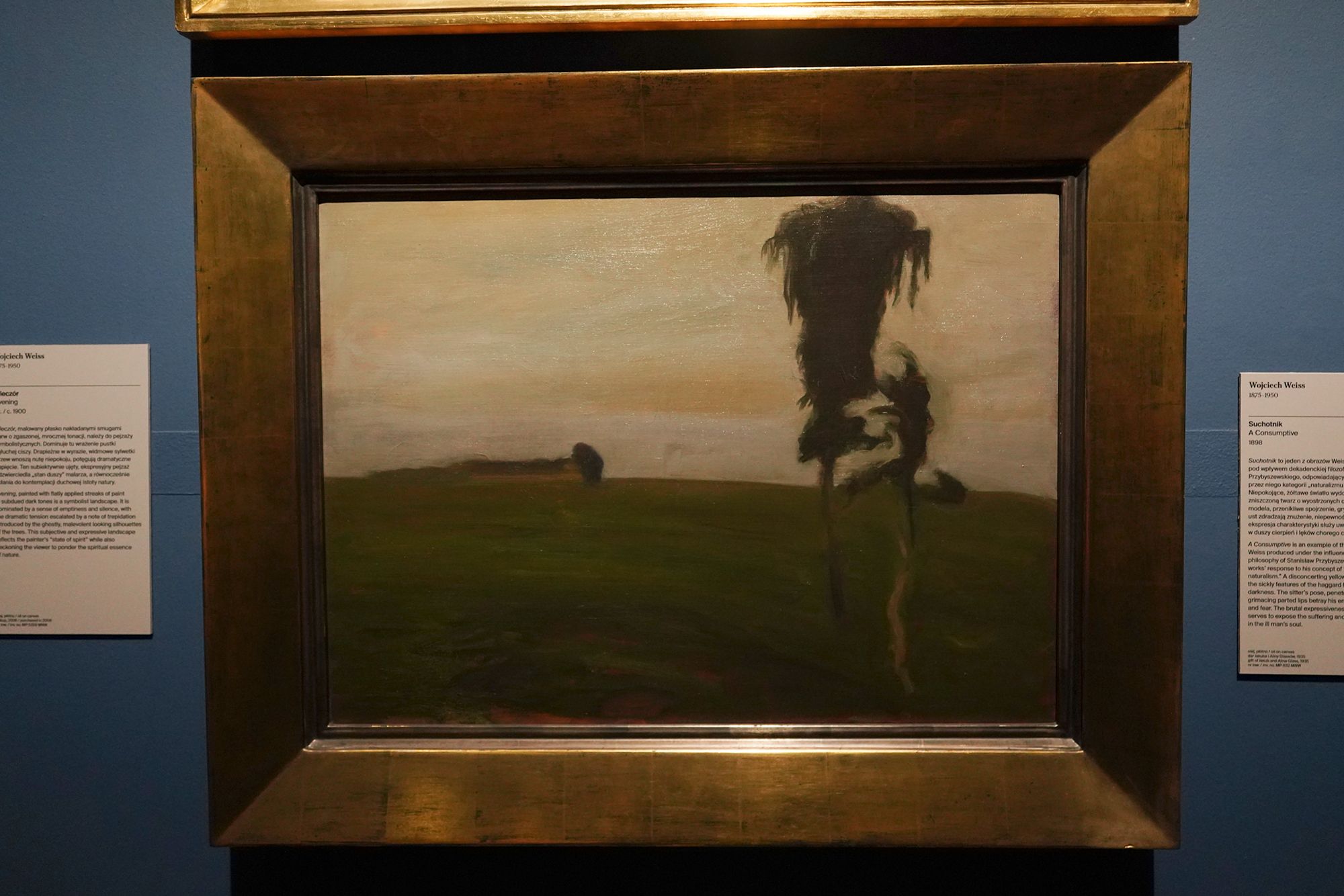
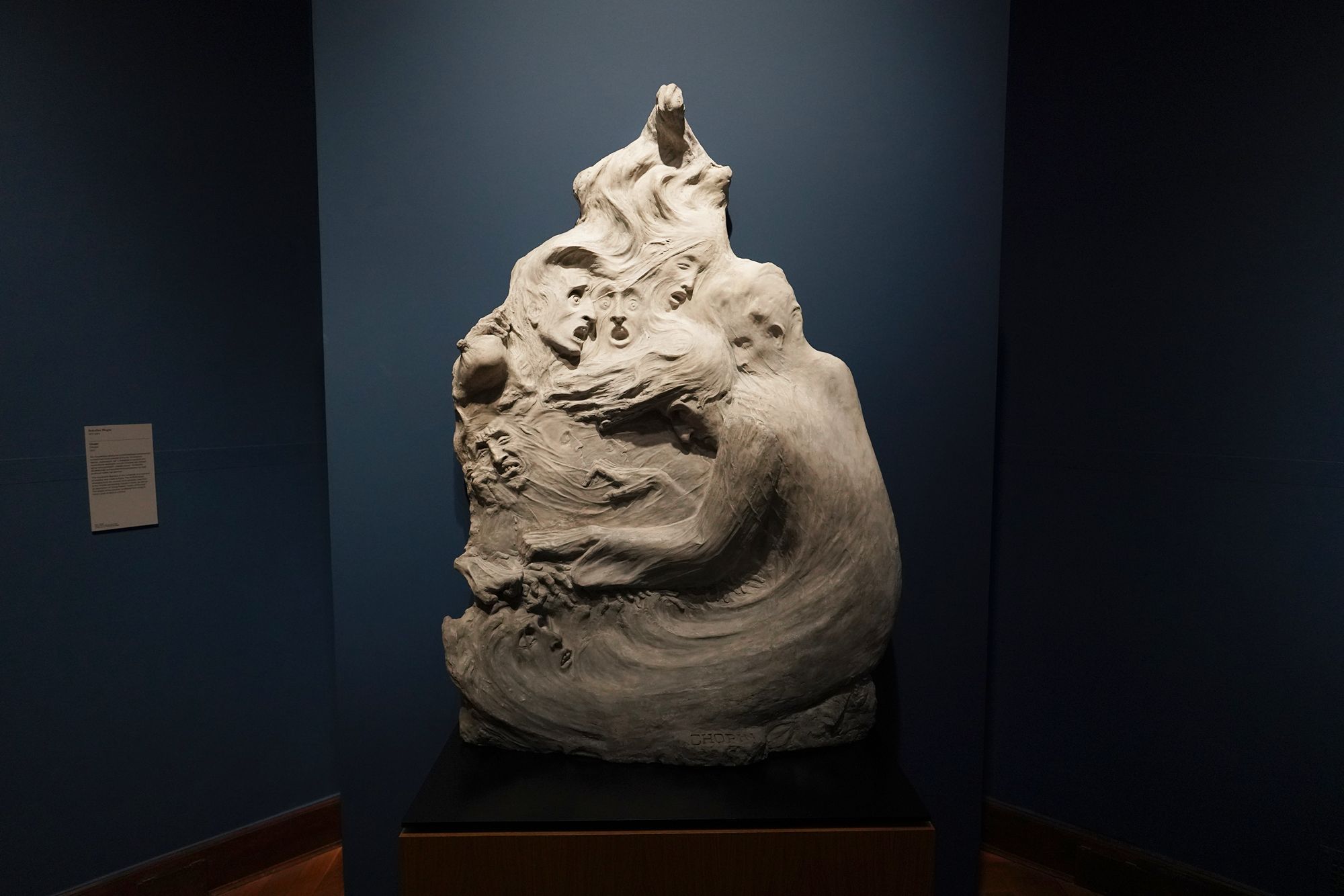
This section explores Symbolism, where paintings convey emotions and hidden meanings. Artists used landscapes, objects, and human figures to suggest inner experiences and questions about life. Even the changing seasons could symbolize the passage from youth to old age and death.
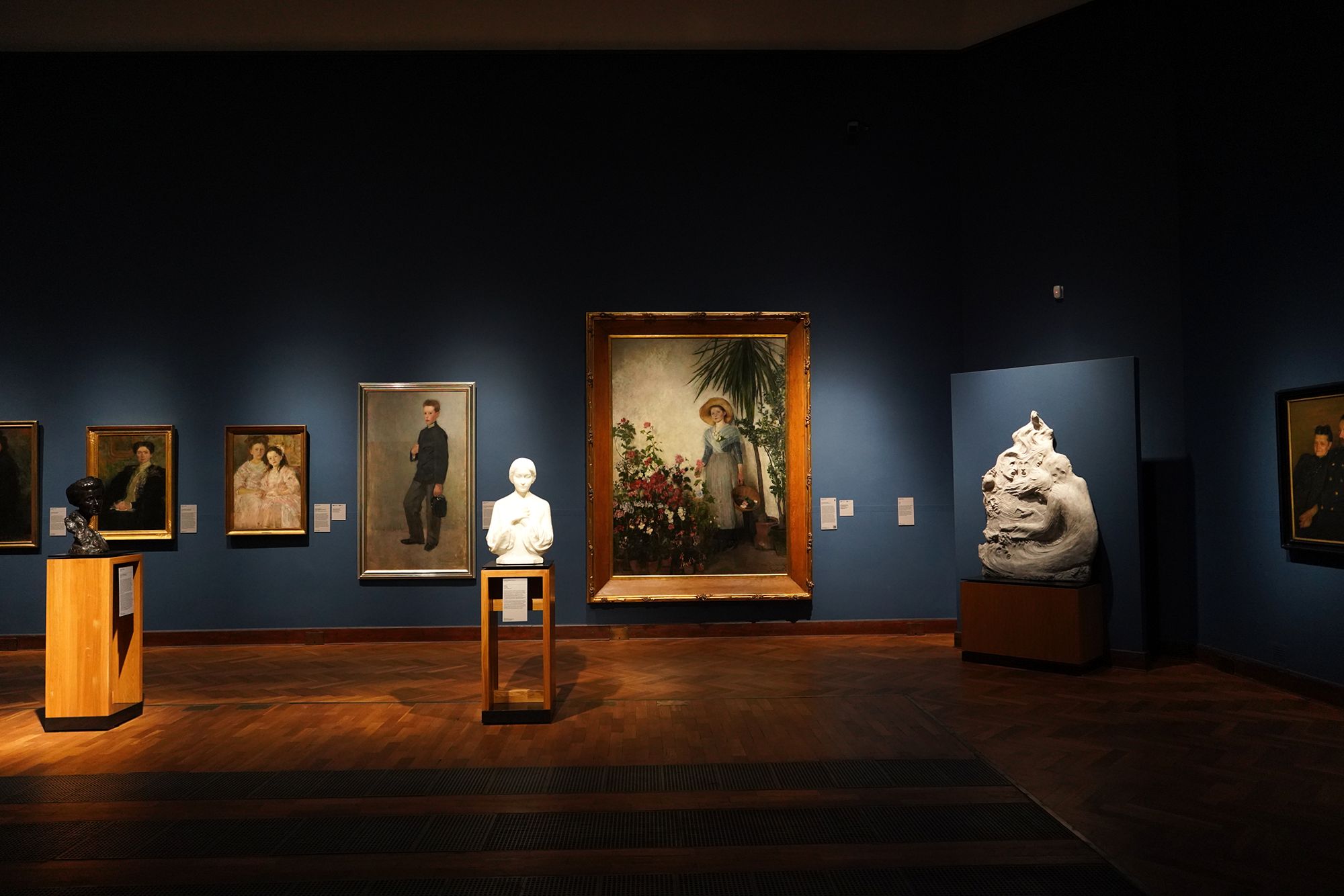
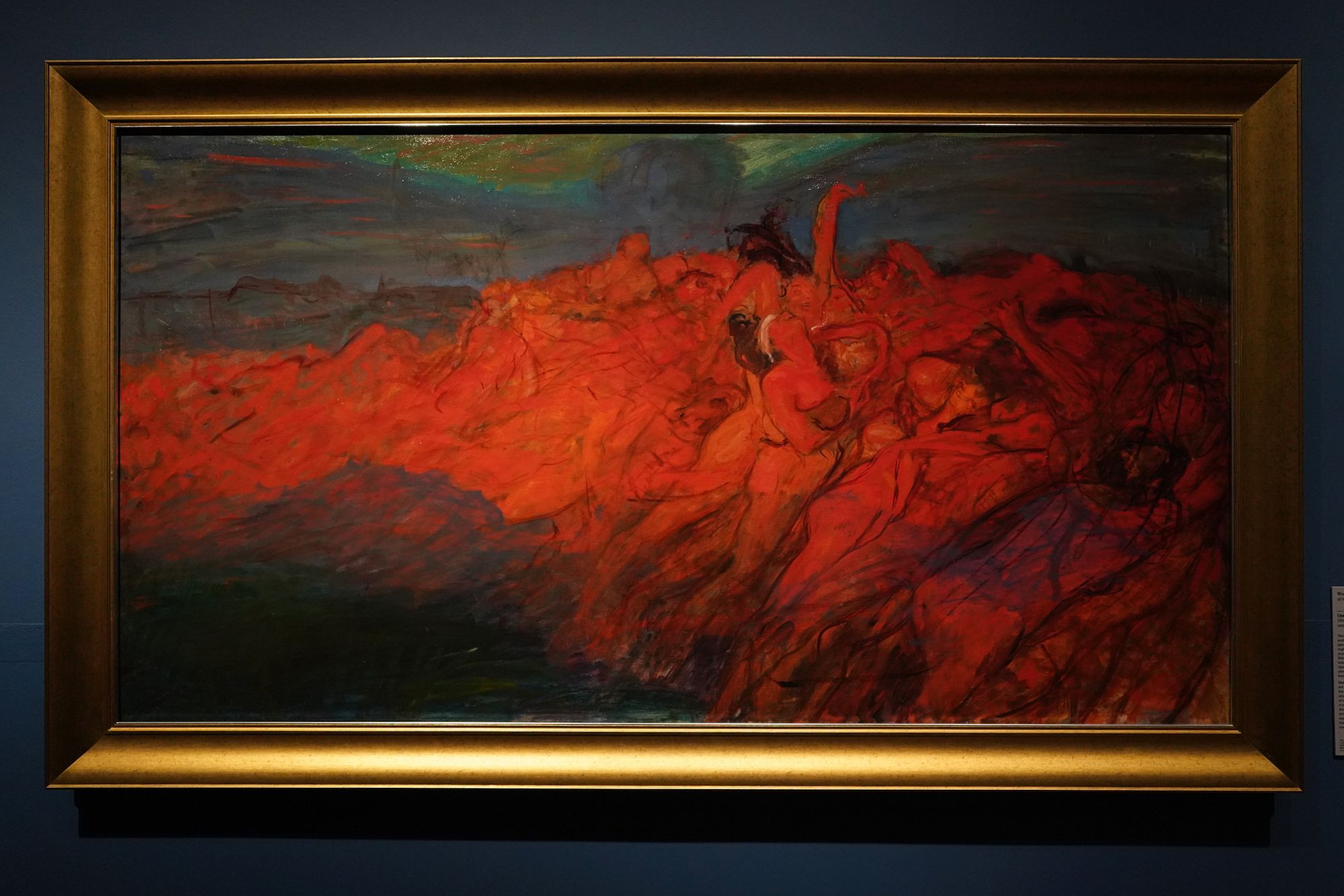
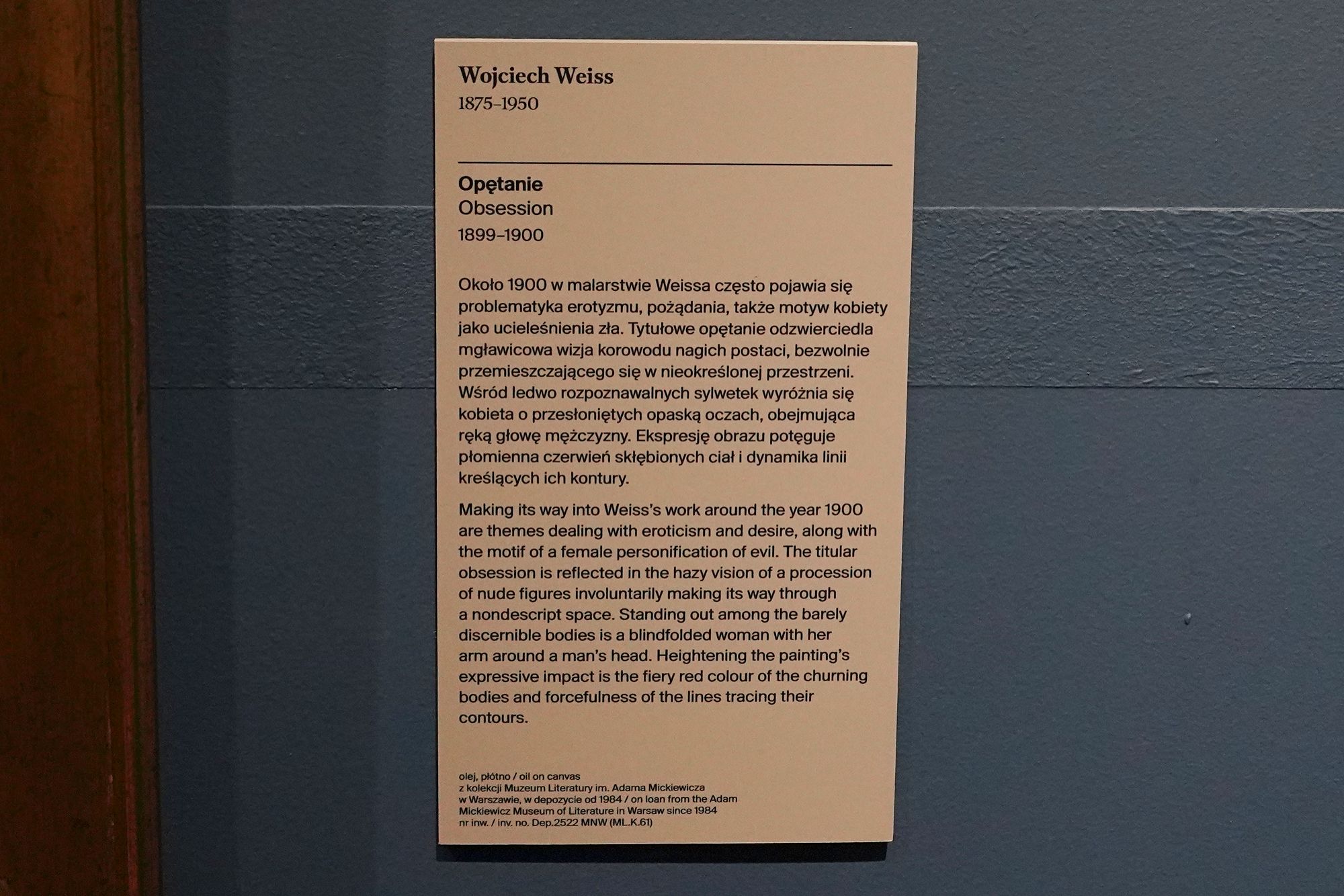
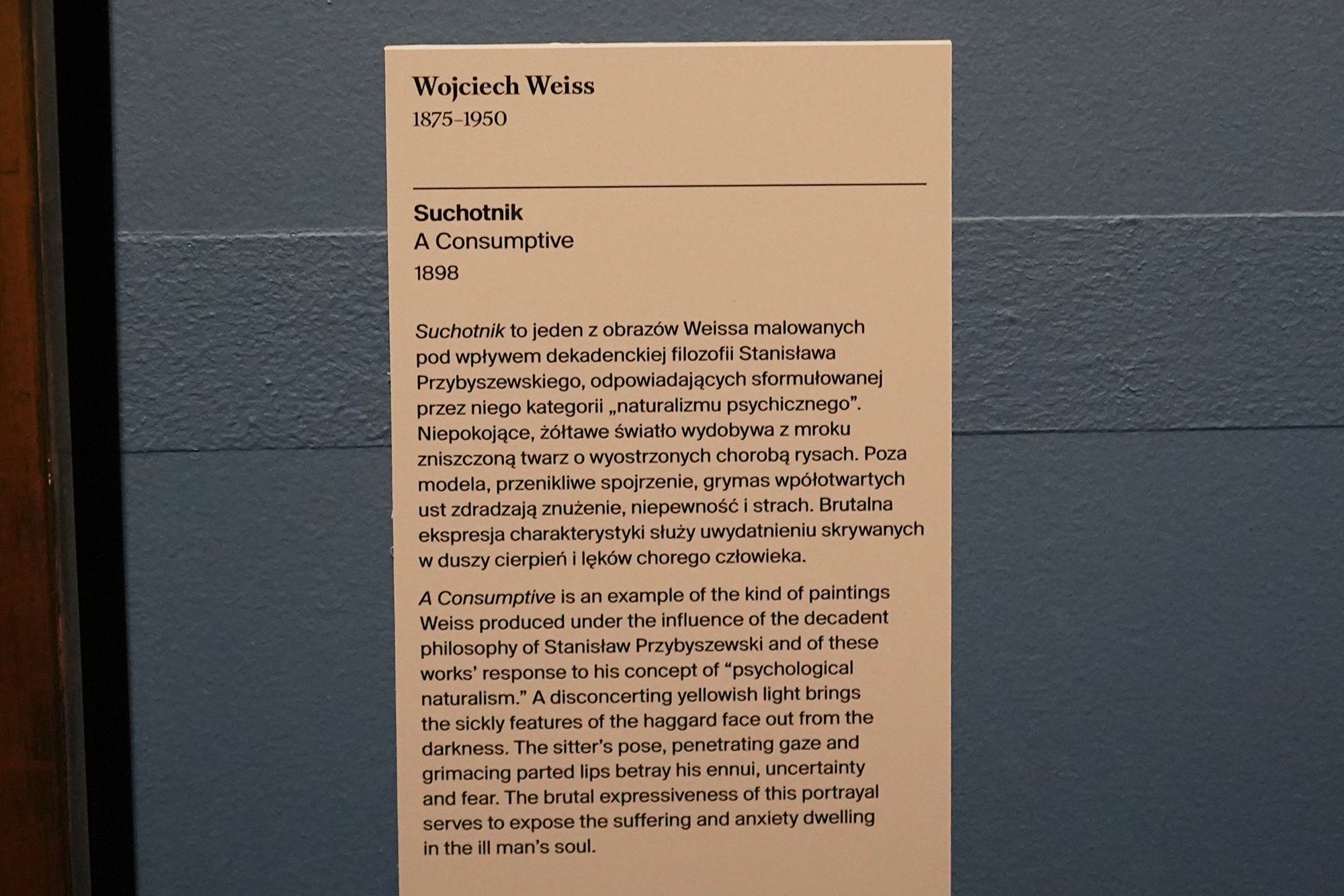
Wojciech Weiss (1875–1950) was a Polish painter and graphic artist associated with the Young Poland movement. Born in present-day Romania, he studied art in Kraków. His early paintings explored intense emotions through expressive colors and forms; his later work placed greater emphasis on light and color.
Wojciech Weiss’s Obsession (1899–1900) presents a disturbing vision of intertwined figures moving through an undefined space. A wide-eyed woman holding a man’s head emerges from the crowd. Fiery red bodies and sweeping outlines create an intense atmosphere, reflecting the artist’s exploration of desire and overwhelming emotion.
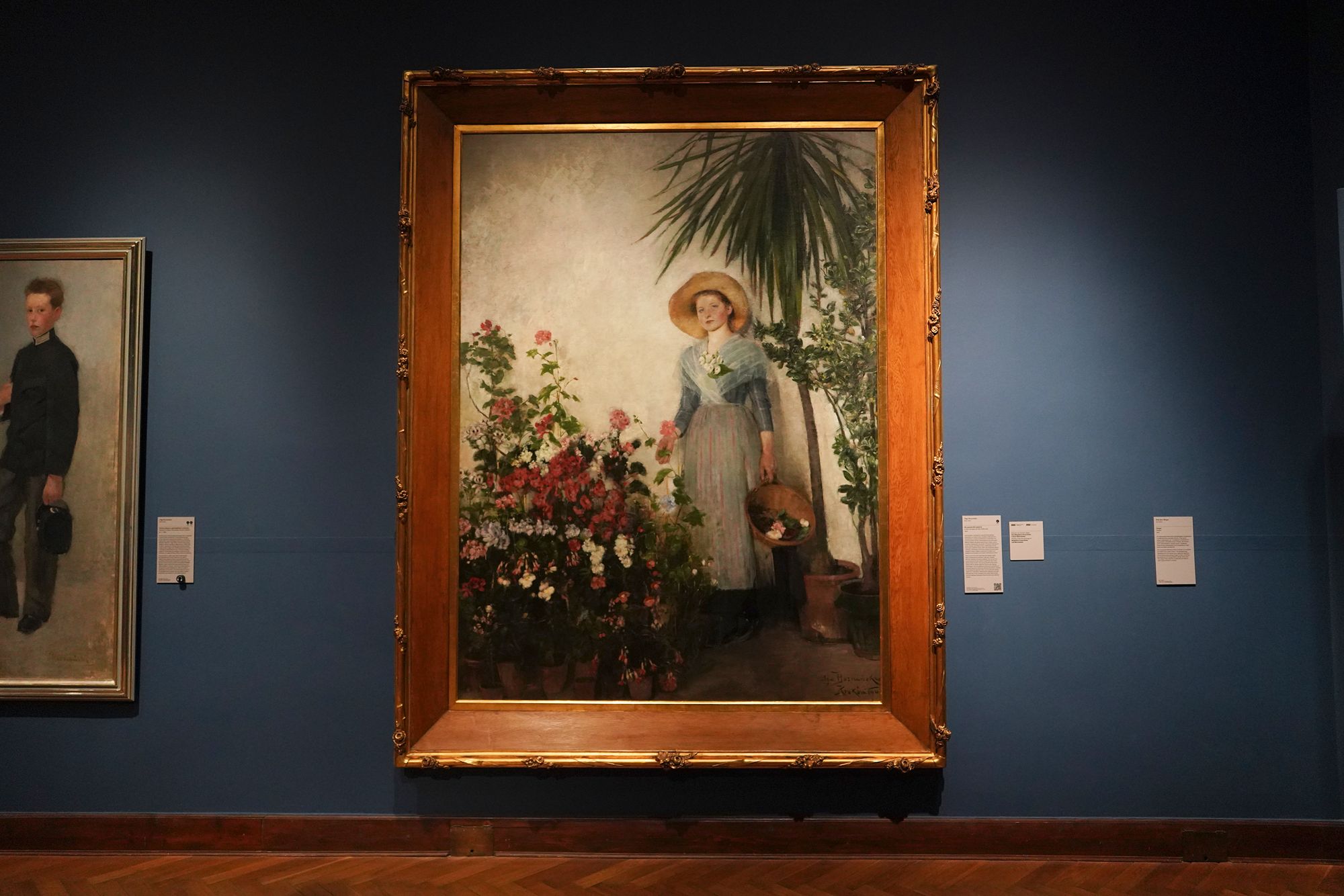
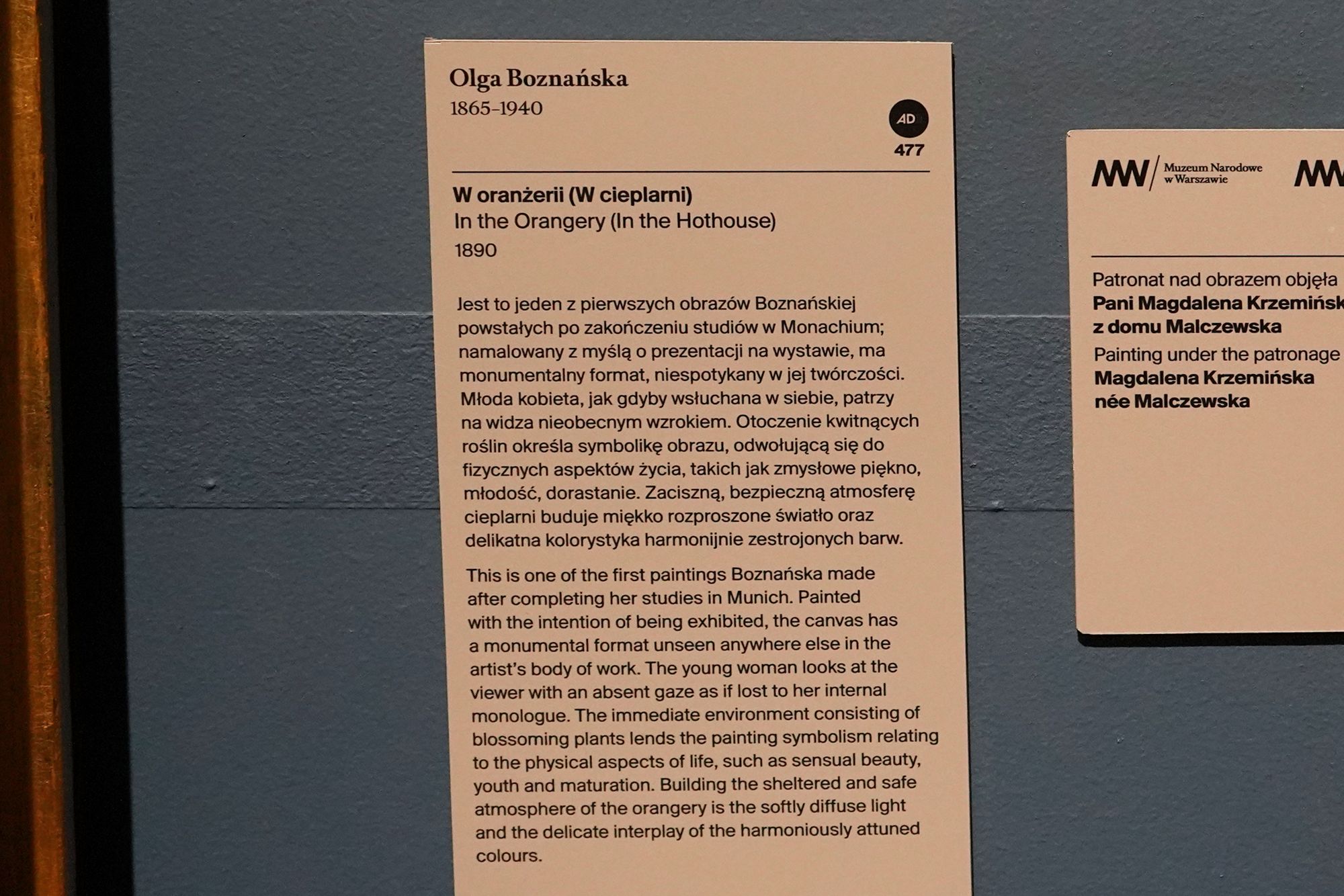
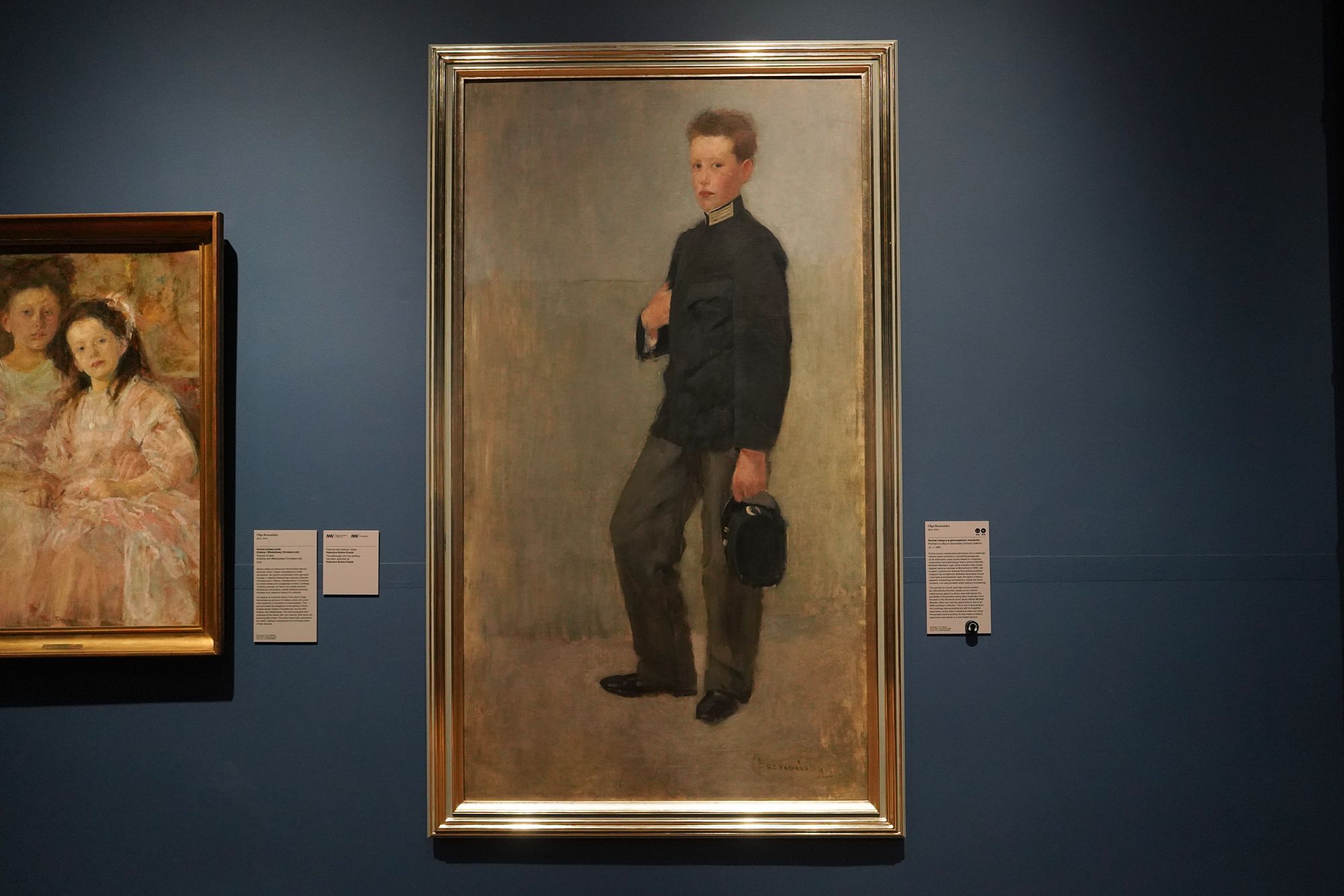
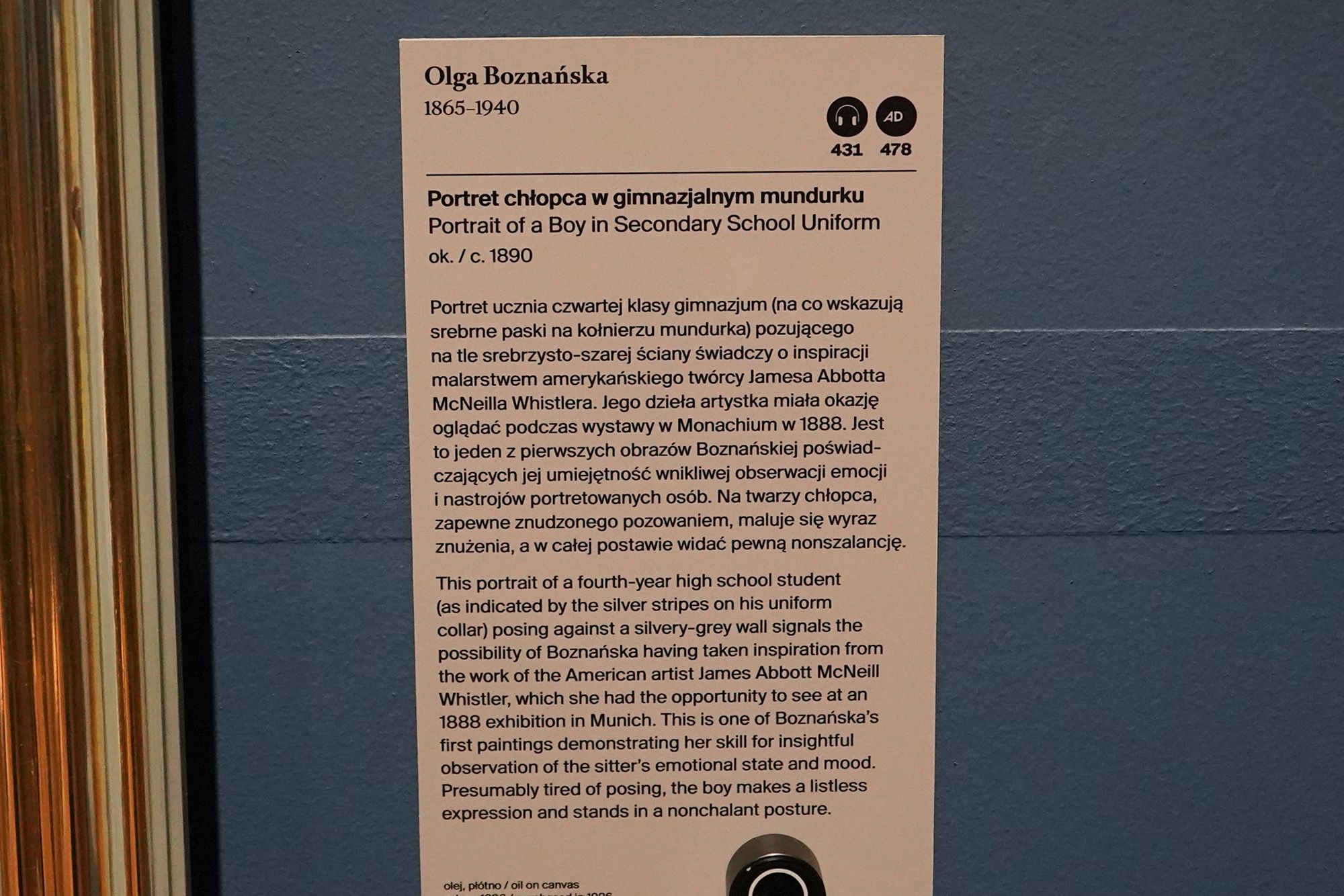
Olga Boznańska (1865–1940) was a Polish painter best known for portraits that suggest her subjects’ personalities and inner thoughts. Her subtle colors and soft brushwork often give the figures a quiet, reflective appearance.
Olga Boznańska’s In the Orangery (1890) shows a young woman surrounded by flowering plants, her distant gaze suggesting private thoughts. Soft light and gentle colors give the greenhouse a quiet, sheltered atmosphere. The flowers add symbolic meaning, connecting the scene with beauty, youth, and growing into adulthood.
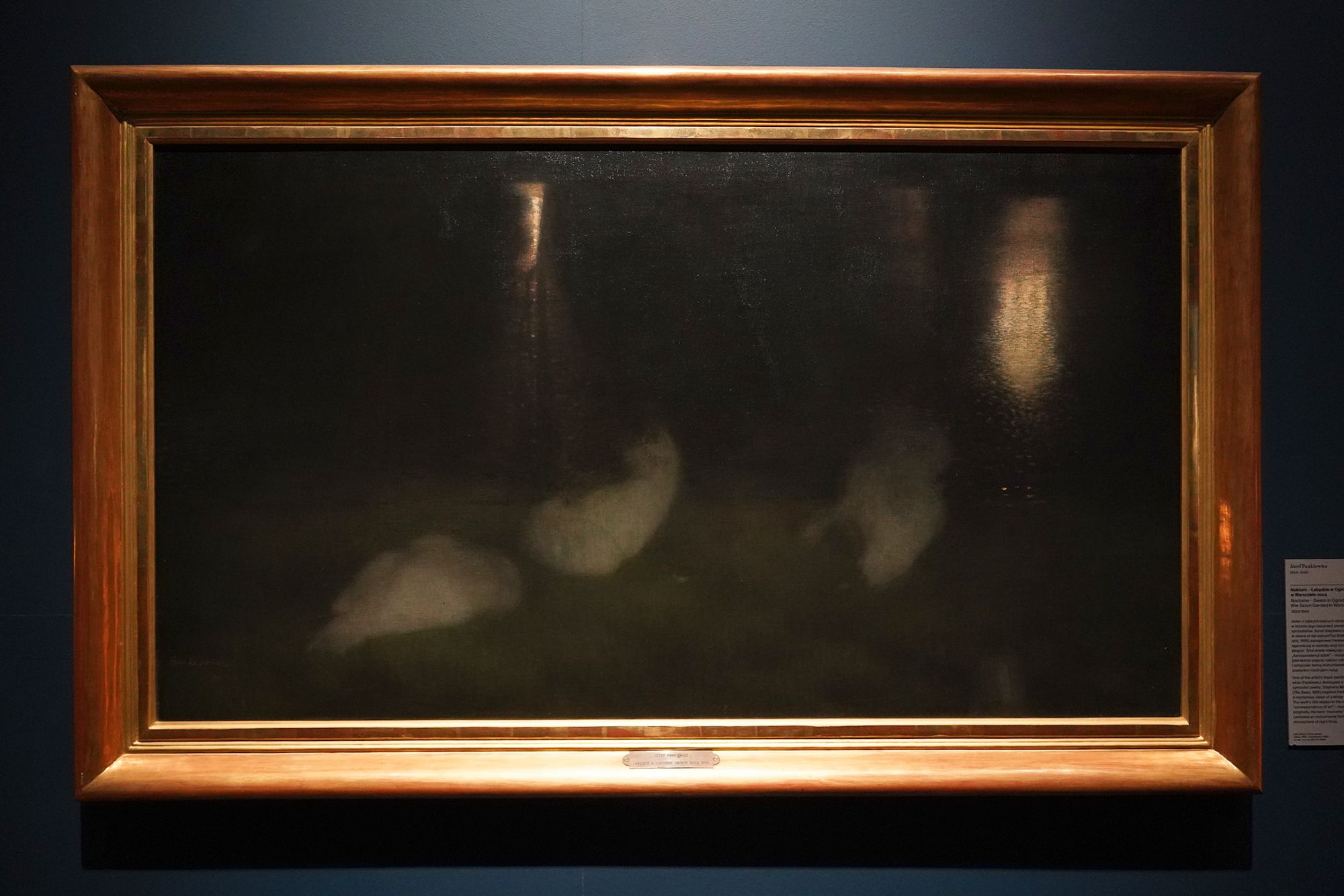
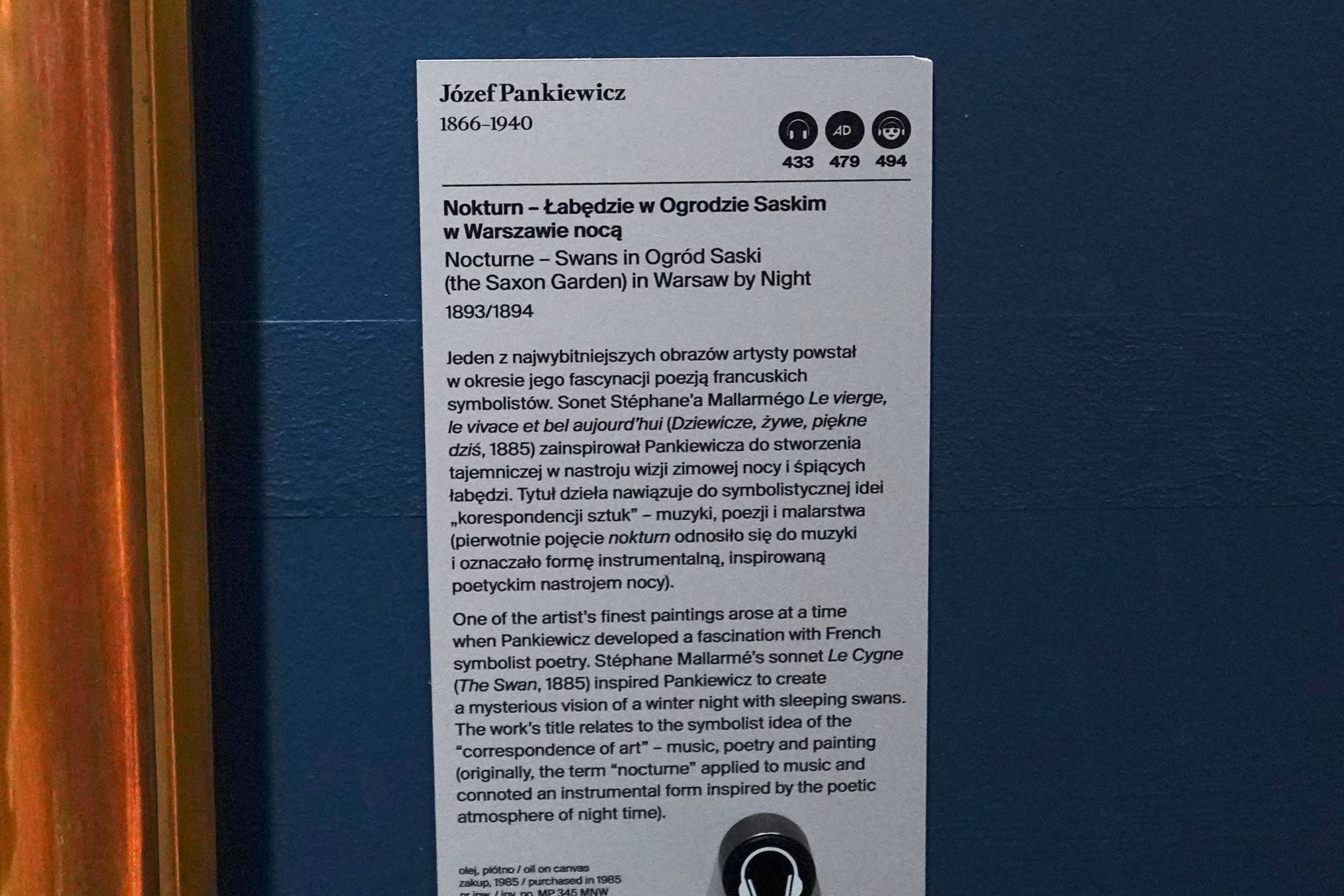
Władysław Podkowiński (1866–1895) was a Polish painter and illustrator who helped introduce Impressionism to Poland after visiting Paris in 1889 with Józef Pankiewicz. Later, he turned toward Symbolism, creating paintings about intense emotions and desire.
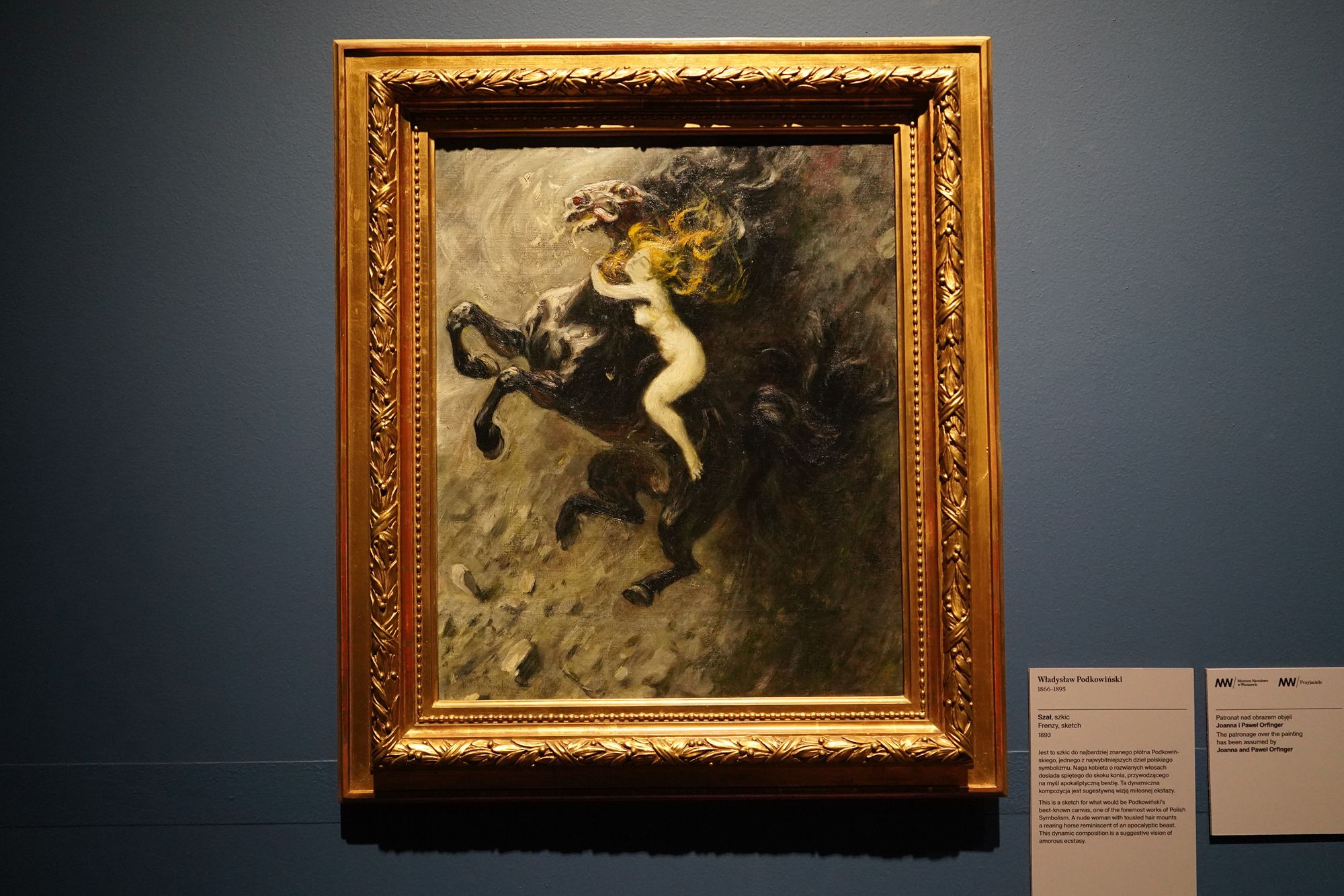
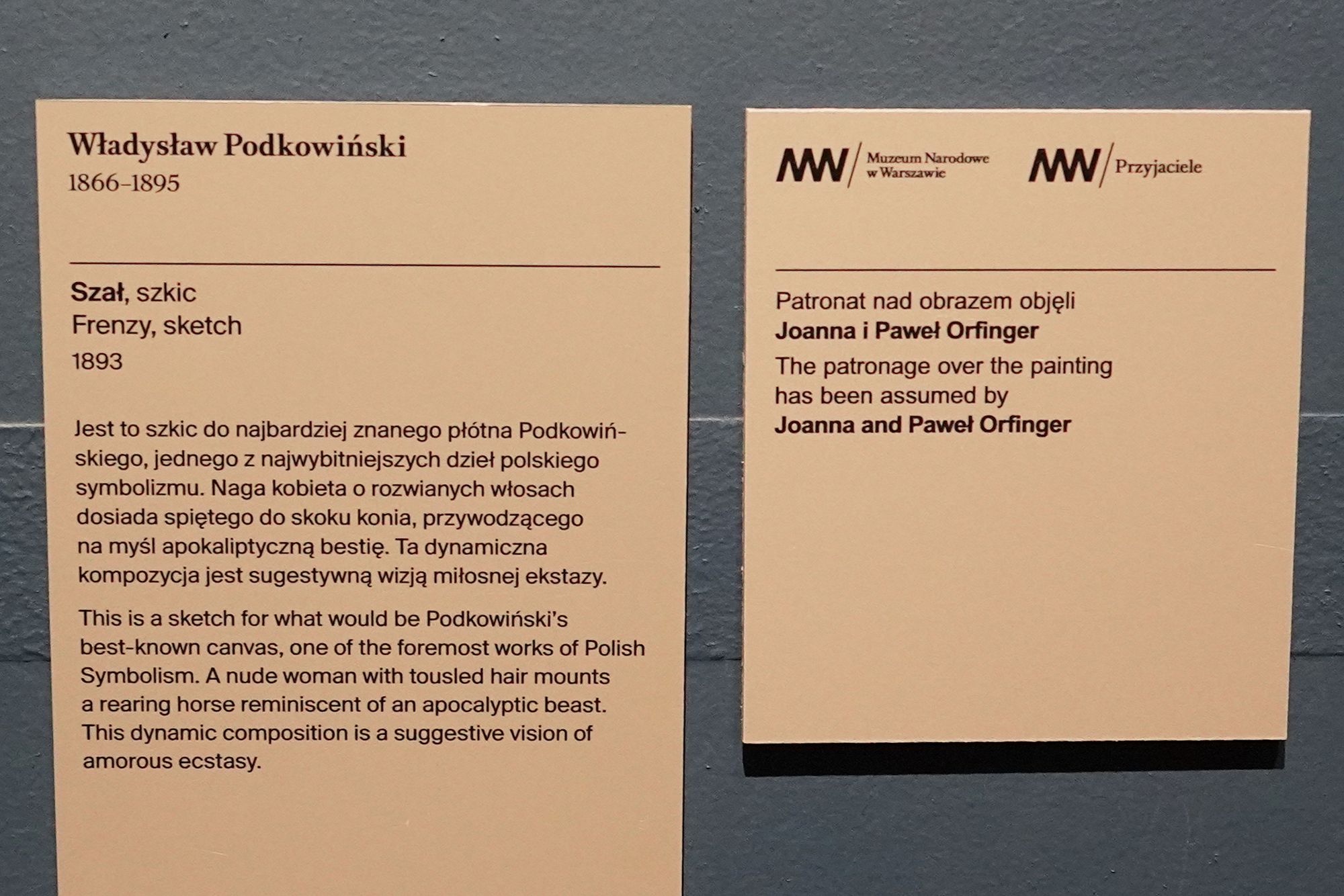
Władysław Podkowiński’s Frenzy sketch (1893) explores the overwhelming force of passion. A naked woman with flowing hair rides a horse poised to leap, its powerful form suggesting an apocalyptic beast. This dramatic study prepared the artist’s best-known painting, an important work of Polish Symbolism.
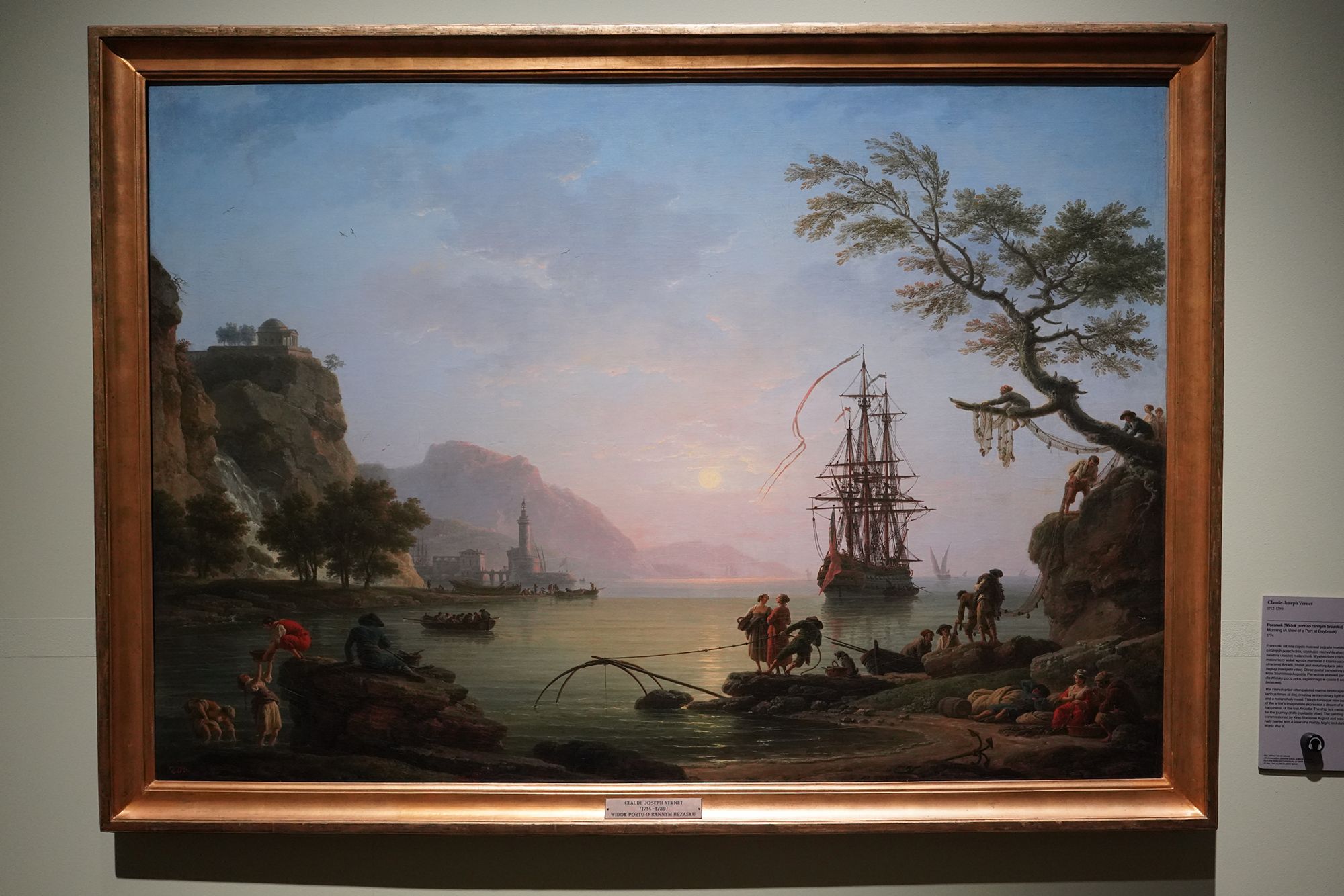
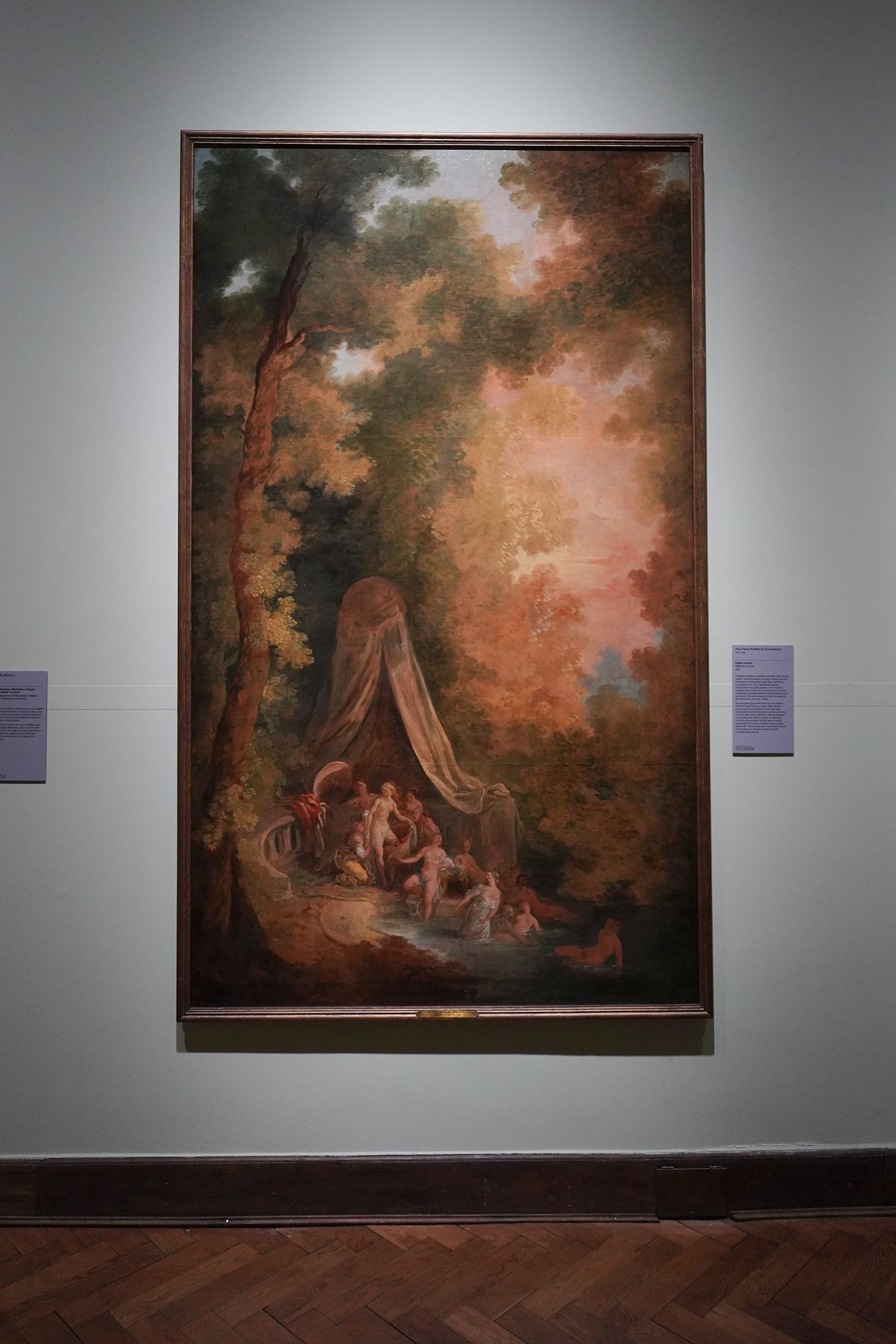
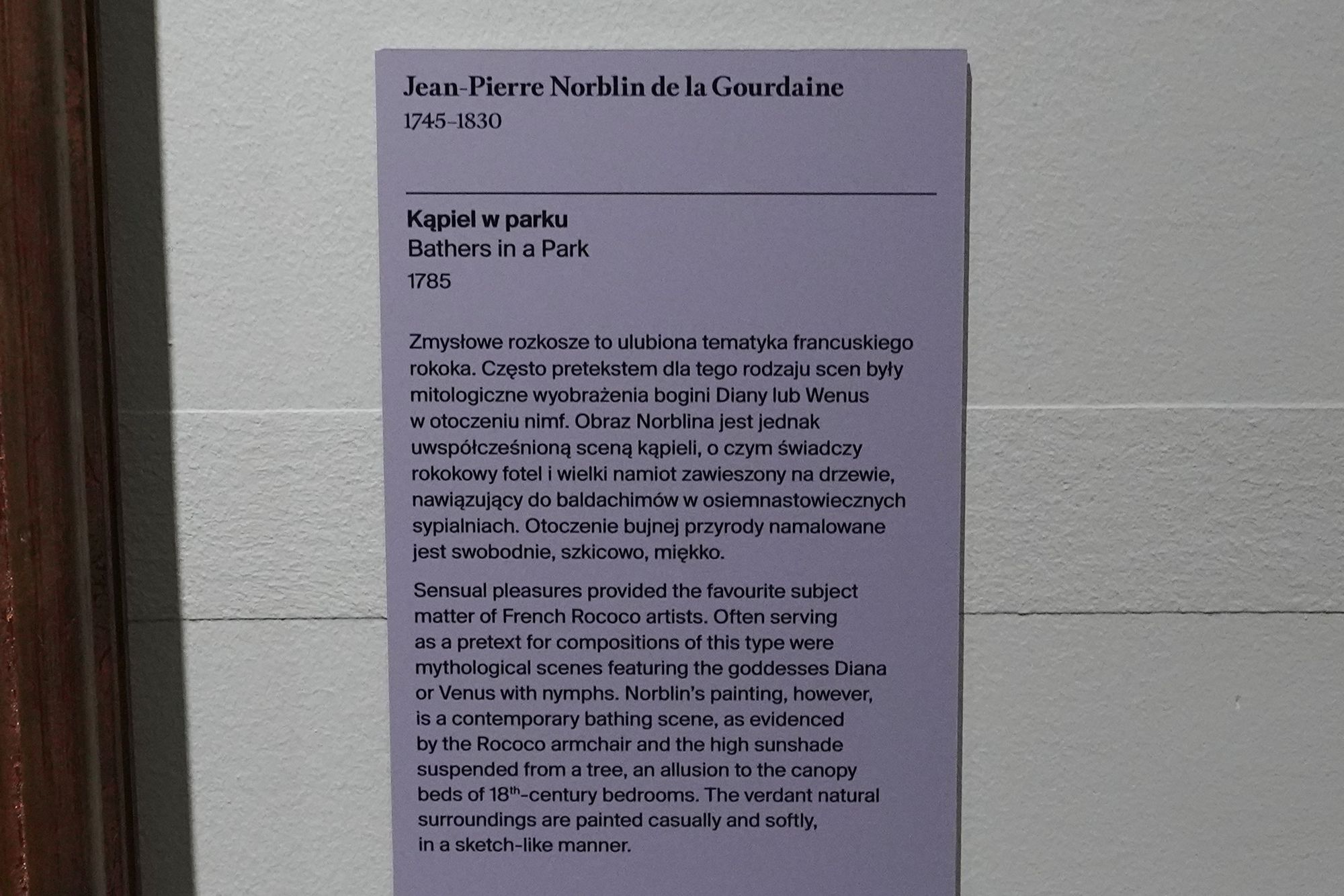
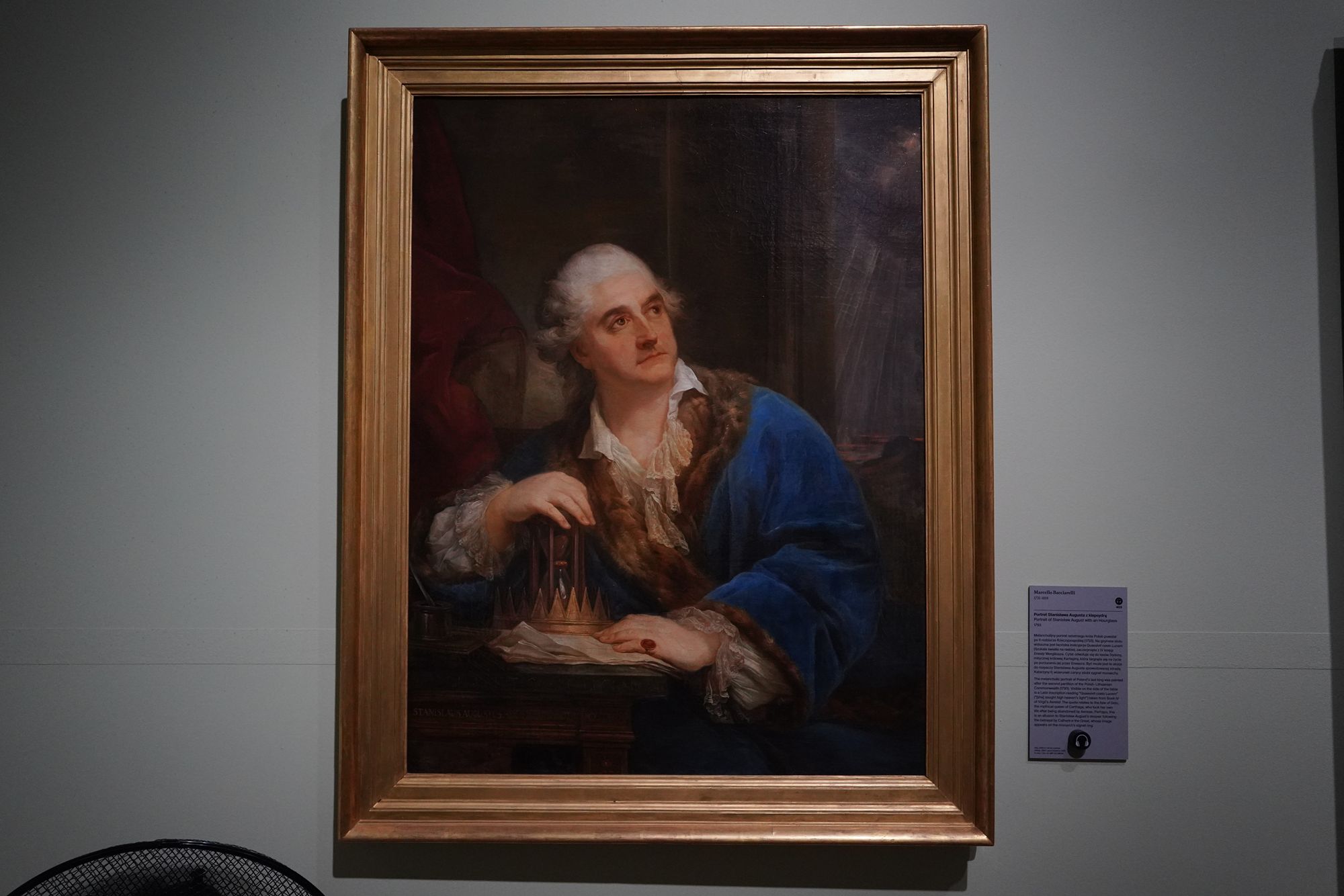
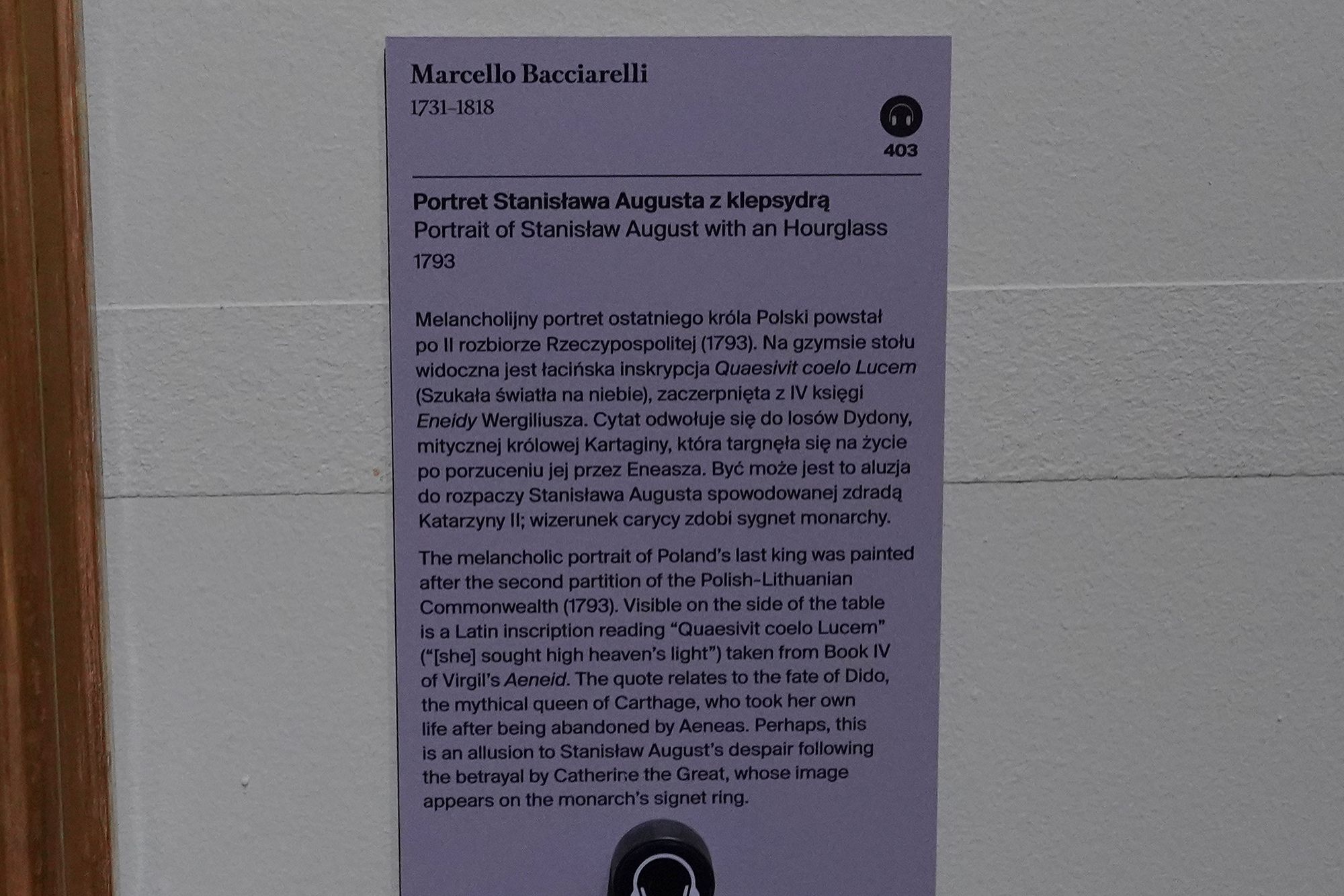
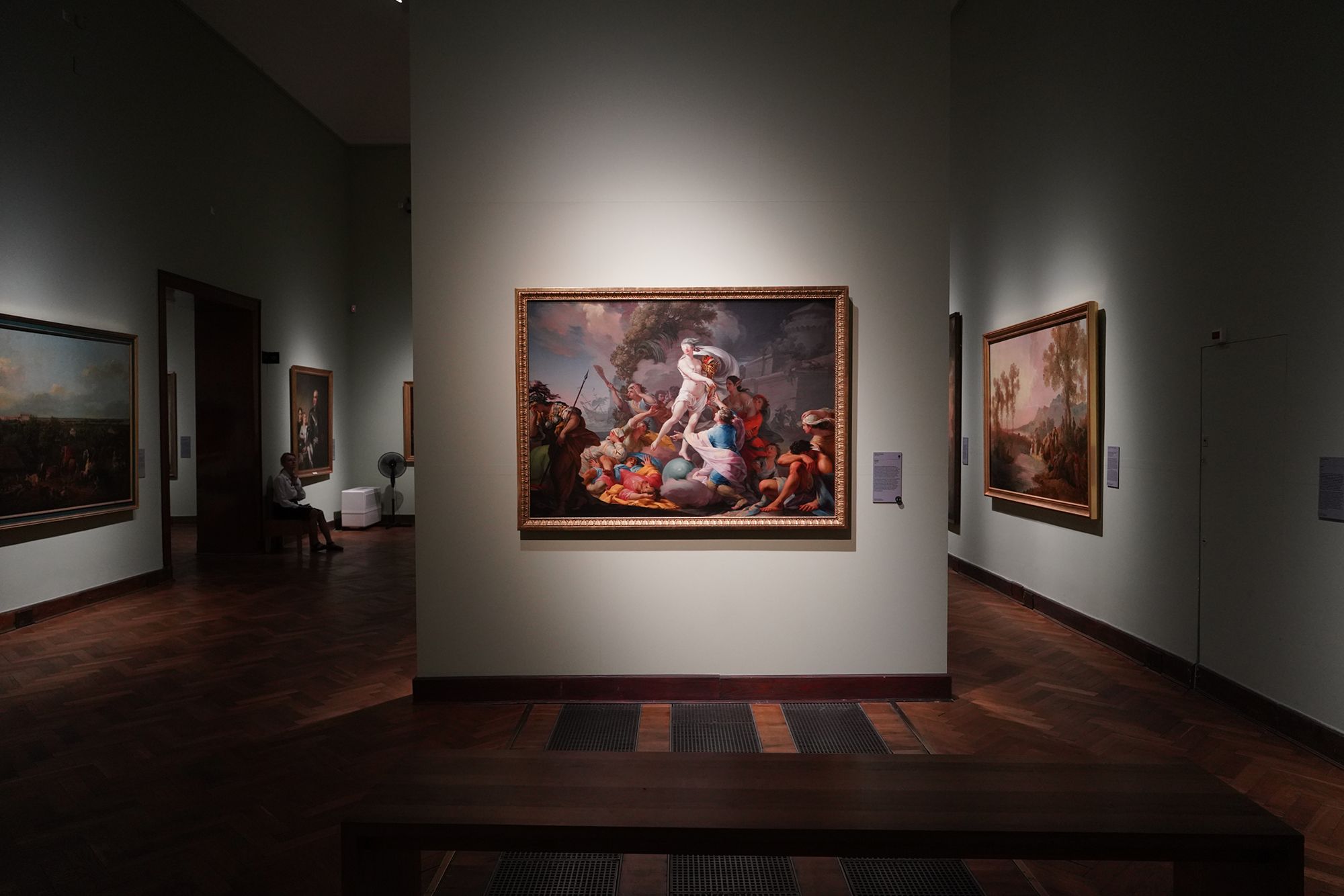
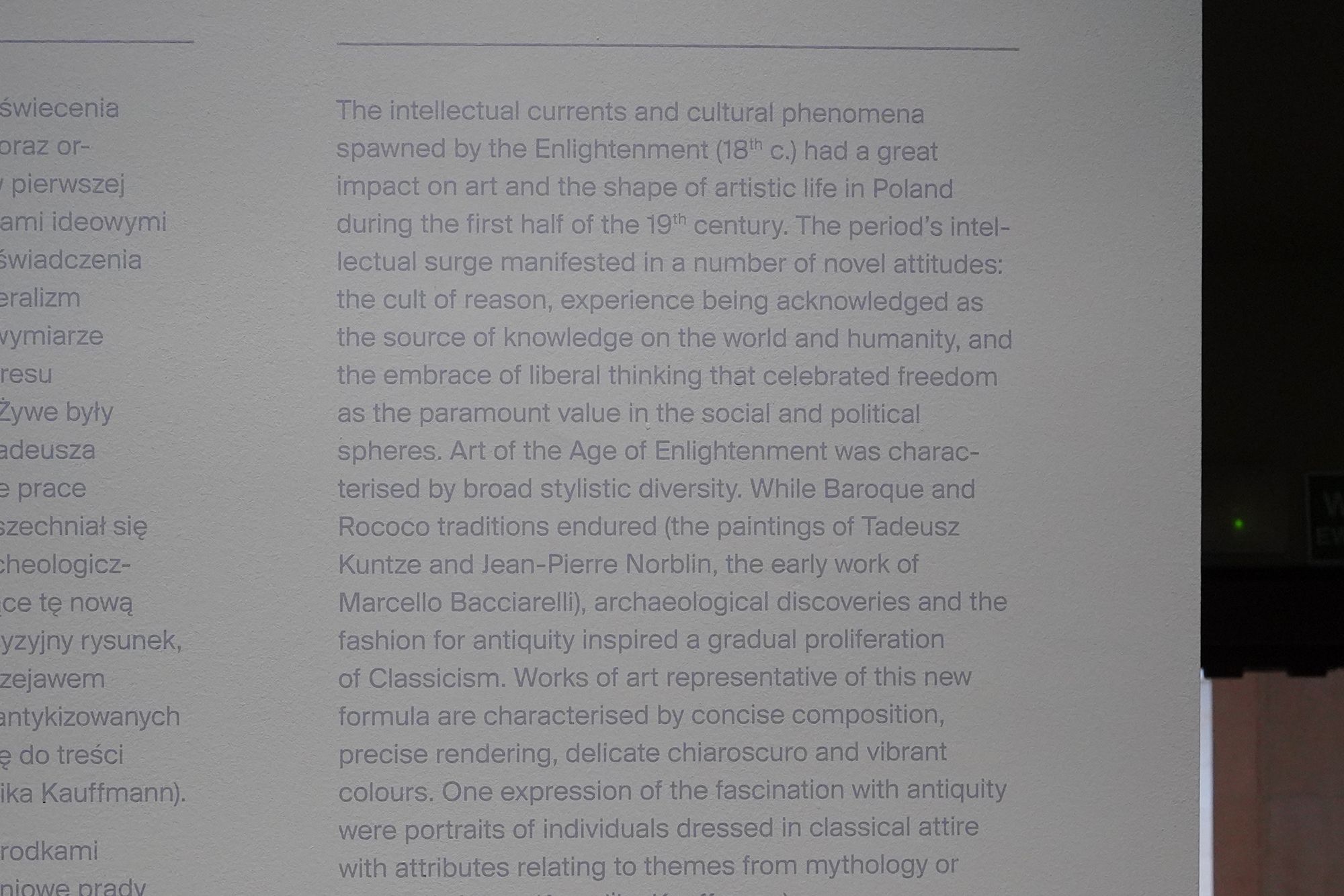
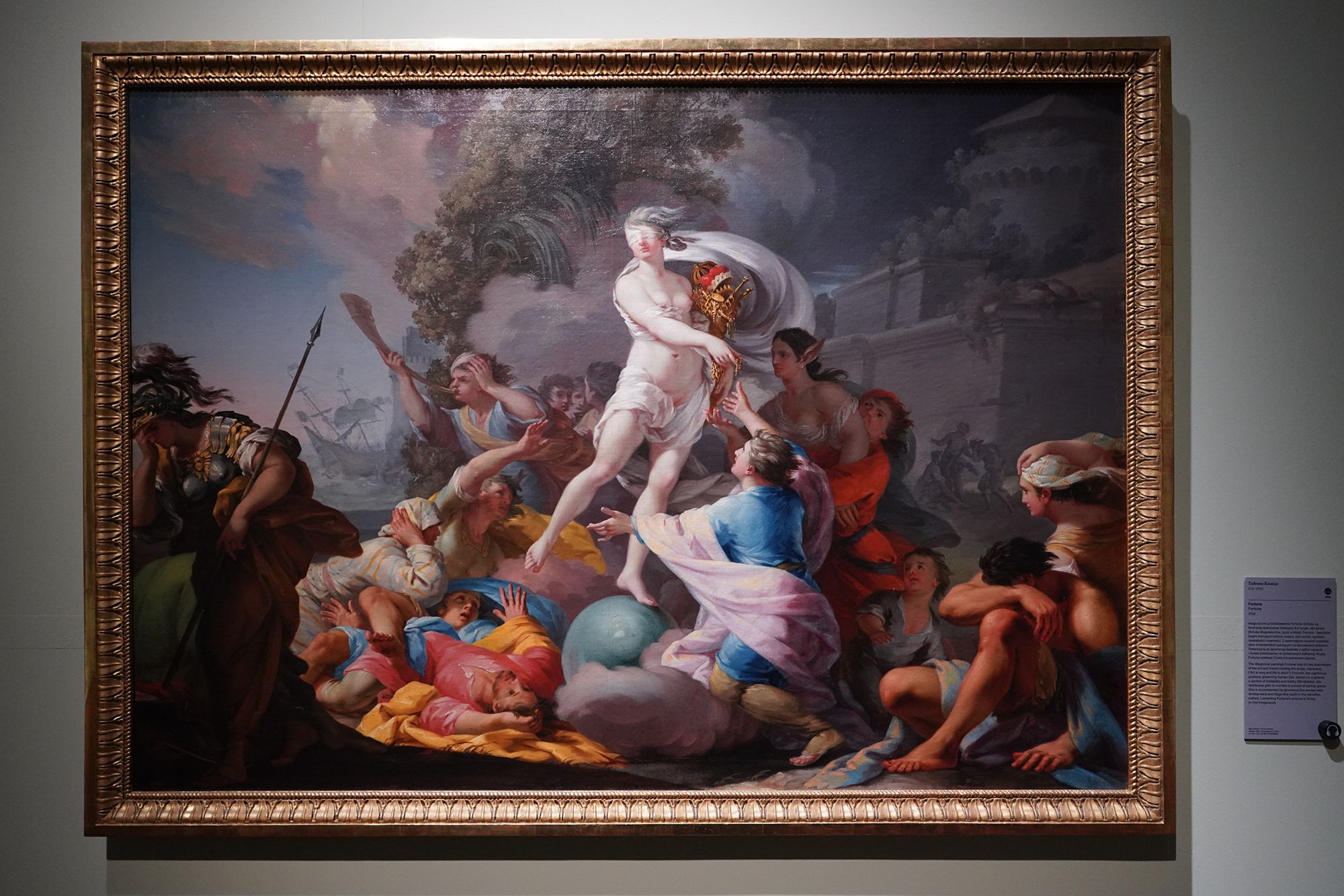
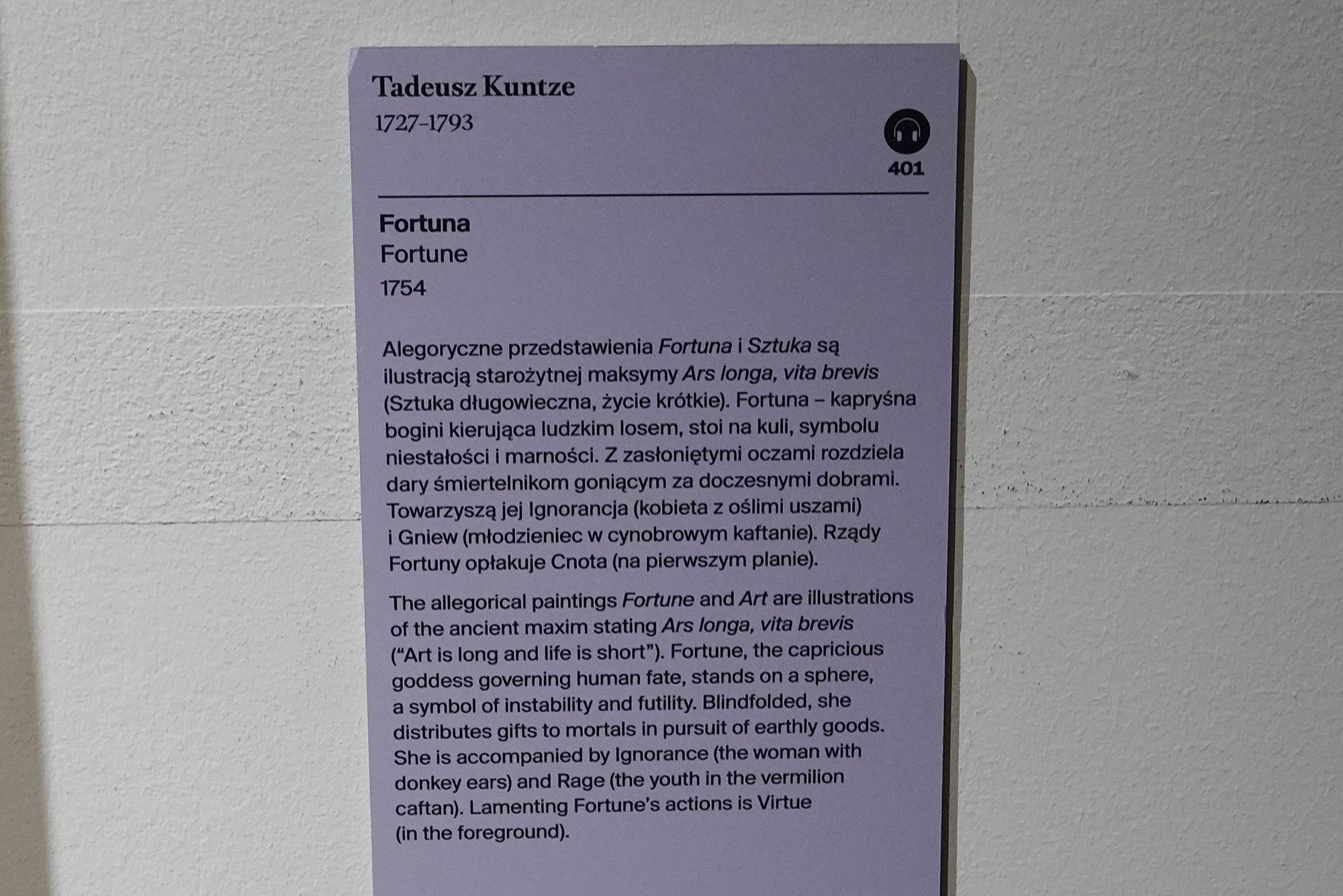
This section explores Polish art shaped by the Enlightenment and a renewed interest in ancient Greece and Rome. Baroque and Rococo traditions continued alongside the growing influence of Classicism. Clear compositions, precise details, and portraits featuring classical clothing show how artists drew inspiration from antiquity.
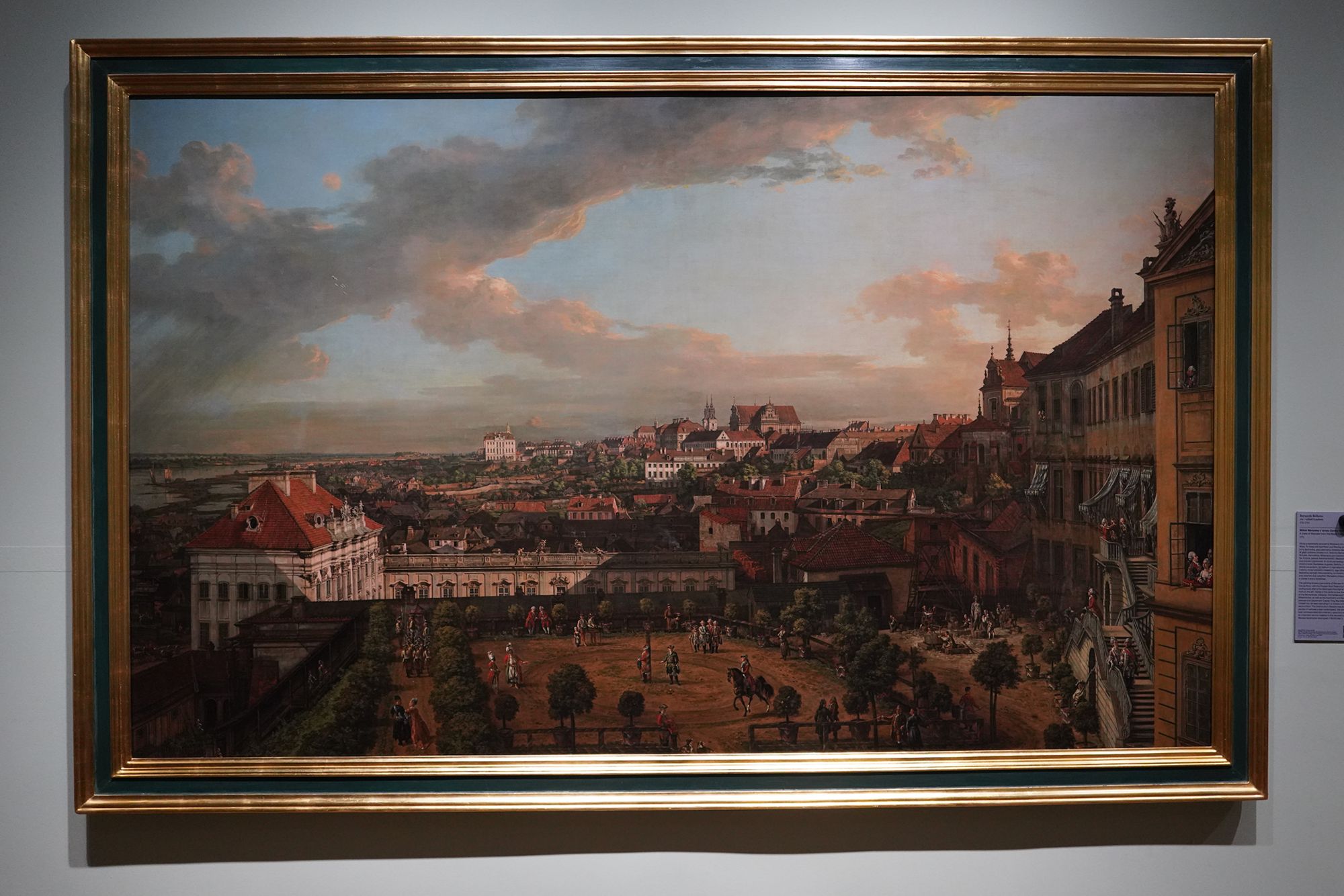
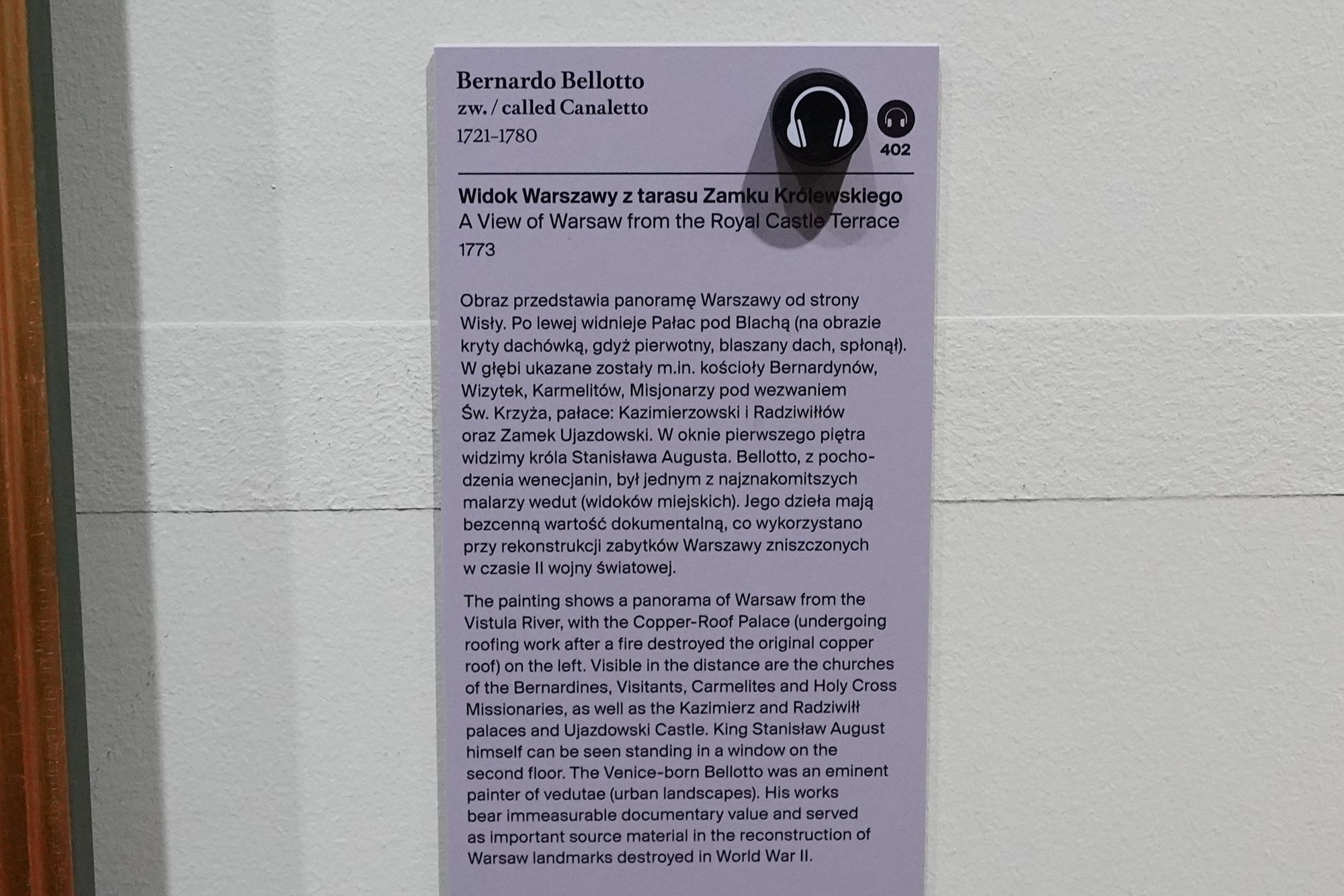
Bernardo Bellotto’s A View of Warsaw from the Royal Castle Terrace (1773) records the city’s churches and palaces from the Vistula side. His detailed paintings preserved valuable evidence of historic Warsaw, helping guide the reconstruction of buildings destroyed during World War II.