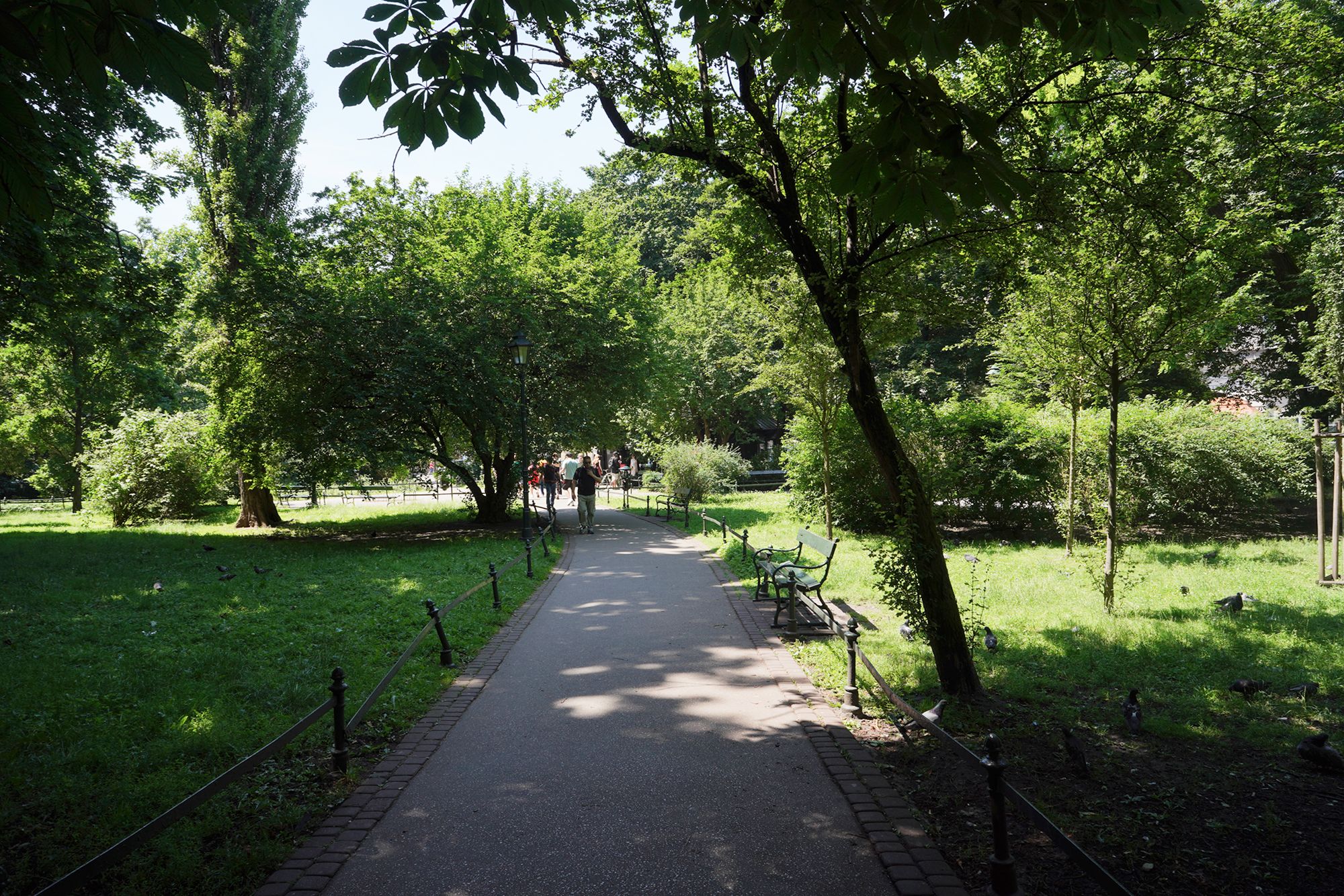
Underground Museum, Krakow, Poland
Beneath Kraków’s Main Market Square, Rynek Underground reveals streets, artifacts, and stories of the city’s trading past. 1357
Underground Museum: Rynek Główny 1, 31-042 Kraków, Poland
Date Picture Taken: Jun, 2026
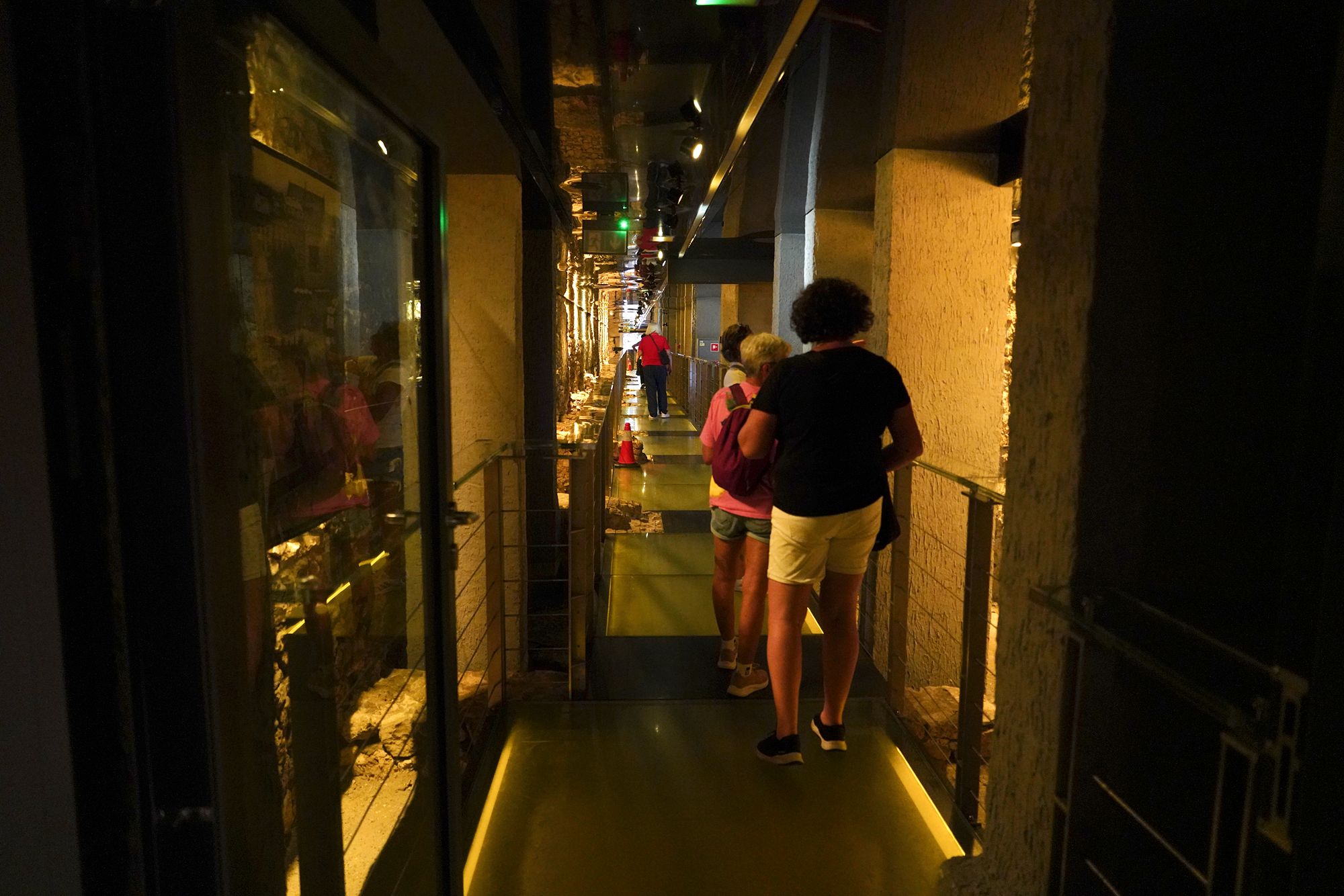
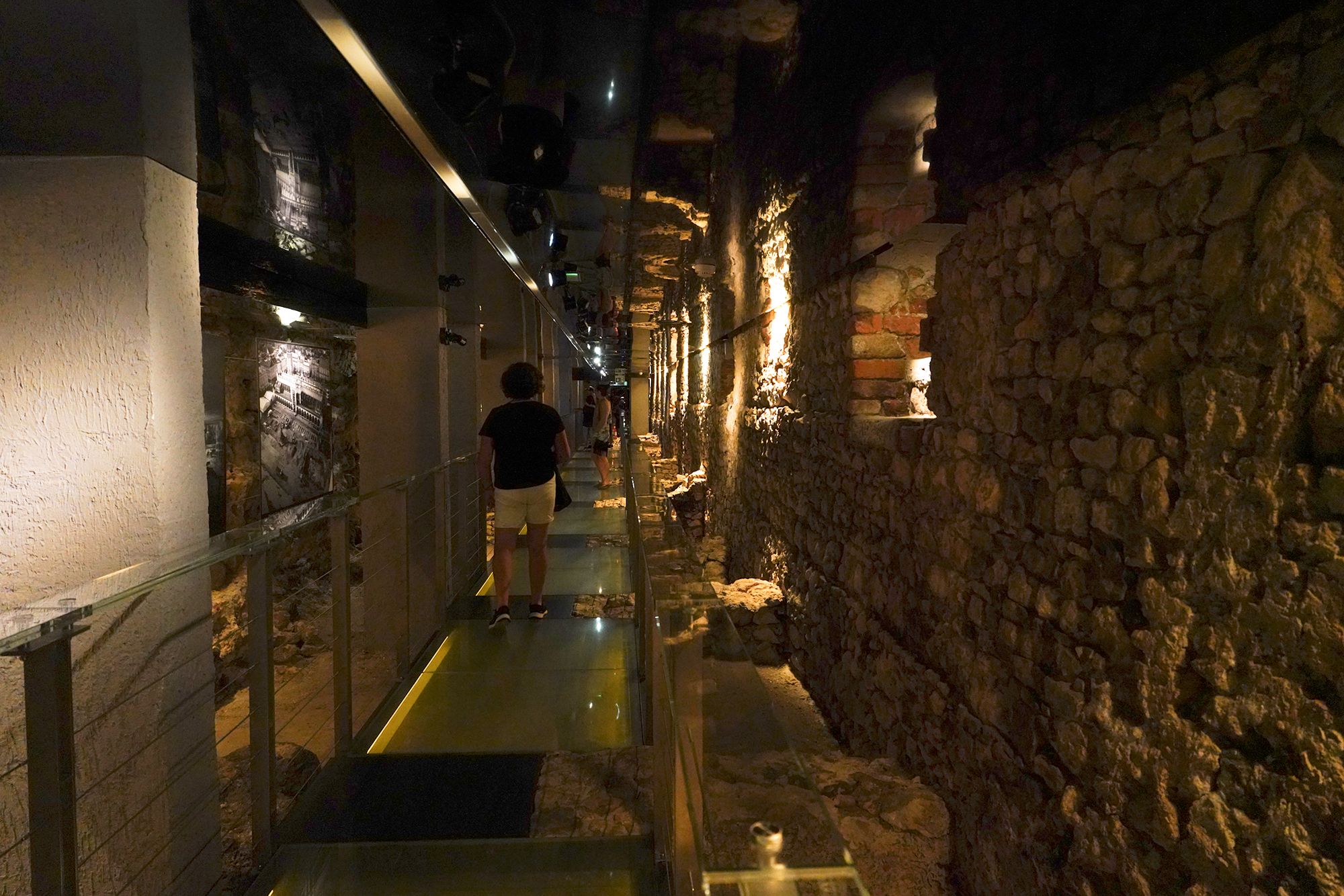
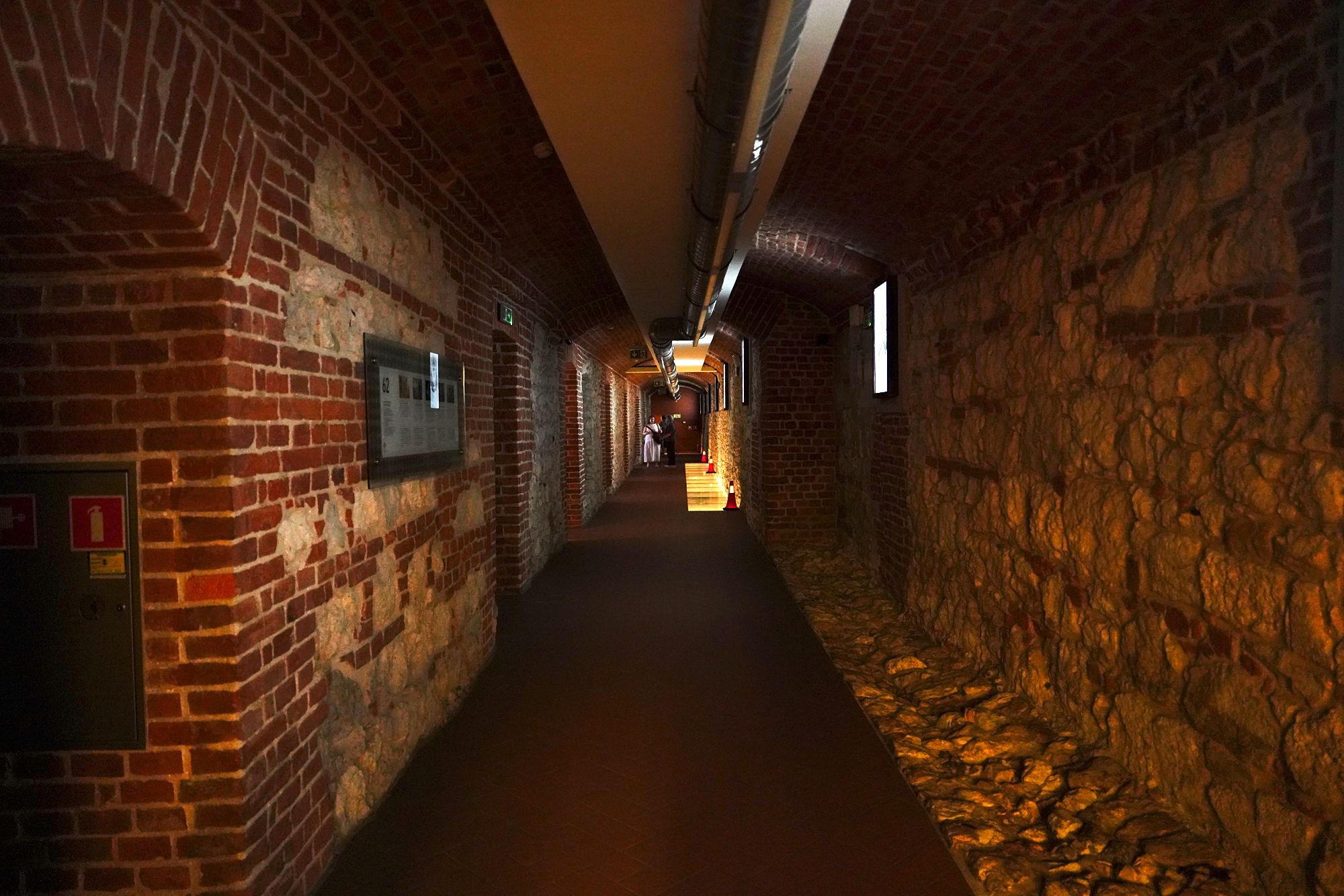
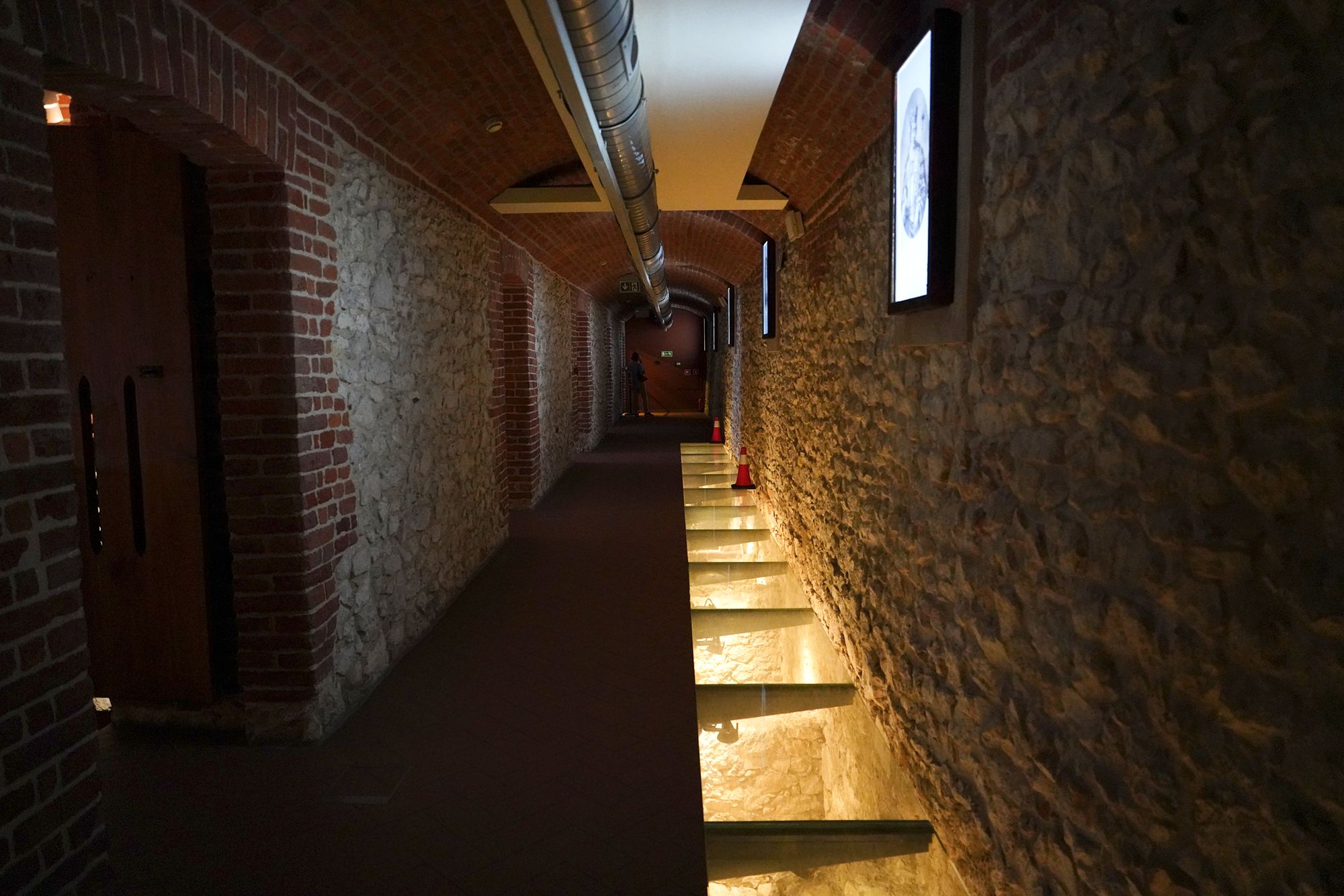
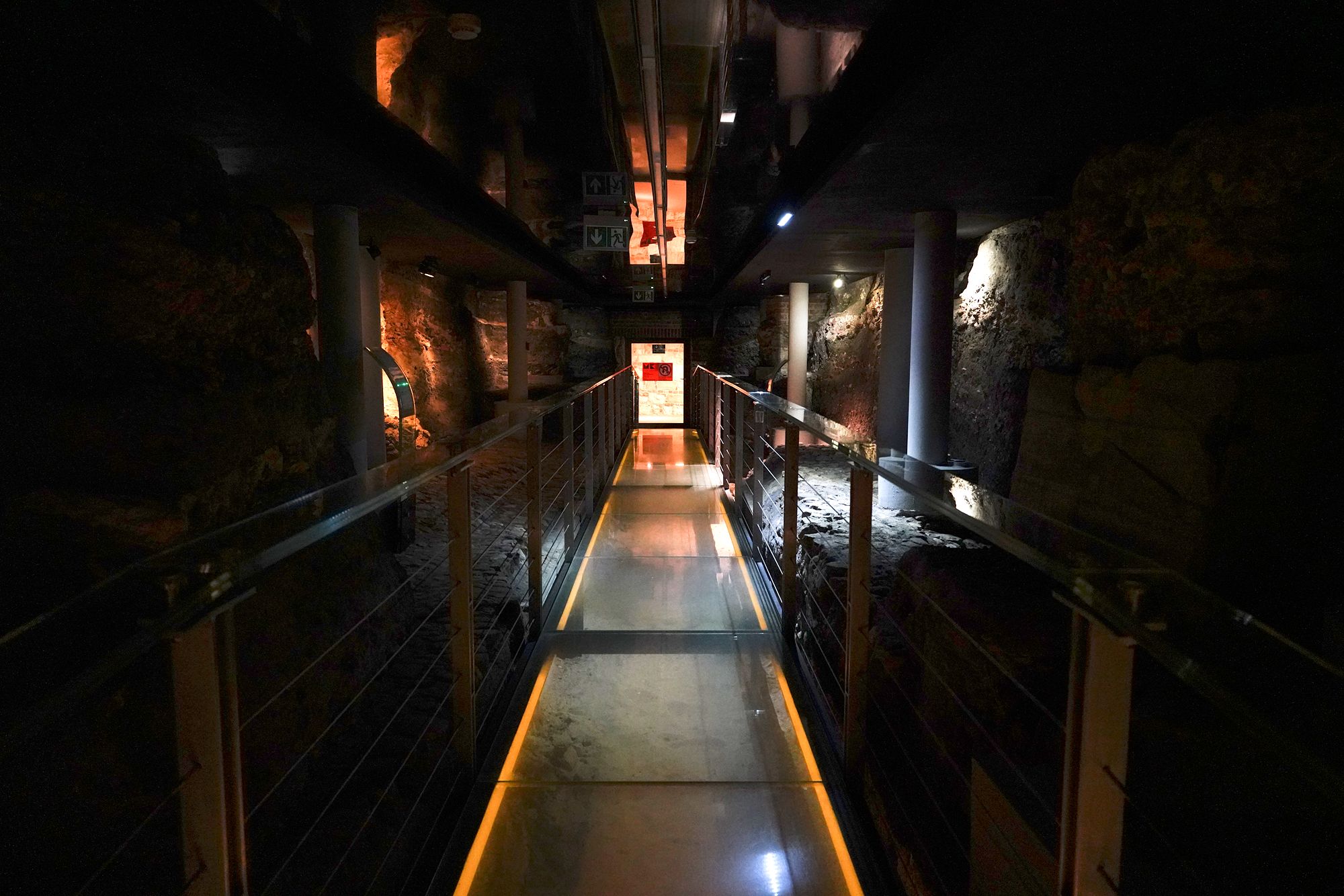
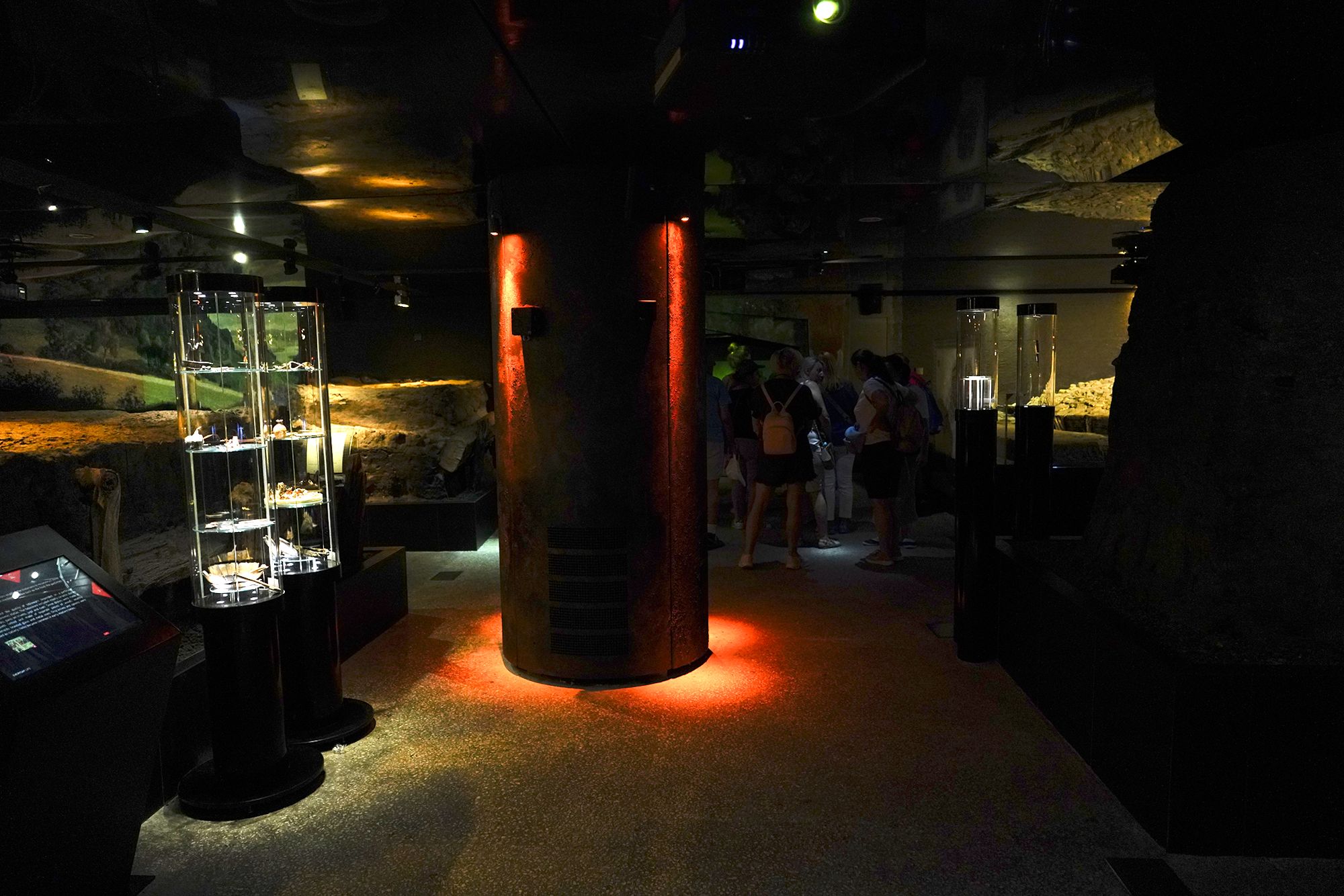
Below Kraków’s Main Market Square, Rynek Underground brings the medieval city into view. The museum follows remains of market stalls, roads, and workshops uncovered during excavations. Artifacts and multimedia displays help visitors imagine the square as a center of trade and daily life, long before the city grew above it.
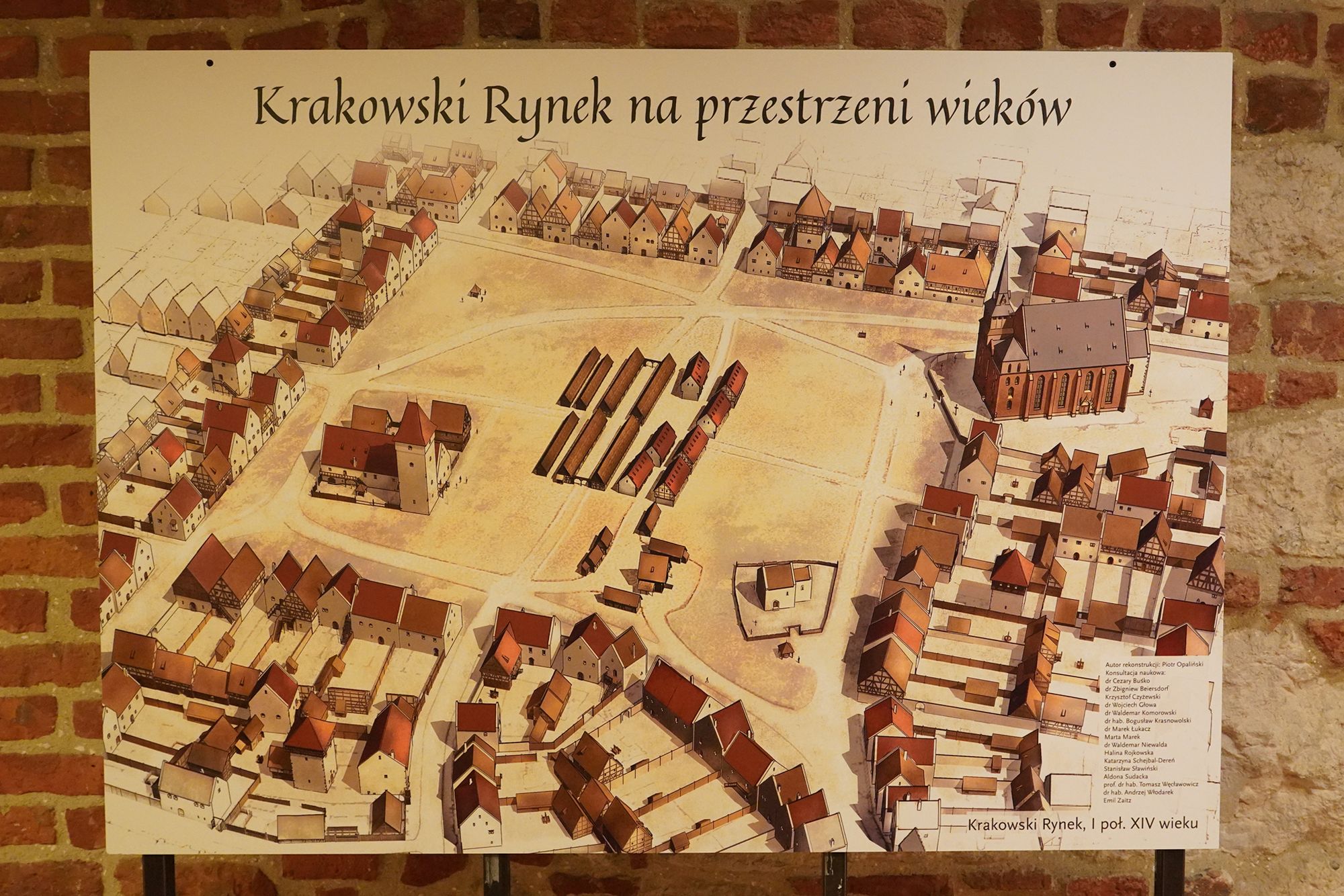
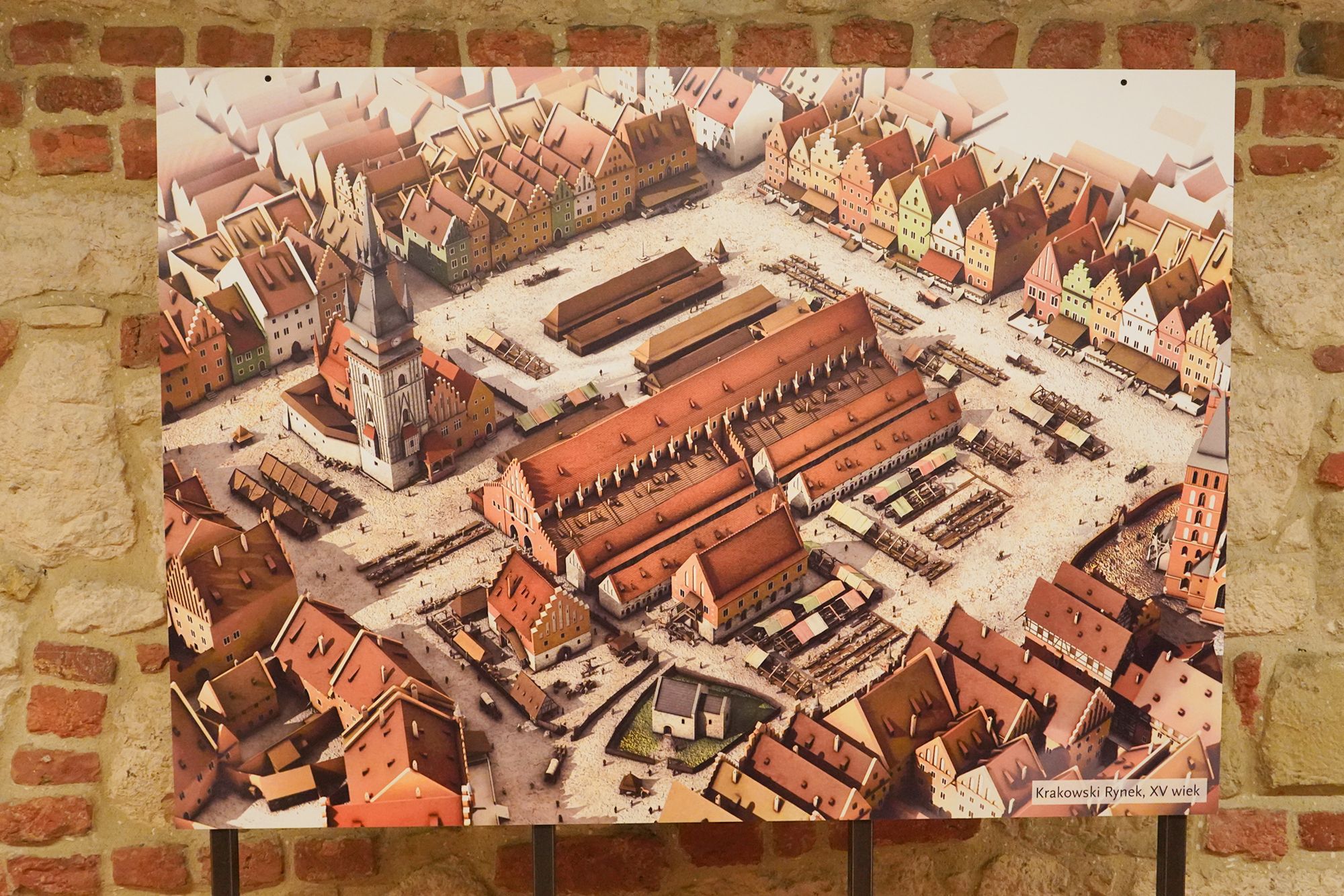
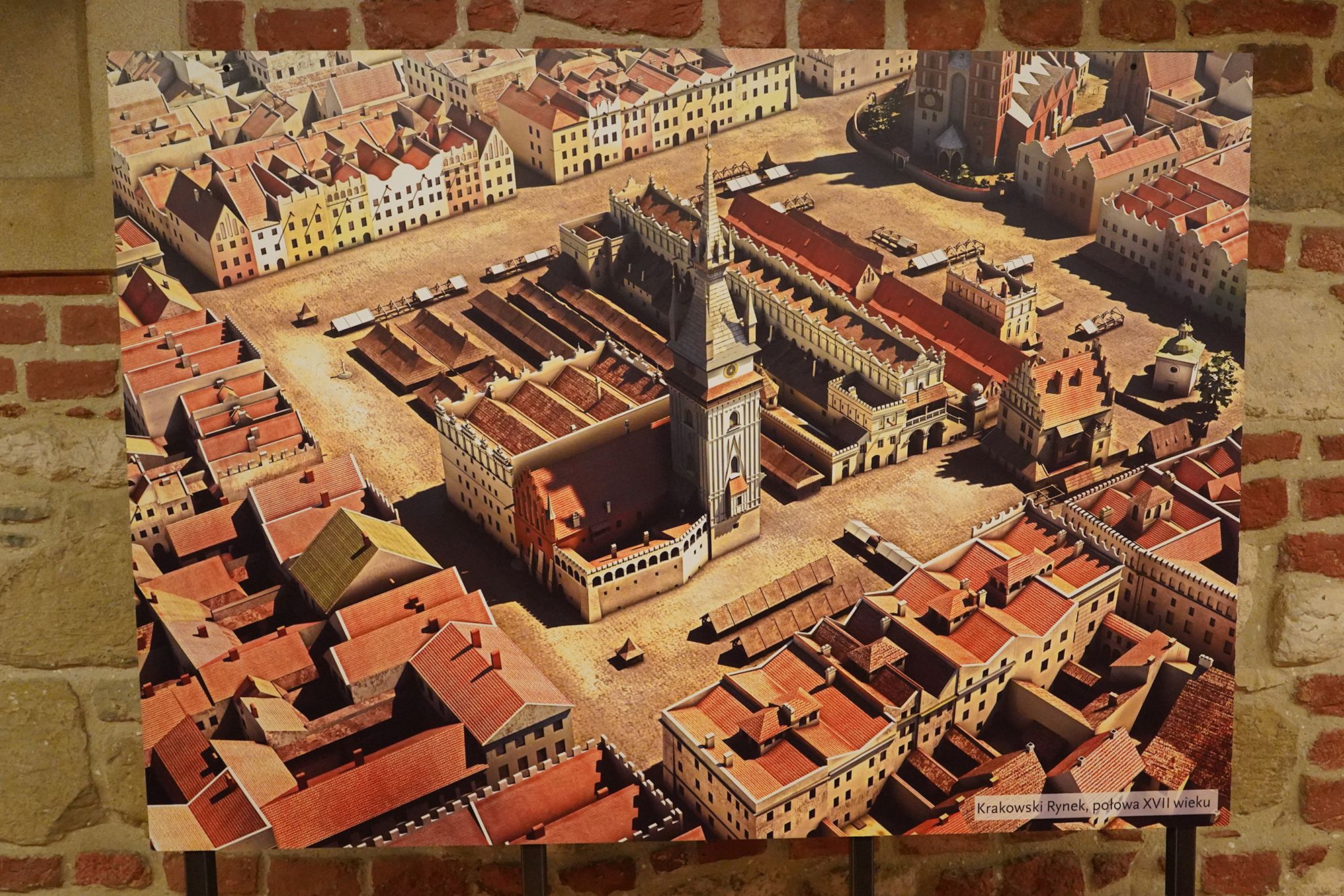
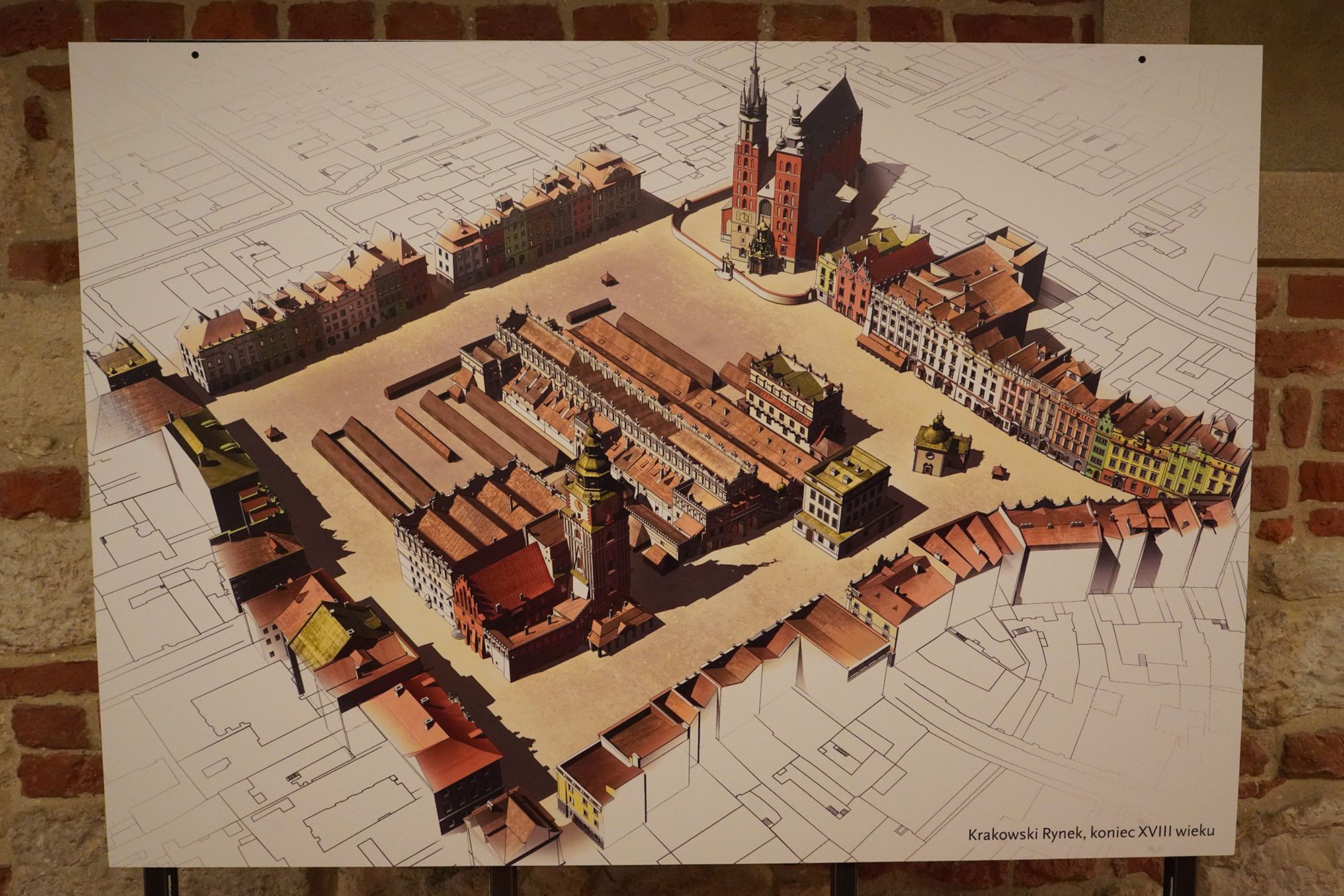
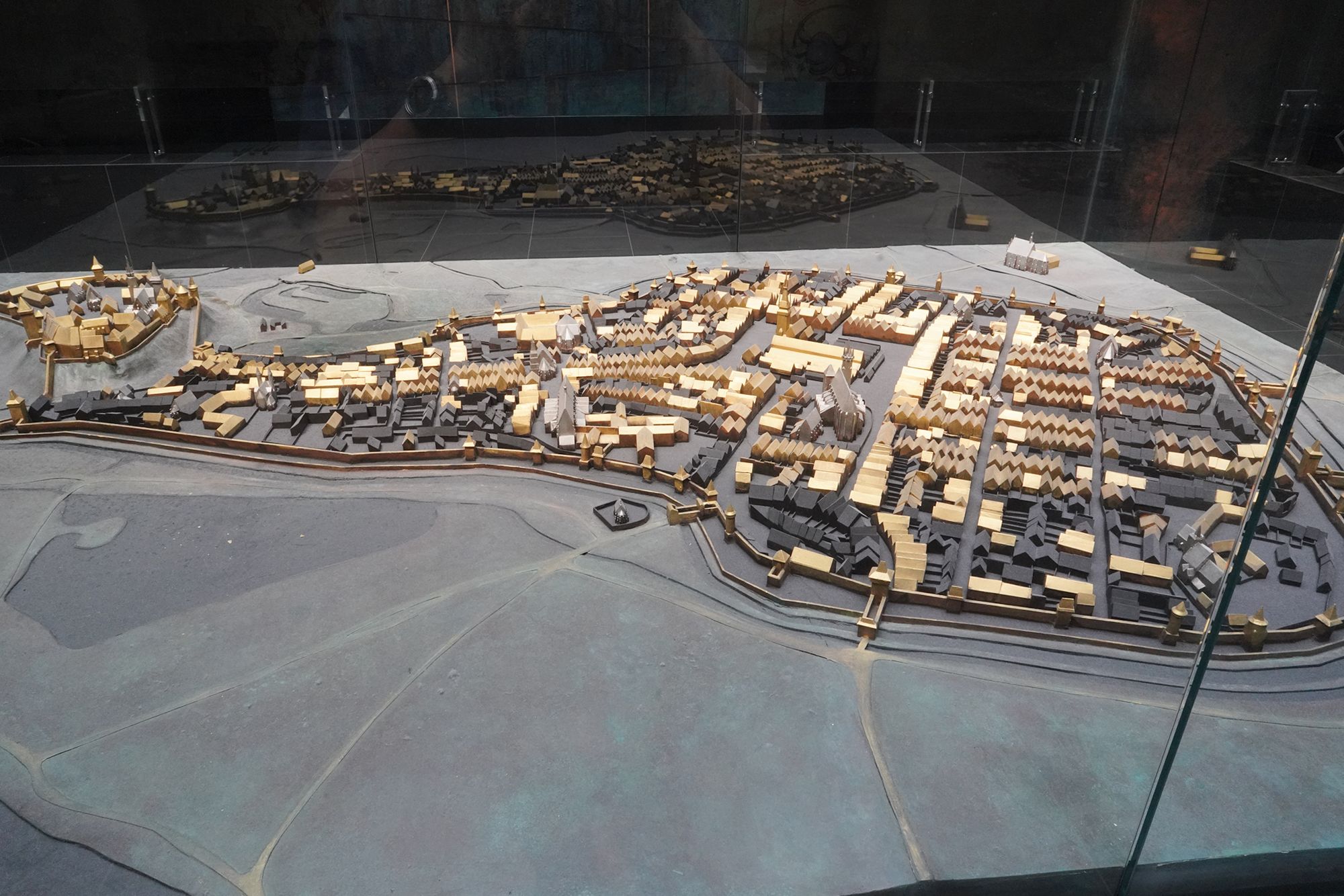
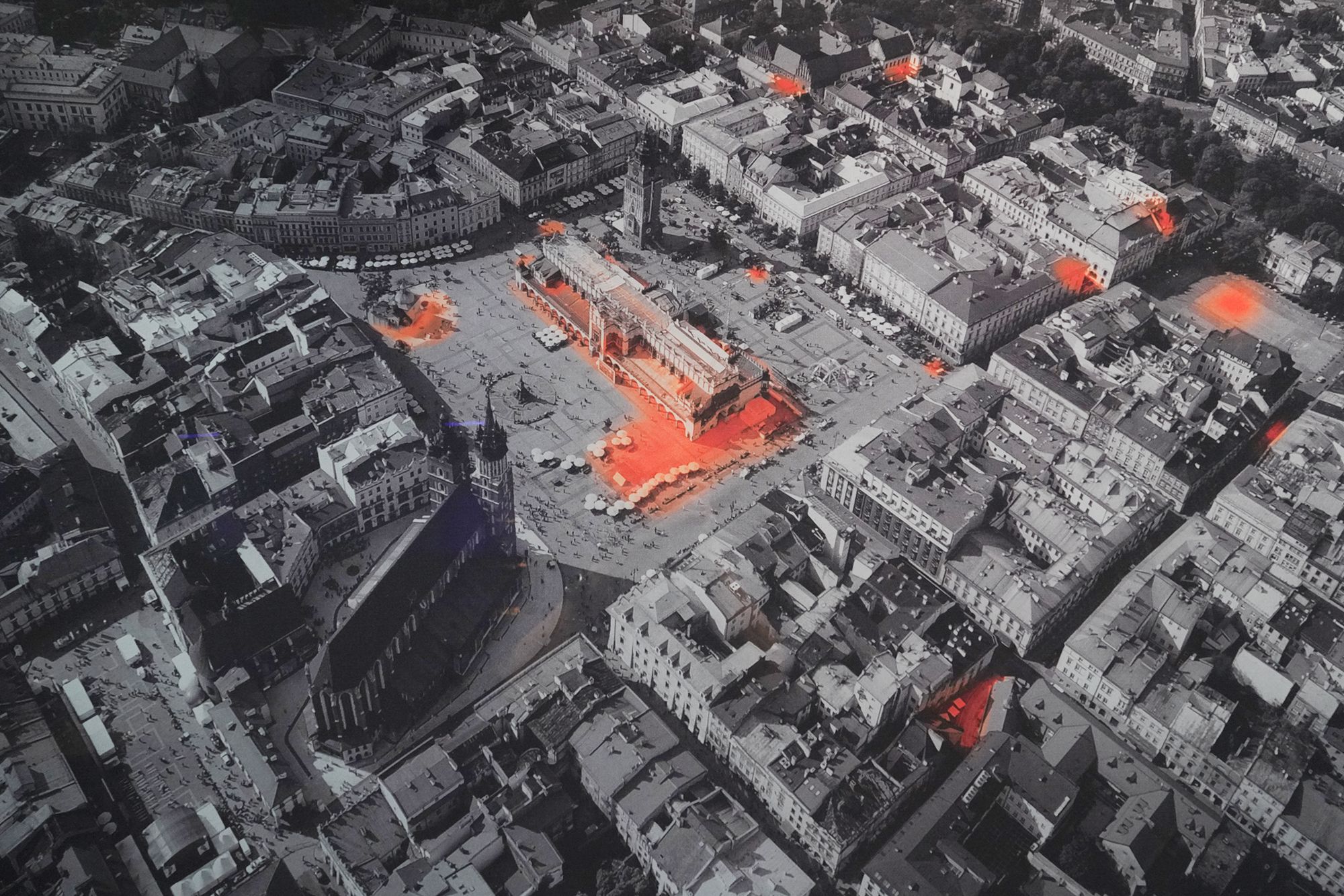
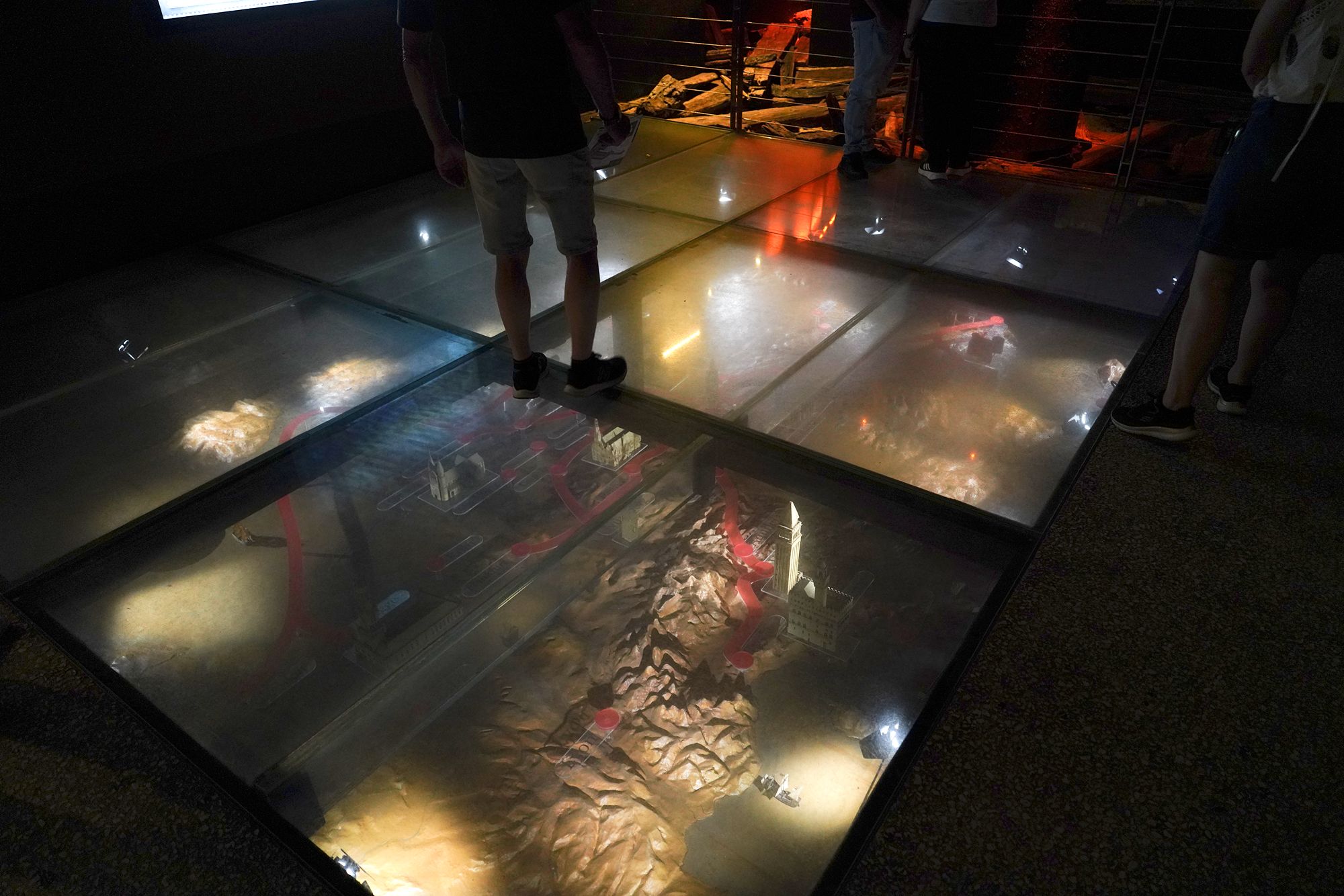
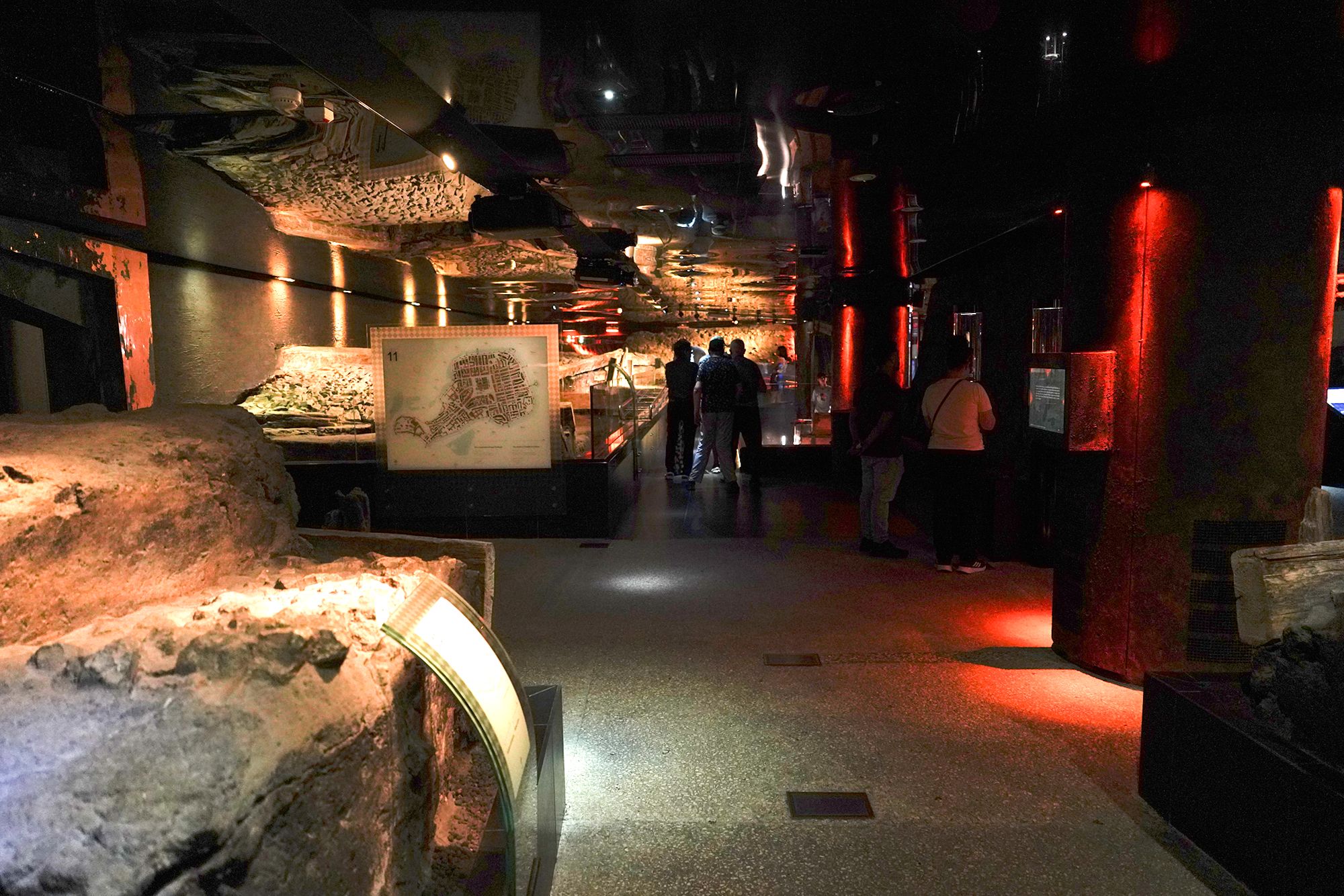
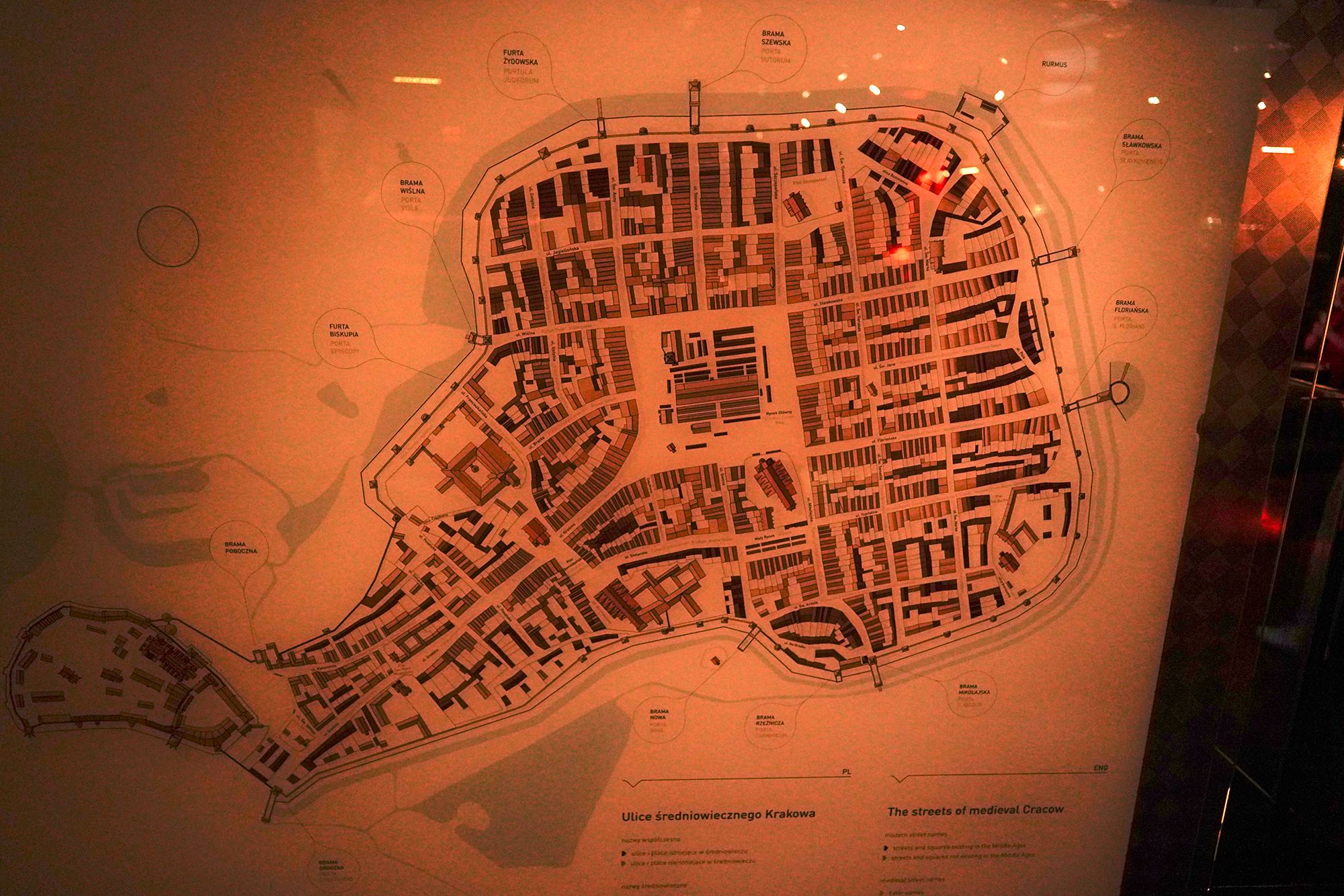
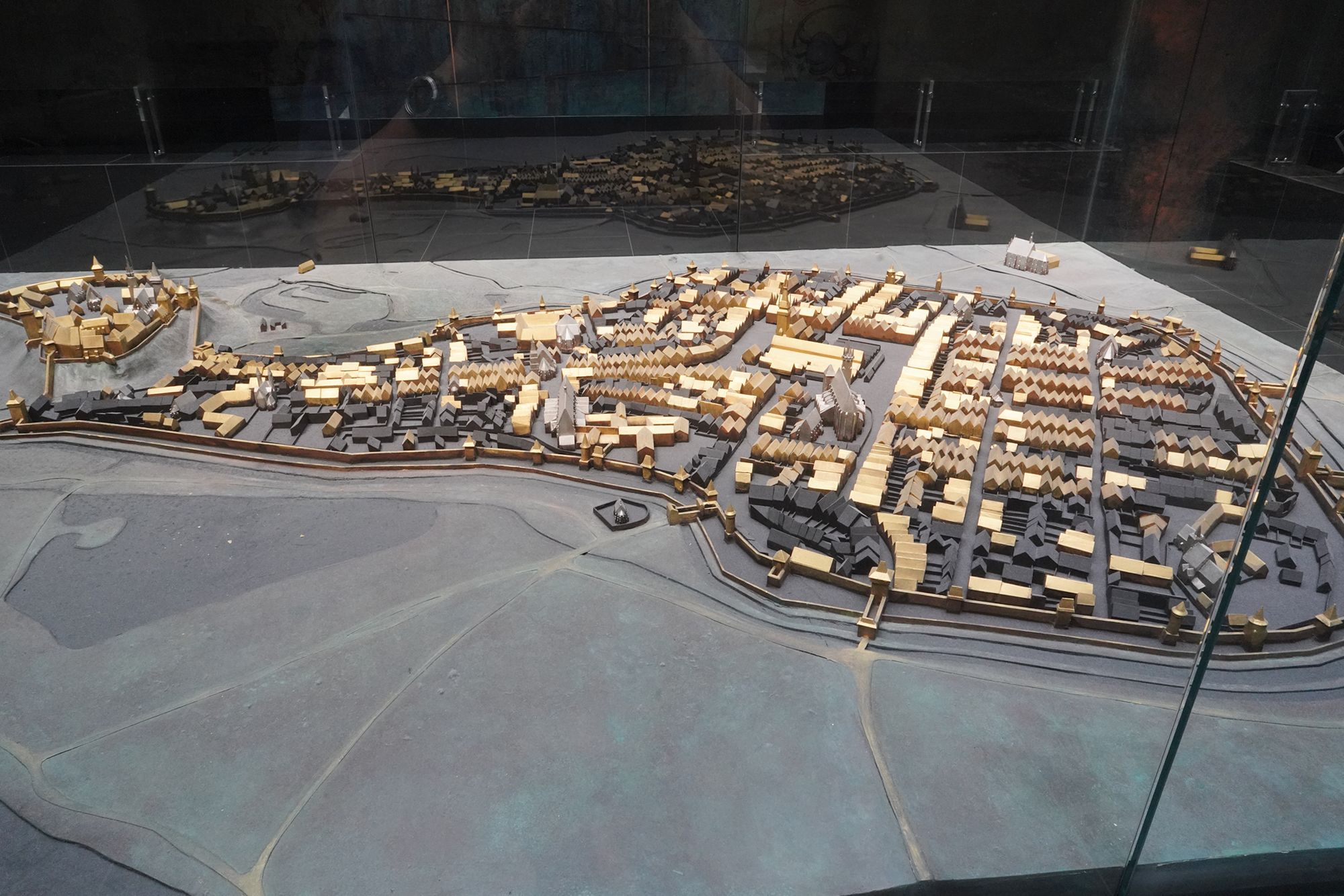
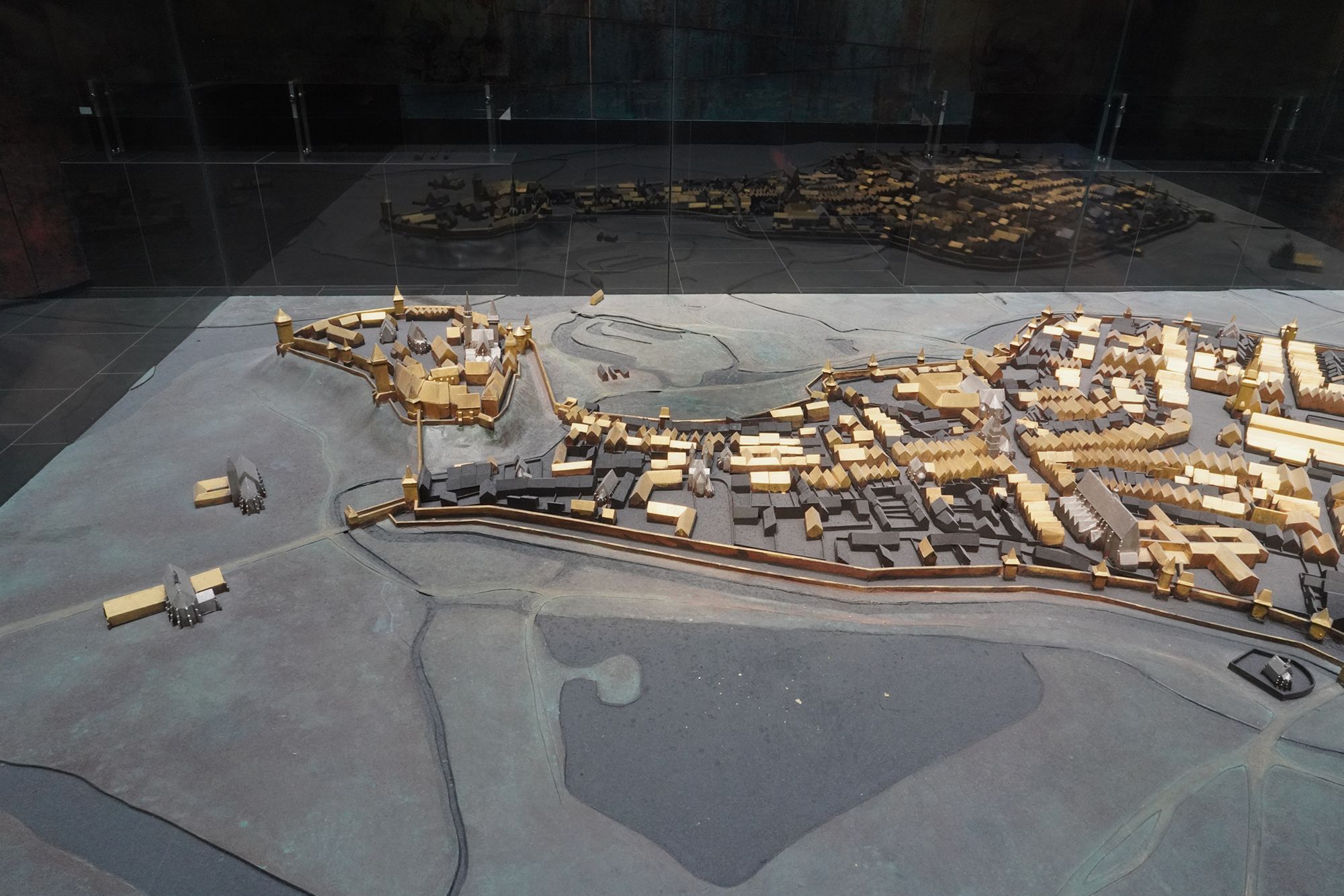
A model of Kraków’s Old Town.
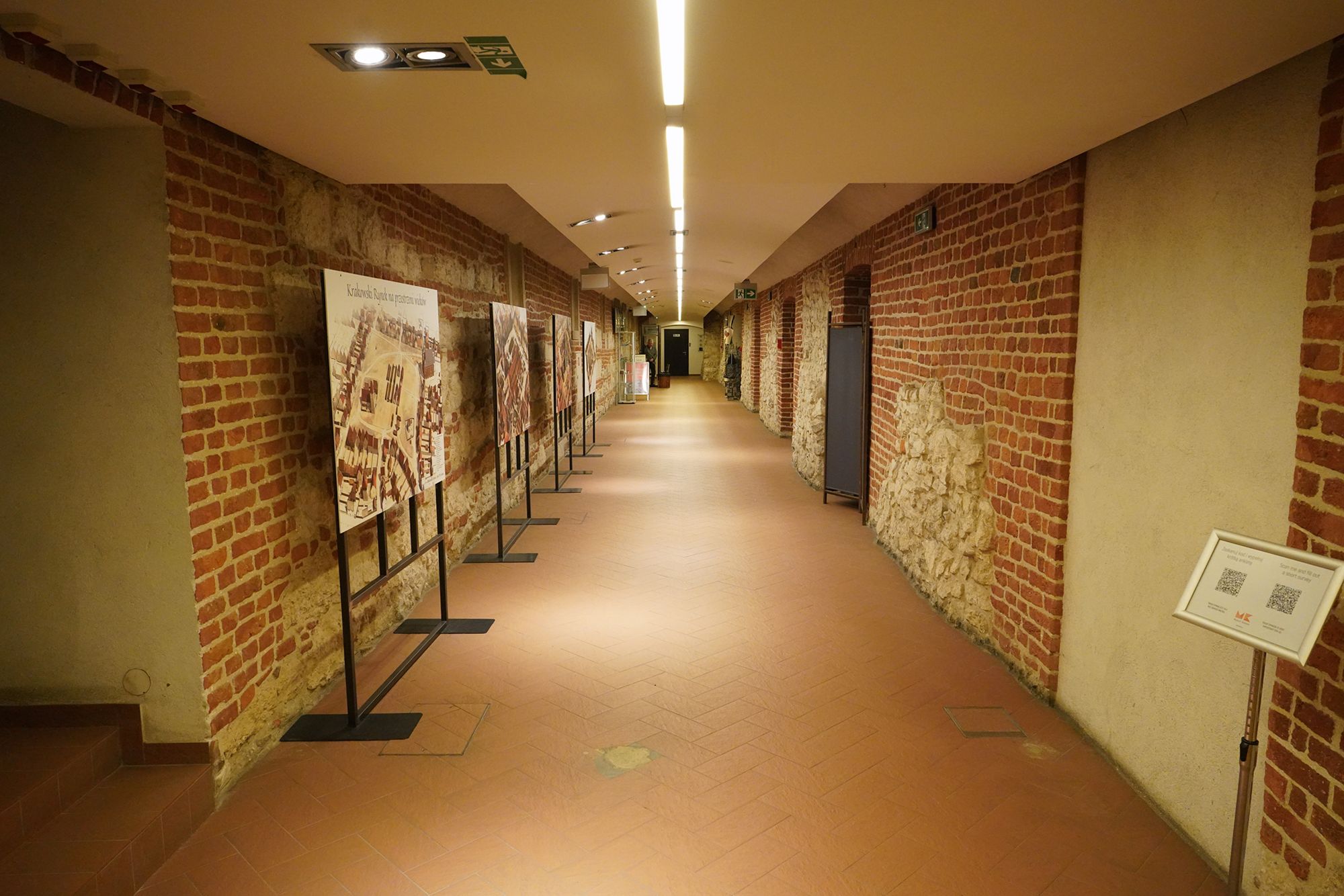
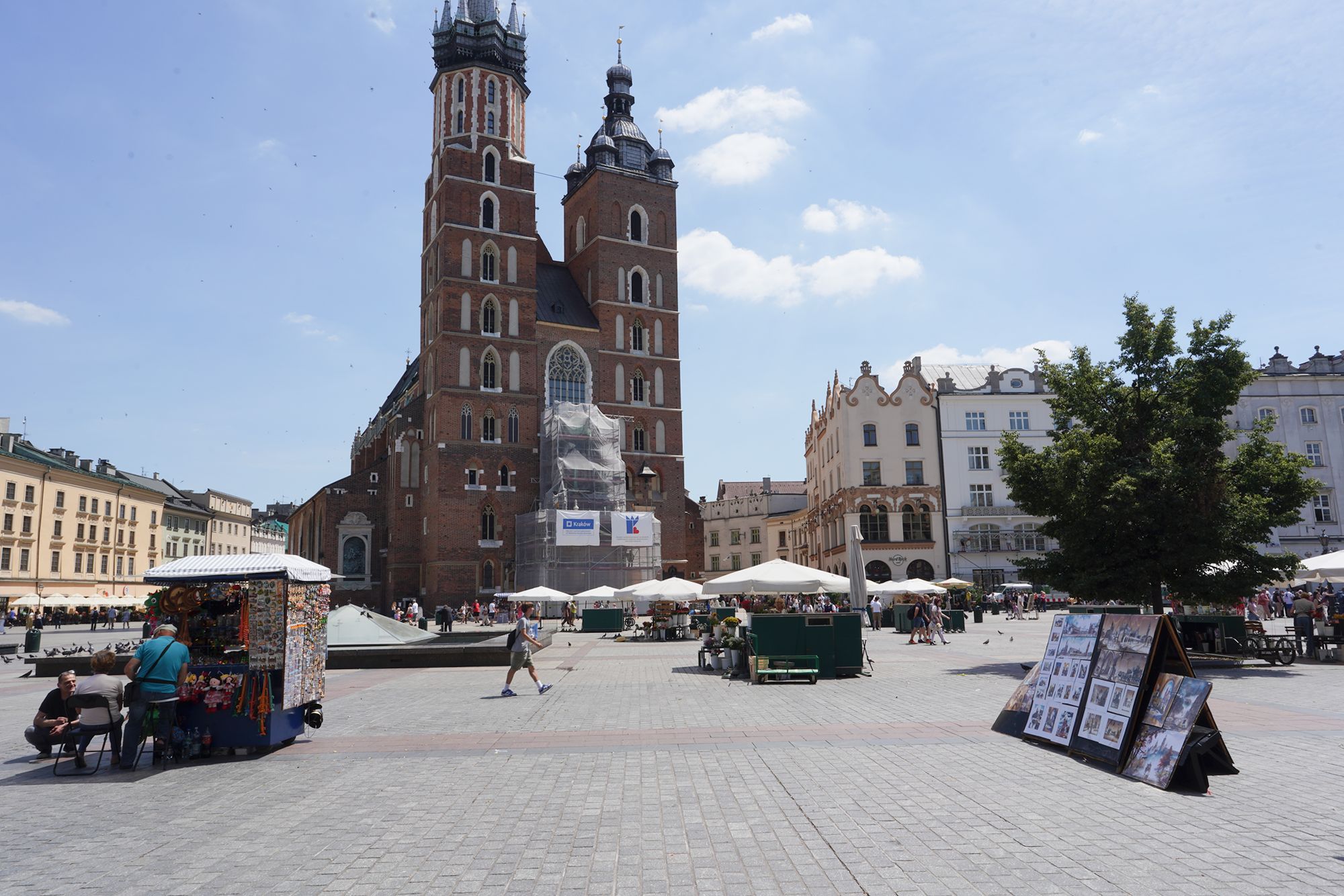
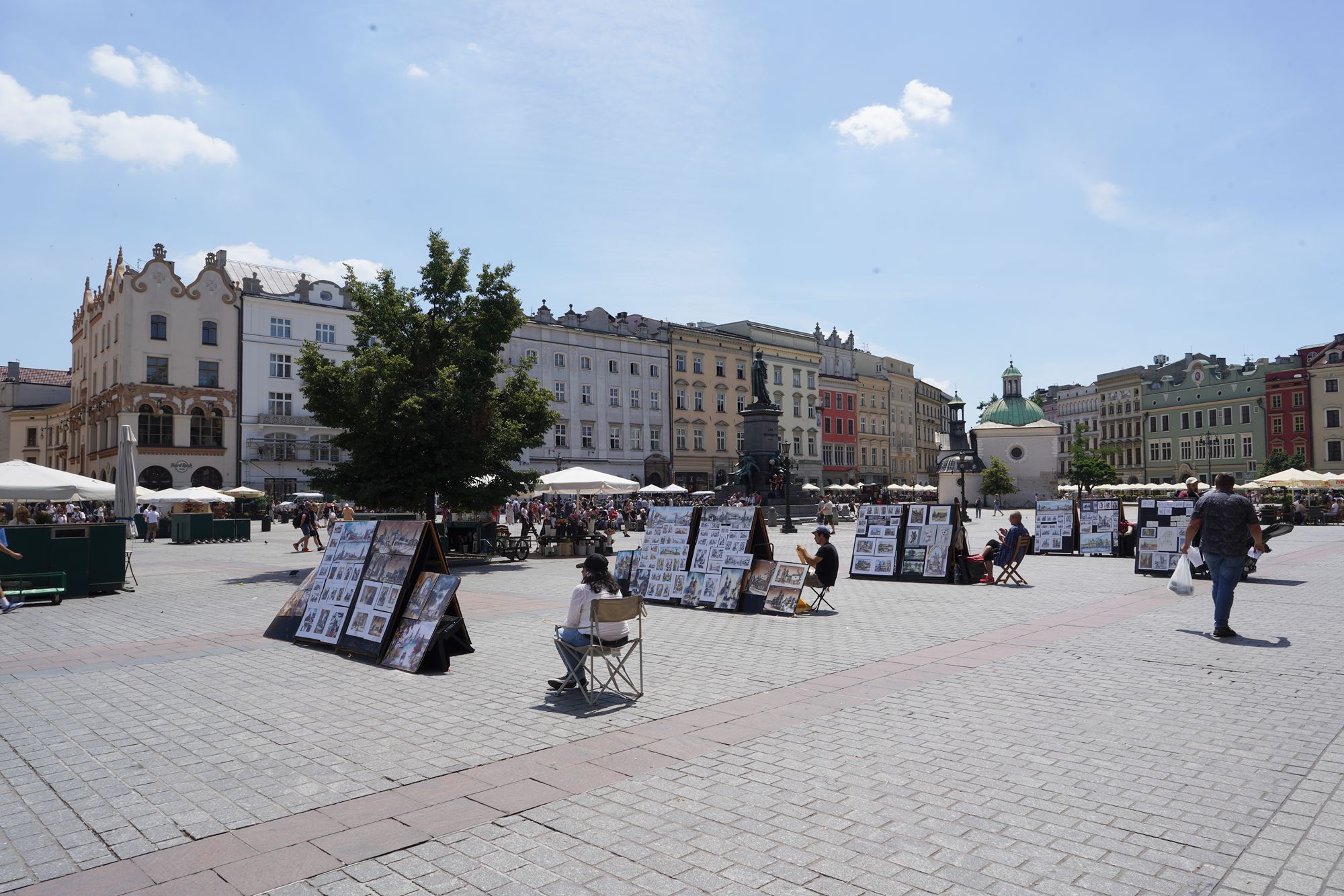
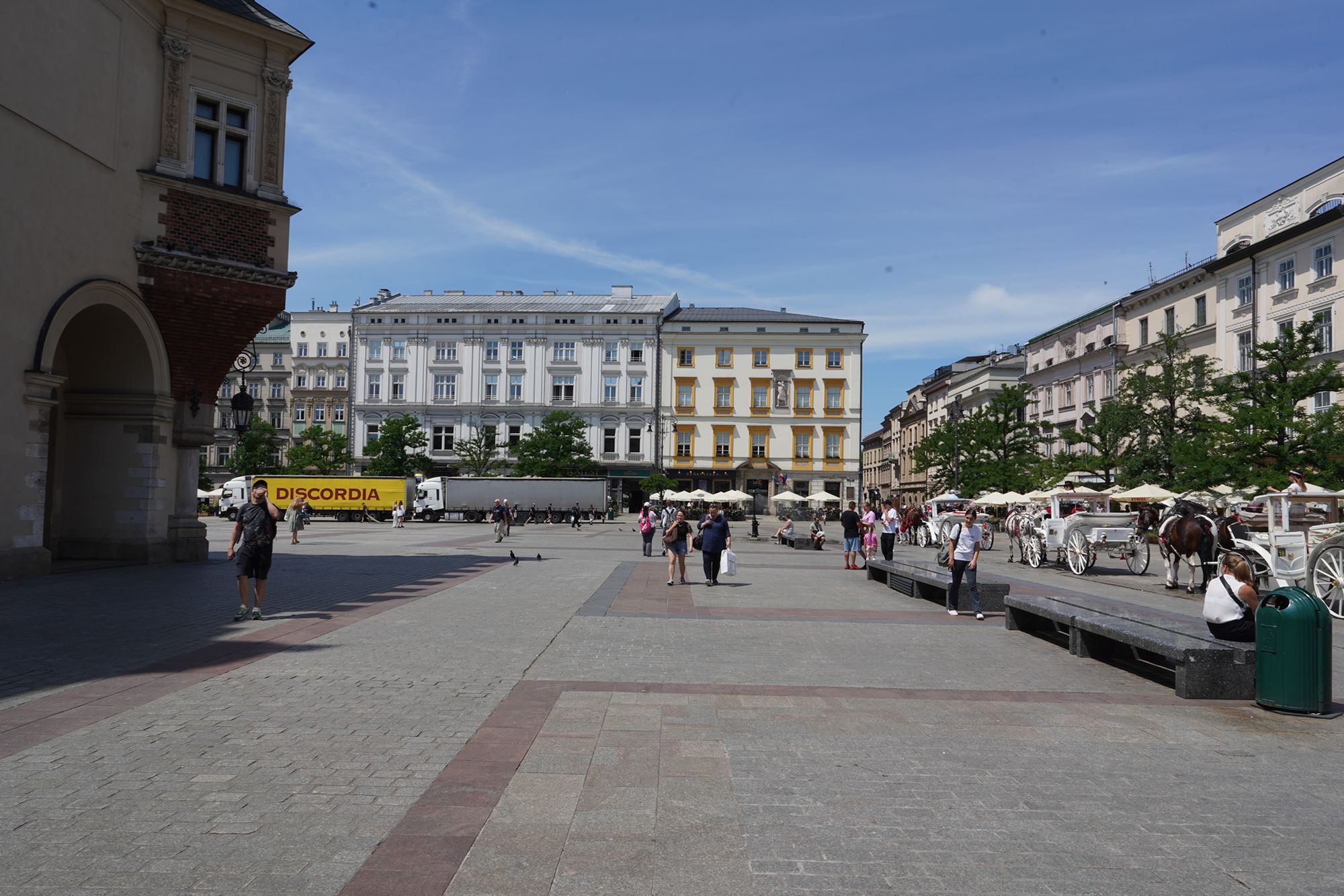
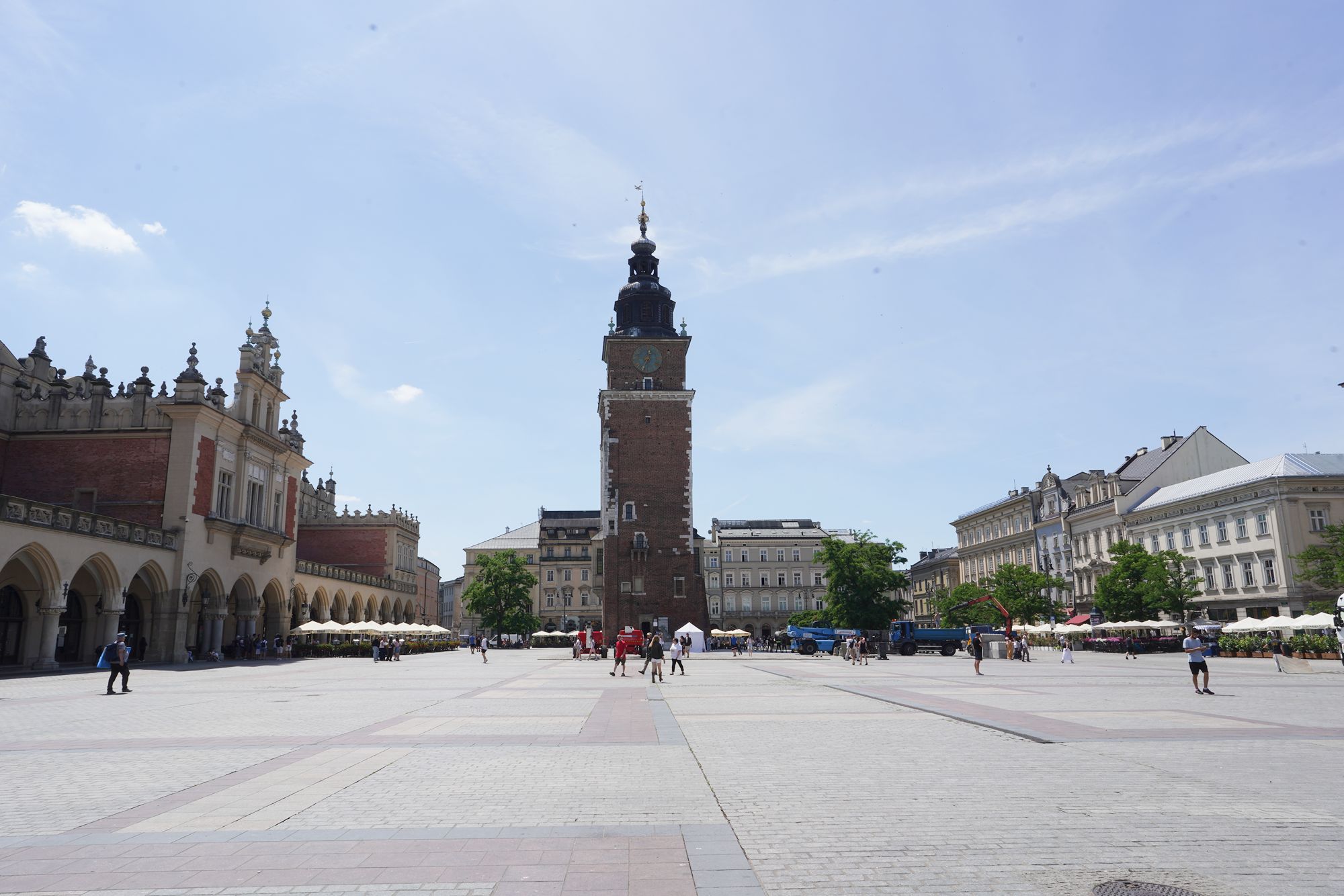
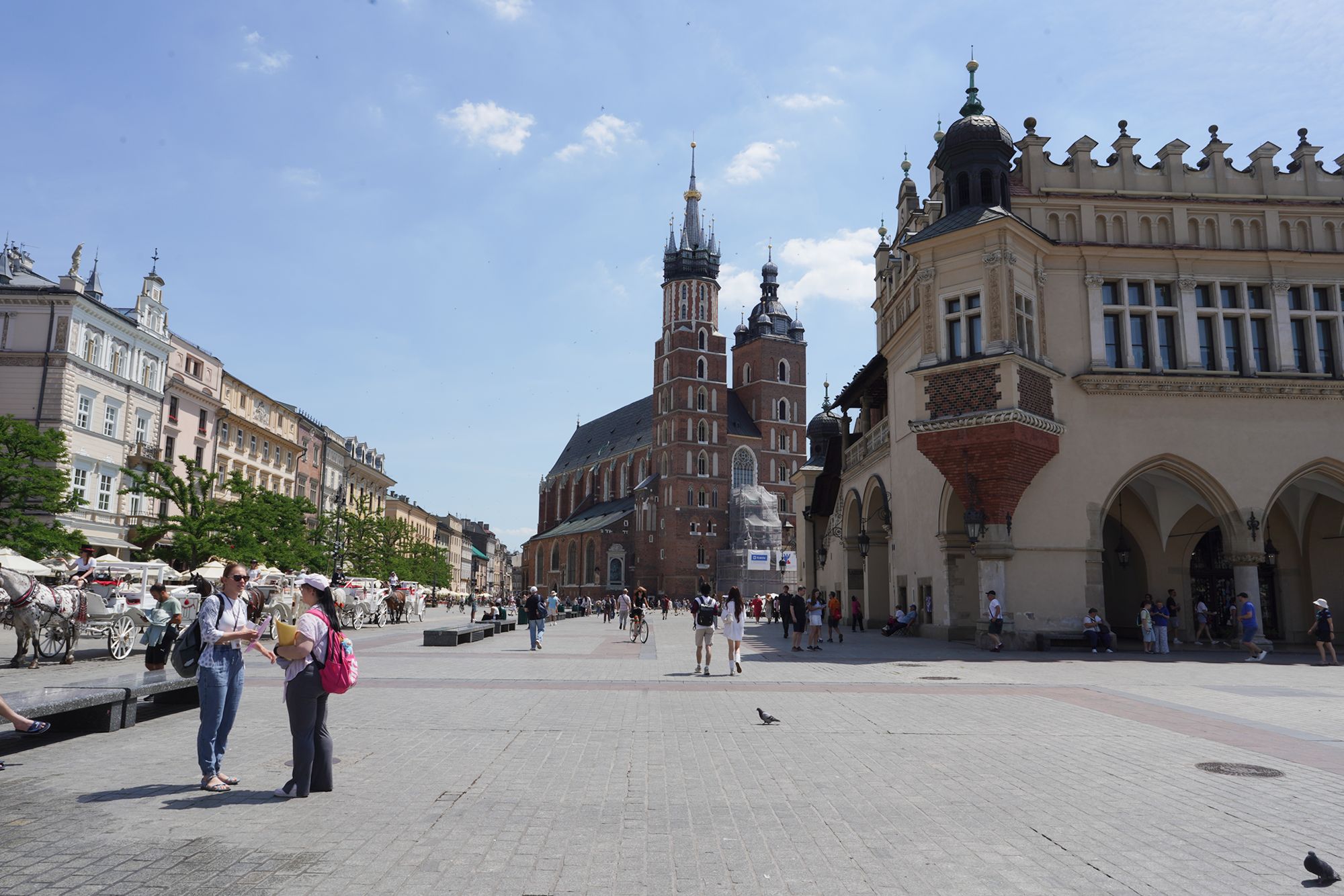
The Rynek Underground Museum is beneath the Main Market Square, with its entrance inside the Sukiennice (Cloth Hall). The MNK Sukiennice gallery is upstairs in the same building.
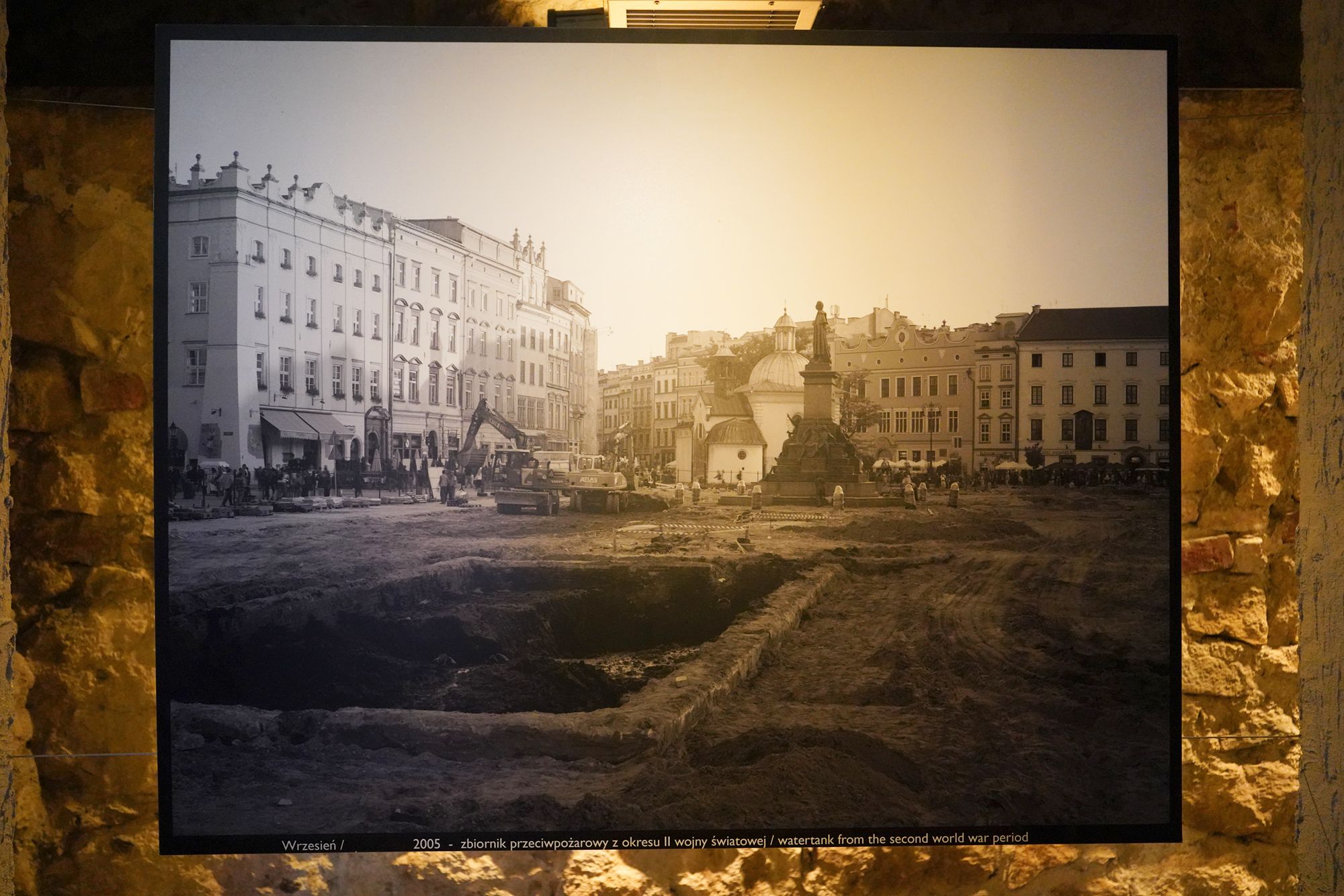
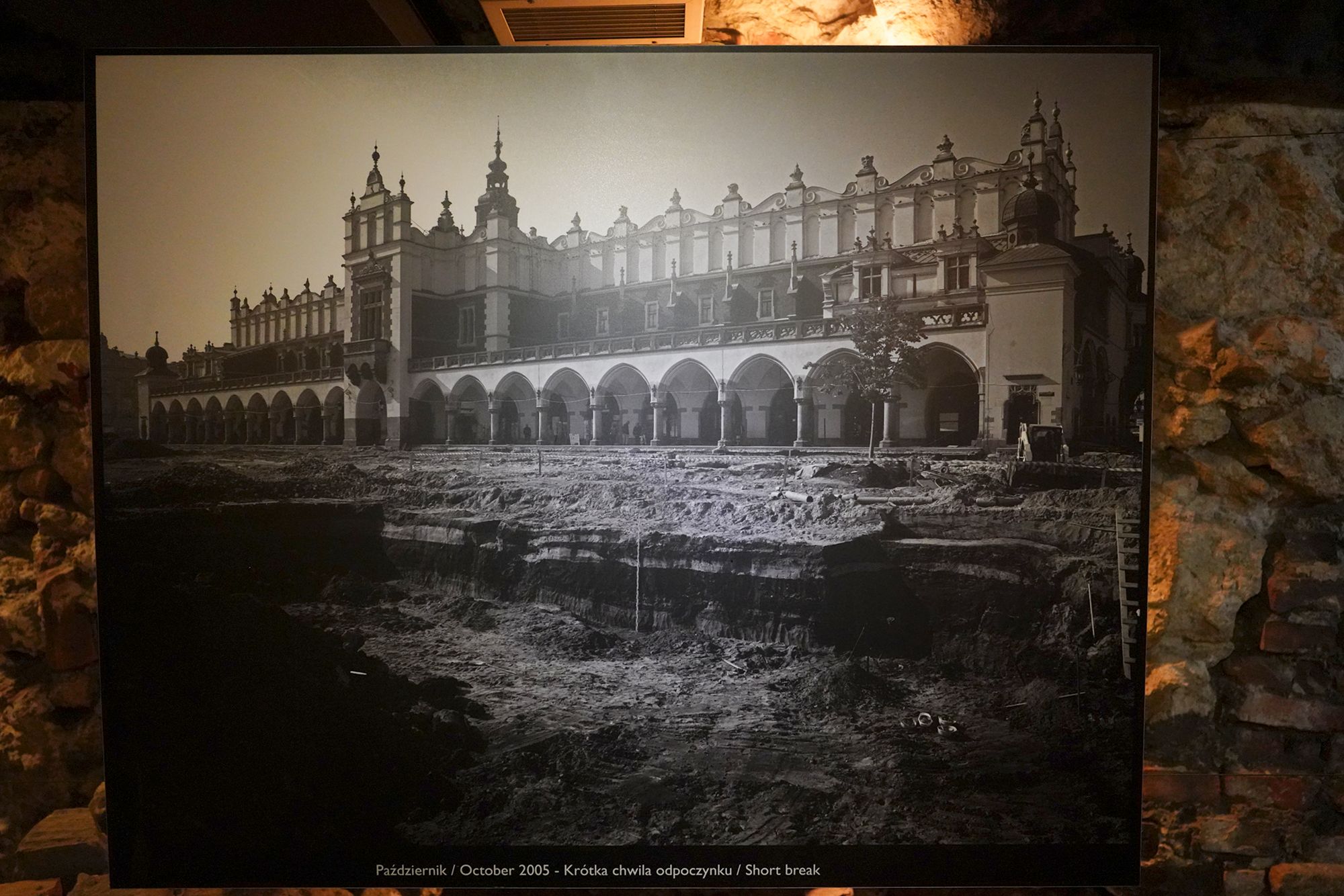
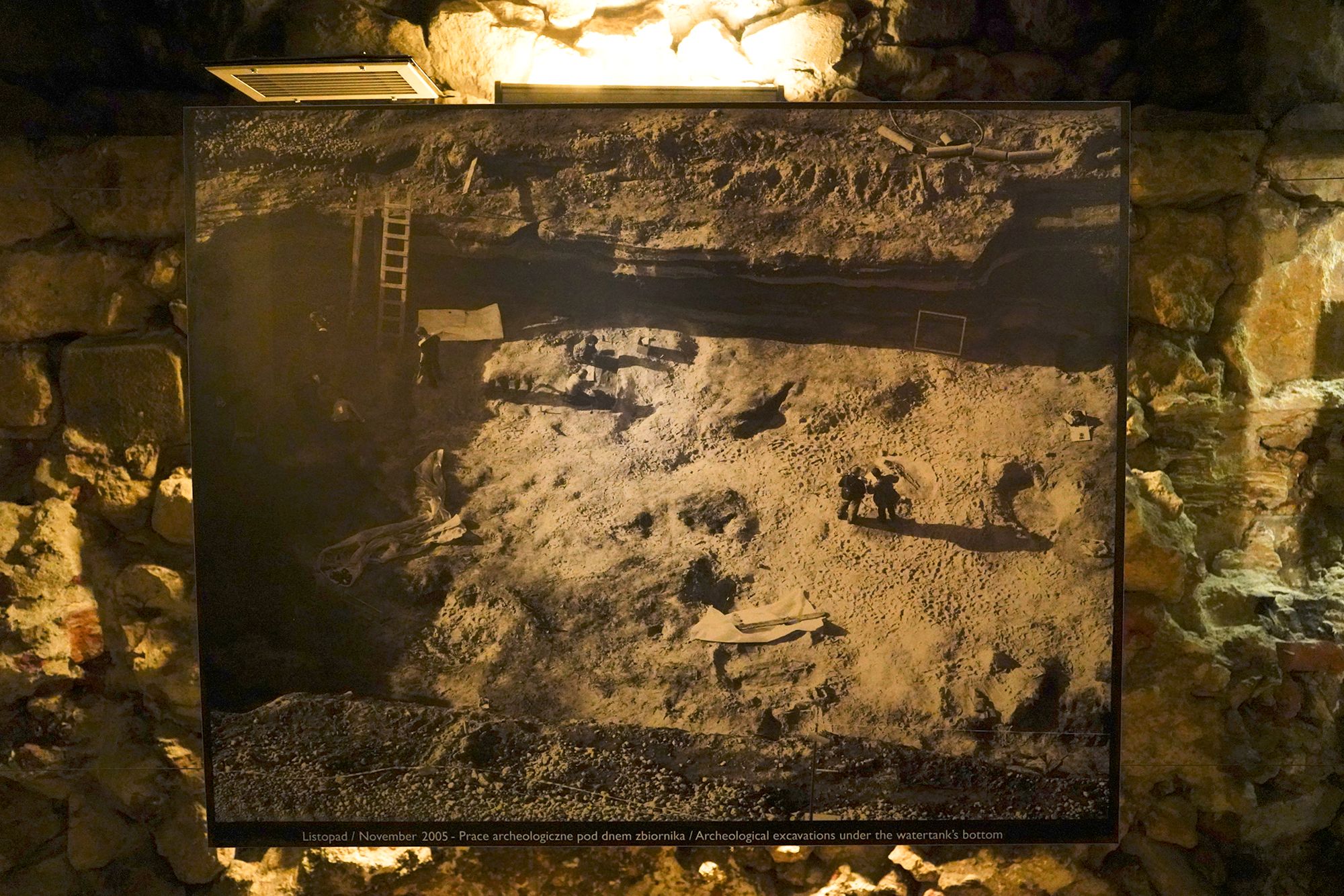
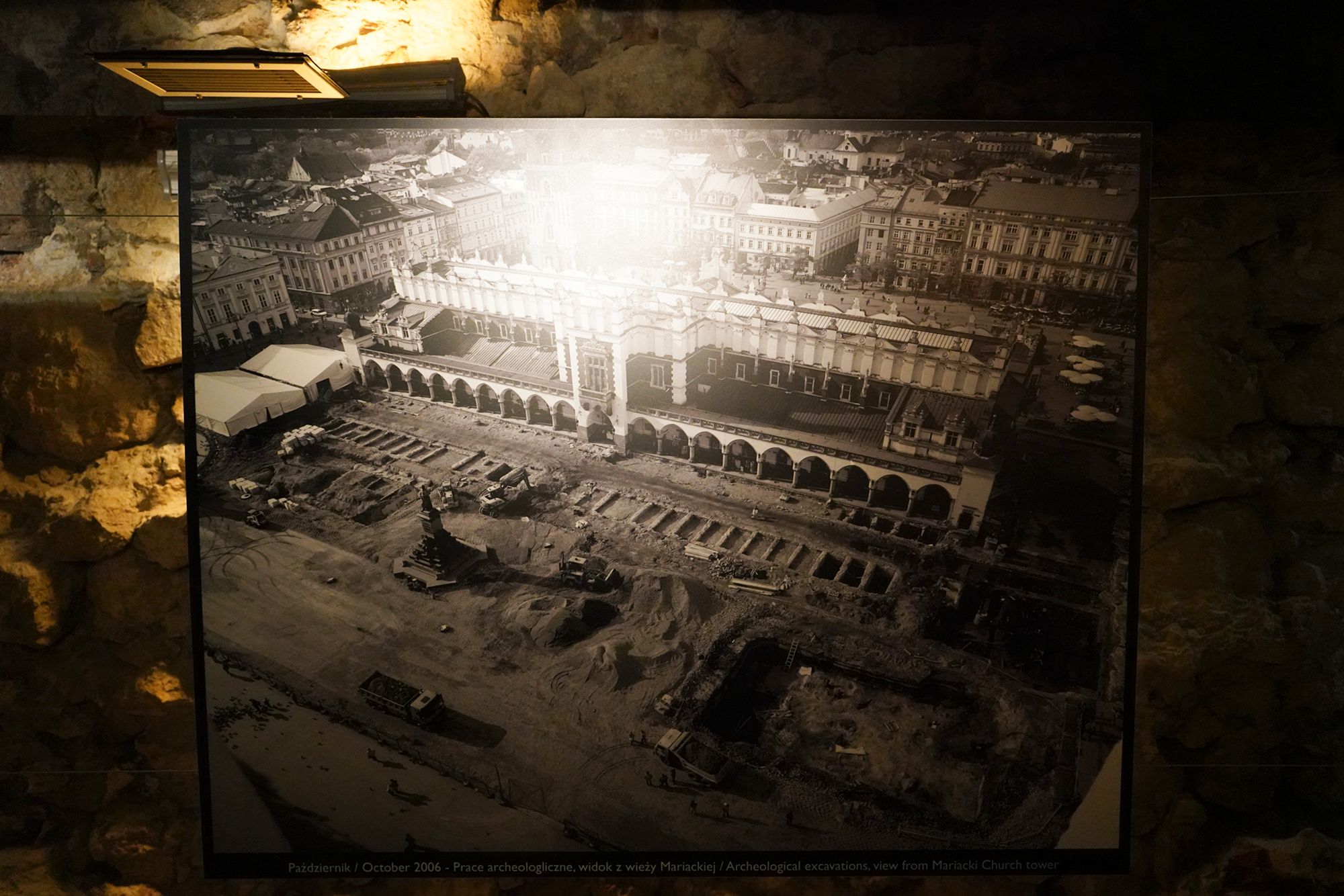
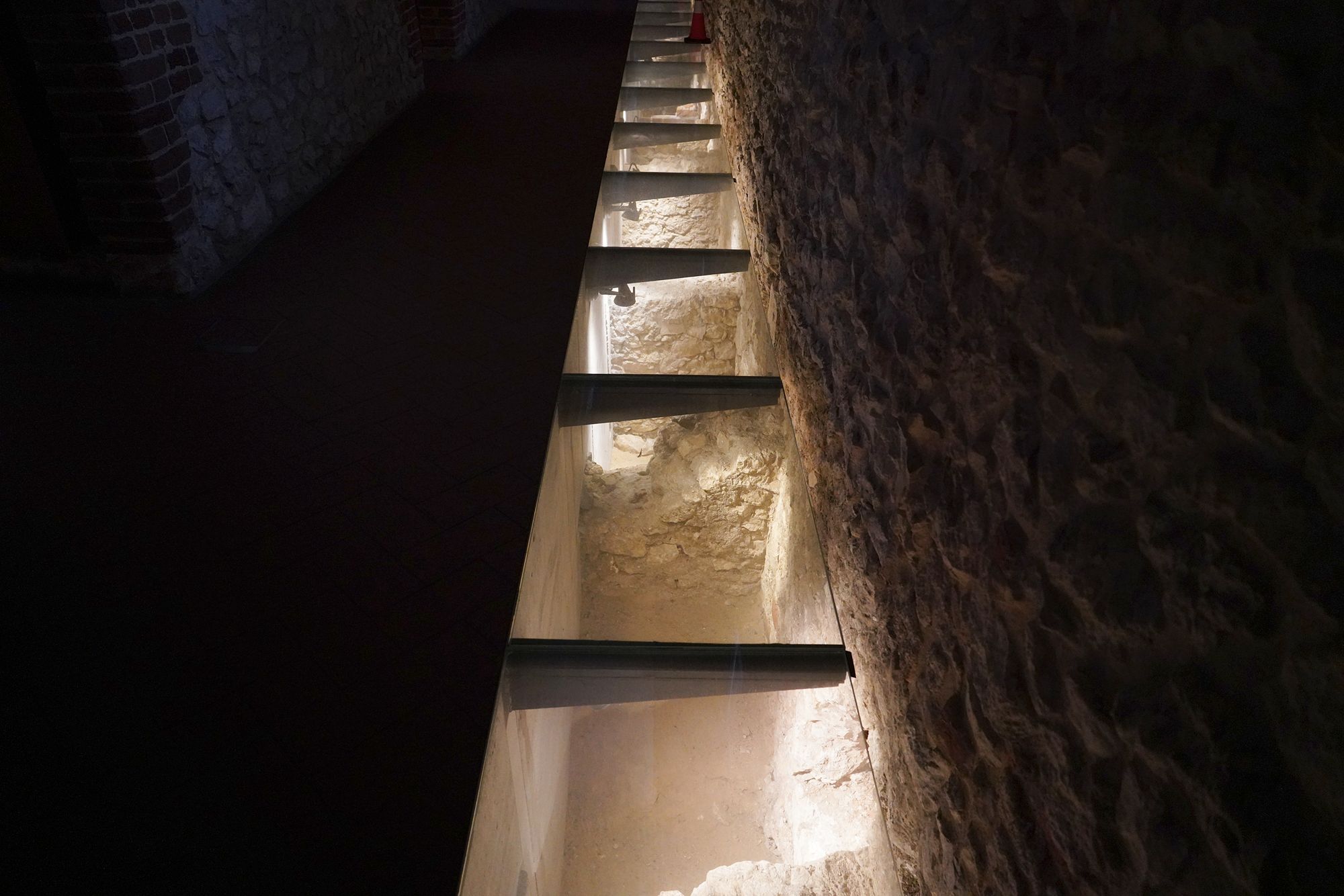
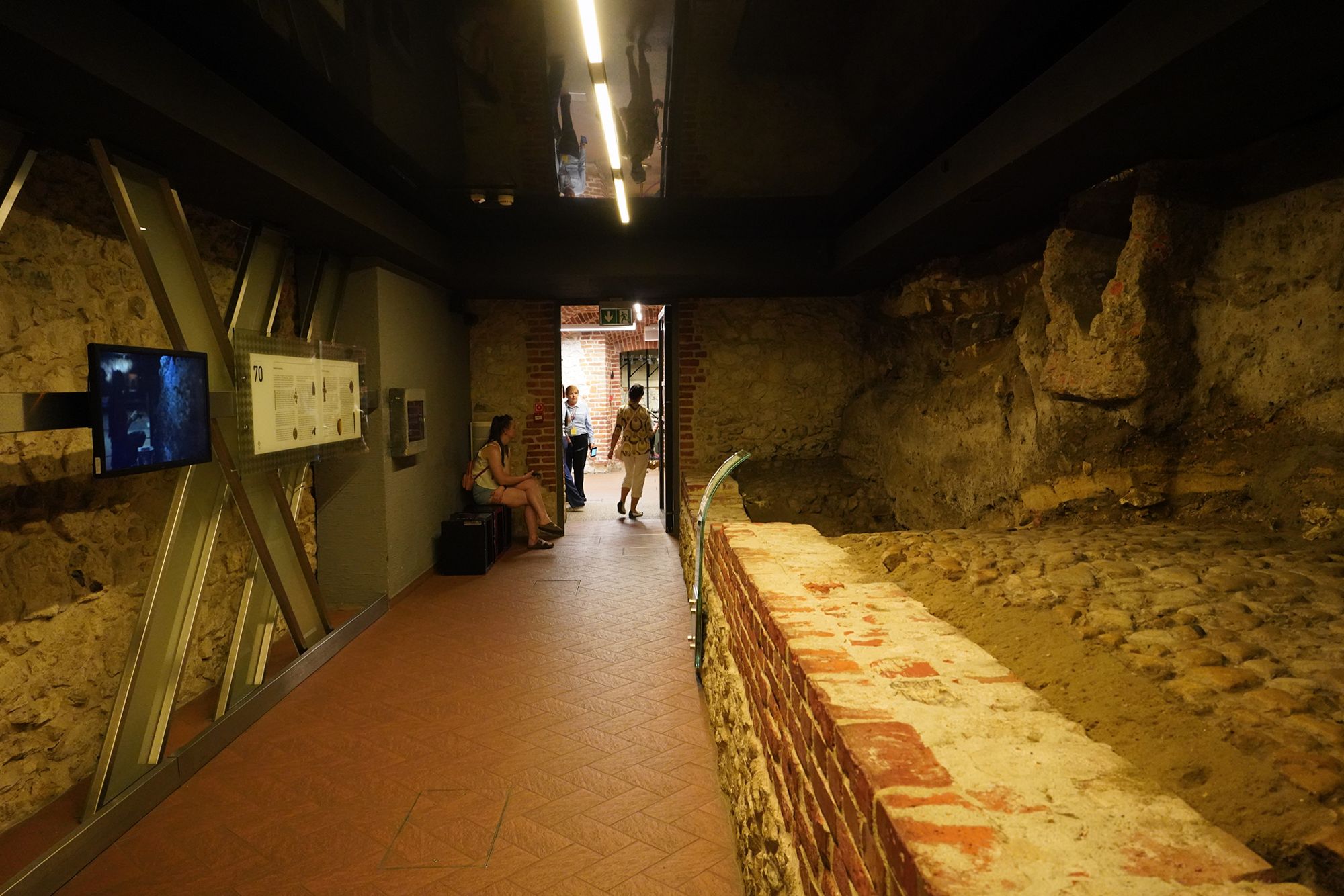
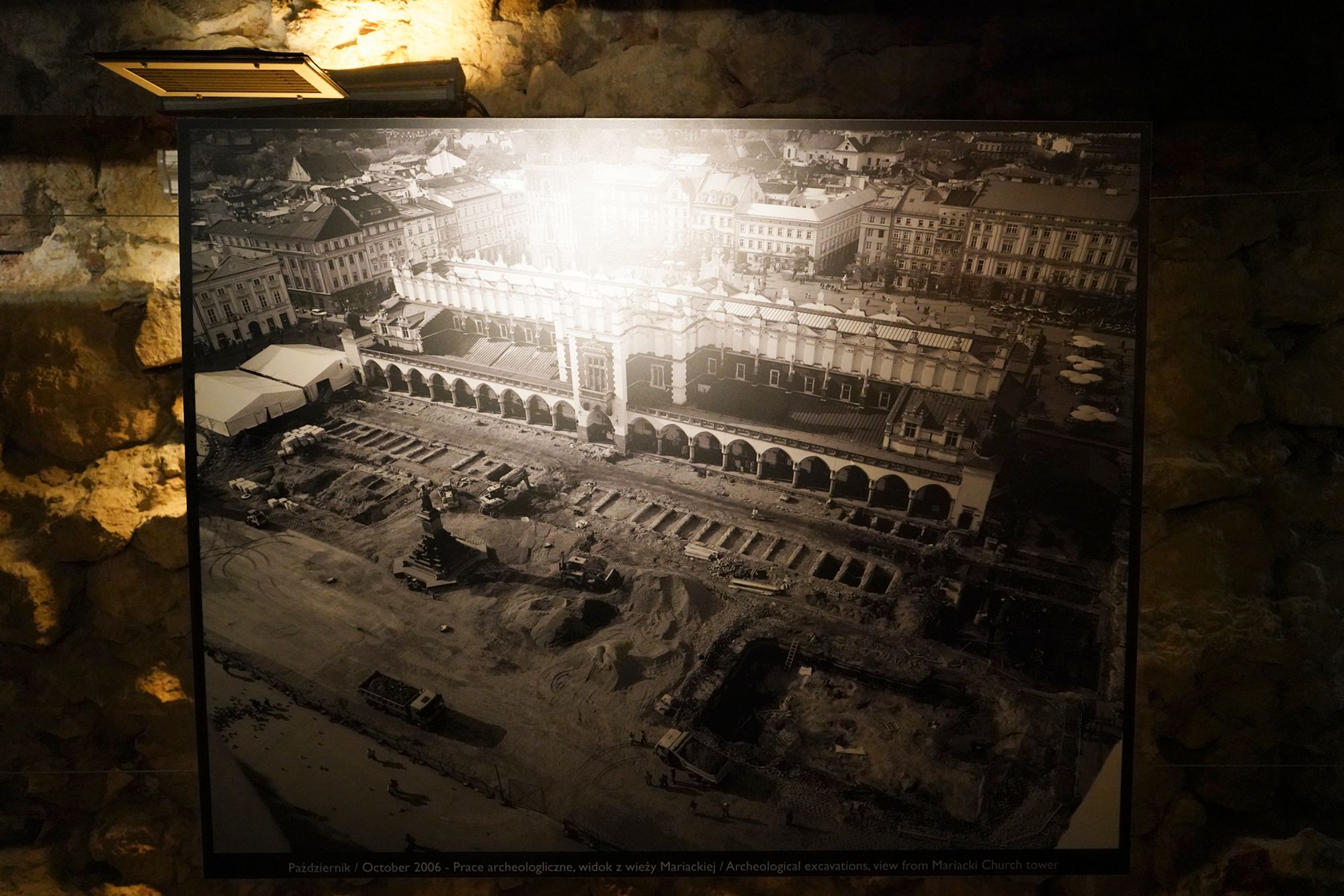
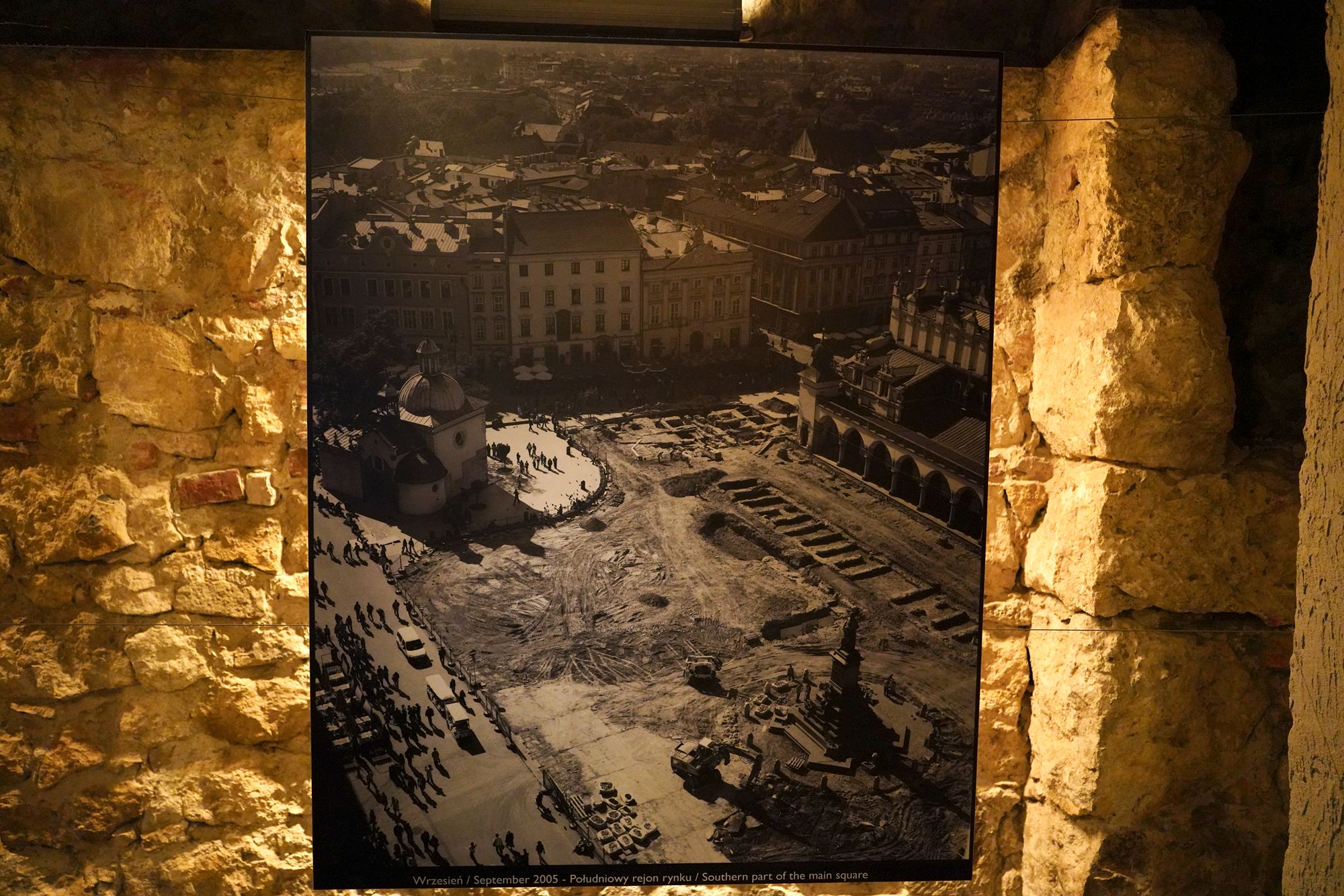
Archaeologists began excavating the eastern side of Kraków’s Main Market Square in August 2005, when workers were replacing the paving and building underground facilities for the museum and Cloth Hall. The work uncovered medieval streets, market-stall foundations, and objects from daily life. Excavations continued through 2010, and the museum opened that September.
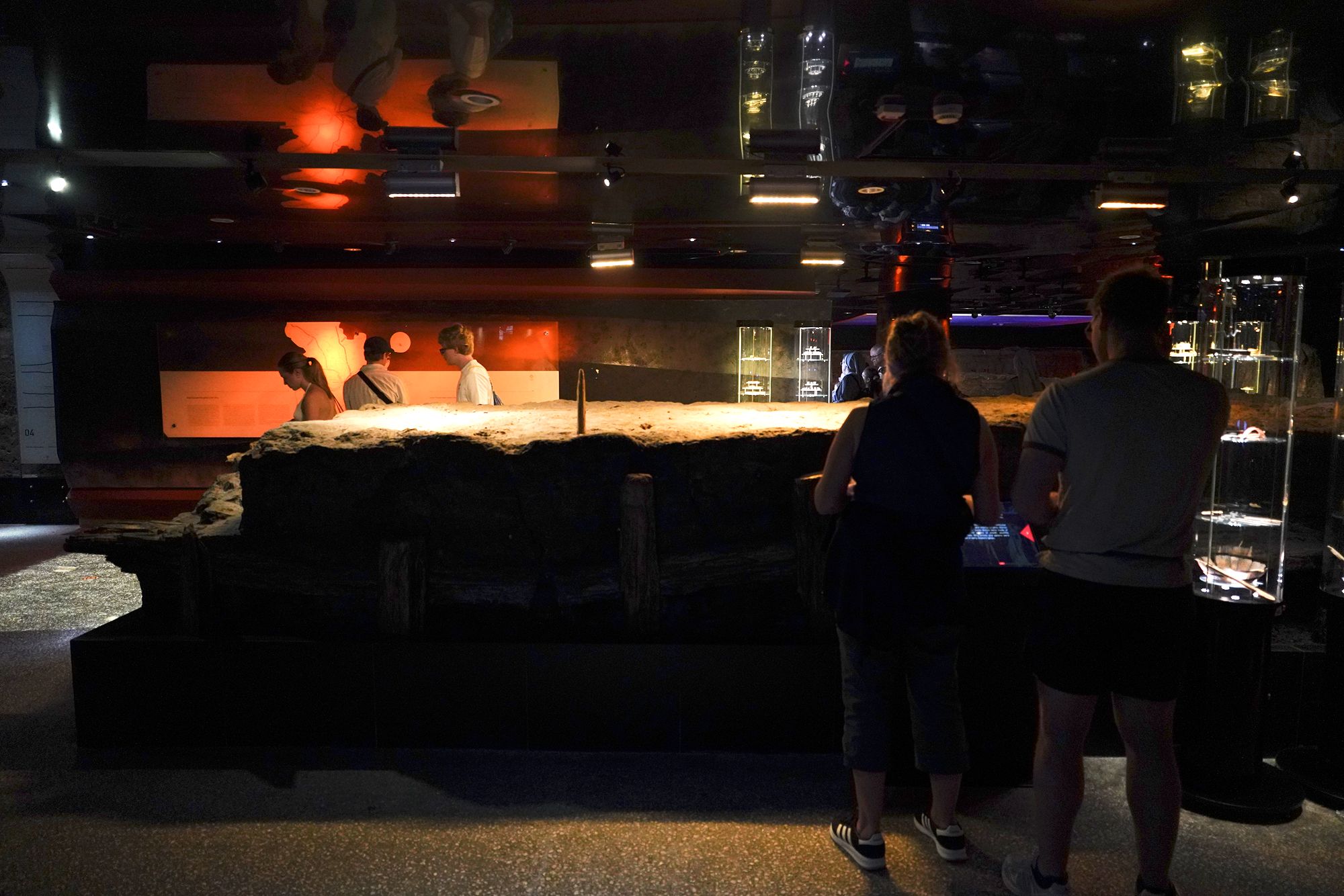
History of the Krakow Coloth Hall
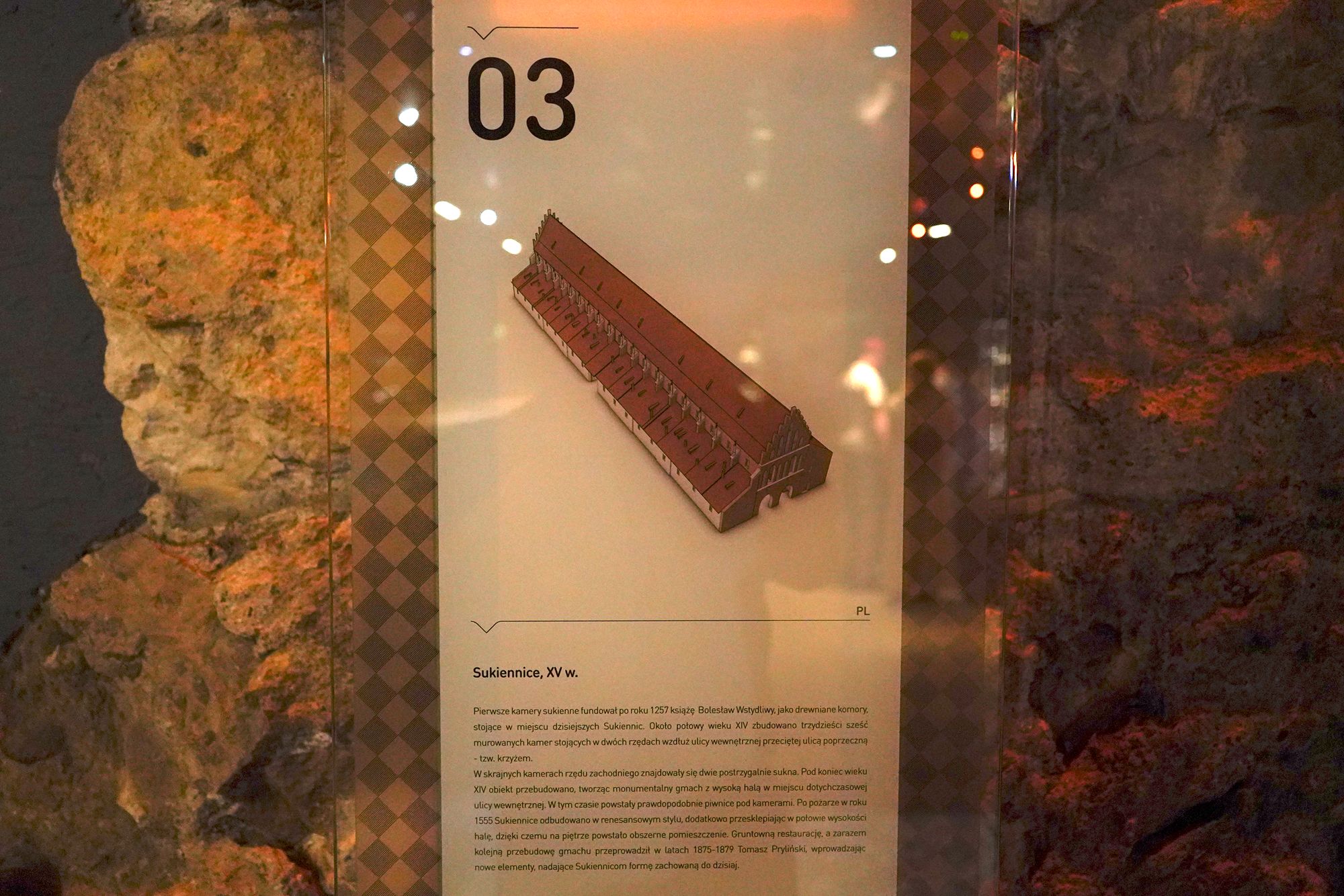
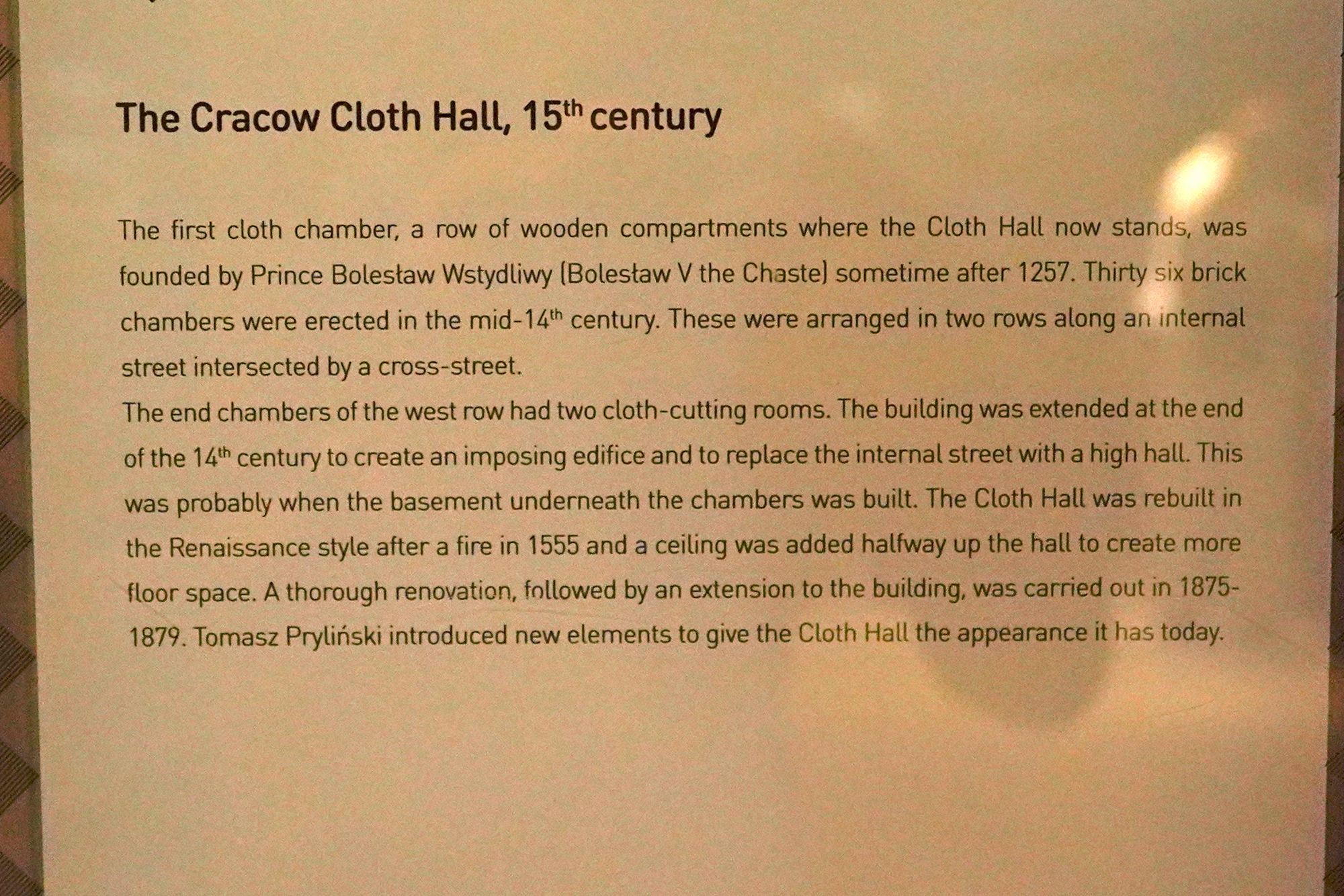
- After 1257, Prince Bolesław V the Chaste established a row of wooden trading compartments on the site.
- In the mid-14th century, these were replaced by 36 brick chambers.
- The hall was enlarged near the end of the 14th century; its basement was probably built then.
- After a fire in 1555, the Cloth Hall was rebuilt in the Renaissance style.
- Renovations and an extension in 1875–1879, designed by Tomasz Pryliński, gave it much of its present appearance.
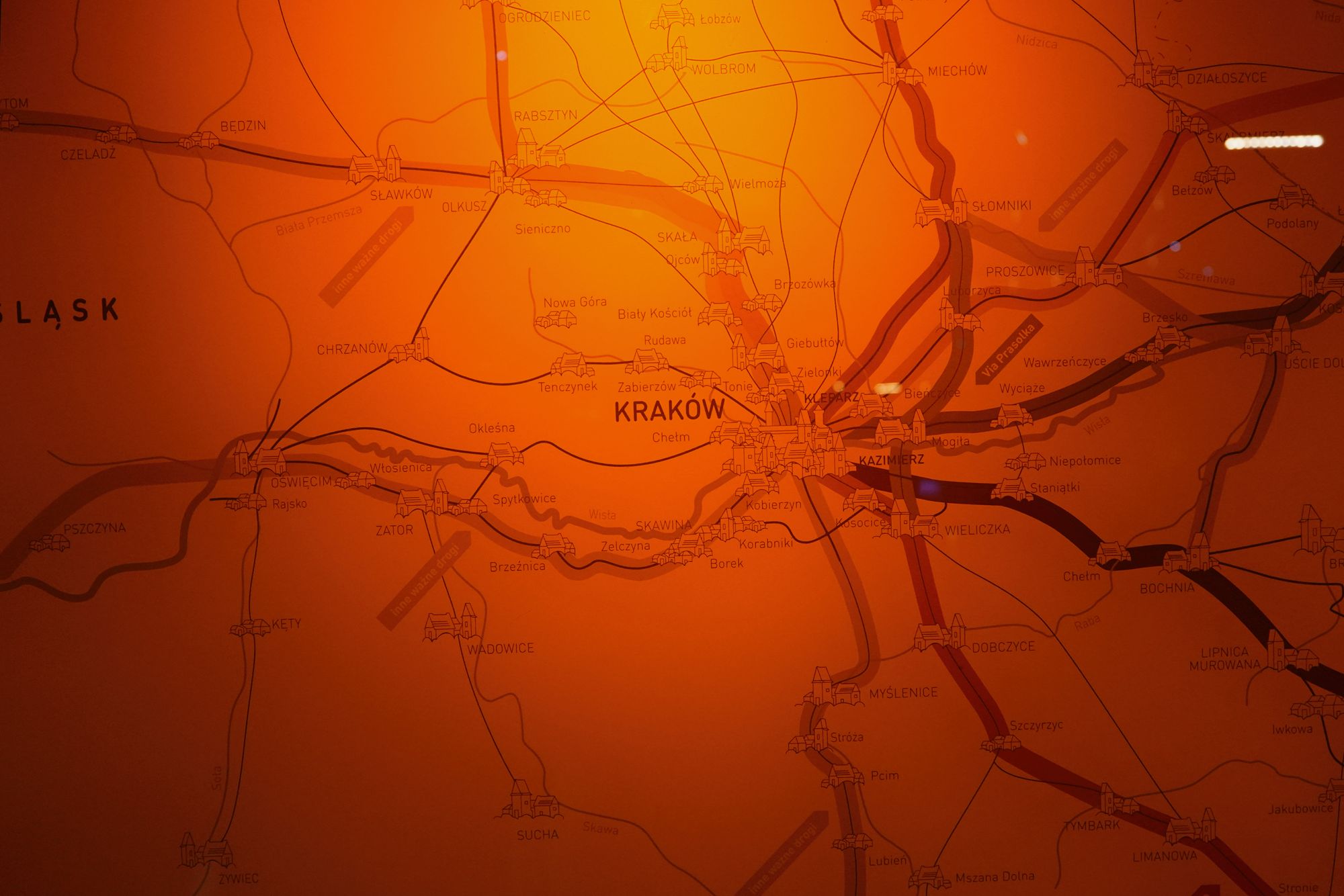
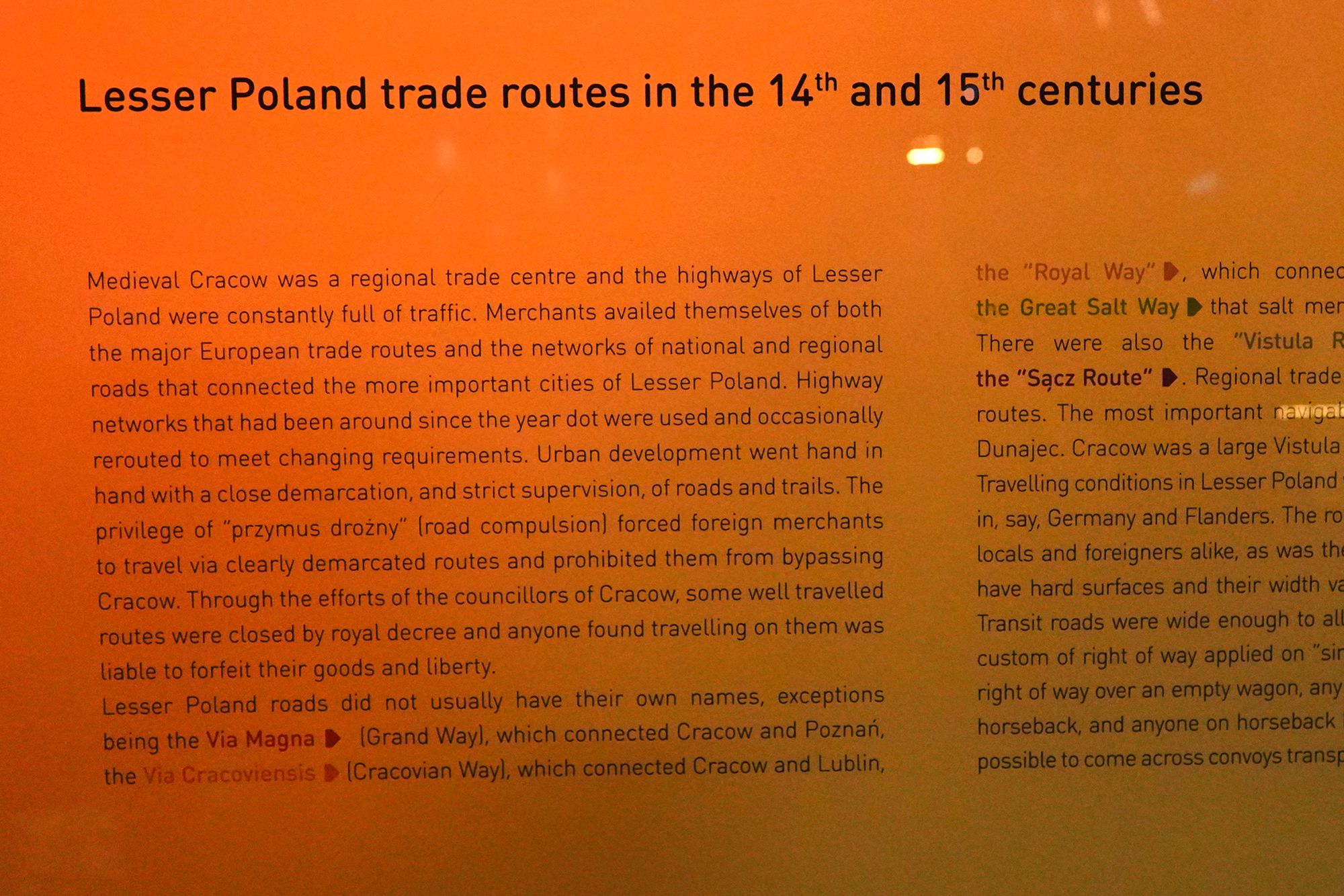
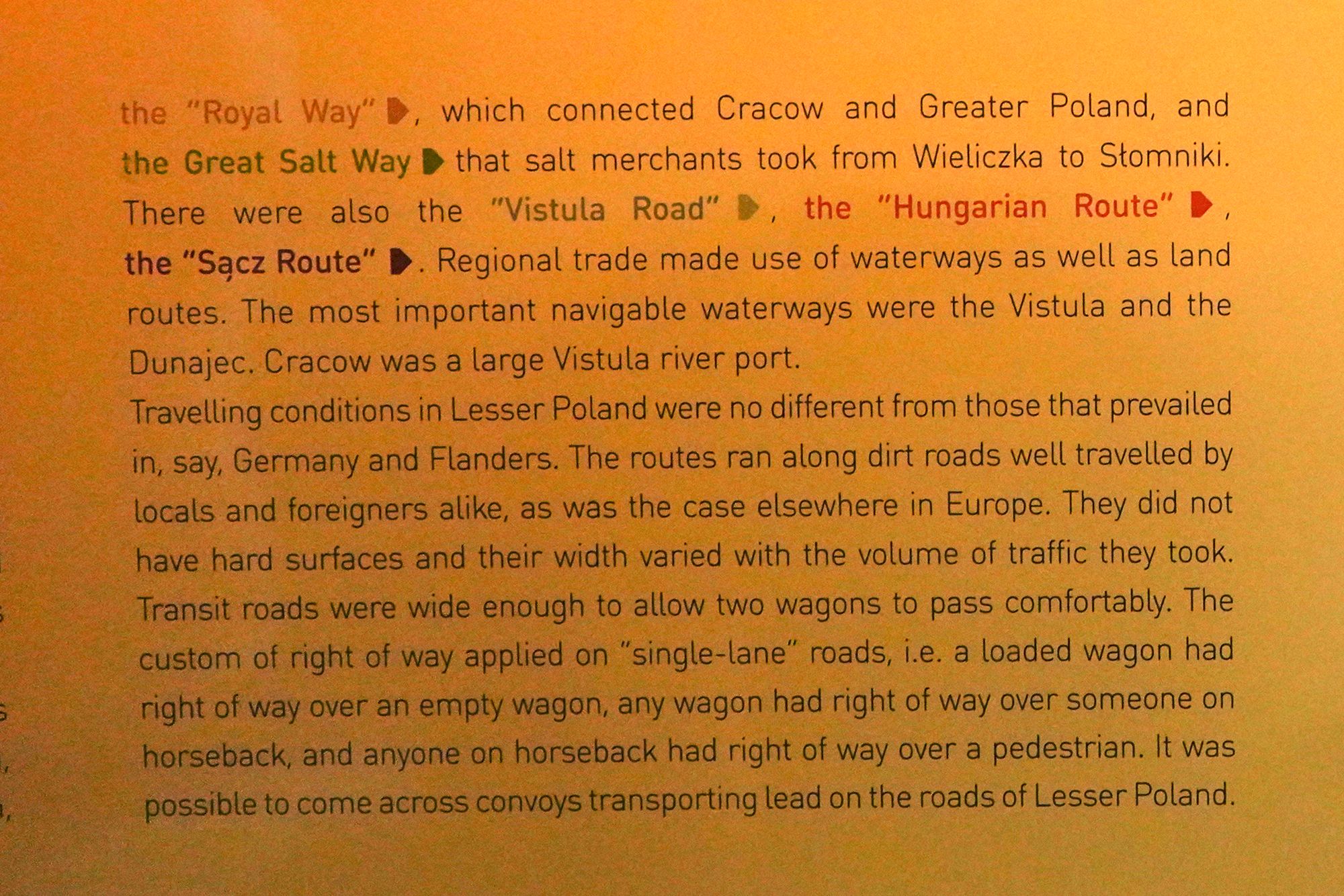
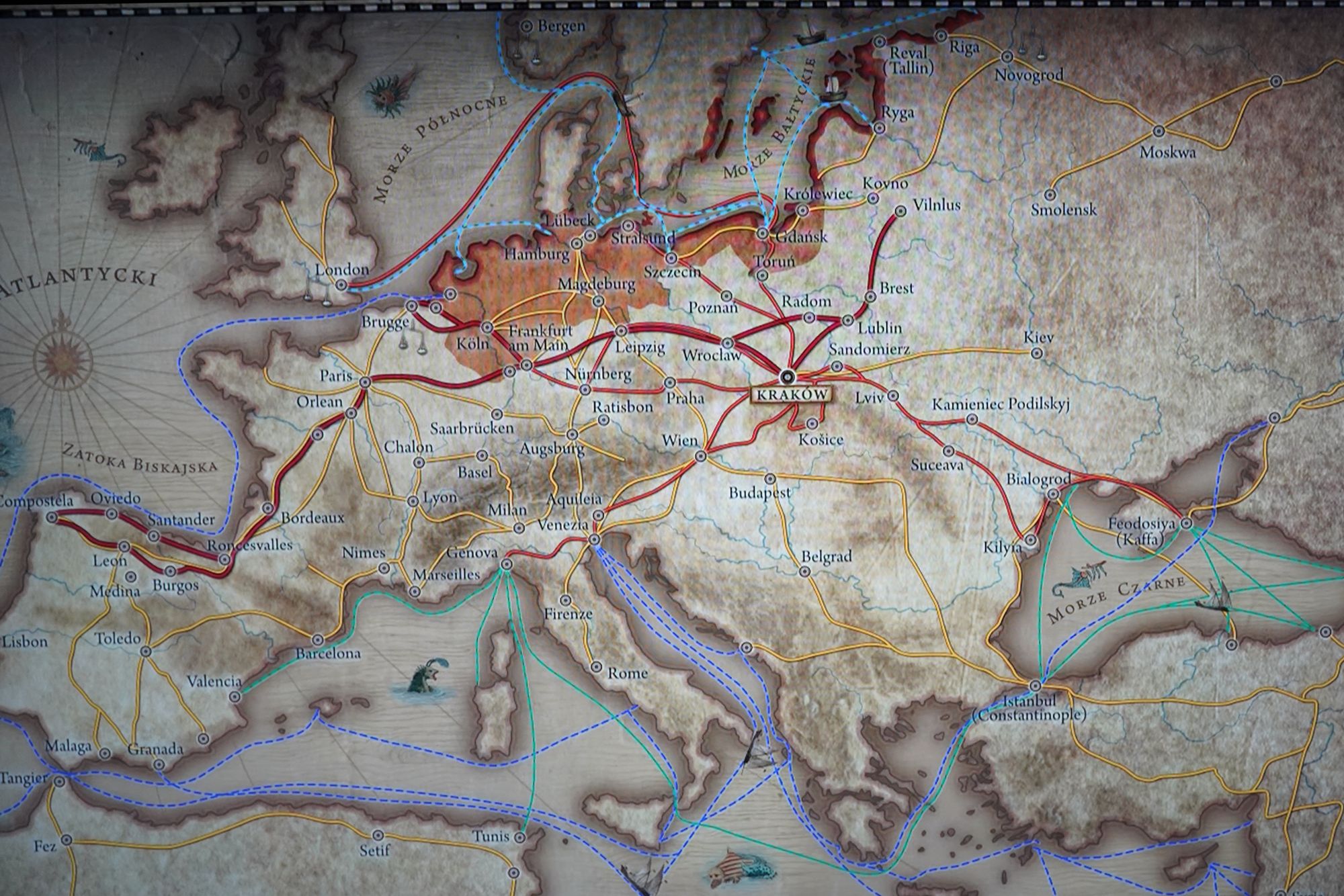
This panel explains how Kraków controlled medieval trade routes. The city was an important regional trading center, and foreign merchants were required to follow designated roads through Kraków. Some routes were closed by royal decree; travelers who used them could lose their goods and freedom. Two named routes were the Via Magna to Poznań and the Via Cracoviensis to Lublin.
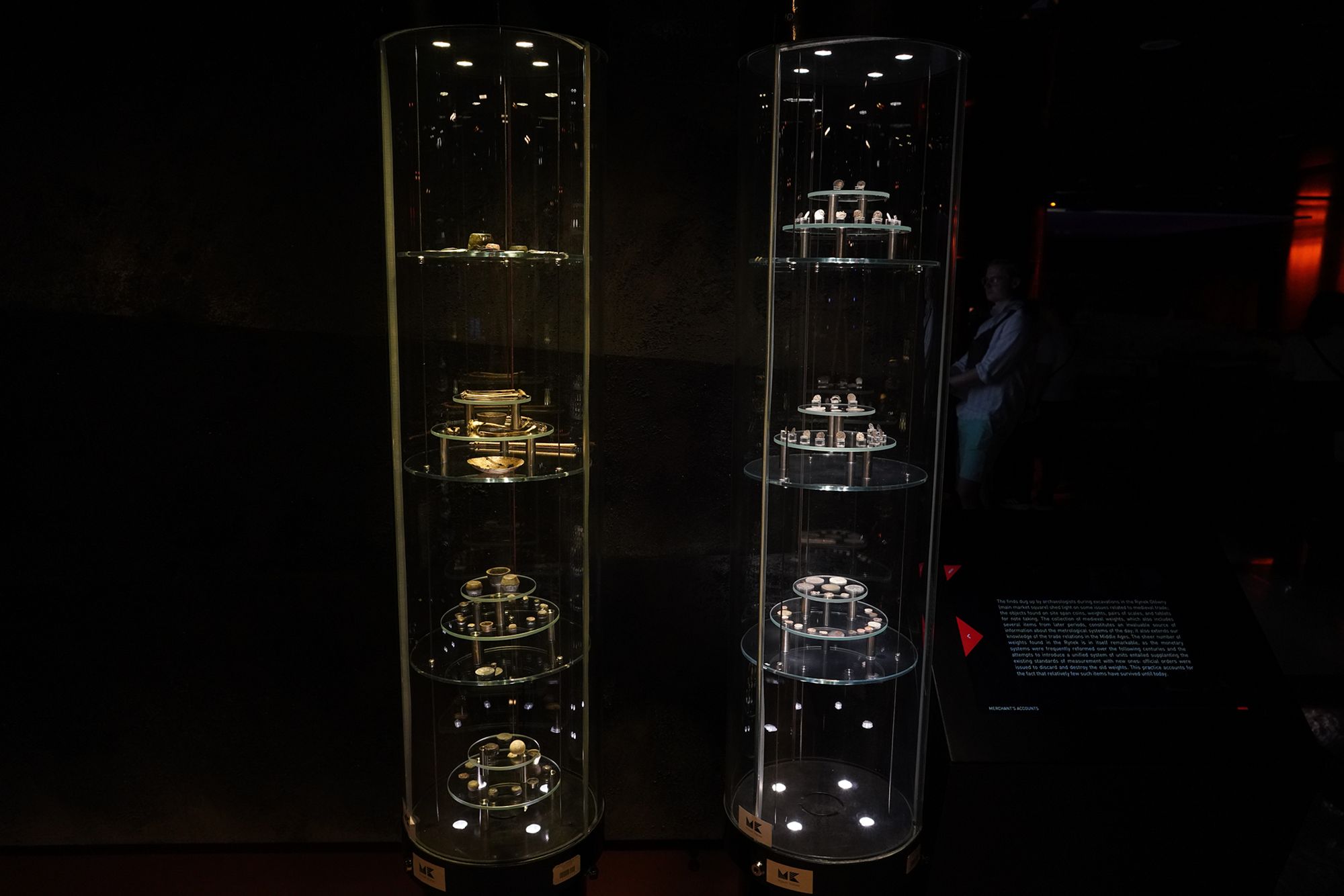
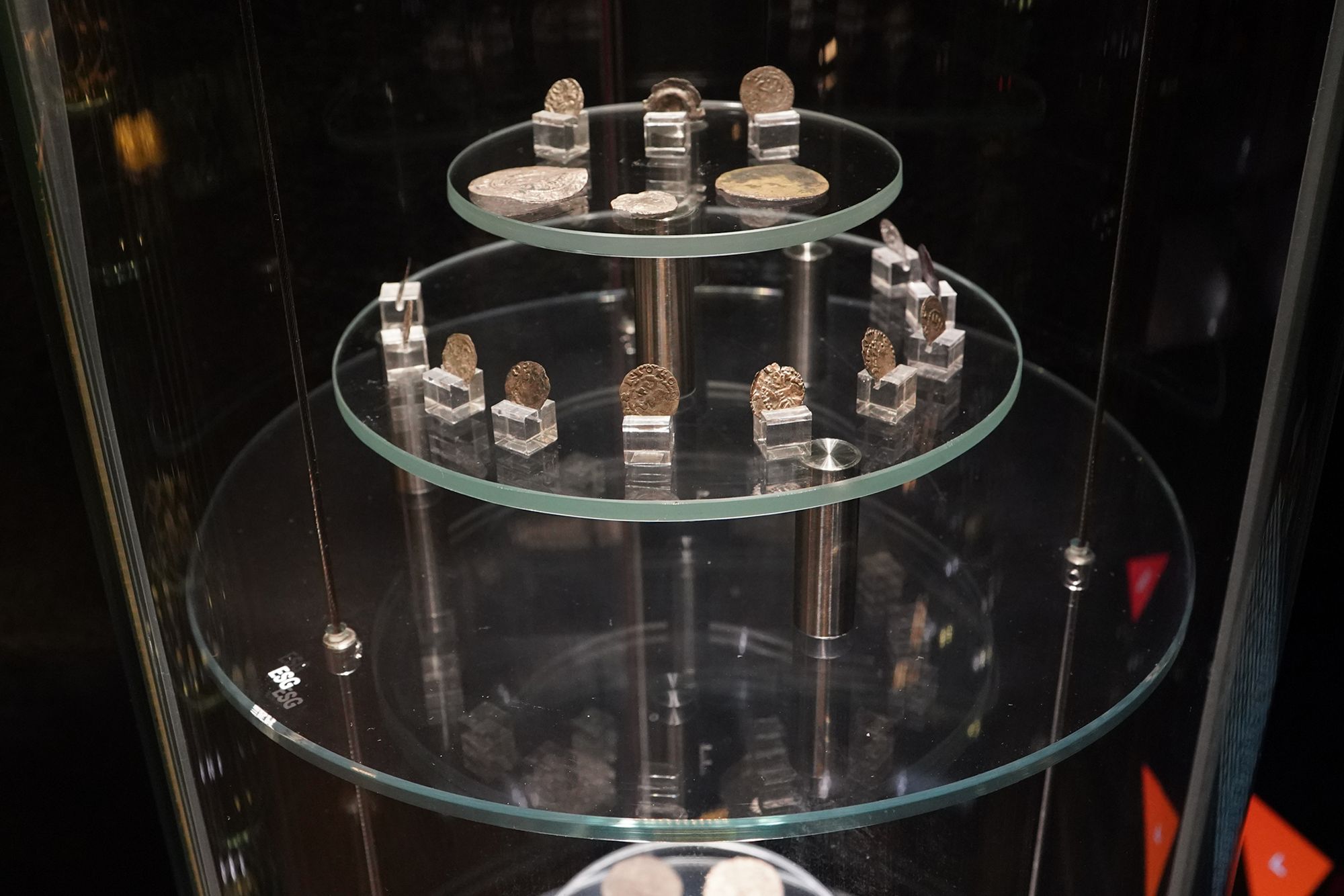
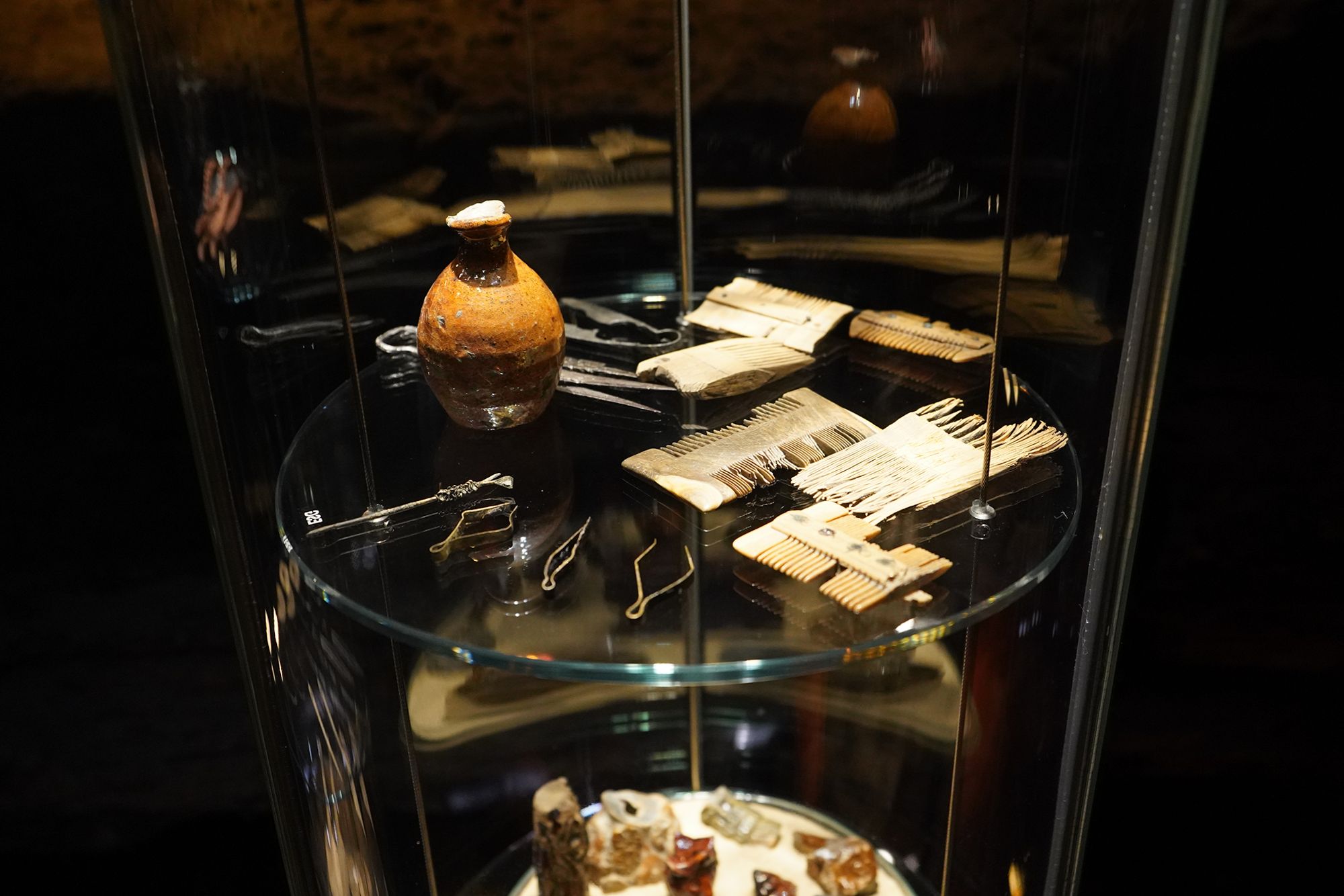
The excavations uncovered coins, weights, scales, and tablets used for taking notes. These objects reveal how medieval merchants measured goods and conducted trade. Relatively few old weights survive because, when measurement standards changed, official orders required the old weights to be discarded or destroyed.
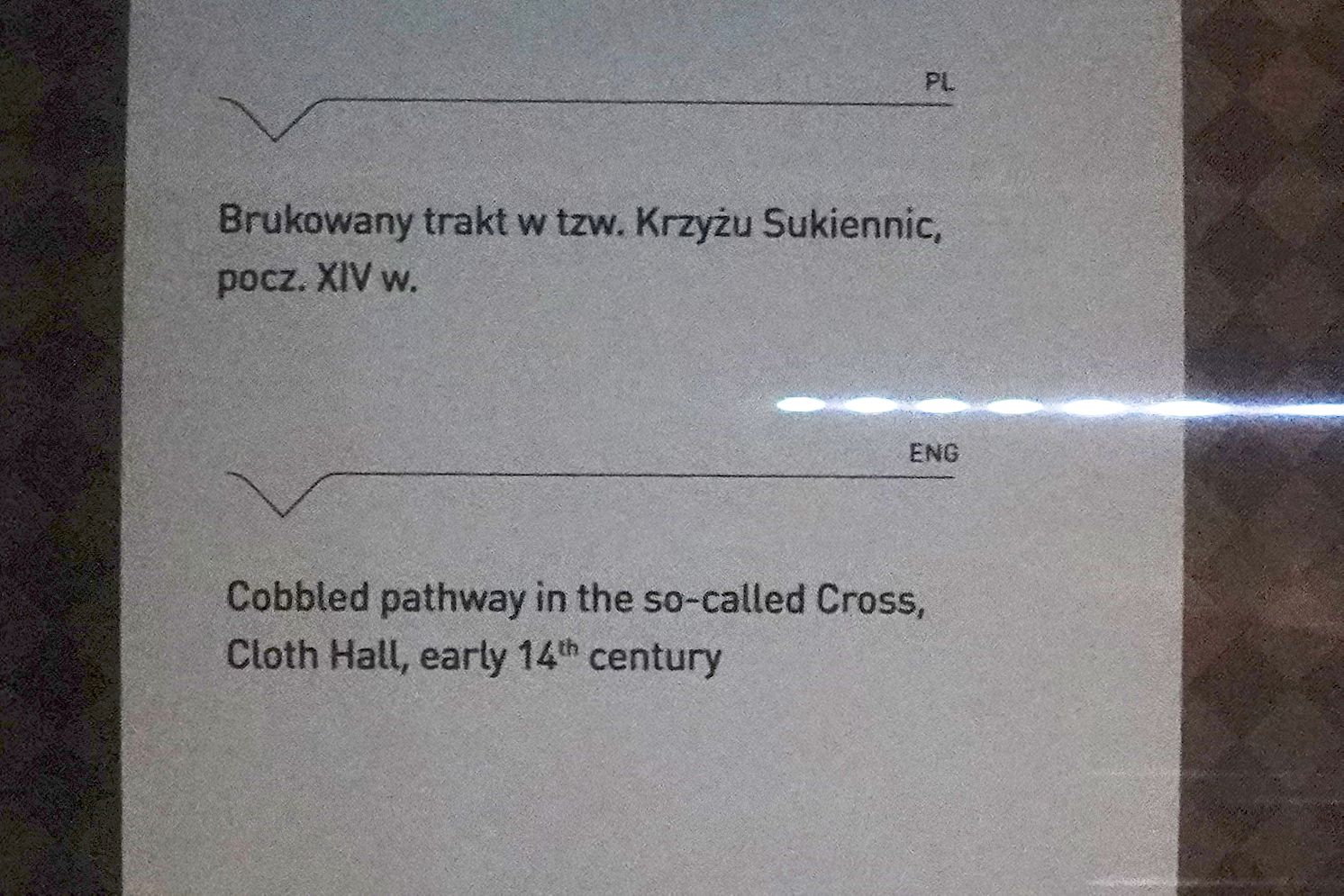
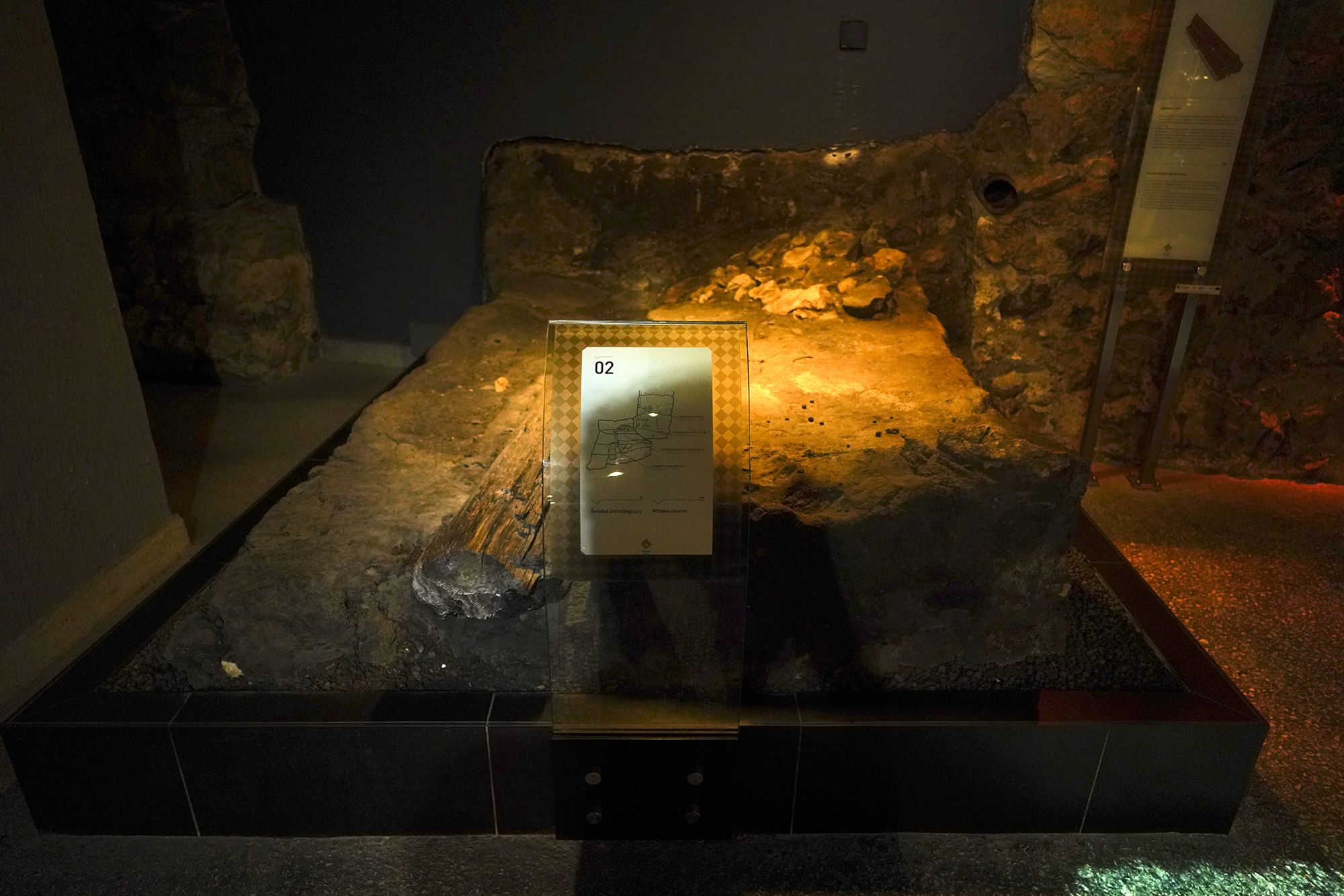
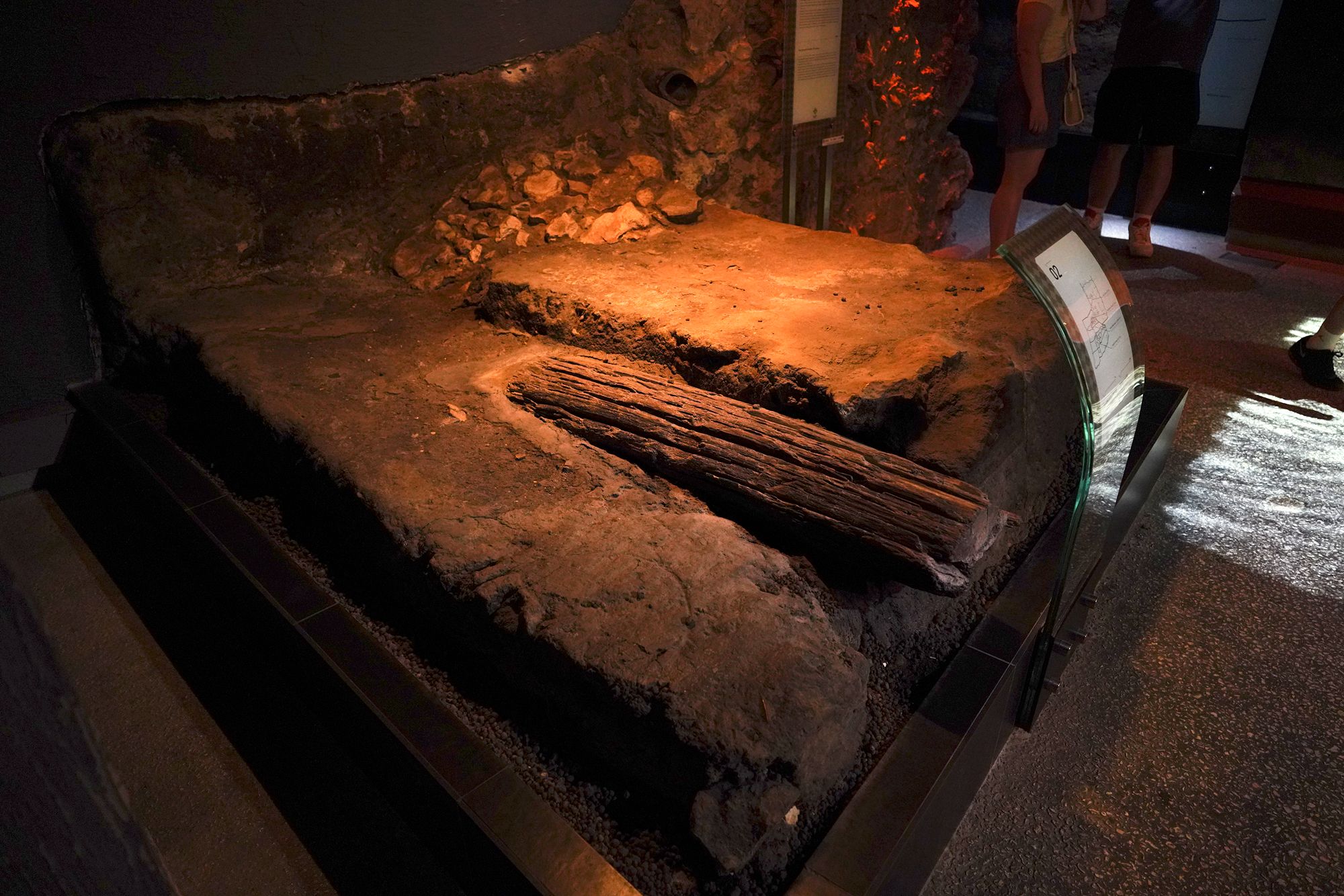
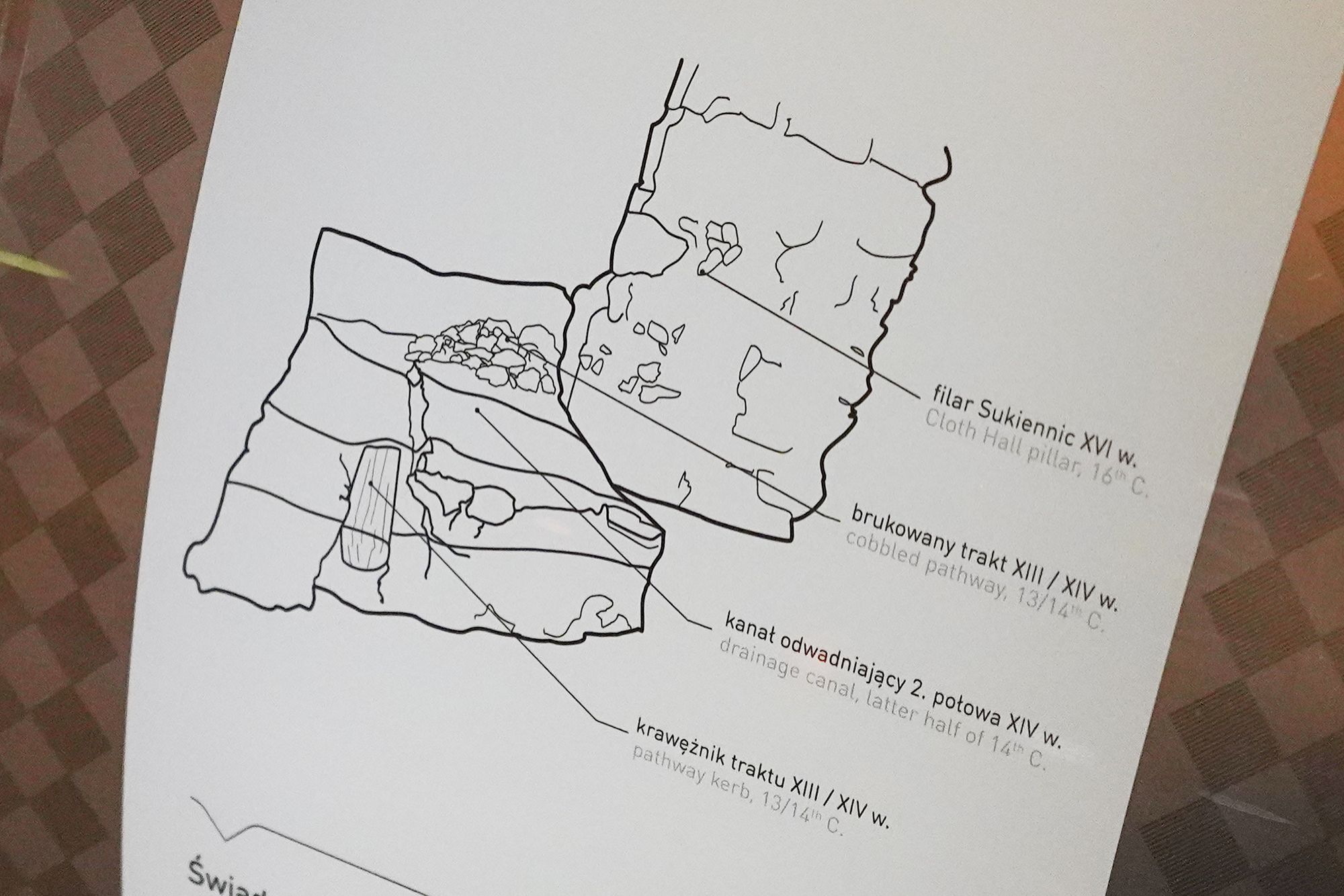
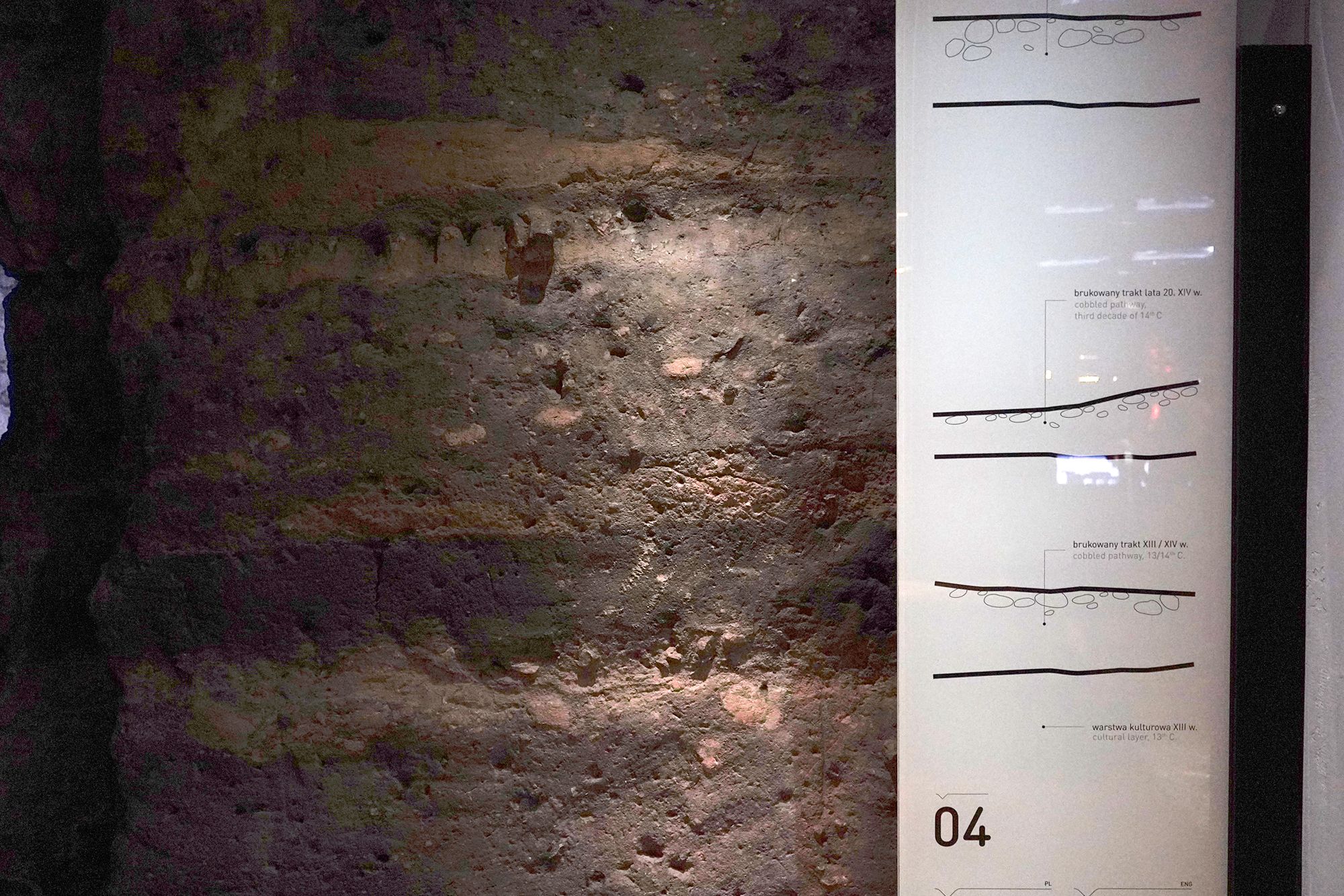
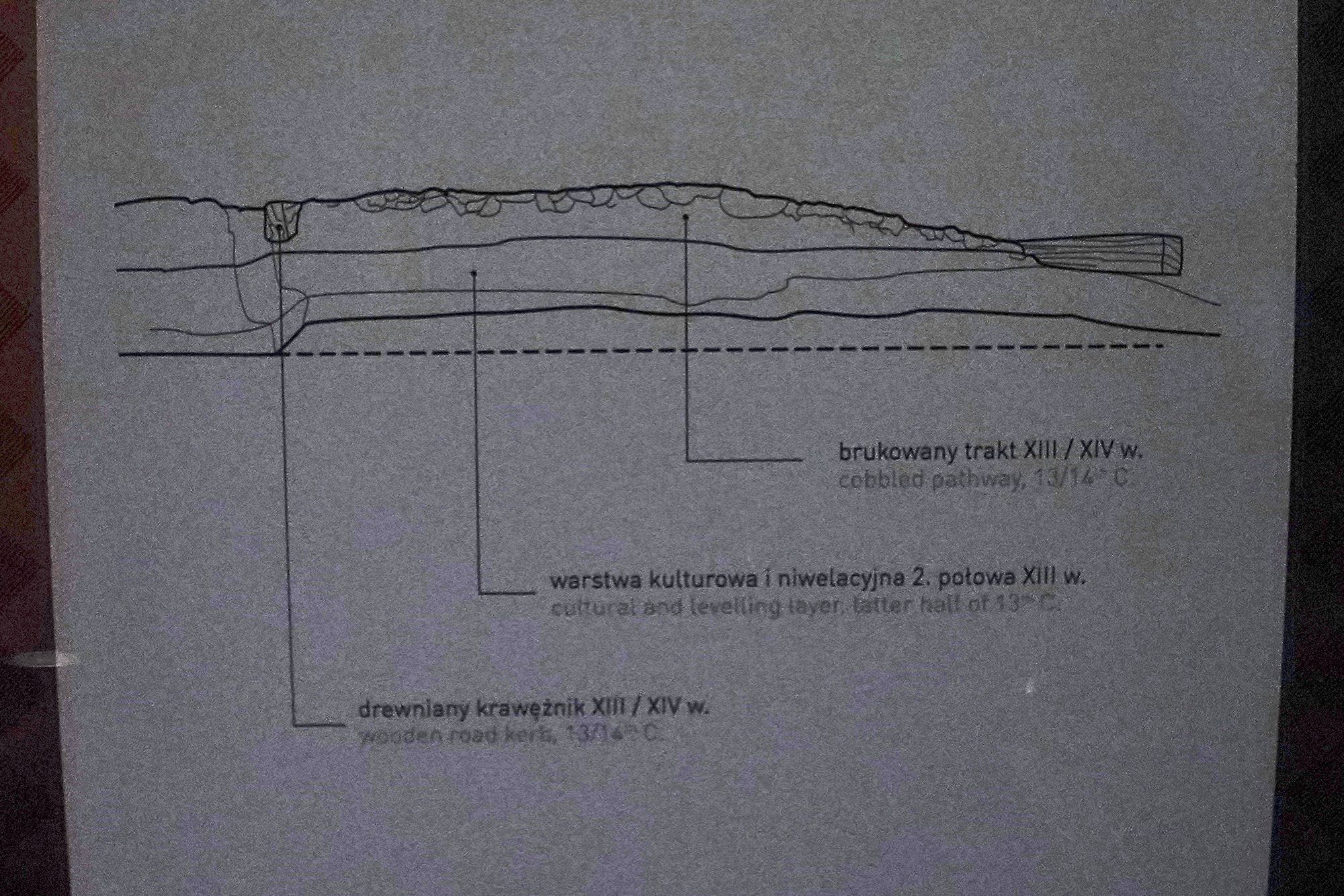
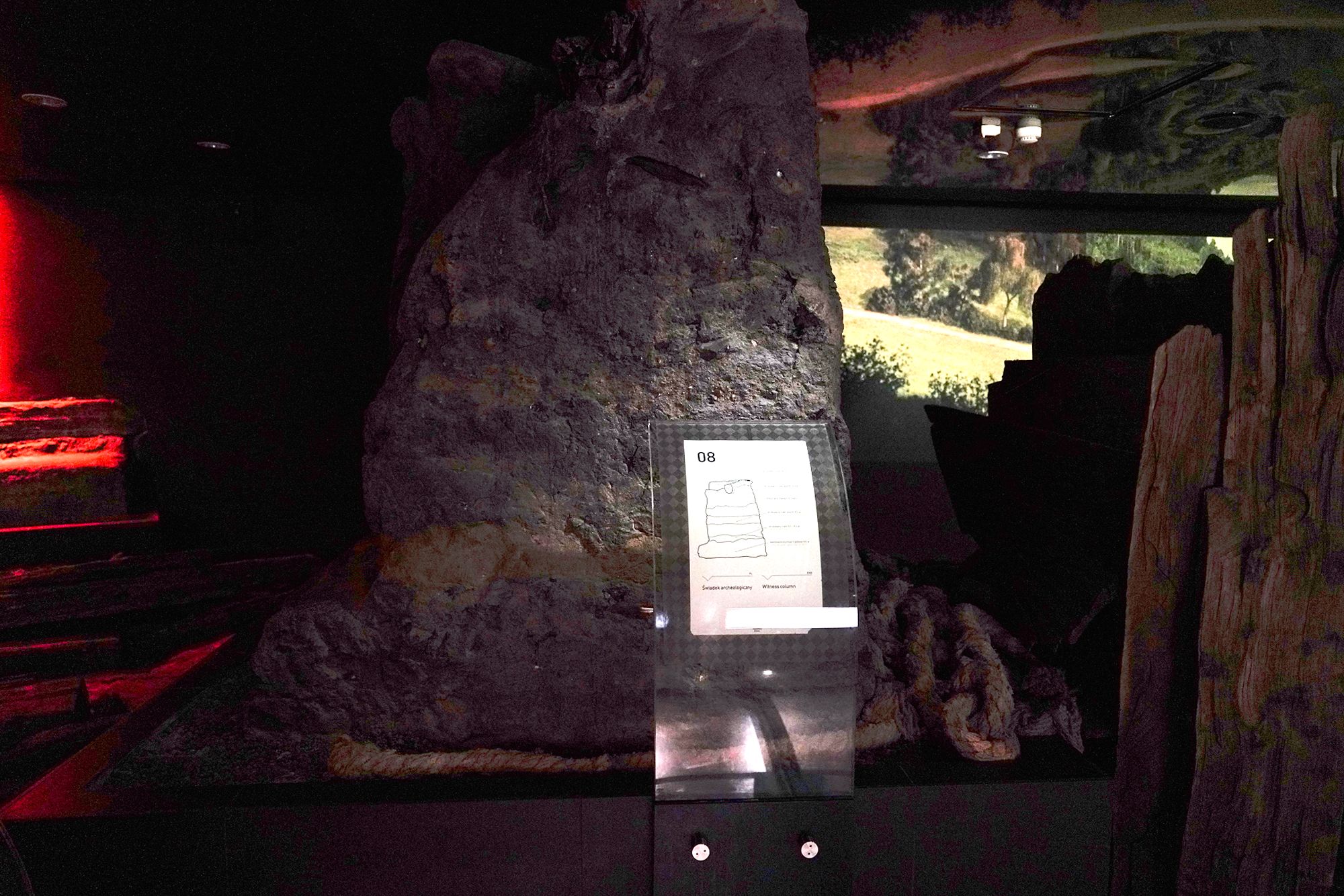
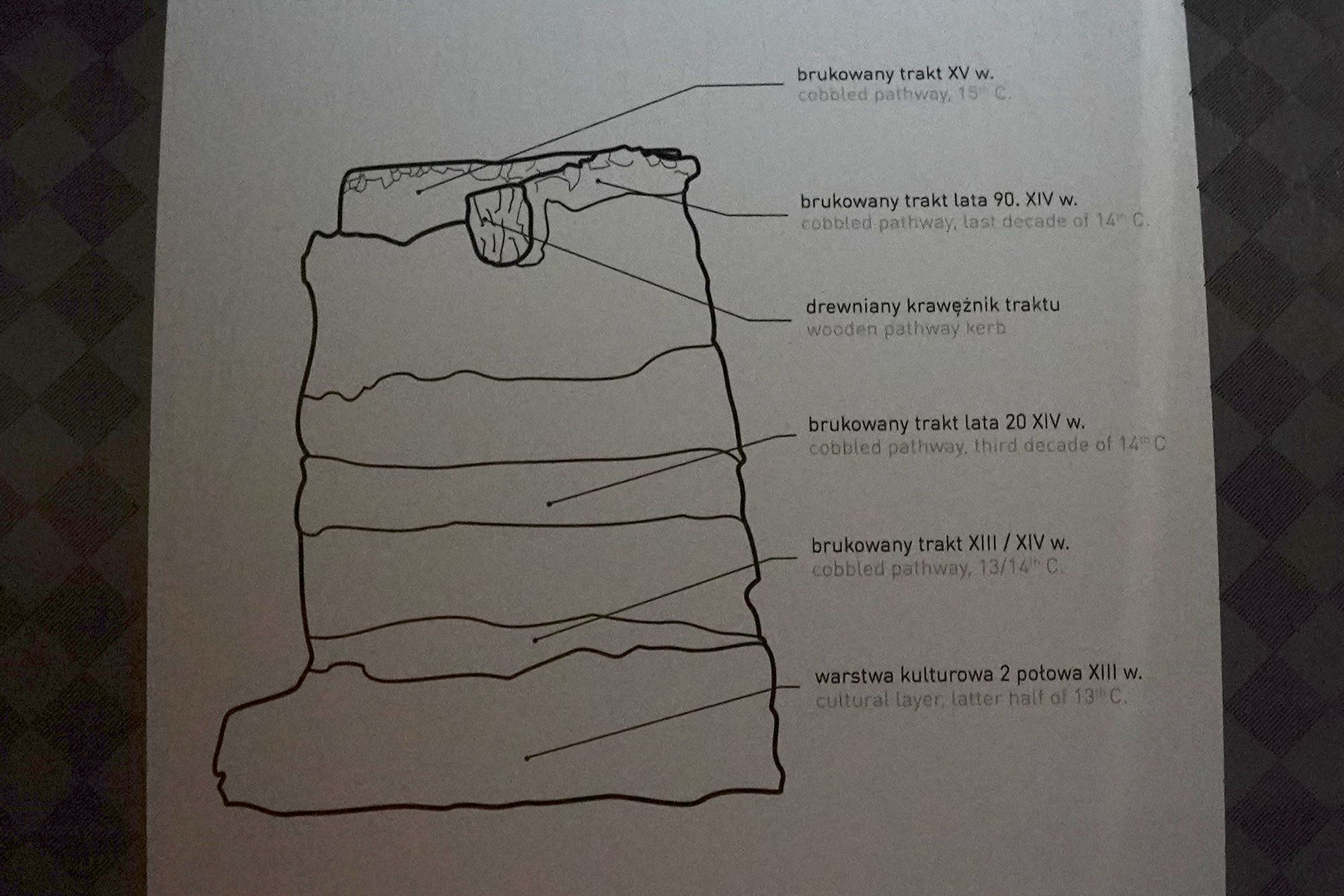
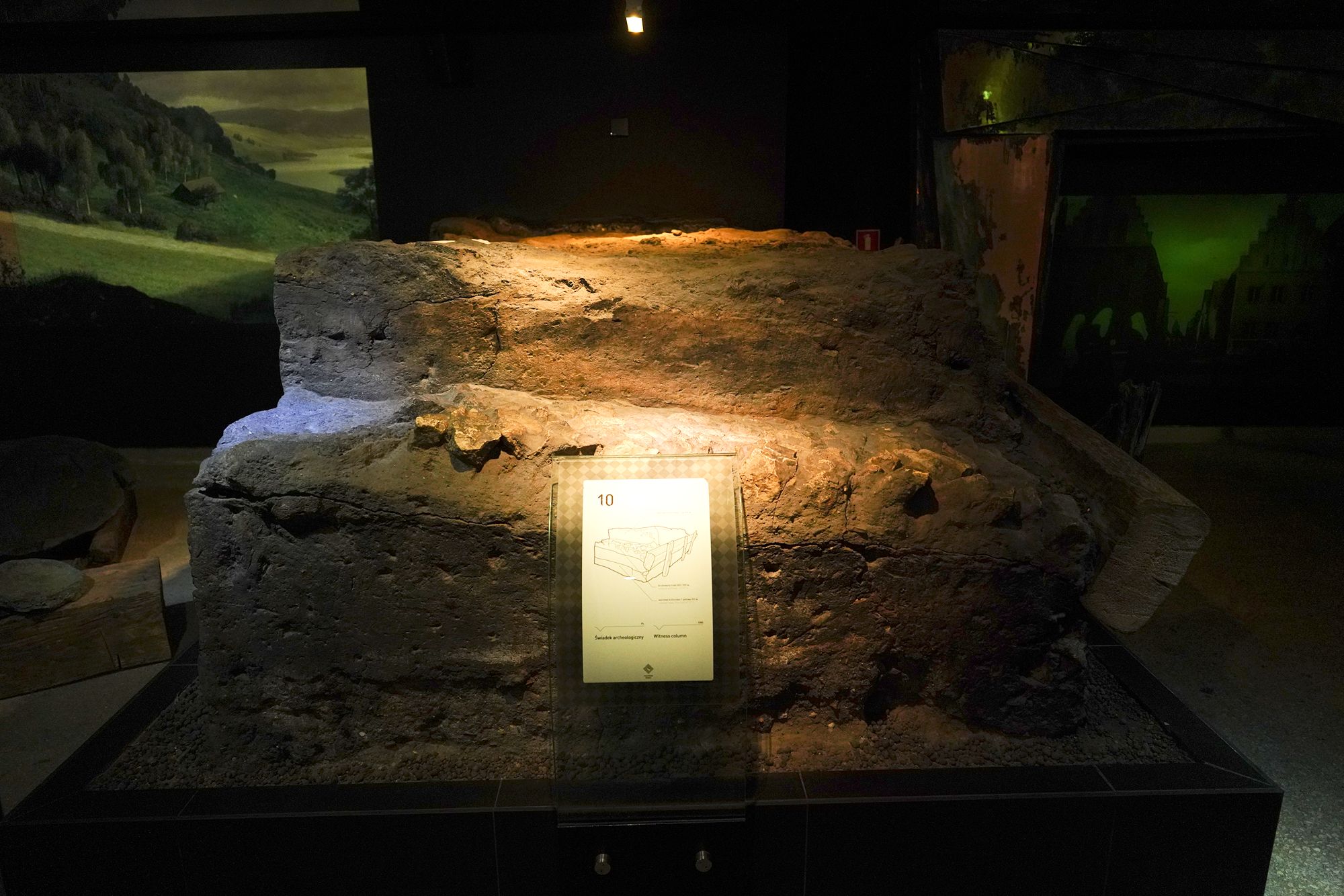
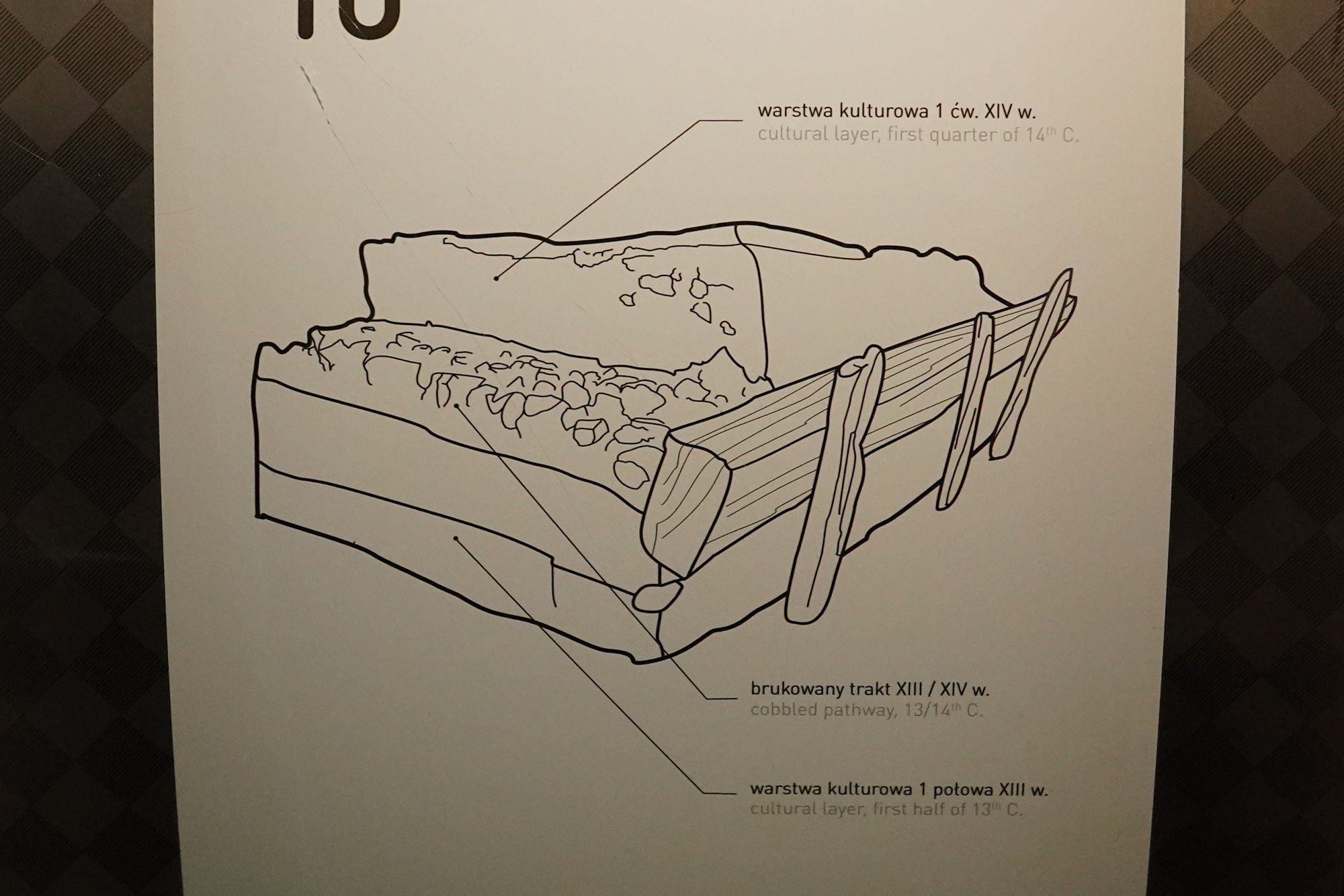
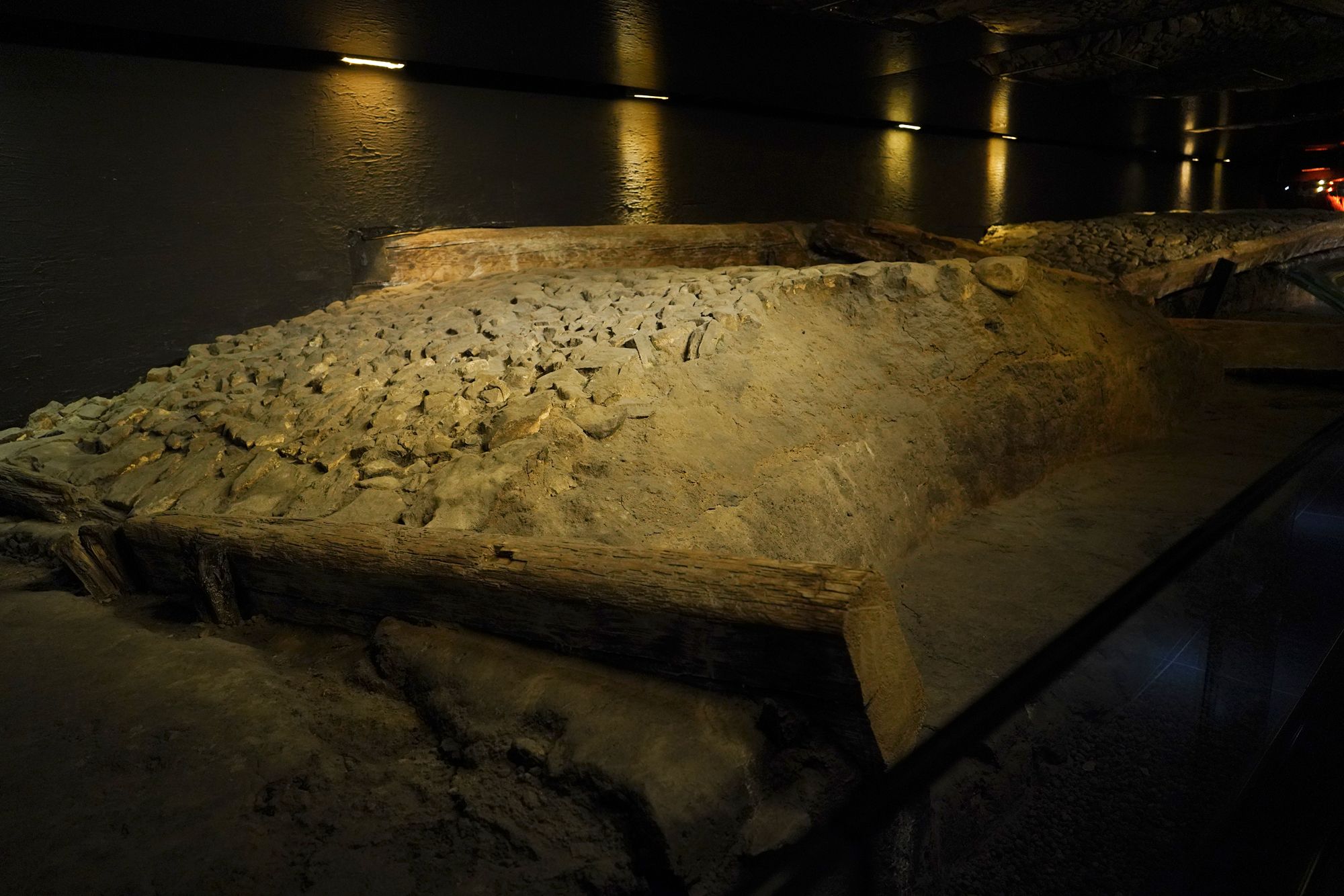
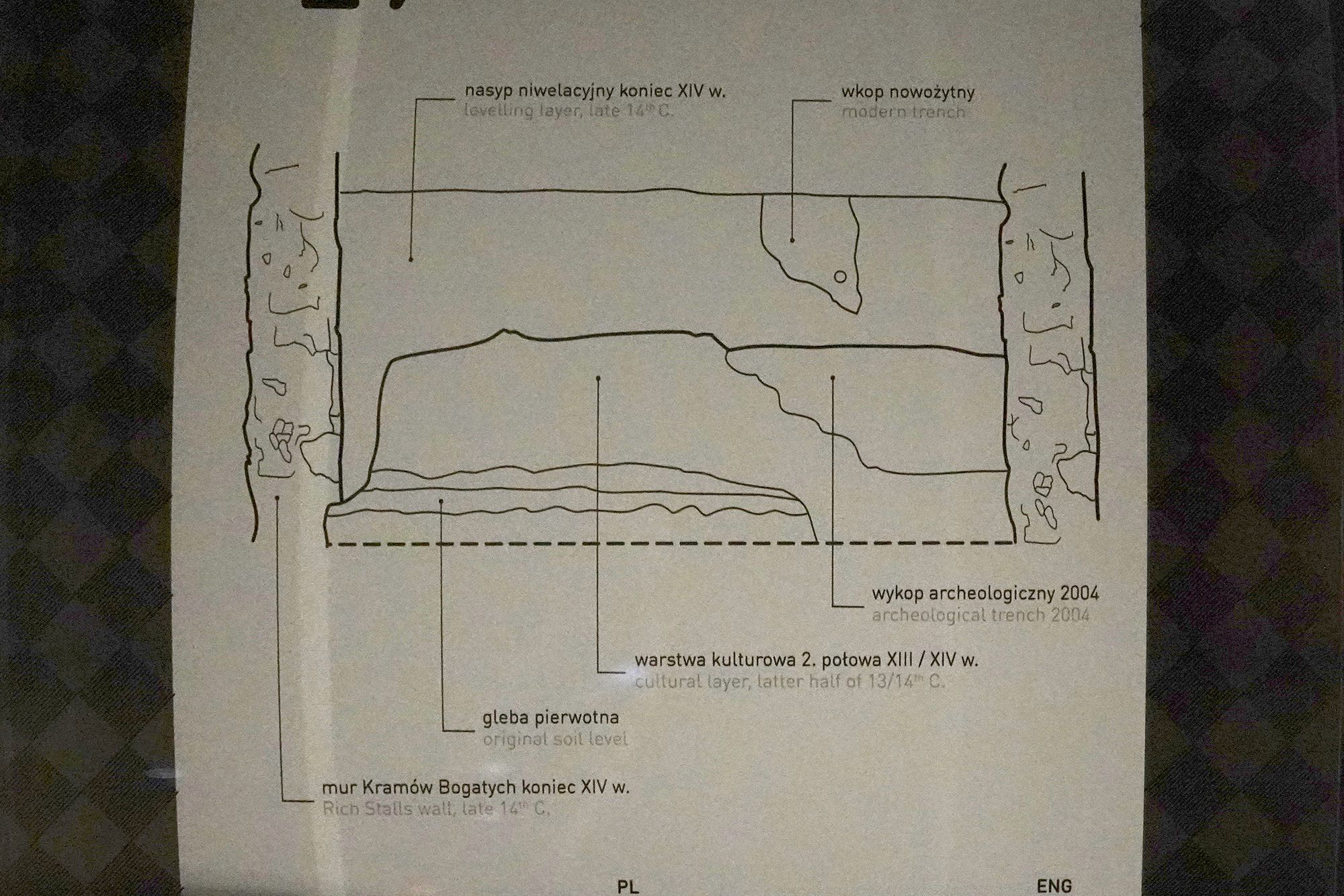
This diagram shows a cross-section of a medieval road in Kraków. It identifies a cobbled pathway from the 13th–14th centuries, a cultural and leveling layer from the second half of the 13th century, and a wooden road curb from the 13th–14th centuries.
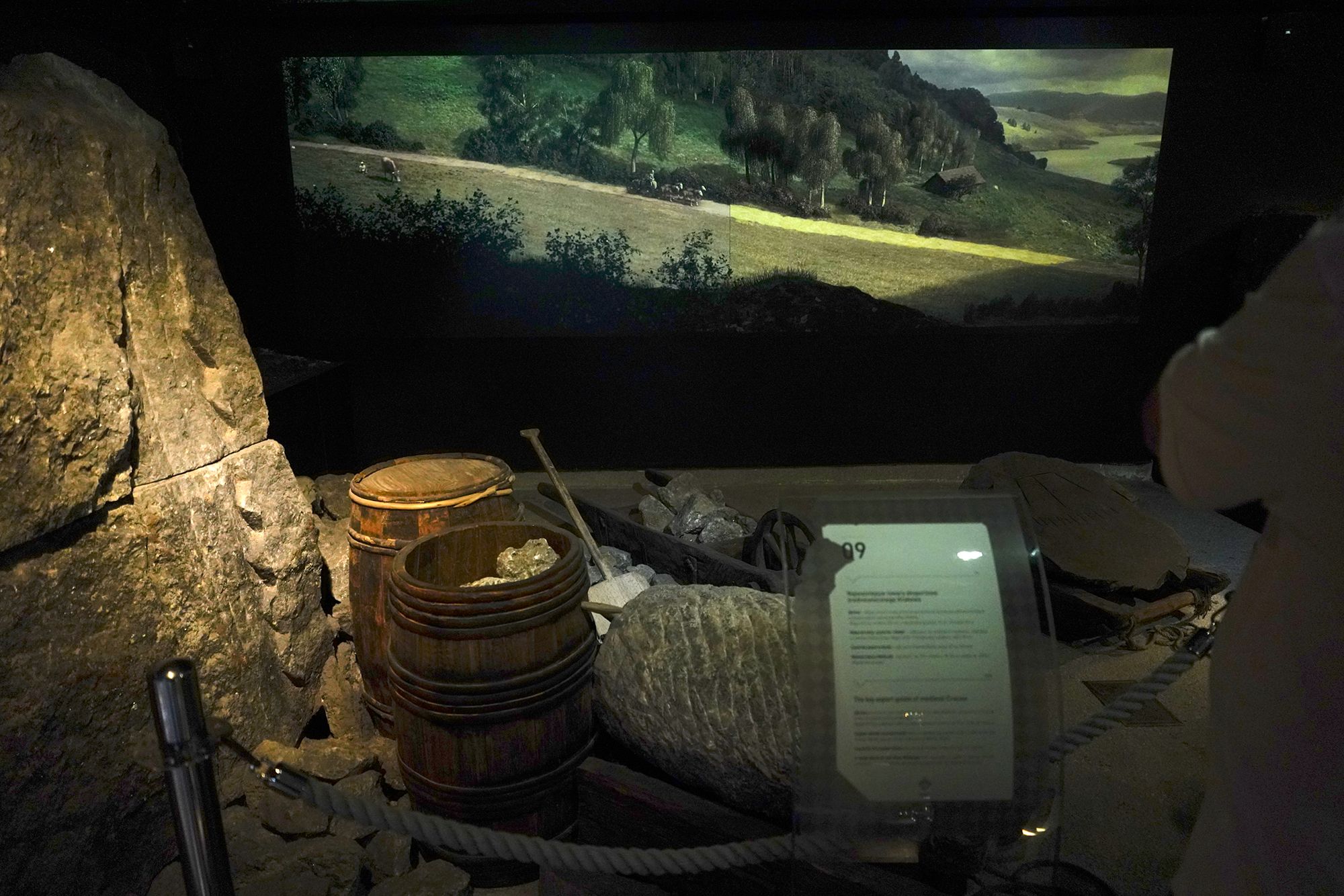
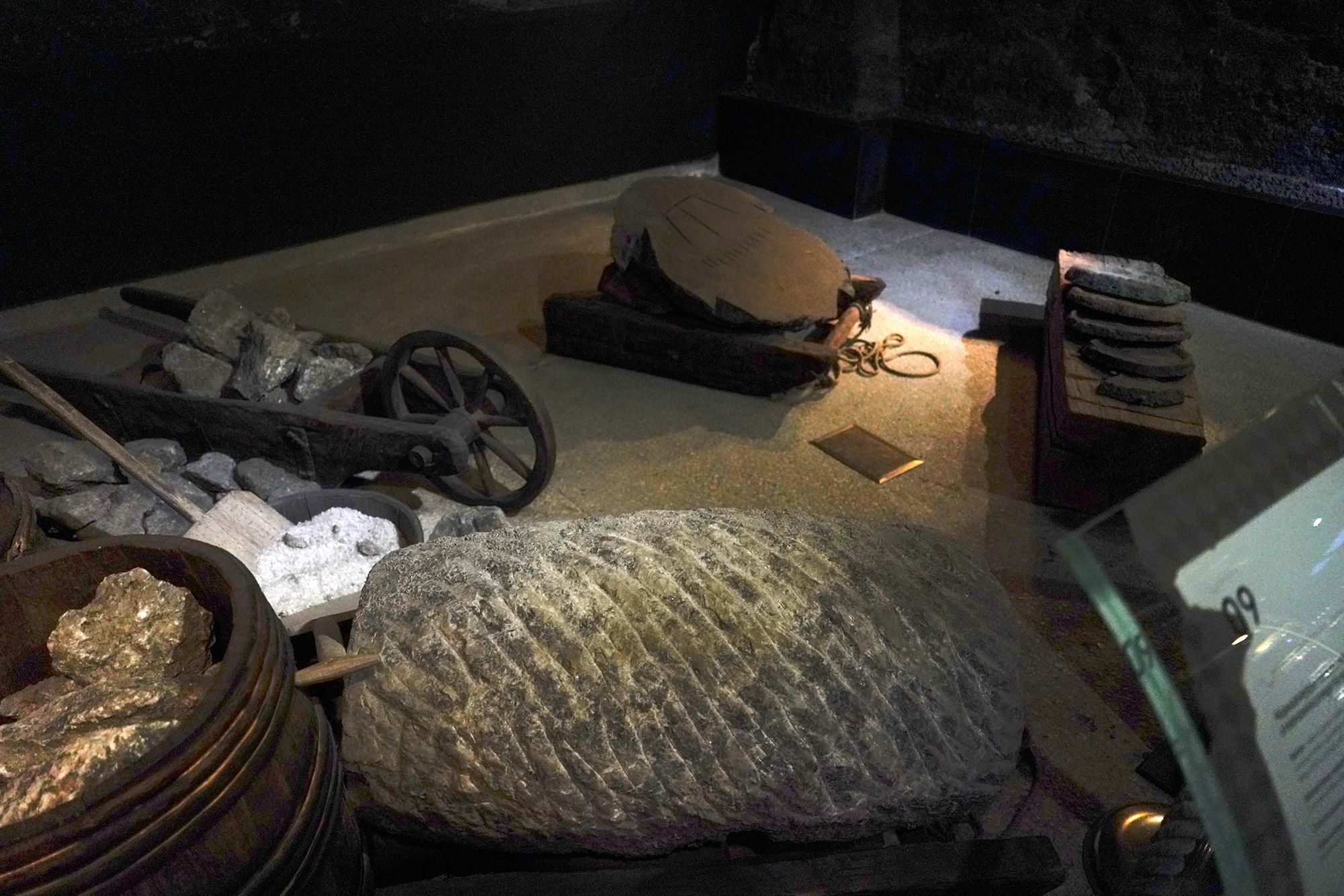
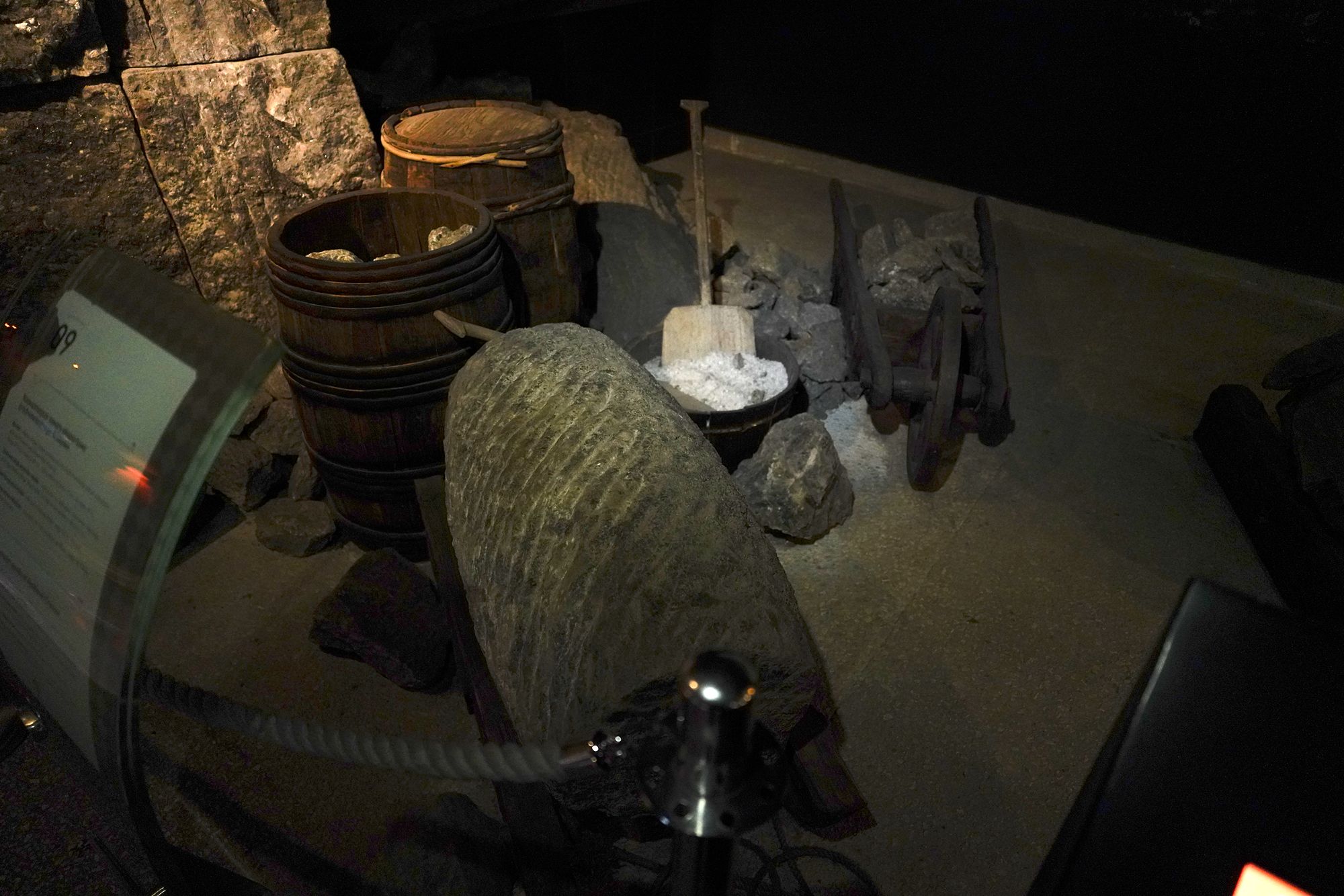
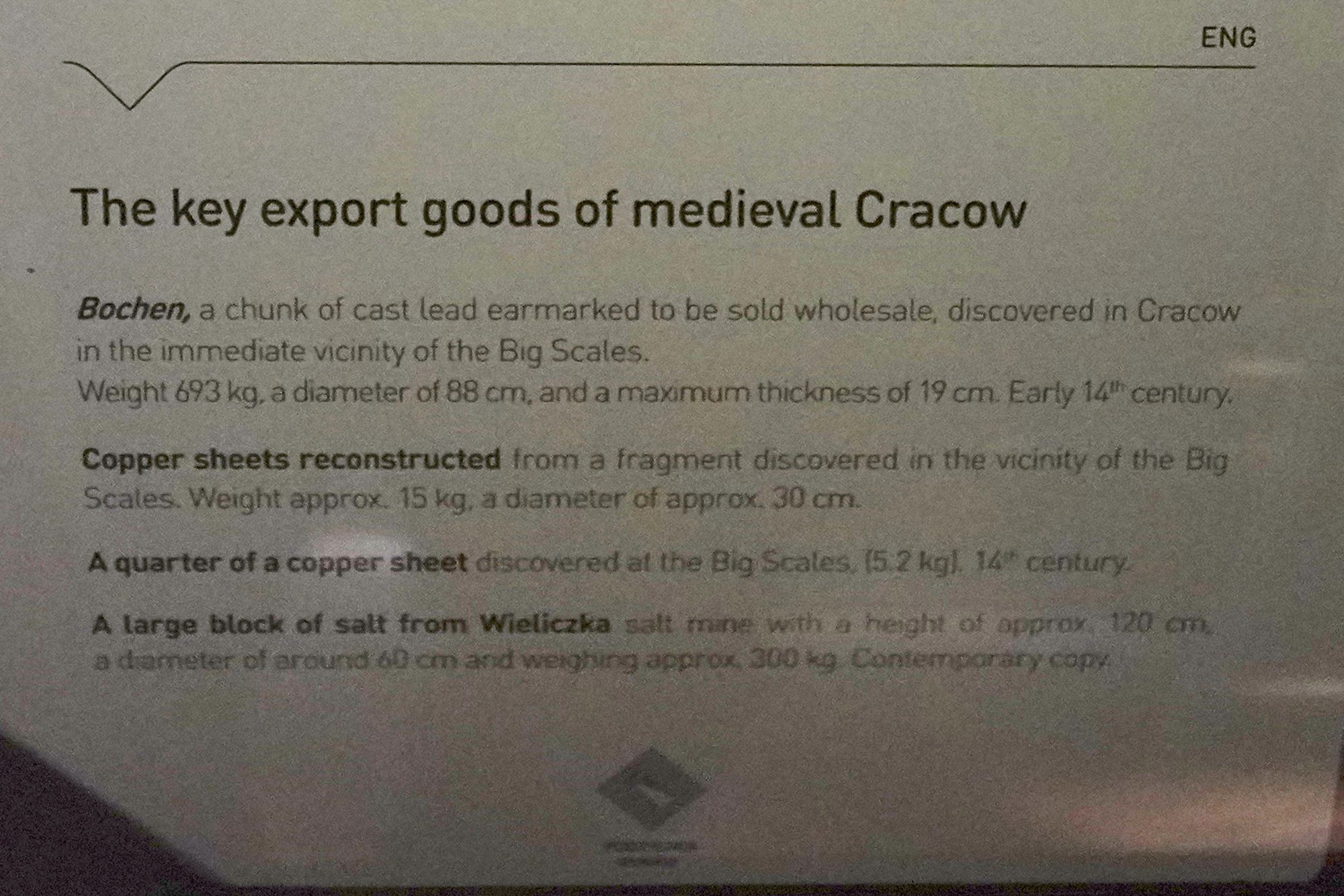
The display shows some of Kraków’s medieval export goods: a huge 693-kilogram block of lead, copper sheets, and a large block of salt from the Wieliczka mine. The lead and copper were found near the Big Scales, where goods were weighed. The salt block shown is a contemporary copy.
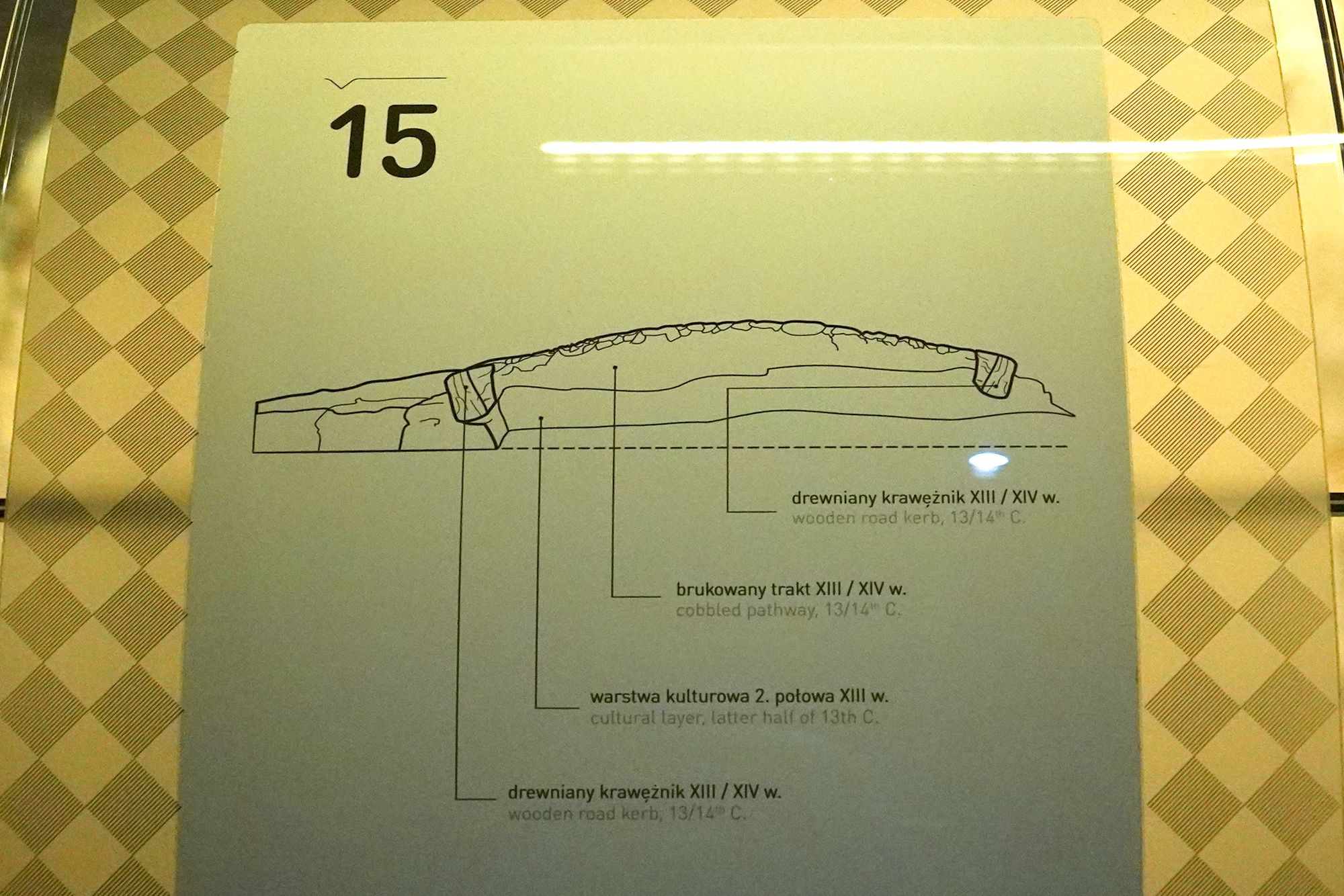
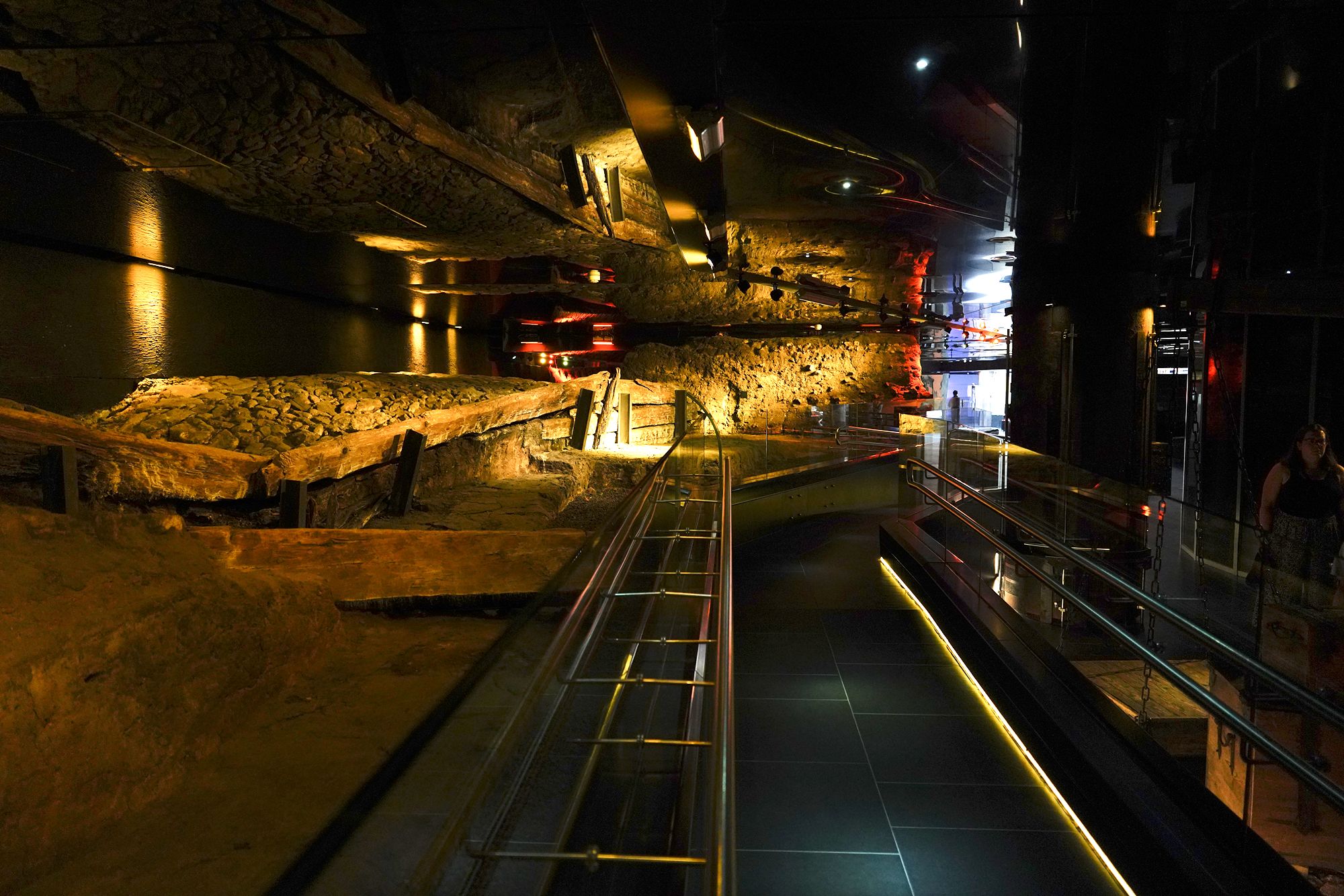
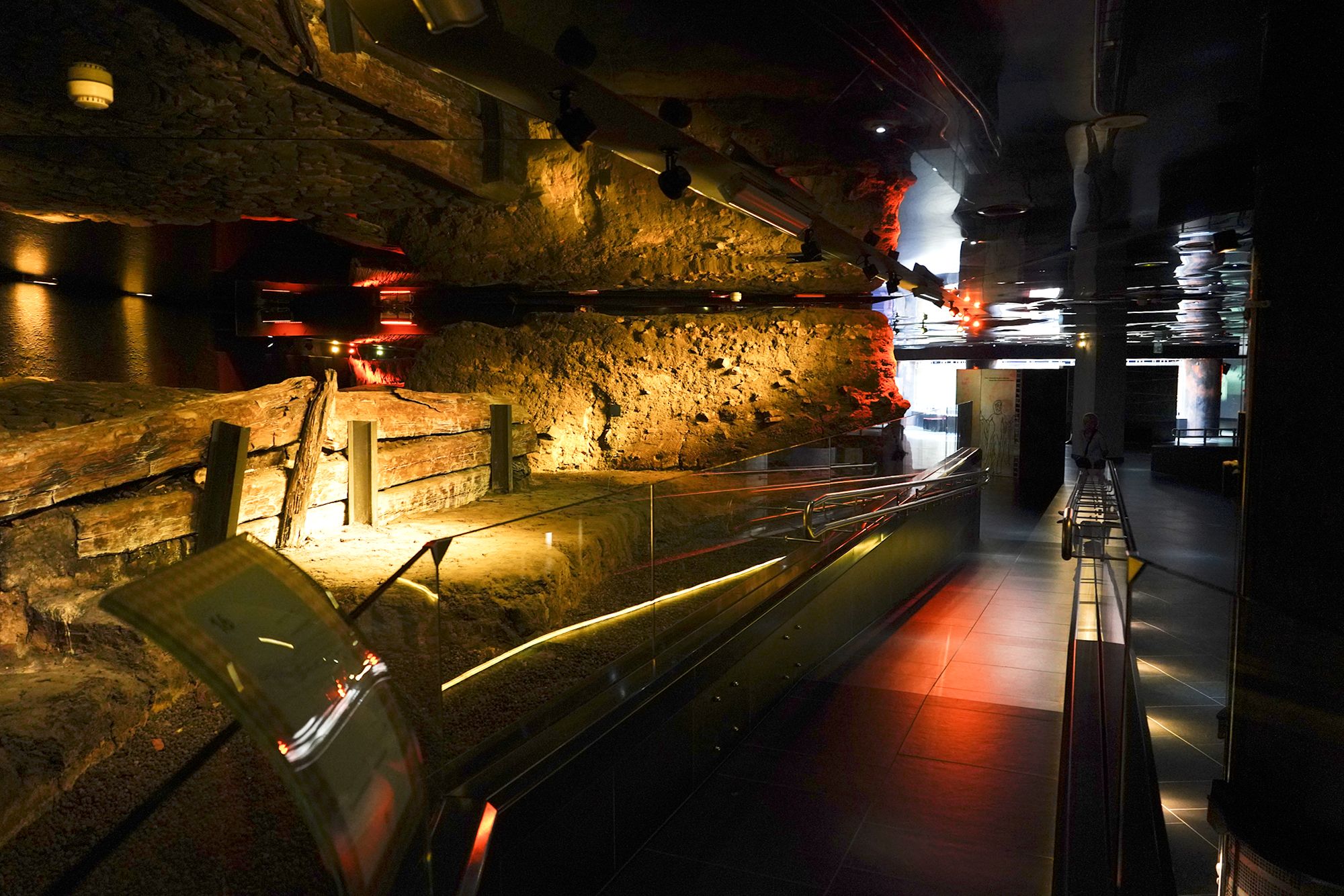
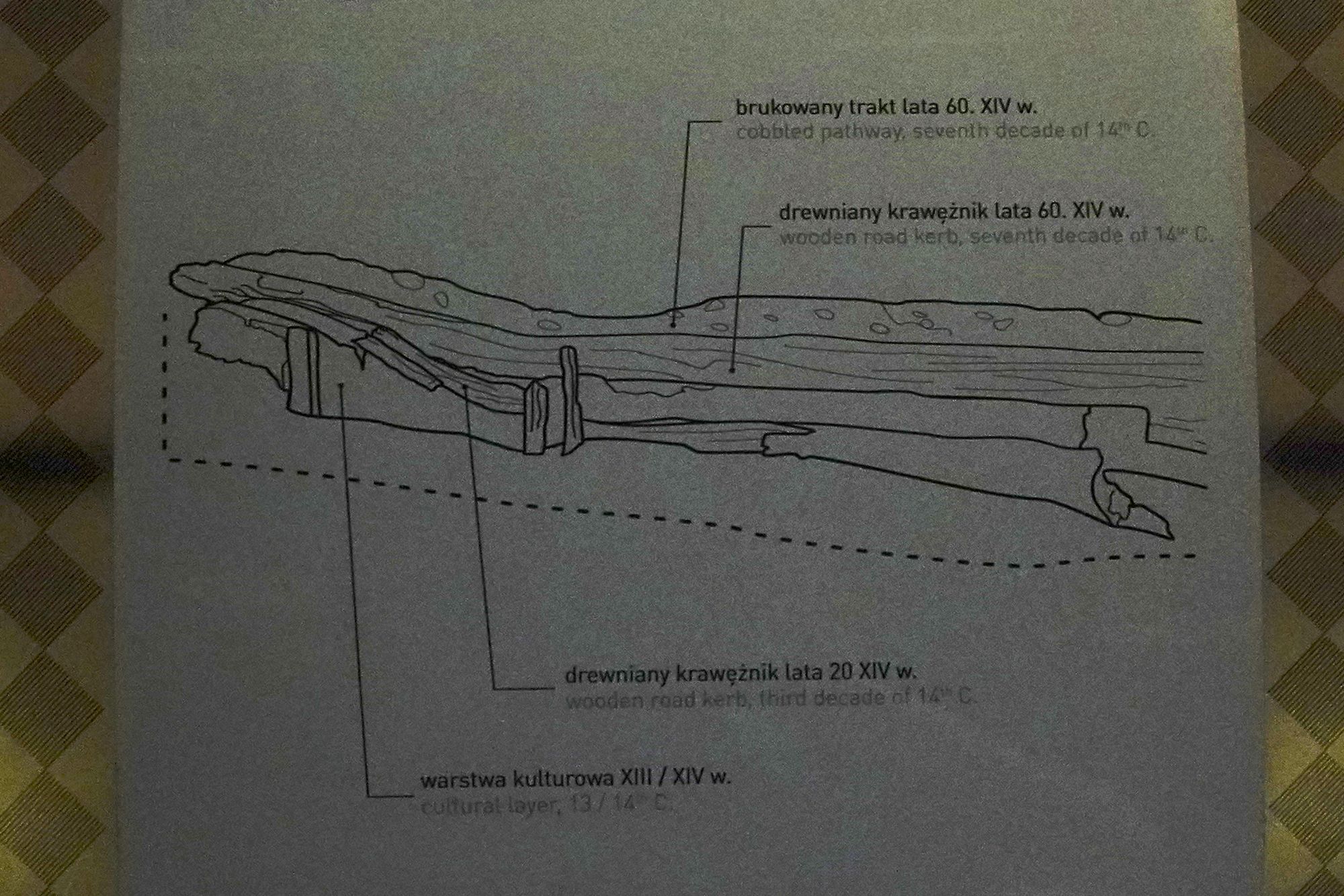
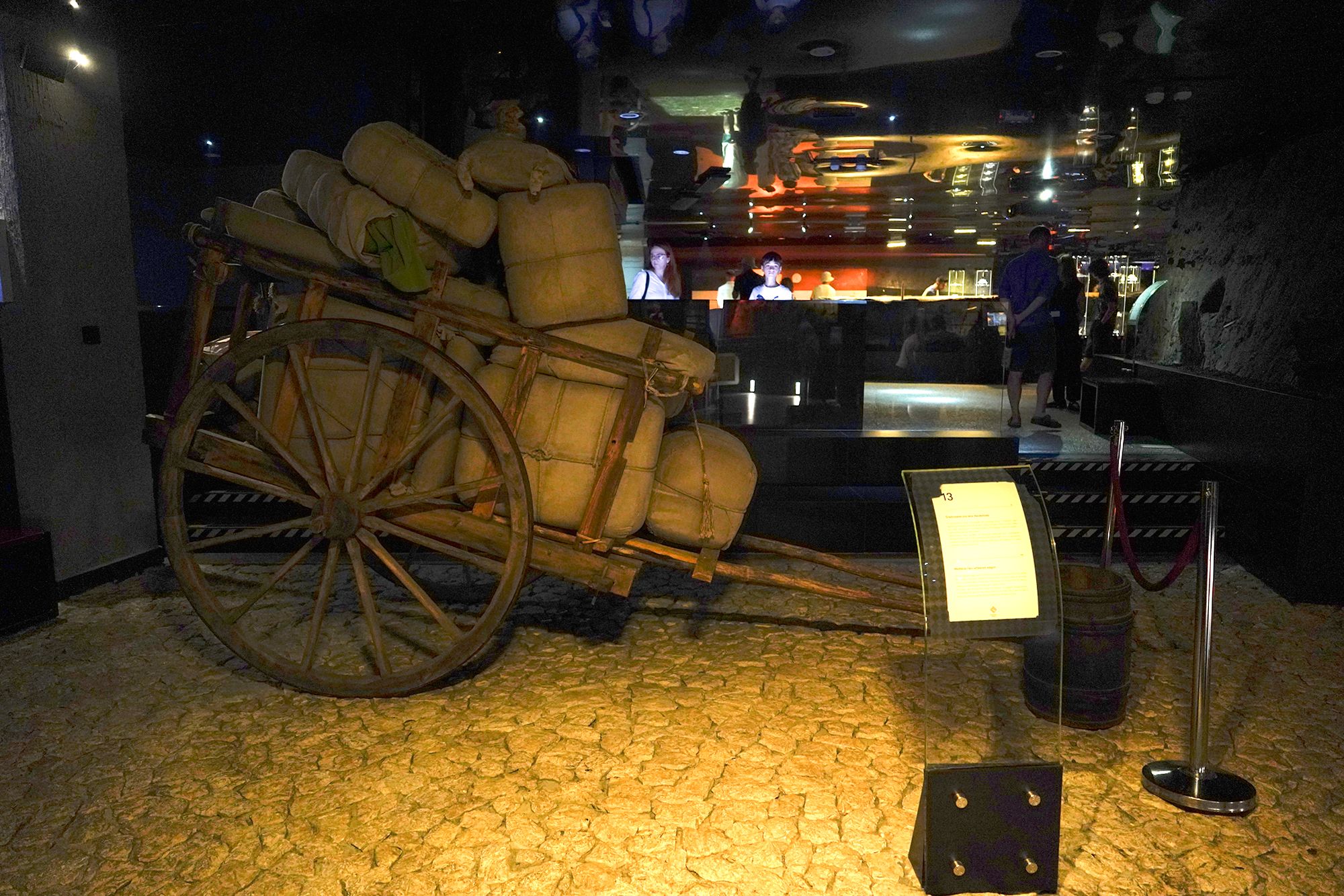
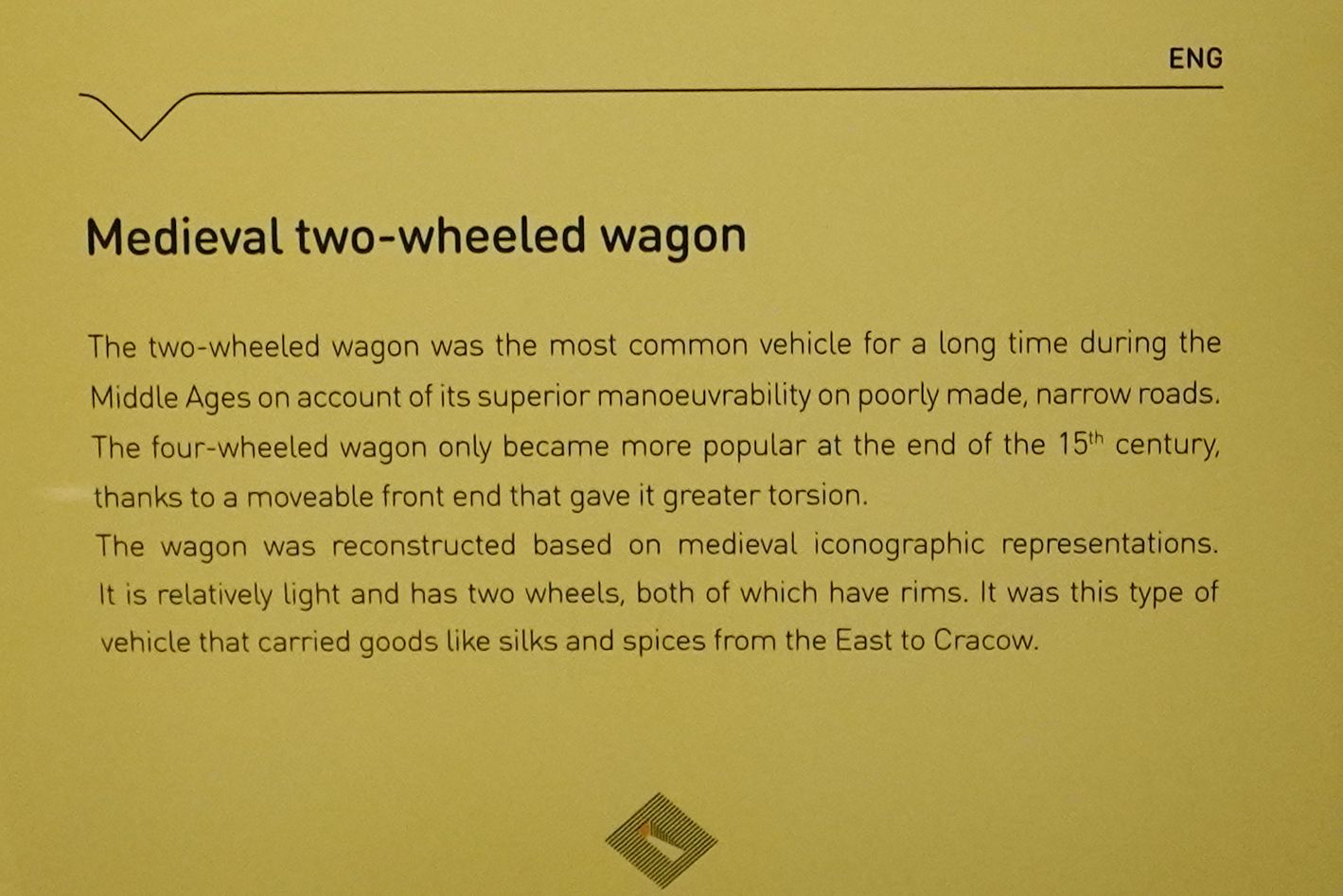
The display explains that two-wheeled wagons were common in the Middle Ages because they were easier to maneuver on narrow, rough roads. Four-wheeled wagons grew popular later, in the 15th century. This reconstruction shows the kind of wagon that carried goods such as silk and spices from the East to Kraków.
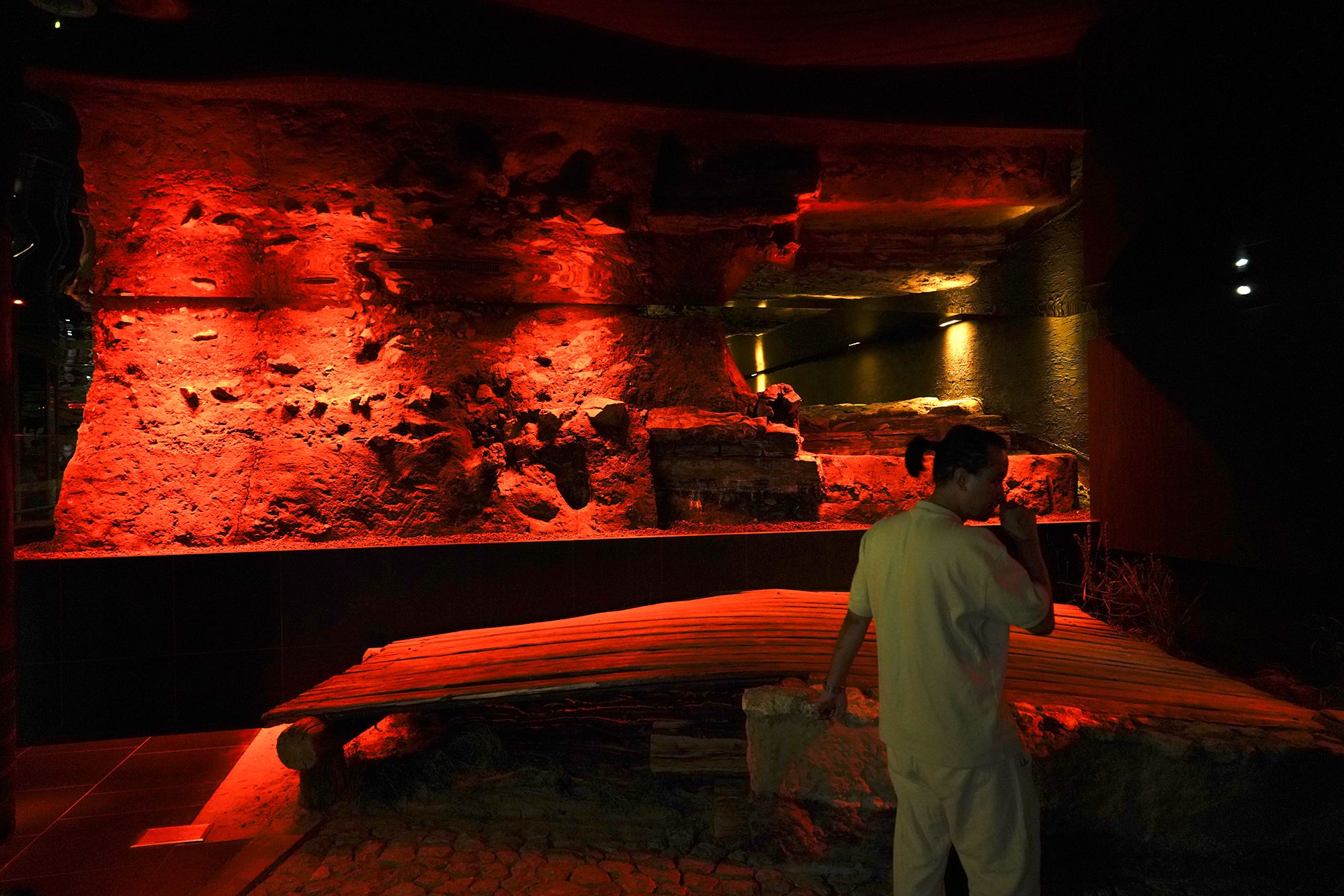
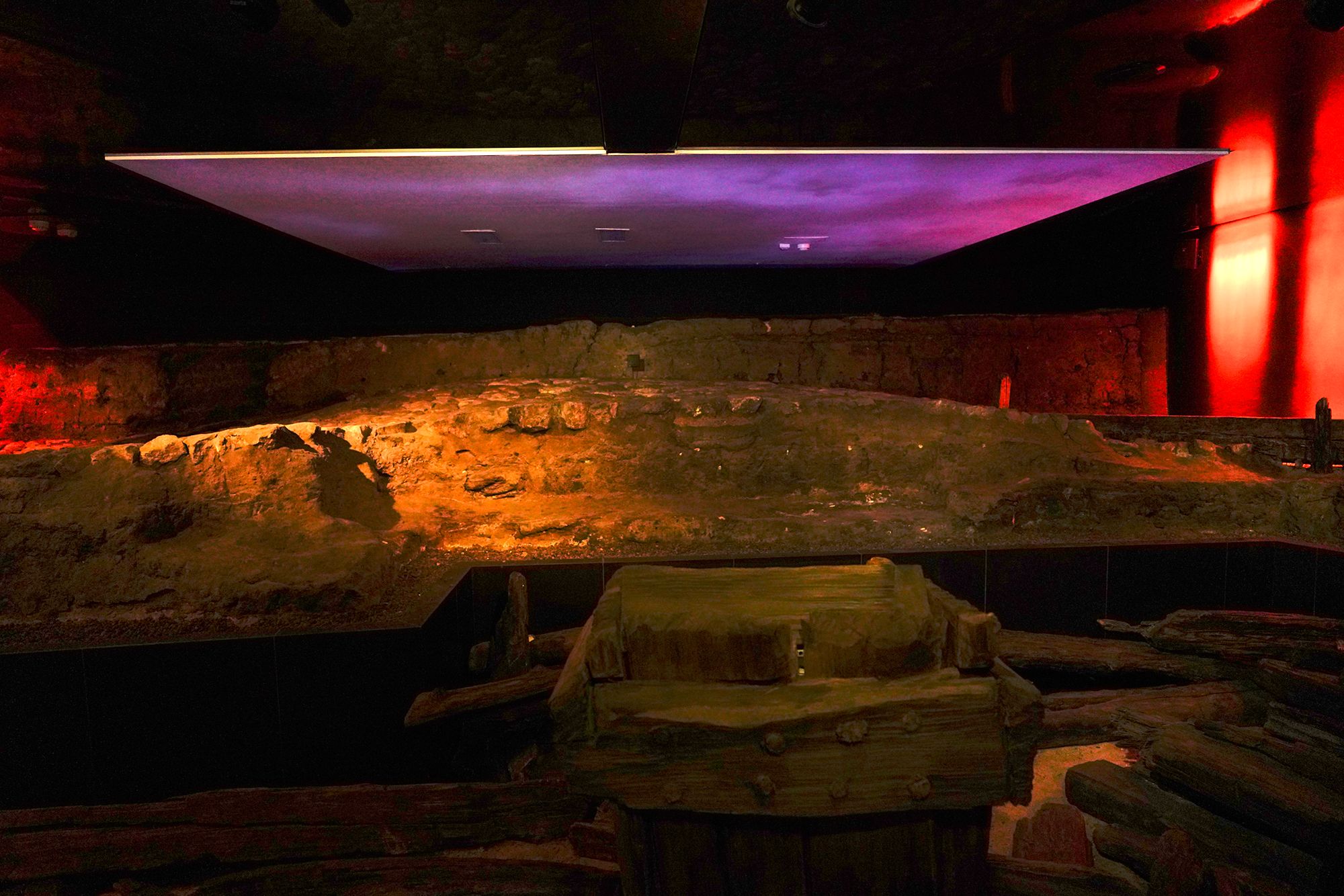
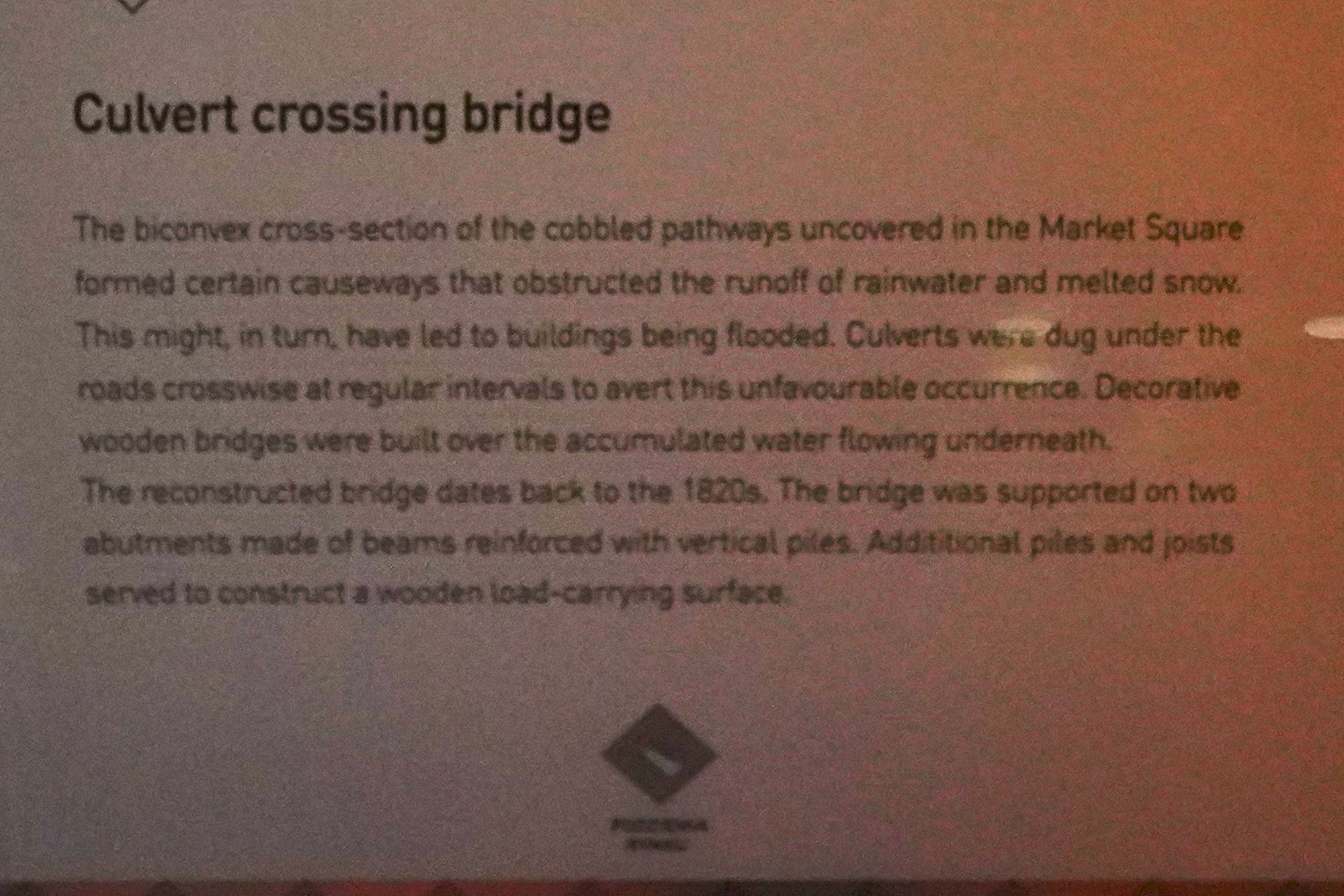
The cobbled roads in Kraków’s Main Market Square were raised in the middle, which could block rainwater and melting snow and cause flooding. Culverts were dug beneath the roads, with wooden bridges built over them. This reconstructed bridge dates to the 1820s and rests on timber supports.
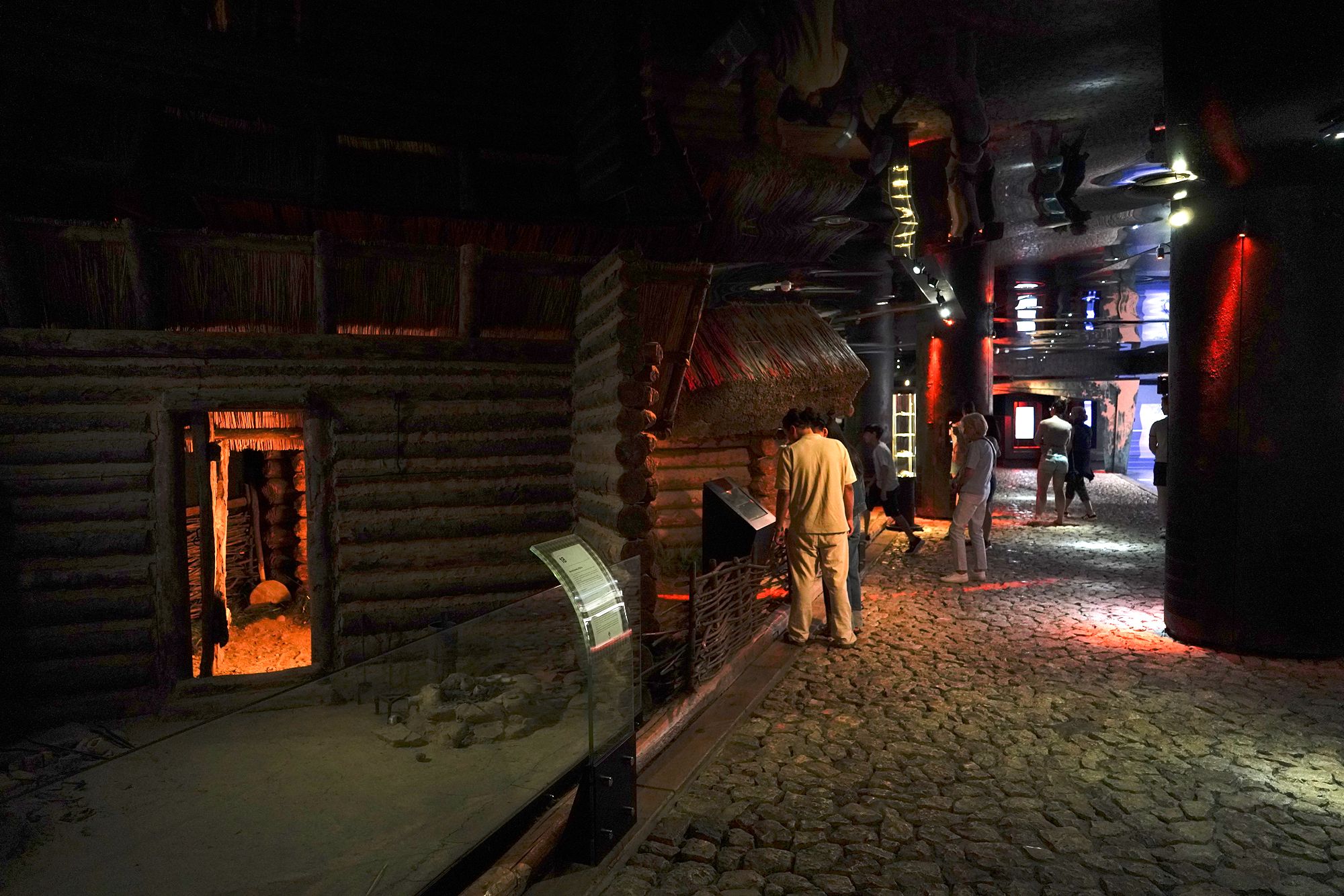
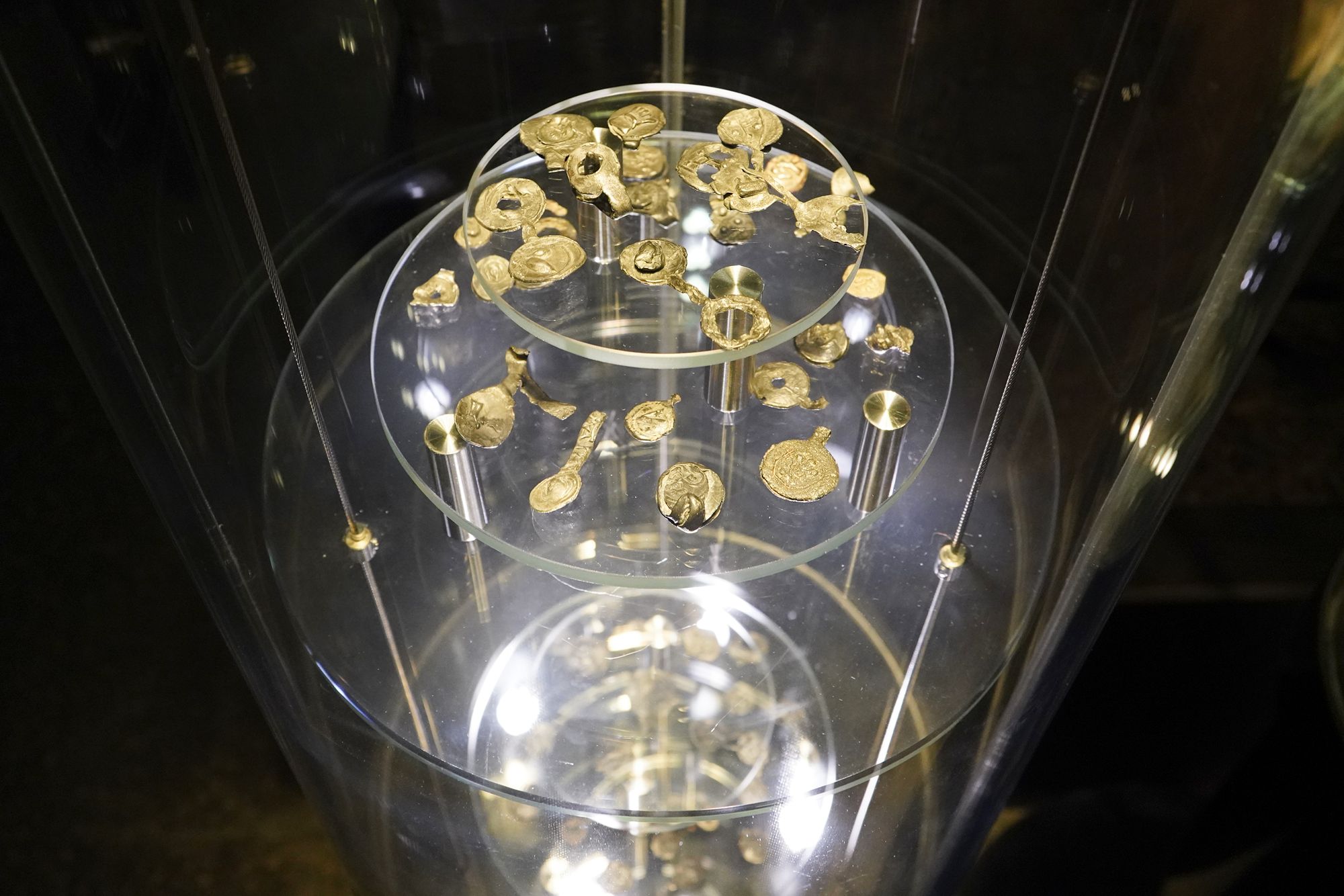
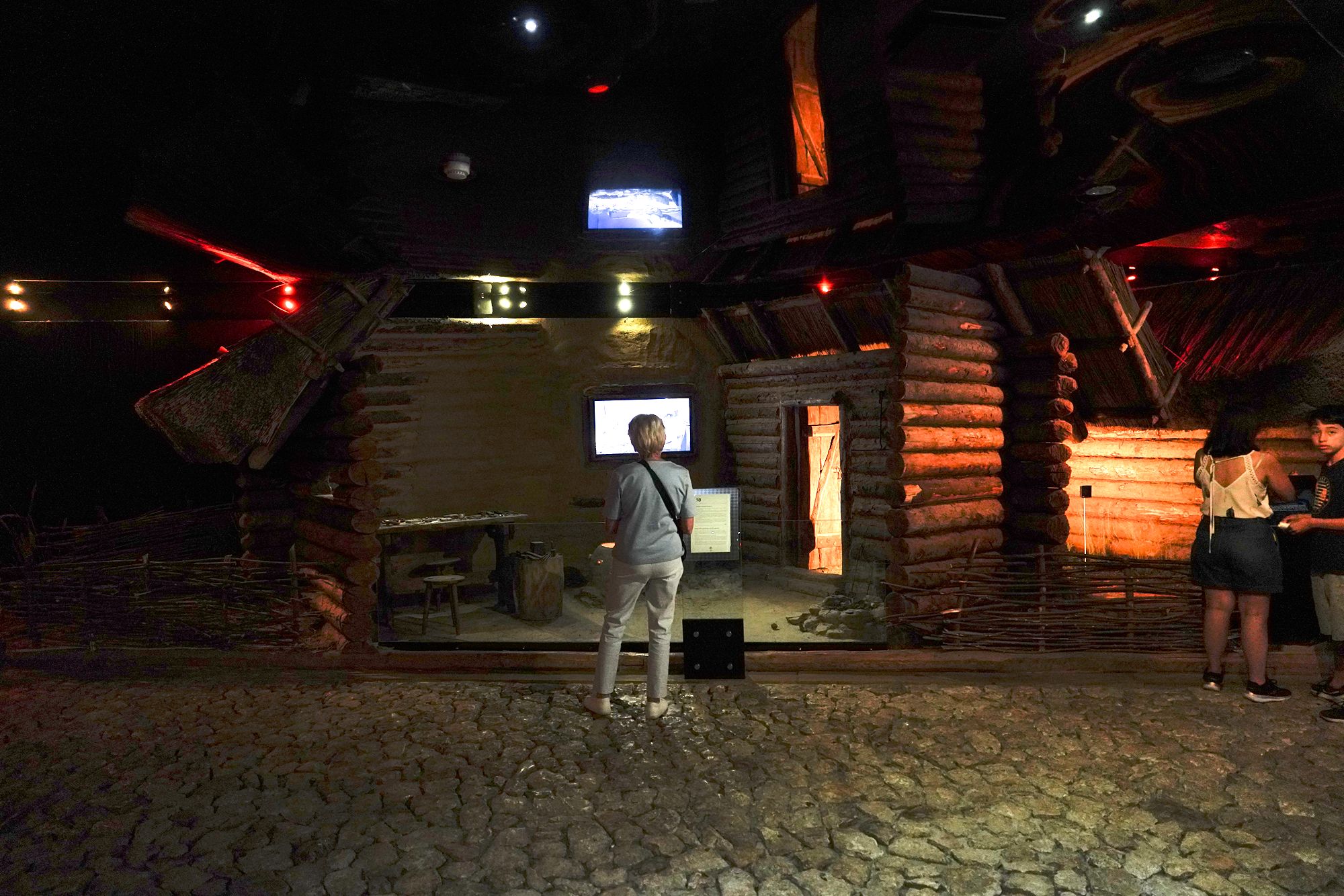
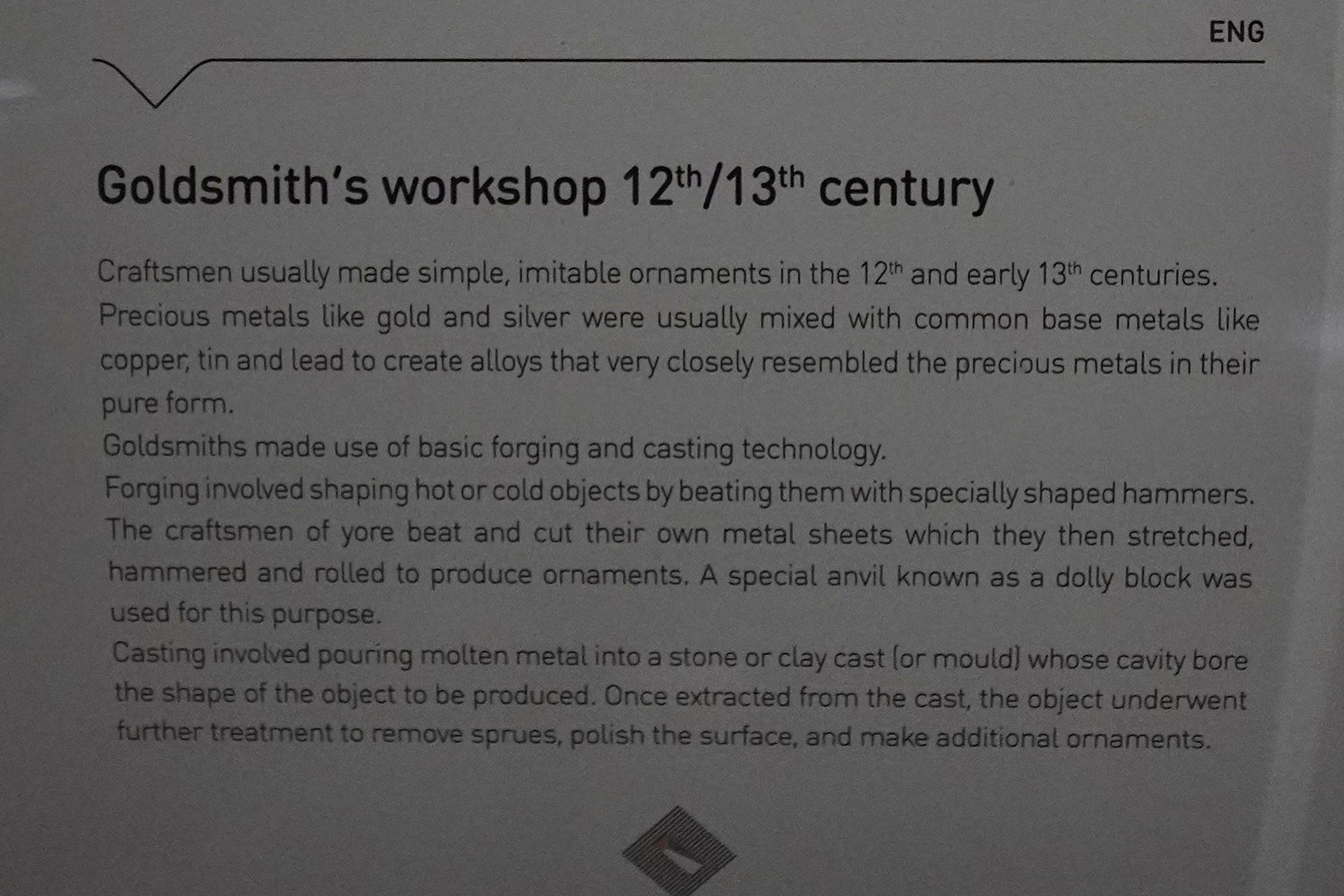
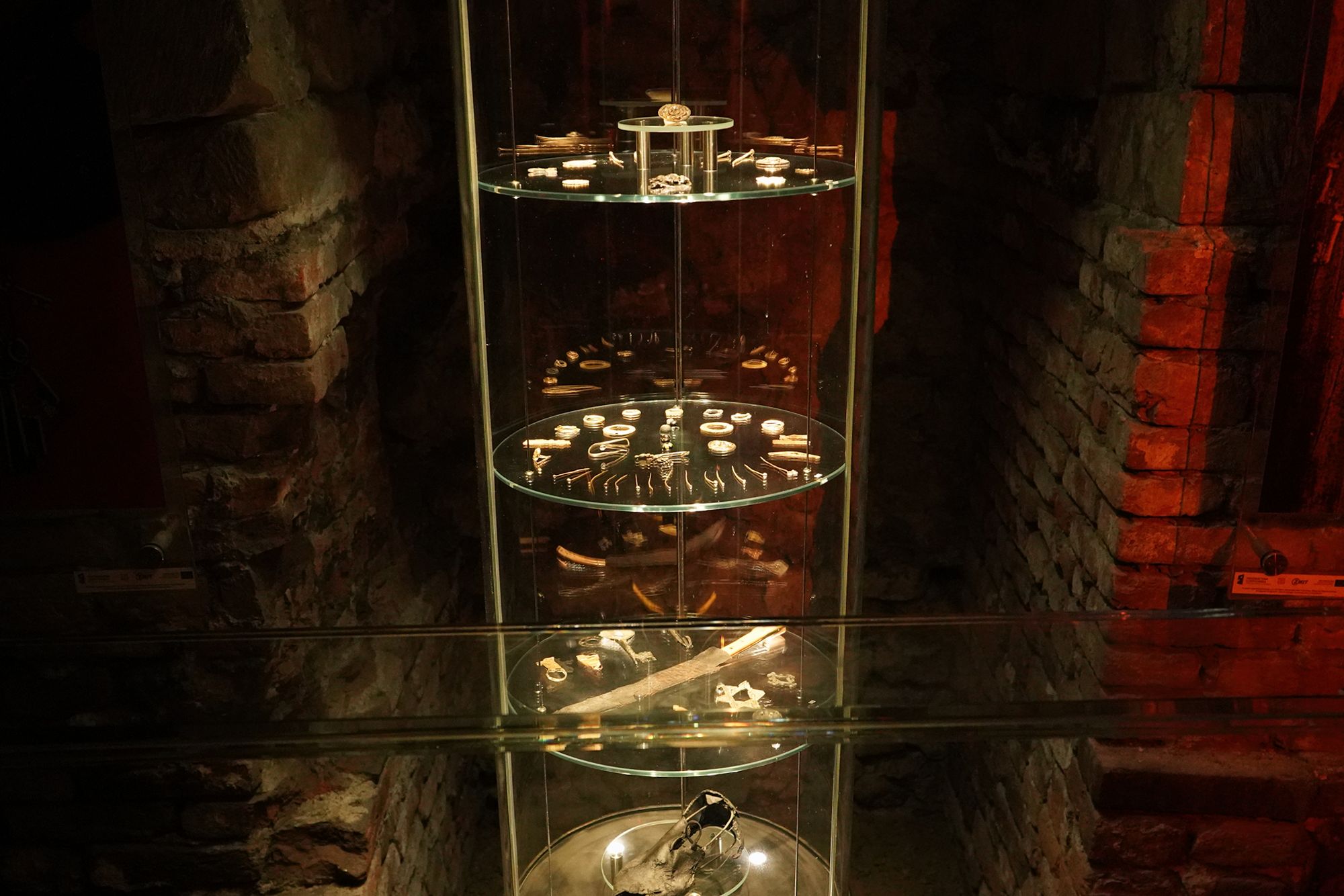
This display describes a 12th- and 13th-century goldsmith’s workshop. Craftsmen shaped metal by forging it with hammers or pouring molten metal into stone or clay molds. They used alloys of precious and base metals to make ornaments, then polished and decorated the finished pieces.
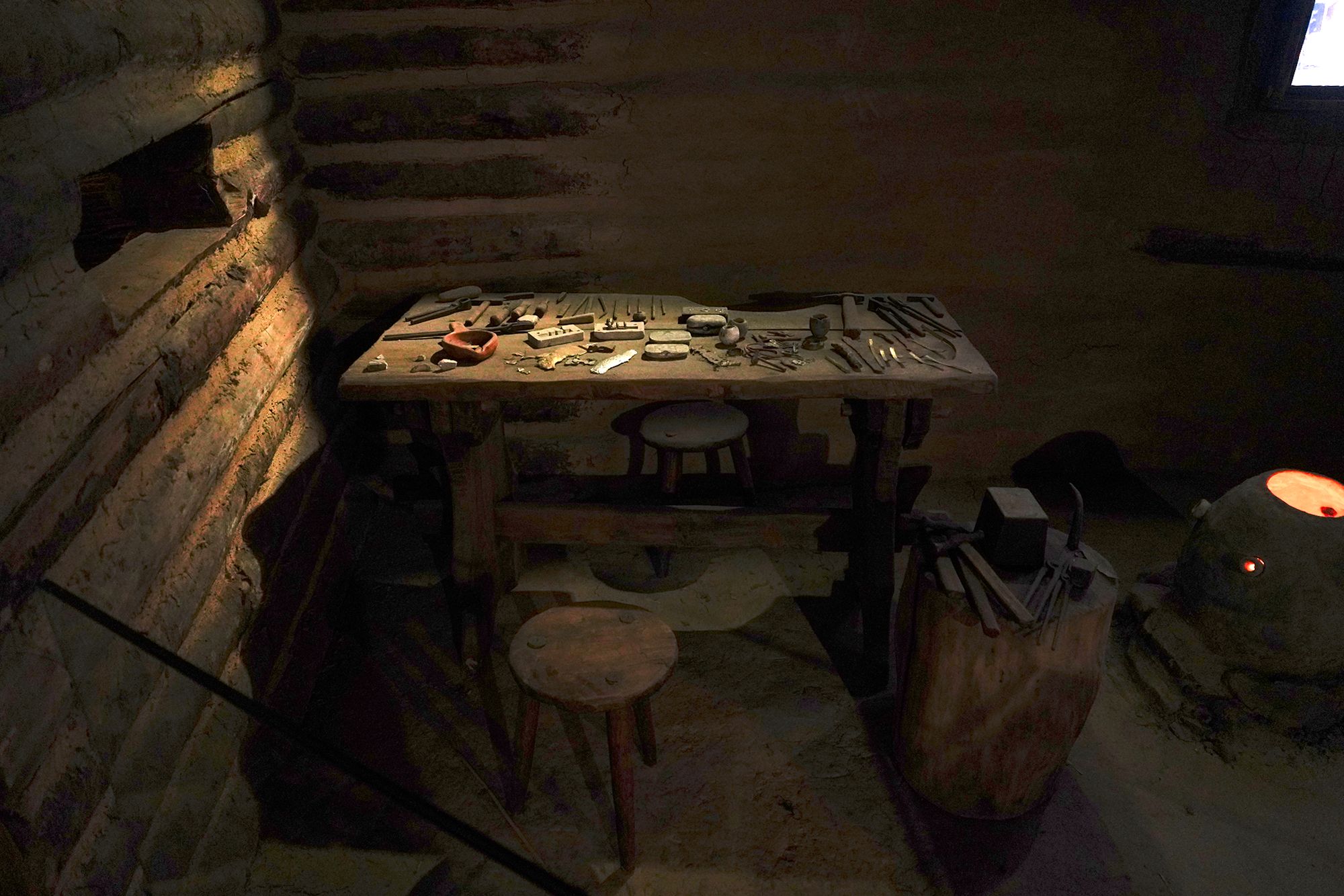
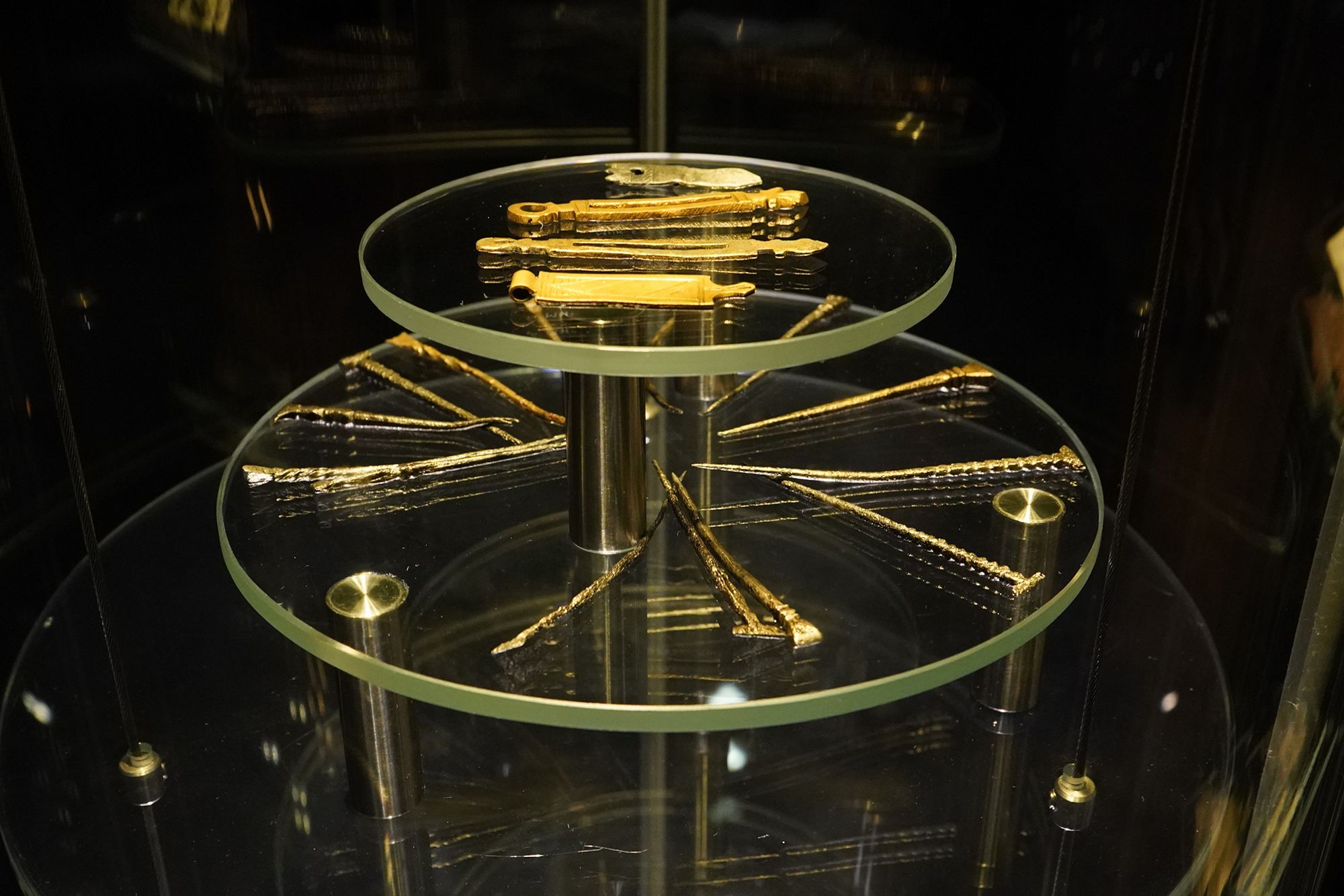
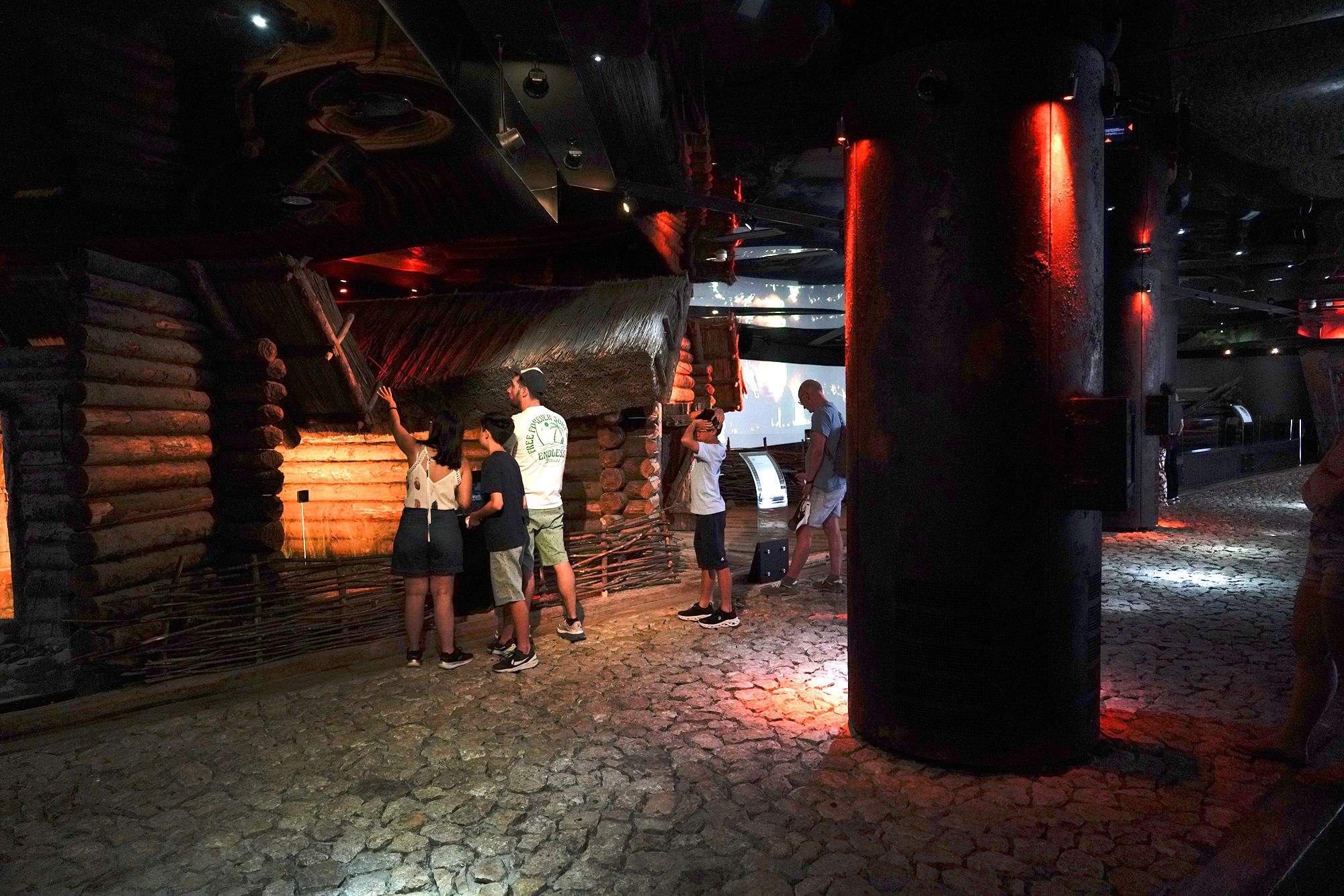
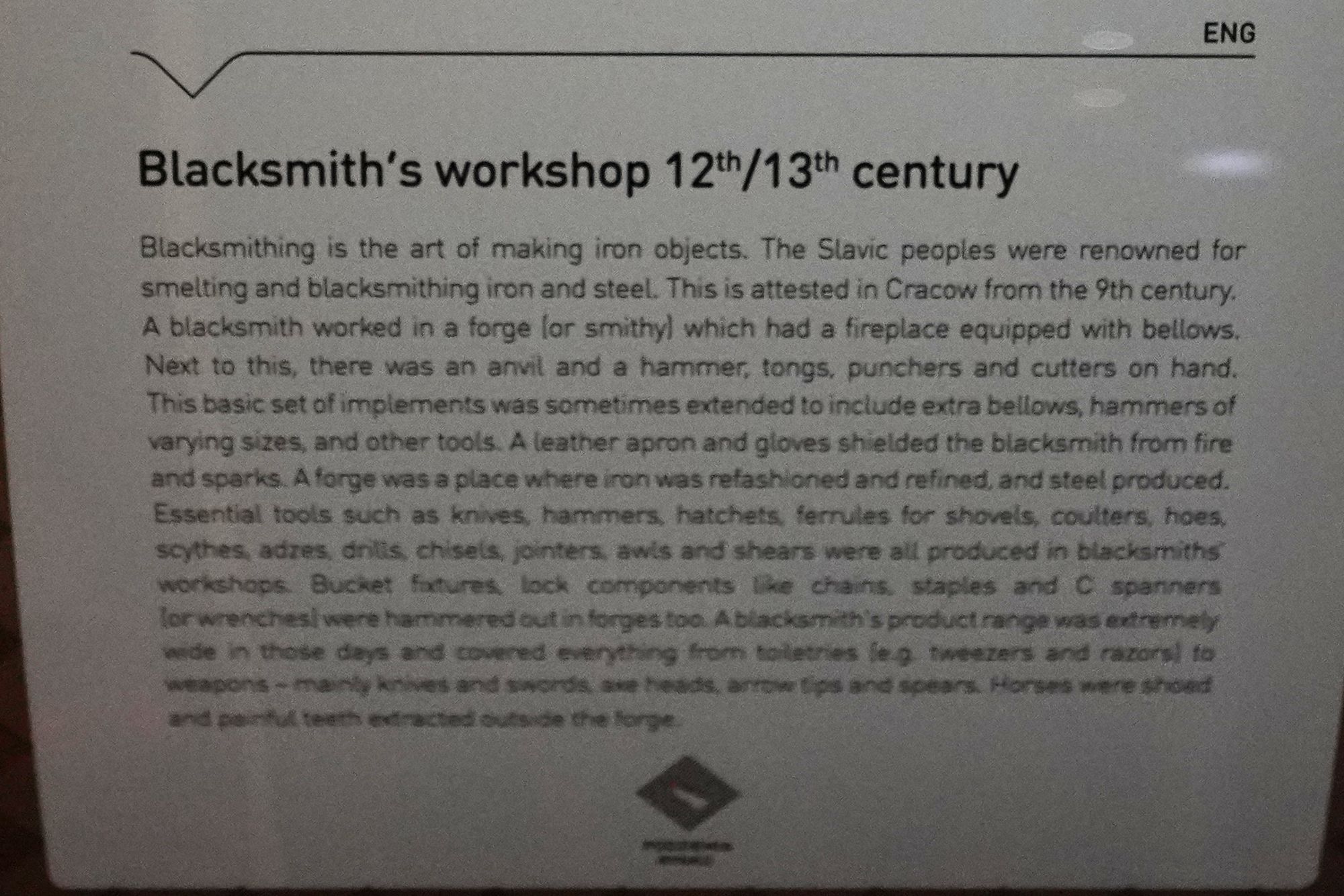
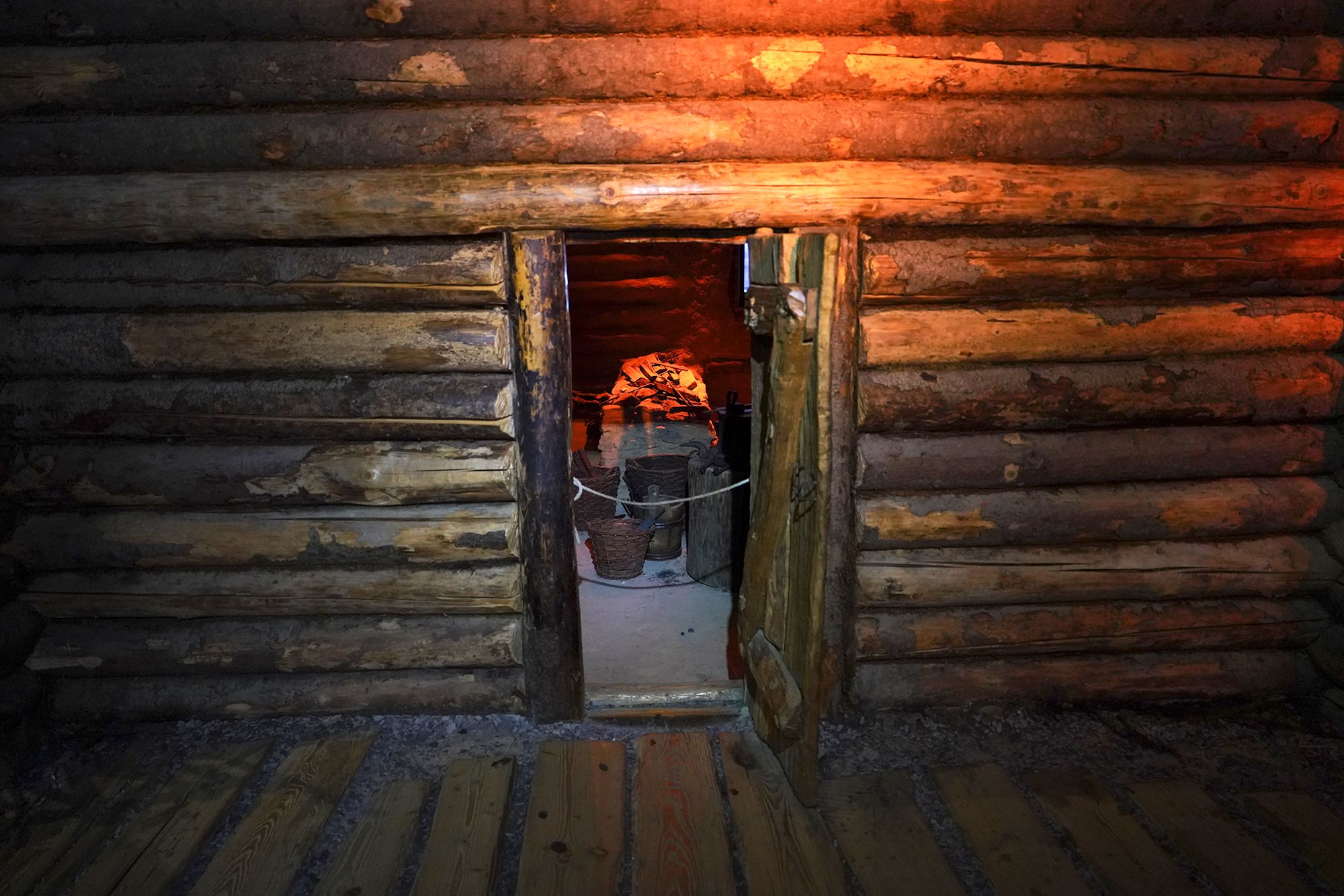
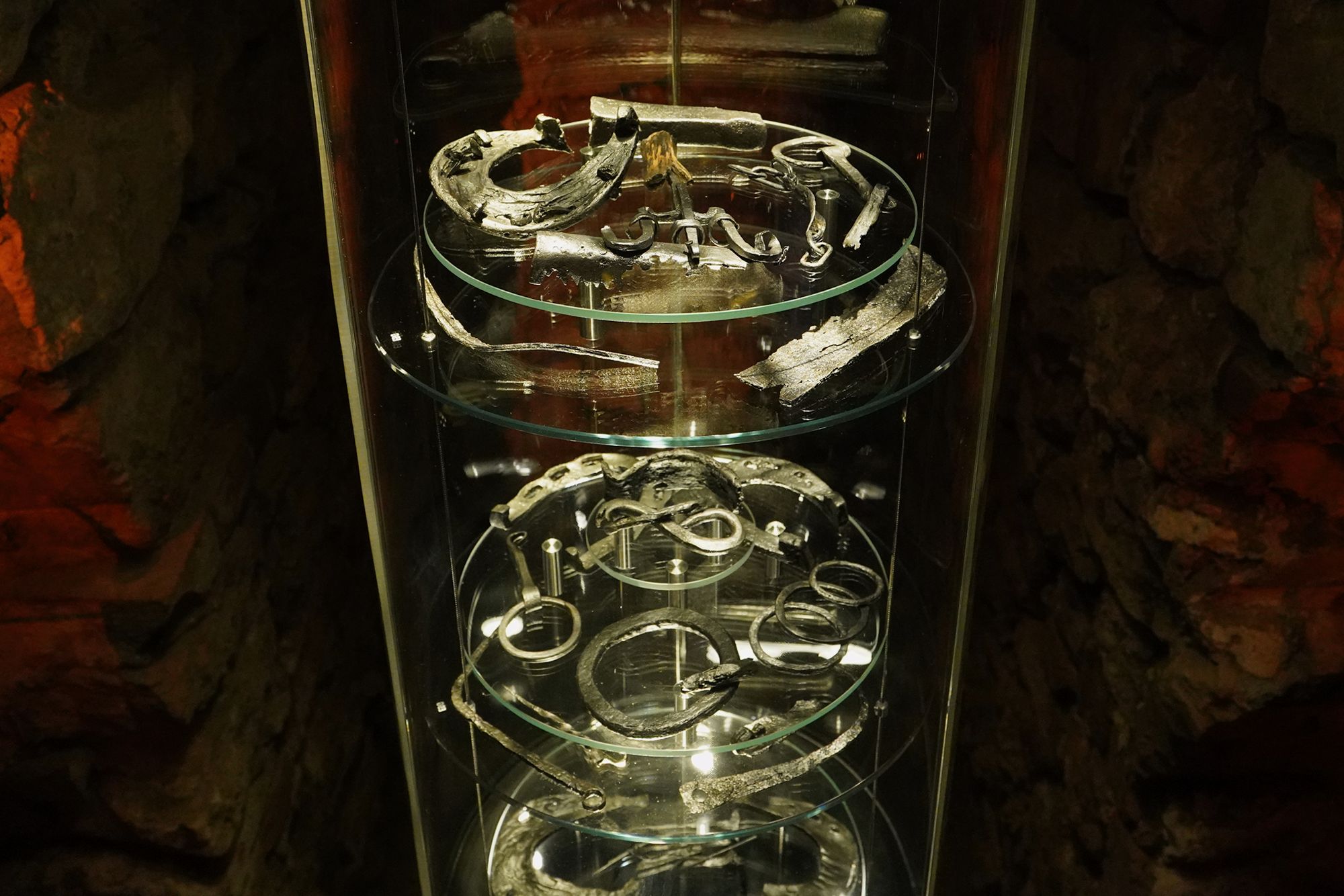
This display describes a 12th- or 13th-century blacksmith’s workshop. Kraków had evidence of ironworking as early as the 9th century. Using a forge, bellows, anvil, hammers, and tongs, blacksmiths made tools, household fittings, farming equipment, and weapons. They also shod horses and pulled teeth outside the forge.
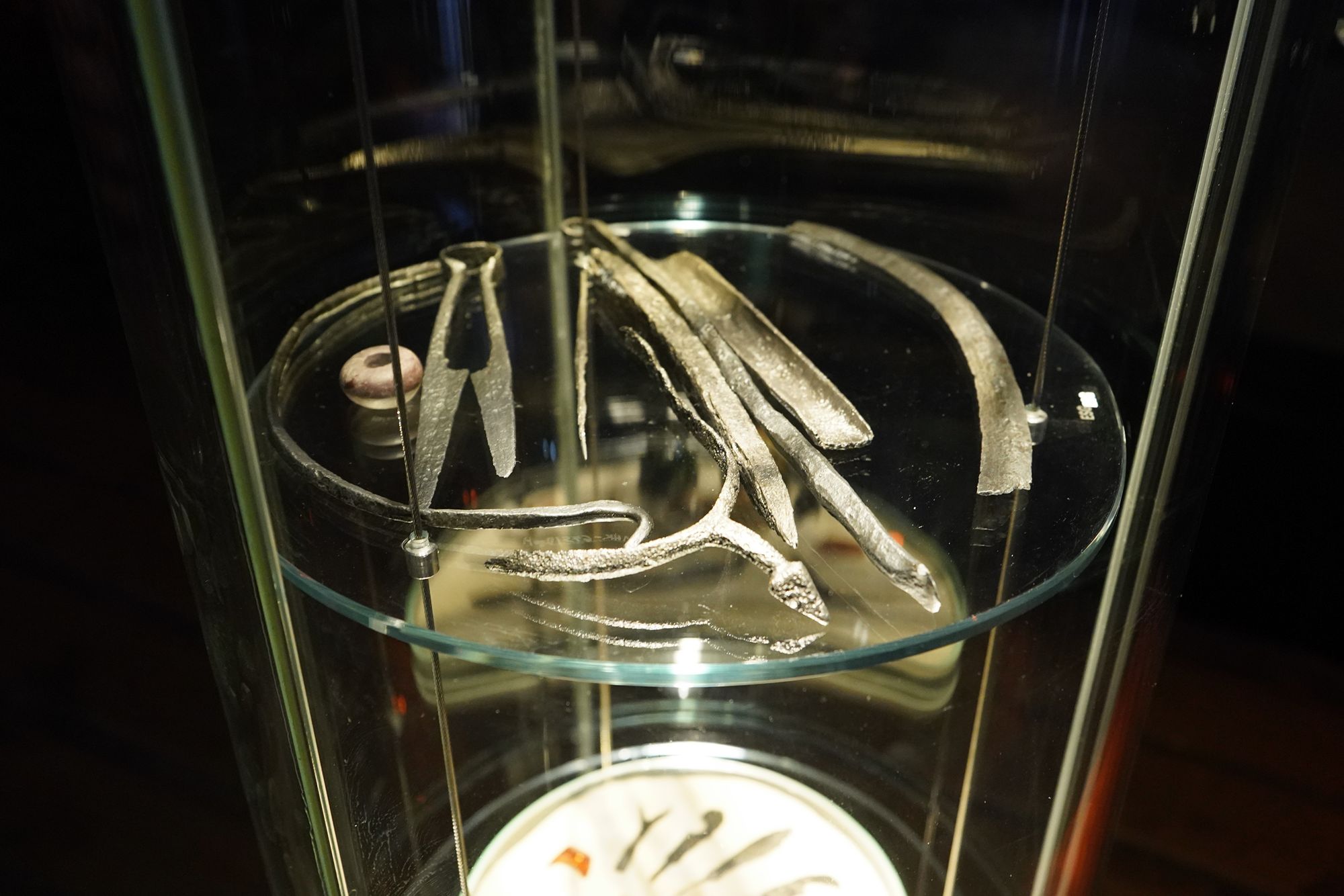
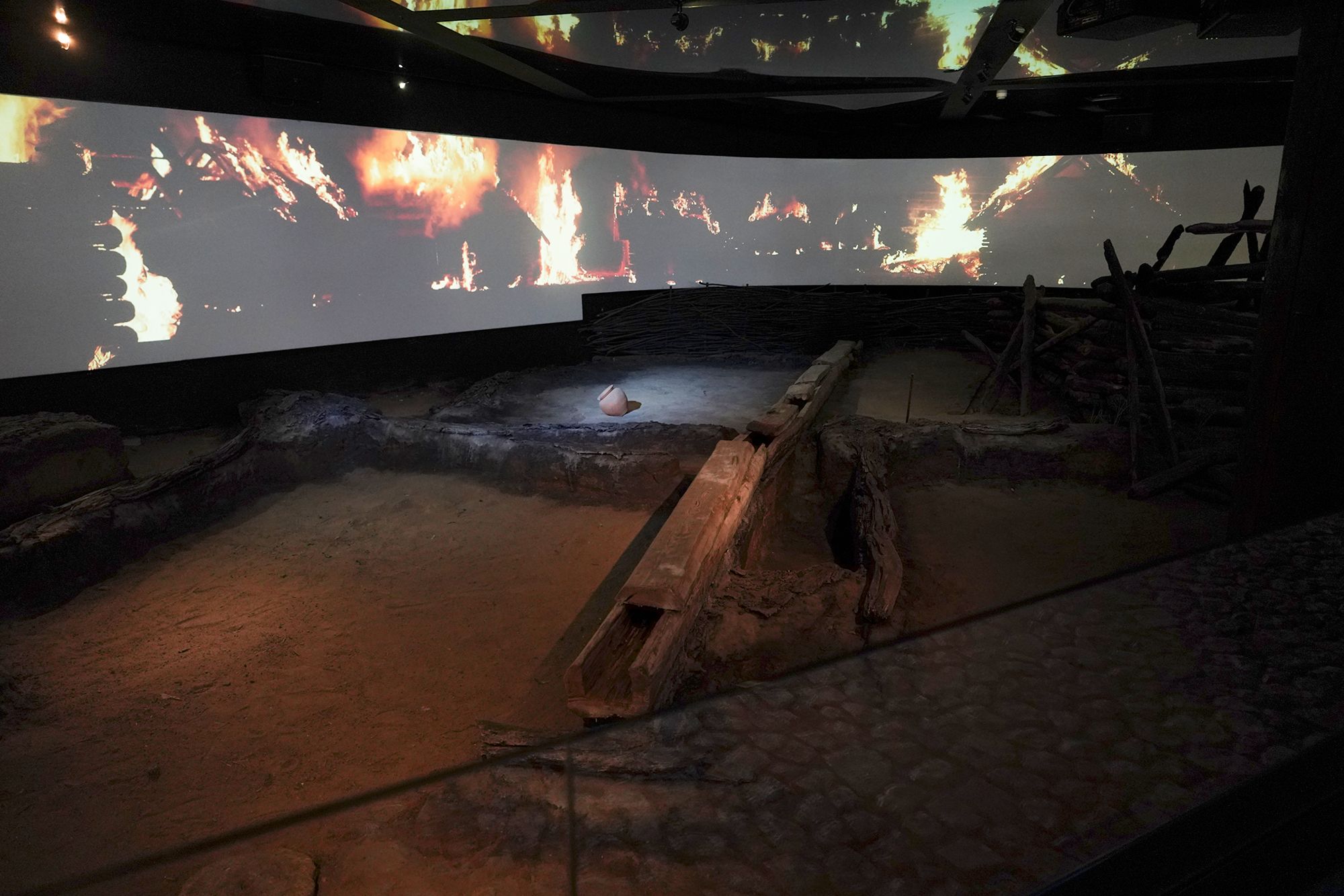
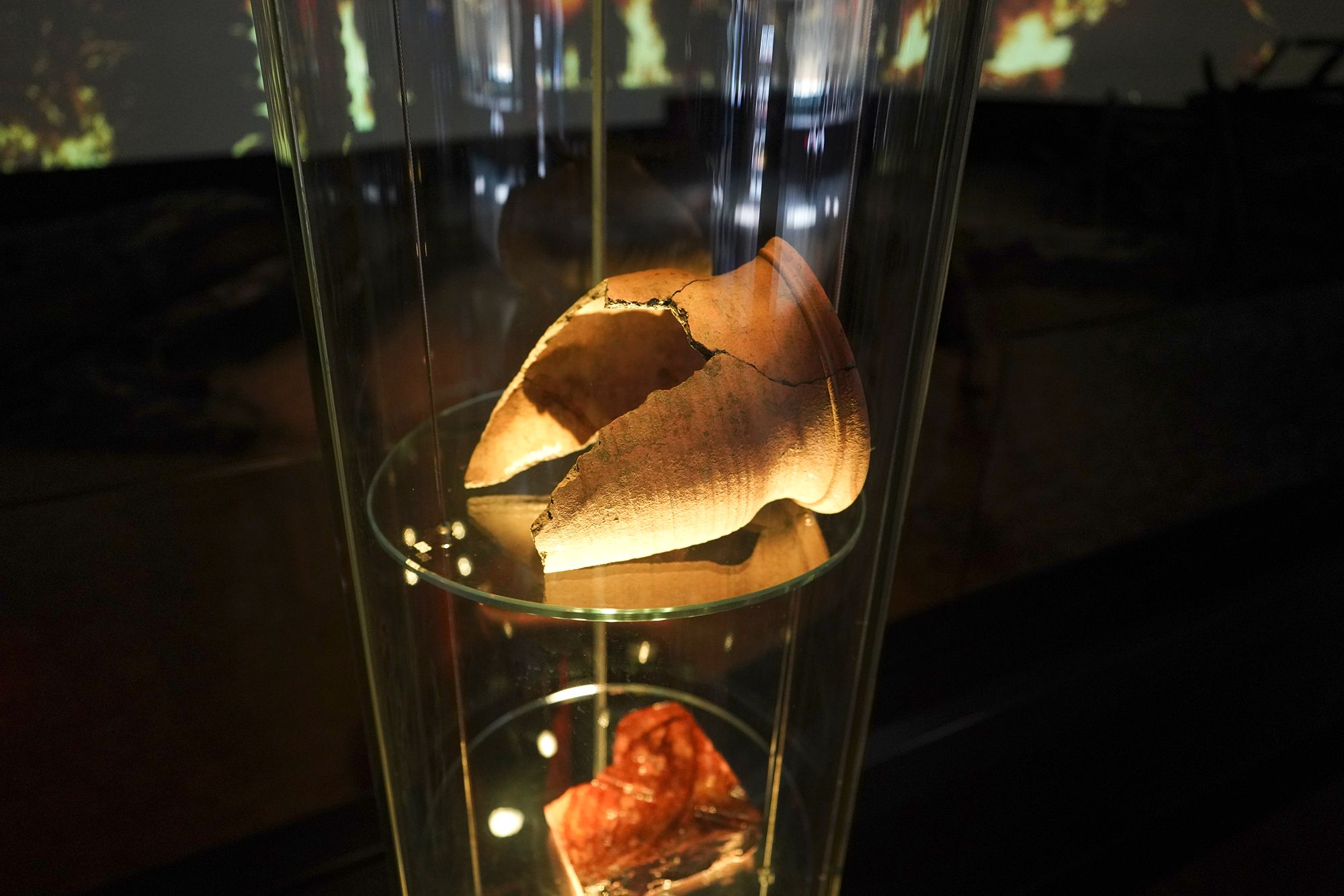
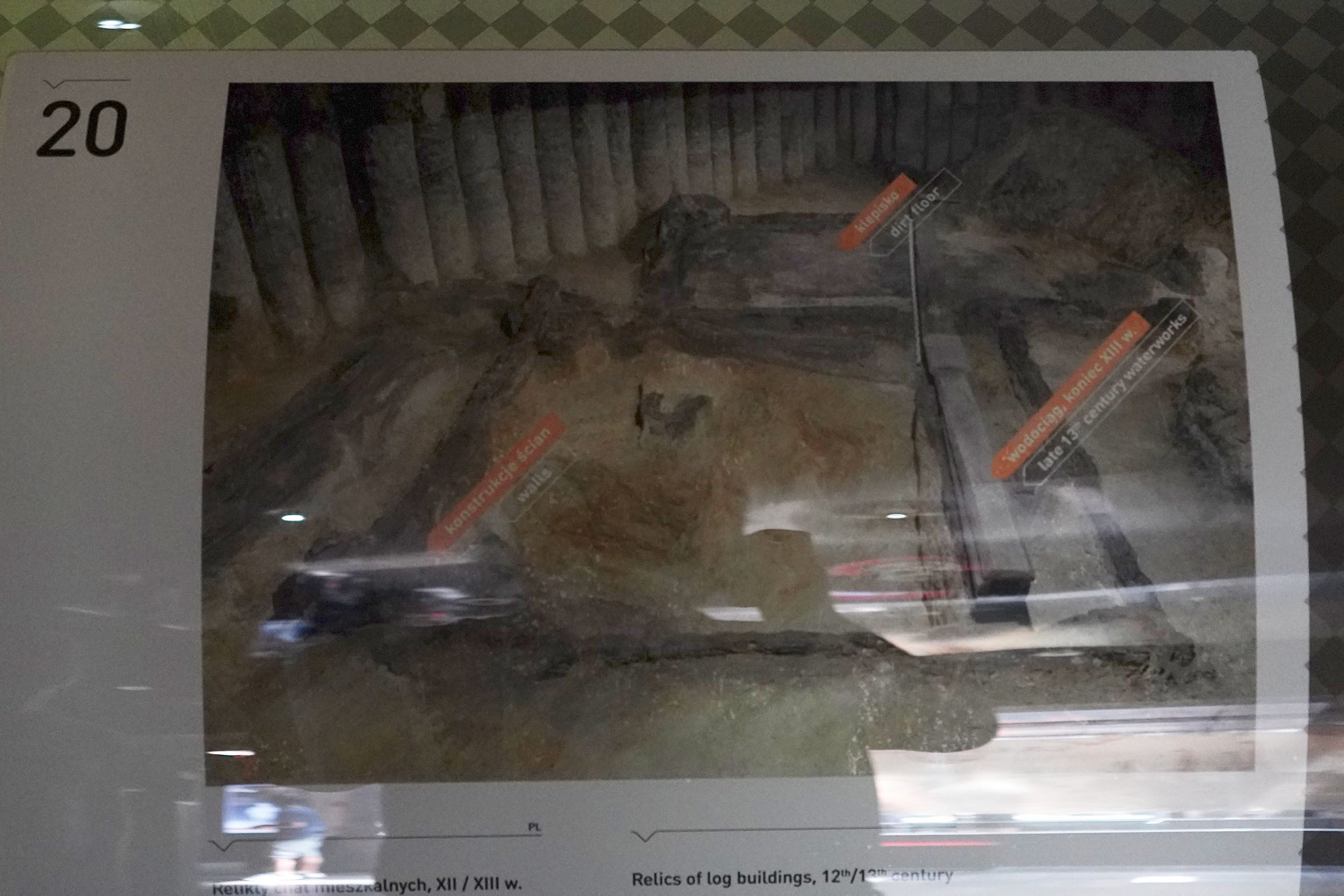
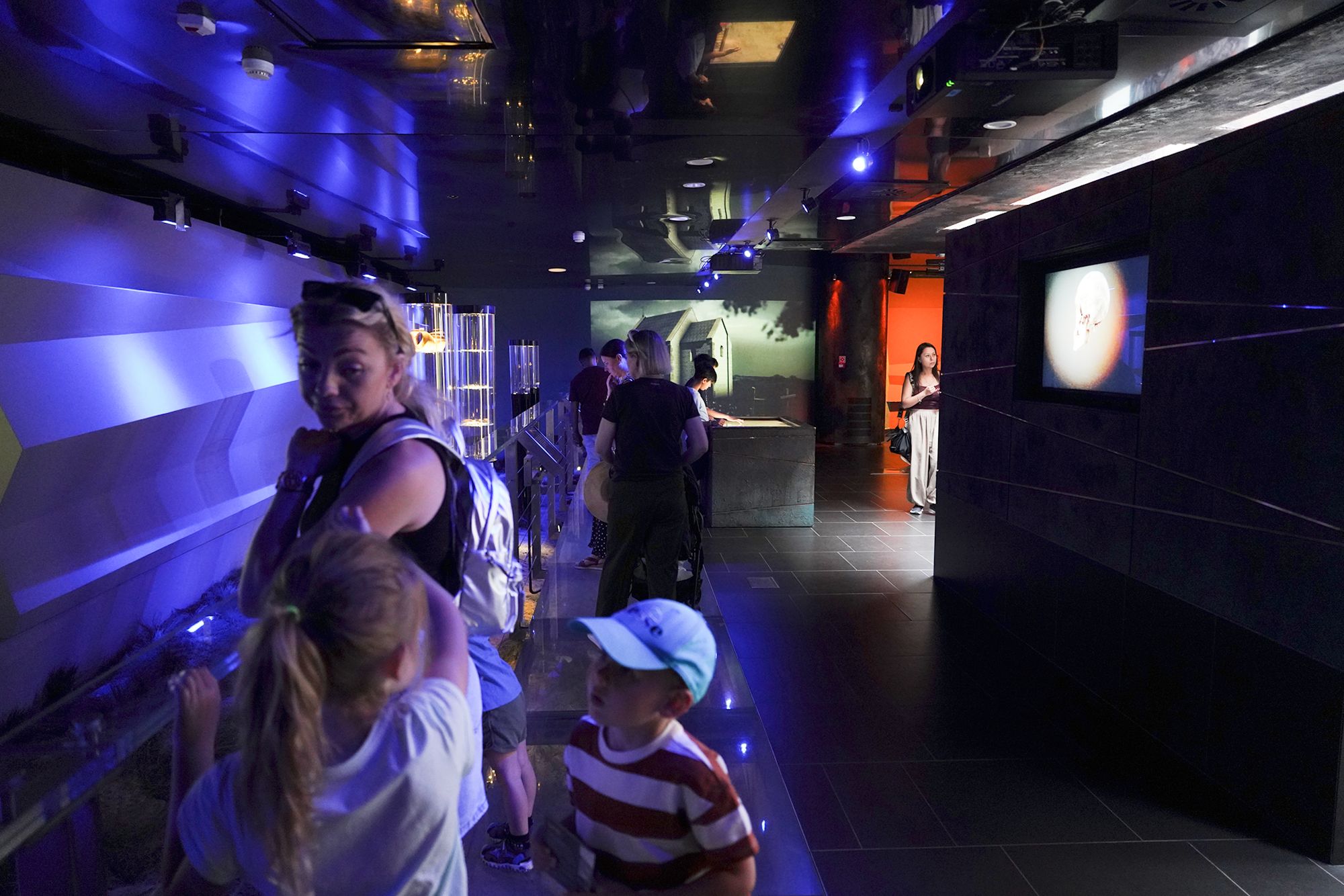
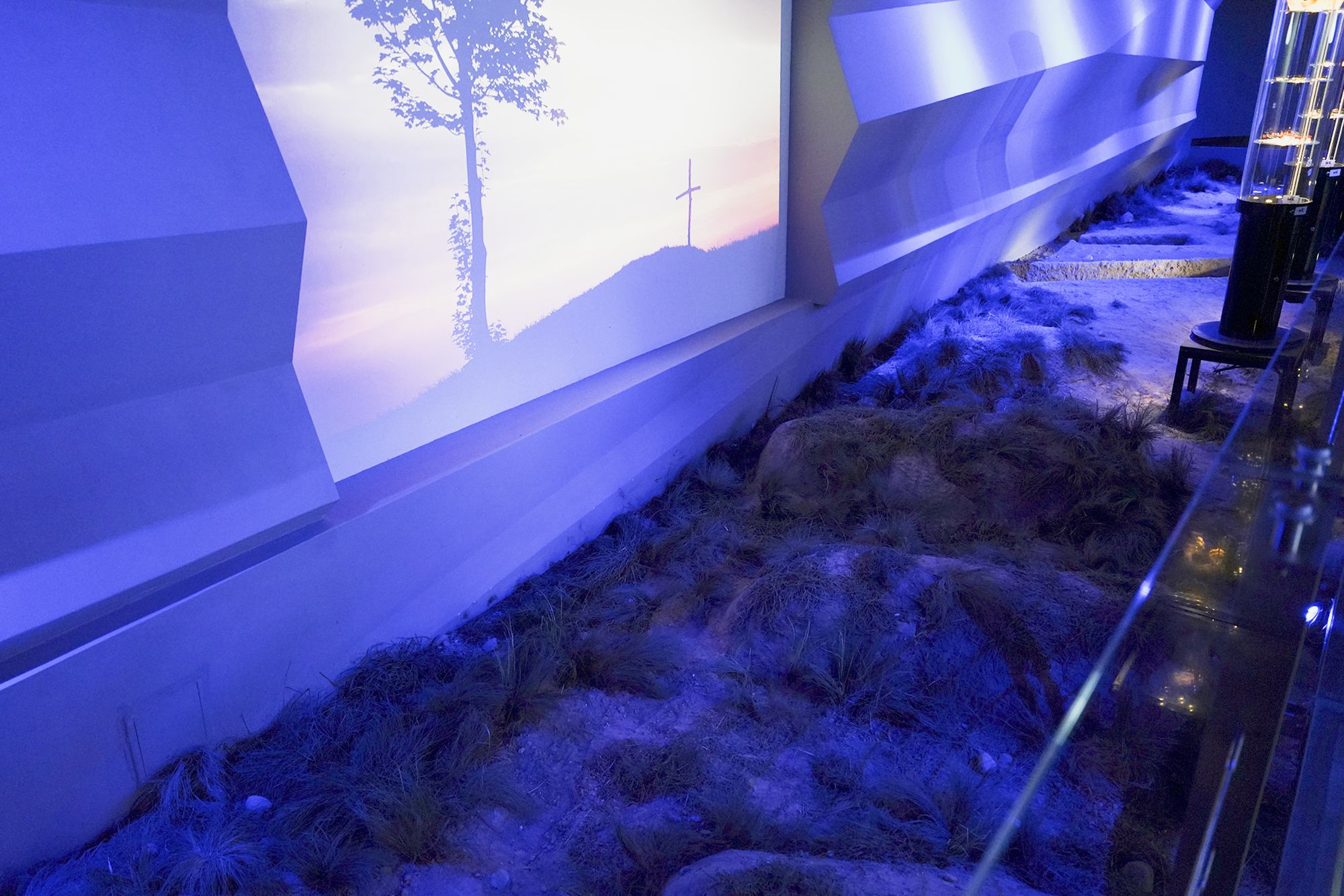
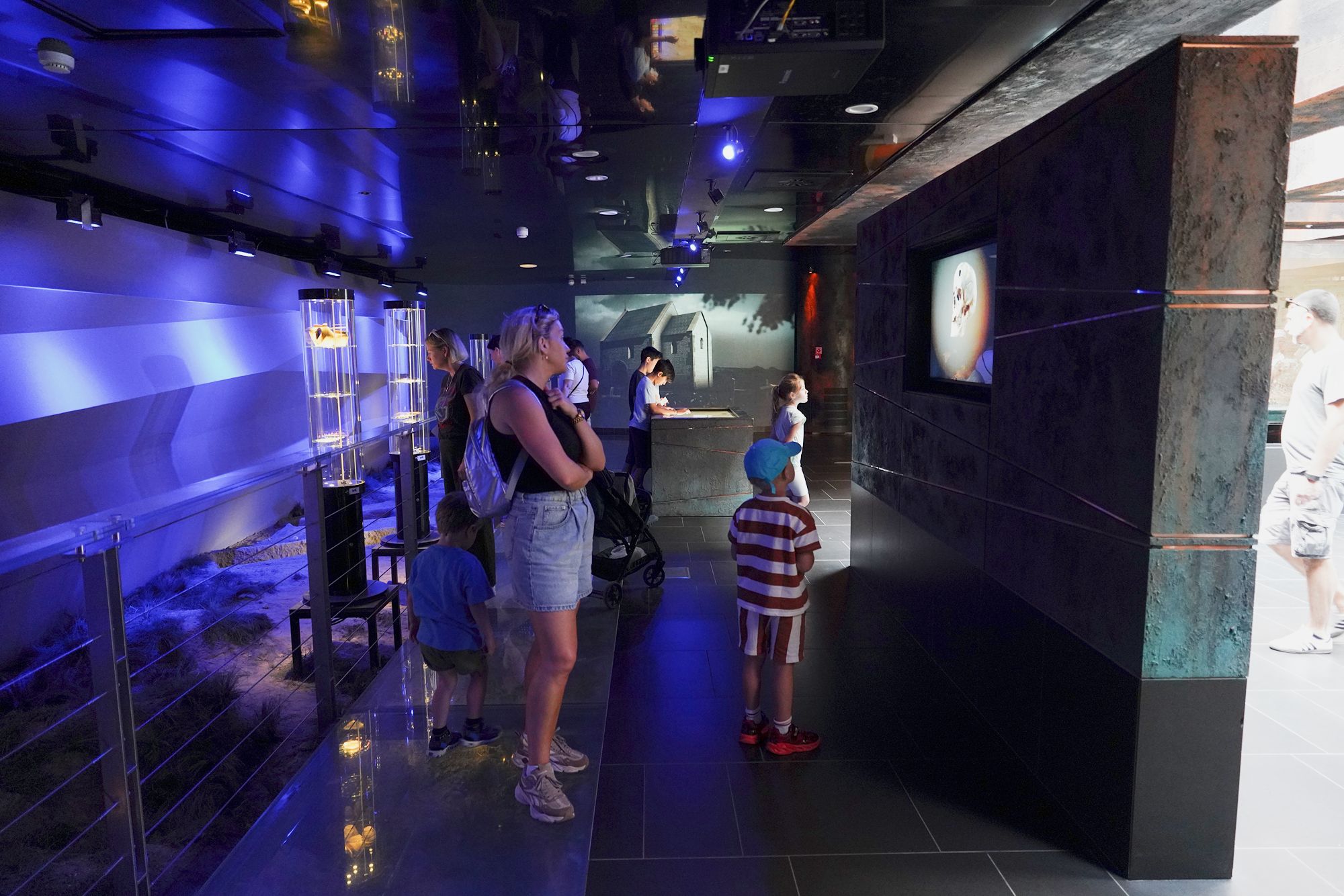
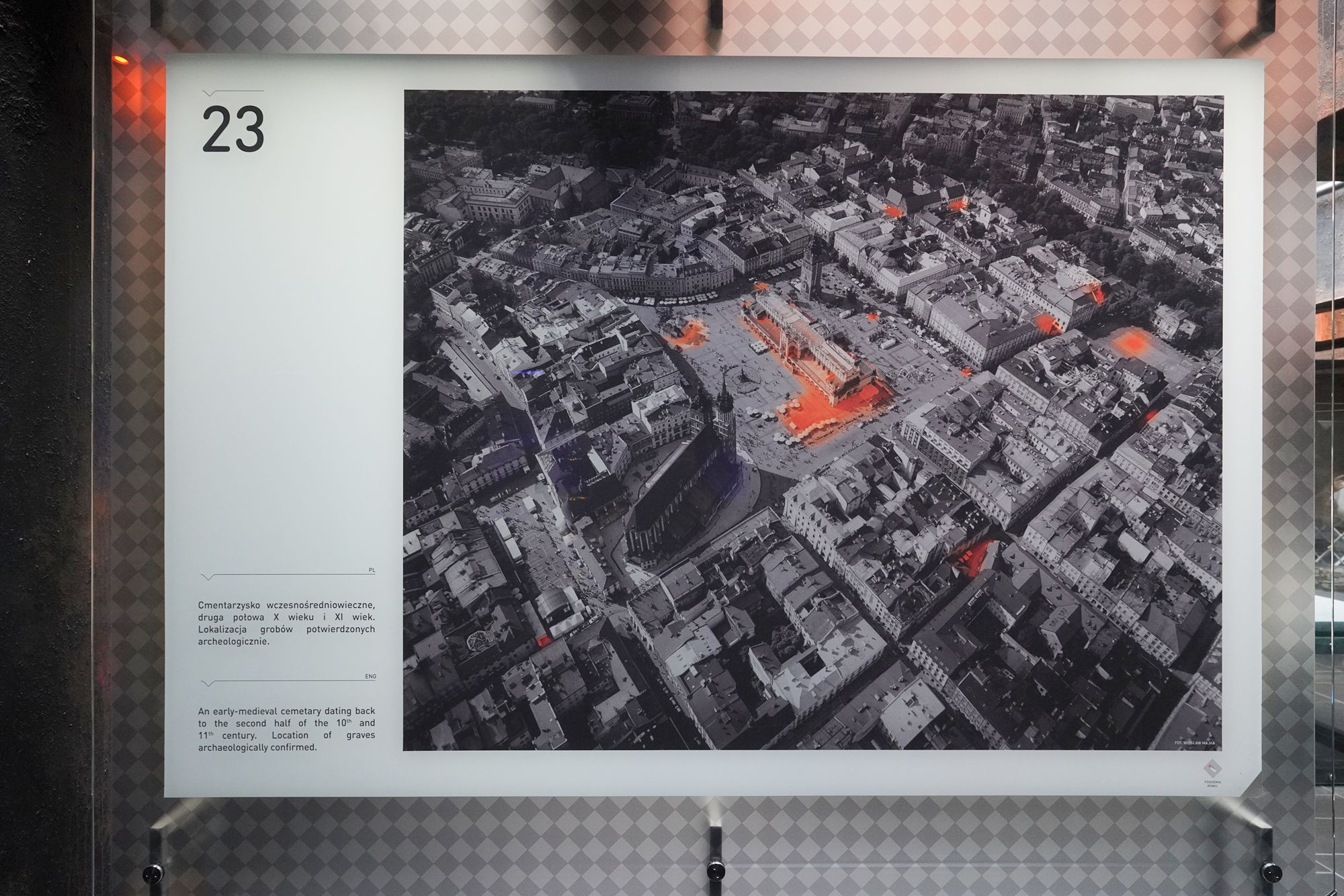
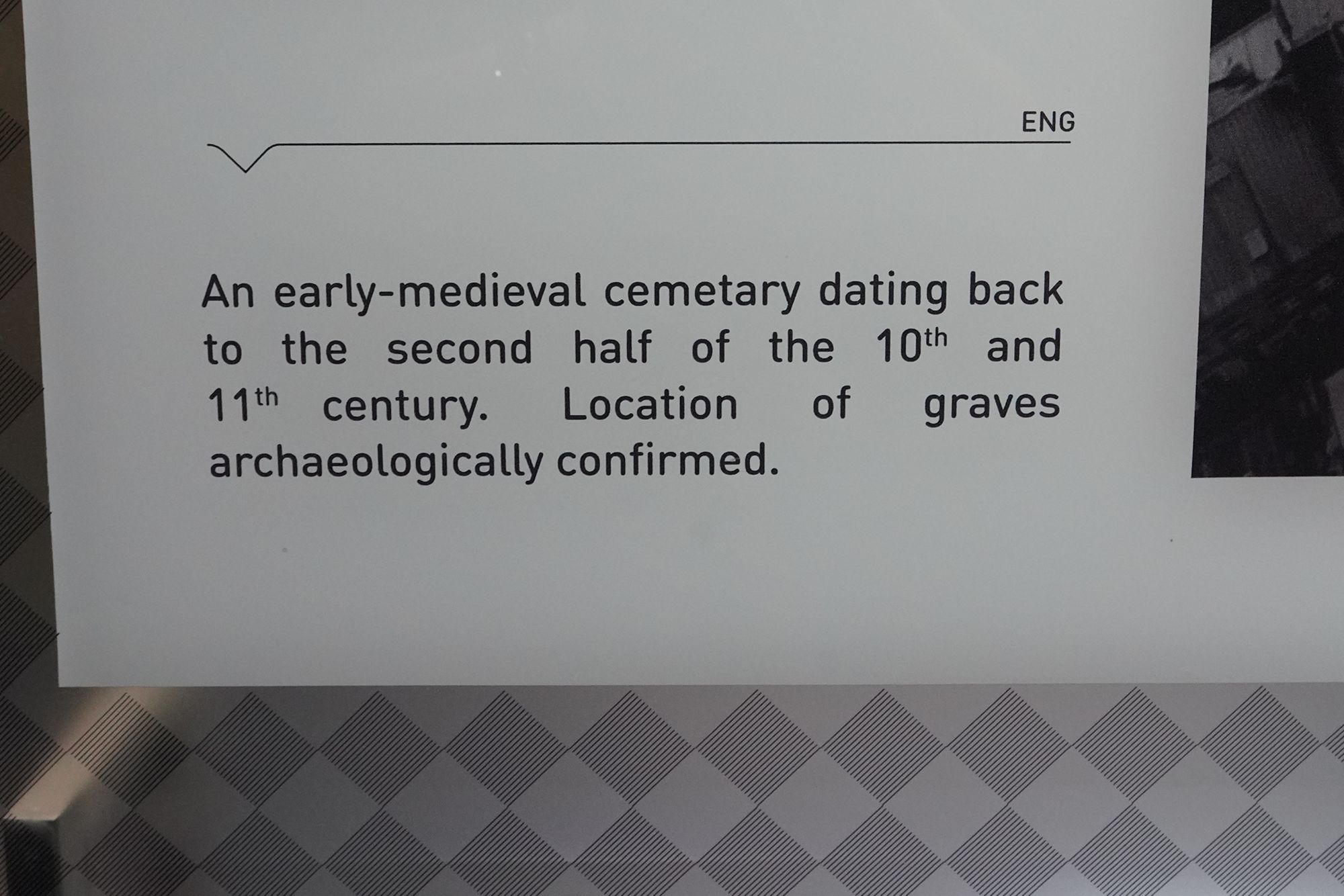
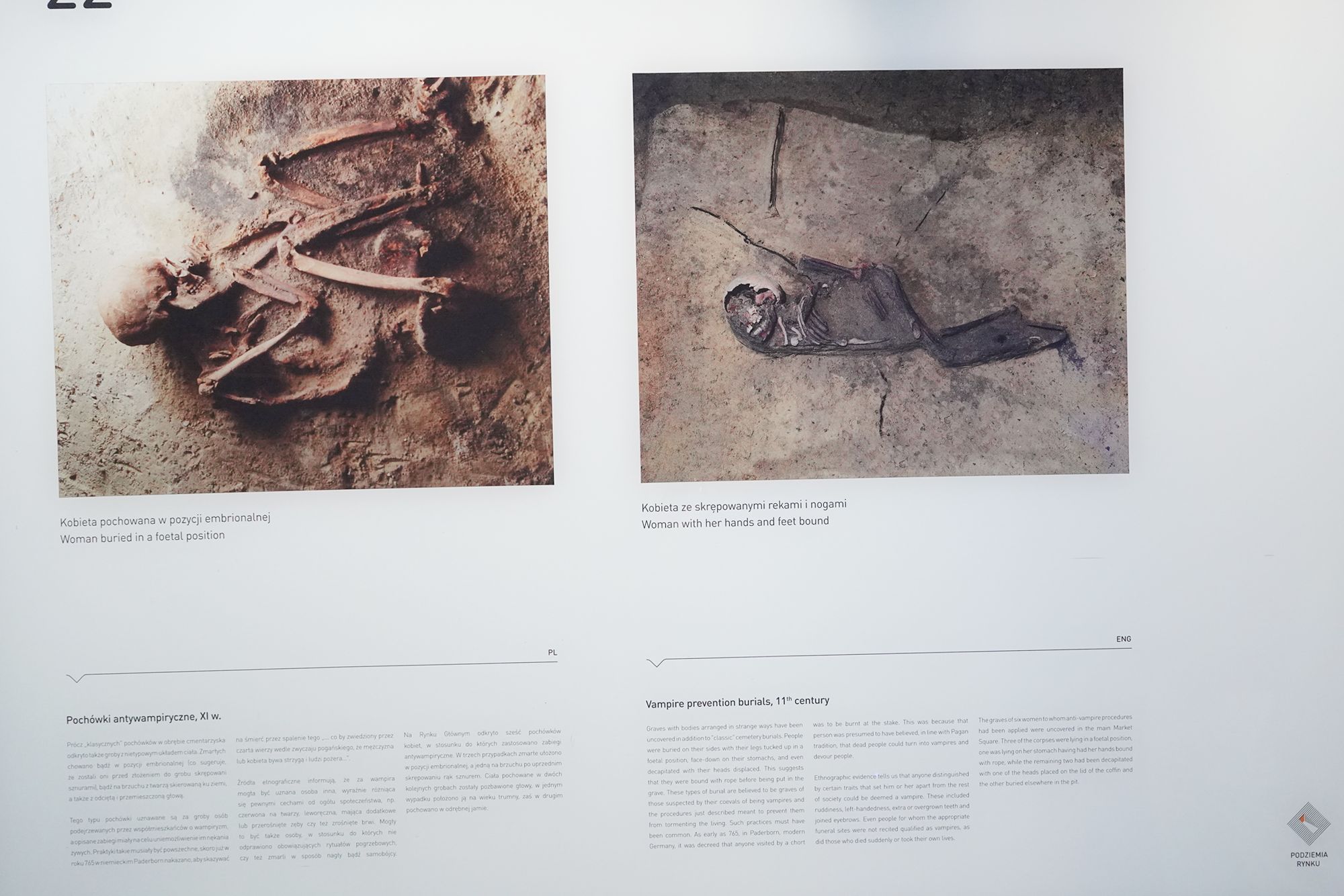
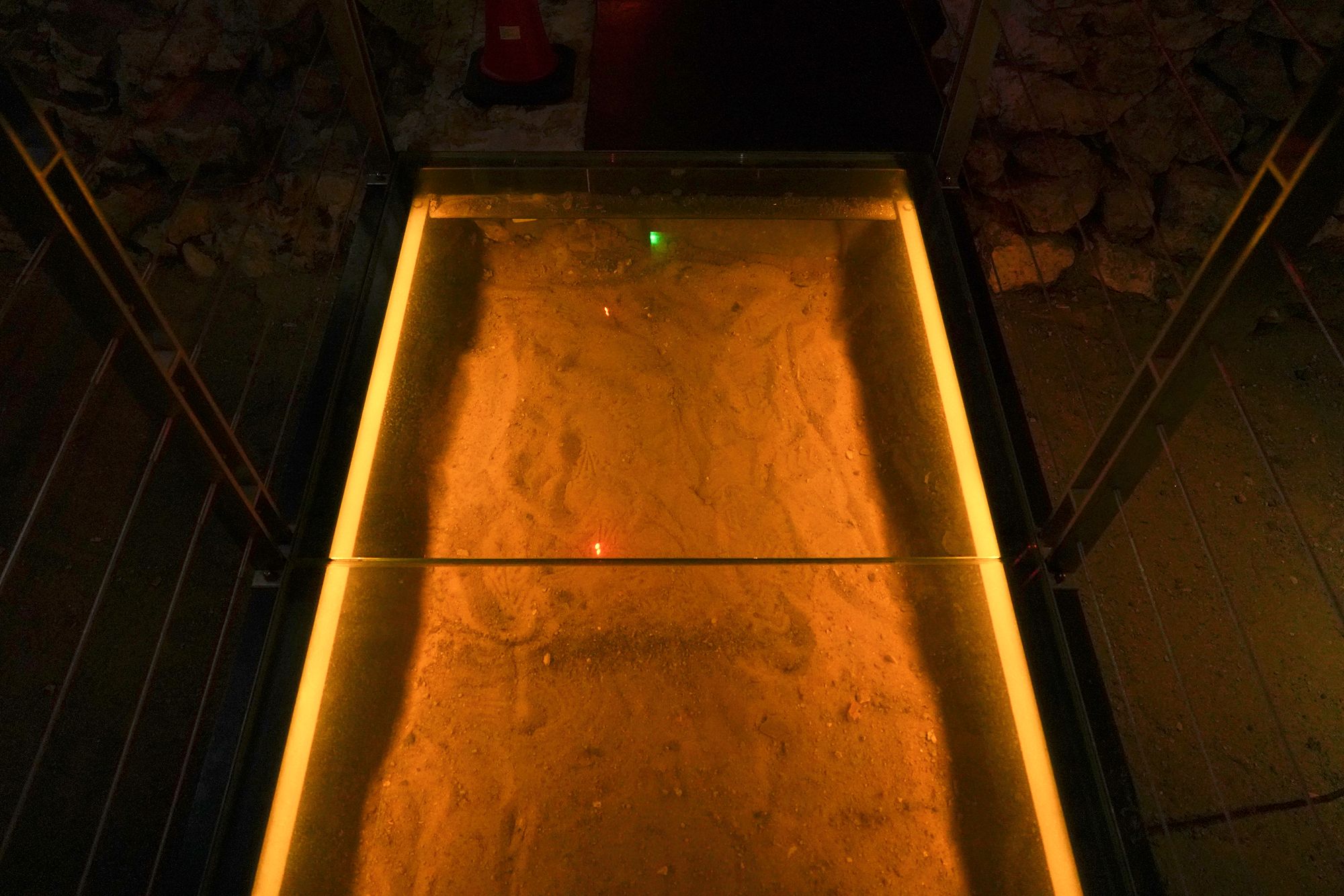
The Main Market Square held Kraków’s richest known early medieval cemetery in Lesser Poland. Its importance lies in how the graves were arranged and built, and how people were buried. Grave goods and body positions help researchers understand both funeral practices and the spiritual beliefs of people around the year 1000.
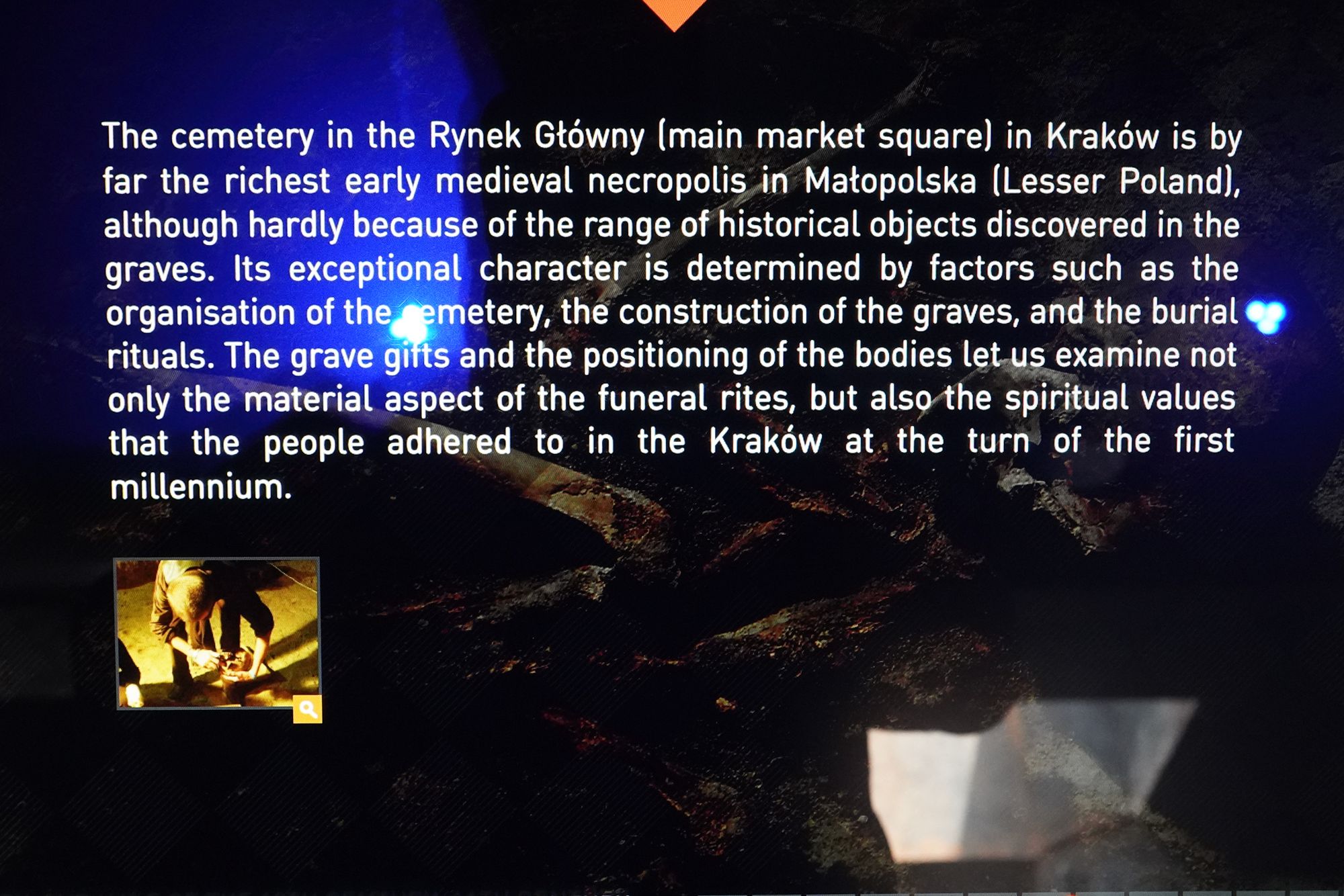
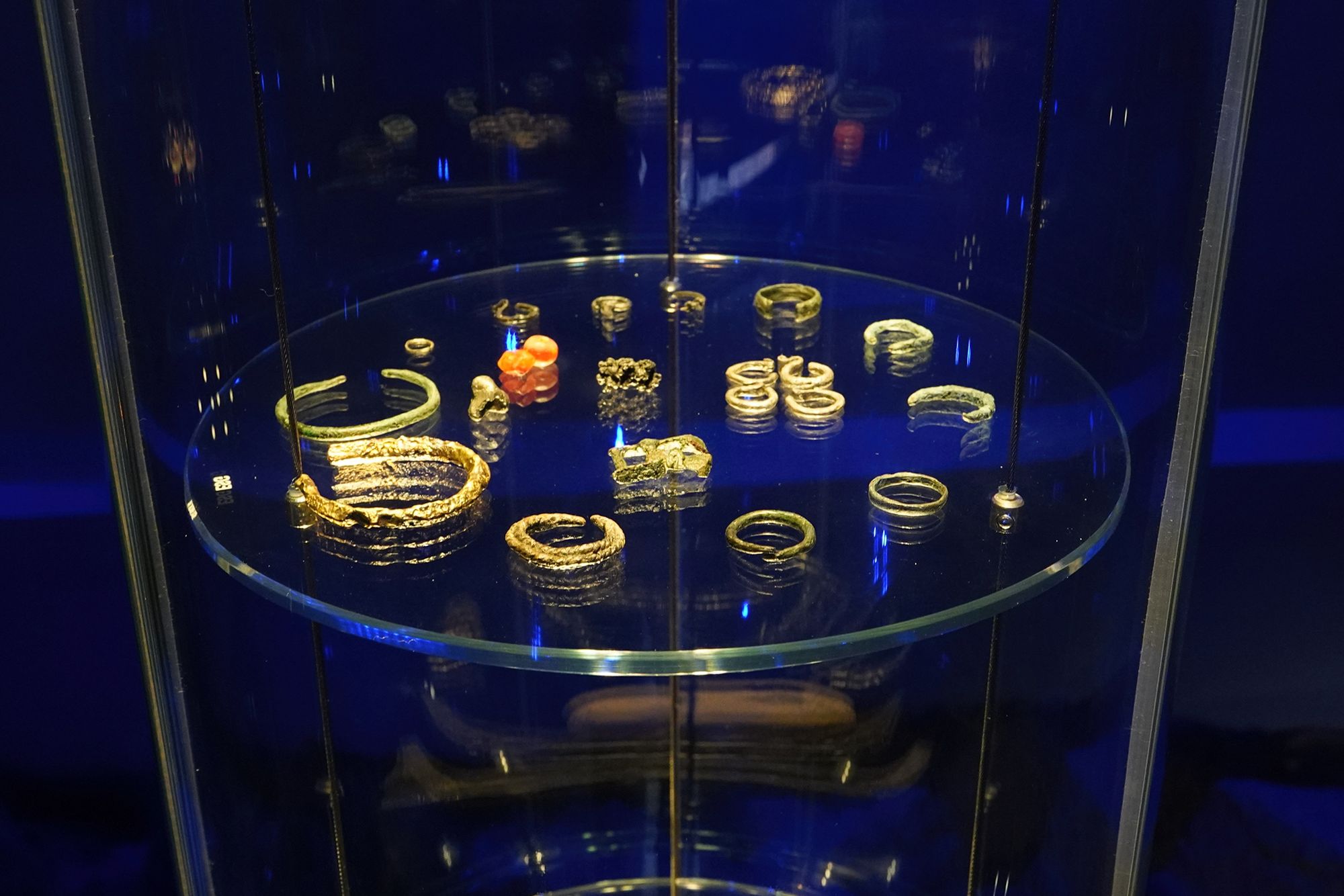
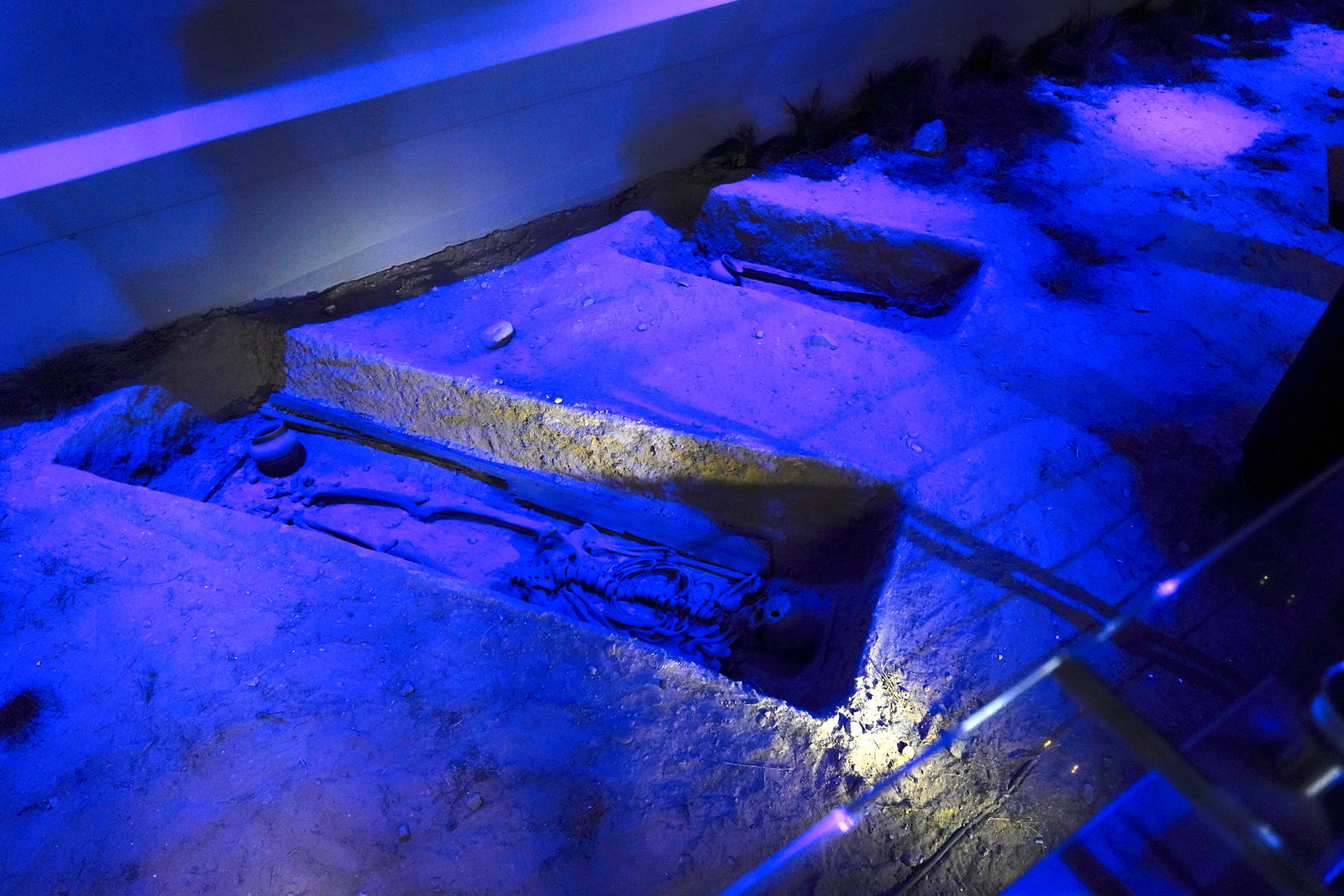
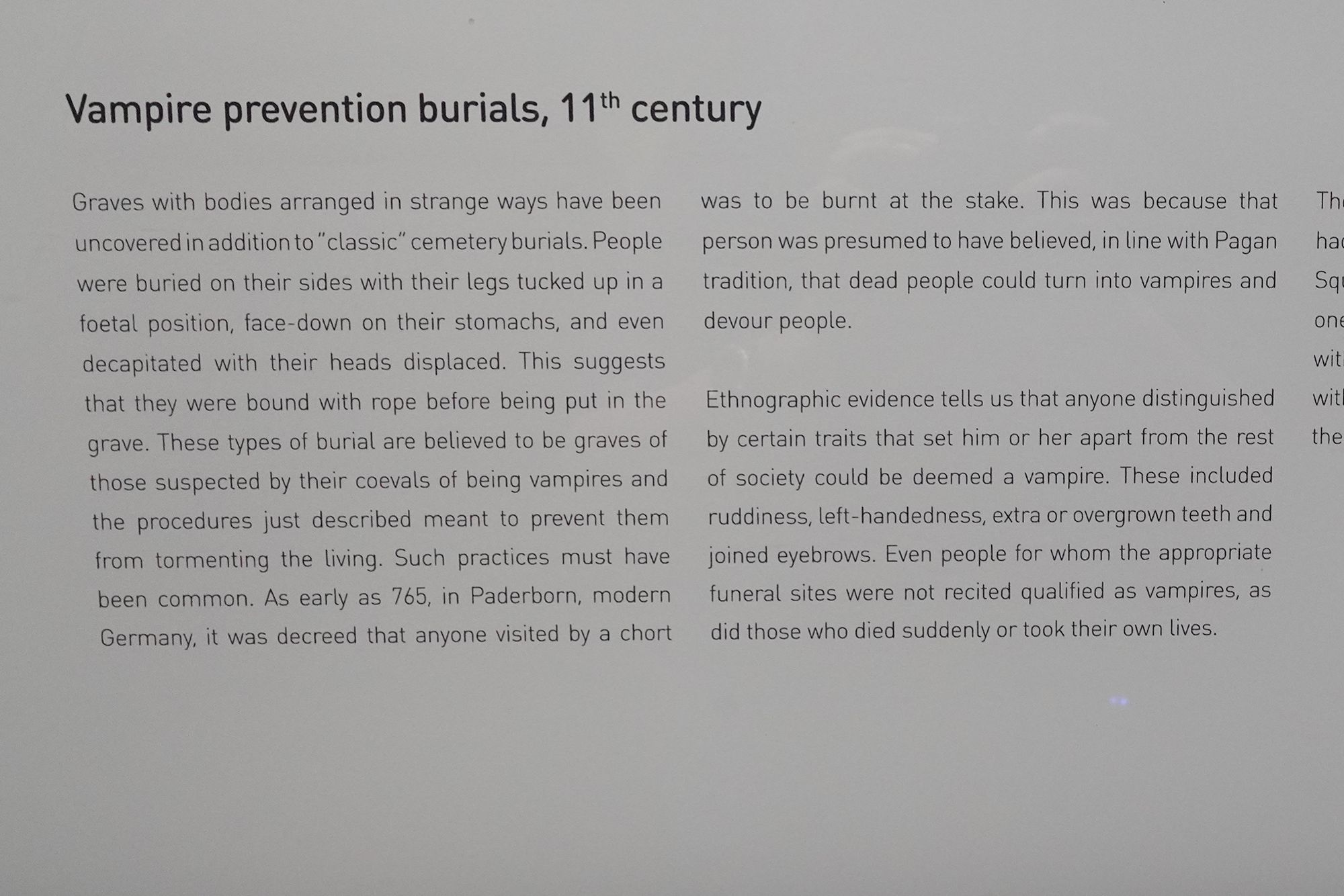
The panel describes 11th-century burials in which bodies were placed face-down, curled on their sides, or decapitated. These unusual practices are interpreted as attempts to stop people suspected of being vampires from returning to torment the living. The label notes that sudden death and certain perceived physical traits could also lead someone to be feared as a vampire.
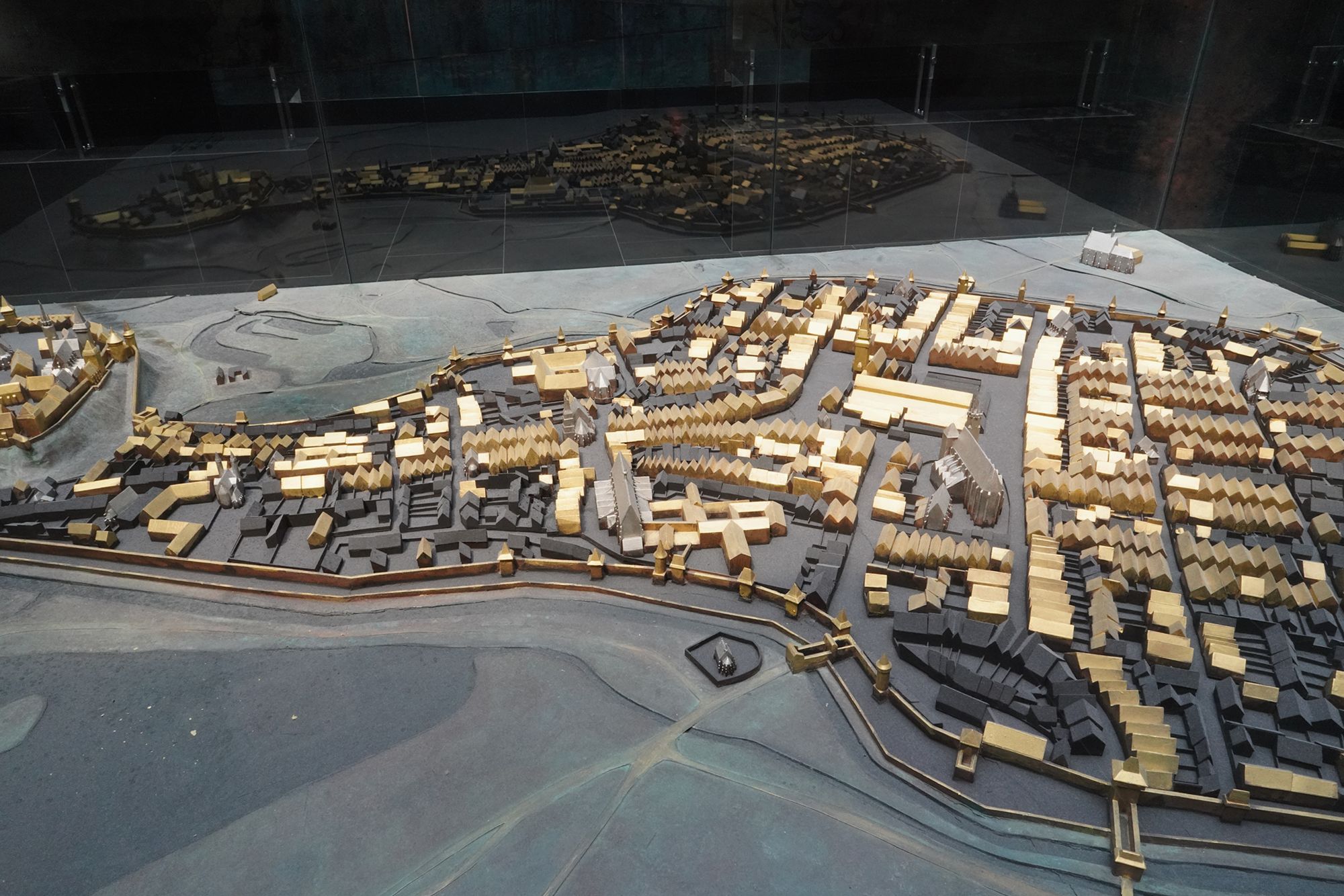
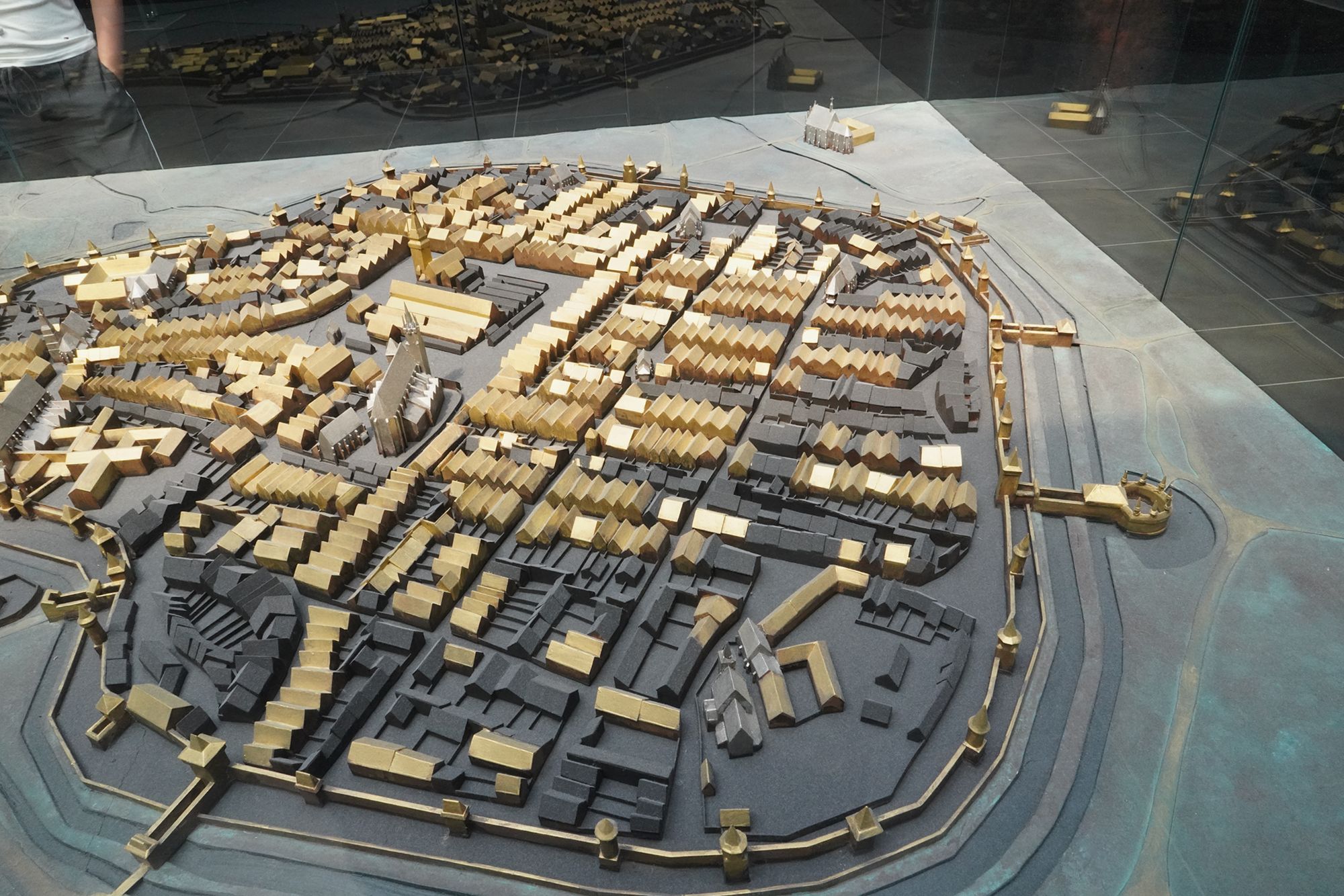
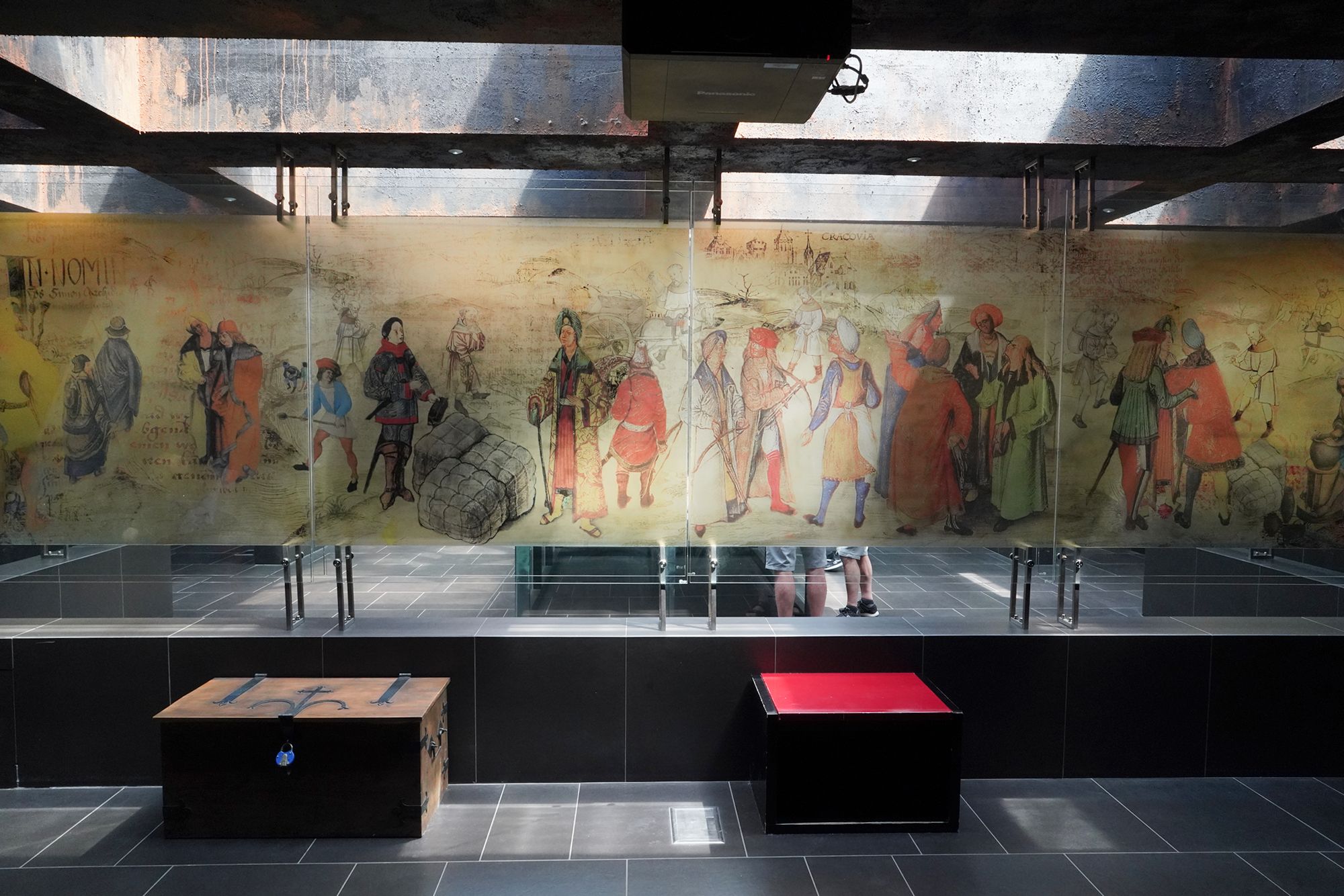
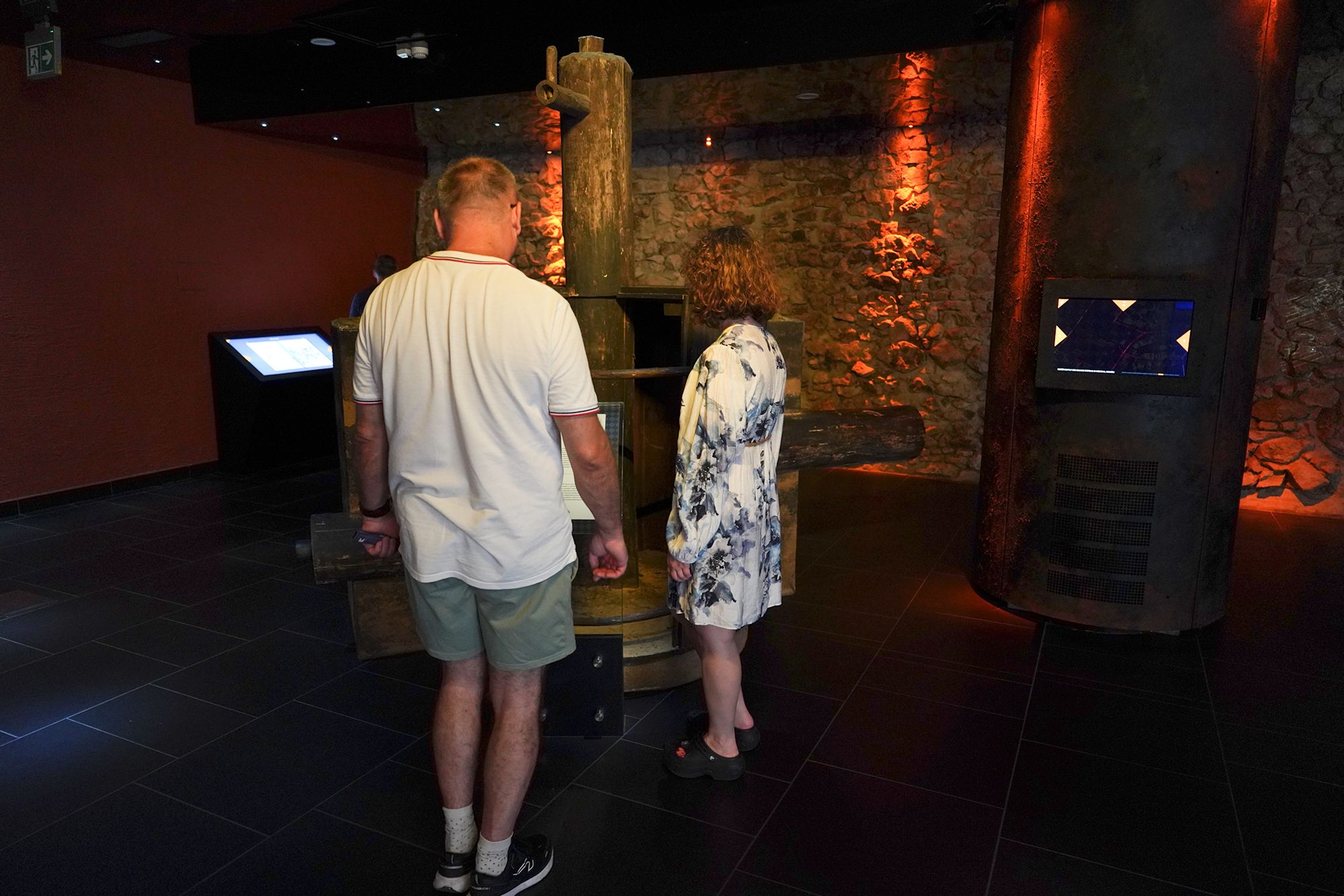
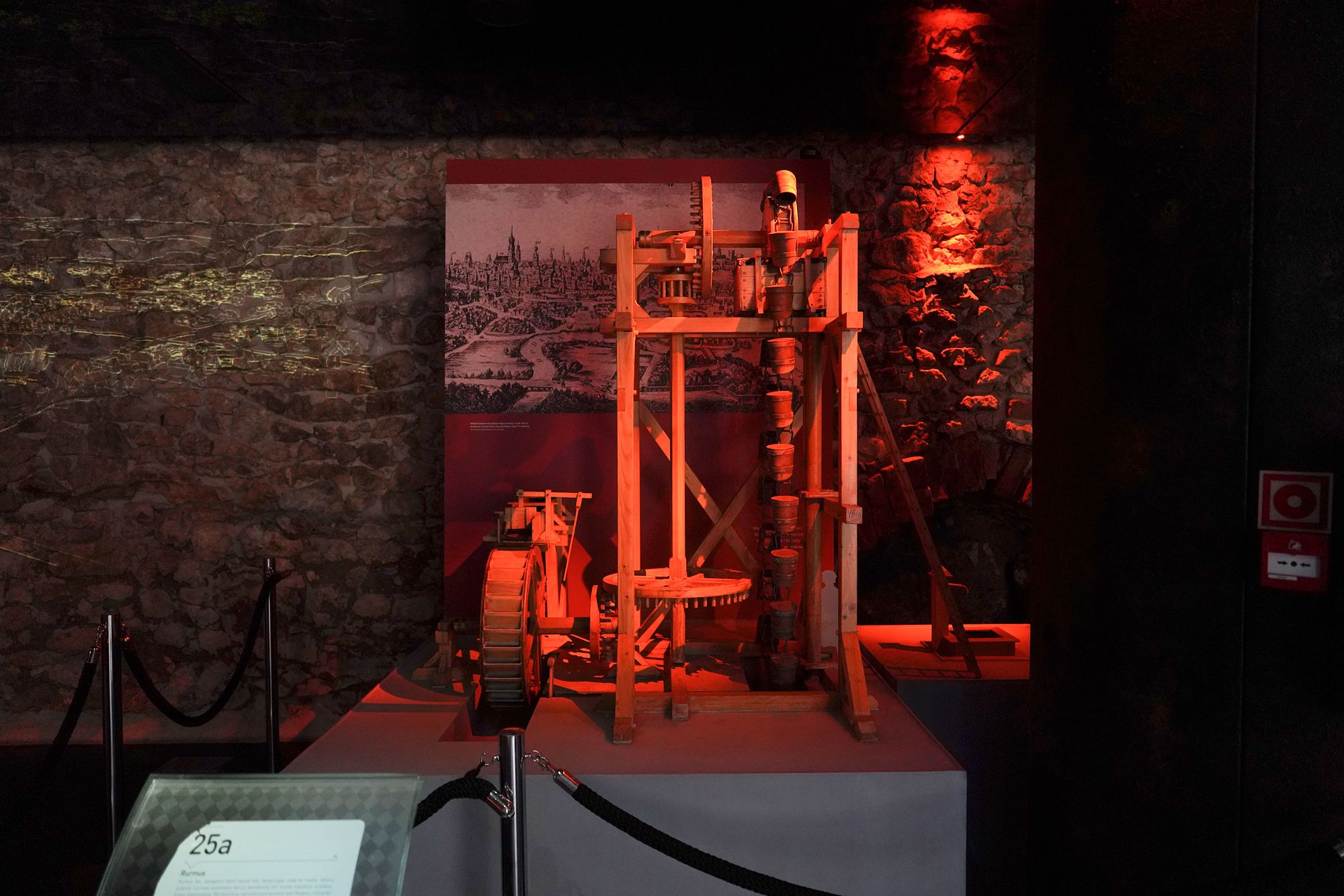
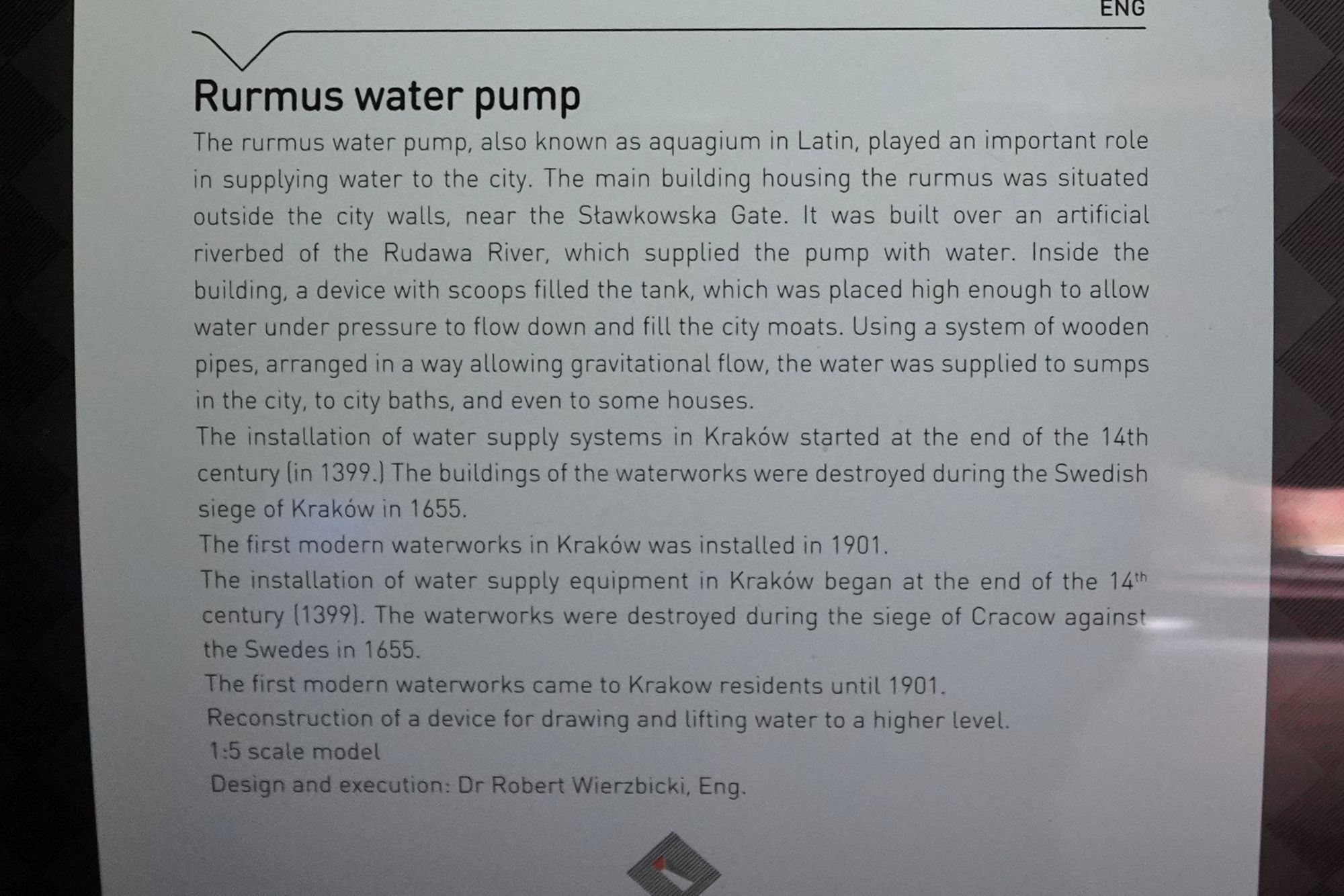
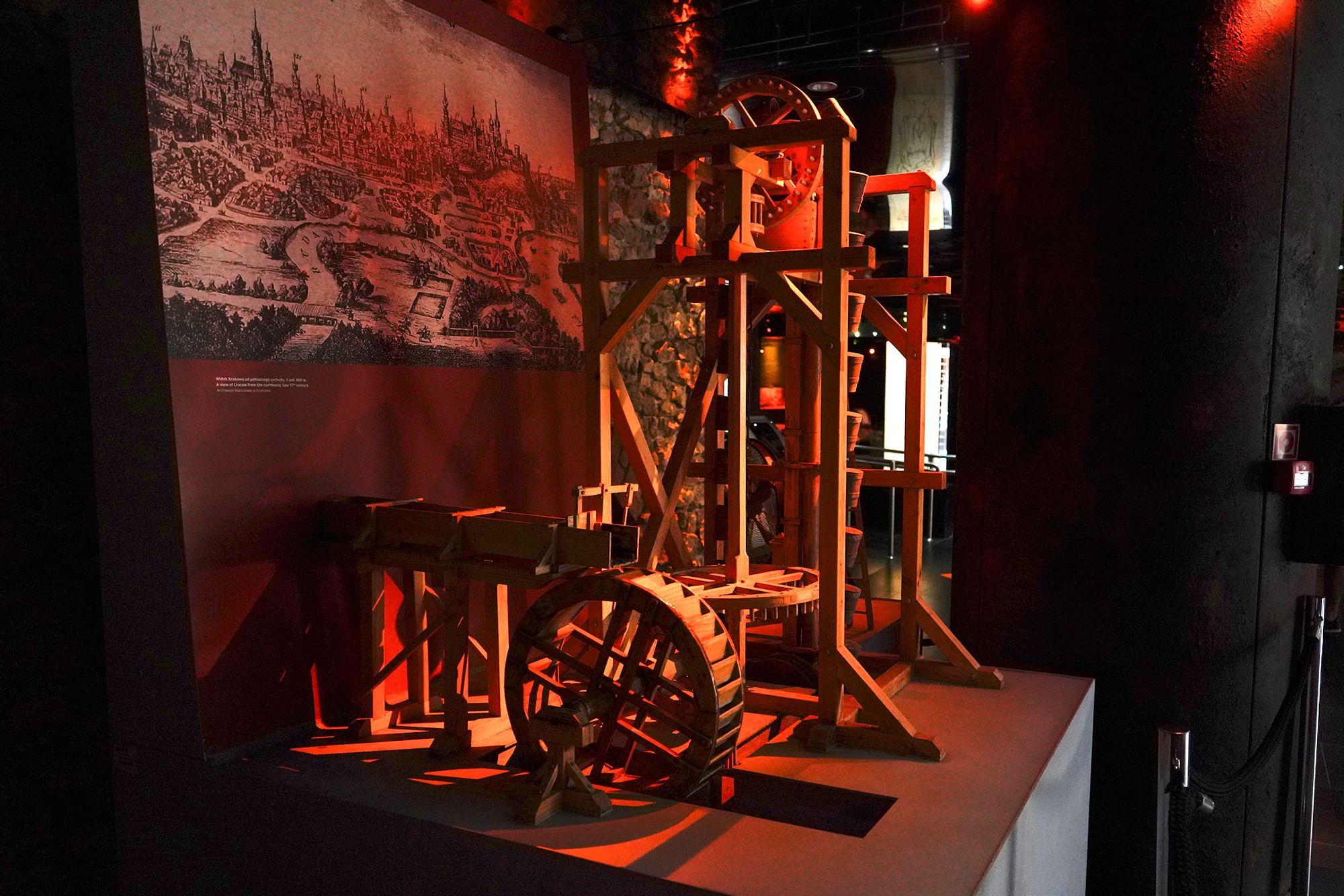
The Rurmus water pump helped supply medieval Kraków. Located outside the city walls near Stawkowska Gate, it used scoops to lift water into an elevated tank. From there, water flowed through wooden pipes to the city moats, public baths, reservoirs, and some homes. Kraków’s waterworks began in 1399, were destroyed during the Swedish siege of 1655, and were replaced by modern waterworks in 1901. The display is a 1:5-scale reconstruction.
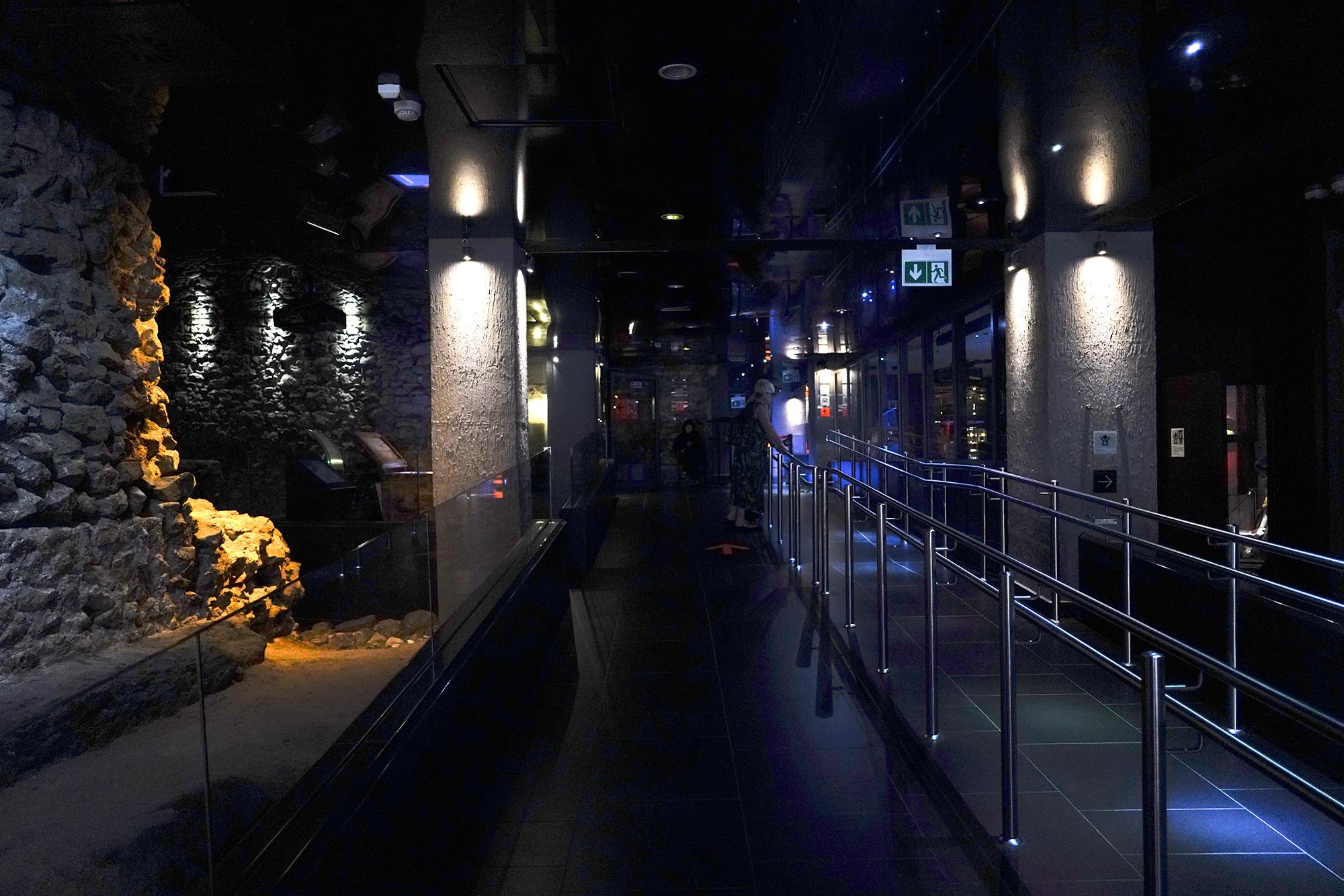
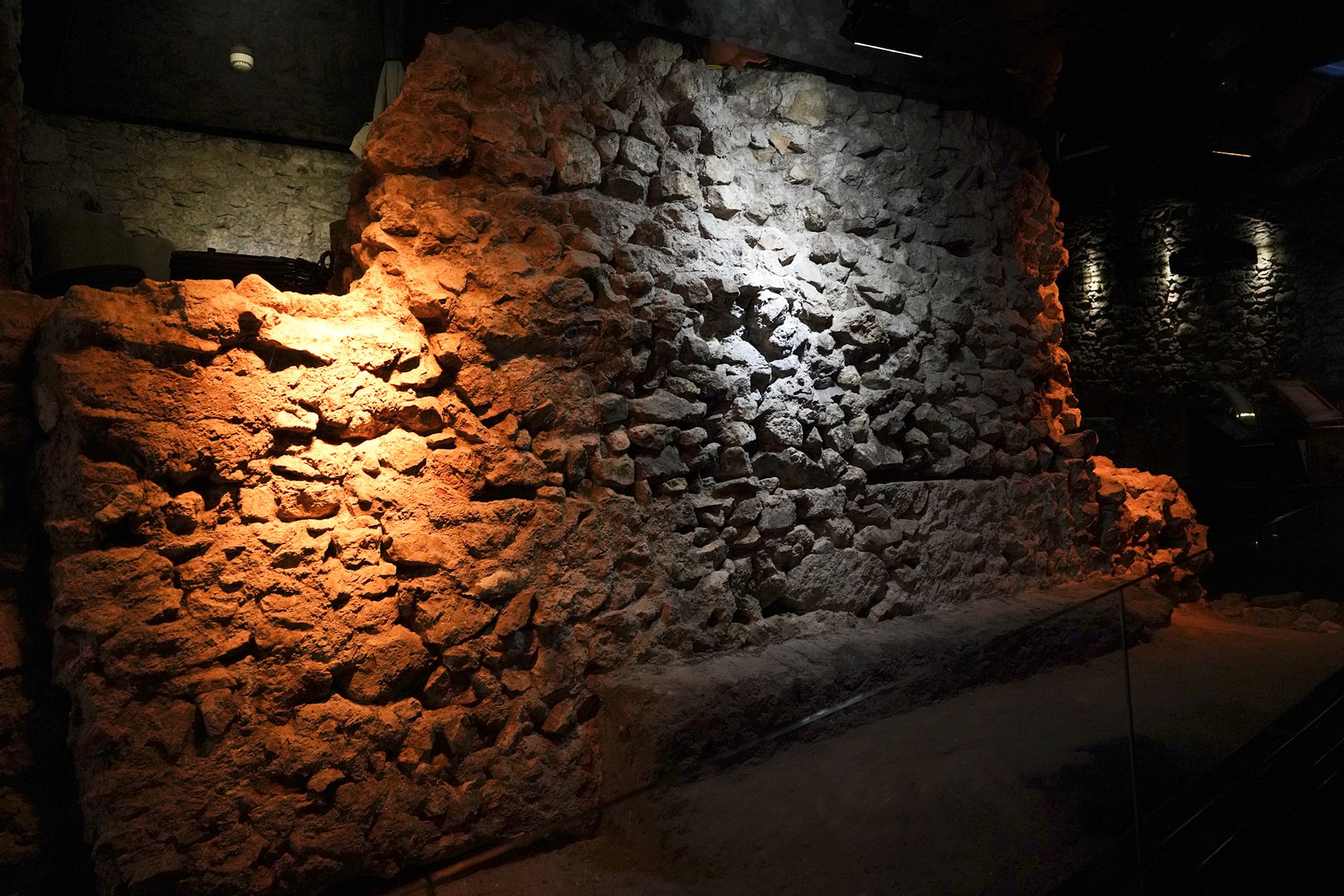
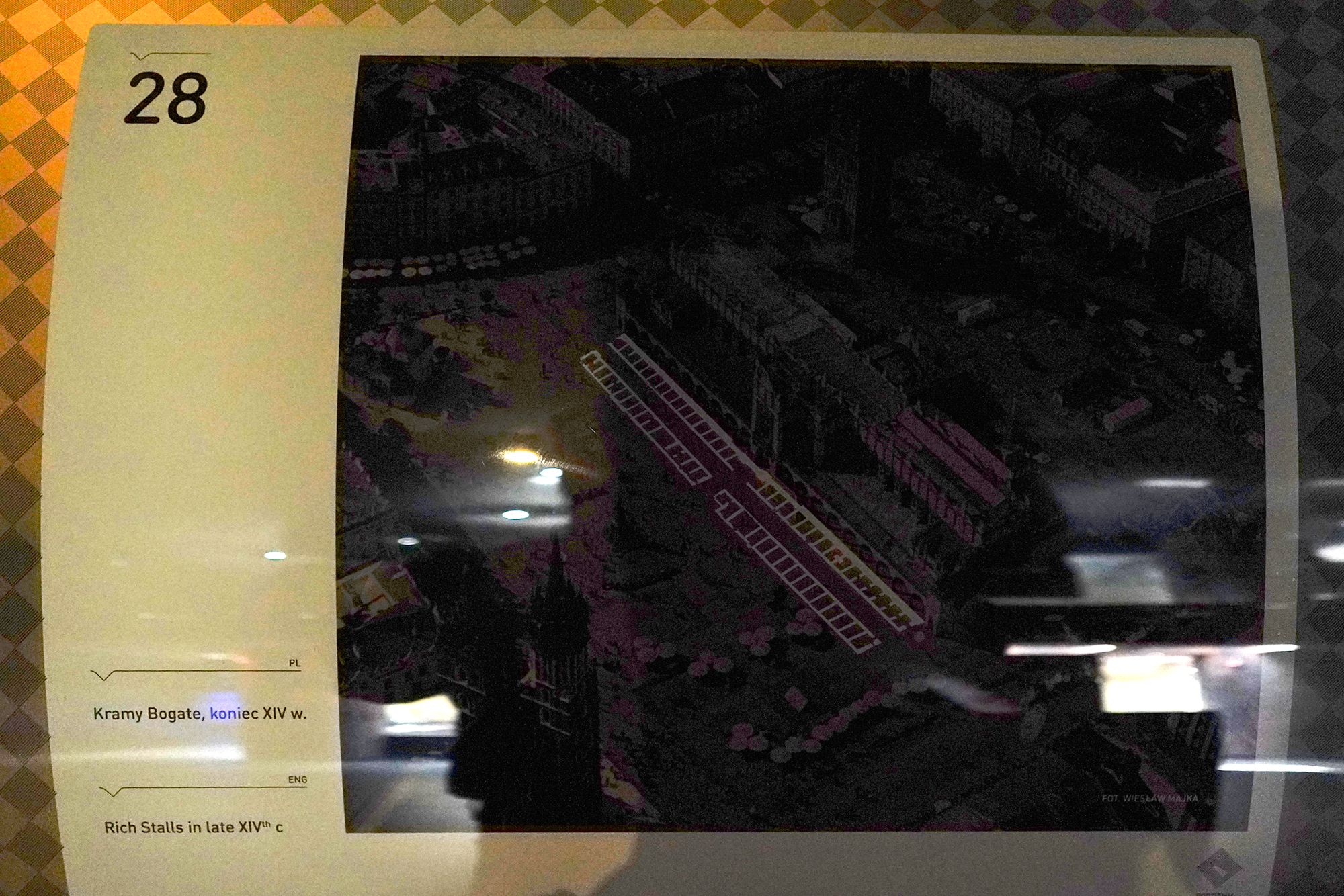
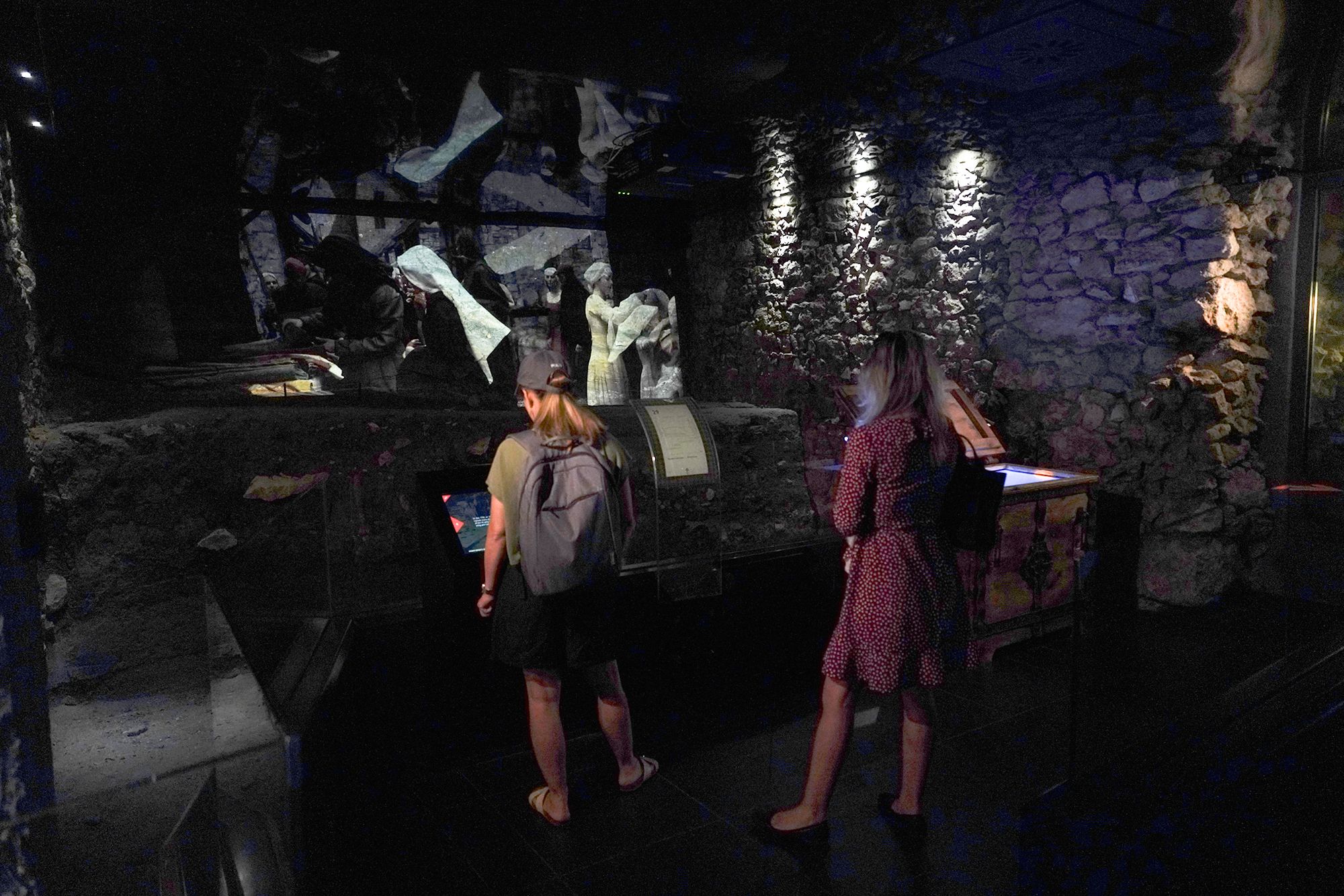
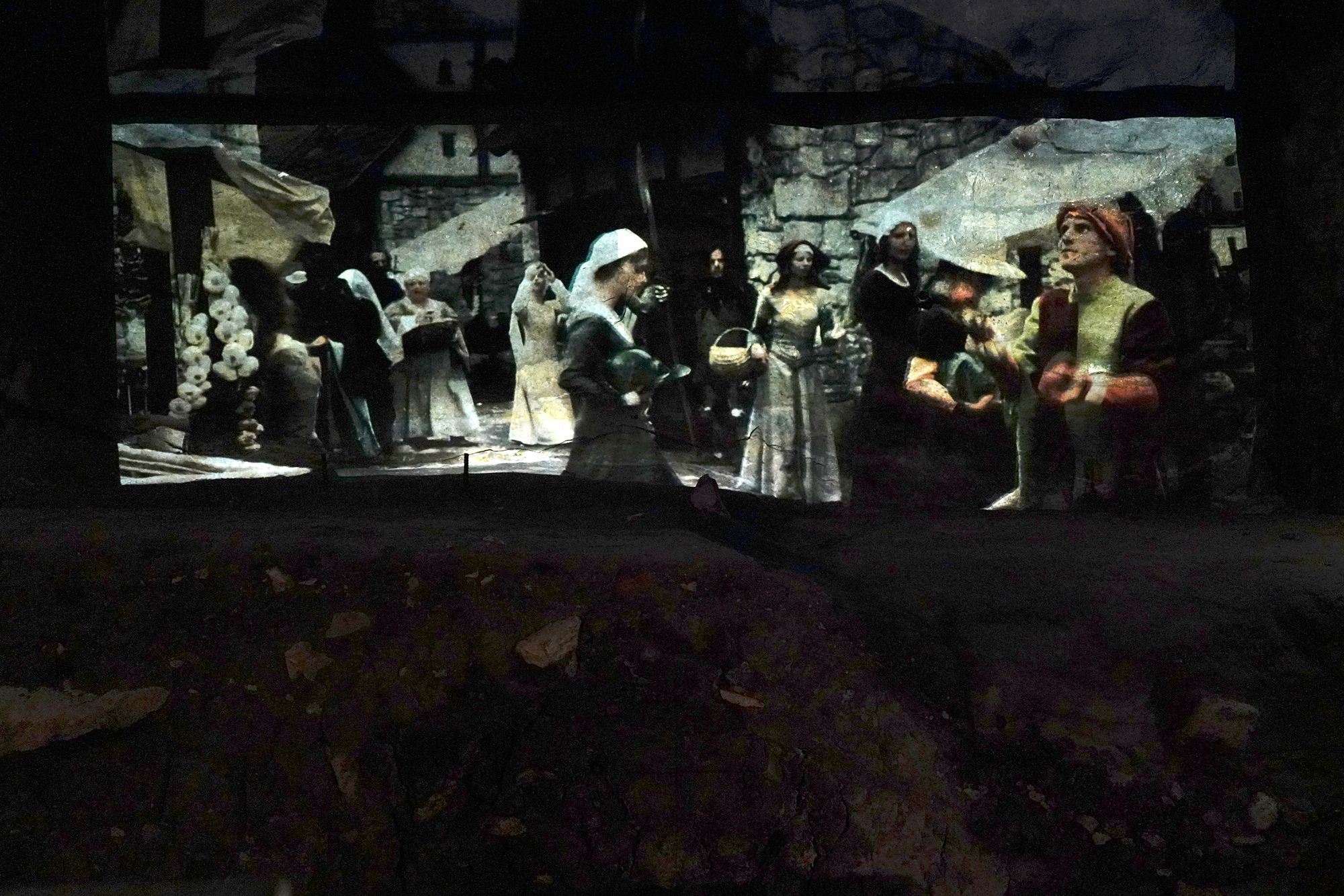
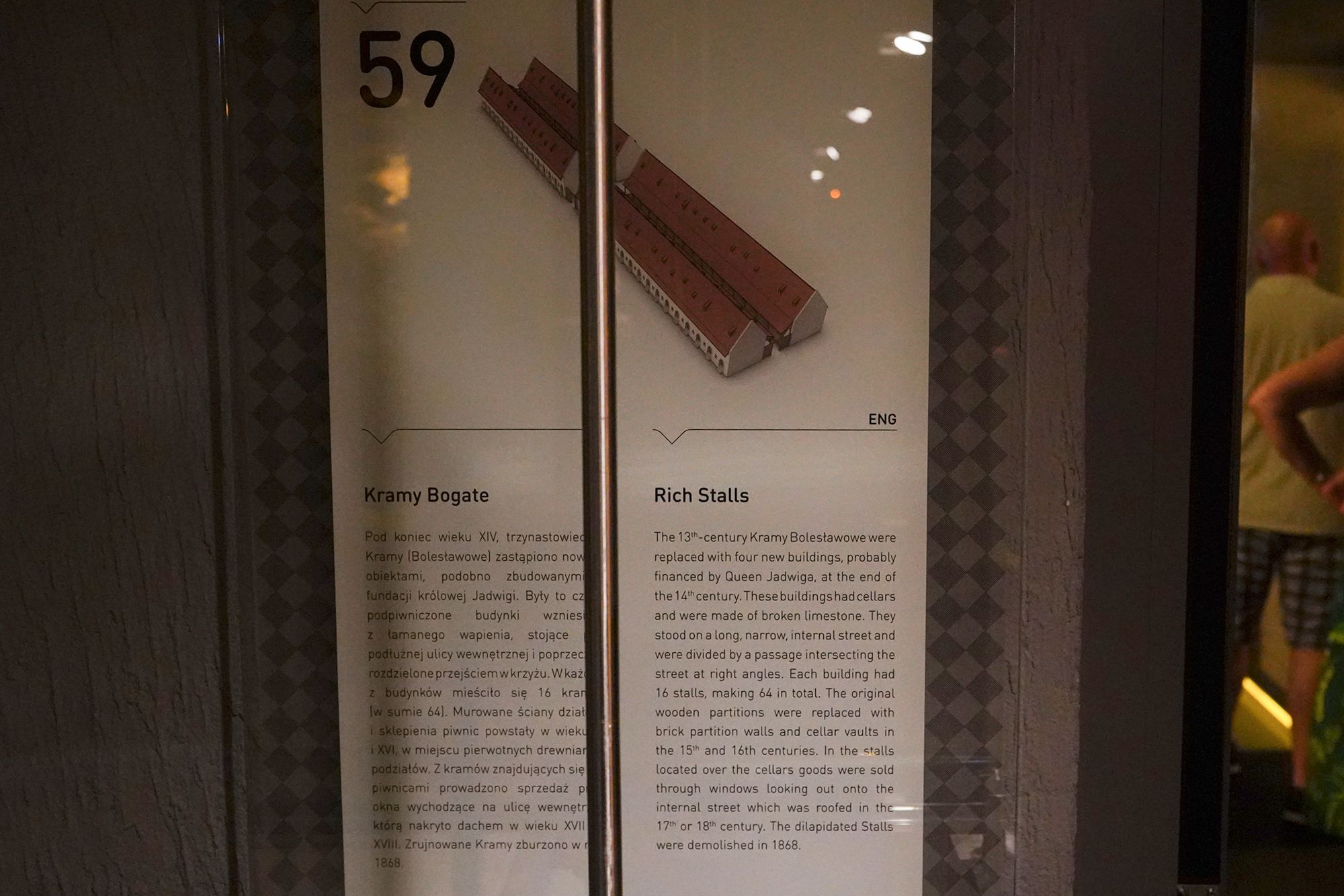
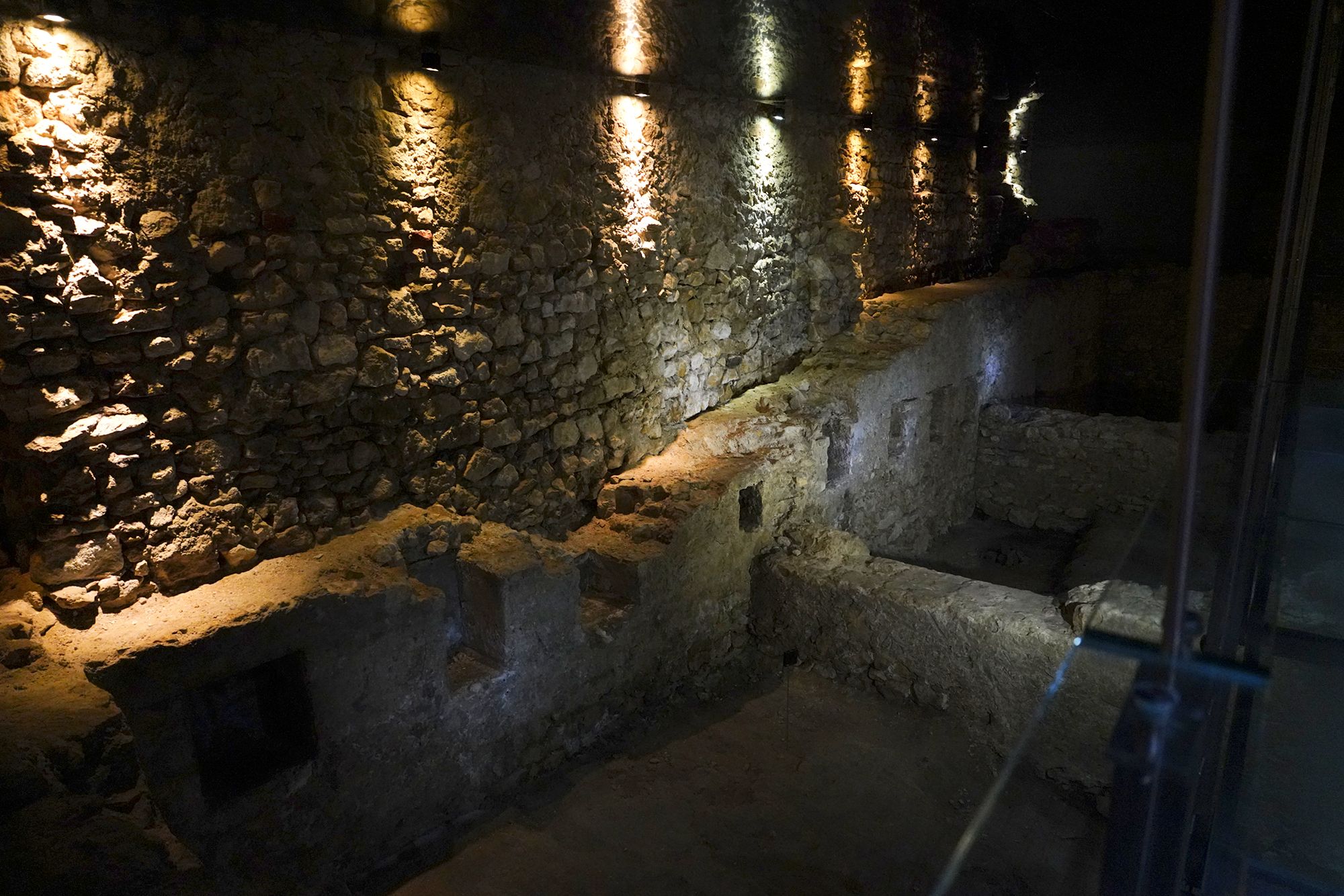
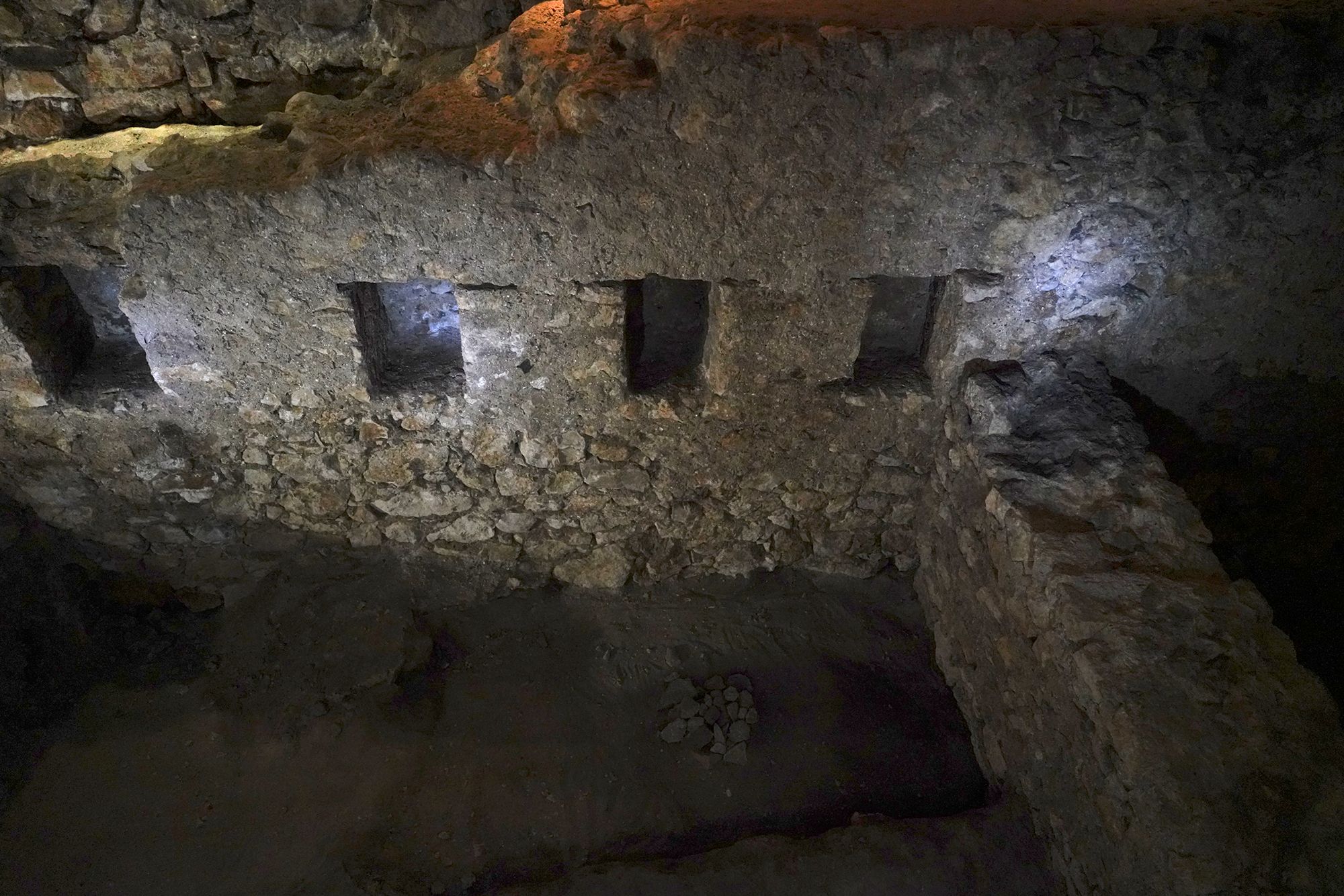
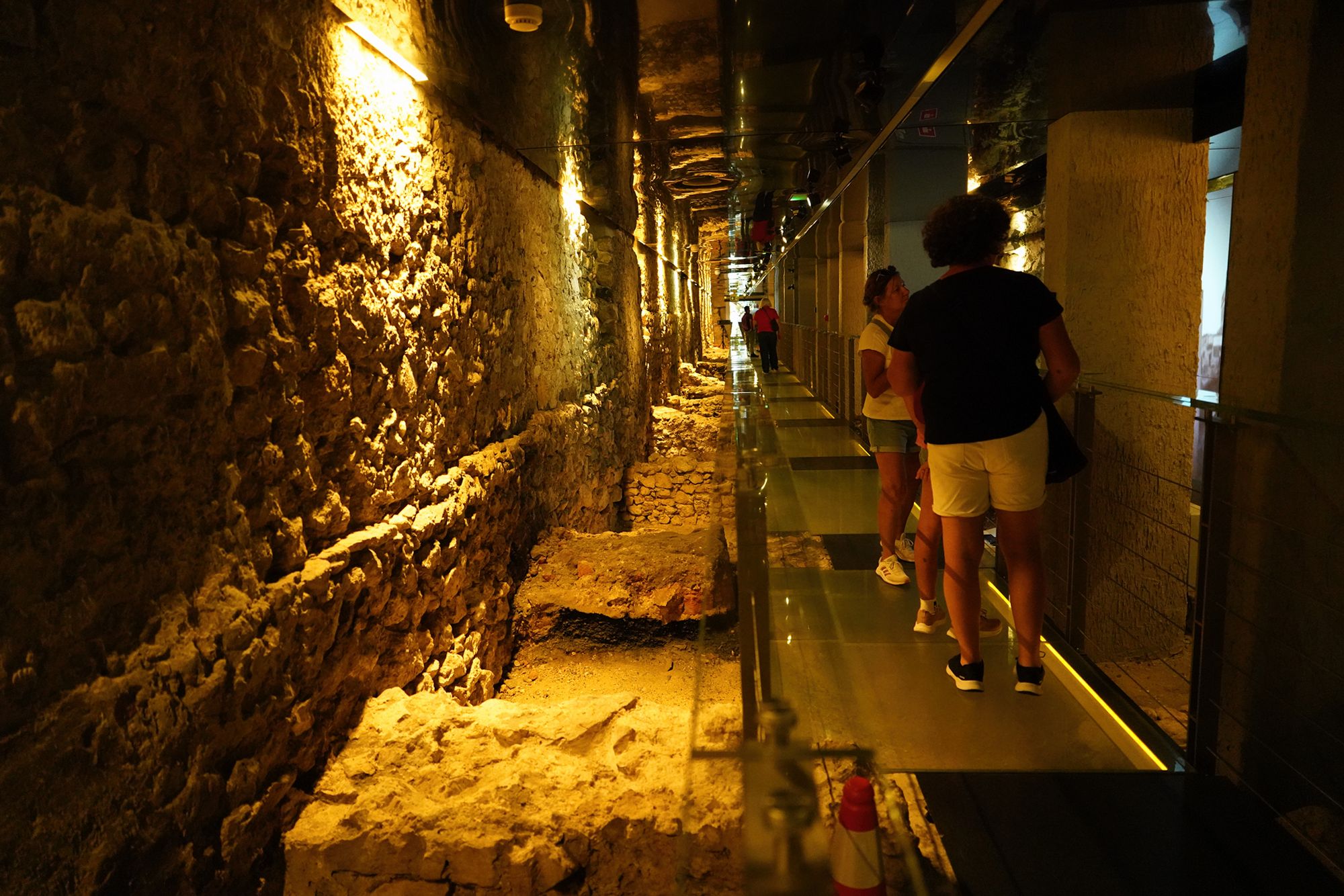
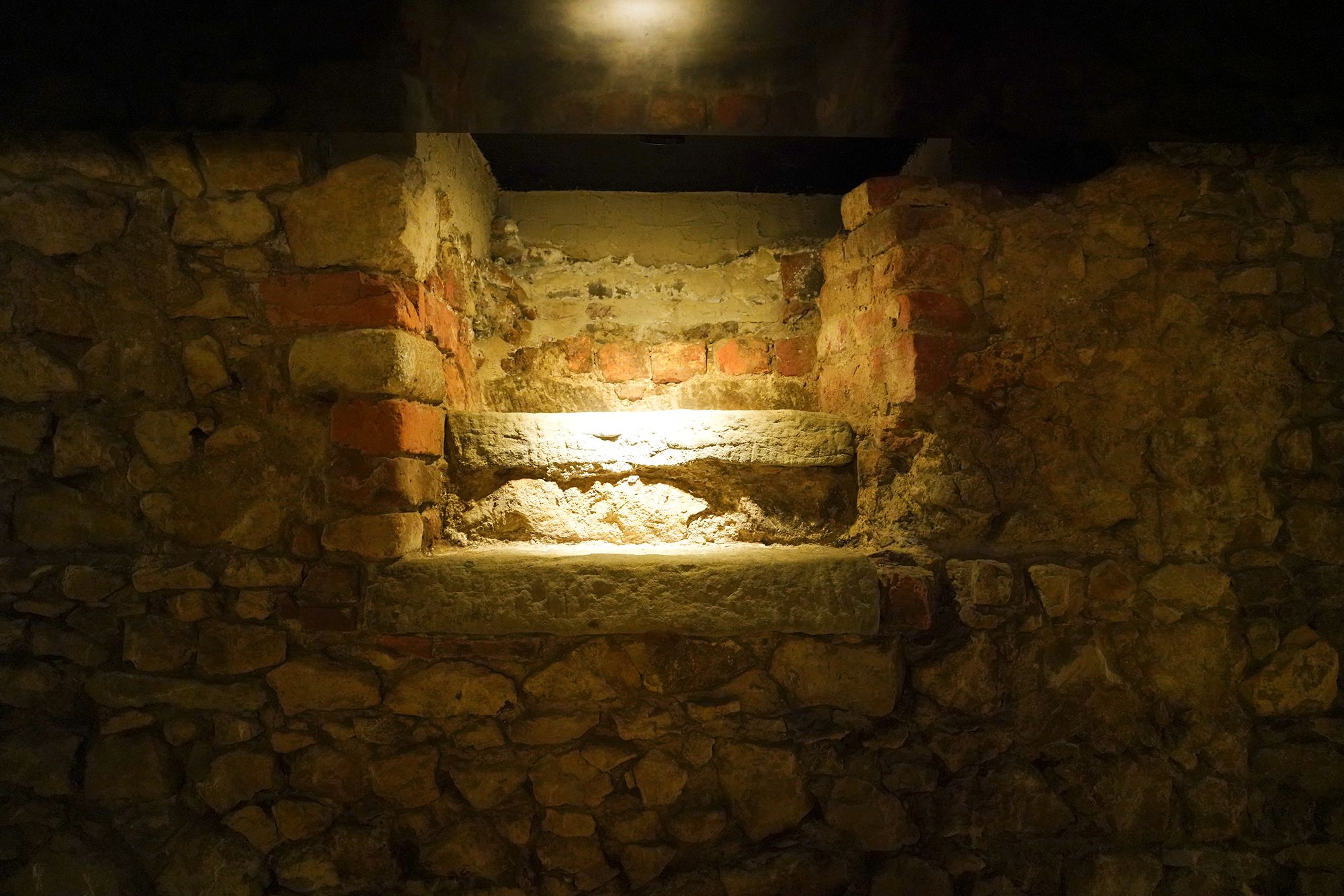
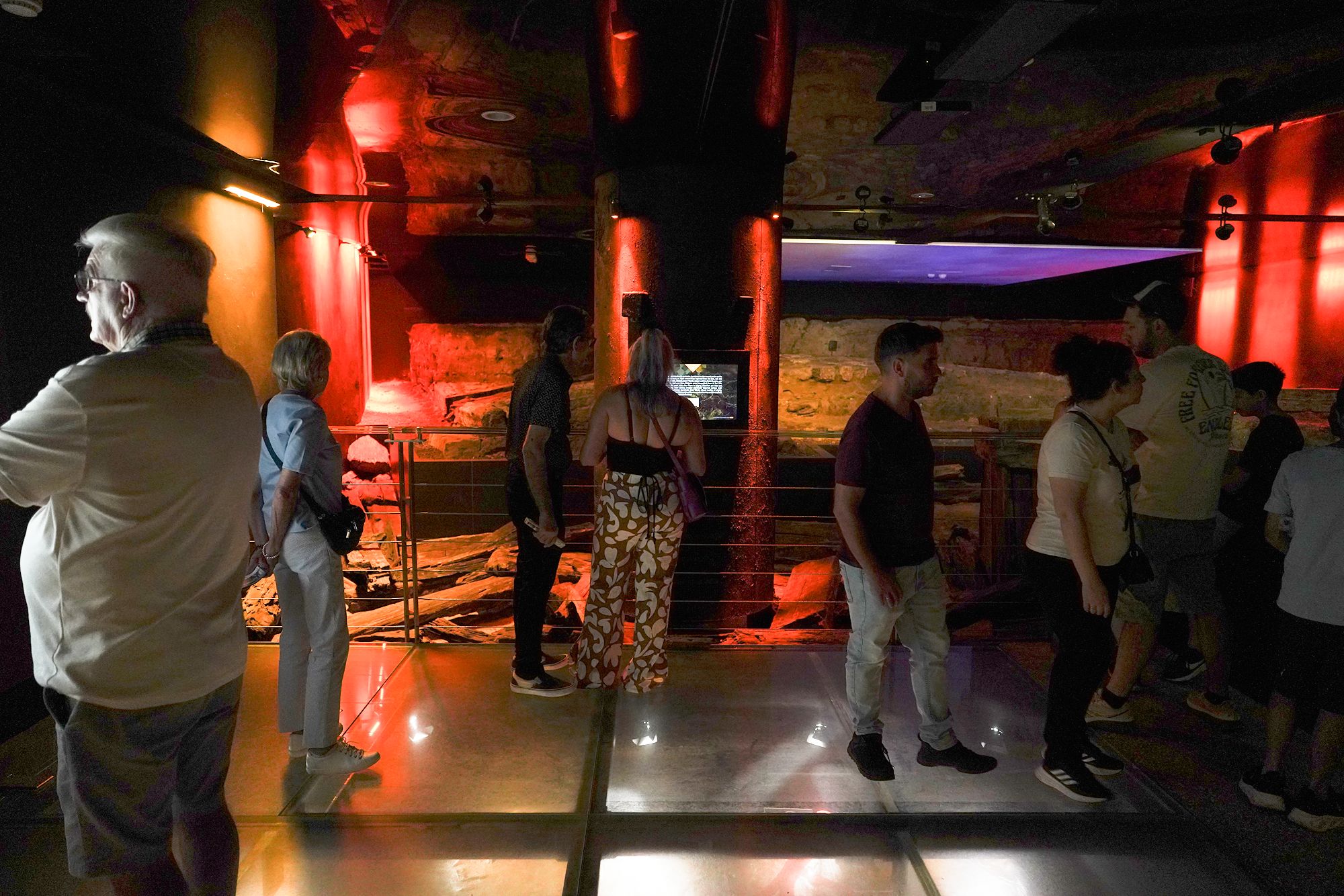
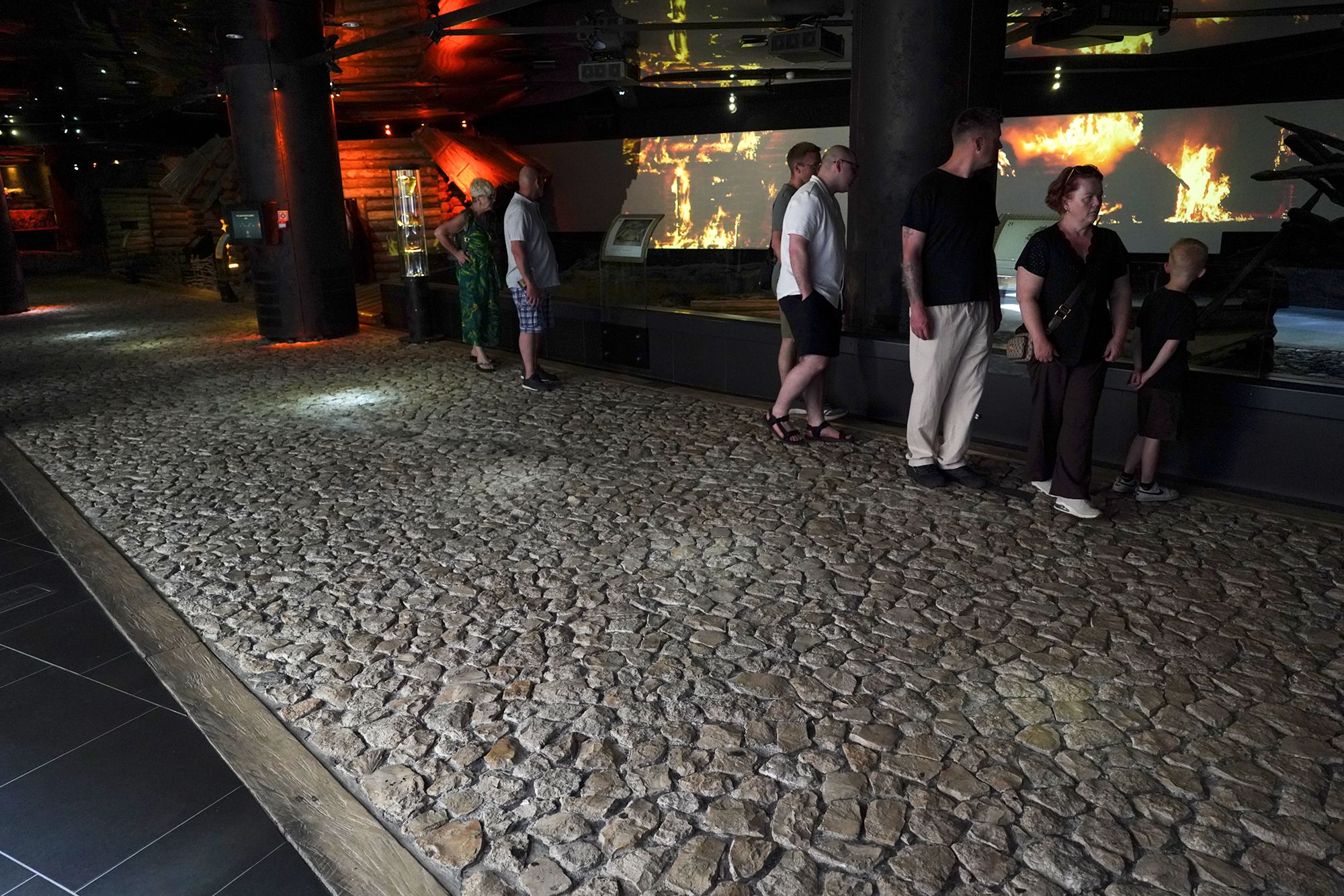
The panel says the inner street was roofed over in the 17th or 18th century. The ruined stalls were demolished in 1868. Today, the museum displays cellar remains from the western wing of the Kramy Bogate (“Rich Stalls”) and fragments of a wall from the eastern wing.
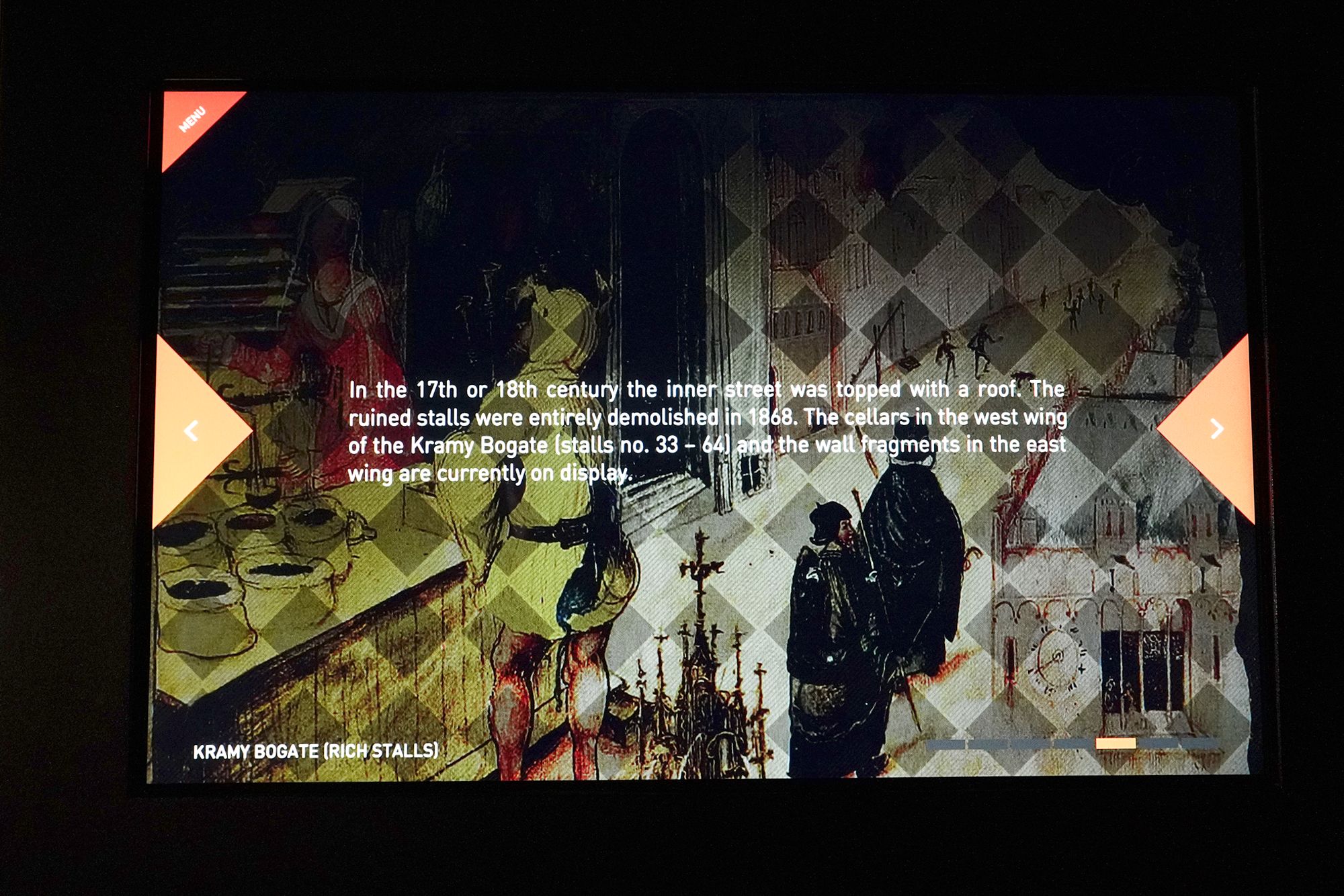
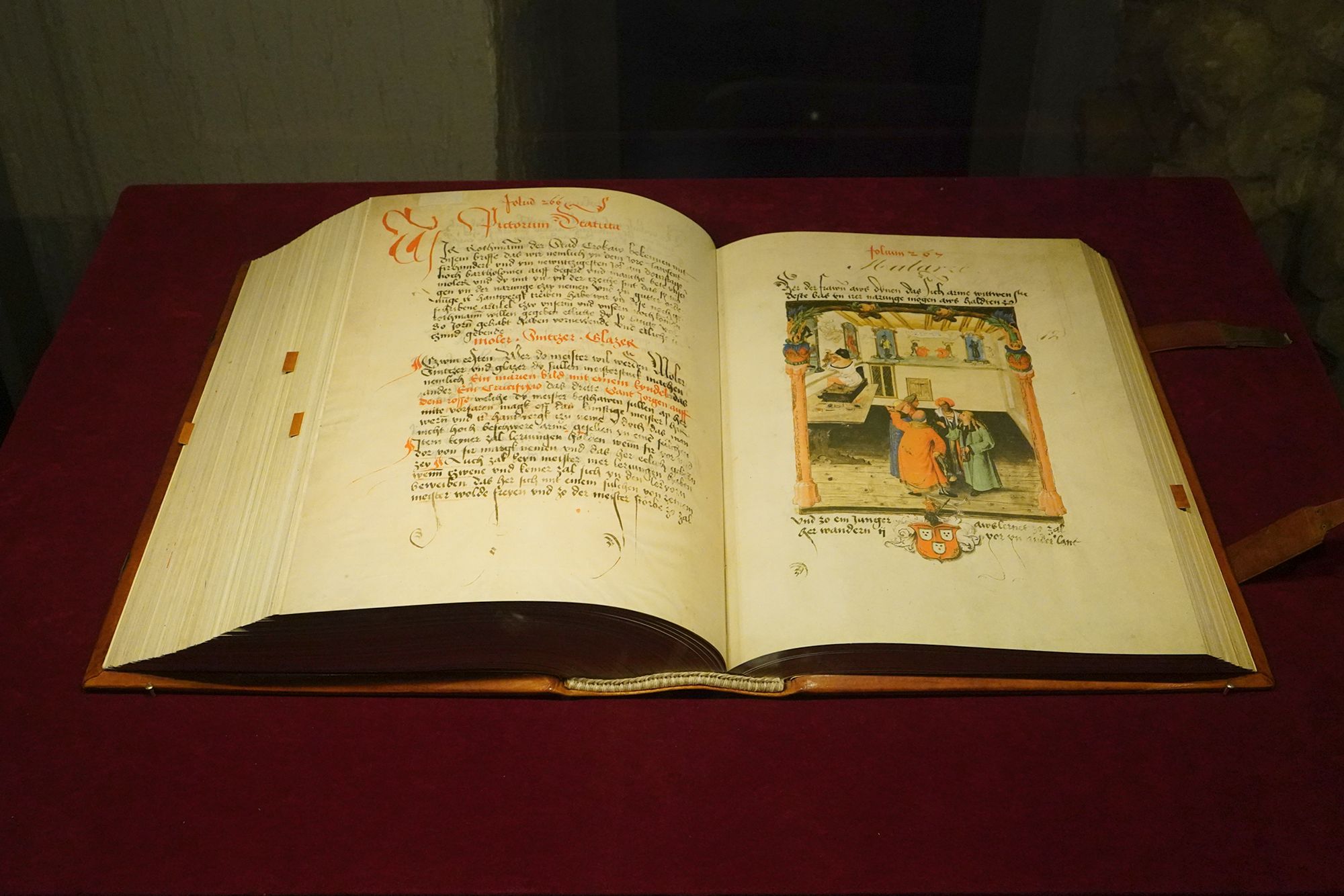
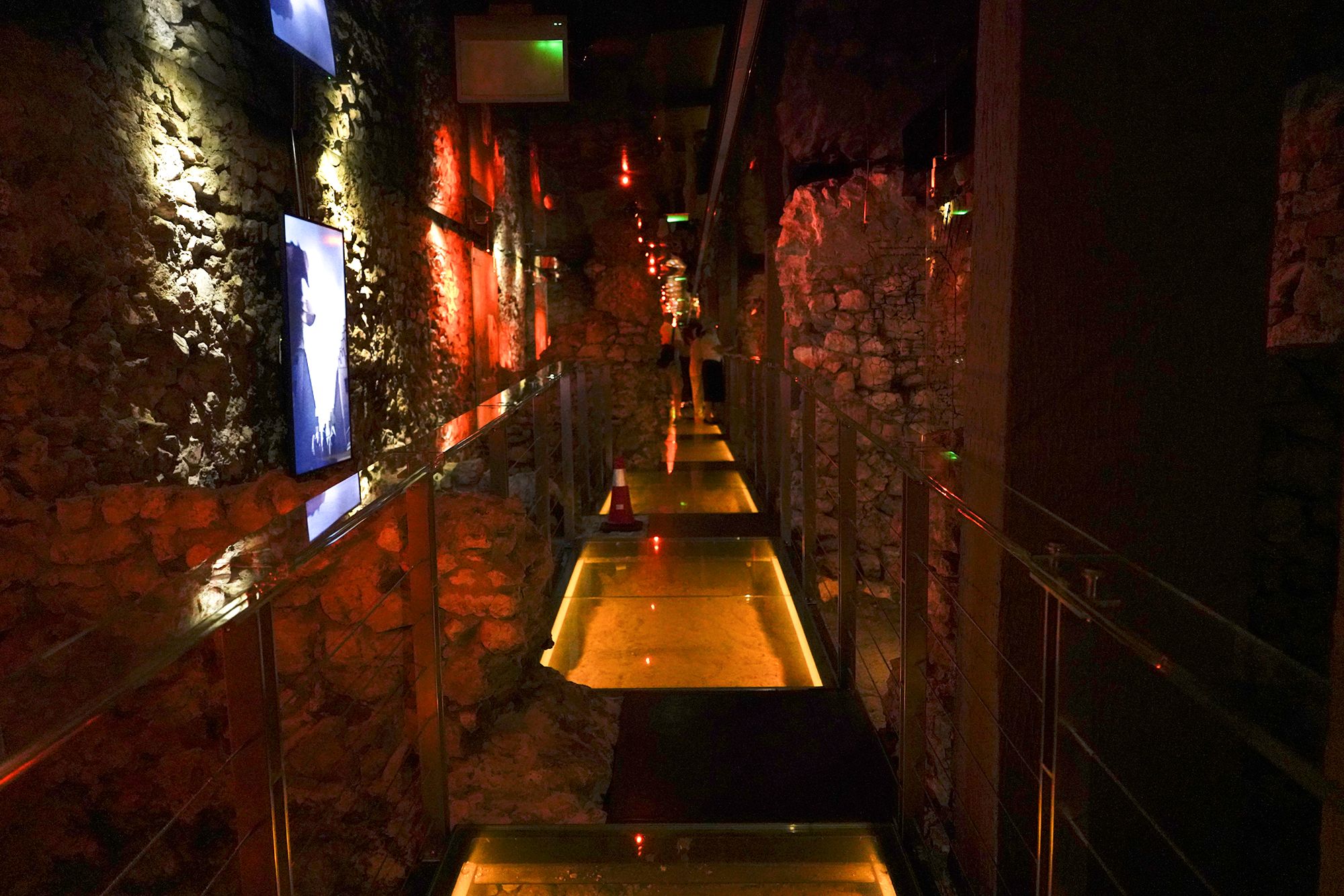
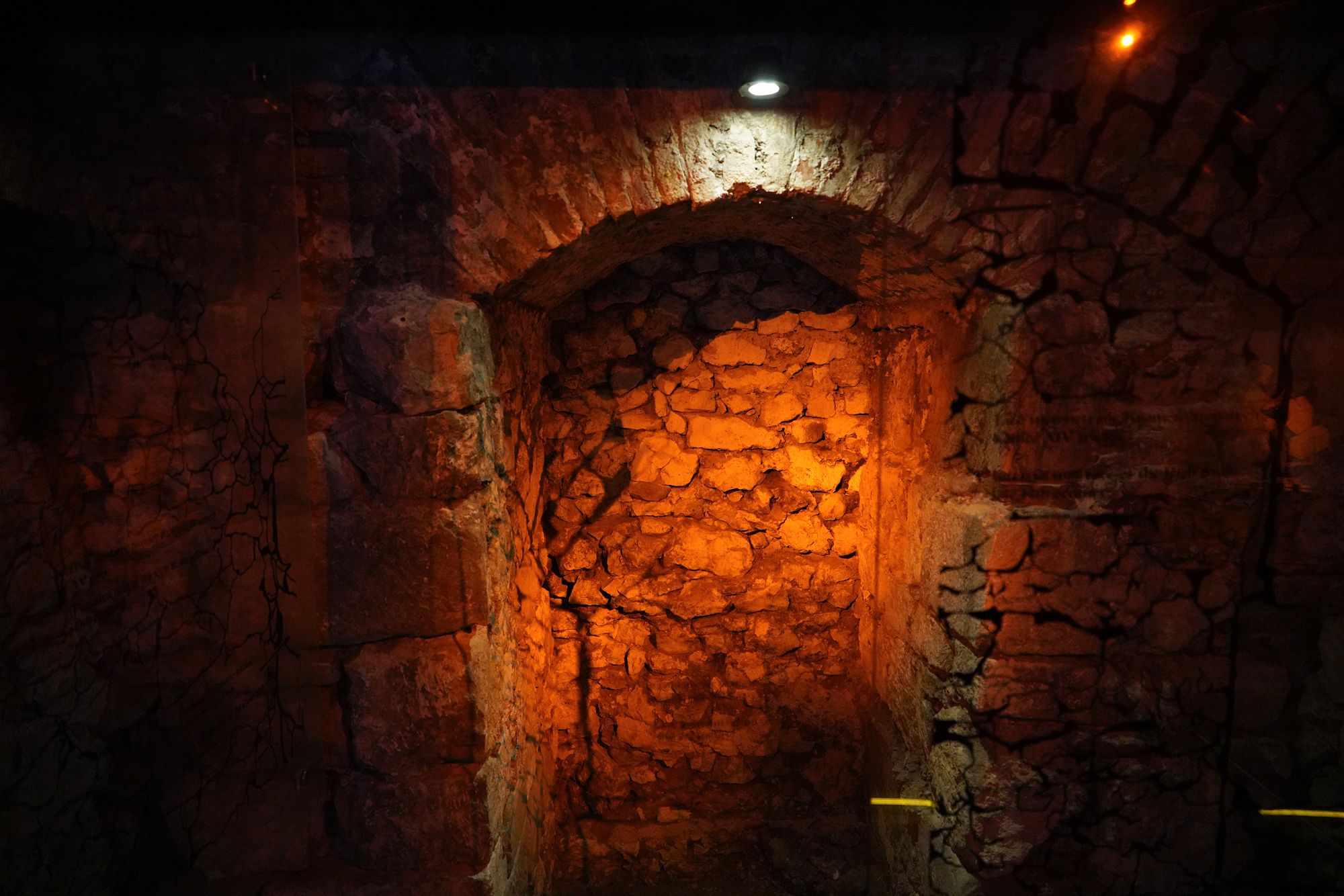
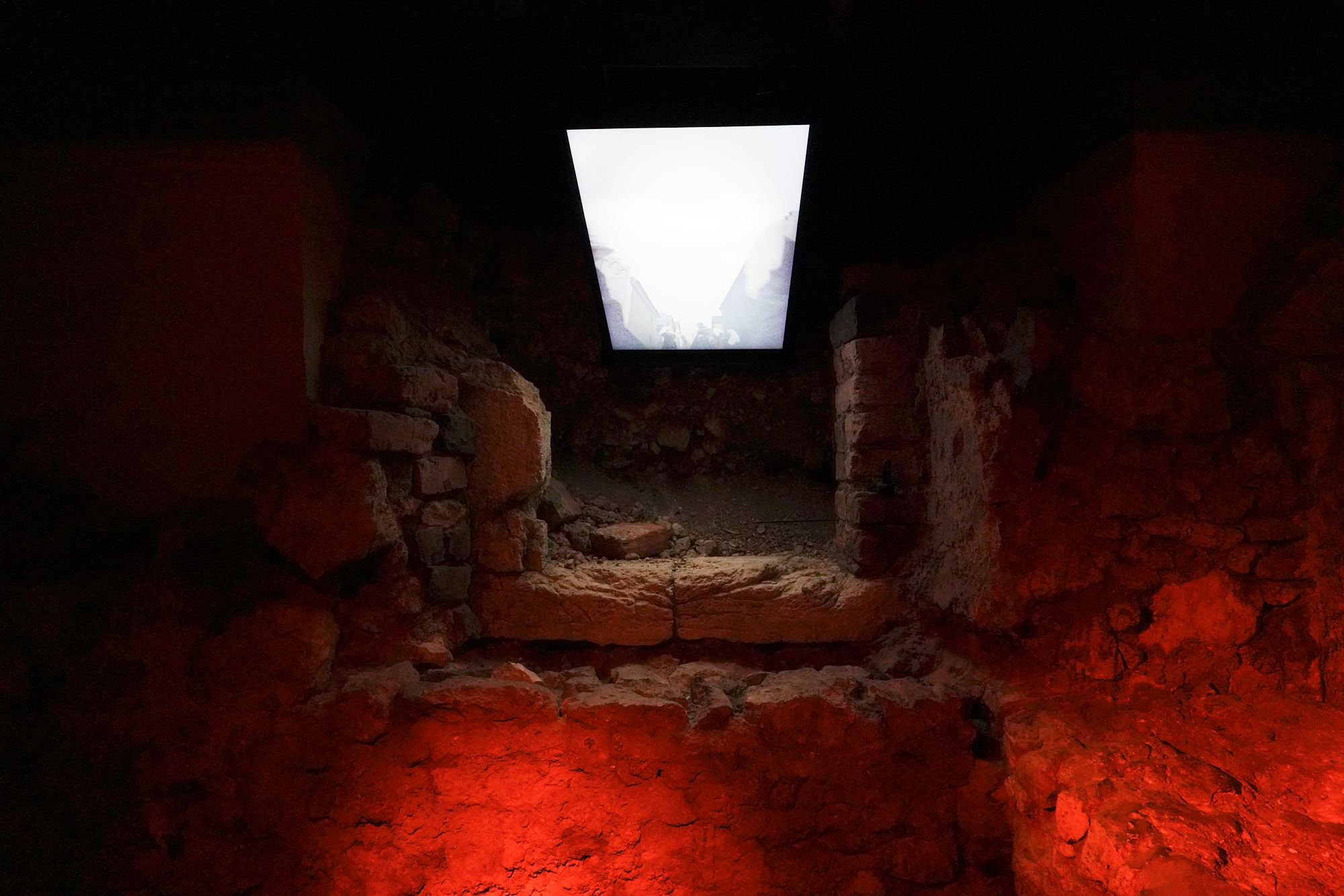
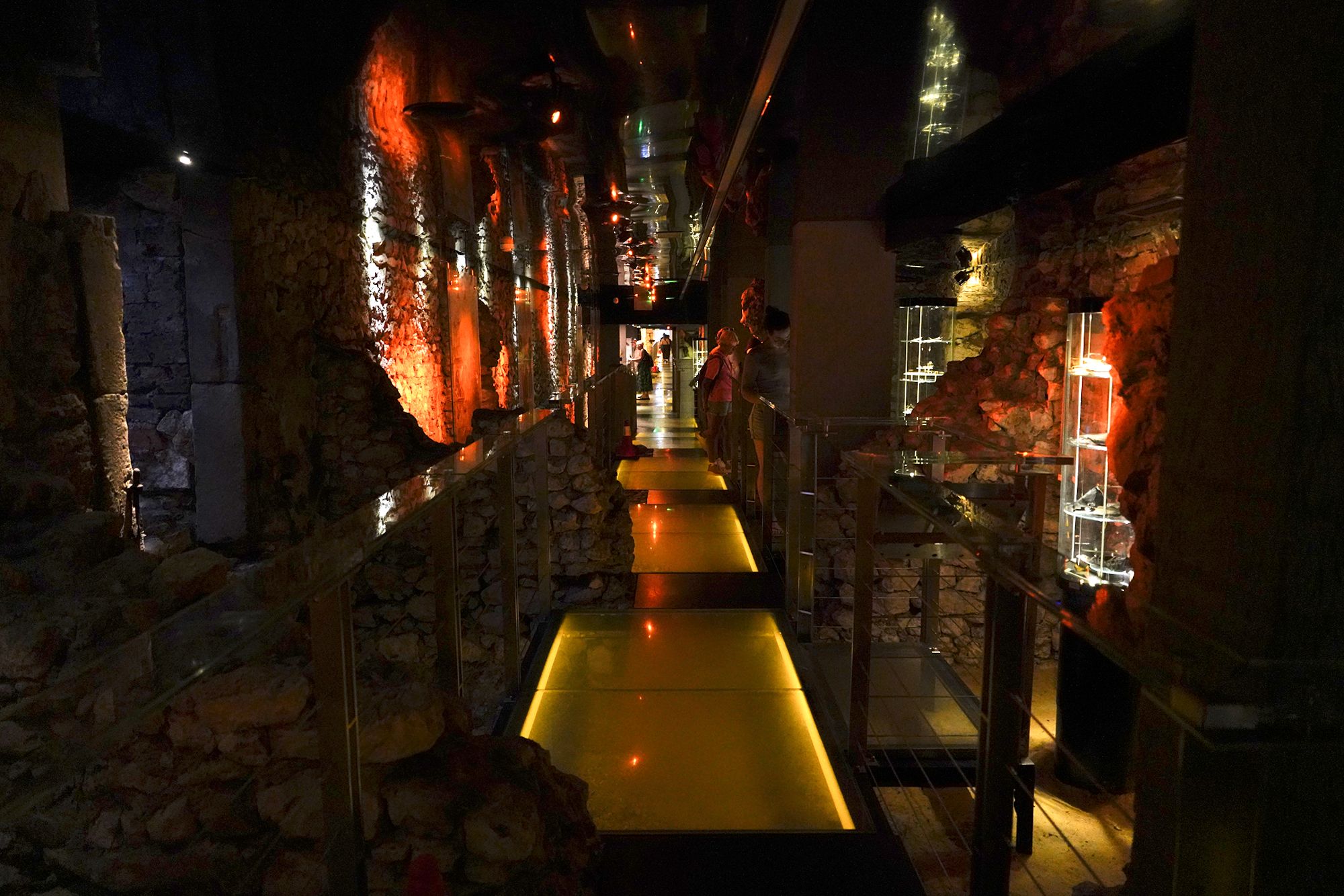
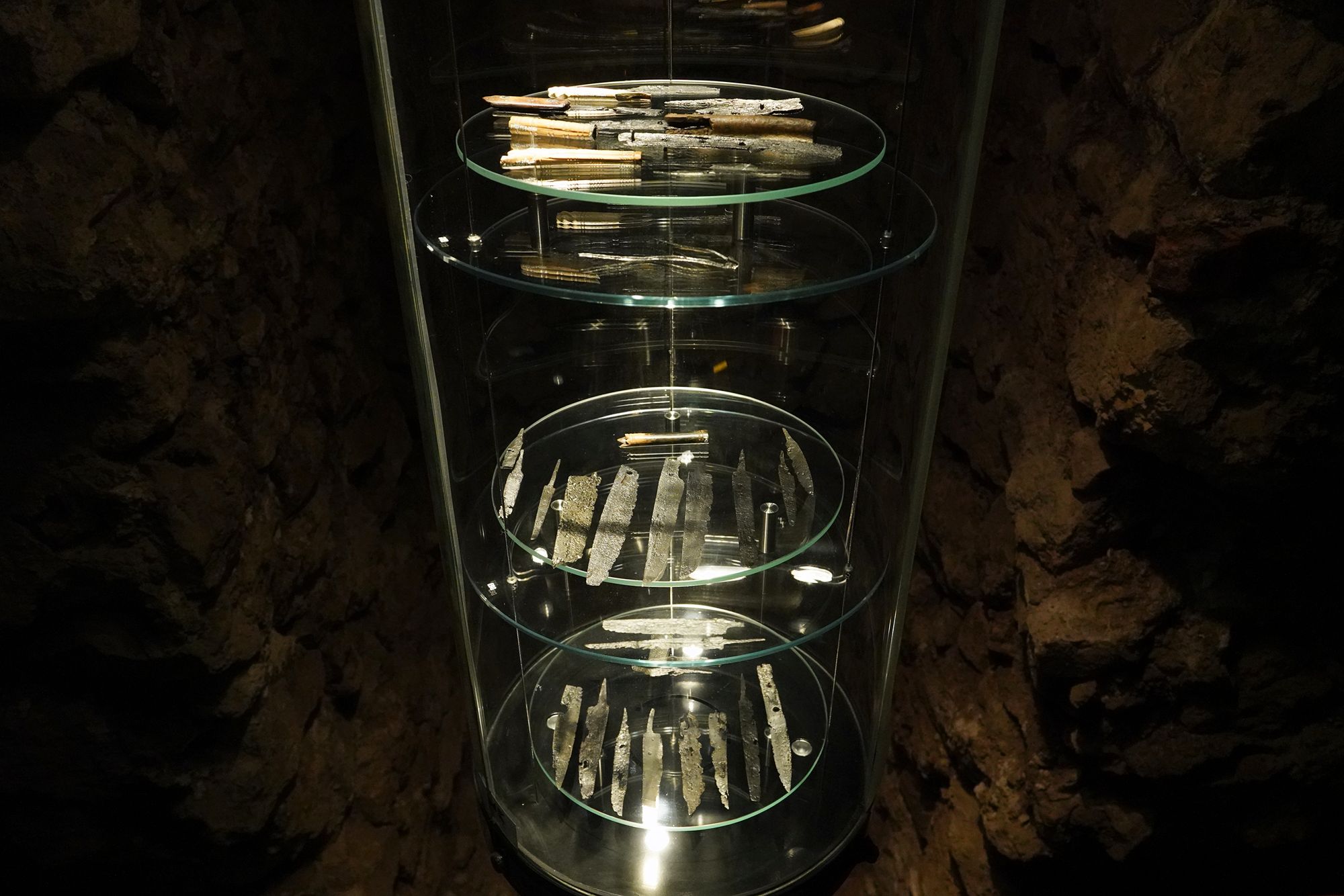
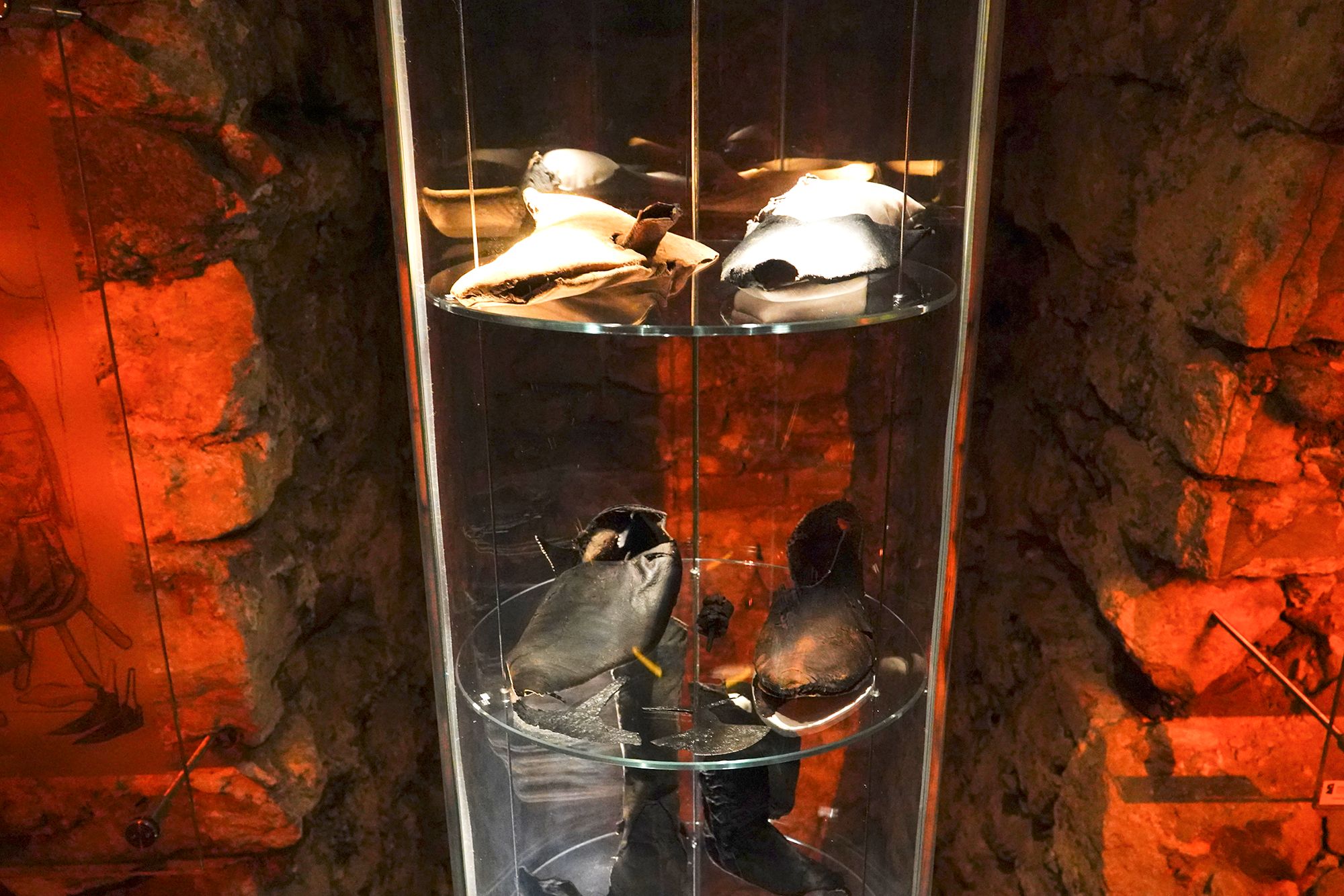
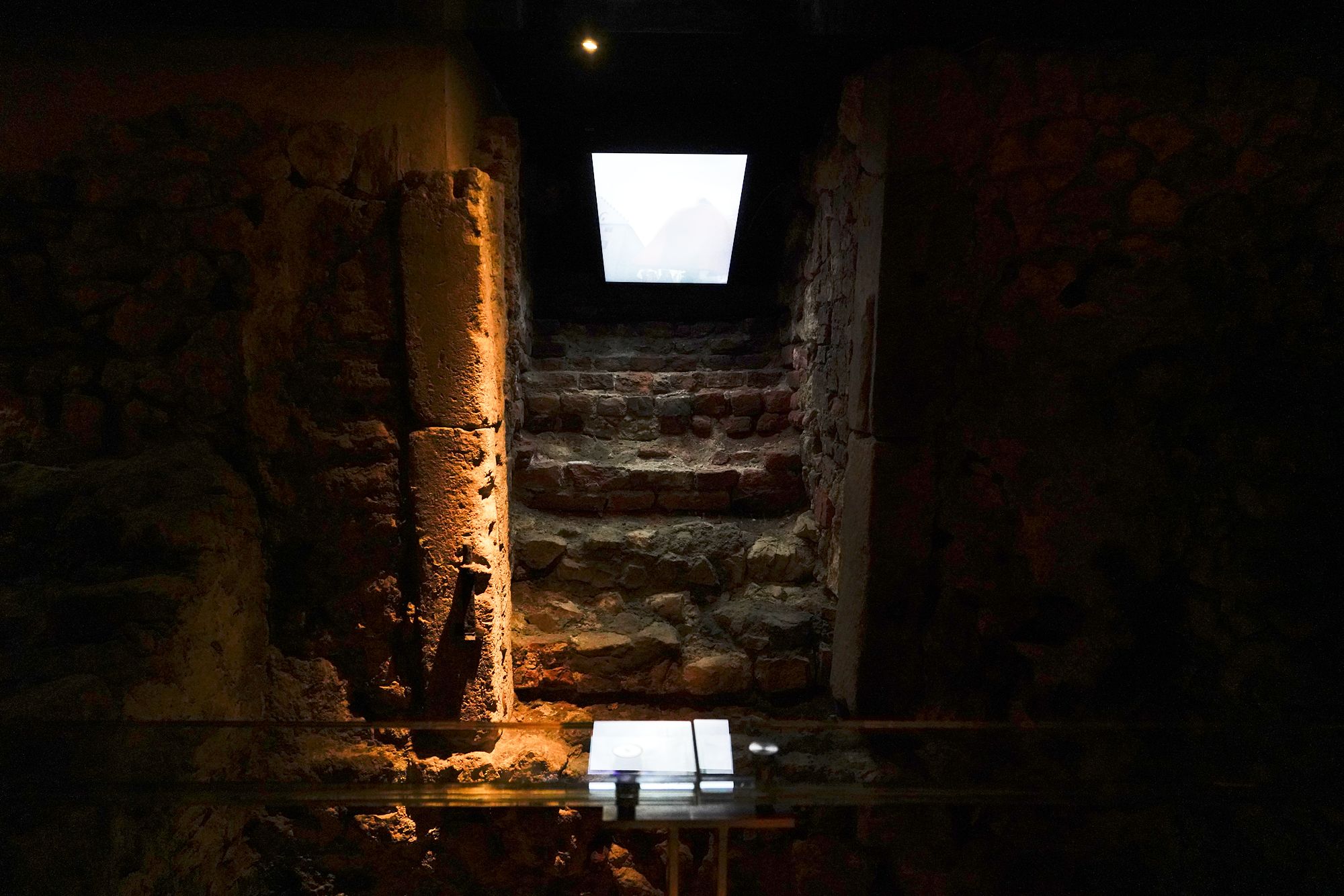
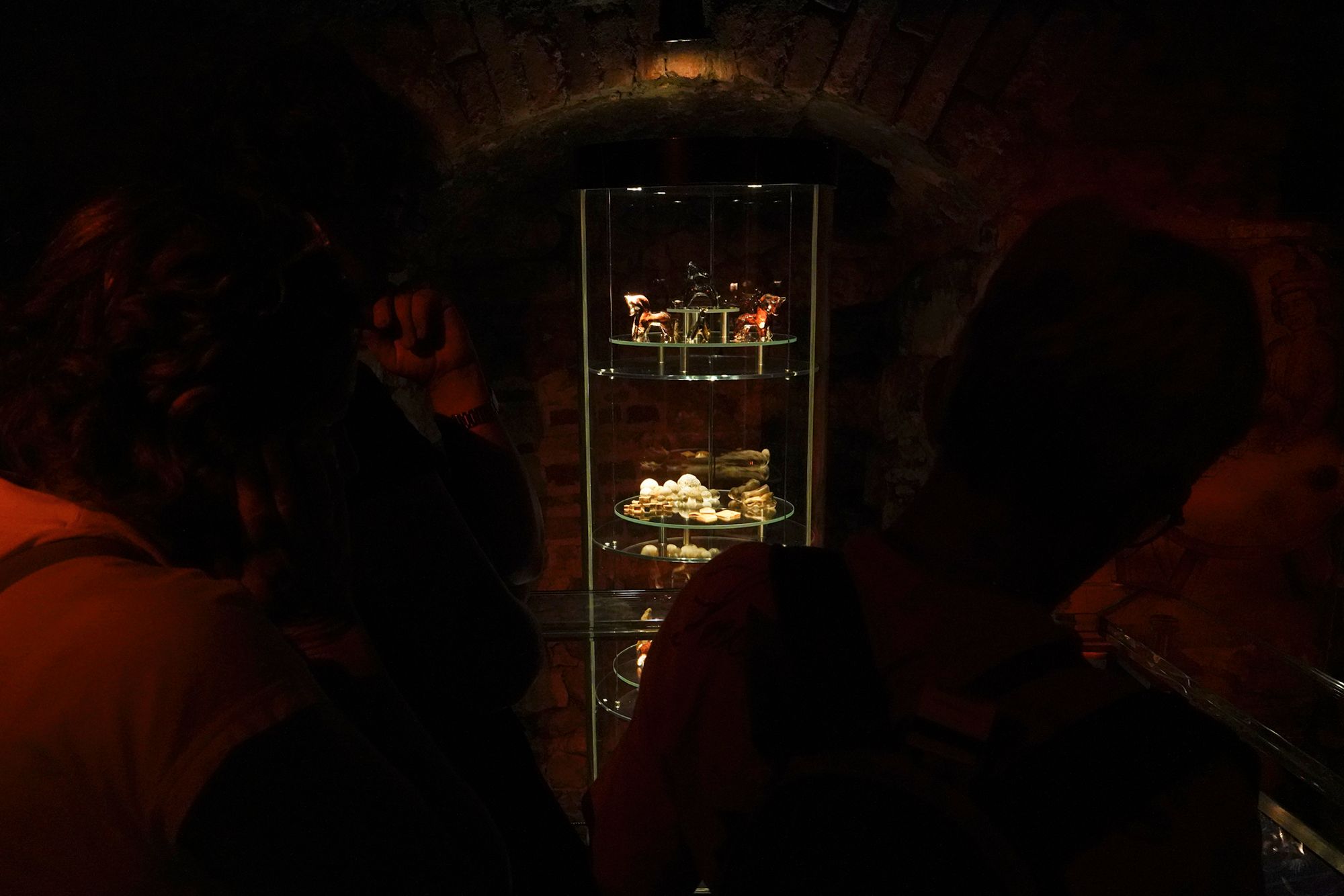
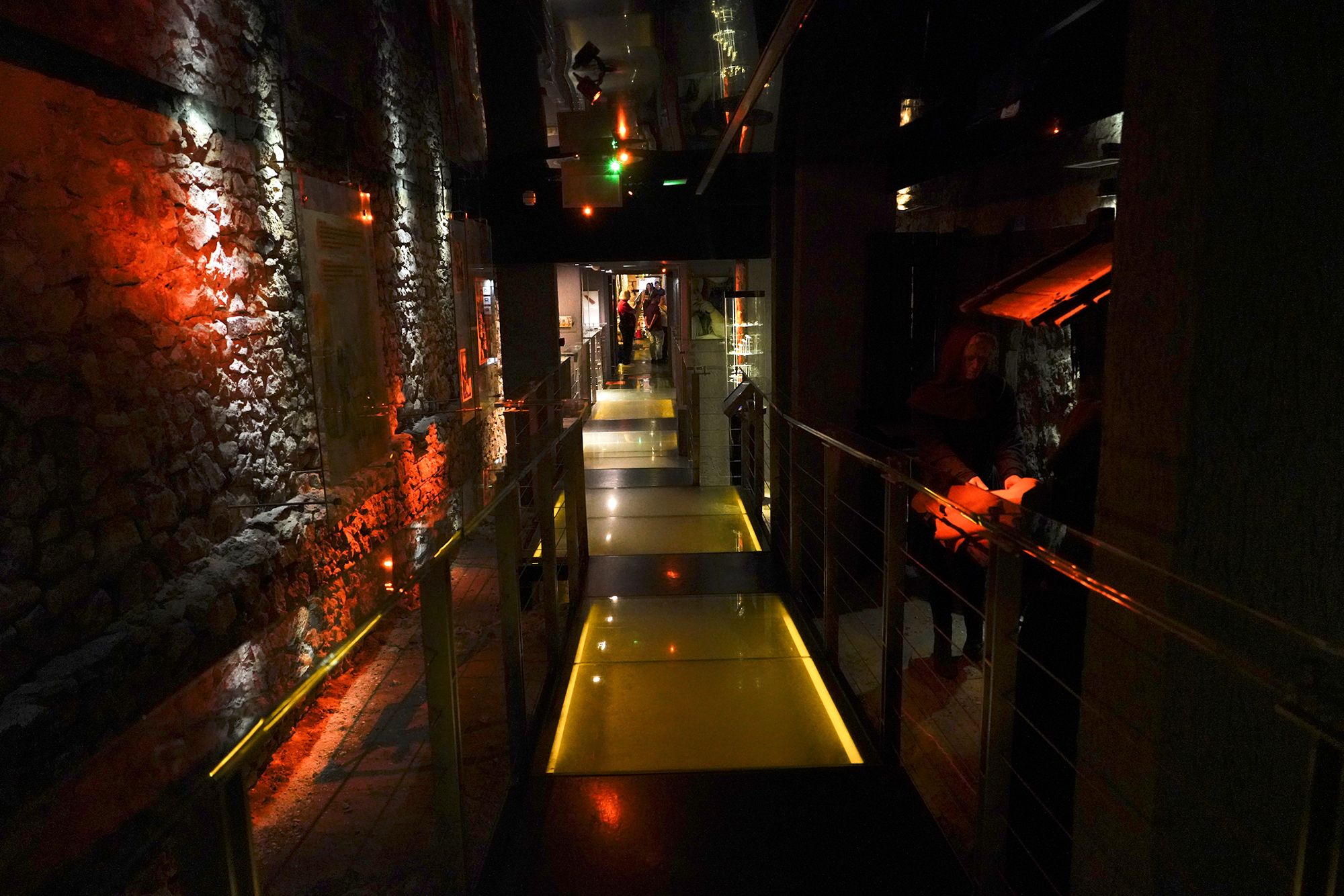
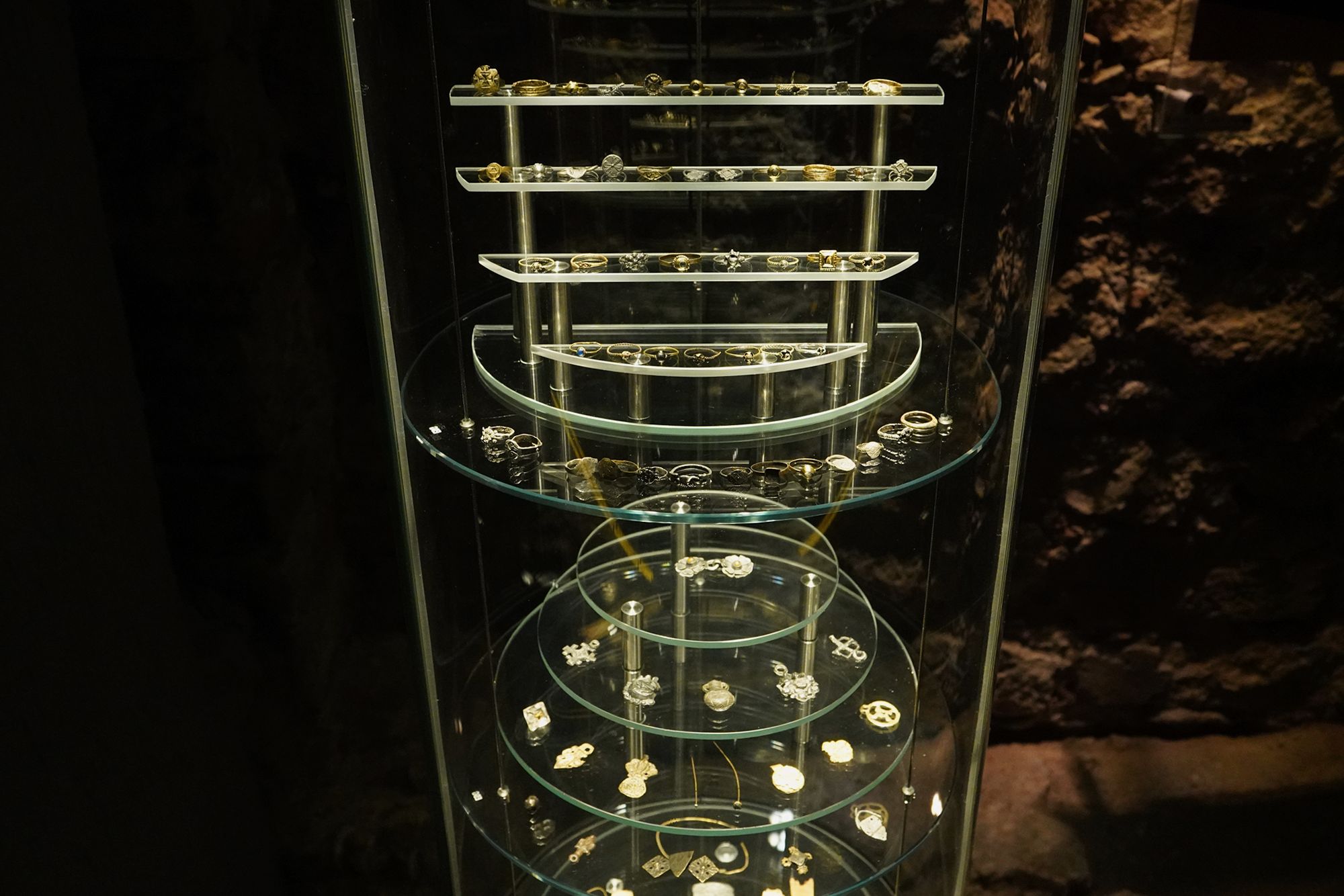
The Rich Stalls replaced the 13th-century Bolesław Stalls with four buildings, probably financed by Queen Jadwiga in the late 14th century. Together they held 64 stalls along a narrow indoor street. Goods were sold through windows facing the street; the deteriorated stalls were demolished in 1868.