Wieliczka Salt Mine, Wieliczka, Poland
Wieliczka’s historic salt mine leads visitors through underground galleries, chambers, sculptures, and the remarkable St Kinga’s Chapel. 1353
Wieliczka Salt Mine: Daniłowicza 10, 32-020 Wieliczka, Poland
Date Picture Taken: Jun, 2026
The Wieliczka Salt Mine has drawn visitors underground for centuries. On the Tourist Route, I walked through galleries and chambers carved from rock salt, passing sculptures, underground lakes, and chapels made by miners. The highlight was St Kinga’s Chapel, a church decorated with salt-carved reliefs and chandeliers made from salt.
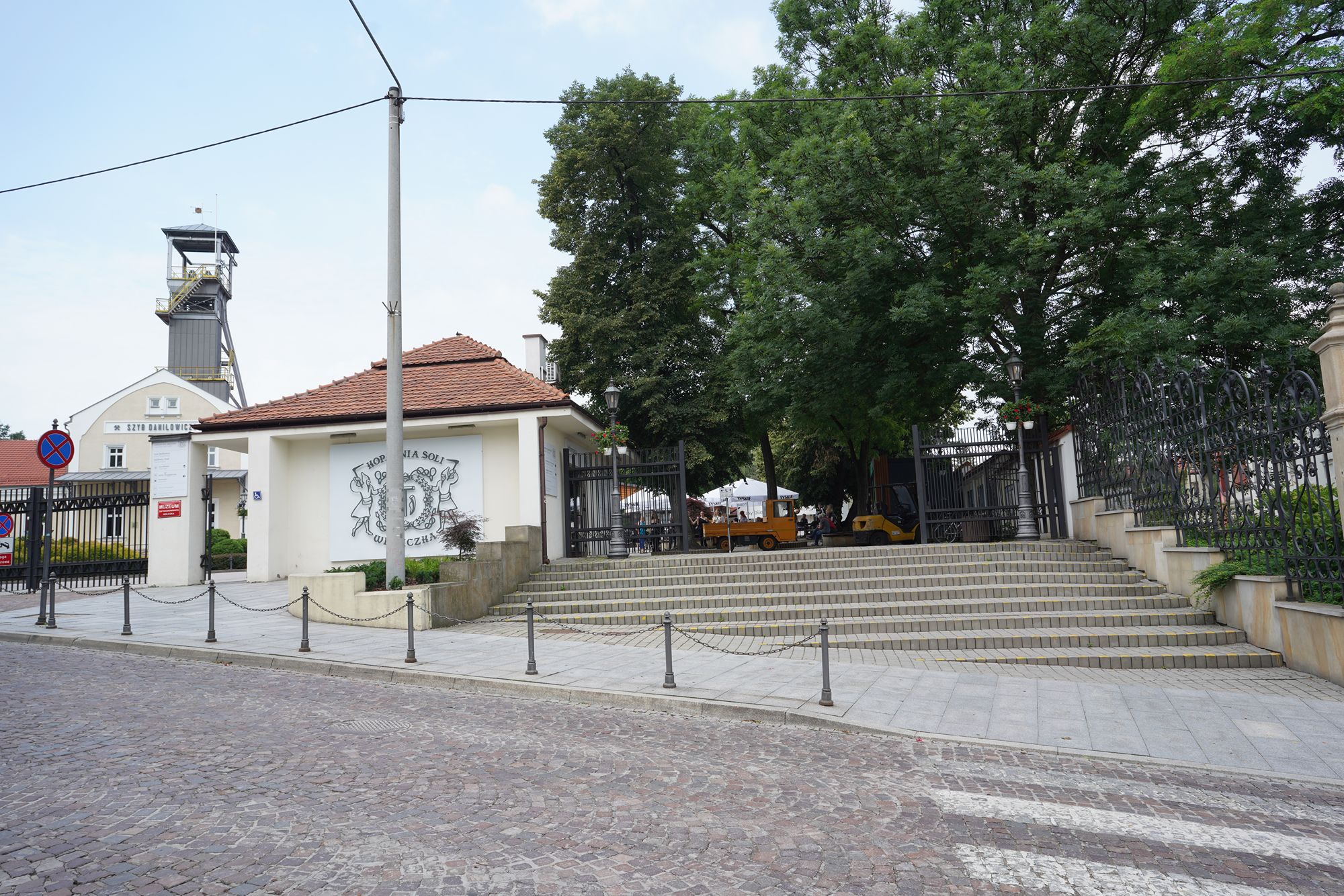
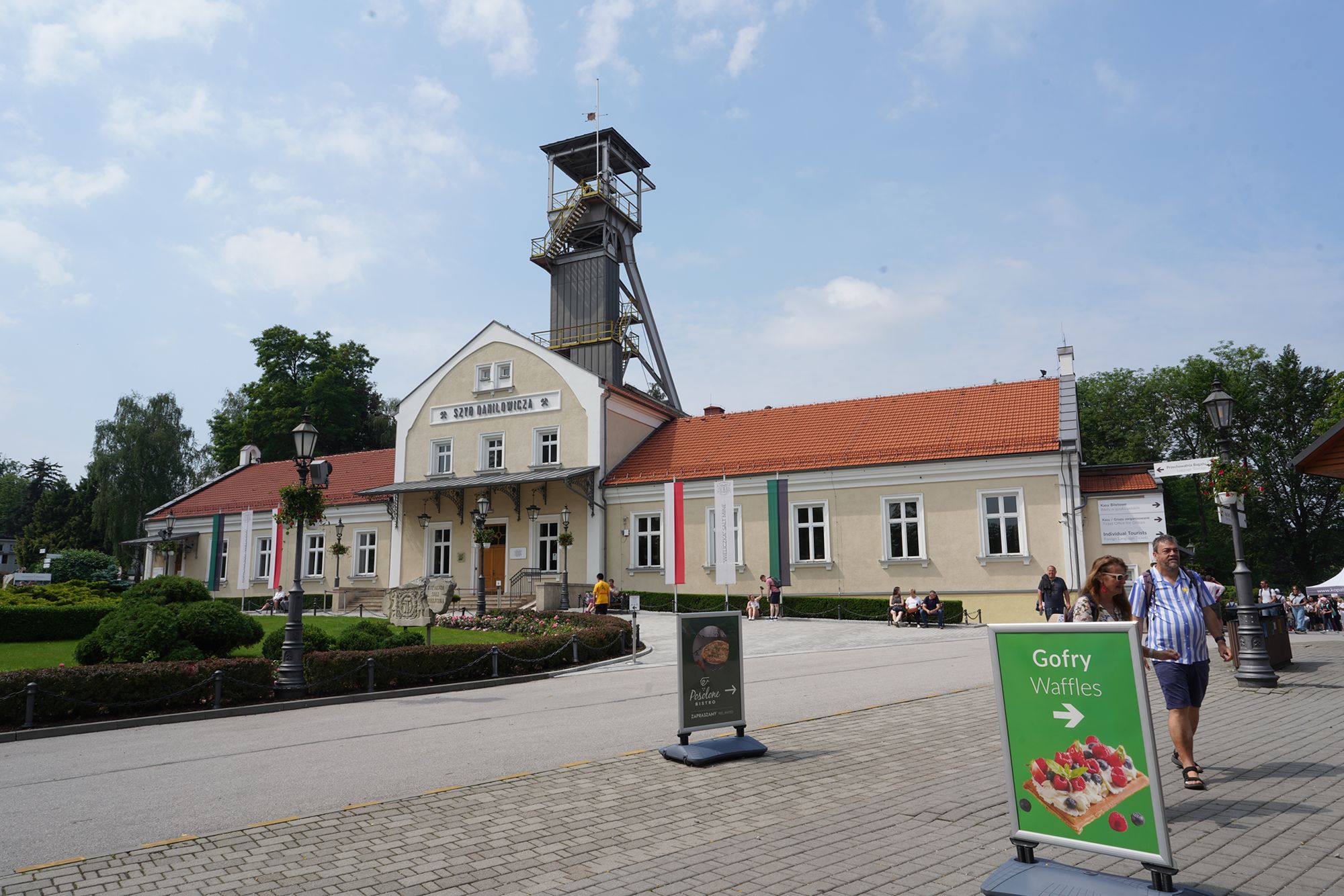
The salt mine entrance building
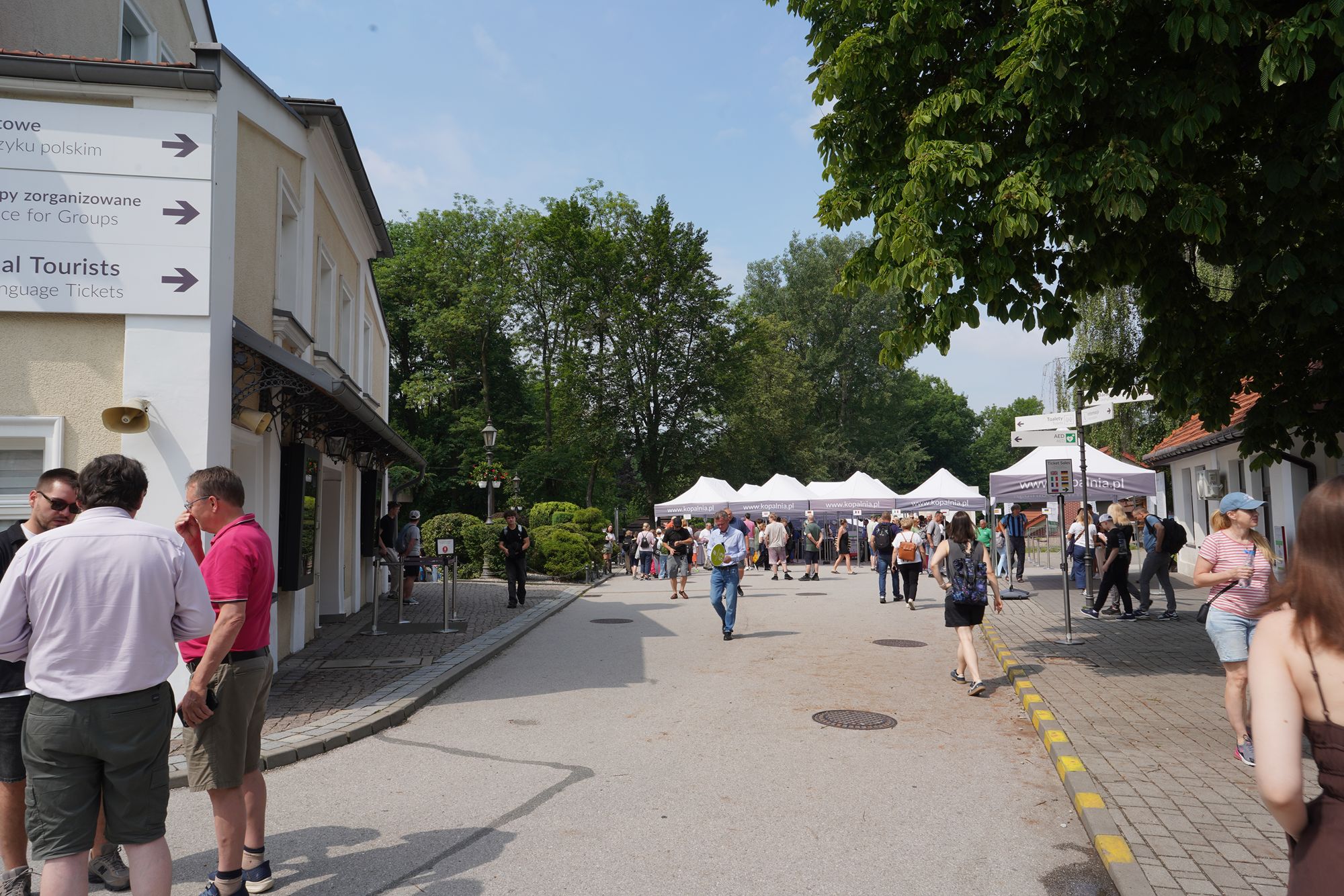
The route began with a long walk down 380 steps. After exploring the underground galleries and chambers, I took an elevator back to the surface.
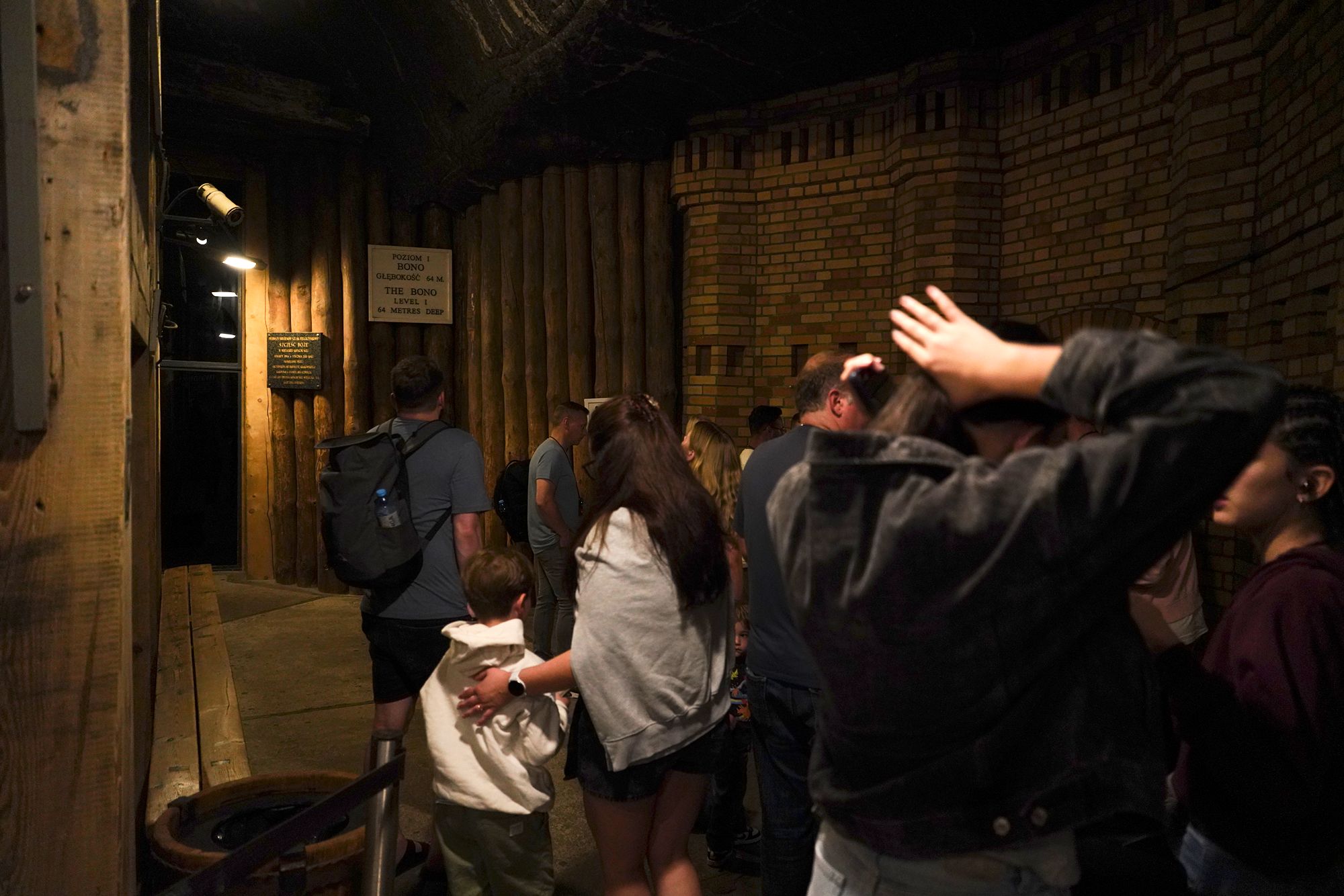
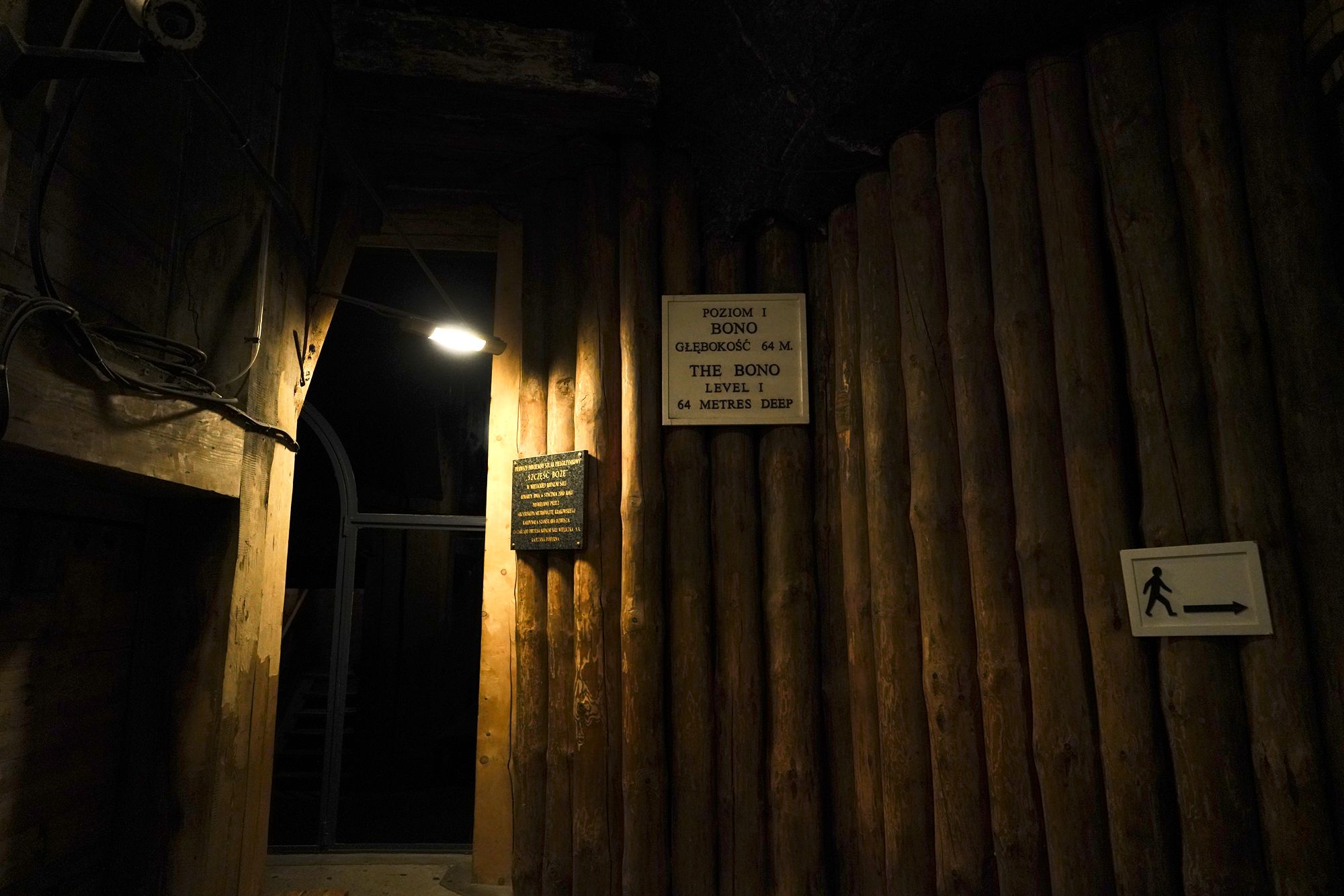
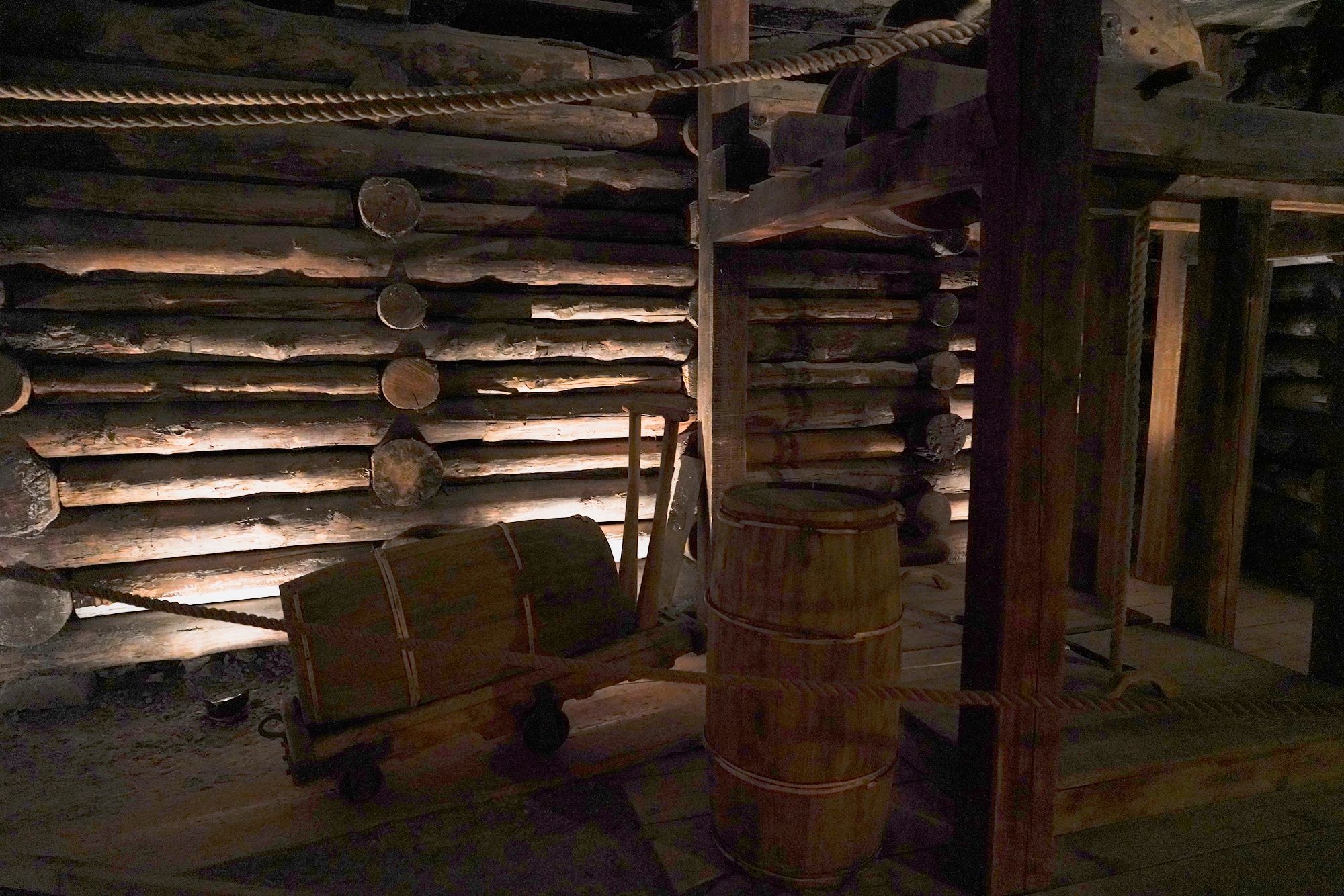
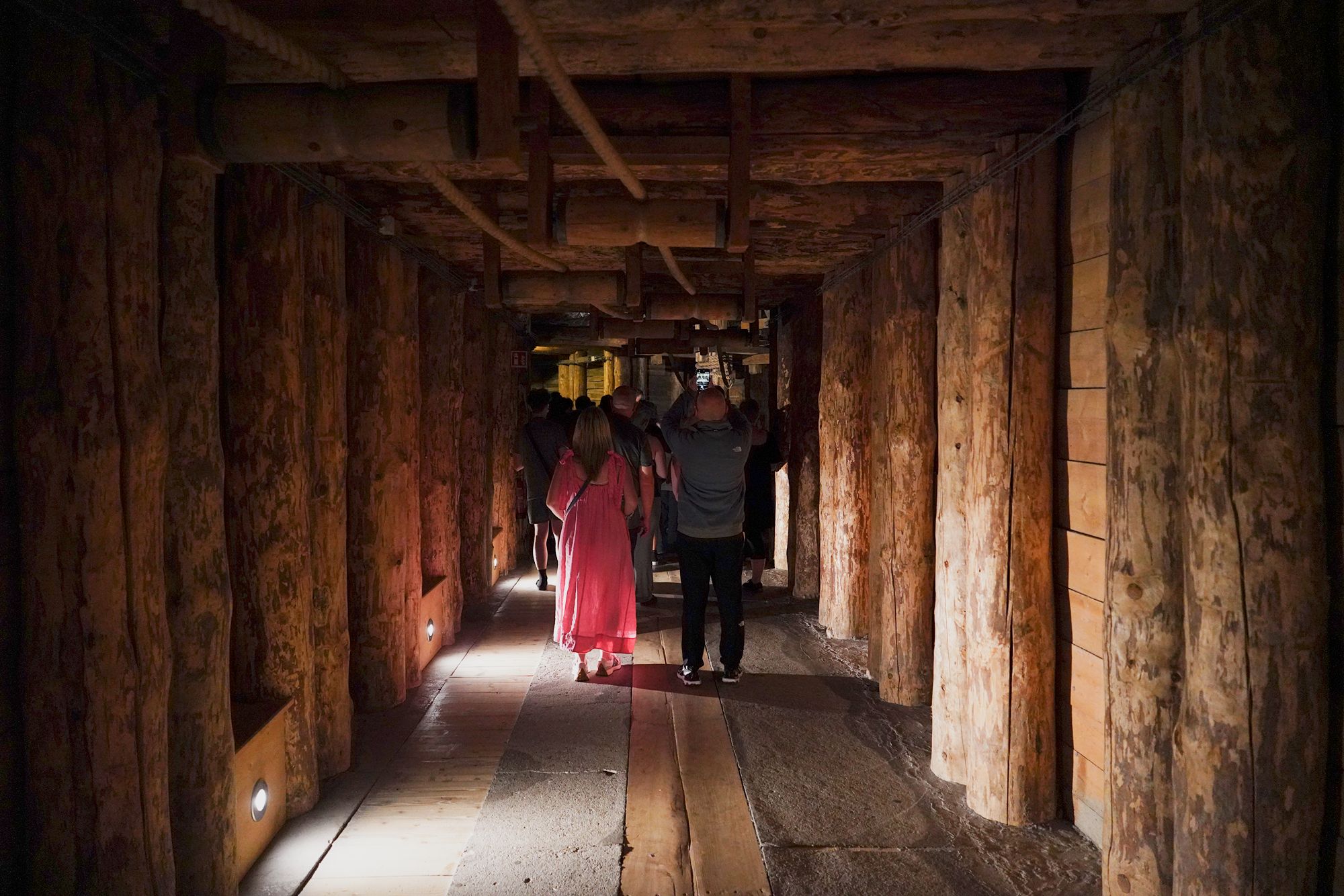
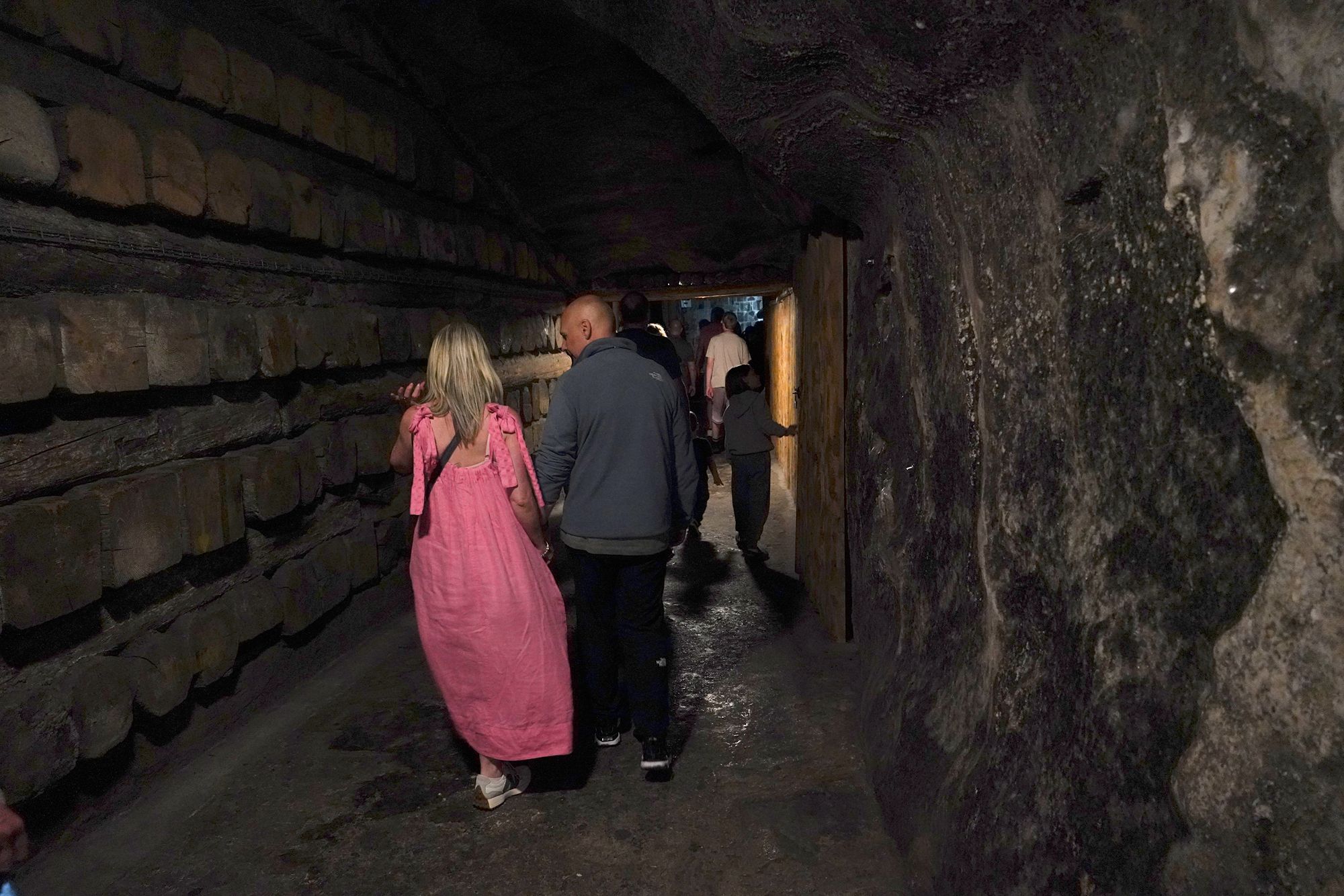
The sign marks Level I of the Bono shaft, 64 metres below ground, where timber supports line the passage.
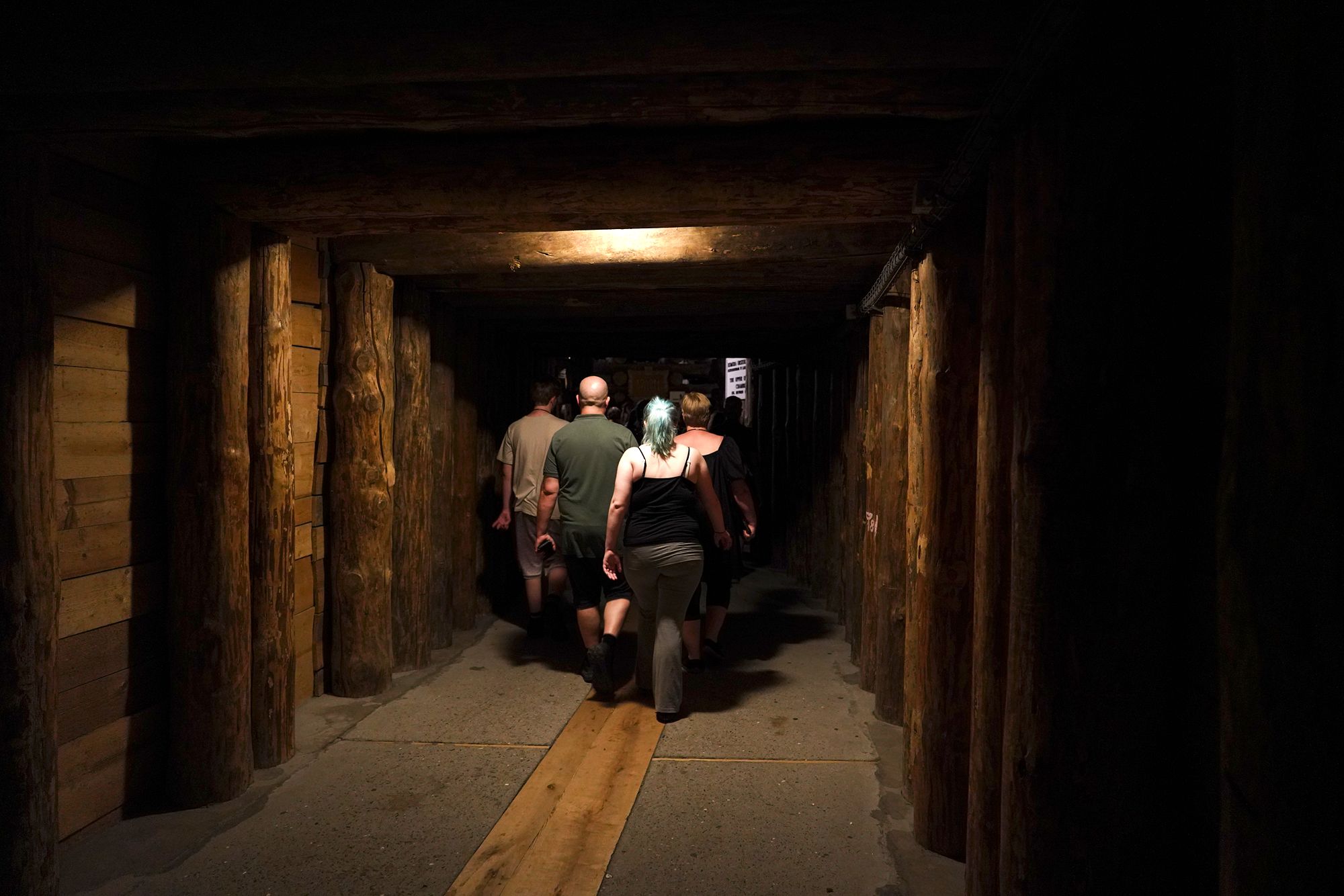
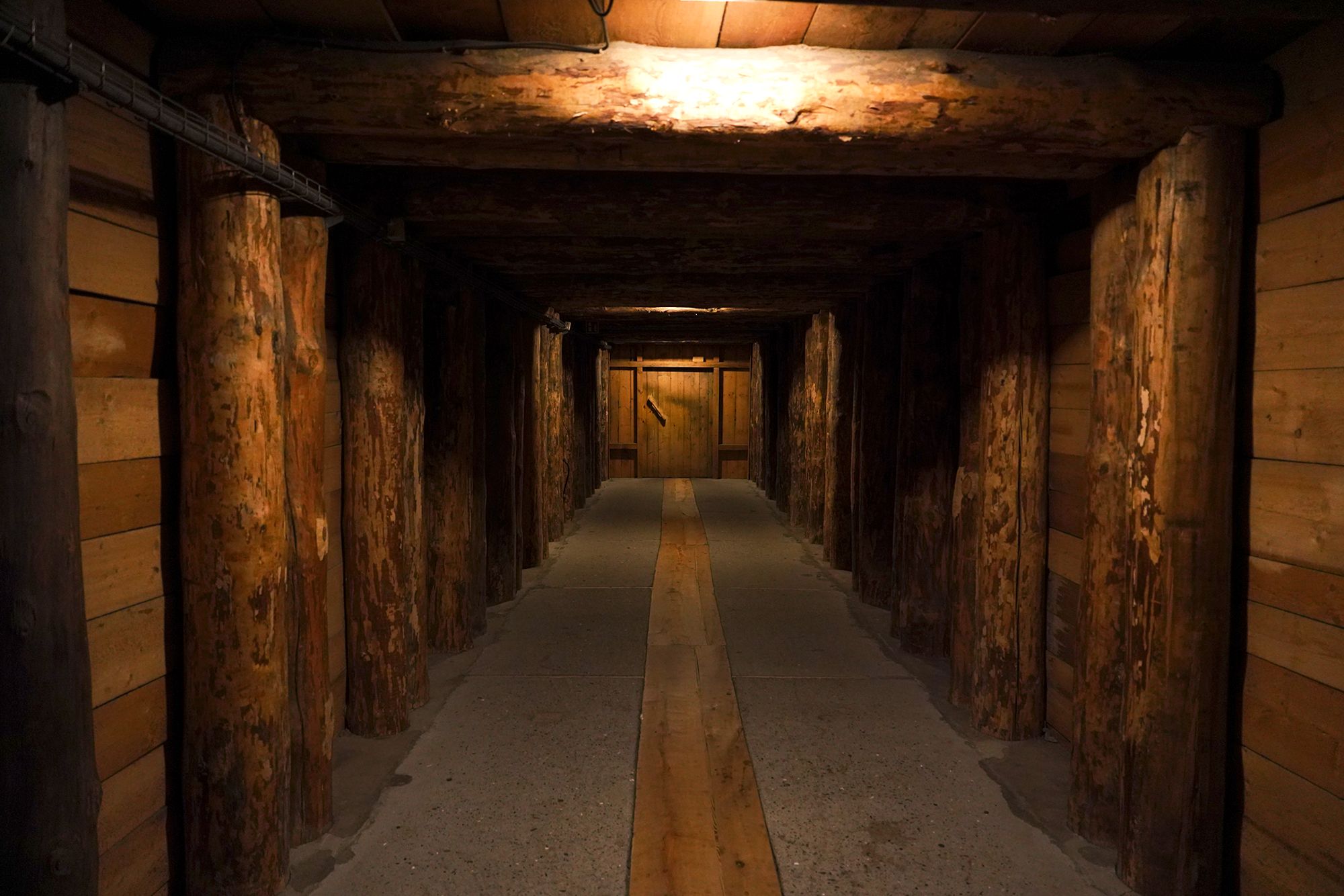
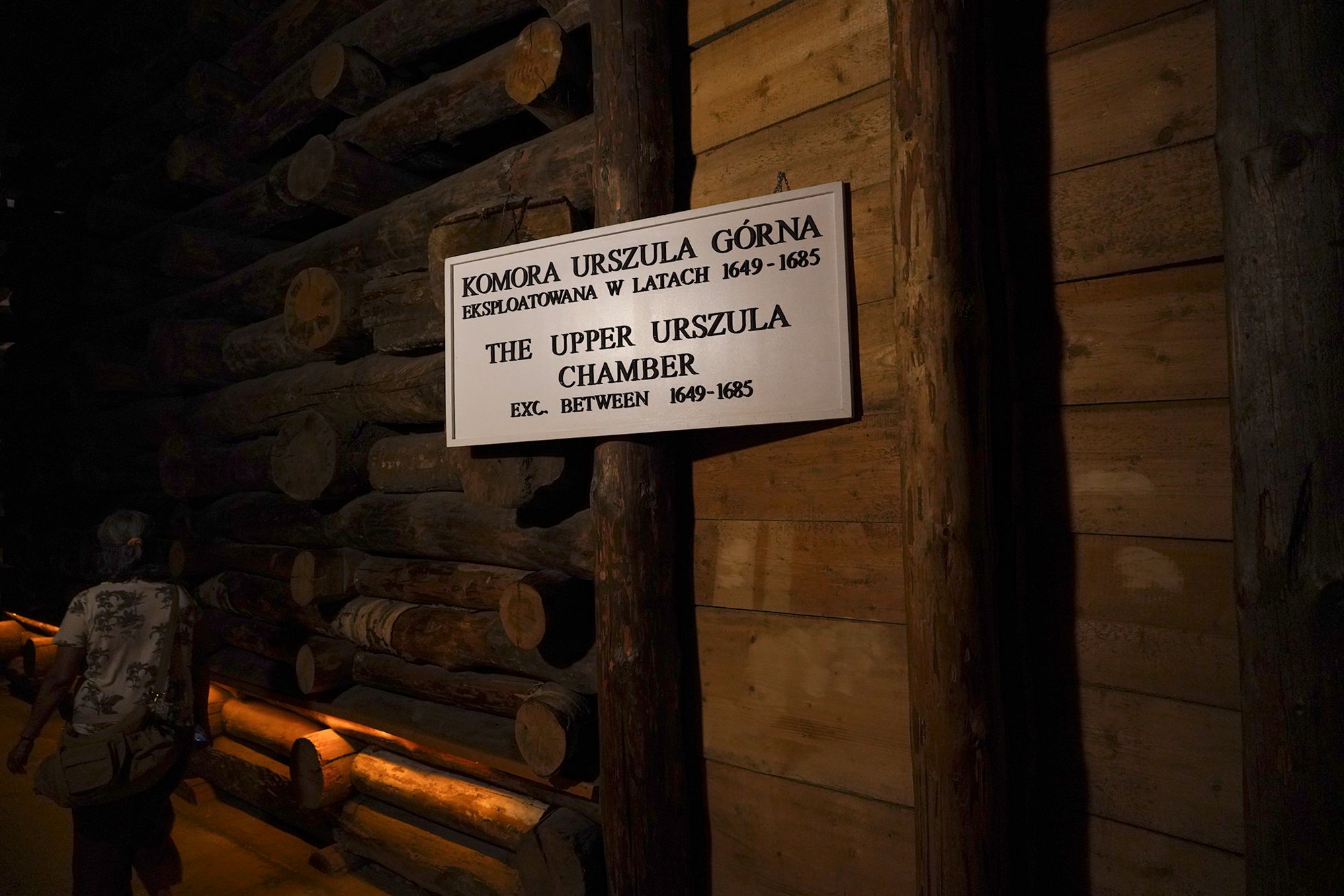
A sign marks the Upper Urszula Chamber, where salt was mined from 1649 to 1685.
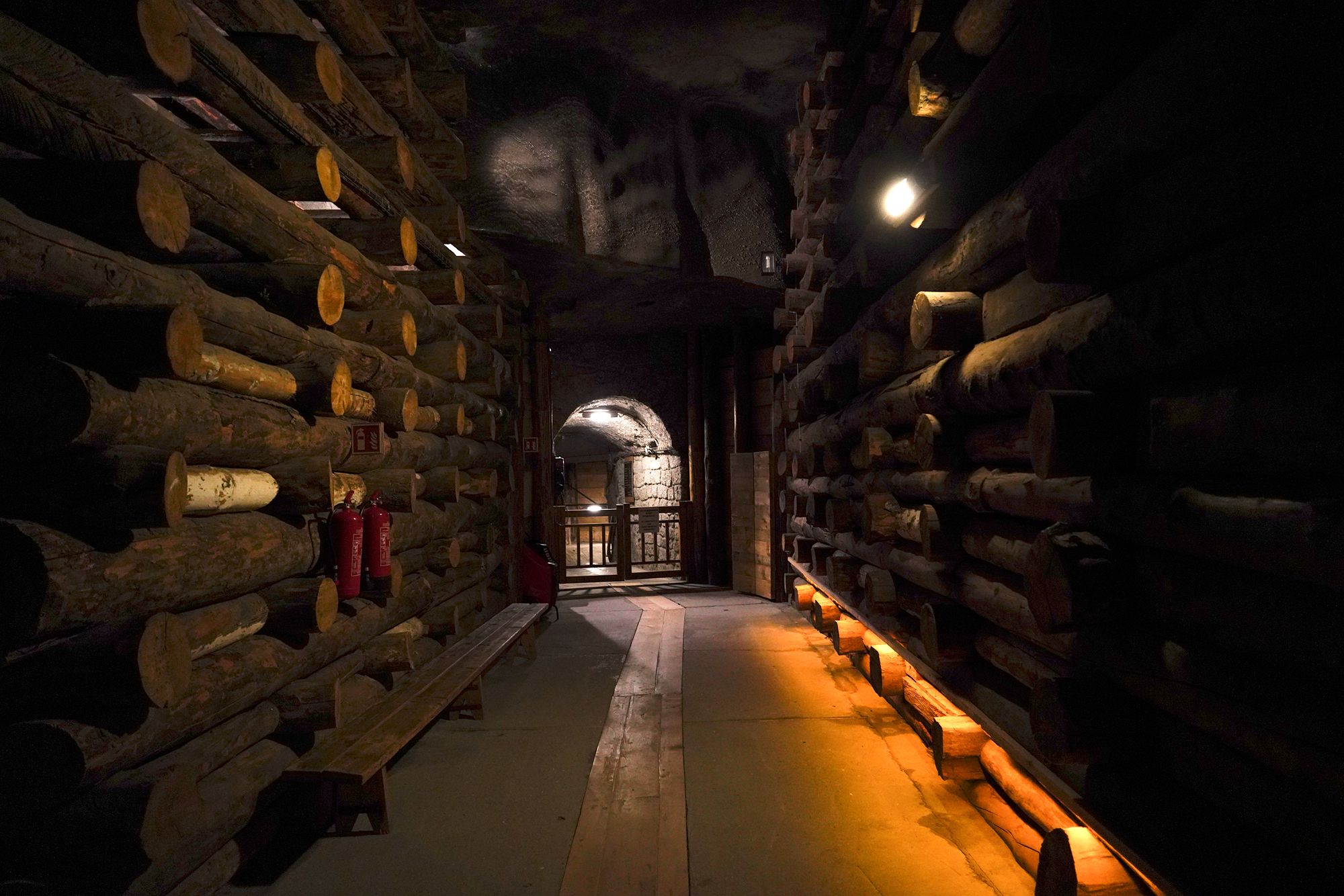
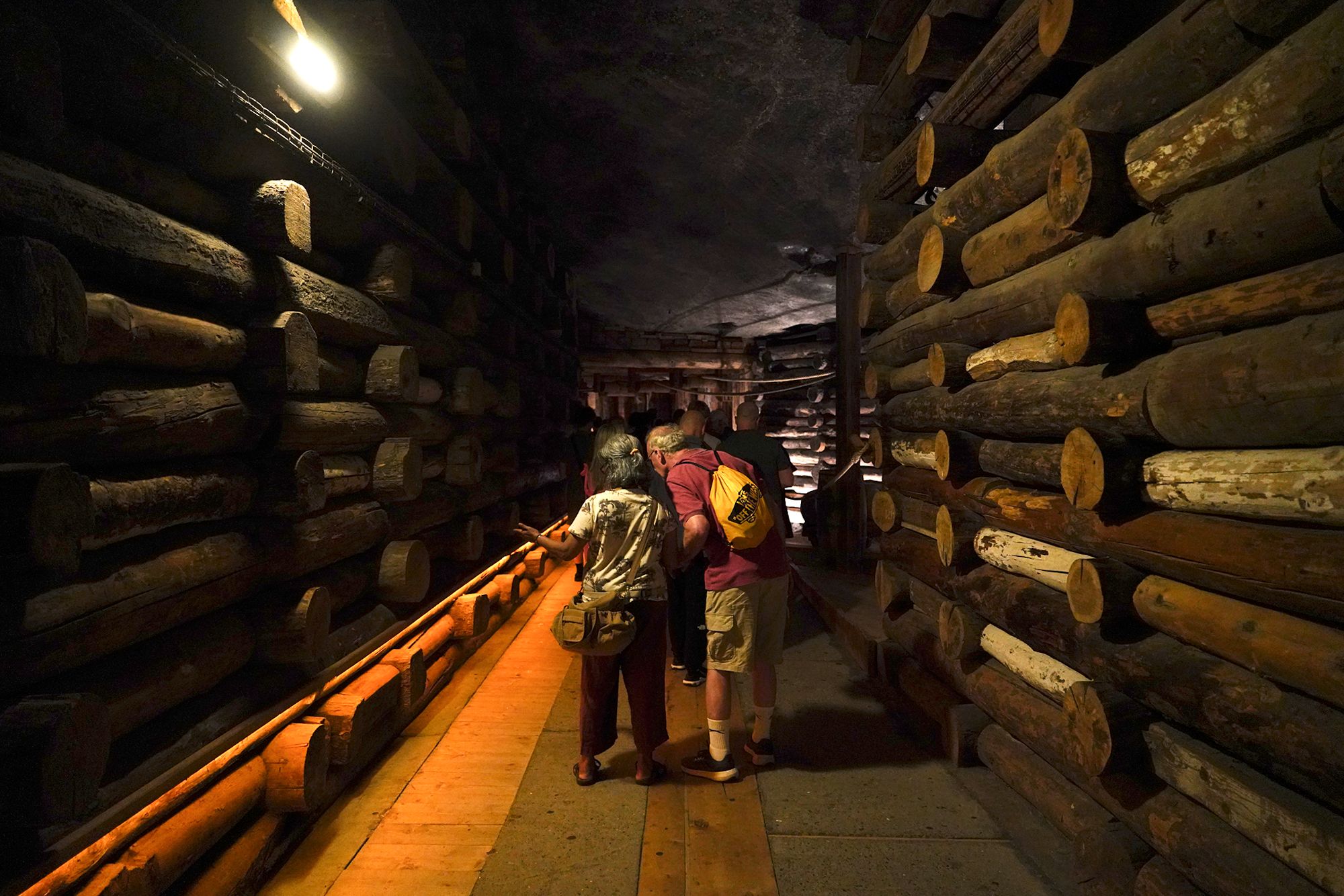
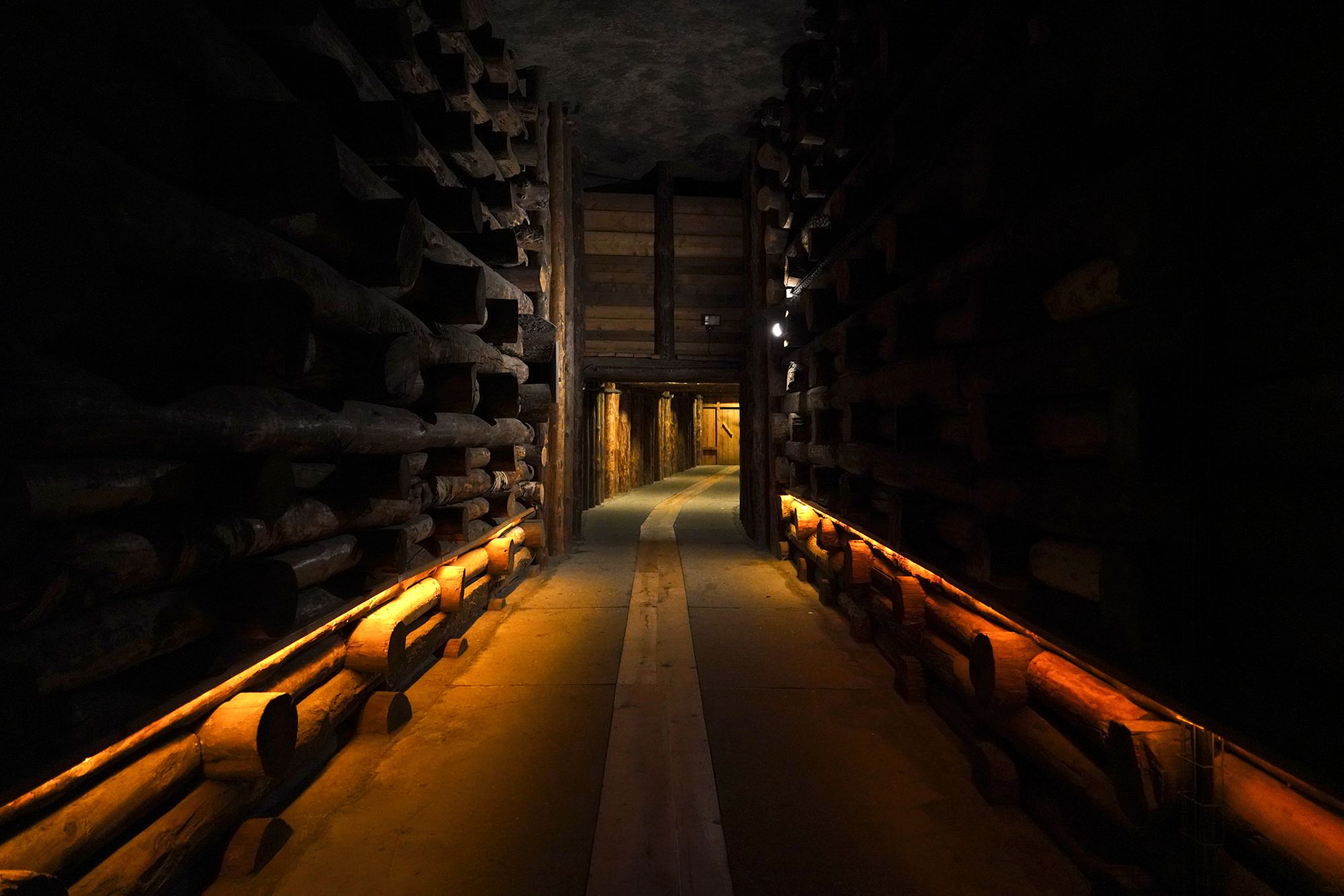
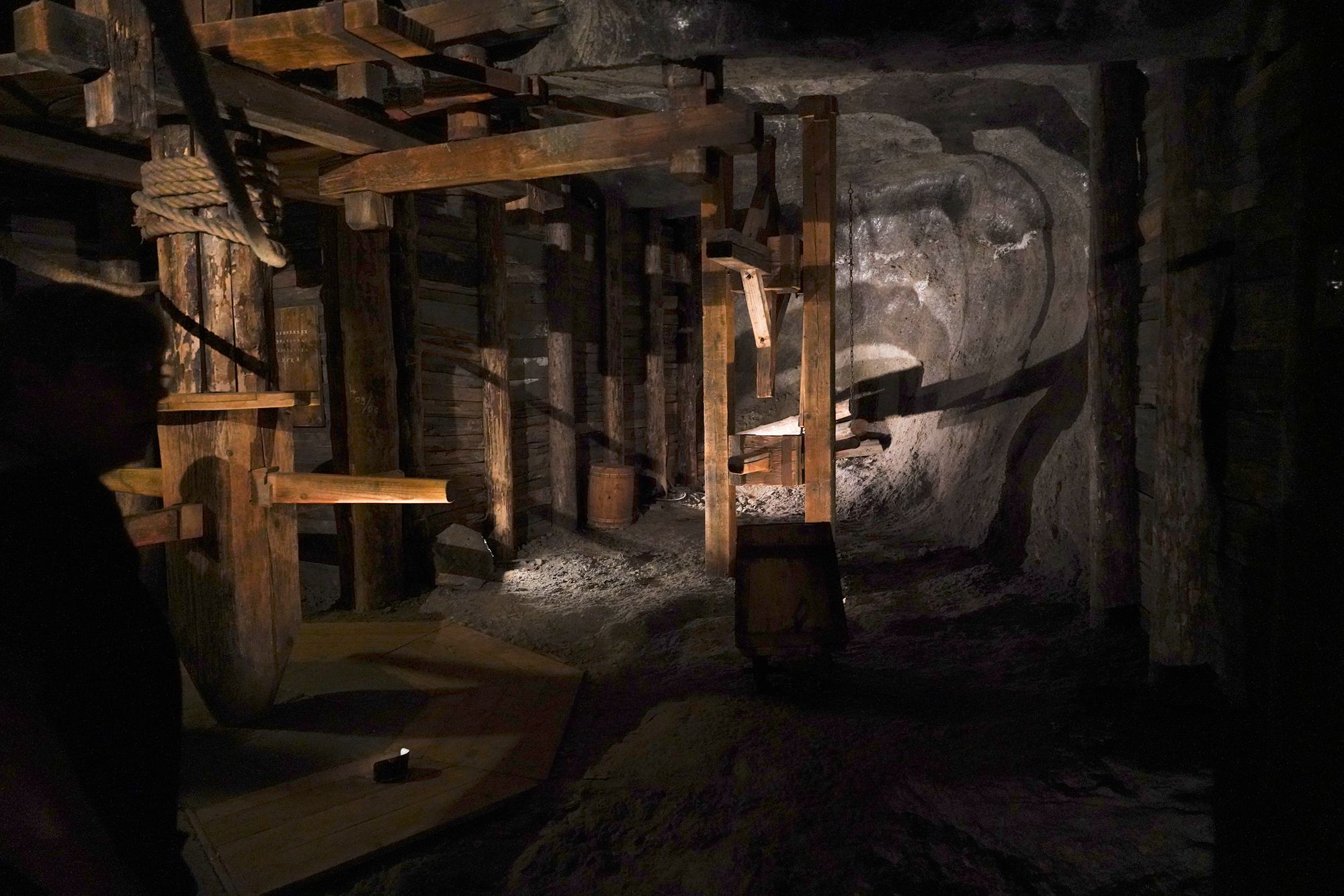
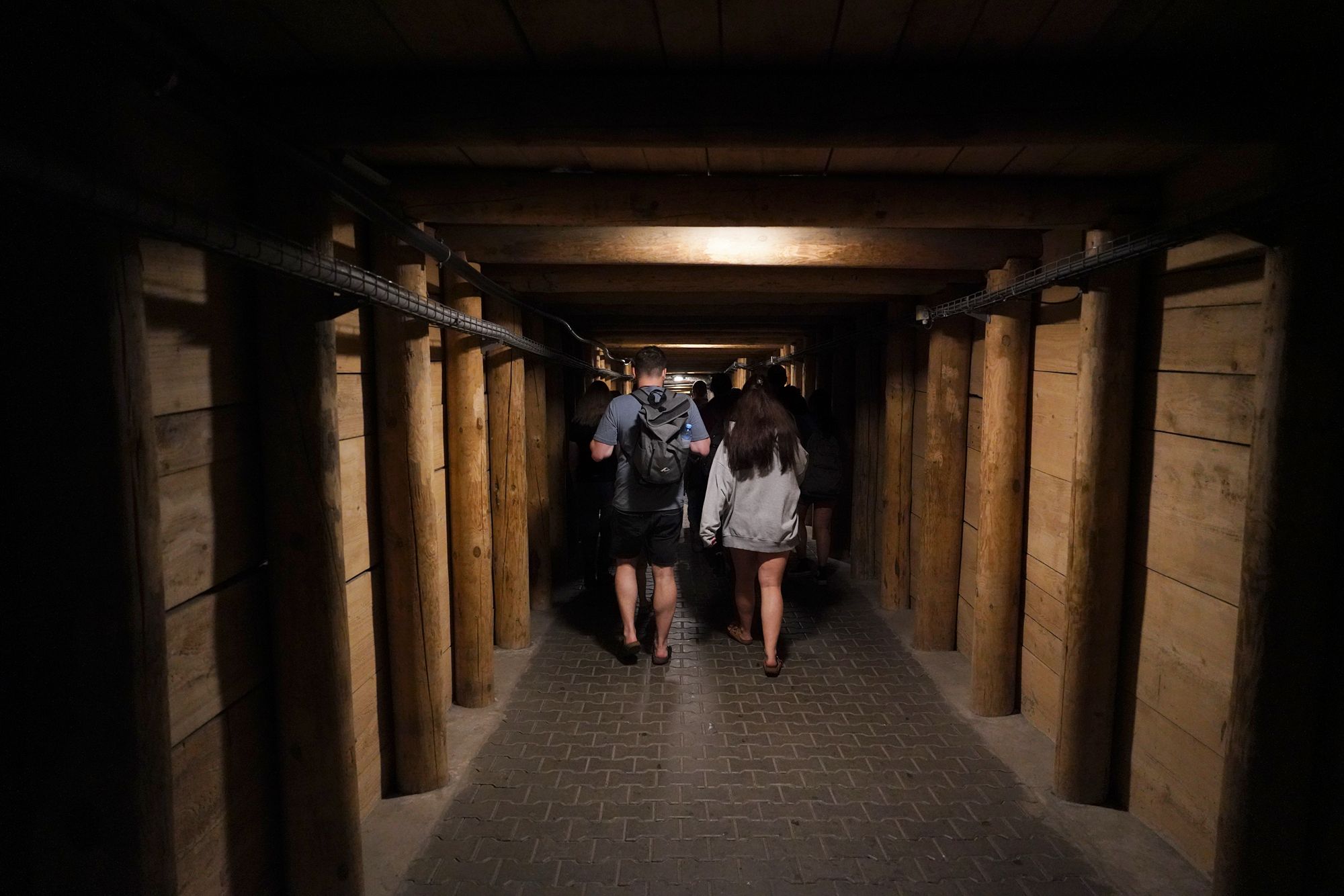
Inside the Upper Urszula Chamber, rows of heavy timber supports line the passage toward a stone archway.
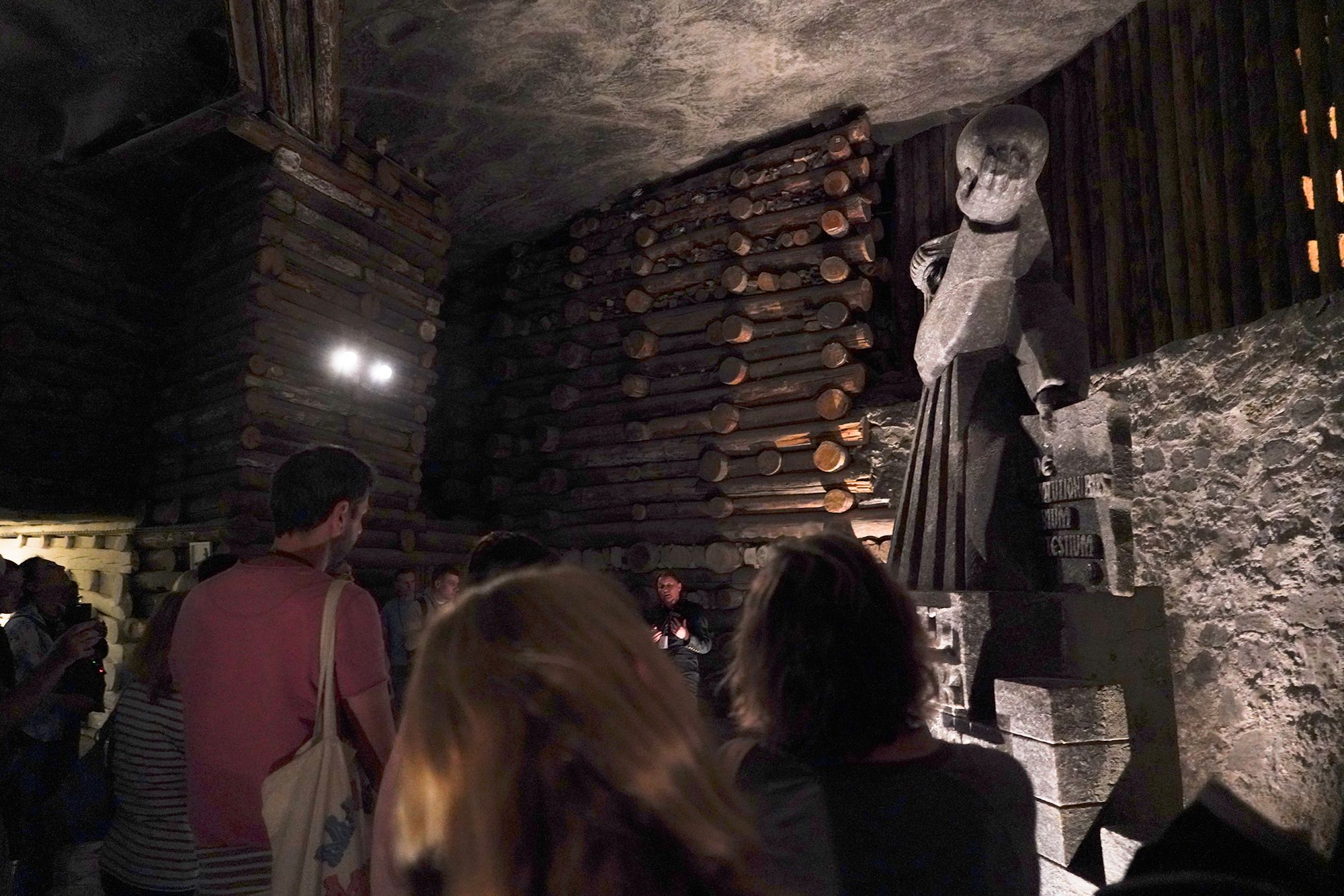
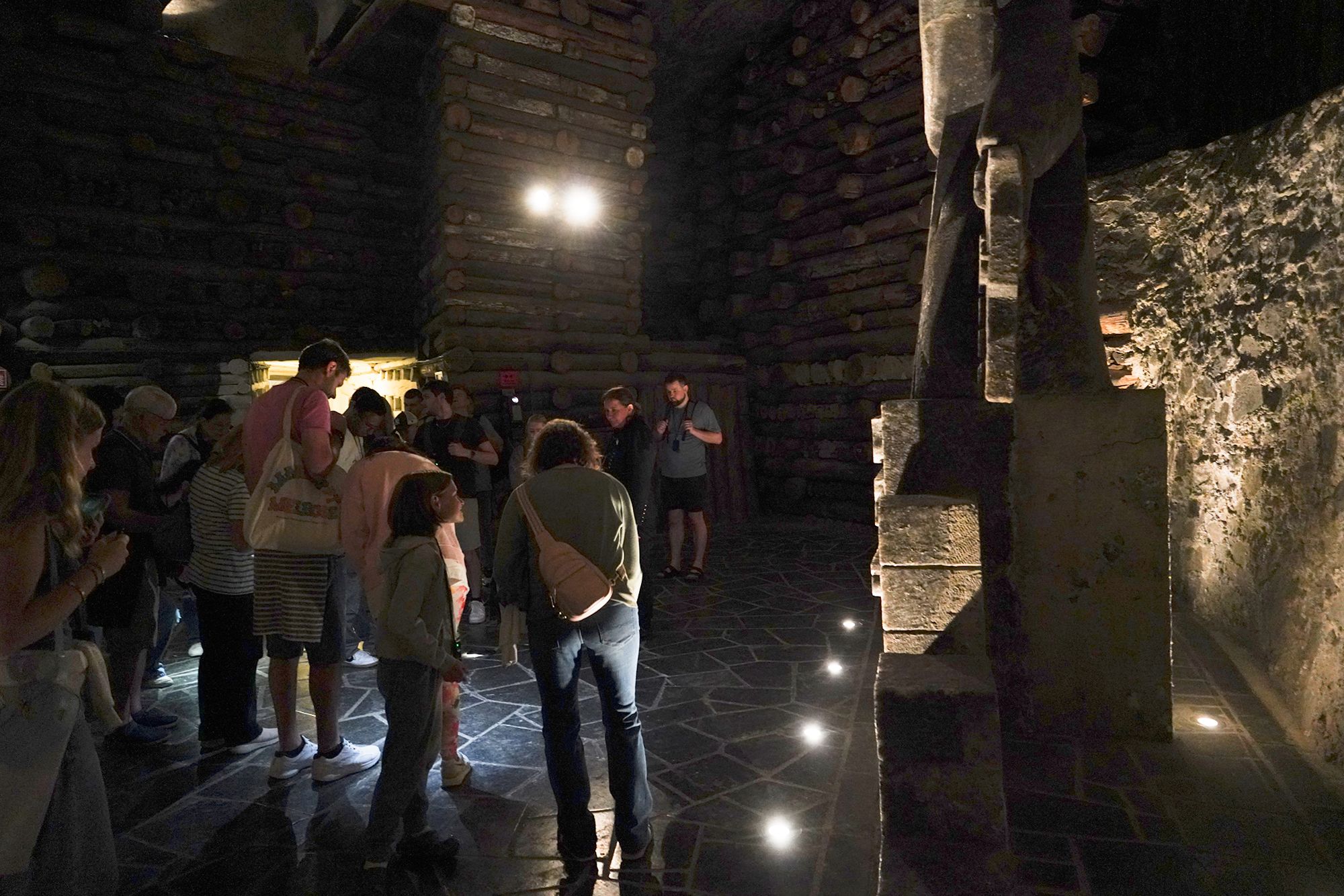
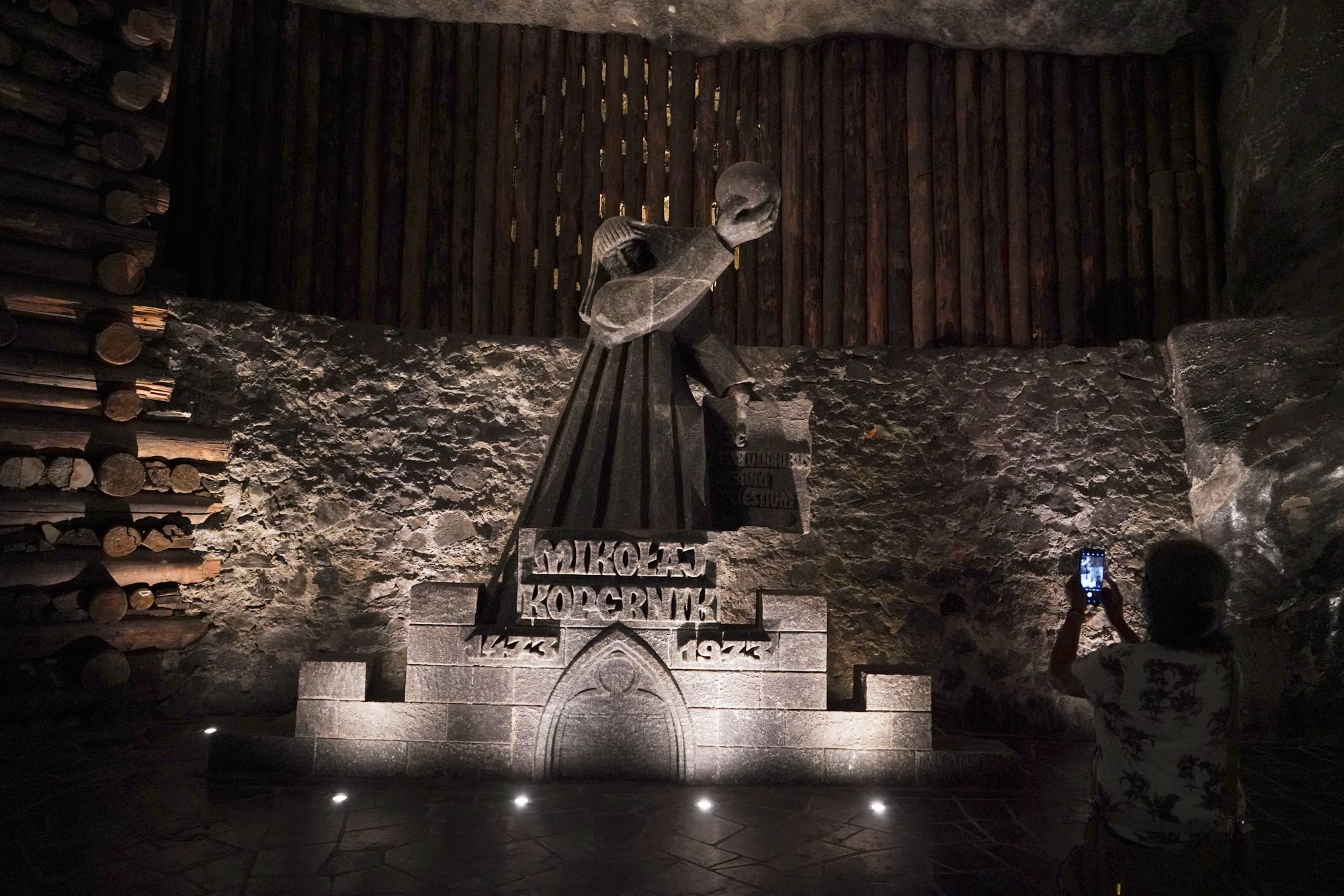
A salt sculpture honors Nicolaus Copernicus. The dates, 1473–1973, mark 500 years since his birth.
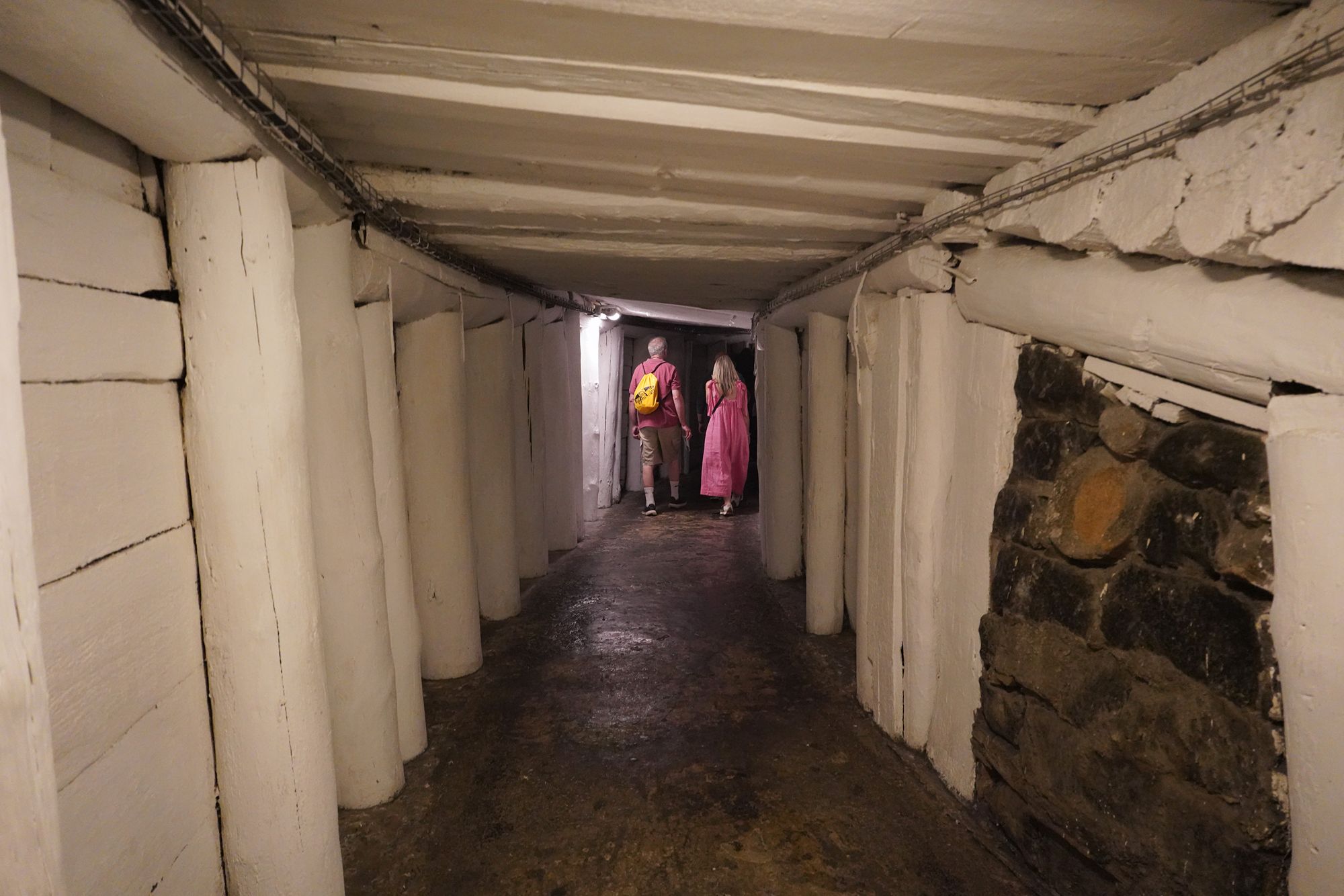
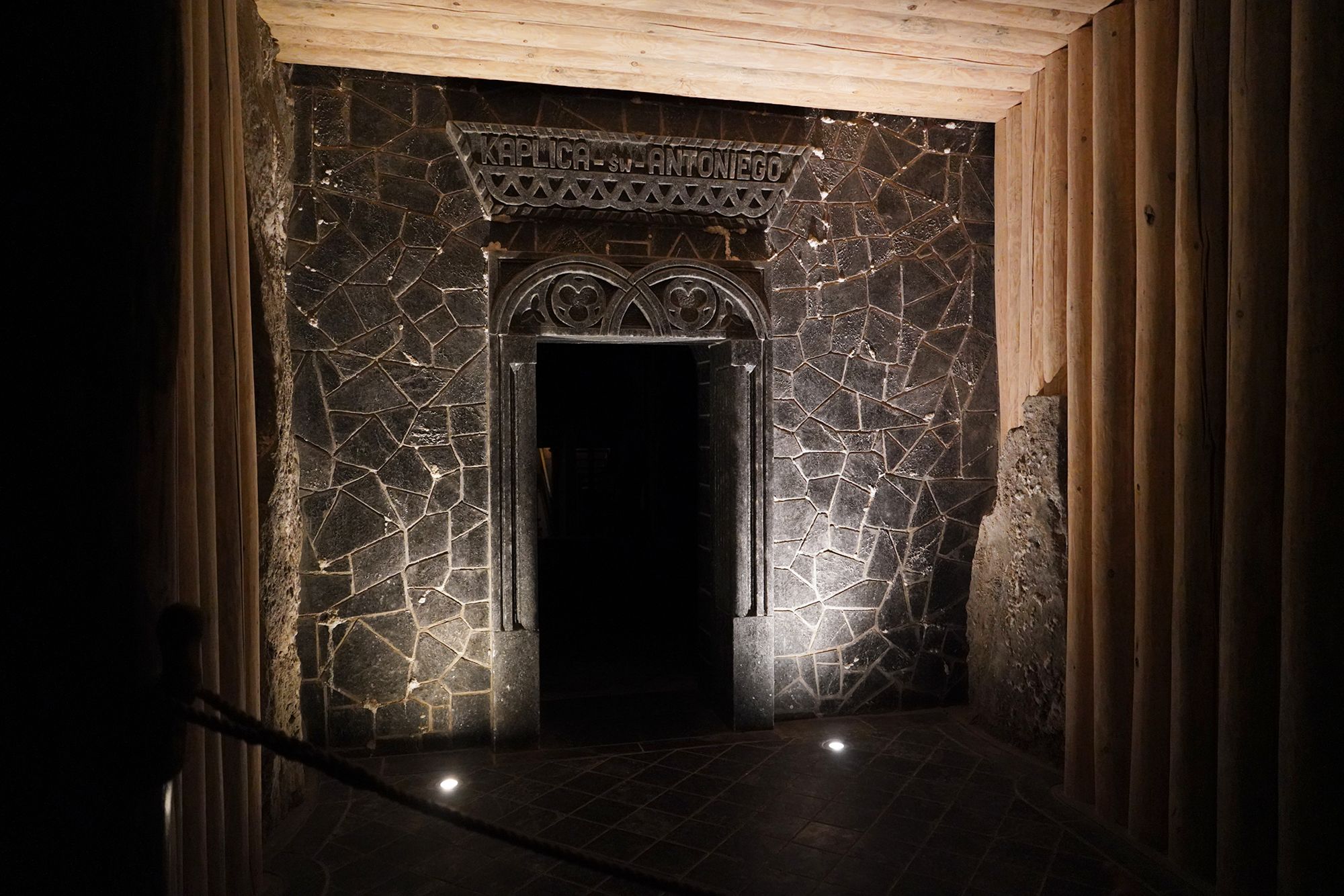
The doorway to the underground Chapel of St. Anthony is framed by a patterned salt wall and heavy timber supports.
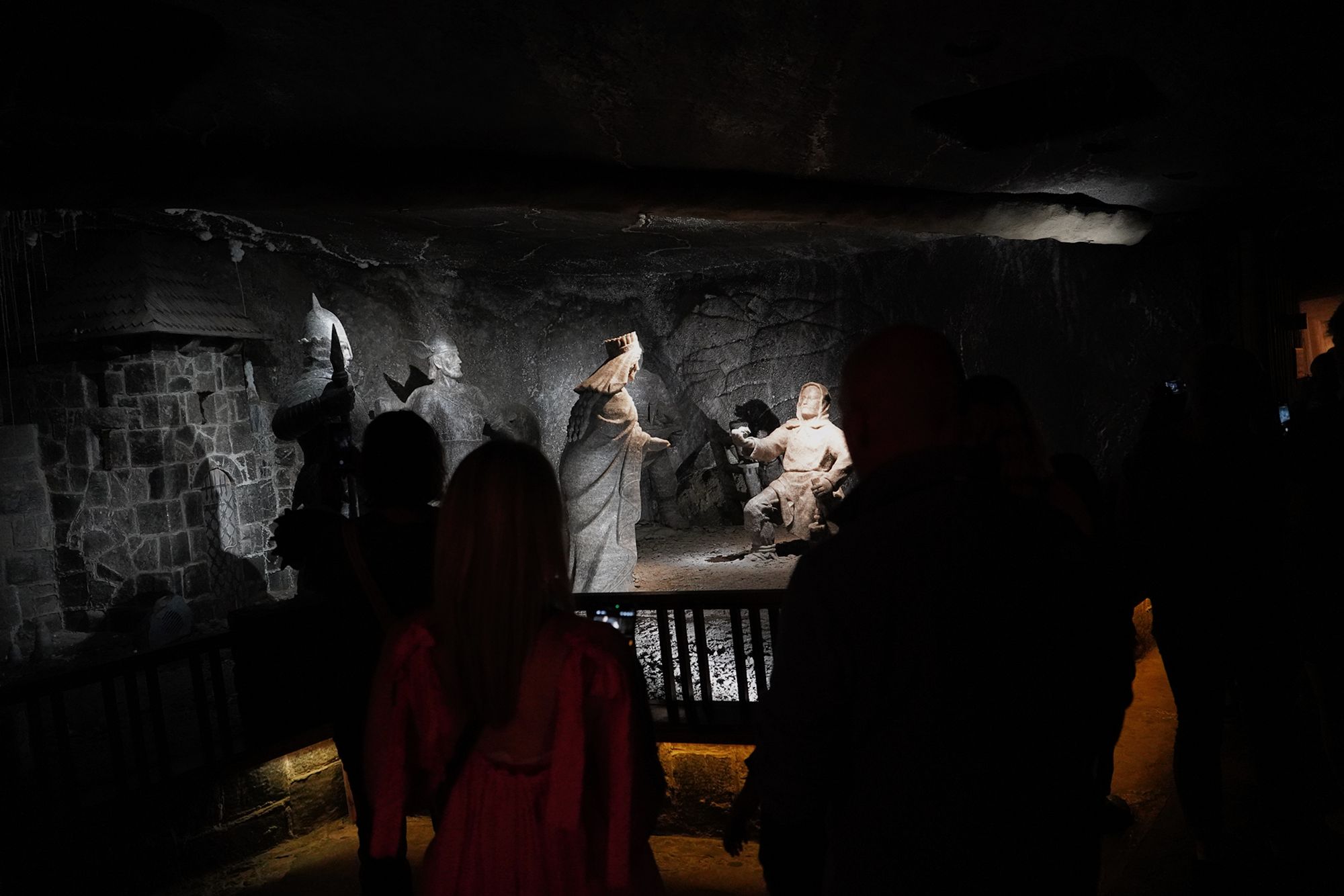
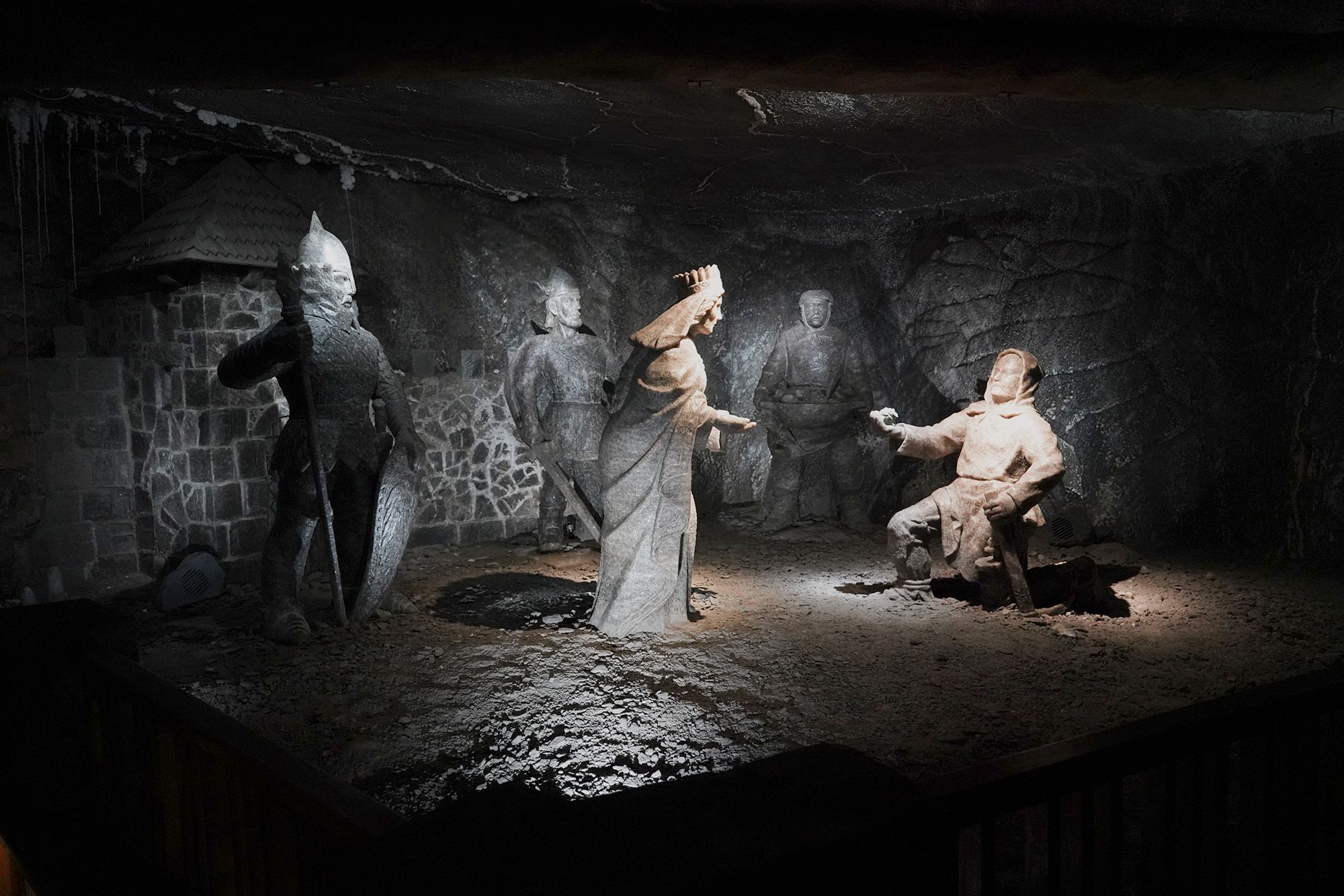
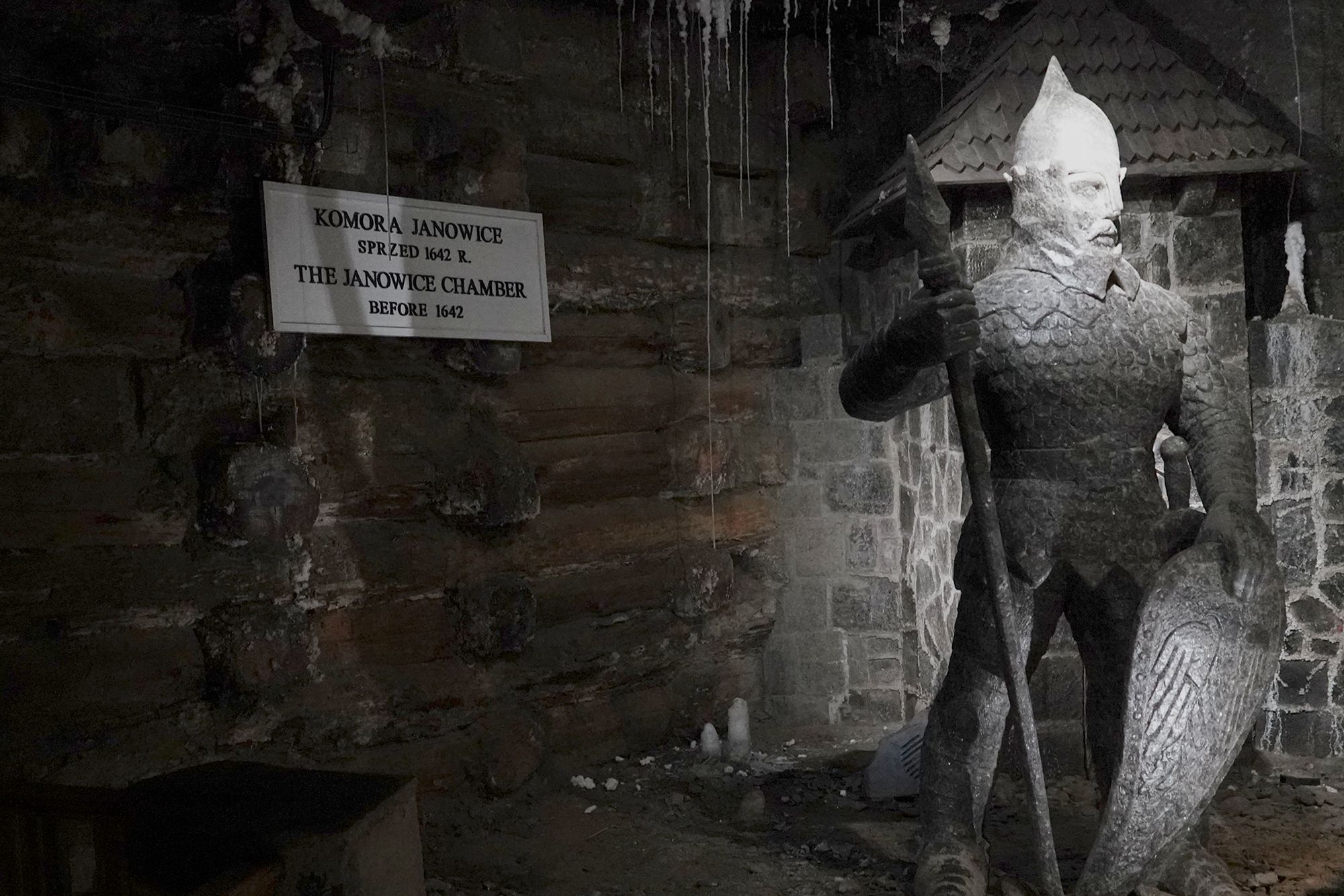
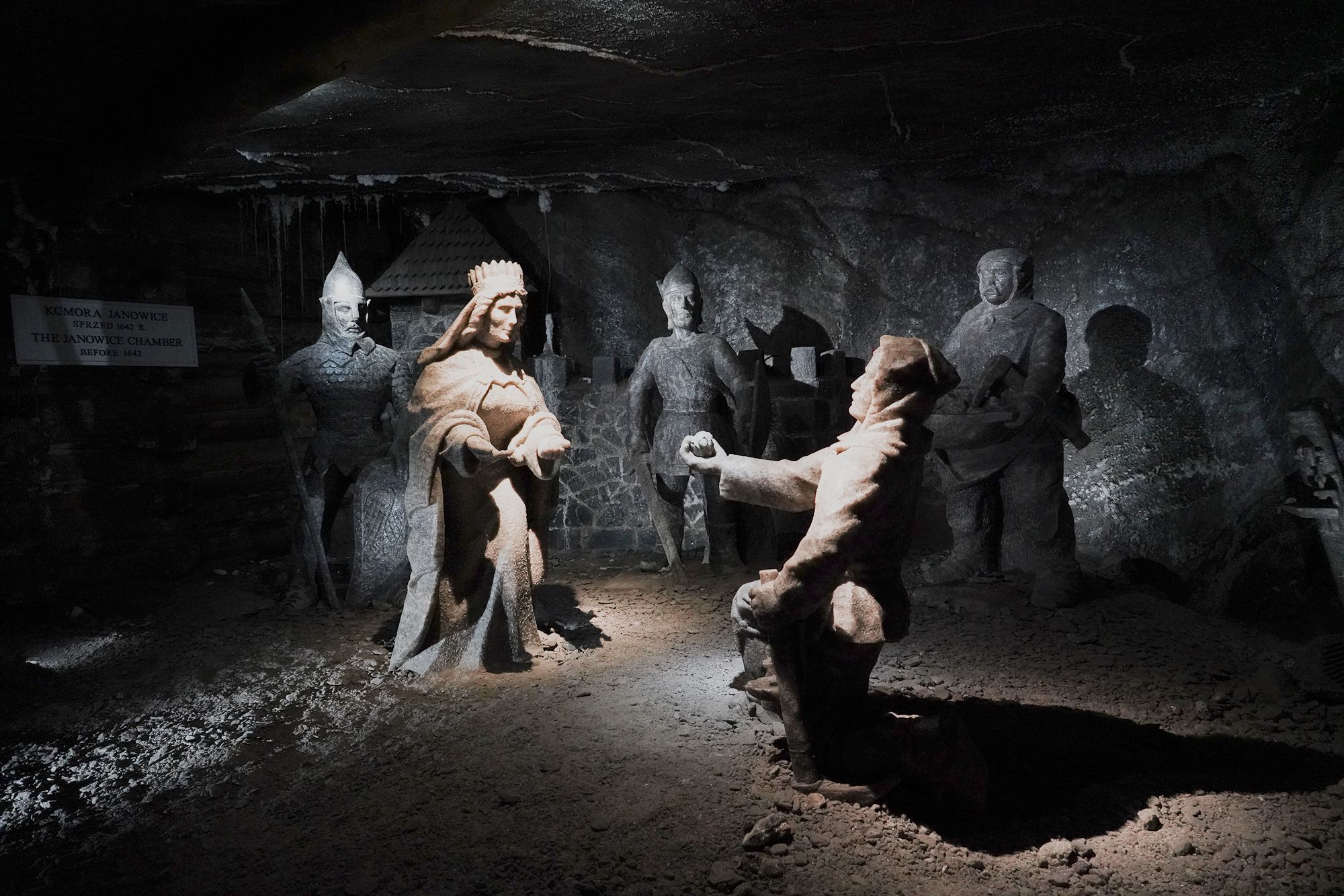
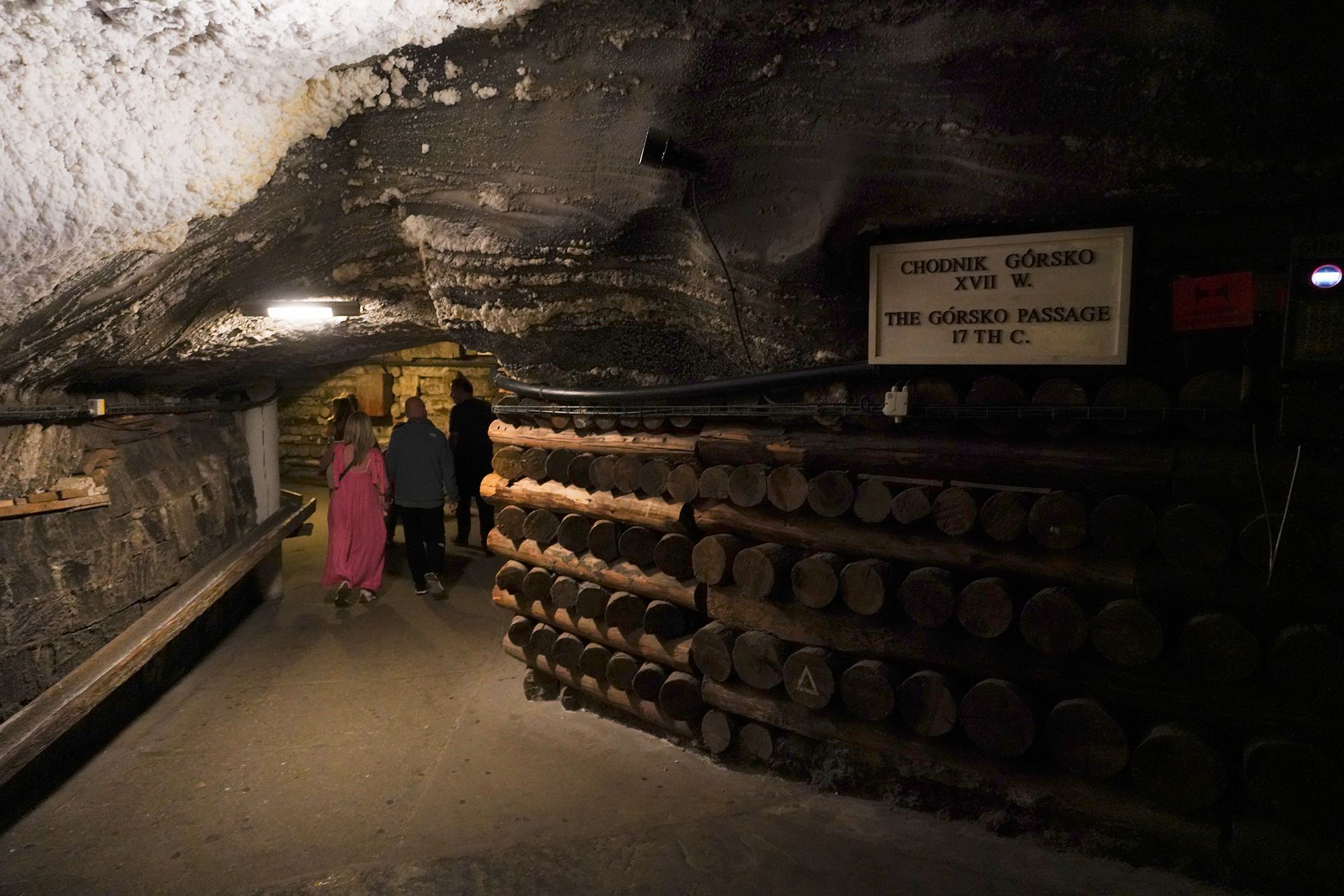
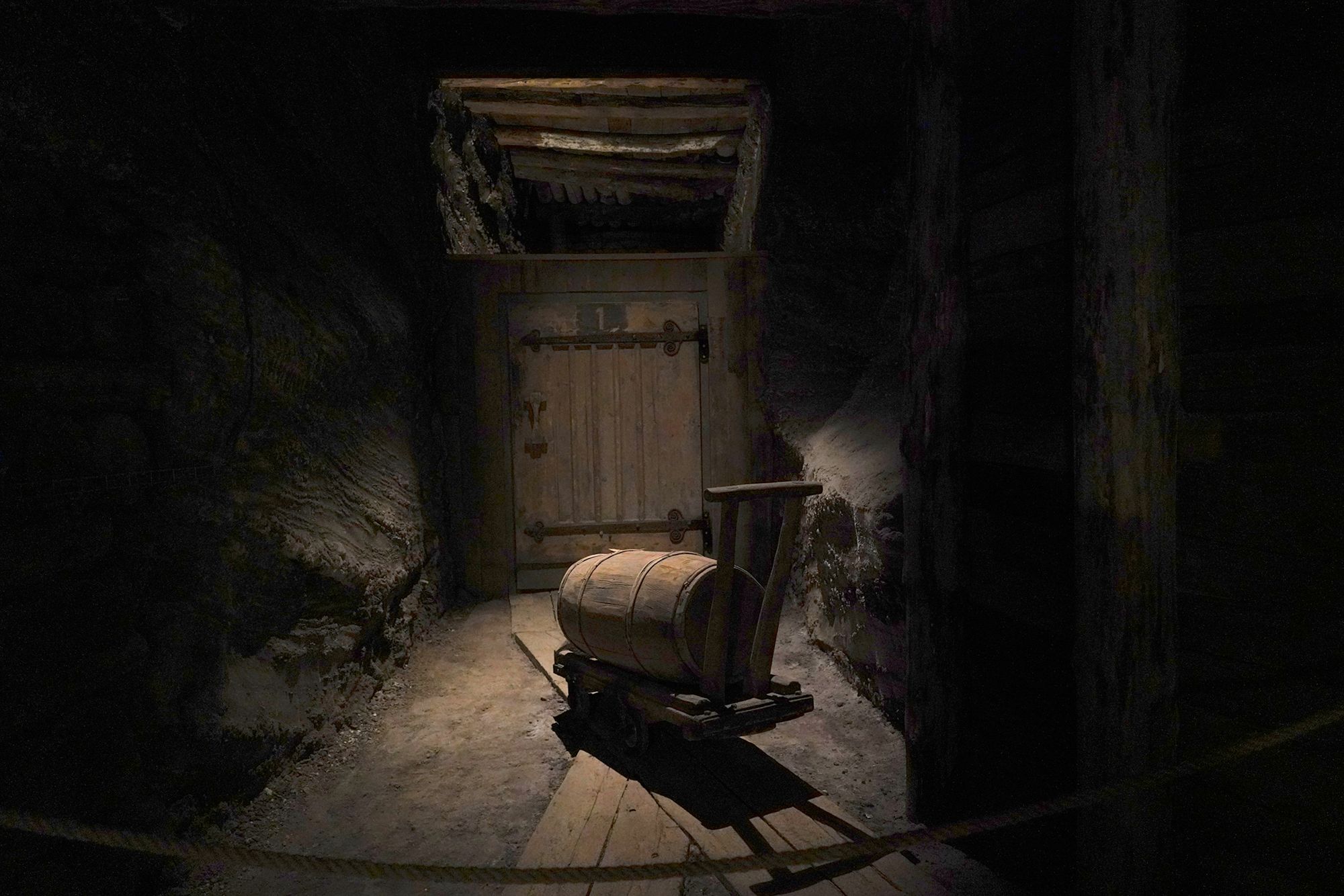
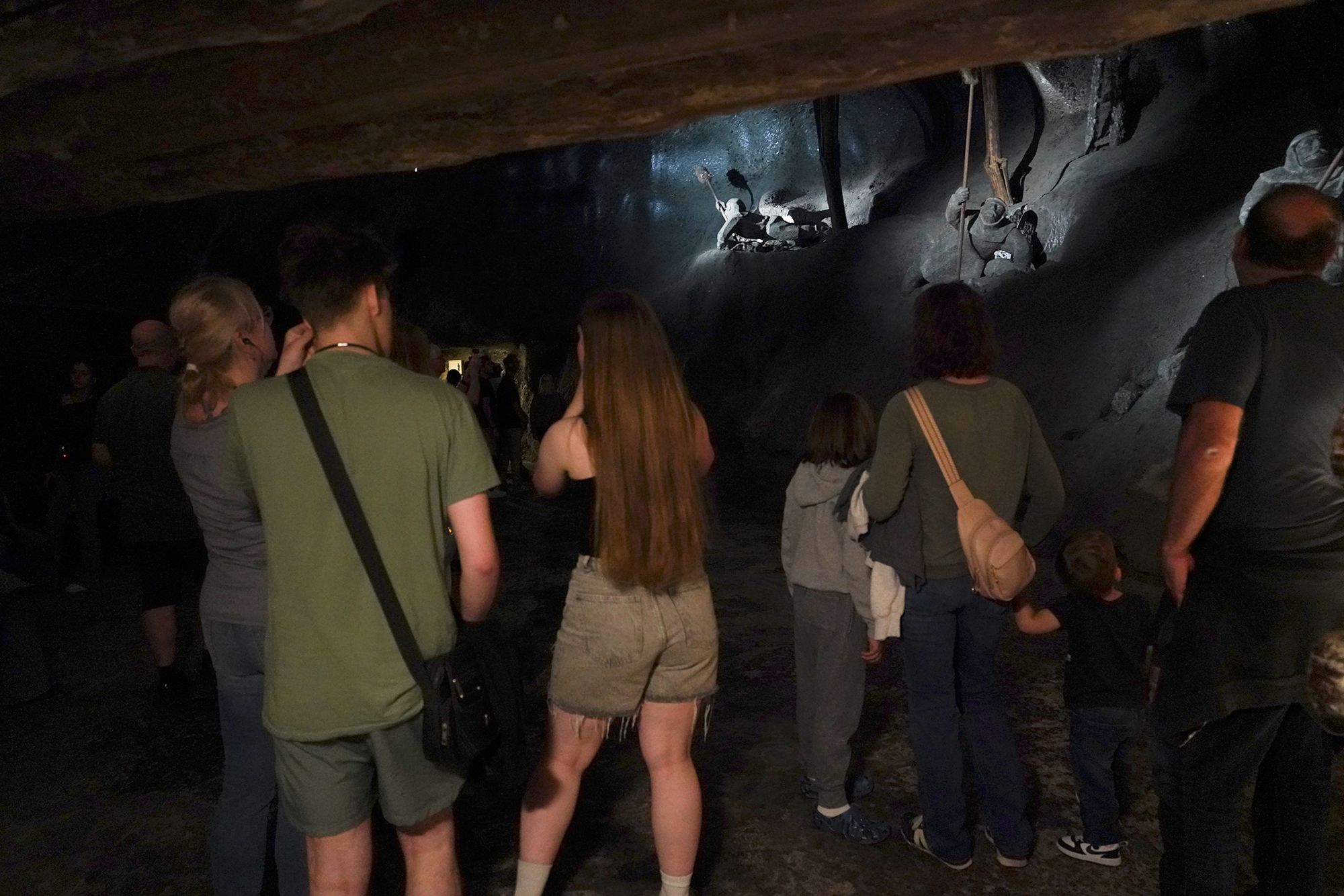
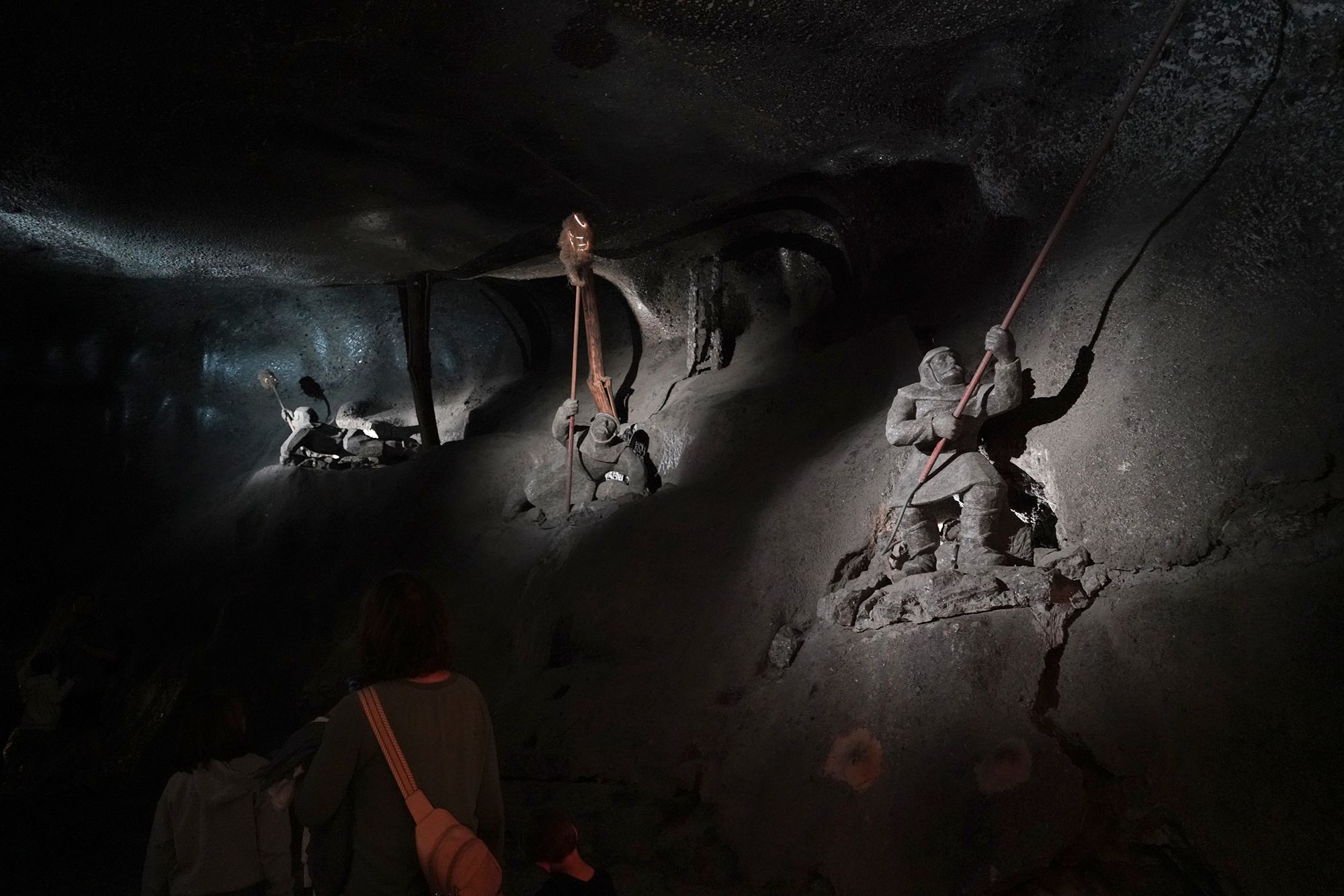
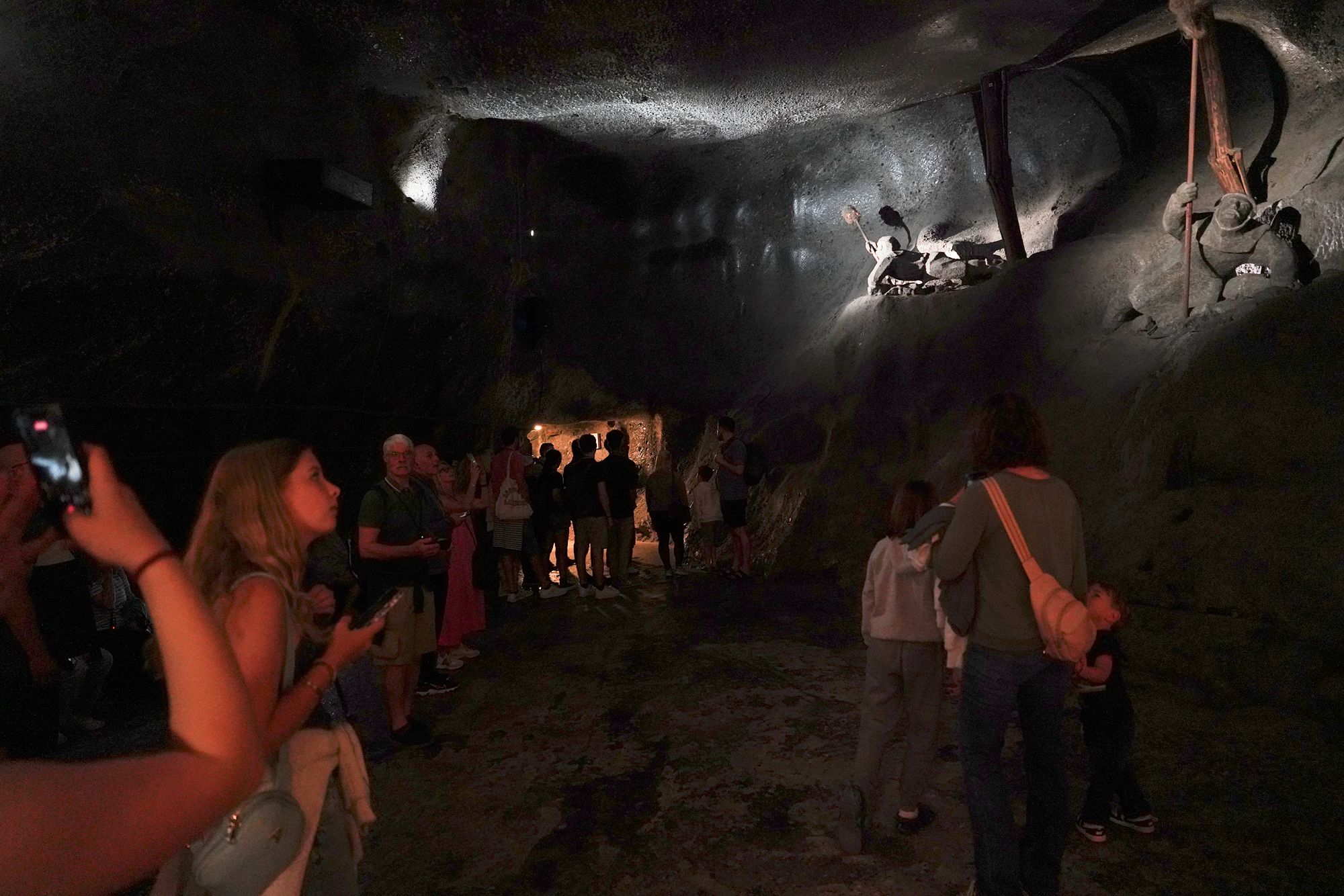
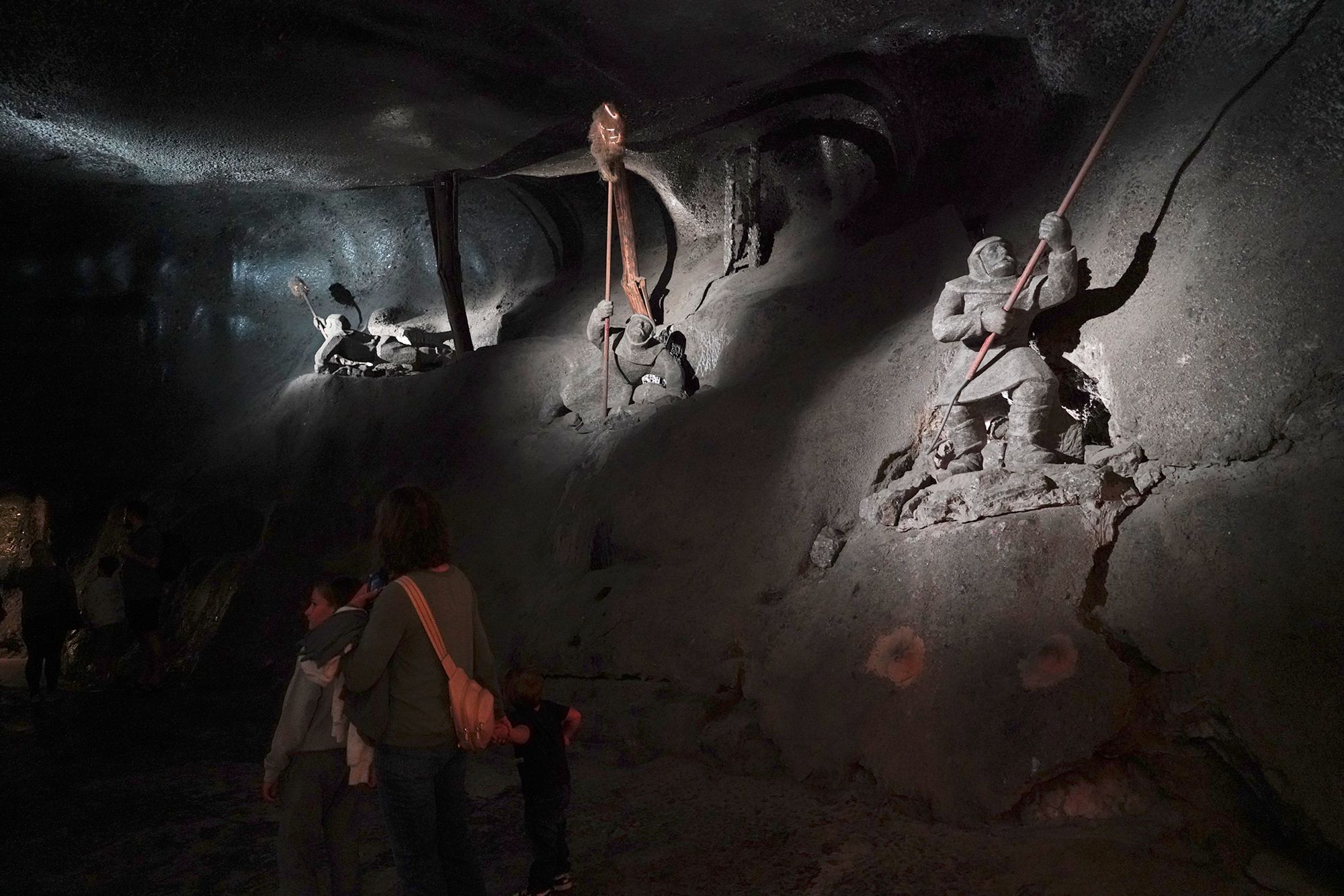
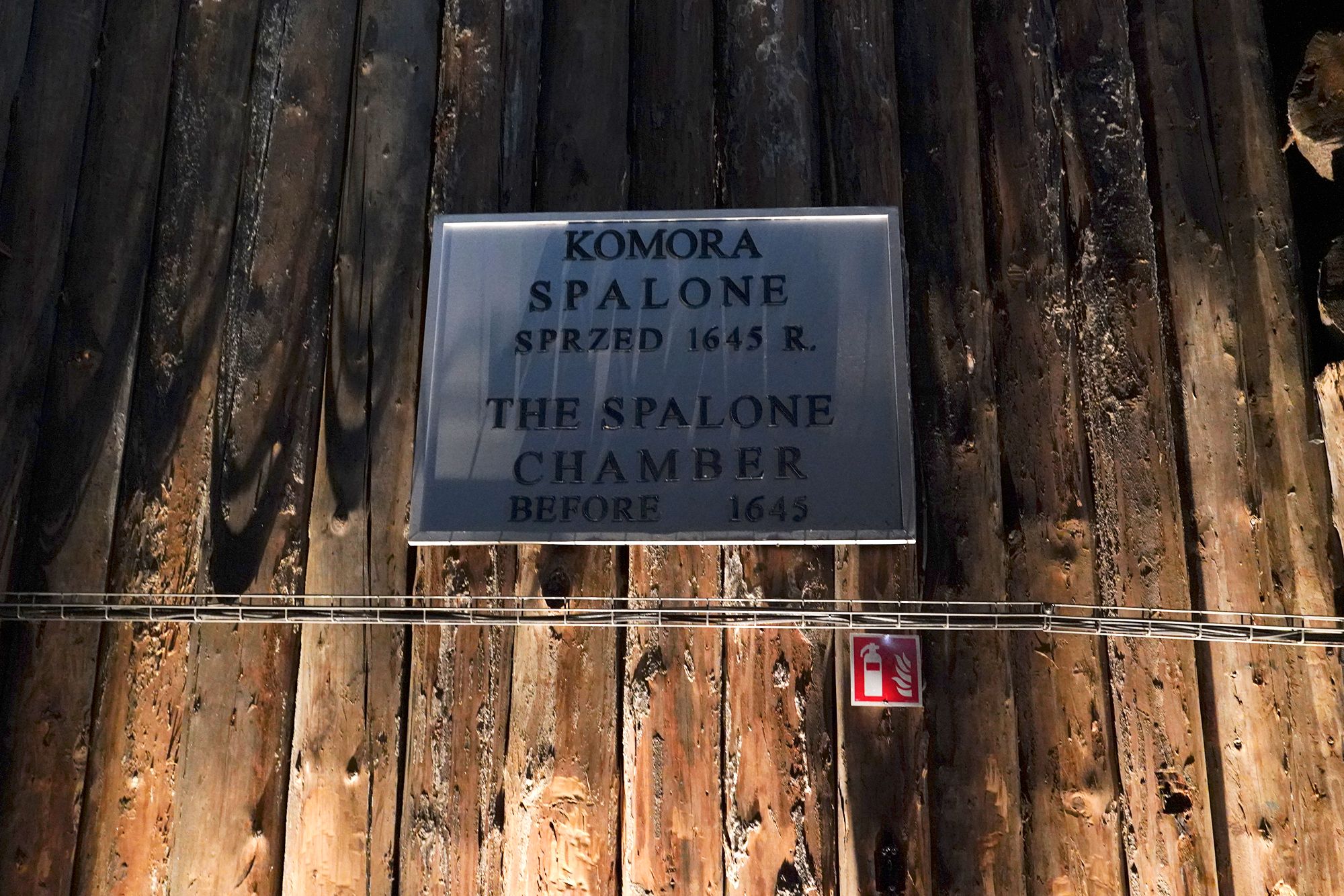
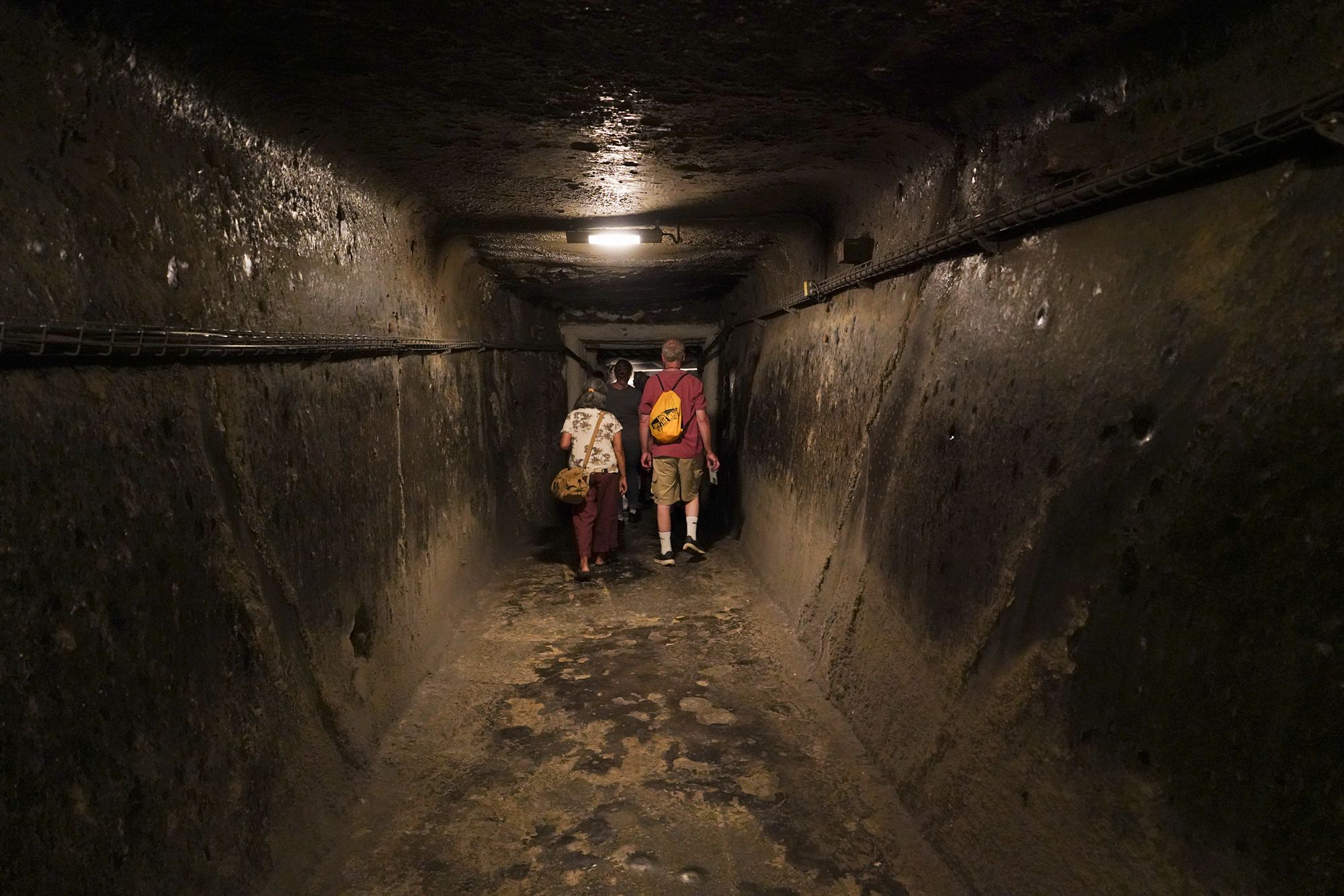
Salt production at Wieliczka began with brine, and by the 13th century miners were extracting rock salt underground. The mine became part of the royal Cracow Saltworks, a major enterprise that operated for centuries. Salt mining continued into the 20th century, and the mine was among the first sites added to UNESCO’s World Heritage List in 1978.
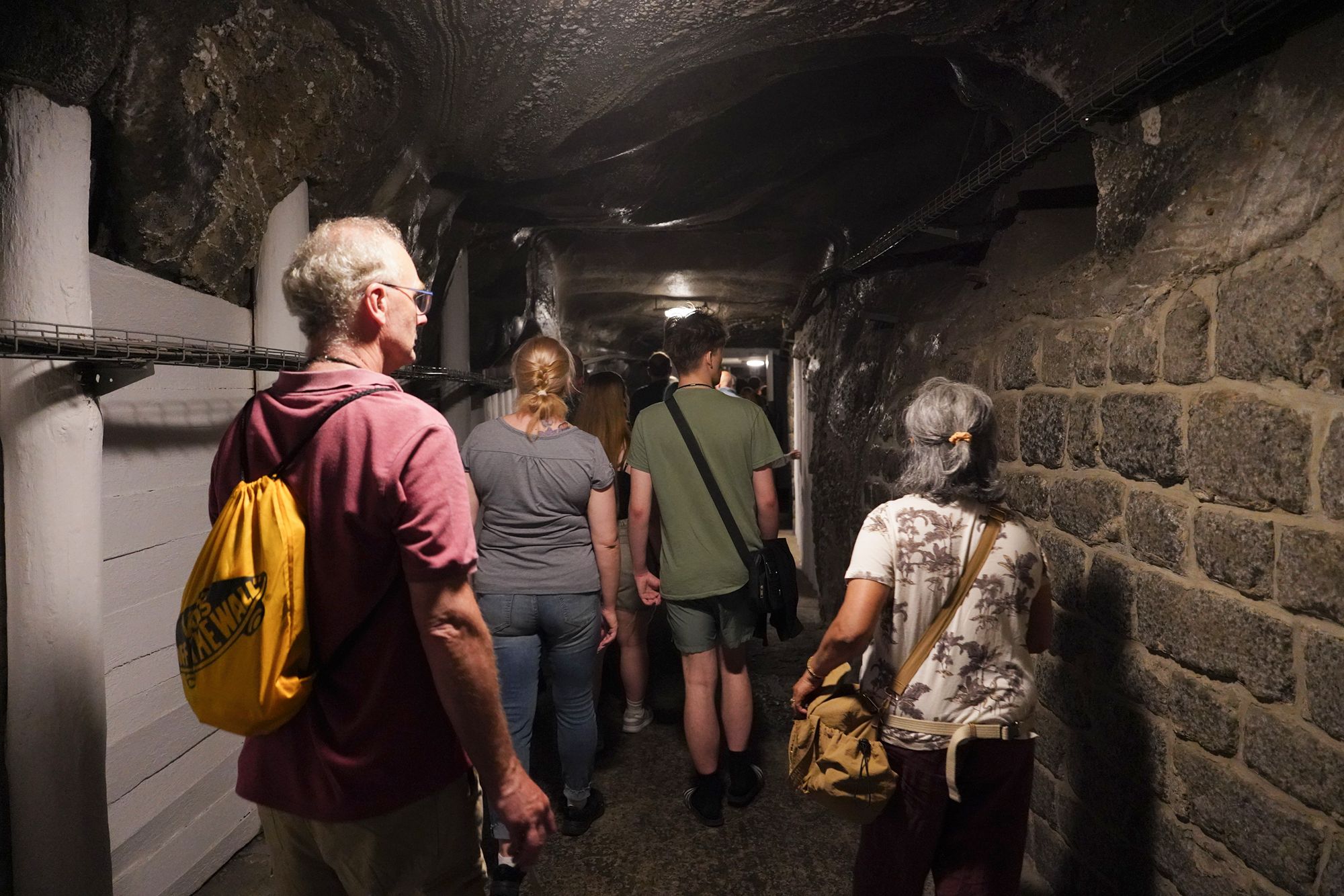
Where the salt came from? About 13.5 million years ago, an ancient sea covered this area near the rising Carpathian Mountains. In the warm, dry climate, the water evaporated and left thick layers of salt behind. Later geological movements folded and shifted those deposits, forming the salt beds miners eventually excavated.
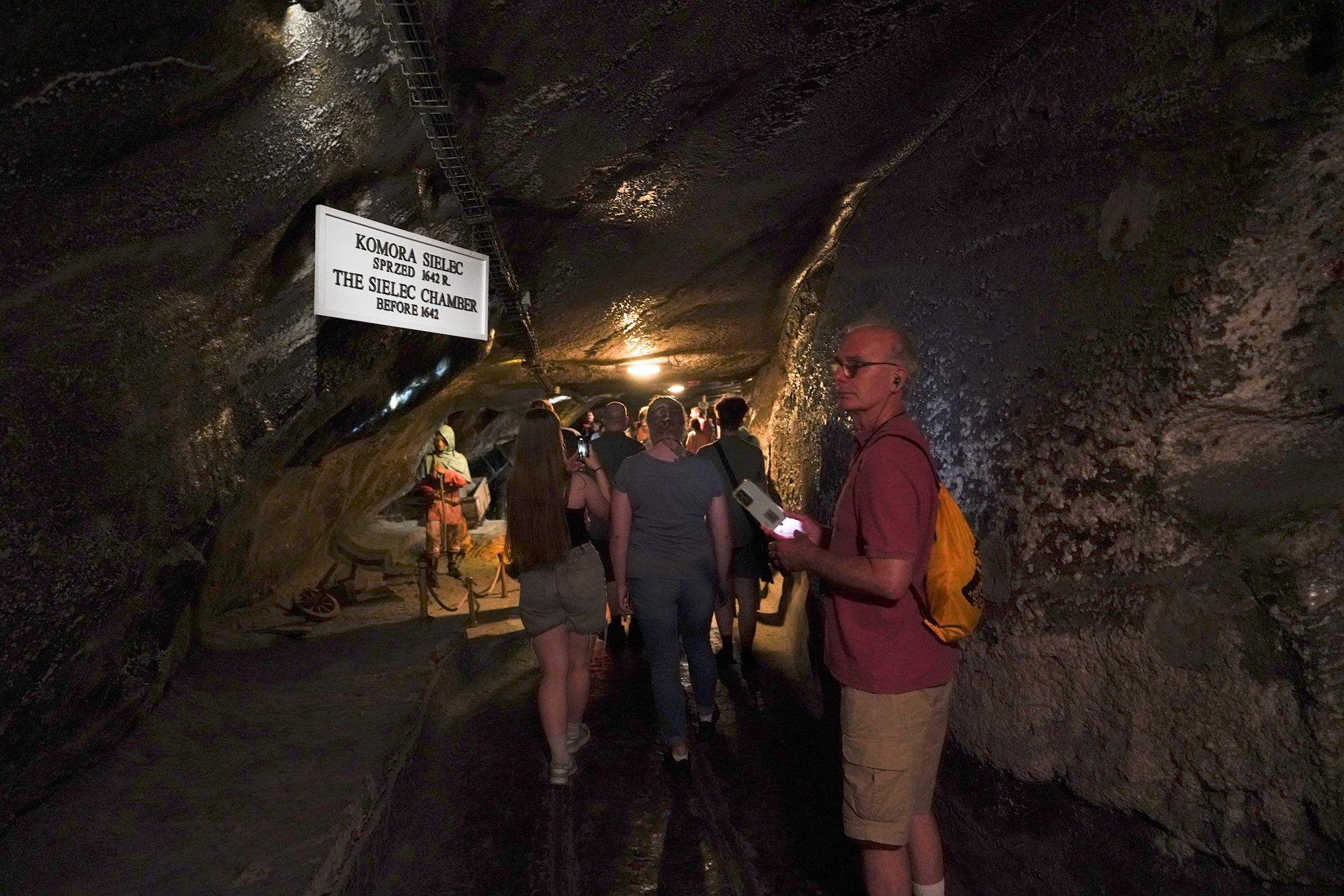
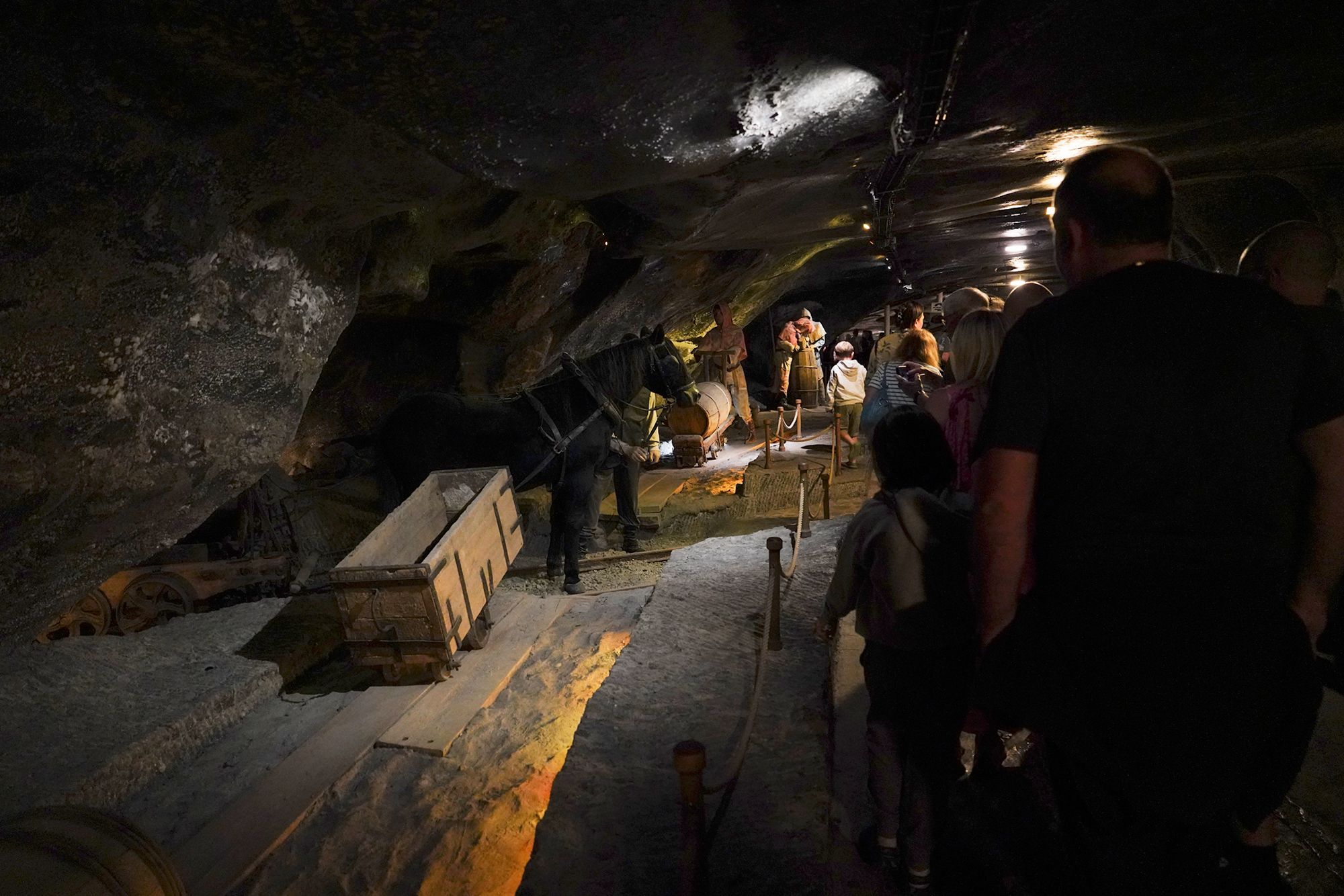
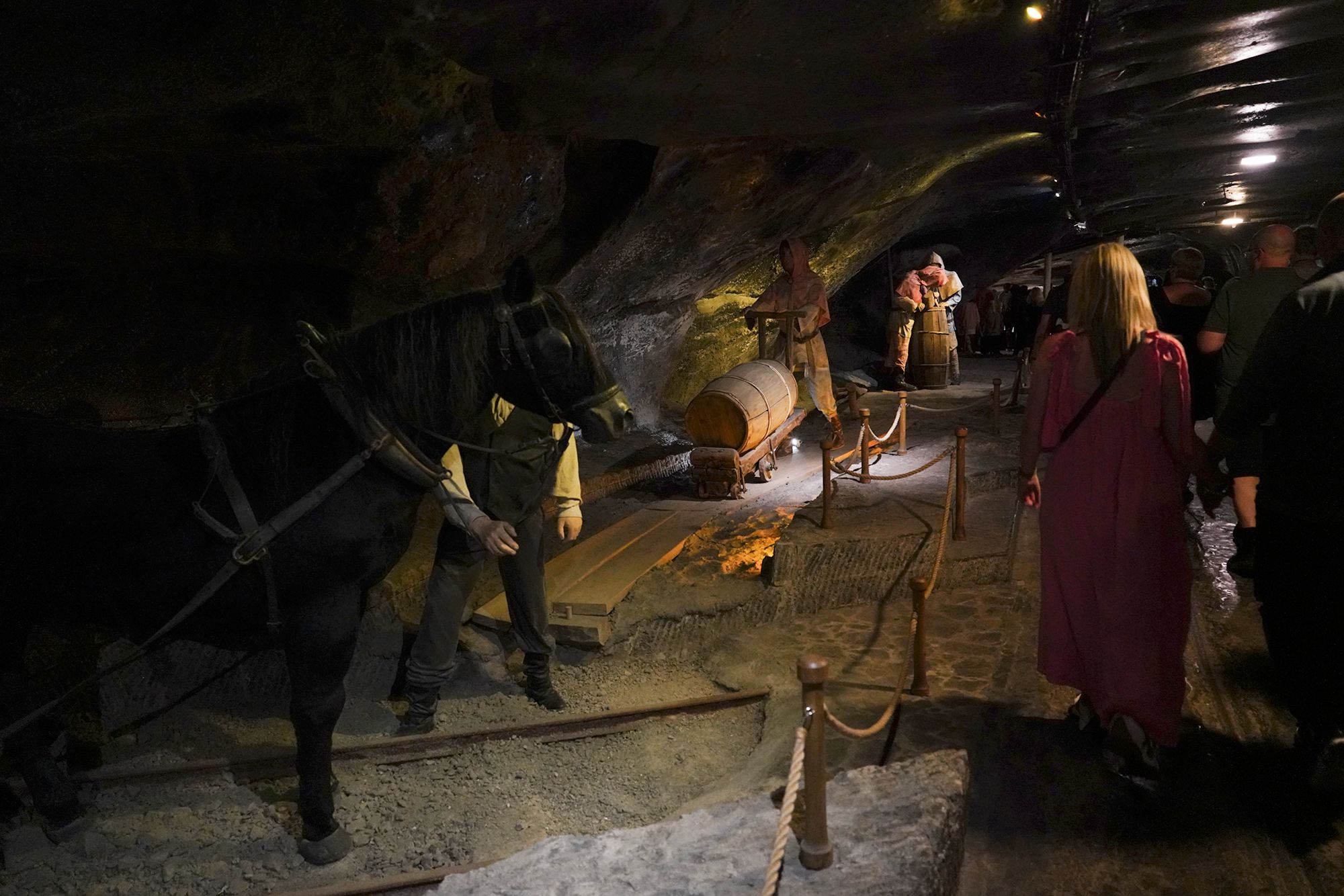
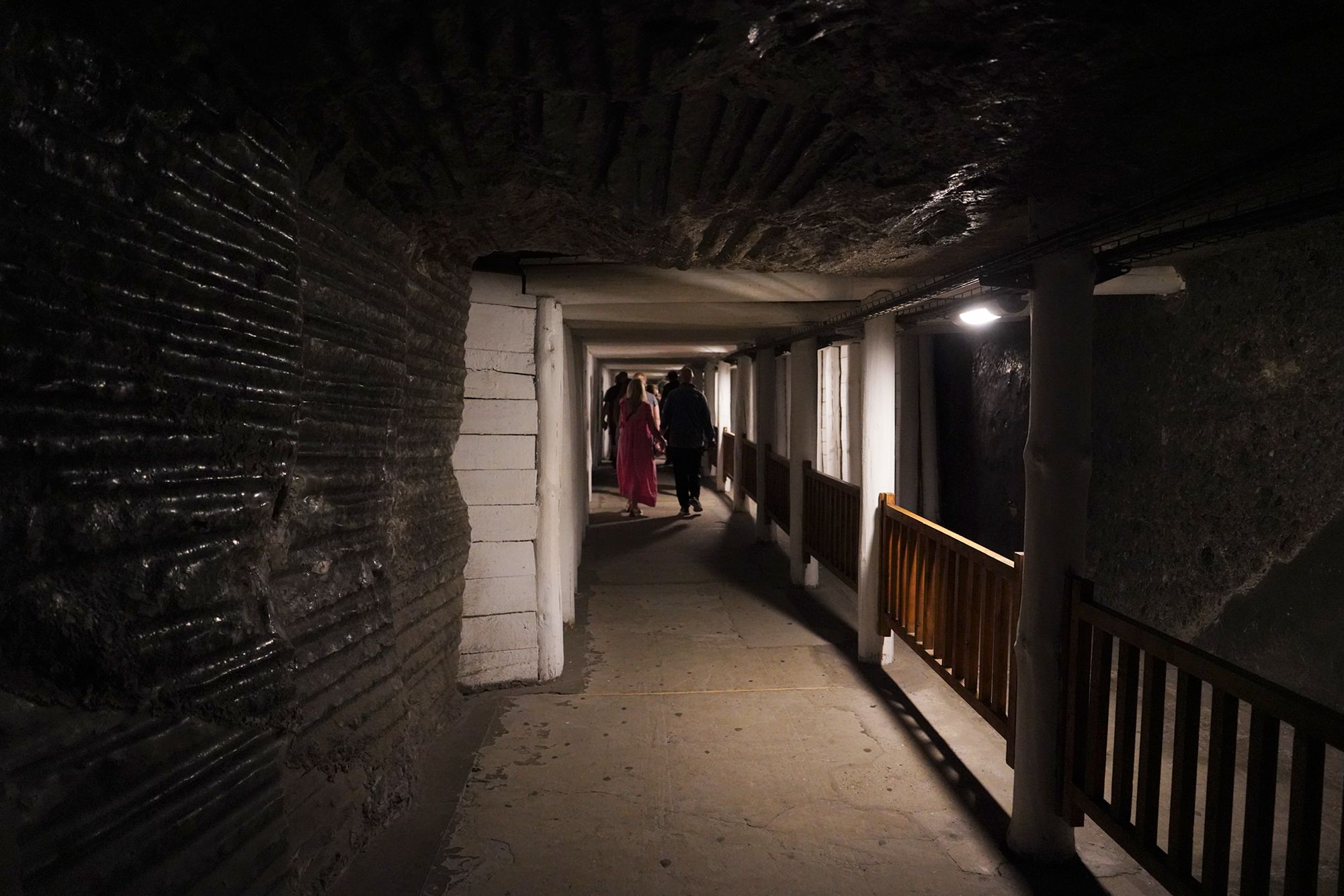
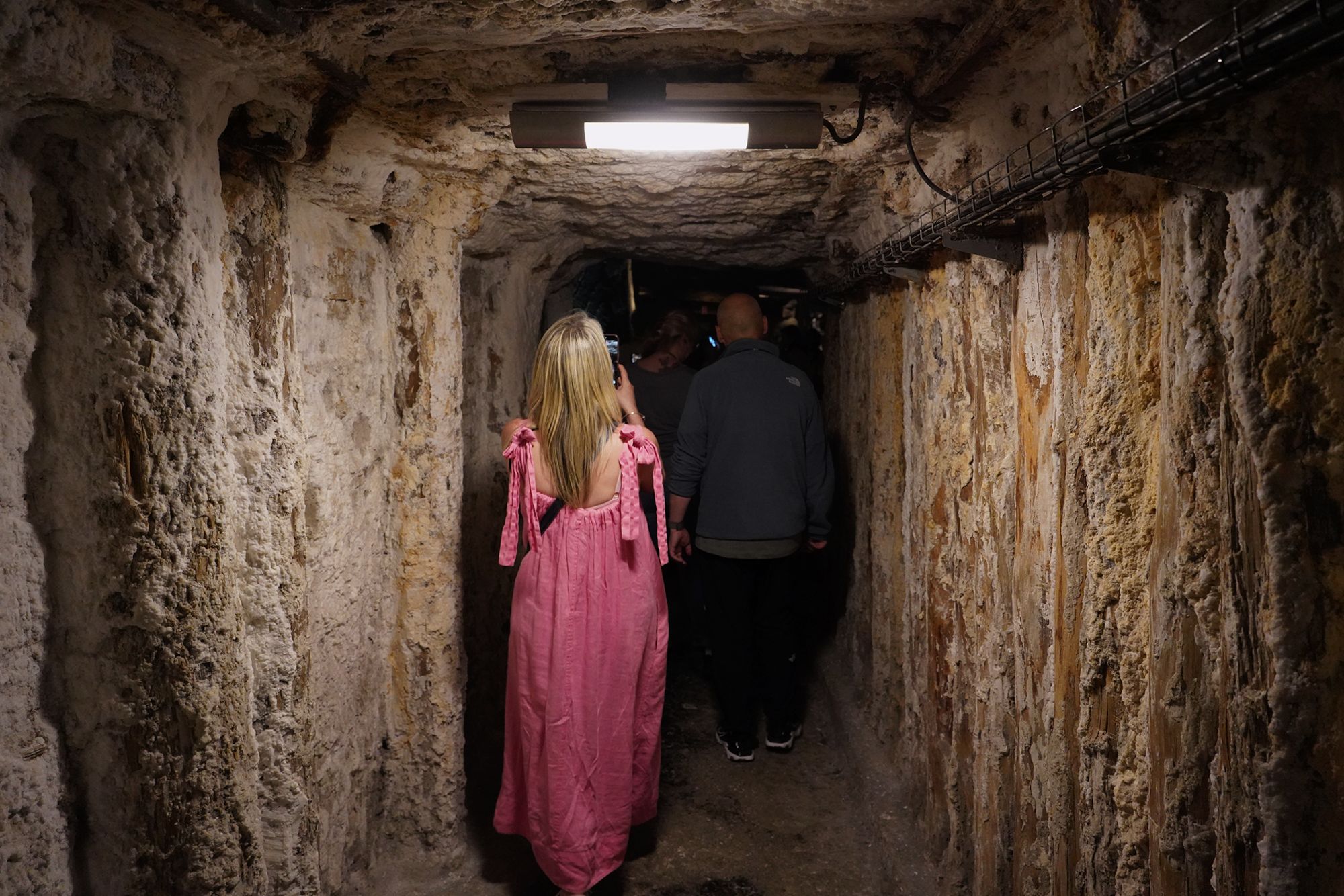
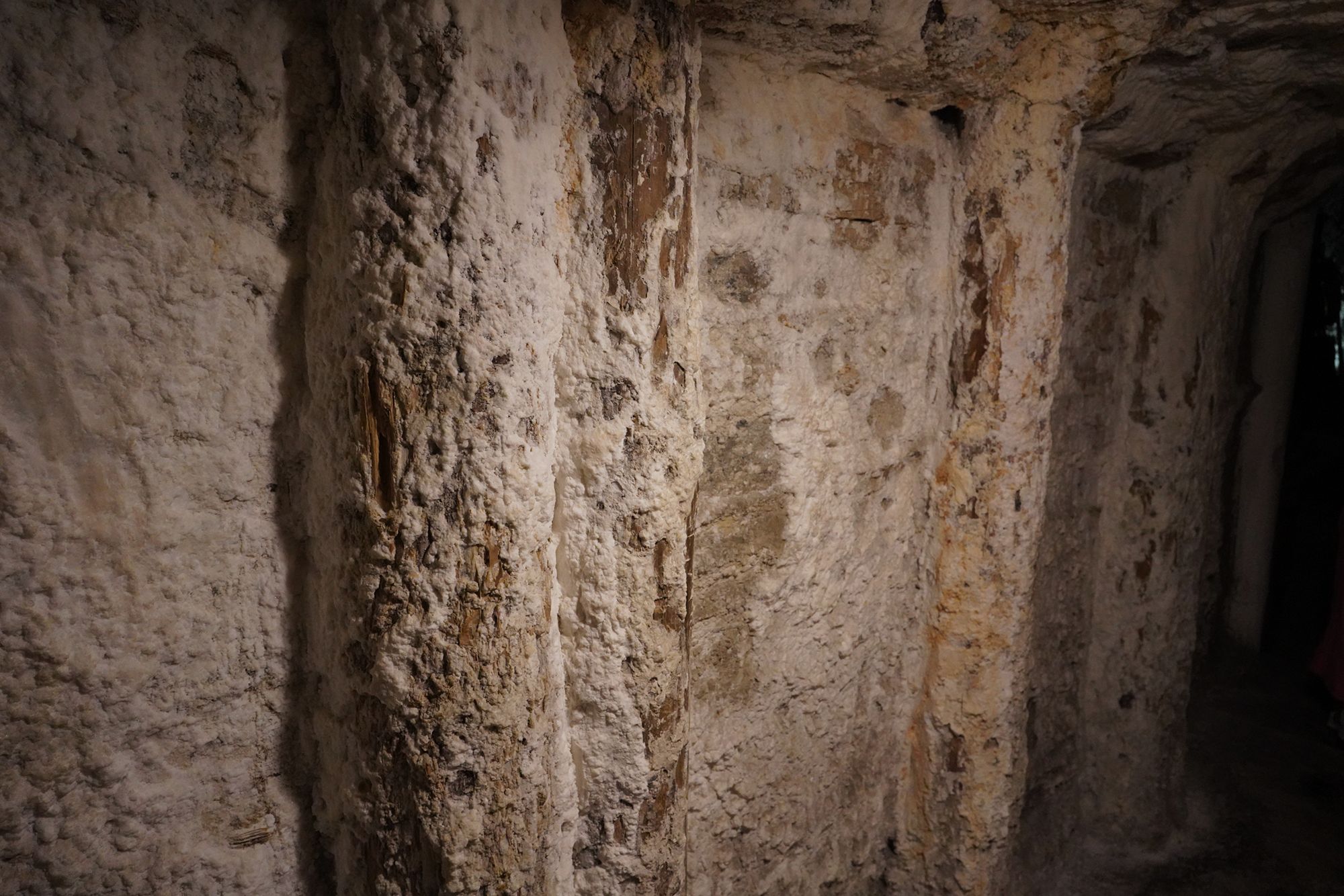
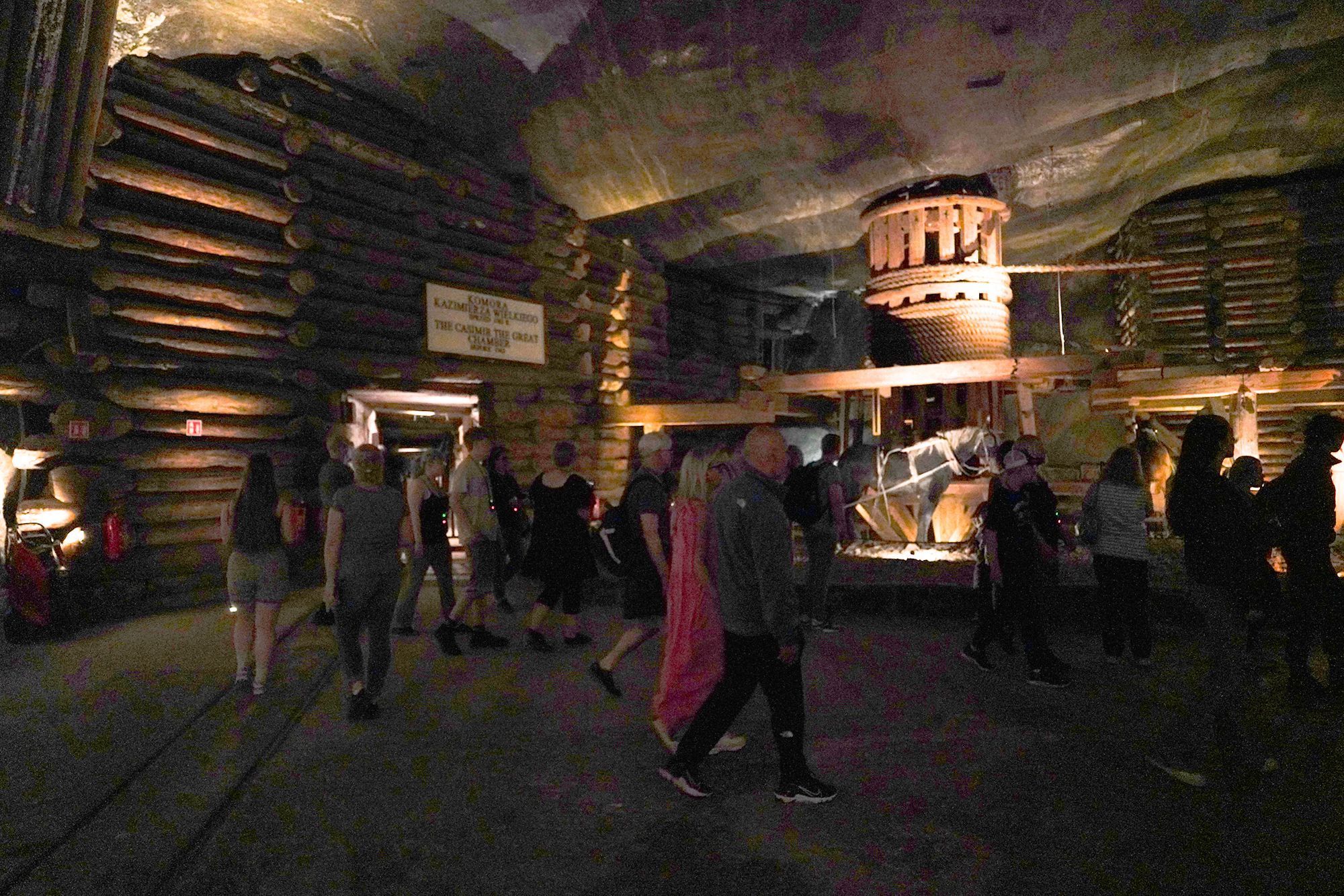
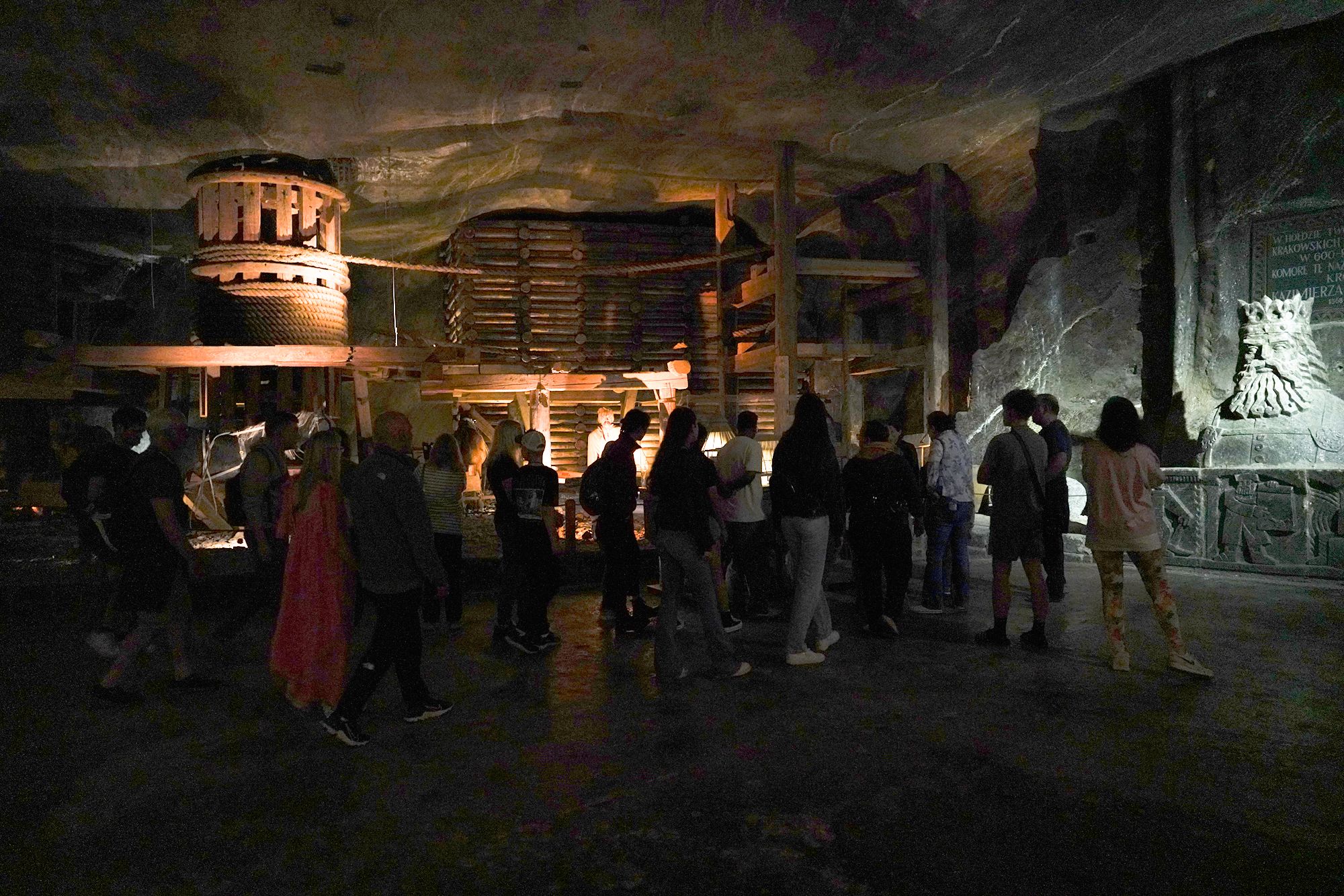
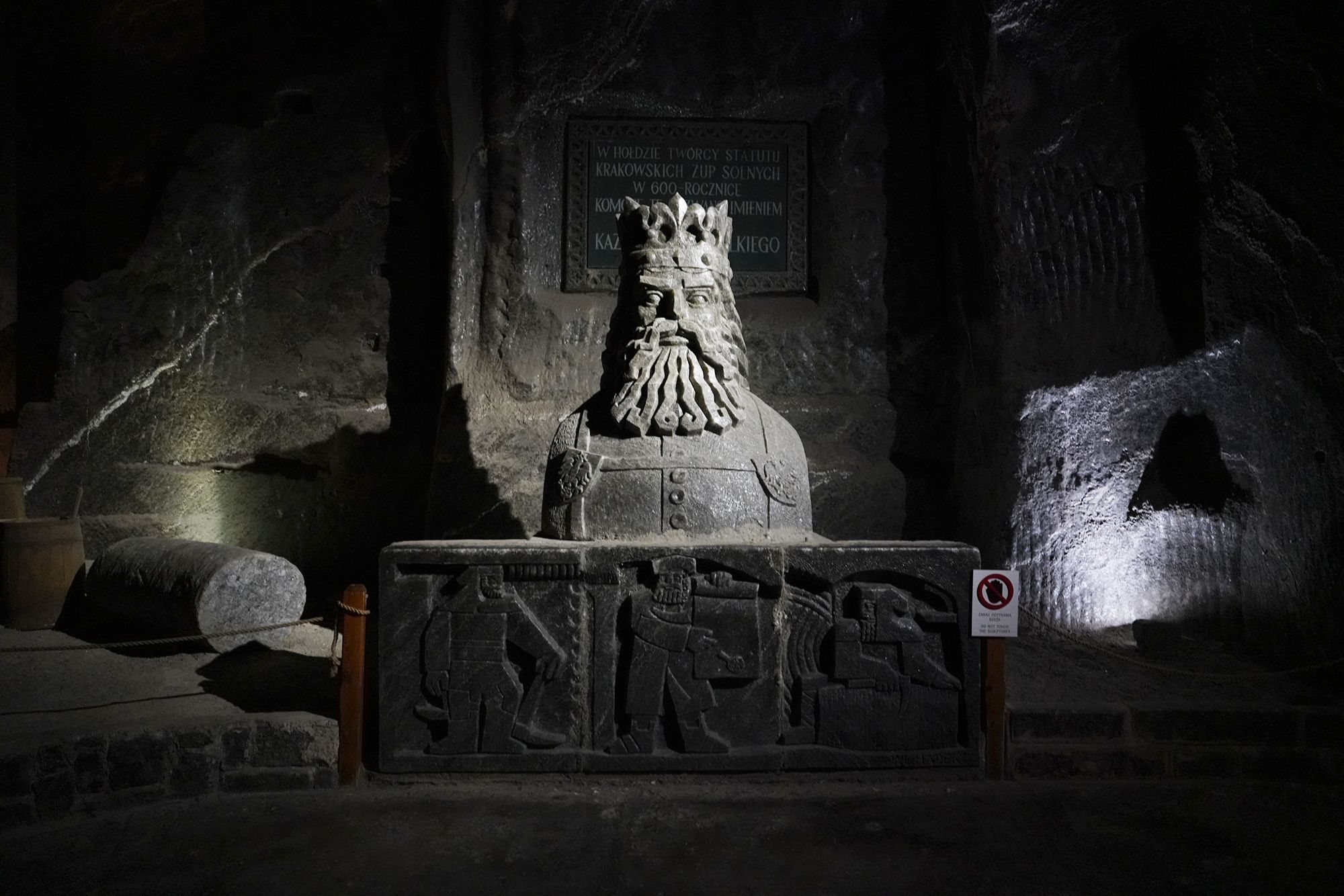
A salt sculpture of King Casimir the Great stands in the chamber named after him. His 1368 statute set rules for the Kraków Saltworks.
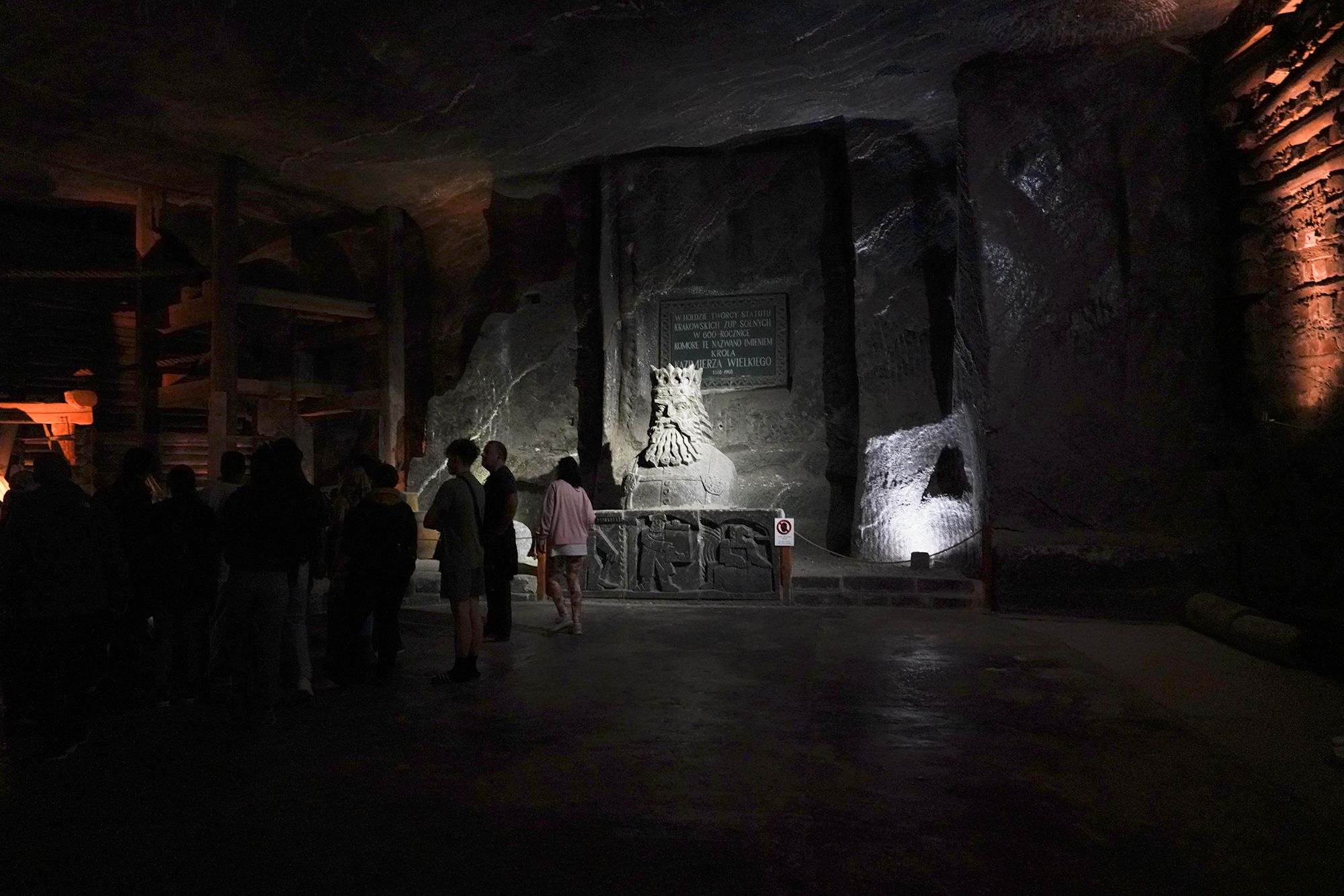
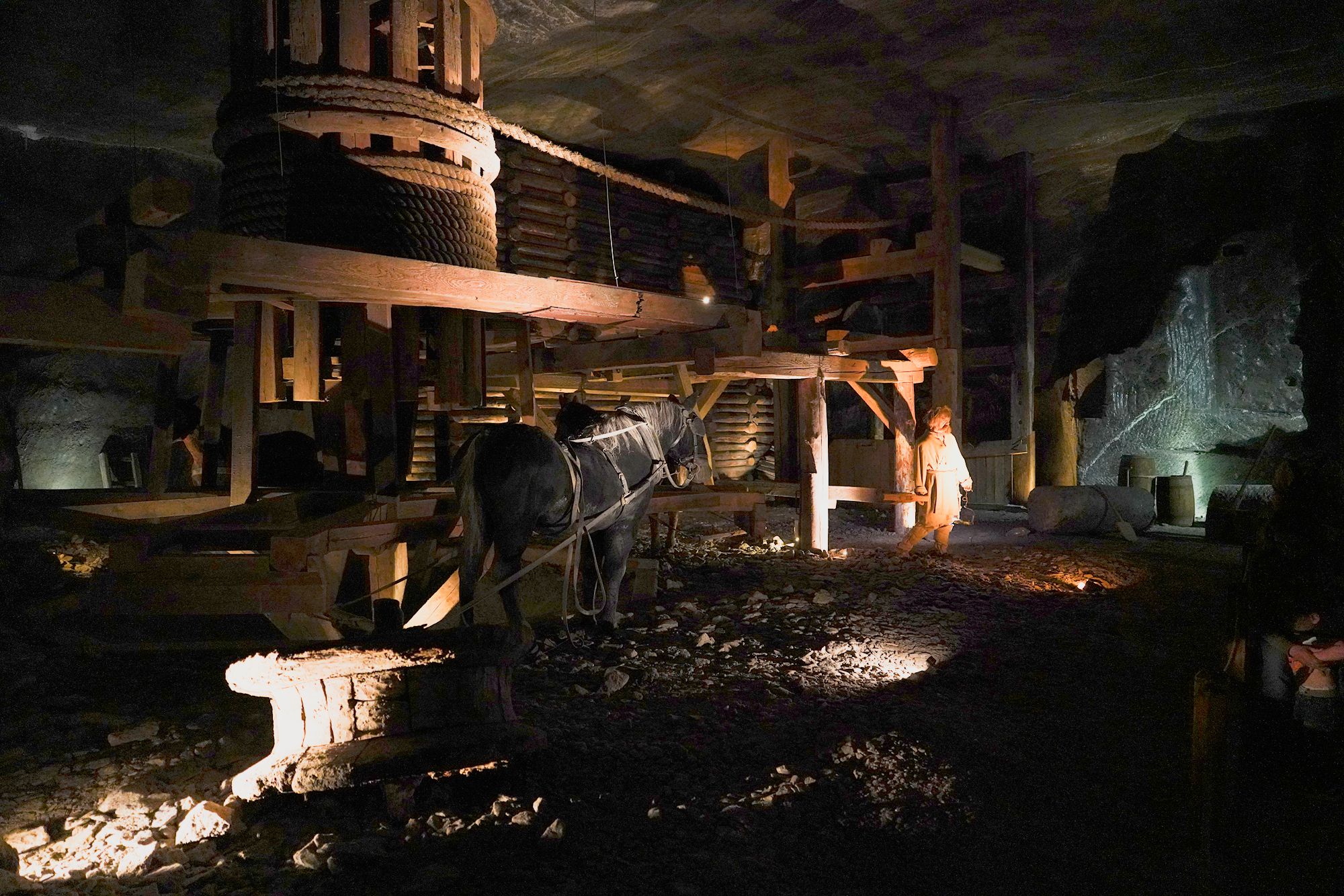
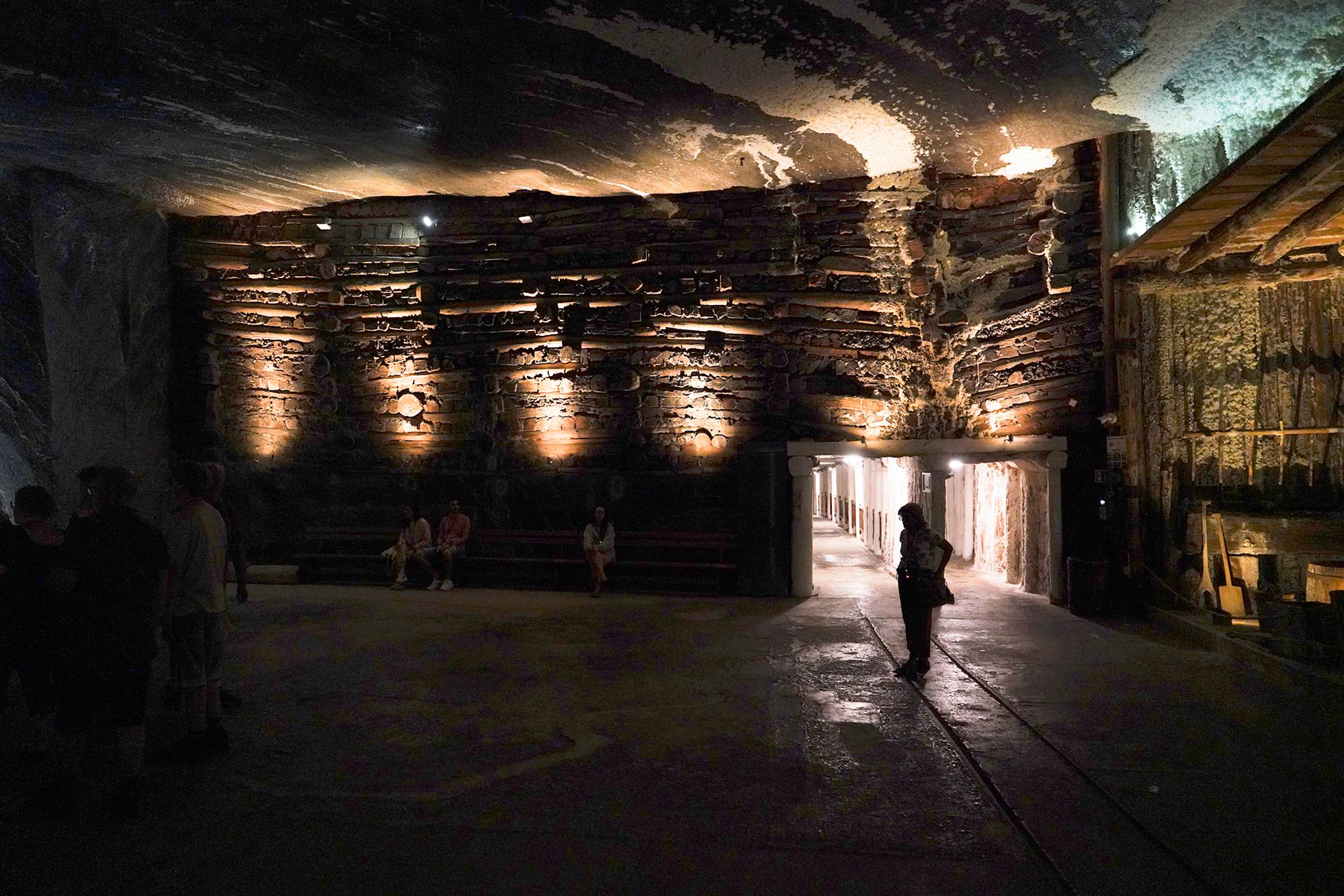
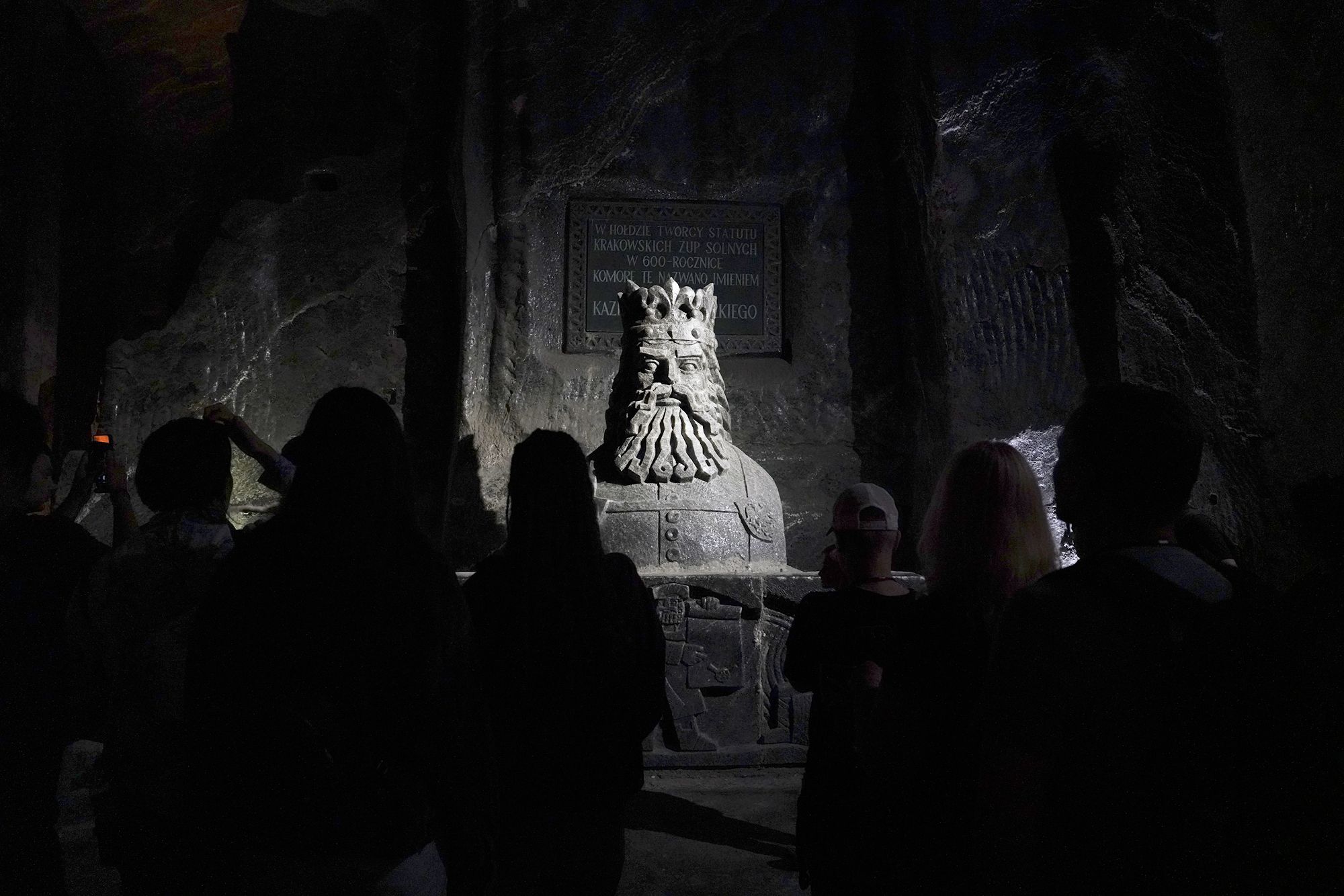
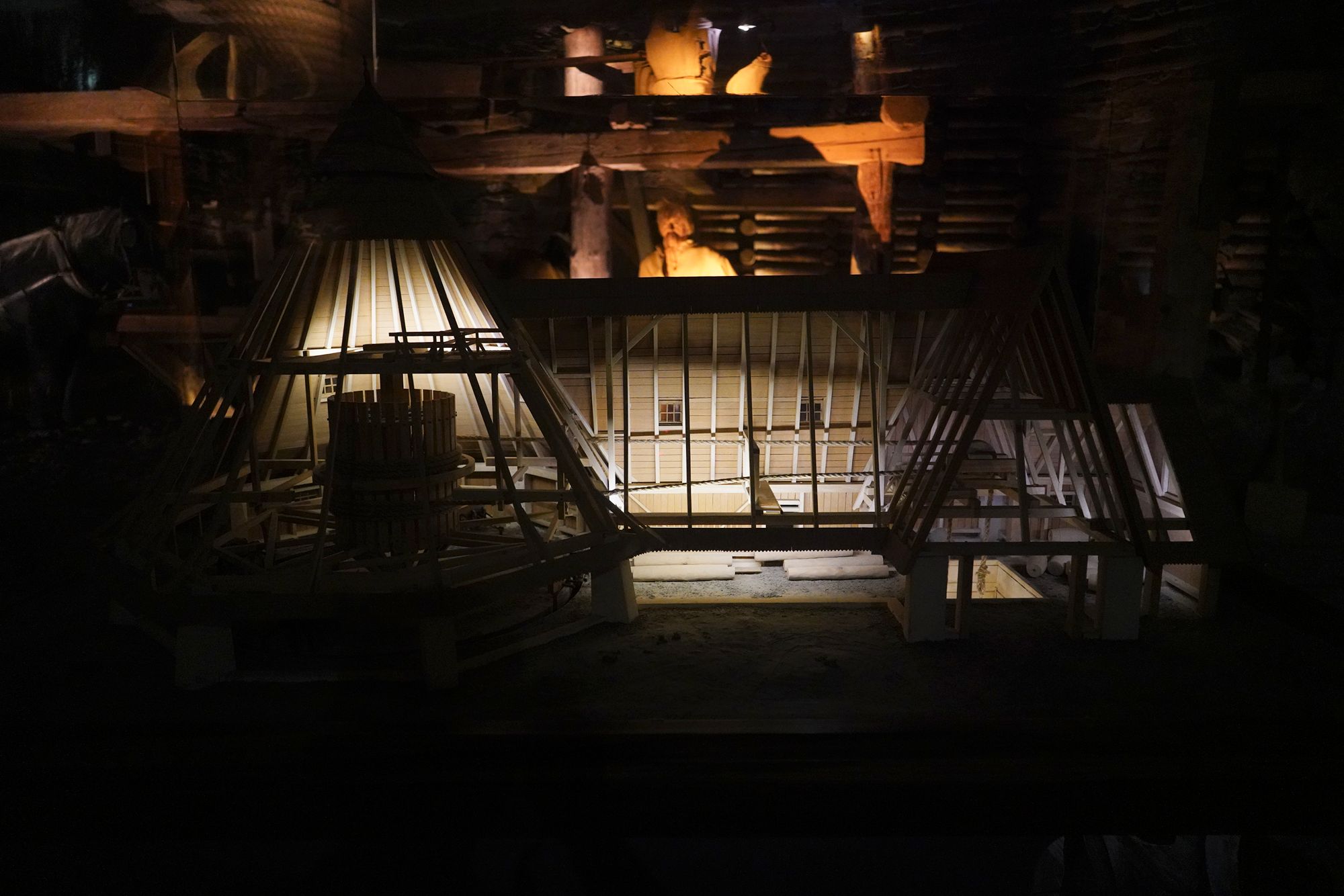
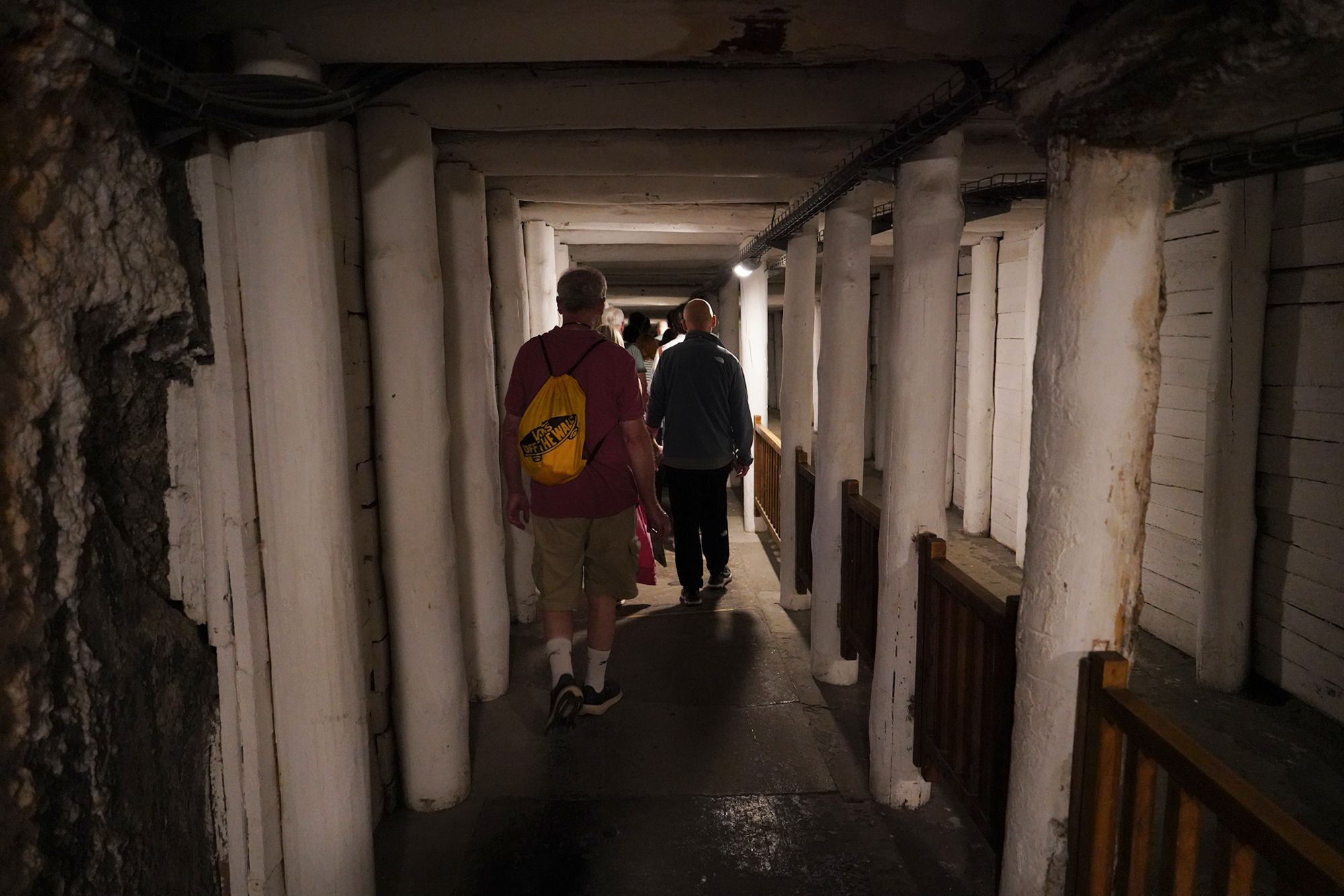
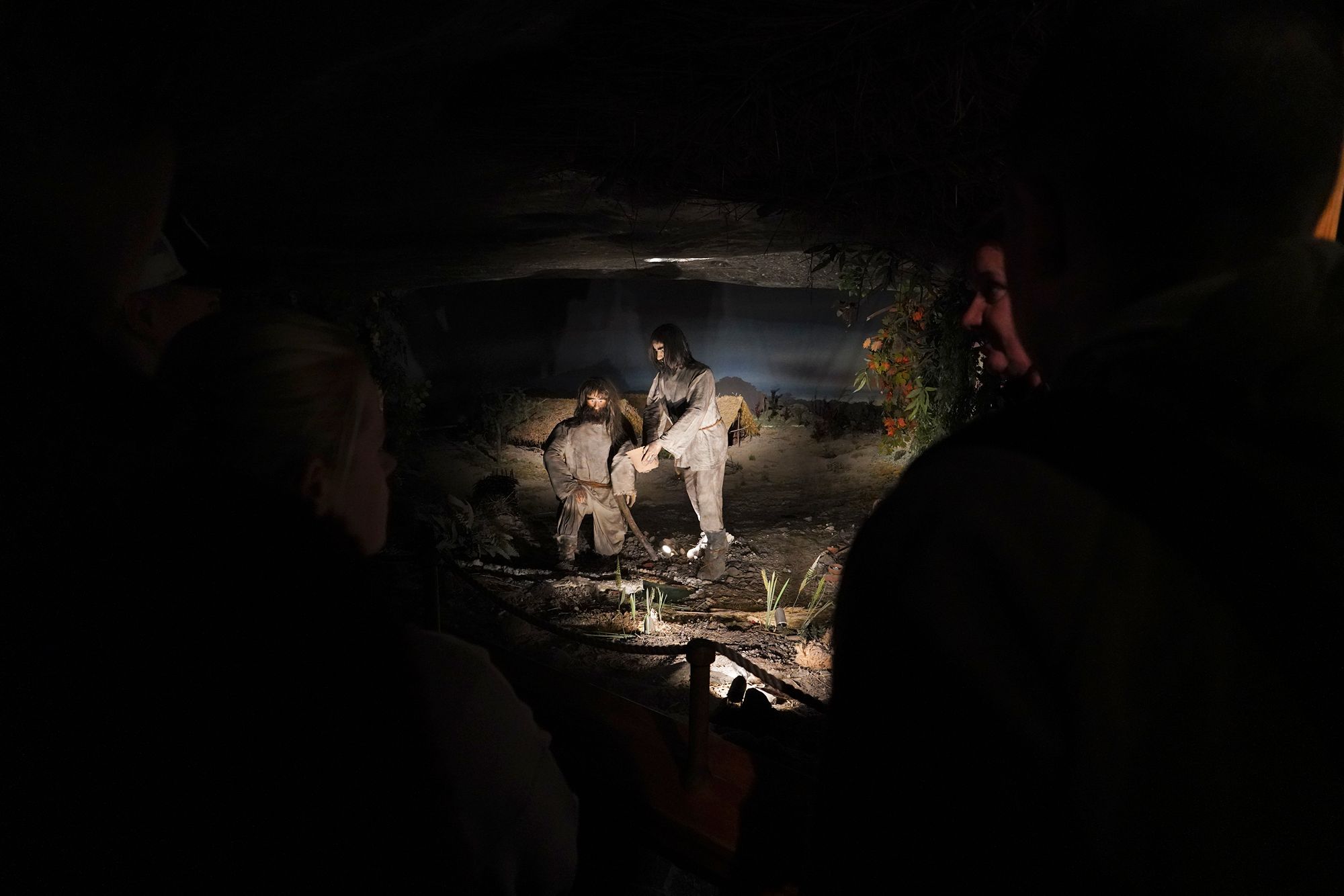
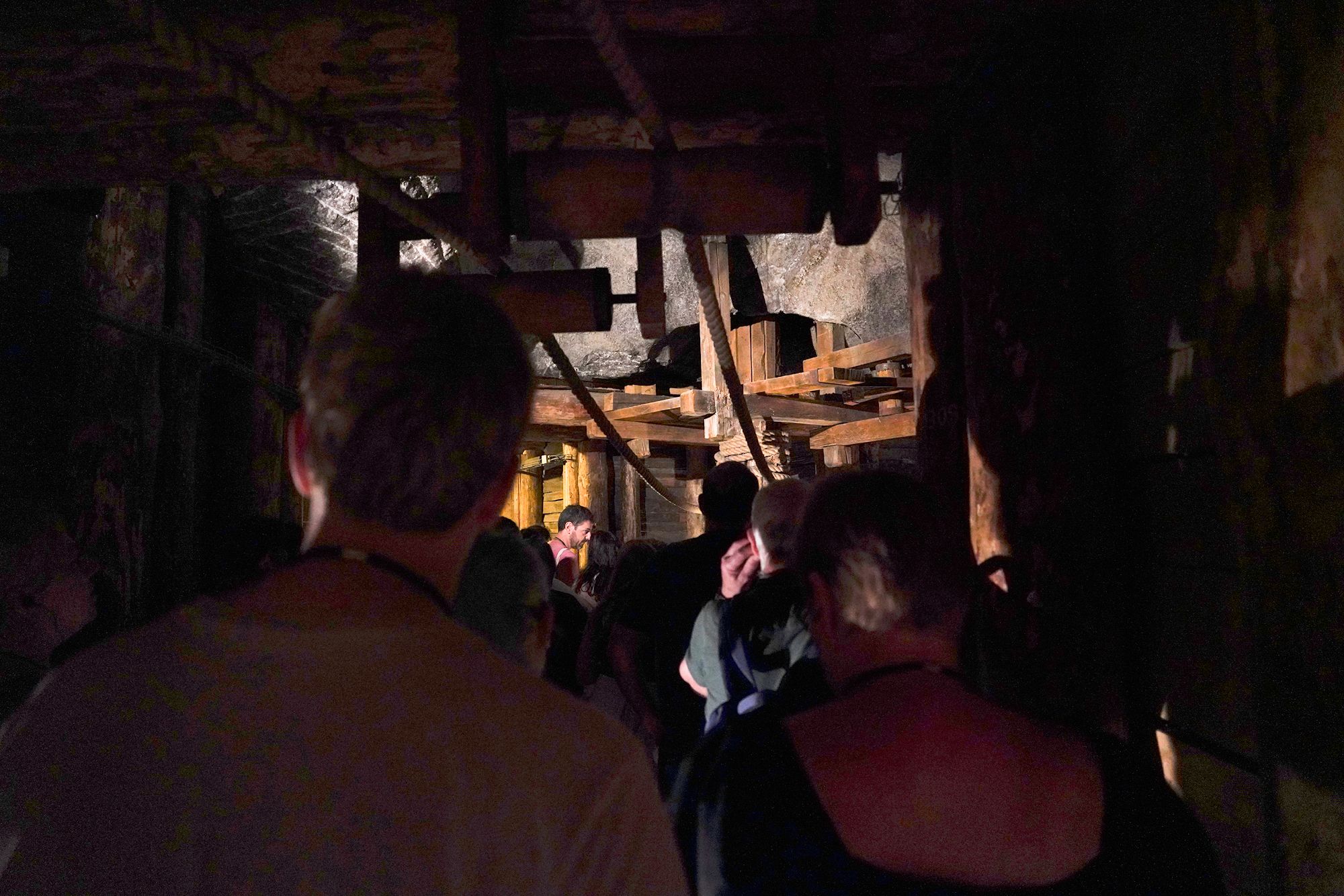
As we walked through the mine, we gradually descended farther underground.
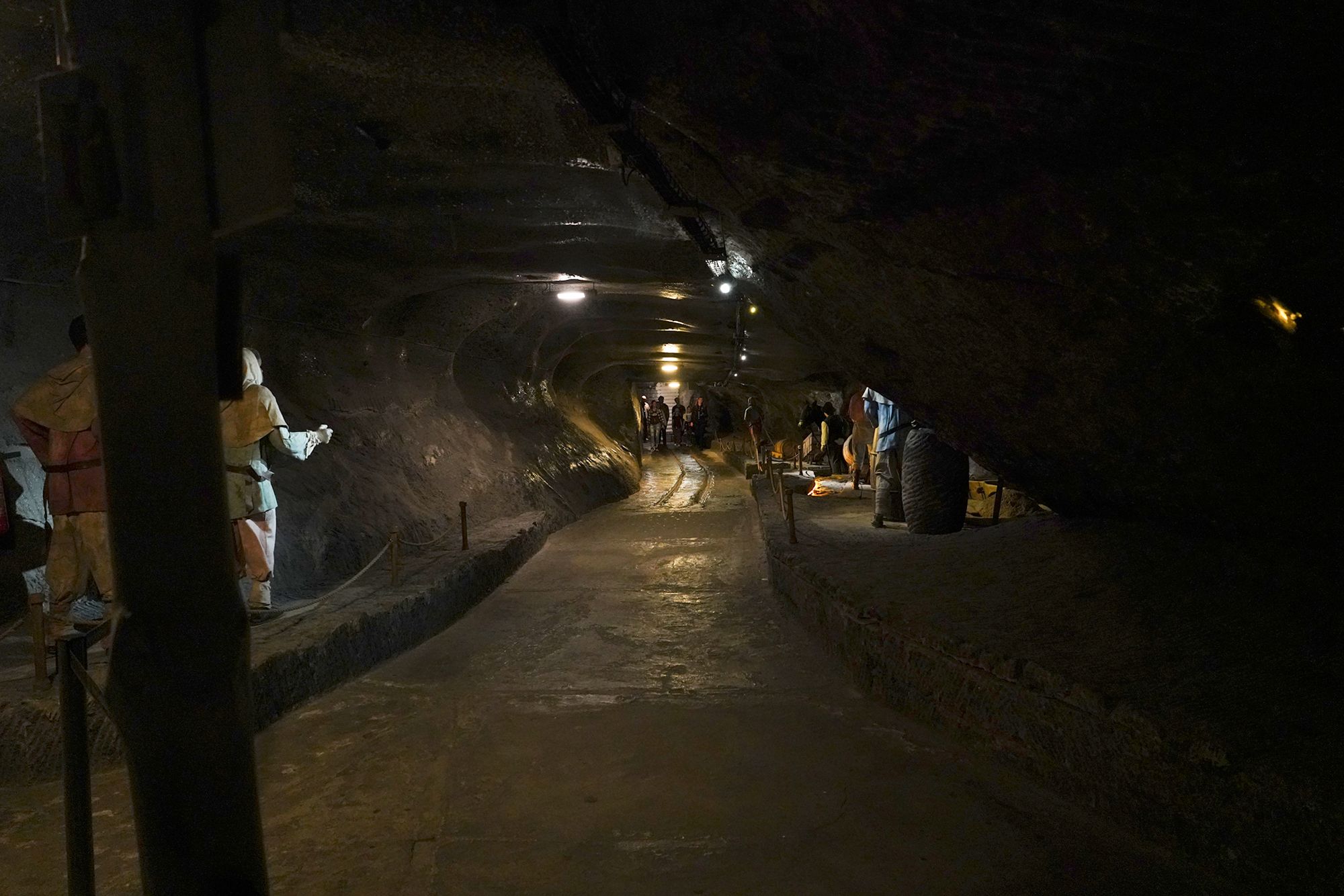
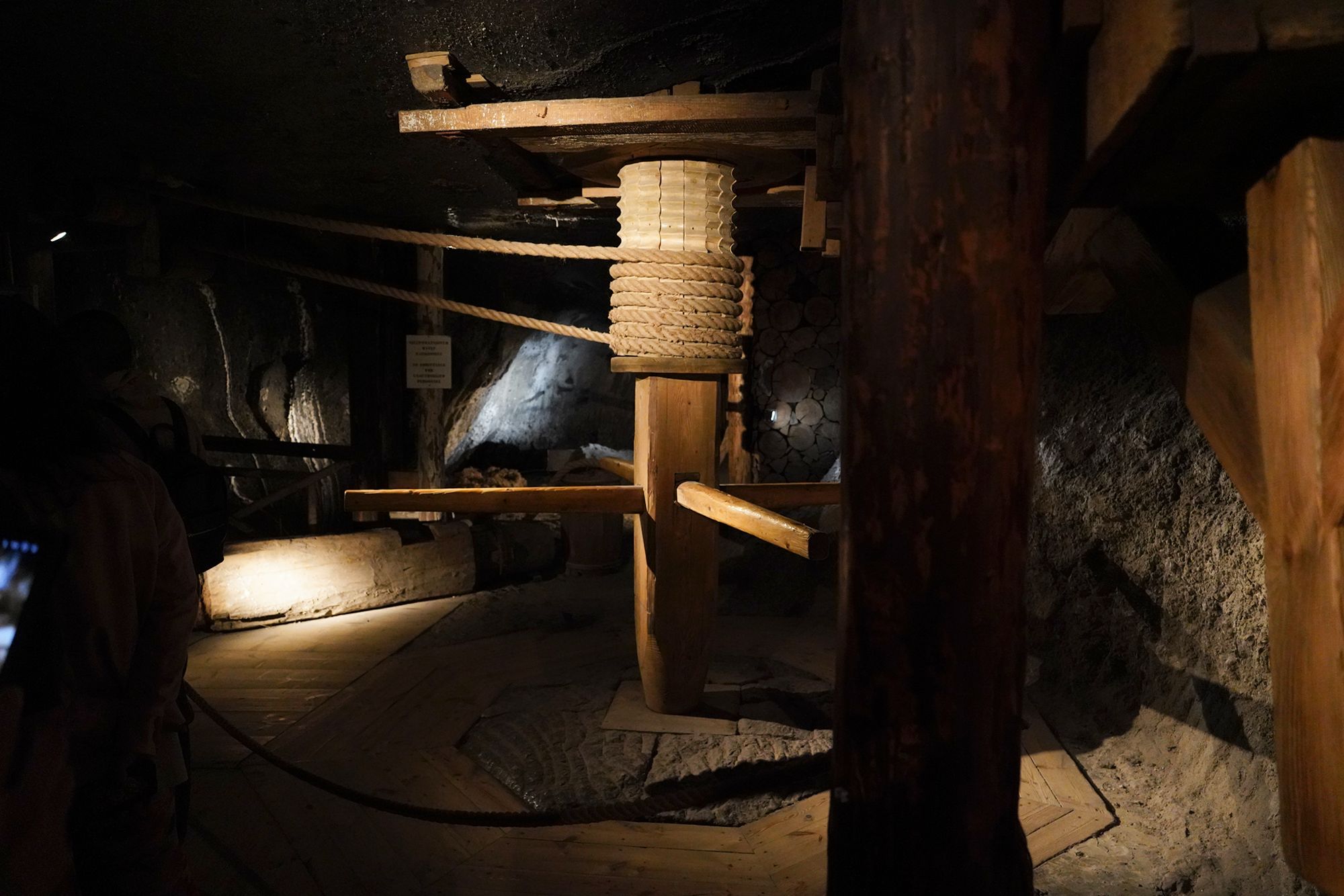
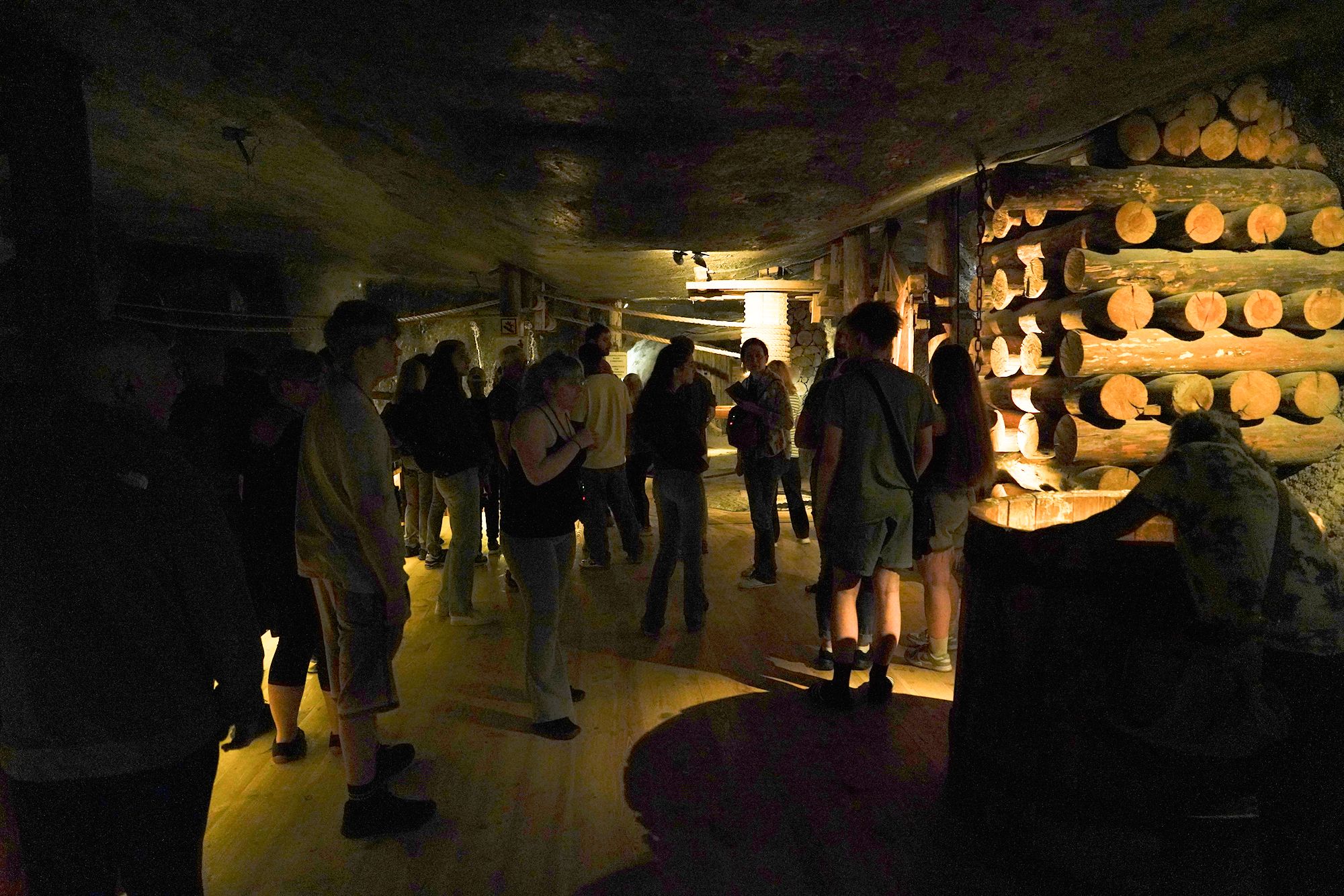
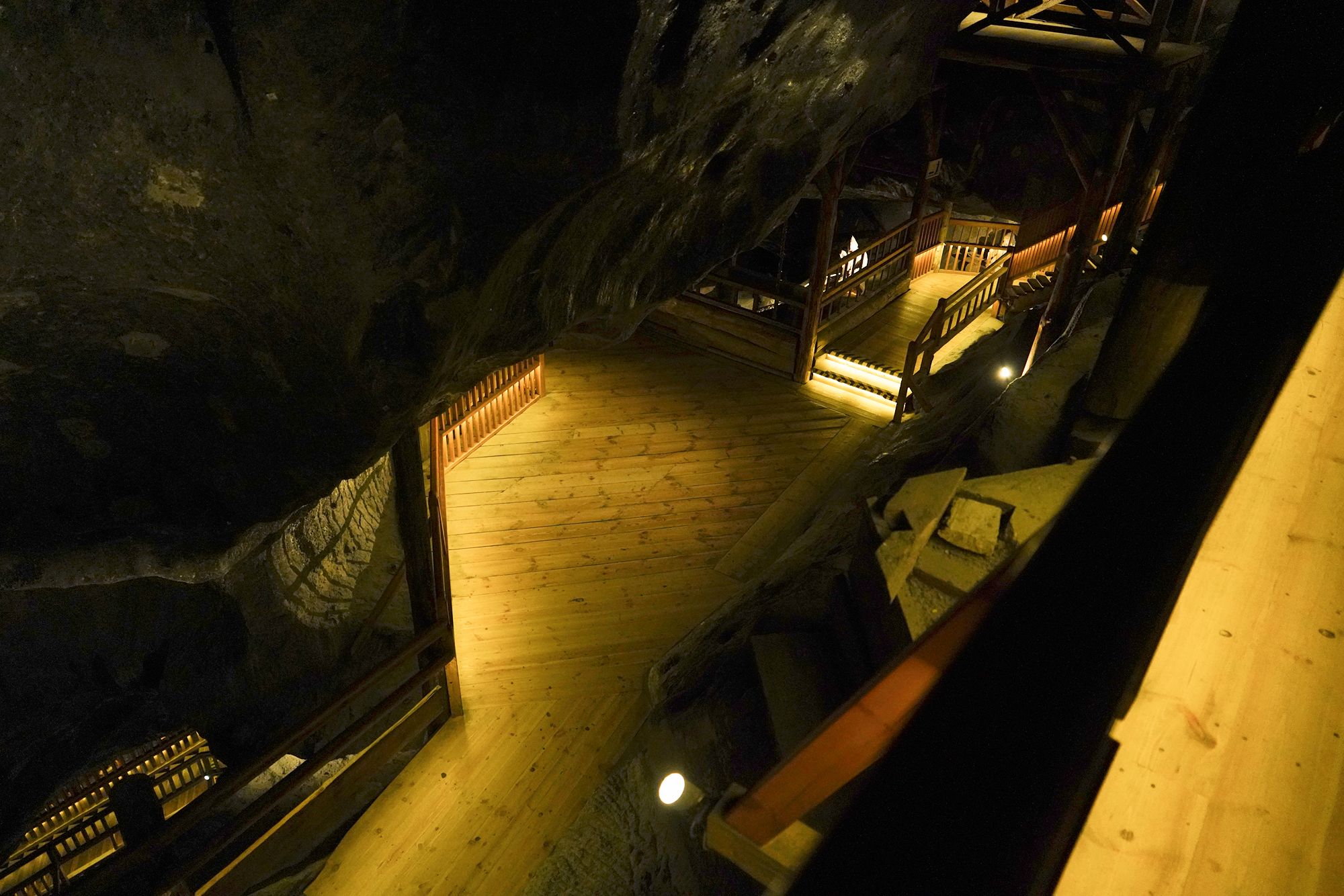
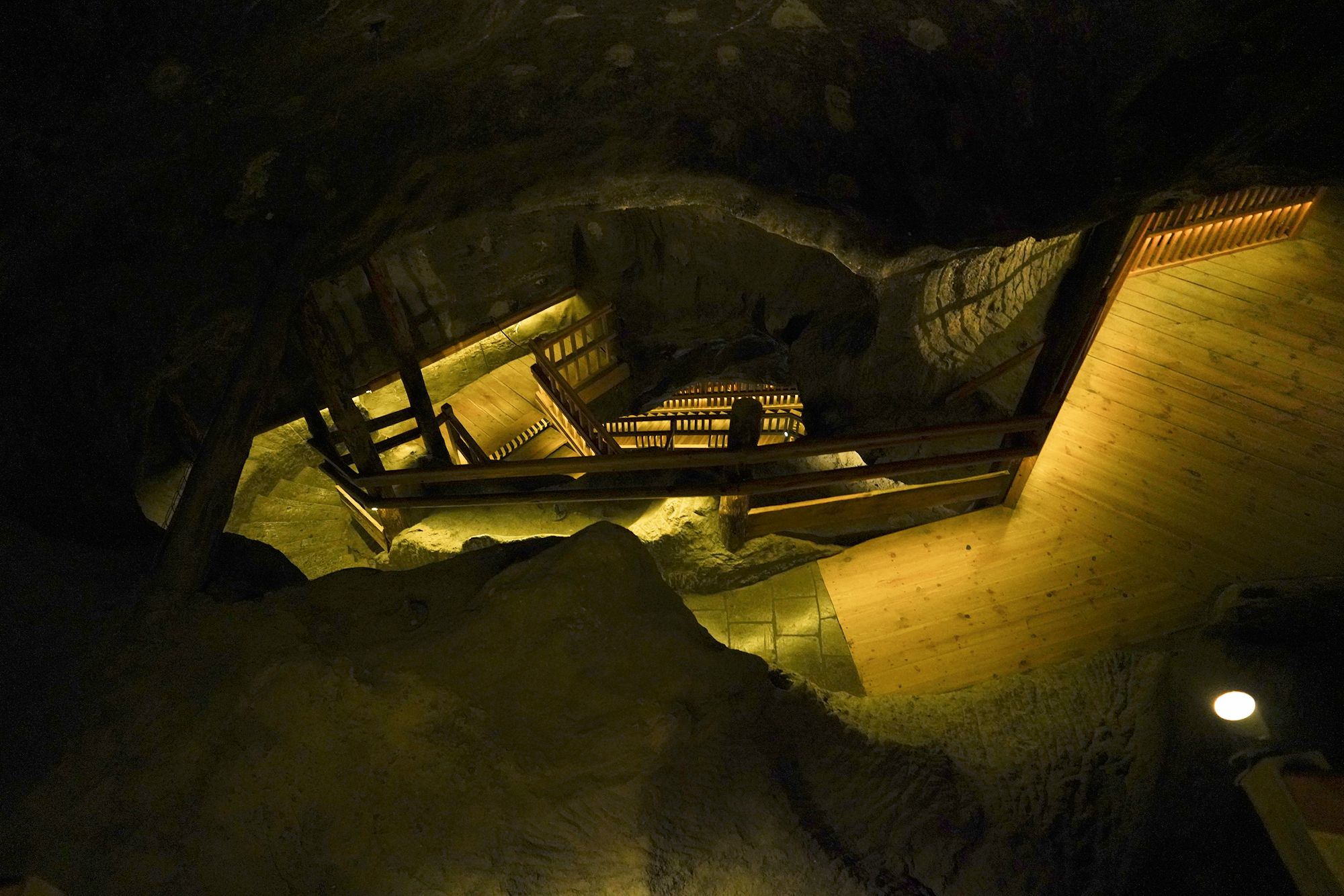
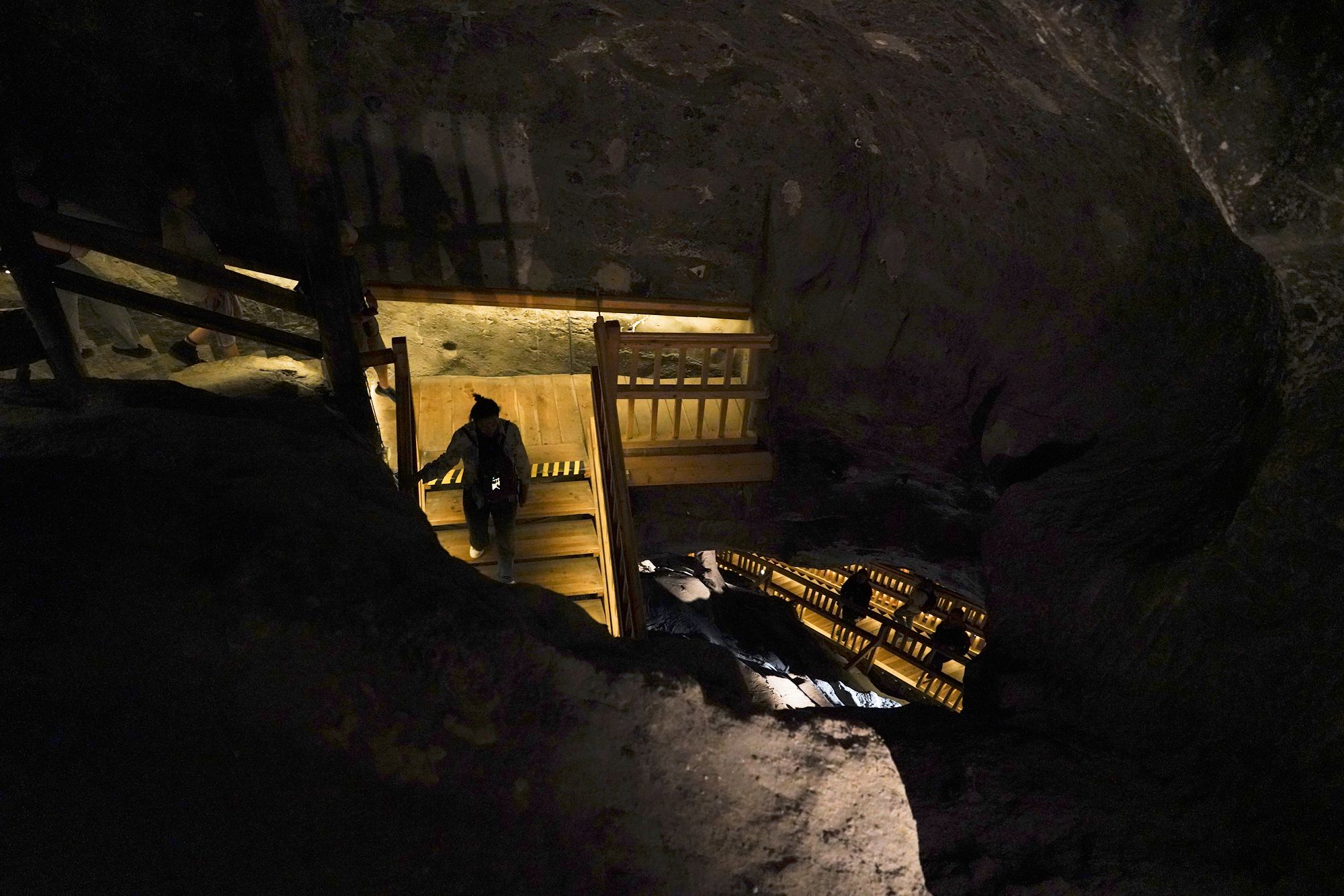
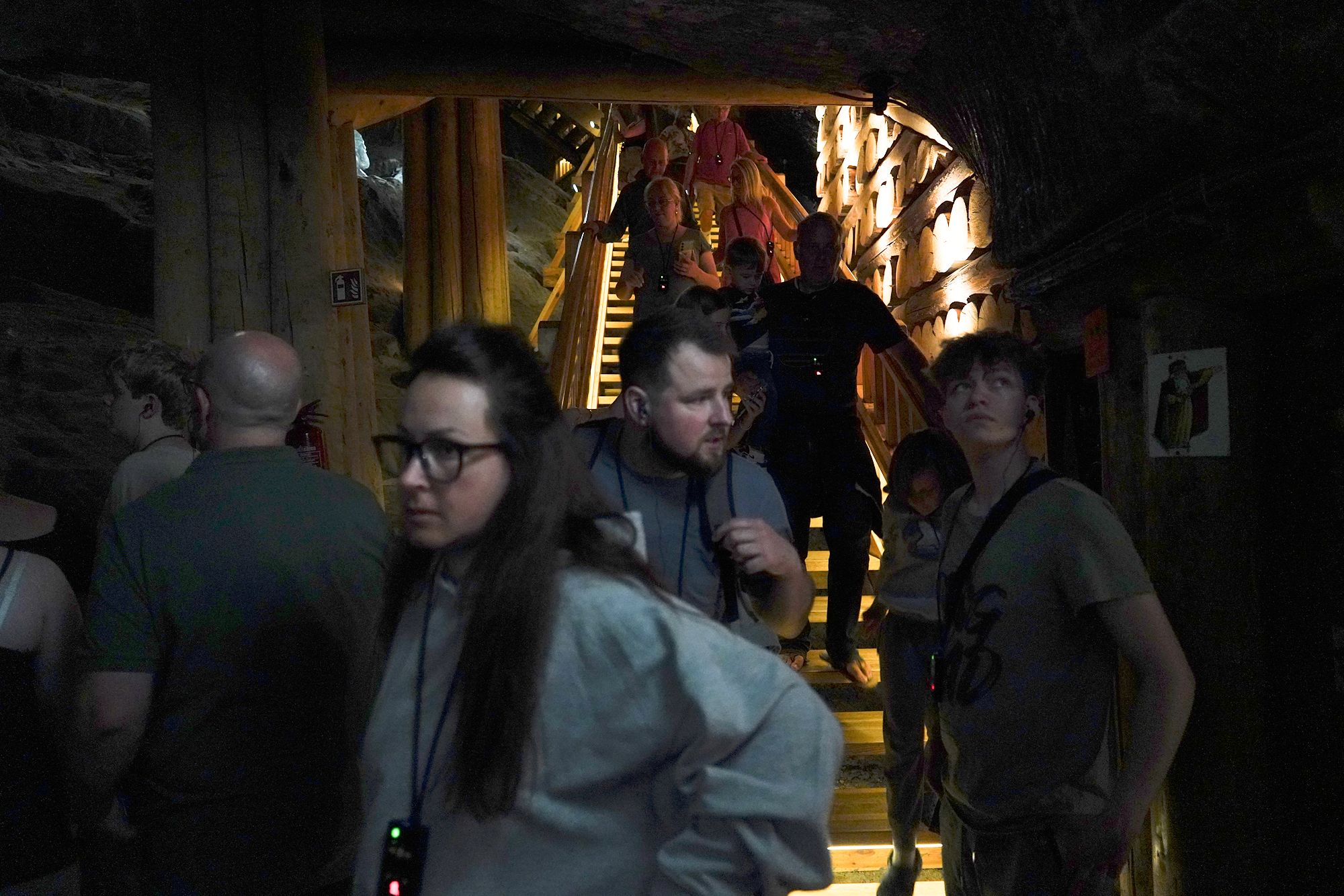
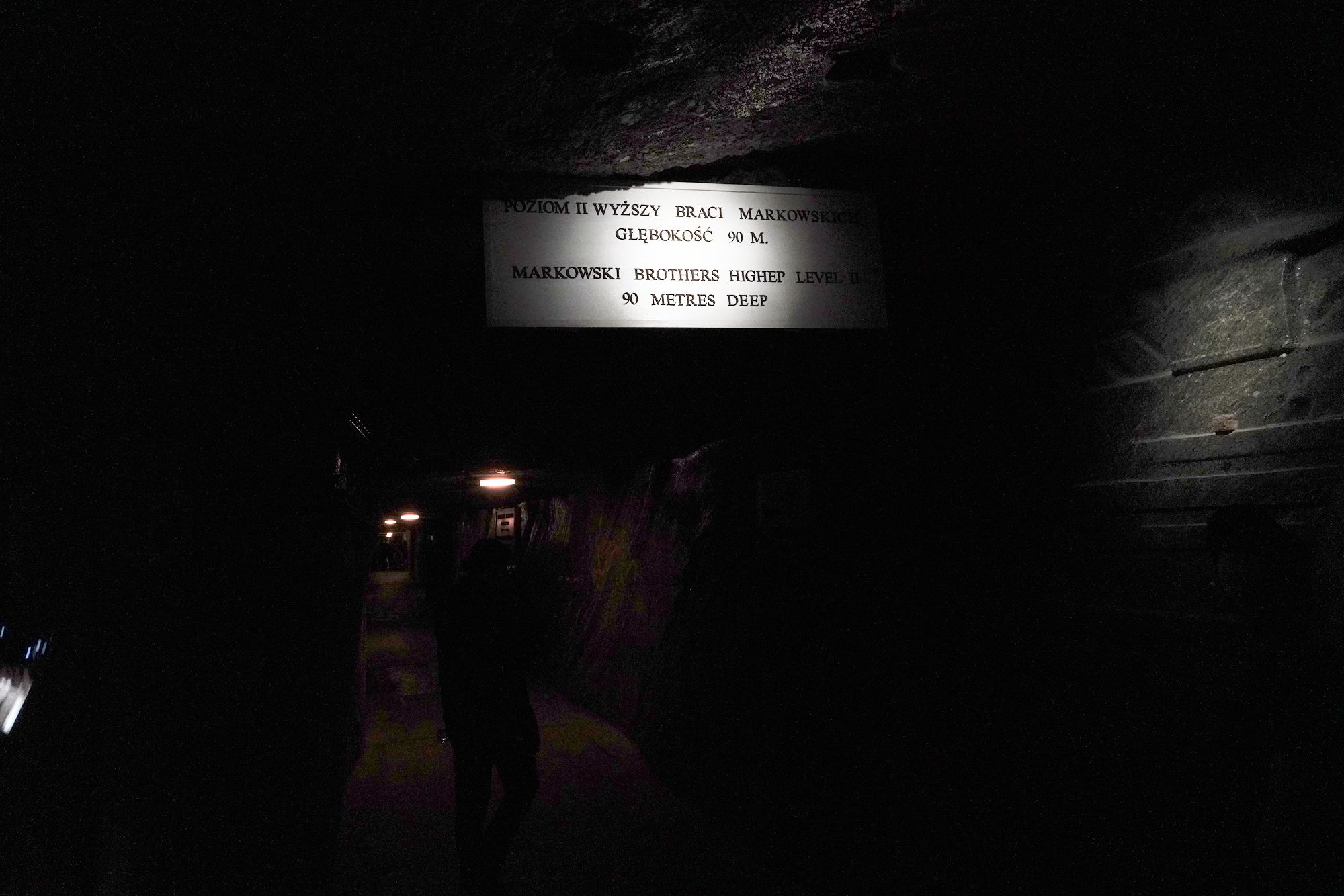
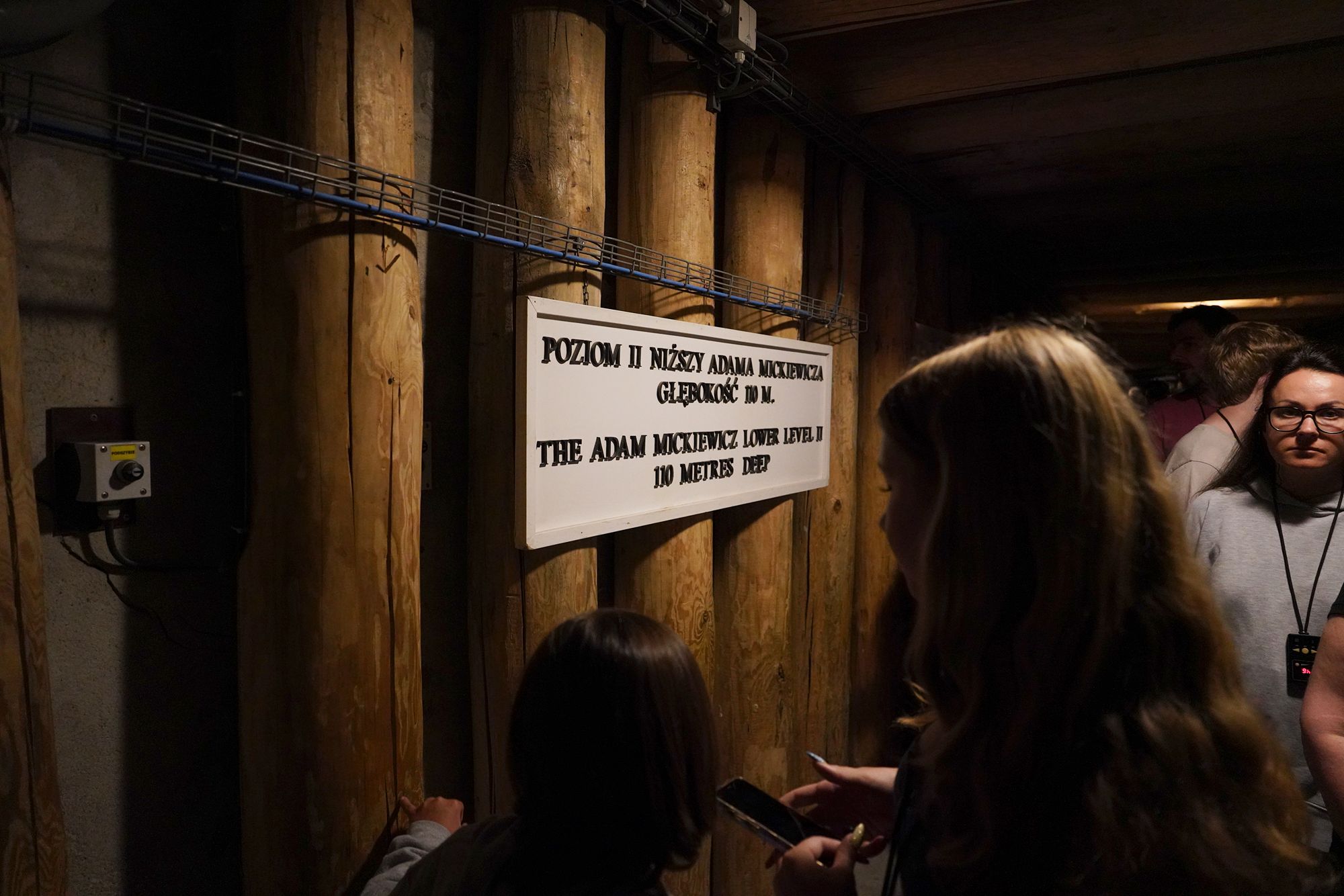
Further along the route, a sign marked the Markowski Brothers’ Level II, 90 metres below the surface.
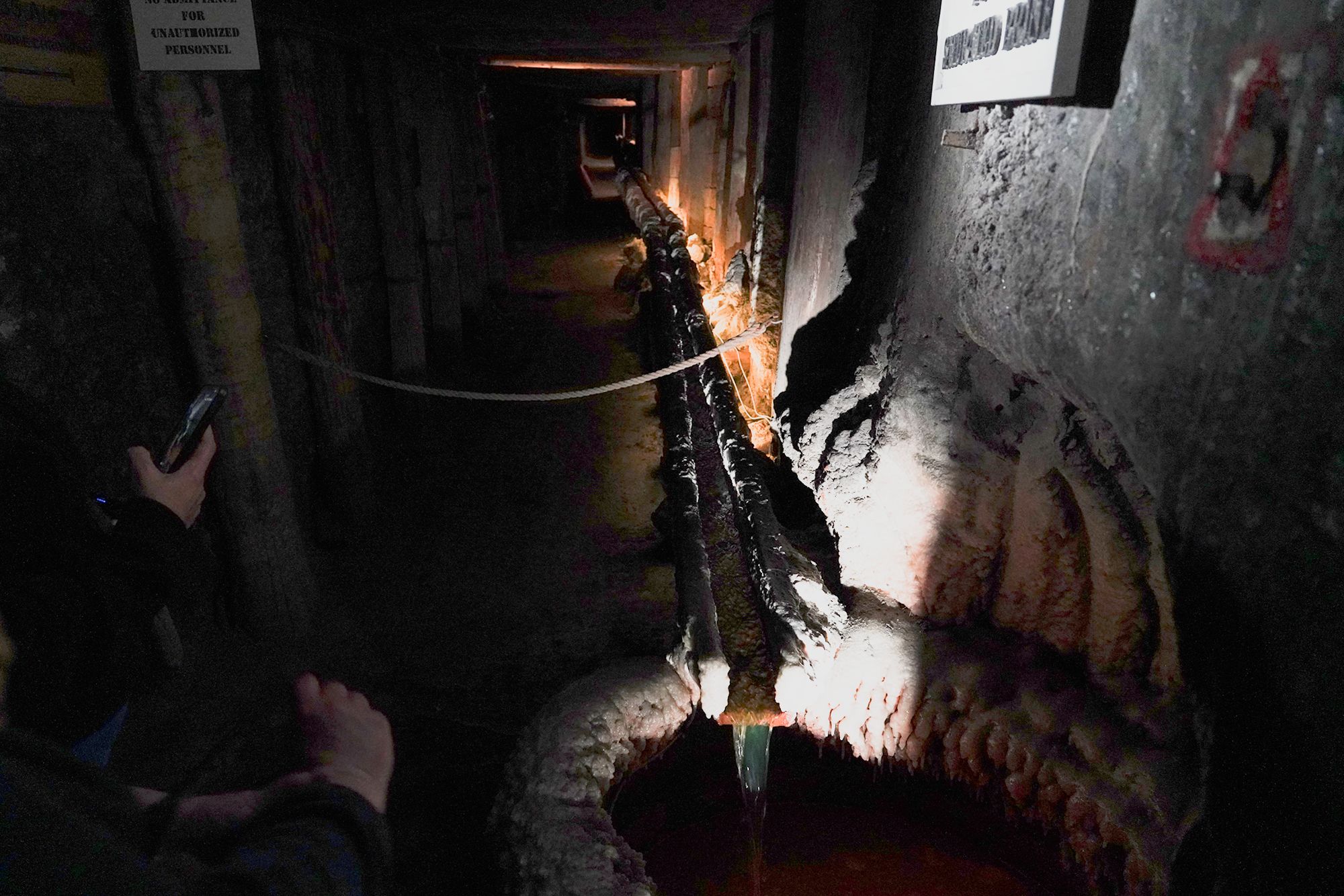
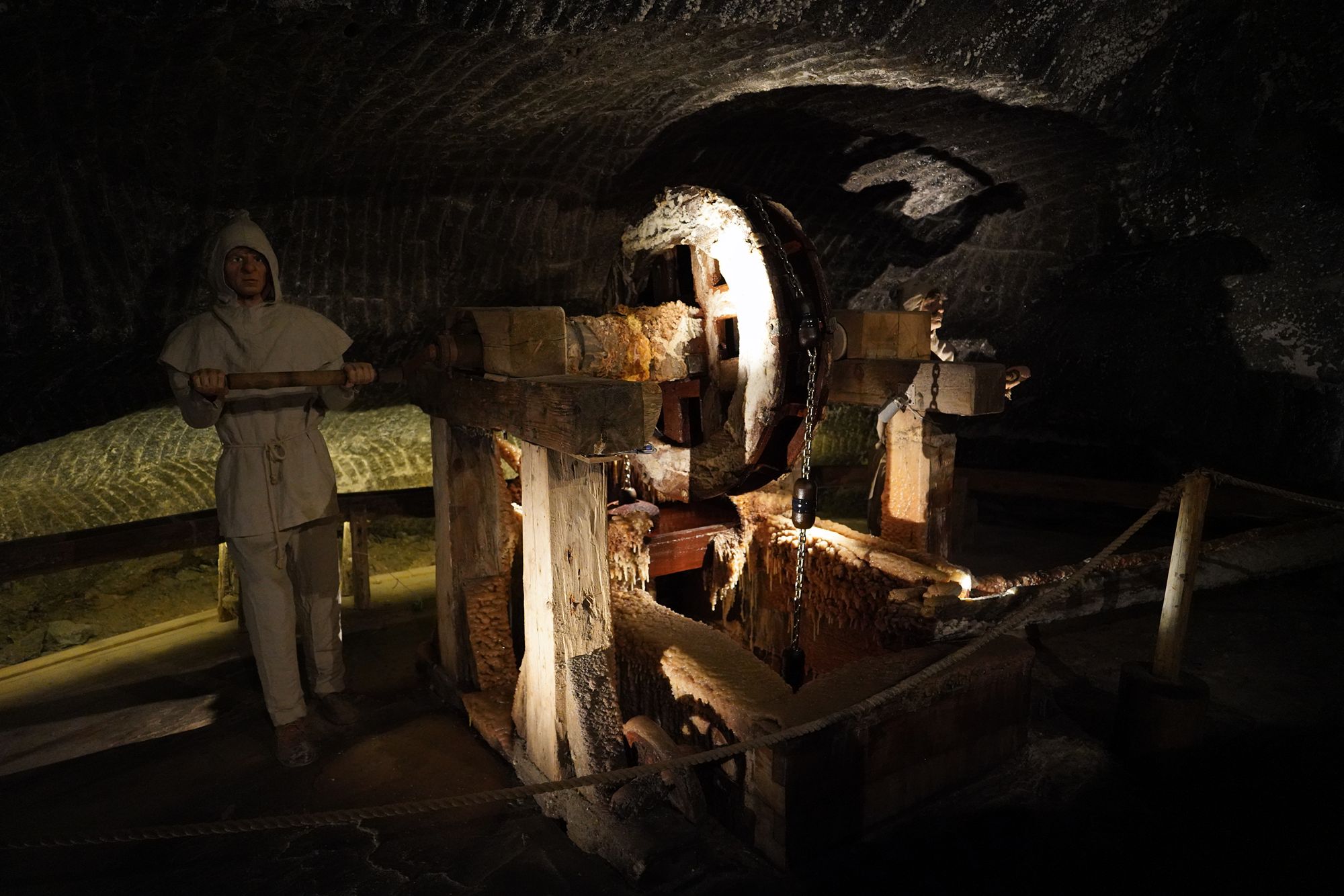
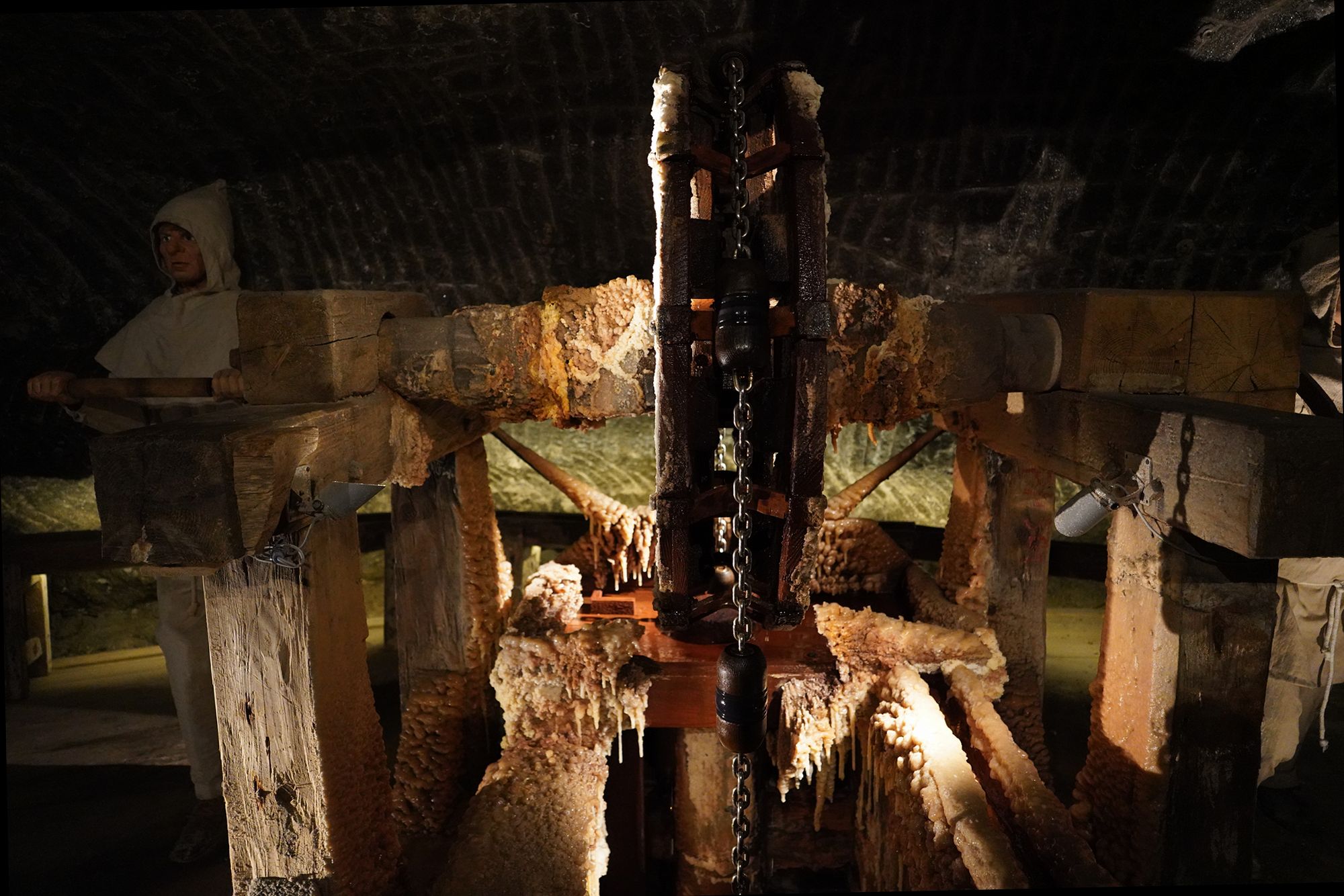
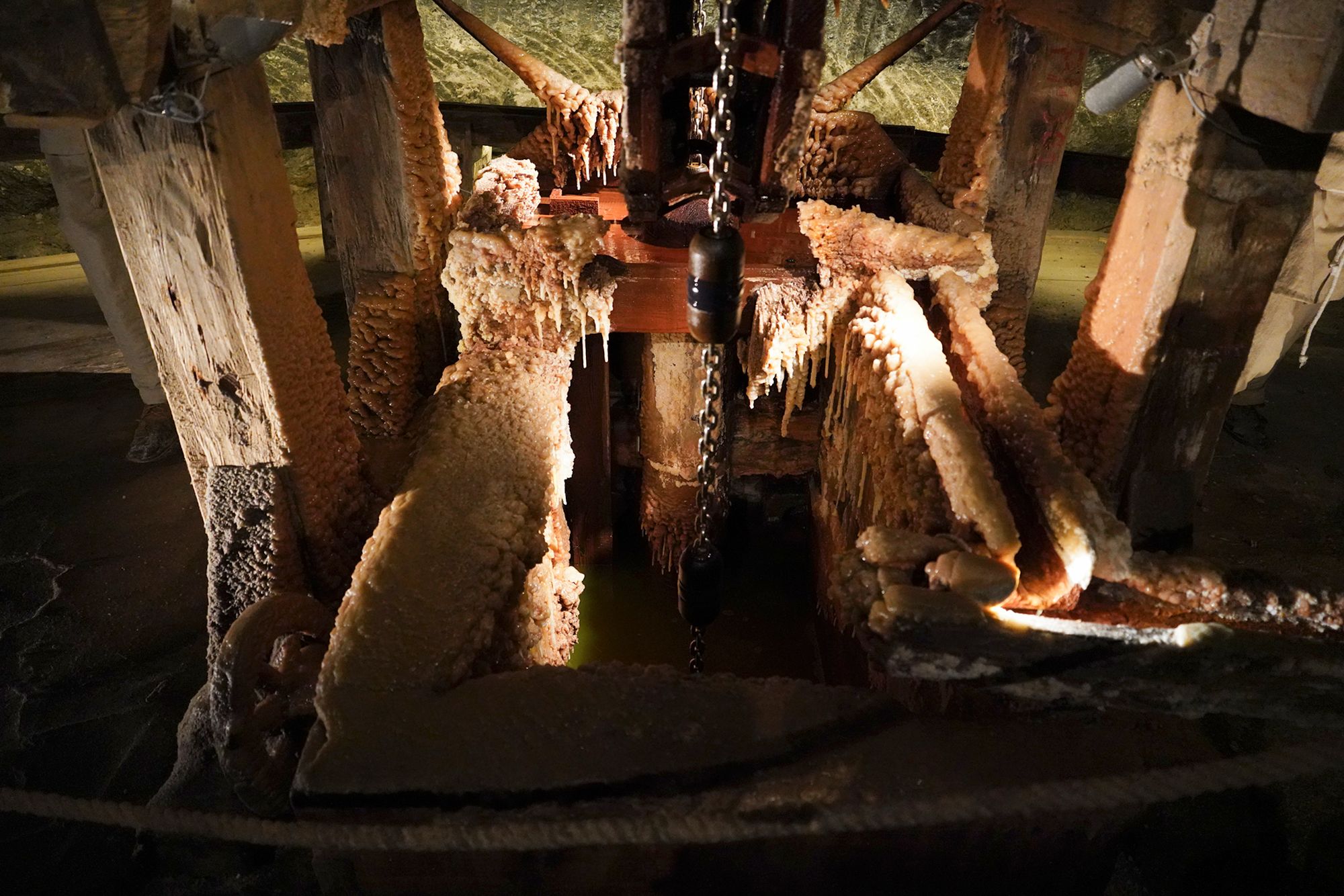
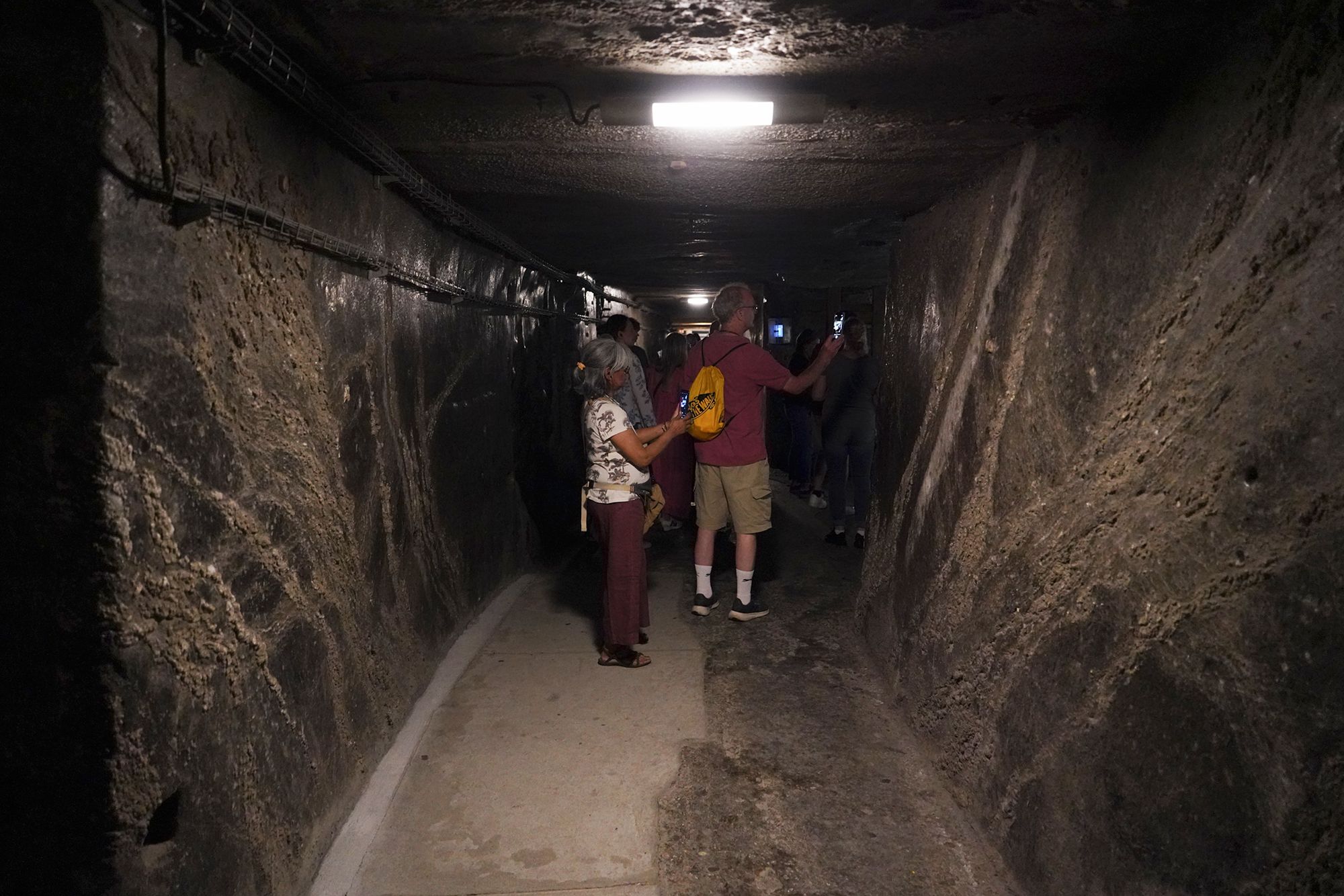
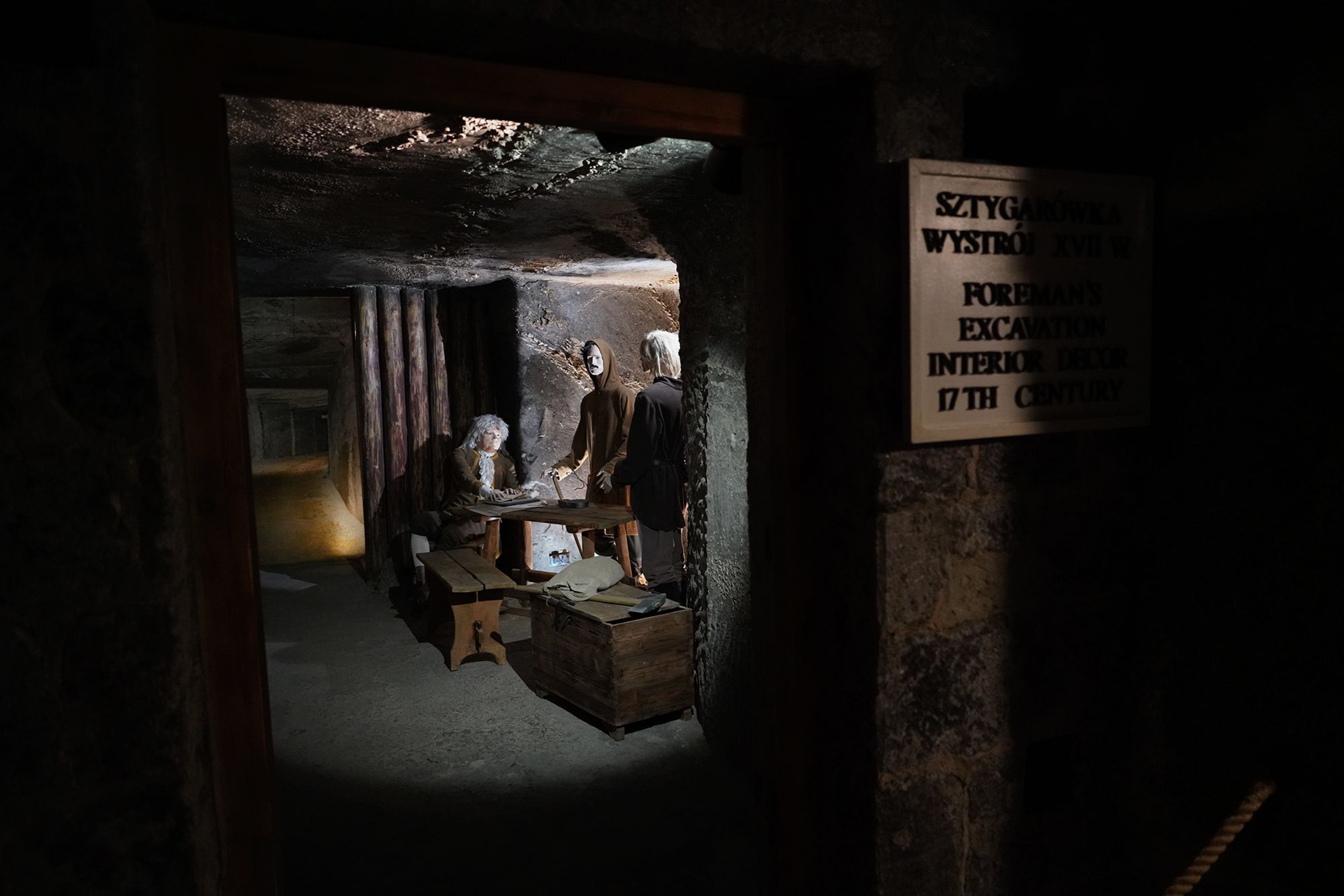
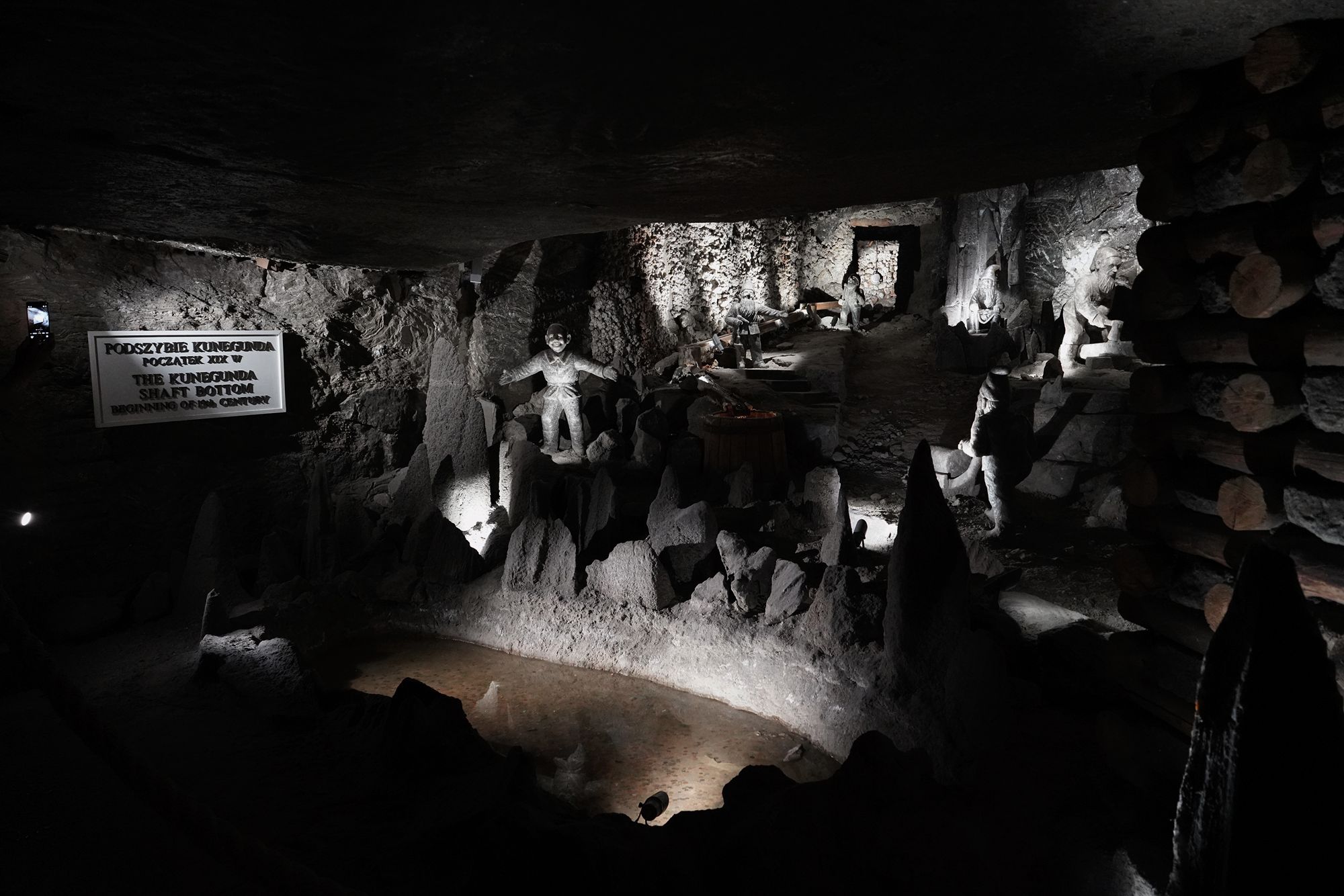
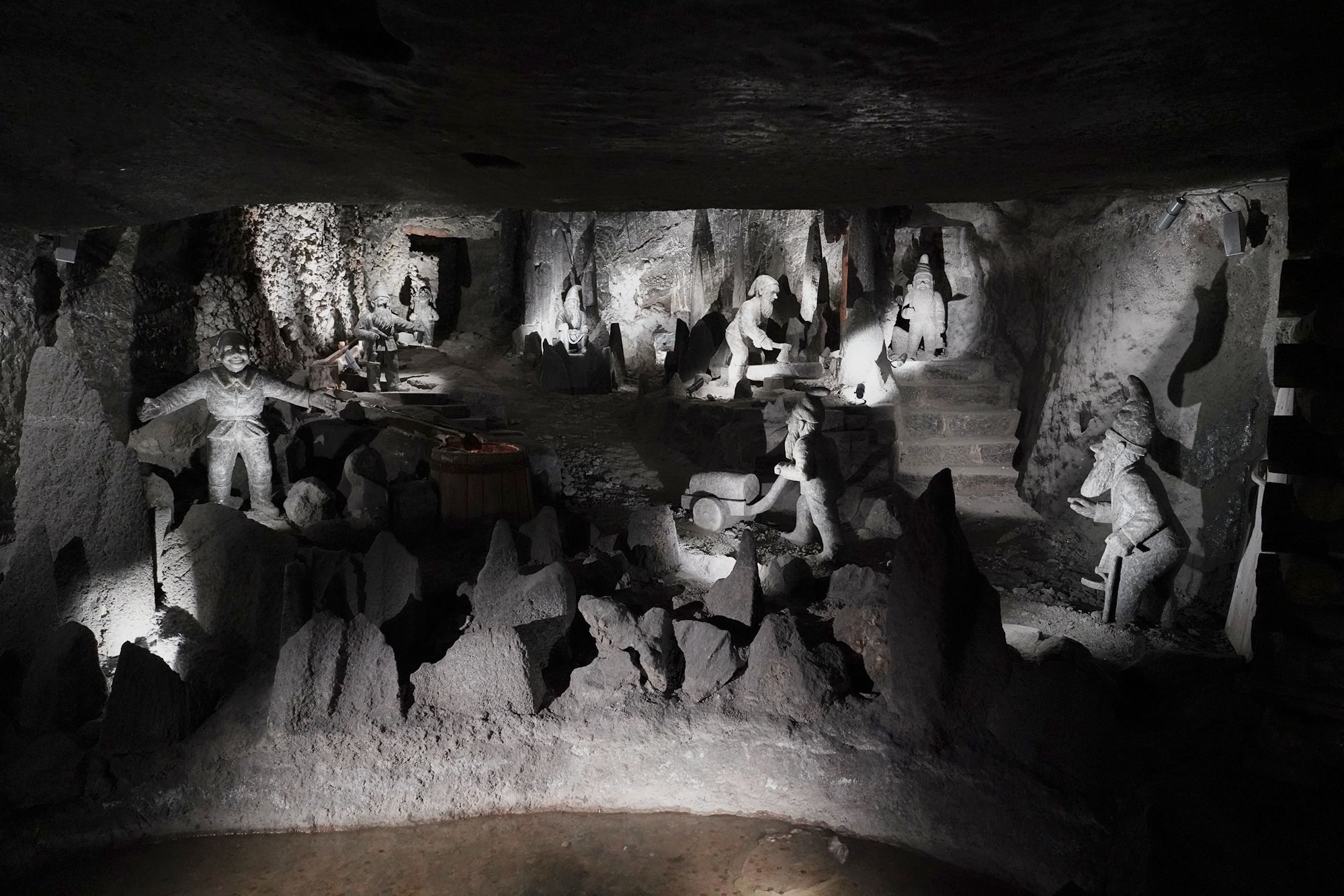
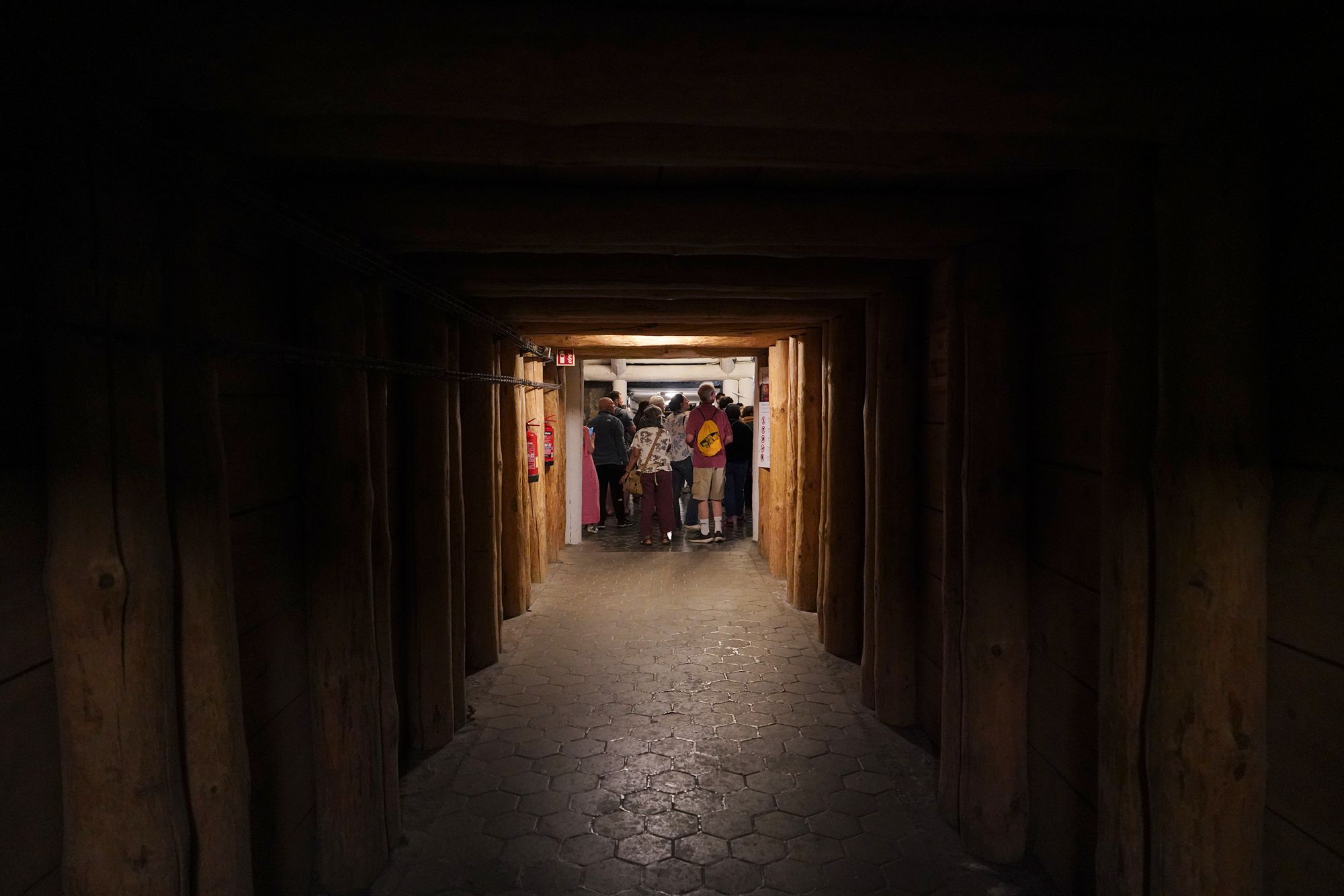
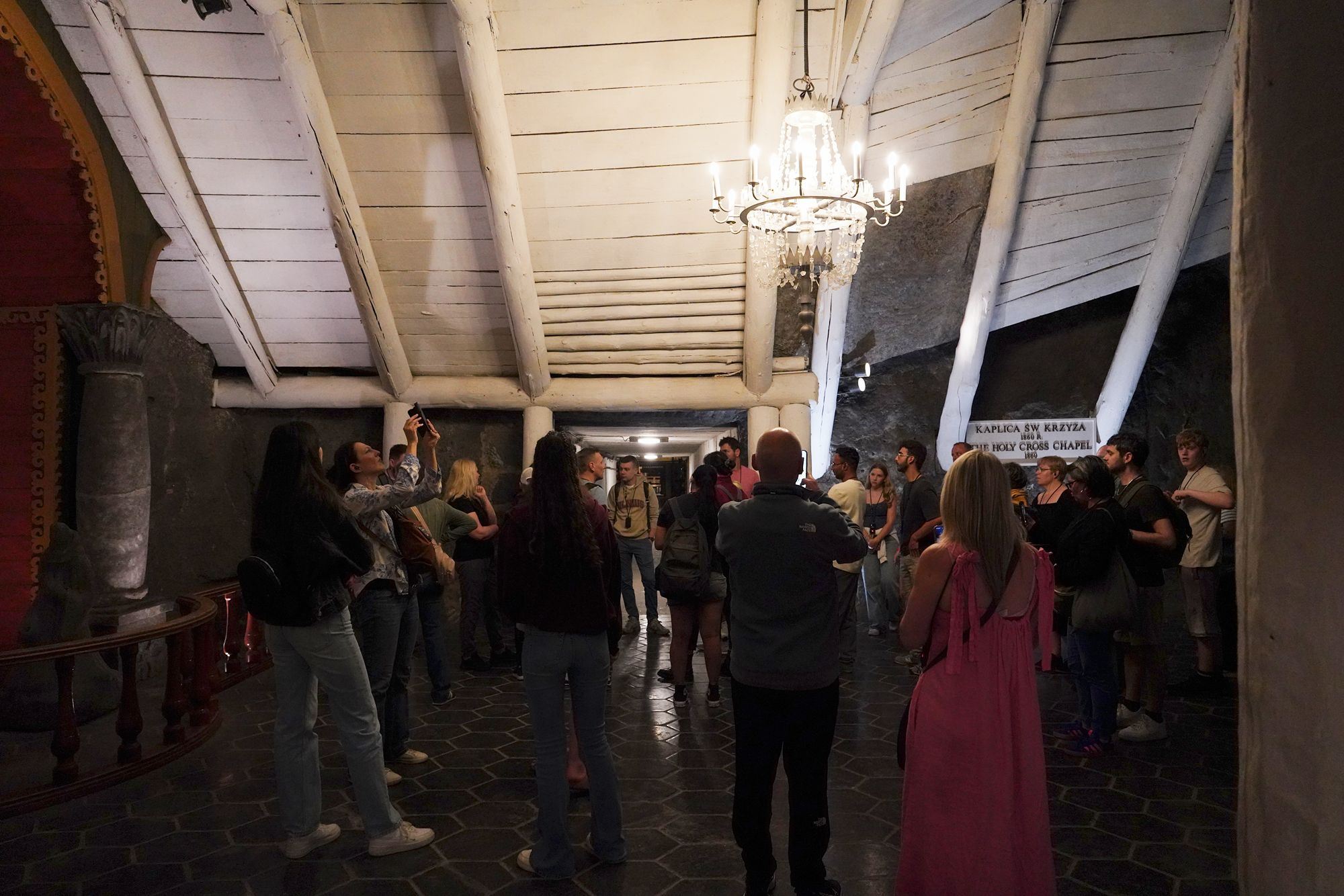
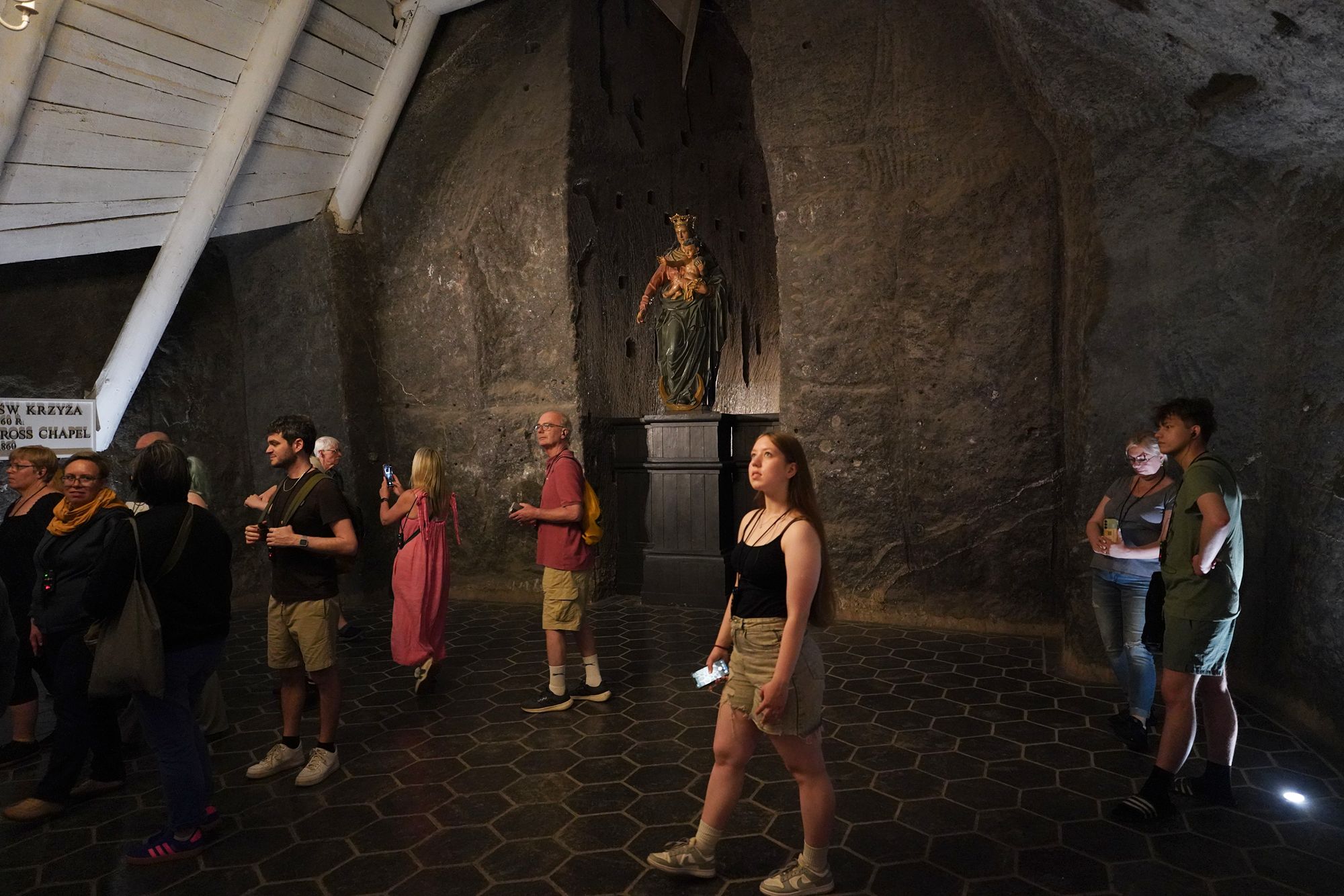
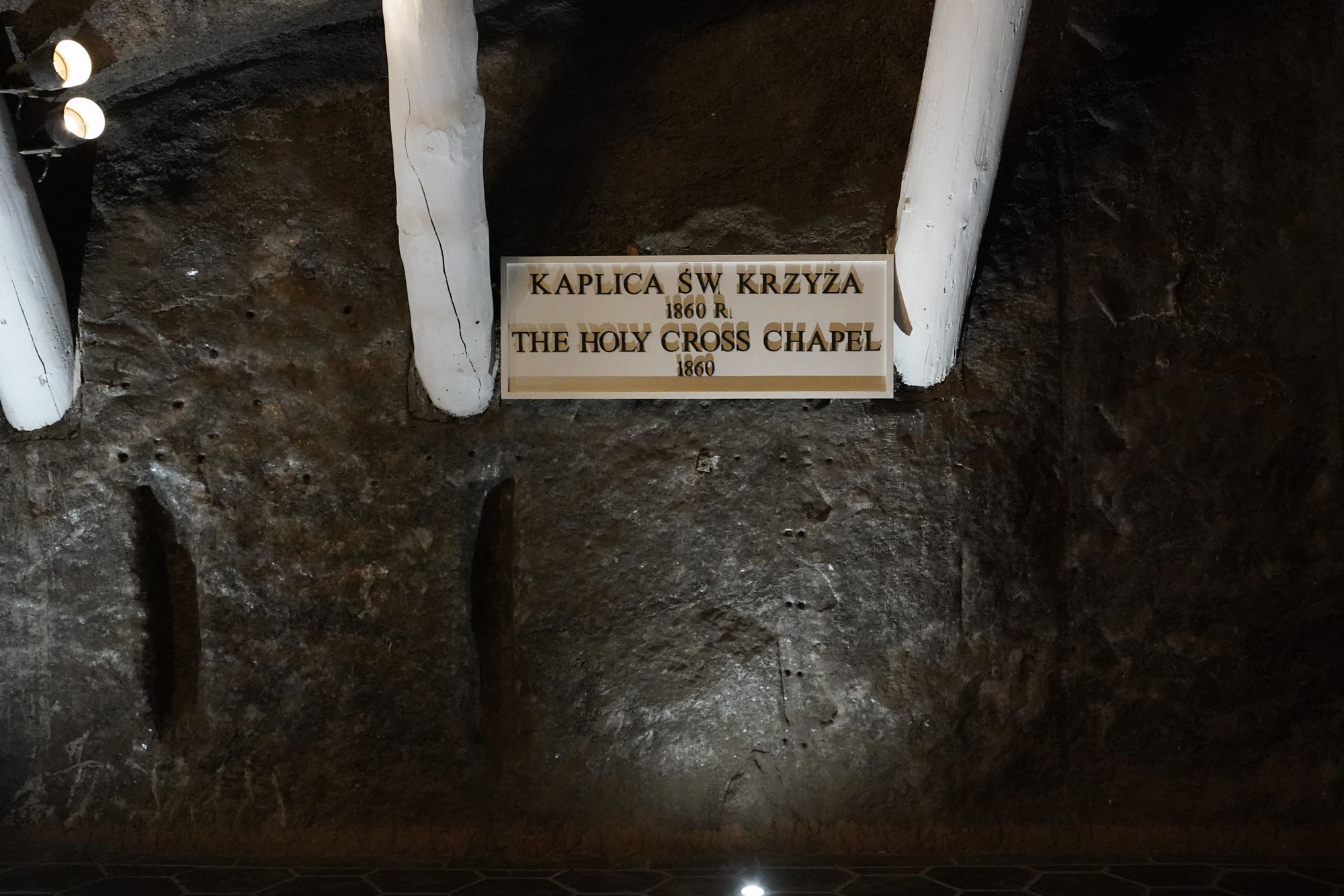
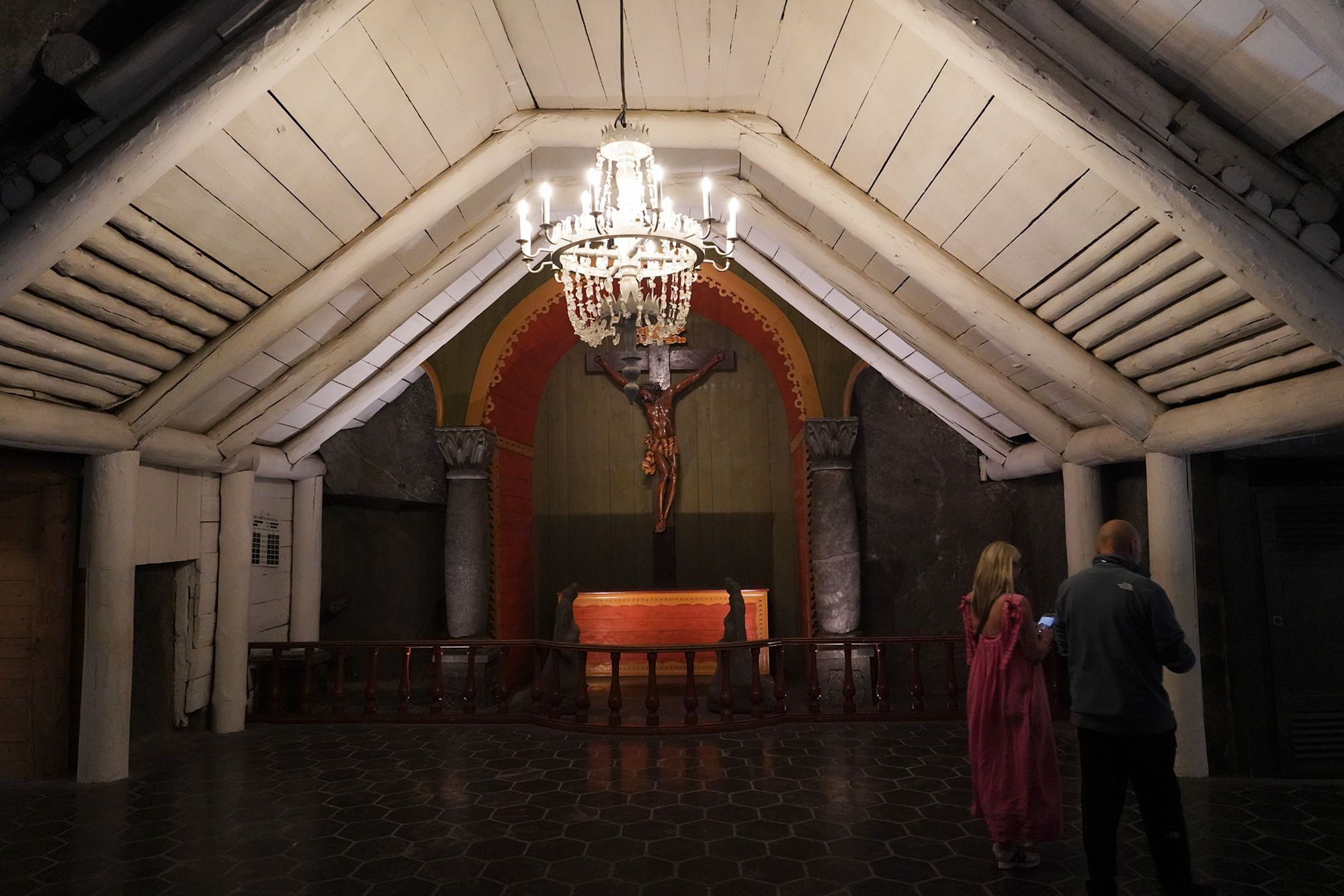
We passed the Holy Cross Chapel, dated 1860, along the underground route.
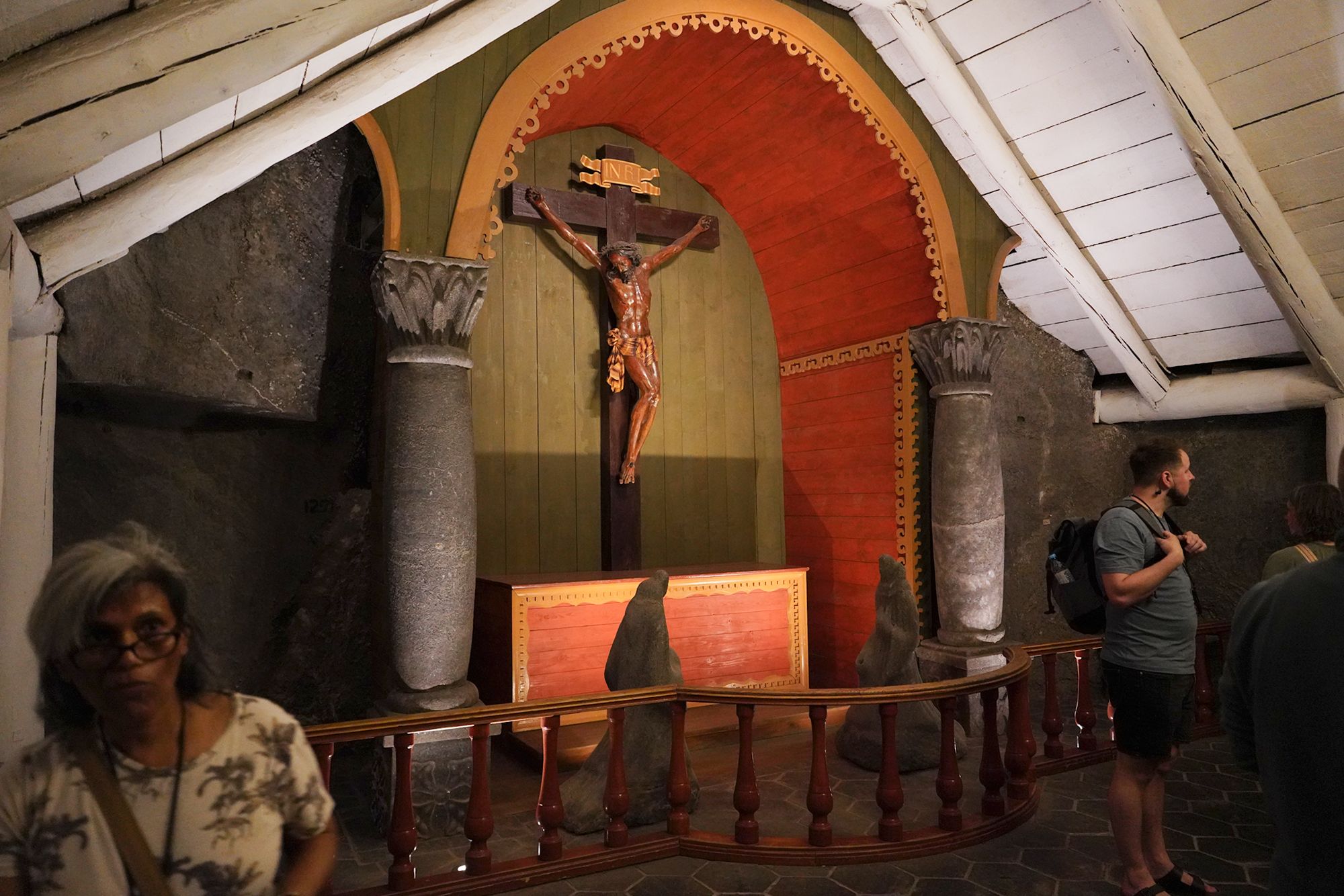
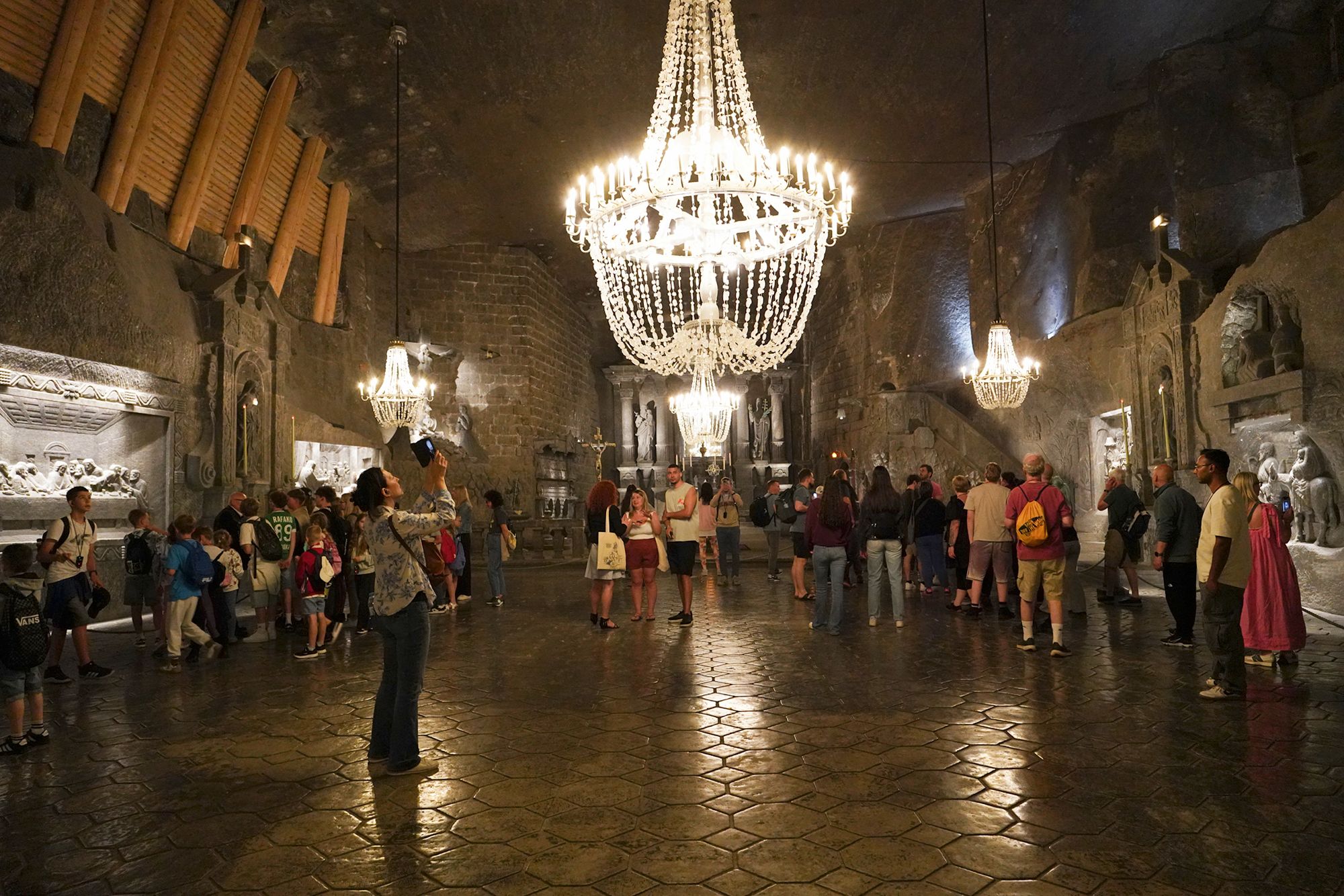
This was the highlight of my visit to the salt mine.
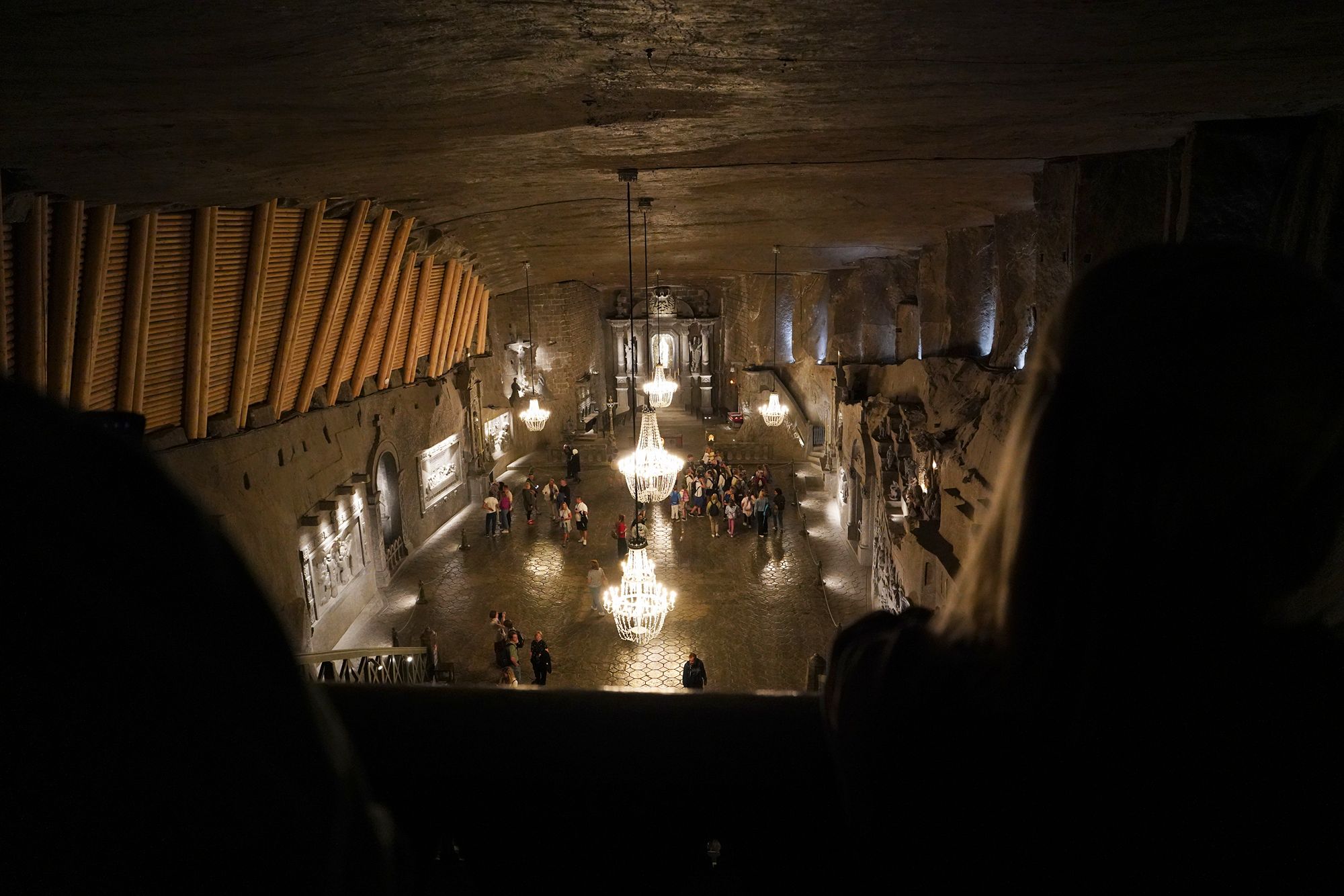
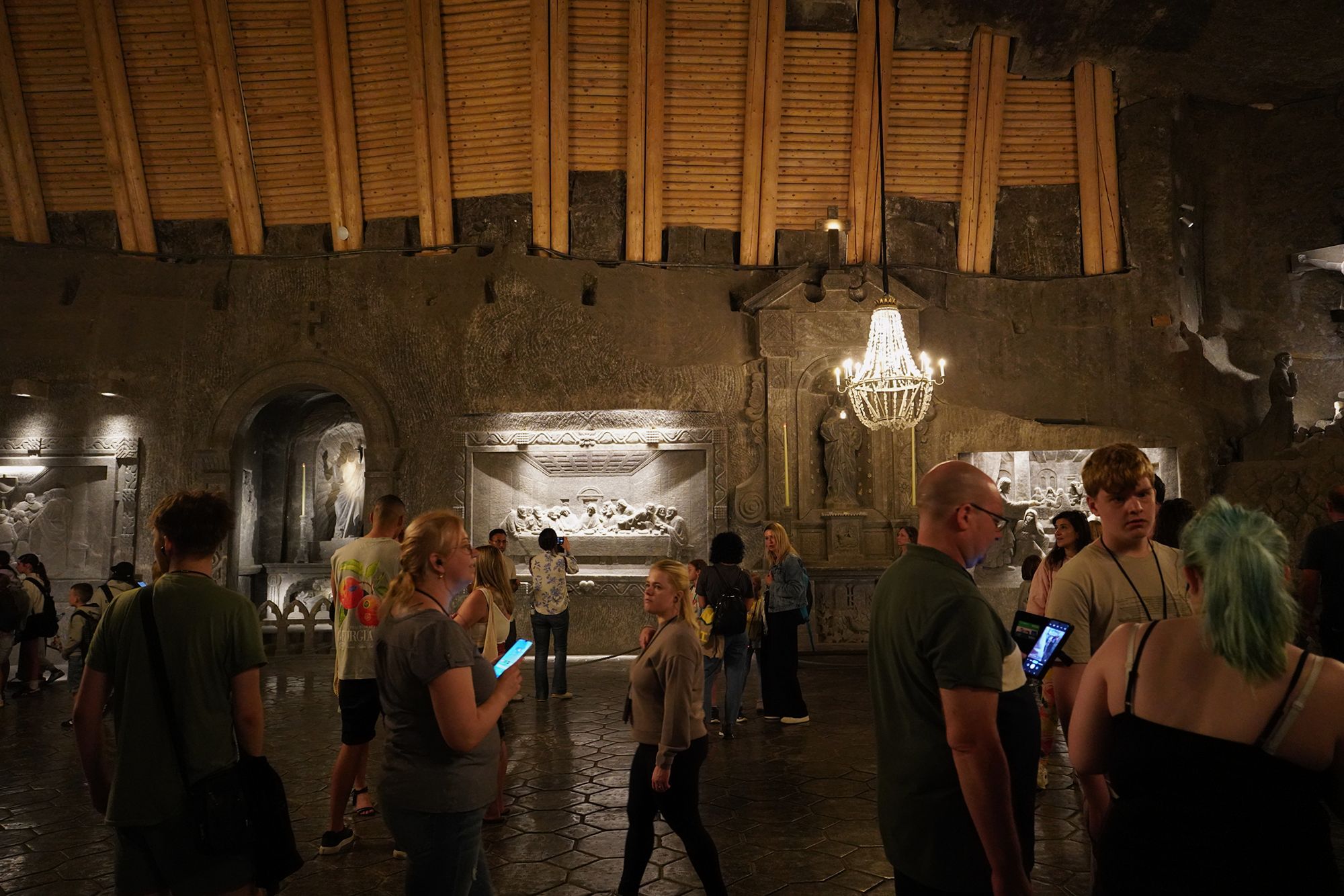
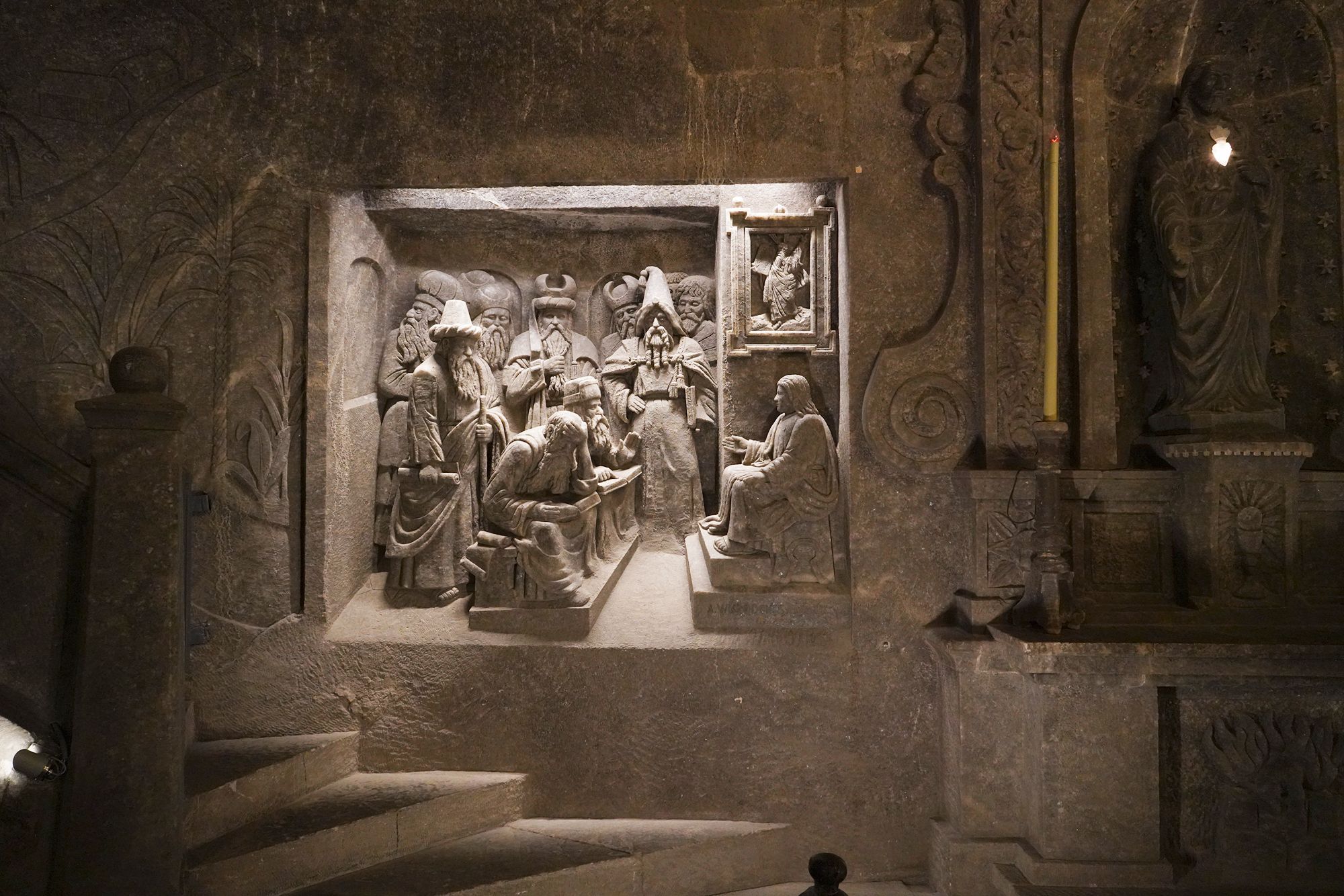
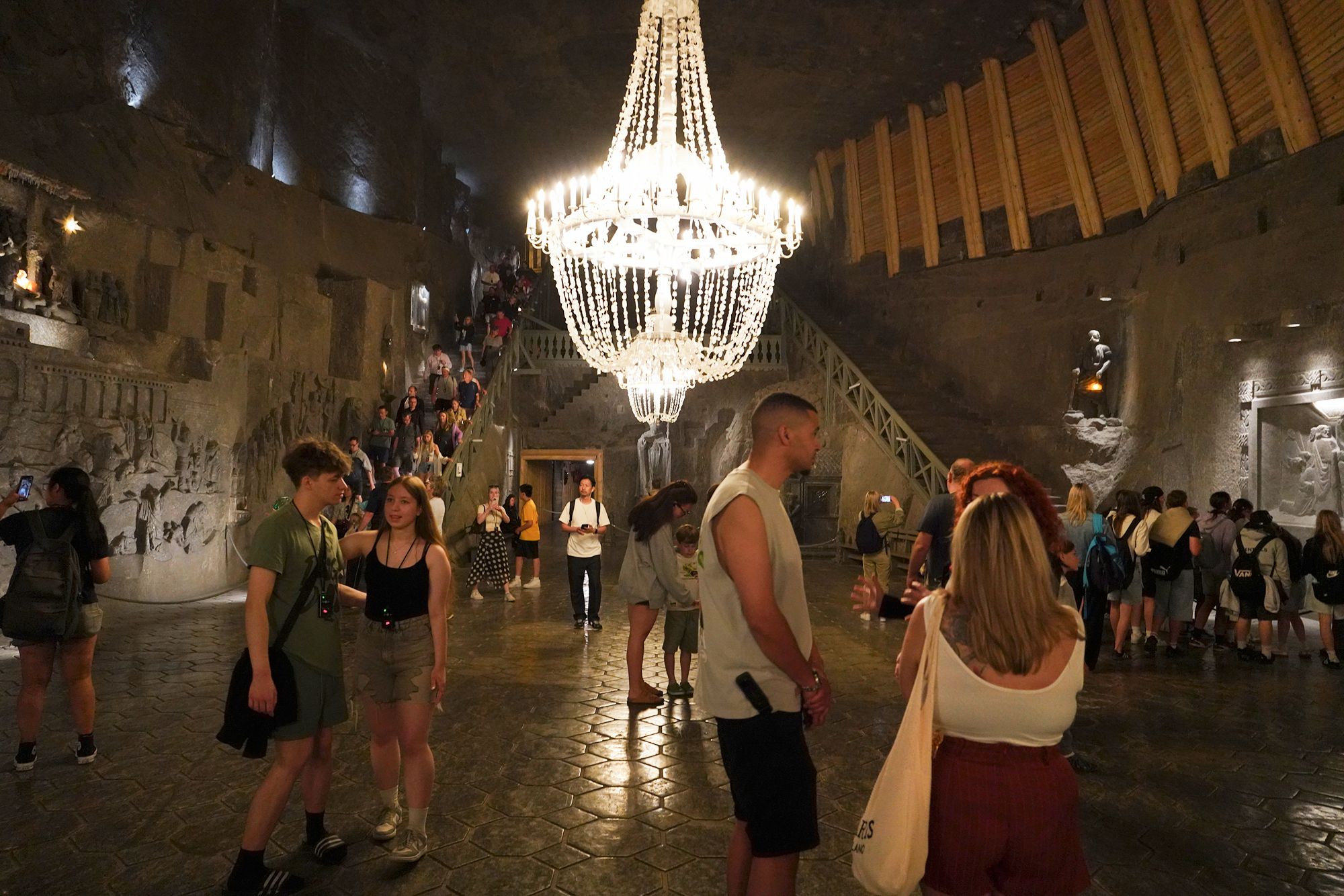
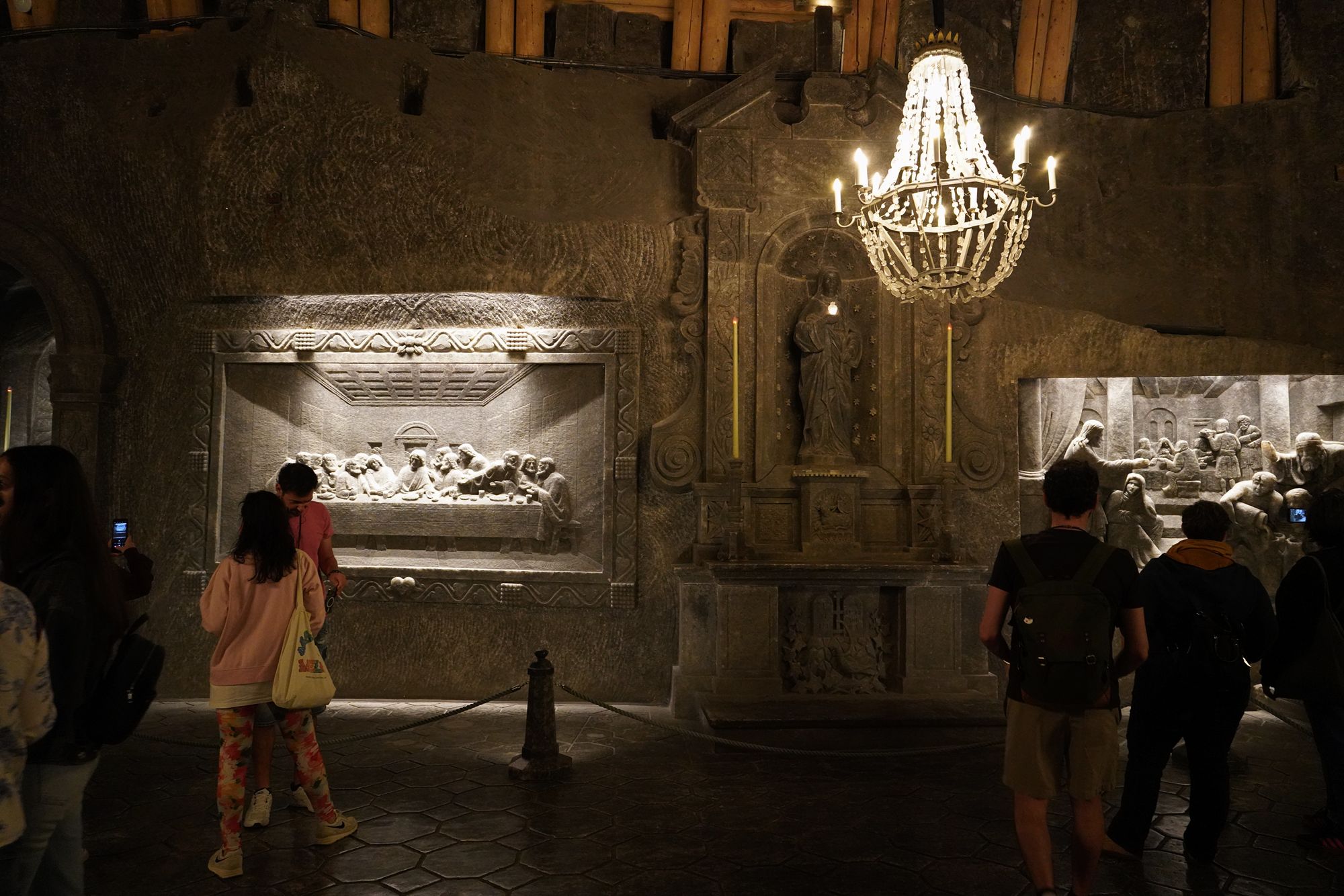
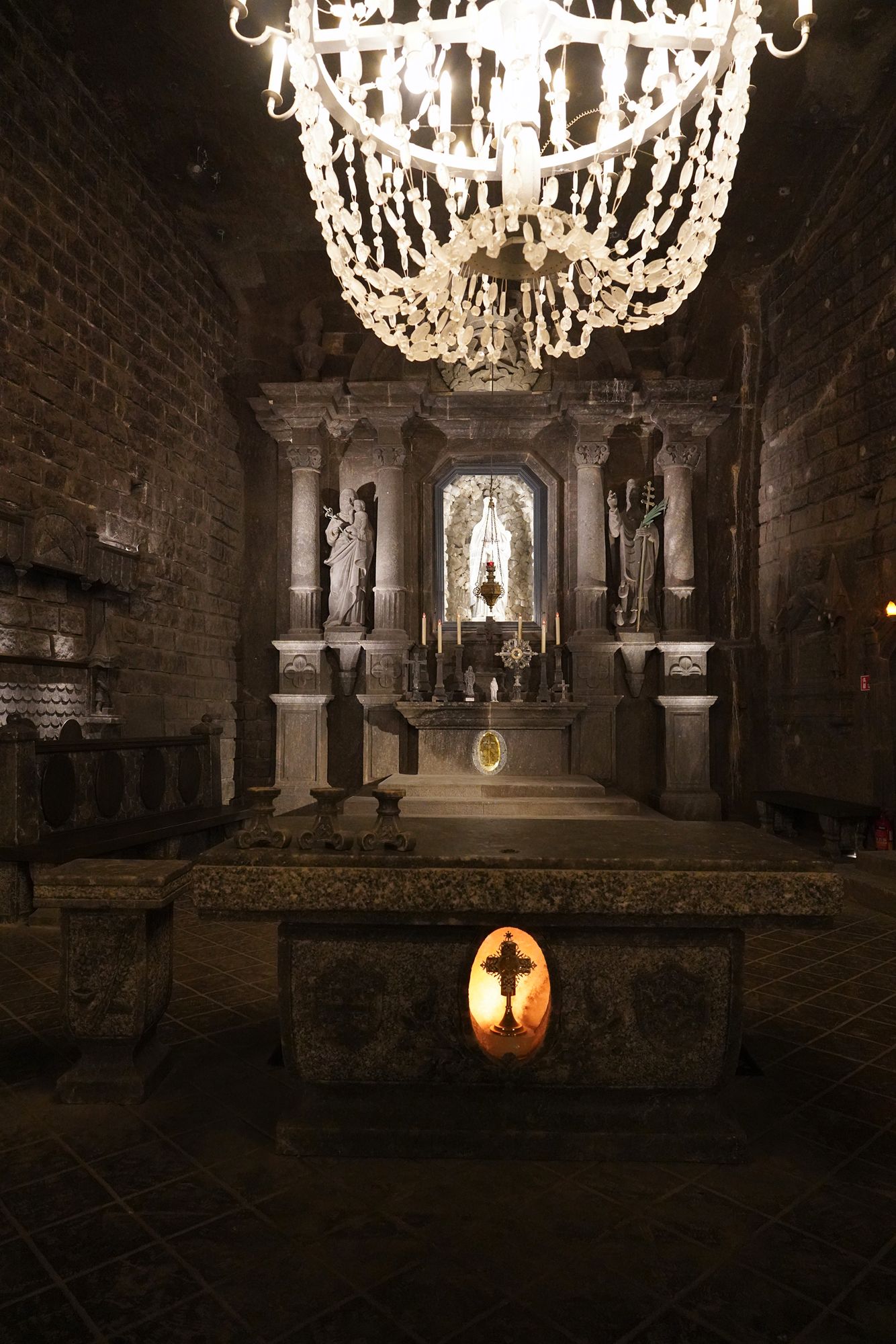
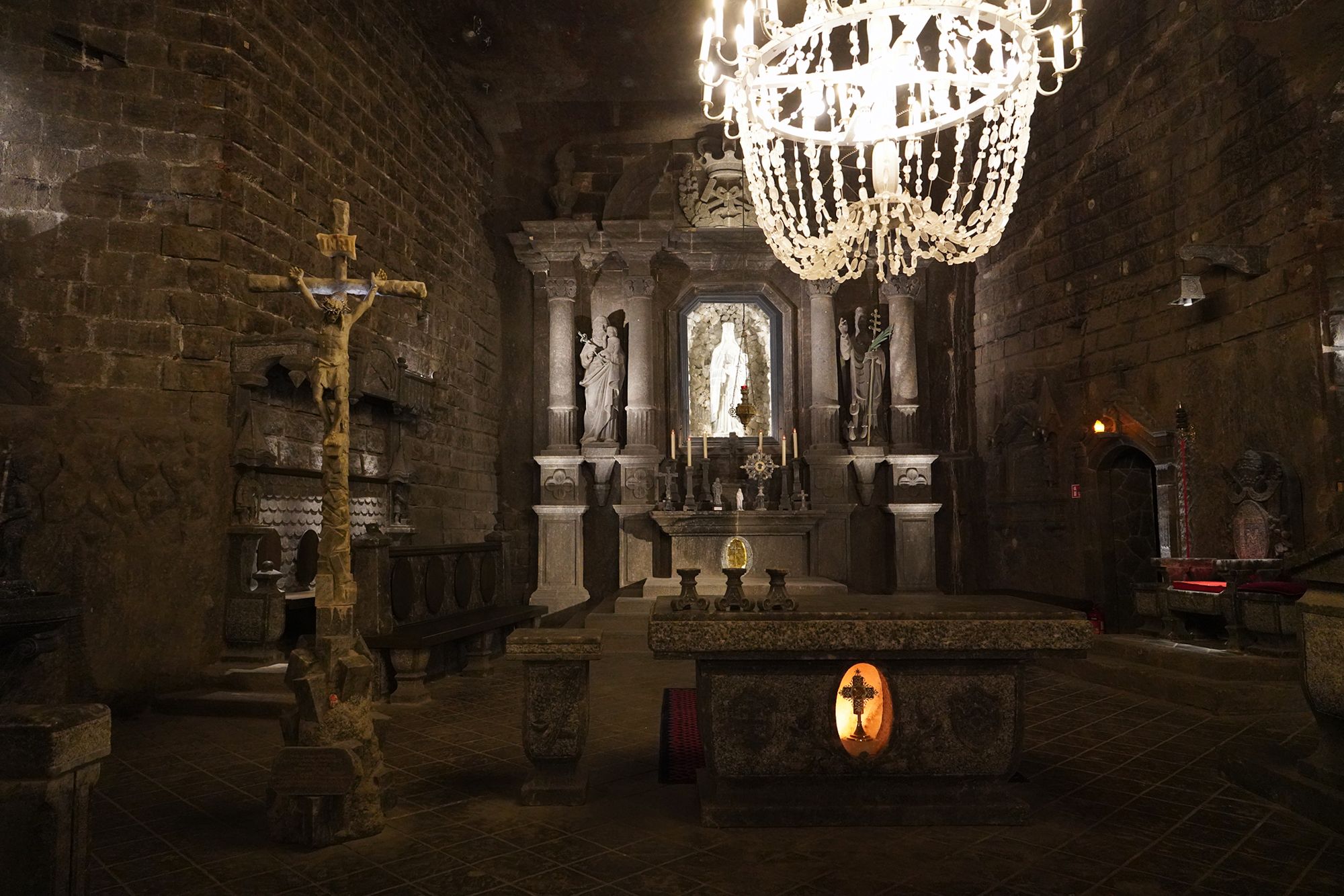
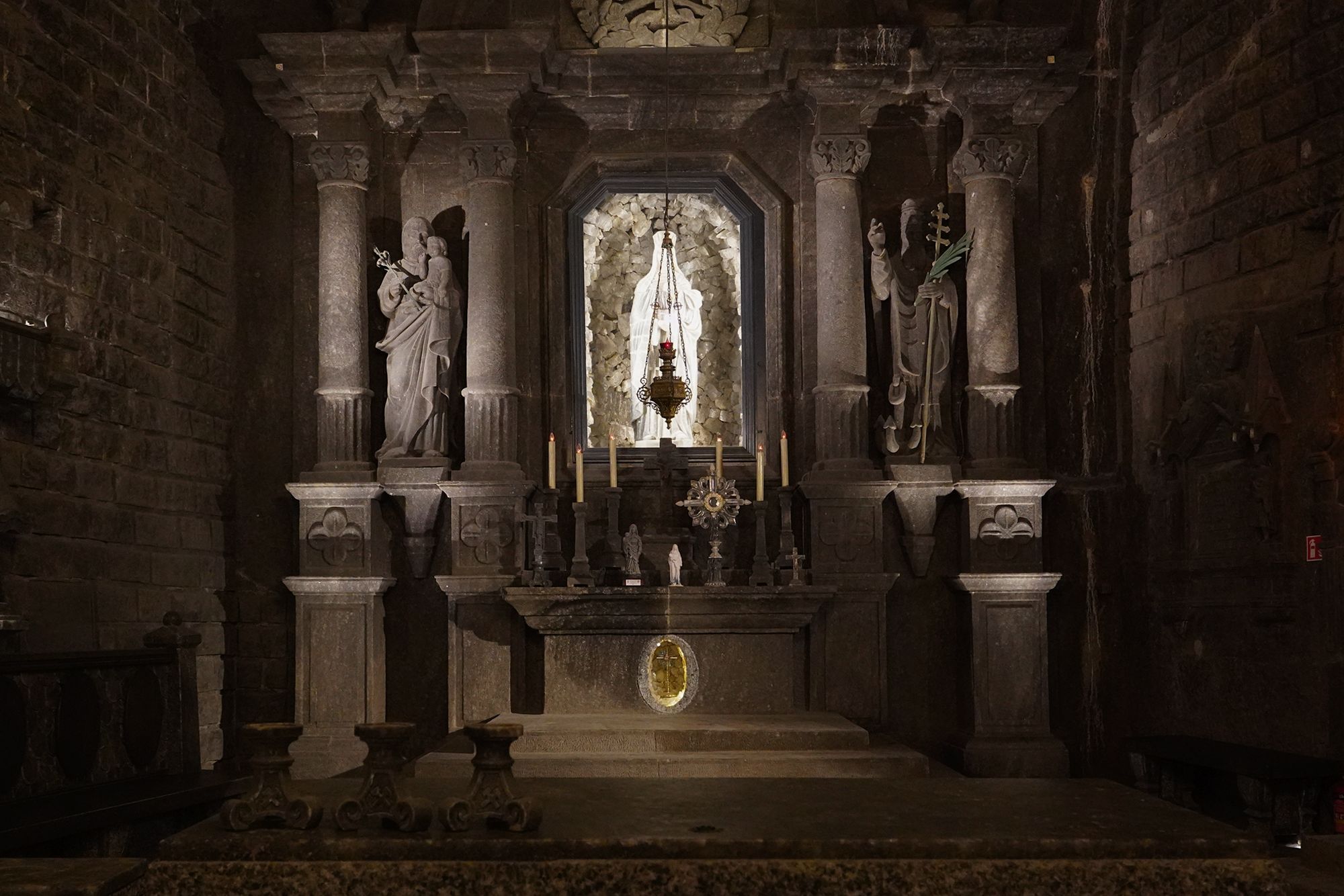
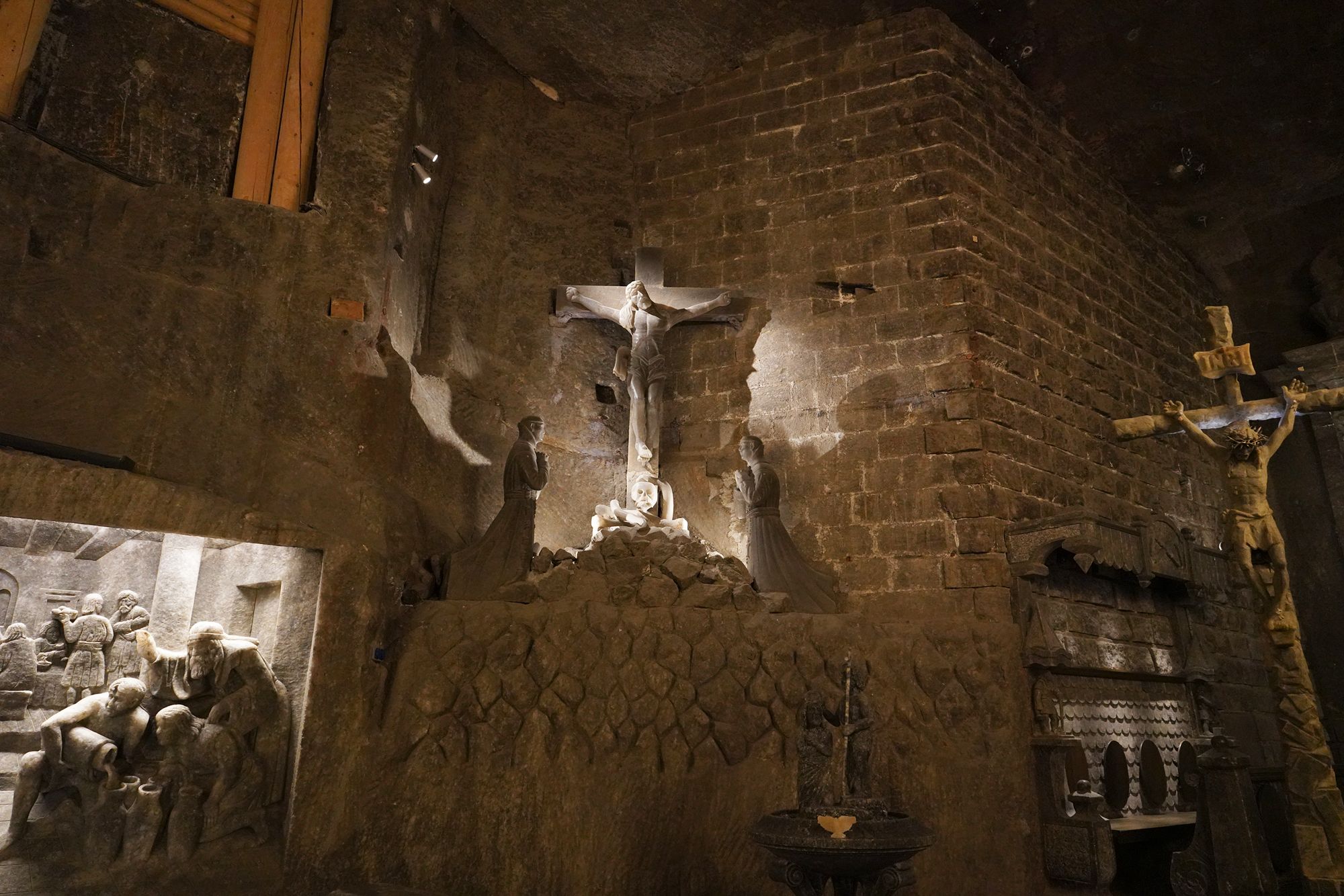
St. Kinga’s Chapel is the mine’s best-known chamber, about 101 metres underground. It was opened in 1896 and decorated over many years by miners, who carved biblical scenes and figures from salt. The floor was sculpted from a single salt block, and the chandeliers are made from salt crystals. One detail to look for is the salt-carved Last Supper, inspired by Leonardo da Vinci’s painting.
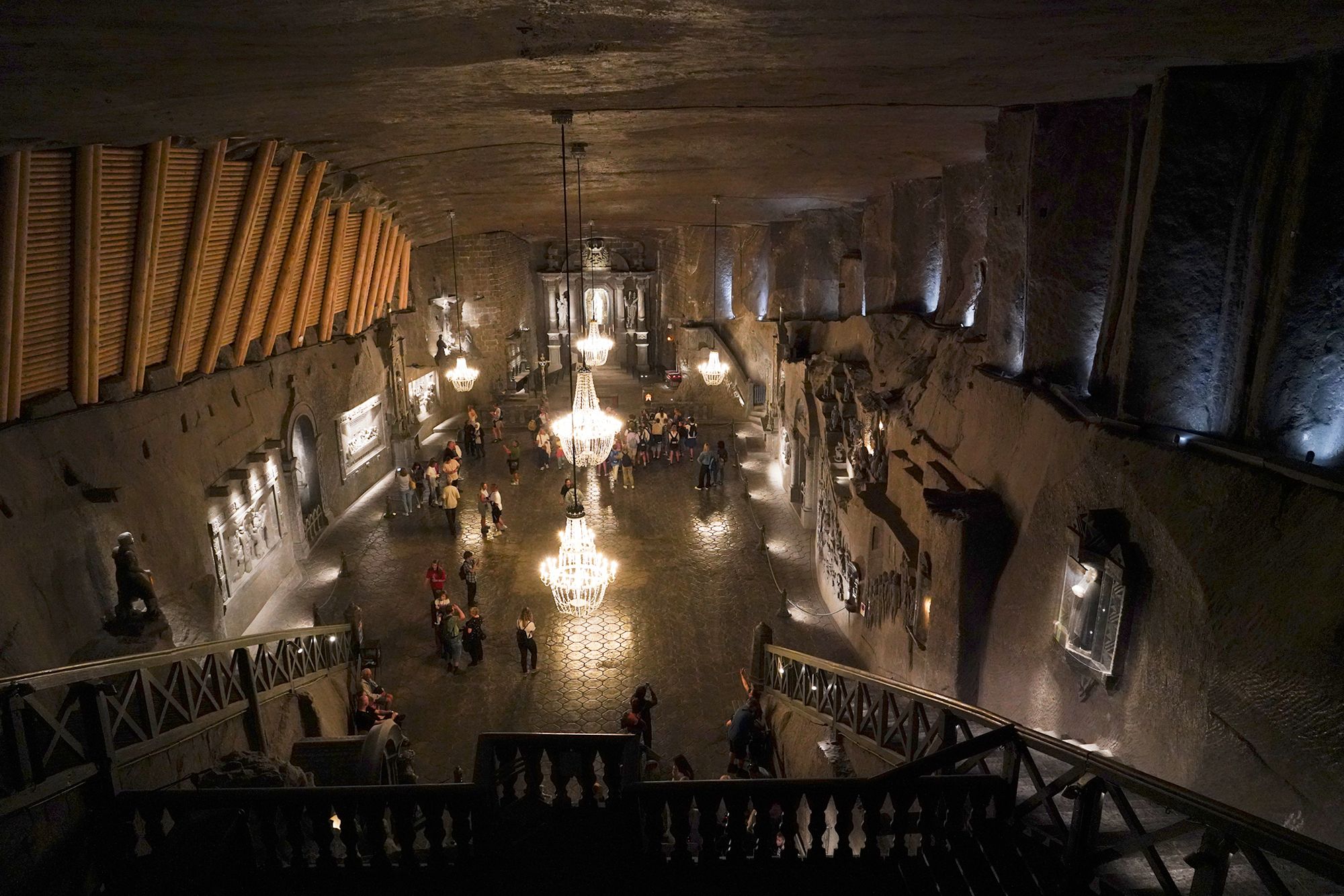
St. Kinga was a 13th-century Hungarian princess who became the patron saint of salt miners. A local legend says she dropped her engagement ring into a salt mine in Hungary, and it was later found inside a lump of salt near Wieliczka. The story explains her special connection to the mine, though it is a legend rather than documented history.
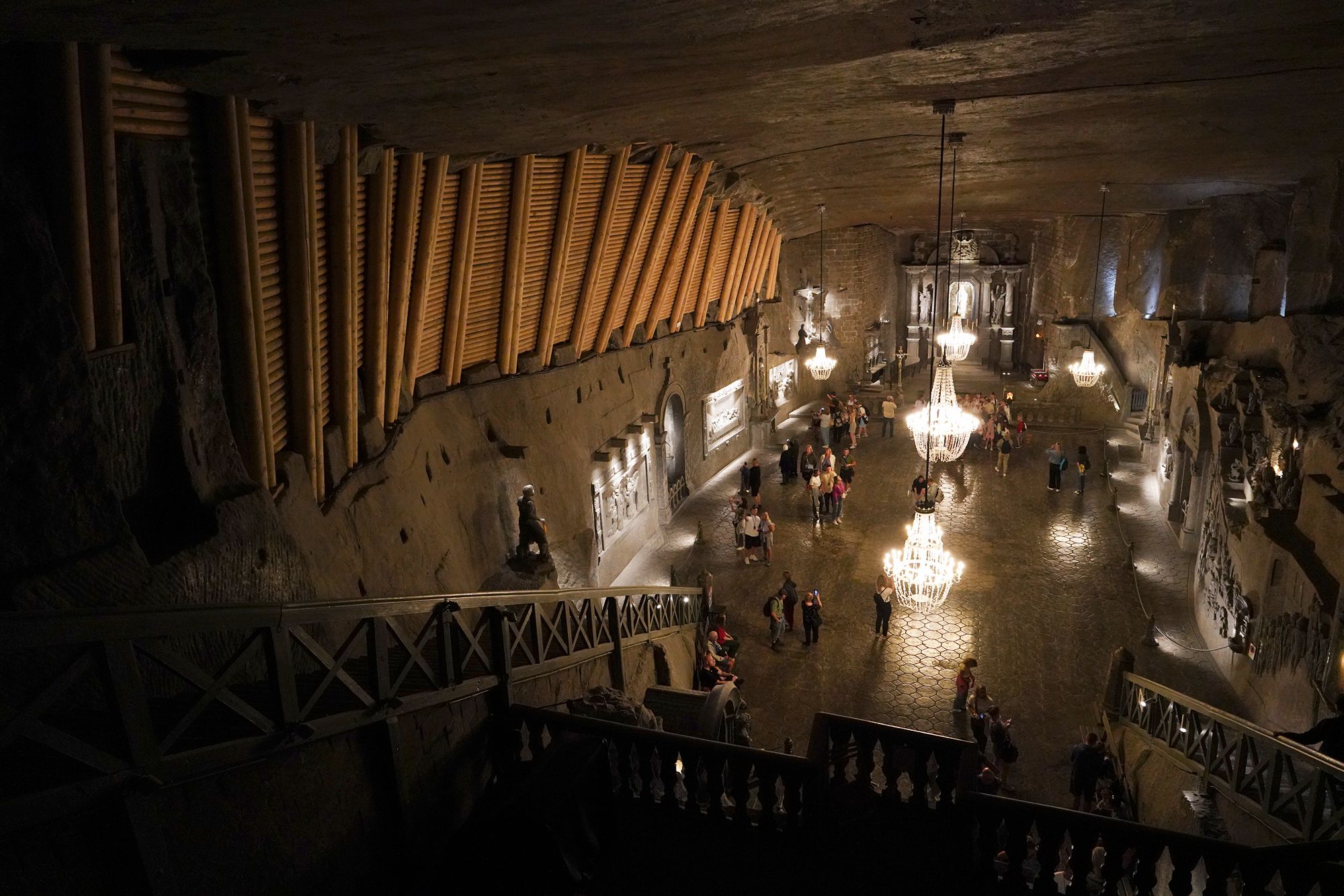
St. Kinga’s Chapel is still an active place of worship. Mass is held there, and it is also used for weddings and occasional classical concerts. Visitors see it as part of the mine’s Tourist Route.
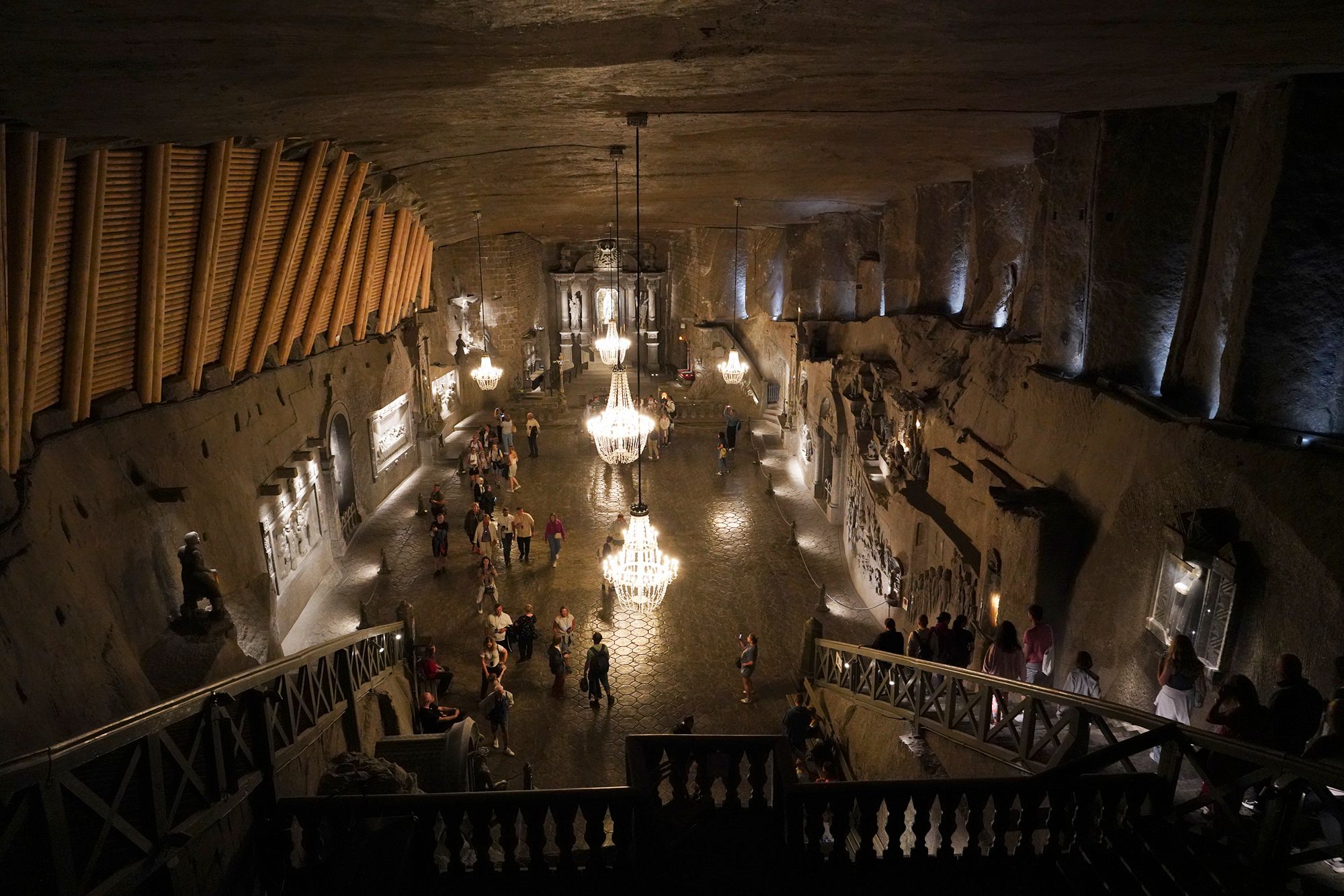
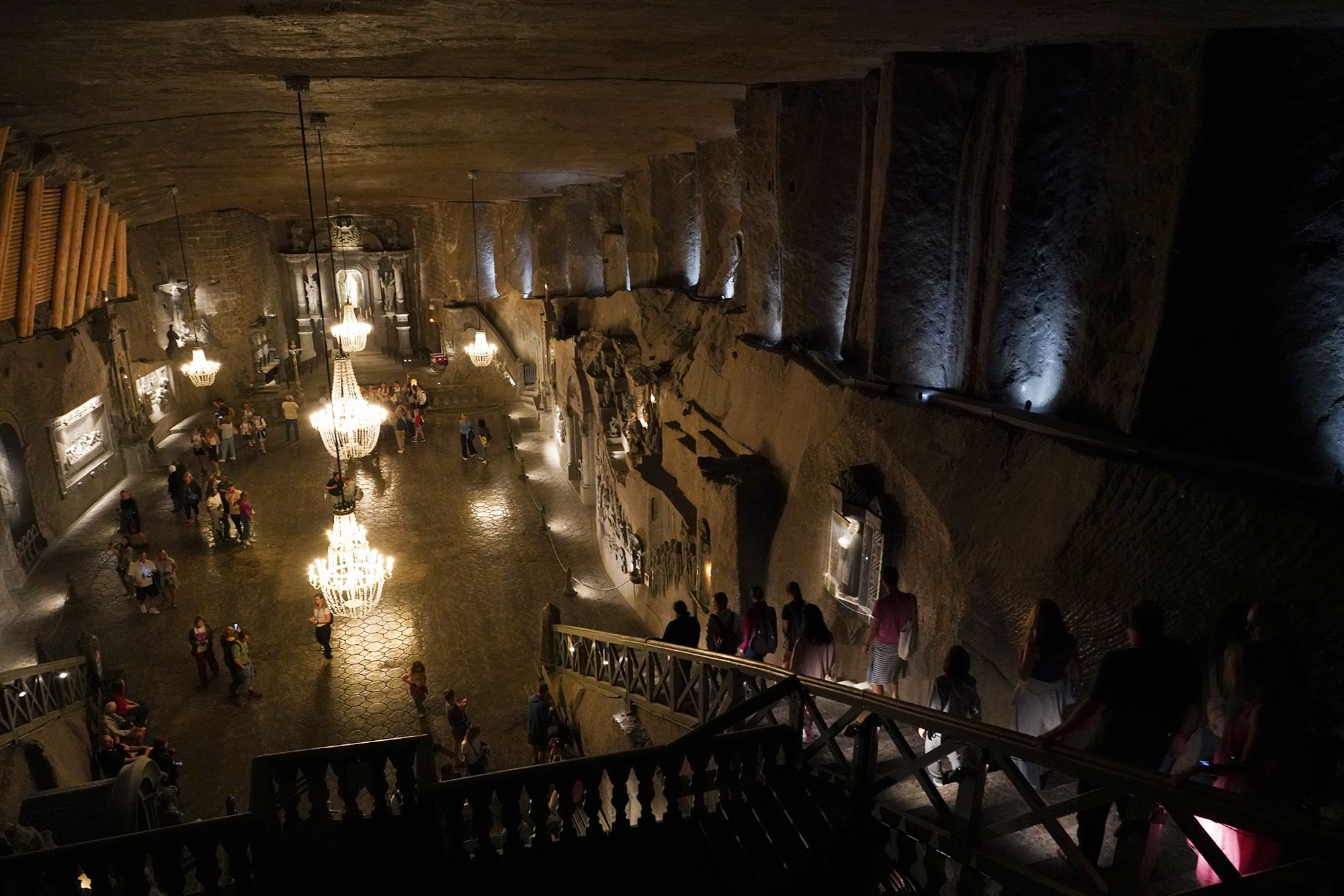
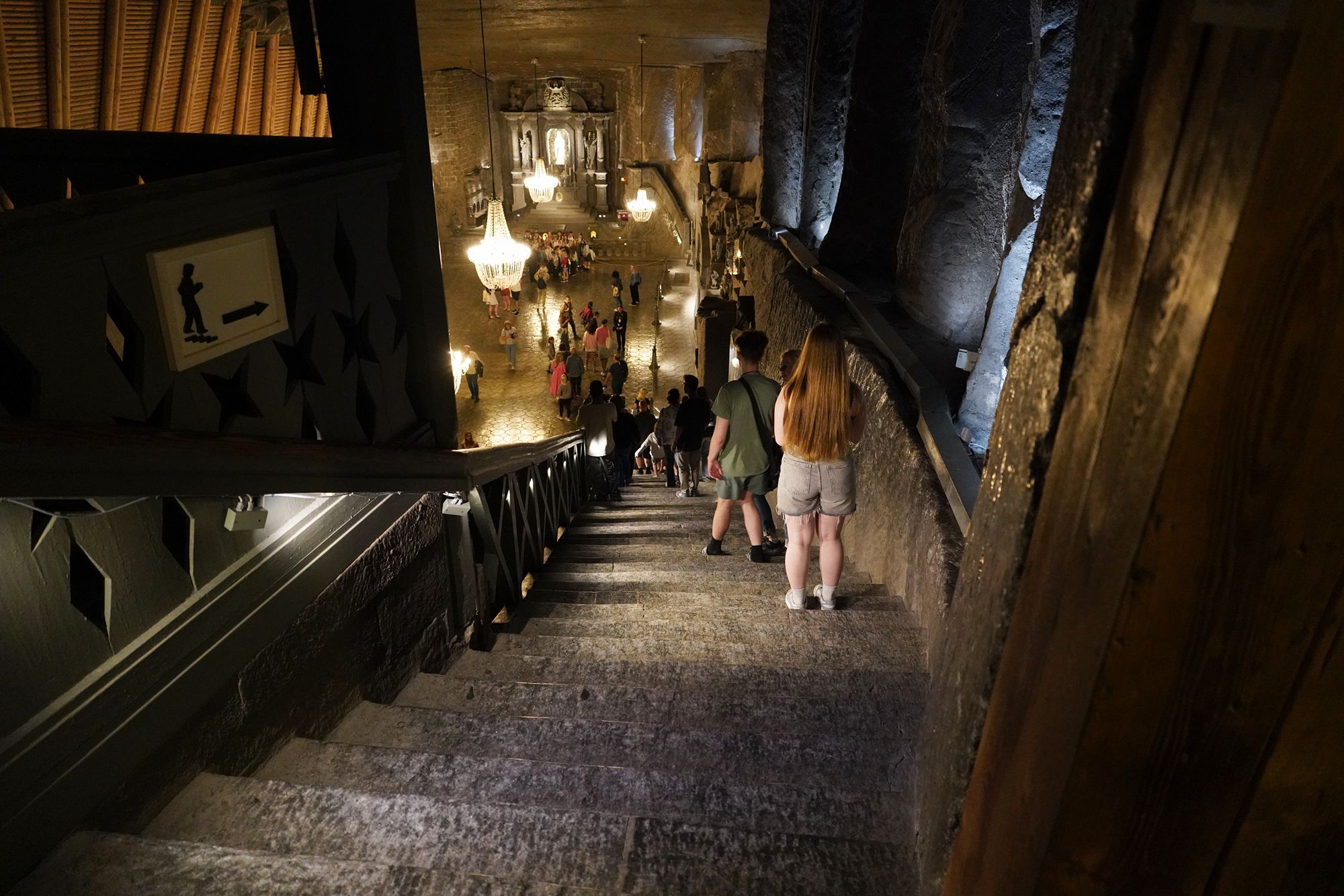
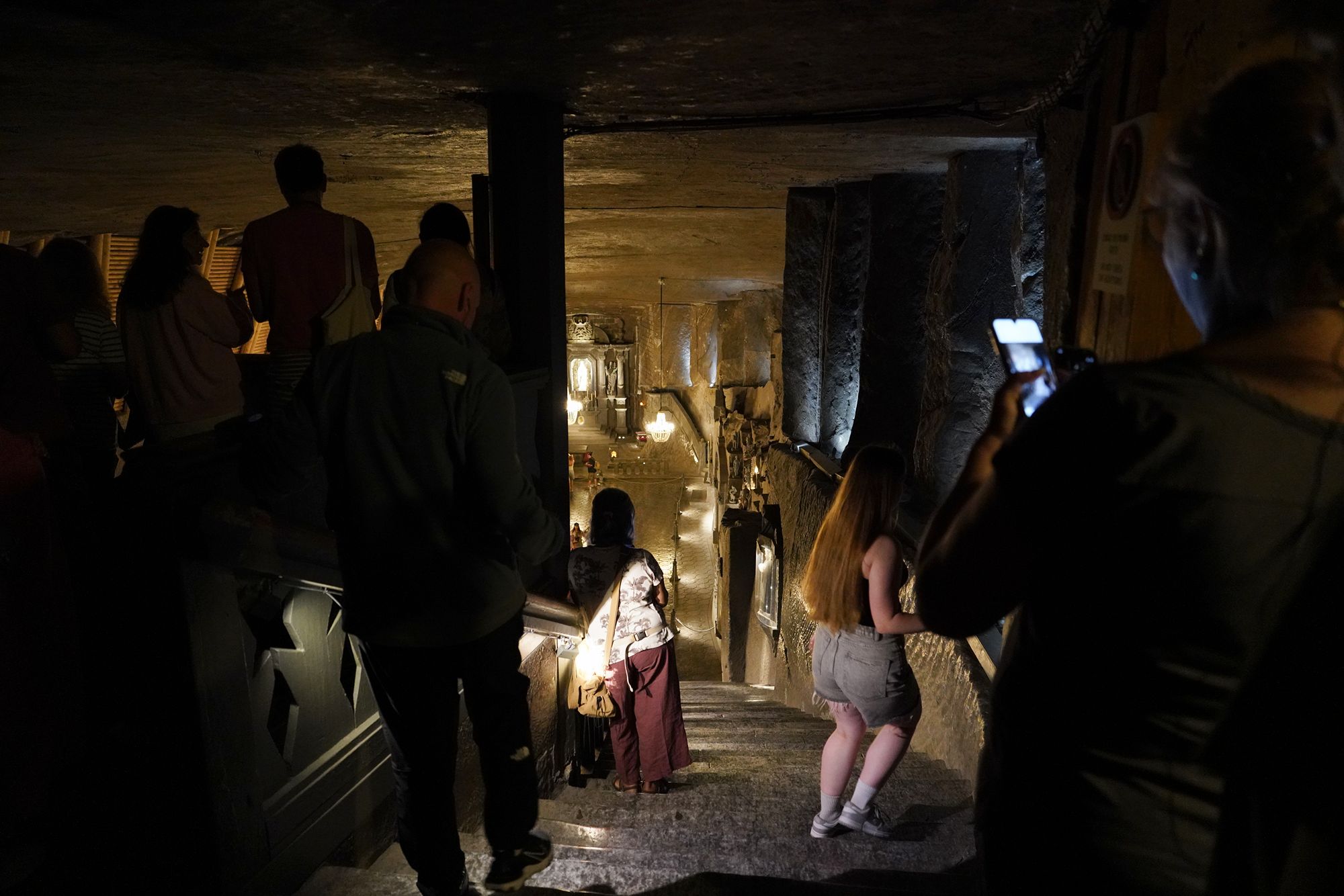
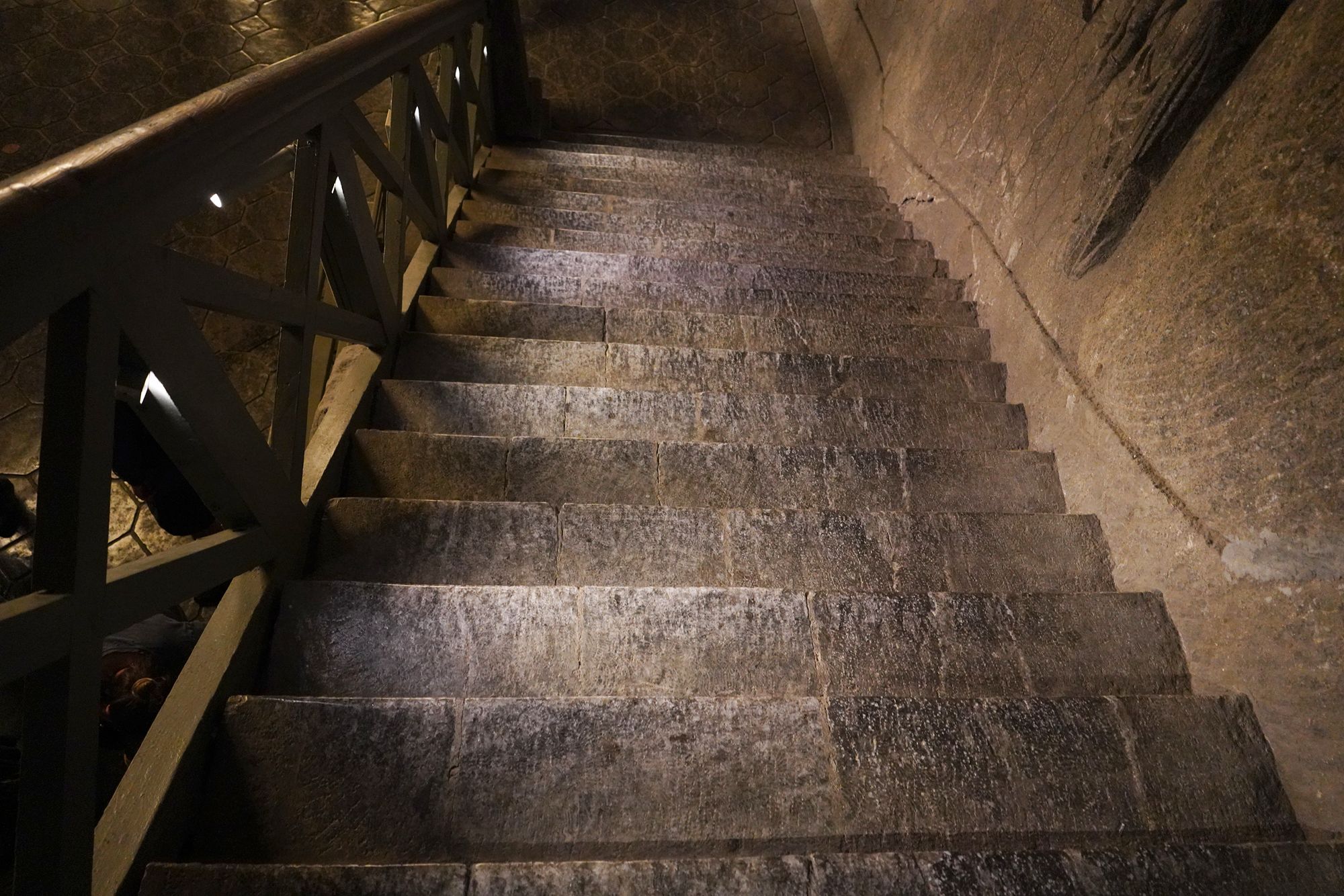
The steps leading down to the chapel floor are carved from salt.
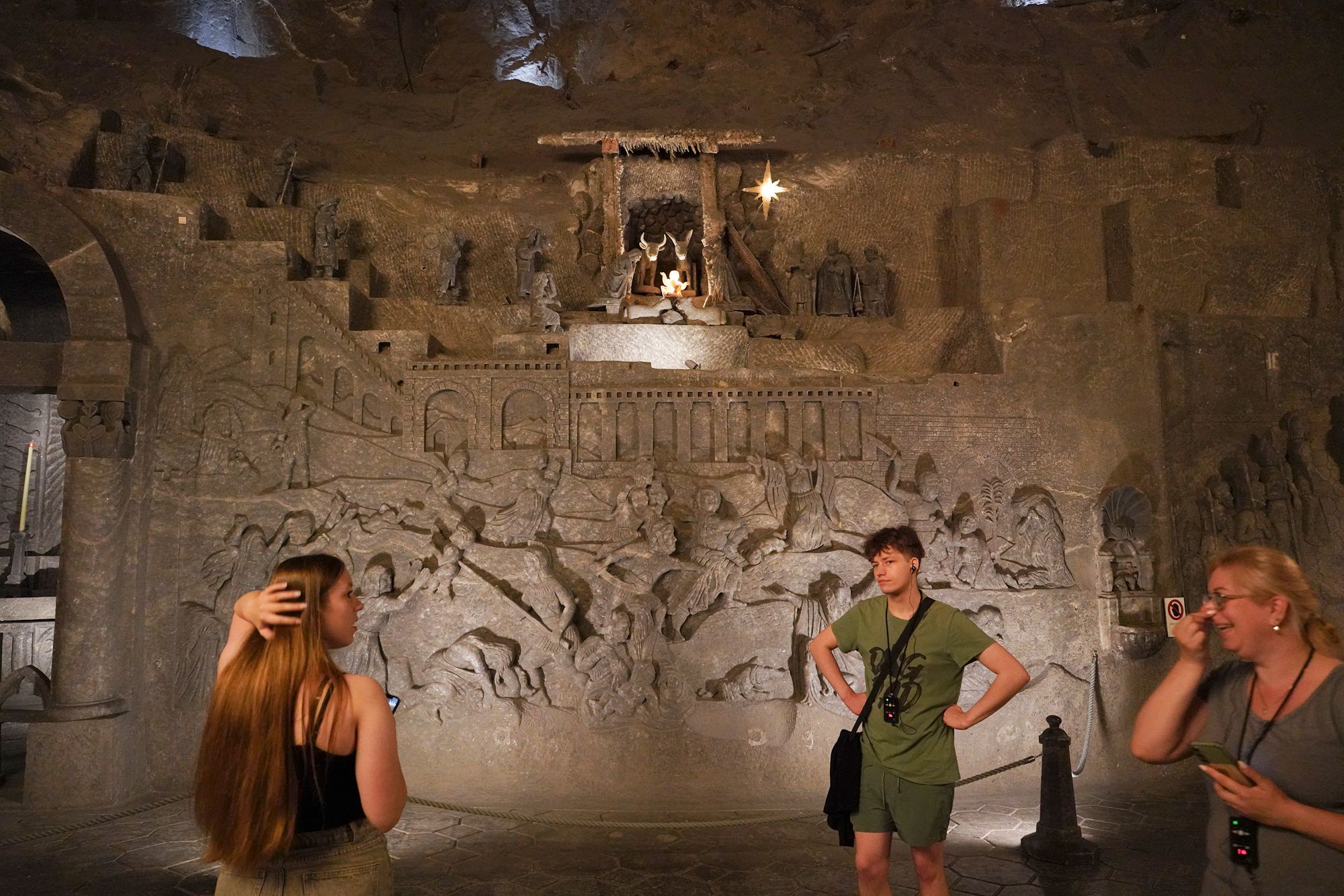
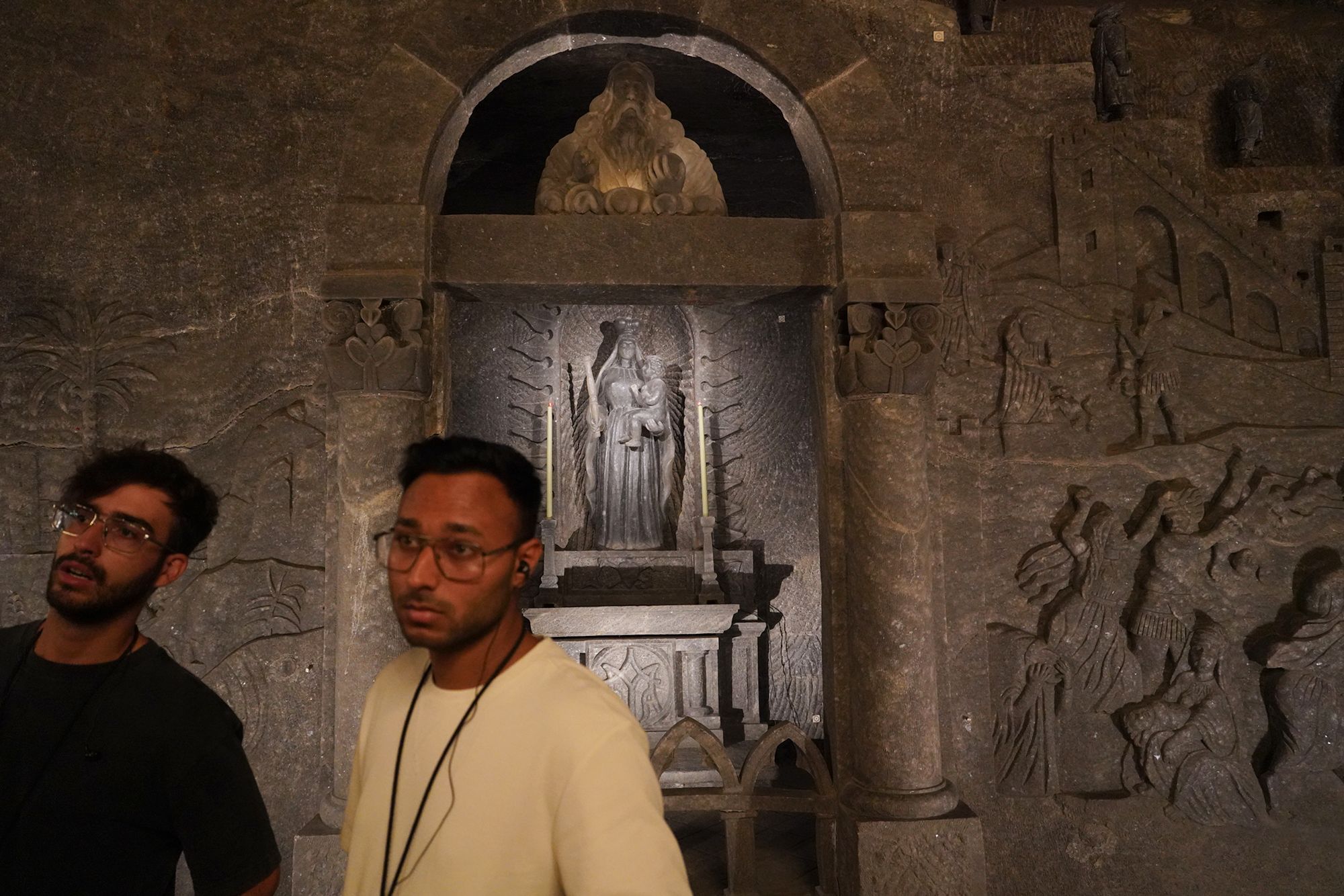
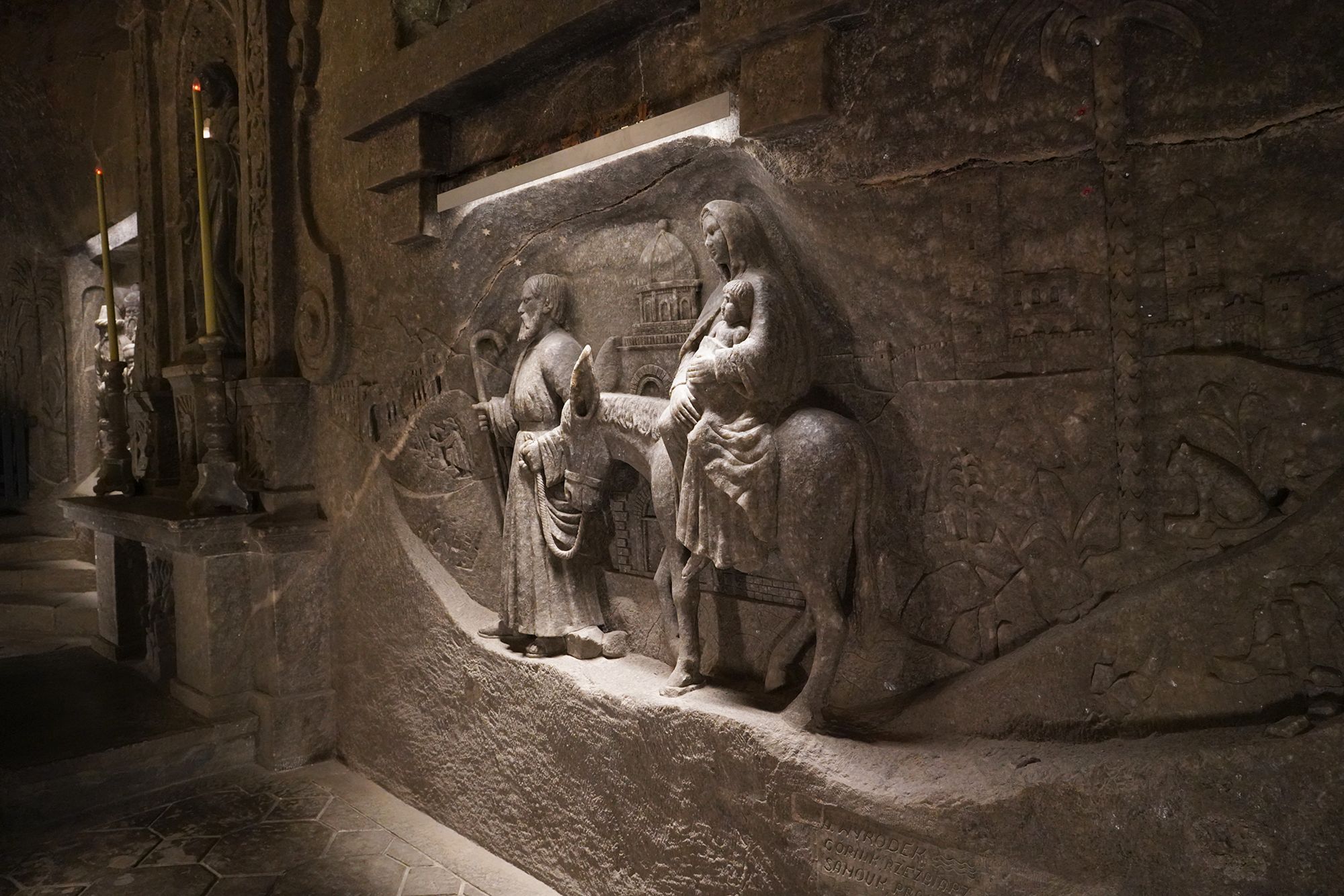
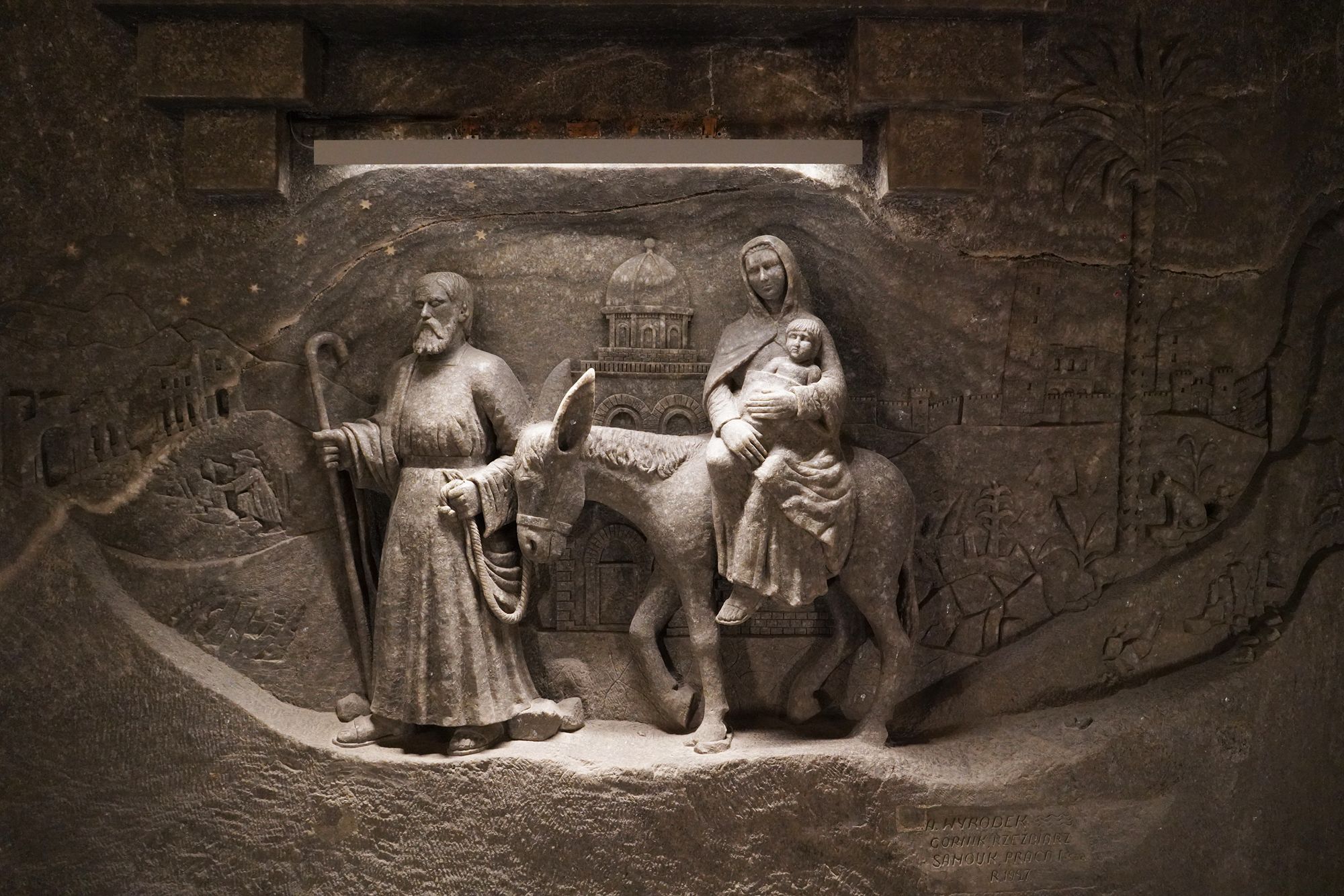
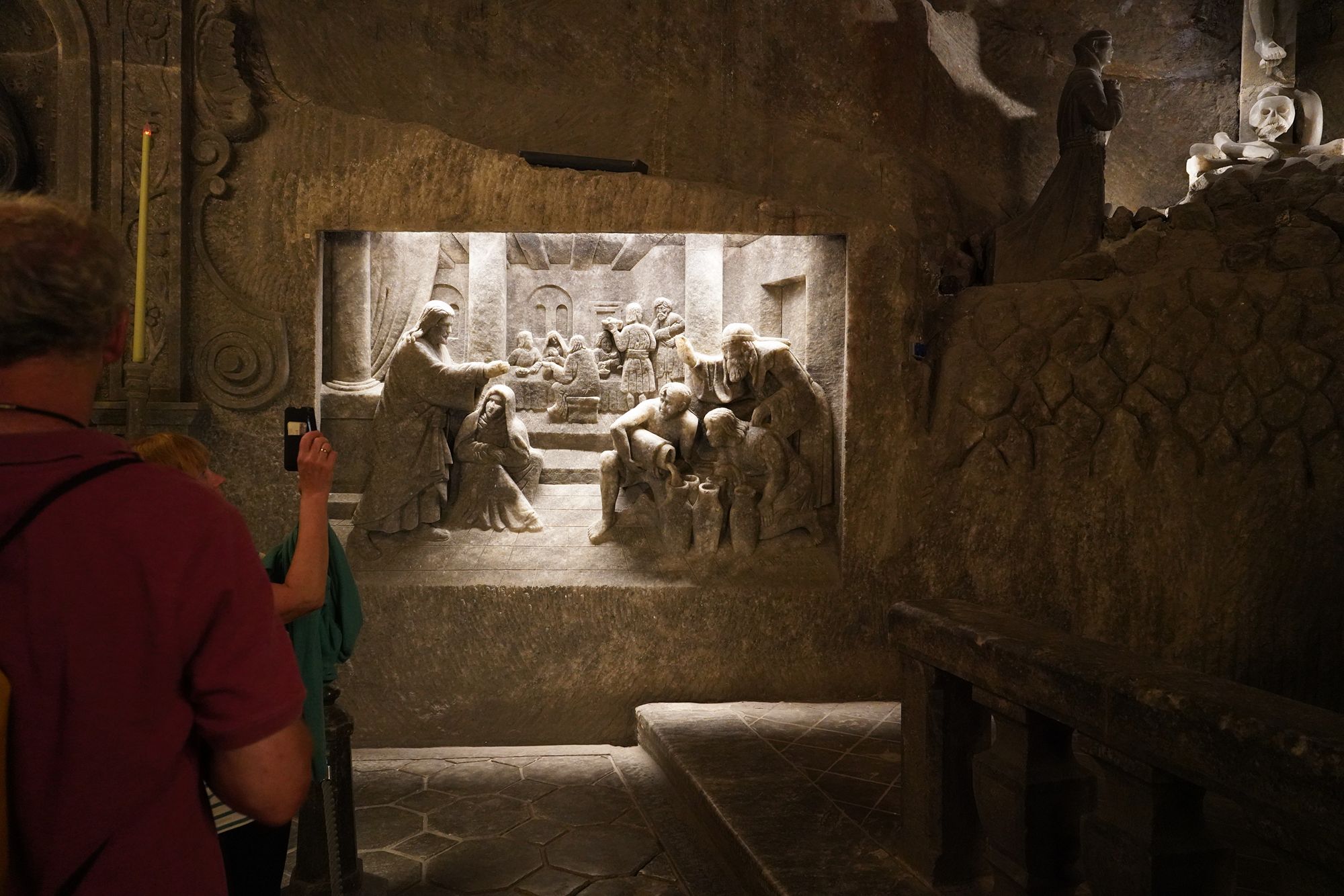
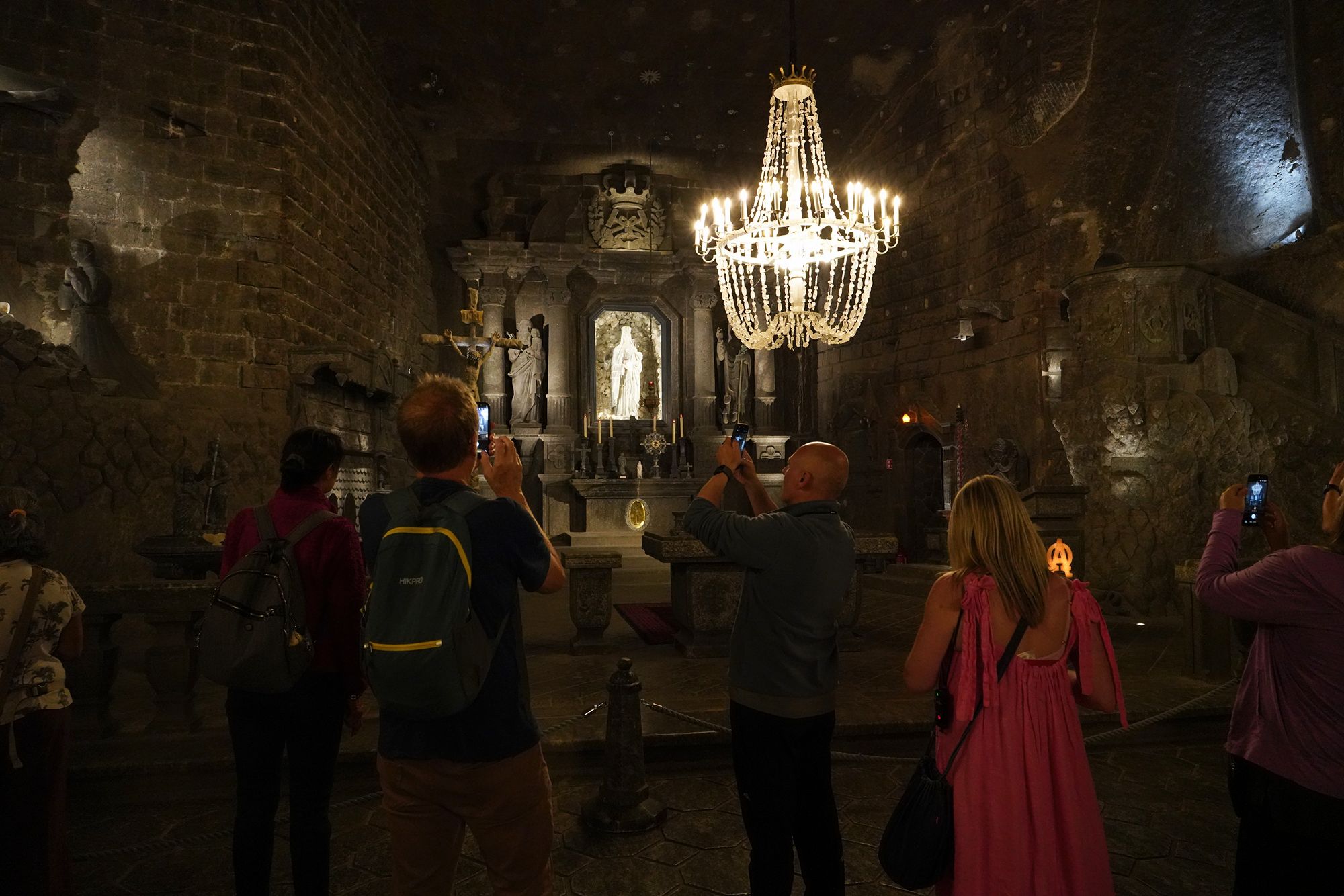
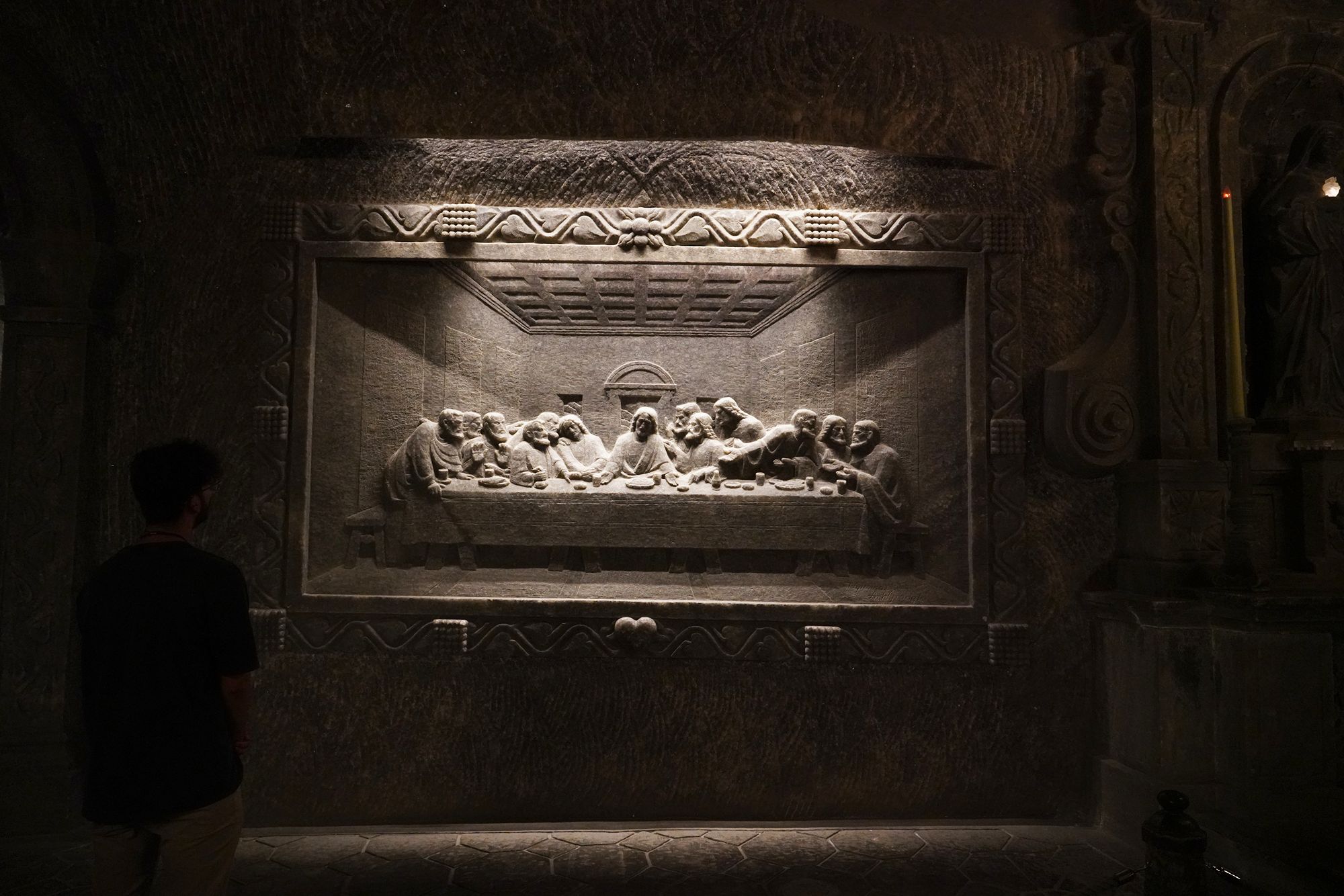
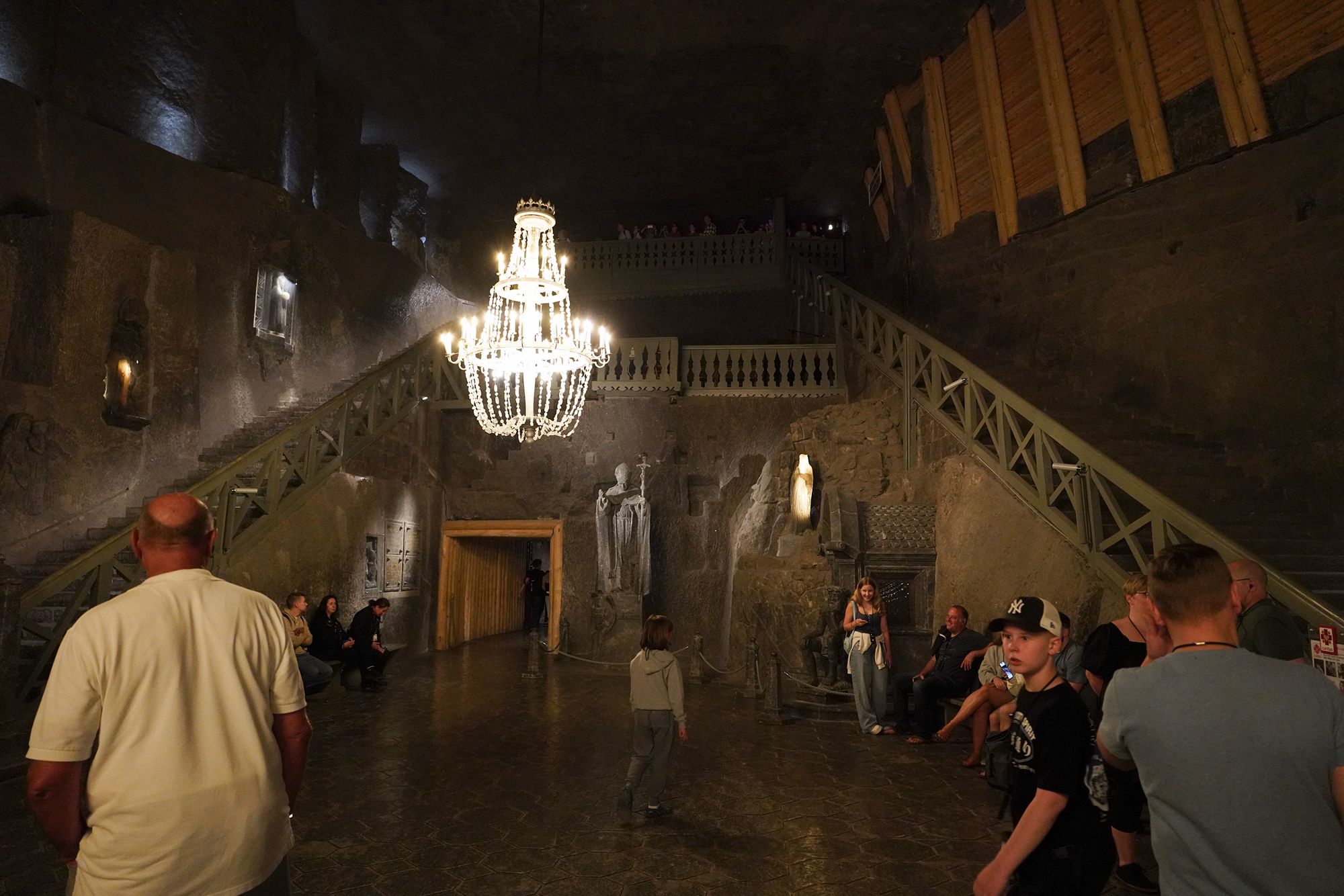
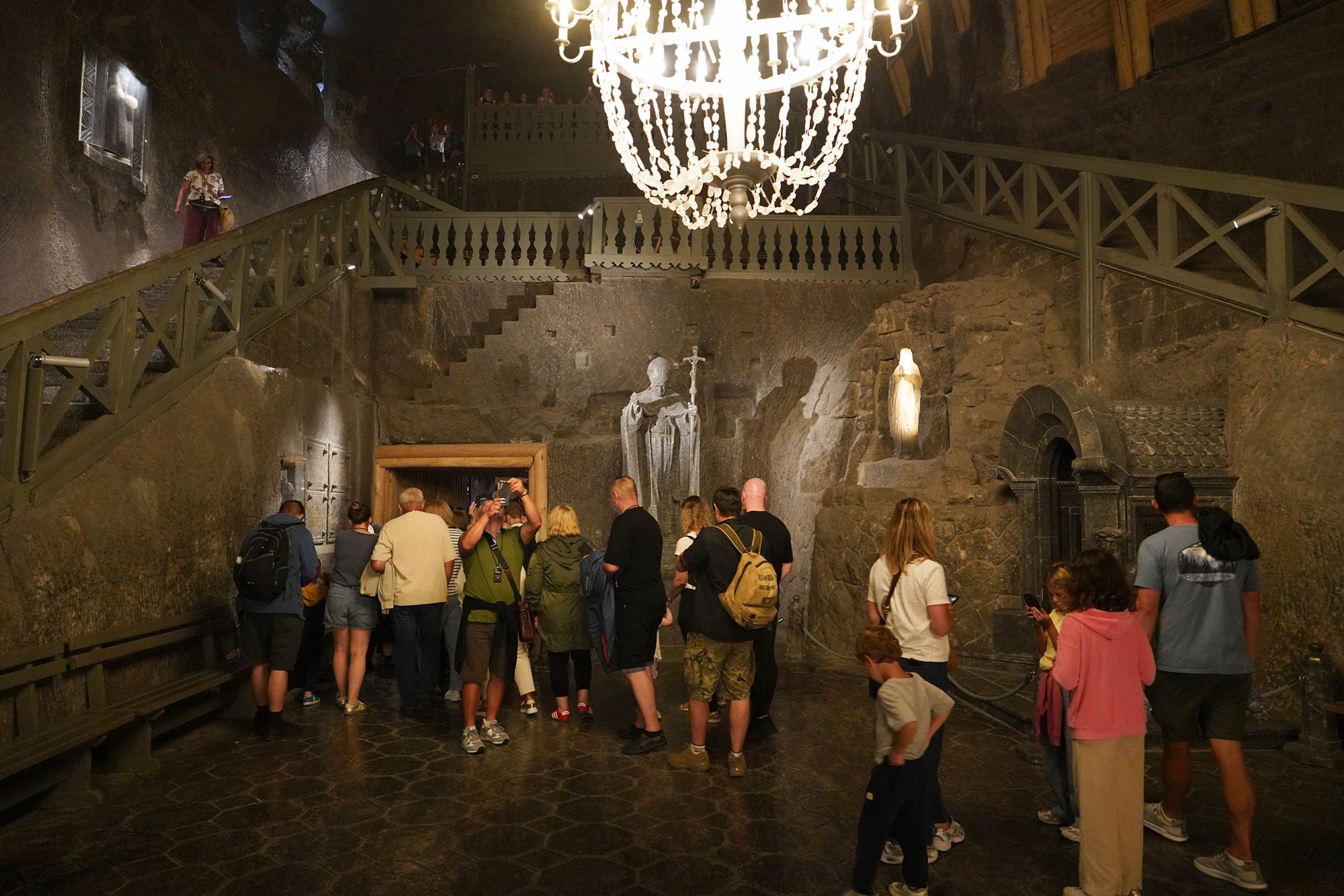
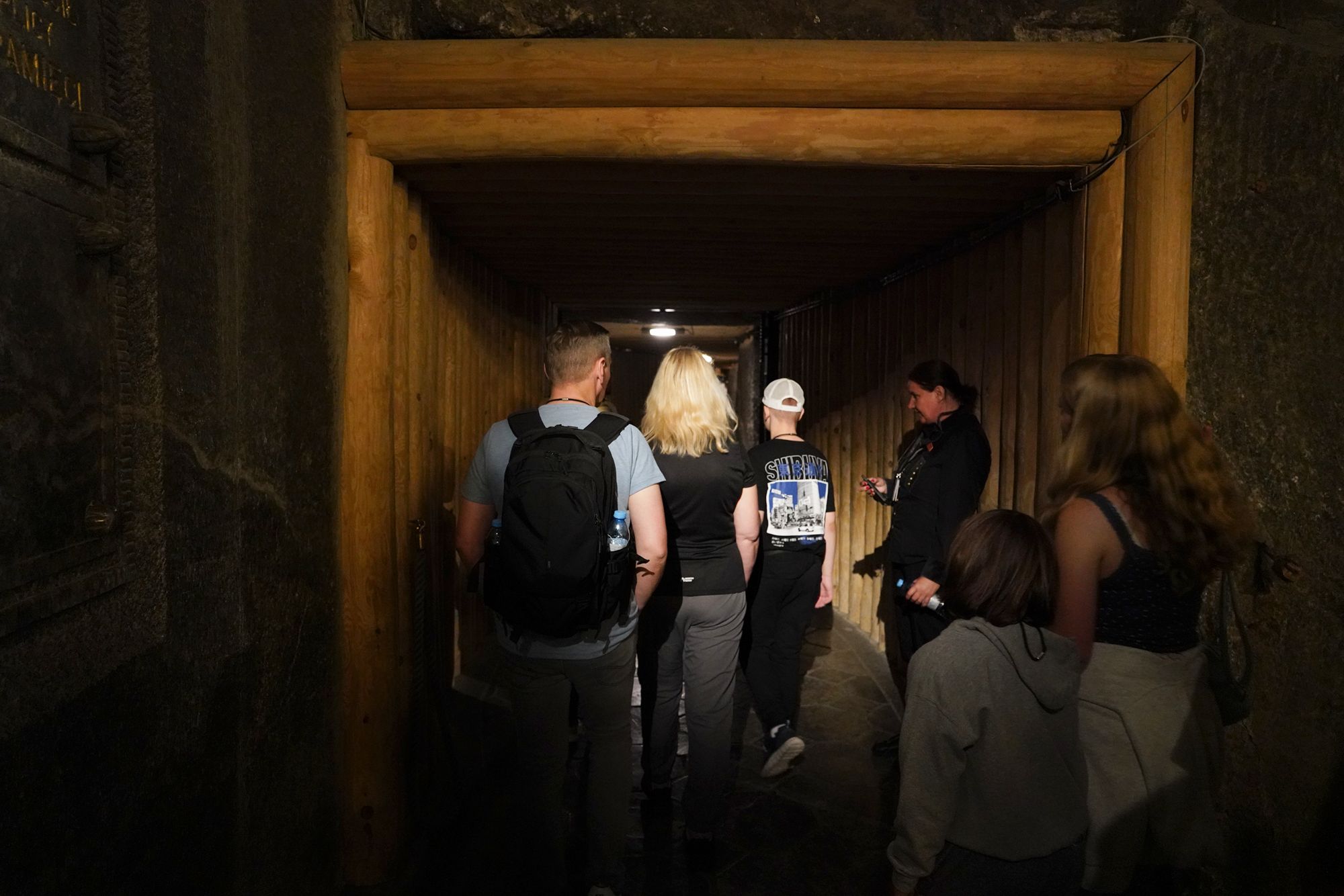
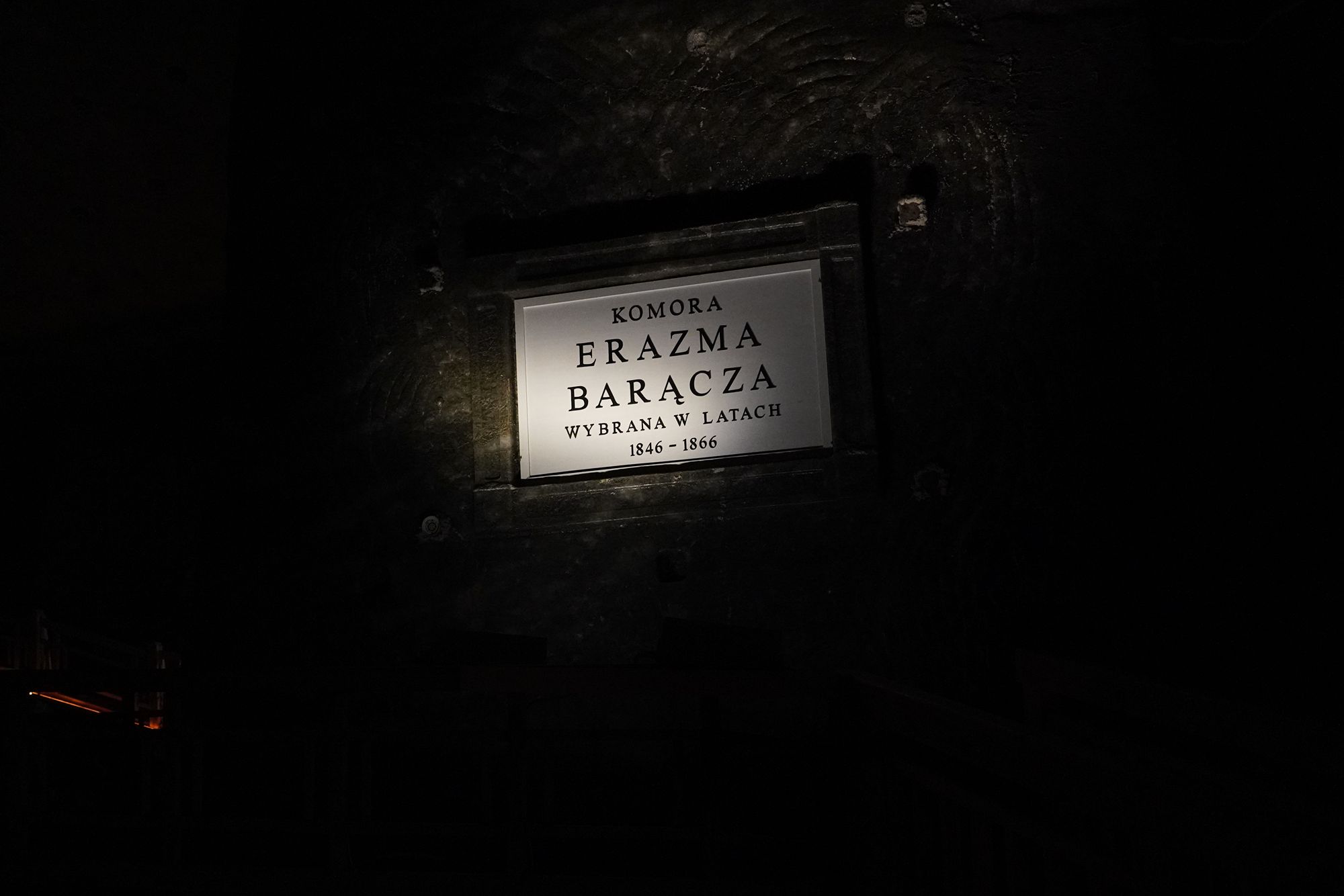
A sign marks the Erasmus Barącz Chamber, excavated between 1846 and 1866.
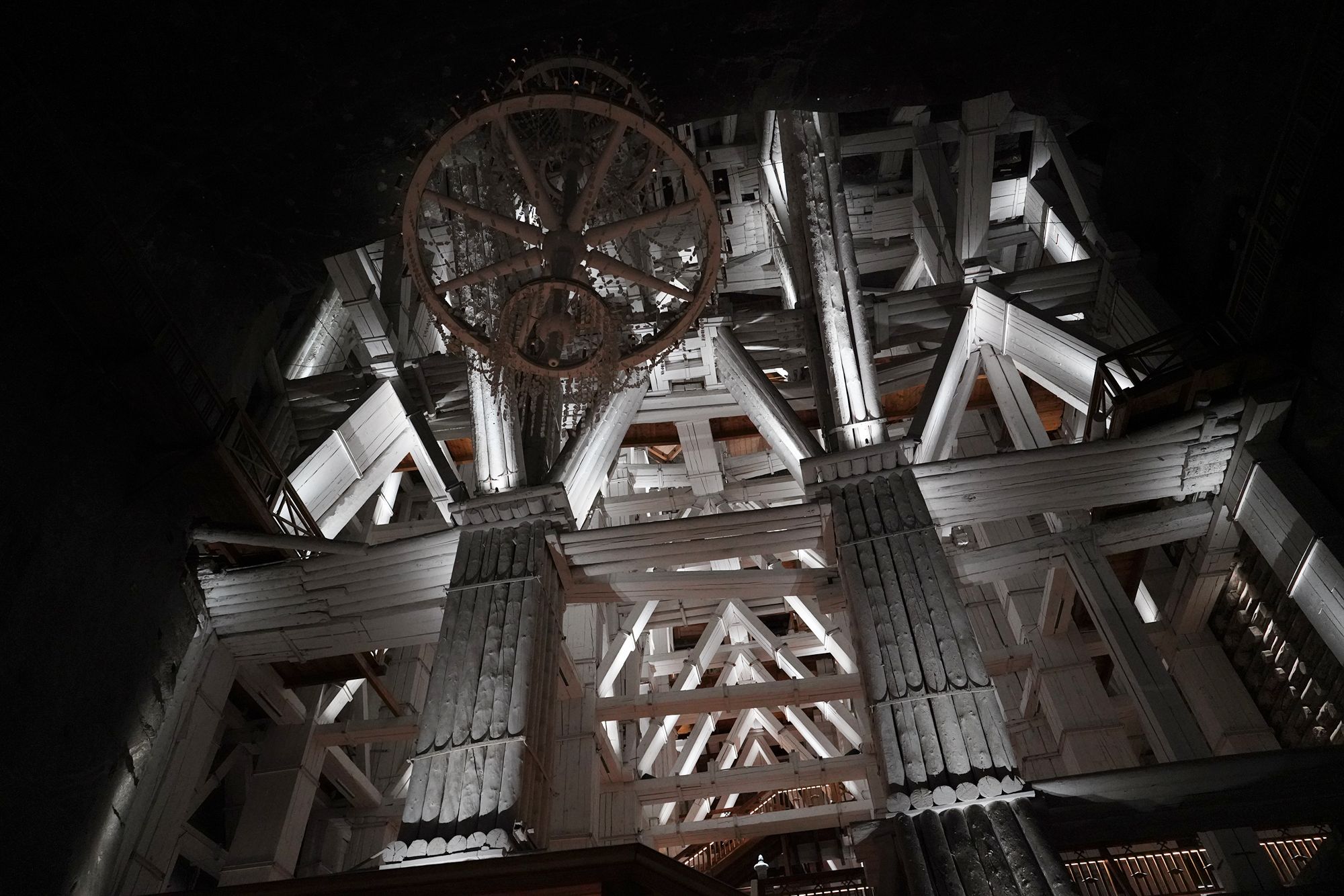
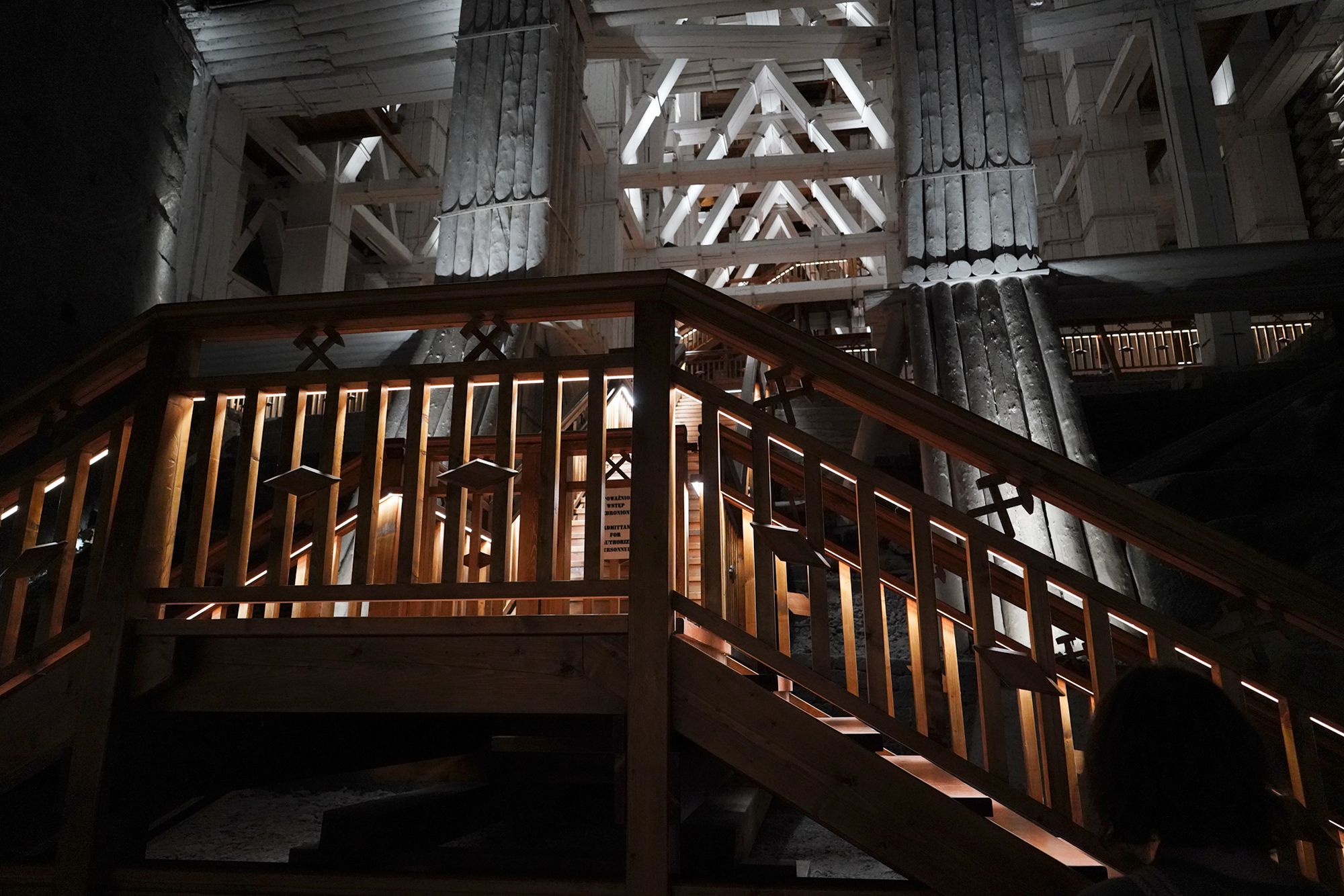
The sign marks the Michałowice Chamber, where visitors gather beneath the high salt ceiling and beside the wooden stairs.
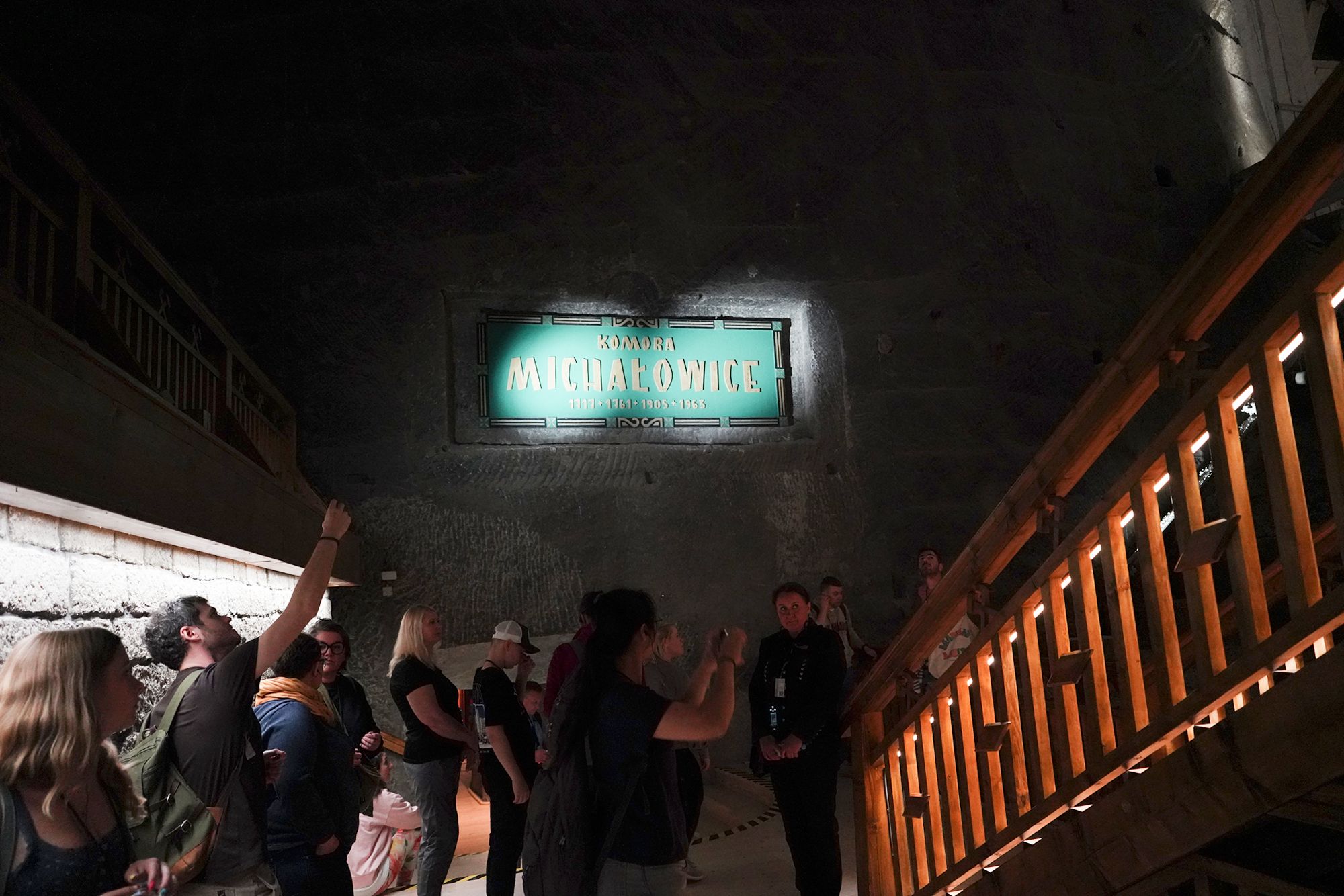
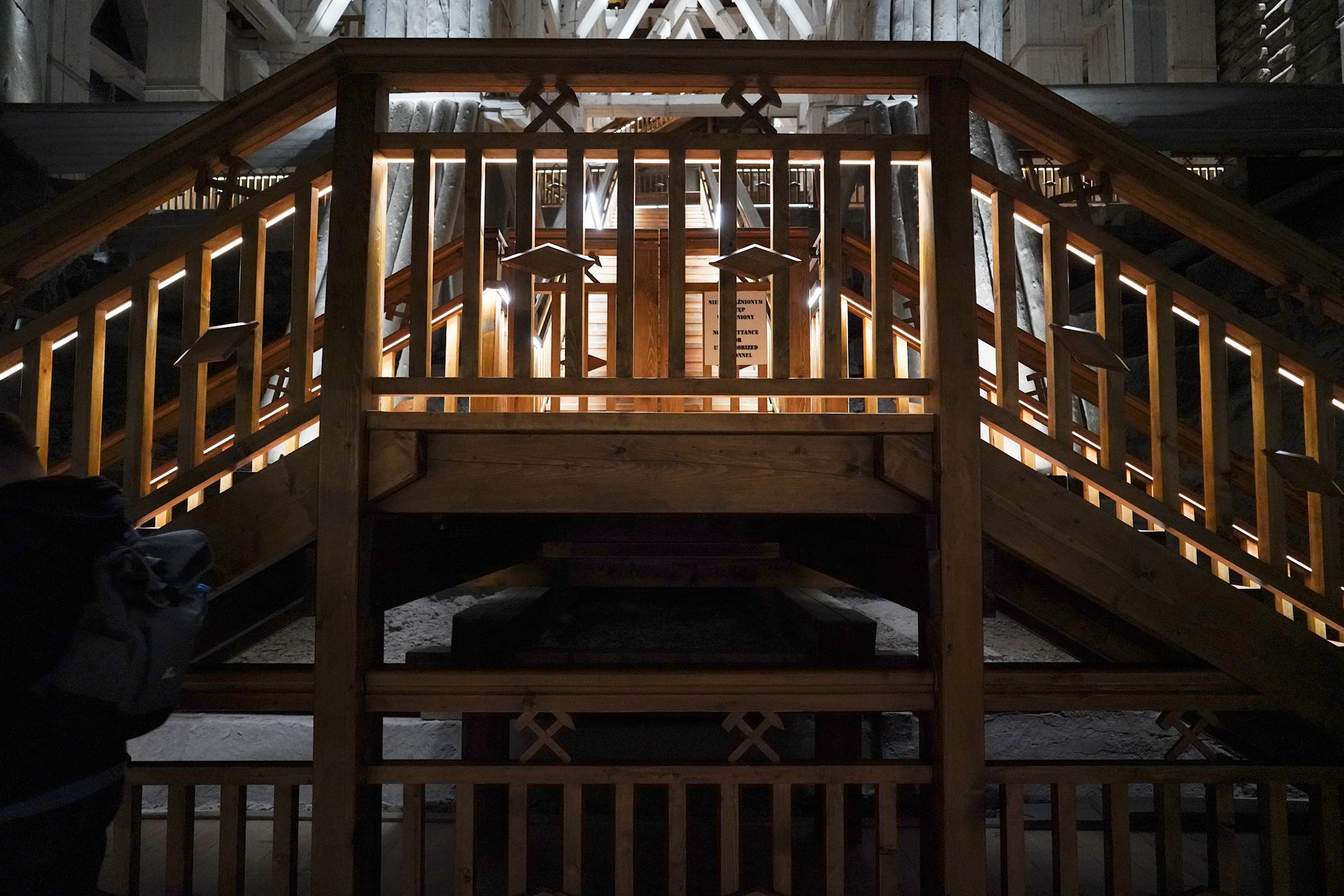
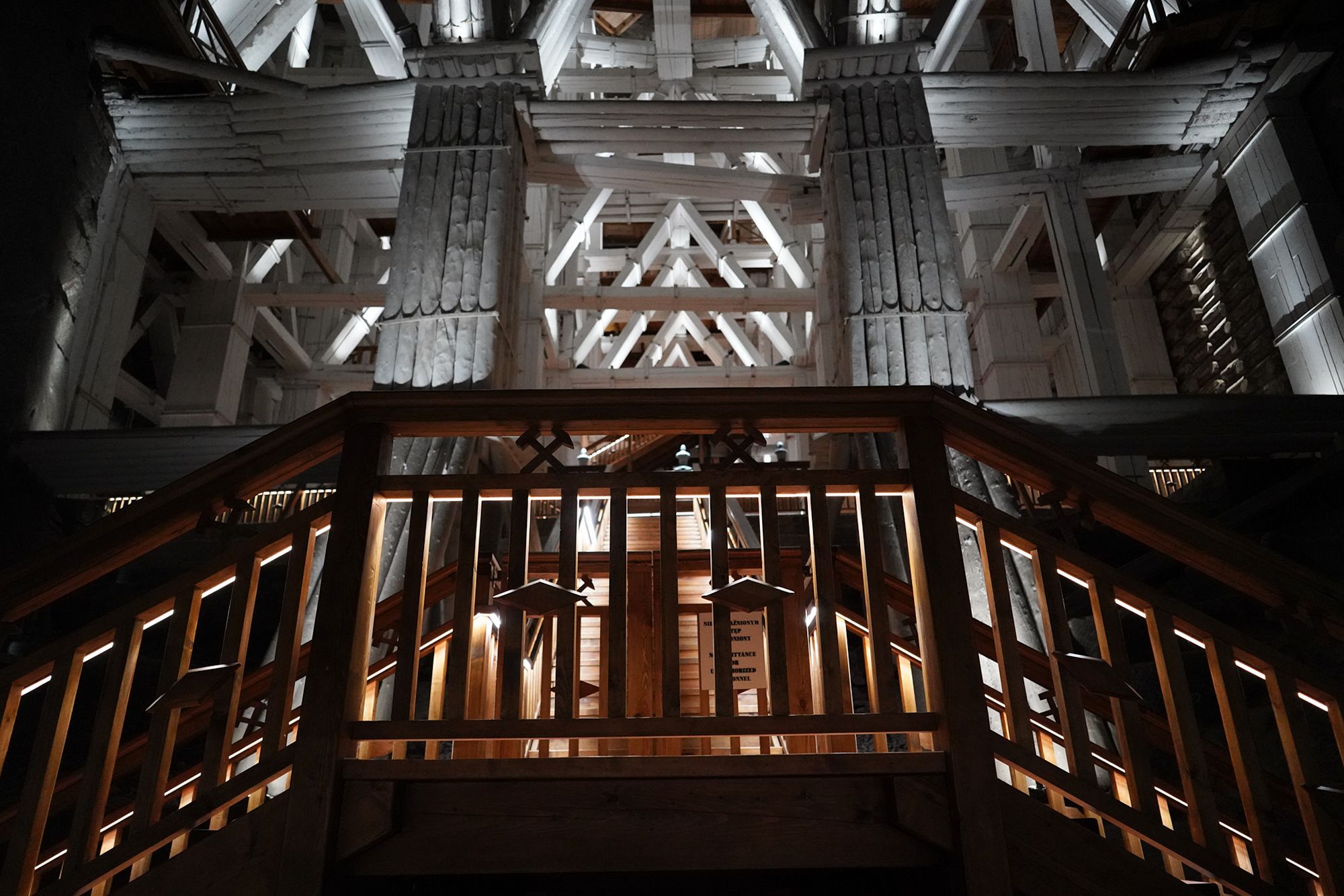
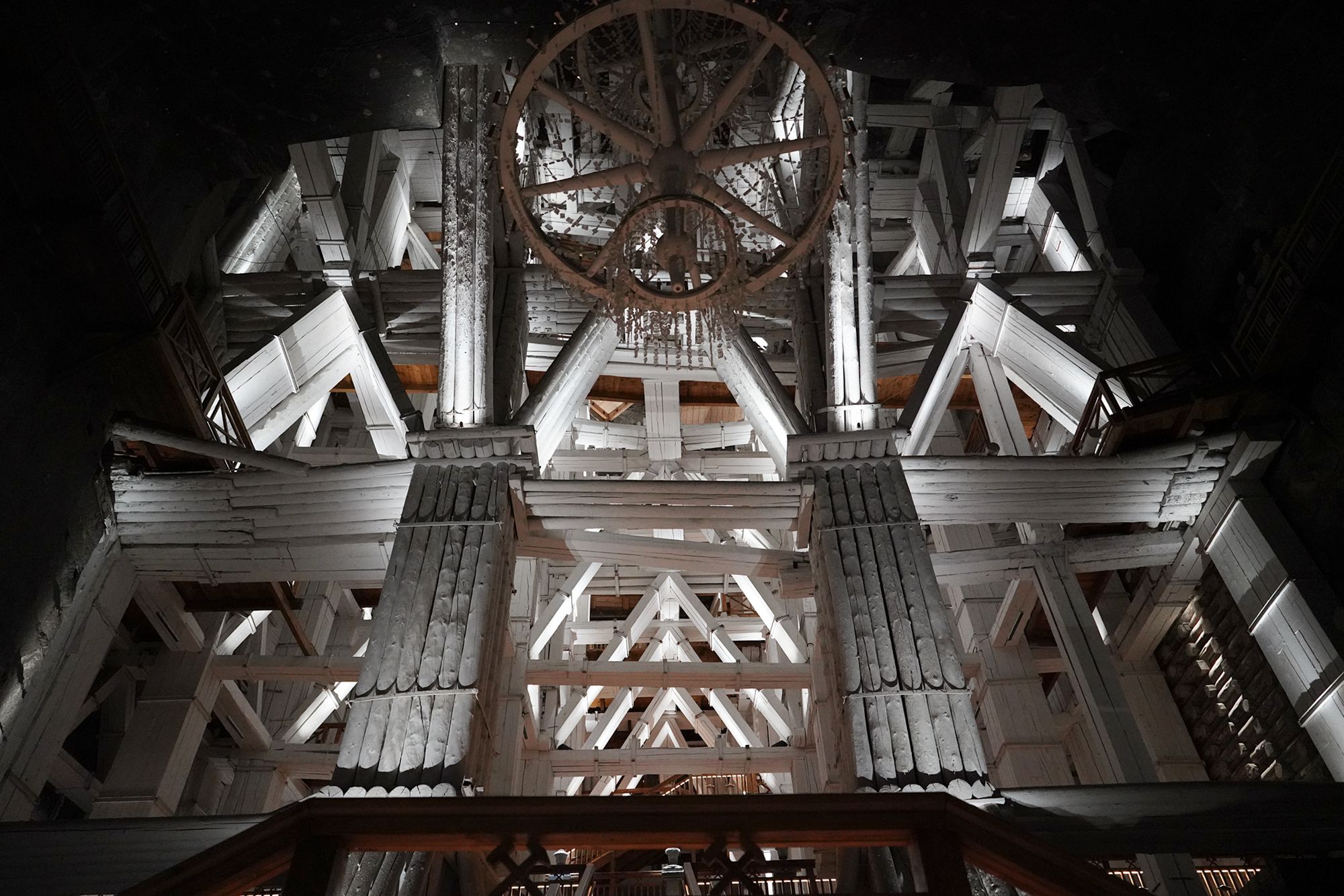
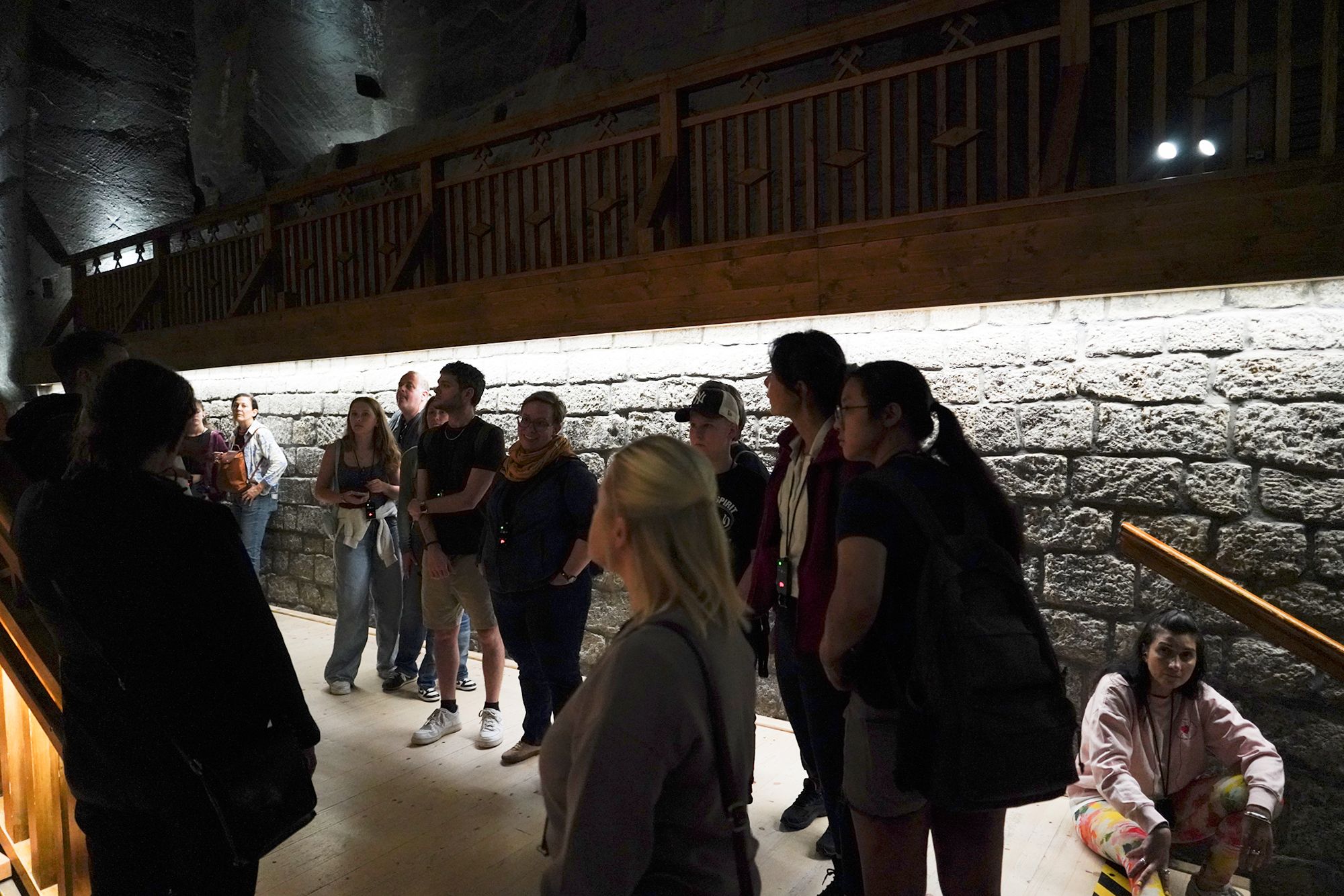
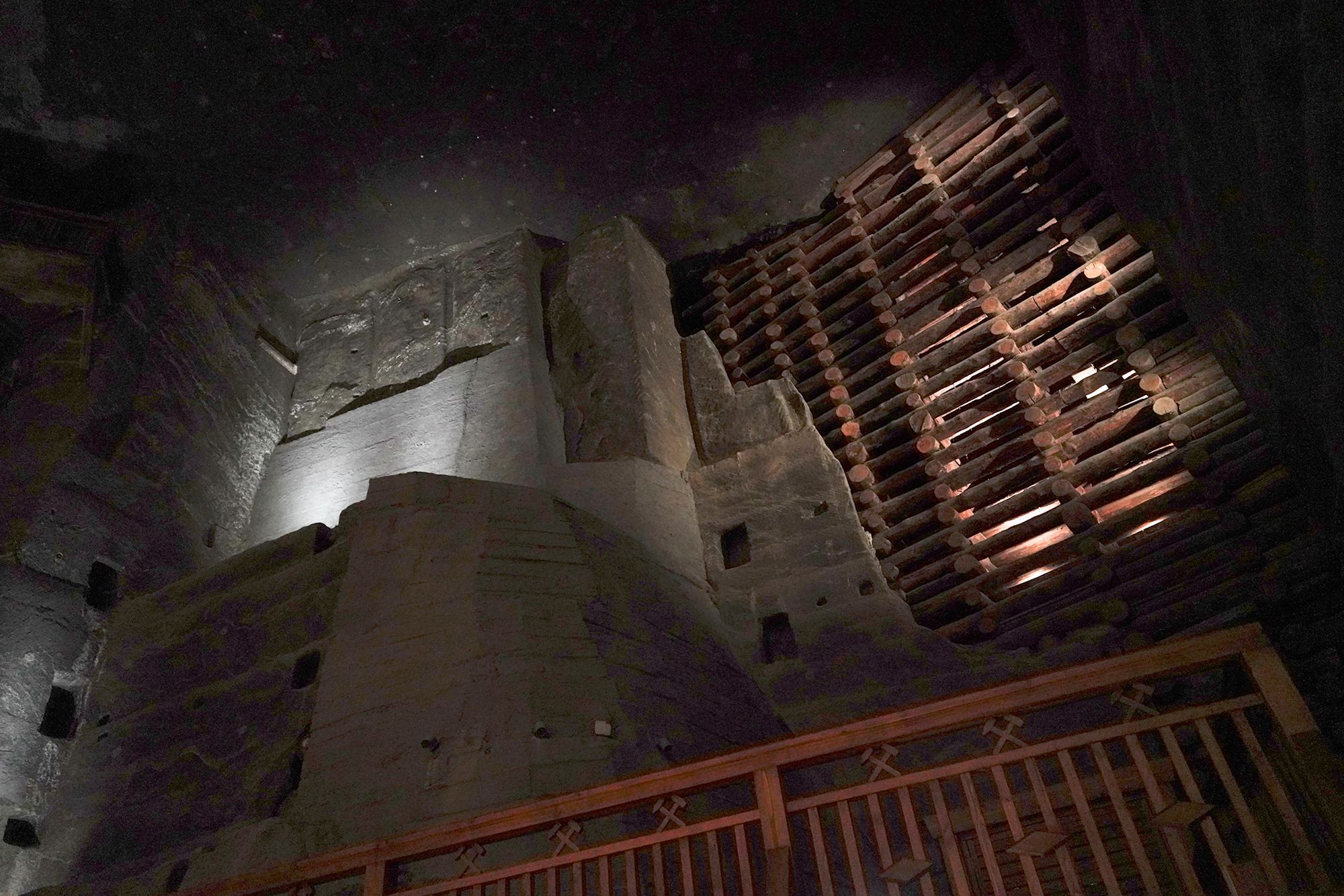
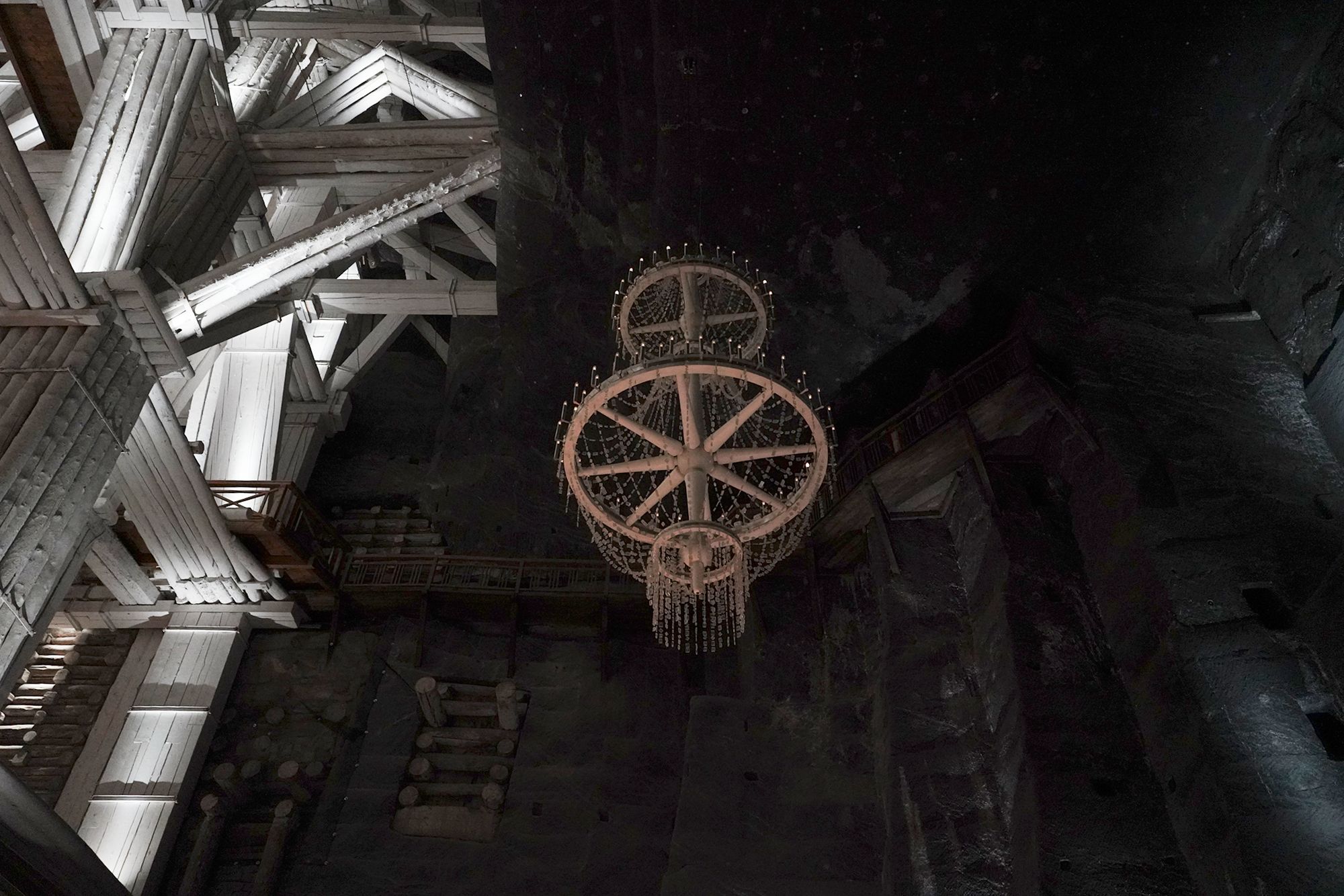
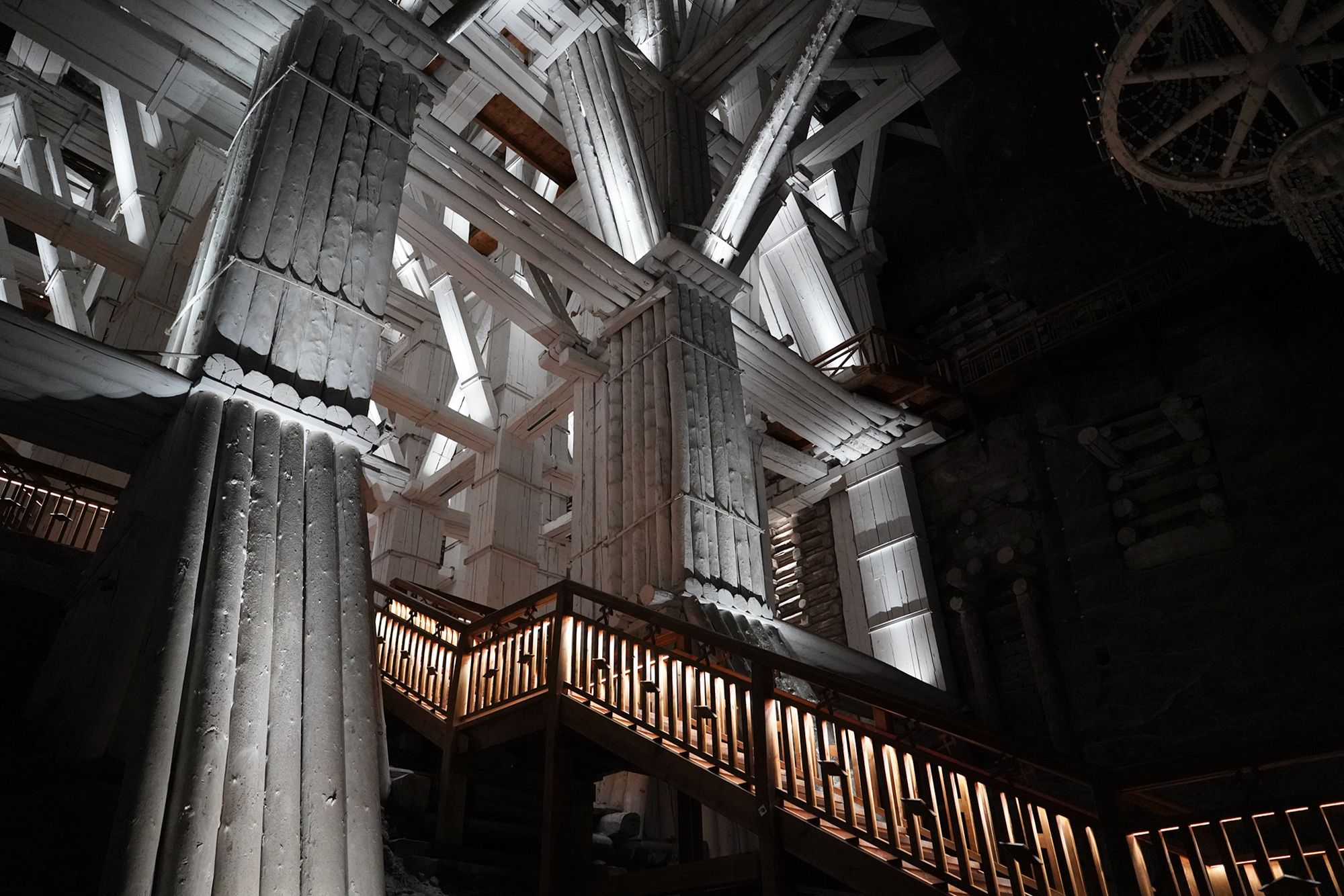
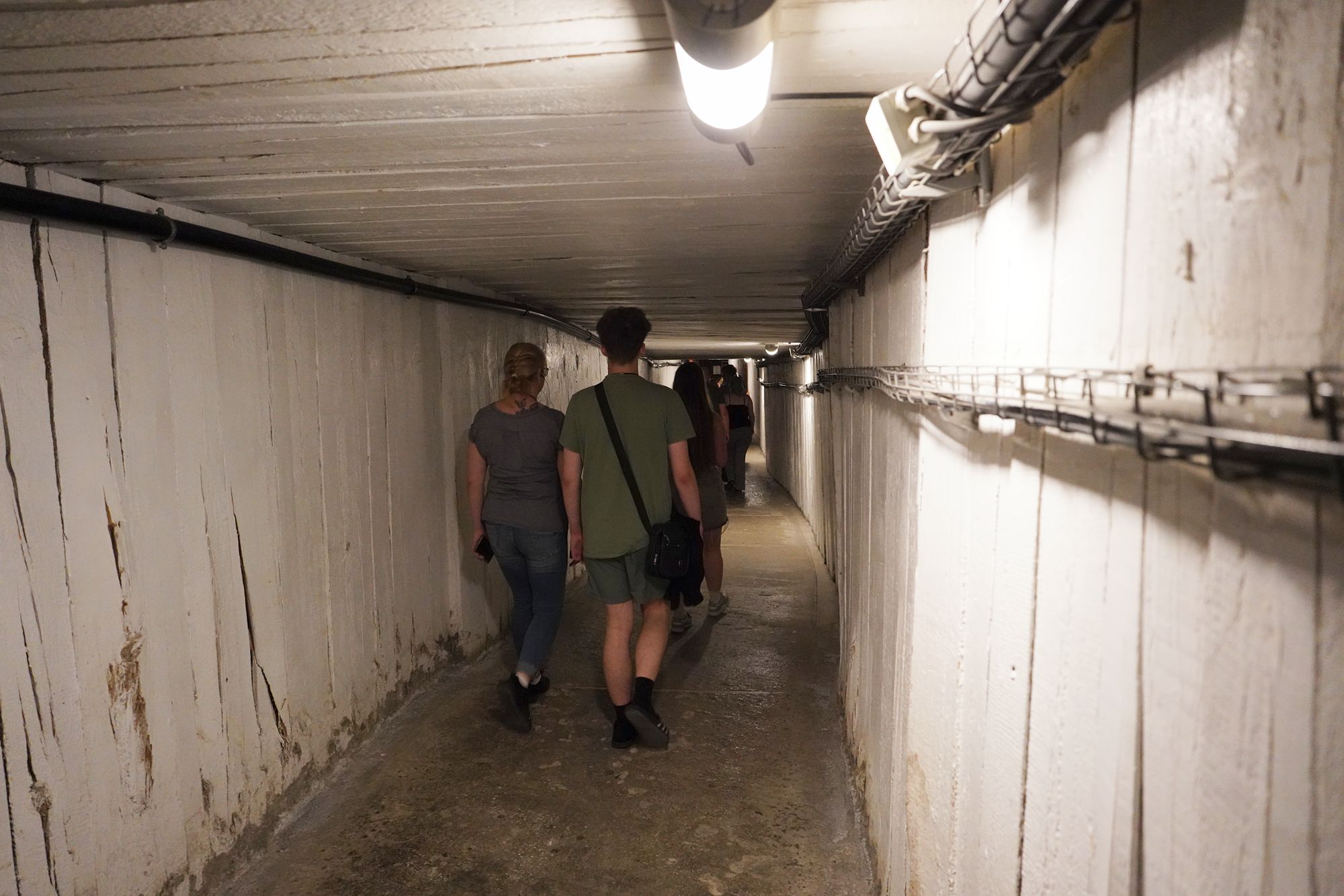
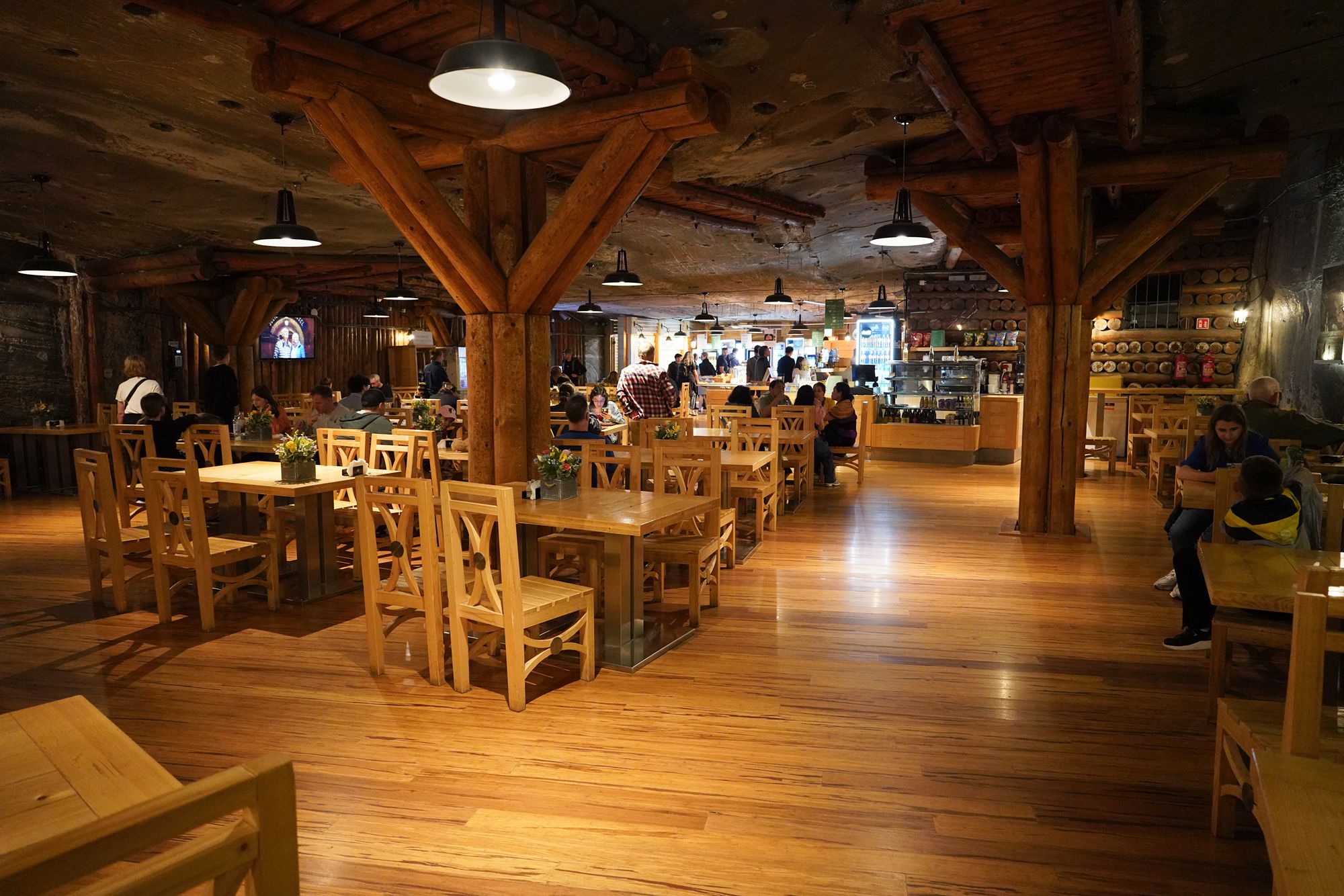
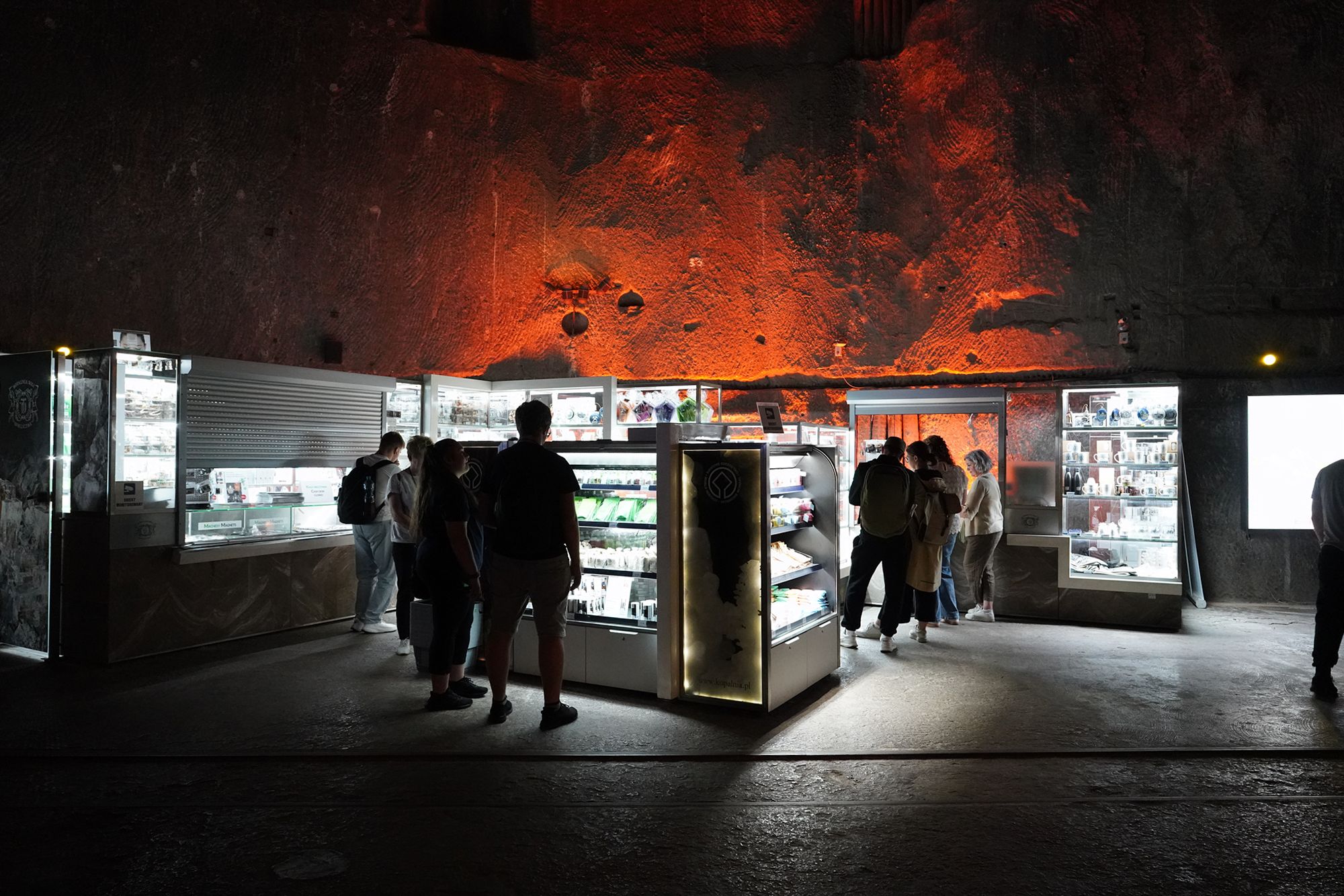
A large underground hall with food stalls and souvenir shops.
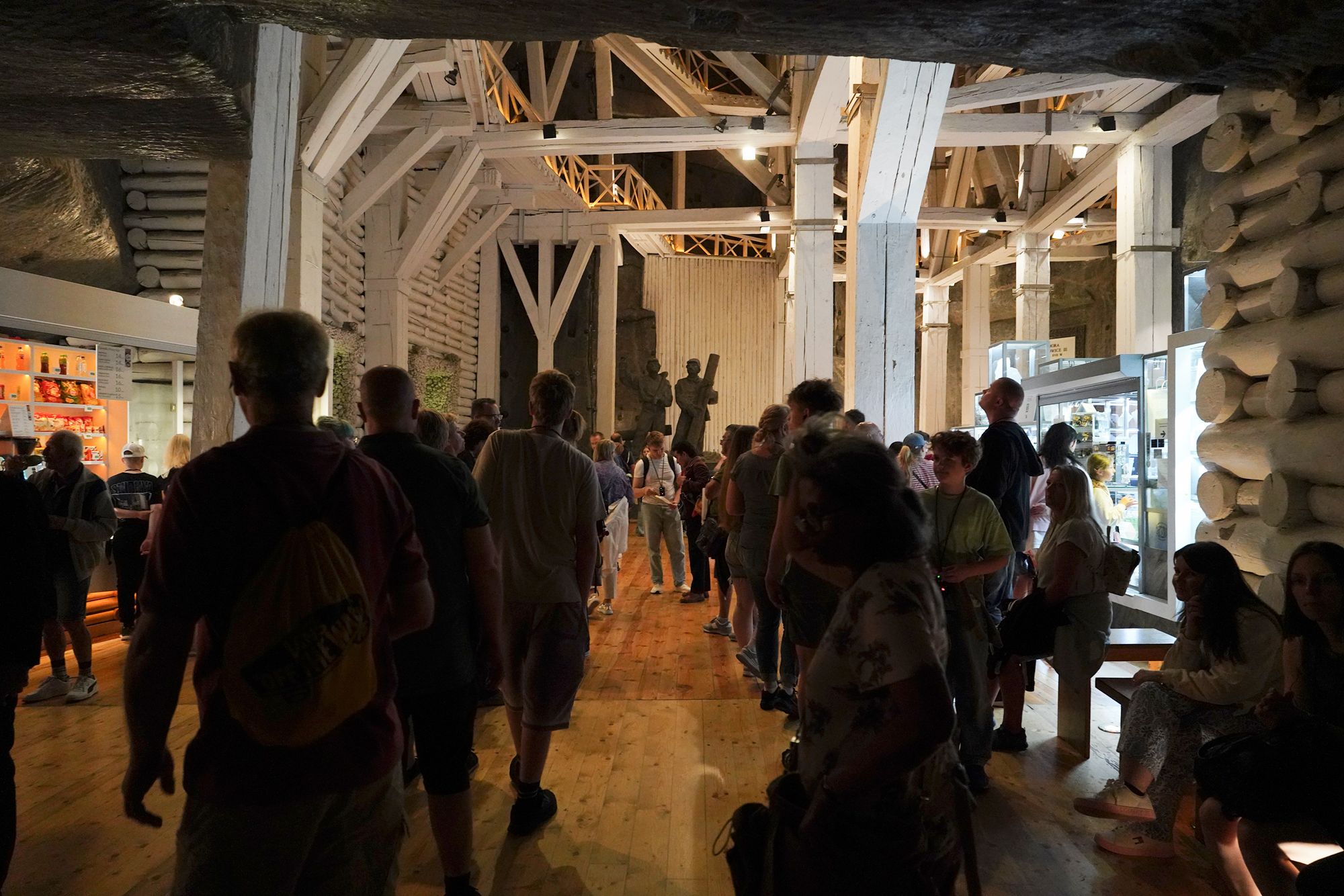
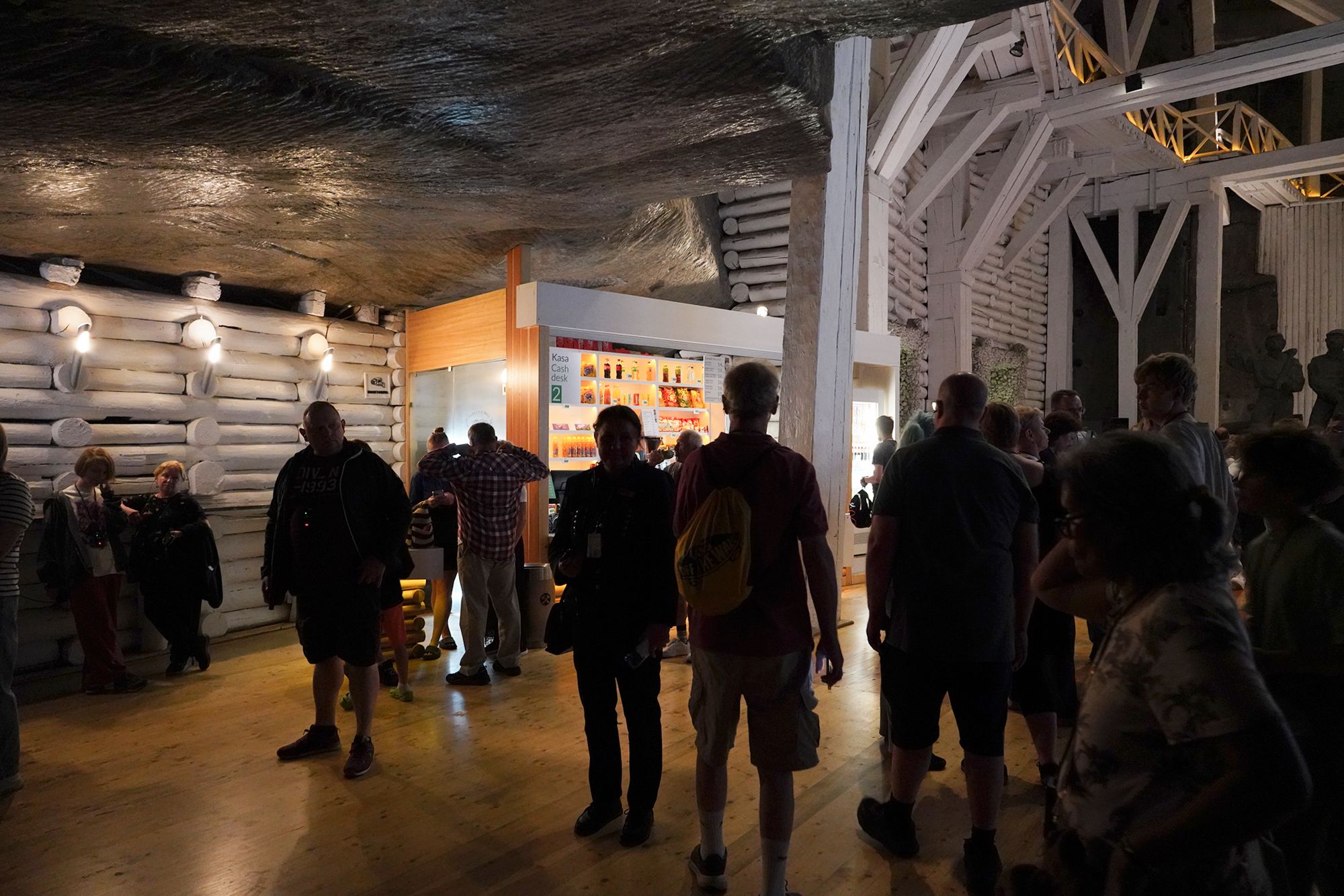
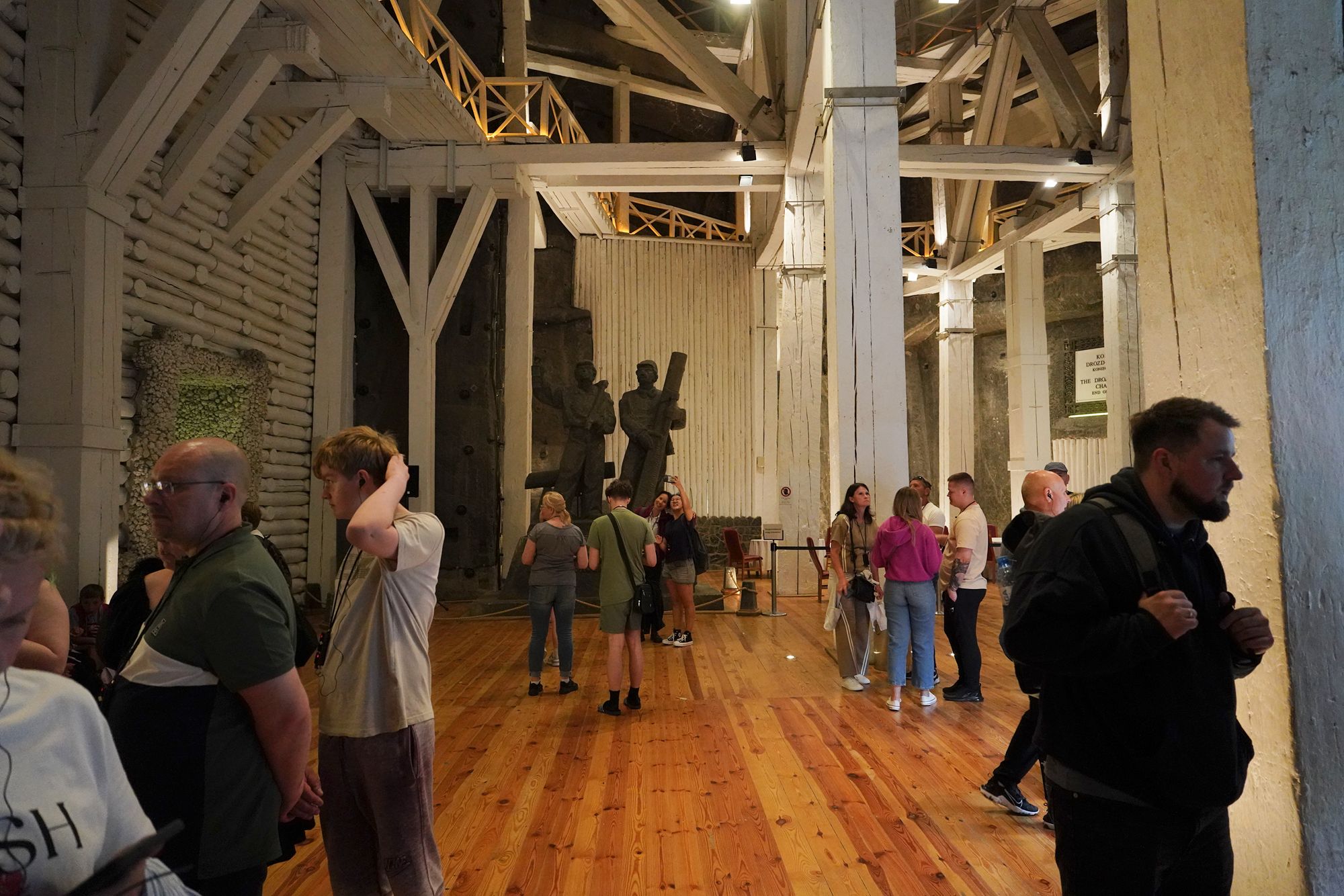
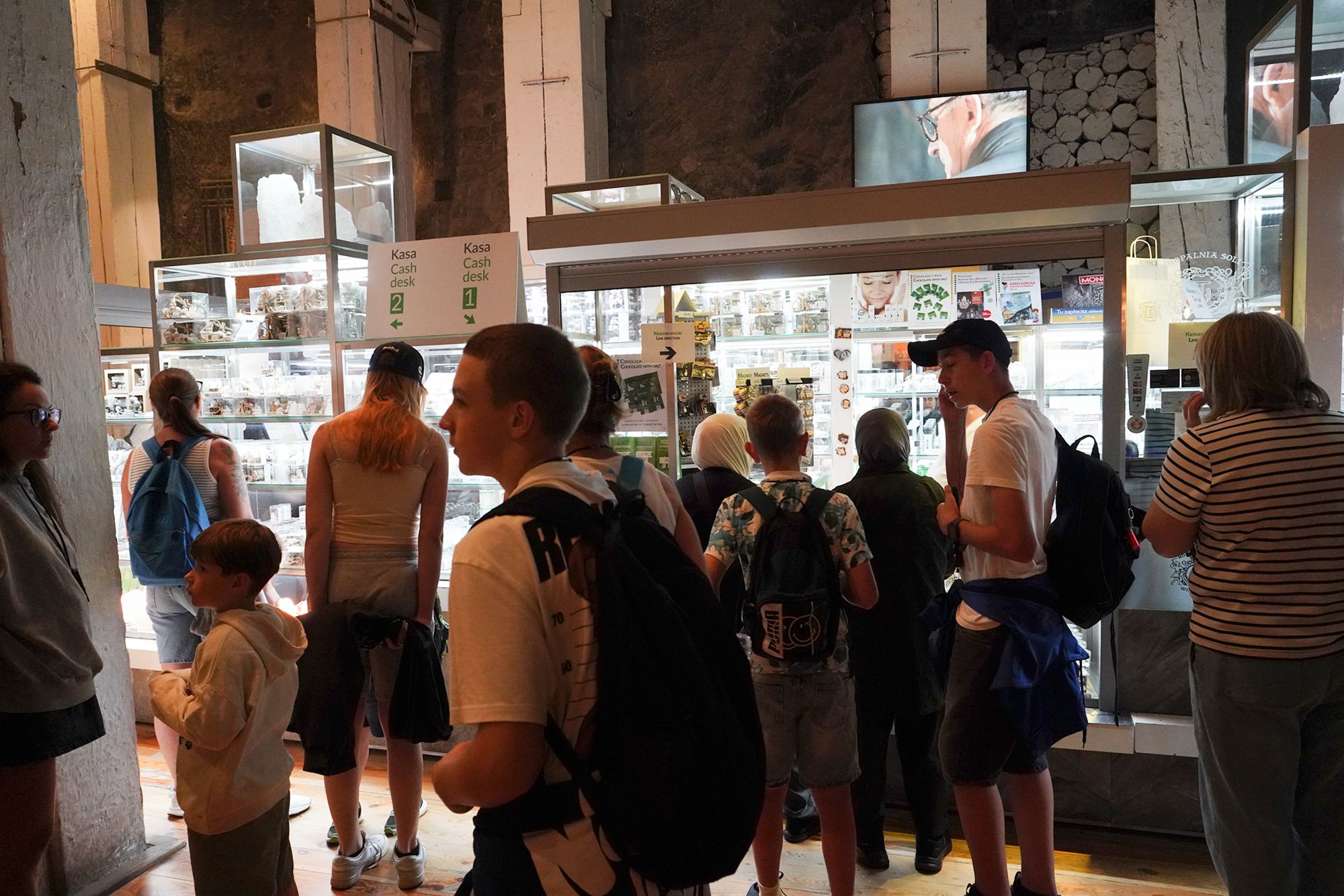
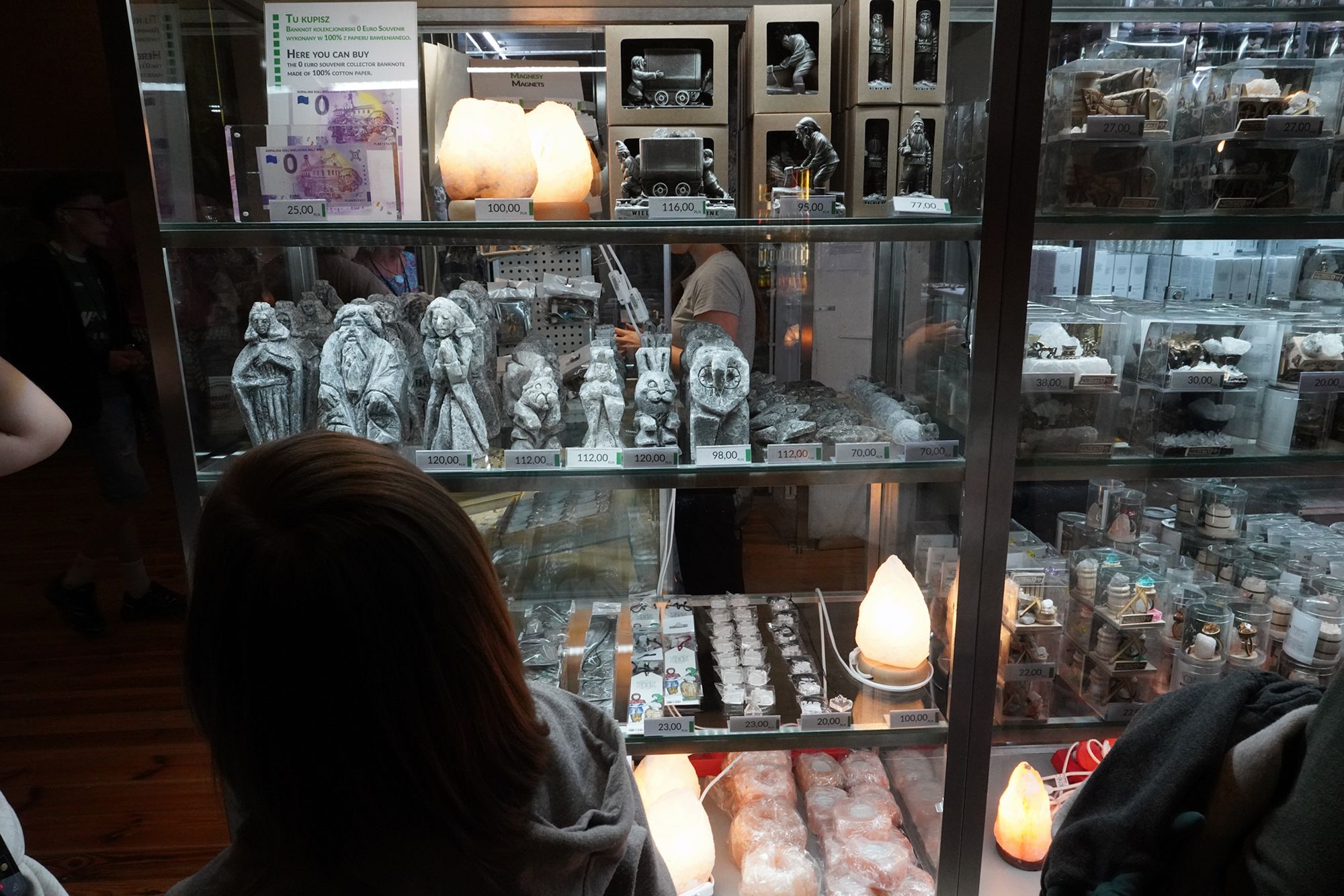
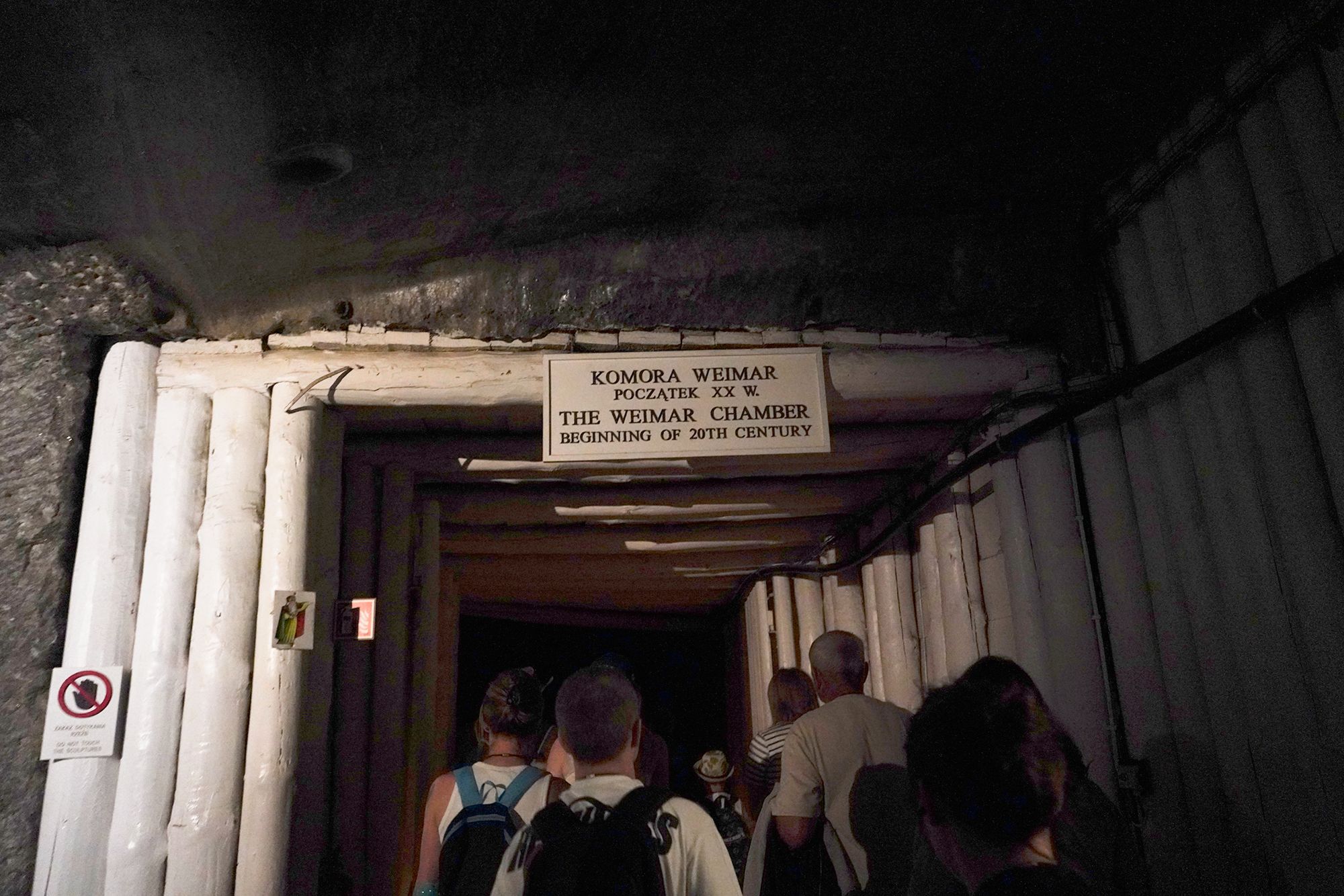
A sign identifies the Weimar Chamber, dating from the beginning of the 20th century. Heavy timber beams support its low ceiling.
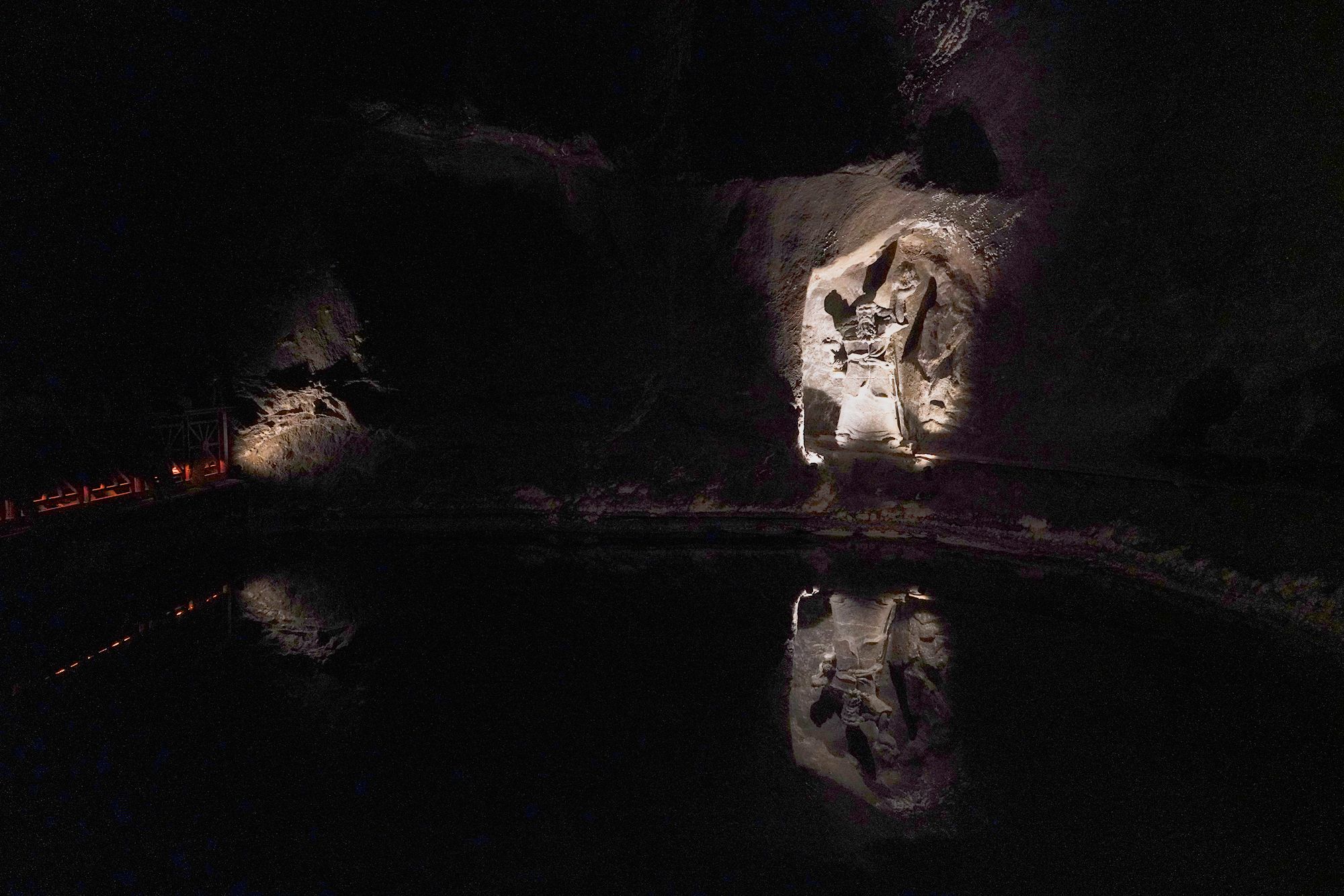
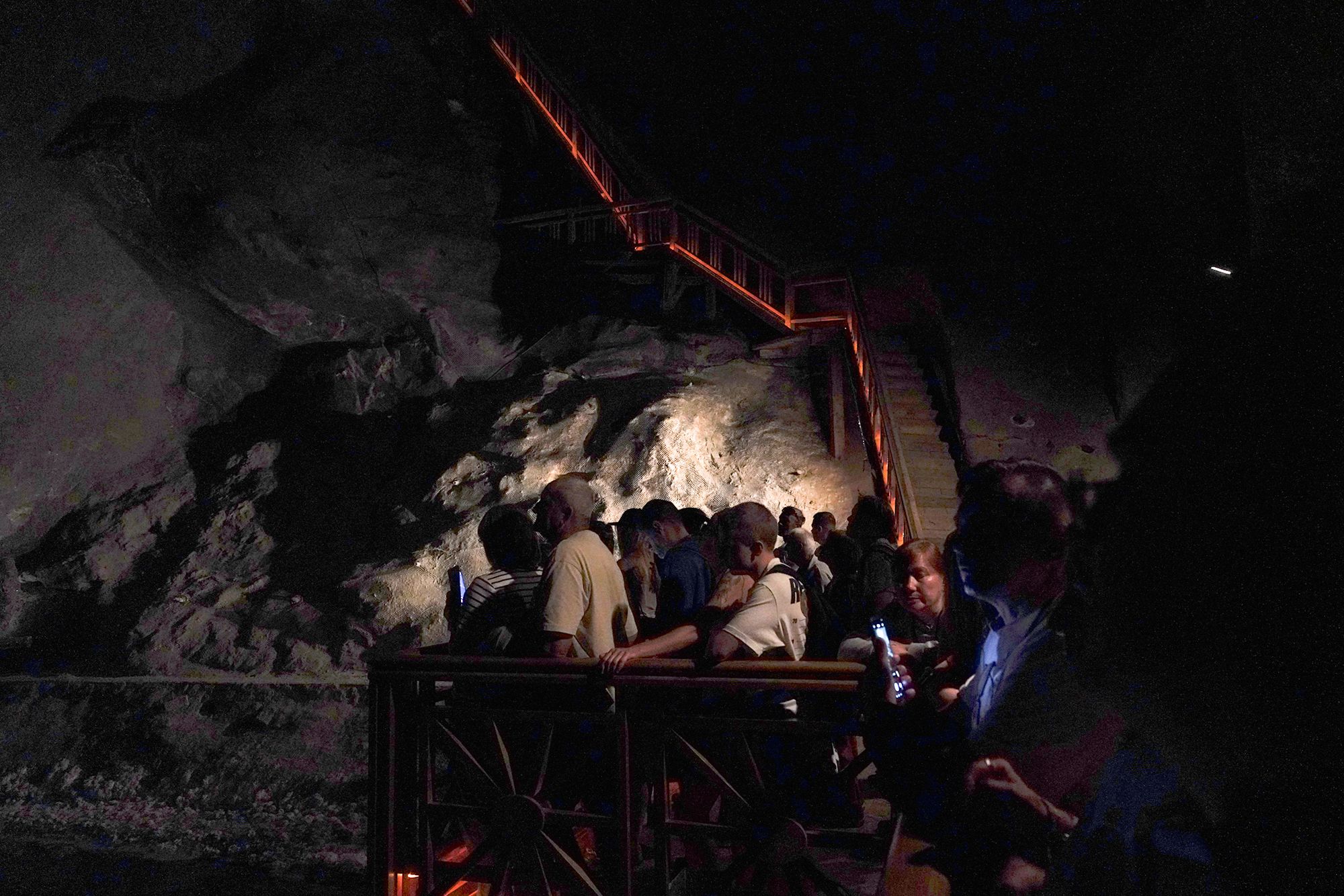
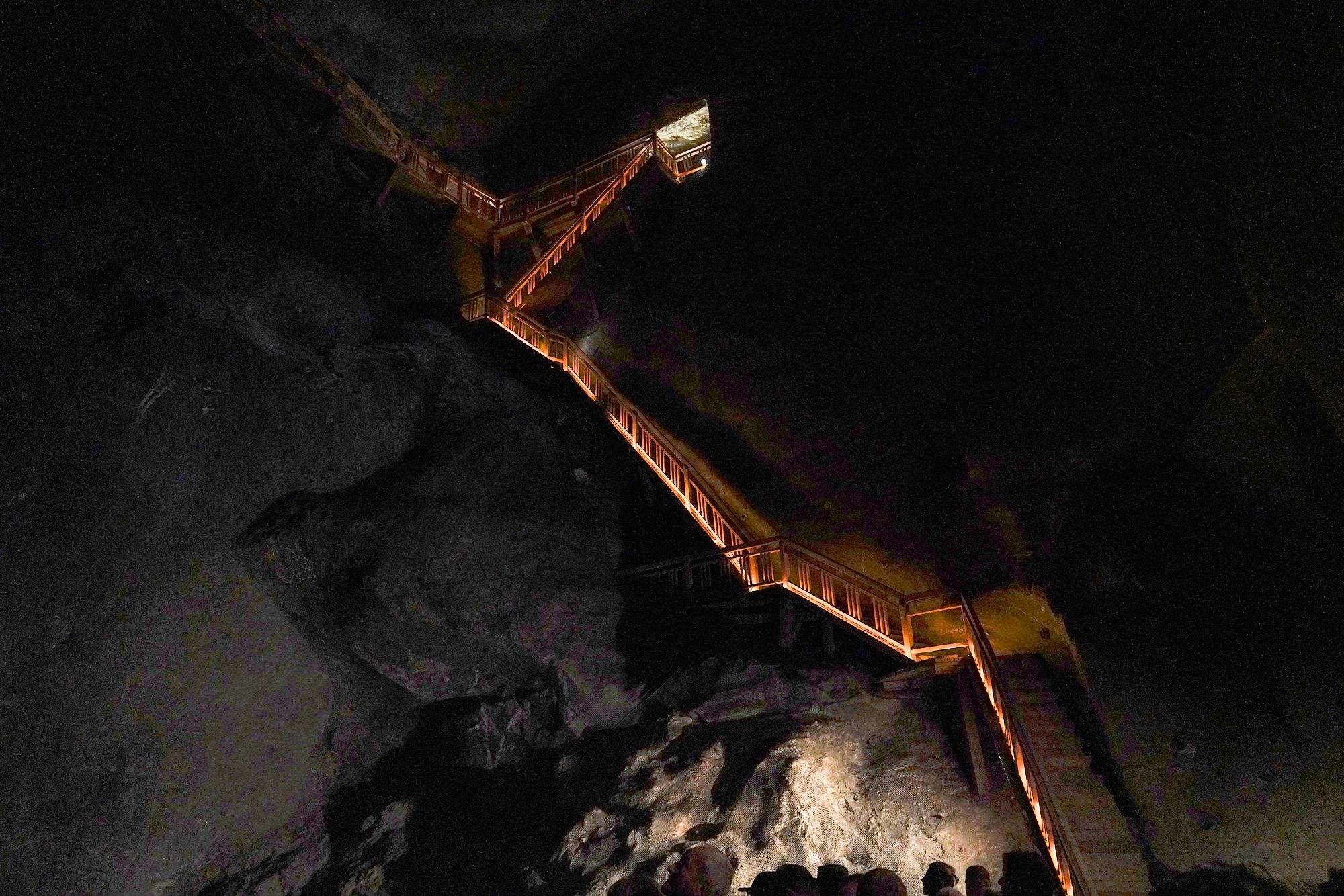
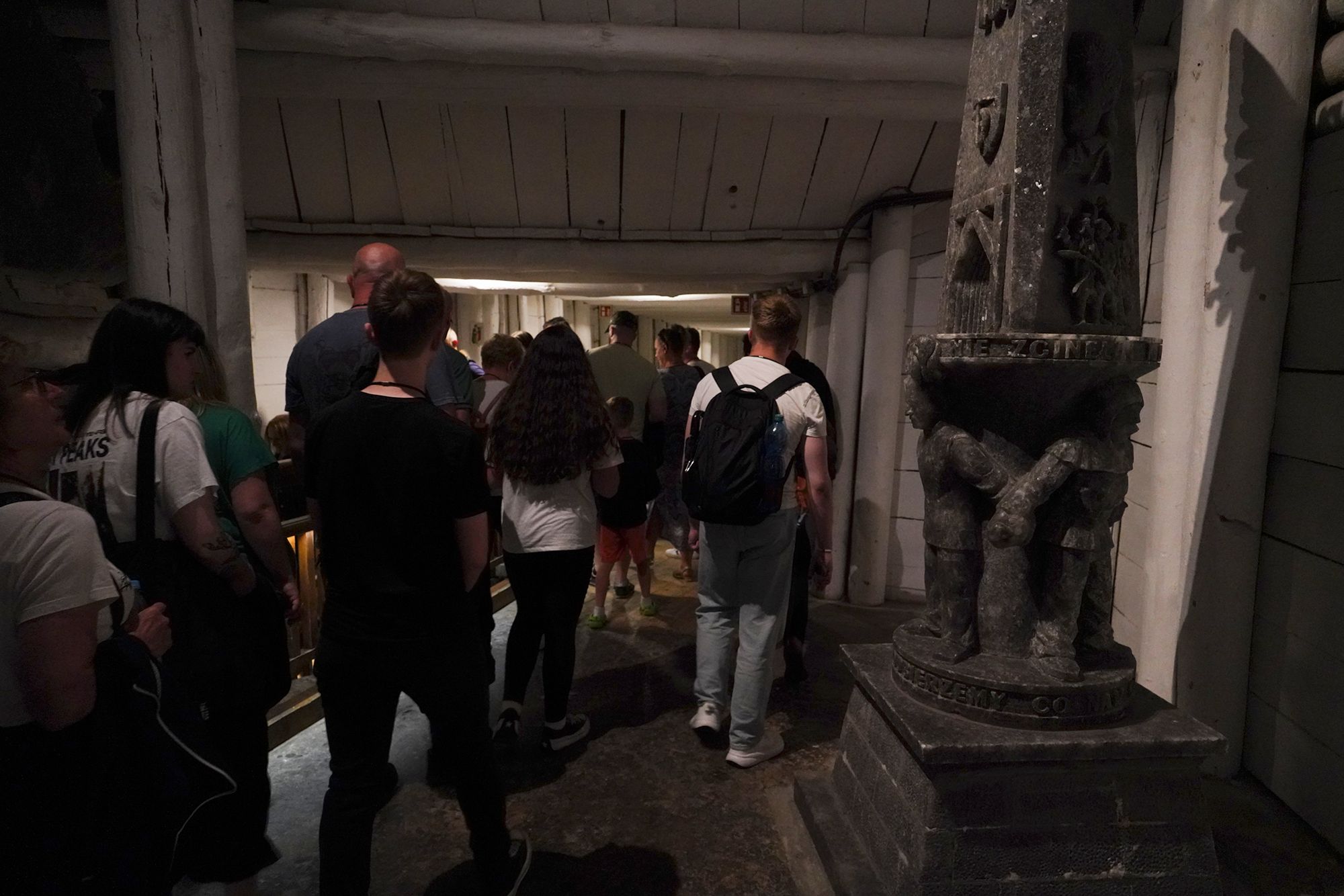
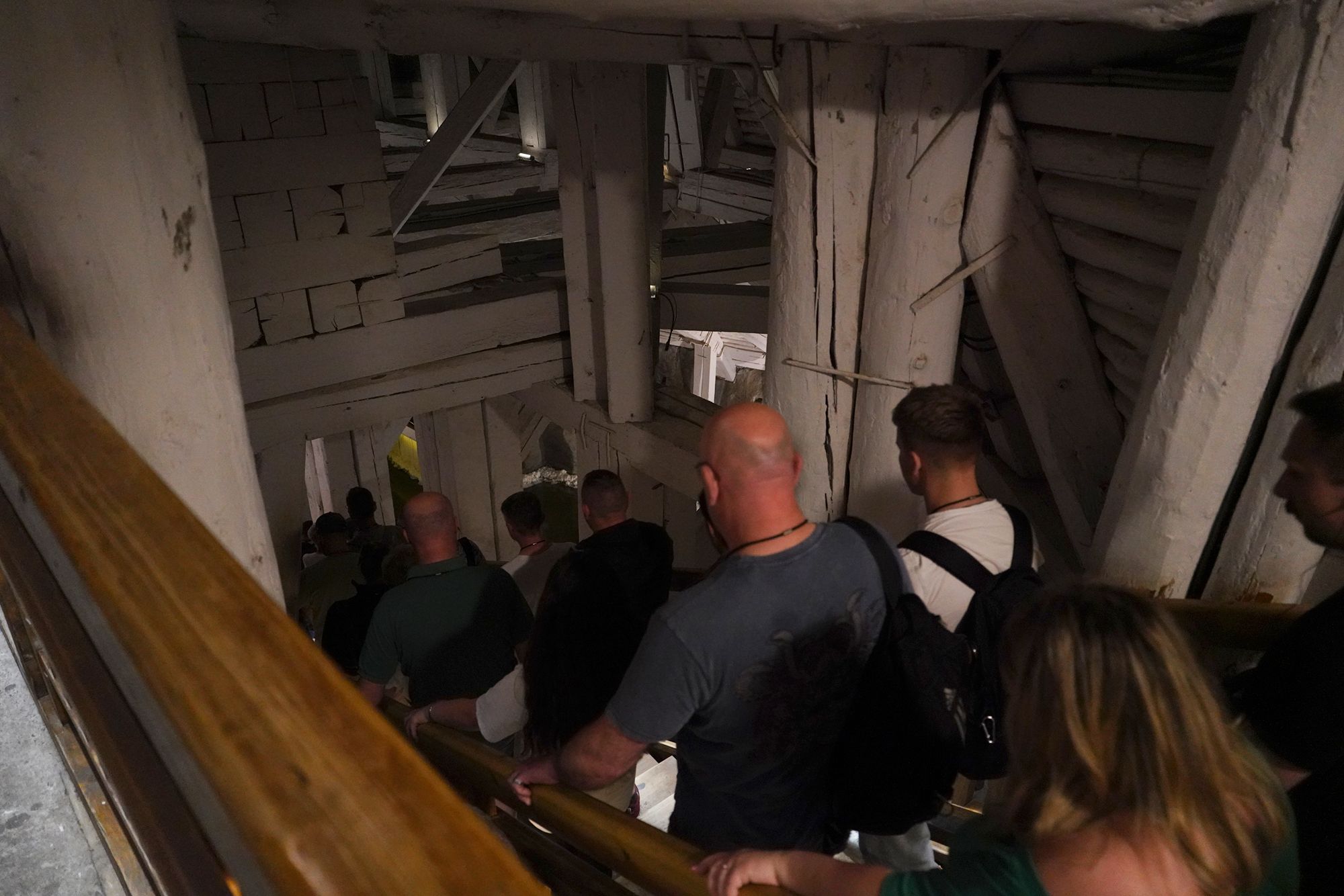
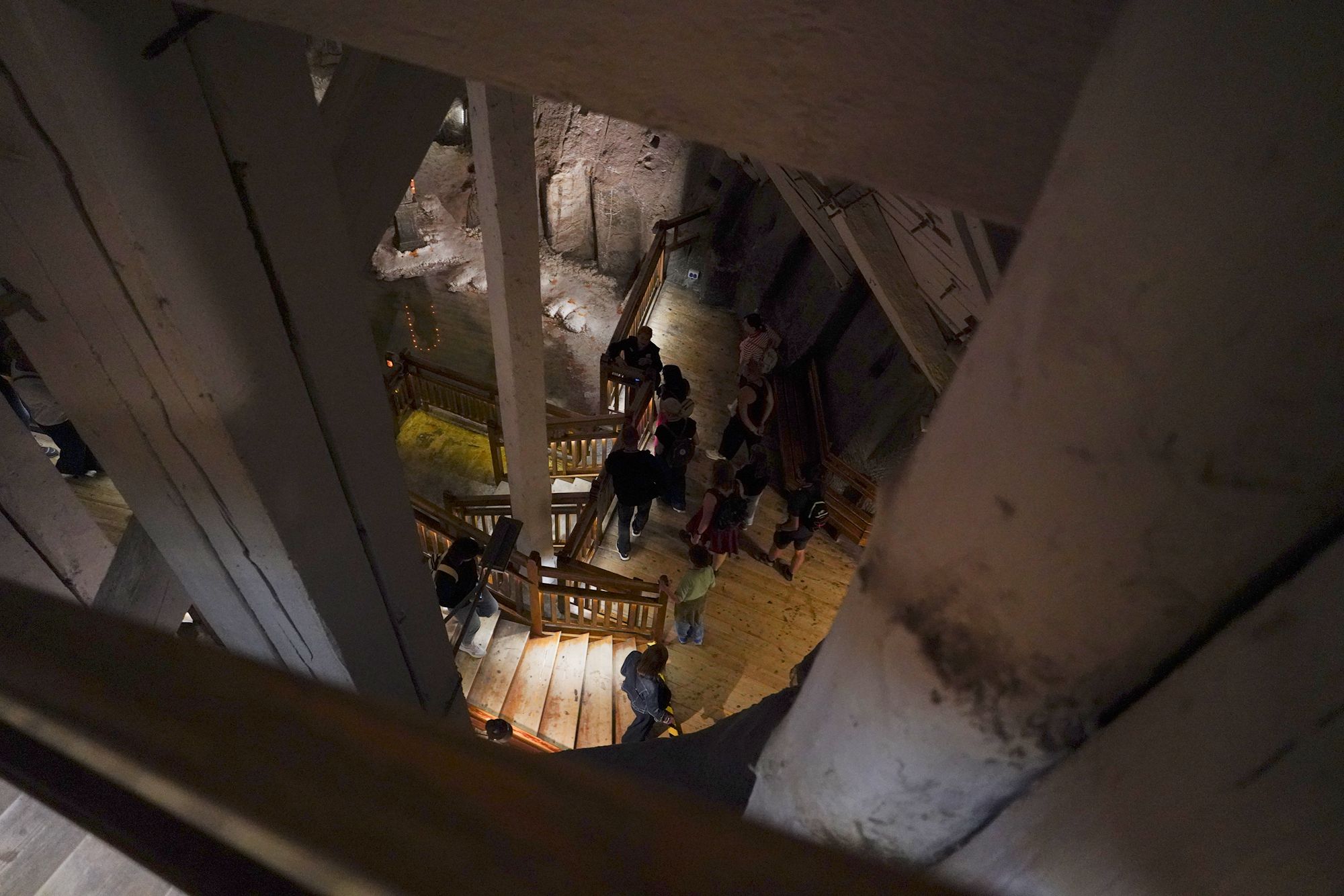
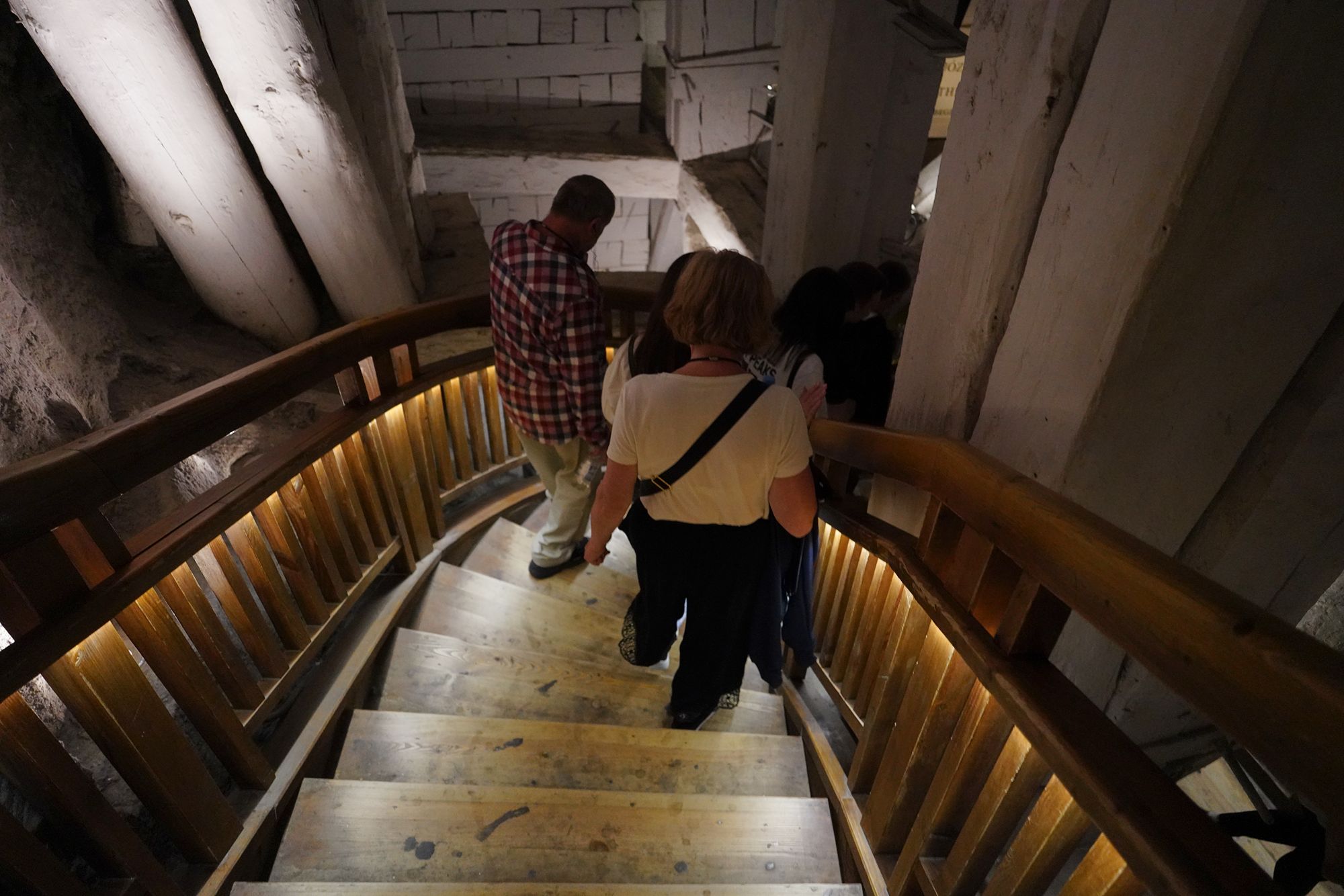
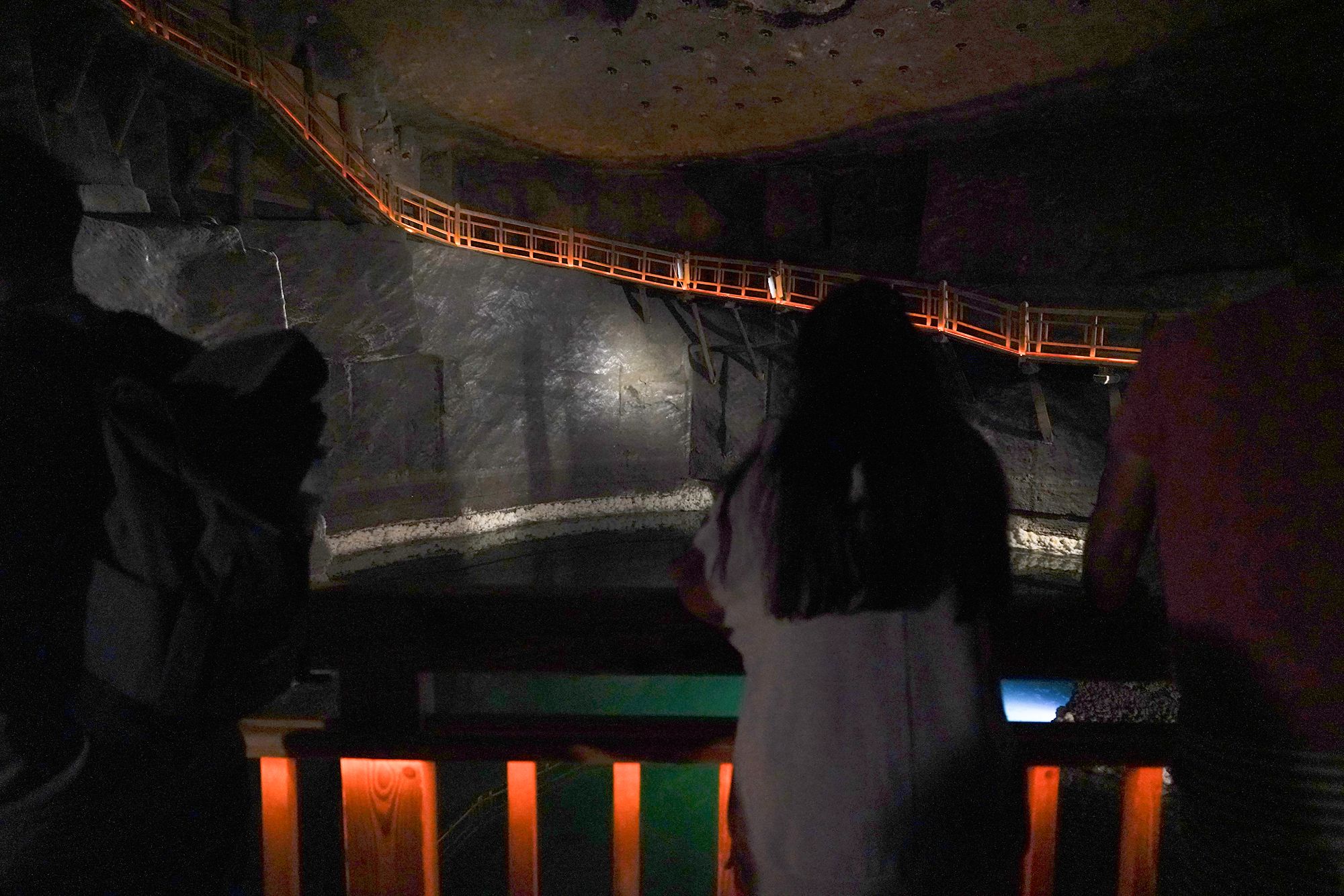
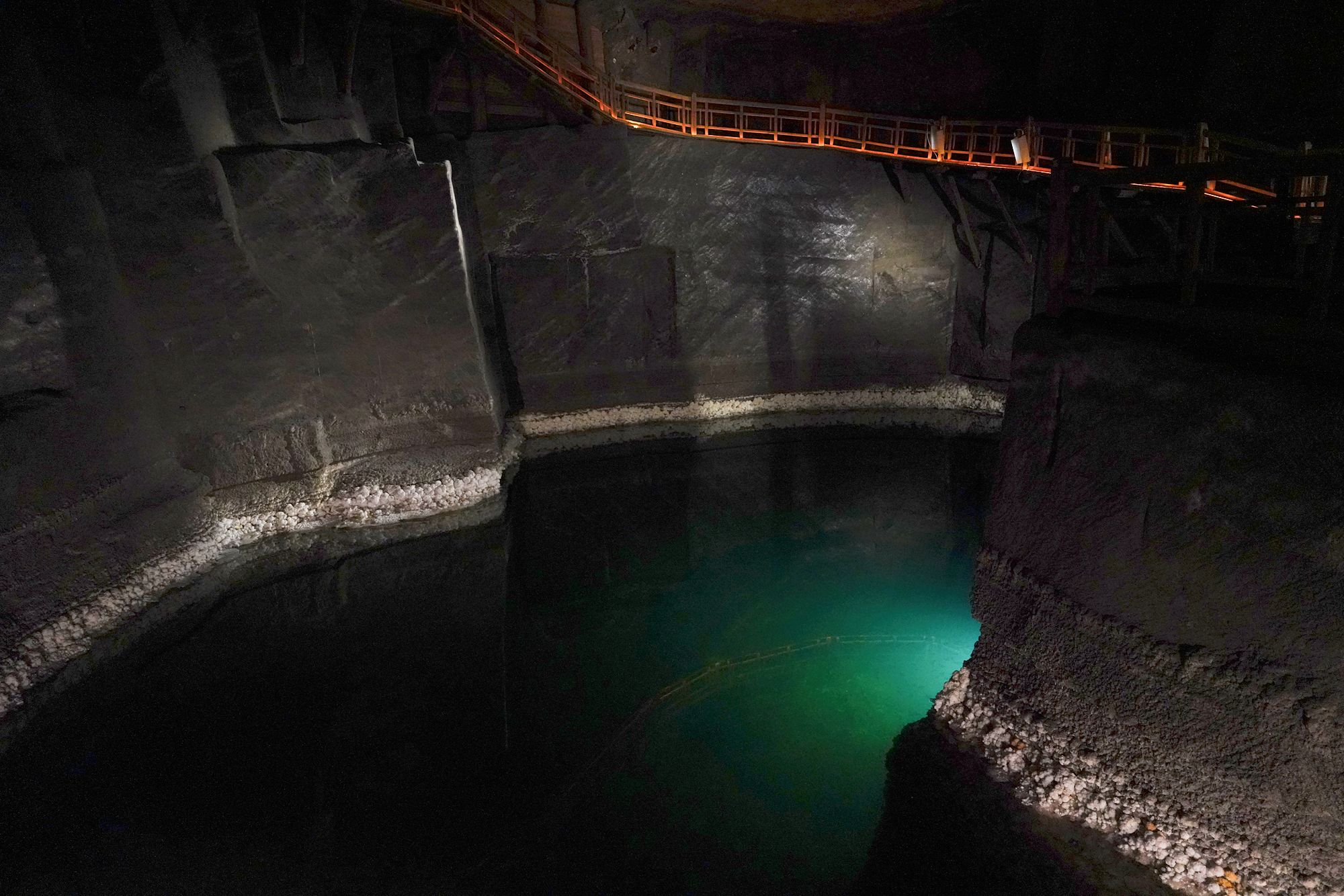
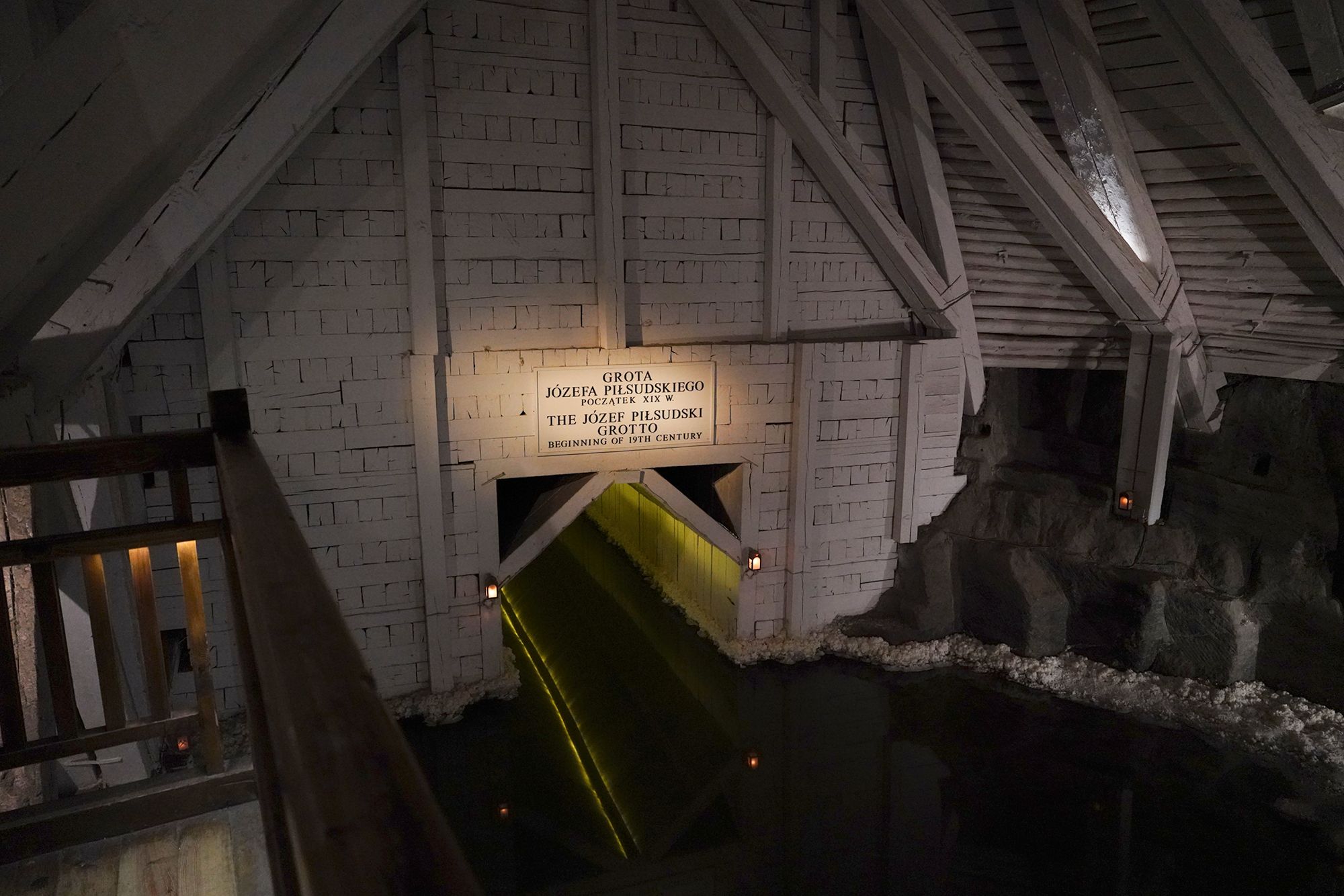
The sign marks the Józef Piłsudski Grotto, dating from the early 19th century. A narrow walkway descends beside a pool of water.
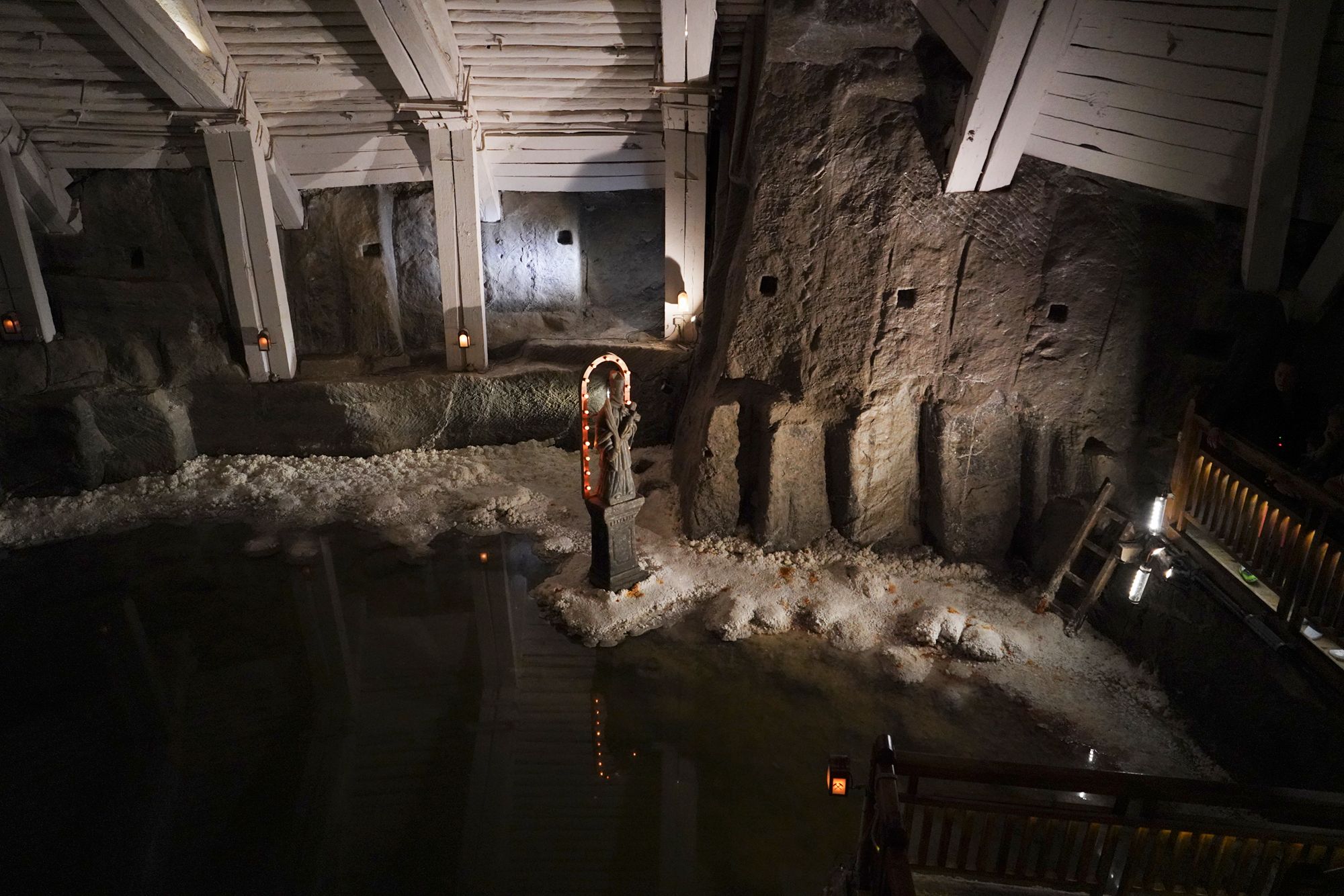
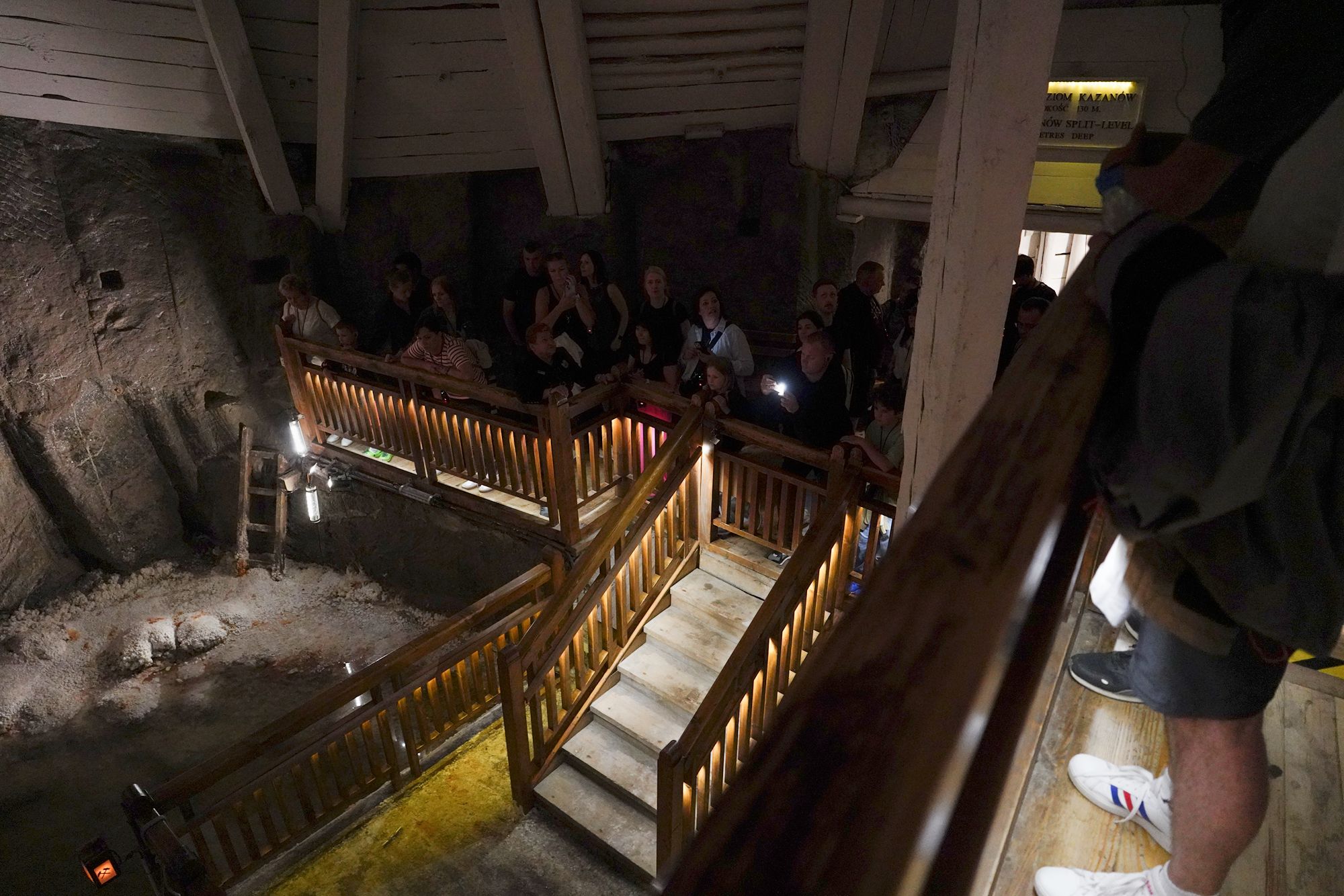
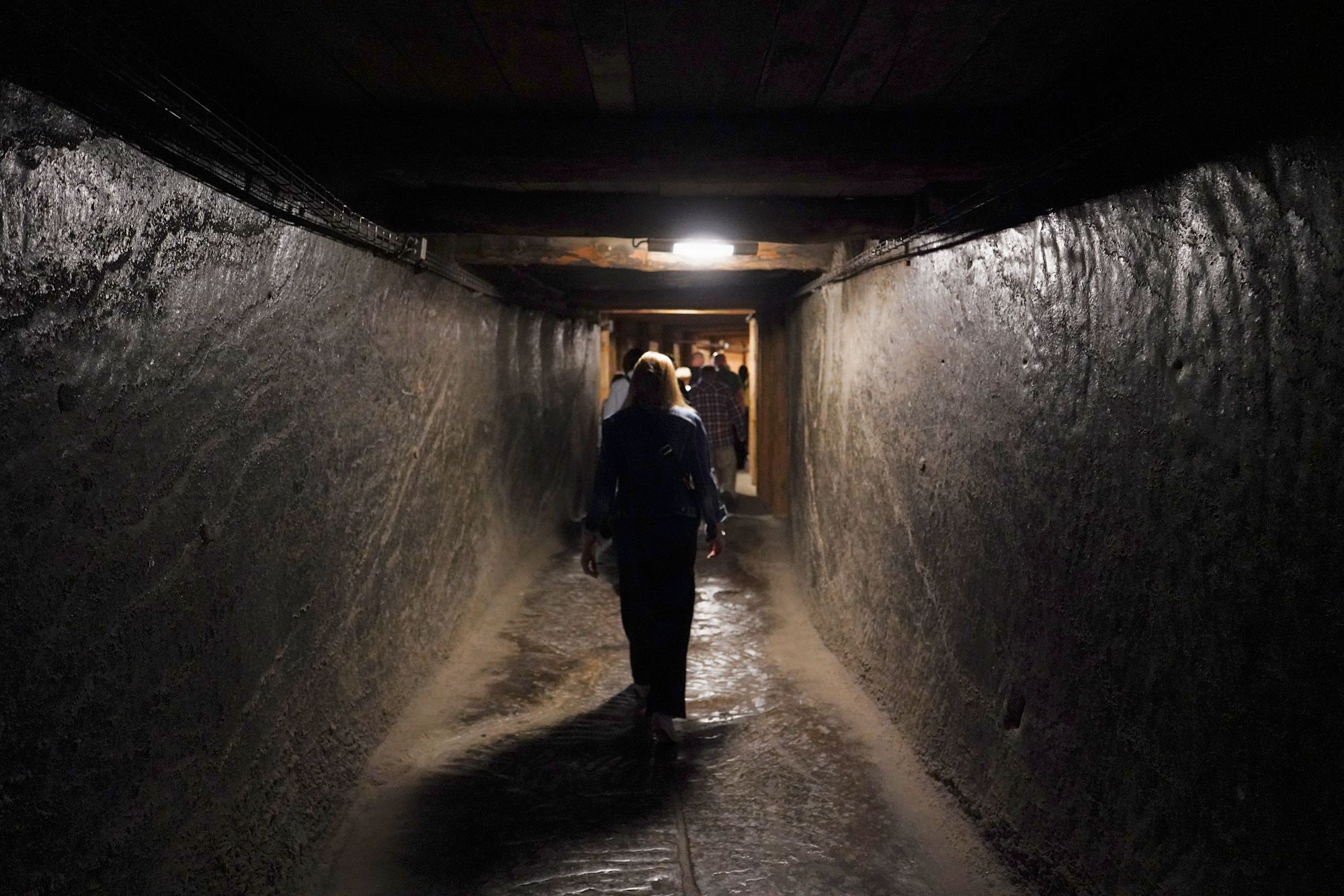
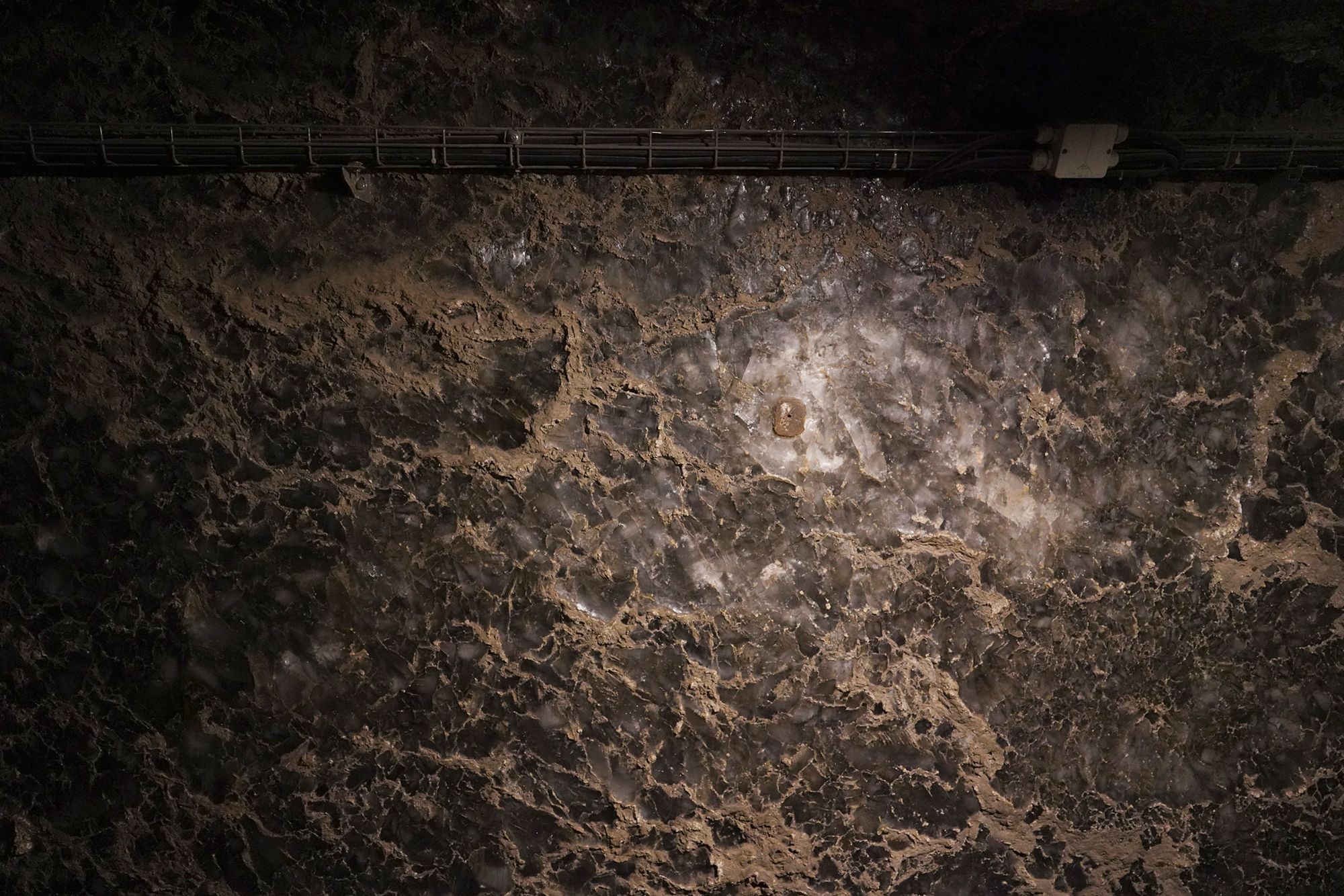
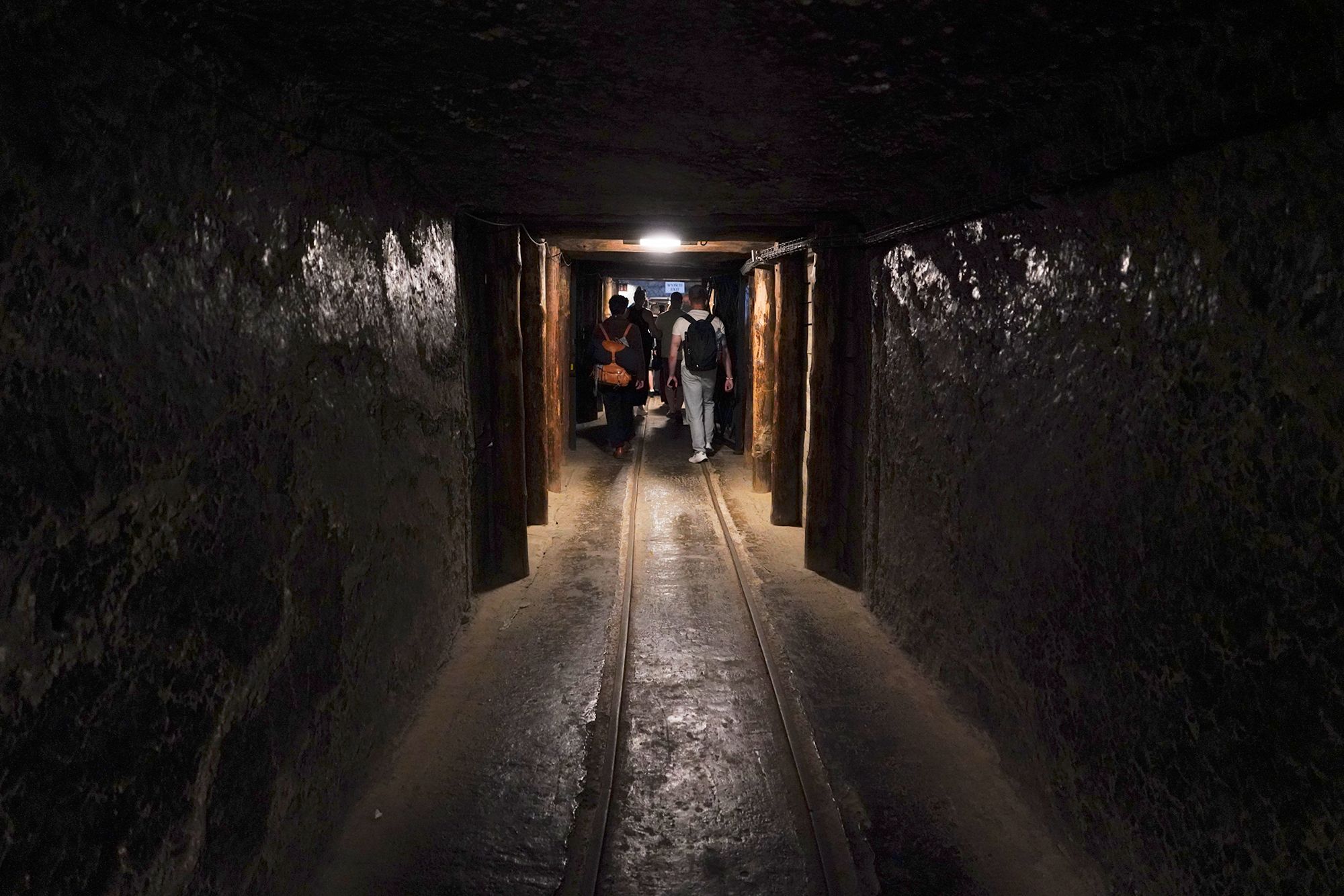
We came to another area where visitors could buy food.
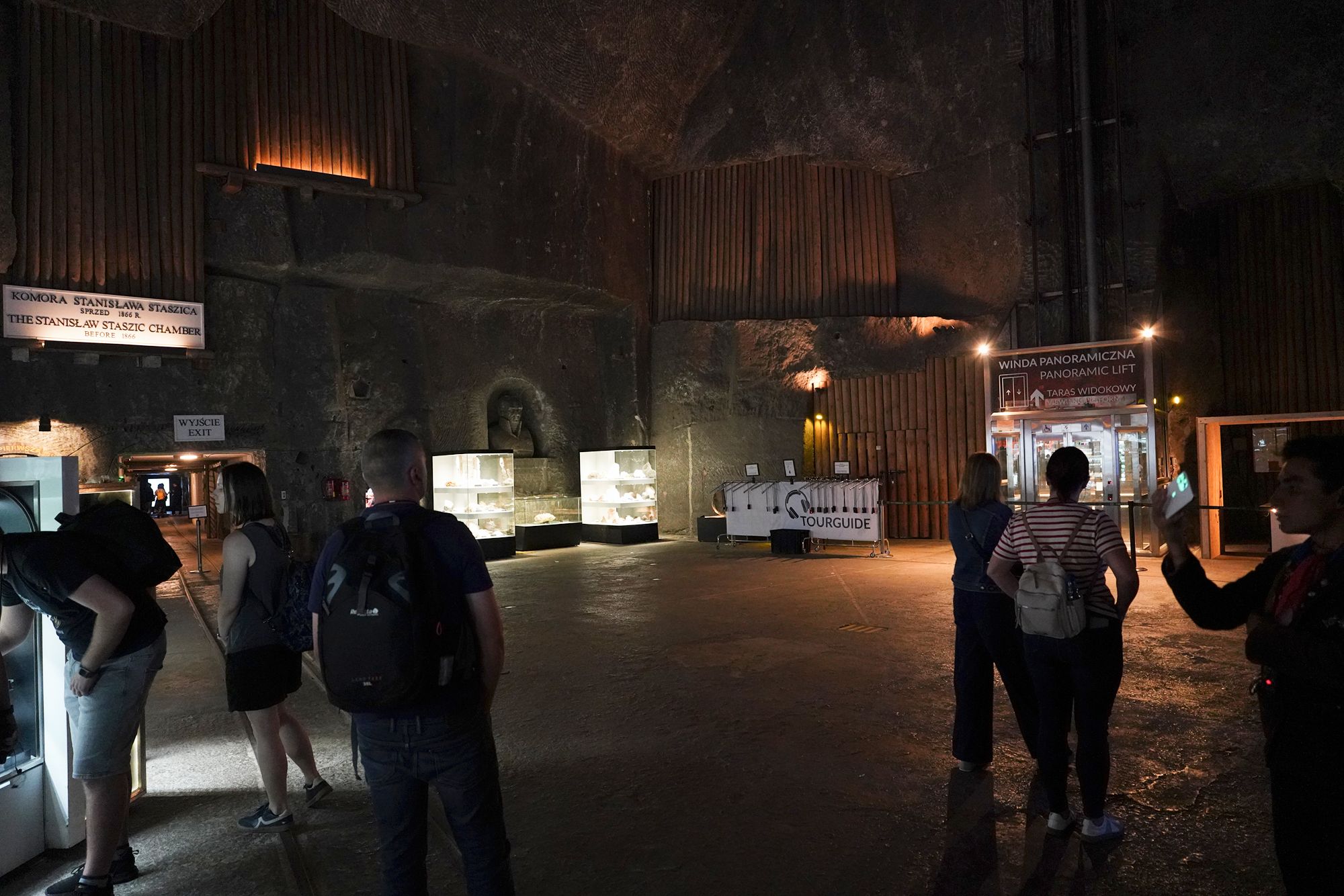
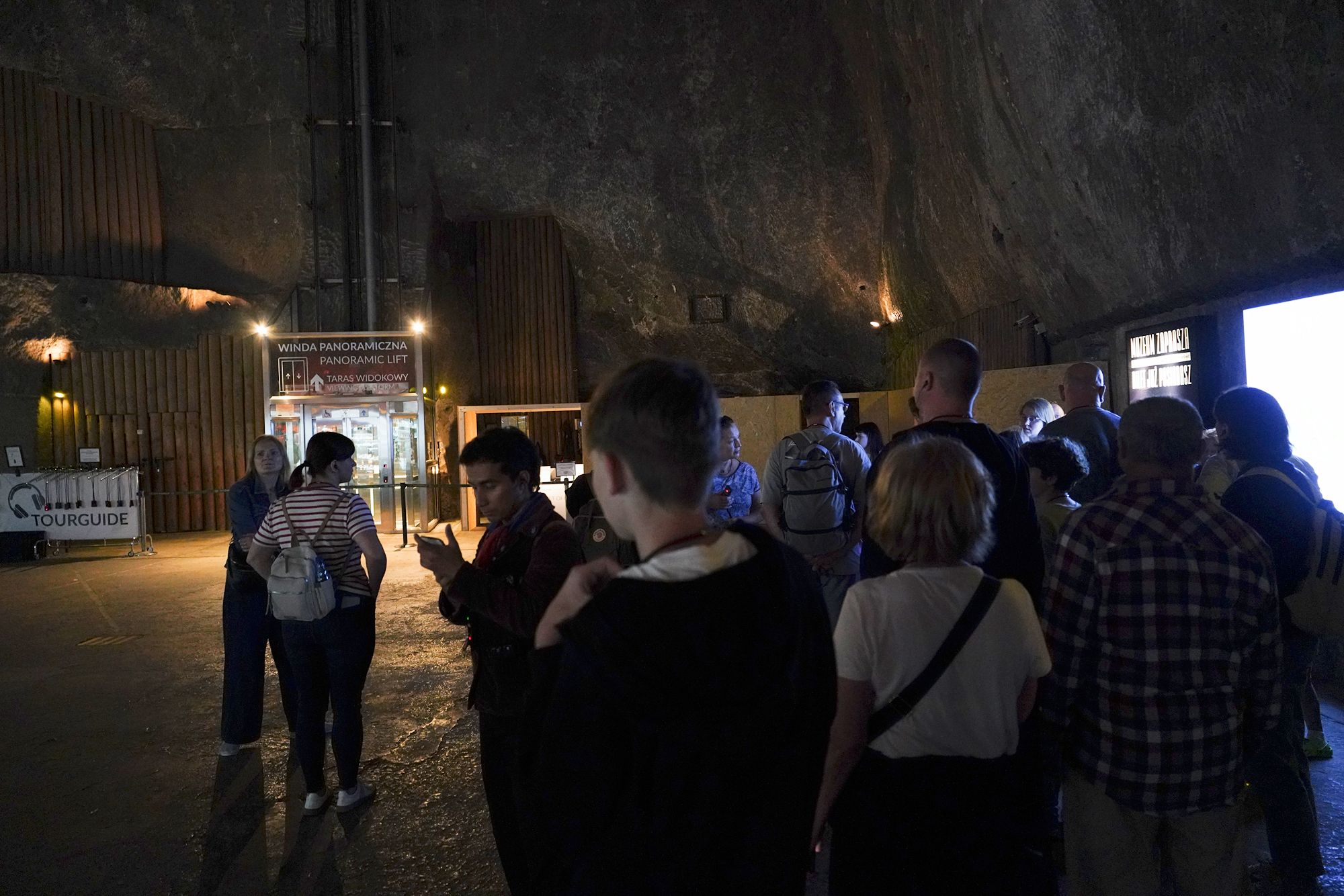
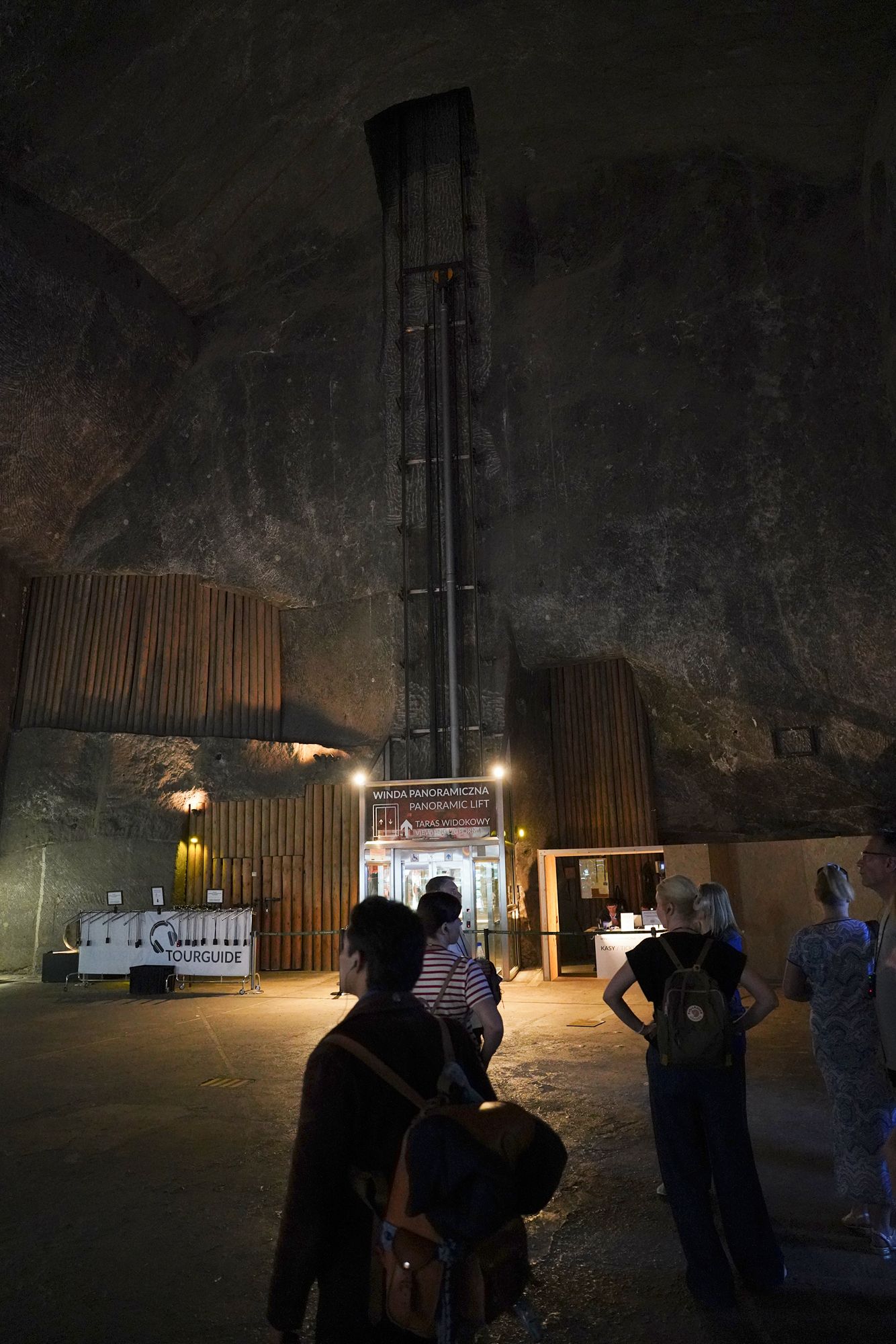
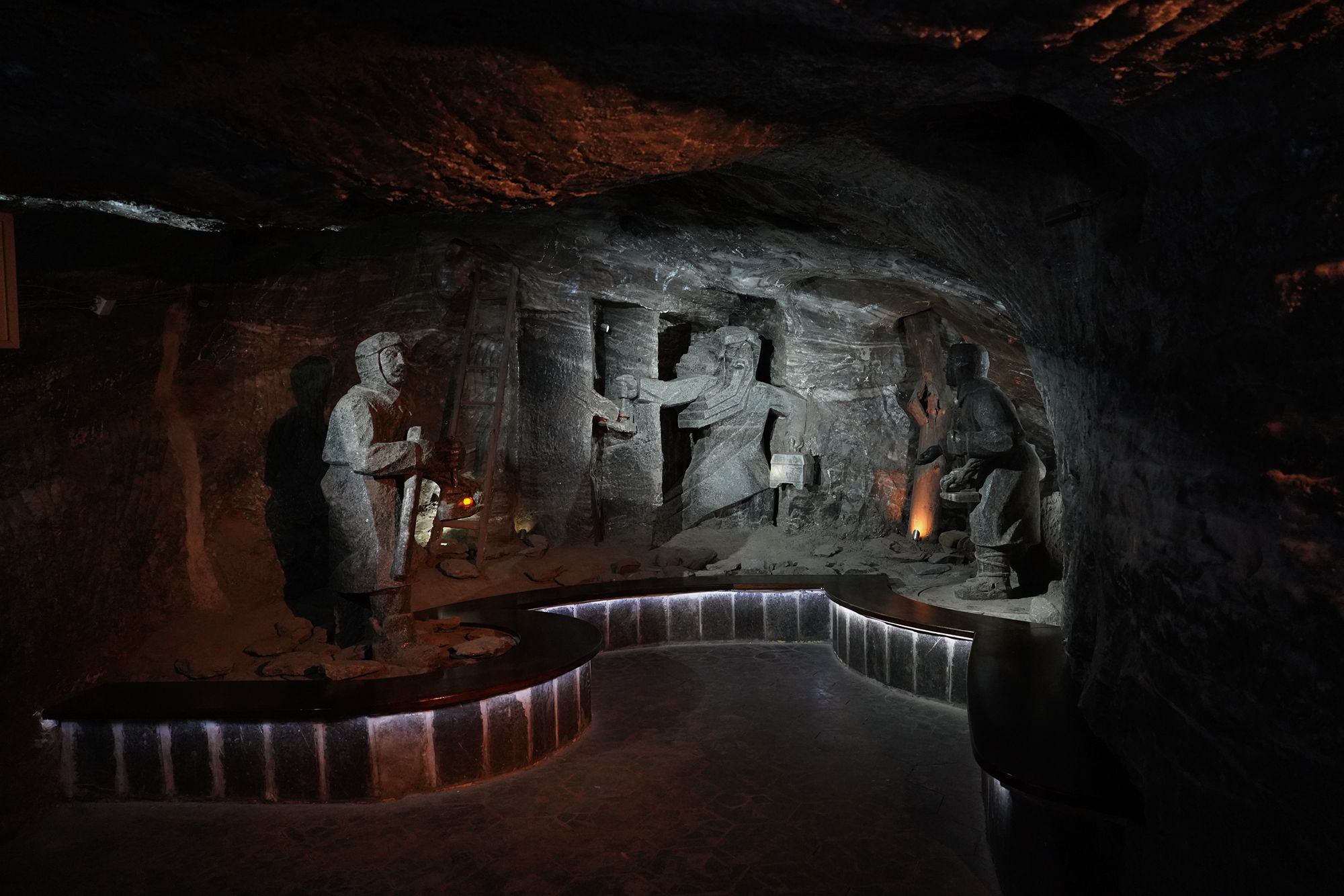
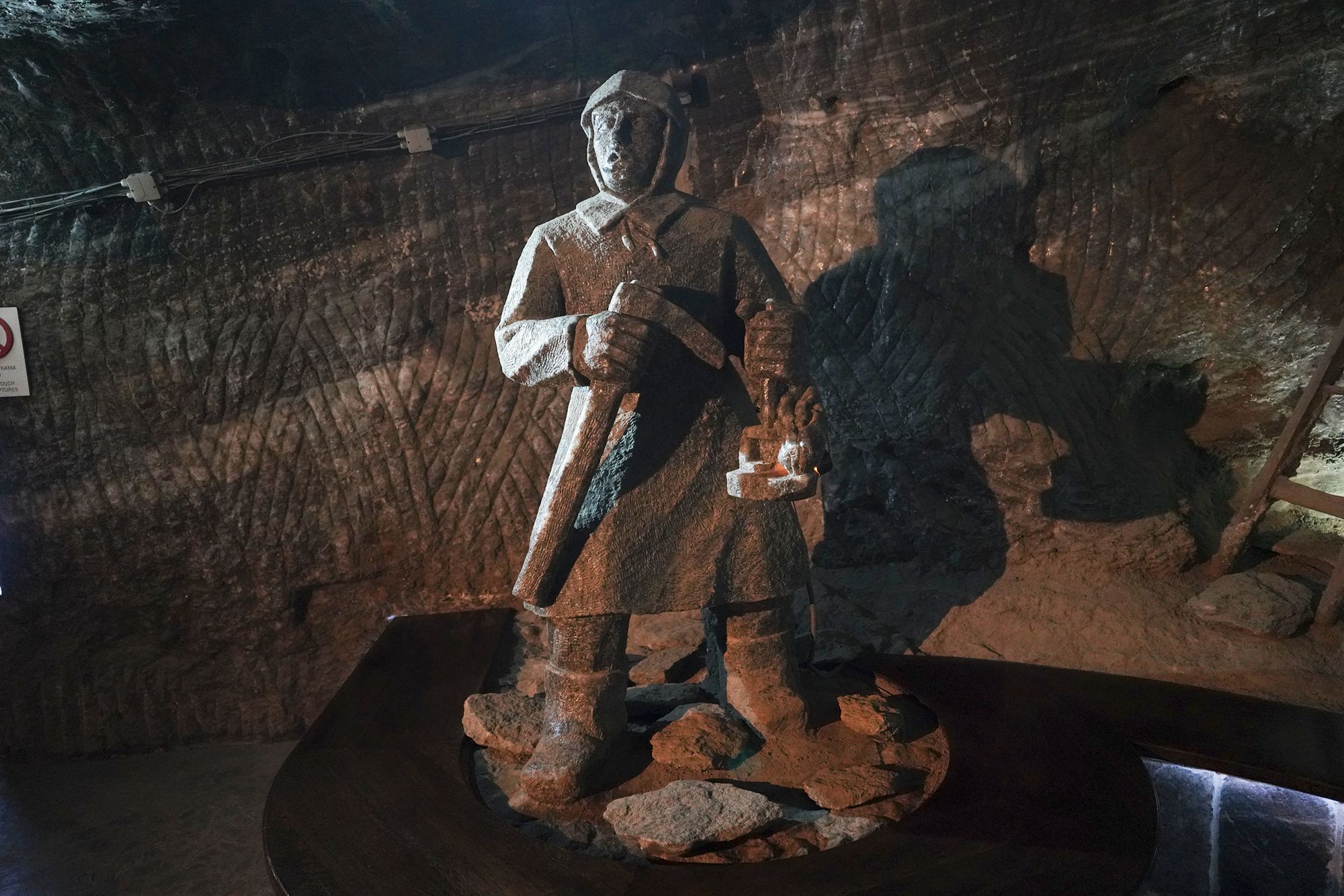
I stopped for dinner at this underground restaurant.
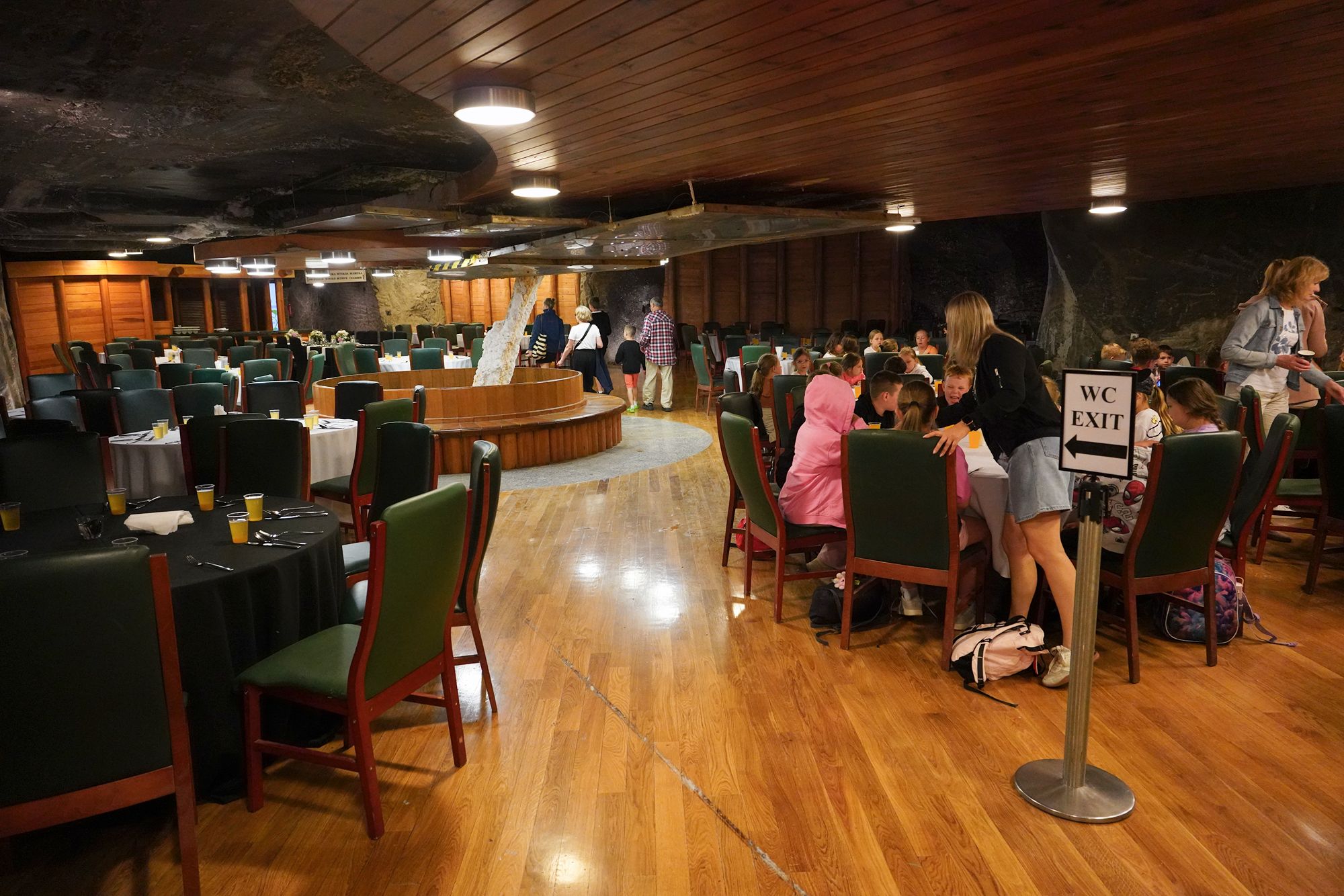
After dinner, I took the elevator back to the surface and left the mine.