Warsaw Uprising Museum, Warsaw, Poland
Warsaw Uprising Museum explores Polish resistance, civilian suffering, wartime destruction, and Poland’s difficult transition after liberation. 1372
Warsaw Uprising Museum: Grzybowska 79, 00-844 Warszawa, Poland
Date Picture Taken: Jul, 2026
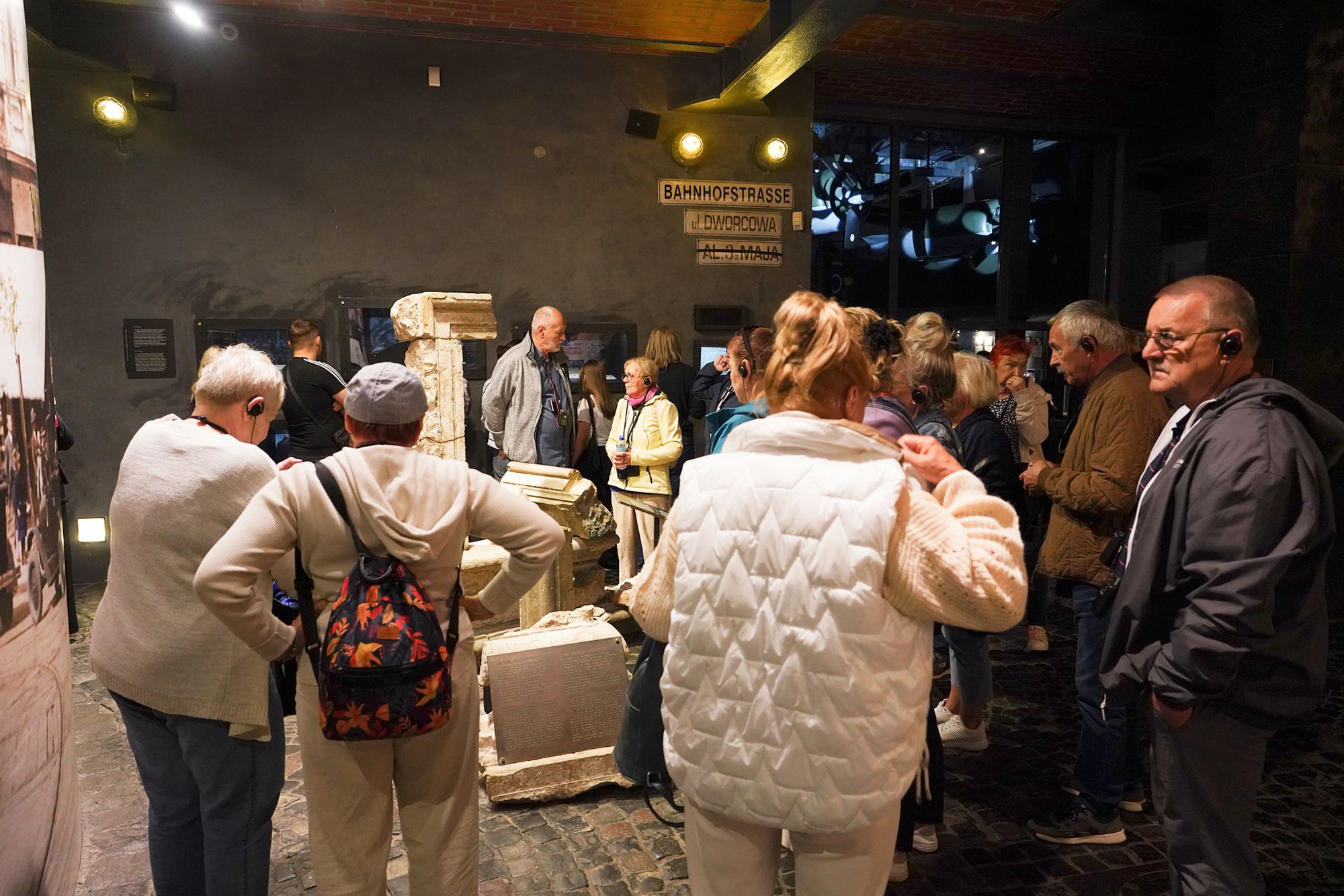
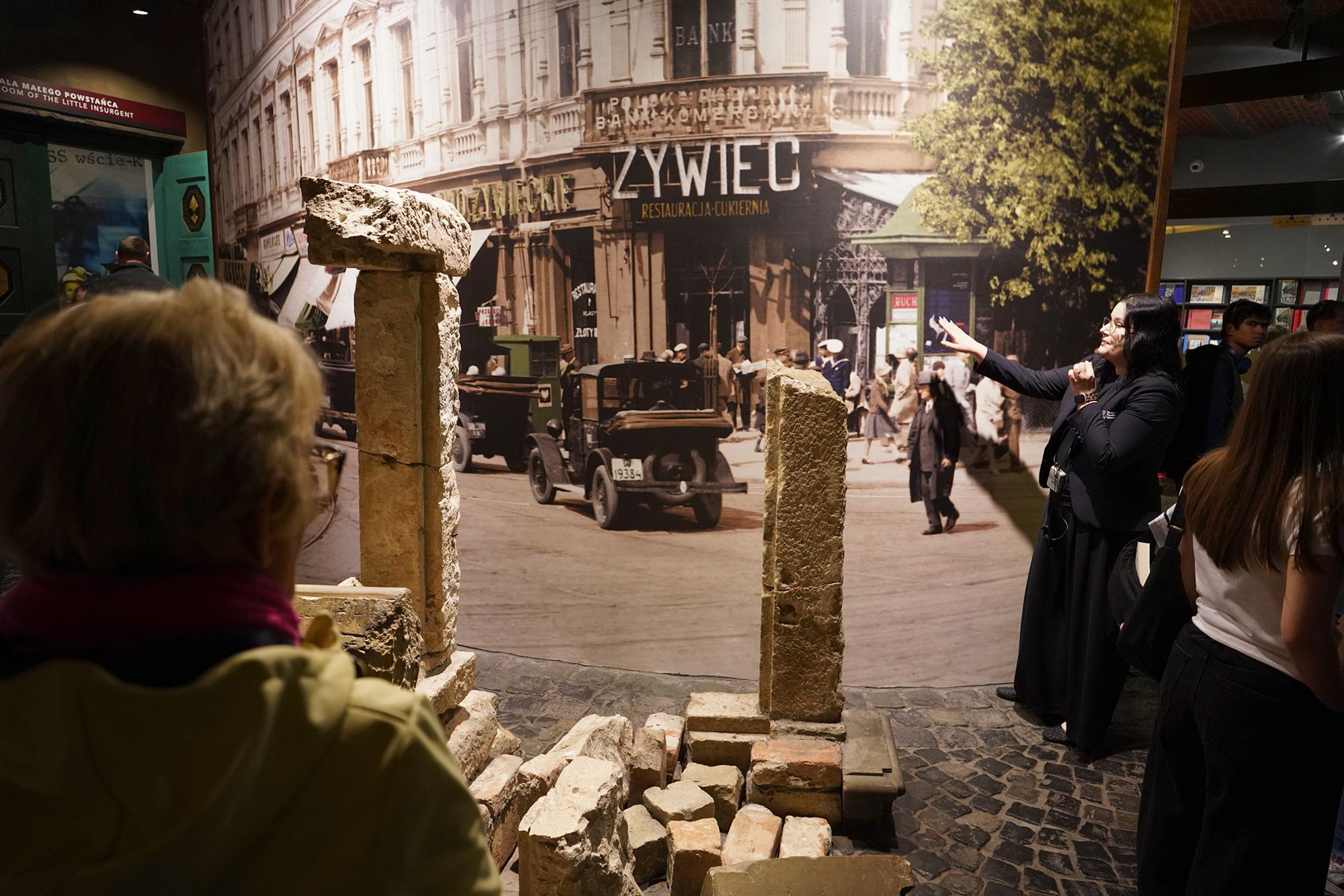
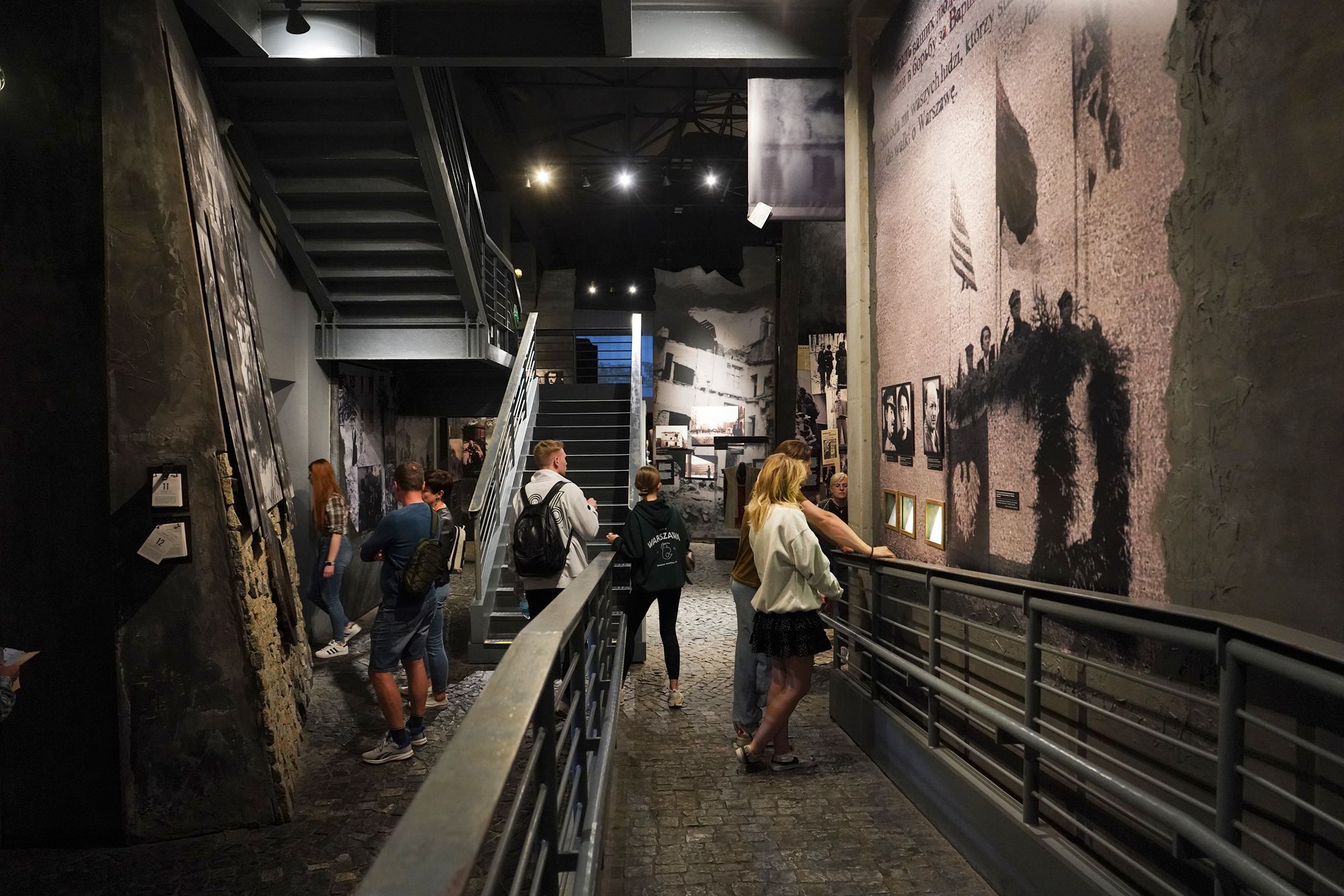
My next stop in Warsaw was the Warsaw Uprising Museum, which tells the story of the city’s 1944 resistance against German occupation. Through photographs, personal belongings, and recreated settings, the exhibitions show the experiences of both the fighters and the civilians caught in the uprising.
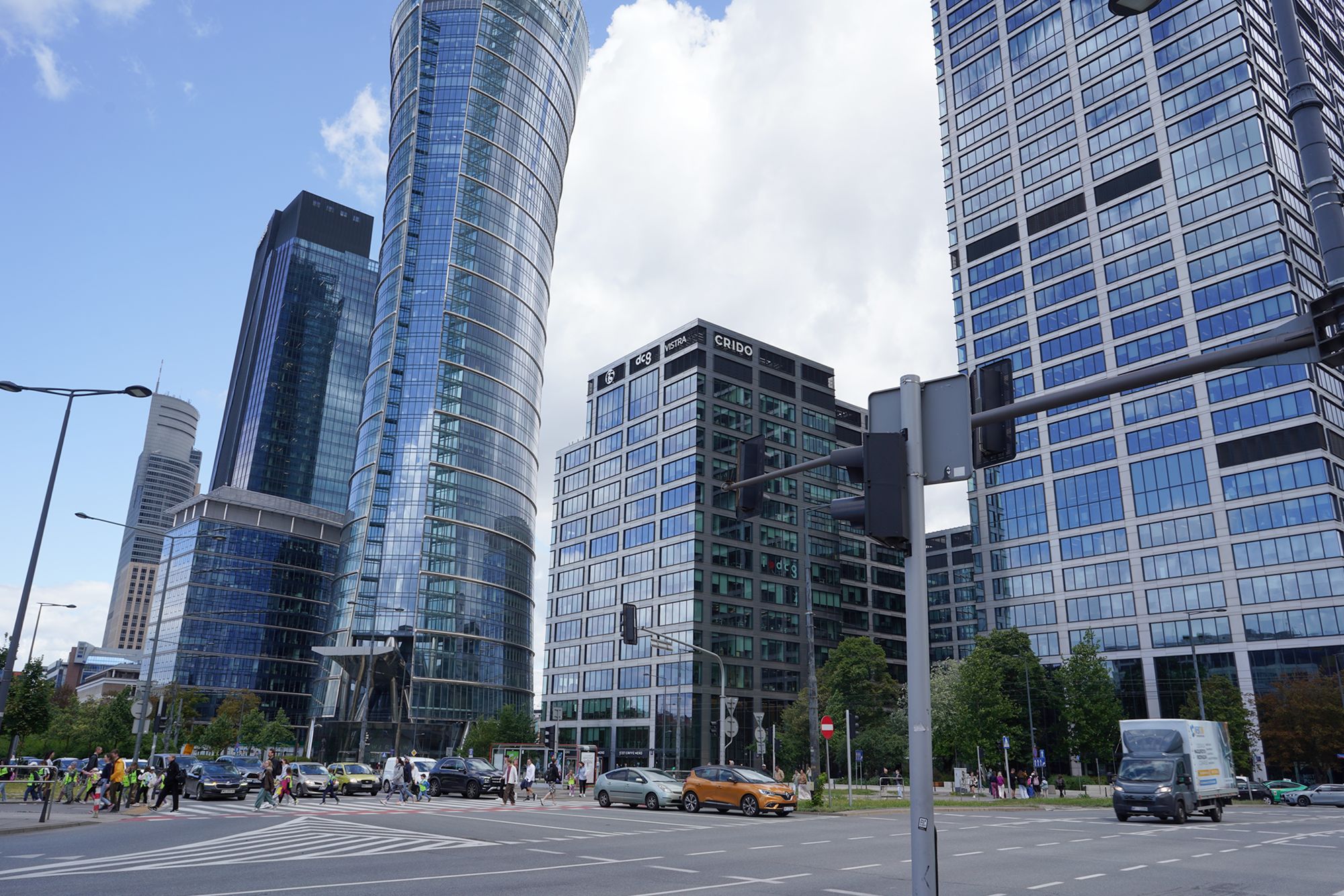
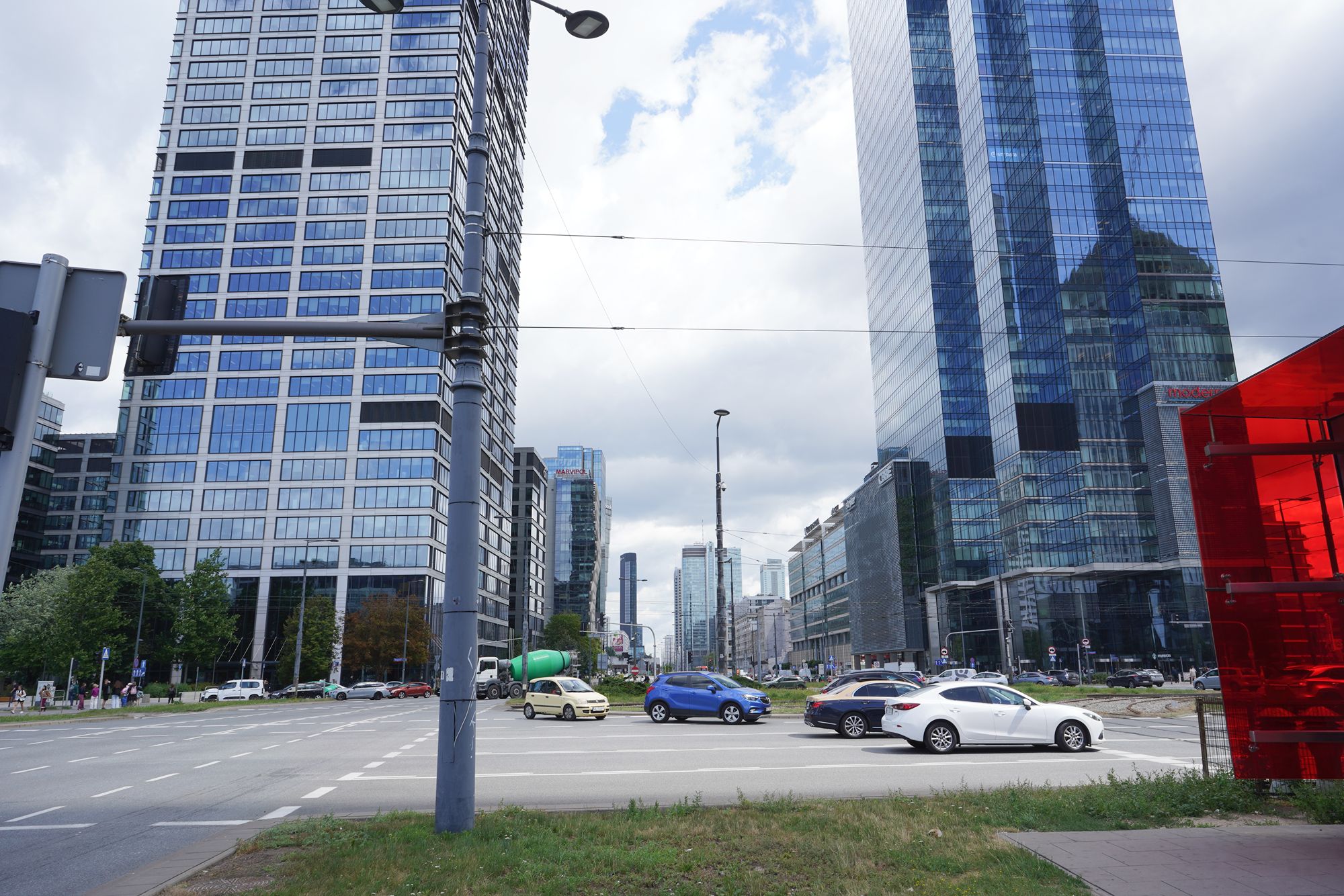
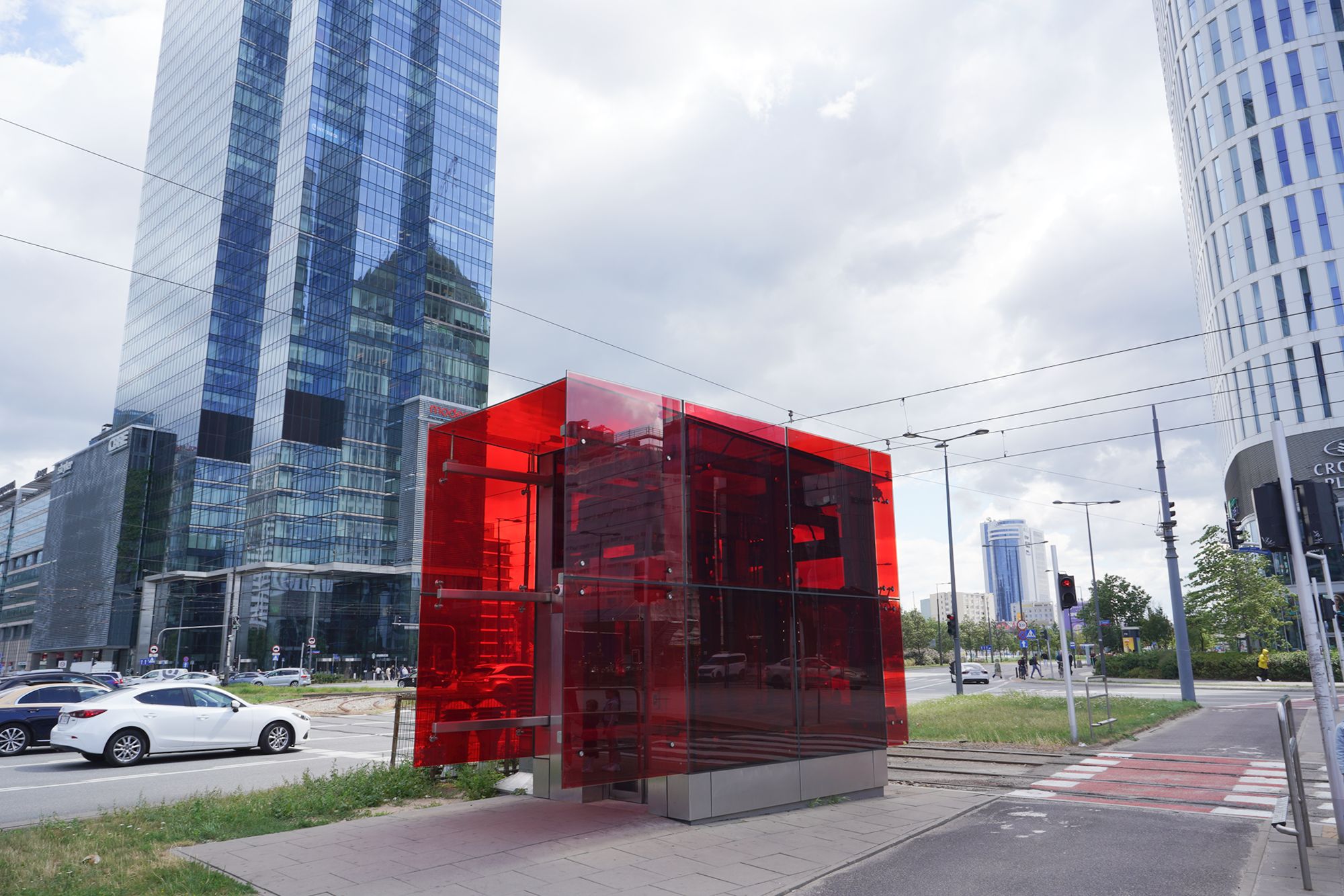
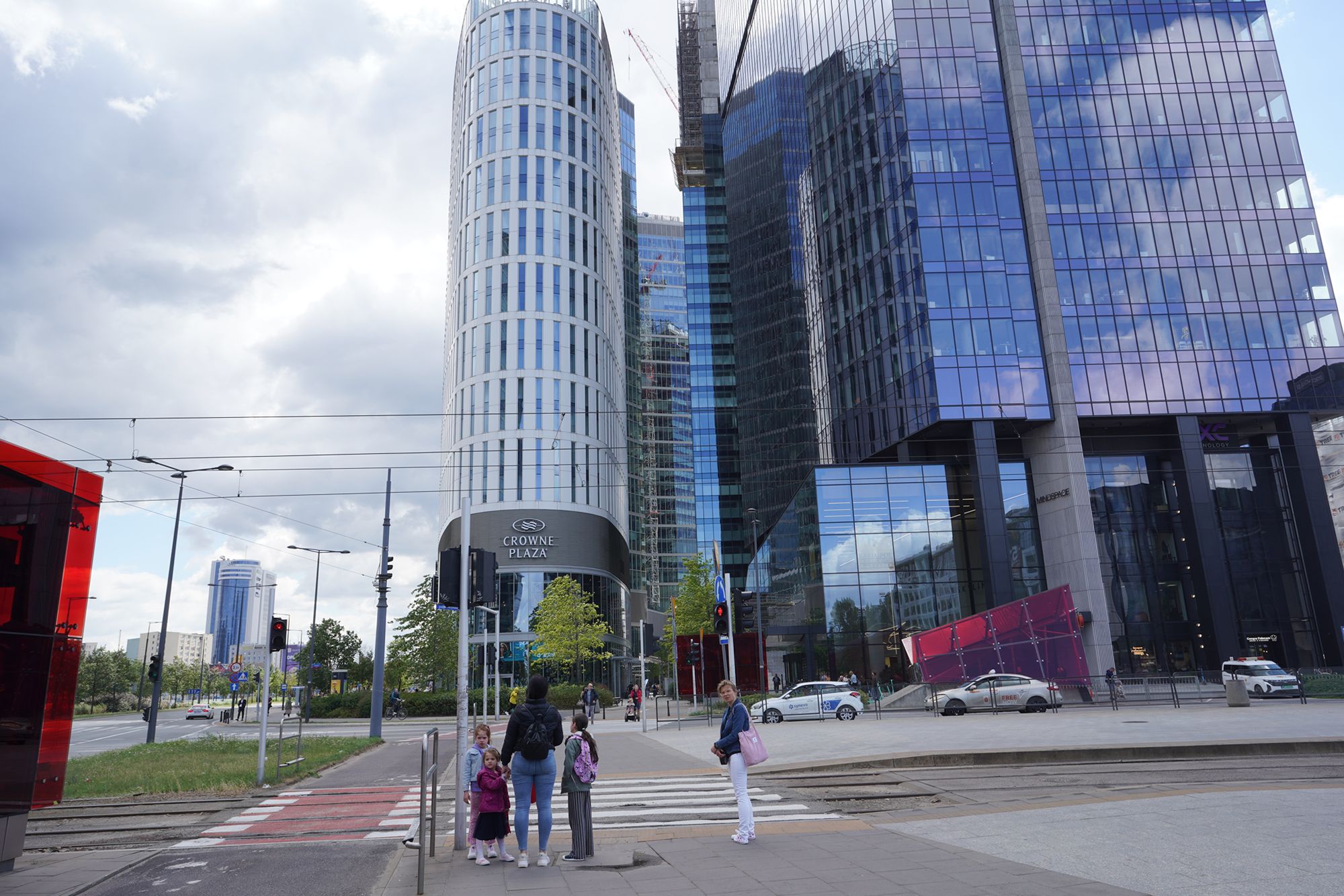
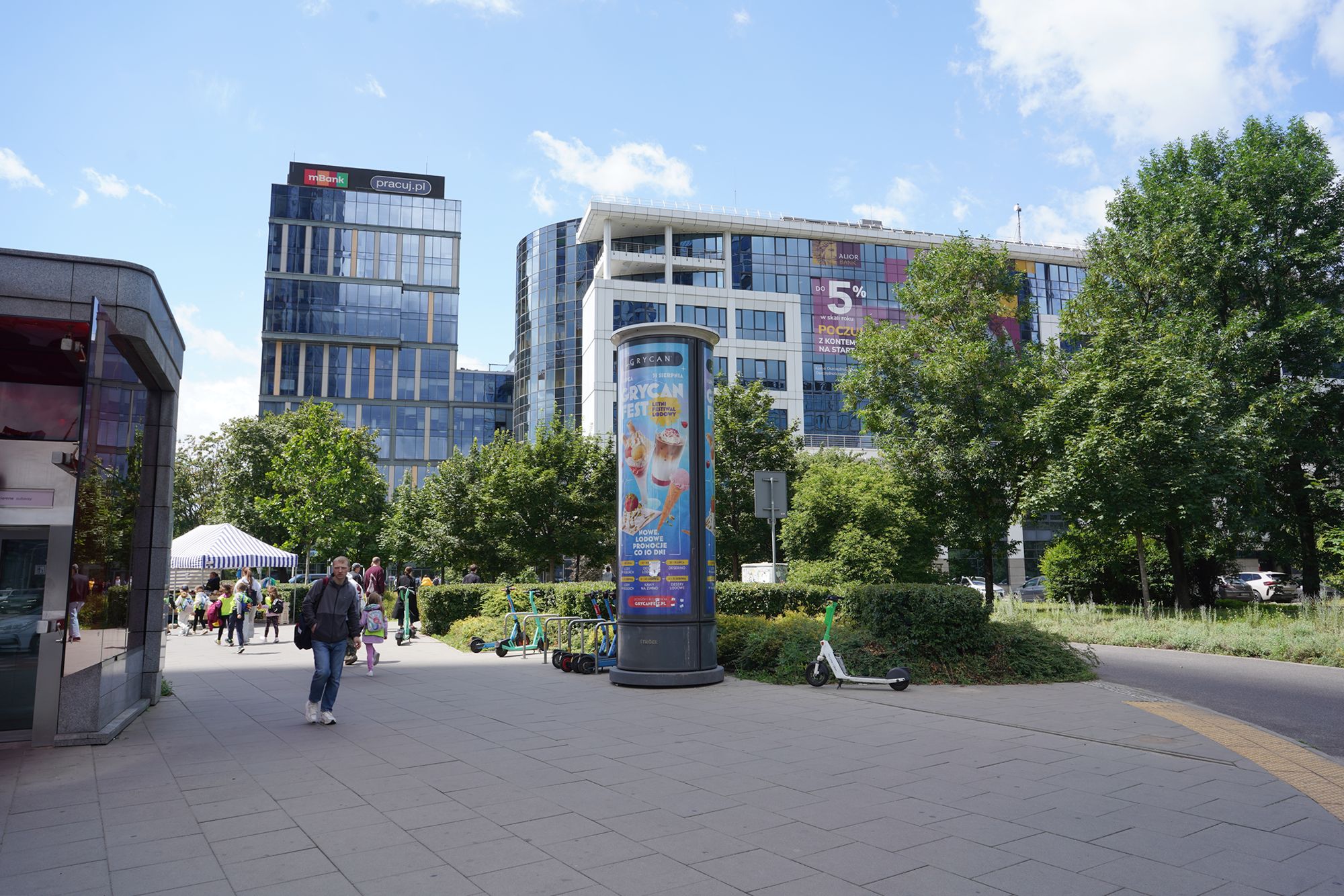
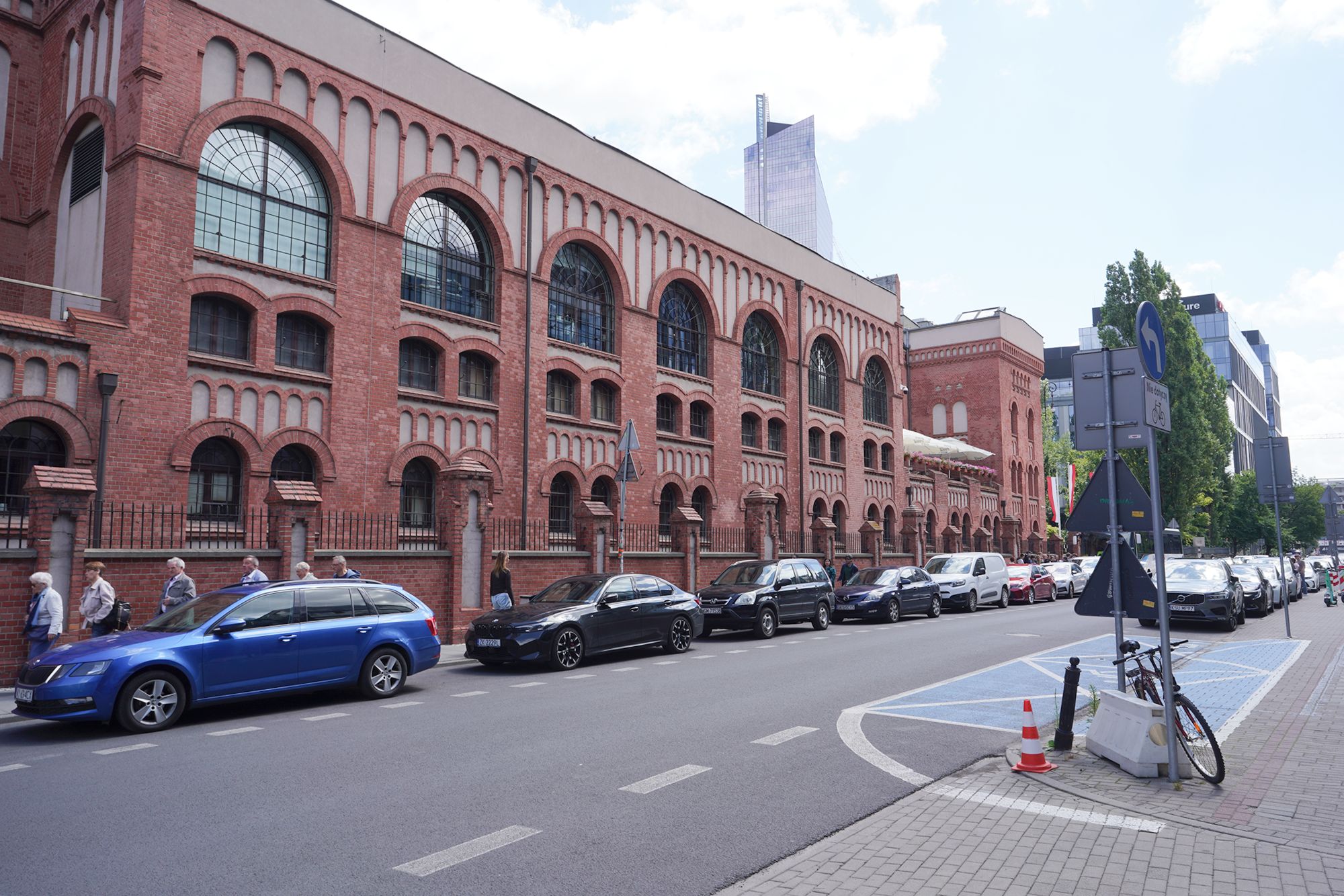
On my way to the museum, I passed through an area of Warsaw with many modern buildings.
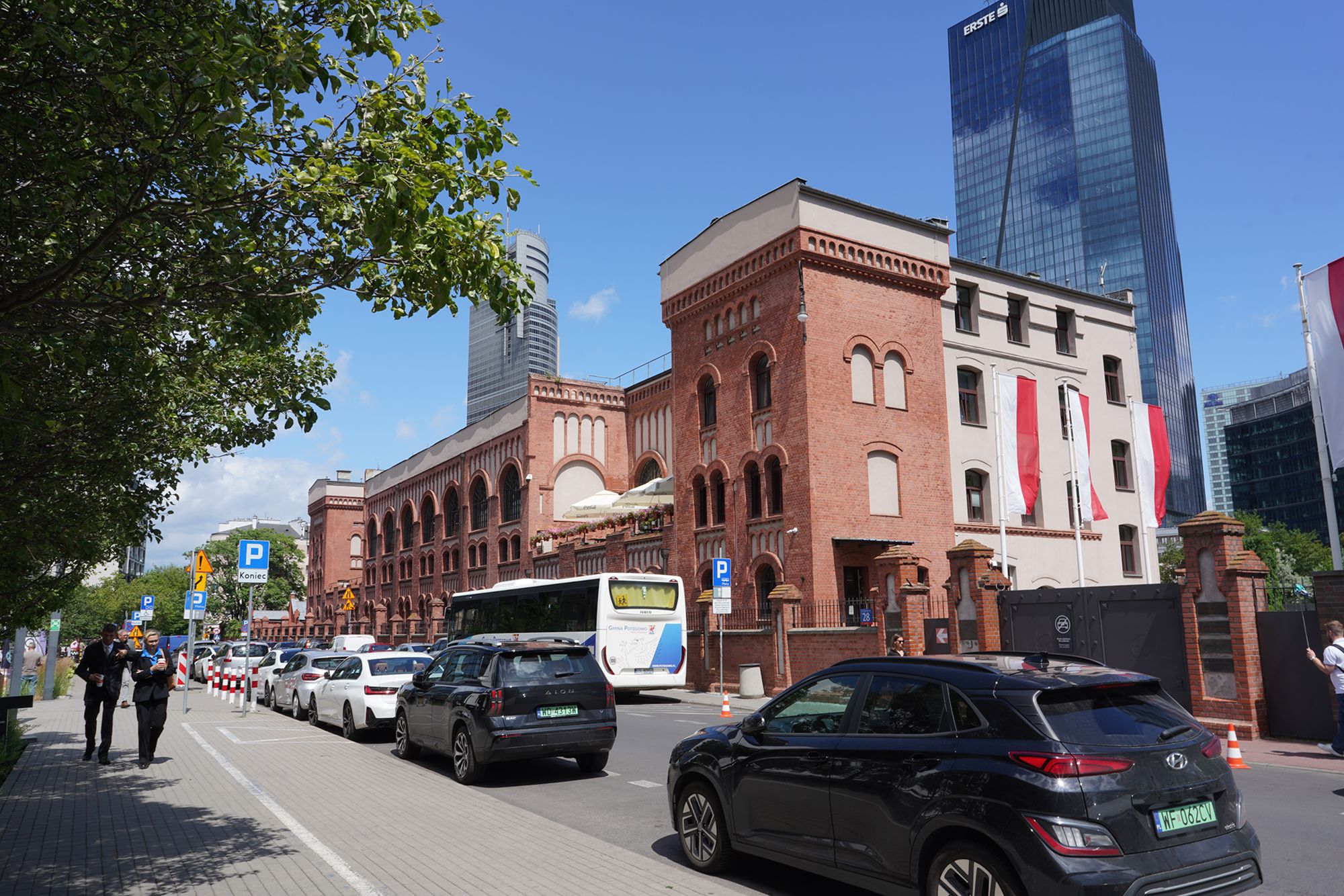
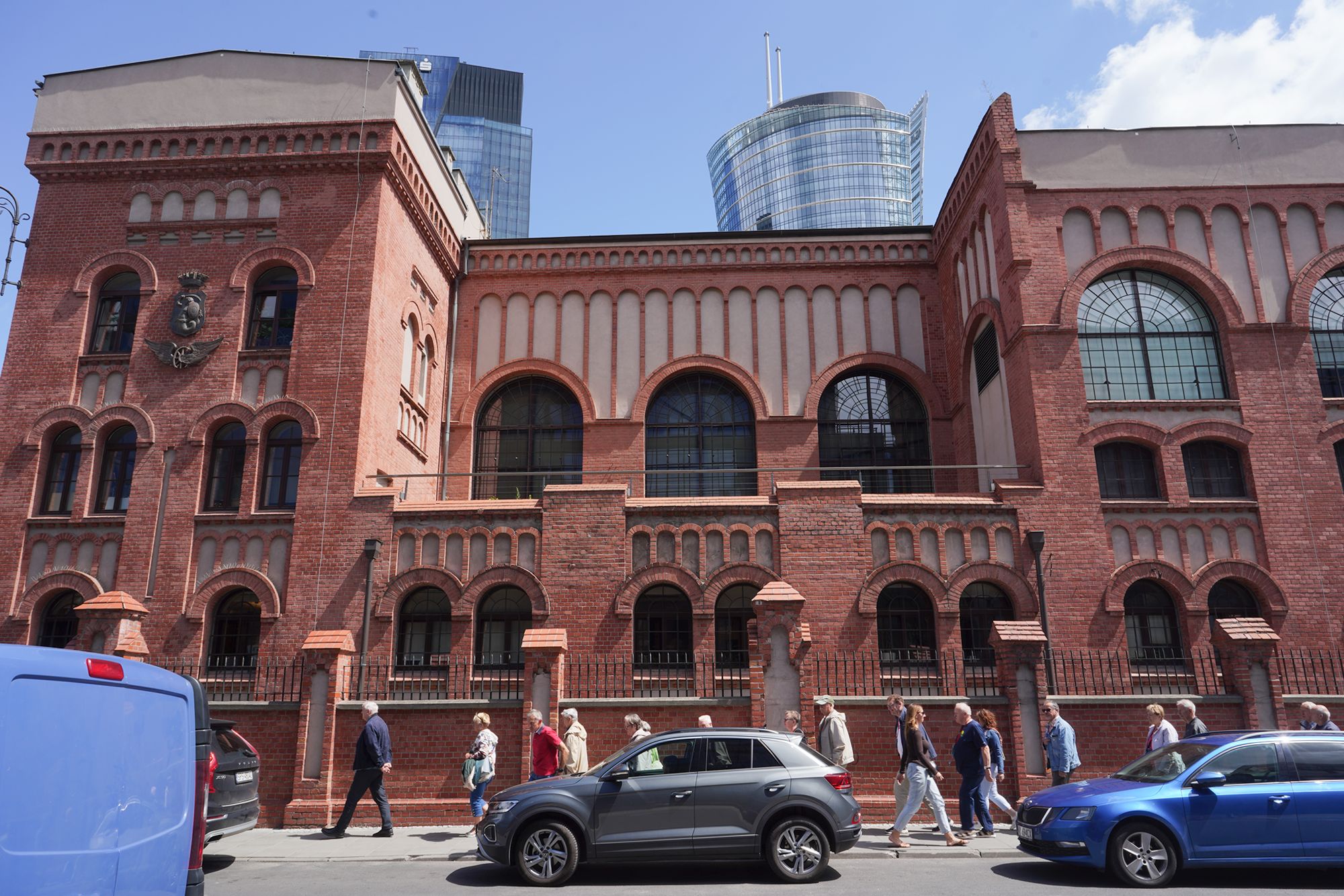
The Warsaw Uprising Museum
The Warsaw Uprising was an attempt by the Polish resistance to free Warsaw from German occupation during World War II. It began on August 1, 1944, led by the Home Army, Poland’s main underground resistance force.
The Soviet army was approaching Warsaw, and the resistance hoped to liberate the capital before the Soviets arrived. They wanted both to defeat the Germans and to assert Poland’s independence.
The fighters expected a short battle, but the uprising lasted 63 days. They had limited weapons, and civilians helped build barricades, carry supplies, and care for the wounded. Soviet forces did not provide the support needed to rescue the uprising, while assistance from the Western Allies was limited.
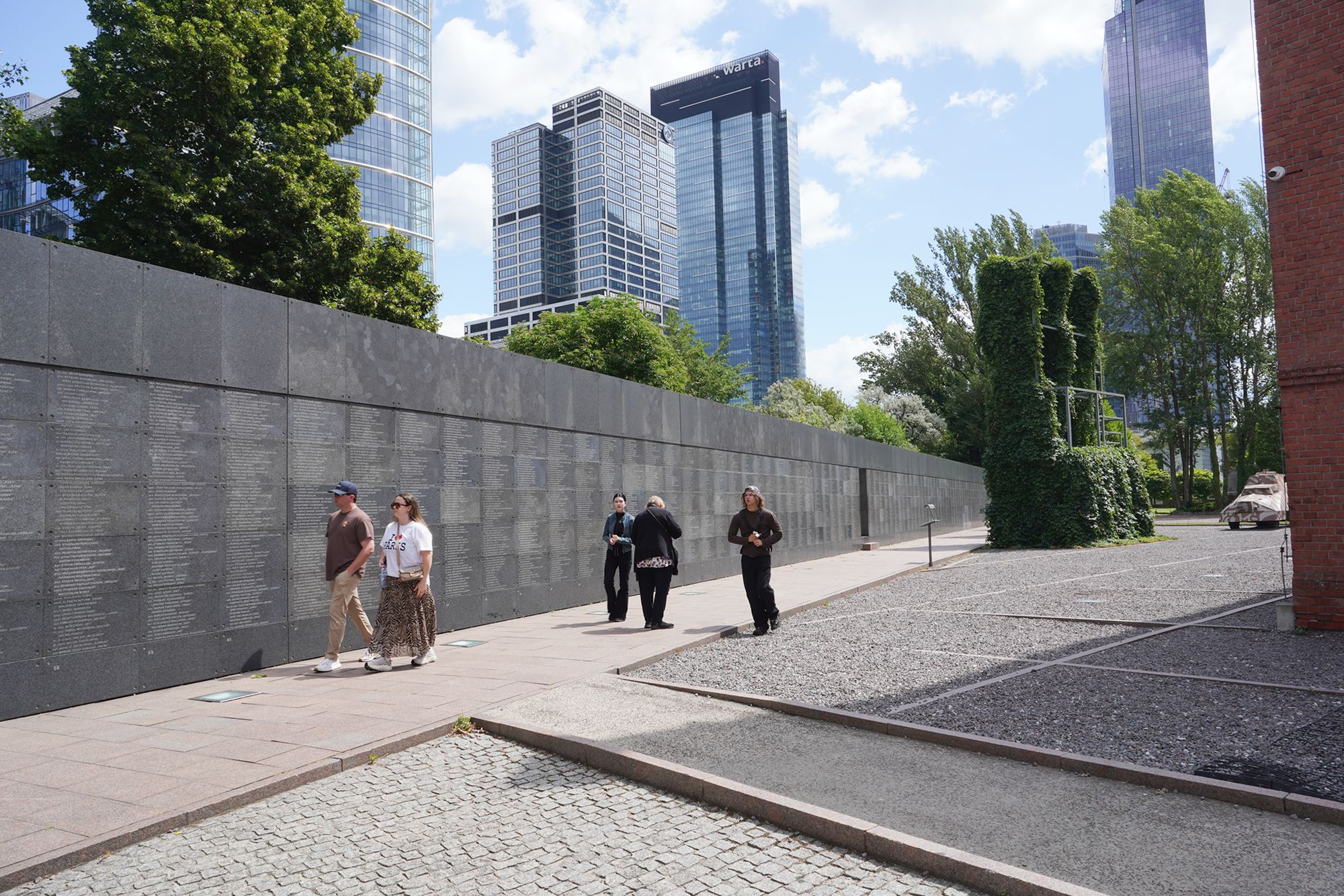
The resistance surrendered on October 2, 1944. Roughly 150,000–200,000 civilians died, surviving residents were expelled, and German forces systematically destroyed much of the city afterward.
This was separate from the Warsaw Ghetto Uprising of 1943, when Jewish resistance fighters fought against deportation to Nazi extermination camps.
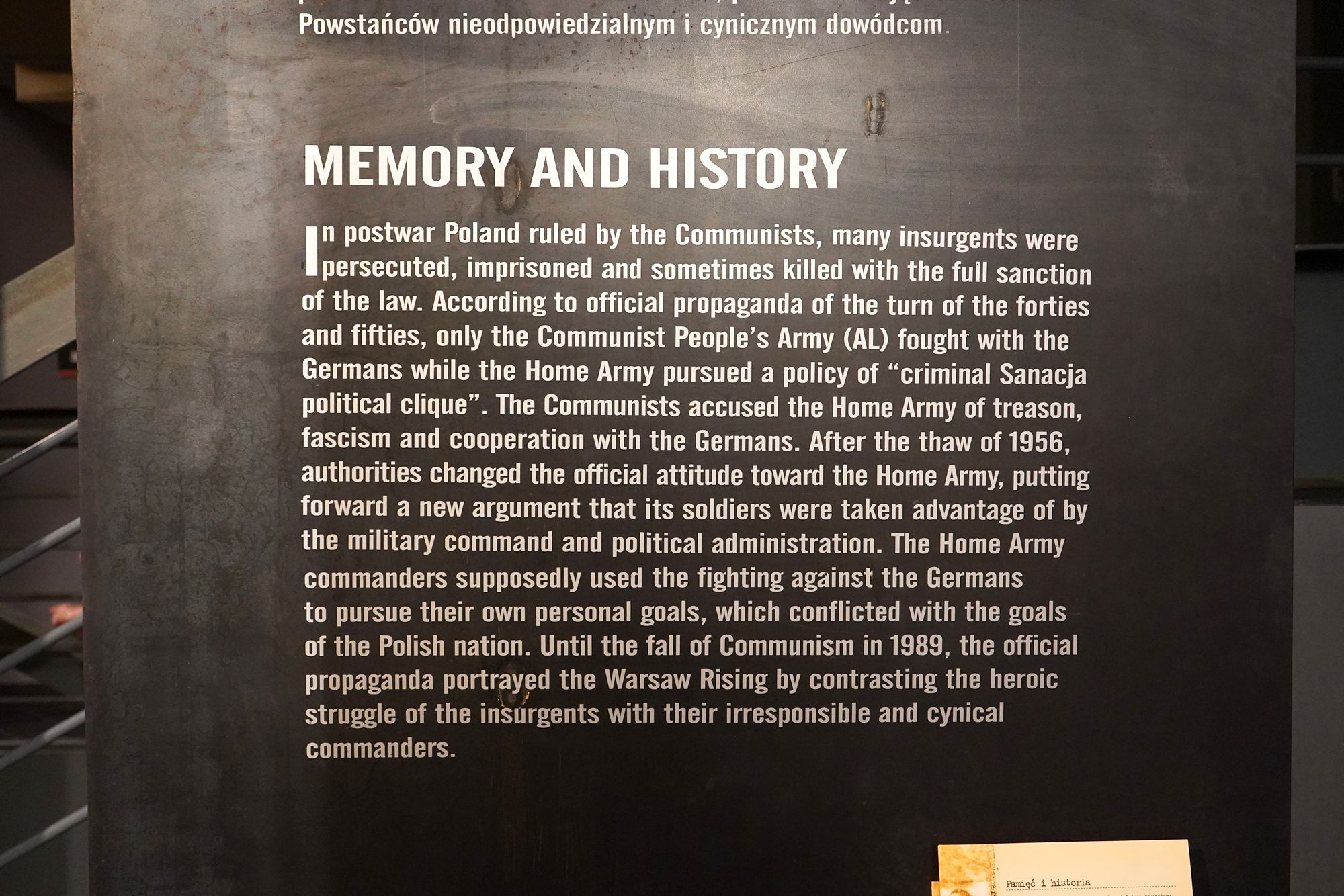
The persecution of many uprising fighters continued after the war under Poland’s Communist government. Some were imprisoned or killed, while official propaganda falsely accused the Home Army of collaborating with the Germans. After 1956, the government began recognizing the courage of ordinary fighters but continued to blame their commanders. Until Communism fell in 1989, the uprising’s history remained distorted in official accounts.
A timeline traces the events leading up to the Warsaw Uprising, the fighting, and its aftermath.
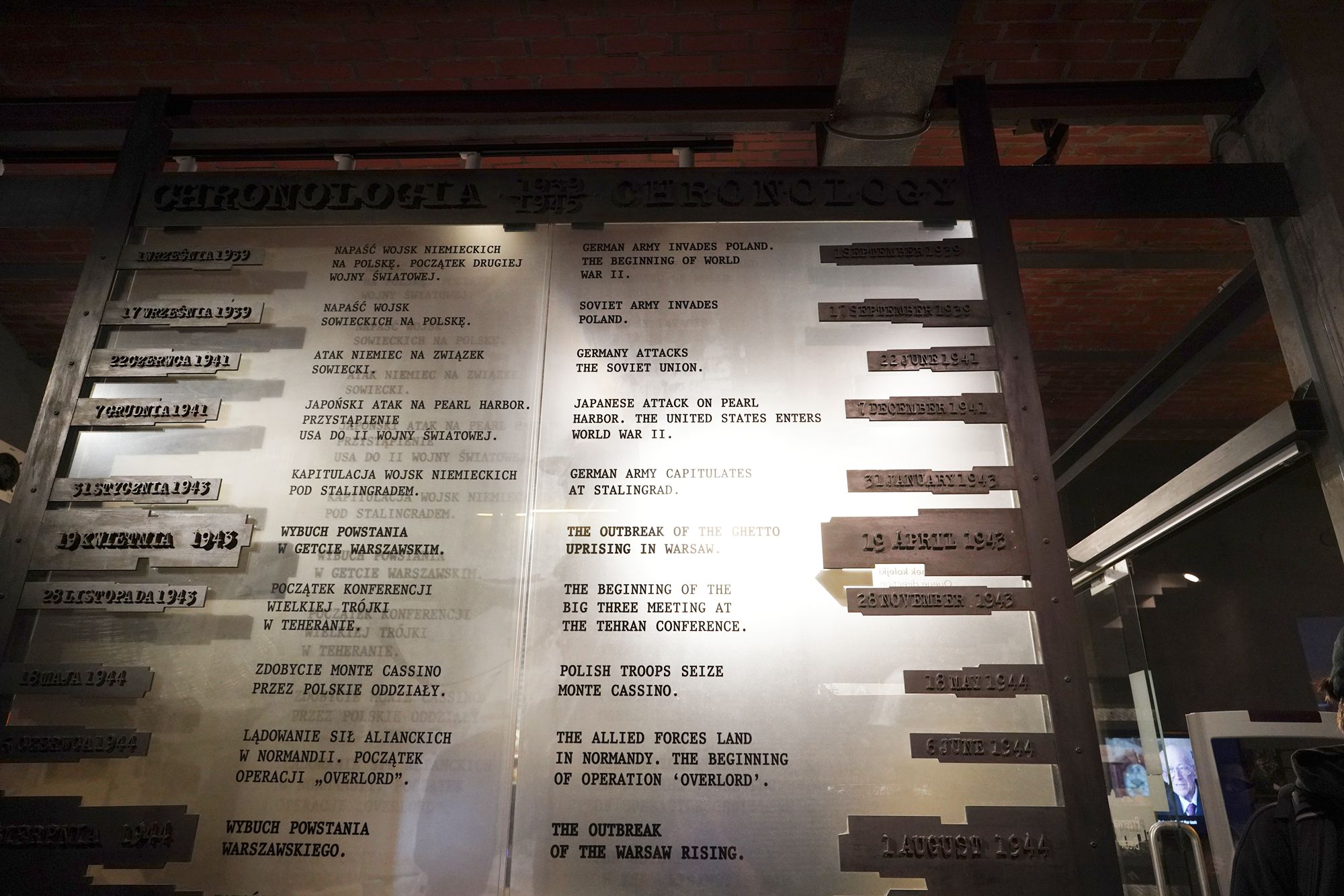
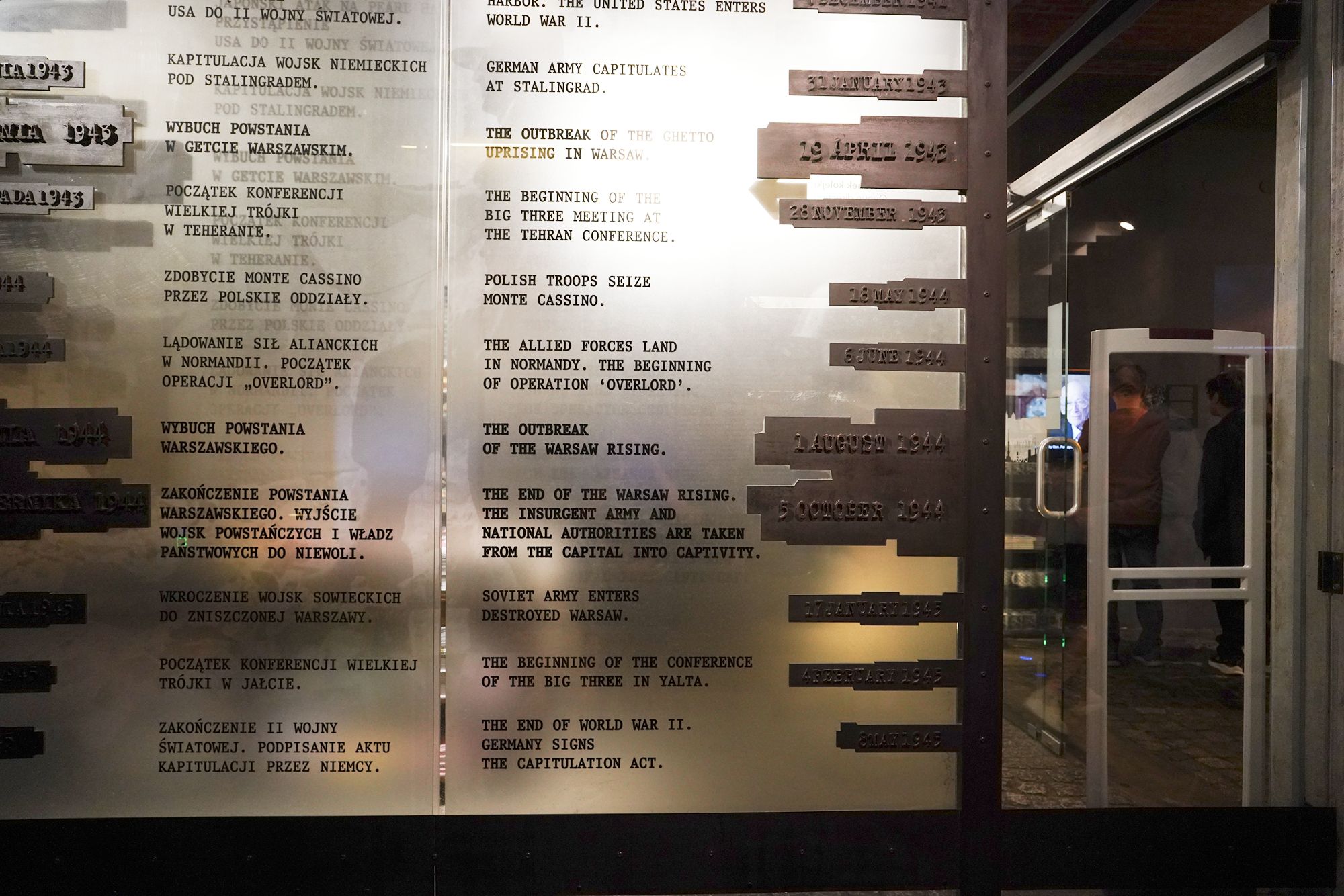
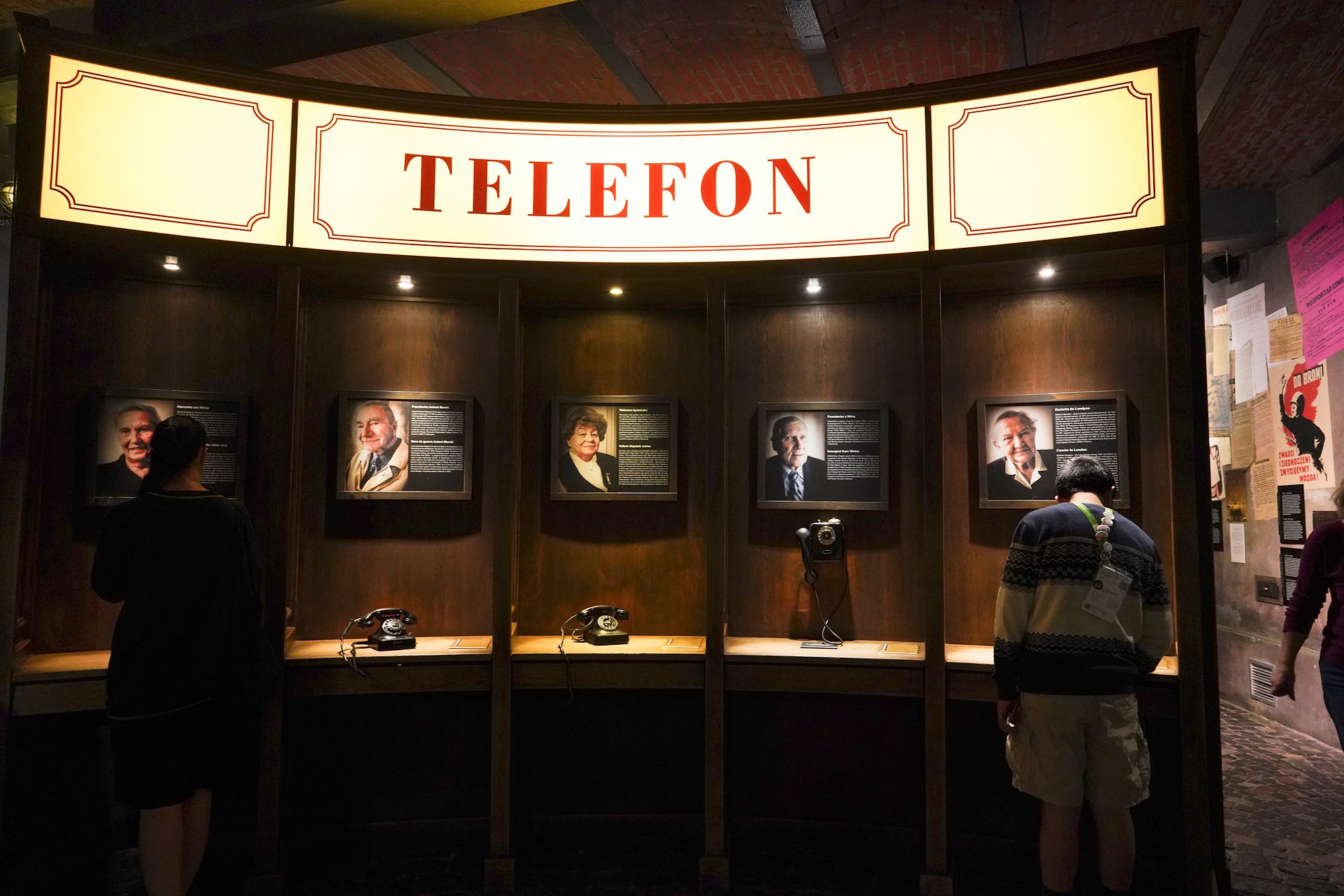
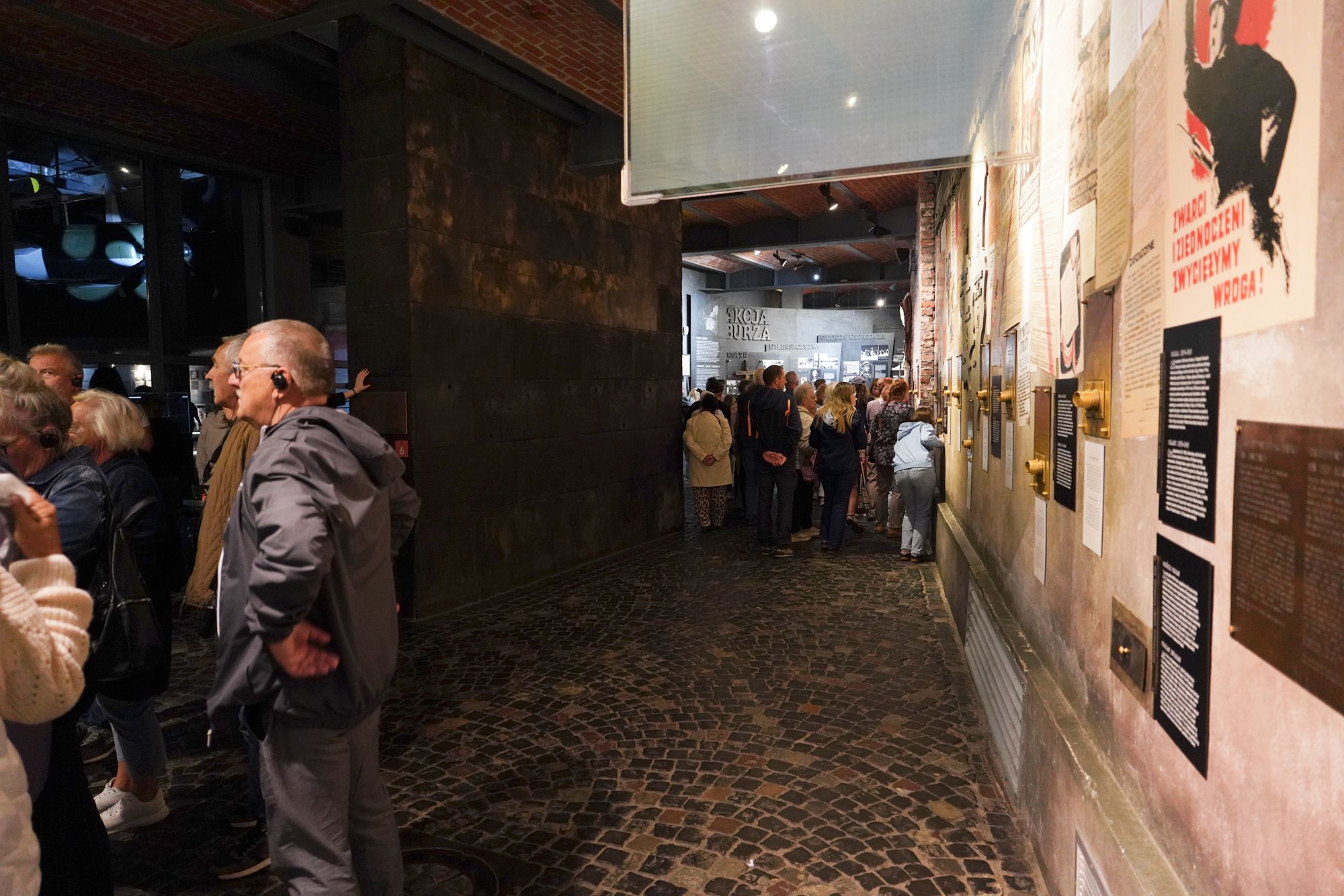
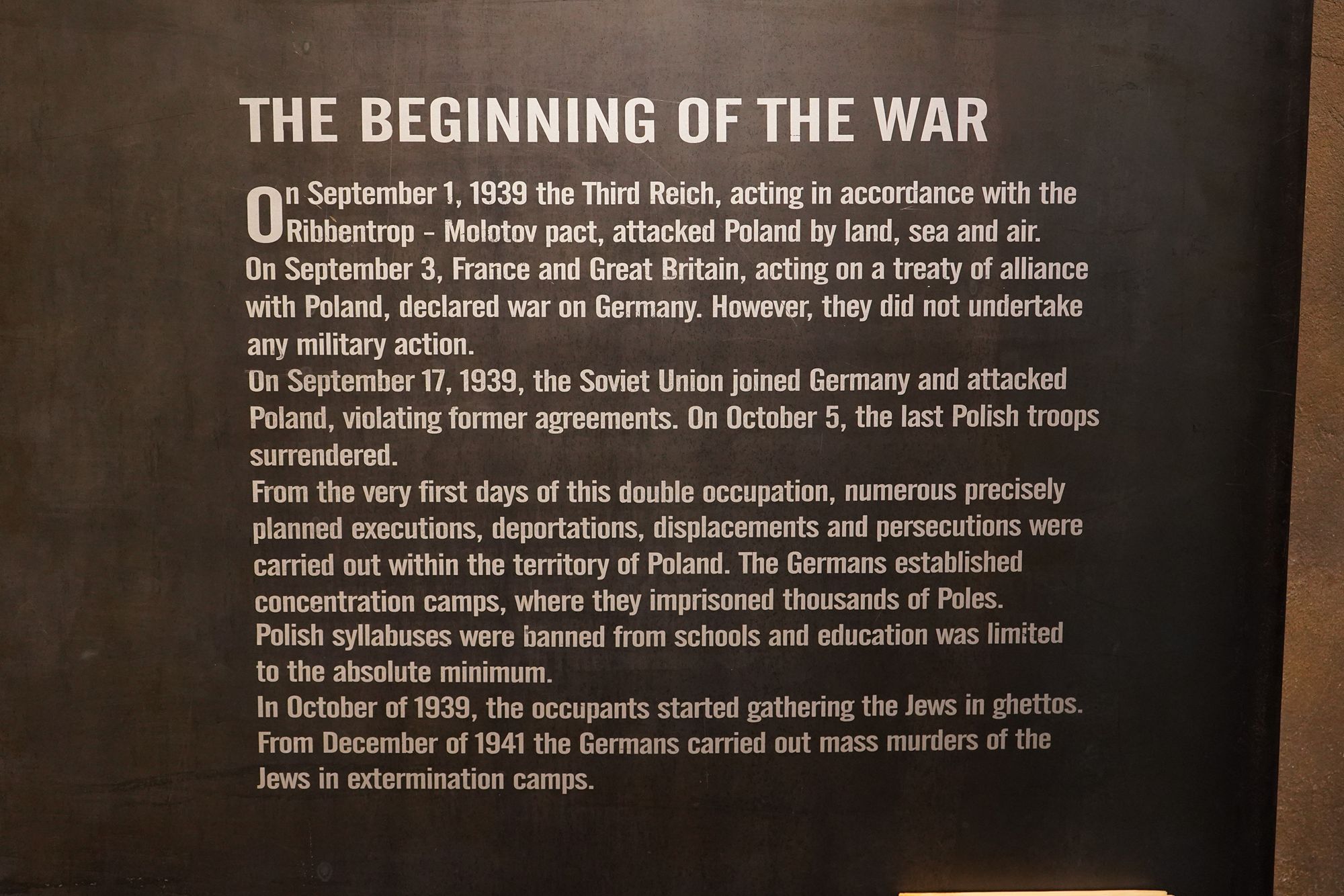
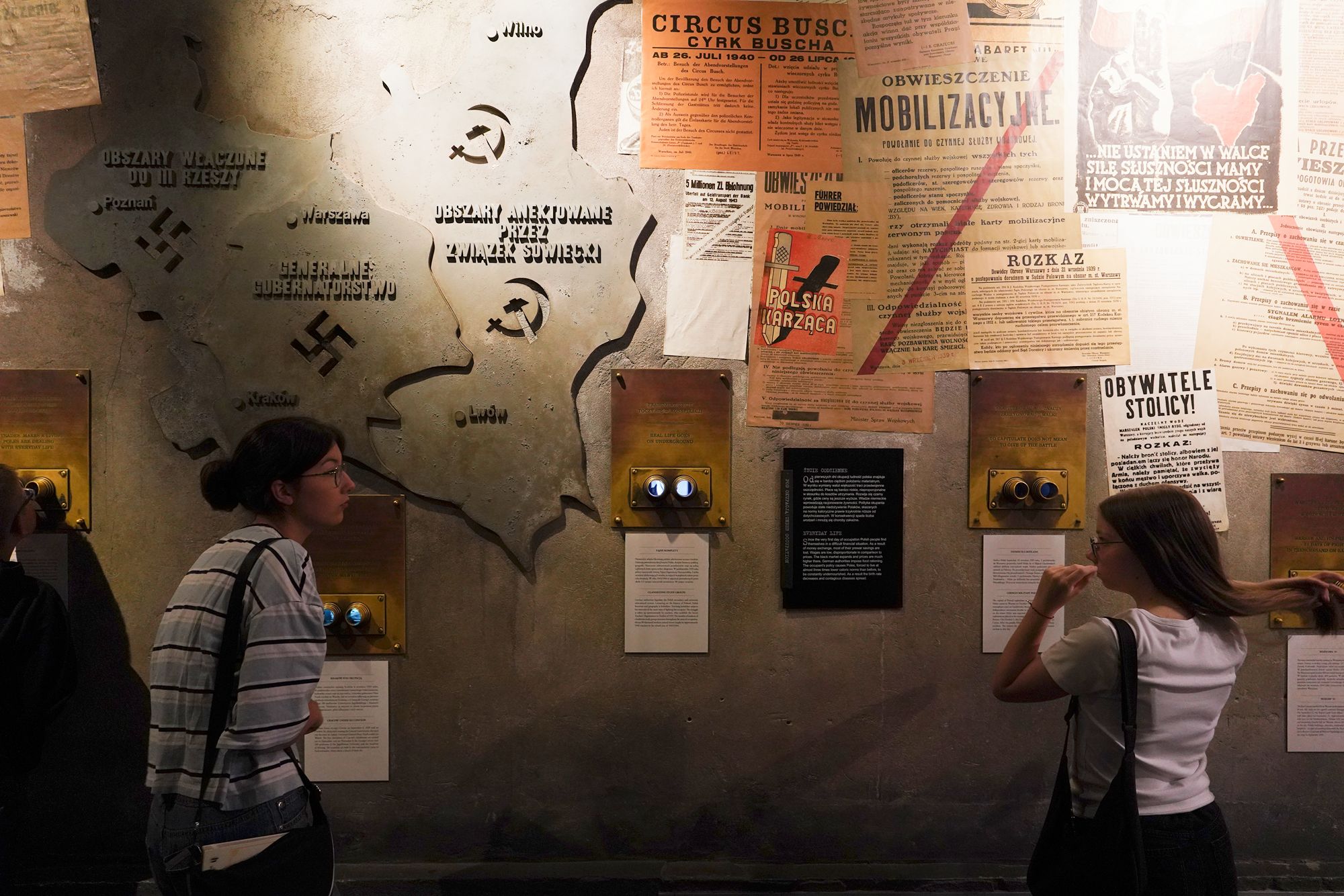
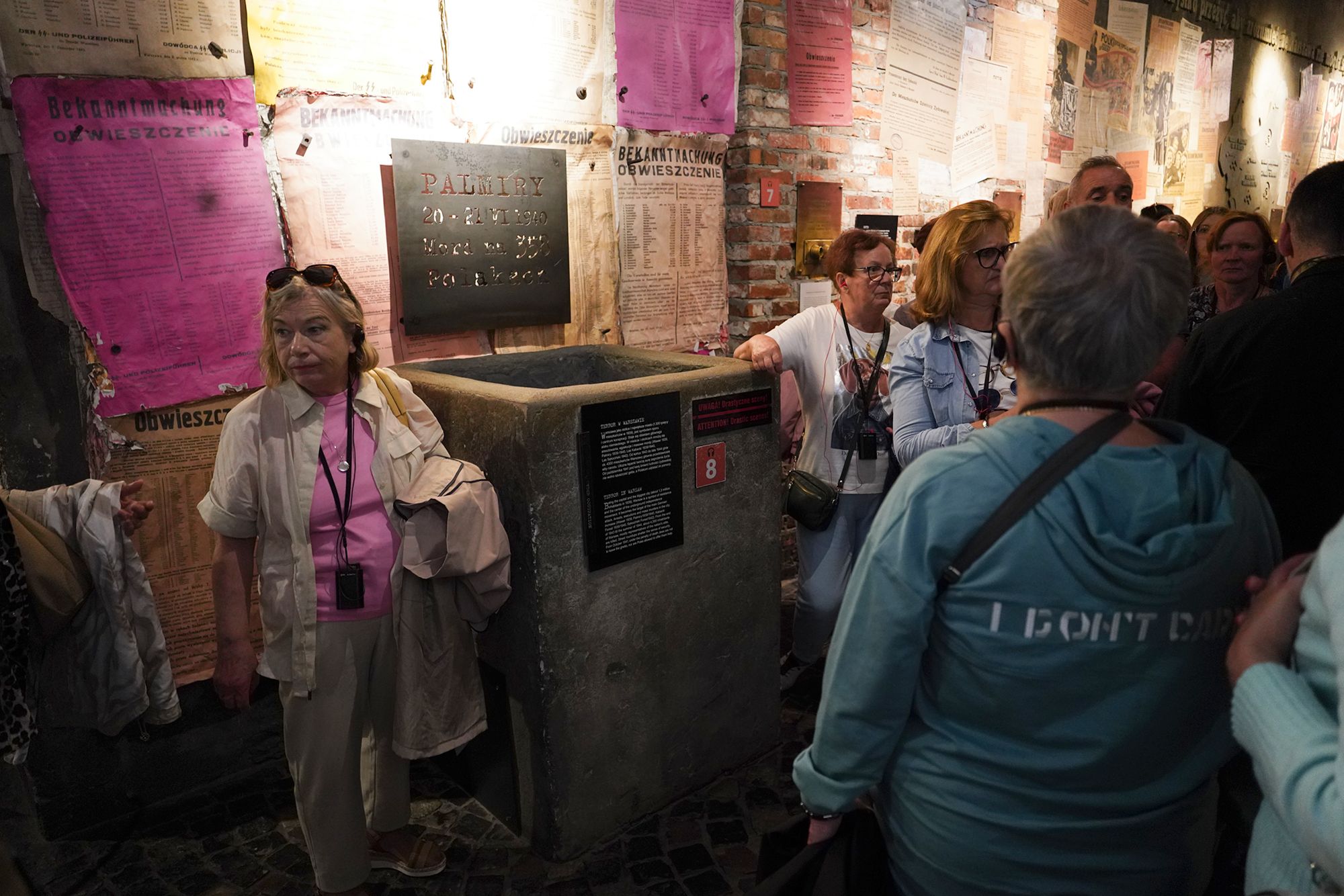
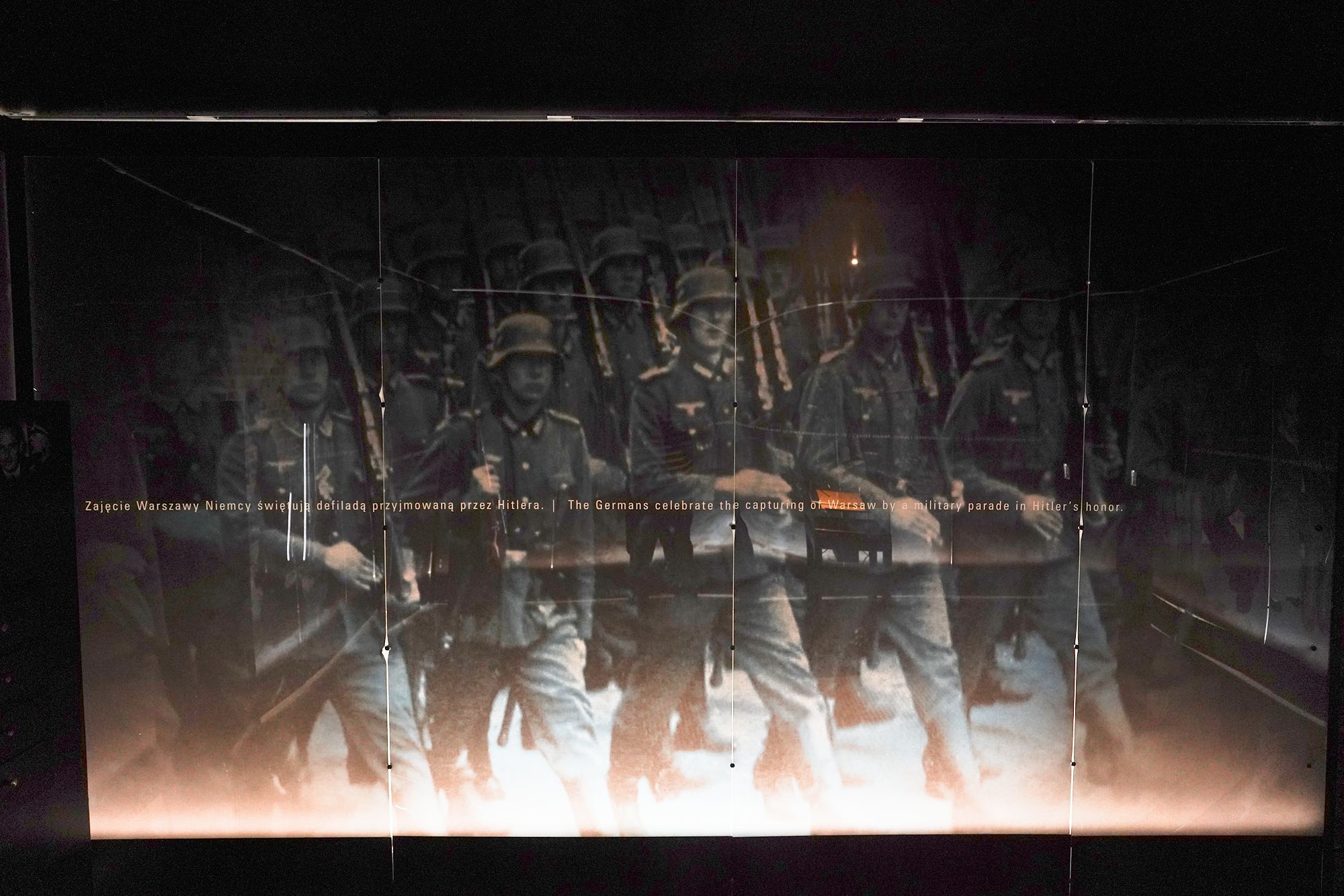
The exhibition begins with Germany’s invasion of Poland on September 1, 1939, followed by the Soviet invasion from the east on September 17. Britain and France declared war on Germany, but Poland received little immediate military help. Under German and Soviet occupation, people faced executions, deportations, and persecution. The Germans restricted Polish education, imprisoned Poles in concentration camps, and forced Jews into ghettos before carrying out mass murder in extermination camps.
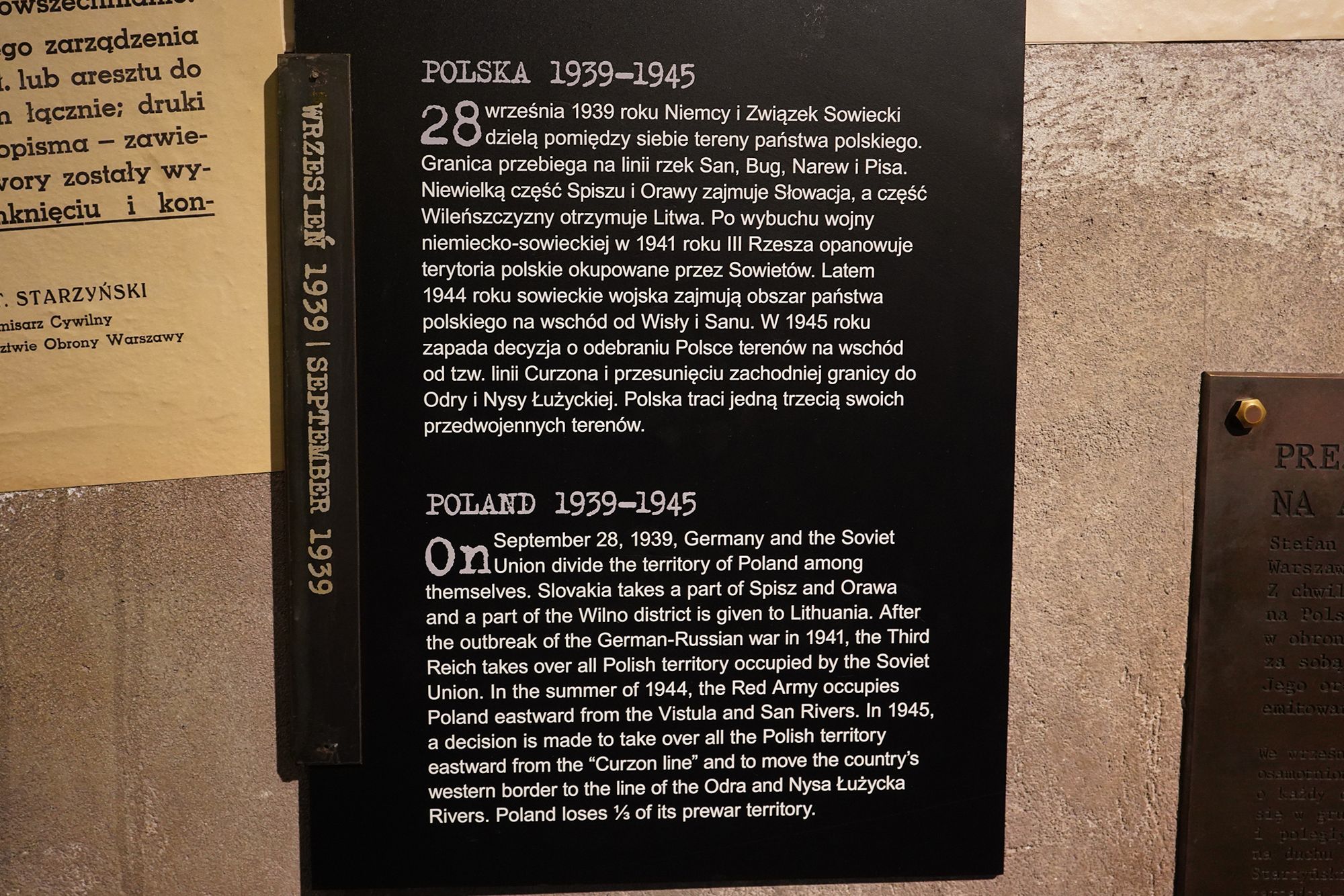
This panel traces the changes to Poland’s borders during the war. Germany and the Soviet Union divided the country in 1939, and Germany took over the Soviet-occupied areas after invading the USSR in 1941. At the war’s end, Poland’s borders shifted westward: it lost its eastern territories to the Soviet Union and gained former German territory in the west. Overall, Poland lost about one-third of its prewar land area.
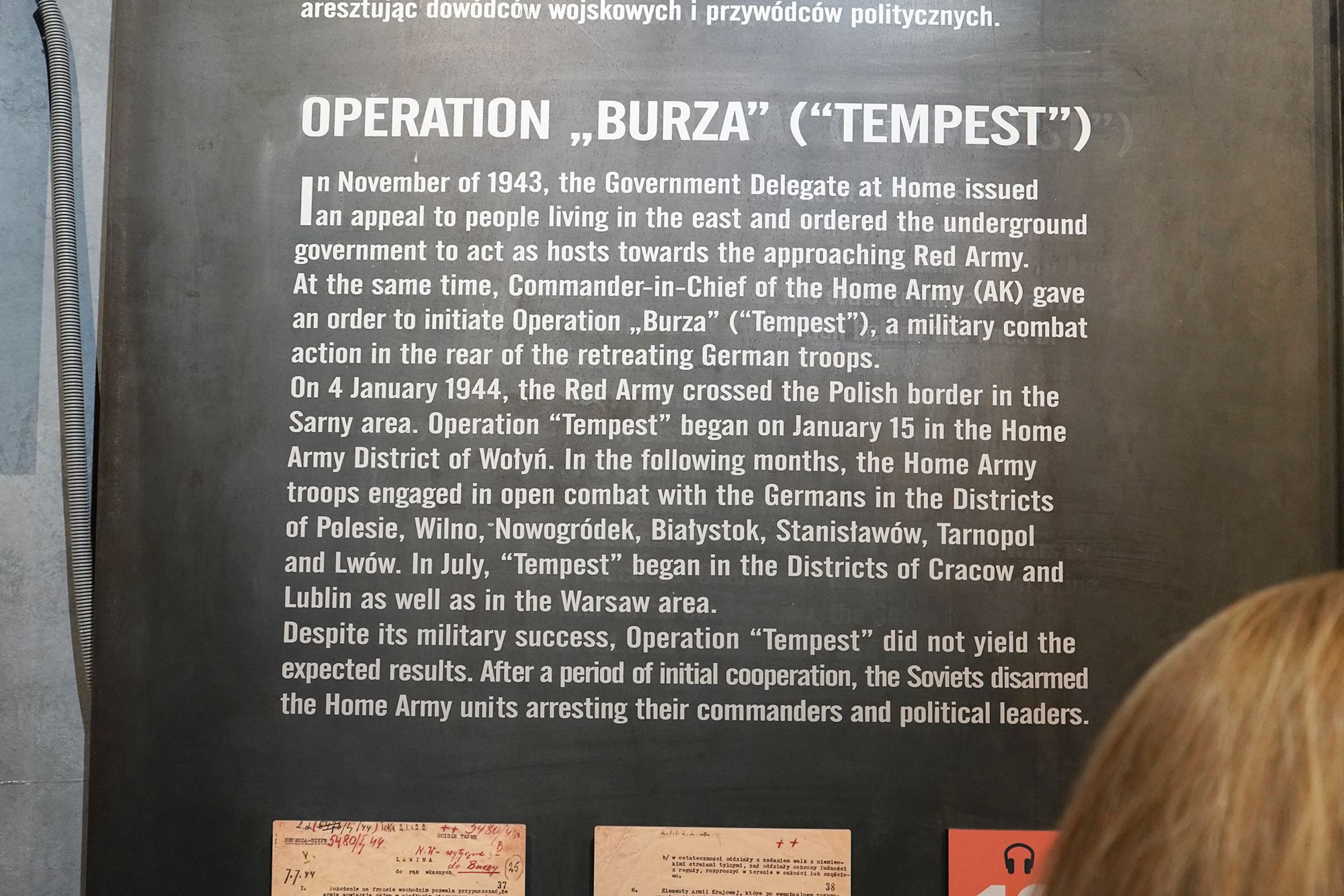
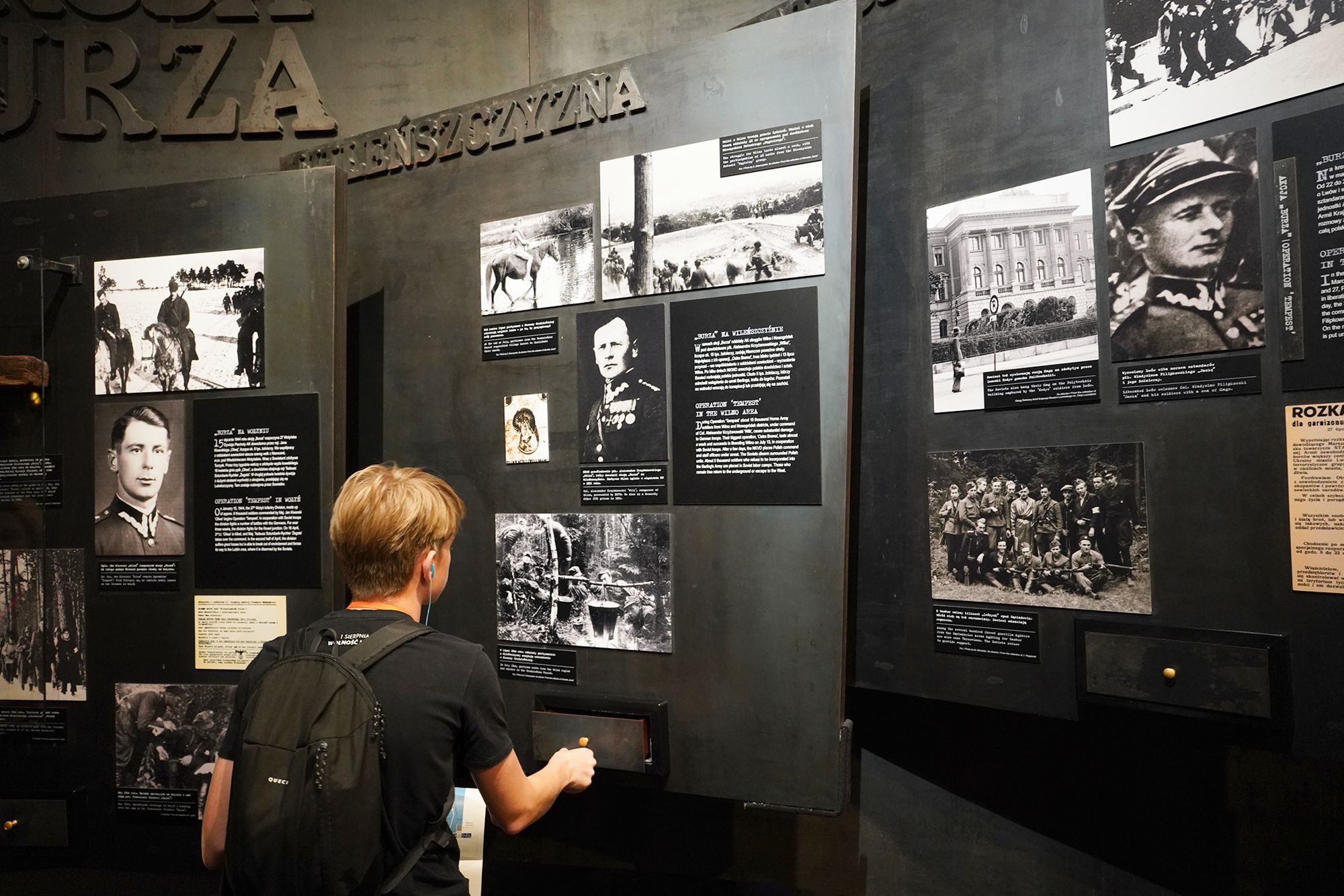
Operation “Tempest” was the Home Army’s campaign to attack retreating German forces as the Soviet army advanced into Poland in 1944. The Polish resistance hoped to help liberate the country and greet the Soviets with its own authorities already in place. Despite military successes and some initial cooperation, the Soviets later disarmed Home Army units and arrested their commanders and political leaders.
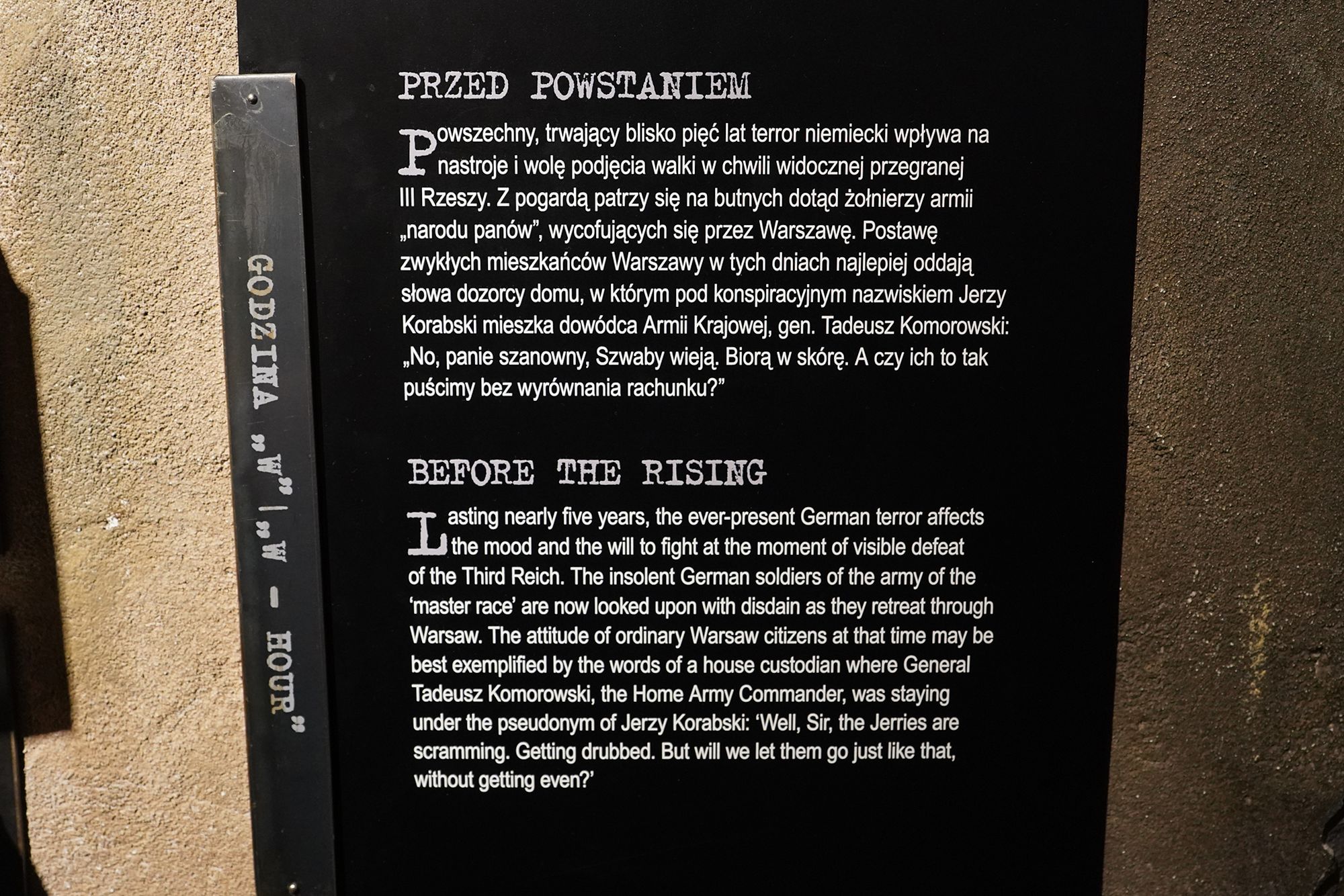
After nearly five years of German occupation and terror, many Warsaw residents were eager to fight back. Seeing German troops retreat through the city gave them hope that liberation was approaching. This panel conveys the anger and determination before the uprising—the feeling that the occupiers should not simply be allowed to leave without answering for what they had done.
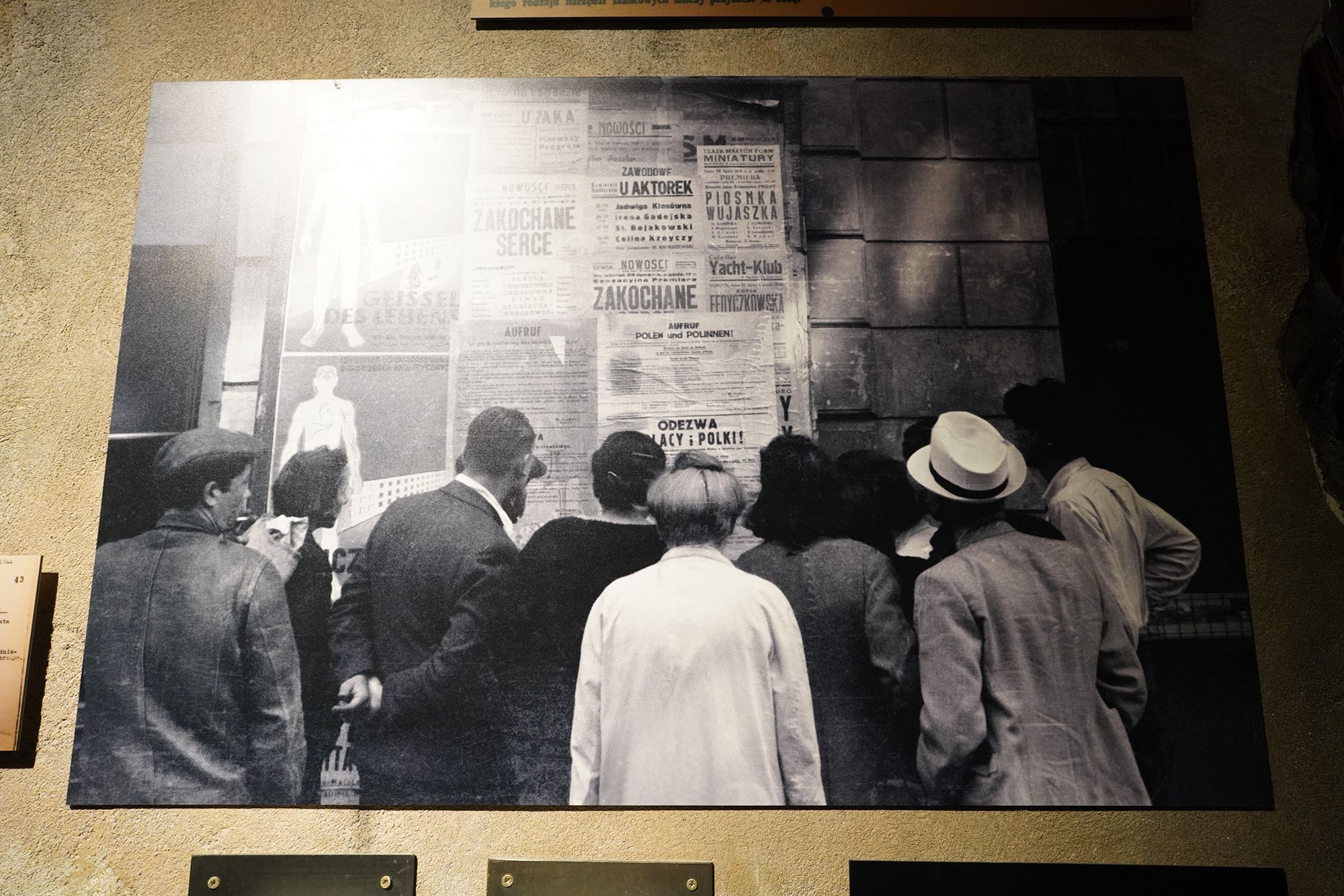
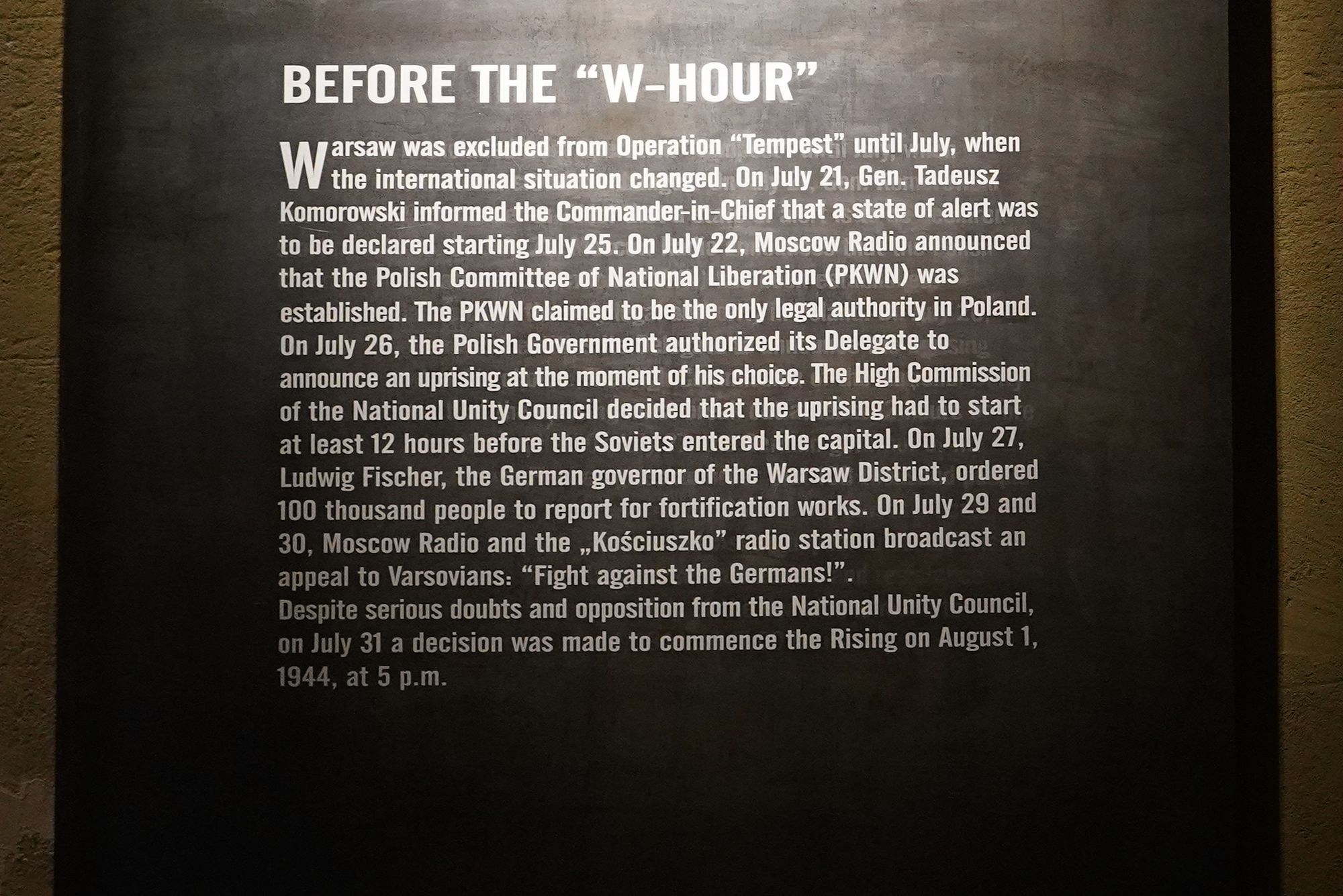
As Soviet forces approached Warsaw in July 1944, Polish resistance leaders prepared to launch an uprising before the Red Army entered the capital. Meanwhile, a Soviet-backed Polish committee claimed authority over the country, and broadcasts from Moscow urged Warsaw residents to fight the Germans. Despite serious doubts and opposition, the decision was made on July 31 to begin the uprising the following day, August 1, at 5 p.m.—the designated “W-hour.”
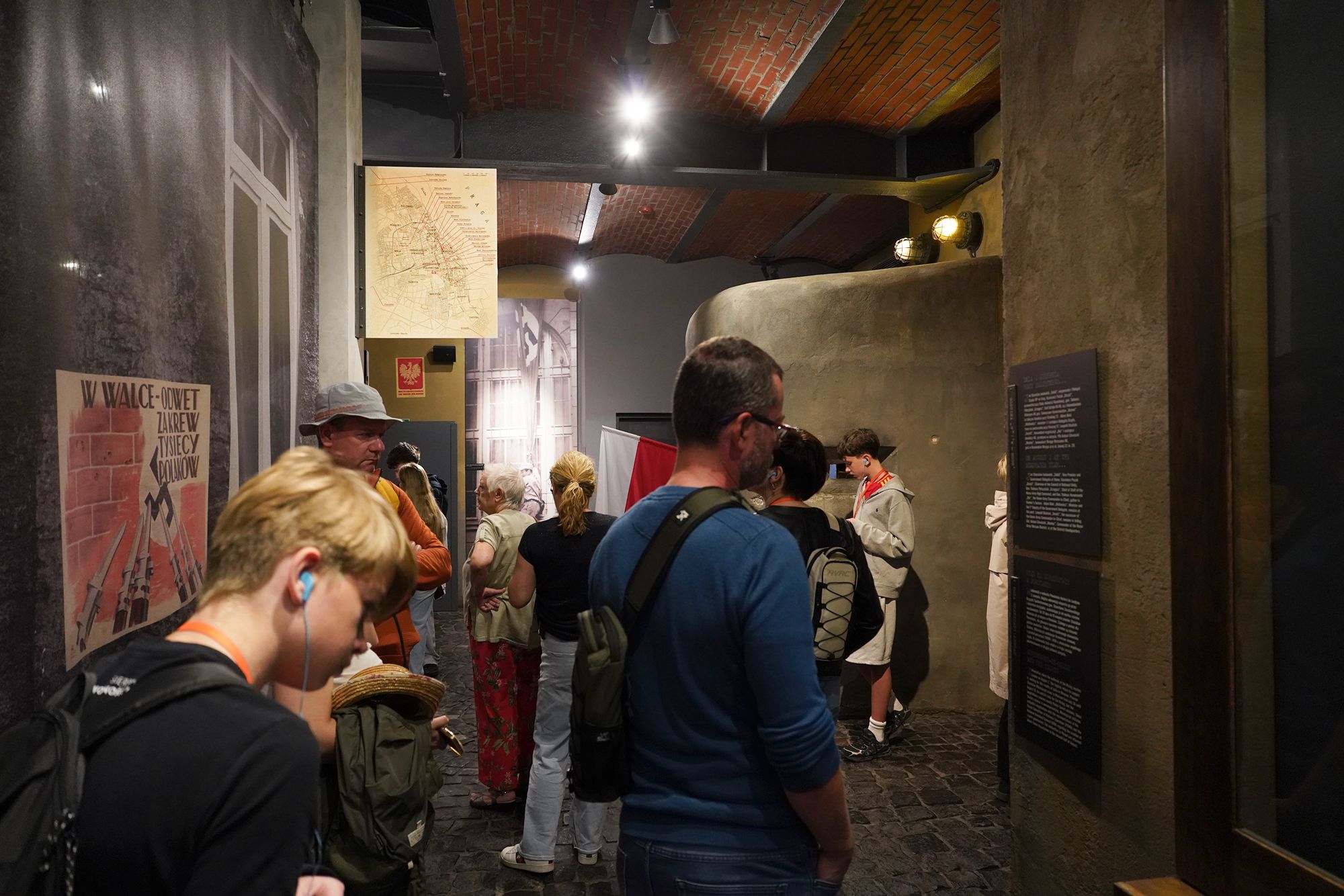
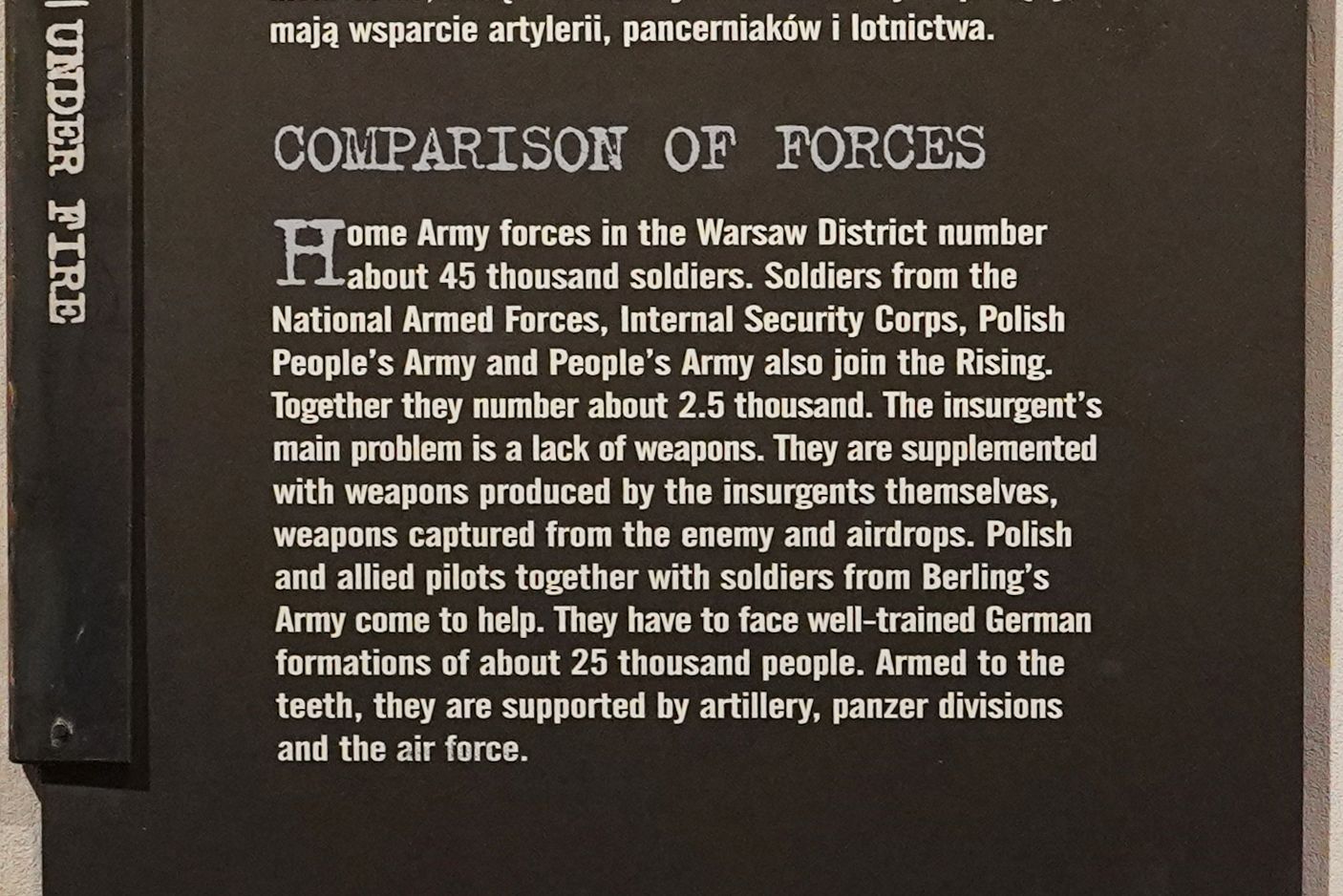
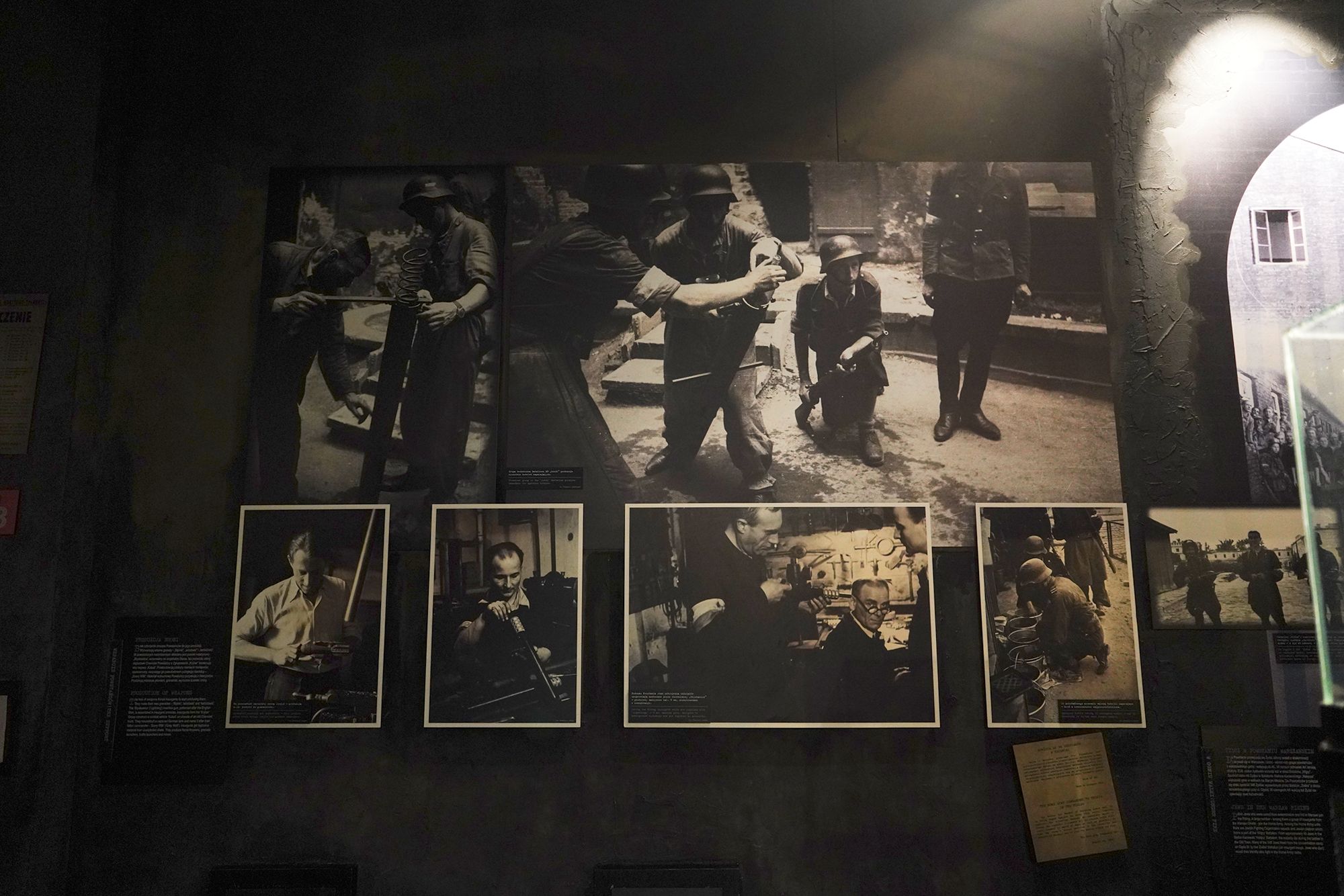
The museum’s comparison of forces shows the resistance’s greatest disadvantage: a shortage of weapons. The Home Army had about 45,000 soldiers in the Warsaw district, joined by roughly 2,500 from other groups. They relied on homemade weapons, captured German arms, and airdrops. Against them stood around 25,000 well-equipped German troops supported by artillery, tanks, and aircraft. Greater numbers alone could not overcome this difference in firepower.
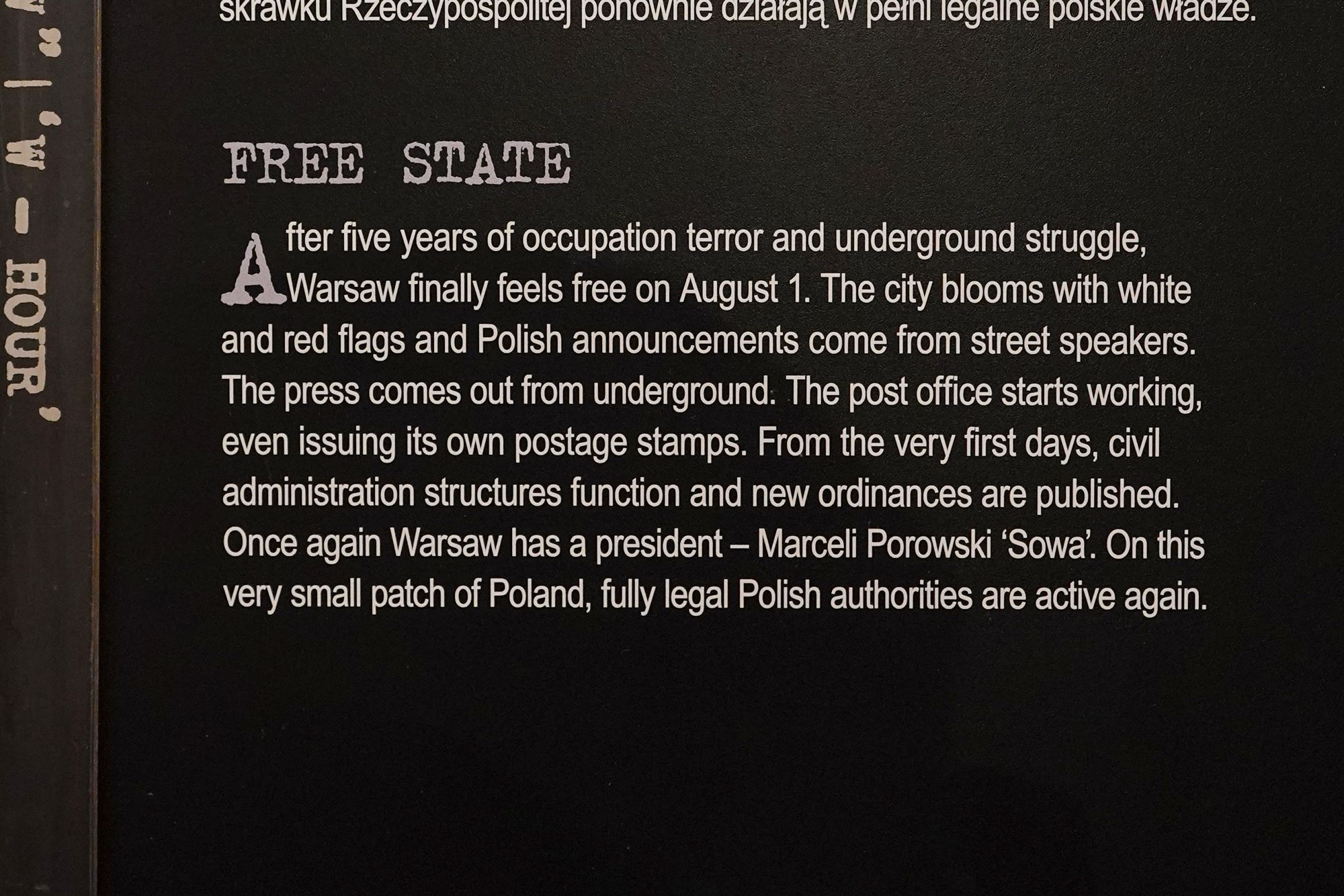
In the areas held by the resistance, the uprising brought a renewed sense of freedom after nearly five years of occupation. Polish flags appeared in the streets, underground newspapers circulated openly, and a postal service operated with its own stamps. Civil authorities resumed their work, with Marceli Porowski serving as Warsaw’s mayor. Even as fighting continued, residents began rebuilding the everyday functions of an independent Polish city.
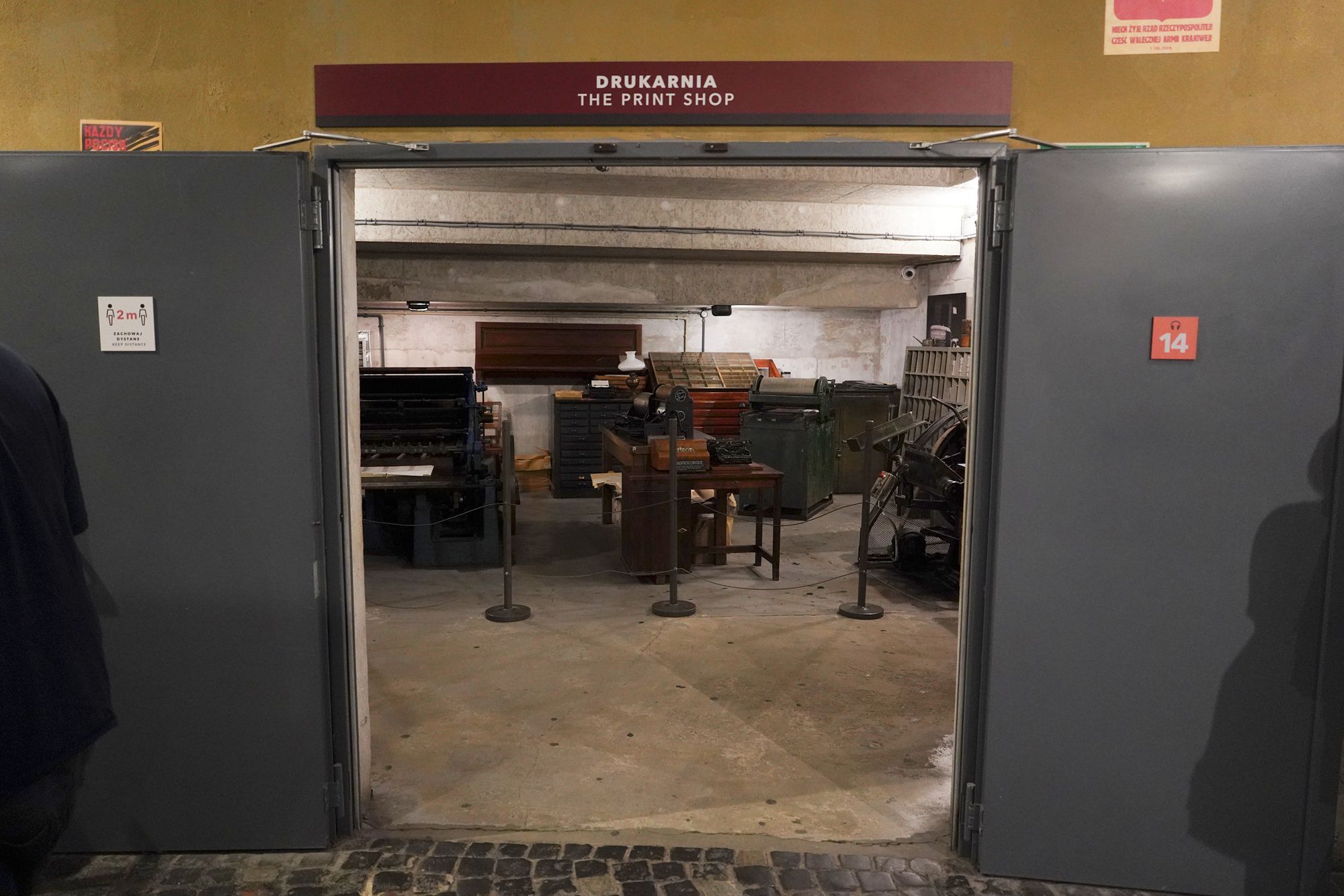
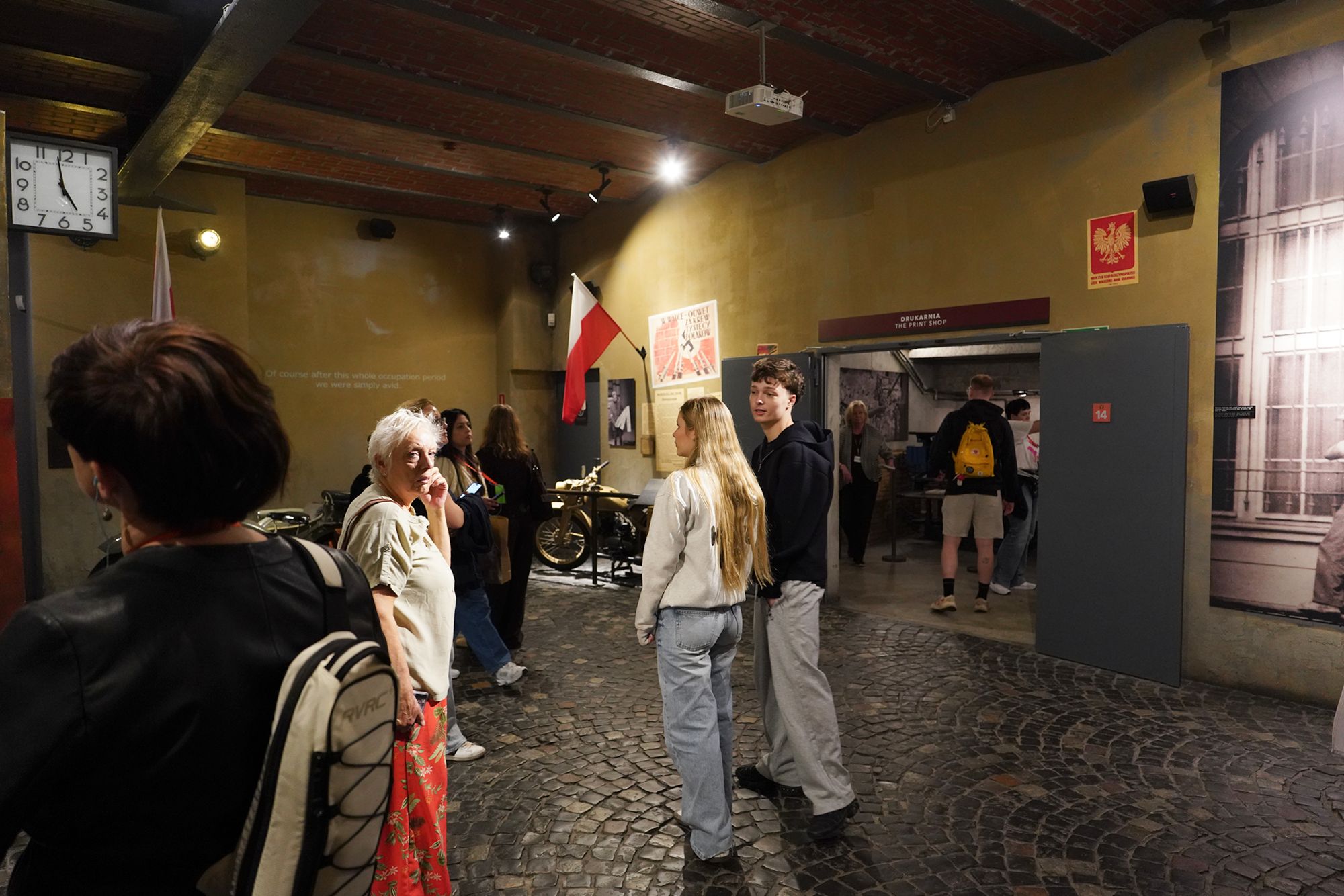
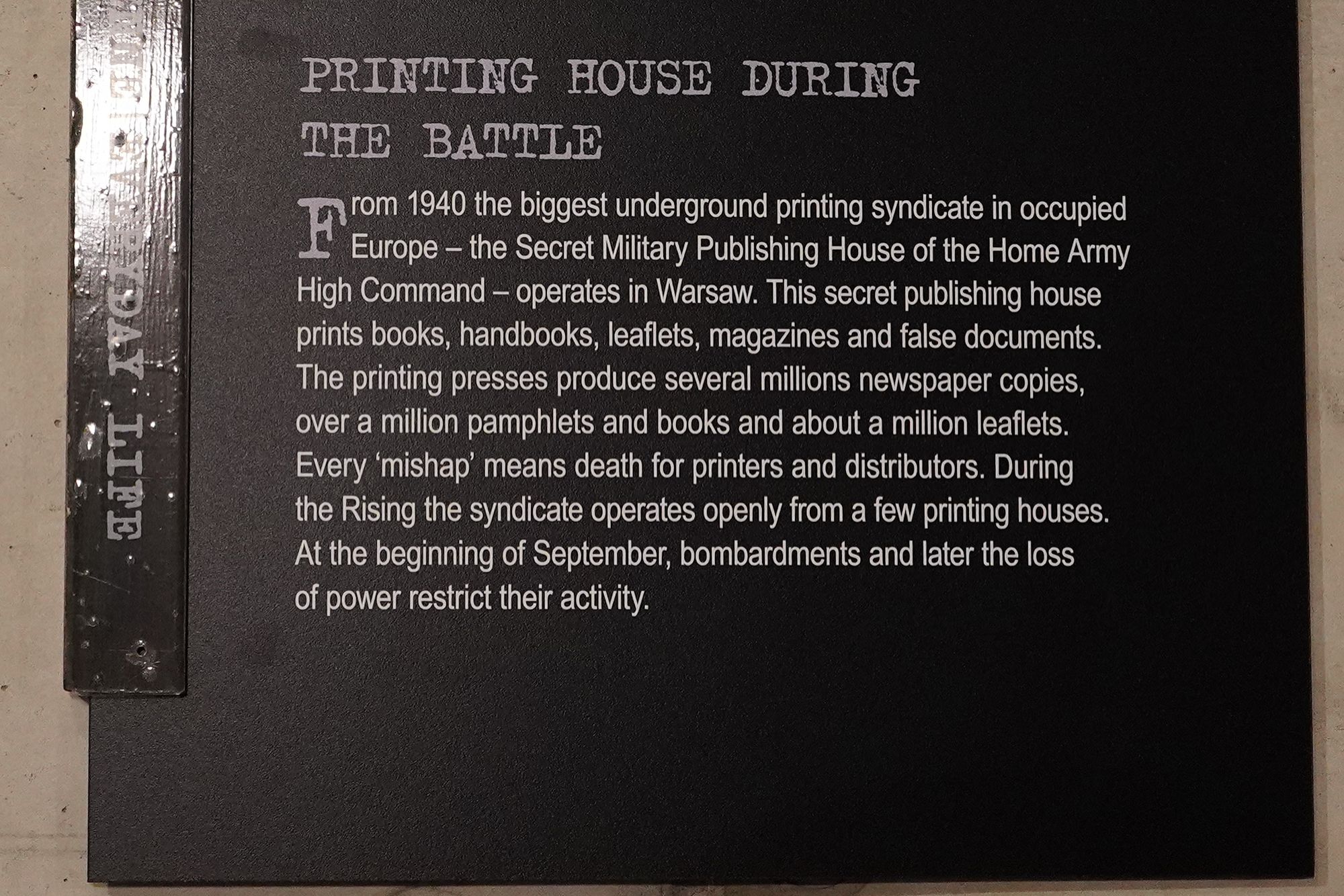
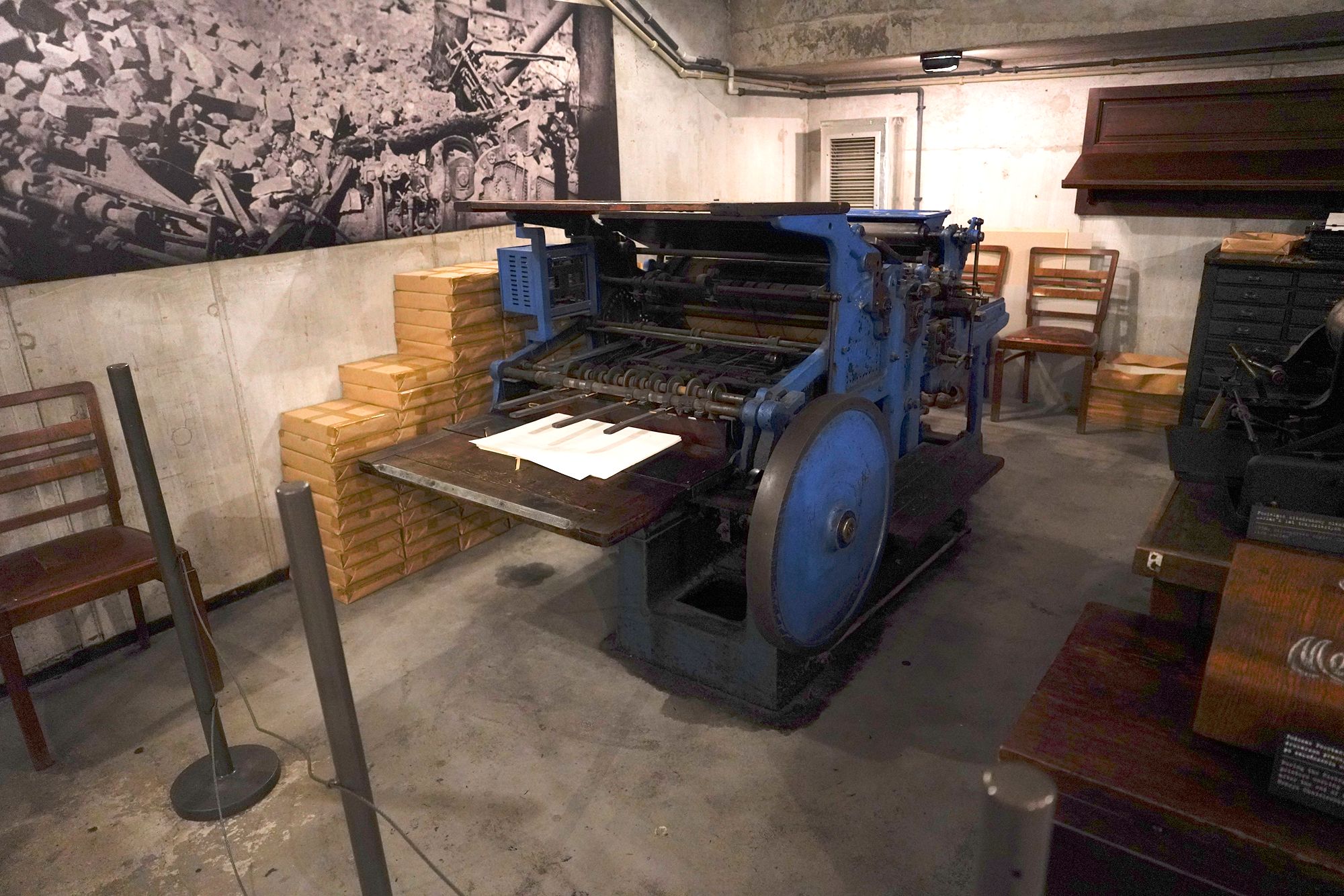
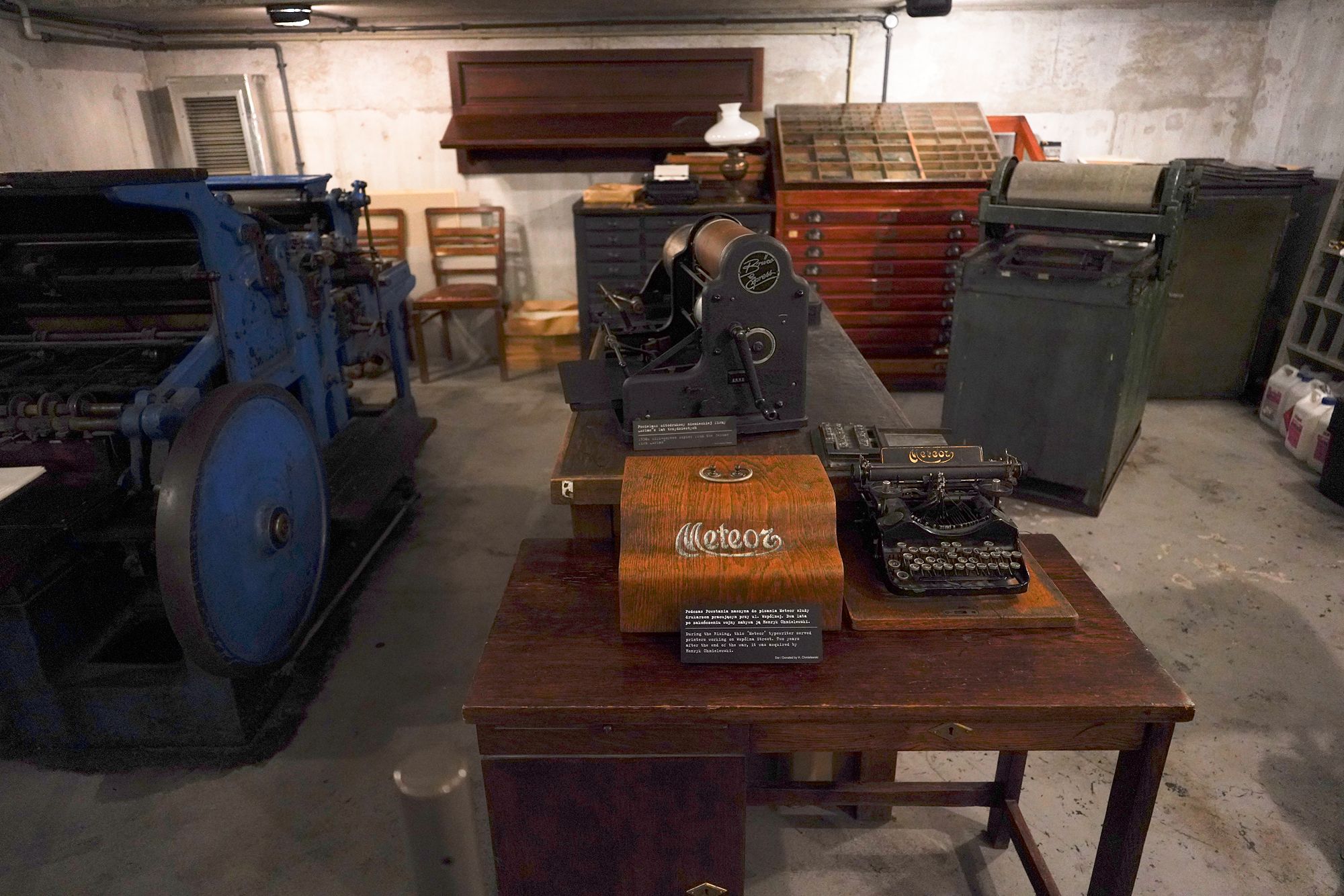
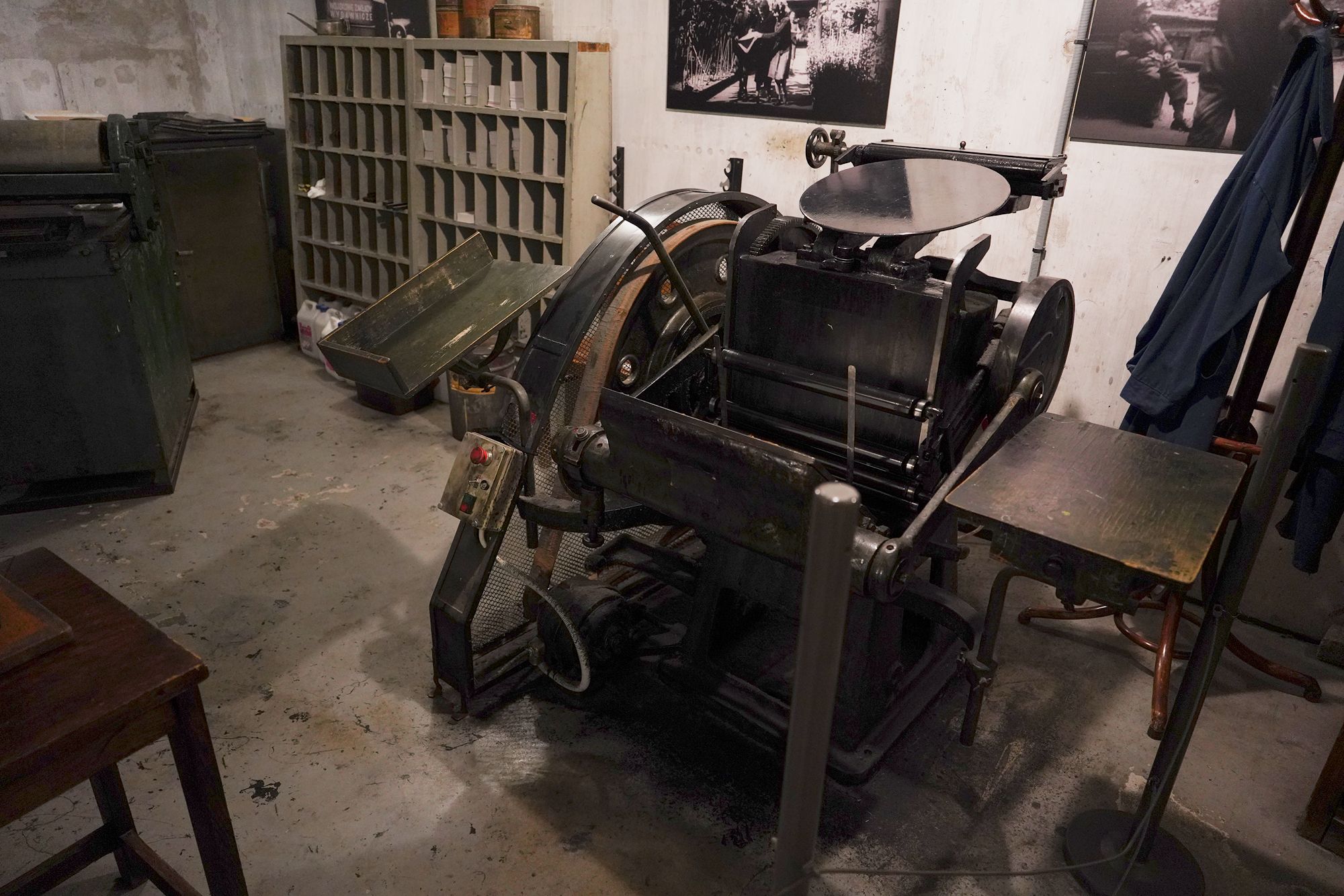
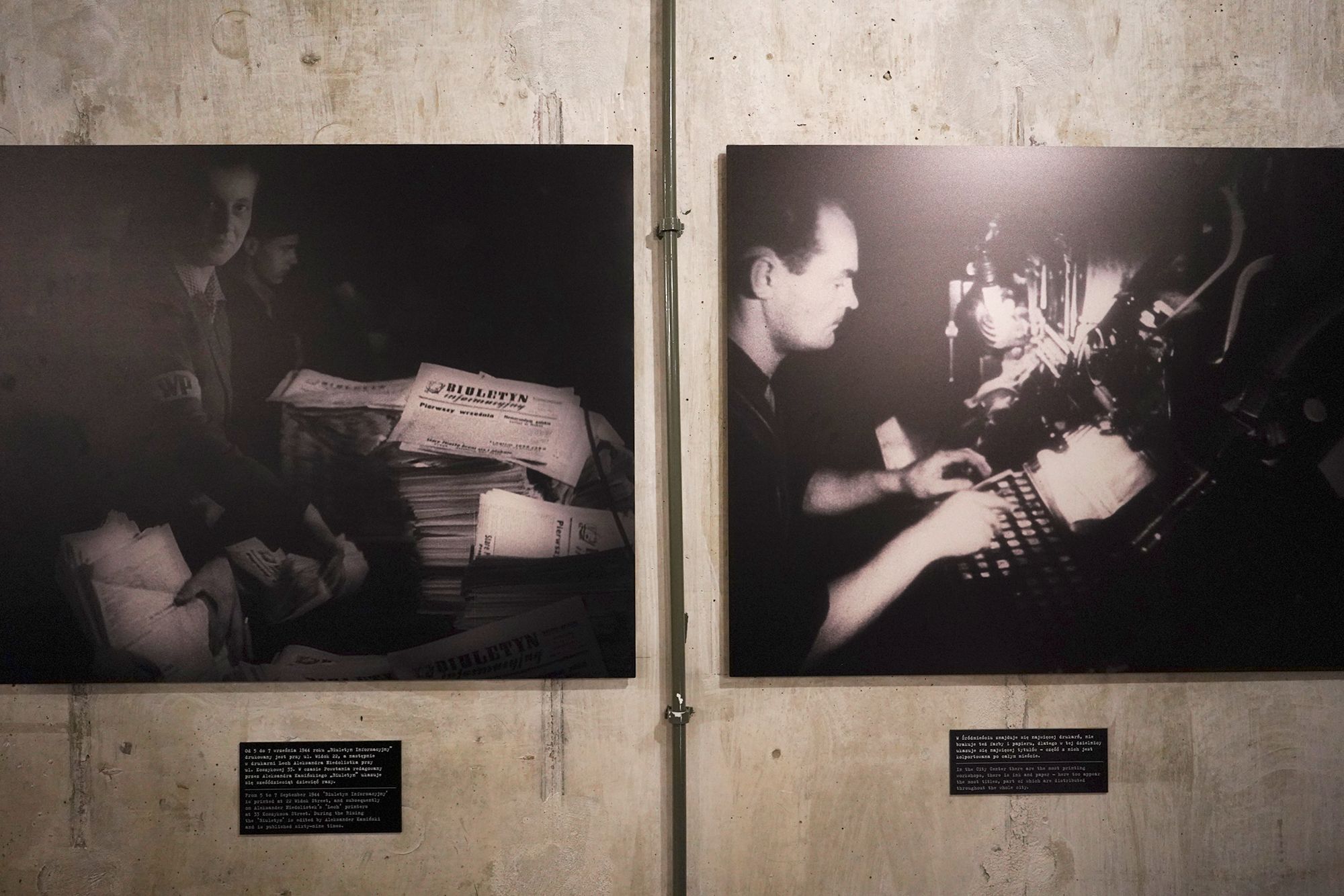
Warsaw’s underground printing network produced newspapers, books, leaflets, manuals, and forged documents throughout the occupation. Printers and distributors risked death if discovered. During the uprising, these secret operations began working openly, keeping residents informed as the fighting continued. By early September, bombardments and the loss of electricity severely limited their work.
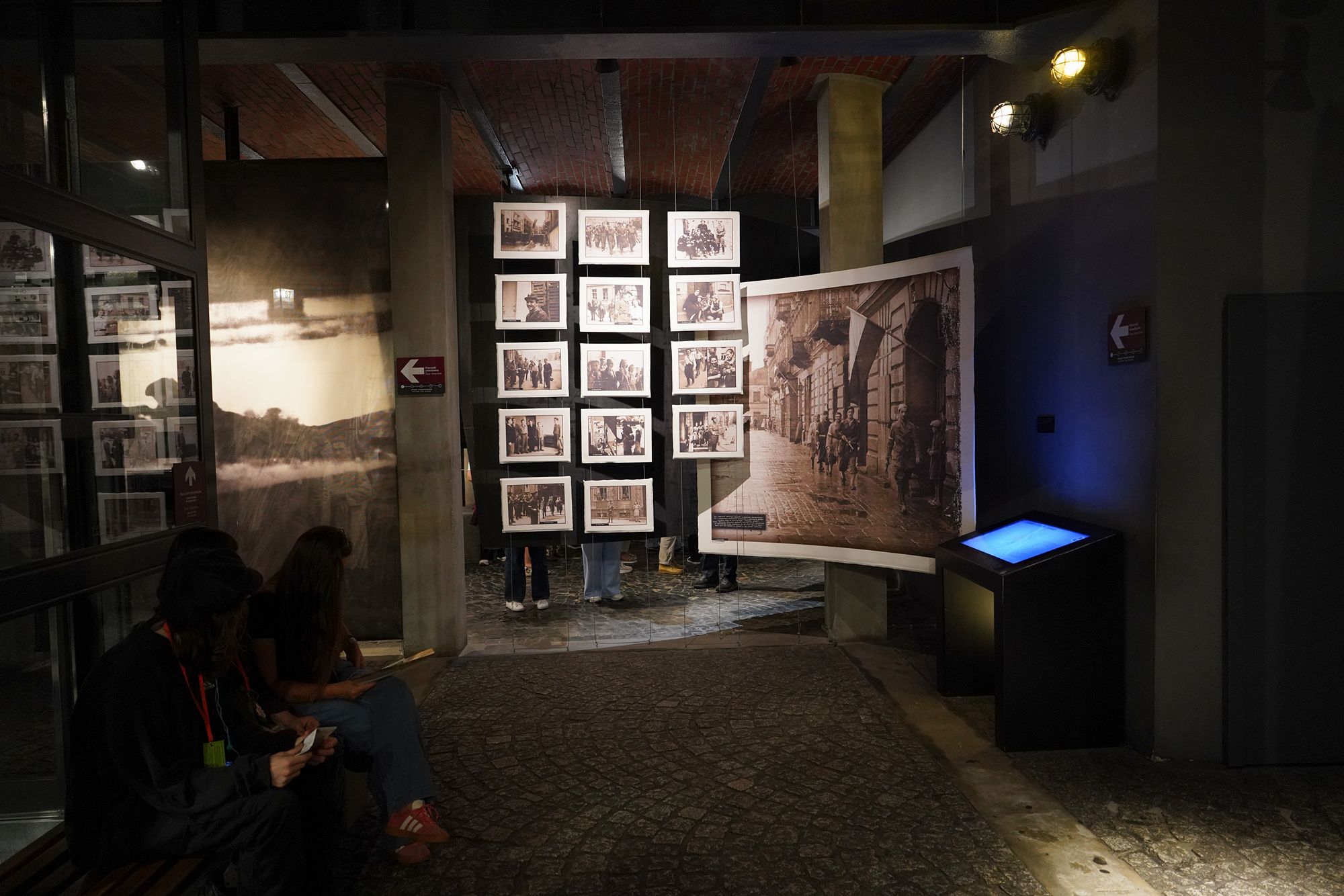
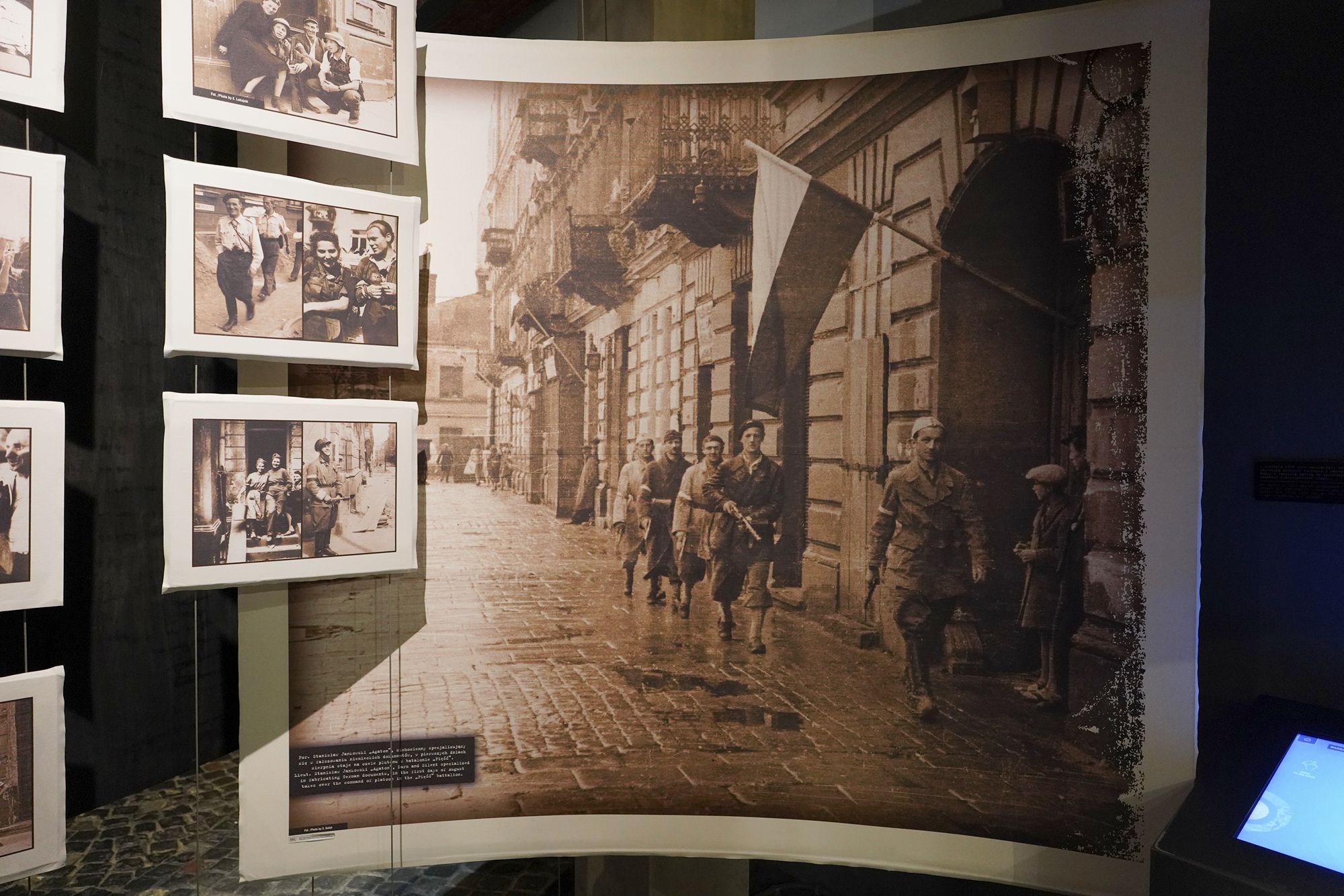
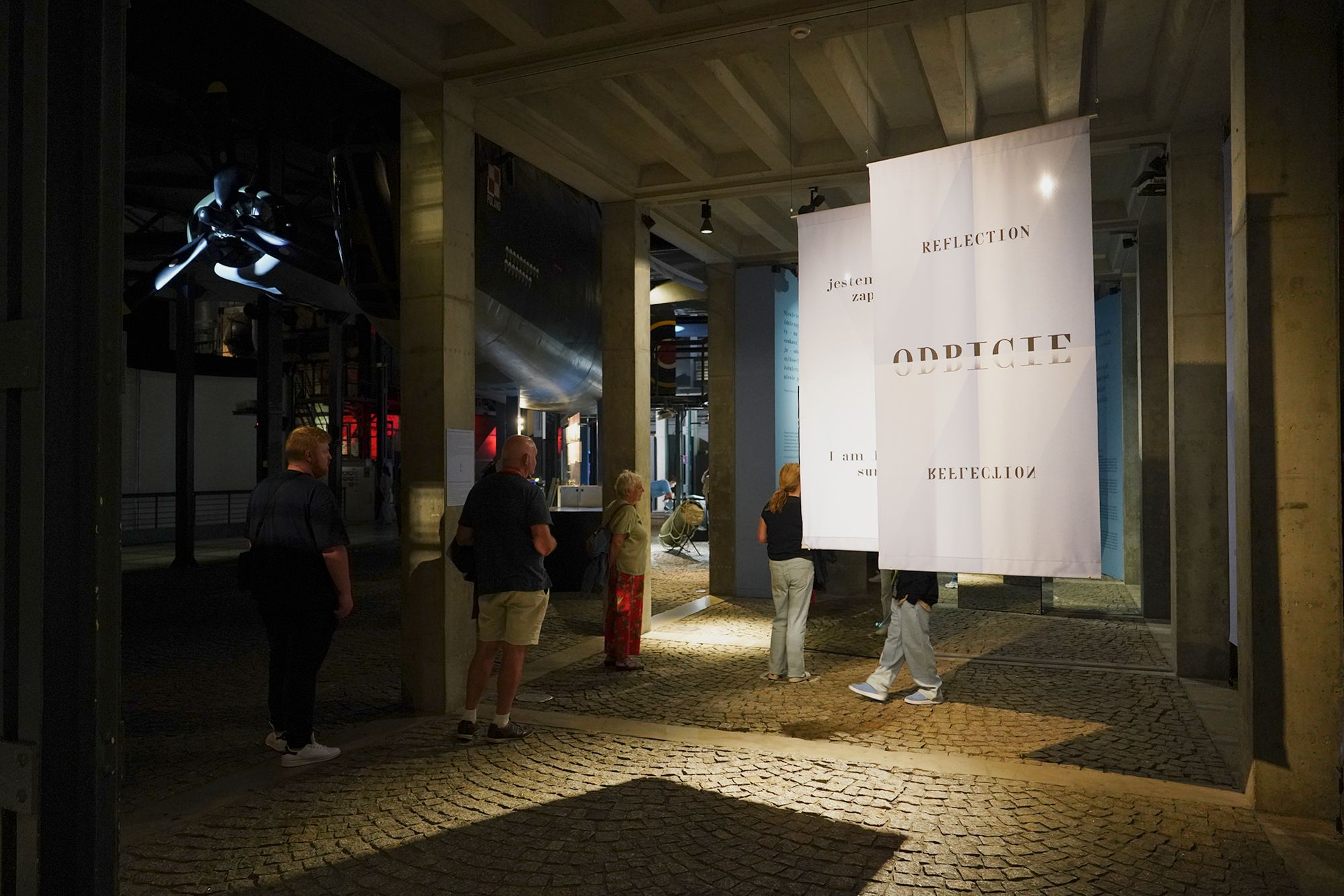
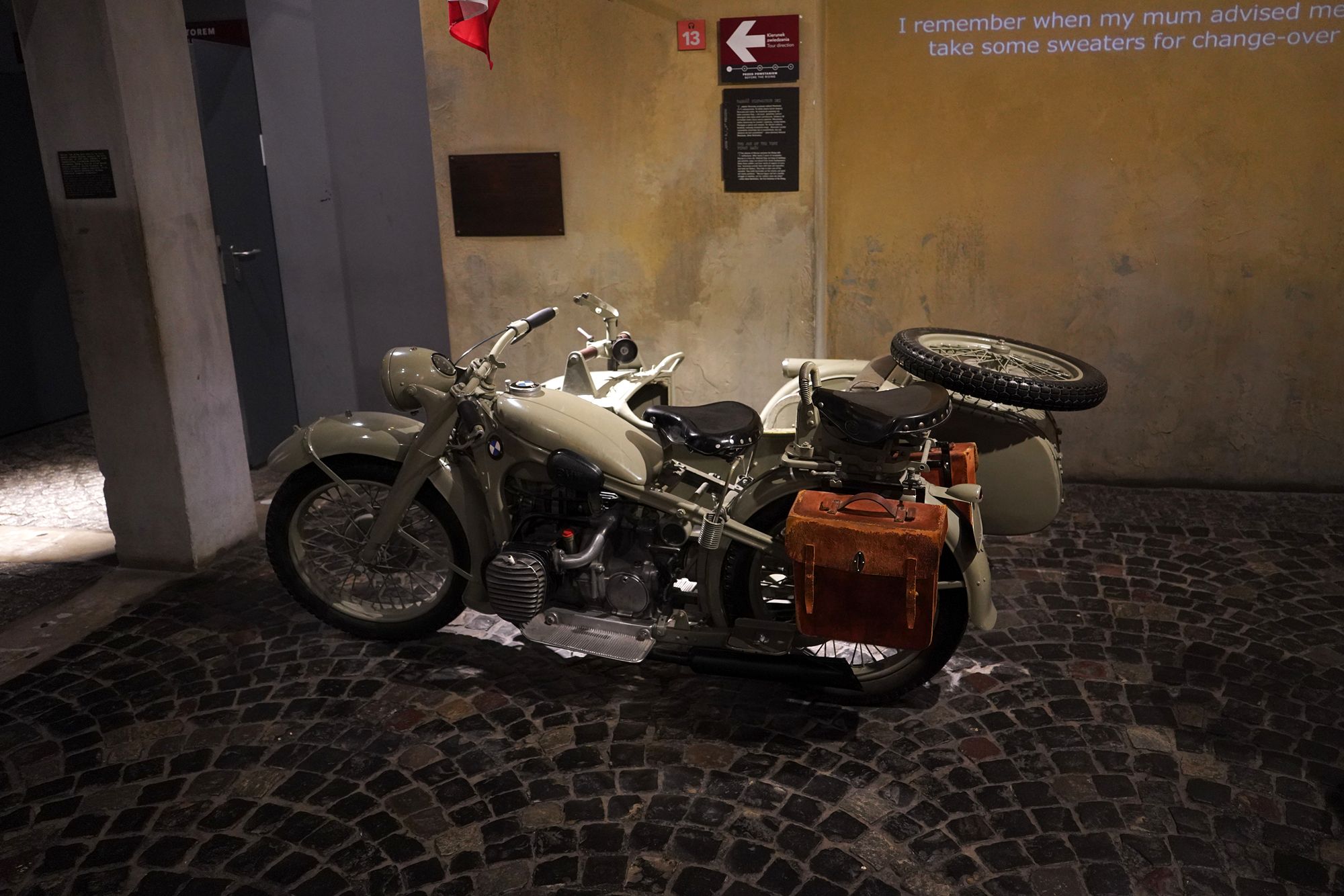
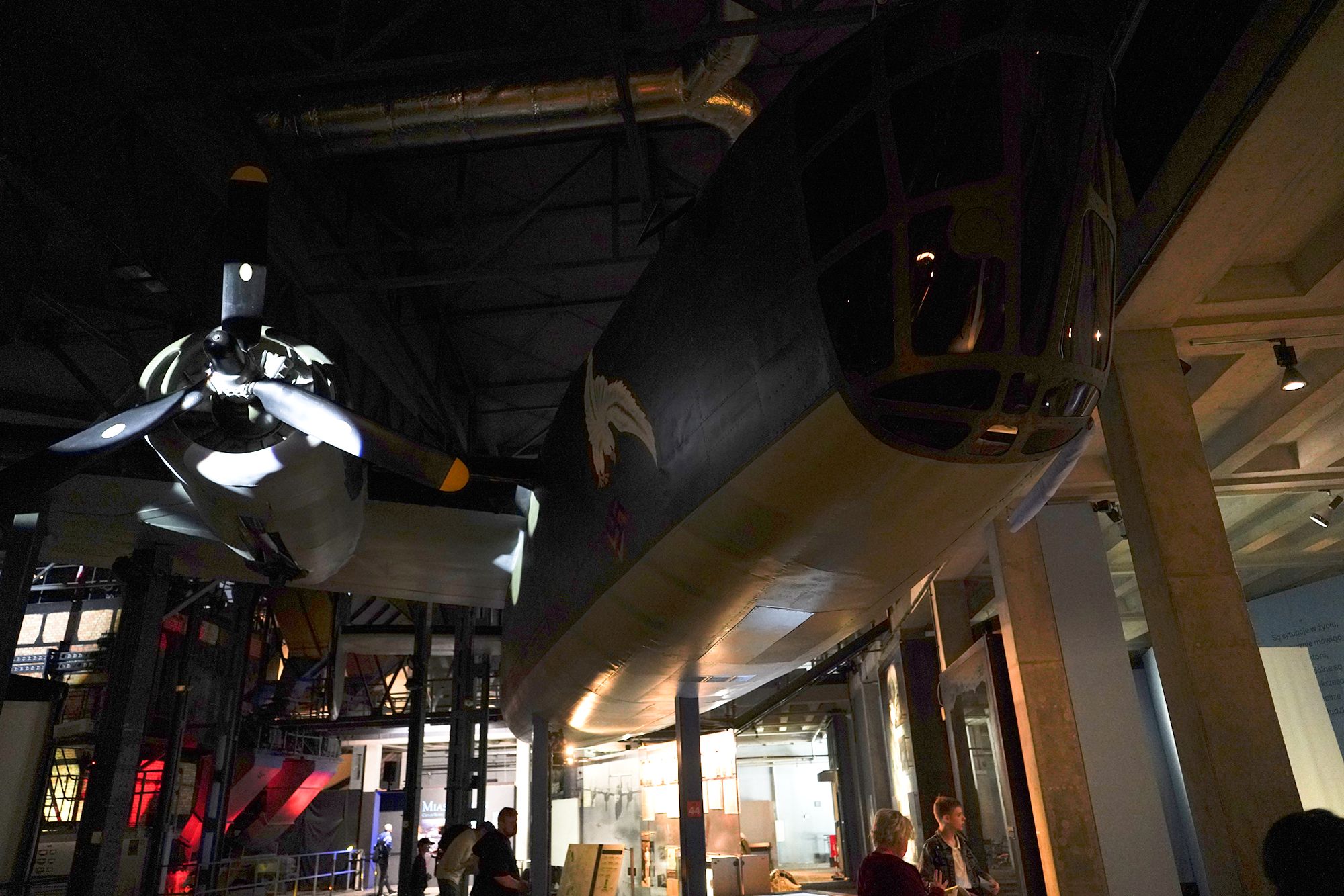
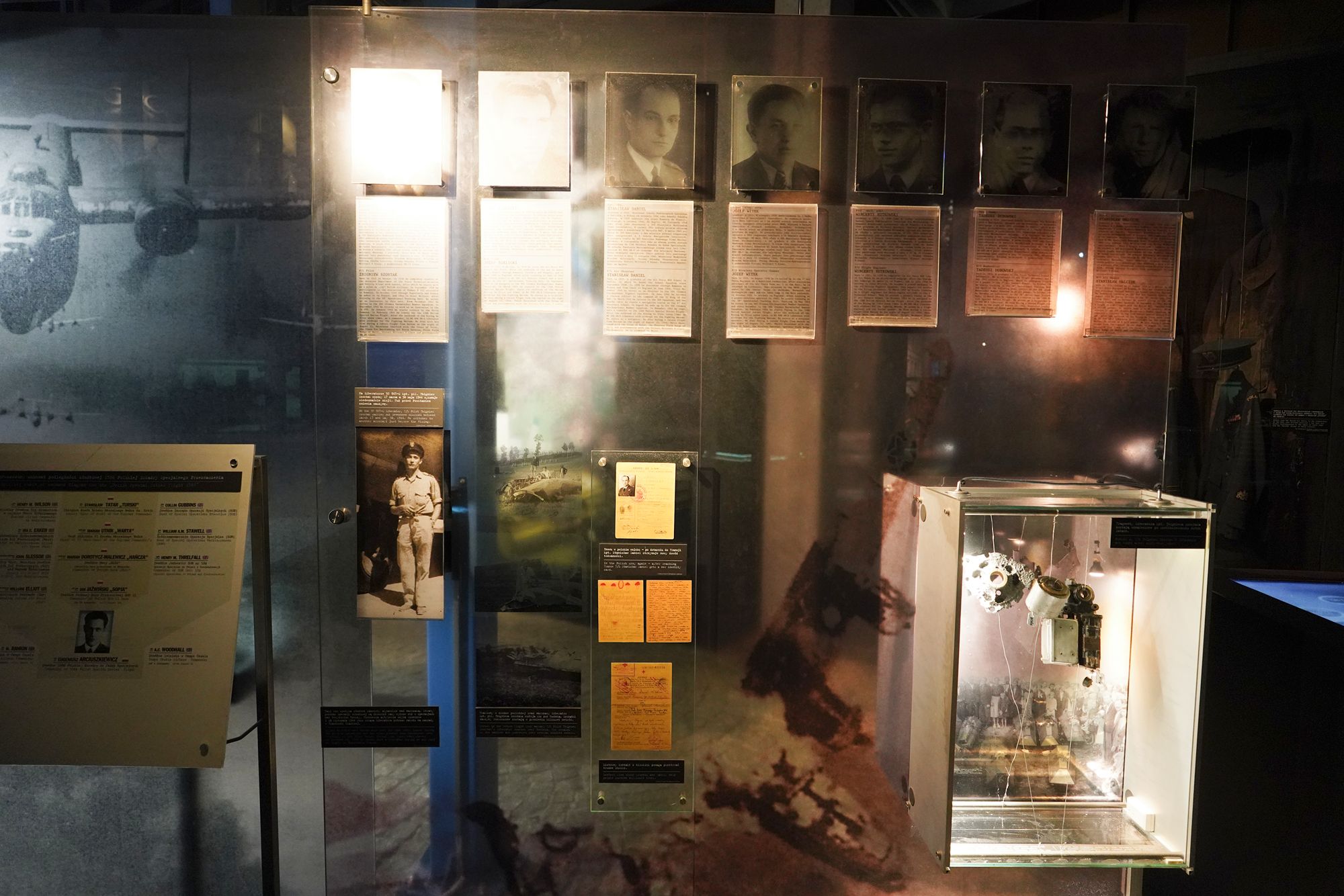
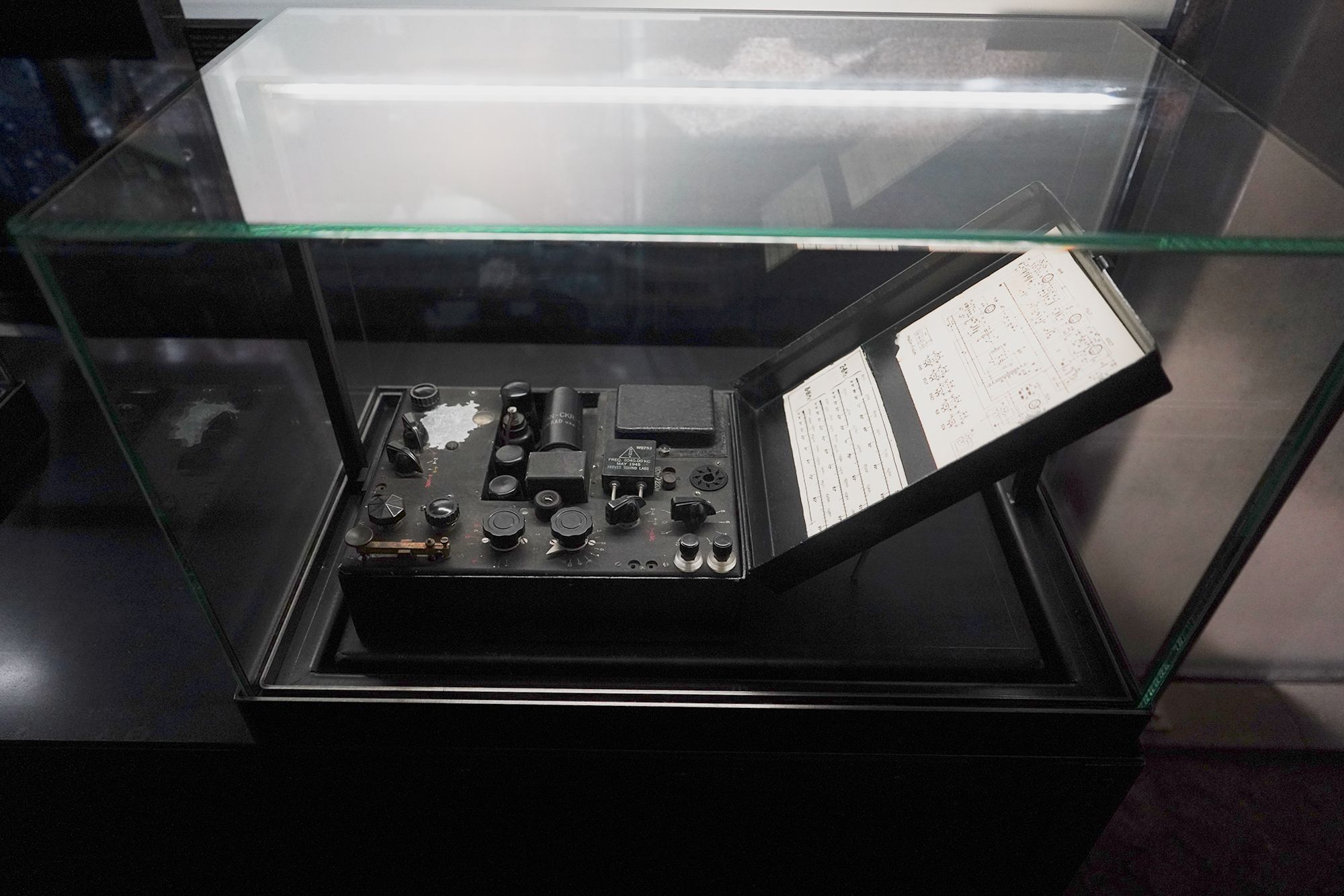
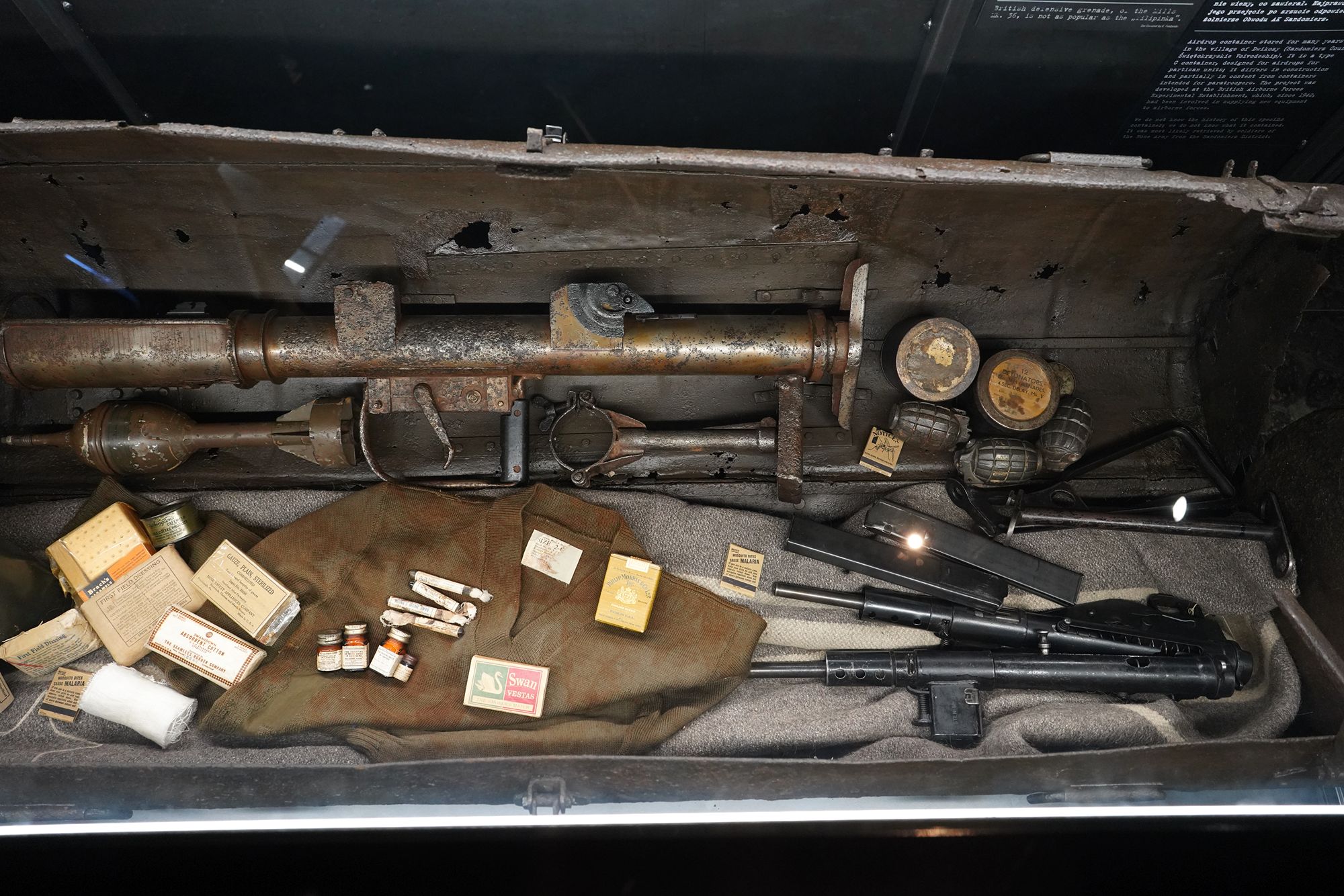
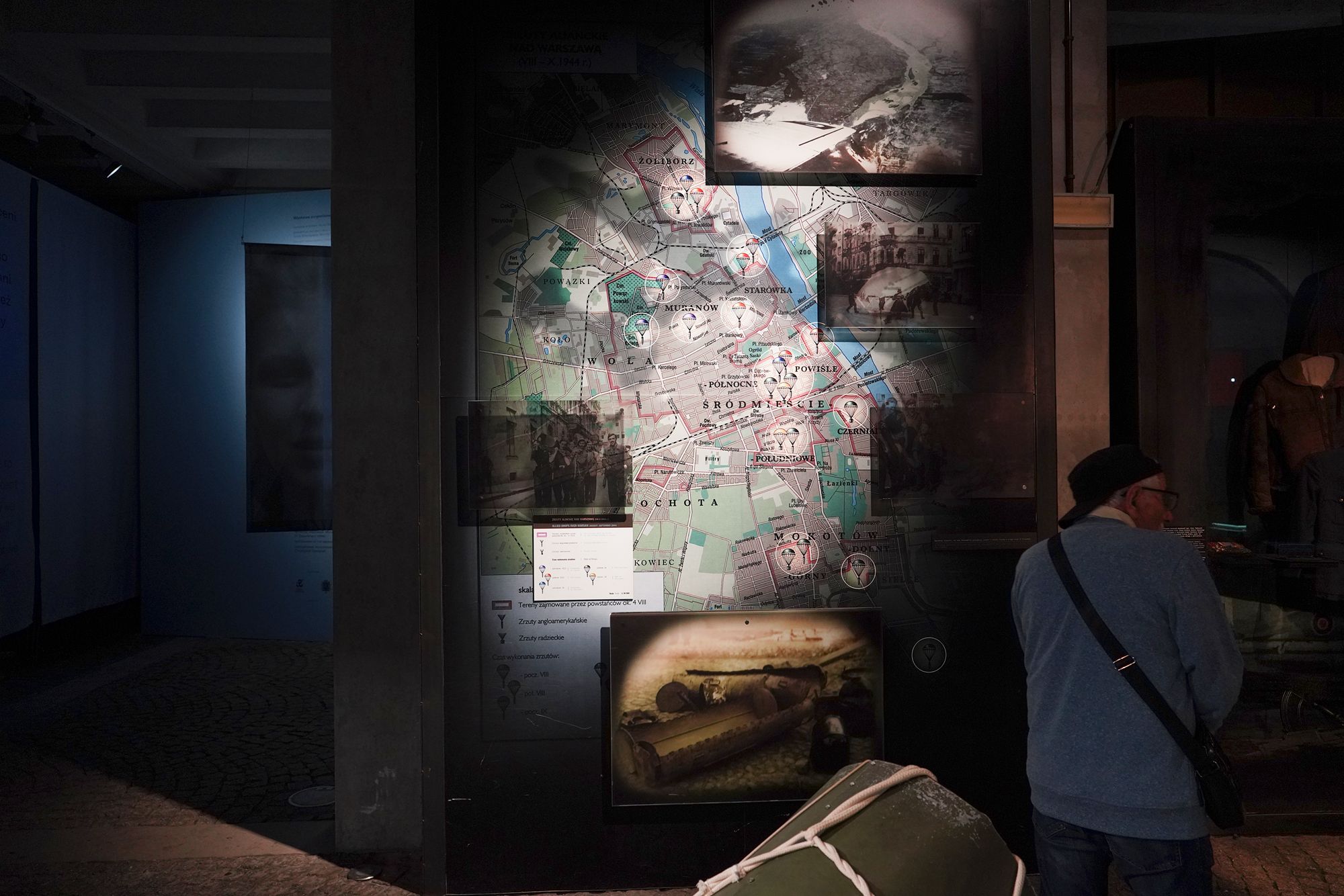
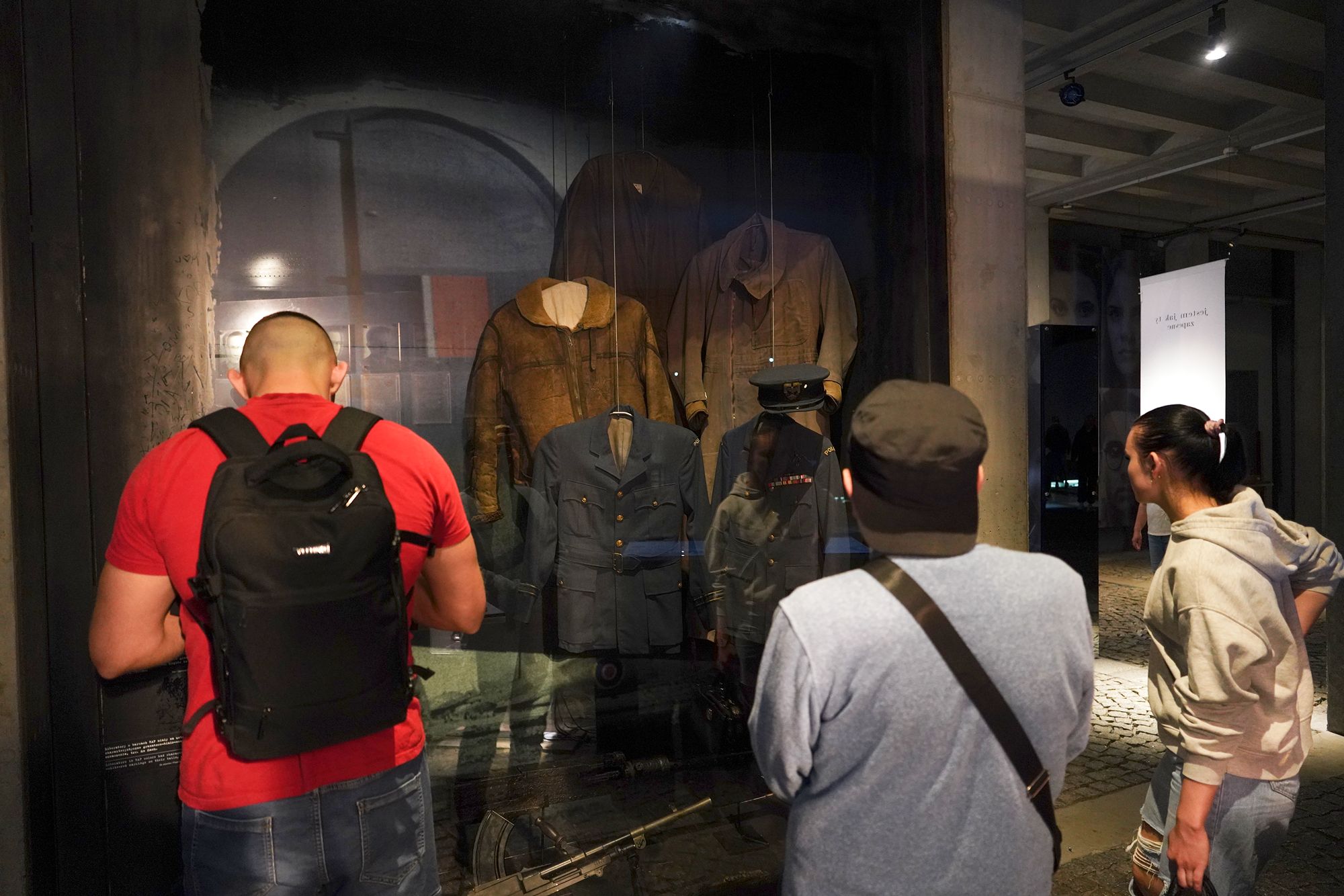
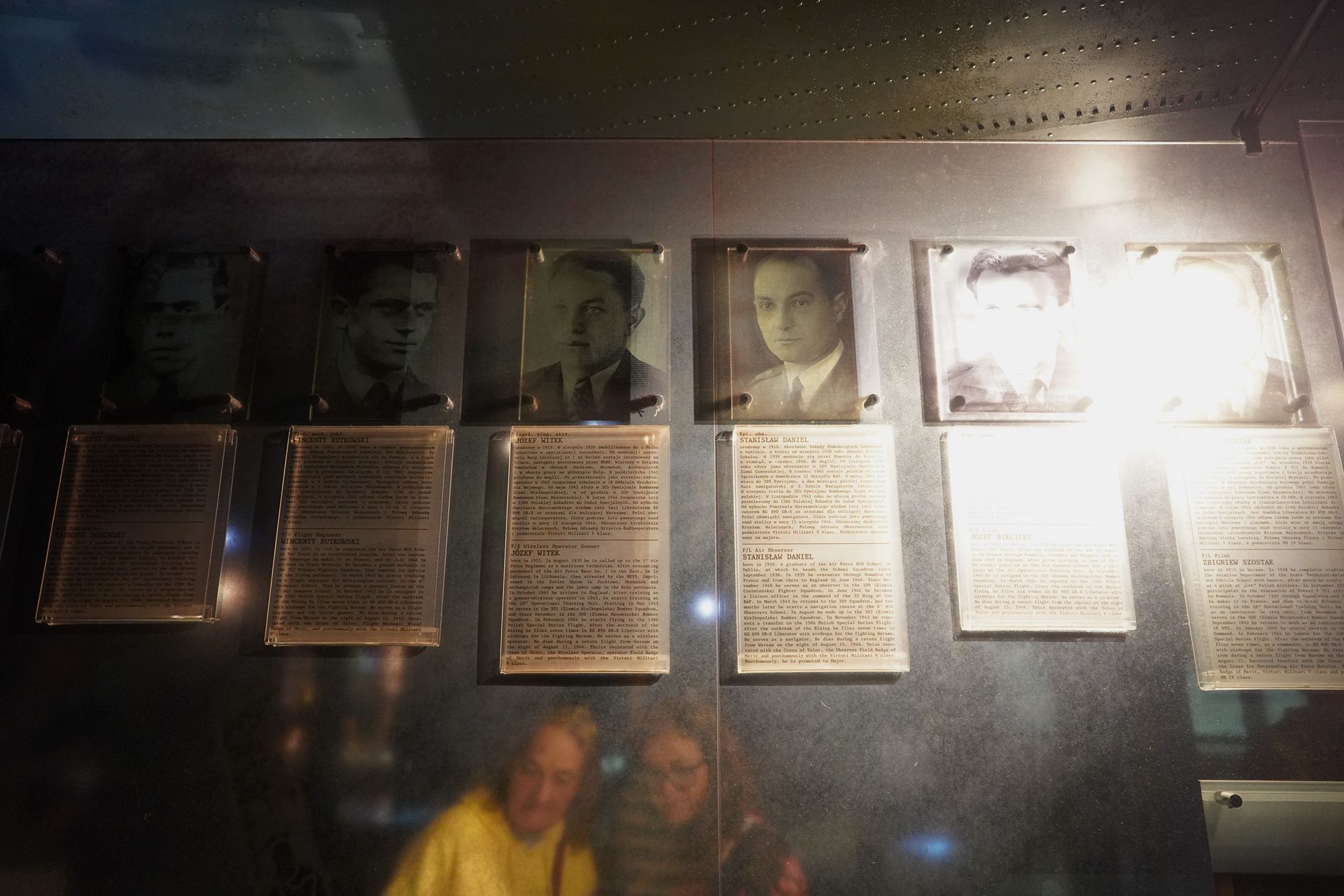
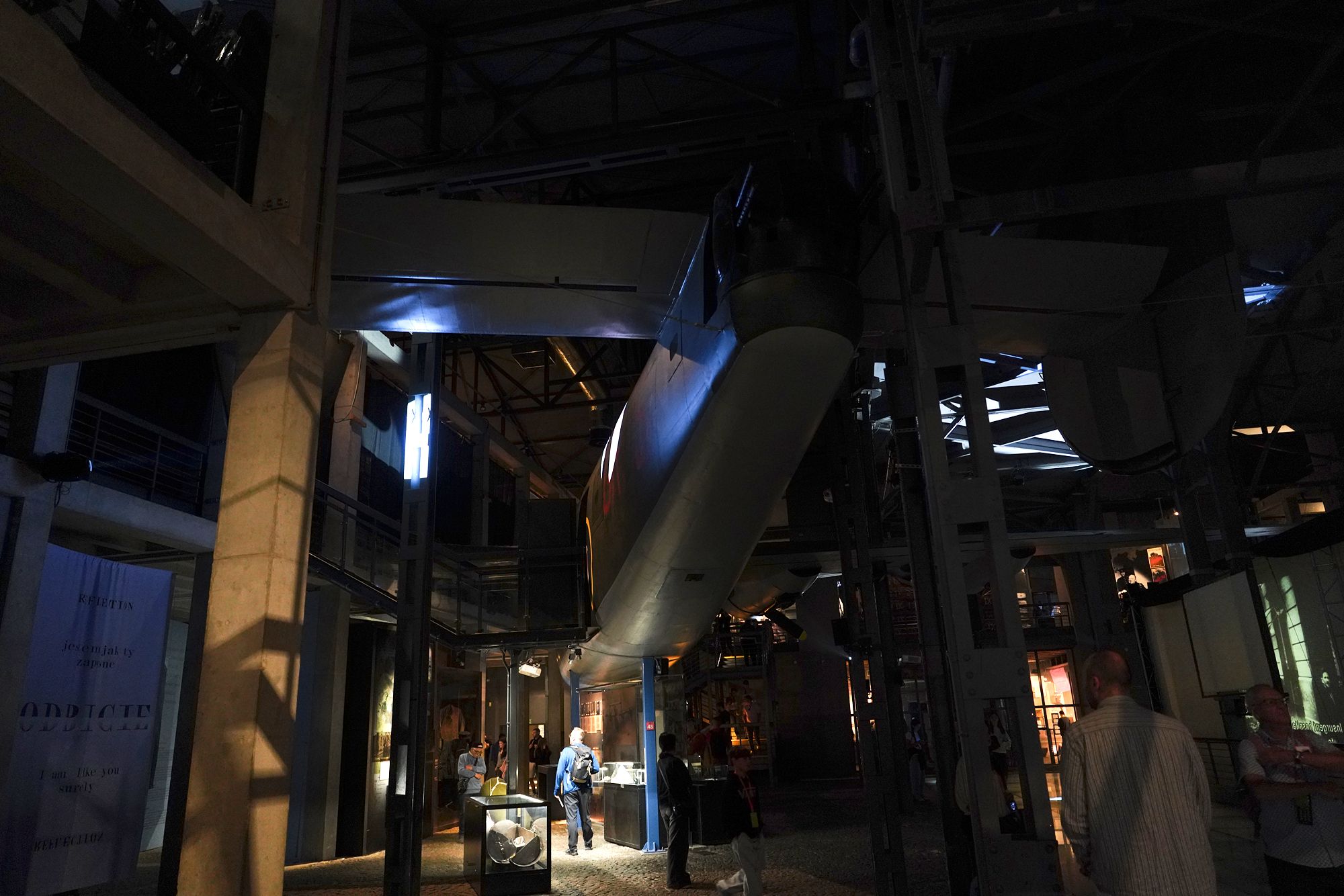
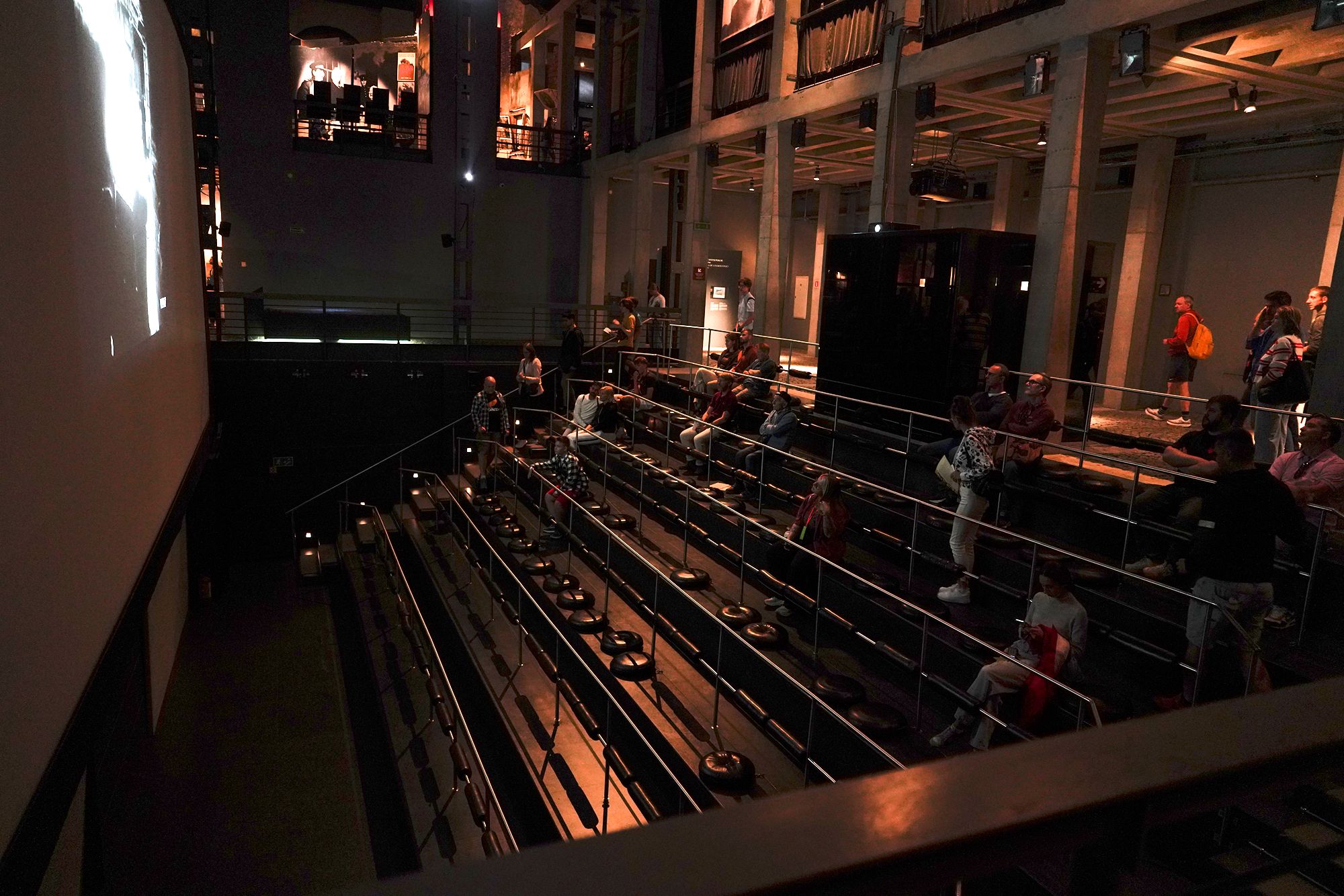
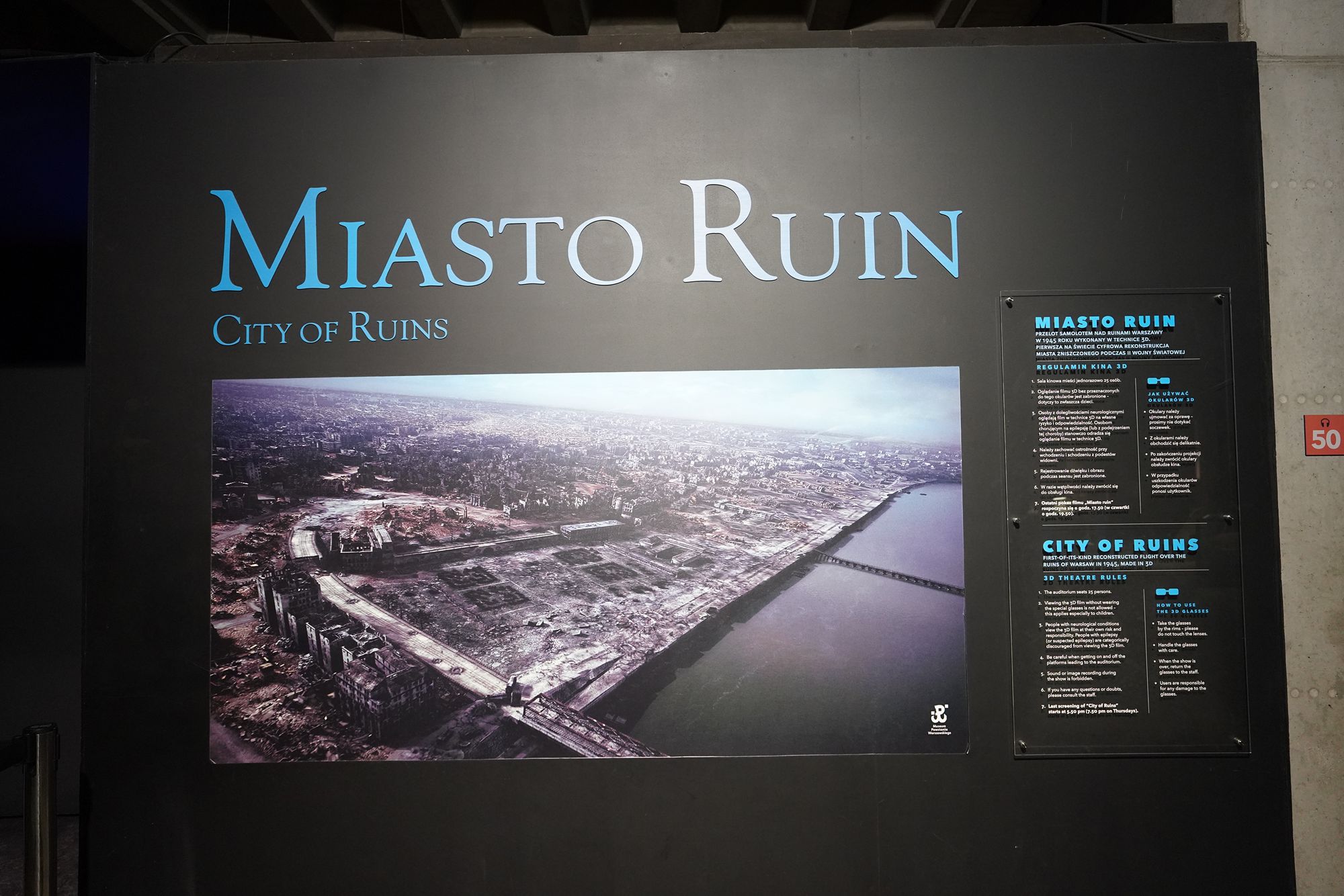
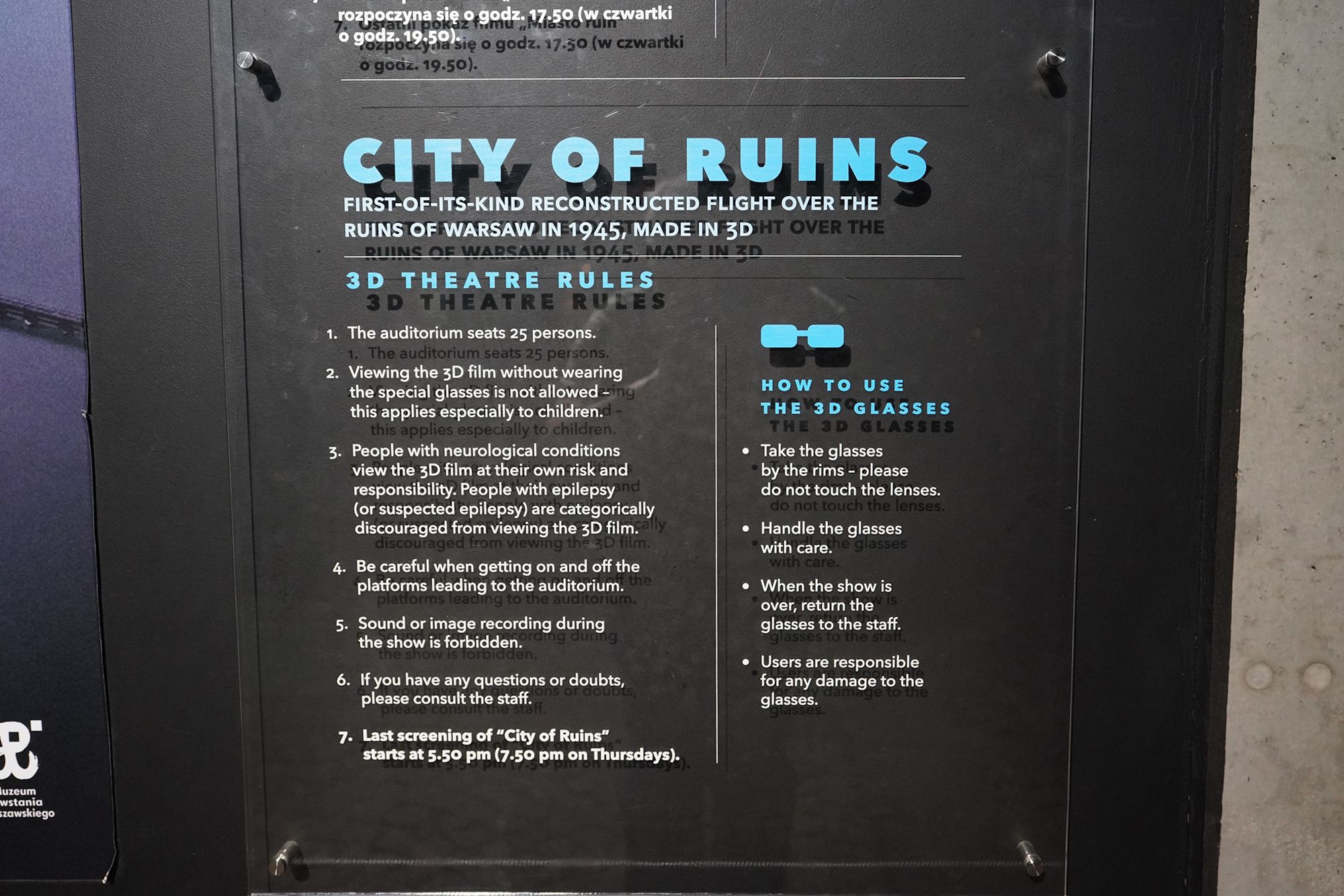
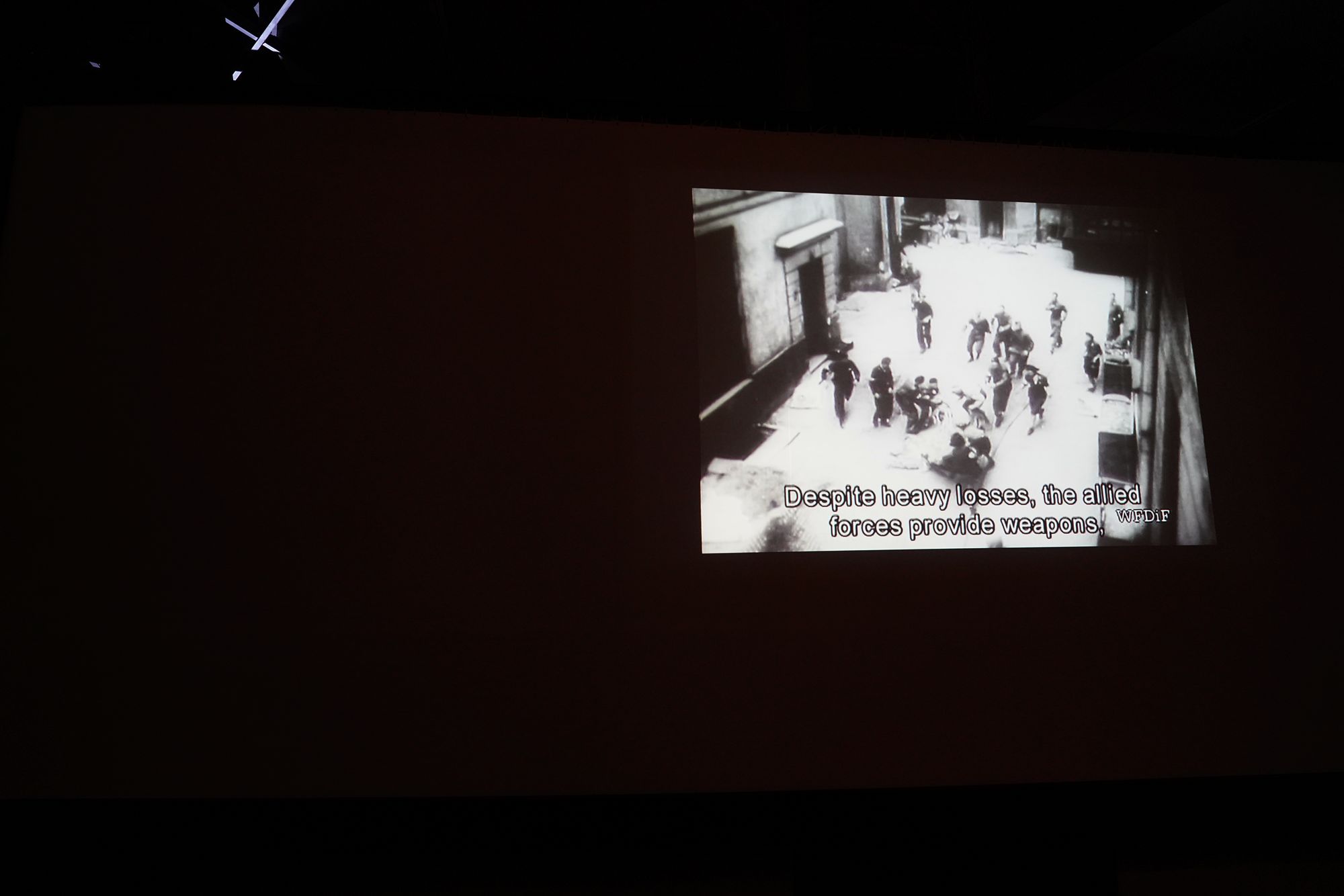
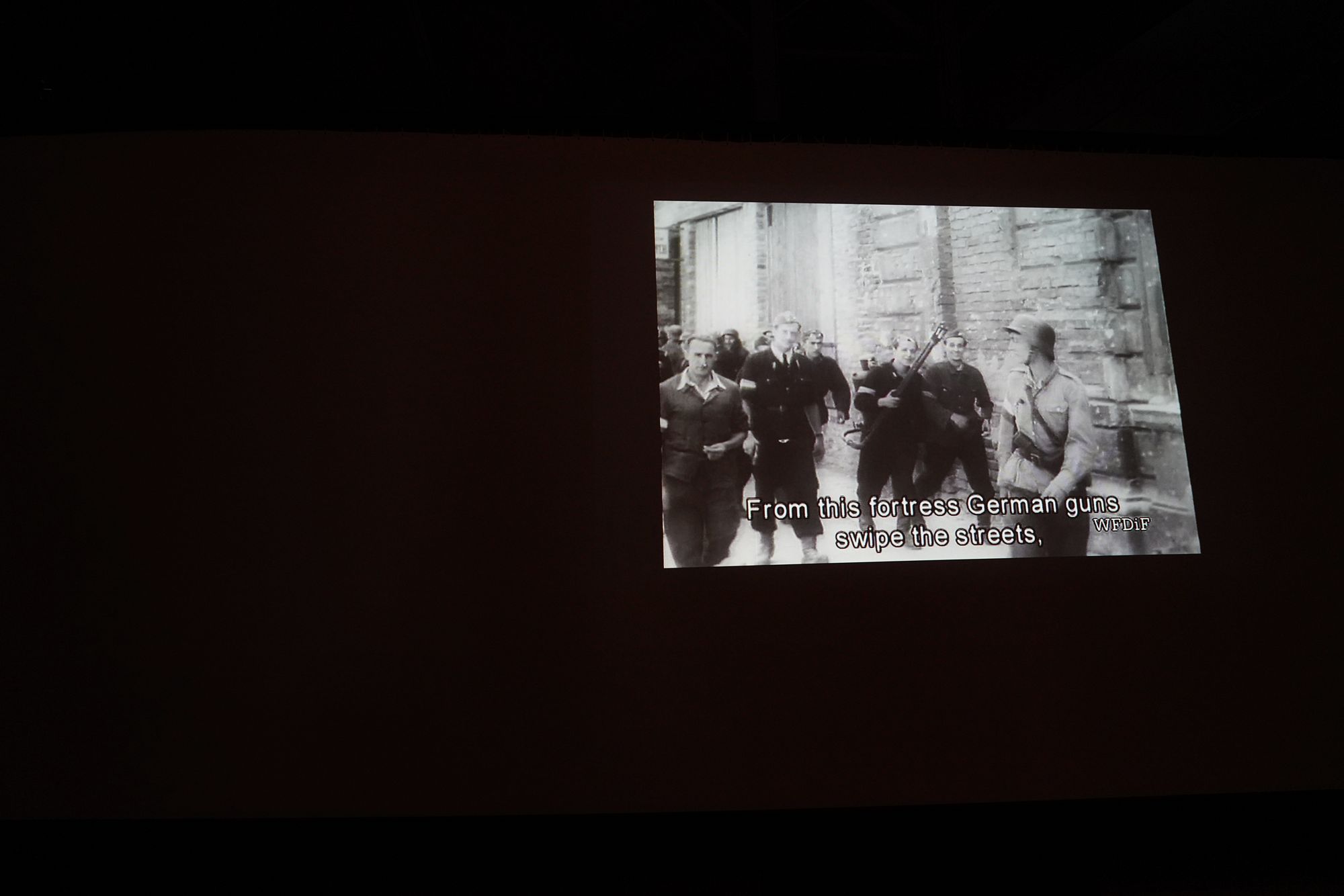
The museum showed a short film about the destruction of Warsaw by Nazi German forces, revealing the scale of the devastation across the city.
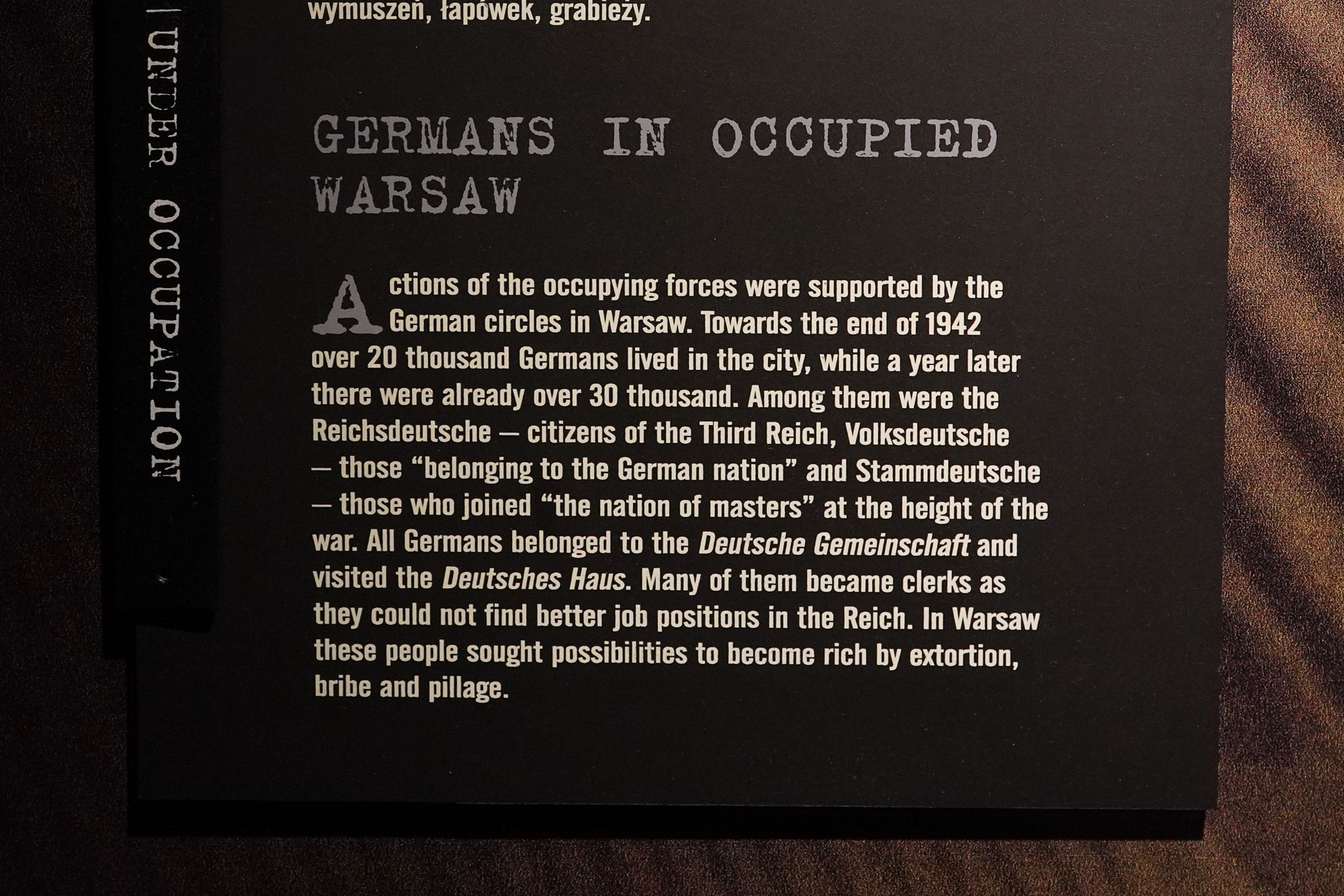
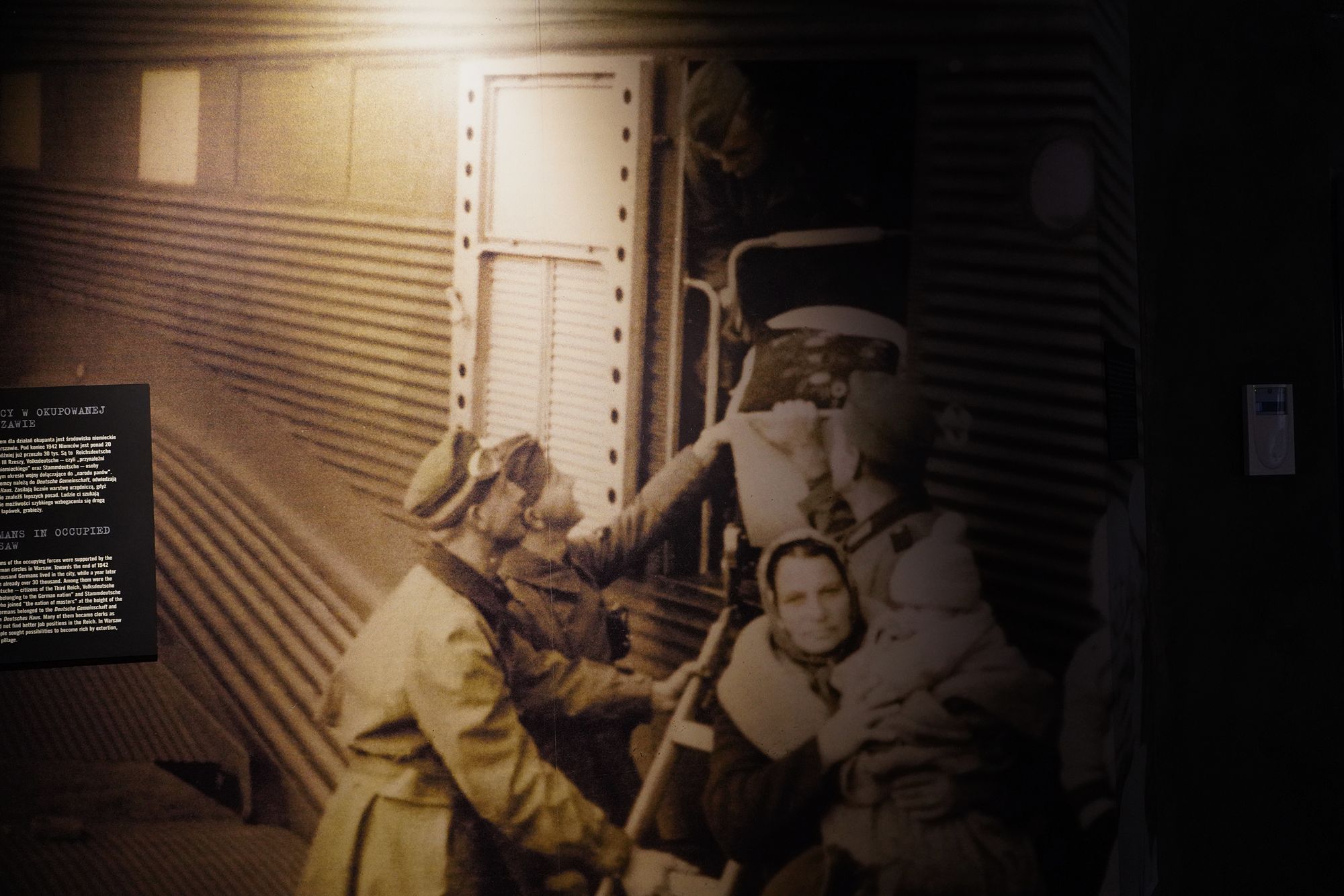
This panel describes the German community in occupied Warsaw, which grew from more than 20,000 people in late 1942 to over 30,000 a year later. It included German citizens and people classified as ethnically German. The exhibition explains how members of this community supported the occupation authorities, while some used administrative positions to enrich themselves through extortion, bribery, and looting.
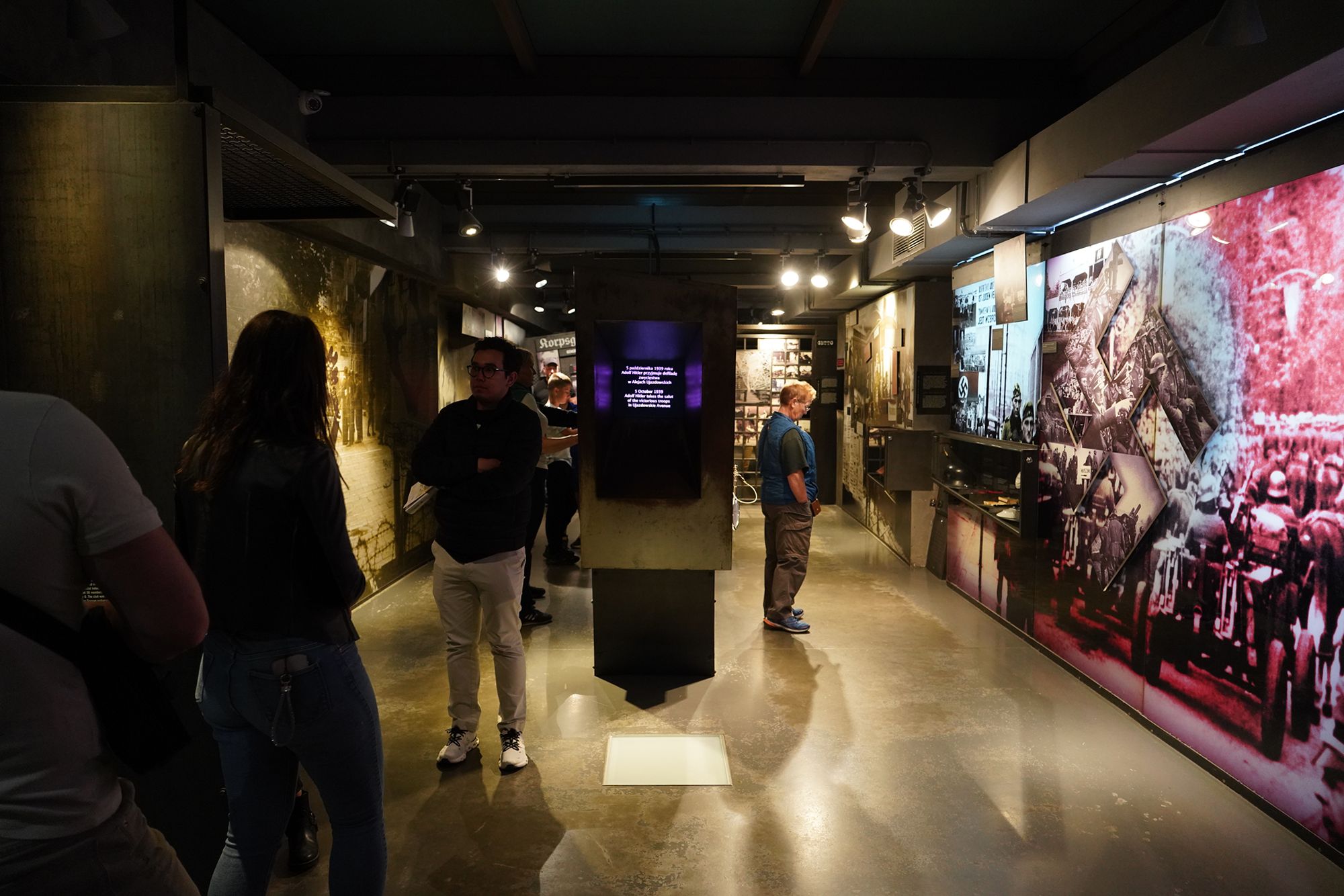
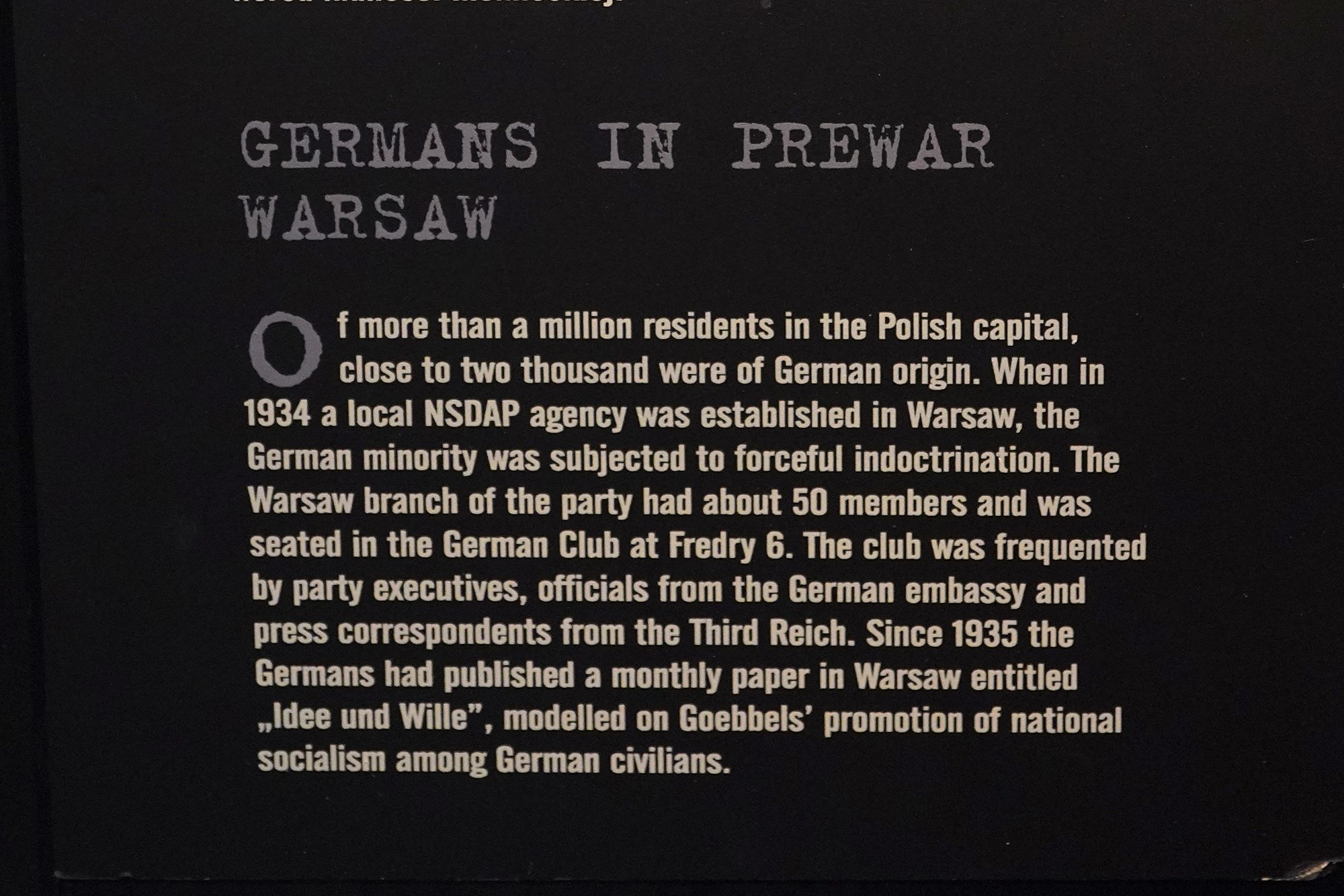
Before the war, Warsaw had nearly 2,000 residents of German origin among a population of more than one million. This panel explains how Nazi influence spread within that small community. A local Nazi Party branch was established in 1934, based at the German Club on Fredry Street. From 1935, a monthly publication called Idee und Wille promoted Nazi ideology among German residents.
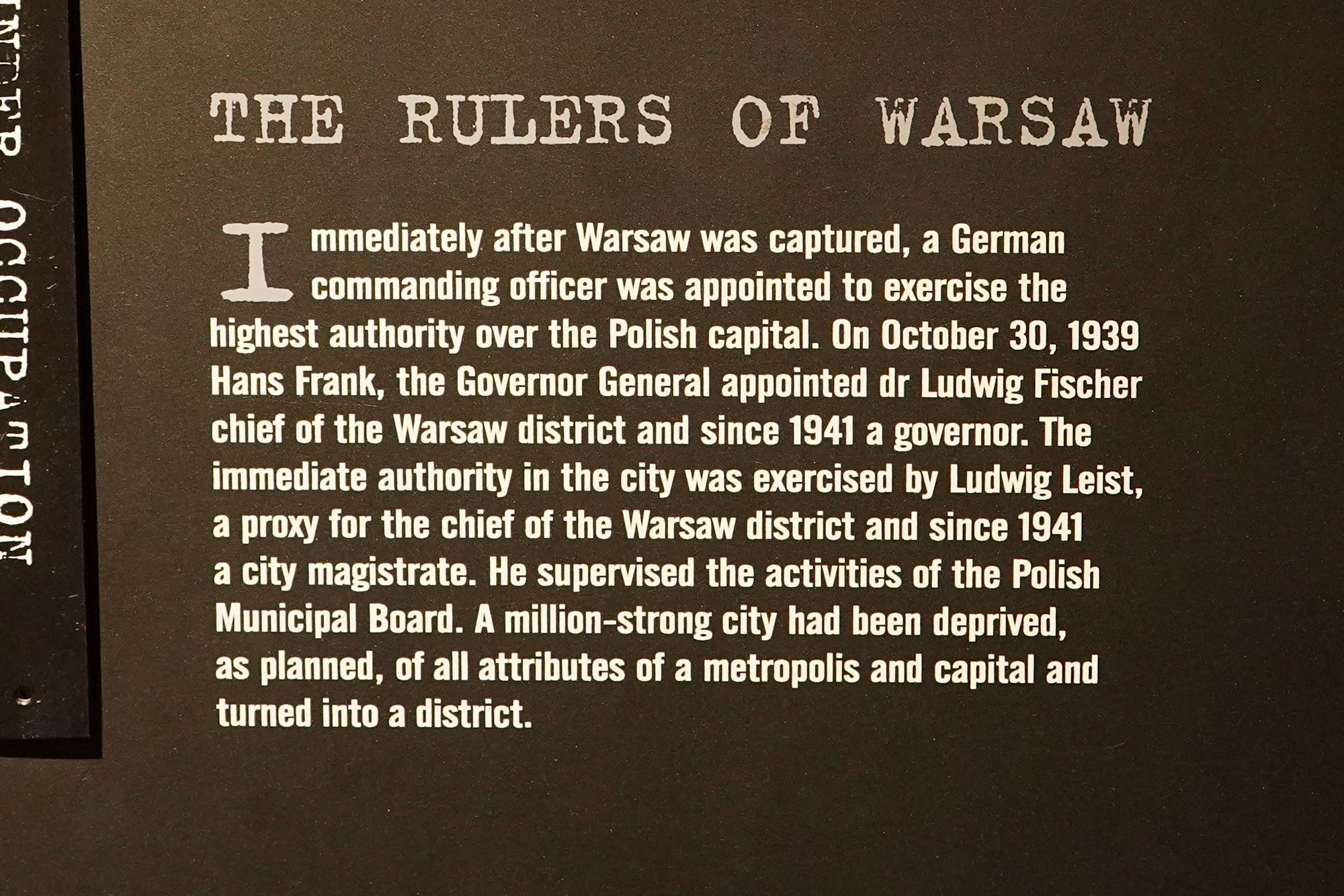
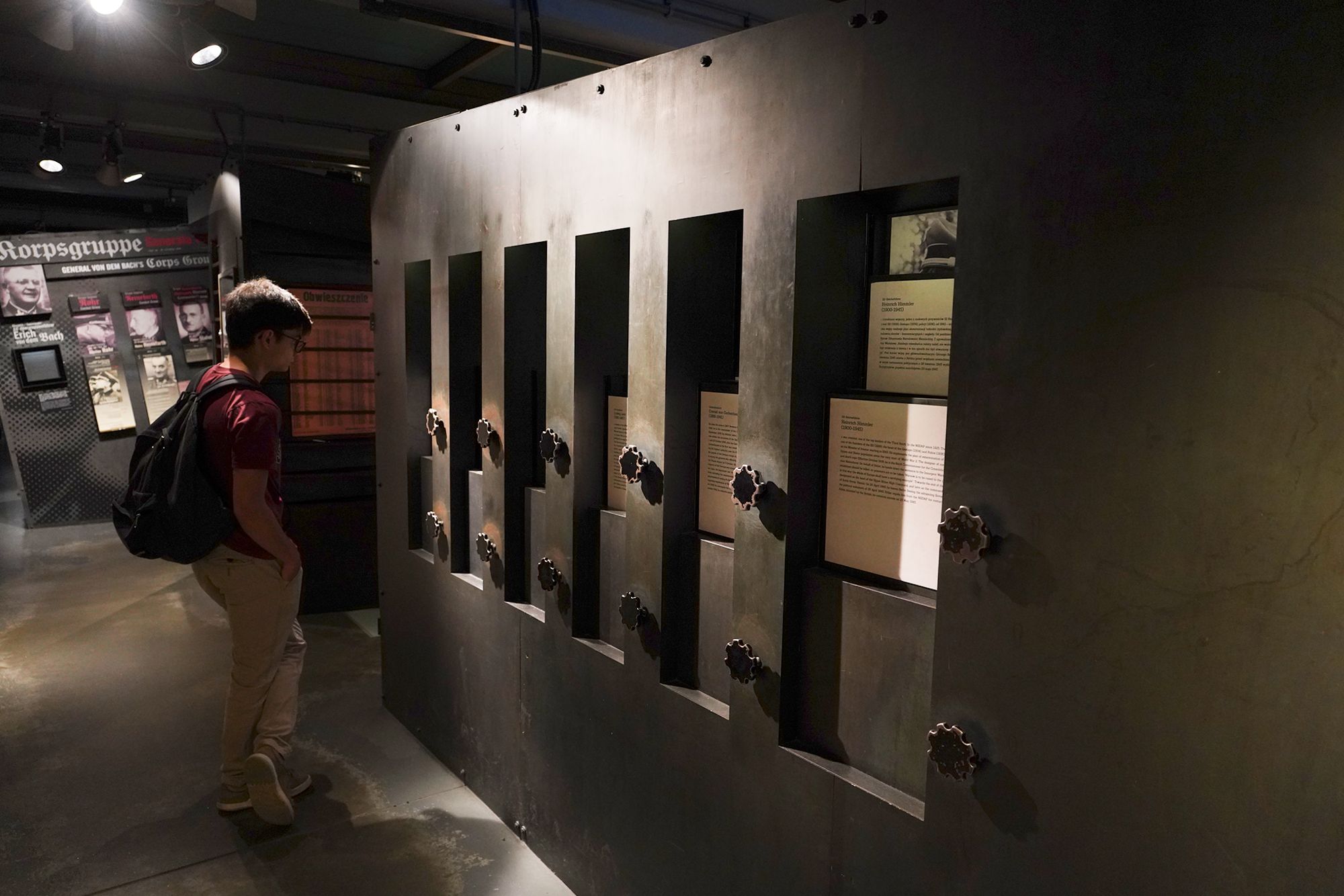
After capturing Warsaw, the Germans placed the city under their own administration. Hans Frank appointed Ludwig Fischer to lead the Warsaw district, while Ludwig Leist oversaw the city’s administration and supervised the Polish Municipal Board. Warsaw was deliberately stripped of its role as Poland’s capital, reducing a city of more than one million people to a subordinate district under occupation.
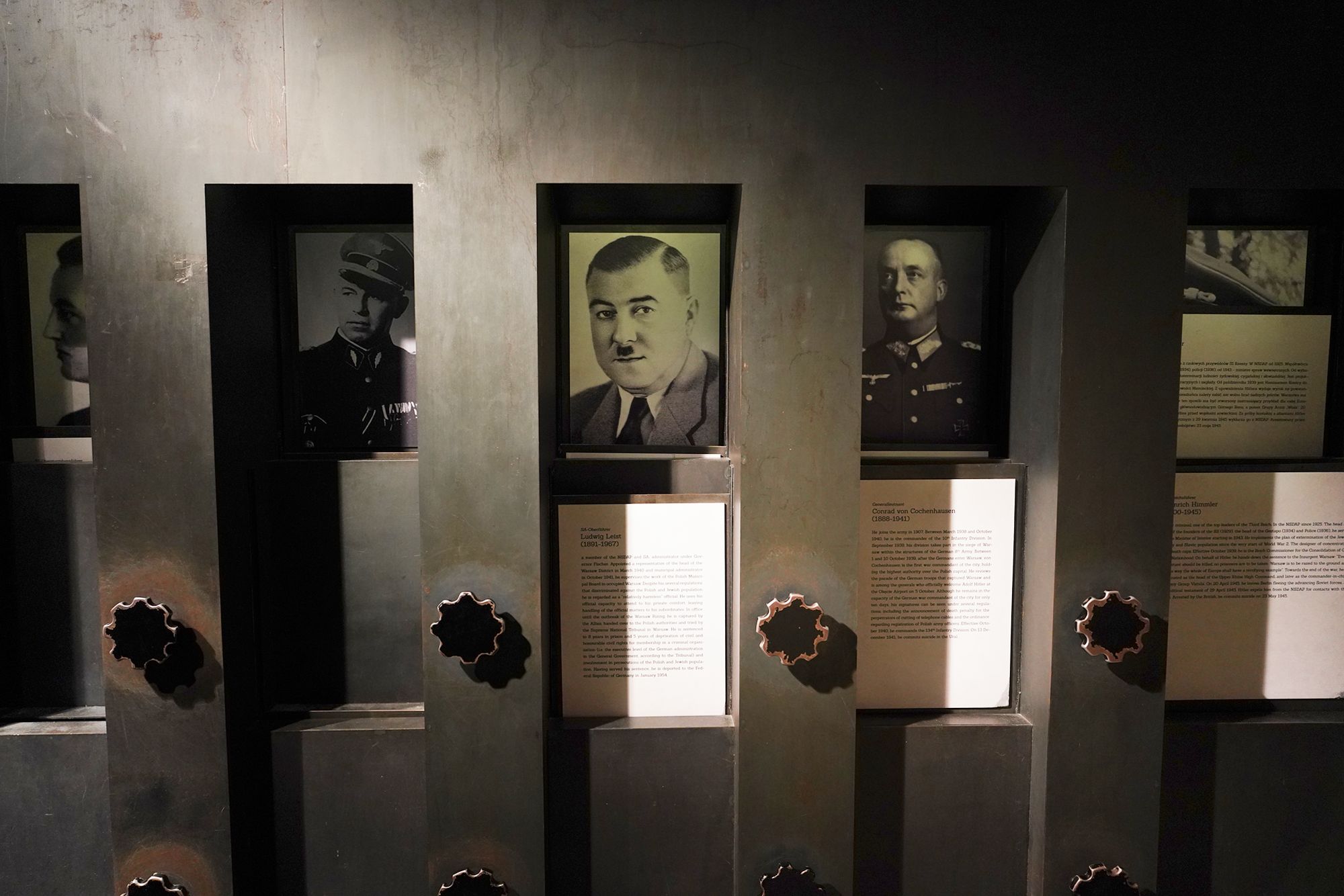
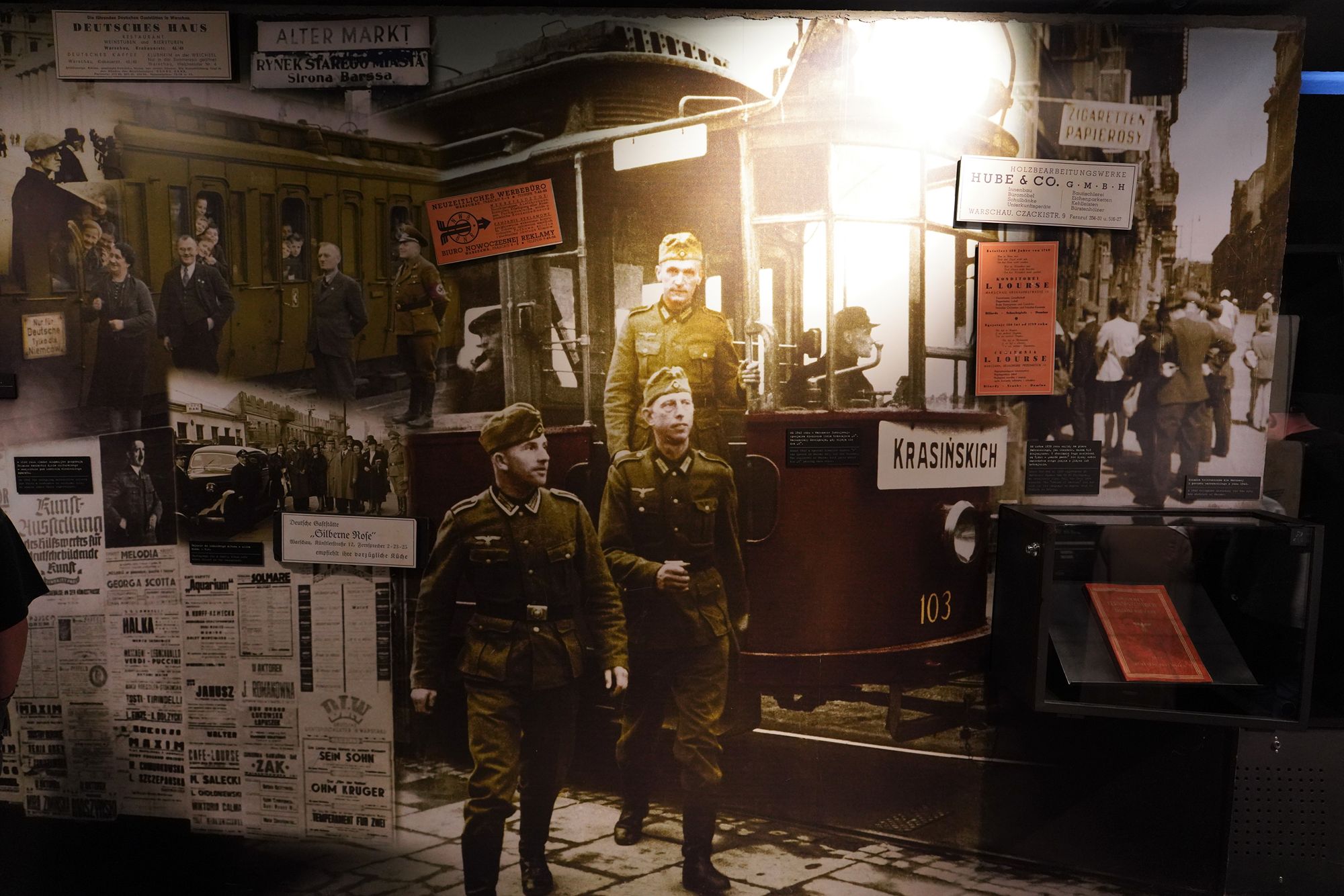
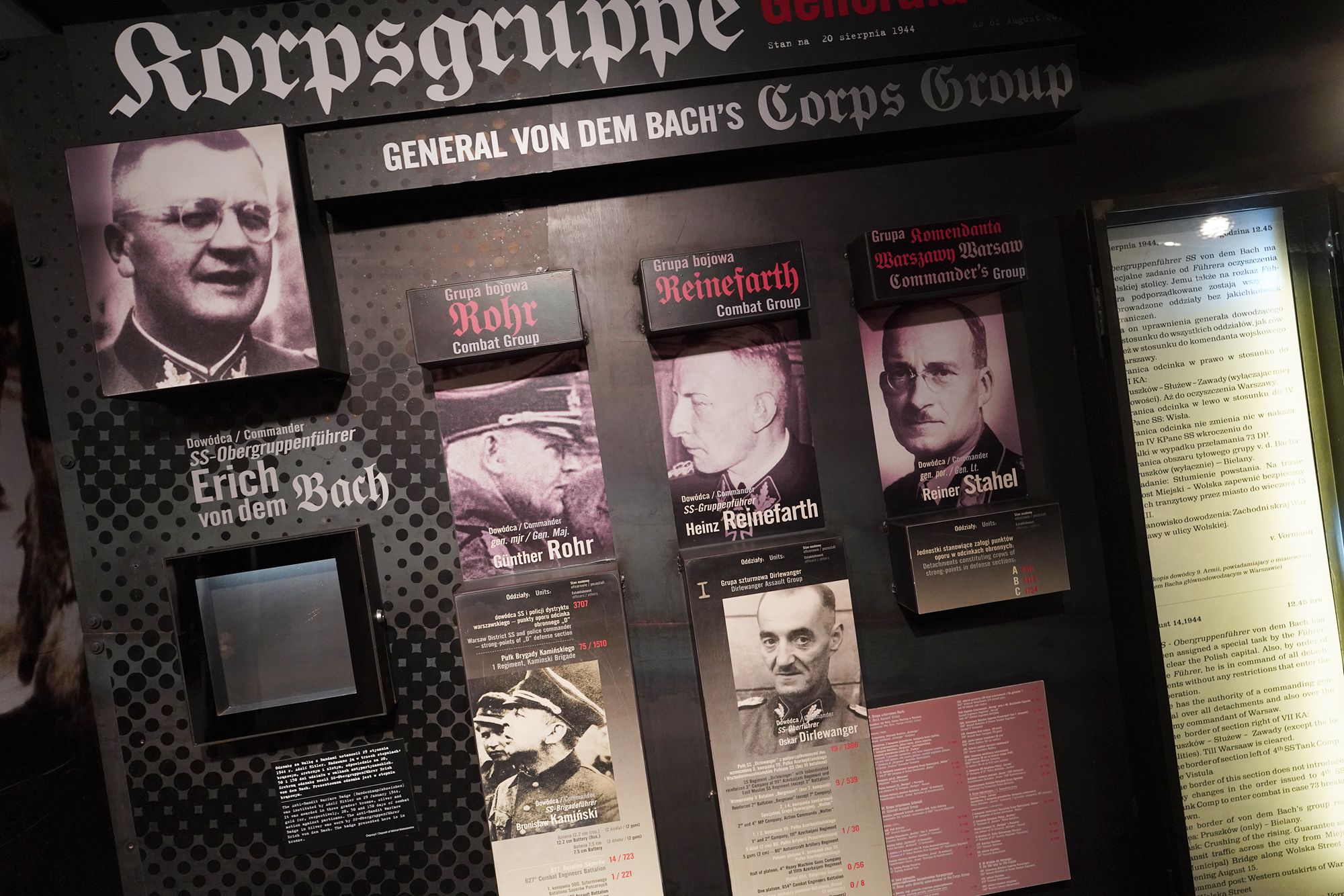
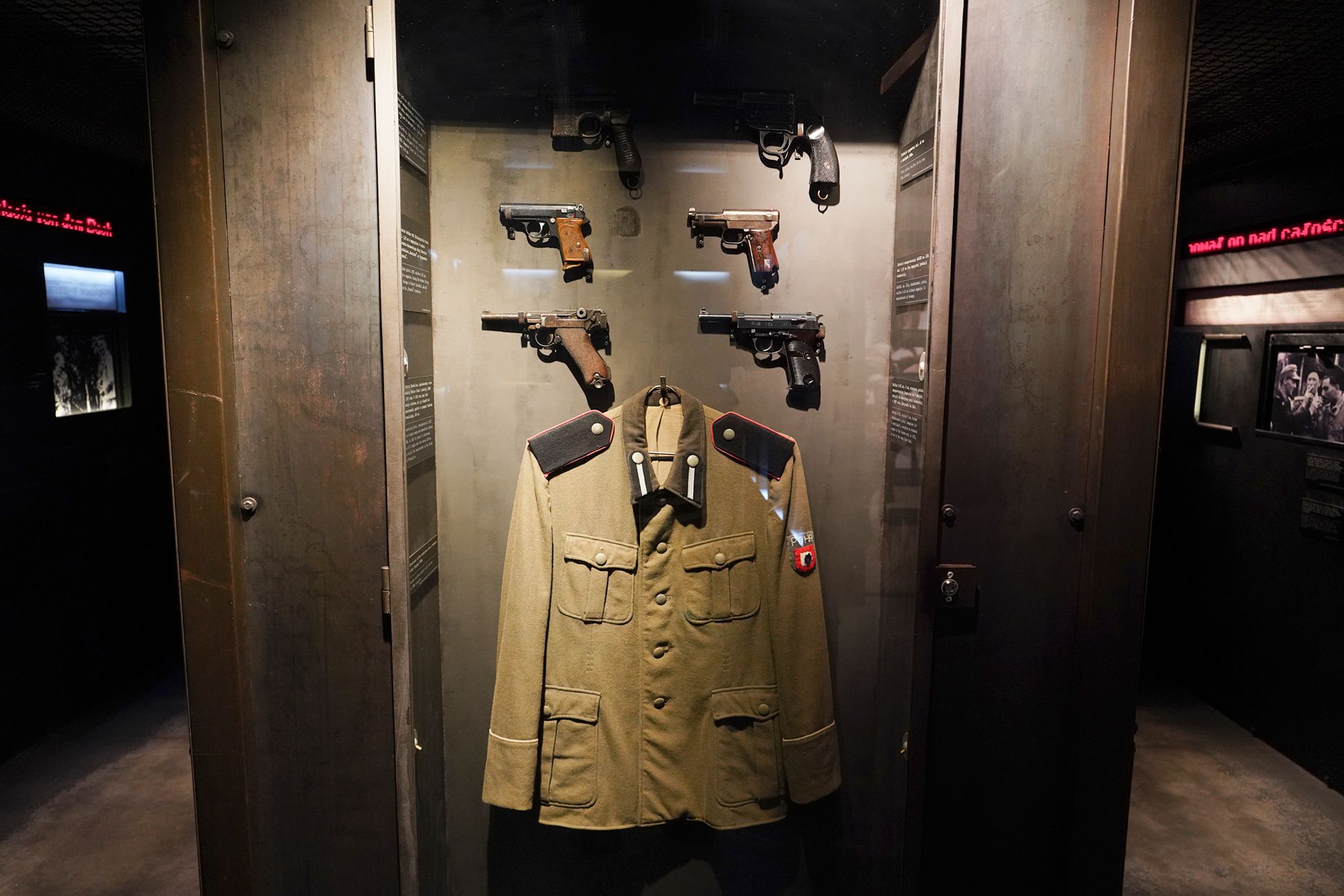
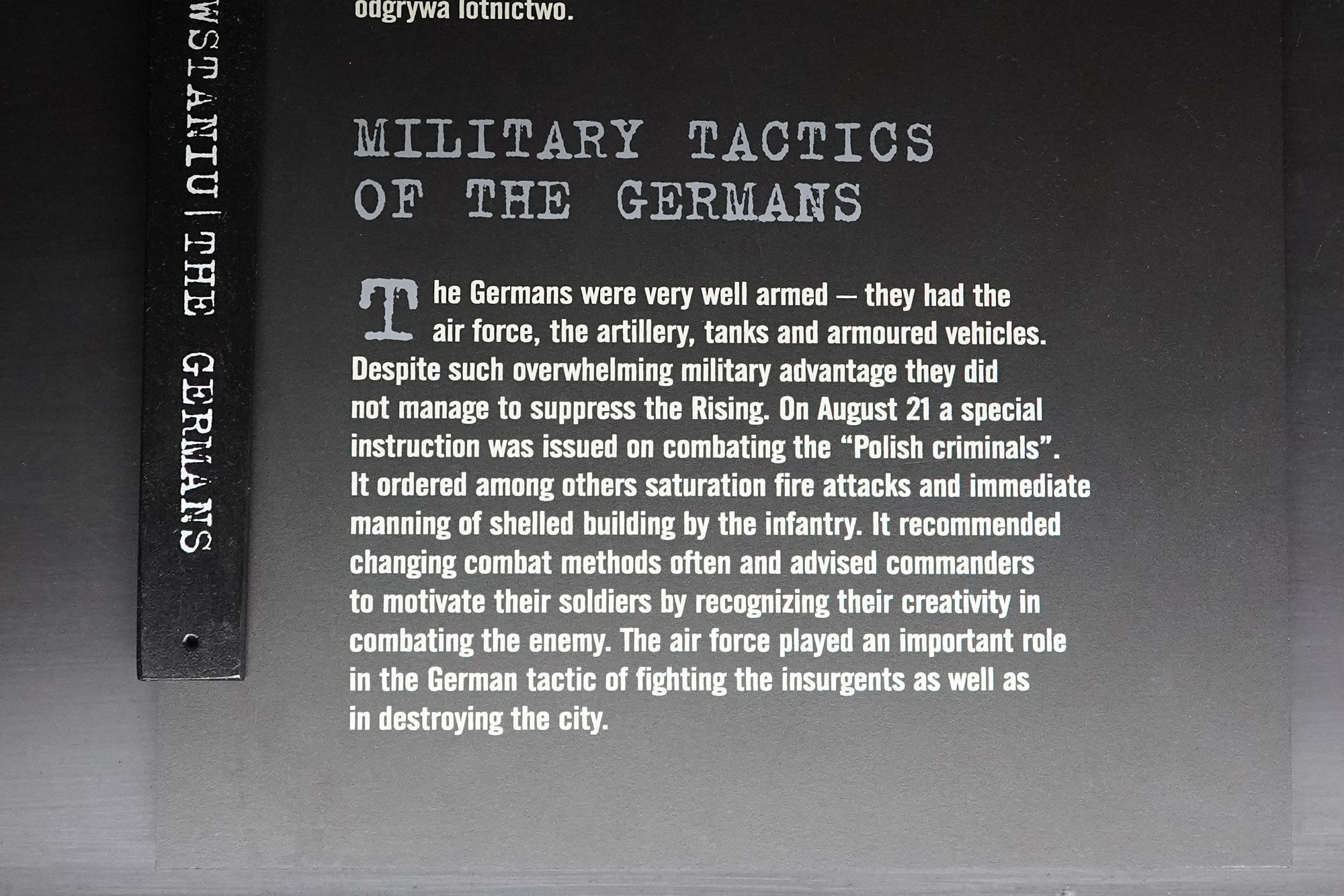
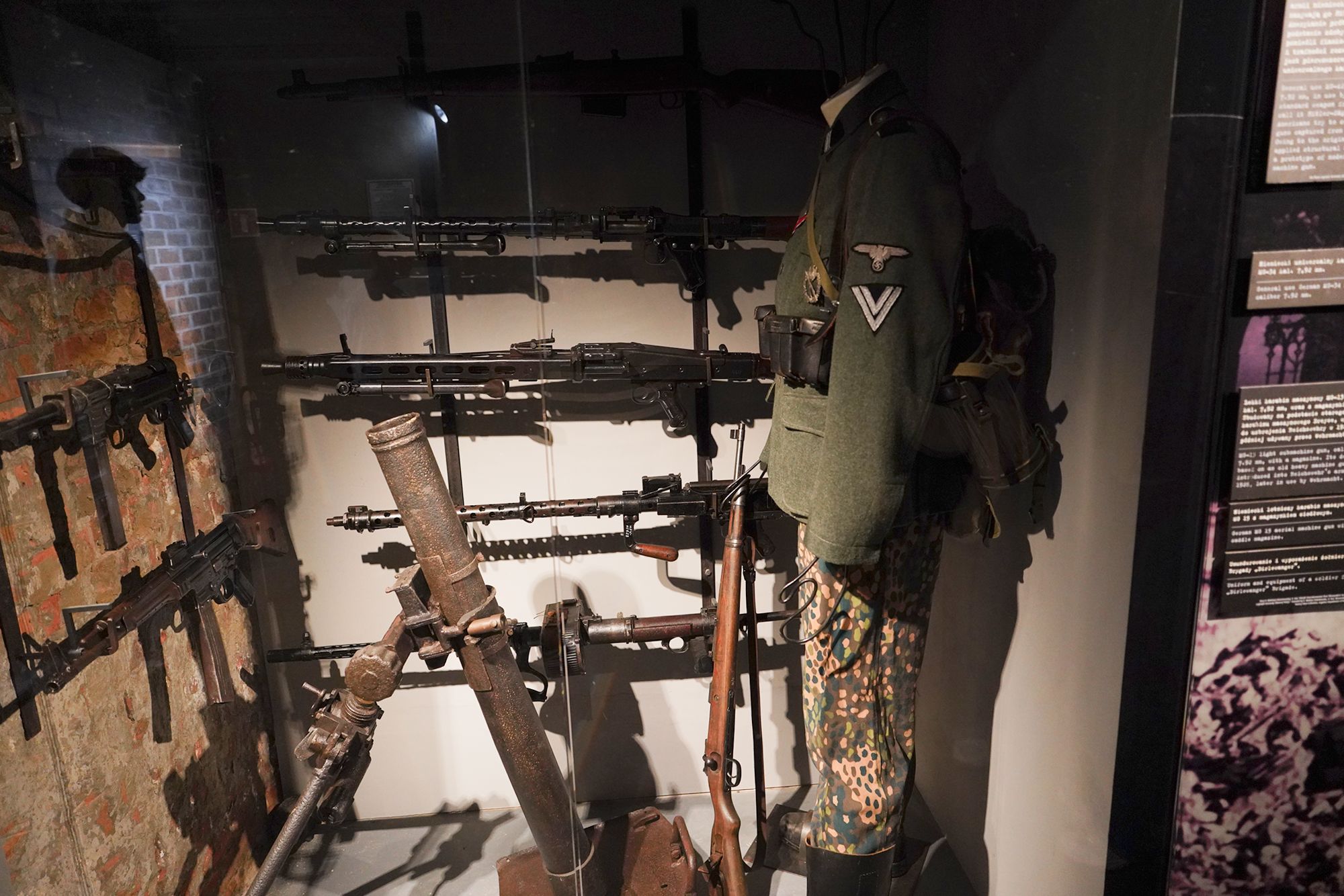
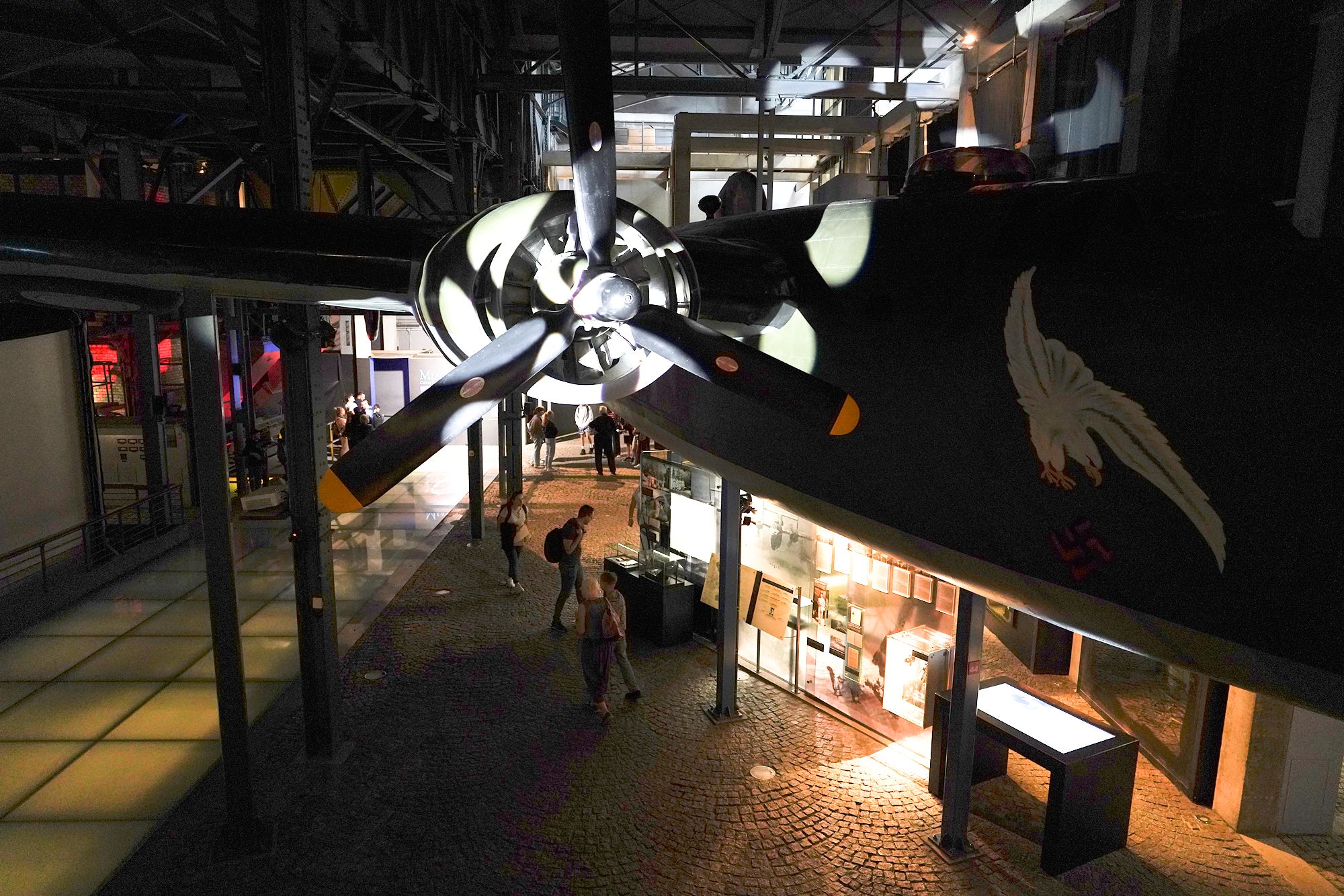
German forces used aircraft, artillery, tanks, and armored vehicles against the resistance, but they struggled to crush the uprising quickly. Orders issued on August 21 called for concentrated fire on buildings, followed immediately by infantry moving in to seize them. Aerial bombing also played a major role, attacking resistance positions and adding to the destruction of Warsaw.
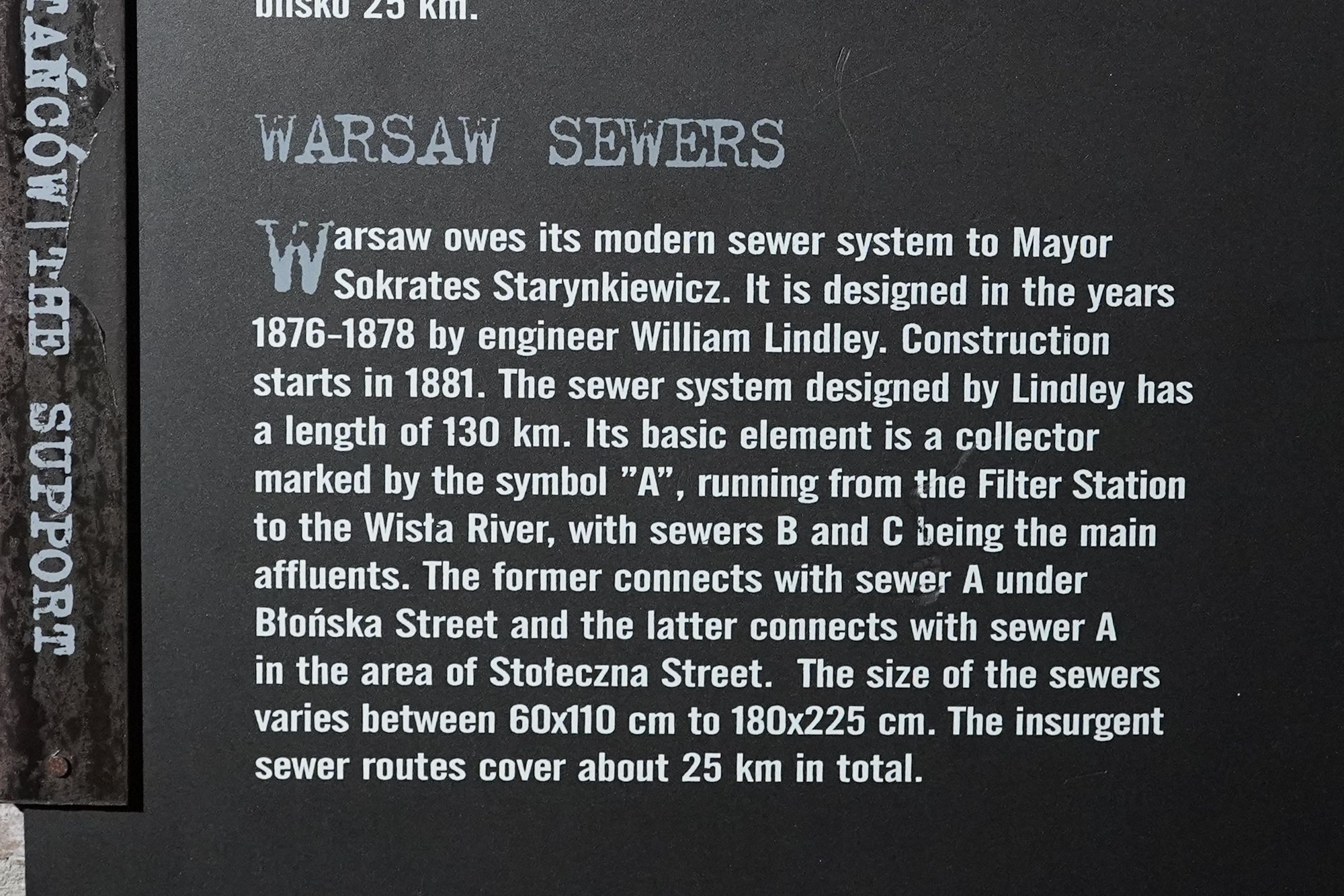
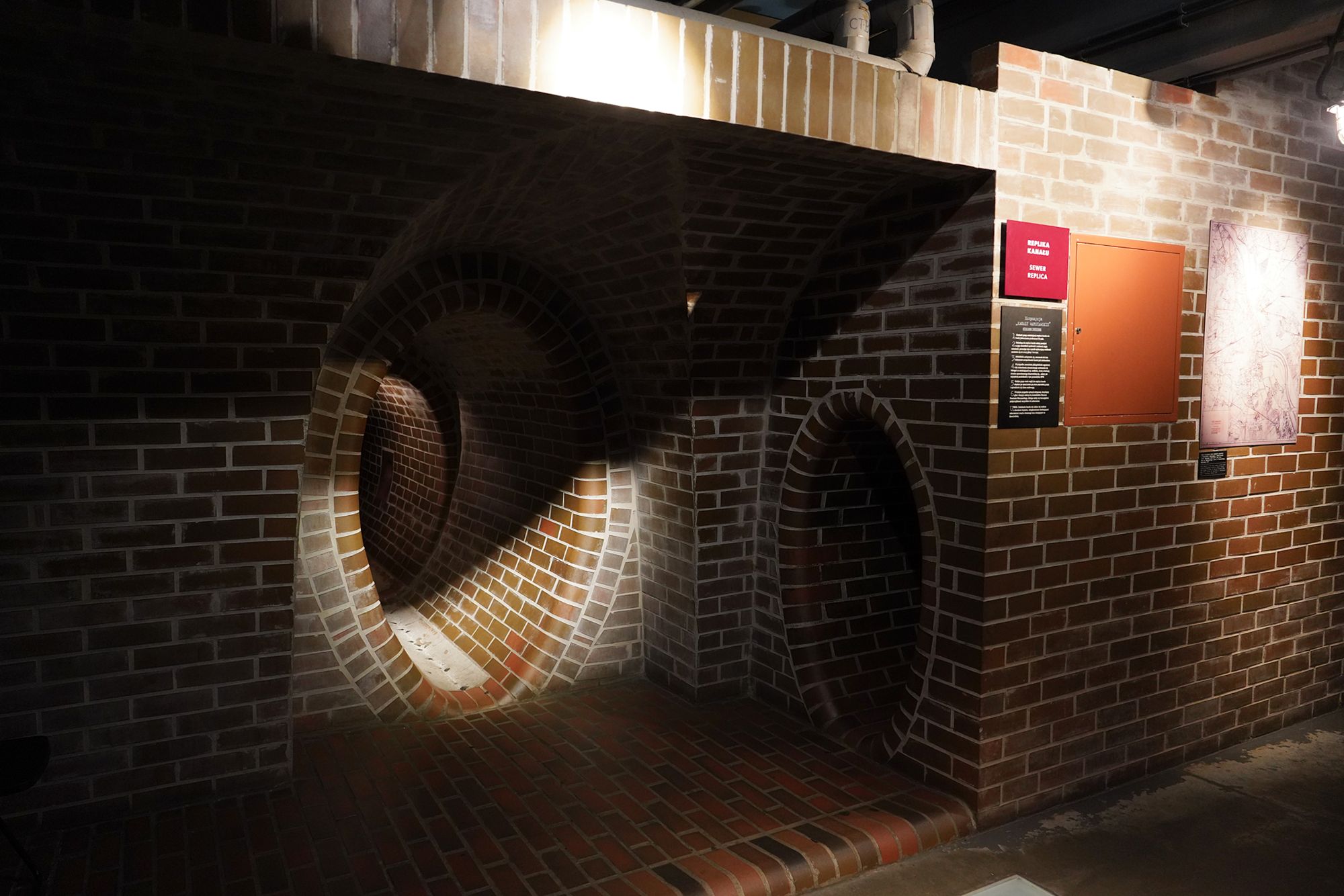
Warsaw’s sewer system became an important network of underground routes during the uprising. Designed by engineer William Lindley in the 1870s, it included passages ranging from narrow tunnels to channels tall enough to stand in. The routes used by the resistance covered about 25 kilometers, showing how infrastructure built for sanitation took on a wartime role beneath the city.
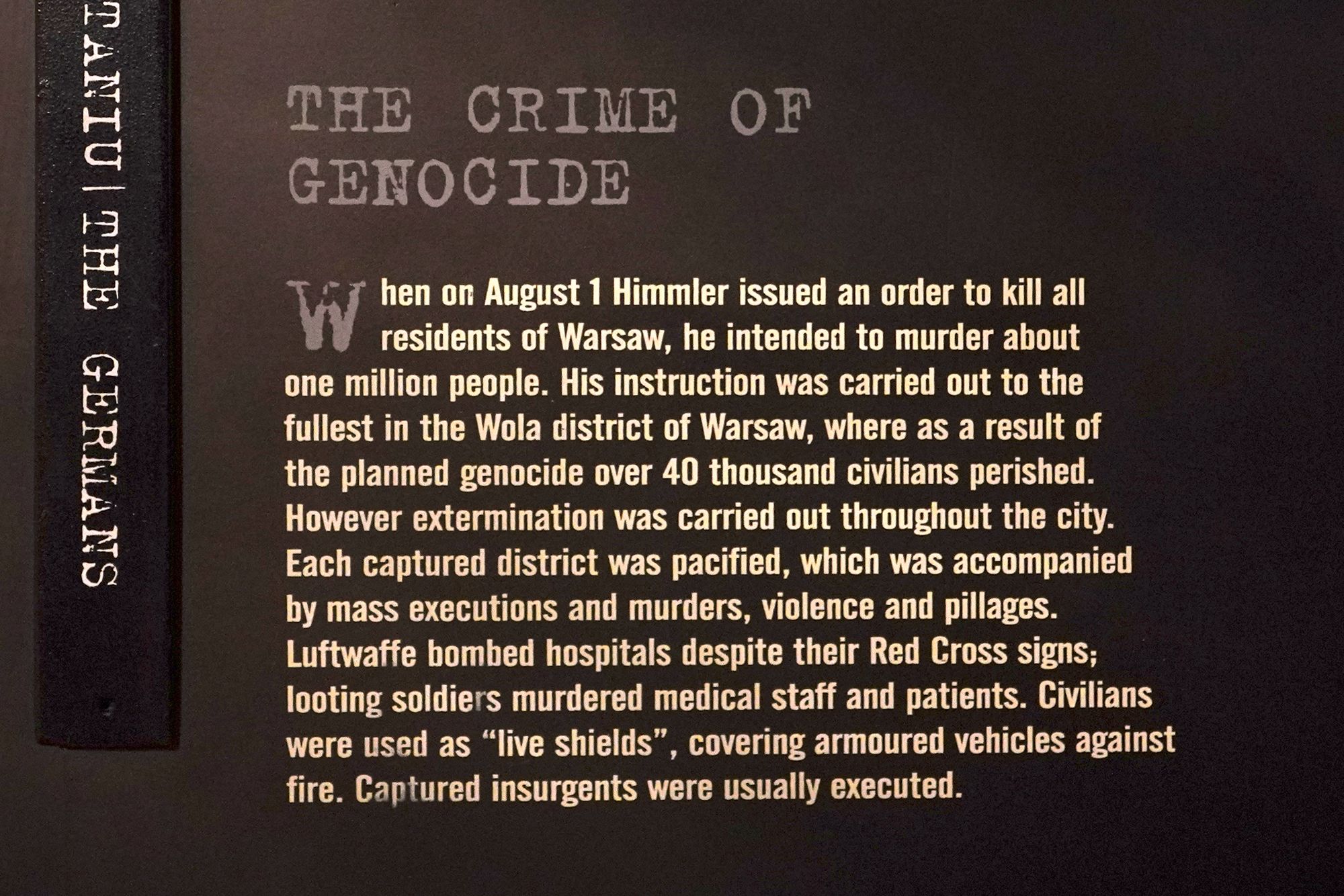
This panel describes the deliberate mass murder of civilians during the uprising. In Warsaw’s Wola district alone, the museum records more than 40,000 civilian deaths. German forces carried out mass executions and looting as they captured neighborhoods. Hospitals were bombed despite their Red Cross markings, medical staff and patients were murdered, and civilians were used as human shields. Captured resistance fighters were also frequently executed.
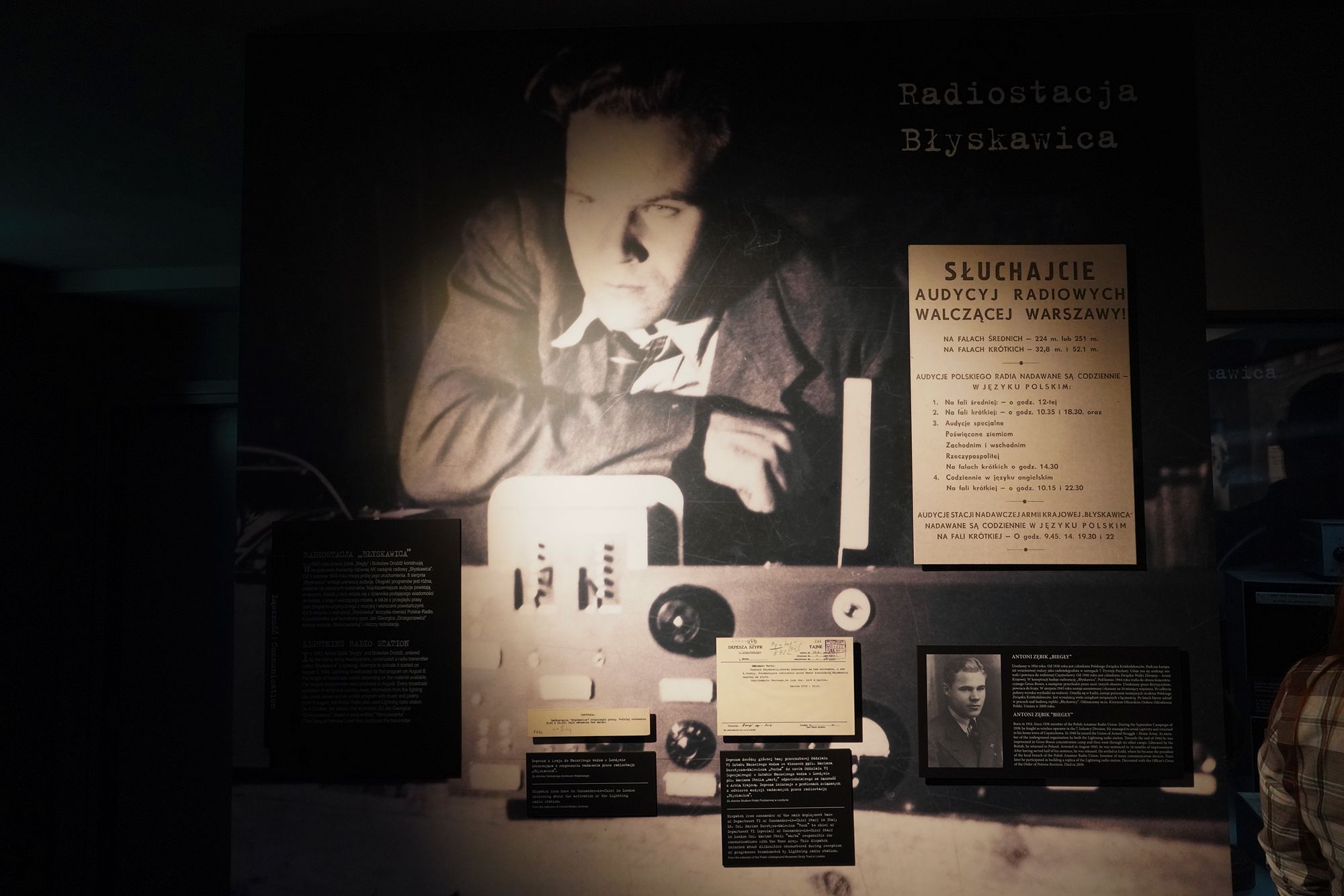
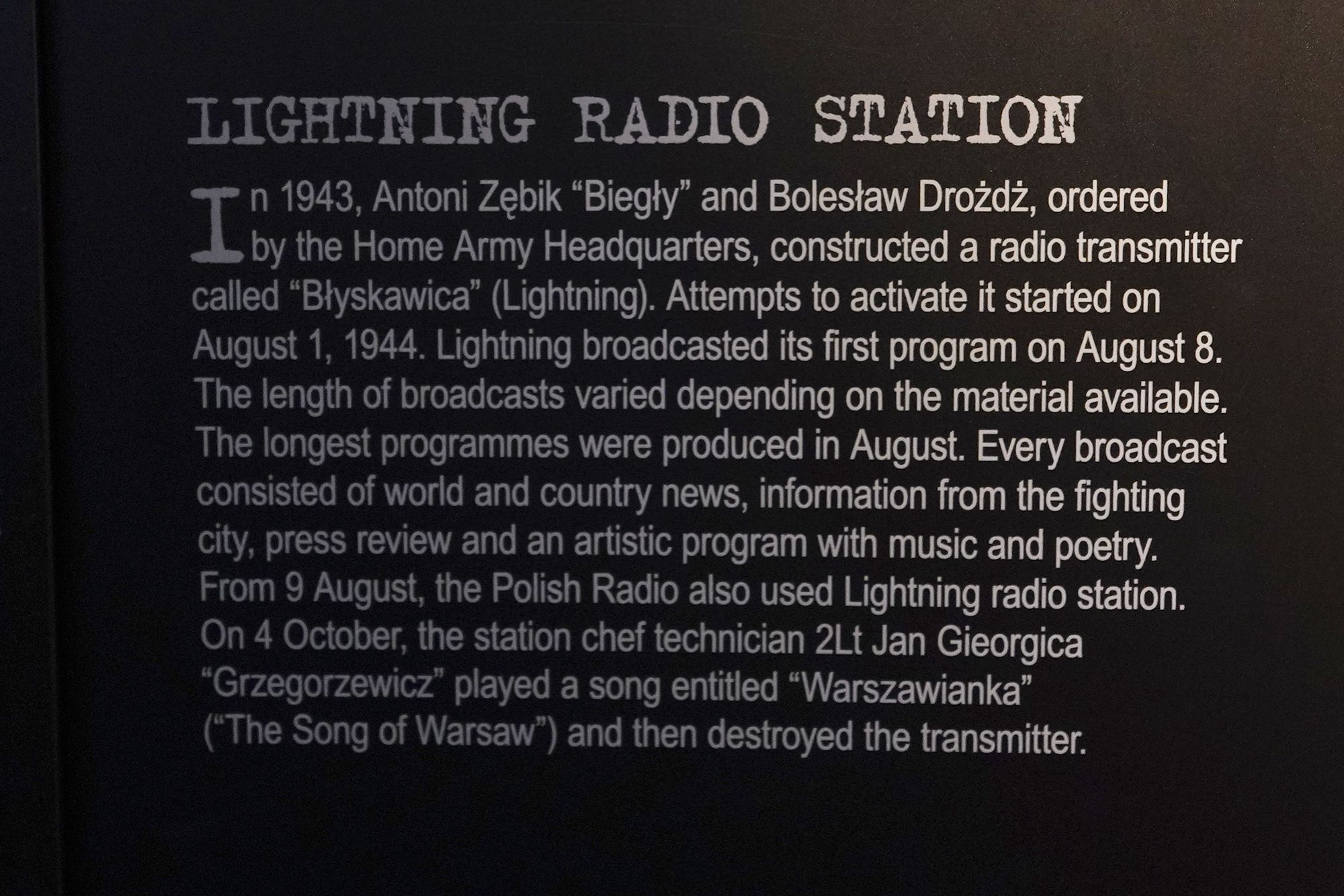
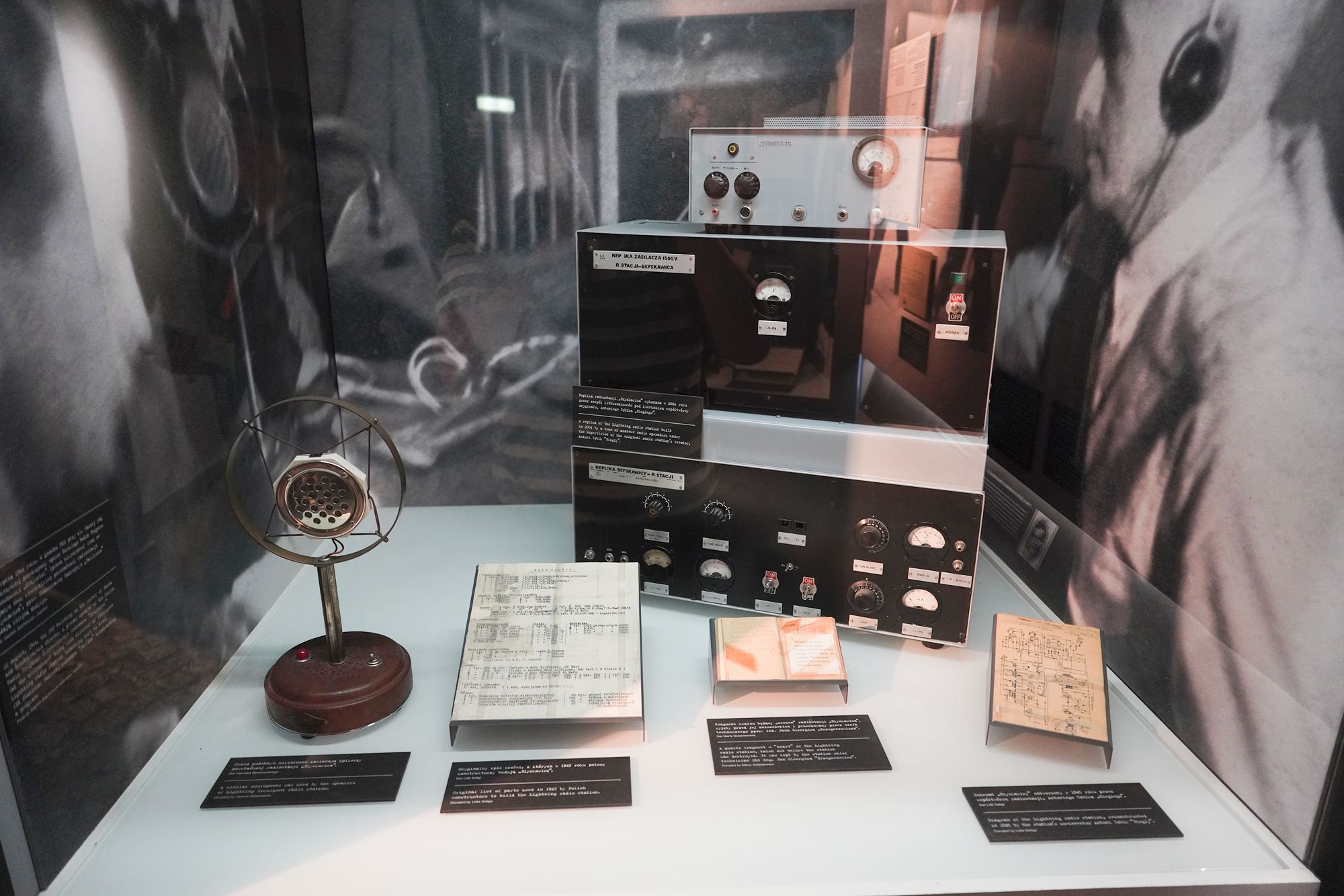
The resistance operated a radio station called Błyskawica, meaning “Lightning,” using a transmitter built secretly in 1943. Its first broadcast aired on August 8, 1944, sharing news from Warsaw and the wider world, along with music and poetry. On October 4, after the uprising’s surrender, the station’s chief technician played “Warszawianka,” the Song of Warsaw, before destroying the transmitter.
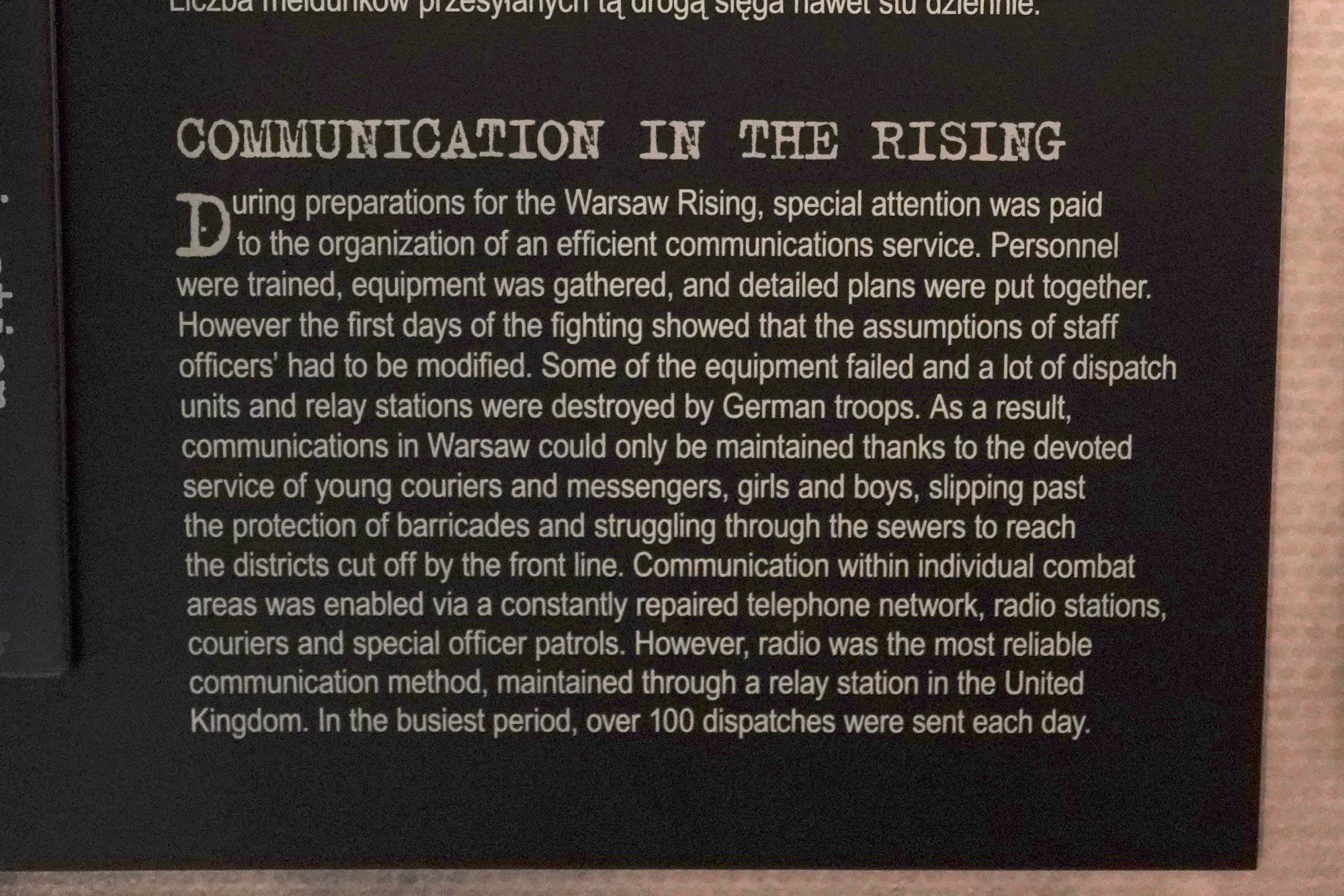
Communication became difficult as German attacks destroyed equipment and relay stations. Young couriers, both girls and boys, carried messages between isolated districts, moving past barricades and through the sewers. Within resistance-held areas, telephone lines were constantly repaired, while radios provided vital links, including contact through a relay station in Britain. At the busiest times, more than 100 dispatches were sent each day.
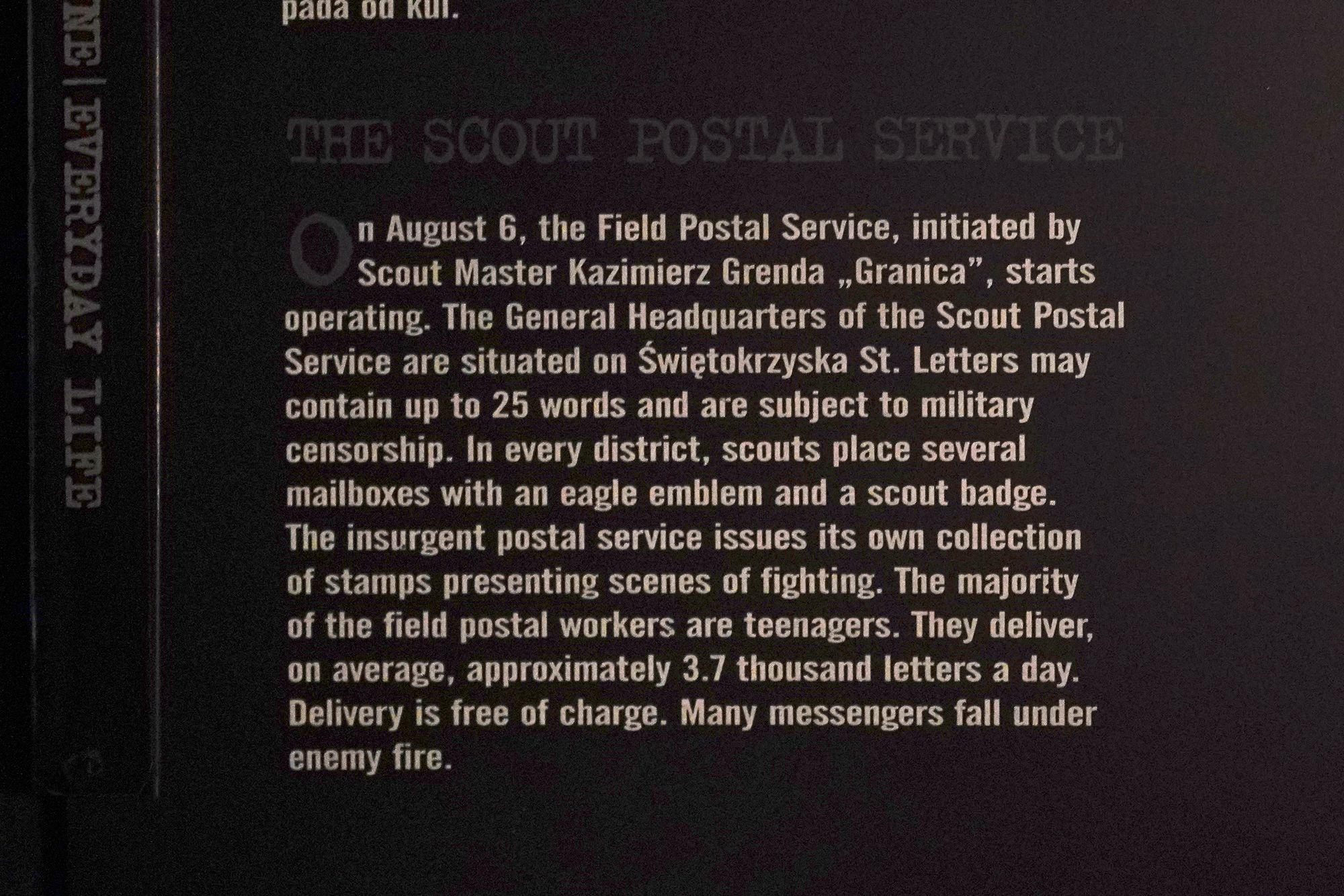
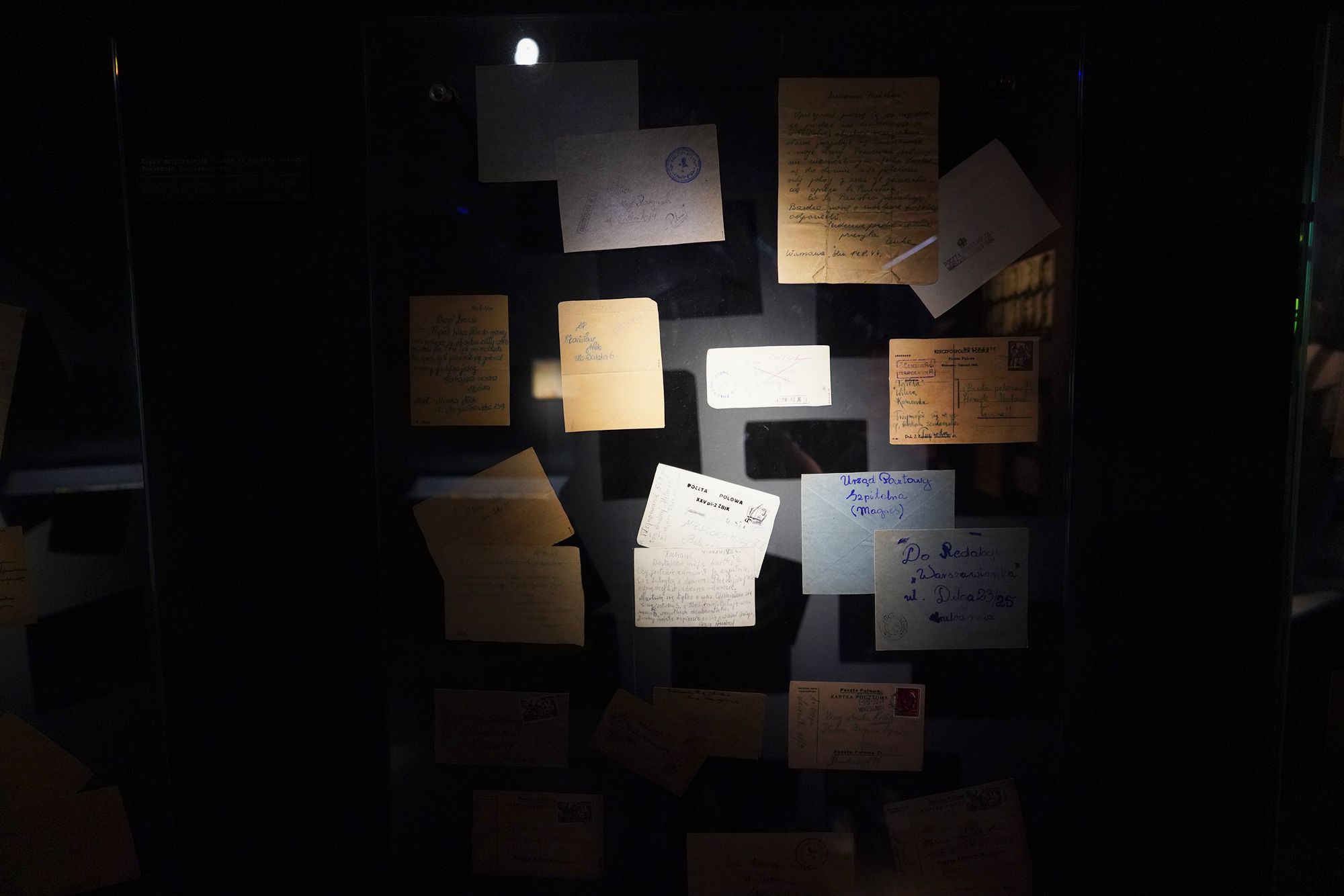
The Scout Postal Service began operating on August 6, 1944, helping residents stay in touch during the uprising. Most of its workers were teenagers, delivering approximately 3,700 letters a day free of charge. Messages were limited to 25 words and checked by military censors. Scouts placed mailboxes throughout the districts, but delivering letters was dangerous, and many young messengers were killed under enemy fire.
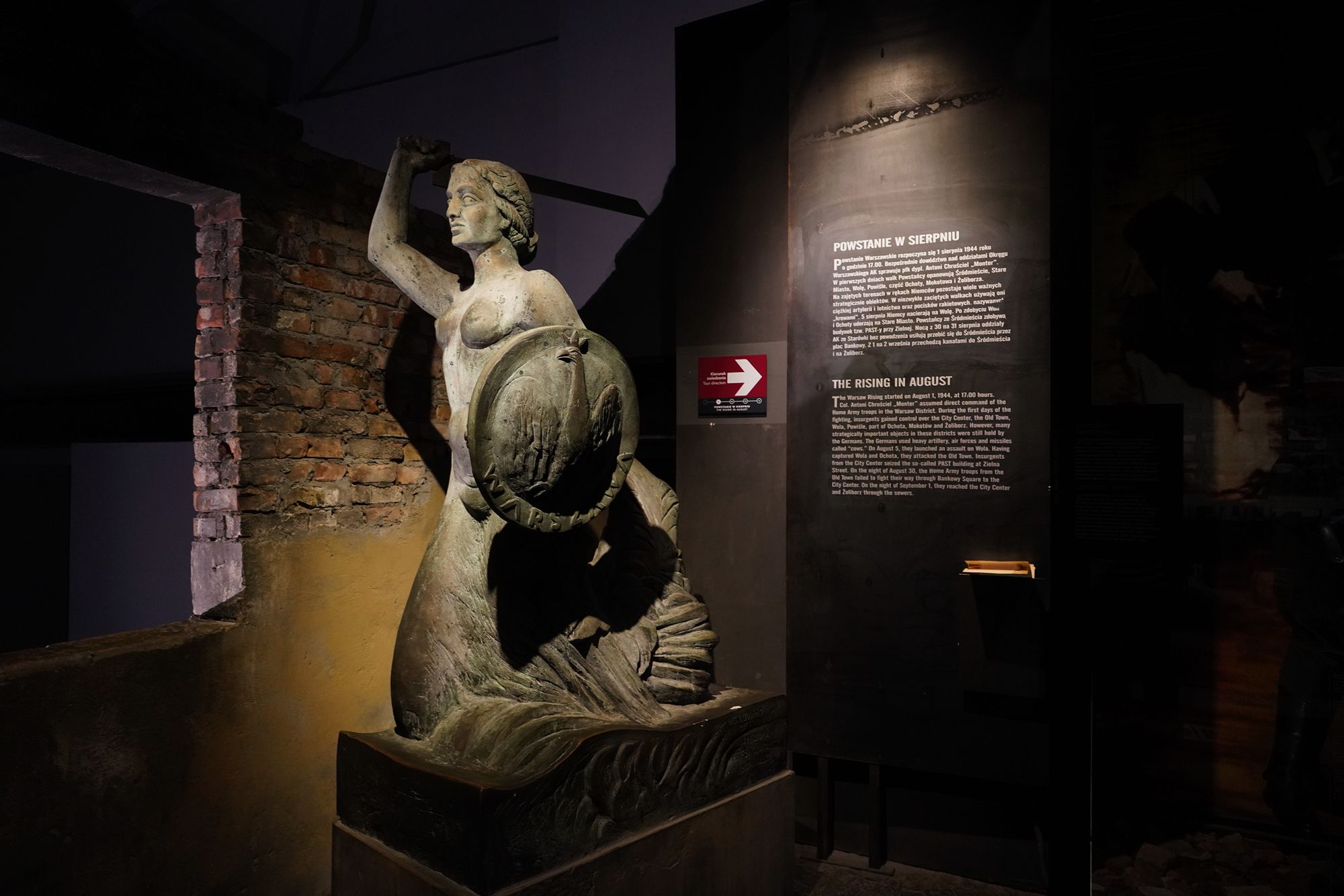
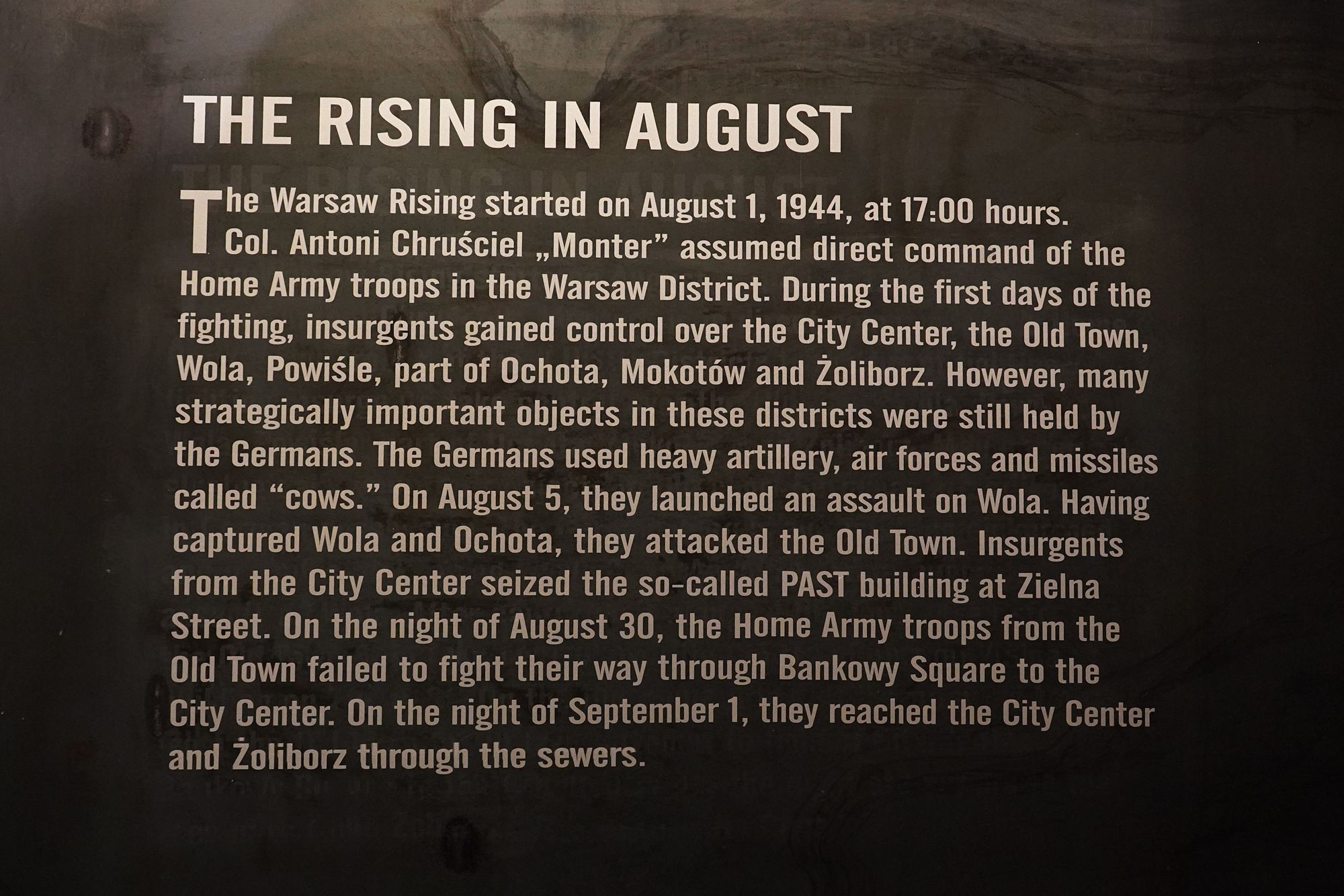
The Warsaw Uprising began on August 1, 1944, at 5 p.m. In the first days, resistance fighters gained control of several areas, including the city centre and Old Town, but German forces retained important strongholds. Using heavy artillery and air attacks, the Germans advanced through Wola and Ochota toward the Old Town. After an unsuccessful attempt to break through to the city centre, surviving Home Army fighters escaped through the sewers at the beginning of September.
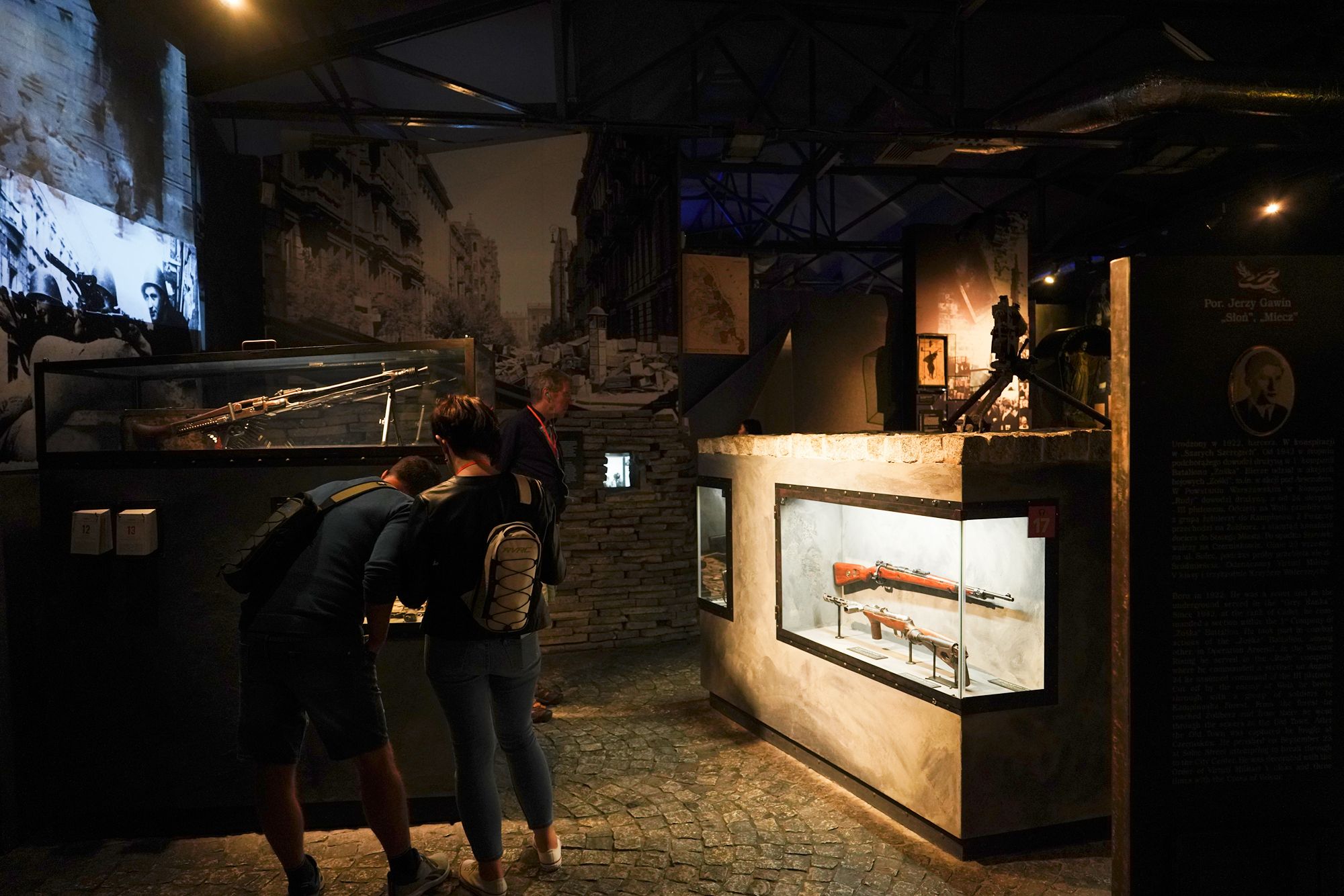
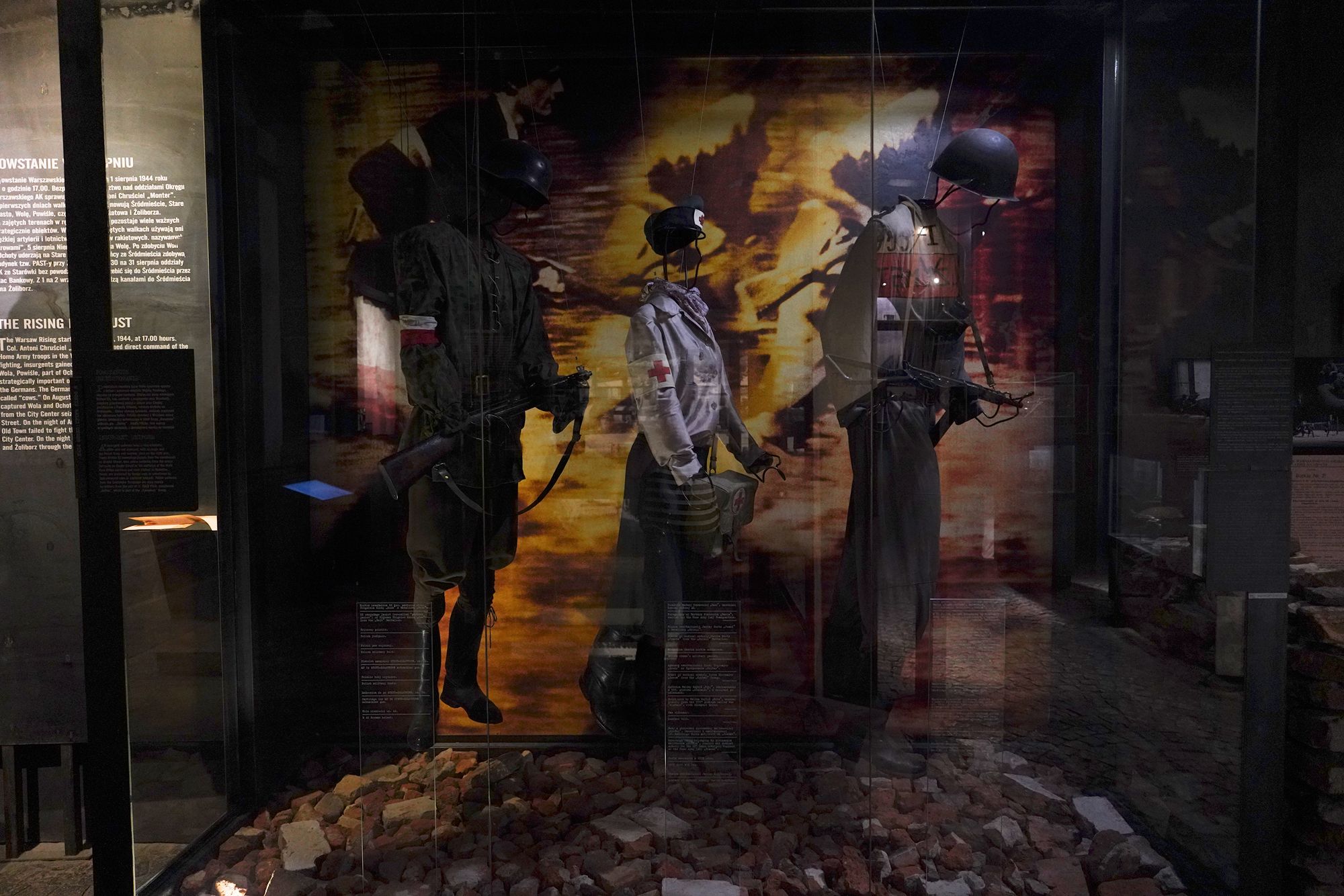
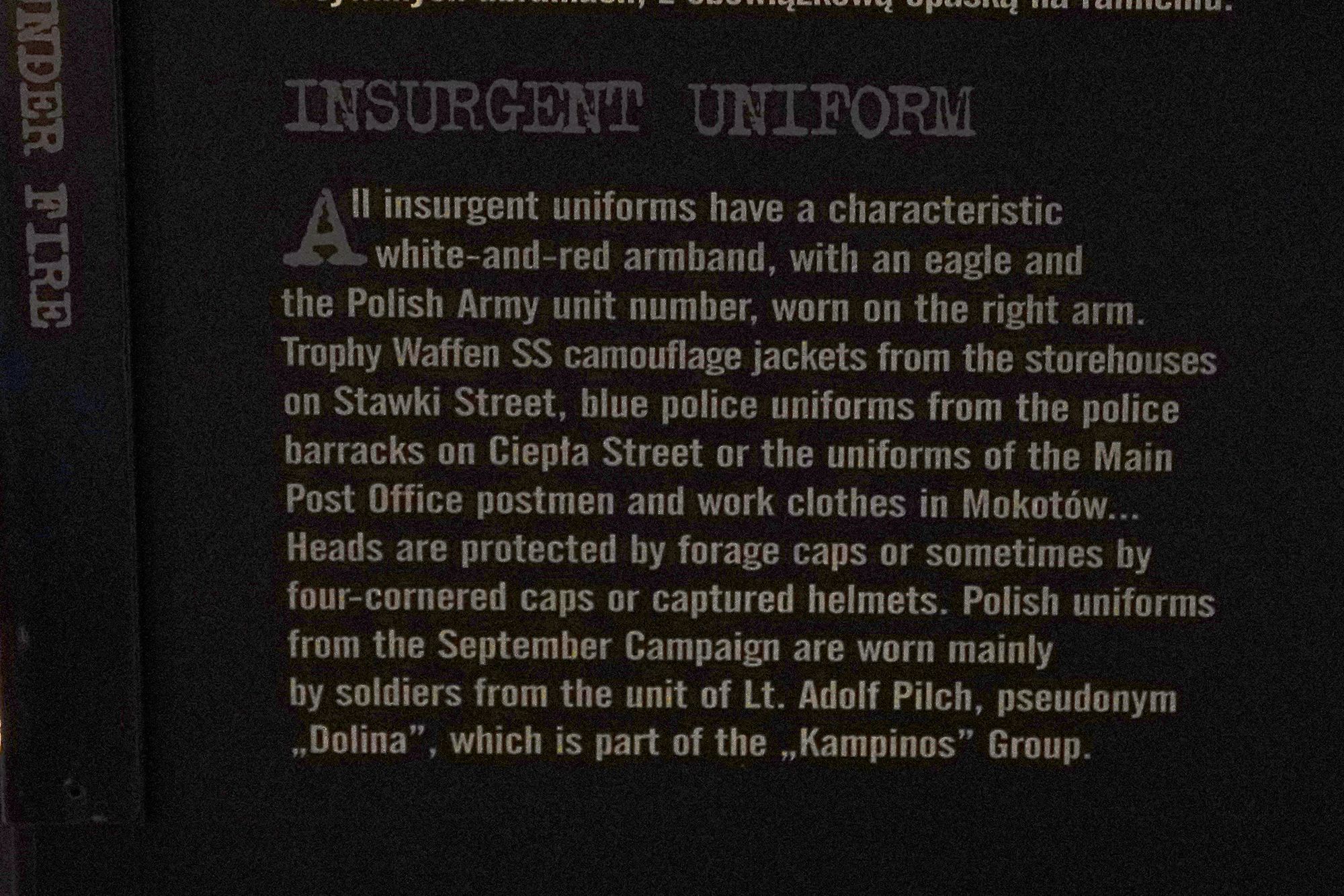
The uprising fighters wore a mixture of clothing, including captured German camouflage jackets, police and postal uniforms, and ordinary work clothes. Some also wore Polish military uniforms from the 1939 campaign. Their common identifying feature was a white-and-red armband bearing an eagle and their unit number, worn on the right arm. Caps and captured helmets completed their improvised uniforms, reflecting the limited supplies available to the resistance.
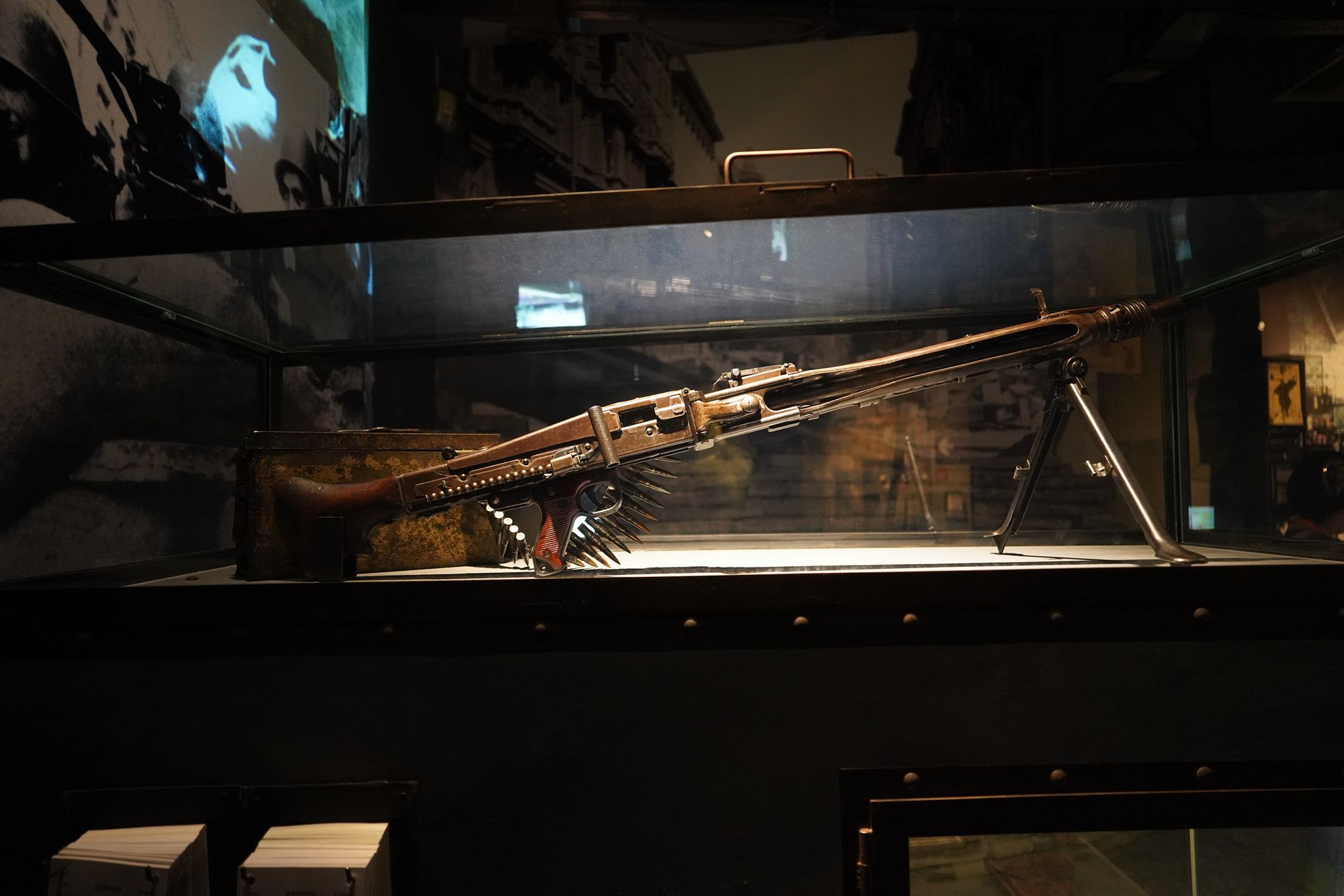
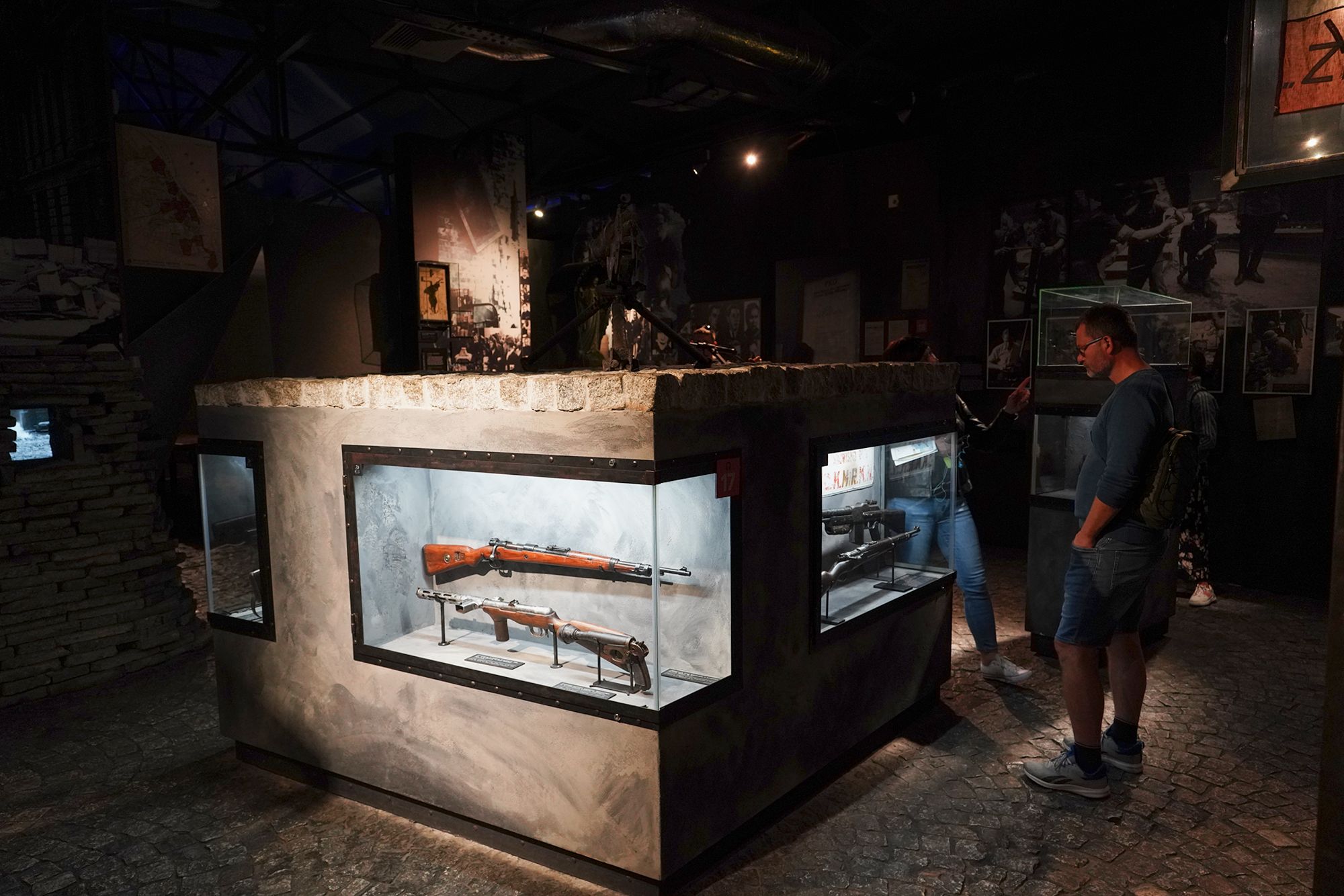
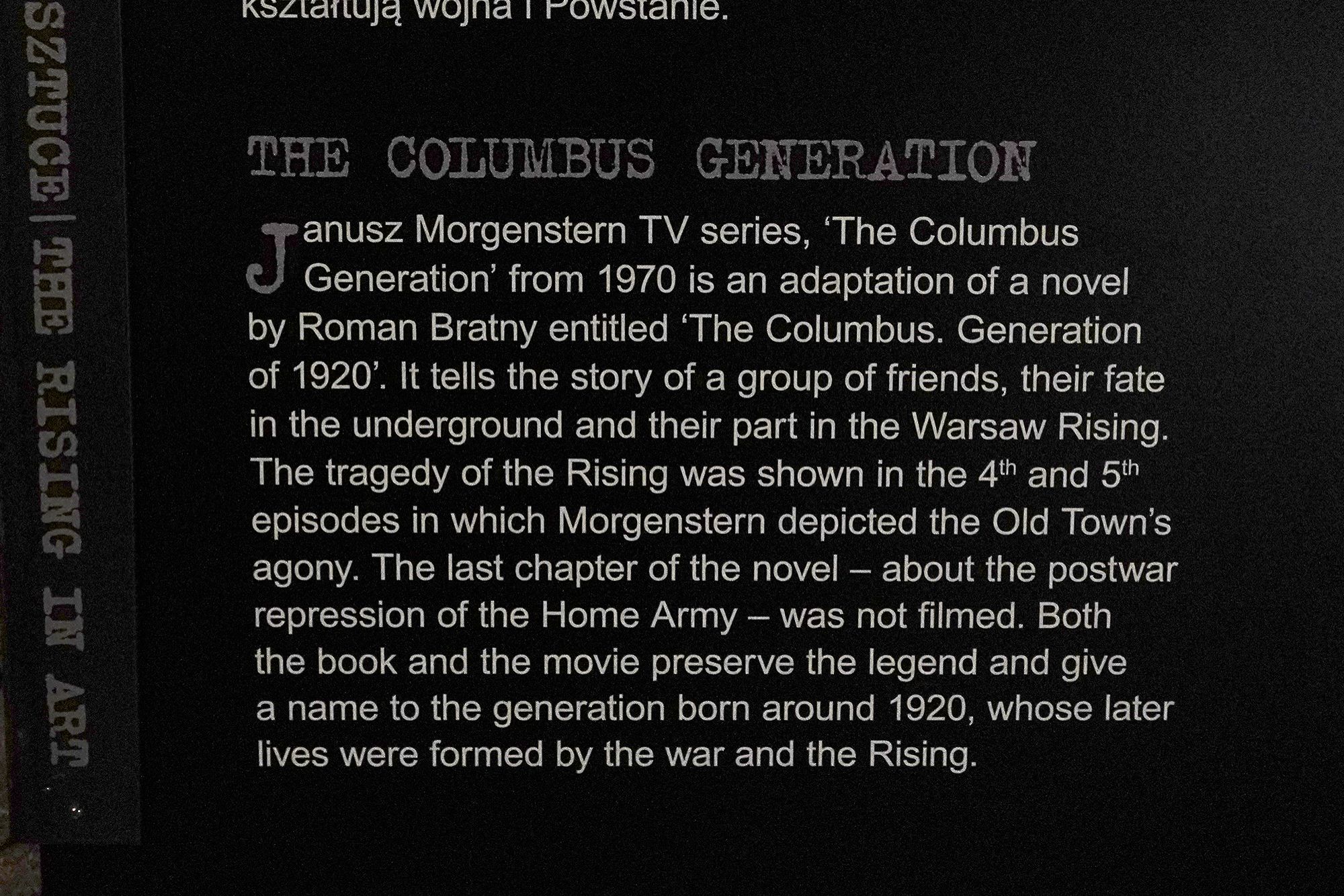
The “Columbus Generation” refers to Poles born around 1920 whose young adulthood was shaped by the war and the Warsaw Uprising. Roman Bratny’s novel and Janusz Morgenstern’s 1970 television adaptation follow a group of friends through underground resistance and the fighting in Warsaw. The series depicts the tragedy of the Old Town, but leaves out the novel’s final chapter about the postwar repression of Home Army members.
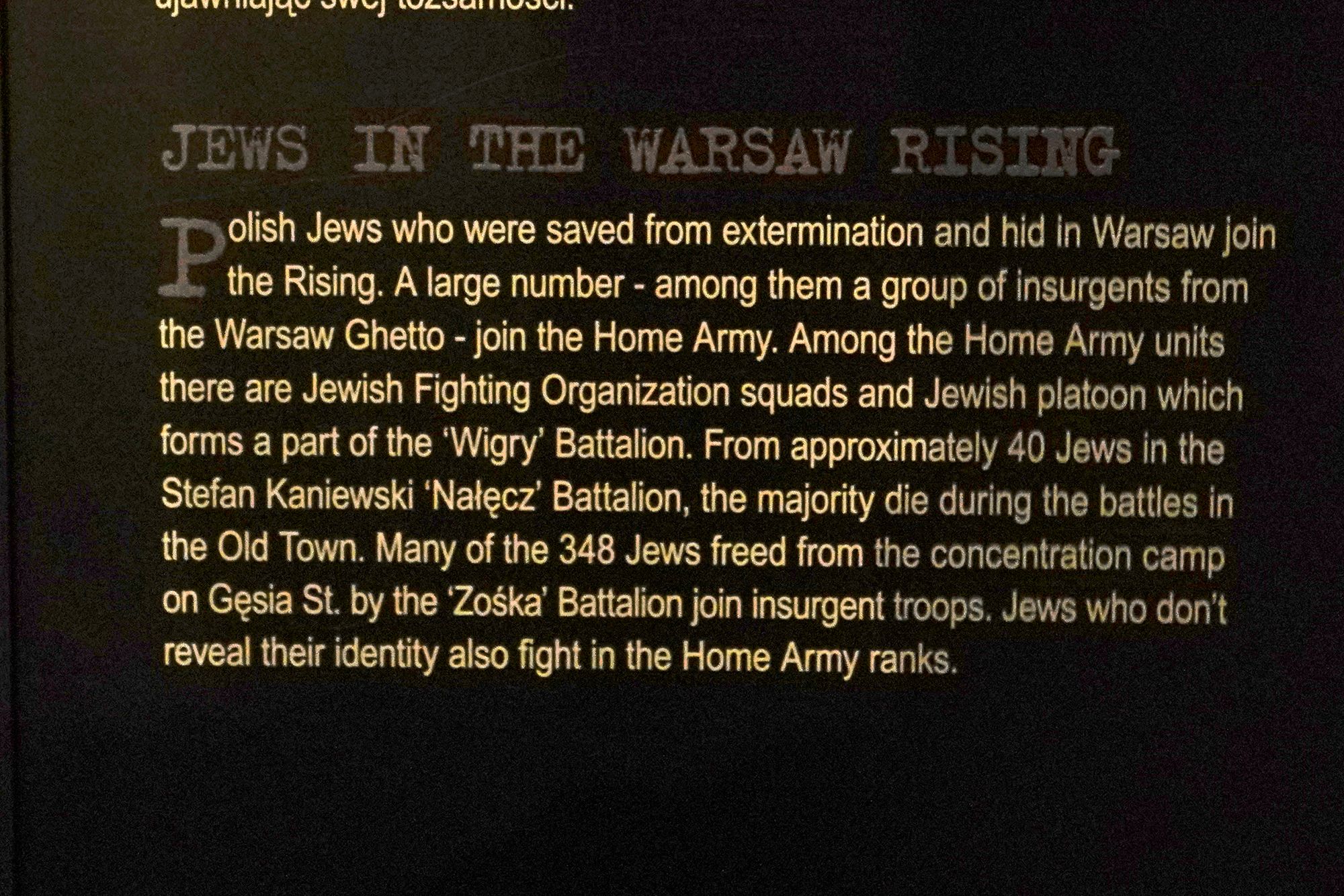
Polish Jews who had survived Nazi persecution and were hiding in Warsaw also took part in the 1944 uprising. They included survivors of the Warsaw Ghetto Uprising, members of Jewish resistance groups, and fighters serving in Home Army units. Many of the 348 Jewish prisoners freed by the “Zośka” Battalion from a concentration camp on Gęsia Street joined the resistance. Some Jewish participants fought without revealing their identity, and many died in the battles.
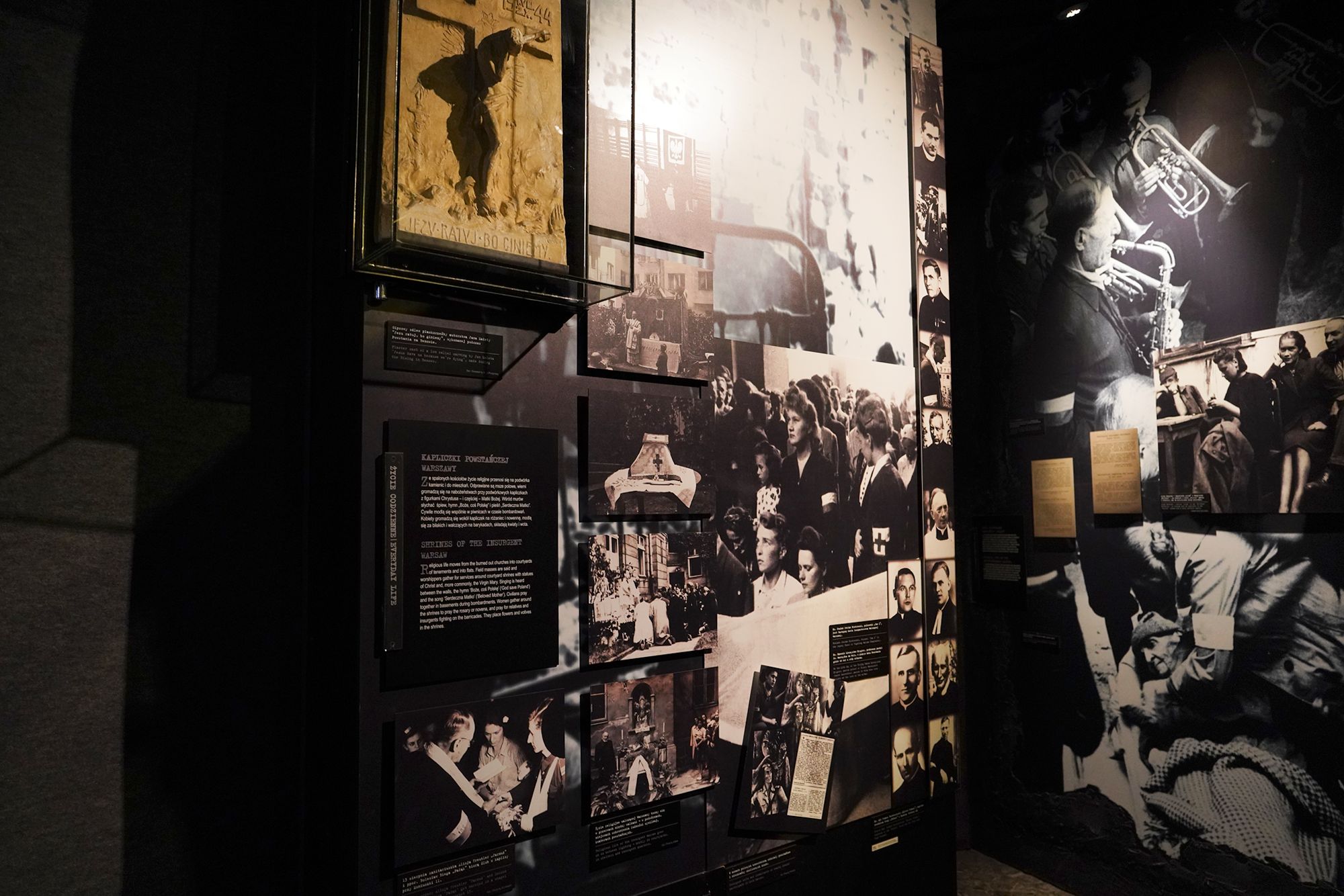
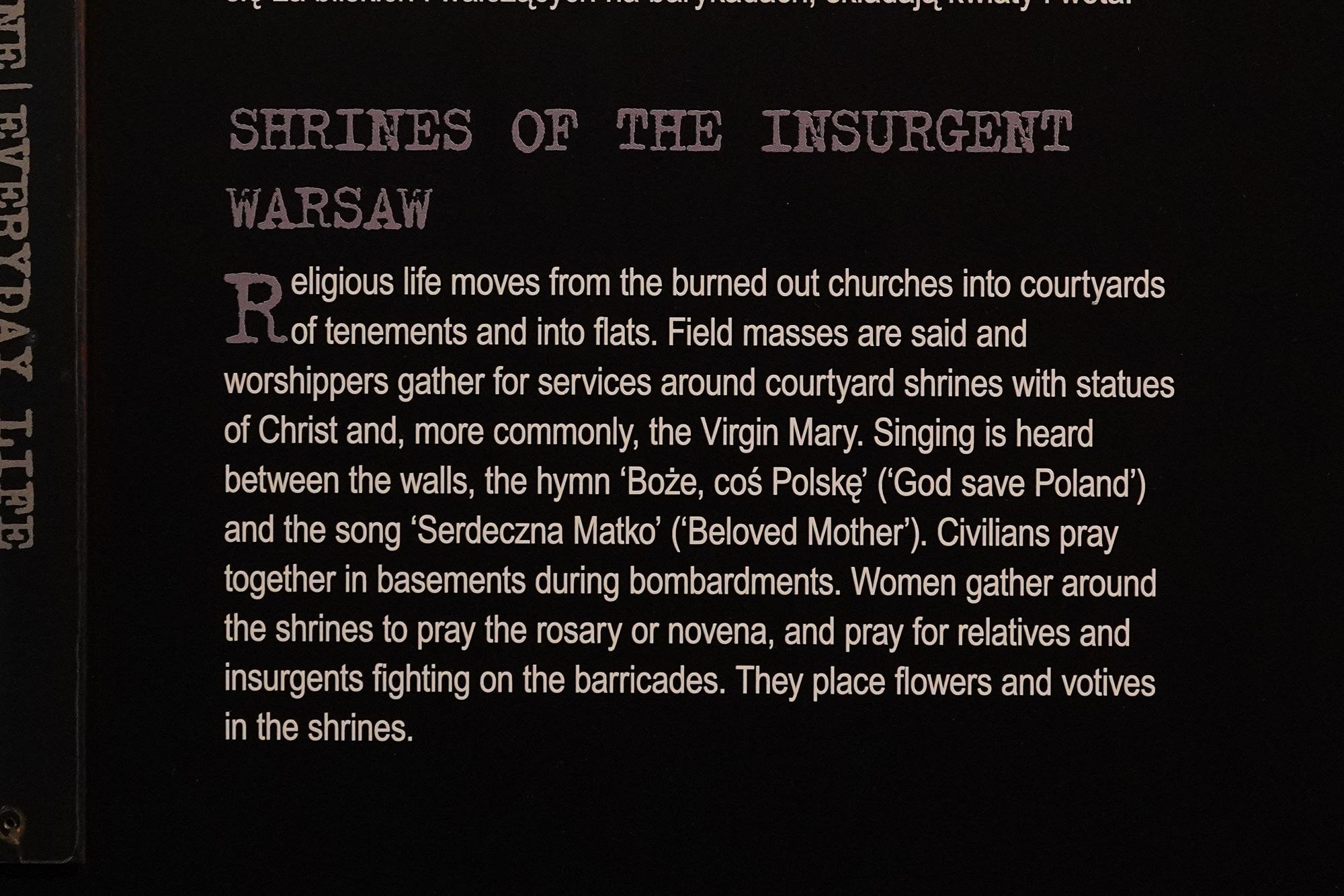
As churches burned during the uprising, religious services moved into courtyards and apartments. Residents gathered around small shrines, often with statues of the Virgin Mary, to attend Mass, sing hymns, and pray for relatives and fighters at the barricades. During bombardments, civilians prayed together in basements. Flowers and religious offerings placed at these shrines show how people continued their religious practices amid the fighting.
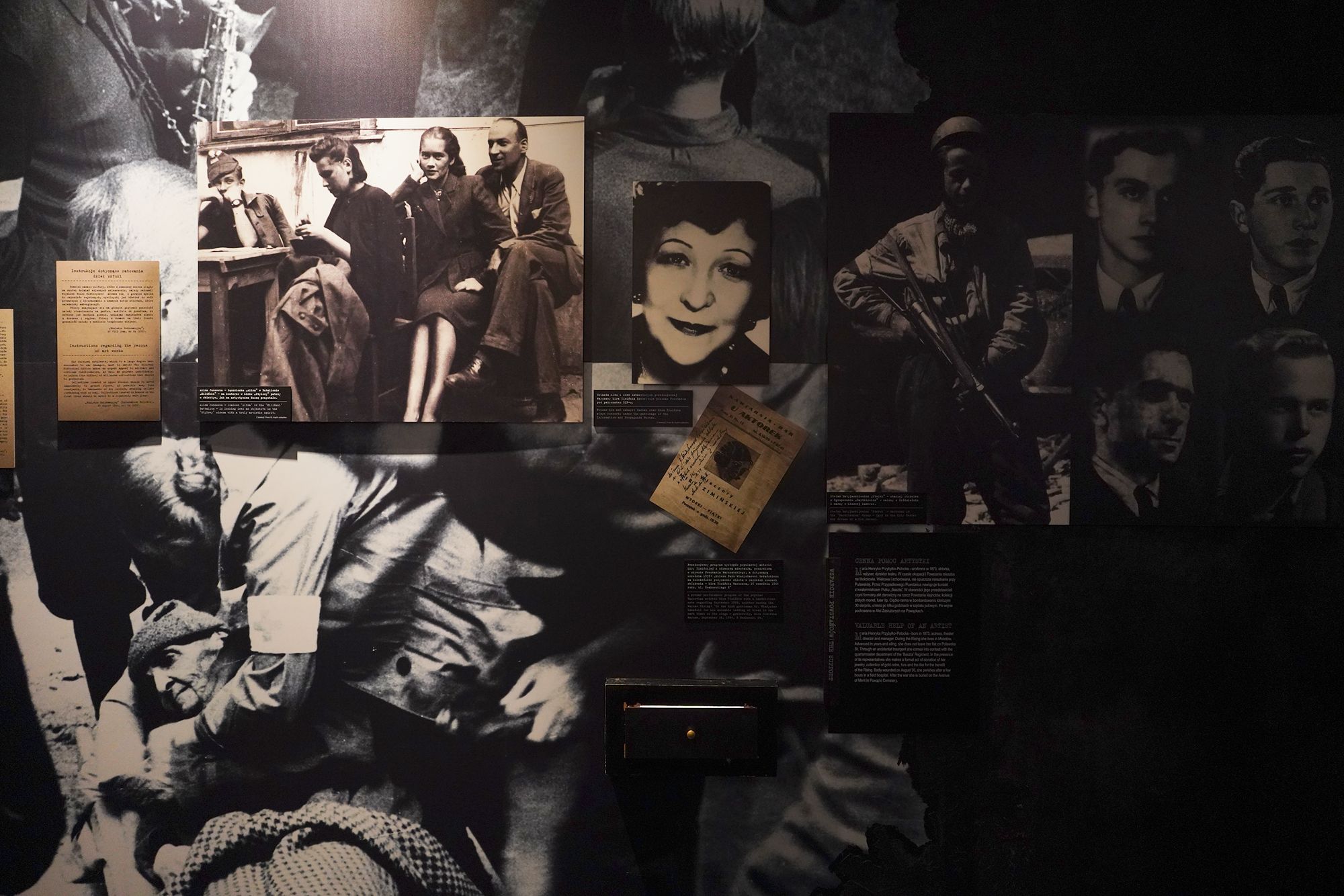
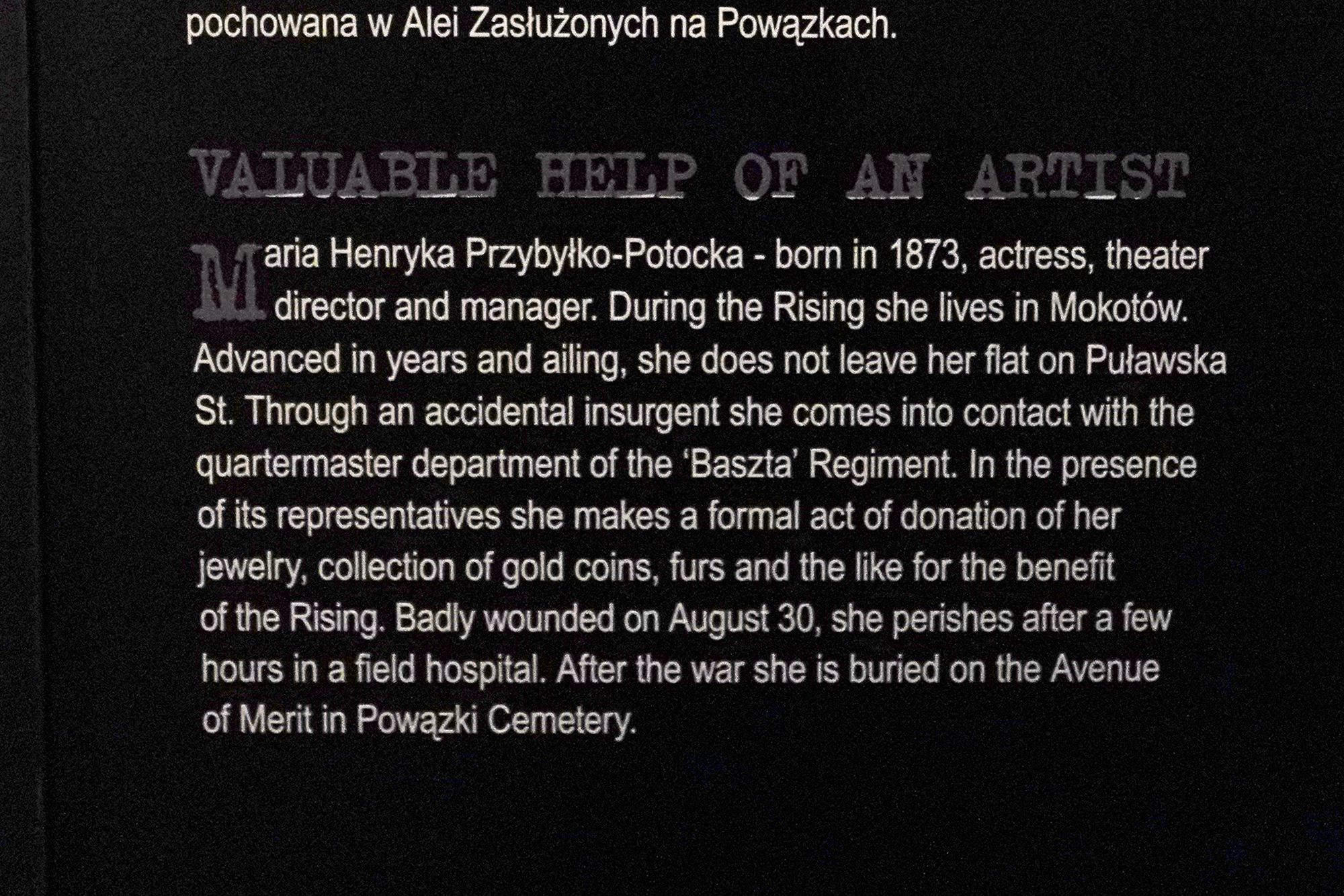
Actress and theatre director Maria Przybyłko-Potocka supported the uprising from her apartment in Mokotów. Elderly and unwell, she donated her jewellery, gold coins, furs, and other valuables to help the resistance through the “Baszta” Regiment. On August 30, 1944, she was seriously wounded and died a few hours later in a field hospital. Her story shows how civilians contributed to the uprising even when they could not take part in the fighting.
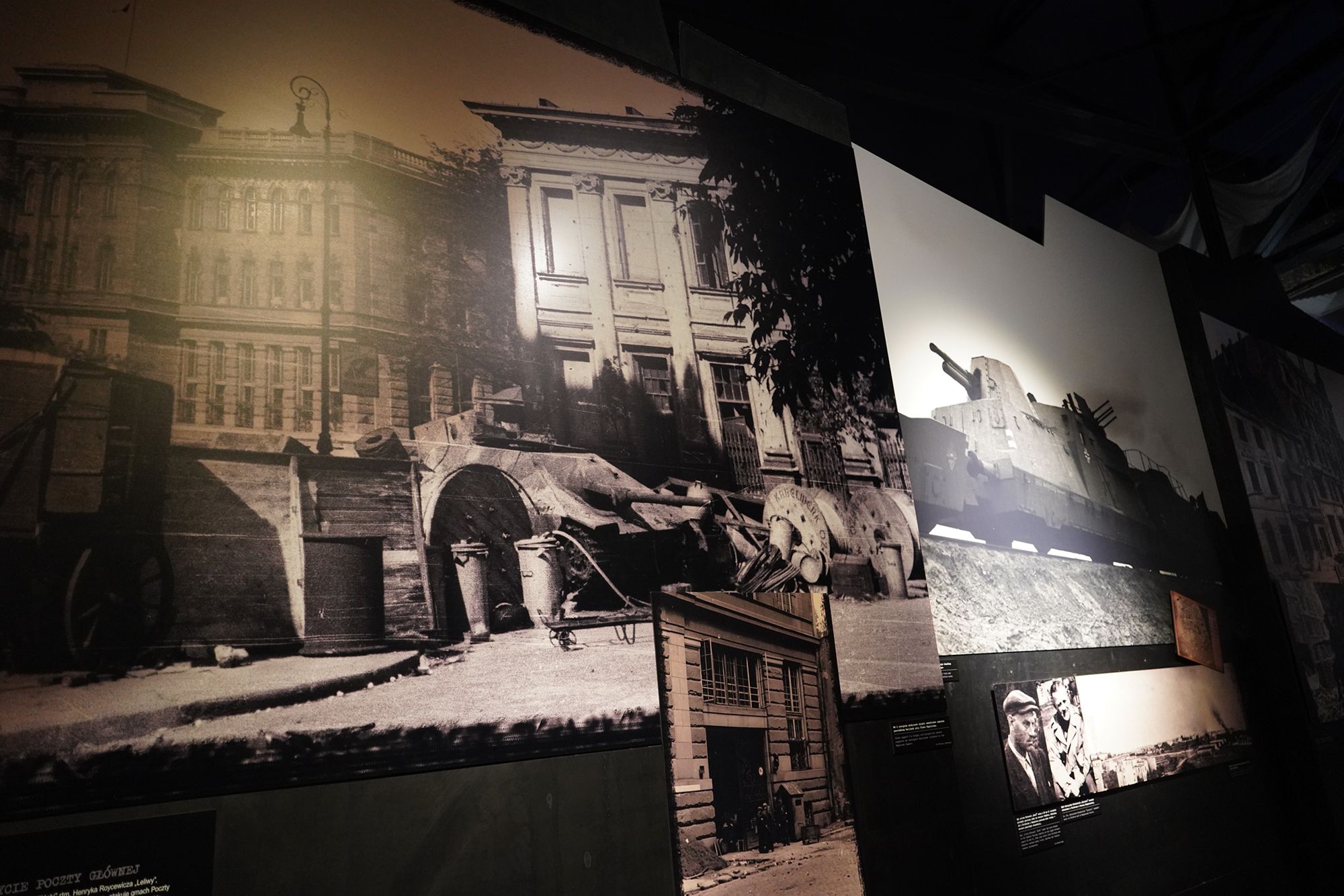
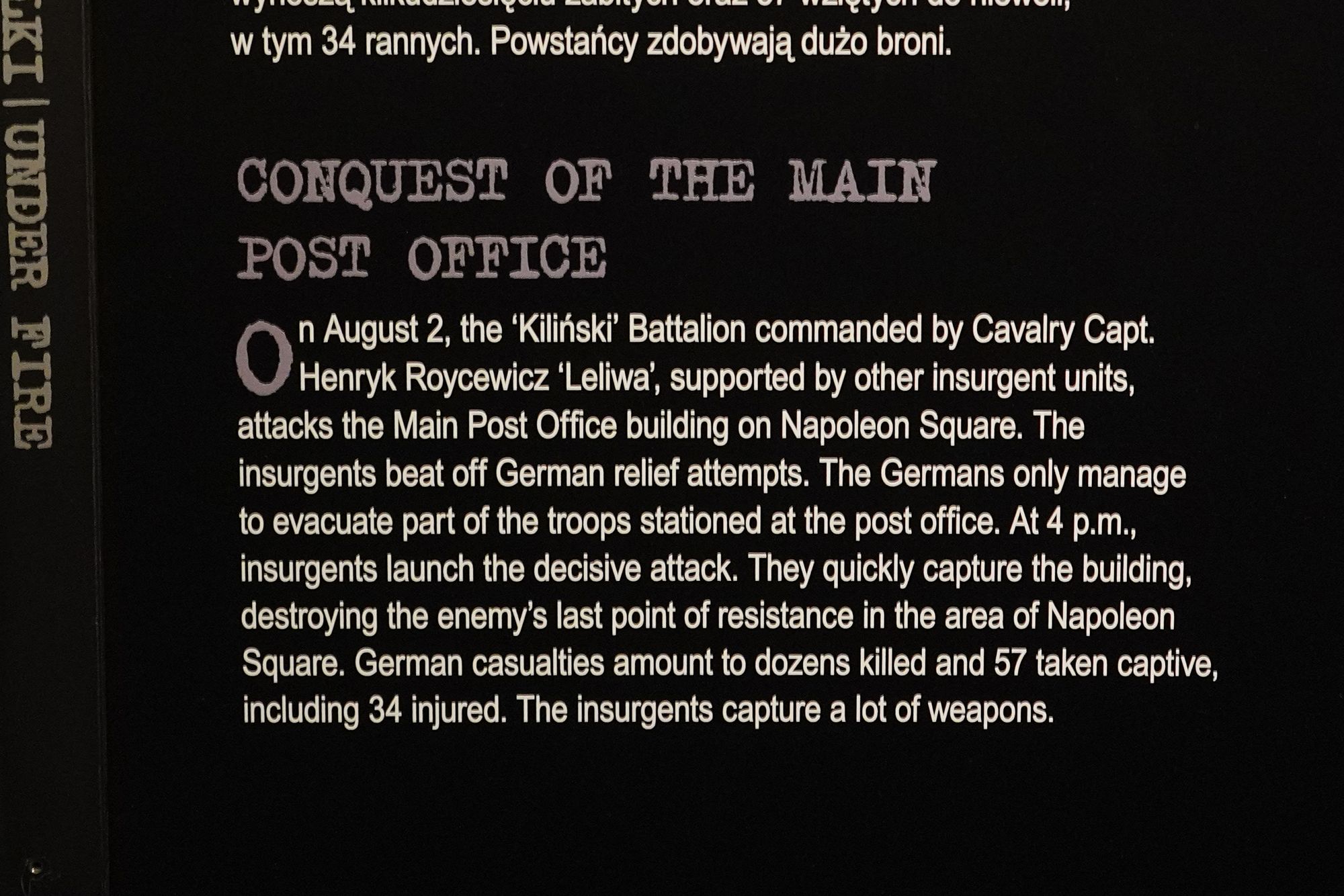
On August 2, 1944, the “Kiliński” Battalion, supported by other resistance units, attacked Warsaw’s Main Post Office on Napoleon Square. After repelling German attempts to relieve the defenders, the fighters launched a decisive assault at 4 p.m. and captured the building. This removed the last German stronghold around the square. The resistance took 57 prisoners and seized weapons, providing much-needed supplies during the early days of the uprising.
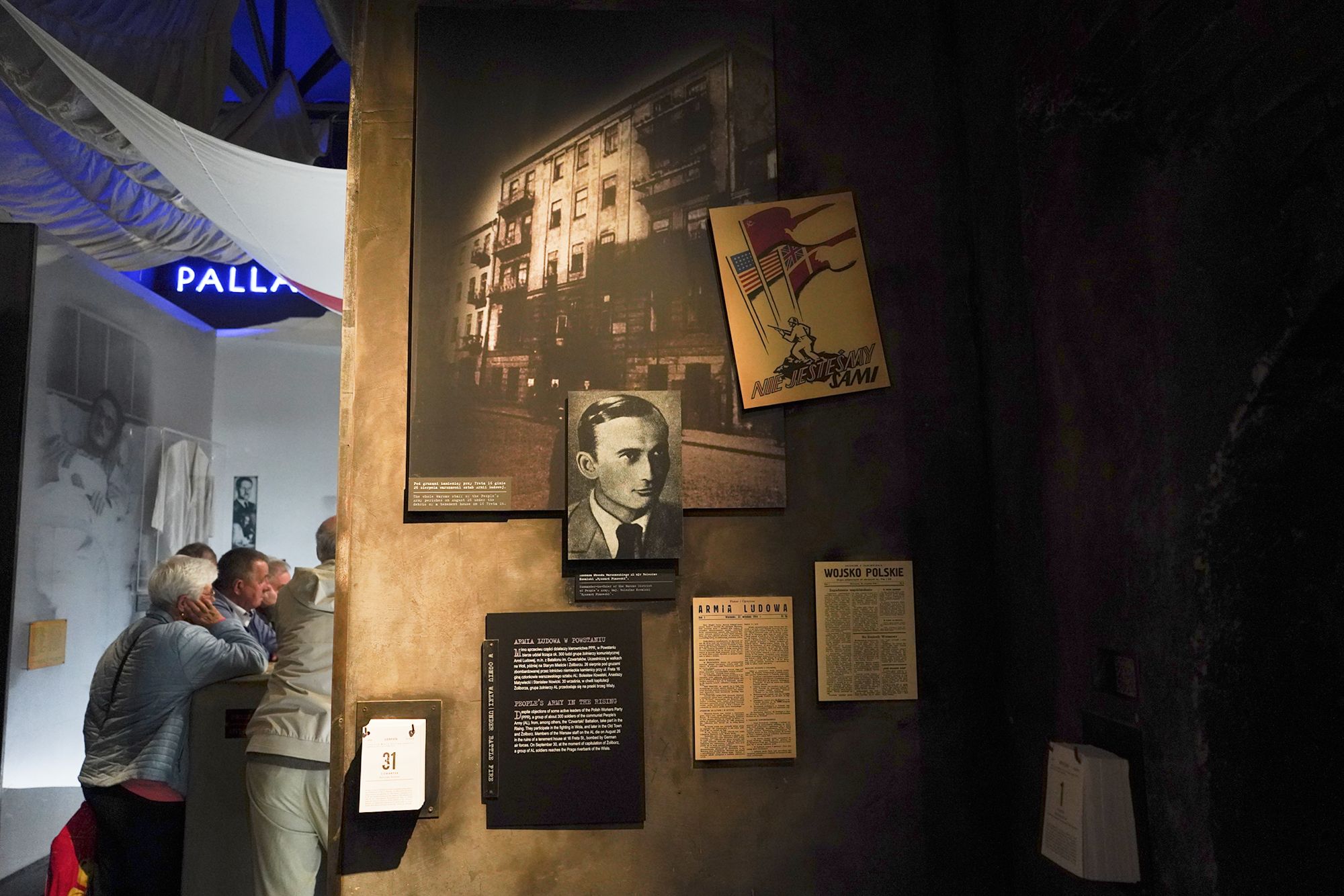
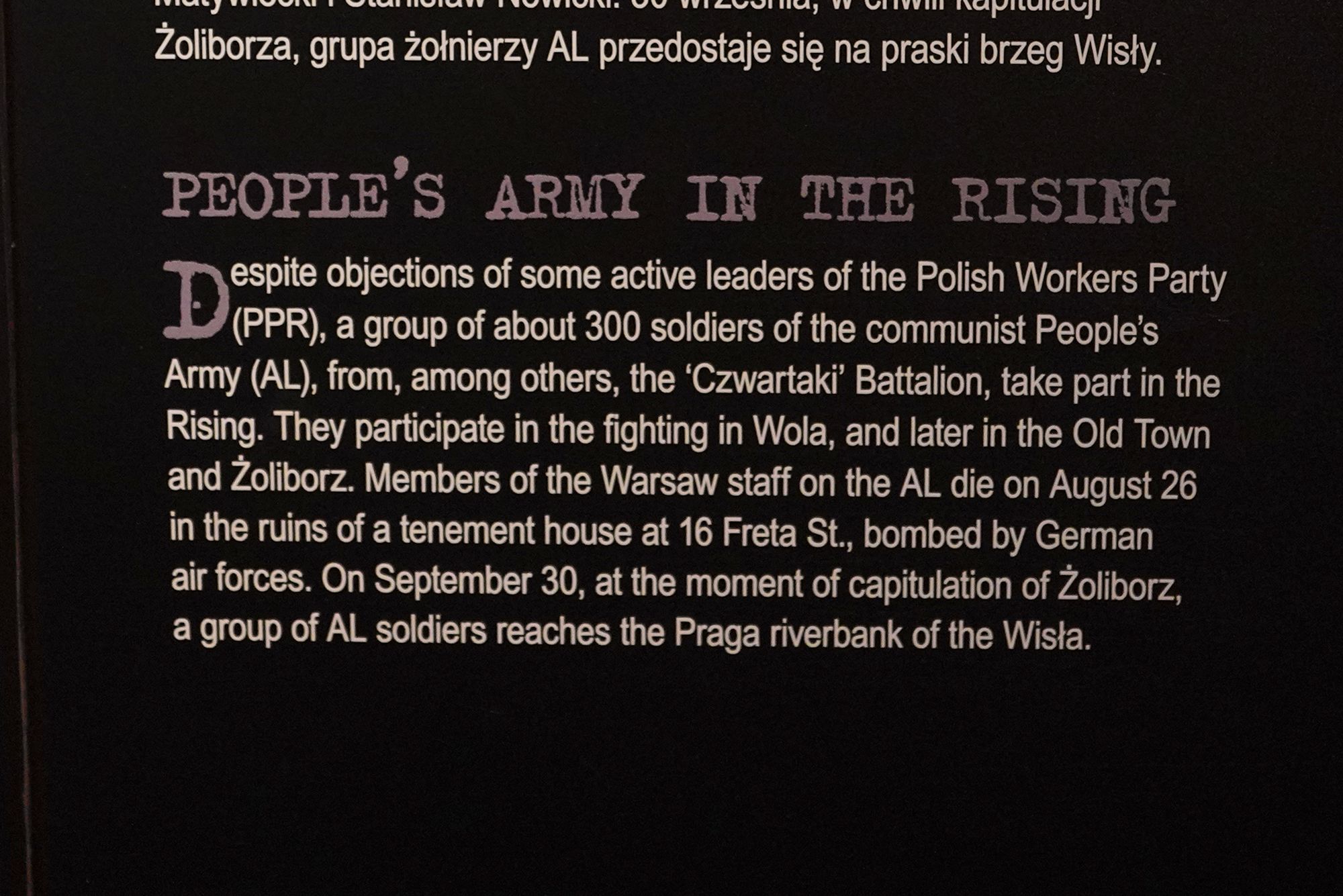
About 300 soldiers from the communist People’s Army also participated in the Warsaw Uprising, despite objections from some Polish Workers’ Party leaders. They fought in Wola, the Old Town, and Żoliborz. Several members of their Warsaw command were killed in a German air raid on August 26. When Żoliborz surrendered on September 30, a group of People’s Army soldiers escaped across the Vistula to the Praga bank.
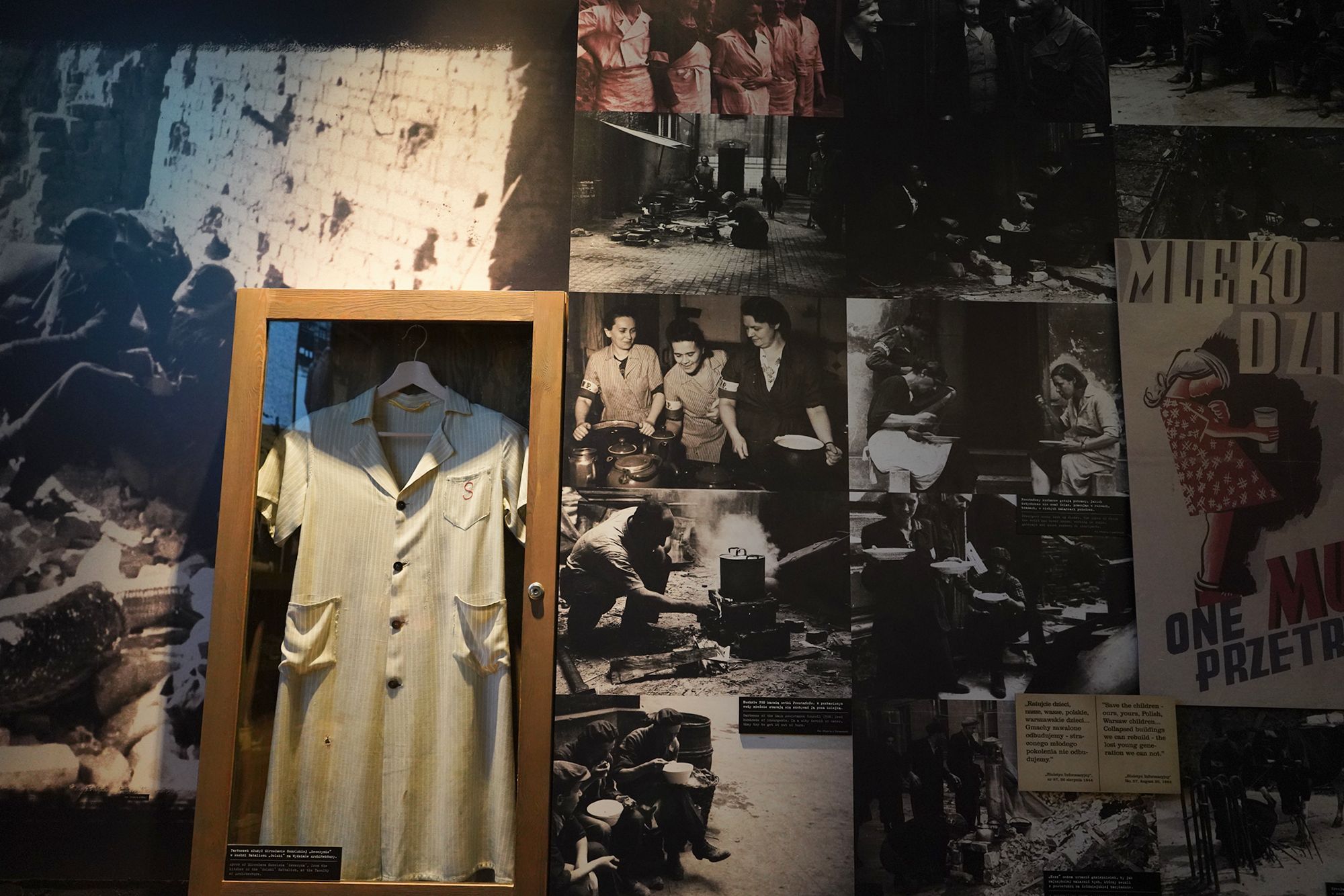
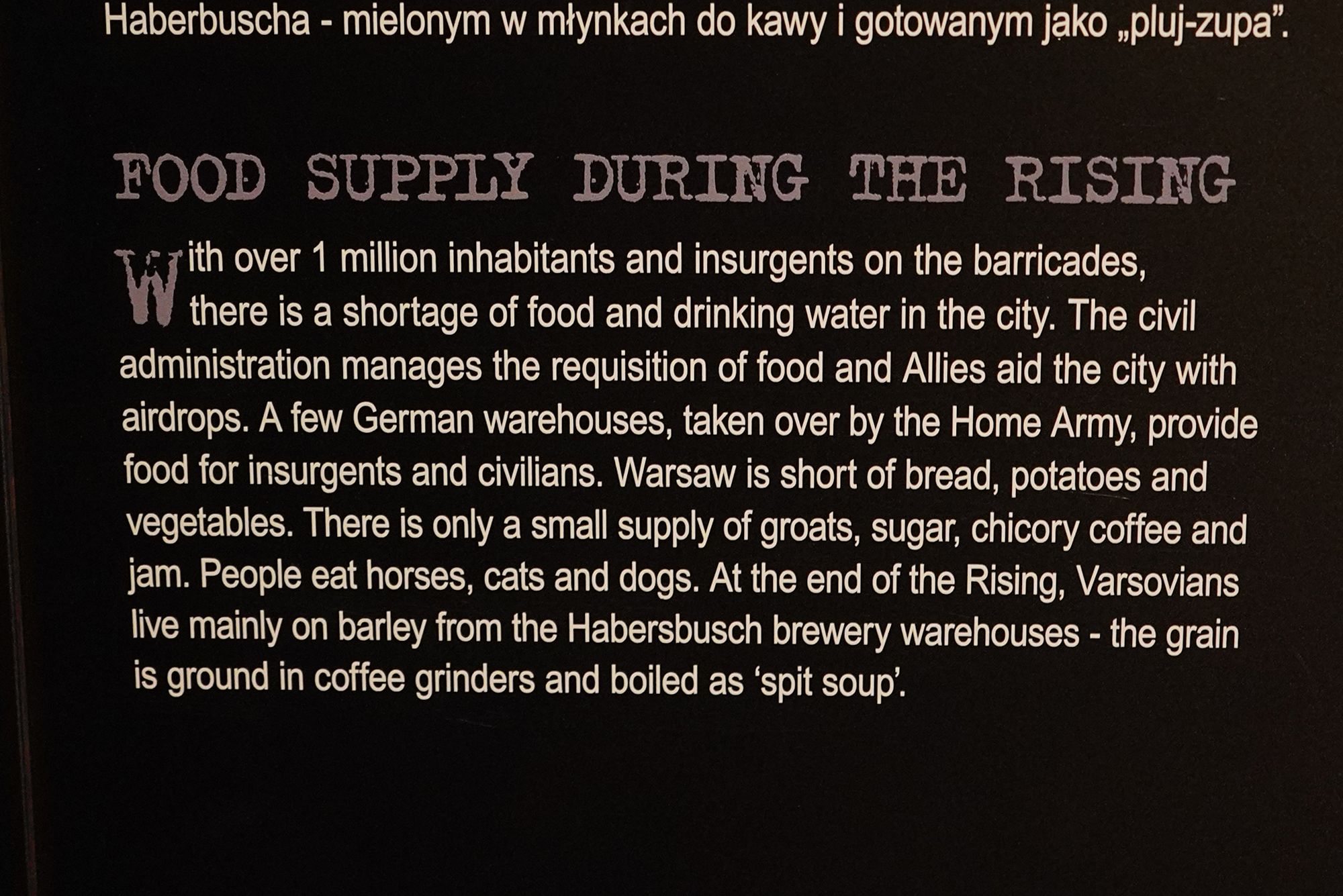
Food and drinking water became scarce during the uprising. Captured German warehouses and Allied airdrops supplied some provisions, but bread, potatoes, and vegetables were increasingly difficult to find. Hunger forced residents to eat horses, cats, and dogs. Toward the end of the fighting, many survived mainly on barley taken from brewery warehouses. They ground the grain in coffee grinders and boiled it into a coarse meal known as “spit soup.”
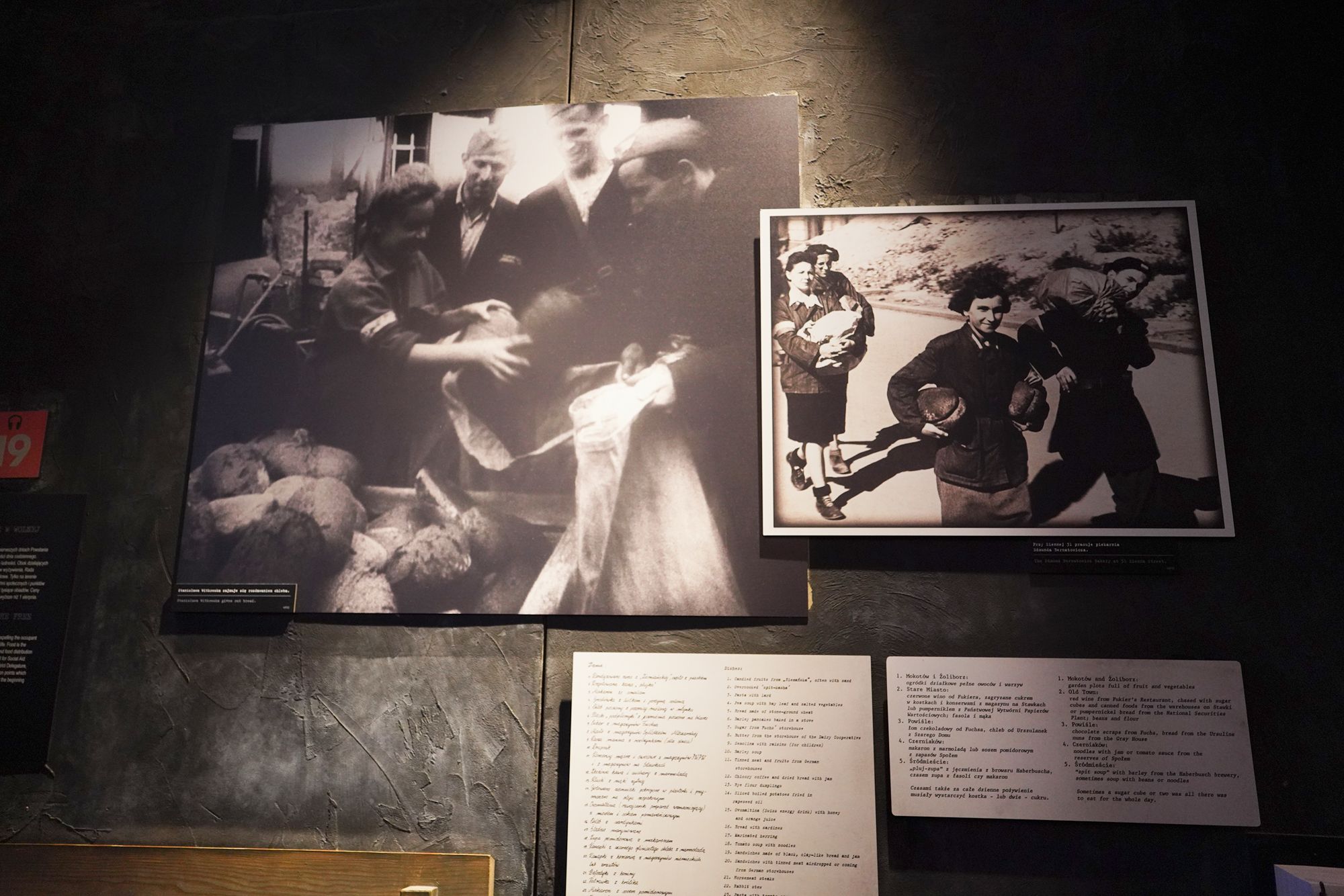
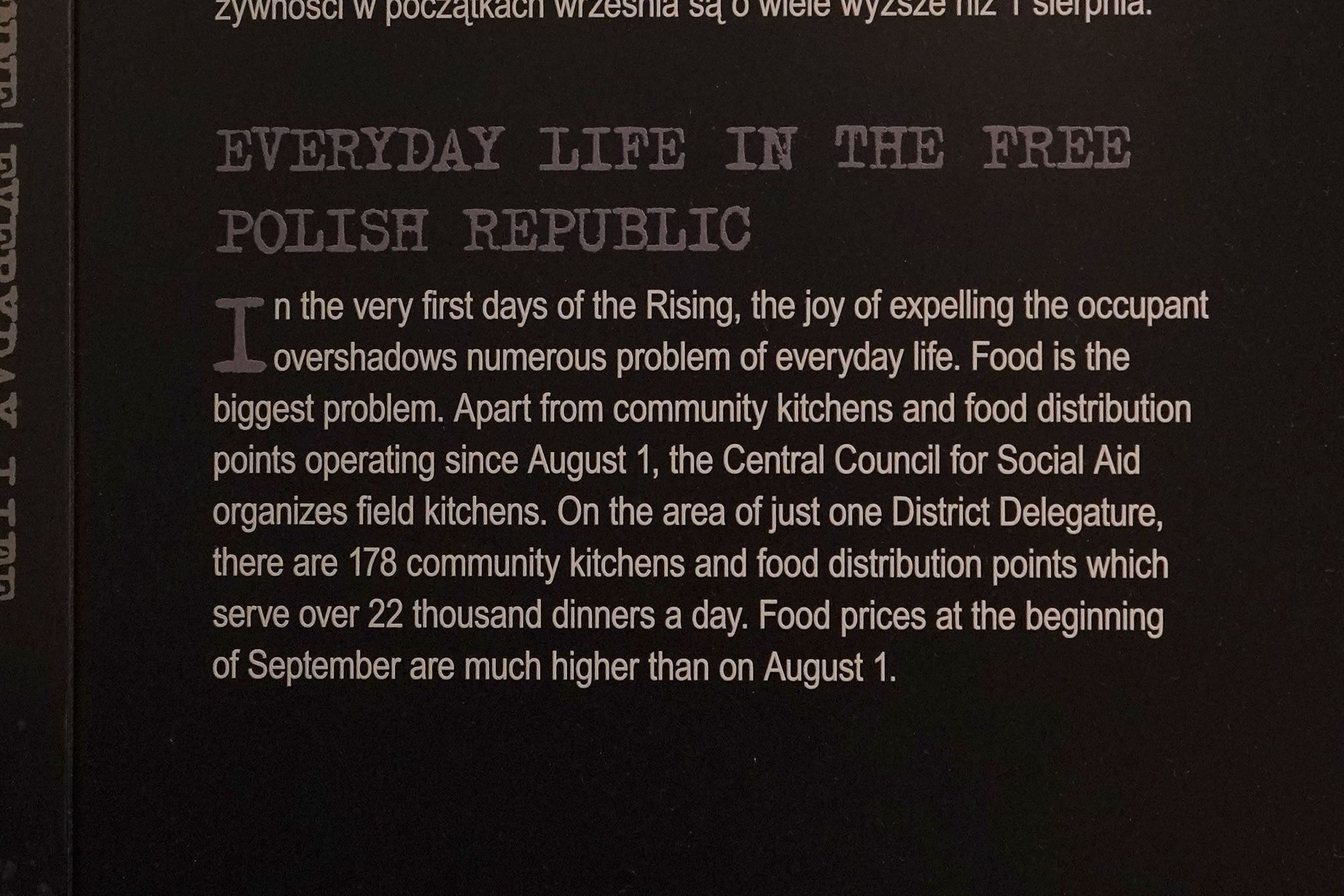
In the first days of the uprising, the joy of reclaiming parts of Warsaw briefly overshadowed the difficulties of daily life. Food soon became the biggest concern. Community kitchens and distribution points operated from August 1, with relief organisations setting up additional field kitchens. In one district alone, 178 kitchens and distribution points served more than 22,000 meals a day. By early September, food prices had risen sharply as shortages worsened.
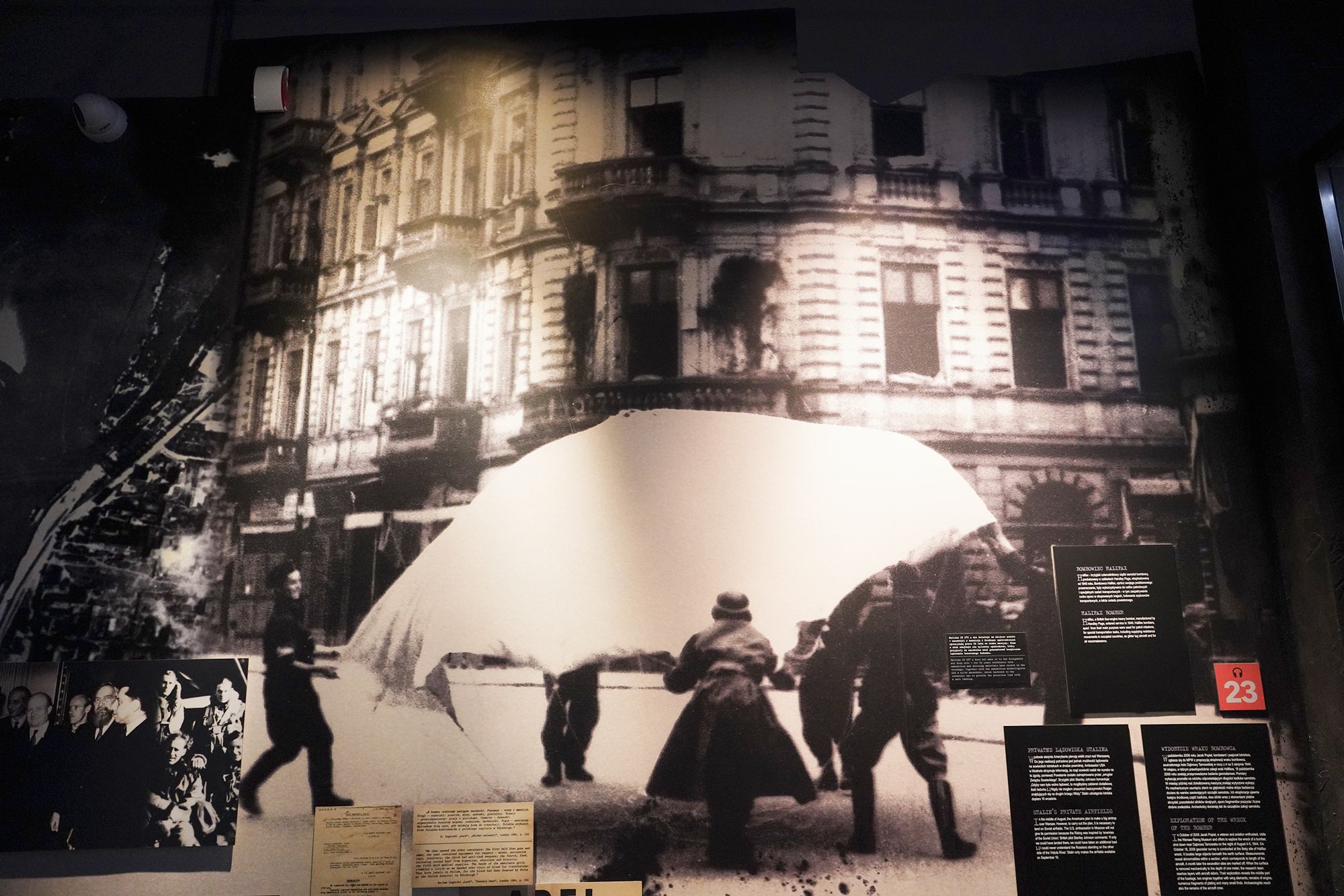
In mid-August, the Americans planned a major supply airdrop over Warsaw, but their aircraft needed permission to land at Soviet airfields afterward. Stalin’s refusal delayed the operation and limited Allied efforts to help the uprising. Access to these airfields would have allowed aircraft to carry more supplies instead of extra fuel for the return journey. Permission was finally granted on September 10, when Warsaw’s resistance had already endured weeks of fighting.
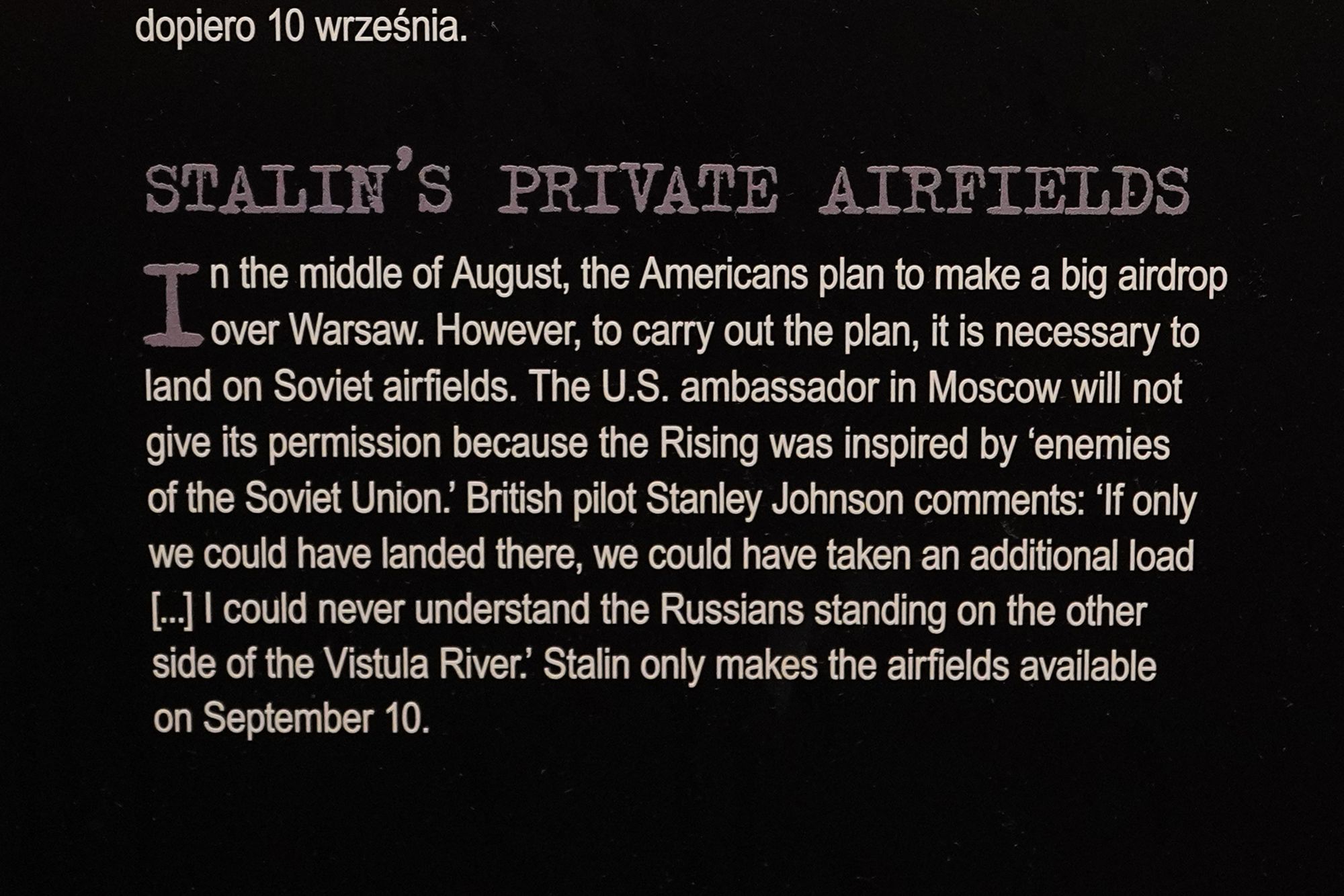
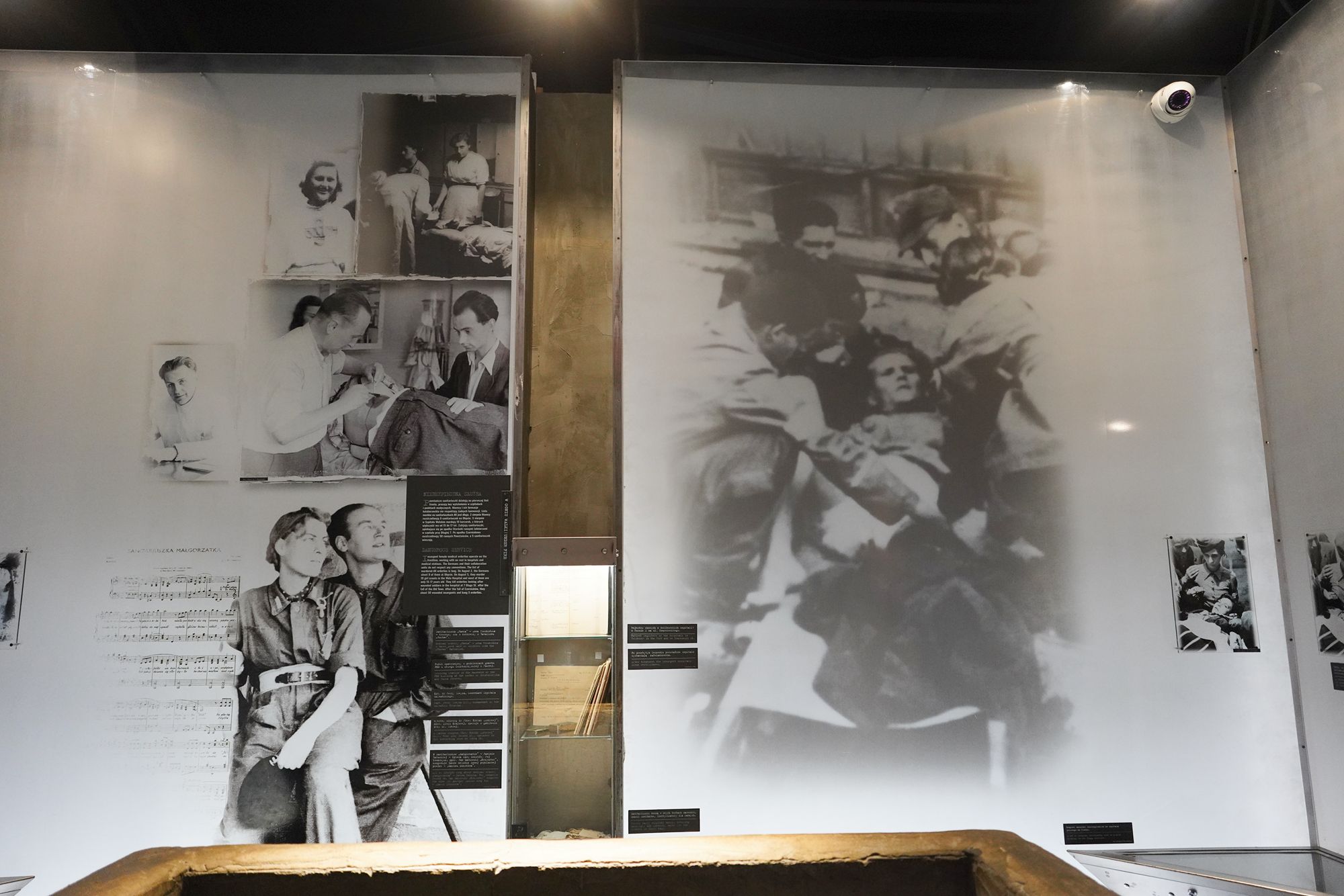
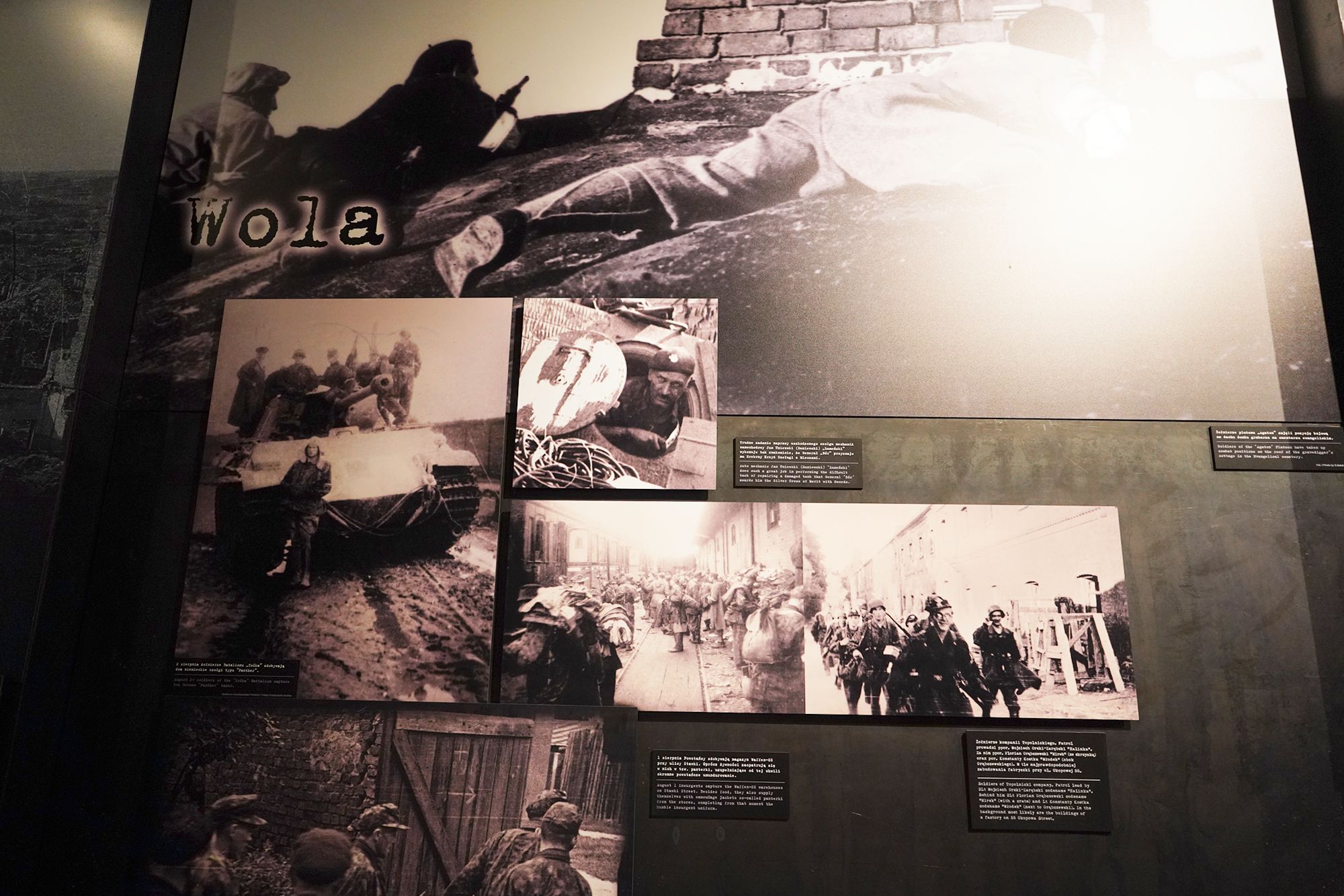
Wola Hospital cared for patients while also supporting the underground resistance. Its staff sheltered resistance members and Jews who had escaped the ghetto, hosted secret medical classes, distributed underground publications, and stored weapons. Almost the entire staff belonged to the independence movement. On August 5, 1944, SS troops entered the hospital and executed approximately 60 employees and 300 patients, according to the museum panel.
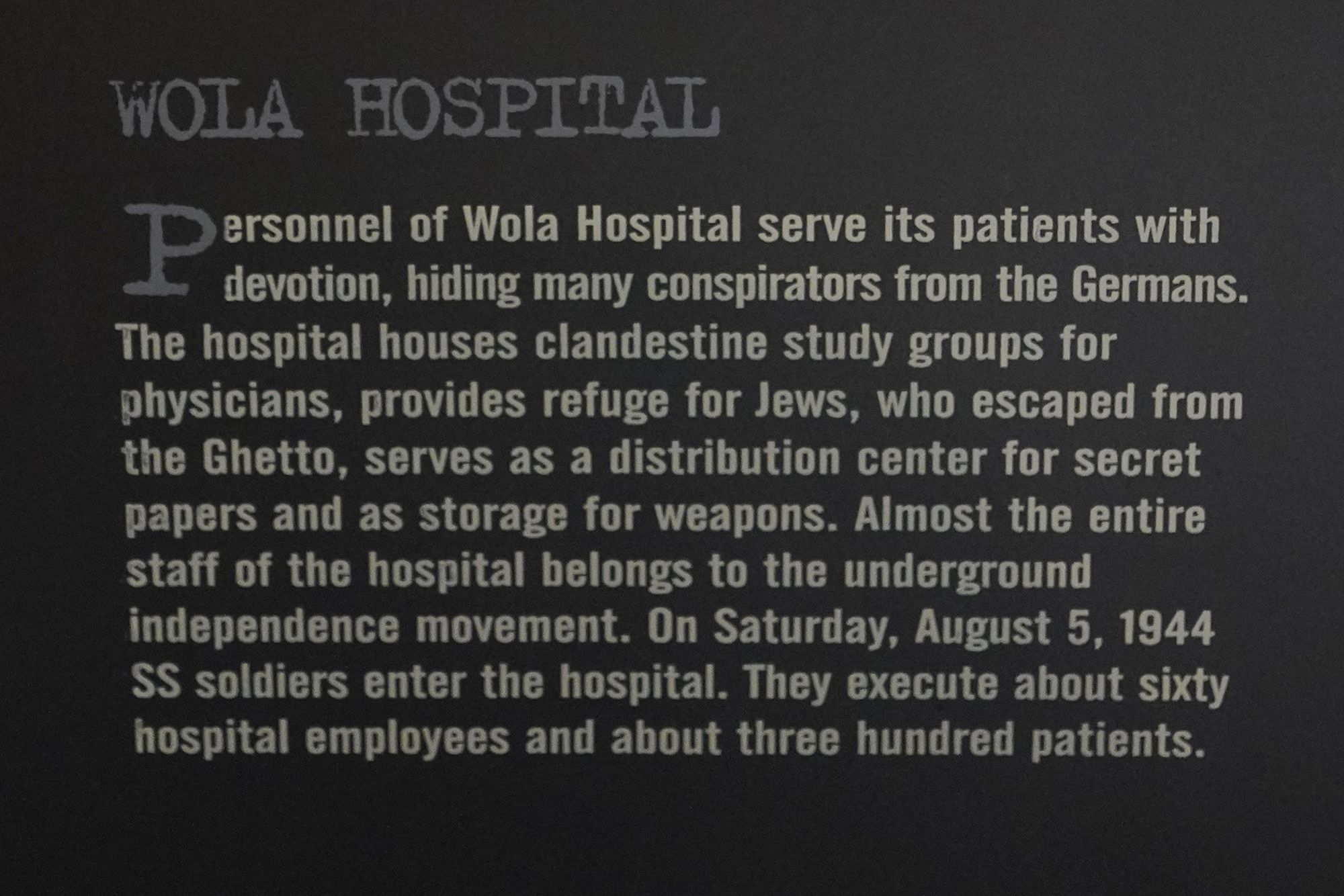
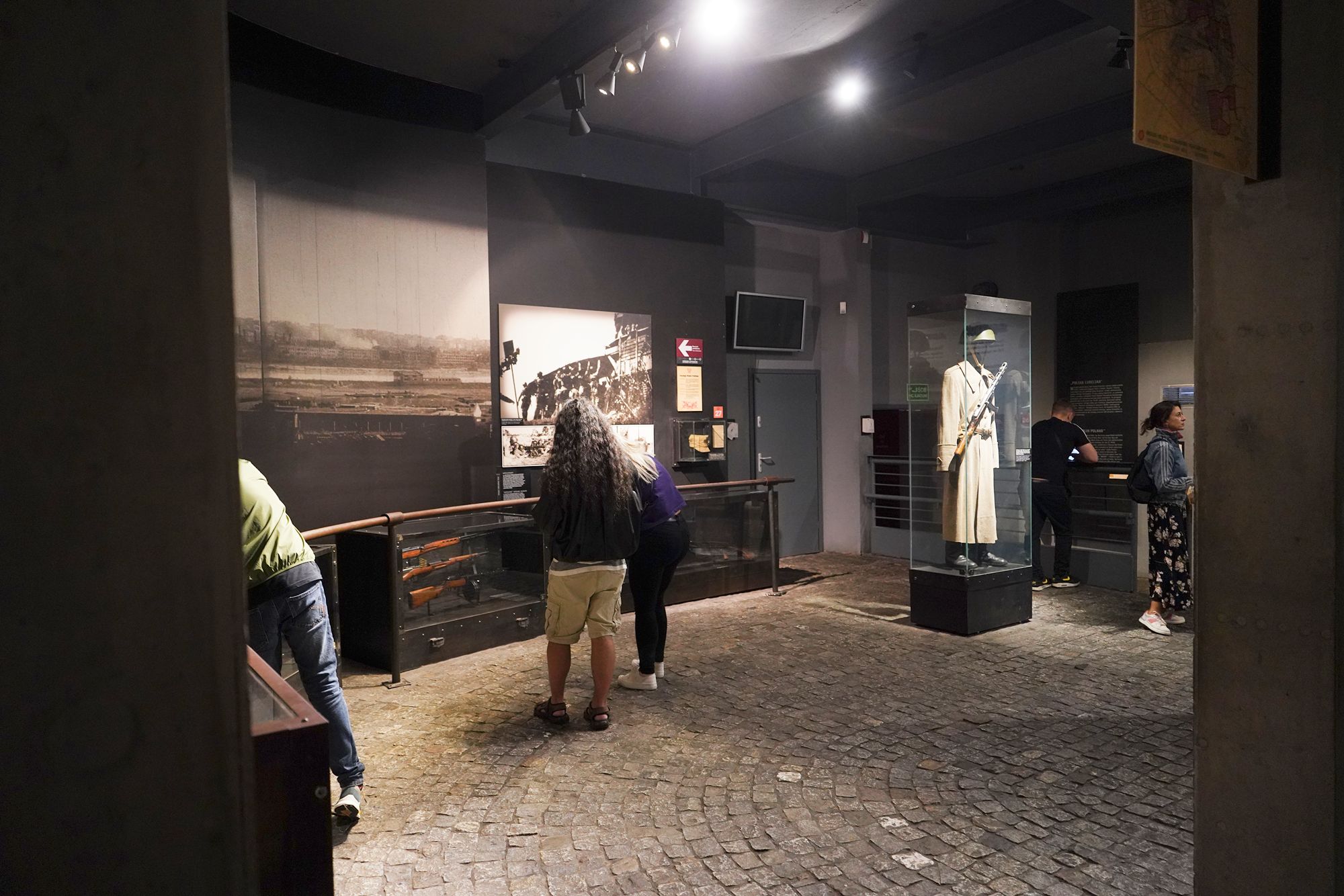
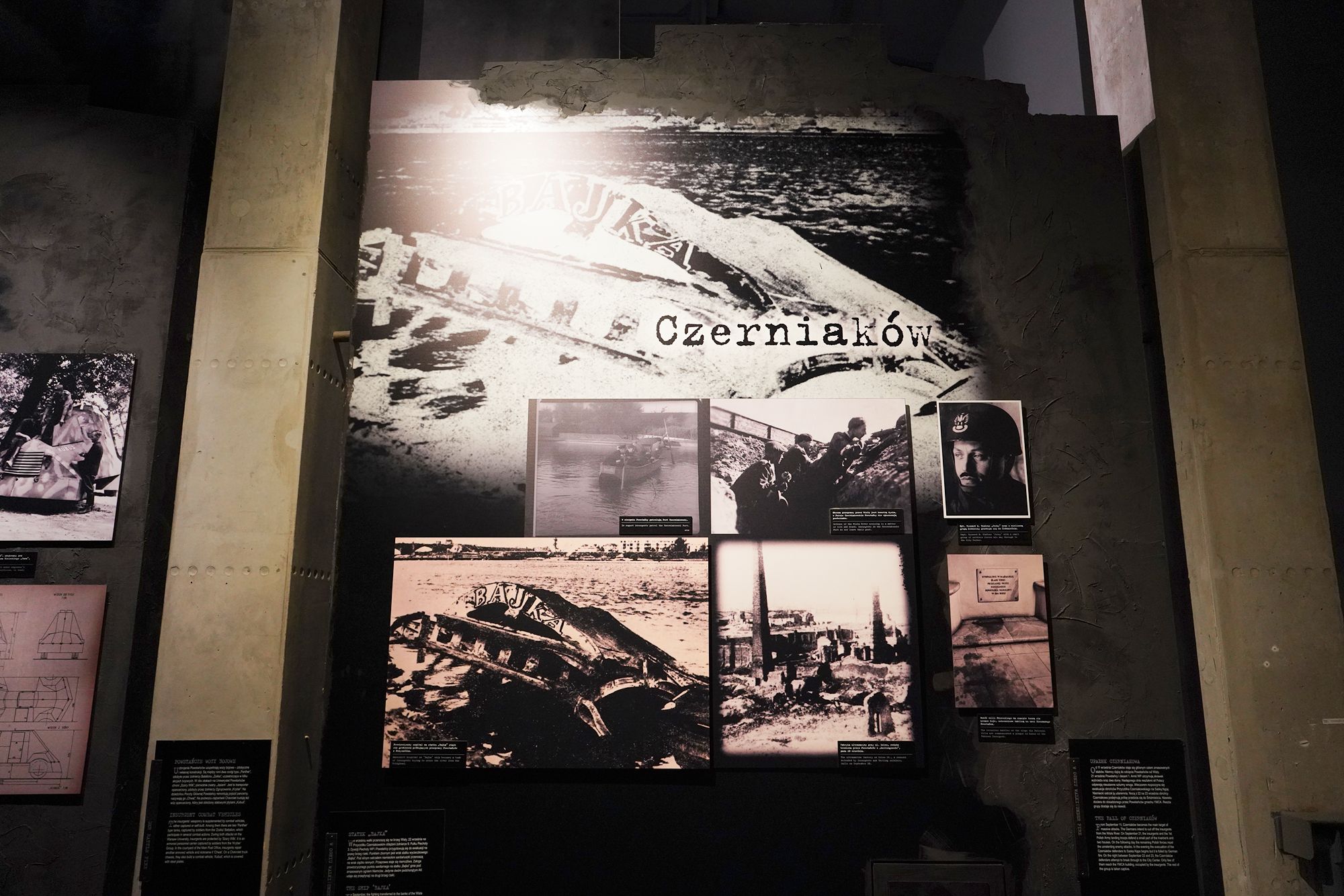
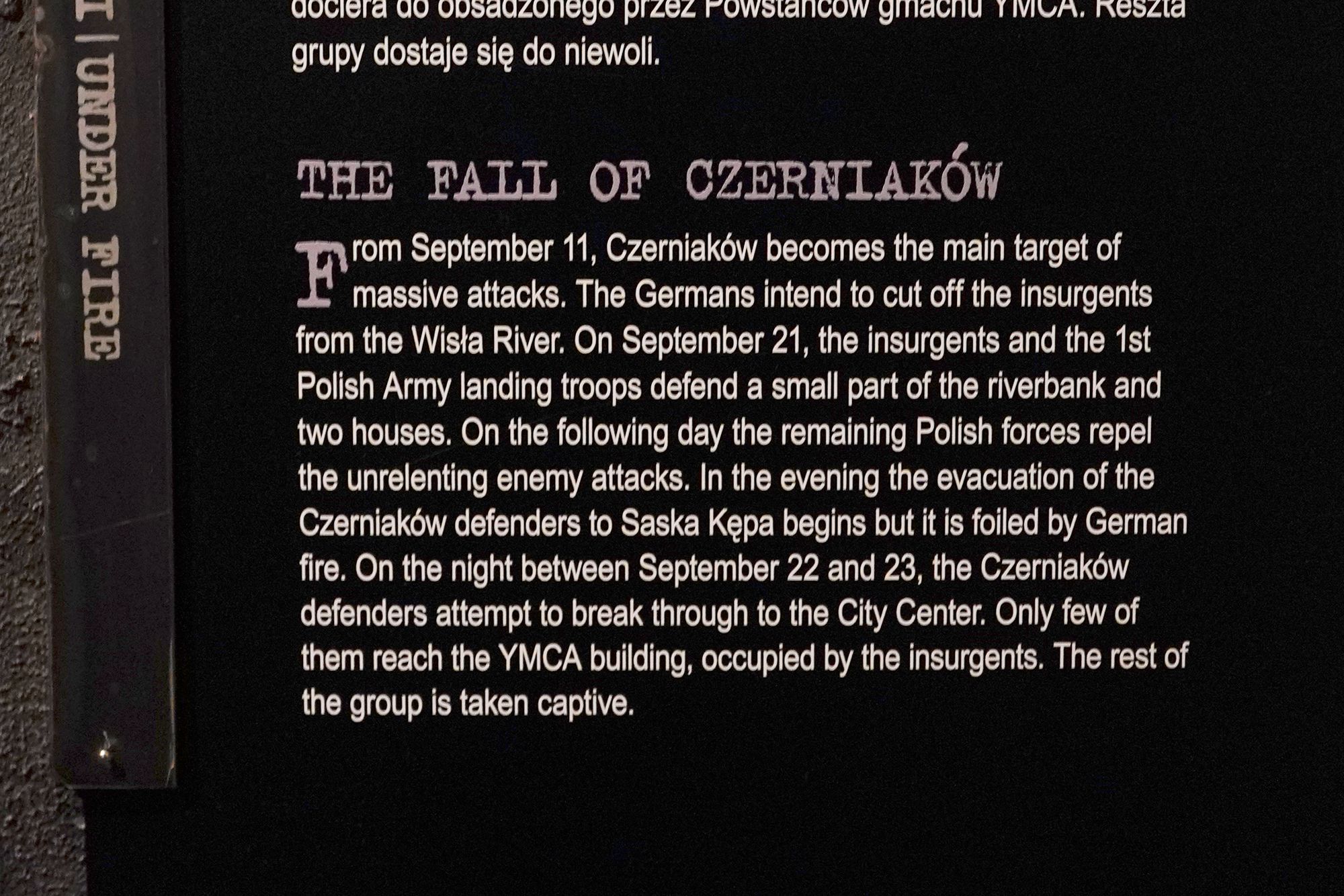
From September 11, German forces launched heavy attacks on Czerniaków to cut the resistance off from the Vistula River. By September 21, insurgents and troops from the 1st Polish Army held only a small section of the riverbank and two houses. German fire prevented their evacuation across the river. On the night of September 22–23, the defenders tried to break through to the city centre, but only a few reached safety; the others were captured.
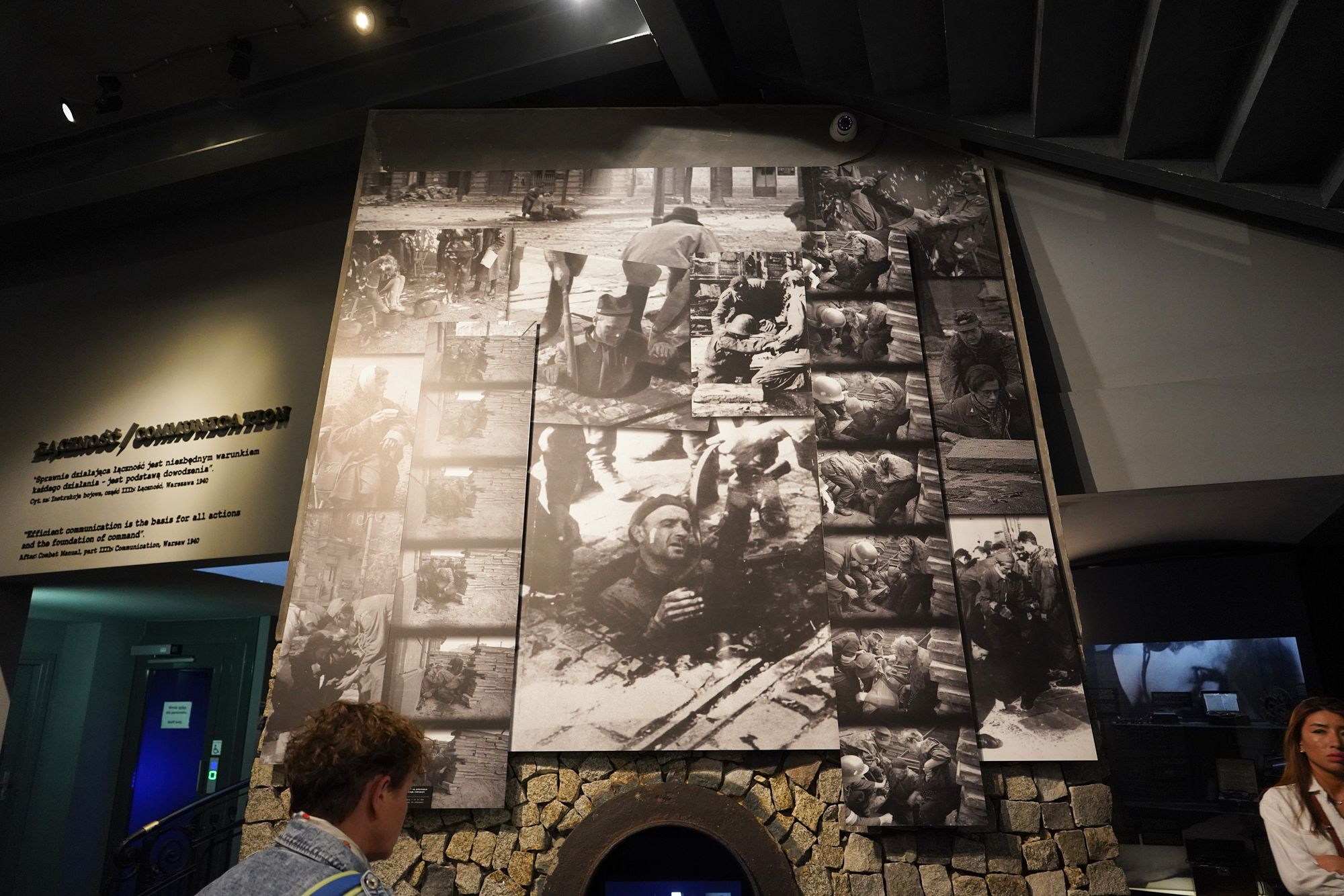
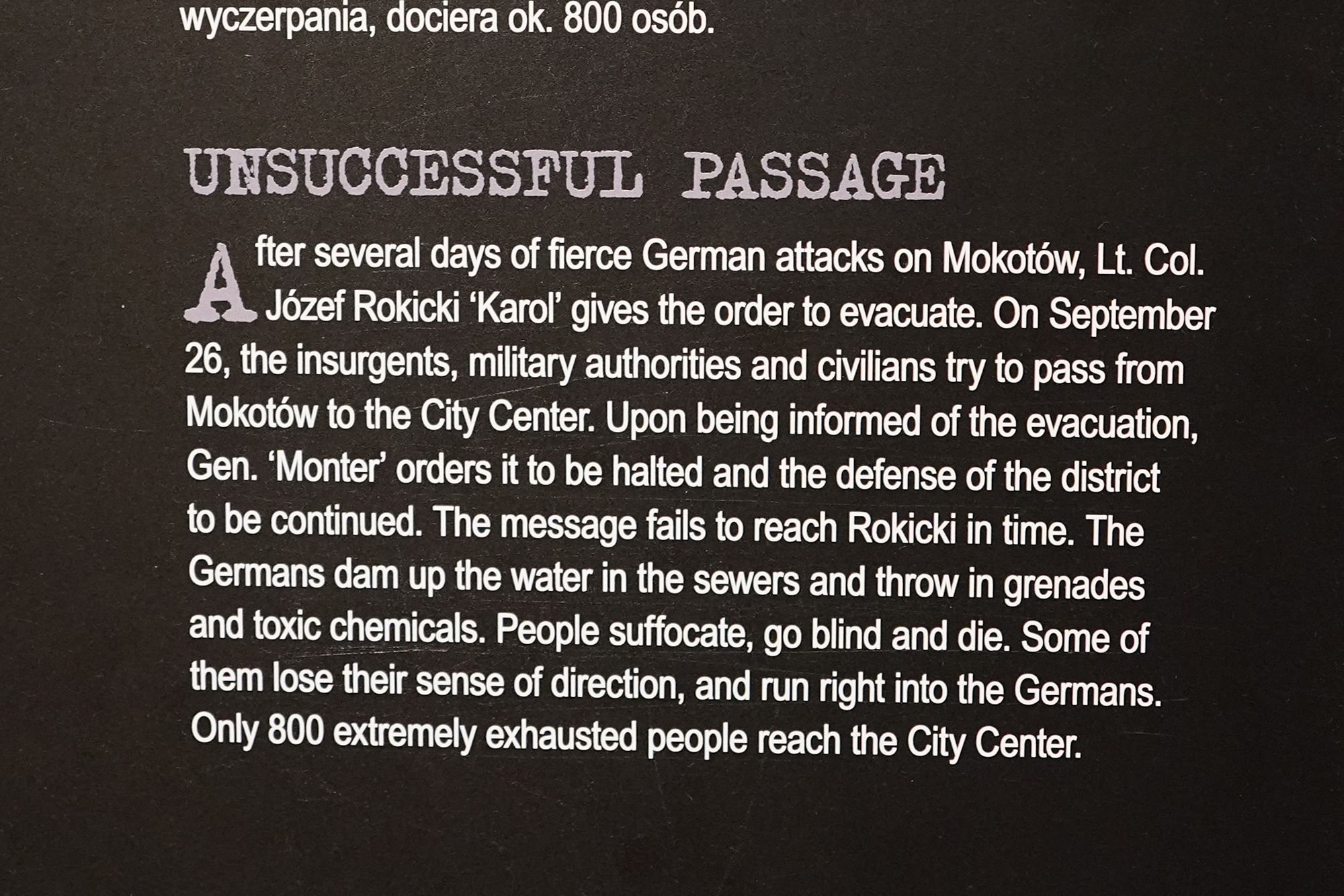
On September 26, fighters and civilians tried to evacuate Mokotów through the sewers to Warsaw’s city centre. An order to halt the evacuation failed to reach the local commander in time. German forces blocked the sewer water and threw grenades and toxic chemicals into the passages. Many people suffocated, lost their sight, or became disoriented, with some emerging into German positions. Only about 800 exhausted people reached the city centre.
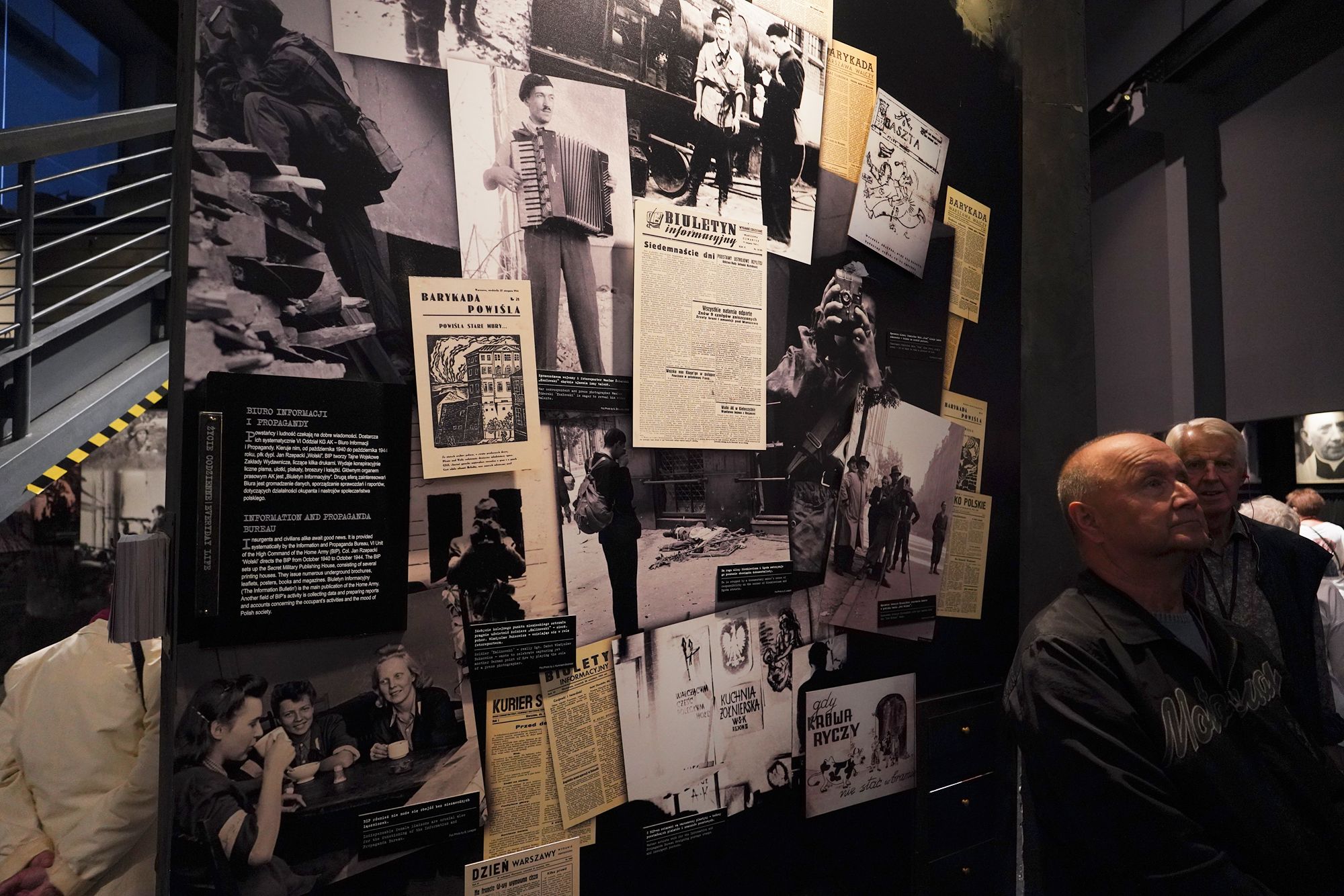
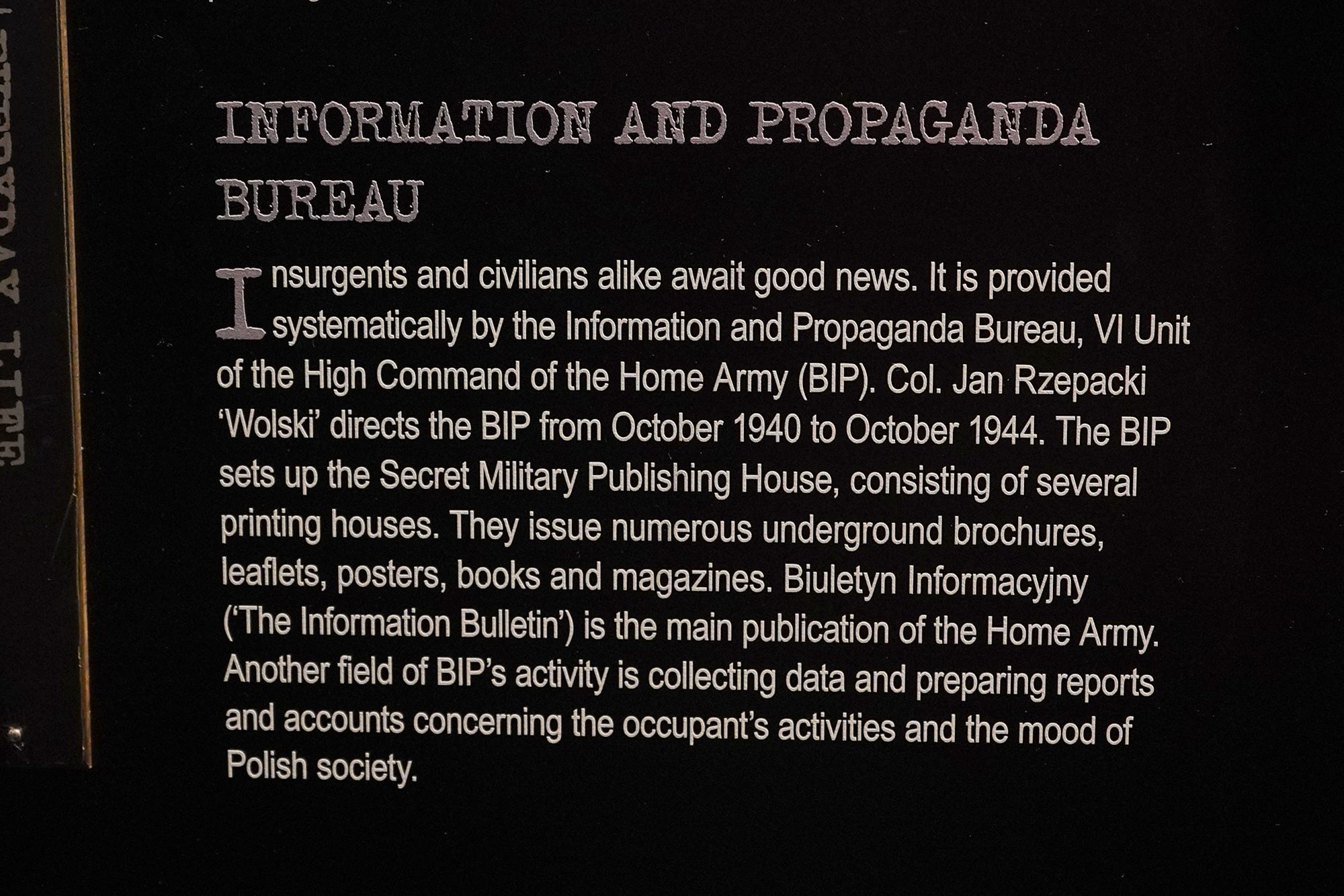
The Home Army’s Information and Propaganda Bureau kept fighters and civilians informed through underground publications. Its network of secret printing houses produced leaflets, posters, books, and magazines, including the Home Army’s main publication, the Information Bulletin. Led by Colonel Jan Rzepecki from 1940 to 1944, the bureau also gathered information about German occupation activities and public morale. During the uprising, its news helped residents follow events and maintain hope.
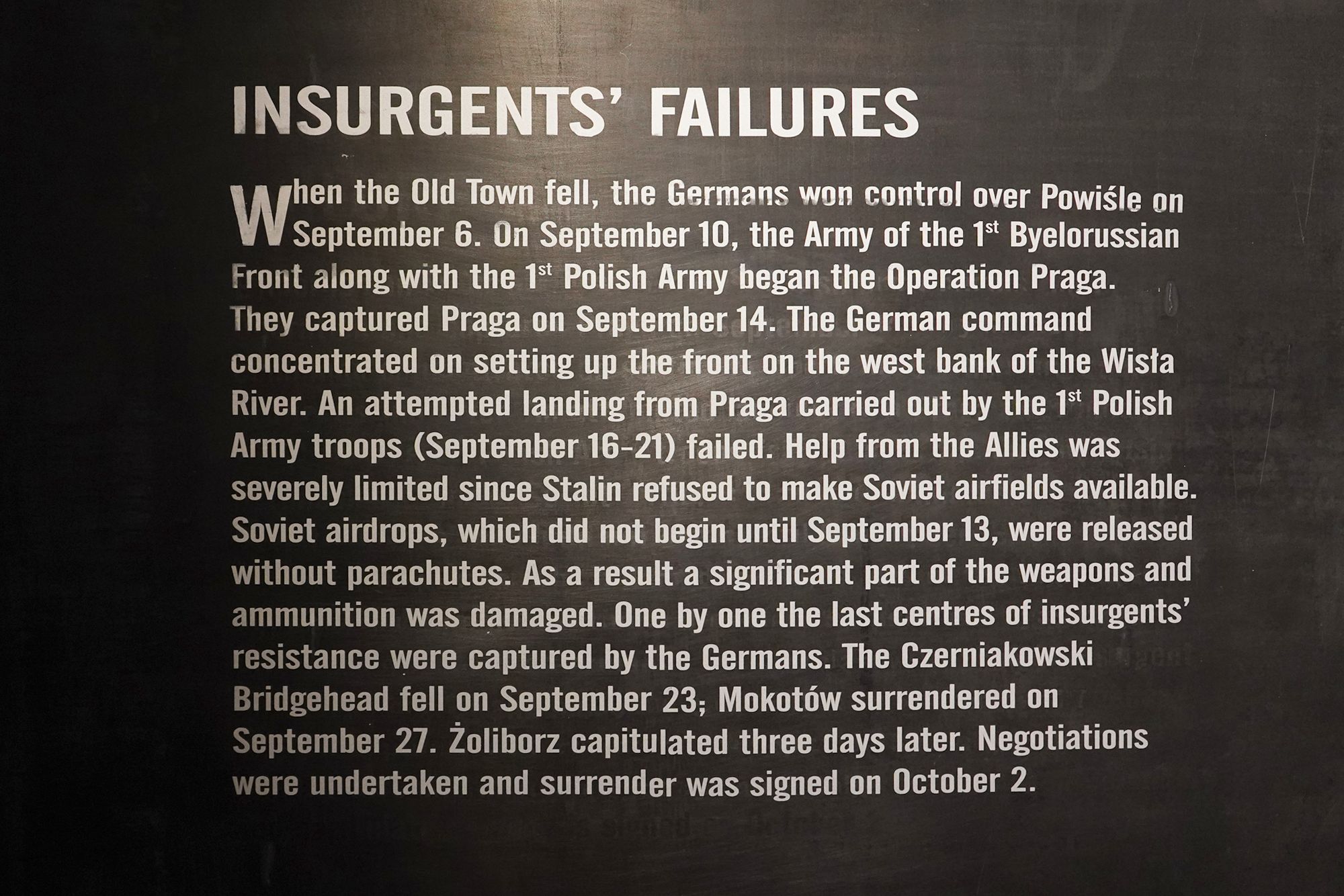
During September, the resistance steadily lost ground. Soviet and Polish forces captured Praga on the eastern bank of the Vistula, but attempts by the 1st Polish Army to cross the river and support the uprising failed. Allied aid remained limited, while many Soviet supplies dropped without parachutes were damaged. Czerniaków fell on September 23, Mokotów surrendered on September 27, and Żoliborz followed on September 30. The final surrender agreement was signed on October 2, 1944.
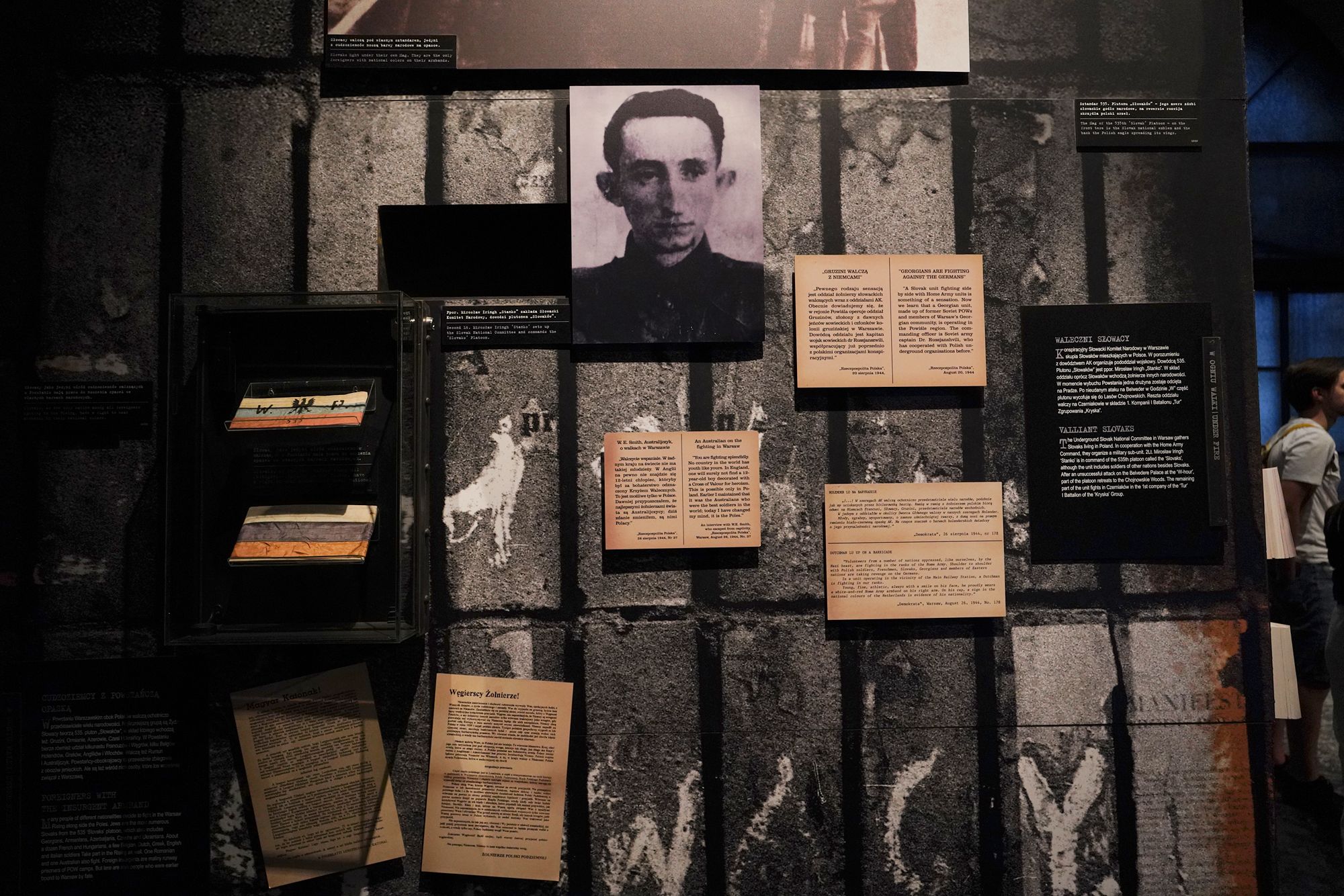
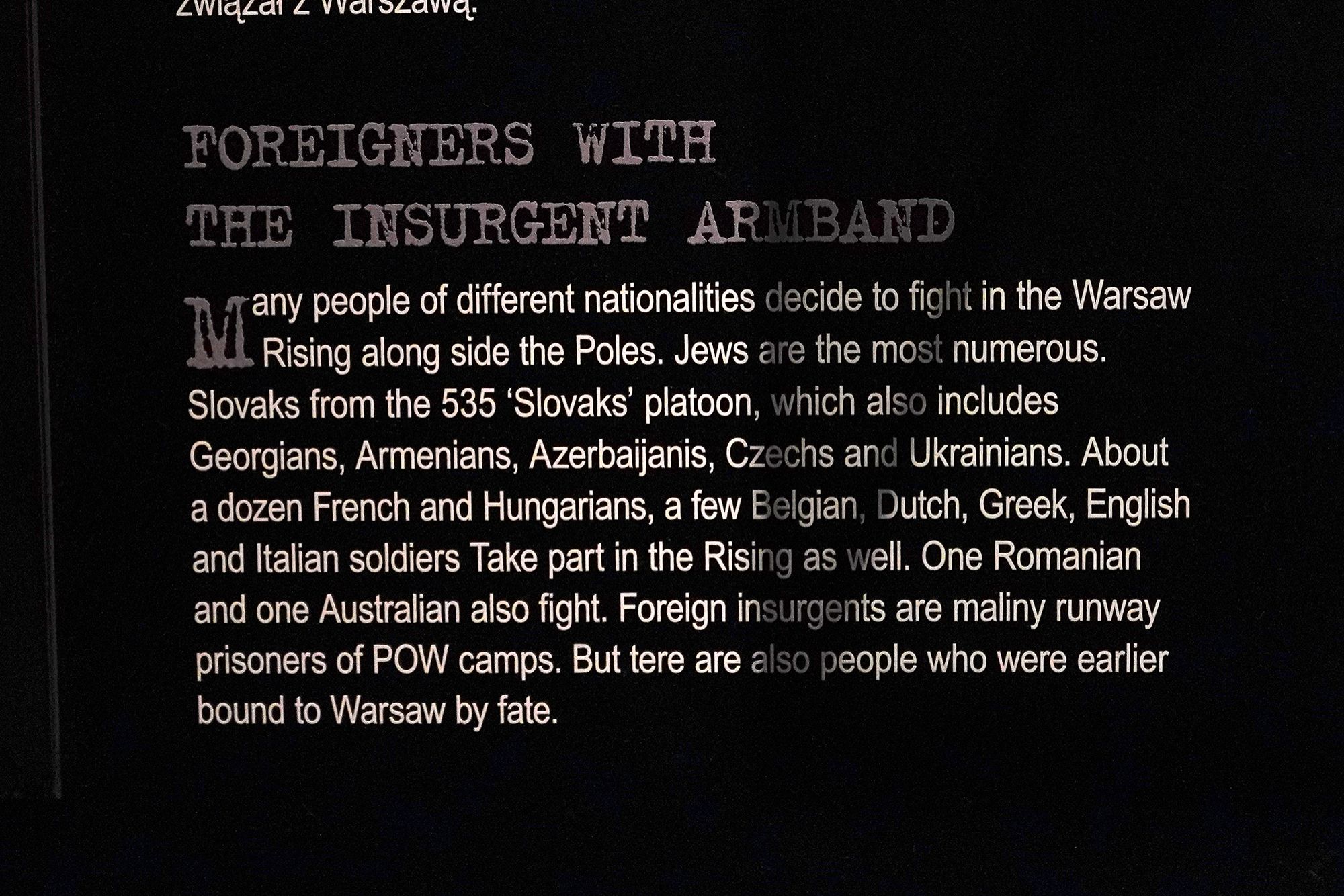
People from many countries fought alongside the Poles during the Warsaw Uprising. The 535th “Slovaks” Platoon included Georgians, Armenians, Azerbaijanis, Czechs, and Ukrainians. French, Hungarian, Belgian, Dutch, Greek, British, and Italian participants also joined the fighting, along with a Romanian and an Australian. Many were escaped prisoners of war, while others already had connections to Warsaw. They wore the insurgents’ armbands and shared in the city’s resistance.
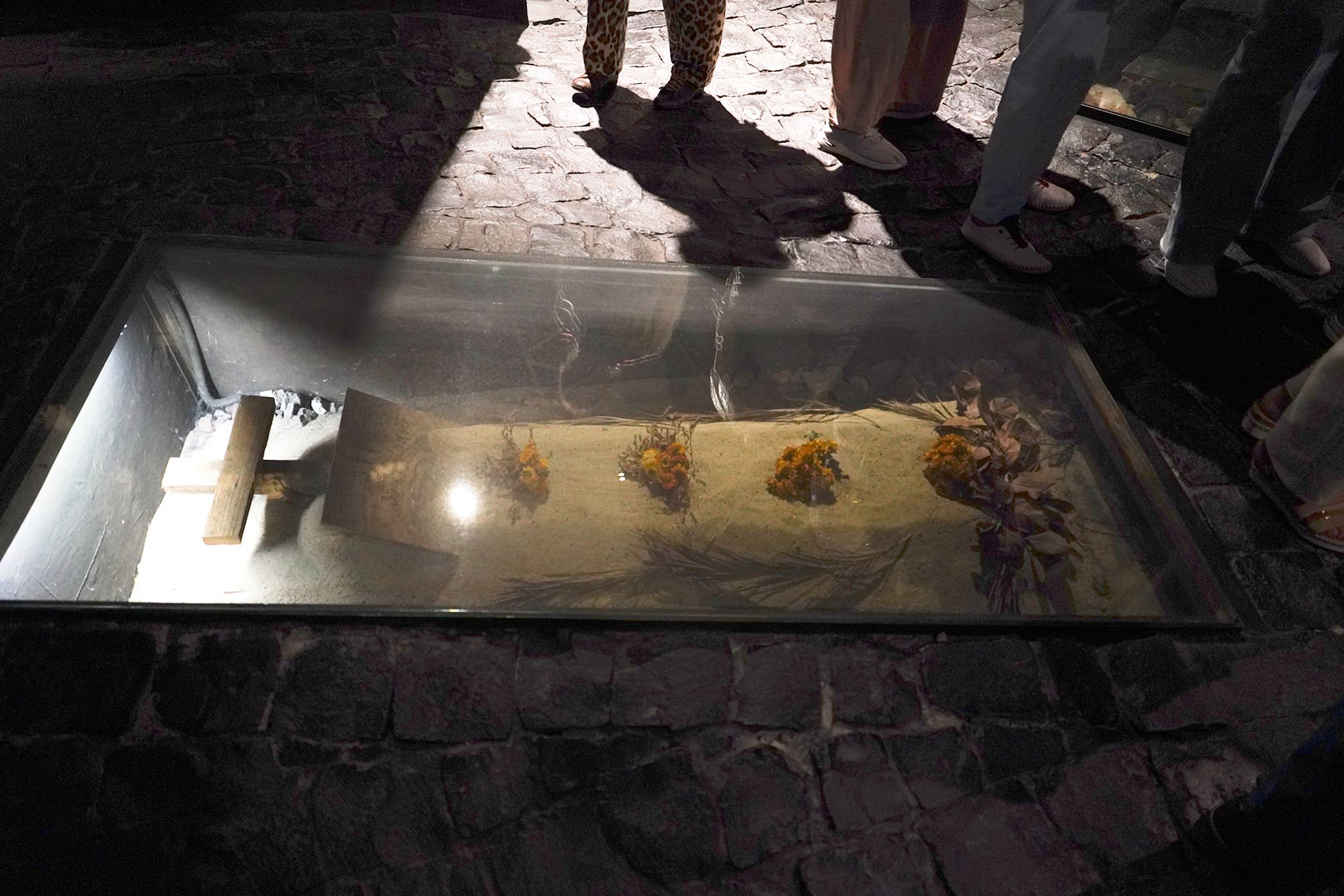
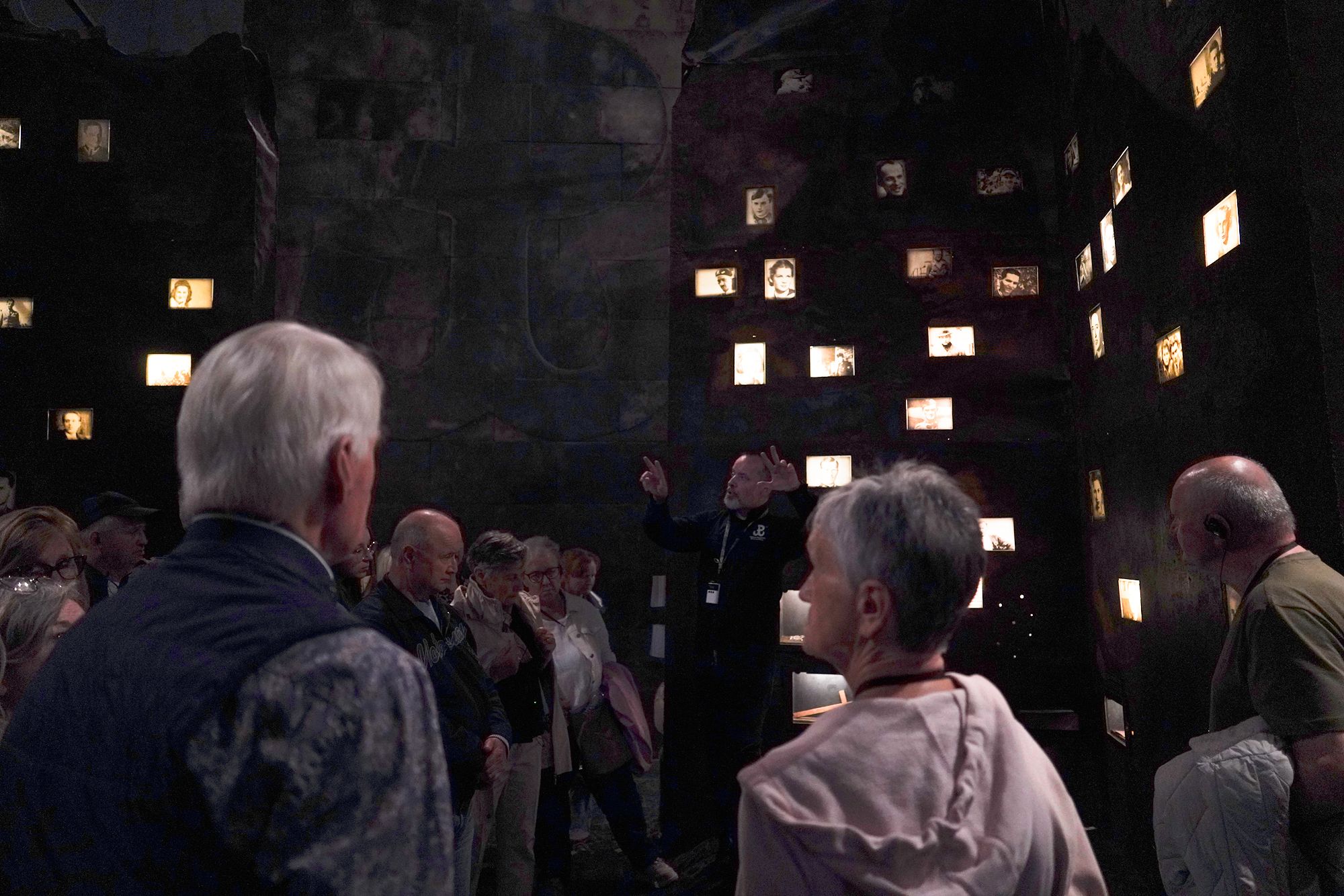
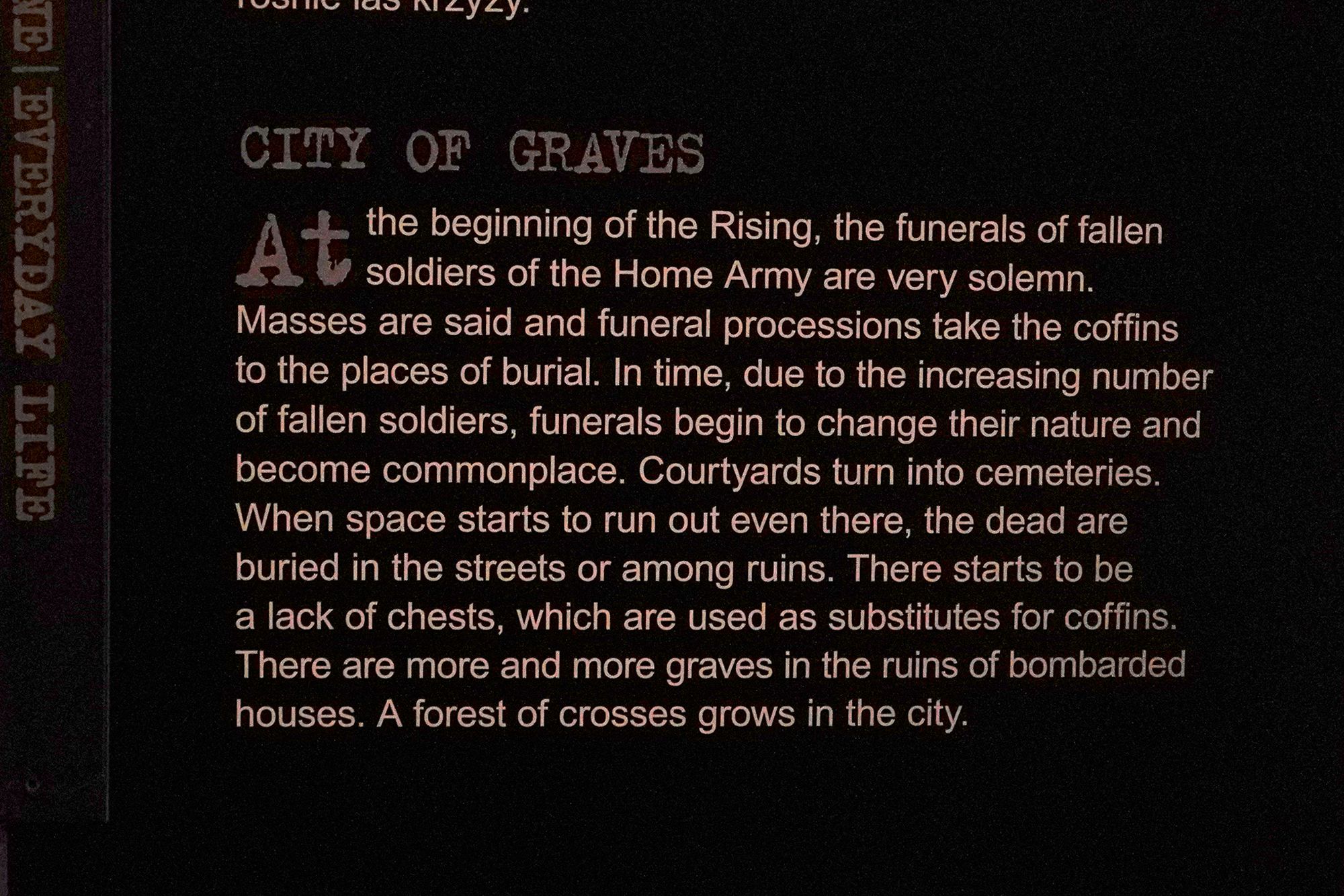
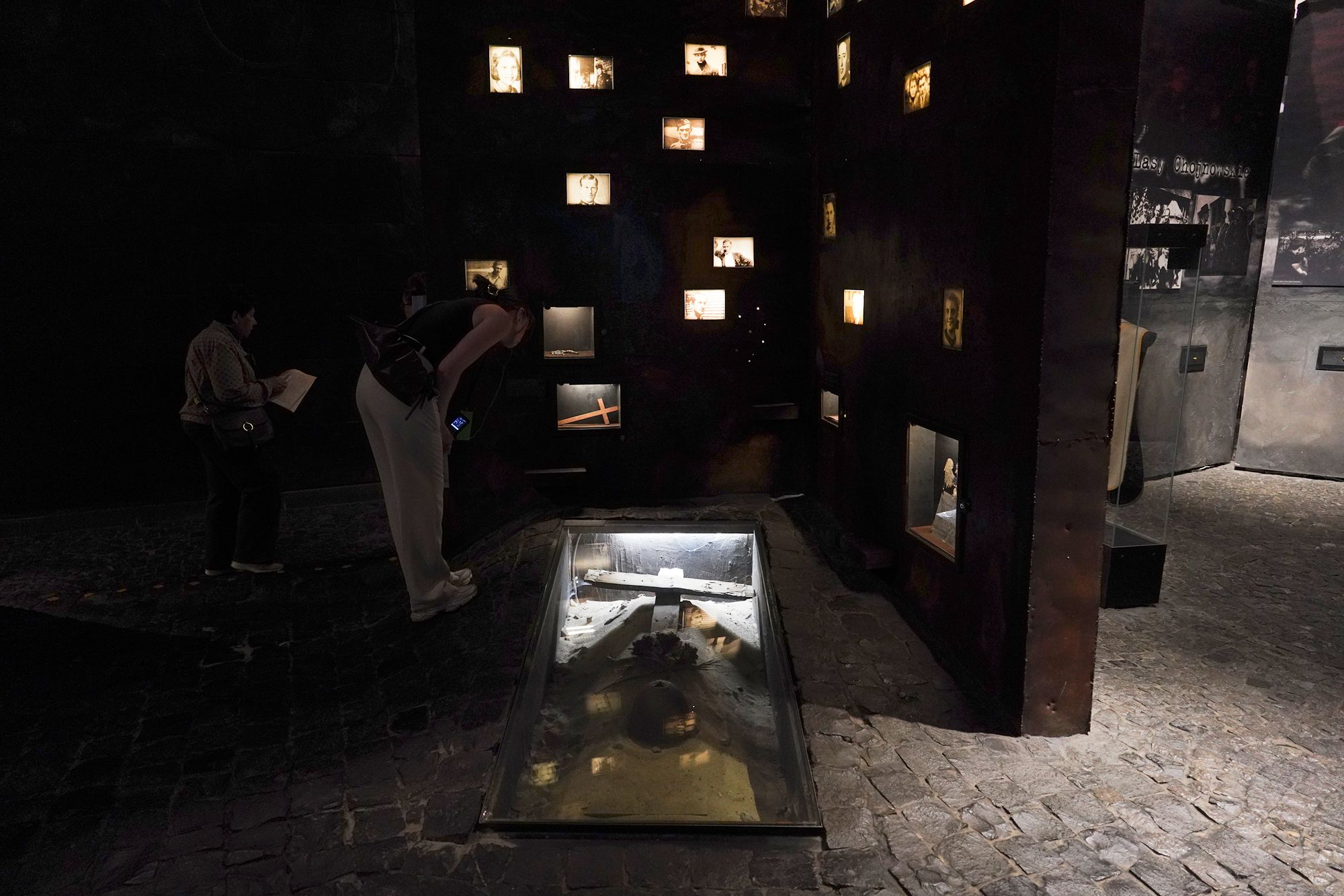
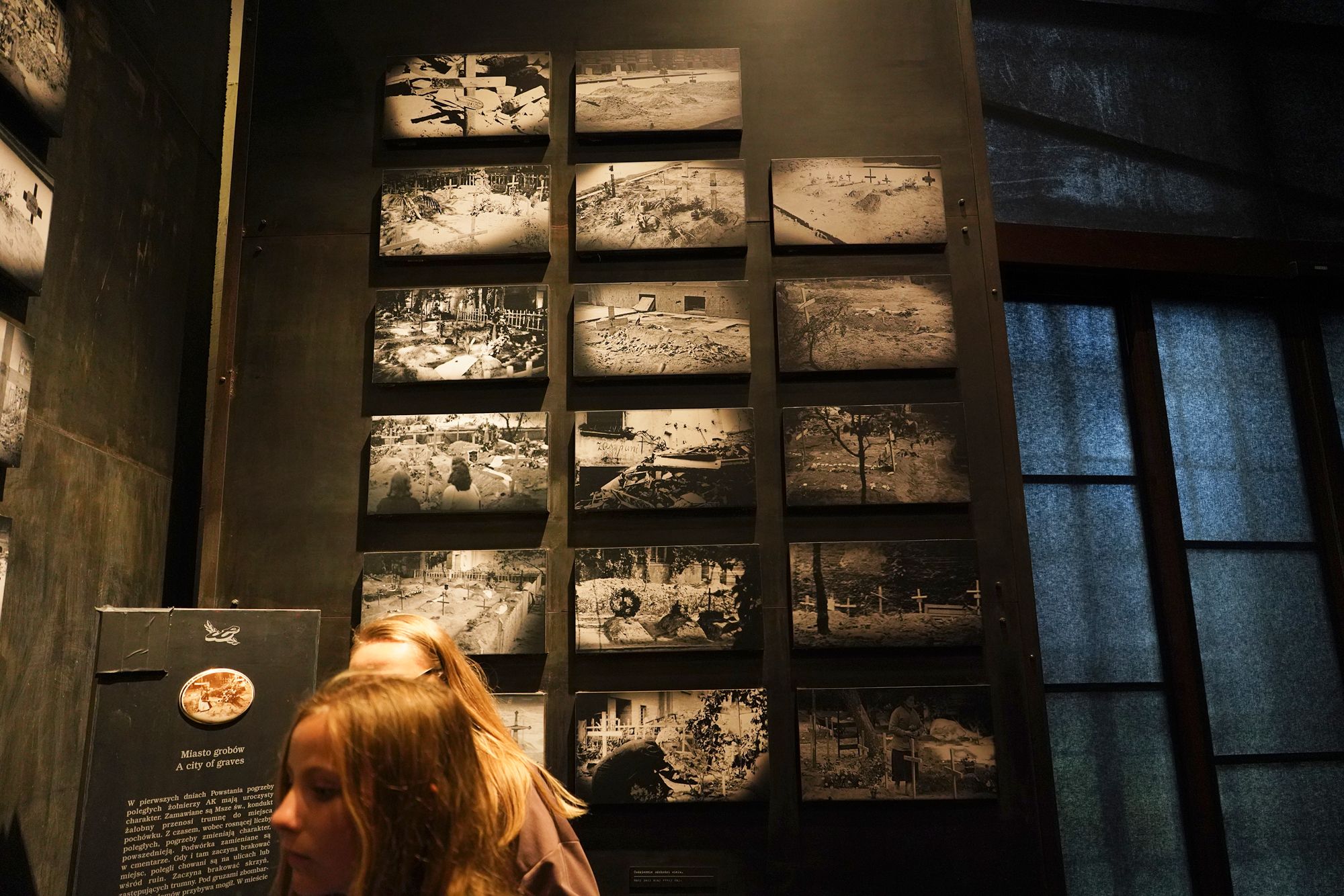
At the beginning of the uprising, fallen Home Army soldiers were buried with Masses and solemn funeral processions. As deaths increased, such ceremonies became harder to maintain. Courtyards turned into makeshift cemeteries, and when space ran out, people buried the dead in streets and among the ruins. Coffins became scarce, along with the wooden chests used to replace them. Crosses marked an increasing number of graves throughout the devastated city.
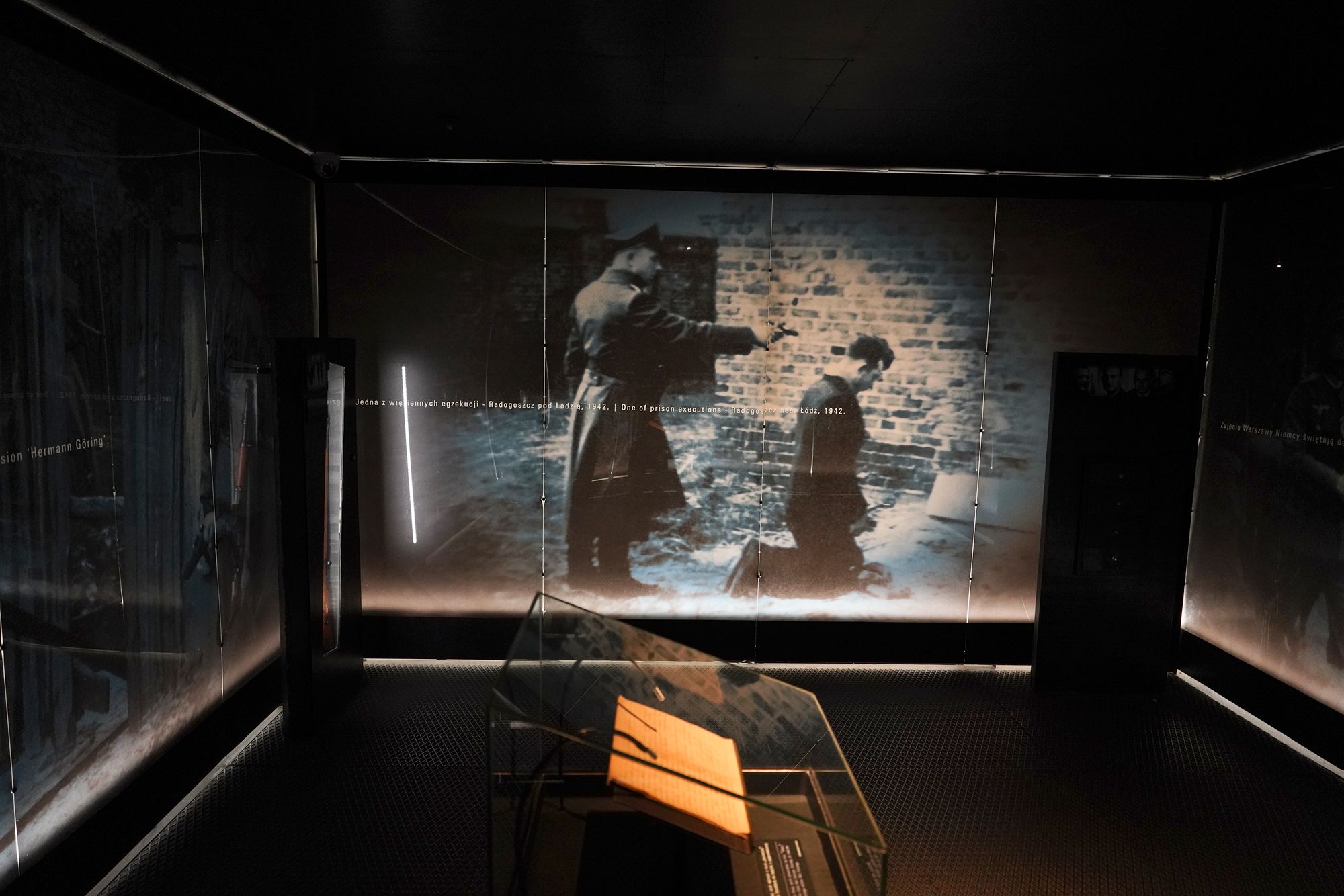
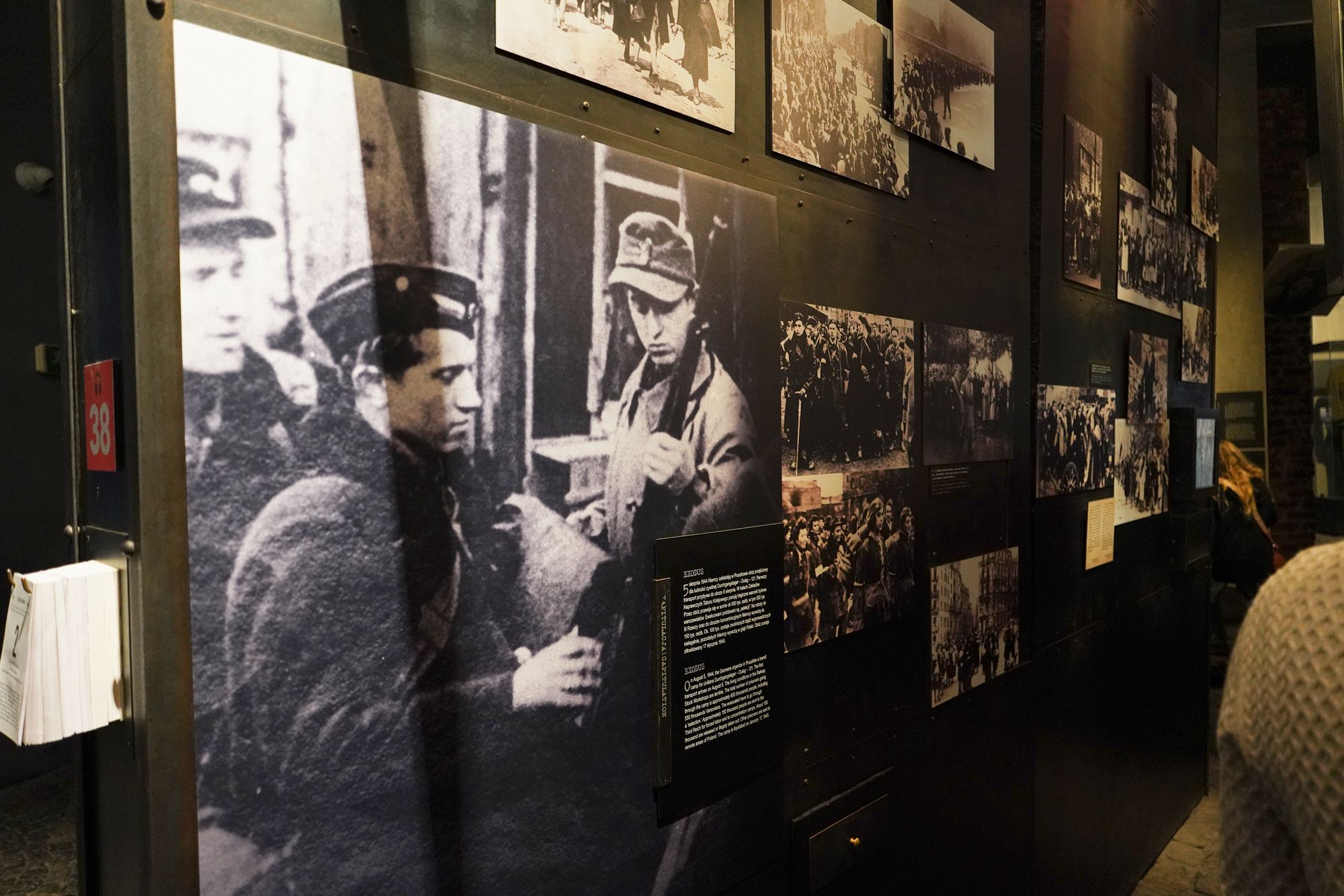
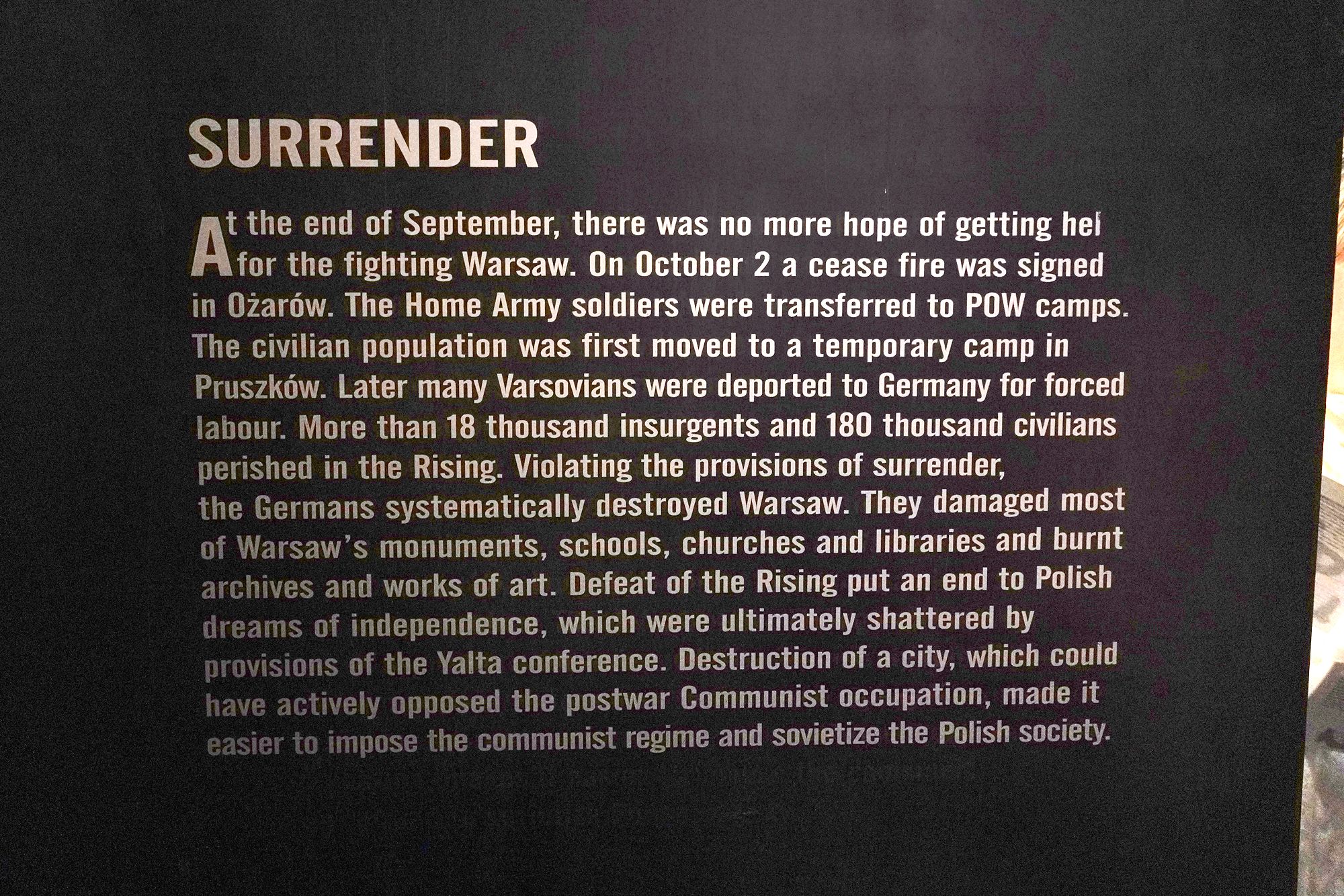
The Warsaw Uprising ended with a surrender agreement signed on October 2, 1944. Home Army soldiers were sent to prisoner-of-war camps, while civilians were forced out of the city through a transit camp in Pruszków. Many were later deported to Germany for forced labour. The museum records more than 18,000 insurgent deaths and around 180,000 civilian deaths. After the surrender, German forces systematically destroyed Warsaw, burning libraries, archives, and artworks and demolishing much of the city.
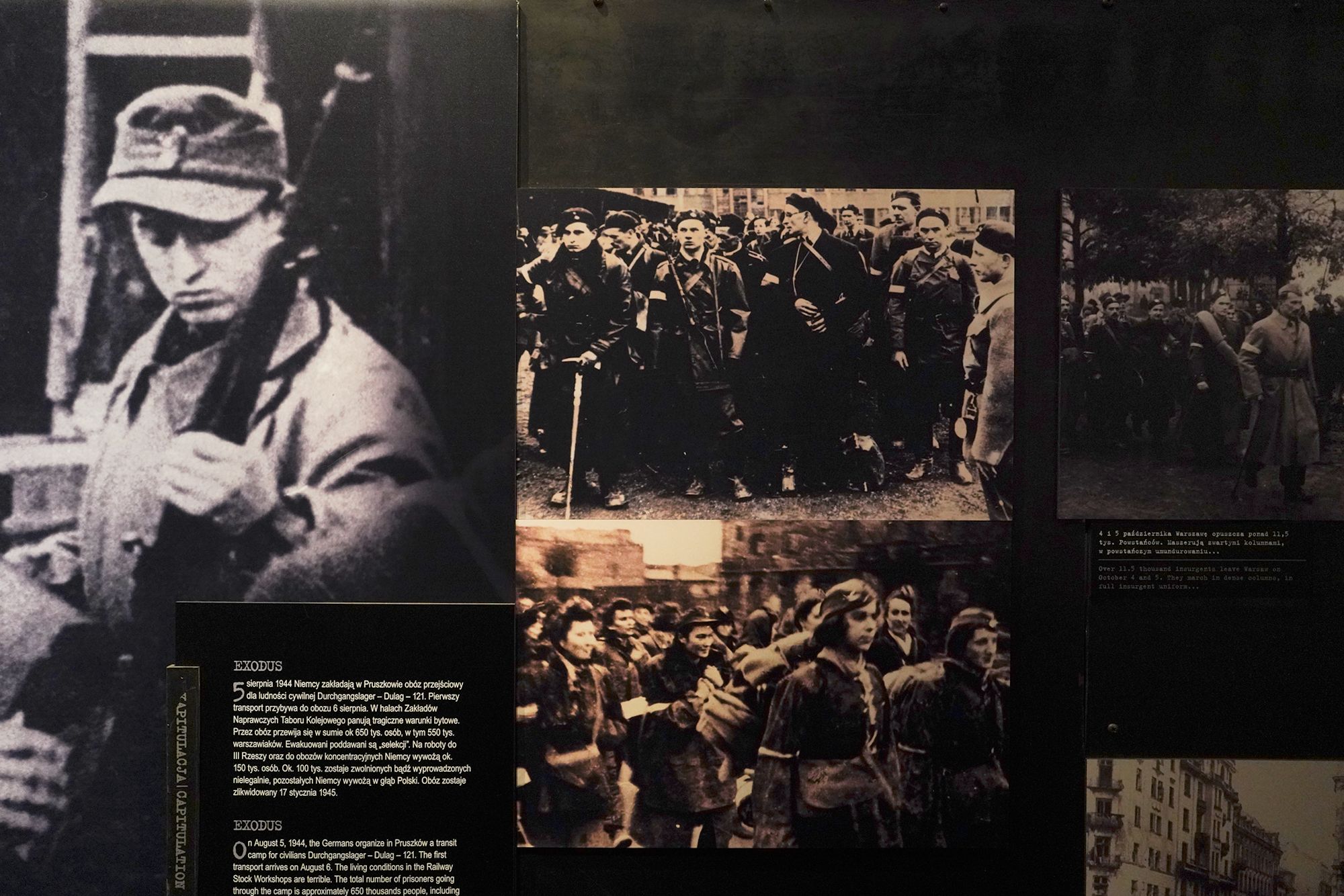
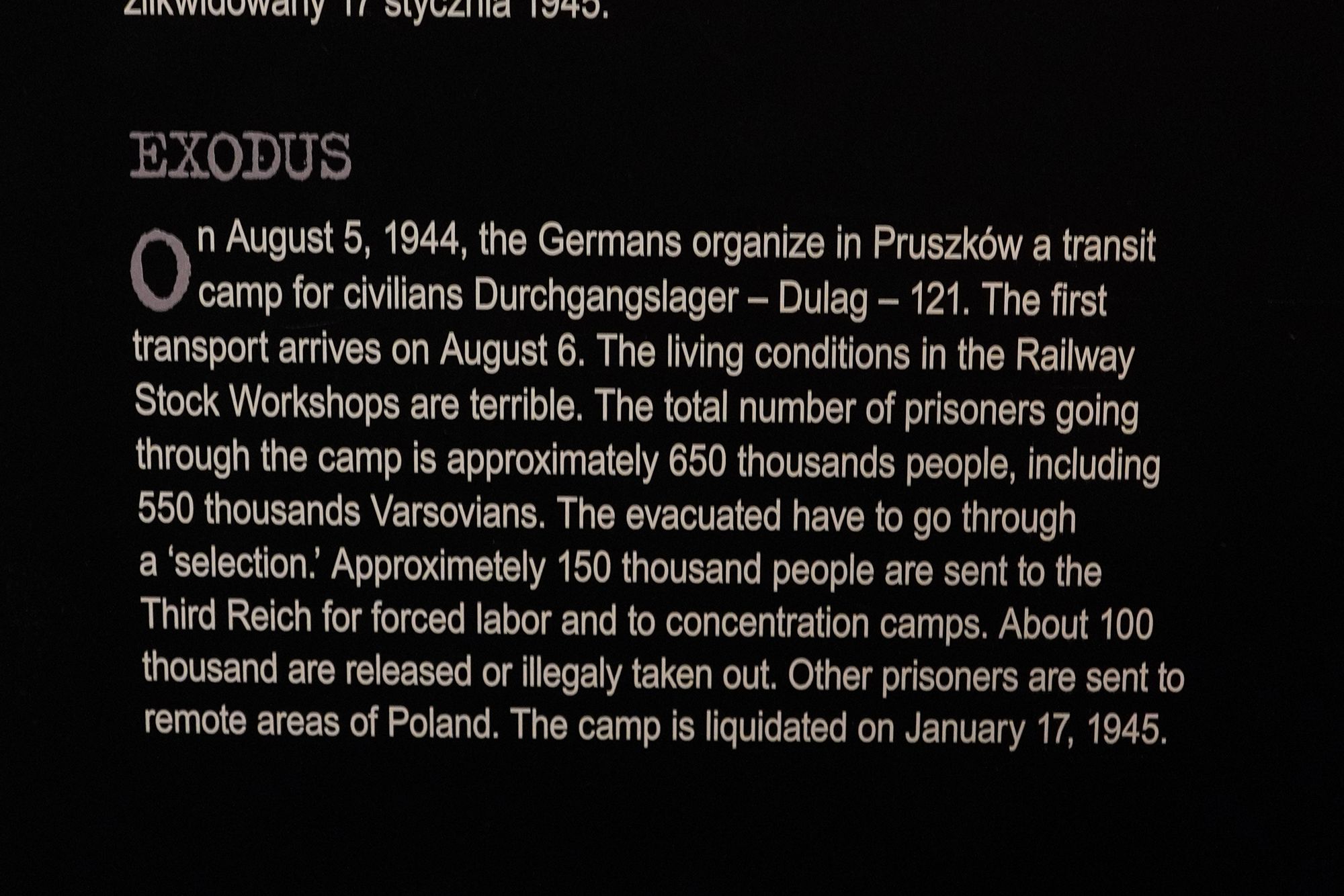
Civilians expelled from Warsaw were taken to the Dulag 121 transit camp in Pruszków, established by the Germans in August 1944. They endured terrible conditions in railway workshops before being selected for deportation. According to the museum, approximately 650,000 people passed through the camp, including 550,000 Warsaw residents. Around 150,000 were sent to forced labour or concentration camps, while others were released, secretly helped out, or displaced to other parts of Poland.
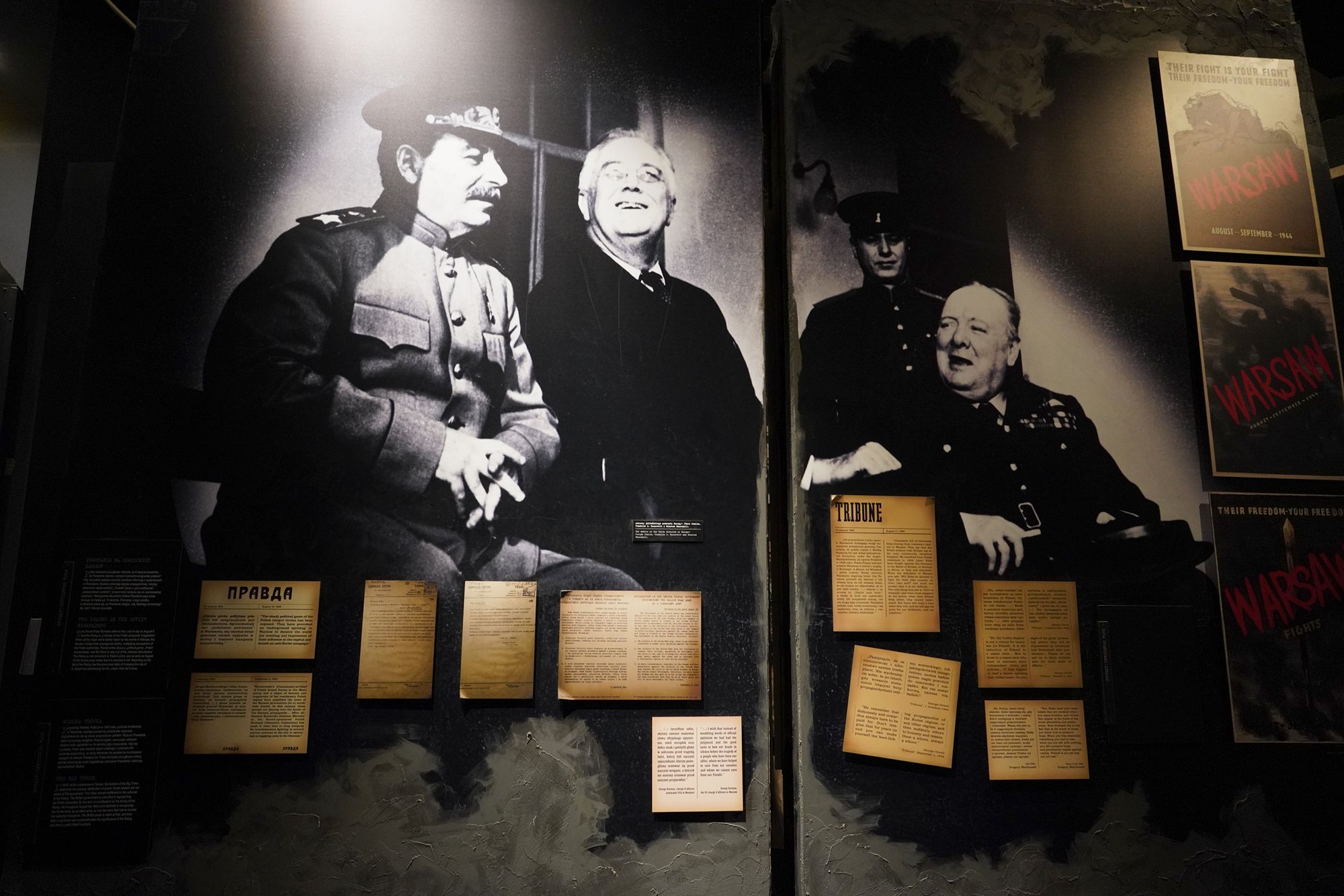
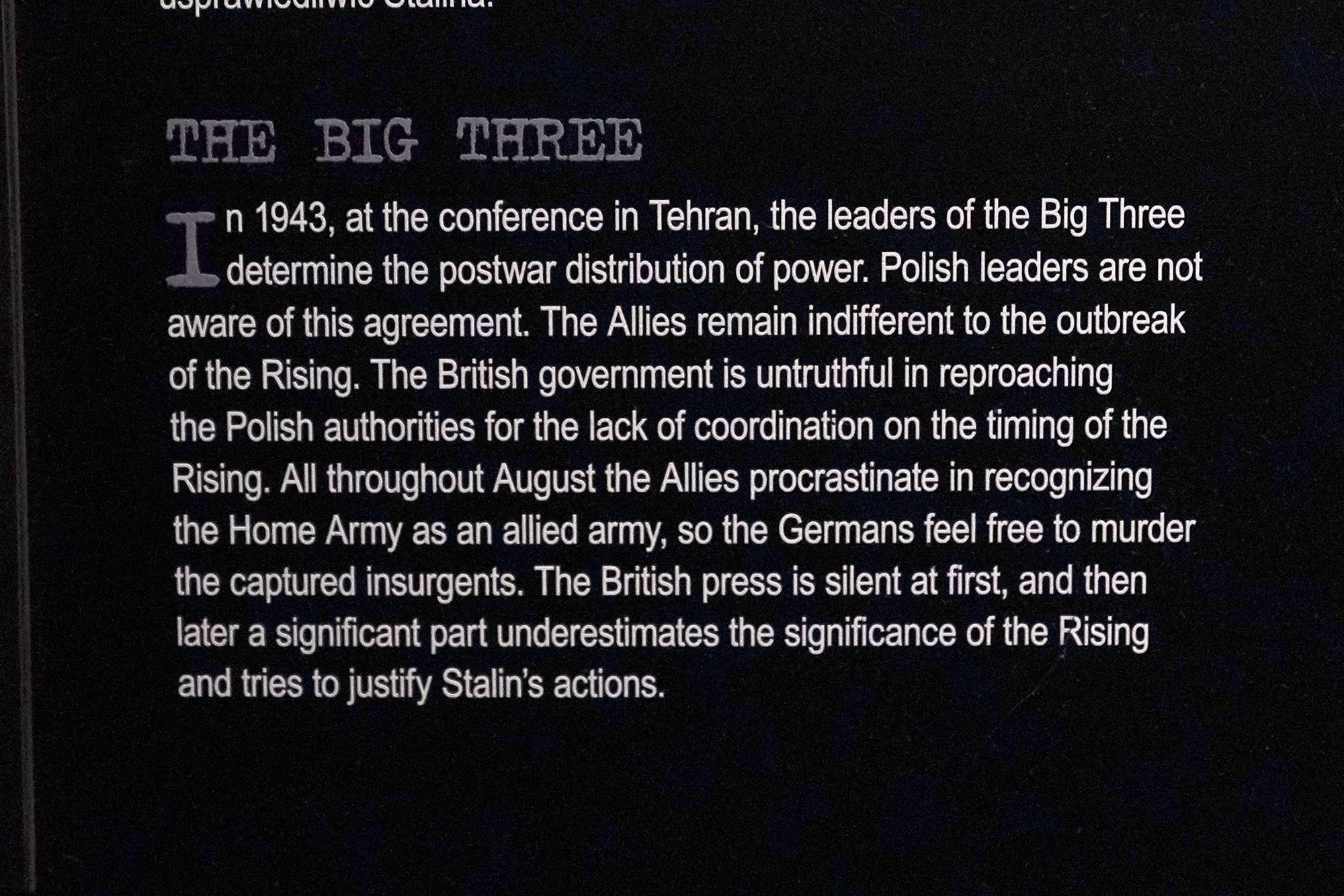
One panel examines the response of the “Big Three” to the Warsaw Uprising. At the Tehran Conference in 1943, the Allied leaders discussed the postwar balance of power without Polish participation. The museum criticises the Allies for their limited support and delay in recognising the Home Army as an Allied force. It also describes how parts of the British press played down the uprising’s significance and defended Stalin’s position.
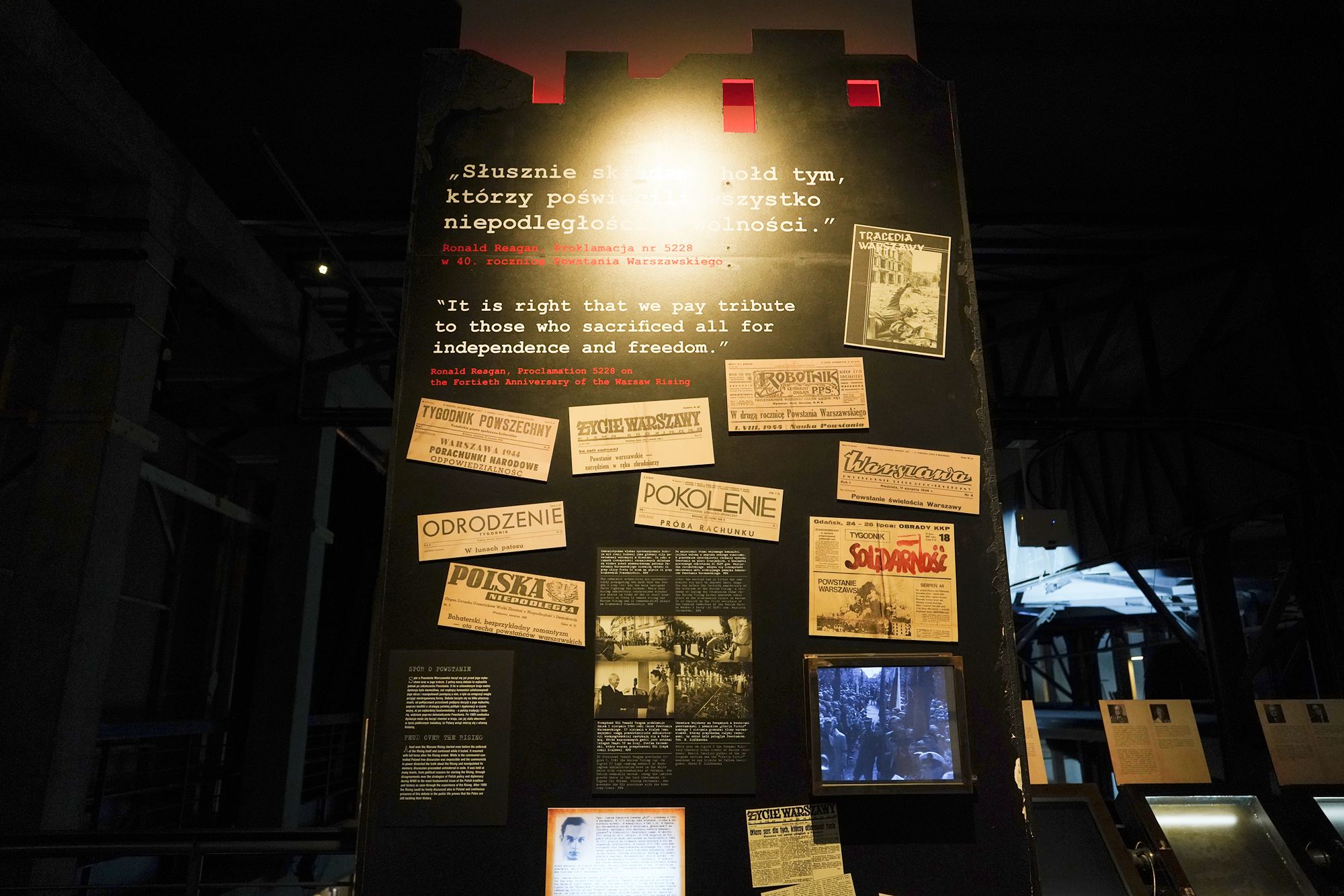
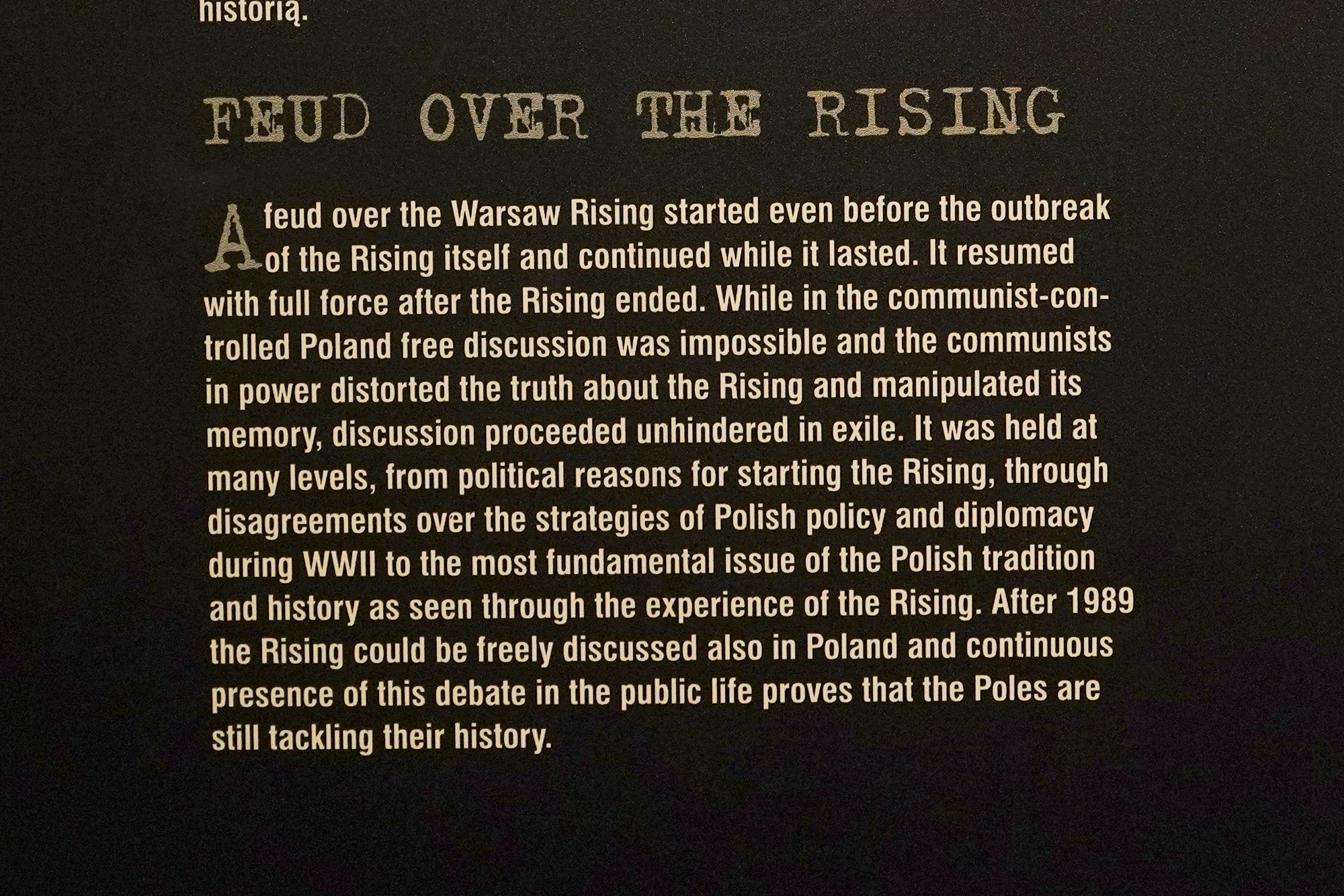
The Warsaw Uprising has remained a subject of debate, especially over the decision to begin fighting, its political aims, and its enormous human cost. Under communist rule, censorship and official propaganda restricted open discussion in Poland, while Poles living abroad continued the debate. After 1989, people in Poland could discuss it freely. This panel shows how the uprising’s meaning and legacy continued to shape Polish public life long after the fighting ended.
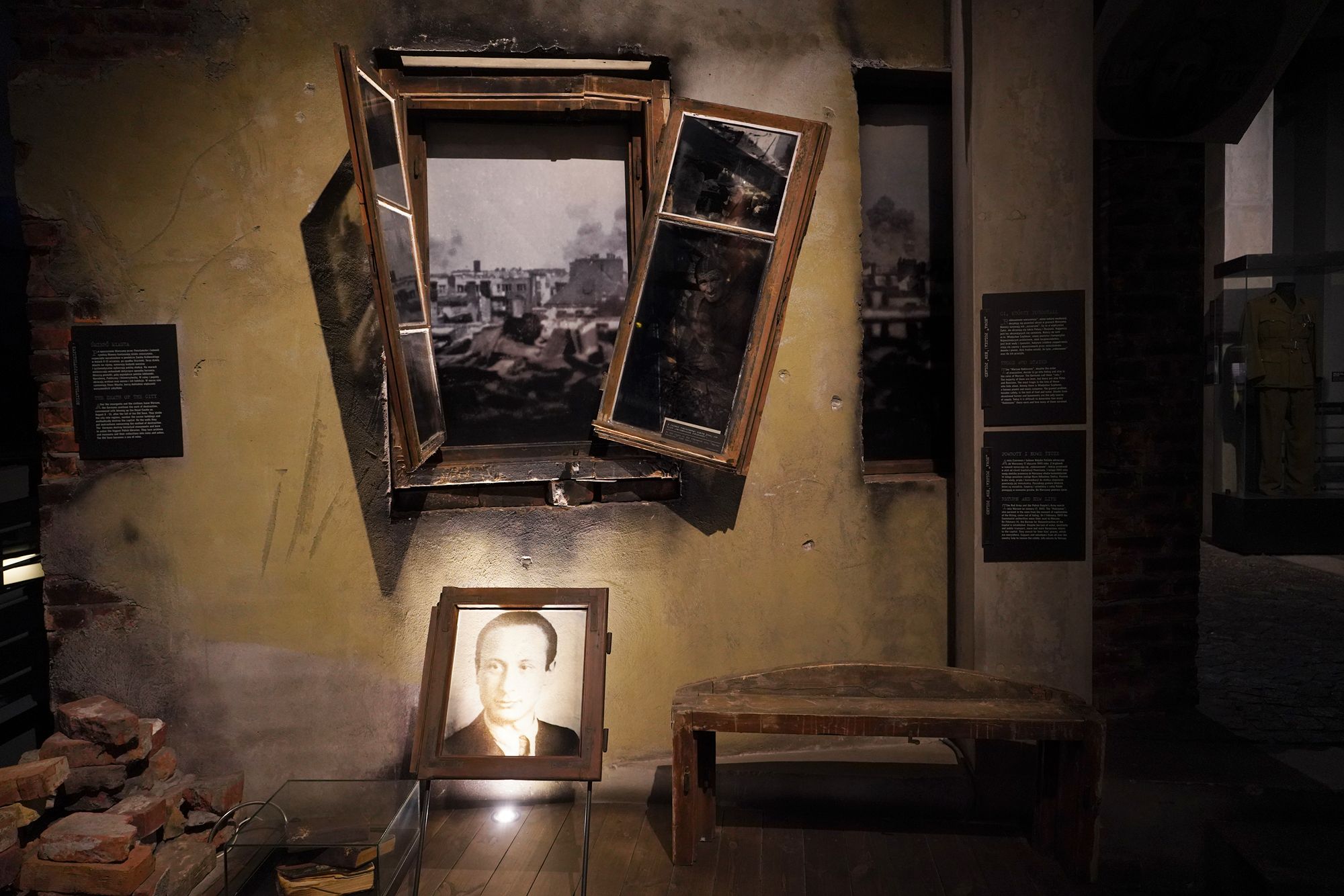
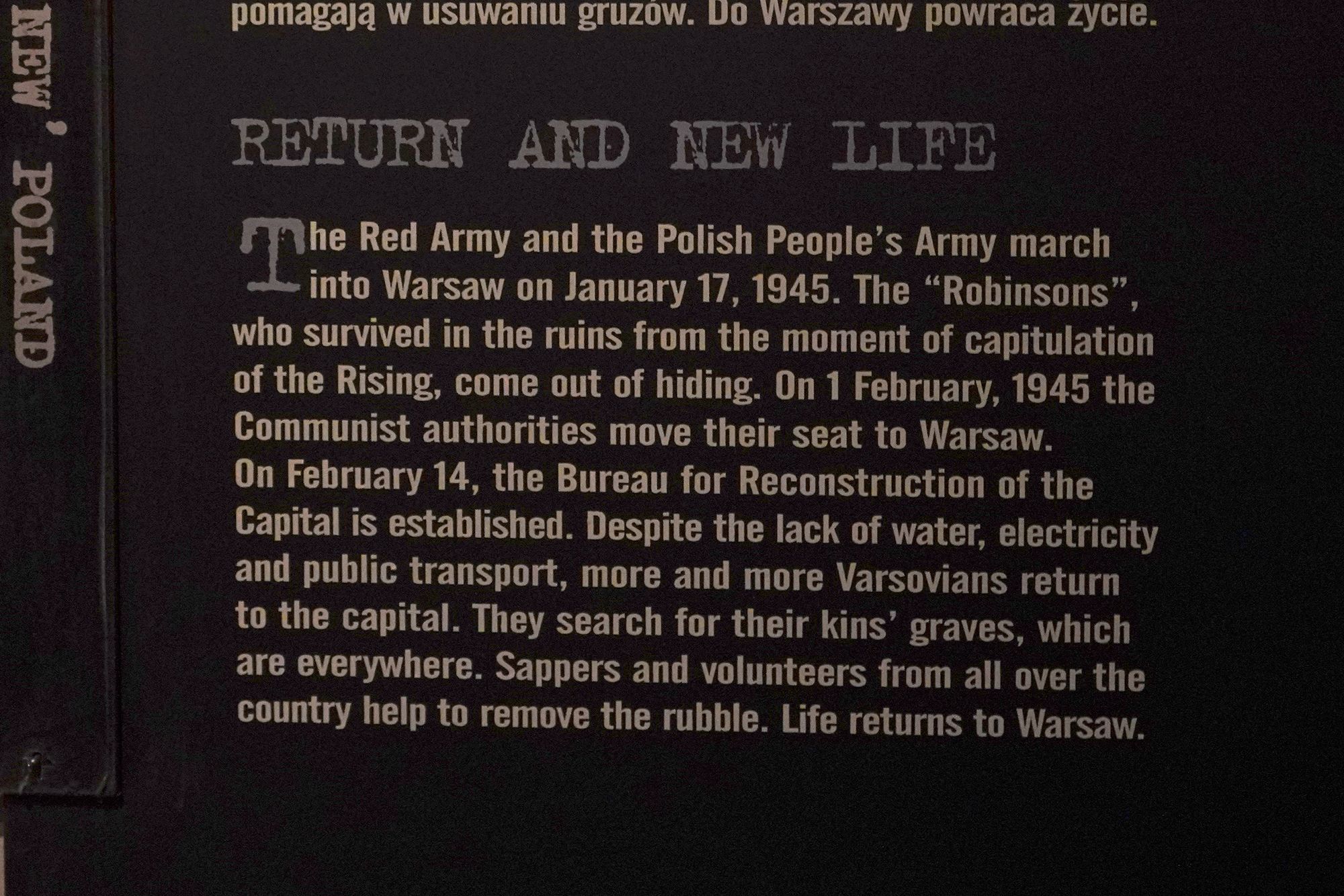
On January 17, 1945, Soviet and Polish troops entered Warsaw, and survivors who had hidden among the ruins emerged. Residents began returning despite the lack of water, electricity, and public transport. Many searched for relatives’ graves scattered throughout the city. A bureau to oversee the capital’s reconstruction was established on February 14. Military engineers and volunteers helped clear the rubble as people gradually began rebuilding their homes and lives.
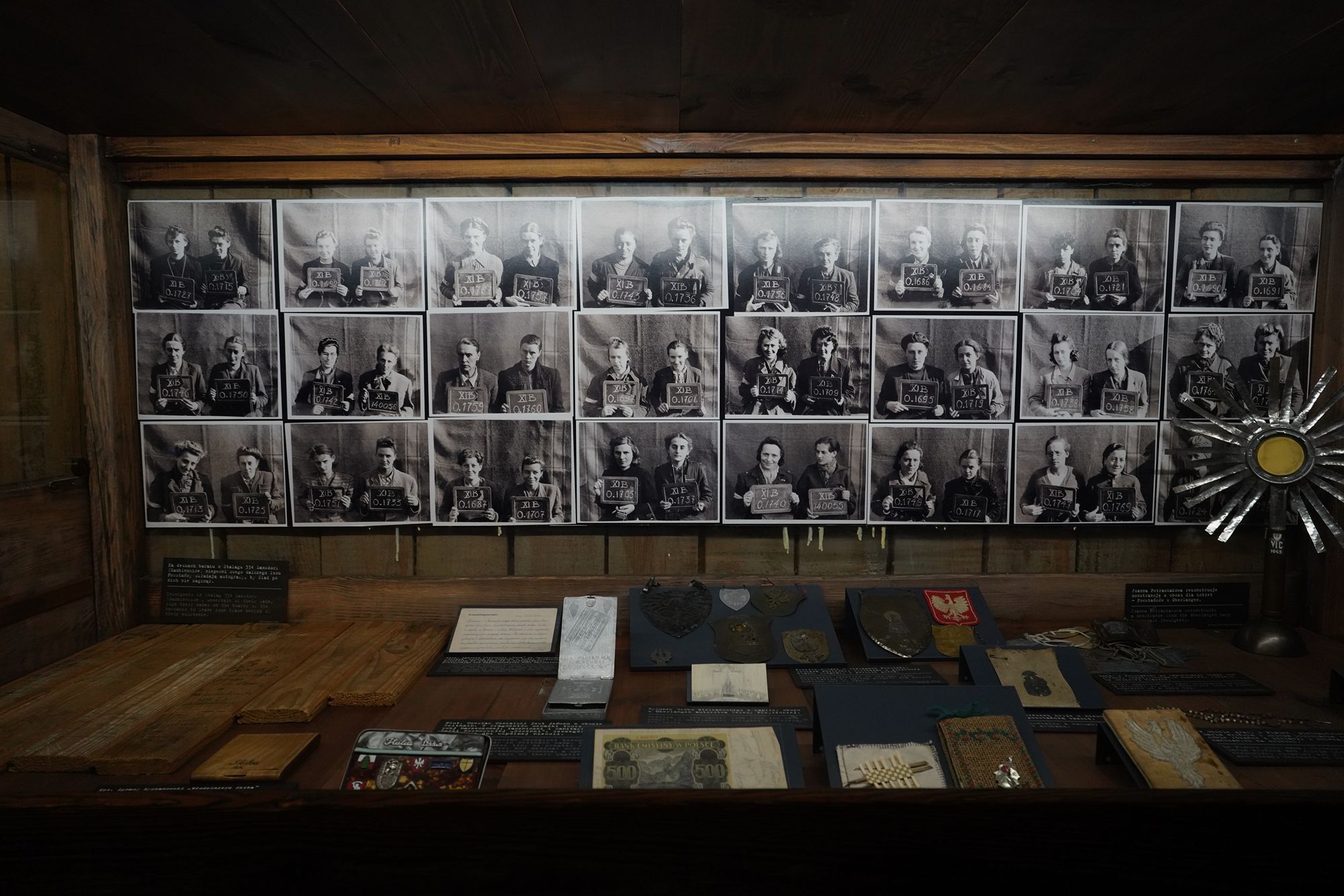
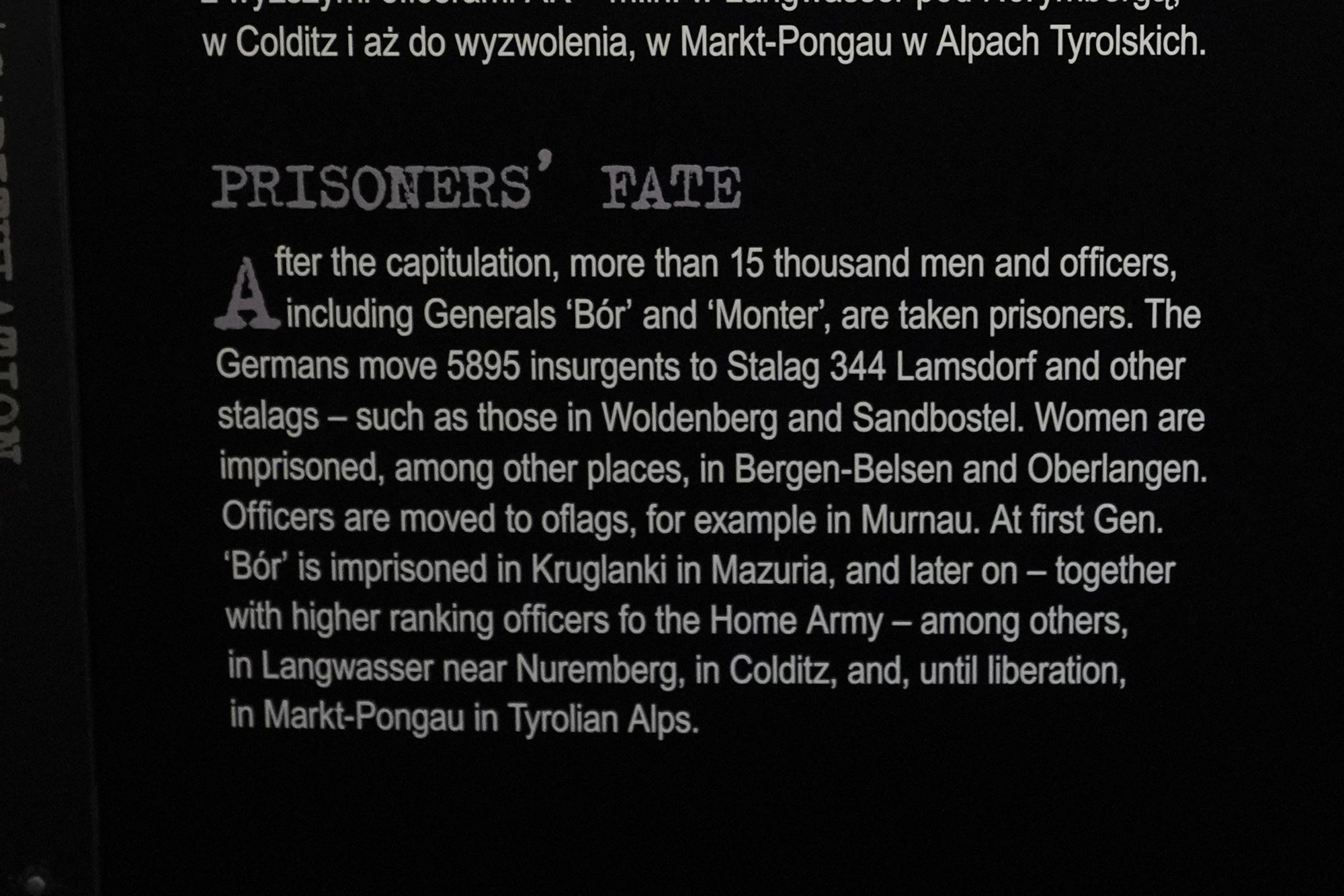
After the uprising’s surrender, more than 15,000 fighters and officers were taken prisoner, including the commanders known as “Bór” and “Monter.” The Germans sent them to prisoner-of-war camps, with officers held in separate camps. Female insurgents were also imprisoned, including at Oberlangen. Senior Home Army officers were moved between several locations before liberation. This panel follows the fighters’ fate after their 63 days of resistance ended.
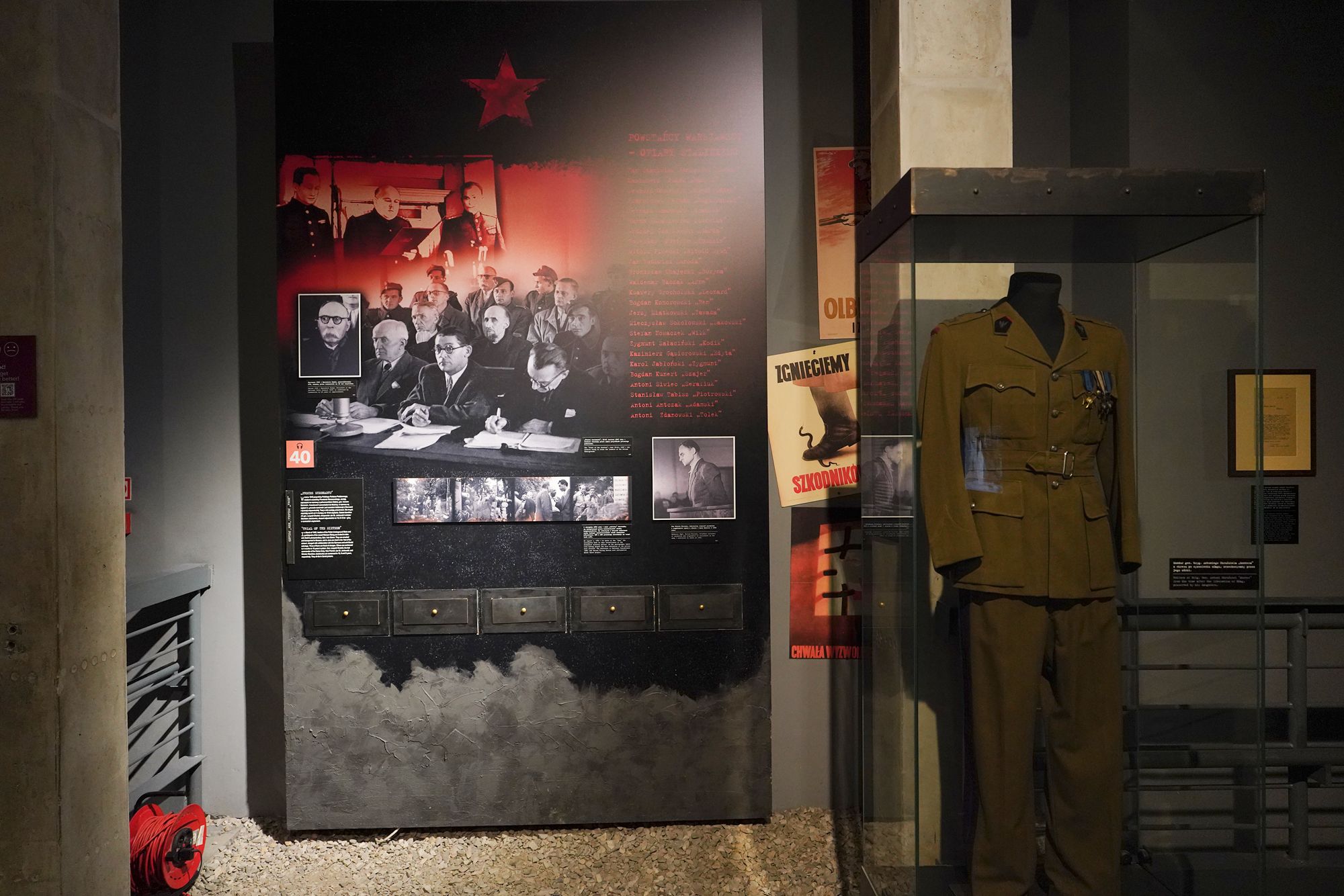
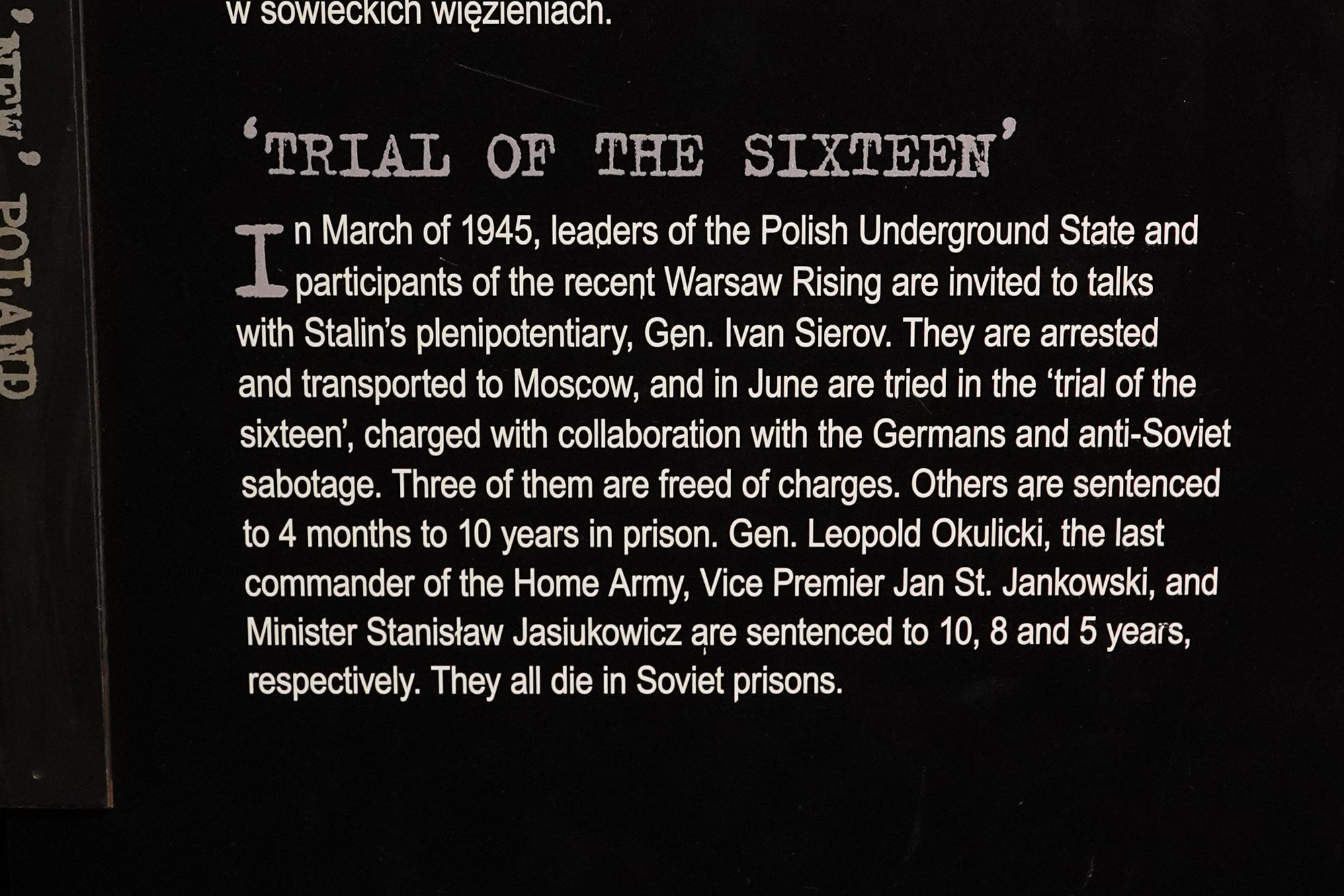
In March 1945, sixteen leaders of the Polish Underground State were invited to talks with a Soviet representative, then arrested and taken to Moscow. In June, they faced the “Trial of the Sixteen,” accused of collaborating with Germany and conducting anti-Soviet sabotage. Most received prison sentences. Among them were the last Home Army commander, Leopold Okulicki, and political leaders Jan Stanisław Jankowski and Stanisław Jasiukowicz, all of whom died in Soviet prisons.
While the Home Army fought German forces in Warsaw, Polish leaders appealed to Stalin for help, but the promised support did not arrive when the insurgents needed it.
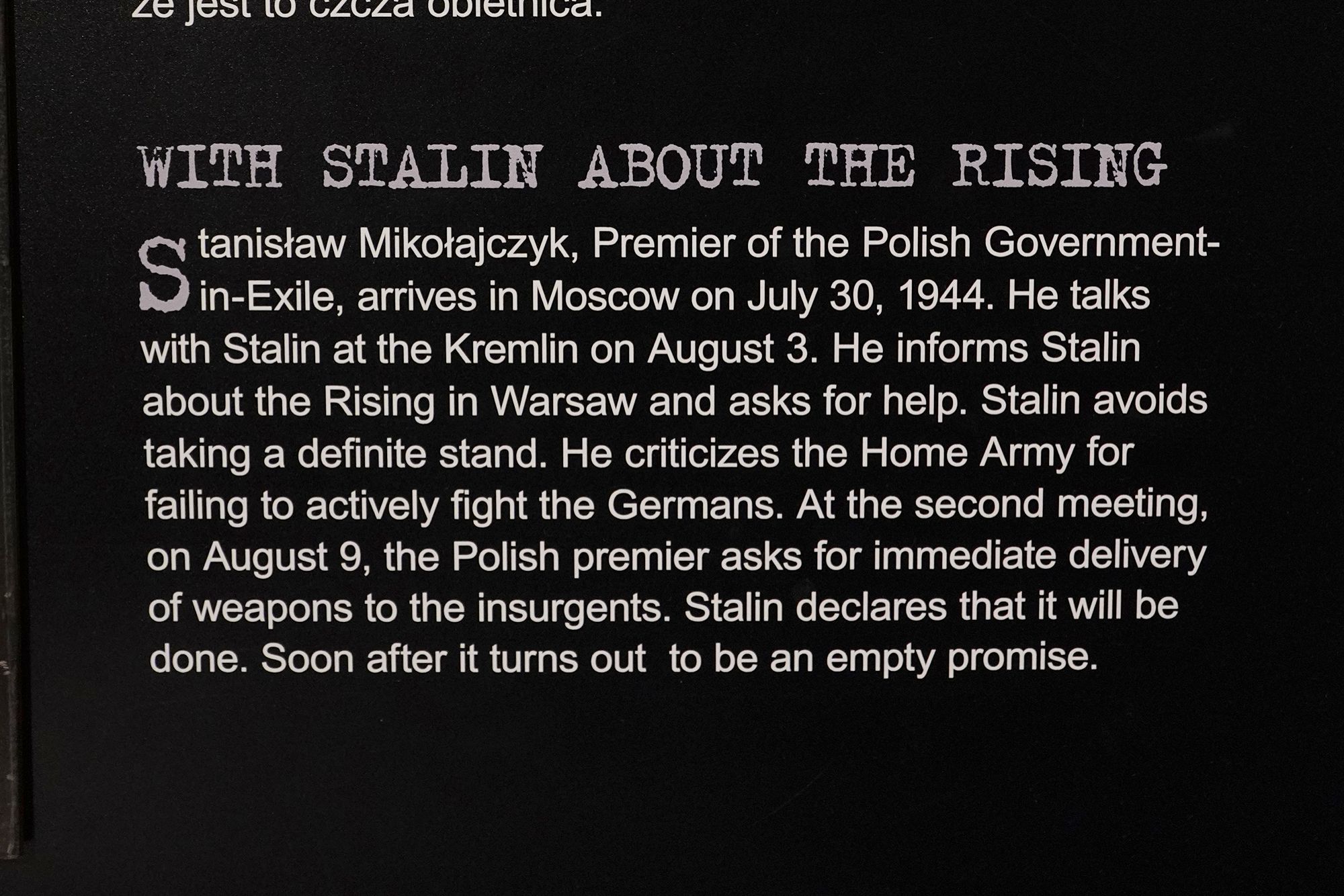
Polish Prime Minister Stanisław Mikołajczyk, representing the government in exile, met Stalin in Moscow on August 3, 1944, to request help for the Warsaw Uprising. Stalin avoided a firm commitment and criticised the Home Army’s efforts against Germany. At a second meeting on August 9, Mikołajczyk asked for immediate weapons deliveries. Stalin promised assistance, but, as this panel explains, the promise did not bring the immediate support the insurgents needed.
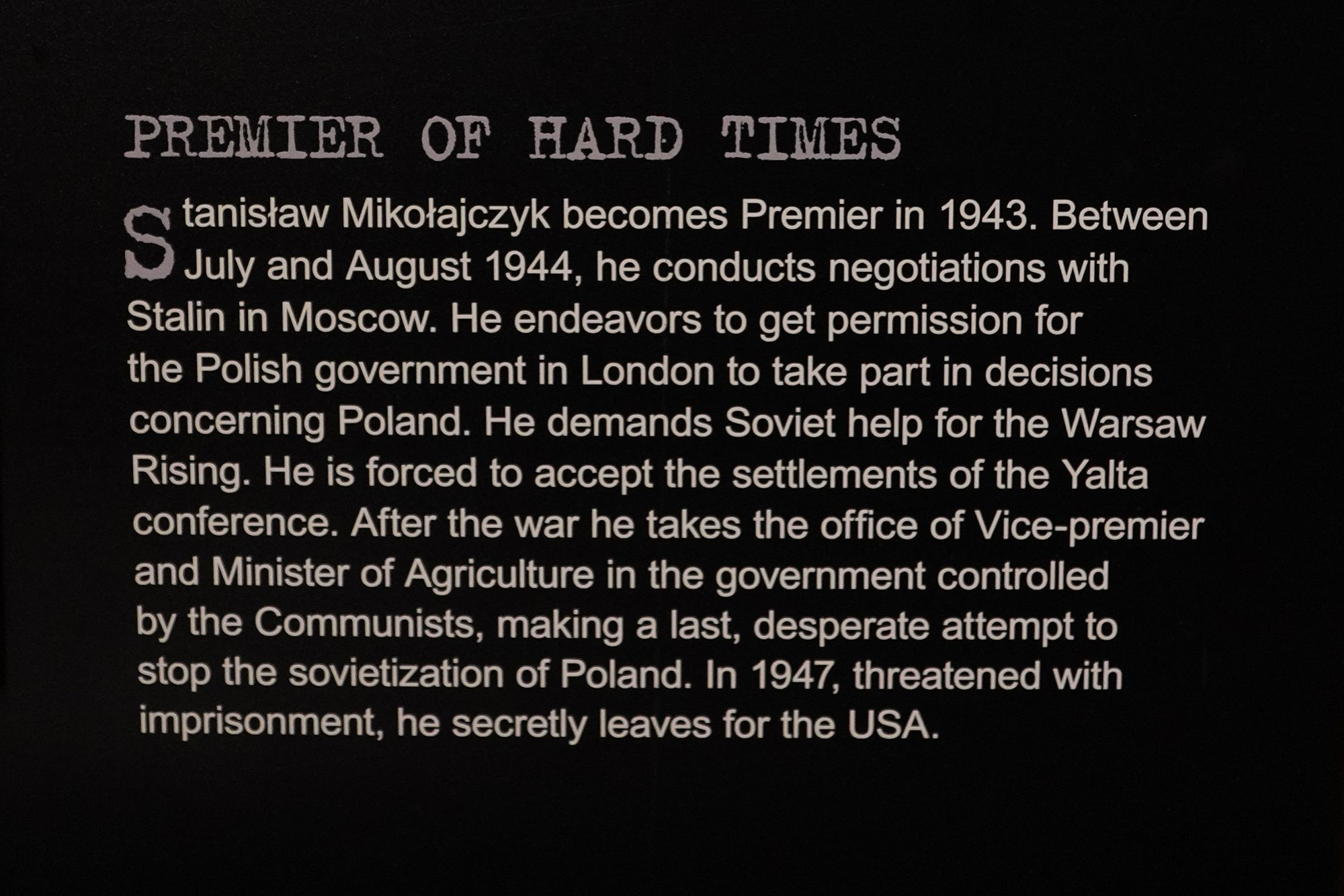
Stanisław Mikołajczyk became prime minister of Poland’s government in exile in 1943. During negotiations with Stalin, he sought Soviet help for the uprising and a role for his government in deciding Poland’s future. After the war, he served as deputy prime minister and agriculture minister in the communist-controlled government, hoping to resist Soviet domination from within. By 1947, facing the threat of imprisonment, he secretly fled Poland and eventually settled in the United States.
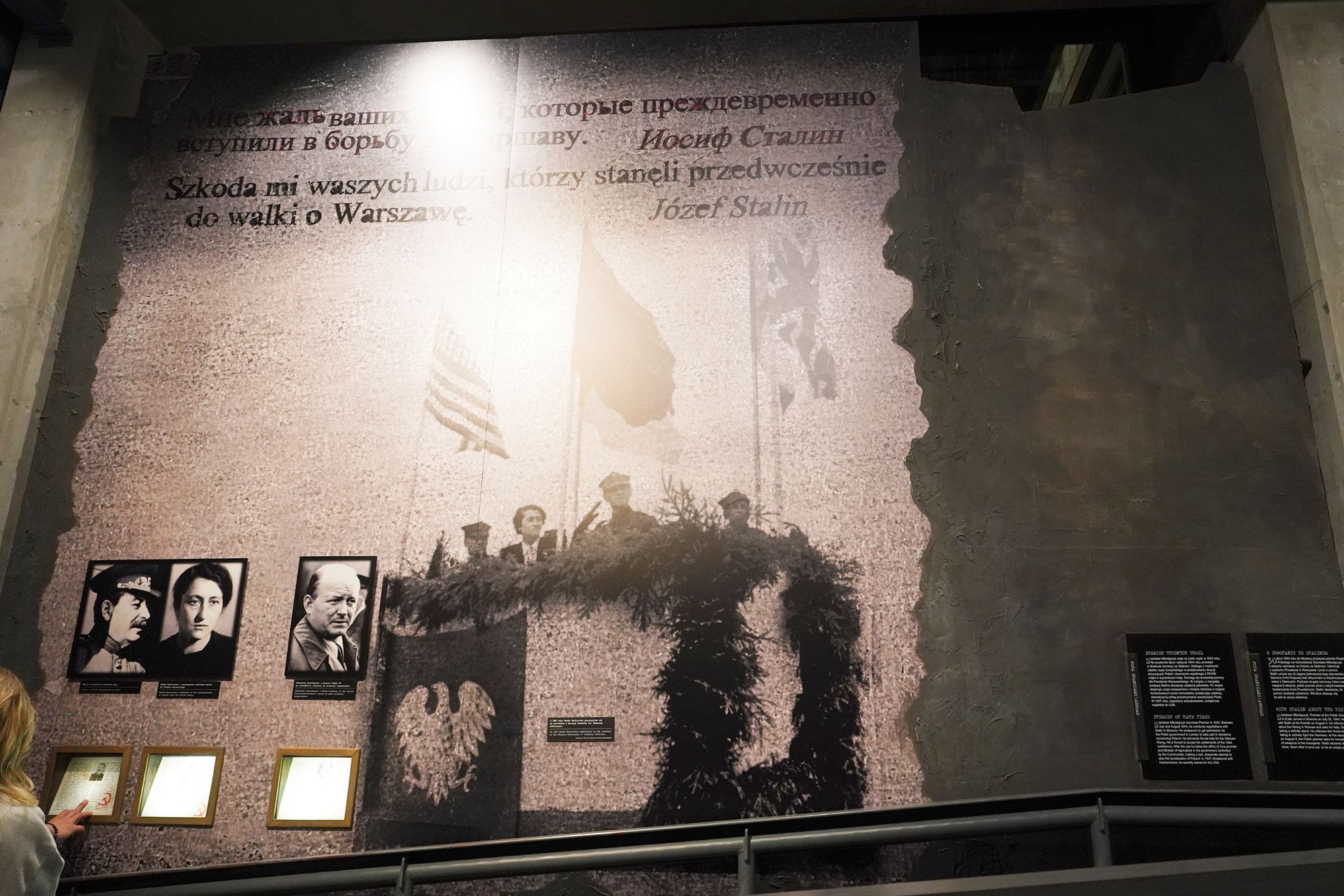
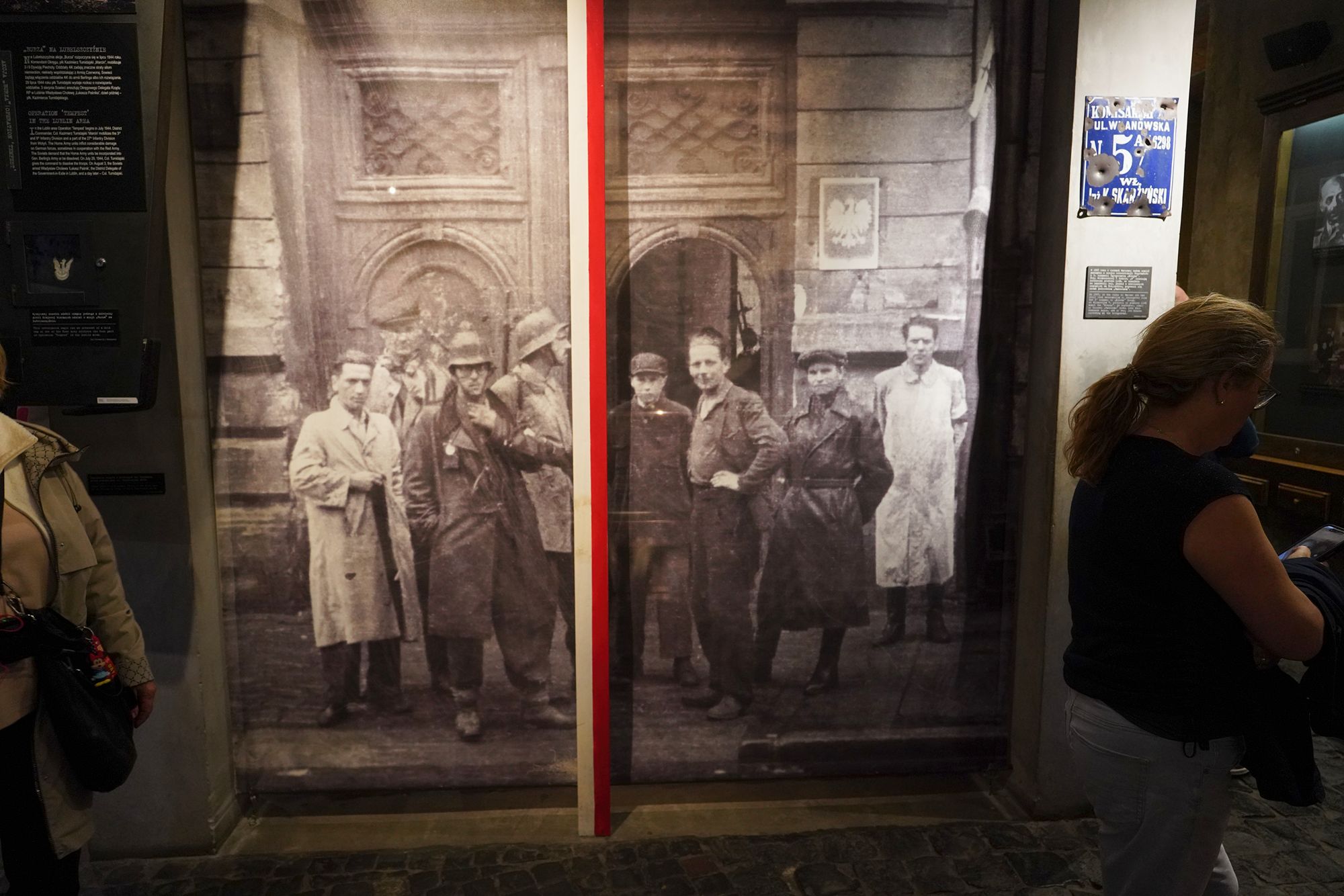
As Soviet troops advanced into Poland in July 1944, Home Army soldiers and underground civil officials who emerged from hiding were detained. A Soviet-backed Polish Committee of National Liberation took control of the area known as “Lublin Poland.” With support from Soviet security services, the new communist authorities suppressed the independence movement through arrests and violence. This panel describes how the end of German occupation brought further persecution for many members of the Polish resistance.
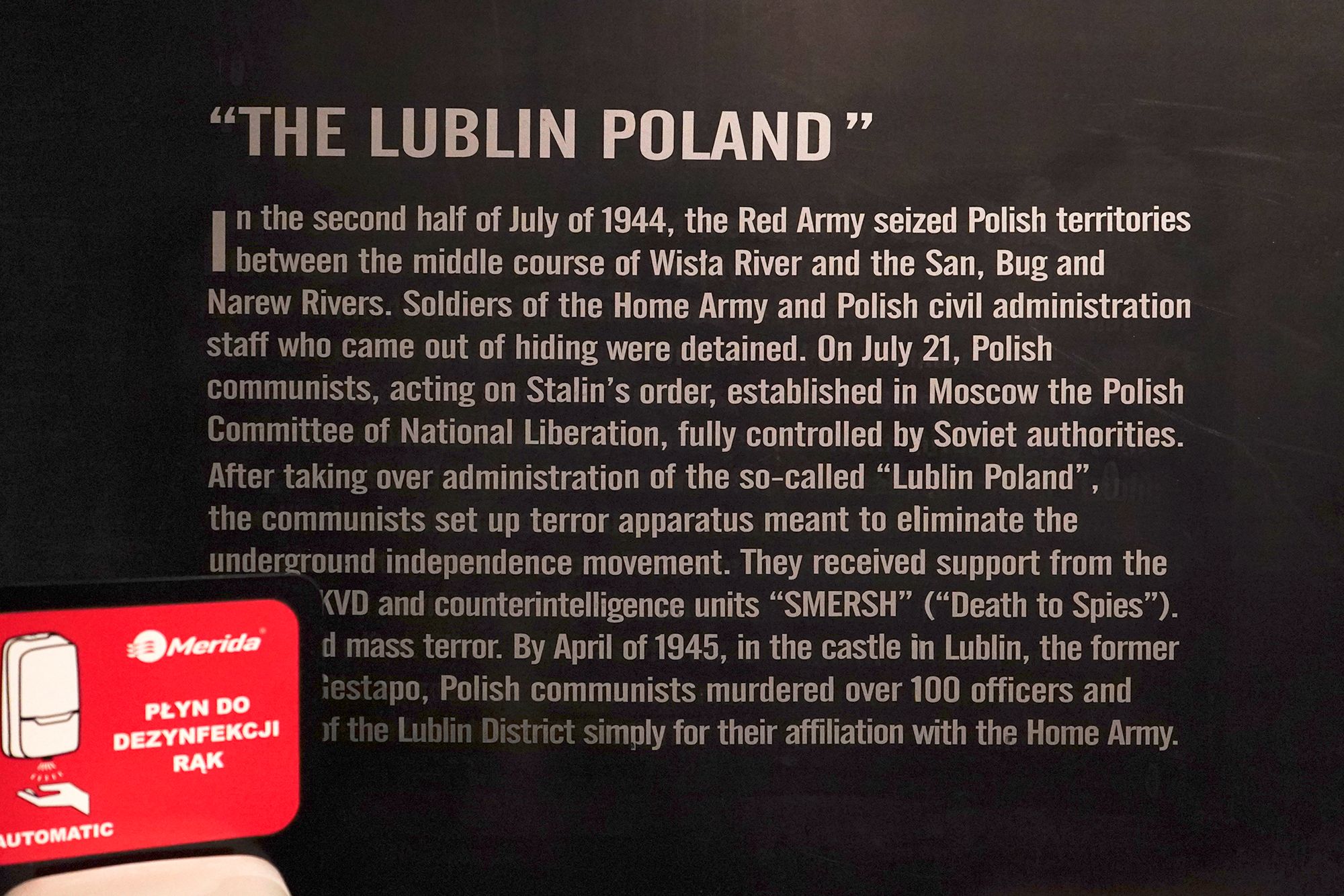
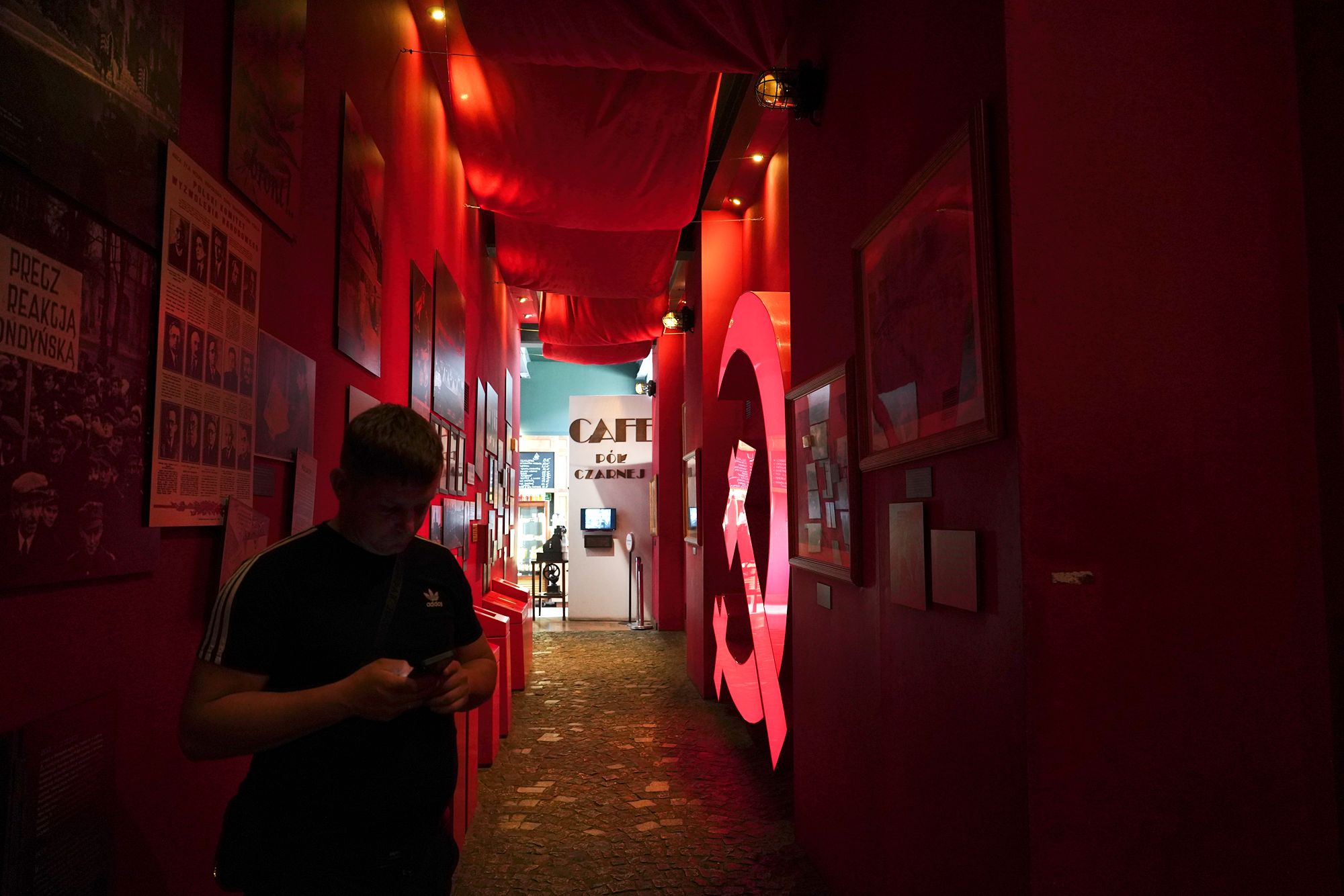
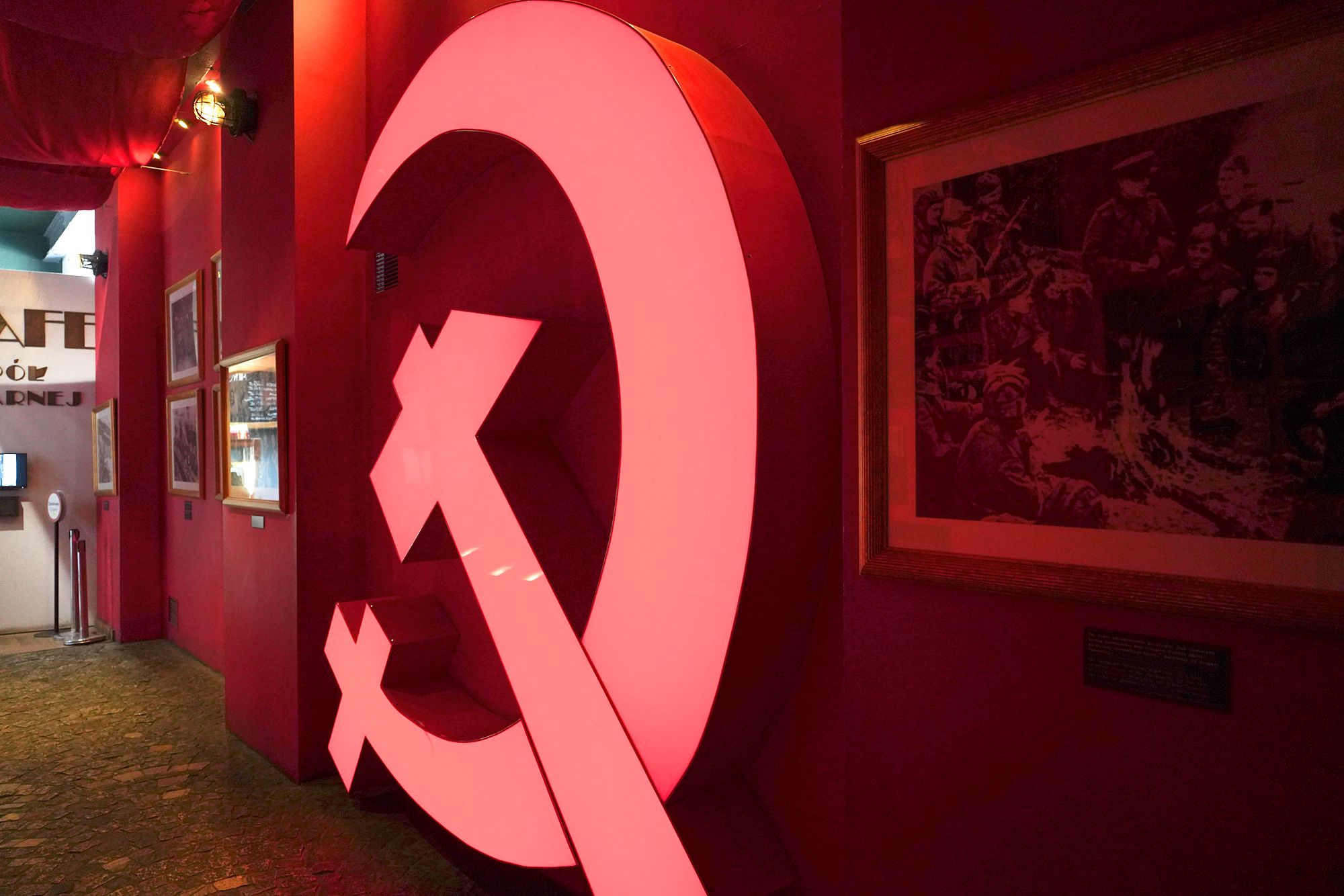
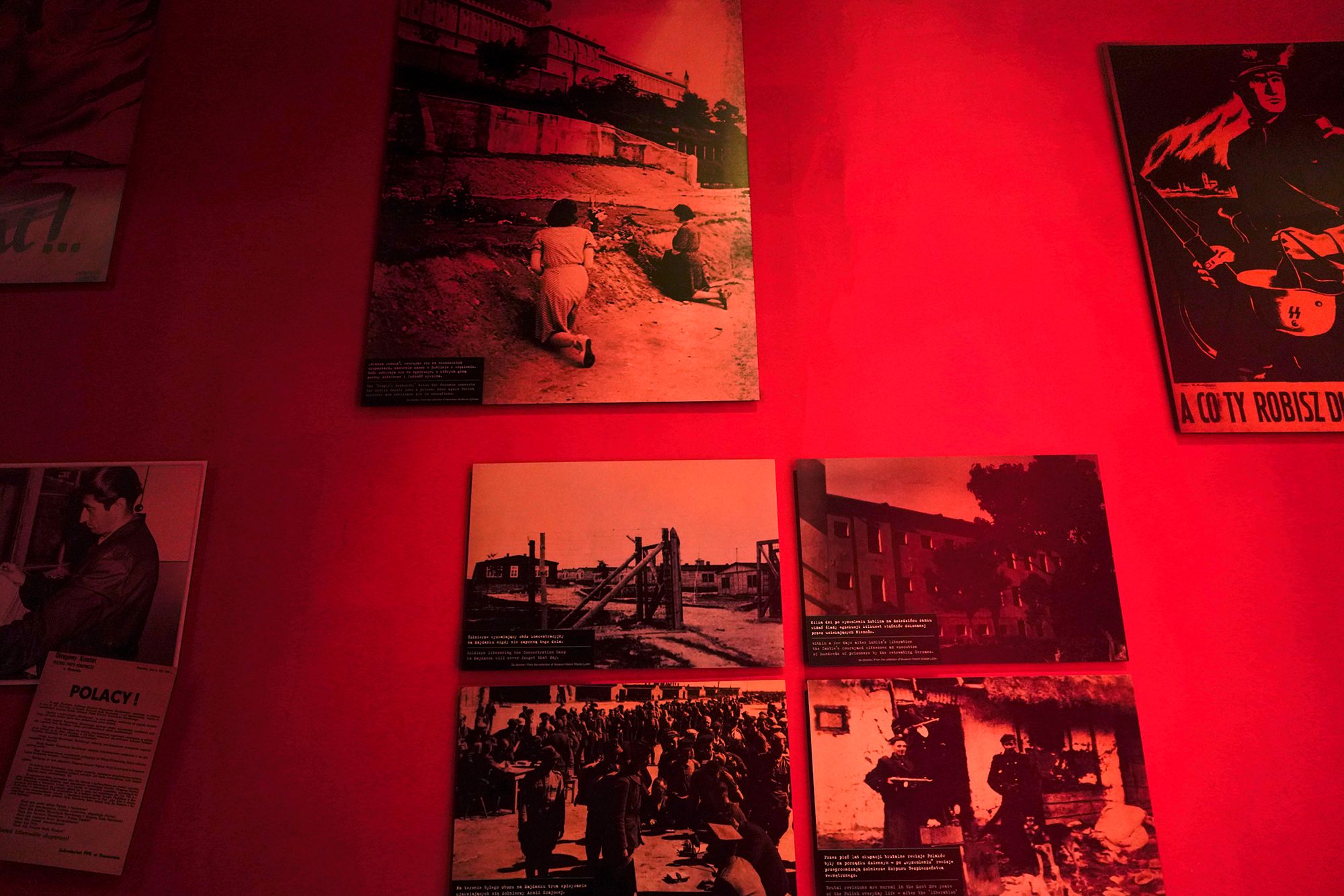
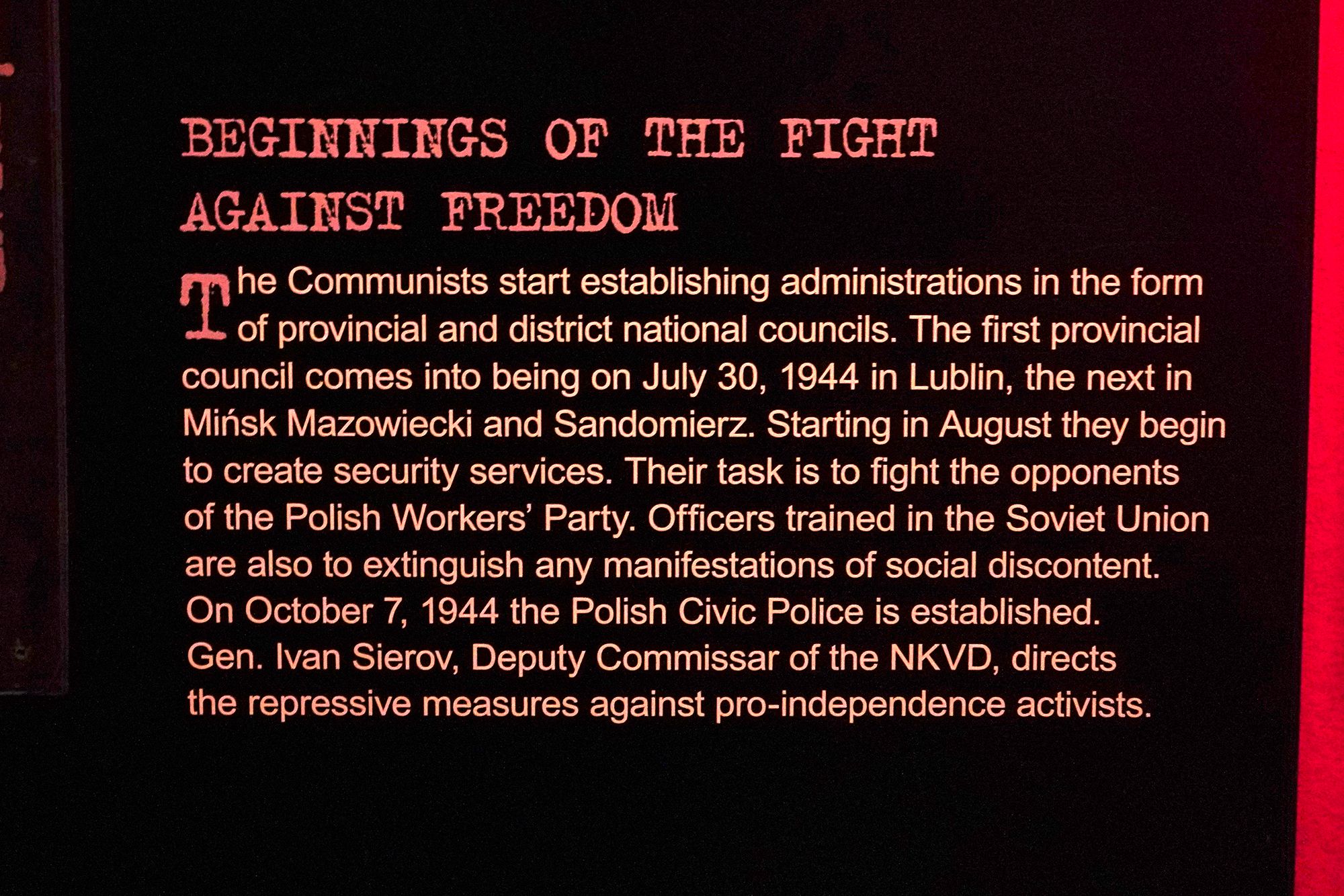
As communist authorities established control in 1944, they created provincial and district councils, beginning in Lublin that July. From August, new security services targeted political opponents and suppressed public dissent, with officers trained in the Soviet Union. A communist police force followed in October. This panel describes how Soviet security official Ivan Serov directed repression against independence activists, showing the growing pressure on those who hoped for a free Poland after German occupation.
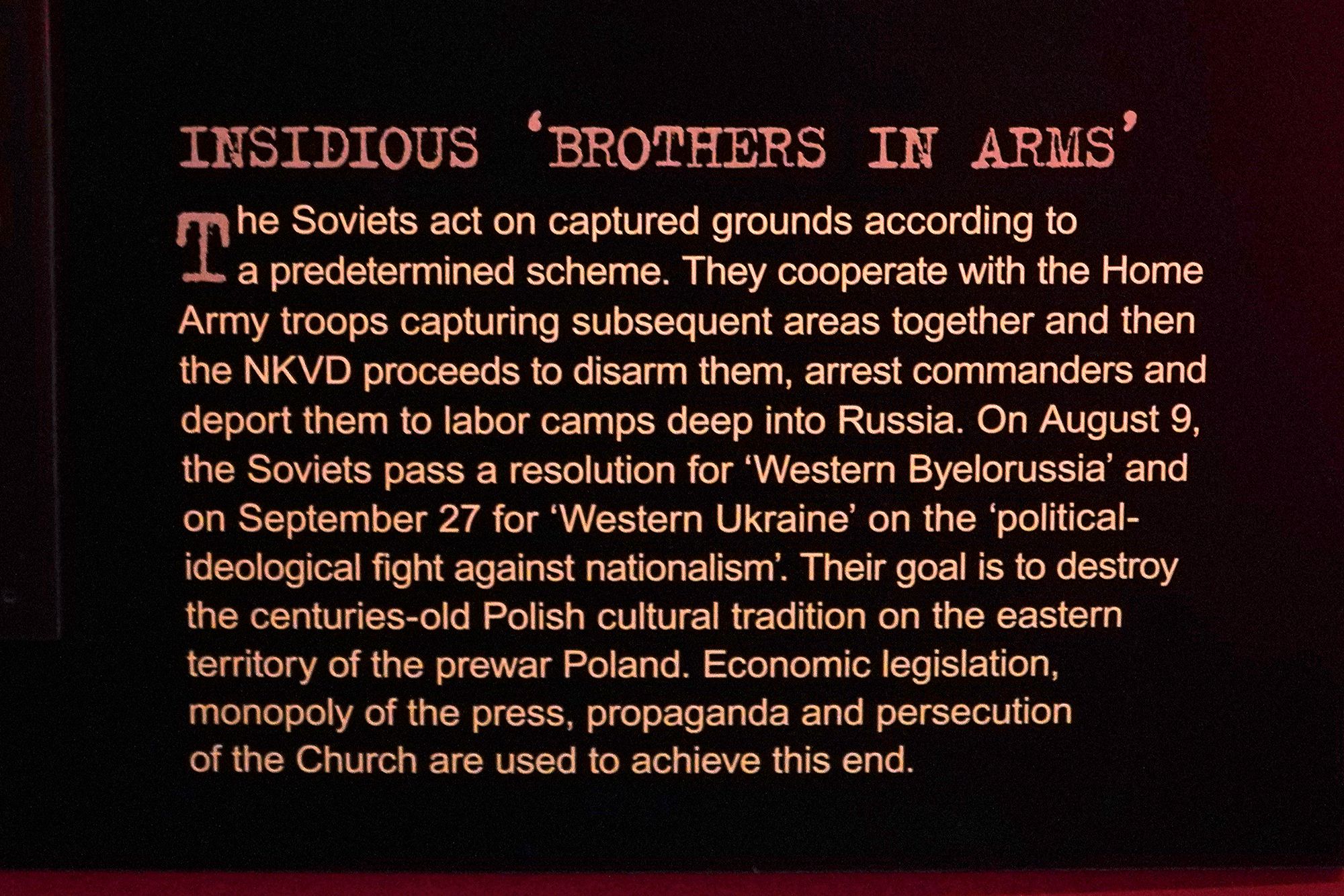
In some areas, Soviet troops and the Home Army fought together against German forces. Afterward, the Soviet security service, the NKVD, disarmed Polish units, arrested commanders, and deported resistance members to labour camps. The panel also describes Soviet efforts to suppress Polish cultural and religious life in prewar Poland’s eastern territories through propaganda, control of the press, economic measures, and persecution of the Church.
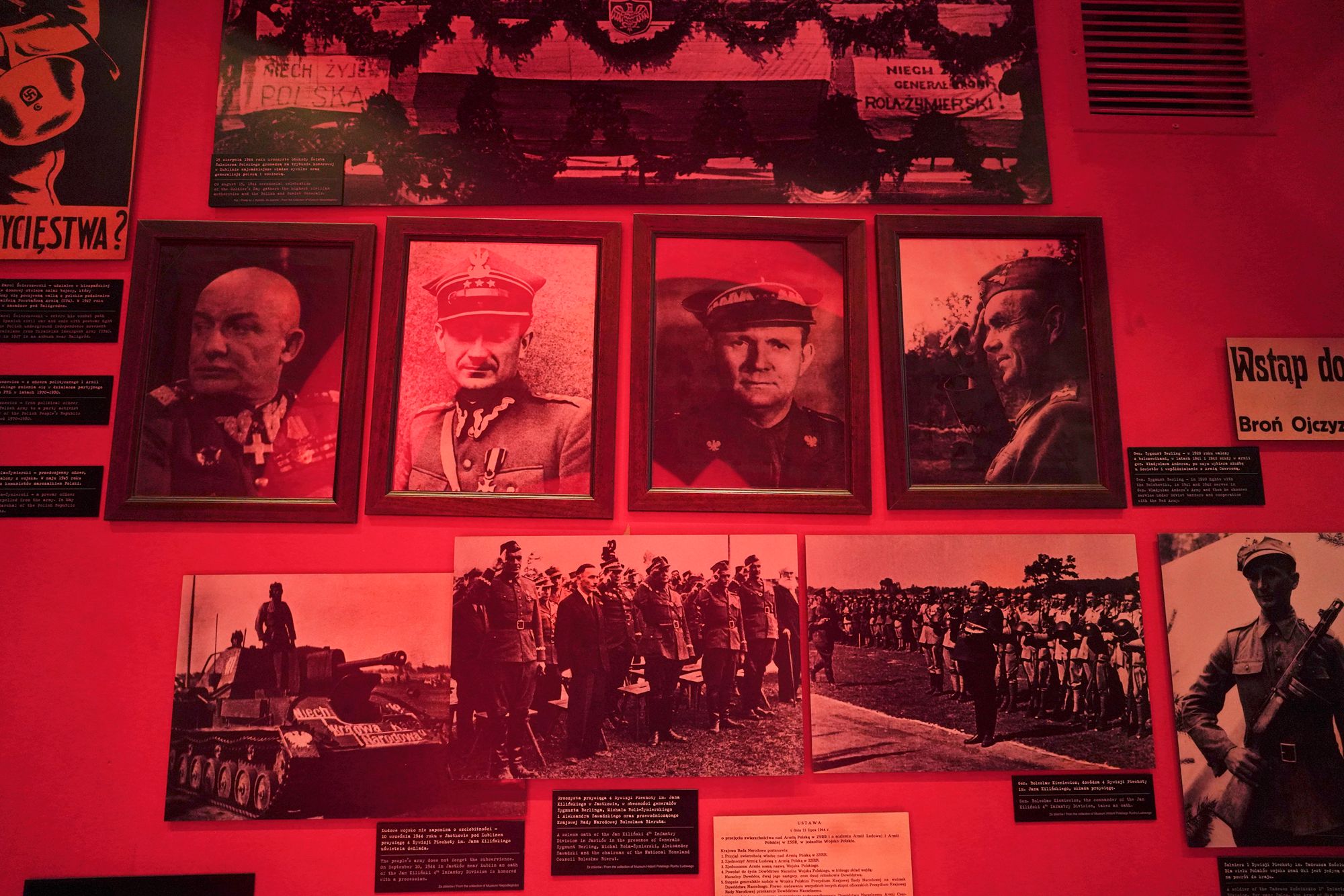
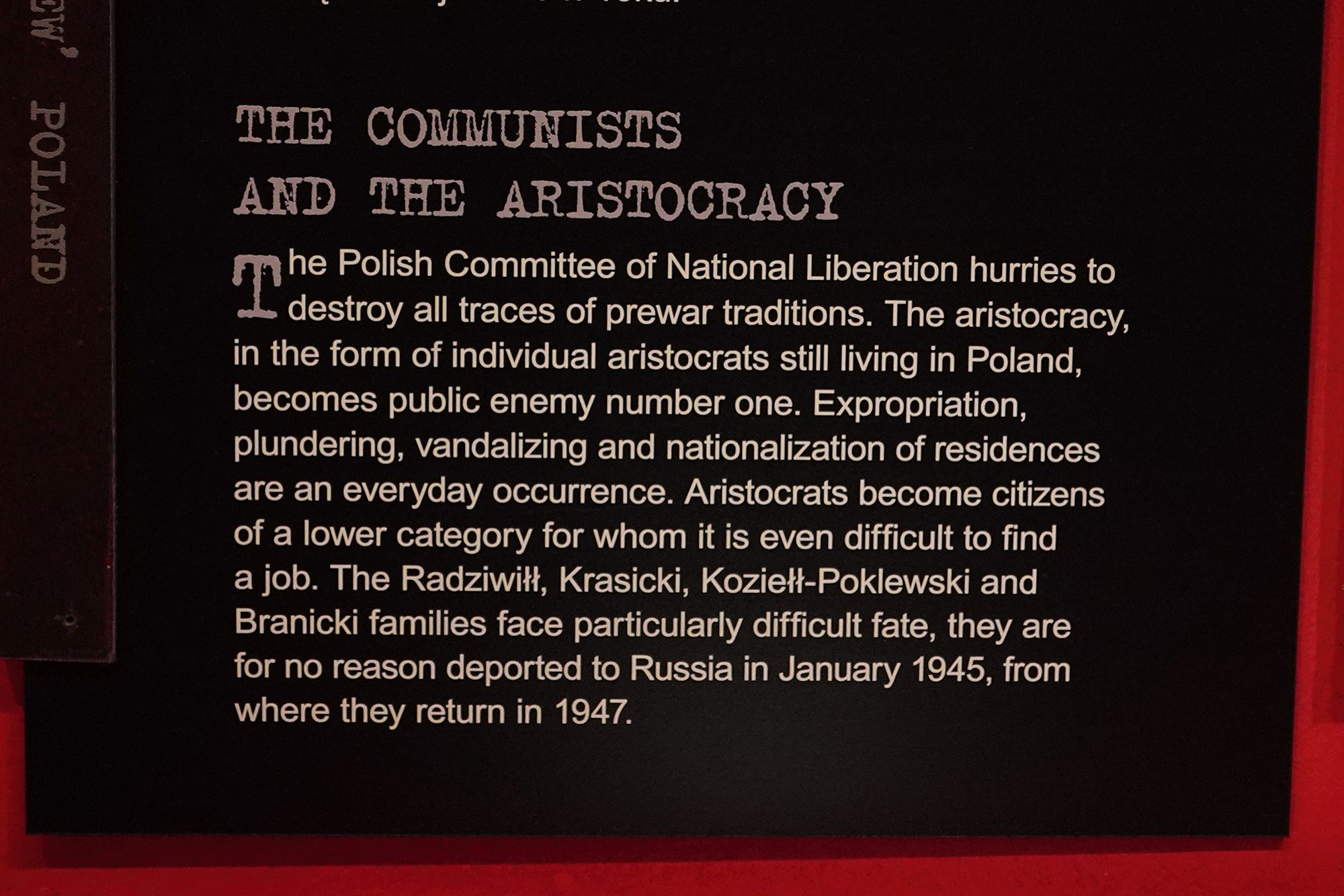
Poland’s aristocratic families also faced persecution under the new communist authorities. Their estates and residences were confiscated or nationalised, while some properties were looted and damaged. Aristocratic backgrounds became grounds for discrimination, making even employment difficult. The panel highlights members of the Radziwiłł, Krasicki, Koziełł-Poklewski, and Branicki families, who were deported to the Soviet Union in January 1945 and returned in 1947.
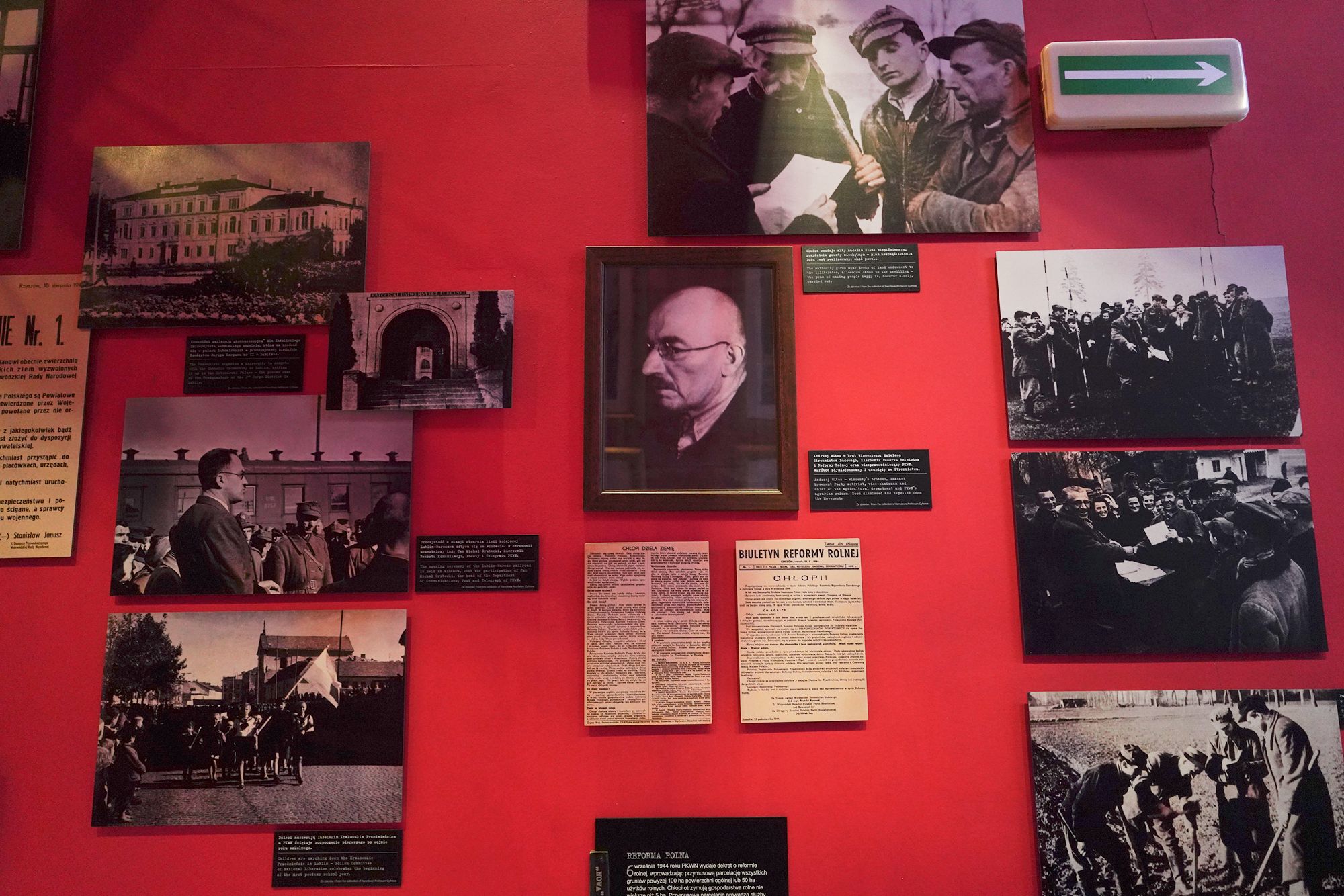
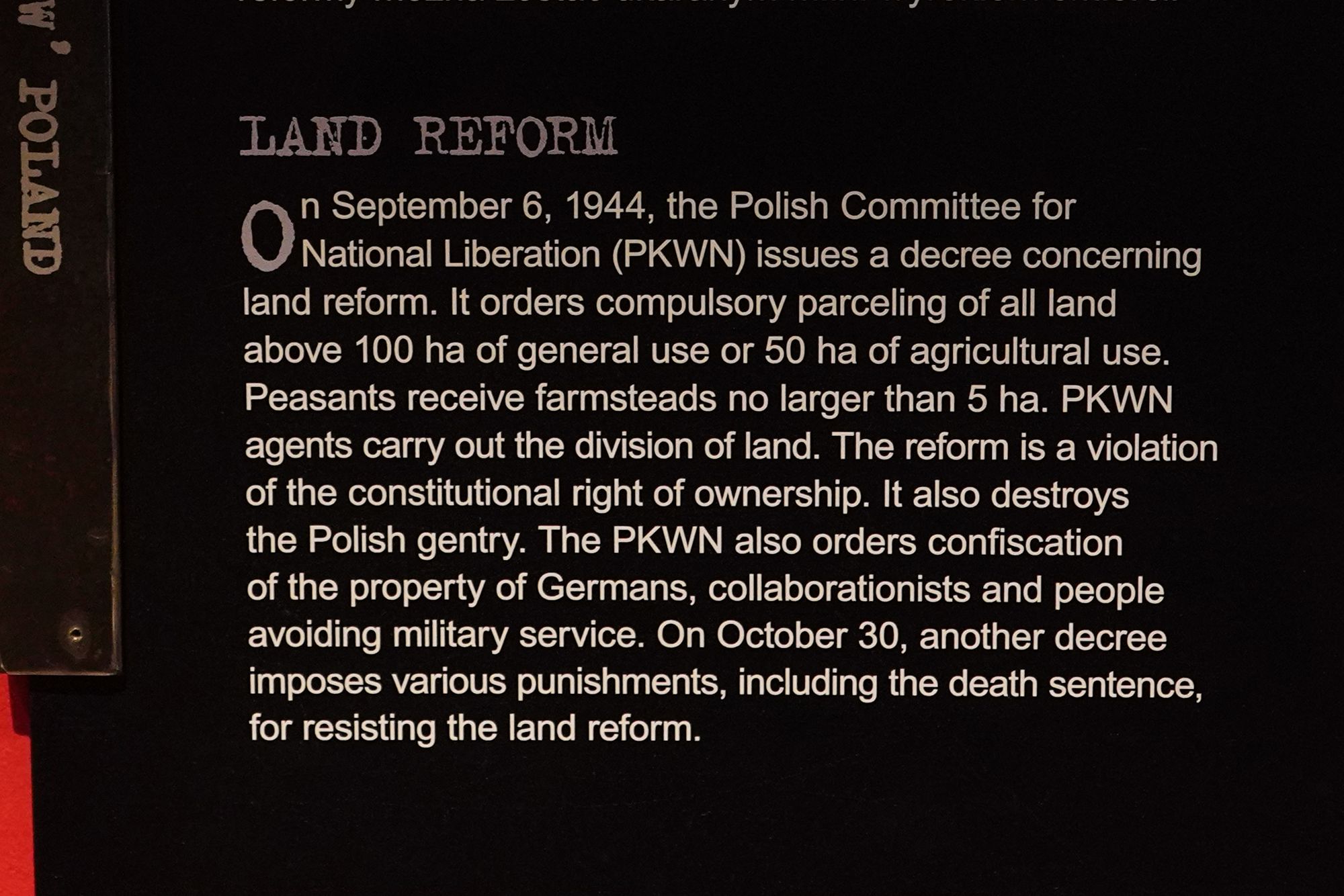
While the uprising continued in Warsaw, the communist-backed Polish Committee of National Liberation introduced land reform on September 6, 1944. Large estates were forcibly divided, and land was distributed to peasants in small holdings. The museum presents this policy as an attack on property rights and the traditional landowning class. It also describes an October decree imposing severe penalties, including the death sentence, for resisting the reform.
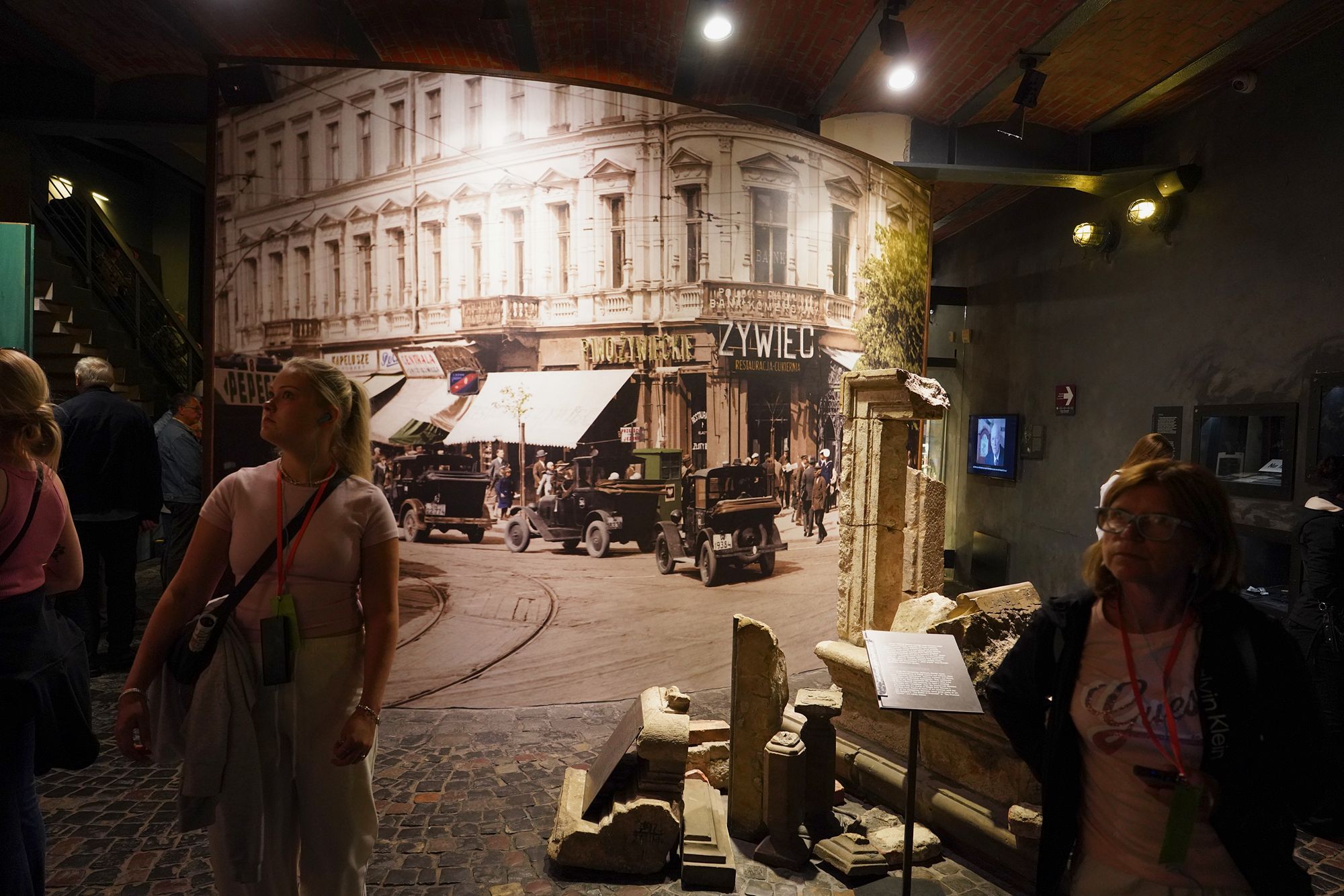
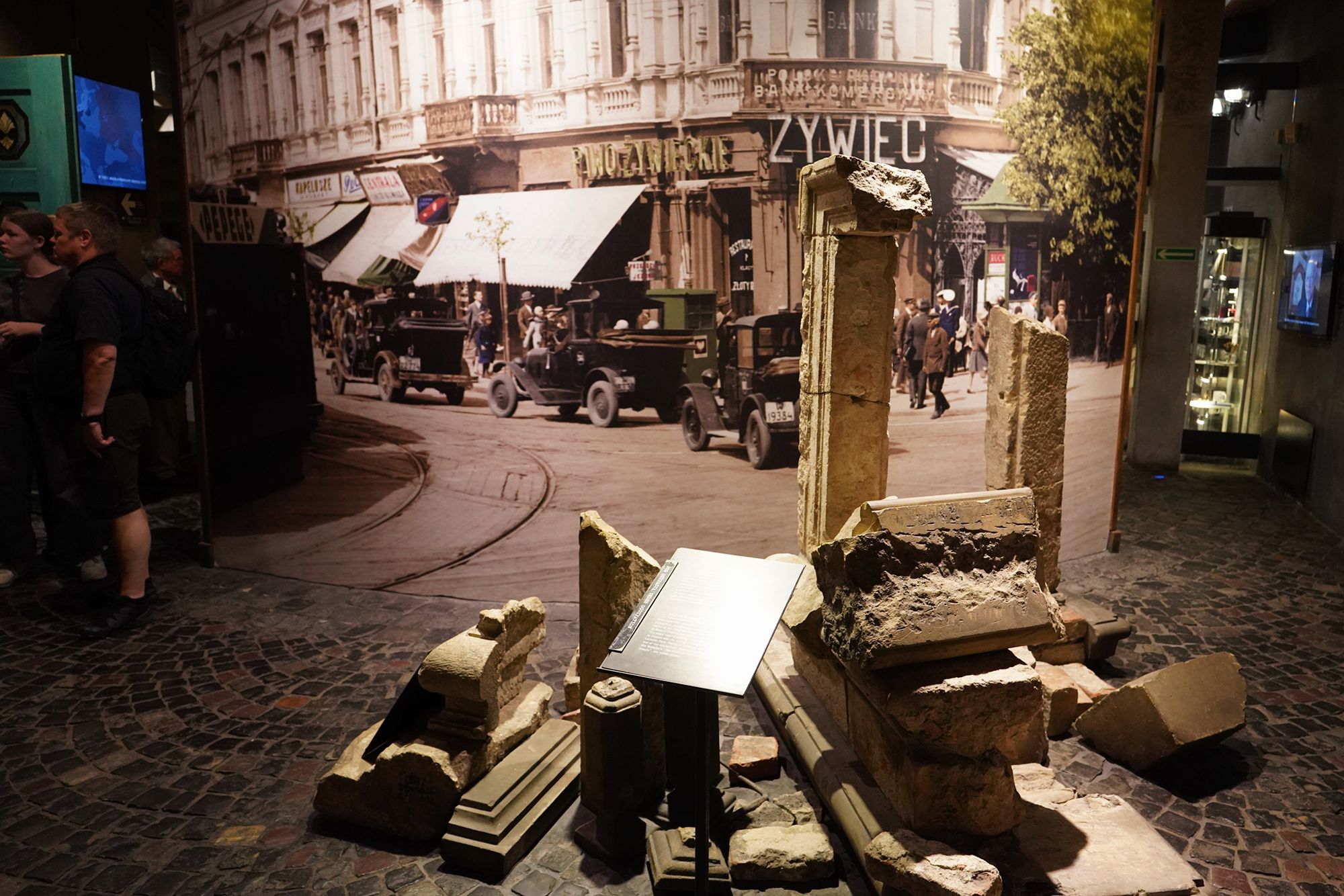
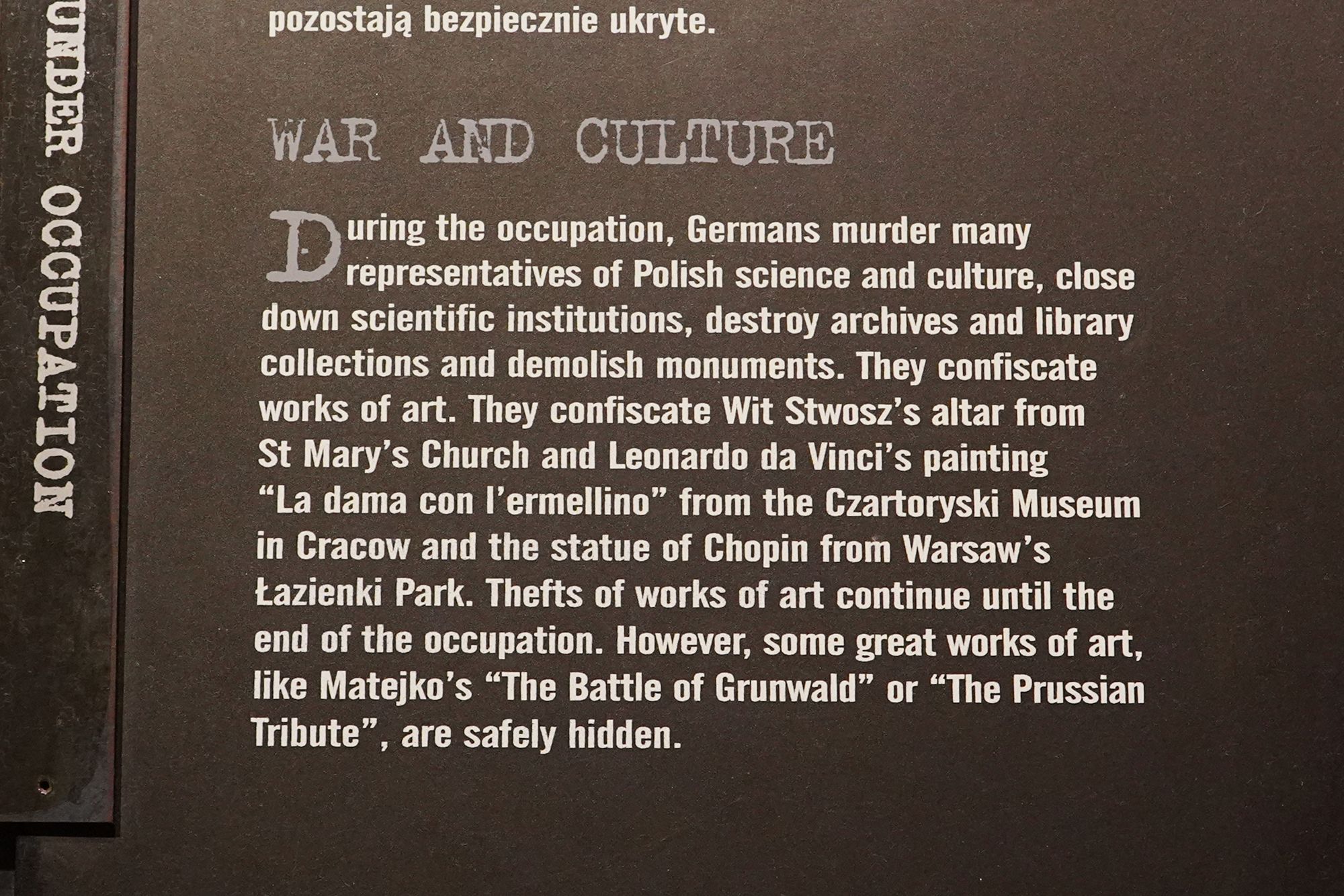
German occupation also devastated Poland’s cultural heritage. Scholars and artists were murdered, institutions closed, and archives, libraries, and monuments destroyed. Looted treasures included the Veit Stoss altarpiece from St. Mary’s Basilica and Leonardo da Vinci’s Lady with an Ermine from the Czartoryski Museum in Kraków—both places I visited earlier on this trip. Some masterpieces survived through concealment, including Jan Matejko’s The Battle of Grunwald and The Prussian Homage.